Whole-Brain Imaging for Neural Pathways: Techniques, Applications, and Future Directions in Neuroscience Research
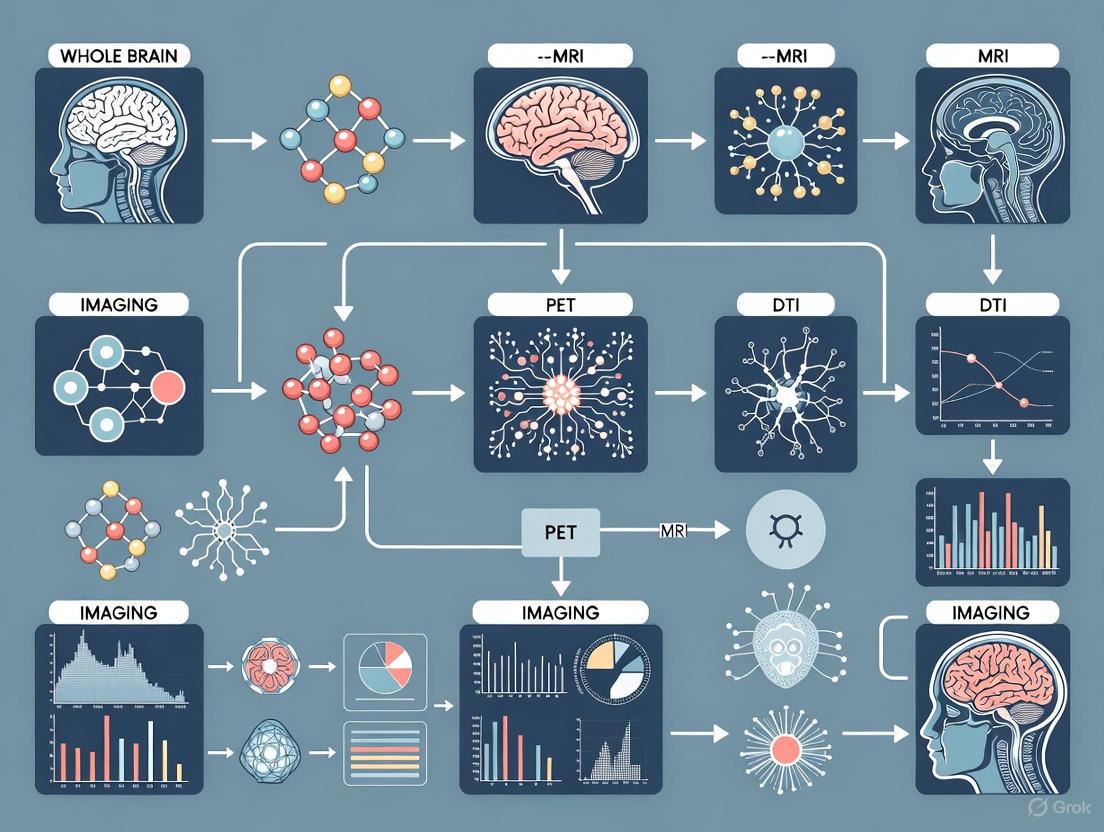
This article provides a comprehensive overview of current whole-brain imaging techniques for mapping neural pathways, addressing the critical needs of researchers and drug development professionals.
Whole-Brain Imaging for Neural Pathways: Techniques, Applications, and Future Directions in Neuroscience Research
Abstract
This article provides a comprehensive overview of current whole-brain imaging techniques for mapping neural pathways, addressing the critical needs of researchers and drug development professionals. It explores foundational principles of brain connectivity, details cutting-edge methodological approaches from microscopy to clinical imaging, and offers practical insights for troubleshooting and optimization. By critically comparing the validation metrics and comparative advantages of technologies like ComSLI, CLARITY, DTI, and fMRI, this resource serves as an essential guide for selecting appropriate imaging strategies in both basic research and clinical trial contexts, ultimately supporting more effective neuroscience investigation and therapeutic development.
Understanding Brain Connectivity: Fundamental Principles and Exploration Goals
The BRAIN Initiative's Vision for Comprehensive Neural Circuit Mapping
The Brain Research Through Advancing Innovative Neurotechnologies (BRAIN) Initiative was launched in 2014 as a large-scale, collaborative effort to revolutionize our understanding of the mammalian brain. Its core philosophy is to understand the brain as a complex system that gives rise to the diversity of functions allowing interaction with and adaptation to our environments, which is necessary to promote brain health and treat neurological disorders [1]. A primary focus has been the creation of a comprehensive functional neuroscience ecosystem, sometimes referred to as the 'BRAIN Circuits Program,' which aims to decipher the dynamic neural circuits underlying behavior and cognition [1].
A cornerstone of this vision is the development of technologies for large-scale and whole-brain optical imaging of neuronal activity. The mission is to capture and manipulate the dynamics of large neuronal populations at high speed and high resolution over large brain areas, which is essential for decoding how information is represented and processed by neural circuitry [2]. This involves mapping the brain across multiple scales—from individual synapses to entire circuits—to ultimately construct a detailed blueprint of brain connectivity and function [3] [4].
Core Imaging Technologies for Circuit Mapping
Whole-Brain Optical Imaging at the Mesoscopic Level
Optical imaging provides a powerful tool for brain mapping at the mesoscopic level, offering submicron lateral resolution that can resolve the structure of cells, axons, and dendrites [4]. A key challenge is that classical optical methods like confocal and two-photon microscopy have limited imaging depth. Whole-brain optical imaging overcomes this through two primary technical routes [4]:
- Tissue Clearing-Based Techniques: These methods render biological samples transparent by using refractive index matching to eliminate scattering. They can be categorized as:
- Hydrophobic methods: Use organic solvents for fast and complete transparency (e.g., DISCO, iDISCO, uDISCO, vDISCO).
- Hydrophilic methods: Use water-soluble reagents for better biocompatibility (e.g., SeeDB, CUBIC).
- Hydrogel-based methods: Secure biomolecules in situ through crosslinking (e.g., CLARITY, PACT/PARS).
- Histological Sectioning-Based Techniques: These methods involve physically sectioning the brain into thin slices, which are then imaged and computationally reconstructed into a 3D volume.
Emerging Imaging Modalities and Applications
Ca2+ imaging techniques, using genetically encoded indicators like GCaMP, allow for high-speed optical recording of neuronal activity, enabling researchers to observe the dynamics of functional brain networks [2]. Other advanced modalities include light-sheet microscopy for whole-brain functional imaging at cellular resolution, and multifocus microscopy for high-speed volumetric imaging [2]. These technologies are being applied not only in rodent models but also in non-human primates, which are essential for understanding complex cognitive functions and brain diseases. For instance, the Japan Brain/MINDS project uses marmosets, while the China Brain Science Project focuses on macaques [4].
Key Experimental Protocols
Protocol 1: Mesoscale Connectomic Mapping of a Mouse Brain
This protocol outlines the steps for generating a comprehensive structural and functional map of a defined brain region, based on the groundbreaking MICrONS project [3].
1. Animal Preparation and In Vivo Functional Imaging:
- Surgical Procedure: Under deep anesthesia, perform a craniotomy over the target brain region (e.g., visual cortex).
- Two-Photon Calcium Imaging: Use a two-photon microscope to record neural activity from the target region while the animal is presented with visual stimuli (e.g., movies, YouTube clips). This establishes a functional map.
- Perfusion and Fixation: Transcardially perfuse the animal with a fixative (e.g., paraformaldehyde) to preserve the brain tissue.
2. Tissue Processing and Electron Microscopy:
- Embedding and Sectioning: Embed the fixed brain region in resin. Using an ultra-microtome, serially section the tissue block into ultra-thin slices (approximately 25,000 slices, each 1/400th the width of a human hair).
- Electron Microscopy Imaging: Acquire high-resolution images of every section using an array of automated electron microscopes.
3. Computational Reconstruction and Analysis:
- Image Alignment and 3D Volume Reconstruction: Use automated computational pipelines and machine learning algorithms to align the serial EM images and reconstruct a continuous 3D volume.
- Automated Segmentation and Tracing: Employ artificial intelligence (AI) to identify and trace individual neurons, axons, dendrites, and synapses within the 3D volume.
- Circuit Analysis: Analyze the reconstructed connectome to identify connection rules, cell types, and network motifs. Integrate the structural data with the previously acquired functional imaging data to link structure with function.
Protocol 2: Whole-Brain Immunohistochemistry and Imaging with Tissue Clearing
This protocol details the use of tissue clearing to image an entire mouse brain without physical sectioning, enabling brain-wide quantification of cells and circuits [4].
1. Perfusion, Fixation, and Brain Extraction:
- Deeply anesthetize the mouse and perform transcardial perfusion first with phosphate-buffered saline (PBS) followed by 4% paraformaldehyde (PFA).
- Carefully extract the whole brain and post-fix in 4% PFA for 24 hours at 4°C.
2. Tissue Clearing and Immunostaining (Using Hydrogel-Based CLARITY):
- Hydrogel Embedding: Incubate the brain in a solution of acrylamide/bis-acrylamide, formaldehyde, and thermal initiator to form a hydrogel-monomer mix. Polymerize at 37°C for 3 hours to create a hydrogel-tissue hybrid.
- Lipid Extraction (Electrophoresis): Place the hydrogel-embedded brain in a clearing chamber filled with SDS-based clearing solution (200mM boric acid, 4% SDS, pH 8.5). Apply an electrical field (∼30-40V) for 7-10 days to actively remove lipids.
- Refractive Index Matching: After clearing and washing, incubate the sample in a refractive index matching solution (e.g., FocusClear or 88% Histodenz) for 2-3 days until the tissue becomes transparent.
- Immunostaining (Optional): For labeling specific antigens, the cleared brain can be incubated with primary antibodies for 5-7 days, followed by secondary antibodies for another 5-7 days, with constant shaking.
3. Light-Sheet Microscopy and Data Analysis:
- Mounting: Mount the cleared brain in the imaging chamber filled with refractive index matching solution.
- Imaging: Use a light-sheet microscope to acquire tiled Z-stack images of the entire brain. The use of dual light sheets and orthogonal detection is recommended for improved resolution and speed.
- Data Processing: Stitch the acquired tiles, and use computational tools for cell counting, tracing of neuronal projections, and registration to a standard brain atlas.
Quantitative Data and Scaling
The data generated by BRAIN Initiative-funded projects is massive and requires careful consideration of scale and resolution. The table below summarizes key quantitative benchmarks for neural circuit mapping projects.
Table 1: Quantitative Benchmarks for Neural Circuit Mapping
| Parameter | Mouse Brain (MICrONS Project) | Mouse Brain (Whole) | Marmoset Brain | Macaque Brain |
|---|---|---|---|---|
| Sample Volume Mapped | 1 mm³ (visual cortex) | ~420 mm³ [4] | ~7,780 mm³ [4] | ~87,350 mm³ [4] |
| Neuron Count | 84,000 neurons [3] | ~70 million [4] | ~630 million [4] | ~6.37 billion [4] |
| Synapse Count | ~500 million [3] | ~10s to 100s of billions (est.) | ~100s of billions to trillions (est.) | ~1,000s of billions (est.) |
| Neuronal Wire Length | ~5.4 kilometers [3] | ~100s of kilometers (est.) | ~1,000s of kilometers (est.) | ~10,000s of kilometers (est.) |
| Data Volume | 1.6 Petabytes [3] | ~Exabyte scale (est.) | ~10s of Exabytes (est.) | ~100s of Exabytes (est.) |
Table 2: Recommended Imaging Parameters for Different Research Goals [4]
| Research Goal | Recommended Voxel Size (XYZ) | Estimated Data for Mouse Brain |
|---|---|---|
| Cell Body Counting | (1.0 µm)³ | ~1 TB |
| Dendritic Arbor Mapping | (0.5 µm)³ | ~10 TB |
| Axonal Fiber Tracing | (0.3 x 0.3 x 1.0) µm | ~5 TB |
| Complete Connectome (EM) | (4 x 4 x 40) nm | >1 PB |
The Scientist's Toolkit: Research Reagent Solutions
Successful execution of neural circuit mapping experiments relies on a suite of specialized reagents and tools.
Table 3: Essential Research Reagents and Tools for Neural Circuit Mapping
| Reagent/Tool | Function/Description | Example Use Cases |
|---|---|---|
| GCaMP Calcium Indicators | Genetically encoded fluorescent sensors that change intensity upon neuronal calcium influx, a proxy for action potentials. | In vivo functional imaging of neuronal population dynamics in behaving animals [2]. |
| Adeno-Associated Virus (AAV) Tracers | Viral vectors for delivering genetic material (e.g., fluorescent proteins, opsins) to specific neuron populations. Used for anterograde and retrograde tracing. | Mapping input and output connections of specific brain regions (e.g., rAAV2-retro for retrograde labeling) [5]. |
| Monosynaptic Rabies Virus System | A modified rabies virus used for retrograde tracing that only infects neurons presynaptic to a starter population, allowing single-synapse resolution input mapping. | Defining the complete monosynaptic input connectome to a targeted cell type [5]. |
| CLARITY Reagents | A hydrogel-based tissue clearing method. Reagents include acrylamide, formaldehyde, and SDS for lipid removal. | Creating a transparent, macromolecule-preserved whole brain for deep-tissue immunolabeling and imaging [4]. |
| CUBIC Reagents | A hydrophilic tissue clearing method using aminoalcohols (e.g., Quadrol) that delipidate and decolorize tissue while retaining fluorescent signals. | Whole-body and whole-brain clearing for high-throughput phenotyping and cell census studies [4]. |
| Optogenetic Actuators (e.g., Channelrhodopsin) | Light-sensitive ion channels (e.g., Channelrhodopsin-2) that can be expressed in specific neurons to control their activity with millisecond precision using light. | Causally testing the function of specific neural circuits in behavior [5]. |
| Chemogenetic Actuators (e.g., DREADDs) | Designer Receptors Exclusively Activated by Designer Drugs; engineered GPCRs that modulate neuronal activity upon application of an inert ligand (e.g., CNO). | Long-term, non-invasive manipulation of specific neural circuits for behavioral studies and therapeutic exploration [5]. |
Impact and Future Directions in Neurotherapy
The structural and functional insights gained from BRAIN Initiative research are directly informing the development of novel neurotherapeutic strategies. By understanding the "blueprint" of healthy neural circuits, researchers can identify how specific circuits are disrupted in disease and develop targeted interventions [5].
Key advancements include:
- Precision Neuromodulation: Techniques like Transcranial Magnetic Stimulation (TMS) are being refined to target specific dysfunctional circuits, such as the ventromedial prefrontal cortex (VMPFC)-amygdala circuit in substance use disorders, to improve emotional regulation and decision-making [5].
- Circuit-Guided Cell Therapy: Stem cell treatments are being combined with neurogenesis-promoting strategies to repair damaged circuits, showing promise for recovery after stroke and in neurodegenerative diseases [5].
- Multifunctional Probes: Tools like Tetrocysteine Display of Optogenetic Elements (Tetro-DOpE) allow for real-time monitoring and modification of neuronal populations, increasing the precision of circuit-level interventions [5].
The BRAIN Initiative's investment in fundamental, disease-agnostic neuroscience has created an ecosystem that is accelerating the transition toward precision neuromedicine. By providing the tools, maps, and fundamental principles of brain circuit operation, the initiative is laying the groundwork for more effective, targeted, and personalized treatments for a wide range of neurological and psychiatric disorders [1] [5].
The study of key neuroanatomical structures—gray matter, white matter, and neural networks—has been revolutionized by advances in whole brain imaging techniques. These non-invasive methods allow researchers to quantitatively investigate the structure and function of neural pathways in both healthy and diseased states [6]. Neuroimaging serves as a critical window into the mind, enabling the mapping of complex brain networks and providing insights into the neural underpinnings of various cognitive processes and neurological disorders [7] [6]. This field combines neuroscience, computer science, psychology, and statistics to objectively study the human brain, with recent technological developments allowing unprecedented resolution in visualizing and quantifying brain structures and their interactions [8] [6].
Quantitative Comparison of Gray and White Matter Properties
Advanced neuroimaging techniques have enabled the precise quantitative comparison of gray and white matter properties across different conditions and field strengths. These measurements provide crucial insights into brain microstructure and function.
Table 1: Quantitative Magnetic Resonance Imaging Comparison of Normal vs. Ectopic Gray Matter
| Parameter | Normal Gray Matter (NGM) | Gray Matter Heterotopia (GMH) | Statistical Significance | Measurement Technique |
|---|---|---|---|---|
| CBF (PLD 1.5s) | 52.69 mL/100 g/min | 31.96 mL/100 g/min | P<0.001 | Arterial Spin Labeling (ASL) |
| CBF (PLD 2.5s) | 56.93 mL/100 g/min | 35.13 mL/100 g/min | P<0.001 | Arterial Spin Labeling (ASL) |
| Normalized CBF | Significantly higher | Significantly lower | P<0.001 | ASL normalized against white matter |
| T1 Values | Distinct profile | Distinct profile | P<0.001 | MAGiC quantitative sequence |
| T2 Values | No significant difference from GMH | No significant difference from NGM | P>0.05 | MAGiC quantitative sequence |
| Proton Density | No significant difference from GMH | No significant difference from NGM | P>0.05 | MAGiC quantitative sequence |
Table 2: Technical Specifications of Imaging Systems for Gray-White Matter Contrast Analysis
| Parameter | 1.5 Tesla MRI | 3.0 Tesla MRI | Significance/Application |
|---|---|---|---|
| Single-slice CNR(GM-WM) | 13.09 ± 2.35 | 17.66 ± 2.68 | P<0.001, superior at 3T [9] |
| Multi-slice CNR (0% gap) | 7.43 ± 1.20 | 8.61 ± 2.55 | P>0.05, not significant [9] |
| Multi-slice CNR (25% gap) | 9.73 ± 1.37 | 12.47 ± 3.31 | P<0.001, superior at 3T [9] |
| CNR Reduction Rate (0% gap) | 0.38 ± 0.09 | 0.47 ± 0.13 | P=0.02, larger effect at 3T [9] |
| Spatial Resolution | Standard | Up to 1 mm voxels [6] | Enables study of smaller brain structures |
| BOLD Signal Change | Standard | 1-2% on 3T scanner [7] | Varies across brain regions and event types |
Experimental Protocols for Neural Pathways Research
Protocol 1: Quantitative Assessment of Gray Matter Heterotopia Using Advanced MRI
Background: Gray matter heterotopia (GMH) involves abnormal migration of cortical neurons into white matter and is often associated with drug-resistant epilepsy [10]. This protocol uses quantitative MRI techniques to characterize differences between ectopic and normal gray matter.
Materials and Equipment:
- 3.0 T MRI system (e.g., SIGNA Architect, GE HealthCare)
- T1 BRAVO sequence parameters: TR 7,800 ms, TE 31 ms, slice thickness 1 mm, FOV 256 mm × 230 mm, matrix size 256×256, flip angle 8°
- T2-weighted imaging parameters: TR 4,500 ms, TE 120 ms, slice thickness 5 mm, slice gap 1.5 mm, FOV 240 mm × 240 mm, matrix size 320×256, flip angle 111°
- Arterial Spin Labeling (ASL) sequences with postlabeling delays of 1.5 s and 2.5 s
- MAGiC (Magnetic Resonance Image Compilation) sequence based on 2D fast spin echo technology
Procedure:
- Subject Preparation: Enroll patients with complete imaging data and confirmed GMH diagnosis. Ensure inclusion criteria: presence of cortical-like signal nodule within normal white matter and history of at least three epileptic seizures or abnormal EEG findings.
- Data Acquisition: Perform complete MRI protocol including T1 BRAVO, T2WI, MAGiC, and ASL sequences with dual postlabeling delays.
- Quantitative Measurements: Manually measure regions of interest (ROIs) for GMH, normal gray matter (NGM), and normal white matter (NWM). For patients with multiple GMH, record each separately but treat as one patient for clinical statistics.
- Data Normalization: Normalize quantitative values obtained from GMH and NGM against contralateral white matter visually identified as normal.
- Statistical Analysis: Use paired-sample t-tests to compare quantitative values between NGM and GMH before and after normalization.
Applications: This protocol is particularly valuable for preoperative planning in epilepsy surgery and understanding the functional differences between ectopic and normal gray matter tissues [10].
Protocol 2: Functional Connectivity and Network Analysis Using BrainNet Viewer
Background: The human brain is organized into complex structural and functional networks that can be represented using connectomics [11]. This protocol details the visualization and analysis of these neural networks.
Materials and Equipment:
- MATLAB environment with BrainNet Viewer toolbox
- Brain surface templates (e.g., Ch2, ICBM152)
- Node and edge files defining brain network parcellation
- Network analysis toolkits (Brain Connectivity Toolbox, Graph-theoRETical Network Analysis toolkit)
Procedure:
- Data Preparation: Prepare input files containing connectome information:
- Brain surface file (.nv): Contains number of vertices, coordinates, number of triangle faces, and vertex indices
- Node file (.node): Includes x, y, z coordinates, node color index, node size, and node labels
- Edge file (.edge): Association matrix representing connections between nodes
- Volume file: Functional connectivity map, statistical parametric map, or brain atlas
Toolbox Configuration: Load the combination of files in BrainNet Viewer GUI. Adjust figure configuration parameters including output layout, background color, surface transparency, node color and size, edge color and size, and image resolution.
Network Visualization: Generate ball-and-stick models of brain connectomes. Implement volume-to-surface mapping and construct ROI clusters from volume files.
Connectome Analysis: Apply graph theoretical algorithms to measure topological properties including small-worldness, modularity, hub identification, and rich-club configurations.
Output Generation: Export figures in common image formats or demonstration videos for further analysis and publication.
Applications: This protocol enables researchers to investigate relationships between brain network properties and population attributes including aging, development, gender, intelligence, and various neuropsychiatric disorders [11].
Visualization of Neuroimaging Workflows and Signaling Pathways
Figure 1: Comprehensive workflow for neuroimaging analysis from data acquisition to clinical interpretation, highlighting the integration of structural and functional imaging techniques.
Figure 2: Relationship between key neuroanatomical structures and specialized imaging modalities used for their investigation in neural pathways research.
The Scientist's Toolkit: Essential Research Reagents and Materials
Table 3: Essential Research Reagents and Materials for Neural Pathways Imaging
| Item | Function/Application | Example Specifications |
|---|---|---|
| 3.0 T MRI Scanner | High-field magnetic resonance imaging for structural and functional studies | SIGNA Architect (GE HealthCare); enables voxel sizes as small as 1 mm [6] |
| Arterial Spin Labeling (ASL) | Non-invasive measurement of cerebral blood flow without contrast agents | Postlabeling delays of 1.5 s and 2.5 s; TR 4,838 ms, TE 57.4 ms [10] |
| MAGiC Sequence | Quantitative mapping of T1, T2, and proton density values in a single scan | Based on 2D fast spin echo; FOV 24 cm × 19.2 cm; TR 4,000 ms; TE 21.4 ms [10] |
| BrainNet Viewer | Graph-theoretical network visualization toolbox for connectome mapping | MATLAB-based GUI; supports multiple surface templates and network files [11] |
| EEG Recording System | Measurement of electrical brain activity with high temporal resolution | 64-256 electrodes; captures event-related potentials and oscillatory activity [7] |
| FDG-PET Tracer | Assessment of glucose metabolism in brain regions | [18F]fluorodeoxyglucose; particularly useful for epilepsy and dementia evaluation [8] |
| Graph Analysis Toolboxes | Quantification of network properties (small-worldness, modularity, hubs) | Brain Connectivity Toolbox (BCT), GRETNA, NetworkX [11] |
Connectomics is an emerging subfield of neuroanatomy explicitly aimed at quantitatively elucidating the wiring of brain networks with cellular resolution and quantified accuracy [12]. The term "connectome" describes the complete, precise wiring diagram of neuronal connections in a brain, encompassing everything from individual synapses to entire brain-wide networks [12]. Such wiring diagrams are indispensable for realistic modeling of brain circuitry and function, as they provide the structural foundation upon which neural computation is built [12]. The only complete connectome produced to date remains that of the small worm Caenorhabditis elegans, which has just 302 neurons [12], highlighting the immense technical challenge of mapping more complex nervous systems.
The field has developed extremely rapidly in the last five years, with particularly impactful developments in insect brains [13]. Increased electron microscopy imaging speed and improvements in automated segmentation now make complete synaptic-resolution wiring diagrams of entire fruit fly brains feasible [13]. As methods continue to advance, connectomics is progressing from mapping localized circuits to tackling entire mammalian brains, enabling researchers to test hypotheses of circuit function across a variety of behaviours including learned and innate olfaction, navigation, and sexual behaviour [13].
Imaging Technologies for Connectome Reconstruction
Connectome reconstruction requires imaging technologies capable of resolving neural structures across multiple scales, from nanometer-resolution synapses to centimeter-scale whole brains. The table below summarizes the primary imaging modalities used in connectomics research.
Table 1: Imaging Technologies for Connectome Reconstruction
| Technology | Resolution | Scale | Primary Applications | Key Limitations |
|---|---|---|---|---|
| Electron Microscopy (EM) [13] [12] | 4×4×30 nm³ [14] | Local circuits to whole insect brains [13] | Synaptic-resolution connectivity mapping | Sample preparation complexity, massive data volumes |
| Serial Block-Face SEM (SBEM) [15] | ~4×4×30 nm³ [14] | Up to ~1 mm³ volumes [14] | Dense reconstruction of cortical microcircuits | Limited volume size, sectioning artifacts |
| Focused Ion Beam SEM (FIB-SEM) [13] | ~4×4×30 nm³ [14] | Smaller volumes than SBEM | Subcellular analysis, morphological diversity | Smaller volumes than SBEM |
| Computational Scattered Light Imaging (ComSLI) [16] | Micrometer resolution [16] | Human tissue samples | Fiber orientation mapping in historical specimens | Lower resolution than EM |
| Light Microscopy (LM) [12] | Diffraction-limited | Whole brains | Cell type identification, sparse labeling | Cannot resolve individual synapses |
Electron microscopy approaches, particularly serial-section transmission EM and focused ion beam scanning EM, have proven essential for synaptic-resolution connectomics [13]. These methods provide the nanometer resolution necessary to unambiguously identify synapses, gap junctions, and other forms of adjacency among neurons in complex neural systems [17]. Recent advances have made pipelines more robust through improvements in sample preparation, image alignment, and automated segmentation methods for both neurons and synapses [13].
A promising development is Computational Scattered Light Imaging (ComSLI), a fast and low-cost computational imaging technique that exploits scattered light to visualize intricate networks of fibers within human tissue [16]. This method requires only a rotating LED lamp and a standard microscope camera to record light scattered from samples at different angles, making it accessible to any laboratory [16]. Unlike many specialized techniques, ComSLI can image specimens created using any preparation method, including tissues preserved and stored for decades, opening new possibilities for studying historical specimens and tracing the lineage of hereditary diseases [16].
Connectome Reconstruction Workflows
The process of reconstructing connectomes from imaging data involves multiple steps, each with specific technical challenges and required solutions. The typical workflow includes data acquisition, registration, segmentation, proofreading, and analysis [14].
Table 2: Connectomics Workflow Steps and Challenges
| Workflow Step | Key Tasks | Technical Challenges | Tools & Solutions |
|---|---|---|---|
| Data Acquisition [14] | Sample preparation, EM imaging | Signal-to-noise ratio, contrast artifacts, data volume (petabytes) [14] | MBeam viewer for quality assessment [14] |
| Registration [14] | Align image tiles into 2D sections, then into 3D volume | Stitching accuracy, handling massive data | RHAligner visualization scripts [14] |
| Segmentation [14] | Identify cell membranes, classify neurons and synapses | Distinguishing tightly packed neural structures | RhoANAScope for image and label overlay [14] |
| Proofreading [13] [14] | Correct segmentation errors | Labor-intensive, requires expert knowledge | Dojo, Guided Proofreading [14] |
| Analysis [14] | Extract connectivity graphs, analyze network properties | Modeling complex networks, visualization | 3DXP, Neural Data Queries [14] |
Diagram 1: Connectomics reconstruction workflow
Automated Reconstruction with Artificial Intelligence
Substantial progress has been made in automating connectome reconstruction through artificial intelligence approaches. RoboEM represents a significant advance—an artificial intelligence-based self-steering 3D "flight" system trained to navigate along neurites using only 3D electron microscopy data as input [15]. This system mimics the process of human flight-mode annotation in 3D but does so automatically, substantially improving automated state-of-the-art segmentations [15].
RoboEM can replace manual proofreading for complex connectomic analysis problems, reducing computational annotation costs for cortical connectomes by approximately 400-fold compared to manual error correction [15]. When applied to challenging reconstruction tasks such as resolving split errors (incomplete segments) and merger errors (incorrectly joined segments), RoboEM successfully handled 76% of ending queries and 78% of chiasma queries without errors, performing comparably to human annotators [15].
Experimental Protocols for Connectome Generation
Sample Preparation for Synaptic-Resolution Connectomics
Objective: Prepare brain tissue for synaptic-resolution electron microscopy imaging.
Materials:
- Brain tissue samples (fresh or preserved)
- Resin embedding materials
- Ultramicrotome for sectioning
- Heavy metal stains (osmium tetroxide, uranyl acetate)
- Automated tape-collecting ultramicrotome (ATUM) for large volumes [15]
Procedure:
- Fixation: Perfuse tissue with glutaraldehyde and paraformaldehyde fixatives to preserve ultrastructure.
- Staining: Apply heavy metal stains to enhance membrane contrast for EM imaging.
- Dehydration: Gradually replace water with organic solvents (ethanol or acetone).
- Embedding: Infuse with resin and polymerize to create solid blocks.
- Sectioning: Cut ultrathin sections (30-40 nm thickness) using an ultramicrotome.
- Collection: For large volumes, use ATUM to collect sections on tape for automated imaging [15].
Quality Control: Assess section quality by light microscopy, check for wrinkles, tears, or staining artifacts.
Computational Scattered Light Imaging (ComSLI) Protocol
Objective: Map fiber orientations in neural tissue using scattered light patterns.
Materials:
- Standard microscope with camera
- Rotating LED lamp
- Tissue samples (fresh, preserved, or historical specimens)
- Computational processing software
Procedure:
- Sample Mounting: Place tissue sample on microscope slide.
- Illumination: Illuminate sample with LED lamp at multiple rotation angles.
- Image Acquisition: Capture scattered light patterns at each angle.
- Pattern Analysis: Compute fiber orientations from light scattering patterns.
- Mapping: Generate orientation maps color-coded for fiber direction and density.
Applications: This fast, low-cost method can reveal densely interconnected fiber networks in healthy tissue and deterioration in disease models like Alzheimer's [16]. It successfully imaged a brain tissue specimen from 1904, demonstrating unique capability with historical samples [16].
Data Management and Visualization Solutions
Connectomics generates massive datasets that pose significant informatics challenges. A typical 1mm³ volume of brain tissue imaged at 4×4×30nm³ resolution produces 2 petabytes of image data [14]. Managing these datasets requires specialized informatics infrastructure.
The BUTTERFLY middleware provides a scalable platform for handling massive connectomics data for interactive visualization [14]. This system outputs image and geometry data suitable for hardware-accelerated rendering and abstracts low-level data wrangling to enable faster development of new visualizations [14]. The platform includes open source Web-based applications for every step of the typical connectomics workflow, including data management, informative queries, 2D and 3D visualizations, interactive editing, and graph-based analysis [14].
Table 3: Research Reagent Solutions for Connectomics
| Resource | Type | Function | Access |
|---|---|---|---|
| Virtual Fly Brain [13] | Database | Drosophila neuroanatomy resource with rich vocabulary for cell types | https://virtualflybrain.org |
| neuPrint [13] | Analysis Tool | Connectome analysis platform for EM segmentation data | https://neuprint.janelia.org |
| FlyWire [13] | Community Platform | Dense reconstruction proofreading community for fly brain data | https://flywire.ai |
| Neuroglancer [13] | Visualization | WebGL-based viewer for volumetric connectomics data | https://github.com/google/neuroglancer |
| natverse [13] | Analysis Tool | Collection of R packages for neuroanatomical analysis | https://natverse.org |
| Butterfly Middleware [14] | Data Management | Scalable platform for massive connectomics data visualization | Open source |
The Human Connectome Project has developed comprehensive informatics tools for quality control, database services, and data visualization [18]. Their approach includes standardized operating procedures to maintain data collection consistency over time, quantitative modality-specific quality assessments, and the Connectome Workbench visualization environment for user interaction with HCP data [18].
Multi-Modal Integration and Analysis
A powerful trend in modern connectomics is the integration of structural connectivity data with other modalities including transcriptomics, physiology, and behavior. This multi-modal approach enriches the interpretation of wiring diagrams and strengthens links between neuronal connectivity and brain function [13].
Machine learning approaches can predict neurotransmitter identity from EM data with high accuracy, aiding in the interpretation of connectivity features and supporting functional observations [13]. Single-cell transcriptomic approaches are increasingly prevalent, with comprehensive whole adult data now available for integration with connectomic cell types [13].
A 2025 study demonstrated the integration of morphological information from Patch-seq to predict transcriptomically defined cell subclasses of inhibitory neurons within a large-scale EM dataset [19]. This approach successfully classified Martinotti cells into somatostatin-positive MET-types with distinct axon myelination and synaptic output connectivity patterns, revealing unique connectivity rules for predicted cell types [19].
Diagram 2: Multi-modal data integration
Applications in Neural Pathways Research
Connectomics has enabled fundamental discoveries about neural pathway organization and function across multiple species and brain regions. In the mouse retina, connectomic reconstruction of the inner plexiform layer revealed the precise wiring underlying direction selectivity [17]. In Drosophila, complete wiring diagrams have provided insights into interconnected modules with hierarchical structure, recurrence, and integration of sensory streams [13].
Comparative connectomics across development, experience, sex, and species is establishing strong links between neuronal connectivity and brain function [13]. Comparing individual connectomes helps determine which circuit features are robust and which are variable, addressing key questions about the relationship between structure and function in neural systems [13].
The application of connectomics to disease states is particularly promising. ComSLI has demonstrated clear deterioration in the integrity and density of fiber pathways in Alzheimer's disease tissue, with one of the main routes for carrying memory-related signals becoming barely visible [16]. Such findings highlight the potential of connectomic approaches to reveal the structural basis of neurological disorders.
Whole-brain imaging represents a paradigm shift in neuroscience, enabling the precise dissection of neural pathways across multiple scales. This Application Note details integrated methodologies for three complementary objectives: the localization of neural structures at single-cell resolution, the mapping of functional and structural connectivity, and the prediction of clinical outcomes through network-level analysis. Framed within a broader thesis on advanced neural pathway research, these protocols provide a foundational toolkit for scientists aiming to bridge microscopic anatomy with system-level brain function, with direct implications for drug discovery and the study of neurological disorders.
Localization: Whole-Brain Cellular Phenotyping
The precise localization and quantification of cells across the entire brain is a cornerstone of mesoscopic analysis, providing a structural basis for understanding neural circuits.
Experimental Protocol: Whole-Brain Tissue Clearing and Light-Sheet Imaging
Title: Protocol for iDISCO+ Tissue Clearing and Light-Sheet Microscopy of the Mouse Brain [20]
Objective: To prepare and image an intact postnatal day 4 (P4) mouse brain for whole-brain, single-cell resolution analysis.
Workflow Diagram:
Procedure:
- Perfusion and Fixation: Administer pentobarbital (100 mg/kg, i.p.) to achieve a surgical plane of anesthesia. Perform transcardial perfusion first with phosphate-buffered saline (PBS) to clear blood, followed by ice-cold 4% paraformaldehyde (PFA) containing a gadolinium-based MRI contrast agent. Post-fix the intact skull in 4% PFA for 24 hours at 4°C [20].
- Pre-Clearing MRI (Optional): Incubate the skinless skull in PBS with 3% gadolinium for 23 days at 4°C. Image using a 9.4T MRI system with a spin-echo sequence (60 µm isotropic resolution). This provides a pre-clearing anatomical reference to quantify tissue shrinkage [20].
- iDISCO+ Tissue Clearing:
- Dehydrate the sample in a series of methanol/H₂O gradients.
- Delipidate in dichloromethane.
- Perform refractive index matching by immersion in dibenzyl ether (DBE), rendering the brain transparent [20].
- Light-Sheet Fluorescence Microscopy (LSFM): Image the cleared brain using a light-sheet microscope. The protocol enables rapid acquisition of the entire brain at cellular resolution, generating terabytes of image data [20].
- Computational Analysis with NuMorph: Process the LSFM data to correct intensity variations, stitch image tiles, align channels, and perform automated nuclei counting. Register the resulting dataset to a standard brain atlas for region-specific quantification [20].
Research Reagent Solutions
Table 1: Essential Reagents for Whole-Brain Clearing and Imaging
| Reagent / Material | Function | Application Note |
|---|---|---|
| Paraformaldehyde (PFA) | Cross-linking fixative | Preserves tissue architecture; 4% solution is standard for perfusion [20]. |
| Gadolinium Contrast Agent | MRI signal enhancement | Used for pre-clearing magnetic resonance imaging to measure initial brain volume [20]. |
| Methanol and Dichloromethane | Dehydration and delipidation | Organic solvents in iDISCO+ protocol that remove water and lipids, key for clearing [20]. |
| Dibenzyl Ether (DBE) | Refractive index matching medium | Final immersion medium (RI~1.56) that renders the tissue transparent for LSFM [20]. |
| Anti-NeuN/Anti-GFP Antibodies | Immunohistochemical labeling | Allows specific targeting of neurons or fluorescent proteins in cleared tissue [4]. |
| NuMorph Software | Nuclear segmentation & analysis | Quantifies all nuclei and nuclear markers within annotated brain regions [20]. |
Connectivity: Mapping the Mammalian Connectome
Moving beyond static localization, understanding brain function requires mapping the intricate web of structural and functional connections, known as the connectome.
Multi-Scale Connectivity Analysis Workflow
Title: Multi-Scale Mammalian Connectome Analysis [21]
Objective: To identify and compare information transmission pathways in mammalian brain networks across species (mouse, macaque, human).
Workflow Diagram:
Protocol: MultiLink Analysis for Case-Control Connectomics
Title: Sparse Connectivity Analysis with MultiLink Analysis (MLA) [22]
Objective: To identify the multivariate relationships in brain connections that best characterize the differences between two experimental groups (e.g., healthy controls vs. patients).
Procedure:
- Data Preparation: Represent each subject's brain connectivity as a vectorized connectivity matrix. Assemble these into an
n × pdata-matrixX, wherenis the number of subjects andpis the number of connections. Encode group membership in an indicator matrixY[22]. - Sparse Discriminant Analysis (SDA): Apply a regularized linear discriminant analysis to find discriminant vectors
βkthat solve the convex optimization problem [22]:
min ‖Yθk - Xβk‖² + η‖βk‖₁ + γβkᵀΩβkTheℓ₁-norm penalty (η‖βk‖₁) enforces sparsity, selecting a minimal set of discriminative connections.
- Stability Selection: Iterate the SDA model over multiple bootstrap subsamples of the dataset. Retain only the connections that are consistently selected across iterations, ensuring robust and reproducible feature selection [22].
- Subnetwork Identification: The final output is a sparse subnetwork of connections that reliably differentiates the two groups, providing an interpretable biomarker for the condition under study [22].
Table 2: Comparative Information Transmission in Mammalian Brains [21]
| Species | Brain Weight | Neuron Count | Selective Transmission | Parallel Transmission |
|---|---|---|---|---|
| Mouse | ~0.42 g | ~70 million | Predominant mode | Limited |
| Macaque | ~87.35 g | ~6.37 billion | Predominant mode | Limited |
| Human | ~1350 g | ~86 billion | Limited | Predominant mode |
Note: Parallel transmission in humans acts as a major connector between unimodal and transmodal systems, potentially supporting complex cognition.
Table 3: Performance of Connectivity-Based Classification [23]
| Classification Approach | Accuracy | Sensitivity | Specificity | AUC |
|---|---|---|---|---|
| Region-Based | 74% | 78% | 76% | 0.69 - 0.80 |
| Pathway-Based | 83% | 86% | 78% | 0.75 - 0.90 |
Note: The pathway-based approach infers activity across 59 pre-defined brain pathways, outperforming single-region analysis for classifying Alzheimer's disease and amnestic mild cognitive impairment.
Prediction: From Connectivity to Clinical Outcomes
The ultimate application of connectome analysis is the development of predictive models for disease classification and progression.
Protocol: Brain Pathway Activity Inference for AD Classification
Title: Inference of Disrupted Brain Pathway Activities in Alzheimer's Disease [23]
Objective: To classify Alzheimer's disease (AD) and amnestic mild cognitive impairment (aMCI) patients from cognitively normal (CN) subjects based on inferred brain pathway activities.
Workflow Diagram:
Procedure:
- Data Acquisition & Preprocessing: Acquire resting-state fMRI (RS-fMRI) data from AD, aMCI, and CN subjects. Preprocess using FSL 4.1, including motion correction, spatial smoothing, and registration to MNI standard space [23].
- Functional Connectivity Matrix: Parcellate the brain into 116 regions using the Automated Anatomical Labeling (AAL) atlas. Extract the average BOLD time series from each region and compute a 116 x 116 pairwise functional connectivity matrix for each subject [23].
- Integrate Brain Pathway Database: Curate a set of 59 brain pathways from literature, each comprising anatomically separate but functionally connected regions involved in specific behavioral domains (e.g., cognition, emotion, sensation) [23].
- Pathway Activity Inference: For each of the 59 pathways, use an exhaustive search algorithm to infer a single activity value that best represents the integrated functional connectivity within that pathway for a given subject [23].
- Classification: Use the inferred activity levels of the 59 pathways as features in a classifier (e.g., support vector machine) to discriminate between patient groups and controls. This pathway-based approach has been shown to outperform models based on single-region activities [23].
Integrated Discussion
The synergy between localization, connectivity, and prediction creates a powerful framework for holistic brain research. High-resolution cellular localization provides the ground truth for structural connectomes, while functional connectivity reveals the dynamic interactions within these networks. Ultimately, the integration of these data layers enables robust predictive models of brain function and dysfunction.
Techniques like tissue clearing and light-sheet microscopy [24] [4] [20] have revolutionized our ability to localize cells and projections across the entire brain, providing unprecedented mesoscopic detail. The discovery that human brains exhibit a fundamentally different, parallel information routing architecture compared to mice and macaques [21] highlights the critical importance of cross-species connectomics. This finding was made possible by graph- and information-theory models that move beyond simple connectivity to infer information-related pathways. Finally, translating these insights into clinically actionable tools is demonstrated by pathway-based classifiers, which successfully handle the heterogeneity of neurological disorders like Alzheimer's disease to achieve high classification accuracy [22] [23].
For drug development professionals, this integrated approach offers a clear path from mechanistic studies in animal models to human clinical application. The protocols detailed herein provide a roadmap for identifying novel therapeutic targets, validating their role within brain networks, and developing biomarkers for patient stratification and treatment efficacy monitoring.
The quest to visualize the brain's intricate architecture began in earnest in the 1870s with Camillo Golgi's development of the "black reaction," a staining technique that revolutionized neuroscience by revealing entire neurons for the first time [25]. This seminal breakthrough provided the foundational tool that enabled Santiago Ramón y Cajal to formulate the neuron doctrine, which established that neurons are discrete cells that communicate via synapses [25]. The Golgi staining technique, which involves hardening neural tissue in potassium dichromate followed by immersion in silver nitrate to randomly stain approximately 1-10% of neurons black against a pale yellow background, allowed scientists to trace individual neuronal projections through dense brain tissue for the first time [25]. This historical technique has evolved through numerous modifications and continues to inform twenty-first-century research, now integrated with advanced computational methods that enable whole-brain mapping at single-cell resolution [25] [26]. This application note traces this technological evolution, providing detailed protocols and analytical frameworks for researchers investigating neural pathways in both basic research and drug development contexts.
Golgi Staining: Foundational Protocol and Modern Adaptations
Original Golgi Staining Methodology
The classical Golgi staining protocol developed by Camillo Golgi involves a series of precise chemical processing steps designed to impregnate a small subset of random neurons for detailed morphological analysis [25] [27]. The original procedure requires careful execution under specific conditions to achieve consistent results:
- Tissue Hardening: Fresh brain samples are immersed in a 2.5% potassium dichromate solution for up to 45 days to harden the soft neural tissue [25].
- Silver Impregnation: Samples are subsequently transferred to a 0.5-1% silver nitrate solution for varying durations, which deposits metallic silver within randomly selected neurons, staining them black while leaving surrounding tissue relatively transparent [25].
- Dehydration and Sectioning: Following impregnation, tissues are dehydrated through an alcohol series, sliced into 100μm sections (approximately the thickness of a paper sheet) using a microtome, cleared in turpentine, and mounted on slides with gum damar for preservation [25].
Table 1: Key Solutions for Traditional Golgi Staining
| Solution Component | Concentration | Function | Processing Time |
|---|---|---|---|
| Potassium Dichromate | 2.5% | Tissue hardening & fixation | Up to 45 days |
| Silver Nitrate | 0.5-1% | Neuronal impregnation | Variable, 1-3 days |
| Ethanol Series | 50-100% | Tissue dehydration | 5-10 min per step |
| Turpentine | 100% | Tissue clearing | 5-10 min |
| Gum Damar | N/A | Mounting medium | Permanent preservation |
Modern Golgi-Cox Modifications
The Golgi-Cox method represents a significant advancement over the original technique, offering improved reliability and reduced precipitation artifacts [28] [27]. This modification uses mercuric chloride, potassium dichromate, and potassium chromate in combination to impregnate neurons, followed by ammonia development to reveal the stained cells [27]. The protocol has been extensively optimized for consistency:
- Solution Preparation: Three stock solutions (5% w/v each of potassium dichromate, mercuric chloride, and potassium chromate) are prepared in double-distilled water and stored in the dark at room temperature [27]. The working Golgi-Cox solution is prepared by mixing 50ml potassium dichromate, 50ml mercuric chloride, 40ml potassium chromate, and 100ml dd-H₂O, then allowing the solution to settle for 48 hours before use [27].
- Impregnation Protocol: Freshly dissected brain tissue (either perfused or non-perfused) is immersed in Golgi-Cox solution and stored in complete darkness at room temperature for 7-10 days, with solution change after the first 24 hours [27]. For human autopsy tissue, impregnation may extend beyond 10 weeks to ensure complete staining [29].
- Sectioning and Development: Tissue is protected with a sucrose-polyvinylpyrrolidone-ethylene glycol cryoprotectant solution, sectioned at 200μm using a vibratome, and developed through a series of steps including ammonia treatment, sodium thiosulfate fixation, dehydration through ethanol and butanol, clearing in xylene, and mounting on gelatin-coated slides [27].
Figure 1: Original Golgi Staining Workflow
Heat-Enhanced Rapid Golgi-Cox Staining
Recent innovations have significantly reduced the impregnation time required for Golgi-Cox staining through temperature optimization. By maintaining tissue blocks at 37±1°C during chromation, complete neuronal staining can be achieved within just 24 hours compared to weeks with traditional methods [28] [30]. The rapid protocol follows these critical steps:
- Temperature-Controlled Impregnation: Brain blocks (5mm thick) are immersed in Golgi-Cox solution and maintained at 37°C in an incubator for 24 hours, dramatically accelerating the metallic ion infusion into neurons [28] [30].
- Quality Assessment: Staining initiation is identified by distinct black nucleation spots within neurons without surrounding spillover, with complete staining defined by well-demarcated soma, axons, and dendrites [30].
- Enhanced Permeability: The addition of 0.1-0.2% sodium dodecyl sulfate (SDS) or 0.5% Triton X-100 to the Golgi-Cox solution further improves stain penetration, particularly when combined with elevated temperatures [28].
For even faster processing, a 2025 modification demonstrates that incubation at 55°C enables high-quality staining of 100μm-thick mouse brain sections in merely 24 hours while maintaining compatibility with immunostaining techniques, enabling correlative analysis of neuronal morphology and protein expression [31].
Table 2: Evolution of Golgi Staining Methodologies
| Method | Key Components | Impregnation Time | Key Advantages | Limitations |
|---|---|---|---|---|
| Original Golgi (1873) | Potassium dichromate, Silver nitrate | 45+ days | High-resolution neuronal detail | Inconsistent, extremely long processing |
| Golgi-Cox Modification | Mercuric chloride, Potassium dichromate, Potassium chromate | 7-80 days | More reliable, better dendritic detail | Still time-consuming, mercury toxicity |
| NeoGolgi (2014) | Extended impregnation (>10 weeks), rocking platform | 10+ weeks | Exceptional for human autopsy tissue, stable for years | Very long processing time |
| Heat-Enhanced (2010) | 37°C incubation, Golgi-Cox solution | 24 hours | Rapid, reproducible, inexpensive | Requires temperature control |
| Ultra-Rapid (2025) | 55°C incubation, Golgi-Cox solution | 24 hours | Fastest method, immunostaining compatible | Very new method, limited validation |
The Scientist's Toolkit: Essential Reagents and Solutions
Table 3: Research Reagent Solutions for Golgi Staining and Whole-Brain Imaging
| Reagent/Solution | Composition/Example | Primary Function | Application Context |
|---|---|---|---|
| Golgi-Cox Impregnation Solution | Potassium dichromate, Mercuric chloride, Potassium chromate in dd-H₂O | Random neuronal impregnation via metal deposition | Golgi-Cox staining [27] |
| Tissue Cryoprotectant Solution | Sucrose, PVP, Ethylene glycol in phosphate buffer | Prevents ice crystal formation, maintains tissue integrity | Tissue protection pre-sectioning [27] |
| Ammonia Developer | 3:1 Ammonia:dd-H₂O | Reduces metallic salts to reveal stained neurons | Post-sectioning development [27] |
| CUBIC Reagents | Aminoalcohol-based chemical cocktails | Tissue clearing via refractive index matching | Whole-brain imaging [26] |
| Lipophilic Tracers | DiI, DiO, DiD combinations | Multicolor neuronal membrane labeling | "DiOlistic" labeling [29] |
Computational Integration: From Microscopy to Whole-Brain Modeling
Whole-Brain Imaging and Clearing Techniques
The integration of chemical clearing methods with advanced microscopy has enabled unprecedented visualization of neural pathways at the whole-brain scale. The CUBIC (Clear, Unobstructed Brain Imaging Cocktails and Computational Analysis) method represents a significant advancement in this domain, featuring:
- Chemical Cocktails: Aminoalcohol-based solutions that efficiently clear entire adult brains while preserving fluorescent proteins and enabling immunostaining [26].
- Single-Cell Resolution: When coupled with light-sheet or single-photon excitation microscopy, CUBIC enables comprehensive imaging of neural structures throughout the entire brain with single-cell resolution [26].
- Computational Analysis: Advanced image processing pipelines quantify neural activities and morphological changes in response to experimental manipulations or environmental stimuli [26].
This approach facilitates time-course expression profiling of complete adult brains, enabling researchers to track developmental changes, disease progression, and treatment effects across entire neural systems rather than being limited to sampled regions [26].
Estimating Effective Connectivity from Neuroimaging
Modern computational neuroscience has developed sophisticated approaches to infer effective connectivity (EC) - the directed influence between brain regions - from structural and functional neuroimaging data. A novel computational framework introduced in 2019 enables:
- Whole-Brain Coverage: Estimation of effective connectivity across the entire connectome rather than being limited to predefined regions of interest [32].
- Gradient Descent Optimization: The approach employs iterative optimization that adjusts structural connectivity weights to maximize similarity between empirical and model-based functional connectivity [32].
- Nonlinear Neural Mass Modeling: Utilizes a supercritical Hopf bifurcation model that captures the oscillatory nature of BOLD signals and incorporates region-specific responsiveness to inputs [32].
The algorithm follows the principle: ΔEC(i,j) = ε(FCemp(i,j) - FCmod(i,j)), where effective connections are updated based on the difference between empirical and model functional connectivity, with ε representing a learning constant [32]. This method has demonstrated particular utility in tracking the development of language pathways from childhood to adulthood, revealing how effective connections between core language regions strengthen with maturation [32].
Figure 2: Computational Estimation of Effective Connectivity
Advanced Computational Intelligence Methods
The increasing complexity of whole-brain imaging data has necessitated the development of advanced computational approaches for data processing and interpretation:
- Deep Learning Architectures: Convolutional neural networks enable automated segmentation of brain structures and lesion detection from MRI data, with fully connected conditional random fields refining the segmentation boundaries [33].
- Transfer Learning: Pre-trained models adapted to specific neuroimaging tasks address challenges of limited labeled datasets, particularly valuable for rare neurological conditions [34].
- Multi-View and Multi-Task Learning: These approaches integrate heterogeneous data sources (e.g., structural MRI, DTI, fMRI) to improve prediction accuracy for clinical outcomes such as seizure classification or cognitive decline [34].
- Fuzzy Systems: Handle uncertainty and missing data in neuroimaging datasets, providing robust analytical frameworks when dealing with the inherent variability of biological systems [34].
These computational methods have demonstrated particular utility in traumatic brain injury assessment, where they help standardize interpretation of neuroimaging findings and improve correlation with clinical outcomes [33].
Integrated Applications in Neuroscience Research and Drug Development
Correlative Morphological and Molecular Analysis
The integration of traditional Golgi staining with modern molecular techniques represents a powerful approach for comprehensive neurological assessment. The recently developed rapid heat-enhanced Golgi-Cox method maintains compatibility with immunostaining, enabling researchers to:
- Correlate Structure and Function: Simultaneously visualize neuronal dendritic morphology and microglial activation states in disease models, revealing interactions between Golgi-stained neurons and microglial processes [31].
- Assess Therapeutic Efficacy: Quantify drug-induced changes in dendritic spine density and complexity while concurrently monitoring neuroinflammatory responses in the same tissue samples [31].
- Leverage Transgenic Models: Combine Golgi staining with fluorescent protein markers in transgenic animals to study specific neuronal populations within complex circuits [31].
This integrated approach provides a more comprehensive dataset from limited biological samples, particularly valuable in preclinical drug development where both morphological and neuroinflammatory endpoints are critical indicators of therapeutic potential.
Translational Applications in Disease Modeling
Advanced Golgi methodologies coupled with computational analysis have enabled significant insights into neurodevelopmental and neurodegenerative disorders:
- Schizophrenia Research: Golgi analysis of human autopsy tissue has revealed decreased basilar dendrites of pyramidal cells in the medial prefrontal cortex, providing morphological correlates of cognitive dysfunction [29].
- Developmental Studies: Whole-brain effective connectivity mapping has illuminated the maturation of language pathways from childhood to adulthood, showing strengthening of specific corticocortical connections with cognitive development [32].
- Neurotoxicology: Rapid Golgi-Cox protocols enable efficient screening of drug candidates for potential neurodevelopmental toxicity by quantifying changes in dendritic arborization and spine density [28] [31].
- Traumatic Brain Injury: Computational analysis of neuroimaging data helps standardize TBI assessment and improves correlation with long-term functional outcomes, addressing significant heterogeneity in patient responses [33].
The continued refinement of these integrated histological and computational approaches will accelerate both basic neuroscience discoveries and the development of novel therapeutics for neurological and psychiatric disorders. By bridging historical staining techniques with modern computational analytics, researchers can now interrogate neural pathways across multiple scales - from individual dendritic spines to whole-brain networks - providing unprecedented insights into brain function in health and disease.
Advanced Imaging Modalities: Technical Approaches and Research Applications
Computational Scattered Light Imaging (ComSLI) represents a transformative advancement in the visualization of microscopic fiber networks within biological tissues. This innovative technique enables researchers to map the orientation and density of neural pathways and other tissue fibers at micrometer resolution using a simple, cost-effective setup. Unlike traditional methods that require specialized equipment and specific sample preparations, ComSLI works with any histology slide, including formalin-fixed paraffin-embedded (FFPE) sections, fresh-frozen samples, and even decades-old archival specimens [35]. This breakthrough is particularly significant for whole brain imaging techniques, as it provides unprecedented access to the intricate wiring of neural networks that form the brain's communication infrastructure.
The fundamental principle underlying ComSLI is based on light-scattering physics: microscopic fibers scatter light predominantly perpendicular to their main axis [36]. By systematically analyzing how light scatters from a tissue sample under different illumination angles, ComSLI reconstructs detailed fiber orientation maps without the need for specialized stains or expensive instrumentation. This accessibility democratizes high-resolution fiber mapping, enabling both small research laboratories and clinical pathology departments to uncover new insights from existing tissue collections [16].
Technical Specifications and Performance Metrics
ComSLI delivers exceptional performance in mapping tissue microarchitecture, with capabilities that surpass existing methodologies in several key aspects. The table below summarizes the quantitative performance data and technical specifications of ComSLI:
Table 1: ComSLI Performance Specifications and Technical Parameters
| Parameter | Specification | Comparative Advantage |
|---|---|---|
| Spatial Resolution | Micrometer-scale (~7 μm) [36] | Exceeds clinical dMRI resolution by 2-3 orders of magnitude |
| Sample Compatibility | FFPE, fresh-frozen, stained, unstained, decades-old specimens [37] [35] | Unprecedented versatility compared to method-specific techniques |
| Equipment Requirements | Rotating LED light source + standard microscope camera [16] | Significantly lower cost than MRI, electron microscopy, or synchrotron-based methods |
| Fiber Crossing Detection | Resolves multiple fiber orientations per pixel [36] | Superior to polarization microscopy and structure tensor analysis |
| Processing Time | Rapid acquisition and processing [38] | Faster than raster-scanning techniques (SAXS, SALS) |
| Field of View | Entire human brain sections [36] | Combines macroscopic coverage with microscopic resolution |
The technical capabilities of ComSLI are further demonstrated by its ability to resolve fiber orientation distributions (μFODs) across multiple scales. At the native 7 μm resolution, approximately 7% of brain pixels contain detectable crossing fibers, but this percentage rises dramatically to 87% and 95% at 500 μm and 1 mm resolutions respectively [36]. This multi-scale analysis capability provides crucial insights for interpreting dMRI data, as it reveals that conventional MRI voxels typically contain multiple crossing fiber populations that would be misinterpreted as single orientations due to resolution limitations.
Experimental Protocols and Methodologies
ComSLI Setup and Data Acquisition Protocol
The implementation of ComSLI requires a straightforward experimental setup that can be established in most research laboratories. The following protocol details the essential steps for configuring the system and acquiring scattering data:
Equipment Assembly: Mount a rotatable LED light source around a standard microscope camera. The LED should be positioned at approximately 45° elevation relative to the sample plane [36]. Ensure the camera is equipped with a small-acceptance-angle lens to optimize signal detection.
Sample Mounting: Place the tissue section on a standard microscope slide. No specialized preparation is required—ComSLI works with FFPE sections, fresh-frozen samples, stained or unstained specimens, regardless of storage history [37] [35].
Data Acquisition: Illuminate the sample with the LED light source at multiple rotation angles (typically covering 0-360°). At each angle, capture a high-resolution image of the scattered light pattern using the microscope camera. The number of angular increments can be optimized based on resolution requirements, with finer angular steps providing more detailed orientation information [36].
Signal Processing: For each image pixel, compile the light intensity values across all illumination angles to generate an angular scattering profile I(φ). This profile exhibits characteristic peaks where the scattering intensity is maximized perpendicular to the fiber orientation [36].
The entire acquisition process is significantly faster than raster-scanning techniques like small-angle X-ray scattering (SAXS) and requires only basic optical components compared to specialized microscopy methods.
Fiber Orientation Mapping and Tractography Protocol
Once scattering data is acquired, computational analysis transforms the raw images into detailed fiber orientation maps and tractograms:
Orientation Extraction: Analyze the scattering profile I(φ) for each pixel to identify peak positions using peak detection algorithms. The mid-position between peak pairs indicates the predominant fiber orientation within that pixel [36].
Multi-directional Resolution: For pixels containing crossing fibers, the scattering profile will exhibit multiple peak pairs. Advanced fitting algorithms can disentangle these complex signatures to resolve multiple fiber orientations within a single micrometer-scale pixel [36].
μFOD Calculation: Aggregate orientation information across spatial scales to compute microstructure-informed fiber orientation distributions (μFODs). These distributions represent the probability density of fiber orientations within defined regions of interest, from microscopic clusters to MRI-scale voxels [36].
Tractography: Adapt diffusion MRI tractography tools to utilize the micron-resolution orientation data. Generate orientation distribution functions (ODFs) informed by the microscopic fiber orientations, then implement fiber tracking algorithms to reconstruct continuous axonal pathways through white and gray matter [36].
This protocol enables the reconstruction of detailed whole-brain connectomes from histology sections, providing ground-truth data for validating in vivo imaging techniques and investigating microstructural alterations in disease states.
Research Reagent Solutions and Essential Materials
The accessibility of ComSLI stems from its minimal equipment requirements and compatibility with standard laboratory materials. The following table details the essential components for implementing ComSLI:
Table 2: Essential Research Reagents and Equipment for ComSLI Implementation
| Component | Function | Specifications/Alternatives |
|---|---|---|
| LED Light Source | Provides directional illumination | Rotatable array with precise angular control; various intensities acceptable |
| Microscope Camera | Captures scattered light patterns | Standard research-grade microscope camera; high dynamic range beneficial |
| Tissue Sections | Imaging specimen | FFPE, fresh-frozen, stained/unstained; any thickness 5-20 μm; decades-old samples suitable |
| Microscope Slides | Sample support | Standard histological slides; no specialized coatings required |
| Computational Resources | Data processing and analysis | Standard workstation; MATLAB, Python, or similar for custom analysis scripts |
| Mounting Media | Sample preservation (optional) | Various media compatible with different preparation methods |
Notably, ComSLI does not require specialized stains, contrast agents, or proprietary reagents. The method leverages the inherent light-scattering properties of tissue microstructures, making it compatible with existing histology collections without additional processing [35]. This retroactive applicability transforms millions of archived slides into valuable data sources for microstructural research.
Applications in Neural Pathway Research and Beyond
Neuroscience and Neurodegenerative Disease Applications
ComSLI has demonstrated exceptional utility in neuroscience research, particularly for investigating the microstructural basis of neural connectivity and its alterations in pathological conditions:
Hippocampal Circuitry in Alzheimer's Disease: Application of ComSLI to hippocampal tissue from Alzheimer's patients revealed striking microstructural deterioration, with marked reduction in the dense fiber crossings that normally characterize this region [35]. Critically, the perforant pathway—a main route for memory-related signals—was barely detectable in Alzheimer's tissue compared to healthy controls [37] [35]. This finding provides a structural correlate for the memory deficits that define the disease.
Multiple Sclerosis Lesion Characterization: In MS tissue, ComSLI successfully identified nerve fiber direction even in areas with significant myelin damage [38]. Furthermore, the technique could differentiate between regions with primarily myelin loss versus those with axonal degeneration, providing crucial pathological discrimination that could inform treatment strategies and disease monitoring.
Historical Neuropathology: ComSLI has successfully visualized fiber architecture in brain sections prepared as early as 1904 [16] [35]. This capability enables contemporary researchers to revisit historical neuropathological collections, potentially uncovering microstructural signatures of disease progression and therapeutic responses across different temporal and treatment contexts.
Non-Neural Tissue Applications
While initially developed for neural tissue, ComSLI's versatility extends to multiple tissue types where fiber organization dictates physiological function:
Muscle Tissue: In tongue muscle, ComSLI revealed layered fiber orientations that correspond to the complex movements required for speech and swallowing [37] [35]. Similar principles apply to other muscular structures throughout the body.
Skeletal Tissue: Bone collagen fibers imaged with ComSLI demonstrate alignment patterns that follow lines of mechanical stress, providing insights into skeletal biomechanics and adaptation [16] [35].
Vascular Networks: Arterial walls examined with ComSLI show alternating layers of collagen and elastin fibers with distinct orientations that provide both structural integrity and elasticity under pulsatile blood flow [37].
These diverse applications highlight ComSLI's potential as a universal tool for investigating tissue microstructure across organ systems and research domains.
Comparative Workflow: ComSLI vs. Traditional Imaging Methods
The diagram below illustrates the streamlined workflow of ComSLI compared to traditional fiber imaging techniques, highlighting key advantages in accessibility and information yield:
Integration with Whole Brain Imaging Techniques
Within the broader context of whole brain imaging, ComSLI occupies a unique niche that bridges resolution scales from microscopic to macroscopic. While diffusion MRI provides in vivo connectivity information at millimeter resolution, and electron microscopy delivers nanometer-level ultrastructural details from minute tissue volumes, ComSLI offers micrometer-resolution fiber mapping across entire brain sections [36]. This positions ComSLI as an ideal validation tool for interpreting dMRI-based tractography, particularly for resolving complex fiber configurations that exceed dMRI's crossing angle sensitivity of approximately 40-45° [36].
The integration of ComSLI with other whole brain imaging approaches creates a powerful multi-scale framework for connectome research. ComSLI can ground-truth dMRI findings by revealing the actual fiber configurations within MRI voxels, while also providing spatial context for targeted electron microscopy studies. Furthermore, ComSLI's compatibility with standard histology stains enables direct correlation between cellular architecture, molecular markers, and fiber pathway organization in the same tissue section [36].
For drug development applications, ComSLI offers a platform for investigating how therapeutic interventions affect neural connectivity at the microstructural level. By applying ComSLI to tissue from animal models or post-mortem human brains, researchers can quantify drug-induced changes in fiber density, orientation complexity, and pathway integrity—metrics that could serve as valuable biomarkers for treatment efficacy.
Computational Scattered Light Imaging represents a paradigm shift in microstructural imaging, transforming ordinary histology slides into rich sources of fiber orientation data through a simple yet powerful physical principle. Its minimal equipment requirements, compatibility with diverse sample types, and ability to resolve complex fiber networks position ComSLI as an accessible yet sophisticated tool for neural pathway research. As adoption grows, ComSLI promises to accelerate discoveries in basic neuroscience, neurodegenerative disease mechanisms, and therapeutic development by making high-resolution fiber mapping available to researchers regardless of their resources or technical specialization. The technique's demonstrated success in revealing previously invisible microstructural alterations in Alzheimer's disease, multiple sclerosis, and other conditions underscores its potential to advance our understanding of brain function and dysfunction at its most fundamental level.
The quest to understand the intricate wiring of the brain requires methods that can provide a comprehensive, high-resolution view of neural circuits within their native, three-dimensional context. Traditional histological techniques, which rely on physical sectioning of tissue, are inherently destructive and prone to introducing errors in the reconstruction of long-range projections and complex cellular relationships. CLARITY (Clear Lipid-exchanged Acrylamide-hybridized Rigid Imaging/Immunostaining/Insitu-hybridization-compatible Tissue-hYdrogel) represents a transformative advance in this field. Developed by the Chung Lab, it is a hydrogel-based tissue clearing method that overcomes these limitations by rendering entire organs, including the brain and spinal cord, optically transparent and macromolecule-permeable while preserving structural and molecular integrity [39] [40]. This technique allows researchers to image intact tissues at high resolution, facilitating detailed interrogation of neural circuits in both health and disease, and is compatible with a wide range of tissues from zebrafish to post-mortem human samples [39] [41]. By enabling the visualization of the "projectome," CLARITY serves as a critical tool within the broader thesis of whole-brain imaging, bridging the gap between cellular-level detail and system-level circuit mapping.
Principles of CLARITY
The core innovation of CLARITY lies in its ability to separate lipids, which are the primary source of light scattering in tissue, from the structural and molecular components of interest, such as proteins and nucleic acids. This is achieved through a process of hydrogel-tissue hybridization [39] [40].
In this process, a hydrogel solution—composed of acrylamide monomers, a thermal initiator, and formaldehyde—is perfused into the fixed tissue. The monomers infiltrate the tissue and, upon polymerization, form a porous mesh that covalently binds to and encapsulates biomolecules like proteins and nucleic acids. This creates a hybrid structure where the endogenous biomolecules are anchored to a stable, external scaffold.
The lipid membranes, which are not incorporated into this hydrogel network, are then removed through a process called delipidation. This is typically accomplished by perfusing the tissue with a strong ionic detergent, such as Sodium Dodecyl Sulfate (SDS). The removal of lipids eliminates the major barrier to light penetration and antibody diffusion, resulting in a transparent, nanoporous sample that retains its original architecture and is accessible to large molecular probes like antibodies [39] [40]. The resulting cleared tissue is both optically transparent and structurally intact, enabling deep-tissue imaging and multiplexed molecular labeling in three dimensions.
Application Notes and Protocols
CLARITY has been successfully adapted for use across a wide variety of species and tissue types, from whole zebrafish and mouse brains to human clinical samples [41]. The following section outlines the primary protocol and key variations.
Core CLARITY Workflow
The diagram below illustrates the primary workflow for the Passive CLARITY Technique (PACT), a common and accessible variation of the method.
Detailed Experimental Protocol
Hydrogel Monomer Solution (prepare fresh and keep ice-cold):
- UltraPure water: 26 mL
- 40% Acrylamide solution: 4 mL
- 10X PBS: 4 mL
- 32% PFA: 5 mL
- Initiator solution (e.g., VA-044, 10% stock): 1 mL
- Note: Always add reagents in the specified order. The solution can be stored at -20°C for future use.
Delipidation/ Clearing Buffer (pH 8.5):
- SDS: 200 mM
- Boric Acid: Adjust to pH 8.5
- Lithium hydroxide monohydrate: 20 mM
Refractive Index Matching Solution (RIMS):
- N-methyl-D-glucamine: 23.5% (w/v)
- Diatrizoic acid: 29.4% (w/v)
- Iodixanol: 32.4% (w/v) in water. Alternatively, a 60% iodixanol solution can be used as a starting point.
- Note: Mix carefully without heat to avoid precipitation.
- Perfusion and Fixation: Deeply anesthetize the animal (e.g., with Beuthanasia-D). Surgically open the chest cavity, punch a hole in the right atrium, and perfuse transcardially first with ice-cold PBS to flush blood, followed by the ice-cold hydrogel monomer solution.
- Dissection: Carefully dissect out the brain or tissue of interest and post-fix it in the monomer solution for a few hours or overnight at 4°C.
- Polymerization: Place the tissue in a sealed vial, flush with compressed nitrogen or argon to create an oxygen-free environment (which inhibits polymerization), and incubate at 37°C for 3-4 hours to trigger heat-initiated polymerization, forming the stable hydrogel-tissue hybrid.
- Passive Lipid Removal: Incubate the polymerized tissue sample in the SDS-based clearing buffer at 37°C with gentle agitation. The buffer should be replaced daily until the tissue is fully transparent. This process can take several days to weeks depending on the size and density of the tissue.
- Washing: After delipidation, wash the cleared tissue thoroughly in a solution of 0.1% Triton-X (or NP-40) and 0.1% Sodium Azide in 1X PBS to remove all traces of SDS. Multiple washes over 1-2 days are typical.
- Immunolabeling: Incubate the cleared tissue with primary antibodies diluted in an appropriate buffer (e.g., PBS with Triton X-100 and a blocking agent like normal donkey serum) for several days to weeks to allow for deep penetration. This is followed by extensive washing and incubation with fluorescently conjugated secondary antibodies for a similar duration.
- Refractive Index Matching: Prior to imaging, equilibrate the stained tissue in the RIMS solution. This step is critical for achieving final transparency by minimizing light scattering.
- 3D Imaging: Mount the sample and acquire image data using light-sheet microscopy (ideal for large samples due to its high speed and low phototoxicity), confocal, or multiphoton microscopy [42] [43]. The data can then be visualized and quantified using 3D analysis software (e.g., Fiji, Imaris) [41].
Protocol Variations and Key Considerations
Different research goals and tissue types may require modifications to the core protocol. The table below summarizes two common variations and their specific applications.
Table 1: Key Variations of the CLARITY Protocol
| Protocol Variation | Description | Key Advantages | Ideal Applications |
|---|---|---|---|
| Passive CLARITY Technique (PACT) [43] [41] | Uses passive diffusion of SDS for delipidation, without specialized electrophoresis equipment. | Simple, gentle on tissue, accessible to any lab, preserves fluorescent proteins. | General use, especially for thinner tissues or when equipment is limited. Compatible with spinal cord, retina, and whole brains. |
| Active CLARITY Technique (ACT) / Electrophoretic Tissue Clearing (ETC) [39] | Employs an electrophoretic chamber to actively remove lipids from the hydrogel-embedded tissue via SDS electrophoresis. | Faster clearing (hours to a few days), more efficient for large or dense tissues. | Whole adult mouse brains, large tissue blocks, human post-mortem samples. |
The Scientist's Toolkit
Successful implementation of CLARITY relies on a specific set of reagents and equipment. The following table details the essential components of the research toolkit.
Table 2: Essential Research Reagents and Equipment for CLARITY
| Category | Item | Function / Purpose |
|---|---|---|
| Key Reagents | Acrylamide / Bis-acrylamide | Forms the nanoporous hydrogel matrix that supports the tissue structure. |
| VA-044 or similar azo-initiator | Thermal initiator that triggers hydrogel polymerization. | |
| Paraformaldehyde (PFA) | Cross-links and fixes proteins and nucleic acids within the tissue. | |
| Sodium Dodecyl Sulfate (SDS) | Ionic detergent that solubilizes and removes lipids during delipidation. | |
| Iodixanol / Diatrizoic acid / N-methyl-D-glucamine | Components of the Refractive Index Matching Solution (RIMS) to render tissue transparent. | |
| Equipment | Perfusion pump & surgical tools | For transcardial perfusion of monomers and dissection. |
| Vacuum desiccator / chamber | For creating an oxygen-free environment during hydrogel polymerization. | |
| Incubator / Heated rocker | Maintains 37°C for polymerization and active delipidation. | |
| Electrophoretic Tissue Clearing (ETC) chamber | (For ACT only) Applies an electric field to drive SDS through the tissue for rapid lipid removal [39]. | |
| Lightsheet / Confocal / Multiphoton Microscope | For high-resolution 3D imaging of the cleared and stained samples. |
Comparative Analysis of Tissue Clearing Methods
While CLARITY is a powerful method, it is part of a broader family of tissue clearing techniques. Researchers must select the method that best aligns with their experimental needs. The table below provides a comparative overview of major clearing method categories.
Table 3: Comparison of Major Tissue Clearing Method Categories
| Method Category | Example Methods | Clearing Principle | Key Advantages | Key Limitations |
|---|---|---|---|---|
| Hydrogel-Based (Hydrophilic) | CLARITY, PACT, PARS | Hydrogel embedding + SDS delipidation + aqueous RI matching. | Excellent biomolecule preservation, compatible with IHC and RNA-ISH, minimal tissue deformation. | Can be slow (passive methods), requires electrophoresis equipment (active methods). |
| Simple Aqueous (Hydrophilic) | CUBIC, SeeDB, ScaleS | Detergent-based delipidation and/or hyperhydration with high RI aqueous solutions (sugars, urea). | Simple reagent preparation, good fluorescent protein preservation. | Can cause significant tissue swelling/shrinkage, slow for large samples. |
| Organic Solvent (Hydrophobic) | 3DISCO, iDISCO | Solvent-based dehydration and delipidation + RI matching with organic solvents (e.g., dibenzyl ether). | Very fast and efficient clearing. | Quenches fluorescent protein signal, causes tissue shrinkage, harsher on epitopes. |
CLARITY has fundamentally expanded the toolbox for neuroscientists and drug development professionals. By enabling the structural and molecular interrogation of intact biological systems, it provides an unparalleled view of the brain's complex architecture. Its compatibility with diverse tissues and species, combined with the ability to perform multiplexed molecular labeling, makes it exceptionally powerful for mapping neural circuits in both the intact and diseased nervous system, such as after spinal cord injury [43]. When integrated with other whole-brain imaging modalities and computational analysis, CLARITY data significantly advances the overarching goal of understanding the connectome. As the protocol continues to be optimized and simplified, its adoption will undoubtedly accelerate, driving new discoveries in basic neuroscience and the development of novel therapeutic strategies for neurological and psychiatric disorders.
Diffusion Tensor Imaging (DTI) is an advanced magnetic resonance imaging (MRI) technique that has revolutionized the in vivo study of the brain's white matter architecture. By measuring the anisotropic diffusion of water molecules along neural pathways, DTI provides unparalleled insights into the microstructural integrity and three-dimensional organization of white matter tracts [44] [45]. This non-invasive methodology serves as a critical component in the whole brain imaging toolkit for neural pathways research, enabling investigators to visualize and quantify connectivity patterns throughout the human brain without contrast agents or invasive procedures [46].
The fundamental principle underlying DTI is that in cerebral white matter, water diffusion is not random but rather directionally constrained (anisotropic) by structural barriers including axonal membranes and myelin sheaths [44]. Water molecules diffuse more readily parallel to axon bundles than perpendicular to them, and this directional preference enables the mathematical reconstruction of fiber tract orientation through the diffusion tensor model [47] [46]. For researchers and drug development professionals, DTI offers a sensitive biomarker platform for investigating neurological disorders, tracking disease progression, and evaluating therapeutic interventions at the microstructural level.
Key Applications in Neural Pathway Research
DTI has established itself as an indispensable tool across multiple neuroscience domains, providing unique insights into both normal brain function and pathological states.
Clinical and Research Applications
Table 1: Key Application Areas of DTI in Brain Research
| Application Area | Primary Utility | Key DTI Metrics |
|---|---|---|
| Traumatic Brain Injury (TBI) | Detection of diffuse axonal injury invisible to conventional MRI [44] [45] | Decreased FA, Increased MD [44] |
| Multiple Sclerosis | Identification of demyelination lesions and normal-appearing white matter damage [45] | Decreased FA, Increased MD and RD [45] |
| Neurodegenerative Disorders (Alzheimer's, Parkinson's) | Characterization of white matter degeneration patterns and early diagnosis [48] [45] | Decreased FA in specific tracts [48] |
| Stroke Recovery | Assessment of white matter integrity in peri-infarct regions and corticospinal tracts [45] | FA values predict motor recovery potential |
| Neurodevelopment and Aging | Mapping of white matter maturation and degenerative changes [49] [44] | FA increases during development, decreases with aging |
| Pre-surgical Planning | Delineation of white matter pathways relative to tumors or epileptic foci [45] | Tractography for navigation |
Quantitative Insights from Developmental Research
Recent research utilizing Diffusion Tensor-Based Morphometry (DTBM) has quantified dramatic volume changes in white matter pathways from infancy through early adulthood. A 2025 study examining 182 healthy participants aged 0-21 years revealed that different white matter tracts exhibit distinct developmental trajectories [49].
Table 2: Developmental Trajectories of Select White Matter Tracts (Adapted from [49])
| White Matter Tract | Estimated Volume at Birth (% of Adult Value) | Growth Rate (0-2.69 years) | Growth Rate (2.69-21 years) | Developmental Pattern |
|---|---|---|---|---|
| Corticospinal Tract | ~25% | ~15% per year | ~2% per year | Protracted growth into young adulthood |
| Corpus Callosum | ~50% | ~30% per year | ~0.5% per year | Rapid growth, nearly complete by age 3 |
| Average Range Across Tracts | 12-53% | 3-30% per year | 0-4% per year | Pathway-specific |
This study further demonstrated that volumetric changes measured via DTBM often continue even after diffusion metrics like Fractional Anisotropy (FA) have stabilized, suggesting that morphological development persists after microstructural maturation [49]. These findings highlight the complementary nature of different DTI metrics and the importance of selecting appropriate parameters based on research questions.
Experimental Protocols and Methodologies
Data Acquisition Protocol
Robust DTI data acquisition requires careful parameter optimization to balance signal-to-noise ratio, resolution, and scanning time. The following protocol outlines key considerations for generating high-quality data for tractography.
Table 3: Recommended DTI Acquisition Parameters for Neural Pathways Research
| Parameter | Recommended Setting | Rationale |
|---|---|---|
| Magnetic Field Strength | 3T or higher [46] | Higher SNR and spatial resolution |
| Diffusion Directions | Minimum 30-64 directions [44] | Robust tensor estimation |
| b-values | b=0 s/mm² + b=700-1000 s/mm² [46] | Optimal contrast for neural tissues |
| Parallel Imaging | SENSE, ASSET, or GRAPPA [46] | Reduces EPI distortions and scan time |
| Spatial Resolution | 2-2.5 mm isotropic [49] [48] | Balances SNR and partial volume effects |
| Cardiac Gating | Recommended | Minimizes pulsation artifacts |
The acquisition should use single-shot echo-planar imaging (EPI) sequences, which provide sufficient speed to minimize motion artifacts, though they remain susceptible to magnetic field inhomogeneities [46]. Parallel imaging techniques are particularly valuable at 3T and essential at higher field strengths to reduce distortion [46].
Data Processing and Analysis Workflow
Processing DTI data involves multiple stages to transform raw diffusion-weighted images into meaningful quantitative metrics and tractographic reconstructions. The following diagram illustrates a standard processing pipeline:
Preprocessing Steps
The initial preprocessing phase addresses common artifacts in DWI data:
- Eddy current correction: Compresses or expands the image to correct for distortions caused by rapidly switching diffusion gradients [46].
- Motion correction: Realigns volumes to compensate for subject movement during acquisition, typically using rigid-body registration with the b=0 reference volume [49] [46].
- Echo-planar imaging (EPI) distortion correction: Utilizes field maps or reverse phase-encoded images to correct for susceptibility-induced distortions [49].
Software packages like TORTOISE provide integrated solutions for these preprocessing steps [49].
Tensor Calculation and Tractography
Following preprocessing, the diffusion tensor is computed for each voxel, generating primary scalar maps:
- Fractional Anisotropy (FA): Quantifies the degree of directional water diffusion restriction (0 = isotropic, 1 = perfectly anisotropic) [44] [45].
- Mean Diffusivity (MD): Measures the overall magnitude of water diffusion, reflecting cellular density and membrane integrity [44] [45].
- Axial Diffusivity (AD): Represents diffusion parallel to the primary axon direction [44].
- Radial Diffusivity (RD): Captures diffusion perpendicular to axons, sensitive to myelination integrity [44].
Tractography algorithms then reconstruct white matter pathways by following the principal diffusion directions between voxels. The diagram below illustrates this tractography process:
Analytical Approaches
Multiple analytical methods exist for extracting quantitative information from DTI data:
Region-of-Interest (ROI) Analysis: Manual or semi-automated placement of ROIs on specific white matter structures to extract mean metric values [44] [48]. While straightforward, this approach is subject to inter-rater variability and may not capture full tract characteristics.
Tract-Based Spatial Statistics (TBSS): Voxelwise approach that projects FA values onto a mean FA skeleton to enable cross-subject comparisons without the alignment issues of full voxel-based analysis [44] [48].
Automated Tractography Segmentation: Methods like TRACULA automatically reconstruct major white matter pathways using probabilistic algorithms, reducing manual labor but potentially struggling with pathological brains [48].
For developmental or multi-site studies, creating age-specific or site-specific templates using advanced registration tools like DRTAMAS can significantly improve alignment accuracy across dramatically different brain sizes and structures [49].
The Scientist's Toolkit: Essential Research Reagents and Materials
Successful implementation of DTI research requires both specialized software resources and careful consideration of methodological factors. The following table outlines critical components of the DTI research toolkit.
Table 4: Essential Resources for DTI Research
| Tool Category | Specific Examples | Primary Function |
|---|---|---|
| Data Processing Software | TORTOISE [49], ExploreDTI [48], FSL, 3D Slicer [48] | Preprocessing, tensor calculation, tractography |
| Registration Tools | DRTAMAS [49] | Diffeomorphic tensor-based registration for cross-sectional studies |
| Quality Control Tools | Visual inspection, SNR calculations [46] | Detection of artifacts, motion corruption, and signal dropouts |
| Analysis Packages | FSL, TBSS, FreeSurfer, 3D Slicer [48] | Statistical analysis and visualization |
| Digital Brain Atlases | JHU White Matter Atlas, ICBM DTI-81 [46] | Anatomical reference for tract identification |
| Phantom Solutions | Human phantom phenomena [44] | Cross-scanner calibration and normalization |
Critical Methodological Considerations
Technical Limitations and Artifacts
Despite its utility, DTI faces several technical challenges that researchers must acknowledge:
- Partial Volume Effects: The relatively large voxel sizes in DTI (typically 2-3mm isotropic) may contain multiple fiber populations with different orientations, confounding tensor estimation and leading to ambiguous tractography results [44] [46].
- Crossing Fibers: The single tensor model cannot resolve multiple fiber orientations within a single voxel, causing tractography algorithms to prematurely terminate at regions of complex fiber architecture [47] [46].
- Susceptibility Artifacts: EPI sequences are particularly sensitive to magnetic field inhomogeneities near tissue-air interfaces (e.g., orbitofrontal regions, brainstem), causing geometric distortions [46].
- Eddy Currents: Rapid switching of diffusion gradients induces eddy currents that distort the magnetic field, leading to image compression or expansion artifacts [46].
Interpretation Challenges
DTI metrics are biologically non-specific; FA reductions could reflect demyelination, axonal loss, inflammation, or simply changes in fiber coherence [44]. Consequently, DTI findings should be interpreted as sensitive but non-specific indicators of microstructural alteration rather than specific pathological diagnoses. Combining DTI with complementary imaging modalities (e.g., magnetization transfer imaging, myelin water fraction mapping) can improve pathological specificity.
For drug development applications, establishing scanner-specific normative databases and implementing longitudinal quality control procedures are essential for detecting subtle treatment effects against background biological variability and technical noise [44].
Diffusion Tensor Imaging represents a powerful methodology for investigating the living brain's structural connectivity, offering unique insights into white matter architecture across diverse research and clinical contexts. As part of an integrated whole brain imaging strategy, DTI provides sensitive biomarkers of microstructural integrity that can elucidate neural pathway alterations in neurological and psychiatric disorders. While methodological challenges remain, ongoing technical advances in acquisition protocols, processing algorithms, and analytical approaches continue to expand DTI's utility for basic neuroscience and therapeutic development. When implemented with careful attention to technical considerations and interpreted within appropriate biological contexts, DTI stands as an indispensable component of the modern neuroimaging toolkit for unraveling the brain's complex connective architecture.
Functional Magnetic Resonance Imaging (fMRI) has emerged as a predominant technique for mapping brain activity in both research and clinical settings. The most common form of fMRI utilizes the Blood-Oxygen-Level-Dependent (BOLD) contrast, discovered by Seiji Ogawa in 1990, to indirectly measure neural activity by detecting associated changes in blood flow and oxygenation [50] [51]. The fundamental principle underlying BOLD fMRI is the neurovascular coupling process—when a brain region becomes active, local neural firing triggers a hemodynamic response, increasing cerebral blood flow to deliver oxygen-rich blood to active neurons [50]. This process results in a local reduction of deoxygenated hemoglobin, which is paramagnetic and interferes with the MRI signal, allowing researchers to map brain activity with millimeter spatial resolution [50] [51].
The BOLD signal provides an indirect measure of neural activity through its relationship with underlying vascular and metabolic processes. Recent methodological advances have significantly enhanced our ability to interpret this signal, particularly through techniques that separate neural correlates from vascular confounds [52] and through the development of advanced acquisition protocols like multiband multi-echo (MBME) fMRI [53]. These innovations have improved the spatial and temporal specificity of BOLD fMRI, enabling more precise investigation of neural pathway dynamics in both healthy and diseased states.
Advanced Methodologies in BOLD Signal Acquisition and Analysis
Multiband Multi-Echo (MBME) Acquisition
The novel multiband multi-echo (MBME) fMRI technique represents a significant advancement in acquisition methodology, providing increased spatiotemporal resolution and peak functional sensitivity compared to conventional multiband (MB) fMRI [53]. This approach acquires multiple echoes of the MR signal at different echo times (TEs), which enhances the signal-to-noise ratio (SNR) and functional sensitivity of the BOLD signal. The key advantage of MBME lies in its ability to provide more reproducible hierarchical brain connectivity networks (BCNs), making it particularly valuable for mapping complex neural pathways [53].
Table 1: Comparison of fMRI Acquisition Techniques
| Technique | Spatiotemporal Resolution | Functional Sensitivity | Key Advantages |
|---|---|---|---|
| Conventional MB fMRI | Standard | Standard | Established protocols |
| MBME fMRI | Enhanced | Enhanced | Improved SNR, reproducible BCNs |
| Spin-Echo BOLD | High (at ultra-high fields) | Reduced | Reduced venous effects |
Temporal Decomposition through Manifold Fitting (TDM)
A critical challenge in BOLD fMRI is the draining vein confound, where signals from large veins can displace apparent activation sites by up to 4 mm from the actual neural activity [52]. The Temporal Decomposition through Manifold Fitting (TDM) method provides a data-driven approach to address this limitation by characterizing variation in response timecourses observed in fMRI datasets [52]. TDM identifies early and late timecourses that serve as basis functions for decomposing BOLD responses into components related to the microvasculature (capillaries and small venules) and macrovasculature (large veins), respectively [52].
The implementation of TDM involves:
- Visualizing timecourse distributions in low-dimensional space using principal components analysis (PCA)
- Identifying the axis of timecourse variation by fitting a 2D Gaussian to combined density and vector length data
- Reconstructing Early and Late timecourses corresponding to microvasculature and macrovasculature
- Decomposing signals using a General Linear Model (GLM) that incorporates both timecourses
This method substantially reduces the superficial cortical depth bias of fMRI responses and helps eliminate artifacts in cortical activity maps, thereby improving the spatial accuracy of BOLD fMRI for neural pathway research [52].
Deep Linear Matrix Approximate Reconstruction (DELMAR)
DELMAR is a deep linear model (multilayer-stacked) that enables the identification of hierarchical features in brain connectivity networks without extensive hyperparameter tuning [53]. This approach incorporates multi-echo BOLD signal denoising in its first layer, eliminating the need for separate multi-echo independent component analysis (ME-ICA) denoising [53]. The DELMAR/Denoising/Mapping strategy produces more accurate and reproducible hierarchical BCNs than traditional ME-ICA denoising followed by DELMAR, particularly for lower- and medium-level BCNs [53].
Experimental Protocols for BOLD fMRI in Neural Pathway Research
Integrated MBME-DELMAR Protocol for Hierarchical BCN Mapping
Objective: To identify reproducible hierarchical brain connectivity networks from multiband multi-echo fMRI data using integrated BOLD signal denoising and deep linear matrix approximate reconstruction.
Materials and Equipment:
- MRI scanner with multiband multi-echo capability
- Standard head coil array for RF reception
- DELMAR computational framework
- Standard preprocessing tools (motion correction, slice timing correction)
Procedure:
- Data Acquisition:
- Acquire MBME fMRI data with the following parameters: TR = 800-1200 ms, multiple TEs (e.g., 12, 28, 44 ms), voxel size = 2-3 mm isotropic, multiband factor 4-8 [53]
- Collect high-resolution T1-weighted anatomical scan for registration
- Acquisition time: 10-15 minutes for resting-state fMRI
DELMAR Processing:
- Input raw MBME fMRI data directly into DELMAR framework without separate ME-ICA denoising
- Allow first-layer denoising to process multi-echo BOLD signals
- Train deep linear model with automatic hyperparameter tuning
- Extract hierarchical features across multiple network layers
Analysis:
- Identify canonical BCNs at shallow layers (e.g., visual, auditory networks)
- Extract meta-BCNs at deeper layers representing hierarchical organization
- Assess reproducibility using test-retest reliability metrics
Expected Outcomes: DELMAR/Denoising/Mapping produces more accurate and reproducible hierarchical BCNs than traditional ME-ICA denoising followed by DELMAR, particularly for lower- and medium-level BCNs [53].
Temporal Decomposition Protocol for Venous Effect Removal
Objective: To identify and remove venous-related signals from task-based fMRI data using Temporal Decomposition through Manifold Fitting (TDM) to improve spatial specificity.
Materials and Equipment:
- High-field MRI scanner (3T or 7T recommended)
- Gradient-echo EPI pulse sequence
- TDM analysis code (available at https://osf.io/j2wsc/)
- Standard fMRI preprocessing pipeline
Procedure:
- Data Acquisition:
- Acquire task-based fMRI data with event-related or block design
- Use high spatial resolution (≤1.5 mm isotropic) for cortical depth analysis
- Include appropriate task conditions to evoke robust hemodynamic responses
TDM Analysis:
- Extract response timecourses for all vertices/voxels and conditions
- Perform PCA to determine three orthogonal timecourses accounting for most variance
- Visualize distributions in low-dimensional space using orthographic projection
- Fit a 2D Gaussian to combined density and vector length data
- Extract points at ±1 standard deviation along major axis as Early and Late timecourses
- Reconstruct microvasculature (Early) and macrovasculature (Late) timecourses
GLM Decomposition:
- Construct GLM with both Early and Late timecourses as regressors
- Obtain parameter estimates for both components for each vertex/voxel
- Retain only the Early (microvasculature) components for final activation maps
Expected Outcomes: TDM consistently removes unwanted venous effects while maintaining reasonable sensitivity, reducing superficial cortical depth bias and eliminating artifacts in cortical activity maps [52].
Table 2: Key Reagent Solutions for Advanced fMRI Research
| Research Reagent/Tool | Function/Application | Specifications |
|---|---|---|
| DELMAR Computational Framework | Hierarchical BCN identification | Deep linear model with integrated denoising |
| TDM Analysis Package | Venous effect removal in task-based fMRI | Data-driven temporal decomposition |
| MBME fMRI Pulse Sequence | Enhanced BOLD signal acquisition | Multiple echo times with simultaneous multi-slice imaging |
| OGB-1 Calcium Indicator | Neural activity validation (animal models) | Synthetic fluorescent calcium dye |
| GCaMP6 | Genetically encoded calcium indicator | Protein-based calcium activity monitoring |
Signaling Pathways and Neurovascular Coupling in BOLD fMRI
The BOLD signal originates from a complex cascade of neurovascular coupling events that translate neural activity into hemodynamic changes. Understanding these mechanisms is essential for proper interpretation of BOLD fMRI data in neural pathway research.
The fundamental physiological process begins when neuronal firing triggers glutamate release, activating both neurons and astrocytes [50] [51]. This leads to increased energy consumption, primarily for restoring ion gradients through ATP-dependent pumps, creating elevated demand for glucose and oxygen [50]. The metabolic demand and neurotransmitter signaling together stimulate the release of vasoactive signals including nitric oxide (NO) and prostaglandins, which trigger vasodilation of arterioles [50]. This vasodilation significantly increases cerebral blood flow (CBF), delivering oxygen-rich blood in excess of local oxygen consumption, resulting in a net decrease in deoxygenated hemoglobin (dHb) [51]. Since dHb is paramagnetic (while oxygenated hemoglobin is diamagnetic), this reduction decreases local magnetic field distortions, leading to an increase in T2*-weighted MR signal—the BOLD contrast [50] [51].
The hemodynamic response function typically rises to a peak over 4-6 seconds after neural activity onset before falling back to baseline, with the entire response lasting over 10 seconds [50]. This relatively slow temporal response limits the time resolution of BOLD fMRI compared to direct neural activity measurements, but advanced analysis techniques can extract more precise temporal information from these signals [52].
Applications in Neural Pathways Research and Drug Development
The advanced BOLD fMRI methodologies described herein provide powerful tools for investigating neural pathway dynamics in both basic research and pharmaceutical development. The reproducible hierarchical BCNs identified through MBME-DELMAR approaches have significant potential for developing improved fMRI diagnostic and prognostic biomarkers across a wide range of neurological and psychiatric disorders [53].
In drug development, these techniques enable:
- Target engagement assessment: Verifying that candidate compounds modulate intended neural pathways
- Biomarker development: Establishing objective, reproducible BCN signatures as therapeutic biomarkers
- Dosing optimization: Determining optimal dosing regimens based on neural pathway modulation
- Patient stratification: Identifying patient subgroups based on distinct BCN patterns
The TDM method provides enhanced spatial specificity for pinpointing drug effects to specific cortical layers or microcircuits, while DELMAR enables tracking of hierarchical network changes across multiple spatial scales [53] [52]. These capabilities are particularly valuable for evaluating treatments for conditions with known network disruptions, such as Alzheimer's disease, where slow wave activity alterations have been observed in both animal models and patients [54].
The combination of local neural recordings with whole-brain BOLD fMRI, as demonstrated in animal studies using calcium indicators, provides a robust framework for validating BOLD correlates of specific neural events and translating these findings to human applications [54]. This multimodal approach strengthens the mechanistic interpretation of BOLD signal changes in terms of underlying neural activity, enhancing the utility of fMRI in neural pathway research and therapeutic development.
Multimodal neuroimaging represents a paradigm shift in neuroscience, moving beyond the limitations of single-modality studies to provide a holistic view of brain structure and function. The simultaneous acquisition of functional magnetic resonance imaging (fMRI), electroencephalography (EEG), and diffusion tensor imaging (DTI) offers an unprecedented opportunity to investigate brain networks with complementary spatial and temporal resolution while mapping the underlying white matter architecture [55] [56]. This integration is particularly valuable for neural pathways research, as it enables researchers to correlate structural connectivity with dynamic brain function and direct neural activity measurements.
The fundamental rationale for this tri-modal approach lies in the complementary strengths of each technique: fMRI provides high spatial resolution (~mm) for localizing neural activity indirectly through hemodynamic changes, EEG offers millisecond-scale temporal resolution for capturing direct neural electrical activity, and DTI maps the structural white matter pathways that facilitate communication between brain regions [55] [56] [57]. However, the path to effective integration is fraught with methodological challenges, including technical artifacts from simultaneous acquisition, complex data fusion requirements, and the need for specialized analytical frameworks that can accommodate the distinct properties of each modality [58] [57].
This application note provides a comprehensive framework for implementing simultaneous fMRI-EEG-DTI protocols, with specific emphasis on their application to whole-brain neural pathways research relevant to both basic neuroscience and pharmaceutical development.
Analytical Frameworks for Multimodal Data
Graph Theoretical Foundations
Modeling the brain as a complex network provides a powerful framework for integrating multimodal imaging data. In this representation, brain regions constitute the nodes of the graph, while the structural or functional connections between them form the edges [58] [56]. This mathematical formalism enables the quantification of network properties using graph metrics that can reveal organization principles and alterations in brain disorders.
Table 1: Core Graph Theory Metrics for Brain Network Analysis
| Metric | Mathematical Definition | Biological Interpretation | Application in Multimodal Studies |
|---|---|---|---|
| Degree Centrality | Number of edges connected to a node | Hub status and connectivity density of a brain region | Identification of critical regions with high structural and functional connectivity |
| Path Length | Shortest distance between two nodes in the graph | Efficiency of information transfer between regions | Correlating white matter integrity (DTI) with functional integration (fMRI) |
| Clustering Coefficient | Proportion of a node's neighbors that are connected to each other | Local specialization and information processing | Assessing modular organization in functional networks constrained by structural connectivity |
| Betweenness Centrality | Number of shortest paths that pass through a node | Gatekeeper role in network communication | Identifying regions critical for integrating distributed neural activity |
Graph Neural Networks for Advanced Analysis
Graph Neural Networks (GNNs) represent a significant advancement over traditional graph methods by enabling end-to-end learning from complex brain network data [58]. These deep learning architectures are particularly suited for multimodal integration as they can naturally accommodate the graph-structured nature of brain connectivity data and capture non-linear relationships that conventional methods might miss.
Several GNN variants have shown particular promise for brain connectivity analysis. Graph Convolutional Networks (GCNs) employ spectral graph filters to learn node representations, making them suitable for static connectivity classification. Graph Attention Networks (GATs) incorporate attention mechanisms that assign varying importance to different neural connections, enabling researchers to identify region-specific feature importance. Dynamic Graph CNNs specialize in temporal graph analysis, making them ideal for capturing the time-varying nature of functional connectivity [58].
The application of GNNs to multimodal data typically follows a structured pipeline: (1) construction of structural connectivity matrices from DTI tractography, (2) derivation of functional connectivity networks from fMRI time-series correlations, (3) integration of these matrices as input features for the GNN model, and (4) training the model to predict clinical outcomes or cognitive states [58]. This approach has demonstrated particular utility in identifying network-based biomarkers for neurodegenerative diseases and psychiatric disorders.
Experimental Protocols
Simultaneous EEG-fMRI Acquisition with DTI Supplement
This protocol outlines the procedure for simultaneous EEG-fMRI acquisition, supplemented by DTI for comprehensive structural connectivity mapping. The integration addresses the spatiotemporal resolution gap in single-modality studies while accounting for the underlying white matter architecture [55] [57].
Equipment and Reagent Solutions
Table 2: Essential Research Materials and Equipment
| Item | Specifications | Function/Purpose |
|---|---|---|
| 3T MRI Scanner | Siemens Verio 3T (or equivalent) with 12-channel head coil | High-resolution structural, functional, and diffusion imaging |
| MR-Compatible EEG System | 64-channel cap with extended 10-20 layout, FCz reference | Simultaneous neural electrical activity recording during fMRI |
| EEG Amplifier | Brain Products MR-compatible amplifier, 5 kHz sampling rate | High-fidelity signal acquisition with minimal MR interference |
| Electrode Gel | High-viscosity, salt-based conductive gel | Stable electrode-scalp contact with impedance maintenance <10 kΩ |
| Physiological Monitoring | Pulse oximeter, respiratory belt | Monitoring of cardiopulmonary signals for noise correction |
| Sync Box | MR-compatible trigger interface | Precise temporal synchronization of EEG and fMRI acquisitions |
| Structural Sequence | T1-weighted MPRAGE, 1mm isotropic | High-resolution anatomical reference for spatial normalization |
| DTI Sequence | Single-shot spin-echo EPI, 64 directions, b=1000 s/mm² | Mapping white matter fiber orientation and structural connectivity |
| fMRI Sequence | Gradient-echo EPI, TR=2000ms, TE=30ms, 3mm isotropic | Blood oxygenation level-dependent (BOLD) contrast for functional connectivity |
Pre-Scanning Preparation
- Participant Screening: Conduct thorough metal screening for MRI compatibility. Verify the absence of neurological conditions that might confound results. Obtain informed consent specifically mentioning simultaneous EEG-fMRI procedures.
- EEG Cap Application: Measure head circumference and select appropriate EEG cap size. Abrade electrode sites gently to achieve impedances below 10 kΩ using high-viscosity conductive gel. Secure cables to prevent movement artifacts.
- Subject Positioning: Position participant in scanner with foam padding around head to minimize motion. Orient the subject to view the feedback display via mirror system. Reinforce task instructions for the motor imagery paradigm.
- Scanner Preparation: Ensure MRI-compatible EEG equipment is properly connected with synchronization triggers. Verify amplifier functionality outside scanner room before proceeding.
Data Acquisition Parameters
- Structural MRI: Acquire high-resolution T1-weighted MPRAGE sequence (TR=2300ms, TE=2.98ms, TI=900ms, flip angle=9°, 1mm³ voxels, 256×256 matrix) for anatomical reference and spatial normalization.
- DTI Acquisition: Perform diffusion-weighted imaging using single-shot spin-echo EPI (TR=8100ms, TE=86ms, 64 diffusion directions with b=1000 s/mm², 8 b=0 images, 2mm³ voxels, 60 axial slices). This provides the structural connectivity framework for functional data interpretation.
- Simultaneous EEG-fMRI: Collect fMRI data using gradient-echo EPI (TR=2000ms, TE=30ms, flip angle=90°, 3mm³ voxels, 40 axial slices) while simultaneously recording 64-channel EEG at 5000 Hz sampling rate with FCz reference. Implement synchronization pulses from MRI to EEG system for precise temporal alignment.
- Task Paradigm: Employ block-design motor imagery task alternating between 20s rest and 20s kinesthetic right-hand motor imagery, total duration 6-8 minutes per run. Provide real-time neurofeedback where appropriate to enhance engagement [57].
Data Processing Pipeline
The multimodal data processing requires specialized workflows to handle the unique characteristics and artifacts of each modality, particularly the substantial artifacts in EEG data caused by the MRI environment.
fMRI Processing Steps
- Preprocessing: Perform slice timing correction, realignment for motion correction, coregistration to structural T1, spatial normalization to standard space (e.g., MNI), and spatial smoothing (6mm FWHM kernel).
- Quality Control: Calculate framewise displacement (FD) to quantify head motion, with exclusion criteria of FD >0.5mm. Inspect time-series for artifacts and check normalization accuracy.
- Functional Connectivity Analysis: Extract time series from predefined regions of interest (e.g., using AAL or Harvard-Oxford atlases). Compute Pearson correlation coefficients between regions to construct functional connectivity matrices.
EEG Processing During fMRI
- Artifact Removal: Apply gradient artifact correction using average template subtraction synchronized with MR slice acquisition [55] [57]. Implement ballistocardiogram artifact removal using optimal basis sets or principal component analysis.
- Standard Preprocessing: Bandpass filter (0.1-100 Hz) and notch filter (50/60 Hz). Perform independent component analysis (ICA) to identify and remove residual artifacts. Re-reference to average reference.
- Feature Extraction: For event-related paradigms, extract time-locked potentials. For resting-state analysis, compute spectral power in frequency bands of interest or phase-based connectivity measures.
DTI Processing
- Preprocessing: Correct for eddy currents and head motion using affine registration to the b=0 image. Apply fractional anisotropy (FA) calculation and principal direction mapping.
- Tractography: Implement probabilistic tractography (e.g., using FSL's PROBTRACKX or MRtrix) to reconstruct white matter pathways between regions identified in functional analyses.
- Structural Connectivity: Construct structural connectivity matrices by quantifying the number of streamlines connecting each pair of brain regions, normalized by appropriate factors.
Multimodal Data Integration Methods
The integration of fMRI, EEG, and DTI data requires sophisticated analytical approaches that can leverage the complementary information from each modality.
Asymmetrical Integration
In asymmetrical integration, features extracted from one modality guide the analysis of another [57]. For example:
- EEG-informed fMRI: Use EEG spectral power or event-related potentials as regressors in general linear models (GLM) of fMRI data to identify brain regions whose BOLD activity correlates with specific neural oscillations.
- DTI-constrained functional connectivity: Incorporate structural connectivity matrices from DTI as priors in functional connectivity analysis to distinguish direct functional connections from indirect ones.
Symmetrical Data Fusion
Symmetrical approaches, or data fusion, involve joint modeling of all modalities within a unified framework [57] [58]:
- Joint Generative Models: Develop models that explain all data modalities through a common set of latent variables representing underlying neural processes.
- Multimodal Graph Neural Networks: Construct integrated brain graphs where nodes represent brain regions with features derived from multiple modalities, and edges represent structural connections from DTI [58].
Table 3: Quantitative Comparison of Neuroimaging Modalities
| Parameter | fMRI | EEG | DTI |
|---|---|---|---|
| Spatial Resolution | High (1-3 mm) | Low (2-3 cm) | High (1-3 mm) |
| Temporal Resolution | Low (1-2 s) | High (1-5 ms) | Static (No temporal dimension) |
| Primary Measure | Hemodynamic response (BOLD) | Electrical activity | White matter microstructure |
| Key Metrics | Functional connectivity, Activation maps | Spectral power, ERP components, Functional connectivity | Fractional anisotropy, Mean diffusivity, Structural connectivity |
| Main Artifacts | Head motion, Physiological noise | Gradient, BCG, Muscle artifacts | Eddy currents, Motion, Field distortions |
| Integration Role | Localization of neural activity | Timing of neural processes | Structural connectivity framework |
Applications in Neural Pathways Research
Mapping Structure-Function Relationships
The simultaneous fMRI-EEG-DTI approach enables direct investigation of the relationship between structural connectivity, functional connectivity, and neural dynamics. This is particularly valuable for testing fundamental neuroscience principles, such as the structure-function constraint hypothesis, which posits that functional connections are shaped by the underlying structural architecture [56].
The relationship can be quantitatively expressed as:
[ FC = f(SC, N, T) ]
Where FC represents functional connectivity, SC represents structural connectivity from DTI, N represents direct neural activity from EEG, and T represents task context or cognitive state. This multivariate relationship can be modeled using machine learning approaches, particularly GNNs, which have shown exceptional capability in capturing the non-linear mappings between structural and functional connectivity [58] [56].
Clinical and Pharmaceutical Applications
For drug development professionals, this multimodal approach offers powerful biomarkers for evaluating therapeutic efficacy. In neurodegenerative diseases like Alzheimer's, the combination of reduced functional connectivity in default mode network (fMRI), slowing of oscillatory activity (EEG), and degradation of white matter integrity in specific tracts (DTI) provides a comprehensive picture of disease progression and treatment response [58] [56].
In psychiatric disorders such as ADHD, multimodal imaging has revealed alterations in fronto-striatal functional networks (fMRI), abnormal EEG oscillations in theta/beta ratio, and microstructural abnormalities in corresponding white matter tracts (DTI) [59]. These complementary biomarkers can serve as intermediate phenotypes in clinical trials, potentially providing more sensitive measures of treatment response than behavioral measures alone.
Methodological Considerations and Limitations
While simultaneous fMRI-EEG-DTI offers unprecedented opportunities for comprehensive brain assessment, researchers must address several methodological challenges:
Technical Artifacts: EEG data acquired inside MRI scanners contain severe gradient and ballistocardiogram artifacts that require sophisticated correction algorithms [55] [57]. Residual artifacts can compromise data quality and lead to erroneous conclusions.
Data Quantity and Complexity: The multimodal approach generates massive datasets that require substantial computational resources and appropriate statistical corrections for multiple comparisons.
Interpretational Challenges: Correlations between modalities do not necessarily imply direct causal relationships. Complementary experiments and careful theoretical frameworks are needed to draw meaningful conclusions about neural mechanisms.
Modeling Neurovascular Coupling: Since fMRI measures hemodynamic changes rather than direct neural activity, alterations in neurovascular coupling due to pathology, medications, or individual differences can confound interpretation [55]. The simultaneous EEG provides crucial validation of neural dynamics underlying BOLD signals.
Future directions in multimodal integration will likely focus on real-time applications such as neurofeedback [57], improved artifact removal techniques, and more sophisticated deep learning approaches for data fusion [58]. As these methodologies mature, simultaneous fMRI-EEG-DTI is poised to become the gold standard for comprehensive assessment of brain networks in both basic research and clinical applications.
Expansion Microscopy (ExM) integrated with Light-Sheet Fluorescence Microscopy (LSFM), termed ExLSFM, represents a transformative methodology in nanoscale connectomics, enabling detailed visualization of neural circuitry across entire brain volumes. This technique overcomes the fundamental diffraction limit of conventional light microscopy by physically expanding biological specimens using swellable hydrogels, thereby achieving nanoscale effective resolution without requiring specialized super-resolution optics [60] [61]. When combined with the rapid, high-speed, and low-photobleaching imaging capabilities of LSFM, ExLSFM provides an unparalleled platform for comprehensive brain-wide mapping of neural pathways at synaptic resolution [62]. The integration of these technologies addresses the critical need in neuroscience to reconstruct dense neuronal connectomes while incorporating molecular phenotyping information, a capability largely inaccessible to electron microscopy approaches [63]. This application note details the experimental protocols, quantitative performance metrics, and practical implementation strategies for applying ExLSFM to neural pathway research within the broader context of whole-brain imaging.
ExLSFM Performance Metrics and Comparative Analysis
The performance of ExLSFM is quantified through several key parameters that highlight its advantages for connectomics research. Table 1 summarizes the resolution and imaging speed metrics achievable through various ExLSFM implementations.
Table 1: ExLSFM Performance Metrics for Connectomic Applications
| Parameter | Standard ExLSFM | Iterative ExLSFM (re-KA-ExM) | LICONN Triple-Hydrogel | Confocal Airyscan (Reference) |
|---|---|---|---|---|
| Effective Lateral Resolution | 40-50 nm | 25 nm | ~20 nm | 120-160 nm |
| Effective Axial Resolution | ~230-325 nm | ~230 nm | ~50 nm | ~810 nm |
| Volumetric Imaging Speed | ~1 min/mm³ | ~14 hours for 1×10¹² pixels | 17 MHz voxel rate | 10.1 s for 102.4×102.4 μm² plane |
| Expansion Factor | ~7-8x | ~13x | ~16x | Not Applicable |
| Tissue Volume Capability | Whole Drosophila brain (~540 μm to 5 mm) | Whole Drosophila brain (~7.5 mm) | 1×10⁶ μm³ (native tissue) | Limited by photobleaching |
The data demonstrates that ExLSFM achieves an effective resolution comparable to electron microscopy while maintaining the molecular labeling advantages of light microscopy. The Bessel lightsheet implementation enables rapid imaging of centimeter-sized expanded samples at nanoscale resolution, with one study reporting tile scanning at approximately 1 minute per mm³, acquiring 10¹² pixels over 14 hours for an entire Drosophila brain [64]. This represents a significant acceleration compared to point-scanning confocal microscopy, which would require approximately 1900 hours to image a 1 mm³ volume of dentate gyrus at sufficient resolution for connectomic analysis [62].
Table 2 compares the hydrogel compositions and their properties for different expansion microscopy approaches, highlighting the critical role of polymer chemistry in achieving high-fidelity expansion for connectomics.
Table 2: Hydrogel Compositions for Expansion Microscopy in Connectomics
| Hydrogel System | Key Components | Expansion Factor | Mechanical Properties | Best Applications |
|---|---|---|---|---|
| Potassium Acrylate (KA) | Potassium hydroxide, Acrylic acid, MBA crosslinker | ~7-8x (single) ~13x (iterative) | High mechanical strength, suitable for sectioning | Whole-brain imaging, iterative expansion |
| DMAA/SA-Based | N,N'-dimethylacrylamide, Sodium Acrylate | Up to 10x | Watery gel, less stable, difficult storage | Thin samples, single-round expansion |
| LICONN Triple-Hydrogel | Acrylamide-Sodium Acrylate, Epoxide compounds (GMA/TGE) | ~16x | Mechanically robust, stable for extended imaging | Dense connectomic reconstruction, molecular phenotyping |
The potassium acrylate-based hydrogels provide superior mechanical strength critical for handling large expanded samples, with the potassium counter-ion yielding a more rigid gel compared to sodium-based formulations [64]. The LICONN approach further enhances performance through independent interpenetrating hydrogel networks with tailored chemical fixation that obviates hydrogel cleavage and signal handover steps, enabling high-fidelity tissue preservation and neuronal traceability [63].
Experimental Protocol: Whole-Brain ExLSFM for Neural Pathway Mapping
Tissue Preparation and Fixation
The following protocol, optimized for Drosophila melanogaster whole-brain imaging, can be adapted for mammalian brain sections with appropriate scaling:
Fixation and Staining: For transgenic fluorescent protein preservation in the nervous system, perfuse with hydrogel monomer-containing fixative solution. For Drosophila brains, use glutaraldehyde (GA) fixation to preserve transgenic fluorescent proteins in the nervous system. For mammalian tissue, transcardial perfusion with acrylamide (AA)-containing fixative (10% concentration) improves cellular preservation while maintaining osmotic balance [63]. Apply immunostaining at this stage if required.
Hydrogel Embedding and Anchoring:
- For KA-ExM: Replace sodium acrylate with potassium hydroxide and acrylic acid reacted with N,N'-methylenebisacrylamide (MBA) crosslinker. Use potassium persulfate as initiator and N,N,N',N'-tetramethylethylenediamine as gelation accelerator [64].
- For high-performance connectomics: Employ epoxide compounds (glycidyl methacrylate - GMA, and glycerol triglycidyl ether - TGE) to functionalize proteins broadly with acrylate groups for hydrogel anchoring, providing superior cellular ultrastructure and emphasized synaptic features compared to amine-reactive anchoring [63].
Polymerization and Denaturation: Polymerize the expandable acrylamide-sodium acrylate hydrogel, integrating functionalized cellular molecules into the network. Disrupt mechanical cohesiveness using heat and chemical denaturation [63].
Iterative Expansion (Optional): For higher expansion factors, apply a non-expandable stabilizing hydrogel to prevent shrinkage during the application of a second swellable hydrogel. Chemically neutralize unreacted groups after each polymerization step to abolish cross-links between hydrogels, ensuring their independence [63].
Protein-Density Staining: After expansion, perform pan-protein staining with fluorophore NHS esters to comprehensively visualize cellular structures, mapping amines abundant on proteins throughout the tissue [63].
Light-Sheet Microscopy Imaging
Microscope Configuration: Implement an axicon-based Bessel beam lightsheet microscope (∆BLX) equipped with two long working distance objectives: a customized excitation objective (NA = 0.5, WD = 11.7 mm) and a detection objective (NA = 0.6, WD = 8 mm) to accommodate the thickness of freestanding expanded gels [64].
Sample Mounting: Mount the freestanding hydrogel on an L-shaped sample holder, glued securely to prevent movement during extended acquisitions. For very large samples, use a voice coil stage with long travel distance (Z = 7 mm) run in closed loop and analog input mode for precise positioning [64].
Image Acquisition: Perform direct sample scanning with tile acquisition. A typical unit volume comprises ~1400 × 2048 pixels × Z steps at a pixel size of 0.325 µm, corresponding to 457 µm × 665 µm × Z mm (x, y, z), with 20% overlap between tiles for subsequent stitching [64]. For spinning-disc confocal readout of expanded samples, use high-NA water-immersion objectives (NA = 1.15) to achieve effective resolutions of approximately 20 nm laterally and 50 nm axially with a 16× expansion factor [63].
Diagram 1: ExLSFM Workflow for Connectomics
The Scientist's Toolkit: Essential Research Reagents and Materials
Table 3: Essential Research Reagents for ExLSFM Connectomics
| Reagent/Material | Function | Example Application |
|---|---|---|
| Potassium Acrylate (KA) | Forms high-strength expandable hydrogel | Provides mechanical stability for large expanded samples [64] |
| Glycidyl Methacrylate (GMA) | Epoxide-based protein functionalization | Enhances cellular ultrastructure preservation in LICONN [63] |
| N-hydroxysuccinimide (NHS) Ester Dyes | Pan-protein staining for structural visualization | Comprehensive labeling of cellular features in expanded tissue [63] |
| N,N'-methylenebisacrylamide (MBA) | Crosslinking agent for hydrogel formation | Controls mesh size and expansion factor [64] |
| Acrylamide (AA) | Monomer for hydrogel network | Standard component of expandable hydrogels [63] |
| Glutaraldehyde (GA) | Chemical fixation | Preserves transgenic fluorescent proteins in nervous tissue [64] |
| Anti-GFP Antibody with Streptavidin Alexa-635 | Signal amplification for transgenic labels | Enhances fluorescence signal for light-sheet imaging [64] |
Neural Pathway Analysis via ExLSFM Data
The high-resolution data obtained through ExLSFM enables comprehensive analysis of neural pathways at multiple scales. The workflow involves:
Volume Stitching and Fusion: Use automated algorithms such as SOFIMA (scalable optical flow-based image montaging and alignment) for seamless fusion of multiple tiled subvolumes [63].
Neuronal Tracing and Segmentation: Implement deep-learning-based approaches to segment individual neurons and their processes across the entire imaged volume. The high contrast and resolution of ExLSFM data enable unambiguous evaluation of 3D structure even in densely labeled neuropil [63].
Synapse Identification: Locate putative synaptic connections by identifying protein-rich, high-intensity features at axodendritic appositions, akin to postsynaptic densities observed in EM data [63].
Connectomic Reconstruction: Integrate segmented neurons and identified synapses into comprehensive connection matrices that represent the wiring diagram of the imaged tissue, enabling quantitative analysis of connectivity patterns [63].
Diagram 2: Neural Pathway Analysis via ExLSFM
ExLSFM represents a paradigm shift in connectomic research, providing an unparalleled combination of nanoscale resolution, molecular specificity, and volumetric imaging capability. The protocols and methodologies detailed in this application note demonstrate how this integrated approach enables comprehensive mapping of neural pathways across entire brain regions, revealing synaptic-level connectivity while preserving molecular information essential for understanding brain function in health and disease. As hydrogel chemistries continue to evolve and light-sheet microscopy platforms become more sophisticated, ExLSFM is poised to become an increasingly accessible and powerful tool for deciphering the complex wiring diagrams that underlie brain function.
Electron microscopy (EM) is a powerful tool that utilizes a beam of electrons to produce high-resolution images of biological specimens, fundamental to neuroscience for unraveling the complexities of synaptic transmission. It allows researchers to study the intricate ultrastructural details of synapses, including the synaptic cleft, synaptic vesicles, and postsynaptic densities, which are critical components of neuronal communication [65]. The application of EM in neuroscience dates back to the 1950s, providing the first glimpse into the ultrastructural organization of synapses. Its capability to resolve structures at the nanometer scale is indispensable for interpreting macromolecular functionality within the cellular architecture [66] [65].
In the context of whole-brain imaging techniques for neural pathway research, EM provides the foundational high-resolution data necessary to validate and interpret findings from larger-scale, lower-resolution methods. While techniques like fMRI map brain-wide connectivity, EM delivers the precise, synapse-level detail required to understand the micro-architectural basis of these connections, thus bridging a critical gap in the multi-scale analysis of brain function [6].
Key Electron Microscopy Techniques
The two primary types of EM for ultrastructural analysis are Transmission Electron Microscopy (TEM) and Scanning Electron Microscopy (SEM). TEM involves transmitting electrons through a thin sample, producing a two-dimensional image of internal structures. In contrast, SEM scans the surface of a sample with a focused electron beam, generating a three-dimensional image of the surface topography [65].
For comprehensive neural pathway research, Volume Electron Microscopy (vEM) has emerged as a transformative set of techniques. vEM captures the three-dimensional structure of cells, tissues, and small model organisms at nano- to micrometer resolutions, enabling the reconstruction of synaptic features within large volumes of neuronal tissue [67]. Key vEM modalities include:
- Serial Block-Face SEM (SBF-SEM): An automated process where an ultramicrotome within the microscope chamber sequentially slices and images the block face.
- Focused Ion Beam SEM (FIB-SEM): Uses a focused ion beam for precise ablation and an electron beam for imaging, allowing for high-resolution volume imaging.
- Array Tomography (AT): Involves serial sectioning of resin-embedded tissue, with sections collected on solid substrates (sAT) or using automated tape collection (mAT, GridTape TEM) for subsequent imaging [67].
These vEM techniques quickly generate vast amounts of data and depend on significant computational resources for processing, analysis, and quantification to extract meaningful biological insights [67].
Detailed Experimental Protocols
Sample Preparation for Synaptic Analysis
Preserving ultrastructural details is paramount. The following workflow outlines a standard protocol for preparing neuronal tissue for EM analysis:
Sample Preparation Workflow
- Fixation: Immediately after collection, tissue samples are fixed using aldehydes like glutaraldehyde (e.g., 2.5% in cacodylate buffer) and paraformaldehyde. This cross-links proteins and stabil the tissue ultrastructure. Fixation is often performed via perfusion for whole-brain studies to ensure rapid and uniform preservation [65].
- Secondary Fixation and Staining: Post-aldehyde fixation, tissue is treated with heavy metal stains like osmium tetroxide (1-2% aqueous solution) to fix lipids and enhance membrane contrast. This step is critical for visualizing synaptic vesicles and bilipid membranes [66] [65].
- Dehydration and Embedding: Tissue is dehydrated through a graded series of ethanol (e.g., 30% to 100%) and infiltrated with a resin, such as Epon, which is then polymerized at high temperature (e.g., 60°C for 48 hours) to form a hard block suitable for sectioning [65].
- Sectioning and Post-Staining: Ultrathin sections (50-70 nm for TEM; thicker for vEM) are cut using an ultramicrotome. Sections may be post-stained with uranyl acetate and lead citrate to further increase contrast for TEM imaging [65].
Protocol for Multi-Color EM with Elemental Mapping
Energy-dispersive X-ray analysis (EDX) can be integrated with large-scale EM to provide "color" information based on elemental composition, moving beyond traditional grey-scale interpretation [66].
- Sample Preparation with Labels: Immunolabeling can be performed using primary antibodies against targets of interest (e.g., insulin, G4 structures). Secondary antibodies conjugated to elemental labels such as gold (Au) nanoparticles or Cadmium-Selenide (CdSe) quantum dots are used. These elements are nearly absent in mammalian tissue and are easily detectable by EDX [66].
- Large-Scale EM Imaging: Perform large-scale scanning transmission EM (STEM) on the prepared samples to acquire high-resolution, large field-of-view datasets [66].
- EDX Spectroscopy and Imaging: Using a microscope equipped with a silicon drift detector (SDD), acquire EDX spectral data concurrently with EM imaging. This allows for the parallel detection of multiple elements, including endogenous elements (Nitrogen (N), Phosphorus (P), Sulfur (S)) and introduced labels (Au, Cd) [66].
- Data Integration and Analysis: Overlay the elemental maps (e.g., N, P, S, Os, Au, Cd) with the conventional EM data. This color-coding based on elemental fingerprints allows for unbiased identification of organelles (e.g., insulin granules high in S, glucagon granules high in P) and precise localization of immunolabels [66].
Volume EM Workflow for Neural Circuit Reconstruction
The vEM pipeline involves coordinated steps from sample preparation to data analysis, crucial for tracing neural pathways [67].
Volume EM Data Pipeline
- Image Acquisition: Select the appropriate vEM modality (e.g., SBF-SEM for large volumes, FIB-SEM for highest resolution in smaller volumes) and acquire serial images. This process is automated but requires monitoring for quality control [67].
- Computational Data Processing: This is a critical phase involving:
- Image Alignment: Precisely aligning thousands of serial images to create a coherent stack.
- Segmentation: Manually or (semi-)automatically tracing neuronal processes and annotating subcellular structures like synapses and mitochondria.
- Analysis and Quantification: Extracting metrics such as synaptic density, vesicle number, and mitochondrial volume from the segmented datasets. This step relies heavily on specialized software and computational resources [67].
Data Presentation and Quantitative Analysis
Table 1: Quantitative Ultrastructural Data from Synaptic EM Studies
| Parameter | Typical Value / Range | Biological Significance | Measurement Technique |
|---|---|---|---|
| Synaptic Vesicle Diameter | ~40 nm | Contains neurotransmitters; size can indicate functional state [65]. | TEM measurement from 2D micrographs. |
| Postsynaptic Density (PSD) Thickness | 20-50 nm | Protein-dense region; thickness correlates with synaptic strength and plasticity [65]. | TEM measurement, often in cross-section. |
| Synaptic Cleft Width | ~20 nm | Space for neurotransmitter diffusion; width can be altered in disease [65]. | TEM measurement between pre- and postsynaptic membranes. |
| Active Zone Area (presynaptic) | Varies (e.g., 0.01 - 0.1 µm²) | Site of vesicle fusion; larger areas can facilitate higher release probability. | 3D reconstruction from serial section TEM or vEM. |
Table 2: Elemental Composition of Cellular Compartments via EM-EDX
| Cellular Structure | Key Elemental Signatures | Functional/Compositional Correlation |
|---|---|---|
| Insulin Granules (Beta Cell) | High Sulfur (S), High Nitrogen (N) | High cysteine content in insulin peptides [66]. |
| Glucagon Granules (Alpha Cell) | High Phosphorus (P), High Nitrogen (N) | Phosphorus-rich peptide composition [66]. |
| Heterochromatin (Nucleus) | High Phosphorus (P) | Phosphorus backbone of DNA/RNA [66]. |
| Gold Nanoparticle (Immunolabel) | Gold (Au) | Unambiguous marker for antibody localization [66]. |
| Quantum Dot (Immunolabel) | Cadmium (Cd), Selenium (Se) | Unambiguous marker for antibody localization [66]. |
The Scientist's Toolkit: Research Reagent Solutions
Table 3: Essential Materials for EM Ultrastructural Analysis
| Reagent / Material | Function in Protocol | Specific Example / Note |
|---|---|---|
| Glutaraldehyde | Primary fixative; cross-links proteins for structural preservation. | Often used in combination with paraformaldehyde [65]. |
| Osmium Tetroxide | Secondary fixative; stabilizes lipids and provides electron density. | Critical for membrane contrast; highly toxic [66] [65]. |
| Uranyl Acetate | Heavy metal stain; enhances contrast of nucleic acids and proteins. | Used as a post-staining agent for TEM sections [65]. |
| Epon/Araldite Resin | Embedding medium; provides support for ultra-thin sectioning. | Creates a hard, stable block for sectioning [66] [65]. |
| Gold-conjugated Antibodies | Immuno-labeling; provides high-contrast, element-specific tag for EDX. | Allows for precise localization of target proteins [66]. |
| Quantum Dots (CdSe) | Immuno-labeling; provides high-contrast, element-specific tag for EDX. | Nanocrystals detectable via their unique elemental signature [66]. |
Applications in Neural Pathways and Disease Research
EM's ultrastructural resolution is pivotal for investigating synaptic function and dysfunction within neural circuits:
- Studying Synaptic Plasticity: EM has revealed the ultrastructural correlates of synaptic plasticity, including experience-dependent changes in synaptic vesicle number, postsynaptic density size, and the formation of new synaptic contacts, which are thought to be critical for learning and memory [65].
- Examining Synaptic Dysfunction: EM is a key tool for identifying pathological changes in synapses in neurological disorders. For example, studies of Alzheimer's disease tissue have shown a loss of synaptic vesicles and disruption of the postsynaptic density, which are thought to contribute to the associated cognitive decline [65].
- Unbiased Discovery: Elemental mapping via EM-EDX can reveal unexpected cellular phenotypes. For instance, its application in pancreatic tissue revealed cells containing both endocrine (hormone) and exocrine (zymogen) vesicles, a finding that was later confirmed with optimized immunolabeling [66]. This highlights the power of EM-EDX to provide unbiased biomedical information without prior knowledge or anticipated labeling.
Within the framework of whole-brain imaging techniques for neural pathway research, this article details practical applications and methodologies for investigating two major neuropsychiatric disorders: Alzheimer's disease (AD) and schizophrenia. Whole-brain imaging provides a unique window into the structural and functional neural pathways that are disrupted in these conditions, enabling researchers and drug development professionals to identify biomarkers, understand disease mechanisms, and evaluate therapeutic interventions. By integrating multiple imaging modalities, we can move beyond singular pathological features to comprehend the complex network-level disruptions that characterize these diseases. This document provides detailed application notes and experimental protocols for leveraging these advanced techniques in both research and clinical trial contexts.
Alzheimer's Disease Pathology and Imaging Correlates
Core Pathological Features
Alzheimer's disease is characterized by progressive neurodegeneration with distinct pathological hallmarks that can be visualized and quantified through modern imaging techniques.
Table 1: Key Pathological Features of Alzheimer's Disease and Their Imaging Correlates
| Pathological Feature | Molecular Composition | Topographical Progression | Imaging Biomarkers |
|---|---|---|---|
| Amyloid Plaques | Extracellular Aβ42 peptides (fibrillogenic) [68] [69] | Stepwise progression; parenchyma and vessel walls [68] | Amyloid-PET; CSF Aβ42/Aβ40 ratio [69] |
| Neurofibrillary Tangles | Hyperphosphorylated tau protein intracellular aggregates [68] [69] | Stereotyped progression: entorhinal cortex → hippocampus → isocortex [68] | Tau-PET; CSF p-tau181; plasma p-tau217 [69] |
| Neuronal/Synaptic Loss | Widespread acetylcholine loss; correlates with cognitive impairment [70] | Heterogeneous and area-specific; affects medial temporal lobe early [68] [69] | Structural MRI (volumetry); fMRI (functional connectivity) [71] [72] |
| Co-pathologies | Lewy bodies, TDP-43, vascular lesions, hippocampal sclerosis [68] [69] | Frequently mixed; increases with age [69] | Multimodal integration (DTI, fMRI, MRI) [73] [72] |
The pathology of AD is primarily defined by the accumulation of amyloid-β (Aβ) in the form of extracellular plaques and hyperphosphorylated tau protein forming intracellular neurofibrillary tangles (NFTs) [68] [69]. Aβ accumulation follows a stepwise progression in both the parenchyma and cerebral vessel walls, with capillary involvement suggesting a higher probability of APOE ε4 alleles [68]. Tau pathology, considered the best histopathological correlate of clinical symptoms, progresses in a stereotyped pattern from the entorhinal cortex through the hippocampus to the isocortex [68]. This progression leads to heterogeneous neuronal loss, synaptic dysfunction, and ultimately, the cognitive decline characteristic of AD.
Genetic and Risk Factors
Most AD cases are sporadic late-onset type (LOAD), with age, family history, and the APOE ε4 allele representing the greatest risk factors [69]. Carriers of a single APOE ε4 allele have an odds ratio of 3 for developing AD, while homozygotes have an odds ratio of 12 [69]. Rare autosomal dominant familial AD (FAD), accounting for <1% of cases, is caused by mutations in the APP, PSEN1, or PSEN2 genes [69].
Schizophrenia Pathophysiology and Network Dysfunction
Genetic Architecture and Neurobiology
Schizophrenia is a highly heritable disorder with a complex neurobiological basis involving multiple neurotransmitter systems and brain networks.
Table 2: Biological Insights and Risk Factors in Schizophrenia
| Domain | Key Findings | Research/Clinical Implications |
|---|---|---|
| Genetics | 108 conserved loci identified; >250 genetic risk factors [74] [75]; SNP-based heritability ~23% [74] | Polygenic risk scores; pathway analysis (immunity, glutamate, dopamine) [74] |
| Neurotransmitters | Dopamine hypothesis (positive symptoms) [75]; Glutamatergic neurotransmission genes highlighted [74] | Targets for antipsychotics (D2 blockers); novel glutamatergic therapeutics [74] [75] |
| Immune System | Enrichment of genes expressed in immunity-related tissues [74] | Exploring neuro-immune interactions in pathogenesis |
| Environmental Interaction | Diathesis-stress model; disturbed family environment interacts with genetic risk [75] | Combined biological and psychosocial intervention strategies |
The genetic risk of schizophrenia is conferred by a large number of alleles, including common alleles of small effect [74]. Large-scale genome-wide association studies have identified 128 independent associations spanning 108 conservatively defined loci, with associations enriched in genes expressed in the brain and in tissues important for immunity [74]. The dopamine hypothesis, the oldest biological hypothesis of schizophrenia, suggests that an overabundance of dopamine or excessive dopamine receptor activity contributes to positive symptoms, a theory supported by the efficacy of D2 receptor-blocking antipsychotics [75]. Furthermore, genetic studies have highlighted genes involved in glutamatergic neurotransmission, suggesting alternative pathophysiological pathways [74].
Link to Dementia Risk
A quantitative meta-analysis of six studies including over 5 million participants has established that individuals with schizophrenia have a significantly greater risk of incident dementia (pooled relative risk 2.29; 95% CI 1.35–3.88) compared to those without schizophrenia [76]. This underscores the long-term neurodegenerative consequences and shared risk pathways potentially existing between these disorders.
Whole-Brain Imaging Experimental Protocols
This section provides detailed methodologies for key experiments that integrate multiple imaging modalities to investigate neural pathways in AD and schizophrenia.
Protocol 1: Multimodal DTI-fMRI Fusion for Structural-Functional Connectivity
Purpose: To integrate microstructural white matter data from DTI with functional network activity from fMRI to provide a comprehensive view of brain connectivity in health and disease [73].
Workflow Diagram: DTI-fMRI Fusion Pipeline
Materials:
- MRI Scanner: 3T or higher, equipped with multi-channel head coils.
- DTI Sequence: Single-shot spin-echo EPI; ~30-64 diffusion directions; b-value=1000 s/mm²; isotropic voxels (~2 mm³).
- fMRI Sequence: T2*-weighted gradient-echo EPI (BOLD contrast); TR/TE = 2000/30 ms; ~200-300 volumes; voxel size ~3-4 mm³.
- Software: FSL, FreeSurfer, SPM, CONN, DSI Studio, or MRtrix3.
Procedure:
- Data Acquisition:
- Acquire high-resolution T1-weighted anatomical scan (MPRAGE or similar) for registration.
- Acquire DTI data with the parameters above. Ensure minimal head motion.
- Acquire resting-state fMRI (subjects fixate on a cross, no task) or task-based fMRI (e.g., working memory N-back task).
DTI Processing:
- Preprocess data: correct for eddy currents and head motion.
- Fit diffusion tensor model at each voxel to derive scalar maps (Fractional Anisotropy (FA), Mean Diffusivity (MD)).
- Perform whole-brain tractography (e.g., probabilistic tractography from FSL's
probtrackx2) to reconstruct major white matter pathways.
fMRI Processing:
- Preprocess data: discard initial volumes, slice-time correction, realignment, coregistration to T1, spatial normalization to standard space (e.g., MNI), and smoothing.
- For resting-state fMRI, perform nuisance regression (head motion parameters, white matter, and CSF signals). Apply band-pass filtering (0.01-0.1 Hz).
- Compute functional connectivity matrices using a predefined atlas (e.g., AAL, Schaefer) by extracting mean time series from each region and calculating Pearson correlation coefficients between all pairs.
Multimodal Fusion:
- fMRI-informed DTI: Use fMRI-derived activation clusters or network nodes as seed regions for DTI tractography to delineate the underlying structural connections [73].
- DTI-informed fMRI: Use structural connectivity matrices from DTI to constrain or inform the analysis of functional connectivity networks.
- Joint Analysis: Correlate structural connectivity metrics (e.g., streamline count, FA) with functional connectivity strength within specific networks (e.g., Default Mode Network) across subjects.
Protocol 2: Assessing Functional Connectivity in Neuropsychiatric Disorders
Purpose: To quantify the temporal correlations between spatially remote neurophysiological events, providing insight into the integrity of functional brain networks in AD and schizophrenia [71] [77].
Workflow Diagram: Functional Connectivity Analysis
Materials:
- MRI Scanner and fMRI Sequence: As in Protocol 4.1.
- Software: CONN toolbox, FSL's MELODIC, AFNI, SPM, GRETNA.
Procedure:
- Data Acquisition & Preprocessing: As described in the fMRI Processing section of Protocol 4.1.
Connectivity Analysis (Choose one or more methods):
- Seed-Based Correlation Analysis (SBCA):
- Definition: "The correlations between spatially remote neurophysiological events" [71]. It is defined as the temporal correlation between a seed region's time course and the time course of all other brain voxels [77].
- Procedure: Select a seed region of interest (ROI) based on a priori hypothesis (e.g., hippocampus for AD, dorsolateral prefrontal cortex for schizophrenia). Extract the mean BOLD time series from the ROI. Calculate the Pearson correlation coefficient between this seed time series and the time series of every other voxel in the brain. Create a whole-brain functional connectivity map for each subject.
- Independent Component Analysis (ICA):
- A data-driven approach that blindly separates the fMRI data into spatially independent components and their associated time courses [71] [77].
- Procedure: Use tools like FSL's MELODIC to decompose the preprocessed 4D fMRI data. Identify components corresponding to well-established resting-state networks (e.g., Default Mode Network, Salience Network). Use dual regression to generate subject-specific versions of these network maps for group analysis.
- Graph Theory Analysis:
- Procedure: Parcellate the brain into nodes using a predefined atlas. Calculate the functional connectivity (correlation) between each pair of nodes to create a connectivity matrix for each subject. Threshold the matrix to create a binary or weighted graph. Calculate graph metrics such as global efficiency, local efficiency, modularity, and nodal centrality to quantify brain network organization.
- Seed-Based Correlation Analysis (SBCA):
Statistical Analysis:
- Compare connectivity strength (in SBCA), network spatial maps (in ICA), or graph metrics (in Graph Theory) between patient groups (AD/schizophrenia) and healthy controls using appropriate statistical tests (e.g., two-sample t-tests, ANCOVA), including age, sex, and head motion as covariates.
The Scientist's Toolkit: Research Reagent Solutions
Table 3: Essential Reagents and Materials for Whole-Brain Pathway Research
| Item Category | Specific Examples & Details | Primary Function in Research |
|---|---|---|
| Imaging Data Processing Suites | FSL, FreeSurfer, SPM, CONN, AFNI, DSI Studio, MRtrix3 | Core software platforms for image preprocessing, statistical analysis, and visualization of DTI and fMRI data. |
| Parcellation Atlases | Automated Anatomical Labeling (AAL), Harvard-Oxford Atlas, Schaefer Parcellation | Standardized brain templates for defining Regions of Interest (ROIs) for seed-based connectivity and graph theory analysis. |
| Genetic Analysis Tools | PLINK, PRSice2, GWAS catalog databases | For polygenic risk score calculation and integration of genetic data (e.g., APOE, schizophrenia-risk loci) with neuroimaging phenotypes. |
| Biomarker Assay Kits | CSF Aβ42/Aβ40, p-tau181; Plasma p-tau217 | Validation of Alzheimer's pathology core biomarkers; correlation with imaging findings for diagnostic confidence. |
| Pharmacological Challenge Agents | Methylphenidate (dopamine), Ketamine (glutamate) | Used in task-based fMRI to probe the integrity and plasticity of specific neurotransmitter systems in patient populations. |
Integrated Pathophysiological Pathways
The following diagram synthesizes the core pathological elements of Alzheimer's disease and schizophrenia, highlighting potential points of convergence and the level of analysis at which different imaging modalities provide critical insights.
Pathophysiological Pathways and Imaging Correlates
Overcoming Technical Challenges: Optimization Strategies for Enhanced Imaging
The quest to visualize the brain's intricate neural pathways in their native three-dimensional context has driven the development of advanced tissue clearing techniques. Among these, CLARITY (Clear Lipid-exchanged Acrylamide-hybridized Rigid Imaging/Immunostaining/In situ hybridization-compatible Tissue-hYdrogel) represents a transformative approach that enables high-resolution imaging of intact biological tissues without physical sectioning. By converting tissues into optically transparent, macromolecule-permeable hydrogel-tissue hybrids, CLARITY preserves both structural integrity and biomolecular information while allowing the removal of light-scattering lipids. This technique is particularly valuable for neural pathways research and drug development, where understanding complex circuit-level connectivity and cellular interactions is paramount. The fundamental principle underpinning CLARITY involves the formation of a hydrogel mesh within fixed tissues that covalently links to proteins and nucleic acids, effectively preserving them in their native spatial context while lipids are subsequently removed through detergent-based methods.
The core challenge in implementing CLARITY effectively lies in selecting and optimizing the lipid removal strategy—primarily choosing between active electrophoretic methods and passive thermal diffusion approaches. Each method offers distinct trade-offs in terms of processing time, equipment requirements, tissue compatibility, and final transparency quality that researchers must carefully balance for their specific experimental needs. This application note provides a comprehensive comparative analysis of these two fundamental approaches, supported by quantitative data and detailed protocols to guide researchers in optimizing CLARITY for whole-brain imaging applications.
Comparative Analysis of Clearing Methodologies
Fundamental Principles and Technical Differences
CLARITY techniques can be systematically classified into three main categories based on their lipid removal mechanisms: active CLARITY (utilizing electrophoresis), passive CLARITY (relying on thermal diffusion), and hybrid methods that combine both approaches [78]. Active CLARITY, specifically Electrophoretic Tissue Clearing (ETC), employs an electric field to actively drive ionic detergent molecules through the tissue-hydrogel hybrid, rapidly removing lipids. In contrast, passive CLARITY depends solely on thermal energy and concentration gradients to facilitate SDS diffusion and lipid extraction without electrical stimulation. The original CLARITY protocol introduced by Chung et al. primarily emphasized the electrophoretic approach, but subsequent modifications have significantly advanced passive methods to make them more accessible to laboratories without specialized equipment [79].
The structural foundation of all CLARITY variants begins with tissue fixation and hydrogel-tissue hybridization. During this critical initial stage, acrylamide monomers polymerize within fixed tissues to form a stable, porous mesh that covalently binds to proteins and nucleic acids via formaldehyde-mediated crosslinking [79]. This hybrid structure maintains structural integrity while creating passages for lipid removal and subsequent molecular labeling. The composition of the hydrogel embedding solution—particularly the concentrations of paraformaldehyde (PFA), acrylamide, and bis-acrylamide—directly influences the pore size of the resulting mesh, which in turn affects clearing speed, antibody penetration efficiency, and structural preservation [80] [79]. Higher concentrations of PFA and acrylamide create a denser hydrogel mesh that better preserves fine structures but may slow down both clearing and immunolabeling processes.
Quantitative Comparison of Clearing Performance
The following table summarizes key performance metrics for electrophoretic and passive clearing methods based on comparative studies:
Table 1: Performance Comparison of Electrophoretic vs. Passive CLARITY Methods
| Parameter | Electrophoretic Clearing | Passive Clearing |
|---|---|---|
| Processing Time | 5-7 days for whole mouse brain [80] | 14-20 days for whole mouse brain [80] |
| Transparency Outcome | 48% transmittance with modified protocols [80] | Comparable transparency achievable with extended time [80] |
| Equipment Requirements | Custom electrophoresis chamber, power supply, cooling system [80] | Standard laboratory incubator or shaking water bath |
| Technical Complexity | High (requires specialized equipment setup) | Low (simple immersion in SDS buffer) |
| Tissue Preservation | Risk of heat damage and bubble formation without proper temperature control [79] | Excellent structural preservation with minimal risk of damage |
| Immunostaining Compatibility | Compatible with multiple labeling rounds | Compatible with multiple labeling rounds |
| Throughput Capacity | Limited by electrophoresis chamber size | Higher throughput potential with appropriate containers |
Regional differences in clearing efficacy present an important consideration for neural pathway research. Studies using Punching-Assisted Clarity Analysis (PACA) have demonstrated that cerebellar tissues consistently achieve lower degrees of clearing compared to prefrontal or cerebral cortex regions across multiple protocols, highlighting the inherent heterogeneity of brain tissue composition [81]. This regional variability remains consistent regardless of the clearing method employed, suggesting that local differences in lipid composition, cellular density, or extracellular matrix components influence clearing efficiency.
Modified Protocols and Recent Advancements
Recent methodological improvements have substantially enhanced both electrophoretic and passive CLARITY approaches. For electrophoretic clearing, the development of a Non-Circulation Electrophoresis System (NCES) has simplified the original complex setup by eliminating the need for peristaltic pumps, filters, and closed circulation systems [80]. This modification reduces equipment costs from hundreds of dollars to less than $10 per chamber while improving reliability by minimizing bubble-related interruptions. The NCES design permits simultaneous clearing of multiple samples and facilitates easy observation during the electrophoresis process.
For passive methods, the introduction of Passive pRe-Electrophoresis CLARITY (PRE-CLARITY) and the use of additives such as α-thioglycerol have significantly accelerated clearing times and improved optical outcomes [80]. The incorporation of 1% α-thioglycerol in clearing buffers prevents yellowing caused by Maillard reactions during electrophoresis and reduces passive clearing time from 20 days to 14 days for intact mouse brains. Optimization of post-fixation time represents another critical factor, with studies demonstrating that shorter PFA post-fixation periods (approximately 10 hours) result in less opacity and more homogeneous clearing compared to traditional 12-24 hour fixation protocols [80].
Detailed Experimental Protocols
Hydrogel-Tissue Hybridization and Sample Preparation
The initial sample preparation phase is critical for both electrophoretic and passive CLARITY methods, with the hydrogel embedding formulation directly influencing downstream clearing efficiency:
Table 2: Hydrogel Formulations for Different CLARITY Applications
| Application | PFA Concentration | Acrylamide Concentration | Bis-Acrylamide Concentration | Recommended Use |
|---|---|---|---|---|
| Standard ETC | 4% | 4% | 0.05% | Preservation of endogenous fluorescence [79] |
| Immunohistochemistry | 3% | 3% | 0.05% | Enhanced antibody penetration [79] |
| PACT/PASSIVE | 4% | 4% | 0% | Faster clearing for dense tissues [80] [79] |
| Modified CLARITY | 4% | 4% | 0% | With α-thioglycerol additive [80] |
Protocol Steps:
- Perfusion and Fixation: Deeply anesthetize the animal and perform transcardial perfusion sequentially with ice-cold PBS followed by freshly prepared hydrogel monomer solution [39]. For mouse brain studies, typically use 20-50 mL of each solution based on animal size.
- Post-fixation: Carefully extract the brain and post-fix in the same hydrogel monomer solution for 10-24 hours at 4°C. Shorter post-fixation times (10-12 hours) generally facilitate faster clearing [80].
- Hydrogel Polymerization: Place the tissue in a vacuum desiccator and degas with nitrogen for 20-30 minutes to remove oxygen that inhibits polymerization. Subsequently, incubate the tissue at 37°C for 3-4 hours to trigger thermal polymerization via the VA-044 initiator [79] [39].
Electrophoretic Tissue Clearing (ETC) Protocol
The active clearing method utilizes electrophoretic force to accelerate lipid removal. The following protocol incorporates modifications to optimize efficiency and accessibility:
Equipment Setup:
- Construct a Non-Circulation Electrophoresis System (NCES) using a beaker, platinum electrodes, and a custom-made sample holder [80].
- Prepare SDS clearing buffer (200 mM SDS, 200 mM boric acid, pH 8.5) and add 1% α-thioglycerol to prevent sample yellowing [80].
- Maintain temperature at 37°C using a constant temperature water bath throughout the process.
Clearing Procedure:
- Place the polymerized tissue sample in the NCES chamber filled with SDS clearing buffer, ensuring complete immersion.
- Apply constant voltage (20-50V, depending on chamber size) for 5-7 days, monitoring current regularly [80].
- Replace the SDS buffer every 24-48 hours to maintain clearing efficiency.
- Following electrophoresis, wash the cleared tissue extensively with PBST (PBS with 0.1% Triton X-100) for 24-48 hours with multiple buffer changes to remove residual SDS.
Electrophoretic Tissue Clearing (ETC) Workflow
Passive CLARITY Clearing Protocol
Passive clearing relies on thermal diffusion for lipid removal, requiring minimal specialized equipment while offering superior sample preservation:
Reagent Preparation:
- Prepare SDS clearing buffer (200 mM SDS, 200 mM boric acid, pH 8.5) with 5% α-thioglycerol to accelerate clearing [80].
- Alternatively, use PBST (PBS with 0.1% Triton X-100 and 0.1% sodium azide) as a milder detergent solution [39].
Clearing Procedure:
- Transfer polymerized tissue samples to 50 mL conical tubes containing SDS clearing buffer.
- Incubate at 37-47°C with constant gentle agitation [79]. Higher temperatures (up to 47°C) accelerate clearing but require monitoring of structural integrity.
- Change the clearing buffer every 3-5 days until the tissue achieves optical transparency (typically 14-20 days for whole mouse brain) [80].
- Perform extensive washing with PBST for 24-48 hours to remove residual detergent before immunostaining.
Passive CLARITY Clearing Workflow
Immunostaining and Imaging of Cleared Tissues
Centrifugation-Expansion Staining (CEx Staining): This recently developed method significantly accelerates antibody penetration throughout intact cleared tissues [80]:
- Place the cleared tissue in primary antibody solution diluted in PBST with 0.1% sodium azide.
- Perform brief centrifugation pulses (100-500 × g for 5-10 minutes each) to enhance antibody entry into deep tissue regions.
- Incubate at 37°C with gentle agitation for 24-48 hours (compared to 5-7 days with traditional methods).
- Remove primary antibody and wash with PBST for 24 hours with multiple buffer changes.
- Repeat steps 1-4 with fluorophore-conjugated secondary antibodies.
- For multiplexed labeling, perform antibody elution between labeling rounds using SDS-based stripping buffers.
Refractive Index Matching and Imaging:
- Rinse the stained tissue with PBS to remove washing buffer.
- Immerse the tissue in refractive index matching solution (e.g., FocusClear, RIMS, or 60-80% iodixanol) for 24-48 hours until fully transparent [39].
- Mount the sample for imaging using light sheet, confocal, or two-photon microscopy systems optimized for large samples.
Implementation Guidance for Research Applications
Method Selection Framework
Choosing between electrophoretic and passive CLARITY methods depends on multiple experimental factors and resource considerations. The following decision framework supports optimal protocol selection:
Select Electrophoretic Clearing When:
- Time sensitivity is paramount for research timelines
- Processing multiple standard-sized samples simultaneously in a customized NCES chamber
- Laboratory has technical expertise for equipment assembly and troubleshooting
- High-throughput screening applications in drug development require rapid processing
Opt for Passive Clearing When:
- Minimizing equipment costs and technical complexity is prioritized
- Processing irregularly shaped or delicate tissues susceptible to electrophoresis-induced damage
- Structural preservation is the primary research objective
- Implementing in multi-user core facilities with varying skill levels
Research Reagent Solutions and Essential Materials
Table 3: Essential Research Reagents for CLARITY Protocols
| Reagent Category | Specific Examples | Function | Application Notes |
|---|---|---|---|
| Hydrogel Monomers | Acrylamide, Bis-acrylamide | Forms porous mesh to preserve biomolecules | Concentration balance determines pore size and clearing speed [79] |
| Fixation Agents | Paraformaldehyde (PFA) | Creates covalent bonds between hydrogel and biomolecules | Shorter post-fixation (10h) enhances clearing efficiency [80] |
| Lipid Extraction | Sodium dodecyl sulfate (SDS) | Dissolves and removes light-scattering lipids | 200 mM concentration in clearing buffers [39] |
| Clearing Enhancers | α-thioglycerol | Prevents yellowing and accelerates clearing | 1% for ETC, 5% for passive methods [80] |
| Polymerization Initiators | VA-044 (Azo-initiator) | Triggers hydrogel formation via thermal decomposition | 0.25% concentration in monomer solution [39] |
| Refractive Index Matching | Iodixanol, N-methyl-D-glucamine | Matches tissue RI to immersion medium for transparency | 60-80% iodixanol solutions effectively clear tissue [39] |
| Blocking and Staining | Triton X-100, Sodium azide | Enhances antibody penetration and prevents microbial growth | Standard concentration of 0.1% for both reagents [39] |
Troubleshooting and Optimization Strategies
Common Challenges and Solutions:
- Incomplete Clearing: Increase temperature (up to 47°C for passive methods), extend processing time, or incorporate α-thioglycerol additive
- Tissue Yellowing: Add 1-5% α-thioglycerol to clearing buffer and ensure proper temperature control during electrophoresis [80]
- Structural Damage: Reduce electrophoresis voltage, shorten post-fixation time, or switch to passive methods for fragile tissues
- Poor Antibody Penetration: Implement CEx staining protocol with centrifugation steps, increase Triton X-100 concentration to 0.5-1%, or extend incubation times [80]
- Regional Variability: Acknowledge inherent differences in cerebellar vs. cortical clearing and adjust expectations accordingly [81]
The strategic optimization of CLARITY protocols requires careful consideration of the fundamental trade-offs between electrophoretic and passive clearing methodologies. Electrophoretic approaches offer significant time advantages—enabling whole-brain processing within one week compared to several weeks for passive methods—but demand specialized equipment and technical expertise. Conversely, passive clearing methods provide accessibility and superior structural preservation at the cost of extended processing duration. Recent methodological refinements, including non-circulation electrophoresis systems, α-thioglycerol additives, and centrifugation-enhanced staining, have substantially improved the efficiency and accessibility of both approaches. For neural pathway research and drug development applications, the selection between these methods should be guided by specific experimental timelines, tissue characteristics, equipment availability, and resolution requirements. By implementing the detailed protocols and optimization strategies presented herein, researchers can effectively leverage CLARITY technologies to advance our three-dimensional understanding of complex biological systems in health and disease.
The advancement of whole-brain imaging techniques, from functional magnetic resonance imaging (fMRI) to light-sheet microscopy of entire neural populations, has provided an unprecedented view into the functioning of neural pathways [82] [83]. However, these powerful techniques generate data sets of massive scale and complexity, introducing two fundamental statistical challenges that researchers must overcome to draw valid inferences: spatial dependence and the multiple testing problem. The analysis of functional neuroimaging data often involves simultaneous testing for activation at thousands of voxels, leading to a massive multiple testing problem [84] [85]. This is equally true whether the data analyzed are time courses observed at each voxel or collections of summary statistics such as statistical parametric maps (SPMs).
Spatial dependence refers to the phenomenon whereby data from proximate brain locations are not statistically independent but exhibit structured correlations [86] [87]. This spatial correlation stems from the brain's underlying neuroanatomy, where functionally related neural populations show coordinated activity patterns. Meanwhile, the multiple testing problem arises when statistical tests are performed simultaneously across thousands of voxels or vertices, dramatically increasing the probability of false positives (Type I errors) if not properly corrected [88] [89]. These challenges are not merely statistical nuisances; they represent fundamental constraints on the validity and reproducibility of findings in neural pathways research, particularly in the context of drug development where accurate identification of neural targets is critical.
Understanding Spatial Dependence in Neural Data
Characterizing Spatial Dependence in Brain Networks
Spatial dependence in brain data manifests across multiple scales, from local circuits to distributed brain networks. At the mesoscopic level, research on the Allen Mouse Brain Connectivity Atlas has revealed that connection strengths between brain regions strongly depend on spatial embedding, with spatially close regions typically exhibiting stronger connections than distal regions, following a power-law relationship [87]. However, this general pattern contains crucial exceptions - a small number of strong long-range connections that deviate significantly from what would be predicted by distance alone. These residual connections, which include pathways such as those from the preparasubthalamic nucleus to subthalamic nucleus and connections to and from hippocampal areas across hemispheres, appear to play a computationally significant role in enhancing the brain's ability to switch rapidly between synchronization states [87].
From a statistical modeling perspective, spatial dependence can be formally characterized through various frameworks. The Spatial Gaussian Predictive Process (SGPP) model uses a functional principal component model to capture medium-to-long-range spatial dependence, while employing a multivariate simultaneous autoregressive model to capture short-range spatial dependence and cross-correlations between different imaging modalities [86]. This approach acknowledges that conventional voxel-wise analysis, which does not account for spatial correlations, is generally not optimal in statistical power for detecting true effects [86].
Implications of Ignoring Spatial Dependence
Failure to account for spatial dependence can lead to several analytical pitfalls:
- Reduced statistical power: Models that assume spatial independence become overly conservative when applied to truly dependent data, reducing sensitivity to detect true effects [85].
- Inflated false discovery rates: Both Bayesian and frequentist procedures are influenced by assumed correlations, with accuracy tending to decrease under dependence structures [85].
- Suboptimal prediction performance: Voxel-wise analysis that ignores spatial dependence is not optimal for prediction tasks, as it fails to leverage the structured spatial information in imaging data [86].
- Loss of system-level understanding: Focusing solely on individual voxels without considering their spatial context misses crucial information about coordinated neural activity patterns that span multiple brain regions.
The Multiple Testing Problem in Neuroimaging
The Fundamental Challenge
The multiple testing problem in neuroimaging represents a fundamental statistical challenge. In a typical whole-brain analysis, statistical tests are performed simultaneously across tens or hundreds of thousands of voxels. If a conventional single-test threshold of p < 0.05 were applied to each voxel independently, one would expect thousands of false positive results purely by chance when analyzing entire brain volumes [88]. As clearly articulated in the BrainVoyager documentation, "if we assume that there is no real effect in any voxel time course, running a statistical test spatially in parallel is statistically identical to repeating the test 100,000 times for a single voxel. It is evident that this would lead to about 5000 false positives" [88].
The problem extends beyond voxel-wise analyses to include testing multiple contrasts within the same general linear model. As noted in ScienceDirect, "the multiple testing problem arises not only when there are many voxels or vertices in an image representation of the brain, but also when multiple contrasts of parameter estimates (that represent hypotheses) are tested in the same general linear model" [90]. Correction for this multiplicity is essential to avoid excess false positives.
Correction Methods for Multiple Comparisons
Several statistical approaches have been developed to address the multiple testing problem in neuroimaging:
Table 1: Multiple Testing Correction Methods in Neuroimaging
| Method | Underlying Principle | Advantages | Limitations |
|---|---|---|---|
| Bonferroni Correction | Divides significance threshold (α) by number of tests: p < α/N | Simple implementation; strong control of Family-Wise Error Rate (FWER) | Overly conservative for correlated data; reduces statistical power [88] |
| False Discovery Rate (FDR) | Controls expected proportion of false discoveries among significant tests | Adapts to amount of activity in data; less conservative than Bonferroni; good sensitivity when true effects exist [88] | Can be conservative under dependence; requires careful implementation [84] [85] |
| Random Field Theory (RFT) | Uses Gaussian random field theory to estimate probability of clusters of activation | Incorporates spatial continuity; less conservative than Bonferroni | Requires substantial spatial smoothing; assumptions may not always hold [88] |
| Cluster-Based Thresholding | Combines initial height threshold with minimum cluster size threshold | Leverages spatial clustering of true effects; good statistical power | Prone to high false positive rates with liberal height thresholds; compromises anatomical specificity [89] |
| Permutation Tests | Uses data permutation to generate empirical null distribution | Non-parametric; flexible for various designs; exact error control | Computationally intensive; requires careful implementation [90] |
Current minimum statistical standards for publications in reputable journals like Neuroimage: Clinical require principled correction methods and no longer accept arbitrary cluster-forming thresholds or uncorrected p-values for inference [89]. As stated in their editorial, "manuscripts that do not meet these basic standards will normally not be considered for publication and will be returned to authors without review" [89].
Integrated Approaches: Addressing Both Challenges Simultaneously
Bayesian Models with Spatial Dependence
Bayesian statistics provides a powerful framework for addressing both spatial dependence and multiple testing simultaneously. By incorporating spatial dependence directly into the model structure, Bayesian approaches can improve detection power while controlling error rates. One innovative method incorporates spatial dependence into Bayesian multiple testing of statistical parametric maps through a Gaussian autoregressive model on the underlying signal, facilitating information sharing between voxels [84] [85]. This approach has been shown to identify larger clusters of activated regions that carry more physiological meaning than individually-selected voxels [85].
The Bayesian paradigm offers particular advantages for neuroimaging data:
- Natural multiplicity adjustment: Bayesian models automatically incorporate adjustments for multiple testing through their hierarchical structure and prior specifications [85].
- Information sharing: Spatial models allow voxels to borrow statistical strength from their neighbors, improving precision and power.
- Flexible modeling: Complex spatial structures and dependence patterns can be incorporated through various prior distributions, including Gaussian processes, conditional autoregressive (CAR) models, and Markov random fields [86].
- Direct probability statements: Bayesian approaches provide direct probability statements about parameters of interest, which can be more intuitive than frequentist p-values.
Spatial Gaussian Predictive Process Modeling
The Spatial Gaussian Predictive Process (SGPP) framework represents another advanced approach that integrates voxel-wise analysis based on linear regression with a full-scale approximation of large covariance matrices for imaging data [86]. This method:
- Uses functional principal component analysis to capture medium-to-large scale spatial variation
- Employs a multivariate simultaneous autoregressive model to capture small-to-medium scale local variation
- Allows for varying regression coefficients across the brain
- Enables prediction and imputation of missing imaging data using cokriging techniques [86]
Simulation studies and real data analyses demonstrate that SGPP significantly outperforms several competing methods, including standard voxel-wise linear models, in prediction accuracy [86].
Experimental Protocols and Implementation
Protocol for Bayesian Multiple Testing with Spatial Dependence
Purpose: To detect statistically significant activations in statistical parametric maps while accounting for spatial dependence and controlling for multiple testing.
Materials Needed: Statistical Parametric Maps (SPMs), computing environment with Bayesian modeling capabilities (e.g., R, Python with PyMC, or specialized neuroimaging software).
Procedure:
Data Preparation:
- Begin with SPMs representing contrast estimates or similar summary statistics at each voxel
- Ensure data are properly registered to a standard template space
Model Specification:
- Define a Bayesian hierarchical model with spatial structure:
- Level 1: Data likelihood, e.g., yi ~ N(θi, σ²) for voxel i
- Level 2: Spatial prior on parameters: θi ~ CAR(ρ) or Gaussian Process
- Level 3: Hyperpriors on variance components and spatial parameters
- Incorporate mixture modeling for activation detection:
- γi ~ Bernoulli(p) where γi indicates whether voxel i is activated
- θi | γi=0 ~ δ0 (point mass at zero for non-activated voxels)
- θi | γi=1 ~ N(0, τ²) for activated voxels
- Define a Bayesian hierarchical model with spatial structure:
Model Estimation:
- Implement via Markov Chain Monte Carlo (MCMC) sampling or variational approximation
- Run multiple chains to assess convergence
- Check posterior diagnostics (e.g., R-hat statistics, effective sample sizes)
Inference:
- Calculate posterior probabilities of activation: P(γi=1 | data)
- Apply threshold to posterior probabilities based on desired false discovery rate control
- Report spatially contiguous clusters of activation above threshold
Troubleshooting Tips:
- If computation is prohibitive, consider variational Bayes approximations or integrated nested Laplace approximations (INLA)
- For very large datasets, implement predictive process approaches to reduce dimensionality [86]
- Validate model fit using posterior predictive checks
Protocol for Cluster-Based Inference with Permutation Testing
Purpose: To identify significant clusters of activation while controlling family-wise error rate using non-parametric methods.
Materials Needed: Preprocessed imaging data, computing environment with permutation testing capabilities (e.g., FSL, SPM with additional tools).
Procedure:
Initial Thresholding:
- Calculate test statistic (e.g., t-value) at each voxel
- Apply initial cluster-forming threshold (recommended: p < 0.001 uncorrected) [89]
Cluster Identification:
- Identify spatially contiguous clusters of voxels exceeding the initial threshold
- Calculate cluster mass (sum of statistics) or cluster size (number of voxels) for each cluster
Permutation Procedure:
- Randomly permute conditions across subjects multiple times (typically 5,000-10,000 permutations)
- For each permutation, repeat steps 1-2, recording the maximum cluster mass/size
- Build a null distribution of maximum cluster statistics from all permutations
Family-Wise Error Rate Control:
- Determine the (1-α) percentile of the null distribution as the significance threshold
- Compare observed cluster statistics to this threshold
- Only retain clusters exceeding the permutation-based threshold
Validation:
- Ensure that permutation scheme respects the experimental design and dependencies
- Verify that the test statistic is appropriate for permutation under the null hypothesis
Troubleshooting Tips:
- For complex designs, use Freedman-Lane or other sophisticated permutation schemes
- When dealing with small sample sizes, consider using tail approximations for more precise p-values
- For multi-modal data, implement cross-modal permutation approaches
Visualization and Decision Framework
The following diagram illustrates the conceptual relationship between spatial dependence, multiple testing, and the integrated solutions discussed in this protocol:
Diagram 1: Relationship between statistical challenges and integrated solutions in neuroimaging analysis. The diagram illustrates how spatial dependence and multiple testing lead to specific analytical problems, and how integrated statistical approaches address these challenges to yield improved outcomes.
Table 2: Essential Resources for Addressing Spatial Dependence and Multiple Testing
| Resource Category | Specific Tools/Software | Primary Function | Application Context |
|---|---|---|---|
| Statistical Computing Platforms | R (brms, INLA, brainR packages) | Implementation of Bayesian spatial models and multiple testing corrections | Flexible modeling of spatial dependencies; custom analysis pipelines [86] [85] |
| Python (PyMC, nilearn, scikit-learn) | Machine learning and Bayesian analysis of neuroimaging data | Spatial Gaussian processes; predictive modeling; permutation testing | |
| Specialized Neuroimaging Software | FSL (Randomise, PALM) | Permutation-based inference for neuroimaging data | Non-parametric multiple testing correction; cluster-based inference [90] [89] |
| SPM (with toolboxes) | Statistical parametric mapping with random field theory | Voxel-based and cluster-based inference using Gaussian random field theory [88] | |
| BrainVoyager QX | Integrated fMRI analysis with multiple comparison corrections | False discovery rate control; cluster-based thresholding [88] | |
| Data Resources | Allen Mouse Brain Connectivity Atlas | Mesoscopic whole-brain connectivity data | Studying spatial dependence in neural circuits; network analysis [87] |
| NeuroVault | Repository of unthresholded statistical maps | Sharing results; meta-analysis; method validation [89] | |
| Reference Standards | Neuroimage: Clinical Statistical Guidelines | Minimum standards for multiple testing correction | Ensuring methodological rigor and reproducibility [89] |
Addressing the dual challenges of spatial dependence and multiple testing is essential for advancing neural pathways research using whole-brain imaging techniques. The integration of spatial modeling approaches with rigorous multiple testing corrections represents a statistically sound framework for extracting meaningful insights from complex neuroimaging data. As the field moves forward, several promising directions emerge:
First, the development of more computationally efficient Bayesian methods will make spatial modeling accessible for larger datasets and more complex experimental designs. Second, the integration of multimodal data - combining information from fMRI, EEG, MEG, and other imaging techniques - requires novel approaches to spatial modeling and multiple testing correction that can accommodate different spatial and temporal scales [82]. Finally, as neuroimaging plays an increasingly important role in drug development and personalized medicine, establishing standardized, validated protocols for statistical analysis will be crucial for translating research findings into clinical applications.
The protocols and frameworks presented in this document provide a foundation for conducting statistically rigorous analyses of whole-brain imaging data. By properly accounting for spatial dependence and implementing appropriate multiple testing corrections, researchers can enhance the validity, reproducibility, and impact of their investigations into neural pathways and their modulation by pharmacological interventions.
The pursuit of mapping neural pathways across the entire brain represents one of the most computationally intensive endeavors in modern neuroscience. Whole brain imaging at mesoscopic scales—which captures structural details ranging from individual neurons (micrometers) to neural circuits (millimeters)—generates datasets of unprecedented volume and complexity [91]. The fundamental challenge lies in balancing the resolution necessary to trace intricate neural connections with the computational resources required to store, process, and analyze the resulting data. As imaging technologies advance, allowing scientists to visualize finer neural structures across larger brain volumes, the data management and processing requirements have escalated dramatically, creating significant bottlenecks in research progress [91]. These computational constraints impact every stage of the research pipeline, from initial image acquisition to final analysis of neural pathway connectivity, particularly affecting the study of neurodegenerative diseases and the development of novel therapeutics.
Data Storage and Management Constraints
Scale of Mesoscopic Imaging Data
The storage demands for whole brain imaging datasets are extraordinary, varying significantly by species due to brain volume differences. A mouse brain, with a volume of approximately 500 mm³, can generate raw imaging data exceeding 8-11 terabytes (TB) when captured at mesoscopic resolution (0.3×0.3×1.0 μm voxels) [91]. This data volume stems from the need to image thousands of ultra-thin brain sections with sufficient resolution to trace individual neuronal processes.
The data scaling problem becomes exponentially more challenging for human brain imaging. Since the human brain is approximately 3,500 times larger than a mouse brain by volume, mesoscopic imaging of an entire human brain would generate datasets on the scale of 10 petabytes (PB) [91]. To contextualize this magnitude, 10 PB equals the storage capacity of one of the world's most powerful supercomputers, the Sunway TaihuLight [91]. This presents nearly insurmountable challenges for conventional research computing infrastructure.
Table 1: Data Storage Requirements for Mesoscopic Whole Brain Imaging
| Species | Brain Volume | Imaging Resolution | Raw Data Size | Equivalent Media |
|---|---|---|---|---|
| Mouse | ~500 mm³ | 0.3×0.3×1.0 μm | 8-11 TB | ~1,600 DVD-R discs |
| Macaque | ~100 cm³ | Sub-micrometer | ~200 TB | ~32,000 DVD-R discs |
| Human | ~1,700 cm³ | Sub-micrometer | ~10 PB | ~1.6 million DVD-R discs |
Data Management Solutions and Standards
Effective management of these massive datasets requires specialized approaches. The Digital Imaging and Communications in Medicine (DICOM) standard provides a structured format for storing medical images along with associated metadata [92] [93]. A DICOM file contains both image data and a header with critical information such as patient demographics, scan parameters, and image dimensions [92]. However, conventional DICOM implementations face limitations with complex functional MRI data or unconventional data types, which may be stored in proprietary formats or "private fields" within DICOM headers [93].
Emerging solutions include cloud storage architectures with robust encryption and digital signature verification to ensure data integrity [92]. Content-based image retrieval (CBIR) systems are being developed to enable efficient searching of image databases using visual features rather than text-based descriptors [92]. For distributed research teams, blockchain-based decentralized systems and federated learning approaches allow secure data sharing and analysis across multiple institutions without transferring raw data, thus preserving privacy while enabling collaboration [92].
Processing Challenges and Analytical Approaches
Information Extraction and Neural Pathway Identification
The processing of whole brain imaging data presents formidable computational hurdles, particularly in identifying and tracing neural pathways. Axon tracing represents one of the most difficult tasks, as neuronal fibers can span large distances while maintaining sub-micrometer diameters, creating complex spatial structures that are challenging to reconstruct automatically [91]. The fluorescent signals from thin axons are often weak and difficult to distinguish from background noise, further complicating automated processing.
Current approaches to this challenge include:
- Manual Reconstruction: Still considered the gold standard for complex neuronal morphologies, but exceptionally time-consuming, requiring days or even weeks to map a single neuron with extensive projections [91].
- Deep Learning Methods: Convolutional neural networks (CNNs) show promise but require large quantities of accurately labeled training data, which are scarce in neuroscience [91].
- Virtual Reality (VR) Assisted Tracing: Emerging approaches that use immersive environments to accelerate the manual reconstruction process [91].
- Crowdsourcing Solutions: Leveraging distributed human intelligence through platforms similar to Fold.it for protein folding or Openworm for electron microscope data [91].
Comparative Analysis of Segmentation Methods
Automated segmentation of brain structures represents a critical processing step that has seen significant methodological evolution. The performance of three widely used software packages—FSL, SPM5, and FreeSurfer—has been systematically evaluated using simulated and real MR brain datasets [94]. These tools employ different algorithmic approaches to segment brain images into gray matter, white matter, and cerebrospinal fluid compartments.
Table 2: Performance Comparison of Brain Volumetry Software
| Software | Segmentation Approach | Volumetric Accuracy | Strengths | Limitations |
|---|---|---|---|---|
| SPM5 | Generative modeling with spatial priors and nonlinear warping | Deviates >10% from reference values | Highest sensitivity for gray matter segmentation | Strong dependence on template similarity |
| FSL | Atlas-based with prior probabilities | Deviates >10% from reference values | Highest stability for white matter (<5% variation) | Limited accuracy for subcortical structures |
| FreeSurfer | Probabilistic atlas-based segmentation | Lower accuracy than SPM5/FSL | Highest stability for gray matter (6.2% variation) | Performance degradation with lesions/atrophy |
The evaluation revealed that these automated methods show pronounced variations in segmentation results, with calculated volumes deviating by more than 10% from reference values depending on the method and image quality [94]. Between-method comparisons show discrepancies of up to >20% for simulated data and 24% on average for real datasets [94]. These variations are particularly problematic in longitudinal studies tracking disease progression, as the methodological errors can be of the same magnitude as the actual volume changes being measured [94].
Advanced Segmentation for High-Field MRI
Segmentation of 7 Tesla (7T) MRI data presents unique challenges due to more pronounced radio-frequency field nonuniformities, stronger susceptibility artifacts, and greater spatial distortion near air-tissue interfaces [95]. These factors complicate registration and segmentation processes that were typically developed for 3T and lower field strengths.
The nnU-Net framework has emerged as a state-of-the-art solution for medical image segmentation. As a self-configuring deep learning framework, nnU-Net automatically extracts dataset properties (image size, voxel spatial information, category proportion) to tune hyperparameters and guide neural network construction [95]. It evaluates three different U-Net configurations—2D U-Net, 3D U-Net at full resolution, and a 3D U-Net cascade—selecting the optimal model through 5-fold cross-validation [95].
For challenging 7T MRI segmentation where labeled data is scarce, the Pseudo-Label Assisted nnU-Net (PLAn) method has demonstrated superior performance. This transfer learning approach involves pre-training an nnU-Net model with readily available pseudo-labels derived from 3T MRI scans, then fine-tuning the model with limited expert-annotated 7T data [95]. In comparative studies, PLAn significantly outperformed standard nnU-Net in lesion detection, with Dice Similarity Coefficient (DSC) improvements of 16% for lesion segmentation in multiple sclerosis patients [95].
Diagram 1: PLAn transfer learning workflow for 7T MRI segmentation.
Experimental Protocols for Neural Pathway Analysis
Computational Scattered Light Imaging (ComSLI)
Computational Scattered Light Imaging (ComSLI) represents a recently developed computational imaging technique that exploits scattered light patterns to visualize intricate fiber networks within human tissue with micrometer resolution [16]. This method addresses several limitations of conventional tissue imaging approaches by providing a fast, low-cost solution that works with specimens prepared using various methods, including historically preserved samples.
Protocol 1: ComSLI for Neural Pathway Visualization
Sample Preparation:
- Use tissue specimens prepared using any standard method (fresh, fixed, or preserved)
- Mount on standard microscope slides
- Note: Compatible with decades-old archival samples, demonstrated successfully with tissue from 1904 [16]
Image Acquisition:
- Equipment: Rotating LED lamp and standard microscope camera
- Procedure: Record light scattered from the sample at multiple illumination angles
- Principle: Most light scatters perpendicular to the main axis of fibers
Computational Processing:
- Translate recorded light patterns into orientation maps
- Apply algorithms to reconstruct fiber density and direction
- Generate color-coded visualization of fiber pathways
Application to Neural Pathways:
- Visualize densely interconnected fiber networks in healthy brain tissue
- Identify deterioration in fiber integrity in disease states (e.g., Alzheimer's disease)
- Compare fiber architecture across brain regions and species
In validation studies, ComSLI successfully revealed the deterioration of fiber pathway integrity in Alzheimer's disease tissue, where one of the main routes for carrying memory-related signals became barely visible compared to healthy controls [16]. The technique also demonstrated versatility by imaging tissue samples from muscles, bones, and vascular networks, revealing distinct fiber patterns aligned with their physiological roles [16].
Brain Pathway Activity Inference for Disease Classification
For functional neural pathway analysis, a novel brain pathway-based classification method has been developed that outperforms traditional region-based approaches in identifying functional disruptions in Alzheimer's disease (AD) and amnestic mild cognitive impairment (aMCI) [23].
Protocol 2: Pathway Activity Inference from Resting-State fMRI
Data Acquisition:
- Acquire resting-state fMRI using 3.0T MR scanner
- Parameters: TR = 3000 ms; TE = 35 ms; 35 axial slices; voxel size = 2.875×2.875×4 mm
- Acquisition time: 5 minutes
- Instruction: Participants lie still with eyes open
Image Preprocessing (using FSL 4.1):
- Remove first 6 volumes to avoid T1 equilibrium effects
- Extract brain tissue using Brain Extraction Tool (BET)
- Apply motion correction via MCFLIRT
- Implement spatial smoothing (Gaussian kernel, FWHM 5 mm)
- Perform high-pass temporal filtering (sigma = 50.0 s)
- Register to standard space (MNI-152) using FLIRT
Brain Pathway Definition:
- Curate 59 brain pathways from literature covering behavioral domains
- Include pathways for cognition, perception, sensation, motor, and emotion
- Account for lateralization (left/right hemispheres)
- Divide whole brain into 116 regions using Automated Anatomical Labeling (AAL) atlas
Functional Connectivity Analysis:
- Extract averaged MR signals from 116 brain regions
- Calculate functional connectivity between paired regions
- Estimate pathway activities using exhaustive search algorithms
- Identify discriminatory pathways through classification models
This pathway-based approach achieved superior classification performance (AUC = 0.89) compared to region-based methods (AUC = 0.69) for distinguishing AD patients from cognitively normal subjects, demonstrating the power of network-level analysis over focal region-based assessments [23].
Diagram 2: Brain pathway activity inference for disease classification.
MultiLink Analysis for Connectome Comparison
MultiLink Analysis (MLA) provides a sophisticated framework for identifying multivariate relationships in brain connections that characterize differences between experimental groups, addressing the challenge of high-dimensional connectome data [22].
Protocol 3: MultiLink Analysis for Connectome Comparison
Data Preparation:
- Obtain structural or functional connectivity matrices for case and control groups
- Vectorize connectivity matrices into n × p data-matrix X
- Encode group classification into n × K indicator matrix Y
Sparse Discriminant Analysis:
- Apply SDA model to find discriminant vectors βk for each class k
- Utilize elastic net regression with ℓ1-norm on feature weights
- Optimization formulation:
- Set Ω = I for elastic net problem (βkᵀΩβk = ∥βk∥₂)
Stability Selection:
- Iterate over different subsamples of dataset using bootstrapping
- Retain only features consistently selected across iterations
- Control false discovery rates through rigorous thresholding
Subnetwork Identification:
- Identify discriminant connections that characterize group differences
- Visualize resulting subnetworks for biological interpretation
- Validate findings through replication in independent datasets
This multivariate approach overcomes limitations of univariate methods like Network-Based Statistics (NBS) by considering cross-relationships and dependencies in the feature space, providing more robust identification of disease-relevant connection patterns [22].
The Scientist's Toolkit: Essential Research Reagents and Materials
Table 3: Essential Research Reagents and Computational Tools
| Category | Item/Software | Specification/Version | Primary Function |
|---|---|---|---|
| Imaging Equipment | 7T MRI Scanner | Magnetom system with 1-channel transmit/32-channel receive coil | High-resolution structural and functional brain imaging |
| MP2RAGE Sequence | TR/TE/TI1/TI2 = 4000/4.6/350/1350 ms | T1-weighted imaging and T1 mapping at 7T | |
| Computational SLI Setup | Rotating LED lamp + standard microscope camera | Scattered light imaging of tissue fiber networks | |
| Segmentation Software | nnU-Net | Self-configuring framework | Automated medical image segmentation |
| FreeSurfer | Version 6.0+ | Atlas-based cortical reconstruction and volumetric segmentation | |
| FSL | Version 5.0+ | Brain extraction, tissue segmentation, and diffusion processing | |
| SPM | Version 12+ | Statistical parametric mapping and voxel-based morphometry | |
| Programming Tools | MATLAB | R2019b+ | Algorithm development and numerical computation |
| Python | 3.7+ with NumPy/SciPy/Scikit-learn | General-purpose programming and machine learning | |
| FSL | FMRIB Software Library | MRI data analysis | |
| Data Standards | DICOM | ISO 12052 | Medical image storage and transmission |
| BIDS | Version 1.5.0+ | Standardized organization of neuroimaging data | |
| Specialized Reagents | Archival Tissue Samples | Formalin-fixed, paraffin-embedded | Historical comparison of neural pathways |
| AAL Atlas | Version 3+ | Automated anatomical labeling of brain regions |
The computational constraints in whole brain imaging for neural pathway research present both significant challenges and opportunities for methodological innovation. Storage limitations driven by massive dataset sizes, processing bottlenecks in automated segmentation and neural tracing, and analytical constraints in interpreting complex connectome data require integrated computational solutions. Emerging approaches such as ComSLI for fiber mapping, pathway-based functional connectivity analysis, transfer learning solutions like PLAn for high-field MRI segmentation, and multivariate methods like MultiLink Analysis for connectome comparison are progressively overcoming these limitations. As these computational frameworks mature, they promise to accelerate neural pathway research and its applications to drug development and therapeutic discovery for neurological disorders. The continued development of standardized protocols, shared computational resources, and interoperable tools will be essential for advancing our understanding of brain connectivity and its perturbation in disease states.
In whole brain imaging techniques for neural pathways research, the integrity of functional Magnetic Resonance Imaging (fMRI) findings critically depends on robust preprocessing methodologies. Preprocessing pipelines transform raw, noisy fMRI data into cleaned and standardized data suitable for statistical analysis and inference. Within the context of neural pathways research, accurate preprocessing is indispensable for validly identifying and characterizing brain networks. This document outlines detailed application notes and protocols for three cornerstone preprocessing steps: motion correction, spatial registration, and spatial smoothing, providing researchers, scientists, and drug development professionals with a framework for implementing these techniques effectively.
Motion Correction
Scientific Rationale and Impact
Head movement during fMRI acquisition is a major source of artifact, potentially introducing spurious signal changes that can confound true BOLD signal and corrupt functional connectivity estimates [96] [97]. Motion correction, or realignment, aims to spatially align all volumes within an fMRI time series to a reference volume, mitigating these artifacts. The order of motion correction relative to other preprocessing steps, particularly slice-timing correction (STC), is non-trivial and can significantly impact data quality [97]. Furthermore, motion parameters estimated during correction are often included as nuisance regressors in subsequent general linear model (GLM) analysis to remove residual motion-related variance (Motion Parameter Residualization, MPR) [97].
Detailed Experimental Protocol
Protocol 1: Standard Motion Correction using FSL MCFLIRT
- Objective: To correct for head motion by rigid-body alignment of all fMRI volumes to a reference volume.
- Software: FSL (FMRIB's Software Library)
- Primary Tool:
MCFLIRT - Input Data: 4D fMRI data in NIFTI format.
- Procedure:
- Reference Volume Selection: Automatically select the middle volume (by default) or a user-specified volume as the reference. The middle volume is often chosen as a robust baseline.
- Cost Function Definition: Use a mutual information cost function, which is robust to intensity variations across the time series.
- Interpolation: Apply trilinear interpolation during spatial transformation. For final analysis, consider sinc interpolation for higher accuracy, though it is computationally more expensive.
- Motion Parameter Output: The tool generates a
.parfile containing six rigid-body transformation parameters (three translations: x, y, z; three rotations: pitch, roll, yaw) for each volume.
- Quality Control:
- Visually inspect the realigned time series using toolkits like
fsl_eyesto ensure alignment. - Plot the motion parameters to identify subjects with excessive movement (e.g., >2 mm translation or >2° rotation). Framewise Displacement (FD) should be calculated from these parameters to quantify scan-to-scan motion [98].
- Exclude subjects or volumes with motion exceeding predefined thresholds based on the study's requirements.
- Visually inspect the realigned time series using toolkits like
Protocol 2: Unified Deep Learning Motion Correction (UniMo)
- Objective: To correct for both rigid and non-rigid motion in a unified framework that generalizes across imaging modalities without retraining [99].
- Software: UniMo framework.
- Input Data: A pair of images (source and target) from any modality.
- Procedure:
- Model Architecture: Leverage an integrated model with:
- An equivariant neural network for global rigid motion correction.
- An encoder-decoder network for local deformations.
- Data Integration: The framework uses both image intensities and shape information to achieve robust performance amid appearance variations.
- Optimization: It employs an alternating optimization scheme for a unified loss function, featuring a geometric deformation augmenter to enhance robustness.
- Model Architecture: Leverage an integrated model with:
- Quality Control: Assess the quality of the corrected images using metrics like normalized mutual information or structural similarity index. Visual inspection of aligned images is also recommended.
Table 1: Comparison of Motion Correction Approaches
| Feature | Standard (MCFLIRT) | UniMo Framework |
|---|---|---|
| Motion Type | Rigid-body | Rigid and non-rigid |
| Core Method | Optimization-based (e.g., mutual information) | Deep Learning (Equivariant NN & Encoder-Decoder) |
| Key Strength | Well-validated, widely used, fast | Handles complex motion, generalizable across modalities |
| Limitation | Cannot correct for non-rigid deformations | Computationally intensive for training, newer method |
| Output | 6 motion parameters per volume | Fully motion-corrected image |
Workflow Integration
The diagram below illustrates the decision points for integrating motion correction into a preprocessing pipeline, particularly regarding its interaction with Slice Timing Correction (STC).
Spatial Registration
Scientific Rationale and Impact
Spatial registration, or normalization, maps individual subject brains into a common stereotaxic space (e.g., MNI). This is crucial for group-level analysis, as it accounts for inter-subject anatomical variability and enables pooling of data across subjects [100]. Standard templates like the MNI152 are widely used, but for high-resolution fMRI, a study-specific template derived from the functional data themselves can offer superior localization by reducing the "energy" of deformations needed for mapping, thereby minimizing fitting errors [100]. This approach also eliminates potential misalignment from co-registering functional data to a separate T1-weighted anatomical scan.
Detailed Experimental Protocol
Protocol: Creating a Study-Specific High-Resolution Template
- Objective: To create a cohort-specific anatomical template from high-resolution functional EPI images for improved group-level analysis [100].
- Software: MINC toolbox or similar nonlinear registration tools.
- Input Data: Mean, motion-corrected functional images from all subjects.
- Procedure:
- Initialization: Use the original and left-right flipped versions of all individual mean functional datasets to create a symmetric, unbiased template.
- Hierarchical Registration:
- Generation 1: Perform linear registration to an initial average model.
- Generation 2+: Perform stepwise non-linear registration with increasing accuracy. This involves iteratively refining the template by changing the deformation grid resolution and image blurring, as detailed in Table 2.
- Template Averaging: After each registration iteration, create a new model by averaging the current registration results.
- Final Transformation: Transform the finalized study-specific template into a standard space (e.g., MNI) for compatibility with atlases.
- Quality Control:
- Visually compare the evolved template at each generation to observe the increase in anatomical detail and sharpness.
- Compare the functional activation results (number of activated voxels, spatial localization) obtained using the study-specific template versus a standard template.
Table 2: Hierarchical Registration Parameters for Template Generation [100]
| Generation | Iterations / Grid Resolution (mm) / Blur FWHM (mm) | |||
|---|---|---|---|---|
| 1 (Linear) | 1 / - / - | |||
| 2 (Non-linear) | 1 / - / - | 10 / 16 / 8 | ||
| 3 (Non-linear) | 1 / - / - | 10 / 16 / 8 | 10 / 8 / 4 | |
| 4 (Non-linear) | 1 / - / - | 10 / 16 / 8 | 10 / 8 / 4 | 10 / 4 / 2 |
Workflow Visualization
The following diagram outlines the multi-stage workflow for creating a study-specific template.
Spatial Smoothing
Scientific Rationale and Impact
Spatial smoothing involves convolving the fMRI data with a 3D Gaussian kernel, serving multiple purposes: it increases the signal-to-noise ratio (SNR), compensates for residual anatomical misalignment across subjects, and suppresses high-frequency noise [98] [101]. The kernel size, defined by its Full Width at Half Maximum (FWHM), is a critical parameter. However, the choice of smoothing kernel profoundly and non-trivially affects observed group-level differences in functional network structure [98]. For weighted networks, larger kernels can make groups appear more different, while for thresholded networks, they can make networks appear more similar, depending on network density. The effect also varies with link length [98].
Detailed Experimental Protocol
Protocol: Implementing Spatial Smoothing with Gaussian Kernels
- Objective: To apply spatial smoothing to fMRI data using a Gaussian kernel of a specified FWHM.
- Software: Python (with
SciPy), FSL (susan), SPM. - Input Data: 4D fMRI data that has undergone motion correction and potentially other preprocessing steps.
- Procedure:
- Kernel Size (FWHM) Selection: Choose an appropriate FWHM based on the research question and data resolution. Common values range from 4 mm to 8 mm for standard-resolution data. Justify the choice, considering that larger kernels may obscure fine-grained effects.
- FWHM to Sigma Conversion: Convert the FWHM (in mm) to the sigma (σ) parameter of the Gaussian kernel, using the voxel size of the data.
σ_kernel = FWHM_mm / (√(8 * ln(2)) * voxel_size_mm)[101] Example: For a 6 mm FWHM and 3 mm isotropic voxels: σ ≈ 6 / (2.3548 * 3) ≈ 0.85 - Convolution: Apply the 3D Gaussian filter to each volume in the 4D dataset independently. This is typically done by looping over all volumes and applying a 3D filter like
scipy.ndimage.gaussian_filterto each. - Caution: Applying a 4D filter (across space and time) is inappropriate as it would mix temporal and spatial domains.
- Quality Control:
- Visually compare a single slice from an unsmoothed and a smoothed volume to ensure the smoothing is applied correctly and to the desired degree.
- Report the exact FWHM used in all publications.
Table 3: Impact of Spatial Smoothing Kernel Size on Group-Level Network Differences [98]
| Network Type | Effect of Increasing Smoothing Kernel (FWHM) | Notes |
|---|---|---|
| Weighted Networks | Increases observed difference between groups (e.g., patients vs. controls) | Effect is independent of ROI size. |
| Thresholded Networks | Makes networks more similar between groups | Effect is highly dependent on the chosen network density. |
| Individual Link Effect Sizes | Alters the effect sizes of differences | Varies irregularly with link length. |
The Scientist's Toolkit
This section details key software tools and resources essential for implementing the protocols described above.
Table 4: Essential Research Reagent Solutions for fMRI Preprocessing
| Tool/Resource | Type | Primary Function | Application in Protocols |
|---|---|---|---|
| FSL (MCFLIRT) [100] [96] | Software Library | Motion Correction (Rigid-body) | Protocol 1: Standard Motion Correction |
| UniMo [99] | Deep Learning Framework | Unified Rigid & Non-rigid Motion Correction | Protocol 2: Advanced Motion Correction |
| MINC Toolkit [100] | Software Library | Non-linear Image Registration | Protocol: Study-Specific Template Generation |
| ANTs [96] | Software Library | Advanced Normalization Tools (Registration) | Alternative for high-dimensional registration. |
| fMRIPrep [96] | Automated Pipeline | Integrated, Robust Preprocessing | Provides a standardized pipeline incorporating many best-practice steps, including motion correction and spatial normalization. |
| Python (SciPy, NiBabel) [101] | Programming Environment | Custom Scripting and Spatial Filtering | Protocol: Implementing Spatial Smoothing |
| Study-Specific EPI Template [100] | Data Resource | High-resolution anatomical reference for registration | Output of Template Generation Protocol; used for improved group-level analysis. |
| MNI152 Template [100] [96] | Data Resource | Standard stereotaxic space for reporting | Common target space for spatial registration. |
Positron emission tomography (PET) and magnetic resonance imaging (MRI) are cornerstone technologies in neuroscience research, particularly for investigating neural pathways and brain function. However, the radiation dose from PET tracers presents a significant limitation, especially for longitudinal studies and vulnerable populations. This application note explores deep learning (DL) approaches for enhancing ultra-low-dose PET/MRI, enabling reduced radiation exposure while maintaining image quality crucial for whole-brain neural pathway research.
Technical Background
The Low-Dose PET Challenge
Lowering the radiotracer dose in PET imaging reduces patients' radiation burden but significantly decreases image quality by increasing noise and reducing imaging detail and quantitative accuracy [102]. This is particularly problematic for neural pathways research, which requires precise localization of functional brain activity.
Deep Learning Solutions
Deep learning approaches have demonstrated remarkable capability in synthesizing diagnostic-quality PET images from ultra-low-dose acquisitions by leveraging complementary information from simultaneously acquired MRI [102] [103]. These methods typically use convolutional neural networks (CNNs) and generative adversarial networks (GANs) trained to map low-dose PET and anatomical MRI inputs to their corresponding full-dose PET equivalents.
Performance Comparison of Deep Learning Architectures
Table 1: Quantitative Performance of Deep Learning Models for Low-Dose PET Enhancement
| Model Architecture | Dose Reduction | PSNR Improvement | SSIM Improvement | NMSE Reduction | Clinical Validation |
|---|---|---|---|---|---|
| Bi-c-GAN [102] | 95% (5% dose) | ≥6.7% vs. comparators | ≥0.6% vs. comparators | ≥1.3% vs. comparators | Axial head imaging (67 patients) |
| U-Net [103] | ~98% (2% dose) | Significant (values not specified) | Significant (values not specified) | Significant (values not specified) | Amyloid PET/MRI (18 patients) |
| SANR (3D) [104] | Variable (LD to FD) | Statistically superior to 2D DL (p<0.05) | Statistically superior to 2D DL (p<0.05) | Statistically superior to 2D DL (p<0.05) | Multi-scanner study (456 participants) |
| NUCLARITY [105] | 50% (50% dose) | Improved vs. low-count | Improved vs. low-count | Reduced RMSE | Multi-center, multi-tracer (65 scans) |
Table 2: Clinical Performance Metrics for Deep Learning-Enhanced Low-Dose PET
| Application Domain | Lesion Detection Accuracy | Diagnostic Quality Non-inferiority | Reader Study Results | Radiotracer Types Validated |
|---|---|---|---|---|
| Whole-body Oncologic PET [106] | 94% sensitivity, 98% specificity | Established (p<0.05) | High inter-scan agreement (κ=0.85) | [¹⁸F]FDG |
| Brain Lesion Detection [104] | 95.3% (enhanced) vs 98.4% (full-dose) | Non-inferior | Clinical readers (5-point scale) | [¹⁸F]FDG |
| Alzheimer's Diagnosis [104] | Equivalent accuracy to full-dose | Established | Same diagnostic accuracy | ¹⁸F-florbetaben |
| Multi-tracer Validation [105] | 99% sensitivity, 99% specificity | Slightly lower but diagnostic | High confidence across readers | [¹⁸F]FDG, [¹⁸F]PSMA, [⁶⁸Ga]PSMA, [⁶⁸Ga]DOTATATE |
Implementation Protocols
Bi-Task Deep Learning Protocol for Ultra-Low-Dose PET/MRI
This protocol is adapted from the bi-c-GAN framework for enhancing ultra-low-dose (5% standard dose) PET images using simultaneous MRI [102].
Equipment and Software Requirements
- Integrated PET/MRI scanner with time-of-flight capabilities
- High-performance computing workstation with GPU acceleration
- Deep learning framework (e.g., TensorFlow, PyTorch)
- Image registration and preprocessing tools (e.g., FSL)
Data Acquisition Parameters
- PET Acquisition: List-mode data acquisition 90-110 minutes post-injection
- MRI Sequences: T1-weighted, T2-weighted, and T2 FLAIR morphological images
- Reconstruction Parameters: Time-of-flight ordered-subsets expectation-maximization, with 2 iterations and 28 subsets
- Attenuation Correction: Vendor's atlas-based or ZTE-based method
Preprocessing Pipeline
- Spatial Normalization: Co-register all MR images to standard-dose PET reference space using 6 degrees of freedom and correlation ratio cost function
- Intensity Normalization: Normalize voxel intensities of each volume by their Frobenius norm
- Mask Application: Generate head mask from T1-weighted image through intensity thresholding and hole filling, applied to PET and MR images
- Data Augmentation: Apply random rotations, translations, and intensity variations to increase training dataset diversity
Network Training Protocol
- Architecture: Implement bi-task conditional GAN with two generators and discriminators
- Loss Function: Combined loss including mean absolute error, structural loss, and bias loss
- Training Parameters: Adam optimizer, learning rate of 0.0001, batch size of 16, 100 epochs
- Validation: Four-fold cross-validation with hold-out testing
Multi-Center Validation Protocol for Generalization Assessment
This protocol outlines the methodology for validating deep learning models across multiple institutions and scanner types, ensuring robustness for widespread research use [106] [105].
Data Collection Standards
- Scanner Diversity: Include PET scanners from multiple vendors (Siemens, GE, Philips)
- Tracer Variety: Incorporate multiple radiotracers ([¹⁸F]FDG, [¹⁸F]PSMA, [⁶⁸Ga]PSMA, [⁶⁸Ga]DOTATATE)
- Dose Simulation: Use list-mode data to reconstruct both 100% count (standard) and 25-50% count (low-dose) datasets
Reader Study Implementation
- Blinding Procedure: Present standard and enhanced low-dose scans in random order without clinical information
- Reader Selection: Engage multiple nuclear medicine physicians with varying experience levels (1-16 years)
- Evaluation Criteria:
- Diagnostic Image Quality (DIQ): 5-point Likert scale (1=very poor to 5=excellent)
- Diagnostic Confidence (DC): 3-point scale (1=not sure, 2=confident, 3=very confident)
- Lesion Detection: Record number and location of abnormalities across six anatomical regions
Statistical Analysis
- Non-inferiority Testing: Compare enhanced low-dose to standard scans with predetermined margin
- Concordance Assessment: Calculate intrareader and interreader agreement using kappa statistics
- Quantitative Metrics: Compute PSNR, SSIM, and RMSE between enhanced and standard scans
The Scientist's Toolkit
Table 3: Essential Research Reagents and Computational Tools
| Resource | Type | Function in Research | Example Applications |
|---|---|---|---|
| 18F-florbetaben | Amyloid radiotracer | Targets amyloid plaque buildup in brain | Alzheimer's disease research, neurodegenerative studies [103] |
| 18F-FDG | Metabolic radiotracer | Measures glucose metabolism in neural tissues | Functional brain mapping, neuro-oncology, epilepsy focus localization [106] |
| 68Ga-PSMA | Prostate-specific membrane antigen tracer | Binds to PSMA expression in various tissues | Not commonly used in brain research; primarily prostate cancer [105] |
| 68Ga-DOTATATE | Somatostatin receptor analog | Binds to somatostatin receptors | Neuroendocrine tumor research, certain neurological applications [105] |
| NUCLARITY | Deep learning software | Denoises low-count PET scans using CNN architecture | Multi-tracer dose reduction, scan time acceleration [105] |
| Bi-c-GAN Framework | Deep learning architecture | Synthesizes high-quality PET from low-dose PET/MRI | Ultra-low-dose neural pathway imaging [102] |
| SANR Network | 3D deep learning model | Recovers full-dose PET volumes from low-dose data | Brain lesion detection, Alzheimer's diagnosis [104] |
Integration with Whole Brain Neural Pathways Research
The advancement of low-dose PET/MRI enhancement through deep learning directly supports the BRAIN Initiative's goal of developing innovative technologies to understand the human brain [107]. These methodologies enable:
Longitudinal Study Designs
- Repeated imaging sessions with minimal radiation burden
- Tracking of neural pathway development, plasticity, and degeneration over time
Multi-Modal Neural Circuit Analysis
- Integration of functional PET data with structural and functional MRI
- Mapping of molecular processes (via PET) to structural connectivity (via DTI) and functional dynamics (via fMRI)
Clinical Translation
- Application to vulnerable populations (pediatric, elderly) previously limited by radiation concerns
- Enhanced recruitment for large-scale neural pathways studies
Visualizing the Integrated Research Workflow
The integration of molecular analysis of archived tissues with whole-brain imaging represents a powerful, multidisciplinary approach in modern neuroscience. Archived Formalin-Fixed, Paraffin-Embedded (FFPE) tissues, stored in hospital biobanks worldwide, constitute a vast and precious resource for translational research [108]. These tissues provide a unique opportunity to correlate detailed molecular profiles from specific neural regions with brain-wide dynamics observed via advanced volumetric imaging techniques like light-sheet and multifocus microscopy [109]. This protocol details the methods for reliable molecular analysis of archive tissues, framing them within the context of a broader research thesis on neural pathways. It is designed to enable researchers to extract high-quality data from archived specimens, thereby enriching and informing the interpretation of whole-brain imaging experiments conducted in model organisms like C. elegans, zebrafish, and Drosophila [109].
Core Analytical Workflow for Archived Neural Tissues
The process of analyzing archived tissues requires careful attention to specific steps to ensure the reliability of results, particularly for sensitive downstream applications like correlating with functional imaging data. The following diagram outlines the critical pathway from tissue preparation to data integration.
Workflow Description and Rationale
This workflow is adapted from established guidelines for molecular analysis in archive tissues, which emphasize that reliable results depend on strict adherence to specialized protocols [108]. The process begins with Archived FFPE Tissue Blocks, which are precious, non-renewable resources. Microtome Sectioning must be performed with cleaned equipment to prevent cross-contamination between samples, a critical step for subsequent quantitative analysis. The divergence into Nucleic Acid Extraction and Protein Extraction pathways allows for the multi-omics profiling of a single specimen. RNA Quality Assessment via the RNA Integrity Number (RIN) is a crucial quality control checkpoint; RNA from FFPE tissues is often fragmented and requires specialized methods for analysis [108]. Finally, data from DNA, RNA, and proteins are synthesized and Integrated with Neuroimaging datasets, enabling a comprehensive view of neural structure and function.
Research Reagent Solutions for Archived Tissue Analysis
The following table catalogs essential reagents and materials required for the successful molecular analysis of archived neural tissues, with specific applications for neuroscience research.
| Reagent/Material | Function & Application in Neural Research |
|---|---|
| FFPE Tissue Sections | Source material for analysis; enables correlation of molecular data from specific brain regions (e.g., hippocampus, cortex) with imaging dynamics [108]. |
| Specialized Lysis Buffers | Designed to reverse formaldehyde cross-links in FFPE tissue, enabling the release of nucleic acids and proteins for downstream analysis [108]. |
| DNase/RNase Inhibitors | Protects vulnerable nucleic acids from degradation during the extended extraction process, preserving the integrity of genetic material from archived samples. |
| Proteinase K | Digests proteins and inactivates nucleases that would otherwise degrade DNA and RNA during the extraction process from FFPE tissues [108]. |
| Genetically Encoded Calcium Indicators (e.g., GCaMP) | While not used directly on archive tissues, these are expressed in model organisms for brain-wide imaging and provide a functional activity reference [109]. |
| Multicolor Fluorescent Proteins (e.g., Brainbow) | Used in model organisms to uniquely label and track neighboring neurons, aiding in the registration of cells across different experiments and with archival histology [109]. |
Key Methodologies and Data Presentation
The technical success of analyzing archive tissues hinges on optimized protocols for nucleic acid handling and protein analysis. The methods below are critical for generating quantitative data that can be confidently integrated with imaging studies.
Protocol: RNA Extraction and Quality Control from FFPE Neural Tissues
Principle: RNA from FFPE tissues is highly fragmented due to chemical modification and prolonged storage. This protocol uses specialized lysis conditions to reverse cross-links and isolate RNA suitable for quantitative analysis like qRT-PCR.
Procedure:
- Dewaxing and Rehydration: Cut 2-4 sections of 10 µm thickness from the FFPE block. Deparaffinize by washing in xylene (2 x 5 minutes). Rehydrate through a graded ethanol series (100%, 95%, 70% - 2 minutes each) and finally rinse in RNase-free water.
- Lysis and Digestion: Add 200 µl of a specialized lysis buffer containing Proteinase K (1 mg/ml). Incubate at 56°C for 3 hours, followed by a 80°C incubation for 15 minutes to reverse formaldehyde cross-links and inactivate Proteinase K.
- RNA Purification: Purify the lysate using a commercial column-based RNA extraction kit, following the manufacturer's instructions. Include an on-column DNase digestion step for 15 minutes to remove genomic DNA contamination.
- Elution: Elute the RNA in 30-50 µl of RNase-free water.
- Quality Control: Assess RNA concentration using a spectrophotometer (e.g., NanoDrop). Evaluate RNA integrity using a Bioanalyzer or TapeStation to generate an RNA Integrity Number (RIN); values for FFPE RNA are typically low (<7.0) but can still be suitable for targeted applications [108].
Comparative Analysis of Neuroimaging and Molecular Techniques
To contextualize archived tissue analysis within the broader field of neural pathway research, the following table compares the primary techniques discussed in this protocol with state-of-the-art functional imaging methods.
| Technology | Primary Application | Key Output Metrics | Throughput | Key Challenges |
|---|---|---|---|---|
| Archived Tissue Analysis (FFPE) | Structural & Molecular Profiling: Quantifying gene/protein expression in specific neural circuits post-mortem. | RNA yield (ng/mg tissue), RIN, gene expression levels (Ct values), protein concentration. | Low to Medium | Nucleic acid fragmentation, antigen retrieval for immunohistochemistry [108]. |
| Light-Sheet/Multifocus Microscopy | Functional Imaging: Brain-wide recording of neural activity in freely behaving small animals. | Neural activity traces (ΔF/F), number of simultaneously recorded neurons, temporal resolution (volumes/sec). | Very High (data acquisition) | Data analysis bottleneck for neuron identification and tracking [109]. |
| Two-Photon Microscopy | Functional Imaging: Targeted high-resolution imaging of deep brain structures in behaving animals. | Activity of pre-selected neurons, subcellular calcium dynamics. | Medium | Limited field of view, unable to image entire brains simultaneously at cellular resolution [109]. |
Data Integration Pathway for Correlative Studies
The ultimate goal is to create a unified model of brain function by combining molecular data from archived tissues with dynamic imaging data. The following diagram illustrates the computational and experimental pathway for achieving this integration.
Integration Rationale: As highlighted in recent neuroimaging literature, dealing with the intrinsic variability across experiments in freely moving animals is a major challenge [109]. The Molecular Data from archived tissues provides a static, high-resolution snapshot of the molecular components in a circuit. The Brainwide Activity Data from volumetric imaging provides the dynamic, functional context. Computational Alignment is required to map molecular features onto the functional imaging data, often using machine learning to adjust for non-linear deformations between datasets [109]. Finally, Machine Learning or Markov Modeling serves as a framework to merge these data types, progressively refining a computational model that can predict neural and behavioral outputs based on molecular and activity inputs. This holistic approach is key to understanding the organization of neural circuits in the context of voluntary and natural behaviors.
Ethical Considerations in Human Neuroscience Research and Data Sharing
Whole-brain optical imaging techniques represent a powerful toolset for mesoscopic-level mapping of neural pathways, enabling unprecedented visualization of brain-wide neuronal networks at cellular resolution [4]. As these technologies advance, allowing for high-speed, volumetric imaging of neural activity across entire brains, they generate vast amounts of potentially sensitive data, raising significant ethical considerations [110] [111]. The integration of multicolor high-resolution imaging, tissue clearing methods, and genetically encoded calcium indicators has accelerated our capacity to decode brain-wide functional networks, simultaneously increasing the complexity of ethical data stewardship [4] [112] [113]. This protocol examines the primary ethical considerations and provides frameworks for responsible research conduct and data sharing within human neuroscience, with particular emphasis on studies utilizing whole-brain imaging approaches for neural pathway analysis.
Foundational Ethical Principles
Core Ethical Tensions in Neuroscience Data Sharing
Research participants and investigators express competing priorities regarding data sharing. Most participants support data sharing to advance research but simultaneously express concern about potential misuse of their neural data [110]. A survey of neuroscience investigators revealed that 84% support increased sharing of deidentified individual-level data, yet significant barriers and concerns persist [111]. The primary tension exists between maximizing research utility through broad data sharing and protecting participant privacy through restricted data access.
Table 1: Research Participant Priorities Regarding Neuroscience Data Sharing (N=52)
| Priority Category | Specific Concern | Percentage of Respondents |
|---|---|---|
| Data Reuse Benefits | Maximizing reuse to benefit patients | High priority |
| Privacy Protection | Preventing misuse of shared data | High priority |
| Forced Choice Scenario | Advancing research as quickly as possible | 66% (when forced to choose) |
| Secondary Use Concerns | Discrimination based on brain data | Largest proportion concerned |
| Comparative Data Sensitivity | Less concern about health information vs. online/location history | Higher concern for non-health data |
Investigator Perspectives on Data Sensitivity
Investigators recognize several data types as particularly sensitive. Neural data—defined as direct CNS measurements—are considered sensitive due to their connection to identity and personhood [111]. Additional factors increasing sensitivity include increased identifiability, data from vulnerable populations, extensive neural recordings (>10 hours), and neural data collected outside laboratory or clinical settings [111]. Despite these concerns, 82% of investigators considered it unlikely or extremely unlikely that their research data would be misused to harm individual participants, though 65% expressed at least slight concern about potential harms if misuse occurred [111].
Participant Consent and Communication Protocols
Informed Consent Framework for Whole-Brain Imaging Studies
The informed consent process must transparently address the specific implications of whole-brain imaging data collection, storage, and sharing. The Open Brain Consent approach provides guidance for informing research participants and obtaining consent to share brain imaging data, emphasizing comprehensible communication of potential risks [110]. Key elements include:
- Explanation of Data Sensitivity: Clearly describe what constitutes neural data, including direct CNS measurements, structural and functional connectivity information, and potential correlates of behavior, emotions, or decision-making [111].
- Data Sharing Intentions: Specify planned data sharing practices, including repositories used, access controls, and potential secondary uses by other researchers [110] [114].
- Reidentification Risks: Acknowledge the possibility of reidentification from deidentified neuroscience data, such as from cranial MRI scans [111].
- Withdrawal Conditions: Explain conditions under which participants can withdraw consent and procedures for data handling upon withdrawal, recognizing practical limitations once data is shared.
Special Considerations for Vulnerable Populations
Additional safeguards are necessary when research involves individuals with diminished decision-making capacity, children, or other vulnerable groups. These include enhanced consent procedures, additional oversight mechanisms, and potentially more restrictive data sharing protocols [111].
Data Governance and Security Protocols
Data Classification and Handling Framework
Establish a tiered data classification system based on sensitivity and identifiability risk factors identified in investigator surveys [111]:
Table 2: Neuroscience Data Classification and Handling Protocol
| Data Classification | Data Types | Access Controls | Sharing Restrictions |
|---|---|---|---|
| Highly Sensitive | Direct neural recordings, predictive neural data, data from vulnerable groups | Strict access agreements, credential requirements | Limited to specific research purposes with ethics review |
| Moderately Sensitive | Structural imaging, deidentified clinical correlates | Data use agreements, researcher authentication | Available for approved research with privacy protections |
| Minimally Sensitive | Fully anonymized aggregate data, processed derivatives | Standard academic access requirements | Broad sharing encouraged with appropriate citations |
Technical Safeguards for Data Protection
Implement a multilayer technical protection framework:
- Deidentification Protocols: Apply robust deidentification techniques including removal of facial features from structural images, though acknowledge limitations as reidentification remains possible from deidentified cranial MRI scans [111].
- Data Encryption: Utilize strong encryption for data at rest and in transit, particularly for sensitive neural datasets.
- Access Monitoring: Implement logging and monitoring systems to track data access patterns and detect potential misuse.
- Containerized Processing: Use container technologies (Docker, Apptainer) for data processing to enhance reproducibility while maintaining security controls [114].
Responsible Data Sharing Implementation
FAIR Data Principles Application
Adopt the Findable, Accessible, Interoperable, and Reusable (FAIR) principles for neuroscience data sharing [114]:
- Findability: Utilize persistent identifiers and rich metadata descriptions following Brain Imaging Data Structure (BIDS) standards [114].
- Accessibility: Implement authentication and authorization protocols where necessary while maximizing open access where appropriate.
- Interoperability: Use standardized vocabularies and ontologies to annotate key variables, creating data dictionaries for harmonization across datasets [114].
- Reusability: Provide comprehensive documentation including data collection protocols, processing pipelines, and analytic codes to enable meaningful reuse.
Practical Sharing Workflow
The following workflow diagram outlines the key decision points and processes for ethical data sharing in human neuroscience research:
Barrier Mitigation Strategies
Address primary barriers to data sharing identified by investigators:
- Cost and Time Concerns: Utilize standardized pipelines and automated processing tools to reduce resource burdens [114].
- Contextual Interpretation: Provide detailed metadata and experimental context using BIDS standards to enable appropriate interpretation [114].
- Lack of Incentives: Advocate for institutional recognition of data sharing as scholarly contribution and utilize platforms that provide citable DOIs for datasets.
- Standardization Gaps: Adopt community standards like BIDS for data organization and participate in efforts to extend standards for emerging data types [114].
Emerging Challenges in Advanced Neural Technologies
Whole-Brain Imaging Specific Considerations
Advanced whole-brain optical imaging techniques present unique ethical challenges:
- Mesoscopic Resolution: High-resolution imaging at cellular level raises heightened privacy concerns as neural correlates of behavior, emotions, or decision making become more identifiable [4] [111].
- Multicolor Imaging: Simultaneous multicolor high-resolution whole-brain imaging enables acquisition of multiple data types from the same brain, increasing information density and potential sensitivity [112].
- Data Volume: Whole-brain imaging at micron resolution generates massive datasets (terabytes to petabytes), creating practical challenges for secure storage and controlled sharing [4].
- Cross-Species Applications: Nonhuman primate imaging, essential for understanding neural pathways relevant to humans, raises additional ethical considerations regarding animal welfare while generating data with significant translational potential [4].
Neurotechnological Innovation Balance
Maintain equilibrium between technological advancement and ethical safeguards:
- Proactive Governance: Develop governance frameworks that anticipate technological developments in neural circuit research rather than reacting to abuses [110].
- Stakeholder Engagement: Include diverse perspectives in policy development, including researchers, participants, ethicists, and community representatives [111].
- Adaptive Policies: Establish review processes that regularly reassess ethical guidelines as imaging technologies evolve and new sensitivities emerge.
Research Reagent Solutions for Ethical Neuroscience
Table 3: Essential Research Reagents and Tools for Ethical Neuroscience Studies
| Reagent/Tool | Primary Function | Ethical Application |
|---|---|---|
| GCaMP Calcium Indicators | Neural activity detection via Ca2+ bursts | Enables whole-brain functional imaging at cellular resolution [113] |
| Tissue Clearing Reagents | Sample transparency via refractive index matching | Facilitates large-volume imaging while potentially requiring careful data handling [4] |
| DAPI Counterstaining | Cytoarchitecture visualization | Provides anatomical reference in multicolor imaging; requires optimization to avoid crosstalk [112] |
| BIDS Standards | Data organization framework | Promotes FAIR data principles and responsible sharing [114] |
| Container Technologies | Computational environment reproducibility | Ensures reproducible processing while maintaining data security [114] |
Ethical human neuroscience research using whole-brain imaging technologies requires balancing the significant potential benefits of data sharing against legitimate privacy concerns and potential misuse risks. Implementation of comprehensive consent procedures, tiered data governance policies, and responsible sharing practices aligned with FAIR principles enables advancement in neural pathway research while respecting participant autonomy and privacy. As whole-brain imaging technologies continue evolving toward higher resolution and more comprehensive functional assessment, ongoing attention to emerging ethical challenges will be essential for maintaining public trust and scientific integrity.
Technology Assessment: Validation Metrics and Comparative Analysis of Imaging Platforms
Understanding the architecture of neural circuits requires imaging techniques that combine high resolution with large volumetric field-of-view. For decades, electron microscopy (EM) has been the gold standard for synaptic-resolution connectomics, but its extreme time requirements and costs have limited its application across multiple specimens. The recent development of expansion light-sheet microscopy (ExLLSM) offers an alternative approach that bridges the gap between traditional light microscopy and EM, providing a unique balance of speed, resolution, and molecular specificity for whole-brain imaging of neural pathways. This Application Note examines the critical trade-offs between these techniques, providing researchers with quantitative comparisons and detailed protocols to guide methodological selection for neural circuit research.
Technical Comparison: Performance Metrics
The choice between EM and ExLLSM involves fundamental trade-offs between spatial resolution, imaging speed, sample throughput, and molecular information. The table below summarizes the key performance characteristics of each method for neural circuit mapping.
Table 1: Quantitative Comparison of EM and Expansion Light-Sheet Microscopy for Neural Circuit Mapping
| Parameter | Electron Microscopy (EM) | Expansion Light-Sheet Microscopy (ExLLSM) |
|---|---|---|
| Lateral Resolution | ~1-5 nm | ~30-60 nm (after 4-8× expansion) [115] [116] |
| Axial Resolution | ~1-5 nm | ~100 nm (after expansion) [115] |
| Imaging Speed | Very slow (years for full fly brain) [116] | Fast (2-3 days for full fly brain) [116] |
| Sample Throughput | Low (reference connectomes) [115] | High (10+ fly brains per day potential) [116] |
| Molecular Specificity | Limited (requires immuno-EM) | Excellent (multiple fluorescent labels) [62] [115] |
| Synapse Identification | Direct (ultrastructural features) | Indirect (fluorescent markers like Brp) [115] |
| Tissue Compatibility | Requires heavy metal staining | Compatible with expanded, cleared tissue [62] |
| Data Volume | Extremely high (petabytes) | High (terabytes per brain) [116] |
| Key Advantage | Ultimate resolution | Speed with molecular contrast [115] |
Experimental Protocols
Expansion Microscopy Sample Preparation Protocol
The following protocol details the steps for preparing neural tissue for expansion light-sheet microscopy, enabling super-resolution imaging of neural pathways.
Table 2: Key Research Reagent Solutions for Expansion Microscopy
| Reagent/Chemical | Function | Application Notes |
|---|---|---|
| Acrylamide-Bisacrylamide Gel | Polymer matrix for tissue expansion | Forms expandable hydrogel network; concentration affects expansion factor [116] |
| Sodium Acrylate | Water-absorbing compound | Enhances gel swelling capacity for greater expansion [115] |
| Antibodies (Primary/Secondary) | Target-specific labeling | Conjugated with fluorescent dyes and anchoring moieties [115] |
| Proteinase K or other Enzymes | Tissue digestion | Cleaves proteins to allow polymer penetration and expansion; concentration critical for epitope preservation [116] |
| Fluorophore-Conjugated Fab Fragments | Small antibody fragments for labeling | Improved penetration into dense tissue regions [115] |
| Digestion Buffer (e.g., Tris-EDTA) | Enzymatic reaction medium | Optimized pH and ionic strength for controlled protein digestion [115] |
Protocol Steps:
Tissue Fixation and Staining:
- Perfuse transcardially with 4% paraformaldehyde in 0.1 M phosphate buffer (pH 7.4).
- Dissect brain tissue and post-fix for 2-4 hours at 4°C.
- Label with primary antibodies against neural targets (e.g., Brp for presynaptic sites, NeuN for neurons) followed by fluorophore-conjugated secondary antibodies with acrylic X-amine reactive anchors [115].
Gel Infusion and Polymerization:
Protein Digestion and Expansion:
- Digest proteins with Proteinase K (1:100-1:500 dilution) in digestion buffer (300 mM NaCl, 1 mM EDTA, 0.5% Triton X-100, 25 mM Tris, pH 8.0) overnight at 37°C.
- Wash gel-embedded tissue in distilled water, triggering isotropic expansion by 4-8× linear dimension (64-512× volumetrically) [116].
- Verify expansion ratio by measuring pre- and post-expansion dimensions.
Lattice Light-Sheet Microscopy Imaging Protocol
Sample Mounting:
- Secure expanded hydrogel in custom 3D-printed chamber filled with deionized water to maintain expansion.
- Position sample to ensure optimal orientation for light-sheet illumination along desired axis.
Microscope Configuration:
- Use lattice light-sheet microscope with 488 nm, 560 nm, and 642 nm laser lines for multi-color imaging.
- Set light-sheet thickness to 400-800 nm with numerical aperture of 0.1-0.2 for illumination.
- Use detection objective with high NA (≥0.8) and sCMOS camera with high quantum efficiency [116].
Image Acquisition:
- Acquire z-stacks with 100-300 nm step size, covering entire volume of expanded sample.
- For full fruit fly brain (after 4× expansion), acquisition requires approximately 62.5 hours across three color channels [116].
- For selected mouse brain regions (e.g., 1 mm³ hippocampus), acquisition requires approximately 110 hours with standard LSFM, potentially reducible to ~5 hours with optimized 40 Hz imaging systems [62].
Electron Microscopy Sample Preparation and Imaging (Reference Protocol)
- Tissue Preparation: Fix with 2.5% glutaraldehyde and 2% paraformaldehyde, post-fix with 1% osmium tetroxide, and stain en bloc with uranyl acetate.
- Resin Embedding: Dehydrate through ethanol series and embed in EPON or LR White resin.
- Sectioning: Cut ultrathin sections (40-50 nm) using ultramicrotome.
- Image Acquisition: Use scanning electron microscope with FIB-SEM system, acquiring images at 4-8 nm pixel size. For a seven-column optic lobe volume in Drosophila, this process requires extensive acquisition time [115].
Workflow Visualization
Figure 1: Comparative Workflows for EM and ExLLSM Techniques
Validation and Applications
Synapse Counting Accuracy
ExLLSM has been quantitatively validated against EM for synaptic quantification. In Drosophila optic lobe L2 neurons, ExLLSM presynaptic site counts (195-210 per neuron) closely matched EM T-bar counts (average 207 per neuron) when using Bruchpilot (Brp) as a presynaptic marker [115]. This demonstrates that ExLLSM can provide EM-comparable quantitative data for connectomics with dramatically improved throughput.
Applications in Disease and Development
The high throughput of ExLLSM enables comparative studies of neural circuits across different conditions:
- Circuit Variability: Rapid reconstruction of selected circuits across many animals reveals variations related to sex, experience, and genetic background [115].
- Structure-Function Correlation: ExLLSM enables correlation of structural connectivity with functional imaging and behavioral data from the same animals [115].
- Human Tissue Analysis: Computational scattered light imaging (ComSLI), another emerging method, can map fiber pathways in human brain tissue, including historical specimens, revealing deterioration in conditions like Alzheimer's disease [16].
Decision Framework
Figure 2: Technique Selection Framework for Neural Circuit Mapping
The resolution and speed trade-offs between EM and expansion light-sheet microscopy define their complementary roles in modern neural circuit research. While EM remains essential for generating ultrastructural reference connectomes, ExLLSM provides a powerful alternative for high-throughput circuit analysis with molecular specificity and synaptic resolution. The dramatic speed advantage of ExLLSM—imaging entire fly brains in days rather than years—enables research questions about individual variation and experience-dependent plasticity that were previously impractical to address. As expansion factors and imaging technologies continue to improve, the resolution gap between these techniques is likely to narrow further, potentially expanding the applications where light microscopy can provide connectomic-level data.
Developing effective therapeutics for central nervous system (CNS) disorders represents one of the most significant challenges in modern medicine. The failure rate for CNS drugs exceeds 95% before reaching approval, significantly higher than most other therapeutic areas [117]. This high attrition rate stems primarily from two fundamental validation hurdles: ensuring drugs can penetrate the protective blood-brain barrier (BBB) to reach their intended site of action, and demonstrating definitive engagement with their neural targets [118]. The integration of whole-brain imaging techniques provides a transformative framework for addressing these challenges by enabling direct visualization of drug distribution and pharmacological effects within intact neural pathways.
The BBB constitutes the most critical bottleneck in CNS drug development, essentially blocking 100% of large-molecule biologics and over 98% of small-molecule drugs from entering the brain [118]. Furthermore, the traditional models used in preclinical research—including cell cultures, rodent models, and organoids—fail to recapitulate the complexity of functioning human neural networks, leading to promising compounds that fail in human trials [117]. This document outlines integrated application notes and protocols for validating CNS penetration and target engagement, leveraging advanced whole-brain imaging and analytical technologies to de-risk the drug development pipeline.
Quantitative Landscape of CNS Drug Development
Table 1: CNS Drug Development Market and Failure Metrics
| Metric | Value | Context/Timeframe |
|---|---|---|
| Global CNS Drug Market Value | $15.08 billion | 2025 [119] |
| Projected Market Value | $23.31 billion | 2033 [119] |
| Expected CAGR | 7.53% | 2026-2033 [119] |
| Clinical Failure Rate | >95% | Pre-approval [117] |
| Alzheimer Drug Failure Rate | 99.6% | 2002-2012 [118] |
| Large-Molecule CNS Penetration | 0% | Essentially none cross BBB [118] |
| Small-Molecule CNS Penetration | <2% | Cross BBB effectively [118] |
Table 2: Key Technological Platforms for CNS Validation
| Technology Platform | Primary Application | Key Advantage |
|---|---|---|
| BrainEx Perfusion System | Whole-human brain functional testing | Maintains metabolic activity in intact human brain [117] |
| XO Digital AI Platform | Predictive modeling of drug responses | Trained on experimental human brain data [117] |
| Navigated TMS with Tractography | Real-time target engagement verification | Maps structural connectivity of stimulated area [120] |
| TMS-EEG/fMRI Integration | Causal inference of circuit modulation | Combines stimulation with functional readouts [82] |
| Advanced in vitro BBB Models | High-throughput penetration screening | Mimics NVU complexity; avoids ethical constraints [118] |
Protocol 1: Integrated Whole-Brain Penetration Assessment
Application Note: Human Brain Perfusion for Direct Penetration Measurement
Background: Traditional preclinical models poorly predict human BBB penetration. The BrainEx platform addresses this by restoring metabolic and molecular activity in intact postmortem human brains, enabling direct measurement of drug distribution in authentic human neurovasculature and tissue [117].
Workflow Overview: The following diagram illustrates the integrated protocol for assessing CNS penetration and target engagement, combining experimental data with computational prediction.
Protocol: BrainEx Whole-Brain Perfusion and Analysis
Title: Ex Vivo Measurement of Compound Penetration in Intact Human Brain Tissue
Objective: To quantitatively assess the penetration and distribution of candidate compounds through the human BBB using metabolically active whole-brain tissue.
Materials and Reagents:
- BrainEx perfusion system (Bexorg)
- Whole human brains (healthy/diseased) from established organ donation networks
- Custom artificial blood solution (oxygen-carrier based)
- Candidate compounds for testing
- Microdialysis probes for real-time sampling
- RNA sequencing reagents
- Mass spectrometry equipment for proteomic/metabolomic analysis
- Multiphoton imaging system
Procedure:
Brain Preparation and Perfusion
- Acquire donated human brains through ethical procurement networks within postmortem interval specifications.
- Cannulate major cerebral arteries (anterior, middle, and posterior cerebral arteries) for connection to the BrainEx perfusion system.
- Initiate circulation of proprietary oxygenated artificial blood solution at physiological pressure (mean arterial pressure 60-90 mmHg) and temperature (37°C).
- Monitor metabolic parameters (glucose consumption, oxygen extraction, lactate production) to confirm tissue viability throughout the experiment.
Compound Administration and Sampling
- Introduce candidate compounds at clinically relevant concentrations into the perfusion circuit.
- Collect serial microdialysis samples from predefined brain regions (prefrontal cortex, hippocampus, striatum, etc.) at 10-minute intervals for 2 hours.
- Simultaneously collect perfusion effluent for compound mass balance calculations.
Multi-Modal Tissue Analysis
- Terminate experiment after 4-6 hours of perfusion and collect tissue samples from multiple brain regions.
- Process samples for multi-omics analysis:
- Transcriptomics: RNA sequencing to identify gene expression changes induced by compound exposure.
- Proteomics: Mass spectrometry to quantify target protein engagement and downstream signaling modifications.
- Metabolomics: LC-MS to characterize metabolic pathway alterations.
- Preserve adjacent tissue sections for imaging mass cytometry to visualize spatial distribution of compounds and their effects.
Data Integration and Modeling
- Compound concentration data from microdialysis is used to calculate penetration kinetics (AUC, Cmax, Tmax).
- Multi-omics data is integrated using XO Digital AI platform to generate predictive models of BBB penetration.
- Compare results across healthy and diseased brains to identify pathology-specific penetration patterns.
Quality Control:
- Validate tissue viability throughout experiment via continuous monitoring of ATP levels, ionic homeostasis, and cellular respiration.
- Include reference compounds with known CNS penetration profiles (positive and negative controls) in each experiment batch.
- Implement standardized operating procedures for tissue handling to minimize pre-experimental artifacts.
Protocol 2: Imaging-Guided Target Engagement Validation
Application Note: Circuit-Specific Engagement via Personalized Neuromodulation
Background: Establishing target engagement requires demonstrating that a compound directly modulates specific neural circuits in a behaviorally relevant manner. Advanced neuroimaging enables visualization of this engagement by mapping the structural and functional connectivity of neural pathways and quantifying stimulation-induced changes [120] [82].
Key Principles:
- Anatomical Specificity: Neighboring cortical areas may have completely different connectivity patterns despite proximity. For example, pre-SMA connects with prefrontal and anterior cingulate cortices, while SMA connects with parietal and posterior cingulate regions [120].
- Interindividual Variability: The "one target for all" approach fails due to significant structural and functional variability between individuals, necessitating personalized targeting [120].
- Causal Inference: Combining neuromodulation with pre-post imaging strengthens causal inferences about circuit function and therapeutic mechanisms [82].
Pathway Visualization: The diagram below illustrates the distinct structural connectivity patterns of adjacent cortical areas that must be considered for precise target engagement.
Protocol: Personalized TMS Targeting with Neuroimaging Verification
Title: Circuit-Specific Target Engagement Validation Using Navigated TMS and Multimodal Imaging
Objective: To verify engagement of specific neural circuits by combining personalized TMS targeting with integrated neuroimaging readouts.
Materials and Reagents:
- MRI-guided navigated TMS system with real-time tractography capability
- High-density EEG (64-channel or higher) with TMS-compatible amplifiers
- 3T MRI scanner with diffusion tensor imaging capabilities
- fMRI task paradigms for cognitive assessment
- Neuronavigation software with individual brain mapping
- TMS-compatible EEG caps and conductive gel
Procedure:
Individualized Target Identification
- Acquire high-resolution structural MRI (T1-weighted) and diffusion MRI for each participant.
- Reconstruct individual cortical surface models and identify target regions based on personalized gyral anatomy.
- Generate tractography maps to visualize structural connectivity of proposed target areas.
- Precisely locate stimulation targets using individual coordinate systems rather than standardized MNI coordinates.
Baseline Circuit Characterization
- Conduct resting-state fMRI to map intrinsic functional connectivity networks.
- Perform task-based fMRI using paradigms relevant to the target circuit (e.g., working memory for DLPFC).
- Acquire TMS-evoked potentials (TEPs) using combined TMS-EEG to characterize baseline neurophysiological responses.
Intervention and Continuous Monitoring
- Apply patterned TMS protocols (e.g., theta-burst stimulation) to the personalized target.
- Simultaneously record EEG during stimulation to capture immediate neurophysiological effects.
- Monitor E-field distribution in real-time to ensure consistent target engagement.
Post-Intervention Assessment
- Repeat resting-state and task-based fMRI immediately after stimulation session.
- Acquire post-intervention TEPs to quantify changes in cortical reactivity.
- Analyze changes in functional connectivity within the targeted network.
Data Integration and Biomarker Extraction
- Compute changes in fMRI connectivity strength within targeted pathways.
- Quantify TEP amplitude and latency modifications as indicators of cortical excitability changes.
- Correlate neuroimaging changes with behavioral measures if applicable.
Quality Control:
- Maintain consistent TMS coil positioning and orientation throughout sessions using neuronavigation.
- Monitor EEG signal quality throughout recording to minimize artifacts.
- Include control stimulation sites (e.g., sham or unrelated cortex) to establish specificity.
The Scientist's Toolkit: Essential Research Reagents and Solutions
Table 3: Key Research Reagents for CNS Penetration and Engagement Studies
| Reagent/Solution | Function | Application Context |
|---|---|---|
| Artificial Blood Solution | Provides oxygen, nutrients, and removes waste in perfusion systems | BrainEx whole-brain experiments [117] |
| Microdialysis Probes | Real-time sampling of neurotransmitters/compounds in brain tissue | In vivo and ex vivo penetration studies [117] |
| BBB-Specific Transport Assays | Measure compound flux across endothelial cell layers | In vitro BBB model screening [118] |
| ABC Transporter Inhibitors | Block efflux pumps (P-gp, BCRP) to enhance penetration | Penetration enhancement studies [118] |
| Neurovascular Unit Cell Kits | Co-culture systems with endothelial cells, pericytes, astrocytes | Advanced in vitro BBB models [118] |
| TMS-Compatible EEG Systems | Record electrophysiological responses during stimulation | Target engagement verification [120] [82] |
| Diffusion MRI Contrast Agents | Visualize structural connectivity and white matter pathways | Tractography for target identification [120] |
| Multi-omics Analysis Kits | Simultaneous transcriptomic, proteomic, metabolomic profiling | Comprehensive molecular response assessment [117] |
The validation of CNS penetration and target engagement requires an integrated approach that leverages whole-brain imaging and physiological assessment technologies. The protocols outlined here provide a framework for directly measuring compound delivery to the CNS and verifying engagement with specific neural circuits. By combining ex vivo whole-brain perfusion with personalized neuroimaging and neuromodulation, researchers can bridge the critical translational gap between preclinical models and human clinical trials. This multi-modal validation strategy promises to de-risk CNS drug development by providing definitive evidence of target access and engagement before committing to costly clinical trials, potentially reversing the field's historically high failure rates. As these technologies mature, they will increasingly enable precision targeting of neural pathways based on individual neuroanatomy and circuit function, ushering in a new era of effective neurotherapeutics.
In the field of whole brain imaging for neural pathways research, the acquisition of high-quality, interpretable data is paramount. Techniques such as the novel computational scattered light imaging (ComSLI), which reveals intricate fiber networks within human brain tissue, rely heavily on robust quantitative metrics to validate imaging performance and ensure biological accuracy [16]. The assessment of image quality enables researchers to distinguish critical anatomical features, such as the deterioration of fiber pathways in Alzheimer's disease, from potential imaging artifacts. Quantitative Image Quality Assessment (IQA) provides the essential toolkit for benchmarking imaging systems, optimizing reconstruction algorithms, and maintaining fidelity across experiments.
Objective IQA methods are broadly classified based on the availability of a pristine reference image. Full-reference (FR) metrics like PSNR and SSIM compare a test image to a distortion-free reference. Reduced-reference (RR) metrics work with extracted features from the reference, while no-reference (NR) metrics evaluate quality without any reference, making them crucial for real-world applications where a perfect image is unavailable, such as in live brain imaging of behaving animals [121] [122].
Core Quantitative Metrics
Peak Signal-to-Noise Ratio (PSNR)
PSNR is a fundamental, widely-adopted FR metric that calculates the ratio between the maximum possible power of a signal and the power of corrupting noise. It is defined as:
PSNR = 10 · log₁₀ (MAXᵢ² / MSE)
Where MAXᵢ is the maximum possible pixel value of the image (e.g., 255 for 8-bit images), and MSE is the Mean Squared Error between the reference and test images [123]. A higher PSNR value (measured in decibels, dB) generally indicates lower distortion and higher image quality.
Structural Similarity Index (SSIM)
The SSIM index is an FR metric that moves beyond error summation to model perceived quality by assessing structural information. It compares local patterns of pixel intensities that are normalized for luminance and contrast [124]. The SSIM index is calculated for an image as a whole, often reported as a decimal between -1 and 1, where 1 indicates perfect similarity to the reference. Its multi-scale variant, MS-SSIM, incorporates image details at different resolutions for a more refined assessment of perceived quality [121].
Correlation Coefficients for Metric Validation
To validate IQA metrics against human perception, correlation coefficients are used to compare objective metric scores to subjective Mean Opinion Scores (MOS). The three primary coefficients are [125]:
- Pearson Linear Correlation Coefficient (PLCC): Measures linear prediction accuracy.
- Spearman Rank Correlation Coefficient (SRCC): Assesses prediction monotonicity.
- Kendall Rank Correlation Coefficient (KRCC): A non-parametric test for the strength of ordinal association.
Comparative Analysis of PSNR and SSIM
Performance Across Distortion Types
The performance of PSNR and SSIM varies significantly depending on the type of distortion affecting the image. The table below summarizes their characteristics and performance in common scenarios relevant to biomedical imaging.
Table 1: Comparative performance of PSNR and SSIM against common image distortions
| Distortion Type | PSNR Performance | SSIM Performance | Context in Neural Imaging |
|---|---|---|---|
| Additive Gaussian Noise | High sensitivity; degrades predictably with noise [123] [124]. | Moderate sensitivity; less sensitive than PSNR [124]. | Evaluating sensor noise or low-light performance in fast microscopy [126]. |
| Gaussian Blur | Low sensitivity; can be largely unchanged despite visible blur [123]. | High sensitivity; effectively captures loss of sharpness and detail [123]. | Assessing resolution in techniques like whole-brain light-field microscopy (XLFM) [126]. |
| JPEG Compression | Moderate sensitivity, but less aligned with human perception [124]. | High sensitivity; effectively identifies blocking artifacts and structural loss [123] [124]. | Validating image compression for large-scale brain activity datasets. |
| Global Contrast/Brightness Shifts | Very sensitive; significant score drop even if structure is intact [123]. | Low sensitivity; scores remain stable as structural information is preserved [123]. | Correcting for uneven illumination or staining in histology samples. |
| Spatial Shifts & Rotations | Highly sensitive; scores drop drastically with minor misalignment [123]. | Highly sensitive; requires pre-alignment for meaningful results [123]. | Critical for comparing sequential imaging or registering images to an atlas. |
Mathematical and Practical Relationship
While PSNR and SSIM are founded on different principles, an analytical relationship exists between them for certain degradations like Gaussian blur and JPEG compression [124]. In practice, PSNR excels in evaluating images corrupted by additive noise, whereas SSIM is more effective for assessing degradations that cause structural distortions, such as compression or blurring [123] [124]. This complementary nature means that using both metrics together often provides a more comprehensive quality assessment than either metric alone.
Application in Whole Brain Imaging
Quality Control in Neural Pathway Mapping
In connective tissue and neural pathway research, consistent image quality is a prerequisite for reliable biological interpretation. For instance, ComSLI relies on scattering light patterns to map fiber orientation and density with micrometer resolution. Applying SSIM can help quantify the structural integrity of the resulting fiber maps when comparing to a known gold standard, ensuring that observed differences (e.g., in Alzheimer's disease tissue) are biological and not artifacts of the imaging process [16].
Protocol for Validating a New Imaging Technique
The following workflow diagrams the process of using PSNR, SSIM, and correlation coefficients to validate a novel whole brain imaging system, such as the eXtended field of view light field microscopy (XLFM) used for whole-brain neural activity in freely behaving zebrafish [126].
Diagram 1: IQA validation workflow for a new imaging system.
Experimental Protocol: Metric Correlation Analysis
Aim: To determine which objective IQA metric (PSNR or SSIM) best predicts human perceptual quality for a specific neural imaging modality.
Materials:
- A set of brain tissue images (e.g., from ComSLI or XLFM) with a pristine reference.
- Software for applying controlled distortions (e.g., Gaussian blur, Gaussian noise, JPEG compression).
- IQA calculation software (e.g., MATLAB Image Processing Toolbox, Python libraries).
- A panel of human raters (e.g., 5-10 researchers).
Procedure:
- Generate Test Images: From the pristine reference, create a dataset of distorted images covering a range of severity levels for blur, noise, and compression.
- Compute Objective Metrics: Calculate PSNR and SSIM values for each distorted image against the reference.
- Acquire Subjective Scores: Present the images to human raters in a randomized, double-blind manner. Use a standardized scoring scale (e.g., 1-5) to collect Mean Opinion Scores (MOS) for each image.
- Statistical Correlation:
- For each metric (PSNR, SSIM), compute its PLCC, SRCC, and KRCC against the MOS.
- A higher correlation coefficient indicates a metric that is better aligned with human perception for that specific imaging modality and distortion type.
The Scientist's Toolkit
Table 2: Essential research reagents and computational tools for image quality assessment in neural imaging
| Item / Reagent | Function / Explanation | Example in Application |
|---|---|---|
| Standardized Resolution Target | A physical slide with known patterns (lines, grids) to quantify spatial resolution and sharpness. | Calibrating microscopes before imaging brain tissue samples to ensure optimal performance. |
| Fluorescent Beads (0.5 μm) | Point sources used to characterize the 3D point spread function (PSF) of an imaging system. | Characterizing the resolution and optical quality of the XLFM system [126]. |
| Genetically Encoded Calcium Indicators (e.g., GCaMP6f) | Fluorescent reporters of neural activity; baseline signal quality affects activity detection. | Enabling functional imaging of whole-brain neural activity in larval zebrafish [126]. |
| Computational Scattered Light Imaging (ComSLI) Setup | Contains an LED lamp and microscope camera to map fiber orientations via scattered light. | Visualizing intricate networks of neural fibers in human brain tissue [16]. |
| IQA Software Libraries (Python, MATLAB) | Provide pre-implemented algorithms for PSNR, SSIM, and other advanced metrics. | Automating quality checks on large batches of whole-brain image data. |
| High-Performance Computing (HPC) Cluster | Provides computational power for processing and reconstructing large 3D image volumes. | Reconstructing whole-brain activity from light-field data at 77 volumes/second [126]. |
Advanced and No-Reference Metrics
While PSNR and SSIM are foundational, the field of IQA is rapidly evolving. No-reference (NR) or "blind" IQA (BIQA) metrics are particularly relevant for in-vivo neural imaging where a pristine reference image is unattainable. Modern approaches include:
- Deep Learning-Based Models: Neural Image Assessment (NIMA) uses convolutional neural networks to predict a distribution of human quality scores, providing both a mean score and a standard deviation indicating confidence [127].
- Task-Guided Metrics: Emerging research focuses on developing IQA metrics that are not just aligned with human perception but are predictive of downstream Deep Neural Network (DNN) performance on specific tasks like image classification, which is highly relevant for automated analysis of neural imaging data [125].
PSNR and SSIM provide a critical, quantitative foundation for ensuring data quality in whole brain imaging research. Their combined use allows researchers to objectively benchmark system performance, validate new methodologies like ComSLI and XLFM, and maintain the integrity of the data used to map neural pathways and understand brain function. As the field progresses towards more complex and large-scale imaging, the adoption of advanced, task-specific, and no-reference quality metrics will become increasingly important for extracting robust and biologically meaningful insights from the intricate architecture of the brain.
Conducting a cost-benefit analysis (CBA) is a systematic process used to evaluate the economic feasibility of a decision by comparing the total costs against the total expected benefits [128]. In the context of establishing and equipping a laboratory for whole brain imaging research, this methodology provides a quantitative framework to guide resource allocation, especially when investigating intricate neural pathways. For research institutions and drug development companies, a well-executed CBA ensures that investments in sophisticated imaging equipment yield the maximum possible scientific return, balancing financial outlay with advancements in our understanding of brain connectivity and its implications for neurological disorders [129].
The following Application Notes and Protocols detail a structured approach for performing a CBA, specifically tailored for neuroscience research settings. The analysis incorporates both tangible and intangible factors, from direct equipment costs to the value of enabling groundbreaking studies on the brain's white matter architecture, such as those investigating changes in conditions like Alzheimer's disease [16].
Cost-Benefit Analysis Framework for Imaging Equipment
Core Components of the Analysis
A robust CBA for laboratory equipment involves identifying and quantifying all relevant costs and benefits. The process can be broken down into several key components [128] [129]:
- Direct Costs: These are expenses directly tied to the acquisition and operation of the imaging equipment. This includes the purchase price, installation fees, and essential maintenance contracts.
- Indirect Costs: These are overhead expenses necessary to support the research, such as laboratory space renovation, utilities (extra power and cooling), and administrative support.
- Intangible Costs: These are non-monetary costs, such as the extensive training required for personnel to operate complex new equipment or the potential for project delays during the implementation phase.
- Direct Benefits: The primary measurable benefits, including the ability to secure research grants specifically requiring this technology, increased publication output in high-impact journals, and potential cost savings by eliminating the need for external imaging services.
- Indirect Benefits: These are significant but harder-to-quantify advantages, such as enhanced institutional reputation, the attraction and retention of top-tier scientific talent, and the fostering of interdisciplinary collaborations.
Quantitative Cost-Benefit Comparison Table
The following table summarizes the projected costs and benefits over a 5-year period for acquiring a Computational Scattered Light Imaging (ComSLI) setup, a relatively accessible technology, compared to a more advanced but costly Diffusion Tensor Imaging (DTI) system.
Table: 5-Year Cost-Benefit Projection for Imaging Equipment
| Component | ComSLI Setup | DTI System |
|---|---|---|
| Direct Costs | ||
| Equipment Purchase | $50,000 | $500,000 |
| Installation & Calibration | $5,000 | $50,000 |
| Annual Maintenance | $5,000 / year | $75,000 / year |
| Indirect Costs | ||
| Laboratory Preparation | $10,000 | $100,000 |
| Additional Utilities | $1,000 / year | $15,000 / year |
| Total Costs (5 Years) | $95,000 | $1,225,000 |
| Direct Benefits | ||
| Annual Grant Funding | $100,000 / year | $250,000 / year |
| Cost Savings (External Fees) | $50,000 / year | $150,000 / year |
| Intangible Benefits | High (Accessibility) | High (Resolution & Depth) |
| Total Benefits (5 Years) | $750,000 | $2,000,000 |
| Net Benefit (5 Years) | $655,000 | $775,000 |
| Benefit-Cost Ratio (BCR) | 7.9 | 1.6 |
Interpretation of Quantitative Data
The quantitative data should be summarized using descriptive statistics to aid comparison. Presenting the data in a clear, concise table is crucial for effective communication [130].
Table: Financial Metric Comparison for Imaging Equipment
| Financial Metric | ComSLI Setup | DTI System |
|---|---|---|
| Mean Annual Net Benefit | $131,000 | $155,000 |
| Range of Annual Net Benefit | $110,000 - $150,000 | $120,000 - $190,000 |
| Benefit-Cost Ratio (BCR) | 7.9 | 1.6 |
| Net Present Value (NPV) | +$555,000 | +$575,000 |
The data reveals that while the DTI system offers a higher absolute Net Benefit, the ComSLI setup presents a significantly higher Benefit-Cost Ratio (BCR). A BCR greater than 1 indicates a profitable investment, and a BCR of 7.9 suggests exceptionally high returns per dollar invested [129]. This makes ComSLI a compelling option for laboratories with budget constraints or those seeking to establish a foundational imaging capability. The higher BCR is largely due to the low initial investment and operational costs of the ComSLI system, which requires only a rotating LED lamp and a standard microscope camera [16]. Conversely, the DTI system, while capable of in vivo imaging and providing unique data, requires a much larger initial investment to achieve a positive, but lower, return ratio.
Experimental Protocol: Whole Brain Imaging via ComSLI
Principle and Workflow
Computational Scattered Light Imaging (ComSLI) is a powerful technique for mapping the orientation of neural pathways in brain tissue. It operates on the principle that light scattering is predominant in a direction perpendicular to the main axis of microscopic fibers [16]. By illuminating a tissue sample from different angles and analyzing the resulting scattering patterns, the orientation and density of fibers can be reconstructed with micrometer resolution. The major advantage of ComSLI is its ability to work with tissue prepared using various methods, including archived samples, making it invaluable for longitudinal and historical studies [16].
The workflow for a standard ComSLI experiment is outlined in the diagram below.
Step-by-Step Methodology
Sample Preparation (Steps 1-3)
- Obtain human or animal brain tissue samples. These can be fresh, fixed, or even historical specimens [16].
- Section the tissue into thin slices (typically 5-20 micrometers thick) using a microtome.
- Mount the tissue sections onto standard glass microscope slides. No specialized staining is strictly required, which simplifies preparation.
Data Acquisition (Steps 4-6)
- Place the prepared slide in the ComSLI imaging setup. The core equipment consists of a rotating LED light source and a standard microscope camera [16].
- Rotate the LED light source around the sample, illuminating it from a comprehensive set of angles (e.g., in 1-degree increments from 0 to 360 degrees).
- At each illumination angle, use the camera to record the high-resolution scattering pattern of light as it passes through the tissue sample.
Data Processing & Analysis (Steps 7-9)
- Transfer the recorded scattering patterns to a computer for computational analysis.
- Use specialized algorithms to analyze the intensity variations across all scattering patterns. The key insight is that the strongest scattering is always perpendicular to the fiber direction [16].
- The software reconstructs a color-coded map of fiber orientations for each pixel in the tissue sample. These maps can then be quantified and analyzed to compare neural pathway integrity between healthy and diseased tissues, such as in Alzheimer's disease [16].
The Scientist's Toolkit: Research Reagent Solutions
Table: Essential Materials for ComSLI and Neural Pathways Research
| Item | Function / Application |
|---|---|
| Computational Scattered Light Imaging (ComSLI) Setup | A system comprising a rotating LED lamp and a microscope camera to map fiber orientations by analyzing scattered light patterns from tissue samples [16]. |
| Formalin-Fixed Paraffin-Embedded (FFPE) Tissue Blocks | The standard source of preserved brain tissue sections for ex vivo imaging; ComSLI is uniquely capable of imaging archival samples dating back decades [16]. |
| Cryostat or Microtome | Essential equipment for cutting thin, consistent tissue sections (typically 5-20 µm) from brain samples for mounting on slides. |
| Diffusion Tensor Imaging (DTI) System | An advanced MRI-based technique for non-invasively mapping white matter tracts in the living brain by measuring the diffusion of water molecules [131]. |
| Graph Visualization Software (e.g., Graphviz) | Used to create clear and standardized diagrams of experimental workflows and signaling pathways, ensuring reproducibility and clear communication [130]. |
| Digital Brain Atlases | Computational models that provide a standardized framework for mapping brain anatomy and function, crucial for contextualizing imaging data [131]. |
The application of cost-benefit analysis provides a clear, data-driven framework for making strategic decisions about laboratory equipment investments. For neural pathways research, the analysis demonstrates that Computational Scattered Light Imaging (ComSLI) represents a highly cost-effective entry point into the field of whole brain imaging, offering an exceptional benefit-cost ratio and remarkable accessibility for laboratories of all sizes [16]. Its ability to utilize existing tissue archives unlocks unique potential for long-term and retrospective studies. While advanced in vivo systems like DTI remain powerful tools, their justification relies on a specific need for their capabilities and the financial capacity to support their significant operating costs. By following the protocols and utilizing the toolkit outlined in this document, researchers can make informed choices that maximize scientific output and contribute meaningfully to our understanding of the brain's complex wiring in health and disease.
Connectomic reconstruction aims to map the comprehensive wiring diagram of neural circuits, which is fundamental for understanding brain function. The fidelity of these reconstructions is critically dependent on the spatial resolution of the underlying imaging data. This application note details the voxel size requirements for effective connectomic tracing across different scales of neural structures, from individual synapses to long-range projections. We provide a quantitative framework to guide researchers in selecting appropriate imaging parameters based on their specific experimental goals, ensuring that the acquired data retains the necessary detail for accurate automated and manual circuit tracing. The protocols and data summarized herein are framed within the broader context of whole-brain imaging techniques for neural pathways research.
Connectomic reconstruction is the process of mapping the complete set of neural elements and their synaptic connections within a brain or a defined neural tissue. The term "voxel" (volumetric pixel) represents the fundamental, three-dimensional unit of data in a neuroimaging dataset. The dimensions of this voxel—its lateral (x, y) and axial (z) sizes—directly determine the smallest resolvable features within the tissue. Imaging resolution is the ultimate limiting factor in distinguishing closely apposed neuronal processes, identifying synaptic specializations, and accurately tracing the intricate paths of axons and dendrites. Choosing an inappropriate voxel size can lead to false merges (where two distinct structures are interpreted as one) or false splits, fundamentally compromising the integrity of the resulting connectome. This document establishes traceability between the biological scale of the neural structures under investigation and the technical imaging parameters required to resolve them.
Quantitative Voxel Size Requirements for Neural Structures
The following table summarizes the recommended voxel sizes for different research goals in connectomics, based on the physical dimensions of key neural structures. These recommendations are critical for designing imaging experiments that balance data quality with manageable data volumes.
Table 1: Voxel Size Requirements for Connectomic Research Goals
| Research Goal | Target Neural Structures | Recommended Voxel Size (μm³) | Key Considerations |
|---|---|---|---|
| Fine Morphology of Neurons | Dendritic arbors, spine identification, axon terminals | 0.3 x 0.3 x 1.0 [132] | Essential for resolving sub-micron structures; generates very large datasets (>8 TB for a mouse brain). |
| Morphology of Axon Projections & Cell Bodies | Axons, dendrites, somas, capillary networks | 0.5 x 0.5 x 2.0 [132] | A practical balance for tracing neuronal projections over long distances. |
| Soma Distribution & Vascular Mapping | Neuronal cell bodies, arterioles, venules | 2.0 x 2.0 x 3.0 [132] | Suitable for cell counting and analyzing larger vascular networks, but insufficient for connectomics. |
The biological constraints driving these recommendations are clear. For instance, the diameters of dendrites and axon fibers are approximately 1 micron and below, while synaptic structures are even smaller [132]. According to the Nyquist-Shannon sampling theorem, to reliably resolve a feature, the sampling interval (voxel size) should be at most one-half the size of the smallest resolvable feature [132]. Therefore, a voxel size of 0.3 x 0.3 x 1.0 μm³ is necessary to accurately capture the fine details of dendritic spines and synaptic boutons.
Experimental Protocols for Connectomic Imaging
The following protocols outline the primary technical routes for acquiring whole-brain data at the voxel resolutions specified in Table 1.
Protocol A: Tissue Clearing and Light-Sheet Imaging for Mesoscale Connectomics
This protocol is designed for tracing long-range projections and local dendritic arborizations at the mesoscale level.
1. Tissue Preparation and Clearing:
- Fixation: Perfuse the animal transcardially with 4% paraformaldehyde (PFA) in phosphate-buffered saline (PBS). Dissect and post-fix the brain in the same fixative for 24 hours at 4°C.
- Fluorescent Labeling: Use viral vectors or transgenic animals (e.g., Thy1-GFP-M line) to sparsely label neurons. Alternatively, perform immunolabeling for specific neuronal markers.
- Tissue Clearing: Implement a hydrophilic clearing protocol such as CLARITY or a hydrophobic method like uDISCO/FDISCO for superior transparency and fluorescence preservation [132]. This step is crucial for reducing light scattering.
- Refractive Index Matching: Embed the cleared brain in a mounting medium that matches the refractive index of the cleared tissue (e.g., dibenzyl ether for uDISCO) to achieve final transparency.
2. Light-Sheet Microscopy Imaging:
- Setup: Use a light-sheet fluorescence microscope (LSFM) equipped with high-numerical aperture (NA) detection objectives.
- Voxel Size Calibration: Set the lateral voxel size to 0.5 μm by adjusting the camera binning and objective magnification. Set the axial step size to 2.0 μm.
- Data Acquisition: Acquire image stacks by scanning the sample through the light sheet. For a whole mouse brain, this may require tiling multiple fields of view and stitching the resulting image stacks.
- Data Storage: Transfer the raw data to a high-capacity storage system. A single mouse brain imaged at this resolution can produce ~1.6 TB of data [132].
Protocol B: Serial Section Electron Microscopy for Synapse-Resolved Connectomics
This protocol is for ultra-high-resolution connectomics where individual synapses must be identified, as demonstrated in the reconstruction of the adult Drosophila ventral nerve cord [133].
1. Sample Preparation for EM:
- Fixation and Staining: Fix the neural tissue with a combination of glutaraldehyde and formaldehyde. Heavy metal staining (e.g., with osmium tetroxide and lead aspartate) is applied to enhance membrane contrast.
- Resin Embedding: Dehydrate the tissue and embed it in a hard epoxy resin (e.g., Durcupan) to provide stability for ultrathin sectioning.
2. Automated Sectioning and Imaging:
- Sectioning: Use an automated tape-collecting ultramicrotome (ATUM) to serially cut the embedded block into ~30-40 nm thick sections.
- Mounting: Collect the sections on a silicon wafer or a continuous tape.
- Imaging: Acquire images using automated transmission electron microscopy (TEM) or scanning EM (SEM) with a pixel size of approximately 3-5 nm. This results in an effective voxel size sufficient to resolve synaptic vesicles and post-synaptic densities.
3. Image Alignment and Segmentation:
- Alignment: Use automated software tools (e.g., as cited in the Drosophila VNC study [133]) to align the serial EM images into a coherent volume.
- Neuronal Reconstruction: Apply automated segmentation algorithms (often based on deep learning) to trace neuronal boundaries. This is typically followed by extensive manual proofreading to correct errors.
- Synapse Identification: Automatically detect synapses based on the presence of pre-synaptic vesicles and post-synaptic densities, followed by manual validation.
The following workflow diagram illustrates the key decision points and steps in the serial section EM connectomics pipeline.
Diagram Title: Serial Section EM Connectomics Workflow
The Scientist's Toolkit: Research Reagent Solutions
Table 2: Essential Reagents and Tools for Connectomic Reconstruction
| Item Name | Function/Application | Example Use Case |
|---|---|---|
| Fluorescent Labels (e.g., GFP) | Genetically-encoded markers for visualizing specific neurons or populations. | Sparse labeling of neurons in transgenic mice for light-sheet microscopy [132]. |
| Tissue Clearing Reagents | Render biological samples transparent by refractive index matching. | uDISCO or FDISCO protocols for whole-brain optical imaging [132]. |
| Heavy Metal Stains | Enhance contrast of cellular membranes and organelles in EM. | Osmium tetroxide staining for synapse identification in EM connectomics [133]. |
| AI-Assisted Segmentation Tools | Automate the tracing of neurons and identification of synapses in large image stacks. | FlyWire or FANC for reconstructing neurons from EM data [133] [134]. |
| X-ray Holographic Nanotomography | High-resolution 3D imaging technique for mapping muscle targets. | Mapping muscle targets of motor neurons in Drosophila [133]. |
The choice of voxel size is a foundational decision in any connectomics project, with direct and irreversible consequences for the traceability and accuracy of the resulting reconstruction. As evidenced by recent large-scale efforts like the connectomic reconstruction of the female Drosophila ventral nerve cord—which contains roughly 45 million synapses [133]—achieving synapse-level resolution demands voxel sizes on the order of a few nanometers. For mesoscale whole-brain mapping of neuronal projections in larger organisms like mice, voxel sizes of 0.5 x 0.5 x 2.0 μm³ provide a pragmatic compromise between resolution and the immense data burden, which can reach petabytes of information [132].
The experimental protocols and traceability assessments provided here serve as a guide for aligning imaging capabilities with scientific questions. Future advancements in imaging speed, data processing, and automated analysis will continue to push the boundaries of what is possible in connectomic reconstruction. However, the fundamental principle will remain: the voxel size must be appropriately matched to the scale of the neural structure under investigation to ensure a valid and biologically meaningful connectome.
The efficacy of therapeutic interventions is rarely uniform across all patients in a clinical trial. The systematic identification of responder sub-populations is therefore critical for advancing personalized medicine and understanding heterogeneous treatment effects. This process allows researchers to move beyond average treatment effects and uncover which patients benefit most from a specific therapy. Traditionally, this differentiation has been based on single endpoints, but modern approaches leverage multidimensional data including molecular, clinical, and genetic characteristics to define sub-groups more accurately [135].
The integration of advanced whole-brain imaging techniques provides a powerful tool for elucidating the neural correlates of treatment response. By constructing detailed three-dimensional maps of neural pathways, researchers can visualize structural and functional changes in the brain associated with both disease pathology and successful therapeutic intervention [136]. This is particularly valuable in disorders like Parkinson's disease, where the degeneration of dopaminergic neurons and the integrity of complex neural networks are central to the disease process and can be visualized through innovative tissue-clearing and imaging methods [136]. The combination of clinical response data with detailed neuroanatomical information enables a more mechanistic understanding of why certain patients respond to treatment while others do not.
Data Presentation and Analysis
Table 1: Patient sub-types identified through machine learning analysis of a Randomized Clinical Trial (RCT) population for metastatic colorectal cancer (mCRC). This analysis used the Partition around Medoids clustering method on outcome and response data [135].
| Sub-type | Key Distinguishing Characteristics | Survival Outcomes | Relevant Genetic & Biomarker Attributes |
|---|---|---|---|
| Sub-type 1 | Statistically distinct survival profile | Distinct from other sub-types | Specific prognostic biomarkers and genetic characteristics |
| Sub-type 2 | Differential response to Panitumumab | Statistically distinct | Unique genetic profile vs. other sub-types |
| Sub-type 3 | Demonstrated treatment resistance mechanisms | Statistically distinct | Specific molecular attributes linked to resistance |
| Sub-type 4 | Combination of physical and clinical history factors | Statistically distinct | Different biomarker expression |
| Sub-type 5 | Identified via data-driven clustering | Statistically distinct | Specific genetic characteristics |
| Sub-type 6 | Heterogeneous patho-physiology | Statistically distinct | Unique molecular signature |
| Sub-type 7 | Different molecular and clinical features | Statistically distinct | Distinct from other sub-types' biomarkers |
Whole-Brain 3D Imaging Parameters for Neural Pathway Analysis
Table 2: Key parameters and reagents for whole-brain 3D imaging of neural pathways in a Parkinson's disease (PD) mouse model, utilizing tissue-clearing techniques [136].
| Parameter / Reagent | Specification / Purpose | Experimental Outcome / Observation |
|---|---|---|
| Disease Model | 6-hydroxydopamine (6-OHDA) induced PD in C57BL/6J mice | Significant reduction in tyrosine hydroxylase (TH) signals in substantia nigra and caudate putamen vs. sham group [136] |
| Validation Test | Apomorphine-induced rotation test | >7 turns/minute indicates valid PD model [136] |
| Tissue Clearing | SHIELD and CUBIC protocols | Enables whole-brain and brain slice 3D imaging; makes tissue "transparent" [136] |
| Primary Antibodies | Anti-GFAP (astrocytes), Anti-TH (dopaminergic neurons) | Successful 3D imaging and reconstruction of astrocytes and dopaminergic neurons in Substantia Nigra & Ventral Tegmental Area [136] |
| Imaging Goal | Create 3D pathological maps of neuronal-vascular units | Visualizes structural basis of abnormal neuronal network in PD [136] |
Experimental Protocols
Protocol 1: Identifying Responders Using Machine-Learning Clustering
This protocol outlines a data-driven approach to identify patient sub-types based on differential treatment response, using unsupervised clustering algorithms on RCT data [135].
- Primary Objective: To identify distinct sub-types of patients founded on differential response to an intervention within an RCT population.
- Materials: RCT outcome and response data, including survival outcomes, prognostic biomarkers, and genetic characteristics.
Methodology: 1. Data Collection and Preparation: Compile comprehensive outcome and response data from the completed RCT. Ensure data quality and standardization for analysis. 2. Unsupervised Clustering Analysis: Apply a suite of heuristic, distance-based, and model-based unsupervised clustering algorithms to the dataset. The cited study found the Partition around Medoids method to be the best-performing approach for this purpose [135]. 3. Sub-group Characterization: Examine the population sub-groups obtained by the clustering algorithm in terms of their molecular and clinical characteristics. Compare the utility of this characterization against sub-groups obtained by conventional responder analysis. 4. Validation and Interpretation: Contrast the identified data-driven sub-types with existing aetiological evidence concerning disease heterogeneity and biological functioning. The goal is to uncover relationships between patient attributes and differential treatment resistance mechanisms [135].
Protocol 2: Whole-Brain 3D Imaging of Neural Pathways via Tissue Clearing
This protocol describes the procedure for generating three-dimensional visualizations of neural networks in a PD mouse model, which can be correlated with behavioral and treatment response data [136].
- Primary Objective: To create 3D pathological maps of PD and visualize the composition and spatial arrangement of the abnormal neuronal network.
- Materials: C57BL/6J mice, 6-OHDA, stereotaxic frame, tribromoethanol anesthetic, phosphate-buffered saline (PBS), paraformaldehyde (PFA), SHIELD tissue clearing kit, primary antibodies (e.g., anti-TH, anti-GFAP), fluorescent secondary antibodies, EasyIndex refractive index matching solution.
Methodology: 1. Disease Model Induction: * Anesthetize a mouse (e.g., 1.25% tribromoethanol, 0.02 ml/g intraperitoneal injection) and secure it on a stereotaxic frame. * Inject 3 μL of 5 mg/mL 6-OHDA (in sterile saline with 0.02% ascorbic acid) into the right substantia nigra compacta at a rate of 0.5 μL/min. Use coordinates relative to the bregma: posterior -3.0 mm, medial +1.3 mm, dorsal -4.7 mm [136]. * Slowly withdraw the needle after 5 minutes. 2. Behavioral Validation: * At a predefined post-injection interval, administer apomorphine (0.5 mg/kg body weight, intraperitoneal). * Place the mouse in a testing chamber and record the number of contralateral rotations per minute. A valid PD model is indicated by more than seven turns per minute [136]. 3. Tissue Preparation and Clearing: * Transcardially perfuse the mouse with ice-cold PBS followed by 4% PFA. Dissect the brain and post-fix in 4% PFA at 4°C overnight. * Wash the fixed brain sample with PBS. * Following the SHIELD protocol, immerse the sample in Clarifying Solution 1 at 37°C for ~5 days, refreshing the solution daily. * Wash the sample in PBS. * Immerse the sample in Solution 2 for 4 days at 37°C, then wash again in PBS [136]. 4. Immunostaining and Imaging: * Perform immunostaining using a stochastic electrotransport instrument (e.g., SmartLabel) for efficient antibody penetration (20 hours for primary, 8 hours for secondary antibodies). * Match the refractive index by agitating the sample in EasyIndex. * Image the cleared, stained whole brain or sections using a suitable microscope to generate 3D reconstructions of dopaminergic neurons, astrocytes, microglia, and blood vessels [136].
Visualization of Workflows and Pathways
Responder Identification and Validation Workflow
Whole-Brain 3D Imaging and Analysis Pipeline
The Scientist's Toolkit: Research Reagent Solutions
Table 3: Essential materials and reagents for differentiating responders in clinical trials and supporting whole-brain imaging research.
| Item | Function / Application |
|---|---|
| Unsupervised Clustering Algorithms | Data-driven identification of patient sub-types based on multi-dimensional outcome data from RCTs [135]. |
| 6-Hydroxydopamine (6-OHDA) | Neurotoxin used to selectively lesion dopaminergic neurons and create a validated Parkinson's disease mouse model for studying neural pathways [136]. |
| SHIELD Tissue Clearing Kit | A protocol for making whole brain tissue transparent, enabling deep 3D imaging by reducing light scattering [136]. |
| Anti-Tyrosine Hydroxylase (TH) Antibody | Primary antibody for labeling and visualizing dopaminergic neurons in cleared tissue, crucial for quantifying neurodegeneration [136]. |
| Anti-GFAP Antibody | Primary antibody for labeling astrocytes, allowing for the study of glial cell responses and their interaction with neurons in disease models [136]. |
| Stochastic Electrotransport Instrument | Technology (e.g., SmartLabel) for rapid and uniform antibody penetration throughout large, cleared tissue specimens like the whole brain [136]. |
| Refractive Index Matching Solution | A solution (e.g., EasyIndex) applied to cleared tissue to render it optically transparent for high-quality 3D microscopy [136]. |
Translational neuroscience faces a fundamental challenge: successfully extrapolating findings from mouse models to human brain function and pathology. The evolutionary divergence of approximately 80 million years between mice and humans has resulted in significant neuroanatomical and functional differences that complicate direct translation [137]. This challenge is particularly evident in neuropsychopharmacology, where promising drugs developed in mouse models demonstrate one of the highest failure rates in Phase III clinical trials [137]. However, recent methodological advances in computational frameworks, transcriptomic mapping, and collaborative reconstruction platforms are generating powerful new approaches for rigorous cross-species validation. These methodologies enable researchers to bridge the translational gap by identifying conserved biological pathways, establishing quantitative neuroanatomical correspondences, and generating more reliable computational predictions of human disease outcomes from preclinical models.
Quantitative Comparison of Cross-Species Validation methodologies
Table 1: Key Methodological Approaches for Cross-Species Validation
| Methodology | Primary Application | Technical Basis | Key Advantages | Species Comparison Resolution |
|---|---|---|---|---|
| TransComp-R (Computational Framework) | Identifying predictive gene signatures across species | Multi-disease modeling of transcriptomic data | Identifies inflammatory and estrogen signaling pathways predictive of human AD from T2D mouse models [138] | High for specific pathway conservation |
| Spatial Transcriptomics Common Space | Whole-brain neuroanatomical comparison | Supervised machine learning of 2835 homologous genes from Allen Brain Atlas data | Quantifies regional similarity; sensorimotor cortex shows greater conservation than supramodal areas [137] | Fine-grained for striatum; coarse for cortical regions |
| Collaborative Augmented Reconstruction (CAR) | 3D neuron morphology reconstruction | Collective intelligence augmented with AI tools | Enables >90% reconstruction accuracy for complex projection neurons through multi-user validation [139] | Individual neuron morphology level |
| Connectivity Fingerprinting | Establishing neuroanatomical homologues | Diffusion-weighted MRI and tractography | Connectivity profiles as diagnostic of brain area identity; successfully applied to striatal comparisons [137] | Regional network level |
Table 2: Quantitative Outcomes of Cross-Species Validation Studies
| Study Focus | Conservation Level Observed | Divergence Patterns Identified | Validation Accuracy Achieved | Data Scale |
|---|---|---|---|---|
| Cortical Region Similarity | Sensorimotor subdivisions exhibit greater cross-species similarity | Supramodal subdivisions show more divergence between species | Mouse isocortical regions separate into sensorimotor/supramodal clusters based on human similarity [137] | 67 mouse regions vs. 88 human regions |
| Striatal Conservation | Mouse caudoputamen shows equal similarity to human caudate and putamen | Human caudate exhibits specialized connectivity with prefrontal cortex | Strong transcriptomic conservation of striatal regions [137] | 2,835 homologous genes analyzed |
| Projection Neuron Reconstruction | Long-range projection patterns largely conserved | Specific connection patterns show species-specific variations | >90% reconstruction accuracy achieved for 20 representative neuron types [139] | Neurons with 1.90 cm to 11.19 cm projection length |
| T2D-AD Pathway Conservation | Inflammatory and estrogen signaling pathways show cross-species conservation | Pathway activity patterns differ between single and co-morbid conditions | Mouse T2D models predictive of human AD outcomes despite physiological differences [138] | Cross-species predictive modeling |
Experimental Protocols for Cross-Species Validation
Protocol: TransComp-R for Cross-Species Gene Signature Analysis
Purpose: To identify biological pathways in mouse models that predict human disease outcomes using transcriptomic data.
Materials:
- Postmortem human brain transcriptomic data
- Mouse model brain transcriptomic data (AD, T2D, and ADxT2D models)
- TransComp-R computational framework
- High-performance computing resources
Procedure:
- Data Collection and Preprocessing: Obtain brain transcriptomic data from mouse models of AD, T2D, and simultaneous ADxT2D, alongside postmortem human brain data from relevant brain regions. Normalize datasets using standardized pipelines [138].
- Multi-Disease Modeling: Apply the novel TransComp-R extension for multi-disease modeling to analyze transcriptomic data across all disease conditions simultaneously.
- Principal Component Analysis: Generate mouse principal components (PCs) derived specifically from models of T2D and ADxT2D, excluding AD-alone models.
- Pathway Enrichment Analysis: Identify enriched biological pathways encoded by the mouse PCs that demonstrate predictive value for human AD status.
- Cross-Species Prediction Testing: Validate whether mouse PCs predictive of human AD outcomes can capture sex-dependent differences in human AD biology, despite potential sex mismatches between mouse and human data.
- Biological Interpretation: Focus on inflammatory and estrogen signaling pathways identified at the intersection of AD and T2D etiologies for further experimental validation.
Validation: Confirm identified pathways through independent cohort analysis and experimental manipulation in model systems.
Protocol: Spatial Transcriptomics for Whole-Brain Comparison
Purpose: To establish quantitative neuroanatomical correspondences between mouse and human brains using transcriptomic profiles.
Materials:
- Allen Mouse Brain Atlas (AMBA) and Allen Human Brain Atlas (AHBA) data
- NCBI HomoloGene system for orthologue identification
- Computational resources for machine learning implementation
- Standardized neuroanatomical atlases for both species
Procedure:
- Gene Filtering: Filter gene sets from AMBA and AHBA to retain only mouse-human homologous genes using orthologues from NCBI HomoloGene system, resulting in approximately 2,835 homologous genes [137].
- Data Preprocessing: Implement quality control checks, normalization procedures, and aggregate expression values under standardized atlas labels (67 mouse regions, 88 human regions).
- Similarity Matrix Construction: Quantify similarity between all pairs of mouse and human regions using Pearson correlation coefficients to create a comprehensive mouse-human similarity matrix.
- Supervised Machine Learning: Apply novel supervised machine learning approach to improve resolution of cross-species neuroanatomical correspondences beyond initial homologous gene analysis.
- Latent Space Analysis: Analyze similarity patterns in the latent gene expression space, particularly focusing on isocortical subdivisions and striatal regions.
- Conservation Assessment: Evaluate relative conservation across brain regions, noting that sensorimotor regions exhibit greater similarity than supramodal regions between species.
Validation: Compare transcriptomic-based similarities with established connectivity-based and functional homologies.
Protocol: Collaborative Augmented Reconstruction of 3D Neuron Morphology
Purpose: To generate accurate digital reconstructions of complex 3D neuron morphology from microscopic images through collaborative intelligence.
Materials:
- CAR platform access (desktop, VR headset, or mobile client)
- Whole-brain microscopic images (typically 12 teravoxels for mouse brain)
- Sparse neuron labeling data
- AI-powered automation tools integrated in CAR platform
Procedure:
- Platform Setup: Deploy CAR platform across multiple client types (workstation, VR, mobile) to enable collaborative work among geographically dispersed team members [139].
- Initial Reconstruction: Generate initial neuron morphology reconstruction using automatic neuron-tracing algorithms or begin from scratch for completely novel structures.
- Task Distribution: Assign specific reconstruction tasks to team members based on neuron complexity (terminal branches, middle branches, bifurcations).
- Collaborative Editing: Enable real-time collaborative editing within shared virtual environment with AI-powered automation support for challenging reconstruction tasks.
- Cross-Validation: Implement multi-user cross-validation of all neurite segments, with particular attention to complicated branching structures.
- Expert Verification: Have expert neuroanatomists examine reconstructions and adjust minimal substructures (typically <2% of total reconstruction).
- Completeness Assessment: Use diverse client options (including game consoles) to validate topological accuracy and completeness of reconstruction.
Validation: Compare collaborative reconstructions with independent non-collaborative reconstructions by same annotators, quantifying differences in neurite length and connectivity.
Signaling Pathways and Workflows
Figure 1: Cross-Species Computational Validation Workflow
Figure 2: Collaborative Neuron Reconstruction Workflow
Table 3: Essential Resources for Cross-Species Validation Studies
| Resource Category | Specific Tools/Platforms | Primary Function | Key Applications in Cross-Species Research |
|---|---|---|---|
| Transcriptomic Databases | Allen Mouse Brain Atlas (AMBA), Allen Human Brain Atlas (AHBA) | Provide whole-brain gene expression data for multiple species | Spatial transcriptomic comparisons; identification of homologous gene expression patterns [137] |
| Computational Frameworks | TransComp-R, Custom machine learning algorithms | Overcome species discrepancies in omics data analysis | Multi-disease modeling; prediction of human outcomes from mouse data [138] |
| Collaborative Platforms | CAR (Collaborative Augmented Reconstruction) platform | Enable multi-user neuron reconstruction across devices | Large-scale 3D neuron morphology reconstruction with >90% accuracy [139] |
| Gene Orthology Resources | NCBI HomoloGene system | Identify evolutionarily conserved genes across species | Filtering gene sets to homologous genes for valid cross-species comparison [137] |
| Neuroanatomical Atlases | Standardized mouse and human brain atlases | Provide consistent regional parcellation schemes | Mapping correspondences between species at regional level [137] |
| Image Analysis Tools | Automated neuron tracing algorithms, AI-powered reconstruction tools | Initial processing of large-scale microscopic image data | Handling teravoxel-scale whole-brain imaging datasets [139] |
Conclusion
The rapidly evolving landscape of whole-brain imaging for neural pathways represents a transformative opportunity for neuroscience research and psychiatric drug development. By integrating foundational principles with cutting-edge methodologies like ComSLI, optimized CLARITY, and multimodal fMRI-DTI approaches, researchers can now achieve unprecedented insights into brain connectivity across multiple scales. The future direction points toward increased accessibility of these technologies for broader laboratory implementation, enhanced computational solutions for massive dataset management, and deeper integration of imaging biomarkers throughout clinical drug development phases. As these techniques continue to mature, they will undoubtedly accelerate our understanding of neural circuit dysfunction in psychiatric disorders and facilitate the development of more targeted, effective therapeutic interventions, ultimately bridging the critical gap between experimental neuroscience and clinical application.
References
- 1. The NIH BRAIN ’s Impacts in Systems and Computational... Initiative [https://elifesciences.org/reviewed-preprints/106136]
- 2. A Guide to Emerging Technologies for Large-Scale and Whole - Brain ... [https://pubmed.ncbi.nlm.nih.gov/29709208/]
- 3. US scientists create most comprehensive ... | The Guardian circuit [https://www.theguardian.com/science/2025/apr/09/us-scientists-create-most-comprehensive-circuit-diagram-of-mammalian-brain]
- 4. - Whole Optical brain : A Powerful Tool for Precise Imaging ... Brain [https://link.springer.com/article/10.1007/s12264-023-01112-y]
- 5. Neural Circuit Mapping and Neurotherapy-Based Strategies - PMC [https://pmc.ncbi.nlm.nih.gov/articles/PMC12297084/]
- 6. Exploring the Frontiers of Neuroimaging: A Review of Recent Advances in Understanding Brain Functioning and Disorders - PMC [https://pmc.ncbi.nlm.nih.gov/articles/PMC10381462/]
- 7. Brain Imaging Techniques and Their Applications in Decision-Making Research - PMC [https://pmc.ncbi.nlm.nih.gov/articles/PMC2849100/]
- 8. Neuroimaging - Wikipedia [https://en.wikipedia.org/wiki/Neuroimaging]
- 9. - Gray contrast on spin-echo T1-weighted images... matter white matter [https://pubmed.ncbi.nlm.nih.gov/17619195/]
- 10. of ectopic versus normal Comparison via gray ... matter quantitative [https://qims.amegroups.org/article/view/136829/html]
- 11. BrainNet Viewer: A Network Visualization Tool for Human Brain Connectomics - PMC [https://pmc.ncbi.nlm.nih.gov/articles/PMC3701683/]
- 12. Frontiers | Connectomic Analysis of Brain Networks: Novel Techniques ... [https://www.frontiersin.org/articles/10.3389/fnana.2016.00110/full]
- 13. and the neural basis of behaviour - PMC Connectomics [https://pmc.ncbi.nlm.nih.gov/articles/PMC7614087/]
- 14. Scalable Interactive Visualization for Connectomics [https://www.mdpi.com/2227-9709/4/3/29]
- 15. RoboEM: automated 3D flight tracing for synaptic - resolution ... [https://www.nature.com/articles/s41592-024-02226-5?error=cookies_not_supported&code=5fcb0425-86ea-4e7d-b02e-528e6c200393]
- 16. Optics & Photonics News - Neural Come into View Pathways [https://www.optica-opn.org/home/newsroom/2025/november/neural_pathways_come_into_view/]
- 17. High- Resolution | SpringerLink Synaptic Connectomics [https://link.springer.com/chapter/10.1007/978-3-319-12913-6_1]
- 18. Human Connectome Project Informatics: quality control, database services, and data visualization - PMC [https://pmc.ncbi.nlm.nih.gov/articles/PMC3845379/]
- 19. Connectomics of predicted Sst transcriptomic types in mouse visual cortex - PubMed [https://pubmed.ncbi.nlm.nih.gov/40205210/]
- 20. Whole-Brain Single-Cell Imaging and Analysis of Intact Neonatal Mouse Brains Using MRI, Tissue Clearing, and Light-Sheet Microscopy - PMC [https://pmc.ncbi.nlm.nih.gov/articles/PMC9912361/]
- 21. Evidence for increased parallel information transmission in human brain networks compared to macaques and male mice | Nature Communications [https://www.nature.com/articles/s41467-023-43971-z]
- 22. MultiLink Analysis: Brain Network Comparison via Sparse Connectivity Analysis | Scientific Reports [https://www.nature.com/articles/s41598-018-37300-4]
- 23. Inference of brain pathway activities for Alzheimer's disease classification | BMC Medical Informatics and Decision Making | Full Text [https://bmcmedinformdecismak.biomedcentral.com/articles/10.1186/1472-6947-15-S1-S1]
- 24. Advanced CUBIC protocols for whole-brain and whole-body clearing and imaging | Nature Protocols [https://www.nature.com/articles/nprot.2015.085]
- 25. Technique | Embryo Project Encyclopedia Golgi Staining [https://embryo.asu.edu/pages/golgi-staining-technique-0]
- 26. - Whole with single-cell resolution using chemical... brain imaging [https://pubmed.ncbi.nlm.nih.gov/24746791/]
- 27. Frontiers | Golgi -Cox Staining Step by Step [https://www.frontiersin.org/journals/neuroanatomy/articles/10.3389/fnana.2016.00038/full]
- 28. A Modified Method for Consistent and Reliable Golgi–Cox Staining in Significantly Reduced Time - PMC [https://pmc.ncbi.nlm.nih.gov/articles/PMC3017360/]
- 29. Reliable and durable Golgi staining of brain tissue from human autopsies and experimental animals - PubMed [https://pubmed.ncbi.nlm.nih.gov/24747874/]
- 30. Frontiers | A Modified Method for Consistent and Reliable Golgi–Cox Staining in Significantly Reduced Time [https://www.frontiersin.org/journals/neurology/articles/10.3389/fneur.2010.00157/full]
- 31. A Rapid Heat-Enhanced Golgi -Cox Staining for Method ... Detailed [https://pubmed.ncbi.nlm.nih.gov/40126435/]
- 32. A new computational to estimate approach - whole effective... brain [https://www.nature.com/articles/s41598-019-44909-6?error=cookies_not_supported&code=02c9387a-7315-47df-b029-55eaa70666e5]
- 33. Neuroimaging in traumatic brain injury: a bibliometric analysis | International Journal of Emergency Medicine | Full Text [https://intjem.biomedcentral.com/articles/10.1186/s12245-025-00991-4]
- 34. Advanced Computational Intelligence Methods for Processing Brain ... [https://www.frontiersin.org/research-topics/15767/advanced-computational-intelligence-methods-for-processing-brain-imaging-data/magazine]
- 35. Stanford Medicine researchers create simple method for viewing... [https://med.stanford.edu/news/all-news/2025/11/microscopic-fibers.html]
- 36. Micron-resolution fiber mapping in histology independent of sample preparation | Nature Communications [https://www.nature.com/articles/s41467-025-64896-9]
- 37. Stanford Medicine Researchers Develop Easy Technique to Visualize [https://bioengineer.org/stanford-medicine-researchers-develop-easy-technique-to-visualize-microscopic-fibers/]
- 38. New method shines light on nerve fibers in the brain [https://multiplesclerosisnewstoday.com/news-posts/2025/11/14/new-method-shines-light-nerve-fibers-brain/]
- 39. and CLARITY | Abcam protocol tissue clearing [https://www.abcam.com/en-us/technical-resources/protocols/clarity-staining]
- 40. Structural and molecular interrogation of intact biological... | Nature [https://www.nature.com/articles/nature12107?error=cookies_not_supported&code=ba8fc7fb-551e-4320-807d-ce8e76e94d6d]
- 41. Looking through Brains with Fast Passive CLARITY : Zebrafish... [https://bio-protocol.org/en/bpdetail?id=3321&type=0]
- 42. Tissue Clearing and 3 Light Sheet D of Imaging | ZEISS Neural Circuits [https://www.zeiss.com/microscopy/en/resources/insights-hub/life-sciences/tissue-clearing-and-3d-light-sheet-imaging-of-neural-circuits-in-the-intact-and-injured-spinal-cord.html]
- 43. Frontiers | Passive Clearing and 3 Lightsheet D of the Imaging ... Intact [https://www.frontiersin.org/journals/cellular-neuroscience/articles/10.3389/fncel.2021.684792/full]
- 44. Diffusion Tensor Imaging - StatPearls - NCBI Bookshelf [https://www.ncbi.nlm.nih.gov/books/NBK537361/]
- 45. Diffusion Tensor Imaging (DTI): Tracing the Pathways of the Nervous System - Expert Mri [https://expertmri.com/dti-for-nervous-system/]
- 46. A hitchhiker's guide to diffusion tensor imaging - PMC [https://pmc.ncbi.nlm.nih.gov/articles/PMC3594764/]
- 47. Diffusion tensor imaging (DTI)-based white matter mapping in brain research: a review - PubMed [https://pubmed.ncbi.nlm.nih.gov/18157658/]
- 48. Modeling the Properties of White Tracts Using Matter ... Diffusion [https://pmc.ncbi.nlm.nih.gov/articles/PMC9093601/]
- 49. Frontiers | Volume changes in white pathways from infancy to... matter [https://www.frontiersin.org/journals/neurology/articles/10.3389/fneur.2025.1624779/full]
- 50. Functional magnetic resonance imaging - Wikipedia [https://en.wikipedia.org/wiki/Functional_magnetic_resonance_imaging]
- 51. Blood-oxygenation-level–dependent imaging - Wikipedia [https://en.wikipedia.org/wiki/Blood-oxygenation-level%E2%80%93dependent_imaging]
- 52. A temporal decomposition method for identifying venous effects in... [https://pmc.ncbi.nlm.nih.gov/articles/PMC7721302/]
- 53. Frontiers | Deep linear matrix approximate reconstruction with... [https://www.frontiersin.org/journals/neuroscience/articles/10.3389/fnins.2025.1577029/full]
- 54. Cortex-wide BOLD activity reflects locally-recorded slow... fMRI [https://elifesciences.org/articles/27602]
- 55. of Integration neuroimaging multimodal : a rationale for... methods [https://pubmed.ncbi.nlm.nih.gov/26214023/]
- 56. Mapping the Brain's Connections [https://www.numberanalytics.com/blog/advances-functional-connectivity-neuroimaging]
- 57. - Simultaneous during a neurofeedback task, a brain... EEG fMRI [https://www.nature.com/articles/s41597-020-0498-3?error=cookies_not_supported&code=7d86765f-8eb8-4691-ab18-e9baca4a317f]
- 58. Graph Neural Networks in Brain Connectivity Studies: Methods... [https://pmc.ncbi.nlm.nih.gov/articles/PMC11763835/]
- 59. GitHub - bhoomika-malagar/WIDS-Datathon- 2025 - Multimodal - Brain ... [https://github.com/bhoomika-malagar/WIDS-Datathon-2025-Multimodal-Brain-Imaging-Prediction]
- 60. and Expansion - Light for Nanoscale 3D Imaging Sheet Microscopy [https://pubmed.ncbi.nlm.nih.gov/38461540/]
- 61. and Expansion ‐ Light for Nanoscale... | CoLab Sheet Microscopy [https://colab.ws/articles/10.1002%2Fsmtd.202301715]
- 62. Light-sheet fluorescence expansion microscopy: fast mapping of neural circuits at super resolution - PMC [https://pmc.ncbi.nlm.nih.gov/articles/PMC6368534/]
- 63. Light-microscopy-based connectomic reconstruction of... | Nature [https://www.nature.com/articles/s41586-025-08985-1?error=cookies_not_supported]
- 64. Rapid lightsheet fluorescence imaging of whole Drosophila brains at nanoscale resolution by potassium acrylate-based expansion microscopy | Nature Communications [https://www.nature.com/articles/s41467-024-55305-8]
- 65. Unlocking Synaptic Secrets with Electron Microscopy [https://www.numberanalytics.com/blog/electron-microscopy-synaptic-transmission-guide]
- 66. Multi-color electron microscopy by element-guided identification of cells, organelles and molecules | Scientific Reports [https://www.nature.com/articles/srep45970]
- 67. Volume 2025 Conference GRC Electron Microscopy [https://www.grc.org/volume-electron-microscopy-conference/2025/]
- 68. Classification and basic pathology of Alzheimer disease [https://pubmed.ncbi.nlm.nih.gov/19381658/]
- 69. The neuropathological diagnosis of Alzheimer ’ s | Molecular... disease [https://molecularneurodegeneration.biomedcentral.com/articles/10.1186/s13024-019-0333-5]
- 70. sciencedirect.com/topics/medicine-and-dentistry/ pathology -of... [https://www.sciencedirect.com/topics/medicine-and-dentistry/pathology-of-alzheimers-disease]
- 71. Functional Connectivity - an overview | ScienceDirect Topics [https://www.sciencedirect.com/topics/medicine-and-dentistry/functional-connectivity]
- 72. Diffusion tensor imaging and functional MRI - PubMed [https://pubmed.ncbi.nlm.nih.gov/27430459/]
- 73. Fusing DTI and FMRI Data: A Survey of Methods and Applications - PMC [https://pmc.ncbi.nlm.nih.gov/articles/PMC4012015/]
- 74. insights from 108 Biological -associated genetic loci schizophrenia [https://pubmed.ncbi.nlm.nih.gov/25056061/]
- 75. Explanations for Biological and Other Psychotic... Schizophrenia [https://courses.lumenlearning.com/wm-abnormalpsych/chapter/biological-explanations-for-schizophrenia-and-other-psychotic-disorders/]
- 76. Schizophrenia and risk of dementia: a meta-analysis study - PMC [https://pmc.ncbi.nlm.nih.gov/articles/PMC6095111/]
- 77. Assessing Functional Connectivity in the Human Brain by FMRI - PMC [https://pmc.ncbi.nlm.nih.gov/articles/PMC2169499/]
- 78. techniques based tissue CLARITY : types and differences clearing [https://pubmed.ncbi.nlm.nih.gov/33577077/]
- 79. Advances in CLARITY-based tissue clearing and imaging - PMC [https://pmc.ncbi.nlm.nih.gov/articles/PMC6122402/]
- 80. Modified CLARITY Achieving Faster and Better Intact Mouse Brain... [https://www.nature.com/articles/s41598-019-46814-4?error=cookies_not_supported&code=77f0714f-4b1b-466f-a2ac-a94efde52a0c]
- 81. Frontiers | Comparative Analyses of Clearing Efficacies of Tissue ... [https://www.frontiersin.org/articles/10.3389/fbioe.2021.784626/full]
- 82. Frontiers | Editorial: Advances in brain and stimulation... imaging [https://www.frontiersin.org/journals/human-neuroscience/articles/10.3389/fnhum.2025.1611543/full]
- 83. - Whole functional brain at cellular resolution using light-sheet... imaging [https://experiments.springernature.com/articles/10.1038/nmeth.2434?error=cookies_not_supported&code=ecd2b61a-3011-4b93-b687-bf41f0320d49]
- 84. Incorporating spatial into Bayesian dependence of... multiple testing [https://pubmed.ncbi.nlm.nih.gov/23981437/]
- 85. Incorporating spatial dependence into Bayesian multiple testing of statistical parametric maps in functional neuroimaging - ScienceDirect [https://www.sciencedirect.com/science/article/abs/pii/S1053811913008847]
- 86. SGPP: Spatial Gaussian Predictive Process Models for Neuroimaging Data - PMC [https://pmc.ncbi.nlm.nih.gov/articles/PMC4134945/]
- 87. Synchronization dependent on spatial structures of a mesoscopic... [https://journals.plos.org/ploscompbiol/article?id=10.1371/journal.pcbi.1006978]
- 88. The Multiple Comparisons Problem [https://www.brainvoyager.com/bvqx/doc/UsersGuide/StatisticalAnalysis/TheMultipleComparisonsProblem.html]
- 89. Minimum statistical standards for submissions to Neuroimage: Clinical - PMC [https://pmc.ncbi.nlm.nih.gov/articles/PMC5153601/]
- 90. Multiple testing correction over contrasts for brain imaging - ScienceDirect [https://www.sciencedirect.com/science/article/pii/S1053811920302470]
- 91. Challenges of Processing and Analyzing Big Data in Mesoscopic Whole-brain Imaging - PMC [https://pmc.ncbi.nlm.nih.gov/articles/PMC6943785/]
- 92. Medical Image Data - an overview | ScienceDirect Topics [https://www.sciencedirect.com/topics/computer-science/medical-image-data]
- 93. Data storage - Questions and Answers in MRI [https://mriquestions.com/wheres-my-data.html]
- 94. Evaluation of automated MR brain and... image segmentation [https://pmc.ncbi.nlm.nih.gov/articles/PMC6870639/]
- 95. Frontiers | Pseudo-Label Assisted nnU-Net enables automatic ... [https://www.frontiersin.org/journals/neuroimaging/articles/10.3389/fnimg.2023.1252261/full]
- 96. fMRIPrep: a robust preprocessing for... | Nature Methods pipeline [https://www.nature.com/articles/s41592-018-0235-4?error=cookies_not_supported&code=2a74da16-3cbb-4dfa-9c1a-b2437cdca7c0]
- 97. Frontiers | The Benefit of Slice Timing Correction in Common fMRI... [https://www.frontiersin.org/journals/neuroscience/articles/10.3389/fnins.2019.00821/full]
- 98. Effects of spatial on group-level differences in functional... smoothing [https://pmc.ncbi.nlm.nih.gov/articles/PMC7462426/]
- 99. A Unified Deep Learning Framework for Motion Correction in Medical Imaging [https://arxiv.org/html/2409.14204]
- 100. A study-specific fMRI normalization approach that operates directly on... [https://pmc.ncbi.nlm.nih.gov/articles/PMC4143421/]
- 101. — NI-edu Spatial preprocessing [https://lukas-snoek.com/NI-edu/fMRI-introduction/week_4/spatial_preprocessing.html]
- 102. High- quality PET image synthesis from ultra- low - dose / PET using... MRI [https://pubmed.ncbi.nlm.nih.gov/36465830/]
- 103. True ultra- low - dose amyloid PET / MRI with enhanced ... deep learning [https://pmc.ncbi.nlm.nih.gov/articles/PMC8891344/]
- 104. 3D full-dose brain- PET volume recovery from low - dose data through... [https://link.springer.com/article/10.1007/s00330-024-11225-1]
- 105. -count whole-body Low denoising with PET in... deep learning [https://link.springer.com/article/10.1007/s00259-025-07672-7]
- 106. -count whole-body Low with PET in a multicenter and... deep learning [https://www.nature.com/articles/s41746-021-00497-2?error=cookies_not_supported&code=02a0bdbc-d24a-44b7-89d4-998109d22020]
- 107. BRAIN 2025: A Scientific Vision | BRAIN Initiative [https://braininitiative.nih.gov/vision/nih-brain-initiative-reports/brain-2025-scientific-vision]
- 108. Guidelines for Molecular Analysis in Archive | SpringerLink Tissues [https://link.springer.com/book/10.1007/978-3-642-17890-0]
- 109. Imaging whole nervous systems: insights into behavior from brains inside bodies - PMC [https://www.ncbi.nlm.nih.gov/pmc/articles/PMC6744950/]
- 110. Privacy in Perspective: Research Participants’ Priorities and Concerns... [https://link.springer.com/article/10.1007/s12152-025-09609-1]
- 111. Survey of Investigators About Sharing in the... Human Research Data [https://pmc.ncbi.nlm.nih.gov/articles/PMC9576293/]
- 112. Frontiers | Multicolor high-resolution whole-brain imaging for ... [https://frontiersin.org/articles/10.3389/fnins.2022.1033880/full]
- 113. Frontiers | Brain -wide imaging of neurons in action [https://www.frontiersin.org/journals/neural-circuits/articles/10.3389/fncir.2014.00031/full]
- 114. Challenging the status quo: A guide to open and reproducible neuroimaging for early career researchers - PMC [https://pmc.ncbi.nlm.nih.gov/articles/PMC12319985/]
- 115. Rapid reconstruction of neural circuits using tissue expansion and... [https://elifesciences.org/articles/81248]
- 116. Thanks to rapid, 3D imaging, anyone can tour the fly... - Berkeley News [https://news.berkeley.edu/2019/01/17/thanks-to-rapid-3d-imaging-anyone-can-tour-the-fly-brain/]
- 117. Bexorg: Transforming CNS Discovery with Whole-Brain AI Drug [https://www.excedr.com/blog/bexorg-transforming-cns-drug-discovery-with-whole-brain-ai]
- 118. Drug Development for Central Nervous System Diseases Using In vitro Blood-brain Barrier Models and Drug Repositioning - PMC [https://pmc.ncbi.nlm.nih.gov/articles/PMC7499354/]
- 119. ( Central ) Nervous Market Scope by Region System ... CNS Drug 2025 [https://www.linkedin.com/pulse/central-nervous-system-cns-drug-market-scope-region-2025-south-1ekef]
- 120. Frontiers | Optimization of TMS target : current state and... engagement [https://www.frontiersin.org/journals/neuroscience/articles/10.3389/fnins.2025.1517228/full]
- 121. A Survey on Image Quality Assessment: Insights, Analysis, and Future Outlook [https://arxiv.org/html/2502.08540v1]
- 122. Image quality - Wikipedia [https://en.wikipedia.org/wiki/Image_quality]
- 123. and PSNR : application areas and criticism SSIM [https://videoprocessing.ai/metrics/ways-of-cheating-on-popular-objective-metrics.html]
- 124. (PDF) Image : Quality vs. Metrics PSNR SSIM [https://www.academia.edu/34413401/Image_Quality_Metrics_PSNR_vs_SSIM]
- 125. A causal framework for aligning image quality metrics and deep neural network robustness | npj Artificial Intelligence [https://www.nature.com/articles/s44387-025-00024-8]
- 126. Rapid whole of brain activity in freely behaving larval... imaging neural [https://elifesciences.org/articles/28158]
- 127. Quantify Image Quality Using Neural Image Assessment - MATLAB & Simulink [https://www.mathworks.com/help/images/nima-image-quality-assessment.html]
- 128. - Cost : 5 Steps to Better Choices [2025] • Asana Benefit Analysis [https://asana.com/resources/cost-benefit-analysis]
- 129. What is a Cost - Benefit ? Process Steps, Pros & Cons Analysis [https://www.imd.org/blog/strategy/cost-benefit-analysis/]
- 130. Presenting the Results of Quantitative Analysis – Social Data Analysis [https://pressbooks.ric.edu/socialdataanalysis/chapter/writing-about-quantitative-data/]
- 131. Mastering Neuroanatomy for Neuroscience Research [https://www.numberanalytics.com/blog/mastering-neuroanatomy-for-neuroscience-research]
- 132. - Whole Optical brain : A Powerful Tool for Precise Imaging ... Brain [https://pmc.ncbi.nlm.nih.gov/articles/PMC10661546/]
- 133. of a female Drosophila ventral... | Nature Connectomic reconstruction [https://www.nature.com/articles/s41586-024-07389-x?error=cookies_not_supported&code=2f9acab0-0306-4984-93dc-28f5ebc04f68]
- 134. predicts the functional organization of... Connectomic reconstruction [https://pubmed.ncbi.nlm.nih.gov/38076786/]
- 135. Using Machine-Learning Techniques to Identify Responders ... | medRxiv [https://www.medrxiv.org/content/10.1101/2020.11.21.20232041v1]
- 136. Frontiers | Whole - brain 3D imaging of dopaminergic neurons and... [https://www.frontiersin.org/journals/aging-neuroscience/articles/10.3389/fnagi.2025.1503168/full]
- 137. Whole- brain comparison of rodent and human using spatial... brains [https://elifesciences.org/articles/79418]
- 138. - Cross Identifies Gene Signatures in Type... Species Modeling [https://pubmed.ncbi.nlm.nih.gov/39670387/]
- 139. Collaborative augmented reconstruction of 3D neuron... | Nature Methods [https://www.nature.com/articles/s41592-024-02401-8?error=cookies_not_supported&code=76c2c319-cc8e-4f7e-80e4-a93e3f384ed1]