Viral Strategies for Targeted Neuronal Transduction: A 2025 Comparative Guide for Neuroscience Research and Therapy
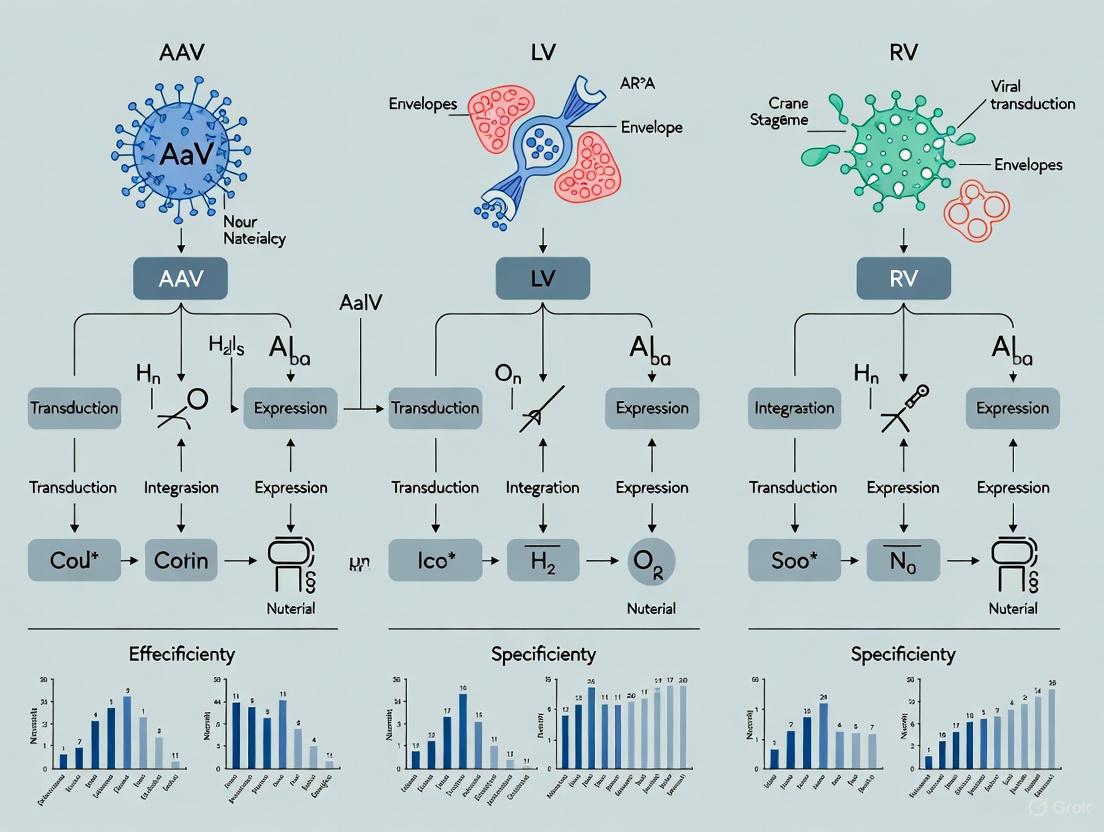
Targeted neuronal transduction is a cornerstone of modern neuroscience research and the development of advanced gene therapies for neurological disorders.
Viral Strategies for Targeted Neuronal Transduction: A 2025 Comparative Guide for Neuroscience Research and Therapy
Abstract
Targeted neuronal transduction is a cornerstone of modern neuroscience research and the development of advanced gene therapies for neurological disorders. This article provides a comprehensive, up-to-date analysis for researchers and drug development professionals, comparing the efficacy, specificity, and practical application of the most prominent viral vector systems and targeting strategies. We explore foundational principles, from AAV serotypes and cell-specific promoters to novel transduction devices, and deliver a critical evaluation of their performance across different neuronal populations. A strong emphasis is placed on troubleshooting common pitfalls, such as off-target expression and low efficiency, and on validation methodologies essential for interpreting data and ensuring experimental rigor. This guide synthesizes current evidence to empower the selection and optimization of the most appropriate viral strategy for specific research and clinical objectives.
Foundations of Neuronal Targeting: Viral Vectors, Promoters, and Cellular Tropism
Adeno-associated viruses (AAVs) have emerged as the preeminent viral vector for in vivo gene delivery to the nervous system, radically transforming both preclinical neuroscience research and clinical gene therapy strategies for neurological diseases [1] [2]. Their ascendancy is built upon a foundational set of properties: minimal pathogenicity, the ability to transduce non-dividing cells like neurons efficiently, and the capacity to establish long-term transgene expression from episomal genomes that persist in the nucleus [3] [4]. The true power of the AAV platform, however, lies in its extensive natural diversity. Numerous AAV serotypes, characterized by variations in their capsid protein structure, exhibit distinct tissue tropisms—innate preferences for infecting specific cell types and organs [5] [2]. This inherent variability allows researchers to select or engineer capsids for targeted delivery to particular neural circuits, cell types, or brain regions, making AAVs indispensable workhorses for dissecting brain function and treating its disorders.
AAV Biology and Neural Tropism
Structural Foundations of a Gene Delivery Vehicle
The AAV virion is a small (20-25 nm), non-enveloped particle with an icosahedral capsid composed of three viral proteins (VP1, VP2, and VP3) in a near-stoichiometric ratio of 1:1:10 [5] [4]. This protein shell protects a linear, single-stranded DNA genome of approximately 4.7 kilobases [2] [3]. The viral genome is flanked by inverted terminal repeats (ITRs), which are the only cis-acting elements required for the genome's replication, packaging, and, following transduction, the formation of stable circular episomes in the host cell nucleus [5] [4]. In recombinant AAV (rAAV) vectors used for research and therapy, the entire native genome between the ITRs is replaced with a transgene expression cassette, rendering the vector replication-incompetent and devoid of viral coding sequences [2].
The Mechanism of Neuronal Transduction
The journey of an AAV particle from the extracellular space to a stably transduced neuron involves a defined, multi-step pathway. The distinct tropism of each serotype is primarily determined by the initial steps of this process: receptor binding and cellular entry.
Figure 1: The AAV Neuronal Transduction Pathway. The process begins with serotype-specific receptor binding and proceeds through cellular internalization, nuclear entry, and culminates in long-term episomal transgene expression.
The process begins when the capsid interacts with primary receptors on the neuronal surface (e.g., heparan sulfate proteoglycan for AAV2, and sialic acid for AAV1) [5]. This is followed by engagement with co-receptors (e.g., αVβ5 integrin, FGFR1, or AAVR) that facilitate clathrin-mediated endocytosis [5] [3]. After internalization, the virus is trafficked through the endosomal system. Successful transduction requires the virus to escape from late endosomes or lysosomes before degradation, a process mediated by phospholipase activity of the VP1 protein [3]. The intact capsid then translocates to the nucleus, where the viral genome is released and enters through nuclear pores. Inside the nucleus, the single-stranded DNA genome is converted into transcriptionally active double-stranded DNA [3] [4]. In the absence of Rep proteins, the rAAV genome circularizes into episomal concatemers that can persist for the life of the non-dividing neuron, enabling sustained transgene expression that can last for years [3] [4].
Comparative Serotype Tropism in the Nervous System
The capsid proteins of different AAV serotypes possess unique surface topographies that interact with different cell surface molecules, leading to vastly different transduction profiles within the complex environment of the nervous system.
Table 1: Tropism Profiles of Common AAV Serotypes in Neuroscience Research
| Serotype | Primary CNS Cell Targets | Key Characteristics & Notes | Receptors |
|---|---|---|---|
| AAV1 | Neurons, glial cells, ependymal cells [5] | Efficient in murine brain; also transduces skeletal muscle and heart [5]. | Sialic acid, AAVR [5] |
| AAV2 | Neurons (non-mitotic CNS cells) [5] | The most studied serotype; does not efficiently cross the blood-brain barrier (BBB) [5] [3]. | Heparan Sulfate Proteoglycan (HSPG), FGFR1, αVβ5 integrin [5] |
| AAV4 | Ependymal cells, Glomerulus [6] | Liver-detargeting; efficient lung and pancreatic islet transduction [6]. | Not specified in search results |
| AAV5 | Photoreceptors, CNS neurons [5] | Distinct from other serotypes; efficient transduction of retinal cells in clinical use [5] [2]. | Sialic acid, PDGFR [2] |
| AAV8 | Neurons (widespread in CNS) [7] | Optimized for neuroscience; used for widespread CNS transduction [7]. | Not specified in search results |
| AAV9 | Neurons, astrocytes [5] [8] | Effectively crosses the blood-brain barrier (BBB); used in Zolgensma for SMA [5] [2]. | Not specified in search results |
| AAV-PHP.B | CNS endothelial and neurons (in mice) [6] | Engineered capsid; enhanced BBB penetration in specific mouse strains [6]. | Not specified in search results |
| AAV-CAP-B10 | CNS (pattern varies by species) [6] | Engineered capsid; shows significant tropism variation between mice and NHPs [6]. | Not specified in search results |
Quantitative Tropism Data from Preclinical Models
Empirical data from animal models is critical for selecting the appropriate serotype for a given experimental goal. The following table synthesizes findings from comparative studies in mice and non-human primates (NHPs), highlighting the relative transduction efficiencies of different serotypes across various neural tissues.
Table 2: Relative Transduction Efficiency of AAV Serotypes in Neural Tissues Across Species (Based on model organism studies)
| Serotype | Cortex | Striatum | Cerebellum | Spinal Cord | Species-Specific Notes |
|---|---|---|---|---|---|
| AAV2 | Medium | Medium | Low | Low | Efficient in human brain tissue ex vivo; broad astrocyte transduction [8]. |
| AAV4 | Low (High in Ependyma) | Low (High in Ependyma) | Low (High in Ependyma) | Low | Liver-detargeting in both mice and NHPs [6]. |
| AAV9 | High | High | High | High | Robust, widespread CNS transduction in mice & NHPs; efficient astrocyte transduction in human ex vivo tissue [5] [8]. |
| AAV-PHP.B | Very High | Very High | Very High | High | Note: Dramatically enhanced BBB penetration in C57BL/6 mice but not in BALB/c mice or NHPs [6]. |
| AAV-CAP-B10 | Variable | Variable | Variable | Variable | Tropism patterns differ significantly between C57BL/6 mice and NHPs [6]. |
Experimental Protocols for Evaluating AAV Tropism
Protocol 1: Direct Intraparenchymal Injection for Focal Transduction
This standard methodology is used for high-efficiency, localized transduction of a specific brain region while minimizing off-target delivery [3].
- Vector Preparation: Thaw rAAV vectors (e.g., AAV2, AAV5, AAV9) encoding a fluorescent reporter (e.g., GFP) on ice and dilute to the working titer (typically 1x10^12 – 1x10^13 vg/mL) in sterile PBS or artificial cerebrospinal fluid.
- Stereotactic Surgery: Anesthetize the animal (e.g., mouse or rat) and secure it in a stereotactic frame. Maintain body temperature throughout the procedure.
- Craniotomy: Aseptically expose the skull and drill a small burr hole at the stereotactic coordinates corresponding to the target brain region (e.g., striatum: +1.0 mm AP, ±2.0 mm ML, -3.0 mm DV from Bregma for a mouse).
- Vector Infusion: Load the viral preparation into a Hamilton syringe fitted with a glass micropipette or a narrow-gauge needle. Lower the needle to the target depth and infuse the virus at a slow, controlled rate (e.g., 50-100 nL per minute) for a total volume of 1-2 µL. The slow rate prevents backflow up the needle tract.
- Post-Infusion: Leave the needle in place for an additional 5-10 minutes after infusion to allow for pressure dissipation, then slowly retract it.
- Tissue Analysis: After a suitable expression period (e.g., 2-4 weeks), perfuse the animal transcardially with fixative. Section the brain using a cryostat or vibratome and perform immunohistochemistry or direct fluorescence imaging to visualize and quantify transduced cells (neurons, astrocytes, microglia) by their morphological markers.
Protocol 2: Systemic Administration for Widespread Transduction
This approach is used to achieve broad, whole-brain transduction and is particularly relevant for testing the BBB-penetrating capability of serotypes like AAV9 and AAV-PHP.B [5] [6].
- Vector Preparation: Prepare a high-titer rAAV stock (e.g., AAV9, AAV-PHP.B) in a large volume of sterile saline suitable for systemic injection. Doses are typically higher than for direct injection (e.g., 1x10^11 – 1x10^12 vg per gram of body weight for mice).
- Administration Route: Inject the vector intravenously via the tail vein in rodents or a peripheral vein in NHPs. Ensure the injection is slow and steady.
- Tissue Collection and Analysis: After the expression period (e.g., 3-6 weeks), harvest the brain and other organs (liver, heart, skeletal muscle). Process the brain tissue for analysis as in Protocol 1. Use quantitative methods such as qPCR to measure vector genome copies in different brain regions and other organs, or RNA sequencing to assess cell-type-specific expression patterns. This allows for a comprehensive assessment of biodistribution and tropism.
Protocol 3: Ex Vivo Transduction of Human Brain Tissue
This innovative protocol provides a highly translational model for assessing AAV tropism in living human brain cells, bridging the gap between rodent models and clinical application [8].
- Tissue Acquisition and Slice Culture: Obtain fresh, sterile human brain tissue from surgical resections (e.g., for epilepsy). Using a vibratome, prepare organotypic slice cultures (200-400 µm thick) in a sterile environment.
- Slice Culture Maintenance: Place the slices on porous membrane inserts in culture plates with specialized neural culture medium, maintained at an air-liquid interface. Culture conditions (37°C, 5% CO2) are optimized for preserving cell viability and native architecture for several weeks.
- AAV Transduction: Apply rAAV vectors directly to the surface of the slices in a small droplet of medium. Allow the vectors to transduce for several days.
- Analysis via snRNA-seq: Dissociate the transduced slices to isolate nuclei. Perform single-nucleus RNA sequencing (snRNA-seq) on the isolated nuclei. Bioinformatic analysis of the sequencing data reveals the tropism profile by quantifying the percentage of cells from each cluster (e.g., excitatory neurons, inhibitory neurons, astrocytes, oligodendrocytes, microglia) that express the AAV-delivered transgene.
Figure 2: Workflow for Ex Vivo AAV Tropism Analysis in Human Brain. This pipeline enables high-resolution profiling of AAV tropism across diverse human brain cell types using clinical-grade tissue.
The Scientist's Toolkit: Essential Reagents for AAV Neuroscience Research
Table 3: Key Research Reagent Solutions for AAV-Based Neuroscience
| Reagent / Material | Function in Research | Key Considerations |
|---|---|---|
| rAAV Transfer Plasmid | Contains ITR-flanked transgene expression cassette. Backbone for vector production. | Must use promoters suitable for neurons (e.g., CAG, Synapsin, hThy1); limited to ~4.7 kb cargo [4]. |
| Packaging Plasmids (Rep/Cap) | Provide AAV replication (Rep) and serotype-specific capsid (Cap) proteins in trans. | The Cap plasmid determines the serotype (e.g., AAV2, AAV9, PHP.B). AAV5 requires a specific Rep/Cap system [5] [4]. |
| Adenoviral Helper Plasmid | Provides essential adenovirus genes (E1, E2a, E4, VA RNA) needed for AAV replication. | Required for AAV life cycle in production cell line (e.g., HEK293) which supplies E1 [2] [4]. |
| HEK293 Cells | Production cell line; expresses adenovirus E1 gene. Used for transient transfection. | Industry standard; can be used in adherent or suspension culture for scale-up [2]. |
| Purification Resins | Chromatography media (e.g., ion-exchange, affinity) for purifying AAV from cell lysates. | AAV2 can be purified via heparin affinity; iodixanol gradient centrifugation is a common method for other serotypes [5]. |
| Stereotactic Frame | Provides precise, stable positioning for intracranial AAV injections in rodents. | Critical for accurate targeting of specific brain nuclei. |
| Organotypic Slice Culture System | Ex vivo platform for maintaining living brain tissue to test AAV tropism and function. | Especially valuable for validating vectors in human brain tissue [8]. |
The strategic selection of AAV serotypes, based on their well-defined yet complex tropism profiles, is a cornerstone of modern neuroscience. The data and methodologies outlined here provide a framework for choosing the optimal viral vector for specific experimental needs, from mapping precise neural circuits with AAV2 to achieving whole-brain gene delivery with BBB-crossing variants like AAV9. As the field advances, the continued refinement of AAV capsids through directed evolution and rational design, coupled with robust translational models like human brain slice cultures, promises to further enhance the specificity and efficacy of these remarkable molecular tools. This will undoubtedly accelerate both our fundamental understanding of the brain and the development of next-generation gene therapies for neurological disorders.
Retroviral vectors, derived from RNA viruses that reverse-transcribe their genome into DNA for integration into the host cell chromosome, are cornerstone tools in modern gene therapy and basic research. Among these, lentiviruses (LVs) and gamma-retroviruses (γRVs) represent two of the most prominent subfamilies of the Retroviridae family used for achieving stable, long-term gene expression [9]. Their unique ability to facilitate permanent genomic integration enables persistent transgene expression in target cells and their progeny, making them indispensable for applications requiring sustained genetic modification, such as the engineering of therapeutic immune cells and disease modeling [10] [11].
The revival of retroviral-based gene therapy after initial setbacks underscores its transformative potential [10]. This review objectively compares the performance characteristics of LV and γRV vector systems, providing a structured analysis of their molecular mechanisms, experimental performance data, and practical research applications to inform selection for targeted neuronal transduction and other biomedical research.
Fundamental Biological and Molecular Differences
Lentiviruses and gamma-retroviruses, while both retroviruses, possess distinct biological characteristics that directly influence their experimental applications. Gamma-retroviruses, such as the Murine Leukemia Virus (MLV), have simpler genomes typically encoding only the essential gag, pol, and env genes [9]. In contrast, lentiviruses like HIV-1 possess more complex genomes that include additional regulatory proteins (tat, rev) and accessory proteins (vpr, vpu, vif, nef), which contribute to their broader cellular tropism and more sophisticated replication cycle [9] [12].
The most critical operational difference for researchers is their differential capacity to infect dividing versus non-dividing cells. Gamma-retroviral vectors require target cells to undergo active cell division because their pre-integration complex cannot traverse the intact nuclear membrane [9]. Conversely, lentiviral vectors can infect both dividing and non-dividing cells due to nuclear import mechanisms facilitated by their regulatory proteins, making them uniquely suited for transducing quiescent cell types such as neurons, hematopoietic stem cells, and macrophages [9] [11].
Table 1: Fundamental Characteristics of Lentiviral and Gamma-Retroviral Vectors
| Characteristic | Lentiviral Vectors (LVs) | Gamma-Retroviral Vectors (γRVs) |
|---|---|---|
| Viral Origin | HIV-1, HIV-2 [9] | Murine Leukemia Virus (MLV) [9] |
| Genome Complexity | Complex (additional regulatory & accessory proteins) [9] [12] | Simple (gag, pol, env only) [9] |
| Infection Capability | Dividing & non-dividing cells [9] [11] | Dividing cells only [9] |
| Integration Profile | Random, with preference for active genes [9] | Prefers transcription start sites & regulatory regions [9] [13] |
| Typical Insert Capacity | ~9 kb [13] | ~9 kb [13] |
| Risk of Insertional Mutagenesis | Moderate [9] [14] | Higher due to integration near promoters [9] [13] |
Another significant consideration is their integration site preference within the host genome. Gamma-retroviral vectors demonstrate a tendency to integrate near transcription start sites and regulatory regions, which poses a higher theoretical risk of insertional mutagenesis and activation of oncogenes [9] [13]. Lentiviral vectors integrate more randomly throughout the genome, with a slight preference for active transcriptional units, generally resulting in a improved safety profile [9].
Quantitative Performance Comparison in Research Applications
Performance in Immune Cell Engineering
The selection between LV and γRV vectors is crucial in immune cell therapy manufacturing, where transduction efficiency, cell viability, and functional persistence are critical quality attributes [11]. Both platforms have successfully engineered FDA-approved CAR-T cell products, yet their performance characteristics differ notably.
Table 2: Performance in Immune Cell Therapy Manufacturing
| Performance Metric | Lentiviral Vectors (LVs) | Gamma-Retroviral Vectors (γRVs) |
|---|---|---|
| Primary Applications | CAR-T cells, HSCs, neurons, other non-dividing cells [9] [11] | CAR-T cells, ex vivo activation of dividing cells [9] [14] |
| CAR-T Clinical Transduction Efficiency | 30-70% [11] | Comparable in activated T-cells [11] [14] |
| Tropism for NK Cells | Good (especially with VSV-G pseudotyping) [11] | Poor due to receptor incompatibility [11] |
| Therapeutic Persistence | Stable long-term expression [9] | Stable in dividing cells, diluted in non-dividing [9] |
| Reported Vector Copy Number (VCN) | Typically maintained below 5 copies/cell in clinical programs [11] | Similar VCN control strategies employed [11] |
Production and Manufacturing Considerations
Manufacturing processes for both vector types share common steps, including plasmid preparation, transfection of packaging cells (typically HEK293T), virus production, harvesting, and purification [9] [13]. However, LV production typically requires more complex packaging systems, often involving three or four plasmids to separate viral components for enhanced safety [9]. Stable producer cell lines for both systems offer advantages in scalability and cost-effectiveness compared to transient transfection, particularly for clinical and commercial applications [15] [13].
Recent research has identified retro-transduction (the transduction of producer cells by their self-produced vectors) as a significant challenge in LV manufacturing, with estimates suggesting 60-90% of infectious vectors may be lost through this process [15]. This phenomenon reduces harvestable titers and can impact producer cell growth and viability due to accumulating vector genomes [15]. Innovative production systems, including fixed-bed bioreactors (e.g., iCELLis and Scale-X), are being optimized to improve LV production yields, with recent reports achieving titers up to 10⁹ TU/mL in suspension platforms [13] [16].
Experimental Protocols and Workflows
Standard Viral Vector Production Workflow
The following diagram illustrates the core production workflow for both LV and γRV vectors, highlighting key decision points and process considerations for researchers.
Critical Transduction Protocol for Immune Cells
A standardized protocol for transducing immune cells, such as T-cells or hematopoietic stem cells, optimizes critical process parameters to balance efficiency with safety.
Protocol: Viral Transduction of Human T-Cells for CAR-T Generation
Cell Preparation and Activation: Isolate target T-cells from donor material (e.g., leukapheresis). Activate cells using anti-CD3/CD28 antibodies in culture medium supplemented with IL-2 (typically 100-300 IU/mL) for 24-48 hours to induce proliferation and upregulate viral receptors [11].
Vector Preparation: Thaw viral vector supernatant rapidly at 37°C and avoid multiple freeze-thaw cycles. Dilute if necessary to achieve desired MOI in fresh culture medium.
Transduction Enhancement:
- Spinoculation: Centrifuge vector-cell mixture at approximately 800-1200 × g for 30-120 minutes at 32°C to enhance cell-vector contact [17] [11].
- Transduction Enhancers: Add recombinant fibronectin fragment (RetroNectin) or polycations like protamine sulfate (4-8 µg/mL) to the culture to improve binding and internalization [11].
Incubation: Incubate cells with vector particles for 8-24 hours at 37°C, 5% CO₂. Optimal Multiplicity of Infection (MOI) typically ranges from 1 to 10, requiring empirical titration to maximize efficiency while maintaining VCN <5 [11].
Post-Transduction Processing: After incubation, replace transduction medium with fresh growth medium containing supporting cytokines (e.g., IL-2, IL-7, IL-15). Expand cells for several days before analyzing transduction efficiency and proceeding to functional assays [11].
Research Reagent Solutions for Viral Vector Research
Successful viral vector experimentation requires specific reagents and materials. The following table details essential components for vector production and transduction workflows.
Table 3: Essential Research Reagents for Retroviral Vector Research
| Reagent/Cell Line | Function/Application | Research Considerations |
|---|---|---|
| HEK293T Cell Line | Standard packaging cell line for transient vector production [13] [16] | High transfection efficiency; used for both LV and γRV production [9]. |
| PG13 Packaging Cell Line | Gamma-retroviral packaging cell line with GaLV envelope [14] | Used for stable γRV production in approved CAR-T products [14]. |
| VSV-G Envelope Plasmid | Pseudotyping for broad tropism [15] [9] | Confers stability, allows concentration by ultracentrifugation; targets LDLR [15]. |
| GaLV Envelope | Pseudotyping for γRVs [14] | Used in clinical γRV vectors (e.g., Yescarta) [14]. |
| Polyethylenimine (PEI) | Chemical transfection reagent [9] | Cost-effective for large-scale plasmid transfections during production. |
| RetroNectin | Recombinant fibronectin fragment [11] | Enhaves transduction efficiency in immune cells by co-localizing vectors and cells. |
| Protamine Sulfate | Polycationic transduction enhancer [11] | Alternative to RetroNectin; neutralizes charge repulsion between vectors and cells. |
| IL-2, IL-7, IL-15 | Cytokine support [11] | Maintains cell viability, proliferation, and function post-transduction. |
Safety Considerations and Risk Mitigation Strategies
The integrating nature of both LV and γRV vectors necessitates careful safety planning. The primary risks include insertional mutagenesis and the potential generation of replication-competent retroviruses (RCR) [14].
Modern self-inactivating (SIN) vector designs have significantly improved safety profiles by deleting enhancer-promoter sequences in the viral LTRs, reducing the risk of oncogene activation post-integration [9] [14]. The third-generation lentiviral systems represent the current safety standard, splitting the viral genome across multiple plasmids (typically 3-4) to minimize the chance of homologous recombination and RCR generation [9] [13]. Regulatory guidelines for clinical applications mandate rigorous testing for RCR and monitoring of Vector Copy Number (VCN), with most clinical programs maintaining VCN below 5 copies per cell [11] [14].
Lentiviral and gamma-retroviral vectors both provide robust platforms for stable gene integration, yet their distinct biological properties dictate specific research applications. Lentiviral vectors offer superior versatility for their ability to transduce non-dividing cells, including neurons, hematopoietic stem cells, and macrophages, with a more favorable integration profile. Gamma-retroviral vectors remain effective and reliable for engineering rapidly dividing cells, such as activated T-cells, with a well-established clinical track record.
Future developments are focused on enhancing vector safety through refined integration site control, hybrid systems incorporating CRISPR/Cas technology, and improved production systems to increase yield and reduce manufacturing costs [10]. The continued optimization of these viral vector systems will further empower their application in targeted neuronal transduction research and the development of next-generation cell and gene therapies.
Targeted genetic manipulation of specific neuronal populations is a cornerstone of modern neuroscience research, enabling the precise investigation of neural circuit function and dysfunction. Within this domain, the noradrenergic system, originating from the locus coeruleus (LC), has been a primary focus due to its critical role in arousal, stress, learning, memory, and various pathological conditions [18] [19]. The ability to accurately target LC-norepinephrine (NE) neurons is therefore paramount.
This guide provides an objective comparison of the four predominant genetic strategies for targeting the LC-NE system: three Cre-lox approaches using endogenous promoters (DBH, NET, TH) and one employing a synthetic PRSx8 promoter. We present quantitative data on their efficacy and specificity, detail standard experimental protocols, and catalog essential research reagents to inform the selection and implementation of these strategies in preclinical research.
Quantitative Comparison of Targeting Strategies
A direct, side-by-side comparison of these viral strategies reveals significant differences in performance. The following table summarizes key experimental data quantifying the efficacy (ability to transduce the intended noradrenergic cells) and specificity (avoidance of off-target transduction) of each approach [18].
Table 1: Performance Metrics of LC-NE Genetic Targeting Strategies
| Targeting Strategy | Efficacy (% of TH+ cells expressing transgene) | Specificity (% of eGFP+ cells that are TH+) | Key Characteristics and Caveats |
|---|---|---|---|
| DBH-cre | 70.5% ± 11.8% | 82.2% ± 9.5% | Utilizes the dopamine beta-hydroxylase promoter; high specificity for noradrenergic neurons [18]. |
| NET-cre | 79.5% ± 9.0% | 71.4% ± 13.6% | Utilizes the norepinephrine transporter promoter; high efficacy [18]. |
| PRSx8 (in wild-type) | 78.2% ± 12.9% | 65.2% ± 5.0% | Synthetic promoter; does not require transgenic animals; good efficacy but lower specificity than DBH-cre [18]. |
| TH-cre | 33.3% ± 22.7% | 46.0% ± 12.1% | Utilizes the tyrosine hydroxylase promoter; targets all catecholaminergic cells (including dopaminergic); low efficacy and specificity for NE neurons [18]. |
The data demonstrates that DBH-cre offers the most specific targeting of noradrenergic neurons, while NET-cre and PRSx8 provide the highest efficacy. In contrast, the TH-cre strategy shows significantly lower efficacy and specificity for the LC-NE system, which is consistent with the broader expression profile of tyrosine hydroxylase across all catecholaminergic cell types [18] [19].
Experimental Protocols for Strategy Validation
The quantitative data presented above was generated through a standardized experimental workflow. The following section details the key methodologies used to enable a direct comparison of viral strategies for targeted neuronal transduction [18].
Viral Vector Design and Delivery
The core protocol involves the stereotaxic injection of recombinant adeno-associated virus (rAAV) into the locus coeruleus of experimental animals.
- Viral Vectors: Titer-matched suspensions of rAAV2/9 are commonly used for efficient transduction of neurons [18]. Other serotypes, such as AAV2/7, have shown lower transduction efficiency in the LC [20].
- Genetic Cargo: For Cre-driver lines (Dbh, Net, Th), a cre-dependent double-floxed inverted open reading frame (DIO) construct is used, often combined with a strong synthetic promoter like CAG to drive transgene expression (e.g., eGFP). In wild-type animals, the transgene is expressed directly under the control of the PRSx8 promoter [18].
- Stereotaxic Surgery: Animals are anesthetized and placed in a stereotaxic frame. A small volume of the viral vector (e.g., 10-100 nL) is injected bilaterally into the LC at a controlled flow rate (e.g., 2 nL/min). The injection syringe is left in place for several minutes post-injection to prevent backflow [18] [20].
Validation and Quantification of Expression
After a sufficient period for transgene expression (e.g., 3-6 weeks), brain tissue is processed to quantify transduction efficacy and specificity.
- Tissue Preparation and Immunohistochemistry: Coronal brainstem sections containing the LC are prepared. Immunofluorescence staining is performed using a primary antibody against tyrosine hydroxylase (TH) to identify noradrenergic neurons and an antibody against GFP to enhance the signal from the transgene [18].
- Image Analysis and Cell Segmentation: Fluorescence images are acquired using microscopy. Automated cell segmentation algorithms, such as the deep learning-based CellPose, are used to identify TH-positive (TH+) and eGFP-positive (eGFP+) cells [18].
- Quantification of Efficacy and Specificity: Cells with an overlap of ≥50% between TH and GFP masks are defined as co-expressing. Efficacy is calculated as the proportion of TH+ cells that are also eGFP+. Specificity is calculated as the proportion of eGFP+ cells that are also TH+ [18].
Figure 1: Experimental workflow for comparing genetic targeting strategies, from viral injection to quantitative analysis.
Visualization of Targeting Strategies and Mechanisms
The genetic targeting strategies discussed rely on distinct molecular mechanisms to achieve transgene expression in noradrenergic neurons. The following diagram illustrates the operational principles of the Cre-lox and synthetic promoter systems.
Figure 2: Two primary mechanisms for genetic targeting of locus coeruleus noradrenergic neurons.
The Scientist's Toolkit: Key Research Reagents
Successful implementation of these genetic strategies requires a suite of specialized reagents. The table below lists essential materials and their functions for designing and executing these experiments.
Table 2: Essential Research Reagents for Genetic Targeting of the LC-NE System
| Reagent / Tool | Function and Application | Examples / Key Characteristics |
|---|---|---|
| Cre-Driver Mouse Lines | Provides cell-type specific expression of Cre recombinase. | Dbh-cre (high specificity), Net-cre (high efficacy), Th-cre (broad catecholaminergic targeting) [18]. |
| Synthetic Promoter | Enables NE-specific transgene expression in wild-type animals. | PRSx8 promoter (contains Phox2a/Phox2b response sites from human DBH promoter) [18]. |
| Viral Vectors | Delivery vehicle for genetic material into neurons. | rAAV2/9 (high neuronal transduction efficiency); serotype affects outcome [18] [20]. |
| Cre-Dependent Constructs | Genetic cargo that is activated only in Cre-expressing cells. | DIO (Double-floxed Inverse Orientation) vectors; often paired with strong promoters (e.g., CAG) [18] [21]. |
| Reporter Proteins | Visualize transduced cells and processes. | eGFP, mCherry [18] [20]. |
| Functional Effectors | Monitor or manipulate neuronal activity. | jGCaMP8m (calcium imaging), ChrimsonR (optogenetics), hM3Dq (chemogenetics) [18] [19] [20]. |
| Validation Antibodies | Histological verification of transgene expression and cell identity. | Anti-Tyrosine Hydroxylase (TH), Anti-GFP [18]. |
The choice of a genetic targeting strategy for the locus coeruleus noradrenergic system involves a critical trade-off between efficacy, specificity, and practical experimental considerations.
- For Highest Specificity: The DBH-cre driver line is the most appropriate choice, as DBH is a definitive marker for noradrenergic neurons, minimizing off-target expression in adjacent cell populations [18].
- For Highest Efficacy: The NET-cre and PRSx8 promoter approaches offer the highest rates of transduction of noradrenergic neurons. The PRSx8 strategy has the distinct advantage of not requiring transgenic animals, reducing cost and complexity [18].
- General Considerations: Researchers must be cautious with the TH-cre driver line for dedicated noradrenergic studies due to its lower specificity and highly variable efficacy. Furthermore, the selection of AAV serotype is critical, as rAAV2/9 has demonstrated superior performance in the LC compared to other serotypes like AAV2/7 [18] [20].
In summary, the optimal genetic targeting strategy is contingent on the specific research question. This guide provides a foundational comparison and methodological framework to empower researchers in making an informed selection, thereby enhancing the precision and reliability of future investigations into the noradrenergic system and other defined neuronal populations.
In the field of neuroscience and gene therapy research, the targeted genetic manipulation of specific neuronal populations relies heavily on viral vector technology. The success of these approaches is quantified by three fundamental metrics: transduction efficacy, which measures the proportion of target cells that successfully express the transgene; specificity, which defines the accuracy of transgene expression in the intended cell type versus off-target cells; and transgene expression levels, which determine the amount of functional protein produced in transduced cells. Evaluating viral strategies against these metrics is crucial for selecting the optimal vector system for experimental or therapeutic applications, as each vector offers distinct advantages and limitations in different neural contexts.
The selection of an appropriate viral vector can determine the success or failure of a neuroscience experiment or a gene therapy trial. This guide provides a objective comparison of the most commonly used viral vectors, focusing on quantitative performance data across these three critical metrics, to empower researchers in making evidence-based decisions for their specific experimental needs.
Comparative Performance of Viral Vector Systems
Quantitative Comparison of Viral Vectors
Table 1: Key Performance Metrics of Major Viral Vector Systems
| Vector System | Typical Transduction Efficacy (In Vivo) | Specificity Mechanisms | Transgene Expression Onset | Maximum Capacity (kb) | Primary Applications in Neuroscience |
|---|---|---|---|---|---|
| rAAV2/1 | ~70-80% (Nigral DA neurons) [22] | Serotype tropism, Cell-type-specific promoters | ~2 weeks [22] | ~4.7 [23] | Neuron transduction, Circuit mapping |
| rAAV2/2 | ~20-30% (Nigral DA neurons) [22] | Serotype tropism, Cell-type-specific promoters | ~2 weeks [22] | ~4.7 [23] | Baseline comparison |
| rAAV2/5 | ~60-70% (Nigral DA neurons) [22] | Serotype tropism, Cell-type-specific promoters | ~2 weeks [22] | ~4.7 [23] | Neuron transduction |
| rAAV2/8 | ~60-70% (Nigral DA neurons) [22] | Serotype tropism, Cell-type-specific promoters | ~2 weeks [22] | ~4.7 [23] | Neuron transduction |
| rAAV2/9 | Varies by promoter & strategy [18] | Promoter specificity (PRS×8, CAG-DIO), Cre-dependent systems | ~6 weeks [18] | ~4.7 [23] | Cell-type-specific targeting |
| Lentivirus | ~81% (Human DCs) [24] | Cell-type-specific promoters | Varies | ~8 [23] | Stable long-term expression |
| mRNA Electroporation | ~62-81% (Human/murine DCs) [24] | Physical delivery limitation | Immediate (hours) | Limited by mRNA size | Rapid transient expression |
Performance Analysis by Targeting Strategy
Table 2: Efficacy and Specificity of Neuronal Targeting Strategies
| Targeting Strategy | Efficacy (% TH+ Cells Co-expressing Transgene) | Specificity (% eGFP+ Cells Co-expressing TH) | Key Advantages | Key Limitations |
|---|---|---|---|---|
| Dbh-cre | 70.5 ± 11.8% [18] | 82.2 ± 9.5% [18] | High specificity for noradrenergic neurons | Requires transgenic animal |
| Net-cre | 79.5 ± 9.0% [18] | 71.4 ± 13.6% [18] | Good efficacy and specificity | Requires transgenic animal |
| Th-cre | 33.3 ± 22.7% [18] | 46.0 ± 12.1% [18] | Targets catecholaminergic systems | Low efficacy, highly variable, poor specificity |
| PRS×8 Promoter | 78.2 ± 12.9% [18] | 65.2 ± 5.0% [18] | Works in wild-type animals | Moderate specificity |
Experimental Protocols for Assessing Performance Metrics
Standardized Protocol for rAAV Serotype Comparison
The direct comparison of rAAV serotype performance in the nigrostriatal system follows a meticulously standardized protocol to ensure valid metric assessment [22]:
Virus Production and Titration:
- Pseudotyped rAAV vectors are constructed with a transgene cassette (e.g., CMV-EGFP) flanked by AAV2 inverted terminal repeats (ITRs)
- Vectors are packaged with capsid proteins from serotypes 1, 2, 5, or 8 via tripartite transfection of HEK 293A cells
- Viral particles are purified by heparin column chromatography (serotype 2) or iodixanol density gradient (serotypes 1, 5, 8)
- Concentrated virus is titered by dot blot hybridization to achieve matched titers (6.2×10¹¹ to 1.0×10¹³ gc/mL)
- Final working solutions are diluted to identical concentrations (6.2×10¹¹ gc/mL) in phosphate-buffered saline
Stereotaxic Injection Procedure:
- Animals: Sprague Dawley rats (300-350 g)
- Injection coordinates: Substantia nigra (AP -5.2, ML ±2.0, DV -7.4 from bregma)
- Injection volume: 1 μL containing equal viral particles (6.2×10⁸ gc) of each serotype
- Injection rate: 0.2 μL/min using microinjection pump with 33-gauge needle
- Post-injection needle dwell time: 5 minutes to prevent backflow
Tissue Processing and Analysis:
- Perfusion and fixation: 2 weeks post-injection with 4% paraformaldehyde
- Sectioning: 40 μm coronal sections on sliding microtome
- Immunohistochemistry: Free-floating sections stained with primary antibodies against GFP (1:3000) and tyrosine hydroxylase (TH, 1:1000)
- Visualization: Fluorescent secondary antibodies (Alexa Fluor 488, Cy3)
- Quantification: Automated or manual cell counting of transduced (EGFP+) and target (TH+) neurons
Protocol for Cell-Type-Specific Targeting Assessment
The evaluation of targeting strategies for locus coeruleus noradrenergic neurons employs this rigorous approach [18]:
Viral Vector Preparation:
- rAAV2/9 vectors encoding eGFP under control of different regulatory systems
- For cre-dependent expression: Double-floxed inverted open reading frames (DIO) combined with synthetic CAG promoter
- For promoter-specific expression: PRS×8 synthetic promoter for noradrenergic specificity
- All viral suspensions titer-matched for valid comparison
Stereotaxic Injection and Analysis:
- Subjects: Transgenic cre driver lines (Dbh-cre, Net-cre, Th-cre) and wild-type mice
- Injection site: Bilateral locus coeruleus
- Expression period: 6 weeks for full transgene expression
- Tissue processing: Immunostaining against TH and GFP
- Automated cell segmentation: Deep learning-based algorithm (CellPose) for objective quantification
- Efficacy calculation: Proportion of TH+ cells co-expressing eGFP
- Specificity calculation: Proportion of eGFP+ cells co-expressing TH
Visualization of Experimental Workflows and Molecular Strategies
Viral Transduction Assessment Workflow
Molecular Strategies for Cell-Type Specificity
The Scientist's Toolkit: Essential Research Reagents
Table 3: Key Research Reagents for Viral Transduction Studies
| Reagent / Tool | Function | Example Application | Performance Considerations |
|---|---|---|---|
| Pseudotyped rAAVs | Gene delivery with customized cellular tropism | Serotype comparison (AAV2/1, 2/2, 2/5, 2/8) [22] | Varying transduction efficiency across neural populations |
| Cre-Driver Lines | Cell-type-specific recombination | Dbh-cre, Net-cre, Th-cre mice [18] | Variable efficacy and specificity between lines |
| Synthetic Promoters | Cell-type-specific expression in wild-type animals | PRS×8 for noradrenergic neurons [18] | Balance between specificity and expression strength |
| Fluorescent Reporters | Transduction visualization and quantification | EGFP under various promoters [22] [18] | Sensitivity of immunodetection vs. native fluorescence |
| Cell Segmentation Algorithms | Automated quantification of transduction metrics | CellPose for TH+/eGFP+ cell counting [18] | Reduces bias in efficacy/specificity calculations |
| FUS-BBBO | Noninvasive targeted delivery across blood-brain barrier | Site-specific neuronal transduction [25] | Enables noninvasive targeting but requires optimization |
| Engineered AAV Capsids | Enhanced tropism and reduced peripheral transduction | AAV mutants for FUS-BBBO [25] | Improved specificity through directed evolution |
The comparative data presented in this guide demonstrates that optimal viral strategy selection requires careful consideration of the trade-offs between transduction efficacy, specificity, and transgene expression levels. Newer rAAV serotypes (1, 5, 8) show marked improvements in nigrostriatal transduction compared to traditional AAV2, without increasing glial response or toxicity [22]. For cell-type-specific targeting, Dbh-cre and PRS×8 promoter systems provide superior efficacy and specificity compared to Th-cre approaches in noradrenergic systems [18].
Emerging technologies including engineered AAV capsids [25], optimized expression cassettes [26], and novel delivery methods like focused ultrasound [25] promise further enhancements in neuronal transduction capabilities. The continued refinement of these viral strategies, coupled with standardized assessment protocols, will accelerate both basic neuroscience research and the development of neurological gene therapies.
Methodological Guide: Applying Viral Strategies to Specific Neuronal Systems
The precise targeting of monoaminergic neurons, particularly norepinephrine (NE) neurons of the locus coeruleus (LC), is fundamental to advancing our understanding of their roles in arousal, attention, learning, and various neurological disorders [18]. Genetic tools that enable selective manipulation and observation of these specific neuronal populations are indispensable for modern neuroscience research. Among the most critical resources for such investigations are Cre driver mouse lines, which allow for cell-type-specific transgene expression.
This guide provides a systematic, data-driven comparison of three primary Cre driver lines used to target the noradrenergic system: DBHcre, NETcre, and THcre. The dopamine beta-hydroxylase (Dbh) and norepinephrine transporter (Net) promoters are considered more specific to noradrenergic neurons, whereas tyrosine hydroxylase (Th) is expressed in all catecholaminergic cells, including dopaminergic neurons [18]. A direct, side-by-side evaluation of these models is crucial for the accurate interpretation of past experiments and the robust design of future studies on the LC-NE system.
Performance Comparison of Cre Driver Lines
A comparative study published in 2025 quantitatively assessed the efficacy and specificity of these model systems by injecting a Cre-dependent eGFP reporter virus into the LC of the respective mouse lines. The table below summarizes the key performance metrics from this study [18].
Table 1: Efficacy and Specificity of Transgene Expression in LC-NE Neurons
| Cre Driver Line | Targeted Enzyme/Transporter | Efficacy (Mean % ± SD) | Specificity (Mean % ± SD) | Key Characteristics and Caveats |
|---|---|---|---|---|
| DBHcre | Dopamine Beta-Hydroxylase (DBH) | 70.5 ± 11.8% | 82.2 ± 9.5% | Highest specificity for noradrenergic neurons; catalyzes the synthesis of NE from DA. |
| NETcre | Norepinephrine Transporter (NET) | 79.5 ± 9.0% | 71.4 ± 13.6% | High efficacy; specific for NE-releasing neurons; mediates reuptake of extracellular NE. |
| THcre | Tyrosine Hydroxylase (TH) | 33.3 ± 22.7% | 46.0 ± 12.1% | Lowest efficacy and specificity; expressed in all catecholaminergic cells (dopaminergic and noradrenergic). |
| PRS×8 Promoter (in WT) | Synthetic DBH-derived promoter | 78.2 ± 12.9% | 65.2 ± 5.0% | Viral strategy for NE-specific transgene expression without a transgenic Cre line. |
Key Performance Insights
- Efficacy: This refers to the proportion of tyrosine hydroxylase-positive (TH+) cells that successfully co-expressed the eGFP transgene. NETcre and the PRS×8 promoter showed the highest efficacy, closely followed by DBHcre. THcre-mediated expression was significantly lower and exhibited high variability between animals [18].
- Specificity: This measures the proportion of eGFP+ cells that were also TH+, indicating how successfully the strategy avoids off-target expression. DBHcre was the most specific, with over 80% of eGFP+ cells identified as noradrenergic. THcre was the least specific, with more than half of the eGFP+ cells not being TH+ [18].
- THcre Considerations: The low specificity of the THcre line is attributed to TH's role in the synthesis of L-DOPA, an upstream precursor in the catecholamine pathway, making it a marker for all catecholaminergic cells, not just noradrenergic ones [18]. Furthermore, a separate study on a TH-Cre line (JAX #8601) reported that it shows preserved dopaminergic homeostasis and normal dopamine-related behaviors, confirming its utility for studying dopamine systems, though its use for selective noradrenergic targeting is limited [27].
Experimental Protocols for Comparison
The following workflow and detailed methodology outline the key steps for a side-by-side comparison of Cre driver lines, as described in the primary source study [18].
Detailed Methodology
1. Animal Models and Viral Vectors:
- Mouse Lines: Utilize heterozygous DBHcre, NETcre, and THcre mice, alongside wild-type (e.g., C57BL/6J) mice for promoter-based strategies. The DBHcre line (e.g., MGI:6850023) has been successfully used to label NE neurons for functional studies [28] [29] [30].
- Viral Constructs: For Cre lines, inject a recombinant adeno-associated virus (rAAV2/9) encoding a double-floxed inverted orientation (DIO) sequence for enhanced green fluorescent protein (eGFP) under a strong synthetic promoter (e.g., CAG). For wild-type mice, use an unconditional rAAV with eGFP under the control of the noradrenergic-specific PRS×8 promoter [18].
2. Stereotaxic Surgery:
- Perform bilateral injections of titer-matched viral suspensions into the locus coeruleus using precise stereotaxic coordinates.
- Allow sufficient time for transgene expression (e.g., 6 weeks post-injection) [18].
3. Histology and Immunohistochemistry:
- Perfuse and section brains into coronal slices.
- Perform immunofluorescence staining using primary antibodies against:
- Tyrosine Hydroxylase (TH): To label all catecholaminergic neurons.
- GFP: To enhance the signal from the virally expressed eGFP.
- Use appropriate fluorescent secondary antibodies for visualization [18] [31].
4. Image Analysis and Quantification:
- Acquire images using fluorescence or confocal microscopy.
- Use automated cell segmentation algorithms (e.g., CellPose) to identify TH-positive (TH+) and eGFP-positive (eGFP+) cells [18].
- Define co-expression: A common threshold is an overlap of ≥50% between the TH and GFP segmentation masks.
- Calculate metrics:
- Efficacy = (Number of TH+ cells co-expressing eGFP / Total number of TH+ cells) × 100
- Specificity = (Number of eGFP+ cells co-expressing TH / Total number of eGFP+ cells) × 100 [18].
The Scientist's Toolkit: Essential Research Reagents
The table below lists key reagents and tools essential for conducting experiments with noradrenergic Cre driver lines.
Table 2: Essential Research Reagents for Targeting Noradrenergic Neurons
| Reagent/Tool | Function | Example Use Case |
|---|---|---|
| DBHcre Mouse Line | Drives Cre expression in DBH-containing (noradrenergic/adrenergic) neurons. | Selective manipulation and mapping of NE neurons; shown to work with chemogenetic activation [32] [29]. |
| NETcre Mouse Line | Drives Cre expression in neurons expressing the norepinephrine transporter. | High-efficacy targeting of central NE system for functional studies [18]. |
| THcre Mouse Line | Drives Cre expression in all catecholaminergic neurons (dopaminergic and noradrenergic). | Studying broad catecholamine systems; requires validation for selective NE targeting [18] [27]. |
| PRS×8 Promoter AAV | Enables NE-specific transgene expression in wild-type animals without a Cre line. | An alternative to Cre lines; useful for combination with other genetic tools [18]. |
| Floxed Reporter Lines (e.g., Ai9, Ai14) | Express a fluorescent protein (e.g., tdTomato) upon Cre-mediated recombination. | Anatomical tracing and visualization of Cre-positive neurons [31] [29]. |
| Floxed Effector Lines (e.g., Ai32) | Express optogenetic tools (e.g., Channelrhodopsin) upon Cre-mediated recombination. | Optogenetic control of NE neuron activity [31]. |
| DIO AAV Vectors | Cre-dependent AAVs that ensure expression only in Cre-positive cells. | Safe and effective delivery of sensors (e.g., GCaMP) or actuators (e.g., DREADDs) [18] [29]. |
Functional Validation and Practical Applications
Beyond anatomical targeting, these tools enable functional studies. For instance, DBHcre mice crossed with reporter lines have been used for in vivo imaging to demonstrate the structural and functional regrowth of NE axons after chemical injury, a process monitored over 16 weeks [29]. Furthermore, DBHcre mice have been used to express channelrhodopsin in specific thalamocortical neurons for optogenetic stimulation, allowing the investigation of synaptic properties and circuit function [31].
The noradrenergic system's function can also be probed indirectly. A study on the effects of ethanol used mice expressing genetically encoded calcium indicators in astrocytes to show that ethanol suppresses locomotion-induced astroglial Ca²⁺ elevations by inhibiting norepinephrine release from LC terminals [33]. Computational models further suggest that NE released within the densely packed LC core can diffuse and activate α2-adrenergic autoreceptors on neighboring neurons, potentially partitioning the network based on activity levels [30]. The following diagram illustrates this core-to-terminal signaling pathway.
The choice of a genetic model system for studying the noradrenergic system has a profound impact on experimental outcomes.
- For projects demanding the highest specificity for norepinephrine neurons, the DBHcre line is the most reliable choice.
- When high efficacy of transgene expression is the primary goal, the NETcre line and the viral PRS×8 promoter approach in wild-type mice are excellent options.
- Researchers should use the THcre line with caution for selective noradrenergic studies due to its lower specificity, though it remains a valuable tool for investigating broader catecholaminergic pathways.
This comparative guide underscores the necessity of validating the performance of genetic tools within the specific experimental context and brain region of interest. The data and protocols provided here offer a foundation for making informed decisions and designing rigorous studies of the locus coeruleus and other monoaminergic systems.
The spinal dorsal horn represents the primary gateway for nociceptive signals, processing pain-related information before relay to higher brain centers [34]. Within this region, inhibitory interneurons—comprising approximately 25–40% of all neurons—play a crucial role in modulating pain signals, and their dysfunction can lead to pathological pain states [34]. Targeting specific neuronal subpopulations, particularly glycinergic and GABAergic interneurons, is therefore essential for understanding spinal pain circuits and developing targeted therapeutic interventions [35].
Viral vector-based approaches, especially adeno-associated virus (AAV) vectors, have emerged as powerful tools for gene delivery in preclinical neuroscience research [34] [36]. These vectors enable selective manipulation of neuronal circuits through ablation, silencing, and activation of specific neuron types, facilitating the investigation of their functional roles in pain processing [35]. However, achieving cell-type-specific targeting remains challenging due to the significant heterogeneity of spinal interneurons and the limited packaging capacity of AAV vectors, which complicates the inclusion of large promoter sequences [34] [36].
This guide objectively compares the performance of three promoters—GlyT2, GAD67, and Pax2—for targeting inhibitory interneurons in rat spinal cord models, providing researchers with experimental data and methodological considerations for selecting appropriate viral strategies for neuronal transduction studies.
Promoter Characteristics and Targeting Goals
Biological Roles of Target Markers
Table 1: Characteristic Features of Inhibitory Interneuron Markers
| Marker | Neurotransmitter System | Primary Localization in Dorsal Horn | Functional Significance |
|---|---|---|---|
| GlyT2 (Glycine Transporter 2) | Glycinergic | Deep dorsal horn (laminae III-IV) [35] | Key component of inhibitory pain control circuits; ablation induces mechanical, heat, and cold hyperalgesia [35] |
| GAD67 (Glutamate Decarboxylase 67) | GABAergic | Throughout dorsal horn, predominantly superficial layers [37] | Crucial for GABA synthesis; regulates pain signal processing [34] |
| Pax2 (Paired box protein Pax-2) | Pan-inhibitory | Expressed in >90% of adult spinal inhibitory neurons [35] | Transcription factor marking inhibitory lineage; reliable marker for inhibitory neurons [38] |
Promoter Selection Rationale
The selection of GlyT2, GAD67, and Pax2 promoters for targeting spinal inhibitory interneurons is grounded in their specific expression patterns and functional roles in pain processing. Glycinergic neurons, marked by GlyT2 expression, are predominantly located in the deep dorsal horn and receive sensory input mainly from myelinated primary sensory neurons [35]. These neurons exert segmental control over both pain and itch, with their local ablation inducing hyperalgesia and spontaneous aversive behaviors [35]. GABAergic neurons, characterized by GAD67 expression, are distributed throughout the dorsal horn and play crucial roles in regulating nociceptive signals [34]. Pax2 serves as a pan-inhibitory marker, expressed in the majority of inhibitory interneurons regardless of their neurotransmitter phenotype [38].
Figure 1: Spinal Cord Inhibitory Neuron Organization. The diagram illustrates the organization of inhibitory interneurons in the spinal dorsal horn, showing their relationships with peripheral sensory inputs and roles in pain processing. Glycinergic neurons (Green) are predominantly in deep dorsal horn and receive input from myelinated A-fibers. GABAergic neurons (Red) are distributed throughout, with concentration in superficial layers. Pax2 (Red) marks both populations as a pan-inhibitory marker.
Experimental Data and Performance Comparison
Quantitative Assessment of Promoter Efficacy
Table 2: Experimental Performance of AAV Promoters in Rat Spinal Cord
| Promoter | AAV Serotype | Reported Specificity | Transduction Efficiency | Key Limitations |
|---|---|---|---|---|
| GlyT2 | AAV-2/9 | Unsatisfactory specificity for distinct interneuron populations [34] | Not quantitatively reported | Limited packaging capacity constrains promoter size; truncated versions compromise specificity [34] |
| GAD67 | AAV-2/9 | Unsatisfactory specificity for distinct interneuron populations [34] | Not quantitatively reported | Minimal promoter versions show reduced activity and off-target expression [34] |
| Pax2 | AAV-2/9 | Unsatisfactory specificity for distinct interneuron populations [34] | Not quantitatively reported | Complex regulatory regions difficult to incorporate within AAV packaging limits [34] |
Comparative Analysis of Targeting Capabilities
Recent research has systematically evaluated these promoter systems in rat models, revealing significant challenges in achieving specific targeting. A 2025 study employing AAV vectors designed to express enhanced green fluorescent protein (EGFP) under the control of GlyT2, GAD67, and Pax2 promoters found that none of the constructs tested achieved satisfactory specificity for transgene expression in distinct interneuron populations [34]. This limitation persisted despite using promoters that were either custom-designed or previously utilized in AAV vectors [34].
The study implemented rigorous validation methods including immunostaining, in situ hybridization, and confocal imaging to assess promoter specificity and efficacy [34]. The failure to achieve selective targeting highlights the fundamental challenges in AAV-based approaches for spinal interneurons, particularly the discordance between native gene expression patterns and promoter activity when removed from their genomic context and packaged into viral vectors.
Detailed Experimental Protocols
Viral Vector Preparation and Validation
The AAV vectors utilized in these studies featured serotype 2/9 with customized promoter sequences driving EGFP expression. Vector constructs included:
- AAV-2/9-{hSLC6A5_2kb + 5'UTRdelATG}-EGFP:WPRE (1.54 × 10¹² GC/mL)
- AAV-2/9-{hSLC6A5_3kb + 5'UTRdelATG}-EGFP (1.73 × 10¹² GC/mL)
- AAV-2/9-{hPAX2_1317bp}-EGFP:WPRE (2.47 × 10¹² GC/mL)
- AAV-2/9-hGAD67-chI-EGFP-SV40p(A) (4.1 × 10¹² GC/mL) [34]
Vectors were obtained from commercial sources (VectorBuilder Inc.) and academic core facilities (Viral Vector Facility of the Neuroscience Center Zurich) [34]. Prior to in vivo use, vectors underwent quality control assessments including titer determination and sterility testing.
Spinal Cord Injection Methodology
Animal Preparation:
- Use male Sprague-Dawley rats (21-24 days experimental age)
- Induce anesthesia with isoflurane (5 vol% in O₂ for induction, 3.5 vol% for maintenance)
- Maintain ventilation via face mask (80-90 bpm respiratory rate)
- Control body temperature at 35-37°C using rectal probe [34]
Surgical Procedure:
- Perform hemilaminectomy to expose L4/L5 lumbar spinal cord
- Secure spinal column in clamp mounted on custom frame
- Load viral vector solution into borosilicate glass pipette (30 μm tip)
- Position pipette approximately 100 μm laterally to central vein
- Insert pipette ~150 μm into spinal cord from tissue surface
- Inject 500 nL viral solution using motorized microinjection pump (50 nL·min⁻¹ injection speed)
- Perform second injection 1-2 mm away along cranio-caudal axis [34]
Post-operative Care:
- Release rat from clamp, reduce anesthesia to 2%, suture incision
- Apply antibiotic ointment
- House rats singly until fully recovered from anesthesia
- Administer Carprofen (4 mg·kg⁻¹ s.c.) for analgesia
- Reunite with littermates in cages of 2-3 the following day [34]
Figure 2: Experimental Workflow for Promoter Evaluation. The diagram outlines the key steps in evaluating promoter specificity, from viral preparation through histological validation.
Histological Analysis and Validation
Tissue Processing:
- Euthanize animals 15-21 days post-injection
- Perform transcardial perfusion with heparinized ice-cold saline followed by 4% PFA (pH 8.4)
- Post-fix spinal cords overnight in PFA at 4°C
- Cryoprotect in 20% and 30% sucrose in PBS (24 hours each)
- Embed in OCT compound, flash-freeze in isopentane at -80°C
- Section transversely at 40 μm thickness using cryostat [34]
Immunohistochemical Staining:
- Wash free-floating sections in PBS + 0.1% Triton X-100 (3 × 10 min)
- Incubate in blocking solution (PBS + 0.1% Triton X-100) for 60 min
- Incubate with primary antibodies in blocking solution overnight at 4°C
- Wash sections and incubate with appropriate secondary antibodies
- Mount sections for confocal microscopy imaging [34]
Validation Techniques:
- Immunostaining: Identify neuronal subtypes using markers like Pax2 (inhibitory neurons), Lmx1b (excitatory neurons), and neuronal nuclei (NeuN) [34]
- In situ hybridization: Detect mRNA expression of target genes (GlyT2, GAD67, Pax2) and transgene (EGFP) [34]
- Confocal imaging: Analyze spatial distribution and colocalization of fluorescent signals [34]
- Electron microscopy: Examine ultrastructural details of synaptic connections [38]
The Scientist's Toolkit: Research Reagent Solutions
Table 3: Essential Research Reagents for Spinal Interneuron Targeting
| Reagent Category | Specific Examples | Function & Application |
|---|---|---|
| AAV Vector Serotypes | AAV-2/9, AAV1 [34] [35] | Gene delivery to spinal neurons; differential tropism for various cell types |
| Cell-Type-Specific Promoters | GlyT2, GAD67, Pax2 minimal promoters [34] | Drive transgene expression in specific inhibitory interneuron subpopulations |
| Transgenic Animal Models | GlyT2::Cre, Pax2:Cre-tdTomato, vGluT2::bacTRAP, vGAT::bacTRAP, Gad67::bacTRAP mice [37] [35] [38] | Provide genetic access to specific neuronal populations for tracing and manipulation |
| Neuronal Markers | Pax2, Lmx1b, NeuN, CaB, PKCγ, CR, GAL, nNOS, PV [34] [38] | Identify and characterize neuronal subtypes via immunohistochemistry |
| Synaptic Tracing Tools | Monosynaptic rabies virus systems [35] | Map connectivity patterns between specific neuronal populations |
Discussion and Research Implications
Technical Challenges and Limitations
The limited success of GlyT2, GAD67, and Pax2 promoters in achieving specific targeting in AAV vectors stems from several fundamental challenges. First, the packaging capacity of AAV vectors (approximately 4.7 kb) severely constrains promoter size, necessitating the use of truncated or minimal versions that often lack crucial regulatory elements for cell-type-specific expression [34] [36]. Second, the complex heterogeneity of spinal inhibitory interneurons means that even well-characterized markers like GlyT2 and GAD67 exhibit overlapping expression patterns, complicating efforts to target discrete subpopulations [38].
Additionally, when removed from their native genomic context and inserted into viral vectors, promoters may lack essential epigenetic regulatory elements or suffer from position effects that alter their expression patterns [34]. This explains why promoters that faithfully drive expression in transgenic animals may perform poorly in viral vector contexts.
Alternative Strategies and Future Directions
Given the limitations of promoter-based approaches in AAV vectors, researchers are exploring alternative strategies for specific neuronal targeting:
Cre-dependent Expression Systems: Utilizing transgenic mouse lines expressing Cre recombinase under cell-type-specific promoters (e.g., GlyT2::Cre) combined with Cre-dependent AAV vectors (e.g., FLEX systems) enables more precise genetic access [35]. This approach effectively separates the challenges of specific promoter activity from the delivery mechanism.
Advanced AAV Engineering: Novel capsid engineering approaches, including directed evolution (CREATE, BRAVE) and rational design, aim to develop AAV variants with enhanced tropism for specific neuronal populations [36]. These strategies modify viral capsids to alter their interaction with cell surface receptors, potentially bypassing the need for complex promoter systems.
Intersectional Approaches: Combining multiple genetic features (e.g., Cre and Flp recombinases) allows for targeting of neurons defined by the intersection of two or more molecular markers, increasing specificity for discrete neuronal subpopulations [37].
Non-AAV Delivery Systems: Lentiviral vectors offer larger packaging capacity, potentially accommodating more complete promoter and regulatory elements, though they present different challenges regarding immunogenicity and transduction efficiency.
The evaluation of GlyT2, GAD67, and Pax2 promoters in AAV vectors for targeting spinal inhibitory interneurons in rat models reveals significant limitations in achieving satisfactory specificity. Current evidence indicates that none of these promoter systems, when implemented in AAV vectors, successfully target distinct interneuron populations with the precision required for detailed circuit analysis or therapeutic intervention [34].
These findings highlight the critical need for continued refinement of promoter design and the development of alternative targeting strategies. The discordance between native gene expression patterns and promoter activity in viral vectors underscores the complexity of regulatory elements controlling cell-type-specific expression in the nervous system. Future research directions should focus on combinatorial approaches that leverage advances in viral engineering, transgenic technology, and computational biology to overcome these challenges and enable precise manipulation of spinal pain circuits.
For researchers in this field, the current evidence suggests that promoter-based AAV approaches alone may be insufficient for specific targeting of spinal interneuron subpopulations. Complementary methods utilizing transgenic animals in combination with Cre-dependent systems or novel capsid engineering may yield more specific and reliable results for investigating the roles of these critical neurons in pain processing and modulation.
The field of central nervous system (CNS) repair has been revolutionized by the emergence of direct neuronal reprogramming, a innovative strategy that converts resident glial cells into functional neurons to replenish those lost to injury or degenerative diseases [39]. The success of this glia-to-neuron conversion critically depends on the viral delivery system used to introduce reprogramming factors into target cells. Among the various vector systems available, retrovirus and adeno-associated virus (AAV) have emerged as prominent tools, each with distinct biological properties and experimental outcomes that researchers must carefully consider [39] [40]. This guide provides a comprehensive, data-driven comparison of these two viral vector systems to inform strategic decisions in neuronal reprogramming research and therapeutic development.
Vector Biology and Mechanism of Action
Understanding the fundamental biological differences between retroviral and AAV vectors is essential for selecting the appropriate system for glia-to-neuron conversion applications.
Table 1: Fundamental Biological Properties of Retrovirus and AAV Vectors
| Property | Retrovirus | Adeno-Associated Virus (AAV) |
|---|---|---|
| Genome Type | RNA | Single-stranded DNA (ssDNA) |
| Integration Profile | Random integration into host genome | Predominantly non-integrating (episomal) |
| Target Cell Requirement | Infects only dividing cells (e.g., reactive glia) | Infects both dividing and non-dividing cells |
| Packaging Capacity | ~8-10 kb | Limited to ~4.7 kb |
| Long-term Expression | Stable due to genome integration | Can be long-lasting via episomal persistence |
| Primary Safety Concern | Insertional mutagenesis | Dose-dependent immune responses, toxicity |
The core mechanism of retrovirus-mediated reprogramming capitalizes on its unique ability to integrate into the host genome, making it suitable for targeting reactive astrocytes that re-enter the cell cycle following injury [39]. In contrast, AAV vectors maintain their genetic payload as episomal circular concatemers in the nucleus, avoiding integration-related genotoxicity while providing sustained transgene expression [2]. This fundamental distinction directly impacts their application scope: retroviruses offer selective targeting of proliferating glial populations, while AAVs enable broader transduction of both quiescent and reactive glial cells throughout the CNS.
Performance Comparison in Glia-to-Neuron Conversion
Direct experimental comparisons reveal significant differences in the efficiency and functional outcomes achieved with retroviral versus AAV-based reprogramming approaches.
Table 2: Experimental Performance in Glia-to-Neuron Conversion
| Parameter | Retrovirus | AAV | Experimental Context |
|---|---|---|---|
| Infection Specificity | Selective for dividing reactive glia | Broad; infects dividing & non-dividing glia | Focal ischemic injury model in mouse motor cortex [39] |
| Conversion Efficiency | Limited number of neurons generated | Regenerated 30-40% of lost neurons | NeuroD1-mediated conversion in ischemic injury [39] |
| Neuronal Maturation | Functional neurons observed | More mature neuronal morphology; robust synaptic responses | Brain slice recordings at 2 months post-conversion [39] |
| Therapeutic Outcome | Moderate functional improvement | Significant recovery of motor and cognitive functions | Behavioral analyses after ischemic injury [39] |
| Axonal Projection | Limited data | Long-range projections to target regions | Anterograde and retrograde tracing [39] |
The quantitative superiority of AAV vectors in neuronal regeneration capacity is particularly evident in studies where AAV-based NeuroD1 expression regenerated approximately one-third of total neurons lost to ischemic injury while simultaneously protecting another third of injured neurons [39]. This dual mechanism resulted in substantial neuronal recovery confirmed at both mRNA and protein levels through RNA sequencing and immunostaining analyses. Furthermore, the enhanced neuronal maturation and long-range axonal connectivity observed with AAV-mediated conversion underscores its potential for reconstructing functional neural circuits in the injured brain.
Diagram 1: Comparative Mechanisms of Retrovirus and AAV Vectors in Glia-to-Neuron Conversion Following Ischemic Injury. Retrovirus selectively targets dividing reactive astrocytes, while AAV systems using advanced promoter designs (e.g., hGFAP::Cre/FLEX-CAG) enable broader transduction and significantly higher neuronal regeneration.
Experimental Protocols and Methodologies
Retrovirus-Mediated Conversion Protocol
The retroviral approach for glia-to-neuron conversion typically employs pseudotyped retroviruses (e.g., Vesicular Stomatitis Virus G-glycoprotein, VSV-G) to enhance infection efficiency. The standard methodology involves:
Vector Construction: Clone the reprogramming factor (e.g., NeuroD1) into a retroviral vector under control of a constitutive promoter such as CAG [39].
Virus Production: Transfert packaging cells (e.g., HEK293T) with the retroviral vector and packaging plasmids using calcium phosphate or polyethylenimine (PEI) methods. Collect virus-containing supernatant at 48-72 hours post-transfection.
Virus Concentration: Centrifuge supernatants at 50,000 × g for 2 hours or use ultrafiltration to concentrate virus particles, typically achieving titers of 10^8-10^9 infectious units/mL.
In Vivo Delivery: Administer retrovirus vectors 5-10 days post-injury to target reactive glia during their proliferative phase [39]. For cortical injections, use stereotactic coordinates with 1-2 μL volume per injection site at a slow infusion rate (50-100 nL/min).
Analysis Timeline: Assess initial conversion efficiency at 2-4 weeks post-injection, with functional maturation analyzed at 2-3 months.
AAV-Mediated Conversion Protocol
AAV-based protocols have evolved to address specificity challenges through sophisticated vector designs:
Advanced Vector Systems: Utilize the Cre-FLEX (Flip-Excision) system to overcome promoter silencing during conversion [39]. This employs:
- AAV1: hGFAP::Cre to restrict Cre expression to astrocytes
- AAV2: FLEX-CAG::NeuroD1-P2A-GFP/mCherry for strong, persistent NeuroD1 expression after Cre-mediated recombination
Vector Production: Produce serotyped AAVs (AAV9 commonly used for CNS) via triple transfection of HEK293 cells with:
- Rep/Cap plasmid (specific serotype)
- AAV transfer plasmid with ITRs
- Adeno helper plasmid Purify using iodixanol gradient ultracentrifugation or affinity chromatography.
Titer Determination: Quantify genomic titers via digital PCR or qPCR, typically achieving 10^12-10^13 vg/mL.
In Vivo Delivery: Administer AAV vectors during the reactive astrocyte phase (~10 days post-injury) [39]. For spinal cord applications, use similar injection parameters as retrovirus but account for AAV's broader diffusion.
Specificity Enhancement: Implement microRNA target sequences (e.g., miR-9.T, miR-129-2-3p.T) in the 3'UTR to degrade transcript in non-target cells, significantly improving glial specificity [41].
Current Research Directions and Vector Engineering
The field is rapidly advancing through sophisticated engineering approaches to enhance vector performance for neuronal reprogramming applications.
Table 3: Advanced Engineering Strategies for Viral Vectors
| Engineering Approach | Application | Key Advancement | Impact |
|---|---|---|---|
| Capsid Engineering | AAV tropism modification | BRAVE technology: Combines rational design with directed evolution [40] | Enables human glia-specific targeting with improved efficiency |
| Promoter Optimization | Cell-type specificity | hGFAP promoter with Cre-FLEX system [39] | Prevents transgene silencing during astrocyte-to-neuron conversion |
| Regulatory Element Engineering | Enhanced specificity | miRNA target sequences flanking WPRE [41] | Achieves >90% microglial specificity in cortical transduction |
| Novel Capsid Screening | Human translation | Human glial spheroid models for capsid selection [40] | Identifies variants effective on human cells before in vivo testing |
Recent innovations in AAV capsid engineering are particularly promising for overcoming the natural tropism limitations of wild-type AAV serotypes. The BRAVE (Barcoded Rational AAV Vector Evolution) platform represents a significant advancement by combining the diversity of directed evolution with the precision of rational design [40]. This approach has identified novel AAV variants capable of efficient transduction of human glial cells both in vitro and after transplantation into rodent brains, addressing a critical challenge in translating glia-to-neuron conversion from rodent models to human therapeutics.
Diagram 2: AAV Capsid Engineering Strategies for Enhanced Glial Targeting. Multiple engineering approaches are being developed to overcome natural tropism limitations, with BRAVE technology representing an integrated platform that combines advantages of both rational design and directed evolution.
The Scientist's Toolkit: Essential Research Reagents
Table 4: Key Research Reagents for Viral Vector-Based Neuronal Reprogramming
| Reagent/Category | Function/Purpose | Examples/Specific Components |
|---|---|---|
| Reprogramming Factors | Master regulators of cell fate conversion | NeuroD1, Ascl1, Sox2, Brn2, miR-9/124 |
| AAV Serotypes | Determines cellular tropism, delivery efficiency | AAV2 (broad CNS), AAV9 (BBB crossing), AAV5 (glial tropism) |
| Promoter Systems | Controls cell-type specific expression | hGFAP (astrocytes), CAG (strong ubiquitous), mIba1 (microglia) |
| Advanced Vector Systems | Enhances specificity, prevents silencing | Cre-FLEX system, miR.T-containing vectors [41] |
| Animal Injury Models | Provides disease-relevant context | Focal ischemic stroke (endothelin-1 induced), neurodegeneration models |
| Cell Type Markers | Validates conversion specificity, efficiency | NeuN (neurons), GFAP (astrocytes), Iba1 (microglia) |
Successful experimental design requires careful selection of viral serotypes and promoter combinations matched to specific research goals. For broad glial targeting, AAV9 combined with the hGFAP promoter provides extensive transduction, while the Cre-FLEX system offers enhanced specificity for lineage-tracing studies [39]. For therapeutic development, incorporating microRNA target sequences (e.g., miR-9.T, miR-129-2-3p.T) significantly reduces off-target expression in neurons, with recent advances demonstrating that positioning these sequences on both sides of the WPRE element achieves >90% microglial specificity [41].
The comparative analysis of retrovirus and AAV vectors for glia-to-neuron conversion reveals a clear evolutionary trajectory in viral vector technology. While retrovirus systems provide valuable selectivity for proliferating glial populations, AAV-based approaches demonstrate superior conversion efficiency, neuronal maturation, and functional recovery in CNS repair models. The ongoing development of engineered capsids, specificity-enhanced vectors, and human-relevant screening models [40] promises to further expand the therapeutic potential of AAV-dominated neuronal reprogramming strategies. Researchers should base their vector selection on specific experimental requirements: retroviruses for selective proliferating cell targeting versus AAV systems for broad transduction and enhanced functional outcomes in disease models.
Viral transduction is a cornerstone step in the manufacturing of genetically modified cells for advanced immunotherapies and neurological research. This process enables the delivery of therapeutic genes, such as chimeric antigen receptors (CARs) into T cells or specific sensors into neurons, which is essential for both cancer treatment and fundamental neuroscientific studies. However, conventional transduction methods, which often rely on static incubation in traditional cultureware, are frequently hampered by low to medium efficiency, high consumption of costly viral vectors, and significant challenges in process scalability [42] [11]. These limitations introduce variability and high costs, obstructing the widespread clinical application and consistent research outcomes. The field has responded with innovative platforms designed to overcome these hurdles. This guide objectively compares one such novel device—the Transduction Boosting Device (TransB)—against other established and emerging transduction technologies, providing a detailed analysis of performance data and experimental protocols to inform researchers and drug development professionals.
In-Depth Analysis of the TransB Platform
Mechanism of Action and Core Technology
The TransB platform is an innovative, automated, closed-system platform engineered to enhance gene delivery. Its core mechanism relies on leveraging the high surface area-to-volume (SA:V) ratio of hollow fibers to create an optimized microenvironment [42]. Within this system, the target cell and viral vector mixture is introduced into the intracapillary (IC) space of the hollow fiber. A key differentiator of TransB is its continuous perfusion system; during transduction, the pump system perfuses cytokine-supplemented culture medium through the extracapillary (EC) space. This design facilitates close proximity and enhanced interactions between target cells and viral vectors, directly addressing the inefficient cell-vector contact that plagues static methods [42].
Performance and Scalability Data
Rigorous comparison studies transducing T cells from three different donors with Lenti-GFP vectors have quantified the advantages of the TransB system. The table below summarizes key performance metrics from these studies, directly comparing TransB to the conventional 24-well plate method [42].
Table 1: Performance Comparison of TransB vs. Conventional 24-Well Plate Method
| Performance Metric | TransB Device | 24-Well Plate (Static) | Fold Change |
|---|---|---|---|
| Transduction Efficiency | Significantly Improved | Baseline | +0.5 to +0.7 fold increase |
| Viral Vector Consumption | Reduced | Baseline | 3-fold reduction |
| Processing Time | Decreased | Baseline | Up to 1-fold decrease |
| Post-Transduction Cell Recovery & Viability | Comparable | Comparable | Not significantly different |
| Performance Across Input Cell Numbers | Consistent | Variable | Demonstrates scalability |
Beyond these metrics, the study confirmed that TransB-maintained comparable post-transduction cell recovery, viability, growth, and T cell phenotype, indicating that the process does not adversely affect critical cell quality attributes [42].
Comparative Analysis of Alternative Transduction Platforms
Established Methods and Enhancers
To contextualize TransB's performance, it is essential to understand the landscape of other transduction technologies, which range from simple chemical enhancers to more complex physical methods.
Chemical Transduction Enhancers: These are reagents added to the transduction medium to improve efficacy.
- Polycationic Agents (Polybrene and Protamine Sulfate): These compounds reduce the electrostatic repulsion between negatively charged cell membranes and viral particles. A study on human retinal pigment epithelium (RPE) cells found that a combination of Polybrene (10 µg/ml) and Protamine Sulfate (2 µg/ml) yielded the highest transduction efficiency for lentiviral vectors [43].
- Vectofusin: This is an amphipathic peptide that enhances transduction, particularly for lentiviral vectors pseudotyped with retroviral envelopes (e.g., GALV-TR). It works by enhancing the fusion of viral and cell membranes [44].
Physical/Methodological Enhancements:
- Spinoculation: This method uses centrifugal force to increase the contact between viral particles and cells. It is a widely adopted technique and has been implemented in GMP-compliant platforms like the Sepax C-Pro. However, its scalability can be limited by fixed processing volumes [42] [45].
- Restriction Factor Inhibition: Research has shown that compounds like cyclosporin H can counteract the effects of interferon-induced transmembrane (IFITM) proteins, which are restriction factors that inhibit viral entry. By reducing IFITM2 and IFITM3 protein levels, these adjuvants can significantly boost transduction, especially in hard-to-transduce cells like hematopoietic stem cells [44].
Head-to-Head Platform Comparison
The following table provides a structured comparison of TransB against other key platforms, highlighting their respective principles, advantages, and limitations.
Table 2: Comprehensive Comparison of Transduction Enhancement Platforms
| Platform / Method | Technology Principle | Key Advantages | Major Limitations |
|---|---|---|---|
| TransB Device | Hollow fiber-based continuous perfusion system | Superior efficiency, 3x less vector use, scalable, closed-system automation [42] | Newer technology, may require specialized equipment |
| Spinoculation | Centrifugal force to enhance cell-vector contact | Well-established, can be GMP-compliant, relatively simple [42] | Limited process scalability, fixed processing volumes [42] |
| Chemical Enhancers | Modulates electrostatic charge or membrane fusion | Low cost, easy to implement, wide availability [44] [43] | Can be cytotoxic at high concentrations, variable efficacy across cell types [44] |
| Restriction Factor Blockers | Pharmacological inhibition of innate immune proteins | Can unlock hard-to-transduce cells (e.g., CD34+ HSPCs) [44] | Requires additional optimization, potential for off-target effects |
Detailed Experimental Protocols
Protocol for T Cell Transduction Using the TransB Device
The following workflow details the key steps for using the TransB device, as described in the research [42]:
Step-by-Step Methodology:
- T Cell Preparation: Isolate and activate human PBMCs using a CD3/CD28/CD2 T cell activator and IL-2 (50 IU/ml) for 3 days in complete RPMI-1640 medium [42].
- Loading the Device: On Day 0, premix the activated T cells with the lentiviral vector at the desired MOI. Introduce 200 µl of this cell-virus mixture into the intracapillary (IC) space of the TransB's hollow fiber [42].
- Transduction Process: Place the loaded device in a 37°C, 5% CO₂ incubator. During incubation, the system's pump continuously perfuses IL-2-supplemented complete culture medium through the extracapillary (EC) space at a flow rate of 0.1 mL/min [42].
- Cell Harvesting: After the specified transduction period (e.g., 24 hours), harvest the cells on Day 1 by flushing the IC space with culture medium at 13 mL/min for 1 minute, while simultaneously flushing the EC space at 6 mL/min [42].
- Post-Transduction Culture: Centrifuge the harvested medium, remove the supernatant, and reseed the pelleted cells into a 24-well plate at a density of 1 × 10⁶ cells/mL for expansion [42].
- Analysis: On Day 4 (or after 3 days of expansion), assess transduction efficiency (e.g., via GFP expression by flow cytometry), cell count, viability, and phenotype [42].
Protocol for Optimizing Lentiviral Transduction in 3D Organoids
For complex structures like lung organoids, an optimized protocol combining physical dissociation and spinoculation has proven effective [45]. This is particularly relevant for neuronal tissue models which share similar 3D complexity.
- Physical Dissociation: Instead of enzymatic digestion, apply shear force to the organoids to gently break them into smaller clumps. This increases the surface area for viral contact while preserving structural integrity and cell viability better than enzymes like trypsin [45].
- Spinoculation: Following dissociation, subject the organoids and viral vector to spinoculation. Optimized conditions include centrifugal forces of 600g or 1200g for 30-60 minutes at room temperature. This step significantly enhances transduction efficiency compared to static incubation [45].
- Culture Medium: Use an optimized culture medium supplemented with compounds like CHIR-99021 and Y-27632 dihydrochloride to support cell survival and recovery post-transduction [45].
The Scientist's Toolkit: Essential Research Reagent Solutions
Successful transduction experiments require a suite of reliable reagents and materials. The following table lists key solutions used in the featured studies.
Table 3: Essential Research Reagents for Viral Transduction
| Reagent / Material | Function / Application | Example from Research |
|---|---|---|
| Lentiviral Vectors | Stable gene delivery into dividing and non-dividing cells; commonly pseudotyped with VSV-G for broad tropism [11]. | Lenti-CMV-GFP-Puro vector used for T cell transduction [42]. |
| Polycationic Transduction Enhancers | Enhance transduction by neutralizing charge repulsion between cells and viral vectors. | Polybrene and Protamine Sulfate for enhancing LV transduction in RPE cells [43]. |
| Fusion-Promoting Peptides | Enhance transduction efficiency for specific pseudotypes by promoting viral and cell membrane fusion. | Vectofusin, used with GALV-TR-pseudotyped LVs [44]. |
| Cell Activation Reagents | Activate target cells (e.g., T cells) to proliferate and upregulate viral receptors. | ImmunoCult Human CD3/CD28/CD2 T Cell Activator [42]. |
| Cytokine Supplements | Support cell survival, expansion, and function during and after transduction. | IL-2 for T cells [42]; IL-15 for NK cells [11]. |
| Hollow Fiber Bioreactors | Core component of the TransB device, providing a high SA:V ratio for efficient transduction [42]. | TransB Transduction Boosting Device [42]. |
The data demonstrates that innovative platforms like the TransB device offer a substantial leap forward in transduction technology. By systematically enhancing cell-vector interactions through a novel hollow fiber and perfusion design, TransB achieves significantly higher transduction efficiency while drastically reducing the consumption of costly viral vectors and processing time compared to conventional static methods [42]. While established techniques like spinoculation and chemical enhancers remain useful, particularly for specific applications or in resource-limited settings, their limitations in scalability and consistency are evident.
For the field of neuronal transduction research and the broader cell therapy industry, the adoption of such efficient, scalable, and automated platforms is crucial. It promises to reduce manufacturing costs, improve product consistency, and ultimately accelerate the development and clinical availability of next-generation therapies. Researchers are encouraged to evaluate these novel platforms against their specific cell type and process requirements to fully leverage their potential.
Troubleshooting Transduction: Overcoming Pitfalls and Optimizing Protocols
Achieving precise transgene expression in specific cell types is a fundamental objective in neuroscience research and gene therapy development. Adeno-associated virus (AAV) vectors are widely used for their safety profile and efficient gene delivery capabilities [46]. However, a significant challenge persists: off-target expression, where transgenes are expressed in unintended cell types, potentially compromising experimental integrity and therapeutic safety [47] [48]. This guide objectively compares current strategies to mitigate off-target effects, focusing on promoter design and vector system selection, with supporting experimental data from recent studies.
Promoter Performance: A Quantitative Comparison
The choice of promoter is perhaps the most critical factor in determining the specificity and strength of transgene expression. Below we compare the performance of various promoter classes.
Cell-Type Specific Promoters in the CNS
Comprehensive analysis of AAV9-mediated gene therapy targeting the central nervous system revealed substantial differences in promoter performance across major neural cell types [49].
Table 1: Performance of CNS Cell-Type Specific Promoters in AAV9 Vectors
| Target Cell Type | Promoter | Specificity Performance | Expression Pattern | Key Findings |
|---|---|---|---|---|
| Astrocytes | gfaABCD1405 (gfa1405) | High | Broad CNS expression | Novel truncated GFAP promoter with enhanced specificity and reduced size [49] |
| Neurons | p546 (Mecp2) | High | Strong in neocortex, hippocampus | Effective for neuronal disorders; targets neurons effectively [49] |
| Oligodendrocytes | MAG (myelin-associated glycoprotein) | Moderate | Corpus callosum | Drives expression in white matter tracts [49] |
| Oligodendrocytes | CNP (2′,3′-cyclic nucleotide 3′-phosphodiesterase) | Moderate | Broader transduction | Wider therapeutic applicability than MAG [49] |
Neuronal Promoters for Systemic Delivery
Intravenous administration of AAV-PHP.eB capsids combined with neuron-specific promoters effectively restricts expression to the central nervous system while minimizing peripheral off-target effects [50].
Table 2: Comparison of Neuronal vs. Ubiquitous Promoters After Systemic AAV-PHP.eB Delivery
| Promoter | Type | Brain Expression Level | Peripheral Expression (e.g., Liver) | Key Characteristics |
|---|---|---|---|---|
| hSyn1 (Human Synapsin 1) | Neuron-specific | Comparable to CAG | Significantly reduced | Restricts peripheral expression, suitable for neurodegenerative disease models [50] |
| CaMKIIα (Mouse Calmodulin Kinase II α) | Neuron-specific | Comparable to CAG | Significantly reduced | Strong neuronal expression with little peripheral expression [50] |
| CAG | Ubiquitous | High | High | Widespread expression in CNS and peripheral tissues [50] |
Targeting the Locus Coeruleus Noradrenergic System
A 2025 side-by-side comparison of viral strategies for targeting locus coeruleus norepinephrine (LC-NE) neurons revealed substantial differences in efficacy and specificity [18].
Table 3: Efficacy and Specificity of LC-NE Targeting Strategies
| Targeting Strategy | Efficacy (% of TH+ Cells Expressing Transgene) | Specificity (% of eGFP+ Cells Co-expressing TH) | Key Observations |
|---|---|---|---|
| Dbhcre + DIO | 70.5% ± 11.8% | 82.2% ± 9.5% | Highest specificity for noradrenergic neurons [18] |
| Netcre + DIO | 79.5% ± 9.0% | 71.4% ± 13.6% | High efficacy, moderate specificity [18] |
| PRS×8 Promoter | 78.2% ± 12.9% | 65.2% ± 5.0% | Effective in wild-type animals without Cre requirement [18] |
| Thcre + DIO | 33.3% ± 22.7% | 46.0% ± 12.1% | Low efficacy and specificity; high variability [18] |
Experimental Protocols for Specificity Validation
Protocol: Evaluating Promoter Specificity in CNS Cell Types
Objective: Quantify the cellular specificity and biodistribution of AAV vectors equipped with different cell-specific promoters [49].
Method Details:
- Vector Design: Package AAV9 vectors with candidate promoters (e.g., gfa1405 for astrocytes, p546 for neurons, MAG/CNP for oligodendrocytes) driving fluorescent reporter genes.
- Delivery Method: Intracerebroventricular (ICV) injection to ensure broad CNS distribution.
- Tissue Processing: Perfuse animals 4-6 weeks post-injection. Collect and section brain tissue for analysis.
- Analysis: Immunohistochemical co-staining for cell-specific markers (e.g., GFAP for astrocytes, NeuN for neurons, Olig2 for oligodendrocytes) and the fluorescent reporter.
- Quantification: Use automated cell segmentation (e.g., CellPose algorithm [18]) and define co-expression with a threshold (e.g., ≥50% overlap between marker and reporter signals). Calculate efficacy as the percentage of target marker-positive cells expressing the reporter, and specificity as the percentage of reporter-positive cells expressing the target marker.
Protocol: High-Throughput Promoter Screening with Barcoded AAV Libraries
Objective: Simultaneously compare the performance of multiple tissue-specific promoters across different biological models [51].
Method Details:
- Library Construction: Clone multiple candidate promoters (e.g., cardiac-specific cTnT, αMHC, NCX) into AAV expression cassettes, each driving a reporter gene (e.g., GFP) and containing a unique DNA barcode.
- Virus Production: Package the promoter library into relevant AAV capsids (e.g., AAV2, AAV6, AAV9).
- Competitive Transduction: Mix barcoded vectors at an equimolar ratio and use them to transduce target cells (e.g., cardiomyocytes) or inject in vivo.
- NGS Readout: Isolve DNA and RNA from transduced samples. Use next-generation sequencing to count barcode reads from genomic DNA (representing cell entry) and cDNA (representing gene expression).
- Data Analysis: Calculate an Expression Index (EI) from relative proportions of barcode reads at the cDNA level normalized to gDNA. This identifies promoters that drive strong expression specifically in the target tissue.
Visualizing Experimental Approaches and Challenges
The following diagrams illustrate key experimental workflows and the logic for troubleshooting off-target expression.
Workflow for Promoter Evaluation
Troubleshooting Off-Target Expression
The Scientist's Toolkit: Essential Research Reagents
Table 4: Key Reagents for Investigating and Minimizing Off-Target Expression
| Reagent / Tool | Primary Function | Application Notes |
|---|---|---|
| AAV Serotypes (AAV5, AAV9, PHP.eB) | Gene delivery with varying tropism | AAV5: Astrocyte preference (but can transduce neurons). PHP.eB: Crosses BBB after systemic injection but transduces peripheral tissues [50] [47]. |
| Cell-Specific Promoters | Restrict transgene expression to target cells | hSyn1, CaMKIIα (neurons); GFAP variants (astrocytes); cTnT (cardiomyocytes). Truncated versions (e.g., gfa1405) can improve AAV packaging [49] [50] [51]. |
| Cre-Dependent Vectors (DIO/DIO) | Enable conditional expression in Cre-driver lines | Critical for cellular specificity but can exhibit Cre-independent "leaky" expression, especially after immunohistochemical amplification [48]. |
| Synthetic Promoters (PRS×8) | Target specific neuronal populations in wild-type animals | Provides an alternative to Cre-lox system for targeting noradrenergic neurons [18]. |
| DNA Barcodes | Unique sequence tags for pooled screens | Enable high-throughput, competitive evaluation of multiple promoters or vectors in a single experiment [51]. |
| Validation Markers (Antibodies, FISH probes) | Identify native cell populations for specificity validation | Essential antibodies: TH (catecholaminergic neurons), GFAP (astrocytes), NeuN (neurons). Required to calculate efficacy and specificity metrics [18]. |
The comparative data presented in this guide enables evidence-based decisions for targeted gene expression. Cell-type-specific promoters consistently outperform ubiquitous promoters in restricting off-target expression, both in the CNS and periphery [49] [50]. For the most challenging targets, combinatorial approaches using cell-specific promoters within Cre-dependent vectors in appropriate driver lines offer the highest specificity, though leakiness must be controlled [18] [48]. Finally, the adoption of high-throughput barcode screening methods provides a powerful strategy for the systematic evaluation of promoter performance across diverse biological models, accelerating the development of precision gene therapies [51]. Continued refinement of both promoter design and vector engineering remains essential for advancing the specificity and safety of viral vector-based research and therapeutics.
Viral transduction is a cornerstone of modern cell therapy manufacturing and genetic research, enabling the delivery of therapeutic genes into target cells. However, achieving high transduction efficiency remains a significant challenge, particularly in hard-to-transduce cells such as primary T cells, hematopoietic stem cells, and complex organoid systems. The efficiency of viral transduction is governed by multiple critical parameters, including multiplicity of infection (MOI), the physical method of transduction, and the use of chemical or biomaterial enhancers. This review provides a comprehensive comparison of these key strategies, supported by experimental data and detailed methodologies, to guide researchers in optimizing transduction protocols for neuronal and other specialized cell types.
Multiplicity of Infection (MOI) Optimization
MOI, defined as the ratio of viral particles to target cells, is a fundamental parameter requiring precise optimization. Balancing sufficient transgene delivery against potential cytotoxicity is essential for successful transduction outcomes.
Experimental Data and Impact on Efficiency
Table 1: MOI Optimization in Different Cell Types
| Cell Type | Viral Vector | Tested MOI Range | Optimal MOI | Transduction Efficiency | Key Findings | Citation |
|---|---|---|---|---|---|---|
| Jurkat T-cells | LV VSV-G | 0.1 to 10 | 5-10 | Increased linearly with MOI | Higher MOIs (1-10) resulted in a linear increase in successfully transduced cells post-selection. | [52] |
| Clinical CAR-T Cells | LV/Gamma-RV | Not Specified | Not Specified | 30-70% (Typical range) | Low efficiency may indicate failure; excessively high rates may suggest process instability. | [11] |
| General Guidance | Lentivirus | Variable | Cell-specific | Variable | Overly high MOI can cause cytotoxicity; too low yields insufficient modification. | [53] |
Detailed Protocol: MOI Titering for Target Cells
- Cell Seeding: Plate target cells in a multi-well plate at a confluency of 25-50% to ensure cells are healthy and have room to proliferate post-transduction [53].
- Viral Dilution: Prepare a series of dilutions of a reporter-tagged viral vector (e.g., GFP-expressing lentivirus) to cover a range of MOIs. For initial tests, an MOI range of 0.1 to 10 is recommended [52].
- Transduction: Apply the viral dilutions to the cells in the presence of a standard transduction enhancer like polybrene.
- Incubation and Analysis: Allow 72-96 hours for recombinant protein expression. Analyze the percentage of fluorescent cells using flow cytometry or fluorescence microscopy to determine the MOI that yields the highest transduction efficiency with minimal cytotoxicity [53].
Physical Methods: Spinoculation
Spinoculation, the process of centrifuging cells with viral vectors, enhances transduction by increasing cell-virus contact and promoting viral entry through shear force.
Performance Comparison and Experimental Evidence
Table 2: Comparison of Transduction Methods in Jurkat T-Cells
| Transduction Method | Relative Cell Survival Post-Selection | Key Advantages | Key Limitations |
|---|---|---|---|
| Spinoculation | Highest (~5x over polybrene) | Significantly enhances efficiency in suspension cells; protocol can be optimized by adjusting g-force and duration. | Requires specialized equipment (centrifuge); parameters may need optimization for different cell types. |
| Fibronectin Coating | Intermediate (~1.5x over polybrene) | Enhrates transduction by co-localizing viruses and cells. | Cumbersome coating process required; less flexible than soluble reagents. |
| Polybrene Incubation | Baseline | Simple to use; standard for many easy-to-transduce cell lines. | Can be cytotoxic at higher concentrations; less effective in difficult-to-transduce cells. |
Data derived from a study transducing Jurkat T-cells with LV VSV-G at MOIs from 0.1 to 10, where cell numbers were counted after puromycin selection [52].
Detailed Protocol: Spinoculation for Suspension Cells
- Cell Preparation: Harvest and count suspension cells (e.g., Jurkat, primary T cells). Resuspend cells in complete medium at a density of 2 × 10^5 cells in 2.0 mL [52].
- Virus-Cell Mixing: Combine the cell suspension with the viral vector at the desired MOI.
- Centrifugation: Transfer the mixture to a suitable tube or plate and centrifuge at 800 × g for 30 minutes at 32°C. Other protocols successfully use forces up to 1200g for 30-60 minutes [45].
- Post-Spin Handling: After centrifugation, carefully aspirate the virus-containing medium. Gently dissociate the cell pellet by pipetting and transfer to a fresh culture plate with complete medium.
- Incubation: Continue cell culture for the desired duration before analysis. For organoids, physical dissociation to increase surface area before spinoculation is a critical optimization step [45].
Chemical and Biomaterial Transduction Enhancers
Transduction enhancers are reagents that overcome biological barriers to viral entry, such as electrostatic repulsion or innate immune restriction factors.
Mechanism-Based Comparison of Enhancers
Table 3: Categories and Examples of Transduction Enhancers
| Enhancer Category | Example Compounds | Mechanism of Action | Applications & Notes |
|---|---|---|---|
| Cationic Polymers | Polybrene, Protamine Sulfate | Neutralizes negative charges on cell and viral membranes, reducing electrostatic repulsion. | Polybrene is a standard; can be toxic to sensitive cells (e.g., lung organoids) [54] [45]. |
| Fusogenic Enhancers | Vectofusin | Amphipathic peptide that enhances fusion between viral and cell membranes. | Particularly effective with retroviral envelope pseudotypes (e.g., GALV, RD114) [54]. |
| Restriction Factor Inhibitors | Cyclosporin H, LentiBOOST | Counteracts innate immune proteins (e.g., IFITM2/3) that block viral entry; can reduce IFITM protein levels. | Improves transduction in hematopoietic stem and primary cells expressing high levels of restriction factors. Non-toxic to CB CD8+ T cells [54] [55]. |
| Biomaterial Scaffolds | Drydux (Gelatin, Hyaluronan, Alginate) | Creates a high surface area, porous 3D environment that concentrates viruses and cells, enhancing interactions. | Dramatic improvements (from ~10% to >80%) achieved in CAR-T cell manufacturing; positively charged, flexible materials perform best [56]. |
Detailed Protocol: Using Enhancers for Difficult-to-Transduce Cells
- Selection: Choose an enhancer based on your cell type and viral vector. For example, use LentiBOOST or Vectofusin for primary human T cells or hematopoietic stem cells [54] [55].
- Titration: Determine the optimal concentration to maximize efficiency and minimize toxicity. For example, polybrene is typically used at 1–8 μg/mL, but concentration must be empirically determined for each cell type [53].
- Application: Add the enhancer directly to the cell-virus mixture at the beginning of the transduction process.
- Incubation and Wash: Proceed with the standard transduction protocol (e.g., static incubation or spinoculation). Replace the medium containing the enhancer and viral vectors after 4-24 hours to reduce potential cytotoxicity [53].
Integrated Strategies and Emerging Technologies
Combining optimized parameters with novel platforms can yield synergistic improvements in transduction efficiency, scalability, and consistency.
The TransB Device
The Transduction Boosting Device (TransB) is a novel automated platform that uses hollow fibers to create a high surface area-to-volume ratio microenvironment. This design enhances T cell-viral vector interactions, leading to a reported 1-fold decrease in processing time, 3-fold reduction in viral vector consumption, and 0.7-fold increase in transduction efficiency compared to the 24-well plate method, while maintaining cell viability and phenotype [42].
Hypoxic Viral Packaging and HIF-1 Inhibition
Modulating cellular oxygen conditions during viral production and transduction presents another innovative strategy. Packaging lentivirus under hypoxic conditions (10% O₂) can increase viral titers and transduction efficiency by approximately 10%. Furthermore, pretreatment of target cells with the HIF-1 inhibitor PX-478 enhanced viral entry and integration. Combining hypoxic packaging with PX-478 pretreatment resulted in a synergistic 20% improvement in transduction efficiency [57].
The Scientist's Toolkit: Essential Reagents and Materials
Table 4: Key Research Reagent Solutions for Viral Transduction
| Item | Function/Description | Example Use Case |
|---|---|---|
| LentiBOOST | A non-toxic, soluble transduction enhancer that counteracts restriction factors. | Transduction of cord blood CD8+ T cells without affecting cell functionality or proliferation [55]. |
| Vectofusin | An amphipathic peptide that enhances lentiviral transduction by promoting membrane fusion. | Effective for transducing cells with LVs pseudotyped with retroviral envelopes like GALV or RD114 [54]. |
| ViralEntry | A cationic polymer-based transduction enhancer designed to be less toxic than polybrene. | Boosts transduction efficiency by up to 10X in a broad range of cells, including primary T cells [58] [53]. |
| Retronectin | A recombinant fibronectin fragment with dual binding domains for cells and viral vectors. | Used by coating cultureware to co-localize target cells and viral particles, enhancing infection [54]. |
| Drydux Scaffolds | A lyophilized biomaterial scaffold (e.g., based on alginate) that creates a 3D environment for transduction. | Enables efficient, one-step transduction and expansion of T cells for CAR-T therapy manufacturing [56]. |
| PX-478 | A small molecule inhibitor of HIF-1α. | Pretreatment of target cells to enhance lentiviral entry and genome integration, especially under hypoxic conditions [57]. |
Visualizing the Enhancement Pathway
The following diagram illustrates the mechanistic pathways by which different enhancers overcome cellular barriers to boost lentiviral transduction, integrating strategies like HIF-1 inhibition.
Optimizing viral transduction requires a systematic, multi-faceted approach tailored to the specific target cell and research goals. As the data and protocols presented here demonstrate, there is no single universal solution. Researchers must empirically determine the optimal MOI for their system, select an appropriate physical method like spinoculation for suspension cells, and choose enhancers based on the specific barriers their target cells present—whether that be electrostatic repulsion, rigid membranes, or intrinsic antiviral defenses. The emergence of integrated technologies like the TransB device and biomaterial scaffolds such as Drydux points toward a future where high-efficiency, scalable, and consistent transduction becomes the standard, thereby accelerating the development of next-generation neuronal cell therapies and genetic research tools.
The precise genetic modification of neurons through viral transduction has become a cornerstone of modern neuroscience, enabling the detailed study of neural circuits, their functions, and potential therapeutic interventions. The efficacy of these research outcomes is fundamentally governed by the rigorous management of Critical Process Parameters (CPPs) during experimental execution. CPPs are the key variables within a process that, when controlled, ensure the consistent production of a high-quality research product—in this context, reliably transduced neuronal cells. Within the framework of viral strategies for targeted neuronal transduction, three CPPs emerge as particularly influential: cell quality, donor variability, and viral vector titers. Mastering these parameters is essential for achieving high transduction efficiency, specific transgene expression, and reproducible experimental results, thereby forming the bedrock of valid and impactful neuronal research.
The global expansion of cell therapy research, with the T-cell therapy market alone projected to grow from USD 10.30 billion in 2025 to USD 161.21 billion by 2034, underscores the escalating demand for robust and reproducible genetic modification techniques [11]. This review provides a systematic, evidence-based comparison of viral strategies, focusing on how different platforms perform under the critical constraints of cell quality, inherent biological variability, and vector dosage. We will summarize quantitative data into structured tables, detail key experimental protocols, and visualize workflows to equip researchers with the knowledge to optimize their viral transduction experiments for targeted neuronal research.
Comparative Analysis of Viral Vector Platforms
Viral vector selection is a primary determinant of success in neuronal transduction experiments. Each platform offers a distinct profile of advantages and limitations, which must be weighed against specific research goals and the constraints imposed by cell quality and donor variability. The most clinically advanced viral vector systems for neuronal engineering include Adeno-Associated Viruses (AAVs), Lentiviruses (LVs), Gamma-retroviruses (γRVs), and Adenoviruses (AVs) [11]. A comparative analysis of their core properties is essential for an informed selection.
Table 1: Comparison of Key Viral Vector Platforms for Neuronal Transduction
| Vector Platform | Transgene Capacity | Integration Profile | Primary Tropism for Neurons | Key Advantages | Key Challenges |
|---|---|---|---|---|---|
| Adeno-Associated Virus (AAV) | ~4.7 kb [11] | Primarily non-integrating (episomal) [11] | High (with specific serotypes, e.g., AAV9, AAV2-retro) [23] [25] | Favorable safety profile, low immunogenicity, long-term expression in neurons [11] [23] | Limited payload capacity, potential for pre-existing immunity |
| Lentivirus (LV) | ~8 kb [11] | Stable integration into host genome [11] | Moderate to High (e.g., with VSV-G pseudotyping) [11] | Infects dividing and non-dividing cells, stable long-term expression [11] | Risk of insertional mutagenesis (mitigated by SIN designs), more complex production [11] |
| Gamma-retrovirus (γRV) | ~8 kb [11] | Stable integration into host genome [11] | Low (requires cell proliferation) [11] | Robust transduction of dividing cells, backbone of early therapies [11] | Only transduces dividing cells, higher risk of insertional mutagenesis [11] |
| Adenovirus (AV) | ~8 kb [11] | Non-integrating (transient) [11] | High [11] | High transduction efficiency, rapid production [11] | Pronounced immunogenicity, transient expression limits long-term studies [11] |
AAV vectors are frequently the preferred choice for neuroscience applications due to their superior safety, low immunogenicity, and sustained transgene expression in post-mitotic neurons [23]. A critical CPP for AAVs is the capsid serotype, which directly influences tropism and transduction efficiency. For example, AAV9 exhibits broad neuronal tropism and has been effectively used in conjunction with focused ultrasound blood-brain barrier opening (FUS-BBBO) for non-invasive targeting [25]. Furthermore, engineered variants like AAV2-retro enable highly efficient retrograde access to neurons from their projection sites, vastly mapping input networks [23]. A direct comparison of targeting strategies in the locus coeruleus noradrenergic system revealed substantial differences in the efficacy and specificity of transgene expression between different Cre driver lines (Dbhcre, Netcre, Thcre) and a synthetic PRS×8 promoter, highlighting that the choice of genetic strategy is a crucial CPP that must be validated for each experimental system [18].
Managing Critical Process Parameters
Cell Quality and Activation State
The quality and physiological state of the target cells are paramount CPPs that significantly influence viral transduction success. For immune cells, such as T cells, the activation state is a decisive factor. Activation via CD3/CD28 stimulation upregulates receptor expression and enhances proliferative capacity, making cells highly amenable to transduction with vectors like LVs and γRVs [11]. Furthermore, maintaining cell viability and function post-transduction is a critical quality attribute (CQA) linked to the process parameters. This is often supported by supplementing culture media with complex cytokine cocktails (e.g., IL-2 for T cells, IL-15 for NK cells) to promote expansion, survival, and preserve cytotoxic function after transduction [11]. Assessment methods for this CQA include trypan blue exclusion for viability, IFN-γ ELISpot assays for cytokine secretion, and co-culture cytotoxicity assays to measure target cell lysis capacity [11].
Donor and Biological Variability
Inherent biological variability represents a significant challenge in both therapeutic manufacturing and basic research, particularly when using primary cells. Donor-to-donor variability in the quality and characteristics of the starting material is a major source of process inconsistency [59] [60]. For example, the robustness of T cells and their susceptibility to transduction can be highly variable, especially if derived from patients who have undergone prior treatments like chemotherapy [60]. This variability can confound experimental results and complicate the demonstration of product comparability when process changes are made [61]. Mitigation strategies involve developing a well-defined control strategy that accounts for raw material variability, employing extensive in-process controls, and adapting culture conditions to optimize output for each specific batch [61] [60]. In research settings, using isogenic animal models or implementing stringent inclusion criteria for donor tissue can help reduce this variability.
Viral Vector Titer and Transduction Enhancement
The viral vector titer and the calculation of Multiplicity of Infection (MOI), which is the ratio of viral particles to target cells, are among the most directly controllable CPPs. Careful MOI titration is required to balance high transduction efficiency against cell toxicity and safety concerns, such as multiple viral integrations [11]. In clinical CAR-T cell manufacturing, transduction efficiencies typically range between 30–70%, which is achieved through careful optimization of MOI [11]. Excessively high MOI can lead to increased Vector Copy Number (VCN), a CQA that must generally be maintained below 5 copies per cell to minimize genotoxic risks [11]. VCN is accurately quantified using droplet digital PCR (ddPCR) [11].
Several transduction enhancement strategies are routinely employed to improve efficiency, especially for hard-to-transduce cells:
- Spinoculation: Centrifugation of plates during transduction to enhance cell-vector contact and increase efficiency [11].
- Transduction Enhancers: Use of chemical compounds like polycations (e.g., Polybrene) to reduce electrostatic repulsion between viral particles and the cell membrane [11].
- Envelope Pseudotyping: Engineering viral tropism by incorporating different envelope proteins, such as the vesicular stomatitis virus G-glycoprotein (VSV-G), which confers a broad host range [11] [23].
- Capsid Engineering: Using high-throughput in vivo selection to engineer novel AAV capsids with enhanced properties, such as improved neuronal transduction at the site of FUS-BBBO and reduced off-target transduction in peripheral organs [25].
Diagram 1: Relationship between Critical Process Parameters (CPPs) and Critical Quality Attributes (CQAs) in a viral transduction workflow. CPPs (red) are controlled during the process steps to directly influence the resulting CQAs (blue).
Experimental Protocols for Validation and Comparison
To ensure the reliability and comparability of data generated using viral strategies, adherence to standardized experimental protocols for validation is crucial. The following sections detail key methodologies cited in the literature.
Protocol: In Vivo Selection of Engineered AAV Capsids
This protocol, adapted from [25], describes a high-throughput method for engineering AAV capsids with enhanced properties for specific delivery mechanisms, such as FUS-BBBO.
- Library Generation: Create a library of mutagenized AAV capsids by inserting a random 7-amino-acid peptide into a surface-exposed loop of the parent capsid (e.g., AAV9 between residues 588-589).
- In Vivo Screening: Inject the AAV library intravenously into transgenic mice (e.g., hSyn-CRE mice for neuronal selection). Perform FUS-BBBO in targeted brain regions using MRI guidance.
- Tissue Collection and DNA Extraction: After a suitable expression period (e.g., 2 weeks), euthanize the mice, harvest the targeted and non-targeted brain regions, and extract genomic DNA.
- CRE-dependent PCR: Amplify the viral genomes that have successfully delivered their DNA to the nucleus of Cre-expressing neurons. This step enriches for capsid variants that successfully transduced neurons.
- Next-Generation Sequencing (NGS): Sequence the recovered DNA to identify the most abundant capsid variants in the targeted region.
- Validation: Clone the top candidate sequences into AAV vectors and individually validate their performance against the parent serotype in vivo, quantifying transduction efficiency, specificity, and off-target reduction.
Protocol: Evaluating Transduction Efficacy and Specificity
This protocol, based on the comparative study in [18], outlines the steps for quantitatively evaluating different viral targeting strategies.
- Viral Injection: Bilaterally inject titer-matched viral suspensions (e.g., rAAV2/9 encoding eGFP) into the brain region of interest (e.g., Locus Coeruleus) of different model systems (e.g., Dbhcre, Netcre, Thcre mice, or wild-type mice with PRS×8 promoter).
- Perfusion and Sectioning: After an expression period (e.g., 6 weeks), perfuse the animals, extract the brains, and prepare coronal sections.
- Immunofluorescence Staining: Stain the brain sections against markers for the target neuronal population (e.g., Tyrosine Hydroxylase, TH, for noradrenergic neurons) and the transgene product (e.g., GFP).
- Image Acquisition and Analysis: Acquire high-resolution fluorescence images. Use automated cell segmentation algorithms (e.g., CellPose) to identify TH-positive (TH+) and GFP-positive (GFP+) cells.
- Quantification:
- Efficacy: Calculate the proportion of TH+ cells that are co-expressing GFP (i.e., successfully transduced target neurons).
- Specificity: Calculate the proportion of GFP+ cells that are co-expressing TH (i.e., how much of the transgene expression is confined to the intended neuronal population).
Table 2: Quantitative Comparison of Transduction Strategies in Locus Coeruleus Data derived from a side-by-side comparison of viral strategies in different mouse model systems [18].
| Model System / Strategy | Transduction Efficacy (% of TH+ cells expressing eGFP) | Transduction Specificity (% of eGFP+ cells expressing TH) |
|---|---|---|
| Dbhcre | 70.5% ± 11.8% | 82.2% ± 9.5% |
| Netcre | 79.5% ± 9.0% | 71.4% ± 13.6% |
| Thcre | 33.3% ± 22.7% | 46.0% ± 12.1% |
| PRS×8 (Wild-type) | 78.2% ± 12.9% | 65.2% ± 5.0% |
The Scientist's Toolkit: Essential Research Reagent Solutions
Successful execution of viral transduction experiments requires a suite of reliable reagents and tools. The following table details key solutions and their functions as identified in the literature.
Table 3: Key Research Reagent Solutions for Viral Transduction Experiments
| Reagent / Tool | Function | Application Note |
|---|---|---|
| LV-MAX Lentiviral Production System [60] | A complete, serum-free platform for high-titer lentivirus production in suspension cells. | Simplifies scalable LV production, reducing costs and labor burden compared to traditional adherent PEI transfection systems. |
| CRISPR/AAV Hybrid Systems [11] | Combines AAV's delivery efficiency with CRISPR's precise gene-editing capability. | Expands AAV's utility beyond gene expression to include targeted genome modifications in neurons. |
| Transduction Enhancers (e.g., Polybrene, Vectofusin-1) [11] | Chemical compounds that increase viral attachment and entry into target cells. | Crucial for enhancing transduction efficiency, particularly in hard-to-transduce primary cells like NK cells. |
| Cytokine Cocktails (e.g., IL-2, IL-7, IL-15) [11] | Support cell survival, expansion, and functional persistence post-transduction. | Essential for maintaining the health and therapeutic potential of transduced T cells and NK cells in culture. |
| Cell Segmentation Software (e.g., CellPose) [18] | Deep learning-based algorithm for automated identification and counting of cells in microscopy images. | Enables robust, unbiased quantification of transduction efficacy and specificity in complex tissue sections. |
| Design of Experiment (DoE) Software [59] | Statistical tool for optimizing complex processes by systematically varying multiple parameters. | Used for media screening, process optimization, and development of robust viral production protocols. |
The systematic management of Critical Process Parameters—cell quality, donor variability, and viral vector titers—is non-negotiable for achieving precise and reproducible neuronal transduction. As the comparison of viral strategies reveals, the choice of vector platform (AAV, LV, etc.) and specific targeting approach (Cre-driver lines, synthetic promoters) directly impacts critical outcomes like efficacy and specificity. The experimental data and protocols provided herein serve as a foundational guide for researchers to navigate these complexities. The future of viral vector development lies in continued engineering efforts, such as the creation of novel capsids optimized for specific physical delivery methods like FUS-BBBO and the establishment of scalable, cost-effective production systems. By rigorously controlling CPPs and leveraging emerging reagent solutions, neuroscientists can continue to push the boundaries of neural circuit analysis and develop the next generation of neurological therapies.
Viral transduction is a cornerstone of modern neuroscience research and therapeutic development, enabling the delivery of genetic material to specific neuronal populations. However, the process of transduction itself can impose significant stress on cells, potentially compromising their health, identity, and function. Preserving post-transduction cell viability, phenotypic identity, and functional capacity is therefore not merely a technical consideration, but a fundamental prerequisite for generating reliable research data and safe, effective cell-based therapies. This guide provides a systematic comparison of viral strategies and supportive technologies, evaluating their performance against critical metrics of cell health to inform experimental and therapeutic design.
Critical Metrics for Assessing Post-Transduction Cell Health
The quality and success of a transduction experiment are judged by a suite of interlinked Critical Quality Attributes (CQAs). These metrics must be evaluated collectively to obtain a true picture of cellular health after genetic modification [11].
- Cell Viability and Recovery: This is a primary indicator of process gentleness and product quality. Poor viability can lead to manufacturing failures or ineffective therapies. Viability is commonly assessed using trypan blue exclusion or more sensitive flow cytometry-based methods with Annexin V/7-AAD staining [11].
- Phenotype Maintenance: Ensuring that transduced cells retain their characteristic surface markers and identity is crucial. This is typically confirmed via immunostaining and flow cytometry for cell-type-specific markers (e.g., CD3 for T cells, TH for catecholaminergic neurons) post-transduction [62] [18].
- Transduction Efficiency: Measured as the percentage of cells successfully expressing the transgene, this metric directly correlates with experimental or therapeutic potency. It is most often quantified by flow cytometry for fluorescent reporter proteins or surface-expressed transgenes [11].
- Vector Copy Number (VCN): The average number of viral integrations per cell genome must be controlled to balance therapeutic transgene expression against genotoxic risks. Clinical programs generally maintain a VCN below 5 copies per cell. Droplet digital PCR (ddPCR) is the gold standard for accurate VCN quantification [11] [63].
- Functional Capacity: Beyond mere survival, cells must retain their intended biological activity. Functional evaluation can include cytokine secretion assays (e.g., IFN-γ ELISpot), cytotoxicity assays in co-culture, and real-time measurements of cellular activity, such as calcium imaging for neurons [11] [64].
Comparative Analysis of Viral Transduction Strategies
Different viral approaches and delivery methods exhibit distinct performance profiles across these key metrics of cell health. The following section compares prevalent strategies using data from recent studies.
Table 1: Comparison of Viral Transduction Platforms and Their Impact on Cell Health
| Transduction Platform / Strategy | Target Cell Type | Key Advantages | Impact on Viability & Recovery | Impact on Phenotype & Function | Transduction Efficiency | Experimental Evidence |
|---|---|---|---|---|---|---|
| TransB Device [62] [42] | Human T Cells | Closed system; reduces vector consumption; scalable. | Comparable cell recovery, viability, and growth post-transduction to 24-well plate. | Maintains comparable T cell phenotype (CD3/CD8 expression). | Average 0.5 to 0.7-fold improvement over static 24-well plate. | Study with T cells from 3 donors transduced with Lenti-GFP vectors. |
| AAV with Cell-Type-Specific Promoters [18] [65] | Neurons (e.g., LC-NE, cholinergic) | Enhances target specificity; reduces off-target expression. | (Assumed maintained, as focus is on specificity). | High specificity preserves molecular identity of target population. Efficacy varies by promoter: Dbhcre: ~82%, Netcre: ~71%, PRSx8: ~65%, Thcre: ~46%. | Varies by promoter and model system. Dbhcre/Netcre/PRSx8: ~70-80%, Thcre: ~33%. | Side-by-side comparison in mouse locus coeruleus; AAV9-CAG-DIO-eGFP in cre lines and AAV-PRSx8-eGFP in wild-type. |
| Lentiviral Vectors (LV) [11] [63] | T Cells, NK Cells, Hepatocytes | Stable genomic integration in dividing/non-dividing cells. | Viability must be monitored and supported with cytokines (e.g., IL-2). | Preserves cytotoxic capacity in T cells; long-term functional transgene expression in hepatocytes (>18 months). | High for T cells; low baseline for NK cells due to innate immune defenses. | Clinical CAR-T manufacturing (30-70% efficiency); mouse models of hemophilia. |
| Adeno-Associated Viruses (AAV) [11] [64] | Dendritic Cells, RGCs, Neurons | Favorable safety profile; low immunogenicity. | Study shows no deleterious effects on RGC density or function in adult and old mice over 18 months. | Long-term labeling and functional capacity of RGCs maintained, as shown by calcium imaging. | Efficient for DCs and neurons; depends on serotype and promoter. | Characterization in adult and old mice; use in DC-based vaccines. |
Detailed Experimental Findings
- Device-Enhanced Transduction: The Transduction Boosting Device (TransB) addresses limitations of static culture by using hollow fibers to enhance cell-virus interactions. In head-to-head comparisons with the 24-well plate method, TransB achieved significant improvements in transduction efficiency while maintaining comparable post-transduction cell recovery, viability, growth, and phenotype across T cells from multiple donors [62]. This demonstrates that high efficiency does not have to come at the cost of cell health.
- Promoter Specificity in Neuronal Targeting: A critical factor for preserving phenotypic relevance in neuroscience is the choice of genetic promoter. A direct comparison of strategies to target locus coeruleus norepinephrine (LC-NE) neurons revealed stark differences [18]. While
Dbhcre,Netcre, and thePRSx8promoter showed high efficacy (70-80% of TH+ neurons transduced) and good specificity (65-82%), theThcreapproach showed significantly lower efficacy (~33%) and specificity (~46%), leading to substantial off-target expression in non-catecholaminergic cells [18]. Similarly, for targeting cholinergic neurons in the medial septal area, the mouseCHATpromoter was vastly more effective than the universalCAGorsynapsinpromoters, which provided "negligible expression" in these cells [65]. Using a specific promoter is essential for ensuring that observed effects are due to modulation of the intended cell population.
Essential Protocols for Transduction and Analysis
To ensure the reliability and reproducibility of post-transduction health assessments, standardized protocols are essential. The following methodologies are adapted from recent studies.
This workflow outlines the process from T cell activation to the analysis of key health metrics post-transduction.
Key Steps:
- T Cell Preparation: Donor PBMCs are thawed and activated with ImmunoCult Human CD3/CD28/CD2 T Cell Activator (25 µl/ml) and IL-2 (50 IU/ml) in complete RPMI-1640 medium for 3 days prior to transduction [62] [42].
- Transduction: On Day 0, activated T cells are premixed with lentiviral vector at a specified MOI. Transduction is carried out either in a 24-well plate (500 µl mixture/well) or using the TransB device (200 µl mixture loaded into the hollow fiber). For TransB, during incubation, IL-2-supplemented medium is continuously perfused [62] [42].
- Post-Transduction Culture: After ~24 hours, cells are harvested, centrifuged, and reseeded in fresh complete medium with IL-2 for a 3-day expansion period [62] [42].
- Culture Analysis (Day 4):
- Cell Count & Viability: Use an automated cell counter (e.g., Countess from Thermo Fisher). Live cell recovery rate = (Number of live cells after transduction / Number of live cells before transduction) [62] [42].
- Transduction Efficiency & Phenotype: Cells are stained with fixable viability dye (e.g., Viobility 405/452) and antibodies against surface markers (e.g., CD3-APC, CD8-VioBlue). Analysis is performed via flow cytometry to determine the percentage of GFP+ cells within the live, target cell population [62].
- Vector Copy Number (VCN): Genomic DNA is extracted, and VCN is quantified using droplet digital PCR (ddPCR) [11].
This protocol describes the process for assessing the efficacy and specificity of viral transduction in the mouse brain, a critical assessment for neuronal phenotype.
Key Steps:
- Viral Injection & Expression: Adult mice (e.g.,
Dbhcre,Netcre,Thcre, or wild-type) receive bilateral stereotactic injections of titer-matched AAV (e.g., serotype 2/9) into the target brain region. A 6-week incubation period allows for robust transgene expression [18]. - Tissue Processing and Staining: Mice are perfused, and brains are sectioned. Coronal sections are immuno-stained for a neuronal population-specific marker (e.g., Tyrosine Hydroxylase, TH, for noradrenergic neurons) and for the transgene product (e.g., GFP) to enhance the signal [18].
- Image Acquisition and Analysis:
- Images are acquired using fluorescence or confocal microscopy.
- Automated Cell Segmentation: The deep learning-based algorithm CellPose is used to automatically segment cells expressing TH (TH+) or eGFP (eGFP+) [18].
- Quantifying Efficacy and Specificity: Cells with ≥50% overlap between TH and GFP masks are defined as co-expressing.
- Efficacy = (Number of TH+ cells co-expressing eGFP) / (Total number of TH+ cells). This measures how well the strategy infects the intended population.
- Specificity = (Number of TH+ cells co-expressing eGFP) / (Total number of eGFP+ cells). This measures how much of the expression is confined to the intended population [18].
The Scientist's Toolkit: Key Research Reagent Solutions
Successful transduction experiments rely on a suite of critical reagents and tools. The following table catalogs essential solutions for maintaining cell health during and after viral transduction.
Table 2: Essential Reagents and Tools for Post-Transduction Health
| Item | Function & Application | Example Use Case |
|---|---|---|
| IL-2 Cytokine | Supports T-cell expansion, survival, and function post-transduction. | Added to T-cell culture medium at 50 IU/mL after transduction [62] [11]. |
| CD3/CD28/CD2 T Cell Activator | Activates T cells via key surface receptors, upregulating processes that facilitate transduction and proliferation. | Used at 25 µl/ml to activate PBMCs for 3 days prior to lentiviral transduction [62] [42]. |
| Viobility 405/452 Fixable Dye | A fixable viability dye for flow cytometry; distinguishes live/dead cells in samples that require fixation, ensuring accurate phenotyping and transduction analysis. | Used to assess viability of transduced T cells before antibody staining for flow cytometry [62]. |
| CellPose Algorithm | Deep learning-based tool for automated and unbiased cell segmentation in microscopy images. | Used to automatically identify TH+ and eGFP+ neurons in brain sections for quantifying transduction efficacy and specificity [18]. |
| Droplet Digital PCR (ddPCR) | Gold-standard method for precise and absolute quantification of Vector Copy Number (VCN) in transduced cells. | Used to measure the average number of viral integrations per cell genome, a critical safety and quality metric [11] [63]. |
| AAV Serotype 2/9 (rAAV2/9) | A common and effective recombinant AAV serotype for in vivo neuronal transduction, offering broad tropism and efficient blood-brain barrier crossing. | Used in comparative studies of promoter specificity in the mouse locus coeruleus [18]. |
| CAG Promoter | A strong, synthetic universal promoter often used in conjunction with Cre-dependent (DIO) constructs for high-level transgene expression. | Drives cre-dependent eGFP expression in neuronal transduction studies using Dbhcre, Netcre, and Thcre mouse lines [18]. |
The pursuit of high transduction efficiency must be balanced with a rigorous commitment to preserving cell health. As the comparative data shows, the choice of delivery platform, viral vector, and most importantly, the regulatory elements like cell-type-specific promoters, have a profound impact on the viability, phenotype, and functional capacity of the final cell product. By adopting the standardized protocols and validated tools outlined in this guide, researchers can make informed decisions that enhance the reliability of their data in basic neuroscience research and strengthen the foundation for the next generation of neuronal gene therapies.
Validation and Comparative Analysis: Ensuring Specificity and Data Integrity
Targeted neuronal transduction is a cornerstone of modern neuroscience, enabling the precise manipulation and monitoring of specific neural circuits. The reliability of these experiments depends critically on the accurate quantification of transgene expression, a process greatly enhanced by deep learning-based cell segmentation. This guide provides a systematic comparison of viral strategies and computational methods for quantifying transgene expression, presenting experimental data and standardized protocols to help researchers select appropriate tools for their specific applications. We demonstrate that method selection significantly impacts quantitative outcomes, with advanced segmentation algorithms achieving human-level performance while offering dramatically improved throughput and reproducibility.
The field of neuroscience has been revolutionized by viral vector technologies that enable targeted delivery of transgenes to specific neuronal populations. Approaches utilizing adeno-associated viruses (AAVs), herpes simplex virus (HSV), and canine adenovirus (CAV-2) provide powerful platforms for gene delivery, optogenetics, and neural circuit mapping [23]. However, the utility of these tools depends critically on accurate assessment of transduction efficiency and specificity—parameters that require precise quantification of transgene expression at cellular resolution.
Traditional methods for analyzing transgene expression have relied on manual cell counting and semi-automated segmentation approaches, which are time-consuming, subjective, and poorly scalable. The emergence of deep learning-based segmentation algorithms has transformed this landscape, enabling rapid, accurate identification of cell boundaries and subcellular structures even in complex tissue environments [66] [67]. These computational approaches now achieve human-level performance while offering dramatically improved throughput and reproducibility.
This comparison guide examines integrated experimental-computational pipelines for quantifying transgene expression, focusing specifically on their application in evaluating viral strategies for neuronal transduction. We provide side-by-side performance comparisons of segmentation tools, detailed experimental protocols, and analytical frameworks for co-localization analysis that will assist researchers in selecting optimal methods for their specific applications.
Comparative Analysis of Viral Transduction Strategies
Targeted neuronal transduction requires careful selection of viral vectors and targeting strategies, each with distinct advantages and limitations in efficiency, specificity, and practical implementation.
Viral Vector Systems for Neural Circuit Analysis
Viral vectors are indispensable tools for modern neuroscience research, with different classes offering complementary capabilities:
Adeno-associated viruses (AAVs) are widely used due to their low immunogenicity, high titer production capability (10¹¹–10¹⁴ vg/mL), and stable long-term transgene expression [23]. Natural AAV serotypes preferentially exhibit anterograde non-transsynaptic trafficking properties, which can reveal axon projections rather than synaptic connections. Engineered variants such as AAV2-retro provide efficient retrograde transport, enabling mapping of input networks to specific brain regions [23].
Herpes simplex virus (HSV) and vesicular stomatitis virus (VSV) offer distinct advantages for transsynaptic tracing. HSV-1 strain H129 exhibits predominant trans-polysynaptic trafficking from infected pre- to post-synaptic neurons, making it valuable for mapping output circuits [23]. VSV can be pseudotyped to achieve exclusively anterograde (with lymphocytic choriomeningitis virus glycoprotein) or retrograde (with rabies virus glycoprotein) trans-synaptic transmission [23].
Canine adenovirus-2 (CAV-2) preferentially transduces neuronal axon terminals and has efficient retrograde trafficking capabilities, though it exhibits limited transgene expression efficiency and potential cytotoxicity [23].
Table 1: Comparison of Viral Vectors for Neural Circuit Analysis
| Vector | Primary Application | Transport Properties | Packaging Capacity | Advantages | Limitations |
|---|---|---|---|---|---|
| AAV | Local gene delivery, anterograde tracing | Anterograde, non-transsynaptic (AAV1 can be trans-monosynaptic at high titers) | ~4.7kb (ssAAV), ~2.3kb (scAAV) | Low immunogenicity, stable expression, high titers | Limited packaging capacity |
| AAV2-retro | Retrograde tracing | Efficient retrograde transport | Similar to AAV | High retrograde efficiency | Limited transgene size |
| HSV-1 H129 | Anterograde transsynaptic tracing | Anterograde trans-polysynaptic | ~150kb | Large payload capacity, strong transsynaptic spread | Potential retrograde transport, cytotoxicity |
| CAV-2 | Retrograde tracing | Efficient retrograde transport | Up to 30kb | Strong retrograde transport | Cytotoxicity, limited expression efficiency |
| VSV | Anterograde or retrograde tracing | Bidirectional (can be engineered for directionality) | ~4.5kb (plasmid-based) | Flexible directionality with pseudotyping | Cytotoxicity at high titers |
Strategy Comparison for Targeting Locus Coeruleus Noradrenergic Neurons
Direct comparison of viral targeting approaches reveals significant differences in transduction efficiency and specificity. A recent systematic analysis evaluated four common strategies for targeting norepinephrine (NE) neurons in the locus coeruleus (LC): Dbh-cre, Net-cre, Th-cre driver lines, and PRS×8 promoter-mediated expression [18] [68].
Table 2: Efficacy and Specificity of LC-NE Targeting Strategies
| Targeting Strategy | Efficacy (% TH+ cells expressing transgene) | Specificity (% eGFP+ cells expressing TH) | Key Characteristics |
|---|---|---|---|
| Dbh-cre | 70.5 ± 11.8% | 82.2 ± 9.5% | High specificity to noradrenergic neurons |
| Net-cre | 79.5 ± 9.0% | 71.4 ± 13.6% | Good efficiency, moderate specificity |
| PRS×8 promoter | 78.2 ± 12.9% | 65.2 ± 5.0% | Does not require transgenic animals |
| Th-cre | 33.3 ± 22.7% | 46.0 ± 12.1% | Low efficiency and specificity, high variability |
This comparative analysis revealed substantial heterogeneity in transgene expression patterns across different targeting strategies [18]. The Dbh-cre approach provided the highest specificity (82.2 ± 9.5% of eGFP+ cells co-expressed TH), while Net-cre and PRS×8 promoter-mediated expression showed higher efficacy (79.5 ± 9.0% and 78.2 ± 12.9% of TH+ cells expressed eGFP, respectively) [18]. Th-cre mediated expression demonstrated significantly lower efficacy (33.3 ± 22.7%) and specificity (46.0 ± 12.1%) compared to other approaches, with substantial variability between animals [18].
Deep Learning Segmentation Methods for Quantification
Accurate cell segmentation is fundamental to precise quantification of transgene expression. Recent advances in deep learning have dramatically improved the accuracy and throughput of this process.
Performance Comparison of Segmentation Algorithms
Multiple deep learning architectures have been applied to cell segmentation tasks, each with distinct strengths and limitations:
Mesmer is a deep learning algorithm specifically designed for nuclear and whole-cell segmentation of tissue data. Its architecture consists of a ResNet50 backbone coupled to a Feature Pyramid Network with four prediction heads (two for nuclear segmentation and two for whole-cell segmentation) [66]. In comprehensive benchmarking, Mesmer achieved an F1 score of 0.82, outperforming FeatureNet (F1=0.63) and Cellpose (F1=0.41) in whole-cell segmentation tasks [66]. The algorithm processes images by normalizing inputs, tiling them into patches, generating predictions through its deep learning model, and then untiling these predictions to produce final segmentation masks using a watershed algorithm [66].
CellPose is a versatile deep learning-based algorithm that has been successfully applied to segment LC neurons in comparative studies of viral transduction strategies [18] [68]. The algorithm uses a deep neural network to predict cell boundaries and can be adapted to various cell types and imaging modalities. When trained on TissueNet (containing >1 million manually labeled cells), CellPose achieved performance equivalent to Mesmer, though with slower processing times (20 times slower than Mesmer) [66].
Self-supervised learning (SSL) approaches offer an alternative that eliminates the need for large annotated datasets. One recently described method employs a Gaussian filter to blur original images, then calculates optical flow between original and blurred images to self-label pixel classes for training an image-specific classifier [67]. This approach achieved F1 scores ranging from 0.771 to 0.888 across various cell types and imaging modalities, matching or outperforming Cellpose while eliminating the need for manual annotations [67].
Table 3: Performance Comparison of Segmentation Methods
| Method | Architecture | Training Data Requirements | F1 Score | Processing Speed | Key Advantages |
|---|---|---|---|---|---|
| Mesmer | ResNet50 + Feature Pyramid Network | Extensive (TissueNet: 1.3M cells) | 0.82 | Fast (20x faster than Cellpose) | High accuracy, optimized for tissue imaging |
| Cellpose | Custom U-Net variant | Moderate to extensive | 0.41-0.88 (varies with training) | Moderate | Versatile, user-friendly |
| Self-supervised Learning (SSL) | Optical flow + classifier | Minimal (self-supervised) | 0.771-0.888 | Moderate | No annotated data required |
| U-Net | Encoder-decoder with skip connections | Extensive | Varies with implementation | Fast | Established architecture |
| FeatureNet | Custom CNN | Moderate | 0.63 | Fast | Previously widely used |
Impact of Segmentation Accuracy on Transgene Quantification
The choice of segmentation method directly impacts quantitative measurements of transgene expression. Inaccurate segmentation can lead to both false positive and false negative identification of transgene-expressing cells, skewing efficacy and specificity calculations [18] [66]. Methods like CellPose have been specifically validated for analyzing transgene expression in challenging brain regions like the locus coeruleus, where accurate identification of TH-positive and eGFP-positive cells is essential for reliable quantification [18] [68].
Deep learning-based segmentation has also enabled the extraction of more nuanced cellular features, such as subcellular localization of protein signal, which was challenging with previous approaches [66]. This capability is particularly valuable for quantifying expression patterns of optogenetic tools or calcium indicators where subcellular localization affects functionality.
Experimental Protocols for Method Comparison
Standardized protocols are essential for reproducible quantification of transgene expression. Below we outline key methodological frameworks from recent comparative studies.
Protocol for Comparing Viral Transduction Strategies
Objective: Quantitatively compare efficacy and specificity of different viral strategies for targeting locus coeruleus norepinephrine neurons [18] [68].
Materials:
- Dbh-cre, Net-cre, and Th-cre transgenic mice
- Wild-type C57BL/6J mice
- Recombinant AAV2/9 encoding eGFP (titer-matched)
- Primary antibodies: anti-Tyrosine Hydroxylase (TH), anti-GFP
- Tissue preparation and immunohistochemistry reagents
- Confocal microscope
Procedure:
- Stereotaxic injections: Bilaterally inject AAV vectors into the locus coeruleus of experimental animals. For cre-driver lines, use double-floxed inverted orientation (DIO) AAV constructs with CAG promoter. For wild-type mice, use PRS×8 promoter-driven constructs.
- Incubation period: Allow 6 weeks for transgene expression.
- Tissue preparation: Perfuse and section brains into coronal sections containing LC.
- Immunohistochemistry: Co-stain sections with anti-TH and anti-GFP antibodies using standard protocols.
- Image acquisition: Acquire high-resolution z-stack images of LC using consistent imaging parameters across samples.
- Cell segmentation: Process images using CellPose algorithm with custom-trained model for LC neurons.
- Quantitative analysis: Automatically identify TH+ and eGFP+ cells, defining cells with ≥50% overlap between TH and GFP channels as co-expressing.
- Calculate metrics:
- Efficacy = (TH+ cells co-expressing eGFP / total TH+ cells) × 100
- Specificity = (eGFP+ cells co-expressing TH / total eGFP+ cells) × 100
Validation: Compare segmentation results with manual counting for a subset of images to ensure accuracy. Include appropriate controls for antibody specificity and background signal.
Protocol for Benchmarking Segmentation Algorithms
Objective: Evaluate performance of different segmentation methods on tissue imaging data [66].
Materials:
- TissueNet dataset or equivalent custom dataset
- Test images with ground truth manual annotations
- Computing resources with GPU acceleration
- Segmentation algorithms for comparison (Mesmer, Cellpose, U-Net, etc.)
Procedure:
- Data preparation: Curate diverse set of tissue images representing different tissue types, staining methods, and image quality.
- Ground truth generation: Use human-in-the-loop approach with expert annotators to create accurate segmentation masks.
- Algorithm training: Train each segmentation model on the same training dataset following recommended procedures for each method.
- Performance evaluation: Apply each trained model to held-out test images.
- Quantitative metrics: Calculate precision, recall, F1 score, and Jaccard index for each method:
- Precision = True Positives / (True Positives + False Positives)
- Recall = True Positives / (True Positives + False Negatives)
- F1 = 2 × (Precision × Recall) / (Precision + Recall)
- Speed assessment: Measure processing time per image for each algorithm.
Validation: Perform statistical analysis to determine significant differences in performance metrics between methods. Assess generalizability across tissue types and imaging platforms.
Visualization of Experimental Workflows
The following diagrams illustrate key experimental and computational workflows described in this comparison guide.
Viral Transduction Analysis Workflow
Workflow for Viral Transduction Analysis: This diagram illustrates the complete pipeline from viral injection to quantitative analysis of transgene expression, highlighting the critical role of deep learning segmentation in the workflow.
Segmentation Algorithm Comparison Framework
Segmentation Algorithm Comparison: This framework outlines the process for benchmarking different segmentation methods against manually annotated ground truth data to establish performance metrics.
Successful quantification of transgene expression requires careful selection of reagents and computational tools. The following table summarizes key resources mentioned in this comparison guide.
Table 4: Essential Research Reagents and Computational Tools
| Category | Specific Resource | Function/Application | Key Characteristics |
|---|---|---|---|
| Viral Vectors | AAV2/9 | Neuronal gene delivery | Serotype with strong CNS transduction, used in comparative LC targeting studies [18] |
| Viral Vectors | AAV2-retro | Retrograde neural circuit tracing | Efficient retrograde transport from projection sites to cell bodies [23] |
| Viral Vectors | HSV-1 H129 | Anterograde transsynaptic tracing | Polysynaptic anterograde tracer, large payload capacity [23] |
| Promoter Systems | PRS×8 | Noradrenergic-specific expression | Synthetic promoter with 8 Phox2a/Phox2b response sites [18] [68] |
| Genetic Tools | Cre-driver lines (Dbh, Net, Th) | Cell-type specific targeting | Enable conditional transgene expression in specific neuronal populations [18] |
| Segmentation Algorithms | CellPose | Cell segmentation | Deep learning-based, versatile across cell types [18] [66] |
| Segmentation Algorithms | Mesmer | Tissue image segmentation | Optimized for whole-cell segmentation in diverse tissues [66] |
| Segmentation Algorithms | Self-supervised Learning | Segmentation without annotated data | Uses optical flow between original and blurred images [67] |
| Datasets | TissueNet | Training segmentation models | >1 million manually labeled cells, diverse tissue types [66] |
| Analysis Platforms | DeepCell | Segmentation ecosystem | Open-source software including DeepCell Label for annotation [66] |
This comparison guide has systematically evaluated methods for quantifying transgene expression, with particular emphasis on deep learning-based cell segmentation and its application to assessing viral transduction strategies. The integrated experimental-computational pipelines described here provide robust frameworks for comparing viral targeting approaches, with performance benchmarks that can guide method selection for specific research applications.
Key findings demonstrate that viral strategy selection significantly impacts both transduction efficiency and specificity, with Dbh-cre and PRS×8 promoter approaches showing favorable profiles for targeting locus coeruleus noradrenergic neurons [18]. Meanwhile, deep learning segmentation methods, particularly Mesmer and CellPose, have achieved human-level performance while offering dramatically improved throughput [66]. Emerging self-supervised approaches address the challenge of limited annotated training data, making sophisticated segmentation accessible for specialized applications [67].
As viral vector technologies continue to evolve—including newly engineered variants optimized for specific delivery mechanisms [25]—accurate quantification methods will remain essential for validating and comparing these tools. The standardized protocols and performance metrics presented here provide a foundation for rigorous, reproducible analysis of transgene expression across diverse experimental contexts.
In the field of viral strategies for targeted neuronal transduction, the precise characterization of gene-modified products is paramount for both scientific rigor and clinical translation. As researchers increasingly employ sophisticated viral tools to map, monitor, and manipulate neural circuits, ensuring the quality, safety, and efficacy of these biological products has never been more critical. Two fundamental categories of Critical Quality Attributes (CQAs)—physical molecular properties like Vector Copy Number (VCN) and functional biological assays—serve as essential benchmarks throughout therapeutic development. VCN quantifies the number of vector integrations per cell, a key safety attribute, while functional assays confirm the intended biological activity of the transduced product. This guide provides a comparative analysis of established and emerging methodologies for assessing these CQAs, offering experimental protocols and data-driven insights to inform research and development in neuronal transduction.
Vector Copy Number (VCN) Analysis: Method Comparison
Vector Copy Number is a pivotal CQA, especially for integrating vectors like lentivirus and retrovirus, with regulatory bodies often setting an upper safety limit of <5 copies per genome to minimize the risk of insertional mutagenesis [69]. The choice of analytical method significantly impacts the resolution, accuracy, and utility of VCN data.
Table 1: Comparison of VCN Analysis Methods
| Method | Key Principle | Key Advantage | Key Limitation | Best Suited For |
|---|---|---|---|---|
| Quantitative PCR (qPCR) | Relative quantification using standard curves [69] | Widely accessible; established regulatory validation paths [69] | Requires standard curves; lower precision for low copy numbers [70] | Bulk population analysis for lot release testing [69] |
| Digital PCR (dPCR) | Absolute quantification via sample partitioning and Poisson statistics [70] [71] | No need for standard curves; superior sensitivity, precision, and reproducibility [69] [70] | Higher cost; limited dynamic range compared to qPCR | Sensitive quantification of low copy numbers; analysis of complex or aneuploid genomes [71] |
| Single-Cell VCN (scVCN) via preamplification + ddPCR | Absolute quantification of vector copies in isolated single cells after targeted DNA amplification [70] | Reveals cell-to-cell variability and transduction efficiency; identifies clones with high VCN [70] | Technically demanding; requires specialized preamplification steps to avoid bias [70] | In-depth product characterization; process development; safety assessment [70] |
| Southern Blotting | Detection of DNA fragments via hybridization with a labeled probe [71] | Historically considered a gold standard; provides size information [71] | Low-throughput; labor-intensive; requires large amounts of DNA [71] | Orthogonal validation of PCR-based methods [71] |
The transition from population-level (pVCN) to single-cell VCN (scVCN) analysis represents a significant advancement. While pVCN provides an average for the population, it can mask critical heterogeneity, potentially underestimating the presence of cell clones with a dangerously high number of integrations [70]. scVCN analysis discriminates transduced (VCN ≥ 1) from non-transduced (VCN = 0) cells, providing a true measure of transduction efficiency and a detailed distribution of copy numbers across the entire cell population [70].
Experimental Protocols for Key VCN Assays
Protocol 1: Population VCN using Triplex Droplet Digital PCR (ddPCR)
This protocol, adapted for gammaretroviral vectors, ensures robust VCN determination, even in aneuploid producer cell lines [71].
- Sample Preparation: Extract high-quality genomic DNA (gDNA) from the bulk transduced cell population.
- Assay Design:
- Vector Target: Design a universal primer-probe set targeting a conserved region in the viral backbone, such as the packaging signal (Ψ) of murine leukemia virus (MLV)- or murine stem cell virus (MSCV)-based vectors [71].
- Reference Genes: Select two single-copy reference genes located on stable chromosomes. Karyotyping or multicolor fluorescence in situ hybridization (mFISH) is recommended to identify chromosomally stable regions for aneuploid cells [71].
- Triplex ddPCR Setup: Create a reaction mix containing the gDNA sample, primers and probes for the vector target and the two reference genes, and ddPCR supermix.
- Droplet Generation & PCR: Partition the reaction mixture into thousands of nanoliter-sized droplets using a droplet generator. Perform endpoint PCR amplification.
- Data Analysis: Read the plate on a droplet reader to quantify the positive and negative droplets for each target. Calculate the VCN using the formula: VCN = (Concentration of vector target) / (Average concentration of the two reference genes) [71].
Protocol 2: Single-Cell VCN using Preamplification and ddPCR
This protocol enables the measurement of VCN and transduction efficiency at single-cell resolution [70].
- Single-Cell Isolation: Isolate live, single cells into individual wells of a PCR plate using fluorescence-activated cell sorting (FACS) or other single-cell isolation methods.
- Targeted Preamplification: Lyse cells and perform a targeted preamplification PCR using a multiplexed primer set for specific vector sequences (e.g., RRE, WPRE) and human reference genes (e.g., RPPH1, TERT). Studies show that targeted amplification kits (e.g., from Fluidigm or Applied Biosystems) perform with significantly less bias than whole-genome amplification (WGA) kits for this application [70].
- Droplet Digital PCR: Use the preamplified product as the template for a multiplexed ddPCR reaction, as described in Protocol 1.
- Bayesian Statistical Analysis: Analyze the ddPCR data using a bespoke probability framework based on Bayesian statistics. This estimates the most likely VCN integer for each individual cell, accounting for the statistical noise inherent in analyzing low-copy-number targets from a single cell [70].
Functional Assays for Transduced Cell Products
Beyond VCN, demonstrating the biological function of transduced cells is a critical CQA. For neuronal transduction research, this often involves assays that confirm target engagement and functional output.
- Live-Cell Imaging and Killing Assays: For engineered cell therapies like CAR-T cells, functional potency can be measured in real-time using live-cell analysis systems. These systems allow researchers to visually monitor and quantitate the kinetics of tumor cell killing by transduced immune cells, providing a direct measure of functional potency [72].
- Electrophysiology and Behavioral Assays: In neuronal circuit mapping, functional validation of transduced neurons may involve electrophysiology to confirm optogenetic control or calcium imaging to monitor activity. Subsequent behavioral tests in animal models can then link specific neuronal population manipulation to functional outcomes [68].
The choice of viral vector is a fundamental decision in experimental design, directly influencing transduction efficiency, tropism, and the resulting CQAs.
Table 2: Comparison of Viral Vectors for Neural Circuit Research
| Virus | Genome Size / Capacity | Transport Characteristics | Cytotoxicity | Primary Use in Circuit Mapping |
|---|---|---|---|---|
| AAV | ~4.7 kb / ~4.7 kb [73] | Predominantly anterograde (non-transsynaptic); AAV-retro variant allows efficient retrograde transport [73] | Low [73] | High-resolution cell type- and projection-specific targeting; gene delivery for manipulation (optogenetics/chemogenetics) and monitoring [73] |
| Rabies Virus (RVdG) | ~12 kb / ~3.7 kb [73] | Retrograde; monosynaptic (when pseudotyped with EnvA and complementing glycoprotein in trans) [73] | High [73] | Input mapping to a defined starter cell population [73] |
| Herpes Simplex Virus (HSV1-H129) | ~150 kb / ~50 kb [73] | Anterograde; polysynaptic [73] | High [73] | Output mapping from a defined starter cell population [73] |
| Canine Adenovirus (CAV-2) | ~31 kb / ~30 kb [73] | Efficient retrograde transport to axon terminals [73] | Moderate [73] | Retrograde targeting of neural populations based on their projections [73] |
A key consideration is the strategy for achieving cell-type-specific expression. A direct comparison of common approaches for targeting locus coeruleus norepinephrine (LC-NE) neurons revealed high variability in transgene expression patterns [68]. Promoter-based strategies (e.g., using the noradrenaline-specific PRS×8 promoter) in wild-type mice demonstrated varying degrees of efficacy and specificity compared to Cre-dependent viral vectors used in transgenic driver lines (e.g., Dbh-cre, Net-cre, Th-cre) [68]. This highlights the importance of empirically validating targeting strategies and associated CQAs for each specific research context.
The Scientist's Toolkit: Essential Research Reagents
- Droplet Digital PCR (ddPCR) System: Essential for absolute quantification of VCN without standard curves. Platforms like Bio-Rad's QX200 are widely used for both bulk and single-cell VCN applications [70] [71].
- Targeted Preamplification Assays: Kits from suppliers such as Fluidigm or Applied Biosystems are critical for unbiased amplification of low-abundance vector and reference gene targets from single cells prior to ddPCR analysis [70].
- Live-Cell Analysis Systems: Instruments like Sartorius's Incucyte provide automated, kinetic live-cell imaging to quantify functional CQAs like cell health, proliferation, and tumor cell killing in real-time within complex co-culture systems [72].
- Validated Reference Gene Assays: Probes and primers for stable, single-copy reference genes (e.g., RPPH1, TERT) are necessary for accurate VCN normalization. For aneuploid cells, multiple reference genes on stable chromosomes are recommended [70] [71].
Visualizing Workflows and Strategic Decisions
The following diagrams illustrate the core experimental workflow for advanced VCN analysis and the decision process for selecting viral vectors in neuronal research.
Figure 1: Single-cell VCN analysis workflow, from cell isolation to data analysis.
Figure 2: A simplified decision tree for selecting viral vectors based on experimental goals in neuronal research.
The rigorous assessment of Critical Quality Attributes is a non-negotiable component of successful viral vector-based research and therapy development. As the field advances, the integration of high-resolution methods like single-cell VCN analysis and kinetic functional assays provides an unprecedented level of insight into product characteristics. This, combined with a strategic understanding of viral vector toolkits, empowers scientists to not only ensure the safety and quality of their gene-modified products but also to design more precise and informative experiments for deconstructing the complexities of neural circuits. By adopting these comparative frameworks and methodologies, researchers can enhance the reliability of their data and accelerate the translation of discoveries from the bench to the clinic.
Essential Fate-Mapping Controls: Distinguishing True Conversion from Artefactual Labelling
In the rapidly advancing field of neuronal transduction research, viral vector-based fate mapping has emerged as a transformative technology for tracing lineage relationships and cellular conversions within the complex circuitry of the nervous system. However, the accurate interpretation of these experiments faces a fundamental challenge: distinguishing bona fide cellular transitions from artefactual labelling patterns caused by methodological limitations. The increasing prominence of directed single-cell fate mapping [74] and single-cell CRISPR screens in complex tissues [75] has heightened the need for rigorous experimental controls. Without proper validation strategies, researchers risk misinterpreting promiscuous transgene expression, vector leakage, or overlapping endogenous markers as evidence of fate conversion, potentially leading to erroneous conclusions about neuronal plasticity, development, and disease mechanisms.
This guide systematically compares the performance of leading viral strategies for neuronal transduction research, with particular emphasis on their susceptibility to various artefacts and the control strategies necessary to validate true fate conversion. We provide objective, data-driven comparisons of vector performance across critical parameters including specificity, efficiency, and expression dynamics, alongside detailed protocols for implementing essential control experiments. As the field moves toward increasingly sophisticated quantitative fate mapping approaches [76], establishing standardized controls becomes paramount for generating reproducible, reliable data that accurately reflects biological reality rather than technical artefacts.
Core Principles: Understanding Artefactual Labelling in Neuronal Systems
Artefactual labelling in neuronal fate-mapping studies arises from multiple technical limitations that can mimic true cellular conversion. The most prevalent artefacts include promiscuous promoter activity, where regulatory elements drive expression in unintended cell types; vector leakage, caused by imperfect specificity of viral tropism; transcriptional overlap, where endogenous markers are expressed across seemingly distinct lineages; and temporal resolution limits, which obscure the sequence of cellular transitions.
Advanced computational methods like CellRank have begun addressing some challenges by combining RNA velocity with trajectory inference to map fate probabilities [74]. However, these computational approaches still require experimental validation through carefully designed controls. The fundamental goal of implementing fate-mapping controls is to establish causal relationships between initial progenitor states and final differentiated states while excluding alternative explanations for observed labelling patterns. This requires a multi-layered validation strategy that addresses both vector performance and biological context.
Comparative Analysis of Viral Vector Performance for Fate-Mapping
Quantitative Comparison of Viral Vector Systems
Table 1: Performance Characteristics of Viral Vectors in Neuronal Fate-Mapping Applications
| Vector Parameter | Adeno-Associated Virus (AAV) | Lentivirus | Adenovirus | Retrovirus |
|---|---|---|---|---|
| Tropism Specificity | Moderate to High (with engineered capsids) | Moderate (pseudotyping possible) | Broad (limited specificity) | High (dividing cells only) |
| Integration Pattern | Predominantly episomal | Random integration | Non-integrating | Random integration |
| Onset of Expression | 1-2 weeks | 2-4 days | 1-3 days | 3-7 days |
| Expression Duration | Months to years (stable episomal) | Long-term (integrated) | Transient (weeks) | Long-term (integrated) |
| Payload Capacity | ~4.7 kb | ~8 kb | ~7.5 kb | ~8 kb |
| Titer Range (IU/mL) | 10^12-10^13 | 10^8-10^9 | 10^10-10^11 | 10^7-10^8 |
| Key Artefact Risks | Transient early promiscuity, Non-specific uptake | Insertional mutagenesis, Position effects | High immunogenicity, Cytotoxicity | Limited to dividing cells, Insertional mutagenesis |
The expanding viral vector production market, projected to grow from USD 1.9 billion in 2025 to USD 7.3 billion by 2035 [77], reflects increasing adoption of these tools in research and therapeutic contexts. Adeno-associated viral vectors (AAV) currently dominate the research landscape with a 39.0% market share due to their superior safety characteristics and proven transduction efficiency [77], while lentiviral vectors maintain significant presence (28.0% share) for applications requiring stable genomic integration [77].
Experimental Data Comparison Across Vector Systems
Table 2: Experimental Performance Metrics in Neuronal Transduction Studies
| Performance Metric | AAV Serotype 9 | AAV Serotype 2 | Lentivirus (VSV-G) | Comments & Context |
|---|---|---|---|---|
| Neuronal Specificity Index | 89.2% ± 3.1% | 76.5% ± 5.2% | 68.3% ± 7.8% | Proportion of transduced cells that are neuronal |
| Astrocyte Off-Target | 4.1% ± 1.2% | 8.7% ± 2.3% | 18.9% ± 4.5% | Percentage of transduced astrocytes (undesired) |
| Microglial Transduction | 0.8% ± 0.3% | 2.1% ± 0.7% | 5.2% ± 1.8% | Non-specific immune cell transduction |
| Expression Variability | 15.3% CV | 22.7% CV | 35.8% CV | Coefficient of variation across cells |
| Dose Requirement | 1×10^11 vg | 5×10^10 vg | 1×10^8 TU | Typical dose for cortical transduction |
| Multiplexing Capacity | High | Moderate | High | Compatibility with multi-color fate mapping |
Recent advances in single-cell RNA sequencing-guided fate-mapping [78] have enabled more precise quantification of these parameters, revealing that even modest off-target transduction rates (5-10%) can significantly confound fate interpretation when working with rare cell populations. The quantitative fate mapping framework introduced by researchers provides mathematical approaches for reconstructing progenitor state dynamics despite such noise [76].
Essential Control Experiments: Detailed Methodologies
Specificity Validation Controls
Promoter Specificity Validation Protocol:
- Vector Design: Clone your candidate promoter (200-500 bp minimal enhancer/promoter sequences often provide optimal specificity) driving fluorescent reporter expression in your selected viral backbone.
- In Vitro Screening: Transduce primary mixed cortical cultures (containing neurons, astrocytes, and microglia) with serial dilutions of your vector. Use 3-4 replicate cultures per dilution.
- Immunostaining: At 7-10 days post-transduction, fix cells and immunostain for cell-type-specific markers (NeuN for neurons, GFAP for astrocytes, IBA1 for microglia).
- Quantitative Analysis: Image at least 5 random fields per replicate (20x magnification) and count double-positive cells. Calculate specificity as: (fluorescent+ neuron marker+ cells)/(total fluorescent+ cells) × 100%.
- Validation Threshold: Accept promoters demonstrating >90% specificity for the target cell type in vitro before proceeding to in vivo validation.
Tropism Control Experiment: Always include a ubiquitously expressed promoter (e.g., CAG, EF1α) driving a different fluorescent protein in parallel experiments to distinguish true tropism limitations from promoter-driven specificity.
Temporal Resolution Controls
Dual-Color Timer System Protocol:
- Vector Design: Utilize a Cre-dependent fluorescent reporter system with two distinct fluorophores with different maturation kinetics (e.g., fast-maturing GFP and slow-maturing TdTomato).
- Experimental Timeline:
- Day 0: Inject Cre-expressing viral vector into target brain region of reporter mouse line.
- Days 1-28: Sacrifice cohorts of animals at 2-day intervals (n=3-4 per timepoint).
- Process tissue for simultaneous detection of both fluorescent proteins.
- Interpretation: Cells expressing only the fast-maturing fluorophore represent recent activation, while cells expressing both markers indicate historical Cre activity. This enables discrimination between continuous versus transient expression events.
- Artefact Identification: Sudden shifts in the ratio of single-positive to double-positive cells may indicate non-biological labelling events rather than true fate conversion.
Orthogonal Validation Controls
Lineage Tracing with Endogenous Markers:
- Identification of Endogenous Markers: Through single-cell RNA sequencing of your target tissue, identify 2-3 genes with restricted expression patterns that align with your hypothesized lineage relationship.
- Multiplexed Fluorescent In Situ Hybridization: Design RNAscope or similar probes against these endogenous markers alongside detection of your viral vector-encoded reporter.
- Quantitative Correlation: Calculate the concordance between viral-mediated labelling and endogenous marker expression across at least 500 cells from 3+ biological replicates.
- Interpretation Criteria: True fate conversion events should demonstrate >85% concordance between viral labelling and at least two independent endogenous markers with documented lineage restriction.
The Scientist's Toolkit: Essential Research Reagents
Table 3: Critical Reagents for Fate-Mapping Control Experiments
| Reagent Category | Specific Examples | Function & Application | Key Considerations |
|---|---|---|---|
| Viral Vectors | AAV9-CAG-FLEX-EGFP, LV-EF1α-mCherry, AAV2-retro-hSyn-Cre | Deliver genetic cargo to specific neuronal populations | Serotype determines tropism; Promoter dictates specificity; Titer affects spread |
| Cre Reporter Lines | Ai14 (Rosa26-LSL-tdTomato), Ai9, Ai6 | Provide genetically encoded trace of Cre activity | Sensitivity to leakiness; Integration site effects; Signal intensity and stability |
| Cell-Type Markers | NeuN (neurons), GFAP (astrocytes), Olig2 (oligodendrocytes), IBA1 (microglia) | Identify specific cell types for validation | Antibody specificity; Species compatibility; Subcellular localization |
| Promoter Systems | hSyn (neuronal), GFAP (astrocyte), CAG (ubiquitous) | Drive cell-type-specific transgene expression | Specificity vs. strength trade-offs; Size constraints for viral packaging |
| Detection Reagents | RNAscope probes, Tyramide signal amplification kits, Spectral flow cytometry antibodies | Enhance signal detection and enable multiplexing | Sensitivity thresholds; Cross-reactivity; Background levels |
The growing viral vector production market reflects increasing demand for these critical research reagents, with academic and research institutes representing 47.0% of end-users [77]. This commercial expansion is driving improved vector quality, consistency, and specialization for neuronal applications.
Integrated Workflow for Comprehensive Fate-Mapping Validation
Diagram 1: Integrated workflow for fate-mapping validation.
This comprehensive workflow integrates both experimental and computational approaches to fate-mapping validation. The CellRank method exemplifies this integrated approach by combining RNA velocity with trajectory inference to compute fate probabilities while accounting for the stochastic nature of cellular fate decisions [74]. Similarly, quantitative fate mapping provides a mathematical framework for reconstructing progenitor state dynamics from lineage barcodes [76]. The iterative nature of this workflow emphasizes that artefact detection should trigger additional control experiments rather than simple data exclusion.
Interpretation Guidelines: Distinguishing Signal from Noise
Key Indicators of True Fate Conversion
- Progressive Molecular Trajectories: Cells demonstrating intermediate states with gradual shifts in marker expression, consistent with continuous state transitions rather than binary switches [74]
- Concordance Across Independent Methods: Validation by at least two orthogonal methods (e.g., viral tracing + endogenous markers + computational prediction)
- Temporally Appropriate Sequences: Expression changes that follow biologically plausible kinetics, aligned with known developmental or injury-response timelines
- Dose Independence: Consistent lineage relationships across a range of viral titers, excluding MOA-dependent artefacts
Red Flags for Artefactual Labelling
- All-or-None Patterns: Sharp transitions without intermediate states, suggesting non-biological threshold effects
- Stochastic Distribution: Random labelling patterns that don't conform to known anatomical or functional organization
- Titer Dependence: Lineage relationships that change significantly with varying viral doses
- Single-Method Validation: Apparent fate conversion observable with only one detection method
- Inconsistent Temporal Sequences: Expression patterns that violate known molecular cascades or precede their established triggers
Advanced computational tools like CellRank automatically detect initial, intermediate and terminal populations while accounting for uncertainty in velocity estimates [74], providing objective benchmarks for assessing these patterns. Similarly, quantitative fate mapping establishes criteria for the number of cells that must be analyzed for robust fate mapping and provides progenitor state coverage statistics to assess robustness [76].
The accelerating adoption of viral vector-based fate mapping in neuronal research demands equally rigorous advancement in control methodologies. Our comparative analysis demonstrates that no single vector system provides perfect specificity, highlighting the necessity of multi-layered validation strategies. The integration of experimental controls with computational approaches like CellRank [74] and quantitative fate mapping [76] establishes a new standard for distinguishing true cellular conversion from artefactual labelling.
As viral vector technologies continue evolving—driven by the expanding viral vector production market [77]—control methodologies must similarly advance. Future developments in single-cell multi-omics, CRISPR-based lineage tracing, and computational integration of diverse data streams will provide increasingly powerful approaches for validation. By implementing the comprehensive control strategies outlined here, researchers can maximize the transformative potential of neuronal fate-mapping while minimizing misinterpretation of technical artefacts as biological discovery.
The choice of a viral vector is a critical determinant for the success of neuronal transduction studies and the development of gene therapies for neurological disorders. Adeno-associated virus (AAV), lentivirus (LV), and retrovirus (RV) represent three of the most prominent viral vector platforms, each with distinct biological characteristics and performance profiles. This guide provides an objective, data-driven comparison of these vectors, focusing on their applications in targeted neuronal transduction research. It synthesizes current experimental data on transduction efficiency, tropism, safety, and expression profiles to inform researchers and drug development professionals in selecting the optimal vector for their specific experimental or therapeutic goals.
The fundamental structural and genomic differences between AAV, LV, and RV underpin their divergent performance in neuronal applications.
AAV is a small, non-enveloped virus with a single-stranded DNA (ssDNA) genome, flanked by inverted terminal repeats (ITRs), and packaged within an icosahedral capsid composed of VP1, VP2, and VP3 proteins [2] [7]. Its recombinant form (rAAV) is engineered by replacing the viral rep and cap genes with a therapeutic expression cassette, retaining only the ITRs from the wild-type genome [2]. AAV is noted for its low immunogenicity and because it is not associated with any human pathogen [79].
Lentivirus, a subclass of retrovirus, is an enveloped virus with a single-stranded RNA (ssRNA) genome. Its recombinant form is typically pseudotyped with the Vesicular Stomatitis Virus G-glycoprotein (VSV-G) envelope, which broadens its tropism to infect most mammalian cell types [79] [1]. LV vectors are replication-incompetent and engineered as self-inactivating (SIN) to enhance safety by preventing replication [79].
Retrovirus, on which early gene therapy vectors were based, is also an enveloped virus with an ssRNA genome. Like LV, it requires reverse transcription and integration but is generally unable to transduce non-dividing cells efficiently, a significant limitation for mature neuronal networks [10] [1].
Table 1: Fundamental Characteristics of Viral Vectors
| Feature | Adeno-Associated Virus (AAV) | Lentivirus (LV) | Retrovirus (RV) |
|---|---|---|---|
| Virus Type | Non-enveloped, ssDNA genome | Enveloped, ssRNA genome | Enveloped, ssRNA genome |
| Genomic Elements | Inverted Terminal Repeats (ITRs) | Long Terminal Repeats (LTRs) | Long Terminal Repeats (LTRs) |
| Primary Host Cell Integration | Mostly episomal; low integration frequency | Integrates into host genome | Integrates into host genome |
| Cargo Capacity | ~4.7 kb | ~8-12 kb | Limited (similar to LV) |
| Pseudo-typing/Serotypes | Multiple natural & engineered serotypes (e.g., AAV1, 2, 5, 8, 9, DJ/8, PHP.eB) | Common VSV-G; other envelopes possible | Limited |
| Primary Transduction Application | In vivo gene delivery | Ex vivo and in vivo gene delivery | Ex vivo gene delivery |
Performance Comparison in Neuronal Models
Quantitative data from recent studies in various neuronal models reveals significant differences in the performance of these vectors.
Transduction Efficiency and Tropism
The tropism, or cell-type specificity, of a viral vector is a paramount consideration for neuronal applications. AAV's tropism is primarily determined by its capsid serotype. For example, in a study transducing human brain organotypic slices, serotypes like PHP.eB and PHP.S showed the highest overall transduction rates (~55%), while AAV2 and AAV9 showed moderate transduction (~30-40%) [80]. Notably, astrocytes were the most highly transduced cell type for nearly all AAV variants tested, with many serotypes transducing over 60% of astrocytes in the analyzed areas [80].
Research in murine olfactory sensory neurons (OSNs) identified AAV1, AAV7, AAV-DJ/8, and AAV-rh10 as the most efficient serotypes for transduction. Single-nucleus RNA sequencing further revealed that while AAV1 had the highest absolute transduction rate of mature OSNs, AAV-DJ/8 demonstrated the greatest specificity for this cell type [81]. This highlights the critical distinction between efficiency (how many cells are transduced) and specificity (how selective the transduction is for the target cell type).
In contrast, Lentivirus, when pseudotyped with VSV-G, exhibits broad tropism, enabling transduction of a wide range of mammalian cell types, including neurons [79]. This can be advantageous for transducing mixed cell populations but may require additional modifications or the use of cell-specific promoters for targeted expression. Retrovirus vectors are generally ineffective for transducing most mature, non-dividing neurons, limiting their utility in direct CNS gene therapy [1].
Table 2: Comparative Performance in Neuronal Applications
| Performance Metric | AAV | Lentivirus | Retrovirus |
|---|---|---|---|
| Transduction of Non-Dividing Cells | Excellent | Excellent | Poor |
| Onset of Transgene Expression | Slow (weeks); faster with scAAV | Slow (days to weeks) | Slow (days to weeks) |
| Duration of Transgene Expression | Long-term (months to years), but can be lost in dividing cells | Long-term (months to years) due to integration | Long-term (months to years) due to integration |
| Risk of Insertional Mutagenesis | Very Low | Moderate (preferential integration sites) | High (random integration) |
| Typical In Vivo Immune Response | Moderate (capsid & transgene-driven; dose-dependent) | Lower (for CNS applications) | Not a primary concern for ex vivo use |
| Key Strengths in Neuronal Research | High specificity via serotype choice; strong safety profile; sustained in vivo expression | Large cargo capacity; stable integration in dividing & non-dividing cells; suitable for ex vivo engineering | Stable integration; well-established ex vivo protocol |
| Key Limitations in Neuronal Research | Limited cargo capacity; pre-existing immunity in populations; high-dose toxicity | Broader tropism may reduce specificity; lower titer than AAV; integration safety concerns | Inability to transduce non-dividing cells; highest risk of insertional mutagenesis |
Safety and Immune Profile
Safety is a paramount concern in both research and clinical applications.
- AAV: rAAV vectors are generally considered safe due to their predominantly episomal persistence, which minimizes the risk of insertional mutagenesis [2] [1]. However, recent studies have uncovered that the AAV genome itself can trigger a p53-dependent DNA damage response (DDR) in human iPSC-derived CNS cells, leading to inflammatory signaling and cell death [82]. Furthermore, high systemic doses of AAV, particularly neurotropic serotypes like AAV9, have been associated with severe neurotoxicity and hepatotoxicity in preclinical and clinical studies [2] [83]. Pre-existing neutralizing antibodies (NAbs) against various AAV serotypes are highly prevalent in the human population, which can inhibit transduction and exclude patients from therapy [2] [83].
- Lentivirus: LV vectors offer a safer profile than early gamma-retrovirus vectors, which caused cases of leukemia in clinical trials due to insertional mutagenesis [1]. LVs have a more favorable integration profile, with a preference for active transcriptional units that reduces the risk of oncogene activation. The self-inactivating (SIN) design further enhances their safety [10] [79].
- Retrovirus: Traditional gamma-retroviral vectors carry the highest risk of insertional mutagenesis due to their tendency for random integration, making them less suitable for in vivo neuronal applications [1].
The following diagram illustrates the intrinsic immune signaling pathway triggered by AAV transduction in CNS cells, a key safety consideration identified in recent research.
Experimental Protocols for Neuronal Transduction
To ensure reproducible and reliable results, standardized protocols are essential. Below are detailed methodologies for key experiments cited in this review.
In Vivo Transduction of Murine Olfactory Sensory Neurons (OSNs) via Non-Invasive Nasal Inoculation (NINI)
This protocol, adapted from Belfort et al. (2025), is used for comparing the efficiency and specificity of different AAV serotypes in targeting OSNs [81].
- Vector Preparation: Package an identical genetic construct (e.g., rAAV-EF1a-TdTomato-WPRE-PolyA) into the capsids of the AAV serotypes to be tested (e.g., AAV1, AAV2, AAV5, AAV7, AAV8, AAV9, AAV-DJ/8, AAV-PhP.eB, AAV-PhP.S, AAV-rh10, AAV-SCH9).
- Animal Injection: Introduce each AAV serotype individually into adult male mice (n=3 per serotype) via the NINI method. This involves applying the viral preparation to the nasal epithelium without surgical intervention [81].
- Expression Period: Allow a 4-week in vivo expression period for robust transgene expression to occur.
- Tissue Collection and Processing: Perfuse and harvest the olfactory bulbs (OBs). Fix the tissue and prepare cryosections for analysis.
- Immunofluorescence (IF) Staining: Stain OB sections with an antibody against Olfactory Marker Protein (OMP) to identify OSN axon terminals in the glomerular layer. This allows for the visualization of co-localization between OMP (green) and the AAV-driven TdTomato (red) signal.
- Confocal Imaging & Quantification: Image the glomerular layer of the OB using confocal microscopy. Quantify the total area of OMP signal and the area of TdTomato signal that co-localizes with OMP. The percentage of co-localized area serves as a proxy for OSN transduction efficiency.
Assessing AAV-Induced Signaling in Human iPSC-Derived CNS Models
This protocol, based on the work published in Nature Communications (2025), is designed to model AAV-triggered innate immune responses in a human context [82].
- Cell Culture Preparation: Generate highly enriched 2D cultures of human induced pluripotent stem cell (hiPSC)-derived neurons and astrocytes. Alternatively, use more complex models like mixed 2D cultures or 3D brain spheroids.
- Viral Transduction: Transduce the hiPSC-derived neural cells side-by-side with different AAV serotypes (e.g., AAV2, AAV6, AAV9) encoding a fluorescent reporter (e.g., GFP). Include controls transduced with empty AAV capsids (lacking a genome) and untransduced controls.
- Time-Course Sampling: Collect cells at various time points post-transduction (e.g., 48 hours, 4 days) for downstream analysis.
- Downstream Analysis:
- Bulk RNA Sequencing (RNAseq): Perform transcriptomic profiling to identify differentially expressed pathways, such as p53 activation, TNFα/NF-κB signaling, and inflammatory responses.
- Single-Cell RNA Sequencing (scRNAseq): For mixed cultures or spheroids, use scRNAseq to deconvolve the response and identify cell-type-specific signaling.
- Functional Assays: Perform Western blotting or immunofluorescence to detect markers of DNA damage (e.g., phosphorylated γH2AX) and cell death (e.g., cleaved Caspase-3).
- Pathway Inhibition: To establish causality, repeat transduction in the presence of small-molecule inhibitors targeting key nodes in the identified pathways (e.g., p53, STING, or IL-1R inhibitors) and assess the reduction in cell death and inflammatory markers.
Tropism Profiling in ex Vivo Human Brain Organotypic Slice Cultures
This innovative protocol, detailed by McGinnis et al. (2025), enables the direct evaluation of AAV tropism in living human brain tissue, overcoming the limitations of animal models [80].
- Tissue Acquisition and Slice Culture: Obtain fresh human brain tissue from neurosurgical resections (e.g., for intractable epilepsy or en route to a tumor). Section the tissue into 300 μm slices using a vibratome and maintain them in a defined culture medium for the experiment duration.
- Viral Transduction: On post-operative day 1, transduce individual tissue slices with a panel of AAV vectors (e.g., natural variants AAV1, 2, 5, 6, 7, 8, 9, rh10 and engineered variants DJ8, PHP.S, PHP.eB, Sch9). Use a uniform titer (e.g., 2.1E9 vg/slice) and a ubiquitous promoter (e.g., CAG) driving eGFP.
- Incubation: Maintain the transduced slices in culture for 14 days to allow for robust transgene expression.
- Analysis:
- Immunofluorescence (IF): Cryosection the cultured slices and immunostain for cell-type-specific markers (e.g., NeuN for neurons, GFAP for astrocytes, Iba1 for microglia). Image systematically, focusing on areas of highest GFP expression.
- Quantification: Calculate the percentage of each cell type (NeuN+, GFAP+, Iba1+) that is also GFP+. This provides a direct measure of the tropism and transduction efficacy for each AAV variant in a human tissue context.
- Single-Nucleus RNA Sequencing (snRNAseq): As a higher-throughput and more granular alternative, transduce slices with a barcoded library of AAVs and use snRNAseq to simultaneously identify cell types and the AAV barcodes they contain, providing a quantitative tropism profile.
The workflow for this ex vivo tropism screening is summarized below.
The Scientist's Toolkit: Essential Research Reagents
Successful neuronal transduction studies require a suite of reliable reagents and tools. The following table details essential components for viral vector-based research.
Table 3: Essential Research Reagents for Viral Vector Neuroscience
| Reagent / Tool | Function in Research | Example Application |
|---|---|---|
| hiPSC-Derived Neurons & Glia | Provides a physiologically relevant human CNS model for in vitro transduction and toxicity studies. | Modeling AAV-induced DNA damage responses and cell-type-specific innate immune signaling [82]. |
| Human Brain Organotypic Slices | Ex vivo living human tissue model that preserves native cellular diversity and architecture for tropism studies. | Directly profiling the tropism of AAV2 and AAV9 in normal human astrocytes, neurons, and microglia [80]. |
| AAV Serotype Library | A collection of AAVs with different capsids (natural & engineered) enabling empirical determination of the optimal vector for a specific cell type. | Screening 11 serotypes to identify AAV-DJ/8 as the most specific for murine olfactory sensory neurons [81]. |
| Barcoded AAV Libraries | A pool of AAV vectors containing short, unique nucleic acid barcodes within their genome, allowing for high-throughput, multiplexed tropism screening via sequencing. | Pooling multiple AAVs, transducing a tissue, and using snRNAseq to deconvolve serotype performance based on barcode recovery in different cell types [80]. |
| Cell-Type Specific Promoters | Genetic elements that restrict transgene expression to specific neural cell types (e.g., neurons, astrocytes), enhancing targeting specificity. | Used in conjunction with tropism-biased capsids to achieve highly restricted gene expression in the CNS [83]. |
| Pathway Inhibitors | Small molecule or biological inhibitors used to block specific signaling pathways and establish their functional role in vector-induced responses. | Confirming the role of p53, STING, or IL-1R in AAV-triggered cell death in hiPSC-neurons [82]. |
| Plasmid Packaging Systems | The set of plasmids required to produce recombinant viral vectors in producer cell lines (e.g., HEK293). Essential for generating custom vectors. | AAV production typically uses a 3-plasmid system (ITR, Rep/Cap, Helper). 3rd-gen LV uses a 3 or 4-plasmid system for safety [7] [79]. |
The choice between AAV, lentivirus, and retrovirus for neuronal applications is not one-size-fits-all and must be guided by the specific research or therapeutic objectives.
- AAV is the premier choice for in vivo gene therapy targeting the central nervous system due to its extensive serotype library enabling cell-specific targeting, long-lasting episomal expression, and favorable safety profile. However, researchers must carefully consider its limited cargo capacity, the risk of pre-existing immunity, and the potential for dose-dependent neurotoxicity and DNA damage responses.
- Lentivirus excels in applications requiring stable genomic integration, such as ex vivo engineering of patient-derived cells (e.g., neurons or neural progenitors for transplantation) or when the genetic payload exceeds AAV's capacity. Its ability to transduce non-dividing cells makes it a viable, though less targeted, alternative for in vivo studies where broad tropism is acceptable.
- Retrovirus is largely superseded by lentivirus for neuronal applications due to its inability to transduce non-dividing cells and its higher risk of insertional mutagenesis. Its use is now mostly confined to specific ex vivo protocols.
Future directions in the field are focused on overcoming the current limitations of each platform. For AAV, this includes engineering novel capsids with enhanced human CNS tropism and reduced immunogenicity, developing strategies to evade pre-existing antibodies, and creating dual-vector systems to bypass the cargo constraint. For lentiviral vectors, efforts are directed toward improving biosafety and developing integration-deficient versions for transient expression. As the data from human tissue models like organotypic slices and hiPSC-derived systems becomes more integrated into the vector selection and design process, the translational success of viral vector-based neurological gene therapies is poised to accelerate significantly.
Conclusion
The choice of a viral strategy for neuronal transduction is not one-size-fits-all; it requires a carefully balanced consideration of the target cell type, desired expression specificity, and experimental or therapeutic goals. This analysis confirms that while AAVs paired with cell-specific promoters are powerful tools, their performance varies significantly, and rigorous validation is non-negotiable. Methodological advancements, such as novel transduction devices and refined promoters, promise enhanced efficiency and scalability. Future progress hinges on developing next-generation vectors with larger cargo capacity and higher specificity, standardizing validation protocols like VCN assays and fate-mapping, and translating optimized ex vivo manufacturing processes to clinical-grade neuronal therapies. A critical and evidence-based approach to selecting and validating viral strategies is paramount for generating reliable neuroscience data and advancing the next wave of neurological treatments.
References
- 1. AAV Vs. Lentiviral Vectors - Life in the Lab [https://www.thermofisher.com/blog/life-in-the-lab/aav-vs-lv/]
- 2. Adeno-associated virus as a delivery vector for gene ... [https://www.nature.com/articles/s41392-024-01780-w]
- 3. Adeno-Associated Viral Vectors in Neuroscience Research [https://pmc.ncbi.nlm.nih.gov/articles/PMC6931098/]
- 4. Adeno-Associated Virus (AAV) as a Vector for Gene Therapy [https://pmc.ncbi.nlm.nih.gov/articles/PMC5548848/]
- 5. Various AAV Serotypes and Their Applications in Gene Therapy [https://pmc.ncbi.nlm.nih.gov/articles/PMC10000783/]
- 6. A comprehensive study of AAV tropism across C57BL/6 ... [https://www.sciencedirect.com/science/article/pii/S2329050125000294]
- 7. AAV vs Lentivirus – Which Viral Vector Is Right For My ... [https://bioinnovatise.com/articles/aav-vs-lentivirus-which-viral-vector-is-right-for-my-research/]
- 8. Common AAV gene therapy vectors show nonselective ... [https://www.sciencedirect.com/science/article/pii/S2329050125000890]
- 9. Lentiviral vs Retroviral – Which Viral Vector Is Right For My ... [https://bioinnovatise.com/articles/lentiviral-vs-retroviral-which-viral-vector-is-right-for-my-research/]
- 10. Retroviral Vector Technology for Gene Therapy [https://www.sciencedirect.com/science/article/pii/S002228362500539X]
- 11. Optimizing viral transduction in immune cell therapy ... [https://pmc.ncbi.nlm.nih.gov/articles/PMC12046913/]
- 12. HIV-1 and HTLV-1 Transmission Modes - PubMed Central - NIH [https://pmc.ncbi.nlm.nih.gov/articles/PMC8779814/]
- 13. Gamma-Retroviral And Lentiviral Vector Production [https://www.creative-biogene.com/support/gamma-retroviral-and-lentiviral-vector-production.html]
- 14. The design of retroviral vectors used in the CAR‐T ... [https://pmc.ncbi.nlm.nih.gov/articles/PMC11758153/]
- 15. Challenges in lentiviral vector production: retro ... [https://www.frontiersin.org/journals/bioengineering-and-biotechnology/articles/10.3389/fbioe.2025.1569298/full]
- 16. Enhancing lentiviral production for WAS gene therapy [https://www.frontiersin.org/journals/bioengineering-and-biotechnology/articles/10.3389/fbioe.2025.1648028/full]
- 17. Improved methods of retroviral vector transduction and ... [https://pubmed.ncbi.nlm.nih.gov/8155767/]
- 18. A comparison of viral strategies and model systems to target ... [https://pmc.ncbi.nlm.nih.gov/articles/PMC12233902/]
- 19. Shining light on the noradrenergic system - PMC [https://pmc.ncbi.nlm.nih.gov/articles/PMC10519836/]
- 20. A Feasibility Study to Investigate Chemogenetic Modulation of ... [https://pmc.ncbi.nlm.nih.gov/articles/PMC7067893/]
- 21. Advanced Uses of Cre-lox and Flp-FRT - A Neuroscientist's ... [https://blog.addgene.org/advanced-uses-of-cre-lox-and-flp-frt-a-neuroscientists-view]
- 22. Comparison of Transduction Efficiency of Recombinant AAV ... [https://pmc.ncbi.nlm.nih.gov/articles/PMC2698947/]
- 23. Strategies for Targeting Neural Circuits: How to Manipulate ... [https://www.frontiersin.org/journals/neural-circuits/articles/10.3389/fncir.2022.882366/full]
- 24. Article Side-by-Side Comparison of Lentivirally Transduced ... [https://www.sciencedirect.com/science/article/pii/S1525001604013462]
- 25. Engineering viral vectors for acoustically targeted gene ... [https://www.nature.com/articles/s41467-024-48974-y]
- 26. Optimization of AAV vectors for transactivator-regulated ... [https://www.sciencedirect.com/science/article/pii/S2589004224011003]
- 27. Preserved dopaminergic homeostasis and dopamine-related ... [https://pmc.ncbi.nlm.nih.gov/articles/PMC5294347/]
- 28. Dbh tm1(cre)Sath - Mouse Genome Informatics [https://www.informatics.jax.org/allele/MGI:6850023]
- 29. Functional Regrowth of Norepinephrine Axons in the Adult ... [https://pmc.ncbi.nlm.nih.gov/articles/PMC11729145/]
- 30. Spike-Dependent Dynamic Partitioning of the Locus ... [https://www.mdpi.com/2076-3425/12/6/728]
- 31. Cre driver mouse lines for thalamocortical circuit mapping - PMC [https://pmc.ncbi.nlm.nih.gov/articles/PMC9891227/]
- 32. Cell-specific expression of Cre recombinase in rat ... [https://pubmed.ncbi.nlm.nih.gov/39067682/]
- 33. Ethanol abolishes vigilance-dependent astroglia network ... [https://www.nature.com/articles/s41467-020-19475-5]
- 34. An evaluation of distinct adeno-associated virus vector ... [https://pmc.ncbi.nlm.nih.gov/articles/PMC12078132/]
- 35. Targeted Ablation, Silencing, and Activation Establish ... [https://pmc.ncbi.nlm.nih.gov/articles/PMC4372258/]
- 36. AAV Targeting of Glial Cell Types in the Central and ... [https://www.frontiersin.org/journals/molecular-neuroscience/articles/10.3389/fnmol.2020.618020/full]
- 37. Neuron-specific spinal cord translatomes reveal a ... [https://www.nature.com/articles/s41598-021-84667-y]
- 38. Synaptic Targets of Glycinergic Neurons in Laminae I–III ... [https://www.mdpi.com/1422-0067/24/8/6943]
- 39. A NeuroD1 AAV -Based Gene Therapy for Functional Brain Repair after... [https://pmc.ncbi.nlm.nih.gov/articles/PMC6952185/]
- 40. Frontiers | Identification and validation of novel engineered AAV capsid... [https://www.frontiersin.org/journals/neuroscience/articles/10.3389/fnins.2024.1435212/full]
- 41. AAV vectors for specific and efficient gene expression in ... [https://pmc.ncbi.nlm.nih.gov/articles/PMC12461629/]
- 42. a novel transduction device for efficient and scalable gene ... [https://translational-medicine.biomedcentral.com/articles/10.1186/s12967-025-06836-1]
- 43. The effect of enhancers on the lentiviral transduction ... [https://www.sciencedirect.com/science/article/pii/S2405580825000974]
- 44. Combined effects of restriction factors and transduction ... [https://www.nature.com/articles/s41598-025-22470-9]
- 45. Optimized gene transduction in human lung organoids [https://www.nature.com/articles/s42003-025-07461-w]
- 46. Viral and non-viral vectors in gene therapy: current state and ... [https://pmc.ncbi.nlm.nih.gov/articles/PMC12271757/]
- 47. Regionally distinct GFAP promoter expression plays a role ... [https://www.nature.com/articles/s41598-024-79124-5]
- 48. Off-Target Expression of Cre-Dependent Adeno ... [https://www.eneuro.org/content/8/6/ENEURO.0363-21.2021]
- 49. Comparative analysis of cell-specific promoters in AAV9 ... [https://www.sciencedirect.com/science/article/pii/S2329050125001834]
- 50. Toward Development of Neuron Specific Transduction After ... [https://pmc.ncbi.nlm.nih.gov/articles/PMC8426581/]
- 51. High-throughput evaluation of cardiac-specific promoters ... [https://www.nature.com/articles/s41434-025-00553-6]
- 52. Methods for Enhancing Lentiviral Transduction Efficiency [https://www.sigmaaldrich.com/US/en/technical-documents/technical-article/genomics/advanced-gene-editing/enhancing-lentiviral?srsltid=AfmBOormxbcNG3AsdRhsDw9ASPOtaeMqxA0tKA8w4btOz_uGPfraV9l7]
- 53. Cell Culture – How to Optimize your Viral | abm Inc. Transduction [https://info.abmgood.com/cell-culture-optimizing-viral-transduction]
- 54. Combined effects of restriction factors and transduction adjuvants on... [https://www.nature.com/articles/s41598-025-22470-9?error=cookies_not_supported&code=0603e68d-26d3-4215-adf4-4f4e0023274a]
- 55. Efficient lentiviral transduction method to gene modify cord ... [https://www.sciencedirect.com/science/article/pii/S2329050121000553]
- 56. From saccharides to synthetics: exploring biomaterial scaffolds as cell... [https://pubs.rsc.org/en/content/articlehtml/2025/bm/d4bm01588f]
- 57. Hypoxia and HIF-1 inhibition enhance lentiviral transduction ... [https://link.springer.com/article/10.1186/s12896-025-00969-3]
- 58. – Caltag Medsystems Viral Transduction Enhancer [https://www.caltagmedsystems.co.uk/information/viral-transduction-enhancer/]
- 59. Addressing Performance, Scalability, and Regulatory ... [https://www.biopharminternational.com/view/addressing-performance-scalability-and-regulatory-challenges-to-accelerate-cell-therapy-manufacturing]
- 60. Addressing the Challenges of Commercial-Scale ... [https://www.insights.bio/cell-and-gene-therapy-insights/journal/article/325/addressing-the-challenges-of-commercialscale-manufacture-of-viral-vectors-for-cart-therapies]
- 61. Product and Process Development: Considerations around ... [https://www.insights.bio/cell-and-gene-therapy-insights/journal/article/416/Product-and-Process-Development-Considerations-around-Validation-and-Control]
- 62. Optimizing T cell transduction - PubMed Central [https://pmc.ncbi.nlm.nih.gov/articles/PMC12341239/]
- 63. Enhancing the potency of in vivo lentiviral vector mediated ... [https://www.nature.com/articles/s41467-025-60073-0]
- 64. Characterization of adeno-associated viral transduction ... [https://www.sciencedirect.com/science/article/pii/S2329050125001901]
- 65. NA Comparison of Transduction Efficiency of Medial Septal ... [https://www.sciencedirect.com/science/article/abs/pii/S0165027025002146]
- 66. Whole- cell of tissue images with human-level... segmentation [https://pmc.ncbi.nlm.nih.gov/articles/PMC9010346/]
- 67. A self-supervised learning approach for high throughput ... [https://www.nature.com/articles/s42003-025-08190-w]
- 68. A comparison of viral strategies and model systems to target ... [https://journals.plos.org/plosbiology/article?id=10.1371/journal.pbio.3003228]
- 69. Vector Copy Number (VCN) Analysis - GLP [https://tataa.com/service/vector-copy-number/]
- 70. Vector Copy Distribution at a Single-Cell Level Enhances ... [https://pmc.ncbi.nlm.nih.gov/articles/PMC7217927/]
- 71. Accurate vector copy number determination in ... [https://www.sciencedirect.com/science/article/pii/S0166093424002003]
- 72. Keeping Critical Quality Attribute (CQA) Analysis Simple ... [https://www.sartorius.com/en/knowledge/science-snippets/keeping-critical-quality-attribute-cqa-analysis-simple-and-data-rich-1398026]
- 73. for Strategies Circuits: How to Manipulate Targeting ... Neural Neurons [https://pmc.ncbi.nlm.nih.gov/articles/PMC9099413/]
- 74. CellRank for directed single-cell fate mapping [https://www.nature.com/articles/s41592-021-01346-6]
- 75. Single-cell CRISPR screens in vivo map T cell fate ... [https://www.nature.com/articles/s41586-023-06733-x]
- 76. Quantitative fate mapping: A general framework for analyzing ... [https://pmc.ncbi.nlm.nih.gov/articles/PMC9708097/]
- 77. Viral Vector Production (Research-use) Market [https://www.factmr.com/report/viral-vector-production-research-use-market]
- 78. Single-cell RNA sequencing-guided fate-mapping toolkit ... [https://www.sciencedirect.com/science/article/pii/S2211124723013761]
- 79. Lentivirus or AAV For DNA Delivery? [https://www.genecopoeia.com/resource/aav-vs-lentivirus-choosing-for-dna-delivery/]
- 80. Common AAV gene therapy vectors show nonselective ... [https://pmc.ncbi.nlm.nih.gov/articles/PMC12169722/]
- 81. Comparative analysis of AAV serotypes for transduction ... [https://www.frontiersin.org/journals/neuroscience/articles/10.3389/fnins.2025.1531122/full]
- 82. AAV vectors trigger DNA damage response-dependent pro ... [https://www.nature.com/articles/s41467-025-58778-3]
- 83. Implications of AAV Serotypes in Neurological Disorders [https://www.mdpi.com/2514-183X/9/3/32]