Validating the Three-Stage Addiction Cycle: Neurobiological Evidence, Model Applications, and Future Directions
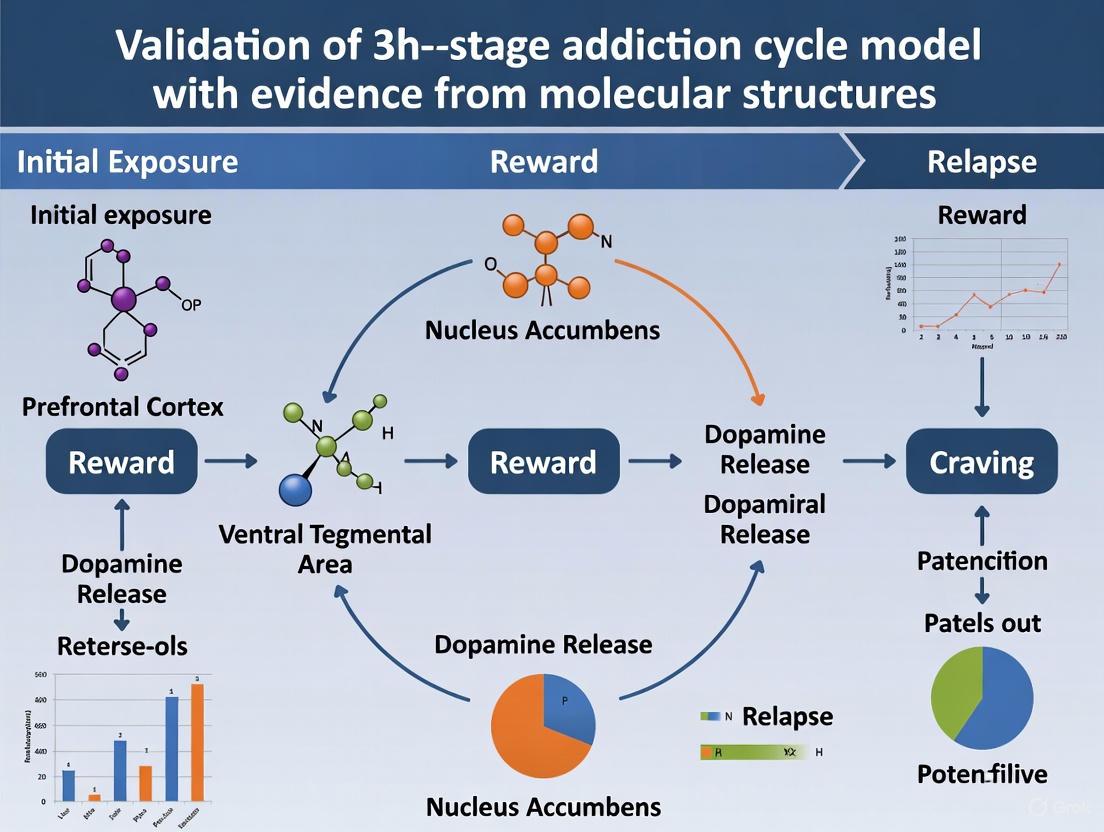
This article synthesizes current evidence validating the three-stage addiction cycle model (binge/intoxication, withdrawal/negative affect, preoccupation/anticipation) as a framework for substance use disorders.
Validating the Three-Stage Addiction Cycle: Neurobiological Evidence, Model Applications, and Future Directions
Abstract
This article synthesizes current evidence validating the three-stage addiction cycle model (binge/intoxication, withdrawal/negative affect, preoccupation/anticipation) as a framework for substance use disorders. Targeting researchers, scientists, and drug development professionals, we explore the neurobiological foundations of this model, focusing on distinct brain regions and neurotransmitter systems implicated in each stage. We examine methodological applications in preclinical and clinical research, including the 'Rosetta Stone approach' for validating animal models. The review also addresses conceptual challenges and limitations, compares the model against alternative theories, and discusses its integration into precision medicine approaches for developing targeted treatments.
Neurobiological Foundations of the Three-Stage Addiction Cycle
For researchers and drug development professionals, the conceptualization of addiction has undergone a profound transformation. Historically dismissed as a moral failing, addiction is now validated by neuroscience as a chronic brain disorder marked by specific, observable neuroadaptations [1] [2]. This paradigm shift is largely anchored to the widespread adoption of the three-stage addiction cycle model—a heuristic framework that deconstructs addictive pathology into the recurrent stages of binge/intoxication, withdrawal/negative affect, and preoccupation/anticipation [1] [3]. This guide objectively compares this dominant neurobiological model against alternative frameworks and synthesizes the experimental data validating its utility in driving modern therapeutic discovery.
Neurobiological Framework of the Three-Stage Model
The three-stage model provides a structured framework for understanding the temporal and neurocircuitry-based progression of addiction. The following table details the core components of each stage.
Table 1: The Three-Stage Neurobiological Cycle of Addiction
| Stage | Core Definition | Key Brain Regions | Primary Neurotransmitters & Processes | Behavioral Manifestation |
|---|---|---|---|---|
| Binge/Intoxication | The stage where an individual uses a substance and experiences its rewarding or pleasurable effects [2]. | Basal Ganglia (particularly Ventral Striatum/Nucleus Accumbens), Ventral Tegmental Area [1] [3]. | Surge in dopamine from the mesolimbic pathway; opioid peptides; incentive salience [1] [3]. | Positive reinforcement; substance-seeking. |
| Withdrawal/Negative Affect | A negative emotional state—dysphoria, anxiety, irritability—experienced in the absence of the substance [3] [2]. | Extended Amygdala (Bed Nucleus of Stria Terminalis, Central Amygdala) [1] [3]. | Recruitment of stress systems (CRF, dynorphin, norepinephrine); decreased dopaminergic tone; "anti-reward" system activation [1]. | Negative reinforcement; substance use to relieve discomfort. |
| Preoccupation/Anticipation | The stage of craving where the individual seeks the substance again after a period of abstinence [3] [2]. | Prefrontal Cortex (Orbitofrontal Cortex, Dorsolateral PFC, Anterior Cingulate), Hippocampus, Insula [1] [3]. | Executive dysfunction; disrupted inhibitory control; "Go" vs. "Stop" system imbalance [1]. | Craving; compulsivity; relapse. |
This cycle is understood to be a recursive and escalating process. The neuroadaptations at each stage fuel the transition to the next, creating a self-perpetuating pattern of addiction that is notoriously difficult to break [1]. The following diagram illustrates the interconnected neurocircuitry of this cycle.
Diagram 1: Neurocircuitry of the three-stage addiction cycle, showing the key brain regions and neurotransmitters involved in each stage and their recursive relationship.
Comparative Analysis with Alternative Models
While the three-stage model is dominant, other conceptual frameworks offer complementary perspectives. The table below provides a structured comparison.
Table 2: Comparative Framework of Addiction Models
| Model | Core Thesis | Key Strengths | Notable Limitations | Supporting Evidence |
|---|---|---|---|---|
| Three-Stage Cycle | Addiction is a repeating cycle of distinct neurobiological stages driven by specific brain circuit dysfunctions [1] [3]. | Provides a direct, heuristic link between symptoms and underlying neurobiology; highly actionable for targeting treatments [1]. | Can oversimplify the simultaneous interaction of stages; less focus on developmental trajectory. | Extensive human imaging and animal model studies; basis for the Addictions Neuroclinical Assessment (ANA) [1]. |
| Brain Disease Model | Addiction is a chronic, relapsing brain disease characterized by compromised brain function and structure [2]. | Powerful destigmatizing effect; aligns addiction with other medical diseases; justifies medical intervention [2]. | Can be misinterpreted as creating a sense of patient helplessness; may underemphasize psychosocial factors. | Strong evidence from neuroimaging showing long-lasting drug-induced brain changes [2]. |
| Triadic Model | Focuses on the developmental imbalance between three neural systems for motivation, affect, and control, especially in adolescence [4]. | Excellent for explaining adolescent vulnerability to risk-taking and addiction; a systems-level view [4]. | More static than the cyclical three-stage model; primarily a model of vulnerability, not maintenance. | Neurodevelopmental studies on the maturation trajectories of the amygdala, NAcc, and PFC [4]. |
Experimental Validation and Research Protocols
The validation of the three-stage model relies on a convergence of evidence from multiple experimental domains. Key methodologies and their findings are summarized below.
Table 3: Key Experimental Protocols Validating the Three-Stage Model
| Experimental Approach | Protocol Overview | Key Measurable Outcomes | Insights into the Addiction Cycle |
|---|---|---|---|
| Human Neuroimaging (fMRI/PET) | Cross-sectional and longitudinal studies comparing brain activity in individuals with Substance Use Disorders (SUDs) vs. healthy controls during cue-reactivity, stress, and decision-making tasks [3]. | Increased activation in the amygdala during withdrawal; blunted PFC activity during cognitive control; dopamine receptor density changes in the striatum [3]. | Validates the distinct neural correlates of the three stages. Cue-induced craving links to PFC/amygdala (Stage 3), while stress-induced craving links to the extended amygdala (Stage 2) [3]. |
| Animal Self-Administration Models | Rodents or non-human primates are trained to self-administer a drug (e.g., cocaine, alcohol). Protocols include escalation of intake, extinction (withholding drug), and reinstatement of drug-seeking by cues, stress, or a priming dose [3]. | Number of lever presses for drug; motivation assessed via progressive ratio schedules; behavioral signs of withdrawal during extinction [1] [3]. | Directly models the transition from controlled use (impulsivity) to compulsive use. Reinstatement paradigms model relapse (Stage 3), while withdrawal signs model Stage 2 [1]. |
| AI-Driven Drug Discovery | Using topological deep learning and other algorithms to screen millions of compounds against known addiction targets (e.g., μ-opioid receptor, dopamine transporter) [5]. | Predictive binding affinity and selectivity for target proteins; in silico ADMET (Absorption, Distribution, Metabolism, Excretion, Toxicity) properties [5]. | Accelerates the development of medications that target specific stages, such as KOR antagonists for the negative affect stage or GABA-B agonists like baclofen for craving [5]. |
| Genetic & Epigenetic Studies | Genome-Wide Association Studies (GWAS) to identify risk alleles. Investigation of epigenetic modifications (e.g., DNA methylation) in reward-related genes following drug exposure [2]. | Identification of specific gene loci (e.g., CHRNA2 for cannabis use disorder); changes in histone acetylation/methylation in the NAcc [2]. | Elucidates the molecular and genetic predispositions that confer vulnerability to the development and persistence of the addiction cycle [1] [2]. |
The workflow for validating a therapeutic target using this model often integrates computational and experimental approaches, as shown below.
Diagram 2: A simplified workflow for discovering and validating anti-addiction therapeutics, from target identification based on the three-stage model to preclinical and clinical validation.
Targeting the three-stage model requires a specific arsenal of research tools. The following table details key reagents and their applications in addiction research.
Table 4: Essential Research Reagents for Investigating the Addiction Cycle
| Reagent / Tool | Function in Research | Specific Application Example |
|---|---|---|
| Dopamine Receptor Ligands (e.g., SCH-23390 - D1 antagonist; Raclopride - D2 antagonist) | To pharmacologically manipulate dopaminergic signaling and assess its role in reward and motivation [3]. | Blocking D1 receptors in the NAcc in animal models reduces cocaine self-administration, validating the role of D1 in the binge/intoxication stage [3]. |
| CRF Receptor Antagonists | To block the stress-related corticotropin-releasing factor system in the extended amygdala [3]. | Administering CRF antagonists reverses anxiety-like behaviors in ethanol-dependent rats, linking this system to the withdrawal/negative affect stage [3]. |
| Viral Vector Systems (AAV, Lentivirus for DREADDs or Cre-lox) | For cell-type-specific neuromodulation (chemogenetics) or circuit tracing in animal models. | Using DREADDs to inhibit projections from the prefrontal cortex to the dorsal striatum to demonstrate their role in compulsive drug-seeking (preoccupation/anticipation stage). |
| Radioactive Ligands for PET Imaging (e.g., [¹¹C]Raclopride for D2/D3 receptors) | To non-invasively quantify receptor availability and neurotransmitter dynamics in the human brain [3]. | Human PET studies show reduced D2 receptor availability in the striatum of addicted individuals, correlating with impaired prefrontal function and loss of control [3]. |
| AI-Based Predictive Models (e.g., Topological Deep Learning) | To accelerate the discovery of novel, selective compounds for addiction-relevant targets like KOR or mGluR5 [5]. | Screening chemical libraries to identify novel KOR antagonists with optimal pharmacokinetic profiles for potentially treating dysphoria and stress-induced relapse [5]. |
The three-stage model of the addiction cycle has evolved from a compelling concept into a validated neurobiological framework that continues to guide contemporary research and drug discovery. Its primary strength lies in its ability to deconstruct a complex disorder into tractable, brain-based components, each with distinct circuit, molecular, and behavioral correlates. While alternative models like the broader Brain Disease Model provide crucial context for public health and destigmatization, the three-stage model offers unparalleled specificity for designing and testing targeted interventions. The continued integration of this model with advanced tools—from optogenetics to artificial intelligence—promises to further refine our understanding and usher in a new era of effective, neurobiologically-informed therapies for substance use disorders.
The three-stage addiction cycle—binge/intoxication, withdrawal/negative affect, and preoccupation/anticipation—provides a heuristic framework for understanding the transition from controlled substance use to the chronic, relapsing disorder of addiction [6] [3]. This review focuses on the binge/intoxication stage, the initial phase characterized by the rewarding and reinforcing effects of a substance and the subsequent development of compulsive drug-seeking habits [6]. A critical analysis of experimental evidence confirms that this stage is predominantly mediated by specific neuroadaptations within the basal ganglia, a group of subcortical nuclei essential for motivation, reward, and habit formation [6] [7] [3]. The validation of this model is supported by a confluence of data from animal models, human neuroimaging, and neuropharmacological studies, which collectively delineate the precise circuits and neurotransmitters usurped by drugs of abuse [6].
The following diagram illustrates the core neurocircuitry of the binge/intoxication stage, highlighting the key brain regions and the primary neurotransmitters involved in the reward circuit and the shift to habit.
Neurocircuitry of the Binge/Intoxication Stage
Key Brain Regions and Neurotransmitter Systems
The binge/intoxication stage is anchored in the brain's reward circuit, with the basal ganglia serving as a central hub. This circuit is not a single entity but a series of interconnected loops that process reward, motivation, and ultimately, habitual behavior [7] [8]. The mesolimbic dopamine pathway, originating in the ventral tegmental area (VTA) and projecting to the ventral striatum (particularly the nucleus accumbens, NAc), is the primary circuit for the acute rewarding effects of all drugs of abuse [6] [7] [3]. With repeated drug exposure, the focus of control shifts from the ventral to the dorsal striatum, a transition that is critical for the development of compulsive drug-seeking habits [3] [8]. This shift is facilitated by striatonigrostriatal (SNS) spirals, which allow for sequential information processing from the ventral to the dorsal striatum via the substantia nigra [8].
Table 1: Key Neurotransmitter Systems in the Binge/Intoxication Stage
| Neurotransmitter | Change During Binge/Intoxication | Primary Function in this Stage | Key Brain Regions |
|---|---|---|---|
| Dopamine [6] | Increase | Reinforces drug-taking behavior; teaches the brain to repeat substance use [7]. | VTA, Ventral Striatum, Dorsal Striatum |
| Opioid Peptides [6] | Increase | Contributes to the experience of pleasure or euphoria (e.g., natural endorphins) [7]. | Ventral Striatum |
| γ-aminobutyric acid (GABA) [6] | Increase | Modulates dopamine neuron activity in the VTA [6]. | VTA |
| Glutamate [6] | Increase | Mediates cue-induced craving and drug-seeking habits; critical for synaptic plasticity [6] [9]. | Prefrontal Cortex, Dorsal Striatum |
Transition from Reward to Habit
The progression from recreational, goal-directed drug use to compulsive habit is a cornerstone of the addiction cycle, and it is reflected in a functional shift within the basal ganglia. The ventral striatum (NAc) is critical for the initial positive reinforcement and the attribution of incentive salience to drug-associated cues [6] [3]. As addiction progresses, drug-seeking behavior becomes habitual and stimulus-driven, a process dependent on the dorsolateral striatum (DLS) [8]. This transition is mediated by the SNS spirals, which create a functional loop from the limbic (ventral) to the motor (dorsal) striatum [8]. Concurrently, neuroadaptations in glutamatergic projections from the prefrontal cortex to the striatum strengthen the synaptic connections that underpin these persistent drug-seeking habits, even in the face of negative consequences [6] [3].
Experimental Data and Methodologies for Investigating the Reward Circuit
The validation of the basal ganglia's role in the binge/intoxication stage relies on a suite of sophisticated experimental protocols. The data generated from these methods provide the quantitative and causal evidence for the neurocircuitry model.
Key Experimental Protocols
Table 2: Core Experimental Methods in Binge/Intoxication Research
| Methodology | Protocol Description | Key Measured Outputs | Insights Gained |
|---|---|---|---|
| Intracranial Self-Stimulation (ICSS) [6] | Animals are implanted with electrodes in reward-related brain regions (e.g., medial forebrain bundle). The required current threshold to self-stimulate is measured. | Reward threshold; rate of responding. | Drugs of abuse lower the reward threshold, indicating heightened brain reward sensitivity [6]. |
| Drug Self-Administration [6] [3] | Animals are surgically implanted with intravenous catheters and trained to perform an operant response (e.g., pressing a lever) to receive an infusion of a drug. | Number of infusions; active vs. inactive lever presses; escalation of intake over long access periods. | Models the binge/intoxication stage directly; allows study of reinforcement and motivation [6]. |
| In Vivo Microdialysis [9] | A microdialysis probe is implanted in a specific brain region (e.g., NAc). Extracellular fluid is collected and analyzed for neurotransmitter levels. | Concentration of neurotransmitters (e.g., dopamine, glutamate) in response to drug exposure. | Quantifies neurotransmitter release in real-time, confirming drug-induced surges in dopamine in the NAc [9]. |
| Positron Emission Tomography (PET) [6] | Human subjects are injected with a radioligand that binds to specific targets (e.g., dopamine D2 receptors). Scans are performed before and after drug administration. | Dopamine receptor occupancy; dopamine release (via ligand displacement). | Shows that intoxicating doses of drugs release dopamine in the human ventral striatum [6]. |
The following workflow diagram maps the sequence of a typical self-administration study, from surgical preparation to behavioral and molecular analysis, illustrating how key data on the binge/intoxication stage is generated.
The following table consolidates critical quantitative findings from studies utilizing the above protocols, providing a comparative overview of neurobiological changes during the binge/intoxication stage.
Table 3: Quantitative Summary of Key Neurobiological Findings
| Observed Phenomenon | Experimental Model | Quantitative Result | Interpretation & Relevance |
|---|---|---|---|
| Dopamine Surge in NAc [6] | Human PET Imaging | Fast and steep dopamine release in ventral striatum following stimulant administration [6]. | Associated with the subjective "high"; fast release preferentially activates low-affinity D1 receptors critical for reward [6]. |
| Transition to Compulsive Use [3] [8] | Rat Self-Administration (Extended Access) | Escalation of drug intake and persistence of drug-seeking despite adverse consequences (e.g., foot shock) [3]. | Models the loss of control in human addiction; dependent on a serial connection from the ventral to dorsal striatum [3] [8]. |
| Neuroplasticity in Dopamine Neurons [3] | In Vivo Electrophysiology (Rats) | Persistent potentiation of excitatory synapses on VTA dopamine neurons after a single in vivo cocaine exposure [3]. | Represents an early cellular mechanism that may initiate the cascade of neuroadaptations leading to addiction. |
| Striatal Circuit Control [8] | Lesion/Inactivation Studies | Inactivation of the Dorsomedial Striatum (DMS) impairs goal-directed action, while inactivation of the Dorsolateral Striatum (DLS) impairs habitual response [8]. | Provides causal evidence for the distinct roles of dorsal striatal subregions in the progression from controlled to compulsive drug use. |
The Scientist's Toolkit: Essential Research Reagents and Materials
To execute the protocols that generate this evidence, researchers require a specific toolkit of reagents, animal models, and technologies.
Table 4: Essential Research Tools for Studying the Binge/Intoxication Stage
| Tool / Reagent | Function / Application | Specific Examples |
|---|---|---|
| Selective Receptor Agonists/Antagonists [6] | To pharmacologically manipulate specific neurotransmitter systems and establish causal roles in behavior. | SCH 23390 (D1 antagonist) [3]; Naloxone (opioid antagonist) [10]. |
| Viral Vector Systems (e.g., DREADDs, Optogenetics) [3] | For cell-type-specific and circuit-specific neuronal manipulation (inhibition or excitation) in vivo. | AAV-hSyn-hM4D(Gi) to inhibit neurons in a specific pathway; Channelrhodopsin-2 (ChR2) for optical stimulation. |
| Radiolabeled Ligands for PET [6] | To quantify receptor availability and neurotransmitter dynamics in the living human or animal brain. | [¹¹C]Raclopride (for dopamine D2/D3 receptors); [¹¹C]NNC-112 (for dopamine D1 receptors). |
| Inbred Rodent Strains (with genetic variance) [6] | To model individual differences in vulnerability to addiction and study genetic contributions. | Lewis vs. Fischer 344 rats; High vs. Low responder rats bred for traits like locomotor response to novelty. |
| Electrophysiology Setup | To measure the electrical activity of neurons (e.g., in VTA or NAc) in brain slices or in vivo. | Patch-clamp rig for slice recordings; array electrodes for in vivo single-unit recording. |
The experimental evidence synthesized here robustly validates the role of the basal ganglia in the binge/intoxication stage of addiction. Data from self-administration, neuroimaging, and neuropharmacological studies consistently demonstrate that drugs of abuse acutely hyperactivate the mesolimbic dopamine circuit (VTA to ventral striatum) to produce reinforcement and that chronic exposure triggers a cascade of neuroadaptations. This cascade includes a shift in control from the ventral to the dorsal striatum, mediated by striatonigrostriatal spirals and strengthened glutamatergic inputs, which underpins the transition from goal-directed drug use to compulsive habit [6] [3] [8]. This detailed neurocircuitry analysis not only confirms the predictive validity of the three-stage model but also identifies specific molecular targets within the basal ganglia circuits for developing novel pharmacotherapies for substance use disorders. Future research leveraging advanced tools like circuit-specific neuromodulation and AI-driven molecular design holds the promise of translating this detailed circuit-level understanding into more effective and personalized treatments [10].
The withdrawal/negative affect stage represents a critical phase in the three-stage addiction cycle model, marking the transition from positive reinforcement to negative reinforcement driving compulsive substance use. This stage is characterized by a profound dysregulation of brain emotional systems that manifests as anxiety, irritability, dysphoria, and heightened stress sensitivity when drug access is prevented [11] [12]. Rather than merely seeking pleasure, individuals at this stage primarily use substances to alleviate the distressing emotional state of withdrawal, creating a powerful negative reinforcement mechanism that perpetuates the addiction cycle [1] [13]. The extended amygdala, comprising the central nucleus of the amygdala (CeA), bed nucleus of the stria terminalis (BNST), and nucleus accumbens shell, has been identified as the key neurocircuitry mediating these negative affective states through the coordinated action of stress neurotransmitters [11] [14].
Understanding the neurobiological substrates of this stage provides crucial insights for developing targeted interventions for substance use disorders. The allostatic model of addiction posits that repeated drug use leads to persistent adjustments in brain stress systems that maintain a state of negative emotionality even during abstinence [14]. This review synthesizes evidence from preclinical and clinical studies examining the neuroadaptations within the extended amygdala and their contribution to the withdrawal/negative affect stage, with particular emphasis on experimental approaches and methodological considerations for researchers and drug development professionals.
Neurocircuitry of the Extended Amygdala in Withdrawal
Anatomical Components and Functional Roles
The extended amygdala functions as an integrated macrostructure within the basal forebrain that serves as the interface between stress and addiction [11] [12]. Its constituent regions form a coordinated network that processes aversive emotional states and orchestrates stress responses:
- Central Nucleus of the Amygdala (CeA): Functions as the primary output nucleus of the amygdala complex and generates fear-related and aversive responses during withdrawal through glutamatergic plasticity and modifications in corticotropin-releasing factor (CRF)-containing neurons [14].
- Bed Nucleus of the Stria Terminalis (BNST): Integrates stress and reward information through complex GABAergic circuitry and noradrenergic modulation, contributing to the prolonged anxiety-like states characteristic of drug withdrawal [11] [14].
- Nucleus Accumbens Shell: Exhibits neuroadaptive increases in excitability during opioid withdrawal that are associated with a hypodopaminergic, amotivational state and increased vulnerability to relapse [14].
These regions receive extensive inputs from limbic structures and project to hypothalamic and brainstem areas that coordinate physiological and behavioral responses to stress [12]. The functional integrity of this circuit is essential for normal stress adaptation, but undergoes significant maladaptive changes during the development of substance dependence.
Signaling Pathways in Withdrawal/Negative Affect Stage
The diagram below illustrates the primary neurosignaling pathways within the extended amygdala that become dysregulated during the withdrawal/negative affect stage:
This diagram illustrates the coordinated dysregulation of multiple neurotransmitter systems within the extended amygdala during the withdrawal/negative affect stage. The CRF system activation primarily impacts the CeA, norepinephrine release targets the BNST, and dopamine depletion affects the nucleus accumbens shell, collectively generating the negative emotional states that drive relapse [11] [14]. These systems do not operate in isolation but exhibit significant cross-regulation and feed-forward mechanisms that amplify the stress response, particularly through CRF-norepinephrine interactions in the BNST and CeA [12].
Key Neurochemical Mechanisms and Experimental Evidence
Corticotropin-Releasing Factor (CRF) System Activation
The CRF system within the extended amygdala demonstrates pronounced activation during acute withdrawal from all major drugs of abuse. Preclinical studies utilizing in vivo microdialysis have consistently shown increased extracellular CRF in the CeA and BNST during withdrawal from opioids, alcohol, cocaine, and other substances [11] [12]. This neuroadaptation is functionally significant, as administration of CRF receptor antagonists into the CeA or BNST reverses both the anxiety-like behaviors observed in animal models of withdrawal and the increased drug-seeking behavior associated with dependence [11].
The table below summarizes key experimental evidence supporting CRF system involvement in the withdrawal/negative affect stage:
Table 1: Experimental Evidence for CRF System Role in Withdrawal/Negative Affect Stage
| Experimental Approach | Key Findings | Substances Tested | Citations |
|---|---|---|---|
| In vivo microdialysis in dependent rats | Increased extracellular CRF in CeA and BNST during withdrawal | Alcohol, opioids, cocaine, nicotine | [11] [12] |
| CRF receptor antagonist administration | Dose-dependent reduction in anxiety-like behaviors in elevated plus maze and defensive burying tests | Alcohol, opioids | [11] [12] |
| CRF receptor antagonist microinjection into extended amygdala | Attenuation of dependence-induced increase in drug self-administration | Alcohol, opioids | [11] |
| CRF₁ receptor knockout mice | Reduced anxiety-like and aversive responses to drug withdrawal | Alcohol, opioids | [11] |
| CRF receptor antagonist systemic administration | Blockade of stress-induced reinstatement of drug-seeking | Cocaine, heroin, alcohol, nicotine | [11] |
Norepinephrine System Engagement
The brain norepinephrine system interacts extensively with CRF signaling in the extended amygdala, forming a feed-forward system that amplifies stress responses during withdrawal [12]. Noradrenergic neurons originating primarily from the locus coeruleus project to the CeA, BNST, and nucleus accumbens shell, where they enhance the release of CRF and other stress neurotransmitters. During drug withdrawal, increased norepinephrine release in these regions contributes to the anxiety-like and aversive motivational states that characterize the withdrawal/negative affect stage [12].
Pharmacological studies with α₁-adrenergic receptor antagonists such as prazosin have demonstrated reduced anxiety-like behavior and decreased drug self-administration in dependent animals [12]. Similarly, the α₂-adrenergic receptor agonist clonidine, which decreases norepinephrine release, has shown efficacy in alleviating certain aspects of opioid and alcohol withdrawal in both animal models and human studies [12]. These findings highlight the translational potential of targeting noradrenergic signaling for the treatment of substance use disorders.
Dopamine System Dysregulation
The withdrawal/negative affect stage is further characterized by a hypodopaminergic state within reward circuitry, including projections to the nucleus accumbens shell [1] [14]. Chronic drug use leads to neuroadaptations that reduce basal dopamine transmission, creating an amotivational state and decreasing sensitivity to natural rewards. This dopamine depletion works in concert with the enhanced stress signaling in the extended amygdala to create the negative emotional state that drives relief craving and relapse [14].
Research Methods and Experimental Protocols
Animal Models of Withdrawal/Negative Affect
Preclinical research on the withdrawal/negative affect stage employs several well-validated experimental approaches that model different aspects of this stage:
- Somatic Signs Measurement: Quantification of physical manifestations of withdrawal (e.g., tremor, teeth chattering, ptosis) following cessation of chronic drug administration, typically using standardized rating scales [14].
- Affective Measures: Assessment of anxiety-like behaviors during withdrawal using elevated plus maze, open field test, defensive burying, and operant measures of aversion such as place aversion conditioning [11] [12].
- Intracranial Microinjection: Site-specific administration of receptor agonists/antagonists into discrete extended amygdala subregions to elucidate circuit-specific mechanisms [11].
- In Vivo Microdialysis: Measurement of extracellular neurotransmitter levels (CRF, norepinephrine, dopamine) in specific brain regions during withdrawal [11] [12].
- Self-Administration Models: Examination of dependence-induced increases in drug intake and the effects of pharmacological manipulations on this behavior [11].
These approaches have been instrumental in identifying the neuroadaptations within the extended amygdala that underlie the negative emotional states driving addiction progression.
Research Reagent Solutions
The table below outlines essential research tools and reagents used in experimental investigations of the extended amygdala's role in the withdrawal/negative affect stage:
Table 2: Key Research Reagents for Extended Amygdala and Withdrawal Research
| Reagent/Category | Specific Examples | Research Application | Experimental Function |
|---|---|---|---|
| CRF Receptor Antagonists | R121919, CP-154,526, Antalarmin | Anxiety-like behavior testing; self-administration studies | Block CRF₁ receptors to assess role in withdrawal negative affect |
| Adrenergic Compounds | Prazosin (α₁ antagonist), Yohimbine (α₂ antagonist), Clonidine (α₂ agonist) | Microinjection studies; systemic efficacy testing | Modulate noradrenergic signaling in extended amygdala |
| Dopaminergic Agents | SCH-23390 (D₁ antagonist), Raclopride (D₂ antagonist) | Microdialysis combination studies; behavioral testing | Assess dopamine system involvement in amotivational state |
| Microdialysis Assays | CRF ELISA, HPLC for monoamines | Neurotransmitter release monitoring | Quantify extracellular neurotransmitter levels in specific regions |
| Animal Models | Dependent animals (alcohol, opioids, psychostimulants) | All experimental paradigms | Provide physiological substrate for withdrawal negative affect |
Implications for Medication Development
The neurobiological insights gained from studying the extended amygdala have significant implications for developing novel pharmacological treatments for substance use disorders. Rather than targeting the rewarding effects of drugs, interventions focusing on the stress systems activated during withdrawal offer promise for addressing the negative reinforcement mechanisms that maintain addiction [11] [14]. Several approaches currently under investigation include:
- CRF₁ Receptor Antagonists: Despite challenges in clinical translation, these compounds remain promising for their potential to specifically target the negative emotional state of withdrawal [11].
- Noradrenergic Agents: Medications such as prazosin and clonidine that modulate norepinephrine signaling may be repurposed for treating substance use disorders, particularly for individuals with co-occurring stress-related disorders [12].
- Combination Therapies: Agents that simultaneously target multiple components of the extended amygdala stress circuitry (e.g., CRF and norepinephrine systems) may yield enhanced efficacy [12].
The development of these targeted interventions benefits from the detailed neurobiological framework provided by the three-stage addiction cycle model and underscores the importance of the withdrawal/negative affect stage as a critical focus for therapeutic development.
The withdrawal/negative affect stage of addiction represents a distinct neurobiological state mediated primarily by the extended amygdala and its associated stress neurotransmitters. Compelling evidence from preclinical studies demonstrates that CRF and norepinephrine systems within this circuitry undergo specific neuroadaptations during the transition to dependence that drive the negative emotional states characterizing this stage. The experimental approaches and reagents outlined in this review provide researchers with essential tools for further investigating these mechanisms and developing novel treatment strategies. As the field moves toward more personalized approaches to addiction treatment, understanding individual differences in the engagement of these stress systems may help identify patient subgroups most likely to respond to specific interventions targeting the withdrawal/negative affect stage.
The preoccupation/anticipation stage represents a critical phase in the addiction cycle, characterized by intense craving and compulsive drug-seeking behavior that occurs during abstinence. This stage is distinguished by the dysregulation of the prefrontal cortex (PFC), which leads to profound executive function deficits that undermine an individual's ability to resist relapse. Within the neurobiological framework of addiction, this stage follows the binge/intoxication and withdrawal/negative affect stages, completing a vicious cycle that perpetuates substance use disorders [15] [1]. The PFC, which is fundamental for executive functions including decision-making, inhibitory control, and emotional regulation, undergoes significant functional and structural changes in addiction. These alterations facilitate the transition from controlled substance use to compulsive drug-seeking and taking behaviors, hallmark features of addiction [16] [17]. Understanding the specific mechanisms of PFC dysregulation during this stage provides crucial insights for developing targeted interventions aimed at restoring cognitive control and preventing relapse.
Neurobiological Basis of PFC Dysregulation
Key Prefrontal Cortex Regions and Their Dysfunctions
The prefrontal cortex comprises several functionally distinct yet interconnected subregions that undergo specific forms of dysregulation in addiction. The dorsolateral prefrontal cortex (DLPFC) is primarily involved in cognitive control, working memory, and goal-directed behavior. In addiction, the DLPFC shows reduced activity, which manifests behaviorally as impaired decision-making and poor behavioral monitoring [16]. The orbitofrontal cortex (OFC) plays a pivotal role in representing the value of rewards and predicting outcomes. Addicted individuals demonstrate orbitofrontal cortex dysfunction characterized by disrupted reward valuation, where drugs and drug-related cues become excessively salient while non-drug reinforcers are devalued [16] [3]. The anterior cingulate cortex (ACC), particularly its dorsal portion, contributes to conflict monitoring and error detection. Dysfunction in this region results in compromised self-control and reduced ability to resolve conflicts between drug-seeking impulses and abstinence goals [16] [18]. Additionally, the ventromedial PFC (vmPFC) shows altered function that affects emotional regulation and motivation, further exacerbating the addiction cycle [16].
Neurocircuitry of Craving and Relapse
The preoccupation/anticipation stage involves distributed neural networks that extend beyond the PFC. The PFC forms critical connections with subcortical structures, creating circuits that become dysregulated in addiction. The PFC-basal ganglia circuitry mediates the balance between goal-directed and habitual behaviors. In addiction, this circuitry becomes biased toward habit formation, enabling compulsive drug use even in the face of negative consequences [15] [3]. The PFC-amygdala pathway integrates emotional salience with executive control; its dysregulation leads to heightened emotional responses to drug cues and impaired emotional regulation [16]. Furthermore, the PFC-hippocampus network contributes to context-induced craving by associating specific environments and cues with drug use, thereby triggering relapse when these contexts are encountered [3]. The insula, though not part of the PFC, interacts extensively with prefrontal regions and contributes to craving by integrating interoceptive signals with cognitive and emotional processes [3].
Figure 1: Prefrontal Cortex Neurocircuitry in Addiction. This diagram illustrates key PFC subregions and their connections to subcortical structures that become dysregulated during the preoccupation/anticipation stage of addiction.
Neurotransmitter Systems in PFC Dysregulation
Multiple neurotransmitter systems contribute to PFC dysregulation during the preoccupation/anticipation stage. Glutamatergic projections from the PFC to the basal ganglia and extended amygdala are critically involved in craving and relapse. Chronic drug use disrupts these projections, resulting in reduced prefrontal glutamate release and impaired cognitive control over drug-seeking behavior [15] [3]. The dopaminergic system, which originates from midbrain regions and projects to the PFC, shows altered function that contributes to motivational salience attribution. In addiction, dopamine signaling becomes biased toward drug-related stimuli at the expense of natural rewards, a process mediated in part by PFC dysregulation [16] [13]. Additionally, GABAergic interneurons within the PFC contribute to the balance between excitation and inhibition; their dysregulation leads to disrupted network activity and impaired information processing [16]. Emerging evidence also implicates neuromodulatory systems including norepinephrine, serotonin, and various neuropeptides in mediating stress responses and emotional processing that influence PFC function during this stage [15] [3].
Experimental Evidence and Methodological Approaches
Neuroimaging Studies of PFC Function
Neuroimaging studies have provided compelling evidence for PFC dysregulation during the preoccupation/anticipation stage. Functional magnetic resonance imaging (fMRI) studies consistently demonstrate abnormal PFC activation patterns in individuals with substance use disorders when exposed to drug-related cues. These studies typically employ cue-reactivity paradigms where participants are presented with drug-related stimuli while brain activity is monitored. For example, cocaine-addicted individuals show heightened activation in the OFC and DLPFC when viewing cocaine-related cues compared to neutral stimuli, with the magnitude of activation correlating with self-reported craving [16]. Similarly, PET imaging studies have revealed altered glucose metabolism and dopamine receptor availability in the PFC of addicted individuals, which correlate with measures of impulsivity and compulsivity [16] [3]. Resting-state fMRI studies further demonstrate disrupted functional connectivity between PFC subregions and other brain networks, including the default mode and salience networks, suggesting widespread network-level dysfunction that contributes to the cognitive control deficits observed in addiction [16].
Table 1: Key Neuroimaging Findings in PFC Dysregulation
| Brain Region | Imaging Modality | Key Finding | Cognitive Correlation |
|---|---|---|---|
| Dorsolateral PFC | fMRI (cue reactivity) | Reduced activation during cognitive control tasks | Impaired response inhibition, working memory deficits |
| Orbitofrontal Cortex | fMRI (decision-making tasks) | Hyperactivity to drug cues; hypoactivity to natural rewards | Disrupted reward valuation, preference for immediate reward |
| Anterior Cingulate Cortex | fMRI (conflict tasks) | Reduced error-related negativity | Impaired performance monitoring, reduced conflict detection |
| Medial PFC | Resting-state fMRI | Altered connectivity with limbic regions | Enhanced emotional reactivity to drug cues |
| Whole PFC | PET (dopamine receptor availability) | Reduced D2 receptor binding | Increased impulsivity, compulsivity |
Cognitive and Behavioral Assessment Protocols
Standardized neuropsychological tests provide robust measures of executive function deficits associated with PFC dysregulation in addiction. The Stroop Color-Word Test assesses response inhibition and attentional control by measuring interference when participants must name the color of ink used to print conflicting color words (e.g., the word "RED" printed in blue ink). Addicted individuals typically demonstrate increased interference effects, reflecting compromised cognitive control [18]. The Iowa Gambling Task evaluates decision-making and emotional learning by requiring participants to select cards from decks with different reward/punishment schedules. Individuals with substance use disorders often display disadvantageous decision-making patterns, consistently choosing decks that offer larger immediate rewards despite larger long-term losses [16]. The Wisconsin Card Sorting Test measures cognitive flexibility and set-shifting ability through a pattern classification task where the sorting rules change without warning. Addicted individuals typically perseverate on previously correct rules, demonstrating reduced cognitive flexibility [16] [18]. The Go/No-Go Task and Stop-Signal Task directly assess response inhibition by measuring the ability to suppress prepotent responses. Performance deficits on these tasks correlate with relapse vulnerability and treatment outcomes [18].
Figure 2: Experimental Workflow for Assessing PFC Dysregulation. This diagram outlines a comprehensive methodological approach for investigating executive function deficits and their neural correlates in addiction.
Neuromodulation Studies
Neuromodulation techniques provide causal evidence for the role of PFC in the preoccupation/anticipation stage by directly altering cortical activity and observing subsequent behavioral changes. Transcranial direct current stimulation (tDCS) applies weak electrical currents to the scalp to modulate cortical excitability. In a randomized, double-blind study with methamphetamine-use disorder patients, repeated bilateral DLPFC tDCS (2 mA, 20 minutes for 10 sessions over 5 weeks) significantly improved performance across multiple executive function domains including working memory, inhibitory control, and cognitive flexibility compared to sham stimulation [19]. Crucially, these cognitive improvements were accompanied by significant reductions in craving that persisted at one-month follow-up, with a direct correlation observed between cognitive enhancement and craving reduction [19]. Transcranial magnetic stimulation (TMS) uses magnetic fields to induce electrical currents in targeted brain regions. Studies applying repetitive TMS to the DLPFC in individuals with substance use disorders demonstrate reduced craving and improved inhibitory control, further supporting the causal role of PFC in the preoccupation/anticipation stage [16]. These neuromodulation approaches not only provide experimental evidence but also represent promising therapeutic interventions for addressing PFC dysregulation in addiction.
Table 2: Neuromodulation Studies Targeting PFC Dysregulation
| Stimulation Technique | Target Region | Parameters | Key Outcomes | Limitations |
|---|---|---|---|---|
| tDCS | Bilateral DLPFC | 2 mA, 20 min, 10 sessions over 5 weeks | Improved executive functions; Reduced craving at 1-month follow-up | Small sample size; Abstinence verified only during study period |
| rTMS | Right DLPFC | 10 Hz, 100% motor threshold, 12 sessions | Decreased cue-induced craving; Improved response inhibition | Heterogeneous substance use disorders; Short follow-up period |
| tDCS | Left DLPFC | 2 mA, 20 min, single session | Reduced attentional bias to drug cues; Decreased subjective craving | Transient effects; Uncertain durability beyond experimental session |
| Deep TMS | Medial PFC and ACC | 10 Hz, 120% motor threshold, 4 weeks | Reduced depression and anxiety symptoms; Lower relapse rates | Limited focus on co-occurring disorders rather than primary addiction |
The Scientist's Toolkit: Research Reagent Solutions
Table 3: Essential Research Materials for Investigating PFC Dysregulation
| Research Tool | Specific Examples | Primary Research Application | Key Function |
|---|---|---|---|
| Neuroimaging Platforms | 3T fMRI, PET with FDG or raclopride, resting-state fMRI | Mapping neural activity, connectivity, and receptor availability | Quantifying PFC dysfunction and network alterations |
| Cognitive Task Software | E-Prime, Psychology, MATLAB with Psychtoolbox | Administering standardized executive function assessments | Objectively measuring cognitive control deficits |
| Neuromodulation Equipment | tDCS stimulators, TMS coils with neuromavigation | Directly manipulating PFC activity to establish causality | Testing causal role of PFC regions and potential therapies |
| Biochemical Assays | ELISA kits for cortisol, BDNF, inflammatory markers | Measuring stress and neuroplasticity biomarkers | Linking molecular changes to PFC dysfunction |
| Computational Modeling Tools | Drift-diffusion models, reinforcement learning algorithms | Quantifying decision-making processes and cognitive mechanisms | Decomposing executive processes from behavioral data |
Implications for Medication Development and Future Research
The delineation of PFC dysregulation in the preoccupation/anticipation stage provides a heuristic framework for developing targeted treatments for substance use disorders. Medications that normalize PFC function represent a promising approach for addressing the core cognitive deficits that drive relapse. Preclinical and clinical studies suggest that modulators of glutamate transmission, such as N-acetylcysteine and modafinil, may restore prefrontal control over drug-seeking by enhancing glutamatergic signaling in PFC-striatal pathways [15] [3]. Similarly, compounds that target stress systems including CRF antagonists and neuropeptide Y agonists may reduce the negative emotional states that contribute to compulsive drug-seeking by normalizing extended amygdala function and its regulation by PFC circuits [15]. Future research should focus on circuit-based therapeutics that specifically address the network-level dysregulation characterizing the preoccupation/anticipation stage. This includes combined approaches that simultaneously target multiple neurotransmitter systems, as well as pharmacological enhancers of cognitive function that could be paired with behavioral interventions to strengthen prefrontal control mechanisms. The integration of neuroimaging biomarkers with genetic and molecular profiling may further enable personalized treatment approaches that match specific medications to individuals based on their distinctive patterns of PFC dysregulation [16] [3]. As our understanding of the neurobiology of the preoccupation/anticipation stage continues to evolve, so too will opportunities for developing more effective and targeted interventions for substance use disorders.
The three-stage cycle of addiction—binge/intoxication, withdrawal/negative affect, and preoccupation/anticipation—provides a framework for understanding the transition from casual substance use to a chronic substance use disorder. This cycle becomes more severe over time, driven by dramatic and enduring changes in brain function that impair an individual's ability to control their substance use [17]. This progression is mediated by specific neuroadaptations in key brain regions and neurotransmitter systems. This guide objectively compares the roles of four critical neurochemical systems—dopamine, opioids, glutamate, and corticotropin-releasing factor (CRF)—across this addiction cycle, summarizing supporting experimental data and methodologies for researchers and drug development professionals.
Comparative Roles in the Three-Stage Addiction Cycle
The following table summarizes the primary functions and associated brain regions for each neurotransmitter system within the three-stage addiction model.
Table 1: Neurotransmitter Roles in the Three-Stage Addiction Cycle
| Neurotransmitter/ Pathway | Binge/Intoxication Stage | Withdrawal/Negative Affect Stage | Preoccupation/Anticipation Stage | Primary Brain Regions |
|---|---|---|---|---|
| Dopamine (Mesolimbic Pathway) | Primary driver of reward and reinforcement; mediates incentive salience [17] [20]. | Reduced function leads to anhedonia (diminished pleasure) [17]. | Contributes to craving and motivation to seek drugs [17]. | Ventral Tegmental Area (VTA), Nucleus Accumbens, Prefrontal Cortex [17] [20]. |
| Opioid (MOR System) | Mediates pleasure ("liking") and euphoria; modulates dopamine release [21]. | Contributes to dysphoria and physical withdrawal signs [21]. | Linked to craving, especially in response to stress or drug cues [17]. | Multiple brain regions, including those in pain-modulatory pathways [22] [21]. |
| Glutamate | Modulates synaptic plasticity during initial drug exposure [23]. | System becomes hyperactive, contributing to hyperexcitability and stress [17] [23]. | Critical for cue-induced relapse and drug-seeking behavior [23]. | Prefrontal Cortex, Basal Ganglia [17] [23]. |
| Corticotropin-Releasing Factor (CRF) | Minimal direct role. | Key driver of stress, anxiety, and irritability via the extended amygdala [17]. | Drives stress-induced relapse [17]. | Extended Amygdala, Hypothalamus [17]. |
Detailed Signaling Pathways and Neuroadaptations
Dopaminergic Pathways
Dopamine is integral to reward, motivation, and motor control, primarily through three major pathways [20] [24]. The mesolimbic pathway (VTA to NAc) is most critical for the rewarding effects of drugs of abuse [17] [20].
Table 2: Major Dopaminergic Pathways in the Human Brain
| Pathway Name | Origin → Projection | Primary Functions | Disorders Linked to Dysfunction |
|---|---|---|---|
| Mesolimbic | Ventral Tegmental Area (VTA) → Ventral Striatum (Nucleus Accumbens) [20]. | Reward, motivation, incentive salience ("wanting"), positive reinforcement [17] [20]. | Addiction, Schizophrenia [20]. |
| Mesocortical | VTA → Prefrontal Cortex [20]. | Executive function (attention, working memory, inhibitory control) [20]. | Addiction, Schizophrenia, ADHD [20]. |
| Nigrostriatal | Substantia Nigra → Dorsal Striatum [20]. | Motor control, habitual behavior, associative learning [20]. | Parkinson's Disease, Huntington's Disease [20]. |
Opioid Receptor Signaling
The mu-opioid receptor (MOR) is the primary target for most analgesic and addictive opioid drugs [21]. Its signaling involves complex intracellular mechanisms that underlie the development of tolerance and dependence.
Chronic opioid exposure leads to neuroadaptations, including receptor phosphorylation, recruitment of β-arrestin, and uncoupling from downstream effectors, which contribute to tolerance [21]. A compensatory upregulation of adenylyl cyclase (AC) and cAMP signaling occurs during withdrawal, driving physical dependence symptoms [21].
Glutamatergic System
Glutamate is the primary excitatory neurotransmitter and is critical for synaptic plasticity. Its effects are mediated by ionotropic and metabotropic receptors [23]. In addiction, drug-induced neuroadaptations in the glutamate system are a primary mechanism underlying the vulnerability to relapse [23].
Table 3: Glutamate Receptors and Their Functions
| Receptor Type | Main Subtypes | Mechanism of Action | Primary Roles in Addiction |
|---|---|---|---|
| Ionotropic (fast-acting) | NMDA, AMPA, Kainate [23]. | Ligand-gated ion channels that allow cation influx (e.g., Na+, Ca2+), leading to neuronal depolarization [23]. | Synaptic plasticity, learning, and memory; mediates cue-induced relapse [23]. |
| Metabotropic (slow-acting) | Group I (mGluR1, mGluR5), Group II (mGluR2, mGluR3), Group III (mGluR4, mGluR6-8) [23]. | G-protein coupled receptors that modulate synaptic transmission via second messengers [23]. | Group I: Regulate drug-seeking. Group II/III: Inhibit neurotransmitter release, potential therapeutic targets [23]. |
Tight regulation of extracellular glutamate by transporters (EAATs, primarily on astrocytes) is crucial to prevent excitotoxicity [23] [25]. Disruption of this system is implicated in addictive behaviors.
Corticotropin-Releasing Factor (CRF) System
CRF is a primary mediator of the stress response. During the withdrawal/negative affect stage, CRF activity in the extended amygdala is heightened, producing negative emotional states that fuel addiction [17]. Beyond its role in stress, CRF can confer neuroprotection via type 1 CRF receptors (CRF-R1). This signaling involves G-protein coupled receptors that can stimulate adenylate cyclase, increasing intracellular cAMP levels and activating protein kinase A (PKA), which phosphorylates downstream targets like glycogen synthase kinase-3 (GSK-3) [26].
Experimental Protocols and Methodologies
Measuring Dopamine Release in vivo
Objective: To quantify stimulus-evoked changes in extracellular dopamine concentration in specific brain regions of live animals.
Protocol (Combining TMS and Microdialysis): [24]
- Animal Preparation: Anesthetize and stereotactically implant a guide cannula targeting the region of interest (e.g., dorsal striatum or nucleus accumbens).
- Stimulation: Apply repetitive Transcranial Magnetic Stimulation (rTMS) over the prefrontal cortex. Typical parameters: 20 Hz frequency, 1000 total pulses, delivered in trains (e.g., 50 pulses/train) with inter-train intervals, at an intensity of 130% of the resting motor threshold.
- Sample Collection: Following TMS, insert a microdialysis probe through the guide cannula and perfuse with artificial cerebrospinal fluid (aCSF). Collect dialysate samples at timed intervals (e.g., every 15-30 minutes) for several hours post-stimulation.
- Quantification: Analyze dialysate samples for dopamine concentration using high-performance liquid chromatography with electrochemical detection (HPLC-ECD).
- Key Findings: This method has shown that prefrontal rTMS can increase extracellular dopamine in the dorsal striatum by ~70% and in the nucleus accumbens by ~30%, with peaks occurring 90 and 120 minutes post-stimulation, respectively [24]. Pharmacological blockade studies indicate this regulation involves corticostriatal glutamatergic afferents [24].
Investigating Opioid Receptor Signaling
Objective: To characterize downstream signaling events and neuroadaptations following opioid receptor activation.
Protocol (In vitro Cell Culture Signaling Map): [22]
- Cell Model: Use cultured cell lines (e.g., HEK293) stably transfected with the target human opioid receptor (MOR, DOR, KOR, or ORL1).
- Stimulation: Treat cells with a selective opioid receptor agonist (e.g., DAMGO for MOR) for varying durations (minutes to hours) to model acute and chronic exposure.
- Pathway Curation: Systematically extract data from the literature on biochemical reactions following receptor stimulation. Annotate reactions into five categories:
- Catalysis (e.g., post-translational modifications).
- Molecular Association (protein-protein interactions).
- Activation/Inhibition.
- Transport (protein translocation).
- Gene Regulation.
- Data Integration: Manually curate and review all reactions to build a comprehensive signaling network, following established criteria like those from NetPath [22].
- Key Findings: This curated approach, which has cataloged over 180 molecules, reveals the complexity of opioid signaling, including G-protein mediated inhibition of adenylyl cyclase, β-arrestin-mediated desensitization, and activation of MAPK pathways (ERK, JNK, p38) [22] [21]. Chronic exposure leads to adaptations such as receptor phosphorylation and increased AC expression, underlying tolerance [21].
Assessing CRF Neuroprotection
Objective: To evaluate the protective effects of CRF and related peptides against apoptotic neuronal death.
Protocol (Primary Neuronal Culture & Viability Assay): [26]
- Cell Culture: Prepare primary cultures of rat central nervous system neurons (e.g., cerebellar granule, cortical, or hippocampal neurons).
- Induction of Apoptosis: Trigger apoptotic death in cerebellar granule neurons by inhibiting the phosphatidylinositol 3-kinase (PI3K) pathway with LY294002. For cortical/hippocampal neurons, use beta-amyloid peptide (1-42) to model neurodegenerative toxicity.
- Treatment: Co-apply CRF, urocortin, sauvagine, or other related peptides simultaneously with, or up to 8 hours after, the apoptotic insult.
- Pharmacological Blockade: Use a highly selective CRF-R1 antagonist (e.g., CP-154,526) to pre-treat cultures and confirm receptor specificity.
- Viability Measurement: Quantify neuronal survival 24-48 hours post-treatment using standardized viability assays (e.g., MTT, calcein-AM, or TUNEL for apoptosis).
- Mechanistic Analysis: Analyze signaling pathways via Western blot to measure phosphorylation states of key proteins like Protein Kinase B (Akt) and Glycogen Synthase Kinase-3 (GSK-3).
- Key Findings: CRF and related peptides prevent apoptotic death in a CRF-R1-dependent manner. This protection is associated with cAMP production and phosphorylation (inactivation) of GSK-3, independent of the PI3K/Akt pathway [26].
The Scientist's Toolkit: Key Research Reagents
Table 4: Essential Reagents for Investigating Addiction Neurobiology
| Reagent / Tool | Function / Target | Example Use Case | Key Experimental Consideration |
|---|---|---|---|
| CP-154,526 | Highly selective CRF-R1 antagonist [26]. | To confirm the specific involvement of CRF-R1 in neuroprotective or behavioral effects [26]. | Verify selectivity in the specific model system used. |
| DAMGO ([D-Ala², N-MePhe⁴, Gly-ol]-Enkephalin) | Highly selective synthetic Mu-Opioid Receptor (MOR) agonist [22]. | To study specific MOR signaling cascades without activating other opioid receptor subtypes [22]. | Useful for isolating MOR function in vitro. |
| LY294002 | Potent and selective inhibitor of PI3K (Phosphatidylinositol 3-Kinase) [26]. | To induce apoptotic death in neuronal cultures by blocking critical survival pathways [26]. | Can induce rapid apoptosis; timing of rescue agents is critical. |
| Repetitive TMS (rTMS) | Non-invasive brain stimulation that modulates neuronal activity [24]. | To probe causal relationships between brain regions (e.g., PFC) and dopamine release in downstream targets (e.g., striatum) [24]. | Stimulation parameters (intensity, frequency, coil location) profoundly influence outcomes. |
| Radioligands (e.g., [¹¹C]Raclopride, [¹¹C]FLB 457) | PET ligands that bind to dopamine D2/D3 receptors [24]. | To measure changes in synaptic dopamine levels in vivo in humans and animals using PET imaging. [¹¹C]FLB 457 allows measurement in extrastriatal regions [24]. | [¹¹C]Raclopride is best for striatal measurements; [¹¹C]FLB 457 has higher affinity for extrastriatal regions. |
The progression of addiction through binge/intoxication, withdrawal/negative affect, and preoccupation/anticipation is supported by distinct yet overlapping contributions from the dopamine, opioid, glutamate, and CRF systems. Dopamine drives initial reward and motivation, the endogenous opioid system underpins pleasure and is hijacked by exogenous opiates, glutamate mediates learned associations and relapse, and CRF propels the negative emotional state of withdrawal. The experimental data and methodologies summarized here provide a foundation for ongoing research into targeted interventions aimed at specific stages of this cycle, with the goal of developing more effective treatments for substance use disorders.
Research Methodologies and Translational Applications in Preclinical and Clinical Studies
The study of addiction relies heavily on animal models to dissect its complex neurobehavioral mechanisms. The three-stage cycle of addiction—binging/intoxication, withdrawal/negative affect, and preoccupation/anticipation (craving)—provides a foundational framework for research [27]. This guide offers a comparative analysis of the primary animal models used to operationalize and study each stage, with a focus on their experimental protocols, quantitative outputs, and application in validating this cycle. The objective data presented herein are intended to assist researchers and drug development professionals in selecting the most appropriate models for their specific investigative goals.
Stage 1: Binging/Intoxication (Self-Administration Models)
The initial stage of the addiction cycle is characterized by compulsive drug seeking and taking, driven by the acute reinforcing effects of the substance. Self-administration (SA) is the gold-standard model for this stage, where an animal performs an operant response (e.g., a lever press) to receive a drug infusion [28].
Core Self-Administration Paradigms
The pattern of drug access is a critical variable that significantly influences drug intake and subsequent motivation [29].
Table 1: Comparison of Self-Administration Access Paradigms
| Access Paradigm | Protocol Description | Key Behavioral Outcomes | Advantages & Research Applications |
|---|---|---|---|
| Continuous Access (ContA) | Typically involves long-duration sessions (e.g., 6+ hours) where the drug is continuously available [29]. | Escalation of intake over sessions; development of tolerance [29]. | Models the transition to uncontrolled use; well-established for opioids like heroin [29]. |
| Intermittent Access (IntA) | Features short, discrete drug-available periods (e.g., 5-min on, 25-min off) within a session [29]. | Lower overall intake but can lead to enhanced motivation (incentive sensitization) [29]. | May better mimic human "binge" patterns; dissociates intake from motivation; effective for psychostimulants and opioids [29]. |
| Fixed Ratio (FR) Schedule | A set number of responses (e.g., FR1, FR5) is required for each drug infusion. | Measures acquisition and maintenance of drug-taking behavior. | Fundamental for initial training and studying the reinforcing effects of a drug [30]. |
| Progressive Ratio (PR) Schedule | The response requirement for each subsequent infusion increases exponentially (e.g., 1, 2, 4, 6, 9...). | The breakpoint (final ratio completed) quantifies the motivation or willingness to work for the drug [29]. | Assesses the incentive value of the drug; used to compare motivation across drugs or conditions [29]. |
Detailed Experimental Protocol: Methamphetamine Self-Administration
The following workflow details a typical SA protocol, as used in a recent metabolomics study [30].
Key Steps [30]:
- Subjects: Male Sprague-Dawley (SD) rats, individually housed.
- Surgery: Implantation of a chronic indwelling catheter into the right jugular vein under anesthesia. Post-operative analgesia (e.g., Carprofen) and daily catheter flushing with heparinized saline are required to maintain patency and prevent infection.
- Acquisition: Following recovery, rats are trained to self-administer the drug (e.g., Methamphetamine at 0.05 mg/kg/infusion) on a Fixed Ratio 1 (FR1) schedule with a 20-second timeout. Each infusion is paired with a discrete cue (e.g., light). Sessions typically last 2 hours daily.
- Maintenance: After stable responding is established, rats can be transitioned to different access paradigms (ContA vs. IntA) or reinforcement schedules (FR vs. PR) to probe specific research questions.
Stage 2: Withdrawal/Negative Affect (Abstinence Measures)
The withdrawal stage is marked by a negative emotional state when drug use is ceased. In animal models, this can be achieved through forced abstinence or, more recently, through voluntary abstinence paradigms that introduce negative consequences for drug seeking.
Models of Abstinence
Table 2: Comparison of Abstinence Induction Models
| Abstinence Model | Induction Method | Key Behavioral Outcomes | Advantages & Research Applications |
|---|---|---|---|
| Homecage Forced Abstinence | The animal is simply removed from the self-administration context and remains in its home cage for a defined period [31]. | Incubation of craving: A time-dependent increase in drug seeking and cue reactivity during prolonged abstinence [31]. | Simple and widely used; ideal for studying neurobiological adaptations over time. |
| Electric Barrier-Induced Voluntary Abstinence | An electrified grid is introduced between the animal and the drug-paired lever. The intensity is increased until lever-pressing ceases [31]. | Suppression of drug-seeking behavior due to the negative consequence (mild foot shock) of seeking. | Models voluntary quitting due to adverse consequences; high face validity [31]. |
| Punishment-Induced Voluntary Abstinence | Drug intake is paired with an aversive outcome, such as a bitter-tasting substance (quinine) added to the drug solution or a mild foot shock upon infusion [27]. | Suppression of drug taking. | Models loss of control in the face of negative consequences; directly targets the consummatory phase. |
Detailed Experimental Protocol: Electric Barrier Model
The electric barrier model introduces a conflict between drug seeking and adverse consequences, mimicking a key reason for human voluntary abstinence [31].
Key Steps [31]:
- Prerequisite: Stable drug self-administration must be established.
- Conflict Introduction: An electrified grid is placed in front of the drug-paired lever. The animal must cross this grid to press the lever.
- Abstinence Induction: The intensity of the electric stimulus is gradually increased over days until the animal completely ceases lever-pressing for a set period (e.g., 3 consecutive days). This individual intensity is recorded as the "100% abstinence threshold."
- Measurement: The model allows for the study of withdrawal-related behaviors and neurobiology during a state of voluntary abstinence, which may differ from forced abstinence [31].
Stage 3: Preoccupation/Anticipation (Reinstatement Models)
The final stage involves intense craving and susceptibility to relapse. Animal models of reinstatement operationalize this by precipitating the resumption of drug-seeking behavior after a period of abstinence.
Triggers for Reinstatement
Table 3: Comparison of Reinstatement Triggers
| Reinstatement Trigger | Experimental Manipulation | Key Behavioral Readout | Advantages & Research Applications |
|---|---|---|---|
| Cue-Induced Reinstatement | After extinction, the discrete cue (e.g., light) previously paired with drug infusions is presented non-contingently or contingently upon lever pressing [31]. | Resumption of lever pressing in the absence of the drug, specifically on the previously active lever. | Models relapse triggered by environmental cues; highly validated and widely used. |
| Drug-Primed Reinstatement | A non-contingent, low-dose injection of the drug is administered before the test session [30]. | Resumption of drug-seeking behavior. | Models relapse triggered by re-exposure to the substance itself. |
| Stress-Induced Reinstatement | A mild stressor (e.g., foot shock, pharmacological stressor) is administered before the test session. | Resumption of drug-seeking behavior. | Models relapse triggered by stressful life events. |
Detailed Experimental Protocol: Cue-Induced Reinstatement after Abstinence
This protocol tests the propensity to relapse after exposure to drug-associated cues.
Key Steps [31]:
- Abstinence: The subject undergoes a period of forced or voluntary abstinence.
- Test Session: The subject is placed back into the operant context. The drug is not available.
- Cue Exposure: Lever presses on the previously active lever result in the presentation of the discrete cue (e.g., light, sound) that was paired with drug infusions during SA training. Presses on the inactive lever are recorded but have no consequence.
- Quantification: Relapse is quantified as a significant increase in active lever presses compared to pressing during extinction or compared to a control group.
The Scientist's Toolkit: Essential Research Reagents & Materials
Table 4: Key Reagents and Materials for Addiction Research
| Item | Function & Application | Example Usage |
|---|---|---|
| Intravenous Catheters | Chronic implantation into jugular or femoral veins allows for repeated intravenous drug self-administration [30]. | Central to all intravenous SA studies for precise drug delivery [30] [29]. |
| Operant Conditioning Chambers | Sound-attenuating boxes equipped with levers, cue lights, speakers, and infusion pumps. The core environment for SA and reinstatement studies. | Used in all phases of the addiction cycle to measure operant behavior [30] [31]. |
| Drugs of Abuse | Purified substances for research (e.g., Diacetylmorphine, Cocaine, Methamphetamine, Oxycodone) [29]. | Sourced from official programs (e.g., NIDA Drug Supply Program) for self-administration and priming injections [29]. |
| Metabolomics Kits (e.g., Biocrates p180) | For targeted analysis of metabolite concentrations in plasma or brain tissue to identify biochemical signatures of addiction [30]. | Used to profile metabolic changes across stages of addiction (e.g., in SA, extinction, and reinstatement) [30]. |
| Dopamine Receptor Ligands | Selective agonists/antagonists (e.g., flupentixol, Drd3 antagonists) for pharmacological manipulation of neural circuits [31]. | Injected systemically or directly into brain regions (e.g., NAc) to probe the role of dopamine in relapse [31]. |
The development of effective pharmacotherapies for addiction represents one of the most significant challenges in modern neuropsychiatry. The "Rosetta Stone approach" provides a heuristic framework for addressing this challenge by using existing, clinically effective pharmacotherapies to validate and refine animal and human laboratory models of addiction [32]. This methodology creates a continuous feedback loop where known treatments inform model development, and these improved models subsequently facilitate the identification and testing of novel treatment candidates [32]. The approach is named for its conceptual similarity to the historical Rosetta Stone, serving as a translational key to decipher the complex neurobiological language of addiction.
This comparative guide examines how the Rosetta Stone approach is applied within the context of the widely recognized three-stage addiction cycle model—binge/intoxication, withdrawal/negative affect, and preoccupation/anticipation [32] [1] [2]. By objectively analyzing how established medications perform across validated experimental paradigms, researchers can reverse-engineer the validation process for these models and identify the most promising neurobiological targets for future therapeutic development. The fundamental premise is that if a medication known to be effective in human addiction treatment demonstrates predictable effects in animal or human laboratory models, this provides critical validation for those models and confirms their utility in the drug development pipeline [32].
The Three-Stage Neurobiological Framework of Addiction
Conceptual Foundation and Key Brain Circuits
The three-stage addiction cycle framework integrates motivational psychology with contemporary neuroscience to explain the persistent, relapsing nature of substance use disorders. This model conceptualizes addiction as a chronic, relapsing disorder characterized by a compulsive pattern of drug seeking and taking that persists despite negative consequences [32] [1]. The framework is particularly valuable because it aligns specific behavioral manifestations of addiction with their underlying neurocircuitry, providing a structured approach for developing targeted interventions.
Each stage of the cycle engages distinct but interconnected brain networks [1] [2]. The binge/intoxication stage primarily involves the basal ganglia, particularly the nucleus accumbens, and is mediated by dopaminergic signaling and opioid peptides that reinforce drug-taking behavior [32] [1]. The withdrawal/negative affect stage recruits the extended amygdala and its stress systems, including corticotropin-releasing factor (CRF) and norepinephrine, producing the negative emotional state that drives negative reinforcement [32] [1]. The preoccupation/anticipation stage engages the prefrontal cortex, involving glutamatergic projections that mediate executive function, craving, and impaired inhibitory control [32] [1].
Visualizing the Addiction Cycle Neurocircuitry
The following diagram illustrates the primary brain regions, neurotransmitters, and behavioral manifestations associated with each stage of the addiction cycle:
Experimental Models for Validating the Addiction Cycle
Animal and Human Laboratory Paradigms
The Rosetta Stone approach employs specific experimental models to evaluate components of each addiction stage. These models demonstrate both face validity (resembling the human condition) and construct validity (explanatory power for the human condition) [32]. The following table summarizes key validation models used in addiction research:
Table 1: Experimental Models for Addiction Stage Validation
| Addiction Stage | Animal Models | Human Laboratory Models | Primary Outcome Measures |
|---|---|---|---|
| Binge/Intoxication | Drug self-administration [32] | Self-administration in dependent subjects [32] | Reinforcement frequency, drug intake |
| Conditioned place preference [32] | Impulsivity measures [32] | Time spent in drug-paired chamber | |
| Brain stimulation reward thresholds [32] | Reward threshold changes | ||
| Withdrawal/Negative Affect | Anxiety-like responses [32] | Acute withdrawal measures [32] | Elevated plus maze, open field tests |
| Conditioned place aversion [32] | Self-medication paradigms [32] | Avoidance of withdrawal-paired contexts | |
| Elevated reward thresholds [32] | Mood induction [32] | Intracranial self-stimulation thresholds | |
| Preoccupation/Anticipation | Drug-induced reinstatement [32] | Drug reinstatement paradigms [32] | Resumption of drug-seeking behavior |
| Cue-induced reinstatement [32] | Cue reactivity [32] | Craving measures, physiological responses | |
| Stress-induced reinstatement [32] | Emotional reactivity [32] | Drug-seeking following stress exposure |
The Rosetta Stone Validation Workflow
The following diagram illustrates the iterative feedback process that characterizes the Rosetta Stone approach in validating addiction models and identifying new treatments:
Quantitative Validation: Established Pharmacotherapies Across Models
Comparative Performance of Approved Addiction Medications
The true validation of the Rosetta Stone approach comes from examining how known effective medications perform across the experimental models described. The following table summarizes quantitative data on established pharmacotherapies and their effects within the three-stage framework:
Table 2: Medication Effects Across Addiction Stages and Models
| Medication | Addiction Target | Binge/Intoxication Stage Effects | Withdrawal/Negative Affect Stage Effects | Preoccupation/Anticipation Stage Effects |
|---|---|---|---|---|
| Methadone | Opioid Use Disorder | ↓ Heroin self-administration in rats [32] | ↓ Withdrawal signs, ↓ negative affect [32] | ↓ Drug-induced reinstatement [32] |
| Buprenorphine | Opioid Use Disorder | ↓ Opioid self-administration [32] | Blunts withdrawal symptoms [32] | Reduces craving in human lab models [32] |
| Naltrexone | Alcohol Use Disorder | ↓ Alcohol consumption in dependent animals [32] | Moderate effect on negative affect | ↓ Cue-induced craving in humans [32] |
| Acamprosate | Alcohol Use Disorder | Minimal effects on alcohol consumption | Normalizes hyperglutamatergic state [32] | Reduces relapse in abstinent alcoholics [32] |
| Varenicline | Tobacco Use Disorder | ↓ Nicotine self-administration [32] | ↓ Nicotine withdrawal signs [32] | ↓ Cue-induced cigarette craving [32] |
| Disulfiram | Alcohol Use Disorder | Aversive reaction to alcohol [32] | Not applicable | Psychological deterrent to drinking |
Detailed Experimental Protocols for Model Validation
Drug Self-Administration Protocol (Binge/Intoxication Stage)
The drug self-administration paradigm is a cornerstone for validating medications targeting the binge/intoxication stage. The standard protocol involves:
Surgical Preparation: Implant intravenous catheters into jugular or femoral veins of laboratory rats or mice under anesthesia, with catheter patency maintained using heparinized saline [32].
Operant Training: Train animals in operant chambers equipped with response levers/pokes using fixed-ratio (FR1) schedules, where each response delivers a drug infusion (e.g., 0.1 mg/kg/infusion cocaine or 0.01 mg/kg/infusion heroin) accompanied by a brief cue light [32].
Stability Criteria: Establish baseline responding with <20% variation in daily infusions over 3-5 consecutive sessions.
Medication Testing: Administer test medication via pre-treatment (typically 30 min prior to session for oral administration, 15 min for intraperitoneal) using within-subject Latin square designs to control for order effects.
Data Analysis: Compare number of infusions, active vs. inactive lever responses, and breaking points under progressive ratio schedules between medication and vehicle conditions using repeated-measures ANOVA.
This protocol has been validated using medications like methadone and buprenorphine, which dose-dependently reduce opioid self-administration in animals, mirroring their efficacy in reducing illicit opioid use in humans [32].
Stress-Induced Reinstatement Protocol (Preoccupation/Anticipation Stage)
The stress-induced reinstatement model evaluates medications targeting the preoccupation/anticipation stage:
Self-Administration Acquisition: Train animals to self-administer drug as described in 4.2.1 for 10-14 days.
Extinction Phase: Replace drug with saline while maintaining the associated cues until responding reaches <30% of maintenance levels for 3 consecutive days.
Reinstatement Test: Following extinction, expose animals to 15 minutes of intermittent footshock (0.5 mA, 0.5 sec duration, mean off period 40 sec) or administer yohimbine (an alpha-2 adrenergic antagonist that induces stress-like responses) 15-30 minutes prior to the test session.
Medication Pre-treatment: Administer test compound (e.g., CRF antagonists, norepinephrine inhibitors) 30-60 minutes prior to the stressor.
Outcome Measures: Record drug-seeking responses (previously active lever presses that now result in saline only) during the reinstatement test session.
Medications that blunt stress-induced reinstatement in this model, such as CRF antagonists, are considered promising candidates for preventing stress-precipitated relapse in humans [32].
Neuropharmacological Targets and Research Reagents
The Scientist's Toolkit: Essential Research Reagents
The following table details key research reagents and their applications in studying addiction pharmacotherapies within the three-stage framework:
Table 3: Essential Research Reagents for Addiction Pharmacology Studies
| Research Reagent | Category | Primary Application | Mechanistic Rationale |
|---|---|---|---|
| Yohimbine HCl | Alpha-2 adrenergic antagonist | Stress-induced reinstatement model [32] | Activates stress systems via norepinephrine release |
| Corticotropin-Releasing Factor (CRF) | Peptide neurotransmitter | Withdrawal/negative affect models [32] | Probing brain stress system involvement |
| CP-154,526 | CRF1 receptor antagonist | Validation of stress system targets [32] | Blocks CRF effects in extended amygdala |
| Naloxone HCl | Opioid receptor antagonist | Precipitated withdrawal models [32] | Induces opioid withdrawal to study negative affect |
| Cue-associated stimuli | Behavioral cues | Cue-induced reinstatement [32] | Models drug-associated environmental triggers |
| Dopamine receptor agonists/antagonists | Dopaminergic compounds | Binge/intoxication models [32] | Probing reward system function |
The Rosetta Stone approach provides a robust methodological framework for validating the three-stage addiction cycle model through the systematic evaluation of established pharmacotherapies. The experimental data compiled in this guide demonstrate that medications with known clinical efficacy consistently show predictable effects in animal and human laboratory models that correspond to their mechanisms of action within the addiction cycle stages.
This validation approach confirms that the three-stage model has significant explanatory power for understanding addiction treatment effects. Medications like methadone and buprenorphine, which act on the binge/intoxication stage by targeting opioid receptors, reliably reduce drug self-administration in animal models [32]. Similarly, compounds that affect stress systems show consistent effects across withdrawal/negative affect models, while those impacting prefrontal function demonstrate efficacy in preoccupation/anticipation paradigms [32].
The continued application of the Rosetta Stone approach will be essential for translating advances in understanding the neurobiology of addiction into novel, more effective treatment strategies. As new medications are developed and validated through this approach, they will in turn further refine our experimental models and theoretical frameworks, creating an iterative process of scientific advancement in the battle against substance use disorders.
The investigation of craving, a core feature of substance use disorders (SUDs), has been fundamentally advanced by the integration of human laboratory models and neuroimaging techniques. Contemporary addiction science is largely framed within a three-stage neurobiological model of addiction: the binge/intoxication stage, the withdrawal/negative affect stage, and the preoccupation/anticipation stage [1]. Craving, characterized as an intense desire to consume drugs, is a potent predictor of relapse and is predominantly associated with the preoccupation/anticipation stage, where executive control systems in the prefrontal cortex are compromised, leading to diminished impulse control and a strong urge to use substances [1] [13]. This model provides a critical framework for validating and interpreting findings from brain imaging studies.
Functional magnetic resonance imaging (fMRI) and positron emission tomography (PET) have emerged as pivotal tools for providing objective, data-driven insights into the neural mechanisms underlying this subjective experience of craving [33]. These technologies allow researchers to move beyond traditional self-report measures, which can be variable and subjective, toward the development of sensitive and specific neuroimaging-based biomarkers [33] [34]. By exposing individuals to drug-related cues (e.g., images or paraphernalia) in a controlled laboratory setting—a paradigm known as drug cue reactivity (DCR)—researchers can capture the brain activity patterns that correlate with self-reported craving. This combination of human laboratory models and neuroimaging is crucial for translating the theoretical three-stage model into a measurable, brain-based phenomenon, ultimately informing the development of targeted interventions and personalized treatment strategies for addiction [33] [10].
Neurobiological Foundations of Craving in the Addiction Cycle
Craving does not arise from a single brain region but from the dynamic interplay of multiple neural circuits. The three-stage model helps to delineate the primary networks involved in the craving response, which neuroimaging technologies can then localize and quantify.
- Binge/Intoxication Stage: This stage is centered on the basal ganglia and its role in reward processing. The mesolimbic dopamine pathway, particularly the ventral striatum (which includes the nucleus accumbens) and the ventromedial prefrontal cortex (vmPFC), is activated by rewarding substances, reinforcing drug-taking behavior [1] [13]. This circuit is responsible for the incentive salience of drug cues.
- Withdrawal/Negative Affect Stage: This phase involves the extended amygdala and its stress systems. Neuroadaptations here lead to a dysregulated "anti-reward" system, characterized by increased release of stress mediators like corticotropin-releasing factor (CRF) and dynorphin [1]. The resulting anxiety, irritability, and dysphoria during withdrawal drive drug use through negative reinforcement.
- Preoccupation/Anticipation Stage: Craving is a hallmark of this stage and is primarily governed by the prefrontal cortex (PFC). The PFC is responsible for executive functions such as decision-making, impulse control, and emotional regulation [1] [13]. In addiction, this region shows altered activity, which compromises an individual's ability to resist the strong urge to use drugs, leading to preoccupation with the substance and anticipation of its effects [13].
Functional MRI studies of drug cue reactivity (fDCR) have consistently shown that exposure to drug-related cues elicits activity in this network of regions, including the vmPFC, ventral striatum, amygdala, hippocampus, and insula [33]. The insula, in particular, is implicated in interoceptive awareness, helping an individual detect internal bodily states associated with craving [33]. The following diagram illustrates the core brain networks and their interactions across the three stages of addiction, which form the foundation for interpreting neuroimaging data on craving.
Comparative Analysis of fMRI and PET in Craving Assessment
While both fMRI and PET are powerful tools for studying the addicted brain, they differ fundamentally in what they measure, their temporal and spatial resolution, and their applications in craving research. The table below provides a direct, data-driven comparison of these two modalities based on current research practices.
Table 1: Technical Comparison of fMRI and PET in Craving Assessment
| Feature | Functional MRI (fMRI) | Positron Emission Tomography (PET) |
|---|---|---|
| Primary Measured Signal | Blood Oxygen Level Dependent (BOLD) signal, an indirect measure of neural activity via hemodynamic response [33] | Radioactive tracer distribution, measuring receptor occupancy (e.g., dopamine D2 receptors), glucose metabolism, or neurotransmitter release [35] |
| Key Applications in Craving Research | Mapping brain activation in response to drug cues; identifying functional connectivity patterns; developing predictive models of craving intensity [33] [34] | Quantifying neurotransmitter dynamics (e.g., dopamine surges); measuring receptor availability; assessing metabolic changes in chronic addiction [35] |
| Spatial Resolution | High (millimeter range) [33] | Moderate (centimeter range) |
| Temporal Resolution | Moderate (seconds) [33] | Low (minutes to hours) |
| Invasiveness | Non-invasive (no ionizing radiation) | Minimally invasive (involves radiotracer injection) |
| Key Experimental Findings | Model predicted craving with RMSE of 0.985; activity in parahippocampal gyrus, amygdala correlated with craving [33]. Prefrontal cortex and anterior thalamus activity in alcoholics vs. controls [35] | Correlations between dopamine release in ventral striatum and self-reported craving [35] |
| Primary Advantage | Excellent for localizing the neural circuits of craving with high spatial detail and for conducting longitudinal studies safely. | Unique ability to probe specific neurochemical systems and receptor-level changes directly implicated in addiction. |
Experimental Protocols for Craving Assessment
fMRI Drug Cue Reactivity (fDCR) Protocol
The fDCR paradigm is a standard human laboratory model for eliciting and measuring cue-induced craving in a controlled MRI environment. A typical protocol, as used in recent studies, involves the following steps [33]:
- Participant Selection: Participants are typically individuals with a specific SUD (e.g., Methamphetamine Use Disorder), abstinent for a defined period (e.g., at least one week), and carefully screened for psychiatric comorbidities and recent substance use via toxicology tests [33].
- Stimulus Preparation: A set of standardized visual or auditory cues is prepared. This includes both drug-related cues (e.g., images of methamphetamine paraphernalia) and neutral control cues (e.g., images of natural scenery or household objects) [33] [35].
- fMRI Task Procedure: While in the MRI scanner, participants are exposed to a block or event-related design where drug and neutral cues are presented in a randomized order. For example, a 12-minute session might involve multiple randomized presentations of different picture types [35].
- Craving Self-Report: Immediately following each cue exposure block or at specific intervals, participants rate their subjective urge or craving, often on a numerical scale (e.g., 1-4 or 0-10) [33] [35].
- Image Acquisition and Analysis: T2*-weighted BOLD fMRI images are acquired continuously during the task. Data is preprocessed (motion correction, normalization) and then analyzed using general linear models (GLM) or machine learning approaches to identify brain regions where activity significantly differs between drug-cue and neutral-cue conditions and correlates with craving ratings [33].
The workflow below details the key steps in a machine learning-based analysis of fDCR data, which is increasingly used to build predictive models of craving.
PET Neurochemical Imaging Protocol
PET imaging is used to investigate the neurochemical underpinnings of craving, often focusing on the dopamine system. A standard protocol involves [35]:
- Radiotracer Selection and Administration: A radioligand that binds to a specific target is selected, such as [
¹¹C]raclopridefor dopamine D2/D3 receptors. The tracer is synthesized and then injected intravenously into the participant. - Scan Acquisition: A dynamic PET scan is performed over 60-90 minutes to measure the time course of radiotracer binding in the brain.
- Craving Induction and Measurement: Craving can be induced either before or during the scan using methods like script-guided imagery, presentation of drug cues, or even a small priming dose of a drug. Subjective craving is recorded at multiple time points.
- Image Reconstruction and Kinetic Modeling: The acquired data is reconstructed into dynamic images. Kinetic modeling (e.g., simplified reference tissue model, SRTM) is applied to derive quantitative parameters such as non-displaceable binding potential (BPₙ𝒹), which is an index of receptor availability.
- Analysis: Changes in BPₙ𝒹 between a craving condition and a control condition (or correlations with craving scores) are calculated. A reduction in BPₙ𝒹 in the craving condition is interpreted as an increase in synaptic dopamine, which competes with the radiotracer for receptor binding.
Integrated Data: Quantitative Findings and Predictive Markers
The application of these protocols has yielded robust, quantitative data on the neural correlates of craving. The following table synthesizes key findings from recent neuroimaging studies, highlighting the brain regions implicated and the performance of predictive models.
Table 2: Neuroimaging-Derived Biomarkers of Craving Across Substances
| Substance / Disorder | Key Implicated Brain Regions | Experimental Task & Model Performance | Citation |
|---|---|---|---|
| Methamphetamine Use Disorder (MUD) | Positive association with craving: Parahippocampal gyrus, Superior temporal gyrus, Amygdala. Negative association: Inferior temporal gyrus [33] | fDCR with ML prediction. RMSE: 0.985 (out-of-sample). Craving classification (high vs. low) AUC-ROC: 0.714 [33] | [33] |
| Heroin Use Disorder (HUD) | Left superior frontal cortex thickness, FA of left superior frontal-occipital tract, RSFC of left middle frontal-right superior temporal lobe [34] | Multimodal fusion (sMRI, DTI, rs-fMRI + clinical). Predicted craving reduction after 8-month abstinence with 87.1% accuracy in HUD; generalized to MUD with 66.7% accuracy [34] | [34] |
| Alcohol Use Disorder (AUD) | Prefrontal cortex, anterior thalamus, left nucleus accumbens, anterior cingulate, left orbitofrontal cortex [35] | fDCR. Significantly higher craving and brain activation in alcoholics vs. social drinkers. Activity in reward regions correlated with subjective craving [35] | [35] |
The Scientist's Toolkit: Essential Reagents and Materials
Successful execution of neuroimaging studies on craving relies on a suite of specialized tools and resources. The table below lists key research reagents and solutions essential for this field.
Table 3: Essential Research Reagents and Materials for Craving Neuroimaging
| Item | Function/Application | Example Specifications |
|---|---|---|
| Standardized Cue Sets | To elicit reliable and comparable cue-induced craving across subjects and studies. | Includes drug-related and matched neutral images/auditory cues; should be validated for their ability to induce craving [33] [35]. |
| Clinical Assessment Tools | To characterize the participant cohort, measure craving severity, and assess co-occurring symptoms. | Structured Clinical Interview for DSM-5 (SCID-5), Visual Analog Scale (VAS) for craving, Obsessive Compulsive Drinking/Smoking Scale (OCDS/OCSS), Barratt Impulsiveness Scale [33] [34]. |
| Data Analysis Software | For preprocessing, statistical analysis, and modeling of neuroimaging data. | SPM, FSL, AFNI, CONN, FreeSurfer; Custom machine learning pipelines in Python or R [33]. |
| High-Field MRI Scanner | To acquire high-resolution structural and functional brain data. | 3T MRI scanner; 1.5T can be used but with lower signal-to-noise ratio [33] [35]. |
| Radiotracers for PET | To target and quantify specific neuroreceptor systems or metabolic processes. | [¹¹C]Raclopride (for dopamine D2/D3 receptors), [¹⁸F]FDG (for glucose metabolism) [35]. |
Emerging Trends and Future Directions
The field of craving assessment is rapidly evolving, with several new technologies and analytical approaches poised to enhance our understanding and clinical translation.
- Multimodal Data Fusion: Combining multiple neuroimaging modalities (e.g., fMRI, DTI, and sMRI) with clinical data is proving to yield more accurate and generalizable predictive models of craving and treatment response than any single data type alone [34]. This approach provides a more comprehensive view of the brain's structure, function, and connectivity.
- Machine Learning and AI: The use of machine learning regression and classification algorithms (e.g., Elastic Net, Random Forest, XGBoost) is moving the field from correlation to prediction. These models can integrate high-dimensional brain data to forecast individual craving states and identify robust, generalizable neural signatures across different substance use disorders [33] [10].
- Novel Neuromodulation and Pharmacological Targets: Neuroimaging biomarkers are increasingly used to guide and monitor novel interventions. For example, fMRI activity patterns can help target transcranial magnetic stimulation (TMS) [33] [10]. Furthermore, drugs like GLP-1 agonists (e.g., semaglutide), which are anecdotally reported to reduce substance use, are now undergoing clinical trials informed by neuroimaging, highlighting a new frontier for non-dopaminergic treatments [10].
The Addictions Neuroclinical Assessment (ANA) represents a paradigm shift in the research and understanding of addictive disorders. Moving beyond traditional, purely behavior-based diagnostic systems, the ANA is a neuroscience-based framework designed to capture the core neurobiological dysfunction underlying addiction [36]. This approach directly addresses the critical limitation of current diagnostic systems: significant clinical heterogeneity. Individuals receiving the same substance use disorder diagnosis often present with different etiologies, symptoms, and treatment responses, suggesting diverse underlying mechanisms [36] [37]. The ANA framework proposes that this heterogeneity can be better understood and parsed by measuring a set of core functional domains derived from the well-validated three-stage addiction cycle (binge/intoxication, withdrawal/negative affect, and preoccupation/anticipation) [1] [3]. By translating this neurobiological model into a structured assessment, the ANA aims to identify meaningful subtypes of addiction, ultimately paving the way for precision medicine approaches where treatments are matched to a patient's specific neuroclinical profile [36] [38].
The Three-Stage Addiction Cycle: A Foundational Neurobiological Model
The theoretical bedrock of the ANA is the three-stage addiction cycle, a heuristic model derived from decades of animal and human research that frames addiction as a chronic, relapsing disorder marked by specific neuroadaptations [1] [3]. This cycle becomes more severe with continued substance use, producing dramatic changes in brain function that impair an individual's ability to control their substance use [17]. The table below delineates each stage, its associated neurocircuitry, and the resulting behavioral and functional manifestations.
Table 1: The Three-Stage Cycle of Addiction
| Stage of Cycle | Key Brain Regions | Primary Neurotransmitters/Systems | Behavioral & Functional Manifestations |
|---|---|---|---|
| Binge/Intoxication | Basal Ganglia (particularly Nucleus Accumbens) | Dopamine, Opioid Peptides | Euphoria, positive reinforcement, incentive salience, habit formation [1] [3] [17]. |
| Withdrawal/Negative Affect | Extended Amygdala | CRF, Dynorphin, Norepinephrine | Anxiety, irritability, dysphoria, heightened stress response, negative reinforcement [1] [3] [17]. |
| Preoccupation/Anticipation | Prefrontal Cortex | Glutamate, Dopamine | Craving, deficits in executive function (impulse control, decision-making, emotional regulation) [1] [17]. |
This cycle is not merely a behavioral description but is supported by observable changes in the brain. The basal ganglia are overstimulated during the binge stage, leading to diminished sensitivity to reward. The extended amygdala becomes hyperactive, driving negative emotions in withdrawal. The prefrontal cortex, critical for executive control, becomes dysregulated, compromising decision-making and impulse control [2] [17]. These disruptions create a self-perpetuating cycle that is difficult to break.
The ANA Framework: From Neurocircuitry to Measurable Domains
The ANA operationalizes the three-stage addiction cycle into three core, measurable neurofunctional domains. This translation provides a direct link between the neurobiology of addiction and clinical assessment, offering a more holistic understanding of an individual's specific vulnerabilities and maintaining factors [36] [39].
Table 2: The Three Core Domains of the Addictions Neuroclinical Assessment
| ANA Domain | Corresponding Addiction Stage | Neurofunctional Construct | Example Assessment Measures |
|---|---|---|---|
| Incentive Salience | Binge/Intoxication | Reward, motivational salience, habit formation [36] [40]. | Alcohol Craving Questionnaire [38]. |
| Negative Emotionality | Withdrawal/Negative Affect | Negative affective states due to withdrawal and stress system recruitment [36] [40]. | Beck Depression Inventory (BDI), Beck Anxiety Inventory (BAI) [38]. |
| Executive Function | Preoccupation/Anticipation | Inhibitory control, decision making, planning, emotional regulation [36] [40]. | Go/No-Go Task, Delay Discounting Task [40]. |
The following diagram illustrates the logical flow from the chronic addiction cycle to the derived ANA domains and their assessment, culminating in the ultimate goal of creating a refined nosology for addictive disorders.
Experimental Validation of the ANA: Protocols and Key Data
The validity and utility of the ANA framework are supported by a growing body of empirical research. These studies employ rigorous methodologies, including factor analysis and neuroimaging, to test the structure of the ANA domains and their neurobiological correlates.
Validation via Factor Analysis
A 2024 study published in Translational Psychiatry provided robust validation for the ANA's multidimensional structure by administering a standardized battery of behavioral tasks and self-report assessments to 300 adults across the drinking spectrum [40]. The experimental workflow and key findings are summarized below.
Table 3: Key Findings from the ANA Factor Analysis Study (N=300)
| ANA Domain | Identified Subfactors | Key Associations with AUD |
|---|---|---|
| Incentive Salience | Alcohol Motivation, Alcohol Insensitivity | Alcohol Motivation showed strong classification ability for problematic drinking [40]. |
| Negative Emotionality | Internalizing, Externalizing, Psychological Strength | Internalizing was strongly correlated with alcohol motivation [40]. |
| Executive Function | Inhibitory Control, Working Memory, Rumination, Interoception, Impulsivity | Impulsivity showed the greatest ability to classify individuals with AUD [40]. |
Neuroimaging Correlates of the ANA Domains
A critical step in validating the ANA is linking its domains to specific neural circuitry. A 2024 functional magnetic resonance imaging (fMRI) study investigated the neural correlates of the Incentive Salience domain in 45 individuals with Alcohol Use Disorder (AUD) [39].
Experimental Protocol:
- Participants: 45 non-treatment-seeking individuals with AUD.
- Procedure: Participants completed a battery of behavioral assessments to compute an Incentive Salience factor score. They then underwent an fMRI session while performing a visual alcohol cue-reactivity task after 7 days of taking either the medication ibudilast or a placebo.
- Analysis: General linear models examined the relationship between the Incentive Salience score and brain activation in response to alcohol cues. Analyses focused a priori on the ventral and dorsal striatum, with whole-brain analyses conducted to explore other regions [39].
Key Findings: Contrary to the classical hypothesis, Incentive Salience was not associated with cue-elicited activation in the dorsal or ventral striatum. Instead, it was significantly positively correlated with activation in a network of regions including the insula, posterior cingulate cortices, bilateral precuneus, and bilateral precentral gyri [39]. This suggests the ANA Incentive Salience factor reflects brain circuitry important for reward learning, self-awareness, and emotion processing, potentially identifying a specific sub-phenotype of AUD for targeted interventions.
The Scientist's Toolkit: Essential Reagents for ANA Research
Implementing the ANA in a research setting requires a suite of validated tools to capture its three core domains. The following table details key assessment solutions, reflecting a movement toward more standardized and feasible batteries [40] [41] [38].
Table 4: Research Reagent Solutions for ANA Domain Assessment
| Tool Category | Specific Tool Examples | Function in ANA Assessment |
|---|---|---|
| Self-Report Measures | Beck Depression Inventory (BDI), Beck Anxiety Inventory (BAI), State-Trait Anger Expression Inventory (STAXI) | Assess Negative Emotionality domain (e.g., depression, anxiety, anger) [38]. |
| Behavioral Tasks | Alcohol Craving Questionnaire, Go/No-Go Task, Delay Discounting Task, Balloon Analog Risk Task (BART) | Assess Incentive Salience (craving) and Executive Function domain (inhibitory control, risk-taking, decision-making) [40] [38]. |
| Clinical Interviews | Structured Clinical Interview for DSM-5 (SCID-5) | Determines formal AUD diagnosis and other comorbid conditions for participant characterization [40]. |
| Neuroimaging Paradigms | Alcohol Cue-Reactivity fMRI Task | Identifies neural correlates of ANA domains (e.g., brain response to drug cues for Incentive Salience) [39]. |
| Alcohol Consumption Measures | Timeline Followback (TLFB), Alcohol Use Disorders Identification Test (AUDIT) | Quantifies drinking patterns and severity of alcohol use [40]. |
The Addictions Neuroclinical Assessment represents a transformative, evidence-based framework for understanding the heterogeneity of addictive disorders. By translating the well-validated three-stage addiction cycle into a structured assessment of three core neurofunctional domains—Incentive Salience, Negative Emotionality, and Executive Function—the ANA moves the field beyond purely symptomatic diagnosis [36]. Empirical validation studies confirm the framework's robust factor structure and are beginning to delineate its distinct neurobiological correlates, offering a more nuanced and mechanistic understanding of AUD [40] [39]. The ongoing development of a standardized, feasible assessment battery is crucial for widespread adoption [41]. Ultimately, the ANA provides the foundational toolkit required to realize precision medicine in addiction, enabling the field to reconceptualize nosology based on etiology and neurobiology, develop targeted therapies, and effectively match these treatments to the individuals most likely to benefit [36] [38].
The understanding of addiction has been fundamentally transformed by a neurobiological framework that defines it as a chronic, relapsing brain disorder. Central to this modern understanding is the three-stage addiction cycle model—comprising the binge/intoxication stage, withdrawal/negative affect stage, and preoccupation/anticipation stage [1]. This model has provided a heuristic foundation for researching the neurocircuitry and neuroadaptations underlying addictive disorders, moving beyond historical perceptions of addiction as a moral failing [1]. The validation of this model through decades of animal and human research has created new paradigms for medication development, enabling researchers to target specific neurobiological mechanisms that drive each stage of the addiction cycle [3]. This guide examines the experimental approaches and evidence supporting pharmacological interventions designed to disrupt specific components of this cycle, providing a comparative analysis of how these targeted strategies are advancing the treatment of substance use disorders.
The Three-Stage Addiction Cycle: Neurocircuitry and Molecular Targets
Stage 1: Binge/Intoxication
The binge/intoxication stage is characterized by the acute rewarding effects of substance consumption. This stage primarily involves the basal ganglia, with particular emphasis on two key substructures: the nucleus accumbens (NAcc) for reward processing and the dorsal striatum for habit formation [1] [42]. During this stage, all addictive substances activate dopaminergic transmission from the ventral tegmental area (VTA) to the NAcc, with stimulants like amphetamines, nicotine, and cocaine producing particularly strong effects on the dopamine system [42]. The brain's opioid system, including naturally occurring opioid molecules and receptors, also plays a crucial role in mediating the rewarding effects of substances like opioids and alcohol [42]. As addiction progresses, changes in the dorsal striatum strengthen, contributing to the compulsive substance use that characterizes advanced addiction [42].
Stage 2: Withdrawal/Negative Affect
The withdrawal/negative affect stage emerges when access to the substance is prevented, marked by a negative emotional state that may include dysphoria, anxiety, irritability, and physical manifestations of withdrawal [1] [3]. This stage is neurobiologically mediated by the extended amygdala and its associated stress systems [1]. Key neuroadaptations include decreased dopaminergic tone in the reward system and recruitment of brain stress neurotransmitters such as corticotropin-releasing factor (CRF), dynorphin, and norepinephrine within the extended amygdala [1]. The upregulation of this "anti-reward" system leads to the clinical presentation of irritability, anxiety, and dysphoria that motivates continued substance use through negative reinforcement [1].
Stage 3: Preoccupation/Anticipation
The preoccupation/anticipation stage (also known as craving) involves the persistent seeking of substances after a period of abstinence [1]. This stage is primarily governed by the prefrontal cortex (PFC), which controls executive functions including decision-making, emotional regulation, and impulse control [1] [42]. In addiction, this region becomes dysregulated, leading to diminished impulse control and heightened craving [1]. Researchers have identified two systems within the PFC relevant to this stage: a "Go system" involving the dorsolateral prefrontal cortex and anterior cingulate for goal-directed behaviors, and a "Stop system" responsible for inhibitory control [1]. The executive dysfunction in this stage manifests as a preoccupation with obtaining the substance and an inability to resist urges despite awareness of negative consequences [1].
Table 1: Key Brain Regions and Neurotransmitter Systems in the Three-Stage Addiction Cycle
| Addiction Stage | Primary Brain Regions | Key Neurotransmitters/Neuropeptides | Behavioral Manifestation |
|---|---|---|---|
| Binge/Intoxication | Basal ganglia: Nucleus accumbens, dorsal striatum | Dopamine, opioid peptides, endocannabinoids, GABA | Pleasure, reward, reinforced drug-taking |
| Withdrawal/Negative Affect | Extended amygdala: BNST, CeA, shell of NAcc | CRF, dynorphin, norepinephrine, orexin | Dysphoria, anxiety, irritability, physical withdrawal |
| Preoccupation/Anticipation | Prefrontal cortex: Orbitofrontal cortex, dorsolateral PFC, anterior cingulate | Glutamate, dopamine | Craving, impaired impulse control, compulsive drug-seeking |
Medication Development Targeting Specific Addiction Stages
Stage 1: Binge/Intoxication
3.1.1 Opioid Receptor Antagonists Naltrexone, an opioid receptor antagonist, directly targets the binge/intoxication stage by blocking opioid receptors in the reward pathway, thereby reducing the rewarding effects of alcohol and opioids [43]. The methodological approach for validating naltrexone's efficacy has involved double-blind, placebo-controlled trials measuring reduction in drinking days, heavy drinking days, and relapse rates. Experimental protocols typically involve administering naltrexone (50 mg daily) or placebo to alcohol-dependent patients over 12-week periods, with outcomes assessed using standardized measures like the Timeline Followback method and the Obsessive Compulsive Drinking Scale [43].
3.1.2 GABA-Enhancing Medications Benzodiazepines, while having abuse potential themselves, target the binge/intoxication stage through enhancement of GABAergic transmission, particularly for alcohol withdrawal management. Methodological considerations include careful dosing protocols to avoid cross-addiction, typically using long-acting benzodiazepines like chlordiazepoxide in tapering schedules over 5-7 days, with symptom-triggered versus fixed-schedule dosing paradigms evaluated in clinical trials [43].
Stage 2: Withdrawal/Negative Affect
3.2.1 Alpha-2 Adrenergic Agonists Clonidine and lofexidine target the noradrenergic hyperactivity characteristic of the withdrawal/negative affect stage, particularly for opioid withdrawal. Experimental protocols for lofexidine validation involved randomized controlled trials measuring reduction in withdrawal symptoms using the Short Opiate Withdrawal Scale (SOWS). Dosing typically involves 0.6-2.4 mg daily in divided doses, with primary outcomes including blood pressure monitoring and patient-reported withdrawal discomfort [43].
3.2.2 Antidepressants Selective serotonin reuptake inhibitors (SSRIs) and other antidepressant classes target the negative affective state during withdrawal, particularly for alcohol and stimulant use disorders. Methodological approaches include 8-12 week randomized controlled trials with depression and craving ratings as secondary outcomes, using measures like the Hamilton Depression Rating Scale (HAM-D) and individual visual analog scales for craving intensity [43].
3.2.3 CRF Antagonists Although still primarily in experimental phases, corticotropin-releasing factor (CRF) antagonists represent a novel approach targeting the stress system activation in the extended amygdala during withdrawal. Preclinical models utilize measures like the elevated plus maze and defensive burying behavior to assess anxiolytic effects during ethanol or drug withdrawal, with microdialysis protocols measuring extracellular CRF levels in the central amygdala [1].
Stage 3: Preoccupation/Anticipation
3.3.1 Glutamatergic Modulators Medications like topiramate and acamprosate target glutamatergic dysregulation in the preoccupation/anticipation stage. Acamprosate's mechanism involves modulation of hyperglutamatergic states during prolonged abstinence. Validation protocols typically involve multi-site randomized controlled trials with time to first relapse as primary outcome, employing the Acamprosate Clinical Trial Methodology with standardized measures of craving intensity and abstinence duration [43].
3.3.2 Opioid Partial Agonists Buprenorphine addresses the preoccupation/anticipation stage through its partial agonist activity at mu-opioid receptors, reducing craving while having lower abuse potential than full agonists. Experimental methodologies include randomized clinical trials comparing buprenorphine to methadone and placebo, with outcomes including illicit drug use (measured by urine toxicology), retention in treatment, and self-reported craving using instruments like the Brief Substance Craving Scale [43].
3.3.3 Nicotinic Receptor Modulators Varenicline, a partial agonist at α4β2 nicotinic receptors, targets craving in tobacco use disorder by providing moderate receptor stimulation while blocking the effects of nicotine. Clinical trial methodologies typically involve 12-week treatment periods with follow-up, using point prevalence abstinence and prolonged abstinence as primary outcomes, with craving measured by the Questionnaire on Smoking Urges (QSU) [43].
Table 2: Medications Targeting Specific Stages of the Addiction Cycle
| Medication | Primary Target Stage | Mechanism of Action | Evidence Strength | Key Clinical Outcomes |
|---|---|---|---|---|
| Naltrexone | Binge/Intoxication | Mu-opioid receptor antagonist | Strong for alcohol, moderate for opioids | Reduced heavy drinking days, delayed relapse |
| Acamprosate | Preoccupation/Anticipation | Glutamate modulation, NMDA receptor antagonism | Strong for alcohol maintenance | Increased abstinence rates, reduced craving |
| Buprenorphine | Preoccupation/Anticipation | Partial mu-opioid agonist, kappa antagonist | Strong for opioid disorder | Reduced illicit use, improved retention |
| Varenicline | Preoccupation/Anticipation | Partial α4β2 nicotinic receptor agonist | Strong for tobacco | Increased abstinence rates, reduced craving |
| Lofexidine | Withdrawal/Negative Affect | Alpha-2 adrenergic agonist | Moderate for opioid withdrawal | Reduced withdrawal severity, improved completion |
Experimental Models and Methodologies for Validating Stage-Specific Treatments
Preclinical Models
4.1.1 Intracranial Self-Stimulation (ICSS) ICSS paradigms provide a direct measure of brain reward function relevant to the withdrawal/negative affect stage. Experimental protocols involve implanting electrodes into the medial forebrain bundle of rodents and training them to self-stimulate. Threshold measurements are taken before and after drug administration or during withdrawal, with elevations in threshold interpreted as reflecting a dysphoric state. This methodology has been particularly valuable for assessing the anti-anhedonic effects of potential medications targeting the extended amygdala [1].
4.1.2 Conditioned Place Preference (CPP) CPP experiments evaluate the rewarding properties of substances in the binge/intoxication stage. Methodologies involve pairing one distinct environment with drug administration and another with saline, followed by measuring time spent in each compartment during drug-free tests. Extinction and reinstatement paradigms within CPP further allow investigation of medications that might prevent cue-induced relapse, relevant to the preoccupation/anticipation stage [1].
4.1.3 Self-Administration Paradigms Drug self-administration represents the gold standard for modeling addiction-like behaviors across all three stages. Critical methodologies include:
- Progressive ratio scheduling: Measures motivation for drug taking by increasing response requirements for each subsequent infusion, relevant to binge/intoxication and preoccupation/anticipation stages.
- Cue-induced reinstatement: After extinction of drug-seeking behavior, presentation of drug-associated cues reinstates responding, modeling the preoccupation/anticipation stage.
- Stress-induced reinstatement: Exposure to stressors reinstates extinguished drug-seeking, modeling the withdrawal/negative affect stage. These paradigms allow testing of medications targeting specific addiction stages by administering compounds prior to specific test sessions [3].
Human Laboratory Models
4.2.1 Cue-Reactivity Paradigms Cue-reactivity experiments directly assess the preoccupation/anticipation stage by measuring subjective, physiological, and neural responses to drug-related cues. Standardized protocols involve presenting drug-related and neutral cues while measuring craving (typically via visual analog scales), physiological responses (heart rate, galvanic skin response), and neuroimaging correlates (fMRI activation in prefrontal regions). Medications targeting craving are evaluated by comparing responses in medicated versus placebo conditions [1].
4.2.2 Stress Induction Paradigms Methodologies like the Trier Social Stress Test or individualized stress imagery scripts activate stress systems relevant to the withdrawal/negative affect stage. These approaches allow investigation of medications that might mitigate stress-induced craving, with outcomes including subjective distress, cortisol response, and drug-seeking behavior [1].
Neuroimaging Approaches
4.3.1 Functional Magnetic Resonance Imaging (fMRI) fMRI protocols examining resting-state connectivity and task-activated responses have delineated the neurocircuitry of addiction stages. For medication development, randomized controlled trials incorporating fMRI outcomes can demonstrate target engagement—for instance, showing that a putative craving-reduction medication normalizes prefrontal cortex hyperactivity during cue exposure [1].
4.3.2 Positron Emission Tomography (PET) PET imaging with radioligands for specific receptors (dopamine, opioid, GABA) allows direct assessment of medication effects on target engagement. Methodologies include measuring receptor occupancy at different medication doses and investigating whether pathological alterations in receptor availability normalize with effective treatment [3].
Research Reagent Solutions for Addiction Medication Development
Table 3: Essential Research Reagents for Investigating the Addiction Cycle
| Research Reagent | Primary Application | Function in Experimental Protocols |
|---|---|---|
| Selective CRF Receptor Antagonists (e.g., antalarmin) | Withdrawal/Negative Affect stage research | Blocks CRF receptors in extended amygdala to investigate stress system contribution to negative affect |
| Dopamine Receptor Ligands (D1/D2 agonists/antagonists) | Binge/Intoxication stage research | Modulates dopamine signaling to assess reward pathway manipulation |
| Kappa Opioid Receptor Antagonists (e.g., nor-BNI) | Withdrawal/Negative Affect stage research | Blocks dysphoric effects of dynorphin activation in withdrawal states |
| AMPA/Kainate Receptor Modulators | Preoccupation/Anticipation stage research | Investigates glutamatergic mediation of craving and relapse |
| Radiolabeled Ligands for PET Imaging (e.g., [11C]raclopride) | Translational medication development | Quantifies receptor occupancy and neurotransmitter release in vivo |
| CRISPR/Cas9 Systems for Gene Editing | Target validation studies | Modifies specific receptor genes in animal models to validate therapeutic targets |
| Circuit-Specific Optogenetic Tools | Neurocircuitry mapping | Allows precise manipulation of specific neural pathways in addiction cycle |
| Microdialysis Probes | Neurotransmitter monitoring | Measures extracellular neurotransmitter levels in specific brain regions |
Signaling Pathways and Neuroadaptive Processes
The following diagram illustrates the key neuroadaptations occurring across the three stages of addiction, highlighting potential medication targets:
Comparative Analysis of Medication Efficacy Across Addiction Stages
Table 4: Stage-Specific Medication Efficacy Across Substance Use Disorders
| Medication | Alcohol Use Disorder | Opioid Use Disorder | Tobacco Use Disorder | Stimulant Use Disorder |
|---|---|---|---|---|
| Naltrexone | +++ (Binge/Intoxication) | ++ (Binge/Intoxication) | + (Binge/Intoxication) | ± (Limited evidence) |
| Acamprosate | +++ (Preoccupation/Anticipation) | N/A | N/A | N/A |
| Buprenorphine | N/A | +++ (Preoccupation/Anticipation) | N/A | N/A |
| Varenicline | + (Preoccupation/Anticipation) | N/A | +++ (Preoccupation/Anticipation) | N/A |
| Lofexidine | N/A | ++ (Withdrawal/Negative Affect) | N/A | N/A |
Efficacy ratings: +++ Strong evidence, ++ Moderate evidence, + Some evidence, ± Mixed/limited evidence, N/A Not applicable
The validation of the three-stage addiction cycle model has fundamentally reshaped medication development for substance use disorders, creating a more precise, targeted approach to treatment. By delineating the specific neurocircuitry—basal ganglia in binge/intoxication, extended amygdala in withdrawal/negative affect, and prefrontal cortex in preoccupation/anticipation—this model has enabled researchers to design compounds that disrupt specific components of the addiction cycle rather than taking a one-size-fits-all approach [1] [3] [42]. The experimental methodologies reviewed here, from preclinical models like ICSS and self-administration to human laboratory paradigms and neuroimaging approaches, provide robust frameworks for validating these targeted treatments. As our understanding of the neuroadaptations underlying each stage continues to evolve, particularly through advances in circuit-specific manipulation and molecular neuroscience, medication development will increasingly focus on personalized approaches that match specific pharmacological mechanisms to individual patterns across the addiction cycle. This targeted strategy represents the most promising path forward for addressing the chronic, relapsing nature of addictive disorders.
Conceptual Challenges, Limitations, and Model Refinements
The Brain Disease Model of Addiction (BDMA) has fundamentally advanced our understanding of substance use disorders by establishing addiction as a chronic brain condition characterized by measurable neurobiological changes. This model conceptualizes addiction as a repeating cycle of three distinct stages—binge/intoxication, withdrawal/negative affect, and preoccupation/anticipation—each involving specific brain regions and neuroadaptations [1] [2]. Groundbreaking neuroimaging and molecular studies have identified the roles of the basal ganglia in reward processing, the extended amygdala in stress responses, and the prefrontal cortex in executive control and craving [1] [44] [2].
However, a comprehensive understanding of addiction requires looking beyond purely neurobiological mechanisms. Contemporary research demonstrates that the validity of the three-stage model is significantly enhanced when integrated with behavioral, genetic, and environmental dimensions [44]. This analysis compares the evidentiary support for the brain disease model against behavioral, genetic, and environmental perspectives, examining how these frameworks complement rather than contradict each other in explaining addiction phenomena. We provide experimental data and methodologies that validate an integrated approach, offering drug development professionals a more comprehensive foundation for therapeutic innovation.
Comparative Model Analysis: Evidence and Limitations
Table 1: Comparative Analysis of Addiction Models
| Model Framework | Core Mechanisms | Supporting Evidence | Identified Limitations |
|---|---|---|---|
| Brain Disease Model | Three-stage cycle of neuroadaptations in reward, stress, and executive control systems [1] [2] | Neuroimaging shows altered brain region activity; molecular studies identify neurotransmitter dysregulation [1] [44] | Does not fully explain behavioral variability or recovery without treatment [44] [45] |
| Behavioral Model | Positive/negative reinforcement; incentive sensitization ("wanting" vs "liking"); learned habits [44] | Human behavioral studies show voluntary substance pursuit despite consequences [44] | Cannot fully account for underlying neuroplasticity changes driving behavior [44] |
| Genetic Model | Hereditary vulnerability via specific genes (e.g., CHRNA2); transcription factor dysregulation (ΔFosB, CREB) [44] [2] | GWAS identify risk loci; twin studies show heritability; molecular studies of gene expression [44] [2] | Genetic risk is probabilistic, not deterministic; requires environmental interaction [44] |
| Environmental Model | Social support; trauma/stress exposure; access to substances; cultural norms [2] [46] | Epidemiological studies link adverse childhood experiences to SUD; social isolation predicts addiction risk [2] [46] | Does not explain why all exposed individuals don't develop addiction [2] |
Table 2: Experimental Data Supporting Integrated Model Components
| Experimental Approach | Key Findings | Quantitative Data | Source |
|---|---|---|---|
| College Student Substance Use Meta-analysis | Substance use negatively correlates with academic achievement | SMD = -0.61 (95% CI -0.84 to -0.38; p = 0.008) [47] | Systematic review of 21 studies |
| Short Video Addiction Study | Internal/external resources predict behavioral addiction patterns | Three addiction subtypes: High (28.8%), Medium (56.6%), Low (14.6%) [46] | Latent profile analysis of 694 students |
| Social Media Addiction Research | Personality traits correlate with behavioral addiction vulnerability | Extraversion strongly associated with increased use and addiction [48] | Bibliometric analysis of 501 articles |
Experimental Protocols for Validating the Integrated Model
Neurobehavioral Assessment Protocol
This protocol simultaneously measures neurological and behavioral components of the three-stage addiction cycle in animal models.
Materials and Subjects
- Adult rodents (e.g., Sprague-Dawley rats)
- Operant conditioning chambers with drug infusion capability
- Microdialysis or fast-scan cyclic voltammetry (FSCV) equipment for in vivo dopamine monitoring
- Conditioned Place Preference (CPP) apparatus
- Corticosterone ELISA kits for stress hormone measurement
Methodology
- Binge/Intoxication Stage Measurement: Train animals to self-administer drug (e.g., cocaine) versus saline control in operant chambers. Measure dopamine release in nucleus accumbens using FSCV during drug anticipation and consumption [44].
- Withdrawal/Negative Affect Stage Measurement: After established self-administration, impose abstinence period. Measure anxiety-like behaviors in elevated plus maze and corticosterone levels via blood sampling. Assess intracranial self-stimulation thresholds to quantify anhedonia [1] [44].
- Preoccupation/Anticipation Stage Measurement: Re-expose animals to drug-associated cues without drug availability. Measure drug-seeking behaviors (lever pressing without reinforcement) and neuronal activity (c-Fos expression) in prefrontal cortex [1].
- Behavioral Choice Integration: Incorporate alternative rewards (e.g., sucrose) to assess decision-making between drug and natural rewards across different environmental conditions (enriched vs. impoverished housing) [44].
Data Analysis Compare neurobiological markers with behavioral outputs across stages. Statistical analyses should include repeated measures ANOVA to track changes across stages and correlation analyses between neural activity and behavioral measures.
Human Social-Environmental Interaction Protocol
This protocol examines how environmental factors moderate genetic and neurological predispositions in human subjects.
Materials and Subjects
- Human participants with varying genetic risk profiles (e.g., CHRNA2 polymorphisms)
- Functional MRI equipment
- Ecological Momentary Assessment (EMA) smartphone applications
- Standardized questionnaires for social support, trauma history, and personality traits
Methodology
- Baseline Assessment: Genotype participants for addiction-relevant polymorphisms. Administer questionnaires for environmental factors (social support, childhood trauma, current stress) and personality traits (extraversion, neuroticism) [48] [46].
- Neuroimaging Session: During fMRI, present drug cues and stress cues in counterbalanced order. Measure brain activity in reward (ventral striatum), stress (extended amygdala), and control (prefrontal cortex) circuits [1] [2].
- Ecological Momentary Assessment: For 30 days, participants receive random prompts assessing current cravings, mood, and social context. Self-initiated entries record substance use episodes [46].
- Behavioral Choice Task: Participants complete computer-based decision-making tasks involving choices between immediate small rewards and delayed larger rewards, and between drug-related and alternative rewards.
Data Analysis Employ multilevel modeling to account for nested data (daily assessments within individuals). Test moderation effects where environmental factors may alter the relationship between genetic risk and neural responses to cues. Mediation analyses can examine whether neural activity explains the relationship between environmental factors and substance use outcomes.
Signaling Pathways and Neurobiological Workflows
Three-Stage Addiction Cycle with Contributing Factors
Integrated Model Validation Workflow
Research Reagent Solutions for Addiction Studies
Table 3: Essential Research Reagents and Materials
| Reagent/Material | Application in Research | Specific Function |
|---|---|---|
| Operant Conditioning Chambers | Behavioral measurement of drug self-administration and seeking [44] | Provides controlled environment to measure reward-seeking behaviors |
| Fast-Scan Cyclic Voltammetry | Real-time dopamine detection in reward circuits [44] | Measures phasic dopamine release during drug anticipation and consumption |
| CRF Receptor Antagonists | Probing stress system involvement in withdrawal [1] [44] | Blocks stress neurotransmitter to test role in negative affect stage |
| c-Fos Immunohistochemistry | Neural activity mapping after drug exposure or cues [44] | Identifies activated neurons in specific brain regions during addiction stages |
| DREADDs (Designer Receptors) | Circuit-specific neuronal manipulation [44] | Allows precise control of specific neural pathways to test causal roles |
| fMRI BOLD Imaging | Human brain activity measurement during cue exposure [2] | Non-invasively maps brain region activity during craving and stress states |
| GWAS Genotyping Arrays | Genetic vulnerability identification [44] [2] | Identifies hereditary risk factors for addiction across populations |
| Ecological Momentary Assessment Apps | Real-world monitoring of behavior and context [46] | Captures environmental and psychological factors in natural settings |
Discussion: Synthesis and Research Implications
The experimental evidence compiled in this analysis demonstrates that the three-stage addiction cycle model gains substantial validity and predictive power when integrated with behavioral, genetic, and environmental dimensions. The neurobiological framework provides essential mechanistic insights into the addiction process, while behavioral models explain the voluntary aspects of substance pursuit and individual differences in progression [44]. Genetic research reveals innate vulnerabilities that predispose individuals to the addiction cycle, and environmental studies demonstrate how social contexts can either amplify or protect against these risks [2] [46].
For drug development professionals, this integrated perspective suggests several strategic implications. First, therapeutic targets should address not only the neuroadaptations in specific stages of the addiction cycle but also the behavioral and environmental factors that maintain this cycle. Second, clinical trial designs should incorporate measures from all these domains to fully capture treatment efficacy. Third, personalized intervention approaches could leverage genetic and environmental profiling to match individuals with the most appropriate treatment strategies.
Future research should prioritize longitudinal studies that track the interaction of neurological, behavioral, and environmental factors across the addiction trajectory. Experimental models that simultaneously manipulate variables across these domains will further elucidate their synergistic effects. The ultimate validation of the integrated model will come from intervention studies that successfully target multiple systems simultaneously, potentially yielding more effective and durable treatments for substance use disorders.
Individual Variability and the Limits of Stage Progression
The three-stage addiction cycle—comprising binge/intoxication, withdrawal/negative affect, and preoccupation/anticipation stages—provides a dominant heuristic framework for understanding the neurobiological progression of substance use disorders [1] [6]. This model associates each stage with specific brain regions and neuroadaptations: the basal ganglia drives the rewarding effects of intoxication, the extended amygdala underlies the negative affect of withdrawal, and the prefrontal cortex governs the executive dysfunction leading to craving and relapse [6] [49]. While this framework effectively organizes the addiction phenotype into discrete, recurring phases, its application across diverse populations reveals significant limitations. Individual variability in genetics, neurobiology, behavior, and environmental exposure profoundly influences whether, and how rapidly, individuals progress through this proposed cycle [50] [51]. This review synthesizes evidence on the boundaries of this model, highlighting how individual differences challenge a uniform, linear conceptualization of addiction progression and presenting key experimental data and methodologies essential for researchers and drug development professionals.
Neurobiological Mechanisms of the Three-Stage Cycle
The neurobiological shifts across the three stages represent a core foundation for understanding addiction's progressive nature. The table below summarizes the primary neural correlates and neurotransmitter dynamics for each stage.
Table 1: Neurobiological Correlates of the Three-Stage Addiction Cycle
| Stage | Key Brain Regions | Primary Neurotransmitter Dynamics | Behavioral Manifestation |
|---|---|---|---|
| Binge/Intoxication | Basal Ganglia, Ventral Tegmental Area, Nucleus Accumbens [1] [6] | Increased dopamine, opioid peptides, GABA, and serotonin [6] | Euphoria, positive reinforcement, incentive salience [1] |
| Withdrawal/Negative Affect | Extended Amygdala, Bed Nucleus of Stria Terminalis [1] [6] | Increased CRF, dynorphin, norepinephrine; Decreased dopamine, serotonin, endocannabinoids [1] [6] [51] | Dysphoria, anxiety, irritability, stress, negative reinforcement [6] |
| Preoccupation/Anticipation | Prefrontal Cortex, Orbitofrontal Cortex, Anterior Cingulate, Dorsolateral PFC [1] [6] | Increased glutamate, corticotropin-releasing factor; Dysregulated dopamine [6] | Craving, loss of executive control, compulsivity, relapse [1] [52] |
These stages form a recurring cycle that can intensify over time, with neuroadaptations becoming more entrenched and contributing to the chronic, relapsing nature of the disorder [1]. The transition through these stages involves a shift from positive reinforcement (driven by the rewarding effects of the drug) to negative reinforcement (driven by the relief of withdrawal symptoms) [53].
Key Domains of Individual Variability
Sex-Based Differences in Stage Presentation
Recent research employing a phenotyping approach has identified significant sex-based differences in the manifestation of the addiction cycle. A 2025 study with a large sample size (N=5,745) of adults with severe alcohol use disorder revealed distinct neurofunctional variations between males and females [54].
Table 2: Sex-Based Differences Across the Addiction Cycle
| Domain | Females with Severe AUD | Males with Severe AUD |
|---|---|---|
| Withdrawal/Negative Affect | Significantly higher likelihood of Major Depressive Disorder diagnosis and higher neuroticism scores [54] | Less prone to negative emotionality linked to this stage [54] |
| Preoccupation/Anticipation | Higher scores in negative urgency and lack of premeditation [54] | Higher sensation seeking scores [54] |
| Binge/Intoxication | Higher sensitivity to alcohol during initial exposure [54] | More likely to have lower initial sensitivity and to endorse drinking to relieve withdrawal [54] |
These findings underscore that the withdrawal/negative affect stage may be more prominent in females, potentially making negative reinforcement a stronger driver of their addiction cycle. In contrast, males may exhibit a different trajectory, influenced more by sensation-seeking and conditioned relief of withdrawal [54]. This evidence necessitates sex-informed approaches in both preclinical research and clinical trial design.
Genetic and Epigenetic Predispositions
Individual vulnerability to transition from recreational use to addiction is heavily influenced by genetic and epigenetic factors. As highlighted in the general theory of transition to addiction, a vulnerable phenotype interacts with the degree and duration of drug exposure to determine progression [50]. Key molecular mechanisms include:
- Transcriptional Regulation: Chronic drug use leads to the accumulation of ΔFosB and dysregulation of CREB, which alter gene expression in reward-related brain pathways, thereby stabilizing addictive behaviors [51].
- Hereditary Vulnerability: Genome-wide association studies (GWAS) have identified reproducible chromosomal loci that contain variants altering human addiction vulnerability, creating a genetically informed neurobiology of addiction [51].
- Epigenetic Modifications: Environmental factors, such as stress, can induce epigenetic changes that modify an individual's neurobiological response to drugs without altering the underlying DNA sequence, thereby influencing the rate of progression through the addiction cycle [1].
These genetic and epigenetic differences help explain why only an estimated 15-30% of users of a given substance progress to a severe substance use disorder, while others maintain controlled, recreational use or spontaneously recover without treatment [50] [51].
Behavioral and Psychological Trajectories
The progression through the addiction stages is not uniform from a behavioral standpoint. The Jellinek model, while historically influential and outlining pre-alcoholic, prodromal, crucial, and chronic phases, is now recognized as flawed due to its biased sample and lack of empirical support for universal application [45]. Valliant's simpler three-stage model of asymptomatic use, abuse, and dependence aligns more closely with modern diagnostic schemes but still fails to capture the full spectrum of individual trajectories [45]. Critical behavioral considerations include:
- Reinforcement Pathways: The shift from positive reinforcement to negative reinforcement does not occur at the same point for all individuals, with some users maintaining a pattern of use driven primarily by reward for extended periods [53].
- Impulsivity vs. Compulsivity: The transition from impulsive to compulsive drug use, a hallmark of the addiction cycle, occurs at different rates and to different degrees, with many individuals displaying coexisting impulsive and compulsive behaviors [6].
- Behavioral Addictions: The observation that similar three-stage cycles and underlying neuroadaptations occur in non-drug addictions (e.g., gambling, binge-eating) suggests that the model describes a core pattern of motivational dysregulation that can be triggered by both chemical and behavioral reinforcers [6] [55].
Experimental Models and Methodologies for Studying Variability
Key Experimental Protocols and Workflows
To investigate individual variability in the addiction cycle, researchers employ a suite of validated experimental protocols in both animal and human models.
Animal Models of Transition to Addiction: The escalation model is critical for studying the transition from controlled to compulsive use. The protocol involves:
- Subjects: Typically, outbred rats or mice to capture natural genetic variability; some studies use selectively bred lines to investigate specific vulnerability traits [6].
- Drug Access Paradigm: Animals are given extended, typically long-access (LgA; e.g., 6+ hours), daily sessions to self-administer a drug. This contrasts with short-access (ShA; 1-2 hours) sessions, which typically do not produce an escalating pattern of intake [53].
- Key Metrics: The primary outcome measure is a significant increase in drug intake over sessions, reflecting the loss of control characteristic of the binge/intoxication and withdrawal/negative affect stages. Subsequent tests for resistance to punishment or conditioned suppression probe the preoccupation/anticipation stage and compulsivity [50] [53].
Human Neuroimaging and Phenotyping Assessment: Human studies utilize the Addictions Neuroclinical Assessment (ANA), an instrument developed by the NIAAA that translates the three neurobiological stages into three measurable neurofunctional domains [1].
- Incentive Salience (Binge/Intoxication Stage): Measured via behavioral tasks (e.g., cue reactivity, probabilistic reward learning) and functional MRI during reward anticipation.
- Negative Emotionality (Withdrawal/Negative Affect Stage): Assessed using standardized scales for depression, anxiety, neuroticism, and stress reactivity, alongside fMRI activation in the extended amygdala to threat or stress cues [1] [54].
- Executive Function (Preoccupation/Anticipation Stage): Evaluated with neuropsychological tests of impulse control (e.g., Stop-Signal Task), decision-making (e.g., Iowa Gambling Task), and working memory, coupled with structural and functional MRI of the prefrontal cortex [1] [6].
The workflow for a comprehensive study integrating these elements is depicted below.
The Scientist's Toolkit: Key Research Reagents and Materials
The following table details essential reagents and tools used in experimental research on the addiction cycle and individual variability.
Table 3: Essential Research Reagents for Addiction Cycle Investigation
| Research Reagent / Material | Primary Function in Experimental Protocols |
|---|---|
| Conditioned Place Preference (CPP) Apparatus | A multi-chamber apparatus used to assess drug reward and cue-induced craving by pairing one distinct context with drug administration [51]. |
| Operant Self-Administration Chambers | Standardized chambers with levers/poking devices allowing animals to self-administer drugs intravenously or orally, modeling human drug-taking behavior [6]. |
| Dopamine Receptor Antagonists (e.g., SCH-23390 for D1, Eticlopride for D2) | Pharmacological tools to dissect the contribution of specific dopamine receptor subtypes to reward, motivation, and reinforcement learning [6]. |
| Corticotropin-Releasing Factor (CRF) Receptor Antagonists | Compounds used to investigate the role of brain stress systems in the withdrawal/negative affect stage and to test potential treatments [6] [51]. |
| cAMP and CREB Pathway Modulators | Tools to manipulate intracellular signaling pathways critical for the long-term neuroplasticity underlying addiction [51]. |
| Functional MRI (fMRI) & Positron Emission Tomography (PET) | Non-invasive neuroimaging techniques to measure brain activity, connectivity, and specific neurotransmitter system dynamics (e.g., dopamine release) in humans [6] [52]. |
| Problematic Internet Use Questionnaire (PIUQ) | A validated 18-item instrument with three subscales (obsession, neglect, control disorder) used to study behavioral addictions and generalize the three-stage model [55]. |
Implications for Drug Development and Future Research
The documented limits of uniform stage progression have profound implications for therapeutic development. The high failure rates of clinical trials for addiction pharmacotherapies may stem from treating a heterogeneous condition as a single entity [51]. Future efforts must pivot toward targeted interventions based on an individual's dominant stage phenotype and specific neurobiological vulnerabilities. Promising approaches include:
- Precision Medicine: Utilizing genetic, epigenetic, and neuroimaging biomarkers to stratify patients and match them with therapies that target their specific form of dysregulation (e.g., CRF antagonists for those with high negative emotionality) [54] [51].
- Circuit-Based Neuromodulation: Techniques like deep brain stimulation (DBS) target specific nodes of dysregulated circuits (e.g., the nucleus accumbens). DBS is thought to repair neural pathways by increasing GABA release, disrupting pathological oscillations, and restoring synaptic plasticity, showing promise in treatment-resistant cases [52].
- Integrated Theoretical Frameworks: Moving beyond conflicting theories (brain disease vs. behavioral disorder) toward a Genetically Informed Neurobiology of Addiction (GINA) model that incorporates genetic predisposition, neuroplasticity, and environmental exposure provides a more holistic basis for research and development [51].
In conclusion, while the three-stage model provides an invaluable framework for deconstructing addiction neurobiology, its predictive power is limited by significant individual variability. Acknowledging and systematically investigating the sources of this heterogeneity—across sex, genetics, and behavior—is paramount for developing the next generation of effective, personalized interventions for substance use disorders.
The "brain disease model of addiction" (BDMA), which explains addiction through the lens of a chronic three-stage cycle—binge/intoxication, withdrawal/negative affect, and preoccupation/anticipation—has fundamentally reshaped therapeutic development and public health policy [17] [2]. This model identifies specific brain regions implicated in this cycle: the basal ganglia (reward and habit), the extended amygdala (stress and negative affect), and the prefrontal cortex (executive control) [17]. While this neurobiological framework has reduced blame and advanced medication development, a critical question emerges: Does the way this disease model is communicated to patients itself influence clinical outcomes? A growing body of evidence suggests that the specific framing of addiction as a disease can have iatrogenic effects, unintentionally reducing the confidence of individuals with substance use disorders in their ability to recover [56]. This analysis compares the impacts of different addiction framings—the compulsive brain disease model versus choice-based models—on recovery confidence, providing drug development professionals with evidence crucial for designing ethical and effective intervention strategies.
Comparative Evidence: Disease Framing vs. Alternative Models
Experimental studies directly testing the psychological impact of addiction framing on individuals with substance use disorders provide compelling comparative data. The table below summarizes key findings from a pivotal online video framing study.
Table 1: Impact of Different Addiction Framing on Drinkers' Recovery Confidence [56]
| Experimental Group | Framing Description | Key Participant Reactions | Effect on Confidence to Reduce Use |
|---|---|---|---|
| Compulsive Brain Disease Model (cBDMA) | Short video of Dr. Nora Volkow describing addiction as a compulsive brain disease [56]. | Greater agreement but also rated as more unpleasant [56]. | Lower confidence in both hazardous and dependent drinkers compared to the choice-based video [56]. |
| Value-Based Choice Model | Short video of Prof. Marc Lewis describing addiction as a value-based choice [56]. | Less agreement than the cBDMA video, but less unpleasant [56]. | Higher confidence in both hazardous and dependent drinkers compared to the cBDMA video [56]. |
| Neutral Control | Video describing UK geography [56]. | N/A | Confidence levels were intermediate compared to the other two frames for hazardous and dependent drinkers [56]. |
Analysis of Comparative Data
The findings indicate a clear framing effect. While participants found the cBDMA narrative more credible, its "essentialist and catastrophising elements" were associated with a small but statistically significant reduction in confidence to change addictive behavior among problematic drinkers [56]. This effect was observed specifically in hazardous and dependent drinkers, whereas low-risk drinkers reported a greater desire to reduce use after both the disease and choice frames compared to the neutral video [56]. This suggests that the iatrogenic effect is most relevant for the clinical population that treatment developers aim to help. This outcome directly contradicts the intended purpose of the BDMA and highlights a critical ethical consideration for communicating neurobiological research.
Detailed Experimental Protocols
To evaluate the evidence and potentially replicate findings, researchers require a detailed understanding of the methodologies employed. The following section outlines the protocol of the key framing study and a novel model integrating social and individual factors.
Protocol: Video Framing Study on Recovery Confidence
The seminal study investigating the iatrogenic hypothesis utilized a rigorous between-subjects online design [56].
- Objective: To test whether public dissemination of the cBDMA reduces problematic drinkers' confidence in their capacity to reduce their addictive behavior.
- Participant Recruitment: 1204 UK-based weekly alcohol drinkers were recruited and stratified into three severity levels using the Alcohol Use Disorders Identification Test (AUDIT): low-risk (N=438), hazardous (N=489), and dependent (N=277) [56].
- Randomization and Stimuli: Participants were randomly assigned to one of three groups watching a short video:
- cBDMA Frame: A clip of Dr. Nora Volkow describing addiction as a compulsive brain disease.
- Choice Frame: A clip of Prof. Marc Lewis describing addiction as a value-based choice.
- Neutral Control: A clip describing UK geography.
- Outcome Measures: Following the video, participants reported their:
- Agreement with and perceived unpleasantness of the video.
- Number of previous attempts to reduce addictive behavior.
- Current desire and confidence to reduce their addictive behavior.
- Data Analysis: Between-group comparisons were conducted to assess the effect of framing on the primary outcome: confidence to reduce addictive behavior.
The workflow of this experimental protocol is summarized below.
Protocol: Integrated Social-Individual Mathematical Model
Moving beyond individual framing, recent research has developed a novel mathematical model that integrates individual decision-making with social influence, offering a new paradigm for understanding addiction and recovery.
- Objective: To build a unified model that captures how internal psychological processes and external social forces interact to drive the onset of and recovery from addiction [57].
- Model Foundation: The framework adapts a mathematical model originally used for ecological "tipping point" phenomena, such as spruce budworm outbreaks, which are characterized by long stability followed by abrupt shifts [57].
- Key Components:
- Internal Forces: The model incorporates two internal systems: a reward-driven system that promotes substance use and a control system that attempts to limit it [57].
- Social Influence: Social circles are modeled as external factors that can either strengthen the control system (e.g., supportive friends) or weaken it (e.g., heavy-using peers) [57].
- Sensitization: Repeated substance use can gradually increase sensitivity to the substance, dynamically shifting the internal balance [57].
- Simulation Outputs: The model successfully reproduces real-world patterns, including stable use states, gradual slide into heavy use, sudden quitting or relapse, and epidemic-like spread through social networks [57].
The structure of this integrated model is visualized in the following diagram.
The Scientist's Toolkit: Key Research Reagents & Materials
To conduct rigorous research in this field, scientists rely on a combination of validated psychometric tools, technological platforms, and methodological approaches.
Table 2: Essential Research Tools for Investigating Framing and Recovery
| Tool or Material | Category | Primary Function in Research | Exemplar Use |
|---|---|---|---|
| AUDIT (Alcohol Use Disorders Identification Test) | Psychometric Assessment | Stratifies participants into drinker risk groups (low-risk, hazardous, dependent) for targeted analysis [56]. | Served as the key inclusion and stratification tool in the framing study to ensure a clinically relevant sample [56]. |
| Experimental Framing Videos/Audio | Stimulus Material | Provides the controlled experimental manipulation (e.g., cBDMA vs. Choice framing) to test causal hypotheses [56]. | Short, professionally produced clips of authoritative figures (e.g., Dr. Volkow, Prof. Lewis) were used to ensure credibility [56]. |
| TikTok Addiction Test (TAT) | Psychometric Assessment | A brief, 6-item, single-factor self-report measure to assess behavioral addiction features (salience, mood modification, etc.) [58]. | Useful for large-scale epidemiological studies on behavioral addictions due to its brevity and validated psychometric properties [58]. |
| Integrated Mathematical Model | Analytical Framework | A computational tool to simulate how individual psychology and social networks interact to produce population-level addiction patterns [57]. | Allows researchers to test theoretical predictions about how policies or interventions might affect the spread of addiction and recovery in a community [57]. |
| Machine Learning Predictive Model | Analytical Framework | Integrates diverse data (physiological, psychological, emotional) to predict individual patient risks like rehabilitation duration or relapse [59]. | Used in clinical protocols to forecast outcomes, enabling proactive and personalized intervention strategies [59]. |
Discussion and Research Implications
The comparative evidence demonstrates that the compulsive brain disease model framing, while neurobiologically accurate, can function as an iatrogenic factor by lowering recovery confidence in the patients it aims to help [56]. This creates a critical dilemma for drug developers and researchers: how to integrate the validated neurobiological insights of the three-stage addiction cycle without disempowering patients. The solution may lie in a more nuanced communication strategy that complements the disease model with an emphasis on neuroplasticity, capacity for change, and the efficacy of treatment [2].
Furthermore, the emergence of integrated models that combine individual neurobiology with social influence provides a more holistic framework for future research [57]. These models acknowledge that addiction is not solely a "brain disease" or a "choice," but a complex interplay of internal and external forces, with recovery often involving sudden "tipping points" [57]. For clinical trials, this underscores the importance of considering social context as a key variable. Simultaneously, there is a movement to broaden clinical trial endpoints beyond abstinence to include meaningful reduction in use, which may better capture patient progress and align with a less all-or-nothing narrative of recovery [60].
In conclusion, while the brain disease model of addiction remains a cornerstone for therapeutic development, its communication requires careful consideration. A balanced, evidence-based narrative that acknowledges the neurobiology of addiction without implying fatalism, and that is supported by integrated models of recovery, will be essential for maximizing patient confidence and achieving successful treatment outcomes.
The three-stage neurobiological model of addiction—comprising binge/intoxication, withdrawal/negative affect, and preoccupation/anticipation stages—has provided a foundational framework for understanding addictive disorders [1] [61]. However, significant heterogeneity exists in how individuals progress through this cycle, presenting challenges for both research and clinical practice. This heterogeneity manifests as variations in clinical presentation, treatment response, and long-term trajectories among individuals diagnosed with substance use disorders (SUDs).
Contemporary research has shifted from viewing addiction as a uniform disorder to recognizing it as a condition with multiple subtypes and progression pathways. This perspective aligns with the National Institute on Alcohol Abuse and Alcoholism (NIAAA)'s Addictions Neuroclinical Assessment (ANA) framework, which translates the three-stage model into three neurofunctional domains: Incentive Salience, Negative Emotionality, and Executive Function [1] [40]. Investigating heterogeneity within this framework is not merely an academic exercise but essential for developing targeted interventions and personalized treatment approaches that account for individual differences in addiction presentation and progression.
This review synthesizes current evidence on subtypes and trajectories within the three-stage model, comparing methodological approaches and their implications for validating this neurobiological framework. By examining distinct phenotypic and biological variations, we can refine our understanding of addiction's underlying mechanisms and advance more effective, individualized treatment strategies.
The Three-Stage Framework: Core Neurocircuitry and Domains
The three-stage model represents a scientifically validated framework for understanding addiction as a chronic, relapsing disorder marked by specific neuroadaptations. Each stage involves discrete but interacting brain circuits and neurotransmitter systems that drive the addiction cycle forward [1] [61].
Table 1: Neurobiological Correlates of the Three-Stage Addiction Cycle
| Stage | Key Brain Regions | Primary Neurotransmitters/Mediators | Behavioral Manifestations |
|---|---|---|---|
| Binge/Intoxication | Basal ganglia (ventral striatum, nucleus accumbens), ventral tegmental area | Dopamine, opioid peptides, endocannabinoids | Euphoria, incentive salience, positive reinforcement |
| Withdrawal/Negative Affect | Extended amygdala (BNST, CeA), shell of NAcc | CRF, dynorphin, norepinephrine, orexin | Irritability, anxiety, dysphoria, stress sensitivity |
| Preoccupation/Anticipation | Prefrontal cortex (dlPFC, anterior cingulate), orbitofrontal cortex, hippocampus | Glutamate, GABA | Craving, impaired executive function, diminished impulse control |
The binge/intoxication stage begins when an individual consumes a rewarding substance, activating the brain's reward circuitry. During this stage, dopaminergic firing in the basal ganglia increases for substance-associated cues while diminishing for the substance itself—a phenomenon known as incentive salience [1]. The mesolimbic pathway, facilitating communication between the ventral striatum and nucleus accumbens, mediates the reward and positive reinforcement through dopamine and opioid peptide release. Simultaneously, the nigrostriatal pathway, involving the dorsolateral striatum, controls habitual motor functions and behaviors [1]. As the addiction cycle repeats, dopamine cell firing patterns transform from responding to novel rewards to anticipating reward-related stimuli, creating powerful motivational urges.
The withdrawal/negative affect stage emerges when substance use ceases, characterized by a negative emotional state that may include physical symptoms. Neurobiologically, this stage involves two primary adaptations: within-system changes in the reward circuitry and between-system recruitment of stress circuits [1]. Chronic reward exposure decreases dopaminergic tone in the nucleus accumbens while shifting the glutaminergic-GABAergic balance toward increased glutaminergic activity. This reduces euphoria from the reward and diminishes satisfaction from natural rewards. Concurrently, the "anti-reward" system in the extended amygdala becomes upregulated, increasing stress mediators like corticotropin-releasing factor (CRF), dynorphin, and norepinephrine [1]. These neuroadaptations manifest clinically as irritability, anxiety, and dysphoria, driving further substance use through negative reinforcement.
The preoccupation/anticipation stage (craving) occurs during abstinence periods, where individuals become preoccupied with reacquiring the substance. This stage primarily involves the prefrontal cortex (PFC), which governs executive functions including planning, decision-making, and impulse regulation [1]. Researchers have identified two systems within the PFC relevant to addiction: a "Go system" for goal-directed behaviors requiring attention and planning, and a "Stop system" for inhibitory control [1]. In addiction, this executive control becomes dysregulated, leading to diminished impulse control and heightened emotional reactivity, which predisposes individuals to relapse.
Diagram: The Cyclic Nature of Addiction Neurocircuitry
Methodological Approaches for Subtyping Addiction
The Addictions Neuroclinical Assessment (ANA) Framework
The Addictions Neuroclinical Assessment (ANA) represents a significant methodological advance for operationalizing the three-stage model into measurable domains. Developed by NIAAA, this framework translates the neurobiological stages into three neurofunctional domains: Incentive Salience (binge/intoxication stage), Negative Emotionality (withdrawal/negative affect stage), and Executive Function (preoccupation/anticipation stage) [1] [40]. This approach addresses heterogeneity by capturing individual differences across these domains rather than treating addiction as a uniform disorder.
A recent comprehensive study assessed the ANA battery in 300 adults across the drinking spectrum, revealing multidimensional factors within each domain [40]. Through factor analysis, researchers identified:
- Two factors for Incentive Salience: alcohol motivation and alcohol insensitivity
- Three factors for Negative Emotionality: internalizing, externalizing, and psychological strength
- Five factors for Executive Function: inhibitory control, working memory, rumination, interoception, and impulsivity
These factors demonstrated varying cross-correlations, with alcohol motivation, internalizing, and impulsivity showing the strongest interrelationships. In terms of classifying individuals with problematic drinking and Alcohol Use Disorder (AUD), alcohol motivation, alcohol insensitivity, and impulsivity exhibited the greatest discriminatory power [40]. This multidimensional approach provides a more nuanced understanding of addiction heterogeneity than traditional diagnostic criteria alone.
Latent Class Growth Analysis for Trajectory Mapping
Latent class growth analysis (LCGA) has emerged as a powerful statistical method for identifying distinct longitudinal patterns in addiction treatment and progression. This approach assumes that a latent variable, composed of several classes, underlies the heterogeneity in how a given outcome evolves over time [62]. Unlike traditional analyses that might simply compare first-time versus repeat treatment seekers, LCGA can identify multiple distinctive trajectory patterns based on treatment engagement, recurrence, and duration.
A notable application of this methodology examined substance use disorder treatment trajectories in Chile using a national-level registry of 6,266 patients over nine years [62]. The analysis revealed seven distinct treatment trajectory classes:
Table 2: Treatment Trajectory Classes Identified Through Latent Class Growth Analysis
| Trajectory Class | Prevalence | Key Characteristics |
|---|---|---|
| Early discontinuation | 32.0% | Single episode ending within 90 days |
| Less than a year in treatment | 19.7% | Single episode lasting <12 months |
| Year-long episode, without recurrence | 12.3% | Single episode lasting approximately 12 months |
| Long first treatment or immediate recurrence | 6.3% | Extended first episode or rapid readmission |
| Recurrent and decreasing | 14.2% | Multiple episodes with reducing frequency |
| Early discontinuation with recurrence | 9.9% | Multiple brief treatment episodes |
| Recurrent after long between-treatment period | 5.7% | Multiple episodes with extended intervals |
This study also identified factors associated with trajectory class membership. Women had increased odds of belonging to recurrent groups, while inpatient or high-intensity outpatient treatment at first entry predicted longer single-episode trajectories [62]. Interestingly, using cocaine paste (versus alcohol) as a primary substance decreased the odds of belonging to long one-episode groups, suggesting substance-specific trajectory patterns.
A similar LCGA approach applied to implementation of medications for opioid use disorder (MOUD) in primary care clinics identified three distinct implementation trajectories: elevated improving (41.0%), moderate improving (47.4%), and low improving (11.6%) [63]. All clinics demonstrated improvements in MOUD practice capability over time, but clinics serving medically underserved populations were disproportionately represented in the low improving class. Smaller clinics (<15,000 patients) primarily comprised the elevated improving class and achieved significantly higher numbers of patients receiving MOUD [63].
Multimodal Data Integration for Subtype Identification
Advanced computational approaches that integrate multiple data modalities show promise for identifying biologically meaningful subtypes within the three-stage framework. These methods address the limitation of single-modality approaches that may miss critical interactions between different biological systems.
The tri-modal co-attention (Tri-COAT) framework represents one such innovation, designed to integrate imaging, genetics, and clinical data for Alzheimer's disease subtyping [64]. While applied to neurodegenerative disease rather than addiction, this methodology has relevance for addiction subtyping. The model utilizes single-modality encoders based on transformer architecture to learn feature representations for each modality, then employs a co-attention mechanism to explicitly learn cross-modal feature relationships [64]. This approach outperformed single-modality models in classification accuracy while providing interpretability through attention mechanisms that highlight biologically plausible cross-modal interactions.
Another innovative approach to subtyping comes from oncology research, where pathway-derived subtypes (PDS) have been identified using pathway-level data rather than gene-level expression values [65]. This method generated a matrix of pathway-level single sample gene set enrichment analysis (ssGSEA) scores across numerous biological processes, followed by unsupervised class discovery. The resulting subtypes revealed previously overlooked biological phenotypes with distinct clinical outcomes [65]. While this particular study focused on colorectal cancer, the methodology of using pathway-level activation states rather than individual molecular markers offers a promising approach for identifying biologically meaningful addiction subtypes.
Diagram: Multimodal Data Integration Workflow
Empirical Evidence for Distinct Subtypes and Trajectories
Neurofunctional Subtypes Within the ANA Framework
Research validating the ANA framework provides compelling evidence for neurofunctionally distinct subtypes within the three-stage model. A foundational study by Kwako et al. (cited in [40]) demonstrated that the three ANA domains—Incentive Salience, Negative Emotionality, and Executive Function—could distinguish individuals with AUD from those without. The domains showed strong correlations with established AUD risk factors, including family history of problematic alcohol use and childhood trauma [40].
The more recent comprehensive assessment of the ANA battery expanded our understanding of dimensionality within these domains [40]. The identification of ten underlying factors across the three primary domains suggests substantial heterogeneity in how individuals manifest deficits within the addiction cycle. Particularly noteworthy are the findings that:
- Alcohol motivation (Incentive Salience domain) reflects the compulsive drive for alcohol despite negative consequences
- Internalizing (Negative Emotionality domain) captures anxiety and depression-like states during withdrawal
- Impulsivity (Executive Function domain) represents the failure of inhibitory control mechanisms
The varying cross-correlations between these factors suggest that different combinations of deficits across the three stages may characterize clinically meaningful subtypes. For instance, individuals with high alcohol motivation combined with high impulsivity may represent a subtype with particularly severe compulsive use patterns, while those with high internalizing but relatively intact executive function may follow a different trajectory.
Longitudinal Trajectory Evidence from Treatment Studies
The Chilean national cohort study provides robust evidence for distinct long-term treatment trajectories within the addiction cycle [62]. The identification of seven trajectory classes challenges simpler binary classifications (e.g., treatment-responsive vs. treatment-resistant) and demonstrates the importance of considering patterns of engagement over time.
Several key findings from this study have implications for understanding heterogeneity within the three-stage model:
- Approximately one-third of patients (32.0%) discontinued treatment early without recurrence, suggesting a possible time-limited course for some individuals
- Nearly 30% of patients exhibited recurrent patterns, supporting the chronic relapsing model of addiction but with distinct patterns of recurrence
- Gender differences emerged, with women having increased odds of belonging to recurrent trajectory groups
- Treatment characteristics influenced trajectories, with inpatient or high-intensity outpatient care predicting longer single-episode engagement
These findings align with the three-stage model by suggesting that individuals may vary not only in their presentation within each stage but also in their cycling through these stages over time. The recurrent trajectory groups likely represent individuals who repeatedly cycle through the preoccupation/anticipation, binge/intoxication, and withdrawal/negative affect stages, while the single-episode groups may represent those who achieve sustained interruption of this cycle.
Biological Subtypes with Clinical Implications
Research outside addiction proper provides methodological insights for identifying biologically based subtypes. The pathway-derived subtype (PDS) approach in colorectal cancer identified three biologically distinct subtypes with clinical relevance [65]:
- PDS1 tumors were canonical/LGR5+ stem-rich, highly proliferative with good prognosis
- PDS2 tumors were regenerative/ANXA1+ stem-rich with elevated stromal and immune microenvironments
- PDS3 tumors represented a previously overlooked slow-cycling subset with reduced stem populations yet the worst prognosis in locally advanced disease
This approach demonstrates how moving beyond surface-level clinical presentations to underlying biological mechanisms can reveal clinically meaningful subtypes that cut across traditional classifications. Applying similar methodology to addiction could identify subtypes based on differential engagement of neurobiological systems within the three-stage framework.
For instance, individuals might be subtyped based on relative dominance of:
- Incentive salience processes versus negative reinforcement mechanisms driving substance use
- Prefrontal cortical dysfunction versus amygdala hyperactivity in the preoccupation/anticipation stage
- Dopaminergic versus opioidergic system involvement in the binge/intoxication stage
The Scientist's Toolkit: Key Research Reagents and Methodologies
Table 3: Essential Methodologies and Analytical Approaches for Addiction Heterogeneity Research
| Method Category | Specific Tools/Approaches | Primary Research Application | Key Considerations |
|---|---|---|---|
| Neurocognitive Assessment | ANA Battery [40], Behavioral Tasks (e.g., Stop Signal, Delay Discounting), Self-Report Measures (e.g., AUDIT, OCDS) | Quantifying domain-specific deficits in human subjects | Combines performance-based and self-report measures; requires consideration of state vs. trait effects |
| Longitudinal Modeling | Latent Class Growth Analysis (LCGA) [62] [63], Growth Mixture Modeling, Multi-level Modeling | Identifying trajectory classes and patterns of change over time | Requires adequate sample size and time points; assumptions about within-class homogeneity |
| Multimodal Data Integration | Tri-modal co-attention (Tri-COAT) [64], Early/Intermediate/Late Fusion strategies, Multiple Kernel Learning | Combining imaging, genetic, and clinical data for subtyping | Must address heterogeneity in data type, dimensionality, and biological relevance |
| Pathway-Level Analysis | Single-sample GSEA [65], Gene Ontology enrichment, Biological signature scoring | Moving beyond individual markers to integrated pathway activation | Requires well-annotated biological databases; pathway selection influences results |
| Classification Algorithms | Support Vector Machines (RBF) [65], Random Forest, Deep Neural Networks | Developing subtype classification systems | Performance varies by data type; interpretability-transparency tradeoffs |
Implications for Research and Clinical Translation
Understanding heterogeneity within the three-stage model has profound implications for both research and clinical practice. From a research perspective, accounting for subtypes and trajectories is essential for:
- Refining neurobiological models of addiction to account for diverse manifestations
- Identifying meaningful endpoints for clinical trials that may vary by subtype
- Developing targeted interventions tailored to specific neurofunctional profiles
- Advancing personalized medicine approaches in addiction treatment
The ANA framework's translation of the three-stage model into measurable domains represents a significant step toward operationalizing heterogeneity for research and clinical applications [1] [40]. By assessing individuals across the Incentive Salience, Negative Emotionality, and Executive Function domains, researchers and clinicians can move beyond categorical diagnoses to dimensional profiles that may better predict treatment response and course.
The trajectory research demonstrates that addiction treatment engagement follows distinct patterns beyond simple success/failure dichotomies [62] [63]. This suggests the need for:
- Adaptive treatment strategies that evolve based on individual trajectory patterns
- Early identification of individuals likely to follow recurrent trajectories for more intensive intervention
- Timing-specific interventions matched to an individual's position in their treatment trajectory
Furthermore, the emerging methodologies for multimodal data integration and pathway-level analysis offer promising approaches for identifying biologically based subtypes that may cut across conventional diagnostic boundaries [64] [65]. These approaches align with the NIMH Research Domain Criteria (RDoC) framework and represent a paradigm shift toward neurobiologically-informed classification systems.
In conclusion, addressing heterogeneity through subtype and trajectory research represents a crucial frontier in validating and refining the three-stage model of addiction. By recognizing the diverse manifestations of addiction across individuals and over time, we can develop more precise, effective, and personalized approaches to understanding and treating this complex disorder.
Integrating Genetic and Epigenetic Factors into the Neurobiological Model
The contemporary understanding of addiction medicine frames substance use disorders as chronic brain diseases characterized by specific neurobiological alterations. The dominant neurobiological model posits a three-stage addiction cycle: bingeing/intoxication, withdrawal/negative affect, and preoccupation/anticipation [1] [3]. This repeating cycle involves distinct but interconnected brain circuits. The binge/intoxication stage primarily engages the basal ganglia, driving reward processing and positive reinforcement. The withdrawal/negative affect stage recruits the extended amygdala, activating brain stress systems. The preoccupation/anticipation stage involves the prefrontal cortex, manifesting as executive dysfunction and intense craving [1] [2].
Historically viewed as a moral failing, addiction is now recognized to stem from a complex interplay of genetic predisposition, epigenetic modifications, and environmental influences that collectively produce lasting changes in brain function and structure [1] [66]. This review integrates genetic and epigenetic factors into this three-stage model, examining how these molecular mechanisms contribute to the neuroadaptations that define addiction, and summarizes key experimental approaches for their study.
Neurobiological Framework of Addiction
The Three-Stage Cycle and Associated Neurocircuitry
The addiction cycle is a heuristic framework that describes the recurrent patterns of behavior in substance use disorders. Each stage is mediated by specific neural substrates and neurotransmitter systems, detailed below and summarized in Table 1.
Binge/Intoxication Stage: This stage begins with the consumption of a rewarding substance, which induces a hedonic response. The reinforcing effects are primarily mediated by the basal ganglia, a key node of the brain's reward circuit [1] [3]. Addictive substances provoke a surge of dopamine release from the ventral tegmental area (VTA) into the nucleus accumbens (NAc) within the ventral striatum [1]. This release stimulates dopamine-1 (D1) receptors, producing euphoria and positively reinforcing substance use [1]. Two major pathways are activated: the mesolimbic pathway (reward and reinforcement) and the nigrostriatal pathway (habit formation) [1]. With repeated cycles, dopamine firing shifts from responding to the reward itself to anticipating reward-related cues, a process termed incentive salience [1].
Withdrawal/Negative Affect Stage: When access to the substance is prevented, a negative emotional state emerges, characterized by dysphoria, anxiety, and irritability. This stage is governed by the extended amygdala (including the bed nucleus of the stria terminalis and central amygdala), often termed the "anti-reward" system [1] [3]. Key neuroadaptations include a decreased dopaminergic tone in the NAc, reducing the sensitivity to natural rewards, and the recruitment of stress neurotransmitters such as corticotropin-releasing factor (CRF), dynorphin, and norepinephrine [1]. This upregulation of stress systems creates a negative reinforcement drive, where substance use is motivated by the desire to alleviate the discomfort of withdrawal.
Preoccupation/Anticipation Stage: This stage, occurring during abstinence, is marked by intense cravings and a preoccupation with reacquiring the substance. The prefrontal cortex (PFC), responsible for executive functions like planning, impulse control, and emotional regulation, is central to this phase [1] [2]. Executive control systems become "hijacked," leading to diminished impulse control and a compulsive motivation to seek the drug. Researchers have conceptualized this as an imbalance between a "Go system" (driving goal-directed behavior) and a "Stop system" (exerting inhibitory control) within the PFC [1].
Table 1: The Three-Stage Neurobiological Model of Addiction
| Stage | Core Features | Primary Brain Regions | Key Neurotransmitters/Systems |
|---|---|---|---|
| Binge/Intoxication | Euphoria, reward, positive reinforcement | Basal ganglia, Ventral Striatum (Nucleus Accumbens), VTA | Dopamine, opioid peptides, GABA |
| Withdrawal/Negative Affect | Dysphoria, anxiety, irritability, negative reinforcement | Extended Amygdala (BNST, CeA) | CRF, Dynorphin, Norepinephrine, reduced Dopamine |
| Preoccupation/Anticipation | Craving, loss of executive control, compulsivity | Prefrontal Cortex, Orbitofrontal Cortex, Dorsal Striatum | Glutamate, Dysregulated Dopamine |
Visualizing the Core Neurocircuitry of Addiction
The following diagram illustrates the primary brain circuits and their functional roles in the addiction cycle.
Diagram 1: Core neurocircuitry of addiction, showing key brain regions and their primary functional roles in the three-stage cycle.
Genetic Contributions to Addiction Vulnerability
Genetic factors account for an estimated 20-50% of the variability in susceptibility to developing a substance use disorder [67]. These factors influence the addiction cycle by altering the function of neurotransmitter systems, reward processing, and stress responsiveness.
Key Candidate Genes and Their Roles
Research has identified several candidate genes associated with addiction risk through genome-wide association studies (GWAS) and candidate gene approaches. Key findings are summarized in Table 2.
Table 2: Key Genetic Factors in Addiction Vulnerability
| Gene Symbol | Gene Name | Associated Function | Impact on Addiction Cycle | Example Finding |
|---|---|---|---|---|
| OPRM1 | Mu Opioid Receptor | Mediates rewarding effects of opioids; triggers reward and motivation to avoid withdrawal [68]. | Binge/Intoxication, Withdrawal/Negative Affect | A central gene in opioid addiction [68]. |
| CHRNA2 | Cholinergic Receptor Nicotinic Alpha 2 Subunit | Nicotinic acetylcholine receptor function in the brain. | All Stages (craving, reinforcement) | Under-expression linked to Cannabis Use Disorder and earlier age of diagnosis [2]. |
| DRD2 | Dopamine Receptor D2 | Regulation of dopamine signaling; tonic dopamine release in striatum impacts hedonic baseline [1]. | Binge/Intoxication | Associated with impulsivity and reward sensitivity. |
Integrating Genetics into the Three-Stage Model
Genetic predispositions can influence each stage of the addiction cycle:
- Binge/Intoxication: Variations in genes related to dopamine receptors (e.g., DRD2) or the mu-opioid receptor (OPRM1) can alter the initial hedonic response to a substance, making some individuals more susceptible to its rewarding effects [1] [68].
- Withdrawal/Negative Affect: Genetic differences in stress response systems (e.g., CRF receptors) or the endogenous opioid system (e.g., OPRM1) can determine the severity of withdrawal symptoms, thereby influencing the negative reinforcement drive [68].
- Preoccupation/Anticipation: Genes affecting prefrontal cortex function, such as those involved in glutamate signaling or serotonin transmission, can impact executive control and impulse regulation, thereby modulating the risk of craving and relapse [1].
Epigenetic Mechanisms in Addiction
Epigenetics refers to the regulation of gene expression without altering the underlying DNA sequence [67]. These mechanisms provide a molecular link between environmental factors (e.g., drug exposure, stress) and long-term changes in gene expression that underlie the persistent nature of addiction [67] [69]. The three primary epigenetic mechanisms are DNA methylation, histone modification, and non-coding RNA regulation.
Key Epigenetic Mechanisms
- DNA Methylation: This process involves the addition of a methyl group to cytosine bases in CpG dinucleotides, typically leading to transcriptional repression. It is catalyzed by DNA methyltransferases (DNMTs) and can be reversed by ten-eleven translocation (TET) enzymes [67]. For example, hypermethylation of the OPRM1 promoter has been observed in the blood and sperm of male opioid addicts, potentially reducing gene expression [70] [69].
- Histone Modification: Histones can undergo various post-translational modifications (e.g., acetylation, methylation, phosphorylation) on their tails. Histone acetylation, mediated by histone acetyltransferases (HATs) and deacetylases (HDACs), is generally associated with an open chromatin state and gene activation. Histone methylation can be associated with either activation or repression, depending on the specific residue and degree of methylation (e.g., H3K4me3 is activating, while H3K27me3 is repressive) [67] [69].
- Non-Coding RNA Regulation: MicroRNAs (miRNAs), long non-coding RNAs (lncRNAs), and other non-coding RNAs can silence gene expression by targeting mRNAs for degradation or preventing their translation. They represent a layer of post-transcriptional control that can be influenced by drug exposure [67].
Stage-Specific Epigenetic Adaptations
Chronic drug exposure induces epigenetic changes that reinforce the addiction cycle, with specific adaptations occurring in the brain regions governing each stage.
- Epigenetics in the Binge/Intoxication Stage: In the nucleus accumbens, drugs of abuse can induce histone acetylation (e.g., H3K9K14ac2) and methylation (e.g., H3K4me3) at the promoters of immediate early genes (e.g., FosB, cFos) and other activity-dependent genes, enhancing their expression and strengthening the reward memory [67] [69].
- Epigenetics in the Withdrawal/Negative Affect Stage: Within the extended amygdala, chronic drug use and withdrawal can lead to repressive histone methylation (e.g., H3K9me2) at genes encoding glutamate receptors and activating histone modifications at genes for stress peptides like CRF and dynorphin. This simultaneously reduces the capacity for normal reward processing and enhances stress responses [67].
- Epigenetics in the Preoccupation/Anticipation Stage: In the prefrontal cortex, drug-induced epigenetic alterations contribute to the "hijacking" of executive function. For instance, reduced H3K4me3 at the Gad1 promoter, which encodes an enzyme for GABA synthesis, may contribute to cortical disinhibition and impaired impulse control during protracted withdrawal [67].
Visualizing Epigenetic Mechanisms
The following diagram outlines the core epigenetic mechanisms that regulate gene expression in the context of addiction.
Diagram 2: Key epigenetic mechanisms. DNA methylation and histone modifications directly alter chromatin accessibility, while non-coding RNAs regulate gene expression post-transcriptionally.
Experimental Data and Methodologies
Translating the neurobiological model into empirical research requires specific experimental protocols to quantify genetic and epigenetic contributions.
Genomic and Transcriptomic Analysis
This approach identifies differentially expressed genes (DEGs) and pathways in addiction.
Experimental Protocol (from [68]):
- Sample Acquisition: Obtain post-mortem brain tissue (e.g., nucleus accumbens) from diagnosed addicts and matched controls. Strict inclusion criteria (e.g., males aged 19-35) reduce confounding variables.
- Microarray/RNA-seq: Isolate RNA and perform gene expression profiling using platforms like Affymetrix microarrays or RNA sequencing.
- Bioinformatic Analysis:
- Use tools like GEO2R to identify DEGs based on fold change (e.g., |FC| > 2) and p-value (e.g., p < 0.01).
- Perform functional enrichment analysis (Gene Ontology - GO, Kyoto Encyclopedia of Genes and Genomes - KEGG) using DAVID to identify affected biological pathways.
- Construct Protein-Protein Interaction (PPI) networks using STRING and identify hub genes with Cytoscape.
- Cross-Species Validation:
- Use BLAST to identify genes with high sequence similarity (e.g., >85% identity) between humans and model organisms (e.g., mice).
- Validate hub gene expression changes in the NAc of an animal model (e.g., morphine-induced Conditioned Place Preference) using RT-qPCR.
Key Findings: A 2020 study using this protocol on opioid addiction identified three hub genes (ADCY9, PECAM1, IL4). ADCY9 expression was consistently decreased in the NAc of both human opioid addicts and addicted mice, highlighting it as a potential biomarker and therapeutic target [68].
Epigenomic Profiling
These methods map drug-induced epigenetic changes across the genome.
- Experimental Protocol (from [67] [70] [69]):
- Chromatin Immunoprecipitation Sequencing (ChIP-seq):
- Cross-link proteins to DNA in fresh or frozen brain tissue.
- Shear chromatin and immunoprecipitate with antibodies against specific histone modifications (e.g., H3K27ac, H3K4me3) or transcription factors.
- Sequence the bound DNA to create a genome-wide map of the epigenetic mark.
- DNA Methylation Analysis:
- Whole-Genome Bisulfite Sequencing (WGBS): Treat DNA with bisulfite, which converts unmethylated cytosines to uracils. Sequencing reveals the methylation status of nearly every cytosine in the genome.
- Methylated DNA Immunoprecipitation (MeDIP): Use an antibody against 5-methylcytosine to pull down methylated DNA fragments for sequencing.
- Data Integration: Correlate epigenetic changes with transcriptomic data from the same tissue samples to infer functional consequences on gene expression.
- Chromatin Immunoprecipitation Sequencing (ChIP-seq):
The Scientist's Toolkit: Key Research Reagents
Table 3: Essential Reagents and Resources for Addiction Neurobiology Research
| Reagent/Resource | Category | Specific Example | Primary Function in Research |
|---|---|---|---|
| Gene Expression Omnibus (GEO) | Database | Dataset GSE87823 [68] | Public repository for gene expression and epigenomic datasets for secondary analysis. |
| STRING Database | Software Tool | STRING v11.0 | Platform for constructing and analyzing Protein-Protein Interaction (PPI) networks from DEG lists. |
| Cytoscape | Software Tool | Cytoscape_v3.7.1 [68] | Open-source platform for visualizing molecular interaction networks and identifying hub genes. |
| DAVID Bioinformatic Resource | Web Tool | DAVID v6.8 [68] | Functional annotation tool for GO term and KEGG pathway enrichment analysis of gene lists. |
| Anti-Histone Modification Antibodies | Research Reagent | Anti-H3K27ac, Anti-H3K4me3 [67] | Essential for ChIP-seq experiments to map activating histone marks in reward brain regions. |
| Conditioned Place Preference (CPP) | Behavioral Assay | Morphine-induced CPP [68] | Animal model to measure the rewarding effects of drugs and study craving/relapse (reinstatement). |
| CRISPR-dCas9 Epigenetic Editors | Molecular Tool | dCas9-DNMT3a, dCas9-p300 [69] | Targeted epigenome editing to causally link specific epigenetic modifications to behavioral outcomes. |
Biomarker Validation in Drug Development
The discovery of genetic and epigenetic biomarkers must follow a rigorous validation pathway for potential use in drug development and clinical practice, as outlined by regulatory bodies like the U.S. Food and Drug Administration (FDA) [71].
- Biomarker Categories: Biomarkers are classified by their context of use (COU), including:
- Susceptibility/Risk: Identify individuals with increased vulnerability (e.g., CHRNA2 under-expression for cannabis use disorder) [71] [2].
- Diagnostic: Confirm the presence of a disorder.
- Prognostic: Inform the likely course of the disease.
- Predictive: Identify individuals likely to respond to a particular treatment.
- Pharmacodynamic/Response: Show a biological response to a therapeutic intervention [71].
- Validation Pathway: The process is "fit-for-purpose," meaning the level of evidence required depends on the intended use [71].
- Analytical Validation: Demonstrates the assay itself is reliable, measuring its accuracy, precision, sensitivity, and specificity.
- Clinical Validation: Establishes that the biomarker accurately identifies or predicts the clinical outcome of interest in the target population.
- Regulatory Qualification: Engaging with the FDA through programs like the Biomarker Qualification Program (BQP) can lead to broader acceptance of a biomarker for a specific COU across multiple drug development programs [71].
Integrated Discussion and Future Perspectives
The integration of genetic and epigenetic data provides compelling evidence validating the three-stage neurobiological model of addiction. Genetic predispositions establish a baseline vulnerability by determining the initial efficiency of reward circuits, stress responses, and executive control systems [67]. Epigenetic mechanisms then serve as the dynamic, experience-dependent interface through which chronic drug exposure, environmental stress, and other factors induce lasting neuroadaptations within the very brain regions that govern the binge/intoxication, withdrawal/negative affect, and preoccupation/anticipation stages [67] [69]. For instance, the finding that ADCY9 expression is downregulated in the NAc of opioid addicts provides a specific molecular correlate to the hedonic dysregulation central to the addiction cycle [68].
Future research and therapeutic development are moving towards greater integration and precision. A major goal is the identification and validation of biomarkers (e.g., genetic variants, DNA methylation signatures, serum levels of BDNF or inflammatory cytokines) that can stratify patients, predict treatment outcomes, and serve as surrogate endpoints in clinical trials [71] [70]. Furthermore, the growing understanding of epigenetic drivers has opened the door to novel "epidrug" therapies. Emerging epigenome editing tools, such as CRISPR-dCas9 systems fused to epigenetic writers or erasers (e.g., DNMT3A for methylation or p300 for acetylation), offer the potential to directly reverse specific addiction-related epigenetic marks, providing a targeted strategy to renormalize gene expression and behavior [69].
In conclusion, the neurobiological model of addiction, reinforced by genetic and epigenetic evidence, provides a robust framework for understanding addiction as a chronic brain disease. This integrated perspective not only deepens our fundamental knowledge but also directly informs the development of next-generation, personalized diagnostic and therapeutic strategies.
Empirical Validation and Comparative Analysis with Alternative Theories
Converging Evidence from Neuroimaging, Neuropharmacology, and Genetics
Addiction is a chronic, relapsing disorder characterized by a compulsive cycle of drug seeking and use, despite negative consequences. Modern neuroscience conceptualizes this cycle through a three-stage model: binge/intoxication, withdrawal/negative affect, and preoccupation/anticipation [1]. Each stage is supported by distinct but interacting neurocircuits and neuroadaptations. This framework provides a heuristic basis for integrating converging evidence from neuroimaging, which visualizes these circuits in action; neuropharmacology, which identifies the molecular players; and genetics, which reveals inherent vulnerabilities. The validation of this model is critical for developing targeted, effective treatments for substance use disorders (SUDs).
Neuroimaging Evidence: Visualizing the Addiction Cycle
Neuroimaging techniques, particularly functional magnetic resonance imaging (fMRI), have enabled researchers to observe the brain regions and networks associated with each stage of the addiction cycle in living humans. The following table summarizes key neuroimaging findings aligned with the three-stage model.
Table 1: Neuroimaging Evidence for the Three-Stage Model of Addiction
| Addiction Stage | Key Brain Regions | Functional Neuroimaging Findings |
|---|---|---|
| Binge/Intoxication | Ventral Striatum (including Nucleus Accumbens), Ventral Tegmental Area (VTA) | Increased activity in response to drug consumption and drug-associated cues; central for reward processing and reinforcement [3] [13]. |
| Withdrawal/Negative Affect | Extended Amygdala (Bed nucleus of stria terminalis, Central amygdala) | Increased activation during withdrawal states; mediates stress, anxiety, dysphoria, and the "anti-reward" response [1] [3]. |
| Preoccupation/Anticipation (Craving) | Prefrontal Cortex (PFC), Orbitofrontal Cortex, Dorsal Striatum, Anterior Cingulate, Insula | Prefrontal Cortex (PFC): Dysregulation leading to reduced impulse control and executive function [1] [13].Orbitofrontal Cortex-Dorsal Striatum: Involved in craving and compulsive drug-seeking habits [3].Cingulate Gyrus, Inferior Frontal Cortices: Disrupted inhibitory control [3]. |
Key Experimental Protocols in Neuroimaging
A primary protocol involves cue-reactivity tasks. Participants are shown drug-related cues (e.g., pictures of drugs or paraphernalia) while undergoing fMRI. Their brain activity is compared to their response to neutral cues. This reliably activates the ventral striatum during the binge/intoxication stage and the prefrontal cortex and orbitofrontal cortex during the preoccupation/anticipation stage, quantifying craving [3]. Another protocol assesses resting-state functional connectivity to understand how communication between these key networks is altered in addiction. A 2025 study using network control theory on Adolescent Brain Cognitive Development (ABCD) Study data analyzed the energy required for the brain to shift between different activity patterns at rest. This revealed sex-specific vulnerabilities: girls with a family history of SUD showed inflexibility in the default-mode network (linked to introspection), while boys showed it in attention networks, predicting different pathways to addiction [72].
The diagram below illustrates the primary brain circuits involved in the three-stage cycle of addiction and their functional roles.
Neuropharmacology and Molecular Evidence
Neuropharmacology elucidates the molecular mechanisms and neurotransmitter systems that drive the behavioral changes observed in the addiction cycle. Research has moved beyond understanding simple dopamine surges to mapping complex signaling cascades and synaptic adaptations.
Table 2: Key Neuropharmacological Targets and Adaptations in Addiction
| Addiction Stage | Primary Neurotransmitters/Systems | Key Neuroadaptations |
|---|---|---|
| Binge/Intoxication | Dopamine, Opioid Peptides, GABA | Dopamine Surge: Binds to D1 receptors in NAcc, causing euphoria and reinforcing use [1].Incentive Salience: Dopamine firing shifts from the reward itself to cues predicting the reward [1]. |
| Withdrawal/Negative Affect | CRF, Dynorphin, Norepinephrine, Glutamate/GABA Balance | Dopamine Depletion: Chronic use lowers basal dopamine levels in NAcc [1].Anti-Reward System Activation: The extended amygdala releases stress neurotransmitters (CRF, Dynorphin), creating a negative emotional state [1]. |
| Preoccupation/Anticipation | Glutamate, Dopamine | Prefrontal Cortex Dysregulation: Hypoactivity leads to loss of executive control, impulsivity, and inability to regulate cravings [1] [13].Go/Stop Systems: An imbalance between the dorsolateral PFC ("Go") and inferior frontal cortices ("Stop") underpins poor decision-making [1]. |
Key Experimental Protocols in Neuropharmacology
A foundational protocol is in vivo microdialysis in animal models, which measures extracellular levels of neurotransmitters (e.g., dopamine, glutamate) in specific brain regions like the nucleus accumbens during drug self-administration, withdrawal, and cue-induced reinstatement (a model of relapse). This directly links drug intake to dopamine surges and withdrawal to dopamine depletion and glutamate dysregulation [3]. Another critical approach is chemo genetic and optogenetic manipulation, where specific neural circuits are artificially activated or inhibited. For example, inhibiting the pathway from the ventral to the dorsal striatum has been shown to reduce compulsive drug-seeking, proving the circuit's role in the transition to addiction [73] [3].
Recent research has also highlighted the role of non-neuronal cells. A 2025 study on heroin addiction used machine learning to analyze astrocytes, star-shaped glial cells that support neuronal function. The study found that heroin exposure causes astrocytes in the nucleus accumbens to shrink and become less malleable, reducing their ability to maintain synaptic homeostasis and potentially facilitating relapse [74]. This opens a new frontier for neuropharmacological interventions.
The diagram below summarizes the major neurotransmitter systems and their roles in the addiction cycle.
Genetic Evidence: Inherited Vulnerabilities
Genetic factors account for an estimated 40% to 70% of the risk for developing a substance use disorder [13]. Research has evolved from candidate gene studies to large-scale genome-wide association studies (GWAS) that identify specific genetic variants associated with addiction risk.
Key Experimental Protocols in Genetics
The primary modern protocol is the Genome-Wide Association Study (GWAS). This method scans the genomes of large populations (e.g., over 1 million people) to identify single-nucleotide polymorphisms (SNPs) that are more frequent in people with a specific condition, such as a general substance use disorder or a specific opioid use disorder [75]. A landmark 2023 study using this approach identified 19 independent SNPs significantly associated with general addiction risk and 47 SNPs for specific substance disorders. Crucially, the strongest gene signals mapped to regions controlling the regulation of dopamine signaling, confirming the central role of the dopamine system in addiction vulnerability across different substances [75].
Another innovative protocol involves creating induced pluripotent stem cell (iPSC)-derived brain cells. Researchers take blood samples from individuals with high and low genetic risk for AUD, transform the blood cells into stem cells, and then differentiate them into brain cells like microglia (immune cells of the brain). A 2025 study using this method found that microglia from high-risk individuals became hyperactive and engaged in excessive "synaptic pruning" when exposed to alcohol, potentially explaining the greater neural degradation and dementia risk in these individuals [76]. This protocol directly links human genetic risk to cellular behavior.
Table 3: Key Genetic Findings in Substance Use Disorders
| Genetic Factor | Experimental Method | Key Finding | Implication |
|---|---|---|---|
| Polygenic Risk Score (General Addiction) | Genome-Wide Association Study (GWAS) | 19 SNPs associated with general addiction risk; genes involved in dopamine signaling regulation [75]. | A shared genetic mechanism underpins SUDs regardless of the specific substance, supporting a common neurobiological basis. |
| Substance-Specific Risk Variants | Genome-Wide Association Study (GWAS) | Identified substance-specific SNPs for alcohol, nicotine, cannabis, and opioid use disorders [75]. | While shared mechanisms exist, specific biological pathways may also influence the use of particular substances. |
| Microglial Response to Alcohol | iPSC-derived Cell Model | Microglia from high-genetic-risk donors show overactivity and increased synaptic pruning in response to alcohol [76]. | Suggests a novel mechanism (via brain immune cells) for genetic risk and a potential new treatment target. |
The Scientist's Toolkit: Essential Research Reagents and Materials
This table details key reagents, tools, and technologies used in the experiments cited, providing a resource for researchers aiming to work in this field.
Table 4: Essential Research Reagents and Solutions for Addiction Neuroscience
| Research Reagent / Material | Function / Application | Example Use Case |
|---|---|---|
| fMRI Scanner | Non-invasive functional neuroimaging to measure brain activity by detecting changes in blood flow. | Mapping brain region activation during cue-reactivity tasks or resting-state connectivity in humans [72]. |
| GWAS Genotyping Array | A microarray that genotypes hundreds of thousands to millions of SNPs across the genome. | Identifying genetic variants associated with general and substance-specific addiction risk in large cohorts [75]. |
| iPSC Differentiation Kits | Kits to differentiate induced pluripotent stem cells into specific cell types (e.g., neurons, microglia). | Creating human microglia in vitro to study cell-type-specific responses to ethanol based on donor genetics [76]. |
| Chemogenetic Tools (DREADDs) | Designer Receptors Exclusively Activated by Designer Drugs; used to selectively activate or inhibit specific neural circuits. | Manipulating activity in the VTA-NAc circuit to validate its role in the binge/intoxication stage in animal models [73]. |
| Machine Learning Image Analysis Software | Algorithms trained to recognize and quantify complex shapes and patterns in biological images. | Analyzing structural changes in astrocyte morphology in the nucleus accumbens following heroin exposure [74]. |
| CRF Receptor Antagonists | Pharmacological agents that block the corticotropin-releasing factor receptor. | Testing the role of the extended amygdala and stress system in the withdrawal/negative affect stage [3]. |
The following diagram outlines a typical integrated workflow that combines genetic, cellular, and neuroimaging approaches in modern addiction research.
The convergence of evidence from neuroimaging, neuropharmacology, and genetics provides robust validation for the three-stage model of addiction. Neuroimaging has mapped the specific brain circuits of the binge/intoxication (ventral striatum/VTA), withdrawal/negative affect (extended amygdala), and preoccupation/anticipation (prefrontal cortex) stages. Neuropharmacology has identified the molecular drivers—dopamine, opioid peptides, CRF, and glutamate—that create the neuroadaptations propelling the cycle forward. Genetics has revealed that a significant portion of vulnerability is heritable, with key risk genes affecting the very dopamine signaling pathways central to the model.
Future research will focus on integrating these levels of analysis even further. The use of machine learning to analyze complex cellular changes [74] and large genomic datasets [75], combined with more complex cellular models like brain organoids [76], will deepen our mechanistic understanding. The ultimate goal is to translate this converging evidence into personalized interventions that can target an individual's specific genetic risk, neural circuit dysfunction, and molecular pathology, finally disrupting the relentless cycle of addiction.
The quest to understand the underpinnings of addiction has led to the development of several prominent theoretical frameworks. Among these, the Three-Stage Neurobiological Model (binge/intoxication, withdrawal/negative affect, preoccupation/anticipation) and Behavioral Choice Theories offer distinct yet potentially complementary explanations for addictive behavior [1] [77]. This guide provides a comparative analysis of these models, examining their theoretical foundations, supporting experimental evidence, and implications for addiction research and therapeutic development. The three-stage model frames addiction as a chronic brain disorder marked by specific neuroadaptations that lead to a relapsing cycle, while behavioral choice theories posit that addiction reflects a pattern of goal-directed decision-making, often driven by excessive drug value in negative affective states [1] [77].
Theoretical Foundations and Key Mechanisms
The core principles of each model reveal fundamentally different starting points for conceptualizing addiction.
The Three-Stage Neurobiological Model of Addiction
This model posits addiction as a chronic brain disorder characterized by a recurring cycle of three distinct stages, each supported by specific neural circuitry and neuroadaptations [1].
- Binge/Intoxication Stage: Initial substance use is positively reinforced by the euphoric effects of the drug. This stage primarily involves the basal ganglia, where dopaminergic firing increases for substance-associated cues—a process known as incentive salience [1].
- Withdrawal/Negative Affect Stage: Cessation of drug use leads to a negative emotional state, including irritability, anxiety, and dysphoria. This stage is governed by the extended amygdala (the "anti-reward" system), which activates brain stress systems involving mediators like corticotropin-releasing factor (CRF) and dynorphin [1].
- Preoccupation/Anticipation Stage: This stage involves intense cravings and a loss of executive control over drug seeking, primarily driven by prefrontal cortex dysfunction, which leads to impaired impulse control and emotional regulation [1].
Behavioral Choice Theories of Addiction
In contrast, behavioral choice theories argue that addiction is not a compulsive behavior devoid of control, but rather a goal-directed choice driven by the expected value of the drug, particularly in negative affective states [78] [77].
- Excessive Goal-Directed Choice: Dependence severity is associated with greater drug choice in experimental settings and higher economic demand for the drug. This choice is modifiable by manipulating decision parameters like relative reward magnitude, delay, and effort [77].
- Role of Negative Affect: Stress, withdrawal, and negative mood states can powerfully increase the expected value of a drug, acutely tipping the scales toward drug use over alternative rewards (e.g., food, social interaction) [77].
- Evidence Against Compulsion and Habit: These theories present evidence that addiction is less driven by habit (insensitivity to the current value of the drug) or compulsion (insensitivity to costs). Instead, the persistence of punished drug seeking is better explained by the high value assigned to the drug [77].
Table 1: Core Theoretical Principles of Addiction Models
| Feature | Three-Stage Neurobiological Model | Behavioral Choice Theories |
|---|---|---|
| Primary Driver | Neurobiological cycle of specific stages | Goal-directed choice based on expected value |
| Core Mechanism | Incentive salience, negative reinforcement via stress systems, executive dysfunction | Excessive drug valuation, particularly under negative affect |
| View on Volition | Shift from impulsive to compulsive behavior, loss of control | Choice persists, but is skewed by high drug value and negative states |
| Key Brain Regions | Basal ganglia, extended amygdala, prefrontal cortex | Orbitofrontal cortex, prefrontal cortex |
| Supporting Evidence | Brain imaging, animal models of neuroadaptations [1] [79] | Drug choice paradigms, economic demand studies, human correlational data [78] [77] |
Comparative Experimental Evidence and Data
A critical evaluation of the experimental support for each model reveals both strengths and limitations, informed by distinct methodological approaches.
Supporting Evidence for the Three-Stage Model
Research has successfully identified neurobiological substrates and behavioral manifestations for each stage of the cycle using controlled animal models and human neuroimaging.
- Intoxication/Binge: Animal studies show that rewarding substances increase dopaminergic transmission in the mesolimbic pathway (VTA to NAcc), linking reward with reward-seeking behavior. With repeated use, dopamine firing shifts from the reward itself to cues predicting the reward (incentive salience) [1].
- Withdrawal/Negative Affect: Chronic drug exposure decreases dopaminergic tone in the NAcc and upregulates brain stress systems in the extended amygdala. This is observed clinically as irritability, anxiety, and dysphoria during abstinence, which drives further use via negative reinforcement [1].
- Preoccupation/Anticipation: Dysfunction in the prefrontal cortex, particularly in the "Go" and "Stop" systems responsible for executive control and planning, underpins cravings and the inability to abstain despite negative consequences [1].
Supporting Evidence for Behavioral Choice Theories
Empirical support for this view comes from observational data on the natural history of addiction and controlled laboratory choice experiments.
- High Rates of Natural Recovery: Epidemiological studies show that addiction has the highest remission rate of any psychiatric disorder. Most individuals who meet criteria for dependence on illicit drugs achieve remission by about age 30, and most do so without professional treatment [78].
- Correlates of Quitting are Correlates of Choice: The factors associated with quitting drugs are practical and moral concerns, such as economic pressures, judicial sanctions, and desires for respect from family members—not the correlates of recovering from a chronic, non-behavioral disease [78].
- Drug Choice is Goal-Directed: Animal and human laboratory studies demonstrate that drug-seeking behavior is often goal-directed (sensitive to current drug value) rather than habitual. Dependence severity is associated with a greater tendency to choose drug over alternative rewards, and this choice is amplified by stress and withdrawal states [77].
Table 2: Key Experimental Findings and Methodologies
| Aspect | Three-Stage Model Evidence | Behavioral Choice Theory Evidence |
|---|---|---|
| Remission & Course | Viewed as a chronic, relapsing condition; some individuals remain heavy users for decades [1]. | High rate of natural recovery; half-life of cocaine dependence is ~4 years, marijuana ~6 years [78]. |
| Role of Treatment | Implies a need for medical/biological interventions to correct neuroadaptations. | Most remission occurs without professional treatment [78]. |
| Key Experimental Paradigms | Rodent models of self-administration, conditioned place preference, behavioral sensitization [79]. Neuroimaging in humans [1]. | Drug vs. food choice tasks, economic demand analyses, outcome-devaluation procedures [77]. Large-scale population surveys [78]. |
| View on Compulsion | Drug use is compulsive, a hallmark of the disorder [1]. | Drug use is not compulsive but a choice driven by high value in negative states; "compulsion" is a misnomer [78] [77]. |
Experimental Protocols and Research Workflows
To objectively compare these models, researchers employ standardized experimental protocols. Below are detailed methodologies for key paradigms cited in support of each framework.
Key Protocols for the Three-Stage Model
Protocol 1: Rodent Model of Acute Somatic Dependence (e.g., for Opioids)
- Objective: To quantify physical withdrawal symptoms, modeling the withdrawal/negative affect stage [79].
- Subjects: Adult mice (e.g., C57BL/6).
- Drug Regimen:
- Test Group: Administer morphine twice daily (e.g., 9:00 and 17:00) for 5 days with escalating doses (e.g., Day 1: 20 mg/kg; Day 2: 40 mg/kg; Day 3: 60 mg/kg; Day 4: 80 mg/kg; Day 5: 100 mg/kg).
- Control Group: Administer saline at equivalent timepoints.
- Precipitation of Withdrawal: On Day 6, administer a final dose of morphine (100 mg/kg) followed 4 hours later by an injection of the opioid antagonist naloxone (10 mg/kg).
- Data Collection & Analysis: Immediately place the animal in a transparent observation chamber for 30 minutes. Record the frequency or presence of specific withdrawal behaviors, such as:
- Jumping, Paw Tremor, Wet Dog Shakes: Count total occurrences.
- Weight Loss, Teeth Chattering, Body Tremor, Ptosis, Piloerection, Diarrhea, Chewing: Score as present/absent in 5-minute bins [79].
Protocol 2: Conditioned Place Preference (CPP)
- Objective: To assess the rewarding (and thus addiction-prone) properties of a substance, relevant to the binge/intoxication stage [79].
- Apparatus: A box with at least two distinct compartments, separated by a removable partition.
- Procedure:
- Pre-test: The partition is removed, and the animal is allowed to freely explore both compartments. Time spent in each is recorded to rule out pre-existing bias.
- Conditioning: Over several days, the animal is confined to one compartment after receiving the drug and to the other compartment after receiving saline, in a paired and unbiased fashion.
- Post-test: The partition is removed, and the animal is again allowed free access to both compartments. The time spent in the drug-paired compartment vs. the saline-paired compartment is measured.
- Data Analysis: A significant increase in time spent in the drug-paired compartment during the post-test indicates a conditioned preference, reflecting the drug's rewarding effect [79].
Key Protocols for Behavioral Choice Theories
Protocol 3: Drug vs. Alternative Reward Choice Paradigm
- Objective: To determine if drug-seeking is goal-directed and to quantify the relative value of the drug [77].
- Subjects: Laboratory animals (e.g., rats) or humans.
- Apparatus: Operant conditioning chambers with two distinct response levers or keys.
- Procedure:
- Training: Each lever is associated with a different reward (e.g., Lever A: intravenous cocaine; Lever B: a palatable food pellet). Subjects learn to press the levers on specific schedules of reinforcement (e.g., fixed ratio).
- Choice Test: Both levers are made available simultaneously, and the subject is free to choose between them. The proportion of choices for the drug lever is the primary dependent variable.
- Experimental Manipulations:
- Outcome Devaluation: To test for goal-directed action, the value of one reward (e.g., the food) is devalued, either by specific satiety or by pairing it with illness. A subsequent choice test in extinction determines if the animal reduces responding on the devalued lever, indicating goal-directed control.
- Negative Affect Induction: Stressors (e.g., yohimbine injection, foot shock) or withdrawal states are introduced to observe if they shift choice behavior toward the drug [77].
- Data Analysis: The primary measure is the proportion of drug choices. A shift toward drug choice after negative affect induction supports the behavioral choice account.
Diagram 1: Neurobiological Cycle vs. Behavioral Choice Pathway. The three-stage model (top) depicts a cyclic, spiraling process driven by neuroadaptations. The behavioral choice pathway (bottom) illustrates a decision-making process where negative states skew value calculation toward drug use. The dashed line shows how the withdrawal stage from the cyclic model can be a direct input into the choice pathway.
The Scientist's Toolkit: Essential Research Reagents and Materials
This section details key reagents, animal models, and tools essential for conducting research in the featured experimental paradigms.
Table 3: Essential Reagents and Materials for Addiction Research
| Item Name | Function/Application | Relevant Model |
|---|---|---|
| Operant Conditioning Chamber (Skinner Box) | Controlled environment for studying drug self-administration and choice behavior. Equipped with levers, cue lights, and fluid/food dispensers. | Both Models [79] [77] |
| Conditioned Place Preference (CPP) Apparatus | Multi-compartment box with distinct tactile/visual contexts to measure the conditioned rewarding effects of drugs. | Three-Stage Model [79] |
| Mu-Opioid Receptor Agonist (e.g., Morphine) | Prototypical opioid drug used to induce dependence, reward, and reinstatement in animal models. | Three-Stage Model [79] |
| Dopamine Receptor Antagonists (e.g., SCH-23390 for D1) | Pharmacological tools to dissect the role of dopaminergic signaling in reward and motivation. | Both Models [1] |
| Corticotropin-Releasing Factor (CRF) Receptor Antagonists | Used to investigate the role of brain stress systems in the withdrawal/negative affect stage and stress-induced reinstatement. | Three-Stage Model [1] |
| Adrenoceptor Agonist (e.g., Yohimbine) | Pharmacological stressor used to induce a negative affective state and test its impact on drug seeking and choice. | Behavioral Choice [77] |
| Outcome Devaluation Procedures | Methods (e.g., specific satiety, lithium chloride pairing) to determine if a behavior is goal-directed or habitual. | Behavioral Choice [77] |
Integrated Analysis and Future Directions for Research
While often presented as competing, these models can be integrated to provide a more comprehensive understanding of addiction.
Conceptual Integration
The three-stage model describes the neurobiological trajectory of addiction, identifying the specific brain circuits and psychological states that become dysregulated. The behavioral choice model, in turn, explains the decision-making process that occurs within this dysregulated state. For instance, the negative emotional state generated by the withdrawal/negative affect stage (three-stage model) becomes a powerful input that increases the expected value of the drug, leading to excessive goal-directed drug choice (behavioral choice theory) [1] [77]. The preoccupation/anticipation stage's executive dysfunction can be seen as a reduction in the capacity to assign value to long-term, abstract goals (e.g., health, stable relationships) over immediate drug effects.
Implications for Staging and Treatment
A purely neurobiological view may lead to a search for biological "fixes," whereas a purely behavioral choice view emphasizes the need to change the value structure and decision environment. A modern approach seeks to integrate these views. For example, the Addictions Neuroclinical Assessment (ANA) is a clinical tool that translates the three neurobiological stages of addiction into three functional domains: incentive salience, negative emotionality, and executive dysfunction, allowing for more targeted, personalized treatments [1] [80].
There is a growing call for a staging paradigm for Substance Use Disorders (SUDs) that incorporates multidimensional factors, including neurobiological status, psychiatric comorbidity, and social determinants of health (SDOH). This approach acknowledges that a "one treatment paradigm does not fit all" and would help match patients to the appropriate level of intervention, from early behavioral interventions to more intensive, potentially palliative models for severe, treatment-refractory cases [80]. Future research should focus on prospectively validating such integrated staging models and developing stage-informed treatment protocols that address both the neurobiology of addiction and the principles of behavioral choice.
The three-stage addiction cycle—encompassing binge/intoxication, withdrawal/negative affect, and preoccupation/anticipation—provides a dominant framework for understanding substance use disorders (SUDs) [1] [2]. Translational research, which bridges findings from animal models to human clinical applications, is fundamental to validating this model and developing effective treatments. This review objectively compares evidence from animal and human studies, highlighting the remarkable consistency in underlying neurocircuitry while critically examining the methodological challenges that can hinder translation. Cross-species validation strengthens the model's foundation and refines our search for novel therapeutic targets.
The Three-Stage Addiction Cycle: A Cross-Species Framework
The addiction cycle is a repeating process characterized by distinct behavioral and neurobiological adaptations. The stages are linked to specific brain regions and neurotransmitters, creating a self-perpetuating cycle [3] [2]. The table below outlines the core features of each stage across species.
Table 1: The Three-Stage Addiction Cycle: Behavioral and Neurobiological Underpinnings
| Stage of Cycle | Core Behavioral Manifestation | Key Brain Regions | Primary Neurotransmitters/Systems Involved |
|---|---|---|---|
| Binge/Intoxication | Reward, pleasure, habitual substance taking | Basal Ganglia (Ventral Striatum/Nucleus Accumbens), Ventral Tegmental Area (VTA) | Dopamine, Opioid Peptides, Endocannabinoids [1] [3] [51] |
| Withdrawal/Negative Affect | Anxiety, irritability, dysphoria, emotional pain | Extended Amygdala, Bed Nucleus of Stria Terminalis (BNST) | CRF, Norepinephrine, Dynorphin, Reduced Dopamine [1] [3] [51] |
| Preoccupation/Anticipation (Craving) | Craving, loss of impulse control, compulsive drug seeking | Prefrontal Cortex (PFC), Orbitofrontal Cortex, Dorsal Striatum, Basolateral Amygdala | Glutamate, Dysregulated Dopamine, Imbalanced "Go/Stop" Systems [1] [3] [51] |
The neurocircuitry of this cycle can be visualized as an interactive pathway, demonstrating the flow between stages and their associated neural substrates.
Cross-Species Consistency in Neural Circuitry
Evidence from neuroimaging studies in humans and invasive circuit manipulation in animals strongly supports the conserved role of the tripartite neural network described above.
Binge/Intoxication Stage
In both rodents and humans, all drugs of abuse acutely increase dopaminergic transmission from the ventral tegmental area (VTA) to the nucleus accumbens (NAc), reinforcing drug-taking behavior [3] [51]. Animal self-administration studies, where rodents press a lever to receive a drug infusion, directly model the binge and intoxication stage. This behavior is supported by the same mesolimbic dopamine circuit that is hyperactivated in human neuroimaging studies during drug intoxication [81] [82].
Withdrawal/Negative Affect Stage
During withdrawal, the extended amygdala, a brain stress system, becomes hyperactive. Preclinical studies show that this is mediated by increased levels of stress neurotransmitters like corticotropin-releasing factor (CRF) and dynorphin, which correlate with observable signs of anxiety and dysphoria in rodents [3] [83]. Human studies corroborate this, showing that the extended amygdala is overactive during withdrawal, and this hyperactivity is subjectively experienced as intense negative emotion, driving further drug use to find relief [1] [2].
Preoccupation/Anticipation Stage
The prefrontal cortex (PFC) is critical for executive function, including impulse control and decision-making. In both species, chronic drug use causes neuroadaptations in the PFC, leading to impaired response inhibition and salience attribution [51]. This manifests as intense craving and compulsive drug-seeking. For example, damage to the ventromedial PFC in humans and rodents leads to poor performance on decision-making tasks like the Iowa Gambling Task, highlighting a shared neural substrate for impaired risk assessment and maladaptive choice behavior [84].
Quantitative Comparative Analysis of Key Findings
The consistency across species is not merely qualitative; it is supported by convergent data from genetic, molecular, and behavioral experiments. The following table summarizes key comparative evidence supporting the addiction cycle model.
Table 2: Cross-Species Comparative Evidence for the Three-Stage Addiction Model
| Domain of Evidence | Animal Model Findings | Human Model Findings | Consistency & Translational Value |
|---|---|---|---|
| Genetic/ Molecular | Upregulation of ΔFosB and CREB transcription factors in NAc and DSTR with chronic drug use [51]. | GWAS identify specific gene variants (e.g., CHRNA2 for cannabis use disorder) associated with addiction risk [2] [51]. | High. Animal molecular changes align with human genetic vulnerability, creating a genetically informed neurobiology of addiction (GINA). |
| Circuit/ Systems | Optogenetic inhibition of PFC → increased compulsive seeking. Inhibition of extended amygdala → reduced withdrawal anxiety [3]. | fMRI shows PFC hypoactivity during cue-induced craving; amygdala hyperactivity during withdrawal [1] [3]. | High. Causality established in animals correlates with observed activity in humans, validating core neurocircuitry. |
| Behavioral/ Cognitive | Rodent Iowa Gambling Task (IGT) performance is impaired by vmPFC lesions and stress, mimicking human decision-making deficits [84]. | Humans with vmPFC damage or AUD show impaired IGT performance, preferring risky decks [84]. | High. Parallel task use demonstrates conserved neural mechanisms for reward and decision-making. |
| Sex Differences | Female rodents often consume more ethanol, show differential neuroimmune response in PFC during withdrawal [83]. | Women progress faster from initial use to AUD, show unique vulnerability factors and treatment responses [83]. | High. Highlights necessity of including sex as a biological variable in preclinical and clinical research. |
Methodological Approaches and Experimental Protocols
A variety of standardized experimental protocols are used to probe the different stages of addiction in animals, with parallel paradigms existing for human research.
Key Behavioral Paradigms
- Conditioned Place Preference (CPP): This paradigm measures the rewarding effects of a drug by pairing the drug's effects with a distinct environment. The animal's subsequent preference for that environment is quantified. It is a classic measure of a drug's rewarding properties and has been adapted for human studies using virtual reality [81].
- Self-Administration (Operant): The gold standard for modeling drug-taking behavior. Animals perform an action (e.g., lever press) to receive an intravenous drug infusion. This model allows for the study of escalation of intake, motivation (using progressive ratio schedules), and relapse (through reinstatement models) [81] [82].
- Iowa Gambling Task (IGT): Used in both humans and rodents, the IGT simulates real-life decision-making under uncertainty. Participants choose from decks of cards that offer varying risks and rewards. Poor performance is linked to vmPFC dysfunction and is observed in individuals with SUD [84].
The workflow for a typical cross-species investigation integrating these protocols is illustrated below.
The Scientist's Toolkit: Essential Research Reagents and Models
Advancing translational addiction research requires a suite of well-validated tools and models. The following table details key resources used in the field.
Table 3: Key Research Reagents and Models in Addiction Neuroscience
| Tool/Model Category | Specific Example | Function & Application |
|---|---|---|
| Genetic Animal Models | Withdrawal Seizure-Prone (WSP) and -Resistant (WSR) mice [83]. | Selectively bred lines to study genetic contributions to physical dependence and withdrawal severity. |
| Behavioral Paradigms | Operant Self-Administration with Reinstatement [81] [82]. | Models the entire addiction cycle: drug taking, abstinence (extinction), and relapse (cue-, stress-, or drug-primed). |
| Neuromodulation Tools | Optogenetics & Chemogenetics (DREADDs) [82]. | Allows causal, cell-type-specific manipulation of neural circuits in awake, behaving animals to establish necessity and sufficiency. |
| Molecular Assays | Genome-Wide Association Studies (GWAS) [51]. | Identifies human gene variants associated with addiction risk, providing targets for preclinical mechanistic studies. |
| Translational Tasks | Iowa Gambling Task (IGT) [84]. | A cross-species behavioral task to assess decision-making deficits and vmPFC function under uncertainty and risk. |
| Digital Biomarkers | Wearable Sensors (Smartwatches) & Machine Learning [59]. | Captures real-time physiological data (sleep, heart rate) to predict stress, craving, and relapse risk in patients. |
Challenges and Limitations in Translation
Despite strong neurobiological consistency, several significant challenges remain in translating preclinical findings to clinical breakthroughs.
- The Replication and Translational Crisis: A 2025 review of animal opioid addiction studies found alarmingly low rates of key practices that ensure validity and transparency: no cases of study pre-registration, low rates of reporting randomization and blinding, and statistical inconsistencies in about half of papers [85]. This undermines the reliability of the preclinical literature.
- Diagnostic Heterogeneity: Human SUD is highly heterogeneous. The DSM-5 allows for over 2,000 unique symptom presentations to receive the same SUD diagnosis [82]. This lack of biological precision makes it difficult to align with standardized animal models.
- Beyond the Brain Disease Model: Some theorists argue that the brain disease model overemphasizes neural circuitry at the expense of behavioral, environmental, and psychological factors [51]. The "Genetically Informed Neurobiology of Addiction (GINA)" model and the Research Domain Criteria (RDoC) framework are promising approaches that seek to integrate these multiple dimensions by focusing on core behavioral and neurobiological domains that can be measured across species [51] [82].
The cross-species validation of the three-stage addiction cycle represents a major triumph of modern neuroscience. Consistent findings from animal and human studies have delineated a core cortico-striatal-amygdala circuit that is dynamically dysregulated across the binge, withdrawal, and craving stages. While challenges related to reproducibility, diagnostic heterogeneity, and methodological disparity persist, the adoption of dimensional frameworks like RDoC, along with rigorous experimental practices and the development of novel digital biomarkers, continues to enhance the translational potential of addiction research. This cohesive, cross-species understanding is the fundamental engine for developing targeted, effective interventions for substance use disorders.
The Genetically Informed Neurobiology of Addiction (GINA) model represents a significant evolution in our theoretical understanding of substance use disorders. This framework integrates genomic discoveries with the well-established three-stage neurobiological model of addiction (binge/intoxication, withdrawal/negative affect, preoccupation/anticipation), providing a more complete picture of addiction etiology [86]. For researchers and drug development professionals, the GINA model offers a powerful, genetically validated structure that confirms the neurobiological stages of addiction while revealing the polygenic architecture underlying general and substance-specific risk [86] [87].
The model emerges from converging evidence showing that addiction is approximately 40-60% heritable, with genome-wide association studies (GWAS) successfully characterizing specific risk loci [88]. By synthesizing genetic findings with decades of neurobiological research, the GINA model provides a more nuanced, mechanistically grounded framework for developing targeted interventions that address both shared and substance-specific pathways in addiction progression [86].
Model Foundations: Core Components of the GINA Framework
Genetic Architecture of Addiction Liability
The GINA model is grounded in large-scale genomic studies that have delineated the polygenic architecture of addiction risk. The table below summarizes key genetic findings from recent GWAS that form the evidentiary basis for the GINA model.
Table 1: Genetic Architecture of Substance Use and Use Disorders from GWAS Data
| Substance | Phenotype | Sample Size | SNP-Heritability | Identified Loci/Genes | Genetic Correlation (Use vs. Disorder) |
|---|---|---|---|---|---|
| Alcohol | Use Disorder | 435,563 | 0.07 | 29 loci / 66 genes | 0.77 |
| Drinks/Week | 941,280 | 0.04 | 99 loci / 362 genes | ||
| Tobacco | Dependence | 58,000 | 0.09 | 5 loci / 16 genes | 0.4-0.5 |
| Ever Smoked | 1,232,091 | 0.08 | 378 loci / 833 genes | ||
| Cannabis | Use Disorder | 384,925 | 0.12 | 2 loci / 3 genes | 0.50 |
| Ever Used | 184,765 | 0.11 | 8 loci / 35 genes | ||
| Opioids | Use Disorder | 639,709 | 0.13 | 10 loci / 4 genes | N/A |
| Cocaine | Use Disorder | 6,546 | 0.30 | 1 locus / 5 genes | N/A |
Data compiled from GWAS meta-analyses [86]
The GINA model incorporates two fundamental genetic distinctions: (1) general broad-spectrum liability loci that confer risk across multiple substances, and (2) substance-specific risk loci that influence response to particular drugs [86] [87]. This genetic architecture explains why individuals often show cross-substance vulnerability while also exhibiting substance-specific patterns of use and dependence.
Integration with the Three-Stage Neurobiological Model
The GINA model validates and expands upon the three-stage addiction cycle through its genetic findings. The relationship between genetic risk factors and the neurobiological stages can be visualized as follows:
Figure 1: GINA Model Framework Integrating Genetic Risk with Neurobiological Stages
The GINA model proposes that genetic risk influences progression through all three stages of the addiction cycle. General broad-spectrum liability genes potentially influence core addiction mechanisms like reward deficiency and impulsivity, while substance-specific risk genes may affect metabolic pathways or receptor sensitivities that determine drug response [86].
Experimental Validation: Methodologies and Key Findings
Behavioral Paradigms for Stage-Specific Assessment
Researchers have developed sophisticated behavioral protocols to quantify how genetic risk manifests in the three addiction stages. The Addictions Neuroclinical Assessment (ANA) translates these stages into three neurofunctional domains: incentive salience, negative emotionality, and executive dysfunction [1].
Table 2: Experimental Protocols for Validating Three-Stage Model Components
| Addiction Stage | Behavioral Paradigm | Key Measured Variables | Neural Correlates | Genetic Associations |
|---|---|---|---|---|
| Binge/Intoxication | Operant self-administration | Reward learning, motivation | Ventral striatum, VTA dopamine release | DRD2, OPRM1 variants |
| Withdrawal/Negative Affect | Conditioned place aversion | Stress-induced reinstatement | Extended amygdala, PVT activation | CRHR1, FAAH variants |
| Preoccupation/Anticipation | Cue reactivity tasks | Craving, cognitive control | Prefrontal cortex, anterior cingulate | COMT, BDNF variants |
| Cross-stage Assessments | Ecological momentary assessment | Real-world craving/use patterns | Functional connectivity networks | Polygenic risk scores |
The withdrawal/negative affect stage has received particular validation through recent research on the paraventricular nucleus of the thalamus (PVT). A 2025 study by Weiss et al. used whole-brain imaging in rats to identify PVT hyperactivity when animals learned that alcohol relieves withdrawal discomfort [89]. This provides a specific neural mechanism for how genetic risk might influence negative reinforcement learning.
Genetically Informed Study Designs
The GINA model leverages several powerful methodological approaches to validate causal mechanisms in the three-stage cycle:
1. Polygenic Risk Score (PRS) Analyses: These studies examine how aggregated genetic risk predicts progression through addiction stages. Individuals with high PRS for general addiction liability show accelerated transition from initial use to compulsive patterns [86].
2. Gene-Environment Interaction Studies: These protocols examine how environmental factors (e.g., stress exposure, social context) moderate genetic effects on stage-specific mechanisms. For example, stressor exposure appears to particularly potentiate genetic risk during the withdrawal/negative affect stage [86].
3. Multimodal Neuroimaging Genetics: These approaches combine genetic data with functional MRI to identify neural pathways linking genetic variants to addiction stages. This has revealed that general liability genes often affect prefrontal-striatal-amygdala circuits that span all three stages [86].
Neural Circuitry and Signaling Pathways
The GINA model elaborates on the specific neural pathways that are influenced by genetic risk throughout the addiction cycle. The signaling pathways involved in each stage can be mapped as follows:
Figure 2: Stage-Specific Neural Circuitry and Neuroadaptations in Addiction
The binge/intoxication stage primarily involves dopamine release from the ventral tegmental area (VTA) to the nucleus accumbens, creating positive reinforcement [1] [13]. The withdrawal/negative affect stage recruits stress systems in the extended amygdala, increasing corticotropin-releasing factor (CRF) and dynorphin signaling [1]. The preoccupation/anticipation stage involves prefrontal cortex dysfunction, particularly in circuits governing executive control and emotional regulation [1].
Genetic studies validate that risk loci are enriched in genes expressed in these specific circuits. For example, genes associated with dopamine signaling (DRD2, DAT1) particularly influence the binge/intoxication stage, while stress-related genes (CRHR1, FKBP5) show stronger effects on the withdrawal/negative affect stage [86].
Research Toolkit: Essential Reagents and Methodologies
Table 3: Research Reagent Solutions for GINA Model Investigation
| Research Tool Category | Specific Examples | Research Application | Stage Relevance |
|---|---|---|---|
| Genetic Profiling Tools | GWAS arrays, Polygenic risk scores, CRISPR-Cas9 gene editing | Identifying genetic risk variants and modeling their functional consequences | All stages |
| Neuroimaging Agents | fMRI BOLD contrast, FDG-PET radiotracers, DREADDs | Mapping neural activity and functional connectivity in addiction circuits | All stages |
| Behavioral Assays | Operant self-administration, Conditioned place preference/aversion, Cue-induced reinstatement | Quantifying stage-specific behavioral phenotypes | Stage-specific |
| Molecular Probes | Dopamine sensor GFP (dLight), Calcium indicators (GCaMP), FISH probes | Measuring neurotransmitter dynamics and gene expression patterns | All stages |
| Pharmacological Tools | Receptor-specific agonists/antagonists, CRISPR-activated gene expression | Manipulating specific neural pathways to test causal involvement | Stage-specific |
This research toolkit enables multidimensional investigation of the GINA model. For example, combining polygenic risk scoring with DREADD-mediated circuit manipulation allows researchers to test how specific genetic risk profiles affect particular neural pathways during addiction progression [86] [89].
Comparative Analysis: GINA Model vs. Traditional Frameworks
The GINA model provides significant advances over previous addiction frameworks through its integration of genetic evidence with neurobiological mechanisms.
Table 4: Model Comparison: GINA vs. Traditional Neurobiological Models
| Framework Feature | Traditional 3-Stage Model | GINA Model | Advancement |
|---|---|---|---|
| Etiological Focus | Substance-induced neuroadaptations as primary driver | Integration of genetic risk with substance-induced changes | Accounts for individual differences in vulnerability |
| Explanatory Scope | Neurocircuitry changes across stages | Genetic architecture + neurocircuitry + environmental interactions | Multilevel explanation from genes to behavior |
| Research Applications | Circuit mapping, pharmacological targets | Genetically-informed circuit mapping, personalized interventions | Enables stratification by genetic risk |
| Clinical Translation | One-size-fits-all approaches based on staging | Potential for genetically-informed treatment matching | Moves toward precision medicine for addiction |
| Limitations | Limited explanation of individual differences | Complex methodology requiring specialized expertise | More complex but more complete |
The GINA model's key advantage is its ability to explain why individuals show different progression patterns through the addiction cycle. While the traditional three-stage model accurately describes neurobiological changes once addiction develops, the GINA model incorporates genetic factors that influence vulnerability to these changes from pre-use baseline through severe addiction [86] [1].
Research Implications and Future Directions
The GINA model framework has substantial implications for drug development and addiction research. By validating the three-stage model through genetic evidence, it provides a robust foundation for targeting specific stages with precision interventions.
For the binge/intoxication stage, the GINA model suggests targeting not just reward pathways generally, but specifically designing interventions for individuals with genetic profiles indicating heightened reward sensitivity [86]. For the withdrawal/negative affect stage, the model highlights the importance of the PVT and stress pathways, particularly for individuals with genetic risk in stress-response systems [89]. For the preoccupation/anticipation stage, the model emphasizes cognitive-enhancing approaches for those with genetic vulnerabilities in prefrontal function [1].
Future research directions highlighted by the GINA model include:
- Developing stage-specific polygenic risk scores that predict progression risk between stages
- Creating genetically-informed animal models that better recapitulate human addiction vulnerability
- Designing clinical trials stratified by genetic risk to identify stage-specific interventions for genetically-defined subgroups
The GINA model represents a powerful validation and extension of the three-stage addiction cycle, providing researchers and drug development professionals with a genetically-informed framework for understanding addiction progression and developing targeted, effective interventions [86] [87].
The chronic and relapsing nature of substance use disorders (SUDs) presents a major challenge for treatment development and clinical care. With relapse rates often exceeding 60% within the first year after treatment, the field has increasingly focused on identifying robust predictors of clinical outcomes [90] [91]. The three-stage addiction cycle—encompassing binge/intoxication, withdrawal/negative affect, and preoccupation/anticipation stages—has emerged as a dominant neurobiological framework for understanding addiction [2] [1]. This model provides more than just a descriptive account of addiction pathology; it offers a structured approach for predicting treatment response and relapse vulnerability through its associated neuroadaptations, behavioral manifestations, and psychological markers. By mapping specific predictors onto discrete stages of the cycle, researchers and clinicians can develop more targeted assessment and intervention strategies that address the core mechanisms underlying relapse risk.
Neurobiological Foundations of the Three-Stage Model
The three-stage addiction cycle is grounded in distinct neurocircuitry adaptations that create a self-reinforcing pattern of substance use. Each stage involves specific brain regions, neurotransmitters, and behavioral outputs that contribute to the persistence of addictive behaviors [2] [1].
Table 1: Neural Systems and Behavioral Markers in the Three-Stage Addiction Cycle
| Stage | Key Brain Regions | Primary Neurotransmitters | Behavioral Manifestations |
|---|---|---|---|
| Binge/Intoxication | Basal ganglia, Nucleus accumbens | Dopamine, Opioid peptides | Euphoria, Incentive salience, Habit formation |
| Withdrawal/Negative Affect | Extended amygdala, BNST | CRF, Dynorphin, Norepinephrine | Anxiety, Irritability, Anhedonia |
| Preoccupation/Anticipation | Prefrontal cortex, Anterior cingulate | Glutamate, Norepinephrine | Craving, Impaired executive control, Drug-seeking |
The neuroadaptations characterizing each stage provide measurable targets for predicting treatment outcomes. During the binge/intoxication stage, dopamine release shifts from responding to the drug itself to anticipating reward-related stimuli, creating incentive salience where drug-associated cues trigger motivational urges [1]. The withdrawal/negative affect stage involves recruitment of brain stress systems, leading to elevated stress mediators such as corticotropin-releasing factor (CRF) and dynorphin, which manifest clinically as negative emotional states and diminished pleasure from natural rewards [91] [1]. In the preoccupation/anticipation stage, executive control systems in the prefrontal cortex become compromised, resulting in craving and reduced impulse control that predispose individuals to relapse [1].
Figure 1: Neurocircuitry of the Three-Stage Addiction Cycle. This diagram illustrates the primary brain regions and their interactions in the addiction cycle, highlighting the neurobiological mechanisms that drive progression through stages and ultimately to relapse.
Quantitative Evidence for Predictive Validity
Prospective studies examining relapse predictors have demonstrated that variables mapping onto the three-stage model show significant predictive validity for treatment outcomes. These findings bridge the neurobiological framework with clinically measurable indicators.
Clinical and Cognitive Predictors
Table 2: Clinically Measurable Predictors of Relapse Vulnerability
| Predictor Domain | Specific Measures | Effect Size/Strength | Associated Stage |
|---|---|---|---|
| Craving | Visual Analog Scale (0-100) | Moderate to high effect size [90] | Preoccupation/Anticipation |
| Executive Function | Reaction time (baseline) | Moderate effect size [90] | Preoccupation/Anticipation |
| Mental Health | SCL-5 symptom load | Temporal changes predictive [90] | Withdrawal/Negative Affect |
| Self-Control | Subjective self-control (VAS) | High variability predictive [90] | Preoccupation/Anticipation |
| Depressive Symptoms | BSI depression subscale | Shorter time to relapse [91] [92] | Withdrawal/Negative Affect |
Research has established that higher craving levels during abstinence strongly predict subsequent relapse across various substances including cocaine, alcohol, and opioids [91] [92]. The temporal dynamics of these predictors are particularly informative, as within-subject variability in mental health symptoms and self-control demonstrates greater predictive power than static baseline measures alone [90]. This highlights the importance of repeated assessments that can capture the fluctuating nature of relapse risk factors aligned with the cyclical addiction model.
Biological and Neurophysiological Predictors
Biological markers provide objective measures of relapse risk that complement clinical assessments. Hypothalamic-pituitary-adrenal (HPA) axis dysregulation has emerged as a particularly robust predictor, with altered cortisol responses to stress and drug cues distinguishing those at highest relapse risk [91].
Table 3: Biological Predictors of Relapse Vulnerability
| Biological System | Specific Markers | Prediction Direction | Associated Stage |
|---|---|---|---|
| HPA Axis | Cortisol/corticotropin (ACTH) ratio | Blunted response = poorer outcomes [91] | Withdrawal/Negative Affect |
| Neurotrophic Factors | Serum BDNF levels | Predictive of future relapse [91] | All stages |
| Brain Structure/Function | Anterior cingulate reactivity | Hyperreactivity during withdrawal [91] | Withdrawal/Negative Affect |
| Autonomic Nervous System | Noradrenergic activity | Overactivity during withdrawal [91] | Withdrawal/Negative Affect |
Prospective studies with treatment-engaged individuals have demonstrated that blunted stress-induced cortisol responses predict poorer alcohol and nicotine relapse outcomes, while elevated basal ACTH levels are associated with quicker relapse in cocaine-dependent individuals [91]. These biological measures reflect the underlying neuroadaptations in the withdrawal/negative affect stage, particularly the recruitment of brain stress systems that create a persistent negative emotional state driving continued substance use.
Experimental Protocols for Relapse Prediction
Prospective Clinical Study Design
The gold standard for establishing predictive validity involves prospective studies that track participants from treatment initiation through follow-up periods. A representative protocol from recent research illustrates this approach [90]:
Population: 19 patients with severe substance use disorders in long-term inpatient treatment (7 females, ages 18-27)
Baseline Assessment:
- Neuropsychological testing: WAIS-IV working memory and verbal comprehension indices
- Executive function: D-KEFS Trail Making Test, Color-Word Interference Test
- Attention and impulsivity: Conners' Continuous Performance Test (CPT-3)
- Diagnostic confirmation: ICD-10 substance use disorder diagnoses from electronic health records
Repeated Measures (collected up to three times weekly for several weeks):
- Craving: Visual analog scale (0-100 mm)
- Self-control: Subjective self-control on visual analog scale (0-100 mm)
- Mental health: Hopkins Symptom Check List 5-item version (SCL-5)
- Substance use: Documented self-reports and urine toxicology results
Statistical Analysis: Mixed-effects models with time-lagged predictors to identify variables prospectively associated with craving intensity and substance use relapse.
This intensive repeated-measures design allows researchers to capture the dynamic nature of relapse risk and establish temporal precedence of putative predictors, strengthening causal inference about factors that contribute to relapse vulnerability.
Laboratory Stress and Craving Paradigms
Controlled laboratory studies provide another important approach for examining relapse predictors by testing specific mechanisms under standardized conditions:
Participants: Abstinent, treatment-engaged individuals with substance use disorders compared to healthy controls [91]
Provocation Procedures:
- Guided imagery scripts: Personalized stress and drug cue scenarios
- Trier Social Stress Task: Public speaking and mental arithmetic challenges
- Drug cue exposure: Presentation of drug-related paraphernalia or imagery
- Neutral/relaxing scenarios: Control condition for comparison
Outcome Measures:
- Subjective reports: Craving, anxiety, negative affect ratings
- Physiological measures: Cortisol, ACTH, heart rate, blood pressure
- Neural activation: fMRI focusing on anterior cingulate and prefrontal regions
Follow-up: Prospective assessment of substance use for 90 days post-discharge to determine how laboratory responses predict real-world outcomes.
These laboratory paradigms demonstrate cause-and-effect relationships between stress/drug cue exposure and drug craving, with the magnitude of these responses predicting subsequent time to relapse and amount of substance use during follow-up [91].
Applied Tools for Assessment and Monitoring
Clinical Assessment Instruments
Several validated assessment tools operationalize constructs from the three-stage model for clinical prediction of relapse risk:
The Progress Assessment (PA) [92] [93]:
- Structure: 5 risk items (depression, craving, high-risk situations, low self-efficacy, poor treatment adherence) and 5 protective items (active coping, self-help attendance, sponsor contact, abstinence-oriented activities, goal pursuit)
- Administration: Brief counselor-administered tool at beginning of continuing care sessions
- Predictive Validity: Higher risk scores and lower protective scores predict greater rates of cocaine-positive urine toxicology results over 12-month follow-up
The AWARE Scale [94]:
- Structure: 25-item self-report measure derived from relapse warning signs
- Population: Validated in young adults (18-24 years) in residential treatment
- Predictive Validity: Scores predict relapse at 1, 3, and 6 months post-discharge, even when controlling for other risk factors
These instruments translate the neurobiological constructs of the three-stage model into clinically actionable measures that can guide treatment planning and relapse prevention efforts.
The Scientist's Toolkit: Essential Research Reagents
Table 4: Key Research Reagents for Relapse Prediction Studies
| Research Tool | Application | Function in Research |
|---|---|---|
| Visual Analog Scales (VAS) | Craving and self-control assessment | Quantifies subjective experiences on continuous scale [90] |
| Hopkins Symptom Checklist (SCL-5) | Mental health symptom monitoring | Brief validated measure of psychological distress [90] |
| Conners' Continuous Performance Test (CPT-3) | Attention and impulsivity assessment | Computer-based Go/No-Go task measuring sustained attention and response inhibition [90] |
| Delis-Kaplan Executive Function System (D-KEFS) | Executive function evaluation | Comprehensive battery assessing verbal fluency, cognitive flexibility, and response inhibition [90] |
| WAIS-IV Subtests | Cognitive ability screening | Measures working memory, verbal comprehension, and processing speed [90] |
| fMRI with Stress/Drug Cue Tasks | Neural circuit activation | Maps brain responses to provocation stimuli predicting relapse vulnerability [91] |
| Cortisol/ACTH Assays | HPA axis function | Quantifies biological stress response system dysregulation [91] |
Implications for Treatment Development and Clinical Practice
The predictive validity of the three-stage model has significant implications for targeting interventions to specific mechanisms and stages of addiction. Measurement-based care approaches that systematically track predictors aligned with the model allow for personalized adaptation of treatment intensity and focus [92] [93]. For instance, elevated scores on craving or negative affect measures would trigger enhanced targeting of those specific mechanisms, while improvements in protective factors would indicate treatment effectiveness.
The model also informs medication development by identifying specific neurotransmitter systems to target at different stages: dopamine and opioid systems for the binge/intoxication stage, CRF and noradrenergic systems for the withdrawal/negative affect stage, and glutamatergic systems for the preoccupation/anticipation stage [1]. This neurobiologically-informed approach moves beyond generic treatment strategies to develop interventions that specifically address the core mechanisms driving relapse vulnerability at different stages of the addiction cycle.
Furthermore, process-of-care quality measures such as continuity of care after residential treatment and early discharge rates demonstrate predictive validity for long-term outcomes including mortality, providing system-level metrics for evaluating treatment quality [95]. These measures operationalize principles derived from the three-stage model, particularly the importance of maintaining engagement during critical transition periods when relapse vulnerability is heightened.
Conclusion
The three-stage addiction cycle model provides a robust, neurobiologically-grounded framework that has significantly advanced our understanding of substance use disorders. Extensive validation across species and methodologies confirms distinct neural substrates for each stage, offering heuristic value for research and therapeutic development. However, the model's limitations highlight the need for integrated approaches that incorporate behavioral, genetic, and environmental factors alongside neurobiology. Future research should focus on developing multifactorial models that account for individual differences, translating stage-specific neuroadaptations into personalized interventions, and exploring how non-biological factors interact with the core addiction cycle. The continued refinement of this model promises to enhance both pharmacological and behavioral strategies for addressing this complex, relapsing disorder.
References
- 1. Neurobiology of Addiction - StatPearls - NCBI Bookshelf [https://www.ncbi.nlm.nih.gov/books/NBK597351/]
- 2. The Brain Disease Model of Addiction [https://www.hazeldenbettyford.org/research-studies/addiction-research/brain-disease-model]
- 3. Neurocircuitry of Addiction | Neuropsychopharmacology [https://www.nature.com/articles/npp2009110]
- 4. Triadic model of the neurobiology of motivated behavior in ... [https://pure.johnshopkins.edu/en/publications/triadic-model-of-the-neurobiology-of-motivated-behavior-in-adoles-4]
- 5. Artificial intelligence approaches for anti- addiction drug discovery... [https://pubs.rsc.org/en/content/articlehtml/2025/dd/d5dd00032g]
- 6. Neurobiology of addiction : a neurocircuitry analysis - PMC [https://pmc.ncbi.nlm.nih.gov/articles/PMC6135092/]
- 7. Drugs, Brains, and Behavior: The Science of Addiction - NIDA [https://nida.nih.gov/publications/drugs-brains-behavior-science-addiction/drugs-brain]
- 8. Striatonigrostriatal Spirals in Addiction [https://www.frontiersin.org/journals/neural-circuits/articles/10.3389/fncir.2021.803501/full]
- 9. The basal ganglia as a substrate for the multiple actions ... [https://www.sciencedirect.com/science/article/abs/pii/S2210533611001080]
- 10. Reflecting on NIDA's 50th year and looking to 2025 - NIH [https://nida.nih.gov/about-nida/noras-blog/2025/01/reflecting-nidas-50th-year-looking-to-2025]
- 11. Brain stress systems in the amygdala and addiction - PMC [https://pmc.ncbi.nlm.nih.gov/articles/PMC2774745/]
- 12. Brain stress systems in the amygdala and addiction [https://www.sciencedirect.com/science/article/abs/pii/S0006899309006027]
- 13. Neuroscience and addiction: Unraveling the brain's reward ... [https://lpsonline.sas.upenn.edu/features/neuroscience-and-addiction-unraveling-brains-reward-system]
- 14. Neuroplasticity of the extended amygdala in opioid ... [https://www.frontiersin.org/journals/pharmacology/articles/10.3389/fphar.2023.1253736/full]
- 15. Neurobiology of addiction: a neurocircuitry analysis - PubMed [https://pubmed.ncbi.nlm.nih.gov/27475769/]
- 16. Dysfunction of the prefrontal cortex in addiction [https://pmc.ncbi.nlm.nih.gov/articles/PMC3462342/]
- 17. THE NEUROBIOLOGY OF SUBSTANCE USE, MISUSE, AND ... [https://www.ncbi.nlm.nih.gov/books/NBK424849/]
- 18. The role of prefrontal cortex in cognitive control and ... [https://www.nature.com/articles/s41386-021-01132-0]
- 19. Repeated stimulation of the dorsolateral-prefrontal cortex ... [https://www.sciencedirect.com/science/article/pii/S1935861X19304991]
- 20. Dopaminergic pathways [https://en.wikipedia.org/wiki/Dopaminergic_pathways]
- 21. Molecular and cellular basis of mu-opioid receptor signaling [https://www.frontiersin.org/journals/neuroscience/articles/10.3389/fnins.2025.1597922/full]
- 22. Opioid receptors signaling network - PMC - PubMed Central [https://pmc.ncbi.nlm.nih.gov/articles/PMC9411393/]
- 23. Overview of the Glutamatergic System - NCBI [https://www.ncbi.nlm.nih.gov/books/NBK62187/]
- 24. Dopaminergic Neurotransmission in the Human Brain [https://pmc.ncbi.nlm.nih.gov/articles/PMC3479149/]
- 25. Glutamate: What It Is & Function [https://my.clevelandclinic.org/health/articles/22839-glutamate]
- 26. Corticotropin-releasing factor (CRF) and related peptides ... [https://pubmed.ncbi.nlm.nih.gov/12941376/]
- 27. From concepts to treatment: a dialog between a preclinical ... [https://www.nature.com/articles/s41398-022-02177-5]
- 28. Understanding Addiction Using Animal Models [https://www.frontiersin.org/journals/behavioral-neuroscience/articles/10.3389/fnbeh.2019.00262/full]
- 29. and continuous-access heroin self-administration in rats [https://link.springer.com/article/10.1007/s00213-025-06762-6]
- 30. Exploring the progression of drug dependence in a ... [https://www.nature.com/articles/s41598-024-73247-5]
- 31. Relapse after electric barrier-induced voluntary abstinence [https://pmc.ncbi.nlm.nih.gov/articles/PMC11162942/]
- 32. Development of pharmacotherapies for drug addiction [https://pmc.ncbi.nlm.nih.gov/articles/PMC2760328/]
- 33. Craving Prediction From fMRI Drug Cue Reactivity in ... [https://pmc.ncbi.nlm.nih.gov/articles/PMC12537833/]
- 34. Multimodal frontal neuroimaging markers predict ... [https://www.sciencedirect.com/science/article/abs/pii/S0022395624003637]
- 35. Differential Brain Activity in Alcoholics and Social Drinkers ... [https://www.nature.com/articles/1300295]
- 36. Addictions Neuroclinical Assessment: A Neuroscience- ... [https://pmc.ncbi.nlm.nih.gov/articles/PMC4870153/]
- 37. Addictions Neuroclinical Assessment: A Reverse Translational ... [https://pmc.ncbi.nlm.nih.gov/articles/PMC5569299/]
- 38. The Addictions Neuroclinical Assessment Negative ... [https://pmc.ncbi.nlm.nih.gov/articles/PMC7069798/]
- 39. Neural correlates of the addictions neuroclinical ... [https://www.sciencedirect.com/science/article/pii/S0166432824000822]
- 40. Factors underlying the neurofunctional domains ... - Nature [https://www.nature.com/articles/s41398-024-02987-9]
- 41. Commentary: Addictions Neuroclinical Assessment [https://www.frontiersin.org/journals/psychiatry/articles/10.3389/fpsyt.2017.00002/full]
- 42. Understanding the 3-Stage Model of Addiction [https://www.wecaremoreohio.com/blog/3-stage-addiction-model]
- 43. The Cycle of Addiction: What Are the Stages of Addiction [https://www.midcitiespsychiatry.com/blog/cycle-of-addiction/]
- 44. Conflicting theories on addiction aetiology and the strengths and... [https://pmc.ncbi.nlm.nih.gov/articles/PMC10511750/]
- 45. What Are the Physical and Mental Stages of Addiction? [https://americanaddictioncenters.org/the-addiction-cycle/stages-of-addiction]
- 46. The relationships between short video addiction, subjective ... [https://bmcpublichealth.biomedcentral.com/articles/10.1186/s12889-024-20994-9]
- 47. Substance use and academic performance among ... [https://pmc.ncbi.nlm.nih.gov/articles/PMC12211851/]
- 48. Research trends in social media addiction and problematic ... [https://www.frontiersin.org/journals/psychiatry/articles/10.3389/fpsyt.2022.1017506/full]
- 49. Review Neurobiology of addiction: a neurocircuitry analysis [https://www.sciencedirect.com/science/article/abs/pii/S2215036616001048]
- 50. A multistep general theory of transition to addiction - PMC [https://pmc.ncbi.nlm.nih.gov/articles/PMC3767888/]
- 51. Conflicting theories on addiction aetiology and the ... [https://www.frontiersin.org/journals/molecular-neuroscience/articles/10.3389/fnmol.2023.1166852/full]
- 52. How Deep Brain Stimulation Repairs Neural Pathways To ... [https://globalrph.com/2025/06/how-deep-brain-stimulation-repairs-neural-pathways-to-end-the-addiction-cycle/]
- 53. The Development and Maintenance of Drug Addiction [https://www.nature.com/articles/npp2013261]
- 54. Sex-based differences across the stages of the addiction cycle ... [https://pubmed.ncbi.nlm.nih.gov/41182691/]
- 55. Confirmation of the Three-Factor Model of Problematic Internet ... [https://pmc.ncbi.nlm.nih.gov/articles/PMC3225044/]
- 56. The Compulsive Brain Disease Model of Addiction Lowers ... [https://link.springer.com/article/10.1007/s11469-025-01544-9]
- 57. New model shows how addiction spreads [https://www.uva.nl/shared-content/uva/en/news/press-releases/2025/11/new-model-shows-how-addiction-spreads---and-how-people-break-free.html]
- 58. Development and Initial Validation of a Brief Measure of ... [https://pmc.ncbi.nlm.nih.gov/articles/PMC12227913/]
- 59. Development of a Cohesive Predictive Model for ... [https://www.researchprotocols.org/2025/1/e71374]
- 60. Advancing reduction of drug use as an endpoint in addiction ... [https://nida.nih.gov/about-nida/noras-blog/2025/03/advancing-reduction-drug-use-endpoint-in-addiction-treatment-trials]
- 61. Neurocircuitry of Addiction - PMC - PubMed Central - NIH [https://pmc.ncbi.nlm.nih.gov/articles/PMC2805560/]
- 62. A latent class growth analysis using a national cohort in Chile [https://pmc.ncbi.nlm.nih.gov/articles/PMC11766828/]
- 63. Three trajectories of implementation of medications for opioid ... [https://ascpjournal.biomedcentral.com/articles/10.1186/s13722-025-00600-y]
- 64. Identifying Progression-Specific Alzheimer's Subtypes ... [https://pmc.ncbi.nlm.nih.gov/articles/PMC11051083/]
- 65. Pathway level subtyping identifies a slow-cycling biological ... [https://www.nature.com/articles/s41588-024-01654-5]
- 66. The Disease Model of Addiction: Is Addiction a Disease? [https://www.smarmorecastle.ie/addiction-resources/disease-model-of-addiction/]
- 67. Decoding Encoded Cravings: Epigenetic Drivers of Addiction [https://pmc.ncbi.nlm.nih.gov/articles/PMC12467654/]
- 68. Identification and Characterization of Biomarkers and Their Role in... [https://pmc.ncbi.nlm.nih.gov/articles/PMC7729193/]
- 69. Drug addiction and treatment: An epigenetic perspective [https://www.sciencedirect.com/science/article/pii/S0753332223017493]
- 70. Biochemical Diagnosis in Substance and Non-substance Addiction [https://link.springer.com/chapter/10.1007/978-981-10-5562-1_9]
- 71. Use of Biomarkers in Drug Development for Regulatory ... [https://pmc.ncbi.nlm.nih.gov/articles/PMC12489174/]
- 72. Study finds early neural markers of addiction risk differ ... [https://www.news-medical.net/news/20251121/Study-finds-early-neural-markers-of-addiction-risk-differ-between-boys-and-girls.aspx]
- 73. Priority Scientific Area #1: Understand Drugs, the Brain ... - NIDA [https://nida.nih.gov/about-nida/2022-2026-strategic-plan/priority-area-1]
- 74. UH/UC Researchers Use Machine Learning to Map Brain ... [https://www.uh.edu/news-events/stories/2025/april/04302025-heroin-brain-study.php]
- 75. New NIH study reveals shared genetic markers underlying ... [https://nida.nih.gov/news-events/news-releases/2023/03/new-nih-study-reveals-shared-genetic-markers-underlying-substance-use-disorders]
- 76. Scientists discover how genetic risk for alcoholism changes ... [https://www.sciencedaily.com/releases/2025/02/250203142241.htm]
- 77. Addiction is driven by excessive goal-directed drug choice ... [https://www.nature.com/articles/s41386-020-0600-8]
- 78. Addiction and Choice: Theory and New Data - PMC [https://pmc.ncbi.nlm.nih.gov/articles/PMC3644798/]
- 79. 啮齿类动物药物成瘾模型的构建方法和应用进展 [https://www.slarc.org.cn/dwyx/article/2025/1674-5817/1674-5817-2025-45-2-158.shtml]
- 80. Substance use disorders: a call for a staging paradigm [https://www.nature.com/articles/s41398-025-03484-3]
- 81. Translational opportunities in animal and human models to ... [https://www.nature.com/articles/s41398-021-01615-0]
- 82. Animal models in addiction research: A dimensional ... [https://www.sciencedirect.com/science/article/abs/pii/S0149763418301428]
- 83. Understanding the addiction cycle: a complex biology with ... [https://pmc.ncbi.nlm.nih.gov/articles/PMC4224688/]
- 84. Cross-species comparison of rodent and human decision ... [https://www.frontiersin.org/journals/psychiatry/articles/10.3389/fpsyt.2025.1551477/full]
- 85. How Transparent and Reproducible Are Studies That Use ... [https://pmc.ncbi.nlm.nih.gov/articles/PMC11973454/]
- 86. The genetically informed neurobiology of addiction (GINA ... [https://pmc.ncbi.nlm.nih.gov/articles/PMC10041646/]
- 87. The Genetically Informed Neurobiology of Addiction (GINA ... [https://pubmed.ncbi.nlm.nih.gov/36446900/]
- 88. Is Addiction a Disease? New Insights in 2025 [https://www.pcicenters.com/is-addiction-a-disease-new-insights-2025/]
- 89. Scientists find brain circuit that traps alcohol users in ... [https://www.sciencedaily.com/releases/2025/10/251006051124.htm]
- 90. Predicting Relapse in Substance Use: Prospective Modeling ... [https://pmc.ncbi.nlm.nih.gov/articles/PMC9319974/]
- 91. New Findings on Biological Factors Predicting Addiction ... [https://pmc.ncbi.nlm.nih.gov/articles/PMC3674771/]
- 92. The predictive validity of the progress assessment, a ... [https://www.sciencedirect.com/science/article/abs/pii/S0165178120305060]
- 93. The predictive validity of the Progress Assessment, a ... [https://pmc.ncbi.nlm.nih.gov/articles/PMC9434595/]
- 94. Predicting relapse among young adults: Psychometric ... [https://www.sciencedirect.com/science/article/abs/pii/S0306460311001651]
- 95. Predictive validity of two process-of-care quality measures for ... [https://ascpjournal.biomedcentral.com/articles/10.1186/s13722-015-0042-5]