The Neurobiological Link: How Social Isolation Elevates Cortisol to Drive Cognitive Decline
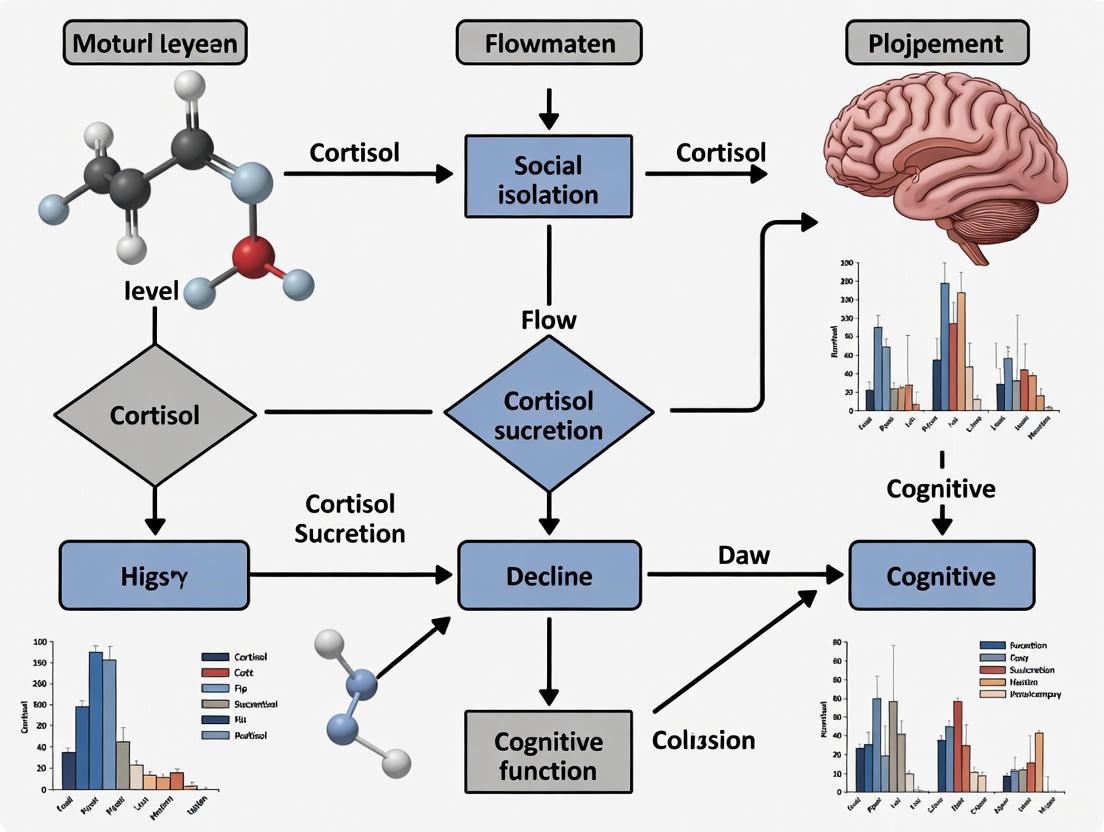
This article synthesizes current evidence on the pathway from social isolation to cognitive impairment, with a focus on cortisol as a key mechanistic mediator.
The Neurobiological Link: How Social Isolation Elevates Cortisol to Drive Cognitive Decline
Abstract
This article synthesizes current evidence on the pathway from social isolation to cognitive impairment, with a focus on cortisol as a key mechanistic mediator. For researchers and drug development professionals, we detail the foundational neurobiology, including HPA axis dysregulation, neuroinflammation, and structural brain changes. The content explores advanced methodological approaches like longitudinal neuroimaging and statistical models for causal inference, addresses troubleshooting for confounding factors and measurement challenges, and provides a comparative validation of animal and human models. The objective is to inform biomarker development and targeted therapeutic interventions for mitigating isolation-induced cognitive risk.
Unraveling the Pathway: The Neurobiological Mechanisms Linking Social Isolation, HPA Axis Dysregulation, and Cognitive Deficits
Social isolation has emerged as a critical public health concern, particularly for aging populations worldwide. As a chronic psychosocial stressor, it triggers a complex biological cascade that can accelerate physiological decline and impair cognitive function. The mechanistic pathway from insufficient social contact to health deterioration is of paramount interest to researchers investigating the psychoneuroendocrinological underpinnings of aging. This technical guide provides a comprehensive overview of the conceptual definitions, global prevalence, and methodological approaches for studying social isolation in older adults, with specific focus on its role as a chronic stressor within research examining cortisol levels and cognitive function.
Defining the Phenomenon: Social Isolation vs. Loneliness
In scientific literature, social isolation and loneliness represent distinct yet potentially interrelated constructs that require precise conceptual and operational differentiation.
Social isolation is defined as an objective state characterized by a quantifiable deficiency in social contacts, interactions, and relationships. It is measured through structural indicators such as network size, frequency of contact, and participation in social activities [1]. The World Health Organization characterizes social isolation as having minimal or no contact with others, typically involving a lack of meaningful relationships and reduced engagement with family, friends, and community activities [1].
In contrast, loneliness represents a subjective emotional experience arising from a perceived discrepancy between desired and actual social relationships [1]. This distinction is crucial; an individual can be socially isolated without feeling lonely, or experience loneliness despite maintaining active social connections [1].
Chronic social isolation specifically refers to the enduring or persistent experience of isolation that extends over a significant period, creating sustained stress on biological systems [2]. This prolonged state is of particular research interest due to its potential to induce lasting alterations in hypothalamic-pituitary-adrenal (HPA) axis function and subsequent cognitive deterioration.
Global Prevalence of Social Isolation in Older Adults
The prevalence of social isolation among older adults presents substantial variation across studies due to methodological differences in assessment tools, sample characteristics, and cultural contexts. The table below summarizes key prevalence data from recent systematic reviews and meta-analyses.
Table 1: Global Prevalence of Social Isolation and Loneliness in Older Adults
| Condition | Overall Prevalence | High-Risk Subgroups | Regional Variations | Source |
|---|---|---|---|---|
| Social Isolation | 33% (95% CI: 28-38%) | >80 years old (higher prevalence)Living aloneWithout higher education | Not reported | [3] |
| Chronic Loneliness | 20.8% (95% CI: 16.1-25.5%) | Women: 21.7%Men: 16.3% | North America: 30.5%Institutionalized older adults: 50.7% | [2] [4] |
| Overall Loneliness | 27.6% (Global average) | Older women: 30.9%Institutionalized: 50.7% | Varies by region and assessment method | [4] |
A multinational meta-analysis of 35 studies comprising 89,288 older adults found that approximately one in three older adults worldwide experiences social isolation [3]. Subgroup analyses revealed that individuals over 80, those with sample sizes under 500, those assessed using the Lubben Social Network Scale and Social Network Index scale, those living alone, and those lacking higher education experienced significantly higher rates of social isolation [3].
The prevalence of chronic loneliness (a persistent rather than transient experience) affects approximately 20.8% of older adults, with notable gender differences: 21.7% among women compared to 16.3% among men [2]. This chronicity is particularly concerning given its established association with adverse health outcomes, including depression, cognitive decline, and increased mortality risk.
Social Isolation as a Chronic Stressor: Pathways to Cognitive Decline
The investigation of social isolation as a chronic psychosocial stressor requires understanding its mechanistic pathways, particularly those involving the HPA axis and its end product, cortisol.
Biological Plausibility: The HPA Axis and Cortisol Dynamics
Chronic social isolation functions as a persistent stressor that can dysregulate the HPA axis, resulting in altered cortisol secretion patterns. While excessive cortisol exposure is generally considered detrimental to cognitive health, recent research reveals complex, sometimes paradoxical relationships.
A 10-year prospective population-based study examining bidirectional effects between salivary cortisol and cognitive functioning found that within-person effects indicated higher cortisol levels at 11 am and 8 pm, and total daily cortisol output were associated with subsequent better cognitive functioning (as measured by lower Clinical Dementia Rating Scale sum of boxes scores) [5]. This suggests that cortisol's relationship with cognitive health may be more nuanced than previously theorized, potentially exhibiting protective effects in certain contexts.
However, between-person effects from the same study indicated that higher cortisol levels at 11 am were associated with increased cognitive impairment, while a higher cortisol awakening response was associated with decreased cognitive impairment [5]. The APOE-ε4 allele did not moderate these relationships [5].
Social Isolation and Cognitive Decline: Multinational Evidence
The association between social isolation and cognitive deterioration is supported by robust multinational evidence. A comprehensive analysis of harmonized data from five major longitudinal aging studies across 24 countries (N = 101,581) revealed that:
- Social isolation was significantly associated with reduced cognitive ability (pooled effect = -0.07, 95% CI = -0.08, -0.05) [6]
- Negative effects were consistent across multiple cognitive domains, including memory, orientation, and executive function [6]
- When addressing endogeneity and reverse causality through System Generalized Method of Moments analysis, the effect size increased substantially (pooled effect = -0.44, 95% CI = -0.58, -0.30), suggesting that standard models may underestimate the true impact [6]
Table 2: Methodological Approaches for Studying Social Isolation and Cognition
| Methodological Approach | Key Features | Applications | Advantages |
|---|---|---|---|
| Linear Mixed Models | Accounts for within-individual changes and between-group differences | Multinational longitudinal studies | Handles repeated measures and time-varying covariates |
| System GMM | Addresses endogeneity and reverse causality using lagged instruments | Causal inference in longitudinal data | Mitigates bias from unobserved heterogeneity |
| Harmonized Data Analysis | Standardizes measures across diverse studies | Cross-national comparisons (e.g., SHARE, HRS, CHARLS) | Enhances comparability and generalizability |
The cognitive impact of social isolation is moderated by both individual and country-level factors. Vulnerable subgroups including the oldest-old, women, and those with lower socioeconomic status experience more pronounced effects [6]. At the national level, stronger welfare systems and higher economic development buffer the adverse cognitive impacts of isolation [6].
Methodological Considerations for Research Protocols
Assessment and Measurement Approaches
Validated instruments for assessing social isolation include:
- Lubben Social Network Scale (LSNS): Measures social engagement with family and friends, with specific cut-offs for identifying isolation [3]
- Social Network Index (SNI): Categorizes social networks based on number and frequency of contacts across multiple domains [3]
- Standardized indices from harmonized longitudinal studies, enabling cross-national comparisons [6]
For cortisol assessment, protocols typically incorporate:
- Salivary cortisol sampling at multiple time points (waking, 30 minutes post-waking, 11 am, 8 pm) to capture diurnal rhythm [5]
- Calculation of cortisol awakening response (CAR) and diurnal slope [5]
- Longitudinal collection to establish temporal patterns and within-person changes
Experimental Designs for Mechanistic Research
The following diagram illustrates a comprehensive research workflow for investigating the social isolation-cortisol-cognition pathway:
The Scientist's Toolkit: Essential Research Reagents and Materials
Table 3: Essential Research Materials for Social Isolation and Cortisol Research
| Category | Specific Tools/Assays | Research Application | Key Considerations |
|---|---|---|---|
| Social Isolation Assessment | Lubben Social Network Scale (LSNS)Social Network Index (SNI)Berkman-Syme Social Network Index | Quantification of structural social isolation | Cross-cultural validation requiredStandardized cut-off scores vary by population |
| Cortisol Assessment | Salivary cortisol immunoassaysCortisol awakening response protocolsDiurnal slope calculation kits | HPA axis function measurement | Strict temporal collection protocolsControl for confounding medicationsConsider seasonal variation |
| Cognitive Assessment | Clinical Dementia Rating (CDR)Mini-Mental State Examination (MMSE)Domain-specific tests (memory, executive function) | Cognitive outcome measurement | Sensitivity to change over timeCultural and educational bias assessment |
| Genetic Analysis | APOE-ε4 genotypingGlucocorticoid receptor gene polymorphisms | Effect modification analysis | Sample size requirements for gene-environment interactions |
| Statistical Software | R, Stata, MplusSpecialized packages for mixed models and GMM | Complex longitudinal data analysis | Handling of missing dataAppropriate random effects specification |
Social isolation represents a prevalent and potent chronic psychosocial stressor with demonstrable effects on cognitive health in aging populations. The mechanistic pathways involving HPA axis dysregulation and cortisol dynamics present promising avenues for understanding the biology of social environmental influences on brain health. Research in this domain requires methodologically rigorous approaches incorporating longitudinal designs, precise measurement of both objective social network characteristics and subjective experiences, and sophisticated statistical models that account for complex temporal and causal relationships. As global aging accelerates, elucidating these pathways becomes increasingly crucial for developing targeted interventions to mitigate the cognitive risks associated with social isolation.
The hypothalamic-pituitary-adrenal (HPA) axis represents the body's primary neuroendocrine stress response system, functioning as a crucial communication network between the brain and adrenal glands. This system orchestrates a complex hormonal cascade that enables organisms to respond adaptively to physical and psychological stressors [7]. The HPA axis consists of three core components: the hypothalamus, a brain structure that maintains bodily homeostasis; the pituitary gland, a pea-sized organ at the brain's base that regulates other endocrine glands; and the adrenal glands, located on top of the kidneys, which release vital hormones [7].
In response to perceived threats, the hypothalamus releases corticotropin-releasing hormone (CRH), which triggers the anterior pituitary gland to secrete adrenocorticotropic hormone (ACTH). ACTH then stimulates the adrenal cortex to produce and release cortisol, the primary glucocorticoid stress hormone in humans [7]. This coordinated sequence mobilizes energy resources, enhances alertness, and modulates immune function—critical adaptations for surviving immediate threats. The system is designed to self-regulate through a negative feedback loop where elevated cortisol levels signal the hypothalamus and pituitary to reduce further CRH and ACTH production, thus returning the body to homeostasis [7] [8].
HPA Axis Dysregulation: Mechanisms and Manifestations
Forms of Dysregulation
Chronic or severe stress can disrupt the finely tuned HPA axis, leading to two primary forms of dysregulation:
HPA Axis Hyperactivity: Characterized by persistent elevation of cortisol levels, this pattern is frequently associated with chronic psychological stress [7]. Prolonged cortisol exposure increases vulnerability to various health conditions including immune dysfunction, mood disorders, metabolic diseases, cardiovascular pathology, and cognitive impairment [7] [9].
HPA Axis Suppression: This condition involves blunted cortisol production and impaired stress responsiveness, often resulting from exogenous glucocorticoid administration or chronic fatigue of the stress response system. In severe cases, this suppression can lead to adrenal crisis, a life-threatening state of cortisol deficiency [7].
Neurobiological Mechanisms of Dysregulation
The HPA axis operates under complex regulatory control involving both reactive responses to immediate homeostatic challenges and anticipatory responses to perceived threats. Reactive responses typically involve direct neural pathways from brainstem sensory relays to hypothalamic CRH neurons, while anticipatory responses utilize more complex limbic pathways that originate in emotion-processing regions like the amygdala and hippocampus [8].
Chronic stress-induced HPA dysregulation manifests in varied forms including chronic basal hypersecretion, sensitized stress responses, and potentially adrenal exhaustion. The specific manifestation depends on factors such as stressor chronicity, intensity, frequency, and modality [8]. Importantly, an individual's stress response profile is further modulated by genetics, early life experience, environmental conditions, sex, and age [8].
Figure 1: HPA Axis Signaling Pathway and Dysregulation. This diagram illustrates the hormonal cascade from stress perception to cortisol release, including the critical negative feedback mechanism that maintains system balance. Chronic stress disrupts this regulation, leading to potential health consequences.
Cortisol and Cognitive Function: Molecular Pathways
Cortisol Receptors in the Brain
Cortisol exerts its effects on cognitive function through two distinct intracellular receptor systems with different distributions and affinities throughout the brain:
Mineralocorticoid Receptors (MRs/Type I): These receptors have 6-10 times higher affinity for cortisol than GRs and are predominantly located in the limbic system, particularly the hippocampus. MRs are largely occupied during basal cortisol secretion and mediate enhancing effects on cognitive performance, especially memory processes [10] [9].
Glucocorticoid Receptors (GRs/Type II): With lower affinity for cortisol, GRs are extensively distributed throughout both subcortical and cortical structures, with particular density in the prefrontal cortex. GRs become significantly occupied during stress-induced cortisol surges and typically mediate suppressive effects on cognitive functions [10] [9].
The complex actions of cortisol on cognition can be understood through the MR/GR Balance Hypothesis, which posits that the ratio of activated MR to GR receptors determines cortisol's ultimate effect on cognitive processes [10]. When the MR/GR ratio is high (with moderate cortisol levels), memory performance is enhanced; when this ratio is low (with high cortisol levels), memory performance becomes impaired [10].
Domain-Specific Cognitive Effects
The relationship between cortisol and cognitive function follows distinct patterns across different cognitive domains:
Episodic Memory: The association between cortisol and hippocampal-dependent memory follows an inverted U-shaped curve. At moderate levels, cortisol enhances memory consolidation through MR activation, while at high levels, it impairs memory retrieval and consolidation through GR activation [10] [9]. Elevated cortisol has been consistently associated with poorer episodic memory performance in older adults [9].
Executive Function: In contrast to memory, the prefrontal cortex-mediated executive functions (including working memory, cognitive flexibility, and attention) typically show a more linear, negative relationship with cortisol levels. Since the prefrontal cortex primarily expresses GRs, higher cortisol levels generally correspond to worse executive performance [10] [9].
Working Memory: Working memory demonstrates particular sensitivity to cortisol fluctuations, with studies showing that hydrocortisone administration produces detectable impairments in working memory even when declarative memory remains unaffected [10].
Table 1: Cortisol Effects on Specific Cognitive Domains
| Cognitive Domain | Primary Brain Region | Receptor Type | Cortisol Effect | Underlying Mechanism |
|---|---|---|---|---|
| Episodic Memory | Hippocampus | MR & GR | Inverted U-shaped | MR activation enhances, GR activation impairs memory processes |
| Executive Function | Prefrontal Cortex | GR primarily | Linear negative | GR activation inhibits prefrontal neural activity |
| Working Memory | Prefrontal Cortex | GR primarily | Linear negative | Increased catecholamine metabolism disrupts prefrontal function |
| Memory Consolidation | Hippocampus, Amygdala | MR & GR | Enhancing | Facilitates synaptic plasticity and long-term potentiation (LTP) |
| Memory Retrieval | Hippocampus, Prefrontal Cortex | GR primarily | Impairing | Inhibits neural activity in retrieval pathways |
Social Isolation, Cortisol, and Cognitive Decline: Integrated Pathways
Psychosocial Stress and HPA Axis Dysregulation
Social isolation represents a potent psychosocial stressor that can trigger chronic HPA axis activation. Research indicates that perceived social isolation (loneliness) is particularly effective at sustaining elevated cortisol levels, potentially through mechanisms involving:
Sustained Threat Vigilance: Lonely individuals may maintain heightened alertness to social threats, resulting in persistent CRH drive from the hypothalamus [11] [12].
Impaired Negative Feedback: Chronic loneliness has been associated with reduced sensitivity of GR receptors, blunting the normal cortisol-mediated feedback inhibition of the HPA axis [8] [13].
Circadian Rhythm Disruption: Socially isolated individuals frequently exhibit flattened diurnal cortisol rhythms characterized by reduced morning cortisol and elevated evening levels, reflecting dysregulated HPA rhythmicity [13].
Notably, qualitative research suggests that loneliness may exert more damaging effects on cognition than objective social isolation, with lonely individuals reporting diminished motivation for intellectually stimulating activities that help maintain cognitive reserve [11].
Neurotoxic Mechanisms Linking Cortisol to Cognitive Impairment
Prolonged elevation of cortisol levels contributes to neurodegeneration through multiple complementary pathways:
Hippocampal Atrophy: Chronic high cortisol exposure promotes hippocampal volume reduction through decreased neurogenesis, dendritic branching simplification, and increased glutamate excitotoxicity [9]. The hippocampus is particularly vulnerable due to its high density of GR receptors [10] [9].
Amyloid-β Pathology: Cortisol can increase amyloid precursor protein (APP) expression and β-secretase activity, accelerating amyloid-β plaque formation—a hallmark of Alzheimer's disease pathology [9].
Tau Hyperphosphorylation: Glucocorticoids can enhance tau protein phosphorylation, promoting neurofibrillary tangle formation that disrupts neuronal cytoskeletal integrity [9].
Cerebrovascular Damage: Cortisol-mediated endothelial dysfunction and elevated blood pressure can impair cerebral blood flow and compromise blood-brain barrier integrity [14] [9].
Table 2: Evidence Linking Social Isolation, Cortisol, and Cognitive Outcomes
| Study Design | Population | Social Isolation Measure | Cortisol Alteration | Cognitive Outcome |
|---|---|---|---|---|
| Cross-national harmonized data [6] | 101,581 older adults (24 countries) | Standardized isolation indices | Not directly measured | Significant association with reduced global cognition (pooled effect = -0.07, 95% CI = -0.08, -0.05) |
| Longitudinal cohort [12] | 33,741 European adults | Combined isolation/loneliness profiles | Not directly measured | Hearing impairment + loneliness associated with steeper episodic memory decline |
| Qualitative analysis [11] | Adults 47-81 years | Thematic analysis of interviews | Not directly measured | Loneliness perceived as more damaging to memory than isolation alone |
| Literature Review [9] | Mixed | N/A | Elevated CSF cortisol in MCI/AD | Higher cortisol associated with increased dementia risk and faster progression |
Experimental Methodologies for HPA Axis Research
Cortisol Assessment Protocols
Research investigating HPA axis function employs standardized methodologies for cortisol measurement:
Diurnal Cortisol Profiling: Participants provide multiple saliva samples across the day (typically at waking, 30 minutes post-waking, afternoon, and evening) to capture the circadian rhythm. The cortisol awakening response (CAR), calculated as the increase from waking to 30 minutes post-waking, represents a particularly sensitive indicator of HPA axis regulation [13].
Pharmacological Challenge Tests: The dexamethasone suppression test (DST) involves oral administration of a synthetic glucocorticoid (typically 0.5-1.0 mg dexamethasone) at 11 PM, followed by measurement of cortisol levels the next morning. Abnormal non-suppression indicates impaired negative feedback regulation [8] [9].
Stress Induction Paradigms: Laboratory stressors such as the Trier Social Stress Test (TSST) combine public speaking and mental arithmetic tasks before an evaluative panel to reliably activate the HPA axis, with cortisol measured at baseline and multiple timepoints post-stress [10] [8].
Cognitive Assessment Protocols
Standardized neuropsychological batteries assess cortisol-sensitive cognitive domains:
Episodic Memory: The Rey Auditory Verbal Learning Test (RAVLT) and California Verbal Learning Test (CVLT) measure immediate recall, short-delay recall, long-delay recall, and recognition, capturing both consolidation and retrieval processes [10] [9].
Executive Function: The Digit Span Backward task assesses working memory, while Stroop Color-Word Interference and Trail Making Test Part B measure cognitive flexibility and inhibition [10] [12].
Global Cognition: Screening instruments like the Mini-Mental State Examination (MMSE) and Montreal Cognitive Assessment (MoCA) provide brief assessments of multiple domains [6] [12].
Figure 2: Experimental Workflow for HPA-Cognition Research. This diagram outlines a comprehensive methodological approach for investigating relationships between HPA axis function, psychosocial factors, and cognitive outcomes, highlighting the multi-modal assessment strategy characteristic of this research domain.
Research Reagent Solutions and Methodological Tools
Table 3: Essential Research Reagents and Methodologies for HPA-Cognition Research
| Reagent/Method | Category | Research Application | Technical Notes |
|---|---|---|---|
| Salivary Cortisol ELISA Kits | Biochemical Assay | Quantifying free cortisol in saliva samples | Prefer electrochemiluminescence or chemiluminescence assays for sensitivity; sample stability critical |
| Dexamethasone | Pharmacological Probe | HPA negative feedback assessment via DST | Typical dose 0.5-1.0 mg orally; measure cortisol next morning at 8-9 AM |
| Hydrocortisone (IV/Oral) | Pharmacological Challenge | Acute cortisol elevation to study causal effects | Dose-dependent responses; consider MR/GR receptor affinity |
| CRH/ACTH Challenge | Endocrine Protocol | Assessing pituitary/adrenal responsiveness | Differentiates central vs peripheral HPA dysfunction |
| Metyrapone | Enzyme Inhibitor | Acute cortisol synthesis inhibition | Studies MR-mediated effects in low-cortisol state |
| MR/GR Antagonists | Receptor Probes | Dissecting receptor-specific contributions | Mifepristone (GR antagonist); spironolactone (MR antagonist) |
| Standardized Neuropsychological Batteries | Cognitive Assessment | Domain-specific cognitive function | Harmonized protocols enable cross-study comparisons |
| Social Isolation Indices | Psychosocial Metrics | Quantifying objective social disconnectedness | Composite measures of network size, contact frequency |
| UCLA Loneliness Scale | Psychosocial Metrics | Assessing subjective loneliness experience | Versions available for different age groups |
The HPA axis represents a critical neuroendocrine interface through which chronic psychosocial stressors like social isolation exert detrimental effects on cognitive health. The evidence reviewed demonstrates that cortisol, while essential for normal stress adaptation, becomes neurotoxic when dysregulated—contributing to memory impairment, executive dysfunction, and accelerated neurodegenerative pathology.
Future research should prioritize several key directions:
Mechanistic Studies: Elucidate the precise molecular pathways linking GR activation to amyloid-β and tau pathology, potentially identifying novel therapeutic targets [9].
Personalized Biomarkers: Develop integrated biomarkers combining cortisol dynamics with genetic (GR polymorphism), epigenetic (FKBP5 methylation), and inflammatory profiles to identify at-risk individuals prior to significant cognitive decline [15] [9].
Timed Interventions: Explore chronotherapeutic approaches that account for circadian cortisol rhythms to optimize efficacy of cortisol-modulating interventions [13].
Multimodal Trials: Evaluate combined interventions targeting both HPA regulation (mind-body practices, adaptogenic herbs) and cognitive enrichment to determine synergistic benefits [15] [14].
The expanding understanding of HPA axis dysregulation provides a compelling biological framework connecting social environmental factors to brain health, offering promising avenues for preventing and mitigating cognitive decline across the lifespan.
Chronic stress and the resulting prolonged exposure to high concentrations of cortisol exert a profound detrimental impact on brain structure and function, with the hippocampus being particularly vulnerable. This brain region, crucial for memory, learning, and emotion regulation, contains a high density of glucocorticoid receptors (GR), making it highly sensitive to stress-induced neuroendocrine changes [16]. Within the context of modern health challenges, social isolation has been identified as a significant chronic stressor that can dysregulate the hypothalamic-pituitary-adrenal (HPA) axis, leading to sustained cortisol elevation [6]. This neuroendocrine dysregulation initiates a cascade of molecular and cellular events that ultimately result in hippocampal atrophy and synaptic loss, underpinning cognitive deficits observed in mood disorders, mild cognitive impairment (MCI), and Alzheimer's disease (AD) [17] [18]. This whitepaper synthesizes current evidence on the mechanisms linking chronic cortisol exposure to hippocampal damage, providing researchers and drug development professionals with a comprehensive mechanistic overview, standardized experimental protocols, and key research tools for investigating this critical pathway.
Core Pathophysiological Mechanisms
Glucocorticoid Receptor Activation and Hippocampal Vulnerability
The hippocampus possesses the highest concentration of glucocorticoid receptors in the brain, primarily the mineralocorticoid receptor (MR) and glucocorticoid receptor (GR) [16]. Under normal conditions, these receptors help regulate the HPA axis through negative feedback mechanisms. However, chronic stress leads to excessive GR activation, which triggers downstream pathological processes including:
- Downregulation of synaptic scaffolding proteins: Chronic GR activation decreases expression of critical postsynaptic density proteins like PSD-95, SAP-102, and Shank, disrupting synaptic stability and plasticity [19].
- Dendritic atrophy: Sustained high cortisol exposure reduces dendritic complexity and spine density in hippocampal CA1 and CA3 regions [19].
- Impaired neurogenesis: Cortisol suppresses the formation of new neurons in the dentate gyrus, critical for memory formation and pattern separation [20].
Table 1: Hippocampal Subfield Vulnerability to Cortisol Exposure
| Hippocampal Subfield | Key Vulnerabilities | Functional Consequences |
|---|---|---|
| CA1 Region | High GR density; Dendritic atrophy; Spine loss | Impaired spatial memory; Reduced synaptic plasticity |
| CA4/Dentate Gyrus Body | Significant volume reductions [20] | Impaired pattern separation; Reduced neurogenesis |
| Presubiculum/Subiculum Body | Significant volume reductions [20] | Disrupted hippocampal-cortical communication |
| Granule Cell Layer | Volume loss [20] | Impaired input integration |
Mitochondrial Dysfunction and Impaired Mitophagy
Recent research has revealed that glucocorticoids disrupt mitochondrial quality control mechanisms, particularly NIX-dependent mitophagy, the selective autophagy of damaged mitochondria [21]. The process occurs as follows:
- BNIP3L/NIX downregulation: Glucocorticoids suppress the expression of BNIP3L/NIX, a critical receptor for basal mitophagy, through GR-mediated binding to the PGC1α promoter [21].
- Damaged mitochondrial accumulation: Impaired mitophagy leads to perinuclear clustering of dysfunctional mitochondria rather than their targeted degradation [21].
- Synaptic energy crisis: The failure to eliminate damaged mitochondria results in ATP depletion at synapses, compromising synaptic vesicle recycling and neurotransmitter release [21].
Neuroinflammatory Cascades and Synaptic Pruning
Cortisol dysregulation activates microglial cells and promotes neuroinflammation, creating a hostile environment for synaptic maintenance:
- Microglial activation: Chronic high cortisol exposure triggers microglial release of pro-inflammatory cytokines including IL-1β, IL-6, and TNF-α [18].
- Maladaptive synaptic pruning: Activated microglia engage in excessive or erroneous phagocytosis of viable synapses, a process termed "synaptic mispruning" [19].
- Vascular dysfunction: Cortisol dysregulation is associated with increased CSF levels of adhesion molecules (ICAM-1, VCAM-1) and chemokines (IP-10, TARC), indicating cerebrovascular involvement in the inflammatory response [18].
Quantitative Evidence from Human Studies
Human studies across various clinical populations provide compelling evidence for cortisol-mediated hippocampal damage, with quantitative imaging and biochemical correlations.
Table 2: Clinical Evidence Linking Cortisol to Hippocampal Atrophy and Cognitive Decline
| Study Population | Cortisol Measurement | Hippocampal Impact | Cognitive Correlation |
|---|---|---|---|
| Cushing's Disease (n=91) [20] | Plasma cortisol | Selective subfield atrophy (CA4-body, GC-ML-DG-body) | Mediated impairment in cognitive performance |
| MCI Patients (n=304) [17] | Plasma cortisol | Faster hippocampal volume decline over 36.8 months | Hippocampal atrophy predicted progression to AD |
| Aging & AD (n=58) [16] | Morning serum cortisol | Smaller left hippocampal volume; Reduced temporal/parietal GM | Worse memory performance |
| Memory Clinic (Co-STAR, n=108) [18] | Flattened diurnal cortisol slope | Associated with neuroinflammation (YKL-40, IP-10, PlGF) | Worse processing speed |
Experimental Models and Methodologies
In Vitro Models
Primary Hippocampal Neuron Culture [21]
- Culture Preparation: Dissociate hippocampal tissue from embryonic day 18 (E18) rats or mice. Plate neurons on poly-D-lysine coated coverslips in Neurobasal medium supplemented with B-27, glutamine, and penicillin/streptomycin.
- Glucocorticoid Treatment: Apply 1μM corticosterone (rodent stress-level equivalent) or cortisol for >24 hours to model chronic exposure. Use 100nM for physiological levels.
- Outcome Measures:
- Synaptic Density: Immunostaining for pre- (synaptophysin) and postsynaptic (PSD-95) markers with Pearson's correlation analysis.
- Mitochondrial Distribution: MitoTracker Red staining combined with MAP2 (dendrites) or Tau (axons) immunostaining.
- Mitophagy Assay: Transfect with mt-Keima reporter; measure 561/488 nm excitation ratio under acidic pH conditions.
SH-SY5Y Neuroblastoma Cell Line [21]
- Culture Conditions: Maintain in DMEM/F12 with 10% FBS, differentiated with retinoic acid for neuronal phenotype.
- Experimental Applications: Ideal for high-throughput screening of mitophagy pathways and BNIP3L/NIX expression under cortisol exposure.
In Vivo Models
Mouse Model of Chronic Corticosterone Exposure [21]
- Dosing Protocol: Administer 1μM corticosterone via drinking water for 4 weeks to mimic chronic stress-level exposure.
- Behavioral Assessment: Morris water maze for spatial memory evaluation pre- and post-treatment.
- Tissue Analysis: Immunohistochemistry for synaptic markers, mitochondrial proteins, and NIX expression in hippocampal sections.
Human Participant Studies [20] [17] [16]
- Imaging Protocols: High-resolution T1-weighted MRI (voxel size 1×1×1 mm³) on 3T scanners; automated hippocampal subfield segmentation using validated pipelines (e.g., Iglesias et al., 2015).
- Cortisol Assessment: Morning serum/plasma samples; diurnal salivary cortisol sampling (awakening, 30min post-awakening, afternoon, bedtime) for circadian rhythm analysis.
- Cognitive Testing: Montreal Cognitive Assessment (MoCA); verbal memory tests; quality of life measures.
Signaling Pathways and Molecular Mechanisms
The following diagram illustrates the core signaling pathway through which chronic cortisol exposure leads to hippocampal synaptic deficits:
Diagram 1: Core pathway of cortisol-induced synaptic deficits
The following diagram illustrates the integrated neurobiological cascade linking chronic stress to mood disorder progression through hippocampal-prefrontal circuit disruption:
Diagram 2: Mood disorder progression cascade
The Scientist's Toolkit: Research Reagent Solutions
Table 3: Essential Research Reagents for Investigating Cortisol-Induced Hippocampal Damage
| Reagent/Tool | Specific Application | Research Function |
|---|---|---|
| mt-Keima Reporter [21] | Mitophagy flux measurement | pH-sensitive fluorescent protein for quantifying mitochondrial delivery to lysosomes |
| MitoTracker Red [21] | Mitochondrial distribution | Staining of active mitochondria in neurites and soma |
| PSD-95 Antibodies [19] | Postsynaptic density integrity | Marker for postsynaptic scaffolding protein downregulation |
| Synaptophysin Antibodies [21] | Presynaptic vesicle density | Presynaptic marker for synaptic density calculations |
| BNIP3L/NIX Antibodies [21] | Mitophagy receptor quantification | Detection of key mitophagy receptor downregulated by glucocorticoids |
| LC3 Antibodies [21] | Autophagosome formation | Marker for autophagosome membrane engagement with mitochondria |
| GR Antagonists (Mifepristone) [19] | GR pathway inhibition | Testing causality in glucocorticoid signaling pathways |
| NIX Enhancers [21] | Mitophagy rescue | Therapeutic intervention to restore mitochondrial quality control |
Discussion and Research Implications
The evidence presented establishes a clear mechanistic pathway from chronic stress and social isolation to cortisol-mediated hippocampal damage. The integration of findings from Cushing's disease (a natural model of chronic hypercortisolism) [20] [22], mild cognitive impairment [17], and biomarker-confirmed Alzheimer's disease [16] [18] provides strong translational validation of these mechanisms. Several critical implications emerge for future research and therapeutic development:
Therapeutic Targeting Opportunities
- GR Modulators and Antagonists: Compounds that normalize GR signaling could prevent downstream scaffolding protein loss and mitochondrial dysfunction [19].
- NIX Enhancers: Small molecules that enhance BNIP3L/NIX expression or function represent a promising approach to restore mitophagy compromised by glucocorticoids [21].
- NMDA Receptor Antagonists: Ketamine and related compounds may interrupt the excitotoxicity cascade triggered by cortisol-induced glutamate dysregulation [19].
- Anti-inflammatory Interventions: Targeting specific neuroinflammatory pathways (e.g., NLRP3 inflammasome) may protect against maladaptive synaptic pruning [18].
Methodological Considerations
Future studies should prioritize:
- Multimodal imaging integration: Combining hippocampal subfield volumetry with diffusion tensor imaging of connecting white matter tracts [19].
- Longitudinal designs: Tracking cortisol rhythms, hippocampal volume, and cognitive performance across the progression from normal aging to MCI and AD [17].
- Social stress modeling: Incorporating standardized measures of social isolation and loneliness as moderators of cortisol reactivity and hippocampal vulnerability [6].
- High-resolution mitophagy assessment: Implementing mt-Keima imaging in conjunction with synaptic function assays in relevant disease models [21].
The established mechanisms provide a solid foundation for developing targeted interventions to break the cycle of stress-induced hippocampal damage, potentially mitigating cognitive decline across multiple neuropsychiatric conditions.
While the role of cortisol and hypothalamic-pituitary-adrenal (HPA) axis dysregulation in cognitive function has been extensively documented, this whitepaper examines the critical downstream mechanisms of neuroinflammation and oxidative stress through which chronic stress ultimately impairs neurological health. Within the context of social isolation research, chronic stress manifests not merely as elevated cortisol but as a cascade of cellular events that drive neuronal dysfunction. A growing body of evidence indicates that prolonged high-concentration cortisol exposure initiates pathological processes extending far beyond receptor activation, including glial cell impairment, mitochondrial dysfunction, and compromised blood-brain barrier integrity [23] [24]. This technical analysis provides researchers and drug development professionals with a mechanistic understanding of these pathways, standardized experimental methodologies for their investigation, and emerging therapeutic targets that extend beyond conventional HPA axis modulation.
The significance of this expanded framework is particularly relevant for understanding the cognitive consequences of social isolation. Large-scale cross-national studies demonstrate that social isolation is significantly associated with reduced cognitive ability (pooled effect = -0.07, 95% CI = -0.08, -0.05), with consistently negative effects across memory, orientation, and executive function domains [6]. These effects are mediated not solely through cortisol dynamics but through the neuroinflammatory and oxidative sequelae of sustained stress signaling. Furthermore, System GMM analyses accounting for endogeneity concerns reveal even more pronounced effects (pooled effect = -0.44, 95% CI = -0.58, -0.30), underscoring the progressive nature of these pathological mechanisms [6].
Molecular Mechanisms: From Cortisol to Cellular Pathology
Neuroinflammatory Pathways
Chronic stress-induced cortisol dysregulation activates a robust neuroinflammatory response primarily mediated through glial cell activation and pro-inflammatory cytokine signaling. The transition from acute adaptive stress responses to maladaptive chronic inflammation occurs through several interconnected mechanisms:
Microglial Priming and Dysfunction: Under conditions of chronic cortisol exposure, microglia undergo functional alterations that impair their ability to maintain CNS homeostasis. In vitro studies demonstrate that corticosterone exposure significantly reduces microglial phagocytic capacity, particularly toward amyloid-beta (Aβ) plaques, a critical pathway in Alzheimer's disease pathogenesis [24]. This impaired clearance capacity is accompanied by altered activation states that favor pro-inflammatory signaling over homeostatic functions.
Cytokine-Mediated Neural Dysregulation: Peripheral inflammation exacerbates central inflammation through multiple mechanisms including disruption of the blood-brain barrier, immune cellular trafficking, and activation of glial cells [25]. Activated glial cells release cytokines, chemokines, and reactive oxygen and nitrogen species into the extra-synaptic space, dysregulating neurotransmitter systems, imbalancing the excitatory to inhibitory ratio, and disrupting neural circuitry plasticity and adaptation [25]. Meta-analyses confirm that patients with major depressive disorder (MDD) show elevated levels of IL-6, TNF-α, IL-10, sIL-2, CCL2, IL-13, IL-18, IL-12, IL-1RA, and sTNFR2 compared to healthy controls [26].
HPA Axis-Immune Cross-Talk: Chronic stress induces glucocorticoid resistance through downregulation of receptor sensitivity, impairing the HPA axis's negative feedback and sustaining a pro-inflammatory state [26]. This glucocorticoid resistance develops when immune cells demonstrate decreased sensitivity to glucocorticoids, meaning cortisol release fails to produce significant anti-inflammatory effects [23]. The resulting "feed-forward" loop perpetuates inflammation despite high circulating cortisol levels.
Table 1: Key Inflammatory Mediators in Stress-Related Cognitive Pathology
| Mediator | Source | Function | Detection Methods |
|---|---|---|---|
| IL-1β | Microglia, Macrophages | Pyroptosis induction, synaptic plasticity impairment | ELISA, Western Blot, multiplex immunoassay |
| IL-6 | Astrocytes, Microglia | HPA axis sensitization, neurogenesis suppression | Electrochemiluminescence, mRNA sequencing |
| TNF-α | Microglia, T-cells | Glutamate excitotoxicity, synaptic scaling disruption | MSD Multi-Array technology, flow cytometry |
| S100B | Astrocytes | Trophic/inflammatory dual function (concentration-dependent) | CSF immunoassay, serum ELISA |
| HMGB1 | Neurons, Glia | DAMP signaling through TLR4 and RAGE receptors | Immunohistochemistry, Western Blot |
Oxidative Stress Pathways
Oxidative stress represents a fundamental mechanism through which chronic cortisol exposure translates into neuronal damage and cognitive decline. The pathological interplay between cortisol and redox imbalance involves several key pathways:
Mitochondrial Dysregulation: Chronic stress and cortisol exposure disrupt mitochondrial respiratory chain function, leading to excessive reactive oxygen species (ROS) generation [27]. The brain's high metabolic demand and lipid-rich environment make it particularly vulnerable to oxidative damage. In the medial prefrontal cortex (mPFC) of animal models, chronic corticosterone administration induces pronounced oxidative stress that correlates with depression- and anxiety-like behaviors [28].
p53-DDIT4-NF-κB Signaling Axis: Transcriptomic profiling has identified the p53-DDIT4-NF-κB signaling pathway as a critical hub integrating oxidative stress and neuroinflammation [28]. In this pathway, chronic cortisol exposure activates p53, which upregulates DDIT4 (DNA damage-inducible transcript 4), leading to NF-κB activation and subsequent neuroinflammatory signaling. Pharmacological inhibition of p53 with pifithrin-α (PFT-α) produces antidepressant-like effects in mouse models, while p53 activation exacerbates behavioral abnormalities [28].
Antioxidant System Suppression: Chronic cortisol exposure depletes endogenous antioxidant defenses, including superoxide dismutase (SOD), catalase (CAT), and glutathione peroxidase (GPx) [27]. This creates a redox imbalance that promotes lipid peroxidation, protein oxidation, and DNA damage. Markers such as malondialdehyde (MDA), advanced oxidation protein products (AOPPs), and 8-hydroxy-2'-deoxyguanosine (8-OHdG) provide quantifiable measures of this oxidative burden [27].
The diagram below illustrates the primary signaling pathways linking chronic stress to neuroinflammation and oxidative stress:
Chronic Stress Signaling Pathways to Cognitive Decline
Quantitative Data Synthesis: Biomarkers and Clinical Correlations
The translation of molecular mechanisms into quantifiable biomarkers enables researchers to track disease progression and therapeutic efficacy. The following tables consolidate key quantitative findings from clinical and preclinical studies:
Table 2: Oxidative Stress Biomarkers in Chronic Stress Conditions
| Biomarker | Sample Type | Change in Chronic Stress | Correlation with Cognitive Measures | Detection Methods |
|---|---|---|---|---|
| Malondialdehyde (MDA) | Plasma, Serum | ↑ 35-60% | r = -0.42 to -0.58 with memory recall | TBARS assay, HPLC |
| 8-OHdG | Urine, Serum | ↑ 40-75% | r = -0.38 to -0.51 with executive function | ELISA, LC-MS/MS |
| Advanced Oxidation Protein Products (AOPPs) | Plasma | ↑ 50-80% | r = -0.45 to -0.61 with processing speed | Spectrophotometry |
| F2-isoprostanes | Plasma, Urine | ↑ 30-55% | r = -0.41 to -0.56 with working memory | GC-MS, ELISA |
| Superoxide Dismutase (SOD) | Erythrocytes, Plasma | ↓ 25-45% | r = +0.36 to +0.52 with cognitive flexibility | Colorimetric assay |
Table 3: Inflammatory Marker Changes in Major Depressive Disorder with Cognitive Impairment
| Cytokine | MDD vs. Controls | Effect Size (Cohen's d) | Association with MoCA Scores | Response to Antidepressants |
|---|---|---|---|---|
| IL-6 | ↑ 45-65% | 0.72 (95% CI: 0.58-0.86) | r = -0.34, p < 0.01 | ↓ 20-30% with SSRI response |
| TNF-α | ↑ 35-60% | 0.65 (95% CI: 0.51-0.79) | r = -0.41, p < 0.001 | ↓ 15-25% with various antidepressants |
| CRP | ↑ 50-80% | 0.81 (95% CI: 0.67-0.95) | r = -0.38, p < 0.01 | Variable response |
| IL-1β | ↑ 30-55% | 0.58 (95% CI: 0.44-0.72) | r = -0.29, p < 0.05 | ↓ 25-35% with successful treatment |
| sIL-2R | ↑ 25-50% | 0.47 (95% CI: 0.33-0.61) | r = -0.31, p < 0.05 | Minimal change |
Experimental Models and Methodologies
Chronic Stress Paradigms in Rodent Models
The unpredictable chronic mild stress (UCMS) protocol represents the gold standard for modeling human chronic stress in rodent systems:
- Protocol Duration: 4-8 weeks of daily exposure to varying mild stressors including restraint, damp bedding, cage tilt, white noise, and social isolation [24].
- Biomarker Assessment: Plasma corticosterone measurements via ELISA at baseline, midpoint, and endpoint. Inflammatory cytokines (IL-1β, IL-6, TNF-α) quantified in brain homogenates using multiplex immunoassays [24].
- Cognitive Testing: Morris water maze for spatial memory, Y-maze for spontaneous alternation, novel object recognition for memory, and fear conditioning for associative learning administered 24 hours after final stress session [24].
- Neuropathological Analysis: Immunohistochemistry for microglial activation (Iba1), astrocytosis (GFAP), and oxidative damage markers (8-OHdG, nitrotyrosine) in hippocampal and prefrontal cortex sections [28] [24].
In Vitro Models of Glucocorticoid Exposure
Primary microglial and neuronal-glia co-culture systems enable reductionistic study of cortisol mechanisms:
- Corticosterone Treatment: Primary microglial cultures exposed to 10-100μM corticosterone for 24-72 hours to model chronic stress conditions [24].
- Phagocytosis Assay: Fluorescent-labeled Aβ42 (100 nM) added to cultures for 4 hours, followed by flow cytometry quantification of internalized Aβ [24].
- Cytokine Profiling: Multiplex cytokine array analysis of culture supernatants collected at 6, 12, and 24 hours post-stimulation with LPS or ATP [24].
- Oxidative Stress Measurements: CM-H2DCFDA staining for ROS detection, JC-1 assay for mitochondrial membrane potential, and GSH/GSSG ratio quantification via luminescent assay [28].
The following diagram illustrates a comprehensive experimental workflow for investigating these mechanisms:
Experimental Workflow for Mechanism Investigation
The Scientist's Toolkit: Essential Research Reagents and Methodologies
Table 4: Key Research Reagent Solutions for Investigating Neuroinflammation and Oxidative Stress
| Reagent/Category | Specific Examples | Research Application | Technical Notes |
|---|---|---|---|
| Glucocorticoid Receptor Modulators | Corticosterone, Dexamethasone, Mifepristone, Pifithrin-α (PFT-α) | HPA axis manipulation, receptor blockade, p53 inhibition | In vivo: 5-40 mg/kg corticosterone (IP/SC); In vitro: 10-100μM [28] [24] |
| Cytokine Measurement | Multiplex immunoassay panels, ELISA kits (IL-6, TNF-α, IL-1β), ELISpot | Quantification of inflammatory mediators in serum, CSF, brain homogenates | Multiplex panels enable simultaneous measurement of 10+ analytes with 2-5 pg/mL sensitivity [25] [26] |
| Oxidative Stress Assays | TBARS assay (MDA), OxiSelect 8-OHdG ELISA, GSH/GSSG-Glo Assay, DCFDA/H2DCFDA | Quantification of lipid peroxidation, DNA damage, redox status | Cellular ROS detection: 10-50μM DCFDA, 30-60 min incubation; GSH/GSSG ratio indicates oxidative stress level [28] [27] |
| Pathway Inhibitors/Activators | NF-κB inhibitors (BAY-11-7082), p53 activator (NSC697923), NOX inhibitors (apocynin) | Mechanistic studies of specific pathway contributions | Dose-response essential; NF-κB inhibitors: 1-10μM; p53 activator: 5-20μM [28] |
| Cell Type-Specific Markers | Iba1 (microglia), GFAP (astrocytes), NeuN (neurons), MBP (oligodendrocytes) | Immunohistochemistry, flow cytometry for cellular localization | Combination with cytokine/oxidative markers enables cell-specific pathway analysis [24] |
Therapeutic Implications and Future Directions
The recognition of neuroinflammation and oxidative stress as central mechanisms in stress-related cognitive decline opens promising avenues for therapeutic intervention:
Targeted Anti-Inflammatories: Emerging compounds that specifically address neuroinflammation include minocycline (microglial inhibitor), V1bR antagonists (HPA axis normalization), and cytokine-specific monoclonal antibodies [25] [26]. These agents aim to restore immunoregulatory balance without causing broad immunosuppression.
Nrf2 Activators and Antioxidant Strategies: Beyond conventional antioxidants, activation of the nuclear factor erythroid 2-related factor 2 (Nrf2) pathway enhances endogenous antioxidant defenses [27]. Compounds like curcumin demonstrate efficacy in reducing depression-like behaviors in mouse models via suppression of the p53-DDIT4-NF-κB signaling pathway [28].
Lifestyle and Nutritional Interventions: Cross-national studies indicate that stronger welfare systems and higher levels of economic development buffer the adverse cognitive effects of social isolation [6]. Nutritional approaches rich in polyphenols and flavonoids show promise in modulating oxidative stress and inflammation in preclinical CKD models, suggesting potential applications in neuroprotection [27].
Combination Therapies: Given the interconnected nature of these pathways, the most effective interventions will likely target multiple mechanisms simultaneously. For instance, combining cortisol normalization strategies with targeted anti-inflammatories and antioxidant approaches may produce synergistic benefits [23] [28].
Future research priorities should include the development of specific biomarkers for tracking neuroinflammation and oxidative stress in clinical populations, the validation of novel therapeutic targets in human studies, and the exploration of personalized medicine approaches based on individual inflammatory and oxidative profiles.
Within the broader research on social isolation, cortisol levels, and cognitive function, a critical area of investigation involves delineating the specific downstream cognitive consequences resulting from this complex interplay. Social isolation, defined as a state of limited social ties and infrequent interpersonal interactions, has been identified as a significant risk factor for cognitive deterioration in older adults [6]. Research indicates that the physiological stress of isolation, characterized by dysregulation of the hypothalamic-pituitary-adrenal (HPA) axis and elevated cortisol levels, poses a substantial threat to brain integrity and cognitive health [23]. This technical review synthesizes current scientific evidence to detail the distinct impacts of social isolation on key cognitive domains—memory, executive function, and global cognition—and outlines the neuroendocrine mechanisms underpinning these effects, providing a comprehensive resource for researchers and therapeutic development professionals.
Neuroendocrine Mechanisms: The Cortisol Pathway
The pathway from social isolation to cognitive impairment is mechanistically rooted in the body's stress response system. The following diagram illustrates the proposed neuroendocrine cascade and its impact on cognitive structures.
Figure 1. Proposed Neuroendocrine Pathway from Social Isolation to Cognitive Impairment. This diagram illustrates how social isolation acts as a chronic stressor, leading to HPA axis activation and prolonged cortisol release. The subsequent development of glucocorticoid resistance promotes a state of neuroinflammation, which disproportionately targets the hippocampus and prefrontal cortex, resulting in domain-specific cognitive deficits [23].
Chronic stress, such as that experienced during prolonged social isolation, activates the hypothalamic-pituitary-adrenal (HPA) axis, leading to sustained cortisol release [23]. Over time, this results in glucocorticoid resistance, where immune cells become less sensitive to cortisol's anti-inflammatory effects. This failure of negative feedback inhibition creates a pro-inflammatory state characterized by elevated levels of proinflammatory cytokines (e.g., IL-1β, IL-6, TNF-α), which drive neuroinflammation [23]. The hippocampus and prefrontal cortex, rich in glucocorticoid receptors and critical for memory and executive function, are particularly vulnerable to this inflammatory milieu, leading to the observed domain-specific cognitive deficits.
Domain-Specific Cognitive Impacts
Memory
Social isolation leaves a distinct imprint on memory function, though its effects manifest differently across memory systems and are influenced by the subjective experience of loneliness.
- Episodic Memory Vulnerability: Quantitative data from large longitudinal studies reveals a significant negative association between social isolation and memory performance. A multinational meta-analysis of 101,581 older adults demonstrated that social isolation was significantly associated with reduced performance in specific cognitive domains, including memory [6].
- Qualitative Distinctions: Thematic analysis of subjective experiences indicates that loneliness may be more damaging to memory than objective isolation. Individuals report that loneliness drains motivation for intellectually stimulating activities, whereas isolation alone may still permit some forms of cognitive engagement. The combination of both social isolation and loneliness creates a feedback loop perceived as most harmful to memory function [11].
- Pathophysiological Underpinnings: The mechanism may involve reduced cognitive stimulation, which diminishes neural activity and contributes to neurodegenerative changes in memory-related structures [6]. This is compounded by cortisol-induced neuroinflammation, which particularly affects the hippocampus [23].
Executive Function
Executive function, which encompasses higher-order cognitive processes such as planning, mental flexibility, and inhibition, is notably impaired by social isolation.
- Quantified Deficits: The same cross-national study that identified memory effects also found social isolation to be consistently and negatively associated with executive ability [6]. This suggests that the impact on complex cognitive control systems is a core component of isolation-related cognitive decline.
- Neurological Substrate: The prefrontal cortex, which is central to executive functioning, is highly susceptible to the effects of chronic stress and elevated cortisol [23]. The neuroinflammatory state induced by glucocorticoid resistance can disrupt the intricate neural networks required for effective executive control.
- Functional Implications: Deficits in this domain can manifest as difficulties in managing medications, financial planning, and problem-solving—abilities critical for maintaining independence in older adulthood.
Global Cognition
The overarching effect of social isolation on global cognitive function is demonstrated through its association with accelerated cognitive decline and increased risk of dementia.
- Accelerated Cognitive Decline: A prospective cohort study within the Chicago Health and Aging Project (CHAP) found that both social isolation and loneliness were significantly associated with faster rates of global cognitive decline [29].
- Increased Dementia Incidence: The CHAP study further demonstrated that social isolation and loneliness were independent risk factors for incident Alzheimer's Disease (AD). The odds ratio for incident AD was 1.183 for social isolation and 2.117 for loneliness [29].
- Distinction from Alzheimer's Pathology: Notably, evidence suggests that the relationship between loneliness and dementia is at least partially independent of traditional Alzheimer's pathology. Several longitudinal studies incorporating neuropathology found no evidence of a relationship between loneliness and AD neuropathology, suggesting that loneliness may decrease cognitive resilience or produce greater cognitive impairment for a given level of pathology [30].
Table 1: Quantitative Evidence of Social Isolation's Impact on Global Cognition and Dementia Risk
| Study / Population | Sample Size | Measure of Effect | Finding | Citation |
|---|---|---|---|---|
| Multinational Longitudinal Studies | 101,581 older adults | Pooled effect size (95% CI) | -0.07 (-0.08, -0.05) reduction in standardized cognitive ability | [6] |
| Chicago Health and Aging Project (CHAP) | 7,760 older adults | Odds Ratio (OR) for Incident AD (95% CI) | Social Isolation: OR = 1.183 (1.016–1.379)Loneliness: OR = 2.117 (1.227–3.655) | [29] |
| Older COPD Patients (Latent Profile Analysis) | 245 patients | Risk of Cognitive Impairment | "High Social Isolation-Interaction Deficiency Group" had significantly higher risk compared to other profiles. | [31] |
Experimental Methodologies and Protocols
To robustly investigate the link between social isolation, cortisol, and cognition, researchers employ a suite of rigorous methodological approaches. The following table outlines key reagents, tools, and assessments used in this field.
Table 2: Research Reagent Solutions and Key Methodological Tools
| Tool / Reagent Category | Specific Example | Function / Purpose in Research |
|---|---|---|
| Social Phenotyping Scales | Lubben Social Network Scale-6 (LSNS-6) | Objectively measures social network size and identifies social isolation (score < 12) [31]. |
| UCLA Loneliness Scale (3-item & 20-item) | Assesses subjective feeling of loneliness as a perceived lack of social connection [30]. | |
| Cognitive Assessment Batteries | Montreal Cognitive Assessment (MoCA) | A brief global cognitive screening tool assessing multiple domains (score ≤ 25 suggests impairment) [31]. |
| Domain-Specific Tests (e.g., memory, executive function) | Used in large studies to dissect specific cognitive deficits in orientation, memory, and executive ability [6]. | |
| Neuroendocrine Assays | Cortisol Level Measurement (Saliva, Blood, Hair) | Quantifies HPA axis activity; diurnal profiles or hair samples can indicate chronic cortisol exposure [23]. |
| Inflammatory Biomarkers | Proinflammatory Cytokine Assays (e.g., IL-6, TNF-α, IL-1β) | Measures blood levels of cytokines to assess the peripheral inflammatory state linked to glucocorticoid resistance [23]. |
Longitudinal Cohort Design and Analysis
Large-scale epidemiological studies form the backbone of this evidence base. The typical protocol involves:
- Data Harmonization: Integrating data from multiple longitudinal aging studies (e.g., CHARLS, SHARE, HRS) across different countries, using standardized indices for social isolation and cognitive ability [6].
- Statistical Modeling: Employing linear mixed models to account for both within-individual changes over time and between-individual differences. This is crucial for modeling the trajectory of cognitive decline.
- Addressing Causality: To mitigate endogeneity and reverse causality (e.g., does cognitive decline cause isolation?), advanced methods like the System Generalized Method of Moments (System GMM) are used. This technique leverages lagged cognitive measures as instruments to better identify dynamic causal relationships [6].
- Moderator Analysis: Using multilevel modeling to investigate how country-level factors (GDP, welfare systems) and individual-level factors (gender, socioeconomic status) buffer or exacerbate the effects of isolation [6].
Pharmacological Challenge Protocols
To directly probe the HPA axis and glucocorticoid function, experimental protocols involve:
- Acute Stress Tests: The Trier Social Stress Test (TSST) is a standardized protocol to induce a controlled stress response and measure subsequent cortisol reactivity and recovery.
- Cortisol Administration: Pharmacological administration of cortisol (e.g., hydrocortisone) allows researchers to study the direct effects of the hormone on cognitive tasks, particularly those involving emotion regulation and memory [32]. These studies help elucidate the PRESSURE model (Predominant Stress System Underpins Regulation of Emotions), which postulates that the balance between the fast-acting sympathetic nervous system and the slower HPA axis determines cognitive-emotional outcomes [32].
Discussion and Research Implications
The evidence conclusively demonstrates that social isolation exerts a tangible, negative impact on memory, executive function, and global cognition, with effects mediated through neuroendocrine pathways involving chronic cortisol elevation and neuroinflammation. The distinction between objective social isolation and subjective loneliness is critical, as they appear to have overlapping yet distinct impacts and may identify different at-risk subgroups [29] [11]. Notably, socially isolated older adults who report not being lonely may represent a particularly vulnerable group for cognitive decline, suggesting resilience factors beyond mere social contact [29].
For the field of drug development, these findings highlight several potential intervention points:
- Targeting HPA Axis Regulation: Developing compounds that normalize HPA axis hyperactivity and mitigate glucocorticoid resistance.
- Anti-inflammatory Approaches: Investigating anti-inflammatory therapies to break the cycle of neuroinflammation driven by chronic stress.
- Combined Interventions: Integrating pharmacological approaches with psychosocial interventions designed to enhance social connection and meaning, which may have synergistic effects in protecting cognitive health [11].
Future research must continue to employ methodologies that can establish causality, define the molecular pathways more precisely, and identify subgroups of older adults most likely to benefit from targeted interventions. Understanding the downstream cognitive consequences of social isolation is not only a scientific imperative but also a crucial step toward mitigating the global burden of cognitive decline and dementia.
The hippocampus, a brain structure crucial for memory and emotional processing, serves as a central hub in a large-scale brain network. Increasing evidence from neuroimaging indicates that changes in hippocampal volume are structurally and functionally correlated with thinning of the cerebral cortex in various neurological and psychiatric disorders. These structural and functional correlates are highly relevant to the broader thesis exploring the biological mechanisms through which social isolation and elevated cortisol levels impact cognitive function. This technical review synthesizes evidence from human and preclinical studies, detailing the quantitative relationships, experimental methodologies, and neurobiological pathways linking hippocampal integrity to cortical health. The findings presented herein offer critical insights for researchers and drug development professionals seeking to identify biomarkers and novel therapeutic targets.
Quantitative Evidence of Hippocampal-Cortical Relationships
Neuroimaging studies consistently demonstrate a quantitative relationship between hippocampal atrophy and specific patterns of cortical thinning. The data, derived from techniques such as structural MRI and cortical thickness analysis, are summarized in the table below.
Table 1: Quantitative Correlations Between Hippocampal Volume and Cortical Thinning
| Study Population | Key Finding | Correlation / Effect Size | Citation |
|---|---|---|---|
| Alzheimer's Disease (AD) Patients | Cortical thinning in medial & lateral temporal, inferior parietal, and posterior cingulate cortices related to hippocampal atrophy. | Topography corresponds to Braak & Braak stages; Significant partial correlations (p<.05) in connected regions. [33] | |
| Preschool-Onset Major Depressive Disorder (PO-MDD) Children | Smaller bilateral hippocampal volumes associated with greater cortico-limbic activation to emotional stimuli. | Left hippocampal volume negatively correlated with activation in both patients and controls; Right hippocampal volume negatively correlated with amygdala response only in PO-MDD group. [34] | |
| Community-Dwelling Subjective Cognitive Decline (SCD) | Gray matter volume decreases in bilateral hippocampal tails. | Cluster-level significance of p < 0.05 (FWE-corrected). [35] | |
| Aging & MCI/AD (Network Analysis) | Hippocampal structural connectivity (SC) predicts cortical thickness in connected areas. | Standardized path coefficients (β) ranging from -0.191 to 0.132, indicating both positive and negative predictive relationships. [36] | |
| 5xFAD Mouse Model of AD | Chronic social isolation-unpredictable stress induced early Aβ accumulation in the hippocampus and medial prefrontal cortex. | Cognitive deficits and exacerbated pathology observed at 4 months, earlier than in non-stressed transgenic mice. [37] |
Experimental Protocols for Investigating Hippocampal-Cortical Correlates
Human Subject Studies: Structural and Functional MRI
The predominant methodology for investigating hippocampal-cortical relationships in humans involves multimodal magnetic resonance imaging (MRI).
1. Participant Recruitment and Clinical Characterization: Studies typically recruit well-characterized patient cohorts (e.g., Alzheimer's Disease Neuroimaging Initiative - ADNI) alongside healthy controls. Participants undergo comprehensive diagnostic assessments, including clinical interviews and standardized neuropsychological batteries (e.g., Mini-Mental State Examination (MMSE), Rey Auditory Verbal Learning Test (RAVLT)) to establish cognitive status and severity [38] [36] [33].
2. Magnetic Resonance Imaging Acquisition:
- Structural MRI (sMRI): High-resolution 3D T1-weighted images are acquired using sequences such as a magnetization-prepared rapid gradient-echo (MPRAGE) on 3T scanners. These images provide the basis for volumetric and cortical thickness analyses [34] [38] [35].
- Resting-State Functional MRI (rs-fMRI): Blood-oxygen-level-dependent (BOLD) images are obtained using T2*-weighted echo-planar imaging (EPI) sequences while participants lie at rest. This assesses spontaneous brain activity and functional connectivity [36] [35].
- Diffusion Tensor Imaging (DTI): This modality measures the directionality and integrity of white matter tracts through parameters like fractional anisotropy (FA) and mean diffusivity (MD) [36] [39].
3. Image Processing and Analysis:
- Cortical Thickness Measurement: Automated software pipelines like FreeSurfer are used to process T1-weighted images. This involves reconstructing the cortical surface, segmenting the brain into neuroanatomical regions, and calculating cortical thickness in millimeters at each vertex across the surface [38] [33].
- Hippocampal Volumetry: The hippocampus can be segmented automatically (e.g., with FreeSurfer) or manually traced on high-resolution MR images to calculate its volume. Manual segmentation is often considered the gold standard [38] [33].
- Resting-State Functional Connectivity (rsFC): Preprocessed rs-fMRI data are analyzed using methods like seed-based correlation analysis. The time series of BOLD signals from a seed region (e.g., hippocampus) is correlated with the time series of every other voxel in the brain to generate a connectivity map [36] [35].
- Structural Equation Modeling (SEM): Advanced statistical models, like SEM, test hypotheses about whether hippocampal structural or functional connectivity predicts cortical thickness in distant brain areas, accounting for multiple variables simultaneously [36].
Preclinical Animal Models
Animal studies allow for controlled investigation of causal mechanisms and the effects of interventions.
1. Chronic Social Isolation-Unpredictable Stress Paradigm: This protocol models the impact of chronic psychosocial stress. As implemented in the 5xFAD AD mouse model, it involves housing mice in social isolation for a prolonged period (e.g., from 2 months of age) while simultaneously exposing them to unpredictable mild stressors (e.g., cage tilt, damp bedding, white noise) daily. This paradigm has been shown to induce early-onset cognitive deficits and exacerbate Aβ accumulation in the hippocampus and cortex [37].
2. Environmental Enrichment (EE) Paradigm: This intervention is used to study positive neural plasticity. Mice in the EE group are housed in large cages containing various objects such as running wheels, tunnels, and toys of different colors and textures, which are rearranged regularly to maintain novelty. Control groups are housed in standard cages. Typical intervention durations range from 30 days to several months [39].
3. Cognitive Phenotyping in Mice: A battery of behavioral tests assesses different cognitive domains:
- Y-Maze Spontaneous Alternation: Measures spatial working memory. A mouse is allowed to freely explore three arms of a Y-shaped maze. The sequence of arm entries is recorded, and the percentage of spontaneous alternations (entries into three different arms consecutively) is calculated [37].
- Novel Object Recognition (NOR): Assesses recognition memory. Mice are first exposed to two identical objects. After a retention interval (e.g., 2 hours for short-term memory), one familiar object is replaced with a novel one. The preference for exploring the novel object is quantified as a recognition index [37].
4. Preclinical Neuroimaging: Mice are scanned using high-field MRI (e.g., 7T) under anesthesia. Protocols analogous to human studies are used, including T2-weighted imaging for volumetry, DTI for white matter integrity, and rs-fMRI for functional connectivity. Ex vivo histology is then performed to confirm pathological findings, such as Aβ plaque load [37] [39].
Visualization of Pathways and Workflows
The following diagram synthesizes the primary neurobiological pathway linking social stress to hippocampal-cortical disruption, as evidenced by the cited literature.
Figure 1: Stress-Induced Pathway to Hippocampal-Cortical Disruption. This pathway illustrates how chronic stress, through glucocorticoid-mediated toxicity and network disruption, links social environment to brain structure and cognitive function.
The experimental workflow for validating these relationships in preclinical models is outlined below.
Figure 2: Preclinical Workflow for Mechanistic Investigation. This workflow integrates behavioral, neuroimaging, and molecular analyses in animal models to establish causal mechanisms.
The Scientist's Toolkit: Essential Research Reagents and Materials
Table 2: Key Reagents and Resources for Hippocampal-Cortical Research
| Item / Resource | Function / Application | Specific Examples / Notes |
|---|---|---|
| Alzheimer's Disease Neuroimaging Initiative (ADNI) Database | Provides a large, standardized, longitudinal dataset of neuroimaging, genetic, and cognitive data from human participants for analysis. | Publicly available dataset; Includes patients with Alzheimer's disease, Mild Cognitive Impairment (MCI), and healthy controls. [38] [36] |
| Automated Image Analysis Software | Processes raw MRI data to compute quantitative metrics like cortical thickness, hippocampal volume, and functional connectivity. | FreeSurfer, FSL, SPM; FreeSurfer's longitudinal stream is used for sensitive change detection. [38] [35] |
| Transgenic Mouse Models | Models human neurodegenerative diseases to study pathology progression and test interventions in a controlled genetic background. | 5xFAD mice (C57BL/6J background); Express five familial AD mutations in APP and PSEN1 genes. [37] |
| Chronic Social Isolation-Unpredictable Stress Paradigm | A preclinical protocol to induce a chronic stress state, modeling the impact of psychosocial stressors on brain pathology. | Combines social isolation with daily, unpredictable mild stressors (cage tilt, damp bedding); exacerbates Aβ pathology. [37] |
| Environmental Enrichment Setup | A preclinical intervention to study experience-dependent neural plasticity and potential resilience factors. | Large cages with running wheels, tunnels, toys of varying colors/textures; rearranged regularly. [39] |
| High-Field Preclinical MRI | Enables in-vivo structural, functional, and microstructural imaging of the rodent brain with high resolution. | Bruker BioSpec 7T scanner; used with specialized coils for murine brain imaging. [39] |
Discussion and Synthesis
The evidence synthesized in this review firmly establishes the hippocampus as a structural and functional epicenter for cortical integrity. The correlations between hippocampal volume loss and specific patterns of cortical thinning, particularly in temporopolar, parietal, and posterior cingulate regions, underscore a network-based vulnerability in Alzheimer's disease [36] [33]. This relationship is not merely structural; functional uncoupling, measured by reduced rsFC between the hippocampus and nodes like the medial prefrontal cortex (mPFC), is an early sign of network disruption in conditions like Subjective Cognitive Decline, sometimes preceding overt atrophy [35].
Critically, this hippocampal-cortical axis is modulated by environmental factors highly relevant to social isolation research. Chronic stress, a known consequence of social isolation, can trigger glucocorticoid-mediated excitotoxicity, enhancing hippocampal vulnerability and potentially accelerating the spread of pathology along connected networks [34] [37]. Conversely, positive environmental enrichment induces structural and functional plasticity in the hippocampus, including volume increases in subfields like CA1 and the dentate gyrus, and enhanced functional connectivity [39]. This bidirectional plasticity highlights the potential for interventions targeting lifestyle and social factors to bolster network resilience.
For drug development, these findings highlight promising biomarker strategies. Hippocampal hyperactivity, measured with fMRI, and its associated gamma-band deficits are emerging as quantifiable functional biomarkers in schizophrenia and are being explored in early-phase clinical trials for establishing target engagement [40] [41]. The nonlinear, sigmoidal progression of atrophy rates throughout the AD continuum, as revealed by longitudinal studies, has critical implications for clinical trial design, including the timing of intervention and the selection of outcome measures [38]. Future research must continue to temporally map these structural and functional changes and validate them as "fit-for-purpose" biomarkers for specific stages of the drug development pipeline.
From Association to Causation: Methodological Approaches for Studying the Isolation-Cortisol-Cognition Axis
In research on social isolation, cortisol levels, and cognitive function, the ability to delineate causal pathways and account for complex contextual influences is paramount. Longitudinal and cross-national study designs provide powerful analytical frameworks for tracking these dynamic relationships over time and across diverse cultural and economic settings. These designs are particularly crucial for addressing foundational questions in the field, such as whether social isolation is a cause or consequence of cognitive decline, and for identifying how broader socioeconomic factors may buffer or exacerbate risk. This guide details the core methodologies, statistical approaches, and practical protocols for implementing these designs, providing researchers and drug development professionals with the tools to generate robust, generalizable evidence.
Core Methodological Frameworks
Longitudinal Designs: Capturing Temporal Dynamics
Longitudinal studies collect data from the same subjects repeatedly over a period of time, allowing researchers to observe temporal sequences and within-individual change.
- Key Advantage: Essential for establishing the direction of influence between social isolation and cognitive decline, a relationship plagued by questions of reverse causality (e.g., does isolation cause cognitive decline, or does decline lead to isolation?) [6].
- Typical Cadence: Data collection waves typically occur at regular intervals, such as biennially (e.g., Health and Retirement Study) or in 2-3 year cycles (e.g., China Health and Retirement Longitudinal Study) [6].
- Cohort Retention: A critical challenge is maintaining participant engagement over long follow-up durations, which can extend beyond a decade. Strategies include tracking systems, periodic updates, and minimizing respondent burden.
Cross-National Designs: Assessing Generalizability and Context
Cross-national studies replicate measurements and analyses across multiple countries, enabling the examination of how broader contextual factors moderate core relationships.
- Key Advantage: Identifies whether the association between social isolation and cognitive function is universal or is moderated by macro-level factors such as national welfare systems, economic development, and cultural norms [6].
- Harmonization Challenge: A central methodological hurdle is ensuring measurement equivalence across diverse populations. This is addressed through:
- Input Harmonization: Developing a common questionnaire adapted for cultural relevance in each country.
- Output Harmonization: Using different instruments in each country and then standardizing the resulting data into a common metric [6].
- Consortium Approach: Research consortia like the Gateway to Global Aging Data facilitate this work by providing harmonized data from major aging studies worldwide, including HRS (USA), SHARE (Europe), CHARLS (China), and others [6].
Integrated Longitudinal Cross-National Designs
The most robust design integrates both approaches, creating a dynamic, cross-national cohort. This allows researchers to simultaneously model within-person change over time and between-country differences in these trajectories.
- Powerful Interplay: This design can test, for instance, whether the rate of cognitive decline associated with social isolation is steeper in countries with weaker social safety nets, even after controlling for individual-level characteristics [6].
- Data Structure: Such designs generate complex hierarchical data, with repeated observations (Level 1) nested within individuals (Level 2), who are in turn nested within countries (Level 3). This requires specialized multilevel statistical models.
Table 1: Major Longitudinal Aging Studies Utilized in Cross-National Research
| Study Name | Region/Country | Number of Waves (Covered Years) | Sample Size (Older Adults) | Key Cognitive Measures |
|---|---|---|---|---|
| Health and Retirement Study (HRS) | USA | 6 waves (2010-2022) | [Part of 101,581 total] | MMSE, DWRT [6] [42] |
| Survey of Health, Ageing and Retirement in Europe (SHARE) | Europe | 5 waves (2010-2020) | [Part of 101,581 total] | MMSE, Orientation, Memory [6] |
| China Health and Retirement Longitudinal Study (CHARLS) | China | 5 waves (2011-2020) | [Part of 101,581 total] | MMSE-derived, Orientation [6] |
| English Longitudinal Study of Ageing (ELSA) | England | Waves 6-9 (2012-2018) | 4,399+ | Verbal Memory, Time Orientation [43] |
| Guangzhou Biobank Cohort Study (GBCS) | China | Baseline (2003-2008) | 25,981 | MMSE, Delayed Word Recall [42] |
Quantitative Analytical Techniques
Core Statistical Models
Advanced statistical models are required to handle the complex data generated by these study designs.
- Linear Mixed-Effects Models (LMMs): These models are the workhorse for analyzing longitudinal data. They can partition the variance in cognitive scores into within-person change (e.g., how an individual's cognition changes after becoming isolated) and between-person differences (e.g., whether isolated individuals start with lower cognitive function) [6]. LMMs efficiently handle unbalanced data, such as when participants have differing numbers of follow-ups or missing visits.
- Structural Equation Modeling (SEM): SEM is used to test complex mediation pathways. For example, it can model the indirect effect where social disconnectedness leads to perceived isolation (loneliness), which in turn leads to higher symptoms of depression and anxiety [44]. This allows for the decomposition of direct and indirect effects in the pathway to cognitive outcomes.
- Cox Regression Models: For time-to-event outcomes, such as the incidence of clinically diagnosed Alzheimer's disease, Cox proportional hazards models are used. They estimate the hazard ratio associated with a risk factor (e.g., social isolation) while accounting for varying follow-up times [29].
Addressing Causal Inference Challenges
A major strength of longitudinal data is its potential for strengthening causal inference.
- System Generalized Method of Moments (System GMM): This econometric technique is used to address endogeneity and reverse causality. It uses lagged values of the outcome and independent variables as internal instruments. In one large cross-national analysis, System GMM confirmed a significant pooled effect of social isolation on subsequent cognitive ability (β = -0.44, 95% CI = -0.58, -0.30), supporting a causal direction from isolation to decline [6].
- Machine Learning for Variable Importance: Algorithms like XGBoost can be employed to quantify the relative importance of social isolation among a wide array of risk factors for cognitive decline. One study ranked social isolation as the fifth most important predictor for MMSE scores, highlighting its significant role alongside factors like age and education [42].
Table 2: Key Quantitative Findings from Recent Studies
| Study Design | Primary Social Isolation Metric | Cognitive Outcome | Key Quantitative Finding (Adjusted) | Statistical Approach |
|---|---|---|---|---|
| Multinational Longitudinal [6] | Standardized isolation index | Global Cognitive Ability | Pooled effect = -0.07 (95% CI: -0.08, -0.05) | Linear Mixed Models |
| Multinational Longitudinal [6] | Standardized isolation index | Global Cognitive Ability | Pooled effect = -0.44 (95% CI: -0.58, -0.30) | System GMM (for causality) |
| Community Cohort (Cross-Sectional) [42] | Modified Social Network Index | Memory (DWRT) | β = -0.15 (95% CI: -0.21 to -0.09) | Linear Regression |
| Community Cohort (Cross-Sectional) [42] | Modified Social Network Index | Global Cognition (MMSE) | β = -0.34 (95% CI: -0.48 to -0.19) | Linear Regression |
| Population-Based Cohort [29] | Social Isolation Index | Cognitive Decline | β = -0.002, SE=0.001, p=0.022 | Linear Mixed Models |
| Population-Based Cohort [29] | Social Isolation Index | Incident Alzheimer's Disease | OR = 1.183 (95% CI: 1.016–1.379), p=0.029 | Logistic Regression |
Detailed Experimental Protocols
Protocol 1: Measuring Social Isolation and Cognition in Human Populations
This protocol outlines the steps for a harmonized, longitudinal, cross-national study, as exemplified by major research consortia [6].
1. Study Design and Sampling:
- Design: Prospective longitudinal cohort with repeated measures.
- Sampling: Employ stratified random sampling of community-dwelling adults aged ≥60 years within each participating country to ensure representativeness.
- Sample Size: Target large samples (e.g., 1,000+ per country) to ensure sufficient power for complex multilevel and subgroup analyses.
2. Baseline and Follow-Up Data Collection:
- Baseline Assessment: Conduct face-to-face interviews to collect:
- Socio-demographics: Age, sex, education, socioeconomic status, occupation.
- Social Isolation Measures: Use a multi-item index capturing structural isolation. Core components include:
- Health & Lifestyle Covariates: Self-rated health, smoking, alcohol use, physical activity, BMI, and diagnoses of hypertension, diabetes, and dyslipidaemia [42].
- Cognitive Function Battery: Administer a standardized battery, such as:
- Follow-Up Schedule: Re-assess participants at pre-specified intervals (e.g., every 2 years) using identical or harmonized measures to track change.
3. Data Harmonization and Management:
- Centralized Harmonization: Use a coordinating center to standardize variable definitions and scoring algorithms across countries.
- Data Quality Control: Implement rigorous checks for data entry, scoring consistency, and outlier detection.
Protocol 2: Investigating Biological Stress Mechanisms
This protocol details the integration of biological stress markers, like cortisol, into longitudinal studies of cognition [45] [43] [46].
1. Cortisol Assessment:
- Sample Collection:
- Salivary Cortisol: Collect serial saliva samples over one day (e.g., on waking, 30 minutes post-waking, afternoon, and bedtime) using Salivette swabs. Participants record exact sampling times. This allows calculation of the cortisol awakening response (CAR) and the am:pm ratio (diurnal slope) [45].
- Hair Cortisol: Collect a hair sample (preferably from the posterior vertex) as close to the scalp as possible. A 3-cm segment reflects cumulative cortisol exposure over the preceding ~3 months, providing a measure of chronic stress [43].
- Assay and Validation: Analyze samples using a commercial immunoassay (e.g., IBL-Hamburg CLIA). Exclude anomalous profiles (e.g., corticosteroid use, incorrect timing) [45].
2. Integrated Data Collection:
- Collect cortisol measures alongside the social isolation and cognitive assessments described in Protocol 1 at each wave.
- Key Covariates: Measure and adjust for potential confounders, including age, sex, education, BMI, diagnosis of hypertension/diabetes, and medication use that could affect HPA axis function [45] [46].
3. Longitudinal Analysis of Mechanisms:
- Use path models or structural equation models to test whether cortisol measures (e.g., flattened diurnal slope) statistically mediate the longitudinal association between social isolation at Time 1 and cognitive decline at Time 2, while adjusting for baseline cognition and confounders [46].
Visualizing Complex Relationships
Analytical Workflow for Integrated Studies
The following diagram illustrates the logical flow and integration of methods in a longitudinal cross-national study investigating biological mechanisms.
Conceptual Pathway Model
This diagram outlines the primary theoretical pathways and moderating factors explored in this research domain.
The Scientist's Toolkit: Essential Research Reagents & Materials
Table 3: Key Materials and Reagents for Longitudinal Research on Social Isolation, Stress, and Cognition
| Item Name | Specification / Example | Primary Function in Research |
|---|---|---|
| Validated Social Network Index (SNI) | Berkman-Syme SNI, modified [42] [44] | Quantifies structural social isolation through components like network size, contact frequency, and club membership. |
| Cognitive Assessment Battery | MMSE, Delayed Word Recall Test (DWRT), Verbal Fluency Tests [42] [45] | Provides standardized, repeatable measures of global cognition, episodic memory, and executive function. |
| Salivary Cortisol Collection Kit | Salivette swabs (e.g., IBL-Hamburg) [45] | Enables non-invasive collection of serial saliva samples for assessing diurnal cortisol rhythm and acute stress response (CAR). |
| Hair Sample Collection Kit | Surgical scissors, aluminum foil, sterile containers [43] | Allows for the assessment of long-term, integrated cortisol and cortisone levels as a biomarker of chronic stress. |
| Cortisol Immunoassay Kit | Chemiluminescence Detection (CLIA) Kit [45] | Precisely quantifies cortisol concentrations in saliva, hair, or other biological samples. |
| Harmonized Data Repository | Gateway to Global Aging Data [6] | Provides integrated, cross-national longitudinal data from major aging studies (HRS, SHARE, CHARLS, etc.) for analysis. |
| Transgenic Animal Models | 5xFAD mice (C57BL/6J background) [37] | Provides a controlled model for investigating the interplay between chronic stress, Alzheimer's pathology, and genetic risk. |
Critical Considerations and Limitations
While powerful, these study designs present significant challenges that must be acknowledged and mitigated.
- Measurement Equivalence: Ensuring that constructs like "social isolation" or "cognitive impairment" mean the same thing across different cultures and languages is a persistent challenge that requires careful cross-cultural validation [6].
- Attrition and Missing Data: Longitudinal studies are vulnerable to selective attrition, where participants who are less healthy, more isolated, or experiencing cognitive drop-out are lost to follow-up, potentially biasing results. Advanced statistical methods like multiple imputation are often necessary.
- Causality and Residual Confounding: Even with longitudinal data and sophisticated methods like GMM, the possibility of unmeasured confounding factors can never be fully eliminated. Triangulation of evidence from different study designs (e.g., observational studies, randomized controlled trials, animal models) is essential for robust causal inference.
- Mixed Role of Biological Stress Markers: The evidence for cortisol as a primary mediator is mixed. Several large, rigorous longitudinal studies have found no robust association between long-term hair cortisol levels and cognitive decline [43] [46]. This suggests that other pathways (e.g., psychological, behavioral, inflammatory) may be more dominant and should be investigated concurrently.
Longitudinal and cross-national designs are indispensable for unraveling the complex, dynamic relationships between social isolation, stress biology, and cognitive aging. By implementing robust harmonization protocols, leveraging advanced statistical models to address causality, and systematically investigating both contextual moderators and biological mechanisms, researchers can generate high-quality evidence to inform public health strategies and drug development targets. Future work should focus on integrating multi-omic data, refining causal inference methods, and explicitly testing for heterogeneity of effects to pave the way for personalized interventions that promote cognitive health across the globe.
The integration of advanced neuroimaging biomarkers is revolutionizing the assessment of brain health in neurodegenerative and psychiatric disorders. Techniques for quantifying hippocampal volume, white matter integrity, and cortical thickness provide critical windows into the structural and microstructural changes underpinning cognitive decline. This whitepaper examines the technical specifications, experimental protocols, and clinical applications of these core biomarkers, with particular attention to their role in elucidating the biological pathways linking social adversity to cognitive impairment. For researchers and drug development professionals, these biomarkers offer powerful tools for de-risking clinical trials, demonstrating target engagement, and enriching patient populations.
Quantitative Biomarker Profiles
The table below summarizes key quantitative relationships for the featured neuroimaging biomarkers, synthesizing data from recent clinical studies.
Table 1: Quantitative Profiles of Core Neuroimaging Biomarkers
| Biomarker | Measurement Technique | Associated Clinical Change | Predictive Performance |
|---|---|---|---|
| Hippocampal Volume | T1-weighted MRI (KN-BSI for atrophy rate) | -14% reduction in MCI; -22% in dementia vs. healthy individuals [47] | Key predictor in models achieving 77.6% accuracy in predicting dementia status [48] |
| White Matter Hyperintensity (WMH) Volume | T2/FLAIR MRI | Each 1 mL/year increase in WMH change rate associated with 0.014 mL/year increase in hippocampal atrophy rate [49] | Independent predictor of hippocampal atrophy, even after adjusting for Aβ and APOE-ε4 status [49] |
| Cortical Thickness | T1-weighted MRI (Surface-based morphometry) | Reduced thickness in right inferior temporal gyrus in Subjective Cognitive Decline (SCD) vs. healthy controls [47] | Multimodal MRI models differentiate SCD from healthy controls with 79.49%-83.13% accuracy [47] |
| Multimodal Model | Combined MRI metrics + cognitive scores | N/A | Model AUC for MCI identification: 0.81 (vs. 0.74 for baseline model) [50] |
Experimental Protocols for Biomarker Quantification
Hippocampal Volume Assessment via Boundary Shift Integral
The boundary shift integral (BSI) method provides a sensitive measure of hippocampal atrophy rates, crucial for tracking disease progression in longitudinal studies [49].
- Imaging Acquisition: A 3T MRI scanner is used to acquire high-resolution T1-weighted 3D volumetric sequences. Parameters from recent studies include: repetition time (TR)/inversion time (TI)/echo time (TE) = 2,300/900/3.31 milliseconds, with a field of view (FOV) of 240 mm × 256 mm [50].
- Longitudinal Co-registration: For each participant, T1-weighted images from multiple time points are co-registered to a midpoint space to minimize bias.
- Hippocampal Segmentation: The hippocampi are segmented at each time point using automated or semi-automated algorithms (e.g., from FSL, FreeSurfer) to define anatomical boundaries.
- k-means–normalized BSI (KN-BSI) Calculation: This method improves upon classic BSI by performing tissue-specific intensity normalization between the two co-registered images. The shift of these normalized boundaries between time points is calculated to yield hippocampal volume change in milliliters [49].
- Quality Control: All segmentations and co-registrations must undergo rigorous visual quality control and, if necessary, automatic correction using modified scripts [49].
White Matter Integrity Evaluation
White matter health can be assessed through macrostructural (WMH volume) and microstructural (Diffusion Tensor Imaging - DTI) metrics.
WMH Volume Segmentation:
- Acquisition: T2-weighted fluid-attenuated inversion recovery (FLAIR) sequences are acquired [49].
- Processing: An automated longitudinal WMH segmentation algorithm (e.g., Bayesian Model Selection - BaMoS) is applied to co-registered FLAIR images to generate WMH masks [49].
- Quantification: WMH volume is extracted from the masks. The WMH change rate (WMHVR) is calculated by subtracting the baseline volume from the follow-up volume and dividing by the scan interval in years [49].
Microstructural Integrity via DTI:
- Acquisition: Diffusion-weighted images are collected with multiple diffusion-sensitizing gradient directions [50].
- Analysis: Fractional anisotropy (FA) and mean diffusivity (MD) maps are generated. Tract-based spatial statistics (TBSS) or region-of-interest (ROI) analyses are used to quantify integrity in specific white matter tracts [50].
- Context: DTI is valuable for revealing early microstructural changes in white matter tracts selectively impaired in Alzheimer's disease and related dementias (ADRD) [50].
Cortical Thickness Measurement
This protocol assesses gray matter morphology using surface-based analysis.
- Image Processing: T1-weighted images are processed through automated pipelines such as FreeSurfer. This includes motion correction, non-uniform intensity normalization, talairach transformation, and volumetric segmentation.
- Surface Reconstruction: The pipeline reconstructs inner (white matter) and outer (pial) cortical surfaces. Cortical thickness is calculated as the shortest distance between these two surfaces at each vertex across the cortical mantle.
- Group Analysis: Individual thickness maps are smoothed and registered to a common surface template (e.g., fsaverage). Statistical analysis (e.g., using a general linear model) is then performed to identify regions where cortical thickness correlates with clinical variables (e.g., SCD, MCI status) [47].
- Validation: Regions of interest (ROIs) known to be affected early in AD, such as the entorhinal cortex and inferior temporal gyrus, are often examined for group differences [47].
Integration with Social Adversity Research
Social isolation and loneliness are recognized as significant modifiable risk factors for cognitive decline and dementia [11] [51] [52]. Neuroimaging biomarkers are critical for elucidating the biological mechanisms that translate social adversity into brain pathology.
Research indicates that loneliness may be more damaging to memory than objective social isolation, though their combination is most harmful, creating a feedback loop that exacerbates both conditions [11]. Proposed biological pathways linking social adversity to cognitive decline include:
- Chronic Stress: Social isolation and low socioeconomic status can act as chronic psychosocial stressors, leading to dysregulation of the hypothalamic-pituitary-adrenal (HPA) axis and elevated cortisol levels [51].
- Systemic Inflammation: Chronic stress increases pro-inflammatory cytokines, which can promote neuroinflammation and contribute to neurodegenerative processes [51].
- Increased Allostatic Load: The cumulative "wear and tear" from repeated stress responses can accelerate brain aging [51].
These processes are hypothesized to manifest structurally in the brain as accelerated hippocampal atrophy, reduced cortical thickness, and a decline in white matter integrity [51] [52]. The following diagram illustrates this conceptual framework.
The Scientist's Toolkit: Essential Research Reagents & Materials
The table below details key reagents and technologies essential for conducting research in this field.
Table 2: Essential Research Reagents and Solutions for Neuroimaging Biomarker Analysis
| Item / Technology | Function / Utility in Research | Example Context |
|---|---|---|
| 3T MRI Scanner | High-field magnetic resonance imaging for acquiring high-resolution structural (T1, T2/FLAIR), diffusion (DTI), and functional data. | Essential for all structural biomarker acquisition [49] [50]. |
| PET/MRI Scanner | Combined modality allowing simultaneous acquisition of structural/functional MRI and molecular PET data. | Used in Insight46 study for simultaneous Aβ-PET and MRI [49]. |
| Aβ PET Tracers (e.g., [18F]florbetapir) | Radioactive ligands that bind to amyloid-β plaques in the brain, enabling quantification of Alzheimer's pathology. | Critical for determining amyloid status in relation to structural changes [49]. |
| Automated Segmentation Software (e.g., FreeSurfer, FSL) | Software pipelines for automated, high-throughput segmentation of brain structures (hippocampus, cortex) from T1-weighted MRI. | Used for hippocampal volumetry and cortical thickness measurement [49] [47]. |
| Longitudinal Processing Pipelines (e.g., KN-BSI, BaMoS) | Specialized algorithms designed for robustly quantifying change over time from longitudinal image series. | KN-BSI for hippocampal atrophy; BaMoS for WMH change [49]. |
| Plasma Neurofilament Light Chain (NfL) | Blood-based biomarker of neuroaxonal injury; used to validate and understand mechanisms of neuroimaging findings. | Investigated as a potential mediator between WMH and hippocampal atrophy [49]. |
| Ecological Momentary Assessment (EMA) | Mobile tool for real-time collection of self-reported data (e.g., social interaction, mood) in natural environments, reducing recall bias. | Used to assess social isolation factors in predementia cohorts [52]. |
| Actigraphy | Wearable technology for objective, continuous monitoring of sleep and physical activity patterns in real-world settings. | Identified sleep quality and physical movement as factors in social isolation [52]. |
Application in Drug Development & Clinical Trials
Neuroimaging biomarkers are increasingly integral to central nervous system (CNS) drug development, serving key functions from early-phase decision-making to late-stage trial enrichment.
- De-risking Clinical Proof-of-Concept (POC) Studies: A major challenge in CNS drug development is the failure of clinical POC studies due to inappropriate dose selection and inadequate patient stratification [53]. Neuroimaging biomarkers directly address this by providing objective, quantitative readouts of a drug's effect on the brain.
- Pharmacodynamic Biomarkers: These biomarkers measure a drug's biological effect on its target. For example:
- Patient Stratification Biomarkers: Neuroimaging can identify patients with specific pathological profiles (e.g., hippocampal atrophy, high WMH burden) for enrichment in clinical trials, increasing the likelihood of detecting a treatment effect [54] [55]. This is the foundation of the precision psychiatry framework [54].
The following diagram outlines a proposed workflow for integrating these biomarkers into the drug development pipeline.
Cortisol, the primary glucocorticoid hormone produced by the hypothalamic-pituitary-adrenal (HPA) axis, serves as a crucial neuroendocrine marker in psychophysiological research. Its measurement is paramount in studies investigating the impact of chronic stressors, such as social isolation, on cognitive function and mental health [56] [57]. Social isolation and the subjective feeling of loneliness are recognized as significant social determinants of health, associated with dysregulated HPA axis activity, increased systemic inflammation, and an elevated risk for cognitive decline and dementia [56] [57]. This technical guide provides a comprehensive overview of the methodological considerations for assaying cortisol, framed within the context of research on social isolation, cognitive function, and drug development. It details established and emerging protocols, from diurnal salivary cortisol measurement to complex pharmacological challenges, to aid researchers in selecting and implementing robust assessment strategies.
Cortisol as a Biomarker in Social Isolation and Cognitive Research
Theoretical frameworks, such as the Evolutionary Theory of Loneliness, posit that perceived social isolation triggers a conserved neural-biological response [56]. This includes increased HPA axis activity and elevated cortisol levels, which, while potentially adaptive in the short term, become maladaptive and health-damaging when chronic [56] [58]. Prolonged exposure to high cortisol levels has a destructive effect on the central nervous system (CNS), potentially leading to structural and functional brain changes that underpin cognitive deficits and increased vulnerability to disorders like depression and anxiety [59] [56].
Research indicates that loneliness is associated with higher levels of pro-inflammatory cytokines and increased activation of the HPA axis [56]. These biological changes are mechanistically linked to negative health outcomes. For instance, a study on post-COVID-19 patients found significantly higher salivary cortisol levels compared to healthy volunteers, suggesting a persistent dysregulation possibly linked to the stress of the illness and its associated social isolation [59]. Furthermore, animal models of social isolation demonstrate reversible reductions in neurogenesis and neuroplasticity in key brain regions like the hippocampus and prefrontal cortex, highlighting the potential neurobiological mechanisms through which social stress impairs cognitive function [56] [58]. Understanding and accurately measuring cortisol is therefore critical for elucidating the pathways linking social environment to brain health.
Methodological Approaches for Cortisol Assay
Specimen Types and Selection
The choice of biological matrix is a primary consideration, influencing participant burden, procedural timing, and the biological meaning of the result.
- Blood (Serum/Plasma): Traditionally the gold standard, it measures both free and protein-bound cortisol. However, venipuncture is invasive, requires specialized personnel, and can itself be a stressor, acutely elevating cortisol levels and potentially confounding baseline measurements [59].
- Saliva: This is a non-invasive and cost-effective alternative that is highly suitable for field studies and repeated sampling. Salivary cortisol reflects the biologically active, free fraction of the hormone and correlates well with serum levels [59]. Its non-invasive nature is a particular advantage when studying populations where cooperation may be challenging, such as children, the elderly, or individuals with psychiatric conditions [59]. A key advantage is that it allows for the assessment of the cortisol awakening response (CAR) and diurnal rhythm.
- Hair: Provides a retrospective index of integrated cortisol secretion over weeks or months, offering a measure of long-term HPA axis activity, unlike the moment-in-time snapshot from blood or saliva [60].
- Sweat: An emerging matrix for continuous, non-invasive monitoring via wearable sensors, but methodologies are still under development and require further validation for clinical use [60].
Analytical Techniques
The two primary categories of analytical methods are immunoassays and chromatographic techniques.
- Immunoassays (ELISA, RIA): These are widely used due to their high throughput, relatively low cost, and commercial availability. They employ antibodies to detect cortisol and are suitable for most clinical and research applications where high-throughput analysis is needed [61].
- Liquid Chromatography with Mass Spectrometry (LC-MS/MS): This technique offers superior specificity and sensitivity by separating cortisol from other structurally similar steroids before detection. It is considered the reference method for steroid analysis, eliminating issues of cross-reactivity inherent in immunoassays, but requires expensive instrumentation and specialized expertise [59].
- Liquid Chromatography with Diode Array Detection (LC-DAD): This method provides a balance between cost and specificity. While less sensitive than MS detection, it avoids the high costs associated with MS/MS and can be successfully validated for cortisol determination in saliva, as demonstrated by a method achieving a linearity of 4–500 ng/mL (R² > 0.9986) [59].
Pre-Analytical Workflow: Salivary Cortisol Protocol
A detailed protocol for determining cortisol in a small volume (200 µL) of saliva, incorporating solid-phase extraction (SPE) and LC-DAD analysis, is outlined below [59]. This protocol is particularly relevant for populations, such as those on psychotropic medications, who may experience dry mouth and struggle to provide larger sample volumes.
Table 1: Key Research Reagent Solutions for Salivary Cortisol Assay via SPE and LC-DAD
| Item | Function/Description | Source/Example |
|---|---|---|
| Hydrocortisone Standard | Primary analytical standard for calibration and validation | Sigma-Aldrich [59] |
| Internal Standard (IS) | Corrects for procedural losses and analytical variability; e.g., Chlordiazepoxide | Polfa Tarchomin [59] |
| Strata-X SPE Cartridges (30 mg/3 mL) | Solid-phase extraction columns for isolating and purifying cortisol from saliva matrix | Phenomenex [59] |
| HPLC-Grade Solvents | Mobile phase components (e.g., Methanol, Acetonitrile) and sample reconstitution | POCh, Merck [59] |
| Ultra-Pure Water | Used in mobile phase and sample preparation to minimize background interference | Hydrolab purification system [59] |
Experimental Workflow:
- Sample Collection: Collect saliva using appropriate, inert collection devices (e.g., Salivettes). Centrifuge to separate the clear saliva from mucins and other particulates. Store samples at ≤ -20°C until analysis.
- Sample Preparation (Solid-Phase Extraction): a. Condition the Strata-X SPE cartridge with methanol followed by water. b. Apply the 200 µL saliva sample (potentially diluted with a buffer) to the cartridge. c. Wash with a water-methanol mixture to remove interfering compounds. d. Elute cortisol and the internal standard with a pure organic solvent (e.g., methanol or acetonitrile). e. Evaporate the eluent to dryness under a gentle stream of nitrogen and reconstitute the residue in the mobile phase for injection.
- Chromatographic Analysis (LC-DAD): a. Instrument: Nexera XR UHPLC system (Shimadzu). b. Column: A reverse-phase C18 column is typically used. c. Mobile Phase: A gradient or isocratic mixture of water, methanol, and/or acetonitrile. d. Detection: Diode Array Detector (DAD), with cortisol typically detected at a wavelength of 240-250 nm. e. Quantification: Calculate cortisol concentration in unknown samples by comparing the peak area ratio (cortisol/IS) against a daily calibration curve.
Diagram 1: Workflow for Salivary Cortisol Analysis via SPE-LC-DAD.
Pharmacological Challenge Tests
Challenge tests probe the dynamic regulation and feedback mechanisms of the HPA axis, providing insights beyond basal cortisol levels.
- Dexamethasone Suppression Test (DST): This test assesses negative feedback sensitivity. A low dose (e.g., 0.5 mg or 1.5 mg) of the synthetic glucocorticoid dexamethasone is administered orally at night (e.g., 11 PM). Dexamethasone suppresses ACTH release in healthy individuals, leading to a pronounced drop in cortisol levels the following morning. A failure to suppress (non-suppression) suggests impaired glucocorticoid receptor feedback and is associated with certain psychiatric conditions [61].
- Dexamethasone/CRH Challenge Test (DEX/CRH): A more sensitive version of the DST. After pre-treatment with dexamethasone (e.g., 1.5 mg at 11 PM), CRH is administered intravenously the following afternoon (e.g., 3 PM). In healthy subjects, the HPA axis remains suppressed. A paradoxical increase in ACTH and cortisol post-CRH is a more sensitive marker for HPA axis dysregulation, often observed in major depression [61].
- Trier Social Stress Test (TSST): A standardized psychosocial stressor protocol involving public speaking and mental arithmetic in front of an audience. It reliably induces a significant acute cortisol response, allowing researchers to study HPA axis reactivity to social-evaluative threat.
Table 2: Key Pharmacological Challenge Tests for HPA Axis Function
| Test | Procedure | Mechanism Assessed | Interpretation |
|---|---|---|---|
| Dexamethasone Suppression Test (DST) | Oral dexamethasone (e.g., 1.5 mg) at 11 PM; measure cortisol at 8 AM next day. | Negative feedback sensitivity at the pituitary. | Non-suppression (high AM cortisol) indicates impaired feedback. |
| DEX/CRH Test | Oral dexamethasone (1.5 mg) at 11 PM, IV CRH the next afternoon (e.g., 3 PM); serial cortisol/ACTH measurements. | Combined feedback sensitivity and HPA axis reactivity. | Enhanced response post-CRH indicates HPA hyperactivity and supersensitivity. |
| Trier Social Stress Test (TSST) | 5-min prep, 5-min speech, 5-min arithmetic before panel; serial saliva/blood samples pre/post. | HPA axis reactivity to psychosocial stress. | Blunted or exaggerated cortisol response indicates dysregulated stress reactivity. |
Data Presentation and Validation
Robust method validation is essential for generating reliable data. The following table summarizes key validation parameters from a representative salivary cortisol assay, alongside typical biological values for context.
Table 3: Analytical Method Validation and Typical Biological Ranges for Salivary Cortisol
| Parameter | Exemplary Data (SPE-LC-DAD) | Typical Basal Range (Morning) | Notes |
|---|---|---|---|
| Linearity (Range) | 4 – 500 ng/mL [59] | -- | R² > 0.9986 [59] |
| Precision (CV%) | Intra-day & Inter-day < 12% [59] | -- | Coefficient of Variation |
| Healthy Subjects | 4.11 ± 1.46 ng/mL [59] | ~3-10 ng/mL (AM peak) | Context-dependent; varies by lab and assay |
| Post-COVID-19 Patients | 12.24 ± 7.33 ng/mL [59] | -- | Significantly elevated vs. healthy controls [59] |
| CAR (AUC Increase) | -- | 50-160% (peak 30 min post-awakening) | Awakening response is a distinct dynamic measure |
Signaling Pathways and Neural Circuits
Social isolation is perceived by higher-order brain regions, which subsequently dysregulate the HPA axis. This involves complex neural circuitry, including the prefrontal cortex (PFC), amygdala, and hippocampus, which have dense glucocorticoid receptor populations and project to the hypothalamus [56] [58]. Chronic stress and elevated cortisol can impair prefrontal control over the amygdala and disrupt hippocampal function, contributing to anxiety, negative affect, and cognitive deficits [56].
Diagram 2: Simplified HPA Axis Pathway in Stress Response.
Critical Considerations for Research in Clinical and High-Risk Populations
Confounding Effects of Psychotropic Medications
A significant confound in clinical research, particularly in longitudinal studies of populations at clinical high risk (CHR) for psychosis, is the effect of psychotropic medications on HPA axis function [61]. Different drug classes have distinct impacts:
- Antidepressants (SSRIs, SNRIs, TCAs): Most studies find that these medications are associated with a reduction in both basal cortisol and the cortisol response in the DEX/CRH test, although some report no change. This normalizing effect on HPA hyperactivity may be part of their therapeutic mechanism [61].
- Antipsychotics (Typical and Atypical): Similar to antidepressants, antipsychotic treatment generally reduces basal and post-DEX/CRH cortisol levels. For example, studies of antipsychotic-naïve schizophrenia patients show significant reductions in serum cortisol after treatment with risperidone or olanzapine [61].
- Psychostimulants (e.g., for ADHD): In contrast, stimulant medications are associated with an increase in basal cortisol levels or show no change, highlighting the importance of accounting for medication type and status in analysis [61].
Emerging Technologies and Future Directions
The field is moving towards real-time, ambulatory monitoring to capture the dynamic nature of cortisol in ecological settings.
- Point-of-Care (PoC) and Wearable Sensors: Significant research efforts are focused on developing accurate, rapid, and repeatable PoC devices for cortisol detection in sweat, saliva, or interstitial fluid [60]. These technologies promise to revolutionize stress monitoring in connected health applications.
- Machine Learning and Passive Sensing: Preliminary research explores using passively collected data from wearables (actigraphy) to predict underlying salivary cortisol levels. Graph representation learning models have shown promise in predicting cortisol levels from raw actigraphy data, offering a potential future alternative to frequent biospecimen collection [62].
The accurate assay of cortisol is a cornerstone of research investigating the biological embedding of social experiences, such as isolation, and their impact on cognitive function. Method selection—from the choice of biological matrix and analytical technique to the implementation of dynamic challenge tests—must be carefully aligned with the specific research question. Furthermore, rigorous control for confounding factors, especially psychotropic medications, is essential for valid interpretation of results in clinical populations. As emerging technologies like wearable sensors and machine learning mature, they will unlock new possibilities for capturing the real-world dynamics of the HPA axis, ultimately deepening our understanding of the pathways from social environment to health and disease.
Statistical modeling for causal inference represents a paradigm shift from standard associational analysis, requiring specialized methodologies to deduce interventions and counterfactuals from observational data. [63]. In studies of social phenomena, such as the relationship between social isolation, cortisol levels, and cognitive function, researchers face formidable challenges including unmeasured confounding, bidirectional causality, and heterogeneous subject responses. This technical guide examines the integration of Linear Mixed Models (LMMs) and System Generalized Method of Moments (System GMM) as advanced analytical frameworks for addressing these complexities within longitudinal research designs.
The application of these methods is particularly relevant in social isolation research, where time-invariant unmeasured factors (e.g., genetic predispositions, childhood environment) may confound observed relationships, and reverse causality may exist between isolation and cognitive decline. This guide provides researchers, scientists, and drug development professionals with rigorous methodological frameworks for deriving valid causal inferences from complex observational data, with direct application to studies investigating the psychobiological pathways linking social isolation to cognitive aging.
Theoretical Foundations of Causal Inference
The Causal Inference Framework
Causal analysis fundamentally differs from associational analysis in its requirement to infer probabilities under changing conditions, such as those induced by interventions or treatments [63]. While associational concepts (correlation, regression) can be defined solely through joint distributions of observed variables, causal concepts (effect, confounding, intervention) require additional assumptions about data-generating processes [63]. The potential outcomes framework (or Rubin Causal Model) formalizes this by defining causal effects as comparisons between outcomes under different treatment conditions for the same set of subjects [64] [63].
In longitudinal studies of social isolation and cognitive function, the fundamental problem of causal inference - that we can only observe one potential outcome for each subject at each time point - is compounded by time-varying confounding and subject heterogeneity. The structural theory of causation addresses this through Structural Causal Models (SCM) which combine features of structural equation models, potential outcomes, and graphical models to represent causal questions mathematically [63].
Key Challenges in Social Isolation Research
Research examining social isolation, cortisol levels, and cognitive function presents several methodological challenges that necessitate advanced causal inference approaches:
- Time-varying confounding: Factors like socioeconomic status, health behaviors, and chronic conditions both affect and are affected by social isolation [65]
- Unmeasured time-invariant factors: Genetic predispositions, early life experiences, and personality traits may confound the isolation-cognition relationship [64]
- Bidirectional relationships: Cognitive decline may reduce social engagement while isolation may accelerate cognitive deterioration [6]
- Heterogeneous treatment effects: The impact of isolation may vary across subgroups defined by gender, socioeconomic status, or age [6]
Linear Mixed Models for Causal Inference
Theoretical Foundations and Model Specification
Linear Mixed Models (LMMs), also known as multilevel or hierarchical models, account for both within-subject and between-subject variability by incorporating fixed effects (population-average effects) and random effects (subject-specific deviations) [64]. For causal inference in longitudinal settings, LMMs can be extended to Multivariate Generalized Linear Mixed-Effects Models (MGLMM) that jointly model outcomes, time-varying confounders, and treatment assignments [64] [66].
The MGLMM framework for causal inference can be specified as follows. Let (Y{it}), (L{it}), and (A_{it}) represent the outcome, time-dependent confounders, and treatment assignment, respectively, for subject (i) at time (t). The joint model is given by:
[ \begin{aligned} g(E[Y{it} \mid A{it}, L{it}, bi^Y]) &= \beta0 + \betaA A{it} + \betaL L{it} + bi^Y \ h(E[A{it} \mid L{it}, bi^A]) &= \alpha0 + \alphaL L{it} + bi^A \ f(E[L{it} \mid A{i,t-1}, L{i,t-1}, bi^L]) &= \gamma0 + \gammaA A{i,t-1} + \gammaL L{i,t-1} + b_i^L \end{aligned} ]
where (g(\cdot)), (h(\cdot)), and (f(\cdot)) are appropriate link functions, and (bi = (bi^Y, bi^A, bi^L)) are subject-specific random effects representing time-invariant unmeasured factors [64].
Addressing Unmeasured Confounding
The key advantage of LMMs for causal inference lies in their ability to handle time-invariant unmeasured confounding through random effects [64]. In social isolation research, factors such as patient frailty, willingness to engage socially, and underlying risk of adverse effects may confound both treatment assignments and outcomes but remain unmeasured in observational data [64].
By including subject-specific random effects in both the outcome and treatment assignment models, MGLMMs can account for these latent sources of confounding. This approach enables a sequential ignorability assumption conditional on treatment assignment heterogeneity, effectively balancing the latent treatment preference due to unmeasured time-invariant factors [64] [66].
Bayesian G-Computation Algorithm
When using MGLMMs for causal inference, the Bayesian g-computation algorithm calculates posterior distributions of subgroup-specific intervention benefits for dynamic treatment regimes [64] [66]. This approach involves:
- Estimating the joint model of outcomes, confounders, and treatments
- Simulating potential outcomes under different treatment regimes
- Comparing the posterior predictive distributions of outcomes under alternative regimes
The algorithm proceeds as follows for comparing treatment regimes:
- Model Fitting: Estimate parameters of the MGLMM from observed data
- Monte Carlo Simulation: For each posterior draw of model parameters:
- Simulate counterfactual outcomes under treatment regime A
- Simulate counterfactual outcomes under treatment regime B
- Contrast Calculation: Compute causal contrasts between regimes
- Posterior Summarization: Calculate posterior means and credible intervals for causal effects
Table 1: Key Advantages of LMMs for Causal Inference in Social Isolation Research
| Feature | Statistical Benefit | Application to Social Isolation Research |
|---|---|---|
| Random Effects | Accounts for time-invariant unmeasured confounding | Controls for stable traits (genetics, personality) affecting both isolation and cognition |
| Within-Subject Estimation | Uses subjects as their own controls | Reduces bias from time-invariant confounders |
| Joint Modeling | Models outcomes, treatments, and confounders simultaneously | Accounts for feedback between isolation, cortisol, and cognitive function |
| Bayesian G-Computation | Estimates dynamic treatment effects | Compares sustained vs. intermittent intervention strategies |
System GMM for Dynamic Relationships
Theoretical Framework
The System Generalized Method of Moments (System GMM) is an econometric technique designed for dynamic panel data models that addresses endogeneity and reverse causality through instrumental variables derived from lagged observations of the dependent and independent variables [6]. The approach is particularly valuable when studying bidirectional relationships between social isolation and cognitive function, where prior cognitive ability affects current social engagement and vice versa [6].
The basic dynamic panel model for System GMM is specified as:
[ Y{it} = \alpha Y{i,t-1} + \beta X{it} + \etai + \varepsilon_{it} ]
where (Y{it}) represents cognitive function for subject (i) at time (t), (X{it}) contains contemporary explanatory variables (including social isolation), (\etai) represents time-invariant unobserved individual effects, and (\varepsilon{it}) is the error term.
Addressing Endogeneity and Reverse Causality
System GMM employs two sets of equations with different instrumental variables to address endogeneity:
- First-differenced equations: Instrumental variables from lagged levels of the dependent variable
- Level equations: Instrumental variables from lagged differences of the dependent variable
This dual instrumentation strategy helps mitigate several sources of bias:
- Dynamic endogeneity: When current values of the dependent variable affect future values of explanatory variables
- Reverse causality: When the direction of effect runs from outcome to exposure
- Unobserved heterogeneity: Time-invariant omitted variables correlated with explanatory variables
In a multinational study of social isolation and cognitive ability, System GMM analysis supported significant negative effects of isolation on cognition (pooled effect = -0.44, 95% CI = -0.58, -0.30) while mitigating endogeneity concerns [6].
Implementation Protocol
The implementation of System GMM for social isolation research involves:
Model Specification:
- Determine appropriate lag structure based on theoretical considerations
- Identify exogenous and endogenous variables
- Specify moment conditions for estimation
Diagnostic Testing:
- Hansen test for overidentifying restrictions
- Arellano-Bond test for autocorrelation
- Difference-in-Hansen tests for instrument validity
Estimation:
- One-step vs. two-step GMM estimation
- Collapsed instrument matrix to avoid instrument proliferation
- Windmeijer correction for finite-sample standard errors
Table 2: System GMM Application in Social Isolation and Cognitive Decline Research
| Aspect | Implementation | Research Example |
|---|---|---|
| Dependent Variable | Cognitive ability scores | Standardized indices of memory, orientation, executive function [6] |
| Endogenous Variables | Social isolation, lagged cognition | Social isolation indices, prior cognitive scores [6] |
| Instruments | Lagged levels and differences | Lagged social isolation measures, historical cognitive scores [6] |
| Control Variables | Time-varying confounders | Age, gender, socioeconomic status, health behaviors [6] |
| Model Diagnostics | Hansen test, autocorrelation tests | J-test of overidentifying restrictions, AR(2) test [6] |
Integrated Analytical Framework
Complementary Strengths of LMM and System GMM
LMMs and System GMM offer complementary approaches to causal inference in longitudinal studies of social isolation and cognitive function:
- LMMs excel at handling time-invariant unmeasured confounding through random effects
- System GMM addresses dynamic endogeneity and reverse causality through instrumental variables
- Integrated approaches can leverage the strengths of both methods for more robust causal inference
The choice between methods depends on the primary causal threat: LMMs are preferable when time-invariant confounding is the major concern, while System GMM is more appropriate when reverse causality and dynamic relationships are prominent [64] [6].
Applied Research Workflow
A comprehensive analytical workflow for social isolation research integrates both methods:
Theoretical Specification:
- Define causal relationships using Directed Acyclic Graphs (DAGs)
- Identify potential sources of confounding and reverse causality
- Specify temporal ordering of variables
Preliminary Analysis:
- Descriptive statistics and visualization of trajectories
- Tests for non-random missingness and attrition
- Assessment of within-cluster and between-cluster variation
Primary Analysis:
- LMM analysis with subject-specific random effects
- System GMM analysis with lagged instruments
- Comparison of effect estimates across methods
Sensitivity Analysis:
- Varying model specifications and assumptions
- Assessment of robustness to unmeasured confounding
- Cross-validation of predictive performance
Diagram 1: Integrated Analytical Workflow - 82 characters
Application to Social Isolation and Cognitive Function Research
Empirical Evidence
Recent multinational research applying these methods has demonstrated significant associations between social isolation and cognitive decline. A study harmonizing data from five major longitudinal aging studies across 24 countries (N = 101,581) found that social isolation was significantly associated with reduced cognitive ability (pooled effect = -0.07, 95% CI = -0.08, -0.05) [6]. System GMM analyses supported these findings while mitigating endogeneity concerns (pooled effect = -0.44, 95% CI = -0.58, -0.30) [6].
The relationship between social isolation and cognition appears to operate through multiple pathways:
- Psychological mechanisms: Loneliness, chronic stress, and depression may induce neuroinflammation and elevate cortisol levels [6] [57]
- Physiological mechanisms: Reduced cognitive stimulation may diminish neural activity and contribute to neurodegenerative changes [6]
- Behavioral mechanisms: Isolation may reduce engagement in cognitively stimulating activities and healthy behaviors [11]
Heterogeneity and Moderating Factors
Both LMMs and System GMM can elucidate heterogeneous treatment effects across population subgroups. Research has identified several moderators of the social isolation-cognitive function relationship:
- Country-level factors: Stronger welfare systems and higher economic development buffer adverse effects [6]
- Individual characteristics: Impacts are more pronounced in vulnerable groups including the oldest-old, women, and those with lower socioeconomic status [6]
- Social profiles: Combinations of social isolation and loneliness produce distinct risk profiles for cognitive decline [12]
Diagram 2: Psychobiological Pathways and Moderators - 70 characters
Experimental Protocols and Research Reagents
Methodological Protocols
LMM Protocol for Social Isolation Research
Objective: Estimate the causal effect of social isolation on cognitive decline while accounting for time-invariant unmeasured confounding.
Procedure:
- Data Structure: Organize longitudinal data in long format with one row per participant per time point
- Variable Specification:
- Outcome: Cognitive function scores (global or domain-specific)
- Exposure: Time-varying social isolation measures
- Time-varying confounders: Cortisol levels, health behaviors, chronic conditions
- Time-invariant covariates: Gender, education, ethnicity
- Model Estimation:
- Fit multivariate mixed-effects models with subject-specific random intercepts
- Include random slopes for time-varying exposures if supported by theory
- Use adaptive Gaussian quadrature for maximum likelihood estimation
- Causal Contrasts:
- Implement Bayesian g-computation for dynamic treatment regimes
- Simulate potential outcomes under different isolation trajectories
- Calculate causal risk ratios or differences from posterior distributions
Validation Steps:
- Check distributional assumptions of random effects
- Assess model fit using information criteria
- Conduct sensitivity analyses for missing data mechanisms
System GMM Protocol for Bidirectional Relationships
Objective: Estimate the dynamic relationship between social isolation and cognitive function while addressing reverse causality.
Procedure:
- Data Preparation:
- Ensure sufficient time points for instrument creation (minimum 4 waves)
- Create lagged variables for dependent and independent variables
- Model Specification:
- Determine optimal lag length using information criteria
- Classify variables as exogenous, predetermined, or endogenous
- Specify moment conditions for GMM estimation
- Estimation:
- Use collapsed instrument matrix to avoid proliferation
- Apply two-step estimation with Windmeijer correction
- Implement orthogonal deviations transformation for unbalanced panels
- Diagnostic Testing:
- Hansen J-test for overidentifying restrictions (p > 0.05 desired)
- Arellano-Bond test for autocorrelation (significant AR(1), non-significant AR(2) desired)
Validation Steps:
- Compare results with difference GMM and fixed effects models
- Conduct robustness checks with different instrument sets
- Test for weak instruments using first-stage F-statistics
Research Reagent Solutions
Table 3: Essential Methodological Tools for Causal Inference in Social Isolation Research
| Research Tool | Function | Implementation Examples |
|---|---|---|
| Longitudinal Aging Surveys | Provide structured panel data on social factors and cognition | SHARE, HRS, CHARLS, ELSA [6] [65] [12] |
| Cognitive Assessment Batteries | Measure domain-specific cognitive function | Memory recall tests, verbal fluency, executive function tasks [6] [65] |
| Social Isolation Metrics | Quantify objective social disconnectedness | Social network size, contact frequency, participation measures [6] [12] |
| Cortisol Assays | Assess physiological stress response | Salivary cortisol, hair cortisol for chronic stress [57] |
| Statistical Software Packages | Implement advanced causal methods | R (lme4, plm, gmm), Stata (xtabond, mixed), Mplus [64] [6] |
Linear Mixed Models and System GMM provide powerful, complementary approaches for causal inference in research examining social isolation, cortisol dysregulation, and cognitive function. LMMs address time-invariant unmeasured confounding through random effects, while System GMM handles dynamic endogeneity and reverse causality through instrumental variables. The integration of these methods enables researchers to derive more robust causal estimates from complex longitudinal data, informing targeted interventions to mitigate the cognitive health risks associated with social isolation.
Future methodological developments should focus on hybrid approaches that combine the strengths of both methods, enhanced sensitivity analyses for causal assumptions, and improved computational techniques for high-dimensional confounding adjustment. As social isolation continues to be recognized as a significant public health concern, particularly in aging populations, the rigorous application of these causal inference methods will be essential for developing evidence-based strategies to promote cognitive health across the lifespan.
Harmonizing Measures of Social Isolation, Loneliness, and Cognitive Domains in Large Cohorts
Within the broader research on social isolation, cortisol levels, and cognitive function, a significant methodological challenge persists: the lack of standardization in measuring core constructs across major epidemiological studies. This inconsistency complicates the synthesis of evidence and obscures the precise biological and cognitive pathways through which social isolation confers risk for cognitive decline. Recent large-scale studies confirm that social isolation is significantly associated with reduced global cognitive ability (pooled effect = -0.07, 95% CI = -0.08, -0.05) and operates through neuroendocrine mechanisms including cortisol-mediated stress pathways [6]. To advance this field, researchers require harmonized methodologies capable of integrating diverse data sources while maintaining scientific rigor. This technical guide provides standardized protocols for measuring social isolation, loneliness, and cognitive domains in large cohorts, specifically framed within cortisol-related cognitive function research, to enable robust cross-study comparisons and accelerate discovery in drug development.
Core Constructs and Their Operationalization
Distinguishing Social Isolation from Loneliness
While often used interchangeably in public discourse, social isolation and loneliness represent distinct constructs with independent effects on cognitive health and potentially different pathways to cognitive decline [57]. Social isolation is an objective state characterized by minimal social connections and infrequent social interactions, quantifiable through network size, contact frequency, and participation in social activities [6] [57]. Loneliness, in contrast, is the subjective, distressing feeling resulting from a discrepancy between one's desired and actual social relationships [57] [67]. This distinction is crucial for research, as they may impact cognitive function through overlapping yet distinct biomechanisms, including differential effects on cortisol secretion and hypothalamic-pituitary-adrenal (HPA) axis dysregulation [57] [67].
Cognitive Domains Affected by Social Isolation
Social isolation does not uniformly affect all cognitive domains. Evidence from multinational longitudinal studies indicates consistently negative effects across specific domains [6] [42]:
- Memory: Particularly episodic memory and delayed recall, assessed through tests like the Delayed Word Recall Test (DWRT)
- Executive Function: Including verbal fluency, processing speed, and cognitive control
- Orientation: Temporal and spatial orientation capabilities
- Global Cognition: As measured by comprehensive instruments like the Mini-Mental State Examination (MMSE)
Table 1: Cognitive Domains Impacted by Social Isolation
| Cognitive Domain | Primary Assessment Tools | Effect Size from Social Isolation | Key Findings |
|---|---|---|---|
| Memory | Delayed Word Recall Test (DWRT) | β = -0.15 to -0.34 [42] | Social isolation associated with 27% increased odds of memory impairment (OR = 1.27) |
| Executive Function | Verbal Fluency Tasks, Digit Span | Pooled effect = -0.07 [6] | Significant associations with reduced verbal fluency and executive control |
| Global Cognition | Mini-Mental State Examination (MMSE) | β = -0.34 [42] | Higher social isolation linked to 56% increased odds of poor cognitive function (OR = 1.56) |
| Orientation | MMSE Orientation Subscale | Consistently negative effects [6] | Impaired temporal and spatial orientation in socially isolated older adults |
Measurement Harmonization Frameworks
Standardized Social Isolation Assessment
The modified Berkman-Syme Social Network Index (SNI) provides a validated framework for quantifying social isolation across diverse populations [42]. This composite index assesses four distinct categories of social contact, generating a total score between 0-7, with higher scores indicating greater isolation:
- Face-to-face contact with co-inhabitants
- Face-to-face contact with non-co-inhabitants
- Non-face-to-face contact (telephone, mail, or electronic communication)
- Club/organization contact and participation
For cross-national harmonization, this instrument can be adapted to cultural contexts while maintaining core elements. The resulting composite score can be categorized as: 0 (no social isolation), 1 (mild social isolation), and ≥2 (moderate to high social isolation) [42]. This categorical approach facilitates both linear analyses of cognitive outcomes and risk stratification for clinical interventions.
Loneliness Measurement Instruments
For loneliness assessment, the following standardized instruments provide validated approaches suitable for large cohorts:
- UCLA Loneliness Scale: The most widely used instrument with multiple versions, assessing subjective feelings of social isolation and disconnectedness
- De Jong Gierveld Loneliness Scale: Particularly valuable in aging research for its sensitivity to changes in social relationships in later life
- Single-Item Direct Measures: Practical for large surveys, though with limited psychological depth compared to multi-item scales
Consistent use of these established instruments across studies enables meta-analytic approaches and direct comparison of effect sizes.
Cognitive Assessment Harmonization
Harmonizing cognitive assessments across cohorts requires a multi-domain approach with standardized instruments:
- Global Cognition: Mini-Mental State Examination (MMSE) with a standard cut-point of <25 for cognitive impairment [42]
- Memory Function: Delayed Word Recall Test (DWRT) with impairment defined as a score <4 [42]
- Executive Function: Verbal fluency tasks (category and letter fluency) and digit span tests
- Processing Speed: Symbol-digit modalities and simple reaction time tasks
When cross-cultural adaptation is necessary, maintain conceptual equivalence through forward-translation, back-translation, and cognitive interviewing techniques.
Table 2: Harmonized Measurement Framework for Core Constructs
| Construct | Primary Measures | Administration Method | Scoring & Interpretation | Cross-Cultural Adaptation Notes |
|---|---|---|---|---|
| Social Isolation | Modified Social Network Index (SNI) [42] | Interviewer-administered questionnaire | Composite score 0-7; Higher scores = greater isolation | Adapt social organization types to local context |
| Loneliness | UCLA Loneliness Scale (3-20 item versions) [57] | Self-report questionnaire | Summed score; Higher scores = greater loneliness | Ensure emotional expression norms are considered |
| Global Cognition | Mini-Mental State Examination (MMSE) [42] | Trained interviewer | 0-30; <25 indicates impairment | Adjust orientation items to local context |
| Memory | Delayed Word Recall Test (DWRT) [42] | Direct cognitive assessment | 0-10; <4 indicates impairment | Use culturally appropriate word lists |
| Executive Function | Verbal Fluency (category) | Direct cognitive assessment | Words generated in 1 minute | Use equivalent category familiarity across cultures |
Integrating Cortisol Assessment Protocols
The investigation of cortisol as a mediating mechanism between social isolation and cognitive decline requires standardized biological sampling protocols. Dysregulated cortisol secretion patterns serve as a key indicator of HPA axis dysfunction, potentially contributing to the structural brain changes observed in socially isolated individuals, including reduced grey matter volume and hippocampal atrophy [57] [67].
Cortisol Sampling and Analysis
- Sampling Timing: Collect salivary cortisol at multiple time points: immediately upon waking, 30 minutes post-waking, before lunch, and before bed to capture diurnal rhythm
- Methodology: Use salivary cortisol sampling kits with clear instructions for participants
- Covariates: Record potential confounders including medication use, sleep quality, smoking status, and recent alcohol consumption
- Analysis: Calculate area under the curve (AUC), cortisol awakening response (CAR), and diurnal slope for comprehensive HPA axis function assessment
Evidence suggests that the association between social isolation and cognitive decline may be partially mediated by cortisol dysregulation, with System GMM analyses confirming the temporal precedence of social isolation in this pathway (pooled effect = -0.44, 95% CI = -0.58, -0.30) [6].
Statistical Harmonization Methods
Cross-Study Data Integration
For harmonizing data across multiple cohorts, establish a coordinated analysis plan with these elements:
- Common Variable Definitions: Create data dictionaries with precise operational definitions for all core constructs
- Measurement Invariance Testing: Confirm that instruments measure the same constructs across different populations using confirmatory factor analysis
- Z-score Standardization: For continuous cognitive outcomes, calculate study-specific z-scores based on the distribution of a reference group
- Meta-analytic Approaches: Use individual participant data meta-analysis when possible, or two-stage approaches when data sharing is limited
Addressing Methodological Complexities
Advanced statistical approaches are necessary to address inherent methodological challenges:
- Endogeneity and Reverse Causality: Employ System Generalized Method of Moments (System GMM) leveraging lagged cognitive outcomes as instruments to establish temporal precedence [6]
- Missing Data: Implement multiple imputation techniques with appropriate auxiliary variables
- Multilevel Modeling: Account for nested data structures (repeated measures within individuals, individuals within sites) using mixed-effects models
- Heterogeneity Assessment: Conduct subgroup analyses by age, gender, socioeconomic status, and genetic risk factors to identify vulnerable populations
The application of these methods in multinational studies has demonstrated that the adverse cognitive effects of social isolation are more pronounced in vulnerable groups, including the oldest-old, women, and those with lower socioeconomic status [6].
Experimental Protocols and Workflows
Core Assessment Protocol
The following diagram illustrates the integrated assessment workflow for investigating the relationship between social isolation, cortisol, and cognitive function:
Biological Pathway Mapping
The proposed biological pathways linking social isolation to cognitive decline through cortisol-mediated mechanisms can be visualized as follows:
Research Reagent Solutions and Essential Materials
Table 3: Essential Research Materials and Instruments for Social Isolation and Cognitive Function Studies
| Category | Specific Instrument/Reagent | Primary Function | Technical Specifications | Validation Evidence |
|---|---|---|---|---|
| Social Isolation Assessment | Modified Social Network Index (SNI) [42] | Quantifies objective social connections | 4 domains, 7-point composite score | Strong association with cognitive outcomes (OR=1.27-1.56 for impairment) [42] |
| Loneliness Assessment | UCLA Loneliness Scale (3-item or 20-item) [57] | Measures subjective loneliness experience | Self-report, multiple versions available | Associated with cognitive decline across multiple domains [57] |
| Cognitive Assessment | Mini-Mental State Examination (MMSE) [42] | Global cognitive screening | 30-item assessment, 10-15 min administration | Validated cross-culturally; cutoff <25 for impairment [42] |
| Memory Assessment | Delayed Word Recall Test (DWRT) [42] | Episodic memory assessment | 10-word list, 5-min delay, 0-10 scoring | Established cutoff <4 for memory impairment [42] |
| Cortisol Analysis | Salivary Cortisol Collection Kits | HPA axis function assessment | Salivettes or similar collection devices | Diurnal rhythm captures HPA dysregulation in isolation [67] |
| Executive Function | Verbal Fluency Tasks (category) | Executive function assessment | 1-minute category word generation | Sensitive to social isolation effects [6] |
| Data Analysis | System GMM Statistical Packages | Addresses endogeneity in longitudinal data | Advanced econometric modeling | Confirms temporal precedence of isolation (effect=-0.44) [6] |
The harmonization of social isolation, loneliness, and cognitive domain measures across large cohorts represents a methodological imperative for advancing our understanding of the pathways linking social health to cognitive aging. The standardized frameworks presented here enable robust cross-study comparisons and facilitate the investigation of biological mechanisms, including cortisol dysregulation. For drug development professionals, these harmonized approaches create opportunities for identifying novel targets and evaluating interventions aimed at mitigating the cognitive risks associated with social isolation. As global populations continue to age and face increasing challenges of social disconnectedness, consistent application of these methodologies will be essential for developing evidence-based public health strategies and pharmacological interventions to preserve cognitive health in vulnerable populations.
The investigation of how social isolation and loneliness influence cognitive decline and Alzheimer's Disease (AD) represents a paradigm case for multilevel data integration. These social factors are recognized as significant, modifiable risk factors for dementia, with the Lancet Commission identifying social isolation as contributing to potentially 40% of worldwide dementia cases that may be preventable [57]. The biological embedding of these social experiences involves complex physiological and molecular changes that can only be understood through methodologies that bridge population-level observations with cellular and molecular analyses. This approach is essential for transforming epidemiological observations into actionable biological insights and therapeutic strategies [57] [67].
Research indicates that loneliness and social isolation, while distinct concepts, are associated with differential impacts on cognitive domains including immediate and delayed recall, memory, verbal fluency, and global cognition [57]. Preclinical models further reveal that these effects exhibit sex-specific patterns, with AD incidence being higher in women, though men may report greater loneliness and social isolation [67] [57]. Understanding the mechanisms through which subjective loneliness and objective isolation lead to cognitive impairment requires a research framework capable of integrating data across biological scales—from molecular alterations to population-level risk patterns.
Methodological Framework for Multilevel Data Integration
Computational Integration of Population-Level Single-Cell Data
Advanced computational methods now enable the integration of massive single-cell datasets across diverse populations. The single-cell Population Level Integration (scPoli) algorithm represents a breakthrough approach that uses generative models to learn simultaneous representations of both individual samples and cellular phenotypes [68]. This method successfully integrates datasets comprising millions of cells across thousands of samples, enabling researchers to distinguish technical artifacts from genuine biological variations while accounting for demographic and clinical metadata [68].
The scPoli framework operates by replacing traditional one-hot-encoded batch representations with learnable condition embeddings of fixed dimensionality. This architecture is augmented with prototype-based cell label transfer and uncertainty estimation mechanisms, allowing for robust cell type annotation during reference mapping [68]. When benchmarked against other integration methods, scPoli demonstrated a 5.06% improvement in overall data integration performance compared to the next best-performing model (scANVI), with particularly strong preservation of biologically meaningful signals [68].
Network Pharmacology for Multicomponent Intervention Analysis
For complex interventions such as Traditional Chinese Medicine (TCM) formulas, network pharmacology has emerged as a powerful methodology for multilevel data integration. This approach was effectively demonstrated in the study of Er-Zhi-Wan (EZW), a two-herb formula used for liver conditions, which employed multiple databases including GEO, TCMSP, HERB, and SwissTargetPrediction to identify active components and their protein targets [69]. This methodology revealed that EZW suppresses hepatocellular carcinoma through 19 active components acting on 66 potential targets, primarily regulating progression through metabolic pathways, cell cycle, and cellular senescence [69].
Table 1: Databases for Multilevel Data Integration in Biomedical Research
| Database Name | Primary Function | Application Example |
|---|---|---|
| Gene Expression Omnibus (GEO) | Repository of functional genomics data | Identification of differentially expressed genes in disease states [69] |
| Traditional Chinese Medicine Systems Pharmacology (TCMSP) | TCM compound and target database | Screening of active ingredients based on drug-likeness and oral bioavailability [69] |
| HERB | High-throughput data for TCM | Target identification for herbal medicine components [69] |
| SwissTargetPrediction | Prediction of compound protein targets | Identification of potential molecular targets for bioactive compounds [69] |
| The Cancer Genome Atlas (TCGA) | Cancer molecular profiles database | Analysis of gene expression patterns and clinical correlations [69] |
Experimental Workflows and Signaling Pathways
Multilevel Analysis Workflow for Complex Disease
The following diagram illustrates an integrated workflow for analyzing complex biological responses to social and environmental factors, adapted from methodologies used in both social isolation research and traditional medicine pharmacology:
Cellular Senescence Signaling Pathway in Cognitive Decline
Research indicates that social stress and isolation can accelerate cellular aging processes. The following diagram illustrates key molecular targets in cellular senescence pathways identified through multilevel data integration approaches:
Key Research Reagents and Experimental Materials
Table 2: Essential Research Reagents for Multilevel Isolation Research
| Reagent/Category | Specification/Example | Research Function |
|---|---|---|
| Single-Cell RNA Sequencing Kits | 10x Genomics Chromium | Profiling transcriptomic responses to social stress at cellular resolution [68] |
| Immunoassay Kits | Cortisol ELISA | Quantifying stress hormone levels in serum or saliva samples [57] |
| Cell Culture Models | Primary neuronal/glial cultures | In vitro investigation of social stress mediators on central nervous system cells |
| Animal Models | Chronic social isolation models | Preclinical investigation of isolation effects on neural and cognitive function [67] |
| Antibodies for Senescence Markers | p21, p16, SA-β-Gal | Detection of cellular senescence in brain tissue following chronic stress [69] |
| Computational Tools | scPoli, Network Pharmacology | Integrating multilevel datasets and identifying key targets [68] [69] |
Detailed Experimental Protocols
Population-Level Single-Cell Data Integration Protocol
The integration of population-level single-cell data follows a structured workflow that enables both reference building and query mapping:
Reference Atlas Construction:
- Collect single-cell data from multiple studies with comprehensive sample metadata.
- Apply the scPoli model using learnable condition embeddings of fixed dimensionality (parameter E) instead of one-hot-encoded vectors.
- Incorporate prototype-based learning by calculating the average latent representation of cells for each annotated cell type.
- Train the model with the additional prototype loss term to encourage latent representations to cluster around their respective prototypes.
Reference Mapping and Label Transfer:
- Freeze weights of the pre-trained reference model.
- Learn a new set of M condition embeddings to accommodate query dataset conditions.
- Project query cells into the reference latent space.
- Assign cell type labels by comparing distances to learned prototypes, using distance as an uncertainty estimate.
Quality Assessment:
- Evaluate integration using batch correction metrics and biological conservation metrics.
- Assess label transfer accuracy using weighted F1 and macro-averaged F1 scores to ensure performance across both common and rare cell types [68].
Molecular Target Identification Protocol
For identifying molecular targets linking social isolation to cognitive outcomes:
Differentially Expressed Gene (DEG) Analysis:
- Obtain transcriptomic data from relevant tissues (e.g., brain regions affected in AD).
- Identify DEGs between experimental conditions using appropriate statistical thresholds (e.g., adjusted p-value < 0.05, log2 fold change > 1).
- Annotate upregulated and downregulated gene sets for functional analysis.
Enrichment Analysis:
- Perform Gene Ontology (GO) enrichment across biological processes, molecular functions, and cellular components.
- Conduct Kyoto Encyclopedia of Genes and Genomes (KEGG) pathway analysis to identify significantly altered pathways.
- Visualize results using bubble plots or heatmaps to display top enriched terms.
Network Pharmacology Integration:
- Identify active compounds from interventions using screening criteria (e.g., drug-likeness ≥ 0.18, oral bioavailability ≥ 30%).
- Predict compound targets using databases like TCMSP, HERB, and SwissTargetPrediction.
- Construct compound-target networks and identify hub targets.
- Validate target relevance through molecular docking studies to assess binding affinities [69].
Data Integration and Analysis Outcomes
Quantitative Findings from Multilevel Studies
Table 3: Integrated Findings from Social Isolation and Cognitive Decline Research
| Analysis Level | Key Measured Outcomes | Statistical Effect Size |
|---|---|---|
| Population Epidemiology | Association between social isolation and dementia risk | 50% increased risk of dementia [57] |
| Cognitive Assessment | Reduction in composite cognitive scores over 3-year follow-up | Significant association (p<0.05) with loneliness [57] |
| Neuroimaging | Alterations in white/grey matter volume and hippocampal volume | Significant association with isolation/loneliness [57] |
| Molecular Analysis | Differentially expressed genes in HCC model (GSE84402) | 632 upregulated, 567 downregulated genes [69] |
| Computational Integration | scPoli performance improvement over scANVI | 5.06% overall improvement in integration metrics [68] |
| Cell Type Classification | scPoli annotation accuracy on pancreas datasets | 80% accuracy with correct unknown cell type identification [68] |
The integration of multilevel data from molecular, cellular, and population analyses provides a powerful framework for understanding complex biological phenomena such as the relationship between social isolation and cognitive decline. Methods like scPoli for single-cell data integration and network pharmacology for multicomponent interventions enable researchers to bridge traditional disciplinary boundaries and identify novel mechanistic insights. These approaches are particularly valuable for understanding how social factors become biologically embedded to influence health outcomes across the lifespan. As these methodologies continue to develop, they hold promise for identifying novel therapeutic targets and prevention strategies for complex conditions like Alzheimer's Disease where social, environmental, and biological factors interact to determine disease risk and progression.
Addressing Complexity: Troubleshooting Confounding, Bidirectionality, and Heterogeneity in Research
This technical guide provides a comprehensive analysis of the conceptual and empirical distinctions between social isolation, loneliness, and depression within psychosocial and neurobiological research. While these constructs are frequently conflated in both literature and clinical practice, evidence confirms they represent distinct phenomena with unique characteristics, measurement approaches, and underlying mechanisms. Social isolation constitutes an objective deficit in social connections, loneliness reflects a subjective perception of dissatisfaction with social relationships, and depression represents a clinical syndrome with affective, cognitive, and physiological symptoms. This whitepaper synthesizes current evidence from large-scale epidemiological studies, neurocomputational research, and physiological investigations to clarify their independent and interactive contributions to health outcomes, with particular attention to implications for cortisol regulation and cognitive function. Precision in conceptualization and measurement is paramount for developing targeted interventions and pharmacological approaches.
The constructs of social isolation, loneliness, and depression occupy overlapping but distinct positions in the landscape of psychosocial health. According to established definitions, social isolation is an objective state characterized by a quantifiable reduction in social contacts and interactions [1]. This structural deficit can be measured through network size, frequency of contact, and participation in social activities. In contrast, loneliness represents the subjective emotional experience that arises from a perceived discrepancy between desired and actual social relationships [1] [70]. Critically, this distinction means individuals can be socially isolated without feeling lonely, and conversely, can feel lonely despite maintaining active social connections [1].
Depression constitutes a clinical syndrome with specific diagnostic criteria encompassing affective (e.g., sad mood, anhedonia), cognitive (e.g., worthlessness, guilt), and physiological symptoms (e.g., sleep, appetite changes) that persist for a defined duration and cause functional impairment. While loneliness and social isolation are conceptualized as risk factors, depression represents a clinical outcome.
The theoretical framework underpinning these distinctions draws from multiple disciplines. From a social neuroscience perspective, loneliness is associated with distinct neurocomputational patterns, including cognitive biases that foster overly negative social inferences and reinforce maladaptive behaviors [70]. Ecological Systems Theory conceptualizes these constructs as operating at different levels of social complexity, from micro-level individual perceptions to macro-level structural constraints on social connection [6].
Quantitative Distinctions: Epidemiological and Clinical Evidence
Large-scale studies provide compelling evidence for the conceptual independence of these constructs through divergent patterns in prevalence, risk factors, and health outcomes.
Table 1: Epidemiological Distinctions Between Social Isolation, Loneliness, and Depression
| Characteristic | Social Isolation | Loneliness | Depression |
|---|---|---|---|
| Definition | Objective lack of social connections | Subjective dissatisfaction with social relationships | Clinical syndrome with affective, cognitive, and physical symptoms |
| Measurement Approaches | Social network size, contact frequency, participation metrics | Self-report scales (e.g., UCLA Loneliness Scale) | Clinical interviews, diagnostic criteria (e.g., PHQ-9, CES-D) |
| Prevalence in Older Adults (Europe) | ~20-25% [1] [12] | 6.5-24.2% varying by region [12] | Varies by assessment method and population |
| Primary Risk Factors | Living alone, limited mobility, small network | Perceived quality of relationships, cognitive biases | Genetic predisposition, life stressors, medical comorbidities |
| Association with Pain Onset | Negligible difference from no-pain group [71] | Progressive increase years before and after pain onset [71] | Sharp increase at pain onset, then stable [71] |
| Relationship to Hearing Impairment & Cognition | Combined with loneliness moderates hearing-cognition link [12] | "Lonely-in-crowd" profile shows strongest hearing-cognition association [12] | Often outcome of chronic loneliness and isolation |
Analysis of data from 101,581 older adults across 24 countries revealed that social isolation was significantly associated with reduced cognitive ability (pooled effect = -0.07, 95% CI = -0.08, -0.05), with System GMM analyses confirming a robust causal effect (pooled effect = -0.44, 95% CI = -0.58, -0.30) [6]. This demonstrates that the objective condition of isolation has independent consequences beyond subjective experiences.
Perhaps most compellingly, a longitudinal study examining trajectories before and after pain onset found strikingly different patterns: while loneliness and depressive symptoms were more severe in the pain group years before pain onset, social isolation showed negligible differences between pain and no-pain groups [71]. This divergence in temporal patterns provides strong evidence for distinct underlying constructs.
Measurement Approaches and Methodological Considerations
Standardized Assessment Protocols
Social Isolation Measurement: The recommended approach involves multi-dimensional assessment through:
- Social Network Index: Quantifying number of social contacts, frequency of contact, and diversity of relationships
- Participation Metrics: Documenting engagement in social activities, community groups, and religious organizations
- Interviewer-Rated Scales: Objective evaluations of social connectivity independent of self-perception
Loneliness Assessment:
- UCLA Three-Item Loneliness Scale: Validated brief measure assessing lack of companionship, feeling left out, and feeling isolated [72]
- De Jong Gierveld Loneliness Scale: Differentiates between emotional and social loneliness dimensions
- Direct Single-Item Measures: Self-rated frequency of lonely feelings (Always, Usually, Sometimes, Rarely, Never) [73]
Depression Measurement:
- Center for Epidemiologic Studies Depression Scale (CES-D): 8-item version used in large population studies [71]
- Patient Health Questionnaire (PHQ-9): Aligns with DSM diagnostic criteria for major depression
- Clinical Interviews: Structured diagnostic assessments for formal diagnosis
Experimental Workflows for Construct Validation
Diagram 1: Experimental Workflow for Construct Validation Studies
Neurobiological Mechanisms and Physiological Pathways
Distinct and Shared Pathways to Health Outcomes
The physiological pathways through which social isolation, loneliness, and depression affect health show both overlap and distinction. Loneliness activates neurobiological mechanisms involving the default mode network and orbitofrontal cortex, creating cognitive biases that reinforce maladaptive social perceptions [70]. Social isolation, as a structural deficit, operates through different mechanisms including reduced cognitive stimulation that diminishes neural activity and contributes to neurodegenerative changes [6].
The relationship with cortisol regulation provides particularly compelling evidence for distinct physiological pathways. While both loneliness and depression can involve dysregulation of the hypothalamic-pituitary-adrenal (HPA) axis, the patterns differ significantly. Loneliness is associated with elevated evening cortisol and flatter diurnal slopes, reflecting chronic stress without necessarily meeting clinical thresholds for depression. Depression, conversely, often shows more severe HPA axis dysregulation with higher cortisol awakening response and more pronounced circadian disruption.
Diagram 2: Distinct and Shared Physiological Pathways
Cognitive Function and Neurocomputational Mechanisms
Loneliness is associated with specific neurocomputational alterations that reinforce maladaptive social behaviors. Research highlights stronger functional coupling between the orbitofrontal cortex and default mode network as a mechanism that helps counteract the formation of overly negative impressions of others [70]. When this coupling is diminished, individuals develop cognitive biases that impair their ability to accurately interpret social cues, creating a self-reinforcing cycle of isolation.
Social isolation contributes to cognitive decline through different mechanisms, primarily involving reduced cognitive reserve and accelerated neurodegenerative changes. Analysis of multinational data demonstrates that social isolation significantly predicts reduced cognitive ability across memory, orientation, and executive function domains [6]. The combination of sensory impairment and psychosocial factors creates particularly vulnerable profiles, with the "non-isolated but lonely" group showing the strongest association between hearing impairment and episodic memory decline [12].
Table 2: Essential Methodologies and Analytical Approaches
| Method Category | Specific Approach | Application | Key Considerations |
|---|---|---|---|
| Study Designs | Longitudinal cohort studies | Tracking trajectories of isolation, loneliness, and depression over time | Allows examination of temporal precedence and causal inference |
| Multinational harmonized data | Cross-cultural comparison of construct relationships | Enables separation of universal from culture-specific mechanisms | |
| Experience sampling methods | Real-time assessment of subjective states | Reduces recall bias in measuring transient states like loneliness | |
| Statistical Methods | System Generalized Method of Moments (GMM) | Addressing endogeneity in social-cognitive relationships | Uses lagged cognitive outcomes as instruments for robust causal estimation [6] |
| Inverse Probability Weighting (IPW) | Estimating causal effects in observational data | Creates balanced pseudo-populations to reduce confounding [73] | |
| Linear mixed models | Modeling longitudinal trajectories | Accounts for both inter- and intra-individual variability [12] | |
| Physiological Measures | Cortisol assays | HPA axis functioning | Diurnal slopes, awakening response, stress reactivity |
| Neuroimaging | Neural correlates of social processing | Default mode network, orbitofrontal cortex activation patterns | |
| Inflammatory markers | Systemic inflammation | CRP, IL-6, TNF-α as mediators between psychosocial factors and health |
Implications for Research and Intervention Development
The distinctions between these constructs have profound implications for both basic research and clinical application. From a research perspective, careful measurement and distinct operationalization are essential for advancing understanding of unique mechanisms. Conflating these constructs obscures their independent predictive power and distinct etiological pathways.
For intervention development, the distinctions are equally critical. Social isolation requires structural solutions that increase social contact opportunities, such as community infrastructure development (parks, libraries, cafés) and transportation access [74]. Loneliness necessitates psychological approaches that target cognitive biases and perception filters, potentially including cognitive behavioral strategies that address maladaptive social cognition [70]. Depression requires clinical treatment including psychotherapy and pharmacotherapy.
The World Health Organization emphasizes that solutions must operate at multiple levels—from national policies strengthening social infrastructure to individual psychological interventions [74]. Community-based approaches create environments that foster more positive social inferences and adaptive behaviors, potentially preventing the transition from transient loneliness to chronic depression [70].
Social isolation, loneliness, and depression represent distinct constructs with unique characteristics, measurement approaches, and physiological correlates. While they frequently co-occur and interact in complex ways, empirical evidence confirms they are not interchangeable phenomena. Social isolation constitutes an objective structural deficit, loneliness a subjective perceptual state, and depression a clinical syndrome. Precision in conceptualization and measurement is essential for advancing research, particularly in understanding their collective and independent impacts on cortisol regulation, cognitive function, and overall health outcomes. Future research should continue to elucidate the unique neurobiological pathways through which each construct operates while developing targeted interventions that address their distinct mechanisms.
The relationship between social withdrawal and cognitive decline in older adults represents a critical area of investigation within gerontological research. A significant methodological challenge confounding this field is the issue of endogeneity and reverse causality. Specifically, it remains difficult to determine whether social isolation acts as a driver of cognitive impairment or whether cognitive decline precipitates social withdrawal by reducing an individual's capacity and motivation for social engagement [6] [57]. This whitepaper examines advanced methodological approaches that can help untangle this complex temporal relationship, with particular emphasis on physiological mechanisms involving the hypothalamic-pituitary-adrenal (HPA) axis and cortisol dynamics that may underlie both phenomena [75] [23]. For researchers and drug development professionals, clarifying these pathways is essential for identifying precise intervention targets and determining optimal timing for therapeutic approaches aimed at preserving cognitive health in aging populations.
Methodological Approaches to Address Causal Direction
Longitudinal Designs and Statistical Controls
Conventional observational studies face significant limitations in establishing causal direction between social isolation and cognitive decline. To address these challenges, researchers have employed several sophisticated methodological approaches:
Prospective Cohort Tracking: Multi-wave studies like the Chicago Health and Aging Project (CHAP) have followed biracial community-dwelling older adults (N=7,760) for approximately 7.9 years, measuring social isolation and cognitive function at regular intervals to establish temporal sequencing [29].
Standardized Measurement: Employing harmonized indices for both social isolation (quantitative network metrics) and cognitive ability (across domains like memory, orientation, and executive function) enables more precise tracking of changes over time [6].
Covariate Adjustment: Statistical control for potential confounders including socioeconomic status, physical health conditions, depression, and baseline cognitive function helps isolate the specific relationship between social factors and cognitive trajectories [29].
Advanced Econometric Techniques
To specifically address endogeneity concerns, recent research has implemented robust statistical techniques that leverage longitudinal data:
Table 1: Advanced Methods for Addressing Endogeneity and Reverse Causality
| Method | Application | Key Advantage | Representative Finding |
|---|---|---|---|
| System Generalized Method of Moments (System GMM) | Uses lagged cognitive values as instruments to predict current social isolation while controlling for prior isolation [6] | Addresses unobserved individual heterogeneity and bidirectional relationships | Social isolation significantly predicted reduced cognitive ability (pooled effect = -0.44, 95% CI = -0.58, -0.30) after accounting for reverse causality [6] |
| Linear Mixed Models | Analyzes both within-individual changes over time and between-individual differences in social connectivity [6] | Accounts for hierarchical data structure and individual variation in baseline cognitive function | Social isolation associated with reduced cognitive ability (pooled effect = -0.07, 95% CI = -0.08, -0.05) across multiple cognitive domains [6] |
| Multinational Meta-Analyses | Harmonizes data from multiple longitudinal studies across different cultural contexts (N=24 countries) [6] | Tests robustness of associations across varying social environments and welfare systems | Stronger welfare systems and higher economic development buffered adverse effects of isolation on cognition [6] |
Biological Mechanisms Linking Social Isolation and Cognitive Decline
HPA Axis Dysregulation Pathways
Chronic social isolation can trigger sustained activation of the body's primary stress response system, leading to neuroendocrine disturbances with profound implications for cognitive health:
Cortisol Rhythm Disruption: Loneliness has been specifically associated with elevated bedtime cortisol levels, reflecting HPA-axis dysregulation that mediates the relationship between social isolation and poorer cognitive performance, particularly in attention, processing speed, executive function, and verbal memory [75].
Receptor Dynamics: The brain contains two types of cortisol receptors—mineralocorticoid receptors (MRs, high affinity) and glucocorticoid receptors (GRs, lower affinity). Under chronic stress, GR resistance may develop, reducing cortisol's anti-inflammatory effects and creating a pro-inflammatory state in the central nervous system [23].
Circadian Disruption: The normal diurnal cortisol pattern (high upon awakening, declining throughout the day) becomes flattened under conditions of chronic social stress, characterized by lower morning and higher evening cortisol levels—a pattern associated with cognitive impairment [75] [23].
The following diagram illustrates the key biological pathways through which social isolation may lead to cognitive decline via HPA axis dysregulation:
Neurobiological Pathways to Cognitive Impairment
The cumulative impact of HPA axis dysregulation and elevated cortisol exposure manifests through several distinct neurobiological pathways:
Hippocampal Vulnerability: The hippocampus, rich in glucocorticoid receptors, is particularly vulnerable to chronic cortisol exposure, potentially leading to atrophy and synaptic loss that impairs memory formation and consolidation [10] [76].
Prefrontal Cortex Dysfunction: Elevated cortisol levels preferentially affect working memory and executive functions subserved by the prefrontal cortex, which also contains high densities of glucocorticoid receptors [10] [76].
Amygdala Hyperactivity: Chronic stress may enhance amygdala activity while reducing prefrontal inhibition, potentially creating a neural imbalance that favors emotional reactivity over cognitive regulation [76].
Neuroinflammatory Cascades: Persistent HPA activation promotes pro-inflammatory cytokine release (IL-1β, IL-6, TNF), creating a state of chronic neuroinflammation that accelerates neurodegenerative processes [23].
Experimental Protocols for Investigating Causal Pathways
Multinational Longitudinal Studies
The most compelling evidence regarding the social isolation-cognition relationship comes from large-scale, harmonized longitudinal studies:
Participant Recruitment: Target population of older adults (≥60 years) recruited from diverse socioeconomic and cultural contexts across multiple countries (e.g., 24 countries in the cross-national study) [6].
Data Collection Waves: Implement regular assessment intervals (typically every 2-3 years) across multiple waves (e.g., 5-6 waves over 10+ years) to track within-individual changes [6].
Social Isolation Metrics: Standardized assessment including network size, contact frequency, marital status, and community engagement, combined into a composite isolation index [6] [29].
Cognitive Assessment: Comprehensive neuropsychological testing across multiple domains: episodic memory (immediate and delayed recall), executive function (verbal fluency, digit span), orientation, and processing speed [6] [75].
Covariate Assessment: Detailed measurement of potential confounders including demographics, socioeconomic status, physical health, depression, and functional ability [6].
Cortisol Measurement and HPA Axis Assessment
To investigate the physiological mechanisms linking social isolation to cognitive decline:
Diurnal Cortisol Sampling: Collect saliva samples at multiple timepoints across the day (typically upon awakening, 30 minutes post-awakening, afternoon, and bedtime) over multiple consecutive days to capture circadian rhythm [75].
Cortisol Assay Protocol: Use high-sensitivity immunoassays or liquid chromatography-mass spectrometry (LC-MS) to quantify cortisol concentrations from saliva samples [75].
HPA Axis Reactivity Assessment: Implement standardized stress challenges (e.g., Trier Social Stress Test) with cortisol measurement at baseline, immediately post-stress, and at multiple recovery timepoints [23].
Data Analysis: Calculate key parameters including awakening cortisol response (ACR), diurnal cortisol slope (DCS), cortisol area under the curve (AUC), and bedtime cortisol levels [75].
Research Reagent Solutions and Methodological Tools
Table 2: Essential Research Materials and Analytical Approaches
| Category | Specific Tools/Measures | Research Application | Technical Notes |
|---|---|---|---|
| Social Factor Assessment | UCLA Loneliness Scale (R-UCLA) [75], Social Network Index [6], de Jong-Gierveld Loneliness Scale [57] | Quantifies subjective loneliness and objective social isolation | Multi-item scales reduce social desirability bias; composite indices improve reliability |
| Cognitive Assessment | Harmonized cognitive battery (memory, orientation, executive function) [6], Verbal Fluency Tests, Digit Span, Recall Tests [57] [75] | Measures specific cognitive domains sensitive to social isolation | Cross-culturally validated instruments essential for multinational studies |
| HPA Axis Assessment | Salivary cortisol immunoassays [75], Diurnal cortisol collection protocols [75], Pharmacological challenges (e.g., dexamethasone suppression test) [23] | Quantifies basal HPA function and stress reactivity | Controlled for wake time, medication use, oral health; multiple collection days needed for reliability |
| Statistical Analysis | System GMM estimation [6], Linear mixed-effects models [6], Mediation analysis with bootstrapping [75] | Addresses endogeneity and tests physiological mediation | Requires specialized software (Stata, R, Mplus); large sample sizes for complex models |
Integrated Analytical Framework for Causal Inference
The most compelling evidence emerges from studies that integrate multiple methodological approaches to address the complex relationship between social isolation and cognitive decline:
Temporal Precedence Establishment: Research has demonstrated that social isolation predicts subsequent cognitive decline even after controlling for baseline cognitive function and using statistical methods that account for reverse causality [6].
Biological Plausibility: The identification of cortisol dysregulation as a mediating mechanism provides a plausible biological pathway through which social isolation could directly impact brain structures critical for cognitive function [75] [23].
Dose-Response Relationship: Studies have observed gradient effects where greater severity of social isolation corresponds to more pronounced cognitive decline, strengthening causal inference [6] [29].
Specificity of Effects: Importantly, research has revealed that objectively isolated older adults who report not feeling lonely (and thus may be less motivated to address their isolation) still experience accelerated cognitive decline, suggesting the structural aspects of social networks have independent effects on cognitive health [29].
The following diagram outlines an integrated experimental workflow for investigating these complex relationships:
Addressing endogeneity and reverse causality in the relationship between social isolation and cognitive decline requires methodologically sophisticated approaches that extend beyond conventional observational designs. The integration of advanced statistical techniques like System GMM, comprehensive longitudinal assessment, and investigation of biological mechanisms provides a more rigorous foundation for causal inference. Evidence from multinational studies suggests that while bidirectional effects likely exist, social isolation constitutes an independent risk factor for cognitive decline, with HPA axis dysregulation representing a key physiological pathway. For researchers and therapeutic developers, these findings highlight the importance of targeting both social connectivity and stress response systems in interventions aimed at preserving cognitive health in aging populations. Future research should continue to refine methodological approaches to better elucidate the complex temporal dynamics between social factors, physiological stress responses, and cognitive aging trajectories.
Research into the relationships between social isolation, cortisol levels, and cognitive function represents a rapidly advancing frontier in neuroendocrinology and public health. However, the validity of causal inference in this field is consistently challenged by several potent confounding variables that can distort observed associations. Socioeconomic status (SES), physical health, and sensory impairment form a triad of interconnected factors that frequently correlate with both exposure and outcome variables in cognitive health studies. These confounders can create spurious associations or mask true relationships through multiple biological, psychological, and behavioral pathways.
The imperative to identify and control for these confounders is underscored by their demonstrated associations with core research variables. Sensory impairments (vision and hearing) show strong socioeconomic patterning [77] [78], while simultaneously acting as direct contributors to social isolation [79] [80] and cognitive decline [42]. Similarly, socioeconomic position influences not only sensory function but also stressor exposure, healthcare access, and cognitive reserve, thereby affecting hypothalamic-pituitary-adrenal (HPA) axis regulation and cognitive outcomes [81] [82]. This complex web of relationships necessitates sophisticated methodological approaches to isolate the independent effects of social isolation and cortisol on cognitive function.
Quantifying the Confounders: Prevalence and Association Data
Understanding the magnitude of these confounding effects requires careful examination of their population prevalence and strength of association with key variables. The following tables summarize critical quantitative data from recent studies to inform sample size calculations and covariate selection in research design.
Table 1: Prevalence of Sensory Impairments Across Socioeconomic Groups
| Population | SES Indicator | Sensory Impairment | Prevalence/Odds Ratio | Source |
|---|---|---|---|---|
| US Adults (25-64 years) | Less than high school education | Vision Impairment | OR=1.36 (95% CI: 1.19-1.55) | [77] |
| US Adults (25-64 years) | Farm workers | Vision Impairment | OR=1.41 (95% CI: 1.01-2.02) | [77] |
| US Adults (25-64 years) | Poor families (PIR<1.00) | Vision Impairment | OR=1.35 (95% CI: 1.20-1.52) | [77] |
| Chinese Adults (45+) | Agricultural occupation | Hearing Impairment | Significantly higher (p<0.01) | [78] |
| Chinese Adults (45+) | Low education | Hearing Impairment | Significantly higher (p<0.01) | [78] |
| Chinese Older Adults (60+) | Rural residence | Dual Sensory Impairment | Higher prevalence than urban | [80] |
Table 2: Strength of Association Between Confounders and Primary Research Variables
| Confounder | Outcome | Effect Size | Population | Source |
|---|---|---|---|---|
| Social Isolation | Cognitive Ability (MMSE) | β=-0.34 (95% CI: -0.48 to -0.19) | Multinational (24 countries) | [83] |
| Social Isolation | Memory Impairment | OR=1.27 (95% CI: 1.15-1.40) | Chinese Older Adults | [42] |
| Dual Sensory Impairment | Loneliness | OR=1.84 (95% CI: 1.56-2.18) | Chinese Rural Older Adults | [80] |
| Vision Impairment | Social Disconnectedness | Significant association (p<0.05) | Chinese Middle-aged/Older | [79] |
| Hearing Impairment | Social Activity Frequency | Significant association (p<0.05) | Chinese Middle-aged/Older | [79] |
| Education Level | Cognitive Status Post-Fall | Significant association (p<0.001) | German Older Adults | [81] |
Table 3: Cortisol-Cognition Relationships Modified by Confounders
| Moderating Factor | Cortisol Level | Cognitive Outcome | Effect | Source |
|---|---|---|---|---|
| High Education | High Morning Cortisol | Prevalent Cognitive Impairment | Significant Association | [82] |
| High Education | High Afternoon Cortisol | Incident Cognitive Impairment | Increased Risk | [82] |
| Anxiety/Depressive Episode | High Morning Cortisol | Incident Cognitive Impairment | Increased Risk | [82] |
| No Anxiety/Depressive Episode | Low Morning Cortisol | Incident Cognitive Impairment | Increased Risk | [82] |
| Few Chronic Diseases | Low Morning Cortisol | Incident Cognitive Impairment | Increased Risk | [82] |
Biological Pathways and Conceptual Framework
The confounders of interest operate through multiple interrelated biological pathways that can directly influence cortisol regulation and cognitive function. Understanding these mechanisms is essential for developing comprehensive causal models.
Confounder Pathways to Core Research Variables
The diagram above illustrates how socioeconomic status influences both sensory impairment and physical health, which in turn affect the primary research variables through multiple mediating pathways. These include stress exposure, healthcare access, cognitive reserve, and communication barriers, all culminating in effects on cortisol regulation and cognitive outcomes.
The HPA axis response to stressors represents a primary biological pathway through which these confounders influence cognitive function. Chronic activation of this system leads to dysregulation of cortisol secretion, which directly impacts brain structures critical for cognitive processes [10].
HPA Axis Dysregulation Pathway
The diagram above details the neuroendocrine pathway through which chronic stressors associated with low SES, poor health, and sensory impairment lead to cognitive decline. Key elements include HPA axis activation, cortisol dysregulation, and structural changes in brain regions rich in glucocorticoid receptors, particularly the hippocampus, prefrontal cortex, and amygdala [10].
Methodological Approaches for Confounder Measurement
Socioeconomic Status Assessment
SES represents a multidimensional construct that requires comprehensive assessment beyond single indicators. The following protocols outline standardized approaches for measuring SES in cognitive health research:
Education Measurement Protocol:
- Record total years of formal education completed
- Categorize according to national qualification frameworks
- For international studies, use the International Standard Classification of Education (ISCED)
- Document educational quality when possible (institution type, resources)
Occupational Classification Protocol:
- Code current or longest-held occupation using Standard Occupational Classification systems
- Classify into white-collar, service, farm worker, and blue-collar categories [77]
- For retired individuals, use lifetime occupational history
- Consider occupational complexity, physical demands, and cognitive stimulation
Income and Wealth Assessment Protocol:
- Calculate household income-to-poverty ratio (PIR) when possible [77]
- Use equivalized household income (adjusted for household composition)
- Include multiple wealth indicators (home ownership, assets, debts)
- For older adults, consider pension status and sources
Sensory Impairment Measurement
Accurate assessment of sensory function is critical, as self-report measures may not capture undiagnosed impairments:
Vision Assessment Protocol:
- Distance vision: ability to recognize a friend from across the street (approximately 20 feet) [78]
- Near vision: ability to read ordinary newspaper print [78]
- Use standardized categories: excellent, very good, good, fair, or poor
- Document corrective device use (glasses, contact lenses)
- For objective measures, use Snellen chart or logMAR testing
Hearing Assessment Protocol:
- Self-report using standardized categories: excellent, very good, good, fair, or poor [78]
- Document hearing aid use and frequency
- For objective measures, use pure-tone audiometry
- Assess speech recognition in noisy environments
Dual Sensory Impairment Classification:
- Classify as co-occurring vision and hearing impairment [80]
- Grade severity of combined impairment (mild, moderate, severe)
- Document age of onset and progression for each modality
Physical Health and Comorbidity Assessment
Comprehensive health assessment should capture both chronic conditions and functional status:
Chronic Disease Inventory Protocol:
- Document physician-diagnosed conditions (hypertension, diabetes, cardiovascular disease)
- Verify with medication review when possible
- Use standardized comorbidity indices (Charlson Comorbidity Index)
- Include mental health conditions (anxiety, depression) [82]
Functional Status Assessment Protocol:
- Activities of Daily Living (ADL) using Katz Index
- Instrumental Activities of Daily Living (IADL) using Lawton Scale
- Physical performance measures (grip strength, gait speed) [81]
- Document fall history and fear of falling [81]
Statistical Control Methods and Study Designs
Advanced Statistical Approaches
Different statistical techniques offer varying strengths for addressing confounding, each with specific assumptions and requirements:
Multivariable Regression Approaches:
- Include all identified confounders as covariates in models
- Test for interaction effects between key confounders
- For continuous outcomes, use linear regression
- For binary outcomes, use logistic regression
- For time-to-event data, use Cox proportional hazards models
Stratification and Matching Methods:
- Stratify analysis by key confounder categories (e.g., education levels)
- Use propensity score matching to create balanced groups
- Implement inverse probability weighting to address selection bias
- Consider Mantel-Haenszel methods for categorical data
Mendelian Randomization Techniques:
- Use genetic variants as instrumental variables for exposures [78]
- Apply two-sample MR when summary statistics are available
- Implement sensitivity analyses (MR-Egger, weighted median) [78]
- Validate instrumental variable assumptions
Causal Inference Framework
Advanced causal inference methods can strengthen validity when randomization is not possible:
Directed Acyclic Graphs (DAGs):
- Explicitly map hypothesized causal relationships before analysis
- Identify minimal sufficient adjustment sets for confounding control
- Detect potential sources of bias (collider stratification, mediation)
- Guide selection of covariates for adjustment
Longitudinal and Fixed-Effects Designs:
- Measure confounders at multiple time points
- Use within-person variation to control for time-invariant confounders
- Implement lagged analyses to establish temporal precedence
- Account for time-varying confounding using marginal structural models
The Researcher's Toolkit: Essential Methods and Reagents
Table 4: Core Assessment Tools for Confounder Measurement
| Domain | Assessment Tool | Format | Key Metrics | Application Notes |
|---|---|---|---|---|
| Socioeconomic Status | Household Income Questionnaire | Self-report | Equivalized household income, poverty ratio | Use OECD equivalence scale for household adjustment [81] |
| Education | Educational History Interview | Structured interview | Years of education, qualifications | Use ISCED for cross-national studies |
| Occupational Status | Occupational Classification | Coded interview | Occupational class, industry, years | Code using SOC2010 or ISCO-08 |
| Sensory Function | CHARLS Sensory Module | Self-report | Distance/near vision, hearing quality | Categories: excellent to poor [79] [80] [78] |
| Social Isolation | Berkman-Syme Social Network Index | Questionnaire | Social contacts, network diversity | Modified for cultural context [42] |
| Cognitive Function | Mini-Mental State Examination | Performance test | Orientation, memory, attention | Adjust cutpoints for education/age [42] [82] |
| Cortisol Measurement | Salivary Cortisol Collection | Salivette collection | Morning, afternoon, evening levels | Control for diurnal variation [82] |
| Functional Status | Activities of Daily Living Scale | Interview-based | Basic and instrumental ADLs | Katz Index for basic ADLs [81] |
Table 5: Methodological Approaches for Confounder Control
| Method | Implementation | Assumptions | Strengths | Limitations |
|---|---|---|---|---|
| Multivariable Adjustment | Include confounders as covariates in regression models | No unmeasured confounding, correct model specification | Straightforward implementation, widely understood | Residual confounding, overadjustment |
| Propensity Score Matching | Match exposed/unexposed on propensity score | Conditional independence, common support | Mimics randomization, intuitive | Only addresses measured confounders |
| Inverse Probability Weighting | Weight subjects by inverse probability of exposure | Positivity, correct model specification | Creates pseudo-population, handles time-varying confounding | Unstable weights with rare exposures |
| Mendelian Randomization | Use genetic variants as instrumental variables | Valid instruments, no pleiotropy | Reduces reverse causation, unmeasured confounding | Requires large samples, genetic data [78] |
| Fixed Effects Models | Within-subject estimation using longitudinal data | Time-varying confounders measured | Controls for all time-invariant confounders | Cannot estimate effects of time-invariant variables |
| Stratified Analysis | Analyze effects within strata of confounders | Effect homogeneity across strata | No functional form assumptions | Sparse data with multiple confounders |
Integrated Methodological Recommendations
Based on the evidence synthesized from current literature, the following integrated approach is recommended for confounder control in social isolation-cortisol-cognition research:
Study Design Phase:
- Conduct power calculations accounting for expected confounder prevalence
- Use stratified sampling to ensure representation across SES groups
- Measure potential confounders at baseline with validated instruments
- Plan for longitudinal assessment with multiple follow-ups
Measurement Phase:
- Implement multimodal assessment of SES (education, occupation, income)
- Include both self-report and objective measures of sensory function
- Collect detailed health history and medication use
- Measure cortisol at multiple time points to capture diurnal rhythm
Analysis Phase:
- Begin with Directed Acyclic Graph development to guide analysis
- Test for interaction effects between key confounders
- Implement both traditional and advanced causal methods
- Conduct sensitivity analyses to assess robustness to unmeasured confounding
No single method can completely eliminate confounding, but through thoughtful study design, comprehensive measurement, and appropriate analytical techniques, researchers can substantially strengthen causal inference regarding the relationships between social isolation, cortisol regulation, and cognitive function.
Within the expanding research domain investigating the pathway from social isolation to cognitive decline, a critical advancement is the recognition that these relationships are not uniform across populations. Effect modifiers, or factors that alter the strength or direction of these associations, introduce significant heterogeneity into observed outcomes. This technical guide provides an in-depth examination of key effect modifiers—gender, age, socioeconomic status, and welfare systems—framed within the context of a broader thesis on social isolation, cortisol levels, and cognitive function. Understanding this heterogeneity is paramount for researchers and drug development professionals aiming to design targeted interventions, stratify clinical trial populations, and identify resilient or vulnerable subgroups. The precise identification of these modifiers allows for a move beyond population-wide averages to a more nuanced understanding of individual risk profiles, ultimately supporting the development of precision public health and pharmacologic strategies to preserve cognitive health.
Core Concepts and Physiological Pathways
The association between social isolation and cognitive decline is mediated through multiple interconnected pathways, with the stress response system playing a central role. Chronic social isolation acts as a persistent psychosocial stressor, leading to dysregulation of the hypothalamic-pituitary-adrenal (HPA) axis and resulting in sustained elevated cortisol levels [23] [32]. Cortisol, the primary glucocorticoid in humans, exerts its effects on the brain by binding to mineralocorticoid receptors (MRs) and glucocorticoid receptors (GRs), which are densely concentrated in limbic structures such as the hippocampus and frontal cortex—regions critical for memory and executive function [23] [84].
Under conditions of chronic stress, prolonged cortisol secretion can lead to HPA axis dysregulation and cortisol resistance, blunting the normal feedback inhibition and perpetuating a state of neuroinflammation [23]. This is characterized by increased production of pro-inflammatory cytokines such as IL-1β, IL-6, and TNF-α, which further drive neural injury and contribute to neurodegenerative processes [23]. From a neuropathological perspective, higher cortisol levels have been directly associated with key biomarkers of Alzheimer's disease risk in cognitively normal midlife adults, including higher β-amyloid (Aβ) load in AD-vulnerable regions and lower cerebral glucose metabolism (CMRglc) in the frontal cortex [84]. Furthermore, chronic stress and elevated cortisol can reduce cognitive stimulation, diminish neural activity, and contribute to neurodegenerative changes such as brain atrophy and synaptic loss, thereby depleting cognitive reserve [6].
The following diagram illustrates this core physiological pathway from social isolation to cognitive impairment:
Key Effect Modifiers: Evidence and Mechanisms
Gender and Sex
Biological sex is a profound modifier of the stress-cognition pathway, influencing neurophysiological responses to social isolation. Research indicates distinct sex-specific associations between serum cortisol and brain biomarkers of Alzheimer's disease risk.
- Neurobiological Divergence: In midlife individuals, higher cortisol levels show stronger associations with β-amyloid load and reduced frontal cortex glucose metabolism in women [84]. Conversely, in men, cortisol exhibits stronger associations with reduced gray matter volume and alterations in brain energy metabolism (phosphocreatine to ATP ratios) in posterior cingulate and frontal regions [84].
- Cognitive Outcomes: These divergent neural responses translate to behavioral differences. One study found that the association between higher cortisol and poorer delayed memory was significant in men but not in women, suggesting sex-specific vulnerabilities in cognitive domains [84].
- Menopausal Status: The modifying effect of sex is further nuanced by menopausal status. Postmenopausal women show an amplified negative association between cortisol and frontal glucose metabolism compared to premenopausal women, potentially implicating the decline in neuroprotective gonadal steroids as a contributing factor [84].
Socioeconomic Status (SES)
Socioeconomic status, encompassing income, education, and occupational prestige, is a powerful moderator of cognitive resilience. The relationship between SES and cognitive function exhibits a gradient across the entire lifespan.
- Early-Life Influences: A meta-analysis of 25 studies confirmed a small-to-medium sized correlation between childhood SES and executive function (EF) [85]. This suggests that socioeconomic disparities can shape the development of prefrontal cortex-dependent cognitive processes from an early age, establishing trajectories of cognitive reserve.
- Mechanisms of Action: The influence of SES is not merely a function of material resources. It operates through proximal factors such as parenting practices, exposure to chronic stressors, cognitive stimulation in the home environment, and school quality [85]. These factors collectively influence the development and maintenance of neural systems critical for cognitive health.
- Economic Exclusion in Adulthood: In middle and older age, economic exclusion—a dimension of social exclusion—maintains a strong, independent association with cognitive decline [86]. The perceived lack of financial security and security in basic needs (food, housing, safety) is linked to poorer mental and physical health, which in turn impacts cognitive outcomes [87].
Welfare Systems and Macro-Level Contexts
The broader socioeconomic and policy context can buffer or exacerbate the cognitive risks associated with social isolation and low SES. Cross-national comparative research reveals that the strength of the association between social isolation and cognitive decline is not constant across countries.
- Buffering Effect: A multinational study of 24 countries found that stronger welfare systems and higher levels of national economic development buffered the adverse effects of social isolation on cognitive ability [6]. This suggests that robust social safety nets, access to healthcare, and economic stability can mitigate the negative cognitive consequences of a lack of social connectedness.
- Diminished Returns: The "Marginalization-related Diminished Returns" (MDRs) theory, typically applied within countries, also operates globally. The positive association between subjective financial security and health outcomes is systematically weaker in Global South countries compared to Global North countries [87]. This indicates that structural inequalities, weaker public systems, and contextual adversity can dilute the protective health and cognitive benefits of individual socioeconomic resources.
Age and Life Course Stage
Age modifies vulnerability to social isolation through both biological and social mechanisms.
- Accumulated Vulnerability: Older adults, particularly the "oldest-old," often show more pronounced negative cognitive effects from social isolation [6]. This can be attributed to age-related reductions in neural plasticity, the cumulative burden of co-morbid health conditions, and the compounding nature of socioeconomic disadvantage over a lifetime.
- Life Transitions: Older adulthood is often marked by life transitions that shrink social networks (e.g., retirement, bereavement), potentially intensifying objective social isolation [12]. The interaction of this isolation with age-related sensory decline, such as hearing impairment, can create a feedback loop that further accelerates cognitive decline [12].
Complex Psychosocial Profiles
Beyond single moderators, complex psychosocial profiles reveal important heterogeneity. The combination of objective and subjective social experiences creates distinct risk categories.
- Isolation vs. Loneliness: It is critical to distinguish between objective social isolation (limited social connections) and subjective loneliness (the feeling of being isolated). Qualitative research suggests that loneliness may be more damaging to memory than isolation alone, as it can drain the motivation to engage in cognitively stimulating activities [11].
- High-Risk Profiles: When examining profiles, individuals who are "non-isolated but lonely" (a phenomenon sometimes termed "loneliness-in-the-crowd") represent a particularly vulnerable group. One longitudinal study found that for this profile, the negative association between hearing impairment and decline in episodic memory was significantly stronger than for those who were non-isolated and not lonely [12]. This highlights that the subjective experience of one's social world can be as important as its objective structure.
Quantitative Data Synthesis
Table 1: Summary of Key Quantitative Findings on Effect Modifiers
| Effect Modifier | Study Design | Key Quantitative Finding | Interpretation |
|---|---|---|---|
| Gender/Sex | Multimodality imaging (N=277) [84] | Cortisol-Aβ association: Women (β=0.192, P=0.049), Men (β=0.062, P=0.826). Cortisol-RAVLT (memory): Men (β=-0.318, P=0.025), Women (β=-0.018, P=0.796). | Women show stronger cortisol-Aβ link; men show stronger cortisol-memory link. |
| Socioeconomic Status (SES) | Meta-analysis (N=8,760 children) [85] | Pooled correlation between childhood SES & executive function: r = 0.16 (95% CI: 0.12–0.21). With high SES variability: r = 0.22 (95% CI: 0.17–0.27). | Small-to-medium, significant association; stronger in more diverse samples. |
| Welfare Systems | Cross-national longitudinal (N=101,581) [6] | Social isolation pooled effect on cognition: β = -0.07 (95% CI: -0.08, -0.05). System GMM estimate: β = -0.44 (95% CI: -0.58, -0.30). Stronger welfare systems buffered this effect. | Robust negative effect of isolation; national context acts as a buffer. |
| Social Isolation | Longitudinal study (N=25,981) [88] | Higher social isolation associated with: Lower MMSE score (β=-0.34); OR for poor cognitive function: 1.56 (95% CI: 1.23–1.99). | Social isolation is a significant, independent risk factor for cognitive impairment. |
Table 2: Methodological Approaches for Studying Effect Modifiers
| Method | Key Application | Protocol Details | Considerations |
|---|---|---|---|
| Harmonized Cross-National Datasets | Examining welfare systems & macro-contexts [6]. | Pooling data from major aging studies (e.g., SHARE, HRS, CHARLS). Standardized indices for isolation/cognition. Multilevel modeling to separate individual & country-level effects. | Requires careful temporal and metric harmonization. Allows for disentangling contextual from compositional effects. |
| System GMM (Generalized Method of Moments) | Addressing endogeneity & reverse causality [6]. | Uses lagged values of variables as instruments to control for unobserved individual heterogeneity and bidirectional relationships (e.g., isolation → cognition vs. cognition → isolation). | Robust for establishing temporal precedence in longitudinal data. Reduces bias from reverse causality. |
| Principal Component Analysis (PCA) of Biomarkers | Identifying sex-specific neural patterns [84]. | Reduces multiple regional brain biomarker data (e.g., volume, CMRglc, PCr/ATP from MRI/FDG-PET/MRS) into composite factors representing broader neural systems. | Reveals patterns across correlated brain regions that may be missed in single-ROI analysis. |
| Person-Centered Profiling | Analyzing complex psychosocial profiles [12]. | Creates typologies cross-tabulating objective (isolation) and subjective (loneliness) states: Non-isolated/Not Lonely; Non-isolated/Lonely; Isolated/Not Lonely; Isolated/Lonely. | Moves beyond variable-centered approaches to identify meaningful subgroups with distinct risk levels. |
Experimental Protocols and Methodologies
Protocol for Cross-National Analysis of Welfare Systems
Objective: To investigate how national-level welfare systems moderate the association between social isolation and cognitive decline [6].
- Data Harmonization: Secure and harmonize longitudinal data from major aging studies (e.g., SHARE, HRS, CHARLS) covering a diverse set of countries. Key variables include:
- Social Isolation: Standardized index based on network size, contact frequency, and participation.
- Cognitive Ability: Composite score derived from tests of memory, orientation, and executive function.
- Country-Level Moderators: GDP per capita, Gini coefficient for income inequality, welfare regime typology, and public health spending.
- Model Specification:
- Employ linear mixed-effects models with random intercepts for country and individual to account for clustered data.
- Include an interaction term between the individual-level social isolation index and the country-level moderator (e.g., welfare system strength).
- Adjust for individual-level covariates: age, gender, socioeconomic status, and health conditions.
- Addressing Causality: Apply the System Generalized Method of Moments (System GMM) to account for potential reverse causality (e.g., cognitive decline leading to social isolation) by using lagged cognitive scores as instruments.
- Interpretation: A statistically significant negative interaction term between isolation and welfare strength would indicate that the detrimental effect of social isolation on cognition is attenuated in countries with more robust welfare systems.
Protocol for Assessing Sex-Specific Cortisol-Brain Associations
Objective: To examine the sex-specific relationships between serum cortisol levels and neuroimaging biomarkers of Alzheimer's disease risk in a midlife cohort [84].
- Participant Recruitment: Enroll cognitively normal adults (e.g., aged 40-60) with a family history of AD or other risk factors. Aim for balanced recruitment by sex and menopausal status.
- Biomarker Assessment:
- Cortisol Measurement: Collect morning blood samples for serum cortisol analysis under standardized conditions to control for diurnal variation.
- Multimodality Neuroimaging:
- Aβ-PET: Using [11C]PiB tracer to quantify amyloid plaque deposition in AD-vulnerable regions.
- Structural MRI: T1-weighted scans to measure gray matter volume.
- FDG-PET: To assess cerebral glucose metabolism (CMRglc).
- 31P-MRS: To measure phosphocreatine to ATP ratio (PCr/ATP), an indicator of brain energy metabolism.
- Neuropsychological Testing: Administer tests like the Rey Auditory Verbal Learning Test (RAVLT) for memory.
- Statistical Analysis:
- Perform Principal Component Analysis (PCA) on regional imaging data to reduce dimensionality and create composite factors representing broader neural systems.
- Use multivariable linear regression models to test associations between cortisol (independent variable) and each PCA-derived biomarker factor (dependent variable).
- Include a cortisol-by-sex interaction term in all models. Stratify analyses by sex if the interaction is significant.
- Adjust for age, APOE ε4 status, and relevant medical covariates.
Table 3: Essential Research Materials and Methodological Tools
| Tool / Resource | Function / Application | Specific Examples / Notes |
|---|---|---|
| Harmonized International Datasets | Provides cross-national, longitudinal data for studying macro-level modifiers. | SHARE (Europe), HRS (US), CHARLS (China), KLoSA (Korea) [6]. Access via USC Gateway to Global Aging. |
| System GMM Estimation | Econometric technique to address endogeneity and reverse causality in panel data. | Implemented in statistical software (Stata: xtabond2; R: pgmm). Crucial for strengthening causal inference [6]. |
| Multimodality Neuroimaging | Quantifies in vivo brain biomarkers of pathology, structure, and metabolism. | [11C]PiB-PET (Aβ load); T1-MRI (gray matter volume); FDG-PET (glucose metabolism); 31P-MRS (energy metabolism) [84]. |
| Social Phenotyping Tools | Precisely measures objective isolation and subjective loneliness. | Berkman-Syme Social Network Index (SNI) [88]; UCLA Loneliness Scale. Differentiates between isolation and loneliness [11] [12]. |
| Cortisol Assay Kits | Quantifies serum, salivary, or hair cortisol levels as a biomarker of HPA axis activity. | Use morning serum samples for a robust measure. Consider diurnal collection for circadian rhythm analysis [84]. |
| Data Harmonization Tools | Standardizes variables across diverse studies to create comparable metrics. | Roche Harmonization Protocol; SCALE Advanced Care Planning harmonization toolkit. Essential for cross-study comparisons [6]. |
Integrated Conceptual Framework
The following diagram synthesizes the core physiological pathway and the points at which the key effect modifiers exert their influence, providing a comprehensive model for research.
In the burgeoning field of social neuroscience and gerontological research, the precise measurement of social isolation and cognitive function represents a fundamental methodological challenge with profound implications for scientific discovery and intervention development. The distinction between objective social isolation (physical lack of social contacts) and subjective social isolation (perceived feelings of loneliness) is not merely semantic but reflects potentially divergent neurobiological pathways to cognitive decline [89]. Similarly, cognitive assessment varies from brief screening tools to comprehensive domain-specific batteries. Current research indicates these dimensions, while related, are distinct constructs with differential relationships to health outcomes; objective and subjective isolation typically correlate only weakly to moderately, meaning individuals can have abundant social connections yet feel profoundly lonely, or have limited contacts yet feel socially satisfied [89]. This technical guide examines the optimization of measurement strategies for isolating the specific pathways through which social experiences impact cognitive health, with particular attention to integrating cortisol biomarkers within this complex relationship. Such precision is essential for developing targeted interventions in both clinical and public health contexts.
Defining the Constructs: A Dimensional Framework
Objective Social Isolation
Objective social isolation refers to the quantifiable deficiency in social connections and interactions. This structural dimension is characterized by:
- Social Disconnectedness: Limited social network size, low frequency of contact with family and friends, and minimal participation in social groups or activities [89] [12].
- Quantifiable Metrics: Typically measured through network analysis, contact frequency, and participation inventories.
- Operationalization: Common indicators include living alone, having infrequent social contact (less than monthly), and lacking participatory engagement in community organizations [90].
Subjective Social Isolation
Subjective social isolation (loneliness) reflects the perceived adequacy of one's social relationships relative to desired levels:
- Perceived Isolation: The experience of feeling socially isolated even when surrounded by others, sometimes termed "loneliness-in-a-crowd" [12].
- Emotional Dimension: Encompasses feelings of emptiness, abandonment, and dissatisfaction with social relationships.
- Cognitive-Affective Nature: Arises from a discrepancy between desired and actual social relationships rather than purely objective circumstances.
Cognitive Function Domains
Cognitive assessment in social isolation research typically targets specific domains vulnerable to social and stress pathways:
- Episodic Memory: The ability to learn, store, and retrieve new information, highly dependent on hippocampal integrity [12].
- Executive Functions: Higher-order cognitive processes including working memory, cognitive flexibility, and inhibitory control, primarily mediated by prefrontal circuits [91] [12].
- Global Cognition: Composite measures screening for overall cognitive impairment [88].
Table 1: Standardized Measurement Instruments for Social Isolation and Cognitive Function
| Construct | Instrument | Domains Assessed | Administration | Psychometric Properties |
|---|---|---|---|---|
| Objective Social Isolation | Lubben Social Network Scale (LSNS-6) | Family, friend, and neighbor networks; social engagement | Self-report questionnaire | Good internal consistency (α=0.70-0.84); validated across cultures [89] |
| Social Disconnectedness Scale | Network size, contact frequency, social participation | Self-report questionnaire | Demonstrates acceptable convergent validity [89] | |
| Subjective Social Isolation | Perceived Isolation Scale | Loneliness, perceived support, relational dissatisfaction | Self-report questionnaire | Good discriminant validity; sensitive to change [89] |
| UCLA Loneliness Scale | Subjective feelings of isolation and social disconnectedness | Self-report questionnaire | High reliability (α=0.89-0.94); well-validated [89] | |
| Cognitive Function | Mini-Mental State Examination (MMSE) | Orientation, memory, attention, language, visuospatial skills | Brief clinical assessment | Widely used; good screening sensitivity [88] |
| Delayed Word Recall Test (DWRT) | Episodic memory, hippocampal function | Word list learning and delayed recall | Specific to memory function; sensitive to early decline [88] | |
| Verbal Fluency Tests | Executive function, semantic memory, cognitive flexibility | Timed word generation | Prefrontal cortex-dependent [91] |
Neurobiological Mechanisms: Integrating Cortisol Pathways
The hypothalamic-pituitary-adrenal (HPA) axis serves as a critical neurobiological intermediary linking social experiences with cognitive outcomes. Dysregulation of this system underlies the mechanism through which both objective and subjective social isolation may accelerate cognitive decline.
Cortisol as the Mediating Biomarker
Cortisol secretion follows a circadian rhythm, typically peaking 30-45 minutes after awakening—a phenomenon known as the cortisol awakening response (CAR). Two key indices are derived from post-awakening cortisol measurement:
- CAR (AUCi): The change in cortisol levels with reference to awakening level, calculated as Area Under the Curve with respect to increase [91].
- Total Post-Awakening Secretion (AUCg): The absolute cortisol levels during the post-awakening period, calculated as Area Under the Curve with respect to ground [91].
Research indicates that these cortisol indices have domain-specific relationships with cognitive function. Higher total post-awakening cortisol secretion (AUCg) demonstrates a protective effect on prefrontal cortex-dependent functions including phonemic fluency (β= -0.45, p<0.05) and semantic fluency (β= -0.51, p<0.01) over four-year follow-up periods [91]. Conversely, elevated CAR has been associated with greater decline in hippocampal-dependent declarative memory in some studies, though findings remain inconsistent across populations [91].
The Stress Pathway Architecture
Diagram 1: Neurobiological pathways linking social isolation to cognitive decline. Psychological resilience demonstrates a protective moderating effect on cortisol dysregulation.
Domain-Specific Cortisol Effects
The impact of cortisol on cognitive function exhibits notable domain specificity:
- Prefrontal Cortex Functions: Higher total post-awakening cortisol secretion (AUCg) is associated with better maintenance of executive functions, particularly verbal fluency and cognitive flexibility, over time [91]. This relationship follows an inverted U-shape pattern, where both insufficient and excessive cortisol secretion can impair performance.
- Hippocampal Functions: The cortisol awakening response (CAR) shows a more complex relationship with declarative memory, with some studies indicating negative effects on hippocampal-dependent memory consolidation, potentially through glucocorticoid receptor-mediated effects on synaptic plasticity [91].
- Resilience as Moderator: Psychological resilience positively mediates the association between CAR and maintenance of semantic fluency, underscoring the importance of individual differences in stress modulation [91].
Methodological Optimization: Assessment Strategies
Multi-Method Assessment Approaches
Optimizing measurement requires integrating multiple assessment modalities:
Social Isolation Assessment:
- Composite Indices: Combining multiple dimensions (e.g., social network size, contact frequency, relational satisfaction) into standardized indices improves predictive validity [6] [88].
- Experience Sampling: Ecological Momentary Assessment (EMA) using mobile technology captures real-time social interactions and loneliness levels, reducing recall bias particularly valuable in cognitively vulnerable populations [52].
- Profile Analysis: Categorizing individuals into profiles such as "non-isolated and not lonely," "non-isolated but lonely," "isolated but not lonely," and "both isolated and lonely" better reflects real-world social experiences than treating dimensions independently [12].
Cognitive Assessment:
- Domain-Specific Testing: Targeted assessment of episodic memory (hippocampal-dependent) and executive functions (prefrontal-dependent) provides greater mechanistic specificity than global cognitive screens alone [91] [12].
- Longitudinal Design: Repeated assessments capture intraindividual change sensitive to the progressive nature of cognitive decline [6].
Cortisol Measurement:
- Strict Sampling Protocols: Post-awakening cortisol collection at 0, 30, 45, and 60 minutes after awakening on consecutive days, with documentation of sampling time, awakening time, and compliance [91].
- Contextual Control: Collection on typical weekdays rather than cognitive testing days to avoid confounded arousal effects [91].
Table 2: Experimental Protocols for Integrated Social Isolation-Cognition Studies
| Protocol Component | Optimal Methodology | Key Considerations | Implementation Example |
|---|---|---|---|
| Study Design | Longitudinal cohort with repeated measures | Track within-person change over time; 4+ years for cognitive decline detection [6] | Multinational aging studies (SHARE, HRS) with biennial assessments [6] |
| Social Isolation Assessment | Combined objective and subjective measures | Use both structural and perceived dimensions; profile approaches [12] | LSNS-6 + Perceived Isolation Scale; profile analysis [89] [12] |
| Cognitive Assessment | Domain-specific battery | Target hippocampal & prefrontal functions; avoid sole reliance on global screens [91] | Delayed Word Recall (memory) + Verbal Fluency (executive) [91] [88] |
| Cortisol Measurement | Serial post-awakening sampling | Multiple samples over 60min post-awakening; control for medication, sleep quality [91] | Saliva samples at 0, 30, 45, 60min after awakening on 2 consecutive days [91] |
| Covariate Assessment | Comprehensive health and demographic data | Adjust for depression, socioeconomic status, sensory function, health behaviors [88] | Structured interviews for medical history, medication use, depression symptoms [6] |
| Data Analysis | Advanced modeling techniques | Address endogeneity and bidirectional relationships; multilevel modeling [6] | System GMM with lagged cognitive outcomes; multinational meta-analyses [6] |
Table 3: Research Reagent Solutions for Social Isolation and Cognitive Function Research
| Tool Category | Specific Instrument/Assay | Primary Application | Technical Notes |
|---|---|---|---|
| Social Network Assessment | Lubben Social Network Scale (LSNS-6) | Quantifies social network size and engagement | 6-item version balances comprehensiveness with brevity; validated in older adults [89] |
| Social Disconnectedness Scale | Measures structural aspects of isolation | 11-item scale; assesses network characteristics, social support, and isolation [89] | |
| Subjective Isolation Assessment | UCLA Loneliness Scale (Version 3) | Gold standard for loneliness assessment | 20-item scale; high reliability across diverse populations [89] |
| Perceived Isolation Scale | Evaluates emotional and social loneliness dimensions | Distinguishes between lack of intimate vs. social connections [89] | |
| Cognitive Testing Battery | Delayed Word Recall Test | Assesses episodic memory and hippocampal function | 10-word list with 5-minute delay; sensitive to early decline [88] |
| Verbal Fluency Tests | Measures executive function and cognitive flexibility | Phonemic (letters) and semantic (categories) fluency; prefrontal-dependent [91] | |
| Mini-Mental State Examination | Global cognitive screening | 30-point test; useful for stratification but insensitive to early decline [88] | |
| Cortisol Assessment | Salivary Cortisol ELISA Kits | Quantifies free cortisol levels | Prefer salivary over serum for free cortisol; established CAR protocols [91] |
| Novel Assessment Technologies | Ecological Momentary Assessment (EMA) | Real-time social interaction and mood sampling | Mobile app-based; reduces recall bias in vulnerable populations [52] |
| Actigraphy Devices | Objective sleep and physical activity monitoring | Provides covariates for cortisol interpretation; 7+ day recording recommended [52] |
Analytical Approaches: Addressing Methodological Complexities
Statistical Modeling Considerations
Robust analysis of the social isolation-cognition relationship requires specialized analytical strategies:
Addressing Endogeneity and Reverse Causality The relationship between social isolation and cognitive decline is inherently bidirectional. Cognitive impairment can reduce social engagement capacity just as isolation may accelerate decline. To address this methodological challenge:
- System Generalized Method of Moments (System GMM): This advanced econometric technique leverages lagged cognitive outcomes as instruments to better identify dynamic relationships while controlling for unobserved individual heterogeneity [6].
- Multilevel Modeling: Hierarchical models account for nested data structures (repeated measures within individuals, individuals within countries) and simultaneously examine within-person change and between-person differences [6] [12].
Cross-National Harmonization Large-scale studies incorporating data from multiple countries require:
- Temporal Harmonization: Establishing unified timeline frameworks across different longitudinal studies despite varying assessment intervals [6].
- Measurement Invariance Testing: Ensuring social isolation and cognitive constructs demonstrate equivalent measurement properties across diverse cultural contexts [6].
Moderation and Mediation Analysis
Understanding for whom and how social isolation impacts cognition requires testing moderated and mediated pathways:
- Effect Modification: The association between hearing impairment (a sensory stressor) and cognitive decline is significantly stronger among individuals in the "non-isolated but lonely" profile compared to other social profiles, highlighting the importance of subjective perception [12].
- Biological Mediation: Statistical models testing whether cortisol dysregulation mediates the relationship between social isolation and cognitive decline provide mechanistic insight into neurobiological pathways [91].
Optimizing the measurement of social isolation and cognitive function requires rigorous attention to the distinction between objective and subjective dimensions, domain-specific cognitive assessment, and integration of cortisol biomarkers within theoretically grounded pathways. The methodological recommendations presented provide a framework for advancing research on the social determinants of cognitive aging. Future studies should prioritize:
- Standardized Measurement Protocols: Developing consensus on core assessment batteries that capture both structural and perceived isolation dimensions.
- Advanced Biomarker Integration: Combining cortisol with other stress-related biomarkers and neuroimaging to elucidate multifaceted biological pathways.
- Personalized Intervention Targets: Utilizing person-centered approaches like social profile analysis to identify subgroups most vulnerable to isolation-related cognitive decline.
- Longitudinal Mechanistic Studies: Investigating how temporal dynamics in social relationships influence cognitive trajectories through stress pathways.
Precision in measurement is not merely a methodological concern but a fundamental prerequisite for developing effective interventions to promote cognitive health in an aging global population.
In longitudinal research, particularly in studies investigating the relationship between social isolation, cortisol levels, and cognitive function, missing data and participant attrition present formidable threats to the validity and reliability of scientific findings. These studies, which track participants over time, are inherently susceptible to data gaps arising from participant dropout, failure to complete specific assessments, or loss to follow-up. The methodological challenge is especially pronounced in gerontological and public health research, where older adult populations are susceptible to physical and cognitive decline, illness, and death, all of which increase the risk of attrition [92]. Within the specific research context of this thesis, the mechanisms linking social isolation to cognitive decline—potentially mediated by dysregulated cortisol levels—require robust longitudinal modeling. If these data gaps are not handled appropriately, they can lead to biased parameter estimates, reduced statistical power, and ultimately, flawed inferences that undermine the development of effective interventions. This paper provides an in-depth technical guide on the nature of missing data, evaluates modern handling strategies, and offers detailed protocols for researchers and drug development professionals working in this field.
Theoretical Foundations: Understanding Missing Data Mechanisms
The selection of an appropriate method for handling missing data is contingent on a clear understanding of the underlying mechanism of missingness. Statistically, these mechanisms are formally categorized into three types, which have critical implications for analysis.
- Missing Completely at Random (MCAR): This scenario occurs when the probability of data being missing is independent of both observed and unobserved data. For example, a laboratory sample might be lost due to a power outage, an event unrelated to any participant characteristic or the study's outcome. Under MCAR, the complete cases remain a representative subset of the original sample, and while analysis may lose power due to the reduced sample size, it will not introduce bias [92] [93].
- Missing at Random (MAR): MAR is a more plausible assumption in many studies. It stipulates that the probability of missingness is related to observed data but not to the unobserved data. For instance, in a study of cognitive function, participants with lower education levels (an observed variable) might be more likely to drop out, but within each education group, the probability of dropping out is not related to their unmeasured cognitive scores. Many modern statistical methods, such as multiple imputation and maximum likelihood estimation, provide valid results under the MAR assumption by leveraging the information in the observed data [92].
- Missing Not at Random (MNAR): This is the most problematic scenario, where the probability of missingness is related to the unobserved data itself. In our research context, a participant might drop out of a cognitive study precisely because they are experiencing a rapid cognitive decline (the unmeasured outcome of interest). When data are MNAR, the missingness mechanism itself is non-ignorable, and standard methods like multiple imputation under MAR assumptions may yield biased results [92] [93]. Sensitivity analyses, which test how results vary under different MNAR assumptions, become essential.
The following diagram illustrates the decision-making workflow for classifying missing data mechanisms and selecting appropriate analytical strategies.
Quantitative Landscape of Missing Data in Longitudinal Research
The pervasiveness and handling of missing data in longitudinal research, particularly in studies involving older adults, can be quantitatively summarized to illustrate the current state of practice. A systematic methodological review of 165 longitudinal observational studies in geriatric journals revealed significant shortcomings.
Table 1: Reporting and Handling of Missing Data in Longitudinal Studies of Older Adults (Based on [92])
| Aspect | Finding | Percentage/Proportion of Studies |
|---|---|---|
| Reporting of Missing Data | No mention or unclear statements | 47.9% (79/165) |
| Average Missing Data | Among studies that reported it | 14.5% |
| Stated Reasons for Missingness | Primarily "lost to follow-up" | 57.1% (12/21) |
| Specified Mechanism (MCAR/MAR/MNAR) | Explicitly stated | 11.3% (8/82) |
| Primary Handling Method | Complete Case Analysis | ~75% (52/70) |
| Use of Sensitivity Analysis | Conducted and presented | 4.3% (7/165) |
Furthermore, simulation studies have quantified the performance of different methods under varying conditions. For example, one study found that with data MCAR or MAR, a complete case analysis produced results as valid as imputation or weighting methods. However, with data MNAR, no method provided unbiased estimates at attrition rates of 25% or 40%, highlighting the fundamental challenge of non-ignorable missingness [93]. The choice of analytical method also interacts with the statistical model. For instance, while MANOVA requires imputation because it uses listwise deletion, more sophisticated methods like Generalised Estimating Equations (GEE) can use all available data without imputation under the MAR assumption [94] [95].
Table 2: Performance of Methods for Handling Attrition (Simulation Evidence from [93])
| Missingness Mechanism | Attrition Rate | Complete Case Analysis | Multiple Imputation/Weighting |
|---|---|---|---|
| MCAR / MAR | 10% - 40% | Unbiased estimates | Unbiased estimates |
| MNAR | 10% | Potential bias | Potential bias |
| MNAR | 25% - 40% | Biased estimates | Biased estimates (No method effective) |
Analytical Strategies and Experimental Protocols
Proactive Study Design and Preliminary Analysis
Before applying any statistical technique, researchers must integrate proactive strategies into the study design to minimize attrition. These include collecting comprehensive baseline data on predictors of dropout (e.g., socioeconomic status, health conditions), implementing rigorous participant tracking protocols, and using standardized instruments like the Berkman-Syme Social Network Index (SNI) [88] to ensure consistent measurement. Once data collection is underway, the first analytical step is to conduct a thorough preliminary analysis of the missing data. This involves:
- Quantifying Missingness: Calculating the proportion of missing values for each variable and for each participant across waves.
- Exploring Patterns: Using tools like Little's MCAR test and visualization (e.g., pattern-mixture plots) to investigate whether missingness is associated with observed variables (e.g., baseline cognitive scores, social isolation index, age).
- Comparing Groups: Formally testing for differences in baseline characteristics between participants who complete the study and those who drop out.
Protocol 1: Multiple Imputation
Multiple Imputation (MI) is a gold-standard method for handling missing data under the MAR assumption. It involves creating multiple (m) complete datasets by replacing missing values with plausible values drawn from a predictive distribution, analyzing each dataset separately, and then pooling the results.
Detailed Workflow:
- Specify the Imputation Model: The model should include all variables to be used in the final analysis, including the outcome. It is crucial to include auxiliary variables that are predictive of missingness to strengthen the MAR assumption. For a study on social isolation and cognition, the model might include time-varying covariates like cortisol levels, cognitive test scores (MMSE, DWRT), and social isolation scores, as well as time-invariant covariates like age, sex, and genotype.
- Generate Imputed Datasets: Use an appropriate algorithm (e.g., Multivariate Imputation by Chained Equations - MICE) to generate m datasets (common practice is m=20-100). The chosen algorithm must respect the structure of the data (e.g., longitudinal, mixed variable types).
- Analyze Each Dataset: Perform the planned longitudinal analysis (e.g., linear mixed models, GEE) on each of the m complete datasets.
- Pool Results: Combine the parameter estimates (e.g., regression coefficients) and their standard errors from the m analyses using Rubin's rules. This process correctly incorporates the uncertainty due to the missing data.
Protocol 2: Maximum Likelihood Estimation
Methods like Linear Mixed Models (LMM) or Growth Curve Modelling [96] use Maximum Likelihood (ML) estimation to handle missing data. ML methods are considered superior to traditional methods like MANOVA because they use all available data from each participant without discarding entire cases.
Detailed Workflow:
- Model Specification: Specify a longitudinal model that captures the change over time and the within-subject correlation. For example, a growth curve model can be used to model individual trajectories of cognitive decline.
- Likelihood Function: The ML estimator finds the parameter values that have the highest probability of producing the observed data. Crucially, the likelihood is computed based on the data that are observed for each individual. If a participant has data at only 3 out of 6 time points, the model uses the information from those 3 time points.
- Implementation: Most modern statistical software (e.g.,
lme4in R,MIXEDin SPSS) implements ML estimation for longitudinal models seamlessly, making it an accessible and powerful option.
Protocol 3: Sensitivity Analysis for MNAR
When there is a strong suspicion that data are MNAR, sensitivity analysis is mandatory. It assesses how much the study's conclusions change under different plausible assumptions about the missing data mechanism.
Detailed Workflow:
- Selection Models: These models jointly model the outcome of interest and the process that leads to missingness. For example, a model can be specified where the probability of dropping out depends on the unobserved value of the cognitive outcome.
- Pattern-Mixture Models: These models stratify the data by the pattern of missingness (e.g., completers vs. dropouts) and estimate the model within each pattern. The overall estimate is a weighted average, and the analysis can test how the results change under different assumptions about the unobserved data in the dropout group.
- Simple Contrasts: A straightforward approach is to re-analyze the data under extreme scenarios. For instance, in a cognitive trial, one could assume that all dropouts experienced a dramatic decline (e.g., assign them the worst observed score) and compare the results to the primary analysis. The stability of the key inferences across these scenarios determines the robustness of the findings.
Application in Social Isolation and Cognitive Function Research
The methodological principles discussed above are directly applicable to the longitudinal study of social isolation, cortisol, and cognitive function. Large-scale studies in this field, such as those using the Survey of Health, Ageing and Retirement in Europe (SHARE) or the Guangzhou Biobank Cohort Study, routinely employ these techniques [6] [12] [88].
For example, a cross-national study on social isolation and cognitive decline used linear mixed models to analyze data, which inherently handles missing data under MAR using ML estimation [6]. Another study profiling social isolation and loneliness used multilevel models to account for inter- and intra-individual variability, again leveraging the ML framework to include all available data points [12]. These studies exemplify the move away from complete case analysis towards more robust, model-based approaches.
To guide the implementation of these methods, the following toolkit outlines essential resources for researchers designing or analyzing longitudinal studies in this domain.
Table 3: Research Reagent Solutions for Longitudinal Analysis
| Category | Item / Software / Method | Function / Application |
|---|---|---|
| Statistical Software | R (with mice, lme4, nlme packages) |
A comprehensive, open-source environment for data manipulation, multiple imputation, and fitting mixed models. |
| Statistical Software | Stata (mi suite, mixed command) |
Provides a unified platform for data management, multiple imputation, and advanced longitudinal analysis. |
| Statistical Software | SAS (PROC MI, PROC MIANALYZE, PROC MIXED) |
Powerful procedures for implementing multiple imputation and mixed models in an enterprise environment. |
| Cognitive Assessment | Mini-Mental State Examination (MMSE) | A standardized 30-point questionnaire to screen for cognitive impairment [88]. |
| Cognitive Assessment | Delayed Word Recall Test (DWRT) | Assesses episodic memory function, a key domain in cognitive aging research [88]. |
| Social Isolation Metric | Berkman-Syme Social Network Index (SNI) | A composite score quantifying social connections and integration, often modified for specific studies [88]. |
| Longitudinal Method | Generalised Estimating Equations (GEE) | Models population-average effects for correlated longitudinal data and uses all available data under MAR [94] [95]. |
| Longitudinal Method | Linear Mixed Models (LMM) / Growth Curve Models | Models individual-specific trajectories (random effects) and is estimated via Maximum Likelihood to handle missing data [96]. |
In longitudinal research exploring the complex pathways from social isolation to cognitive health, missing data is an inevitable challenge rather than a mere inconvenience. The strategies outlined in this guide—from understanding missing data mechanisms and employing robust methods like Multiple Imputation and Maximum Likelihood, to the mandatory use of sensitivity analyses—provide a rigorous framework for mitigating the analytical pitfalls of attrition. The move beyond simplistic complete-case analysis is not just a statistical recommendation but a necessity for producing valid, reproducible, and impactful scientific evidence. As the field advances, the integration of these sophisticated missing data handling protocols will be paramount in strengthening the evidential basis for public health interventions and drug development efforts aimed at promoting cognitive health in aging populations.
Validating the Model: Cross-Species Evidence, Clinical Relevance, and Comparative Neurobiology
This whitepaper synthesizes findings from rodent models and human studies to elucidate the conserved neurobiological mechanisms through which social isolation disrupts glucocorticoid signaling and neural plasticity, ultimately accelerating cognitive decline. The maladaptive transformation of stress response systems and neuronal circuitry presents a critical pathway for therapeutic intervention. We provide a comprehensive analysis of quantitative data, detailed experimental methodologies, and visual schematics of key signaling pathways to facilitate translational research in drug development for isolation-induced cognitive impairment.
Social isolation is recognized as a potent risk factor for morbidity and mortality, with profound implications for cognitive health across species [97]. Research spanning decades indicates that chronic social isolation stress (SIS) activates a cascade of neuroendocrine and molecular responses that disrupt the delicate balance required for optimal brain function. Rodent models of social isolation have proven invaluable for delineating the precise mechanisms, particularly those involving glucocorticoid signaling and its downstream effects on neural plasticity. These models are highly relevant to human health, as longitudinal studies with over 100,000 participants confirm that social isolation significantly predicts reduced cognitive ability in older adults [6]. This whitepaper integrates evidence from cross-species studies to validate the conserved pathways linking social isolation to cognitive dysfunction, providing a mechanistic framework for researchers and drug development professionals aiming to develop targeted interventions.
Molecular Mechanisms: Glucocorticoid Signaling and Neural Plasticity
Hypothalamic-Pituitary-Adrenal (HPA) Axis Dysregulation
The hypothalamic-pituitary-adrenal (HPA) axis serves as the primary neuroendocrine interface between perceived social threats and physiological stress responses. In rodent models, chronic social isolation disrupts the typical feedback inhibition of the HPA axis, leading to sustained glucocorticoid release [98].
The core pathway involves:
- Social Isolation Perception: Processed by higher-order brain regions including the prefrontal cortex, hippocampus, and amygdala.
- Hypothalamic Activation: Paraventricular nucleus (PVN) releases corticotropin-releasing hormone (CRH).
- Pituitary Stimulation: CRH triggers adrenocorticotropic hormone (ACTH) secretion.
- Glucocorticoid Release: ACTH stimulates cortisol (in humans) or corticosterone (in rodents) production from adrenal cortices.
Chronic SIS induces a state of glucocorticoid imbalance, where either excessive exposure or impaired receptor signaling creates a deleterious cellular environment [97] [98]. In chronically isolated Wistar rats, GR translocation to the nucleus is significantly impaired, creating an imbalance in the nuclear ratio of GR to nuclear factor kappa B (NFκB) [99]. This shift in transcription factor dynamics has profound implications for gene expression related to both plasticity and apoptosis.
Neural Plasticity and Apoptotic Signaling
The hippocampus, a brain region critical for learning, memory, and stress regulation, exhibits particular vulnerability to social isolation-induced glucocorticoid dysregulation. Chronic social isolation creates conditions favorable for the initiation of proapoptotic signaling, as demonstrated by the relocation of mitochondrial Bcl-2 protein to its soluble cytoplasmic form in Wistar rats [99]. These Bcl-2 rearrangements represent stable alterations that were not reversed by subsequent acute stress, suggesting a potential point of no return in chronic isolation paradigms.
Simultaneously, social isolation affects markers of neural plasticity. Animal and human research indicates that prolonged lack of social interaction reduces cognitive stimulation, diminishes neural activity, and contributes to neurodegenerative changes such as brain atrophy and synaptic loss [6]. The neuroplasticity theory posits that socially isolated individuals experience diminished neural activity that can lead to neurodegenerative changes over time.
Figure 1: Social Isolation-Induced Glucocorticoid Signaling and Neural Outcomes Pathway
Quantitative Data Synthesis
Rodent models provide quantifiable metrics for assessing the impact of social isolation on molecular, physiological, and behavioral endpoints. The following tables synthesize key findings from experimental studies.
Table 1: Molecular and Neuroendocrine Changes in Socially Isolated Rodents
| Parameter Measured | Experimental Model | Change | Magnitude/Effect Size | Functional Consequence |
|---|---|---|---|---|
| Nuclear GR Protein | Wistar rats (chronic social isolation) | Decreased | Significant reduction | Impaired glucocorticoid signaling [99] |
| NF-κB Nuclear Level | Wistar rats (chronic social isolation) | Increased relative to GR | Higher nuclear ratio | Pro-apoptotic shift [99] |
| Bcl-2 Translocation | Wistar rats (chronic social isolation) | Mitochondrial to cytoplasmic | Stable alteration | Initiation of pro-apoptotic signaling [99] |
| HPA Axis Activation | Rodent models | Sustained activation | Elevated corticosterone | Disrupted stress response circuitry [98] |
| Dopamine Release | Isolated mice | Altered | Region-specific changes | Reward processing deficits [98] |
| Serotonin Function | Isolated rodents | Disrupted | Reduced activity | Affective dysregulation [98] |
Table 2: Neural Plasticity and Cognitive Outcomes in Social Isolation Models
| Domain Assessed | Experimental Model | Assessment Method | Key Findings | Cross-Species Validation |
|---|---|---|---|---|
| Cognitive Ability | Human longitudinal studies (N=101,581) | Standardized cognitive tests | Pooled effect = -0.07 (95% CI: -0.08, -0.05) [6] | Consistent with rodent learning deficits |
| Executive Function | Human SHARE study (N=33,741) | Verbal fluency tests | Hearing impairment + isolation → steeper decline [12] | Rodent executive analogs show impairment |
| Episodic Memory | Human SHARE study | Delayed word recall | Stronger decline in "non-isolated but lonely" profile [12] | Rodent spatial and working memory deficits |
| Functional Connectome | Rodent ASD model (VPA) | c-Fos immunohistochemistry | Disrupted SBN and MRS connectivity [100] | Human fMRI shows similar network disruptions |
| Neural Activation | Control vs. VPA mice | c-Fos expression | Reduced activation in reward and social networks [100] | Altered social motivation circuits in humans |
Experimental Protocols and Methodologies
Rodent Social Isolation Models
Chronic Social Isolation Protocol (Standard Approach):
- Subjects: Male and female rodents (typically rats or mice), weaned at postnatal day 21-28.
- Isolation Housing: Individual housing in standard cages (typically 30 × 20 × 14 cm for mice; 40 × 25 × 20 cm for rats) for 4-8 weeks duration.
- Environmental Controls: Maintained under standard laboratory conditions (12:12 light-dark cycle, 22±2°C, 50-60% humidity) with ad libitum access to food and water.
- Control Groups: Group-housed littermates (typically 3-5 per cage) in otherwise identical conditions.
- Behavioral Testing: Conducted after isolation period using standardized paradigms including open field test (anxiety-like behavior), social interaction test (sociability), forced swim test (depressive-like behavior), and Morris water maze or novel object recognition (learning and memory) [98].
Critical Considerations:
- Species and strain differences significantly impact outcomes; Sprague-Dawley rats and C57BL/6 mice show robust isolation effects.
- Timing of isolation is crucial; post-weaning isolation produces different effects than isolation during adolescence.
- Sensory isolation should be minimized; animals should retain auditory, olfactory, and limited visual contact.
Molecular Assessment Techniques
Glucocorticoid Signaling Analysis:
- Hormone Measurement: Plasma corticosterone levels via radioimmunoassay (RIA) or enzyme-linked immunosorbent assay (ELISA) from trunk blood collected at consistent circadian time points.
- Receptor Localization: GR subcellular distribution using western blotting of nuclear and cytoplasmic fractions from hippocampal or prefrontal cortex tissue.
- Protein Interactions: Co-immunoprecipitation assays to investigate GR-NF-κB complex formation and transcriptional activity.
Neural Plasticity and Apoptosis Markers:
- Gene Expression: Quantitative PCR (qPCR) or RNA sequencing to measure mRNA levels of plasticity genes (NCAM, L1, BDNF) and apoptotic regulators (Bax, Bcl-2) in hippocampal tissue.
- Protein Quantification: Western blotting or immunohistochemistry for plasticity markers (synaptophysin, PSD-95) and apoptotic proteins (cleaved caspase-3, cytochrome c).
- Pathway Activation: Electrophoretic mobility shift assay (EMSA) for NF-κB DNA binding activity in nuclear extracts.
Functional Neural Circuit Mapping:
- Immediate-Early Gene Expression: c-Fos immunohistochemistry to map neural activation patterns following social isolation or subsequent social exposure [100].
- Network Analysis: Correlation-based functional connectome reconstruction from c-Fos expression across multiple brain regions including social behavior network (SBN) and mesolimbic reward system (MRS) nodes [100].
Figure 2: Experimental Workflow for Social Isolation Studies
The Scientist's Toolkit: Research Reagent Solutions
Table 3: Essential Reagents and Resources for Social Isolation Research
| Category | Specific Reagent/Assay | Research Application | Example Use in Field |
|---|---|---|---|
| HPA Axis Assessment | Corticosterone ELISA Kit | Quantification of circulating glucocorticoids | Measure stress hormone levels in isolated vs. group-housed rodents [98] |
| Glucocorticoid Signaling | GR Antibodies (multiple clones) | Western blot, IHC for receptor localization | Detect impaired nuclear translocation in hippocampus [99] |
| Transcription Factor Analysis | NF-κB p65 Antibodies | EMSA, ChIP for DNA binding activity | Assess pro-inflammatory signaling activation [99] |
| Apoptosis Markers | Bax/Bcl-2 Antibody Panels | Mitochondrial vs. cytoplasmic localization | Identify pro-apoptotic shifts in chronic isolation [99] |
| Neural Plasticity Markers | NCAM, L1, BDNF Antibodies | Quantify synaptic plasticity proteins | Measure structural plasticity changes in response to isolation [99] |
| Neural Activity Mapping | c-Fos Antibodies | IHC for immediate-early gene expression | Map neural activation across social brain networks [100] |
| Behavioral Assessment | Social Interaction Test Apparatus | Measure sociability and social preference | Quantify social deficits in isolation-reared rodents [100] [98] |
| Cognitive Testing | Morris Water Maze/Radial Arm Maze | Assess spatial learning and memory | Document isolation-induced cognitive impairment [98] |
Cross-Species Validation and Translation
The conservation of mechanisms between rodent models and human subjects strengthens the validity of findings and supports their relevance for therapeutic development. Human neuroimaging studies reveal that social isolation and loneliness are associated with convergent neural signatures within prefrontal and insular cortices, hippocampus, and reward-stress regulatory systems [101]. These findings align with rodent models showing dysfunction in homologous regions, including the prefrontal cortex, hippocampus, and social decision-making network (SDMN) [100].
The translational validity of rodent social isolation models is further supported by:
- Conserved Neuroendocrine Responses: Both humans and rodents exhibit HPA axis dysregulation following chronic social isolation, though species-specific differences in cortisol (humans) versus corticosterone (rodents) must be considered [97] [98].
- Similar Neural Network Alterations: Disruptions in reward processing circuits (mesolimbic dopamine system) and social behavior networks are observed across species [101] [100].
- Parallel Cognitive Deficits: Isolation-induced impairments in memory, executive function, and attention manifest similarly across species, though assessment methods differ [6] [98].
- Reversibility of Effects: Both animal resocialization paradigms and human interventions demonstrate that isolation-induced neural and behavioral alterations are partially reversible, highlighting conserved plasticity mechanisms [101].
These cross-species consistencies provide confidence that therapeutic targets identified in rodent models may have relevance for human conditions. However, important differences remain, particularly regarding the subjective experience of loneliness in humans, which cannot be directly modeled in rodents [11].
Rodent models of social isolation provide experimentally accessible systems for elucidating the conserved neurobiological mechanisms through which social adversity disrupts glucocorticoid signaling and neural plasticity. The evidence synthesized in this whitepaper demonstrates that chronic social isolation produces maladaptive transformations in stress response systems and neuronal circuitry that are highly consistent across species. These alterations create a self-reinforcing cycle that accelerates cognitive decline and increases vulnerability to neuropsychiatric disorders.
For drug development professionals, several promising therapeutic targets emerge from this research:
- Glucocorticoid Receptor Modulators: Compounds that restore appropriate GR signaling and nuclear translocation
- NF-κB Pathway Inhibitors: Agents that counter the pro-inflammatory and pro-apoptotic shifts observed in chronic isolation
- Neuroplasticity Enhancers: Interventions that promote synaptic resilience and counteract isolation-induced structural deficits
- Oxytocin and Dopaminergic Agents: Compounds that specifically target the social and reward circuitry disrupted in isolation
Future research should prioritize the development of more sophisticated rodent models that capture the complexity of human social experiences, including the distinction between objective isolation and subjective loneliness. Additionally, longitudinal studies tracking the progression of molecular and neural changes throughout the isolation and potential recovery periods will provide critical insights for timing interventions. The cross-species validation approach outlined here provides a robust framework for translating preclinical findings into clinically effective strategies for mitigating the cognitive consequences of social isolation.
Emerging evidence indicates that social isolation is a significant modifiable risk factor for cognitive decline and Alzheimer's Disease (AD). This whitepaper synthesizes current research on the pathophysiological mechanisms through which social isolation converges with canonical AD pathways. We analyze quantitative data from multinational longitudinal studies and elucidate shared biological substrates including neuroinflammation, hypothalamic-pituitary-adrenal (HPA) axis dysregulation, and accelerated amyloid-beta and tau pathology. The integration of psychosocial factors within traditional neuropathological frameworks provides novel insights for therapeutic development and underscores the imperative for multimodal intervention strategies that address both biological and social determinants of cognitive health.
Alzheimer's disease (AD), the predominant form of dementia, presents a critical global health challenge characterized by progressive cognitive dysfunction, with an estimated 50 million patients worldwide and projections reaching 152 million by 2050 [102]. The classical neuropathological hallmarks of AD include extracellular amyloid-β (Aβ) plaques, intracellular neurofibrillary tangles (NFTs) composed of hyperphosphorylated tau, and chronic neuroinflammation, which collectively drive synaptic dysfunction and neuronal loss [103] [102]. While significant research has focused on genetic and molecular drivers, recent epidemiological and clinical evidence has identified social isolation as a potent modifiable risk factor for cognitive decline and dementia [6].
Social isolation, defined as an objective state of having minimal social contacts and sparse interpersonal networks, has been demonstrated to exert profound effects on brain health through multiple physiological pathways [6]. Drawing on harmonized data from five major longitudinal aging studies across 24 countries (N=101,581), recent research has established that social isolation significantly associates with reduced cognitive ability (pooled effect = -0.07, 95% CI = -0.08, -0.05), with consistently negative effects across memory, orientation, and executive function domains [6]. This technical review examines the converging mechanisms between isolation-induced neuropathology and established AD pathways, providing a framework for understanding how psychosocial factors interface with biological processes to influence cognitive aging trajectories.
Quantitative Data: Social Isolation and Cognitive Outcomes
Analysis of multinational longitudinal data reveals the significant impact of social isolation on cognitive performance across multiple domains. The table below summarizes key quantitative findings from recent large-scale studies.
Table 1: Quantitative Effects of Social Isolation on Cognitive Outcomes
| Cognitive Domain | Effect Size | 95% Confidence Interval | Study Details |
|---|---|---|---|
| Overall Cognitive Ability | -0.07 | -0.08, -0.05 | Pooled effect from 24 countries, N=101,581 [6] |
| Episodic Memory (Immediate Recall) | β = -0.15 | -0.18, -0.12 | SHARE study, N=33,741 [12] |
| Episodic Memory (Delayed Recall) | β = -0.14 | -0.17, -0.11 | SHARE study, N=33,741 [12] |
| Executive Function (Verbal Fluency) | β = -0.11 | -0.14, -0.08 | SHARE study, N=33,741 [12] |
| System GMM Analysis (Dynamic Effect) | -0.44 | -0.58, -0.30 | Mitigating endogeneity concerns [6] |
The data demonstrates that social isolation exerts statistically significant, negative effects across multiple cognitive domains, with particularly strong associations observed for episodic memory tasks. The System Generalized Method of Moments (GMM) analysis, which accounts for bidirectional relationships and unobserved individual heterogeneity, revealed an even more substantial dynamic effect (-0.44), suggesting that standard models may underestimate the true impact of social isolation on cognitive decline [6].
Pathophysiological Convergence Mechanisms
Neuroinflammation and Microglial Dysregulation
Chronic social isolation establishes a pro-inflammatory state that directly intersects with AD neuroinflammation pathways. Isolated individuals exhibit elevated levels of pro-inflammatory cytokines (IL-6, TNF-α, and CRP), which mirror the neuroinflammatory milieu observed in AD pathology [6]. This inflammatory priming accelerates microglial activation, reducing the capacity for effective clearance of Aβ aggregates and potentiating tau hyperphosphorylation [102]. The TREM2 pathway, a critical regulator of microglial function and genetic risk factor for AD, may represent a key convergence point, as social isolation impairs microglial phagocytic activity and promotes a chronic neuroinflammatory state [102].
HPA Axis Dysregulation and Cortisol-Mediated Toxicity
Within the context of social isolation as a chronic psychosocial stressor, dysregulation of the HPA axis represents a central mechanism converging with AD pathology. Sustained isolation leads to glucocorticoid resistance and elevated cortisol levels, which directly exacerbate AD pathogenesis through multiple mechanisms [6]. The diagram below illustrates the integrated pathway of HPA axis dysregulation and its intersection with AD pathology.
Diagram 1: HPA Axis Dysregulation in Isolation and AD
Elevated cortisol directly increases amyloid-beta production by upregulating β-secretase (BACE1) activity and promotes tau hyperphosphorylation through activation of kinases such as glycogen synthase kinase-3β (GSK-3β) and cyclin-dependent kinase-5 (CDK5) [102]. Concurrently, glucocorticoid resistance impairs negative feedback mechanisms, creating a self-perpetuating cycle of HPA axis dysregulation and neuronal vulnerability.
Synaptic Dysfunction and Neuronal Atrophy
Social isolation reduces cognitive stimulation, diminishing neural activity and contributing to neurodegenerative changes including brain atrophy and synaptic loss [6]. This converges directly with AD-related synaptic dysfunction, where Aβ oligomers disrupt calcium homeostasis and pathological tau interferes with synaptic protein function and axonal transport [102]. The synergistic effect of isolation-induced synaptic simplification and AD-related synaptotoxicity creates a particularly vulnerable neural environment, accelerating cognitive decline.
Oxidative Stress and Metabolic Dysfunction
Isolation-induced chronic stress promotes mitochondrial dysfunction and oxidative stress through elevated cortisol and inflammatory mediators [6]. In AD, Aβ accumulation promotes the formation of oxygen free radicals and disrupts calcium homeostasis, leading to neuronal death [102]. This shared oxidative stress pathway results in cumulative cellular damage that exceeds the capacity of endogenous antioxidant systems, creating a hostile microenvironment for neuronal survival.
Experimental Methodologies and Protocols
Longitudinal Social Isolation Assessment
Standardized Social Isolation Index Protocol:
- Construct: Composite index derived from five items: marital status, household size, contact with children, contact with other family, and social participation [6].
- Scoring: Each item is standardized (z-scores) and summed to create a continuous isolation score.
- Validation: Confirmatory factor analysis establishes measurement invariance across cultural contexts.
- Implementation: Administered biannually with cognitive assessments to track temporal relationships.
Cognitive Assessment Battery
Multidimensional Cognitive Testing Protocol:
- Episodic Memory: Immediate and delayed recall tests (10-word list learning task) [12].
- Executive Function: Verbal fluency (animal naming in 60 seconds) and orientation tasks [6] [12].
- Administration: Trained interviewers conduct assessments in controlled conditions to minimize environmental variability.
- Scoring: Raw scores transformed using item response theory (IRT) scaling for cross-cultural comparability.
Advanced Statistical Modeling for Causal Inference
System Generalized Method of Moments (GMM) Protocol:
- Purpose: Address endogeneity and reverse causality concerns in isolation-cognition relationship.
- Instrumental Variables: Lagged cognitive outcomes and social isolation measures.
- Model Specification: Dynamic panel data models with fixed effects for unobserved individual heterogeneity.
- Software Implementation: XTABOND2 package in Stata or comparable GMM estimators in R [6].
Neuropathological Assessment Techniques
Digital Pathology Workflow for Post-Mortem Analysis:
- Tissue Processing: Formalin-fixed, paraffin-embedded sections from dorsolateral frontal cortex.
- Staining: Immunohistochemistry for phosphorylated tau (AT8 antibody) and Aβ plaques.
- Digital Analysis: Whole slide imaging followed by three quantitative approaches:
- Semiquantitative (SQ) Scoring: Traditional neuropathologist assessment (none, mild, moderate, severe).
- Positive Pixel Quantitation: Computer-driven percent area stained measurement.
- AI-Driven Cellular Density: Artificial intelligence classification network for pathological feature identification [104].
The experimental workflow for neuropathological assessment is illustrated below:
Diagram 2: Neuropathology Assessment Workflow
The Scientist's Toolkit: Research Reagent Solutions
Table 2: Essential Research Reagents for Isolation-AD Mechanism Investigation
| Reagent/Category | Specification | Research Application |
|---|---|---|
| Social Isolation Assessment | Harmonized 5-item index (marital status, household size, social contact) [6] | Standardized cross-cultural isolation measurement |
| Cognitive Assessment Battery | Episodic memory (immediate/delayed recall), verbal fluency, orientation tests [12] | Multidimensional cognitive phenotyping |
| Cortisol Assay Kits | High-sensitivity ELISA (salivary, serum, CSF) | HPA axis activity quantification |
| Cytokine Panels | Multiplex arrays (IL-6, TNF-α, IL-1β, CRP) | Neuroinflammatory signaling profiling |
| Phospho-Tau Antibodies | AT8 (pSer202/Thr205), PHF-1 (pSer396/404) | Tau pathology quantification |
| Aβ Antibodies | 6E10 (Aβ1-16), 4G8 (Aβ17-24) | Amyloid plaque and oligomer detection |
| Digital Pathology Platforms | Whole slide scanners + AI analysis software [104] | High-throughput neuropathological quantification |
| Statistical Modeling Packages | System GMM estimators (STATA XTABOND2, R plm) [6] | Causal inference in longitudinal data |
Therapeutic Implications and Future Directions
The convergence of isolation-induced mechanisms with AD pathways presents novel therapeutic opportunities. NIH is currently funding 495 clinical trials for Alzheimer's and related dementias, including more than 225 testing pharmacological and non-pharmacological interventions [105]. Among these, 68 trials are investigating promising drug candidates, including the small molecule CT1812 that shows promise for treating multiple types of dementia by displacing toxic protein aggregates (both Aβ and alpha-synuclein) at synapses [105]. This mechanism is particularly relevant for addressing the mixed dementia pathologies often exacerbated by social isolation.
Future research should prioritize the development of integrated interventions that simultaneously target biological pathways and social determinants. The demonstrated efficacy of approaches that combine sensory intervention (hearing correction) with psychosocial support for isolated individuals provides a promising model [12]. Additionally, precision medicine approaches that account for individual risk profiles, including APOE ε4 status and socioeconomic factors, will be essential for optimizing therapeutic outcomes [105] [6].
Multimodal clinical trials incorporating both pharmacological agents (such as tau-targeting therapies, anti-inflammatory agents) and non-pharmacological approaches (social engagement interventions, cognitive training) represent the most promising avenue for addressing the complex interplay between social isolation and Alzheimer's disease pathology [102].
This whitepaper delineates the "Lonely-in-the-Crowd" (LITC) phenotype, a distinct profile characterized by subjective feelings of loneliness amidst objective social networks. Framed within broader research on social isolation, cortisol, and cognitive function, we present a mechanistic model wherein this phenotype confers unique cognitive vulnerability via dysregulated stress physiology and neurobiological changes. Drawing on recent affective neuroscience and large-scale longitudinal studies, we validate the LITC profile, quantify its cognitive risks, and detail associated biomarkers. The document provides drug development professionals and researchers with validated experimental protocols, signaling pathways, and essential research tools to facilitate the identification of this high-risk group and the development of targeted interventions.
The "Lonely-in-the-Crowd" phenotype describes individuals who, despite being embedded in seemingly adequate social networks, experience a profound subjective feeling of social isolation, or loneliness. This dissonance between structural and perceived social integration is clinically significant. Loneliness is distinct from objective social isolation, with correlations between the two being remarkably weak (approximately r = 0.20) [56]. This discrepancy is the core of the LITC phenotype.
Theoretical frameworks, notably the Evolutionary Theory of Loneliness, posit that loneliness initiates a biological stress response adaptive in the short-term but maladaptive when chronic. This response includes an affective bias toward social threat, increasing vigilance and fostering a vicious cycle of social withdrawal and increased loneliness [56]. Furthermore, Social Safety Theory suggests that conditions of social threat, including perceived isolation, trigger a specific immune response tuned to prepare for physical injury, resulting in increased inflammation [56]. For the LITC individual, this means their physiological state is one of chronic stress and heightened alert to social danger, even when their environment suggests safety.
Pathophysiological Mechanisms and Signaling Pathways
The unique vulnerability of the LITC phenotype is mediated through interconnected neurobiological and neuroendocrine pathways, with cortisol playing a central role.
The Central Role of Stress Physiology and Cortisol
Chronic loneliness perpetually activates the body's stress response systems. The Hypothalamic-Pituitary-Adrenal (HPA) axis is dysregulated, leading to increased release of glucocorticoids, including cortisol [56]. This physiological stress is a key mechanism linking the subjective experience to cognitive decline.
- Cortisol and Cognitive Reserve: Research indicates that physiological stress can erode the benefits of cognitive reserve (CR). One study found that adjusting for cortisol measures reduced the beneficial association of CR on cognition [106]. A higher CR score was associated with better working memory only in individuals with a favorable (high) cortisol AM/PM ratio, but not in those with an unfavorable ratio [106]. This suggests that the neuroprotective effects of a mentally enriching life can be nullified by the physiological stress associated with the LITC phenotype.
- Interaction with Alzheimer's Pathology: The relationship between depressive symptoms (common in loneliness) and cognitive performance in memory clinic patients appears to be influenced by underlying Alzheimer's disease (AD) pathology. The negative association between depressive symptoms and performance in working memory and processing speed was no longer significant after accounting for AD biomarkers, suggesting a complex interplay [107].
Neuroinflammation and Neural Changes
The stress response associated with loneliness is not limited to cortisol. There is a well-documented increase in circulating levels of pro-inflammatory cytokines (e.g., Interleukin-6) and inflammatory compounds like C-reactive protein [56]. This state of chronic, low-grade inflammation can directly influence brain regions critical for emotion and cognition.
In animal models, social isolation leads to reductions in cellular proliferation, neurogenesis, and neuroplasticity in the hippocampus, amygdala, and prefrontal cortex (PFC) [56]. These structural changes are consistent with the affective and cognitive disruptions observed in lonely humans. Promisingly, resocialization in rodents can reverse these neuronal changes, highlighting the potential reversibility of this damage and the promise of interventions [56].
The following diagram illustrates the core signaling pathways linking the LITC phenotype to cognitive vulnerability:
Quantifying Cognitive Vulnerability: Key Data
The cognitive risks associated with social isolation and loneliness are quantifiable and significant. The following tables synthesize key quantitative findings from recent large-scale studies.
Table 1: Impact of Social Isolation on Cognitive Domains (Cross-National Longitudinal Data) [6]
| Cognitive Domain | Pooled Effect Size (β) | 95% Confidence Interval | Clinical Interpretation |
|---|---|---|---|
| Global Cognition | -0.07 | (-0.08, -0.05) | Significant, negative association with social isolation |
| Memory | Consistent negative effects | Reported across studies | Impaired recall and learning |
| Orientation | Consistent negative effects | Reported across studies | Reduced spatial and temporal awareness |
| Executive Function | Consistent negative effects | Reported across studies | Impaired planning, flexibility, and control |
Note: Data harmonized from five major longitudinal studies (N=101,581) across 24 countries. Analysis using Linear Mixed Models.
Table 2: Distinct Cognitive Impacts of Loneliness vs. Social Isolation [11]
| Phenomenon | Primary Reported Impact on Memory | Proposed Key Mechanism |
|---|---|---|
| Loneliness (LON) | Perceived as more damaging than isolation | Drains motivation and curiosity for intellectually stimulating activities |
| Social Isolation (SI) | Damaging via reduced practice and engagement | Increased social anxiety, disrupted routines, and less verbal communication |
| SI + LON (Combined) | Most harmful, creating a damaging feedback loop | Exacerbates both conditions, increasing vulnerability to self-destructive behaviors |
Note: Findings based on a qualitative, phenomenological study of middle-aged and older adults.
Essential Experimental Protocols for Validation
To empirically validate the LITC phenotype and its cognitive correlates in clinical or research populations, the following multi-method protocol is recommended.
Phenotype Assessment and Biomarker Collection
This workflow details the initial assessment and biomarker analysis phase for characterizing the LITC phenotype.
Cognitive and Neuroimaging Evaluation
Following phenotypic characterization, a detailed cognitive and neural assessment is critical.
- Neuropsychological Testing Battery: Administer a standardized battery to assess domains vulnerable to stress and aging.
- Neuroimaging Acquisition:
- Structural MRI: To assess volumetric correlates in hippocampus, amygdala, and PFC [56] [40].
- Functional MRI (fMRI): To examine network connectivity, including default mode network (DMN) abnormalities and hippocampal hyperactivity during rest or social threat tasks [56] [40].
- Electroencephalography (EEG) / Magnetoencephalography (MEG): To probe gamma-band oscillatory deficits and event-related potentials (e.g., P100, N170) in response to social and emotional stimuli [56] [40].
The Scientist's Toolkit: Research Reagent Solutions
Table 3: Essential Materials and Tools for LITC Research
| Item / Assay | Specific Example / Vendor | Research Function |
|---|---|---|
| Salivary Cortisol ELISA Kit | Salimetrics, IBL International | Quantifies free, biologically active cortisol levels from saliva samples for HPA axis assessment. |
| Multiplex Cytokine Panel | Meso Scale Discovery (MSD), R&D Systems | Simultaneously measures multiple pro-inflammatory biomarkers (e.g., IL-6, TNF-α, CRP) from serum/plasma. |
| UCLA Loneliness Scale | Public Domain (Validated Questionnaire) | Gold-standard self-report measure for subjective feelings of social isolation and loneliness. |
| Social Network Index (SNI) | Public Domain (Validated Questionnaire) | Objectively quantifies social network diversity and size for contrast with subjective loneliness. |
| WAIS-IV Instrument Kit | Pearson Clinical | Standardized battery for assessing key cognitive domains including working memory and processing speed. |
| fMRI-Compatible Social Threat Task | Custom-designed based on literature [56] | Engages neural circuits (amygdala, PFC) relevant to social threat vigilance in the LITC phenotype. |
| High-Density EEG System | Brain Products, Electrical Geodesics Inc. | Captures neural microstates and gamma-band oscillations with high temporal resolution. |
Discussion and Future Directions
The validation of the Lonely-in-the-Crowd phenotype necessitates a shift in both research and clinical practice. It is insufficient to merely count social contacts; the subjective, perceived quality of those contacts is a critical determinant of cognitive health, mediated by robust stress and inflammatory pathways. Future research must prioritize longitudinal studies that track the LITC phenotype, cortisol dynamics, and AD-related biomarkers to elucidate temporal and causal relationships.
For drug development, this profile offers a clear target. Interventions—whether pharmacological, psychological, or digital—must demonstrate an ability to break the cycle of social threat perception and normalize HPA axis function. The experimental protocols and tools outlined here provide a foundation for screening participants and measuring target engagement in clinical trials. Ultimately, by precisely identifying individuals with the LITC profile, we can move toward personalized interventions that mitigate their unique cognitive vulnerability and improve long-term brain health outcomes.
The reversibility of impairments induced by chronic social isolation is a critical area of investigation within neuroscience and neuroendocrinology. Long-term social isolation stress (SIS) is a potent risk factor for physiological and psychological disorders, triggering a cascade of stress-dependent physiological alterations that impact brain function and behavior [108]. Research in social rodent species, particularly the Octodon degus (degu), has provided compelling preclinical evidence on the potential for recovery through re-socialization. This social, diurnal rodent with a complex social organization and long lifespan presents a unique model with high translational relevance for studying social-affective biological aspects under stressful conditions [108] [109].
The growing recognition of social isolation as a major public health concern, particularly following global lockdown measures, has accelerated research interest in interventions that can mitigate its neurocognitive consequences. This review synthesizes evidence from preclinical studies examining how re-socialization strategies can reverse neural and cognitive deficits induced by prolonged social isolation, with particular focus on HPA axis regulation, neurobiological changes, and cognitive performance recovery.
Neuroendocrine Pathways in Social Isolation and Re-socialization
HPA Axis Dysregulation in Chronic Social Isolation
The hypothalamic-pituitary-adrenal (HPA) axis undergoes significant dysregulation under conditions of chronic social isolation. In degu models, long-term social isolation impaired the HPA axis negative feedback loop, a fundamental regulatory mechanism where end-products of the stress response inhibit their own release [108]. This dysregulation manifests as altered glucocorticoid rhythms and elevated baseline cortisol levels, the predominant glucocorticoid hormone in degus [108].
The physiological correlate of psychological stress includes activation of the HPA axis and secretion of glucocorticoids, with cortisol playing a major role [110]. When social isolation persists on a chronic basis, the regulation of the HPA axis is altered, maintaining increased glucocorticoid levels that subsequently alter basal activity in brain regions including the amygdala, hippocampus, and medial prefrontal cortex [110]. The resulting brain dysfunction manifests as impaired cognitive function, particularly in domains regulated by these vulnerable regions.
Table 1: HPA Axis Parameters in Social Isolation and After Re-socialization in Preclinical Models
| Parameter | Chronic Social Isolation Effect | Post-Re-socialization Effect | Experimental Model |
|---|---|---|---|
| Plasma cortisol levels | Increased baseline levels | Restored to control levels | Octodon degus [108] |
| HPA negative feedback | Impaired feedback loop | Restored feedback efficacy | Octodon degus [108] |
| GC receptor expression | Altered expression patterns | Partial normalization | Rodent models [108] |
| Stress-induced cortisol | Exaggerated response | Attenuated response | Octodon degus [108] |
Oxytocin Signaling Pathways
Beyond the HPA axis, social isolation significantly impacts oxytocin (OXT) signaling, a neuropeptide system crucial for social bonding and affective processes. Research in degus has demonstrated that long-term chronic social isolation stress (LTCSIS) induces persistent reductions in OXT and OXT-Ca²⁺-signaling proteins in multiple brain regions, including the hypothalamus, hippocampus, and prefrontal cortex [109]. Notably, while re-socialization can reverse isolation-induced anxiety and social memory impairment, OXT and its signaling pathway components remain reduced in these brain areas, suggesting these particular changes may represent relatively permanent alterations in male and female degus [109].
The persistent disruption of the OXT-Ca²⁺ pathway despite behavioral recovery highlights the complex molecular adaptations that occur under chronic isolation stress, and suggests that different neurobiological systems exhibit varying degrees of plasticity and potential for recovery following social reintegration.
Methodological Approaches in Preclinical Re-socialization Research
Experimental Models and Social Isolation Paradigms
The degu model has proven particularly valuable in social isolation research due to its social complexity, diurnal activity patterns, and extended lifespan compared to traditional rodent models. Female degus show a large oestrous cycle (17-21 days), which minimizes the hormonal cycling fluctuations that typically occur every four days in mice and rats, facilitating the design of long-term studies [108].
Standardized isolation protocols in degus typically involve:
- Early Life Isolation: Separation from mothers and home cage from postnatal day (PND) 1 to PND 35, where pups are kept individually in small opaque cages for one hour daily with acoustic and olfactory but no visual or social contact [108].
- Chronic Isolation: From PND 36 through adulthood, subjects are individually housed with olfactory, acoustic, and partial visual but no physical contact with conspecifics [108].
- Control Conditions: Unstressed controls remain with their family until PND 90, then raised in sex-matched groups of three siblings [108].
Re-socialization Protocols
Re-socialization interventions typically involve housing previously isolated animals in sex-matched pairs or small groups for extended periods. In degu studies, after 25 months of chronic isolation, half of the isolation-reared degus were housed in sex-matched pairs with their respective brothers or sisters during a re-socialization period of 6 months [108]. This protocol allows researchers to distinguish between the effects of acute social contact versus long-term social reintegration in reversing isolation-induced deficits.
Table 2: Experimental Designs in Preclinical Re-socialization Studies
| Experimental Phase | Duration | Social Condition | Key Assessments |
|---|---|---|---|
| Baseline | PND 0-35 | Family groups | Developmental milestones |
| Social Isolation | PND 36-750 (25 months) | Individual housing | HPA function, cortisol levels, cognitive tests |
| Re-socialization | 6 months | Sex-matched pairs | Behavioral tests, neural activity, synaptic proteins |
| Post-Intervention | 1-3 months | Maintained pairs | Long-term stability of recovery |
Behavioral and Cognitive Assessments
Cognitive performance is typically evaluated through multiple behavioral paradigms assessing different cognitive domains:
- Spatial Learning and Memory: Hippocampus-dependent tasks such as maze navigation [108]
- Social Novelty Preference: Measurement of social investigation times with novel versus familiar conspecifics [109]
- Anxiety-like Behavior: Open field tests, elevated plus maze [109]
- Working Memory: Delayed response tasks [108]
Neural Mechanisms of Recovery
Synaptic Transmission and Plasticity
Long-term social isolation produces significant alterations in synaptic transmission that exhibit sex-dependent patterns of response and recovery. In degu models, chronically stressed males showed more efficient transmission but deficient plasticity, while the reverse pattern was observed in females [108]. Re-socialization normalized these alterations in a sex-dependent manner, suggesting fundamental differences in how male and female brains respond to and recover from chronic social stress.
Analysis of synaptic and canonical Wnt signaling proteins in the hypothalamus, hippocampus, and prefrontal cortex reveals both sex-dependent and brain structure-dependent modulation, including both transient and permanent changes dependent on stress treatment and subsequent re-socialization [108].
Functional Connectivity Restoration
Research on neural dynamics during state transitions reveals that recovery of consciousness and cognitive function follows asymmetric neural dynamics compared to the process of loss. While induction of unconsciousness (or cognitive impairment) follows a gradual process, recovery is characterized by an abrupt restoration of cortical temporal autocorrelation and a rapid boost of subcorticocortical functional connectivity [111].
This hysteresis pattern (different paths for loss versus recovery) suggests that the neural mechanisms governing recovery are not simply the reverse of those responsible for functional degradation. Rather, a rapid increase in the speed of cortical neural processing and subcorticocortical neural interactions may serve as a mechanism that "reboots" integrated brain function following social isolation [111].
Research Reagents and Methodological Toolkit
Table 3: Essential Research Reagents for Social Isolation and Re-socialization Studies
| Reagent/Assay | Application | Function in Research |
|---|---|---|
| Enzyme Immunoassay (EIA) | Cortisol measurement in plasma/saliva | Quantifies HPA axis activity through glucocorticoid levels [108] |
| Dexamethasone (DEX) | HPA negative feedback test | Synthetic glucocorticoid to test feedback sensitivity [108] |
| Oxytocin ELISA | Protein level quantification | Measures OXT and related signaling proteins in brain tissue [109] |
| Synaptic protein antibodies | Western blot analysis | Detects changes in synaptic proteins (e.g., Wnt signaling) [108] |
| Behavioral test apparatus | Cognitive assessment | Mazes, open fields, social preference chambers for functional testing [108] [109] |
| fMRI protocols | Neural connectivity mapping | Assesses functional connectivity in corticocortical and subcorticocortical networks [111] |
Discussion and Research Implications
Factors Influencing Recovery Potential
The efficacy of re-socialization in reversing the effects of chronic social isolation depends on several critical factors:
- Duration of Isolation: Extended isolation periods lead to more profound and potentially irreversible changes [108]
- Developmental Timing: Isolation during critical developmental windows produces more persistent effects [108]
- Sex Differences: Male and female subjects show different patterns of both impairment and recovery [108] [109]
- Re-socialization Duration: Longer re-socialization periods generally produce more complete recovery [108]
Limitations and Future Directions
While preclinical evidence strongly supports the potential for re-socialization to reverse many effects of social isolation, several limitations must be acknowledged:
- Species-specific Effects: Translating findings from rodent models to humans requires caution
- Partial Recovery: Some neurobiological changes, particularly in oxytocin signaling, appear resistant to reversal [109]
- Methodological Variability: Differences in isolation and re-socialization protocols complicate cross-study comparisons
Future research should focus on identifying the critical neuroplasticity mechanisms that enable functional recovery even when specific molecular alterations persist, potentially revealing new targets for therapeutic intervention in humans experiencing the detrimental effects of prolonged social isolation.
Preclinical evidence provides compelling support for the reversibility of many neural and cognitive impairments induced by chronic social isolation through structured re-socialization protocols. The degu model, with its social complexity and translational relevance, has been particularly instrumental in demonstrating recovery of HPA axis regulation, functional connectivity, and cognitive performance following prolonged isolation.
However, the recovery process exhibits clear limitations, with certain molecular alterations—particularly in oxytocin signaling pathways—showing persistent resistance to reversal even after extended re-socialization. The emerging understanding of asymmetric neural dynamics in loss and recovery processes suggests that targeted interventions capitalizing on the brain's inherent plasticity mechanisms may enhance recovery outcomes. These preclinical findings offer valuable insights for developing evidence-based approaches to mitigate the neurocognitive consequences of social isolation in human populations.
The hypothalamic-pituitary-adrenal (HPA) axis, a critical neuroendocrine system, governs the body's stress response through cortisol secretion. Dysregulation of this system is increasingly implicated in cognitive decline and mental health disorders, particularly in the context of social isolation. This review synthesizes current evidence on interventions targeting HPA axis function, comparing pharmacological strategies with psychosocial and lifestyle approaches. We examine mechanistic pathways, efficacy data, and practical applications for researchers and drug development professionals, with special emphasis on how these interventions may mitigate the detrimental effects of social isolation on cortisol levels and cognitive function. Evidence suggests that while pharmacological interventions directly modulate HPA axis components, integrative approaches that combine targeted therapies with lifestyle modifications may offer the most comprehensive strategy for restoring neuroendocrine balance and cognitive health.
The hypothalamic-pituitary-adrenal (HPA) axis represents a primary physiological interface between stress exposure, neurological function, and cognitive health. As a key regulator of cortisol release, this system responds to physical and psychological stressors, including social isolation [6] [112]. Chronic social isolation has been identified as a significant risk factor for cognitive decline, with recent multinational longitudinal data (N = 101,581 across 24 countries) demonstrating a robust association between social isolation and reduced cognitive ability (pooled effect = -0.07, 95% CI = -0.08, -0.05) [6]. This relationship is mediated, in part, through HPA axis dysregulation, where prolonged stress exposure leads to aberrant cortisol patterns that adversely affect brain structures crucial for memory and emotional regulation [113].
The HPA axis operates through a cascade beginning with corticotropin-releasing hormone (CRH) release from the hypothalamus, which stimulates pituitary secretion of adrenocorticotropic hormone (ACTH), ultimately triggering cortisol production from the adrenal cortex [113] [15]. Cortisol, the primary effector hormone of this system, exerts widespread effects via glucocorticoid receptors (GR) and mineralocorticoid receptors (MR) distributed throughout the brain, particularly in stress-sensitive regions such as the hippocampus, amygdala, and prefrontal cortex [113]. Under conditions of chronic stress, including social isolation, the finely-tuned feedback mechanisms of the HPA axis can become disrupted, leading to either sustained hypercortisolemia or a blunted cortisol response [6] [112].
Both elevated and dysregulated cortisol levels are associated with structural and functional brain changes. Higher cortisol levels correlate with smaller hippocampal volume and accelerated hippocampal atrophy over time, changes linked to memory impairment and increased risk for mild cognitive impairment and Alzheimer's disease [113]. Understanding interventions that can modulate HPA axis activity is thus crucial for developing strategies to protect cognitive health, particularly in socially isolated older adults and other vulnerable populations.
Pharmacological Interventions: Targeted HPA Axis Modulation
Pharmacological approaches to HPA axis modulation directly target specific components of the neuroendocrine stress response system. These interventions offer precise mechanistic actions but vary in their efficacy and side effect profiles.
Mechanisms of Action
Pharmacological agents influence HPA axis function through several distinct mechanisms:
Antidepressants: Primarily include selective serotonin reuptake inhibitors (SSRIs), serotonin and norepinephrine reuptake inhibitors (SNRIs), and tricyclic antidepressants (TCAs). These medications typically reduce both basal and post-dexamethasone/CRH challenge cortisol levels, suggesting a normalizing effect on HPA axis hyperactivity [61]. The therapeutic effect may involve restoration of glucocorticoid receptor function and enhanced negative feedback inhibition.
Antipsychotics: Both typical and atypical antipsychotic medications demonstrate cortisol-lowering effects. Studies of antipsychotic-naïve schizophrenia patients show significant reductions in serum cortisol following three months of treatment with risperidone or olanzapine [61]. These effects may relate to dopamine-mediated modulation of HPA axis activity.
Psychostimulants: In contrast to antidepressants and antipsychotics, stimulant medications (commonly prescribed for ADHD) are associated with increased basal cortisol levels or no change [61]. This divergent effect underscores the complex neurotransmitter interactions in HPA axis regulation.
Experimental Protocols and Assessment Methods
Research on pharmacological HPA axis modulation employs standardized assessment protocols:
Dexamethasone Suppression Test (DST) and DEX/CRH Test: These challenge tests evaluate HPA axis feedback sensitivity. The standard protocol involves administration of 1.5 mg dexamethasone at 11 PM, followed by cortisol measurement the next afternoon [61]. The combined DEX/CRH test adds CRH administration after dexamethasone pretreatment, offering enhanced sensitivity for detecting HPA dysregulation.
Diurnal Cortisol Sampling: Comprehensive assessment involves multiple saliva samples collected throughout the day (typically upon waking, 30 minutes post-waking, afternoon, and bedtime) to capture circadian rhythm [15] [112]. The cortisol awakening response (CAR) is a distinct phenomenon measured by samples immediately upon waking and at 30-45 minute intervals thereafter [61].
Longitudinal Medication Studies: Optimal design includes baseline pre-treatment cortisol assessment, controlled medication administration, and repeated cortisol measures at standardized intervals during treatment. This allows for within-subject analysis of pharmacological effects on HPA function [61].
Efficacy Data and Clinical Implications
Table 1: Pharmacological Effects on Cortisol Secretion
| Drug Class | Effect on Basal Cortisol | Effect on Challenge Cortisol | Time Course | Evidence Consistency |
|---|---|---|---|---|
| Antidepressants | Reduction | Reduced post-DEX/CRH response | Weeks to months | Moderate to high |
| Antipsychotics | Reduction | Reduced post-DEX/CRH response | 3 months | Moderate |
| Psychostimulants | Increase or no change | Not systematically assessed | Acute administration | Low |
Antidepressants and antipsychotics generally demonstrate cortisol-lowering effects, potentially mitigating the neurotoxic effects of chronic hypercortisolemia [61]. This normalizing effect on HPA function may represent an important mechanism underlying their therapeutic benefits. However, methodological variations across studies (including sampling methods, assay techniques, and participant characteristics) complicate direct comparison of effect sizes [61].
Psychosocial and Lifestyle Interventions: Multimodal Regulation of Stress Response
Psychosocial and lifestyle interventions offer a multifaceted approach to HPA axis regulation, targeting the system through behavioral, cognitive, and social mechanisms rather than direct pharmacological action.
Structured Lifestyle Interventions
The U.S. POINTER Study, a two-year nationwide clinical trial, provides compelling evidence for structured lifestyle interventions in protecting brain health. This trial compared two approaches:
Structured Lifestyle Intervention: Included 38 facilitated peer team meetings over two years with prescribed aerobic, resistance, and stretching exercise; adherence to the MIND diet (a hybrid of Mediterranean and DASH diets); cognitive challenge through BrainHQ training; and regular review of health metrics with goal setting [114].
Self-Guided Lifestyle Intervention: Involved six peer team meetings with general encouragement for self-selected lifestyle changes without structured coaching [114].
Both groups showed improved cognition, with significantly greater benefits observed in the structured intervention group. These effects were consistent across age, sex, ethnicity, cardiovascular health, and genetic risk factors such as APOE ε4 [114].
Psychosocial Interventions for Trauma Populations
For individuals with childhood maltreatment experiences—a population often exhibiting HPA axis dysregulation—psychosocial interventions targeting social functioning show particular promise. A forthcoming systematic review and network meta-analysis will compare multiple psychosocial interventions for this population, assessing effects on global social functioning and specific domains (behavioral, emotional, cognitive, and physiological processes) [115]. The analysis will examine critical moderators including age, clinical status, socioeconomic factors, and intervention characteristics to determine the most effective approaches for improving stress regulation and social functioning in trauma-affected individuals.
Technology-Enhanced Cognitive Interventions
Emerging technologies offer innovative delivery methods for cognitive interventions. Virtual reality (VR) cognitive-based interventions have demonstrated efficacy in enhancing cognitive functions and well-being in older adults with mild cognitive impairment (MCI) [116]. A recent study involving eight 60-minute VR sessions over 30 days showed significant improvements in verbal and visuospatial short-term memory and executive functions, with associated neurophysiological changes measured by EEG [116]. The immersive nature of VR appears to enhance autobiographical retrieval mechanisms and reduce memory load during retrieval, potentially modulating stress responses during cognitive challenge.
Social Connectivity Interventions
Targeting social isolation directly, evidence suggests that strengthening social networks and participation buffers against the detrimental cognitive effects of isolation. Cross-national research indicates that stronger welfare systems and higher levels of economic development can mitigate the negative cognitive impacts of social isolation [6]. The beneficial effects are more pronounced in vulnerable subgroups, including the oldest-old, women, and those with lower socioeconomic status, highlighting the importance of targeted interventions for at-risk populations.
Comparative Efficacy: Integrated Analysis of Intervention Approaches
Direct comparisons between pharmacological and non-pharmacological interventions for HPA axis modulation are limited in the literature. However, examining relative strengths and mechanisms of each approach provides insights for clinical application and future research.
Table 2: Comparative Analysis of HPA-Targeted Interventions
| Intervention Type | Primary Mechanism | Evidence Strength | Onset of Action | Domains of Benefit | Limitations |
|---|---|---|---|---|---|
| Pharmacological | Direct neurochemical modulation | Moderate (antidepressants/antipsychotics) to Low (others) | Weeks to months | HPA normalization, psychiatric symptoms | Side effects, narrow focus |
| Structured Lifestyle | Multi-system biological and behavioral regulation | High (U.S. POINTER) | Months | Global cognition, physical health, brain structure | Implementation complexity |
| Psychosocial/Trauma-Informed | Social functioning, emotional regulation | Moderate (systematic review ongoing) | Months | Social functioning, PTSD, depression | Specific to trauma populations |
| Technology-Assisted | Enhanced cognitive engagement, neural plasticity | Moderate (small RCTs) | Immediate (30-day protocols) | Specific cognitive domains, well-being | Limited long-term data |
Neurobiological Pathways
The mechanistic pathways through which these interventions influence HPA axis function and cognitive outcomes are illustrated below:
Synergistic Potential
Evidence suggests potential synergies between intervention approaches:
Pharmacological and Psychosocial Combination: Pharmacological agents may create neurobiological conditions more amenable to psychosocial intervention by reducing HPA axis hyperactivity, while psychosocial approaches can address environmental and behavioral factors that perpetuate stress dysregulation [113] [15].
Lifestyle and Technology Integration: Technology-assisted interventions like VR can enhance engagement in cognitive training components of lifestyle interventions, potentially amplifying effects on neural circuits affected by cortisol [116].
Social Connectivity as a Modifier: Strong social networks and community engagement may enhance the effectiveness of both pharmacological and lifestyle interventions by providing environmental buffers against stress [6].
The Scientist's Toolkit: Essential Research Reagents and Methodologies
Table 3: Essential Research Reagents and Assessment Tools for HPA Axis Research
| Research Tool | Application | Key Features | Technical Considerations |
|---|---|---|---|
| Salivary Cortisol Assay | Diurnal cortisol measurement, CAR assessment | Non-invasive, home collection possible | Sensitive to collection timing, substance interference |
| DEX/CRH Test | HPA axis feedback sensitivity | Enhanced sensitivity vs. DST alone | Requires clinical supervision, standardized protocols |
| Structural MRI | Hippocampal volume, brain atrophy | Quantifies structural brain changes | Correlational with cortisol measures |
| VR Cognitive Platforms | Intervention delivery, cognitive assessment | High ecological validity, engaging | Hardware requirements, potential cybersickness |
| EEG/Power Spectrum Analysis | Neurophysiological effects of interventions | Direct neural activity measurement | Complex data interpretation |
| Standardized Cognitive Batteries | Global and domain-specific cognitive function | Validated, comparable across studies | Practice effects in repeated testing |
The comparative efficacy of pharmacological versus psychosocial and lifestyle interventions for HPA axis modulation reveals a complex landscape with complementary strengths. Pharmacological approaches offer targeted HPA axis modulation with established protocols, while psychosocial and lifestyle interventions provide multi-system benefits that address the broader context in which HPA axis dysregulation occurs.
Future research should prioritize several key areas:
Direct Comparative Studies: Head-to-head trials comparing pharmacological and non-pharmacological approaches, both alone and in combination, would provide clearer guidance for intervention sequencing and integration.
Biomarker Development: Identification of reliable biomarkers predicting treatment response could guide personalized intervention selection based on an individual's HPA axis profile.
Mechanistic Studies: Deeper investigation into how psychosocial and lifestyle interventions translate into neurobiological changes will bridge the gap between behavioral and pharmacological approaches.
Implementation Strategies: Research on scalable delivery models for structured lifestyle interventions could enhance accessibility and real-world impact.
In conclusion, the current evidence base supports an integrated approach to HPA axis intervention that considers the individual's neurobiological profile, environmental context, and specific cognitive and mental health needs. For researchers and drug development professionals, this review highlights the importance of considering both targeted pharmacological agents and broader psychosocial approaches in developing comprehensive strategies to mitigate the impact of stress and social isolation on cognitive health.
The relentless pursuit of new therapeutic interventions continues to face a formidable obstacle: the translational gap between preclinical discovery and clinical success. Despite decades of innovation, attrition rates in drug discovery remain unacceptably high, with fewer than 1 in 10 candidates entering clinical trials ultimately reaching patients, and central nervous system (CNS) programs failing up to 90% of the time [117]. This discrepancy often stems from fundamental limitations in existing preclinical models that fail to recapitulate critical aspects of human biology and disease pathology. The economic and societal costs of these failures are substantial, particularly in complex conditions like Alzheimer's disease and related dementias, where the global societal cost reached $1.3 trillion in 2019 and is projected to rise dramatically with aging populations [52].
This whitepaper examines the critical challenge of aligning preclinical models with human phenotypes, with a specific focus on research connecting social isolation, cortisol dysregulation, and cognitive decline. Through analysis of current limitations and emerging technologies, we provide a framework for enhancing translational predictivity in drug development pipelines. By exploring the intersection of psychosocial stress, neurobiology, and cognitive aging, we highlight opportunities for creating more human-relevant models that can bridge the bench-to-bedside divide and accelerate the development of effective interventions for cognitive disorders.
The Translational Challenge: Limitations of Current Models
Preclinical Model Limitations
Current preclinical models suffer from several fundamental limitations that undermine their predictive value for human outcomes. Traditional approaches have relied heavily on immortalized cell lines and animal models that often poorly mirror human pathophysiology. The core problem lies in the biological differences between species and model systems, which result in different responses to therapeutic interventions [118]. For instance, a machine-learning-based analysis of genotype-phenotype differences (GPD) between preclinical models and humans revealed that variations in gene essentiality, tissue-specific expression patterns, and biological network connectivity significantly impact drug toxicity predictions [118].
Table 1: Limitations of Conventional Preclinical Models
| Model Type | Key Limitations | Impact on Translation |
|---|---|---|
| Immortalized Cell Lines | Lack of phenotypic fidelity; non-native protein expression; sterile environment absent disease context | False positives/negatives; poor correlation with clinical outcomes |
| Animal Primary Cells | Species differences; variability; limited scalability | Difficult to generate reliable, human-relevant data at scale |
| Conventional Animal Models | Cannot replicate human disease phenotypes; interspecies biological differences | High failure rates in clinical trials; unexpected toxicity |
| Conventional iPSC-Differentiation | Batch-to-batch variability; slow, technically demanding protocols | Limited reproducibility and scalability in phenotypic screening |
The fundamental disconnect between traditional model systems and human biology is exemplified by several high-profile failures. TGN1412, an immunotherapeutic agent, triggered a catastrophic cytokine storm in humans despite showing safety in preclinical animal tests. Similarly, Aptiganel, a stroke drug candidate, demonstrated efficacy in animals but was discontinued in humans due to severe side effects including hallucinations and sedation [118]. These cases highlight how cross-species differences constitute a major reason for failures in new drug development.
The Animal Model Dilemma
The statement "An animal is not a human!" sits at the core of translational biology [119]. Many human diseases cannot be accurately replicated in rodents, and while non-human primate studies may offer closer biological similarity, they present substantial ethical concerns and cost limitations. In CNS and inflammatory research within large pharmaceutical companies, researchers have frequently experienced the frustration of establishing compelling "models" of human disease in vivo, only to subsequently discover that these models failed to recapitulate the disease—or worse, revealed that the target or mechanism was incorrect once human data emerged [119].
Case Study: Social Isolation, Cortisol Dysregulation, and Cognitive Function
Epidemiological and Clinical Evidence
Research within the context of social isolation and cognitive decline provides a compelling case study for examining translational gaps and opportunities. A multinational longitudinal study analyzing harmonized data from 101,581 older adults across 24 countries demonstrated that social isolation was significantly associated with reduced cognitive ability (pooled effect = -0.07, 95% CI = -0.08, -0.05), with consistently negative effects across memory, orientation, and executive function domains [6]. System GMM analyses addressing endogeneity concerns further supported these findings (pooled effect = -0.44, 95% CI = -0.58, -0.30) [6].
The biological mechanisms linking social isolation to cognitive decline involve multiple interconnected pathways. Cortisol, the primary glucocorticoid stress hormone, emerges as a critical mediator in this relationship. Under physiological conditions, cortisol secretion follows a diurnal pattern characterized by a peak (50-60%) 30-45 minutes after waking (cortisol awakening response), followed by a gradual decline throughout the day, reaching its lowest level around midnight [18]. This regulated pattern becomes dysregulated under conditions of chronic stress, including prolonged social isolation.
Table 2: Key Biomarkers in Social Isolation and Cognitive Decline Research
| Biomarker Category | Specific Markers | Association with Cognitive Outcomes |
|---|---|---|
| HPA Axis Dysregulation | Flattened CAR; flattened cortisol slope; elevated evening cortisol | Hippocampal atrophy; worsened memory; association with AD pathology |
| Neuroinflammation | Increased CSF CRP, IP-10, TARC, IL-6, YKL-40 | Correlated with cortisol dysregulation; associated with synaptic loss |
| Cerebrovascular Dysfunction | ICAM-1, VCAM-1, PlGF | Blood-brain barrier impairment; associated with AD pathology |
| Synaptic Degeneration | Neurogranin, SNAP-25, SYT-1 | Elevated along AD continuum; reflects amyloid and tau pathology |
The Co-STAR study, investigating cortisol and stress in Alzheimer's disease, provided critical insights into these relationships. The research found that cortisol dysregulation (flattened cortisol awakening response and flattened diurnal slope) correlated with increased levels of neuroinflammatory and cerebrovascular markers in the CSF, including placental growth factor (PlGF), IP-10, and chitinase 3-like 1 (YKL-40) [18]. Furthermore, a biosignature composed of cortisol awakening response, cortisol slope, and CSF IL-6 was downregulated in AD patients, suggesting an interrelationship between chronic stress and neuroinflammation in Alzheimer's pathology [18].
Heterogeneity and Modifying Factors
The association between social isolation and cognitive decline is not uniform across populations but exhibits significant heterogeneity based on demographic and contextual factors. Cross-national analyses reveal that stronger welfare systems and higher levels of economic development can buffer the adverse cognitive effects of social isolation [6]. Furthermore, impacts appear more pronounced in vulnerable groups, including the oldest-old, women, and those with lower socioeconomic status [6].
A sophisticated approach to understanding these relationships involves examining social isolation and loneliness as distinct but related phenomena. Research adopting the framework proposed by Menec et al. categorizes individuals into four profiles: (a) non-isolated and not lonely, (b) non-isolated but lonely ("lonely-in-the-crowd"), (c) isolated but not lonely, and (d) both isolated and lonely [12]. Studies using this approach have found that among individuals in the "non-isolated but lonely" profile, hearing impairment (a sensory deficit often associated with social isolation) was more strongly and negatively associated with episodic memory decline compared to non-isolated and not lonely profiles [12]. This highlights the value of person-centered approaches for identifying at-risk populations.
Emerging Solutions: Advanced Human-Relevant Models
Next-Generation iPSC-Derived Models
Human induced pluripotent stem cell (iPSC)-derived models represent a transformative approach for enhancing translational predictivity. Unlike immortalized lines or animal-derived primary cells, iPSCs provide access to diverse human cell types, including neurons, cardiomyocytes, and hepatocytes, making them particularly valuable for early-stage research where capturing human-relevant biology is critical [117]. These models are being applied across the drug discovery workflow, including:
- Target identification and validation: iPSC-derived cells support genome editing approaches like CRISPR for pathway analysis and functional validation of targets in a human cellular context [117].
- Hit-to-lead screening: Establishing structure-activity relationships with human relevance using iPSC-derived hepatocytes for metabolism studies and neuronal cells for neuroinflammation assays [117].
- Safety and toxicology screens: iPSC-derived cardiomyocytes are widely used for early preclinical safety studies to assess pro-arrhythmic risk, as exemplified by the CiPA initiative [117].
However, conventional iPSC differentiation protocols face challenges related to batch-to-batch variability, technical complexity, and reproducibility limitations. Next-generation solutions like deterministic cell reprogramming with technologies such as opti-ox address these limitations by ensuring every iPSC in a culture is programmed to the same defined cell identity, enabling generation of billions of consistently programmed cells in a single manufacturing run [117].
Organ-on-Chip and Microphysiological Systems
Organ-on-chip and body-on-chip models are microfluidic cell culture systems that emulate the structural, functional, and mechanical microenvironment of human tissues. These platforms typically consist of perfusable microchannels lined with living human cells, arranged to mimic physiological interfaces such as the alveolar-capillary barrier or gut-liver axis [120]. By integrating fluid flow, shear stress, and 3D architecture, they reproduce key aspects of organ-level physiology and pathology in vitro, allowing real-time analysis of cellular responses, tissue-tissue communication, and systemic effects in a highly controlled and human-relevant setting [120].
These advanced systems offer several key advantages for translational research:
- Modeling human disease: Lung-on-chip models replicate alveolar-capillary interface dynamics using human epithelial and endothelial cells, enabling real-time visualization of immune cell adhesion, barrier disruption, and cytokine signaling under mechanical stretch [120].
- Understanding organ crosstalk: Body-on-chip systems comprising interconnected microfluidic organ units enable simulation of multi-organ interactions and dissection of organ crosstalk, particularly valuable for conditions like sepsis [120].
- Identifying functional endotypes: Organ-on-chip platforms can identify patient-specific functional phenotypes. For example, immune-vascular chips have identified three distinct neutrophil phenotypes in ICU sepsis patients based on adhesion and transmigration patterns, enabling stratification of sepsis endotypes for personalized therapy [120].
Machine Learning and Computational Approaches
Machine learning-based technologies are emerging as powerful tools for addressing translational gaps by quantifying biological differences between preclinical models and humans. Recent research has focused on "Genotype-Phenotype Difference (GPD)" - the biological disparities between cells, mice, and humans - analyzing how drug-targeted genes function differently across species based on three key factors: the gene's essentiality, tissue-specific expression patterns, and connectivity within biological networks [118].
Validation using data from 434 hazardous drugs and 790 approved drugs revealed that GPD characteristics significantly associated with drug failure due to human toxicity. Predictive power substantially improved over reliance on chemical data alone, with the area under the curve (AUROC) increasing from 0.50 to 0.75 [118]. The developed AI model demonstrated 95% accuracy in chronological validation predicting drugs that would be withdrawn from the market due to toxicity issues [118].
Biological Pathway Linking Social Isolation to Cognitive Decline
Integrated Experimental Protocols
Assessing Social Isolation in Preclinical Models
Protocol Title: Multidimensional Assessment of Social Isolation and Cognitive Function in Rodent Models
Objective: To evaluate the impact of social isolation stress on cognitive performance and biological markers in preclinical models.
Materials:
- Adult rodents (preferentially outbred strains to capture population variability)
- Social isolation housing equipment
- Behavioral testing apparatus (e.g., Morris water maze, Y-maze, novel object recognition)
- Saliva/blood collection tools for cortisol/corticosterone measurement
- Tissue collection supplies for molecular analyses
Procedure:
- Acclimatization Period: House animals in standard social conditions for 7 days with daily handling.
- Randomization: Randomly assign animals to social isolation or group-housed control conditions.
- Social Isolation Phase: Maintain isolation group in individual housing for variable durations (2-8 weeks) based on research questions.
- Cognitive Behavioral Testing:
- Perform Morris Water Maze testing for spatial learning and memory (5-day protocol)
- Conduct Y-maze spontaneous alternation for working memory (8-minute test session)
- Administer novel object recognition test for recognition memory (10-minute habituation, 5-minute training, 24-hour retention test)
- Biological Sampling:
- Collect saliva or blood samples at multiple time points for cortisol/corticosterone assay
- Process samples using ELISA or LC-MS/MS methods
- Analyze diurnal rhythm patterns and response to acute stressors
- Post-mortem Tissue Analysis:
- Collect brain regions of interest (prefrontal cortex, hippocampus, amygdala)
- Perform immunohistochemistry for microglial activation (Iba1), synaptic markers (PSD-95, synaptophysin)
- Analyze inflammatory cytokines (IL-6, IL-1β, TNF-α) via multiplex immunoassay
- Statistical Analysis: Employ mixed-effects models accounting for repeated measures and potential confounding factors.
Human iPSC-Derived Blood-Brain Barrier Model for Neuroinflammation Studies
Protocol Title: Development of a Neuroimmune Model Using iPSC-Derived Cells to Study Social Isolation Biomarkers
Objective: To create a human-relevant in vitro blood-brain barrier (BBB) model incorporating immune cells to investigate neuroinflammatory processes relevant to social isolation biology.
Materials:
- Human iPSC-derived brain microvascular endothelial cells (ioBMECs)
- Human iPSC-derived microglia (ioMicroglia)
- Human iPSC-derived astrocytes (ioAstrocytes)
- Multi-chamber organ-on-chip device or transwell system
- Endothelial cell medium with appropriate growth factors
- Microglia maturation medium
- Recombinant inflammatory cytokines (TNF-α, IL-6, IL-1β)
- Cortisol solutions at physiological and stress-level concentrations
- TEER measurement equipment
- FITC-dextran for permeability assays
Procedure:
- BMEC Culture: Thaw and culture ioBMECs according to manufacturer's protocols until 80-90% confluent.
- Microglia Activation: Differentiate ioMicroglia and activate with LPS (100 ng/mL, 24h) or cytokine mix to mimic inflammatory states.
- BBB Model Assembly:
- Seed ioBMECs on collagen-coated transwell filters (0.4 μm pores) at 50,000 cells/cm²
- After 24 hours, add ioAstrocytes to the basolateral chamber (25,000 cells/cm²)
- Culture for 3-5 days until stable TEER values >1500 Ω×cm² are achieved
- Experimental Treatment:
- Add activated ioMicroglia to basolateral chamber (10,000 cells/cm²)
- Treat apical chamber with cortisol at concentrations ranging from physiological (0.2 μM) to stress-levels (1.0 μM)
- Include appropriate vehicle controls
- Maintain treatment for 24-72 hours based on experimental endpoints
- Functional Assessment:
- Measure TEER daily using voltohmmeter
- Perform permeability assays with FITC-dextran (4 kDa) at experiment endpoint
- Collect conditioned media for cytokine analysis via multiplex immunoassay
- Fix cells for immunocytochemistry (claudin-5, ZO-1, P-glycoprotein)
- Molecular Analysis:
- Extract RNA for transcriptomic analysis of barrier function and inflammatory genes
- Perform Western blotting for tight junction proteins and glucocorticoid receptor signaling
- Data Interpretation: Correlate barrier integrity measurements with inflammatory marker expression and cortisol exposure conditions.
Table 3: Research Reagent Solutions for Social Isolation and Cognitive Function Studies
| Reagent/Cell Type | Specifications | Research Application |
|---|---|---|
| ioGlutamatergic Neurons | Deterministically programmed from iPSCs using opti-ox; consistent expression of cortical markers | Electrophysiology studies; network activity analysis; cognitive disease modeling |
| ioMicroglia | CRISPRko-Ready variants available; express Cas9 for genetic screens | Neuroinflammation studies; chemotaxis, cytokine release, and phagocytosis assays |
| ioHepatocytes | Defined hepatocyte identity; stable metabolic function | Drug metabolism studies; DILI assessment; cortisol metabolism investigations |
| Cortisol ELISA Kits | High-sensitivity chemiluminescence immunoassay; Saliva/blood/CSF compatible | Diurnal cortisol rhythm assessment; CAR and cortisol slope calculation |
| Human Neuroinflammation Panel | Mesoscale Discovery V-PLEX; 37 biomarkers including cytokines, chemokines, adhesion molecules | CSF biomarker profiling; neuroinflammation signature identification |
| Multi-electrode Arrays | Non-invasive neuronal recording; 24-96 well platform compatible | Functional neuronal network assessment; compound effects on firing patterns |
Integrated Workflows and Future Directions
Proposed Integrated Pipeline
To effectively bridge the translational gap, we propose a human-first integrated pipeline that prioritizes human-relevant models before proceeding to animal studies. This approach leverages the complementary strengths of different model systems while addressing their individual limitations:
Integrated Translational Research Pipeline
This integrated approach aligns with the 3Rs principles (Replacement, Reduction, and Refinement) by using in vitro models to screen therapeutics before animal testing, thereby focusing subsequent in vivo experiments on candidates with higher likelihood of success [120]. The methodology is particularly relevant for research on social isolation and cognitive function, where human-specific psychosocial factors significantly influence biological outcomes.
Implementation Challenges and Regulatory Considerations
Despite the promise of advanced models, several implementation barriers must be addressed for widespread adoption. Technical challenges include scalability, reproducibility, and incorporation of additional physiological features such as neural and hormonal feedback loops [120]. Furthermore, expertise and training present hurdles, as researchers need interdisciplinary skills in cell biology, bioengineering, and computational analysis to use these systems effectively.
The regulatory landscape is evolving to accommodate these new approaches. In the United States, the FDA Modernization Act 2.0 (2022) permits developers to use non-traditional preclinical methods—including microphysiological systems like organ chips—to help satisfy safety and efficacy requirements [120]. The FDA has launched pilot programs to qualify these novel platforms, signaling growing willingness to consider in vitro results in regulatory submissions. Similar initiatives are underway in Europe and Asia, reflecting global recognition of the need for more human-relevant testing platforms.
Substantial opportunities exist to bridge the translational gap in drug development, particularly for complex conditions like cognitive decline associated with social isolation and chronic stress. By prioritizing human-relevant models such as advanced iPSC-derived systems and organ-on-chip platforms at earlier stages of discovery, researchers can generate more predictive data on human responses before proceeding to animal studies. The integration of machine learning approaches to quantify biological differences between models and humans further enhances our ability to identify potential failures earlier in the development process.
Research on social isolation, cortisol dysregulation, and cognitive function provides a compelling case study of the interconnected biological pathways that must be captured in preclinical models. The continued development and validation of integrated approaches—combining the strengths of in vitro and in vivo systems—holds promise for improving the success rate of therapeutic interventions for cognitive disorders and other conditions with complex, multifactorial etiology. As these technologies mature and gain regulatory acceptance, they will progressively transform the drug development landscape, enabling more efficient identification of effective treatments for patients in need.
Conclusion
The evidence compellingly positions social isolation as a significant and modifiable risk factor for cognitive decline, with chronic cortisol elevation acting as a primary neurobiological mediator. This pathway, involving HPA axis dysregulation, neuroinflammation, and structural brain atrophy, offers tangible targets for biomedical intervention. Future research must prioritize longitudinal human studies integrated with deep phenotyping and experimental animal models to further elucidate causal mechanisms. For drug development, this underscores the promise of targeting glucocorticoid signaling and stress-related inflammation. Concurrently, the demonstrated reversibility in animal models highlights the immense potential of combined pharmacological and psychosocial strategies to mitigate this risk and promote cognitive resilience in an aging global population.
References
- 1. Uncovering the impact of loneliness in ageing populations [https://pmc.ncbi.nlm.nih.gov/articles/PMC11984289/]
- 2. Chronic loneliness and chronic social isolation among ... [https://pubmed.ncbi.nlm.nih.gov/39126212/]
- 3. Prevalence of social isolation in the elderly: A systematic ... [https://www.sciencedirect.com/science/article/abs/pii/S0197457224001009]
- 4. The global prevalence and associated factors of loneliness ... [https://www.nature.com/articles/s41599-025-05304-x]
- 5. Cortisol and 10-Year Cognitive Decline in Older People ... [https://pubmed.ncbi.nlm.nih.gov/40022464/]
- 6. Social isolation and cognitive decline in older adults [https://pmc.ncbi.nlm.nih.gov/articles/PMC12522220/]
- 7. Hypothalamic-Pituitary-Adrenal (HPA) Axis: What It Is [https://my.clevelandclinic.org/health/body/hypothalamic-pituitary-adrenal-hpa-axis]
- 8. Regulation of the hypothalamic-pituitary-adrenocortical stress ... [https://pmc.ncbi.nlm.nih.gov/articles/PMC4867107/]
- 9. High Cortisol and the Risk of Dementia and Alzheimer's ... [https://www.frontiersin.org/journals/aging-neuroscience/articles/10.3389/fnagi.2019.00043/full]
- 10. Effects of stress hormones on the brain and cognition [https://pmc.ncbi.nlm.nih.gov/articles/PMC5619133/]
- 11. How social isolation and loneliness leave distinct imprints ... [https://www.sciencedirect.com/science/article/pii/S0167494325002596]
- 12. Profiles of social isolation and loneliness as moderators ... [https://www.nature.com/articles/s44271-025-00277-8]
- 13. Stress, the cortisol awakening response and cognitive ... [https://www.sciencedirect.com/science/article/abs/pii/S0074774220300015]
- 14. Understanding the stress response [https://www.health.harvard.edu/staying-healthy/understanding-the-stress-response]
- 15. An Integrative Approach to HPA Axis Dysfunction [https://www.sciencedirect.com/science/article/pii/S0002934325003535]
- 16. Serum cortisol is negatively related to hippocampal volume ... [https://www.frontiersin.org/journals/aging-neuroscience/articles/10.3389/fnagi.2023.1154112/full]
- 17. The effect of plasma cortisol on hippocampal atrophy and ... [https://pubmed.ncbi.nlm.nih.gov/37583892/]
- 18. Findings from the Co-STAR study | Translational Psychiatry [https://www.nature.com/articles/s41398-024-03072-x]
- 19. Glucocorticoid- Induced Scaffolding Deficits... | Preprints.org Synaptic [https://www.preprints.org/manuscript/202506.0887/v1]
- 20. Selective Hippocampal Subfield Atrophy Mediates ... [https://pmc.ncbi.nlm.nih.gov/articles/PMC12571980/]
- 21. BNIP3L/NIX-mediated mitophagy protects... | Nature Communications [https://www.nature.com/articles/s41467-020-20679-y?error=cookies_not_supported&code=f75fbd12-18e2-4a31-80e2-9da1f4ab4234]
- 22. The impact of prolonged high-concentration cortisol exposure ... [https://pmc.ncbi.nlm.nih.gov/articles/PMC12035109/]
- 23. The Role of Cortisol in Chronic Stress, Neurodegenerative ... [https://pmc.ncbi.nlm.nih.gov/articles/PMC10706127/]
- 24. Chronic stress leads to earlier cognitive decline in an ... [https://www.sciencedirect.com/science/article/pii/S0889159125001060]
- 25. Chronic stress, neuroinflammation, and depression [https://www.frontiersin.org/journals/psychiatry/articles/10.3389/fpsyt.2023.1130989/full]
- 26. Central-peripheral neuroimmune dynamics in ... [https://www.nature.com/articles/s41380-025-03085-y]
- 27. Stress Pathways in Chronic Kidney Disease: Linking Cortisol ... [https://pmc.ncbi.nlm.nih.gov/articles/PMC12561467/]
- 28. p53 promote oxidative stress, neuroinflammation and ... [https://www.sciencedirect.com/science/article/pii/S2213231725003490]
- 29. Social isolation, loneliness, and their joint effects on ... [https://www.sciencedirect.com/science/article/pii/S2274580724006381]
- 30. Contributions of loneliness to cognitive impairment and ... [https://www.frontiersin.org/journals/human-neuroscience/articles/10.3389/fnhum.2024.1380002/full]
- 31. The relationship between social isolation and cognitive ... [https://bmcgeriatr.biomedcentral.com/articles/10.1186/s12877-025-06211-1]
- 32. The effects of stress hormones on cognitive emotion ... [https://www.sciencedirect.com/science/article/pii/S0149763425000405]
- 33. Topography of cortical thinning areas associated with ... [https://www.sciencedirect.com/science/article/abs/pii/S0167494311003098]
- 34. Structural-functional correlations between hippocampal ... [https://pmc.ncbi.nlm.nih.gov/articles/PMC3557609/]
- 35. Structural and Functional Hippocampal Changes in ... [https://www.frontiersin.org/journals/aging-neuroscience/articles/10.3389/fnagi.2020.00064/full]
- 36. The hippocampus as a structural and functional network ... [https://www.sciencedirect.com/science/article/abs/pii/S0197458024000769]
- 37. Chronic social isolation-unpredictable stress induces early ... [https://www.nature.com/articles/s41380-025-03067-0]
- 38. The Dynamics of Cortical and Hippocampal Atrophy in ... [https://pmc.ncbi.nlm.nih.gov/articles/PMC3248949/]
- 39. Structural and Functional Hippocampal Correlations in ... [https://pmc.ncbi.nlm.nih.gov/articles/PMC8886042/]
- 40. Neuroimaging Biomarkers for Early Drug Development in ... [https://pmc.ncbi.nlm.nih.gov/articles/PMC4026337/]
- 41. Review Neuroimaging Biomarkers for Drug Discovery and ... [https://www.sciencedirect.com/science/article/pii/S0006322324000362]
- 42. Associations of social isolation with memory and cognitive ... [https://pmc.ncbi.nlm.nih.gov/articles/PMC11889041/]
- 43. Investigating longitudinal associations of hair cortisol and ... [https://www.nature.com/articles/s41598-022-25143-z]
- 44. Social disconnectedness, perceived isolation, and ... [https://www.sciencedirect.com/science/article/pii/S2468266719302300]
- 45. Longitudinal associations between diurnal cortisol ... [https://pmc.ncbi.nlm.nih.gov/articles/PMC6988984/]
- 46. Salivary cortisol in longitudinal associations between ... [https://www.sciencedirect.com/science/article/pii/S0022395622002102]
- 47. Structural and microstructural changes in white and gray ... [https://pmc.ncbi.nlm.nih.gov/articles/PMC12660184/]
- 48. Predicting dementia risk using neuroimaging and cognitive ... [https://www.sciencedirect.com/science/article/pii/S2534773X25000400]
- 49. Association of Increase in White Matter Hyperintensity ... [https://pmc.ncbi.nlm.nih.gov/articles/PMC12371563/]
- 50. Combinations of multimodal neuroimaging biomarkers and ... [https://www.frontiersin.org/journals/aging-neuroscience/articles/10.3389/fnagi.2025.1650629/full]
- 51. Biological Mechanisms Linking Social Adversity and Cognition [https://pmc.ncbi.nlm.nih.gov/articles/PMC12636236/]
- 52. Exploring Factors Related to Social Isolation Among Older ... [https://www.jmir.org/2025/1/e69379]
- 53. Strategies for Utilizing Neuroimaging Biomarkers in CNS Drug ... [https://pmc.ncbi.nlm.nih.gov/articles/PMC5604546/]
- 54. Opportunities for use of neuroimaging in de-risking drug ... [https://www.nature.com/articles/s41386-024-01970-8]
- 55. Neuroimaging and CSF Biomarker Program [https://www.alzdiscovery.org/research-and-grants/funding-opportunities/biomarkers]
- 56. Affective Neuroscience of Loneliness [https://pmc.ncbi.nlm.nih.gov/articles/PMC9910279/]
- 57. The Impact of Loneliness and Social Isolation on Cognitive ... [https://pmc.ncbi.nlm.nih.gov/articles/PMC10357115/]
- 58. Social isolation and the brain: effects and mechanisms [https://www.nature.com/articles/s41380-022-01835-w]
- 59. Determination of Cortisol Levels in a Small Volume of Saliva ... [https://pmc.ncbi.nlm.nih.gov/articles/PMC11940299/]
- 60. Cortisol detection methods for stress monitoring in ... [https://www.sciencedirect.com/science/article/pii/S2772632023000053]
- 61. Psychotropic medication effects on cortisol: Implications for ... [https://www.sciencedirect.com/science/article/abs/pii/S0920996419302440?utm_source=google&utm_medium=cpc&utm_content=GEN_Odyssey_Advertorials_June2025_061625&utm_campaign=SCM%7CGoogle%7CSearch%7CJolie%7CConsolidated%7CAdvertorialTest%7CSH&utm_term=jolie&utm_id=120214311613320300&ad_id=120228440494850300&adset_id=120228439786720300&placement=Instagram_Stories&site_source_name=ig&fbclid=PAZXh0bgNhZW0BMABhZGlkAaskyebNSvwBpyPN_nGVtjd-YZpEsw8Ulc2FEGonmx--xO4uRCBBRXdUC-M18QnmVhDkaLN6_aem_DAXSsrcq52hHZqA9EwOjiA&gad_source=1&gclid=EAIaIQobChMItvbG5vrNiwMVfQIMAh2syShXEAAYASABEgKO1_D_BwE&gbraid=0AAAAA9ZzO1ApH43Odga1Im5MM7gbO1AVs]
- 62. Using Graph Representation Learning to Predict Salivary ... [https://pmc.ncbi.nlm.nih.gov/articles/PMC8982720/]
- 63. An Introduction to Causal Inference - PMC - PubMed Central [https://pmc.ncbi.nlm.nih.gov/articles/PMC2836213/]
- 64. Causal inference using multivariate generalized linear ... [https://pmc.ncbi.nlm.nih.gov/articles/PMC11422711/]
- 65. Psychosocial stressors and cognitive function: An analysis ... [https://www.sciencedirect.com/science/article/pii/S227458072500175X]
- 66. Causal Inference using Multivariate Generalized Linear ... [https://arxiv.org/abs/2303.02201]
- 67. The impact of loneliness and social isolation on ... [https://www.sciencedirect.com/science/article/pii/S0091302223000092]
- 68. Population-level integration of single-cell datasets enables ... [https://www.nature.com/articles/s41592-023-02035-2]
- 69. Multilevel data integration and molecular docking approach to ... [https://pmc.ncbi.nlm.nih.gov/articles/PMC9699749/]
- 70. Neurocomputational mechanisms of maladaptive ... [https://www.sciencedirect.com/science/article/pii/S1364661325002025]
- 71. Trajectories of loneliness, social isolation, and depressive ... [https://pubmed.ncbi.nlm.nih.gov/40687735/]
- 72. APA poll reveals a nation suffering from stress of societal ... [https://www.apa.org/news/press/releases/2025/11/nation-suffering-division-loneliness]
- 73. The impact of loneliness on depression, mental health, and ... [https://pmc.ncbi.nlm.nih.gov/articles/PMC12240311/]
- 74. Social connection linked to improved health and reduced ... [https://www.who.int/news/item/30-06-2025-social-connection-linked-to-improved-heath-and-reduced-risk-of-early-death]
- 75. The relationship between loneliness and cognition in ... [https://www.sciencedirect.com/science/article/abs/pii/S030645301831182X]
- 76. Glucocorticoid regulation of diverse cognitive functions in ... [https://www.sciencedirect.com/science/article/abs/pii/S0149763403000332]
- 77. Association of Socioeconomic Position With Sensory ... [https://pmc.ncbi.nlm.nih.gov/articles/PMC4431072/]
- 78. Association of socioeconomic position with sensory ... [https://www.frontiersin.org/journals/public-health/articles/10.3389/fpubh.2024.1371825/full]
- 79. Is there a correlation between sensory impairments and social ... [https://pmc.ncbi.nlm.nih.gov/articles/PMC10084511/]
- 80. Dual Sensory Impairment as a Predictor of Loneliness and ... [https://publichealth.jmir.org/2022/11/e39314/]
- 81. How socioeconomic status shapes health outcomes following ... [https://bmcgeriatr.biomedcentral.com/articles/10.1186/s12877-025-06198-9]
- 82. Relationship between cortisol level and prevalent/incident ... [https://www.sciencedirect.com/science/article/pii/S1041610224012833]
- 83. Social isolation and cognitive decline in older adults [https://bmcgeriatr.biomedcentral.com/articles/10.1186/s12877-025-06430-6]
- 84. Sex-specific associations of serum cortisol with brain ... [https://www.nature.com/articles/s41598-024-56071-9]
- 85. A meta-analysis of the relationship between ... [https://pmc.ncbi.nlm.nih.gov/articles/PMC5821589/]
- 86. The effect of social exclusion on the cognitive health ... [https://www.sciencedirect.com/science/article/pii/S0167494324004059]
- 87. Weaker Association Between Financial Security and ... [https://www.mdpi.com/2075-4698/15/7/192]
- 88. Associations of social isolation with memory and cognitive ... [https://link.springer.com/article/10.1007/s40520-025-02987-9]
- 89. Differentiating objective and subjective dimensions of social ... [https://bmcgeriatr.biomedcentral.com/articles/10.1186/s12877-020-01864-6]
- 90. Gender Differences in Objective and Subjective Social ... [https://pmc.ncbi.nlm.nih.gov/articles/PMC12027778/]
- 91. Post-awakening cortisol and resilience: unravelling their ... [https://link.springer.com/article/10.1007/s00702-025-02958-4]
- 92. The reporting and handling of missing data in longitudinal ... [https://bmcmedresmethodol.biomedcentral.com/articles/10.1186/s12874-022-01605-w]
- 93. Methods to Account for Attrition in Longitudinal Data [https://link.springer.com/article/10.1007/s10654-005-7919-7]
- 94. Attrition in longitudinal studies. How to deal with missing data [https://pubmed.ncbi.nlm.nih.gov/11927199/]
- 95. Attrition in longitudinal studies: How to deal with missing data [https://www.sciencedirect.com/science/article/abs/pii/S0895435601004760]
- 96. Analysing longitudinal data [https://learning.closer.ac.uk/learning-modules/analysing-longitudinal-data/]
- 97. The Neuroendocrinology of Social - PMC Isolation [https://pmc.ncbi.nlm.nih.gov/articles/PMC5130104/]
- 98. Neurobiology and consequences of social isolation stress ... [https://www.sciencedirect.com/science/article/pii/S0753332217371226]
- 99. Chronic social is related to both upregulation of isolation ... plasticity [https://link.springer.com/article/10.1007/s00702-009-0286-x]
- 100. Frontiers | Disrupted Functional Connectome in a Rodent of... Model [https://www.frontiersin.org/journals/neural-circuits/articles/10.3389/fncir.2025.1525130/abstract]
- 101. Bridging Social Isolation, Loneliness, and Brain Aging [https://pubmed.ncbi.nlm.nih.gov/41176079/]
- 102. Pathological mechanisms and treatment progression of ... [https://link.springer.com/article/10.1186/s40001-025-02886-9]
- 103. Recent advances in Alzheimer's disease: mechanisms ... [https://www.nature.com/articles/s41392-024-01911-3]
- 104. Comparison of multiple quantitative strategies for ... [https://pmc.ncbi.nlm.nih.gov/articles/PMC12456881/]
- 105. 2025 NIH Alzheimer's Disease and Related Dementias ... [https://www.nia.nih.gov/about/2025-nih-dementia-research-progress-report]
- 106. Cognitive reserve, cortisol, and Alzheimer's disease ... [https://pmc.ncbi.nlm.nih.gov/articles/PMC11247673/]
- 107. Associations of depressive symptoms and cortisol with ... [https://www.sciencedirect.com/science/article/pii/S1041610224000103]
- 108. Effects of long-lasting social isolation and re ... [https://www.nature.com/articles/s41598-020-75026-4]
- 109. “Live together, die alone”: The effect of re-socialization on ... [https://www.sciencedirect.com/science/article/pii/S2352289520300795]
- 110. Resilience, Stress, and Cortisol Predict Cognitive ... [https://pmc.ncbi.nlm.nih.gov/articles/PMC10137485/]
- 111. Asymmetric neural dynamics characterize loss and recovery of ... [https://pmc.ncbi.nlm.nih.gov/articles/PMC8310457/]
- 112. Influence of the HPA Axis on Anxiety-Related Processes [https://pmc.ncbi.nlm.nih.gov/articles/PMC12433346/]
- 113. The cortisol axis and psychiatric disorders: an updated review [https://pmc.ncbi.nlm.nih.gov/articles/PMC12647353/]
- 114. Lifestyle changes boost brain health [https://health.ucdavis.edu/news/headlines/lifestyle-changes-boost-brain-health/2025/09]
- 115. of Efficacy on social psychosocial in... interventions functioning [https://researchportal.bath.ac.uk/en/publications/efficacy-of-psychosocial-interventions-on-social-functioning-in-i]
- 116. VR Cognitive -based Intervention for Enhancing Cognitive ... Functions [https://journals.copmadrid.org/pi/art/pi2025a4]
- 117. Cell-based drug discovery: Why human iPSC-derived ... [https://www.bit.bio/blog/cell-based-drug-discovery-with-human-ipsc-models]
- 118. Drug toxicity predicted by differences between preclinical ... [https://www.eurekalert.org/news-releases/1105039]
- 119. Closing the Translational Gap in Early Stage Drug Discovery [https://catsci.com/library/translational-assays-early-stage-drug-discovery/]
- 120. Can patient-derived in vitro models improve clinical ... [https://pmc.ncbi.nlm.nih.gov/articles/PMC12528567/]