The Executive Control Paradox: Unraveling Craving Circuits with fMRI in Addiction Neuroscience
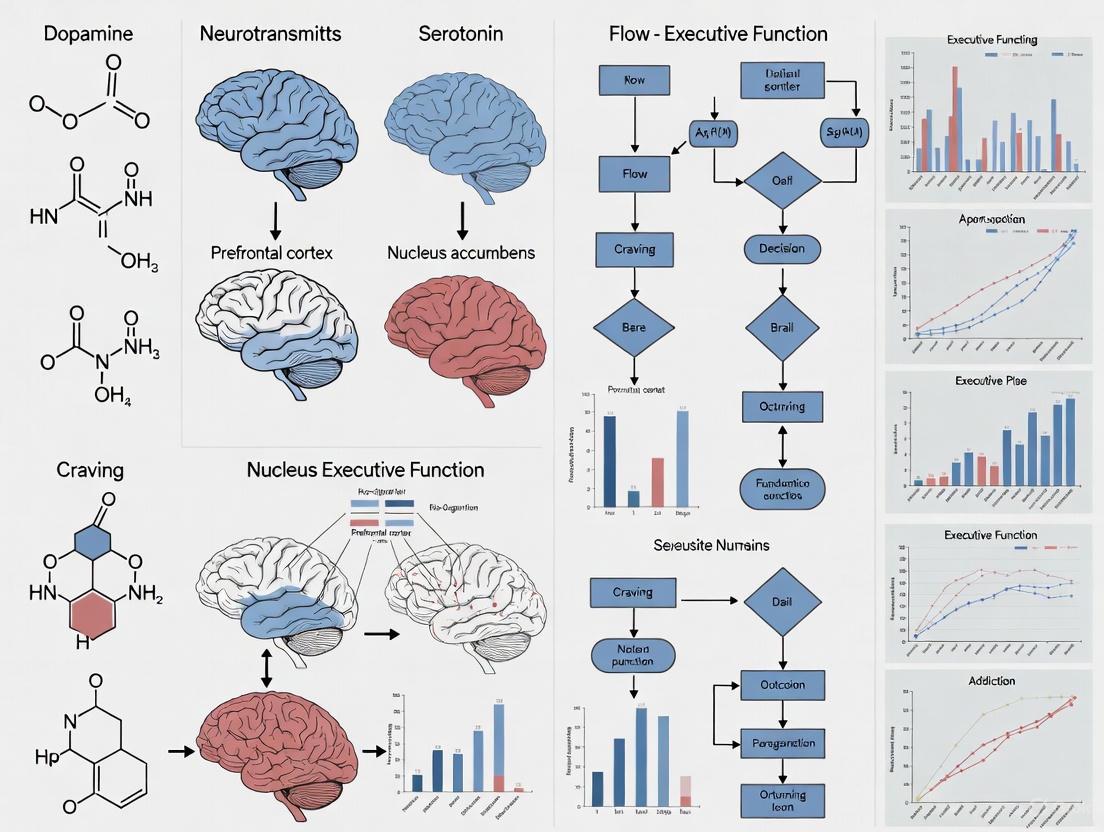
This review synthesizes current evidence from functional magnetic resonance imaging (fMRI) studies to elucidate the complex interplay between craving and executive function in substance use disorders.
The Executive Control Paradox: Unraveling Craving Circuits with fMRI in Addiction Neuroscience
Abstract
This review synthesizes current evidence from functional magnetic resonance imaging (fMRI) studies to elucidate the complex interplay between craving and executive function in substance use disorders. We explore the shared and distinct neural signatures of craving across multiple drug classes and food, identifying a common Neurobiological Craving Signature (NCS) involving the ventral striatum, insula, and vmPFC. The article examines the paradoxical role of executive functions, where preserved cognitive capacities may unexpectedly strengthen the craving-use association in daily life. We evaluate innovative methodological approaches, including real-time fMRI neurofeedback and ecological momentary assessment, for modulating craving-related brain activity and predicting treatment outcomes. Furthermore, we critically assess the validation of fMRI-based connectivity as a biomarker for relapse risk and therapeutic efficacy, highlighting its potential to inform targeted interventions for researchers and drug development professionals.
Mapping the Addicted Brain: Neural Signatures of Craving and Cognitive Control
The Neurobiological Craving Signature (NCS) represents a significant advancement in addiction neuroscience, offering a stable, brain-based biomarker for craving that generalizes across various substances and food. Identified through machine learning analysis of functional magnetic resonance imaging (fMRI) data, this distributed neural pattern predicts self-reported craving intensity, distinguishes drug users from non-users with high accuracy, and responds to cognitive and dietary interventions [1] [2]. The discovery of the NCS provides compelling evidence for shared neural mechanisms underlying craving across different substance categories, addressing a longstanding debate in the field and opening new avenues for objective diagnosis and treatment development in substance use disorders [3]. This application note details the experimental protocols, quantitative findings, and research applications of the NCS within the broader context of fMRI studies on craving and executive function.
Craving is a core clinical feature of substance use disorders (SUD) and a strong predictor of drug use and relapse [1]. Despite its clinical importance, craving assessment has historically relied on subjective self-report, which is limited by introspective access, sociocultural factors, and demand characteristics [3]. The development of objective, neurobiological markers is thus crucial for advancing diagnosis and treatment.
Functional magnetic resonance imaging (fMRI) studies have consistently implicated specific brain regions in cue-induced craving, including the ventromedial prefrontal cortex (vmPFC), ventral striatum, and insula [4]. However, earlier research often focused on individual brain regions rather than distributed patterns and struggled with generalizability across substances.
The NCS addresses these limitations through a multivariate, data-driven approach that identifies a reproducible pattern of brain activity predictive of craving across substances. This signature demonstrates that drug craving arises from the same fundamental neural systems that generate food craving [2], providing a unified framework for understanding addictive behaviors.
Quantitative Findings and Validation
Core Neural Components of the NCS
Table 1: Brain regions comprising the Neurobiological Craving Signature
| Brain Region | Function in Craving | Direction of Association |
|---|---|---|
| Ventromedial Prefrontal Cortex (vmPFC) | Reward valuation and decision-making [3] | Positive |
| Ventral Striatum | Reward processing and motivation [3] | Positive |
| Cingulate Cortex | Conflict monitoring and emotional processing [1] | Positive |
| Temporal/Parietal Association Areas | Sensory integration and attention [1] | Positive |
| Mediodorsal Thalamus | Information relay to prefrontal regions [1] | Positive |
| Cerebellum | Conditioned responses and cognitive processing [3] | Positive |
| Amygdala | Emotional salience and memory [4] | Positive |
| Parahippocampal Gyrus | Contextual and associative memory [4] | Positive |
| Inferior Temporal Gyrus | Visual processing of cues [4] | Negative |
Predictive Performance Across Studies
Table 2: Validation metrics for the NCS across independent studies
| Study Population | Primary Finding | Performance Metric | Reference |
|---|---|---|---|
| Mixed substance users (cocaine, alcohol, cigarettes) | NCS predicts craving intensity and distinguishes users from non-users | 82% accuracy in classifying drug users vs. non-users [1] | Koban et al., 2023 |
| Methamphetamine use disorder | Craving prediction model generalized to novel participants | RMSE = 0.985; AUC-ROC = 0.714 for high vs. low craving [4] | PMC Article, 2025 |
| Alcohol use disorder | Ketogenic diet modulates NCS response | Significant reduction in NCS expression (KD vs. standard diet) [5] | Wiers et al., 2024 |
The NCS demonstrates significant discriminative validity, successfully differentiating drug users from non-users based solely on their brain responses to drug cues [1] [6]. This discriminative ability holds across multiple substances including cocaine, alcohol, and cigarettes, suggesting it captures a common element of addiction pathology rather than substance-specific effects.
Notably, the signature is modulatable through interventions. Both cognitive regulation strategies (e.g., considering long-term consequences) and a ketogenic diet have been shown to reduce NCS expression, paralleling reductions in self-reported craving [1] [5].
Experimental Protocols
fMRI Cue-Reactivity Paradigm
Purpose: To elicit and measure neural responses to drug-related cues in a controlled laboratory setting.
Procedure:
- Participant Preparation: Screen for MRI contraindications. Abstinence verification (e.g., urine toxicology) may be performed depending on study aims.
- Stimulus Selection: Prepare visual cues of the target substance/drug and matched neutral cues. Include highly palatable food cues as a control condition.
- Task Design: Implement block or event-related design with counterbalanced presentation of drug and neutral cues. Each cue presentation should last 4-6 seconds with inter-trial intervals of 2-10 seconds.
- Craving Assessment: Following each cue presentation, participants rate their subjective craving on a numerical scale (typically 1-5 or 1-7) [1] [4].
- Cognitive Regulation Conditions (optional): Include blocks where participants employ specific strategies (e.g., focusing on long-term consequences) to regulate their craving [1].
fMRI Acquisition Parameters (representative protocol):
- Scanner: 3T MRI system with standard head coil
- Functional sequences: Gradient-echo EPI, TR/TE = 2000/30ms, voxel size = 3×3×3mm³
- Anatomical reference: T1-weighted MPRAGE, 1mm isotropic resolution
- Run duration: Approximately 10-15 minutes depending on design
NCS Computation and Validation
Purpose: To derive the craving signature from neuroimaging data and validate its predictive utility.
Figure 1: Computational workflow for deriving and validating the NCS
Procedure:
- fMRI Preprocessing:
- Perform standard preprocessing: realignment, slice-time correction, normalization to standard space (e.g., MNI), and spatial smoothing.
- Extract trial-level activation estimates for each cue type.
Feature Selection and Modeling:
Validation:
- Implement rigorous cross-validation (e.g., study-stratified 10-fold cross-validation) to prevent overfitting.
- Test generalizability on held-out participants not included in model training.
- Assess specificity by testing prediction of related but distinct constructs (e.g., negative affect).
Signature Application:
- Apply the trained NCS model to new brain images to generate "NCS scores" reflecting craving-related brain activity.
- Compare NCS scores across groups, conditions, or in response to interventions.
The Scientist's Toolkit
Table 3: Essential research reagents and solutions for NCS research
| Category | Specific Examples | Research Function |
|---|---|---|
| fMRI Analysis Software | SPM, FSL, AFNI, CONN, LASSO-PCR, PCA | Preprocessing, statistical analysis, and machine learning modeling of fMRI data [1] [4] |
| Stimulus Presentation | E-Prime, PsychoPy, Presentation | Controlled delivery of drug, food, and neutral cues during scanning |
| Craving Assessment | Visual Analog Scales, Desire to Use Questionnaires | Quantification of subjective craving experience for model training |
| Physiological Monitoring | Eye-tracking, Galvanic skin response, Pulse oximetry | Complementary measures of arousal and attention during cue exposure |
| Intervention Platforms | Neurofeedback systems, Cognitive task batteries | Testing modulation of NCS through various intervention strategies [7] |
Research Applications and Implications
The NCS provides a novel tool for addressing fundamental questions in addiction research, particularly regarding the interplay between craving and executive function. Interestingly, recent evidence suggests a paradoxical relationship where better executive functioning (specifically verbal fluency and resistance to interference) is associated with a stronger craving-use association in daily life [8]. This challenges simplistic models of executive control in addiction and highlights the need for more nuanced frameworks.
Within the context of fMRI studies on craving and executive function, the NCS offers several key applications:
Treatment Development and Personalization: The NCS can serve as an objective biomarker to identify candidates for specific interventions (e.g., cognitive regulation training, neuromodulation) and track treatment response [6] [7].
Mechanism Evaluation: By measuring how different interventions modulate the NCS, researchers can test theoretical models of how treatments work and optimize their mechanisms of action [5] [9].
Cross-Disorder Applications: The shared neural signature between drug and food craving suggests the NCS may inform research on eating disorders and obesity, potentially identifying common therapeutic targets [9].
Future research directions should include validating the NCS in more diverse populations, testing its predictive validity for long-term clinical outcomes, and expanding to additional substance classes and behavioral addictions.
The Neurobiological Craving Signature represents a transformative development in addiction neuroscience, providing a validated, generalizable biomarker that captures shared neural mechanisms across substances. By moving beyond subjective reports and region-specific analyses to a multivariate, brain-wide perspective, the NCS enables more objective assessment of craving states and their modulation through interventions. As research in this area progresses, the integration of the NCS with measures of executive function and real-world substance use will further elucidate the complex interplay between craving, cognitive control, and relapse vulnerability, ultimately advancing toward more personalized and effective treatments for substance use disorders.
Executive Function Deficits as Trait-Like Vulnerabilities in Addiction
Application Notes: Neurocognitive and Neuroimaging Foundations
Executive function (EF) deficits represent core trait-like vulnerabilities in addiction, influencing craving, treatment adherence, and relapse outcomes. These deficits manifest as impairments in higher-level cognitive processes governing goal-directed behavior, including inhibitory control, working memory, and cognitive flexibility [10]. Neuroimaging studies consistently locate these vulnerabilities within prefrontal-striatal-limbic circuitry, where dysfunctional connectivity and activity patterns correlate with addiction severity and treatment resistance [11] [12].
Functional magnetic resonance imaging (fMRI) research reveals that addiction involves impaired top-down cognitive control over drug cue reactivity and craving. Machine learning approaches applying principal component analysis (PCA) with linear regression to fMRI drug cue reactivity data successfully predict craving intensity (out-of-sample RMSE = 0.985) and classify high versus low craving states (AUC-ROC = 0.714) [4]. These models identify key neural signatures in the parahippocampal gyrus, superior temporal gyrus, and amygdala as positively associated with craving, while the inferior temporal gyrus shows negative associations [4].
Longitudinal community studies demonstrate that lower general executive functioning (GEF) at baseline predicts increasing loss of control over substance use over time, though not necessarily the development of formal addictive disorders [10]. This suggests EF deficits may contribute more to consumption patterns than to disorder onset, refining etiological models that previously assumed EF as a direct vulnerability factor for addictive disorders.
Resting-state functional connectivity (rsFC) research further elucidates how intrinsic neural communication underpins regulation of craving (ROC) capabilities. Worse ROC efficacy predicts greater hazard for smoking lapse, with FC multivariate pattern analysis identifying 64 resting-state edges underlying ROC efficacy [12]. These connections predominantly involve frontal-striatal-limbic clusters linked to sensory-motor regions, suggesting broader network involvement beyond traditional addiction circuitry.
Quantitative Data Synthesis
Table 1: fMRI Biomarkers of Craving and Executive Function in Addiction
| Biomarker Category | Specific Measure | Performance/Effect Size | Neural Correlates | Clinical Relevance |
|---|---|---|---|---|
| Craving Prediction | RMSE (out-of-sample) | 0.985 [4] | Parahippocampal gyrus, superior temporal gyrus, amygdala [4] | Predicts craving intensity in methamphetamine use disorder |
| Craving Classification | AUC-ROC (high vs. low) | 0.714 (out-of-sample) [4] | Medial prefrontal cortex, ventral striatum [4] | Distinguishes clinical craving states |
| EF-Craving Relationship | Resting-state edges | 64 identified pathways [12] | Frontal-striatal-limbic to sensory-motor connections [12] | Predicts smoking lapse hazard |
| EF-Treatment Relationship | Effect size | Medium [13] | Prefrontal cortex, anterior cingulate cortex [13] | Predicts treatment adherence |
Table 2: Executive Function Assessment Modalities in Addiction Research
| Assessment Type | Tools/Measures | Sensitivity | Key Findings | Limitations |
|---|---|---|---|---|
| Performance-based ("Cold" EF) | Stroop, Trail Making Test, n-back [10] [14] | Moderate differentiation between patients and controls [14] | Lower GEF predicts increasing quantity of use over time [10] | Complex tasks have low reliability; require latent variable modeling [10] |
| Inventory-based | BRIEF-A [14] | High - differentiates on all clinical scales [14] | Associated with criminal lifestyle, housing instability, caregiver conflict [14] | Self-report bias; may not capture neural mechanisms |
| Neuroimaging-based | fMRI cue reactivity, resting-state FC [4] [12] | High for predicting relapse [12] | 29 brain-wide functional clusters associated with ROC efficacy [12] | Costly; limited accessibility for clinical settings |
Experimental Protocols
Protocol 1: fMRI Drug Cue Reactivity for Craving Prediction
Purpose: To quantify neural correlates of drug cue reactivity and predict subjective craving states using machine learning approaches.
Population: Individuals with substance use disorders (e.g., methamphetamine use disorder), typically 1+ week abstinent, excluding major psychiatric comorbidities [4].
Stimuli and Task Design:
- Block Design: Present drug-related and neutral cues in alternating blocks
- Cue Types: Drug-related images/objects, neutral control images
- Duration: 6-minute blocks, with craving ratings collected after each block
- Craving Assessment: Subjective ratings on scale of 1-4 or 1-8 collected immediately post-block
fMRI Acquisition Parameters:
- Scanner: 3T MRI scanner
- Sequence: T2*-weighted echo-planar imaging (EPI)
- Voxel Size: Typically 3-4mm isotropic
- TR/TE: Standard parameters for BOLD contrast (e.g., TR=2000ms)
- Coverage: Whole brain with emphasis on prefrontal-striatal-limbic regions
Analysis Pipeline:
- Preprocessing: Motion correction, slice-timing correction, normalization to standard space, smoothing
- Feature Selection: ANOVA or PCA for dimensionality reduction
- Model Training: Linear regression, Lasso, Elastic Net, Random Forest, or XGBoost with subject-level 5-fold cross-validation
- Validation: 20% hold-out test set with permutation testing for significance
- Visualization: Back-projection of weights to voxels summarized in Brainnetome atlas
Interpretation: Model performance assessed via RMSE and Pearson correlation; neural signatures mapped to craving intensity [4].
Protocol 2: Resting-State Functional Connectivity for Regulation of Craving
Purpose: To identify neural circuitry underlying regulation of craving (ROC) and predict relapse vulnerability.
Population: Nicotine-dependent adults smoking ≥5 cigarettes daily for ≥2 years, excluding current cessation medication use [12].
fMRI Acquisition:
- Scan Duration: 8-10 minutes resting-state
- Instructions: Keep eyes open, fixate on cross, let mind wander
- Parameters: Standard resting-state fMRI protocols with whole-brain coverage
Behavioral Assessment:
- ROC Task: Performed immediately post-scan outside scanner
- Conditions: "Smoke Now" (immediate experience), "Smoke Later" (long-term consequences), "Neutral Look" (no strategy)
- Trial Structure: Instruction (2s), cue (6s), craving rating (3s), fixation jitter
- ROC Calculation: SL (Smoke Later) - SN (Smoke Now) craving ratings
Analysis Workflow:
- FC-MVPA: Decompose FC data into voxel-specific orthogonal components maximizing intersubject heterogeneity
- Cluster Identification: Regress components onto ROC efficacy to identify functional clusters
- Seed-Based Connectivity: Use FC-MVPA-derived clusters as seeds for follow-up SBC analyses
- Edge Identification: Determine cluster-to-cluster connections associated with ROC efficacy
- Survival Analysis: Cox regression to test edges predicting smoking lapse hazard
Interpretation: Weaker frontal-striatal-limbic to sensory-motor connectivity associated with worse ROC efficacy and greater lapse hazard [12].
Signaling Pathways and Workflow Diagrams
Neural Circuitry of Executive Function and Craving in Addiction
Experimental Protocol for fMRI Studies of Craving and EF
The Scientist's Toolkit: Research Reagent Solutions
Table 3: Essential Research Materials and Tools for Addiction Neuroscience
| Tool Category | Specific Tools/Assessments | Function | Key Applications |
|---|---|---|---|
| Neuropsychological Batteries | Battery for Executive Functions in Addiction (BFE-A) [15] | Assess multiple EF domains with addiction-relevant stimuli | Screening EF deficits in clinical populations |
| Behavior Rating Inventory of Executive Function - Adult (BRIEF-A) [14] | Self-report measure of everyday EF problems | Predicting real-world functional outcomes | |
| fMRI Paradigms | Drug Cue Reactivity Task [4] | Activate craving-related neural circuitry | Identifying neural predictors of craving and relapse |
| Regulation of Craving (ROC) Task [12] | Assess cognitive reappraisal of drug cravings | Testing ROC efficacy and neural correlates | |
| Resting-State fMRI [12] | Measure intrinsic functional connectivity | Identifying network-level vulnerabilities | |
| Machine Learning Approaches | PCA with Linear Regression [4] | Dimensionality reduction and prediction | Craving intensity prediction from fMRI data |
| FC-Multivariate Pattern Analysis [12] | Identify multivariate FC patterns | Discovering novel circuitry underlying ROC | |
| Physiological Monitoring | Wearable EEG [15] | Continuous EF monitoring in ecological settings | Tracking neurocognitive impairment in daily life |
| fNIRS [16] [17] | Assess prefrontal functional connectivity | EF assessment in challenging populations (e.g., children) |
The cortico-striato-thalamo-cortical (CSTC) circuit represents a fundamental architectural motif of brain organization, serving as the core neurobiological substrate for motivational processes, habit formation, and reward-guided behavior. Within substance use disorders (SUDs), dysregulation of this circuitry underpins the core behavioral manifestations of addiction, including compulsive drug seeking, diminished behavioral control, and the emergence of negative emotional states during withdrawal. Contemporary research leveraging functional magnetic resonance imaging (fMRI) has quantitatively linked specific patterns of cue-induced craving and executive function deficits to aberrant activity and connectivity within CSTC pathways. These findings are not merely descriptive; they provide a robust, brain-based framework for developing novel biomarkers and targeted interventions. This application note synthesizes current experimental evidence and protocols, detailing how fMRI methodologies can be deployed to interrogate the CSTC circuit within the specific context of addiction research, thereby bridging the gap between foundational neurocircuitry models and translational clinical applications.
The CSTC pathway functions as a critical integrator of cognitive, motivational, and sensory information to guide behavioral output. Its operation is governed by a sophisticated balance of excitation and inhibition across multiple, parallel loops. In the addicted brain, chronic drug use induces profound neuroadaptations within this circuitry. Research using positron emission tomography (PET) has consistently demonstrated impaired dopamine receptor function, notably decreases in striatal D2 receptor (D2R) availability, in individuals with various SUDs [18]. These dopaminergic deficits are coupled with altered metabolic activity and functional connectivity in prefrontal cortical regions, creating a state of motivational imbalance where drug cues acquire excessive salience, and executive control over drug-seeking behavior is compromised [18] [19]. The ensuing dysregulation manifests as a bias towards habitual, stimulus-driven behavior at the expense of goal-directed action. Modern network-based meta-analyses confirm that individuals with SUDs exhibit consistent alterations within a functional network encompassing the striatum, thalamus, and cingulate cortices across various cognitive tasks, with drug cue exposure uniquely engaging the brain's reward system [19]. Understanding these changes is paramount for developing objective biomarkers of craving and relapse vulnerability.
Quantitative fMRI Findings in CSTC Circuitry
fMRI studies provide a non-invasive window into the functional dynamics of the CSTC circuit. The following tables summarize key quantitative findings linking this circuitry to craving and executive function in addiction.
Table 1: Neural Correlates of Craving and Regulation Identified by fMRI Studies
| Brain Region | Function/Brodmann Area | Association with Craving/Regulation | Key Findings |
|---|---|---|---|
| Ventromedial Prefrontal Cortex (vmPFC) | Reward valuation, decision-making | Positively associated with craving intensity [4]. | Part of a reproducible pattern of brain activity predictive of craving; key node in the brain's reward system [4] [19]. |
| Ventral Striatum / Nucleus Accumbens (NAc) | Reward processing, incentive salience | Central hub for craving processing [20]. | Craving-related local field potentials (LFPs) recorded here; hyperactivation in response to drug cues [20]. |
| Dorsal Anterior Cingulate Cortex (dACC) | Attentional salience, conflict monitoring | Hypoactivation in long-term abstinence [21]. Activity linked to inhibitory control and craving [22]. | Altered function associated with executive deficits; IC-related dACC activity correlates with daily life craving intensity [21] [22]. |
| Dorsolateral Prefrontal Cortex (DLPFC) | Executive function, cognitive control | Hypoactivation in short-term abstinence [21]. | Weakened fronto-striatal-limbic rsFC involving DLPFC is associated with increased risk for smoking lapse [12]. |
| Amygdala | Emotional processing, memory | Positively associated with craving intensity [4]. | Activated in response to drug cues; involved in emotional components of craving [4]. |
| Inferior Frontal Gyrus (IFG) | Response inhibition | Reduced activity linked to impaired inhibition [23] [22]. | Key node for inhibiting motor responses; activation is associated with successful regulation of craving [12] [22]. |
Table 2: fMRI-Derived Predictive Models of Craving and Relapse
| Study Focus | Model/Method | Key Performance Metrics | Implicated CSTC Regions |
|---|---|---|---|
| Craving Intensity Prediction [4] | PCA + Linear Regression (Machine Learning) | RMSE = 0.983 ± 0.026; Pearson correlation = 0.216; Out-of-sample RMSE = 0.985 | Parahippocampal gyrus, Superior temporal gyrus, Amygdala (positive weights); Inferior temporal gyrus (negative weights) |
| High vs. Low Craving Classification [4] | PCA-based Classifier | AUC-ROC = 0.684 ± 0.084; Out-of-sample AUC-ROC = 0.714 | Network involving reward (striatum) and salience (cingulate) regions |
| Smoking Lapse Prediction [12] | Resting-State Functional Connectivity Multivariate Pattern Analysis (FC-MVPA) | 64 resting-state edges identified; 10 edges predicted hazard of smoking lapse | Prefrontal-striatal-limbic and sensory-motor circuitry; stronger connectivity predicted better outcomes |
Experimental Protocols for Interrogating CSTC Circuits
Protocol: fMRI Drug Cue Reactivity (FDCR) for Craving Assessment
This protocol is designed to elicit and measure brain activity in response to drug-related cues, providing an objective neural signature of craving [4].
- Objective: To predict subjective craving levels based on distributed patterns of brain activity in response to drug cues using a machine-learning framework.
- Participants: Individuals with a diagnosed Substance Use Disorder (e.g., Methamphetamine Use Disorder), currently in the abstinence phase. Exclusion criteria typically include major psychiatric comorbidities, active suicidal ideation, and positive urine screens for drugs [4].
- Stimuli and Task Design:
- Block Design: Presentation of alternating blocks of drug-related cues and neutral cues.
- Cue Types: Use standardized, validated images of drug paraphernalia, simulated drug use, and matched neutral images (e.g., household objects).
- Trial Structure: Each trial presents a cue image (e.g., 6 seconds), followed by a craving rating scale (e.g., 1-4 or 1-8 scale) where participants subjectively report their current level of craving [4] [12].
- fMRI Acquisition Parameters (Representative):
- Scanner: 3T MRI scanner.
- Sequence: T2*-weighted echo-planar imaging (EPI) sequence for BOLD contrast.
- Repetition Time (TR): 2000 ms.
- Echo Time (TE): 30 ms.
- Voxel Size: 3 × 3 × 3 mm³.
- Slices: Whole-brain coverage (e.g., 37 axial slices).
- Data Preprocessing:
- Slice-timing correction and realignment for head motion.
- Coregistration to high-resolution T1-weighted anatomical image.
- Spatial normalization to a standard template (e.g., MNI space).
- Spatial smoothing with a Gaussian kernel (e.g., 6-8 mm FWHM).
- Analytical Pipeline:
- Feature Extraction: Whole-brain voxel-wise activation maps or time-series from predefined regions of interest (ROIs) within the CSTC circuit.
- Machine Learning:
- Feature Selection: Employ methods like ANOVA or Principal Component Analysis (PCA) to reduce dimensionality.
- Regression Modeling: Train models (e.g., Linear Regression, LASSO, Elastic Net) to predict continuous craving scores from brain activity features.
- Validation: Use robust cross-validation methods (e.g., subject-level 5-fold cross-validation) and a held-out test set (e.g., 20% of data) to assess generalizability [4].
- Statistical Significance: Test model significance via permutation testing (e.g., 1000 permutations).
Protocol: Resting-State Functional Connectivity (rsFC) for Relapse Prediction
This protocol assesses the intrinsic functional architecture of the CSTC circuit to identify network-based biomarkers of relapse vulnerability [12].
- Objective: To identify patterns of resting-state functional connectivity that underlie the ability to regulate craving and predict the hazard of smoking lapse.
- Participants: Individuals with SUD (e.g., nicotine dependence) seeking treatment or in early abstinence.
- fMRI Acquisition:
- Scan Duration: 8-10 minutes of resting-state scanning.
- Instructions: Participants are asked to keep their eyes open, fixate on a crosshair, and let their mind wander without falling asleep.
- Parameters: Similar to the FDCR protocol, optimized for capturing low-frequency BOLD fluctuations.
- Preprocessing for rsFC:
- Includes standard preprocessing steps as in FDCR.
- Additional steps: Nuisance regression (e.g., white matter, cerebrospinal fluid, global signal, and motion parameters), and band-pass filtering (e.g., 0.01-0.1 Hz) to isolate low-frequency fluctuations.
- Analytical Workflow:
- Data-Driven Approach (FC-MVPA):
- Decomposition: Whole-brain rsFC data is decomposed into orthogonal components capturing maximal intersubject heterogeneity.
- Regression: Components are regressed onto the behavior of interest (e.g., Regulation of Craving efficacy score).
- Cluster Identification: Functional clusters whose connectivity patterns correlate with behavior are identified [12].
- Seed-Based Connectivity (SBC):
- Use the FC-MVPA-derived clusters as seed regions.
- Correlate the seed region's time-course with the time-course of every other voxel in the brain.
- Identify significant "edges" (cluster-to-cluster connections) associated with the behavioral variable.
- Survival Analysis: The identified rsFC edges can then be used as predictors in a Cox proportional-hazards model to predict the time-to-lapse in a laboratory-based relapse analog task [12].
- Data-Driven Approach (FC-MVPA):
The Scientist's Toolkit: Research Reagent Solutions
Table 3: Essential Reagents and Resources for CSTC Circuit Research
| Category/Item | Specification/Example | Primary Function in Research |
|---|---|---|
| Cue Presentation Software | Presentation; E-Prime | Precisely control the timing and delivery of visual/auditory drug and neutral cues during fMRI tasks. |
| Clinical Assessment Tools | MINI International Neuropsychiatric Interview; Alcohol Sensitivity Questionnaire | Diagnose SUD and comorbid conditions; stratify participants based on endophenotypes like alcohol sensitivity [4] [22]. |
| Craving Self-Report | Visual Analog Scale (VAS); multi-point craving rating | Collect subjective craving reports immediately following cue exposure for correlation with neural data [4] [12]. |
| fMRI Analysis Suites | SPM; FSL; CONN; AFNI | Preprocess and analyze structural and functional MRI data, including GLM for task-fMRI and connectivity analysis for rs-fMRI. |
| Machine Learning Libraries | scikit-learn (Python); | Implement feature selection, regression, and classification models for multivariate pattern analysis of neuroimaging data [4]. |
| Standardized Brain Atlases | Brainnetome Atlas; AAL | Provide a parcellation scheme for summarizing model weights or defining regions of interest for analysis [4]. |
Signaling Pathways & Experimental Workflows
The following diagram illustrates the core architecture of the CSTC circuit, highlighting the direct and indirect pathways that regulate behavioral output, and their putative dysregulation in addiction.
Diagram 1: The Cortico-Striato-Thalamo-Cortical (CSTC) Loop. This diagram depicts the key nodes and pathways. The direct pathway (red) originates from D1-MSNs in the striatum and facilitates movement/behavior by inhibiting the GPi/SNr, which disinhibits the thalamus. The indirect pathway (blue) originates from D2-MSNs and suppresses behavior. The hyperdirect pathway (dashed) provides a fast-suppressive signal. In addiction, a global imbalance towards the direct pathway is theorized to drive compulsive behaviors [24].
The workflow for an integrated fMRI study of craving and executive function, from experimental design to clinical translation, is outlined below.
Diagram 2: Integrated Workflow for fMRI Studies of Craving. This workflow begins with deep phenotyping of participants, proceeds with concurrent acquisition of fMRI and behavioral data during tasks or at rest, and advances through data processing and machine learning to identify predictive neural biomarkers. The final output is the application of these biomarkers to guide and monitor targeted interventions like neuromodulation [4] [20] [12].
Dorsal vs. Ventral Striatal Pathways in the Progression to Compulsive Use
The transition from voluntary, recreational substance use to compulsive, addictive behavior is a core challenge in addiction research. Converging evidence from animal and human studies indicates that this transition is neurally underpinned by a progressive shift in the balance of control from the ventral to the dorsal striatum [25] [26]. The ventral striatum (VS), particularly the nucleus accumbens, is central to initial reward processing, incentive salience, and the acquisition of goal-directed behaviors. In contrast, the dorsal striatum (DS), including the dorsomedial (caudate) and dorsolateral (putamen) regions, becomes increasingly involved as behaviors become habitual and compulsive [26] [27] [28]. This ventral-to-dorsal progression represents a shift from action-outcome to stimulus-response learning, where behavior becomes increasingly automatic and divorced from the value of its outcome [26]. Framed within a broader thesis on fMRI studies of craving and executive function, this application note details the experimental protocols and analytical frameworks for investigating these striatal pathways in human addiction research, providing a practical guide for researchers and drug development professionals.
Core Theoretical Frameworks and Empirical Evidence
The Ventral-to-Dorsal Striatal Shift
The foundational theory posits that addictive behaviors progress from goal-directed to habitual and ultimately compulsive states, mirrored by a shift in neuronal activity from the ventral to the dorsal striatum [26] [29].
- Ventral Striatum (Reward and Initiation): The VS, a key interface between emotion, motivation, and action, is critical for processing primary reward and reinforcement. It is strongly connected to limbic and ventral prefrontal regions, including the orbitofrontal cortex and anterior cingulate cortex [25] [27]. Drugs of abuse directly or indirectly increase dopaminergic transmission in the VS, reinforcing drug-taking actions [26] [27].
- Dorsal Striatum (Habits and Compulsions): With repeated drug exposure, behavioral control shifts to the DS. The dorsomedial striatum (DMS) regulates flexible, goal-directed actions, while the dorsolateral striatum (DLS) supports rigid, habitual behaviors that are performed automatically with minimal cognitive control [26] [29]. This underlies the compulsive drug-seeking that characterizes addiction, where behavior persists despite adverse consequences [26].
This shift is supported by a spiraling striato-nigro-striatal (SNS) circuit, which allows dopamine to flow from the VS to more dorsal regions, facilitating the transfer of behavioral control [29].
Evidence from Human Neuroimaging Studies
Resting-state functional magnetic resonance imaging (rsfMRI) studies in humans have provided direct evidence for this model across various substance and behavioral addictions. The table below summarizes key functional connectivity findings related to the ventral-dorsal striatal shift.
Table 1: Key Functional Connectivity Findings in Addiction from rsfMRI Studies
| Addiction Type | Ventral Striatum (VS) Connectivity | Dorsal Striatum (DS) Connectivity | Citation |
|---|---|---|---|
| Cannabis Dependence | ↑ Connectivity with rostral anterior cingulate cortex (rACC) - a reward-processing region. | ↓ Connectivity (uncoupling) with dorsomedial prefrontal cortex (dmPFC) - a regulatory region. | [25] |
| Internet Gaming Disorder (IGD) | ↓ Functional connectivity between left VS and middle frontal gyrus (MFG/SMA). | ↑ Functional connectivity between left dorsal striatum (putamen) and MFG. Connectivity correlated with disorder severity. | [28] |
| General Addiction Framework | Associated with "liking" (hedonic impact) and "wanting" (incentive salience). | Associated with habitual drug-seeking and -taking; critical for the compulsive phenotype. | [26] [27] |
These findings suggest that the addictive state is characterized not only by heightened reward-driven signals from the VS but also by a failure of regulatory prefrontal regions to exert control over both ventral and dorsal striatal regions [25]. The correlation between dorsal striatal connectivity and clinical severity underscores its role in maintaining addictive behaviors [28].
Experimental Protocols for Investigating Striatal Pathways
The following protocols outline standardized methods for acquiring and analyzing data on striatal circuitry in human participants.
Protocol 1: Resting-State fMRI for Striatal Functional Connectivity
This protocol is designed to map intrinsic functional communication between striatal subregions and the rest of the brain, providing a task-independent measure of network organization [25] [28].
Participant Preparation and Screening:
- Recruitment: Recruit matched groups (e.g., individuals with a substance use disorder vs. healthy controls). For behavioral addictions like IGD, include a recreational user group (RGU) as a control [28].
- Abstinence Period: For substance use studies, enforce a verified abstinence period (e.g., 28 days for cannabis) to control for subacute intoxication, craving, and rapid neural recovery [25].
- Exclusion Criteria: Standard MRI exclusions. Consider excluding females or controlling for menstrual phase to minimize variance in striatal functioning, as done in some studies [25].
fMRI Data Acquisition:
- Scanner: 3T MRI scanner equipped with a standard head coil.
- Structural Scan: Acquire a high-resolution T1-weighted anatomical image (e.g., MPRAGE sequence) for registration.
- Functional Scan: Acquire T2*-weighted echo-planar imaging (EPI) sequence for resting-state BOLD signals. Key parameters: TR=2000 ms, TE=30 ms, voxel size=3×3×3 mm, 40-50 axial slices, ~10 minutes of scan time while participants fixate on a crosshair [25] [28].
Data Preprocessing and Analysis:
- Preprocessing Pipeline: Conduct using software like SPM, FSL, or AFNI. Steps include slice-time correction, realignment, co-registration to structural image, normalization to standard space (e.g., MNI), and smoothing with a 6-8 mm FWHM kernel.
- Nuisance Regression: Regress out signals from white matter, cerebrospinal fluid, and global signal, along with motion parameters. Apply band-pass filtering (0.01-0.1 Hz) [28].
- Seed-Based Functional Connectivity:
- Seed Region Definition: Define seed regions in the ventral striatum (e.g., nucleus accumbens) and dorsal striatum (e.g., caudate, putamen) using standardized atlases.
- Time-Series Extraction: Extract the mean BOLD time series from each seed region.
- Correlation Analysis: Calculate Pearson's correlation coefficients between the seed time series and the time series of every other voxel in the brain.
- Statistical Comparison: Convert correlation coefficients to Z-scores using Fisher's transformation. Perform group-level comparisons (e.g., two-sample t-tests) to identify significant differences in connectivity between groups.
Diagram 1: rsfMRI Analysis Workflow. This flowchart outlines the key steps for a seed-based functional connectivity analysis, from participant preparation to statistical comparison of groups.
Protocol 2: Task-Based fMRI for Craving and Executive Function
This protocol uses a cognitive task to probe the neural circuits of craving regulation and their interaction with executive function, directly feeding into the thesis context.
Paradigm Design:
- Craving Induction and Regulation Task: Adapt paradigms such as those used by Koban et al. (2023) [3].
- Stimuli Presentation: Present participants with images of their drug of choice or palatable foods.
- Imagination Phases:
- Craving Phase: Instruct participants to imagine the immediate, positive effects of consuming the substance/food.
- Regulation Phase: Instruct participants to think about the long-term negative consequences of consumption.
- Self-Report: After each trial, collect subjective craving ratings on a scale (e.g., 1-5).
fMRI Data Acquisition:
- Follow a similar acquisition protocol as in 3.1, but optimize the task design with event-related or block design. Include a sufficient number of trials per condition for robust statistical power.
fMRI Data Analysis:
- General Linear Model (GLM): Model the BOLD response for each condition (e.g., "Crave," "Regulate").
- Whole-Brain Analysis: Identify regions where activity is significantly modulated by the regulation task.
- Neurobiological Craving Signature (NCS): Apply a machine-learning-derived neural signature of craving, like the one identified by Koban et al. [3], to the task data to obtain an objective, brain-based measure of craving.
Integration with Executive Function:
- Neuropsychological Testing: Administer a battery of executive function tests outside the scanner, ideally before the fMRI session. Essential tests include:
- Correlational Analysis: Investigate whether behavioral performance on executive function tasks moderates the relationship between neural craving signals (e.g., NCS score) and real-world substance use, as measured by Ecological Momentary Assessment (EMA) [30].
The Scientist's Toolkit: Key Research Reagents & Materials
Table 2: Essential Materials and Reagents for Striatal Pathway Research
| Item Name | Specification / Example | Primary Function in Research |
|---|---|---|
| 3T MRI Scanner | Siemens Prisma, Philips Achieva, GE Discovery | High-field magnet for acquiring high-resolution structural and functional BOLD fMRI data. |
| Structured Clinical Interview | SCID-5 (for DSM-5) or MINI | Gold-standard for diagnosing substance use disorders and ruling out comorbid psychiatric conditions in human subjects. |
| Neuropsychological Battery | Stroop, Trail Making Test (TMT), Verbal Fluency | Provides behavioral measures of executive functions (inhibition, cognitive flexibility) for correlation with neural data. |
| Standardized Brain Atlas | Harvard-Oxford Atlas, AAL | Provides anatomically defined regions of interest (ROIs) for the ventral and dorsal striatum for seed-based connectivity analysis. |
| fMRI Analysis Software | SPM, FSL, CONN, AFNI | Software suites for preprocessing, analyzing, and visualizing fMRI data, including functional connectivity. |
| Ecological Momentary Assessment (EMA) | Smartphone-based surveys | Captures real-time, real-world data on craving intensity and substance use in a participant's natural environment. |
| Neurobiological Craving Signature (NCS) | Multivariate pattern from Koban et al. [3] | An fMRI-based biomarker that provides an objective, brain-wide measure of craving states across different rewards (drugs, food). |
Visualization of Key Striatal Pathways and Loops
The cortico-striato-thalamo-cortical (CSTC) loops provide the anatomical substrate for the functional shifts observed in addiction. The following diagram illustrates the key loops involved in the progression from goal-directed to compulsive behavior.
Diagram 2: Striatal Loops in Addiction Progression. This diagram illustrates the cortico-striato-thalamo-cortical (CSTC) loops, showing the ventral-to-dorsal progression of control via striato-nigro-striatal (SNS) dopaminergic spirals. The transition to addiction involves a shift from goal-directed loops (green) to habitual loops (red). PFC: Prefrontal Cortex; SN/VTA: Substantia Nigra/Ventral Tegmental Area.
Data Interpretation and Integration into a Broader Thesis
Interpreting data from these protocols requires a multi-level approach. The ventral-to-dorsal striatal shift is not a simple switch but a re-weighting of influence within integrated circuits. Key findings to support this model include:
- Increased VS connectivity with reward regions (e.g., rACC) coupled with decreased VS/DS connectivity with regulatory regions (e.g., dmPFC) [25].
- Positive correlation between the strength of dorsal striatal connectivity and clinical measures of addiction severity [28].
- A dissociation where better executive function may paradoxically predict a stronger craving-use association in daily life, possibly because it facilitates focused attention on craving [30]. This highlights the complex interplay between prefrontal executive resources and subcortical motivational circuits.
Integrating these striatal findings with the broader themes of craving and executive function enriches the overall thesis. The identified Neurobiological Craving Signature (NCS) [3], which includes the VS, provides a distributed neural marker that can be used to track craving across substances and evaluate the efficacy of cognitive regulation strategies. Furthermore, combining rsfMRI measures of striatal circuitry with tasks probing executive function offers a comprehensive picture: addiction may arise from a double insult of heightened incentive salience (driven by the VS), entrenched habits (driven by the DS), and a failure of top-down control (from the PFC). The protocols and frameworks detailed herein provide a robust foundation for testing this integrated model in human addiction research.
Application Note: Neuroimaging Signatures of Substance-Specific Craving
Functional magnetic resonance imaging (fMRI) has revealed distinct neural substrates underlying cue-induced craving for different substances of abuse. This application note synthesizes recent neuroimaging evidence demonstrating a double dissociation in regional brain activations, with the dorsolateral prefrontal cortex (DLPFC) particularly implicated in heroin craving and the hypothalamus prominently involved in cocaine craving. These substance-specific neural signatures have profound implications for developing targeted neuromodulation therapies and biomarker-based treatment monitoring in substance use disorders. Understanding these distinct pathways is essential for advancing a thesis on craving and executive function in addiction research, as it highlights how different substances differentially hijack brain networks governing motivation, self-control, and reward processing [31].
The neurobiology of addiction involves disruptions across three primary brain networks: the basal ganglia (reward), extended amygdala (stress), and prefrontal cortex (executive control) [32]. Craving, a core symptom of substance use disorders, involves complex interactions between these circuits. Recent evidence suggests that while a common "craving signature" may exist across substances [3], distinct neuroanatomical pathways are preferentially engaged depending on the pharmacological properties of specific drugs. This application note delineates these substance-specific pathways, focusing on the divergent roles of the DLPFC in opioid cue-reactivity versus hypothalamic involvement in stimulant addiction, providing a framework for understanding how executive function is differentially compromised across substance use disorders.
Table 1: Key Neuroimaging Findings in Heroin vs. Cocaine Craving
| Parameter | Heroin Craving (DLPFC Focus) | Cocaine Craving (Hypothalamus Focus) |
|---|---|---|
| Primary Brain Region | Left DLPFC [33] [34] | Hypothalamus [31] |
| Additional Activated Regions | Insula, Orbitofrontal Cortex (OFC), Bilateral Thalamus [33] [34] | Ventral Striatum, Medial Prefrontal Cortex, Basal Ganglia, Limbic System [35] [31] |
| Functional Connectivity | Negative DLPFC-OFC/Thalamus/Putamen coupling [33] [34] | Mesocorticolimbic and Nigrostriatal Dopaminergic Pathways [35] |
| Sample Characteristics | 31 abstinent heroin users (85.2±52.5 days abstinence) [33] | 969 individuals with Cocaine Use Disorder (mean age 40.4) [35] |
| Craving Induction Method | Drug cue exposure (vs. sexual/neutral cues) [33] | Multiple methods: drug cues (69.45%), stress, methylphenidate [35] |
| Predictive Value | DLPFC activation predicts craving reduction after 6 months [33] [34] | Hypothalamic response distinguishes users from controls [31] |
| Theoretical Framework | Reward Deficiency Theory [33] | "Go/Stop System" Dysregulation [35] |
Table 2: Research Reagent Solutions for Craving Neuroimaging Studies
| Research Tool | Application/Function | Specific Examples |
|---|---|---|
| Cue-Reactivity Paradigm | Elicits craving through substance-related stimuli | Drug cues vs. sexual/neutral cues [33]; Audiovisual drug cues [3] |
| fMRI Acquisition | Measures brain activity through hemodynamic response | 3T fMRI; BOLD contrast [33] [35] |
| Psychophysiological Interaction (PPI) | Analyses functional connectivity between brain regions | DLPFC connectivity with thalamus, OFC, putamen [33] [34] |
| LASSO-PCR Machine Learning | Identifies distributed neural craving signatures | Neurobiological Craving Signature (NCS) across substances [3] |
| Self-Report Measures | Subjective craving assessment | Craving ratings on 1-5 scale after cue exposure [3] |
Experimental Protocols
Protocol 1: DLPFC-Centric Heroin Craving Assessment
Background: This protocol outlines the methodology for investigating DLPFC-related neural correlates of heroin craving, based on studies demonstrating that drug cue-induced activation of the left DLPFC and its functional coupling with the bilateral thalamus predict craving reductions after prolonged abstinence [33] [34].
Procedure:
- Participant Selection: Recruit abstinent heroin users (approximately 30 participants) with confirmed opioid use disorder, ideally from a detoxification center setting. Include demographic and substance use history documentation [33].
- fMRI Acquisition Parameters: Acquire structural and functional images using a 3T scanner. For functional runs, use standard parameters: TR=2000ms, TE=30ms, flip angle=90°, voxel size=3×3×3mm³ [33].
- Cue-Reactivity Task Design: Implement a block design with three cue types: heroin-related, natural reward (sexual), and neutral stimuli. Present each cue type in 30-second blocks with 5-10 trials per block, counterbalanced across participants [33] [34].
- Subjective Craving Assessment: Following each block, administer visual analog scales (1-5) for participants to rate their current craving intensity [3].
- Data Analysis Pipeline:
- Preprocess data (realignment, normalization, smoothing)
- Conduct first-level analysis for drug vs. neutral cue contrasts
- Extract activation in pre-defined DLPFC ROI
- Perform PPI analysis to assess DLPFC functional connectivity
- Correlate DLPFC activation/connectivity with craving ratings and abstinence duration [33] [34]
Applications: This protocol is optimal for predicting treatment response, evaluating neuromodulation targets, and tracking longitudinal changes in craving neurocircuitry during abstinence.
Protocol 2: Hypothalamic Cocaine Craving Assessment
Background: This protocol details methods for investigating hypothalamic involvement in cocaine craving, based on evidence identifying the hypothalamus as a key region for cocaine craving and its connections with broader reward and motivation circuits [35] [31].
Procedure:
- Participant Selection: Recruit active cocaine users or those with cocaine use disorder (CUD), plus matched healthy controls (total ~50 participants). Document cocaine use status, including abstinence duration if applicable [35].
- fMRI Acquisition Parameters: Use 3T scanner with parameters optimized for subcortical imaging: TR=2000ms, TE=30ms, voxel size=2×2×2mm³ to improve hypothalamic resolution.
- Craving Induction Methods: Employ multiple craving induction approaches:
- Cognitive Task Integration: Incorporate working memory or response inhibition tasks (e.g., Go/No-Go) to assess executive function interactions with craving [36] [31].
- Subjective & Physiological Measures: Collect craving ratings, skin conductance, heart rate variability during scanning.
- Data Analysis Approach:
- Preprocess with emphasis on subcortical alignment
- Conduct whole-brain and hypothalamus-specific ROI analyses
- Use multivariate pattern analysis to identify distributed craving signatures [3]
- Analyze functional connectivity between hypothalamus and striatal/prefrontal regions
Applications: This protocol is ideal for investigating hypothalamic neuropeptide systems in drug seeking, stress-craving interactions, and developing biomarker-based diagnostic tools for CUD.
Visualizations
Neural Circuits in Substance Craving
Figure 1: Distinct Neural Pathways in Heroin vs. Cocaine Craving
Experimental Workflow for Craving fMRI
Figure 2: Comprehensive Workflow for Craving fMRI Studies
Discussion & Research Implications
Theoretical Implications for Executive Function in Addiction
The distinct regional activations observed in heroin versus cocaine craving provide compelling evidence for substance-specific disruptions in executive function networks. The prominent role of the DLPFC in heroin craving aligns with this region's established functions in cognitive control, working memory, and decision-making [33] [34]. The DLPFC's negative functional coupling with thalamic and striatal regions during heroin cue exposure suggests a breakdown in top-down executive control over reward processing circuits [33]. Conversely, the hypothalamic prominence in cocaine craving underscores the involvement of fundamental motivational and homeostatic mechanisms, potentially reflecting this substance's more direct engagement with core biological drive systems [31]. This dissociation supports a theoretical framework wherein different classes of addictive substances differentially impact distinct nodes within the broader executive function network.
Translational Applications for Drug Development
These substance-specific neural signatures offer promising avenues for targeted therapeutic development:
Neuromodulation Targets: The DLPFC findings support continued investigation of transcranial magnetic stimulation (TMS) for opioid use disorder, while hypothalamic involvement in cocaine craving suggests potential for targeting deeper brain structures [35] [37].
Biomarker Development: The identified neural signatures show potential as objective biomarkers for tracking treatment response and predicting relapse risk [33] [3].
Pharmacological Approaches: Hypothalamic peptide systems (orexin, oxytocin, CRF) represent promising targets for cocaine use disorder treatment, while DLPFC-focused cognitive enhancers may show efficacy for opioid addiction [37].
Cognitive Interventions: The differential involvement of executive control versus motivational circuits suggests substance-specific approaches to cognitive behavioral therapy, with DLPFC-focused strategies potentially more effective for opioid addiction and hypothalamic-striatal circuit approaches better suited for stimulant disorders.
Future research directions should include longitudinal studies tracking the evolution of these neural signatures throughout the addiction cycle, multi-modal imaging integrating fMRI with PET for receptor localization, and clinical trials testing interventions specifically targeting these identified circuits.
Advanced Neuroimaging Protocols and Intervention Approaches
Cue-reactivity paradigms represent a cornerstone of modern addiction research, providing critical insights into the neural mechanisms underlying craving and relapse. These paradigms have evolved significantly from simple presentations of static visual cues to immersive, naturalistic audiovisual experiences that more closely mimic real-world triggers. Cue-induced craving, a central feature of substance use disorders, is an event-specific, intense urge to consume a substance primarily triggered by environmental cues associated with drug use [38]. Within the context of functional magnetic resonance imaging (fMRI) studies of craving and executive function, these paradigms enable researchers to investigate the complex interplay between bottom-up reward processing and top-down cognitive control systems. The progression toward naturalistic stimuli through technologies such as virtual reality represents a paradigm shift in ecological validity, allowing for more accurate assessment of craving responses and their relationship to clinical outcomes in addiction [38] [39].
Theoretical Framework and Neurobiological Basis
Cue-elicited craving is theorized to emerge from dysregulation in interconnected neural networks, particularly the mesocorticolimbic reward system and frontostriatal executive control pathways. The nucleus accumbens (NAc), a central hub of the reward circuit, demonstrates altered local field potentials during craving states, suggesting its potential role as a electrophysiological biomarker for therapeutic neuromodulation [20]. Concurrently, functional neuroimaging studies consistently identify aberrant activation in prefrontal regions including the orbitofrontal cortex (OFC), anterior cingulate cortex (ACC), and medial prefrontal cortex (mPFC) during cue exposure, reflecting impairments in executive function and emotional regulation [20] [40].
The distinction between withdrawal craving (a persistent, background urge) and cue-induced craving (an event-specific, triggered urge) is fundamental to understanding addiction pathophysiology [38]. These craving types appear to operate through distinct yet overlapping neurobiological pathways, with withdrawal craving more closely linked to physiological withdrawal conditions and cue-induced craving associated with conditioned responses to drug-paired stimuli [38]. Recent evidence suggests that both craving types correlate with addiction severity, though they may require different methodological approaches for accurate assessment [38].
Table 1: Key Brain Networks in Cue-Reactivity
| Network | Key Regions | Proposed Function in Craving |
|---|---|---|
| Reward Processing | Nucleus Accumbens, Ventral Tegmental Area, Ventral Striatum | Salience attribution, incentive motivation, reward prediction |
| Executive Control | Dorsolateral Prefrontal Cortex, Anterior Cingulate Cortex | Cognitive control, decision-making, conflict monitoring |
| Default Mode | Posterior Cingulate Cortex, Medial Prefrontal Cortex, Angular Gyrus | Self-referential thinking, autobiographical memory |
| Salience | Anterior Insula, Dorsal Anterior Cingulate Cortex | Detecting behaviorally relevant stimuli, network switching |
Evolution of Cue-Reactivity Paradigms
Traditional Visual Stimuli
Early cue-reactivity research predominantly relied on static visual cues such as photographs of drug paraphernalia, substance images, or drug-related environments. These paradigms offered practical advantages including standardized presentation, experimental control, and ease of implementation within scanner environments. However, their limited ecological validity constrained their ability to fully engage the distributed neural networks involved in real-world craving experiences [38] [39]. The simplicity of these stimuli often failed to capture the multimodal integration (visual, auditory, contextual) that characterizes naturalistic drug use contexts, potentially limiting their predictive validity for real-world craving and relapse.
Virtual Reality and Naturalistic Audiovisual Cues
The field has progressively shifted toward more immersive approaches, with Virtual Reality (VR) technology emerging as a particularly powerful tool. VR systems integrate multimodal drug cues into immersive, computer-simulated environments that incorporate real-time graphics, three-dimensional visual displays, motion tracking, and spatial audio [38]. Research demonstrates that such complex, multi-sensory stimulation evokes more robust subjective craving responses compared to traditional cue exposure methods [38].
Recent studies have established that naturalistic paradigms, such as movie watching, provide enhanced ecological validity while maintaining experimental control [39] [41]. These approaches allow researchers to investigate how the brain processes complex, continuous, and context-rich information that better reflects real-world cognition [39]. For example, the Spacetop dataset incorporates 120 minutes of naturalistic movie data and audio narratives complemented by subjective ratings, enabling research into neural responses during dynamic, emotionally engaging content [41].
Table 2: Comparative Analysis of Cue-Reactivity Paradigms
| Paradigm Type | Key Features | Advantages | Limitations |
|---|---|---|---|
| Static Visual Cues | Photographs of drugs/paraphernalia | High experimental control, ease of implementation, standardized | Low ecological validity, limited engagement of multimodal networks |
| Video-Based Cues | Dynamic video presentations of drug use scenarios | Enhanced realism compared to static images, temporal dimension | Limited immersion, predetermined perspectives |
| Virtual Reality Cues | Immersive, interactive environments with spatial audio | High ecological validity, multimodal integration, personalized scenarios | Technical complexity, cost, potential cybersickness |
| Naturalistic Movie Viewing | Continuous audiovisual narratives with emotional engagement | Context-rich stimuli, high participant engagement, ecological validity | Complex modeling approaches, noisier parameters |
Current Methodologies and Experimental Protocols
VR Drug Cue Exposure Paradigm for Methamphetamine Use Disorder
A recent study developed a comprehensive VR cue exposure paradigm for individuals with methamphetamine use disorder (MUD) that exemplifies current methodological standards [38]. The protocol employed a within-subjects design with 150 male participants diagnosed with MUD who completed assessments of demographic characteristics and substance use history.
VR Scenario Development and Implementation
The paradigm exposed participants to three distinct VR scenarios with progressively increasing cue complexity:
- Neutral Scenes: Non-drug-related environments (e.g., underwater and elephant-walking grassland scenes) with natural sounds such as wind and underwater noises established baseline craving levels.
- MA Paraphernalia Scenes: Static displays of 8 types of methamphetamine and drug-use tools (e.g., glass pipes) without audio components.
- Drug-Use Scenes: Fully contextualized environments depicting social contexts involving MA preparation and use, incorporating both visual and auditory drug-related cues.
Craving was assessed using a Visual Analogue Scale (VAS) ranging from 1 (no craving) to 10 (the strongest craving), administered both before VR exposure (withdrawal craving) and immediately following each VR scenario (cue-induced craving) [38].
Key Findings and Validation
The results demonstrated significantly higher craving responses in drug-use scenes compared to both neutral and paraphernalia-only scenes (p < 0.001), with cue-induced craving exceeding pre-exposure withdrawal craving (p < 0.05) [38]. Additionally, withdrawal craving scores positively correlated with craving across all three VR scenarios (p < 0.01), suggesting related underlying mechanisms. Both craving types showed significant associations with clinical characteristics including MUD severity scale scores, MA use dosage, and abstinence duration [38].
Multimodal Encoding of Naturalistic Stimuli
Cutting-edge research has begun implementing video-text alignment encoding frameworks that predict whole-brain neural responses by integrating visual and linguistic features across time [39]. Using deep learning models like VALOR, researchers achieve more accurate and generalizable encoding than unimodal or static multimodal baselines [39]. This approach automatically maps cortical semantic spaces without manual labeling and reveals hierarchical predictive coding gradients across different brain regions [39].
The Spacetop dataset exemplifies this integrated approach, combining naturalistic video viewing with experimental tasks probing cognitive, affective, social, and somatic/interoceptive domains [41]. This design enables researchers to investigate common neural properties that bridge ecologically valid contexts and experimentally controlled conditions, addressing fundamental questions about generalizability across paradigms [41].
The Scientist's Toolkit: Research Reagent Solutions
Table 3: Essential Materials and Methods for Cue-Reactivity Research
| Tool Category | Specific Examples | Function/Application |
|---|---|---|
| VR Hardware Platforms | Oculus Rift, HTC Vive, Varjo | Immersive cue presentation with 3D visual displays, motion tracking, spatial audio |
| Stimulus Presentation Software | Unity 3D, Unreal Engine, Presentation | Customizable scenario development with precise timing control |
| Craving Assessment Tools | Visual Analogue Scale (VAS), Obsessive Compulsive Drug Use Scale | Quantification of subjective craving intensity before, during, and after cue exposure |
| Clinical Assessment Instruments | Methamphetamine Use Disorder Severity Scale (MUDSS), Fagerstrom Test for Nicotine Dependence (FTND), Alcohol Use Disorder Identification Test (AUDIT) | Standardized measurement of substance use severity and related clinical characteristics |
| Neuroimaging Data Acquisition | 3T/7T fMRI, multiband sequences, physiological monitoring (skin conductance, photoplethysmography) | Measurement of neural and physiological responses during cue exposure |
| Computational Modeling Approaches | VALOR video-text alignment, kernel ridge regression, representational similarity analysis | Neural encoding models that predict brain responses to naturalistic stimuli |
| Data Integration Platforms | Spacetop dataset, Human Connectome Project | Publicly available datasets combining naturalistic and experimental paradigms |
Data Visualization and Quantitative Analysis
Effective data visualization in cue-reactivity research requires adherence to accessibility principles including good color contrast, non-exclusive reliance on color differentiation, clear axis labeling, descriptive titles, and provision of tabular data for screen reader users [42]. Quantitative findings should be presented through standardized effect size reporting and comprehensive statistical documentation to facilitate meta-analytic approaches.
Table 4: Quantitative Outcomes from VR Cue-Reactivity Study (n=150) [38]
| Experimental Condition | Mean Craving (VAS 1-10) | Comparison to Neutral | Comparison to Pre-Exposure | Correlation with MUD Severity |
|---|---|---|---|---|
| Pre-Exposure (Withdrawal) | 4.2 ± 1.8 | - | - | r = 0.32, p < 0.05 |
| Neutral Scene | 4.5 ± 2.1 | - | p > 0.05 | r = 0.28, p < 0.01 |
| Paraphernalia Scene | 5.8 ± 2.3 | p < 0.01 | p < 0.05 | r = 0.35, p < 0.01 |
| Drug-Use Scene | 7.4 ± 2.6 | p < 0.001 | p < 0.001 | r = 0.41, p < 0.001 |
Regulatory Considerations and Biomarker Development
The development of cue-reactivity paradigms for drug development applications requires careful attention to regulatory standards and biomarker validation frameworks. The U.S. Food and Drug Administration (FDA) emphasizes fit-for-purpose validation of biomarkers, with the level of evidence needed depending on the specific context of use (COU) [43]. For cue-induced craving measures to gain regulatory acceptance as pharmacodynamic/response biomarkers, they must demonstrate a direct relationship between drug action and biomarker changes, establishing biological plausibility through mechanistic studies [43].
Regulatory pathways such as the Biomarker Qualification Program (BQP) provide structured frameworks for qualifying biomarkers for specific COUs in drug development [43]. Early engagement with regulatory agencies through mechanisms like Critical Path Innovation Meetings (CPIM) allows researchers to discuss biomarker validation plans and regulatory expectations [43]. Furthermore, the FDA's Patient-Focused Drug Development (PFDD) guidance reinforces that clinical trials must capture outcomes that matter to patients, including symptom burden, quality of life, and daily functioning—considerations highly relevant to craving assessment [44].
Cue-reactivity paradigms have undergone substantial methodological evolution, progressing from simple visual stimuli to complex naturalistic audiovisual experiences that offer unprecedented ecological validity. The integration of VR technology with multimodal deep learning approaches represents the current state-of-the-art, enabling more comprehensive investigation of the neural mechanisms underlying craving and executive function deficits in addiction [38] [39]. These advances align with regulatory science initiatives promoting patient-focused drug development and fit-for-purpose biomarker validation [44] [43].
Future research directions should focus on standardizing cue-reactivity protocols across substance classes and behavioral addictions, establishing psychometrically robust measures of cue-induced craving, and validating neural response patterns as biomarkers for treatment development and clinical trials. The continued integration of naturalistic paradigms with experimental tasks will enhance our understanding of how craving emerges across contexts while maintaining methodological rigor [41]. Furthermore, leveraging large-scale datasets like Spacetop and implementing advanced computational models will accelerate discovery of novel therapeutic targets and personalized intervention approaches for addiction [39] [41].
Real-time fMRI Neurofeedback for Modulating Craving-Related Activity
Application Notes
Real-time functional magnetic resonance imaging neurofeedback (rt-fMRI NF) represents an emerging neuromodulation approach that enables individuals to self-regulate craving-related brain circuitry. This technique operates on the principle of operant conditioning, allowing patients to voluntarily influence brain activity associated with addiction processes through continuous feedback derived from their own hemodynamic responses [45]. The therapeutic potential of rt-fMRI NF is particularly promising for addressing the core symptom of craving—a strong desire to consume a particular substance that ranks among the most important aspects of relapse in substance use disorders (SUDs) and behavioral addictions [45].
The clinical rationale for implementing rt-fMRI NF stems from neuroimaging evidence demonstrating that addiction disorders are driven by specific brain alterations in prefrontal-striatal regions and reward processing circuits [46]. Successful down-regulation of hyperactivity in these addiction-associated networks has been correlated with reduced craving, positioning rt-fMRI NF as a potentially powerful intervention for both substance and behavioral addictions [47] [45]. This approach is particularly valuable as it enables targeting of deep brain structures and small functional regions that are difficult to modulate with other neurofeedback modalities like EEG, thereby addressing a critical limitation in the neuromodulation arsenal [45].
Quantitative Evidence Base
Table 1: Evidence for rt-fMRI NF Efficacy Across Addiction Types
| Addiction Type | Study Design | Key Brain Targets | Clinical Outcomes | Reference |
|---|---|---|---|---|
| Internet Gaming Disorder (IGD) | Randomized Controlled Trial (2025) | Dopaminergic midbrain, Ventral Tegmental Area | Successful downregulation of brain responses to gaming cues after 2 sessions | [47] |
| Alcohol Use Disorder | Patient Study (2015) | Anterior Cingulate Cortex (ACC), medial PFC, striatum | Modulation of BOLD responses; relationship to craving reduction | [45] |
| Tobacco Use Disorder | Multiple Studies | Anterior Cingulate Cortex (ACC) | Reduced craving and ACC activation; lower dependence severity predicted better response | [45] |
| Substance Use Disorders (General) | Systematic Review (2025) | Prefrontal-striatal regions | Inconsistent but promising effects on brain function and craving | [46] [48] |
Table 2: Comparison of Neurofeedback Modalities for Addiction Treatment
| Parameter | rt-fMRI NF | EEG-NF | fNIRS-NF |
|---|---|---|---|
| Spatial Resolution | High (mm) | Low (cm) | Moderate (1-3 cm) |
| Depth Penetration | Whole brain including subcortical | Cortical only | Cortical only |
| Primary Addiction Protocols | Target-specific region downregulation | Alpha-theta protocol most common | Emerging evidence |
| Key Advantages | Precision targeting of deep structures; comprehensive functional mapping | Portability; lower cost; established protocols | Portability; moderate cost; better tolerance |
| Evidence Base in Addiction | Growing but inconsistent [46] [48] | Established preference for alpha-theta [48] | Limited (3 studies identified) [48] |
Experimental Protocols
Standardized rt-fMRI NF Protocol for Craving Modulation
Participant Selection and Preparation
Inclusion Criteria:
- Diagnosis of substance use disorder or behavioral addiction using standardized criteria (e.g., ICD-10 F10.2 for alcohol dependence) [45]
- Age range: 18-60 years [45]
- Capacity to provide informed consent
Exclusion Criteria:
- Standard MRI contraindications (claustrophobia, pregnancy, metallic implants, cardiac pacemaker) [45]
- Comorbid neurological or psychiatric disorders (except addiction being studied) [45]
- Current use of psychoactive medications that may interfere with BOLD signal
Screening Procedures:
- Conduct comprehensive diagnostic screening by experienced clinicians [45]
- Assess craving levels using validated self-report measures
- Obtain written informed consent after full explanation of procedures [45]
Neurofeedback System Configuration
fMRI Acquisition Parameters:
- Use standard echo-planar imaging (EPI) sequence for BOLD signal acquisition
- Implement real-time reconstruction and processing pipeline with minimal latency
- Set repetition time (TR) to optimal balance between temporal resolution and signal-to-noise ratio (typically 1.5-2s)
Real-Time Processing:
- Extract BOLD signal from pre-defined regions of interest (ROIs) during each TR cycle
- Apply head motion correction in real-time to minimize movement artifacts
- Calculate percent signal change relative to baseline for feedback generation
Feedback Presentation:
- Present visual feedback via MRI-compatible display system
- Implement intuitive feedback representation (e.g., thermometer display, dynamic graphs)
- Update feedback display with each new volume acquisition
Training Protocol Structure
Session Overview:
- Conduct 2 or more training sessions [47]
- Implement both regulation and baseline runs within each session
- Include pre- and post-session craving assessments
Individual Run Parameters:
- Duration: 5-8 minutes per regulation run
- Blocked design with alternating regulation and rest periods
- Incorporate addiction-relevant cues during regulation phases
ROI Selection Strategy:
- Functionally-defined ROIs: Identify craving-related regions using individual localizer scans with addiction-relevant cues [45]
- Anatomically-defined ROIs: Use standardized atlases for regions consistently implicated in addiction (e.g., ACC, ventral striatum, insula) [45]
- Combination approach: Leverage both methods for optimal target identification
Control Condition Implementation
To establish specific effects of rt-fMRI NF, implement rigorous control conditions:
Sham Neurofeedback:
- Provide feedback derived from brain regions not implicated in craving processing [45]
- Alternative approach: use pre-recorded data from another participant [45]
- Maintain identical experimental procedures except for feedback source
Blinding Procedures:
- Keep participants unaware of group assignment (single-blind design) [47]
- Train research assistants conducting assessments to maintain blinding
Visualization Diagrams
rt-fMRI NF Experimental Workflow
Neurofeedback Regulation Network
The Scientist's Toolkit
Table 3: Essential Research Reagent Solutions for rt-fMRI NF Studies
| Reagent/Resource | Function/Application | Specification Notes |
|---|---|---|
| fMRI-Compatible Display System | Presentation of addiction cues and neurofeedback | High-resolution, minimal latency, MRI-safe |
| Real-time fMRI Processing Software | BOLD signal extraction and feedback calculation | Low-latency pipeline (<2s), motion correction capabilities |
| Addiction-Relevant Stimuli | Cue exposure to elicit craving response | Validated images, videos, or scripts specific to target addiction |
| Region of Interest (ROI) Masks | Target definition for neurofeedback | Anatomically or functionally defined; standardized atlas coordinates |
| Craving Assessment Scales | Quantitative measurement of subjective craving | Validated self-report measures (e.g., VAS, OCDS) |
| Sham Feedback Algorithms | Control condition implementation | Pre-recorded data or irrelevant region feedback |
| Structural MRI Sequences | Anatomical reference and normalization | T1-weighted high-resolution images |
| Data Analysis Pipeline | Statistical processing of imaging and behavioral data | GLM implementation, multiple comparison correction |
Stimulus Selection and Validation:
- Develop addiction-specific cue sets through preliminary validation studies
- Match stimulus modality to addiction type (visual for gaming disorder, olfactory for alcohol use disorder)
- Control for non-specific arousal effects through careful stimulus selection
ROI Definition Methodologies:
- For anatomical ROIs, use standardized demarcation rules from established neuroanatomical references [49]
- For functional ROIs, employ independent localizer tasks with orthogonal contrasts to avoid circular analysis [49]
- Document ROI specification thoroughly, including atlas transformation methods and normalization approaches [49]
Quality Assurance Protocols:
- Implement regular phantom scans to maintain scanner calibration
- Conduct test-retest reliability assessments for ROI localization
- Establish data quality metrics for real-time data acquisition
Ecological Momentary Assessment (EMA) for Real-Time Craving and Use Monitoring
Application Notes: The Role of EMA in Addiction Research
Ecological Momentary Assessment (EMA) is a research methodology designed to capture real-time data on behavior, thoughts, and feelings as they occur in naturalistic environments. By repeatedly sampling participants' experiences through brief surveys delivered via mobile technology, EMA avoids the pitfalls of retrospective recall and provides high-resolution, ecologically valid data on dynamic processes. Its application in substance use disorder (SUD) research is particularly valuable for studying craving, a core feature of addiction that fluctuates throughout the day and is influenced by context, mood, and triggers [50] [51] [52].
Integrating EMA with functional magnetic resonance imaging (fMRI) studies of craving and executive function creates a powerful synergistic framework. While fMRI identifies the neural substrates and potential biomarkers of craving, such as the Neurobiological Craving Signature (NCS) involving the ventral striatum, insula, and vmPFC [3], EMA establishes the ecological validity and real-world behavioral relevance of these laboratory-based findings [53]. This multi-method approach is essential for understanding the executive functioning paradox in addiction, where individuals with better executive capacities (e.g., resistance to interference, cognitive flexibility) may paradoxically demonstrate a stronger craving-substance use association, potentially because these skills reduce distraction from craving, leading to greater awareness and susceptibility to use [8].
EMA protocols have demonstrated excellent feasibility and acceptability even in challenging populations, such as justice-involved individuals and those in community-based SUD treatment, with compliance rates often exceeding 90% and high participant satisfaction [50] [54]. This makes EMA a robust tool for capturing the real-time dynamics of craving and substance use in the context of both ongoing use and treatment/recovery processes.
Experimental Protocols
Standard EMA Protocol for Craving and Substance Use Monitoring
This protocol is adapted from studies investigating real-time craving and substance use in outpatient populations [50] [8] [54].
- Objective: To characterize the temporal dynamics of craving, identify internal and external triggers for substance use, and examine the craving-use association in natural environments.
- Primary Constructs: Craving intensity, substance use events, mood/affect, contextual triggers, and recovery-support activities.
- Platform: Smartphone application (e.g., TigerAware, other custom-built or commercial EMA apps) installed on a provided device or participant's own smartphone [50] [54].
- Design: Combined time-based and event-based sampling over a 14-day period.
- Compensation: Tiered financial incentives (e.g., gift cards) for baseline assessment, high compliance with EMA surveys, and bonus for completion of the entire protocol [50] [54].
Detailed Methodology:
Participant Training:
- Conduct a one-on-one training session, in-person or virtually.
- Review all survey types and demonstrate the process of responding to random prompts and initiating self-reports.
- Administer a practice survey to ensure comprehension and technical proficiency [50].
Time-Based (Signal-Contingent) Assessments:
- Frequency: 3-5 random prompts per day [50] [8].
- Schedule: Signals are delivered at random times within pre-defined windows (e.g., morning, afternoon, evening) to capture a representative sample of daily experiences.
- Items: Each survey should be brief (3-7 items, completion time < 2 minutes).
- Core Measures:
- Craving: "Since the last prompt, what was your strongest craving to use [substance]?" (Scale: 1-7) [8].
- Mood/Affect: Ratings of current stress, anxiety, sadness, and happiness (e.g., visual analog scales).
- Triggers: Presence of internal (e.g., physical pain, negative thoughts) or external triggers (e.g., people, places associated with use) [50].
- Social Context: Current location and companionship.
Event-Based (Event-Contingent) Assessments:
- Instruction: Participants are trained to initiate a survey immediately before or immediately after a substance use episode.
- Measures:
- Substance used, amount, and route of administration.
- Context and antecedents of the use episode.
- Craving level immediately before use.
- Positive and negative consequences experienced.
End-of-Day (Time-Contingent) Assessments:
- Frequency: One daily survey, typically in the evening.
- Measures:
- Retrospective summary of substance use, cravings, and triggers over the past 24 hours.
- Recovery-support activities (e.g., attendance at 12-step groups, medication adherence) [50].
- Overall mood and stress.
Table 1: Core EMA Items for Craving and Use Monitoring
| Construct | Sample Item | Response Format | Assessment Type |
|---|---|---|---|
| Craving Intensity | "What is your strongest craving for [substance] right now?" | 7-point Likert Scale (1=No desire, 7=Extreme desire) | Time-Based, Event-Based |
| Substance Use | "Have you used [substance] since the last prompt?" | Yes/No; If yes, type and quantity | Event-Based, End-of-Day |
| Positive Affect | "How happy do you feel right now?" | Visual Analog Scale (0-100) | Time-Based |
| Negative Affect | "How stressed do you feel right now?" | Visual Analog Scale (0-100) | Time-Based |
| Environmental Triggers | "Are you in a place where you usually use [substance]?" | Yes/No | Time-Based, Event-Based |
| Recovery Activities | "Did you attend a recovery meeting today?" | Yes/No | End-of-Day |
EMA Burst Design for Longitudinal Treatment Studies
For studies tracking the treatment pipeline or long-term recovery, an EMA burst design minimizes participant burden while capturing dynamic processes over time [54].
- Objective: To assess within-person changes in craving, psychosocial factors, and treatment engagement across critical phases of the SUD treatment pipeline.
- Design: Multiple short bursts of intensive EMA (e.g., 14 days) spaced over a longer period (e.g., 3 bursts with 3 weeks between bursts) [54].
- Methodology: Each burst follows the standard protocol above (time-based, event-based, and end-of-day surveys). Additionally, a longer survey is administered at the beginning and end of each burst to assess stable traits, treatment perceptions, and service utilization [54].
Integrated fMRI-EMA Protocol
This protocol outlines the procedure for linking neural biomarkers of craving with real-world craving and use patterns [8] [53].
- Objective: To establish the ecological validity of fMRI-defined craving biomarkers and explore how executive function moderates the brain-behavior relationship.
- Procedure:
- Baseline Assessment: Participants complete neuropsychological testing (e.g., Stroop task, Trail Making Test, verbal fluency) to index executive function [8].
- fMRI Session: Within 48 hours of baseline testing, participants undergo an rsfMRI or task-based fMRI scan (e.g., cue-reactivity or craving regulation task) to define neural targets like the NCS or functional connectivity networks [8] [53] [3].
- EMA Phase: Immediately following the fMRI, participants begin a 7-14 day EMA protocol in their natural environment, as described in Section 2.1 [8] [53].
- Data Integration: The fMRI-derived measures (e.g., NCS activity, executive network connectivity) are used as predictors or moderators in statistical models analyzing the EMA data (e.g., the association between momentary craving and subsequent substance use) [8] [53].
Workflow and Signaling Pathways
The following diagram illustrates the logical workflow of an integrated fMRI-EMA study, from initial assessment to data integration and analysis.
Figure 1: Integrated fMRI-EMA Study Workflow
The Scientist's Toolkit: Research Reagent Solutions
Table 2: Essential Materials and Tools for EMA and Integrated Studies
| Item / Solution | Function / Description | Example / Specification |
|---|---|---|
| EMA Software Platform | Deploys surveys, manages prompts, and securely stores data. | Custom-built apps (e.g., TigerAware [54]), commercial platforms (e.g., LifeData, MetricWire). |
| Smartphone Devices | Hardware for running EMA software and receiving prompts. | Study-provided smartphones (e.g., Samsung Galaxy [8]) or Bring-Your-Own-Device (BYOD) models [54]. |
| fMRI Scanner | Acquires high-resolution structural and functional brain data. | 3.0 Tesla MRI system with a 32-channel head coil [8]. |
| Cue-Reactivity Paradigm | Standardized task to elicit craving in the scanner. | Presentation of drug-related vs. neutral images; may include craving regulation instructions [3]. |
| Neuropsychological Test Battery | Assesses executive functions as potential moderators. | Stroop Task (cognitive inhibition) [8]Trail Making Test (cognitive flexibility) [8]Verbal Fluency Test (executive control) [8]. |
| Data Linkage Protocol | Secure and ethical framework for integrating anonymized fMRI, behavioral, and EMA data. | Utilizes de-identified participant codes; requires robust data governance and IRB approval [55]. |
Craving is a core clinical characteristic of substance use disorders (SUD) and a significant predictor of relapse [3]. Traditional reliance on self-reported craving measures has limitations, including demand characteristics and introspection limits, driving the search for objective neural biomarkers [3]. Recent advances in functional magnetic resonance imaging (fMRI) and machine learning have enabled the development of predictive models that decode brain activity patterns associated with craving states. Among these, LASSO-PCR (Least Absolute Shrinkage and Selection Operator-Principal Component Regression) has emerged as a powerful tool for identifying a reproducible Neurobiological Craving Signature (NCS) [3]. This Application Note details the implementation, protocols, and significance of LASSO-PCR for predicting craving patterns within the broader research context of craving and executive function in addiction.
Background and Neurobiological Basis
The neurocognitive model of addiction posits that craving arises from dysregulated interactions between large-scale brain networks. Executive control networks, anchored in the dorsolateral prefrontal cortex (DLPFC), are implicated in the cognitive regulation of craving [56] [57]. Conversely, the experience of craving itself is linked to a distributed network involving regions responsible for reward, salience, and interoception [3] [4].
- The Shared Neural Signature of Craving: A pivotal study by Koban et al. established that a single NCS, derived using LASSO-PCR, could predict self-reported craving in response to cues for multiple substances (cigarettes, alcohol, and cocaine) as well as food [3]. This suggests that diverse cravings share a common neural substrate, resolving a longstanding debate and pointing toward unified intervention strategies [3].
- The Executive Functioning Paradox: Intriguingly, superior executive functions (EF) such as resistance to interference and cognitive flexibility are not always protective. Research using Ecological Momentary Assessment (EMA) has found that individuals with better EF may exhibit a stronger craving-substance use association in daily life. This may occur because enhanced EF reduces distraction from cravings, leading to greater awareness and susceptibility to use [30]. This paradox highlights the complex relationship between cognitive control and motivational states in SUD.
Table 1: Key Brain Networks and Regions in Craving and Executive Function
| Network/Function | Key Brain Regions | Role in Addiction |
|---|---|---|
| Craving Signature (NCS) | Ventral Striatum, vmPFC, Insula, Amygdala, Cerebellum, Temporal/Parietal areas [3] [4] | A distributed pattern predicting subjective craving across drugs and food. |
| Self-Regulation / Executive Control | Dorsolateral Prefrontal Cortex (DLPFC) [56] [57] | Top-down cognitive regulation of cravings and goal-directed behavior. |
| Reward/Salience Processing | Ventral Striatum, Amygdala, vmPFC [3] [4] | Assigns incentive salience to drug cues and processes reward value. |
LASSO-PCR Methodology and Experimental Protocol
Principles of LASSO-PCR
LASSO-PCR is a hybrid machine-learning pipeline designed to handle high-dimensional, correlated datasets typical of fMRI research.
- LASSO (L1 Regularization): The LASSO component performs feature selection by applying a penalty that shrinks the coefficients of less important voxels to zero. This creates a sparse model that includes only the most predictive neural features, mitigating overfitting [3].
- PCR (Principal Component Regression): PCR handles the multicollinearity inherent in fMRI data. It transforms the original, highly correlated voxels into a smaller set of uncorrelated principal components, which are then used as predictors in the regression model [3] [4].
This combination allows the model to identify a robust, generalizable pattern from the vast array of voxel activities.
Detailed Experimental Protocol for NCS Identification
This protocol outlines the procedure for developing an NCS model for craving prediction, based on established methodologies [3].
I. Participant Preparation and Task Design
- Participant Recruitment: Recruit individuals with Substance Use Disorders (e.g., for cocaine, alcohol, nicotine, or methamphetamine) and matched healthy controls. Abstinence should be verified (e.g., via urine toxicology) [4].
- Stimulus Selection: Prepare a block or event-related design fMRI task. Stimuli should include:
- Drug Cues: Images of the participant's primary drug of abuse.
- Food Cues: Images of palatable foods.
- Neutral Cues: Images of neutral objects or scenes.
- Craving Induction and Regulation: During the scan, instruct participants to:
- "Imagine the benefits" of consuming the displayed item to induce craving.
- "Think of long-term negative consequences" to engage cognitive regulation and reduce craving [3].
- Self-Report Data: After each trial, collect subjective craving ratings on a scale (e.g., 1-5). These ratings serve as the ground-truth labels for model training.
II. fMRI Data Acquisition and Preprocessing
- Image Acquisition: Acquire T2*-weighted BOLD images on a 3T MRI scanner. Standard parameters include: TR/TE = 2000/30 ms, voxel size = 3x3x3 mm³.
- Data Preprocessing: Process data using standard pipelines (e.g., SPM, FSL, AFNI). Steps include:
- Slice-time correction and realignment.
- Coregistration and normalization to a standard template (e.g., MNI).
- Spatial smoothing with a Gaussian kernel (e.g., 6 mm FWHM).
III. Model Training and Validation with LASSO-PCR
- Feature Extraction: Extract preprocessed BOLD signal changes for all voxels within a predefined brain mask during cue presentation.
- Model Training:
- Model Validation:
- Test the trained model on the held-out test fold.
- Evaluate performance using Root Mean Squared Error (RMSE) and correlation between predicted and actual craving scores.
- Test for significance using permutation testing [4].
Key Findings and Quantitative Data
The application of LASSO-PCR has yielded quantitatively robust and clinically significant findings.
- Cross-Substance and Cross-Domain Prediction: The NCS model demonstrated a key breakthrough: a model trained on drug cues could successfully predict food craving, and vice-versa, confirming a shared neural mechanism [3].
- Clinical Discrimination: The NCS response to drug cues successfully distinguished drug users from non-users in out-of-sample tests, suggesting its potential as an objective marker of addiction severity [3].
- Tracking Treatment Efficacy: When participants used cognitive strategies (e.g., thinking of long-term consequences) to regulate craving, reductions in self-reported craving were paralleled by reductions in NCS activity, showing the signature's utility in tracking intervention effects [3].
Table 2: Quantitative Performance of Machine Learning Models in Craving Prediction
| Study & Substance | Model Used | Performance Metrics | Key Outcome |
|---|---|---|---|
| Koban et al. (2023) [3] | LASSO-PCR | Successful out-of-sample prediction of craving ratings across drugs and food. | Identified a generalizable Neurobiological Craving Signature (NCS). |
| Methamphetamine Use Disorder [4] | PCA + Linear Regression | RMSE = 0.983 ± 0.026; Pearson Correlation = 0.216; Out-of-sample AUC-ROC (High vs. Low Craving) = 0.714. | Validated a voxel-based craving predictor with significant classification power. |
The Scientist's Toolkit: Research Reagent Solutions
Table 3: Essential Materials and Tools for fMRI Craving Prediction Research
| Reagent / Tool | Function / Description | Example / Note |
|---|---|---|
| Cue-Reactivity Stimuli | Elicit craving in the scanner via visual, auditory, or other sensory modalities. | Standardized image sets of drugs, alcohol, palatable foods, and matched neutral objects [3] [57]. |
| fMRI Acquisition System | Measures brain activity via the Blood-Oxygen-Level-Dependent (BOLD) signal. | 3T MRI Scanner with standard head coils; T2*-weighted EPI sequence [3] [4]. |
| LASSO-PCR Algorithm | The core computational method for feature selection and regression on high-dimensional fMRI data. | Implementable in Python (scikit-learn) or R; key for deriving sparse, interpretable models [3]. |
| Self-Report Scales | Provide the subjective craving "ground truth" for model training. | Visual Analog Scales (VAS) or Likert scales (e.g., 1-5) administered after each trial [3] [30]. |
| Ecological Momentary Assessment (EMA) | Captures real-time craving and substance use data in the natural environment. | Smartphone-based surveys to validate lab findings and study craving-use dynamics [30]. |
| Standard Brain Atlas | Provides a common coordinate system for reporting and comparing results. | MNI (Montreal Neurological Institute) space; Brainnetome atlas for summarizing voxel weights [4]. |
Integration with Executive Function and Clinical Translation
The relationship between the NCS and executive function is bidirectional and central to clinical translation. The DLPFC, a core region for executive control, is also a key target for modulating the craving network.
- Cognitive Regulation of Craving: The efficacy of cognitive strategies (e.g., focusing on long-term consequences) in reducing both self-reported craving and NCS activity [3] demonstrates that executive control processes can directly regulate the neural circuits of craving.
- Neuromodulation to Improve Executive Control and Reduce Craving: Studies applying transcranial Direct Current Stimulation (tDCS) over the DLPFC have successfully improved executive functions (working memory, inhibitory control) and, concurrently, reduced craving in individuals with methamphetamine use disorder [56] [58]. The correlation between cognitive improvement and craving reduction underscores the therapeutic potential of targeting executive networks.
- Generalizability of Self-Regulation Training: Practicing self-regulation in one domain (e.g., delaying a cigarette) can strengthen DLPFC activation in response to cues in another domain (e.g., food), suggesting that self-regulation may be a generalizable skill that can be trained to combat multiple forms of craving [57].
LASSO-PCR represents a significant methodological advancement in addiction neuroscience, providing a data-driven, objective biomarker for craving that transcends specific substances. The identified NCS offers a common target for therapeutic interventions and a robust metric for tracking treatment response. The integration of this approach with the study of executive function enriches our understanding of addiction, revealing both the paradoxical role of higher cognition and the clear potential of cognitive and neuromodulation strategies. Future work should focus on validating the NCS in larger, more diverse cohorts, including additional drugs of abuse, and further exploring its utility in personalizing and guiding real-time interventions for substance use disorders.
The pursuit of biomarkers for relapse vulnerability is a central endeavor in addiction neuroscience. This research is intrinsically linked to the core pathological domains of craving and impaired executive function. Craving, a subjective experience of urge to consume substances, is rooted in hyperactivity of the striatal reward system and salience network. Executive function deficits, encompassing impaired inhibitory control and cognitive flexibility, reflect dysregulation of the prefrontal cortical circuits. Resting-state functional magnetic resonance imaging (rs-fMRI) provides a powerful, non-invasive window into these neural systems without the confounds of task performance. Specifically, the metrics of fractional Amplitude of Low-Frequency Fluctuations (fALFF) and Regional Homogeneity (ReHo) quantify spontaneous brain activity and local functional synchronization, respectively. This Application Note synthesizes recent evidence to detail how fALFF and ReHo serve as biomarkers of relapse vulnerability across substance use disorders, positioning them within a broader thesis on craving and executive dysfunction.
Quantitative Data Synthesis: fALFF and ReHo Alterations Predictive of Relapse
The following tables consolidate key quantitative findings from recent neuroimaging studies on fALFF and ReHo as predictors of relapse vulnerability.
Table 1: Regional fALFF and ReHo Alterations Associated with General Addiction vs. Healthy Controls (Meta-Analysis Findings)
| Brain Region | Metric | Alteration in Addiction | Associated Cognitive Domain |
|---|---|---|---|
| Right Striatum (Putamen) | ReHo & ALFF/fALFF | Increase [59] [60] | Reward Processing, Craving |
| Bilateral Supplementary Motor Area | ReHo & ALFF/fALFF | Increase [59] [60] | Motor Impulsivity |
| Bilateral Anterior Cingulate Cortex (ACC) | ReHo & ALFF/fALFF | Decrease [59] [60] | Cognitive Control, Conflict Monitoring |
| Ventral Medial Prefrontal Cortex (vmPFC) | ReHo & ALFF/fALFF | Decrease [59] [60] | Decision-Making, Value Assignment |
| Right Fusiform Region | fALFF | Decrease [61] [62] | Visual Processing, Cue Reactivity |
| Left Postcentral Region | ReHo | Decrease [61] [62] | Somatosensory Processing |
Table 2: fALFF and ReHo Biomarkers Specifically Predictive of Future Relapse
| Substance | Patient Cohort | Predictive Biomarker | Prediction Accuracy (AUC) | Citation |
|---|---|---|---|---|
| Alcohol Dependence | 68 males, 6-month follow-up | Reduced FC from left precentral gyrus to left cerebellum (derived from baseline ReHo/fALFF seeds) | 0.774 [61] [62] | Deng et al., 2022 |
| Alcohol Dependence | 68 males, 6-month follow-up | Regression model: Reductions in left postcentral ReHo, right fusiform fALFF, and fusiform-to-cingulum FC | 0.841 (for diagnosing dependence) [61] [62] | Deng et al., 2022 |
| Heroin Addiction | 40 patients under MMT, 12-month follow-up | Increased ReHo in the right caudate; Decreased ReHo in left parahippocampal gyrus | Correlation with relapse rates [63] | Chang et al., 2016 |
| Methamphetamine | 27 relapsed vs. 28 HCs | Increased fALFF/ReHo in bilateral putamen during early abstinence predicted subsequent relapse [64] | N/A | Wang et al., 2025 |
| Stimulants (Cocaine/Meth) | 45 patients, 6-month follow-up | Smaller BOLD amplitude in ventral PCC and right insula (task-based, but relevant to resting-state circuits) | 77.8%-89.9% [65] | Clark et al., 2014 |
Experimental Protocols
This section outlines detailed methodologies for acquiring and analyzing rs-fMRI data to investigate fALFF and ReHo as biomarkers of relapse.
Participant Recruitment and Longitudinal Design
Population: Individuals with a primary diagnosis of Substance Use Disorder (SUD), currently in early abstinence (e.g., 1-4 weeks post-detoxification). Healthy controls matched for age, gender, and education should be recruited for baseline comparisons. Key Clinical Assessments:
- Diagnosis: Structured Clinical Interview for DSM-5 (SCID-5) to confirm diagnosis and rule out comorbid psychiatric disorders.
- Craving: Use standardized scales such as the Visual Analog Scale (VAS) for craving [63] or the Alcohol Craving Questionnaire (ACQ-NOW).
- Executive Function: Administer a neuropsychological battery targeting core domains:
- Inhibitory Control: Stroop Color-Word Test, Go/No-Go Task.
- Working Memory: N-back Task, Digit Span.
- Cognitive Flexibility: Wisconsin Card Sorting Test (WCST).
- Relapse Monitoring: Implement a structured follow-up protocol for at least 6-12 months. This should include monthly contacts with self-reports and biochemical verification (e.g., urine drug screens) to determine relapse status [61] [62] [63].
MRI Data Acquisition Parameters
The following protocol is synthesized from multiple studies [62] [64]. All data should be acquired on a 3.0 Tesla MRI scanner.
Table 3: Essential MRI Acquisition Parameters
| Parameter | T1-Weighted Structural | Resting-State fMRI (BOLD) |
|---|---|---|
| Sequence | MPRAGE | Gradient-Echo Echo-Planar Imaging (EPI) |
| Repetition Time (TR) | 1900-2400 ms | 2000-3000 ms |
| Echo Time (TE) | 2.5-3.7 ms | 30-40 ms |
| Flip Angle | 8°-9° | 80°-90° |
| Field of View (FOV) | 250 mm | 240-250 mm |
| Matrix Size | 256 x 256 | 64 x 64 |
| Slice Thickness | 1 mm | 3-4 mm |
| Number of Slices | 176 | 32-40 (whole-brain) |
| Volumes | 1 | 240+ (~8+ minutes) |
Participant Instructions: Instruct participants to lie still with their eyes closed, not to fall asleep, and to let their minds wander without focusing on any specific thought [62]. Use foam padding and earplugs to minimize motion and scanner noise.
Data Preprocessing and fALFF/ReHo Calculation
Preprocessing and analysis are typically performed using software like DPABI, REST, or SPM, following a standardized pipeline [62] [64].
Preprocessing Steps:
- Format Conversion: Convert DICOM files to NIFTI format.
- Removal of Initial Volumes: Discard the first 10 time points to allow for magnetic field stabilization.
- Slice Timing Correction: Correct for acquisition time differences between slices.
- Realignment: Estimate and correct for head motion. Exclude participants with excessive motion (e.g., >2.0 mm translation or >2.0° rotation) [64].
- Spatial Normalization: Co-register functional images to the individual's T1 image, then normalize to a standard space (e.g., MNI).
- Spatial Smoothing: Apply a Gaussian kernel (e.g., 4-6 mm FWHM) to reduce noise and accommodate anatomical differences.
- Nuissance Regression: Remove confounding signals from white matter, cerebrospinal fluid, and global mean signal, as well as motion parameters.
Calculation of Metrics:
- fALFF Calculation: The fALFF is computed by taking the square root of the power spectrum in the low-frequency range (typically 0.01-0.08 Hz) and dividing it by the square root of the entire frequency range detectable. This ratio indicates the relative contribution of low-frequency oscillations to the entire signal, reducing the influence of physiological noise. The resulting fALFF maps are often standardized using Fisher’s z-transformation (zfALFF) for subsequent group analysis [62] [64].
- ReHo Calculation: ReHo is calculated using Kendall's Coefficient of Concordance (KCC) to measure the temporal synchronization of the BOLD signal between a given voxel and its nearest 26 neighboring voxels. This produces a voxel-wise ReHo map for each participant. The maps are then typically standardized to z-score maps and smoothed for group-level analysis [62] [63].
Statistical Analysis and Predictive Modeling
- Group Comparisons: Use two-sample t-tests (or ANCOVA) to compare fALFF and ReHo maps between groups (e.g., relapsers vs. non-relapsers; patients vs. controls). Apply multiple comparison corrections such as Gaussian Random Field (GRF) theory, AlphaSim (Monte Carlo simulation), or False Discovery Rate (FDR) [62] [64].
- Correlation Analysis: Perform correlation analyses (e.g., Pearson or Spearman) between fALFF/ReHo values in significant clusters and clinical measures (e.g., craving scores, duration of use, executive function performance) [64] [63].
- Predictive Modeling: To build a model for predicting relapse, use binary logistic regression with relapse status as the dependent variable and significant neuroimaging biomarkers (and relevant clinical covariates) as independent variables. Evaluate model performance using the Area Under the receiver operating characteristic Curve (AUC) [61] [65]. Cross-validation techniques (e.g., 10-fold) are recommended to ensure generalizability [65].
Visualization: Signaling Pathways and Workflows
Neural Pathway to Relapse Vulnerability
Experimental Workflow for Biomarker Discovery
The Scientist's Toolkit: Research Reagent Solutions
Table 4: Essential Materials and Tools for fALFF/ReHo Relapse Research
| Category / Item | Specification / Example | Primary Function |
|---|---|---|
| MRI Scanner | 3.0 Tesla (e.g., Philips, Siemens, GE) | High-field magnet for acquiring high-resolution T1 and BOLD rs-fMRI data. |
| Data Processing Software | DPABI, REST, SPM, FSL, CONN | Software toolboxes for preprocessing, calculating fALFF/ReHo, and statistical analysis. |
| Clinical Assessment Tools | SCID-5, AUDIT, VAS for Craving, Stroop Test, WCST | Standardized instruments for diagnosing SUD, measuring craving severity, and assessing executive function. |
| fALFF Calculation | Bandpass Filter (0.01-0.08 Hz) | Isolates low-frequency fluctuations from the BOLD signal for fALFF computation. |
| ReHo Calculation | Kendall's Coefficient of Concordance (KCC) | Algorithm measuring local BOLD signal synchronization within a cluster of voxels (e.g., 27 voxels). |
| Multiple Comparison Correction | AlphaSim, GRF, FDR | Statistical methods to control for false positives in voxel-wise whole-brain analyses. |
| Predictive Modeling Software | R, Python (scikit-learn) | Programming environments for performing logistic regression and calculating AUC for relapse prediction. |
The Executive Function Paradox and Clinical Translation Challenges
The neurocognitive model of addiction has traditionally characterized substance use disorders (SUDs) by deficits in executive function and a loss of behavioral control [66]. However, emerging evidence reveals a counterintuitive phenomenon: individuals with SUDs who possess better executive functions (EFs) may exhibit a stronger association between craving episodes and subsequent substance use, thereby increasing relapse vulnerability [8]. This paradoxical effect challenges conventional therapeutic models and underscores the need for a more nuanced understanding of the cognitive mechanisms underlying addiction.
Functional magnetic resonance imaging (fMRI) provides a critical window into the neural substrates of this relationship. Neuroimaging studies consistently highlight the involvement of the dorsolateral prefrontal cortex (dlPFC), anterior cingulate cortex (ACC), and associated cerebral networks in both executive control and craving processes [67] [57] [68]. This protocol details the application of Ecological Momentary Assessment (EMA), resting-state fMRI (rsfMRI), and neurocognitive tasks to investigate this paradox, providing a framework for researchers and drug development professionals to explore these complex interactions.
Background and Significance
The investigation of executive functions in addiction has largely focused on cognitive deficits that predispose individuals to, or result from, chronic substance use [66]. Key executive domains such as response inhibition, cognitive flexibility, working memory, and decision-making are often impaired in SUDs [66] [68]. These deficits are associated with decreased activity and functional connectivity in prefrontal cortical regions, creating an imbalance between hyperactive reward systems (e.g., striatum) and hypoactive cognitive control systems [56].
Paradoxically, recent evidence suggests that preserved or superior executive capacities may not universally confer protection against relapse. A 2022 study found that SUD patients with better verbal fluency and resistance to interference capacities showed a greater propensity to use substances when experiencing craving [8]. This suggests that enhanced cognitive control may potentially sharpen focus on craving sensations or facilitate goal-directed substance-seeking behavior, rather than always inhibiting it.
Understanding this paradoxical effect is crucial for developing targeted interventions. The dlPFC and ACC emerge as key regions of interest, with neuromodulation techniques like transcranial direct current stimulation (tDCS) demonstrating that improving executive functions can correlate with reduced craving, suggesting shared neural pathways [68] [56].
Experimental Approaches and Protocols
Core Research Protocol: Integrating rsfMRI, Neuropsychological Assessment, and EMA
This multi-method protocol is designed to capture the dynamic relationship between executive function, neural connectivity, and real-world craving-use associations.
Table 1: Core Assessment Protocol for Investigating the EF-Craving Paradox
| Assessment Domain | Specific Measures/Tools | Primary Variables | Timing/Sequence |
|---|---|---|---|
| Neuropsychological Assessment | Stroop Task [8] | Interference score (resistance to interference) | Baseline, post-intervention |
| Trail Making Test (TMT) [8] | Completion time (Parts A & B); Difference score (B-A) for cognitive flexibility | Baseline, post-intervention | |
| Iowa Gambling Task (IGT) [8] | Net score (advantageous vs. disadvantageous deck selections) | Baseline, post-intervention | |
| Letter Verbal Fluency Test [8] | Number of unique correct words (executive control, inhibition, flexibility) | Baseline, post-intervention | |
| Ecological Momentary Assessment (EMA) | Smartphone-based surveys (5x/day for 1 week) [8] | Maximum craving level (1-7 scale); Substance use events (yes/no) | Random intervals within 5 time epochs from morning to evening |
| Neuroimaging | Resting-state fMRI (rsfMRI) [8] | Functional connectivity (FC) within and between networks (ECN, SN, DMN) | Within 48 hours before EMA period |
| Structural MRI (3D T1-weighted) [8] | Anatomical reference; cortical morphology | Same session as rsfMRI | |
| Clinical Measures | Mini International Neuropsychiatric Interview (MINI) [8] | DSM-5 SUD diagnosis; psychiatric comorbidities | Baseline |
| Addiction Severity Index (ASI) [8] | Interviewer Severity Ratings (ISR) for drug, alcohol, tobacco | Baseline |
Procedural Workflow:
- Screening & Baseline Assessment: Potential participants complete informed consent, eligibility screening (including MINI and ASI), and baseline neuropsychological testing.
- Neuroimaging Session: Within 48 hours of EMA initiation, participants undergo structural and rsfMRI scanning.
- EMA Training and Phase: Participants receive training on using a dedicated smartphone application for EMA. They then complete the 1-week EMA protocol, responding to five random prompts daily about craving levels and substance use.
- Data Integration and Analysis: EMA-derived craving-use association coefficients are calculated for each participant. These are then analyzed against neuropsychological performance scores and rsfMRI connectivity metrics to identify moderating relationships.
Analysis Protocol for the Craving-Use Association
The core analysis involves calculating a person-specific craving-use association coefficient and testing its relationship with executive function metrics [8].
- EMA Data Processing: Within each participant's EMA data, a statistical model (e.g., multilevel logistic regression) predicts substance use events from craving intensity ratings reported at the previous assessment.
- Coefficient Extraction: The within-person regression coefficient representing the change in log-odds of substance use per unit increase in craving is extracted as the individual's craving-use association strength.
- Moderation Analysis: This coefficient is then used as the dependent variable in a between-subjects regression model, with executive function scores (e.g., Stroop interference, verbal fluency) as primary predictors, controlling for relevant clinical and demographic variables.
- Neuroimaging Integration: Whole-brain regression or ROI-based analyses are conducted to examine whether functional connectivity within the Executive Control Network (ECN), Salience Network (SN), and Default Mode Network (DMN) moderates the relationship between EF and the craving-use coefficient [8].
Protocol for Neuromodulation and Intervention Studies
To establish causality and explore therapeutic applications, protocols like non-invasive brain stimulation can be employed.
Table 2: Protocol for tDCS and Mindfulness Intervention [68]
| Component | Specifications | Rationale |
|---|---|---|
| Study Design | Randomized, double-blind, parallel-group; Active vs. sham tDCS ± Mindfulness | Controls for placebo effects; allows isolation of intervention effects |
| Participants | Youths (e.g., 18-21 years) with methamphetamine use disorder; early abstinence; no comorbid Axis I disorders (except anxiety/depression) | Targets a population with documented executive dysfunctions; reduces confounding neurological effects |
| tDCS Parameters | Target: Left dlPFC [68]; Intensity: 1.5-2.0 mA; Duration: 20 min/session; Sessions: 10-12 sessions over several weeks; Electrode Size: 35cm² | Standard parameters for modulating cortical excitability in the dlPFC, a key node in cognitive control and craving regulation |
| Mindfulness Intervention | Mindfulness-Based Substance Abuse Treatment (MBSAT); Twelve 50-min sessions [68] | Aims to improve meta-awareness and non-reactive monitoring of craving, potentially working synergistically with tDCS |
| Outcome Measures | EF Tasks (Stimulus discrimination, Stroop, Risk-taking, Digit Span); Craving Self-Reports (VAS); Relapse (Urine tests) | Assesses changes in core executive domains and clinical outcomes; links cognitive improvement to craving reduction |
Data Presentation and Analysis
The following tables synthesize quantitative findings from key studies investigating the executive function and craving relationship.
Table 3: Neuropsychological Tasks and Their Association with the Craving-Use Link [8]
| Executive Function Task | Cognitive Domain Measured | Direction of Association with Craving-Use Link | Interpretation |
|---|---|---|---|
| Stroop Task | Resistance to Interference / Cognitive Inhibition | Positive Association | Better performance (higher interference score) correlated with a stronger craving-use association. |
| Verbal Fluency Test | Executive Control / Cognitive Flexibility | Positive Association | Better performance (more words generated) correlated with a stronger craving-use association. |
| Trail Making Test (TMT) | Cognitive Flexibility / Attention | Not Specified (Used as a covariate) | Lower difference score (B-A) indicates better flexibility. |
| Iowa Gambling Task (IGT) | Decision-Making / Risk Assessment | Not Significant in final model | Net score indicates preference for advantageous decks. |
Table 4: Effects of Intervention on Executive Function and Craving [68] [56]
| Intervention Group | Effect on Executive Functions | Effect on Craving | Correlation between EF Improvement and Craving Reduction |
|---|---|---|---|
| tDCS + Mindfulness (Combined) | Significant improvement in post-test and follow-up (1-month) across most EF tasks vs. sham and baseline. | Significant reduction post-intervention. | Significant correlation observed. |
| tDCS alone | Significant improvement vs. sham and baseline. | Significant reduction post-intervention. | Information not specified. |
| Mindfulness alone | Significant improvement vs. sham and baseline. | Significant reduction post-intervention. | Information not specified. |
| Sham Stimulation | No significant improvement. | No significant reduction. | Not applicable. |
The Scientist's Toolkit: Research Reagent Solutions
Table 5: Essential Materials and Tools for Investigating the EF-Craving Paradox
| Tool/Reagent | Specification/Example | Primary Function in Research Context |
|---|---|---|
| 3T MRI Scanner | GE MRI system with 32-channel head coil [8] | Acquires high-resolution structural (T1-weighted) and functional (rsfMRI) data for analyzing brain structure and functional connectivity. |
| Transcranial Direct Current Stimulator (tDCS) | 1.5-2.0 mA, 20-min session capability [68] [56] | Non-invasive brain stimulation device for modulating cortical excitability in target regions (e.g., dlPFC) to test causal effects on EF and craving. |
| EMA Software/Platform | Custom smartphone app (e.g., on Samsung Galaxy) [8] | Enables real-time, in-the-moment collection of craving and substance use data in the participant's natural environment, increasing ecological validity. |
| Stroop Task | Color-Word Interference Test [8] | A classic neuropsychological test to assess cognitive inhibition and resistance to proactive interference. |
| fMRI Cue-Reactivity Paradigm | Cannabis Cue-Reactivity Task [67] | Presents substance-related cues (e.g., images of cannabis paraphernalia) during fMRI to elicit and measure neural and subjective craving responses. |
| Mindfulness-Based Substance Abuse Treatment (MBSAT) | 12-session manualized protocol [68] | A structured psychological intervention aimed at improving meta-awareness and non-reactive monitoring of thoughts and cravings. |
Visualizing the Experimental Workflow and Neural Mechanisms
The following diagrams, generated using Graphviz DOT language, illustrate the core experimental design and the hypothesized neural mechanisms underlying the paradoxical effect.
Multi-Method Research Protocol Workflow
Neural Model of the Paradoxical Effect
Craving, characterized as an intense desire to consume drugs or food, is a fundamental driver of substance use disorder (SUD) and contributes significantly to the compulsive drug-seeking behaviors and relapse phenomena observed in addiction [4]. The ability to control these appetitive urges is therefore essential for health and well-being [69]. Within the framework of the extended process model of emotion regulation, cognitive regulation represents a critical antecedent stage where individuals form a goal to modulate their emotional responses [69]. One particularly promising cognitive regulation technique is future-oriented thinking, or anticipatory regulation, which involves mentally evoking the positive consequences of resisting a temptation or the negative consequences of giving in to it [70]. This application note details the theoretical foundations, experimental protocols, and neural biomarkers associated with using future thinking to regulate craving, with a specific focus on insights derived from functional magnetic resonance imaging (fMRI) studies within addiction research.
Theoretical Framework and Neurobiological Basis
Future thinking as a craving regulation strategy is rooted in theories of affective forecasting, which posit that decision-making and self-control are heavily influenced by anticipated emotions [70]. When applied to craving, this involves cognitively reappraising the value of a substance by focusing on the long-term outcomes of consumption or abstinence, rather than the immediate gratification. This process is thought to engage "hot," affective processes in addition to "cold," cognitive control mechanisms, suggesting a more complex neural interplay than previously understood in self-control scenarios [70].
From a neurobiological perspective, regulating craving by anticipating future outcomes recruits a distributed network of brain regions. Table 1 summarizes the key brain regions implicated in this process. The ventromedial prefrontal cortex (vmPFC) and posterior cingulate cortex (PCC) are particularly involved when employing positive future thinking strategies, and the connectivity between these regions is heightened during such regulation [70]. Conversely, negative future thinking (e.g., focusing on the health detriments of smoking) tends to engage the insula more strongly [70]. The dorsolateral prefrontal cortex (dlPFC) and the broader frontoparietal control network are consistently activated during the implementation of cognitive control necessary for reappraisal, regardless of the emotional valence of the strategy [69] [70]. The involvement of regions like the vmPFC and striatum, which are central to value representation and reward processing, supports the view that craving regulation involves a re-evaluation of the stimulus value assigned to addictive substances [4] [70].
Table 1: Key Brain Regions Involved in Regulating Craving via Future Thinking
| Brain Region | Acronym | Function in Craving Regulation | Associated Strategy |
|---|---|---|---|
| Ventromedial Prefrontal Cortex | vmPFC | Value representation, emotional processing, contains decodable information on valence | Positive Future Thinking |
| Dorsolateral Prefrontal Cortex | dlPFC | Cognitive control, implementation of reappraisal | General Reappraisal |
| Posterior Cingulate Cortex | PCC | Self-relevance, episodic future thinking, contains decodable information on valence | Positive Future Thinking |
| Anterior Insula | AI | Interoceptive awareness, salience processing, negative affect | Negative Future Thinking |
| Ventral Striatum | VS | Reward anticipation, positive emotion | Positive Future Thinking |
| Dorsal Anterior Cingulate Cortex | dACC | Performance monitoring, cognitive control | General Reappraisal |
The following diagram illustrates the interaction between these neural systems during craving regulation.
Diagram 1: Neural pathways of future-thinking craving regulation. The process involves both "cold" cognitive control and "hot" affective valuation networks, with distinct pathways for positive and negative future thinking strategies.
Empirical studies have consistently demonstrated the efficacy of future-thinking techniques in modulating craving and its underlying neural correlates. The findings reveal a complex pattern of brain activity that varies with the type of future-thinking strategy employed.
Table 2: Summary of Key fMRI Studies on Future Thinking and Craving
| Study & Population | Experimental Design | Key Behavioral Findings | Key Neural Findings (fMRI) |
|---|---|---|---|
| Kober et al. (2018) [70]31 adults, food craving | Regulation via positive vs. negative future consequences; MVPA & connectivity analysis. | Both strategies effective for regulation. | Negative thinking activated insula. Valence information decoded in vmPFC/PCC. Positive thinking increased vmPFC-PCC connectivity. |
| Giuliani et al. (2018) [69]29 students, food craving | Choice (yes/no) to reappraise craved foods by focusing on long-term consequences. | Choice slightly reduced regulation success despite increased FPCN activity. | Choice increased frontoparietal control network (FPCN) activity. Multivariate analyses suggested choice disrupted resource allocation. |
| Yokum & Stice (2013) [70]21 adolescents, food craving | Regulation via benefits of not eating (positive) vs. costs of eating (negative). | Both strategies effective for regulation. | Activation in superior frontal gyrus and ventrolateral PFC during regulation. No significant difference between positive and negative strategies. |
A critical consideration in applying these techniques is the Executive Functioning Paradox. Research by Cazé et al. (2022) found that individuals with Substance Use Disorders (SUDs) who had better verbal fluency and resistance to interference—indicators of better executive functioning—exhibited a stronger association between craving and subsequent substance use in daily life [30]. This suggests that better executive functioning might, paradoxically, increase the risk of relapse after craving episodes, potentially because it reduces distraction from craving, leading to greater awareness and susceptibility [30]. This underscores that cognitive regulation is not a simple one-size-fits-all remedy and must be considered in the context of an individual's broader neurocognitive profile.
Detailed Experimental Protocol for fMRI Studies
This section provides a standardized protocol for investigating the neural correlates of future-thinking craving regulation using fMRI, synthesizing methodologies from key studies [69] [70].
Participant Selection and Preparation
- Participants: Recruit adults meeting diagnostic criteria for a Substance Use Disorder (e.g., alcohol, tobacco, stimulants) or healthy controls with high craving for specific foods (e.g., high-calorie snacks). Sample size should be justified by a power analysis; typical studies range from 20-35 participants per group.
- Screening: Exclude participants with standard fMRI contraindications (e.g., metallic implants, claustrophobia, pregnancy), major neurological or psychiatric disorders (e.g., schizophrenia, bipolar disorder), or current use of psychoactive medications that may interfere with task performance.
- Pre-Scan Session: Conduct a structured training session outside the scanner to ensure participants understand and can perform the task. For food craving studies, have participants select their most craved items from a standardized list to personalize stimuli [69]. Collect baseline measures of hunger, substance use, and craving.
Stimuli and Task Design
- Stimuli: Use validated, appetizing images of the target substance (e.g., drugs, alcohol) or food. For drug studies, include neutral images (e.g., household objects) as a control condition.
- Task Paradigm: Employ a block or event-related design. The following diagram outlines a typical trial structure for a food craving regulation task.
Diagram 2: A standard trial workflow for a craving regulation task, showing the sequence and typical duration of events from cue presentation to craving rating.
- Conditions:
- LOOK/Now: Participants view the image and allow themselves to experience craving. Instructions: "Please look at the image naturally and allow any cravings to arise. Imagine the positive, short-term pleasure of consuming it."
- REGULATE/Positive Future: Participants regulate craving by focusing on positive long-term outcomes of not consuming. Instructions: "While viewing the image, think about the positive consequences of not consuming this. For example, imagine yourself being healthy, fit, and proud of your self-control."
- REGULATE/Negative Future: Participants regulate craving by focusing on negative long-term outcomes of consuming. Instructions: "While viewing the image, think about the negative consequences of consuming this. For example, imagine the negative health effects, weight gain, or feelings of guilt and poor health."
fMRI Data Acquisition and Analysis
- Image Acquisition: Acquire data on a 3T MRI scanner. A standard T2*-weighted echo-planar imaging (EPI) sequence is recommended for BOLD signal acquisition (e.g., TR = 2000 ms, TE = 30 ms, voxel size = 3x3x3 mm³). Acquire a high-resolution T1-weighted anatomical scan for co-registration.
- Preprocessing: Process data using standard pipelines in software like SPM, FSL, or AFNI. Steps should include slice-time correction, realignment, co-registration, normalization to a standard space (e.g., MNI), and smoothing.
- Statistical Analysis:
- First-level analysis: Model the BOLD response for each condition (Look, Regulate-Positive, Regulate-Negative) using a general linear model (GLM).
- Second-level analysis: Conduct group-level random-effects analyses to identify main effects of regulation (all Regulate > Look) and contrasts between strategies (Positive > Negative Future, and vice versa).
- Advanced Analyses: To increase sensitivity, employ Multivariate Pattern Analysis (MVPA) to detect distributed neural patterns that differentiate regulation strategies [70]. Use psychophysiological interaction (PPI) or network-based connectivity analyses to investigate how functional connectivity between regions (e.g., vmPFC and PCC) changes with different regulation strategies [70].
The Scientist's Toolkit: Essential Research Reagents and Materials
Table 3: Essential Materials and Tools for fMRI Craving Regulation Research
| Item | Specification / Example | Primary Function in Research |
|---|---|---|
| 3T MRI Scanner | Siemens Prisma, Philips Achieva, GE Discovery | High-field magnet for acquiring BOLD fMRI data with good spatial and temporal resolution. |
| Stimulus Presentation Software | E-Prime, Presentation, PsychoPy | Precisely control the timing and display of visual cues and images during the fMRI task. |
| Standardized Image Sets | Food Pics, IAPS (with drug supplements), study-specific validated images [69] | Provide consistent, emotionally salient visual cues to elicit craving in a laboratory setting. |
| fMRI Data Analysis Software | SPM, FSL, AFNI, CONN | Preprocess, model, and statistically analyze the complex 4D BOLD fMRI data. |
| Clinical & Craving Assessments | MINI, ASI, VAS for Craving (0-4 or 0-100) [30] | Characterize the participant sample and provide subjective, in-the-moment measures of craving intensity. |
| Multivariate Pattern Analysis Toolbox | The Decoding Toolbox, PyMVPA, CosMoMVPA | Decode neural representations of different regulation strategies from distributed brain activity patterns [70]. |
The application of future-thinking techniques represents a powerful, cognitively-driven approach to modulating craving. fMRI research has been instrumental in revealing that its efficacy stems from the engagement of a synergistic network involving both "cold" cognitive control systems (dlPFC, frontoparietal network) and "hot" affective valuation systems (vmPFC, PCC, insula). The specific neural pathways engaged depend on whether the strategy focuses on positive or negative future outcomes. These findings provide a neurobiological rationale for incorporating future-thinking exercises into cognitive-behavioral therapies for addiction.
Future research should focus on several key areas: (1) Investigating the translational potential of these findings by testing the efficacy of targeted neuromodulation (e.g., TMS, tDCS) on the identified neural nodes (e.g., dlPFC, vmPFC) to enhance regulation capacity [4] [20]; (2) Examining the longitudinal stability of these neural patterns and their value as predictive biomarkers of treatment outcome and relapse vulnerability [30] [21]; and (3) Exploring individual differences, such as the Executive Functioning Paradox, to develop personalized intervention strategies that account for a patient's unique neurocognitive profile [30]. Standardizing protocols and analysis pipelines, as outlined in this document, will be crucial for replicating findings and accelerating the development of neuroscience-based interventions for addiction.
Overcoming Limitations of Self-Report in Craving Assessment
In the field of addiction research, the accurate assessment of craving—a subjective experience characterized by an intense urge to consume substances—is fundamental to understanding relapse mechanisms and evaluating treatment efficacy [71] [72]. Self-report measures, including single-item visual analogue scales (VAS) and multi-item questionnaires, have long been the cornerstone of craving assessment due to their direct nature, face validity, and ease of administration [73] [71]. Despite their widespread use, these measures face significant limitations, including susceptibility to conscious manipulation, introspective limitations, and an inability to capture the multidimensional nature of craving that may operate outside conscious awareness [71] [72].
Functional magnetic resonance imaging (fMRI) provides a powerful methodological approach to overcome these limitations by objectively quantifying neurobiological processes underlying craving states [74] [75]. This application note details how fMRI methodologies can be integrated with traditional self-report measures to create a comprehensive assessment framework for craving, with particular emphasis on executive function deficits in addiction. We present standardized protocols and analytical approaches that leverage the complementary strengths of both assessment modalities, enabling researchers and drug development professionals to obtain a more complete understanding of craving's role in addiction.
Neural Correlates of Craving and Executive Function
Key Brain Networks in Addiction
Addiction involves distributed neural networks rather than isolated brain regions. The table below summarizes the primary networks implicated in craving and executive function deficits:
Table 1: Key Neural Networks in Addiction Pathology
| Network | Core Regions | Functional Role in Addiction | fMRI Assessment Approaches |
|---|---|---|---|
| Reward/Salience Network | Ventral striatum, putamen, orbitofrontal cortex, ventral tegmental area | Processing drug-related reward, incentive salience, and motivation | Reward processing tasks, cue-reactivity paradigms [21] [74] [76] |
| Executive Control Network | Dorsolateral prefrontal cortex (DLPFC), inferior frontal gyrus, anterior cingulate cortex (ACC) | Cognitive control, response inhibition, decision-making, self-regulation | Stroop tasks, Go/No-Go tasks, working memory paradigms [21] [77] [75] |
| Default Mode Network (DMN) | Posterior cingulate cortex, precuneus, medial prefrontal cortex | Self-referential thinking, craving rumination, spontaneous drug thoughts | Resting-state fMRI, task-induced deactivations [78] [77] |
Recent meta-analytical evidence confirms consistent alterations in these networks across substance use disorders. In Alcohol Use Disorder (AUD), for example, task-based fMRI reveals hypoactivation in the right middle frontal gyrus (dorsolateral PFC) during short-term abstinence and hypoactivation in the superior frontal gyrus and dorsal ACC during long-term abstinence, indicating persistent executive dysfunction [21] [76]. Simultaneously, the left putamen shows significant alterations in activation during decision-making and reward processing tasks, reflecting dysregulated reward processing [21] [76].
Quantitative Neural Alterations in Addiction
The convergence of findings across multiple studies allows for the quantification of neural alterations associated with addiction. The following table synthesizes key findings from meta-analyses and systematic reviews:
Table 2: Consistent Neural Alterations in Substance Use Disorders
| Brain Region | Alteration Type | Associated Cognitive Process | Clinical Correlation |
|---|---|---|---|
| Left Putamen | Both hypo- and hyperactivation | Reward processing, decision-making | Short-term abstinence, craving intensity [21] [76] |
| Right Middle Frontal Gyrus | Hypoactivation | Executive control, working memory | Short-term abstinence, predictive of relapse [21] [76] |
| Dorsal Anterior Cingulate Cortex | Hypoactivation | Conflict monitoring, error detection | Long-term abstinence, impaired behavioral regulation [21] [76] |
| Orbitofrontal Cortex | Reduced gray matter volume, altered activation | Outcome expectation, value representation | Compulsivity, continued use despite consequences [40] [75] |
| Inferior Frontal Gyrus | Altered activation during inhibition tasks | Response inhibition, cognitive control | Loss of control over substance use [77] [40] |
These neural alterations provide objective biomarkers that complement and extend self-report measures by revealing underlying mechanisms that may not be accessible through introspection alone.
Integrated Assessment Protocols
Protocol 1: Cue-Reactivity Assessment with Simultaneous fMRI and Self-Report
Purpose: To objectively measure cue-induced craving while capturing subjective experiences through synchronized self-report.
Materials and Setup:
- fMRI scanner with capability for visual stimulus presentation
- Standardized drug-related cues and matched neutral cues
- Response device for in-scanner self-report
- Post-scan debriefing questionnaire
Procedure:
- Pre-scan preparation: Insert intravenous line if acute pharmacological challenges are planned. Acquire structural scans.
- Stimulus presentation: Use block or event-related design. Present drug-related and neutral cues in counterbalanced order.
- In-scanner self-report: Immediately following each cue block, present VAS for "current urge" (0-100) and "craving intensity."
- Post-scan assessment: Administer multi-item craving questionnaires (e.g., Penn Alcohol Craving Scale) outside scanner.
- fMRI acquisition parameters: TR=2000ms, TE=30ms, voxel size=3×3×3mm³, 40 slices covering whole brain.
Data Analysis:
- Preprocess fMRI data: realignment, normalization, smoothing (6-8mm FWHM)
- First-level analysis: contrast [drug cues > neutral cues]
- Second-level analysis: group comparisons, correlation with self-report scores
- Regression analysis: relationship between brain activation and self-reported craving
This protocol capitalizes on the temporal precision of fMRI while maintaining the subjective context provided by self-report, allowing researchers to distinguish between neural responses that correlate with conscious craving versus those that do not [71] [75].
Protocol 2: Executive Function Assessment During Abstinence
Purpose: To quantify neural correlates of executive function deficits during abstinence and their relationship to craving regulation.
Materials and Setup:
- fMRI-compatible response devices
- Cognitive tasks: Stroop, Go/No-Go, or delay discounting tasks
- Craving assessment tools: multi-item questionnaires for tonic craving
Procedure:
- Baseline assessment: Pre-scan administration of craving questionnaires (e.g., OCDS) and cognitive tests.
- fMRI session:
- Acquire resting-state fMRI (10 minutes)
- Administer Stroop task (congruent/incongruent conditions)
- Administer Go/No-Go task (inhibition trials)
- Post-scan assessment: Re-administer craving measures and debrief.
Stroop Task Parameters:
- Block design with 20s blocks of congruent/incongruent trials
- 2s stimulus duration, 500ms inter-stimulus interval
- 16 trials per block, 4 blocks per condition
Data Analysis:
- Contrast [incongruent > congruent] Stroop conditions to identify executive network engagement
- Contrast [No-Go > Go] trials to identify inhibition network activation
- Correlate executive network activation with craving scores
- Analyze resting-state functional connectivity within and between networks
This protocol is particularly valuable for identifying individuals with executive control deficits that may predict treatment outcome, as hypoactivation in frontal regions during cognitive control tasks is a consistent finding in addiction populations [21] [77] [76].
Experimental Workflow and Analytical Framework
The following diagram illustrates the integrated assessment approach combining neuroimaging and self-report methodologies:
Integrated Assessment Workflow for Craving Evaluation
This workflow emphasizes the parallel collection and eventual integration of objective neural measures and subjective self-report data, creating a comprehensive craving profile that accounts for both conscious experiences and non-conscious processes.
Analytical Approaches for Multimodal Data Integration
Correlation Analysis Framework
The relationship between self-report and neuroimaging data can be analyzed through multiple analytical approaches:
Table 3: Analytical Approaches for Multimodal Craving Data
| Analysis Type | Description | Research Question | Interpretation Guidelines |
|---|---|---|---|
| Univariate Correlation | Correlation between self-report scores and BOLD signal in specific ROIs | Does activation in region X correlate with craving intensity? | r>0.3: small effect; r>0.5: medium effect; caution with multiple comparisons [71] [75] |
| Multivariate Pattern Analysis | Machine learning classification of craving states using distributed brain patterns | Can neural patterns predict high vs. low craving states? | Cross-validate; report accuracy, sensitivity, specificity |
| Functional Connectivity | Analysis of synchronization between brain regions during craving states | How does network connectivity relate to craving experiences? | Altered DMN-Executive network anticorrelation indicates regulatory deficits [78] [77] |
| Mediation Analysis | Tests whether neural activity mediates relationship between cues and self-report | Does brain activity explain the cue-craving relationship? | Significant indirect effect (a*b path) supports mediation |
Addressing Response Dissociation
A critical challenge in multimodal craving assessment is the frequent dissociation between self-report and neural measures. The following diagram illustrates the analytical approach to interpreting such dissociations:
Analytical Approach to Response Dissociation
This structured approach to interpreting dissociations transforms methodological challenges into opportunities for deeper understanding of craving mechanisms.
The Scientist's Toolkit: Research Reagent Solutions
Table 4: Essential Materials and Tools for Craving Assessment Research
| Tool Category | Specific Examples | Function & Application | Key Considerations |
|---|---|---|---|
| Self-Report Measures | Penn Alcohol Craving Scale, Alcohol Urge Questionnaire, Questionnaire on Smoking Urges | Capture multidimensional craving experiences | Select based on theoretical framework; assess both state and trait craving [73] [71] |
| fMRI Task Paradigms | Cue-reactivity, Emotional Stroop, Go/No-Go, Delay Discounting tasks | Activate specific neural networks related to craving and control | Match task to research question; include appropriate control conditions [77] [75] |
| Analysis Software | SPM, FSL, AFNI, CONN, GingerALE | Process and analyze neuroimaging data | Choose based on laboratory expertise; use standardized pipelines for reproducibility |
| Stimulus Presentation | E-Prime, Presentation, PsychoPy | Deliver controlled visual/auditory cues during fMRI | Ensure MRI compatibility; synchronize with scanner pulses |
| Data Integration Tools | R, Python (scikit-learn, nilearn), MATLAB | Perform multimodal data analysis and machine learning | Implement appropriate multiple comparison corrections |
The integration of fMRI with traditional self-report measures represents a methodological advance in craving assessment that addresses fundamental limitations of either approach used in isolation. By combining the objective, neural measures provided by fMRI with the subjective context captured by self-report, researchers can develop more comprehensive models of craving that account for both conscious experiences and automatic processes. The protocols and analytical frameworks presented here provide a roadmap for implementing this integrated approach in addiction research and drug development.
As the field advances, standardization of multimodal assessment protocols will be essential for comparing findings across studies and building cumulative knowledge. Future directions should include the development of standardized task batteries, shared analytical pipelines, and machine learning approaches that optimally combine neural and self-report data to predict clinical outcomes. Through continued refinement of these integrated methodologies, the field moves closer to personalized intervention approaches that target the specific psychological and neurobiological mechanisms maintaining addiction in each individual.
Individualized fMRI-Neurofeedback Targets Based on Personal Craving Neurocircuitry
Craving is a core symptom of substance use disorders (SUDs), characterized by an intense desire to consume a substance and strongly associated with treatment relapse [67]. Neuroimaging research has consistently demonstrated that craving is subserved by specific brain circuits, often termed the "addiction neurocircuitry," which shows hyperactivity when individuals are exposed to drug-related cues [67] [7]. The anterior cingulate cortex (ACC), a region integral to emotion regulation, craving, and decision-making, frequently emerges as a key node in this circuitry [67]. Notably, a landmark study investigating brain lesions that coincidentally led to addiction remission found that while lesions were anatom heterogeneous, they all mapped to a common human brain circuit characterized by specific connectivity patterns, particularly involving the dorsal cingulate, lateral prefrontal cortex, and insula [79].
Real-time functional magnetic resonance imaging neurofeedback (rtfMRI-nf) has emerged as a promising, non-invasive tool that allows individuals to voluntarily gain control over region-specific brain activity [7]. Traditional rtfMRI-nf protocols often use a standard, one-size-fits-all brain target for all participants. However, given the inherent individual variability in functional neuroanatomy, there is a growing impetus for personalized target selection. This protocol outlines a feasibility-tested method for implementing individualized fMRI-neurofeedback, wherein the feedback target is defined on a per-participant basis from activation maps derived from a personal craving cue-reactivity task. This approach aims to enhance the efficacy and mechanistic specificity of neurofeedback interventions for addiction by directly targeting the idiosyncratic neurocircuitry of each individual's craving response.
Background and Rationale
The theoretical foundation for this protocol is built upon two pillars: the established role of specific brain circuits in addiction and the proven capacity of individuals to self-regulate brain activity with feedback.
Addiction is increasingly understood as a disorder of brain networks [79]. Cue-induced craving, a key driver of compulsive use and relapse, is associated with heightened activity within a network that includes the ACC, insula, striatum, and prefrontal cortex [67] [7]. A recent comprehensive analysis of brain lesions that caused spontaneous addiction remission confirmed that a specific network—positively connected to the dorsal cingulate and lateral prefrontal cortex and negatively connected to the medial prefrontal cortex—is causally involved in addiction recovery [79]. This provides a robust neurobiological target for interventions.
rtfMRI-nf has been successfully used to reduce craving-related brain activation in studies involving nicotine, alcohol, and cocaine users [80] [7]. A significant advancement in the field involves using multivariate pattern analysis and machine learning classifiers, such as support vector machines (SVMs), to provide feedback based on whole-brain activation patterns rather than a single region's activity [80]. Studies have demonstrated that individual-level classifiers yield significantly higher classification accuracy between crave and no-crave states compared to group-level classifiers [80]. This underscores the superiority of a personalized approach, as it allows participants to learn volitional control over their own unique craving-related brain patterns.
Methodology
Participant Selection and Characterization
Inclusion Criteria:
- Aged 18 to 55 years [67].
- Meeting diagnostic criteria for a moderate-to-severe Substance Use Disorder (e.g., ≥4 symptoms on the SCID-5-RV for Cannabis Use Disorder) [67].
- Daily or almost daily substance use for >12 months prior to testing [67].
- Reported attempt to reduce or quit substance use in the past two years [67].
- Willing to abstain from all substances (other than nicotine/caffeine) for >12 hours prior to testing, confirmed via self-report [67] [80].
Exclusion Criteria:
- Diagnosis of major psychiatric disorders (other than commonly co-occurring anxiety and depression) [67].
- History of neurological disorder or significant medical condition (e.g., epilepsy, stroke) [67].
- MRI contraindications (e.g., pacemaker, metal implants) [67] [80].
- Current use of medication that significantly affects the central nervous system (e.g., antipsychotics) [67].
- Dependence on a substance other than the target substance and nicotine [67].
- Estimated full-scale IQ < 80 [67].
All participants should undergo a detailed characterization battery, including assessment of mental health (e.g., MINI), substance use history, and self-report measures of craving, anxiety, and focus [67].
Individualized Target Localization: The Cue-Reactivity Task
The first critical step is to identify the participant-specific neurofeedback target.
- Task Design: Participants undergo a block-design fMRI cue-reactivity task. This task presents alternating blocks of substance-related cues (e.g., images of the drug or paraphernalia) and matched neutral cues (e.g., images of natural rewards or neutral objects) [67] [80].
- Instructions: During the scan, participants are instructed to either allow themselves to crave or to resist craving while viewing the cues, depending on the experimental design [80].
- Image Acquisition: A standard T2*-weighted echo-planar imaging (EPI) sequence is used to acquire Blood-Oxygen-Level-Dependent (BOLD) signals. For higher sensitivity, protocols can utilize ultra-high field scanners (7T), though 3T scanners are more common [67].
- Real-Time Analysis: The acquired BOLD data is analyzed in real-time. A general linear model (GLM) is fitted to contrast brain activity during substance-cue blocks versus neutral-cue blocks.
- Target Identification: The individual's functional activation map is used to identify the peak activation coordinate within a pre-defined region of interest (ROI), such as the ACC [67]. Alternatively, for a whole-brain approach, an individual-level SVM can be trained to distinguish "crave" from "don't crave" states, with the resulting multivariate pattern serving as the feedback target [80].
Real-Time fMRI-Neurofeedback Protocol
Following the localizer task, participants proceed to the neurofeedback runs.
- Feedback Signal: The feedback signal is derived from the level of activity within the individualized target (e.g., the ACC ROI) or the output of the personalized SVM classifier. This signal is presented to the participant in real-time via a visual interface, typically a thermometer bar or a moving slider that changes in response to their brain activity [67] [80].
- Paradigm: The neurofeedback session employs a blocked design with regulation conditions.
- Upregulation Blocks: Participants are instructed to increase the feedback signal, thereby intentionally enhancing activity in their craving-related circuitry.
- Downregulation Blocks: Participants are instructed to decrease the feedback signal, learning to suppress hyperactivity in the same circuitry.
- Neutral/Rest Blocks: These blocks serve as a within-session baseline; no feedback is provided, and participants are asked to remain in a restful state [67].
- Strategies: Participants are encouraged to use mental strategies to modulate their brain activity. They may be provided with examples (e.g., vividly imagining drug use for upregulation; focusing on negative consequences or using cognitive reappraisal for downregulation) but should be free to discover what works best for them [80].
- Data Processing and Quality Control: Real-time data processing must include head motion correction. Participants with excessive head movement (e.g., absolute translation >2 mm in any direction) should be excluded from analysis [80].
Outcome Measures
Primary Outcome:
- The change in BOLD activity (or classifier output) in the individualized target region during regulation blocks compared to neutral blocks, assessed both in real-time and offline [67].
Secondary Outcomes:
- Whole-brain activity changes during regulation compared to neutral blocks [67].
- Change in subjective craving scores, measured pre- and post-neurofeedback runs using standardized craving scales [67] [80].
Tertiary Outcome:
- The association between observed changes in brain activity and changes in subjective craving [67].
The Scientist's Toolkit: Research Reagent Solutions
Table 1: Essential Materials and Reagents for Individualized fMRI-Neurofeedback Studies
| Item | Function/Description | Example/Note |
|---|---|---|
| 3T or 7T MRI Scanner | High-field MRI system for acquiring BOLD signal with sufficient spatial/temporal resolution. | Siemens Prisma, Philips Achieva, or GE MR scanners. 7T offers higher signal-to-noise ratio [67]. |
| Multi-Channel Head Coil | RF coil for receiving MRI signal; more channels increase sensitivity. | 12-, 32-, or 64-channel head coils are standard [80]. |
| Stimulus Presentation System | Software and hardware for displaying visual cues during the scan. | Presentation (Neurobehavioral Systems), E-Prime (Psychology Software Tools), or MATLAB with Psychtoolbox. |
| Real-Time fMRI Processing Software | Platform for analyzing BOLD data in real-time and computing the feedback signal. | Turbo-BrainVoyager (Brain Innovation), OpenNFT, or custom scripts based on Python/MATLAB. |
| Support Vector Machine (SVM) Library | Machine learning toolbox for implementing real-time multivariate pattern classification. | LIBSVM, scikit-learn, or custom implementations [80]. |
| Cue-Reactivity Stimuli | Standardized sets of substance-related and matched neutral images. | Images should be validated for their ability to elicit craving [80]. |
| Clinical Assessment Tools | Structured interviews and questionnaires for participant characterization. | SCID-5-RV (diagnosis), MINI (psychiatric comorbidity), and craving Visual Analog Scales (VAS) [67]. |
Experimental Workflow and Neurocircuitry Logic
The following diagrams outline the procedural workflow and the underlying neurobiological model of this protocol.
Individualized fMRI-NF Experimental Workflow
Neurocircuitry of Craving and NF Target Logic
Anticipated Results and Data Presentation
Successful implementation of this protocol should yield both neural and behavioral outcomes, which can be summarized as follows:
Table 2: Summary of Anticipated Primary and Secondary Outcomes
| Outcome Measure | Assessment Method | Predicted Result |
|---|---|---|
| ACC Regulation (Primary) | fMRI BOLD signal change during NF vs. baseline. | Significant difference in ACC activity during upregulation and downregulation compared to neutral conditions [67]. |
| Whole-Brain Modulation | Whole-brain GLM analysis of regulation blocks. | Regulation effects will extend beyond the target ACC to connected regions of the craving network (e.g., insula, PFC) [80]. |
| Subjective Craving | Self-report craving scales (VAS) pre- and post-NF. | Significant reduction in self-reported craving following downregulation runs [67] [7]. |
| Brain-Behavior Correlation | Correlation analysis between BOLD change and craving change. | The magnitude of ACC downregulation will be negatively correlated with the reduction in craving scores [67]. |
| Classifier Performance | SVM classification accuracy between crave/no-crave states. | Individual-level classifiers will show higher accuracy than group-level classifiers, and accuracy will improve across repeated NF runs [80]. |
Discussion and Future Directions
This protocol describes a feasible and theoretically grounded method for applying individualized fMRI-neurofeedback to modulate craving neurocircuitry. The strengths of this approach include its person-specific target definition, which may increase engagement and efficacy, and its capacity to provide causal mechanistic insights into the relationship between brain activity and subjective craving [67].
However, several limitations and future directions must be acknowledged. The current protocol lacks an active placebo control group, making it difficult to fully attribute effects to the neurofeedback itself versus non-specific factors like expectation [67]. Future powered trials should incorporate such controls. Furthermore, the long-term efficacy of this training remains unknown. Studies are needed to determine if learned self-regulation transfers to daily life and produces sustained reductions in craving and drug use [7]. Finally, while the focus here is on regional activity, future iterations could target functional connectivity between nodes of the addiction circuit, as defined by lesion network mapping [79], potentially offering an even more powerful interventional approach.
In conclusion, by leveraging personal craving neurocircuitry, this individualized fMRI-neurofeedback protocol represents a significant advancement in the pursuit of neuromodulation-based treatments for substance use disorders.
Addressing Heterogeneity in Addiction Patterns and Treatment Response
Substance use disorder (SUD) represents a significant global health challenge, characterized by profound heterogeneity in its clinical presentation, underlying mechanisms, and treatment response [81]. This diversity encompasses variations in substances used, ages of onset, comorbid psychiatric conditions, and disease trajectories, which collectively complicate treatment development and implementation [82] [81]. Current treatment approaches often struggle to accommodate this heterogeneity, resulting in high rates of early treatment termination and relapse [81]. The integration of neuroimaging techniques, particularly functional magnetic resonance imaging (fMRI), with precision medicine approaches offers promising pathways for disentangling this complexity by identifying biologically based patient subgroups and linking them to tailored interventions [82] [3]. This Application Note provides a structured framework for characterizing addiction heterogeneity and presents detailed experimental protocols for investigating and addressing this variability in research and clinical contexts, with particular emphasis on fMRI studies of craving and executive function.
Characterizing Heterogeneity in Substance Use Disorders
Latent Subgroups in Clinical Presentations
Confirmatory latent profile analysis of 803 patients in inpatient addiction treatment has empirically validated a 4-profile solution based on substance use and psychiatric comorbidity patterns [82]. The table below summarizes the key characteristics of these subgroups:
Table 1: Clinically Distinct Subgroups in Substance Use Disorder
| Profile | Label | Prevalence | Primary Substance Severity | Psychiatric Severity | Key Characteristics |
|---|---|---|---|---|---|
| Profile 1 | HAlc/LPsy | 32.2% (n=229) | High alcohol | Low | Median age 45-49; 24.9% female; lower craving and impulsivity |
| Profile 2 | HDrug/HPsy | 27.1% (n=193) | High drug | High | Median age 35-39; 29.3% female; highest craving and impulsivity |
| Profile 3 | HAlc/HPsy | 22.5% (n=160) | High alcohol | High | Median age 45-49; 37.6% female; high craving and impulsivity |
| Profile 4 | HDrug/LPsy | 18.3% (n=130) | High drug | Low | Median age 35-39; 19.4% female; moderate craving and impulsivity |
These subgroups demonstrate distinct clinical profiles, with both high comorbid psychiatric severity subgroups (HDrug/HPsy and HAlc/HPsy) exhibiting significantly higher craving and multiple facets of impulsivity compared to those with low psychiatric severity [82]. This suggests that psychiatric comorbidity, rather than the specific substance used, may drive critical motivational mechanisms underlying addiction severity and treatment resistance.
Genetic Contributions to Heterogeneity
Recent research utilizing genome-wide polygenic scores (PGSs) has further elucidated the biological underpinnings of SUD heterogeneity [81]. In a deeply phenotyped cohort of 1,427 individuals with SUD, distinct patterns of genetic associations have emerged:
Table 2: Genetic Associations with SUD-Related Phenotypes
| PGS for Condition/Trait | Associated SUD-Related Phenotypes | Clinical Implications |
|---|---|---|
| Attention-Deficit Hyperactivity Disorder (ADHD) | Lower educational attainment | May require educational support interventions |
| Post-Traumatic Stress Disorder (PTSD) | Higher rates of unemployment | May benefit from vocational rehabilitation |
| Educational Attainment | Lower rates of criminal records and unemployment | Protective factor against adverse outcomes |
| Well-Being | Lower rates of outpatient treatments; fewer problems with family/social relationships | Protective factor for social functioning |
| Suicide Attempt | Worsened psychiatric status (with history of abuse) | Critical for risk assessment and safety planning |
These genetic associations interact with environmental factors such as lifetime emotional, physical, and/or sexual abuse, revealing gene-environment interactions that further contribute to the heterogeneity of SUD presentations and outcomes [81].
fMRI Methodologies for Investigating Craving and Executive Function
Neurobiological Craving Signature (NCS)
A groundbreaking development in addiction neuroscience is the identification of a shared fMRI-based neural signature of craving (NCS) that is common across multiple substances and food [3]. This distributed pattern of brain activity was identified using LASSO-PCR machine learning applied to fMRI responses during cue-induced craving paradigms. Key findings include:
- The NCS successfully predicts self-reported craving ratings across food, cigarettes, alcohol, and cocaine in out-of-sample subjects
- The signature distinguishes drug users from non-users based on responses to drug images
- It tracks the efficacy of cognitive regulation techniques to reduce craving
- The NCS features large weights in regions including the ventral striatum, insula, vmPFC, cerebellum, and lateral temporal and parietal areas [3]
This shared neural mechanism suggests that similar treatment approaches could be adapted to regulate craving across different substance classes and eating disorders.
Self-Regulation Generalizability Protocol
The self-regulation (SR) generalizability protocol examines whether regulatory skills practiced for one substance generalize to other appetitive cues [57]. The methodology involves:
Table 3: Self-Regulation Generalizability Protocol
| Component | Specifications | Purpose |
|---|---|---|
| Participants | Adults smoking ≥10 cigarettes/day, smoking within 90min of waking, no plans to quit | Target population with established smoking patterns |
| Design | Randomized to SR practice (delay first cigarette) vs. smoke as usual for 2 weeks | Test causal effects of SR practice |
| fMRI Task | Regulation of Craving Task with food cues; "think of negative" vs. "positive" associations | Assess SR brain responses to non-trained cues |
| Primary Outcome | dlPFC activation to food cues | Neural indicator of SR engagement |
| Adherence Measure | Percentage of days successfully following smoking schedule | Quantify practice implementation |
This protocol has demonstrated that practicing smoking self-regulation generalizes to increased dlPFC activation when viewing food cues, suggesting that SR training may strengthen a domain-general regulatory capacity rather than solely cue-specific skills [57].
Neural Mechanism of Self-Regulation Generalizability
Cue-Reactivity Paradigm with Cognitive Regulation
The cue-reactivity paradigm with cognitive regulation examines neural responses to addiction-relevant cues and the capacity for cognitive control over craving [3] [57]. The standard protocol includes:
- Stimuli Presentation: Visual presentation of drug-related, food-related, or neutral cues
- Regulation Conditions: Participants are instructed to either:
- Imagine the short-term benefits of consuming the item (craving induction)
- Think about the long-term consequences of use (craving reduction)
- Self-Report Measures: Continuous or trial-by-trial craving ratings on a standardized scale (e.g., 1-5)
- fMRI Acquisition: Whole-brain imaging with standard parameters (e.g., TR=2s, TE=30ms, voxel size=3×3×3mm)
- Analysis Approach: Pattern-based machine learning (LASSO-PCR) to identify distributed craving signatures [3]
This paradigm can be adapted for various substance classes and has been successfully implemented to test the effects of cognitive behavioral therapy, neuromodulation approaches, and pharmacological interventions on craving regulation.
Integrated Experimental Protocol for Heterogeneity-Driven Addiction Research
Multimodal Assessment Protocol
Comprehensive characterization of addiction heterogeneity requires a multimodal assessment approach:
Table 4: Multimodal Assessment Protocol for SUD Heterogeneity
| Assessment Domain | Specific Measures | Administration Time |
|---|---|---|
| SUD Severity | DSM-5 Substance Use Disorder Checklist; European Addiction Severity Index (EuropASI) | Baseline |
| Psychiatric Comorbidity | Structured Clinical Interview for DSM Disorders (SCID-I/II); Conners' Adult ADHD Diagnostic Interview (CAADDID-II) | Baseline |
| Craving Measures | Self-report craving ratings; Neurobiological Craving Signature (NCS) fMRI; Behavioral approach tasks | Baseline, Post-Intervention |
| Impulsivity Domains | UPPS-P Impulsive Behavior Scale; Delay Discounting Task; Inhibitory Control Tasks | Baseline |
| Personality Traits | Zuckerman-Kuhlman Personality Questionnaire (ZKPQ); Neuroticism measures | Baseline |
| Genetic Susceptibility | Polygenic Scores for psychiatric disorders, educational attainment, well-being | Baseline |
| Environmental Factors | Lifetime trauma and abuse history; Social support inventory | Baseline |
| Functional Outcomes | SF-36 Health Survey; Employment status; Criminal records | Baseline, Follow-up |
This comprehensive assessment battery enables researchers to account for multiple dimensions of heterogeneity simultaneously and examine their interactions in determining treatment response.
fMRI Acquisition and Analysis Parameters
Standardized neuroimaging protocols are essential for reproducible research:
- Scanner Requirements: 3T MRI scanner with standard head coil
- Structural Imaging: T1-weighted MP-RAGE sequence (1mm isotropic resolution)
- Functional Imaging: T2*-weighted echo planar imaging (EPI) sequence for BOLD signal
- Preprocessing Pipeline: Motion correction, slice-timing correction, spatial smoothing (6mm FWHM), high-pass temporal filtering
- Individual Analysis: General linear model (GLM) with regressors for cue type, regulation condition, and craving ratings
- Multivariate Pattern Analysis: LASSO-PCR for distributed activation patterns [3]
- Software Tools: Nilearn for machine learning analysis; Nipype for pipeline integration [83]
Precision Medicine Framework for Addiction Heterogeneity
Research Reagent Solutions
Table 5: Essential Research Reagents and Tools for Addiction Heterogeneity Research
| Category | Specific Tool/Reagent | Function/Application | Implementation Considerations |
|---|---|---|---|
| Neuroimaging Software | Nilearn (Python) | Machine learning analysis of fMRI data | Requires Python proficiency; integrates with scikit-learn |
| Nipype | Pipeline integration of multiple software tools | Facilitates reproducible analysis workflows | |
| FSL, AFNI, FreeSurfer | Standard neuroimaging processing | Nipype provides unified interface [83] | |
| Data Structure Standard | Brain Imaging Data Structure (BIDS) | Organizing neuroimaging data | Enables dataset sharing and pipeline reusability [83] |
| Genetic Analysis | PRS-CS | Polygenic score calculation | Bayesian framework for continuous shrinkage priors [81] |
| PLINK 2.0 | Genome-wide association analysis | Standard for genetic data quality control and analysis [81] | |
| Clinical Assessment | DSM-5 SUD Checklist | Substance use disorder severity | Standardized diagnostic criteria [82] |
| EuropASI | Addiction severity across multiple domains | Comprehensive psychosocial assessment [81] | |
| UPPS-P Impulsive Behavior Scale | Multidimensional impulsivity assessment | Captures distinct facets of impulsivity [82] | |
| fMRI Paradigms | Regulation of Craving Task | Cognitive regulation of cue-induced craving | Can be adapted for various substances [57] |
| Cue-Reactivity Task | Neural responses to addiction-related cues | Standardized stimulus sets available | |
| Visualization Tools | Code-based visualization (R, Python) | Reproducible neuroimaging figures | Superior to GUI-based tools for reproducibility [84] |
The systematic characterization of addiction heterogeneity through integrated clinical, genetic, and neuroimaging approaches represents a critical pathway toward precision medicine in addiction treatment. The protocols and frameworks outlined in this Application Note provide researchers with practical tools for implementing this approach in both basic and clinical research settings. Future directions should focus on validating these subgroup classifications in diverse populations, developing efficient biomarkers for clinical deployment, and designing adaptive treatment trials that match interventions to individual profiles. The integration of standardized neuroimaging protocols with deep phenotyping and genetic data holds exceptional promise for unraveling the complexity of substance use disorders and developing more effective, personalized interventions.
Biomarker Validation and Cross-Addiction Comparisons
fMRI Connectivity as a Biomarker for Relapse Risk and Treatment Outcome
Functional magnetic resonance imaging (fMRI) connectivity is emerging as a robust biomarker for predicting relapse risk and treatment outcomes in substance use disorders (SUDs). By quantifying alterations in specific brain networks, such as the salience network (SN), executive control network (ECN), and default mode network (DMN), fMRI provides a non-invasive window into the neural circuitry of addiction. This application note details the foundational evidence, standardized protocols for data acquisition and analysis, and key reagent solutions to facilitate the adoption of fMRI connectivity biomarkers in both clinical research and drug development pipelines. The integration of these biomarkers holds significant promise for de-risking clinical trials through patient stratification, dose selection, and objective monitoring of treatment efficacy [85] [86].
Substance use disorders are characterized by dysregulation in large-scale brain networks. Core deficits include heightened bottom-up processing of drug cues via the salience network (SN)—which includes the anterior cingulate cortex (ACC) and insula—and weakened top-down cognitive control governed by the executive control network (ECN). A prominent theory posits that individuals with SUDs have difficulty switching between the DMN and SN, a process critically mediated by the insula [87]. Furthermore, the mesocorticolimbic dopamine (MCL-DA) system, encompassing regions like the striatum, ACC, and dorsolateral prefrontal cortex (dlPFC), is central to reward processing, goal-directed behavior, and the development of addiction [87] [57]. fMRI connectivity measures the temporal coherence of neural activity between these brain regions, providing a powerful tool to index these pathological states and traits for prognostic and predictive applications.
Quantitative Evidence for fMRI Connectivity as a Biomarker
The predictive validity of fMRI connectivity is supported by a growing body of clinical research. The following table summarizes key quantitative findings from recent studies.
Table 1: Predictive Performance of fMRI Connectivity Biomarkers in Substance Use Disorders
| Predicted Outcome | Key Brain Networks/Regions | Performance Metrics | Study Population | Citation |
|---|---|---|---|---|
| Treatment Completion | FNC between ACC, striatum, and insula | Sensitivity: 81.31%Specificity: 78.13% | Incarcerated individuals with stimulant or heroin dependence (n=139) in a 12-week treatment program [87] | |
| Craving (Cross-Substance) | Neurobiological Craving Signature (NCS) - includes ventral striatum, vmPFC, insula, cerebellum | Successfully predicted craving for food, cigarettes, alcohol, and cocaine; distinguished drug users from non-users [3] | Pooled analysis of multiple cue-reactivity studies [3] | |
| Self-Regulation Generalizability | Dorsolateral Prefrontal Cortex (dlPFC) | Increased dlPFC activation to food cues after smoking self-regulation practice, suggesting generalizable self-regulation capability [57] | Adults who smoke (N=65) [57] |
These findings demonstrate that fMRI connectivity can predict clinically relevant outcomes above and beyond traditional clinical assessments such as age, IQ, years of substance use, and motivation for change [87].
Experimental Protocols for Biomarker Application
To ensure reproducibility and translational success, standardized protocols for data acquisition and analysis are critical. Below are detailed methodologies for two primary approaches.
Protocol 1: Task-Based fMRI for Executive Function and Craving
Objective: To probe network dynamics during response inhibition and cue-induced craving.
Task Paradigm:
- Go/NoGo Task: Participants respond quickly to frequent "Go" stimuli and withhold responses to rare "NoGo" stimuli. The contrast of "False Alarms" (errors) vs. "Hits" (correct responses) specifically engages the SN and ECN, including the ACC [87].
- Cue-Reactivity Task: Participants view images of their drug of choice or palatable foods. They are instructed to either imagine the short-term benefits (inducing craving) or the long-term consequences (regulating craving) of consumption. Self-reported craving is collected after each trial [3] [57].
fMRI Acquisition Parameters:
- Scanner: 3T MRI scanner.
- Sequence: T2*-weighted BOLD-EPI.
- Repetition Time (TR): 2000 ms.
- Echo Time (TE): 30 ms.
- Voxel Size: 3.5 x 3.5 x 3.5 mm³.
- Slices: ~32-40, covering the whole brain.
Data Preprocessing:
- Standard pipeline using software like SPM, FSL, or AFNI.
- Steps include: slice-time correction, realignment, co-registration to structural image, normalization to standard space (e.g., MNI), and smoothing with a 6-8 mm FWHM kernel.
Functional Network Connectivity (FNC) Analysis:
- Independent Component Analysis (ICA): Implemented via GIFT or FSL MELODIC to decompose data into spatially independent components corresponding to networks like SN, ECN, and DMN.
- Connectivity Calculation: Compute temporal correlations between the time courses of these identified networks. For example, the connectivity strength between the ACC (within SN) and the striatum is a key metric [87].
The following diagram illustrates the workflow for this analytical approach:
Protocol 2: Resting-State fMRI for Network Dysregulation
Objective: To assess baseline, intrinsic functional connectivity without a task.
Data Acquisition:
- Instructions: Participants are asked to lie still with their eyes open, fixating on a crosshair, and to let their mind wander without falling asleep.
- Duration: 8-10 minutes.
- fMRI Parameters: Similar to Task-Based fMRI above.
Preprocessing:
- Includes steps from Protocol 1, with the critical addition of nuisance regression to remove signals from white matter, cerebrospinal fluid, and motion parameters.
Seed-Based or Network Analysis:
- Seed-Based Correlation Analysis: Define a region-of-interest (ROI) such as the ACC or nucleus accumbens. The correlation between the mean time series of this seed and the time series of every other voxel in the brain is computed to create a functional connectivity map.
- Machine Learning Pattern Classification: Use whole-brain connectivity patterns as features in models (e.g., LASSO-PCR, support vector machines) to predict future relapse or treatment response [87] [3]. This is the basis for multivariate biomarkers like the NCS.
The Scientist's Toolkit: Key Research Reagent Solutions
The following table catalogues essential materials and tools for implementing the aforementioned protocols.
Table 2: Essential Reagents and Tools for fMRI Connectivity Research in Addiction
| Item Name | Function/Description | Example Use Case |
|---|---|---|
| Go/NoGo Task Paradigm | A computerized task to probe response inhibition and error processing. | Engages the anterior cingulate cortex and salience network to predict treatment completion [87]. |
| Cue-Reactivity Image Sets | Standardized sets of drug-related (e.g., cigarettes, alcohol) and food-related images. | Used to elicit and measure cue-induced craving in the scanner; core to the NCS [3] [57]. |
| Independent Component Analysis (ICA) Software | Software toolkits for blind source separation of fMRI data into functional networks. | GIFT (Group ICA of fMRI Toolbox) or FSL MELODIC used to decompose data and calculate FNC [87]. |
| Neurobiological Craving Signature (NCS) Model | A pre-defined, multivariate fMRI activation pattern trained to predict self-reported craving. | Serves as an objective, shared biomarker for craving across multiple substances and food [3]. |
| Dorsolateral Prefrontal Cortex (dlPFC) Target | A brain region defined in standard atlas space (e.g., MNI). | Used as a seed for connectivity analysis or as a target for neuromodulation studies to boost self-regulation [57]. |
Pathway to Clinical Application and Drug Development
The integration of fMRI connectivity biomarkers into the drug development pipeline can significantly de-risk the process from early to late stages.
- Phase 1 (Proof-of-Concept): fMRI can demonstrate that a drug engages relevant brain circuits (e.g., normalizing ACC-striatum connectivity) and help establish a dose-response relationship based on functional changes, not just molecular occupancy [86].
- Phase 2/3 (Patient Stratification): Predictive biomarkers, such as pre-treatment FNC or NCS activity, can be used to enrich clinical trials with patients at high risk of relapse or poor treatment response, thereby increasing the signal-to-noise ratio for detecting drug efficacy [85] [86] [88].
- Clinical Care: In the future, fMRI biomarkers could guide treatment selection at the individual level, matching patients to therapies (e.g., cognitive behavioral therapy, neuromodulation, pharmacotherapy) based on their specific neural circuit deficits [20] [86].
Application Note: Neurobiological Framework of Addiction
Substance use disorders (SUDs) represent a significant public health challenge characterized by a chronic relapsing pattern. Modern neuroimaging research has revolutionized our understanding of addiction as a brain disorder, revealing substantial disruptions in neural circuits governing reward, motivation, stress, and executive control [32]. This application note provides a comparative analysis of neural responses to four substances—alcohol, cocaine, methamphetamine, and heroin—within the context of functional magnetic resonance imaging (fMRI) studies of craving and executive function. The brain's reward circuitry, particularly the mesolimbic dopamine pathway, serves as a common target for addictive substances, though each class produces distinct neuroadaptive changes that contribute to the addiction cycle [32] [89].
The Addiction Cycle and Key Brain Networks
Addiction involves a three-stage cycle—binge/intoxication, withdrawal/negative affect, and preoccupation/anticipation—that progressively engulfs broader brain networks [32]. Well-supported evidence identifies three primary brain regions critically involved in SUDs: the basal ganglia (reward and habit formation), the extended amygdala (stress and negative affect), and the prefrontal cortex (executive control and regulation) [32]. These networks undergo profound neuroadaptations with repeated substance use, leading to enhanced incentive salience of drug cues, reduced sensitivity to natural rewards, heightened activation of stress systems, and compromised executive control over substance use [32] [66].
Experimental Protocols for fMRI Craving Studies
General fMRI Cue-Reactivity Protocol
The cue-reactivity paradigm represents the gold standard for investigating neural correlates of craving in human participants [89] [90]. Below is a standardized protocol applicable across substance categories.
Protocol Title: fMRI Cue-Reactivity Assessment for Substance Craving
Primary Objective: To quantify neural responses to substance-related cues and correlate these responses with self-reported craving and executive function measures.
Materials and Equipment:
- 3.0 Tesla MRI scanner with standard head coil
- Stimulus presentation system with MR-compatible display
- Response recording device (button box)
- Physiological monitoring equipment (pulse oximeter, respiratory belt)
- Substance-related and neutral visual/auditory cues
Procedure: 1. Participant Screening and Preparation: - Recruit participants meeting DSM-5 criteria for specific substance use disorders - Exclude for standard MRI contraindications, comorbid neurological disorders, or psychiatric conditions requiring medication - Obtain informed consent following institutional guidelines - Require abstinence verified by toxicological screening (substance-dependent)
- Pre-scanning Session:
- Administer clinical assessments: Addiction Severity Index, craving scales
- Conduct neuropsychological testing: Stroop task, Trail Making Test, verbal fluency
- Train participants on fMRI task procedure in mock scanner
- fMRI Data Acquisition:
- Acquire high-resolution T1-weighted structural images
- Obtain T2*-weighted echo-planar imaging sequences for BOLD signal
- Parameters: TR=2200ms, TE=30ms, flip angle=90°, FOV=256mm, voxel size=3×3×3mm
- Cue-Reactivity Task:
- Employ block or event-related design presenting substance-related and matched neutral cues
- Include 5-6 blocks per condition with 20-30 trials per block
- Counterbalance condition order across participants
- Collect trial-by-trial craving ratings using button box
- Post-scanning Debriefing:
- Administer post-scan craving assessments
- Collect qualitative data on cue salience and task engagement
Data Analysis:
- Preprocess data: realignment, normalization, smoothing
- Conduct first-level analysis contrasting substance cues vs. neutral cues
- Perform second-level group analysis using random-effects models
- Extract parameter estimates from regions of interest for correlation with behavioral measures
Executive Function fMRI Protocol
Protocol Title: Executive Function Assessment During Early Abstinence
Rationale: Executive function deficits represent core impairments in SUDs that predict treatment outcomes and relapse vulnerability [8] [66]. This protocol examines the neural underpinnings of these deficits during critical early abstinence periods.
Task Battery:
- Go/No-Go Task: Measures response inhibition; participants respond to frequent "Go" stimuli and withhold responses to rare "No-Go" stimuli
- Stroop Task: Assesses cognitive interference and inhibition; participants name ink color of color-words that are either congruent or incongruent
- Delay Discounting Task: Evaluates impulsive choice; participants choose between smaller immediate rewards and larger delayed rewards
- Iowa Gambling Task: Measures decision-making and risk assessment; participants select cards from advantageous and disadvantageous decks
Imaging Parameters: Similar to cue-reactivity protocol with task-specific timing parameters
Analysis Approach: Contrast neural activity during executive function conditions versus control conditions, with focus on prefrontal regions including dorsolateral PFC, anterior cingulate, and orbitofrontal cortex
Comparative Neural Responses to Substances
Regional Brain Activation Patterns
Table 1: Neural Responses to Substance-Related Cues Across Different Drugs of Abuse
| Brain Region | Alcohol | Cocaine | Methamphetamine | Heroin/Opioids |
|---|---|---|---|---|
| Nucleus Accumbens | Increased activation [32] | Marked hyperactivity [89] | Robust activation [91] | Moderate activation [91] |
| Dorsal Striatum | Moderate activation | Significant hyperactivity [89] | Pronounced activation [91] | Moderate activation |
| Orbitofrontal Cortex | Disrupted activity [66] | Significant hyperactivity [89] | Altered connectivity | Altered reward processing |
| Anterior Cingulate Cortex | Reduced regulation [66] | Heightened response [89] | Compromised function | Impaired monitoring |
| Prefrontal Cortex | Reduced executive control [32] [66] | Decreased regulation [89] | Diminished control | Compromised regulation |
| Amygdala | Heightened stress response [32] | Altered emotional processing | Moderate activation | Significant stress response |
| Dopamine D2 Receptors | Reduced availability | Marked reduction [89] | Significant reduction | Moderate reduction |
Neurotransmitter System Involvement
Table 2: Neurochemical Profiles and Executive Function Impacts
| Substance | Primary Neurotransmitter Effects | Executive Function Deficits | Craving Correlates |
|---|---|---|---|
| Alcohol | GABA enhancement, glutamate reduction, indirect dopamine increase [66] | Significant response inhibition deficits, cognitive flexibility impairment [66] | Moderate cue-reactivity, withdrawal-linked craving |
| Cocaine | Direct dopamine increase via DAT blockade, norepinephrine effects [89] [66] | Severe impulsivity, delay discounting abnormalities, reversal learning deficits [66] | Intense cue-induced craving, rapid onset |
| Methamphetamine | Potent dopamine release, serotonin effects, neurotoxicity [91] | Significant response inhibition deficits, working memory impairment | Strong cue-reactivity, protracted craving |
| Heroin/Opioids | Mu-opioid receptor activation, indirect dopamine modulation [91] | Moderate inhibition deficits, decision-making impairment [66] | Withdrawal-associated craving, stress-induced craving |
Signaling Pathways in Addiction Neurobiology
Figure 1: Core Neurobiological Pathways in Substance Addiction
The Scientist's Toolkit: Essential Research Reagents and Materials
Table 3: Key Reagents and Materials for Addiction Neuroimaging Research
| Category | Specific Items | Research Application | Example Use Cases |
|---|---|---|---|
| Neuroimaging Tools | 3.0T MRI Scanner with head coil | BOLD fMRI data acquisition | Cue-reactivity tasks, resting-state functional connectivity [8] [89] |
| Echoplanar imaging sequences | Functional brain imaging | Task-based fMRI, connectivity analyses [89] | |
| T1-weighted MPRAGE sequence | Structural brain imaging | Voxel-based morphometry, registration of functional data [89] | |
| Cognitive Task Paradigms | Cue-reactivity stimulus sets | Craving induction and measurement | Substance-specific cues (images, videos) to elicit craving [90] |
| Go/No-Go Task | Response inhibition assessment | Executive function measurement in early abstinence [66] | |
| Stroop Color-Word Task | Cognitive interference measurement | Prefrontal cortex function assessment [8] | |
| Delay Discounting Task | Impulsive choice quantification | Decision-making deficits in addiction [66] | |
| Assessment Tools | Addiction Severity Index | Clinical severity assessment | Baseline characterization, treatment outcome measurement [8] |
| Ecological Momentary Assessment (EMA) | Real-time craving and use monitoring | Craving-use relationship in natural environment [8] | |
| Verifiable abstinence measures | Toxicological confirmation | Urine drug screens, breathalyzer tests for alcohol |
Integrated Experimental Workflow
Figure 2: Comprehensive Research Workflow for Addiction Neuroimaging
Key Findings and Research Implications
Commonalities Across Substances
Despite their diverse pharmacological profiles, all substances of abuse converge on the brain's reward circuitry, producing dopamine surges in the basal ganglia that reinforce drug-taking behavior [32] [89]. Chronic use leads to neuroadaptations characterized by reduced dopamine D2 receptor availability, disrupted prefrontal executive control networks, and heightened sensitivity to stress systems [89] [66]. These shared neurobiological features explain core addiction phenomena including compulsive drug seeking, loss of control over consumption, and high relapse susceptibility.
The Executive Function Paradox
Recent research has revealed a counterintuitive finding: individuals with SUDs who demonstrate better executive functioning on neuropsychological tests may actually show a stronger craving-use association in daily life [8]. This paradoxical relationship suggests that preserved executive capacities might reduce attention to distracting stimuli, leading to greater awareness of craving and potentially increased susceptibility to substance use following craving episodes [8]. This finding has profound implications for treatment approaches, suggesting that executive function training alone may be insufficient without specific craving management strategies.
Substance-Specific Considerations
Stimulants (cocaine, methamphetamine) produce particularly pronounced effects on dopamine systems, with severe executive function deficits and intense cue-induced craving [89] [66]. Alcohol exhibits broader neurotransmitter effects with significant impacts on GABA and glutamate systems, contributing to its widespread effects on cognitive function [66]. Opioids uniquely engage the endogenous opioid system, producing powerful stress system activation and withdrawal-associated craving that drives relapse [91].
Methodological Recommendations
Future research should integrate multimodal approaches combining fMRI with ecological momentary assessment to capture real-world craving and substance use [8]. Standardized cue-reactivity protocols across substances will facilitate direct comparisons of neural mechanisms. Longitudinal designs tracking individuals through treatment and recovery periods are essential to understand the dynamics of neural recovery and predictors of sustained abstinence. Particular attention should be paid to executive function-craving interactions to resolve the paradoxical relationship observed in recent studies [8].
This application note provides a comprehensive framework for comparative neuroimaging research across substance categories, with specific methodological protocols for investigating craving and executive function. The findings highlight both shared neural pathways and substance-specific alterations that contribute to addiction pathophysiology. The standardized protocols and comparative analyses presented here offer researchers a foundation for advancing our understanding of addiction mechanisms and developing more targeted intervention strategies. Future research should focus on translating these neurobiological insights into clinical applications that address both craving and executive function deficits in comprehensive treatment approaches.
The Neurobiological Craving Signature (NCS) represents a significant advancement in the quest to identify objective biomarkers for substance use disorders [3]. This functional magnetic resonance imaging (fMRI)-based neural signature responds to both drug-related and food-related cues, predicting self-reported craving intensity with significant accuracy (P < 0.0002) [1]. The identification of this shared neurobiological substrate across multiple craving objects offers a powerful tool for distinguishing drug users from non-users, achieving a discrimination accuracy of 82% in validation studies [1]. This application note details the experimental protocols, validation data, and implementation frameworks for utilizing the NCS in both research and clinical settings, positioning it within the broader context of craving and executive function research in addiction neuroscience.
Neurobiological Craving Signature: Core Components and Validation
Neural Substrates and Functional Architecture
The NCS comprises a distributed network of brain regions that collectively encode craving intensity across different substance categories and food [3] [1]. The signature was identified through machine learning analysis of fMRI data collected during cue-induced craving paradigms, revealing a consistent pattern of activation across the following key regions:
- Ventromedial prefrontal cortex (vmPFC) and cingulate cortices: Regions implicated in value representation and subjective desire [3]
- Ventral striatum: A core component of the reward system associated with incentive salience [1]
- Temporal and parietal association areas: Involved in sensory integration and attention to motivationally relevant stimuli [3]
- Mediodorsal thalamus: Serving as a critical relay station in reward circuitry [1]
- Cerebellum: Increasingly recognized for its role in cognitive and affective processing [3]
This distributed pattern represents what researchers have termed a "shared neural substrate" for craving across multiple drug classes (cigarettes, alcohol, and cocaine) and food [3]. The existence of this common neural currency for desire suggests that similar therapeutic approaches could potentially be effective across different forms of addictive disorders.
Diagnostic Accuracy and Validation Metrics
The NCS demonstrates robust performance in distinguishing between drug users and non-users based on neural responses to drug cues versus food cues [1]. The validation studies employed rigorous cross-validation techniques to ensure generalizability across samples.
Table 1: Diagnostic Accuracy of the NCS in Distinguishing Drug Users from Non-Users
| Validation Metric | Performance | Assessment Context |
|---|---|---|
| Classification Accuracy | 82% | Drug users vs. non-users based on cue reactivity |
| Cross-Category Prediction | Significant transfer between drug and food craving models | Demonstrated shared neural mechanisms |
| Self-Report Correlation | P < 0.0002 | Predicts craving intensity on 1-5 scale |
| Cognitive Modulation | Parallel reduction in NCS response and self-reported craving | During cognitive regulation strategies |
Beyond its diagnostic capabilities, the NCS shows promising clinical utility as a biomarker for tracking treatment efficacy [3]. Studies have demonstrated that cognitive behavioral techniques, such as thinking about long-term negative consequences of drug use, reduce both self-reported craving and NCS responses [3]. This suggests the signature could potentially serve as an objective measure of treatment response in clinical trials and therapeutic settings.
Experimental Protocols for NCS Assessment
fMRI Acquisition Parameters
Standardized neuroimaging protocols are essential for obtaining reliable NCS measurements. The following parameters are based on the original validation studies:
- Scanner Requirements: 3T MRI scanner with standard head coil
- Pulse Sequence: T2*-weighted echo planar imaging (EPI) for BOLD contrast
- Spatial Resolution: 3×3×3 mm³ voxels or higher
- Repetition Time (TR): 2000-2500 ms
- Echo Time (TE): 30-35 ms
- Field of View (FOV): 220×220 mm
- Slice Coverage: Whole brain with interleaved acquisition
- Run Duration: Approximately 10-12 minutes per condition
Participants should be instructed to minimize head movement throughout the scan, with foam padding used for stabilization. Eye tracking is recommended to monitor attention to presented cues.
Craving Induction and Cognitive Regulation Paradigm
The experimental paradigm used to elicit and measure the NCS involves a block design with alternating conditions:
Table 2: Experimental Protocol for NCS Elicitation
| Condition | Stimulus Type | Instruction | Duration | Assessments |
|---|---|---|---|---|
| Craving Induction | Drug/food images | Imagine short-term benefits of consumption | 30s | Post-block craving rating (1-5 scale) |
| Cognitive Regulation | Drug/food images | Imagine long-term negative consequences | 30s | Post-block craving rating (1-5 scale) |
| Neutral Baseline | Neutral objects | Passive viewing | 30s | - |
The paradigm typically includes 5-6 blocks per condition in counterbalanced order. Stimuli should be matched for visual complexity and luminance across categories. High-resolution structural images (T1-weighted) should be acquired for spatial normalization.
The following diagram illustrates the experimental workflow for NCS assessment:
Computational Analysis Pipeline
The NCS was identified using machine learning algorithms applied to fMRI data:
Preprocessing: Standard preprocessing pipelines including slice timing correction, motion realignment, spatial normalization to standard space (e.g., MNI), and spatial smoothing (6-8mm FWHM)
Feature Extraction: Whole-brain activation patterns during craving induction versus neutral conditions
Pattern Classification: Application of LASSO-PCR (Least Absolute Shrinkage and Selection Operator combined with Principal Component Regression) to identify a distributed neural pattern that predicts craving ratings
Cross-Validation: Leave-one-subject-out or k-fold cross-validation to ensure generalizability
Signature Application: The final NCS is expressed as a weighted combination of activity across voxels, which can be applied to new subjects' brain data to generate a single value representing craving intensity
The Executive Functioning Paradox in Substance Use Disorders
Complex Interplay Between Executive Functioning and Craving
While executive functioning deficits are well-documented in substance use disorders, recent evidence reveals a more complex relationship than previously assumed. Longitudinal community studies show that lower general executive functioning (GEF) at baseline is only weakly associated with addictive behavior cross-sectionally but predicts a higher increase in the quantity of use and a smaller decrease in frequency of use over time [92]. This suggests that executive functioning deficits may lead to a gradual loss of control over consumption patterns rather than directly causing addictive disorders.
Unexpectedly, some studies have demonstrated that individuals with better executive functioning may experience a stronger association between craving and substance use [30]. This "executive functioning paradox" suggests that superior cognitive control capacities might paradoxically increase vulnerability to substance use following craving episodes, possibly because these individuals have greater awareness of their cravings and more effectively plan substance use.
Assessment Protocols for Executive Functioning
Comprehensive assessment of executive functioning in substance use disorders should include multiple standardized measures:
Table 3: Executive Function Assessment Battery for Addiction Research
| Cognitive Domain | Assessment Tool | Protocol | Key Metrics |
|---|---|---|---|
| Cognitive Inhibition | Stroop Task | 3 conditions (color, word, incongruent), 45s each | Interference score, reaction time |
| Mental Flexibility | Trail Making Test (TMT) | Part A (numbers), Part B (number-letter alternation) | Completion time (B-A difference) |
| Decision-Making | Iowa Gambling Task (IGT) | 100 trials across 4 decks (2 advantageous, 2 disadvantageous) | Net score (advantageous - disadvantageous selections) |
| Verbal Fluency | Letter Verbal Fluency Test | 1 minute each for letters T and V | Total unique correct words |
| Working Memory | Spatial Working Memory Task | Computerized search task | Between errors, strategy score |
The relationship between executive functioning assessment and NCS measurement can be visualized as follows:
Research Reagent Solutions and Methodological Toolkit
Implementation of NCS research requires specific methodological tools and assessment approaches:
Table 4: Essential Research Toolkit for NCS and Executive Function Studies
| Research Domain | Essential Tools | Function/Purpose |
|---|---|---|
| Neuroimaging | 3T fMRI Scanner with Standard Head Coil | BOLD signal acquisition for NCS pattern detection |
| Stimulus Presentation | E-Prime, Presentation, or PsychToolbox | Controlled delivery of craving induction cues |
| Cognitive Assessment | Cambridge Neuropsychological Test Automated Battery (CANTAB) | Computerized assessment of multiple executive function domains |
| Ecological Momentary Assessment | Smartphone-based Survey Platforms | Real-time tracking of craving and substance use in natural environment |
| Computational Analysis | LASSO-PCR Machine Learning Algorithms | Multivoxel pattern analysis for NCS identification |
| Clinical Assessment | Structured Clinical Interviews (MINI, SCID) | Diagnostic confirmation of substance use disorders |
The Neurobiological Craving Signature represents a validated fMRI-based biomarker with demonstrated efficacy in distinguishing drug users from non-users and tracking craving-related processes across multiple substance categories. When integrated with assessment of executive functioning, the NCS provides a comprehensive framework for understanding the neurocognitive mechanisms underlying addiction.
Future research directions should focus on:
- Extending validation to additional substance categories (e.g., opioids, cannabis)
- Testing the predictive validity of the NCS for long-term clinical outcomes
- Developing standardized protocols for multisite implementation
- Exploring neuromodulation approaches that directly target NCS networks
- Investigating developmental trajectories of NCS responsiveness in at-risk populations
The establishment of the NCS as a diagnostic tool marks a significant step toward biologically-informed classification and personalized intervention for substance use disorders, bridging the gap between neurobiological mechanisms and clinical manifestations of addiction.
In the neurobiology of substance use disorders (SUDs), the interplay between three large-scale brain networks—the Default Mode Network (DMN), the Executive Control Network (ECN), and the Salience Network (SN)—is critically impaired. These networks subserve internally-focused thought, externally-directed cognitive control, and stimulus detection, respectively. A core dysfunction in addiction is the disrupted dynamic between these networks, leading to an overemphasis on drug-related stimuli at the expense of cognitive control, which perpetuates craving and relapse [93] [94] [95]. Resting-state functional magnetic resonance imaging (rsfMRI) has emerged as a primary tool for investigating the functional and effective connectivity within and between these networks, providing biomarkers for SUD progression and treatment efficacy [96] [93].
Quantitative Findings on Network Alterations in Addiction
The following tables summarize key empirical findings on connectivity changes within and between the DMN, ECN, and SN across various forms of addiction.
Table 1: Within-Network Functional Connectivity Changes in Addiction
| Brain Network | Population | Change in Functional Connectivity | Associated Behavioral Deficit |
|---|---|---|---|
| Default Mode (DMN) | Cocaine Dependence [96] | ↓ Anterior, ↑ Posterior | Impaired self-awareness, negative emotions, rumination [93] [94] |
| Default Mode (DMN) | Various SUDs [93] [94] | ↓ Anterior, ↑ Posterior | Impaired self-awareness, negative emotions, rumination |
| Executive Control (LECN) | Cocaine, Opioid, Alcohol Use Disorder [96] | ↓ Weaker connectivity | Documented executive control behavioral deficits [96] |
| Executive Control (LECN) | Internet Gaming Disorder (IGD) [97] | ↓ Abnormal connectivity | Impaired top-down control |
| Salience (SN) | Internet Gaming Disorder (IGD) [97] | ↑ Hyperconnectivity to reward network | Enhanced attribution of salience to gaming cues |
Table 2: Between-Network and Effective Connectivity Findings
| Connectivity Pathway | Population | Finding | Methodology |
|---|---|---|---|
| RECN → LECN | Cocaine Dependent (CD) | ↑ Greater effective connectivity in CD vs. HC [96] | Dynamic Causal Modeling (DCM) |
| DMN ECN/SN Dynamics | Various SUDs [93] [94] | ↓ Disturbed interaction; SN fails to regulate DMN-ECN switch | rsfMRI Functional Connectivity |
| ECN Reward Network | Internet Gaming Disorder (IGD) [97] | ↑ Abnormal connectivity | rsfMRI Functional Connectivity |
| Delay Discounting RECN→LECN | Cocaine Dependent (CD) | ↑ Positive correlation with impulsivity [96] | DCM & Delay Discounting Task |
| Delay Discounting DMN→RECN | Cocaine Dependent (CD) | ↓ Negative correlation with impulsivity [96] | DCM & Delay Discounting Task |
Experimental Protocols for Network Analysis
Protocol: Resting-State fMRI for Network Functional Connectivity
This protocol outlines the procedure for acquiring rsfMRI data to investigate DMN, ECN, and SN connectivity in addiction populations [96] [8].
1. Participant Preparation and Screening: - Criteria: Recruit patients meeting DSM-5 criteria for SUD and matched healthy controls (HCs) on variables like age and education [96] [8]. - Screening: Exclude for standard MRI contraindications, major neurological/psychiatric comorbidities, and current psychotropic medication (except for treatment) [8] [97]. - Pre-scan Instructions: Instruct participants to abstain from substance use (verified by urine test) and to lie still with their eyes open, focusing on a fixation cross to maintain alertness without engaging in a structured task.
2. Data Acquisition: - Scanner: 3.0 Tesla MRI system with a 32-channel head coil [8]. - Structural Scan: Acquire a high-resolution T1-weighted anatomical volume (e.g., sagittal 3D T1-weighted scan: repetition time (TR)=8.5 ms, echo time (TE)=3.2 ms, flip angle=11°, voxel size=1 mm³) [8]. - Functional Scan: Acquire rsfMRI volumes using a T2*-weighted echo-planar imaging (EPI) sequence sensitive to the BOLD signal (e.g., TR=2200 ms, TE=30 ms, voxel size=2-3 mm³ isotropic, 200-300 volumes) [8].
3. Preprocessing and Network Identification: - Software: Utilize FSL FEAT, SPM, or CONN toolbox. - Steps: Include discarding of initial volumes, slice-time correction, realignment, co-registration to structural image, normalization to standard space, and smoothing. - Network Identification: Use model-free Independent Component Analysis (ICA), such as FSL MELODIC, to identify the spatial maps of the DMN, SN, and ECN from the preprocessed rsfMRI data [96].
4. Connectivity Analysis: - Dual Regression: For within-network connectivity, use FSL's Dual Regression to measure the subject-specific temporal dynamics and spatial expression of each network identified by ICA [96]. - FSLNets: For between-network connectivity, use FSLNets to compute pairwise temporal correlations between the timecourses of different networks (e.g., DMN-SN, ECN-SN) [96].
Diagram 1: Resting-State fMRI Analysis Workflow. This flowchart outlines the key steps for processing rsfMRI data to investigate functional connectivity within and between brain networks. FC = Functional Connectivity; ICA = Independent Component Analysis.
Protocol: Dynamic Causal Modeling (DCM) for Effective Connectivity
This protocol describes the use of DCM to infer the directionality and strength of influence between networks, moving beyond correlation to causality [96].
1. Prerequisite Data: Begin with the preprocessed rsfMRI data and the timecourses of the networks of interest (DMN, SN, LECN, RECN) extracted via Dual Regression.
2. Model Specification: - Nodes: Define the four networks (DMN, SN, LECN, RECN) as nodes in the model. - Connections: Specify a fully connected model where all nodes have reciprocal intrinsic connections. - Modulatory Effects: Test hypotheses, for example, that the SN modulates the effective connectivity between the DMN and ECNs [96] [95].
3. Model Estimation and Selection: - Estimation: Use the Parametric Empirical Bayes (PEB) framework in DCM to estimate the strength (effective connectivity) of the intrinsic and modulatory connections at the group level [96]. - Comparison: Compare different models (e.g., with vs. without SN modulation) using Bayesian model selection to identify the model that best explains the data.
4. Statistical Inference: Examine the posterior probabilities from the PEB analysis to identify connections that show strong evidence (e.g., posterior probability > 0.95) for group differences (CD vs. HC) or associations with behavioral measures like delay discounting [96].
Protocol: Ecological Momentary Assessment (EMA) Integration
This protocol integrates real-world behavioral data with neuroimaging to understand how network dysfunction manifests in daily life [8].
1. Pre-scanning Setup: - Device: Provide participants with a dedicated smartphone with the EMA application installed. - Training: Train participants to respond to prompts.
2. Data Collection: - Schedule: Program the smartphone to deliver 5 random prompts per day within fixed epochs for one week. The rsfMRI scan should be conducted within 48 hours before the EMA period [8]. - Measures: At each prompt, assess: - Craving: Maximum level of craving since the last assessment on a 7-point scale. - Substance Use: Whether the participant used the substance since the last assessment.
3. Data Integration: - Calculation: For each participant, compute a person-specific "craving-use association" coefficient, representing the magnitude of the relationship between momentary craving and subsequent substance use. - Correlation: Correlate this EMA-derived coefficient with the individual's functional or effective connectivity measures and neuropsychological test scores [8].
The Scientist's Toolkit: Research Reagents & Materials
Table 3: Essential Resources for Network Dysfunction Research in Addiction
| Category / Item | Specific Examples & Functions | Relevant Context |
|---|---|---|
| Neuroimaging Software | FSL (MELODIC ICA, Dual Regression, FSLNets); SPM; CONN Toolbox. For model-free network identification & functional connectivity analysis. [96] | Network Identification & FC |
| Effective Connectivity Tool | SPM DCM (Dynamic Causal Modeling). For inferring directional influence between networks. [96] | Effective Connectivity |
| Behavioral Task | Delay Discounting Task (measures impulsivity); Stroop Task (measures response inhibition & cognitive control). [96] [8] [77] | Cognitive & Impulsivity Assessment |
| Clinical Assessment | MINI (Mini International Neuropsychiatric Interview); ASI (Addiction Severity Index). For diagnosing SUD and assessing severity. [8] | Participant Characterization |
| Real-World Data Collection | Ecological Momentary Assessment (EMA) via smartphone. For capturing real-time craving and substance use in natural environment. [8] | Craving & Use Monitoring |
| Intervention Protocols | Mindfulness Meditation (MM); Transcranial Direct Current Stimulation (tDCS) targeting the DLPFC. For experimental modulation of network function. [97] [68] | Therapeutic Modulation |
Signaling Pathways and Network Interactions
The dysfunctional interplay between the DMN, ECN, and SN can be conceptualized as a breakdown in a coordinated signaling system. Chronic drug use disrupts key neurotransmitter systems, particularly dopaminergic and glutamatergic signaling, which underpin network integrity [93] [94]. The SN, anchored in the anterior insula and dorsal anterior cingulate cortex, normally acts as a dynamic switch between the DMN and ECN [95]. In addiction, this regulatory function is impaired.
Diagram 2: Network Dysfunction in Addiction. This model illustrates the breakdown in signaling between the Salience (SN), Default Mode (DMN), and Executive Control (ECN) networks that characterizes substance use disorders. dACC = dorsal anterior cingulate cortex; mPFC = medial prefrontal cortex; DLPFC = dorsolateral prefrontal cortex.
As shown in Diagram 2, in the addicted state:
- The Salience Network (SN) becomes hyper-reactive to drug-related cues but fails in its central switching function. It does not adequately deactivate the DMN or activate the ECN in response to non-drug goals [93] [95].
- The Default Mode Network (DMN) shows increased, particularly in its posterior components, and becomes hyperactive. This leads to excessive self-referential thinking, rumination, and craving, intruding upon task-focused cognition [93] [94].
- The Executive Control Network (ECN) demonstrates weakened connectivity and is not effectively engaged when needed. This results in poor top-down control, impaired response inhibition, and an inability to regulate craving and drug-seeking behavior [96] [8].
- The normal anti-correlated relationship between the DMN and ECN breaks down, leading to a chaotic state where internal thoughts (DMN) are not suppressed during goal-directed behavior, and cognitive control (ECN) is compromised [93].
Addiction is characterized by profound disruptions in large-scale brain networks. Functional magnetic resonance imaging (fMRI) studies consistently reveal that substance use disorders are associated with weakened connectivity between core neurocircuits governing executive control, self-referential thought, and salience detection [98] [99]. This application note synthesizes current evidence on how two interventions—transcranial magnetic stimulation (TMS) and enforced abstinence—act to normalize these dysfunctional connectivity patterns, thereby reducing craving and relapse risk. Framed within a broader thesis on craving and executive function, this document provides researchers and drug development professionals with standardized protocols and analytical frameworks for assessing intervention efficacy through the lens of functional connectivity.
Theoretical Framework: The "Urge and Action" Model and Key Neural Networks
Systematic reviews of fMRI studies in heroin-dependent individuals (HD) have established that a core neuropathology in addiction is weaker functional connectivity (FC) between three major brain networks compared to healthy controls (HC) [98] [99]. This provides a key biomarker for tracking treatment efficacy.
The "urge and action" framework explains how therapeutic interventions like TMS and abstinence mitigate craving and relapse by rebalancing these networks [98]. The following table summarizes the roles of these critical networks:
Table 1: Key Brain Networks in Addiction Neurocircuitry
| Network Name | Primary Function in Addiction | Typical FC Alteration in Addiction |
|---|---|---|
| Executive Control Network (ECN) | Top-down cognitive control, decision-making, inhibitory control | Weakened connectivity, leading to impaired control over drug-seeking |
| Default Mode Network (DMN) | Self-referential thought, introspection, mind-wandering | Dysregulated connectivity, associated with drug-related rumination |
| Salience Network (SN) | Detecting behaviorally relevant stimuli, switching between networks | Disrupted connectivity, causing attribution of excessive salience to drug cues |
Both TMS and abstinence are observed to attenuate FC differences between HD and HC, primarily by strengthening connectivity in individuals with addiction. This enhanced connectivity consistently correlates with decreased craving and reduced risk of relapse [98].
Quantitative Efficacy Data
The following tables summarize quantitative findings on the efficacy of TMS and abstinence from recent meta-analyses and clinical trials.
Table 2: Efficacy of TMS in Normalizing Functional Connectivity and Craving
| Intervention Type | Key Findings on Functional Connectivity (FC) | Impact on Craving/Relapse | Source Study/Context |
|---|---|---|---|
| Deep TMS (dTMS) for various SUDs | Significant and large effect in reducing craving scores (Standardized Mean Change = -1.26) [100] | Large, significant reduction in self-reported craving | Meta-analysis of 12 studies [100] |
| TMS for Heroin Dependence | Strengthened weakened connectivity between ECN, DMN, and SN | Related to decreased craving/risk of relapse | Systematic Review [98] [99] |
| TMS in Early Recovery (Yale Trial for AUD/OUD) | Targets dlPFC to modulate "gas pedal and brake" circuits; protocol testing 2-min vs. 10-min sessions | Reduction in amount/frequency of substance use (3-month follow-up) | Ongoing Clinical Trial [101] |
Table 3: Efficacy of Abstinence in Normalizing Functional Connectivity
| Substance / Context | Key Findings on Functional Connectivity (FC) | Clinical Correlation | Source |
|---|---|---|---|
| Heroin Dependence | Abstinence strengthened weakened between-network FC | Attenuated differences vs. healthy controls; reduced craving/relapse [98] | Systematic Review [98] [99] |
| Methamphetamine Dependence | Abnormal regional activity persists during abstinence; increased activity in bilateral putamen linked to early relapse [64] | Relapse susceptibility marker; relapse causes wider abnormal activity | fMRI Study [64] |
| Internet Gaming Disorder | Mindfulness (abstinence-facilitating intervention) enhanced FC within ECN and frontostriatal pathway [97] | Improved top-down control over game craving | Clinical Trial [97] |
Experimental Protocols
Protocol for TMS Intervention in Early Recovery (Adapted from Yale Trial)
This protocol is designed for investigating TMS as an intervention for Alcohol or Opioid Use Disorder in an inpatient setting during the critical early recovery phase [101].
- Objective: To assess the feasibility and efficacy of TMS in reducing craving and substance use in individuals with treatment-resistant AUD or OUD during early recovery.
- Population: ~40 participants, recruited days after detoxification, in an inpatient facility.
- Stimulation Parameters:
- Device: Transcranial Magnetic Stimulator with H-coil for deeper penetration (where applicable).
- Targets: Dorsolateral Prefrontal Cortex (dlPFC) and ventromedial Prefrontal Cortex (vmPFC) [101] [102].
- Session Structure: Two sessions daily, 30 minutes apart, five days per week.
- Dosing Comparison: Direct comparison of 2-minute versus 10-minute stimulation sessions to determine optimal dosing.
- Experimental Timeline:
- Baseline (Day 0): fMRI scan, clinical interviews, craving assessment.
- Intervention (4-6 weeks): Administer TMS protocol.
- Post-Intervention (Within 1 week): fMRI scan, clinical and craving assessment.
- Follow-Up (3 months post-discharge): Interview to determine reduction in amount and/or frequency of substance use.
- Primary Outcome Measures:
Protocol for Longitudinal fMRI During Abstinence
This protocol outlines a longitudinal design to track FC changes during abstinence and their correlation with relapse risk, adaptable for various substances [64].
- Objective: To identify FC-based biomarkers that predict relapse susceptibility during abstinence and track neuroadaptations post-relapse.
- Population: Abstinent individuals dependent on a substance (e.g., methamphetamine); matched healthy controls.
- Study Design:
- Stage I (Early Abstinence): fMRI scan conducted after ~1 month of verified abstinence in a controlled environment.
- Stage II (Post-Relapse): For participants who relapse within a 12-month follow-up period, a second fMRI scan is conducted.
- Healthy Control Comparison: Single fMRI scan for baseline comparison.
- fMRI Data Acquisition:
- Scanner: 3.0 Tesla Siemens MRI scanner.
- Resting-state Parameters: TR/TE = 3000/40 ms; FA = 90°; FOV = 240 mm; matrix = 64 × 64; slice thickness = 4 mm; volumes = 133.
- Preprocessing: Utilize DPABI toolbox, including slice timing, realignment, normalization, and smoothing.
- Functional Connectivity Metrics:
- Primary: Seed-based FC analysis focusing on ECN, DMN, SN, and striatal regions.
- Secondary: Regional homogeneity (ReHo) and fractional amplitude of low-frequency fluctuations (fALFF) to assess local brain activity [64].
- Correlation Analysis: Statistically relate alterations in FC, ReHo, and fALFF to behavioral metrics including craving scores, duration of abstinence, and time to relapse.
Visualization of Neurocircuitry Targets and Intervention Effects
The following diagram illustrates the core networks disrupted in addiction and the hypothesized mechanisms of TMS and abstinence.
Addiction Neurocircuitry and Intervention Targets
The Scientist's Toolkit: Essential Research Reagents & Materials
Table 4: Key Reagents and Materials for TMS/fMRI Addiction Research
| Item Category | Specific Example / Model | Critical Function in Protocol |
|---|---|---|
| MRI Scanner | 3.0 Tesla Siemens MRI Scanner | High-field magnet for acquiring high-resolution T1-weighted and resting-state fMRI data. |
| TMS Device | H-Coil Deep TMS System / Figure-8 Coil | Non-invasive brain stimulation; H-coil for deeper targets like vmPFC, figure-8 for dlPFC. |
| Neuronavigation System | Brainsight TMS Navigation | Uses individual's MRI to precisely target TMS coil placement over dlPFC or vmPFC. |
| fMRI Analysis Software | DPABI, FSL, CONN | Preprocessing and analysis of fMRI data (e.g., FC, ReHo, fALFF calculations). |
| Clinical Assessment Tools | SCID (Structured Clinical Interview for DSM), Tiffany Questionnaire for Smoking Urges (adapted), IAT (Internet Addiction Test) | Diagnoses substance use disorders and quantifies craving/severtiy of addiction. |
| Stimulus Presentation Software | E-Prime, Presentation | Delivers standardized craving cues during task-based fMRI paradigms. |
The convergence of evidence from TMS and abstinence studies solidifies the role of between-network functional connectivity as a compelling biomarker for intervention efficacy in addiction. The systematic weakening of connectivity between the Executive Control, Default Mode, and Salience Networks provides a quantifiable neural signature of the disorder, which these interventions effectively target for normalization. The provided protocols and toolkit offer a standardized framework for researchers to rigorously test novel therapeutics, ultimately accelerating the development of targeted, circuit-based treatments for substance use disorders. Future work should focus on optimizing TMS parameters and identifying individual-specific FC profiles to personalize treatment approaches.
Conclusion
fMRI research has fundamentally advanced our understanding of addiction by identifying a shared neurobiological signature of craving that cuts across substance classes, while also revealing substance-specific neural patterns. The paradoxical finding that preserved executive function may sometimes strengthen rather than weaken the craving-use relationship challenges simplistic models of cognitive control in addiction. Methodological innovations in real-time fMRI neurofeedback and ecological assessment offer promising avenues for interventions that directly target maladaptive craving neurocircuitry. The validation of fMRI-based connectivity measures as clinical biomarkers provides a foundation for developing personalized treatment approaches and objectively tracking therapeutic outcomes. Future research should focus on longitudinal studies tracking neural changes through recovery phases, refining neurofeedback protocols for clinical deployment, investigating cross-disorder comparisons with behavioral addictions, and integrating multimodal imaging to overcome the limitations of any single technique. These advances position fMRI as a crucial tool in the development of next-generation, neuroscience-informed addiction treatments.
References
- 1. A neuromarker for drug and food craving ... - PubMed - NIH [https://pubmed.ncbi.nlm.nih.gov/36536243/]
- 2. How the brain gives rise to cravings: neuromarker sheds new ... [https://news.yale.edu/2022/12/19/how-brain-gives-rise-cravings-neuromarker-sheds-new-light]
- 3. An fMRI marker of drug and food craving - PMC [https://pmc.ncbi.nlm.nih.gov/articles/PMC10203982/]
- 4. Craving Prediction From fMRI Drug Cue Reactivity in ... [https://pmc.ncbi.nlm.nih.gov/articles/PMC12537833/]
- 5. Ketogenic diet reduces a neurobiological craving signature in ... [https://pubmed.ncbi.nlm.nih.gov/38410637/]
- 6. Newly Identified Neural Signature of Drug Craving Could ... [https://www.the-scientist.com/newly-identified-neural-signature-of-drug-craving-could-predict-drug-use-70885]
- 7. A review of real-time fMRI neurofeedback studies [https://www.sciencedirect.com/science/article/pii/S221315822030187X]
- 8. The Executive Functioning Paradox in Substance Use Disorders [https://pmc.ncbi.nlm.nih.gov/articles/PMC9687962/]
- 9. The neural pathways of change: An fMRI study ... [https://www.medrxiv.org/content/10.1101/2025.03.03.25323231v1.full-text]
- 10. The relationship between executive functioning and addictive ... [https://pmc.ncbi.nlm.nih.gov/articles/PMC9584881/]
- 11. Neuroimaging and Biomarkers in Addiction Treatment - PMC [https://pmc.ncbi.nlm.nih.gov/articles/PMC4427893/]
- 12. Regulation of craving and underlying resting-state neural ... [https://www.nature.com/articles/s41398-025-03319-1]
- 13. Impact of general cognition and executive function deficits ... [https://www.sciencedirect.com/science/article/abs/pii/S0149763416302147]
- 14. Assessment of Executive Function in Patients With ... [https://www.sciencedirect.com/science/article/pii/S0740547216000507]
- 15. Integrating EEG biomarkers in the neurocognitive ... [https://www.frontiersin.org/journals/psychiatry/articles/10.3389/fpsyt.2024.1472565/full]
- 16. Functional Brain Connectivity is Associated With Executive ... [https://pubmed.ncbi.nlm.nih.gov/39740229/]
- 17. Prefrontal cortex intrinsic functional connectivity and ... [https://www.sciencedirect.com/science/article/pii/S1878929325000659]
- 18. Cortico-Striatal Circuits: Novel Therapeutic Targets for ... [https://pmc.ncbi.nlm.nih.gov/articles/PMC9364041/]
- 19. A meta-analysis using activation network mapping across ... [https://www.sciencedirect.com/science/article/pii/S0149763425004385?dgcid=rss_sd_all]
- 20. Electrophysiology and functional MRI of cue craving [https://www.sciencedirect.com/science/article/pii/S2667174325001764]
- 21. A Meta-Analysis of Task-Based fMRI Studies on Alcohol ... [https://pubmed.ncbi.nlm.nih.gov/40722257/]
- 22. Inhibitory control in the sober state as a function of alcohol ... [https://www.frontiersin.org/journals/human-neuroscience/articles/10.3389/fnhum.2025.1557661/full]
- 23. Naturalistic fNIRS assessment reveals decline in executive ... [https://www.nature.com/articles/s41598-025-20844-7]
- 24. Global and local excitation and inhibition shape the ... [https://www.nature.com/articles/s41598-017-07527-8]
- 25. Shifted balance of dorsal versus ventral striatal ... [https://pmc.ncbi.nlm.nih.gov/articles/PMC6866762/]
- 26. Dorsal Striatal Circuits for Habits, Compulsions and Addictions [https://pmc.ncbi.nlm.nih.gov/articles/PMC6657020/]
- 27. Striatal Signal Transduction and Drug Addiction - PMC [https://pmc.ncbi.nlm.nih.gov/articles/PMC3176395/]
- 28. Dorsal and ventral striatal functional connectivity shifts play ... [https://www.nature.com/articles/s42003-021-02395-5]
- 29. Striatonigrostriatal Spirals in Addiction [https://www.frontiersin.org/journals/neural-circuits/articles/10.3389/fncir.2021.803501/full]
- 30. The Executive Functioning Paradox in Substance Use ... [https://www.mdpi.com/2227-9059/10/11/2728]
- 31. Understanding drug craving: evidence from fMRI studies [https://www.neuroscirn.org/ojs/index.php/nrnotes/article/view/294]
- 32. THE NEUROBIOLOGY OF SUBSTANCE USE, MISUSE, AND ... [https://www.ncbi.nlm.nih.gov/books/NBK424849/]
- 33. Brain responses to drug cues predict craving changes in ... [https://pubmed.ncbi.nlm.nih.gov/34000396/]
- 34. Brain responses to drug cues predict craving changes in ... [https://www.sciencedirect.com/science/article/pii/S1053811921004468]
- 35. Mapping the Neural Substrates of Cocaine Craving [https://www.mdpi.com/2076-3425/14/4/329]
- 36. Working memory fMRI activation in cocaine dependent ... [https://pmc.ncbi.nlm.nih.gov/articles/PMC2832606/]
- 37. Four hypothalamic peptides and their impact on drug ... [https://www.sciencedirect.com/science/article/pii/S277239252200013X]
- 38. Exploring the relationship between cue-induced craving and ... [https://pmc.ncbi.nlm.nih.gov/articles/PMC12100782/]
- 39. Comprehensive Neural Representations of Naturalistic ... [https://elifesciences.org/reviewed-preprints/107607]
- 40. Exercise Addiction: A Systematic Review of Neuroimaging ... [https://link.springer.com/article/10.1007/s40429-025-00693-0]
- 41. Spacetop: A multimodal fMRI dataset unifying naturalistic ... [https://www.nature.com/articles/s41597-025-05154-x]
- 42. Data visualization | Web Accessibility - Duke University [https://web.accessibility.duke.edu/how/data-visualization/]
- 43. Use of Biomarkers in Drug Development for Regulatory ... [https://pmc.ncbi.nlm.nih.gov/articles/PMC12489174/]
- 44. Latest FDA Developments Shaping Clinical Trials in 2025– ... [https://tigermedemea.com/blog/latest-fda-developments-shaping-clinical-trials-in-2025-2026]
- 45. Modulation of Craving Related Brain Responses Using Real ... [https://journals.plos.org/plosone/article?id=10.1371/journal.pone.0133034]
- 46. Real-time fMRI-based neurofeedback to restore brain ... [https://www.sciencedirect.com/science/article/pii/S0149763424003348]
- 47. Real-Time fMRI Neurofeedback Modulation of ... [https://pubmed.ncbi.nlm.nih.gov/39879613/]
- 48. A systematic review on the role of EEG and fMRI ... [https://pubmed.ncbi.nlm.nih.gov/40300301/]
- 49. Guidelines for reporting an fMRI study - PMC - PubMed Central [https://pmc.ncbi.nlm.nih.gov/articles/PMC2287206/]
- 50. Implementing real-time assessments of substance use ... [https://pmc.ncbi.nlm.nih.gov/articles/PMC12532816/]
- 51. Ecological Momentary Assessment (EMA) in Studies of ... [https://pmc.ncbi.nlm.nih.gov/articles/PMC2846437/]
- 52. Using Ecological Momentary Assessment (EMA) to ... [https://pmc.ncbi.nlm.nih.gov/articles/PMC4432855/]
- 53. Integrating Ecological Momentary Assessment and ... [https://pmc.ncbi.nlm.nih.gov/articles/PMC3977634/]
- 54. Implementing an EMA burst design in ... [https://pmc.ncbi.nlm.nih.gov/articles/PMC10317063/]
- 55. Visual Analytics for Data-Driven Understanding of the ... [https://pmc.ncbi.nlm.nih.gov/articles/PMC10823843/]
- 56. Repeated stimulation of the dorsolateral-prefrontal cortex ... [https://www.sciencedirect.com/science/article/pii/S1935861X19304991]
- 57. Self-regulation training generalizability using the regulation ... [https://www.frontiersin.org/journals/psychology/articles/10.3389/fpsyg.2024.1399456/full]
- 58. Improved Executive Functions and Reduced Craving in ... [https://www.cpn.or.kr/journal/view.html?uid=1326&vmd=Full]
- 59. The resting-state brain activity signatures for addictive disorders [https://pmc.ncbi.nlm.nih.gov/articles/PMC10939772/]
- 60. The resting-state brain activity signatures for addictive ... [https://www.sciencedirect.com/science/article/pii/S2666634024000382]
- 61. Data-driven study on resting - state ... functional magnetic resonance [https://pubmed.ncbi.nlm.nih.gov/35193538/]
- 62. Data-driven study on resting-state functional magnetic ... [https://pmc.ncbi.nlm.nih.gov/articles/PMC8862392/]
- 63. Regional homogeneity changes between heroin relapse ... [https://pubmed.ncbi.nlm.nih.gov/27538517/]
- 64. Abnormal regional brain activity associated with relapse in ... [https://www.nature.com/articles/s41598-025-11438-4]
- 65. Reduced fMRI activity predicts relapse in patients ... [https://pmc.ncbi.nlm.nih.gov/articles/PMC4470394/]
- 66. The impact of drugs of abuse on executive function [https://pmc.ncbi.nlm.nih.gov/articles/PMC6097763/]
- 67. CannChange: a protocol for a feasibility study using fMRI ... [https://pmc.ncbi.nlm.nih.gov/articles/PMC12406938/]
- 68. Improved Executive Functions and Reduced Craving in ... [https://pmc.ncbi.nlm.nih.gov/articles/PMC8553531/]
- 69. Choosing to regulate: does choice enhance craving ... [https://pmc.ncbi.nlm.nih.gov/articles/PMC5836273/]
- 70. Regulating Craving by Anticipating Positive and Negative ... [https://www.frontiersin.org/journals/behavioral-neuroscience/articles/10.3389/fnbeh.2018.00297/full]
- 71. Clinical and laboratory assessment of the subjective ... [https://www.sciencedirect.com/science/article/abs/pii/S0272735809000695]
- 72. The measurement of drug craving - PMC - PubMed Central - NIH [https://pmc.ncbi.nlm.nih.gov/articles/PMC2683662/]
- 73. Craving self‐reports as outcome measures in drug addiction ... [https://pmc.ncbi.nlm.nih.gov/articles/PMC12426360/]
- 74. The neurobiology of addiction: the perspective from magnetic ... [https://pmc.ncbi.nlm.nih.gov/articles/PMC5244682/]
- 75. Functional neuroimaging for addiction medicine [https://www.sciencedirect.com/science/article/abs/pii/S0079612315001508#!]
- 76. A Meta-Analysis of Task-Based fMRI Studies on Alcohol ... [https://www.mdpi.com/2076-3425/15/7/665]
- 77. Internet addiction and functional brain networks: task- ... [https://www.nature.com/articles/s41598-019-52296-1]
- 78. Neuroimaging advancements in understanding and ... [https://www.frontiersin.org/research-topics/73410/neuroimaging-advancements-in-understanding-and-diagnosing-addictions]
- 79. Brain lesions disrupting addiction map to a common ... [https://www.nature.com/articles/s41591-022-01834-y]
- 80. Regulation of craving for real-time fMRI neurofeedback based ... [https://pmc.ncbi.nlm.nih.gov/articles/PMC11491846/]
- 81. Disentangling heterogeneity in substance use disorder [https://www.nature.com/articles/s41398-024-02923-x]
- 82. Characterizing Clinical Heterogeneity in a Large Inpatient ... [https://pmc.ncbi.nlm.nih.gov/articles/PMC9647308/]
- 83. 11. Data science tools for neuroimaging [https://neuroimaging-data-science.org/content/005-nipy/001-nipy.html]
- 84. A Practical Guide for Generating Reproducible and ... [https://apertureneuro.org/article/85104-a-practical-guide-for-generating-reproducible-and-programmatic-neuroimaging-visualizations]
- 85. The role of fMRI in drug development - PMC - PubMed Central [https://pmc.ncbi.nlm.nih.gov/articles/PMC5931333/]
- 86. Opportunities for use of neuroimaging in de-risking drug ... [https://www.nature.com/articles/s41386-024-01970-8]
- 87. Machine Learning of Functional Magnetic Resonance ... [https://pmc.ncbi.nlm.nih.gov/articles/PMC5851466/]
- 88. Review Neuroimaging Biomarkers for Drug Discovery and ... [https://www.sciencedirect.com/science/article/pii/S0006322324000362]
- 89. Neuroimaging for drug addiction and related behaviors - PMC [https://pmc.ncbi.nlm.nih.gov/articles/PMC3462350/]
- 90. Neural responses to gaming content on social media in ... [https://www.sciencedirect.com/science/article/abs/pii/S0166432824001608]
- 91. Neuroimaging of the effects of drug exposure or self ... [https://www.sciencedirect.com/science/article/pii/S0149763424002926]
- 92. The relationship between executive functioning and ... [https://link.springer.com/article/10.1007/s00213-022-06224-3]
- 93. Brain default-mode network dysfunction in addiction - PubMed [https://pubmed.ncbi.nlm.nih.gov/31229660/]
- 94. Brain default-mode network dysfunction in addiction [https://www.sciencedirect.com/science/article/pii/S1053811919305270]
- 95. - Wikipedia Salience network [https://en.wikipedia.org/wiki/Salience_network]
- 96. Executive control network resting state fMRI functional and ... [https://pmc.ncbi.nlm.nih.gov/articles/PMC9997846/]
- 97. Functional connectivity-related changes underlying ... [https://www.nature.com/articles/s44184-025-00154-6]
- 98. Differences in fMRI-based connectivity during abstinence ... [https://www.sciencedirect.com/science/article/pii/S0149763425001162]
- 99. Differences in fMRI-based connectivity during abstinence ... [https://pubmed.ncbi.nlm.nih.gov/40122357/]
- 100. Deep Transcranial Magnetic Stimulation Efficacy in ... [https://www.sciencedirect.com/science/article/pii/S2451902225001259]
- 101. Can brain stimulation cure addiction? | Yale News [https://news.yale.edu/2025/07/28/can-brain-stimulation-cure-addiction]
- 102. A deep TMS/fMRI trial in people with alcohol use disorder [https://pubmed.ncbi.nlm.nih.gov/40688060/]