Strategies to Control Experimental Variability in Neuronal Cell Culture for Reproducible Research
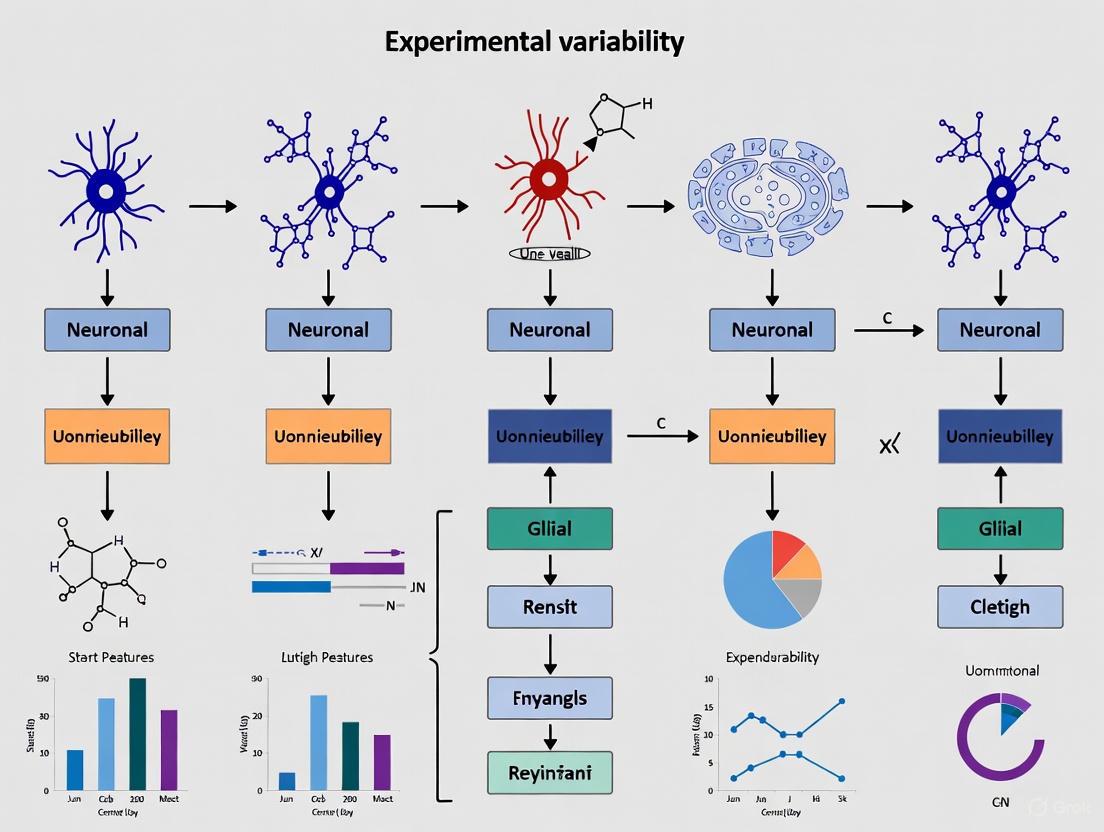
This article provides a comprehensive framework for neuroscientists and drug development professionals to address the critical challenge of experimental variability in neuronal cell culture models.
Strategies to Control Experimental Variability in Neuronal Cell Culture for Reproducible Research
Abstract
This article provides a comprehensive framework for neuroscientists and drug development professionals to address the critical challenge of experimental variability in neuronal cell culture models. It explores the foundational sources of variability, from biological and technical factors to model selection. The content details methodological best practices for culture preparation and maintenance, offers targeted troubleshooting and optimization strategies for the cellular microenvironment, and discusses advanced validation techniques, including the integration of in silico models. By synthesizing these elements, the article aims to equip researchers with the knowledge to enhance the reliability, reproducibility, and translational value of their in vitro neurobiological data.
Understanding the Core Sources of Neuronal Culture Variability
In neuronal cell culture research, experimental variability is a central challenge that can compromise data reproducibility, translational potential, and therapeutic development. Variability manifests from multiple sources, which can be systematically categorized as biological noise, technical noise, and environmental noise. Understanding and controlling these sources is fundamental for generating reliable, high-quality data.
- Biological Noise: This refers to the inherent physiological differences between neuronal cells and preparations, including genetic heterogeneity, differential gene expression, variations in neuronal subtype composition, and divergent developmental or functional states [1] [2].
- Technical Noise: This encompasses inconsistencies introduced during experimental procedures, such as during the isolation, dissociation, and culture of neurons. Variations in reagent quality, enzymatic digestion time, trituration force, and cell seeding density are common technical confounds [3] [4] [5].
- Environmental Noise: This includes fluctuations in the physical and chemical conditions of the cell culture environment. Examples are subtle changes in temperature, pH, CO₂, nutrient availability, and the presence of unseen contaminants [6].
This guide provides troubleshooting resources to help researchers identify, minimize, and control these variability sources, thereby enhancing the precision and predictive power of their neuronal cell models.
Troubleshooting Guides
Low Neuronal Viability and Purity After Isolation
Problem: Poor yield of healthy, neurons and high contamination with non-neuronal cells (e.g., astrocytes, microglia) following dissection and dissociation.
Potential Causes and Solutions:
| Potential Cause | Diagnostic Check | Corrective Action |
|---|---|---|
| Over-digestion with enzymes | Check if tissue becomes mushy; observe cells for excessive membrane blebbing. | Optimize papain concentration and incubation time (e.g., 20-30 min at 37°C). Include an ovomucoid protease inhibitor step to halt digestion [3] [5]. |
| Overly aggressive trituration | Inspect cell morphology; a high percentage of ruptured cells indicates damage. | Use a fire-polished glass Pasteur pipette and limit trituration to 10-15 gentle passes. Pipette tip diameter should be appropriate to minimize shear stress [5]. |
| Incomplete meninges removal | Under a microscope, look for thin, connective tissue membranes adhering to the brain tissue. | Carefully peel meninges using fine #5 forceps. Incomplete removal significantly reduces neuron-specific purity by allowing fibroblast growth [3]. |
| Suboptimal coating or plating density | Check if cells fail to adhere or show poor neurite outgrowth after 24-48 hours. | Ensure culture surfaces are properly coated with Poly-D-Lysine (50 µg/mL) and Laminin (10 µg/mL). Plate at recommended densities (e.g., 50,000-70,000 cells per coverslip) [4] [5]. |
High Functional Variability Between Culture Batches
Problem: Neuronal cultures from different preparations show significant differences in electrophysiological properties, synaptic protein expression, or response to pharmacological agents.
Potential Causes and Solutions:
| Potential Cause | Diagnostic Check | Corrective Action |
|---|---|---|
| Uncontrolled biological noise from animal source | Record the embryonic day (E17 vs. E18), sex, and strain of all animals used. | Strictly use timed-pregnant dams from a consistent supplier and strain. For hippocampal cultures, isolate neurons from a narrow age window (e.g., P0-P2) [4] [5]. |
| Inconsistent culture medium composition | Log the preparation date and freeze-thaw cycles of all medium supplements. | Use pre-formulated, quality-tested media supplements (e.g., B-27). Prepare complete medium in large, single-use aliquots to avoid batch-to-batch variability [4] [6]. |
| Fluctuating environmental conditions | Monitor incubator logs for temperature, CO₂, and humidity. | Use an incubator with active monitoring and alerts. Allow sufficient time for conditions to stabilize after opening the door. Avoid placing cultures near the door [6]. |
| Unrecognized neuronal subtype diversity | Perform immunostaining for markers of different neuronal classes. | Acknowledge that cultures contain diverse cell types. Employ new methods to generate specific subtypes from stem cells for more controlled experiments [2]. |
Inconsistent Differentiation of Stem Cell-Derived Neurons
Problem: When using human induced pluripotent stem cells (iPSCs) to generate neurons, the resulting cultures are a highly variable mixture of neuronal subtypes rather than the desired homogeneous population.
Potential Causes and Solutions:
| Potential Cause | Diagnostic Check | Corrective Action |
|---|---|---|
| Unstandardized differentiation protocol | Track the specific morphogens, concentrations, and timing used in each batch. | Move beyond simple protocols. Employ systematic screening of morphogen combinations and concentrations to actively program specific neuronal subtypes [2]. |
| Heterogeneous starting population of iPSCs | Check pluripotency marker expression (e.g., Nanog, Oct4) before initiating differentiation. | Maintain high-quality, karyotypically normal iPSC lines. Use single-cell passaging and routine sorting to ensure a homogeneous starting population [2] [6]. |
| Lack of real-time quality control | Rely only on endpoint assays to assess differentiation success. | Implement AI-driven quality monitoring. Use convolutional neural networks (CNNs) to analyze cell morphology in real-time and predict differentiation outcomes [6]. |
Frequently Asked Questions (FAQs)
Q1: We follow the same protocol every time, but our primary cortical neurons have variable synapse density. Is this biological or technical noise?
A1: It is likely a combination of both. Biological noise arises from inherent differences in the developmental program of individual neurons, even from a genetically similar source [1]. Technical noise can be introduced by subtle variations in dissection speed, the exact region of the cortex dissected, or minor differences in the concentration of neurotrophic factors in your culture medium [3] [5]. To mitigate this, ensure all reagents are prepared as large, single-use aliquots and meticulously record all dissection timings.
Q2: How can we reduce the high within-batch variability in our calcium imaging data?
A2: High within-batch variability often stems from a mix of neuronal subtypes, each with its own intrinsic excitability [2]. To address this:
- Genetically:> Use promoters specific to your neuronal type of interest (e.g., hSyn1 for pan-neuronal expression) when introducing calcium indicators [4].
- Pharmacologically:> Apply receptor blockers (e.g., CNQX, APV, Bicuculline) to isolate specific network components during analysis.
- Analytically> : Classify neurons based on their response properties before pooling data, rather than treating all cells as identical.
Q3: What is the most common source of environmental noise that is often overlooked?
A3: Evaporation is a critical yet frequently overlooked factor. Even in humidified incubators, slow evaporation from culture dishes can gradually increase osmolarity and concentrate toxins, stressing neurons over time. This is a form of environmental noise that can significantly alter gene expression and cell health [6]. Using culture plates with tight-fitting lids and minimizing how long cultures are outside the incubator can help reduce this effect.
Key Experimental Protocols & Data
Standardized Protocol for Primary Rat Cortical Neuron Culture
This protocol is optimized to minimize technical noise [3] [5].
Key Materials and Reagent Solutions:
| Reagent/Material | Function | Key Details |
|---|---|---|
| Poly-D-Lysine (PDL) | Coats surface with positive charges to facilitate neuronal adhesion. | Use at 50 µg/mL in sterile dH₂O. Incubate for 1 hour at 37°C, then wash 3x with dH₂O [5]. |
| Laminin | Provides a bioactive substrate for neurite outgrowth and cell survival. | Coat at 10 µg/mL in PBS on top of PDL-coated surfaces. Incubate overnight at 2-8°C [5]. |
| Papain Solution | Enzymatically dissociates tissue by breaking down extracellular matrix. | Use at 20 U/mL in EBSS. Pre-warm and incubate tissue for 20-30 min at 37°C [5]. |
| Ovomucoid Protease Inhibitor | Stops papain digestion to prevent over-digestion and damage. | Resuspend cell pellet after papain treatment to neutralize enzyme activity [5]. |
| Neurobasal Plus Medium with B-27 | Serum-free medium optimized for long-term survival of hippocampal and cortical neurons. | Prevents growth of glial cells. Supplement with GlutaMAX and antibiotics [4] [5]. |
| Fire-polished Pasteur Pipette | For gentle mechanical trituration of tissue. | Polishing rounds the tip, minimizing shear forces that can lyse cells [5]. |
Step-by-Step Workflow:
- Coating: Prepare culture plates with PLL and Laminin as described in the table.
- Dissection: Sacrifice E17-E18 pregnant rat. Rapidly dissect embryos and decapitate. Place heads in cold, sterile PBS. Isolate brains and place in a dissection dish with cold PBS.
- Cortex Isolation: Under a dissecting microscope, carefully remove the skull and meninges using fine forceps (#5 and #7). Separate the cortices from the hippocampus and subcortical structures.
- Dissociation: Transfer cortical tissue to a tube with pre-warmed papain solution. Incubate for 20-30 minutes at 37°C.
- Trituration: Carefully remove papain solution. Gently triturate the tissue 10-15 times with a fire-polished Pasteur pipette in ovomucoid inhibitor solution or Neuronal Base Medium.
- Plating: Centrifuge the cell suspension (200 x g, 5 min). Resuspend the pellet in complete Neurobasal/B-27 medium. Count cells using a hemocytometer and Trypan Blue to exclude dead cells. Plate at desired density (e.g., 50,000-100,000 cells/cm²).
- Maintenance: Perform a half-media change every 3-4 days. Cultures can be maintained for several weeks.
Reliability Metrics for Common Assays
Understanding the expected reliability of your readouts is crucial for experimental design and power analysis. The following table summarizes key concepts.
| Assay/Measurement | Typical Reliability Concern | Strategies for Improvement |
|---|---|---|
| Inhibitory Control (Flanker Task in humans) | Low test-retest reliability with few trials; high within-subject variability inflates between-subject estimates [7]. | Extend testing duration dramatically (e.g., from 5 min to >60 min) to obtain a more precise individual estimate [7]. |
| fMRI Brain Network Mapping | Functional connectivity estimates are unreliable with short scan durations (<20-30 min) [7]. | Acquire more than 20-30 minutes of fMRI data per individual to improve reliability of individual-level measures [7]. |
| Stem Cell Differentiation | High batch-to-batch variability in the proportion of target cell types [2] [6]. | Use AI-driven image analysis to track morphological changes in real-time and predict outcomes, allowing for early intervention [6]. |
Diagram 1: A framework mapping the major sources of variability in neuronal cell culture experiments to specific mitigation strategies. This visual guide helps in diagnosing the root cause of reproducibility issues.
Diagram 2: A standardized workflow for the isolation and culture of primary rodent cortical neurons, highlighting critical steps where technical noise is most commonly introduced.
Frequently Asked Questions (FAQs)
Q1: What are the most significant sources of variability when using hiPSC-derived neurons, and how can they be minimized? Variability in hiPSC-derived neuron models primarily stems from cell line genetic differences, cell seeding density, and treatment duration [8]. Optimization studies show that using a consistent, defined cell seeding density is critical, as sensitivity to neurotoxic compounds like docetaxel decreases with increasing cell density [8]. A 48-hour treatment duration provides a more replicable dose-response curve for viability assays compared to 24-hour treatments [8]. Employing deterministic cell programming technologies, like opti-ox, can also drastically reduce batch-to-batch variability by generating populations of neurons with less than 2% gene expression variability [9].
Q2: My immortalized neuronal cell line results don't seem physiologically relevant. Why might this be? Immortalized cell lines (e.g., SH-SY5Y) are often cancer-derived and optimized for proliferation, not function [9]. They frequently exhibit immature neuronal features, fail to form functional synapses, and lack consistent expression of key ion channels and receptors [9]. This limits their ability to replicate human-specific signaling pathways, leading to poor predictive power. For greater physiological relevance, especially in drug discovery, a shift to human iPSC-derived models is increasingly recommended [10] [9].
Q3: When would I choose primary neurons over an hiPSC-derived model? Primary neurons from rodents are a traditional mainstay for studying native cell morphology and physiological behaviour [11] [9]. However, they come with major drawbacks, including species mismatch, high technical complexity, low reproducibility due to donor-to-donor variability, and limited scalability [9]. While they can be useful for certain mechanistic studies, human iPSC-derived neurons are often a superior choice for human-specific insights, scalability, and improved reproducibility [9].
Q4: How can I improve the reproducibility of my neuronal culture assays? Key strategies include:
- Standardize Seeding Density: Maintain a consistent cell seeding density across all experiments, as this significantly impacts viability and dose-response [8].
- Validate Protocols: Use thoroughly optimized and validated differentiation or culture protocols [8] [11].
- Source Consistent Cells: Utilize commercially available, characterized iPSC-derived neurons that are produced in large, consistent batches to minimize lot-to-lot variability [9].
- Control Culture Conditions: Use defined, serum-free culture media to avoid the uncertainties introduced by serum batches [11].
Troubleshooting Guides
Issue 1: Poor Replicability in hiPSC-Derived Neuron Toxicity Assays
Problem: Inconsistent or irreplicable dose-response data when testing compounds on hiPSC-derived sensory neurons (iPSC-dSNs).
Solution:
- Optimize Treatment Duration: Extend treatment duration to 48 hours for a more replicable dose-response in viability assays, as 24-hour treatments may be insufficient [8].
- Standardize Seeding Density: Identify and consistently use an optimal cell seeding density. Research shows that a density of 25,000 cells/well in a 96-well plate can provide a balance between sensitivity and reproducibility [8].
- Account for Genetic Diversity: Use multiple iPSC-dSN lines to capture the impact of inter-individual genetic variation on drug response. Do not rely on data from a single cell line [8].
Issue 2: Low Functional Maturity in Cultured Neurons
Problem: Neurons in culture do not develop extensive neurite networks or show functional, excitable properties.
Solution:
- Use Defined Media: Culture neurons in a defined, serum-free supplement like B-27 or CultureOne to promote neuronal differentiation and control astrocyte expansion [11].
- Allow Sufficient Maturation Time: Ensure neurons are given adequate time to mature. For example, primary hindbrain neurons develop extensive axonal and dendritic branching by 10 days in vitro (DIV) [11].
- Verify Functionality: Confirm neuronal maturity through patch-clamp recordings to demonstrate excitable nature and immunofluorescence for pre- and postsynaptic markers to confirm synapse formation [11].
Quantitative Data Comparison
The table below summarizes key characteristics of different neuronal cell models based on recent research:
Table 1: Comparison of Neuronal Cell Model Characteristics and Performance
| Model Characteristic | Animal Primary Cells [9] | Immortalized Cell Lines [9] | hiPSC-Derived Neurons (Standard) [8] [12] [9] | hiPSC-Derived Neurons (Deterministic) [9] |
|---|---|---|---|---|
| Biological Relevance | Closer to native morphology and function | Often non-physiological (e.g., cancer-derived) | Human-specific, high physiological relevance | Human-specific and characterised for functionality |
| Reproducibility | High variability (donor-to-donor) | Reliable but prone to genetic drift | Variable; requires protocol optimization | High consistency (<2% gene expression variability) |
| Scalability | Low yield, difficult to expand | Easily scalable | Scalable but can be variable | Consistent at scale (billions per manufacturing run) |
| Time to Assay | Several weeks post-dissection | Can be assayed within 24-48 hours of thawing | Several weeks for differentiation | Functional within ~10 days post-thaw |
| Sensitivity to Docetaxel (IC₅₀) | Not specified | Not specified | ~4.43 nM (at 25k cells/well, 48h treatment) [8] | Not specified |
| Sensitivity to Paclitaxel (IC₅₀) | Not specified | Not specified | ~10.35 nM (at 25k cells/well, 48h treatment) [8] | Not specified |
| Efficiency of Autonomic Neuron Differentiation | Not applicable | Not applicable | Four protocols reported >66% cells expressing markers [12] | Not specified |
Table 2: Key Experimental Factors Affecting hiPSC-derived Sensory Neuron Assays [8]
| Experimental Factor | Impact on Viability Assay | Optimized Condition for Taxane Neurotoxicity |
|---|---|---|
| Treatment Duration | Highly significant factor; 48-hour treatment yielded a replicable sigmoidal dose-response, unlike 24-hour treatment. | 48 hours |
| Cell Seeding Density | Significant effect on overall viability and dose response; IC₅₀ inversely correlated with density. | 25,000 cells/well (96-well plate) |
| Cell Line (Genetic Background) | Significant variation in overall viability and dose response between different iPSC-dSN lines. | Use multiple cell lines to capture human genetic diversity. |
| Seeding-Treatment Interval | No significant effect on overall viability or dose response. | Can be determined by laboratory convenience. |
Experimental Protocols
Detailed Protocol: Optimizing hiPSC-Derived Sensory Neurons for Toxicity Screening
This protocol is optimized for assessing taxane-induced neurotoxicity, as detailed in Scientific Reports [8].
Key Reagent Solutions:
- Cells: Multiple lines of human induced pluripotent stem cell-derived sensory neurons (iPSC-dSNs).
- Culture Vessel: 96-well plate.
- Seeding Medium: As per the original differentiation protocol [8].
- Treatment Compounds: Docetaxel or Paclitaxel, prepared in appropriate vehicle (e.g., DMSO).
- Viability Assay Kit: Such as CellTiter-Glo Luminescent Cell Viability Assay.
Methodology:
- Cell Seeding: Thaw and seed iPSC-dSNs at a density of 25,000 cells per well in a 96-well plate. Allow cells to adhere.
- Compound Treatment: After the appropriate seeding-treatment interval, prepare serial dilutions of the taxane (e.g., Docetaxel or Paclitaxel) in the culture medium. A typical tested concentration range is 0.1 nM to 1000 nM.
- Exposure: Remove the existing medium and add the compound-containing medium to the cells. Include vehicle-control wells.
- Incubation: Treat cells for 48 hours in a standard cell culture incubator (37°C, 5% CO₂).
- Viability Measurement: After the 48-hour treatment, assess cell viability using a luminescent ATP-based assay according to the manufacturer's instructions. Luminescence signals are proportional to the number of viable cells.
- Data Analysis: Normalize data to vehicle-control wells (100% viability). Fit the dose-response data to a four-parameter logistic (sigmoidal) curve model to calculate IC₅₀ values.
Detailed Protocol: Culture of Primary Mouse Fetal Hindbrain Neurons
This protocol provides a method for obtaining hindbrain-specific neuronal cultures [11].
Key Reagent Solutions:
- Solution 1: HBSS without Ca²⁺/Mg²⁺.
- Solution 2: HBSS with Ca²⁺/Mg²⁺, supplemented with HEPES and sodium pyruvate.
- Digestion Solution: Trypsin 0.5% and EDTA 0.2% in Solution 1.
- Complete Culture Medium (NB27): Neurobasal Plus Medium supplemented with B-27 Plus Supplement, L-glutamine, GlutaMax, and penicillin-streptomycin.
- Supplement: CultureOne supplement.
Methodology:
- Tissue Dissection: Dissect hindbrains from E17.5 mouse fetuses. Remove the cortex, cerebellum, and meninges carefully.
- Tissue Dissociation:
- Transfer hindbrains to Solution 1 and mechanically dissociate into small pieces with a plastic pipette.
- Add trypsin/EDTA solution and incubate for 15 minutes at 37°C.
- Loosen the tissue further by trituration with a fire-polished glass Pasteur pipette.
- Add Solution 2 to stop the trypsin action.
- Cell Collection: Allow large debris to settle, then transfer the cell suspension to a tube with decomplemented FBS. Centrifuge at 300g for 10 minutes to pellet cells.
- Plating: Resuspend the cell pellet in NB27 complete medium. Plate cells on poly-D-lysine/laminin-coated plates or coverslips at the desired density.
- Maintenance: On the third day in vitro (DIV3), add CultureOne supplement to the culture medium at a 1x final concentration to control glial proliferation.
- Maturation: Cultures are typically mature and show extensive branching and functional synapses by DIV10 [11].
Model System Selection Diagram
This diagram outlines the key decision-making factors for selecting a neuronal cell model, emphasizing the central challenge of balancing physiological relevance with reproducibility.
Experimental Optimization Workflow
For researchers using hiPSC-derived neurons, optimizing assay conditions is essential for reducing variability. The following workflow is based on findings from a study that optimized a sensory neuron model for taxane-induced neurotoxicity [8].
The Scientist's Toolkit: Research Reagent Solutions
Table 3: Essential Reagents for Neuronal Cell Culture and Assays
| Reagent / Product | Function / Application | Example Use in Context |
|---|---|---|
| B-27 Plus Supplement | A serum-free, defined supplement designed to support the growth and differentiation of primary and iPSC-derived neurons. | Used in the NB27 complete medium for culturing primary mouse hindbrain neurons [11]. |
| CultureOne Supplement | A chemically defined, serum-free supplement used to control the expansion of astrocytes in mixed primary cultures. | Added to primary hindbrain neuron cultures at DIV3 to inhibit excessive glial cell growth [11]. |
| Neurobasal Plus Medium | An advanced basal medium optimized for improved growth and performance of primary and stem cell-derived neurons. | Serves as the base for the NB27 complete medium [11]. |
| opti-ox enabled ioCells | Commercially available, consistently programmed human iPSC-derived cells that aim to minimize batch-to-batch variability. | Proposed as a solution to the reproducibility challenges of standard iPSC differentiation and primary cells [9]. |
| Enzyme-Free Detachment | A novel method using alternating electrochemical current on a conductive polymer to detach cells without damaging surface proteins. | A potential alternative to enzymatic detachment (e.g., trypsin) for preserving delicate cell membranes in sensitive neurons [13]. |
In neuronal cell culture research, a significant challenge to reproducibility and experimental interpretation is the inherent variability introduced by the biological source material. Donor-specific factors—namely age, sex, and genetic background—profoundly influence cellular behavior, transcriptomics, and therapeutic potential of derived models. This technical support center provides troubleshooting guides and FAQs to help researchers identify, understand, and account for these sources of variability in their experiments. Acknowledging and controlling for these factors is not merely a technical exercise but a fundamental requirement for producing robust, meaningful, and reproducible data in studies utilizing induced pluripotent stem cells (iPSCs), primary neuronal cultures, and other cellular models.
Troubleshooting Guides
Table 1: Troubleshooting Donor Age-Related Variability
| Symptom | Possible Cause | Recommended Action | Underlying Biological Principle |
|---|---|---|---|
| Immature neuronal phenotype, expression of neurodevelopmental genes [14] | Cells derived from infant donors | Use age-appropriate donor material for the research question. For aging studies, source from older donors. | Infant-specific cell clusters are enriched for neurodevelopmental genes (e.g., SLIT3, ROBO1), marking an immature state [14]. |
| Widespread downregulation of housekeeping genes (ribosomal, metabolic) [14] | Cells derived from elderly donors | This is a feature, not an artifact. Focus on stable neuron-specific genes or confirm findings with multiple age groups. | Ageing involves a common downregulation of essential homeostatic genes across most cell types, while neuron-specific genes often remain stable [14]. |
| Decreased oligodendrocyte precursor cell (OPC) abundance [14] | Natural ageing process | Account for reduced myelination capacity in studies involving elderly donors. | The pool of OPCs differentiates into mature oligodendrocytes over a lifetime, with incomplete replacement, reducing regenerative capacity in aged brains [14]. |
| Increased transcriptional variability in IN-SST inhibitory neurons [14] | Age-related loss of transcriptional fidelity | Increase sample size (n) for experiments involving inhibitory neurons from aged donors to account for higher cell-to-cell variability. | IN-SST neurons show a significant increase in the coefficient of variation of their transcriptome with age, indicating fundamental functional changes [14]. |
Table 2: Troubleshooting Genetic and Sex-Related Variability
| Symptom | Possible Cause | Recommended Action | Underlying Biological Principle |
|---|---|---|---|
| High line-to-line variability in differentiation potency, morphology, and transcript abundance [15] | Underlying genetic background of donors | Use multiple donor lines (recommended ≥3-5) to distinguish true phenotype from background variation. Employ isogenic controls where possible [15]. | The genetic background is a major driver of heterogeneity, accounting for 5-46% of variation in iPSC phenotypes. Expression QTLs (eQTLs) lead to natural expression differences [15]. |
| Inconsistent replication of disease-associated cellular phenotypes [15] | Use of models for polygenic risk with small effect sizes instead of highly penetrant variants | For complex traits, ensure large sample sizes and use genome-wide genotyping to account for polygenic risk scores [15]. | iPSCs were first used for highly penetrant mutations with large effects. Modeling complex, polygenic diseases is more challenging and subject to background genetic effects [15]. |
| Inconsistent drug response in neuronal models (e.g., lithium in bipolar disorder) [15] | Donor-specific drug response profiles inherent to their biology | Use patient-derived lines stratified by clinical drug response. Avoid assuming uniform drug effects across all patient-derived cells [15]. | Phenotypes can be donor-specific; e.g., lithium rescues hyperexcitability only in neuronal models from lithium-responsive bipolar patients [15]. |
| Significant variability in neuroprotective effects of MSC-conditioned medium [16] | Individual variability in the secretome of donor-derived mesenchymal stromal cells (MSCs) | Pre-screen donor MSCs for secretion levels of key factors (e.g., BDNF, VEGF-A) or pool samples from multiple donors to average out variability [16]. | The secretome of adipose-derived MSCs shows significant donor-dependent variability in levels of BDNF, VEGF-A, and PDGF, which directly correlates with their neuroprotective efficacy [16]. |
Frequently Asked Questions (FAQs)
Q1: What is the single largest source of variability in iPSC-derived neuronal models, and how can I control for it?
The genetic background of the donor is widely reported as the largest source of heterogeneity, impacting differentiation potential, cellular morphology, and transcript abundance [15]. To control for this:
- Use Multiple Lines: Always include iPSC lines from multiple genetically distinct donors (a minimum of 3-5 is often recommended) to ensure your findings are not unique to a single genetic background.
- Employ Isogenic Controls: The gold standard is to use isogenic cell lines, which are derived from the same individual and engineered to differ only at the specific locus of interest (e.g., a disease-causing mutation). This ensures any observed differences are due to the mutation and not the background genetics [15].
Q2: My oligodendrocyte differentiation efficiency is low. Could donor age be a factor?
Yes, donor age is a critical factor. The abundance of oligodendrocyte precursor cells (OPCs) decreases naturally during ageing [14]. Cultures derived from infant donors will have a higher inherent capacity to generate OPCs and mature oligodendrocytes compared to those derived from elderly donors. You should ensure your donor age matches your experimental question—for example, using elderly donor cells to model age-related myelination deficits is appropriate, but expecting high OPC yields from them is not [14].
Q3: I see high variability in the protective effects of a conditioned medium on my neuronal cultures. What could be the cause?
This is a common issue linked to individual donor variability in the secretome. Studies on mesenchymal stromal cells (MSCs) have shown significant donor-to-donor differences in the concentration of key neuroprotective growth factors like BDNF, VEGF-A, and PDGF-AA [16]. The biological effects, such as protection from oxygen-glucose deprivation, are directly correlated with the concentration of these specific factors [16]. Pre-screening your conditioned medium batches for these factors or pooling media from several donors can help mitigate this variability.
Q4: Are there functional differences between neurons derived from male and female donors?
While the provided search results do not delve deeply into sex-specific differences, sex is recognized as a biological variable that can influence cellular traits. The scientific consensus, reflected in guidelines from major funding bodies like the NIH, mandates that researchers account for sex as a biological variable in experimental designs. You should design your studies to include cell lines derived from both sexes and perform stratified analyses to determine if your observed phenotypes or responses are sex-specific.
Q5: How can I improve the maturity and activity of my iPSC-derived neuronal cultures?
A promising strategy is the overexpression of Brain-Derived Neurotrophic Factor (BDNF). Research shows that neural progenitor cells modified to overexpress BDNF yield more mature and active neuronal cultures, with increased axon growth and improved functional integration. This can be achieved by genetically engineering your iPSC-derived neural precursors to continuously produce BDNF, creating a more conducive microenvironment for maturation [17].
The Scientist's Toolkit: Research Reagent Solutions
Table 3: Essential Reagents for Managing Donor Variability
| Item | Function/Application in Addressing Variability |
|---|---|
| Isogenic iPSC Lines [15] | Genetically identical controls that differ only at the disease-causing locus, allowing researchers to isolate the specific effect of a mutation from the background genetic noise. |
| "Rosetta Stone" Reference Cell Line [15] | A common, well-characterized iPSC line used across multiple experiments and laboratories to benchmark results and calibrate for technical variation between studies. |
| Microfluidic Co-culture Devices [17] [18] | Engineered chips that allow controlled studies of axon guidance, connectivity, and interaction between different cell types or organoids, helping to quantify donor-specific network properties. |
| Brain-Derived Neurotrophic Factor (BDNF) [17] | A key protein that promotes neuronal survival, maturation, and synaptic plasticity. Used to enhance the functional maturity and axon growth of iPSC-derived neurons, which can be variable between lines. |
| Accutase/Accumax [19] | Milder enzymatic cell detachment solutions compared to trypsin. They better preserve cell surface proteins, which is critical for accurate flow cytometry analysis of cell surface markers that might vary with donor factors. |
Experimental Workflows & Signaling Pathways
BDNF Enhancement of Neuronal Cultures
The following diagram illustrates the experimental workflow for enhancing neuronal maturation and activity using BDNF, a key strategy for improving consistency in functional assays.
Donor Factor Impact on Experimental Outcomes
This diagram outlines the logical relationship between different donor-specific factors and their primary impacts on neuronal cell culture models, guiding troubleshooting efforts.
Regional Brain Specificity and Its Effect on Cellular Populations
Within the complex ecosystem of the human brain, cellular populations are not uniformly distributed. Regional brain specificity refers to the unique molecular, cellular, and functional characteristics that define distinct brain areas. This specialization, arising from diverse cell types and intricate circuit wiring, is fundamental to brain function. However, when modeling these populations in vitro, this inherent variability becomes a significant source of experimental variability, challenging the reproducibility and interpretation of results. This technical support center provides targeted guidance to navigate these challenges, offering troubleshooting and standardized protocols to enhance the reliability of your research on brain region-specific models.
Frequently Asked Questions & Troubleshooting Guides
Table 1: General Cell Culture Health and Viability
| Problem Area | Possible Cause | Recommendation |
|---|---|---|
| Cell Adhesion | Degraded or suboptimal coating substrate [20]. | Switch from Poly-L-lysine (PLL) to more stable Poly-D-lysine (PDL) or peptide-bond-resistant dendritic polyglycerol amine (dPGA) [20]. |
| Low Viability Post-Thaw | Improper thawing technique or osmotic shock [21]. | Thaw cells quickly (<2 mins at 37°C). Use pre-rinsed tools and add medium drop-wise. Do not centrifuge extremely fragile neurons post-thaw [21]. |
| Unhealthy Culture Morphology | Sub-optimal culture medium or supplements [21] [20]. | Use serum-free Neurobasal medium supplemented with B-27 and GlutaMAX. Prepare medium fresh weekly. Ensure correct B-27 version and avoid multiple freeze-thaw cycles [21] [20]. |
| Excessive Glial Contamination | Proliferation of glial cells in culture [20]. | Use embryonic (E17-19) tissue sources to reduce initial glial density. For highly pure neuronal cultures, use low-concentration cytosine arabinoside (AraC) with caution due to potential neurotoxicity [20]. |
Table 2: Challenges in Modeling Regional Specificity and Network Function
| Problem Area | Possible Cause | Recommendation |
|---|---|---|
| Poor Network Synchronization | Models lack hierarchical modular organization [22]. | Utilize advanced 3D culture systems like Modular Neuronal Networks (MoNNets) that self-organize into interconnected spheroid units, fostering local and global network activity [22]. |
| Limited Functional Complexity | Standard cultures do not recapitulate in vivo-like network properties [22]. | Implement functional characterization via live, cellular-resolution Ca2+ imaging (e.g., using GCaMP6f) to track dynamics over weeks in vitro [22]. |
| Inconsistent Cellular Phenotype | Use of immortalized cell lines (e.g., SH-SY5Y, PC12) that differ physiologically from primary neurons [23]. | Induce differentiation with agents like retinoic acid; validate with mature neuronal markers (βIII-tubulin, MAP2, NeuN). Prefer primary cultures where possible [23]. |
Established Experimental Protocols
Protocol 1: Establishing Modular Neuronal Networks (MoNNets) for Regional Network Analysis
This protocol is adapted from studies utilizing 3D cultures to model complex brain network dynamics [22].
Key Reagents & Materials:
- Cells: Dissociated hippocampal or cortical neurons from mouse embryos (E17-E18).
- Viral Vector: AAV1.Syn.GCaMP6f.WPRE.SV40 for neuron-specific expression of calcium indicator.
- Culture Substrate: Non-adhesive polydimethylsiloxane (PDMS) mold with micro-wells.
- Medium: Neurobasal medium supplemented with B-27 and GlutaMAX.
Methodology:
- Dissociation and Transduction: Dissociate brain tissue gently using papain or mechanical trituration alone to minimize RNA degradation and cell shearing [20]. Infect dissociated cells with the AAV.GCaMP6f vector.
- Plating and Self-Organization: Plate the cell suspension onto the PDMS mold. The cells will spontaneously form spheroid-like modular units within the microwells.
- Culture Maintenance: Maintain cultures in a serum-free, supplemented Neurobasal medium. Perform half-medium changes every 3-7 days.
- Functional Imaging: Around 14-30 days in vitro (DIV), perform live calcium imaging. Capture system-wide cellular-resolution data over ~4.5 minutes at a 30 Hz sampling rate.
- Data Analysis: Calculate pairwise neuronal activity correlations. Use graph theory metrics (e.g., graph efficiency) to quantify local and global functional connectivity and identify stable neuronal ensembles [22].
The workflow for establishing and analyzing these networks is summarized below.
Protocol 2: Characterizing Neuronal Differentiation in Cell Lines
For researchers using neuronal cell lines like SH-SY5Y, proper differentiation is crucial for attaining a more native, neuron-like state [23].
Key Reagents & Materials:
- Cell Line: SH-SY5Y human neuroblastoma cells.
- Differentiation Agents: All-trans retinoic acid (RA), brain-derived neurotrophic factor (BDNF).
- Coating Substrate: Poly-D-lysine (PDL)-coated culture surfaces.
- Validation Antibodies: Anti-βIII-tubulin, anti-MAP2, anti-NeuN.
Methodology:
- Culture and Seeding: Maintain undifferentiated SH-SY5Y cells in standard media. Seed onto PDL-coated plates at an appropriate density for differentiation.
- Differentiation Induction: Switch to a serum-free or serum-reduced medium containing a defined concentration of retinoic acid (e.g., 10 µM) for several days. This can be followed by a second phase with BDNF to enhance maturity.
- Phenotype Validation: Confirm successful differentiation by assessing morphology (elongation of neurites) and quantifying the expression of mature neuronal markers (βIII-tubulin, MAP2, NeuN) via immunocytochemistry [23].
Visualizing Brain Region Specialization
The brain's functional specialization is hierarchically organized. Specialized regions for processing specific stimuli, like the Fusiform Face Area (FFA) for faces and the Visual Word Form Area (VWFA) for text, are connected within larger systems that integrate information to construct meaning [24]. The diagram below illustrates this hierarchical organization.
The Scientist's Toolkit: Essential Research Reagents
Table 3: Key Reagents for Neuronal Cell Culture and Characterization
| Reagent Category | Specific Item | Function & Application Notes |
|---|---|---|
| Culture Substrate | Poly-D-Lysine (PDL) | Positively charged polymer coating that promotes neuronal adhesion to glass/plastic surfaces. More resistant to proteolysis than PLL [20]. |
| Culture Medium | Neurobasal + B-27 Supplement | Serum-free medium combination optimized for long-term survival of primary neurons. B-27 provides essential hormones and nutrients [20]. |
| Differentiation Agent | All-trans Retinoic Acid (RA) | Induces cell cycle exit and differentiation in neuronal cell lines like SH-SY5Y, promoting a more mature neuronal phenotype [23]. |
| Calcium Indicator | GCaMP6f (AAV-delivered) | Genetically encoded calcium indicator for monitoring neuronal activity and network dynamics in live cells via fluorescence [22]. |
| Glial Suppressant | Cytosine β-D-arabinofuranoside (AraC) | Antimitotic agent used to inhibit the proliferation of glial cells in primary co-cultures. Use with caution due to potential neurotoxic effects [20]. |
| Maturation Marker | Microtubule-Associated Protein 2 (MAP2) | Validates neuronal maturation and dendritic arborization in differentiated cultures via immunostaining [23]. |
The Role of Glial Cells in Network Development and Experimental Outcomes
Troubleshooting Guides and FAQs
Frequently Asked Questions
Q1: Why are my neuronal cultures showing high synaptic variability and inconsistent activity patterns? A1: This is frequently due to the absence or inconsistent inclusion of astrocytes. Astrocytes are integral components of the tripartite synapse, where they respond to neuronal activity and regulate synaptic transmission and plasticity by releasing gliotransmitters like glutamate, ATP, and D-serine. Their absence leads to unstable synaptic environments. Ensure your culture system includes astrocytes, either via co-culture methods or by using tri-culture systems (neurons, astrocytes, microglia) for a physiologically relevant environment [25] [26] [27].
Q2: How can I improve the physiological relevance of my 2D neuronal culture model for drug screening? A2: Transition to more complex 3D models like neuronal organoids or tri-cultures. Conventional 2D models fail to capture the three-dimensional spatial organization and cell-to-cell interactions critical to central nervous system function. Stem cell-derived neuronal organoids and tri-culture systems exhibit more physiological cytoarchitecture, electrophysiological properties, and gene expression, leading to better predictive value in drug discovery [28] [26] [29].
Q3: What could be causing hyperexcitability and epileptiform activity in my neuronal network model? A3: This is often a result of impaired glial homeostatic function. Specifically, check for:
- Dysfunctional Potassium Buffering: Astrocytes control extracellular K⁺ concentration via inward-rectifying K⁺ channels. Their impaired function can lead to neuronal hyperexcitability [25].
- Defective Glutamate Clearance: Impaired function of astrocytic glutamate transporters (EAAT1/GLAST and EAAT2/GLT-1) leads to glutamate accumulation in the synaptic cleft, causing excitotoxicity [25] [27].
- Disrupted Extracellular Space: The dynamic mobility of astrocytic processes shapes the extracellular space, influencing neurotransmitter diffusion. Abnormalities here can lead to neurotransmitter spillover and aberrant signaling [25].
Q4: Why is the myelination in my co-culture model inefficient or inconsistent? A4: Inefficient myelination can stem from problems with the oligodendrocyte progenitor cells (OPCs or NG2-glia) or a lack of support from other glial cells.
- Purity of OPCs: Ensure high purity of isolated OPCs. Use standardized methods like immunopanning with specific antibodies for consistent results [30] [31].
- Astrocyte Support: Oligodendrocytes form gap junctions with astrocytes (via Cx47 on oligodendrocytes and Cx43 on astrocytes). This coupling provides metabolic support and is crucial for oligodendrocyte health and myelination. Disruption of this network severely impairs myelination [31].
Q5: Our experimental results from animal models are not translating to human outcomes. How can glial biology explain this? A5: Significant interspecies differences in glial cells are a major contributor to the translational gap. For example, human astrocytes are more complex and diverse than those in rodents. To address this, adopt human-based models such as:
- Human induced pluripotent stem cell (iPSC)-derived glial cells [26] [29].
- Human iPSC-derived tri-culture systems containing neurons, astrocytes, and microglia [26].
- Human brain organoids, which can model the human brain environment more accurately [28] [29].
Troubleshooting Guide
| Problem Area | Potential Glial-Related Cause | Recommended Solution |
|---|---|---|
| Synaptic Function | Lack of astrocytic regulation in the tripartite synapse; deficient gliotransmitter (D-serine) release [25] [27]. | Incorporate astrocytes in co-culture; verify astrocyte maturity markers (GFAP, CD44). |
| Network Hyperexcitability | Impaired astrocytic glutamate clearance or potassium buffering [25]. | Assess function of astrocytic glutamate transporters (EAAT2/GLT-1) and K+ channels (Kir4.1). |
| Poor Myelination | Unhealthy OPCs or lack of astrocytic support via gap junctions [30] [31]. | Purify OPCs via immunopanning; include astrocytes in the culture system to support oligodendrocytes. |
| High Model Variability | Inconsistent glial cell ratios and maturation states between experiments [26]. | Use cryopreserved stocks of pre-differentiated glial cells; standardize plating densities and differentiation protocols. |
| Poor Drug Response Prediction | Species-specific glial functions in animal models; oversimplified 2D culture systems [28] [29]. | Implement human iPSC-derived glial co-cultures or 3D organoid models for human-relevant screening. |
Glial Cell Properties and Experimental Data
Table 1: Key Glial Cell Types and Their Functional Roles in Neural Networks
| Glial Cell Type | Primary Functions | Key Network Interactions | Impact if Dysfunctional |
|---|---|---|---|
| Astrocyte | - Synaptic transmission modulation (tripartite synapse) [25] [27]- K+ and neurotransmitter homeostasis (glutamate) [25] [27]- Metabolic support (lactate shuttle) [27]- Blood-flow regulation [27] | - Releases gliotransmitters (ATP, D-serine) [25]- Forms gap junctions with other astrocytes (Cx43, Cx30) [31]- Couples with oligodendrocytes (Cx47-Cx43) [31] | - Synaptic instability & hyperexcitability [25]- Excitotoxicity [25]- Network synchrony failure [31] |
| Oligodendrocyte | - Myelination of axons [31]- Metabolic support to axons [31] | - Forms gap junctions with astrocytes (Cx47-Cx43) [31]- Forms intracellular myelin gap junctions (Cx32) [31] | - Slowed nerve conduction [31]- Axonal degeneration [31]- Metabolic stress in neurons [31] |
| Microglia | - Immune surveillance & synaptic pruning [26] [27]- Response to injury/infection [27] | - Secretes pro-/anti-inflammatory cytokines [27]- Interacts with astrocytes and neurons [27] | - Chronic inflammation [27]- Deficient synapse elimination or excessive pruning [27] |
| NG2-glia (OPC) | - Proliferative precursor to oligodendrocytes [31] [27]- Response to injury [31] | - Differentiates into myelinating oligodendrocytes [31] | - Failed remyelination after injury [31] |
Table 2: Quantitative Data on Glial Network Signaling
| Signaling Mechanism | Key Molecules / Ions | Speed / Propagation | Functional Consequence |
|---|---|---|---|
| Calcium Waves (Astrocytes) | Intracellular Ca2+ release [25] | Slower than neuronal APs; can propagate between cells [25] | Modulates synaptic efficacy and neuronal excitability over longer durations [25] |
| Gliotransmission | Glutamate, ATP, D-serine [25] | Release triggered by Ca2+ elevation [25] | Regulates NMDA receptor function, synaptic plasticity (LTP/LTD) [25] |
| Gap Junction Communication | Ions (K+), second messengers, metabolites (<1.5 kDa) [31] | Direct cytoplasmic transfer [31] | Spatial K+ buffering; metabolic support; synchronizes glial network [31] |
| Metabolic Coupling (ANLS) | Lactate, Glucose [27] | Via transporters (MCT1, MCT4) [27] | Provides rapid energy substrate to neurons during synaptic activity [27] |
Detailed Experimental Protocols
Protocol 1: Generating a Human iPSC-Derived Tri-Culture System
This protocol creates a cryopreservation-compatible system containing neurons, astrocytes, and microglia for a physiologically relevant model [26].
Key Materials:
- Cell Source: Human induced pluripotent stem cells (hiPSCs)
- Induction Factors: Lentivirus for TetO-NGN2 (neurons); TetO-SOX9 & TetO-NFIB (astrocytes)
- Culture Substrate: Growth-factor reduced (GFR) Matrigel
- Base Media: mTeSR or StemFlex for iPSC maintenance
- Assessment: Antibodies for immunocytochemistry: NeuN/βIII-tubulin (neurons), GFAP/CD44 (astrocytes), IBA1/P2RY12 (microglia)
Methodology:
- Viral Transduction of iPSCs:
- Day 0: Plate hiPSCs onto GFR Matrigel-coated plates in mTeSR + ROCK inhibitor (Y-27632).
- Day 1: Transduce cells with lentivirus for cell-specific factors (e.g., NGN2 for neurons). Perform all lentiviral work under BSL-2 conditions.
- Day 2-7: Expand transduced cells, then split and maintain in StemFlex or mTeSR. Freeze stocks of transduced iPSCs.
Differentiation and Banking:
- Induced Neurons (iNs): Differentiate transduced iPSCs using established protocols (e.g., with doxycycline induction for NGN2). Harvest and cryopreserve immature neurons at Day 4 of differentiation.
- Induced Astrocytes (iAs): Differentiate astrocyte-transduced iPSCs (e.g., with Sox9/Nfib induction). Cryopreserve immature astrocytes at Day 8.
- Induced Microglia (iMGs): Differentiate microglia from iPSCs using specific cytokine cocktails. Cryopreserve at Day 20.
Assembly of Tri-Culture:
- Thaw cryopreserved iNs, iAs, and iMGs.
- Plate cells together in a single, defined medium formulation that supports all three lineages.
- Culture and allow the network to form and mature over several weeks.
Troubleshooting Notes:
- Low Viability/Transduction: Ensure cells are >70% confluent at transduction and dissociated to single cells to prevent clumping.
- Contamination: Always validate differentiation efficiency (>95%) and check for proliferative contaminants (Ki67 staining) before assembling tri-cultures.
- Variable Results: Using cryopreserved intermediate stocks ensures synchronized and consistent cell ratios across experiments [26].
Protocol 2: Immunopanning for Purification of Specific Glial Cells
Immunopanning is an antibody-based method to purify specific cell types (e.g., OPCs, astrocytes) from mixed brain cell suspensions [30].
Key Materials:
- Antibodies: Primary antibody against specific cell surface antigen (e.g., anti-PDGFRβ for pericytes, anti-CD31 for endothelial cells).
- Petri Dishes: Antibody-coated Petri dishes for positive selection.
- Cell Suspension: Dissociated brain tissue from rodent or human source.
Methodology:
- Prepare a single-cell suspension from the brain tissue of interest.
- Incubate the cell suspension on a Petri dish that has been pre-coated with a primary antibody against your target cell's surface marker.
- Unwanted cells do not adhere and are washed away.
- Gently detach and collect the target cells that are bound to the antibody on the plate.
Troubleshooting Notes:
- Low Purity: Optimize antibody concentration and coating time. Use negative selection steps to remove common contaminants.
- Low Viability: Avoid over-trypsinization during tissue dissociation and use gentle elution methods [30].
Visualization of Glial Networks and Signaling
Diagram: Glial Network Signaling Pathways
Glial Network Signaling and Interactions
Diagram: Experimental Workflow for Tri-Culture Model
Tri-Culture Model Workflow
The Scientist's Toolkit: Research Reagent Solutions
| Item | Function / Application | Key Notes |
|---|---|---|
| Inducible hiPSC Lines (e.g., TetO-NGN2, TetO-SOX9/NFIB) | Basis for generating defined, reproducible neurons and astrocytes from human iPSCs [26]. | Enables controlled, high-yield differentiation. |
| GFR Matrigel | Coating substrate for iPSC culture and differentiation [26]. | Provides a defined, reproducible extracellular matrix. |
| ROCK Inhibitor (Y-27632) | Improves viability of dissociated iPSCs and thawed cryopreserved cells [26]. | Critical for reducing cell death after passaging or thawing. |
| Cell Type-Specific Antibodies (e.g., anti-GFAP, anti-IBA1, anti-NeuN) | Validation of cell identity and purity via immunocytochemistry [26]. | Essential for QC of differentiated cells and cultures. |
| Immunopanning Antibodies (e.g., anti-PDGFRβ, anti-CD31) | Purification of specific glial cell types (OPCs, pericytes) from mixed populations [30]. | Key for obtaining highly pure cell populations for reduction of experimental variability. |
| Connexin-Specific Modulators (e.g., gap junction blockers) | To probe the functional role of glial networks (e.g., Cx43, Cx30, Cx47) [31]. | Useful for dissecting the contribution of direct glial coupling to network outcomes. |
Standardized Protocols and Best Practices for Culture Consistency
Optimized Dissociation Techniques for Primary Cell Viability
This technical support center provides targeted troubleshooting guides and FAQs to help researchers address the critical challenge of maintaining primary cell viability during the tissue dissociation process. The content is framed within the broader thesis of reducing experimental variability in neuronal cell culture models.
Troubleshooting Guide: Common Dissociation Problems and Solutions
The following table outlines common issues encountered during tissue dissociation and evidence-based corrective actions.
| Problem | Possible Cause | Suggested Solution | Reference |
|---|---|---|---|
| Low Yield / Low Viability | Over-dissociation or under-dissociation; excessive cellular damage. | Change to a less digestive enzyme (e.g., from trypsin to collagenase); decrease enzyme working concentration. | [32] |
| Low Yield / High Viability | Under-dissociation; incomplete breakdown of extracellular matrix. | Increase enzyme concentration and/or incubation time; evaluate the addition of a secondary enzyme. | [32] |
| High Yield / Low Viability | Enzyme is overly digestive or used at too high a concentration. | Reduce enzyme concentration and/or incubation time; add Bovine Serum Albumin (BSA) (0.1-0.5% w/v) to dilute proteolytic action. | [32] |
| Low Neuronal Purity | Contamination from non-neuronal cells like astrocytes or microglia. | Use immunocapture with magnetic beads for negative selection of neurons or positive selection of contaminants. | [33] |
| Inconsistent Results Between Batches | Variable digestion time; inherent heterogeneity of tissue sources. | Standardize protocol timing rigorously; use cryopreserved stocks of pre-differentiated cells for co-culture models. | [33] [26] |
Frequently Asked Questions (FAQs)
Q1: What are the key advantages of primary neurons over immortalized cell lines?
A1: Primary neurons retain the characteristics of the original tissue, providing more physiologically relevant data for experimental studies. In contrast, immortalized cell lines undergo genetic modifications that disrupt their normal physiological functioning, making them significantly different from cells in vivo [33].
Q2: Are there non-enzymatic methods for tissue dissociation?
A2: Yes, emerging techniques aim to circumvent the potential damage caused by enzymes. These include density gradient centrifugation with Percoll for separating cell types [33], as well as novel methods like electrical dissociation [34] and ultrasound dissociation [34], which can reduce processing time and improve viability.
Q3: How can I improve neuronal viability in long-term cultures?
A3: Optimization of culture media is critical. Research has shown that supplementing with 10% human cerebrospinal fluid (hCSF), a physiologically rich medium containing neurotrophic factors, can significantly reduce cell death and improve overall neuronal health in primary cortical cultures [35].
Q4: What is a major bottleneck in manufacturing for cell-based therapies?
A4: A significant bottleneck is the lack of rigorous, standardized, and validated systems for the reproducible dissociation of tissues into highly purified cell populations before initiating the manufacturing process [34].
Quantitative Data: Comparison of Dissociation Technologies
The table below summarizes the efficacy of various dissociation technologies as reported in recent literature, providing a benchmark for researchers evaluating their own outcomes.
| Technology | Dissociation Type | Tissue Type | Viability | Time | Key Efficacy Findings |
|---|---|---|---|---|---|
| Optimized Chemical-Mechanical | Enzymatic, Mechanical | Bovine Liver | >90% | 15 min | 92% ± 8% dissociation efficacy [34] |
| Electric Field Facilitated | Electrical | Human Glioblastoma | ~80% | 5 min | >5x higher yield than traditional methods [34] |
| Enzyme-Free Ultrasound | Ultrasound | Mouse Heart | 36.7% | Not Specified | 3.6 x 10⁴ live cells/mg [34] |
| Microfluidic Platform | Microfluidic, Enzymatic | Mouse Kidney | ~90% (epithelial) | 20-60 min | ~400,000 total cells/mg tissue [34] |
| Optimized Protocol | Mechanical, Enzymatic | Human Skin Biopsy | 92.75% | ~3 h | ~24,000 cells/4mm biopsy punch [34] |
Detailed Experimental Protocols
This protocol is optimized for the cortex of E17-E18 rat embryos.
Key Steps:
- Dissection: Euthanize the dam and extract embryos. Isolate the brain in cold HBSS. Carefully remove the meninges to reduce non-neuronal cell contamination. Separate and collect the cortical tissues.
- Dissociation: Mechanically dissociate the pooled cortical tissues. Use a tailored enzymatic solution (e.g., Trypsin-EDTA) to loosen the tissue matrix, typically for 15 minutes at 37°C.
- Trituration and Inactivation: Triturate the loosened tissue using a fire-polished glass Pasteur pipette to create a single-cell suspension. Inactivate the enzyme by adding a solution containing serum or inhibitors.
- Plating and Culture: Centrifuge the cell suspension, resuspend the pellet in neuronal culture medium (e.g., Neurobasal Plus medium supplemented with B-27 and GlutaMAX), and seed cells onto pre-coated culture vessels at the desired density.
This tandem protocol allows for the sequential isolation of microglia, astrocytes, and neurons from the same mouse brain tissue, typically from 9-day-old mice.
Key Steps:
- Initial Dissociation: Dissect the brain, remove meninges, and create a single-cell suspension via standard enzymatic digestion and mechanical trituration.
- Microglia Isolation: Incubate the cell suspension with magnetic beads conjugated to CD11b (ITGAM) antibodies. Place in a magnetic field to retain CD11b+ microglial cells. Elute the purified microglia.
- Astrocyte Isolation: Take the negative fraction from step 2 and incubate it with magnetic beads conjugated to ACSA-2 antibody. Use the magnetic field to isolate ACSA-2+ astrocytes.
- Neuron Isolation (Negative Selection): Take the negative fraction from step 3 and incubate it with a biotin-antibody cocktail against non-neuronal cells. When passed through a magnetic column, non-neuronal cells are retained, and the eluted fraction is highly purified neurons.
The Scientist's Toolkit: Essential Research Reagents
| Item | Function | Example Application |
|---|---|---|
| Collagenase | Enzyme that digests collagen, a major component of the extracellular matrix. | Widely used in protocols for dissociating various tissues, including liver and breast cancer tissue [34]. |
| Trypsin-EDTA | Proteolytic enzyme (Trypsin) combined with a chelating agent (EDTA) that disrupts cell-cell and cell-matrix adhesions. | Used in the dissociation of fetal mouse hindbrain [11] and rat cortical neurons [3]. |
| B-27 Supplement | A serum-free supplement formulated to support the survival and growth of primary neurons. | A key component of the culture medium for rat cortical, hippocampal, and spinal cord neurons [3]. |
| CD11b Microbeads | Magnetic beads conjugated to an antibody for the microglial surface protein CD11b (ITGAM). | Used for the positive selection and isolation of microglial cells from a mixed brain cell suspension [33]. |
| CultureOne Supplement | A chemically defined, serum-free supplement used to control the expansion of astrocytes in culture. | Added to the medium to inhibit astrocyte overgrowth in mouse fetal hindbrain neuron cultures [11]. |
Workflow and Troubleshooting Diagrams
Dissociation Technique Selection Logic
Experimental Variability Mitigation Workflow
Defined Culture Media and Supplements for Physiological Relevance
Experimental variability in neuronal cell culture models presents a significant challenge in neuroscience research and drug development. A primary source of this inconsistency stems from the use of ill-defined culture components, particularly traditional media and serum supplements, whose composition can vary drastically from both human physiology and between production batches. This technical support center outlines how the adoption of defined culture media and supplements is a crucial strategy for mitigating this variability. By replacing undefined components like fetal bovine serum with precisely formulated alternatives, researchers can establish more physiologically relevant and reproducible culture environments, thereby increasing the reliability and translational potential of their experimental findings.
Frequently Asked Questions (FAQs) and Troubleshooting
General Concepts
Q1: What is the primary advantage of using defined media over serum-containing media for neuronal culture?
The primary advantage is the reduction of experimental variability. Serum is an undefined, complex mixture with substantial batch-to-batch variation, which introduces an uncontrolled variable into your experiments [36] [37]. Defined media, in contrast, have a consistent and known composition, which enhances reproducibility, supports more definitive data interpretation, and eliminates concerns related to ethical sourcing of animal products [37].
Q2: My primary neurons are failing to adhere properly after plating. What could be the issue?
Poor cell adhesion is a common problem with several potential causes:
- Inadequate Coating: Primary neurons cannot adhere directly to glass or plastic. Ensure your culture surface is properly coated with a suitable substrate like poly-D-lysine (PDL) or poly-L-lysine (PLL). PDL is often preferred for its higher resistance to enzymatic degradation [20].
- Coating Degradation: If neurons are clumping, the coating substrate may have degraded. Shorten the time between removing the coating solution and adding cells, and work with only a few wells at a time [21].
- Cell Damage During Dissection/Thawing: Harsh enzymatic digestion or mechanical trituration during dissection can damage cells. Consider using papain as a gentler alternative to trypsin [20]. For cryopreserved cells, ensure a fast thaw and use pre-rinsed tools to prevent osmotic shock [21].
Q3: I am observing excessive glial cell proliferation in my primary neuronal cultures. How can this be controlled?
While glial cells provide trophic support, their overgrowth can overwhelm neurons. To control this:
- Use Optimized Media: Serum-free media like Neurobasal supplemented with B-27 are specifically formulated to support neuronal health while minimizing glial proliferation [20].
- Use Cytostatic Agents: If high purity is essential, low concentrations of cytosine arabinoside (AraC) can be used to inhibit glial division. However, be aware of potential neurotoxic side effects and use it only when necessary at the lowest effective concentration [20].
Q4: What are "physiologic media" and how do they differ from traditional media like DMEM?
Physiologic media (e.g., HPLM, Plasmax) are a new generation of culture media formulated to closely mirror the metabolite composition of human blood plasma [36] [38]. In contrast, traditional media like DMEM and RPMI 1640 were developed decades ago with the primary goal of supporting maximal cell proliferation of specific cell types, resulting in nutrient concentrations that poorly reflect the in vivo physiological state [36]. Using physiologic media can uncover metabolic dependencies and gene expression profiles that are more representative of in vivo conditions [36] [39].
Protocols and Best Practices
Q5: What is the recommended protocol for thawing and plating cryopreserved primary neurons?
Handle neurons with extreme care, as they are fragile. The following protocol synthesizes best practices from the search results:
- Storage: Keep cells in the vapor phase of liquid nitrogen until ready to thaw. Never store at -80°C for extended periods [21] [37].
- Quick Thaw: Thaw the vial rapidly in a 37°C water bath for approximately 60 seconds, removing it while small ice crystals remain [37].
- Gentle Resuspension: Gently resuspend the cells in the cryovial and transfer them to a tube containing pre-warmed, complete medium. Add the medium drop-wise to minimize osmotic shock. Do not centrifuge the cells immediately after thawing, as this can severely damage them [21].
- Plate Immediately: Aliquot the cell suspension into a culture vessel containing pre-warmed medium that has already been aliquoted. Plate the cells at the recommended density and gently rock the flask to distribute them evenly [37].
- Post-Thaw Media Change: Within 24 hours, change the medium to remove residual cryoprotectant (DMSO) and cellular debris [37].
Q6: How do I choose the correct B-27 supplement for my specific application?
The B-27 supplement family includes different formulations tailored for specific needs. Refer to the following table for guidance [40]:
| Product Name | Recommended Application |
|---|---|
| B-27 Plus Supplement | Maintenance and maturation of pre-natal/fetal primary neurons, post-natal and adult brain neurons, and stem cell-derived neurons. Offers improved neuronal survival and neurite outgrowth. |
| B-27 Supplement | General differentiation and maintenance of stem cell-derived neurons. |
| B-27 Supplement without Vitamin A | Proliferation of neural stem cells. |
| B-27 Supplement without Antioxidants | Studies of oxidative stress, damage, or apoptosis. |
| B-27 Supplement without Insulin | Studies of insulin secretion or insulin receptors. |
Research Reagent Solutions
The following table details key reagents essential for establishing defined and physiologically relevant neuronal cultures.
| Reagent Category | Specific Examples | Function |
|---|---|---|
| Basal Media | Neurobasal Plus Medium, DMEM/F12 [41] | Provides essential salts, vitamins, and energy sources. Neurobasal is optimized for postnatal neuronal cultures. |
| Serum-Free Supplements | B-27 Supplement, B-27 Plus Supplement [40] | A defined mixture of hormones, proteins, and antioxidants that replaces serum to support long-term neuronal survival. |
| Serum-Free Supplements | N-2 Supplement [41] | A defined supplement containing insulin, transferrin, selenium, and other components for the culture of neurons and neural progenitor cells. |
| Physiologic Media | Human Plasma-Like Medium (HPLM), Plasmax [36] [38] | Basal media formulated with metabolite concentrations designed to mimic human blood plasma for increased physiological relevance. |
| Attachment Substrates | Poly-D-Lysine (PDL), Poly-L-Lysine (PLL) [20] | Positively charged polymers that coat culture surfaces, allowing negatively charged neurons to adhere. |
| Dissociation Reagents | Papain [20] | A gentler proteolytic enzyme alternative to trypsin for dissociating neural tissue, helping to preserve cell health and RNA integrity. |
Experimental Workflows and Visualization
Workflow for Transitioning to a Defined Neuronal Culture System
The following diagram illustrates the logical decision-making process for establishing a defined neuronal culture system, from selecting the cell model to routine maintenance.
Relationship Between Media Composition and Experimental Outcomes
This diagram maps how the choice of culture media components directly influences cellular physiology and, consequently, key experimental outcomes, highlighting the importance of defined systems.
Critical Steps in Coating and Substrate Preparation
Troubleshooting Guides
Poor Neuronal Adhesion
Problem: Cells fail to attach to the culture surface or detach easily during medium changes.
Solutions:
- Verify substrate coating: Ensure the entire growth surface is uniformly coated with poly-D-lysine (PDL) or poly-L-lysine (PLL). Incomplete coverage leads to uneven cell growth and clumping [42].
- Check coating concentration: Use PDL at recommended concentrations (e.g., 1-100 μg/ml). For covalent grafting, a solution of 40 μg/ml adjusted to pH 9.7 has shown superior results [43].
- Remove residual coating: Thoroughly wash the substrate with sterile water or PBS after coating to remove any excess, unbound molecules, which can be toxic to neurons [42].
- Consider alternative coatings: For specialized applications, use laminin (4-5 μg/ml) [44] or a combination of substrates like poly-L-ornithine and laminin to enhance adhesion [42].
Unhealthy Cultures and Poor Neuronal Maturation
Problem: Neurons fail to develop mature morphology, show poor neurite outgrowth, or deteriorate after a few days in culture.
Solutions:
- Optimize serum conditions: For SH-SY5Y cells, consider using defined serum alternatives like Nu-Serum, which can improve cell proliferation and promote better-developed neuronal morphology compared to traditional Fetal Bovine Serum [45].
- Use serum-free media for primary cultures: The addition of serum can cause improper differentiation of primary neurons, primarily into astrocytes. Always use serum-free media like Neurobasal supplemented with B-27 and GlutaMAX for primary neuronal cultures [42] [3].
- Improve coating adhesion method: For long-term cultures, standard adsorbed PDL may be insufficient. A covalently bound PDL substrate (e.g., using GOPS silanization) enhances neuronal maturation, leading to denser networks and more synaptic activity compared to adsorbed PDL [43].
- Allow culture adaptation: Avoid disturbing cultures unnecessarily after plating. Changes in temperature or agitation can prevent neurons from properly adhering and growing [42].
Variable Differentiation and Morphology
Problem: Inconsistent differentiation outcomes within or between experiments using neuronal cell lines like SH-SY5Y.
Solutions:
- Standardize differentiation protocols: Differentiate SH-SY5Y cells using retinoic acid (RA) followed by neurotrophins. Successful differentiation is marked by a polarized cell body, extended branching neurites, and expression of mature markers like βIII-Tubulin [45].
- Confirm differentiation markers: Validate neuronal maturation using immunofluorescence for markers such as Microtubule-associated protein 2 (MAP2), Neuronal Nuclear Protein (NeuN), and βIII-Tubulin [45].
- Ensure proper initial cell state: Before differentiation, undifferentiated SH-SY5Y cells should exhibit a neuroblast-like morphology, growing in clusters with some cells extending short neurites [45].
Contamination with Non-Neuronal Cells
Problem: Primary neuronal cultures are overgrown by astrocytes or other glial cells.
Solutions:
- Use embryonic tissue: For primary cortical cultures, use tissue from embryonic Day 17-18 (E17-E18) rats. Prenatal brains possess more undifferentiated cells and fewer mature glial cells, reducing contamination risk [42] [3].
- Employ enzymatic and mechanical dissociation: Sufficiently dissociate neural tissue using a combination of gentle enzymes (e.g., collagenase) and mechanical trituration. Incomplete dissociation leads to cell aggregates and inconsistent cultures [42].
- Incorporate mitotic inhibitors: Use cytosine arabinoside (Ara-C) or similar inhibitors in primary cultures to suppress the proliferation of dividing glial cells [3].
Frequently Asked Questions (FAQs)
Q1: What are the most critical factors for successful substrate coating? The three most critical factors are cleanliness, complete coverage, and proper preparation. The surface must be sterile and free of contaminants. The coating solution must cover the entire growth area to prevent uneven cell attachment. Finally, the coating must be prepared at the correct concentration and pH, and any toxic residual must be thoroughly rinsed away before plating cells [42] [43] [46].
Q2: Why is my PDL coating failing after one week in culture? Neurons cultured on standard adsorbed PDL often reaggregate or detach after 7-10 days because the adsorption is physically weak. To overcome this, use a covalent grafting method for PDL. One effective protocol involves silanizing glass coverslips with (3-glycidyloxypropyl)trimethoxysilane (GOPS) and then binding PDL at an alkaline pH (e.g., 9.7). This creates a stable, covalently linked substrate that supports long-term maturation and synaptic activity [43].
Q3: What is the ideal cell density for plating primary neurons? The ideal density depends on the experimental goal. A general rule is to plate primary neurons at a density of 1,000–5,000 cells per mm². Lower densities (e.g., 1,000-2,000 cells/mm²) are ideal for imaging individual neurons, while higher densities are required for biochemical assays like western blotting or for studying network interactions [42].
Q4: Can I use Fetal Bovine Serum (FBS) for all my neuronal cultures? No. While FBS is standard for undifferentiated cell lines like SH-SY5Y [45], it is not suitable for primary neuronal cultures where you want to promote neuronal differentiation. Serum promotes the growth of astrocytes and can prevent proper neuronal maturation. For primary neurons, always use defined, serum-free media such as Neurobasal medium supplemented with B-27 [42] [3].
Q5: How can I improve the health and proliferation of my SH-SY5Y cells? Consider switching from FBS to a defined serum alternative like Nu-Serum. Studies show that Nu-Serum can significantly increase cell proliferation rates, improve viability, and promote earlier development of neuron-like morphology with longer cytoplasmic extensions compared to FBS [45].
Quantitative Data for Neuronal Culture
Table 1: Substrate Coating Specifications
| Coating Material | Solvent | Working Concentration | Incubation Conditions | Key Applications |
|---|---|---|---|---|
| Poly-D-Lysine (PDL) [43] [42] | Sterile ultra-pure water or Borate buffer (pH 8.4) | 1 - 100 μg/ml | 37°C for 1-24 hours or RT overnight | General purpose for primary neurons and cell lines |
| Poly-L-Lysine (PLL) [42] | Sterile water or PBS | >30,000–70,000 MW | 37°C for 1-24 hours or RT overnight | General purpose for primary neurons and cell lines |
| Laminin [44] | PBS (without Ca2+/Mg2+) | 4 - 5 μg/ml | At least 12 hours at 4°C | iPS cell culture, enhances differentiation |
| Poly-L-Ornithine [44] | PBS | 100 μg/ml | Not Specified | Often used in combination with other substrates |
Table 2: Optimized Media Composition for Neuronal Cells
| Component | SH-SY5Y Undifferentiated [45] | SH-SY5Y Differentiated [45] | NES Cell Growth [44] | Primary Cortical Neurons [42] [3] |
|---|---|---|---|---|
| Basal Medium | DMEM/F12 | DMEM/F12 | DMEM/F12+GlutaMAX | Neurobasal or Neurobasal Plus |
| Serum/Supplement | 10% FBS or 10% Nu-Serum | Retinoic Acid + Neurotrophins | 1x N2, 1x B27 (1:1000) | 1x B-27 |
| Growth Factors | Not specified | Not specified | EGF (10 ng/mL), bFGF (10 ng/mL) | Not specified |
| Other Additives | - | - | 1x Penicillin/Streptomycin (optional) | 1x GlutaMAX, 1x P/S |
Essential Research Reagent Solutions
Table 3: Key Reagents for Neuronal Culture and Coating
| Reagent | Function | Example Usage |
|---|---|---|
| Poly-D-Lysine (PDL) [43] [42] | Synthetic cationic polymer that promotes cell adhesion by electrostatic interaction with the cell membrane. | Coating glass coverslips or plastic cultureware for primary neurons and neuronal cell lines. |
| Laminin [44] | Natural extracellular matrix protein that provides a bioactive surface for cell attachment, growth, and differentiation. | Coating surfaces for pluripotent stem cell culture or to enhance neuronal differentiation. |
| B-27 Supplement [42] [3] | Serum-free formulation designed to support the growth and maintenance of primary neurons. | Supplementing Neurobasal medium for long-term culture of primary hippocampal or cortical neurons. |
| N2 Supplement [44] | Defined supplement for the serum-free growth of neural crest-derived and other neuroepithelial cells. | Used in growth and differentiation media for neuroepithelial stem (NES) cells. |
| Noggin [44] | A bone morphogenetic protein (BMP) inhibitor used in neural induction protocols. | Driving differentiation of pluripotent stem cells toward a neural lineage (Dual-SMAD inhibition). |
| Basic FGF (bFGF) [44] | A growth factor that promotes the proliferation of neural stem and progenitor cells. | Maintaining NES cells and other neural precursors in a proliferative, undifferentiated state. |
| Retinoic Acid (RA) [45] | A morphogen that induces cell cycle exit and differentiation of neuronal cell lines. | Differentiating SH-SY5Y neuroblastoma cells into a mature, neuron-like phenotype. |
Experimental Workflow and Protocol Diagrams
Coating and Plating Workflow
Troubleshooting Logic
Seeding Density Guidelines for Optimal Network Formation
FAQs: Fundamental Principles of Seeding Density
Q1: Why is seeding density critical for neuronal network formation?
Seeding density directly controls the initial physical distance between neurons, which governs the establishment of intercellular contacts and paracrine signaling—the secretion of growth factors and cytokines that cells use to communicate. An optimal density supports neuronal survival, accelerates the formation of synaptic connections, and promotes the development of a mature, synchronized network. Conversely, a sub-optimal density can lead to poor network function; for instance, an ultralow density can cause an acute lack of intercellular signaling, leading to reduced health and functionality, while an excessively high density can promote unhealthy competition for nutrients and space, potentially leading to cell death [47] [20].
Q2: How do I find the optimal seeding density for my specific experiment?
The ideal density is not a single value but depends on your specific experimental goals, the neuronal cell type (e.g., cortical vs. hippocampal), and the source species. The table below provides general guidelines. It is highly recommended to perform a pilot experiment, seeding neurons at a range of densities to empirically determine which condition best supports neuronal maturation and network activity for your particular application [48] [20].
Q3: My neurons are clumping together after seeding. What is the cause and how can I fix it?
Neuronal clumping is often a sign of issues with the growth substrate coating. If the poly-L-lysine (PLL) or poly-D-lysine (PDL) coating is degraded or applied incorrectly, neurons will not adhere properly to the culture surface and will pile together. To resolve this, consider switching to the more protease-resistant Poly-D-Lysine (PDL) or an alternative substrate like dendritic polyglycerol amine (dPGA). Also, ensure you are working with a well-mixed, single-cell suspension during seeding and avoid creating bubbles during trituration, as surface tension can damage cells [20].
Q4: How does seeding density affect gene expression in neuronal cultures?
While direct studies on neurons are complemented by broader cell biology findings, it is well-established that seeding density significantly impacts cellular gene expression profiles. In other primary cell types, such as human umbilical vein endothelial cells (HUVECs), seeding at an ultralow density led to a significant downregulation of genes critical for adhesion and cellular function. This was attributed to a lack of intercellular contacts and paracrine signaling. This principle underscores the importance of density for maintaining a healthy and functional cellular phenotype, which is directly applicable to neuronal cultures where synaptic gene expression is paramount [47].
Troubleshooting Guides
Problem: Poor Neuronal Survival and Network Development
| Possible Cause | Recommendations & Solutions |
|---|---|
| Seeding density too low | • Consult density guidelines tables (see below) for your cell type and experiment. • For general culture, hippocampal and cortical neurons often thrive at densities of 25,000 - 120,000 cells/cm² [20]. |
| Seeding density too high | • High density can lead to nutrient depletion and accumulation of waste products. • Reduce seeding density and monitor cell confluency prior to incubation [21]. |
| Inadequate substrate coating | • Ensure culture surfaces are properly coated with PDL or PLL. • If degradation is suspected, switch to a more stable substrate like PDL or dPGA [20]. |
| Sub-optimal culture medium | • Use a serum-free medium like Neurobasal supplemented with B-27 to support neurons and discourage glial overgrowth. • Prepare medium fresh and use supplements from frozen stocks [20]. |
Problem: Excessive Glial Cell Contamination
| Possible Cause | Recommendations & Solutions |
|---|---|
| Animal age & dissection | • Use embryonic (E17-E19 for rat) tissue sources, which generally have a lower initial glial cell density compared to postnatal tissue [20]. |
| Lack of mitotic inhibitors | • For highly pure neuronal cultures, use cytosine arabinoside (AraC) to inhibit glial proliferation. • Use low concentrations due to potential neurotoxic side-effects [20]. |
| Culture medium | • Avoid using normal DMEM, which allows for robust glial growth. • Use neuronal-specific media like Neurobasal/B-27, which is optimized for neuronal health [20]. |
Table 1: Empirically-Determined Seeding Densities for Neuronal Cultures
Data compiled from established primary neuron culture protocols [20].
| Cell Type | Experiment / Application | Recommended Seeding Density |
|---|---|---|
| Rat Cortical Neurons | Biochemistry | 120,000 cells/cm² |
| Rat Cortical Neurons | Histology / Imaging | 25,000 - 60,000 cells/cm² |
| Rat Hippocampal Neurons | Biochemistry | 60,000 cells/cm² |
| Rat Hippocampal Neurons | Histology / Imaging | 25,000 - 60,000 cells/cm² |
Table 2: Seeding Density Effects on Non-Neuronal Cell Models
Illustrates the broad, cross-cell type principle that density impacts proliferation and gene expression [49] [47].
| Cell Type | Substrate | Optimal Density (Proliferation) | Key Finding |
|---|---|---|---|
| HUVEC | Gelatin, TCPS | 1,000 cells/cm² | Maximal proliferation rate achieved at this density. Lower densities (100 cells/cm²) caused downregulation of adhesion/function genes [47]. |
| Rat BMSCs | PPF Disks | 0.15 million/disk (Mid-density) | Lower seeding densities stimulated early cell proliferation and osteogenic differentiation [49]. |
Experimental Protocols
Application: This protocol is designed for obtaining primary neuronal cultures from the mouse hindbrain, a region critical for vital functions like breathing and heart rate.
Key Steps:
- Dissection: Isolate hindbrains from E17.5 mouse fetuses. Remove the cortex, cerebellum, and meninges carefully.
- Tissue Dissociation:
- Mechanically dissociate tissue with a plastic pipette.
- Enzymatically digest using 0.05% Trypsin and 0.02% EDTA for 15 minutes at 37°C.
- Perform mechanical trituration using a fire-polished glass Pasteur pipette.
- Plating and Culture:
- Plate cells on PDL-coated surfaces in NB27 complete medium (Neurobasal Plus medium supplemented with B-27 Plus, L-glutamine, GlutaMax, and penicillin-streptomycin).
- At the third day in vitro (DIV3), add CultureOne supplement to the medium to control astrocyte expansion.
- QC: Neurons are typically mature by DIV10, showing extensive branching and forming functional, excitable networks confirmed by patch-clamp.
Application: A standard protocol for generating low-density cultures suitable for high-resolution imaging of hippocampal or cortical neurons.
Key Steps:
- Dissection: Use embryonic (E17-19) rat brain tissue. Micro-dissect the hippocampus or cortex in cold, sterile buffer.
- Tissue Dissociation:
- Consider using papain as a gentler alternative to trypsin for digestion to preserve RNA integrity.
- Perform gentle mechanical trituration, avoiding bubble formation to prevent cell shearing.
- Allow neurons to rest after dissociation before seeding.
- Plating and Culture:
- Plate cells at the recommended densities (see Table 1) onto PDL-coated plates or glass coverslips.
- Use serum-free Neurobasal medium supplemented with B-27 and GlutaMax.
- Perform half-medium changes every 3-7 days.
Signaling and Workflow Diagrams
The Scientist's Toolkit: Essential Materials
| Reagent / Material | Function in Neuronal Culture |
|---|---|
| Poly-D-Lysine (PDL) | A positively charged polymer coating for culture surfaces that promotes neuronal attachment by interacting with negatively charged cell membranes. More resistant to enzymatic degradation than Poly-L-Lysine (PLL) [20]. |
| Neurobasal Medium | A serum-free medium formulation specifically optimized for the long-term support of primary neurons, helping to minimize the growth of non-neuronal glial cells [20]. |
| B-27 Supplement | A defined serum-free supplement containing hormones, antioxidants, and proteins essential for the survival and growth of primary neurons. It is a critical component of Neurobasal medium [21] [20]. |
| Papain | A proteolytic enzyme used as a gentler alternative to trypsin for tissue dissociation, helping to preserve cell surface proteins and RNA integrity [20]. |
| Cytosine Arabinoside (AraC) | A mitotic inhibitor used to suppress the proliferation of glial cells in mixed cultures, thereby increasing neuronal purity. Must be used at low concentrations due to potential neurotoxicity [20]. |
Protocols for Long-Term Maintenance and Phenotypic Characterization
Troubleshooting Guide: Common Challenges in Neuronal Cell Culture
This section addresses frequent issues encountered during the long-term maintenance of neuronal cultures, providing evidence-based solutions to minimize experimental variability.
Table 1: Troubleshooting Common Neuronal Culture Problems
| Problem Scenario | Possible Causes | Recommended Solutions |
|---|---|---|
| Excessive differentiation in hPSC-derived cultures [50] | - Old culture medium- Overgrown colonies- Excessive time outside incubator | - Use culture medium less than 2 weeks old [50]- Passage cultures when colonies are large and compact, before overgrowth [50]- Remove differentiated areas prior to passaging [50]- Limit time culture plate is out of incubator to <15 minutes [50] |
| Poor cell attachment after plating [50] [21] | - Incorrect surface coating- Low seeding density- Sensitive cells damaged during passaging | - Use correct plate type for coating matrix (e.g., non-tissue culture-treated for Vitronectin XF) [50]- Plate 2-3 times higher number of cell aggregates initially [50]- For primary neurons, avoid centrifugation post-thaw and use pre-rinsed materials [21] |
| Low viability in primary neuronal cultures [21] | - Improper thawing technique- Osmotic shock- Rough handling of fragile cells | - Thaw cells quickly (<2 min at 37°C) [21]- Add thawing medium drop-wise to avoid osmotic shock [21]- Use wide-bore pipette tips and mix slowly [21] |
| Failure of neural induction from hPSCs [21] | - Poor quality starting hPSCs- Incorrect plating density/confluency | - Remove differentiated hPSCs before induction [21]- Plate as cell clumps (not single cell) at 2–2.5 x 10^4 cells/cm² [21]- Consider 10 µM ROCK inhibitor Y27632 to prevent cell death [21] |
| Low or absent network activity in mature cultures [51] [52] | - Immature networks- Sub-optimal culture conditions | - Allow extended maturation time (up to 3 months); activity patterns evolve over time [52]- Ensure correct B-27 supplement usage: use fresh supplemented medium (stable 2 weeks at 4°C), avoid multiple freeze-thaw cycles [21] |
| Inefficient transfection/transduction in neurons [51] | - Low transduction efficiency inherent to neurons | - Use higher number of viral particles per cell [51]- Transduce primary neurons at the time of plating [51]- Expect slower onset of expression (peak often at 2–3 days) [51] |
Frequently Asked Questions (FAQs)
FAQ 1: What are the key considerations for maintaining long-term neuronal cultures (e.g., >1 month)?
Long-term maintenance requires careful attention to cell density, media composition, and surface coating. Neurons are highly sensitive to low cell density, which reduces crucial cell-cell interactions and can impair survival, synaptogenesis, and network activity [53]. For primary neurons, use of astrocyte-conditioned medium (ACM) or co-culture with astrocytes provides essential trophic support that can extend neuronal survival for weeks or even months [53]. Coating surfaces with a combination of adhesion molecules (e.g., poly-L-lysine) and extracellular matrix proteins (e.g., laminin) accelerates neurite outgrowth and improves long-term survival [53]. Furthermore, the B-27 supplement is critical; its supplemented medium is stable for only two weeks at 4°C, and thawed supplement should not be exposed to room temperature for more than 30 minutes or refrozen multiple times [21].
FAQ 2: How can I validate the successful differentiation of SH-SY5Y cells into a specific neuronal subtype?
A priori characterization of differentiated SH-SY5Y cells is indispensable. Validation should combine morphological analysis with the detection of specific neuronal markers [54]. Morphologically, differentiated cells should exhibit long, branched neurites and a decreased proliferation rate [23]. Immunocytochemistry for mature neuronal markers such as βIII-tubulin (TUBB), microtubule-associated protein-2 (MAP2), and neuron-specific enolase is essential [23] [54]. For subtype specification, mass spectrometry-based quantification of specific marker proteins is highly effective. For instance, a dopaminergic phenotype can be confirmed by detecting the expression of DOPA decarboxylase (DDC), which is favored by low serum concentrations in combination with retinoic acid (RA) treatment [54]. It is recommended to use early passage cells (P7 to P11) as they may lose differentiation potential at higher passages (e.g., ≥P20) [54].
FAQ 3: What methods are suitable for long-term live imaging of neuronal cultures without affecting viability?
Long-term fluorescence imaging is challenging due to phototoxicity and interference of fluorescent tags with cell physiology (e.g., perturbed cytoskeletal dynamics) [53]. A label-free approach is the most desirable method for prolonged observation. Emerging label-free, high-resolution techniques include:
- Scanning Ion Conductance Microscopy (SICM): Allows for non-contact, high-resolution imaging of live cell surfaces.
- Digital Holography Microscopy (DHM): Provides quantitative phase contrast imaging to monitor cell morphology and dynamics without labels.
- Atomic Force Microscopy (AFM): Can probe surface topography and mechanical properties [53]. These methods enable researchers to observe live cell dynamics during neuronal development and regeneration over extended periods without the risk of light-induced damage or physiological interference.
FAQ 4: How does the functionality of stem cell-derived neuronal networks evolve over time in culture?
The functional maturation of human stem cell-derived neuronal networks is a slow process that unfolds over months. Key functional features evolve as follows [52]:
- Activity Patterns: Network activity typically begins with scarce individual action potentials, progresses to localized bursts of longer duration, and eventually matures into network-wide, synchronized bursts that are shorter in duration but higher in frequency.
- Receptor Maturation: A critical "GABAergic switch" occurs, where the neurotransmitter GABA's role shifts from excitatory to inhibitory. This maturation is evidenced by profound changes in network bursting profiles upon application of GABAergic receptor antagonists in older cultures (>120 days in one study).
- Morphological Dynamics: Large-scale structural changes are common, with neurons initially distributed homogeneously and later forming distinct clusters. This physical reorganization leads to continuous shifts in the spatial map of network activity. Continuous long-term electrophysiology readouts, for instance using high-density micro-electrode arrays (HD-MEAs), are crucial for a meaningful characterization of this functional maturation [52].
Experimental Protocols for Key Procedures
Protocol 1: Differentiation of SH-SY5Y Cells Using Retinoic Acid (RA)
This is one of the most common protocols for generating a more mature neuronal phenotype [54].
Detailed Methodology:
- Cell Preparation: Culture undifferentiated SH-SY5Y cells in growth medium (DMEM, 10% FBS, 1% Glutamine, 1% Penicillin/Streptomycin). Use cells at early passages (P7-P11) for optimal differentiation potential [54].
- Initiation of Differentiation: When cells reach ~80% confluence, replace the growth medium with differentiation medium. A standard RA differentiation medium consists of DMEM, 1% Penicillin/Streptomycin, and 10 µM all-trans retinoic acid. To protect RA from degradation, prepare the medium fresh on the day of use and protect it from light [54].
- Maintenance: Culture the cells in the differentiation medium for 6 days, refreshing the medium every 2-3 days.
- Validation: Confirm differentiation via immunocytochemistry for neuronal markers (e.g., βIII-tubulin, MAP2) and morphological analysis of neurite outgrowth [54].
Protocol 2: Long-Term Maintenance of Primary Neuronal Cultures
This protocol supports the survival of primary neurons for several weeks to months [53].
Detailed Methodology:
- Surface Coating: Coat culture vessels with 0.1 mg/mL poly-L-lysine (PLL) or poly-D-lysine (PDL) in sterile water for a minimum of 1 hour at 37°C or overnight at room temperature. Remove the coating solution, rinse once with sterile water, and allow to air dry in the biosafety cabinet. Optionally, add a layer of natural extracellular matrix (e.g., 1 µg/mL Laminin) for 2+ hours at 37°C before plating to enhance attachment and neurite outgrowth [53].
- Plating: Plate dissociated primary neurons (e.g., from embryonic rodent hippocampus or cortex) at a density of 6,500 - 80,000 cells/cm², depending on the experimental requirements. For long-term low-density cultures, use a supportive medium such as Neurobasal supplemented with B-27 and GlutaMAX [53].
- Maintenance and Trophic Support: To extend culture life and health:
- Astrocyte-Conditioned Medium (ACM): Replace half of the culture medium with ACM every 7 days [53].
- Mitotic Inhibitors: If a pure neuronal population is required, add a mitotic inhibitor like cytosine β-D-arabinofuranoside (Ara-C, 1-5 µM) between 2-5 days in vitro (DIV) to suppress glial cell proliferation [55].
- Feeding Schedule: Perform a half-medium change every 5-7 days, taking care not to disturb the neuronal network.
Research Reagent Solutions
This table details essential materials and their functions for successful neuronal culture and characterization.
Table 2: Key Reagents for Neuronal Culture and Characterization
| Reagent/Kit | Function/Application | Key Considerations |
|---|---|---|
| Matrigel [55] | Basement membrane matrix for coating surfaces to support cell attachment and differentiation, particularly for stem cell-derived neurons. | Keep on ice during preparation to prevent premature gelling. Incubate plates at 37°C for at least 12 hours before use. [55] |
| Neurobasal Medium / B-27 Supplement [53] [21] | Serum-free medium formulation designed for the long-term survival of primary neurons. | B-27 supplemented medium is stable for 2 weeks at 4°C. Thawed supplement should be used within 1 week and not be repeatedly frozen/thawed. [21] |
| Poly-L-Lysine (PLL) / Poly-D-Lysine (PDL) [53] | Synthetic polymers used to coat culture surfaces, enhancing the attachment of neuronal cells. | Coat vessels for a minimum of 1 hour. Rinse thoroughly with sterile water before use to remove any residual, unbound polymer. [53] |
| Accutase [55] [19] | A blend of proteolytic and collagenolytic enzymes for gentle detachment of sensitive adherent cells, preserving cell surface proteins. | A milder alternative to trypsin, useful for passaging cells that will subsequently be analyzed by flow cytometry. [19] |
| Lipofectamine 3000 [55] | A lipid-based transfection reagent for delivering nucleic acids (e.g., siRNA, plasmid DNA) into cells. | Commonly used for siRNA-mediated gene silencing in human neurons derived from stem cells. [55] |
| Tyramide Signal Amplification (TSA) Kits [51] | Enzyme-mediated detection method for signal amplification, ideal for detecting low-abundance targets in immunocytochemistry. | Utilizes horseradish peroxidase (HRP) to generate fluorophore-labeled tyramide radicals that covalently bind near the target site. [51] |
Signaling Pathways and Experimental Workflows
Diagram 1: Workflow for Establishing Long-Term Neuronal Cultures
This diagram outlines the key stages and decision points in maintaining healthy neuronal cultures for extended periods.
Diagram 2: Troubleshooting Logic for Neuronal Culture Health
This flowchart provides a systematic approach to diagnosing and resolving common health issues in neuronal cultures.
Targeted Strategies to Mitigate Variability and Enhance Reproducibility
This technical support resource is designed to help researchers address the major sources of experimental variability in neuronal cell culture. The following guides and protocols provide evidence-based strategies to enhance the reproducibility and health of your cultures.
Troubleshooting Guides
Common Neuronal Culture Challenges and Solutions
| Observed Problem | Potential Causes | Recommended Solutions | Key References |
|---|---|---|---|
| Poor cell adherence & viability | Suboptimal extracellular matrix (ECM); Enzyme damage during dissection; Old media supplements. | Use PDL (10 µg/mL) with laminin (10 µg/mL); Replace trypsin with papain for dissociation; Prepare media fresh weekly from frozen supplements. [20] [3] | [20] [3] |
| Excessive glial cell contamination | Use of serum-containing media; Incorrect developmental stage of tissue. | Use serum-free media (e.g., Neurobasal/B-27); For rat cultures, use embryonic (E17-E19) tissue; Use cytosine arabinoside (AraC) sparingly if essential. [20] [56] | [20] [56] |
| Low neuronal viability in long-term live imaging | Phototoxicity from fluorescent imaging; Culture media reactive to light. | Switch to specialized imaging media (e.g., Brainphys Imaging); Optimize seeding density to 1-2 x 10^5 cells/cm²; Include light-protective antioxidants. [57] [58] | [57] [58] |
| Limited neurite outgrowth & network maturation | Inadequate neurotrophic factors; Suboptimal cell density for paracrine support. | Ensure B-27 supplement includes BDNF; Increase seeding density to foster neurotrophin exchange; Use human-derived LN511 laminin. [57] [20] [58] | [57] [20] [58] |
| High culture-to-culture variability | Inconsistent dissection timing; Uncontrolled enzymatic dissociation; Lot-to-lot reagent variation. | Limit embryo dissection time to 2-3 minutes each; Use gentle, controlled trituration avoiding bubbles; Use GMP-grade, defined reagents where possible. [20] [3] | [20] [3] |
Quantitative Media and Density Comparisons
The table below summarizes quantitative findings from a systematic study optimizing cultures for live-cell imaging, comparing two common media and seeding densities over 33 days. [57]
| Culture Condition | Neuron Viability | Neurite Outgrowth | Somata Clustering | Resistance to Phototoxicity |
|---|---|---|---|---|
| Brainphys Imaging Medium [57] | High | Extensive | Moderate | High |
| Neurobasal Plus Medium [57] | Moderate | Reduced | Low | Moderate |
| High Density (2x10^5 cells/cm²) [57] | High | Extensive | Promoted | High (via paracrine support) |
| Low Density (1x10^5 cells/cm²) [57] | Lower | Reduced | Not Promoted | Moderate |
Frequently Asked Questions (FAQs)
Q1: What are the definitive characteristics of a healthy primary neuron culture? A healthy culture should show adherence within an hour of seeding. Within the first two days, you should observe minor process extension and early axon outgrowth. By day four, dendritic outgrowth should be visible, and by one week, the culture should begin forming a mature network that can be reliably maintained beyond three weeks. [20]
Q2: My neurons are clumping rather than adhering evenly. What should I check? This is typically a sign of substrate degradation. The most common solution is to ensure you are using a robust coating like poly-D-lysine (PDL), which is more resistant to enzymatic breakdown than poly-L-lysine (PLL). If degradation persists, consider switching to a non-peptide alternative like dendritic polyglycerol amine (dPGA), which lacks peptide bonds for proteases to break down. [20]
Q3: How does cell seeding density fundamentally influence neuronal health? Neurons cultured at higher densities benefit from shortened intercellular distances, which facilitates the critical exchange of protective neurotrophins, cytokines, and peptides through autocrine and paracrine signaling. Evidence shows that high-density cultures can even self-sustain without extrinsic neurotrophin supplementation, while low-density cultures lack this capacity and are more vulnerable to pro-apoptotic signals and free radicals. [57] [20]
Q4: For live-cell imaging, what is the single most impactful change I can make to reduce phototoxicity? Switching from a standard medium like Neurobasal to a specialty formulation like Brainphys Imaging medium is highly recommended. This medium is specifically designed with a rich antioxidant profile and omits light-reactive components like riboflavin, which actively curtails the production of reactive oxygen species (ROS) during illumination, thereby protecting mitochondrial health and cell survival. [57]
Q5: Are there advantages to using human-derived laminin over the more common murine versions? Yes, for certain applications. While murine laminin is widely used and effective, completely xeno-free paradigms are now feasible with commercial human laminins. Some studies have demonstrated that human-derived laminin, particularly the LN511 isoform (which contains the α5 chain), can drive superior functional and morphological maturation of differentiated human neurons. [57]
Detailed Experimental Protocols
Protocol 1: Coating Culture Vessels with Poly-D-Lysine (PDL) and Laminin
This is a fundamental first step for most neuronal cultures. [20] [3]
- Preparation: Prepare a sterile stock solution of PDL (e.g., 1 mg/mL) in distilled water.
- Coating: Add enough PDL solution to cover the culture surface (e.g., 10 µg/mL in the final volume). Ensure even coverage.
- Incubation: Incubate the vessel for at least 1 hour at room temperature or overnight at 4°C.
- Rinsing: Aspirate the PDL solution and rinse the surface thoroughly 3 times with sterile water or PBS to remove any excess, unbound PDL.
- Laminin Coating: Add a solution of laminin (e.g., 10 µg/mL in PBS) to the PDL-coated surface.
- Final Incubation: Incubate with laminin for at least 2 hours at 37°C.
- Preparation for Seeding: Just before plating the cells, aspirate the laminin solution. Do not let the surface dry out. Plate cells directly onto the prepared surface.
Protocol 2: Optimized Dissociation for Primary Cortical Neurons (E17-E18 Rat)
This protocol emphasizes gentle handling to maximize viability. [20] [3]
- Dissection: Rapidly dissect cortical tissues from E17-E18 rat embryos in ice-cold HBSS. Limit total dissection time to under 1 hour.
- Enzymatic Loosening: Incubate tissue pieces in a solution of papain (or a minimal concentration of trypsin, e.g., 0.5%) for 15 minutes at 37°C.
- Mechanical Dissociation: Using a fire-polished glass Pasteur pipette with a reduced diameter, gently triturate the tissue 10-15 times. Avoid creating bubbles, which cause cell shearing via surface tension.
- Quenching & Washing: Add the cell suspension to a tube containing a "quenching" solution (e.g., HBSS with Ca2+/Mg2+ and 10% FBS) to inactivate the enzyme. Centrifuge at low speed (~150-200 x g) for 5 minutes.
- Reseeding & Resting: Resuspend the cell pellet in your complete culture medium (e.g., Neurobasal Plus with B-27 and GlutaMAX). Allow the cells to rest for a short period before seeding to aid recovery.
Protocol 3: A Workflow for Systematic Culture Optimization
This diagram outlines a logical, iterative process for troubleshooting and optimizing neuronal culture conditions based on quantitative metrics.
The Scientist's Toolkit: Essential Research Reagents
| Item | Function / Rationale | Example Application |
|---|---|---|
| Neurobasal Plus Medium [20] [56] | Serum-free basal medium optimized for neuronal culture, supports long-term viability with minimal glial growth. | General culture of cortical, hippocampal, and hindbrain neurons. [56] [3] |
| Brainphys Imaging Medium [57] | Specialty medium with rich antioxidants and omission of riboflavin to mitigate phototoxicity during live-cell imaging. | Long-term fluorescence imaging over days to weeks. [57] |
| B-27 Plus Supplement [20] [56] | Defined serum-free supplement containing hormones, antioxidants, and neurotrophic factors (e.g., BDNF). | Added to Neurobasal to provide essential trophic support. |
| Poly-D-Lysine (PDL) [20] | Positively charged polymer coating that promotes neuronal adhesion; more protease-resistant than PLL. | Standard substrate for coating culture vessels before laminin. |
| Laminin (Murine/Human) [57] | Biological ECM protein that provides critical bioactive cues for neuronal maturation, migration, and adhesion. | Used as a co-coating with PDL to enhance neuronal health and outgrowth. |
| CultureOne Supplement [56] | Chemically defined supplement used to control the expansion of astrocytes in serum-free cultures. | Used in hindbrain neuron cultures to maintain neuronal purity. [56] |
| Y-27632 (ROCK inhibitor) [57] | Improves the survival of dissociated single cells and stem cells after passaging or thawing. | Added to medium during the initial plating of dissociated neurons. |
In neuronal cell culture research, phototoxicity presents a significant source of experimental variability, compromising data integrity and cell physiology. This technical stressor occurs when the high-intensity illumination required for fluorescence microscopy generates reactive oxygen species (ROS), leading to oxidative damage that disrupts mitochondrial function, compromises membrane integrity, and ultimately reduces cell viability [59] [60]. For researchers conducting long-term neuronal imaging, mitigating these effects is crucial for capturing accurate dynamic processes of network formation, maturation, and function. This guide provides evidence-based troubleshooting strategies to identify, prevent, and manage phototoxicity and its downstream oxidative damage in neuronal culture models.
FAQs: Understanding Phototoxicity and Oxidative Damage
Q1: What are the primary cellular consequences of phototoxicity in neuronal cultures? Phototoxicity induces multifaceted damage through ROS generation. Key consequences include:
- Mitochondrial Dysfunction: Manifested through morphological changes from tubular to spherical shapes, reduction of cristae, and loss of membrane potential [60] [61].
- Ultrastructural Damage: Disruption of lysosomal membrane stability and other critical biomolecular pathways [59].
- Oxidative Damage to Macromolecules: ROS can damage DNA, proteins, and lipids. Notably, oxidative damage to DNA repair proteins can further compromise cellular integrity [62].
Q2: Which fluorescent imaging parameters most significantly influence phototoxicity risk? Multiple factors contribute to phototoxicity risk, with these being particularly critical:
- Illumination Intensity and Duration: Higher intensity and longer exposure times dramatically increase ROS production [60].
- Wavelength: UVA wavelengths (320-400 nm), often used in fluorescence excitation, can interact with cellular chromophores to generate ROS [62].
- Fluorescent Dye Selection: Some dyes, like NAO (10-N-nonyl acridine orange), exhibit significantly higher phototoxicity compared to alternatives like MitoTracker Green (MTG) or voltage-sensitive dyes like TMRE [60] [61].
Q3: How can I culture neurons to enhance their resilience to phototoxic stress? Culture optimization is a powerful strategy to mitigate phototoxicity:
- Specialized Media: Brainphys Imaging medium is specifically formulated with a rich antioxidant profile and omits reactive components like riboflavin, outperforming traditional media like Neurobasal in supporting neuron viability during imaging [59] [63].
- Extracellular Matrix (ECM): The combination of species-specific laminin (e.g., human-derived) with culture media shows synergistic effects on cell survival under phototoxic conditions [59].
- Seeding Density: Higher seeding densities can foster protective autocrine and paracrine signaling, though one study noted it did not significantly extend viability compared to lower density in a specific context [59].
Troubleshooting Guide: Identifying and Resolving Phototoxicity
Problem: Decreased Neuronal Viability During Longitudinal Imaging
| Observable Symptom | Potential Root Cause | Recommended Solution |
|---|---|---|
| Rapid decline in cell health after imaging sessions | Excessive light dose (intensity/duration) | Reduce illumination intensity; use the lowest light intensity that provides sufficient signal [60]. |
| Neurons appear unhealthy even without illumination | Cytotoxic fluorescent dyes | Switch to less phototoxic dyes (e.g., prefer MTG over NAO for mitochondrial labeling) [60] [61]. |
| Poor neuronal maturation & network formation | Suboptimal culture conditions amplifying light stress | Change to light-protective media (e.g., Brainphys Imaging medium); optimize ECM coating [59] [63]. |
| Mitochondria fragmenting into spherical shapes | Phototoxicity-induced mitochondrial damage | Implement antioxidant scavengers in media; shorten exposure times [60] [61]. |
Problem: Loss of Fluorescence Signal During Time-Lapse Experiments
| Observable Symptom | Potential Root Cause | Recommended Solution |
|---|---|---|
| Fluorescence signal fades rapidly | Photobleaching of the fluorophore | Use photostabilizing imaging buffers; choose more photostable fluorescent proteins/dyes [60]. |
| Signal loss accompanied by unhealthy cellular morphology | Combined photobleaching and phototoxicity | Decouple the effects by monitoring cell morphology in brightfield; confirm with viability assays [60]. |
Experimental Protocols for Validation and Mitigation
Protocol 1: Quantifying Mitochondrial Phototoxicity Using Morphological Analysis
This protocol uses mitochondrial morphology as a sensitive indicator of phototoxic damage [60] [61].
- Cell Staining: Culture neurons on imaging-optimized substrates. Load mitochondria with a low-concentration of a fluorescent dye (e.g., 50 nM MitoTracker Green) in culture medium for 30 minutes at 37°C.
- Control Image Acquisition: Acquire a baseline image using low-light settings to establish the initial, healthy tubular mitochondrial network.
- Stress Induction: Expose the same field of view to a high-intensity light stressor (e.g., 5-10 seconds of full-power 488 nm laser).
- Post-Stress Imaging: Re-image the cells using the same low-light settings as in step 2.
- Analysis: Quantify the percentage of mitochondria that have transitioned from a tubular to a spherical morphology. A higher percentage indicates greater phototoxicity.
Protocol 2: Systematic Culture Condition Optimization for Imaging Resilience
This protocol outlines a method to test different culture components for their protective effects during long-term imaging [59].
- Experimental Design: Prepare a factorial experiment testing variables such as:
- Media: Neurobasal Plus vs. Brainphys Imaging Medium.
- ECM: Murine-derived laminin vs. human-derived laminin (on a PDL base).
- Seeding Density: e.g., 1 × 10⁵ cells/cm² vs. 2 × 10⁵ cells/cm².
- Differentiation and Imaging: Differentiate cortical neurons from human pluripotent stem cells (e.g., via NGN2 induction). Seed them into the various conditions and subject them to a standardized daily imaging regimen for up to 33 days.
- Endpoint Analysis:
- Viability: Use assays like PrestoBlue to quantify metabolic activity.
- Morphology: Use automated image analysis pipelines to quantify neurite outgrowth, branching, and somata clustering.
- Gene Expression: Apply digital PCR for neuronal maturity and health markers.
Key Signaling Pathways in Phototoxicity and Oxidative Damage
The following diagram illustrates the core mechanistic pathway through which light exposure leads to cellular damage in neuronal cultures, and highlights the key mitigation points.
Research Reagent Solutions
The table below lists key reagents identified in the search results that can help mitigate phototoxicity in neuronal cell culture research.
| Reagent/Item | Function in Mitigating Phototoxicity | Key Research Findings |
|---|---|---|
| Brainphys Imaging Medium | Specialty medium with rich antioxidant profile; omits ROS-generating compounds like riboflavin. | Supported neuron viability, outgrowth, and self-organization to a greater extent than Neurobasal medium under daily imaging [59] [63]. |
| Human-Derived Laminin (e.g., LN511) | ECM component providing bioactive cues for maturation and survival. | Showed a synergistic relationship with culture media in phototoxic environments; combination with Brainphys medium was beneficial [59]. |
| MitoTracker Green (MTG) | Mitochondrial structure dye. | Exhibited lower phototoxicity compared to NAO, causing less mitochondrial morphology change and membrane potential loss upon illumination [60] [61]. |
| Tetramethylrhodamine, Ethyl Ester (TMRE) | Voltage-sensitive dye for monitoring mitochondrial membrane potential. | Can be used to assay phototoxicity by measuring loss of membrane potential; mechanism of signal loss must be distinguished from photobleaching [60]. |
| Antioxidant Supplements | Scavenge ROS generated by light exposure. | Classic media often contain some antioxidants, but specialized imaging media are formulated with richer, more protective profiles [59]. |
Frequently Asked Questions (FAQs)
General QC Principles
Q1: Why are cell line authentication and batch testing particularly critical for neuronal cell culture research? Neuronal research is especially vulnerable to the consequences of cell line misidentification and experimental variability. Using misidentified or contaminated neuronal cell lines can lead to irreproducible data, wasted resources, and misleading conclusions about neurodevelopmental processes, disease mechanisms, or drug responses [64] [65]. Batch testing of reagents ensures that the delicate and complex process of neuronal differentiation and maintenance is consistent over time, which is crucial for longitudinal studies often required in neuroscience [57].
Q2: What are the most common causes of cell line misidentification in a research lab? The most frequent causes are cross-contamination with other, faster-growing cell lines (such as HeLa cells) and simple mislabeling during handling [65]. For example, a neuronal cell line can be overgrown and replaced by a contaminant, leading to all subsequent experiments being performed on the wrong cell type. This is a widespread issue, with estimates that 18-36% of popular cell lines are misidentified and the ICLAC registry listing nearly 600 misidentified lines [65] [66].
Q3: When should I authenticate my cell lines and test my reagent batches? Authentication and testing should be performed at key points in your research workflow [66]:
- Upon acquiring a new cell line from an external source.
- When creating a new working cell bank or before freezing down stocks.
- At regular intervals during culture (e.g., every 10 passages).
- Before starting a new set of experiments or submitting a manuscript.
- When you observe inconsistent or irreproducible experimental results. Reagent batches should be tested whenever a new lot is introduced into your critical protocols, such as neuronal differentiation.
Technical Troubleshooting
Q4: My cell line authentication report shows a less than 80% match to the reference profile. What should I do? A match below 80% is a strong indication of cross-contamination or misidentification [66]. You should immediately:
- Discontinue Use: Stop using this cell line for experiments.
- Source Authenticated Cells: Obtain a new, authenticated stock from a reputable cell bank.
- Investigate the Source: Determine if the contamination occurred in your lab or if the original stock was misidentified. Authenticate any frozen stocks from the same lineage.
- Document the Incident: Keep records of the discrepancy and the corrective actions taken for quality control purposes.
Q5: I am observing high morphological variability in my neuronal cultures, even after authentication. What could be the cause? Even authenticated neuronal cultures can exhibit significant variability due to other factors [67] [57]. To troubleshoot:
- Check Reagent Batches: Test a new batch of critical reagents like laminin, growth factors (e.g., BDNF), and differentiation media. Inconsistent reagent performance is a major source of variability [57].
- Review Seeding Density: High morphological variability is inherent to neuronal cultures, but ensuring a consistent and optimized seeding density can improve reproducibility in outgrowth and clustering [67] [57].
- Confirm Culture Conditions: Ensure strict control over temperature, CO₂, and humidity. Verify that your incubator is functioning correctly.
Q6: My neuronal differentiation efficiency has dropped with a new batch of growth factor. How can I confirm the reagent is the issue? This is a classic sign of a faulty reagent batch. To confirm:
- Re-test with Old Batch: If possible, revert to a small amount of your previous, well-functioning batch of growth factor using the same cell line and protocol. If efficiency recovers, the new batch is likely the problem.
- Use a Positive Control Cell Line: Maintain a standard cell line (e.g., a well-characterized iPSC line) that is routinely used to test the performance of differentiation protocols and reagent batches.
- Perform a Functional Assay: Use a quantitative PCR or immunocytochemistry to check for expression of key neuronal markers (e.g., MAP2, NeuN) to objectively assess differentiation efficiency compared to baseline levels [68].
Troubleshooting Guides
Problem: Suspected Cell Line Misidentification
Symptoms: Unusual growth patterns, unexpected resistance or sensitivity to drugs, failure to express expected neuronal markers (e.g., Tuj1, MAP2), or inability to reproduce published findings with the same cell line.
Required Materials:
- Cell pellet from your culture
- DNA extraction kit
- Access to a STR profiling service (in-house or commercial)
Resolution Protocol:
- Collect Sample: Harvest a cell pellet from your actively growing culture.
- Submit for STR Profiling: Send the sample for Short Tandem Repeat (STR) analysis. This is the gold standard method for authentication [64] [66]. The service will generate a DNA profile.
- Compare Profiles: Compare the resulting STR profile to a reference database or the known profile for your cell line.
- Interpret Results:
- Match ≥ 80%: The cell line is authenticated. Investigate other sources for your experimental issues [66].
- Match < 80%: The cell line is misidentified. See the corrective actions in FAQ A4.
Problem: Irreproducible Experimental Results Between Reagent Batches
Symptoms: Significant changes in neuronal differentiation efficiency, cell viability, neurite outgrowth, or transcriptional profiling data when a new batch of a critical reagent (e.g., laminin, B-27 supplement) is introduced.
Required Materials:
- Old and new batches of the reagent in question
- Validated, authenticated cell line
- Relevant functional assay kits (e.g., PrestoBlue for viability, qPCR for marker genes)
Resolution Protocol:
- Design a Batch Comparison Experiment: Culture your cells in parallel using the old and new reagent batches. Keep all other variables constant.
- Run a Functional QC Assay: Perform a standardized, quantitative assay to measure a key outcome. For neuronal cultures, this could be:
- Analyze and Decide: Statistically compare the results from the two batches.
- No Significant Difference: The new batch is qualified for use.
- Significant Difference: Reject the new batch and contact the supplier. Continue using the old batch while sourcing an alternative.
Data Presentation
Comparison of Cell Line Authentication Methods
| Method | Principle | Key Applications | Pros | Cons |
|---|---|---|---|---|
| STR Profiling (Gold Standard) | Amplifies and analyzes Short Tandem Repeat loci in the genome [64] [66]. | Authentication of human cell lines; checking for cross-contamination. | High accuracy, cost-effective, standardized (ANSI/ATCC ASN-0002) [66]. | Primarily for human cells; requires reference data. |
| Karyotyping | Visual analysis of chromosomal number and structure under a microscope [66]. | Identifying large-scale genetic instability and major chromosomal abnormalities. | Provides a broad view of genomic integrity. | Low resolution, cannot detect small-scale contamination, time-consuming. |
| SNP Genotyping | Analyzes Single Nucleotide Polymorphisms across the genome [66]. | Detecting subtle genetic drift, confirming lineage. | High resolution, can be used for non-human cells. | More complex and expensive than STR. |
Essential Research Reagent Solutions for Neuronal Culture QC
| Reagent / Material | Function in Neuronal Culture | Quality Control Consideration |
|---|---|---|
| Laminin | Extracellular matrix protein that provides structural support and bioactive cues for neuron attachment, outgrowth, and maturation [57]. | Test each batch for its ability to support consistent neurite outgrowth. Species-specific (human vs. murine) can yield different results [57]. |
| BDNF (Brain-Derived Neurotrophic Factor) | Key neurotrophin that promotes neuron survival, differentiation, and synaptic plasticity [68]. | Use a functional differentiation assay with a control cell line (e.g., SH-SY5Y) to verify biological activity of each new batch [68]. |
| B-27 & SM1 Supplements | Serum-free supplements containing antioxidants, hormones, and other factors crucial for neuron health and function [57]. | Monitor cell viability and morphology when switching batches. Specialized media like Brainphys Imaging medium are formulated to reduce phototoxicity [57]. |
| Retinoic Acid (RA) | A morphogen used to induce differentiation of stem cells and neuroblastoma lines (e.g., SH-SY5Y) into a neuronal phenotype [68]. | Confirm differentiation efficiency via morphology and expression of mature neuronal markers (e.g., NeuN, MAP2) with each new batch [68]. |
| Poly-D-Lysine (PDL) | A synthetic polymer that coats culture surfaces to enhance cell adhesion [57]. | Ensure consistent coating concentration and confirm each batch supports uniform cell attachment without toxicity. |
Experimental Protocols & Workflows
Detailed Protocol: STR Profiling for Cell Line Authentication
Objective: To genetically authenticate a human cell line using Short Tandem Repeat (STR) profiling and compare it to a reference database.
Materials:
- Cell pellet (≥ 70% viability)
- DNA extraction kit (e.g., DNeasy Blood & Tissue Kit)
- GlobalFiler PCR Amplification Kit (or similar)
- Thermal cycler
- Genetic Analyzer (e.g., ABI 3730xl)
- GeneMapper software
Methodology:
- gDNA Extraction: Extract genomic DNA from the cell pellet following the manufacturer's instructions. Quantify and assess DNA purity.
- Multiplex PCR: Amplify the target STR loci (typically 24 loci, including the 13 core loci from the ANSI/ATCC standard and additional discriminators) in a single PCR reaction [66].
- Capillary Electrophoresis: Separate the amplified PCR fragments by size using the genetic analyzer.
- Data Analysis: Use the GeneMapper software to generate an electropherogram and an allele table (the STR profile).
- Interpretation: Submit the allele table to a database such as Cellosaurus or compare it directly to a known reference profile. A match of 80% or higher is generally considered authenticated [66].
Workflow Diagram: Cell Line Authentication and Batch Testing Pipeline
The diagram below outlines the logical workflow for maintaining quality control in neuronal cell culture.
Detailed Protocol: Batch Testing Culture Media for Neuronal Viability
Objective: To qualify a new batch of neuronal culture media by comparing its ability to support cell viability against a previous, validated batch.
Materials:
- Old and new batches of culture media (e.g., Neurobasal vs. Brainphys Imaging medium [57])
- Authenticated neuronal culture (e.g., cortical neurons differentiated from hESCs [57] or differentiated SH-SY5Y cells [68])
- ͏ ͏ ͏ ͏ ͏ ͏ ͏ ͏ ͏ ͏ ͏ ͏ ͏ ͏ ͏ ͏ ͏ ͏ ͏ ͏ ͏ ͏ ͏ ͏ ͏ ͏ ͏ ͏ ͏ ͏ ͏ ͏ ͏ ͏ ͏ ͏ ͏ ͏ ͏ ͏ ͏ ͏ ͏ ͏ ͏ ͏ ͏ ͏ ͏ ͏ ͏ ͏ ͏ ͏ ͏ ͏ ͏ ͏ ͏ ͏ ͏ ͏ ͏ ͏ ͏ ͏ ͏ ͏ ͏ ͏ ͏ ͏ ͏ ͏ ͏ ͏ ͏ ͏ ͏ ͏ ͏ ͏ ͏ ͏ ͏ ͏ ͏ ͏ ͏ ͏ ͏ ͏ ͏ ͏ ͏ ͏ ͏ ͏ ͏ ͏ ͏ ͏ ͏ ͏ ͏ ͏ ͏ ͏ ͏ ͏ ͏ ͏ ͏ ͏ ͏ ͏ ͏ ͏ ͏ ͏ ͏ ͏ ͏ ͏ ͏ ͏ ͏ ͏ ͏ ͏ ͏ ͏ ͏ ͏ ͏ ͏ ͏ ͏ ͏ ͏ ͏ ͏ ͏ ͏ ͏ ͏ ͏ ͏ ͏ ͏ ͏ ͏ ͏ ͏ ͏ ͏ ͏ ͏ ͏ ͏ ͏ ͏ ͏ ͏ ͏ ͏ ͏ ͏ ͏ ͏ ͏ ͏ ͏ ͏ ͏ ͏ ͏ ͏ ͏ ͏ ͏ ͏ ͏ ͏ ͏ ͏ ͏ ͏ ͏ ͏ ͏ ͏ ͏ ͏ ͏ ͏ ͏ ͏ ͏ ͏ ͏ ͏ ͏ ͏ ͏ ͏ ͏ ͏ ͏ ͏ ͏ ͏ ͏ ͏ ͏ ͏ ͏ ͏ ͏ ͏ ͏ ͏ ͏ ͏ ͏ ͏ ͏ ͏ ͏ ͏ ͏ ͏ ͏ ͏ ͏ ͏ ͏ ͏ ͏ ͏ ͏ ͏ ͏ ͏ ͏ ͏ ͏ ͏ ͏ ͏ ͏ ͏ ͏ ͏ ͏ ͏ ͏ ͏ ͏ ͏ ͏ ͏ ͏ ͏ ͏ ͏ ͏ ͏ ͏ ͏ ͏ ͏ ͏ ͏ ͏ ͏ ͏ ͏ ͏ ͏ ͏ ͏ ͏ ͏ ͏ ͏ ͏ ͏ ͏ ͏ ͏ ͏ ͏ ͏ ͏ ͏ ͏ ͏ ͏ ͏ ͏ ͏ ͏ ͏ ͏ ͏ ͏ ͏ ͏ ͏ ͏ ͏ ͏ ͏ ͏ ͏ ͏ ͏ ͏ ͏ ͏ ͏ ͏ ͏ ͏ ͏ ͏ ͏ ͏ ͏ ͏ ͏ ͏ ͏ ͏ ͏ ͏ ͏ ͏ ͏ ͏ ͏ ͏ ͏ ͏ ͏ ͏ ͏ ͏ ͏ ͏ ͏ ͏ ͏ ͏ ͏ ͏ ͏ ͏ ͏ ͏ ͏ ͏ ͏ ͏ ͏ ͏ ͏ ͏ ͏ ͏ ͏ ͏ ͏ ͏ ͏ ͏ ͏ ͏ ͏ ͏ ͏ ͏ ͏ ͏ ͏ ͏ ͏ ͏ ͏ ͏ ͏ ͏ ͏ ͏ ͏ ͏ ͏ ͏ ͏ ͏ ͏ ͏ ͏ ͏ ͏ ͏ ͏ ͏ ͏ ͏ ͏ ͏ ͏ ͏ ͏ ͏ ͏ ͏ ͏ ͏ ͏ ͏ ͏ ͏ ͏ ͏ ͏ ͏ ͏ ͏ ͏ ͏ ͏ ͏ ͏ ͏ ͏ ͏ ͏ ͏ ͏ ͏ ͏ ͏ ͏ ͏ ͏ ͏ ͏ ͏ ͏ ͏ ͏ ͏ ͏ ͏ ͏ ͏ ͏ ͏ ͏ ͏ ͏ ͏ ͏ ͏ ͏ ͏ ͏ ͏ ͏ ͏ ͏ ͏ ͏ ͏ ͏ ͏ ͏ ͏ ͏ ͏ ͏ ͏ ͏ ͏ ͏ ͏ ͏ ͏ ͏ ͏ ͏ ͏ ͏ ͏ ͏ ͏ ͏ ͏ ͏ ͏ ͏ ͏ ͏ ͏ ͏ ͏ ͏ ͏ ͏ ͏ ͏ ͏ ͏ ͏ ͏ ͏ ͏ ͏ ͏ ͏ ͏ ͏ ͏ ͏ ͏ ͏ ͏ ͏ ͏ ͏ ͏ ͏ ͏ ͏ ͏ ͏ ͏ ͏ ͏ ͏ ͏ ͏ ͏ ͏ ͏ ͏ ͏ ͏ ͏ ͏ ͏ ͏ ͏ ͏ ͏ ͏ ͏ ͏ ͏ ͏ ͏ ͏ ͏ ͏ ͏ ͏ ͏ ͏ ͏ ͏ ͏ ͏ ͏ ͏ ͏ ͏ ͏ ͏ ͏ ͏ ͏ ͏ ͏ ͏ ͏ ͏ ͏ ͏ ͏ ͏ ͏ ͏ ͏ ͏ ͏ ͏ ͏ ͏ ͏ ͏ ͏ ͏ ͏ ͏ ͏ ͏ ͏ ͏ ͏ ͏ ͏ ͏ ͏ ͏ ͏ ͏ ͏ ͏ ͏ ͏ ͏ ͏ ͏ ͏ ͏ ͏ ͏ ͏ ͏ ͏ ͏ ͏ ͏ ͏ ͏ ͏ ͏ ͏ ͏ ͏ ͏ ͏ ͏ ͏ ͏ ͏ ͏ ͏ ͏ ͏ ͏ ͏ ͏ ͏ ͏ ͏ ͏ ͏ ͏ ͏ ͏ ͏ ͏ ͏ ͏ ͏ ͏ ͏ ͏ ͏ ͏ ͏ ͏ ͏ ͏ ͏ ͏ ͏ ͏ ͏ ͏ ͏ ͏ ͏ ͏ ͏ ͏ ͏ ͏ ͏ ͏ ͏ ͏ ͏ ͏ ͏ ͏ ͏ ͏ ͏ ͏ ͏ ͏ ͏ ͏ ͏ ͏ ͏ ͏ ͏ ͏ ͏ ͏ ͏ ͏ ͏ ͏ ͏ ͏ ͏ ͏ ͏ ͏ ͏ ͏ ͏ ͏ ͏ ͏ ͏ ͏ ͏ ͏ ͏ ͏ ͏ ͏ ͏ ͏ ͏ ͏ ͏ ͏ ͏ ͏ ͏ ͏ ͏ ͏ ͏ ͏ ͏ ͏ ͏ ͏ ͏ ͏ ͏ ͏ ͏ ͏ ͏ ͏ ͏ ͏ ͏ ͏ ͏ ͏ ͏ ͏ ͏ ͏ ͏ ͏ ͏ ͏ ͏ ͏ ͏ ͏ ͏ ͏ ͏ ͏ ͏ ͏ ͏ ͏ ͏ ͏ ͏ ͏ ͏ ͏ ͏ ͏ ͏ ͏ ͏ ͏ ͏ ͏ ͏ ͏ ͏ ͏ ͏ ͏ ͏ ͏ ͏ ͏ ͏ ͏ ͏ ͏ ͏ ͏ ͏ ͏ ͏ ͏ ͏ ͏ ͏ ͏ ͏ ͏ ͏ ͏ ͏ ͏ ͏ ͏ ͏ ͏ ͏ ͏ ͏ ͏ ͏ ͏ ͏ ͏ ͏ ͏ ͏ ͏ ͏ ͏ ͏ ͏ ͏ ͏ ͏ ͏ ͏ ͏ ͏ ͏ ͏ ͏ ͏ ͏ ͏ ͏ ͏ ͏ ͏ ͏ ͏ ͏ ͏ ͏ ͏ ͏ ͏ ͏ ͏ ͏ ͏ ͏ ͏ ͏ ͏ ͏ ͏ ͏ ͏ ͏ ͏ ͏ ͏ ͏ ͏ ͏ ͏ ͏ ͏ ͏ ͏ ͏ ͏ ͏ ͏ ͏ ͏ ͏ ͏ ͏ ͏ ͏ ͏ ͏ ͏ ͏ ͏ ͏ ͏ ͏ ͏ ͏ ͏ ͏ ͏ ͏ ͏ ͏ ͏ ͏ ͏ ͏ ͏ ͏ ͏ ͏ ͏ ͏ ͏ ͏ ͏ ͏ ͏ ͏ ͏ ͏ ͏ ͏ ͏ ͏ ͏ ͏ ͏ ͏ ͏ ͏ ͏ ͏ ͏ ͏ ͏ ͏ ͏ ͏ ͏ ͏ ͏ ͏ ͏ ͏ ͏ ͏ ͏ ͏ ͏ ͏ ͏ ͏ ͏ ͏ ͏ ͏ ͏ ͏ ͏ ͏ ͏ ͏ ͏ ͏ ͏ ͏ ͏ ͏ ͏ ͏ ͏ ͏ ͏ ͏ ͏ ͏ ͏ ͏ ͏ ͏ ͏ ͏ ͏ ͏ ͏ ͏ ͏ ͏ ͏ ͏ ͏ ͏ ͏ ͏ ͏ ͏ ͏ ͏ ͏ ͏ ͏ ͏ ͏ ͏ ͏ ͏ ͏ ͏ ͏ ͏ ͏ ͏ ͏ ͏ ͏ ͏ ͏ ͏ ͏ ͏ ͏ ͏ ͏ ͏ ͏ ͏ ͏ ͏ ͏ ͏ ͏ ͏ ͏ ͏ ͏ ͏ ͏ ͏ ͏ ͏ ͏ ͏ ͏ ͏ ͏ ͏ ͏ ͏ ͏ ͏ ͏ ͏ ͏ ͏ ͏ ͏ ͏ ͏ ͏ ͏ ͏ ͏ ͏ ͏ ͏ ͏ ͏ ͏ ͏ ͏ ͏ ͏ ͏ ͏ ͏ ͏ ͏ ͏ ͏ ͏ ͏ ͏ ͏ ͏ ͏ ͏ ͏ ͏ ͏ ͏ ͏ ͏ ͏ ͏ ͏ ͏ ͏ ͏ ͏ ͏ ͏ ͏ ͏ ͏ ͏ ͏ ͏ ͏ ͏ ͏ ͏ ͏ ͏ ͏ ͏ ͏ ͏ ͏ ͏ ͏ ͏ ͏ ͏ ͏ ͏ ͏ ͏ ͏ ͏ ͏ ͏ ͏ ͏ ͏ ͏ ͏ ͏ ͏ ͏ ͏ ͏ ͏ ͏ ͏ ͏ ͏ ͏ ͏ ͏ ͏ ͏ ͏ ͏ ͏ ͏ ͏ ͏ ͏ ͏ ͏ ͏ ͏ ͏ ͏ ͏ ͏ ͏ ͏ ͏ ͏ ͏ ͏ ͏ ͏ ͏ ͏ ͏ ͏ ͏ ͏ ͏ ͏ ͏ ͏ ͏ ͏ ͏ ͏ ͏ ͏ ͏ ͏ ͏ ͏ ͏ ͏ ͏ ͏ ͏ ͏ ͏ ͏ ͏ ͏ ͏ ͏ ͏ ͏ ͏ ͏ ͏ ͏ ͏ ͏ ͏ ͏ ͏ ͏ ͏ ͏ ͏ ͏ ͏ ͏ ͏ ͏ ͏ ͏ ͏ ͏ ͏ ͏ ͏ ͏ ͏ ͏ ͏ ͏ ͏ ͏ ͏ ͏ ͏ ͏ ͏ ͏ ͏ ͏ ͏ ͏ ͏ ͏ ͏ ͏ ͏ ͏ ͏ ͏ ͏ ͏ ͏ ͏ ͏ ͏ ͏ ͏ ͏ ͏ ͏ ͏ ͏ ͏ ͏ ͏ ͏ ͏ ͏ ͏ ͏ ͏ ͏ ͏ ͏ ͏ ͏ ͏ ͏ ͏ ͏ ͏ ͏ ͏ ͏ ͏ ͏ ͏ ͏ ͏ ͏ ͏ ͏ ͏ ͏ ͏ ͏ ͏ ͏ ͏ ͏ ͏ ͏ ͏ ͏ ͏ ͏ ͏ ͏ ͏ ͏ ͏ ͏ ͏ ͏ ͏ ͏ ͏ ͏ ͏ ͏ ͏ ͏ ͏ ͏ ͏ ͏ ͏ ͏ ͏ ͏ ͏ ͏ ͏ ͏ ͏ ͏ ͏ ͏ ͏ ͏ ͏ ͏ ͏ ͏ ͏ ͏ ͏ ͏ ͏ ͏ ͏ ͏ ͏ ͏ ͏ ͏ ͏ ͏ ͏ ͏ ͏ ͏ ͏ ͏ ͏ ͏ ͏ ͏ ͏ ͏ ͏ ͏ ͏ ͏ ͏ ͏ ͏ ͏ ͏ ͏ ͏ ͏ ͏ ͏ ͏ ͏ ͏ ͏ ͏ ͏ ͏ ͏ ͏ ͏ ͏ ͏ ͏ ͏ ͏ ͏ ͏ ͏ ͏ ͏ ͏ ͏ ͏ ͏ ͏ ͏ ͏ ͏ ͏ ͏ ͏ ͏ ͏ ͏ ͏ ͏ ͏ ͏ ͏ ͏ ͏ ͏ ͏ ͏ ͏ ͏ ͏ ͏ ͏ ͏ ͏ ͏ ͏ ͏ ͏ ͏ ͏ ͏ ͏ ͏ ͏ ͏ ͏ ͏ ͏ ͏ ͏ ͏ ͏ ͏ ͏ ͏ ͏ ͏ ͏ ͏ ͏ ͏ ͏ ͏ ͏ ͏ ͏ ͏ ͏ ͏ ͏ ͏ ͏ ͏ ͏ ͏ ͏ ͏ ͏ ͏ ͏ ͏ ͏ ͏ ͏ ͏ ͏ ͏ ͏ ͏ ͏ ͏ ͏ ͏ ͏ ͏ ͏ ͏ ͏ ͏ ͏ ͏ ͏ ͏ ͏ ͏ ͏ ͏ ͏ ͏ ͏ ͏ ͏ ͏ ͏ ͏ ͏ ͏ ͏ ͏ ͏ ͏ ͏ ͏ ͏ ͏ ͏ ͏ ͏ ͏ ͏ ͏ ͏ ͏ ͏ ͏ ͏ ͏ ͏ ͏ ͏ ͏ ͏ ͏ ͏ ͏ ͏ ͏ ͏ ͏ ͏ ͏ ͏ ͏ ͏ ͏ ͏ ͏ ͏ ͏ ͏ ͏ ͏ ͏ ͏ ͏ ͏ ͏ ͏ ͏ ͏ ͏ ͏ ͏ ͏ ͏ ͏ ͏ ͏ ͏ ͏ ͏ ͏ ͏ ͏ ͏ ͏ ͏ ͏ ͏ ͏ ͏ ͏ ͏ ͏ ͏ ͏ ͏ ͏ ͏ ͏ ͏ ͏ ͏ ͏ ͏ ͏ ͏ ͏ ͏ ͏ ͏ ͏ ͏ ͏ ͏ ͏ ͏ ͏ ͏ ͏ ͏ ͏ ͏ ͏ ͏ ͏ ͏ ͏ ͏ ͏ ͏ ͏ ͏ ͏ ͏ ͏ ͏ ͏ ͏ ͏ ͏ ͏ ͏ ͏ ͏ ͏ ͏ ͏ ͏ ͏ ͏ ͏ ͏ ͏ ͏ ͏ ͏ ͏ ͏ ͏ ͏ ͏ ͏ ͏ ͏ ͏ ͏ ͏ ͏ ͏ ͏ ͏ ͏ ͏ ͏ ͏ ͏ ͏ ͏ ͏ ͏ ͏ ͏ ͏ ͏ ͏ ͏ ͏ ͏ ͏ ͏ ͏ ͏ ͏ ͏ ͏ ͏ ͏ ͏ ͏ ͏ ͏ ͏ ͏ ͏ ͏ ͏ ͏ ͏ ͏ ͏ ͏ ͏ ͏ ͏ ͏ ͏ ͏ ͏ ͏ ͏ ͏ ͏ ͏ ͏ ͏ ͏ ͏ ͏ ͏ ͏ ͏ ͏ ͏ ͏ ͏ ͏ ͏ ͏ ͏ ͏ ͏ ͏ ͏ ͏ ͏ ͏ ͏ ͏ ͏ ͏ ͏ ͏ ͏ ͏ ͏ ͏ ͏ ͏ ͏ ͏ ͏ ͏ ͏ ͏ ͏ ͏ ͏ ͏ ͏ ͏ ͏ ͏ ͏ ͏ ͏ ͏ ͏ ͏ ͏ ͏ ͏ ͏ ͏ ͏ ͏ ͏ ͏ ͏ ͏ ͏ ͏ ͏ ͏ ͏ ͏ ͏ ͏ ͏ ͏ ͏ ͏ ͏ ͏ ͏ ͏ ͏ ͏ ͏ ͏ ͏ ͏ ͏ ͏ ͏ ͏ ͏ ͏ ͏ ͏ ͏ ͏ ͏ ͏ ͏ ͏ ͏ ͏ ͏ ͏ ͏ ͏ ͏ ͏ ͏ ͏ ͏ ͏ ͏ ͏ ͏ ͏ ͏ ͏ ͏ ͏ ͏ ͏ ͏ ͏ ͏ ͏ ͏ ͏ ͏ ͏ ͏ ͏ ͏ ͏ ͏ ͏ ͏ ͏ ͏ ͏ ͏ ͏ ͏ ͏ ͏ ͏ ͏ ͏ ͏ ͏ ͏ ͏ ͏ ͏ ͏ ͏ ͏ ͏ ͏ ͏ ͏ ͏ ͏ ͏ ͏ ͏ ͏ ͏ ͏ ͏ ͏ ͏ ͏ ͏ ͏ ͏ ͏ ͏ ͏ ͏ ͏ ͏ ͏ ͏ ͏ ͏ ͏ ͏ ͏ ͏ ͏ ͏ ͏ ͏ ͏ ͏ ͏ ͏ ͏ ͏ ͏ ͏ ͏ ͏ ͏ ͏ ͏ ͏ ͏ ͏ ͏ ͏ ͏ ͏ ͏ ͏ ͏ ͏ ͏ ͏ ͏ ͏ ͏ ͏ ͏ ͏ ͏ ͏ ͏ ͏ ͏ ͏ ͏ ͏ ͏ ͏ ͏ ͏ ͏ ͏ ͏ ͏ ͏ ͏ ͏ ͏ ͏ ͏ ͏ ͏ ͏ ͏ ͏ ͏ ͏ ͏ ͏ ͏ ͏ ͏ ͏ ͏ ͏ ͏ ͏ ͏ ͏ ͏ ͏ ͏ ͏ ͏ ͏ ͏ ͏ ͏ ͏ ͏ ͏ ͏ ͏ ͏ ͏ ͏ ͏ ͏ ͏ ͏ ͏ ͏ ͏ ͏ ͏ ͏ ͏ ͏ ͏ ͏ ͏ ͏ ͏ ͏ ͏ ͏ ͏ ͏ ͏ ͏ ͏ ͏ ͏ ͏ ͏ ͏ ͏ ͏ ͏ ͏ ͏ ͏ ͏ ͏ ͏ ͏ ͏ ͏ ͏ ͏ ͏ ͏ ͏ ͏ ͏ ͏ ͏ ͏ ͏ ͏ ͏ ͏ ͏ ͏ ͏ ͏ ͏ ͏ ͏ ͏ ͏ ͏ ͏ ͏ ͏ ͏ ͏ ͏ ͏ ͏ ͏ ͏ ͏ ͏ ͏ ͏ ͏ ͏ ͏ ͏ ͏ ͏ ͏ ͏ ͏ ͏ ͏ ͏ ͏ ͏ ͏ ͏ ͏ ͏ ͏ ͏ ͏ ͏ ͏ ͏ ͏ ͏ ͏ ͏ ͏ ͏ ͏ ͏ ͏ ͏ ͏ ͏ ͏ ͏ ͏ ͏ ͏ ͏ ͏ ͏ ͏ ͏ ͏ ͏ ͏ ͏ ͏ ͏ ͏ ͏ ͏ ͏ ͏ ͏ ͏ ͏ ͏ ͏ ͏ ͏ ͏ ͏ ͏ ͏ ͏ ͏ ͏ ͏ ͏ ͏ ͏ ͏ ͏ ͏ ͏ ͏ ͏ ͏ ͏ ͏ ͏ ͏ ͏ ͏ ͏ ͏ ͏ ͏ ͏ ͏ ͏ ͏ ͏ ͏ ͏ ͏ ͏ ͏ ͏ ͏ ͏ ͏ ͏ ͏ ͏ ͏ ͏ ͏ ͏ ͏ ͏ ͏ ͏ ͏ ͏ ͏ ͏ ͏ ͏ ͏ ͏ ͏ ͏ ͏ ͏ ͏ ͏ ͏ ͏ ͏ ͏ ͏ ͏ ͏ ͏ ͏ ͏ ͏ ͏ ͏ ͏ ͏ ͏ ͏ ͏ ͏ ͏ ͏ ͏ ͏ ͏ ͏ ͏ ͏ ͏ ͏ ͏ ͏ ͏ ͏ ͏ ͏ ͏ ͏ ͏ ͏ ͏ ͏ ͏ ͏ ͏ ͏ ͏ ͏ ͏ ͏ ͏ ͏ ͏ ͏ ͏ ͏ ͏ ͏ ͏ ͏ ͏ ͏ ͏ ͏ ͏ ͏ ͏ ͏ ͏ ͏ ͏ ͏ ͏ ͏ ͏ ͏ ͏ ͏ ͏ ͏ ͏ ͏ ͏ ͏ ͏ ͏ ͏ ͏ ͏ ͏ ͏ ͏ ͏ ͏ ͏ ͏ ͏ ͏ ͏ ͏ ͏ ͏ ͏ ͏ ͏ ͏ ͏ ͏ ͏ ͏ ͏ ͏ ͏ ͏ ͏ ͏ ͏ ͏ ͏ ͏ ͏ ͏ ͏ ͏ ͏ ͏ ͏ ͏ ͏ ͏ ͏ ͏ ͏ ͏ ͏ ͏ ͏ ͏ ͏ ͏ ͏ ͏ ͏ ͏ ͏ ͏ ͏ ͏ ͏ ͏ ͏ ͏ ͏ ͏ ͏ ͏ ͏ ͏ ͏ ͏ ͏ ͏ ͏ ͏ ͏ ͏ ͏ ͏ ͏ ͏ ͏ ͏ ͏ ͏ ͏ ͏ ͏ ͏ ͏ ͏ ͏ ͏ ͏ ͏ ͏ ͏ ͏ ͏ ͏ ͏ ͏ ͏ ͏ ͏ ͏ ͏ ͏ ͏ ͏ ͏ ͏ ͏ ͏ ͏ ͏ ͏ ͏ ͏ ͏ ͏ ͏ ͏ ͏ ͏ ͏ ͏ ͏ ͏ ͏ ͏ ͏ ͏ ͏ ͏ ͏ ͏ ͏ ͏ ͏ ͏ ͏ ͏ ͏ ͏ ͏ ͏ ͏ ͏ ͏ ͏ ͏ ͏ ͏ ͏ ͏ ͏ ͏ ͏ ͏ ͏ ͏ ͏ ͏ ͏ ͏ ͏ ͏ ͏ ͏ ͏ ͏ ͏ ͏ ͏ ͏ ͏ ͏ ͏ ͏ ͏ ͏ ͏ ͏ ͏ ͏ ͏ ͏ ͏ ͏ ͏ ͏ ͏ ͏ ͏ ͏ ͏ ͏ ͏ ͏ ͏ ͏ ͏ ͏ ͏ ͏ ͏ ͏ ͏ ͏ ͏ ͏ ͏ ͏ ͏ ͏ ͏ ͏ ͏ ͏ ͏ ͏ ͏ ͏ ͏ ͏ ͏ ͏ ͏ ͏ ͏ ͏ ͏ ͏ ͏ ͏ ͏ ͏ ͏ ͏ ͏ ͏ ͏ ͏ ͏ ͏ ͏ ͏ ͏ ͏ ͏ ͏ ͏ ͏ ͏ ͏ ͏ ͏ ͏ ͏ ͏ ͏ ͏ ͏ ͏ ͏ ͏ ͏ ͏ ͏ ͏ ͏ ͏ ͏ ͏ ͏ ͏ ͏ ͏ ͏ ͏ ͏ ͏ ͏ ͏ ͏ ͏ ͏ ͏ ͏ ͏ ͏ ͏ ͏ ͏ ͏ ͏ ͏ ͏ ͏ ͏ ͏ ͏ ͏ ͏ ͏ ͏ ͏ ͏ ͏ ͏ ͏ ͏ ͏ ͏ ͏ ͏ ͏ ͏ ͏ ͏ ͏ ͏ ͏ ͏ ͏ ͏ ͏ ͏ ͏ ͏ ͏ ͏ ͏ ͏ ͏ ͏ ͏ ͏ ͏ ͏ ͏ ͏ ͏ ͏ ͏ ͏ ͏ ͏ ͏ ͏ ͏ ͏ ͏ ͏ ͏ ͏ ͏ ͏ ͏ ͏ ͏ ͏ ͏ ͏ ͏ ͏ ͏ ͏ ͏ ͏ ͏ ͏ ͏ ͏ ͏ ͏ ͏ ͏ ͏ ͏ ͏ ͏ ͏ ͏ ͏ ͏ ͏ ͏ ͏ ͏ ͏ ͏ ͏ ͏ ͏ ͏ ͏ ͏ ͏ ͏ ͏ ͏ ͏ ͏ ͏ ͏ ͏ ͏ ͏ ͏ ͏ ͏ ͏ ͏ ͏ ͏ ͏ ͏ ͏ ͏ ͏ ͏ ͏ ͏ ͏ ͏ ͏ ͏ ͏ ͏ ͏ ͏ ͏ ͏ ͏ ͏ ͏ ͏ ͏ ͏ ͏ ͏ ͏ ͏ ͏ ͏ ͏ ͏ ͏ ͏ ͏ ͏ ͏ ͏ ͏ ͏ ͏ ͏ ͏ ͏ ͏ ͏ ͏ ͏ ͏ ͏ ͏ ͏ ͏ ͏ ͏ ͏ ͏ ͏ ͏ ͏ ͏ ͏ ͏ ͏ ͏ ͏ ͏ ͏ ͏ ͏ ͏ ͏ ͏ ͏ ͏ ͏ ͏ ͏ ͏ ͏ ͏ ͏ ͏ ͏ ͏ ͏ ͏ ͏ ͏ ͏ ͏ ͏ ͏ ͏ ͏ ͏ ͏ ͏ ͏ ͏ ͏ ͏ ͏ ͏ ͏ ͏ ͏ ͏ ͏ ͏ ͏ ͏ ͏ ͏ ͏ ͏ ͏ ͏ ͏ ͏ ͏ ͏ ͏ ͏ ͏ ͏ ͏ ͏ ͏ ͏ ͏ ͏ ͏ ͏ ͏ ͏ ͏ ͏ ͏ ͏ ͏ ͏ ͏ ͏ ͏ ͏ ͏ ͏ ͏ ͏ ͏ ͏ ͏ ͏ ͏ ͏ ͏ ͏ ͏ ͏ ͏ ͏ ͏ ͏ ͏ ͏ ͏ ͏ ͏ ͏ ͏ ͏ ͏ ͏ ͏ ͏ ͏ ͏ ͏ ͏ ͏ ͏ ͏ ͏ ͏ ͏ ͏ ͏ ͏ ͏ ͏ ͏ ͏ ͏ ͏ ͏ ͏ ͏ ͏ ͏ ͏ ͏ ͏ ͏ ͏ ͏ ͏ ͏ ͏ ͏ ͏ ͏ ͏ ͏ ͏ ͏ ͏ ͏ ͏ ͏ ͏ ͏ ͏ ͏ ͏ ͏ ͏ ͏ ͏ ͏ ͏ ͏ ͏ ͏ ͏ ͏ ͏ ͏ ͏ ͏ ͏ ͏ ͏ ͏ ͏ ͏ ͏ ͏ ͏ ͏ ͏ ͏ ͏ ͏ ͏ ͏ ͏ ͏ ͏ ͏ ͏ ͏ ͏ ͏ ͏ ͏ ͏ ͏ ͏ ͏ ͏ ͏ ͏ ͏ ͏ ͏ ͏ ͏ ͏ ͏ ͏ ͏ ͏ ͏ ͏ ͏ ͏ ͏ ͏ ͏ ͏ ͏ ͏ ͏ ͏ ͏ ͏ ͏ ͏ ͏ ͏ ͏ ͏ ͏ ͏ ͏ ͏ ͏ ͏ ͏ ͏ ͏ ͏ ͏ ͏ ͏ ͏ ͏ ͏ ͏ ͏ ͏ ͏ ͏ ͏ ͏ ͏ ͏ ͏ ͏ ͏ ͏ ͏ ͏ ͏ ͏ ͏ ͏ ͏ ͏ ͏ ͏ ͏ ͏ ͏ ͏ ͏ ͏ ͏ ͏ ͏ ͏ ͏ ͏ ͏ ͏ ͏ ͏ ͏ ͏ ͏ ͏ ͏ ͏ ͏ ͏ ͏ ͏ ͏ ͏ ͏ ͏ ͏ ͏ ͏ ͏ ͏ ͏ ͏ ͏ ͏ ͏ ͏ ͏ ͏ ͏ ͏ ͏ ͏ ͏ ͏ ͏ ͏ ͏ ͏ ͏ ͏ ͏ ͏ ͏ ͏ ͏ ͏ ͏ ͏ ͏ ͏ ͏ ͏ ͏ ͏ ͏ ͏ ͏ ͏ ͏ ͏ ͏ ͏ ͏ ͏ ͏ ͏ ͏ ͏ ͏ ͏ ͏ ͏ ͏ ͏ ͏ ͏ ͏ ͏ ͏ ͏ ͏ ͏ ͏ ͏ ͏ ͏ ͏ ͏ ͏ ͏ ͏ ͏ ͏ ͏ ͏ ͏ ͏ ͏ ͏ ͏ ͏ ͏ ͏ ͏ ͏ ͏ ͏ ͏ ͏ ͏ ͏ ͏ ͏ ͏ ͏ ͏ ͏ ͏ ͏ ͏ ͏ ͏ ͏ ͏ ͏ ͏ ͏ ͏ ͏ ͏ ͏ ͏ ͏ ͏ ͏ ͏ ͏ ͏ ͏ ͏ ͏ ͏ ͏ ͏ ͏ ͏ ͏ ͏ ͏ ͏ ͏ ͏ ͏ ͏ ͏ ͏ ͏ ͏ ͏ ͏ ͏ ͏ ͏ ͏ ͏ ͏ ͏ ͏ ͏ ͏ ͏ ͏ ͏ ͏ ͏ ͏ ͏ ͏ ͏ ͏ ͏ ͏ ͏ ͏ ͏ ͏ ͏ ͏ ͏ ͏ ͏ ͏ ͏ ͏ ͏ ͏ ͏ ͏ ͏ ͏ ͏ ͏ ͏ ͏ ͏ ͏ ͏ ͏ ͏ ͏ ͏ ͏ ͏ ͏ ͏ ͏ ͏ ͏ ͏ ͏ ͏ ͏ ͏ ͏ ͏ ͏ ͏ ͏ ͏ ͏ ͏ ͏ ͏ ͏ ͏ ͏ ͏ ͏ ͏ ͏ ͏ ͏ ͏ ͏ ͏ ͏ ͏ ͏ ͏ ͏ ͏ ͏ ͏ ͏ ͏ ͏ ͏ ͏ ͏ ͏ ͏ ͏ ͏ ͏ ͏ ͏ ͏ ͏ ͏ ͏ ͏ ͏ ͏ ͏ ͏ ͏ ͏ ͏ ͏ ͏ ͏ ͏ ͏ ͏ ͏ ͏ ͏ ͏ ͏ ͏ ͏ ͏ ͏ ͏ ͏ ͏ ͏ ͏ ͏ ͏ ͏ ͏ ͏ ͏ ͏ ͏ ͏ ͏ ͏ ͏ ͏ ͏ ͏ ͏ ͏ ͏ ͏ ͏ ͏ ͏ ͏ ͏ ͏ ͏ ͏ ͏ ͏ ͏ ͏ ͏ ͏ ͏ ͏ ͏ ͏ ͏ ͏ ͏ ͏ ͏ ͏ ͏ ͏ ͏ ͏ ͏ ͏ ͏ ͏ ͏ ͏ ͏ ͏ ͏ ͏ ͏ ͏ ͏ ͏ ͏ ͏ ͏ ͏ ͏ ͏ ͏ ͏ ͏ ͏ ͏ ͏ ͏ ͏ ͏ ͏ ͏ ͏ ͏ ͏ ͏ ͏ ͏ ͏ ͏ ͏ ͏ ͏ ͏ ͏ ͏ ͏ ͏ ͏ ͏ ͏ ͏ ͏ ͏ ͏ ͏ ͏ ͏ ͏ ͏ ͏ ͏ ͏ ͏ ͏ ͏ ͏ ͏ ͏ ͏ ͏ ͏ ͏ ͏ ͏ ͏ ͏ ͏ ͏ ͏ ͏ ͏ ͏ ͏ ͏ ͏ ͏ ͏ ͏ ͏ ͏ ͏ ͏ ͏ ͏ ͏ ͏ ͏ ͏ ͏ ͏ ͏ ͏ ͏ ͏ ͏ ͏ ͏ ͏ ͏ ͏ ͏ ͏ ͏ ͏ ͏ ͏ ͏ ͏ ͏ ͏ ͏ ͏ ͏ ͏ ͏ ͏ ͏ ͏ ͏ ͏ ͏ ͏ ͏ ͏ ͏ ͏ ͏ ͏ ͏ ͏ ͏ ͏ ͏ ͏ ͏ ͏ ͏ ͏ ͏ ͏ ͏ ͏ ͏ ͏ ͏ ͏ ͏ ͏ ͏ ͏ ͏ ͏ ͏ ͏ ͏ ͏ ͏ ͏ ͏ ͏ ͏ ͏ ͏ ͏ ͏ ͏ ͏ ͏ ͏ ͏ ͏ ͏ ͏ ͏ ͏ ͏ ͏ ͏ ͏ ͏ ͏ ͏ ͏ ͏ ͏ ͏ ͏ ͏ ͏ ͏ ͏ ͏ ͏ ͏ ͏ ͏ ͏ ͏ ͏ ͏ ͏ ͏ ͏ ͏ ͏ ͏ ͏ ͏ ͏ ͏ ͏ ͏ ͏ ͏ ͏ ͏ ͏ ͏ ͏ ͏ ͏ ͏ ͏ ͏ ͏ ͏ ͏ ͏ ͏ ͏ ͏ ͏ ͏ ͏ ͏ ͏ ͏ ͏ ͏ ͏ ͏ ͏ ͏ ͏ ͏ ͏ ͏ ͏ ͏ ͏ ͏ ͏ ͏ ͏ ͏ ͏ ͏ ͏ ͏ ͏ ͏ ͏ ͏ ͏ ͏ ͏ ͏ ͏ ͏ ͏ ͏ ͏ ͏ ͏ ͏ ͏ ͏ ͏ ͏ ͏ ͏ ͏ ͏ ͏ ͏ ͏ ͏ ͏ ͏ ͏ ͏ ͏ ͏ ͏ ͏ ͏ ͏ ͏ ͏ ͏ ͏ ͏ ͏ ͏ ͏ ͏ ͏ ͏ ͏ ͏ ͏ ͏ ͏ ͏ ͏ ͏ ͏ ͏ ͏ ͏ ͏ ͏ ͏ ͏ ͏ ͏ ͏ ͏ ͏ ͏ ͏ ͏ ͏ ͏ ͏ ͏ ͏ ͏ ͏ ͏ ͏ ͏ ͏ ͏ ͏ ͏ ͏ ͏ ͏ ͏ ͏ ͏ ͏ ͏ ͏ ͏ ͏ ͏ ͏ ͏ ͏ ͏ ͏ ͏ ͏ ͏ ͏ ͏ ͏ ͏ ͏ ͏ ͏ ͏ ͏ ͏ ͏ ͏ ͏ ͏ ͏ ͏ ͏ ͏ ͏ ͏ ͏ ͏ ͏ ͏ ͏ ͏ ͏ ͏ ͏ ͏ ͏ ͏ ͏ ͏ ͏ ͏ ͏ ͏ ͏ ͏ ͏ ͏ ͏ ͏ ͏ ͏ ͏ ͏ ͏ ͏ ͏ ͏ ͏ ͏ ͏ ͏ ͏ ͏ ͏ ͏ ͏ ͏ ͏ ͏ ͏ ͏ ͏ ͏ ͏ ͏ ͏ ͏ ͏ ͏ ͏ ͏ ͏ ͏ ͏ ͏ ͏ ͏ ͏ ͏ ͏ ͏ ͏ ͏ ͏ ͏ ͏ ͏ ͏ ͏ ͏ ͏ ͏ ͏ ͏ ͏ ͏ ͏ ͏ ͏ ͏ ͏ ͏ ͏ ͏ ͏ ͏ ͏ ͏ ͏ ͏ ͏ ͏ ͏ ͏ ͏ ͏ ͏ ͏ ͏ ͏ ͏ ͏ ͏ ͏ ͏ ͏ ͏ ͏ ͏ ͏ ͏ ͏ ͏ ͏ ͏ ͏ ͏ ͏ ͏ ͏ ͏ ͏ ͏ ͏ ͏ ͏ ͏ ͏ ͏ ͏ ͏ ͏ ͏ ͏ ͏ ͏ ͏ ͏ ͏ ͏ ͏ ͏ ͏ ͏ ͏ ͏ ͏ ͏ ͏ ͏ ͏ ͏ ͏ ͏ ͏ ͏ ͏ ͏ ͏ ͏ ͏ ͏ ͏ ͏ ͏ ͏ ͏ ͏ ͏ ͏ ͏ ͏ ͏ ͏ ͏ ͏ ͏ ͏ ͏ ͏ ͏ ͏ ͏ ͏ ͏ ͏ ͏ ͏ ͏ ͏ ͏ ͏ ͏ ͏ ͏ ͏ ͏ ͏ ͏ ͏ ͏ ͏ ͏ ͏ ͏ ͏ ͏ ͏ ͏ ͏ ͏ ͏ ͏ ͏ ͏ ͏ ͏ ͏ ͏ ͏ ͏ ͏ ͏ ͏ ͏ ͏ ͏ ͏ ͏ ͏ ͏ ͏ ͏ ͏ ͏ ͏ ͏ ͏ ͏ ͏ ͏ ͏ ͏ ͏ ͏ ͏ ͏ ͏ ͏ ͏ ͏ ͏ ͏ ͏ ͏ ͏ ͏ ͏ ͏ ͏ ͏ ͏ ͏ ͏ ͏ ͏ ͏ ͏ ͏ ͏ ͏ ͏ ͏ ͏ ͏ ͏ ͏ ͏ ͏ ͏ ͏ ͏ ͏ ͏ ͏ ͏ ͏ ͏ ͏ ͏ ͏ ͏ ͏ ͏ ͏ ͏ ͏ ͏ ͏ ͏ ͏ ͏ ͏ ͏ ͏ ͏ ͏ ͏ ͏ ͏ ͏ ͏ ͏ ͏ ͏ ͏ ͏ ͏ ͏ ͏ ͏ ͏ ͏ ͏ ͏ ͏ ͏ ͏ ͏ ͏ ͏ ͏ ͏ ͏ ͏ ͏ ͏ ͏ ͏ ͏ ͏ ͏ ͏ ͏ ͏ ͏ ͏ ͏ ͏ ͏ ͏ ͏ ͏ ͏ ͏ ͏ ͏ ͏ ͏ ͏ ͏ ͏ ͏ ͏ ͏ ͏ ͏ ͏ ͏ ͏ ͏ ͏ ͏ ͏ ͏ ͏ ͏ ͏ ͏ ͏ ͏ ͏ ͏ ͏ ͏ ͏ ͏ ͏ ͏ ͏ ͏ ͏ ͏ ͏ ͏ ͏ ͏ ͏ ͏ ͏ ͏ ͏ ͏ ͏ ͏ ͏ ͏ ͏ ͏ ͏ ͏ ͏ ͏ ͏ ͏ ͏ ͏ ͏ ͏ ͏ ͏ ͏ ͏ ͏ ͏ ͏ ͏ ͏ ͏ ͏ ͏ ͏ ͏ ͏ ͏ ͏ ͏ ͏ ͏ ͏ ͏ ͏ ͏ ͏ ͏ ͏ ͏ ͏ ͏ ͏ ͏ ͏ ͏ ͏ ͏ ͏ ͏ ͏ ͏ ͏ ͏ ͏ ͏ ͏ ͏ ͏ ͏ ͏ ͏ ͏ ͏ ͏ ͏ ͏ ͏ ͏ ͏ ͏ ͏ ͏ ͏ ͏ ͏ ͏ ͏ ͏ ͏ ͏ ͏ ͏ ͏ ͏ ͏ ͏ ͏ ͏ ͏ ͏ ͏ ͏ ͏ ͏ ͏ ͏ ͏ ͏ ͏ ͏ ͏ ͏ ͏ ͏ ͏ ͏ ͏ ͏ ͏ ͏ ͏ ͏ ͏ ͏ ͏ ͏ ͏ ͏ ͏ ͏ ͏ ͏ ͏ ͏ ͏ ͏ ͏ ͏ ͏ ͏ ͏ ͏ ͏ ͏ ͏ ͏ ͏ ͏ ͏ ͏ ͏ ͏ ͏ ͏ ͏ ͏ ͏ ͏ ͏ ͏ ͏ ͏ ͏ ͏ ͏ ͏ ͏ ͏ ͏ ͏ ͏ ͏ ͏ ͏ ͏ ͏ ͏ ͏ ͏ ͏ ͏ ͏ ͏ ͏ ͏ ͏ ͏ ͏ ͏ ͏ ͏ ͏ ͏ ͏ ͏ ͏ ͏ ͏ ͏ ͏ ͏ ͏ ͏ ͏ ͏ ͏ ͏ ͏ ͏ ͏ ͏ ͏ ͏ ͏ ͏ ͏ ͏ ͏ ͏ ͏ ͏ ͏ ͏ ͏ ͏ ͏ ͏ ͏ ͏ ͏ ͏ ͏ ͏ ͏ ͏ ͏ ͏ ͏ ͏ ͏ ͏ ͏ ͏ ͏ ͏ ͏ ͏ ͏ ͏ ͏ ͏ ͏ ͏ ͏ ͏ ͏ ͏ ͏ ͏ ͏ ͏ ͏ ͏ ͏ ͏ ͏ ͏ ͏ ͏ ͏ ͏ ͏ ͏ ͏ ͏ ͏ ͏ ͏ ͏ ͏ ͏ ͏ ͏ ͏ ͏ ͏ ͏ ͏ ͏ ͏ ͏ ͏ ͏ ͏ ͏ ͏ ͏ ͏ ͏ ͏ ͏ ͏ ͏ ͏ ͏ ͏ ͏ ͏ ͏ ͏ ͏ ͏ ͏ ͏ ͏ ͏ ͏ ͏ ͏ ͏ ͏ ͏ ͏ ͏ ͏ ͏ ͏ ͏ ͏ ͏ ͏ ͏ ͏ ͏ ͏ ͏ ͏ ͏ ͏ ͏ ͏ ͏ ͏ ͏ ͏ ͏ ͏ ͏ ͏ ͏ ͏ ͏ ͏ ͏ ͏ ͏ ͏ ͏ ͏ ͏ ͏ ͏ ͏ ͏ ͏ ͏ ͏ ͏ ͏ ͏ ͏ ͏ ͏ ͏ ͏ ͏ ͏ ͏ ͏ ͏ ͏ ͏ ͏ ͏ ͏ ͏ ͏ ͏ ͏ ͏ ͏ ͏ ͏ ͏ ͏ ͏ ͏ ͏ ͏ ͏ ͏ ͏ ͏ ͏ ͏ ͏ ͏ ͏ ͏ ͏ ͏ ͏ ͏ ͏ ͏ ͏ ͏ ͏ ͏ ͏ ͏ ͏ ͏ ͏ ͏ ͏ ͏ ͏ ͏ ͏ ͏ ͏ ͏ ͏ ͏ ͏ ͏ ͏ ͏ ͏ ͏ ͏ ͏ ͏ ͏ ͏ ͏ ͏ ͏ ͏ ͏ ͏ ͏ ͏ ͏ ͏ ͏ ͏ ͏ ͏ ͏ ͏ ͏ ͏ ͏ ͏ ͏ ͏ ͏ ͏ ͏ ͏ ͏ ͏ ͏ ͏ ͏ ͏ ͏ ͏ ͏ ͏ ͏ ͏ ͏ ͏ ͏ ͏ ͏ ͏ ͏ ͏ ͏ ͏ ͏ ͏ ͏ ͏ ͏ ͏ ͏ ͏ ͏ ͏ ͏ ͏ ͏ ͏ ͏ ͏ ͏ ͏ ͏ ͏ ͏ ͏ ͏ ͏ ͏ ͏ ͏ ͏ ͏ ͏ ͏ ͏ ͏ ͏ ͏ ͏ ͏ ͏ ͏ ͏ ͏ ͏ ͏ ͏ ͏ ͏ ͏ ͏ ͏ ͏ ͏ ͏ ͏ ͏ ͏ ͏ ͏ ͏ ͏ ͏ ͏ ͏ ͏ ͏ ͏ ͏ ͏ ͏ ͏ ͏ ͏ ͏ ͏ ͏ ͏ ͏ ͏ ͏ ͏ ͏ ͏ ͏ ͏ ͏ ͏ ͏ ͏ ͏ ͏ ͏ ͏ ͏ ͏ ͏ ͏ ͏ ͏ ͏ ͏ ͏ ͏ ͏ ͏ ͏ ͏ ͏ ͏ ͏ ͏ ͏ ͏ ͏ ͏ ͏ ͏ ͏ ͏ ͏ ͏ ͏ ͏ ͏ ͏ ͏ ͏ ͏ ͏ ͏ ͏ ͏ ͏ ͏ ͏ ͏ ͏ ͏ ͏ ͏ ͏ ͏ ͏ ͏ ͏ ͏ ͏ ͏ ͏ ͏ ͏ ͏ ͏ ͏ ͏ ͏ ͏ ͏ ͏ ͏ ͏ ͏ ͏ ͏ ͏ ͏ ͏ ͏ ͏ ͏ ͏ ͏ ͏ ͏ ͏ ͏ ͏ ͏ ͏ ͏ ͏ ͏ ͏ ͏ ͏ ͏ ͏ ͏ ͏ ͏ ͏ ͏ ͏ ͏ ͏ ͏ ͏ ͏ ͏ ͏ ͏ ͏ ͏ ͏ ͏ ͏ ͏ ͏ ͏ ͏ ͏ ͏ ͏ ͏ ͏ ͏ ͏ ͏ ͏ ͏ ͏ ͏ ͏ ͏ ͏ ͏ ͏ ͏ ͏ ͏ ͏ ͏ ͏ ͏ ͏ ͏ ͏ ͏ ͏ ͏ ͏ ͏ ͏ ͏ ͏ ͏ ͏ ͏ ͏ ͏ ͏ ͏ ͏ ͏ ͏ ͏ ͏ ͏ ͏ ͏ ͏ ͏ ͏ ͏ ͏ ͏ ͏ ͏ ͏ ͏ ͏ ͏ ͏ ͏ ͏ ͏ ͏ ͏ ͏ ͏ ͏ ͏ ͏ ͏ ͏ ͏ ͏ ͏ ͏ ͏ ͏ ͏ ͏ ͏ ͏ ͏ ͏ ͏ ͏ ͏ ͏ ͏ ͏ ͏ ͏ ͏ ͏ ͏ ͏ ͏ ͏ ͏ ͏ ͏ ͏ ͏ ͏ ͏ ͏ ͏ ͏ ͏ ͏ ͏ ͏ ͏ ͏ ͏ ͏ ͏ ͏ ͏ ͏ ͏ ͏ ͏ ͏ ͏ ͏ ͏ ͏ ͏ ͏ ͏ ͏ ͏ ͏ ͏ ͏ ͏ ͏ ͏ ͏ ͏ ͏ ͏ ͏ ͏ ͏ ͏ ͏ ͏ ͏ ͏ ͏ ͏ ͏ ͏ ͏ ͏ ͏ ͏ ͏ ͏ ͏ ͏ ͏ ͏ ͏ ͏ ͏ ͏ ͏ ͏ ͏ ͏ ͏ ͏ ͏ ͏ ͏ ͏ ͏ ͏ ͏ ͏ ͏ ͏ ͏ ͏ ͏ ͏ ͏ ͏ ͏ ͏ ͏ ͏ ͏ ͏ ͏ ͏ ͏ ͏ ͏ ͏ ͏ ͏ ͏ ͏ ͏ ͏ ͏ ͏ ͏ ͏ ͏ ͏ ͏ ͏ ͏ ͏ ͏ ͏ ͏ ͏ ͏ ͏ ͏ ͏ ͏ ͏ ͏ ͏ ͏ ͏ ͏ ͏ ͏ ͏ ͏ ͏ ͏ ͏ ͏ ͏ ͏ ͏ ͏ ͏ ͏ ͏ ͏ ͏ ͏ ͏ ͏ ͏ ͏ ͏ ͏ ͏ ͏ ͏ ͏ ͏ ͏ ͏ ͏ ͏ ͏ ͏ ͏ ͏ ͏ ͏ ͏ ͏ ͏ ͏ ͏ ͏ ͏ ͏ ͏ ͏ ͏ ͏ ͏ ͏ ͏ ͏ ͏ ͏ ͏ ͏ ͏ ͏ ͏ ͏ ͏ ͏ ͏ ͏ ͏ ͏ ͏ ͏ ͏ ͏ ͏ ͏ ͏ ͏ ͏ ͏ ͏ ͏ ͏ ͏ ͏ ͏ ͏ ͏ ͏ ͏ ͏ ͏ ͏ ͏ ͏ ͏ ͏ ͏ ͏ ͏ ͏ ͏ ͏ ͏ ͏ ͏ ͏ ͏ ͏ ͏ ͏ ͏ ͏ ͏ ͏ ͏ ͏ ͏ ͏ ͏ ͏ ͏ ͏ ͏ ͏ ͏ ͏ ͏ ͏ ͏ ͏ ͏ ͏ ͏ ͏ ͏ ͏ ͏ ͏ ͏ ͏ ͏ ͏ ͏ ͏ ͏ ͏ ͏ ͏ ͏ ͏ ͏ ͏ ͏ ͏ ͏ ͏ ͏ ͏ ͏ ͏ ͏ ͏ ͏ ͏ ͏ ͏ ͏ ͏ ͏ ͏ ͏ ͏ ͏ ͏ ͏ ͏ ͏ ͏ ͏ ͏ ͏ ͏ ͏ ͏ ͏ ͏ ͏ ͏ ͏ ͏ ͏ ͏ ͏ ͏ ͏ ͏ ͏ ͏ ͏ ͏ ͏ ͏ ͏ ͏ ͏ ͏ ͏ ͏ ͏ ͏ ͏ ͏ ͏ ͏ ͏ ͏ ͏ ͏ ͏ ͏ ͏ ͏ ͏ ͏ ͏ ͏ ͏ ͏ ͏ ͏ ͏ ͏ ͏ ͏ ͏ ͏ ͏ ͏ ͏ ͏ ͏ ͏ ͏ ͏ ͏ ͏ ͏ ͏ ͏ ͏ ͏ ͏ ͏ ͏ ͏ ͏ ͏ ͏ ͏ ͏ ͏ ͏ ͏ ͏ ͏ ͏ ͏ ͏ ͏ ͏ ͏ ͏ ͏ ͏ ͏ ͏ ͏ ͏ ͏ ͏ ͏ ͏ ͏ ͏ ͏ ͏ ͏ ͏ ͏ ͏ ͏ ͏ ͏ ͏ ͏ ͏ ͏ ͏ ͏ ͏ ͏ ͏ ͏ ͏ ͏ ͏ ͏ ͏ ͏ ͏ ͏ ͏ ͏ ͏ ͏ ͏ ͏ ͏ ͏ ͏ ͏ ͏ ͏ ͏ ͏ ͏ ͏ ͏ ͏ ͏ ͏ ͏ ͏ ͏ ͏ ͏ ͏ ͏ ͏ ͏ ͏ ͏ ͏ ͏ ͏ ͏ ͏ ͏ ͏ ͏ ͏ ͏ ͏ ͏ ͏ ͏ ͏ ͏ ͏ ͏ ͏ ͏ ͏ ͏ ͏ ͏ ͏ ͏ ͏ ͏ ͏ ͏ ͏ ͏ ͏ ͏ ͏ ͏ ͏ ͏ ͏ ͏ ͏ ͏ ͏ ͏ ͏ ͏ ͏ ͏ ͏ ͏ ͏ ͏ ͏ ͏ ͏ ͏ ͏ ͏ ͏ ͏ ͏ ͏ ͏ ͏ ͏ ͏ ͏ ͏ ͏ ͏ ͏ ͏ ͏ ͏ ͏ ͏ ͏ ͏ ͏ ͏ ͏ ͏ ͏ ͏ ͏ ͏ ͏ ͏ ͏ ͏ ͏ ͏ ͏ ͏ ͏ ͏ ͏ ͏ ͏ ͏ ͏ ͏ ͏ ͏ ͏ ͏ ͏ ͏ ͏ ͏ ͏ ͏ ͏ ͏ ͏ ͏ ͏ ͏ ͏ ͏ ͏ ͏ ͏ ͏ ͏ ͏ ͏ ͏ ͏ ͏ ͏ ͏ ͏ ͏ ͏ ͏ ͏ ͏ ͏ ͏ ͏ ͏ ͏ ͏ ͏ ͏ ͏ ͏ ͏ ͏ ͏ ͏ ͏ ͏ ͏ ͏ ͏ ͏ ͏ ͏ ͏ ͏ ͏ ͏ ͏ ͏ ͏ ͏ ͏ ͏ ͏ ͏ ͏ ͏ ͏ ͏ ͏ ͏ ͏ ͏ ͏ ͏ ͏ ͏ ͏ ͏ ͏ ͏ ͏ ͏ ͏ ͏ ͏ ͏ ͏ ͏ ͏ ͏ ͏ ͏ ͏ ͏ ͏ ͏ ͏ ͏ ͏ ͏ ͏ ͏ ͏ ͏ ͏ ͏ ͏ ͏ ͏ ͏ ͏ ͏ ͏ ͏ ͏ ͏ ͏ ͏ ͏ ͏ ͏ ͏ ͏ ͏ ͏ ͏ ͏ ͏ ͏ ͏ ͏ ͏ ͏ ͏ ͏ ͏ ͏ ͏ ͏ ͏ ͏ ͏ ͏ ͏ ͏ ͏ ͏ ͏ ͏ ͏ ͏ ͏ ͏ ͏ ͏ ͏ ͏ ͏ ͏ ͏ ͏ ͏ ͏ ͏ ͏ ͏ ͏ ͏ ͏ ͏ ͏ ͏ ͏ ͏ ͏ ͏ ͏ ͏ ͏ ͏ ͏ ͏ ͏ ͏ ͏ ͏ ͏ ͏ ͏ ͏ ͏ ͏ ͏ ͏ ͏ ͏ ͏ ͏ ͏ ͏ ͏ ͏ ͏ ͏ ͏ ͏ ͏ ͏ ͏ ͏ ͏ ͏ ͏ ͏ ͏ ͏ ͏ ͏ ͏ ͏ ͏ ͏ ͏ ͏ ͏ ͏ ͏ ͏ ͏ ͏ ͏ ͏ ͏ ͏ ͏ ͏ ͏ ͏ ͏ ͏ ͏ ͏ ͏ ͏ ͏ ͏ ͏ ͏ ͏ ͏ ͏ ͏ ͏ ͏ ͏ ͏ ͏ ͏ ͏ ͏ ͏ ͏ ͏ ͏ ͏ ͏ ͏ ͏ ͏ ͏ ͏ ͏ ͏ ͏ ͏ ͏ ͏ ͏ ͏ ͏ ͏ ͏ ͏ ͏ ͏ ͏ ͏ ͏ ͏ ͏ ͏ ͏ ͏ ͏ ͏ ͏ ͏ ͏ ͏ ͏ ͏ ͏ ͏ ͏ ͏ ͏ ͏ ͏ ͏ ͏ ͏ ͏ ͏ ͏ ͏ ͏ ͏ ͏ ͏ ͏ ͏ ͏ ͏ ͏ ͏ ͏ ͏ ͏ ͏ ͏ ͏ ͏ ͏ ͏ ͏ ͏ ͏ ͏ ͏ ͏ ͏ ͏ ͏ ͏ ͏ ͏ ͏ ͏ ͏ ͏ ͏ ͏ ͏ ͏ ͏ ͏ ͏ ͏ ͏ ͏ ͏ ͏ ͏ ͏ ͏ ͏ ͏ ͏ ͏ ͏ ͏ ͏ ͏ ͏ ͏ ͏ ͏ ͏ ͏ ͏ ͏ ͏ ͏ ͏ ͏ ͏ ͏ ͏ ͏ ͏ ͏ ͏ ͏ ͏ ͏ ͏ ͏ ͏ ͏ ͏ ͏ ͏ ͏ ͏ ͏ ͏ ͏ ͏ ͏ ͏ ͏ ͏ ͏ ͏ ͏ ͏ ͏ ͏ ͏ ͏ ͏ ͏ ͏ ͏ ͏ ͏ ͏ ͏ ͏ ͏ ͏ ͏ ͏ ͏ ͏ ͏ ͏ ͏ ͏ ͏ ͏ ͏ ͏ ͏ ͏ ͏ ͏ ͏ ͏ ͏ ͏ ͏ ͏ ͏ ͏ ͏ ͏ ͏ ͏ ͏ ͏ ͏ ͏ ͏ ͏ ͏ ͏ ͏ ͏ ͏ ͏ ͏ ͏ ͏ ͏ ͏ ͏ ͏ ͏ ͏ ͏ ͏ ͏ ͏ ͏ ͏ ͏ ͏ ͏ ͏ ͏ ͏ ͏ ͏ ͏ ͏ ͏ ͏ ͏ ͏ ͏ ͏ ͏ ͏ ͏ ͏ ͏ ͏ ͏ ͏ ͏ ͏ ͏ ͏ ͏ ͏ ͏ ͏ ͏ ͏ ͏ ͏ ͏ ͏ ͏ ͏ ͏ ͏ ͏ ͏ ͏ ͏ ͏ ͏ ͏ ͏ ͏ ͏ ͏ ͏ ͏ ͏ ͏ ͏ ͏ ͏ ͏ ͏ ͏ ͏ ͏ ͏ ͏ ͏ ͏ ͏ ͏ ͏ ͏ ͏ ͏ ͏ ͏ ͏ ͏ ͏ ͏ ͏ ͏ ͏ ͏ ͏ ͏ ͏ ͏ ͏ ͏ ͏ ͏ ͏ ͏ ͏ ͏ ͏ ͏ ͏ ͏ ͏ ͏ ͏ ͏ ͏ ͏ ͏ ͏ ͏ ͏ ͏ ͏ ͏ ͏ ͏ ͏ ͏ ͏ ͏ ͏ ͏ ͏ ͏ ͏ ͏ ͏ ͏ ͏ ͏ ͏ ͏ ͏ ͏ ͏ ͏ ͏ ͏ ͏ ͏ ͏ ͏ ͏ ͏ ͏ ͏ ͏ ͏ ͏ ͏ ͏ ͏ ͏ ͏ ͏ ͏ ͏ ͏ ͏ ͏ ͏ ͏ ͏ ͏ ͏ ͏ ͏ ͏ ͏ ͏ ͏ ͏ ͏ ͏ ͏ ͏ ͏ ͏ ͏ ͏ ͏ ͏ ͏ ͏ ͏ ͏ ͏ ͏ ͏ ͏ ͏ ͏ ͏ ͏ ͏ ͏ ͏ ͏ ͏ ͏ ͏ ͏ ͏ ͏ ͏ ͏ ͏ ͏ ͏ ͏ ͏ ͏ ͏ ͏ ͏ ͏ ͏ ͏ ͏ ͏ ͏ ͏ ͏ ͏ ͏ ͏ ͏ ͏ ͏ ͏ ͏ ͏ ͏ ͏ ͏ ͏ ͏ ͏ ͏ ͏ ͏ ͏ ͏ ͏ ͏ ͏ ͏ ͏ ͏ ͏ ͏ ͏ ͏ ͏ ͏ ͏ ͏ ͏ ͏ ͏ ͏ ͏ ͏ ͏ ͏ ͏ ͏ ͏ ͏ ͏ ͏ ͏ ͏ ͏ ͏ ͏ ͏ ͏ ͏ ͏ ͏ ͏ ͏ ͏ ͏ ͏ ͏ ͏ ͏ ͏ ͏ ͏ ͏ ͏ ͏ ͏ ͏ ͏ ͏ ͏ ͏ ͏ ͏ ͏ ͏ ͏ ͏ ͏ ͏ ͏ ͏ ͏ ͏ ͏ ͏ ͏ ͏ ͏ ͏ ͏ ͏ ͏ ͏ ͏ ͏ ͏ ͏ ͏ ͏ ͏ ͏ ͏ ͏ ͏ ͏ ͏ ͏ ͏ ͏ ͏ ͏ ͏ ͏ ͏ ͏ ͏ ͏ ͏ ͏ ͏ ͏ ͏ ͏ ͏ ͏ ͏ ͏ ͏ ͏ ͏ ͏ ͏ ͏ ͏ ͏ ͏ ͏ ͏ ͏ ͏ ͏ ͏ ͏ ͏ ͏ ͏ ͏ ͏ ͏ ͏ ͏ ͏ ͏ ͏ ͏ ͏ ͏ ͏ ͏ ͏ ͏ ͏ ͏ ͏ ͏ ͏ ͏ ͏ ͏ ͏ ͏ ͏ ͏ ͏ ͏ ͏ ͏ ͏ ͏ ͏ ͏ ͏ ͏ ͏ ͏ ͏ ͏ ͏ ͏ ͏ ͏ ͏ ͏ ͏ ͏ ͏ ͏ ͏ ͏ ͏ ͏ ͏ ͏ ͏ ͏ ͏ ͏ ͏ ͏ ͏ ͏ ͏ ͏ ͏ ͏ ͏ ͏ ͏ ͏ ͏ ͏ ͏ ͏ ͏ ͏ ͏ ͏ ͏ ͏ ͏ ͏ ͏ ͏ ͏ ͏ ͏ ͏ ͏ ͏ ͏ ͏ ͏ ͏ ͏ ͏ ͏ ͏ ͏ ͏ ͏ ͏ ͏ ͏ ͏ ͏ ͏ ͏ ͏ ͏ ͏ ͏ ͏ ͏ ͏ ͏ ͏ ͏ ͏ ͏ ͏ ͏ ͏ ͏ ͏ ͏ ͏ ͏ ͏ ͏ ͏ ͏ ͏ ͏ ͏ ͏ ͏ ͏ ͏ ͏ ͏ ͏ ͏ ͏ ͏ ͏ ͏ ͏ ͏ ͏ ͏ ͏ ͏ ͏ ͏ ͏ ͏ ͏ ͏ ͏ ͏ ͏ ͏ ͏ ͏ ͏ ͏ ͏ ͏ ͏ ͏ ͏ ͏ ͏ ͏ ͏ ͏ ͏ ͏ ͏ ͏ ͏ ͏ ͏ ͏ ͏ ͏ ͏ ͏ ͏ ͏ ͏ ͏ ͏ ͏ ͏ ͏ ͏ ͏ ͏ ͏ ͏ ͏ ͏ ͏ ͏ ͏ ͏ ͏ ͏ ͏ ͏ ͏ ͏ ͏ ͏ ͏ ͏ ͏ ͏ ͏ ͏ ͏ ͏ ͏ ͏ ͏ ͏ ͏ ͏ ͏ ͏ ͏ ͏ ͏ ͏ ͏ ͏ ͏ ͏ ͏ ͏ ͏ ͏ ͏ ͏ ͏ ͏ ͏ ͏ ͏ ͏ ͏ ͏ ͏ ͏ ͏ ͏ ͏ ͏ ͏ ͏ ͏ ͏ ͏ ͏ ͏ ͏ ͏ ͏ ͏ ͏ ͏ ͏ ͏ ͏ ͏ ͏ ͏ ͏ ͏ ͏ ͏ ͏ ͏ ͏ ͏ ͏ ͏ ͏ ͏ ͏ ͏ ͏ ͏ ͏ ͏ ͏ ͏ ͏ ͏ ͏ ͏ ͏ ͏ ͏ ͏ ͏ ͏ ͏ ͏ ͏ ͏ ͏ ͏ ͏ ͏ ͏ ͏ ͏ ͏ ͏ ͏ ͏ ͏ ͏ ͏ ͏ ͏ ͏ ͏ ͏ ͏ ͏ ͏ ͏ ͏ ͏ ͏ ͏ ͏ ͏ ͏ ͏ ͏ ͏ ͏ ͏ ͏ ͏ ͏ ͏ ͏ ͏ ͏ ͏ ͏ ͏ ͏ ͏ ͏ ͏ ͏ ͏ ͏ ͏ ͏ ͏ ͏ ͏ ͏ ͏ ͏ ͏ ͏ ͏ ͏ ͏ ͏ ͏ ͏ ͏ ͏ ͏ ͏ ͏ ͏ ͏ ͏ ͏ ͏ ͏ ͏ ͏ ͏ ͏ ͏ ͏ ͏ ͏ ͏ ͏ ͏ ͏ ͏ ͏ ͏ ͏ ͏ ͏ ͏ ͏ ͏ ͏ ͏ ͏ ͏ ͏ ͏ ͏ ͏ ͏ ͏ ͏ ͏ ͏ ͏ ͏ ͏ ͏ ͏ ͏ ͏ ͏ ͏ ͏ ͏ ͏ ͏ ͏ ͏ ͏ ͏ ͏ ͏ ͏ ͏ ͏ ͏ ͏ ͏ ͏ ͏ ͏ ͏ ͏ ͏ ͏ ͏ ͏ ͏ ͏ ͏ ͏ ͏ ͏ ͏ ͏ ͏ ͏ ͏ ͏ ͏ ͏ ͏ ͏ ͏ ͏ ͏ ͏ ͏ ͏ ͏ ͏ ͏ ͏ ͏ ͏ ͏ ͏ ͏ ͏ ͏ ͏ ͏ ͏ ͏ ͏ ͏ ͏ ͏ ͏ ͏ ͏ ͏ ͏ ͏ ͏ ͏ ͏ ͏ ͏ ͏ ͏ ͏ ͏ ͏ ͏ ͏ ͏ ͏ ͏ ͏ ͏ ͏ ͏ ͏ ͏ ͏ ͏ ͏ ͏ ͏ ͏ ͏ ͏ ͏ ͏ ͏ ͏ ͏ ͏ ͏ ͏ ͏ ͏ ͏ ͏ ͏ ͏ ͏ ͏ ͏ ͏ ͏ ͏ ͏ ͏ ͏ ͏ ͏ ͏ ͏ ͏ ͏ ͏ ͏ ͏ ͏ ͏ ͏ ͏ ͏ ͏ ͏ ͏ ͏ ͏ ͏ ͏ ͏ ͏ ͏ ͏ ͏ ͏ ͏ ͏ ͏ ͏ ͏ ͏ ͏ ͏ ͏ ͏ ͏ ͏ ͏ ͏ ͏ ͏ ͏ ͏ ͏ ͏ ͏ ͏ ͏ ͏ ͏ ͏ ͏ ͏ ͏ ͏ ͏ ͏ ͏ ͏ ͏ ͏ ͏ ͏ ͏ ͏ ͏ ͏ ͏ ͏ ͏ ͏ ͏ ͏ ͏ ͏ ͏ ͏ ͏ ͏ ͏ ͏ ͏ ͏ ͏ ͏ ͏ ͏ ͏ ͏ ͏ ͏ ͏ ͏ ͏ ͏ ͏ ͏ ͏ ͏ ͏ ͏ ͏ ͏ ͏ ͏ ͏ ͏ ͏ ͏ ͏ ͏ ͏ ͏ ͏ ͏ ͏ ͏ ͏ ͏ ͏ ͏ ͏ ͏ ͏ ͏ ͏ ͏ ͏ ͏ ͏ ͏ ͏ ͏ ͏ ͏ ͏ ͏ ͏ ͏ ͏ ͏ ͏ ͏ ͏ ͏ ͏ ͏ ͏ ͏ ͏ ͏ ͏ ͏ ͏ ͏ ͏ ͏ ͏ ͏ ͏ ͏ ͏ ͏ ͏ ͏ ͏ ͏ ͏ ͏ ͏ ͏ ͏ ͏ ͏ ͏ ͏ ͏ ͏ ͏ ͏ ͏ ͏ ͏ ͏ ͏ ͏ ͏ ͏ ͏ ͏ ͏ ͏ ͏ ͏ ͏ ͏ ͏ ͏ ͏ ͏ ͏ ͏ ͏ ͏ ͏ ͏ ͏ ͏ ͏ ͏ ͏ ͏ ͏ ͏ ͏ ͏ ͏ ͏ ͏ ͏ ͏ ͏ ͏ ͏ ͏ ͏ ͏ ͏ ͏ ͏ ͏ ͏ ͏ ͏ ͏ ͏ ͏ ͏ ͏ ͏ ͏ ͏ ͏ ͏ ͏ ͏ ͏ ͏ ͏ ͏ ͏ ͏ ͏ ͏ ͏ ͏ ͏ ͏ ͏ ͏ ͏ ͏ ͏ ͏ ͏ ͏ ͏ ͏ ͏ ͏ ͏ ͏ ͏ ͏ ͏ ͏ ͏ ͏ ͏ ͏ ͏ ͏ ͏ ͏ ͏ ͏ ͏ ͏ ͏ ͏ ͏ ͏ ͏ ͏ ͏ ͏ ͏ ͏ ͏ ͏ ͏ ͏ ͏ ͏ ͏ ͏ ͏ ͏ ͏ ͏ ͏ ͏ ͏ ͏ ͏ ͏ ͏ ͏ ͏ ͏ ͏ ͏ ͏ ͏ ͏ ͏ ͏ ͏ ͏ ͏ ͏ ͏ ͏ ͏ ͏ ͏ ͏ ͏ ͏ ͏ ͏ ͏ ͏ ͏ ͏ ͏ ͏ ͏ ͏ ͏ ͏ ͏ ͏ ͏ ͏ ͏ ͏ ͏ ͏ ͏ ͏ ͏ ͏ ͏ ͏ ͏ ͏ ͏ ͏ ͏ ͏ ͏ ͏ ͏ ͏ ͏ ͏ ͏ ͏ ͏ ͏ ͏ ͏ ͏ ͏ ͏ ͏ ͏ ͏ ͏ ͏ ͏ ͏ ͏ ͏ ͏ ͏ ͏ ͏ ͏ ͏ ͏ ͏ ͏ ͏ ͏ ͏ ͏ ͏ ͏ ͏ ͏ ͏ ͏ ͏ ͏ ͏ ͏ ͏ ͏ ͏ ͏ ͏ ͏ ͏ ͏ ͏ ͏ ͏ ͏ ͏ ͏ ͏ ͏ ͏ ͏ ͏ ͏ ͏ ͏ ͏ ͏ ͏ ͏ ͏ ͏ ͏ ͏ ͏ ͏ ͏ ͏ ͏ ͏ ͏ ͏ ͏ ͏ ͏ ͏ ͏ ͏ ͏ ͏ ͏ ͏ ͏ ͏ ͏ ͏ ͏ ͏ ͏ ͏ ͏ ͏ ͏ ͏ ͏ ͏ ͏ ͏ ͏ ͏ ͏ ͏ ͏ ͏ ͏ ͏ ͏ ͏ ͏ ͏ ͏ ͏ ͏ ͏ ͏ ͏ ͏ ͏ ͏ ͏ ͏ ͏ ͏ ͏ ͏ ͏ ͏ ͏ ͏ ͏ ͏ ͏ ͏ ͏ ͏ ͏ ͏ ͏ ͏ ͏ ͏ ͏ ͏ ͏ ͏ ͏ ͏ ͏ ͏ ͏ ͏ ͏ ͏ ͏ ͏ ͏ ͏ ͏ ͏ ͏ ͏ ͏ ͏ ͏ ͏ ͏ ͏ ͏ ͏ ͏ ͏ ͏ ͏ ͏ ͏ ͏ ͏ ͏ ͏ ͏ ͏ ͏ ͏ ͏ ͏ ͏ ͏ ͏ ͏ ͏ ͏ ͏ ͏ ͏ ͏ ͏ ͏ ͏ ͏ ͏ ͏ ͏ ͏ ͏ ͏ ͏ ͏ ͏ ͏ ͏ ͏ ͏ ͏ ͏ ͏ ͏ ͏ ͏ ͏ ͏ ͏ ͏ ͏ ͏ ͏ ͏ ͏ ͏ ͏ ͏ ͏ ͏ ͏ ͏ ͏ ͏ ͏ ͏ ͏ ͏ ͏ ͏ ͏ ͏ ͏ ͏ ͏ ͏ ͏ ͏ ͏ ͏ ͏ ͏ ͏ ͏ ͏ ͏ ͏ ͏ ͏ ͏ ͏ ͏ ͏ ͏ ͏ ͏ ͏ ͏ ͏ ͏ ͏ ͏ ͏ ͏ ͏ ͏ ͏ ͏ ͏ ͏ ͏ ͏ ͏ ͏ ͏ ͏ ͏ ͏ ͏ ͏ ͏ ͏ ͏ ͏ ͏ ͏ ͏ ͏ ͏ ͏ ͏ ͏ ͏ ͏ ͏ ͏ ͏ ͏ ͏ ͏ ͏ ͏ ͏ ͏ ͏ ͏ ͏ ͏ ͏ ͏ ͏ ͏ ͏ ͏ ͏ ͏ ͏ ͏ ͏ ͏ ͏ ͏ ͏ ͏ ͏ ͏ ͏ ͏ ͏ ͏ ͏ ͏ ͏ ͏ ͏ ͏ ͏ ͏ ͏ ͏ ͏ ͏ ͏ ͏ ͏ ͏ ͏ ͏ ͏ ͏ ͏ ͏ ͏ ͏ ͏ ͏ ͏ ͏ ͏ ͏ ͏ ͏ ͏ ͏ ͏ ͏ ͏ ͏ ͏ ͏ ͏ ͏ ͏ ͏ ͏ ͏ ͏ ͏ ͏ ͏ ͏ ͏ ͏ ͏ ͏ ͏ ͏ ͏ ͏ ͏ ͏ ͏ ͏ ͏ ͏ ͏ ͏ ͏ ͏ ͏ ͏ ͏ ͏ ͏ ͏ ͏ ͏ ͏ ͏ ͏ ͏ ͏ ͏ ͏ ͏ ͏ ͏ ͏ ͏ ͏ ͏ ͏ ͏ ͏ ͏ ͏ ͏ ͏ ͏ ͏ ͏ ͏ ͏ ͏ ͏ ͏ ͏ ͏ ͏ ͏ ͏ ͏ ͏ ͏ ͏ ͏ ͏ ͏ ͏ ͏ ͏ ͏ ͏ ͏ ͏ ͏ ͏ ͏ ͏ ͏ ͏ ͏ ͏ ͏ ͏ ͏ ͏ ͏ ͏ ͏ ͏ ͏ ͏ ͏ ͏ ͏ ͏ ͏ ͏ ͏ ͏ ͏ ͏ ͏ ͏ ͏ ͏ ͏ ͏ ͏ ͏ ͏ ͏ ͏ ͏ ͏ ͏ ͏ ͏ ͏ ͏ ͏ ͏ ͏ ͏ ͏ ͏ ͏ ͏ ͏ ͏ ͏ ͏ ͏ ͏ ͏ ͏ ͏ ͏ ͏ ͏ ͏ ͏ ͏ ͏ ͏ ͏ ͏ ͏ ͏ ͏ ͏ ͏ ͏ ͏ ͏ ͏ ͏ ͏ ͏ ͏ ͏ ͏ ͏ ͏ ͏ ͏ ͏ ͏ ͏ ͏ ͏ ͏ ͏ ͏ ͏ ͏ ͏ ͏ ͏ ͏ ͏ ͏ ͏ ͏ ͏ ͏ ͏ ͏ ͏ ͏ ͏ ͏ ͏ ͏ ͏ ͏ ͏ ͏ ͏ ͏ ͏ ͏ ͏ ͏ ͏ ͏ ͏ ͏ ͏ ͏ ͏ ͏ ͏ ͏ ͏ ͏ ͏ ͏ ͏ ͏ ͏ ͏ ͏ ͏ ͏ ͏ ͏ ͏ ͏ ͏ ͏ ͏ ͏ ͏ ͏ ͏ ͏ ͏ ͏ ͏ ͏ ͏ ͏ ͏ ͏ ͏ ͏ ͏ ͏ ͏ ͏ ͏ ͏ ͏ ͏ ͏ ͏ ͏ ͏ ͏ ͏ ͏ ͏ ͏ ͏ ͏ ͏ ͏ ͏ ͏ ͏ ͏ ͏ ͏ ͏ ͏ ͏ ͏ ͏ ͏ ͏ ͏ ͏ ͏ ͏ ͏ ͏ ͏ ͏ ͏ ͏ ͏ ͏ ͏ ͏ ͏ ͏ ͏ ͏ ͏ ͏ ͏ ͏ ͏ ͏ ͏ ͏ ͏ ͏ ͏ ͏ ͏ ͏ ͏ ͏ ͏ ͏ ͏ ͏ ͏ ͏ ͏ ͏ ͏ ͏ ͏ ͏ ͏ ͏ ͏ ͏ ͏ ͏ ͏ ͏ ͏ ͏ ͏ ͏ ͏ ͏ ͏ ͏ ͏ ͏ ͏ ͏ ͏ ͏ ͏ ͏ ͏ ͏ ͏ ͏ ͏ ͏ ͏ ͏ ͏ ͏ ͏ ͏ ͏ ͏ ͏ ͏ ͏ ͏ ͏ ͏ ͏ ͏ ͏ ͏ ͏ ͏ ͏ ͏ ͏ ͏ ͏ ͏ ͏ ͏ ͏ ͏ ͏ ͏ ͏ ͏ ͏ ͏ ͏ ͏ ͏ ͏ ͏ ͏ ͏ ͏ ͏ ͏ ͏ ͏ ͏ ͏ ͏ ͏ ͏ ͏ ͏ ͏ ͏ ͏ ͏ ͏ ͏ ͏ ͏ ͏ ͏ ͏ ͏ ͏ ͏ ͏ ͏ ͏ ͏ ͏ ͏ ͏ ͏ ͏ ͏ ͏ ͏ ͏ ͏ ͏ ͏ ͏ ͏ ͏ ͏ ͏ ͏ ͏ ͏ ͏ ͏ ͏ ͏ ͏ ͏ ͏ ͏ ͏ ͏ ͏ ͏ ͏ ͏ ͏ ͏ ͏ ͏ ͏ ͏ ͏ ͏ ͏ ͏ ͏ ͏ ͏ ͏ ͏ ͏ ͏ ͏ ͏ ͏ ͏ ͏ ͏ ͏ ͏ ͏ ͏ ͏ ͏ ͏ ͏ ͏ ͏ ͏ ͏ ͏ ͏ ͏ ͏ ͏ ͏ ͏ ͏ ͏ ͏ ͏ ͏ ͏ ͏ ͏ ͏ ͏ ͏ ͏ ͏ ͏ ͏ ͏ ͏ ͏ ͏ ͏ ͏ ͏ ͏ ͏ ͏ ͏ ͏ ͏ ͏ ͏ ͏ ͏ ͏ ͏ ͏ ͏ ͏ ͏ ͏ ͏ ͏ ͏ ͏ ͏ ͏ ͏ ͏ ͏ ͏ ͏ ͏ ͏ ͏ ͏ ͏ ͏ ͏ ͏ ͏ ͏ ͏ ͏ ͏ ͏ ͏ ͏ ͏ ͏ ͏ ͏ ͏ ͏ ͏ ͏ ͏ ͏ ͏ ͏ ͏ ͏ ͏ ͏ ͏ ͏ ͏ ͏ ͏ ͏ ͏ ͏ ͏ ͏ ͏ ͏ ͏ ͏ ͏ ͏ ͏ ͏ ͏ ͏ ͏ ͏ ͏ ͏ ͏ ͏ ͏ ͏ ͏ ͏ ͏ ͏ ͏ ͏ ͏ ͏ ͏ ͏ ͏ ͏ ͏ ͏ ͏ ͏ ͏ ͏ ͏ ͏ ͏ ͏ ͏ ͏ ͏ ͏ ͏ ͏ ͏ ͏ ͏ ͏ ͏ ͏ ͏ ͏ ͏ ͏ ͏ ͏ ͏ ͏ ͏ ͏ ͏ ͏ ͏ ͏ ͏ ͏ ͏ ͏ ͏ ͏ ͏ ͏ ͏ ͏ ͏ ͏ ͏ ͏ ͏ ͏ ͏ ͏ ͏ ͏ ͏ ͏ ͏ ͏ ͏ ͏ ͏ ͏ ͏ ͏ ͏ ͏ ͏ ͏ ͏ ͏ ͏ ͏ ͏ ͏ ͏ ͏ ͏ ͏ ͏ ͏ ͏ ͏ ͏ ͏ ͏ ͏ ͏ ͏ ͏ ͏ ͏ ͏ ͏ ͏ ͏ ͏ ͏ ͏ ͏ ͏ ͏ ͏ ͏ ͏ ͏ ͏ ͏ ͏ ͏ ͏ ͏ ͏ ͏ ͏ ͏ ͏ ͏ ͏ ͏ ͏ ͏ ͏ ͏ ͏ ͏ ͏ ͏ ͏ ͏ ͏ ͏ ͏ ͏ ͏ ͏ ͏ ͏ ͏ ͏ ͏ ͏ ͏ ͏ ͏ ͏ ͏ ͏ ͏ ͏ ͏ ͏ ͏ ͏ ͏ ͏ ͏ ͏ ͏ ͏ ͏ ͏ ͏ ͏ ͏ ͏ ͏ ͏ ͏ ͏ ͏ ͏ ͏ ͏ ͏ ͏ ͏ ͏ ͏ ͏ ͏ ͏ ͏ ͏ ͏ ͏ ͏ ͏ ͏ ͏ ͏ ͏ ͏ ͏ ͏ ͏ ͏ ͏ ͏ ͏ ͏ ͏ ͏ ͏ ͏ ͏ ͏ ͏ ͏ ͏ ͏ ͏ ͏ ͏ ͏ ͏ ͏ ͏ ͏ ͏ ͏ ͏ ͏ ͏ ͏ ͏ ͏ ͏ ͏ ͏ ͏ ͏ ͏ ͏ ͏ ͏ ͏ ͏ ͏ ͏ ͏ ͏ ͏ ͏ ͏ ͏ ͏ ͏ ͏ ͏ ͏ ͏ ͏ ͏ ͏ ͏ ͏ ͏ ͏ ͏ ͏ ͏ ͏ ͏ ͏ ͏ ͏ ͏ ͏ ͏ ͏ ͏ ͏ ͏ ͏ ͏ ͏ ͏ ͏ ͏ ͏ ͏ ͏ ͏ ͏ ͏ ͏ ͏ ͏ ͏ ͏ ͏ ͏ ͏ ͏ ͏ ͏ ͏ ͏ ͏ ͏ ͏ ͏ ͏ ͏ ͏ ͏ ͏ ͏ ͏ ͏ ͏ ͏ ͏ ͏ ͏ ͏ ͏ ͏ ͏ ͏ ͏ ͏ ͏ ͏ ͏ ͏ ͏ ͏ ͏ ͏ ͏ ͏ ͏ ͏ ͏ ͏ ͏ ͏ ͏ ͏ ͏ ͏ ͏ ͏ ͏ ͏ ͏ ͏ ͏ ͏ ͏ ͏ ͏ ͏ ͏ ͏ ͏ ͏ ͏ ͏ ͏ ͏ ͏ ͏ ͏ ͏ ͏ ͏ ͏ ͏ ͏ ͏ ͏ ͏ ͏ ͏ ͏ ͏ ͏ ͏ ͏ ͏ ͏ ͏ ͏ ͏ ͏ ͏ ͏ ͏ ͏ ͏ ͏ ͏ ͏ ͏ ͏ ͏ ͏ ͏ ͏ ͏ ͏ ͏ ͏ ͏ ͏ ͏ ͏ ͏ ͏ ͏ ͏ ͏ ͏ ͏ ͏ ͏ ͏ ͏ ͏ ͏ ͏ ͏ ͏ ͏ ͏ ͏ ͏ ͏ ͏ ͏ ͏ ͏ ͏ ͏ ͏ ͏ ͏ ͏ ͏ ͏ ͏ ͏ ͏ ͏ ͏ ͏ ͏ ͏ ͏ ͏ ͏ ͏ ͏ ͏ ͏ ͏ ͏ ͏ ͏ ͏ ͏ ͏ ͏ ͏ ͏ ͏ ͏ ͏ ͏ ͏ ͏ ͏ ͏ ͏ ͏ ͏ ͏ ͏ ͏ ͏ ͏ ͏ ͏ ͏ ͏ ͏ ͏ ͏ ͏ ͏ ͏ ͏ ͏ ͏ ͏ ͏ ͏ ͏ ͏ ͏ ͏ ͏ ͏ ͏ ͏ ͏ ͏ ͏ ͏ ͏ ͏ ͏ ͏ ͏ ͏ ͏ ͏ ͏ ͏ ͏ ͏ ͏ ͏ ͏ ͏ ͏ ͏ ͏ ͏ ͏ ͏ ͏ ͏ ͏ ͏ ͏ ͏ ͏ ͏ ͏ ͏ ͏ ͏ ͏ ͏ ͏ ͏ ͏ ͏ ͏ ͏ ͏ ͏ ͏ ͏ ͏ ͏ ͏ ͏ ͏ ͏ ͏ ͏ ͏ ͏ ͏ ͏ ͏ ͏ ͏ ͏ ͏ ͏ ͏ ͏ ͏ ͏ ͏ ͏ ͏ ͏ ͏ ͏ ͏ ͏ ͏ ͏ ͏ ͏ ͏ ͏ ͏ ͏ ͏ ͏ ͏ ͏ ͏ ͏ ͏ ͏ ͏ ͏ ͏ ͏ ͏ ͏ ͏ ͏ ͏ ͏ ͏ ͏ ͏ ͏ ͏ ͏ ͏ ͏ ͏ ͏ ͏ ͏ ͏ ͏ ͏ ͏ ͏ ͏ ͏ ͏ ͏ ͏ ͏ ͏ ͏ ͏ ͏ ͏ ͏ ͏ ͏ ͏ ͏ ͏ ͏ ͏ ͏ ͏ ͏ ͏ ͏ ͏ ͏ ͏ ͏ ͏ ͏ ͏ ͏ ͏ ͏ ͏ ͏ ͏ ͏ ͏ ͏ ͏ ͏ ͏ ͏ ͏ ͏ ͏ ͏ ͏ ͏ ͏ ͏ ͏ ͏ ͏ ͏ ͏ ͏ ͏ ͏ ͏ ͏ ͏ ͏ ͏ ͏ ͏ ͏ ͏ ͏ ͏ ͏ ͏ ͏ ͏ ͏ ͏ ͏ ͏ ͏ ͏ ͏ ͏ ͏ ͏ ͏ ͏ ͏ ͏ ͏ ͏ ͏ ͏ ͏ ͏ ͏ ͏ ͏ ͏ ͏ ͏ ͏ ͏ ͏ ͏ ͏ ͏ ͏ ͏ ͏ ͏ ͏ ͏ ͏ ͏ ͏ ͏ ͏ ͏ ͏ ͏ ͏ ͏ ͏ ͏ ͏ ͏ ͏ ͏ ͏ ͏ ͏ ͏ ͏ ͏ ͏ ͏ ͏ ͏ ͏ ͏ ͏ ͏ ͏ ͏ ͏ ͏ ͏ ͏ ͏ ͏ ͏ ͏ ͏ ͏ ͏ ͏ ͏ ͏ ͏ ͏ ͏ ͏ ͏ ͏ ͏ ͏ ͏ ͏ ͏ ͏ ͏ ͏ ͏ ͏ ͏ ͏ ͏ ͏ ͏ ͏ ͏ ͏ ͏ ͏ ͏ ͏ ͏ ͏ ͏ ͏ ͏ ͏ ͏ ͏ ͏ ͏ ͏ ͏ ͏ ͏ ͏ ͏ ͏ ͏ ͏ ͏ ͏ ͏ ͏ ͏ ͏ ͏ ͏ ͏ ͏ ͏ ͏ ͏ ͏ ͏ ͏ ͏ ͏ ͏ ͏ ͏ ͏ ͏ ͏ ͏ ͏ ͏ ͏ ͏ ͏ ͏ ͏ ͏ ͏ ͏ ͏ ͏ ͏ ͏ ͏ ͏ ͏ ͏ ͏ ͏ ͏ ͏ ͏ ͏ ͏ ͏ ͏ ͏ ͏ ͏ ͏ ͏ ͏ ͏ ͏ ͏ ͏ ͏ ͏ ͏ ͏ ͏ ͏ ͏ ͏ ͏ ͏ ͏ ͏ ͏ ͏ ͏ ͏ ͏ ͏ ͏ ͏ ͏ ͏ ͏ ͏ ͏ ͏ ͏ ͏ ͏ ͏ ͏ ͏ ͏ ͏ ͏ ͏ ͏ ͏ ͏ ͏ ͏ ͏ ͏ ͏ ͏ ͏ ͏ ͏ ͏ ͏ ͏ ͏ ͏ ͏ ͏ ͏ ͏ ͏ ͏ ͏ ͏ ͏ ͏ ͏ ͏ ͏ ͏ ͏ ͏ ͏ ͏ ͏ ͏ ͏ ͏ ͏ ͏ ͏ ͏ ͏ ͏ ͏ ͏ ͏ ͏ ͏ ͏ ͏ ͏ ͏ ͏ ͏ ͏ ͏ ͏ ͏ ͏ ͏ ͏ ͏ ͏ ͏ ͏ ͏ ͏ ͏ ͏ ͏ ͏ ͏ ͏ ͏ ͏ ͏ ͏ ͏ ͏ ͏ ͏ ͏ ͏ ͏ ͏ ͏ ͏ ͏ ͏ ͏ ͏ ͏ ͏ ͏ ͏ ͏ ͏ ͏ ͏ ͏ ͏ ͏ ͏ ͏ ͏ ͏ ͏ ͏ ͏ ͏ ͏ ͏ ͏ ͏ ͏ ͏ ͏ ͏ ͏ ͏ ͏ ͏ ͏ ͏ ͏ ͏ ͏ ͏ ͏ ͏ ͏ ͏ ͏ ͏ ͏ ͏ ͏ ͏ ͏ ͏ ͏ ͏ ͏ ͏ ͏ ͏ ͏ ͏ ͏ ͏ ͏ ͏ ͏ ͏ ͏ ͏ ͏ ͏ ͏ ͏ ͏ ͏ ͏ ͏ ͏ ͏ ͏ ͏ ͏ ͏ ͏ ͏ ͏ ͏ ͏ ͏ ͏ ͏ ͏ ͏ ͏ ͏ ͏ ͏ ͏ ͏ ͏ ͏ ͏ ͏ ͏ ͏ ͏ ͏ ͏ ͏ ͏ ͏ ͏ ͏ ͏ ͏ ͏ ͏ ͏ ͏ ͏ ͏ ͏ ͏ ͏ ͏ ͏ ͏ ͏ ͏ ͏ ͏ ͏ ͏ ͏ ͏ ͏ ͏ ͏ ͏ ͏ ͏ ͏ ͏ ͏ ͏ ͏ ͏ ͏ ͏ ͏ ͏ ͏ ͏ ͏ ͏ ͏ ͏ ͏ ͏ ͏ ͏ ͏ ͏ ͏ ͏ ͏ ͏ ͏ ͏ ͏ ͏ ͏ ͏ ͏ ͏ ͏ ͏ ͏ ͏ ͏ ͏ ͏ ͏ ͏ ͏ ͏ ͏ ͏ ͏ ͏ ͏ ͏ ͏ ͏ ͏ ͏ ͏ ͏ ͏ ͏ ͏ ͏ ͏ ͏ ͏ ͏ ͏ ͏ ͏ ͏ ͏ ͏ ͏ ͏ ͏ ͏ ͏ ͏ ͏ ͏ ͏ ͏ ͏ ͏ ͏ ͏ ͏ ͏ ͏ ͏ ͏ ͏ ͏ ͏ ͏ ͏ ͏ ͏ ͏ ͏ ͏ ͏ ͏ ͏ ͏ ͏ ͏ ͏ ͏ ͏ ͏ ͏ ͏ ͏ ͏ ͏ ͏ ͏ ͏ ͏ ͏ ͏ ͏ ͏ ͏ ͏ ͏ ͏ ͏ ͏ ͏ ͏ ͏ ͏
Strategies for Controlling Glial Overgrowth in Primary Cultures
Frequently Asked Questions
What are the main causes of glial overgrowth in primary neuronal cultures? Glial overgrowth, primarily from astrocytes and microglia, occurs because these cells often proliferate more readily than neurons under standard culture conditions. The use of serum-containing media is a major contributor, as serum contains growth factors that promote glial cell division [56]. Furthermore, the inherent properties of the dissociated brain region and the presence of microglia, which can rapidly proliferate in response to stimuli, can shift the culture's cellular balance away from neurons [70].
How can I prevent astrocyte overgrowth without harming neurons? A highly effective strategy is to use a chemically defined, serum-free culture medium supplemented with additives that inhibit glial proliferation. One optimized protocol for mouse fetal hindbrain cultures incorporates CultureOne supplement on the third day in vitro (DIV), which successfully controls astrocyte expansion while supporting neuronal health and synapse formation [56] [11]. This approach avoids the use of serum, which is a primary driver of astrocyte growth.
What is the most effective way to eliminate microglia from a mixed glial culture? Pharmacological inhibition using compounds that target the colony-stimulating factor-1 receptor (CSF-1R) is highly effective. Research shows that treating primary mixed glial cultures with PLX-3397 at concentrations between 0.2 µM and 5 µM can efficiently eradicate microglia without affecting astrocyte viability [70]. This method is often combined with physical methods like overnight shaking to first dislodge loosely-attached microglia.
Are there physical methods to separate glial cells from neurons? Yes, physical separation methods are commonly used. Immunocapture techniques use magnetic beads conjugated with antibodies against cell-specific surface markers (e.g., CD11b for microglia, ACSA-2 for astrocytes) to positively select or deplete specific cell populations from a suspension [33]. Alternatively, Percoll gradient centrifugation is a density-based method that can isolate specific cell types without the need for expensive antibodies or enzymatic digestion, which can sometimes affect cell viability [33].
Troubleshooting Guides
Problem: Persistent Astrocyte Proliferation
Potential Causes and Solutions:
- Cause 1: Serum in the culture medium.
- Cause 2: Lack of a glial suppression agent.
- Cause 3: High initial glial cell density.
- Solution: Optimize the tissue dissociation protocol and initial seeding density. Ensure meninges and blood vessels are thoroughly removed during dissection, as they can be a source of fibroblast and glial precursors [56].
Problem: Microglia Contamination Affecting Experimental Results
Potential Causes and Solutions:
- Cause 1: Microglia response to stimuli skewing results.
- Solution: Deplete microglia using the CSF-1R inhibitor PLX-3397. Treat cultures for at least 7 days. The table below summarizes experimental data for this approach [70].
- Cause 2: Incomplete removal after shaking.
- Solution: Combine pharmacological treatment with physical separation. After cultures are established, shake flasks on an orbital shaker to dislodge microglia, then replace the medium and add PLX-3397 to eliminate any remaining cells [70].
Table: Efficacy of PLX-3397 in Microglia Depletion from Primary Glial Cultures
| PLX-3397 Concentration | Treatment Duration | Microglia Reduction | Effect on Astrocyte Viability |
|---|---|---|---|
| 0.2 µM | 7 days | Highly efficient | No adverse effects |
| 1 µM | 7 days | Highly efficient | No adverse effects |
| 5 µM | 7 days | Highly efficient | No adverse effects |
Source: Adapted from [70]
Experimental Protocols
Detailed Protocol 1: Controlling Astrocytes with CultureOne Supplement
This protocol is adapted from an optimized method for culturing mouse fetal hindbrain neurons [56] [11].
Key Materials:
- Neurobasal Plus Medium
- B-27 Plus Supplement
- CultureOne Supplement (100X)
- L-glutamine and GlutaMax
- Hank's Balanced Salt Solution (HBSS) with and without Ca²⁺/Mg²⁺
Workflow:
- Dissection & Dissociation: Dissect hindbrains from E17.5 mouse fetuses. Mechanically and enzymatically dissociate tissue using Trypsin/EDTA.
- Initial Plating: Resuspend the cell pellet in the complete NB27 medium (Neurobasal Plus + B-27 Plus + glutamine/GlutaMax + penicillin-streptomycin). Do not add CultureOne at this stage.
- Supplement Addition: On the third day in vitro (DIV 3), incorporate CultureOne supplement into the culture medium at a 1X final concentration.
- Maintenance: Continue to maintain the cultures, replacing half of the medium with fresh, supplement-containing medium as needed.
Detailed Protocol 2: Eliminating Microglia with PLX-3397
This protocol describes the depletion of microglia from primary mixed glial cultures [70].
Key Materials:
- PLX-3397 (commercially available CSF-1R inhibitor)
- Primary mixed glial cultures (e.g., from rodent forebrain)
Workflow:
- Culture Establishment: Prepare primary mixed glial cultures from postnatal rat or mouse forebrain. Maintain in suitable medium.
- Optional Shaking: At around DIV 7-10, shake culture flasks overnight on an orbital shaker to remove the majority of loosely-attached microglia.
- Drug Treatment: Add PLX-3397 directly to the culture medium at a final concentration in the range of 0.2 µM to 5 µM.
- Treatment Duration: Maintain the treatment for at least 7 days, with medium changes every 2-3 days that include fresh PLX-3397.
- Validation: Confirm microglia depletion via immunocytochemistry using specific markers like IBA-1.
The following diagram illustrates the logical workflow for selecting the appropriate glial control strategy based on your research goals.
The Scientist's Toolkit: Essential Reagents
Table: Key Research Reagents for Glial Control
| Item | Function / Purpose | Example Use Case |
|---|---|---|
| CultureOne Supplement | A chemically-defined, serum-free supplement used to control the expansion of astrocytes in primary neuronal cultures. | Added to culture medium at DIV 3 to suppress astrocyte overgrowth in hindbrain neuron cultures [56]. |
| PLX-3397 | A small molecule inhibitor of the Colony-Stimulating Factor-1 Receptor (CSF-1R). Selectively depletes microglia. | Used at 0.2-5 µM for 7 days to generate highly enriched astrocyte cultures by eliminating microglia [70]. |
| Neurobasal Plus Medium | A specialized, serum-free basal medium optimized for the growth and maintenance of primary neurons. | Serves as the base for the NB27 complete medium, supporting neuronal health while limiting glial growth [56] [11]. |
| B-27 Plus Supplement | A serum-free supplement designed to support the survival and growth of primary neurons in culture. | Used with Neurobasal Plus Medium to create a complete, neuron-friendly environment [56]. |
| CD11b (ITGAM) Antibody | A surface marker protein used for the immunocapture and isolation of microglial cells. | Conjugated to magnetic beads for the positive selection of microglia from a mixed brain cell suspension [33]. |
| ACSA-2 Antibody | An astrocyte cell surface antigen-2 used as a specific marker for the immunocapture of astrocytes. | Used with magnetic beads to purify astrocytes from the negative fraction after microglia removal [33]. |
The diagram below outlines the specific molecular mechanism by which PLX-3397 targets microglia.
Data Normalization and Internal Controls for Robust Assay Readouts
In the context of neuronal cell culture models, raw experimental data are only as reliable as your data processing pipeline's rigor. One mis-step in normalization or quality control (QC) can turn a promising biomarker signature into noise, especially when working with sensitive primary neurons or complex proteomic assays. Recent studies show that batch effects or uncontrolled variation often dominate biological signal—masking real differences in neuronal responses. If your lab lacks a firm grasp on the data processing flow, you risk false leads, wasted resources, and irreproducible results in your neuroscience or drug discovery work.
The real power of modern assays lies not just in high multiplexing and sensitivity—but in turning raw readouts into reliable insights. From Normalized Protein eXpression (NPX) in proteomics to handling non-detects in electrophysiological recordings, correct QC, normalization, and downstream statistics are what separate reproducible outcomes from ambiguous ones. This guide provides targeted troubleshooting and FAQs to help researchers address these specific challenges.
Core Concepts: NPX and Internal Controls
What Is NPX — The Foundation of Olink Proteomics Analysis
To derive meaningful scientific insights from proteomics data in neuronal studies, understanding Normalized Protein eXpression (NPX) is essential. It is the core unit upon which QC, normalization, and downstream statistics are built [71].
Definition & Purpose of NPX NPX is a relative quantification unit, expressed on a log₂ scale. A higher NPX indicates higher protein abundance in your sample. NPX is not an absolute concentration but a measure of relative change, making it ideal for comparing samples within the same experimental project involving neuronal cultures [71].
Key Properties & Implications of NPX
- Since NPX is in log₂, a difference of 1 NPX ≈ a doubling of protein expression, all else equal.
- NPX values for the same protein across experimental samples are comparable; NPX values for different proteins are not directly comparable in magnitude.
- NPX is useful for detecting relative changes rather than absolute quantitation [71].
Internal Controls and Quality Control (QC) Measures
Quality control (QC) is essential for trustworthy data from neuronal models. The table below summarizes key internal controls used in platforms like Olink proteomics, which are equally vital for other assay types [71].
Table: Internal Controls for Robust Assay Readouts
| Control Type | Purpose | How It's Used |
|---|---|---|
| Incubation Control | Tracks immuno-binding step and overall immunoreaction consistency. | Two non-human proteins monitor consistency. |
| Extension Control | Monitors extension and hybridization steps. | Used in NPX normalization; independent of target binding. |
| Inter-Plate Control (IPC) | External pooled sample on each plate to adjust for plate-to-plate variation. | Supports data comparability across multiple runs. |
| Detection Control | Verifies performance of the detection stage. | Catches errors or drift in amplification/detection. |
| Negative Control | Establishes baseline noise. | Used to compute the Limit of Detection (LOD). |
Outlier Detection & Sample QC Outlier detection helps prevent abnormal samples from skewing results in neuronal experiments:
- QC Warnings for Individual Samples: Samples whose internal control signals deviate too far from the plate median are flagged.
- Plate QC Criteria: Entire sample plate runs are evaluated based on internal controls' consistency.
- Visualization Tools: Use PCA plots, distance/median-IQR vs median NPX plots to detect sample outliers [71].
Limit of Detection (LOD): Definition & Handling Understanding LOD is vital for handling low-abundance proteins in neuronal cultures:
- How LOD is Defined: For each assay and plate, LOD is typically computed using negative control wells (background signal plus three standard deviations).
- Treatment of Values Below LOD: Some datasets mark them as missing values; other analyses include them with appropriate caveats, as these data tend to cluster near the LOD [71].
Normalization Methods: From Within-Plate to Cross-Project
To extract reliable biological signals from neuronal data, normalization is essential. This section covers major normalization strategies to correct for systematic technical variation [71].
Within-Project Normalization Methods
These methods are applied when all samples are within the same project (e.g., same plate(s), same reagent lot).
Table: Within-Project Normalization Methods
| Method | When to Use | What It Does / How It Works |
|---|---|---|
| Plate Control Normalization | Projects with a single plate or tightly controlled multi-plate conditions. | Adjusts NPX values using internal controls on each plate to account for plate-to-plate variation. |
| Intensity Normalization | Multi-plate projects where samples are randomized across plates. | Uses global sample intensity distributions to normalize across plates; corrects batch effects. |
Bridging: Between Datasets / Projects
When you need to combine data across multiple projects (different plates, batches, or even different product lines), bridging enables comparability. Without bridging, values from different projects are not directly comparable [71].
Key Concepts in Bridging
- Bridging Samples: Overlapping samples (same biological sample) run in multiple projects, used to compute adjustment factors. These must pass QC.
- Bridgeable Assays: Only certain assays that behave similarly across datasets are suitable for bridging.
Bridging Methods
- Median-Centered Adjustment: Compute the median of paired differences in bridging samples and shift values in non-reference project accordingly.
- Quantile Smoothing / Normalization: Align entire distribution shapes across projects by smoothing quantiles based on overlapping samples [71].
Troubleshooting Guide: FAQs for Neuronal Cell Culture Experiments
Data Normalization and Analysis
Q: My positive control fails to induce the expected response in my neuronal culture assay. What should I investigate?
- Sub-optimal monolayer confluency: Ensure cells are at the correct density as specified in the lot-specific characterization sheet [21].
- Poor monolayer integrity: Check for rounding cells, debris, or holes in the monolayer, indicating dying cells. This could be due to toxic compounds or sub-optimal culture medium [21].
- Inappropriate positive control or concentration: Verify the suitability and correct concentration of your positive control [21].
Q: How should I handle proteins where many samples fall below the Limit of Detection (LOD)?
- Define LOD appropriately: Use plate-specific negative control LOD when possible; otherwise use fixed LOD with caution [71].
- Establish a filtering threshold: Remove proteins for which a high proportion of samples (e.g., ≥50%) fall below LOD or produce QC warnings to avoid unreliable analyses [71].
- Choose a treatment strategy: Decide ahead of analysis whether to remove values below LOD or include them conditionally, especially for proteins with many low values [71].
Q: What is the most appropriate normalization method for my proteomics data from neuronal cultures?
- Total Intensity Normalization: Suitable when there are noticeable variations in sample loading or total protein content across samples. It assumes that most proteins remain unchanged [72].
- Median Normalization: A robust choice when you expect a consistent median distribution of protein abundances across samples [72].
- Reference Normalization: The preferred approach if you have access to stable reference proteins or spiked-in standards [72].
Cell Culture and Viability
Q: I'm getting low cell viability with my primary neuronal cultures after thawing. What could be wrong?
- Improper thawing technique: Review thawing protocols. Thaw cells quickly (<2 mins at 37°C) and do not expose to air. For primary neurons, do not centrifuge as they are extremely fragile upon recovery [21] [73].
- Sub-optimal thawing medium: Use specialized thawing medium to remove cryoprotectant. Pre-rinse all materials with complete medium (not PBS) before use [21].
- Rough handling during counting: Mix slowly using wide-bore pipette tips. Ensure a homogenous cell mixture prior to counting [21].
Q: My primary neurons are not attaching properly to the culture vessel. What should I do?
- Insufficient coating: Use an appropriate coating matrix like poly-D-lysine (PDL). For Animal Origin–Free (AOF) cultures, attachment factors are required for proper adhesion [21] [73].
- Dried coating matrix: If using a 96-well plate, ensure the time interval between removal of coating solution and cell addition is short. Work with only a few wells at a time [21].
- Check coating protocol: Ensure all wells are well rinsed after coating, as excess PDL can be toxic to cells [73].
Q: How can I reduce variability in long-term neuronal culture experiments?
- Environmental optimization: Reduce contamination rates through strict aseptic technique and environmental control [74].
- Precise timing protocols: Establish consistent protocols for plate preparation, cell seeding, and long-term maintenance [74].
- Quality control measures: Implement regular QC to identify and prevent costly experimental failures [74].
Experimental Protocol: Primary Neuron-Enriched Cultures from Embryonic Chicken Brains
This optimized protocol provides a neuronal model suitable for Alzheimer's disease studies and general neuroscience research, with no need for an animal facility [73].
Before You Begin
Introduction Chicken neurons show high homology with human amyloid precursor protein processing machinery (93% amino acid identity), making them an excellent alternative to rodent models for studying Alzheimer disease [73].
Institution Permission Chicken embryos at the 10th-day post-fertilization are not considered live animals in many jurisdictions, but always consult your host institution for adequate permissions [73].
Chicken Egg Incubation
- Acquire fertilized eggs and incubate at 37.5°C in a humidified egg incubator with automatic tilting (40%-50% humidity).
- On the 9th post-fertilization day, analyze eggs by trans-illumination to confirm presence of viable embryo (vascular network visible).
- Continue incubation until day 10 [73].
Culture Vessel Coating
- Prepare a 50 μg/mL poly-D-lysine (PDL) working solution in phosphate buffer solution.
- Coat surface of vessel with working solution (50 μL/well for 96-well plate; 300 μL/well for 24-well plate; 1.5 mL/well for 6-well plate).
- Incubate at room temperature for 1 hour.
- Remove PDL solution and rinse each well 3 times with large volume of water.
- After final wash, leave coated culture vessel uncovered in laminar flow cabinet for 2 hours to dry.
- Seal vessels with parafilm and store at 4°C. Use within two weeks [73].
Isolation Procedure Preparation
- Decontaminate laminar flow cabinet working surface with 70% ethanol.
- Place microscope camera and screen inside LFC (optional but recommended).
- Fill tray with crushed ice and place inside LFC to serve as dissection platform.
- Arrange additional material in working area [73].
Workflow Visualization: Data Analysis Process
The following diagram illustrates the complete data analysis workflow from raw data to normalized results, highlighting critical QC checkpoints:
The Scientist's Toolkit: Essential Research Reagents
Table: Key Research Reagent Solutions for Neuronal Culture and Proteomics
| Reagent/Material | Function/Purpose | Example Application |
|---|---|---|
| Poly-D-Lysine (PDL) | Coating substrate for cell culture vessels to promote neuronal attachment. | Essential for proper adhesion of primary neurons to culture surfaces [73]. |
| Williams Medium E with Supplement Packs | Specialized culture medium for maintaining specific cell types like hepatocytes. | Used in transporter studies and bile canalicular network formation [21]. |
| B-27 Supplement | Serum-free supplement optimized for neuronal cell survival and growth. | Critical for long-term viability of primary neurons; check expiration and storage [21]. |
| Olink Internal Controls | Suite of controls monitoring different technical aspects of proteomic assays. | Incubation, extension, detection, and inter-plate controls for quality assurance [71]. |
| Trypsin-EDTA/Accutase | Enzymatic detachment solutions for adherent cells; Accutase is milder. | Passaging adherent cell lines while preserving surface proteins for analysis [19]. |
| ROCK Inhibitor Y27632 | Small molecule inhibitor that reduces apoptosis in dissociated cells. | Improving viability after cell passaging or thawing, especially for sensitive cells [21]. |
| cOmplete Protease Inhibitor Cocktail | Prevents protein degradation during sample preparation. | Essential for maintaining protein integrity in lysates for proteomic analysis [73]. |
Ensuring Model Fidelity and Leveraging Complementary Approaches
Electrophysiology Troubleshooting FAQs
Q: I am not able to form a gigaohm seal. What could be wrong?
A: This common issue often relates to pipette tip quality or cell health [75]:
- Fouled pipette tip: Causes include fingerprints/dust on glass, old pipettes, crystallized salt contact, or insufficient positive pressure [75]
- Protein-containing solutions: Avoid sealing in solutions with serum or BSA; seal first in protein-free solution then switch [75]
- Cell condition: The target cell may be non-viable [75]
- Insufficient dimple formation: If no dimple is visible before releasing pressure, something may be compressed between pipette and cell [75]
Q: I get a gigaohm seal, but the cell deteriorates immediately after breaking in (low input resistance/high resting membrane potential). Why?
A: The cell was likely non-viable before patching [75]. Review your cell selection criteria and slice health assessment methods [75].
Q: My patched cell looks healthy initially but is lost after ~10 minutes. What causes this?
A: This can result from several issues [75]:
- Pipette drift: Check for movement >10μm from original position [75]
- Vibrations: Equipment vibrations or experimenter contact can detach the cell [75]
- Solution toxicity: Internal solution may poison cells; check osmolarity and try different aliquots [75]
Q: My pipette tip keeps drifting during recordings. How can I fix this?
A: Drift is commonly caused by [75]:
- Improper holder tightening: Over- or under-tightening the electrode holder cap strains the O-ring [75]
- Strain transmission: Secure pressure tubes and headstage cables properly [75]
- Temperature changes: Thermal fluctuations near the headstage or manipulator malfunction [75] Solution: Apply grease to the O-ring and ensure nothing touches the pipette [75]
Q: My patch pipettes keep clogging. How can I prevent this?
A: Clogging is typically caused by particulates [75]:
- Solution preparation: Centrifuge electrode solution daily or filter before use [75]
- Pipette filler hygiene: Use clean fillers; commercial fillers are difficult to clean [75]
- Recommendation: Make new fillers daily from plastic pipettes [75]
Q: My series resistance starts out OK but increases during the experiment. What should I do?
A: Increasing series resistance indicates tip clogging or membrane resealing [75]:
- Maintain low resistance: Keep series resistance <15-20 MΩ when possible [75]
- Reopen tip: Apply slight pressure or suction to reopen the tip [75]
- Check drift: Verify pipette hasn't drifted from the cell [75]
- Tip size: Increase pipette tip diameter to avoid this problem [75]
Pressure and Flow System Troubleshooting
| Problem | Possible Causes | Solutions |
|---|---|---|
| Cannot maintain positive pressure | Loose connections, damaged seals, faulty valves [76] | Tighten all joints; check/replace pipette casing seals [76] |
| Difficulty controlling pressure | High tubing resistance, inappropriate dead volume [76] | Use shorter/wider tubing; adjust mouthpiece size [76] |
| ACSF fails to flow | Blocked narrow sections, pump issues [76] | Clear/replace needles; check pump settings/tubing placement [76] |
| Bath fluid level too high | Outflow rate insufficient [76] | Reduce inflow rate; lower outflow pipe; clear outflow blockages [76] |
| Carbogen bubbler not working | Empty tank, closed valves, blocked bubbler [76] | Check tank/valves; clear/replace bubbler; move slices to working system [76] |
Synaptic Marker Analysis Troubleshooting FAQs
Q: Our antibody signals for PSD95 and VGLUT1 are not uniform throughout 50µm sections, with varying maximum intensities at different depths. How can we address this?
A: This is a common challenge in thick-section imaging [77]:
- Z-stack optimization: Image multiple optical sections with 0.34µm z-step size; maximum intensity signals for different markers may not align perfectly [77]
- Analysis approach: Use 3D analysis methods rather than single planes; consider specialized software like Ilastik for thresholding and SynBot plugin for ImageJ [77]
- Standardization: Image consistent depths across samples and multiple stacks per slice (e.g., 3×5µm z-stacks per section) [77]
Q: How should we handle the fact that pre- and post-synaptic markers don't reach maximum intensity at the same depth?
A: This occurs naturally as markers reside in different structures [77]. Prioritize 3D colocalization analysis across the entire z-stack rather than single planes. Implement standardized analysis pipelines that account for these spatial differences [77].
Synaptic Marker Analysis Protocol
Sample Preparation and Imaging
- Tissue fixation: Submerge brains in 4% PFA for 24h, then transfer to PBS-azide and store at 4°C until cutting [77]
- Sectioning: Cut 50µm-thick slices using a vibratome (e.g., Leica) [77]
- Immunohistochemistry:
- Imaging: Capture 3×5µm z-stacks (15 optical planes, 0.34µm z-step) per section [77]
Analysis Workflow in Imaris
Step-by-Step Analysis Methodology
Create neuron surface:
Filter synaptic channels:
Create spot layers:
- Generate spots from masked pre-synaptic channel (typical diameter: 0.3µm) [79]
- Generate spots from masked post-synaptic channel (typical diameter: 0.5µm) [79]
- Use background subtraction and quality thresholds to detect spots without artifacts [79]
- Add intensity mean filters if masking creates artifacts [79]
Quantitative analysis:
Research Reagent Solutions
| Reagent/Category | Function/Application | Examples/Specifications |
|---|---|---|
| Patch Clamp Electrodes | Electrical recording from neurons | Borosilicate glass, 10-26 MΩ resistance, potassium acetate filled [80] |
| Artificial CSF | Maintain physiological conditions during electrophysiology | 115mM NaCl, 4mM KCl, 1.8mM CaCl₂, 10mM Glucose, buffered to pH 7.4 [80] |
| Synaptic Antibodies | Label pre- and post-synaptic structures | PSD95 (post-synaptic), VGLUT1 (pre-synaptic), Complement C3 [77] |
| Membrane Probes | Study vesicle recycling and dynamics | FM 1-43, FM 2-10: incorporate into membranes, study endo/exocytosis [81] |
| Cell Culture Supplements | Support neuronal survival and growth | Vitamins, amino acids, growth factors, antioxidants [78] |
| Extracellular Matrix Coatings | Promote neuronal attachment | Poly-D-lysine, poly-L-ornithine, laminin [78] |
Experimental Variability Considerations in Neuronal Research
Addressing Cell Culture Variability
- Developmental age: Embryonic or early postnatal tissue yields healthier cultures; age significantly impacts culture health and robustness [78]
- Culture composition: Most primary cultures contain mixed glial and neuronal populations responding to different neurotransmitters, complicating population identification [78]
- Time-dependent changes: Neuronal response features show cell-type-specific variability and changes during prolonged stimulation [80]
Electrophysiological Recording Variability
Quantifying Neuronal Response Variability
| Response Feature | Touch Cells | Pressure Cells | Retzius Cells |
|---|---|---|---|
| Initial Spike Count | Wide range | Wide range | Consistently low [80] |
| First Spike Latency | Short, high precision | Short, high precision | Variable, long [80] |
| Time-Dependent Changes | Increased excitability with repeated stimulation | Increased excitability with repeated stimulation | Reduced activity during repeated stimulation [80] |
| Resting Potential | Hyperpolarizes over time | Hyperpolarizes over time | Hyperpolarizes over time [80] |
Strategies to Minimize Variability
- Standardized characterization: Use rigorous diagnostic measures and quantify relevant participant characteristics related to the studied concept [82]
- Controlled culture conditions: Optimize media, supplements, and substrate coatings for specific neuronal populations [78]
- Technical consistency: Implement standardized protocols for pipette preparation, solution quality control, and equipment maintenance [75] [76]
- Appropriate analysis: Account for inherent biological variability rather than treating it as noise [80]
Quantifying Neuronal Dynamics and Network Bursting Properties
Troubleshooting Guides and FAQs
Frequently Asked Questions
Q1: Why is there high variability in evoked population bursts between different culture batches? A1: High variability in population bursts often stems from differences in cellular composition and network architecture between culture preparations. Batch-to-batch variation in tissue sources leads to inconsistency in phenotype and function, especially with primary cell isolations [33]. The multifractal properties of spiking dynamics are sensitive to underlying network structure [83], so slight differences in connectivity probability during culture preparation can significantly alter bursting dynamics.
Q2: How can I distinguish whether changes in bursting dynamics are due to network structure versus experimental stimuli? A2: Employ multifractal detrended fluctuation analysis (MFDFA) of neuronal interspike intervals. This mathematical approach characterizes non-linear, non-stationary dynamics and is sensitive to network structure while remaining relatively consistent across different stimulus inputs [83]. By analyzing the q-order Hurst exponent and multifractal spectrum, you can determine whether observed changes reflect true network reorganization or transient responses to stimuli.
Q3: What could cause the gradual loss of trained Pavlovian memory responses in cultured networks? A3: Significantly elevated basal dopamine levels can gradually induce morphological multi-stability, including complete memory loss, even in previously conditioned networks [84]. Additionally, the continuous presence of spontaneously generated single spikes and bursts can alter the landscape of synaptic weights through dopamine-modulated spike-timing-dependent plasticity, erasing learned responses over time.
Q4: How does the presence of microglia in neuronal cultures affect network bursting properties? A4: Microglia play a significant neuroprotective role and influence network activity. In tri-culture models containing neurons, astrocytes, and microglia, the microglia contribute neurotrophic factors like IGF-1 and help maintain network stability [85]. When exposed to inflammatory stimuli like LPS, tri-cultures show significantly different responses including increased caspase 3/7 activity and pro-inflammatory cytokine secretion compared to microglia-free co-cultures [85].
Q5: Why do my cultured neurons show different bursting patterns compared to in vivo recordings? A5: Dissociated neuronal cultures lack the organization and connectivity critical to in vivo functions [78]. Primary neuronal cultures are typically generated from embryonic or early postnatal brain regions that continue maturing in vitro, and this maturation process alters physiology and biochemistry over time [78]. The developmental age of the animal source, culture media composition, and supplements significantly influence the resulting network dynamics [78].
Common Experimental Issues and Solutions
| Problem | Possible Causes | Solution |
|---|---|---|
| Inconsistent bursting patterns | Batch-to-batch cellular heterogeneity [33]; Variable synaptic density | Standardize dissection regions and animal age; Verify culture composition with immunostaining |
| Gradual weakening of network responses | Elevated basal dopamine [84]; Spontaneous synaptic weight changes [84] | Optimize tri-culture medium with IL-34, TGF-β, and cholesterol [85]; Control basal dopamine levels |
| Unusual multifractal spectra | Non-stationary dynamics [83]; Insufficient data sampling | Apply multifractal detrended fluctuation analysis (MFDFA) [83]; Ensure adequate recording duration |
| Poor seizure model responses | Missing microglial component [85]; Inadequate excitotoxicity | Use tri-culture models for neuroinflammation studies [85]; Apply glutamate challenge at DIV 7 [85] |
| Irregular calcium oscillation patterns | Altered astrocyte function; Disrupted neuron-glia signaling | Implement serum-free tri-culture media; Monitor astrocyte hypertrophy as activation indicator [85] |
Quantitative Analysis of Neuronal Dynamics
Multifractal Analysis Parameters for Network Characterization
Table 1: MFDFA Parameters for Different Network Architectures [83]
| Network Type | Connection Probability (Excitatory) | q-order Hurst Exponent H(q) Range | Multifractal Spectrum Width Δα | Stimulus Response Profile |
|---|---|---|---|---|
| Sparse recurrent | 0.07 | 0.65-0.82 | 0.28-0.35 | Moderate adaptation |
| Moderate recurrent | 0.11 | 0.72-0.89 | 0.32-0.41 | Strong sustained activity |
| Dense recurrent | 0.15 | 0.81-0.95 | 0.38-0.47 | High reverberation |
Bursting Dynamics in Pavlovian-Conditioned Networks
Table 2: Network Transformation During Conditioning [84]
| Conditioning Stage | Feed-Forward Structure (%) | Population Burst Amplitude (Target S1) | Population Burst Amplitude (Non-target) | Dopamine Efficacy |
|---|---|---|---|---|
| Pre-conditioning | 12.3 ± 2.1 | 15.7 ± 3.2 Hz | 14.9 ± 2.8 Hz | Baseline |
| Early conditioning | 38.7 ± 4.5 | 28.4 ± 4.1 Hz | 16.2 ± 3.1 Hz | Increased 225% |
| Late conditioning | 72.4 ± 5.2 | 47.6 ± 5.3 Hz | 17.8 ± 2.9 Hz | Increased 410% |
| Memory retention | 68.9 ± 6.1 | 43.1 ± 4.7 Hz | 18.3 ± 3.3 Hz | Stabilized |
Detailed Experimental Protocols
Purpose: To decode network structure from spiking behavior using multifractal analysis.
Materials:
- Recorded spike trains from neuronal cultures (minimum 900 excitatory cells recommended)
- MATLAB or Python with MFDFA implementation
- Stimulation system for thalamic-like inputs (log-normal function)
Procedure:
- Collect interspike intervals (ISIs) from neuronal spiking data
- Perform multifractal detrended fluctuation analysis on ISI time series:
- Detrend the interspike time series over different segments of size s
- Calculate scale-dependent fluctuations
- Estimate overall multifractal q-order fluctuation function FMFDFA(q, s)
- Determine power-law relationship: FMFDFA(q, s) ∝ sH(q)
- Extract generalized q-order Hurst exponent H(q)
- Compute multifractal spectrum with q-order singularity exponent α(q) and singularity dimension f(α(q))
Interpretation: Networks with different connection densities exhibit distinct multifractal profiles. The q-order Hurst exponent is particularly sensitive to changes in excitatory-to-excitatory connection probabilities.
Purpose: To create a physiologically relevant culture model containing neurons, astrocytes, and microglia.
Materials:
- Postnatal day 0 rat pups (Sprague Dawley)
- Poly-L-lysine coated substrates
- Base media: Neurobasal A with B27 supplement and Glutamax
- Tri-culture supplements: IL-34 (100 ng/mL), TGF-β (2 ng/mL), cholesterol (1.5 μg/mL)
Procedure:
- Dissect neocortices from P0 rat pups and pool tissue
- Dissociate tissue mechanically and enzymatically
- Plate at density of 650 cells/mm² on poly-L-lysine coated substrates
- Allow cells to adhere for 4 hours in plating medium
- Replace with tri-culture medium containing IL-34, TGF-β, and cholesterol
- Perform half-media changes at DIV 3, 7, and 10
- Validate culture composition at DIV 14 with immunostaining
Quality Control:
- Tri-culture should maintain physiologically relevant ratios of all three cell types for 14 DIV
- Verify reduced CX3CL1 and increased IGF-1 in conditioned media compared to co-cultures
- Confirm neuroprotective response to glutamate-induced excitotoxicity
The Scientist's Toolkit
Essential Research Reagents and Materials
Table 3: Key Reagents for Neuronal Network Studies
| Reagent/Material | Function | Application Notes |
|---|---|---|
| Poly-L-lysine | Substrate coating for neuronal attachment | Use 0.5 mg/mL in borate buffer; coat for 4 hours at 37°C [85] |
| IL-34 | Supports microglia survival in tri-cultures | Use at 100 ng/mL; limited shelf life - prepare fresh weekly [85] |
| TGF-β | Microglia maintenance factor | Use at 2 ng/mL in tri-culture medium [85] |
| B27 Supplement | Serum-free neuronal support | Essential for both co-culture and tri-culture media formulations [85] |
| Neurobasal A | Base medium for primary neurons | Optimized for postnatal cortical cultures [85] |
| Papain/Trypsin | Enzymatic dissociation | Critical for obtaining healthy single-cell suspensions from tissue [78] |
Analytical Workflows and Signaling Pathways
Multifractal Analysis Workflow
Dopamine-Modulated STDP in Conditioning
Technical Support Center: Troubleshooting Experimental Variability in Neuronal Cell Culture Research
Frequently Asked Questions (FAQs)
FAQ 1: What are the main sources of variability I might encounter when using different neuronal culture models? Variability arises from multiple sources, including the biological model itself and technical execution. Key factors include:
- Donor Animal Age: The age of the donor animal is a critical factor for tissue survival and cultivation time. Brains from early postnatal animals (e.g., P6-P8) are more resistant to mechanical trauma during preparation and have largely established cytoarchitecture, whereas cultures from adult brains are more challenging and require optimized conditions for long-term survival [86].
- Culture Technique: The choice between methods like the roller-tube technique and the membrane interface method can influence outcomes. The roller-tube technique often results in thinner, near-monolayer slices suitable for accessing individual cells, while the membrane interface method maintains thicker slices (a few cell layers) that preserve more 3D architecture [86].
- Biological Mismatch: Significant anatomical, functional, and immunological differences exist between humans and animal models frequently used to generate cultures. These differences can lead to substantially different responses to injuries or treatments [87].
FAQ 2: How can in silico models help me account for inter-individual differences in my research? In silico models allow you to create virtual populations that reflect physiological and pathophysiological variability.
- Experimentally-Calibrated Populations of Models: This methodology involves creating an ensemble of computer models by varying key parameters (e.g., ionic current conductances in electrophysiology models) within a biologically plausible range. These populations are then constrained and refined using experimental data, allowing you to investigate a wide spectrum of possible behaviors across a virtual population instead of a single, "average" response [88].
- Virtual Patients: Physiologically based pharmacokinetic (PBPK) and quantitative systems pharmacology (QSP) models can incorporate virtual populations to predict drug exposure, efficacy, or safety in specific subgroups, such as those with organ impairment or across different ages, helping to bridge gaps where clinical trial data is lacking [89].
FAQ 3: My lab is new to computational modeling. What is a straightforward first approach to handle variability in my cell culture data? A robust first approach is the Experimentally-Calibrated Population of Models framework [88]. The workflow is structured and can be implemented step-by-step:
- Define Your Research Question: Clearly state the hypothesis you want to test.
- Select a Baseline Model: Choose an established computational model that describes your system of interest (e.g., a specific neuronal cell type's electrophysiology) to use as a scaffold.
- Generate a Candidate Population: Systematically vary selected parameters in the model (like ionic conductances) across a predefined range to generate thousands of model variants.
- Calibrate with Your Data: Use your own experimental data (e.g., action potential duration from your cultures) as a filter. Only retain model variants whose output falls within the range of your empirical observations.
- Analyze the Virtual Population: The retained, calibrated models can be used to identify parameter combinations that lead to specific behaviors, predict responses to perturbations, and offer mechanistic insights into the observed variability.
FAQ 4: What are the best practices to ensure my computational models are reliable and credible? For a model to be considered credible, especially in a regulatory context, a rigorous framework of Verification, Validation, and Uncertainty Quantification (VVUQ) should be followed [90].
- Verification: Ask, "Am I building the model right?" This process ensures the computational model is implemented correctly without errors in the code or numerical solutions.
- Validation: Ask, "Am I building the right model?" This process assesses how accurately the model represents the real-world biological system by comparing model predictions with new, independent experimental data.
- Uncertainty Quantification: This involves characterizing the inherent uncertainties in the model inputs and parameters and determining how they affect the model's outputs, providing a measure of confidence in the predictions.
Troubleshooting Guides
Problem 1: Inconsistent Results Between 2D and 3D Neuronal Culture Models
- Issue: Findings from simplified 2D cell cultures do not always predict behavior in more complex 3D environments or in vivo.
- Solution: Implement organotypic brain slice cultures as a bridge model. These cultures maintain the three-dimensional cytoarchitecture, neuronal networks, and multiple native cell types (neurons, astrocytes, microglia), providing an in vivo-like environment while allowing for controlled interventions [86].
- Protocol: Preparing Organotypic Brain Slice Cultures using the Membrane Interface Method [86]
- Dissection: Rapidly dissect the desired brain region (e.g., hippocampus) from a postnatal day 6-8 (P6-P8) rodent under sterile conditions.
- Sectioning: Use a tissue chopper or vibratome to slice the brain into 300-400 µm thick sections.
- Separation: Carefully separate the slices in cold, sterile dissection buffer.
- Plating: Place individual slices onto semi-porous membrane inserts in a culture dish.
- Culture Maintenance: Add a small amount of culture medium to the dish below the insert, ensuring the slice is at the air-medium interface for optimal oxygenation. Incubate at 37°C.
- Monitoring: Macroscopically healthy slices will become thinner and more transparent over the first week. Whitish-opaque slices should be discarded.
Problem 2: High Variability in Simulated Cellular Behavior
- Issue: Your in silico model produces unrealistic or highly unstable outputs, such as impossible electrical activity or cell configurations.
- Solution: This is often related to issues with model constraints or numerical stability.
- Check Parameter Ranges: Ensure the parameters you are varying (e.g., ionic conductances) are sampled from a physiologically plausible range. Overly wide ranges can lead to extreme and unrealistic behaviors [88].
- Review Numerical Integrators: If you are using a molecular dynamics engine like GROMACS, LINCS warnings indicate an inability to maintain bond constraints. Troubleshoot by:
- Reducing the Timestep: A smaller timestep can help the solver handle rapid atomic movements more accurately [91].
- Adjusting Constraints: Changing which bonds are constrained (e.g., constraining only bonds to hydrogen) can reduce the computational load and improve stability [91].
- Performing Proper Equilibration: Always start simulations with energy minimization and gradual heating to avoid unnatural initial strains [91].
- Validate with a Gold Standard: For agent-based simulators modeling cell growth and division, ensure your model can first reproduce standard population-level metrics, such as accurately replicating the expected average cell duplication time and maintaining a stable cell cycle phase composition over time [92].
Problem 3: Translational Failures from Animal Models to Human Outcomes
- Issue: Promising regenerative strategies effective in animal models fail in human clinical trials.
- Solution: Integrate human-relevant in silico and ex vivo test beds into the development pipeline.
- Utilize Lab-on-a-Chip Devices: These microphysiological systems can mimic the neural injury microenvironment with precise control over chemical, physical, and electrical cues, providing a high-throughput human-centric testing platform [87].
- Leverage Agent-Based Simulation: Use tools like SimulCell to create synthetic cell populations that closely resemble experimental cultures. These models integrate cell growth, proliferation, migration, and responses to external stimuli like changes in medium composition or physical damage, allowing for in silico testing of hypotheses and conditions [92].
Quantitative Data for Experimental Planning
Table 1: Comparison of In Silico Modeling Approaches for Addressing Variability
| Modeling Approach | Primary Application | Key Strength | Data Input Requirements | Considerations on Variability |
|---|---|---|---|---|
| Experimentally-Calibrated Population of Models [88] | Cardiac/Neuronal Electrophysiology; Cellular Metabolism | Captures a wide range of healthy, physiological phenotypes | Baseline mathematical model; Experimental data for calibration | Explicitly samples parameter space to represent inter-individual differences |
| Agent-Based Simulation (e.g., SimulCell) [92] | Cell Culture Dynamics; Tissue-level Response | Models individual cell agents with rules for growth, division, and interaction | Time-lapse microscopy data; Cell growth and cycle parameters | Generates emergent population-level variability from individual cell rules |
| Physiologically Based Pharmacokinetic (PBPK) Modeling [89] | Drug Disposition across Lifespan and Disease States | Predicts drug concentration in tissues; Extrapolates across populations | Drug properties; Human physiology data; Clinical PK data | Uses virtual populations reflecting physiological changes (age, organ function) |
| Organotypic Slice Culture [86] | Neuroscience; Bridge between in vitro & in vivo | Preserves native 3D architecture and multiple cell types | Brain tissue from donor animals; Culture reagents | Inherent biological variability is present; Requires careful control of donor age and culture conditions |
Table 2: Essential Research Reagent Solutions for Neuronal Culture and Modeling
| Reagent / Material | Function | Application Notes |
|---|---|---|
| Semi-Porous Membrane Inserts | Provides a support structure at the air-medium interface for organotypic slice cultures, enabling optimal oxygenation [86]. | Critical for the membrane interface culture method. |
| Baseline Computational Model | Serves as the mathematical "scaffold" representing the system's known biology for generating populations of models [88]. | Selection is crucial; choose based on research question and cell type. Examples include models of human atrial electrophysiology. |
| High-Quality Experimental Datasets | Used for calibrating and validating in silico models, ensuring they reflect real-world observations [88] [90]. | Should be independent from data used for model building. |
| Defined Culture Medium | Supports the survival and health of ex vivo cultures; composition can be modified to introduce specific stimuli or drugs [86] [92]. | Components like serum concentration can influence cell cycle progression and apoptosis in simulations and experiments [92]. |
Workflow and Pathway Visualizations
Workflow for Building an Experimentally-Calibrated Population of Models [88]
Framework for Establishing Model Credibility (VVUQ) [90]
Comparative Analysis Across Different Culture Platforms and Model Systems
Troubleshooting Guides and FAQs
Frequently Asked Questions
Q1: How can I control astrocyte overgrowth in my primary neuronal cultures? A common issue in neuronal cultures is the over-proliferation of astrocytes, which can overtake neurons. To address this, you can use chemically defined, serum-free supplements like CultureOne. Incorporate this supplement into your defined culture medium on the third day in vitro (DIV 3) to effectively control astrocyte expansion without harming neuronal health [56] [11].
Q2: What is the optimal embryonic age for dissecting mouse hindbrain neurons? For primary cultures of mouse fetal hindbrain neurons, the optimal age is embryonic day 17.5 (E17.5). This timing balances tissue viability with successful dissociation, leading to cultures that differentiate, develop extensive axonal and dendritic branching by 10 days in vitro, and form mature, functional synapses [56] [11].
Q3: My neuronal viability after dissociation is low. How can I improve this? Low viability often stems from harsh enzymatic or mechanical dissociation. Ensure you:
- Use a precise concentration of trypsin (e.g., 0.5%) with EDTA for a controlled duration [56].
- Perform gentle, sequential mechanical trituration using fire-polished Pasteur pipettes with progressively smaller diameters [56] [3].
- Always use a pre-warmed, protein-containing solution to inactivate the trypsin immediately after digestion [33].
Q4: How do I minimize batch-to-batch variability in primary cell isolations? Primary cells inherently have some variability, but you can minimize it by:
- Standardizing dissection protocols across all experiments [3].
- Thoroughly characterizing each batch of isolated cells using immunomarkers (e.g., MAP-2 for neurons, GFAP for astrocytes) before use [33].
- Using animals of the same age, sex, and genetic background to reduce biological variability [33].
Q5: What are the advantages of Banker vs. mixed neuronal culture methods? The choice depends on your experimental needs and resources.
| Feature | Banker Culture (Sandwich) | Mixed Culture |
|---|---|---|
| Glial Support | Glia grown in separate layer (feeder) | Glia and neurons cultured together |
| Neuron Purity | High (sparse, ~10,000 cells/cm²) | Lower |
| Labor & Resources | High (requires dedicated technician) | Lower |
| Best For | Single-particle tracking, high-resolution imaging | Resource-limited settings, general studies |
The Banker method is superior for experiments like single-molecule tracking that require minimal glial presence and perfectly aligned dendrites. However, adapted mixed culture protocols can yield robust, physiological-relevant neurons with less labor, making them suitable for smaller labs [93].
Comparison of Primary Neuronal Culture Systems
The table below summarizes key characteristics of different primary neuronal culture systems to help you select the most appropriate model.
| Culture System | Species/Region | Developmental Stage | Key Dissociation Steps | Culture Medium | Key Applications |
|---|---|---|---|---|---|
| Hindbrain Neurons [56] [11] | Mouse / Hindbrain | E17.5 | Trypsin/EDTA; Sequential trituration with polished pipettes | Neurobasal Plus, B-27, CultureOne | Brainstem circuitry, vital functions, synaptic physiology |
| Cortical/Hippocampal Neurons [3] | Rat / Cortex, Hippocampus | E17-E18 (Cortex); P1-P2 (Hippocampus) | Enzymatic digestion; Mechanical trituration | Neurobasal Plus, B-27, GlutaMAX | Neurodegeneration, synaptic plasticity, general neurobiology |
| Spinal Cord & DRG Neurons [3] | Rat / Spinal Cord, DRG | E15 (Spinal Cord); 6-week (DRG) | Enzymatic digestion; Mechanical trituration | F-12, FBS, NGF (for DRG) | Sensory mechanisms, pain research, peripheral neuropathy |
Detailed Experimental Protocols
Protocol 1: Isolation and Culture of Mouse Fetal Hindbrain Neurons
This protocol is optimized for obtaining functional hindbrain neurons that form synaptic networks in vitro [56] [11].
Materials:
- Solution 1: HBSS without Ca²⁺/Mg²⁺
- Solution 2: HBSS with Ca²⁺/Mg²⁺, HEPES, and sodium pyruvate
- Complete Medium: Neurobasal Plus Medium, B-27 Plus Supplement, L-glutamine, GlutaMax, penicillin–streptomycin
- Enzyme: Trypsin 0.5% and EDTA 0.2%
- Supplements: CultureOne supplement
Procedure:
- Dissection: Isolate hindbrains from E17.5 mouse fetuses in cold PBS. Carefully remove the cortex, cerebellum, spinal cord remnants, midbrain, meninges, and blood vessels.
- Tissue Dissociation:
- Pool up to 4 hindbrains in a tube with Solution 1.
- Mechanically dissociate tissue with a plastic pipette into 2-3 mm³ pieces.
- Add trypsin/EDTA solution and incubate for 15 minutes at 37°C.
- Perform first mechanical dissociation with a long-stem glass Pasteur pipette (10 up-and-down motions). Incubate for another 5 minutes at 37°C.
- Triturate 10 times with a fire-polished Pasteur pipette (reduced diameter for gentler dissociation).
- Inactivation & Washing:
- Add 4 mL of Solution 2 to inactivate the trypsin. Let the tube settle for 2-3 minutes to allow debris to sink.
- Carefully transfer the cell suspension to a new tube, avoiding the debris.
- Plating and Maintenance:
- Plate cells on pre-coated cultureware at desired density.
- Maintain cultures in the prepared NB27 complete medium.
- On DIV 3, add CultureOne supplement to the medium to a 1x concentration to control astrocyte growth.
Protocol 2: Immunomagnetic Cell Separation from Brain Tissue
This tandem protocol allows for the sequential isolation of microglia, astrocytes, and neurons from the same brain tissue sample, maximizing data output [33].
Materials:
- Magnetic Beads: Conjugated with CD11b, ACSA-2, and non-neuronal cell biotin-antibody cocktail.
- Magnetic Separator: A specialized magnet and separation columns.
Procedure:
- Single-Cell Suspension: Generate a single-cell suspension from dissociated brain tissue (e.g., from 9-day-old mice).
- Microglia Isolation:
- Incubate the cell suspension with CD11b-conjugated magnetic beads. CD11b is a surface marker for microglia.
- Place the tube/column in a magnetic field. The CD11b+ microglia will be retained.
- Collect the negative fraction (unbound cells) for the next step.
- Elute the purified CD11b+ microglia from the column.
- Astrocyte Isolation:
- Take the negative fraction from step 2 and incubate it with ACSA-2-conjugated magnetic beads (an astrocyte-specific surface marker).
- Repeat the magnetic separation to collect the ACSA-2+ astrocytes.
- Again, keep the negative fraction.
- Neuron Isolation (by Negative Selection):
- Take the final negative fraction (depleted of microglia and astrocytes) and incubate it with a non-neuronal cell biotin-antibody cocktail.
- During magnetic separation, the non-neuronal cells will be bound and retained. The unbound cells that pass through the column are your enriched neuronal population.
Experimental Workflow and Troubleshooting Logic
The following diagram illustrates the core workflow for establishing primary neuronal cultures and the key decision points for troubleshooting common issues.
The Scientist's Toolkit: Essential Research Reagents
This table lists key reagents and their critical functions for successful primary neuronal culture.
| Reagent/Item | Function/Benefit |
|---|---|
| Neurobasal Plus Medium | A optimized, serum-free basal medium designed to support the growth and maintenance of primary neurons, minimizing glial proliferation [56] [3]. |
| B-27 Supplement | A widely used, chemically defined serum-free supplement that provides hormones, antioxidants, and other factors crucial for neuronal survival and health [56] [3]. |
| CultureOne Supplement | A chemically defined supplement used to inhibit the proliferation of astrocytes in mixed neuronal cultures, enhancing neuronal purity [56] [11]. |
| Trypsin/EDTA | A protease/chelator solution used for the enzymatic digestion of the extracellular matrix in brain tissue to create a single-cell suspension [56] [33]. |
| CD11b & ACSA-2 Magnetic Beads | Antibody-conjugated beads for the immunomagnetic separation of specific cell types (microglia and astrocytes, respectively) from a heterogeneous brain cell suspension [33]. |
| Poly-D-Lysine/Laminin | Common substrate coatings for culture surfaces that promote neuronal attachment and neurite outgrowth by mimicking the extracellular matrix [3]. |
| Nerve Growth Factor (NGF) | A critical neurotrophic factor that must be added to the culture medium for the survival and maturation of sensory neurons, such as those from Dorsal Root Ganglia (DRG) [3]. |
Benchmarks for a Mature and Functionally Competent Network
A mature and functionally competent neuronal network in vitro is a cornerstone of reliable neuroscience research. Achieving such networks requires careful attention to the entire process, from the initial isolation of cells to their long-term maintenance. This technical support guide addresses common sources of experimental variability in neuronal cell culture models. The following FAQs, protocols, and benchmarks are designed to help you establish reproducible, high-quality cultures for your research and drug development projects.
Frequently Asked Questions (FAQs) and Troubleshooting Guides
1. Why is my neuronal viability low after dissection and plating? Low viability often stems from prolonged dissection time, excessive enzymatic digestion, or aggressive mechanical trituration.
- Solution: Limit the total dissection time to under one hour for a litter of embryos. Optimize enzyme concentration and incubation time based on the tissue type (e.g., cortex vs. dorsal root ganglion). During trituration, avoid generating excessive foam and perform a limited number of passes with a fire-polished glass pipette [3].
2. How can I improve the purity of my neuronal cultures and reduce glial contamination? Glial cell overgrowth is a common issue that can be mitigated by using defined media and, if necessary, antimitotic agents.
- Solution: Using serum-free media formulations like Neurobasal medium supplemented with B-27 is recommended for central nervous system neurons, as they selectively support neuronal survival. For critical applications, a brief treatment with antimitotics such as cytosine arabinoside (Ara-C) can be used, but timing must be optimized to avoid damaging post-mitotic neurons [23] [3].
3. My neurons are not maturing or forming functional synapses. What could be wrong? Inadequate maturation can result from poor substrate coating, suboptimal plating density, or incorrect medium composition.
- Solution: Ensure culture surfaces are properly coated with poly-D-lysine or poly-L-ornithine and laminin to promote attachment and neurite outgrowth. Plate cells at an appropriate density to encourage network formation; too sparse can limit connections, while too dense can lead to unhealthy clusters. Verify that your culture medium includes essential supplements like B-27, GlutaMAX, and, for specific neurons, nerve growth factor (NGF) [3].
4. How do I select the right cell model for my experiment? The choice between primary neurons and cell lines depends on the research question, balancing physiological relevance with experimental practicality.
- Solution:
- Primary Neurons: Use for the most physiologically relevant data, especially for studies on neurodevelopment, synaptic function, and disease mechanisms. They are directly isolated from animal nervous systems (e.g., rat cortex, hippocampus) [23] [3].
- Immortalized Cell Lines (e.g., SH-SY5Y, PC12): Use for high-throughput screens or when a large, homogeneous cell population is needed. These can be differentiated into a neuron-like phenotype using agents like retinoic acid or NGF, but they retain important physiological differences compared to primary neurons [23].
Essential Protocols for Consistent Results
The table below summarizes optimized, region-specific protocols for the isolation and culture of primary rat neurons. Adhering to these standardized methodologies is critical for minimizing inter-laboratory variability and ensuring culture success [3].
Table 1: Optimized Protocols for Primary Rat Neuron Culture
| Neural Region | Recommended Age | Dissection & Isolation Key Points | Culture Medium | Key Supplements |
|---|---|---|---|---|
| Cortex | Embryonic Day 17-18 (E17-E18) | Rapid dissection (<1 hr total). Carefully remove meninges to increase neuronal purity. | Neurobasal Plus | B-27, GlutaMAX, P/S [3] |
| Hippocampus | Postnatal Day 1-2 (P1-P2) | Isolate the C-shaped structure from the cerebral hemisphere. | Neurobasal Plus | B-27, GlutaMAX, P/S [3] |
| Spinal Cord | Embryonic Day 15 (E15) | Customized enzymatic dissociation tailored to the tissue. | Neurobasal Plus | B-27, GlutaMAX, P/S [3] |
| Dorsal Root Ganglia (DRG) | 6-week-old Young Adult | Unique protocol for tough connective tissue; requires different enzymes. | F-12 Medium | 10% FBS, NGF (20 ng/mL), P/S [3] |
The Scientist's Toolkit: Key Research Reagent Solutions
A successful neuronal culture relies on a foundation of high-quality, well-understood reagents. The following table details essential materials and their functions.
Table 2: Essential Reagents for Neuronal Cell Culture
| Reagent/Material | Function in the Protocol |
|---|---|
| Poly-D-Lysine / Laminin | Coats culture surfaces to provide a substrate for neuronal attachment and neurite outgrowth [3]. |
| Neurobasal / F-12 Medium | Base culture medium formulated to support the metabolic needs of different neuronal types [3]. |
| B-27 Supplement | A serum-free supplement crucial for the long-term survival and health of central nervous system neurons [3]. |
| Nerve Growth Factor (NGF) | Essential for the survival, development, and maintenance of sensory and sympathetic neurons, such as those from DRG [3]. |
| GlutaMAX Supplement | A stable dipeptide that replaces L-glutamine, providing a consistent source of glutamine and reducing the accumulation of toxic ammonia [3]. |
| Papain / Trypsin | Proteolytic enzymes used for the gentle dissociation of neural tissues into single-cell suspensions [3]. |
Visualizing the Experimental Workflow
The following diagram illustrates the critical path for establishing a primary neuronal culture, from isolation to a mature network, highlighting key decision points and benchmarks.
Workflow for Establishing Primary Neuronal Culture
Benchmarks for a Mature Network
To quantitatively assess the health and maturity of your neuronal culture, you can track the following benchmarks over time in vitro (DIV = Days In Vitro).
Table 3: Key Benchmarks for Neuronal Network Maturity
| Benchmark Category | Specific Metric | Expected Outcome in a Mature Culture |
|---|---|---|
| Morphological | Neurite Outgrowth | Extensive, branched processes visible by 3-5 DIV [3]. |
| Morphological | Expression of Maturity Markers | Positive staining for βIII-tubulin, MAP2, Synaptophysin [23] [3]. |
| Functional | Spontaneous Electrical Activity | Presence of network-wide, synchronized bursting patterns (can be measured by calcium imaging or MEA) [94]. |
| Functional | Synaptic Density | High density of puncta positive for pre- (e.g., Synapsin) and post-synaptic (e.g., PSD-95) markers by immunocytochemistry. |
By systematically applying these protocols, troubleshooting guides, and benchmarks, researchers can significantly reduce experimental variability and build a solid foundation for generating reliable and meaningful data in neuronal cell culture models.
Conclusion
Effectively addressing experimental variability in neuronal cell cultures is not a single-step fix but requires a holistic strategy spanning from foundational understanding to advanced validation. By systematically implementing standardized protocols, optimizing the cellular microenvironment, and employing robust functional validation, researchers can significantly enhance the reliability of their models. The future of reproducible neuropharmacological research lies in the continued refinement of hiPSC technologies, the thoughtful integration of in silico models to complement and guide experimental work, and a concerted shift toward reporting detailed methodological metadata. Embracing these practices will accelerate the translation of in vitro findings into meaningful clinical applications for neurological and neuropsychiatric disorders.
References
- 1. Harnessing neural variability: Implications for brain ... [https://www.sciencedirect.com/science/article/pii/S0149763425003136]
- 2. Over 400 different types of nerve cell have been grown [https://bsse.ethz.ch/news-and-events/d-bsse-news/2025/07/over-400-different-types-of-nerve-cell-have-been-grown-far-more-than-ever-before.html]
- 3. Optimized Protocols for the Isolation and Culture of Primary ... [https://www.integrmed.org/journal/view.php?number=64]
- 4. Protocol for the culturing of primary hippocampal mouse ... [https://pmc.ncbi.nlm.nih.gov/articles/PMC11017351/]
- 5. Protocol for Culturing Rat Cortical Neurons [https://www.rndsystems.com/resources/protocols/protocol-culturing-rat-cortical-neurons]
- 6. AI‐Driven Quality Monitoring and Control in Stem Cell Cultures [https://pmc.ncbi.nlm.nih.gov/articles/PMC12336434/]
- 7. Using Precision Approaches to Improve Brain-Behavior ... [https://pmc.ncbi.nlm.nih.gov/articles/PMC12483401/]
- 8. Optimization of a human induced pluripotent stem cell- ... [https://www.nature.com/articles/s41598-024-69280-z]
- 9. Primary cells vs. cell lines: Is it not time for something better? [https://www.bit.bio/blog/primary-cells-vs-cell-lines]
- 10. hiPSC-Derived Neurons Provide a Robust and ... [https://www.frontiersin.org/journals/pharmacology/articles/10.3389/fphar.2020.617867/full]
- 11. Primary Cell Cultures in Neurobiology: Optimized Protocol ... [https://www.mdpi.com/2073-4409/14/11/758]
- 12. A systematic review and embryological perspective of ... [https://pmc.ncbi.nlm.nih.gov/articles/PMC11961123/]
- 13. An improved way to detach cells from culture surfaces [https://news.mit.edu/2025/improved-way-detach-cells-culture-surfaces-1118]
- 14. Single-cell transcriptomic and genomic changes in the ... [https://www.nature.com/articles/s41586-025-09435-8]
- 15. Addressing variability in iPSC-derived models of human ... [https://pmc.ncbi.nlm.nih.gov/articles/PMC6994963/]
- 16. Intra-individual variability in the neuroprotective and ... [https://stemcellres.biomedcentral.com/articles/10.1186/s13287-023-03344-1]
- 17. New stem cell-based strategy could enhance neuronal ... [https://www.news-medical.net/news/20251014/New-stem-cell-based-strategy-could-enhance-neuronal-regeneration-and-neuroplasticity.aspx]
- 18. The emergence of electrical activity in human brain organoids [https://pmc.ncbi.nlm.nih.gov/articles/PMC12447339/]
- 19. A Beginner's Guide to Cell Culture: Practical Advice for ... [https://pmc.ncbi.nlm.nih.gov/articles/PMC10000895/]
- 20. Tips for Keeping Primary Neuron Cultures Healthy [https://dendrotek.ca/blogs/posts/tips-for-keeping-primary-neuron-cultures-healthy]
- 21. Primary Cell Culture Support—Troubleshooting [https://www.thermofisher.com/us/en/home/technical-resources/technical-reference-library/cell-culture-support-center/primary-cell-culture-support/primary-cell-culture-support-troubleshooting.html]
- 22. An in vitro model of neuronal ensembles [https://www.nature.com/articles/s41467-022-31073-1]
- 23. General overview of neuronal cell culture - PMC [https://pmc.ncbi.nlm.nih.gov/articles/PMC4052554/]
- 24. Deriving Meaning from Specialized and Organized Brain ... [https://www.brainfacts.org/thinking-sensing-and-behaving/learning-and-memory/2023/regional-specialization-and-organization-042423]
- 25. Glial cells in neuronal network function - PMC - PubMed Central [https://pmc.ncbi.nlm.nih.gov/articles/PMC2894949/]
- 26. Protocol for generating a human iPSC-derived tri-culture ... [https://pmc.ncbi.nlm.nih.gov/articles/PMC12590421/]
- 27. Diversity, Functional Complexity, and Translational ... [https://www.mdpi.com/1422-0067/26/18/9080]
- 28. The Emerging Role of Neuronal Organoid Models in Drug ... [https://pubmed.ncbi.nlm.nih.gov/33547249/]
- 29. Human disease models in drug development [https://www.nature.com/articles/s44222-023-00063-3]
- 30. Designing and troubleshooting immunopanning protocols ... [https://www.semanticscholar.org/paper/Designing-and-troubleshooting-immunopanning-for-Barres/c78b07418eb018b9bea54a87aa5528feb5eb876a]
- 31. The Structure and Function of Glial Networks - PubMed Central [https://pmc.ncbi.nlm.nih.gov/articles/PMC10043088/]
- 32. Optimization Techniques: General Guidelines [https://www.worthington-biochem.com/tools-resources/tissue-dissociation-guide/optimization-techniques-general-guidelines]
- 33. Isolation of Primary Brain Cells: Challenges and Solutions [https://pmc.ncbi.nlm.nih.gov/articles/PMC12320896/]
- 34. Recent advancements in tissue dissociation techniques for ... [https://pmc.ncbi.nlm.nih.gov/articles/PMC12622302/]
- 35. Enhancing neuronal viability: The protective role of 10% ... [https://www.sciencedirect.com/science/article/pii/S0006899325003439]
- 36. The Rise of Physiologic Media - PMC [https://pmc.ncbi.nlm.nih.gov/articles/PMC7001851/]
- 37. FAQ: How to Enhance The Success of Your Cell Culture [https://www.lifelinecelltech.com/faq-how-to-enhance-the-success-of-your-cell-culture/?srsltid=AfmBOooR_fQ2FkPcEJmZlEeucbbLiHvrC67s3Y1DmK9Qc-y3zkhprAiZ]
- 38. Growth medium [https://en.wikipedia.org/wiki/Growth_medium]
- 39. Refined culture conditions with increased physiological ... [https://www.sciencedirect.com/science/article/pii/S2667237525000025]
- 40. B-27 Supplement: The Standard for Neuronal Cell Culture [https://www.thermofisher.com/us/en/home/brands/gibco/gibco-b-27-supplement.html]
- 41. HiDef® N-2 Neural Medium Supplement [https://definedbioscience.com/products/hidef-n-2-neural-medium-supplement?srsltid=AfmBOoo1tYRe1lNFEvIvFeg3o9WgEW7L0KGx4Sd-cGoGmfm8ZqLGHqpT]
- 42. 7 Tips to successfully culture primary rodent neurons [https://www.ptglab.com/news/blog/7-tips-to-successfully-culture-primary-rodent-neurons/?srsltid=AfmBOooaxrd1OIrYiofZ8MAp85R4mz5hr_3GW1mKM8LJJyw1MD04P3-t]
- 43. A simple method for poly-D-lysine coating to enhance ... [https://pmc.ncbi.nlm.nih.gov/articles/PMC10320290/]
- 44. Protocol for the derivation, culturing, and differentiation of ... [https://pmc.ncbi.nlm.nih.gov/articles/PMC8121988/]
- 45. Optimizing SH-SY5Y cell culture: exploring the beneficial ... [https://www.nature.com/articles/s41598-024-55516-5]
- 46. Surface Prep Best Practices for Applying Thin-Film Coatings [https://aegisthinfilm.com/blogs/coating-tips/surface-prep-best-practices-for-applying-thin-film-coatings]
- 47. Effect of cell-seeding density on the proliferation and gene ... [https://www.sciencedirect.com/science/article/abs/pii/S1465324911705412]
- 48. Tips for Getting Your Neurons Firing… Consistently [https://bitesizebio.com/36091/get-neurons-firing-consistently/]
- 49. The Effect of Initial Cell Seeding Density on Early ... [https://pmc.ncbi.nlm.nih.gov/articles/PMC3655530/]
- 50. Troubleshooting Guide for hPSC Culture [https://www.stemcell.com/troubleshooting-tips-for-hpsc-culture.html]
- 51. Neuroscience Support—Troubleshooting [https://www.thermofisher.com/us/en/home/technical-resources/technical-reference-library/cell-analysis-support-center/neuroscience-support/neuroscience-support-troubleshooting.html]
- 52. Long-term morphological and functional dynamics of ... [https://www.frontiersin.org/journals/neuroscience/articles/10.3389/fnins.2022.951964/full]
- 53. Label-Free Long-Term Methods for Live Cell Imaging of ... [https://www.mdpi.com/2079-6374/13/3/404]
- 54. Systematic Analysis of SH-SY5Y Differentiation Protocols ... [https://link.springer.com/article/10.1007/s10571-025-01627-0]
- 55. Protocols for the application of human embryonic stem cell ... [https://pmc.ncbi.nlm.nih.gov/articles/PMC11867521/]
- 56. Optimized Protocol for Culture of Mouse Fetal Hindbrain ... [https://pmc.ncbi.nlm.nih.gov/articles/PMC12153581/]
- 57. Optimizing the in vitro neuronal microenvironment to mitigate ... [https://stemcellres.biomedcentral.com/articles/10.1186/s13287-025-04591-0]
- 58. Optimizing the In Vitro Neuronal Microenvironment to Mitigate ... [https://sciety-labs.elifesciences.org/articles/by?article_doi=10.1101/2025.08.04.668446]
- 59. Optimizing the in vitro neuronal microenvironment to mitigate ... [https://pmc.ncbi.nlm.nih.gov/articles/PMC12465337/]
- 60. Photobleaching and phototoxicity of mitochondria in live cell ... [https://pmc.ncbi.nlm.nih.gov/articles/PMC11500826/]
- 61. Photobleaching and phototoxicity of mitochondria in live ... [https://www.sciencedirect.com/science/article/pii/S2590279224000038]
- 62. Oxidatively-generated damage to DNA and proteins ... [https://pmc.ncbi.nlm.nih.gov/articles/PMC5462485/]
- 63. Optimizing the in vitro neuronal microenvironment to ... [https://pubmed.ncbi.nlm.nih.gov/40999471/]
- 64. Cell line authentication and validation is a key requirement ... [https://pmc.ncbi.nlm.nih.gov/articles/PMC12181071/]
- 65. Misidentified cell lines: failures of peer review, varying journal ... [https://researchintegrityjournal.biomedcentral.com/articles/10.1186/s41073-025-00170-2]
- 66. Why the Future of Biological Research Requires Cell Line ... [https://www.psomagen.com/blog/future-of-research-requires-cell-line-authentication]
- 67. Frontiers | Morphological variability may limit single- cell specificity to... [https://www.frontiersin.org/journals/synaptic-neuroscience/articles/10.3389/fnsyn.2025.1621352/full]
- 68. Differentiation of the SH-SY5Y Human Neuroblastoma Cell - PMC Line [https://pmc.ncbi.nlm.nih.gov/articles/PMC4828168/]
- 69. Integrated analysis of molecular atlases unveils modules ... [https://www.nature.com/articles/s41593-025-01933-2]
- 70. Microglia Depletion from Primary Glial Cultures Enables to ... [https://www.mdpi.com/2218-273X/12/5/666]
- 71. Understanding Olink' s Data Analysis Process [https://olinkpanel.creative-proteomics.com/knowledge/olink-data-analysis-process.html]
- 72. Proteomics Normalization Guide: Methods and Tips [https://bigomics.ch/blog/proteomics-normalization-guide-and-methods/]
- 73. Optimized protocol for obtaining and characterizing primary ... [https://pmc.ncbi.nlm.nih.gov/articles/PMC9558106/]
- 74. 10 practical tips for reliable MEA experiments in preclinical ... [https://www.ddw-online.com/guide-10-practical-tips-for-reliable-mea-experiments-in-preclinical-neuroscience-35672-202507/]
- 75. Frequently Asked Questions — Slice Electrophysiology 1.0 ... [http://campagnola.github.io/electrophysiology/faq.html]
- 76. 10 common patching problems and how to fix them - Scientifica [https://www.scientifica.uk.com/neurowire/patching-going-terribly-10-common-problems-and-how-to-fix-them-a-guide-for-the-beginner]
- 77. I need help with the colocalization of synaptic markers and ... [https://neurostars.org/t/i-need-help-with-the-colocalization-of-synaptic-markers-and-complement/34403]
- 78. Neuronal Cell Culture - an overview [https://www.sciencedirect.com/topics/neuroscience/neuronal-cell-culture]
- 79. Pre and Post Synaptic Marker Analysis in Imaris [https://qbi.uq.edu.au/pre-and-post-synaptic-marker-analysis-imaris]
- 80. Initial Variability and Time-Dependent Changes of Neuronal ... [https://pmc.ncbi.nlm.nih.gov/articles/PMC9092978/]
- 81. Interrogating Synaptic Architecture: Approaches for Labeling ... [https://pmc.ncbi.nlm.nih.gov/articles/PMC6716447/]
- 82. Guidelines and best practices for electrophysiological data ... [https://pmc.ncbi.nlm.nih.gov/articles/PMC4141903/]
- 83. Spiking dynamics of individual neurons reflect changes in ... [https://www.nature.com/articles/s41467-025-62202-1]
- 84. Bursting dynamics and network structural changes towards ... [https://journals.plos.org/complexsystems/article?id=10.1371/journal.pcsy.0000035]
- 85. A primary neural cell culture model to study neuron, astrocyte ... [https://jneuroinflammation.biomedcentral.com/articles/10.1186/s12974-020-01819-z]
- 86. A Bridge Between in vitro and in vivo Studies in Neuroscience: Organotypic Brain Slice Cultures - PMC [https://pmc.ncbi.nlm.nih.gov/articles/PMC7735142/]
- 87. Advances in ex vivo models and lab-on-a-chip devices for neural tissue engineering - ScienceDirect [https://www.sciencedirect.com/science/article/abs/pii/S0142961218303478]
- 88. Variability in cardiac electrophysiology: Using experimentally ... [https://pmc.ncbi.nlm.nih.gov/articles/PMC4821179/]
- 89. Leveraging In Silico and Artificial Intelligence Models to ... [https://pmc.ncbi.nlm.nih.gov/articles/PMC12180087/]
- 90. In silico trials: Verification, validation and uncertainty ... [https://www.sciencedirect.com/science/article/pii/S1046202319302452]
- 91. Understanding LINCS Warnings in GROMACS [https://parssilico.com/blogs/97-lincs-warnings-in-gromacs]
- 92. Cell populations simulated in silico within SimulCell accurately reproduce the behaviour of experimental cell cultures - PMC [https://pmc.ncbi.nlm.nih.gov/articles/PMC12084383/]
- 93. Adaptations to the neuronal culture for researchers at ... [https://www.sciencedirect.com/science/article/abs/pii/S0165027025000780]
- 94. The neurobench framework for benchmarking ... [https://www.nature.com/articles/s41467-025-56739-4]