Stereotactic Radiosurgery vs. Whole-Brain Radiation for Brain Metastases: A 2025 Evidence-Based Guide for Researchers and Clinicians
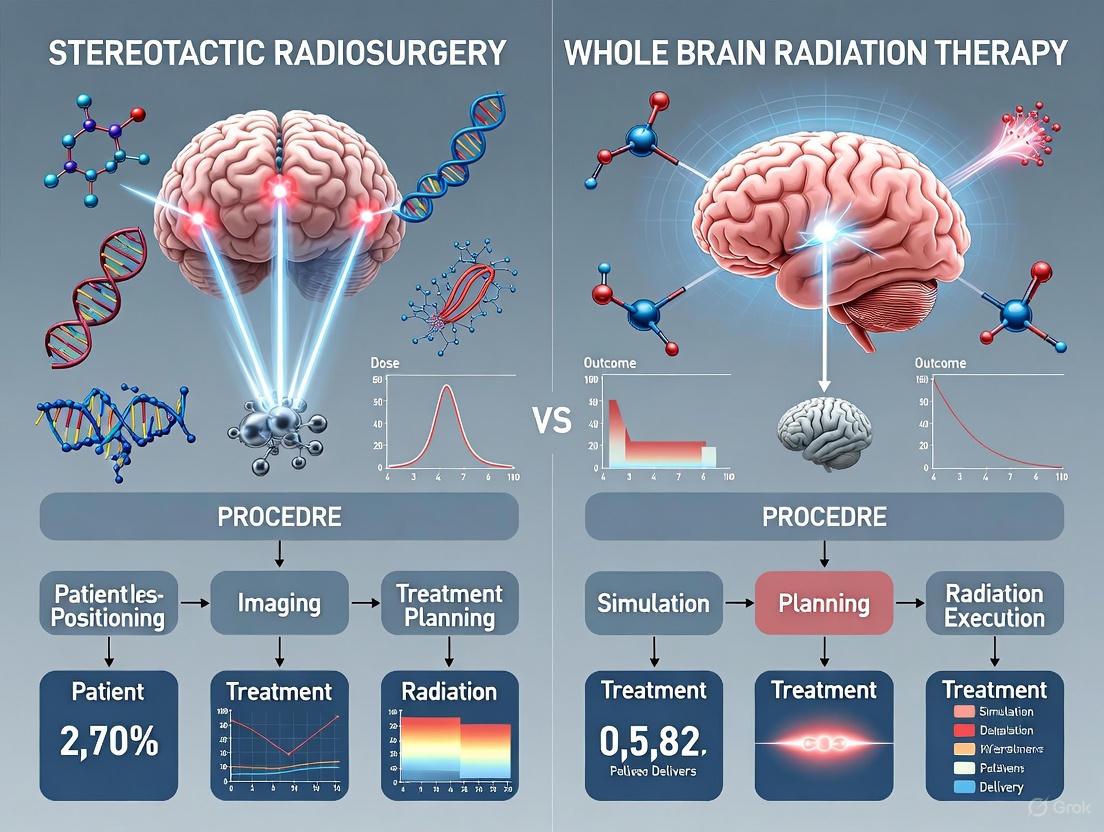
This article provides a comprehensive, evidence-based analysis of stereotactic radiosurgery (SRS) and whole-brain radiation therapy (WBRT) for brain metastases, synthesizing the latest clinical guidelines and research findings from 2024-2025.
Stereotactic Radiosurgery vs. Whole-Brain Radiation for Brain Metastases: A 2025 Evidence-Based Guide for Researchers and Clinicians
Abstract
This article provides a comprehensive, evidence-based analysis of stereotactic radiosurgery (SRS) and whole-brain radiation therapy (WBRT) for brain metastases, synthesizing the latest clinical guidelines and research findings from 2024-2025. It covers foundational radiobiology and evolving practice patterns, detailed methodological applications across tumor types, strategies for optimizing outcomes and mitigating toxicity, and comparative validation of therapeutic efficacy and safety. Aimed at researchers, scientists, and drug development professionals, the content explores current disparities in access, emerging technological platforms, and the implications of recent data for future clinical trials and combination therapy development.
Brain Metastasis Management: Radiobiology, Prognostic Classifications, and Evolving Practice Patterns
Radiation therapy (RT) is a cornerstone of cancer treatment, with approximately half of all cancer patients benefiting from it [1]. The fundamental goal of RT is to eradicate tumor cells while minimizing damage to surrounding healthy tissues, a balance quantified by the therapeutic ratio [1]. Highly conformal radiotherapy techniques, such as stereotactic radiosurgery (SRS) and stereotactic body radiation therapy (SBRT), represent significant advancements in achieving this goal. These techniques deliver high doses of radiation with sub-millimeter accuracy to discrete intracranial tumors, making SRS the standard of care for patients with a limited number of brain metastases [2] [3].
The radiobiological principles underlying these advanced techniques differ fundamentally from conventional radiotherapy. While all ionizing radiation kills cells primarily through DNA damage that leads to apoptosis or mitotic death [1], highly conformal techniques utilize high dose-per-fraction treatments that engage additional cell death pathways and cause distinct effects on tumor vasculature. This review examines the DNA damage mechanisms and vascular effects of highly conformal radiotherapy, particularly within the context of treating brain metastases, and provides a comparative analysis with whole-brain radiation therapy (WBRT).
DNA Damage Mechanisms in Conventional vs. Highly Conformal Radiotherapy
Fundamental DNA Damage Pathways
Ionizing radiation transfers energy to atoms and molecules in cells, causing ionizations that break chemical bonds in DNA [4]. This damage can manifest as:
- Single-strand breaks (SSBs): One DNA strand is broken, which can be readily repaired using the opposite strand as a template.
- Double-strand breaks (DSBs): Both DNA strands are broken, representing the most significant lethal lesion that can lead to chromosomal aberrations and cell death [4].
The probability of DNA cell survival decreases as radiation dose increases, forming the basis of radiation oncology dose prescription [1]. Different radiation types cause varying degrees of biological damage, even at the same physical dose, a concept described by the relative biological effectiveness (RBE) [4].
Unique Aspects of High-Dose Hypofractionation
Highly conformal techniques like SRS and SBRT typically employ hypofractionation, delivering much higher doses per fraction (often >5-20 Gy) compared to conventional RT (1.8-2 Gy per fraction) [4]. This approach creates distinct biological effects:
Table 1: Comparison of DNA Damage Responses
| Characteristic | Conventional Fractionation | Highly Conformal Hypofractionation |
|---|---|---|
| Dose per Fraction | 1.8-2 Gy [4] | 5-24+ Gy (e.g., 21 Gy in 3 fractions) [5] |
| Primary Lethal Damage | Predominantly DNA double-strand breaks [1] | DNA double-strand breaks plus additional mechanisms |
| Repair Dynamics | Significant sublethal damage repair between fractions | Overwhelmed repair mechanisms due to high dose per fraction |
| Indirect Effects | Moderate indirect cell death via vascular damage | Enhanced indirect cell death via pronounced vascular damage |
The biological rationale for hypofractionation includes shortening the overall treatment time to anticipate tumor cell proliferation/repopulation [4]. This approach has become feasible due to precision radiation techniques that optimize radiation dose distribution and minimize exposure to normal tissues [4].
Vascular Effects and Microenvironmental Changes
Differential Vascular Responses to Radiation Dose
The vascular effects of radiation are critically dependent on dose and fractionation. Conventional fractionation primarily causes endothelial cell apoptosis through the acid sphingomyelinase pathway, but this occurs slowly over hours to days, allowing for some functional recovery [1]. In contrast, high-dose hypofractionation used in SRS/SBRT induces rapid and extensive endothelial cell apoptosis, leading to pronounced vascular dysfunction and contributing to tumor cell death.
Signaling Pathways in Radiation-Induced Vascular Damage
The following diagram illustrates key signaling pathways activated by high-dose radiation in endothelial cells and their consequences for tumor vasculature.
Comparative Analysis: SRS vs. WBRT for Brain Metastases
Radiobiological Principles in Clinical Practice
The management of brain metastases represents a complex therapeutic challenge, with SRS emerging as the cornerstone for most patients with oligometastatic central nervous system involvement (one to four brain metastases) [2]. The shift from WBRT to SRS represents a fundamental change in radiobiological approach.
Table 2: Radiobiological Comparison of SRS and WBRT for Brain Metastases
| Parameter | Stereotactic Radiosurgery (SRS) | Whole-Brain Radiotherapy (WBRT) |
|---|---|---|
| Dose/Fraction | High dose per fraction (e.g., 15-24 Gy single or 21-27 Gy in 3-5 fractions) [5] | Conventional fractionation (typically 1.8-3 Gy/fraction, total 30-37.5 Gy) [6] |
| Target Volume | Focal, precise tumor targeting with rapid dose fall-off [2] | Entire brain volume irradiation [6] |
| Primary Cell Death Mechanism | Direct tumor cell kill plus vascular damage mechanism [1] | Predominantly direct DNA damage and reproductive cell death [1] |
| Effects on Normal Tissue | Minimal dose to uninvolved brain [6] | Significant dose to entire normal brain parenchyma [6] |
| Cognitive Impact | Preserves neurocognition [2] | Higher risk of neurocognitive decline [6] [2] |
| Therapeutic Ratio | High for discrete lesions [2] | Limited by normal tissue tolerance [1] |
Impact on Normal Tissue and Cognitive Function
A critical advantage of SRS over WBRT lies in its sparing of normal brain tissue, which directly impacts cognitive outcomes. Studies comparing whole-brain dose during stereotactic radiosurgery for multiple metastases across technology platforms reveal that irradiation of the uninvolved brain is considerably less on dedicated cranial SRS devices compared to multi-purpose systems [6]. This is clinically significant given the growing recognition of lower-dose radiation's deleterious effects on cognitive function [6].
Randomized clinical trials have demonstrated that patients with 1 to 3 brain metastases experience significantly better cognitive preservation with SRS alone compared to SRS plus WBRT [2]. This preservation of neurocognition comes without sacrificing overall survival, making SRS the preferred approach for patients with limited brain metastases [2].
Experimental Models and Research Methodologies
Key Experimental Approaches
Research into the radiobiology of highly conformal radiotherapy utilizes various experimental models:
- In vitro cell culture models: Used to study DNA damage repair kinetics and dose-rate effects
- Animal tumor models: Employed to investigate vascular effects and tumor control probabilities
- Clinical trials and retrospective analyses: Provide human data on treatment efficacy and toxicity
The Scientist's Toolkit: Essential Research Reagents and Materials
Table 3: Key Research Reagents and Experimental Materials
| Reagent/Material | Function/Application | Examples in Research |
|---|---|---|
| γ-H2AX Antibodies | Detection of DNA double-strand breaks via immunofluorescence | Quantifying radiation-induced DNA damage in tumor and endothelial cells |
| Clonogenic Assay Reagents | Assessment of reproductive cell death and survival fractions | Determining survival curves after high-dose radiation exposures |
| Animal Tumor Models | In vivo studies of tumor control and normal tissue toxicity | Evaluating vascular effects and therapeutic ratio of different fractionation schemes |
| Immune Checkpoint Inhibitors | Investigating combinations with radiotherapy | Studying abscopal effects and immune activation post-SRS [7] |
| Cellular Senescence Markers | Detection of therapy-induced senescence | Assessing alternative cell fate decisions after high-dose radiation |
Emerging Technologies and Future Directions
FLASH Radiotherapy
FLASH radiotherapy delivers doses at extremely high dose rates, typically above 40 Gy s⁻¹, compared to conventional dose rates of <0.5 Gy s⁻¹ [1]. This rapid delivery has been shown to selectively reduce normal tissue damage while maintaining effective tumor control in preclinical studies [1] [8]. The biological mechanisms underlying this "FLASH effect" are not fully understood but may involve differential oxygen depletion or specific immune modulations in normal versus tumor tissues.
Combination Therapies
Combining highly conformal radiotherapy with targeted agents or immunotherapy represents a promising frontier. The European Society for Medical Oncology (ESMO) and European SocieTy for Radiotherapy and Oncology (ESTRO) have developed frameworks for assessing the interactions and safety of combining radiotherapy with these systemic therapies [7]. Potential benefits include enhanced immunogenic cell death and abscopal effects, where localized radiation triggers systemic anti-tumor responses [7].
The concurrent delivery of SRS with precision medicine and/or immunotherapy requires further refinements to fully optimize patient outcomes [3]. As targeted therapies with improved central nervous system penetration continue to develop, the optimal sequencing of these agents with SRS remains an active area of investigation [2].
The radiobiology of highly conformal radiotherapy techniques like SRS involves complex DNA damage mechanisms and vascular effects that differ substantially from conventional fractionation. The high doses per fraction used in these approaches overwhelm cellular repair mechanisms and induce significant vascular damage, contributing to their high efficacy. When applied to brain metastases, SRS provides excellent local control while preserving neurocognitive function compared to WBRT, representing a significant advancement in the therapeutic ratio. Future research directions include FLASH radiotherapy, combination therapies with targeted agents and immunotherapy, and continued refinements in dose protocols to further improve outcomes for cancer patients with brain metastases.
The management of brain metastases, the most common type of intracranial tumor and a leading cause of mortality in patients with systemic cancer, represents a significant challenge in neuro-oncology [9]. For decades, whole-brain radiotherapy (WBRT) served as the primary radiation-based treatment for brain metastases, founded on the principle that hematogenous dissemination likely affects the entire brain with micrometastatic disease [10]. However, the significant neurocognitive adverse effects associated with WBRT have prompted a rigorous re-evaluation of this standard [11].
In recent years, stereotactic radiosurgery (SRS) has emerged as a transformative alternative, leveraging high-precision, conformal dose distributions to target individual metastases while sparing surrounding healthy brain tissue [9]. This shift from a comprehensive to a targeted approach represents a fundamental evolution in neuro-oncology, moving toward personalized treatment strategies that prioritize not only survival but also cognitive preservation and quality of life. The growing research interest in this field is evidenced by an exponential increase in publications, with the United States leading as the most productive country, followed by China, Germany, and Canada [9].
This guide objectively compares the efficacy, safety, and clinical applications of SRS versus WBRT by synthesizing evidence from recent systematic reviews, meta-analyses, and clinical trials, providing researchers and drug development professionals with a clear framework for understanding this evolving landscape.
Comparative Efficacy and Safety Analysis
Table 1: Key Efficacy and Safety Outcomes of SRS vs. WBRT for Brain Metastases
| Outcome Measure | SRS Performance | WBRT Performance | Statistical Significance | References |
|---|---|---|---|---|
| Overall Survival | Longer survival (MD: 4.38 months) | Shorter survival | P < 0.00001 | [12] |
| 1-Year Survival | No significant difference | No significant difference | RR = 1.03, P = 0.76 | [10] |
| Local Intracranial Control | Improved control | Lesser control | RR = 1.20, P = 0.04 | [12] |
| Distant Brain Control | Increased risk of failure | Better control | RR = 2.03, P = 0.07 (NS) | [11] |
| Leptomeningeal Disease | Higher risk | Lower risk | HR = 3.09, P = 0.003 | [10] |
| Neurocognitive Preservation | Superior outcomes | Significant decline | Consistent findings | [12] [11] |
| Neurologic Death (SCLC) | Lower incidence (11.0% at 1 yr) | Higher incidence (17.5% at 1 yr) | - | [13] |
MD: Mean Difference; RR: Risk Ratio; HR: Hazard Ratio; NS: Not Statistically Significant; SCLC: Small Cell Lung Cancer
Critical Outcome Domain Comparisons
Survival and Tumor Control
Meta-analyses of 35 studies encompassing approximately 26,000 patients demonstrate that SRS is linked to significantly longer survival times, with a mean difference of 4.38 months compared to WBRT [12]. This survival benefit, however, appears influenced by study design, as it was predominantly observed in retrospective analyses, while evidence from randomized controlled trials (RCTs) more often indicates similar survival times between the two modalities [12] [10]. Regarding tumor control, SRS provides superior local intracranial control, significantly reducing recurrence at the original site [12]. Conversely, WBRT demonstrates a superior ability to prevent new metastases in other parts of the brain, a finding consistently reported across studies [11] [12].
Adverse Events and Quality of Life
The most compelling driver of the shift toward SRS is its superior safety profile, particularly regarding neurocognitive outcomes. WBRT is associated with significant adverse effects on cognitive function, including memory decline and intellectual loss, primarily due to its extensive irradiation field [9]. SRS, by precisely targeting lesions, effectively spares healthy brain tissue, resulting in equal or superior neurocognitive function and quality of life compared to WBRT [11]. This key advantage makes SRS particularly recommended for patients where preserving quality of life and long-term cognitive function is a primary concern [12]. A notable trade-off is that SRS is associated with a statistically significant increased risk of leptomeningeal disease (LMD) compared to WBRT, with one meta-analysis reporting a hazard ratio of 3.09 [10].
Experimental Protocols and Methodologies
Clinical Trial Design
Recent prospective clinical trials have established rigorous methodologies for comparing SRS and WBRT. A pivotal phase 2 trial (NCT03391362) for patients with small cell lung cancer (SCLC) and 1-10 brain metastases employed strict patient selection criteria, enrolling adults with 1 to 6 intracranial lesions and excluding those with leptomeningeal disease or an inability to undergo contrast-enhanced MRI [13].
The SRS intervention was meticulously standardized. Treatment was delivered with volumetric modulated arc therapy on a linear accelerator. Dosing was based on tumor size: tumors <2 cm received 20 Gy in 1 fraction; larger tumors received fractionated regimens (e.g., 30 Gy in 5 fractions) to maintain a volume of surrounding brain receiving 12 Gy (V12) at less than 10 cm³, a key metric for minimizing radionecrosis [13]. The primary endpoint was rigorously defined as neurologic death, marked by progressive radiographic brain progression with corresponding neurological symptoms in the absence of life-threatening systemic disease progression [13].
Systematic Review and Meta-Analysis Protocol
The comprehensive evidence summarized in this guide is largely derived from systematic reviews and meta-analyses conducted according to the PRISMA (Preferred Reporting Items for Systematic Reviews and Meta-Analyses) guidelines [12] [11] [10]. These studies shared a common PICO framework:
- Population (P): Adults with single or multiple brain metastases.
- Intervention (I): Postoperative or definitive SRS.
- Comparison (C): Postoperative or definitive WBRT.
- Outcomes (O): Local/distant recurrence, leptomeningeal disease, overall survival, and neurocognitive function.
Investigators systematically searched electronic databases such as PubMed, Scopus, Web of Science, and Cochrane CENTRAL. Identified studies were screened for eligibility, and data were extracted using standardized forms. Statistical synthesis was performed using Review Manager software (v5.2/5.3), employing random-effects or fixed-effect models based on heterogeneity (I² statistic). Risk of bias was assessed using tools like the Cochrane Risk of Bias Tool for RCTs and the Newcastle-Ottawa Scale for cohort studies [11] [10].
Visualization of Research Workflows
Clinical Decision Pathway
The following diagram illustrates a modern decision-making pathway for managing brain metastases, integrating evidence from recent studies.
Clinical Decision Pathway for Brain Metastases
Research Methodology Workflow
The diagram below outlines the standard methodology for conducting systematic reviews and meta-analyses in this field, as referenced in this guide.
Systematic Review and Meta-Analysis Workflow
The Scientist's Toolkit: Essential Research Reagents and Materials
Table 2: Key Reagents and Technologies in SRS vs. WBRT Research
| Tool/Reagent | Primary Function | Research Application |
|---|---|---|
| Linear Accelerator (LINAC) | Delivery of precise, high-dose radiation | Primary device for performing SRS; enables volumetric modulated arc therapy (VMAT) [13] |
| Contrast-Enhanced MRI | High-resolution visualization of brain metastases | Essential for treatment planning, follow-up surveillance, and detecting leptomeningeal disease [13] |
| Volumetric Modulated Arc Therapy (VMAT) | Advanced form of intensity-modulated radiotherapy | Delivers SRS with continuous modulation for highly conformal dose distribution [13] |
| Review Manager (RevMan) | Statistical software for meta-analysis | Used to pool study data, generate forest plots, and calculate pooled effect estimates [12] [11] |
| Karnofsky Performance Status (KPS) | Functional scale to assess patient's wellbeing | Key patient selection criterion in clinical trials (e.g., KPS > 70%) [11] |
| Cochrane Risk of Bias Tool | Methodological quality assessment | Standard tool for evaluating risk of bias in randomized controlled trials [11] [10] |
| Newcastle-Ottawa Scale (NOS) | Quality assessment for cohort studies | Used to evaluate the quality of non-randomized studies in meta-analyses [11] [10] |
| PRISMA Guidelines | Reporting standards for systematic reviews | Ensures transparent and complete reporting of the review process [12] [10] |
The evidence synthesized in this guide firmly establishes Stereotactic Radiosurgery (SRS) as a safe and effective alternative to Whole-Brain Radiotherapy (WBRT) for many patients with brain metastases, particularly those with limited lesions. The paradigm is shifting toward SRS due to its equivalent or superior survival outcomes, superior neurocognitive preservation, and lower rates of neurologic death, despite its trade-offs of higher distant brain failure and leptomeningeal disease risk [12] [13] [10].
Future research will focus on several emerging frontiers. Immunoadjuvant therapy, biological effective dose optimization, and radionecrosis management are identified as current hot topics [9]. Furthermore, the development of artificial intelligence (AI) tools to assist in SRS treatment planning is underway, promising to further refine precision and efficiency [9]. Prospective randomized trials, especially in disease-specific cohorts like small cell lung cancer, remain crucial to confirm the encouraging results from recent phase 2 and large retrospective studies, ultimately solidifying the role of SRS in modern neuro-oncology [13] [14].
Critical Prognostic Classifications and Patient Stratification in 2025
The management of brain metastases has evolved significantly from a one-size-fits-all approach to highly personalized treatment strategies. Within the critical research domain comparing stereotactic radiosurgery (SRS) with whole-brain radiotherapy (WBRT), prognostic classification systems have emerged as essential tools for patient stratification, therapeutic decision-making, and clinical trial design. These systems integrate clinical, molecular, and treatment-specific variables to predict survival outcomes and treatment responses, enabling clinicians to optimize the risk-benefit ratio of increasingly diverse therapeutic options. The evolving landscape of brain metastasis treatment, characterized by the rise of targeted therapies and immunotherapies with enhanced intracranial efficacy, has further heightened the importance of robust prognostic models that reflect contemporary practice patterns [15]. This guide systematically compares the predominant prognostic classifications used in 2025, detailing their core components, validation status, and application within clinical and research settings, particularly for stratifying patients between SRS and WBRT treatment pathways.
Comparative Analysis of Major Prognostic Classifications
Established and Emerging Prognostic Scores
Table 1: Core Prognostic Classification Systems for Brain Metastases
| Classification Name | Key Prognostic Variables | Primary Clinical Utility | Validation in Modern Cohorts |
|---|---|---|---|
| Graded Prognostic Assessment (GPA) | Age, Karnofsky Performance Status (KPS), number of brain metastases, extracranial metastases [15] | Original: General survival predictionUpdated: Diagnosis-specific (ds-GPA) and molecular (lung-molGPA) versions [16] [15] | Remains widely used; ds-GPA for melanoma predictive for OS and WBRT indication in SRS cohorts [16] |
| Basic Score for Brain Metastases (BSBM) | KPS, control of primary tumor, presence of extracranial metastases [17] | Rapid assessment of survival probability | Correlates well with overall survival post-SRS; predictive for OS in contemporary studies [16] [17] |
| Recursive Partitioning Analysis (RPA) | Age, KPS, control of primary tumor, presence of extracranial metastases [16] | Broad risk categorization (Classes I-III) | Largely derived from historical cohorts; less reflective of current SRS + systemic therapy standards [16] |
| Brain Metastasis Velocity (BMV) | The interval between initial brain-directed therapy and the development of new metastases, divided by the number of new metastases [16] | Predicts outcomes after initial brain metastasis treatment; identifies candidates for repeated SRS vs. early WBRT | Highly predictive for both OS and WBRT indication across all tumor types in the 2025 CYBER-SPACE trial; prognostic through multiple recurrences [16] |
Performance Metrics and Clinical Applicability
Table 2: Quantitative Performance and 2025 Recommendations
| Score | Predictive Value for Overall Survival (OS) | Predictive Value for WBRT Indication | Key 2025 Insights and Recommendations |
|---|---|---|---|
| GPA/ds-GPA | Strong, diagnosis-specific (e.g., melanoma ds-GPA: p=0.014) [16] | Moderate (e.g., melanoma ds-GPA: p=0.042) [16] | Foundation for initial stratification; molecularly informed versions are preferred [15] |
| BSBM | Strong (p=0.0011) [16] | Not predictive in latest analysis [16] | Useful for quick initial triage but should be supplemented with other tools for WBRT decisions [16] |
| RPA/mRPA | Variable | Not well-established | Losing relevance in the context of modern SRS and targeted therapy paradigms [16] |
| BMV | Highly predictive (p < 0.0001) [16] | Highly predictive (p < 0.0001) [16] | Emerged as the most robust score in 2025 for predicting both OS and need for WBRT across tumor types; endpoint-specific cut-offs aid SRS/WBRT decisions [16] |
Experimental Protocols and Validation Methodologies
Validation in a Contemporary SRS Cohort: The CYBER-SPACE Trial Analysis
A 2025 secondary analysis of the randomized phase II CYBER-SPACE trial provides a seminal protocol for validating prognostic scores in patients treated with modern paradigms. This trial investigated upfront and repeated SRS for up to ten simultaneous brain metastases during systemic therapy, with a goal of avoiding WBRT [16].
- Patient Population: The study enrolled 202 patients with common primary tumors including non-small cell lung cancer (63%), melanoma (16%), and breast cancer (10%). This reflects a contemporary population receiving effective systemic therapies [16].
- Intervention: Patients were treated with SRS, which could be repeated upon the development of new metastases, rather than proceeding immediately to WBRT [16].
- Comparative Methodology: Researchers calculated eight established prognostic scores (RPA, m-RPA, GPA, ds-GPA, lung-mol GPA, BSBM, SIR, and BMV) for each patient. The BMV score was uniquely calculated at first through fourth distant brain failure, acknowledging the iterative nature of modern metastasis treatment [16].
- Statistical Analysis: The predictive value of each score for overall survival (OS) and WBRT indication (defined as >10 simultaneous BMs or leptomeningeal disease) was analyzed using Kaplan-Meier analyses and log-rank tests. This dual-endpoint approach is critical for assessing both survival and quality-of-life preservation [16].
- Key Findings: The BMV score was the only one that consistently predicted both OS and WBRT indication across all tumor types. Researchers identified two distinct, endpoint-specific BMV cut-offs, offering a new data-driven method for deciding between continued SRS and switching to WBRT [16].
Meta-Analytic Comparison of SRS vs. WBRT Outcomes
A 2025 systematic review and meta-analysis offers a protocol for synthesizing evidence on the efficacy and safety of SRS versus WBRT, providing critical outcome data for prognostic model development.
- Search Strategy: Researchers systematically searched electronic databases including PubMed, Scopus, Web of Science, and Cochrane CENTRAL to identify relevant comparative studies. This comprehensive approach ensured inclusion of both randomized and observational data [12].
- Inclusion Criteria and Data Synthesis: The analysis included 35 studies (8 RCTs, 27 observational) encompassing 26,000 patients. Data were extracted using a standardized sheet and analyzed with RevMan software to generate pooled effect estimates for survival, local control, and adverse events [12].
- Outcome Measures: The protocol assessed overall survival, local intracranial control, distant intracranial control, time to intracranial progression, and safety profiles. This multi-dimensional outcome assessment is essential for holistic prognostic model development [12].
- Key Findings: The analysis found that SRS was associated with longer survival (mean difference of 4.38 months) and improved local intracranial control compared to WBRT, though it carried a higher risk of distant brain recurrences and leptomeningeal disease. These trade-offs must be incorporated into modern prognostic models [12] [10].
The Scientist's Toolkit: Essential Research Reagents and Materials
Table 3: Key Reagents and Materials for Brain Metastases Prognostics Research
| Tool/Reagent | Primary Function in Research | Application Context |
|---|---|---|
| NeuroPoint Alliance (NPA) SRS Registry | Prospective, multi-institutional database for collecting patient demographics, treatment details, and outcomes [18] | Provides real-world data for validating prognostic scores and analyzing quality of life outcomes post-SRS [18] |
| EuroQol-5 Dimension (EQ-5D) Questionnaire | Patient-reported outcome measure capturing mobility, self-care, usual activities, pain/discomfort, anxiety/depression [18] | Converts patient health status into a utility index (0-1) for Quality-Adjusted Life Year (QALY) calculations in comparative effectiveness research [18] |
| Response Assessment in Neuro-Oncology Brain Metastasis (RANO-BM) Criteria | Standardized radiographic assessment of tumor response [18] | Defines local progression as ≥72.8% volume increase from baseline; critical for consistent endpoint measurement across studies [18] |
| Karnofsky Performance Status (KPS) | Functional assessment scale (0-100) evaluating patient's ability to perform daily activities [17] | Core component of nearly all prognostic scores; strong independent predictor of survival in multivariate analyses [17] |
| Diagnosis-Specific Molecular Markers | EGFR, ALK, BRAF, HER2, ER/PR status for treatment selection and prognosis [19] [17] | Informs targeted therapy choices; incorporated into modern prognostic indices like lung-molGPA [19] [15] |
Signaling Pathways and Clinical Decision-Making Logic
The following diagram illustrates the integrated clinical decision-making pathway for brain metastases management, incorporating prognostic classifications and therapeutic modalities as reflected in the 2025 guidelines.
Clinical Decision Pathway for Brain Metastases
This workflow demonstrates how prognostic scores are integrated into a dynamic treatment paradigm, where initial stratification and ongoing assessment using tools like the BMV score guide the choice between SRS and WBRT throughout the disease course.
The field of prognostic classification for brain metastases is rapidly evolving toward increasingly personalized models that incorporate molecular markers, treatment-specific variables, and dynamic measures of disease behavior. The 2025 evidence firmly establishes the Brain Metastasis Velocity (BMV) score as a critical tool for decision-making between SRS and WBRT, particularly in the context of repeated SRS applications. Future prognostic models will likely integrate traditional clinical variables with molecular data from liquid biopsies, advanced neuroimaging biomarkers, and quality-of-life metrics to provide a more comprehensive prediction of both survival and functional outcomes. As systemic therapies continue to improve, requiring ongoing validation of prognostic scores in contemporary cohorts treated with modern multimodal therapy will be essential for maintaining their clinical relevance and utility in both research and patient care.
Clinical Application and Technical Execution of SRS and WBRT Modalities
The management of brain metastases has undergone a significant paradigm shift over the past decade, moving from a one-size-fits-all approach centered on whole-brain radiotherapy (WBRT) toward more targeted, personalized strategies. Stereotactic radiosurgery (SRS) has emerged as a primary radiation technique for patients with limited brain metastases, traditionally defined as 1-4 lesions. However, growing evidence and technological advancements are rapidly expanding SRS applications to include patients with extensive intracranial disease burden, challenging previous numerical thresholds [20].
This evolution is driven by increased recognition of neurocognitive preservation needs in cancer patients whose survival is extending due to improved systemic therapies. While WBRT historically constituted the standard for most brain metastases, it has been associated with significant decline in neuro-cognitive function and poor quality of life, primarily mediated through parenchymal brain volume loss and hippocampal toxicity [21] [22]. SRS offers a fundamentally different approach by delivering highly conformal, high-dose radiation to specific metastatic sites while minimizing dose to surrounding healthy brain tissue.
The purpose of this comparison guide is to objectively evaluate the performance of SRS against WBRT across the spectrum of disease burden, with particular focus on the expanding role of SRS for multiple brain metastases. We synthesize current evidence, technical protocols, and clinical guidelines to provide researchers and drug development professionals with a comprehensive framework for understanding this rapidly evolving therapeutic landscape.
Comparative Clinical Outcomes: SRS Versus WBRT
Efficacy and Tumor Control Metrics
Local and Distant Control Recent meta-analyses of studies comparing WBRT and SRS in patients with intracranial metastases have revealed no statistically significant differences in local control (risk ratio [RR] = 0.70, 95% confidence interval [CI] 0.46-1.06) or distant recurrence rates (RR = 0.83, 95% CI 0.54-1.28, P = 0.41) between the two modalities [21]. This equivalent efficacy in tumor control has been a fundamental driver behind the shift toward SRS, particularly for patients with limited disease burden where focal treatment can achieve comparable outcomes to whole-brain irradiation.
Survival Outcomes Pooled data demonstrate no significant differences in survival rates at 1 year (RR = 1.03, 95% CI 0.83-1.29, P = 0.76) and 5 years (RR = 0.89, 95% CI 0.39-2.04, P = 0.78) between WBRT and SRS [21]. However, a nuanced analysis suggests that SRS patients may experience longer overall survival when measured in months, though this finding requires further validation through prospective studies [21].
Leptomeningeal Disease Considerations One significant finding from recent evidence is that SRS is associated with a greater risk of post-radiation leptomeningeal disease (LMD) compared to WBRT (hazard ratio [HR] = 3.09, 95% CI 1.47-6.49, P = 0.003) [21]. This elevated risk underscores the importance of careful patient selection and monitoring, particularly for certain cancer subtypes. For instance, a 2025 study by Vaziri et al. reported that 13.3% of patients with extensive brain metastases developed LMD at a median onset of 12 months, with significantly higher risk observed in breast cancer patients (OR 4.20, 95% CI 1.19-14.87, p = 0.026) [23].
Table 1: Key Efficacy and Safety Outcomes from Recent Meta-Analyses and Clinical Studies
| Outcome Measure | SRS Performance | WBRT Performance | Statistical Significance | Study References |
|---|---|---|---|---|
| Local Recurrence | RR = 0.70 | Reference | P = NS | [21] |
| Distant Recurrence | RR = 0.83 | Reference | P = 0.41 | [21] |
| 1-Year Survival | RR = 1.03 | Reference | P = 0.76 | [21] |
| 5-Year Survival | RR = 0.89 | Reference | P = 0.78 | [21] |
| Leptomeningeal Disease | HR = 3.09 | Reference | P = 0.003 | [21] |
| Brain Volume Loss | -2.11% | -3.93% | P = 0.038 | [22] |
| Neurological Symptom Control | 61% improvement/stabilization | N/A | N/A | [24] |
Toxicity and Functional Outcomes
Neurocognitive Preservation A critical advantage of SRS over WBRT lies in its superior neurocognitive preservation profile. Quantitative imaging analysis has demonstrated that WBRT induces significantly increased brain volume loss (BVL) when compared with SRS. Patients treated with WBRT experienced an average percent change (APC) in brain volume of -3.93%, while patients treated with SRS experienced significantly reduced APC of -2.11% (p=.038) [22]. At one year post-treatment, overall rates of BVL differed significantly between WBRT (-3.14%) and SRS cohorts (-0.77%, p = .002) [22]. This structural preservation correlates with clinically meaningful benefits in cognitive function and quality of life metrics.
Neurological Symptom Control For patients with multiple brain metastases, SRS has demonstrated substantial efficacy in neurological symptom management. A 2025 prospective registry study of single-isocenter dynamic conformal arc SRS for multiple brain metastases reported neurological symptom improvement or stabilization in 61% of treated patients [24]. This highlights that despite being a focal treatment approach, SRS can effectively palliate multifocal neurological symptoms, challenging the traditional dogma that widespread disease necessarily requires comprehensive whole-brain irradiation.
SRS for Extensive Brain Metastases: Evidence and Technical Considerations
Outcomes in High-Disease-Burden Populations
The application of SRS to patients with extensive brain metastases (typically defined as ≥10-15 lesions) represents the most significant expansion of indications in recent years. A 2025 retrospective analysis of 90 patients with ≥15 SRS-treated brain metastases found the approach to be both safe and feasible, with a median overall survival of 17 months (95% CI 9.46-24.54) and a 1-year overall survival of 64% [23]. Notably, 68.8% of these high-burden patients did not require subsequent WBRT, achieving a 1-year freedom from whole-brain radiotherapy (FFW) rate of 75.1% [23].
Interestingly, in this extensive disease population, the number of metastatic lesions alone did not significantly associate with survival (p = 0.337) [23] [24]. Instead, the total planning target volume (PTV) emerged as a more prognostically significant factor (p = 0.008), with patients having total PTV ≤ 10 cm³ experiencing significantly longer survival than those with larger volumes (p = 0.007) [24]. This finding suggests that total tumor volume rather than lesion count may be a more appropriate metric for patient selection and prognostication.
Histopathological Considerations The efficacy of SRS across different primary cancer types varies considerably. In the extensive metastases cohort, significant survival differences emerged between pathological subtypes, particularly between adenocarcinomas of the lung and squamous cell carcinomas (p = 0.0003) [24]. This underscores the importance of considering primary histology when evaluating SRS outcomes, potentially reflecting underlying biological aggressiveness and responsiveness to radiation across different cancer types.
Technical Advances Enabling Extensive Metastases Treatment
Single-Isocenter Multi-Target (SIMT) Techniques The development of dynamic conformal arc (DCA) SRS using a single-isocenter multi-target (SIMT) approach has revolutionized the efficiency of treating numerous metastases. This technique enables treatment of a large number of lesions over dramatically shortened time periods—for example, irradiation of ten metastases can be completed in as little as 20 minutes in a single fraction [24]. This efficiency is crucial for patients with extensive disease who may have limited tolerance for prolonged treatment sessions due to neurological symptoms or general debilitation.
Dosimetric and Planning Considerations The SIMT technique demonstrates favorable dosimetric characteristics despite its efficiency. A prospective registry study of 123 patients with 560 metastatic CNS lesions treated with DCA-SIMT SRS reported local control in 93% of lesions, with a median global V12 (volume of healthy brain tissue receiving 12 Gy) of 11.6 cm³, which was not associated with increased toxicity [24]. This suggests that despite the technical compromises inherent in single-isocenter approaches for multiple scattered targets, modern planning algorithms can maintain favorable therapeutic ratios.
Experimental Protocols and Methodologies
Systematic Review and Meta-Analysis Protocol
Recent comparative evidence between SRS and WBRT derives from rigorous systematic reviews and meta-analyses conducted according to PRISMA (Preferred Reporting Items for Systematic Reviews and Meta-Analyses) guidelines [21]. The protocol for such analyses typically includes:
Search Strategy: Comprehensive database searches of PubMed, Scopus, and Web of Science using structured Boolean queries combining terms for stereotactic radiosurgery and whole-brain radiotherapy, limited to studies directly comparing both modalities in patients with intracranial metastases.
Screening Process: Utilization of systematic review software (e.g., Rayyan) for selection, screening, and duplicate removal, with multiple independent reviewers conducting title/abstract screening and full-text eligibility assessment based on predetermined PICO (Population, Intervention, Comparison, Outcome) criteria.
Quality Assessment: Application of standardized tools including the Newcastle-Ottawa Scale for cohort studies, Cochrane Rob-2 tool for randomized controlled trials, and Robins-I tool for non-randomized clinical trials, with conflicts resolved through third reviewer consultation.
Statistical Analysis: Employment of random-effect models for heterogeneous outcomes and fixed-effect models for homogenous outcomes, with calculation of pooled risk ratios or hazard ratios for categorical data, assessment of heterogeneity using I² statistics, and performance of sensitivity analyses to resolve heterogeneity when detected.
Clinical Trial Design for Multiple Metastases
Population Definition: Recent trials have specifically enrolled patients with 5-20 brain metastases, challenging previous numerical limits. The Aizer et al. trial presented at ASCO 2025 (a multicenter phase 3 randomized trial comparing SRS to hippocampal avoidance WBRT in patients with 5-20 brain metastases) established new standards for this population [25].
Endpoint Selection: Modern trials emphasize not only traditional survival and local control endpoints but also incorporate patient-centered outcomes including quality of life measures, neurocognitive function preservation, and time to neurocognitive failure.
Technical Standardization: Protocols typically specify LINAC-based delivery systems (e.g., Varian Truebeam), positioning correction techniques (e.g., ExacTrac system), and treatment planning platforms (e.g., Brainlab Elements Multiple Brain Mets SRS) to ensure consistency across participating centers [24].
Imaging and Radiomic Analysis Protocols
Volume Assessment Methodology: Quantitative brain volume loss analysis requires high-resolution T1 MRI sequences obtained pre-treatment and at standardized follow-up intervals (e.g., 3, 6, and 12 months post-treatment). Auto-contouring software with manual correction is employed to segment whole brain regions above the foramen magnum, with calculation of percent volume changes between timepoints.
Radiomic Feature Extraction: Advanced imaging analysis involves extraction of 3D radiomic features from pre-treatment T1 MRIs, with subsequent correlation to patterns of brain volume loss following treatment. Specific radiomic features have been identified with statistically significant differences in expression between patients experiencing "rapid" versus "slow" brain volume loss patterns [22].
The Scientist's Toolkit: Essential Research Reagents and Materials
Table 2: Key Research Reagent Solutions for Brain Metastases Radiosurgery Research
| Tool Category | Specific Examples | Research Function | Technical Notes |
|---|---|---|---|
| Treatment Planning Systems | Brainlab Elements Multiple Brain Mets SRS (v2.0) | Multi-target SRS planning with automated contouring and dose optimization | Enables efficient planning for >10 targets; incorporates GPU-acceleration for rapid calculation |
| Radiation Delivery Platforms | Varian Truebeam LINAC with HyperArc | Clinical-grade SRS delivery with dynamic conformal arcs | Supports single-isocenter multi-target treatments with sub-millimeter accuracy |
| Position Verification Systems | Brainlab ExacTrac with 6D robotic couch | Intrafraction motion monitoring and correction | Essential for maintaining precision during extended multi-target treatments |
| Immobilization Devices | Thermoplastic mask systems with bite blocks | Patient positioning reproducibility | Critical for minimizing setup errors in frameless SRS approaches |
| Outcome Assessment Tools | BM-RANO (Response Assessment in Neuro-Oncology) criteria | Standardized radiographic response evaluation | Provides consistent metrics for local control across research studies |
| Toxicity Assessment Scales | CTCAE v5.0, Hopkins Verbal Learning Test | Adverse event documentation and neurocognitive function tracking | Captures both traditional toxicity and neurocognitive outcomes |
| Radiomic Analysis Software | PyRadiomics, 3D Slicer with customized feature extraction | Quantitative imaging biomarker discovery | Identifies pre-treatment patterns predictive of treatment response/toxicities |
Integration with Evolving CNS Guidelines
The Congress of Neurological Surgeons (CNS) has recently updated its guidelines in 2025 to reflect the expanding role of SRS and other focal therapies in managing metastatic brain tumors [26] [19]. These evidence-based recommendations highlight several significant shifts:
Combination Therapies: The guidelines now specifically recommend combining EGFR tyrosine kinase inhibitors with radiation therapy (either WBRT or SRS) in patients with brain metastases from EGFR-mutant NSCLC to improve overall survival, progression-free survival, and intracranial progression-free survival [19]. Similarly, for ALK mutation-positive NSCLC with untreated brain metastases, alectinib is recommended to delay time to intracranial tumor progression [19].
Immunotherapy Integration: For patients with active, untreated, asymptomatic parenchymal melanoma brain metastases, ipilimumab plus nivolumab is now recommended without radiation to improve median overall survival [19]. This reflects the growing importance of sequencing and combining SRS with modern systemic therapies.
Laser Interstitial Thermal Therapy (LITT): The updated guidelines suggest LITT as equivalent to craniotomy for tumor progression after SRS and equivalent to medical management for radiation necrosis, emphasizing the growing armamentarium of minimally invasive approaches for managing treatment sequelae [19].
Utilization Trends and Disparities in SRS Access
Analysis of the National Cancer Database reveals significant trends in SRS utilization patterns and concerning disparities in access. Between 2004 and 2020, SRS utilization rose dramatically from 8% to 54% of brain metastases patients treated with radiation (P < 0.001) [20]. This shift reflects growing clinical acceptance of SRS across diverse disease burden states.
However, significant disparities persist in SRS access. Multivariable analysis indicates SRS is less likely to be utilized in patients with lower income (aOR = 0.88, 95% CI 0.85-0.92), lower educational attainment (aOR = 0.88, 95% CI 0.85-0.92), Medicaid/Medicare coverage (aOR = 0.86, 95% CI 0.83-0.90), or no insurance (aOR = 0.49, 95% CI 0.44-0.53) [20]. Institutional factors also strongly influence access, with patients treated at community centers (aOR = 0.31, 95% CI 0.29-0.34) and comprehensive community centers (aOR = 0.56, 95% CI 0.54-0.58) significantly less likely to receive SRS compared to those at academic facilities [20].
These disparities highlight the need for targeted interventions to ensure equitable access to advanced radiation modalities, particularly as evidence continues to demonstrate the benefits of SRS across increasingly broad patient populations.
The indications for stereotactic radiosurgery have expanded substantially from their origins in limited brain metastases to include patients with extensive intracranial disease burden. Evidence from recent randomized trials, meta-analyses, and large clinical series supports this paradigm shift, demonstrating that SRS provides comparable tumor control to WBRT while better preserving neurocognitive function and quality of life.
Technical innovations in treatment planning and delivery, particularly single-isocenter multi-target approaches, have enabled efficient and precise irradiation of numerous metastases while maintaining favorable therapeutic ratios. The development of predictive models incorporating both clinical factors and quantitative imaging biomarkers may further refine patient selection and individualize treatment approaches.
For researchers and drug development professionals, these developments highlight the importance of considering SRS not merely as a competing modality but as a complementary approach that can be strategically integrated with novel systemic therapies. Future clinical trials should continue to explore optimal sequencing strategies, combination approaches with targeted agents and immunotherapies, and methods to identify patients most likely to benefit from SRS-focused treatment approaches even in the setting of extensive disease burden.
The management of brain metastases represents a significant challenge in neuro-oncology, traditionally centered on a choice between whole-brain radiotherapy (WBRT) and stereotactic radiosurgery (SRS). While WBRT provides comprehensive coverage for diffuse disease, it delivers a relatively low biological dose to visible metastases and is associated with neurocognitive toxicity. SRS delivers ablative doses to limited metastases but offers no prophylaxis against the development of new lesions elsewhere in the brain. Within this therapeutic context, the hybrid technique of WBRT with simultaneous integrated boost (WBRT-SIB) has emerged as a promising strategy that attempts to bridge the gap between these two established modalities [27] [28].
WBRT-SIB leverages advanced intensity-modulated radiotherapy (IMRT) techniques to concurrently deliver a standard WBRT dose to the entire brain while simultaneously escalating the dose to individual metastases within the same treatment session [27]. This approach aims to achieve the dual objectives of controlling visible disease with a higher biological equivalent dose (BED) while also treating microscopic disease throughout the brain. The technique is particularly relevant for patients with multiple brain metastases who are not optimal candidates for SRS alone [28]. As overall survival for cancer patients improves, the development of techniques that optimize intracranial control while minimizing cognitive side effects becomes increasingly critical. This review comprehensively examines the clinical evidence, technical implementation, and therapeutic balance offered by WBRT-SIB within the evolving landscape of brain metastasis management.
Clinical Outcomes: Comparative Efficacy of WBRT-SIB
Intracranial Control and Survival Analysis
A growing body of evidence demonstrates that WBRT-SIB significantly improves intracranial control compared to WBRT alone. A 2025 propensity score-matched study directly compared 138 patients receiving either WBRT-SIB or WBRT-alone, showing superior outcomes for the integrated boost approach. The WBRT-SIB group achieved a 2-year intracranial progression-free survival (iPFS) of 46.2% compared to 24.5% with WBRT-alone (p=0.017). The analysis also revealed significant advantages in local control (2-year iLPFS: 49.4% vs. 29.8%, p=0.033) and distant control (2-year iDPFS: 68.6% vs. 54.4%, p=0.040) [27].
These findings are corroborated by a separate retrospective analysis of 127 small cell lung cancer (SCLC) patients with brain metastases, which further demonstrated a significant overall survival benefit for WBRT-SIB. The median overall survival was 18.0 months with WBRT-SIB compared to 11.7 months with WBRT alone (p=0.009). Similarly, intracranial progression-free survival was extended to 12.2 months versus 7.6 months in favor of the integrated boost approach [29] [30]. A smaller retrospective study of 34 patients with multiple brain metastases reported an impressive 1-year intracranial control rate of 83% with WBRT-SIB, highlighting its potential for durable disease management [28].
Table 1: Key Efficacy Outcomes from Recent Clinical Studies of WBRT-SIB
| Study Type | Patient Population | Treatment Arms | Intracranial PFS | Overall Survival | Local Control |
|---|---|---|---|---|---|
| Propensity-Matched (2025) [27] | 138 BM patients (mixed primaries) | WBRT-SIB (40-50 Gy/10 fx) vs. WBRT-alone (30 Gy/10 fx) | 2-yr iPFS: 46.2% vs. 24.5% (p=0.017) | 22.2 vs. 19.0 mos (p=0.768) | 2-yr iLPFS: 49.4% vs. 29.8% (p=0.033) |
| Retrospective (2025) [29] [30] | 127 SCLC patients with BM | WBRT-SIB vs. WBRT-alone | Median: 12.2 vs. 7.6 mos | Median: 18.0 vs. 11.7 mos (p=0.009) | - |
| Single-Arm (2024) [31] | 107 lung cancer patients with BM | SIB-WBRT (40 Gy WBRT + 56-60 Gy boost) | Median iPFS: 13.4 mos | - | 12-mo local control: 73.3% |
| Retrospective (2025) [28] | 34 patients with multiple BM | WBRT + SIB | - | Median: 10 mos | 1-yr intracranial control: 83% |
Subgroup Analyses and Predictive Factors
Exploratory subgroup analyses have identified specific patient populations that may derive particular benefit from the integrated boost technique. In the propensity-matched study, patients with infratentorial metastases (with or without supratentorial involvement) showed a significant overall survival advantage with WBRT-SIB (24.6 months versus 17.2 months, p=0.040). Multivariate analysis of this subgroup confirmed WBRT-SIB as an independent prognostic factor for improved survival (p=0.039) along with systemic therapy after radiotherapy (p=0.002) [27].
For SCLC patients, subgroup analysis indicated that male patients, those under 60 years of age, and patients with multiple intracranial metastases benefited more from WBRT-SIB. An interaction test confirmed that age significantly influenced treatment efficacy, with younger patients (<60 years) deriving more substantial benefit (p=0.049) [29] [30]. Additionally, the concurrent administration of WBRT-SIB with anti-angiogenic targeted therapy significantly improved intracranial PFS (p<0.001) [29].
A multivariate analysis from a 2023 study confirmed that WBRT-SIB (p=0.041), Karnofsky performance score (KPS) >70 (p<0.001), and having 1-3 brain metastases (p=0.016) were all significantly associated with improved intracranial control [32]. These findings help to refine patient selection criteria for this more intensive radiation approach.
Table 2: Prognostic Factors and Subgroup Analyses for WBRT-SIB Efficacy
| Prognostic Factor | Patient Subgroup | Impact on Outcomes | Study Reference |
|---|---|---|---|
| Metastasis Location | Infratentorial ± Supratentorial | Significant OS benefit: 24.6 vs. 17.2 mos (p=0.040) | [27] |
| Age | <60 years | Significantly greater benefit from WBRT-SIB (p=0.049) | [29] [30] |
| Performance Status | KPS >70 | Significant association with improved intracranial control (p<0.001) | [32] |
| Tumor Burden | 1-3 brain metastases | Significant association with improved intracranial control (p=0.016) | [32] |
| Systemic Therapy | Anti-angiogenic agents | Significantly improved iPFS with concurrent WBRT-SIB (p<0.001) | [29] |
| Neurological Symptoms | Asymptomatic at presentation | Median survival: 16 vs. 5 months (symptomatic) | [28] |
Technical Implementation and Experimental Protocols
Radiation Planning and Delivery Workflow
The implementation of WBRT-SIB requires meticulous treatment planning and quality assurance. The general workflow involves several standardized steps from patient selection through treatment delivery and follow-up, with specific technical considerations at each phase to ensure both safety and efficacy.
Target Delineation and Dose Prescription
Target volume delineation follows standardized protocols across studies. The gross tumor volume (GTV) encompasses all contrast-enhanced brain metastases visible on T1-weighted MRI sequences, explicitly excluding surrounding edema [29] [31]. For previously resected metastases, the surgical cavity is expanded by 3-5 mm to form the GTV [27]. The clinical target volume for the whole brain (CTV-brain) includes the entire brain parenchyma. These volumes are typically expanded by 2-3 mm to generate the respective planning target volumes (PTV-brain and PTV-GTV) to account for setup uncertainties and organ motion [27] [31].
Dose prescription follows two primary approaches. The most common regimen delivers 30 Gy in 10 fractions to the whole brain with a simultaneous integrated boost of 40-50 Gy in 10 fractions to individual metastases [27]. For larger metastases or those near critical structures (e.g., brainstem, optic apparatus), the boost dose may be reduced to 40-45 Gy [27]. An alternative regimen employed in some studies escalates the boost dose further to 56-60 Gy in 20 fractions (2.8-3.0 Gy per fraction) with 40 Gy to the whole brain [31]. The appropriate dose fractionation schedule is selected based on tumor characteristics, location, and institutional protocols.
Hippocampal Avoidance and Organs at Risk Protection
A significant advancement in WBRT-SIB technique incorporates hippocampal avoidance (HA) to potentially mitigate neurocognitive decline. When employing HA-WBRT-SIB, specific dose constraints are applied to the hippocampal avoidance structure. In a prospective study, these constraints typically included D100% ≤ 9 Gy and D0.03 cm³ ≤ 16 Gy [33]. The hippocampal avoidance takes priority over SIB coverage when planning conflicts arise [33].
Other critical organs at risk (OARs) and their typical constraints include the lens (D1% ≤ 8 Gy), brainstem (D0.03cc ≤ 54 Gy), optic nerves, and chiasm [31]. Advanced planning techniques using volumetric modulated arc therapy (VMAT) or helical tomotherapy allow for highly conformal dose distributions that maximize target coverage while respecting OAR constraints.
Biological Rationale and Dosimetric Advantages
The therapeutic advantage of WBRT-SIB stems from both biological and technical considerations. From a radiobiological perspective, the simultaneous integrated boost delivers a higher biological equivalent dose (BED) to gross tumors while maintaining standard fractionation for microscopic disease. For example, a standard WBRT regimen of 30 Gy in 10 fractions has a BED of approximately 39 Gy (assuming α/β=10), while an SIB delivering 50 Gy in 10 fractions achieves a BED of 75 Gy - approaching the ablative range of stereotactic radiosurgery [33].
From a technical perspective, WBRT-SIB offers dosimetric advantages over sequential approaches. By delivering both components simultaneously, the technique ensures precise spatial relationship maintenance between the boost and whole-brain volumes throughout treatment. This integrated approach also eliminates the inter-fraction timing uncertainties that exist between separately delivered WBRT and SRS. The ability to use a single planning scan and treatment platform streamlines the clinical workflow and reduces the potential for errors associated with multiple procedures.
Safety Profile and Toxicity Considerations
Acute and Late Adverse Events
The safety profile of WBRT-SIB appears favorable across multiple studies, with no significant increase in high-grade toxicities compared to WBRT alone. In the propensity-matched analysis, the incidence of grade 3-4 acute brain radiation reactions was comparable between the WBRT-SIB and WBRT-alone groups (24.6% vs. 17.4%, p=0.290) [27]. A prospective study of HA-WBRT with SIB reported no grade 3 or higher toxicities among 25 treated patients, demonstrating the feasibility of combining dose escalation with hippocampal avoidance [33].
A smaller retrospective study of 34 patients reported acute and late radiation toxicity in only 2 patients (5.9%), supporting the favorable safety profile of the technique [28]. The incorporation of hippocampal avoidance represents a significant advancement in potentially mitigating the neurocognitive sequelae associated with whole-brain irradiation, making the WBRT-SIB approach more suitable for patients with longer expected survival.
Neurocognitive Outcomes
Comparative neurocognitive outcomes between WBRT-SIB and other radiation modalities are emerging. A prospective interventional study randomly allocated 84 patients with limited brain metastases to either HA-WBRT+SIB or SRS/FSRT and assessed neurocognitive function using the Hopkins Verbal Learning Test-Revised (HVLT-R). At the 4-month follow-up, the mean relative shifts from baseline in delayed recall were comparable between the two arms (+0.47 for HA-WBRT+SIB vs. +0.42 for SRS/FSRT) [34].
This finding challenges the conventional wisdom that any whole-brain irradiation necessarily results in inferior neurocognitive outcomes compared to focal approaches. The combination of hippocampal avoidance with simultaneous integrated boost appears to preserve neurocognitive function similarly to stereotactic radiosurgery alone, while providing the theoretical advantage of treating microscopic disease throughout the brain.
The Scientist's Toolkit: Essential Research Reagents and Materials
Table 3: Essential Research Materials and Methodologies for WBRT-SIB Investigation
| Category | Specific Tool/Reagent | Research Application | Representative Use in Literature |
|---|---|---|---|
| Immobilization | Thermoplastic mask with head-neck-shoulder support | Patient positioning reproducibility | Used across all cited clinical studies [27] [29] [31] |
| Imaging | Contrast-enhanced MRI (T1-weighted) | Target volume delineation | Gold standard for GTV definition [27] [31] |
| Planning Software | Eclipse, Monaco, Pinnacle, Leksell GammaPlan | Treatment plan optimization | Varian Eclipse [35], Pinnacle [29] |
| Delivery Systems | Varian TrueBeam, Accuray CyberKnife, Elekta Gamma Knife | Dose delivery | Multiple platforms studied [27] [35] |
| Assessment Tools | HVLT-R, EORTC C30/BN20 questionnaires | Neurocognitive and QOL evaluation | Prospective neurocognitive assessment [34] |
| Response Criteria | RANO-BM, RECIST | Treatment response evaluation | Standardized outcome assessment [27] [31] |
| Toxicity Grading | CTCAE v5.0 | Adverse event documentation | Standardized toxicity reporting [27] [31] |
WBRT with simultaneous integrated boost represents a technically sophisticated hybrid approach that merges the comprehensive coverage of whole-brain radiotherapy with the dose escalation principles of stereotactic radiosurgery. Current evidence demonstrates consistently improved intracranial control compared to WBRT alone, with a subset of patients—particularly those with infratentorial metastases, good performance status, and younger age—achieving overall survival benefits. The technique's safety profile appears acceptable, with no significant increase in high-grade toxicities, especially when combined with hippocampal avoidance.
For researchers and drug development professionals, WBRT-SIB presents several compelling research applications. The approach provides a platform for combining novel systemic agents with differentiated radiation schedules, particularly for molecularly-defined patient subsets. The dosimetric advantages of simultaneous integrated delivery warrant further exploration in the context of radio-sensitizing compounds. Additionally, the neurocognitive preservation observed with HA-WBRT-SIB warrants validation in larger prospective trials against SRS alone, potentially redefining the risk-benefit calculus for patients with multiple brain metastases.
As cancer therapeutics continue to evolve, extending patient survival and making intracranial control increasingly consequential, techniques like WBRT-SIB that balance efficacy with cognitive preservation will play an important role in comprehensive neuro-oncologic care. Future research should focus on optimizing patient selection, refining dose fractionation schemes, and exploring combinations with emerging systemic therapies to maximize the therapeutic potential of this hybrid approach.
The management of brain metastases has undergone a significant paradigm shift, moving away from whole-brain radiotherapy (WBRT) toward highly focal stereotactic radiosurgery (SRS) as the gold standard radiation technique [35] [15] [12]. This transition is largely driven by evidence that SRS maximizes the likelihood of tumor ablation while minimizing irradiation of and injury to the uninvolved brain, thereby reducing neurocognitive damage [35]. However, not all SRS delivery systems are equivalent. The extent to which uninvolved brain tissue is spared varies considerably among radiosurgery platforms, primarily distinguishing dedicated cranial SRS devices from multi-purpose radiation delivery systems [35].
Growing recognition of the deleterious effects of even lower-dose radiation exposure on neurocognitive function—which can damage cerebrovasculature, increase neuroinflammation, and impair neurogenesis—has elevated the clinical importance of minimizing radiation "spillage" [35]. For patients with brain metastases, who are living longer due to advances in systemic therapies, preserving cognitive function and quality of life is increasingly paramount [15]. This comparison guide objectively analyzes the performance, technical characteristics, and supporting experimental data for these two classes of SRS platforms within the broader clinical context of optimizing brain metastasis therapy.
Clinical Background: SRS vs. WBRT
Stereotactic radiosurgery has emerged as a preferred treatment modality for brain metastases over whole-brain radiotherapy based on its superior safety profile and comparable or improved efficacy. A recent systematic review and meta-analysis encompassing 35 studies and 26,000 patients found that SRS was linked to longer survival times and improved local intracranial control compared to WBRT [12]. Crucially, SRS preserves short-term quality of life and maintains long-term cognitive function by minimizing radiation exposure to healthy brain tissue [12].
Whole-brain radiotherapy, while effective for controlling widespread disease, is associated with significant neurocognitive toxicity [15]. This has led to the development of strategies like hippocampal-avoidant WBRT (HA-WBRT) to mitigate these effects, though SRS remains the standard for patients with limited metastases [36]. The evolution of prognostic tools like the Graded Prognostic Assessment (GPA), which incorporates clinical and molecular data, has further enabled more personalized treatment approaches [15].
Comparison of SRS Platform Technologies
SRS platforms can be fundamentally categorized into two groups: dedicated cranial systems designed exclusively for intracranial treatments, and multi-purpose systems adapted from broader radiotherapy applications.
Dedicated Cranial SRS Platforms
Dedicated systems are engineered from the ground up specifically for intracranial radiosurgery, optimizing their design for this singular purpose.
- Elekta Gamma Knife (Esprit & Icon): These Cobalt-60 based platforms utilize approximately 200 radioactive sources focused with extreme precision on intracranial targets. Treatment planning is performed using Leksell GammaPlan (LGP), with the Icon model featuring a mask-based fixation system that enables fractionated treatments without invasive frame placement [35].
- ZAP-X Gyroscopic Radiosurgery System: This novel platform incorporates a 3 MV linear accelerator mounted on a dual-axis gantry that moves gyroscopically around the patient's head. Its self-shielded design eliminates the requirement for shielded radiation vaults, significantly reducing infrastructure costs. The system features a short source-axis distance (SAD) of 45 cm and uses a tungsten collimation system to minimize radiation leakage [35] [37].
Multi-Purpose Radiation Delivery Systems
Multi-purpose systems are designed for radiotherapy applications throughout the body, with SRS capabilities as one of many functions.
- Varian TrueBeam/TrueBeam Edge: These C-arm linear accelerators are standard workhorses in modern radiation oncology. The TrueBeam Edge represents a special SRS configuration equipped with a high-definition multi-leaf collimator (HD-MLC) with a 2.5 mm inner leaf width. Treatment typically employs volumetric modulated arc therapy (VMAT) with multiple non-coplanar arcs [35].
- Accuray CyberKnife M6: This full-body robotic radiosurgery system features a compact 6-MV linear accelerator mounted on a highly maneuverable robotic arm. This design enables non-isocentric beam delivery from hundreds of unique angles without couch movement. The system offers fixed conical cones and variable circular collimators (IRIS) and uses fiducial-free tracking based on skull anatomy [35] [38].
Table 1: Technical Specifications of Major SRS Platforms
| Platform | Platform Type | Radiation Source | Collimation System | Beam Energy | Source-Axis Distance |
|---|---|---|---|---|---|
| Gamma Knife Icon | Dedicated Cranial | Co-60 | Convergent beams | 1.25 MeV | Fixed focus |
| ZAP-X | Dedicated Cranial | 3 MV Linac | Tungsten wheel | ~3 MV | 45 cm |
| TrueBeam Edge | Multi-Purpose | 6 MV Linac | HD-MLC (2.5 mm) | 6 MV | 100 cm |
| CyberKnife M6 | Multi-Purpose | 6 MV X-band Linac | IRIS variable aperture | 6 MV | 65-80 cm |
Comparative Dosimetric Performance
Recent comparative studies have quantified significant differences in normal brain irradiation between dedicated and multi-purpose SRS platforms.
Whole-Brain Dose Analysis
A rigorous 2025 study used a standardized imaging dataset from a patient with 10 brain metastases to calculate the radiation dose delivered to the uninvolved normal brain across modern SRS platforms [35]. The analysis revealed that irradiation of the uninvolved brain is "considerably less on dedicated cranial SRS devices compared to multi-purpose C-arm and full-body robotic systems" [35]. This finding has particular relevance for patient and technology selection given the growing recognition of lower-dose radiation's deleterious effects on cognitive function [35] [39].
The same study highlighted that dedicated systems achieve superior reduction in low-dose radiation exposure through their intrinsic design advantages, including:
- Superior spherical workspace utilization enabling non-coplanar beams from thousands of angles
- Optimized beam energy and source-to-axis distance for intracranial treatments
- Minimal radiation leakage through specialized shielding
Plan Quality Metrics
A direct comparative analysis of ZAP-X and CyberKnife for treating brain metastases provided additional insights into specific plan quality metrics [38]. This study evaluated 47 brain metastases across 23 patients, with comparative plans generated for both systems to achieve identical prescription doses while adhering to the same organ-at-risk constraints.
Table 2: Comparison of Plan Quality Metrics Between ZAP-X and CyberKnife [38]
| Plan Quality Metric | ZAP-X Performance | CyberKnife Performance | Clinical Significance |
|---|---|---|---|
| Conformity Index (CI) | Lower conformity | Better conformity | CyberKnife superiority more pronounced for targets <1 cc and >10 cc |
| Homogeneity Index (HI) | Lower homogeneity | Better homogeneity | ZAP-X homogeneity depends on target shape and planner experience |
| Gradient Index (GI) | Better gradient | Lower gradient | ZAP-X superiority more notable for targets under 10 cc |
| Low-Dose Spillage | Smaller irradiated volume for normal brain | Larger low-dose bath | ZAP-X reduces V12Gy and V10Gy to normal brain |
The study concluded that while CyberKnife outperformed ZAP-X in terms of conformity and homogeneity, ZAP-X tended to produce plans with a more rapid dose falloff, resulting in less low-dose exposure to the normal brain [38].
Experimental Protocols and Methodologies
Standardized Comparative Study Design
The 2025 multi-platform comparison study employed a rigorous methodology to ensure fair and clinically relevant comparisons [35]:
- Imaging Dataset: A single de-identified contrast CT and contrast MRI (T1 MR slice thickness of 1.25 mm with 512x512 image resolution) from a patient with 10 widely dispersed brain metastases was obtained from Stanford University and used consistently throughout the study.
- Target Volumes: Ten gross tumor volumes (GTVs) ranged in maximum dimension from 2.1 mm to 5.0 mm (median 3.3 mm), and in volume from 0.01 cm³ to 0.06 cm³ (median 0.02 cm³).
- Planning Protocol: The identical dataset was provided to expert users across multiple SRS platforms from different institutions. Each planner generated clinically deliverable treatment plans befitting routine clinical practice within standard treatment time slots for their respective systems.
- Plan Evaluation: Resulting plans were analyzed using standardized metrics including dose conformity indices (CI), gradient indices (GI), and absolute measures such as V12 Gy (volume of brain receiving >12 Gy), a recognized predictor of radiation-induced brain injury.
ZAP-X vs. CyberKnife Experimental Methodology
The Frontiers in Oncology study implemented a detailed patient-based planning comparison [38]:
- Patient Cohort: 23 patients with 47 brain metastases treated between 2018-2021 were included, creating 28 comparative treatment plans.
- Plan Generation: Alternative ZAP-X/CyberKnife plans were generated for each original treatment plan, ensuring identical prescription doses (median 24 Gy, range 15-30 Gy) and organ-at-risk constraints.
- Optimization Approach: The prescription isodose percentage was optimized within 97-100% for each plan to ensure effective target-volume coverage.
- Evaluation Metrics: Conformity, homogeneity, and gradient indices were computed, along with total brain volumes receiving 12Gy and 10Gy. Delivery efficiency was assessed through estimated treatment time and monitor units (MUs).
Visualization of SRS Platform Selection Logic
The following diagram illustrates the key decision-making workflow for selecting between SRS platform types based on clinical goals and technical characteristics:
SRS Platform Selection Logic
Radiation Delivery Workflow
The fundamental technical differences in radiation delivery between dedicated cranial and multi-purpose systems can be visualized as follows:
Radiation Delivery Approaches
Table 3: Essential Research Resources for SRS Comparative Studies
| Resource Category | Specific Tool/Platform | Research Function | Key Features |
|---|---|---|---|
| Treatment Planning Systems | Leksell GammaPlan (Elekta) | Dedicated cranial SRS planning | Lightning dose optimizer, Paddick Conformity Index calculation |
| Eclipse (Varian) | Multi-purpose SRS planning | VMAT optimization, AAA/Acuros calculation algorithms | |
| Accuracy TPS | Robotic SRS planning | VOLO optimizer, ray-tracing calculation model | |
| Immobilization Systems | Cranial 4Pi Immobilization (Brainlab) | Frameless patient positioning | Modular head support, thermal-surface tracking compatibility |
| Dosimetric Analysis Tools | Radiotherapy phantoms | Plan verification and validation | Anthropomorphic design, film and diode dosimetry capabilities |
| SRS Registry (AANS/Brainlab) | Outcomes database | Benchmarking, statistical analysis of multi-center data | |
| Comparative Study Resources | Standardized imaging datasets | Cross-platform comparisons | Controlled variable elimination (e.g., Stanford 10-metastasis dataset) |
The comparison between dedicated cranial and multi-purpose SRS platforms reveals a consistent trade-off: dedicated systems like Gamma Knife and ZAP-X demonstrate superior capability in minimizing low-dose exposure to the uninvolved brain, while multi-purpose systems like CyberKnife and TrueBeam Edge often achieve better target conformity, particularly for larger or more complex targets [35] [38].
These technical differences have direct clinical implications. For patients with multiple brain metastases who may require repeated treatments and have longer life expectancies due to effective systemic therapies, minimizing cumulative low-dose brain exposure becomes increasingly important for preserving neurocognitive function [35] [15]. Conversely, for complex or large targets where precise conformity is paramount, multi-purpose systems may offer advantages.
The evolving landscape of brain metastasis management, with its emphasis on quality of life and cognitive preservation, suggests an ongoing role for both platform types within a comprehensive radiation oncology program. The choice between them should be guided by specific clinical priorities, target characteristics, and institutional resources, with the understanding that technological advancements continue to narrow the performance gap between these approaches.
Stereotactic radiosurgery (SRS) has emerged as the gold standard radiation technique for treating brain metastases, maximizing tumor ablation while minimizing irradiation of uninvolved brain tissue compared to whole-brain radiotherapy (WBRT). [35] However, the application and outcomes of SRS vary significantly across different primary cancer types, reflecting unique tumor biology, disease progression patterns, and response to radiation. These site-specific considerations are crucial for optimizing treatment strategies, particularly for lung, melanoma, and gastrointestinal cancers, which represent common sources of brain metastases. This guide provides a comprehensive comparison of SRS performance across these malignancies, synthesizing current experimental data and technical methodologies to inform research and clinical decision-making.
Comparative SRS Performance Across Cancer Types
Dosimetric and Platform Considerations
The effectiveness of SRS is influenced by both the delivery platform and the characteristics of the metastases being treated. Dedicated cranial SRS devices demonstrate considerably less irradiation of the uninvolved brain compared to multi-purpose C-arm and full-body robotic systems, which may have significant implications for neurocognitive outcomes. [35] [6] This is particularly relevant when treating multiple metastases, where low-dose radiation "spillage" can affect larger brain volumes.
Table 1: SRS Platform Dosimetric Comparison for Multiple Brain Metastases
| Platform Type | Specific Device | Mean Brain Dose | V12 Gy (cc) | Treatment Time | Key Advantages |
|---|---|---|---|---|---|
| Dedicated Cranial SRS | Gamma Knife Esprit | Lower (2.89-4.36 Gy) | 11.62-33.79 cc | Long (5-11 hours) | Superior dose gradient for small targets |
| Dedicated Cranial SRS | Gamma Knife Icon | Lower | Not specified | Long | High precision for multiple targets |
| Dedicated Cranial SRS | ZAP-X Gyroscopic | Lower | Not specified | Moderate | Dedicated cranial design |
| Multi-Purpose Systems | TrueBeam (5mm MLC) | Higher (4.71-5.22 Gy) | 31.69-54.71 cc | Short (~15 min) | Rapid treatment for multiple metastases |
| Multi-Purpose Systems | TrueBeam Edge (2.5mm MLC) | Higher (4.36-4.75 Gy) | 25.31-54.71 cc | Short (~15 min) | Balance of speed and precision |
| Full-Body Robotic | CyberKnife M6 | Higher | Not specified | Moderate | Robotic positioning flexibility |
For numerous small metastases (<1 cm), Gamma Knife achieves better dose separation between adjacent lesions and superior conformity, though with substantially longer treatment times. [40] The differences in mean brain dose between dedicated and multi-purpose platforms, while small for individual targets, compound significantly when treating multiple metastases. [40]
Site-Specific Clinical Outcomes
Clinical outcomes following SRS vary substantially across different primary cancer types, reflecting underlying biological aggressiveness, systemic treatment options, and disease progression patterns.
Table 2: Site-Specific Patient Outcomes After Stereotactic Radiosurgery
| Primary Cancer Type | Median Overall Survival (Months) | Median Intracranial PFS (Months) | Key Clinical Characteristics | Sample Size in Studies |
|---|---|---|---|---|
| Gastrointestinal (Overall) | 5.4 (95% CI: 3.8-7.7) | 6.2 (95% CI: 4.0-9.6) | Younger age, more extracranial metastases, larger PTV | 102 patients |
| Colorectal | Similar to other GI primaries | Similar to other GI primaries | No significant difference from other GI sites | 46 patients |
| Esophageal | Similar to other GI primaries | Similar to other GI primaries | No significant difference from other GI sites | 34 patients |
| Non-Gastrointestinal (Overall) | 10.6 (95% CI: 9.3-11.6) | 12.3 (95% CI: 10.8-13.9) | Older age, less extracranial disease | 1281 patients |
| Lung | Not specified | Not specified | Most common primary source (54.7%) | 757 patients |
| Breast | Not specified | Not specified | Second most common source (14.7%) | 203 patients |
| Melanoma | Not specified | Not specified | Represented 7.2% of non-GI cohort | 100 patients |
Patients with gastrointestinal brain metastases demonstrate significantly inferior overall survival (hazard ratio 1.92) and intracranial progression-free survival (hazard ratio 1.60) compared to patients with non-gastrointestinal primaries, even after adjusting for other prognostic factors. [41] [42] This poor prognosis persists despite gastrointestinal patients being more likely to receive aggressive local therapy, including higher rates of surgical resection prior to SRS (45.1% vs. 25.0%) and larger planning target volumes. [42]
Experimental Protocols and Methodologies
Multi-Institutional Outcomes Study Design
Research Objective: To compare outcomes between gastrointestinal and nongastrointestinal patients with brain metastases after radiosurgery. [42]
Patient Cohort:
- Retrospective identification of patients completing initial SRS between January 2015-December 2020
- Follow-up data collection through November 2022
- Multi-institutional academic referral centers
- Final cohort: 1,281 nongastrointestinal patients and 102 gastrointestinal patients
Treatment Protocol:
- All SRS delivered via frameless linear accelerator technique
- Dose selection at discretion of treating radiation oncologist
- Inclusion of patients with prior resection, prior WBRT, single-fraction SRS, and multifraction SRS
Data Collection:
- Demographic and clinical variables manually collected from pre-SRS records
- Included age, sex, Karnofsky performance status, number of brain metastases, intracranial and extracranial metastatic burden
- Systemic therapy before/after SRS, resection prior to SRS, and WBRT prior to SRS documented
- Primary outcomes: overall survival and intracranial progression-free survival
Statistical Analysis:
- Survival analyses began at time of SRS completion
- Kaplan-Meier method for survival calculations
- Cox proportional hazard models to assess associations between outcomes and covariates
- Multivariate models constructed in stepwise fashion using candidate predictors with alpha <0.05
- Patients censored at date of death in intracranial progression analyses
SRS Platform Dosimetry Comparison Methodology
Research Objective: To compare radiation dose delivered to uninvolved normal brain across modern SRS delivery platforms. [35]
Standardized Dataset:
- Single de-identified contrast CT and contrast MRI from patient with 10 widely dispersed brain metastases
- T1 MR slice thickness: 1.25 mm with 512×512 image resolution
- Ten target volumes identified as gross tumor volumes (GTVs)
- GTV size range: 2.1 mm to 5.0 mm maximum dimension; median 3.3 mm
- GTV volume range: 0.01 cm³ to 0.06 cm³; median 0.02 cm³
Platform-Specific Planning Methods:
- Varian TrueBeam (Standard): Single isocenter, 1 mm PTV expansion, coplanar and non-coplanar arcs, Eclipse VMAT optimization
- Varian TrueBeam Edge (SRS): Two plans created (single-isocenter and three-isocenter), high definition MLC, 1 mm dose grid
- CyberKnife M6: VOLO optimization, 59 non-isocentric nodes, fixed 7.5 mm cone, ray-tracing calculation
- Gamma Knife Esprit: Lightning dose optimizer, manual adjustment for coverage and conformity
- Gamma Knife Icon: Forward planning, single isocenter per GTV, TMR-based dose calculation
- ZAP-X Gyroscopic: Specific methodology not detailed in available excerpt
Dosimetric Evaluation:
- Primary metrics: mean brain dose and V12 Gy (volume of brain receiving >12 Gy)
- Secondary metrics: dose conformity and gradient indices
- All plans normalized to achieve 99-100% prescription dose coverage of targets
- Analysis focused on dose to uninvolved brain tissue
Signaling Pathways and Experimental Workflows
SRS Platform Selection Decision Pathway
Site-Specific SRS Outcomes Research Workflow
The Scientist's Toolkit: Research Reagent Solutions
Table 3: Essential Materials and Software for SRS Comparative Research
| Item | Function/Application | Example Products/Systems |
|---|---|---|
| Treatment Planning Systems | Generate and optimize SRS treatment plans; calculate dose distributions | Eclipse (Varian), Leksell GammaPlan (Elekta), RT Pro (DAYI), Monaco (Elekta) |
| Dosimetric Analysis Software | Compare dose metrics across platforms; analyze V12 Gy, mean brain dose | MIM Software, in-house analysis tools |
| Immobilization Devices | Ensure patient positioning precision during treatment delivery | Thermoplastic masks, vacuum bags, stereotactic head frames |
| Imaging Modalities | Target delineation; treatment planning; response assessment | Contrast CT, contrast MRI (T1 with 1.25 mm slices), 4D-CT for motion management |
| Dose Calculation Algorithms | Accurately model radiation dose deposition in complex anatomy | Anisotropic Analytical Algorithm (AAA), Acuros, X-ray Voxel Monte Carlo (XVMC), TMR10 |
| Multi-Modality Phantoms | Validate treatment delivery accuracy across platforms; quality assurance | Anthropomorphic head phantoms with film or diode arrays |
| Outcome Assessment Tools | Standardize toxicity and progression evaluation; quality of life measurement | Contrast MRI brain, clinical symptom assessment, FACT-L questionnaire |
The selection of appropriate research tools is critical for generating comparable data across different SRS platforms and patient populations. Treatment planning systems vary in their optimization approaches and dose calculation algorithms, potentially influencing plan quality metrics. [35] [40] [43] Standardized imaging protocols with thin-slice MRI (1.25 mm) are essential for precise target delineation, particularly when comparing gamma knife and linac-based approaches for multiple small metastases. [35]
Site-specific considerations significantly influence SRS outcomes, with gastrointestinal primaries demonstrating notably poorer survival compared to other cancer types despite similar treatment intensity. [41] [42] Platform selection presents important trade-offs, where dedicated cranial SRS devices achieve superior dosimetric profiles for multiple small metastases, while multi-purpose systems offer practical treatment efficiency. [35] [40] Future research directions should include prospective validation of site-specific SRS protocols, development of predictive biomarkers for treatment response, and integration of novel systemic therapies with platform-optimized radiation approaches to improve outcomes across all cancer types.
Mitigating Neurotoxicity and Optimizing Treatment Plans for Improved Cognitive Outcomes
The management of brain metastases presents a critical challenge in neuro-oncology, balancing effective tumor control against the preservation of neurological integrity. For decades, whole-brain radiation therapy (WBRT) served as the cornerstone treatment for patients with intracranial metastases, offering broad coverage against visible and microscopic disease [10]. However, the neurocognitive costs associated with this approach have become increasingly apparent, shifting clinical practice toward more targeted strategies [44] [20]. Stereotactic radiosurgery (SRS) has emerged as a precision-focused alternative that delivers high-dose radiation specifically to metastatic lesions while largely sparing surrounding healthy brain tissue [44]. This paradigm shift reflects growing recognition that quality of life preservation, particularly cognitive function, constitutes a critical therapeutic endpoint alongside survival metrics [11]. Within this context, this analysis systematically compares the neurocognitive outcomes associated with SRS versus WBRT, examining the mechanistic foundations for their differential impacts and highlighting emerging strategies to minimize treatment-related neurotoxicity.
Comparative Outcomes: SRS vs. WBRT
Neurocognitive and Quality of Life Outcomes
Multiple systematic reviews and meta-analyses have consistently demonstrated the superior neurocognitive profile of SRS compared to WBRT. A 2023 meta-analysis found that neurocognitive function and quality of life in the SRS group were equal or superior to the WBRT group, attributing this advantage to the more restricted radiation exposure with SRS techniques [11]. The detrimental neurocognitive effects of WBRT are substantial, with one randomized controlled trial reporting that WBRT can reduce neurocognitive capacity in as many as 49% of cases [44]. These findings establish the fundamental cognitive advantage of targeted approaches over whole-brain irradiation.
Quantitative assessments using standardized cognitive batteries reveal the specific domains affected by radiation technique. The Hopkins Verbal Learning Test (HVLT), which assesses verbal learning and memory, shows significantly better preservation in patients treated with SRS or hippocampal-sparing techniques [45]. Similarly, the Montreal Cognitive Assessment (MoCA) demonstrates markedly superior outcomes with focused radiation approaches, with one meta-analysis reporting a substantial effect size (SMD = 1.21; P < .00001) favoring hippocampal-sparing WBRT over conventional WBRT [45]. These objective measures corroborate clinical observations of better cognitive preservation with targeted radiation strategies.
Table 1: Neurocognitive Outcomes Following SRS Versus WBRT
| Cognitive Domain | Assessment Tool | SRS Performance | WBRT Performance | Statistical Significance |
|---|---|---|---|---|
| Verbal Memory | Hopkins Verbal Learning Test (HVLT) | Superior preservation | Significant decline | P = 0.02 [45] |
| Global Cognition | Montreal Cognitive Assessment (MoCA) | Mild or no decline | Significant impairment | P < 0.00001 [45] |
| Quality of Life | Quality of Life Questionnaire (QLQ) | Equal or superior | Reduced | Not significant [11] |
| Cognitive Failure Rate | Comprehensive Neurocognitive Battery | Lower | 49% reduction | P < 0.001 [44] |
Tumor Control and Survival Outcomes
Despite their differential cognitive effects, SRS and WBRT demonstrate comparable efficacy on key oncologic endpoints. A comprehensive 2025 meta-analysis found no significant differences in local recurrence (RR = 0.70, 95% CI [0.46, 1.06]) or distant recurrence rates (RR = 0.83, 95% CI [0.54, 1.28], P = 0.41) between WBRT and SRS [10]. This equivalence extends to survival metrics, with the same analysis demonstrating no statistically significant difference between WBRT and SRS in 1-year survival rates (RR = 1.03, 95% CI [0.83, 1.29], P = 0.76) [10]. These findings underscore that the transition toward SRS preserves therapeutic efficacy while mitigating neurotoxicity.
One notable distinction emerges in patterns of disease recurrence. The 2023 meta-analysis indicated that SRS appeared to increase the risk of distant brain failure (RR = 2.03, CI = 0.94–4.40, p = 0.07) compared to WBRT, though this finding trended toward but did not reach statistical significance [11]. Additionally, SRS is associated with a greater risk of post-radiation leptomeningeal disease (HR = 3.09, 95% CI [1.47, 6.49], P = 0.003) [10]. These observations highlight the trade-off between comprehensive disease control with WBRT and cognitive preservation with SRS, emphasizing the need for careful patient selection and monitoring.
Table 2: Tumor Control and Survival Outcomes for SRS vs. WBRT
| Oncologic Outcome | SRS Results | WBRT Results | Statistical Significance | Clinical Implications |
|---|---|---|---|---|
| Local Recurrence | No significant difference | No significant difference | RR = 0.70, 95% CI [0.46, 1.06] [10] | Equivalent local control |
| Distant Brain Failure | Increased risk | Lower risk | RR = 2.03, CI = 0.94–4.40, p = 0.07 [11] | Requires vigilant monitoring |
| Leptomeningeal Disease | Higher risk | Lower risk | HR = 3.09, 95% CI [1.47, 6.49], P = 0.003 [10] | WBRT more protective |
| Overall Survival (1-year) | Comparable | Comparable | RR = 1.03, 95% CI [0.83, 1.29], P = 0.76 [10] | No survival disadvantage with SRS |
| Overall Survival (by age) | Superior for ≤50 years | Superior for >50 years | HR = 0.46-0.64 for ≤50 [46] | Age influences optimal choice |
Hippocampal-Sparing WBRT: A Hybrid Approach
Hippocampal-sparing WBRT (HS-WBRT) represents an innovative technical advancement designed to preserve neurogenesis while maintaining the comprehensive coverage of whole-brain irradiation [45]. This approach deliberately minimizes radiation dose to the hippocampal dentate gyrus, a critical region for memory formation, while providing adequate irradiation to the remainder of the brain [45]. The rationale stems from understanding that WBRT significantly reduces hippocampal neurogenesis and induces an inflammatory response in the hippocampus that persists for months, collectively contributing to cognitive deterioration [45].
Evidence demonstrates that HS-WBRT meaningfully improves cognitive outcomes compared to conventional WBRT. A 2025 meta-analysis of 7 studies with 904 patients revealed that HS-WBRT significantly reduced cognitive decline compared to WBRT, with particular improvements in HVLT scores for total recall (SMD = 0.42; P = .02) and delayed recall (SMD = 0.25; P = .02) [45]. This approach has gained substantial clinical traction, with utilization in the United States rising notably from 33% to 73% between 2016 and 2022 [45]. The integration of HS-WBRT into clinical practice offers a third pathway between conventional WBRT and SRS, particularly for patients requiring broad brain coverage who wish to preserve cognitive function.
Molecular and Technical Mechanisms Underpinning Cognitive Protection
Pathophysiology of Radiation-Induced Neurocognitive Decline
The detrimental cognitive effects of WBRT stem from distinct pathophysiological mechanisms that preferentially affect sensitive neural structures. The hippocampus emerges as particularly vulnerable due to its role in ongoing neurogenesis throughout adulthood [45]. Radiation therapy decreases the perivascular clusters of neural precursors in the hippocampus and impairs the physiological functioning of the mature hippocampal neurons, collectively disrupting the memory consolidation circuit [45]. These cellular effects manifest clinically as deficits in verbal memory, processing speed, and executive function, which are quantifiable through standardized neurocognitive batteries.
Beyond the hippocampus, WBRT induces microvascular injury, white matter damage, and cortical atrophy through complex inflammatory and oxidative stress pathways [44]. The diffuse nature of whole-brain irradiation amplifies these effects across multiple functional networks, explaining the global cognitive impairment observed following treatment. In contrast, SRS delivers a radiation dose in a more restricted area, typically limited to the surgical cavity or defined metastases, thereby minimizing collateral damage to critical neural structures [11]. This fundamental difference in radiation exposure volume underlies the superior cognitive outcomes with targeted approaches.
Technical Implementation of Cognitive-Sparing Approaches
The neuroprotective benefits of SRS and HS-WBRT require sophisticated treatment planning and delivery technologies. SRS techniques, including Gamma Knife, CyberKnife, and linear accelerator-based platforms, employ precise image guidance and stereotactic localization to achieve sub-millimeter targeting accuracy [20]. This technological precision enables the characteristic sharp dose gradients that confine high-dose radiation to target volumes while minimizing exposure to organs at risk, including the hippocampus, limbic system, and cortical regions essential for higher-order cognition.
For HS-WBRT, implementation requires dedicated contouring of the hippocampal avoidance region, typically defined as the hippocampus plus a 3-5mm radial expansion margin [45]. Advanced delivery techniques such as intensity-modulated radiotherapy (IMRT) or volumetric modulated arc therapy (VMAT) generate concave dose distributions that conform to the whole-brain target while creating dose troughs over the bilateral hippocampi [45]. Treatment plans typically limit hippocampal dose to 9-10Gy while prescribing 30Gy in 10 fractions to the whole brain, achieving this challenging dosimetric goal without compromising target coverage [45]. The successful implementation of these approaches demands specialized expertise and quality assurance protocols available primarily at academic centers and high-volume facilities, contributing to observed disparities in utilization [20].
Diagram 1: Radiation Techniques and Cognitive Impact Pathways. This diagram illustrates the mechanistic relationships between different radiation approaches and their cognitive outcomes, highlighting how targeted techniques preserve function through hippocampal protection.
Experimental Models and Assessment Methodologies
Neurocognitive Assessment Protocols
Rigorous evaluation of cognitive outcomes in brain metastasis trials employs standardized test batteries administered at predefined intervals. The Hopkins Verbal Learning Test-Revised (HVLT-R) assesses verbal learning and memory through immediate and delayed recall trials, demonstrating particular sensitivity to hippocampal dysfunction [45]. The Montreal Cognitive Assessment (MoCA) provides a global cognitive screen evaluating multiple domains including attention, executive functions, memory, language, visuoconstructional skills, conceptual thinking, calculations, and orientation [45]. These instruments are typically administered at baseline, then at 3, 6, 9, and 12-month follow-up intervals to track cognitive trajectories.
Supplemental assessments frequently include the Trail Making Test (TMT) for executive function and processing speed, Controlled Oral Word Association Test (COWAT) for verbal fluency, and quality of life measures such as the EQ-5D or Functional Assessment of Cancer Therapy-Brain (FACT-Br) [11] [45]. The consistent application of these standardized protocols across multicenter trials enables meaningful meta-analyses and cross-study comparisons, strengthening the evidence base for cognitive protection strategies. Methodological challenges include accounting for practice effects, managing missing data due to disease progression or mortality, and distinguishing treatment-related cognitive changes from tumor effects or paraneoplastic processes.
Neuroimaging and Biomarker Correlates
Advanced neuroimaging techniques provide objective correlates for cognitive outcomes following radiation therapy. Volumetric MRI tracks hippocampal atrophy rates, which correlate with memory performance declines following WBRT [45]. Diffusion tensor imaging (DTI) measures white matter integrity, particularly sensitive to the diffuse microstructural damage characteristic of whole-brain irradiation [44]. Functional MRI (fMRI) assesses network connectivity changes, revealing disrupted default mode and executive control network integrity following WBRT that corresponds to cognitive deficits.
Emerging biomarker research focuses on inflammatory mediators and neural substrates measurable in cerebrospinal fluid and serum. Inflammatory cytokines (IL-1β, IL-6, TNF-α) show elevated levels following WBRT and correlate with cognitive decline [45]. BDNF (brain-derived neurotrophic factor), essential for hippocampal neurogenesis and synaptic plasticity, demonstrates reduced levels following whole-brain irradiation, with preservation observed following hippocampal-sparing approaches [45]. These objective measures complement neuropsychological testing, providing mechanistic insights and potential therapeutic targets for radioprotective strategies.
Emerging Approaches and Combination Strategies
Immunotherapy-Radiation Combinations
The integration of immune checkpoint inhibitors (ICIs) with radiation therapy represents a promising frontier for enhancing intracranial disease control while potentially modulating cognitive outcomes. The theoretical foundation stems from understanding that radiotherapy can increase tumor immunogenicity by releasing tumor antigens, promoting T-cell infiltration, and upregulating inflammatory cytokines [44]. Simultaneously, ICIs reverse tumor-mediated immunosuppression, potentially creating synergistic antitumor immunity [47] [44]. Preclinical models demonstrate that radiation induces PD-L1 upregulation on tumor cells, providing a mechanistic rationale for combination approaches [44].
Clinical evidence, while preliminary, supports the feasibility and potential efficacy of SRS-ICI combinations. A 2025 systematic review and meta-analysis of 16 studies with 1,529 patients reported pooled 6- and 12-month local control rates of 85% and 84%, respectively, for combined PD-1/PD-L1 inhibitors with SRS [47]. The overall response rate was 61%, with a complete response rate of 39%, suggesting enhanced antitumor activity compared to historical SRS alone data [47]. Importantly, the adverse radiation effect rate was 31%, with radiation necrosis occurring in 12% of patients, indicating acceptable toxicity [47]. Ongoing prospective trials will further elucidate whether these combinations meaningfully improve survival or cognitive outcomes through superior intracranial disease control.
Pharmacologic Neuroprotection
Adjunctive pharmacologic strategies aim to mitigate radiation-induced cognitive injury without compromising antitumor efficacy. Memantine, an NMDA receptor antagonist, has demonstrated protective effects against WBRT-related cognitive decline, potentially by reducing excitotoxic damage and preventing radiation-induced hippocampal dysfunction [45]. Two randomized trials incorporated memantine as an adjunct therapy, with one showing particular benefit for executive function, processing speed, and memory retention [45]. The combination of memantine with hippocampal-sparing techniques may offer complementary protective mechanisms.
Other investigational approaches include donepezil (a cholinesterase inhibitor), which showed modest cognitive improvements in a phase III trial of brain-irradiated patients, and erythropoietin, which demonstrated neuroprotective properties in preclinical models but yielded mixed results in clinical studies [44]. The challenge remains developing interventions that specifically counter radiation-induced neural injury without protecting tumor cells or stimulating cancer growth. Future directions include targeting microglial activation, oxidative stress pathways, and mitochondrial dysfunction implicated in radiation neurotoxicity.
Table 3: Key Research Reagents for Neurocognitive Preservation Studies
| Reagent/Resource | Application | Function in Research | Example Use Cases |
|---|---|---|---|
| Hopkins Verbal Learning Test-Revised (HVLT-R) | Neurocognitive assessment | Evaluates verbal learning and memory | Primary endpoint in NRG Oncology trials [45] |
| Montreal Cognitive Assessment (MoCA) | Neurocognitive screening | Brief global cognitive assessment | Screening tool in multi-center trials [45] |
| High-Resolution MRI Sequences | Neuroimaging | Volumetric analysis of hippocampal changes | Correlating hippocampal dose with memory decline [45] |
| Hippocampal Contouring Atlas | Radiation planning | Standardized hippocampal definition | Ensuring consistent HS-WBRT implementation [45] |
| Inflammatory Cytokine Panels | Biomarker analysis | Quantifying systemic inflammatory response | Correlating IL-6, TNF-α with cognitive outcomes [45] |
| PD-1/PD-L1 Inhibitors | Immunotherapy combination | Immune checkpoint blockade | Evaluating synergy with SRS [47] [44] |
| Memantine | Neuroprotective therapy | NMDA receptor antagonism | Mitigating WBRT-related cognitive decline [45] |
The management of brain metastases is undergoing a fundamental transformation from a singular focus on tumor control to a more nuanced balance incorporating cognitive preservation. Compelling evidence establishes SRS as the preferred initial approach for patients with limited brain metastases, offering equivalent tumor control to WBRT while significantly reducing neurocognitive toxicity [11] [10]. When broader coverage is necessary, HS-WBRT demonstrates clear advantages over conventional WBRT in preserving memory and executive function without compromising survival [45]. These approaches, complemented by adjunctive pharmacologic strategies and potentially enhanced by immunotherapy integration, collectively represent meaningful advances in the quest to maintain neurological quality of life.
Future progress will require addressing persistent challenges, including equitable access to advanced technologies across socioeconomic strata and healthcare settings [20]. Additionally, the development of standardized protocols for combining SRS with novel systemic agents will be essential to maximize therapeutic synergy while minimizing unexpected toxicities [47] [44]. As these evidence-based cognitive preservation strategies become more widely implemented, the outlook continues to improve for patients facing brain metastases, offering the dual promise of extended survival and maintained cognitive function.
Stereotactic radiosurgery (SRS) has emerged as the gold standard radiation technique for treating multiple brain metastases, fundamentally replacing whole-brain radiotherapy (WBRT) in many clinical scenarios due to its superior ability to maximize tumor ablation while minimizing irradiation of uninvolved brain tissue [6] [48]. This paradigm shift reflects growing recognition that preserving cognitive function and quality of life is paramount for patients who are living longer with metastatic brain disease. However, not all SRS technologies accomplish this objective equally, as significant variations exist in the amount of radiation spillage to healthy brain tissue across different delivery platforms [6].
The clinical significance of low-dose radiation exposure has gained increased attention as emerging neuro-radiobiology evidence indicates that even relatively low doses can disrupt brain circuitry and impair cognitive function [49]. This understanding has elevated the importance of technical optimization in SRS planning and delivery, particularly the need to minimize what is often termed "dose bath" - the cumulative low-dose radiation distributed across normal brain parenchyma during multisession or multi-target treatments [6] [49]. As therapeutic strategies become increasingly personalized, the selection of appropriate SRS technology based on its dose-spillage characteristics represents a critical consideration in multidisciplinary brain metastasis management [48].
Comparative Analysis of SRS Platform Performance
Whole-Brain Dose Exposure Across Technology Platforms
A landmark 2025 cross-platform analysis conducted by Marianayagam et al. provided one of the most comprehensive comparisons of radiation exposure to healthy brain tissue when treating multiple brain metastases [6] [49]. The study utilized a standardized imaging dataset from a patient with 10 brain metastases to calculate radiation dose delivered to uninvolved normal brain across six leading SRS systems, including multi-purpose C-arm linear accelerators, full-body robotic systems, and dedicated cranial SRS platforms [6].
Table 1: Comparative Whole-Brain Dose Exposure Across SRS Platforms
| Technology Platform Category | Specific Examples | Key Findings on Low-Dose Spillage | Clinical Implications |
|---|---|---|---|
| Dedicated Cranial SRS Devices | ZAP-X Gyroscopic Radiosurgery, Gamma Knife | Minimal low-dose radiation spillage to uninvolved brain tissue [6] [49] | Potentially reduced risk of neurocognitive decline; better preservation of quality of life [49] |
| Multi-Purpose C-arm Linear Accelerators | Conventional LINAC systems | Significantly higher low-dose exposure compared to dedicated SRS systems [6] [49] | Increased cumulative brain radiation burden with potential impact on cognitive function |
| Full-Body Robotic Systems | Robotic radiosurgery platforms | Considerably greater whole-brain irradiation compared to dedicated cranial devices [6] | May necessitate more careful patient selection and follow-up neurocognitive monitoring |
The research revealed striking disparities in radiation exposure to healthy brain tissue, with up to a 50-fold variation in low-dose radiation spill between different platforms [49]. This dramatic variation highlights that SRS technology selection has direct implications for the extent of whole-brain radiation exposure, even when the primary target volumes receive identical prescription doses.
Quantitative Dose Spillage Metrics
The differential performance between dedicated and multi-purpose systems becomes particularly evident when examining specific dose-volume parameters. Dedicated cranial radiosurgery devices demonstrated superior capability in minimizing exposure far more effectively than multi-purpose radiotherapy systems across all measured parameters of low-dose spillage [49]. This finding is especially relevant for patients with longer expected survival, for whom the cumulative effects of low-dose radiation on cognition and quality of life become critical considerations in platform selection [6] [49].
Experimental Protocols and Methodologies
Standardized Cross-Platform Comparison Methodology
The experimental approach employed in the 2025 cross-platform comparison study was designed to reflect contemporary clinical practice rather than idealized theoretical capabilities [6] [49]. Researchers used a standardized imaging dataset from a single patient with 10 randomly distributed brain metastases, ensuring consistent anatomical basis for all treatment plans [6]. This methodology allowed for direct comparison of dose distribution characteristics across platforms while controlling for patient-specific variables.
Treatment planning was performed according to each platform's clinical protocols, with emphasis on replicating realistic clinical scenarios rather than maximizing performance under artificial conditions [49]. The analyzed treatment plans focused on the realities of routine clinical practice, avoiding excessive patient repositioning or impractical treatment times that might optimize results but not reflect actual clinical implementation [49]. This pragmatic approach enhances the clinical relevance of the findings for practitioners making technology decisions.
Tumor Control Probability Modeling
Complementing the physical dose distribution analyses, contemporary research has developed sophisticated tumor control probability (TCP) models for SRS that incorporate both initial treatment and retreatment scenarios [50]. These models utilize linear-quadratic-linear (LQ-L) formulations based on equivalent-dose conversions in 2 Gy fractions (EQD2) to predict local control based on dose to 99% of the planning target volume (PTV D99) [50].
Table 2: Key Experimental Materials and Methodologies in SRS Research
| Research Component | Specific Application | Function in SRS Optimization |
|---|---|---|
| TCP Modeling Schemas | M1-initial, M1-retreat, M2 composite models [50] | Predict local tumor control based on radiation dose parameters; guide dose prescription |
| EQD2 Conversion | Linear-quadratic-linear model fitting [50] | Standardize biological effectiveness across different fractionation schemes |
| Dosimetric Parameters | PTV D99 (dose to 99% of planning target volume) [50] | Quantify minimum target coverage; correlate with tumor control probability |
| Gamma Knife Platforms | Models B, C, 4C, Perfexion, and ICON [51] | Deliver precise SRS with minimal low-dose spillage; benchmark for dedicated systems |
| Volumetric Modulated Arc Therapy (VMAT) | Linear accelerator-based SRS delivery [13] | Enable conformal dose distribution on multipurpose platforms |
The M1 schema employs separate LQ-L TCP models for initial dose (M1-initial) and retreatment dose (M1-retreat), while the M2 schema uses an LQ-L model incorporating the sum of 50% of the initial SRS dose plus the retreatment SRS dose [50]. These modeling approaches have revealed that recurrent brain metastases require a higher threshold dose and demonstrate a steeper dose-response relationship for first SRS compared to second SRS, with approximately 2 Gy higher predicted PTV D99 dose needed for first SRS to achieve the same TCP of 0.75 [50].
Clinical Implications and Clinical Workflow Integration
Impact on Neurocognitive Outcomes
The differential in low-dose spillage between SRS platforms has direct implications for neurocognitive preservation, an endpoint that has become increasingly important as systemic therapies extend survival for patients with brain metastases [49]. Historical data from WBRT demonstrates a clear association between whole-brain radiation exposure and cognitive decline, with studies showing neurocognitive deterioration in multiple domains including memory, executive function, and processing speed [6]. While SRS generally reduces this risk substantially compared to WBRT, the variation in low-dose exposure across platforms suggests that neurocognitive outcomes may still differ based on technology selection.
Recent evidence confirms the clinical significance of minimizing whole-brain radiation exposure. A 2025 phase 2 trial in small cell lung cancer patients with brain metastases found that SRS resulted in lower rates of neurologic death compared to WBRT (11.0% vs 17.5% at 1 year) while maintaining comparable overall survival [13]. This finding underscores that targeted radiation approaches can achieve disease control without the neurotoxicity associated with whole-brain treatment, particularly important for cancers where survival may extend beyond one year.
Integration with Evolving Treatment Paradigms
The optimization of SRS delivery to minimize low-dose spillage assumes greater importance as treatment paradigms evolve toward combination therapies and iterative treatments. The 2025 clinical practice guidelines from the Société française de radiothérapie oncologique emphasize that therapeutic strategies for brain metastases must be increasingly personalized and reconsidered according to the evolution of both intracranial and extracranial disease [48]. This may involve multiple courses of SRS for new metastases, making cumulative low-dose exposure a potentially significant factor in long-term cognitive outcomes.
Additionally, the growing integration of SRS with modern systemic therapies, particularly immunotherapy, creates new considerations for dose optimization. A 2025 systematic review and meta-analysis found that combining PD-1/PD-L1 inhibitors with SRS for metastatic brain tumors yielded pooled 6- and 12-month local control rates of 85% and 84% respectively, with manageable toxicities [47]. As these combination approaches become more prevalent, minimizing unnecessary brain irradiation may help reduce the risk of synergistic neuroinflammation or other adverse interactions while maintaining therapeutic efficacy.
The Scientist's Toolkit: Essential Research Reagents and Materials
Table 3: Essential Research Materials for SRS Optimization Studies
| Tool/Reagent | Application in SRS Research | Specific Function |
|---|---|---|
| Leksell Stereotactic Head Frame | Precise target localization [51] | Establishes coordinate system for accurate radiation delivery |
| High-Resolution MRI Sequences | T1-weighted with gadolinium contrast [51] | Enables precise delineation of metastases and critical structures |
| Radiosurgery Planning Software | Dose optimization algorithms [6] | Calculates conformal dose distributions; minimizes spillage |
| Linear Accelerator Systems | Multi-purpose SRS delivery [50] [13] | Benchmark for comparative effectiveness research |
| Gamma Knife Units | Dedicated cranial SRS delivery [51] | Reference standard for minimizing whole-brain dose exposure |
| Tumor Control Probability Models | LQ-L model fitting [50] | Predicts treatment efficacy based on dosimetric parameters |
| Dose-Volume Histogram Analysis | Plan quality assessment [6] | Quantifies radiation exposure to targets and normal tissues |
Technical optimization to minimize low-dose exposure and radiation spillage represents a critical frontier in advancing stereotactic radiosurgery for brain metastases. The significant variations in whole-brain dose across different SRS platforms - with up to 50-fold differences in low-dose spillage - underscore that technology selection has meaningful clinical implications beyond simple tumor ablation [6] [49]. As evidence grows regarding the potential neurocognitive impact of even low-dose radiation exposure, the radiation oncology community must integrate these technical considerations into clinical decision-making and technology acquisition strategies.
Future directions in this field include the development of more sophisticated predictive models that incorporate both physical dose distribution parameters and biological factors, the refinement of combination approaches with targeted therapies and immunotherapies, and the validation of cognitive preservation as a key endpoint in prospective trials [50] [47]. By prioritizing technical optimization alongside tumor control, clinicians can advance toward the dual goals of maximizing survival and maintaining quality of life for patients with brain metastases.
Managing Radiation-Induced Brain Injury (RIBI) and Necrosis
Radiation-induced brain injury (RIBI) represents a severe and often debilitating complication of cranial radiotherapy, a cornerstone treatment for patients with brain metastases and primary brain tumors [52] [53]. With approximately 100,000 patients per year in the United States surviving long enough (>6 months) to experience RIBI, its management has become a critical challenge in neuro-oncology [52]. The condition encompasses a spectrum of pathological changes, with radiation necrosis representing the most severe form of late-delayed injury [54] [55]. As treatment paradigms evolve toward precision medicine, understanding the mechanisms, risk factors, and management strategies for RIBI has taken on renewed importance, particularly in the comparative context of stereotactic radiosurgery (SRS) versus whole-brain radiotherapy (WBRT) for brain metastases.
The choice between SRS and WBRT involves balancing efficacy with neurotoxicity. Modern research has demonstrated that while SRS provides targeted high-dose radiation that preserves surrounding tissue, it still carries a risk of RIBI due to scattered radiation to normal cerebral structures [55]. Conversely, WBRT, though effective for controlling micrometastatic disease, is associated with more global neurocognitive decline [10]. This comparison guide provides a comprehensive analysis of RIBI management within this therapeutic landscape, offering researchers and clinicians evidence-based insights for clinical decision-making and future therapeutic development.
Clinical Comparison: SRS vs. WBRT for Brain Metastases
The strategic selection between SRS and WBRT requires careful consideration of multiple clinical outcome measures. Recent meta-analyses have provided robust data comparing these modalities across key parameters.
Table 1: Comparative Outcomes of SRS versus WBRT for Brain Metastases
| Outcome Measure | SRS Performance | WBRT Performance | Statistical Significance | Clinical Implications |
|---|---|---|---|---|
| Overall Survival | Mean survival advantage of 4.38 months [12] | Shorter survival compared to SRS [12] | P < 0.00001 [12] | SRS may provide survival benefit in selected patients |
| Local Tumor Control | Improved local intracranial control [12] | Inferior local control compared to SRS [12] | RR = 1.20, 95% CI [1.01, 1.42], P = 0.04 [12] | SRS offers superior control at treated sites |
| Distant Brain Recurrence | Higher risk of distant recurrences [12] | Better distant intracranial control [12] | No significant difference: OR = 0.61, 95% CI [0.32, 1.19], P = 0.15 [12] | WBRT better controls micrometastases |
| Leptomeningeal Disease | Associated with greater risk [10] | More effective prevention [10] | HR = 3.09, 95% CI [1.47, 6.49], P = 0.003 [10] | WBRT reduces leptomeningeal progression |
| Time to Intracranial Progression | Longer time to progression [12] | Shorter time to progression [12] | SMD = -0.94, 95% CI [-1.64, -0.23], P = 0.009 [12] | SRS provides more durable intracranial control |
| Cognitive Preservation | Preserves neurocognitive function [12] | Significant neurocognitive decline [12] | Not quantified in included studies | SRS better maintains quality of life |
The data reveal a nuanced risk-benefit profile for each modality. SRS demonstrates advantages in survival, local control, and cognitive preservation, while WBRT provides better protection against leptomeningeal disease. This underscores the importance of individualized treatment approaches based on tumor burden, prognosis, and patient preferences.
Pathophysiological Mechanisms of RIBI
Vascular and Parenchymal Injury Pathways
RIBI pathogenesis involves a complex interplay of multiple cellular injury pathways that evolve over time. The classical understanding has centered on two primary hypotheses: vascular damage and parenchymal cell injury [52].
The vascular hypothesis posits that radiation-induced endothelial damage initiates a cascade of events leading to blood-brain barrier (BBB) disruption, increased permeability, and chronic hypoxia [52] [53]. Ionizing radiation directly damages cerebral microvascular endothelial cells, triggering alterations in vascular endothelial growth factor (VEGF) signaling and promoting capillary rarefaction [52]. This vascular insufficiency ultimately produces white matter necrosis through chronic ischemia [52]. Supporting this hypothesis, studies have demonstrated time- and dose-dependent reductions in endothelial cell nuclei, blood vessel density, and vessel length following irradiation [52].
The parenchymal hypothesis focuses on glial cell damage, particularly oligodendrocytes and their precursors [52]. Radiation induces apoptosis in oligodendrocyte type-2 astrocyte (O-2A) progenitor cells, impairing their capacity to replenish mature oligodendrocytes necessary for myelin maintenance [52]. This leads to progressive demyelination and white matter injury. Additionally, radiation triggers microglial activation and astrogliosis, amplifying neuroinflammatory responses through pro-inflammatory cytokine release [52].
Neuroinflammatory Signaling and the ROS-mitochondrial-immune Axis
Recent research has elucidated a novel ROS-mitochondrial-immune axis as a central driver of RIBI pathogenesis [56]. This mechanism integrates oxidative stress, mitochondrial dysfunction, and innate immune activation into a unified pathological framework.
Figure 1: ROS-mitochondrial-immune Axis in RIBI Pathogenesis
The pathway begins with radiation-induced reactive oxygen species (ROS) generation, which directly damages mitochondrial membranes and disrupts electron transport chain function [56]. This mitochondrial dysfunction precipitates the permeability transition pore opening, leading to the leakage of mitochondrial DNA (mtDNA) into the cytosol [56]. Cytosolic mtDNA is recognized by cyclic GMP-AMP synthase (cGAS), which activates the stimulator of interferon genes (STING) pathway [56]. cGAS-STING signaling drives persistent microglial-mediated neuroinflammation through type I interferon and pro-inflammatory cytokine production, ultimately resulting in neuronal apoptosis and cognitive impairment [56].
This mechanism is particularly relevant to modern radiotherapy techniques, as even highly focused SRS can trigger this inflammatory cascade through scattered radiation to normal tissues. The chronic nature of this neuroinflammatory response explains the delayed presentation of RIBI symptoms, often manifesting months to years after treatment completion.
Experimental Models and Methodologies for RIBI Research
Animal Models and Assessment Techniques
Preclinical models have been instrumental in elucidating RIBI mechanisms and evaluating potential therapeutics. The following experimental approaches represent current standards in the field:
Zebrafish Models: Zebrafish (Danio rerio) provide a valuable vertebrate model for studying radiation-induced neurodevelopmental toxicity [56]. Their biological characteristics include over 80% homology in neurodevelopment-related genes with humans and optically transparent larvae enabling direct visualization of dynamic neurodevelopmental processes [56]. Experimental protocols typically involve γ-ray irradiation of zebrafish embryos at various developmental stages (24-120 hours post-fertilization), with assessment endpoints including:
- Neurodevelopmental Analysis: Measurement of embryonic coiling frequency, ventricular size, and optic tectum organization through histological examination [56].
- Gene Expression Profiling: Quantitative PCR analysis of key neurodevelopmental genes (mbp, shha, gad1b) [56].
- Apoptosis Assay: TUNEL staining to quantify radiation-triggered apoptotic cells, particularly in hindbrain regions [56].
- Behavioral Tracking: Automated video analysis of locomotor capacity, including velocity, movement duration, activity frequency, and light-dark responsiveness [56].
Rodent Models: Murine models more closely replicate the adult human brain tumor population and remain the gold standard for RIBI therapeutic testing [52] [56] [57]. Standard protocols involve fractionated whole-brain irradiation simulating clinical radiotherapy, typically administering 25 Gy in multiple fractions over several weeks [56]. Longitudinal assessments include:
- Histopathological Analysis: Hematoxylin and eosin staining to evaluate hippocampal damage, ventricular enlargement, and white matter necrosis [56] [57].
- Immunohistochemistry: Staining for inflammatory markers (iNOS, GFAP), microglial activation markers (Iba1), and apoptotic markers (caspase-3) [56] [57].
- Molecular Studies: Western blotting and ELISA for oxidative stress markers (SOD, MDA), inflammatory cytokines (IL-6, IL-1β, TNF-α), and pathway proteins (NLRP3, NLRC4, Caspase-1) [56] [57].
- Cognitive Testing: Morris water maze, radial arm maze, and novel object recognition tests to assess learning, memory, and executive function [52].
Advanced Imaging and Diagnostic Methodologies
Differentiating radiation necrosis from tumor progression represents a significant clinical challenge that has driven the development of sophisticated imaging techniques:
Multimodal MRI Protocols: Advanced magnetic resonance imaging combines structural, functional, and metabolic assessments to improve diagnostic accuracy [53].
- Structural MRI (T1/T2/FLAIR): Sensitive to white matter lesions and necrosis but limited in specificity [53].
- Diffusion Imaging (DWI/DTI): Differentiates hypercellular tumors (low apparent diffusion coefficient - ADC) from necrosis (high ADC). Diffusion tensor imaging parameters (e.g., fractional anisotropy) detect microstructural white matter damage [53].
- Perfusion Imaging (PWI/ASL/DSC/DCE): Distinguishes hypoperfused radiation necrosis from hyperperfused tumor recurrence [53].
Metabolic and Molecular Imaging:
- Magnetic Resonance Spectroscopy (MRS): Quantifies metabolic changes through choline/NAA ratios to identify necrosis versus recurrence [53].
- PET/CT: Measures glucose metabolism (FDG-PET) and amino acid uptake to differentiate malignant tissue from treatment effects [53].
Radiomics and AI: Machine learning models extract quantitative imaging features to support non-invasive diagnosis with high accuracy, representing the frontier of RIBI diagnostics [53].
Therapeutic Strategies and Emerging Interventions
Conventional Pharmacological Management
Current RIBI management has traditionally relied on symptomatic control and anti-inflammatory agents:
Corticosteroids: High-dose glucocorticoids (e.g., dexamethasone) remain first-line therapy for symptomatic RIBI, primarily reducing vasogenic edema and providing transient symptomatic relief [53] [56]. However, long-term use is limited by significant side effects including hyperglycemia, immunosuppression, myopathy, and osteoporosis [53].
Bevacizumab: This anti-VEGF monoclonal antibody is the only treatment validated by randomized trials for radiation necrosis [53]. By targeting vascular endothelial growth factor, it counteracts radiation-induced BBB disruption and capillary leakage. Clinical studies demonstrate significant radiographic and symptomatic improvement, establishing it as a cornerstone of severe RIBI management [53].
Emerging Targeted Therapeutics
Recent mechanistic insights have enabled the development of novel targeted interventions:
Nanotherapeutic Agents: Cutting-edge research has yielded sophisticated nanodrug platforms such as Pep-Cu5.4O@H151, which integrates ultrasmall copper-based nanozymes (Cu5.4O) for ROS scavenging with H151 (a STING inhibitor), conjugated with BBB-penetrating and microglial-targeted peptides [56]. This approach simultaneously neutralizes oxidative stress and blocks inflammatory cascades, demonstrating excellent synergistic therapeutic efficacy in preclinical models [56].
Neuroprotective Agents: Several compounds with specific molecular targets show promise:
- Memantine and Hydrogen-Rich Water: These agents mitigate RIBI via inhibition of the NLRP3/NLRC4/Caspase-1 pyroptosis pathway, reducing oxidative stress and inflammatory responses in rodent models [57].
- PPARγ Agonists and ACE Inhibitors: Pioglitazone and ramipril prevent radiation-induced cognitive impairment in rat models, though they do not reverse vascular damage [52].
- Sildenafil and Simvastatin: Demonstrate neuroprotective potential via anti-inflammatory and antioxidant pathways, though clinical evidence remains limited [53].
Table 2: Emerging Therapeutic Strategies for RIBI
| Therapeutic Category | Representative Agents | Mechanism of Action | Development Stage |
|---|---|---|---|
| Anti-inflammatory | Bevacizumab | VEGF inhibition, vascular stabilization | Randomized trial validation [53] |
| Antioxidant/Nanotherapeutics | Pep-Cu5.4O@H151 | ROS scavenging, STING pathway inhibition | Preclinical (murine models) [56] |
| Neuroprotection | Memantine | NLRP3/NLRC4/Caspase-1 pathway inhibition | Preclinical (rodent models) [57] |
| Metabolic Modulation | Hydrogen-rich water | Oxidative stress reduction, anti-pyroptosis | Preclinical (rodent models) [57] |
| Stem Cell Therapy | Mesenchymal stem cells | Vascular and neural repair, paracrine signaling | Experimental [53] |
| Neuromodulation | Transcranial magnetic stimulation | Cognitive rehabilitation, network modulation | Early clinical investigation [53] |
The Scientist's Toolkit: Essential Research Reagents
Table 3: Key Research Reagent Solutions for RIBI Investigation
| Reagent/Category | Specific Examples | Research Application | Experimental Function |
|---|---|---|---|
| Animal Models | Zebrafish (larvae/adults), Sprague-Dawley rats, C57BL/6 mice | Pathophysiology studies, therapeutic screening | Species-specific neurobiology enables developmental (zebrafish) and cognitive (rodent) studies [56] [57] |
| Radiation Equipment | Linear accelerators, Gamma knife, CyberKnife | Preclinical irradiation protocols | Clinically relevant dose delivery (fractionated 25 Gy in rodents) [54] [56] |
| Molecular Probes | Iba1, GFAP, iNOS antibodies, TUNEL assay kits | Histopathology, immunohistochemistry | Microglial activation (Iba1), astrogliosis (GFAP), oxidative stress (iNOS), apoptosis detection [56] [57] |
| Pathway Inhibitors | H151 (STING inhibitor), Cu5.4O nanozymes | Mechanistic studies, therapeutic development | Target validation (H151), multi-mechanism intervention (Pep-Cu5.4O@H151) [56] |
| Cytokine Assays | IL-6, IL-1β, TNF-α ELISA kits | Neuroinflammation quantification | Pro-inflammatory cytokine profiling in serum, CSF, and brain tissue [56] [57] |
| Behavioral Assays | Morris water maze, open field test, larval locomotor tracking | Functional outcome assessment | Cognitive testing (rodents), neurodevelopment and locomotor function (zebrafish) [56] |
Risk Stratification and Future Directions
The evolving understanding of RIBI pathogenesis has enabled more sophisticated risk prediction approaches. Recent research has identified genetic susceptibility factors that significantly influence individual RIBI risk [58]. Polygenic risk scores (PRS) based on 38 single nucleotide polymorphisms have demonstrated robust association with RIBI risk (P = 1.42 × 10⁻³⁴), enabling personalized radiotherapy planning [58]. Notably, significant interactions between genetic and clinical variables create substantial risk differentials; individuals with high genetic risk (PRS > P50) receiving high temporal lobe radiation dose (D0.5CC > 65 Gy) exhibited an approximate 50-fold increased RIBI risk compared to low-risk individuals receiving low doses (HR = 50.09, 95% CI = 24.27-103.35) [58].
These advances support a precision medicine approach where radiation dose constraints can be individualized based on genetic susceptibility. For example, recommended temporal lobe tolerance doses vary from 57.6 Gy for individuals in the top 10% PRS subgroup to 68.1 Gy for those in the bottom 50% [58]. The integration of PRS with clinical factors (age, tumor stage, radiation dose) significantly improves predictive accuracy (C-index increased from 0.78 to 0.85, P = 1.63 × 10⁻²) [58].
Future directions in RIBI management will likely focus on several key areas: (1) standardized diagnostic criteria and validated imaging biomarkers; (2) mechanism-driven treatments targeting specific molecular pathways; (3) advanced radioprotective strategies during radiotherapy planning; and (4) large-scale multicenter trials to establish evidence-based guidelines. The integration of genetic risk profiling into clinical practice represents a particularly promising frontier for truly personalized neuro-oncology.
The management of radiation-induced brain injury remains a significant challenge in neuro-oncology, particularly as radiotherapy continues to evolve toward more targeted approaches. The comparison between SRS and WBRT reveals a complex risk-benefit profile where SRS offers advantages in cognitive preservation and survival but carries specific risks including leptomeningeal disease progression. The elucidation of novel mechanisms, particularly the ROS-mitochondrial-immune axis, has opened new therapeutic avenues targeting neuroinflammation at its molecular source. Emerging technologies including nanotherapeutics, genetic risk stratification, and advanced imaging are transforming RIBI from an inevitable complication to a preventable and treatable condition. As these innovations progress from bench to bedside, the future of RIBI management lies in personalized approaches that balance oncologic efficacy with preservation of neurological function and quality of life.
The Role of Systemic Therapies in Conjunction with Focal Radiation
The management of brain metastases has undergone a paradigm shift, moving away from a one-size-fits-all approach toward personalized, multimodal therapy. The central thesis in modern neuro-oncology debates the roles of stereotactic radiosurgery (SRS) versus whole brain radiation therapy (WBRT), with the optimal integration of systemic therapies becoming increasingly crucial. As systemic treatments including immunotherapy and targeted molecular agents demonstrate enhanced central nervous system activity, their synergistic potential with focal radiation is transforming therapeutic paradigms and outcomes for patients with brain metastases. This guide objectively compares the performance of different combination approaches, providing supporting experimental data to inform researchers, scientists, and drug development professionals.
Comparative Efficacy of Treatment Modalities
Survival and Intracranial Control Outcomes
Table 1: Comparative Outcomes for Brain Metastases by Treatment Strategy
| Treatment Approach | Median Overall Survival (Months) | 1-Year Local Control Rate | Cognitive Toxicity Profile | Key Supporting Evidence |
|---|---|---|---|---|
| SRS alone | 15.0–17.3 [59] [60] | 90.9% [59] | Minimal neurocognitive decline [61] [62] | Prospective cohort studies |
| WBRT alone | 4.7–13.7 [63] [60] | Not specifically reported | Significant neurocognitive deterioration (52–92%) [61] [62] | Multi-institutional trials |
| WBRT + Focal Boost | 22.2 [60] | Not specifically reported | Intermediate (less than WBRT alone) | Retrospective multi-center analysis |
| SRS + Immunotherapy | 12-month OS: 64.6% (vs. 51.6% non-combined) [61] | Not specifically reported | Favorable (primarily immune-related) [64] | Meta-analyses of retrospective data |
Local Control and Cavity Recurrence
For resected brain metastases, the addition of focal radiotherapy to systemic therapy significantly improves local control. In a cohort of patients with resected melanoma brain metastases, the 24-month freedom from local recurrence was 46.3% with systemic therapy alone versus 93.3% with the addition of focal radiotherapy [65]. On univariate analysis, focal radiotherapy was the only significant factor associated with reduction of local recurrence risk (hazard ratio 0.10, 95% CI 0.01–0.85; P = 0.04) [65].
Experimental Protocols and Methodologies
Protocol 1: Evaluating SRS with Immunotherapy
Objective: To assess the synergistic effect of stereotactic radiosurgery combined with immune checkpoint inhibitors for brain metastases.
Methodology: This approach leverages the potential abscopal effect, where localized radiation may stimulate a systemic immune response against tumor cells [64]. The blood-brain barrier disruption caused by SRS potentially enhances delivery of immunotherapeutic agents to the tumor microenvironment [64].
Key Parameters:
- SRS Dose: Typically 15-22 Gy in single fraction to 80% isodose line [59]
- Immunotherapy Agents: Ipilimumab plus nivolumab for melanoma; PD-1/PD-L1 inhibitors for NSCLC [61] [19]
- Timing: Concurrent or closely sequenced administration [64]
- Assessment: Intracranial response rate, overall survival, immune-related adverse events
Outcome Measures: A meta-analysis of retrospective data demonstrated significantly longer overall survival with combined SRS and checkpoint inhibitor therapy (rate of 12-month overall survival for combined versus non-combined treatment: 64.6% vs. 51.6%, p <0.001) [61].
Protocol 2: Targeted Therapy with Radiotherapy for NSCLC
Objective: To evaluate the efficacy of tyrosine kinase inhibitors (TKIs) combined with radiotherapy for EGFR-mutant or ALK-positive NSCLC brain metastases.
Methodology: Targeted agents with high CNS penetration are combined with focal radiotherapy to enhance intracranial disease control.
Key Parameters:
- Targeted Agents: Osimertinib (EGFR-mutant); Alectinib/Lorlatinib (ALK-positive) [61] [19]
- Radiation Approach: SRS or WBRT based on number and size of metastases
- Assessment: Intracranial progression-free survival, overall survival, time to new brain metastases
Outcome Measures: For EGFR-mutant NSCLC, osimertinib demonstrated an intracranial response rate of 91% [61]. The addition of EGFR TKIs to radiation therapy improves OS, PFS, and intracranial PFS [19].
Figure 1: Proposed mechanism of SRS and immunotherapy synergy. SRS disrupts the blood-brain barrier (BBB) and releases tumor-associated antigens (TAA), enabling immune cell activation and potential abscopal effects [64].
Current Guideline Recommendations
The 2025 Congress of Neurological Surgeons (CNS) guidelines provide updated recommendations reflecting the evolving landscape of combination therapies for brain metastases [26] [19]:
Non-Small Cell Lung Cancer (NSCLC):
- For patients with brain metastases from EGFR-mutant NSCLC, the addition of EGFR TKIs to radiation therapy (WBRT or SRS) is suggested to improve OS, PFS, and intracranial PFS [19].
- In patients with ALK mutation-positive NSCLC with untreated brain metastases, the use of alectinib is recommended to delay time to intracranial tumor progression [19].
- For brain metastases from NSCLC with PD-L1 tumor proportion score >50%, immune checkpoint inhibitors may be used without radiation in clinically stable patients [19].
Melanoma:
- For patients with newly diagnosed brain metastases secondary to melanoma that is BRAFV600E positive, dabrafenib plus trametinib is recommended to obtain improved local tumor control [19].
- In patients with active, untreated, asymptomatic parenchymal melanoma brain metastases, ipilimumab plus nivolumab is recommended without radiation to improve median OS [19].
Breast Cancer:
- In adult patients with brain metastases from HER2-positive breast adenocarcinoma for whom radiation therapy is indicated, the addition of trastuzumab is suggested to improve PFS and OS [19].
The Scientist's Toolkit: Essential Research Reagents
Table 2: Key Research Reagent Solutions for Investigating Radiation-Systemic Therapy Combinations
| Reagent Category | Specific Examples | Research Application | Functional Role |
|---|---|---|---|
| Immune Checkpoint Inhibitors | Anti-PD-1, Anti-PD-L1, Anti-CTLA-4 | Studying radio-immunotherapy synergy [64] | Block inhibitory signals to enhance anti-tumor T-cell activity |
| Targeted Molecular Agents | EGFR inhibitors (osimertinib), ALK inhibitors (alectinib), BRAF/MEK inhibitors (dabrafenib/trametinib) [61] [65] [19] | Investigating combination with focal radiation | Specifically target oncogenic driver mutations in tumor cells |
| Radiosensitizers | Temozolomide, EGFR TKIs with WBRT [19] | Enhancing efficacy of radiation therapy | Increase susceptibility of tumor cells to radiation damage |
| Blood-Brain Barrier Model Systems | In vitro BBB models, transgenic mouse models | Assessing CNS drug penetration [64] | Evaluate drug delivery across blood-brain barrier |
| Molecular Characterization Tools | EGFR/ALK/BRAF mutation detection, PD-L1 immunohistochemistry, next-generation sequencing | Patient stratification for targeted therapies [61] [65] | Identify predictive biomarkers for treatment response |
Figure 2: Decision algorithm for combining systemic therapy with focal radiation based on tumor histology, molecular markers, and symptom status [61] [19].
The integration of systemic therapies with focal radiation represents a transformative approach in the management of brain metastases. The current evidence demonstrates that SRS combined with immunotherapy or targeted agents achieves superior survival outcomes compared to WBRT or either modality alone, while minimizing neurocognitive toxicity. The evolving treatment paradigm emphasizes molecular characterization and histology-specific approaches, moving beyond a one-size-fits-all strategy. Future research directions should focus on optimizing sequencing, identifying predictive biomarkers, and developing novel combination strategies to further enhance therapeutic efficacy while minimizing toxicity.
Comparative Efficacy, Safety, and Survival Outcomes Across Modalities
The management of brain metastases, a common complication in patients with advanced cancer, has evolved significantly, with radiotherapy remaining a cornerstone of treatment. The central therapeutic dilemma involves choosing between two principal radiation modalities: Whole-Brain Radiotherapy (WBRT), which delivers radiation to the entire brain, and Stereotactic Radiosurgery (SRS), which focuses high-dose radiation precisely on metastatic lesions. This review synthesizes current evidence comparing these approaches, focusing critically on the dual endpoints of overall survival (OS) and intracranial progression-free survival (iPFS), to inform clinical practice and research design.
Comparative Survival and Control Outcomes
A comprehensive understanding of the efficacy of SRS and WBRT requires examining data across multiple clinical outcomes. The table below summarizes key findings from recent studies and meta-analyses.
Table 1: Comparison of SRS and WBRT Outcomes for Brain Metastases
| Outcome Measure | SRS Findings | WBRT Findings | Statistical Significance | Sources |
|---|---|---|---|---|
| Overall Survival (OS) | No significant difference in 1-year and 5-year survival rates compared to WBRT. In some cohorts, median OS was longer (e.g., 17.9 vs. 11.3 months in favorable-prognosis NSCLC). | No significant difference in 1-year and 5-year survival rates compared to SRS. | Not Significant (p=0.76 for 1-year; p=0.78 for 5-year). Hazard Ratios (HR) show no clear advantage. | [66] [21] [10] |
| Local Recurrence | Local control rates are comparable to WBRT. | Local control rates are comparable to SRS. | Not Significant (Risk Ratio, RR=0.78, 95% CI [0.52-1.17], p=0.22). | [21] [10] [11] |
| Distant Brain Failure | Higher risk of new metastases developing outside the original treatment area. | Superior control of distant brain failure; prevents new metastases more effectively. | Significant (RR=2.03, 95% CI [0.94-4.40], p=0.07). A consistent trend favoring WBRT. | [21] [11] |
| Leptomeningeal Disease (LMD) | Associated with a higher risk of post-radiation LMD. | More effective than SRS in preventing LMD. | Significant (Hazard Ratio, HR=3.09, 95% CI [1.47-6.49], p=0.003). | [21] [10] |
| Neurocognitive Preservation | Superior outcomes; sparing of healthy brain tissue minimizes neurocognitive decline. | Associated with significant decline in neurocognitive function and quality of life. | Significant (across multiple cognitive tests and quality-of-life metrics). | [11] [67] |
The data reveals a nuanced trade-off. While both modalities offer equivalent overall survival and local control, WBRT provides superior comprehensive intracranial control, evidenced by significantly lower rates of distant brain failure and leptomeningeal disease. Conversely, SRS is clearly superior in preserving neurocognitive function and quality of life.
Key Experimental Protocols and Methodologies
Robust comparative data stems from well-designed clinical trials and systematic analyses. The following section details the methodologies of pivotal studies.
The N0574 Randomized Controlled Trial
A secondary analysis of the N0574 trial specifically evaluated OS in non-small cell lung cancer (NSCLC) patients with 1-3 brain metastases, providing high-level evidence [66].
- Objective: To determine if WBRT provided an OS benefit for NSCLC patients with favorable prognoses.
- Patient Population: 126 NSCLC patients randomized to SRS alone or SRS plus WBRT.
- Stratification: Patients were stratified using the Diagnosis-Specific Graded Prognostic Assessment (DS-GPA) score, with cut-points of ≥2.0 and ≥2.5 defining favorable prognosis.
- Endpoints: The primary endpoint was overall survival, analyzed based on treatment arm and DS-GPA score.
- Statistical Analysis: Median survival was calculated using the Kaplan-Meier method, and groups were compared using hazard ratios from Cox proportional hazards models.
Recent Systematic Reviews and Meta-Analyses
Recent meta-analyses have synthesized data from multiple studies to provide more definitive conclusions [21] [10] [11].
- Search Strategy: Systematic searches of databases (PubMed, Scopus, Web of Science) were conducted using keywords and MeSH terms related to "stereotactic radiosurgery," "whole-brain radiotherapy," and "brain metastases."
- Eligibility Criteria: Included studies compared postoperative SRS with postoperative WBRT in patients with brain metastases, reporting on OS, iPFS, local/distant recurrence, or leptomeningeal disease.
- Data Extraction & Quality Assessment: Independent reviewers extracted data and assessed the risk of bias using tools like the Cochrane Risk of Bias tool for RCTs and the Newcastle-Ottawa Scale for cohort studies.
- Quantitative Synthesis: Meta-analyses were performed using random- or fixed-effects models to pool risk ratios (RR) or hazard ratios (HR) for dichotomous outcomes and mean differences for continuous outcomes, with heterogeneity quantified using the I² statistic.
Real-World Observational Studies
Studies like the retrospective analysis by Li et al. (2022) offer insights into effectiveness in routine clinical practice [68].
- Study Design: Retrospective analysis of 156 NSCLC patients with 1-4 brain metastases treated with LINAC-based SRS, WBRT, or WBRT with a boost.
- Endpoints: Primary endpoints were overall survival (OS), intracranial progression-free survival (iPFS), and distant brain failure-free survival (DBF-FS).
- Statistical Methods: Survival curves were generated using the Kaplan-Meier method and compared with the log-rank test. Multivariate analyses used Cox proportional hazards models to identify independent prognostic factors.
Visualizing the Clinical Decision Pathway
The evidence supports a structured decision-making process for choosing between SRS and WBRT, which can be visualized in the following workflow.
Figure 1: Clinical decision pathway for selecting between SRS and WBRT, integrating patient-specific and disease-specific factors.
The Scientist's Toolkit: Key Research Reagents and Materials
Translating clinical evidence into practice relies on specific tools and assessments. The following table outlines essential components of clinical trials in this field.
Table 2: Essential Materials and Tools for Brain Metastasis Radiotherapy Research
| Tool/Assessment | Primary Function | Application in SRS vs. WBRT Research |
|---|---|---|
| High-Resolution MRI with Gadolinium | Neuroimaging for precise identification, contouring, and follow-up of brain metastases. | Essential for treatment planning (delineating GTV/PTV for SRS) and primary endpoint assessment (e.g., local/distant recurrence). |
| SRS Delivery Platforms (LINAC, Gamma Knife) | Technology for delivering highly conformal, high-dose radiation to small targets. | The intervention in the SRS study arm. Critical for evaluating the feasibility and efficacy of focal treatment. |
| Neurocognitive Test Batteries (e.g., HVLT-R) | Standardized psychometric tests to assess memory, executive function, and processing speed. | Key secondary endpoint to quantify the neurotoxic cost of WBRT and the preservative benefit of SRS. |
| Quality of Life Questionnaires (e.g., EORTC QLQ-C30/BN20) | Patient-reported outcome measures to evaluate the impact of treatment on daily life and symptoms. | Critical for evaluating the palliative value of each modality in advanced cancer care. |
| Prognostic Scoring Systems (RPA, GPA, DS-GPA) | Validated tools that incorporate patient and disease variables to stratify prognosis. | Used for risk stratification in trial design and analysis to ensure balanced comparison and identify subgroups that may benefit most from a specific therapy. |
The comparison between SRS and WBRT reveals a fundamental trade-off in neuro-oncology: disease control versus brain function preservation. The body of evidence consistently demonstrates no significant overall survival difference between the two modalities. However, WBRT offers superior comprehensive intracranial control, while SRS unequivocally better preserves neurocognition and quality of life. The choice is not a matter of superior efficacy but of aligning treatment goals with individual patient circumstances, including the number and size of metastases, primary tumor biology, performance status, and, most importantly, patient preferences. Future research directions will likely focus on integrating these local therapies with novel systemic agents and further refining techniques like hippocampal-avoidance WBRT to mitigate its primary disadvantage.
Local Tumor Control Rates and Objective Response Assessment
The management of brain metastases represents a significant challenge in neuro-oncology, with radiotherapy serving as a cornerstone treatment modality. The central therapeutic dilemma involves balancing effective intracranial disease control against the preservation of neurological function and quality of life. For decades, whole-brain radiotherapy (WBRT) was the standard approach, providing comprehensive brain coverage but often resulting in significant neurocognitive sequelae [10]. The development of stereotactic radiosurgery (SRS) introduced a paradigm shift toward highly focused, conformal radiation delivery that maximizes tumor dose while sparing normal brain tissue [69].
The comparative efficacy of these approaches extends beyond simple tumor response rates to encompass complex trade-offs in local control, distant brain failure, toxicity profiles, and survival outcomes. This review systematically examines the objective response assessment and local tumor control rates associated with SRS and WBRT, providing evidence-based insights for clinical decision-making and future research directions in the evolving landscape of brain metastasis management.
Comparative Efficacy in Local Tumor Control
Quantitative Analysis of Treatment Outcomes
Table 1: Comparative Local and Regional Control Rates Between SRS and WBRT
| Outcome Measure | Stereotactic Radiosurgery (SRS) | Whole-Brain Radiotherapy (WBRT) | Statistical Significance |
|---|---|---|---|
| Local Control | Improved local intracranial control (RR: 1.20) [12] | Lower local control relative to SRS | P = 0.04 [12] |
| Distant Brain Recurrence | Higher risk of distant recurrences [12] | Superior distant intracranial control | No significant difference (P = 0.15) [12] |
| Time to Intracranial Progression | Longer time to progression (SMD: -0.94) [12] | Shorter time to progression | P = 0.009 [12] |
| Leptomeningeal Disease (LMD) | Higher risk (HR: 3.09) [10] | Lower risk, more effective prevention | P = 0.003 [10] |
| One-Year Survival | No significant difference from WBRT (RR: 1.03) [10] | No significant difference from SRS | P = 0.76 [10] |
Table 2: Survival Outcomes and Toxicities of SRS and WBRT
| Parameter | Stereotactic Radiosurgery (SRS) | Whole-Brain Radiotherapy (WBRT) | Context and Notes |
|---|---|---|---|
| Overall Survival | Longer survival (MD: 4.38 months) [12]; Median 7.8 months (4-15 BM) [70] | Shorter survival; Median 8.9 months (4-15 BM) [70] | Survival advantage influenced by study design [12] |
| Cognitive Preservation | Superior cognitive outcomes; 6% clinically meaningful decline [70] | Significant cognitive decline; 50% clinically meaningful decline [70] | WBRT associated with neurotoxicity [10] |
| Radionecrosis | 5-9% risk [13] | Lower risk | SRS risk modulated by dose, volume [71] |
| Neurologic Death | Lower rate in SCLC (1-year: 11%) [13] | Higher historical rate in SCLC (1-year: 17.5%) [13] | Phase 2 trial in small cell lung cancer |
| Systemic Therapy Interruption | Shorter interruption (median: 1.7 weeks) [70] | Longer interruption (median: 4.1 weeks) [70] | Impacts concurrent cancer treatment |
Impact of Technique and Fractionation
The evolution of SRS delivery platforms and fractionation schemes has further refined local control outcomes. Hypo-fractionated SRS (HySRS) has emerged as a valuable approach for larger brain metastases (>2 cm) or those located near critical structures, allowing for the delivery of biologically effective tumoricidal doses while minimizing damage to adjacent normal tissue [69]. Typical regimens include 27 Gy in 3 fractions (9 Gy/fraction) or 30-35 Gy in 5 fractions (6-7 Gy/fraction), achieving 12-month local control rates of 76-96% across various studies [69].
The radiobiological advantage of fractionation stems from the linear quadratic model, which exploits differential α/β ratios between tumor tissue (typically high) and normal brain tissue (low). This therapeutic ratio allows HySRS to maximize tumor cell kill through redistribution and reoxygenation between fractions while permitting repair of normal neural tissue [69].
Table 3: Hypo-fractionated SRS (HySRS) Outcomes for Intact Brain Metastases
| Study (Year) | Patients/Brain Metastases | Median Tumor Volume/Diameter | HySRS Regimen | 12-Month Local Control | Symptomatic Radiation Necrosis |
|---|---|---|---|---|---|
| Minniti et al. (2016) [69] | 138/164 | 17.9 cc (PTV) | 3 × 9 Gy | 90% | 8% |
| Navarria et al. (2016) [69] | 101/101 | 2.9 cm / 33.7 cc (PTV) | 3 × 9 Gy (50%)4 × 8 Gy (50%) | 96% | 5.8% |
| Myrehaug et al. (2022) [69] | 220/334 | 1.9 cm | 30 Gy in 5 fractions | 76.2% | 9.5% |
| Mengue et al. (2020) [69] | 389/400 | 2.3 cm | 3 × 9 Gy / 5 × 6-7 Gy | 76.5% | 5% |
Experimental Protocols and Assessment Methodologies
Standardized Response Assessment
The objective evaluation of treatment response in brain metastases relies on standardized imaging criteria and clinical assessment protocols. The Response Assessment in Neuro-Oncology Brain Metastases (RANO-BM) criteria provide a consistent framework for quantifying tumor response through serial magnetic resonance imaging (MRI) [71].
Imaging Protocols: High-resolution contrast-enhanced T1-weighted MRI with slice thickness ≤1.5 mm is essential for precise target delineation in treatment planning and response assessment. Imaging should be performed at baseline, then at regular intervals post-treatment (typically 2-3 months) to evaluate response [71]. Key radiographic parameters include:
- Complete Response (CR): Disappearance of all target lesions
- Partial Response (PR): ≥30% decrease in the sum longest diameter of target lesions
- Progressive Disease (PD): ≥20% increase in the sum longest diameter or appearance of new lesions
- Stable Disease (SD): Neither sufficient shrinkage to qualify for PR nor sufficient increase to qualify for PD
Local Control Definition: Local failure is typically defined as a progressive increase in the size of the treated lesion (>20% in largest diameter) or the appearance of new enhancement within the treatment volume, confirmed on subsequent imaging [10].
Clinical Trial Designs and Endpoints
Modern comparative studies employ sophisticated methodologies to capture the multifactorial outcomes of radiation techniques:
Neurocognitive Assessment: Prospective trials incorporate standardized test batteries evaluating memory, executive function, processing speed, and verbal fluency at baseline and predetermined intervals (e.g., 2, 4, 6 months post-treatment) [70]. The Hopkins Verbal Learning Test-Revised (HVLT-R) has demonstrated particular sensitivity to radiation-related cognitive changes [70].
Toxicity Monitoring: Adverse events are graded according to Common Terminology Criteria for Adverse Events (CTCAE), with specific attention to neurologic symptoms, seizures, and radiographic evidence of radiation necrosis [13]. Symptomatic radiation necrosis is confirmed histologically or by multidisciplinary review incorporating advanced MRI sequences (perfusion, spectroscopy) [69].
Leptomeningeal Disease Evaluation: LMD assessment requires careful review of MRI for diffuse leptomeningeal enhancement, subarachnoid nodularity, or cranial nerve enhancement, coupled with cytological examination of cerebrospinal fluid when clinically indicated [10] [71].
Technological Platforms and Their Impact
The selection of radiation delivery technology significantly influences dosimetric outcomes and normal tissue exposure. Dedicated cranial SRS platforms (e.g., Gamma Knife) demonstrate superior conformality and steeper dose gradients compared to multi-purpose linear accelerators or full-body robotic systems, resulting in reduced low-dose irradiation to uninvolved brain tissue [6]. This technical distinction may have clinical relevance given the growing recognition of lower-dose radiation's deleterious effects on cognitive function [6].
Diagram 1: Decision Framework for Brain Metastasis Radiotherapy (OARs: Organs at Risk)
Novel Approaches and Future Directions
Neoadjuvant SRS Paradigm
The neoadjuvant SRS approach (preoperative irradiation) represents an innovative strategy that offers several theoretical advantages over postoperative SRS. By treating intact metastases prior to resection, pre-SRS allows for better target delineation, potentially lower radiation doses to surrounding brain tissue, and sterilization of tumor cells before surgical manipulation, which may reduce the risk of leptomeningeal dissemination [71].
Comparative studies demonstrate that neoadjuvant SRS is associated with significantly lower rates of leptomeningeal disease (4.4% vs. 12.3%) and comparable local control rates relative to postoperative SRS [71]. This approach also addresses compliance challenges, as patients receive focal radiation without delays associated with postoperative recovery [71].
The Scientist's Toolkit: Essential Research Reagents and Technologies
Table 4: Key Research Reagent Solutions for Brain Metastasis Radiotherapy Studies
| Reagent/Technology | Primary Function | Application in Research |
|---|---|---|
| Contrast-enhanced T1-weighted MRI | Anatomical visualization of blood-brain barrier disruption | Target delineation for SRS planning; response assessment [71] |
| Linear Quadratic Model | Mathematical modeling of radiation cell kill | Biologically effective dose (BED) calculations for fractionation schemes [69] |
| Hopkins Verbal Learning Test-Revised (HVLT-R) | Assessment of verbal learning and memory | Quantification of neurocognitive outcomes in clinical trials [70] |
| RANO-BM Criteria | Standardized response assessment | Objective tumor measurement for endpoint determination [71] |
| Immune Profiling Assays | Characterization of tumor microenvironment | Investigation of radiation-immune interactions [71] |
The comparative analysis of local tumor control rates between stereotactic radiosurgery and whole-brain radiotherapy reveals a nuanced therapeutic landscape. SRS demonstrates superior local intracranial control and significantly better cognitive preservation compared to WBRT, establishing it as the preferred modality for patients with limited brain metastases. However, WBRT maintains advantages in preventing distant brain recurrences and leptomeningeal disease, supporting its role in more extensive intracranial involvement.
The evolving paradigm emphasizes personalized approaches based on tumor burden, histology, and prognostic factors. Future directions include optimizing integration with systemic therapies, refining neoadjuvant strategies, and developing predictive biomarkers to guide patient-specific technique selection. Ongoing clinical trials will further clarify the roles of hippocampal avoidance WBRT and combination approaches in specific patient subsets, ultimately enhancing the therapeutic ratio in this challenging clinical scenario.
Quality of Life and Long-Term Toxicity Profiles
The management of brain metastases represents a complex therapeutic challenge, balancing effective intracranial tumor control with the preservation of neurological function and quality of life (QOL). For decades, whole-brain radiotherapy (WBRT) served as the standard of care for patients with brain metastases, offering substantial disease control at the cost of significant neurocognitive side effects. The advent of stereotactic radiosurgery (SRS) introduced a more targeted approach, potentially offering comparable efficacy with reduced toxicity. This comparison guide objectively evaluates the quality of life and long-term toxicity profiles of SRS versus WBRT, providing researchers, scientists, and drug development professionals with synthesized experimental data and methodological frameworks to inform clinical trial design and therapeutic development.
Comparative Outcomes: SRS vs. WBRT
Tabular Comparison of Key Outcomes
Table 1: Comparison of Efficacy and Neurocognitive Outcomes between SRS and WBRT
| Outcome Measure | Stereotactic Radiosurgery (SRS) | Whole-Brain Radiotherapy (WBRT) | Statistical Significance & Notes |
|---|---|---|---|
| Local Recurrence Risk | No significant difference from WBRT [11] | No significant difference from SRS [11] | RR = 0.92, CI = 0.51–1.66, p = 0.78 [11] |
| Distant Brain Failure Risk | Increased risk compared to WBRT [11] | Lower risk compared to SRS [11] | RR = 2.03, CI = 0.94–4.40, p = 0.07 [11] |
| Leptomeningeal Disease | No significant difference from WBRT [11] | No significant difference from SRS [11] | RR = 1.21, CI = 0.49–2.98, p = 0.67 [11] |
| Overall Survival | No significant difference from WBRT [11] [72] | No significant difference from SRS [11] [72] | HR = 1.06, CI = 0.61–1.85, p = 0.83 [11] |
| Neurocognitive Function | Equal or superior to WBRT; better preservation [11] | Associated with significant deterioration [11] | SRS spares patients of detrimental WBRT-associated cognitive decline [11] |
| Potential for Neurocognitive Recovery | Significantly higher rate of full, sustained recovery after decline [73] | Lower rate of cognitive recovery after decline [73] | Conformal techniques (SRS, HA-WBRT) confer higher CR rates vs WBRT (Pooled HR 2.12, CI: 1.49-3.02, p<0.001) [73] |
| Severe Toxicity (Grade III+) | Rare to no Grade III toxicities reported [74] [72] | Can occur | No grade 3 toxicities in SRS-cohort of trial with 4-10 BM [72] |
Table 2: Impact on Quality of Life (QOL) Dimensions and Predictive Factors
| QOL Dimension / Factor | Impact of SRS | Impact of WBRT | Context and Evidence |
|---|---|---|---|
| Overall QOL (EQ-5D Index) | Largely preserved over time [75] | Not directly reported, but implied worse | No statistically significant change in EQ-5D index score post-SRS (p=0.539) [75] |
| Self-Care | Some reported problems increased over time (9% to 18%) [75] | Predicts deterioration in this dimension [75] | Upfront WBRT predicted deterioration of self-care (p=0.03) [75] |
| Mobility, Usual Activities, Pain, Anxiety/Depression | Remained stable during follow-up (p ≥ 0.106) [75] | Upfront WBRT predicts deterioration of usual activities [75] | Upfront WBRT predicted deterioration of usual activities (p=0.024) [75] |
| Predictor: Prognostic Status (RPA class) | Higher class associated with greater odds of QOL deterioration [75] | Not separately analyzed | Higher RPA class independently associated with EQ-5D deterioration (p=0.050) [75] |
| Predictor: Intracranial Disease Burden | Greater number of lesions predicts worse anxiety/depression [75] | Not separately analyzed | Greater number of lesions predicted deterioration in anxiety/depression (p=0.008) [75] |
| Pre-treatment QOL as Prognostic Factor | Lower pre-SRS QOL associated with shorter survival [75] | Not analyzed | Lower pre-SRS QOL was independent survival predictor (OR 18.96, CI 2.79-128.64, p=0.003) [75] |
Synthesis of Comparative Evidence
The collective evidence demonstrates a consistent trade-off. While WBRT provides superior control against new distant brain metastases, this comes at the cost of significant neurocognitive decline and a poorer quality of life profile. SRS, while potentially requiring more frequent salvage treatments for distant failures, effectively controls local tumors and leptomeningeal disease while sparing neurocognitive function and maintaining overall quality of life. A pivotal finding from a 2025 patient-level meta-analysis redefines the understanding of neurocognitive outcomes, revealing that cognitive decline after radiation is not necessarily permanent. This study found that 38% of patients achieved full cognitive recovery (CR) within six months of neurocognitive function failure, with the cumulative incidence being significantly higher with SRS compared to WBRT (HR: 2.68) and SRS alone compared to SRS+WBRT (HR: 2.35). Notably, 68% of these patients had long-term sustained recovery [73].
Experimental Protocols and Methodologies
Protocol for Systematic Review and Meta-Analysis
The foundational evidence comparing SRS and WBRT often comes from systematic reviews and meta-analyses. The following workflow, derived from a 2023 study, outlines this rigorous methodology [11].
Diagram 1: Systematic Review Workflow
Population (P): Patients with one resected brain metastasis. Studies without official postoperative histology or with more than one metastasis were excluded [11]. Intervention (I): Postoperative Stereotactic Radiosurgery (SRS) [11]. Comparison (C): Postoperative Whole-Brain Radiotherapy (WBRT) [11]. Outcomes (O): Local recurrence, distant recurrence, leptomeningeal disease, overall survival, neurocognitive function, and quality of life [11].
Data Synthesis and Analysis: For time-to-event outcomes like overall survival, hazard ratios (HR) are pooled. For dichotomous outcomes like recurrence, risk ratios (RR) with 95% confidence intervals (CI) are calculated. Statistical heterogeneity is assessed using the I² statistic, with I²>50% justifying a random-effects model, and I²<25% a fixed-effect model. Analysis is performed with software like Review Manager (RevMan) [11].
Protocol for Randomized Controlled Trials (RCTs)
Modern RCTs continue to refine the understanding of SRS applications. The CYBER-SPACE phase II trial is an example of a randomized trial comparing technical aspects of SRS delivery [76].
Diagram 2: RCT Design for SRS Application
Primary Outcome: Freedom from WBRT indication (WBRTi), analyzed using time-to-event methods like Kaplan-Meier estimates and Cox regression to generate hazard ratios [76]. Key Design Feature: The protocol included immediate re-treatment with SRS for new metastases, delaying WBRT until specific failure criteria were met (e.g., >10 new brain metastases, leptomeningeal disease). This design reflects a modern, SRS-first clinical strategy [76].
Protocol for Prospective Non-Randomized and Cohort Studies
When randomization is not feasible, prospective controlled trials and retrospective cohort studies provide valuable evidence, requiring rigorous statistical adjustment for confounding factors [72].
Matching and Adjustment: In a trial comparing SRS and WBRT for 4-10 brain metastases, researchers used propensity-score matching to create comparable cohorts. Key confounding factors adjusted for included sex, age, primary tumor histology, diagnosis-specific graded prognostic assessment (dsGPA) score, and use of systemic therapy [72]. Treatment Specifications:
- SRS Arm: Delivered using a linear accelerator (LINAC)-based single-isocenter technique. Doses ranged from 15-20 Gray (Gy) in a single fraction, prescribed to the 80% isodose line [72].
- WBRT Arm (Historical Control): Equivalent dose regimens of either 30 Gy in 10 fractions (3Gy x 10) or 35 Gy in 14 fractions (2.5Gy x 14) [72]. Toxicity Assessment: Adverse events (AEs) were graded according to the Common Terminology Criteria for Adverse Events (CTCAE) [72].
The Scientist's Toolkit: Research Reagents and Materials
Table 3: Essential Reagents and Tools for Brain Metastasis Radiation Research
| Tool / Reagent | Function in Research | Specific Examples / Notes |
|---|---|---|
| High-Resolution MRI Sequences | Critical for precise target delineation for SRS and response assessment. | SPACE (Sampling Perfection with Application optimized Contrasts using different flip-angle Evolution) and MPRAGE (Magnetization Prepared Rapid Gradient Echo) are 3D sequences used to define metastases and anatomical detail [76]. |
| Neurocognitive Assessment Batteries | Quantitative measurement of cognitive domains affected by disease and treatment (e.g., memory, executive function). | Used as primary endpoints in trials. A patient-level meta-analysis defined neurocognitive function failure (NCF) as a ≥1 standard deviation decline from baseline on any test [73]. |
| Quality of Life (QOL) Questionnaires | Patient-reported outcome (PRO) measures to assess the impact of treatment on daily life and well-being. | The EQ-5D-3L is a generic QOL instrument used to track patient-reported problems across dimensions like mobility, self-care, usual activities, pain, and anxiety [75]. |
| Toxicity Grading Criteria | Standardized, objective classification of adverse event severity. | The Common Terminology Criteria for Adverse Events (CTCAE) is the standard for reporting acute and late toxicities in oncology trials (e.g., alopecia, fatigue, seizures) [74] [72]. |
| Prognostic Classification Systems | Stratifies patients by expected survival to guide therapy and analyze outcomes. | Recursive Partitioning Analysis (RPA) Class and Graded Prognostic Assessment (GPA/dsGPA) are validated tools. A higher RPA class predicts worse QOL outcomes [75]. |
| Radiation Planning Systems | Software and hardware for designing and delivering highly conformal radiation doses. | LINAC-based single-isocenter techniques enable efficient SRS delivery to multiple metastases. Planning requires defining organs at risk (OAR) and planning target volumes (PTV) [72]. |
The comparison between SRS and WBRT has evolved from a simple question of efficacy to a more nuanced evaluation of therapeutic value, where quality of life and neurocognitive preservation are paramount. The body of evidence consistently demonstrates that SRS offers a superior toxicity profile, maintaining cognitive function and overall quality of life without sacrificing overall survival, despite a higher risk of distant brain failure that can often be managed with salvage therapy. The emerging understanding that neurocognitive decline after radiation can be reversible, particularly with conformal techniques like SRS, further strengthens its position in the treatment paradigm. Future research, integrating these localized radiation approaches with novel systemic therapies, will continue to improve outcomes for patients with brain metastases.
The therapeutic landscape for brain metastases (BMs) has undergone a significant transformation over the past decade, moving away from one-size-fits-all approaches toward highly personalized treatment strategies. Stereotactic radiosurgery (SRS) has emerged as a cornerstone in this evolution, challenging the historical dominance of whole-brain radiotherapy (WBRT) due to its superior neurocognitive preservation profile [10]. Within this broader thesis comparing SRS versus WBRT for brain metastases, this guide objectively evaluates two sophisticated applications of SRS: pre-operative SRS (in which radiation is delivered prior to surgical resection) and salvage SRS therapies (for recurrent or new metastases following initial treatment).
The validation of these approaches rests on a growing body of evidence demonstrating that SRS provides comparable tumor control to WBRT while minimizing radiation exposure to healthy brain tissue—a critical factor in preserving quality of life and neurocognitive function [6] [10]. This comparison guide synthesizes current experimental data and methodologies to provide researchers and drug development professionals with a comprehensive overview of the technical specifications, clinical outcomes, and experimental protocols underpinning these advanced radiotherapeutic strategies.
Comparative Outcomes of SRS, Pre-operative SRS, and Salvage Therapies
Local Control and Survival Outcomes
Table 1: Key Efficacy Outcomes Across SRS Strategies
| Treatment Approach | Local Control (1-year) | Overall Survival (Median) | Distant Brain Recurrence | Key Patient Selection Factors |
|---|---|---|---|---|
| SRS Monotherapy (for limited BMs) | 90.7%–90.9% [59] | 15–18 months [59] | 49.1% [59] | KPS ≥70, controlled primary tumor, limited number of BMs (1-10) [59] |
| Salvage SRS (for recurrent BMs) | 89.8% [59] | 10.2 months (SCLC specific) [77] | 39.6% required subsequent WBRT [59] | Close MRI monitoring capability, limited recurrent lesions, previous SRS response [78] |
| Pre-operative SRS (hypothetical derived) | Superior surgical bed control inferred | Data maturation ongoing | Theoretically reduced via immediate targeting | Resectable single metastasis, minimal mass effect, favorable surgical anatomy |
The comparative analysis reveals that SRS monotherapy establishes a strong foundation with impressive local control rates exceeding 90% at one year [59]. When utilized as a salvage approach, SRS maintains robust local control (89.8%) while demonstrating adaptability to retreat recurrent or new metastases with acceptable toxicity profiles [59] [78]. Notably, a prospective phase II trial specifically evaluated SRS in small cell lung cancer (SCLC), a population traditionally restricted to WBRT, and found a neurologic death rate at one year of 11.0%, favorably comparing to the 17.5% historical rate with WBRT [77]. This expansion of SRS into new clinical contexts underscores its versatility and provides opportunities for combination with novel systemic agents.
Toxicity and Neurocognitive Outcomes
Table 2: Toxicity Profile and Quality of Life Considerations
| Parameter | SRS/Salvage SRS | WBRT | Clinical Implications |
|---|---|---|---|
| Symptomatic Radiation Necrosis | 14% [79] | Not typically reported (diffuse injury pattern) | Associated with lesion diameter >2.5 cm; may require medical or surgical intervention [79] |
| Acute Toxicity (Grade 1-2) | 36% (headache most common) [78] | Higher incidence of fatigue, alopecia, skin reaction | SRS symptoms typically self-limiting; no grade 3-4 toxicity reported with repeated sessions [78] |
| Leptomeningeal Disease (LMD) | Higher risk (HR=3.09) [10] | Lower risk | WBRT provides broader coverage of micrometastatic disease [10] |
| Neurocognitive Preservation | Superior | Significant decline | Foundation for SRS preference in appropriate candidates [10] |
The toxicity profile distinctly favors SRS strategies across multiple domains. Critically, repeated SRS sessions (2-6 courses) for salvage demonstrate no grade 3-4 toxicity and do not show increased acute neurological toxicity with additional sessions [78]. The most significant trade-off for focused radiation approaches appears in the form of increased leptomeningeal disease (LMD) risk, with SRS associated with 3.09 times higher hazards compared to WBRT [10]. This underscores the importance of careful patient selection and monitoring when employing focal strategies.
Experimental Protocols and Methodologies
SRS for Multiple Metastases: Platform Comparison Protocol
Objective: To compare whole-brain dose during SRS for multiple metastases across technology platforms [6].
Methodology: This experimental approach utilized a standardized imaging dataset from a single patient with 10 randomly distributed brain metastases. Planning was performed across multiple modern SRS delivery platforms, including dedicated cranial systems (e.g., Gamma Knife), multi-purpose C-arm linear accelerators, and full-body robotic systems (e.g., CyberKnife). The primary endpoint was radiation dose to uninvolved normal brain tissue, with particular attention to lower-dose regions recognized for potential deleterious effects [6].
Key Findings: Dedicated cranial SRS devices delivered significantly less irradiation to uninvolved brain tissue compared to multi-purpose and full-body systems. This suggests that technology selection may have relevance to cognitive outcomes, especially when treating multiple metastases where low-dose bath effects become more pronounced [6].
Prospective Validation of SRS in SCLC Protocol
Objective: To evaluate the safety and efficacy of SRS in patients with small cell lung cancer (SCLC) and 1-10 brain metastases, a population traditionally receiving WBRT [77].
Methodology: This multi-institutional, single-arm, phase II trial enrolled 100 patients with SCLC and 1-10 brain metastases. Patients received SRS/SRT without previous brain-directed radiation. The primary endpoint was neurologic death rate compared to historical controls managed with WBRT. Close imaging-based surveillance was implemented post-SRS/SRT, with neurologic death defined as marked, progressive radiographic brain progression accompanied by corresponding neurologic symptoms without systemic disease progression [77].
Key Findings: The trial demonstrated a neurologic death rate of 11.0% at one year, favorable compared to the historical WBRT rate of 17.5%. Only 22% of patients required salvage WBRT, supporting the viability of SRS as an initial approach in SCLC with close monitoring [77].
Repeated SRS for Recurrent Brain Metastases Protocol
Objective: To analyze acute toxicities of repeated SRS courses and determine whether cumulative brain doses approach WBRT equivalence [78].
Methodology: This retrospective review analyzed 184 patients treated for 915 BMs with 2-6 SRS sessions for local or distant recurrence without previous WBRT. Summation plans were created to calculate cumulative brain doses. Acute toxicities were recorded during SRT using CTCAEv4 criteria, and the volume equivalent to WBRT dose (VWBRT) was calculated to compare tissue exposure [78].
Key Findings: Repeated SRS was well-tolerated without grade 3-4 toxicity. The median VWBRT was 47.9 ml, significantly lower than full WBRT exposure. Even patients treated for more than ten cumulative BMs received substantially lower biological effective doses compared to WBRT [78].
Signaling Pathways and Therapeutic Integration
Diagram 1: Therapeutic Integration and Biological Pathways
The diagram illustrates the convergent biological pathways through which SRS strategies and systemic therapies interact to produce clinical benefits. Research demonstrates that combining radiotherapy with systemic treatments provides significantly better local control without increased toxicity [79]. Notably, DNA damage represents the primary mechanism of SRS, while systemic agents contribute complementary mechanisms through immune activation or targeted tumor shrinkage.
Research Reagent Solutions and Essential Materials
Table 3: Essential Research Materials and Platforms for SRS Investigation
| Reagent/Platform | Primary Function | Research Application | Example Systems |
|---|---|---|---|
| Dedicated Cranial SRS Platforms | Minimize whole-brain irradiation | Comparative studies of neurocognitive preservation | Gamma Knife [6] |
| Multi-Purpose Radiotherapy Systems | Adaptable SRS delivery across body sites | Resource-efficient SRS implementation | C-arm Linacs, full-body robotic systems [6] |
| Treatment Planning Software | Calculate cumulative brain dose across multiple SRS sessions | Toxicity prediction for salvage SRS protocols | iPlan RT Plan (Brainlab), Eclipse (Varian) [78] |
| Immobilization Systems | Precise head positioning for accurate targeting | Frameless SRS methodology development | Thermoplastic masks, stereotactic rings [59] |
| Contrast Agents | Enhance tumor visualization on MRI | Response assessment and recurrence detection | Gadolinium-based contrast agents [59] |
| Dosimetric Analysis Tools | Calculate volume equivalent to WBRT dose (VWBRT) | Cumulative toxicity studies for repeated SRS | Custom summation plan algorithms [78] |
The research toolkit for advanced SRS applications requires specialized platforms for precise radiation delivery, sophisticated planning software for cumulative dose calculations across multiple treatments, and advanced imaging technologies for response assessment. Dedicated cranial systems demonstrate superior performance in minimizing whole-brain irradiation compared to multi-purpose platforms [6]. For salvage therapy studies, treatment planning systems capable of creating summation plans across multiple sessions are essential for calculating cumulative brain doses and establishing safety parameters for repeated SRS [78].
The validation of pre-operative SRS and salvage therapies represents significant advancements in the personalized management of brain metastases. The experimental data comprehensively demonstrate that SRS strategies provide viable alternatives to WBRT with favorable toxicity profiles and maintained local control. Future research directions should focus on optimizing patient selection criteria, particularly for pre-operative SRS where outcome data continue to mature. Additionally, the integration of novel systemic therapies with SRS approaches warrants further investigation, as preliminary evidence suggests potential synergistic effects without increased toxicity [79]. As SRS technologies continue to evolve and prospective data mature, these sophisticated approaches are poised to expand treatment options and improve quality of life for patients with brain metastases.
Conclusion
The management of brain metastases is increasingly personalized, with SRS establishing a primary role due to superior cognitive preservation and comparable survival outcomes to WBRT for patients with limited disease. However, WBRT, particularly with SIB, remains a valuable tool for specific presentations, such as in small cell lung cancer and multiple metastases. Future directions must address persistent socioeconomic and access disparities to ensure equitable care. For researchers, critical priorities include developing more sophisticated prognostic biomarkers, integrating novel systemic agents with radiotherapy to enhance intracranial efficacy, and conducting long-term studies on the cognitive impact of low-dose radiation exposure from different SRS platforms. The evolving treatment paradigm underscores the necessity of multidisciplinary decision-making tailored to individual patient prognosis and disease status.
References
- 1. Emerging strategies in radiation therapy - PubMed Central - NIH [https://pmc.ncbi.nlm.nih.gov/articles/PMC12516303/]
- 2. Stereotactic radiosurgery for patients with brain metastases [https://www.nature.com/articles/s41571-025-01013-1]
- 3. Stereotactic radiosurgery for brain metastases [https://pubmed.ncbi.nlm.nih.gov/40518188/]
- 4. Radiobiology of Combining Radiotherapy with Other ... [https://link.springer.com/chapter/10.1007/978-3-031-18810-7_6]
- 5. Stereotactic Radiosurgery for Brainstem Metastases [https://jmedradonc.org/stereotactic-radiosurgery-for-brainstem-metastases-a-case-series-and-literature-review/]
- 6. A Comparison of Whole-Brain Dose During Stereotactic ... [https://pubmed.ncbi.nlm.nih.gov/41111648/]
- 7. ESMO-ESTRO framework for assessing the interactions ... [https://www.sciencedirect.com/science/article/pii/S0167814025002051]
- 8. New Approaches in Radiotherapy [https://www.mdpi.com/2072-6694/17/12/1980]
- 9. Research trends on stereotactic radiosurgery in brain ... [https://pmc.ncbi.nlm.nih.gov/articles/PMC11847207/]
- 10. Stereotactic radiosurgery versus whole-brain radiotherapy ... [https://surgicalneurologyint.com/surgicalint-articles/stereotactic-radiosurgery-versus-whole-brain-radiotherapy-for-intracranial-metastases-a-systematic-review-and-meta-analysis/]
- 11. Stereotactic radiosurgery versus whole-brain radiotherapy ... [https://pmc.ncbi.nlm.nih.gov/articles/PMC9942116/]
- 12. Efficacy and safety of stereotactic radiosurgery versus ... [https://pubmed.ncbi.nlm.nih.gov/41160279/?utm_source=FeedFetcher&utm_medium=rss&utm_campaign=pubmed-2&utm_content=1hymIO_L1ro4Fp1_6DWbRvDPQtuaU_BWnMZkQfgzI4TSYVoYCv&fc=20240221052540&ff=20251031135841&v=2.18.0.post22+67771e2]
- 13. SRS Lessens Rate of Neurologic Death vs WBRT in SCLC and Brain Metastases | CancerNetwork [https://www.cancernetwork.com/view/srs-lessens-rate-of-neurologic-death-vs-wbrt-in-sclc-and-brain-metastases]
- 14. FIRE-SCLC analysis: Largest ever study of first-line radiosurgery for brain metastases from small cell lung cancer [https://news.cuanschutz.edu/cancer-center/brain-metastases-from-small-cell-lung-cancer]
- 15. Tailored radiotherapy for brain metastases improves ... [https://pubmed.ncbi.nlm.nih.gov/41296115/]
- 16. Prognostic scores for patients with multiple brain ... [https://pubmed.ncbi.nlm.nih.gov/41232776/]
- 17. Reliability of Common Prognostic Parameters and Indices [https://www.mdpi.com/1718-7729/31/4/132?]
- 18. Quality of life after stereotactic radiosurgery for brain ... [https://link.springer.com/article/10.1007/s11060-024-04854-5]
- 19. New 2025 CNS Guideline on Emerging Therapies ... [https://www.guidelinecentral.com/insights/aug-2025-cns-therapiesmetastaticbraintumors-guideline-timeline]
- 20. Stereotactic radiosurgery for brain metastases - PubMed Central [https://pmc.ncbi.nlm.nih.gov/articles/PMC12511135/]
- 21. Stereotactic radiosurgery versus whole-brain radiotherapy ... [https://pmc.ncbi.nlm.nih.gov/articles/PMC11799717/]
- 22. 2561 Stereotactic Radiosurgery (SRS) over Whole Brain ... [https://www.sciencedirect.com/science/article/pii/S0360301625044566]
- 23. Stereotactic radiosurgery for patients with extensive brain ... [https://pubmed.ncbi.nlm.nih.gov/41102486/]
- 24. Prospective registry study of single-isocenter dynamic ... [https://www.nature.com/articles/s41598-025-17303-8]
- 25. In light of Aizer et al. data presented at ASCO 2025, what [https://www.themednet.org/in-light-of-aizer-et-al-data-presented-at-asco-2025-what-is-your-threshold-for-offering-srs-srt-in-patients-with-multiple-brain-metastases]
- 26. CNS Updates Guidelines on Brain Metastases [https://www.cns.org/about/press-room-detail/cns-updates-guidelines-on-brain-metastases-emergin]
- 27. A retrospective propensity-matched study comparing whole ... [https://pmc.ncbi.nlm.nih.gov/articles/PMC12211532/]
- 28. Whole brain radiotherapy and simultaneous integrated boost [https://journals.viamedica.pl/rpor/article/view/108615]
- 29. Comparison the efficiency of whole brain radiotherapy and ... [https://pmc.ncbi.nlm.nih.gov/articles/PMC12291245/]
- 30. Comparison the efficiency of whole brain radiotherapy and ... [https://bmccancer.biomedcentral.com/articles/10.1186/s12885-025-14593-z]
- 31. Efficacy of Whole-Brain Radiotherapy Plus Simultaneous ... [https://www.jcancer.org/v15p4636.htm]
- 32. Whole-brain Radiotherapy With or Without a Simultaneous ... [https://ar.iiarjournals.org/content/43/7/3107]
- 33. Safety and Feasibility of Simultaneous Integrated Tumor ... [https://www.sciencedirect.com/science/article/pii/S0360301625027361]
- 34. 106 Prospective Interventional Study Investigating the ... [https://www.sciencedirect.com/science/article/abs/pii/S0360301625016219]
- 35. A Comparison of Whole-Brain Dose During Stereotactic ... [https://pmc.ncbi.nlm.nih.gov/articles/PMC12530002/]
- 36. Comparing Stereotactic Radiosurgery to Hippocampal ... [https://www.nrgoncology.org/Home/News/Post/comparing-stereotactic-radiosurgery-to-hippocampal-avoidant-whole-brain-radiotherapy-for-patients-with-high-brain-metastasis-velocity-at-distant-brain-relapse-following-stereotactic-radiosurgery-nrg-bn009/]
- 37. ZAP-X - Gyroscopic Stereotactic Radiosurgery for the Brain [https://zapsurgical.com/zap-x/]
- 38. ZAP-X vs. CyberKnife for brain metastases treatment [https://www.frontiersin.org/journals/oncology/articles/10.3389/fonc.2024.1333642/full]
- 39. A Comparison of Whole-Brain Dose During Stereotactic ... [https://read.qxmd.com/read/41111648/a-comparison-of-whole-brain-dose-during-stereotactic-radiosurgery-for-multiple-metastases-across-technology-platforms]
- 40. Normal brain dose based on lesion number and size - PMC [https://pmc.ncbi.nlm.nih.gov/articles/PMC12148777/]
- 41. Multi-Institutional outcomes after stereotactic radiosurgery ... [https://www.sciencedirect.com/science/article/pii/S245210942500082X]
- 42. Multi-institutional Outcomes after Stereotactic Radiosurgery ... [https://pmc.ncbi.nlm.nih.gov/articles/PMC12178711/]
- 43. Dosimetric comparison of gamma knife and linear ... [https://www.nature.com/articles/s41598-024-74397-2]
- 44. Integration of stereotactic radiosurgery or whole brain ... [https://pmc.ncbi.nlm.nih.gov/articles/PMC7491544/]
- 45. Neurocognitive outcome of HS-WBRT vs WBRT in patients ... [https://pmc.ncbi.nlm.nih.gov/articles/PMC12123685/]
- 46. Phase 3 Trials of Stereotactic Radiosurgery With or Without ... [https://www.sciencedirect.com/science/article/pii/S0360301614042941]
- 47. a systematic review and meta-analysis on the safety and ... [https://pubmed.ncbi.nlm.nih.gov/41182419/]
- 48. Radiotherapy for brain metastases: 2025 update [https://www.sciencedirect.com/science/article/pii/S1278321825001817]
- 49. Study Reveals Differences in Radiation Exposure Across ... [https://zapsurgical.com/news/new-study-reveals-differences-in-whole-brain-radiation-exposure/]
- 50. Tumor Control Probability After Radiosurgery of Brain ... [https://www.sciencedirect.com/science/article/pii/S0360301622007210]
- 51. Stereotactic Radiosurgery for Patients with Brain Metastases ... [https://pmc.ncbi.nlm.nih.gov/articles/PMC12248859/]
- 52. Radiation-induced brain injury: A review - PMC [https://pmc.ncbi.nlm.nih.gov/articles/PMC3400082/]
- 53. Toward precision diagnosis and treatment of radiation ... [https://www.news-medical.net/news/20251118/Toward-precision-diagnosis-and-treatment-of-radiation-induced-brain-injury.aspx]
- 54. Radiation-induced brain injury: retrospective analysis of ... [https://pmc.ncbi.nlm.nih.gov/articles/PMC3429897/]
- 55. A bibliometric analysis of radiation-induced brain injury [https://pmc.ncbi.nlm.nih.gov/articles/PMC11341524/]
- 56. Understanding the toxicity induced by radiation-triggered ... [https://www.nature.com/articles/s41392-025-02375-9]
- 57. Mitigating radiation-induced brain injury via NLRP3 ... [https://www.sciencedirect.com/science/article/pii/S075333222400862X]
- 58. A comprehensive predictive model for radiation-induced ... [https://www.sciencedirect.com/science/article/pii/S0167814023898681]
- 59. Prognosis versus Actual Outcomes in Stereotactic ... [https://pmc.ncbi.nlm.nih.gov/articles/PMC11049204/]
- 60. Whole Brain Radiation Therapy Plus Focal Radiation Boost ... [https://www.frontiersin.org/journals/oncology/articles/10.3389/fonc.2020.576700/full]
- 61. Focal Radiotherapy of Brain Metastases in Combination With ... [https://pmc.ncbi.nlm.nih.gov/articles/PMC8841640/]
- 62. Whole-Brain Radiotherapy for Brain Metastases: Evolution or ... [https://pmc.ncbi.nlm.nih.gov/articles/PMC6075843/]
- 63. Whole brain radiation therapy for patients with brain metastases [https://pmc.ncbi.nlm.nih.gov/articles/PMC11527910/]
- 64. Optimizing the synergy between stereotactic radiosurgery ... [https://pubmed.ncbi.nlm.nih.gov/37637032/]
- 65. Mutational Status and Clinical Outcomes Following ... [https://www.sciencedirect.com/science/article/abs/pii/S1878875022016114]
- 66. Stereotactic Radiosurgery With or Without Whole - Brain ... Radiation [https://pubmed.ncbi.nlm.nih.gov/28939223/]
- 67. radiotherapy versus stereotactic radiosurgery for 4–10... Whole brain [https://link.springer.com/article/10.1186/s12885-017-3494-z]
- 68. Real-world analysis of different intracranial radiation therapies ... [https://bmccancer.biomedcentral.com/articles/10.1186/s12885-022-10083-8]
- 69. Hypo-Fractionated Stereotactic Radiosurgery for the ... [https://pmc.ncbi.nlm.nih.gov/articles/PMC12468168/]
- 70. Stereotactic radiosurgery recommended for patients with ... [https://www.mdanderson.org/newsroom/stereotactic-radiosurgery-recommended-for-patients-with-more-than-three-brain-metastases.h00-159385890.html]
- 71. Neoadjuvant stereotactic radiosurgery for brain metastases [https://pmc.ncbi.nlm.nih.gov/articles/PMC12533824/]
- 72. Stereotactic radiosurgery versus whole-brain radiotherapy ... [https://www.sciencedirect.com/science/article/pii/S0167814023002827]
- 73. A Patient-Level Meta-Analysis of Recovery Following Initial ... [https://pubmed.ncbi.nlm.nih.gov/41123288/]
- 74. Long-term outcomes and toxicity of radiotherapy for WHO ... [https://pubmed.ncbi.nlm.nih.gov/41134468/]
- 75. Quality-of-life trajectories after stereotactic radiosurgery for ... [https://pubmed.ncbi.nlm.nih.gov/32650308/]
- 76. Results of the CYBER-SPACE randomized phase 2 trial [https://pubmed.ncbi.nlm.nih.gov/39340439/]
- 77. Stereotactic Radiosurgery in Patients With Small Cell Lung ... [https://pubmed.ncbi.nlm.nih.gov/40644657/]
- 78. Acute toxicities and cumulative dose to the brain of repeated ... [https://pmc.ncbi.nlm.nih.gov/articles/PMC9830690/]
- 79. Local control and toxicity after stereotactic radiotherapy in ... [https://www.sciencedirect.com/science/article/pii/S0167814024035187]