Social Isolation as a Modifiable Risk Factor for Dementia: Mechanisms, Interventions, and Therapeutic Implications
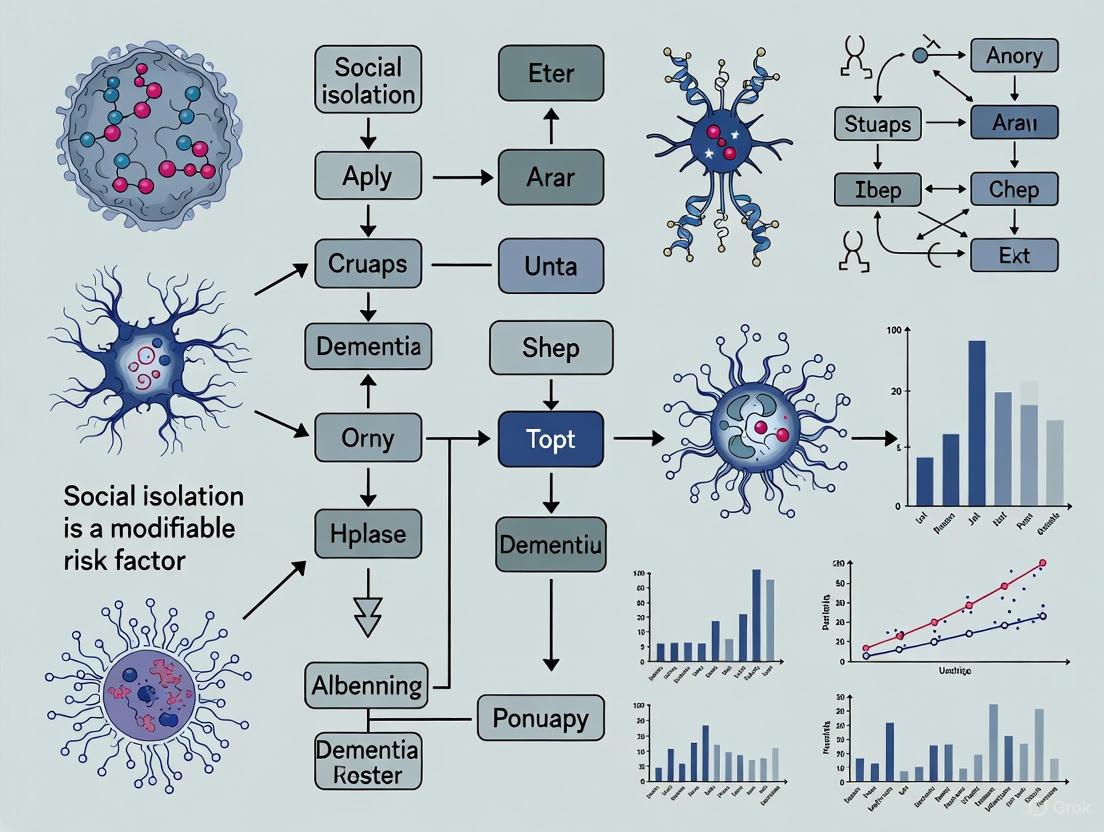
This article synthesizes current evidence establishing chronic social isolation as a significant and modifiable risk factor for cognitive decline and dementia.
Social Isolation as a Modifiable Risk Factor for Dementia: Mechanisms, Interventions, and Therapeutic Implications
Abstract
This article synthesizes current evidence establishing chronic social isolation as a significant and modifiable risk factor for cognitive decline and dementia. Targeting researchers and drug development professionals, it explores the neurobiological mechanisms linking isolation to pathology, evaluates methodological approaches for measuring and intervening, addresses challenges in current research, and validates social connectedness against other intervention strategies. The review highlights emerging drug targets influenced by social stress, the promise of social prescription models, and the critical integration of non-pharmacological and biological approaches for future dementia prevention and treatment paradigms.
Establishing the Link: Epidemiological Evidence and Neurobiological Mechanisms of Social Isolation
Social isolation, defined as an objective lack of social relationships and connections, has emerged as a significant public health concern with profound implications for brain health and dementia risk. This technical review examines the global epidemiological scope of social isolation, quantifying its prevalence across diverse populations and establishing its magnitude as a modifiable risk factor for cognitive decline and dementia. For researchers and drug development professionals, understanding the population-attributable risk and underlying mechanisms is crucial for developing targeted interventions and therapeutic strategies. The evidence presented herein positions social isolation as a critical modifiable factor in dementia prevention frameworks, with recent large-scale studies providing robust cross-national data on its distribution and impact.
Molecular and epidemiological research has begun to elucidate the pathways through which social isolation contributes to neuropathology, including through heightened neuroinflammatory responses, dysregulation of the hypothalamic-pituitary-adrenal (HPA) axis, reduced cognitive stimulation, and associated health risk behaviors. The quantification of these pathways provides potential targets for both pharmacological and non-pharmacological intervention strategies. This review synthesizes current evidence from multinational studies to establish the prevalence of social isolation across different demographic and socioeconomic groups, documents methodological approaches for measuring isolation and cognitive outcomes, and evaluates the strength of association between isolation and dementia risk across diverse populations.
Global Epidemiology of Social Isolation
Prevalence Across Populations
Recent data from large-scale cross-national studies reveal significant burden of social isolation across global populations. Table 1 summarizes key prevalence estimates from recent studies, highlighting variations across geographic regions, income groups, and demographic characteristics.
Table 1: Global Prevalence of Social Isolation and Loneliness in Older Adults
| Population | Prevalence Rate | Data Source | Year | Notes |
|---|---|---|---|---|
| Global older adults (loneliness) | 27.6% (95% CI: 24.7-37) | 126 studies, 1,250,322 participants [1] | 2025 | Pre-COVID data |
| North America (loneliness) | 30.5% (95% CI: 24.7-37) | Meta-analysis [1] | 2025 | Highest regional prevalence |
| Institutionalized older adults | 50.7% | Meta-analysis [1] | 2025 | Loneliness measure |
| Global population (recent isolation) | 21.8% (95% CI: 19.4-24.2) | Gallup World Poll, 159 countries [2] | 2024 | Increased from 19.2% in 2009 |
| Older adults (general) | ~25% | Multiple estimates [3] [4] | 2023-2025 | Up to 1 in 4 older adults |
| Adolescents | ~25% | WHO Commission Report [4] | 2025 | Social isolation estimate |
| Low-income countries (loneliness) | 24% | WHO Commission Report [4] | 2025 | Approximately twice rate in high-income countries |
Analysis of trends between 2009 and 2024 across 159 countries reveals that the global prevalence of social isolation increased by 13.4%, from 19.2% to 21.8%, with the entire increase occurring after 2019, concurrent with the COVID-19 pandemic [2]. This trend underscores the growing population-level exposure to a potentially modifiable dementia risk factor.
Socioeconomic and Demographic Disparities
Significant disparities in social isolation prevalence exist across socioeconomic strata and demographic groups. A study of 159 countries found that the disparity in isolation prevalence between high-income and low-income groups within countries peaked in 2020 at 10.8 percentage points (high-income: 15.6% vs. low-income: 26.4%) [2]. By 2024, this income-based disparity persisted at 8.6 percentage points, indicating that economically disadvantaged populations bear a disproportionate burden of this dementia risk factor.
Additional vulnerability patterns emerge across other demographic dimensions:
- Age: While often considered a risk factor primarily for older adults, social isolation affects substantial portions of younger populations, with approximately 1 in 4 adolescents estimated to experience social isolation [4].
- Gender: Men, particularly older men living alone, demonstrate heightened vulnerability to both social isolation and its detrimental health consequences [3] [5].
- Education: Individuals with fewer than nine years of formal education experience significantly higher rates of social isolation and associated mortality risk [5].
- Special populations: People with disabilities, refugees, migrants, LGBTQ+ individuals, and ethnic minorities face additional barriers to social connection, increasing their isolation risk [4].
Quantifying the Social Isolation-Dementia Relationship
Risk Magnitude from Cross-National Studies
Table 2 presents effect size estimates from major studies examining the relationship between social isolation and cognitive outcomes, providing quantification of the risk magnitude for research and intervention planning.
Table 2: Social Isolation and Cognitive Outcomes: Effect Sizes from Cross-National Studies
| Study Design | Population | Effect Size / Risk Estimate | Outcome Measure | Source |
|---|---|---|---|---|
| Multinational meta-analysis (5 longitudinal studies) | 101,581 older adults, 24 countries | Pooled effect = -0.07 (95% CI: -0.08, -0.05) | Standardized cognitive ability | [6] |
| System GMM analysis (addressing endogeneity) | Same multinational cohort | Pooled effect = -0.44 (95% CI: -0.58, -0.30) | Standardized cognitive ability | [6] |
| Evidence synthesis | Global populations | ~60% increased risk | Dementia incidence | [7] |
| Population-attributable risk calculation | Global populations | 5 fewer cases per 100 | Theoretical reduction in dementia incidence with social connection | [8] |
| Mortality risk study | Japanese older adults (N=20,000) | 205-day difference in survival | Lifespan (proxy for health outcomes) | [5] |
The multinational meta-analysis of 101,581 older adults across 24 countries provides particularly robust evidence, demonstrating consistent negative effects of social isolation across multiple cognitive domains, including memory, orientation, and executive function [6]. The application of System Generalized Method of Moments (GMM) to address endogeneity concerns strengthened the causal inference, revealing an even more substantial effect (pooled effect = -0.44) when accounting for bidirectional relationships and unobserved heterogeneity [6].
Methodological Protocols for Assessing the Relationship
Research in this domain has employed sophisticated methodological approaches to establish the social isolation-dementia relationship:
3.2.1 Multinational Longitudinal Cohort Design The strongest evidence derives from harmonized data from five major longitudinal aging studies across 24 countries (N = 101,581) with an average follow-up duration of 6.0 years [6]. The studies included:
- China Health and Retirement Longitudinal Study (CHARLS)
- Korean Longitudinal Study of Aging (KLoSA)
- Mexican Health and Aging Study (MHAS)
- Survey of Health, Ageing and Retirement in Europe (SHARE)
- Health and Retirement Study (HRS)
Standardized indices were constructed to assess both social isolation and cognitive ability across studies, with cognitive assessments typically including measures of memory, orientation, and executive function [6].
3.2.2 Statistical Analysis Protocols Advanced statistical approaches have been employed to address methodological challenges:
- Linear mixed models captured both within-individual changes over time and between-group structural differences
- Multinational meta-analyses pooled effects across diverse cultural contexts
- System Generalized Method of Moments (GMM) addressed endogeneity and reverse causality by leveraging lagged cognitive outcomes as instruments [6]
- Multilevel modeling examined cross-level interactions between individual-level isolation and country-level contextual factors
- Machine learning approaches identified heterogeneous treatment effects across subpopulations, as demonstrated in the Japanese mortality study [5]
Pathophysiological Pathways and Mechanisms
The relationship between social isolation and dementia risk operates through multiple interconnected biological, psychological, and behavioral pathways. The following diagram illustrates key mechanistic pathways linking social isolation to cognitive decline:
Figure 1: Proposed Pathways Linking Social Isolation to Cognitive Decline
Neurobiological Mechanisms
Evidence from neuroimaging and biomarker studies reveals several potential neurobiological mechanisms:
- Cortisol and neuroendocrine dysfunction: Social isolation is associated with dysregulation of the HPA axis, leading to elevated cortisol levels that may contribute to hippocampal atrophy and impaired memory function [3].
- Neuroinflammation: Isolated individuals show elevated levels of pro-inflammatory cytokines, which may accelerate neurodegenerative processes through chronic microglial activation [3].
- Structural brain changes: Studies have identified differences in brain structures of socially isolated individuals, including reduced volume in temporal and frontal regions, with one large study linking these differences to a 25% higher risk of developing dementia [8].
- Reduced cognitive reserve: Limited social engagement provides fewer opportunities for cognitive stimulation, potentially limiting the development of cognitive reserve that provides resilience against neuropathology [7] [8].
Table 3: Essential Research Resources for Social Isolation and Dementia Studies
| Resource Category | Specific Instrument/Resource | Application in Research | Key Features |
|---|---|---|---|
| Social Isolation Measures | Gallup World Poll Social Isolation Item [2] | Large-scale population surveillance | Single-item measure: "If you were in trouble, do you have relatives or friends you can count on to help you whenever you need them, or not?" |
| Cognitive Assessment Batteries | Harmonized Cognitive Assessment Protocol (HCAP) approach [6] | Cross-national cognitive assessment | Standardized indices for memory, orientation, and executive function across multiple longitudinal aging studies |
| Data Infrastructure | Gateway to Global Aging Data [6] | Cross-national comparative research | Harmonized data from CHARLS, KLoSA, MHAS, SHARE, HRS covering 24 countries |
| Statistical Methods | System GMM estimation [6] | Addressing endogeneity in longitudinal designs | Uses lagged cognitive outcomes as instruments to address reverse causality |
| Machine Learning Approaches | Heterogeneous treatment effect modeling [5] | Identifying subgroup variations | Uncovers differential effects of isolation across age, gender, education subgroups |
Methodological Considerations for Future Research
Based on current evidence gaps, several methodological advances are needed:
- Standardized isolation metrics: Development of a global Social Connection Index as proposed by the WHO Commission would facilitate more consistent measurement across studies [4].
- Domain-specific cognitive outcomes: Future studies should examine effects on specific cognitive domains rather than global functioning alone.
- Dose-response relationships: More precise quantification of the relationship between isolation intensity/duration and cognitive outcomes.
- Mechanistic intervention studies: Trials that specifically target proposed mechanisms (e.g., stress reduction, cognitive stimulation) to test causal pathways.
The epidemiological evidence from cross-national studies firmly establishes social isolation as a significant modifiable risk factor for cognitive decline and dementia, with a risk magnitude comparable to other established factors. The global prevalence of social isolation remains concerning, with marked socioeconomic disparities that may contribute to health inequities in cognitive aging. The documented neurobiological pathways provide plausible mechanisms for the observed associations and potential targets for intervention.
For researchers and drug development professionals, these findings highlight the importance of considering social environmental factors alongside biomedical approaches to dementia risk reduction. Future research should prioritize the development of standardized measurement approaches, elucidate the efficacy of isolation-reduction interventions for cognitive outcomes, and explore potential synergistic effects with pharmacological approaches. The evidence strongly supports the integration of social connection strategies into comprehensive dementia risk reduction frameworks.
Within the strategic framework of modifiable dementia risk factor research, social isolation and loneliness have emerged as critical, yet distinct, psychosocial targets for intervention. The Lancet Commission for Dementia Prevention, Intervention, and Care identifies both factors among a portfolio of modifiable risks that could account for a significant proportion of dementia cases globally [9]. While often used interchangeably in public discourse, rigorous scientific investigation requires precise conceptual and operational separation of these constructs. Social isolation is defined as an objective state of having minimal contact with others, characterized by a paucity of social networks and interactions [10]. In contrast, loneliness represents the subjective, distressing feeling that occurs when one's social relationships are perceived as fewer or less meaningful than desired [10]. This distinction is not merely semantic; evidence suggests these factors may operate through different biological and psychological pathways to influence cognitive health and dementia progression.
The clinical relevance of distinguishing these constructs is underscored by their differential prevalence patterns and impacts on cognitive trajectories. Research indicates that while social isolation explains up to 4% of dementia risk in population attributable fraction calculations, loneliness has been specifically associated with higher amyloid burden in cognitively normal individuals and predicts dementia onset [11]. For researchers and drug development professionals targeting modifiable risk factors, understanding these distinctions is essential for designing precise interventions, selecting appropriate measurement tools, and identifying specific mechanistic pathways through which social factors influence neuropathology. This technical guide provides a comprehensive framework for conceptualizing, measuring, and investigating these constructs within dementia research contexts, with particular emphasis on methodological considerations for clinical trials and observational studies.
Theoretical Framework and Definitions
Conceptual Distinctions and Definitions
Table 1: Established Definitions of Social Isolation and Loneliness
| Construct | Definition | Nature | Key Characteristics |
|---|---|---|---|
| Social Isolation | "An objective lack of social contact or support" [10]; "The objective absence or paucity of contacts and interactions between a person and a social network" [10] | Objective State | Quantifiable social network size; Frequency of social contacts; Living arrangements; Community integration |
| Loneliness | "The feeling of being alone or isolated" [10]; "A subjective feeling state of being alone, separated or apart from others" [10]; "A discrepancy between desired and actual social relationships" [11] | Subjective Experience | Perceived relationship quality; Satisfaction with social connections; Emotional state regarding social deficits |
The theoretical separation of these constructs extends beyond simple definitional differences to encompass their fundamental nature as risk factors. Social isolation represents a structural deficiency in social resources that may reduce cognitive reserve and limit engagement in cognitively stimulating activities [11]. Loneliness, conversely, constitutes an affective-cognitive evaluation of one's social environment that may operate through stress pathways, health behaviors, and neurological mechanisms to influence dementia risk [11] [12]. Qualitative research suggests that individuals themselves perceive these distinctions, with participants in one study reporting loneliness as more damaging to memory than isolation, noting that mental stimulation remains possible during isolation, whereas loneliness often drains motivation for such activities [12].
From a neurobiological perspective, these constructs may engage partially distinct pathways. Research indicates that social participation moderates the association between cognitive functioning and amygdala volume, suggesting isolation may influence cognitive reserve by moderating cognitive function despite Alzheimer's disease neuropathology [11]. Loneliness, however, has been associated with higher amyloid burden in cognitively normal individuals and predicts cognitive decline in those with mild cognitive impairment, suggesting possible direct neuropathological effects [11]. For drug development professionals, these distinct pathways represent potential targets for pharmacological and psychosocial interventions aimed at mitigating dementia risk.
Quantitative Evidence: Differential Impacts on Cognitive Outcomes
Comparative Effects on Cognitive Trajectories
Table 2: Differential Cognitive Impacts of Loneliness vs. Social Isolation in Dementia Patients
| Parameter | Loneliness Effect | Social Isolation Effect | Measurement | Study Details |
|---|---|---|---|---|
| Baseline Cognitive Score | 0.83 points lower on MoCA at diagnosis (p=0.008) [11] | 0.69 points lower on MoCA at diagnosis (p=0.011) [11] | Montreal Cognitive Assessment (MoCA) | Retrospective cohort of 4,294 dementia patients [11] |
| Rate of Cognitive Decline | Stable lower trajectory across disease course [11] | 0.21 MoCA points per year faster decline in 6 months pre-diagnosis (p=0.029) [11] | MoCA score progression | Mixed-effects models analyzing longitudinal data [11] |
| Timing of Maximum Impact | Throughout the disease course [11] | Accelerated decline specifically in pre-diagnosis period [11] | Disease phase analysis | Natural language processing of EHRs [11] |
| Qualitative Self-Reports | Greater perceived memory damage; drains motivation for cognitive activities [12] | Less memory impact; mental stimulation still possible [12] | Thematic analysis | Qualitative interviews with adults 47-81 years [12] |
Large-scale longitudinal studies utilizing electronic health records (EHRs) demonstrate that both social isolation and loneliness are associated with clinically significant cognitive deficits in dementia patients, but with distinct temporal patterns. Patients with loneliness (n=382) showed consistently lower cognitive trajectories throughout their disease course compared to controls (n=3,912), while socially isolated patients (n=523) experienced specifically accelerated decline in the immediate pre-diagnosis period [11]. The minimum clinically important difference for MoCA scores is reported between 0.01 and 2 points, indicating that the observed differences of 0.69-0.83 points represent substantively meaningful deficits [11].
Beyond cognitive test performance, qualitative research reveals that individuals perceive different mechanisms through which these constructs affect memory. Participants report that loneliness more profoundly damages memory than isolation because it depletes the motivation and curiosity necessary for intellectual engagement [12]. Social isolation, while potentially detrimental, was viewed by some as compatible with mentally stimulating activities. However, extended isolation was perceived as harmful due to increased social anxiety, disrupted routines, and diminished sense of purpose—all factors critical for memory maintenance [12]. The combination of both conditions was perceived as most harmful, creating a feedback loop that exacerbates both conditions and increases vulnerability to self-destructive behaviors that may further accelerate cognitive decline [12].
Assessment Methodologies and Measurement Tools
Established Measurement Instruments
Table 3: Standardized Measures for Social Isolation and Loneliness in Research Contexts
| Construct | Instrument | Items | Domains Assessed | Psychometric Properties | Administration |
|---|---|---|---|---|---|
| Social Isolation | Lubben Social Network Scale-6 [10] | 6 | Family and friend networks; Perceived support | Total score 0-30; Higher scores indicate larger networks | Interview or self-report |
| Loneliness | UCLA Loneliness Scale Version 3 [10] | 20 | Subjective feelings of loneliness and social isolation | Score range 20-80; Higher scores indicate greater loneliness | Self-report |
| Loneliness | De Jong Gierveld Loneliness Scale [10] | 6 | Emotional and social loneliness | Score range 0-6; Higher scores indicate greater loneliness | Interview or self-report |
| Loneliness | ALONE Scale [13] [14] | 5 | Self-perception, direct loneliness, extraversion, network adequacy, emotional stability | Score range 5-15; Strong correlation with UCLA-20 (r=0.81); Cut-off ≥8 for severe loneliness | Clinical administration (5-10 minutes) |
The selection of appropriate assessment tools is critical for accurately capturing these distinct constructs in research settings. For social isolation, the Lubben Social Network Scale-6 focuses on structural aspects of social relationships, assessing the size and closeness of family and friend networks through items quantifying regular contact, confidant relationships, and perceived availability of support [10]. For loneliness, the UCLA Loneliness Scale utilizes a multidimensional approach to assess subjective feelings of isolation, while the De Jong Gierveld Loneliness Scale specifically differentiates between emotional loneliness (absence of intimate attachments) and social loneliness (lack of broader social network belonging) [10].
The ALONE Scale represents a recently validated clinical tool designed specifically for efficient administration in healthcare and research settings. Its development addressed the need for a rapidly administrable instrument that maintains strong psychometric properties, with demonstrated strong correlation (r=0.81, p<0.001) with the established UCLA-20 scale [14]. The scale's five items assess: (A) perception of self, (L) direct experience of loneliness, (O) level of extraversion, (N) adequacy of meaningful connections, and (E) emotional stability [14]. This instrument fills an important gap between comprehensive research assessments and brief clinical screens, making it particularly valuable for large-scale studies and clinical trials where administration time is constrained.
Emerging Assessment Approaches
Innovative methodologies are expanding measurement precision for both constructs. Natural Language Processing (NLP) models applied to electronic health records can now automatically identify documentation of social isolation and loneliness in clinical notes [11]. These models typically employ a two-stage process: initial pattern matching to identify relevant terms (e.g., "loneliness," "social isolation," "living alone"), followed by sentence transformer classification to categorize mentions into specific constructs while filtering non-informative instances [11].
Ecological Momentary Assessment (EMA) combined with actigraphy represents another technological advancement, enabling real-time capture of social interaction frequency and loneliness levels in natural environments [15]. This approach minimizes recall bias and allows researchers to examine temporal dynamics between social factors and cognitive performance. Machine learning applications applied to these intensive longitudinal data can identify complex patterns predictive of isolation risk, with random forest models achieving high accuracy (0.849) in classifying low social interaction frequency, and gradient boosting machines effectively identifying loneliness levels (accuracy 0.838) [15]. These methods are particularly valuable for capturing dynamic processes in predementia stages where early intervention may be most effective.
Experimental Protocols and Research Design Considerations
NLP Protocol for EHR-Based Phenotyping
The extraction of social isolation and loneliness data from unstructured clinical notes requires systematic NLP approaches. The following protocol outlines the methodology successfully implemented in recent research [11]:
Algorithm Development:
- Pattern Matching Stage: Utilize statistical models for word processing (e.g., SpaCy library) to identify documents containing predefined terms related to social isolation and loneliness. The search lexicon should include explicit terms ("loneliness," "social isolation") and related expressions ("living alone," "away from family," "lack of social contact," "feeling lonely").
- Classification Stage: Apply sentence transformer models (e.g., Huggingface's SpaCy-Setfit library) to process and classify identified sentences into four categories: (1) social isolation, (2) loneliness, (3) non-informative isolation (e.g., "isolated fall"), and (4) non-informative sentences.
Validation and Implementation:
- Establish coding criteria with clear examples for each category (see Table 1 in [11] for exemplars).
- Train classifiers on annotated clinical text corpora, with iterative refinement to improve precision.
- Integrate extracted constructs with structured EHR data (cognitive scores, diagnoses, demographics) for longitudinal analysis.
This protocol enabled the identification of distinct cognitive trajectories associated with each construct in a cohort of over 4,000 dementia patients [11], demonstrating the utility of NLP for large-scale phenotyping of psychosocial risk factors.
Ecological Momentary Assessment Protocol
For intensive longitudinal assessment of social interaction and loneliness, the following EMA protocol has been validated in predementia populations [15]:
Assessment Schedule:
- Implement 4 daily prompts over a 14-day period using mobile application technology.
- Randomize prompt timing within set intervals to capture variation across daily contexts.
- Include brief measures of both social interaction frequency ("How many social interactions have you had since the last prompt?") and loneliness ("How lonely do you feel right now?" on a Likert scale).
Complementary Actigraphy:
- Collect continuous activity and sleep data using wrist-worn accelerometers throughout the assessment period.
- Extract key variables including sleep quantity (total sleep time), sleep quality (sleep efficiency, wake after sleep onset), physical movement (moderate-to-vigorous physical activity), and sedentary behavior.
Machine Learning Analysis:
- Apply multiple algorithms (logistic regression, random forest, gradient boosting machines) to identify factors associated with low social interaction and high loneliness.
- Validate model performance using metrics including accuracy, precision, specificity, and area under the ROC curve.
This methodology has demonstrated that different factors predict social interaction frequency (primarily physical movement) versus loneliness (primarily sleep quality), supporting distinct mechanistic pathways [15].
Diagram 1: Integrated assessment methodology for social isolation and loneliness, combining ecological momentary assessment, actigraphy, and machine learning to identify distinct predictive factors for each construct [15].
The Scientist's Toolkit: Essential Research Reagents and Materials
Table 4: Essential Research Materials for Investigating Social Isolation and Loneliness in Cognitive Studies
| Tool Category | Specific Instrument/Technology | Primary Research Application | Key Considerations |
|---|---|---|---|
| Psychometric Assessments | Lubben Social Network Scale-6 [10] | Quantifying objective social network characteristics | Brief (6-item); Validated in older adults; Focuses on family and friend networks |
| Psychometric Assessments | UCLA Loneliness Scale Version 3 [10] | Comprehensive assessment of subjective loneliness | 20 items; Extensive validation history; Multidimensional assessment |
| Psychometric Assessments | ALONE Scale [13] [14] | Rapid clinical screening for loneliness | 5 items; High correlation with UCLA (r=0.81); Optimized for clinical settings |
| Natural Language Processing | SpaCy Library with Sentence Transformers [11] | Automated extraction from unstructured clinical notes | Requires annotated training data; Can process large EHR datasets efficiently |
| Ecological Momentary Assessment | Mobile EMA platforms with programmed prompts [15] | Real-time assessment in natural environments | Minimizes recall bias; Captures dynamic fluctuations; Higher participant burden |
| Activity Monitoring | Research-grade accelerometers (actigraphy) [15] | Objective measurement of sleep and physical activity | Provides complementary objective data; Allows correlation with self-report measures |
| Machine Learning Algorithms | Random Forest, Gradient Boosting Machines [15] | Identifying complex patterns in multidimensional data | Handles high-dimensional data; Can identify nonlinear relationships; Requires substantial sample sizes |
The selection of appropriate assessment tools should be guided by research objectives, participant characteristics, and methodological constraints. For studies aiming to capture dynamic processes, EMA methodologies provide superior temporal resolution but require specialized software and consideration of participant burden, particularly in cognitively impaired populations [15]. For large-scale epidemiological investigations or clinical trials, brief validated scales like the Lubben Social Network Scale-6 and ALONE Scale offer practical administration with minimal participant burden while maintaining strong psychometric properties [10] [14].
Emerging technologies present new opportunities for innovative assessment approaches. Machine learning applications to multimodal data (actigraphy, EMA, clinical assessments) can identify subtle patterns predictive of isolation risk and cognitive decline trajectories [15]. Natural language processing of clinical records enables retrospective analysis of documented social factors in relation to cognitive outcomes, facilitating large-scale studies without additional data collection [11]. Each methodological approach offers distinct advantages and limitations that must be balanced within specific research contexts.
Research Gaps and Future Directions
Despite significant advances in understanding social isolation and loneliness as dementia risk factors, several critical research gaps remain. First, the neurobiological mechanisms linking these distinct constructs to Alzheimer's pathology and cognitive decline require further elucidation. While loneliness has been associated with increased amyloid burden, the specific pathways through which subjective feelings translate to neuropathology remain poorly understood [11]. Similarly, the mechanisms by which social isolation impacts brain structure (e.g., reduced gray matter volume in memory-related regions) need further investigation [15].
Second, the temporal dynamics of these relationships across the dementia spectrum warrant longitudinal investigation. Current evidence suggests different patterns of influence, with loneliness exerting effects throughout the disease course and social isolation showing specific acceleration in the pre-diagnosis period [11]. Understanding these temporal patterns could inform optimally timed interventions.
Third, research on intervention efficacy specifically targeting these constructs in cognitive decline remains limited. Future studies should investigate whether reducing loneliness or social isolation directly slows cognitive decline or merely improves quality of life. The development of a clear taxonomy for SIL interventions—distinguishing between those aiming to reduce isolation/loneliness as a primary outcome versus those targeting other outcomes in isolated populations—would strengthen intervention research [16].
For drug development professionals, these constructs represent novel targets for combination therapies alongside pharmacological interventions. Social factors may modify response to dementia treatments, suggesting potential synergy between psychosocial and biological approaches. Future clinical trials should consider stratification by social isolation and loneliness status, and potentially include these constructs as secondary outcomes when investigating compounds with proposed social-motivational or stress-modulating effects.
The hypothalamic-pituitary-adrenal (HPA) axis represents the body's core neuroendocrine stress response system, coordinating adaptive physiological reactions to physical and psychological challenges. Within the context of dementia research, social isolation has emerged as a significant modifiable risk factor, with recent large-scale analyses demonstrating that loneliness increases the risk for all-cause dementia by 31% [17]. This risk magnitude parallels established factors like physical inactivity and smoking, highlighting the critical importance of understanding its underlying biological mechanisms [17]. Chronic stress exposure, particularly in forms such as persistent social isolation, can induce maladaptive dysregulation of the HPA axis, initiating a cascade of physiological events culminating in neuroinflammation and neuronal damage [18] [19]. This technical review examines the neurobiological pathways linking HPA axis dysregulation to neuroinflammation, with specific emphasis on their relevance to social isolation as a therapeutic target for dementia risk reduction.
HPA Axis Physiology and Dysregulation
Normal HPA Axis Function
The HPA axis operates through a tightly regulated neuroendocrine cascade. In response to stress, the paraventricular nucleus (PVN) of the hypothalamus releases corticotropin-releasing hormone (CRH), which stimulates the anterior pituitary gland to secrete adrenocorticotropic hormone (ACTH) [20] [21]. ACTH then acts on the adrenal cortex to trigger the release of cortisol, the primary human glucocorticoid [22] [21]. This system is regulated by a negative feedback loop wherein cortisol inhibits further CRH and ACTH release, maintaining homeostasis and circadian rhythmicity [20] [21]. Under acute stress conditions, cortisol exerts primarily anti-inflammatory effects through genomic mechanisms involving glucocorticoid receptor (GR) binding and suppression of pro-inflammatory transcription factors such as NF-κB [20].
Patterns of HPA Axis Dysregulation
Chronic stress exposure leads to distinct patterns of HPA axis dysregulation, which can be categorized as follows:
- Hyperactive Pattern: Characterized by elevated cortisol levels, enhanced cortisol awakening response, increased ACTH, and insensitive negative glucocorticoid feedback loops. This pattern is frequently observed following early-life stress exposure [22].
- Hypoactive Pattern: Manifested as lower cortisol levels, attenuated diurnal variation, enhanced negative feedback, and blunted HPA axis responsiveness. This pattern often emerges later in development following initial hyperactivation and is associated with conditions such as post-traumatic stress disorder (PTSD) [22].
The transition from hyperactive to hypoactive states may reflect adaptive mechanisms to prevent prolonged hypercortisolemia, ultimately resulting in adrenal exhaustion or altered glucocorticoid receptor sensitivity [22] [20].
Table 1: Patterns of HPA Axis Dysregulation in Chronic Stress
| Parameter | Hyperactive Pattern | Hypoactive Pattern |
|---|---|---|
| Cortisol Levels | Elevated | Reduced |
| Diurnal Rhythm | Exaggerated or disrupted | Attenuated |
| Negative Feedback | Impaired | Enhanced |
| GR Sensitivity | Often decreased | Variable |
| Developmental Period | More common early in life | Can emerge after chronic hyperactivation |
From HPA Dysregulation to Neuroinflammation
Glucocorticoid Receptor Resistance and Inflammatory Signaling
A pivotal mechanism linking chronic stress to neuroinflammation is the development of glucocorticoid receptor resistance (GCR). Persistent HPA axis activation and elevated cortisol levels lead to decreased GR expression and impaired function, diminishing cortisol's anti-inflammatory effects [19] [20]. This GCR state results in unconstrained activation of innate immune pathways, including NF-κB signaling, and subsequent increased production of pro-inflammatory cytokines such as IL-1β, IL-6, and TNF-α [19] [23] [20]. These cytokines further sensitize the HPA axis, creating a feed-forward cycle that perpetuates both neuroendocrine and immune dysregulation [19] [23].
Peripheral to Central Inflammatory Communication
Peripheral inflammation exacerbates central nervous system inflammation through several mechanisms:
- Cellular Trafficking: Peripheral immune cells, including monocytes and lymphocytes, can infiltrate the brain, particularly under conditions of a compromised blood-brain barrier (BBB) [19].
- Humoral Pathways: Circulating cytokines can actively cross the BBB via saturable transport systems or interact with cerebral endothelial cells to trigger secondary inflammatory signaling within the brain parenchyma [19] [23].
- Neural Pathways: Afferent vagal nerve stimulation by peripheral cytokines can relay immune signals to central autonomic nuclei, further propagating neuroinflammatory responses [24].
Figure 1: Signaling Pathway from Chronic Stress to Increased Dementia Risk. Chronic stress triggers HPA axis dysregulation, leading to glucocorticoid receptor resistance and peripheral inflammation. This inflammation propagates to the CNS, causing neuroinflammation and hippocampal damage, ultimately increasing dementia risk. Dashed lines indicate feed-forward cycles that perpetuate the dysfunction.
Central Inflammatory Cascade and Neurotoxicity
Within the central nervous system, microglial activation serves as the cornerstone of neuroinflammation. Activated microglia release a plethora of pro-inflammatory cytokines, chemokines, and reactive oxygen and nitrogen species into the extracellular space [19] [23]. These mediators disrupt neurotransmitter systems, particularly glutamate and GABA, by impairing glutamate reuptake and decreasing the availability of synaptic GABA, leading to an excitatory/inhibitory (E/I) imbalance that is detrimental to neuronal function and survival [19] [24]. Furthermore, these processes result in structural and functional alterations in critical brain regions, with magnetic resonance imaging (MRI) studies most consistently showing reduced hippocampal volumes—a key feature in both depression and dementia [18] [19].
Experimental Models and Assessment Methodologies
Preclinical Models of Chronic Stress
Research into HPA axis dysfunction and neuroinflammation relies on well-validated animal models that recapitulate features of human stress pathophysiology.
Table 2: Key Experimental Models for Studying HPA Axis Dysregulation and Neuroinflammation
| Model | Protocol Description | Key Measurable Outcomes |
|---|---|---|
| Chronic Unpredictable Mild Stress (CUMS) | Rodents exposed to varying, mild stressors (e.g., cage tilt, damp bedding, white noise) daily for 4-8 weeks. | Anhedonia (sucrose preference test), HPA axis reactivity (plasma corticosterone), neuroinflammation (hippocampal cytokines), depressive-like behaviors (forced swim test) [23]. |
| Repeated Social Defeat Stress (RSDS) | Agonistic encounters between experimental mouse and larger, aggressive resident mouse daily for 10-14 days. | Social avoidance, microglial activation in amygdala and hippocampus, increased peripheral IL-6, anxiety-like behaviors [19] [23]. |
| Chronic Restraint Stress | Physical restraint of rodents for 2-6 hours daily over several weeks. | Elevated corticosterone, dendritic remodeling in prefrontal cortex and amygdala, impaired cognitive flexibility, neuroinflammation [24]. |
Core Methodological Approaches for Human and Translational Research
Translating findings from animal models to human pathophysiology requires a suite of biochemical, imaging, and functional assessments.
Figure 2: Experimental Workflow for Assessing HPA Axis and Neuroinflammation. The diagram outlines core methodological approaches grouped into three domains: HPA axis function, inflammatory status, and CNS measures, which are used in combination to evaluate the stress-inflammation pathway.
The Scientist's Toolkit: Key Research Reagents and Materials
Table 3: Essential Research Reagents and Assays for Investigating HPA-Neuroinflammation Pathways
| Reagent / Assay | Function / Application | Technical Notes |
|---|---|---|
| Dexamethasone Suppression Test | Pharmacological challenge to assess HPA negative feedback integrity; failure to suppress cortisol indicates HPA hyperactivity. | Standard low dose: 1-2 mg; used in both clinical (melancholic depression diagnosis) and preclinical research (rodent DST) [23]. |
| TSPO Radioligands (e.g., [¹¹C]PBR28) | Positron Emission Tomography (PET) ligands targeting Translocator Protein to quantify microglial activation in vivo. | Key biomarker for neuroinflammation; shows elevated signal in multiple brain regions in MDD patients [24]. |
| Cytokine Panels (IL-6, TNF-α, IL-1β) | Multiplex immunoassays (e.g., Luminex, ELISA) to quantify pro-inflammatory cytokines in plasma, serum, or CSF. | Consistently elevated in a subset (~27%) of MDD patients; CRP >3 mg/L used to define inflammatory depression subtype [23]. |
| Corticosterone/Cortisol EIA/RIA | Enzyme Immunoassay or Radioimmunoassay for precise quantification of glucocorticoid levels in blood, saliva, or tissue. | Enables assessment of diurnal rhythm, stress response, and adrenal function in model organisms and humans [22] [23]. |
| Glucocorticoid Receptor Antagonists (e.g., Mifepristone) | Pharmacological tools to block GR function and investigate the role of GR signaling in stress and immune responses. | Used experimentally to model consequences of GCR and tested therapeutically for psychiatric disorders [23]. |
| S100B & HMGB1 Assays | Immunoassays for Damage-Associated Molecular Patterns (DAMPs), endogenous danger signals released under stress. | S100B (astrocyte-derived) and HMGB1 are correlated with depression severity and neuroinflammation [23]. |
Implications for Dementia and Therapeutic Interventions
The neurobiological pathway linking HPA axis dysregulation to neuroinflammation provides a plausible mechanism through which psychosocial stress, particularly social isolation, increases dementia risk. Loneliness is associated with a 31% increased risk for all-cause dementia, with specific increases in the risk for Alzheimer's disease (14%) and vascular dementia (17%) [17]. The neurotoxic and neurodegenerative processes driven by chronic stress and inflammation—including reduced hippocampal volume, microglial activation, and oxidative stress—directly contribute to the pathophysiology of dementia [18] [17].
Emerging therapeutic strategies aim to target these specific pathways. These include:
- HPA-Targeted Pharmacotherapies: Drugs antagonizing the GR or inhibiting cortisol synthesis, and V1b receptor antagonists that modulate AVP-driven ACTH release [23].
- Anti-inflammatory Interventions: Therapeutics targeting cell-mediated immunity, specific inflammatory signaling pathways (e.g., IL-6, TNF-α inhibitors), and nitro-oxidative stress [19] [23].
- Neuromodulation Approaches: Techniques such as transcranial magnetic stimulation (TMS) and vagus nerve stimulation (VNS) have been reported to attenuate neuroinflammation and modulate neural circuits, contributing to symptom reduction in mood disorders [24].
The dysregulation of the HPA axis under conditions of chronic stress, such as social isolation, initiates a cascade of immunoinflammatory events that culminate in neuroinflammation and neuronal damage. This pathway represents a critical mechanistic link between a modifiable psychosocial risk factor—loneliness—and the neuropathology underlying dementia. A detailed understanding of these neurobiological pathways, facilitated by the experimental models and methodologies detailed herein, is essential for developing targeted interventions aimed at mitigating dementia risk by improving stress resilience and reducing neuroinflammation. Future research should prioritize longitudinal studies incorporating multi-omics approaches to further elucidate the dynamic interplay between social environment, neuroendocrine function, and brain inflammation across the lifespan.
Within the landscape of modifiable risk factors for dementia, social isolation has emerged as a significant contributor to population risk, with an population-attributable fraction estimated at 3.5% of dementia cases [25]. A growing body of neuroimaging evidence now indicates that this elevated risk is mediated through specific, measurable alterations in brain structure. This technical review synthesizes current research on the neurostructural correlates of social isolation, focusing on its links to grey matter atrophy and declining white matter integrity—two key neurobiological pathways to cognitive decline and dementia. We examine quantitative evidence from longitudinal studies, detail the underlying biological mechanisms, and provide methodologies for continued research in this critical area of dementia prevention.
Key Neurostructural Findings: Grey Matter Atrophy
Regional Vulnerability to Social Isolation
Cross-sectional and longitudinal neuroimaging studies consistently identify that socially isolated individuals exhibit reduced volume in brain regions critical for memory, learning, and social cognition.
Table 1: Key Grey Matter Regions Affected by Social Isolation
| Brain Region | Study Design | Population | Key Finding | Effect Size / Statistics |
|---|---|---|---|---|
| Hippocampus | Longitudinal (4 years) [26] | 279 Japanese, 65-84 yrs | > hippocampal volume decrease with contact <1/week | Not fully quantified in abstract |
| Hippocampus | Longitudinal (~6 years) [25] | 1,992 German, 50-82 yrs | Baseline & increased social isolation → smaller volumes | Volume shrinkage ~0.75%/year (age effect) |
| Total Brain Volume | Cross-sectional [27] | 8,896 Japanese, ~73 yrs | Lower social contact → smaller total brain volume | 67.3% vs 67.8% (low vs high contact) |
| Medial Temporal Lobe | Cross-sectional [28] | 727 Japanese, ~70 yrs | Smaller volume in solitary vs social eaters | 1.812% vs 1.852% (solitary vs social) |
| Parietal & Occipital Lobes | Cross-sectional [28] | 727 Japanese, ~70 yrs | Smaller volumes in solitary eaters | Parietal: 5.918% vs 6.019%; Occipital: 2.375% vs 2.437% |
The hippocampus demonstrates particular vulnerability. A longitudinal study of community-dwelling older Japanese found that individuals with social contact less than once per week experienced a significantly greater decrease in hippocampal volume over four years compared to those with contact four or more times per week [26]. This finding was corroborated by a large-scale German longitudinal study, which also linked both baseline social isolation and an increase in isolation over time to smaller hippocampal volumes [25].
Beyond the hippocampus, socially isolated individuals show broad cortical thinning. The German study found social isolation associated with reduced cortical thickness in specific clusters across the brain [25]. Solitary eating, as a specific behavioral manifestation of isolation, is linked to reduced volumes in the medial temporal lobe, parietal lobe, and occipital lobe, even after adjusting for confounding factors [28]. The persistence of the medial temporal lobe difference after accounting for dietary patterns suggests that this atrophy is driven by more than just nutritional factors [28].
Association with Cognitive Performance
These structural changes correspond with measurable cognitive deficits. Socially isolated individuals demonstrate poorer performance in memory, processing speed, and executive functions [25]. This triad of cognitive functions is critically important for daily functioning and is often among the first to decline in prodromal dementia.
Key Neurostructural Findings: White Matter Integrity
Cerebrovascular Pathology and Microstructural Changes
White matter integrity, crucial for efficient neural communication, is also compromised by social isolation.
Table 2: White Matter Integrity and Social Isolation
| White Matter Measure | Association with Social Isolation | Functional/Cognitive Consequence |
|---|---|---|
| White Matter Lesions (WML) [27] | Socially isolated group had more small areas of damage (WML) | WML volume: 0.30% vs 0.26% (isolated vs connected) |
| White Matter Hyperintensities (WMSA) [29] | WMSA volume most relevant biomarker discriminating lonely individuals | Linked to cerebrovascular disease; contributes to cognitive complaints |
| Overall White Matter Microstructure [25] | Suggested link from prior studies; not primary focus of recent large studies | Associated with slower processing speed and executive dysfunction |
Socially isolated individuals exhibit a greater burden of white matter hyperintensities (WMSA), which are established markers of cerebrovascular disease [29]. In a study of 215 cognitively unimpaired 70-year-olds, WMSA volume was the most important variable in a multivariate model for discriminating individuals who endorsed feelings of loneliness [29]. This finding directly links the subjective experience of social impoverishment with cerebrovascular pathology.
Earlier studies using Diffusion Tensor Imaging (DTI) have shown that social isolation is associated with changes in white matter microstructure, which in turn mediate the relationship between limited social activity and reduced perceptual speed [25]. These microstructural deteriorations reflect compromised myelin integrity and axonal density, disrupting efficient neural communication.
Underlying Biological Mechanisms
The association between social isolation and brain structural integrity is mediated through multiple interconnected biological pathways.
Diagram 1: Biological Pathways Linking Social Isolation to Brain Structural Changes. Social isolation triggers stress, inflammatory, and neurotrophic pathways that converge on grey matter atrophy and white matter damage. HPA: Hypothalamic-Pituitary-Adrenal; BDNF: Brain-Derived Neurotrophic Factor; WML: White Matter Lesions; WMSA: White Matter Signal Abnormalities.
Neuroinflammation and Stress Physiology
The inflammatory response is a primary mechanism. Loneliness and social isolation are associated with elevated levels of pro-inflammatory cytokines such as IL-6 [30] [31]. A large proteomic study found Growth Differentiation Factor 15 (GDF15), an inflammatory marker, to have the strongest association with social isolation, while PCSK9, a protein involved in cholesterol metabolism, was most strongly associated with loneliness [32]. This chronic, low-grade inflammation can directly damage neurons and glial cells, contributing to both grey matter atrophy and white matter lesions.
Concurrently, activation of the hypothalamic-pituitary-adrenal (HPA) axis and elevated glucocorticoids (e.g., cortisol) under chronic social stress can have neurotoxic effects, particularly in the hippocampus, which has a high density of glucocorticoid receptors [33] [30]. This allostatic load—the cumulative wear and tear on the body from repeated stress responses—represents a key pathway linking adverse social environments to brain structural decline [33].
Epigenetic and Neurotrophic Factors
Epigenetic modifications and markers of accelerated genetic aging have been identified as potential mediators between social adversity and cognitive decline [33]. Furthermore, social engagement is thought to enhance the release of Brain-Derived Neurotrophic Factor (BDNF), a protein crucial for neuronal survival and plasticity, thereby promoting cognitive resilience [33]. Its reduction in isolation may thus directly compromise brain integrity.
Methodological Approaches for Structural Neuroimaging
Experimental Protocols for Grey and White Matter Assessment
Table 3: Core Methodologies for Assessing Social Isolation's Impact on Brain Structure
| Method | Key Metrics | Application in Social Isolation Research |
|---|---|---|
| Structural T1-weighted MRI | Volume (mm³) of regions of interest (e.g., Hippocampus, whole brain); Cortical Thickness (mm) | Primary method for quantifying grey matter atrophy in cross-sectional and longitudinal designs [28] [26] [25]. |
| Diffusion Tensor Imaging (DTI) | Fractional Anisotropy (FA), Mean Diffusivity (MD) | Assesses white matter microstructural integrity; sensitive to axonal organization and myelination [34]. |
| White Matter Hyperintensity (WMH) Quantification | WMH Volume from FLAIR MRI | Quantifies cerebrovascular burden; WMH linked to social isolation and loneliness [27] [29]. |
| Quantitative Tractography | Number of streamtubes, Streamtube length weighted by anisotropy | Models 3D white matter pathways; metrics sensitive to vascular cognitive impairment [34]. |
Protocol for Longitudinal Assessment of Grey Matter Change
A standardized protocol for longitudinal assessment involves:
- Image Acquisition: High-resolution 3D T1-weighted anatomical scans (e.g., MPRAGE sequence) on 3T MRI scanners, ensuring consistent positioning and parameters across baseline and follow-up time points (e.g., 4-6 years apart) [26] [25].
- Image Processing: Automated processing pipelines such FreeSurfer are used for volumetric segmentation and cortical reconstruction. This generates quantitative measures of hippocampal volume, total grey matter volume, and cortical thickness.
- Statistical Analysis: Employ linear mixed-effects models to assess the impact of social isolation (baseline level and change over time) on brain volume change, adjusting for critical confounders including age, sex, intracranial volume, and cardiovascular risk factors. This approach robustly handles both between-subject and within-subject effects [25].
Protocol for White Matter Integrity Assessment
A comprehensive white matter assessment protocol includes:
- Multimodal Data Acquisition:
- Analysis Workflow:
- Scalar Analysis: Generate voxel-wise maps of Fractional Anisotropy (FA) and Mean Diffusivity (MD). Reduced FA and increased MD indicate poorer white matter integrity.
- Tract-Based Spatial Statistics (TBSS): Perform voxel-wise cross-subject statistics on aligned FA skeletons to identify specific white matter tracts associated with social isolation [34].
- Tractography: Reconstruct 3D models of white matter pathways ("streamtubes") from DTI data. Calculate quantitative metrics like the number and length of streamtubes, which may be lower in individuals with white matter injury [34].
The Scientist's Toolkit: Key Research Reagents
Table 4: Essential Reagents and Tools for Investigating Social Isolation and Brain Structure
| Tool / Reagent | Category | Primary Function/Application | Example Use Case |
|---|---|---|---|
| Lubben Social Network Scale (LSNS-6) [31] [25] | Social Isolation Metric | Quantifies objective social isolation via 6 items on family/friend networks. | Categorize participants as isolated (score <12) for group comparisons. |
| Single-Item Loneliness Question [31] [29] | Loneliness Metric | Assesses subjective feeling of loneliness directly (e.g., 0-10 scale). | Correlate continuous loneliness score with biomarker levels. |
| ELISA Kits for Inflammatory Markers (e.g., IL-6, CRP) [31] | Biomarker Assay | Quantify plasma/serum levels of inflammatory proteins via immunoassay. | Test mediation models where inflammation links isolation to brain volume. |
| Proteomic Panels (e.g., Olink) [32] | Biomarker Assay | Simultaneously measure ~3,000 plasma proteins for discovery-phase studies. | Identify novel protein signatures of social isolation (e.g., GDF15, PCSK9). |
| FreeSurfer Software Suite [25] | Image Analysis Tool | Automated, validated pipeline for brain MRI segmentation and cortical thickness analysis. | Extract hippocampal and total grey matter volumes from T1-weighted MRI. |
| FSL/TBSS Pipeline [34] | Image Analysis Tool | Perform voxel-wise statistical analysis of DTI data aligned to a white matter skeleton. | Identify specific white matter tracts with microstructural deficits linked to isolation. |
Converging evidence from large-scale population studies solidifies the connection between social isolation and detrimental changes in brain structure, specifically grey matter atrophy in the hippocampus and cortex, and compromised white matter integrity. These changes are biologically plausible, mediated by inflammation, chronic stress, and reduced neurotrophic support, and are associated with poorer cognitive performance in domains vulnerable to dementia. For researchers and drug development professionals, this review underscores the importance of considering social health as a modifiable component of dementia risk. Future work should focus on developing interventions that target these specific neurobiological pathways and determining whether reversing social isolation can halt or reverse these structural declines.
Within the strategic framework of dementia prevention research, modifiable risk factors represent a critical frontier for therapeutic intervention. Among these, social isolation has been identified by The Lancet Commission on Dementia Prevention as one of twelve key modifiable risk factors, collectively accounting for an estimated 40% of dementia cases globally [35]. Social isolation (SI), defined as an objective deficiency in social network size and frequency of contact, is distinct from the subjective feeling of loneliness, though both frequently co-occur and are independently linked to unhealthy brain aging [35]. This whitepaper synthesizes current mechanistic evidence from human and animal studies to delineate the biological cascades through which social deficit propagates neural dysfunction and accelerates cognitive decline. Understanding these pathways is paramount for developing targeted interventions and novel therapeutic agents aimed at disrupting the cycle of social isolation and cognitive impairment.
Proposed Cascade Models: From Social Deficit to Neural Dysfunction
Converging evidence from epidemiological, clinical, and preclinical studies suggests that social isolation accelerates cognitive decline through interconnected biological pathways. We propose three primary cascade models that mediate this relationship: the Neuroinflammatory Cascade, the Neuroendocrine Stress Cascade, and the Neural Circuit Dysfunction Cascade. These models are not mutually exclusive but rather represent interdependent biological systems that interact to drive cognitive impairment.
Neuroinflammatory Cascade
Chronic social isolation triggers a persistent low-grade inflammatory state that adversely affects brain structure and function. Large-scale proteomic analyses have revealed distinct inflammatory signatures associated with social isolation.
Table 1: Key Inflammatory Biomarkers Linked to Social Isolation
| Biomarker | Function and Pathway | Association with SI | Health Implications |
|---|---|---|---|
| GDF-15 (Growth Differentiation Factor-15) | Member of TGF-β superfamily, inflammatory marker | Strongest association with SI (OR=1.22) [32] | Linked to morbidity and mortality |
| suPAR (Soluble urokinase Plasminogen Activator Receptor) | Marker of chronic systemic inflammation | Robustly elevated in socially isolated individuals [36] | Predicts disease risk independent of CRP |
| IL-6 (Interleukin-6) | Pro-inflammatory cytokine | Higher levels in isolated older adults [37] | Associated with increased mortality |
| CRP (C-Reactive Protein) | Acute phase inflammatory protein | Elevated in extreme social isolation [37] | Cardiovascular and neurodegenerative risk |
| CXCL14 | Immune and inflammatory modulator | Protective factor against SI (OR=0.84) [32] | Lower abundance increases SI risk |
Experimental Evidence: A pioneering proteome-wide association study (PWAS) in the UK Biobank cohort (N=42,062) identified 175 plasma proteins significantly associated with social isolation after comprehensive covariate adjustment [32]. The proteomic signature of social isolation was prominently enriched for proteins involved in inflammatory signaling, antiviral responses, and complement system activation. Mendelian randomization analyses further suggested potential causal relationships from loneliness to specific proteins, including ADM and ASGR1, which subsequently mediated the relationship between loneliness and cardiovascular diseases, stroke, and mortality [32].
Mechanistic Workflow: The experimental approach for characterizing the neuroinflammatory cascade typically involves: (1) Assessment of social isolation using standardized scales (e.g., Lubben Social Network Scale); (2) Blood collection and plasma isolation under standardized conditions; (3) High-throughput proteomic analysis using platforms like Olink or SOMAscan; (4) Statistical analysis with adjustment for age, sex, education, income, smoking, alcohol consumption, and BMI; (5) Validation through replication cohorts and Mendelian randomization to infer causality [32].
Figure 1: Neuroinflammatory Cascade Pathway
Neuroendocrine Stress Cascade
Social isolation activates the hypothalamic-pituitary-adrenal (HPA) axis, leading to dysregulated cortisol secretion and prolonged exposure to glucocorticoids. This chronic stress response exerts damaging effects on brain regions critical for cognition, particularly the prefrontal cortex and hippocampus [35].
Key Mechanisms: The neuroendocrine stress cascade involves: (1) Perceived social threat triggering HPA axis activation; (2) Increased glucocorticoid production and release; (3) Downregulation of glucocorticoid receptors in the hippocampus; (4) Impaired negative feedback inhibition; (5) Accumulation of glucocorticoid-mediated cellular damage; (6) Structural alterations in stress-sensitive brain regions [35].
Experimental Protocol: Investigation of this cascade requires: (1) Diurnal cortisol sampling (awakening, 30 minutes post-awakening, afternoon, and bedtime); (2) Dexamethasone suppression testing to assess HPA axis feedback sensitivity; (3) Structural MRI to quantify hippocampal and prefrontal cortex volume; (4) Assessment of cognitive functions mediated by these regions (e.g., episodic memory, executive function) [35].
Neural Circuit Dysfunction Cascade
Social isolation leads to functional and structural deterioration in specific neural networks that support both social cognition and general cognitive processes. Cross-species evidence implicates interconnected networks including the prefrontal and insular cortices, hippocampus, and associated reward and stress-regulatory systems [35].
Table 2: Neural Circuits Impaired by Social Isolation
| Neural Circuit | Key Brain Regions | Functional Consequences | Assessment Methods |
|---|---|---|---|
| Cognitive Control Network | Prefrontal cortex, Anterior cingulate | Executive dysfunction, Reduced cognitive reserve | fMRI during executive tasks, DTI |
| Social Brain Network | Temporoparietal junction, Superior temporal sulcus | Social perception deficits, Theory of mind impairment | fMRI during social cognition tasks |
| Reward Processing System | Ventral striatum, Ventral tegmental area | Anhedonia, Reduced motivation | fMRI during reward anticipation |
| Stress Regulation Network | Amygdala, Hippocampus, Hypothalamus | Enhanced threat sensitivity, Memory impairment | fMRI during emotional processing |
Molecular Mediators: Animal models and human studies have identified shared molecular cascades underlying neural circuit dysfunction, including: neuroinflammation, glucocorticoid imbalance, myelin disruption, and dysregulated oxytocin and dopaminergic signaling [35]. These molecular changes alter synaptic plasticity, reduce neural connectivity, and ultimately compromise network integrity.
Figure 2: Neural Circuit Dysfunction Cascade
The Self-Reinforcing Cycle of Isolation and Cognitive Decline
Evidence increasingly supports a bidirectional, self-reinforcing relationship between social isolation and cognitive decline. This cyclical process creates a negative feedback loop that accelerates both social withdrawal and cognitive deterioration [35].
Forward Pathway (Isolation → Cognitive Decline): Social isolation reduces cognitive stimulation, diminishing neural activity and contributing to neurodegenerative changes such as brain atrophy and synaptic loss [6]. The psychological sequelae of isolation—including chronic stress, depression, and loneliness—further induce neuroinflammation and elevate cortisol levels, ultimately leading to neural injury [6].
Reverse Pathway (Cognitive Decline → Isolation): Concurrently, cognitive impairment, particularly in domains of executive function and social cognition, reduces an individual's capacity for social engagement, thereby intensifying isolation [6]. Age-related deficits in cognitive control, emotional regulation, and stress resilience heighten social threat sensitivity and blunt social reward, perpetuating isolation [35].
Experimental Evidence for the Cycle: A multinational meta-analysis of 101,581 older adults across 24 countries demonstrated that social isolation was significantly associated with reduced cognitive ability (pooled effect = -0.07, 95% CI = -0.08, -0.05), with consistently negative effects across memory, orientation, and executive ability [6]. System GMM analyses addressing endogeneity concerns supported these findings (pooled effect = -0.44, 95% CI = -0.58, -0.30) [6].
The Scientist's Toolkit: Essential Research Reagents and Methodologies
This section details critical experimental resources and methodologies for investigating the relationship between social isolation and cognitive impairment.
Table 3: Essential Research Reagents and Methodological Approaches
| Category | Specific Tools/Assays | Research Application | Key Considerations |
|---|---|---|---|
| Social Isolation Assessment | Lubben Social Network Scale (LSNS-6), MOS Social Support Survey, Social Isolation Index | Quantifies objective social network characteristics | Multidimensional assessment superior to single-item proxies [38] [31] |
| Loneliness Assessment | UCLA Loneliness Scale, Single-item direct question | Measures subjective distress of perceived disconnection | Distinct from social isolation; requires separate measurement [31] |
| Cognitive Assessment | Mini-Mental State Examination (MMSE), Cognitive function test (orientation, calculation, memory, drawing) | Evaluates global cognitive function and specific domains | Verbal items may disadvantage those with hearing loss [38] [39] |
| Proteomic Analysis | Olink Explore, SOMAscan, ELISA for specific proteins (GDF-15, suPAR, IL-6, CRP) | High-throughput protein identification and quantification | Standardized blood collection and processing critical [32] |
| Neuroimaging | Structural MRI (volumetry), fMRI (network connectivity), DTI (white matter integrity) | Quantifies brain structure and functional connectivity | Focus on prefrontal cortex, hippocampus, insula, and reward circuits [35] |
| Genetic Analysis | Mendelian Randomization, Colocalization analysis, Polygenic risk scores | Establishes causal inference and genetic correlations | Helps address confounding and reverse causation [32] |
Integrated Experimental Workflow: A comprehensive investigation of the social isolation-cognitive decline pathway typically follows this sequence: (1) Participant recruitment and phenotyping (social isolation, loneliness, cognition); (2) Biological sample collection (blood for proteomic, genetic, and inflammatory biomarkers); (3) Neuroimaging assessment; (4) Statistical analysis with appropriate adjustment for confounders (age, sex, education, income, BMI, health behaviors); (5) Causal inference methods (Mendelian randomization, longitudinal models); (6) Mediation analysis to test biological pathways [38] [32].
The cascade models presented herein delineate the complex biological pathways through which social deficit propagates neural dysfunction and accelerates cognitive decline. The neuroinflammatory, neuroendocrine, and neural circuit dysfunction cascades represent interdependent biological systems that collectively drive cognitive impairment. Critically, evidence from animal resocialization paradigms and human multimodal interventions demonstrates that social isolation-related neural and behavioral alterations are partially reversible, highlighting enduring plasticity in the aging brain [35].
For drug development professionals, these cascades reveal promising targets for therapeutic intervention. Potential strategies include: (1) Anti-inflammatory approaches targeting specific mediators like GDF-15 or suPAR; (2) HPA axis modulation to normalize stress response; (3) Neuromodulation of affected circuits (prefrontal cortex, hippocampus, reward systems); (4) Oxytocin and dopaminergic agents to enhance social motivation and reward [35]. Simultaneously, behavioral interventions that enhance cognitive control, modulate reward systems, reduce stress reactivity, and strengthen social connectedness offer complementary approaches to disrupt the self-reinforcing cycle of isolation and cognitive decline [35].
The translation of these mechanistic insights into effective interventions requires continued cross-species research that integrates social and biological determinants of brain health. Such integrated approaches hold significant promise for preserving cognitive vitality across the lifespan and mitigating the growing global burden of dementia.
From Mechanism to Intervention: Methodological Approaches and Applied Solutions
Within the framework of dementia prevention research, social isolation and loneliness have been identified as significant, modifiable risk factors. Evidence indicates that social isolation and loneliness independently elevate the risk of developing dementia by 26% and 32%, respectively [40]. A 2025 study further highlighted that for individuals living below the poverty level, one in five cases of dementia may be associated with social isolation [41]. This technical guide provides clinical researchers and drug development professionals with standardized tools and methodologies for quantifying these social factors and their associated biological correlates, which is a critical step in developing targeted interventions.
Standardized Indices for Assessing Social Isolation and Loneliness
Accurate measurement is foundational to research. The following table summarizes the primary instruments used to assess social isolation and loneliness in clinical and research settings.
Table 1: Standardized Assessment Instruments for Social Isolation and Loneliness
| Instrument Name | Construct Measured | Description & Key Metrics | Example Use in Research |
|---|---|---|---|
| Lubben Social Network Scale (LSNS-6, LSNS-18) [31] [42] [43] | Social Isolation (Objective) | Measures size and frequency of social contacts via subscales for family and friends. Inverted scores indicate higher isolation. | A 2025 cohort study used LSNS-6 to associate "high SI from friends" with adverse inflammatory biomarker profiles [31]. |
| University of California Los Angeles (UCLA) Loneliness Scale [42] | Loneliness (Subjective) | A multi-item self-report scale that assesses the perceived adequacy of one's social relationships. | Identified in a systematic review as the most common instrument for assessing loneliness in adults with heart failure [42]. |
| Single-Item Direct Question [31] | Loneliness (Subjective) | A single question asking participants to rate their loneliness on a scale (e.g., 0 "not at all" to 10 "totally"). | Used in a large biomarker study, categorized as none (0), mild (1-3), and moderate to severe (4-10) [31]. |
| Natural Language Processing (NLP) Models [11] | Social Isolation & Loneliness (Objective & Subjective) | Extracts reports of isolation and loneliness from unstructured clinical notes in Electronic Health Records (EHRs). | A 2025 study used an NLP model to categorize patient records, finding socially isolated patients had faster cognitive decline before dementia diagnosis [11]. |
Biomarkers of Social Isolation: Linking Social Deficits to Biological Pathways
The deleterious health effects of social isolation are mediated through multiple neurobiological and physiological pathways. Research has linked both social isolation and loneliness to dysregulation of the immune, cardiovascular, and neuroendocrine systems.
Table 2: Key Biomarkers Associated with Social Isolation and Loneliness
| Biomarker Category | Specific Biomarkers | Association with Social Isolation/Loneliness | Proposed Biological Pathway |
|---|---|---|---|
| Inflammatory Markers | suPAR (soluble urokinase plasminogen activator receptor) [36] | Strongly associated with social isolation in early, mid-adulthood, and clinical samples. Considered a marker of systemic chronic inflammation. | Hypothalamic-pituitary-adrenal (HPA) axis dysregulation leading to prolonged, low-grade inflammation [40] [36]. |
| hs-CRP (high-sensitivity C-Reactive Protein) [31] [36] | Social isolation from friends associated with higher levels at 3-year follow-up; loneliness linked at baseline [31]. | Acute phase inflammatory response; can become chronically elevated [36]. | |
| IL-6 (Interleukin-6) [36] | Social isolation in childhood prospectively associated with higher IL-6 in adulthood [36]. | Pro-inflammatory cytokine; involved in chronic inflammatory diseases. | |
| Cardiac Markers | NT-proBNP (N-terminal pro-brain natriuretic peptide) [31] | Social isolation from family was associated with levels of this marker of left ventricular function. | Cardiovascular strain and increased risk of heart failure [31] [42]. |
| GDF-15 (Growth Differentiation Factor-15) [31] | Social isolation from friends was associated with adverse profiles of this marker involved in inflammatory and apoptotic pathways. | Linked to mental health symptoms and systemic stress response [31]. | |
| Functional & Other Markers | Gait Speed [31] | Both high social isolation and moderate to severe loneliness were associated with lower gait speed. | Indicator of general physical health and functional decline; potentially linked to physical inactivity [43]. |
| Cognitive Scores (MoCA) [11] | Lonely patients had lower Montreal Cognitive Assessment scores; socially isolated patients experienced a faster rate of decline before diagnosis. | Reduced cognitive reserve and increased neuropathological progression [11] [40]. |
The relationships between social isolation, its biological correlates, and health outcomes can be visualized through the following pathway:
Detailed Experimental Protocols for Integrated Research
To reliably generate the data linking social indices to biomarkers, rigorous and standardized protocols are essential.
Protocol 1: Longitudinal Cohort Study on Biomarkers and Social Factors
This protocol is based on the 2025 ActiFE Ulm study [31].
- Study Population: Recruit a population-based cohort of community-dwelling older adults (e.g., aged 65+). Exclude individuals in residential care or with severe cognitive deficits.
- Baseline Assessment:
- Social Metrics: Administer the Lubben Social Network Scale (LSNS-6) to quantify social isolation from family and friends separately. Assess loneliness using a single-item direct question (0-10 scale).
- Biomarker Collection: Collect blood samples under standardized conditions. Process samples (centrifuge, aliquot) and store at -80°C. Measure biomarkers including hs-CRP, GDF-15, NT-proBNP, and hs-cTnT using validated, high-sensitivity assays.
- Functional Measures: Assess gait speed (habitual walking speed over a standardized distance) and hand grip strength using a calibrated dynamometer.
- Covariates: Collect data on age, sex, education, living situation, BMI, smoking, alcohol consumption, number of medications, and renal function (GFR).
- Follow-Up: Conduct a 3-year follow-up assessment repeating the biomarker collection and functional measures.
- Statistical Analysis: Use multiple linear regression models adjusted for covariates (Model 1: age and sex; Model 2: full covariate set) to analyze cross-sectional and longitudinal associations. Use Cox regression for mortality analysis.
Protocol 2: EHR and NLP Analysis for Cognitive Trajectories
This protocol is derived from a 2025 study using EHR data [11].
- Cohort Definition: Identify a patient cohort from EHR data using relevant diagnostic codes (e.g., ICD-10 codes F00-F03, G30 for dementia).
- NLP Model Development:
- Pattern Matching: Use a statistical word processing model (e.g., from the Spacy library) to identify documents containing keywords like "loneliness," "social isolation," and "living alone."
- Sentence Classification: Implement a sentence transformer model (e.g., from Huggingface's Spacy-Setfit library) to classify identified sentences into four categories: "Social Isolation," "Loneliness," "Non-informative isolation," and "Non-informative sentences."
- Training & Validation: Train the model on a manually annotated set of clinical notes to achieve high accuracy in distinguishing true reports from non-informative mentions (e.g., "isolated fall").
- Outcome Extraction: Extract longitudinal cognitive scores (e.g., Montreal Cognitive Assessment (MoCA)) from structured and unstructured EHR data.
- Statistical Analysis: Employ mixed-effects models to compare cognitive trajectories between patients with and without NLP-identified reports of social isolation/loneliness, adjusting for covariates like age, sex, and marital status.
The Scientist's Toolkit: Essential Research Reagents and Materials
Table 3: Key Research Reagent Solutions for Isolation Biomarker Studies
| Item | Specification / Example | Primary Function in Research |
|---|---|---|
| Validated Social Scales | Lubben Social Network Scale (LSNS-6, LSNS-18); UCLA Loneliness Scale (v3) | Quantifying the objective and subjective aspects of social disconnection. |
| High-Sensitivity Assay Kits | hs-CRP, IL-6, NT-proBNP, GDF-15, suPAR | Precisely measuring low levels of inflammatory and cardiac biomarkers in serum/plasma. |
| Biomaterial Storage | -80°C Freezers | Long-term preservation of blood samples and biomolecules for batch analysis. |
| Functional Assessment Tools | JAMAR Hydraulic Hand Dynamometer; Stopwatch & measured walkway | Objectively measuring physical function (grip strength, gait speed). |
| Cognitive Assessment Tools | Montreal Cognitive Assessment (MoCA); Mini-Mental State Examination (MMSE) | Standardized evaluation of global cognitive function. |
| Data Analysis Software | R, Python with NLP libraries (e.g., Spacy, Setfit), Statistical packages (e.g., SPSS, Stata) | Conducting complex statistical analyses, including mixed-effects models and NLP. |
The precise quantification of social isolation and loneliness through standardized indices and their correlation with objective biomarkers is no longer a niche interest but a critical component of modern clinical research, particularly in dementia prevention. The protocols and tools detailed in this guide provide a roadmap for generating robust, reproducible data. As the field evolves, the integration of AI-driven biomarker analysis [44] and digital health technologies will further enhance our ability to identify at-risk individuals and develop targeted interventions, ultimately fulfilling the promise of modifying social risk factors to improve brain health and reduce the global burden of dementia.
Within the framework of investigating modifiable risk factors for dementia, social isolation has emerged as a significant public health concern. The advent of the digital age has introduced a new dimension to this challenge: digital isolation, defined as the absence of engagement with digital technologies such as the internet, smartphones, and social media [45] [46]. This whitepaper examines the efficacy of digital communication tools as interventions to mitigate social isolation and, consequently, reduce dementia risk. For researchers and drug development professionals, understanding the mechanistic pathways and evidentiary basis for these interventions is critical for informing clinical trial design, public health strategies, and the development of qualified digital endpoints.
Evidence suggests that digital isolation is an independent risk factor for dementia. A longitudinal cohort study analyzing data from 8,189 participants found that older adults experiencing moderate to high digital isolation had a significantly elevated risk of dementia, with a pooled adjusted hazard ratio (HR) of 1.36 (95% CI 1.16-1.59) compared to those with low digital isolation [45] [46]. Conversely, the use of information and communication technology (ICT) is associated with a slower rate of cognitive decline and a reduced risk of cognitive decline (HR: 0.73, 95% CI: 0.70–0.76), a benefit that persists even among socially isolated individuals [47]. This positions digital engagement as a potentially powerful, scalable component of a dementia risk-reduction strategy.
Key Quantitative Evidence
The table below summarizes the core quantitative findings from recent longitudinal studies investigating the relationship between digital technology use, social isolation, and cognitive outcomes.
Table 1: Key Longitudinal Studies on Digital Technology Use and Cognitive Outcomes in Older Adults
| Study Focus | Study Design & Population | Key Metric | Result | Citation |
|---|---|---|---|---|
| Digital Isolation and Dementia Risk | Longitudinal cohort (n=8,189); adults ≥65 years from NHATS (2013-2022). | Adjusted Hazard Ratio (Dementia) | Discovery Cohort: HR 1.22 (95% CI 1.01-1.47)Validation Cohort: HR 1.62 (95% CI 1.27-2.08)Pooled Analysis: HR 1.36 (95% CI 1.16-1.59) | [45] [46] |
| ICT Use and Cognitive Decline | Longitudinal cohort (n=1,322); community-dwelling adults ≥65 years. | Annual Rate of Cognitive Decline (MMSE) | ICT Users: -0.09 (95% CI: -0.11 to -0.07)Non-Users: -0.18 (95% CI: -0.21 to -0.15) | [47] |
| ICT Use and Incidence of Cognitive Decline | Longitudinal cohort (n=1,322); community-dwelling adults ≥65 years. | Hazard Ratio (Cognitive Decline, MMSE<24) | Overall: HR 0.73 (95% CI: 0.70–0.76)With Social Isolation: HR 0.91 (95% CI: 0.85–0.97) | [47] |
| Social Isolation and Mortality | Population-based cohort (n=1,459); community-dwelling adults ≥65 years. | 10-Year Mortality Hazard Ratio | Socially Isolated: HR 1.39 (95% CI 1.15; 1.67) | [31] |
Experimental Protocols and Methodologies
Robust methodological approaches are essential for establishing causal relationships and validating digital measures. The following protocols are foundational to the field.
Assessing Digital Isolation: The Digital Isolation Index
The Digital Isolation Index is a composite measure developed to quantify an older adult's level of disengagement from the digital world [45] [46]. Its construction and application are detailed below.
- Component Parameters: The index is derived from seven dichotomized (0=nonuse, 1=use) parameters related to digital device usage and online engagement:
- Mobile phone use
- Computer usage
- Tablet use
- Frequency of electronic communication (email or text messaging)
- Internet access
- Engagement in online activities
- Participation in health-related digital platforms
- Index Calculation: The binary scores for each of the seven parameters are summed to create an aggregate score.
- Participant Stratification: Based on methodologies from social frailty research, participants are categorized into two cohorts for analysis: those with a score of ≤2 are classified as "low isolation," and those with a score of ≥3 are classified as "moderate to high isolation" [45] [46].
Dementia Ascertainment in Longitudinal Cohorts
In large-scale studies like the National Health and Aging Trends Study (NHATS), dementia status is typically ascertained through a multifaceted approach that does not rely on a single data source [45] [46].
- Cognitive Testing: Participants undergo a battery of cognitive tests assessing memory, attention, and executive function.
- Proxy Reports: Family members or caregivers provide reports on the participant's cognitive condition, which may include information on physician-diagnosed dementia or observed cognitive deficits in daily living.
- Clinical Synthesis: Investigators synthesize data from cognitive tests, proxy reports, and other clinical information to determine dementia status. Once a participant is confirmed to have dementia in a follow-up wave, subsequent dementia status inquiries are typically discontinued.
Establishing Patient-Centric Digital Measures
Regulatory acceptance of digital endpoints, particularly for use in drug development, requires a rigorous demonstration that the measures are meaningful to patients [48]. The following framework is recommended:
- Define Meaningful Aspects of Health (MAH): Engage with patients and caregivers through facilitated discussions (e.g., PFDD meetings), one-on-one interviews, or focus groups to identify high-level aspects of health that are most important to patients' lived experiences.
- Link MAH to Measurable Concepts: Map the identified MAH to specific, measurable concepts of interest (e.g., "mobility" could be linked to "gait speed," "balance," and "coordination").
- Validate Digital Endpoints: Develop digital measures that capture these concepts and collect evidence to support their content validity, reliability, and responsiveness to change. The FDA's V3 framework (verification, analytical validation, clinical validation) provides a structured approach for this evidence generation [48].
Pathways and Workflows
Understanding the conceptual pathway from intervention to outcome, as well as the practical workflow for assessment, is key for research design.
Conceptual Pathway of Digital Intervention Impact
The following diagram illustrates the hypothesized pathway through which digital communication tools influence dementia risk, positioned within the broader context of social isolation research.
Digital Isolation Assessment Workflow
A standardized workflow for assessing digital isolation in a cohort study ensures consistency and reproducibility of research in this field.
The Scientist's Toolkit: Research Reagent Solutions
For researchers designing studies in this field, the following table outlines essential "research reagents"—the core assessment instruments and methodologies required to investigate digital isolation and its relationship with cognitive health.
Table 2: Essential Research Reagents for Studying Digital Isolation and Cognition
| Research Reagent | Function & Application | Key Characteristics |
|---|---|---|
| Digital Isolation Index | A composite index to quantify an older adult's disengagement from digital technologies. | Comprises 7 dichotomized items (device use, internet access, online activities). Enables stratification for risk analysis [45] [46]. |
| Lubben Social Network Scale (LSNS-6) | Assesses objective social isolation by measuring the size and frequency of social contacts with family and friends. | A 6-item scale; provides a validated measure of traditional social isolation for comparative analysis [31] [47]. |
| UCLA Loneliness Scale | A multi-item self-report measure to assess the subjective feeling of loneliness. | Available in full and abbreviated versions; widely used with established validity and reliability [49] [42]. |
| Single-Item Loneliness Measure | A direct, single-question tool for assessing perceived loneliness in large-scale surveys. | Efficient and shows acceptable reliability and convergent validity with multi-item scales [49] [31]. |
| Dementia Ascertainment Protocols | A multi-component methodology for determining dementia incidence in longitudinal cohorts. | Combines cognitive testing (memory, executive function) with proxy and/or clinical reports for higher validity [45] [46]. |
Practical Application and Implementation
Translating research findings into practical interventions requires careful consideration of design and accessibility.
Designing Accessible Digital Tools
For digital interventions to be effective for older adults at risk of dementia, they must be designed with accessibility as a core principle. This is particularly critical given the visual processing challenges common in many forms of dementia, including Alzheimer's Disease and Posterior Cortical Atrophy [50]. These challenges can include reduced depth perception, contrast sensitivity, and impaired object recognition.
- Maximize Visual Contrast: Adhere to the Web Content Accessibility Guidelines (WCAG) enhanced contrast standard (AAA), which requires a contrast ratio of at least 7:1. This helps users distinguish text and interface elements from their background [50].
- Simplify Interfaces and Workflows: Reduce cognitive load by minimizing clutter, using clear and consistent navigation, and avoiding complex multi-step processes. This is especially important for individuals experiencing slower processing speeds.
- Leverage Color Strategically: Use bold, primary colors (red, yellow, blue) to create strong visual cues and support wayfinding within an application. Color can help differentiate interactive elements and draw attention to critical information [51].
Digital and technological communication tools represent a promising class of intervention for mitigating social isolation and reducing dementia risk. Longitudinal evidence consistently demonstrates that digital engagement is associated with a slower rate of cognitive decline and a lower incidence of dementia, with effects persisting in socially isolated subgroups. The methodological frameworks for assessing digital isolation and developing patient-centric digital measures are maturing, providing a pathway for regulatory qualification of digital endpoints. For drug development professionals and researchers, integrating these tools and methodologies into clinical trial design and public health strategies offers a significant opportunity to address a modifiable risk factor for dementia at scale. Future work should focus on standardizing digital measures, establishing their clinimetric properties, and developing universally accessible design principles to ensure equitable benefit.
Social prescription models represent a transformative approach in healthcare, systematically connecting patients with non-clinical community resources to address social determinants of health. This technical review examines the integration of these models into formal care pathways, with specific application to modifying dementia risk factors. Evidence indicates that social isolation increases dementia risk by 31%—comparable to physical inactivity and smoking—while addressing loneliness and other social determinants through structured community interventions shows promise in mitigating this risk [17]. This whitepaper provides researchers and drug development professionals with a comprehensive framework of social prescribing implementation, evaluation methodologies, and mechanistic pathways through which community-based interventions may impact neurocognitive outcomes.
Social prescribing operates at the intersection of clinical medicine and public health, offering a structured approach to address modifiable dementia risk factors. Recent large-scale analyses demonstrate that loneliness specifically increases the risk for Alzheimer's disease by 14%, vascular dementia by 17%, and cognitive impairment by 12% [17]. Furthermore, socioeconomic factors significantly influence dementia risk profiles; research indicates that among populations living below the poverty level, approximately 20% of dementia cases may be associated with social isolation [41].
The operational definition of social prescribing, as established by the National Academy for Social Prescribing, describes it as "a means for trusted individuals in clinical and community settings to identify that a person has non-medical, health-related social needs and to subsequently connect them to non-clinical support and services within the community by coproducing a social prescription" [52]. This model expands traditional treatment paradigms by acknowledging that relational, social, and cultural factors significantly influence well-being [52].
Conceptual Framework and Key Components
Core Operational Structure
Social prescribing operates through a multi-stage pathway that formalizes the connection between healthcare systems and community resources:
- Identification and Referral: Healthcare professionals (typically in primary care) identify patients whose health needs have underlying social determinants [52].
- Link Worker Engagement: A trained link worker conducts in-depth assessments to understand the patient's needs, strengths, and preferences [52].
- Co-production of Plan: The link worker and patient collaboratively develop a personalized action plan connecting them to community resources [52].
- Supported Engagement: The patient engages with prescribed activities while receiving ongoing support [52].
- Review and Evaluation: Outcomes are assessed through standardized measures, with adjustments made as needed [53].
This operational structure is visualized in the following pathway diagram:
Dementia Risk Modification Framework
Social prescribing targets multiple modifiable risk factors for dementia through community-based interventions. The following table summarizes the quantitative relationships between targeted risk factors and dementia incidence established in recent research:
Table 1: Dementia Risk Factors Addressable Through Social Prescribing
| Risk Factor | Associated Dementia Risk Increase | Potential Intervention Through Social Prescribing |
|---|---|---|
| Social Isolation | 31% all-cause dementia [17] | Community connection activities, group-based interventions |
| Loneliness | 14% Alzheimer's, 17% vascular dementia [17] | Meaningful social engagement, peer support groups |
| Physical Inactivity | Comparable to loneliness impact [17] | Walking groups, exercise classes, mobility programs |
| Depression | Significant association [41] | Arts therapies, counseling, peer support |
| Vision Loss | 21% of cases in poverty populations [41] | Access to vision care services, adaptive technology |
| Low Education | Established modifiable risk [41] | Educational programs, skill-building workshops |
Social prescribing simultaneously addresses multiple risk factors through integrated community interventions. For example, a walking group concurrently targets physical inactivity, social isolation, and depression—potentially providing multiplicative risk reduction benefits [52] [17].
Implementation Models and Global Applications
Standardized Implementation Frameworks
A consensus-based framework developed for the Spanish healthcare system exemplifies the structured approach to social prescribing implementation. Utilizing Donabedian's quality model, this framework establishes 91 criteria across three domains [54]:
- Structural Criteria (41): Focus on equity, accessibility, and validation of health assets
- Process Criteria (36): Emphasize patient consent, collaboration between primary care teams and community providers, and adherence tracking
- Outcome Criteria (14): Measure improvements in quality of life, autonomy, and reduced healthcare utilization
This framework addresses key implementation challenges including health system fragmentation, resource limitations, and regional disparities through emphasis on cross-sector collaboration [54].
International Adoption and Scaling
Social prescribing is currently implemented in at least 17 countries, including the UK, US, Canada, Australia, and multiple European and Asian nations [52]. England's National Health Service has established the most extensive institutional program, embedding social prescribing into primary care networks with a target of engaging over 900,000 people in social prescribing pathways during the 2023/24 fiscal year [52].
The internationally accepted model incorporates link workers as central components, with Integrated Care Systems in England aiming for approximately one link worker per 10,000 residents, adjusted for local needs and complexities [55].
Methodologies for Evaluation and Impact Assessment
Mixed-Methods Evaluation Framework
Robust assessment of social prescribing requires both quantitative and qualitative approaches to capture systemic impacts and individual experiences [53]. The following table outlines standardized measurement tools and their applications in social prescribing research:
Table 2: Standardized Assessment Methodologies for Social Prescribing Outcomes
| Assessment Tool | Domain Measured | Application in Social Prescribing | Administration |
|---|---|---|---|
| ONS Wellbeing Scale [53] | Life satisfaction, worthwhileness, happiness, anxiety | Pre/post intervention wellbeing assessment | 4 questions, 0-10 scale |
| Short-Warwick-Edinburgh Mental Wellbeing Scale (SWEMWBS) [53] | General mental wellbeing | Tracking psychological outcomes across schemes | 7 statements, Likert scale |
| MYCaW (Measure Yourself Concerns and Wellbeing) [53] | Individualized concerns and priorities | Identifying unmet needs, sensitive to change | Open-ended + Likert scale |
| PRSB Social Prescribing Information Standard [55] | Healthcare system utilization | Standardized data collection on service usage | Integration with electronic health records |
| Delphi Consensus Methodology [54] | Expert validation of framework criteria | Establishing evaluation criteria across stakeholder groups | Iterative rating and feedback |
Experimental Protocol for Dementia-Focused Social Prescribing Research
For researchers investigating social prescribing as a dementia risk modification strategy, the following protocol provides a methodological template:
Study Design: Longitudinal cohort study with matched controls Participant Recruitment: Adults ≥50 years with identified dementia risk factors (loneliness, physical inactivity, depression) Intervention Protocol:
- Baseline assessment using standardized tools (SWEMWBS, ONS4, neurocognitive battery)
- Referral to link worker for co-designed social prescription
- Three-month engagement with prescribed community activities
- Monthly check-ins with link worker for adherence support
- Endpoint assessment at 6 months
Data Collection:
- Quantitative: Healthcare utilization (GP visits, prescriptions), cognitive assessments, wellbeing scales
- Qualitative: Semi-structured interviews exploring social connectedness, self-efficacy, meaningful activity
Analysis Plan:
- Mixed-effects models controlling for baseline characteristics
- Thematic analysis of qualitative data
- Economic analysis of healthcare cost offsets
This methodology aligns with approaches used in large-scale social prescribing implementations while incorporating dementia-specific outcome measures [54] [53].
The Scientist's Toolkit: Research Reagent Solutions
Table 3: Essential Methodological Components for Social Prescribing Research
| Research Component | Function | Implementation Example |
|---|---|---|
| Link Worker Protocols | Standardized assessment and support procedures | Structured interviews, motivational support techniques, progress monitoring [52] |
| Validated Community Resource Database | Catalog of evidence-based community activities | Mapped health assets validated by public health authorities [54] |
| Health Record Integration | Embed social prescribing into clinical workflow | SNOMED codes for "social prescribing referral" in electronic health records [53] |
| Stakeholder Engagement Framework | Multi-sector collaboration mechanism | Nominal group discussions with patients, clinicians, community providers [54] |
| Mixed-Methods Assessment Battery | Comprehensive outcome measurement | Combined wellbeing scales, healthcare utilization data, qualitative interviews [53] |
Social prescribing represents a paradigm shift in addressing modifiable dementia risk factors by creating formal pathways between clinical settings and community resources. The established association between loneliness and dementia risk, coupled with evidence that social isolation may account for approximately 20% of dementia cases in vulnerable populations, underscores the potential impact of these models [17] [41].
Future research priorities include:
- Standardizing implementation frameworks across healthcare systems
- Developing validated biomarkers to complement psychosocial outcome measures
- Establishing dose-response relationships for social prescribing interventions
- Creating economic models that capture full societal value
- Integrating social prescribing with pharmacological approaches in multidomain interventions
For drug development professionals, understanding social prescribing mechanisms provides opportunities for combination approaches that target both biological and social determinants of cognitive health. The continued refinement of these models offers promising avenues for dementia risk modification at population scales.
This whitepaper examines the evolving landscape of non-pharmacological interventions for dementia risk reduction, with a specific focus on multidomain lifestyle trials. The analysis centers on the landmark U.S. POINTER trial while contextualizing its findings within broader research on modifiable risk factors, particularly social isolation and its modern manifestation as digital isolation. We provide detailed methodological frameworks, quantitative outcomes, and practical research tools to guide future investigation in this rapidly advancing field. The evidence demonstrates that structured lifestyle interventions confer significant cognitive benefits and that addressing psychosocial factors represents a crucial component of comprehensive dementia risk reduction strategies.
Dementia prevention research has progressively shifted from exclusively pharmaceutical approaches to include modifiable lifestyle and environmental factors. While cardiovascular health, physical activity, and diet have long been recognized as influential components, the role of psychosocial factors—particularly social isolation and its contemporary analog, digital isolation—has gained substantial empirical support. The 2025 results from the U.S. POINTER (U.S. Study to Protect Brain Health Through Lifestyle Intervention to Reduce Risk) trial provide compelling evidence that structured multidomain interventions can significantly improve cognitive outcomes in at-risk older adults [56] [57] [58]. Concurrently, large-scale analyses have quantified the dementia risk associated with loneliness, demonstrating a 31% increased risk comparable to established factors like physical inactivity and smoking [17]. This convergence of evidence underscores the necessity of integrating social health into comprehensive dementia risk reduction frameworks, while accounting for emerging digital determinants of cognitive health.
Methodological Frameworks: Comparative Experimental Protocols
U.S. POINTER Trial Design and Implementation
Study Design and Participants: U.S. POINTER was a phase 3, single-blind, multicenter randomized clinical trial conducted across five sites in the United States (Northern California, Houston, Chicago, North Carolina, and New England/Rhode Island) [58] [59]. The trial enrolled 2,111 participants aged 60-79 years (mean age 68.2 ± 5.2 years; 68.9% female; 30.8% from ethnoracial minority groups) between May 2019 and March 2023, with final follow-up in May 2025 [57] [58]. Participant selection criteria enriched for risk of cognitive decline through several factors: sedentary lifestyle, suboptimal diet based on Mediterranean-DASH Intervention for Neurodegenerative Delay (MIND) diet score, plus at least two additional criteria from the following: age ≥70 years, African American/Black, Hispanic, or Native American ethnicity/race, family history of memory impairment, or existing cardiovascular health risk [57] [60]. Notably, 78% reported first-degree family history of memory loss, and 30% were APOE ε4 carriers [58] [60].
Intervention Protocols: Participants were randomly assigned with equal probability to one of two intervention groups:
Structured Intervention (STR): This intensive protocol included 38 facilitated peer team meetings over two years with prescribed, measurable goals across four domains [56] [58] [59]:
- Physical Exercise: 30-35 minutes of moderate-to-intense aerobic activity four times weekly, plus strength and flexibility exercises twice weekly.
- Cognitive Exercise: Computer-based brain training (BrainHQ) three times weekly for 30 minutes, plus regular engagement in other intellectually challenging and social activities.
- Nutrition: Adherence to the MIND diet, emphasizing dark leafy greens, berries, nuts, whole grains, olive oil, and fish while limiting sugar and unhealthy fats.
- Health Monitoring: Regular check-ins on blood pressure, weight, and laboratory results with a study clinician for goal setting.
Self-Guided Intervention (SG): This less intensive protocol involved six peer team meetings over two years to encourage self-selected lifestyle changes fitting participants' needs and schedules [58] [59]. Study staff provided general encouragement without goal-directed coaching or prescribed activity programs.
Outcome Measures: The primary outcome was the annual rate of change in global cognitive function, assessed by a composite measure of executive function, episodic memory, and processing speed over two years [57]. Secondary outcomes included intervention effects on specific cognitive domains and potential differences based on baseline cognition, sex, age, APOE genotype, and cardiovascular risk [58]. Retention was exceptionally high at 89% completion of the final 2-year assessment [57] [60].
Digital Isolation Study Methodology
Study Design and Population: A 2025 longitudinal cohort study investigated digital isolation as a dementia risk factor using data from the National Health and Aging Trends Study (NHATS) [45]. The analysis included 8,189 participants aged 65 years and older from the 3rd (2013) to 12th wave (2022), stratified into discovery (n=4,455) and validation (n=3,734) cohorts.
Digital Isolation Assessment: Digital isolation was quantified using a composite index derived from seven binary parameters (0=nonuse, 1=use) [45]:
- Mobile phone use
- Computer usage
- Tablet use
- Frequency of electronic communication (email/text messaging)
- Internet access
- Engagement in online activities
- Participation in health-related digital platforms
Participants were categorized as "low isolation" (score ≤2) or "moderate to high isolation" (score ≥3). Dementia incidence was assessed using cognitive tests and proxy reports from the NHATS protocol.
Statistical Analysis: Cox proportional hazards models estimated the association between digital isolation and dementia risk, adjusting for sociodemographic factors, baseline health conditions, and lifestyle variables [45].
Table 1: Key Design Parameters of Major Dementia Risk Studies
| Study Parameter | U.S. POINTER Trial | Digital Isolation Study | NIA Loneliness Analysis |
|---|---|---|---|
| Study Design | Single-blind multicenter RCT | Longitudinal cohort | Meta-analysis of longitudinal cohorts |
| Participant Count | 2,111 | 8,189 | >600,000 across 21 cohorts |
| Follow-up Period | 2 years (core study) | 9 years (2013-2022) | Variable across included studies |
| Primary Outcome | Global cognitive composite score | Dementia incidence | Dementia risk (HR/OR) |
| Key Exposure | Structured vs. self-guided lifestyle intervention | Digital isolation index | Loneliness measures |
Quantitative Outcomes and Comparative Efficacy
Cognitive Outcomes from U.S. POINTER
Both intervention groups in U.S. POINTER demonstrated significant improvement in global cognitive function over the two-year study period [57]. The structured intervention group showed a mean rate of increase per year of 0.243 SD (95% CI, 0.227-0.258) on the global cognitive composite z-score, compared to 0.213 SD (95% CI, 0.198-0.229) for the self-guided group [57]. The between-group difference of 0.029 SD per year (95% CI, 0.008-0.050; P = .008) was statistically significant, representing a 12% greater rate of improvement in the structured group [57] [58].
Secondary analyses revealed that the structured intervention benefit was consistent for APOE ε4 carriers and noncarriers (P = .95 for interaction) but appeared greater for adults with lower versus higher baseline cognition (P = .02 for interaction) [57]. The cognitive benefits were consistent regardless of sex, ethnicity, genetic risk, or heart health status [56] [59]. Researchers noted that participants in the structured group performed at a level comparable to adults 1 to 2 years younger, effectively slowing the cognitive aging clock [60].
Table 2: Comparative Efficacy of Interventions Across Dementia Risk Studies
| Intervention/Exposure | Primary Outcome Measure | Effect Size (Hazard Ratio or Standardized Difference) | Population Characteristics |
|---|---|---|---|
| U.S. POINTER Structured Intervention | Global cognitive composite score | +0.243 SD/year (within-group); +0.029 SD/year (between-group) | Older adults (60-79) at risk for cognitive decline |
| U.S. POINTER Self-Guided Intervention | Global cognitive composite score | +0.213 SD/year (within-group) | Older adults (60-79) at risk for cognitive decline |
| Digital Isolation (High vs. Low) | Dementia incidence | HR 1.36 (95% CI 1.16-1.59) | Adults ≥65 years |
| Loneliness | All-cause dementia risk | 31% increased risk | Mixed populations across studies |
Social Isolation and Loneliness Outcomes
The large-scale NIA-funded analysis of loneliness demonstrated that feeling lonely increased the risk for all-cause dementia by 31%, with specificity for particular dementia types: 14% increased risk for Alzheimer's disease, 17% for vascular dementia, and 12% for cognitive impairment without dementia [17]. These findings persisted after controlling for depression and social isolation, establishing loneliness as an independent risk factor.
The digital isolation study found that moderate to high digital isolation was associated with a significantly elevated risk of dementia compared with low isolation, with adjusted hazard ratios of 1.22 (95% CI 1.01-1.47) in the discovery cohort and 1.62 (95% CI 1.27-2.08) in the validation cohort [45]. The pooled analysis revealed an adjusted HR of 1.36 (95% CI 1.16-1.59, P<.001), indicating a 36% increased risk associated with digital isolation.
Mechanistic Pathways: Integrating Biological and Psychosocial Frameworks
The relationship between lifestyle factors, social connectivity, and cognitive health involves multiple interconnected biological pathways. The following diagram illustrates the proposed mechanistic framework through which the U.S. POINTER interventions and social connectivity factors influence dementia risk:
Proposed Mechanistic Pathways in Dementia Risk Reduction
This framework illustrates how structured interventions simultaneously target multiple biological systems, while social and digital isolation primarily influence neuroendocrine stress responses that subsequently affect inflammatory processes and vascular function. The convergence of these pathways on cognitive reserve ultimately determines dementia risk trajectories.
Table 3: Key Research Reagent Solutions for Lifestyle Intervention Studies
| Research Tool Category | Specific Instrument | Application in Research | Example Use in Cited Studies |
|---|---|---|---|
| Cognitive Assessment | Global cognitive composite z-score | Primary outcome measurement | U.S. POINTER primary endpoint combining executive function, episodic memory, and processing speed [57] |
| Social Health Metrics | Digital Isolation Index | Quantifying technology engagement | Composite of 7 parameters: device use, electronic communication, internet access, online activities [45] |
| Dietary Adherence | MIND diet scoring | Nutritional intervention fidelity | Assessment of adherence to diet emphasizing leafy greens, berries, nuts, whole grains, fish [56] [59] |
| Physical Activity Monitoring | Aerobic and strength exercise protocols | Standardized physical intervention | 30-35 minutes moderate-to-intense aerobic activity 4x/week, strength exercises 2x/week [56] |
| Cognitive Training | BrainHQ platform | Standardized cognitive stimulation | Computer-based brain training 3x/week for 30 minutes [56] [58] |
| Participant Engagement | Facilitated peer team meetings | Intervention delivery mechanism | 38 sessions over 2 years (structured) vs. 6 sessions (self-guided) [58] [59] |
Implementation Considerations and Future Directions
The translation of lifestyle intervention research into clinical practice requires careful consideration of several implementation factors. The U.S. POINTER findings demonstrate that while structured, high-intensity interventions produce greater cognitive benefits, self-guided approaches still confer significant improvement with lower participant burden and resource requirements [56] [60]. This suggests a stepped-care model might be optimal, with intensity matched to individual risk profiles, capabilities, and access.
Future research directions include the ongoing U.S. POINTER Alumni Extension, which will provide four additional years of observation to assess long-term intervention impacts [56] [58]. The Alzheimer's Association has announced plans to invest over $40 million to continue participant follow-up and implement U.S. POINTER interventions in communities across the United States [58]. Additional analyses from U.S. POINTER ancillary studies focusing on neuroimaging, vascular measures, sleep, and gut microbiome data will be presented in late 2025 [58] [60].
A promising frontier involves combining lifestyle interventions with pharmacological approaches. As noted by Alzheimer's Association president Joanne Pike, "The next generation of treatments for diseases like Alzheimer's will likely integrate drug and non-drug strategies" [58]. This combination approach may be particularly relevant for addressing the multifaceted nature of dementia pathophysiology.
The following diagram outlines the strategic implementation framework for translating lifestyle intervention research into public health impact:
Strategic Framework for Intervention Implementation
The U.S. POINTER trial represents a landmark demonstration that structured lifestyle interventions can significantly improve cognitive outcomes in at-risk older adults. When contextualized alongside research on social isolation, loneliness, and emerging digital determinants of brain health, these findings underscore the multidimensional nature of dementia risk and protection. Future research should prioritize implementation science to translate these evidence-based interventions into diverse community settings, while exploring combination approaches that integrate lifestyle and pharmacological strategies. The consistent message across these studies is clear: targeted lifestyle modifications and social connectivity represent powerful, accessible approaches to protecting brain health throughout the aging process.
Epidemiological research has consistently identified social frailty—characterized by weaker social ties, loneliness, and smaller social networks—as a significant and modifiable risk factor for dementia. A 2025 study published in the Journal of Gerontology found that socially frail older adults have a 50% higher risk of developing dementia compared to those who are socially robust [61]. This risk magnitude is substantial; a large-scale meta-analysis of data from over 600,000 individuals concluded that loneliness increases dementia risk by 31%, a effect size comparable to known risks like physical inactivity and smoking [17]. Furthermore, research from the American Academy of Neurology indicates that individuals with lower socioeconomic status bear a higher burden of modifiable dementia risk factors, including those linked to stress, such as depression [41]. These findings underscore that the pathways activated by social stress are not merely psychological concerns but are key drivers of neuropathology, offering a critical avenue for therapeutic intervention to reduce dementia incidence at a population level.
Table 1: Key Epidemiological Findings Linking Social Stress and Dementia Risk
| Study Focus | Population | Key Finding | Reference |
|---|---|---|---|
| Social Frailty | 851 seniors (70+ years) | 50% higher dementia risk in socially frail individuals | [61] |
| Loneliness | >600,000 individuals across 21 cohorts | 31% increased risk for all-cause dementia | [17] |
| Social Connection | ~40,000 people across 13 studies | Good social connections linked to half the rate of dementia | [61] |
| Low Income & Risk Factors | >5,000 people | Lower income associated with higher prevalence of dementia risk factors like depression | [41] |
Pathophysiological Mechanisms: From Social Stress to Neurodegeneration
The translation of psychosocial stress into neuropathology is mediated by two core, interconnected biological systems: the Hypothalamic-Pituitary-Adrenal (HPA) axis and the neuroimmune system.
HPA Axis Dysregulation
Chronic social stress leads to persistent activation of the HPA axis. In a healthy stress response, the hypothalamus releases corticotropin-releasing hormone (CRH), which stimulates pituitary adrenocorticotropic hormone (ACTH) release, culminating in cortisol production from the adrenal cortex. Cortisol then provides negative feedback to shut down the response [62]. Under chronic stress, this system becomes dysregulated. Glucocorticoid receptor resistance develops, disrupting the negative feedback loop and resulting in persistent hypercortisolemia [63] [64]. This state of HPA axis hyperactivity is a hallmark of many stress-related disorders, with studies showing that hypercortisolemia and CRH hypersecretion are particularly evident in patients with severe, melancholic, or treatment-resistant depression [63] [62]. The dexamethasone suppression test (DST), which assesses feedback integrity, fails to suppress cortisol in approximately 70% of severe melancholic depression cases, confirming HPA axis dysfunction [63].
Neuroinflammation and the Kynurenine Pathway
Concurrently, chronic stress primes a pro-inflammatory state. Glucocorticoid resistance in immune cells allows for hyperactivation of the peripheral immune system and a consequent rise in pro-inflammatory cytokines [63]. Key cytokines include IL-1β, IL-6, and TNF-α, whose plasma levels are consistently correlated with greater depressive symptomatology [63]. This peripheral inflammation exacerbates central inflammation (neuroinflammation) through mechanisms including disruption of the blood-brain barrier and activation of glial cells, particularly microglia [63]. Activated microglia release cytokines, chemokines, and reactive oxygen species into the extrasynaptic space, disrupting neurotransmitter systems and neural plasticity [63].
A critical link between HPA axis activation and neuroinflammation is the kynurenine pathway. Chronic stress and inflammatory cytokines shift the metabolism of tryptophan (a serotonin precursor) towards the kynurenine pathway, producing neuroactive metabolites [64]. This shift leads to the accumulation of neurotoxic metabolites, which contribute to neurotoxicity, hippocampal atrophy, and impaired neuroplasticity, further aggravating depressive symptoms and reducing treatment response [64]. Neuroinflammation affects up to 27% of patients with Major Depressive Disorder (MDD) and is associated with a more severe, chronic, and treatment-resistant disease trajectory [63].
Diagram 1: Social stress to neurodegeneration pathway (76 characters)
Novel Pharmacological Targets and Drug Development
The elucidated pathophysiology reveals multiple promising targets for novel drug development aimed at breaking the cycle between social stress and neurodegeneration.
Targeting the HPA Axis
Beyond conventional antidepressants, strategies are focusing on normalizing the core dysregulation of the HPA axis.
- Vasopressin V1b Receptor (V1bR) Antagonists: Arginine-vasopressin (AVP) potentiates the effect of CRH. AVP levels are increased in depressed patients, and V1bR antagonists are under investigation to dampen HPA axis overactivity. Early clinical trials show efficacy signals in patients with overactive HPA activity [63].
- Glucocorticoid Receptor (GR) Modulators: Pharmacotherapies that antagonize the GR or inhibit cortisol synthesis have been developed to directly address glucocorticoid resistance and hypercortisolemia, though efficacy has been hampered by diagnostic heterogeneity [63] [64].
Targeting Neuroinflammation
Therapies aimed at cell-mediated immunity and inflammatory signaling pathways represent a frontier for treating inflammation-associated depression and mitigating dementia risk.
- Cytokine-Targeting Therapies: Monoclonal antibodies targeting specific cytokines like IL-6 are being explored. Preclinical data shows that administering an IL-6 monoclonal antibody prior to stress prevents the development of social avoidance in mice [63].
- General Anti-inflammatories: Therapeutics targeting nitro-oxidative stress and generalized inflammatory signaling pathways (e.g., cyclooxygenase-2 inhibitors) have shown potential to reduce depression severity [63].
- Kynurenine Pathway Modulators: Strategies to inhibit the enzymes leading to neurotoxic kynurenine metabolites or to promote the production of neuroprotective metabolites are under investigation to counter the neurotoxicity and hippocampal atrophy seen in TRD [64].
Glutamatergic and Other Novel Agents
The limitations of monoamine-based therapies have spurred research into other systems.
- Ketamine: An NMDA receptor antagonist that rapidly modulates glutamatergic neurotransmission. It is considered a promising candidate due to its fast-acting antidepressant effects and potential to enhance neuroplasticity [64] [65].
- Neurosteroids: Compounds like aloradine, which modulate GABAergic and possibly other systems, are in clinical development for anxiety and stress-related disorders [65].
Table 2: Promising Novel Pharmacological Targets in Development
| Target System | Example Compound | Mechanism of Action | Development Stage |
|---|---|---|---|
| HPA Axis | V1bR Antagonists | Blocks vasopressin-mediated ACTH release, dampening HPA axis activity | Early Clinical Trials [63] |
| Neuroinflammation | IL-6 Monoclonal Antibody | Neutralizes specific pro-inflammatory cytokine (IL-6) | Preclinical [63] |
| Kynurenine Pathway | Kynurenine Modulators | Shifts metabolism from neurotoxic to neuroprotective metabolites | Preclinical/Discovery [64] |
| Glutamatergic System | Ketamine | NMDA receptor antagonist; promotes synaptic plasticity | In clinical use for TRD; ongoing research [64] [65] |
| Neurosteroids | Aloradine | Positive allosteric modulator of GABA-A receptors | Clinical Development for anxiety [65] |
Experimental Models and Methodologies for Preclinical Validation
Robust preclinical models are essential for validating these novel targets. The field has evolved from acute stress tests to more ethologically relevant chronic stress models.
Preclinical Chronic Stress Models
- Chronic Social Defeat Stress (CSDS): This paradigm involves exposing a test rodent to brief, episodic confrontations with a larger, aggressive resident rodent over several days. It is highly effective for studying the neural circuits of stress susceptibility versus resilience and reliably induces behavioral sensitization and increased self-administration of stimulants, modeling certain aspects of comorbidity [66] [67].
- Chronic Variable Stress (CVS): Also known as chronic unpredictable stress, CVS exposes rodents to a varying battery of physical and environmental stressors (e.g., restraint, wet bedding, cage tilt) over weeks or months. Its unpredictability prevents habituation and produces robust, long-lasting behavioral and physiological changes relevant to depression and anxiety. It has been validated in both male and female rodents [67].
- Early Life Stress (ELS): Models such as prolonged maternal separation during the first two weeks of life can program the HPA axis for life, leading to increased basal and stress-induced corticosterone levels and increased adult intake of drugs like alcohol and cocaine [66] [67].
Key Methodological Protocols
Protocol: Chronic Social Defeat Stress (CSDS)
- Animals: Adult male C57BL/6J mice (experimental subjects) and larger, aggressive CD-1 mice (residents).
- Procedure:
- For 10 consecutive days, each C57BL/6J mouse is placed in the home cage of a novel, aggressive CD-1 mouse for 10 minutes of physical confrontation.
- After the confrontation, the animals are separated by a perforated, transparent divider, allowing for continuous sensory contact for the remainder of the 24-hour period.
- Outcome Measures:
- Behavioral Phenotyping: 24 hours after the last defeat, mice are tested in a social interaction test. The time spent in the interaction zone with a novel CD-1 (vs. an empty cage) is measured. "Susceptible" mice show social avoidance, while "Resilient" mice do not.
- Physiological Measures: Plasma corticosterone, ACTH, and inflammatory cytokines (e.g., IL-6) are measured via ELISA.
- Molecular Analysis: Post-mortem tissue is collected for transcriptomic analysis of key brain regions (e.g., prefrontal cortex, hippocampus, VTA) to identify stress-induced gene expression changes [66] [67].
Protocol: Trier Social Stress Test (TSST) in Humans The TSST is a gold standard for inducing a moderate psychosocial stress response in a laboratory setting and assessing HPA axis and inflammatory reactivity.
- Participants: Healthy individuals or patient cohorts.
- Procedure:
- Participants are asked to prepare a speech for a mock job application.
- They then deliver the speech for 5 minutes and perform 5 minutes of mental arithmetic in front of a stern, non-responsive panel of evaluators.
- Sample Collection:
- Salivary cortisol is collected at baseline, immediately post-stress, and at several time points during recovery (e.g., +10, +20, +30, +60, +90 mins).
- Blood is drawn for plasma IL-6 measurement at similar intervals.
- Data Analysis:
- Reactivity: The peak increase in cortisol and IL-6 from baseline is calculated.
- Habituation: When administered on two consecutive days, the reduction in the cortisol/IL-6 response on the second day is measured [68].
Diagram 2: Preclinical stress model workflow (43 characters)
The Scientist's Toolkit: Essential Research Reagents
Table 3: Key Research Reagent Solutions for Investigating Stress Pathways
| Reagent / Material | Function / Application | Key Examples / Notes |
|---|---|---|
| ELISA Kits | Quantification of protein biomarkers in plasma, serum, or tissue homogenates. | Commercial kits for cortisol, ACTH, IL-1β, IL-6, TNF-α, and S100B. Essential for validating physiological stress and inflammatory responses [63] [68]. |
| CRH, ACTH, Cortisol | Pharmacological tools to directly challenge or modulate the HPA axis in vivo. | Used in injection studies to test axis integrity and negative feedback. The synthetic glucocorticoid dexamethasone is used in the DST [63]. |
| Cytokine-Specific Antibodies | Tool compounds for target validation. | e.g., IL-6 monoclonal antibody. Administered to rodents to block specific cytokine signaling and assess behavioral and physiological outcomes [63]. |
| V1bR Antagonists | Selective small-molecule inhibitors for probing HPA axis function. | Used in preclinical models to confirm the role of vasopressin signaling in stress susceptibility and as lead compounds for drug development [63]. |
| RNA/DNA Extraction Kits | Isolation of high-quality nucleic acids from post-mortem brain tissue. | Critical for downstream transcriptomic (RNA-seq) and epigenetic (DNA methylation) analyses to identify stress-induced molecular alterations [67]. |
The convergence of epidemiological findings linking social stress to dementia with a deepening understanding of the underlying HPA axis and neuroinflammatory pathophysiology provides a compelling rationale for a new era in drug development. Future efforts must focus on several key areas. First, the application of "big data" approaches, such as transcriptomics and proteomics from validated chronic stress models, is crucial for identifying robust molecular signatures that converge with findings in human post-mortem brain tissue [67]. Second, clinical trials for novel therapeutics must include immune system perturbations and HPA axis function as biomarker outcome measures to identify patient subpopulations most likely to respond to targeted therapies [63] [64]. Finally, as social frailty is a modifiable risk factor, successful therapeutic strategies will likely involve a combination of pharmacological interventions that target these core biological pathways and psychosocial strategies that address the source of the stress itself, creating a multi-pronged defense against the progression from social stress to neurodegenerative disease.
Addressing Research Gaps and Optimizing Intervention Strategies
The investigation of social isolation and loneliness as modifiable risk factors for dementia represents a promising frontier for therapeutic intervention. However, this field is characterized by significant methodological challenges and inconsistent findings that complicate definitive conclusions and hinder drug development. A 2023 narrative review highlighted that despite associations between loneliness, social isolation, and reduced cognitive function, the literature suffers from "poor quality research, mixed and inconclusive findings, and issues accurately defining and measuring loneliness and social isolation" [3]. These inconsistencies stem from fundamental conceptual and methodological issues that must be systematically addressed to advance the field.
The conceptual distinction between social isolation (objective physical separation from others) and loneliness (subjective perceived emotional state) is crucial yet often blurred in research designs [3]. This foundational ambiguity permeates measurement approaches, operational definitions, and experimental models, creating a literature replete with contradictory findings. For researchers and drug development professionals, these inconsistencies present substantial barriers to target validation, biomarker development, and clinical trial design. This technical guide provides a comprehensive framework for resolving these inconsistencies through standardized methodologies, advanced biomarker integration, and robust experimental designs.
Conceptual and Measurement Challenges
The primary source of inconsistency in the literature stems from the operationalization and measurement of the core constructs. Social isolation is an objective state characterized by limited social connections and infrequent social interactions, whereas loneliness represents the subjective, distressing feeling that one's social needs are not being met by the quantity or quality of one's social relationships [3]. Studies frequently conflate these distinct constructs, leading to contaminated findings and erroneous conclusions.
Measurement heterogeneity presents another significant challenge. Research employs diverse assessment tools ranging from single-item direct questions about loneliness to multi-item scales such as the Lubben Social Network Scale (LSNS-6) for social isolation [31]. This methodological diversity creates integration difficulties when comparing findings across studies. As shown in Table 1, the field lacks standardized approaches for quantifying these complex social constructs.
Table 1: Measurement Approaches for Social Isolation and Loneliness
| Construct | Assessment Tools | Key Strengths | Key Limitations |
|---|---|---|---|
| Social Isolation | Lubben Social Network Scale (LSNS-6) [31] | Quantifiable network size and contact frequency | May miss qualitative aspects |
| Berkman-Syme Social Network Index | Comprehensive social network mapping | Complex administration | |
| Loneliness | UCLA Loneliness Scale | Multi-dimensional assessment | Self-report biases |
| Single-item direct question [31] | Simple implementation | Limited nuance and reliability | |
| De Jong Gierveld Loneliness Scale | Distinguishes social/emotional dimensions | Cultural adaptation requirements |
Biological and Mechanistic Heterogeneity
Recent proteomic research has revealed distinct biological signatures associated with social isolation versus loneliness, suggesting different underlying mechanisms linking these constructs to dementia risk. A 2025 proteome-wide association study (PWAS) in the UK Biobank identified 175 proteins associated with social isolation and 26 proteins associated with loneliness, with only 12.3% overlap between the two sets [32]. This differential protein engagement indicates that social isolation and loneliness likely influence dementia risk through partially distinct biological pathways.
The proteins linked to social isolation and loneliness are implicated in diverse processes including inflammation, antiviral responses, and complement systems [32]. Growth differentiation factor 15 (GDF15), an inflammatory marker, demonstrated the strongest association with social isolation, while proprotein convertase subtilisin/kexin type 9 (PCSK9), involved in cholesterol metabolism, showed the strongest association with loneliness [32]. These findings suggest that interventions targeting these risk factors may need to address different biological mechanisms.
Standardizing Methodological Approaches
Conceptual Distinction and Measurement Harmonization
Resolving inconsistencies requires strict conceptual separation between social isolation and loneliness throughout research design, analysis, and interpretation. Investigators should:
- Clearly define and justify their primary construct of interest in study protocols
- Implement multi-modal assessment that captures both objective social metrics and subjective experiences
- Report measurement properties including reliability and validity indices for all instruments
- Apply consistent cut-points for categorical analyses to enable cross-study comparisons
The field would benefit from adopting a core outcome set that includes both established scales (e.g., LSNS-6 for social isolation) and emerging biomarker assessments to facilitate meta-analytic approaches and data harmonization across studies.
Advanced Statistical Modeling for Complex Relationships
The relationship between social factors and dementia risk is not necessarily linear or uniform across populations. Advanced statistical approaches can help address these complexities:
Sex and age stratification: Proteomic analyses have revealed differential associations between social factors and protein levels by sex and age, though these interactions did not reach statistical significance after multiple testing corrections [32]
Restricted cubic splines: These can detect non-linear relationships between social factors and biological outcomes, as demonstrated with four proteins showing significant nonlinear associations with social isolation [32]
Multinomial logistic regression: This approach can test associations between distinct social relationship categories (neither isolated nor lonely, isolated only, lonely only, both) and biological outcomes [32]
Mediation analysis: This can elucidate the pathways through which social factors influence dementia risk, such as the finding that proteins partially mediate the relationship between loneliness and cardiovascular diseases [32]
Experimental Models and Mechanistic Investigations
Laboratory Models for Disentangling Risk Factors
Experimental models provide controlled environments for investigating the mechanisms linking social factors to dementia pathology. Animal models, particularly rodents, offer the advantage of controlling for confounding factors that complicate human studies [69]. However, these models present their own methodological challenges, including the difficulty of modeling subjective loneliness in animals and the common confounding of social isolation with other variables like physical activity in environmental enrichment paradigms [69].
Table 2: Key Research Reagent Solutions for Experimental Investigations
| Research Reagent | Function/Application | Key Considerations |
|---|---|---|
| Lubben Social Network Scale (LSNS-6) [31] | Quantifies social isolation from family and friends/neighbors | Inverted scoring possible; requires cultural validation |
| Environmental Enrichment Paradigms [69] | Models cognitive stimulation analogous to education | Often confounds social, cognitive, physical stimulation |
| Proteomic Assays (Olink, SomaScan) [32] | High-throughput protein quantification for biomarker discovery | Enables PWAS for social constructs; requires large samples |
| Mendelian Randomization Approaches [32] | Tests causal relationships between proteins and social constructs | Requires large GWAS datasets; subject to pleiotropy |
| Induced Pluripotent Stem Cell (iPSC) Models [69] | Enables human cellular modeling of social stress mechanisms | Limited recapitulation of complex social phenomena |
Integrating Biomarker Assessments
Biomarker integration provides objective measures that can complement subjective self-reports and help validate mechanisms. Recent research has identified several promising biomarkers associated with social isolation and loneliness:
Inflammatory markers: Social isolation from friends shows associations with high-sensitivity C-reactive protein (hs-CRP) in longitudinal analyses [31]
Cardiac markers: Growth differentiation factor-15 (GDF-15) demonstrates strong associations with social isolation, while social isolation from family associates with N-terminal pro-brain natriuretic peptide (NT-proBNP) [31] [32]
Functional parameters: Both social isolation and loneliness associate with lower gait speed, providing a physical functional correlate [31]
The following diagram illustrates the primary biological pathways implicated in the relationship between social factors and dementia risk, based on recent proteomic findings:
Quantitative Evidence Synthesis
The relationship between social factors and dementia has been quantified through numerous epidemiological studies and meta-analyses. Table 3 summarizes the key quantitative findings from recent research:
Table 3: Quantitative Evidence for Social Risk Factors and Dementia
| Risk Factor | Effect Size | Outcome | Study Details | Reference |
|---|---|---|---|---|
| Loneliness | RR: 1.23 (95% CI: 1.16-1.31) | All-cause dementia | Meta-analysis of 16 cohort studies | [70] |
| Loneliness | RR: 1.72 (95% CI: 1.32-2.23) | Alzheimer's disease | Meta-analysis of cohort studies | [70] |
| Social Isolation | 50% increased risk | Dementia | Systematic assessment | [3] |
| Social Isolation | HR: 1.39 (95% CI: 1.15-1.67) | 10-year mortality | Adjusted for confounders | [31] |
| Multimorbidity | HR: 1.53 (95% CI: 1.12-2.09) | Incident dementia | Meta-analysis of 7 studies | [71] |
| Hearing Loss + Physical Inactivity | -0.07 SD change in cognition | Global cognition | 3-year longitudinal study | [72] |
The evidence indicates modest but significant effects of loneliness on overall dementia risk, with a potentially stronger association specifically for Alzheimer's disease. Social isolation demonstrates a substantial 50% increased risk of dementia in some studies, though effect sizes vary across investigations. The relationship between social factors and dementia is further complicated by multimorbidity, as the presence of multiple chronic conditions significantly increases dementia risk [71].
Integrated Research Framework for Resolution
Methodological Recommendations
To resolve existing inconsistencies and advance the field, researchers should implement the following methodological standards:
Clear conceptual distinction: Explicitly define whether investigating social isolation, loneliness, or both, and justify the selection based on theoretical framework
Multi-modal assessment: Combine self-report measures with objective social metrics and biomarker assessments to capture multiple dimensions of social experience
Longitudinal designs: Implement prospective studies with repeated measures of both social factors and cognitive outcomes to establish temporal precedence
Power considerations: Conduct a priori power calculations that account for the modest effect sizes typically observed in this field
Control for key confounders: Include measures of depression, physical activity, and socioeconomic status as potential confounders or mediators
Pre-registration of studies: Publicly register hypotheses, methods, and analysis plans to reduce researcher degrees of freedom and publication bias
Analytical Pathway for Social Factor Research
The following diagram outlines a comprehensive analytical workflow for investigating social factors in dementia research, integrating methodological recommendations from recent studies:
Resolving inconsistencies in the literature linking social isolation and loneliness to dementia risk requires meticulous attention to conceptual clarity, methodological rigor, and integrative analytical approaches. The distinction between objective social isolation and subjective loneliness is not merely semantic but reflects potentially different biological mechanisms and intervention targets. By implementing the standardized methodologies, biomarker integrations, and analytical frameworks outlined in this guide, researchers can generate more reliable, reproducible, and clinically meaningful evidence.
Future research should prioritize prospective longitudinal studies that simultaneously track both social isolation and loneliness alongside multimodal biomarkers and cognitive outcomes. Experimental interventions targeting social connectedness should incorporate biomarker assessments to validate mechanisms and identify response subgroups. Drug development programs should consider social factors as both potential therapeutic targets and important effect modifiers of candidate treatments. Through a concerted effort to address the methodological challenges outlined here, the field can transform social connection into a validated, modifiable component of dementia prevention strategies.
Establishing causal relationships is a fundamental challenge in observational epidemiological research, particularly when investigating complex, intertwined risk factors for conditions like dementia. Bidirectional causality exists when two variables simultaneously influence each other, creating a feedback loop that violates the standard assumption of unidirectional exposure-outcome relationships. This phenomenon is especially relevant in dementia research, where potential risk factors such as social isolation and cognitive decline may mutually reinforce one another over time. For instance, while social isolation might accelerate cognitive decline, emerging dementia symptoms may also lead to increased social withdrawal, creating a complex cyclical relationship that traditional statistical methods struggle to disentangle.
The problem of endogeneity—where predictor variables correlate with the error term in a regression model—becomes particularly acute in the presence of bidirectional causality. Conventional observational study designs cannot adequately address this issue, as they are vulnerable to unmeasured confounding and reverse causation. Within dementia research, this methodological limitation poses significant challenges for identifying true modifiable risk factors. As researchers focus increasingly on social determinants of cognitive health, including various forms of isolation, advanced statistical approaches that can robustly handle bidirectional relationships have become essential for generating reliable evidence to inform public health interventions.
Foundational Concepts and Methodological Challenges
The Problem of Endogeneity in Dementia Research
Endogeneity presents a fundamental threat to causal inference in observational studies of dementia risk factors. In the context of social isolation research, several sources of endogeneity may bias results:
- Simultaneity: Social isolation and cognitive decline may influence each other simultaneously over time, creating feedback loops that are temporally complex.
- Unobserved Confounding: Factors such as personality traits, early-life cognitive reserve, or undiagnosed neuropathology may influence both social engagement patterns and dementia risk.
- Measurement Error: Self-reported measures of social interaction and digital engagement may be imprecise, particularly in populations with emerging cognitive concerns.
Each source of endogeneity can lead to biased effect estimates if not properly addressed. For example, a study might overestimate the effect of social isolation on dementia risk if underlying personality factors predispose individuals to both social withdrawal and cognitive decline. Traditional regression approaches assume exogeneity—that predictors are uncorrelated with the error term—an assumption frequently violated in dementia research.
Instrumental Variables and Mendelian Randomization
Instrumental variable (IV) approaches offer a powerful framework for addressing endogeneity. A valid instrument must satisfy three critical assumptions: (1) be strongly associated with the exposure variable (relevance), (2) not be associated with confounders of the exposure-outcome relationship (exchangeability), and (3) affect the outcome only through the exposure (exclusion restriction).
Mendelian randomization (MR) represents a specialized form of IV analysis that uses genetic variants as instruments, leveraging the random assignment of alleles at conception to mimic randomized controlled trial conditions. MR has become increasingly popular in dementia research because genetic variants are fixed at conception and thus not subject to reverse causation. However, standard MR methods assume unidirectional causality and can produce biased estimates when bidirectional relationships exist between traits.
Advanced Modeling Approaches for Bidirectional Causality
Bidirectional Extensions of Mendelian Randomization
LHC-MR: Accounting for Heritable Confounding
The Latent Heritable Confounder MR (LHC-MR) method extends standard MR to simultaneously estimate bidirectional causal effects while accounting for unmeasured heritable confounding. This approach uses a structural equation modeling framework to model genetic architecture and estimate parameters from genome-wide association study (GWAS) summary statistics [73].
Table 1: Key Parameters Estimated by LHC-MR
| Parameter | Interpretation | Application in Dementia Research |
|---|---|---|
| αx→y | Causal effect of exposure (X) on outcome (Y) | Effect of social isolation on dementia risk |
| αy→x | Causal effect of outcome (Y) on exposure (X) | Effect of cognitive decline on social isolation |
| h²x, h²y | Direct heritabilities of X and Y | Genetic components of isolation and dementia |
| qx, qy | Confounder effects on X and Y | Effect of latent confounder on both traits |
The LHC-MR method identifies three distinct groups of single nucleotide polymorphisms (SNPs): those directly associated with the exposure, those directly associated with the outcome, and those associated with a latent heritable confounder. Through extensive simulations, LHC-MR has demonstrated superior performance compared to conventional MR methods like MR-Egger and inverse-variance weighted (IVW) estimation when heritable confounders are present [73].
BiLIML and BiRatio Methods
The BiLIML and BiRatio methods represent specialized approaches for estimating bidirectional causal effects within the MR framework. BiLIML extends the limited information maximum likelihood estimator, while BiRatio generalizes the standard ratio method used in unidirectional MR [74].
Table 2: Comparison of Bidirectional MR Methods
| Method | Approach | Strengths | Limitations |
|---|---|---|---|
| LHC-MR | Structural equation modeling with latent confounder | Accounts for heritable confounding; uses full GWAS data | Computationally intensive; requires large sample sizes |
| BiLIML | Limited information maximum likelihood | Robust to weak instruments; accurate with multiple IVs | Complex implementation; requires individual-level data |
| BiRatio | Extension of ratio method | Simple implementation; intuitive interpretation | Sensitive to weak instruments; requires strong IVs |
| Bidir-SW | Stepwise selection of invalid IVs | Handles invalid instruments; works with summary statistics | May be sensitive to selection thresholds |
Simulation studies demonstrate that BiLIML provides more accurate estimation of bidirectional causal effects compared to naively applying unidirectional MR methods in both directions, particularly when weak genetic instruments are present [74]. When applied to the relationship between body mass index and fasting glucose, BiLIML revealed significant bidirectional effects across multiple racial populations, illustrating its utility for complex trait relationships [74].
The Focusing Framework for Hypothesis Testing
The focusing framework provides a novel approach for testing bidirectional causal hypotheses with possibly invalid instrumental variables. This method involves a two-step process: (1) selecting valid IVs under the null hypothesis that one trait has no effect on the other, and (2) testing the causal effect using the selected "focused set" of IVs with appropriate adjustment for post-selection inference [75].
This approach offers formal statistical guarantees for type I error control even when a large proportion of IVs are invalid, addressing a critical limitation of conventional MR methods when applied to bidirectional relationships. The focusing framework can be coupled with various existing MR estimators (e.g., IVW, median-based methods) and accommodates both two-sample summary data and one-sample individual-level data [75].
Longitudinal Mixed Effects Models
While MR approaches leverage genetic instruments to address confounding, longitudinal study designs with repeated measurements offer an alternative approach for disentangling bidirectional relationships by modeling temporal patterns. The mixed effects regression (MER) model represents the most flexible framework for analyzing longitudinal data in neurodegenerative disease research and is recommended by the FDA for observational studies and clinical trials [76].
MER models incorporate both fixed effects (population-average trends) and random effects (individual-specific deviations), allowing researchers to separate within-person changes from between-person differences. This distinction is crucial for identifying bidirectional relationships in dementia research, where the progression of risk factors and outcomes unfolds over many years.
The MER framework accommodates key challenges of longitudinal dementia research:
- Irregularly timed assessments: Participants may miss visits or be assessed at different intervals
- Missing data: Selective attrition due to mortality, morbidity, or loss to follow-up
- Time-varying covariates: Factors such as medication use, comorbidities, and social circumstances may change over time
For investigating bidirectional relationships between social isolation and cognitive decline, a bivariate longitudinal model can be specified to estimate mutual influences while accounting for individual-specific trajectories.
Bidirectional Longitudinal Relationships
Application to Social Isolation and Dementia Research
Empirical Evidence of Social Isolation as a Dementia Risk Factor
Recent large-scale studies have provided compelling evidence linking social isolation to increased dementia risk. A comprehensive analysis of data from the National Health and Aging Trends Study (NHATS) quantified the relationship between digital isolation—a modern manifestation of social isolation—and incident dementia [45]. Researchers constructed a composite digital isolation index based on seven parameters: mobile phone use, computer usage, tablet use, frequency of electronic communication, internet access, engagement in online activities, and participation in health-related digital platforms.
The study followed 8,189 participants aged 65 years and older from 2013 to 2022, finding that moderate to high digital isolation was associated with a significantly elevated risk of dementia (pooled adjusted HR = 1.36, 95% CI: 1.16-1.59) [45]. This association persisted after adjusting for sociodemographic factors, baseline health conditions, and lifestyle variables, suggesting an independent effect of digital isolation on dementia risk.
Another large-scale analysis incorporating data from more than 600,000 participants across 21 longitudinal cohorts found that loneliness increased the risk of all-cause dementia by 31%, with specific increases in Alzheimer's disease (14%), vascular dementia (17%), and cognitive impairment (12%) [17]. These effects were comparable in magnitude to established risk factors like physical inactivity and smoking.
Investigating Bidirectional Relationships in Practice
Applying bidirectional causal models to the relationship between social isolation and dementia requires careful consideration of several methodological aspects:
Temporal ordering: Dementia typically develops over many years, with subtle cognitive changes potentially preceding clinical diagnosis by a decade or more. These prodromal changes might influence social engagement patterns before formal dementia diagnosis, creating apparent bidirectional relationships.
Measurement approaches: Social isolation is a multidimensional construct encompassing objective social network characteristics and subjective feelings of loneliness. Similarly, cognitive decline represents a continuum from normal aging to mild cognitive impairment to dementia. The chosen measurement approaches for both constructs significantly impact the results of bidirectional analyses.
Life-course perspective: The relationship between social isolation and cognitive function may vary across the life course, with different mechanisms operating in mid-life versus late-life. Bidirectional models should account for these potential developmental differences.
Experimental Protocols and Implementation
Protocol for Bidirectional MR Analysis
Implementing a bidirectional MR analysis requires careful attention to each step of the analytical pipeline:
Step 1: Data Preparation and Harmonization
- Obtain GWAS summary statistics for both exposure (social isolation) and outcome (dementia) traits
- Ensure coordinated reference panels and matching allele coding across datasets
- Perform quality control to remove SNPs with low imputation quality, minor allele frequency, or call rate
Step 2: Instrument Selection
- Identify independent genome-wide significant SNPs (p < 5×10⁻⁸) associated with each trait
- Clump SNPs to ensure independence using appropriate linkage disequilibrium thresholds (r² < 0.001 within 10,000 kb window)
- Calculate F-statistics to assess instrument strength, excluding weak instruments (F < 10)
Step 3: Model Specification and Estimation
- For LHC-MR: Specify the structural equation model with latent heritable confounder
- For BiLIML: Implement the limited information maximum likelihood estimator with bidirectional effects
- For focusing framework: Apply the two-step selection and testing procedure
Step 4: Sensitivity Analyses
- Assess robustness to different instrument selection thresholds
- Test for directional pleiotropy using MR-Egger regression
- Evaluate consistency across different MR methods
- Perform leave-one-out analyses to identify influential variants
Protocol for Longitudinal Mixed Effects Analysis
Step 1: Model Specification
- Define the time structure and functional form of trajectories (linear, quadratic, piecewise)
- Specify fixed effects for time, exposure, outcome, and their interactions
- Specify random effects to account for individual variability in intercepts and slopes
Step 2: Handling Missing Data
- Implement maximum likelihood estimation under missing at random (MAR) assumption
- Consider multiple imputation for covariates with missing data
- Document patterns of missingness and assess potential for informative dropout
Step 3: Model Estimation and Checking
- Estimate parameters using restricted maximum likelihood (REML)
- Assess model fit using information criteria (AIC, BIC)
- Check distributional assumptions and identify potential outliers
- Test proportional hazards assumption in time-to-event analyses
Step 4: Interpretation and Visualization
- Plot marginal predicted trajectories for representative profiles
- Calculate and compare effect sizes for bidirectional pathways
- Present absolute risk differences in addition to relative measures
Analytical Workflow for Bidirectional Causality
The Scientist's Toolkit: Essential Research Reagents
Table 3: Essential Analytical Tools for Bidirectional Causal Analysis
| Tool/Resource | Function | Application Example |
|---|---|---|
| GWAS Summary Statistics | Provide genetic association estimates for exposure and outcome traits | UK Biobank, IGAP, SSGAC consortium data |
| LD Reference Panel | Account for linkage disequilibrium between SNPs | 1000 Genomes Project, UK10K reference panel |
| MR Software Packages | Implement various MR methods and sensitivity analyses | TwoSampleMR, MRBase, LHC-MR implementation |
| Longitudinal Data Archives | Source of repeated measures data for mixed models | NHATS, HRS, ELSA, Whitehall II studies |
| Mixed Effects Software | Estimate complex longitudinal models with random effects | R packages: lme4, nlme, brms; SAS PROC MIXED |
Advanced statistical methods for addressing bidirectional causality represent crucial tools for advancing dementia research, particularly for complex risk factors like social isolation. Each methodological approach—bidirectional MR extensions, longitudinal mixed effects models, and focusing frameworks—offers distinct advantages for specific research contexts and data availability.
As evidence accumulates regarding the relationship between social isolation and dementia risk, these methods will enable researchers to disentangle the complex temporal ordering and reciprocal relationships between these constructs. The application of robust causal inference methods will strengthen the evidence base for public health interventions aimed at reducing dementia risk through social engagement strategies.
Future methodological developments should focus on integrating multiple approaches, improving methods for time-varying exposures and outcomes, and developing more robust approaches for addressing measurement error in complex social constructs. Through continued methodological innovation and rigorous application, researchers will be better equipped to identify true causal pathways and develop effective strategies for reducing the global burden of dementia.
Within the framework of dementia prevention research, social isolation has been identified as a significant and modifiable risk factor. The 2024 Lancet Commission report underscores that addressing modifiable risk factors, including social isolation, could potentially delay or reduce up to 45% of global dementia cases [77]. Social isolation, defined as an objective state of having limited social connections and infrequent social interactions, contributes an estimated 5% to the population attributable fraction (PAF) of dementia risk [43]. This technical guide provides a comprehensive risk stratification of vulnerable subgroups by gender, socioeconomic status (SES), and age, synthesizing current evidence to inform targeted intervention strategies and precision public health approaches for dementia prevention.
Quantitative Risk Stratification: Evidence Synthesis
Epidemiological studies reveal distinct risk profiles across demographic subgroups. The following tables synthesize quantitative evidence on differential risk factors and population attributable fractions.
Table 1: Sex and Gender Differences in Dementia Risk Profiles
| Risk Factor | Male-Associated Risk | Female-Associated Risk | Key Supporting Evidence |
|---|---|---|---|
| Overall PAF | Higher (NCI: 42.5%; MCI: 51.5%) [78] | Lower (NCI: 25.1%; MCI: 12.4%) [78] | Rush Memory and Aging Project |
| Medical Comorbidities | Dyslipidemia (LOAD OR=1.72), Peripheral Vascular Disease (LOAD OR=2.32; EOAD OR=3.84), Obstructive Sleep Apnea (LOAD OR=2.33) [79] | Alzheimer's Disease specifically (≈2x risk) [80] | Frontiers in Global Women's Health |
| Psychosocial Factors | Less prominent contributor [78] | Depression, social isolation more prominent [78] | Rush Memory and Aging Project |
| Genetic Susceptibility | Standard ApoE4 effect [81] | Stronger ApoE4 effect [81] | Alzheimer's Society Review |
| Lifestyle Factors | More prominent contributors to PAF [78] | Less prominent role in PAF [78] | Rush Memory and Aging Project |
Table 2: Socioeconomic and Age-Based Risk Stratification
| Stratification Factor | High-Risk Subgroup | Risk Magnitude | Key Supporting Evidence |
|---|---|---|---|
| Socioeconomic Status | Lower SES, disadvantaged neighborhoods [3] [77] | Higher prevalence of loneliness (26%) and social isolation [3] | National Health and Aging Trends Study |
| Geographic Location | Rural residents [3] | Increased worry about loneliness, reduced happiness [3] | Cross-cultural studies |
| Life Course Period | Early life (education) [77] | Greatest impact for early-life interventions [77] | Lancet Commission |
| Late life (social isolation) [77] | 27-30% increased dementia risk [82] [40] | NHATS 9-year study | |
| Social Isolation | Older adults with limited networks [82] | 26% dementia incidence vs. 20% in non-isolated [82] | NHATS 9-year study |
Methodological Protocols for Assessing Social Isolation and Dementia Risk
Prospective Cohort Design: National Health and Aging Trends Study (NHATS) Protocol
The NHATS study exemplifies rigorous methodology for establishing the social isolation-dementia relationship [82].
Population Recruitment:
- Nationally representative sampling of Medicare beneficiaries aged 65+
- Oversampling of the oldest old (90+) and African American older adults
- Data collection through home visits to reduce selection bias
- Longitudinal follow-up with annual assessments
Social Isolation Measurement (Berkman-Syme Social Network Index Adaptation): Participants were scored on four domains, with one point for each isolating condition:
- Living situation: Living alone
- Social network: Having fewer than two people to discuss important matters with
- Social participation: No participation in religious services in the past month
- Group activities: No participation in volunteer work, clubs, or other group activities in the past month
A composite score of 0-1 classified participants as "socially isolated," while scores >1 indicated "not socially isolated."
Dementia Ascertainment:
- Standardized cognitive tests administered annually
- Functional assessment of activities of daily living
- Clinical diagnosis confirmation through expert review
- Tracking over 9 years of follow-up
Statistical Analysis:
- Cox proportional hazards models with adjustment for demographic and health covariates
- Competing risk analysis accounting for mortality
- Nationally representative weighting to enhance generalizability
Clinical Cohort Design: Medical Risk Factor Adjustment Protocol
A recent national birth cohort study (2025) provides methodology for examining sex differences while accounting for medical comorbidities [83].
Study Population:
- 53,224 participants from Israeli nonprofit health maintenance organization
- Born 1922-1946, followed from 2002 to 2020 (18 years)
- Dementia-free at baseline, mean age 64.3 years
Covariate Assessment:
- 33 medical conditions classified into 10 domains: psychiatric, endocrine/metabolic, circulatory, respiratory, musculoskeletal, nervous system, genitourinary, digestive, cancer, and injuries
- Time-dependent covariate analysis with conditions classified as present from first diagnosis
- Demographic adjustment for birth year and neighborhood socioeconomic status
Statistical Approach:
- Competing-risk Cox regression models with age as underlying timescale
- Primary model adjustment for all medical domains simultaneously
- Sensitivity analyses examining adjustment for each medical domain separately
- Hazard ratios (HR) with 95% confidence intervals for sex differences
Mechanistic Pathways: From Social Isolation to Dementia
The relationship between social isolation and dementia involves multiple neurobiological and behavioral pathways. The following diagram illustrates these primary mechanisms:
This mechanistic framework demonstrates that social isolation influences dementia risk through multiple interconnected pathways, providing potential intervention targets at different biological and behavioral levels.
The Scientist's Toolkit: Essential Research Reagents and Assessment Tools
Table 3: Core Assessment Tools for Social Isolation and Dementia Risk Research
| Tool Name | Domain Assessed | Application in Research | Key References |
|---|---|---|---|
| Lubben Social Network Scale (LSNS-18) | Structural social isolation (network size/support) | 18-item scale assessing family, friend, neighbor networks; scores ≤6 indicate isolation | [43] |
| Berkman-Syme Social Network Index | Composite social isolation | 4-item index: living alone, network size, religious attendance, group activities | [82] |
| UCLA Loneliness Scale | Subjective loneliness | Validated measure of perceived social isolation and dissatisfaction | [40] |
| Dementia Risk Profile (DRP) | Multiple modifiable risk factors | Assesses 9 risk domains: alcohol, smoking, BP, glucose, cholesterol, diet, BMI, cognitive & physical activity | [43] |
| Assessment of Quality of Life (AQoL-8D) | Health-related quality of life | 35-item questionnaire including loneliness dimension | [43] |
| NHATS Cognitive Battery | Cognitive function/dementia | Standardized assessment for population-based studies | [82] |
| Mediterranean-DASH Diet Intervention | Dietary adherence | Nutritional assessment for dementia risk | [43] |
| International Physical Activity Questionnaire | Physical activity level | Quantifies activity energy expenditure | [43] |
Risk stratification by gender, SES, and age reveals critical patterns for targeted dementia prevention. The evidence demonstrates that males and females exhibit different risk factor profiles and preventable disease burdens, while socioeconomic disadvantage and late-life social isolation consistently identify high-risk subgroups. These findings support the development of precision public health approaches that account for this demographic heterogeneity.
Future research should prioritize the development of standardized assessment protocols for social isolation, longitudinal studies examining mechanistic pathways, and targeted interventions for the identified high-risk subgroups. Integrating social connection strategies with multidomain interventions represents a promising approach to reducing the global burden of dementia.
Within the framework of modifiable dementia risk factor research, social isolation has been identified as a significant contributor, potentially accounting for a substantial portion of worldwide dementia cases [3]. The accurate measurement of social isolation is therefore paramount for identifying at-risk populations, developing targeted interventions, and evaluating their efficacy in dementia prevention strategies. However, the measurement landscape is complicated by the fundamental distinction between objective social isolation (an observable state of having minimal social contacts) and subjective loneliness (the painful feeling resulting from a discrepancy between desired and actual social relationships) [3] [42]. This technical guide examines the methodological challenges in distinguishing these constructs and provides researchers with advanced tools for their precise assessment in dementia research contexts.
The neurological implications of inadequate social connection are profound. Studies have linked both loneliness and social isolation to reduced cognitive function across multiple domains, including immediate and delayed recall, verbal fluency, and global cognition, along with an accelerated cognitive decline over time and a approximately 50% increased risk of dementia [3]. Understanding the specific pathways through which objective versus subjective social experiences influence cognitive aging requires measurement instruments capable of capturing these distinct dimensions with high validity and reliability.
Current Assessment Landscape: Instruments and Methodological Limitations
The current toolkit for measuring social isolation and loneliness encompasses several established instruments, each with distinct strengths and limitations for application in dementia research settings. The table below summarizes the key assessment tools and their methodological characteristics.
Table 1: Key Assessment Instruments for Social Isolation and Loneliness
| Instrument Name | Constructs Measured | Measurement Approach | Key Limitations |
|---|---|---|---|
| Lubben Social Network Scale (LSNS) [84] [85] | Objective social isolation | Quantifies social network size and contact frequency | Relies solely on self-report; lacks qualitative depth [84] |
| Berkman-Syme Social Network Index (SNI) [84] [42] | Objective social isolation | Composite measures of network size and social contacts | Focuses on quantitative aspects; lacks emotional dimension measurement [84] |
| UCLA Loneliness Scale [42] | Subjective loneliness | Self-reported perceived isolation and social dissatisfaction | Does not capture objective social network characteristics |
| Social Isolation and Social Network (SISN) Tool [84] | Integrated objective & subjective | 30-item comprehensive assessment across three domains | Still requires validation studies; newer with limited track record [84] |
Existing instruments face several methodological challenges when applied to dementia risk research. Traditional tools like the LSNS and SNI tend to over-rely on quantitative metrics (e.g., network size, contact frequency) while failing to adequately capture qualitative aspects such as relationship satisfaction, emotional support depth, and interaction quality [84]. This limitation is significant, as individuals may maintain numerous social connections yet still experience profound loneliness if these relationships lack emotional resonance [84] [3]. Furthermore, many established instruments depend exclusively on self-reported data without complementary objective measures, and most were not specifically validated in populations with cognitive concerns or designed to detect subtle changes relevant to dementia prevention trials [84].
Advanced Methodological Approaches: The SISN Development Protocol
To address the limitations of existing tools, recent research has developed more sophisticated assessment methodologies. The Social Isolation and Social Network (SISN) evaluation tool represents one such advance, created through a structured expert consensus process specifically designed to capture both objective and subjective dimensions of social connectedness.
Delphi Method Protocol for Tool Development
The SISN development followed a modified Delphi technique involving multiple iterative stages to achieve expert consensus [84]. The experimental protocol proceeded as follows:
Expert Panel Recruitment: Researchers assembled a multidisciplinary panel of 23 experts from fields including occupational therapy, physical therapy, nursing, and social work. All participants had minimum 5 years of experience in relevant research or clinical fields and met specific proficiency requirements for survey completion [84].
Initial Item Generation (Round 1): The first survey presented 32 closed-ended questions and 3 open-ended questions across three domains: objective social isolation (7 items), subjective social isolation (10 items), and social network (15 items). These items were developed from a comprehensive literature review, and participants were encouraged to provide revised recommendations and additional comments [84].
Content Validity Analysis: Following Round 1, researchers calculated Content Validity Ratio (CVR) scores for each item using Lawshe's formula: CVR = (nₑ - N/2)/(N/2), where nₑ represents the number of panelists rating the item 4 or 5 on a 5-point Likert scale, and N indicates the total number of panelists. Items failing to meet the minimum CVR threshold of 0.37 (for 23 panelists) were revised or eliminated [84].
Consensus Refinement (Round 2): The revised survey presented 30 closed-ended questions across the three domains. Panelists re-rated the items using a 5-point Likert scale. The final tool demonstrated strong psychometric properties with a final CVR of 0.87, convergence of 0.87, consensus level of 0.31, and stability level of 0.12 [84].
Table 2: SISN Tool Domains and Item Distribution
| Assessment Domain | Item Count | Measurement Focus | Sample Content |
|---|---|---|---|
| Objective Isolation | 7 items | Quantifiable social interactions and network structure | Frequency of contacts, network diversity, participation in activities |
| Subjective Isolation | 10 items | Perceived loneliness and relationship quality | Emotional satisfaction, perceived support, feelings of belonging |
| Social Network | 13 items | Qualitative network characteristics | Relationship depth, support adequacy, functional support types |
The following diagram illustrates the structured workflow of the SISN development protocol:
Conceptual Framework: Distinguishing Objective and Subjective Constructs
The accurate assessment of social isolation in dementia research requires a clear understanding of the distinct yet interconnected pathways through which objective and subjective social factors operate. The following diagram illustrates the conceptual framework and proposed biological mechanisms linking these constructs to cognitive outcomes:
This conceptual framework highlights several critical biomechanisms that may mediate the relationship between social isolation and cognitive decline:
Cortisol Secretion: Both objective isolation and subjective loneliness can activate the hypothalamic-pituitary-adrenal axis, leading to elevated cortisol levels that may damage brain regions vulnerable in dementia, including the hippocampus [3].
Brain Volume Alterations: Research has associated social isolation with reductions in white and grey matter volume and hippocampal atrophy, potentially accelerating age-related neural deterioration [3].
Health Behavior Pathways: Isolated individuals demonstrate higher rates of physical inactivity, smoking, and poor sleep patterns—all established risk factors for cognitive decline and dementia [3] [42].
The interplay between objective and subjective factors creates potentially mutually reinforcing pathways that can accelerate cognitive decline, highlighting the importance of measuring both dimensions in dementia risk assessment [3].
The Researcher's Toolkit: Essential Materials and Methodological Reagents
For researchers designing studies on social isolation and dementia risk, the following toolkit provides essential methodological reagents with specific applications in this specialized field:
Table 3: Research Reagent Solutions for Social Isolation Measurement
| Research Reagent | Primary Function | Application Notes |
|---|---|---|
| Delphi Consensus Protocol | Establishes content validity through structured expert feedback | Critical for tool adaptation; requires multidisciplinary panel (≥5 experts/field) [84] |
| Content Validity Ratio (CVR) | Quantifies expert agreement on item relevance | Lawshe's method: minimum threshold 0.37 for 23 panelists [84] |
| Lubben Social Network Scale-6 | Brief assessment of objective social isolation | 6-item version efficient for epidemiological studies; limited qualitative data [42] [85] |
| UCLA Loneliness Scale (Version 3) | Gold standard for subjective loneliness assessment | 20-item measure; sensitive to change in intervention studies [42] |
| Berkman-Syme Social Network Index | Comprehensive mapping of network structure | Categorizes networks by type, frequency, and intensity; useful for mechanism studies [84] [42] |
| Convergence/Stability Metrics | Assesses reliability of expert consensus | Convergence <0.50 indicates strong agreement; validates Delphi process outcomes [84] |
Implementation Considerations for Dementia Research Populations
The accurate assessment of social isolation in populations with cognitive concerns requires specialized methodological considerations. Research indicates that living alone, lower education levels, immigrant status, inadequate financial resources, physical disability, and anxiety/depression significantly increase vulnerability to social isolation in older adulthood [3]. Furthermore, notable gender differences exist, with men who live alone demonstrating particularly high risk for both objective isolation and subjective loneliness [3]. These demographic and socioeconomic factors must be carefully controlled in study designs examining the isolation-dementia relationship.
Practical assessment protocols must adapt to the specific needs of older adult populations, including those with mild cognitive impairment. Research suggests that brief instruments like the LSNS-6 can be efficiently administered during routine assessments, with self-completion options followed by professional review to maximize data quality while minimizing participant burden [85]. For interventional studies, the SISN tool's comprehensive framework covering objective isolation, subjective isolation, and social network characteristics provides multidimensional assessment ideally suited for detecting nuanced treatment effects [84].
The precision with which researchers measure social isolation directly impacts the validity of findings regarding its relationship to dementia risk. While significant methodological challenges remain in distinguishing objective versus subjective dimensions and their unique contributions to cognitive outcomes, emerging methodologies like the SISN tool represent promising advances. Future research priorities should include the validation of integrated assessment tools specifically in populations with cognitive concerns, development of brief yet comprehensive screening instruments for clinical settings, and creation of standardized biomarker panels to complement self-reported social measures. Through refined measurement approaches, the research community can more precisely quantify the dementia risk attributable to social isolation and develop targeted interventions to mitigate this modifiable risk factor.
Social isolation and loneliness are recognized as priority public health problems, showing a significant impact on physical and mental health, with effects on mortality comparable to smoking and obesity [11]. For dementia specifically, population attributable fraction estimates indicate that low social contact in older people explains up to 4% of the risk for dementia development [11]. As a modifiable risk factor for dementia, addressing social isolation through interventions presents a critical opportunity for prevention [15] [86].
However, implementing these interventions at scale in real-world settings faces significant challenges. Promising health interventions tested in pilot studies will only achieve population-wide impact if they are successfully implemented at scale across communities and health systems [87]. This technical guide examines the core considerations for optimizing interventions targeting social isolation as a dementia risk factor, focusing on the dual priorities of scalability assessment and personalization methodologies to enhance real-world effectiveness.
Assessing and Optimizing Intervention Scalability
The Intervention Scalability Assessment Tool (ISAT)
The Intervention Scalability Assessment Tool (ISAT) enables policy-makers and practitioners to make systematic assessments of the suitability of health interventions for population scale-up [87]. This decision support tool consists of three core parts:
Part A: 'Setting the Scene' requires consideration of the context through five domains: (1) the problem; (2) the intervention; (3) strategic/political context; (4) evidence of effectiveness; and (5) intervention costs and benefits [87].
Part B: Implementation and Scale-Up Requirements assesses five domains: (1) fidelity and adaptation; (2) reach and acceptability; (3) delivery setting and workforce; (4) implementation infrastructure; and (5) sustainability [87].
Part C: Graphical Representation generates a visualization of the strengths and weaknesses of the intervention's readiness for scale-up, leading to a recommendation on whether to scale up, seek more information, or not scale up [87].
Pre-Implementation Context Assessment
Creating an optimal pre-implementation context is essential for successful scaling. Research on implementing social network interventions for loneliness demonstrates that community settings exist on a continuum that significantly impacts implementation readiness [88]. The table below outlines key organizational categories and their implementation characteristics:
Table 1: Organizational Categories and Implementation Considerations for Community Settings
| Organizational Category | Key Influencing Factors | Readiness Timeline | Resource Considerations |
|---|---|---|---|
| Fully Professionalised Organisations | More influenced by political landscape | Achieve readiness more quickly | Greater resource availability |
| Aspirational Community, Voluntary and Social Enterprises | Influenced by political landscape and founding values/ethos | Moderate timeline to readiness | Require flexibility to overcome limited resources |
| Non-Professionalised Community-Based Groups | More influenced by founding values and ethos | Slower to achieve readiness | Require significant intervention flexibility |
Implementation science emphasizes that context is not a passive backdrop but "the set of active unique characteristics and circumstances surrounding implementation that hold the capacity to modify, facilitate or inhibit the implementation of an intervention" [88]. This is particularly relevant for dementia risk reduction interventions targeting social isolation, where success depends heavily on community engagement and organizational capacity.
Personalization Approaches and Methodologies
Conceptual Framework for Personalized Interventions
Personalized interventions are "designed by initiators so as to align intervention features with characteristics of the targeted recipient, with the aim of increasing intervention effectiveness" [89]. The recent rapid adoption of personalized interventions has been driven by technological advancements that facilitate collection and inference of individual-level information through passively collected or automatically generated data [89].
Table 2: Personalization Dimensions for Social Isolation Interventions
| Personalization Dimension | Technical Components | Application in Social Isolation |
|---|---|---|
| Recipient Profiling | Digital trace data, ecological momentary assessment, actigraphy | Identifying patterns of social interaction and loneliness [15] |
| Intervention Adaptation | AI-based conversational agents, push notification systems | Tailoring communication type and frequency [89] |
| Delivery Context | Mobile platforms, wearable devices | Delivering interventions in natural environments [15] |
| Message Personalization | Natural language processing, sentiment analysis | Customizing content to individual emotional states [11] |
Technological Foundations for Personalization
Advanced computational methods now enable sophisticated personalization approaches for social isolation interventions. Natural language processing (NLP) models can detect reports of social isolation and loneliness in electronic health records through a two-stage process: (1) pattern matching to identify relevant words and expressions, and (2) classification using sentence transformer models to categorize sentences into social isolation, loneliness, or non-informative categories [11].
Machine learning approaches applied to data from ecological momentary assessment (EMA) and wearable actigraphy can identify factors associated with low social interaction frequency and high loneliness levels [15]. One study demonstrated that random forest models effectively explored factors associated with low social interaction frequency (accuracy 0.849), while Gradient Boosting Machine models performed best for identifying factors related to high loneliness levels (accuracy 0.838) [15].
The following diagram illustrates the integrated data pipeline for personalizing social isolation interventions:
Integrated Implementation Framework
Experimental Protocol for Scalable Personalized Interventions
Based on current research, below is a detailed methodological protocol for implementing and evaluating scalable, personalized interventions targeting social isolation as a dementia risk factor:
Study Population: Community-dwelling older adults (65+ years) in predementia stages (subjective cognitive decline or mild cognitive impairment) who are at risk for social isolation or loneliness [15].
Recruitment Settings: Dementia specialty clinics, community service centers, and primary care facilities serving diverse populations [15].
Baseline Assessment:
- Cognitive screening using standardized instruments (e.g., MoCA, MMSE)
- Comprehensive social network mapping
- Health and demographic surveys
- Digital phenotyping baseline (if applicable) [15]
Intervention Components:
- Personalization Engine: Machine learning algorithms to match intervention type to individual profiles
- Delivery Modalities: Digital platforms (mobile apps, video communication), telephone-based support, in-person activities
- Content Types: Social skills training, social support enhancement, social interaction facilitation, social cognitive training [90]
Implementation Process:
- Pre-implementation context assessment using ISAT framework
- Organizational readiness evaluation across the community setting continuum
- Staff training and capacity building
- Continuous fidelity and adaptation monitoring [87] [88]
Outcome Measures:
- Primary: Social interaction frequency, loneliness levels
- Secondary: Cognitive function, quality of life, intervention engagement
- Implementation: Reach, adoption, cost-effectiveness [15]
Data Collection Timeline:
- Baseline, 3-month, 6-month, and 12-month assessments
- Ecological momentary assessment 4 times daily for 2-week periods
- Continuous actigraphy monitoring [15]
Implementation Workflow
The following diagram illustrates the integrated implementation workflow for scalable, personalized interventions:
The Scientist's Toolkit: Research Reagent Solutions
Table 3: Essential Research Materials and Tools for Intervention Development
| Tool/Category | Specific Examples | Function/Application |
|---|---|---|
| Assessment Platforms | Ecological Momentary Assessment (EMA) mobile apps, Actigraphy wearables | Real-time data collection in natural environments, minimizing recall bias [15] |
| Computational Tools | Python NLP libraries (Spacy, Huggingface), Machine learning frameworks (scikit-learn) | Developing personalization algorithms, processing unstructured data [11] |
| Implementation Frameworks | Intervention Scalability Assessment Tool (ISAT), Consolidated Framework for Implementation Research (CFIR) | Assessing scalability potential, evaluating implementation context [87] [88] |
| Data Integration Systems | Electronic Health Record (EHR) platforms, UK-CRIS system, Secure data workbenches | Combining structured and unstructured data for comprehensive analysis [11] |
| Outcome Measures | Montreal Cognitive Assessment (MoCA), Social network mapping tools, Loneliness scales | Standardized measurement of cognitive and social outcomes [11] [15] |
Optimizing interventions that target social isolation as a modifiable dementia risk factor requires rigorous attention to both scalability and personalization. The frameworks, methodologies, and tools outlined in this technical guide provide researchers and implementation scientists with evidence-based approaches for developing interventions that are both effective and capable of real-world impact. As the field advances, continued refinement of personalization algorithms and scalability assessment tools will be essential for maximizing the public health benefit of dementia risk reduction strategies.
Validating Efficacy and Comparative Impact Against Other Modalities
The validation of intervention efficacy for modifiable dementia risk factors, particularly social isolation, is undergoing a profound transformation. Traditional evidence hierarchies that privileged randomized controlled trials (RCTs) above all other evidence sources are being reconceptualized to incorporate real-world data (RWD) and real-world evidence (RWE) as complementary validation pathways. This paradigm shift recognizes that while RCTs provide rigorous control over experimental conditions and establish causality through randomization, their generalizability is often limited to specific settings and patient characteristics defined by study protocols [91]. In dementia research, where interventions must be evaluated across diverse populations and complex real-world contexts, the integration of meta-analytic findings with RWE offers a more comprehensive approach to validation.
Social isolation has emerged as a significant modifiable risk factor for cognitive decline, with evidence indicating that socially isolated individuals have a 26-32% increased risk of developing dementia [40]. The validation of interventions targeting social isolation requires methodologies that capture both efficacy under controlled conditions and effectiveness in routine clinical practice. This whitepaper examines how meta-analytic approaches and real-world evidence generation collectively contribute to a robust evidence base for dementia risk reduction strategies, providing researchers and drug development professionals with a framework for comprehensive intervention validation.
Methodological Foundations: RCTs, Meta-Analyses, and Real-World Evidence
The Traditional Evidence Hierarchy: RCTs and Meta-Analyses
Randomized controlled trials (RCTs) have long been regarded as the gold standard in evidence-based medicine, providing a high level of internal validity due to their capacity for minimizing bias through randomization [92]. In dementia prevention research, RCTs enable researchers to establish causal relationships between interventions targeting social isolation and cognitive outcomes while controlling for potential confounding variables. The rigorous protocolization of RCTs ensures systematic data collection and analysis, which provides a strong foundation for determining intervention efficacy [91].
Meta-analyses represent a higher-order evidence synthesis methodology that aggregates data from multiple RCTs to increase statistical power and precision in estimating intervention effects. By systematically combining results across studies, meta-analyses can identify consistent patterns and resolve uncertainties when individual studies present conflicting findings [93]. This approach is particularly valuable in dementia research, where individual trials may be underpowered to detect modest but clinically meaningful effects on cognitive outcomes.
Table 1: Comparative Analysis of Evidence Generation Methodologies
| Methodology | Key Strengths | Inherent Limitations | Primary Applications in Dementia Research |
|---|---|---|---|
| Randomized Controlled Trials (RCTs) | High internal validity; establishes causality; controls bias through randomization | Limited generalizability; high cost and lengthy timelines; strict eligibility excludes complex patients | Establishing efficacy of interventions under ideal conditions; regulatory submissions |
| Meta-Analyses | Increased statistical power; resolution of conflicting findings; estimation of overall effect size | Potential for publication bias; heterogeneity between studies; quality limited by primary studies | Evidence synthesis; informing clinical guidelines; identifying research gaps |
| Real-World Evidence (RWE) | Enhanced generalizability; captures heterogeneity; reflects routine clinical practice; longer follow-up | Potential for confounding; data quality variability; requires sophisticated statistical methods | Understanding effectiveness in diverse populations; post-marketing surveillance; comparative effectiveness research |
The Emergence of Real-World Evidence
Real-world evidence (RWE) is derived from the analysis of real-world data (RWD) collected from routine healthcare delivery rather than controlled research settings [91]. Sources of RWD encompass healthcare databases (electronic health records, registries), health insurance systems, wearable and mobile devices, and patient-reported outcomes collected through digital platforms [91] [15]. The growing interest in RWE reflects recognition that findings from highly controlled RCTs may not translate directly to heterogeneous patient populations treated in routine clinical practice.
RWE offers several distinct advantages for validating interventions targeting social isolation as a dementia risk factor. It encompasses data from groups typically underrepresented in RCTs, including older adults with multiple comorbidities, individuals from diverse socioeconomic backgrounds, and those with varying levels of digital literacy [91] [45]. By capturing how interventions perform in daily life scenarios, RWE provides insights into effectiveness encountered in routine clinical practice, including variations in treatment regimens, patient adherence, and healthcare delivery dynamics [91].
Quantitative Evidence Synthesis: Meta-Analytic Findings on Social Isolation Interventions
Multi-Component Interventions for Cognitive Preservation
Meta-analytic approaches have provided compelling evidence regarding the efficacy of interventions targeting social isolation and related modifiable risk factors for cognitive preservation. A recent meta-analysis examining the effects of multi-component exercise on cognitive function in older adults with cognitive impairment demonstrated a significant positive effect (SMD = 0.31, 95% CI: 0.08-0.55, p = 0.009) [93]. This analysis incorporated 13 randomized controlled trials with 1,776 participants, providing substantial statistical power to detect meaningful effects.
The subgroup analyses from this meta-analysis revealed crucial insights for intervention optimization. Interventions with frequencies of ≥3 days/week, durations of 12-24 weeks, and session lengths of ≤40 minutes demonstrated superior efficacy compared to other configurations [93]. Furthermore, multi-component exercise showed the most pronounced effects on specific cognitive subdomains: executive function, visual memory, and verbal memory in patients with mild cognitive impairment (MCI). These findings illustrate how meta-analytic approaches can not only establish overall efficacy but also identify optimal intervention parameters for maximum cognitive benefit.
Table 2: Meta-Analytic Findings on Intervention Efficacy for Cognitive Outcomes
| Intervention Type | Population | Effect Size (SMD/OR/HR) | Key Moderating Variables | Cognitive Domains Most Affected |
|---|---|---|---|---|
| Multi-component exercise [93] | Older adults with cognitive impairment | SMD = 0.31 (95% CI: 0.08-0.55) | Frequency (≥3 days/week); Duration (12-24 weeks); Session length (≤40 min) | Executive function, visual memory, verbal memory |
| Social connection interventions [40] | Older adults | OR = 0.74 for dementia risk (95% CI: 0.68-0.81) | Intervention personalization; Technology integration; Group engagement | Global cognition, memory, executive function |
| Digital engagement [45] | Adults ≥65 years | HR = 1.36 for dementia (95% CI: 1.16-1.59) | Device use; Electronic communication; Internet access; Online activities | Global cognitive function |
Social Isolation as a Modifiable Risk Factor: Pooled Evidence
Evidence synthesis methodologies have quantified the significant risk that social isolation represents for cognitive decline. A comprehensive narrative review of longitudinal studies, meta-analyses, and randomized controlled trials determined that social isolation and loneliness independently elevate dementia risk by 26% and 32%, respectively [40]. This substantial risk elevation underscores the potential population-level impact of effective interventions targeting social isolation.
The association between social isolation and cognitive impairment has been further elucidated through advanced statistical approaches. A study employing the XGBoost algorithm with SHapley Additive exPlanations (SHAP) quantified the relative importance of various predictors of cognitive function, ranking social isolation as the fifth most important predictor for Mini-Mental State Examination (MMSE) scores and the eighth for memory impairment [94]. This analysis, which included 25,981 participants, demonstrates how machine learning approaches applied to large datasets can prioritize modifiable risk factors for targeted intervention.
Real-World Evidence: Validation in Naturalistic Settings
Digital Isolation and Dementia Risk: Longitudinal Cohort Findings
Real-world evidence has been instrumental in elucidating the relationship between digital isolation—a contemporary manifestation of social isolation—and dementia risk. A longitudinal cohort study analyzing 8,189 participants from the National Health and Aging Trends Study (NHATS) from 2013 to 2022 demonstrated that older adults with moderate to high digital isolation had a significantly elevated risk of dementia (pooled adjusted HR = 1.36, 95% CI: 1.16-1.59, p < 0.001) compared to those with low digital isolation [45].
Digital isolation was quantified using a composite index incorporating seven parameters: mobile phone use, computer usage, tablet use, frequency of electronic communication, internet access, engagement in online activities, and participation in health-related digital platforms [45]. This comprehensive digital isolation assessment illustrates how RWD can capture contemporary aspects of social engagement that may not be adequately measured in traditional RCTs. The findings further revealed a dose-response relationship, with higher levels of digital isolation associated with progressively greater dementia risk.
Real-World Data Collection Methodologies: Ecological Momentary Assessment and Actigraphy
Innovative RWD collection methodologies are enabling more precise measurement of social isolation and its relationship to cognitive outcomes. A study of 99 community-dwelling older adults in the predementia stage utilized ecological momentary assessment (EMA) to collect real-time data on social interaction frequency and loneliness levels four times daily over a two-week period [15]. This approach minimizes recall bias and provides more accurate measurement of social isolation phenomena compared to traditional retrospective methods.
Complementary actigraphy data provided objective measures of sleep quantity, sleep quality, physical movement, and sedentary behavior [15]. Machine learning models applied to these multidimensional data identified that physical movement was the most significant factor associated with low social interaction frequency, while sleep quality was the primary factor related to loneliness. These findings suggest that different aspects of social isolation may operate through distinct mechanisms, with implications for targeted intervention strategies.
Experimental Protocols and Methodological Frameworks
Protocol for Multi-Component Exercise Intervention
The meta-analytic findings on multi-component exercise efficacy [93] were derived from RCTs implementing structured protocols:
- Intervention Components: Combination of at least two exercise modalities (aerobic, resistance, balance, flexibility, or cognitive training)
- Session Structure: Warm-up (5-10 minutes), core component (20-30 minutes), cool-down (5-10 minutes)
- Progression: Gradual intensity increase based on individual tolerance and adaptation
- Assessment Timepoints: Baseline, mid-intervention (where applicable), post-intervention, and follow-up (if included)
- Outcome Measures: Standardized cognitive assessments (MoCA, MMSE, ADAS-Cog) with domain-specific analysis
This protocol emphasizes the importance of standardized implementation while allowing for individual adaptation, reflecting the balance between internal validity and real-world applicability.
Digital Isolation Assessment Protocol
The longitudinal assessment of digital isolation [45] employed a validated methodological approach:
- Digital Isolation Index: Composite score based on seven binary parameters (use of mobile phone, computer, tablet; electronic communication; internet access; online activities; health-related digital platform use)
- Data Collection Method: Structured interviews and self-report questionnaires administered by trained personnel
- Validation Procedures: Cross-referencing with behavioral data where available; internal consistency assessment
- Stratification Approach: Participants categorized as "low isolation" (score ≤2) or "moderate to high isolation" (score ≥3)
- Covariate Adjustment: Comprehensive adjustment for sociodemographic factors, baseline health conditions, and lifestyle variables
This protocol demonstrates how complex, multidimensional constructs can be operationalized for large-scale epidemiological studies generating real-world evidence.
Diagram 1: Pathways Linking Social Isolation to Cognitive Decline
Integrated Validation Framework: Combining Methodological Approaches
Synergistic Validation Model
The most robust approach to validating interventions for social isolation as a dementia risk factor involves the integration of meta-analytic findings and real-world evidence within a comprehensive framework. This synergistic model leverages the methodological strengths of each approach while mitigating their respective limitations:
- Efficacy Establishment: Meta-analyses of high-quality RCTs provide evidence of intervention efficacy under controlled conditions
- Effectiveness Confirmation: RWE studies demonstrate intervention performance in heterogeneous real-world populations
- Mechanistic Elucidation: Laboratory-based studies and imaging biomarkers illuminate biological pathways
- Long-Term Outcomes: RWD from registries and healthcare databases capture extended follow-up beyond typical trial durations
This integrated validation framework is particularly important for social isolation interventions, where contextual factors and implementation variability significantly influence outcomes.
Implementation Roadmap for Clinical Translation
Translating evidence into clinical practice requires a structured implementation approach. A clinical trials-informed framework for healthcare artificial intelligence [95] provides a relevant model for implementing validated interventions:
- Phase 1: Safety - Assess foundational safety in controlled, non-production settings
- Phase 2: Efficacy - Examine intervention performance under ideal conditions with limited visibility
- Phase 3: Effectiveness - Evaluate intervention impact relative to current standards of care in pragmatic settings
- Phase 4: Monitoring - Implement ongoing surveillance to track performance, safety, and equity at scale
This phased approach ensures rigorous evaluation while facilitating the gradual expansion of implementation across diverse care settings.
Diagram 2: Integrated Intervention Validation Framework
The Scientist's Toolkit: Essential Research Reagents and Methodologies
Table 3: Essential Methodologies and Instruments for Social Isolation and Dementia Research
| Tool Category | Specific Instruments/Methods | Research Application | Key Considerations |
|---|---|---|---|
| Social Isolation Assessment | Berkman-Syme Social Network Index (modified) [94]; Digital Isolation Index [45]; Lubben Social Network Scale [40]; UCLA Loneliness Scale [40] | Quantification of social isolation and loneliness as exposure variables | Cultural adaptation requirements; Contemporary relevance of items; Objective vs subjective measures |
| Cognitive Assessment | Mini-Mental State Examination (MMSE) [94]; Montreal Cognitive Assessment (MoCA) [93]; Delayed Word Recall Test (DWRT) [94]; ADAS-Cog [93] | Measurement of cognitive outcomes across multiple domains | Sensitivity to change; Cultural and educational bias; Domain-specific vs global assessment |
| Real-World Data Collection | Ecological Momentary Assessment (EMA) [15]; Actigraphy [15]; Electronic Health Records [91]; Wearable devices [96] | Naturalistic data capture in routine settings | Participant burden; Data quality validation; Privacy and ethical considerations |
| Statistical Methodologies | Cox proportional hazards models [45]; XGBoost algorithm with SHAP [94]; Propensity score matching [92]; Multivariable regression [94] | Analysis of complex relationships and prediction modeling | Handling of confounding; Missing data approaches; Model validation requirements |
| Intervention Components | Multi-component exercise protocols [93]; Technology-enhanced social connectivity platforms [96] [40]; Group-based social activities [40] | Implementation of targeted interventions for social isolation | Personalization needs; Fidelity assessment; Adherence monitoring |
The validation of interventions targeting social isolation as a modifiable dementia risk factor requires the integration of meta-analytic findings and real-world evidence within a comprehensive methodological framework. Meta-analyses of RCTs provide robust evidence of efficacy under controlled conditions and identify optimal intervention parameters, while RWE demonstrates effectiveness in heterogeneous populations and captures long-term outcomes in routine care settings.
The evidence synthesized in this whitepaper indicates that multi-component interventions—particularly those addressing social engagement through both traditional and digital channels—show significant promise for reducing dementia risk. The quantified relationship between social isolation and cognitive decline (26-32% increased risk) underscores the potential population health impact of effectively implemented interventions. For researchers and drug development professionals, the integrated validation framework presented offers a rigorous approach to evidence generation that balances internal validity with generalizability, ultimately accelerating the translation of evidence into clinical practice for dementia risk reduction.
Within the expanding field of dementia risk reduction research, social isolation has been identified as a major modifiable risk factor. A growing body of evidence suggests that limited social contact and infrequent social interactions can significantly accelerate cognitive decline. A longitudinal study across 24 countries (N=101,581) demonstrated that social isolation was significantly associated with reduced cognitive ability (pooled effect = -0.07, 95% CI = -0.08, -0.05), with consistently negative effects across memory, orientation, and executive function domains [97]. Analyses addressing endogeneity concerns further strengthened these findings (pooled effect = -0.44, 95% CI = -0.58, -0.30) [97]. This relationship carries substantial clinical significance, as research from the National Health and Aging Trends Study found that socially isolated older adults have a 27% higher risk of developing dementia over nine years compared to their non-isolated counterparts [98].
The global economic burden of dementia underscores the urgency of addressing these modifiable risk factors. With the annual societal cost of dementia reaching US $1313.4 billion in 2019 and the global dementia population projected to increase from 57.4 million in 2019 to 152.8 million by 2050, developing effective preventive strategies has become a critical public health priority [15]. This review systematically compares the effectiveness of social connectivity interventions against pharmacological approaches for dementia risk reduction, with particular focus on their mechanisms, methodological considerations, and implications for future research and clinical practice.
Methodological Framework for Comparative Analysis
Literature Search and Selection Criteria
This comparative analysis employed systematic umbrella review methodology to evaluate evidence from multiple quantitative and qualitative reviews. Database searches included PubMed, Cochrane Library, EMBASE, PsycINFO, and MEDLINE, focusing on studies published before March 2025. The population of interest included adults aged ≥50 years in community and residential settings without major neurocognitive impairments. Intervention categories examined included social connectivity strategies (technology-enabled, structured lifestyle programs, social engagement) and pharmacological approaches. Outcome measures focused on cognitive function, dementia incidence, and social connectedness metrics.
Quality Assessment and Data Synthesis
The strength of evidence was evaluated using the Grading of Recommendations, Assessment, Development, and Evaluations (GRADE) framework, while methodological quality was assessed via the AMSTAR-2 instrument and Revised Assessment of Multiple Systematic Reviews tools [99] [100]. Quantitative data synthesis employed random-effects models, with standardized mean differences (SMDs) and 95% confidence intervals calculated for continuous outcomes. For longitudinal cognitive data, linear mixed models and multinational meta-analyses were applied, with System Generalized Method of Moments (System GMM) estimation used to address potential endogeneity and reverse causality [97].
Quantitative Comparison of Intervention Efficacy
Table 1: Comparative Effectiveness of Social Connectivity versus Pharmacological Interventions
| Intervention Category | Specific Intervention Type | Study/Model | Population | Cognitive Outcomes | Effect Size (95% CI) |
|---|---|---|---|---|---|
| Multidomain Lifestyle | Structured program (U.S. POINTER) | RCT, N=2,111 | Older adults at risk for cognitive decline | Global cognitive composite score | +0.029 SD/year (0.008-0.050) [101] |
| Multidomain Lifestyle | Self-guided program (U.S. POINTER) | RCT, N=2,111 | Older adults at risk for cognitive decline | Global cognitive composite score | Improvement, but significantly less than structured [101] |
| Social Connection | Social engagement interventions | Umbrella review | Older adults & psychiatric patients | Depression reduction (mediating cognitive risk) | Substantial improvements [99] |
| Technology-Based | ICT and videoconferencing | Umbrella review, 326 primary studies | Older adults (≥50 years) | Social connectedness | Best results among technology interventions [100] |
| Technology-Based | Social networking sites | Umbrella review, 326 primary studies | Older adults (≥50 years) | Social connectedness | Mixed results [100] |
| Pharmacological | Hypnotics (benzodiazepines) | Scoping review, N=44,462 | Older adults with TBI | Incident dementia risk | Significant association with shorter time to dementia [102] |
| Non-Pharmacological Cognitive | Invasive procedures | Scoping review | Older adults with TBI | Cognitive measures | Significant positive effect in 1/1 study [102] |
| Non-Pharmacological Cognitive | Non-invasive procedures | Scoping review | Older adults with TBI | Cognitive measures | No significant effects (0/2 studies) [102] |
Table 2: Effectiveness of Specific Social Connectivity Interventions by Population
| Intervention Type | Target Population | Key Effective Components | Outcome Specificity | SUCRA Ranking |
|---|---|---|---|---|
| Physical Activity | Autism Spectrum Disorder | Structured exercise programs | Quality of Life improvement | 87.5% [103] |
| Mindfulness-Based | Autism Spectrum Disorder | Meditation, awareness practice | Anxiety reduction | 91.4% [103] |
| Cognitive Behavioral Therapy | Autism Spectrum Disorder | Cognitive restructuring, behavioral activation | Depression reduction | 90.1% [103] |
| Social Engagement | Older adults, psychiatric patients | Group activities, community integration | Depression alleviation | Substantial improvement [99] |
| Social Inclusion | Adolescents, young adults | Strengthening group identification | Depression alleviation | Positive outcomes [99] |
| Information & Communications Technology | Community-dwelling older adults | Videoconferencing, messaging apps | Social connectedness | Best results in technology category [100] |
Mechanisms of Action: Neurobiological Pathways
Neurobiological Pathways of Social Connectivity Interventions
Social connectivity interventions impact cognitive health through multiple neurobiological pathways. Ecological momentary assessment and actigraphy studies in predementia stages (subjective cognitive decline and mild cognitive impairment) have identified distinct mechanisms for different aspects of social isolation. Physical movement emerged as a key factor associated with low social interaction frequency, while sleep quality was primarily related to loneliness levels, suggesting these two dimensions of social isolation may operate through distinct pathways [15].
Functional neuroimaging research provides insights into the neural correlates of social-emotional processing. Studies examining brain-wide connectivity changes during social-emotional regulation tasks found significant functional connectivity differences involving the left temporoparietal junction, left supramarginal gyrus, posterior cingulate cortex (PCC), and precuneus during explicit emotion regulation [104]. These regions are integral to the default mode network, which plays a crucial role in social cognition and self-referential processes.
From a neuroplasticity perspective, social interaction provides cognitive stimulation that helps maintain neural activity and prevent neurodegenerative changes such as brain atrophy and synaptic loss [97]. Prolonged social isolation reduces this cognitive stimulation, potentially accelerating cognitive decline. Additionally, the psychological benefits of social connection, including buffering against negative emotional states like chronic stress and depression, may reduce neuroinflammation and cortisol levels, thereby protecting neural integrity [97].
Social Connectivity Intervention Pathways
Methodological Approaches in Social Connectivity Research
Advanced methodological approaches have strengthened the evidence base for social connectivity interventions. The U.S. POINTER study employed a two-year, multi-site randomized clinical trial design comparing structured versus self-guided multidomain lifestyle interventions in 2,111 older adults at risk for cognitive decline [101]. The structured intervention included 38 facilitated peer team meetings over two years with prescribed activity programs for exercise, nutrition (MIND diet), cognitive training, and regular health metric reviews.
Machine learning approaches have been applied to ecological momentary assessment and actigraphy data to identify vulnerable older adults in predementia stages. Random forest models effectively identified factors associated with low social interaction frequency (accuracy 0.849; AUC 0.935), while Gradient Boosting Machine models performed best for high loneliness levels (accuracy 0.838; AUC 0.887) [15]. These computational methods enable more precise targeting of interventions by distinguishing between different dimensions of social isolation.
Cross-national research methodologies have also advanced understanding of social isolation's cognitive impact. Studies harmonizing data from five major longitudinal aging studies across 24 countries employed linear mixed models and System GMM estimation to address endogeneity concerns, demonstrating that stronger welfare systems and higher economic development buffered the adverse cognitive effects of social isolation [97].
Social Connectivity Research Methodology
The Scientist's Toolkit: Research Reagent Solutions
Table 3: Essential Research Materials and Methodological Tools
| Tool Category | Specific Tool/Instrument | Research Application | Key Function | Evidence Quality |
|---|---|---|---|---|
| Assessment Tools | Ecological Momentary Assessment (EMA) | Mobile real-time data collection in natural environments | Measures social interaction frequency & loneliness; reduces recall bias | High validity for cognitively vulnerable populations [15] |
| Assessment Tools | Actigraphy | Continuous monitoring of activity & sleep | Objectively measures sleep quantity/quality, physical movement, sedentary behavior | High reliability for 24/7 monitoring [15] |
| Assessment Tools | Naturalistic fMRI Tasks | Brain connectivity mapping during social-emotional regulation | Identifies neural correlates of social processing; measures default mode network engagement | High spatial resolution for network analysis [104] |
| Analytical Tools | Machine Learning Algorithms (Random Forest, GBM) | Multimodal data integration & prediction | Identifies complex patterns in EMA, actigraphy, and survey data; classifies risk groups | AUC=0.935 for social interaction [15] |
| Analytical Tools | System Generalized Method of Moments | Longitudinal data analysis | Addresses endogeneity & reverse causality in social isolation-cognition relationship | Enhanced causal inference [97] |
| Analytical Tools | Network Meta-Analysis | Comparative effectiveness research | Simultaneously compares multiple interventions; ranks treatment efficacy | SUCRA rankings for intervention types [103] |
| Intervention Tools | Information & Communications Technology | Technology-mediated social connectivity | Facilitates social interaction via videoconferencing, email, messaging apps | 31% lower isolation risk with technology use [98] |
| Intervention Tools | Structured Multidomain Lifestyle Protocols | U.S. POINTER trial components | Provides comprehensive exercise, nutrition, cognitive, social intervention | Significant global cognitive improvement [101] |
Discussion and Future Research Directions
The accumulating evidence strongly positions social connectivity interventions as viable strategies for dementia risk reduction, with particular promise observed in multidomain lifestyle programs and technology-facilitated social engagement. The U.S. POINTER trial demonstrates that structured lifestyle interventions incorporating physical exercise, nutrition, cognitive challenge, and social engagement can significantly improve global cognitive function in at-risk older adults [101]. Importantly, these benefits were consistent across age, sex, ethnicity, heart health status, and APOE-e4 genotype, supporting their broad applicability.
Future research should address several critical gaps. First, more studies are needed examining the comparative effectiveness of social versus pharmacological interventions in direct head-to-head trials. Second, research should explore the mechanisms by which specific social connectivity interventions (e.g., technology-based versus in-person) produce neuroprotective effects. Third, personalized approaches that match intervention types to individual risk profiles represent a promising direction for maximizing effectiveness. The Alzheimer's Association has announced plans to build on U.S. POINTER findings by developing a personal brain health assessment tool, virtual brain health training for providers, and community recognition programs for organizations championing brain health [101].
From a methodological perspective, future studies would benefit from standardized outcome measures, longer-term follow-up assessments, and greater attention to health equity considerations. As noted in research on social determinants of health, future studies should "better integrate a health equity lens and standardize outcome measurement" to ensure findings generalize across diverse populations [102]. The integration of novel digital assessment tools with machine learning analytics offers promising approaches for real-time monitoring and personalized intervention in at-risk older adults.
This comprehensive review demonstrates that social connectivity interventions represent effective approaches for reducing dementia risk, with structured multidomain lifestyle programs showing particularly robust effects on cognitive outcomes. While pharmacological approaches remain important for specific patient populations, social connectivity interventions offer the advantages of minimal side effects, multiple health benefits beyond cognitive protection, and potential for widespread implementation at the public health level. The converging evidence from epidemiological studies, randomized controlled trials, and neuroimaging research supports the integration of social connectivity strategies into dementia risk reduction guidelines and clinical practice. As research in this field advances, the optimal approach will likely combine targeted social connectivity interventions with other lifestyle modifications and, when appropriate, pharmacological treatments to provide comprehensive protection against cognitive decline.
The pursuit of effective interventions for Alzheimer's disease and related dementias (ADRD) has progressively shifted from single-target approaches toward multimodal strategies that address the complex, multifactorial nature of these conditions. The limitations of monotherapeutics—even recently approved anti-amyloid monoclonal antibodies, for which less than 30% of AD patients qualify—have accelerated interest in combination paradigms [105]. Simultaneously, growing evidence from modifiable risk factor research, particularly regarding social determinants, presents compelling opportunities for novel therapeutic synergies. The 2020 update of the Lancet Commission on Dementia Prevention, Intervention and Care identified 14 modifiable risk factors that could potentially prevent or delay up to 45% of dementia cases, with social isolation and loneliness emerging as significant contributors [105] [40]. This technical review examines the integrative potential of combining pharmacological agents with social and lifestyle interventions, with specific focus on mechanistic insights, clinical evidence, and methodological considerations for research and development professionals.
Neurobiological Plausibility: Interconnected Pathways and Mechanisms
Social Isolation as a Pathogenic Driver
Social isolation and loneliness are distinct but interrelated constructs that influence dementia risk through multiple neurobiological pathways. Social isolation refers to an objective lack of social connections and networks, while loneliness represents the subjective, negative feeling resulting from a discrepancy between desired and actual social relationships [11]. Evidence from longitudinal studies indicates these factors independently elevate dementia risk by 26% and 32%, respectively [40].
The mechanistic pathways through which social isolation and loneliness contribute to cognitive decline include:
- HPA Axis Dysregulation: Chronic perceived social isolation leads to sustained activation of the hypothalamic-pituitary-adrenal axis, resulting in elevated cortisol levels that adversely affect hippocampal structure and function [40].
- Neuroinflammation: Loneliness is associated with upregulation of pro-inflammatory cytokines (e.g., IL-1β, IL-6, TNF-α) that accelerate neurodegenerative processes [40].
- Vascular and Metabolic Dysfunction: Socially isolated individuals demonstrate higher prevalence of hypertension, diabetes, and physical inactivity—all established dementia risk factors [41].
- Reduced Cognitive Reserve: Limited social engagement decreases cognitive stimulation, potentially diminishing resilience to neuropathology [11].
Table 1: Neurobiological Mechanisms Linking Social Isolation to Dementia Pathology
| Mechanistic Pathway | Key Biological Mediators | Impact on Brain Structure/Function |
|---|---|---|
| HPA Axis Dysregulation | Elevated cortisol, CRH | Hippocampal atrophy, impaired neurogenesis |
| Neuroinflammation | IL-1β, IL-6, TNF-α, CRP | Microglial activation, synaptic dysfunction |
| Vascular Dysfunction | Hypertension, endothelial dysfunction | White matter hyperintensities, reduced cerebral blood flow |
| Metabolic Dysregulation | Insulin resistance, dyslipidemia | Glucose hypometabolism, oxidative stress |
| Reduced Cognitive Reserve | Decreased BDNF, synaptic complexity | Diminished neural compensation for pathology |
Theoretical Framework for Synergistic Action
The combination of social/lifestyle interventions with pharmacological approaches creates potential synergies through several conceptual frameworks:
- Complementary Mechanism Targeting: Pharmacological agents may address specific molecular pathologies (e.g., amyloid, tau), while social interventions enhance broader neuroprotective systems (e.g., cognitive reserve, neurotrophic factors) [105] [106].
- Sensitization and Potentiation: Improved brain health through social engagement and lifestyle modifications may increase responsiveness to pharmacological interventions by creating a more receptive neural environment [107].
- Risk Factor Mitigation: Addressing social isolation may reduce comorbid conditions (e.g., depression, cardiovascular disease) that otherwise diminish drug efficacy or adherence [41].
The following diagram illustrates the conceptual framework for how social/lifestyle interventions and pharmacological therapies may interact to produce synergistic effects on dementia outcomes:
Clinical Evidence and Trial Landscape
Emerging Evidence from Combination RCTs
Recent clinical trials have begun systematically evaluating the combination of multidomain lifestyle interventions with pharmacological approaches. A systematic review identified 12 combination RCTs incorporating 2 to 7 lifestyle domains (physical exercise, cognitive training, dietary guidance, social activities, sleep hygiene, cardiovascular/metabolic risk management, psychoeducation or stress management) combined with pharmacological components such as Omega-3, vitamin D, Souvenaid, and metformin [105].
The Finnish Geriatric Intervention Study to Prevent Cognitive Impairment and Disability (FINGER) model has emerged as a paradigm for multidomain lifestyle interventions, now extended globally through the World-Wide FINGERS (WW-FINGERS) network including 70 member countries [105]. This model is being actively investigated in combination with pharmacological agents in trials such as MET-FINGER (NCT05109169), which combines the FINGER 2.0 lifestyle intervention with metformin in individuals at risk for dementia [105] [106].
Table 2: Selected Active Clinical Trials Combining Social/Lifestyle and Pharmacological Interventions
| Trial Identifier | Intervention Components | Target Population | Primary Endpoints | Status |
|---|---|---|---|---|
| MET-FINGER (NCT05109169) | FINGER 2.0 lifestyle + Metformin (2000 mg/day or 1000 mg/day) vs placebo | At-risk individuals | Cognitive change, dementia incidence | Recruiting (Primary completion: June 2027) |
| SToMP-AD (NCT04685590) | Senolytic therapy (dasatinib + quercetin) + lifestyle monitoring | Patients aged ≥60 years with amnestic MCI or early AD | Safety, cognitive and functional measures | Active, not recruiting (Primary completion: January 2028) |
| ADEPT-1 (NCT05511363) | KarXT (xanomeline + trospium chloride) + standard psychosocial care | Patients aged 55-90 with possible/probable AD and ≥2 month history of psychotic symptoms | Neuropsychiatric symptom reduction | Recruiting (Primary completion: October 2026) |
| NCT06602258 | Lecanemab + E2814 (anti-tau) + lifestyle recommendations | Early AD | Cognitive and functional measures | Active, not recruiting (Primary completion: July 2026) |
Social Isolation as Outcome Modifier in Clinical Trials
Evidence suggests that social factors may significantly influence response to interventions. A recent study using natural language processing of electronic health records found that lonely patients (n=382) showed Montreal Cognitive Assessment (MoCA) scores that were 0.83 points lower at diagnosis compared to controls (n=3912), while socially isolated patients (n=523) experienced a 0.21 MoCA point per year faster rate of cognitive decline in the 6 months before diagnosis [11]. These findings suggest social factors may serve both as outcome predictors and potential effect modifiers in clinical trials.
Economic evaluations further support integrated approaches. A systematic review and meta-analysis found that acetylcholinesterase inhibitors and memantine improved dementia-related symptoms alongside nonsignificant savings in societal costs, suggesting that combining these agents with effective social interventions could enhance cost-effectiveness [108].
Methodological Considerations for Clinical Trial Design
Target Population Selection and Enrichment
Precision medicine approaches are increasingly important for combination trials. Two key strategies have emerged:
- Genetic Enrichment: Some RCTs have adopted precision medicine approaches by enriching populations with APOE-ε4 carriers, who may respond differently to interventions [105].
- Risk-Based Enrollment: The MET-FINGER trial enrolls participants who qualify for metformin treatment based on elevated adiposity or impaired fasting glucose, but no diabetes, creating a metabolically-defined at-risk population [105].
Social risk assessment provides another stratification approach. Studies indicate that individuals with lower incomes have higher prevalence of multiple dementia risk factors, with those living below the poverty level showing particularly strong associations between vision loss (21% of potentially preventable cases) and social isolation (20% of potentially preventable cases) with dementia risk [41].
Intervention Design and Standardization
Combination trials require careful consideration of intervention components, timing, and intensity:
- Multidomain Lifestyle Interventions: Successful protocols typically incorporate 2-7 domains, with physical exercise, cognitive training, and dietary guidance as common elements [105].
- Social Component Specification: Social interventions range from structured group activities to technology-enhanced connectivity programs, with varying degrees of standardization [40].
- Dosing and Timing: The sequence and duration of combined interventions require systematic evaluation, with most trials implementing simultaneous initiation of components [105].
Endpoint Selection and Assessment
Cognitive and functional endpoints remain primary outcomes, but several considerations apply:
- Social and Loneliness Metrics: Validated scales such as the UCLA Loneliness Scale and Lubben Social Network Scale should be incorporated as secondary endpoints or effect modifiers [40].
- Novel Digital Endpoints: Ecological momentary assessment (EMA) and actigraphy provide real-time, objective data on social interaction and physical activity [15].
- Biomarker Integration: Combining social metrics with biomarkers of neurodegeneration (e.g., amyloid PET, MRI, plasma biomarkers) may elucidate mechanistic relationships.
The following diagram illustrates a comprehensive experimental workflow for assessing combined interventions:
Table 3: Essential Methodologies and Tools for Combination Intervention Research
| Tool Category | Specific Instrument/Method | Research Application | Technical Considerations |
|---|---|---|---|
| Social Function Assessment | UCLA Loneliness Scale (Version 3) | Quantifies subjective loneliness experience | 20-item scale; higher scores indicate greater loneliness |
| Lubben Social Network Scale (LSNS-6) | Measures social isolation through network size and contact frequency | 6-item abbreviated version available for efficiency | |
| Berkman-Syme Social Network Index | Assesses multiple domains of social connections | Comprehensive but more time-consuming to administer | |
| Digital Phenotyping | Ecological Momentary Assessment (EMA) | Real-time sampling of social interactions and mood | Mobile platform implementation reduces recall bias |
| Actigraphy (e.g., wrist-worn devices) | Objective measurement of sleep and physical activity | Provides 24/7 continuous data in natural environment | |
| GPS Mobility Tracking | Quantifies community engagement and movement patterns | Requires careful privacy protections and participant consent | |
| Cognitive Assessment | Montreal Cognitive Assessment (MoCA) | Detects mild cognitive impairment and early dementia | More sensitive to frontal/executive function than MMSE |
| Neuropsychological Test Batteries (e.g., NTB) | Comprehensive domain-specific cognitive assessment | Requires trained administrators; more time-intensive | |
| Biomarker Tools | Amyloid PET Imaging (e.g., florbetapir, flutemetamol) | Quantifies cerebral amyloid burden | Expensive; limited accessibility in some settings |
| Plasma Biomarkers (p-tau181, p-tau217, GFAP, NfL) | Accessible biomarkers of Alzheimer's pathology | Increasing evidence for diagnostic and prognostic utility | |
| Structural MRI (volumetric analysis) | Measures hippocampal and cortical atrophy | Standardized protocols essential for multi-site trials | |
| Data Analytics | Machine Learning Algorithms (e.g., Random Forest, XGBoost) | Identifies complex patterns in multimodal data | Requires substantial computational resources and expertise |
| Natural Language Processing (NLP) | Extracts social isolation reports from clinical notes | Can leverage existing EHR data; requires validation | |
| Mixed-Effects Statistical Models | Handles longitudinal data with repeated measures | Accommodates missing data and individual variability |
Future Directions and Implementation Challenges
Advancing Precision Medicine Approaches
Future research should prioritize personalized intervention strategies based on individual risk profiles:
- Biomarker-Guided Selection: Developing algorithms that integrate genetic (APOE status), biomarker (amyloid, tau), and social (isolation, loneliness) profiles to match individuals with optimal intervention combinations [105] [106].
- Dynamic Treatment Regimens: Evaluating adaptive intervention designs that modify treatment intensity based on early response indicators [15].
- Digital Health Integration: Leveraging mobile health technologies for real-time monitoring and adjustment of social interventions [15].
Addressing Health Disparities
Social isolation and dementia risk disproportionately affect vulnerable populations. Research must specifically address:
- Socioeconomic Considerations: Individuals with lower incomes show higher prevalence of multiple dementia risk factors, requiring tailored intervention approaches [41].
- Cultural and Contextual Adaptation: Social interventions require careful cultural adaptation to ensure relevance across diverse populations within the global WW-FINGERS network [105] [40].
Regulatory and Implementation Science Considerations
The pathway to clinical implementation of combination approaches requires addressing several challenges:
- Regulatory Frameworks: Developing appropriate approval pathways for multimodal interventions that combine regulated pharmaceuticals with behavioral components.
- Healthcare System Integration: Creating feasible models for delivering combined interventions within existing healthcare infrastructures.
- Economic Sustainability: Demonstrating the cost-effectiveness of combination approaches to support reimbursement decisions [108].
The strategic combination of social and lifestyle interventions with pharmacological therapies represents a promising frontier in dementia research and development. Evidence from mechanistic studies, observational research, and emerging clinical trials suggests potential for synergistic effects that may exceed the benefits of either approach alone. Social isolation and loneliness—as modifiable risk factors with well-characterized neurobiological consequences—provide particularly compelling targets for combination paradigms. Future progress will depend on continued innovation in trial design, precise participant selection, comprehensive endpoint assessment, and thoughtful attention to implementation challenges. For researchers and drug development professionals, this integrative approach offers the opportunity to develop more effective, personalized strategies to address the growing global challenge of dementia.
Social isolation is increasingly recognized as a significant modifiable risk factor for dementia, with profound economic and public health implications. This technical guide synthesizes current evidence on the cost-effectiveness of social interventions designed to mitigate this risk. For researchers and drug development professionals, understanding this landscape is crucial for building robust economic models and justifying investments in both pharmacological and non-pharmacological prevention strategies. Evidence indicates that interventions addressing social connection are not only clinically promising but can also be cost-saving or highly cost-effective, reducing the substantial financial burden of dementia on healthcare systems and society. This whitepaper provides a comprehensive analysis of the economic evidence, detailed methodological protocols for evaluating interventions, and practical tools to advance this critical research field.
The Economic Burden of Social Isolation and Dementia
Dementia presents a significant and growing global public health challenge, with an estimated 7.1 million Americans currently living with Alzheimer's disease, a figure projected to rise to 13.9 million by 2060 [109]. The financial, emotional, and physical toll on individuals, families, and healthcare systems is immense. Within this context, social isolation has been identified as a powerful, modifiable risk factor. A 2025 World Health Organization (WHO) report revealed that 1 in 6 people worldwide is affected by loneliness, which is linked to an estimated 871,000 deaths annually [4]. Social isolation and loneliness increase the risk of stroke, heart disease, diabetes, cognitive decline, and premature death [4].
The economic impact extends beyond direct healthcare costs. Loneliness undermines social cohesion and costs billions in lost productivity and health care [4]. Furthermore, a novel study using machine-learning methods found that social isolation was linked to a shorter survival time by nearly 70 days on average, with the most severe impact reaching 205 days among older adults, men, and those with less education [5]. This mortality risk underscores the urgent need for cost-effective interventions.
Cost-Benefit Analysis of Social and Lifestyle Interventions
Economic modeling studies demonstrate that interventions targeting modifiable risk factors, including social isolation, can be highly cost-effective or even cost-saving.
Economic Models for Dementia Risk Reduction
A pivotal modelling study established the potential economic value of interventions for nine modifiable risk factors for late-onset dementia. It found that while effective interventions existed for hypertension, smoking cessation, diabetes prevention, and hearing loss, treatments for stopping smoking and providing hearing aids actually reduced costs, and hypertension treatment was cost-effective by standard UK thresholds [110]. Although this study did not find a specific intervention for social isolation that met all its inclusion criteria at the time, it established a robust methodological framework for evaluating the cost-effectiveness of risk-reduction strategies.
Direct Evidence for Social Intervention Cost-Effectiveness
Subsequent research has directly addressed the economics of social and lifestyle interventions. A 2021 study on the cost-effectiveness of dementia prevention interventions found that a notional intervention reducing a range of dementia risk-factors by 5% was cost-effective at $A460 per person, with higher risk groups at $2,148 per person [111]. The study concluded that interventions to address risk factors for dementia are likely to be cost-effective if appropriately designed.
The most compelling evidence comes from large-scale clinical trials. The Alzheimer’s Association’s U.S. POINTER study, a two-year, multi-site clinical trial, found that both a structured and a self-guided lifestyle intervention improved cognition in older adults at risk of cognitive decline [112]. The structured intervention, which provided more support and accountability, showed greater improvement. This finding is critical for cost-benefit analyses, as it suggests that the higher upfront costs of more intensive programs may be justified by superior long-term cognitive outcomes and associated cost savings.
Table 1: Cost-Effectiveness of Select Dementia Risk-Reduction Interventions
| Intervention Type | Cost-Effectiveness Finding | Key Context / Population | Source |
|---|---|---|---|
| Notional Multi-Factor Intervention | Cost-effective at $A460 per person | General population; societal perspective | [111] |
| Notional Multi-Factor Intervention | Cost-effective at $A2,148 per person | Higher risk groups | [111] |
| Online Program + Consultations | Cost-effective at $1,850 per person | Effect diminished by 75% over time | [111] |
| Smoking Cessation | Cost-saving | Reduced lifetime dementia, healthcare, and social care costs | [110] |
| Hearing Aids Provision | Cost-saving | Reduced lifetime dementia, healthcare, and social care costs | [110] |
Methodological Protocols for Intervention Assessment
For researchers designing studies to evaluate social interventions, rigorous methodologies are essential. The following protocols are synthesized from recent systematic reviews and clinical trials.
Evaluating Social Network Interventions (Systematic Review Protocol)
A 2022 systematic review offers a template for assessing interventions aimed at improving social networks for people with mental health problems, a protocol adaptable for dementia prevention research [113].
- Eligibility Criteria: Include randomized controlled trials (RCTs) where interventions are designed specifically to increase the quantity or quality of social networks, conceptualized as "personal communities." The primary outcome must be a measure of social network quantity or quality. Exclude studies focusing solely on dyadic interventions (e.g., couples therapy) or individual-level social skills training without a network component.
- Search Strategy: Execute a comprehensive search across seven electronic databases (e.g., MEDLINE, Embase, PsycINFO, Cochrane Library) using a syntax combining synonyms for the population (‘mental health problems’ or ‘dementia risk’) and the intervention (‘social network interventions’). The search should be purposively broad to optimize retrieval.
- Data Extraction & Synthesis: Extract data on the intervention, study population, design, data collection methods, outcome measures, and reported harms. A narrative synthesis is often appropriate due to heterogeneity in interventions and outcomes. Quality assessment should use the Cochrane Risk of Bias Tool.
- Key Findings: The review concluded that interventions supporting social activities show the most promise for enhancing social networks. However, the evidence base requires further evaluations with robust methodological approaches [113].
Protocol for Complex Social Accountability Interventions
Evaluating broader social accountability interventions (e.g., community monitoring) requires flexibility. A 2020 review of methods in reproductive and child health found that methods vary widely and include longitudinal, ethnographic, and experimental designs [114].
- Mixed-Methods Design: Rely on a combination of quantitative (e.g., scorecard data, surveys) and qualitative (in-depth interviews, observations) data. Quantitative data can identify effects, while qualitative data illuminates the mechanisms of change.
- Contextual Analysis: Account for the historical and social context of the intervention, as broader sociopolitical dimensions significantly influence processes of accountability.
- Theoretical Framework: Ground the evaluation in a theoretical model, such as the Network Episode Model (NEM), which conceptualizes health management as a collective activity undertaken with one's social network [113].
The U.S. POINTER Lifestyle Intervention Trial Protocol
The successful U.S. POINTER trial provides a gold-standard protocol for multi-domain lifestyle interventions [112].
- Design: A large-scale, randomized controlled trial with two parallel arms.
- Population: A representative population of older adults at risk for cognitive decline, with over 30% of participants from historically underrepresented groups.
- Interventions: Both interventions focused on increasing physical activity, improving nutrition, and providing cognitive and social challenges. The key difference was in implementation:
- Structured Intervention: High intensity, structure, accountability, and support.
- Self-Guided Intervention: More flexible, with less direct support.
- Outcomes: The primary outcome was change in global cognition, measured using a standardized cognitive test battery.
Visualizing the Research and Intervention Workflow
The following diagram illustrates the logical workflow from identifying the problem to implementing and assessing a social intervention, integrating the core concepts discussed in this guide.
The Scientist's Toolkit: Research Reagent Solutions
This table details key methodological "reagents" and their functions for researchers in this field.
Table 2: Essential Methodological Tools for Social Intervention Research
| Research 'Reagent' | Function / Application in Research | Exemplar Use |
|---|---|---|
| Gallup World Poll Data | A globally representative repeated cross-sectional survey used to track trends in social isolation and its drivers over time. | Tracking a 13.4% global increase in social isolation from 2009-2024, with disparities across income groups [2]. |
| Cochrane Risk of Bias Tool (RoB 2) | A standardized tool for assessing the methodological quality and risk of bias in randomized controlled trials. | Critical appraisal of RCTs in systematic reviews of social network interventions [113]. |
| Social Connection Index | A proposed metric (by WHO) to standardize the measurement of social connectedness across populations and studies. | Aims to facilitate consistent monitoring and comparison of intervention effectiveness globally [4]. |
| Machine-Learning Models (e.g., for Causal Inference) | Advanced statistical models to identify heterogeneous treatment effects and sub-populations that benefit most from an intervention. | Identifying that social isolation's mortality risk is most severe in older, less-educated men [5]. |
| U.S. POINTER Cognitive Battery | A standardized set of cognitive tests used to measure global cognition as a primary outcome in intervention trials. | Demonstrating that a structured lifestyle intervention improved cognition relative to a self-guided one [112]. |
| Network Episode Model (NEM) | A theoretical framework that conceptualizes health management as a collective activity of an individual's social network. | Informing the design and analysis of social network interventions by focusing on network activation [113]. |
The evidence is clear: social interventions targeting isolation represent a economically viable and clinically promising strategy for reducing the population-level risk of dementia. Economic models and large-scale trials like U.S. POINTER demonstrate that these interventions can be cost-effective, and in some cases cost-saving, while improving cognitive outcomes and quality of life. For the research and drug development community, integrating these findings is essential. Future work must focus on refining these interventions, identifying the optimal target populations—such as older, less-educated males who bear a disproportionate burden of risk—and continuing to build the economic case for investment. By combining rigorous methodological protocols, standardized measurement tools, and a sophisticated understanding of cost-benefit analysis, the scientific community can powerfully address social isolation as a critical modifiable factor in the fight against dementia.
Within the broader thesis of investigating social isolation as a modifiable risk factor for dementia, this guide addresses the critical challenge of cross-national validation. The relationship between social isolation and dementia risk does not exist in a vacuum; it is profoundly shaped by the welfare systems and cultural contexts in which individuals are embedded [3]. Research indicates that socially isolated older adults have a 27% higher risk of developing dementia over a nine-year period compared to their non-isolated counterparts [98]. However, the interpretation of "social isolation" and the resources available to mitigate its effects vary significantly across national and cultural boundaries. This whitepaper provides researchers, scientists, and drug development professionals with a technical framework for designing and implementing robust, cross-nationally valid studies. It emphasizes methodological rigor to account for the moderating effects of institutional and cultural factors, thereby ensuring that findings on modifiable risk factors are both generalizable and locally relevant.
Conceptual Foundations and Key Variables
Defining Core Constructs
A precise definition of core constructs is the foundation of valid cross-national comparison. It is essential to distinguish between closely related yet distinct concepts.
- Social Isolation: An objective state characterized by a scarcity of social contacts and interactions. It can be quantified by metrics such as network size, frequency of contact, and living arrangements [3] [7].
- Loneliness: A subjective, unpleasant experience arising from a perceived discrepancy between desired and actual social relationships. A person can be socially isolated without feeling lonely, and vice versa [3] [115].
- Welfare Systems: The formal institutions, policies, and programs that provide social and economic security, such as public pension systems, healthcare access, and social services for the elderly. These systems can buffer the health impacts of social isolation [116] [117].
- Cultural Context: The system of shared values, norms, and practices that influence attitudes toward aging, family responsibility, and the stigma associated with social isolation and dementia [118].
The Moderating Role of Welfare and Culture
Welfare systems and cultural contexts are not mere background variables; they actively moderate the pathway between social isolation and cognitive decline.
- Welfare Systems: Generous pension systems and accessible healthcare can reduce the financial stress and barriers to social participation for isolated older adults, potentially weakening the link between isolation and cognitive decline [116]. The design of these systems, such as the official retirement age, directly influences social engagement and daily structure in later life [116].
- Cultural Context: Cultural norms determine expectations of family support and the use of technology for communication. For instance, cultural attitudes toward euthanasia and animal welfare have been shown to differ significantly between the UK and Japan, illustrating deep-seated value differences that could similarly affect attitudes toward dementia care and social support [118]. These differences can influence the perceived severity of isolation and the acceptability of various interventions.
Methodological Protocols for Cross-National Research
Study Design and Sampling
Overlooking alternative explanations is a significant threat to the validity of international research [119]. The following protocols are designed to mitigate this risk.
- Retrospective Life-History Design: This design involves collecting detailed autobiographical data on participants' complete life-courses. It allows researchers to link early and mid-life exposures (e.g., educational attainment, career history, marital transitions) to late-life cognitive outcomes [116].
- Protocol: Implement harmonized life-history questionnaires across all national sites. Data should encompass residence, education, employment, family, and health histories. This long-term perspective is crucial for establishing causality and understanding cumulative effects [116].
- Sampling Strategy: To avoid confounding by national character, samples must be drawn from a diverse set of nations that represent a wide variety of welfare regimes and cultural zones [119].
- Protocol: Employ stratified sampling to ensure representation across key moderating variables (e.g., welfare state typology, cultural region). This enables meaningful comparison and strengthens the ability to detect moderator effects.
Measurement and Harmonization
Accurate measurement and cross-national equivalence of constructs are paramount.
- Avoiding Self-Reference Bias (SRB): SRB occurs when researchers implicitly use their own cultural values as a standard of reference, leading to flawed interpretations [119].
- Protocol: Assemble a multicultural, multilingual research team. Employ a "decentered approach" where the research instrument is developed collaboratively by the team, rather than being translated from a single source [119].
- Measuring Moderating Variables:
- Welfare Systems: Quantify using policy data (e.g., retirement age, public pension generosity, long-term care coverage) and individual-level data on benefit receipt [116] [117].
- Cultural Context: Use standardized scales to measure cultural values (e.g., individualism/collectivism). Incorporate qualitative methods, such as focus groups, to gain a nuanced understanding of local perceptions of isolation and dementia [118].
Analytical Techniques
- Path Analysis with Log-Linear Models: This technique is well-suited for testing complex models involving categorical data, which is common in social science research. It allows for the simultaneous estimation of direct and indirect effects of socio-economic variables, social ideologies, and support for welfare programs across different countries [117].
- Multilevel Modeling (Hierarchical Linear Models): This is the primary technique for testing moderation in cross-national designs.
- Protocol: Model individuals (Level 1) as nested within countries (Level 2). The key test is the cross-level interaction between individual-level social isolation (Level 1) and country-level moderators like welfare generosity or cultural values (Level 2) on cognitive outcomes.
Quantitative Data Synthesis
The following tables summarize key quantitative findings from recent studies on social isolation, loneliness, and dementia risk, providing a benchmark for cross-national comparison.
Table 1: Impact of Social Isolation and Loneliness on Dementia Risk and Cognition
| Study Focus | Population | Follow-up Period | Key Findings |
|---|---|---|---|
| Social Isolation & Dementia Risk [98] | 5,022 U.S. Medicare beneficiaries (≥65) | 9 years | Socially isolated adults had a 27% higher risk of developing dementia. |
| Loneliness & Cognitive Function [3] | Older adult sample (Spain) | 3 years | Significant association between loneliness and reduced cognitive function (lower composite scores, verbal fluency, digit span). |
| Social Isolation & Cognitive Domains [3] | Healthy older adults (England) | 4 years | Social isolation associated with decreased verbal fluency, immediate recall, and delayed recall. |
Table 2: Technology Use as a Protective Factor Against Social Isolation
| Intervention/Factor | Population | Follow-up Period | Key Findings |
|---|---|---|---|
| Communications Technology (phone, email) [98] | U.S. adults ≥65 from NHATS study | 4 years | Access and use of technology associated with a 31% lower risk for social isolation. |
Visualization of Research Workflows
Cross-National Validation Pathway
The following diagram illustrates the logical workflow for establishing cross-nationally valid relationships between social isolation and dementia risk.
Experimental Research Workflow
This diagram outlines a detailed experimental protocol for a multi-national cohort study investigating these relationships.
The Scientist's Toolkit: Research Reagent Solutions
This table details key tools and resources essential for conducting high-quality cross-national research on social isolation and dementia.
Table 3: Essential Research Tools for Cross-National Studies
| Tool/Resource | Function/Description | Application in Research |
|---|---|---|
| Harmonized Aging Studies (e.g., SHARE, ELSA, HRS) | Provides longitudinal, internationally comparable data on health, social, and economic circumstances of older adults. | Serves as a primary data source or a model for new study design; enables quasi-experimental methodologies [116]. |
| Retrospective Life-History Questionnaires | Standalone instruments to collect data on residence, employment, family, and health across the entire life-course. | Allows researchers to link early-life exposures to late-life outcomes without waiting for prospective data; creates long time-series for analysis [116]. |
| Validated Social Isolation Scales | Multi-item instruments to objectively quantify social network size, frequency of contact, and participation in social activities. | Provides the key independent variable; must be validated for cross-cultural equivalence [3] [98]. |
| Cognitive Assessment Batteries | Standardized tests (e.g., for memory, recall, verbal fluency, processing speed) to measure cognitive function and decline. | Serves as the primary outcome measure; requires careful cultural and linguistic adaptation [3] [98]. |
| Multi-Level Modeling Software (e.g., R, Stata, HLM) | Statistical software capable of fitting hierarchical linear models to analyze nested data (individuals within countries). | The core analytical tool for testing the moderating effects of country-level welfare and cultural variables [117]. |
Conclusion
The evidence unequivocally positions social isolation as a potent and modifiable determinant of cognitive health, with a risk profile comparable to established biological factors. Future research must prioritize the development of precise biomarkers for social health, the integration of social intervention data into electronic health records for large-scale analysis, and the design of clinical trials that combine targeted pharmacological agents with structured social support. For the biomedical community, this necessitates a paradigm shift towards viewing brain health as intrinsically linked to social environment, opening avenues for novel therapeutics that modulate the biological sequelae of isolation and for public health strategies that prescribe connection as a core component of dementia prevention.
References
- 1. The global prevalence and associated factors of loneliness ... [https://www.nature.com/articles/s41599-025-05304-x]
- 2. Global Trends and Disparities in Social Isolation - PMC [https://pmc.ncbi.nlm.nih.gov/articles/PMC12439063/]
- 3. The Impact of Loneliness and Social Isolation on Cognitive ... [https://pmc.ncbi.nlm.nih.gov/articles/PMC10357115/]
- 4. Social connection linked to improved health and reduced ... [https://www.who.int/news/item/30-06-2025-social-connection-linked-to-improved-heath-and-reduced-risk-of-early-death]
- 5. Social Isolation May Shorten Lives among Older People, ... [https://www.bu.edu/sph/news/articles/2025/social-isolation-may-shorten-lives-among-older-people-men-and-less-educated/]
- 6. Social isolation and cognitive decline in older adults [https://pmc.ncbi.nlm.nih.gov/articles/PMC12522220/]
- 7. Social isolation and dementia risk [https://www.alzheimers.org.uk/about-dementia/managing-the-risk-of-dementia/reduce-your-risk-of-dementia/social-isolation]
- 8. Social isolation and dementia risk [https://www.alzheimersresearchuk.org/dementia-information/dementia-risk/social-activity-and-dementia-risk/]
- 9. Modifiable risk factors and symptom progression in ... [https://pmc.ncbi.nlm.nih.gov/articles/PMC11730075/]
- 10. Social Isolation and Loneliness Definitions and Measures [https://www.ncbi.nlm.nih.gov/books/NBK537897/]
- 11. Loneliness, social isolation, and effects on cognitive ... [https://pmc.ncbi.nlm.nih.gov/articles/PMC12301694/]
- 12. How social isolation and loneliness leave distinct imprints ... [https://www.sciencedirect.com/science/article/pii/S0167494325002596]
- 13. of the ALONE Scale: A Clinical Measure of Validation Loneliness [https://pubmed.ncbi.nlm.nih.gov/35587752/]
- 14. of the ALONE Scale: A Clinical Measure of Validation Loneliness [https://link.springer.com/article/10.1007/s12603-022-1794-8]
- 15. Exploring Factors Related to Social Isolation Among Older ... [https://www.jmir.org/2025/1/e69379]
- 16. Guidelines for evaluating and reporting social isolation ... [https://pmc.ncbi.nlm.nih.gov/articles/PMC11800726/]
- 17. Loneliness linked to dementia risk in large-scale analysis [https://www.nia.nih.gov/news/loneliness-linked-dementia-risk-large-scale-analysis]
- 18. Chronic Stress-Associated Depressive Disorders: The Impact of HPA ... [https://pubmed.ncbi.nlm.nih.gov/40243556/]
- 19. Chronic stress, neuroinflammation, and depression [https://pubmed.ncbi.nlm.nih.gov/37252156/]
- 20. Chronic Stress and Autoimmunity: The Role of HPA Axis and ... [https://pmc.ncbi.nlm.nih.gov/articles/PMC12563903/]
- 21. Hypothalamic–pituitary–adrenal axis - Wikipedia [https://en.wikipedia.org/wiki/Hypothalamic%E2%80%93pituitary%E2%80%93adrenal_axis]
- 22. The HPA and Functional Somatic Symptoms | SpringerLink Axis [https://link.springer.com/chapter/10.1007/978-3-030-46184-3_8]
- 23. Chronic stress, neuroinflammation, and depression [https://www.frontiersin.org/journals/psychiatry/articles/10.3389/fpsyt.2023.1130989/full]
- 24. Neuroinflammation mechanisms of neuromodulation ... [https://www.nature.com/articles/s41398-022-02297-y]
- 25. Impact of social isolation on grey matter structure and ... [https://elifesciences.org/articles/83660]
- 26. Impact of social isolation on change in brain volume ... [https://www.sciencedirect.com/science/article/abs/pii/S0167494324003182]
- 27. Social Isolation Linked to Lower Brain Volume [https://www.aan.com/PressRoom/Home/PressRelease/5099]
- 28. Solitary eating is linked to reduced brain volume in ... [https://www.nature.com/articles/s41514-025-00284-3]
- 29. Loneliness and biomarkers of brain pathology in people ... [https://www.nature.com/articles/s41598-025-95411-1]
- 30. Affective Neuroscience of Loneliness [https://pmc.ncbi.nlm.nih.gov/articles/PMC9910279/]
- 31. Social isolation, loneliness and the relationship with serum ... [https://pmc.ncbi.nlm.nih.gov/articles/PMC12049398/]
- 32. Plasma proteomic signatures of social isolation and ... [https://www.nature.com/articles/s41562-024-02078-1]
- 33. Biological Mechanisms Linking Social Adversity and Cognition [https://pmc.ncbi.nlm.nih.gov/articles/PMC12636236/]
- 34. Quantitative Tractography Metrics of White Matter Integrity ... [https://pmc.ncbi.nlm.nih.gov/articles/PMC2745947/]
- 35. Bridging Social Isolation, Loneliness, and Brain Aging [https://www.sciencedirect.com/science/article/abs/pii/S014976342500452X]
- 36. Social isolation, loneliness, and inflammation: A multi- ... [https://www.sciencedirect.com/science/article/pii/S0889159123003562]
- 37. Social Isolation and Biomarkers [https://coah.jhu.edu/2022/02/14/social-isolation-and-biomarkers/]
- 38. Investigating associations between hearing, cognition, and ... [https://pmc.ncbi.nlm.nih.gov/articles/PMC12575154/]
- 39. Adverse childhood experiences impair cognitive function ... [https://www.nature.com/articles/s41598-025-12822-w]
- 40. Social isolation and loneliness as modifiable risk factors for ... [https://www.accscience.com/journal/AN/articles/online_first/5403]
- 41. New study reveals how your income may shape your risk of ... [https://www.aan.com/PressRoom/home/PressRelease/5295]
- 42. A systematic review to identify assessment instruments for ... [https://www.nature.com/articles/s44325-025-00044-y]
- 43. Loneliness and social isolation correlate with multiple ... [https://link.springer.com/article/10.1007/s10389-025-02412-5]
- 44. AI and the future of biomarker analysis in early R&D [https://www.drugtargetreview.com/article/190428/ai-and-the-future-of-biomarker-analysis-in-early-rd/]
- 45. Digital Isolation and Dementia Risk in Older Adults [https://www.jmir.org/2025/1/e65379/]
- 46. Digital Isolation and Dementia Risk in Older Adults [https://pmc.ncbi.nlm.nih.gov/articles/PMC11888107/]
- 47. Association between the use of information and ... [https://www.sciencedirect.com/science/article/pii/S2274580725000822]
- 48. Patient-centricity in digital measure development [https://www.nature.com/articles/s41746-024-01110-y]
- 49. Would the Real Loneliness Please Stand Up? The Validity ... [https://pmc.ncbi.nlm.nih.gov/articles/PMC10149889/]
- 50. Why visual contrast is essential for dementia-friendly documents. [https://www.dementiafriendlywriting.com/blog/why-visual-contrast-is-essential-for-dementia-friendly-documents]
- 51. Use Of Colour In Conjunction With Dementia Care [http://www.medi-plinth.co.uk/use-of-colour-in-conjunction-with-dementia]
- 52. : the Social expanding the notion of prescribing model care [https://www.ibsafoundation.org/en/blog/social-prescribing-the-model-expanding-the-notion-of-care]
- 53. The Best Methods to Measure the Impact of Social ... [https://www.theaccessgroup.com/en-gb/health-social-care/software/social-prescribing/the-best-methods-to-measure-the-impact-of-social-prescribing/]
- 54. Consensus-based framework for assessing social ... [https://pmc.ncbi.nlm.nih.gov/articles/PMC12374348/]
- 55. Enabling Care Closer to Home Through Social Prescribing [https://www.linkedin.com/pulse/enabling-care-closer-home-through-social-prescribing-christiana-ta7kf]
- 56. U.S. POINTER | Study Results [https://www.alz.org/us-pointer/study-results.asp]
- 57. Structured vs Self-Guided Multidomain Lifestyle Interventions ... [https://pubmed.ncbi.nlm.nih.gov/40720610/]
- 58. U.S. POINTER shows structured lifestyle program targeting ... [https://pmc.ncbi.nlm.nih.gov/articles/PMC12381353/]
- 59. U.S. POINTER Study shows lifestyle program improves ... [https://health.ucdavis.edu/news/headlines/us-pointer-study-shows-lifestyle-program-improves-cognition-in-older-adults/2025/07]
- 60. Two Interventions Improved Cognition in At-Risk Adults [https://www.medcentral.com/neurology/dementia/two-interventions-improved-cognition-in-at-risk-adults-us-pointer-study-results]
- 61. Weaker social ties are linked to an increased dementia risk [https://www.nationalgeographic.com/health/article/social-frailty-and-dementia-study]
- 62. Chronic Stress-Associated Depressive Disorders [https://www.mdpi.com/1422-0067/26/7/2940]
- 63. Chronic stress, neuroinflammation, and depression [https://pmc.ncbi.nlm.nih.gov/articles/PMC10213648/]
- 64. The HPA axis and kynurenine pathway: exploring the role ... [https://link.springer.com/article/10.1007/s43440-025-00806-6]
- 65. Novel pharmacological targets in drug development for the ... [https://www.sciencedirect.com/science/article/pii/S0163725819301512]
- 66. Social stress, therapeutics and drug abuse: Preclinical models ... [https://pmc.ncbi.nlm.nih.gov/articles/PMC2713609/]
- 67. Advancing preclinical chronic stress models to promote ... [https://pmc.ncbi.nlm.nih.gov/articles/PMC10700361/]
- 68. HPA-Axis and Inflammatory Reactivity to Acute Stress is ... [https://pmc.ncbi.nlm.nih.gov/articles/PMC5375039/]
- 69. Experimental laboratory models as tools for understanding ... [https://pmc.ncbi.nlm.nih.gov/articles/PMC11180874/]
- 70. Association between loneliness and dementia risk [https://www.frontiersin.org/journals/human-neuroscience/articles/10.3389/fnhum.2022.899814/full]
- 71. Multimorbidity and risk of dementia: A systematic review ... [https://www.sciencedirect.com/science/article/pii/S2274580725001098]
- 72. Identifying the optimal combinations of modifiable ... [https://www.sciencedirect.com/science/article/pii/S227458072500264X]
- 73. Simultaneous estimation of bi-directional causal effects ... [https://www.nature.com/articles/s41467-021-26970-w]
- 74. Approaches to estimate bidirectional causal effects using ... [https://journals.plos.org/plosone/article?id=10.1371/journal.pone.0293510]
- 75. A focusing framework for testing bi-directional causal ... [https://pmc.ncbi.nlm.nih.gov/articles/PMC11985100/]
- 76. Statistical Approaches to Longitudinal Data Analysis in ... [https://pmc.ncbi.nlm.nih.gov/articles/PMC5633048/]
- 77. Lancet Commission identifies two new risk factors for ... [https://www.alzint.org/news-events/news/lancet-commission-identifies-two-new-risk-factors-for-dementia-and-suggests-45-of-cases-could-be-delayed-or-reduced/]
- 78. Sex differences in modifiable dementia risk factors [https://pmc.ncbi.nlm.nih.gov/articles/PMC12284317/]
- 79. Sex differences in clinical risk factors for Alzheimer's ... [https://www.frontiersin.org/journals/global-womens-health/articles/10.3389/fgwh.2025.1601375/full]
- 80. Women twice as likely to develop Alzheimer's disease ... [https://www.nature.com/articles/s41591-025-03564-3]
- 81. Why is dementia different for women? [https://www.alzheimers.org.uk/blog/why-dementia-different-women]
- 82. The Impact of Social Isolation on Dementia Risk in Older Adults [http://www.adrc.wisc.edu/dementia-matters/impact-social-isolation-dementia-risk-older-adults]
- 83. Sex differences in dementia risk: considering underlying ... [https://pmc.ncbi.nlm.nih.gov/articles/PMC12502507/]
- 84. Development of social isolation and social network ... [https://pmc.ncbi.nlm.nih.gov/articles/PMC12064011/]
- 85. A Review of Social - Page 4 Isolation [https://www.medscape.com/viewarticle/769914_4]
- 86. The Big Risk Factors for Dementia to Avoid [https://www.aarp.org/health/conditions-treatments/modifiable-risk-factors-of-dementia/]
- 87. Intervention Scalability Assessment Tool: A decision support ... [https://health-policy-systems.biomedcentral.com/articles/10.1186/s12961-019-0494-2]
- 88. Optimising and profiling pre-implementation contexts to create ... [https://implementationscience.biomedcentral.com/articles/10.1186/s13012-020-00997-x]
- 89. Review Personalized interventions [https://www.sciencedirect.com/science/article/pii/S2352250X25001605]
- 90. PROTOCOL: Digital interventions to reduce social isolation ... [https://pmc.ncbi.nlm.nih.gov/articles/PMC9233308/]
- 91. The relevance of the real-world evidence in research, ... [https://pmc.ncbi.nlm.nih.gov/articles/PMC11878099/]
- 92. Real-World Evidence: Better than Nothing or the Future? A ... [https://link.springer.com/article/10.1007/s00270-025-04179-4]
- 93. Meta-analysis of the effects of multi-component exercise on ... [https://www.frontiersin.org/journals/aging-neuroscience/articles/10.3389/fnagi.2025.1551877/full]
- 94. Associations of social isolation with memory and cognitive ... [https://pmc.ncbi.nlm.nih.gov/articles/PMC11889041/]
- 95. Clinical trials informed framework for real world ... [https://www.nature.com/articles/s41746-025-01506-4]
- 96. Top 5 Trends in Real-World Data and ... [https://veranahealth.com/top-5-trends-in-real-world-data-and-real-world-evidence-for-2025/]
- 97. Social isolation and cognitive decline in older adults [https://bmcgeriatr.biomedcentral.com/articles/10.1186/s12877-025-06430-6]
- 98. New Studies Suggest Social Isolation Is a Risk Factor for ... [https://www.hopkinsmedicine.org/news/newsroom/news-releases/2023/01/new-studies-suggest-social-isolation-is-a-risk-factor-for-dementia-in-older-adults-point-to-ways-to-reduce-risk]
- 99. Pathways to connection: Mapping the impact of social ... [https://www.sciencedirect.com/science/article/pii/S0165178125002513]
- 100. Effectiveness of Technology Interventions in Addressing ... [https://pmc.ncbi.nlm.nih.gov/articles/PMC9641519/]
- 101. U.S. POINTER Lifestyle Intervention Improved Cognition [https://aaic.alz.org/releases-2025/us-pointer-study-results-announced.asp]
- 102. Interventions to Improve Cognitive Outcomes in Older ... [https://pubmed.ncbi.nlm.nih.gov/41306635/]
- 103. A Systematic Review and Network Meta-Analysis [https://www.frontiersin.org/journals/psychiatry/articles/10.3389/fpsyt.2025.1660412/full]
- 104. Brain-wide connectivity changes due to social-emotional ... [https://pubmed.ncbi.nlm.nih.gov/40401354/]
- 105. a systematic review of clinical trials combining multidomain ... [https://pmc.ncbi.nlm.nih.gov/articles/PMC12627892/]
- 106. Harnessing combination therapy: Current treatments ... [https://pmc.ncbi.nlm.nih.gov/articles/PMC12627881/]
- 107. Alzheimer's Disease: Innovative Approaches and ... [https://www.genesispub.org/alzheimers-disease-innovative-approaches-and-emerging-strategies-in-holistic-management]
- 108. Cost-effectiveness of pharmacological therapies for people with... [https://resource-allocation.biomedcentral.com/articles/10.1186/s12962-022-00354-3]
- 109. 2025 NIH Alzheimer's Disease and Related Dementias ... [https://www.nia.nih.gov/about/2025-nih-dementia-research-progress-report]
- 110. Effective interventions for potentially modifiable risk factors ... [https://www.sciencedirect.com/science/article/pii/S2666756820300040]
- 111. Cost-Effectiveness of Dementia Prevention Interventions [https://pubmed.ncbi.nlm.nih.gov/33569569/]
- 112. Alzheimer's Research Advances at AAIC 2025 | alz.org [https://aaic.alz.org/releases-2025/highlights-aaic-2025.asp]
- 113. Assessing the effectiveness of social network interventions ... [https://pmc.ncbi.nlm.nih.gov/articles/PMC9042995/]
- 114. Methods to measure effects of social accountability ... [https://jhpn.biomedcentral.com/articles/10.1186/s41043-020-00220-z]
- 115. The impact of loneliness and social isolation on ... [https://www.sciencedirect.com/science/article/pii/S0091302223000092]
- 116. The Powerful Combination of Cross-country Comparisons ... [https://pmc.ncbi.nlm.nih.gov/articles/PMC7449547/]
- 117. Cross-cultural comparison of attitudes toward welfare-state ... [https://link.springer.com/article/10.1007/BF01077892]
- 118. Cross-cultural variation in understanding of animal welfare ... [https://www.cambridge.org/core/journals/animal-welfare/article/crosscultural-variation-in-understanding-of-animal-welfare-principles-and-animal-management-practices-among-veterinary-and-animal-welfare-professionals-in-the-uk-and-japan/E456F514F9C806227CCCF15EDDFF117E]
- 119. Qualitative and quantitative international research [https://www.sciencedirect.com/science/article/abs/pii/S1478409207000969]