Sex Differences in the Addicted Brain: From Neural Circuits to Personalized Treatment
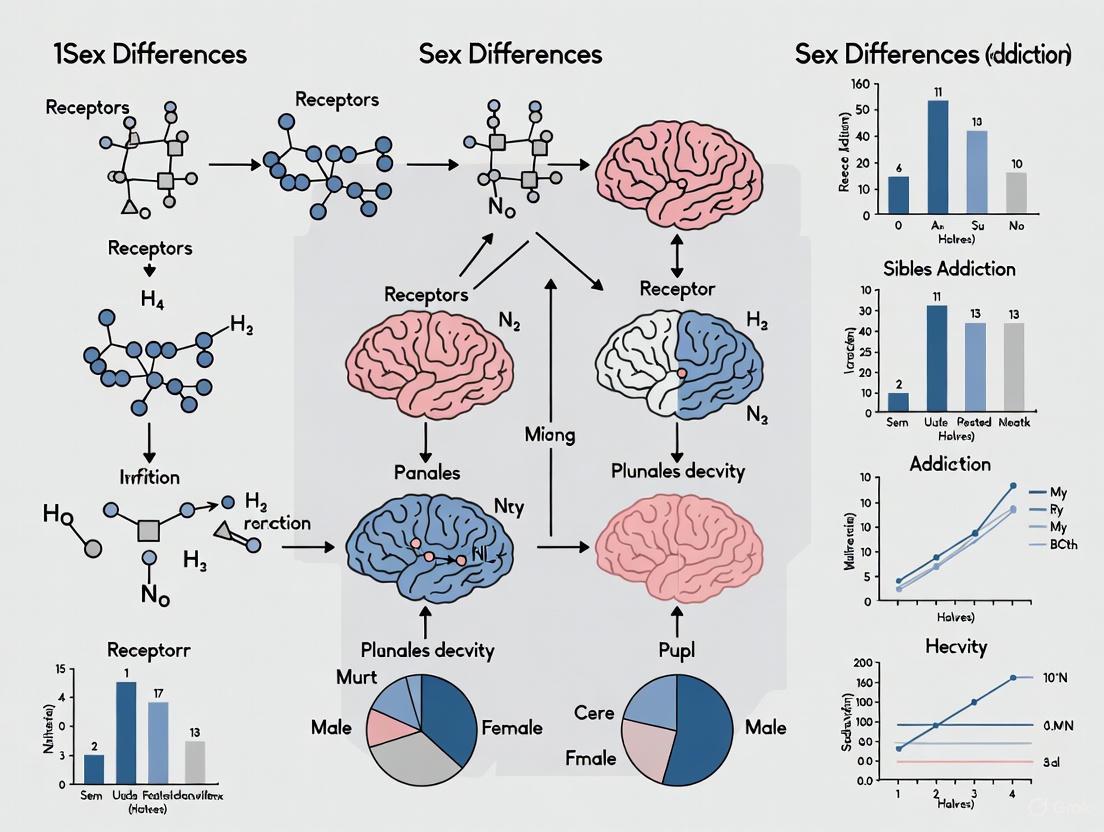
This article synthesizes current research on the distinct neural correlates of substance use disorders (SUDs) in males and females.
Sex Differences in the Addicted Brain: From Neural Circuits to Personalized Treatment
Abstract
This article synthesizes current research on the distinct neural correlates of substance use disorders (SUDs) in males and females. It explores the foundational neurobiological sex differences that underlie addiction vulnerability, progression, and relapse. We examine advanced methodological approaches, such as network control theory and fMRI, that are uncovering these divergent pathways. The content addresses the significant challenges and knowledge gaps in the field, including the historical underrepresentation of females in research. Finally, it validates these findings by linking specific neural activation patterns to clinical outcomes and treatment efficacy, arguing for the urgent integration of a sex-informed perspective to advance neurobiological phenotyping and develop personalized, effective interventions.
Mapping the Divergent Brain: Foundational Sex Differences in Addiction Neurocircuitry
Substance use disorder (SUD) represents a significant global health challenge, with an individual's risk being profoundly shaped by the potent interaction of genetic, neurobiological, and environmental factors. Among these, family history (FH) stands as one of the strongest predictive risk factors. A growing body of evidence from neuroimaging studies reveals that the neural correlates of SUD vulnerability are present long before substance use initiation, manifesting as structural, functional, and dynamical differences in the brains of at-risk youth. Critically, these premorbid neural alterations are not uniform; they demonstrate pronounced sex-specific divergences, suggesting that males and females may traverse distinct neurodevelopmental pathways toward addiction. This technical review synthesizes current evidence on these premorbid neural vulnerabilities, with a particular emphasis on sex differences, and provides a detailed overview of the methodological frameworks and reagent tools essential for investigating this complex phenotype.
Neurobiological Foundations of SUD Vulnerability
The period of adolescence is characterized by significant neurodevelopment, including cortical thinning, synaptic pruning, and reorganization within cortical and limbic regions [1]. This ontogenetic window coincides with characteristic behaviors such as heightened reward sensitivity, novelty-seeking, and risk-taking, which can contribute to substance use initiation [1]. For youth with a family history of SUD (FH+), this developmental period is marked by a premorbid exaggeration of the typical imbalance between developing bottom-up reward systems and top-down cognitive control networks [2] [3].
Structural and Functional Precursors
Prospective, longitudinal neuroimaging studies of substance-naïve youth have identified several key neural features that predate substance use and are associated with elevated SUD risk.
Table 1: Structural Brain Differences in FH+ Youth
| Brain Region | Observed Difference in FH+ | Associated Cognitive/Behavioral Correlate | Sex-Specific Modulations |
|---|---|---|---|
| Prefrontal Cortex | Smaller orbitofrontal and frontal gray matter volume [3]. | Poorer decision-making, impaired executive function [3]. | |
| Limbic Structures | Smaller amygdala volume [3]; Sex-specific patterns in hippocampal and nucleus accumbens volume [3]. | Altered reward and emotional processing [3]. | Larger left hippocampal volume in FHP males [3]; Positive association between NAcc volume and family history density in females [3]. |
| White Matter Integrity | Reduced integrity in frontal cortical tracts (e.g., anterior corona radiata) [3]. | Compromised cognitive functioning and inter-regional communication [3]. |
Functionally, FH+ youth exhibit altered brain activation during tasks engaging executive and reward systems. These alterations include both blunted and heightened frontal lobe response during inhibition tasks, as well as heightened brain activation during reward processing and alcohol cue reactivity [3]. Furthermore, resting-state functional connectivity is altered in large-scale brain networks critical for cognitive control and internal or external attention, including the default mode network (DMN), frontoparietal network (FPN), and salience/ventral attention networks (VAT) [2].
Sex Differences in Premorbid Neural Vulnerability
Converging evidence underscores that biological sex is a critical variable modulating the expression of SUD vulnerability in the premorbid brain. Females and males with a family history of SUD display divergent, and sometimes opposing, neural phenotypes.
Network Control Dynamics
A recent large-scale analysis applied Network Control Theory (NCT) to resting-state fMRI data from nearly 1,900 substance-naïve children (ages 9-11) from the Adolescent Brain Cognitive Development (ABCD) Study [2] [4] [5]. NCT estimates the transition energy (TE) required for the brain to shift between different activity states, serving as a metric of neural flexibility and dynamics [2].
The findings revealed stark sex differences:
- Females with FH+ showed elevated TE in the default mode network (DMN), which is associated with introspection and self-referential thought [2] [4] [5]. This suggests their brains may work harder to shift away from internal-focused states, potentially leading to a greater difficulty disengaging from negative internal states like stress or rumination [4].
- Males with FH+ showed reduced TE in the dorsal and ventral attention networks, which regulate focus and response to external cues [2] [4] [5]. This lower energy cost for state switching may lead to unrestrained behavior, heightened reactivity to the environment, and a greater draw toward rewarding or stimulating experiences [4].
These distinct neural dynamic profiles suggest that females may be predisposed to using substances as a way to escape or self-soothe internal distress, while males may be predisposed to substance use driven by external sensation-seeking and impulsivity [4] [5] [6].
Clinical and Behavioral Correlates
These sex-specific neural vulnerabilities align with clinical observations. The "telescoping" phenomenon describes the more rapid progression from initial substance use to dependence in females, which is often driven by negative reinforcement (use to alleviate distress) [7] [8] [6]. In contrast, males more frequently initiate substance use for positive reinforcement (seeking euphoria or reward) [6]. Neuroimaging studies in adults with SUD confirm these pathways, showing that in response to drug cues, men exhibit hyperactivation in the striatum, whereas women show hypoactivation in prefrontal cortical regions involved in top-down control, such as the dorsolateral prefrontal cortex and insula [9].
Table 2: Sex Differences in SUD Vulnerability Pathways
| Dimension | Females | Males |
|---|---|---|
| Primary Pathway | Negative Reinforcement (Self-medication) [7] [6] | Positive Reinforcement (Reward-seeking) [7] [6] |
| Key Neural Finding (NCT) | ↑ Transition Energy in Default Mode Network [2] [4] | ↓ Transition Energy in Attention Networks [2] [4] |
| Proposed Behavioral Phenotype | Difficulty disengaging from internal stress/rumination; substance use as escape [4]. | Heightened reactivity to external cues; unrestrained behavior and sensation-seeking [4]. |
| Clinical Progression | More rapid escalation to dependence ("telescoping") in vulnerable individuals [7] [8]. | Earlier initiation of use; higher rates of SUD development [2] [7]. |
Experimental Protocols & Methodologies
Network Control Theory Analysis
Objective: To quantify the energy required for brain-state transitions and identify sex-specific differences in neural dynamics associated with FH of SUD [2].
Workflow Description: The NCT analysis begins with the acquisition of resting-state functional MRI (rs-fMRI) and diffusion MRI (dMRI) data from a large cohort of substance-naïve youth [2]. Following standard preprocessing of the rsfMRI data, k-means clustering is applied to regional time-series data to identify recurring patterns of brain activity, termed "brain states" [2]. A group-average structural connectome (SC), derived from dMRI data, is constructed to represent the white matter wiring along which brain activity propagates [2]. The NCT model is then applied using the group SC and individual brain-state centroids to calculate the transition energy (TE)—the cumulative input required to shift between activity patterns—at global, network, and regional levels [2]. Finally, a series of two-way analyses of covariance (ANCOVA) are conducted to examine the effects of FH, sex, and their interaction on mean and pairwise TE values [2].
Functional MRI Stress/Drug-Cue Reactivity Protocol
Objective: To examine sex differences in neural responses to provocation and their association with future drug use [9].
Procedure:
- Participant Selection: Recruit abstinent, treatment-engaged individuals with SUD and healthy controls, matched for key demographics [9].
- Script Development: Create personalized, script-driven imagery trials for three conditions: stress (individualized stressful experiences), drug-cue (individualized drug use scenarios), and neutral-relaxing (control condition) [9].
- fMRI Acquisition: During the fMRI scan, participants are exposed to these brief, personalized scripts in a block design. Subjective anxiety and drug craving are collected in real-time [9].
- Prospective Follow-up: Participants are followed for a period (e.g., 90 days) post-scan with structured interviews (e.g., Timeline Followback) to assess future drug use days and recurrence of SUD [9].
- Analysis: Whole-brain analyses (p < 0.05, FWE corrected) are used to identify sex differences in neural responses to stress and drug cues versus neutral cues. Correlation analyses then assess the relationship between these neural responses and future drug use [9].
The Scientist's Toolkit: Essential Research Reagents & Materials
Table 3: Key Reagents and Resources for Investigating Premorbid SUD Vulnerability
| Resource / Tool | Specification / Model | Primary Research Application |
|---|---|---|
| Adolescent Brain Cognitive Development (ABCD) Study Database | Large-scale, longitudinal cohort of ~11,900 children in the US [2] [4]. | Primary data source for studying premorbid neurodevelopment and SUD risk factors in a substance-naïve population. |
| 3T MRI Scanner | Standardized imaging protocols across multiple sites [2]. | Acquisition of high-resolution structural (T1, dMRI) and functional (rs-fMRI, task-fMRI) data. |
| Yeo 7-Network Atlas + Subcortical/Cerebellar | 86-region cortical parcellation [2]. | Standardized definition of brain networks for functional connectivity and network control theory analyses. |
| Network Control Theory (NCT) Software | Custom MATLAB or Python scripts for calculating transition energy [2]. | Quantifying the input required for brain-state transitions, modeling neural dynamics and flexibility. |
| Personalized Guided Imagery Scripts | Custom-developed, audio-recorded scripts for stress, drug-cue, and neutral scenarios [9]. | Provoking craving and stress responses in the fMRI environment to study relapse-related neural circuitry. |
| Timeline Followback (TLFB) Interview | Standardized calendar-based interview [9]. | Prospective assessment of substance use patterns, frequency, and quantity during follow-up periods. |
The evidence is compelling: the neurodevelopmental roots of SUD vulnerability are evident in the premorbid brain, characterized by distinct sex-specific pathways. Females with a family history of SUD show neural dynamics suggestive of a ruminative, internally-focused risk phenotype, while males exhibit a pattern consistent with an impulsive, externally-driven phenotype. These differences, identifiable before substance use begins, likely reflect the interplay of inherited or early-life environmental factors with sexually dimorphic neurodevelopment.
These findings have profound implications for personalized prevention and intervention strategies. Recognizing that boys and girls may travel different neural roads toward the same disorder necessitates a move away from one-size-fits-all approaches [4] [5]. For example, prevention programs for at-risk girls might focus on building skills for coping with internal stress and disrupting rumination, while programs for at-risk boys might emphasize attention regulation, impulse control, and managing reactivity to rewarding cues [4]. Future research and drug development must systematically incorporate sex as a biological variable to fully elucidate the mechanisms of SUD risk and create targeted, effective solutions for all individuals.
Substance Use Disorders (SUDs) represent a significant global public health challenge, with a complex etiology influenced by a confluence of neurobiological, behavioral, and social factors. A critical dimension of this complexity is the presence of robust and pervasive sex differences in the presentation, progression, and neurobiological underpinnings of addiction [10] [8]. Historically, addiction research has predominantly utilized male subjects, leading to a gap in our understanding of the female-specific mechanisms of SUDs. However, recent clinical and preclinical studies increasingly highlight that sex-specific pathophysiology affects every phase of the addiction cycle, from initiation to relapse [10] [6].
This whitepaper synthesizes current evidence on sex differences across three core functional domains—Approach Behavior, Executive Function, and Negative Emotionality—which are integral to the addiction framework [11]. We provide an in-depth analysis of the distinct neural circuits, neurotransmitter systems, and behavioral manifestations that characterize these domains in males and females. The objective is to offer a technical guide for researchers and drug development professionals, equipping them with the knowledge to design sex-informed studies and develop targeted, and thus more effective, treatment strategies.
Neural Circuitry and Functional Domains: A Sex-Divergent Analysis
The transition from casual drug use to a substance use disorder involves dysregulation across multiple, interacting neural systems. The following sections dissect the sex differences within the three primary functional domains.
Approach Behavior (Incentive Salience)
The Approach Behavior domain encompasses processes related to reward anticipation, motivation, and the attribution of incentive salience to drug-related stimuli. Key neural structures include the ventral striatum (including the nucleus accumbens), the orbitofrontal cortex (OFC)/ventromedial prefrontal cortex (vmPFC), and the dopamine system within the mesolimbic pathway [10] [11].
- Sex Differences in Neural Activation: A systematic review of human neuroimaging studies identified the OFC/vmPFC as the most frequently reported region showing sex differences during tasks probing Approach Behavior [11]. This region is critical for subjective valuation and outcome expectation. Dysregulation here suggests potential sex-specific patterns in how the value of a drug is computed. Furthermore, men with SUDs exhibit greater striatal activation (caudate, putamen) in response to drug cues compared to women, and this hyperactivation prospectively predicts a higher number of future drug use days in men [9].
- Behavioral and Clinical Correlates: Preclinical and clinical data indicate that while men are more likely to initiate drug use for positive reinforcement (seeking euphoria), women are more likely to use drugs as a form of self-medication [6]. Despite this, women exhibit a "telescoping" effect, progressing from initial use to dependence more rapidly than men [10] [8]. This accelerated progression may be linked to a heightened sensitivity to the motivational properties of drugs.
Table 1: Sex Differences in the "Approach Behavior" Domain
| Aspect | Key Findings in Males | Key Findings in Females | Primary Neural Correlates |
|---|---|---|---|
| Neural Response to Cues | Greater striatal (caudate, putamen) activation to drug cues [9] | Altered OFC/vmPFC activity; greater corticostriatal-limbic reactivity to stress [11] [9] | Ventral Striatum, OFC/vmPFC |
| Reinforcement Pathway | Driven more by positive reinforcement (drug reward) [6] [8] | Driven more by negative reinforcement (alleviating distress) [6] [8] | Mesolimbic DA Pathway |
| Clinical Progression | Earlier initiation and higher rates of SUD [8] | Faster escalation from use to dependence ("telescoping") [10] [8] | N/A |
Executive Function
The Executive Function domain involves top-down cognitive control, including inhibitory control, performance monitoring, error detection, and goal-directed behavior. Key neural networks include the frontoparietal network, dorsolateral prefrontal cortex (dlPFC), anterior cingulate cortex (ACC), and anterior insula (together forming a core "salience network") [11] [12].
- Sex Differences in Neural Activation: Studies using Go/No-Go tasks reveal sex-specific patterns in error processing. In young adults with problem alcohol use, males exhibited higher levels of a multivariate neural component reflecting greater aggregate activation across the salience network (ACC, anterior insula) and other frontoparietal regions during error commissions [12]. Conversely, in the context of SUD recurrence, hypoactivation in the left dlPFC and left insula in response to drug cues was predictive of future drug use in women, but not in men [9]. This suggests that deficits in top-down control from the dlPFC and interoceptive processing in the insula are particularly detrimental for women.
- Behavioral and Clinical Correlates: Males are generally more likely to exhibit behaviors linked to cognitive control deficits, such as impulsivity [12]. The maturation of prefrontal control systems occurs earlier in females, potentially creating different windows of vulnerability for the impact of substance use on executive function across sexes [12].
Table 2: Sex Differences in the "Executive Function" Domain
| Aspect | Key Findings in Males | Key Findings in Females | Primary Neural Correlates |
|---|---|---|---|
| Error Processing | Greater salience network activation during inhibitory errors [12] | Different pattern of ACC activation and connectivity [12] | ACC, Anterior Insula, dlPFC |
| Inhibitory Control | Hyperactivation in striatum to drug cues predicts relapse [9] | Hypoactivation in dlPFC and insula to drug cues predicts relapse [9] | dlPFC, Insula, Striatum |
| Structural Correlation | Lower gray matter volume in salience network in AUD [12] | Larger OFC volume in AUD vs. controls [8] | dlPFC, OFC, Insula |
Negative Emotionality
The Negative Emotionality domain encompasses responses to stress, negative affect, and aversive states, which are powerful triggers for drug craving and relapse. Key brain regions include the amygdala, extended amygdala, insula, vmPFC, and the hippocampus [10] [9].
- Sex Differences in Neural Activation: Women with SUDs show greater anxiety and subjective distress in response to stress and drug cues [9]. Neuroimaging studies have linked this to hypoactivation of the vmPFC during stress exposure, which predicts future drug use in women [9]. The vmPFC is implicated in emotion regulation and fear extinction; its blunted response in women suggests a diminished capacity to regulate stress-induced negative affect. Furthermore, a study on early adolescents found that female adolescents uniquely recruited the orbitofrontal cortex (OFC) when regulating responses to aversive images, hinting at developmental sex differences in the neural circuitry of affective regulation that may precede SUD [13].
- Behavioral and Clinical Correlates: Women are more likely to initiate and escalate drug use to self-medicate negative affective states like anxiety, depression, and to cope with trauma [10] [6]. They also report more severe negative affect during withdrawal and have greater stress-induced craving and relapse compared to men [10]. A history of childhood trauma, particularly sexual abuse, is a stronger predictor of SUD in women than in men [10].
Table 3: Sex Differences in the "Negative Emotionality" Domain
| Aspect | Key Findings in Males | Key Findings in Females | Primary Neural Correlates |
|---|---|---|---|
| Stress Reactivity | Stress-related activation in mPFC, amygdala, hippocampus [9] | Stress-related hypoactivation in vmPFC; predicts relapse [9] | vmPFC, Amygdala, Insula |
| Self-Report & Behavior | Initiate use for positive reinforcement/social reasons [10] | Initiate use to cope with negative affect and trauma [10] [6] | N/A |
| Withdrawal & Relapse | Craving and relapse linked to drug cues [9] | Greater withdrawal-negative affect; relapse linked to stress [10] [9] | Extended Amygdala, vmPFC |
Experimental Protocols & Methodologies
To investigate the sex differences described above, researchers employ standardized neuroimaging paradigms. Below are detailed methodologies for key experimental protocols.
Script-Driven Imagery for Stress and Drug Cue Reactivity
This protocol is designed to probe neural responses to stress and drug cues in a controlled laboratory setting [9].
- Participant Preparation: Recruit abstinent (e.g., 3-4 weeks), treatment-engaged individuals with SUD. Collect detailed substance use history, childhood trauma questionnaires (CTQ), and psychiatric assessments.
- Script Development: Prior to the fMRI scan, develop personalized scripts for each participant through a structured interview. Scripts are tailored to three conditions:
- Stress: Recounting a personalized, highly stressful event.
- Drug Cue: Recounting situations involving drug craving and use.
- Neutral-Relaxing: Recounting a relaxed, non-arousing situation.
- fMRI Acquisition: Participants undergo fMRI scanning. The paradigm uses a block design where participants listen to their personalized scripts via headphones.
- Data Collection:
- Neural: Blood-oxygen-level-dependent (BOLD) signals are acquired during script presentation.
- Peripheral: Heart rate is monitored throughout.
- Subjective: Immediately after each trial, participants rate their levels of anxiety, craving, and other emotions on a scale (e.g., 0-10).
- Data Analysis: Compare neural activation (BOLD signal) during stress and drug cue trials versus neutral trials. Conduct whole-brain analyses and region-of-interest (ROI) analyses in a priori regions (e.g., striatum, vmPFC, amygdala, insula). Correlate neural responses with future drug use data collected during prospective follow-up interviews.
Go/No-Go Task for Error-Related Neural Activation
This task is used to assess inhibitory control and performance monitoring, specifically error processing [12].
- Task Design: Participants are presented with a series of visual stimuli. They are instructed to respond quickly to frequent "Go" stimuli (e.g., the letter "X") by pressing a button and to withhold their response to infrequent "No-Go" stimuli (e.g., the letter "K").
- fMRI Acquisition: Participants perform the task while BOLD signals are measured.
- Trial Classification:
- Go Trial (GO): Correct response to a "Go" stimulus.
- Correct Rejection (CR): Correctly withholding a response to a "No-Go" stimulus.
- False Alarm (FA): Erroneous response to a "No-Go" stimulus (inhibitory error).
- Data Analysis:
- First-Level Analysis: Generate contrast images for FA > GO and FA > CR to isolate brain activity related to error commission.
- Region of Interest (ROI): Define a set of ROIs previously linked to error processing (e.g., ACC, anterior insula, dlPFC) based on a meta-analysis.
- Multivariate Summary: Extract parameter estimates from all ROIs for each participant. Use Principal Component Analysis (PCA) to create a summary measure (the first component) that captures the common variance in error-related activation across the distributed network. This component is then used in group-level analyses to test for sex differences.
The following diagram illustrates the logical workflow and analysis pipeline for the Go/No-Go task.
The Scientist's Toolkit: Research Reagent Solutions
The following table details key materials and methodological solutions essential for conducting research in this field.
Table 4: Essential Research Reagents and Methodological Solutions
| Item/Tool Name | Function/Application | Technical Notes |
|---|---|---|
| Functional Magnetic Resonance Imaging (fMRI) | Non-invasive measurement of brain activity via the BOLD signal. Used to map neural responses to tasks (cue reactivity, Go/No-Go). | Essential for correlating behavior with brain function. Requires careful paradigm design and statistical correction for multiple comparisons. |
| Personalized Script-Driven Imagery | Standardized provocation of subjective and neural stress/drug cue reactivity. | Offers high ecological validity by using personally relevant stimuli. Critical for studying the Negative Emotionality domain [9]. |
| Go/No-Go Task Paradigm | Behavioral task to assess inhibitory control and error processing. | A gold-standard probe for the Executive Function domain. Error-related contrasts (FA>GO) engage the salience network [12]. |
| Transition Energy (TE) from Network Control Theory | A computational metric quantifying the input energy required for the brain to shift between activity states. | Applied to resting-state fMRI data to probe intrinsic brain dynamics. FH+ youth show sex-divergent TE, indicating premorbid risk [2]. |
| Urgency, Premeditation, Perseverance, Sensation Seeking, Positive Urgency (UPPS-P) Scale | Self-report measure assessing five distinct facets of impulsivity. | Links trait-level impulsivity to the three functional domains (e.g., negative urgency to Negative Emotionality) [11]. |
| Childhood Trauma Questionnaire (CTQ) | Retrospective self-report inventory assessing history of childhood abuse and neglect. | A critical covariate, as childhood trauma is a potent risk factor for SUD, particularly in women [10] [9]. |
Integrated Signaling Pathways and Conceptual Workflow
The path to addiction involves complex interactions between an individual's predisposing risk, neural system dysregulation, and exposure to drugs. The following diagram synthesizes the core concepts of this whitepaper into an integrated model, highlighting the sex-divergent pathways across the three functional domains.
The "telescoping effect" represents one of the most consistently documented sex/gender differences in substance use disorder (SUD), describing an accelerated progression from initial substance use to the development of dependence in females compared to males [14] [15]. This phenomenon was originally observed in alcohol use disorders more than 30 years ago, where women demonstrated a condensed timeframe between first alcohol use, the onset of dependence, and treatment entry [14]. While substance use disorders historically exhibit higher prevalence rates in males, the telescoping effect highlights a critical enhanced vulnerability in females across multiple drug classes, including opioids, psychostimulants, alcohol, and cannabis, as well as non-pharmacological addictions such as gambling [14] [15] [16].
The neurobiological basis of this accelerated progression involves complex interactions between ovarian hormones, mesolimbic dopamine signaling, and corticomesolimbic glutamatergic pathways [14] [17]. Preclinical studies strongly support the biological validity of this phenomenon, demonstrating that female animals develop addiction-like features—including compulsive drug use, enhanced motivation for drugs, and increased vulnerability to relapse—more readily than males [14] [15] [17]. This review synthesizes current evidence regarding the telescoping effect, with particular focus on its neurobiological underpinnings and implications for targeted therapeutic interventions.
Clinical and Preclinical Evidence Base
Human Studies Across Substance Classes
Clinical evidence for the telescoping effect extends across multiple substance classes, though with some inconsistent reports showing either no sex differences or occasionally faster progression in males [14] [7]. The most robust findings emerge from treatment-seeking populations, where women consistently report shorter intervals between substance use initiation and treatment entry.
Table 1: Clinical Evidence of Telescoping Across Substance Classes
| Substance | Telescoping Findings | Conflicting Evidence | Key References |
|---|---|---|---|
| Alcohol | Shorter progression from first use to dependence and treatment in women | Some general population surveys show no sex differences | [14] [7] [16] |
| Cocaine | Consistent observations of accelerated progression in females | Limited conflicting evidence reported | [14] [17] |
| Opioids | Faster transition to disorder in women | Effects less pronounced in some studies | [14] [18] |
| Cannabis | Females progress more rapidly to Cannabis Use Disorder (CbUD) | Higher prevalence rates in males | [14] [16] |
| Nicotine | Mixed evidence for telescoping, but women have poorer treatment outcomes | No consistent telescoping pattern observed | [16] |
| Gambling | Accelerated progression in females observed across multiple studies | One large twin study showed opposite effect (males telescoped) | [16] |
Preclinical Modeling of Telescoping Phenomena
Preclinical research provides compelling biological validation of the telescoping effect under controlled experimental conditions. Animal studies allow for precise manipulation of biological variables and detailed examination of addiction-like phenotypes that would be impractical or unethical in human subjects.
Table 2: Preclinical Evidence for Accelerated Addiction Phenotypes in Females
| Addiction Feature | Sex Differences | Experimental Paradigm | Key References |
|---|---|---|---|
| Drug Self-Administration | Females self-administer more cocaine and show greater escalation | Extended-access self-administration | [17] |
| Motivation for Drug | Enhanced motivation develops sooner during withdrawal in females | Progressive ratio testing | [17] |
| Compulsive Use | Develops faster in females despite negative consequences | Punishment-resistant paradigms | [14] [17] |
| Drug-Craving/Relapse | Cocaine-craving incubates faster in females; already elevated at early withdrawal | Extinction/cue-induced reinstatement | [17] |
| Molecular Adaptations | Sex differences in dmPFC BDNF and NMDA receptor expression | qPCR analysis after reinstatement | [17] |
Neurobiological Mechanisms
Hormonal Influences
Ovarian hormones, particularly estradiol, play a pivotal role in mediating sex differences in addiction vulnerability through multiple neurobiological mechanisms. The menstrual cycle phase significantly influences subjective responses to drugs and cue-induced craving, with the follicular phase (characterized by higher estradiol levels) associated with enhanced drug effects compared to the luteal phase [14] [16]. Estradiol potentiates dopamine release in the striatum following amphetamine administration and enhances the behavioral sensitization to cocaine and amphetamine [14]. Furthermore, estrogen receptors are expressed in brain regions critical for reward processing, including the ventral tegmental area (VTA) and nucleus accumbens (NAc), providing direct mechanisms for hormonal modulation of addiction vulnerability [14].
Preclinical investigations demonstrate that ovariectomy attenuates, while estradiol replacement restores, enhanced addiction-like behaviors in females [14]. The hormonal contraceptive tamoxifen, an estrogen receptor modulator, has been shown to block the development of motivational features of addiction-like phenotypes in female rats [14]. These findings collectively indicate that hormonal status represents a crucial biological variable contributing to the telescoping effect in females.
Neurocircuitry Adaptations
The neurobiological basis of the telescoping effect involves sex-specific adaptations in key neural circuits governing reward processing, motivation, and cognitive control.
Mesolimbic Dopamine System
The mesolimbic dopamine pathway, comprising dopaminergic projections from the VTA to the NAc, represents a core component of reward circuitry that mediates the reinforcing effects of addictive drugs [14]. Females exhibit enhanced dopamine release and receptor sensitivity within this circuit. Acute amphetamine administration produces greater striatal dopamine release in males, yet females demonstrate more rapid neuroadaptations following repeated drug exposure [8]. Clinical neuroimaging studies reveal that men with SUD show drug cue-related hyperactivation in the striatum that predicts future drug use, suggesting sex-divergent mechanisms in cue reactivity [9].
Corticomesolimbic Glutamate System
The corticomesolimbic glutamate pathway undergoes profound, sex-specific adaptations throughout the addiction cycle. In males, glutamatergic signaling transitions from hypoglutamatergic during early withdrawal to hyperglutamatergic during late withdrawal, corresponding with the incubation of drug craving [17]. Females exhibit a distinct temporal pattern, with cocaine-craving already elevated during early withdrawal and not progressively increasing [17]. Molecular analyses reveal that males, but not females, show the expected relapse-associated changes in dorsomedial prefrontal cortex (dmPFC) expression of BDNF exon-IV and NMDA receptor subunits (Grin2a, Grin2b, Grin1) [17], indicating fundamentally different neuroadaptations underlying addiction progression.
Structural and Functional Connectivity
Structural neuroimaging studies reveal sex-specific brain alterations in SUD that may contribute to the telescoping effect. In alcohol use disorder, males typically show smaller volumes in reward regions (amygdala, hippocampus) compared to controls, while females often display larger volumes in these areas [8]. Female smokers demonstrate smaller amygdala volume correlated with impulsivity, while male smokers show reduced caudate volume [8]. These divergent structural changes suggest that substance use disorders manifest through distinct neurobiological pathways in males and females, potentially explaining differential vulnerability trajectories.
Experimental Approaches and Methodologies
Key Behavioral Paradigms
Preclinical research investigating sex differences in addiction-like behaviors employs sophisticated behavioral paradigms that model distinct aspects of the addiction cycle. Extended-access self-administration procedures (typically 6+ hours daily) demonstrate that females self-administer higher levels of cocaine and show greater escalation of intake over time compared to males [17]. Progressive ratio schedules of reinforcement reveal that females develop an enhanced motivation for cocaine sooner during withdrawal than males, reflected in higher breakpoints [17]. Punishment-resistant paradigms assess compulsive drug use by measuring persistence of drug-seeking despite adverse consequences (e.g., footshock), with females developing this addiction-like feature more rapidly [14] [17]. Extinction/cue-induced reinstatement procedures model drug craving and relapse vulnerability, demonstrating that cocaine-craving follows a different temporal pattern in females versus males [17].
Molecular and Neurobiological Techniques
Cutting-edge molecular techniques enable precise examination of sex-specific neuroadaptations underlying the telescoping effect. Real-time quantitative PCR analyses of dmPFC tissue reveal that males, but not females, show relapse-associated changes in BDNF exon-IV and NMDA receptor subunit expression following extended-access cocaine self-administration and withdrawal [17]. In vivo microdialysis demonstrates sex differences in striatal dopamine release following stimulant administration, with estradiol enhancing amphetamine-induced dopamine release in females [14]. Immunohistochemistry and receptor autoradiography reveal sex differences in dopamine receptor density and distribution, providing mechanistic insights into differential drug responses [14]. Functional magnetic resonance imaging (fMRI) in humans identifies sex differences in neural responses to stress and drug cues, with men showing striatal hyperactivation and women showing cortico-limbic hypoactivation predictive of future drug use [9].
The Scientist's Toolkit: Essential Research Reagents
Table 3: Key Research Reagents for Investigating Sex Differences in Addiction
| Reagent/Resource | Application | Key Function | Example Findings |
|---|---|---|---|
| Extended-Access SA Apparatus | Behavioral phenotyping | Models transition to addiction-like behavior | Females show greater escalation of cocaine intake [17] |
| Estradiol Receptor Modulators | Hormonal manipulation | Probing estrogen receptor contributions | Tamoxifen blocks addiction-like phenotype in females [14] |
| qPCR Assays for BDNF/NMDAR | Molecular analysis | Quantifying gene expression changes | Sex differences in dmPFC Grin1, Grin2a/b expression [17] |
| fMRI Stress/Drug Cue Paradigms | Human neuroimaging | Assessing neural reactivity | Sex-specific brain activation predicts future drug use [9] |
| Dopamine Sensor Ligands | Neurotransmission studies | Measuring receptor availability | Sex differences in striatal D2/D3 receptor levels [14] |
Discussion and Future Directions
Methodological Considerations and Limitations
Research on the telescoping phenomenon faces several methodological challenges that must be addressed to advance the field. Historical gender bias in early addiction research established male-based models and assessment tools that may not fully capture female-specific addiction trajectories [19]. The underrepresentation of females in both clinical and preclinical research has limited understanding of sex-specific mechanisms, though recent NIH policies have improved inclusion [19]. Hormonal status documentation in clinical studies is often inadequate, with menstrual cycle phase frequently unconfirmed by hormone measurements, potentially obscuring cyclical influences on drug responses [14]. The interaction of biological and sociocultural factors creates complexity in disentangling purely neurobiological mechanisms from socially mediated influences on addiction progression [7].
Therapeutic Implications and Intervention Strategies
Understanding the neurobiological basis of the telescoping effect opens promising avenues for targeted therapeutic interventions. Hormonally-informed treatments that account for menstrual cycle phase or ovarian hormone status may enhance efficacy for women, particularly for conditions like cocaine use disorder where subjective effects and craving vary across the cycle [14] [16]. Sex-specific pharmacological approaches could target the distinct neuroadaptations observed in males versus females, such as the differential involvement of dmPFC BDNF and NMDA receptors in incubated craving [17]. Neural circuit-based interventions might focus on the sex-divergent neural responses to stress and drug cues, with men potentially benefiting from striatal-targeted approaches and women from cortico-limbic interventions [9]. Early intervention strategies for women are particularly crucial given their accelerated progression to disorder, potentially preventing the rapid development of severe addiction phenotypes [14] [18].
The telescoping effect represents a clinically significant phenomenon with robust neurobiological underpinnings. Evidence from multiple levels of analysis—from molecular to systems neuroscience—converges to indicate that females experience an accelerated progression from initial drug use to substance use disorder through mechanisms involving ovarian hormones, enhanced dopamine signaling, distinct glutamatergic adaptations, and structural brain changes. Future research must continue to integrate sex as a biological variable across all levels of investigation to fully elucidate these mechanisms and develop optimally targeted, sex-informed treatment strategies for substance use disorders.
The investigation of sex differences has become a critical frontier in addiction neuroscience, revealing that the efficacy of prevention, treatment, and underlying physiological mechanisms of substance use disorders often differ significantly between males and females [20]. Biological sex influences every phase of the addiction cycle, from initial acquisition to relapse vulnerability [21] [22]. Central to these observed disparities are the ovarian hormones, estrogen and progesterone, which exert powerful modulatory effects on the brain's reward system [23]. Understanding their precise mechanisms is not merely an academic exercise but an essential pathway toward developing sex-specific therapeutic interventions for addiction [24] [22].
The urgency of this research is underscored by shifting epidemiological trends. Historically, men were about five times more likely than women to have an alcohol use disorder; today, that gap has narrowed significantly, with men now only twice as likely [20]. This rapid change highlights the need to move beyond a male-centric model of addiction. This whitepaper synthesizes current evidence on how estrogen and progesterone modulate drug-seeking behavior, framed within the context of sex differences in the neural correlates of addiction, to provide drug development professionals with a targeted scientific resource.
Estrogen: A Potent Facilitator of Drug Seeking
Mechanisms of Action on the Dopaminergic System
Estrogen, particularly its most potent form, 17β-estradiol, enhances vulnerability to addiction primarily through its interaction with the mesolimbic dopamine pathway [24] [23]. This system, originating in the ventral tegmental area (VTA) and projecting to the nucleus accumbens (NAc), is the cornerstone of reward processing and is hijacked by all major drugs of abuse [20].
A landmark 2025 study published in Nature Neuroscience provided a breakthrough in understanding this mechanism. The research demonstrated that endogenous increases in 17β-estradiol enhance dopamine reward prediction errors (RPEs) in the NAc [25]. RPEs—the difference between received and expected rewards—are crucial neural signals for reinforcement learning. The study found that higher 17β-estradiol levels predicted greater behavioral sensitivity to previous rewards and larger dopamine RPEs, which in turn influenced the vigor of reward-seeking actions [25]. Proteomic analyses revealed that this was associated with reduced expression of dopamine transporters (DAT) in the NAc, suggesting a mechanism by which estrogen amplifies dopamine signaling by slowing its reuptake [25].
Table: Estrogen's Effects on Dopamine and Drug Responses
| Aspect of Function | Observed Effect of Estrogen | Experimental Evidence |
|---|---|---|
| Dopamine Release | Enhances amphetamine-induced striatal dopamine release [23] | Microdialysis in rodents |
| Dopamine Transporter | Reduces DAT expression in the NAc, prolonging dopamine signaling [25] | Proteomic analysis in rats |
| Reward Prediction Error | Enhances dopamine RPE signals, facilitating reinforcement learning [25] | Fiber photometry in rodents |
| Cocaine Response | Increases cocaine self-administration and subjective "high" [20] [21] | Human clinical studies and rodent self-administration |
| Opioid Response | Replaces vulnerability to fentanyl addiction in ovariectomized rats [20] | Rodent self-administration models |
Fluctuations Across the Menstrual/Estrous Cycle
The cyclical nature of estrogen levels creates corresponding fluctuations in drug vulnerability. In both humans and female rodents, the phase of the cycle characterized by high estrogen levels—the follicular phase in humans and proestrus in rodents—is associated with enhanced drug response [23] [20]. Women report a greater subjective "high" from cocaine and amphetamines during the high-estrogen follicular phase compared to the low-estrogen luteal phase [20]. Correspondingly, female rodents with higher estrogen levels during the estrus phase increase cocaine consumption, whereas those in non-estrus phases with low estrogen decrease consumption [24].
Progesterone: A Protective Counterbalance
In contrast to estrogen, progesterone generally exerts protective, inhibitory effects on drug-seeking behaviors [23] [20]. Its role appears to be one of counterbalancing the facilitatory actions of estrogen.
Mechanisms of Action and Therapeutic Potential
Progesterone and its metabolites influence the brain through several key mechanisms. They modulate GABAergic transmission, the primary inhibitory system in the brain, which can dampen the hyperexcitability associated with reward and withdrawal [20]. Furthermore, progesterone has been shown to reduce the positive reinforcing effects of drugs and diminish craving in both human and animal studies [20].
The therapeutic potential of progesterone is significant. Administration of progesterone has been demonstrated to reduce the positive reinforcing effects and craving for drugs in humans [20]. This effect is also observed naturally during pregnancy, a period of high progesterone, where lab animals show reduced cravings for drugs [20].
Table: Progesterone's Protective Effects Against Addiction
| Drug Class | Observed Effect of Progesterone | Context of Finding |
|---|---|---|
| Psychostimulants (Cocaine) | Reduces response to cocaine; opposes estrogen's facilitatory effects [23] [20] | Human and rodent studies |
| Alcohol | Monkeys drink less alcohol during high-progesterone luteal phase [20] | Primate self-administration model |
| Opioids | Demonstrates potential to reduce craving and reinforcing effects [20] | Preclinical models |
| General Craving | Reduces positive reinforcing effects and craving in humans [20] | Clinical intervention studies |
Neural Circuitry and Sex Differences in the Addicted Brain
Beyond neurochemistry, fundamental sex differences in brain structure and function contribute to divergent pathways to addiction. A November 2025 study from Weill Cornell Medicine analyzed brain scans from nearly 1,900 children and found that those with a family history of substance use disorder already exhibited distinctive, sex-specific patterns of brain activity long before substance use began [26].
The study used network control theory to measure the brain's flexibility in shifting between different activity patterns. It found that girls with a familial risk showed higher "transition energy" in the default-mode network (associated with introspection), suggesting their brains worked harder to shift from internal-focused thinking. This could lead to difficulty disengaging from negative internal states, potentially using substances to escape [26]. Conversely, boys with a familial risk showed lower transition energy in attention networks, making them more reactive to their environment and more drawn to rewarding experiences [26]. This aligns with clinical observations that women are more likely to use substances to relieve distress, while men are more likely to seek substances for euphoria or excitement [26].
Experimental Methodologies in Hormonal Addiction Research
Key Animal Models and Surgical Interventions
Ovariectomy (OVX) is a cornerstone experimental procedure for establishing causal relationships between estrogen and drug-seeking behaviors. By surgically removing the ovaries, researchers create a low-estrogen state, effectively eliminating the primary endogenous source of estrogen and progesterone [24]. Subsequent hormone replacement allows for precise testing of individual hormones. Studies consistently show that OVX decreases drug self-administration, and reintroducing estrogen reinstates or even increases drug-seeking behavior [24] [21].
The estrous cycle tracking in rodents via vaginal cytology is a fundamental method for correlating natural hormonal fluctuations with behavioral outcomes. Stages like proestrus (high estrogen) and diestrus (low estrogen) are identified by examining cell concentrations and morphologies in vaginal epithelium smears [23] [25].
Behavioral Paradigms and Neurobiological Techniques
Table: Core Behavioral Assays for Measuring Drug Seeking
| Behavioral Assay | Measure | Application in Hormonal Research |
|---|---|---|
| Operant Self-Administration | The animal performs an action (e.g., lever press) to receive an intravenous drug infusion. Measures acquisition, maintenance, and escalation of drug use. | Gold standard for modeling addiction; used to show females acquire SA faster and at higher rates [24] [21]. |
| Conditioned Place Preference (CPP) | Measures the animal's preference for an environment paired with a drug. Models the rewarding effects and cue-associated memories of the drug. | Used to demonstrate that estrogen enhances the conditioned rewarding effects of cocaine [21]. |
| Reinstatement Models | After extinction of drug-seeking, behavior is reinstated by a drug prime, stress, or drug-associated cue. Models relapse in humans. | Used to show that estrogen increases vulnerability to cue-induced relapse [24] [21]. |
Neurobiological techniques are crucial for elucidating mechanisms. In vivo fiber photometry allows for the real-time measurement of dopamine release or calcium dynamics in specific brain regions like the NAc in behaving animals, which was key to identifying the role of estrogen in modulating RPEs [25]. Molecular analyses (e.g., ELISA, proteomics) are used to quantify hormone levels and protein expression, such as the finding that estrogen reduces DAT expression [25].
The Scientist's Toolkit: Research Reagent Solutions
Table: Essential Reagents for Hormonal and Addiction Research
| Reagent/Material | Function/Application | Example Use Case |
|---|---|---|
| Ovariectomized (OVX) Rodent Model | Provides a hormone-deficient baseline to study the specific effects of estrogen or progesterone via replacement therapy. | Comparing cocaine self-administration in OVX vs. OVX+estradiol vs. intact females [24] [21]. |
| 17β-Estradiol (E2) |
Progesterone (P4) | The primary forms of estrogen and progesterone used for hormone replacement studies in OVX models. | Subcutaneous silastic capsules or repeated injections to maintain physiological levels [23] [21]. | | Enzyme-Linked Immunosorbent Assay (ELISA) Kits | Quantifies serum or tissue concentrations of 17β-estradiol, progesterone, and other biomarkers. | Validating hormonal status across the estrous cycle stages identified by vaginal cytology [25]. | | Dopamine Sensor (e.g., dLight, GRABDA) | Genetically encoded sensors used with fiber photometry to measure real-time dopamine dynamics in vivo. | Measuring dopamine RPE signals in the NAc across the estrous cycle [25]. | | Viral Vectors for Gene Knockdown (e.g., shRNA) | Used to selectively reduce expression of target genes (e.g., estrogen receptors) in specific brain regions. | Causal validation of estrogen receptor function in the midbrain for reward learning [25]. | | Selective Estrogen Receptor Modulators (SERMs) & Agonists/Antagonists | Pharmacological tools to dissect the contribution of specific estrogen receptor subtypes (e.g., ERα, ERβ, GPER1). | Investigating the opposing effects of GPER1 activation on cocaine response in males vs. females [20]. |
Signaling Pathways and Experimental Workflows
The following diagrams visualize the core neurobiological pathway and a generalized experimental workflow for investigating hormonal effects on drug seeking, as described in the research.
Estrogen-Dopamine Interaction in the Mesolimbic Pathway
Diagram Title: Estrogen's Pathway to Enhanced Drug Seeking
Workflow for Hormonal Manipulation Experiments
Diagram Title: Hormone-Drug Seeking Experiment Flow
The evidence is conclusive: estrogen and progesterone are potent modulators of the neural circuitry underlying addiction, with estrogen primarily facilitating and progesterone primarily inhibiting drug-seeking behaviors [23] [21]. These effects are mediated through direct and indirect actions on the mesolimbic dopamine system, influencing dopamine release, reuptake, and the fundamental reinforcement learning signals that drive compulsive drug use [24] [25].
The implications for drug development are profound. The historical over-reliance on male subjects in preclinical and clinical research has likely obscured effective, sex-specific treatment pathways [20] [27]. Future efforts must prioritize:
- Integrating Hormonal Considerations: Clinical trials for addiction pharmacotherapies must be designed to account for hormonal status in female participants (e.g., menstrual cycle phase, menopausal status, hormone therapy use) [20] [28].
- Developing Hormone-Based Therapies: Progesterone and its analogs represent a promising therapeutic avenue for reducing craving and relapse, particularly in women [20]. Conversely, anti-estrogenic treatments may be worth exploring.
- Leveraging Genetic Insights: Research into sex-differentiated genetic effects on drug metabolism enzymes and transporter genes can help explain variability in treatment response and pave the way for truly personalized medicine [28].
In conclusion, moving beyond a unisex model of addiction is not merely a matter of inclusivity but a scientific necessity. By systematically incorporating the roles of estrogen and progesterone into our research paradigms and therapeutic designs, we can develop more effective and precise interventions for the growing population of individuals affected by substance use disorders.
Understanding sex differences in brain organization is crucial for developing a complete neurobiological framework for human health and disease, including substance use disorders. While observed behavioral differences between males and females have long been documented, only recently has neuroscience begun to elucidate the structural and functional correlates underlying these variations. This primer synthesizes current research on sex differences in brain volume and connectivity, with particular attention to implications for addiction research. Evidence suggests that the prevalence, symptom presentation, and underlying neural circuitry of addictive disorders differ between males and females, potentially reflecting divergent neurobiological substrates [29]. This review aims to provide researchers and drug development professionals with a comprehensive technical overview of this evolving field, encompassing key anatomical findings, methodological approaches, and potential translational applications.
Structural Sex Differences in Brain Volume and Anatomy
Quantitative analyses of neuroimaging data have consistently revealed several key anatomical differences between male and female brains. These differences exist at both global and regional levels and provide important context for interpreting functional and connectivity data.
Global Volume Differences
The most consistently observed sex difference in neuroanatomy is total brain volume. Meta-analyses confirm that adult male brains are, on average, 10-13% larger than female brains, even after controlling for body size [30]. This size difference is not uniform across all tissue types; females have a higher percentage of gray matter, while males have a higher percentage of white matter when controlling for total volume [29] [30]. Importantly, these gross volumetric differences do not directly correlate with intellectual capacity, as functional studies suggest different organizational principles may support similar cognitive abilities across sexes [30].
Table 1: Global Sex Differences in Brain Anatomy
| Brain Metric | Direction of Effect in Males | Effect Size | Notes |
|---|---|---|---|
| Total Brain Volume | Larger [30] | 10-13% [30] | Not attributable merely to body size differences [30] |
| Gray Matter Percentage | Lower [29] [30] | Small | After controlling for total brain volume [30] |
| White Matter Percentage | Higher [29] [30] | Small | After controlling for total brain volume [30] |
| Total Myelinated Fiber Length | Longer (176,000 km vs. 149,000 km) [30] | ~15% | At age 20 [30] |
| Cortical Thickness | Lower [30] | Small-Moderate | After controlling for total volume [30] |
| Cortical Complexity | Lower [30] | Small-Moderate | After controlling for total volume [30] |
| Surface Area | Greater [30] | Small-Moderate | After controlling for total volume [30] |
Regional Structural Differences
Beyond global differences, specific brain regions show disproportionate size variations between sexes. Females have significantly larger proportionate volumes in the superior temporal cortex, Broca's area, hippocampus, and caudate nucleus [30]. The midsagittal and fiber numbers in the anterior commissure (connecting temporal poles) and mass intermedia (connecting thalami) are also larger in women [30]. Conversely, males have larger and longer planum temporale and Sylvian fissure [30]. A 2021 meta-synthesis found that sex accounts for approximately 1% of brain structure variance, with large group-level differences primarily in total brain volume rather than specific regions [30].
Sex Differences in Brain Connectivity
Beyond structural anatomy, male and female brains display distinct patterns of functional connectivity, which may have profound implications for information processing and cognitive style.
Local and Global Connectivity Patterns
Women show 14% higher local functional connectivity density (lFCD) and up to 5% higher gray matter density in cortical and subcortical regions compared to men [31]. The negative power scaling of lFCD is steeper for men, suggesting the balance between strongly and weakly connected nodes differs across genders [31]. This suggests a more distributed organization of the male brain compared to the female brain [31].
At the large-scale network level, males typically exhibit stronger inter-network connectivity across multiple brain systems, suggesting their brains may be more engaged in cross-network communication that supports global cognitive processing [29]. In contrast, females demonstrate stronger intra-network connectivity in several key networks, including the sensorimotor, salience, auditory, and executive control networks, reflecting specialized processing within certain networks for more efficient localized functions [29].
Table 2: Sex Differences in Functional Connectivity
| Connectivity Type | Males | Females | Functional Implications |
|---|---|---|---|
| Local Functional Connectivity Density | Lower [31] | 14% Higher [31] | More localized processing in females |
| Inter-Network Connectivity | Stronger [29] | Weaker [29] | Enhanced cross-network communication in males |
| Intra-Network Connectivity | Weaker in most networks [29] | Stronger [29] | Enhanced specialized processing in females |
| Default Mode Network Connectivity | Similar or weaker [29] | Stronger [32] | Potential relevance for self-referential processing |
| Scale-Free Network Organization | Steeper negative power scaling [31] | More balanced scaling [31] | Different hub organization |
Connectivity and Cognitive Performance
These connectivity differences manifest in cognitive performance. During mental rotation tasks (where males typically show an advantage), males exhibit less cross-network interaction of the visual network but more intra-network integration and cross-network interaction of the salience network [33]. These connectivity patterns significantly mediate the sex difference in mental rotation performance [33]. This suggests that sex differences in cognitive performance may arise from distinct neural strategies rather than overall capability differences.
Figure 1: Neural Mediation of Sex Differences in Mental Rotation. Sex differences in mental rotation performance are mediated by distinct patterns of visual and salience network connectivity [33].
Methodological Approaches for Investigating Sex Differences
Research on sex differences in brain structure and connectivity employs sophisticated neuroimaging techniques and analytical approaches.
Key Imaging and Analytical Techniques
Functional connectivity density mapping (FCDM) is a voxel-wise data-driven method that allows ultrafast mapping of regions with high local functional connectivity density for identifying hubs in the human brain [31]. This technique is based on the highly clustered organization of the brain and enables calculation of individual functional connectivity maps with high spatial resolution (3-mm isotropic or higher) [31]. The method computes the number of functional connections between a given voxel and other voxels through Pearson correlations using a correlation threshold (typically R = 0.6) and a three-dimensional searching algorithm that detects the boundaries of voxel clusters [31].
Independent component analysis (ICA) of resting-state fMRI data serves as a powerful data-driven approach that facilitates identification and extraction of distinct functional networks, allowing investigation of both inter- and intra-network functional connectivity [29]. This technique has been extensively employed in neuroscience to elucidate large-scale functional architecture in both healthy and pathological states [29].
Voxel-based morphometry (VBM) enables comprehensive examination of structural differences throughout the brain without requiring a priori region selection [31]. This automated procedure involves image intensity correction, segmentation into gray matter, white matter, and cerebrospinal fluid compartments using modified mixture model cluster analysis, and normalization to standardized stereotactic space [31].
Figure 2: Experimental Workflow for Investigating Sex Differences in Brain Structure and Connectivity. Comprehensive methodology includes multiple acquisition, preprocessing, and analytical approaches [31] [29].
The Scientist's Toolkit: Essential Research Reagents and Materials
Table 3: Essential Research Materials and Analytical Tools
| Item/Technique | Function/Application | Key Specifications |
|---|---|---|
| 3-Tesla MRI Scanner | High-resolution structural and functional imaging | Standard field strength for human connectivity studies [31] [29] |
| MP-RAGE Sequence | High-resolution T1-weighted structural imaging | 1-mm isotropic resolution optimal for gray/white matter contrast [31] |
| Echo-Planar Imaging (EPI) | Resting-state functional connectivity | TR=2.0s, 3-4mm isotropic voxels, 200+ volumes [31] |
| SPM/DPABI Software | Image preprocessing and statistical analysis | Standard pipelines for motion correction, normalization, segmentation [29] |
| Automated Anatomical Labeling Atlas | Region of interest definition | Standardized brain parcellation for ROI-based analyses [32] |
| ICA Algorithms | Large-scale network identification | Data-driven approach for extracting functional networks [29] |
| FCDM Algorithms | Hub identification and local connectivity mapping | Ultrafast mapping of functional connectivity density [31] |
Implications for Addiction Research
The structural and connectivity differences between male and female brains have significant implications for understanding the neural correlates of addiction and developing sex-specific interventions.
Neural Correlates of Addiction and Sex Differences
Addiction research has identified distinct structural and functional correlates that appear to differ by sex. Individuals with smartphone addiction show lower gray matter volume in the left anterior insula, inferior temporal, and parahippocampal cortex, along with lower intrinsic activity in the right anterior cingulate cortex (ACC) [34]. A significant negative association exists between addiction severity and both ACC volume and activity [34]. In alcohol use disorder, incentive salience to alcohol cues correlates with activation in reward-learning and affective regions including the insula, posterior cingulate cortices, bilateral precuneus, and bilateral precentral gyri [35].
Regarding impaired illness awareness (anosognosia) in addiction, individuals with impaired awareness show greater activation in the right insula and left posterior parietal area during illness awareness tasks [36]. These regions are involved in self-referential processing and may function differently across sexes based on established connectivity patterns.
Addiction-Related Neuroplasticity
Addiction involves significant structural neuroplasticity throughout the reward pathway. Research focusing on the ventral tegmental area (VTA) and nucleus accumbens (NAc) has revealed that drugs of abuse alter dendritic spine density and complexity [37]. Importantly, opiates and stimulants produce opposite effects on structural plasticity—opiates decrease spine density in the NAc, while stimulants increase spinal density in both the NAc and VTA [37]. These changes persist long after drug cessation and contribute to the chronic relapsing nature of addictive disorders.
The Addictions Neuroclinical Assessment (ANA) framework offers a more holistic understanding of three neurofunctional and behavioral domains reflecting neurobiological dysfunction in alcohol use disorder [35]. Identifying neural markers that subserve these domains, including incentive salience, executive function, and negative emotionality, may help elucidate sex-specific mechanisms in addiction.
Significant sex differences exist in both brain structure and functional connectivity organization. Males generally show stronger inter-network connectivity supporting global integration, while females exhibit enhanced intra-network connectivity facilitating specialized processing. These differences emerge from variations in total brain volume, regional specialization, and connectome organization. For addiction researchers, these distinctions are crucial for understanding sex-specific prevalence rates, clinical presentations, and treatment responses observed in substance use disorders. Future research should continue to elucidate how these sex differences in brain organization contribute to differential vulnerability to addictive behaviors, with the goal of developing more precisely targeted interventions. As the field moves toward personalized medicine, incorporating sex as a biological variable will be essential for advancing our understanding of addiction neuroscience and therapeutic development.
Advanced Neuroimaging and Analytical Tools for Sex-Specific Discovery
Network Control Theory (NCT) provides a powerful computational framework for modeling brain dynamics, offering a novel lens through which to examine the neural underpinnings of addiction risk. This approach conceptualizes the brain as a networked system and quantifies the energy required to transition between different neural states. Transition energy serves as a key metric of brain network flexibility, reflecting the underlying structural and functional integrity that may predispose individuals to substance use disorders (SUDs) [26] [38].
Emerging research demonstrates that these energetic properties show sex-specific patterns in individuals with a family history of addiction, appearing long before substance use begins [26] [4]. This whitepaper examines how NCT quantifies these early neural vulnerabilities and their implications for developing sex-specific prevention and treatment strategies, framing the discussion within the broader context of sex differences in neural correlates of addiction research.
Theoretical Framework of Network Control Theory
Fundamental Principles
Network Control Theory applies engineering control principles to neural systems, modeling the brain as a dynamic network where regions (nodes) interact through structural connections (edges). The core mathematical framework describes how neural activity evolves over time and quantifies the control energy necessary to drive transitions between cognitive states [38].
The fundamental equation describes the brain's state evolution as: x(t+1) = Ax(t) + Bu(t)
Where x(t) represents the brain's activity state at time t, A is the structural connectivity matrix, B defines control nodes, and u(t) is the control energy input required to achieve state transitions [38].
Quantifying Transition Energy
Transition energy calculates the minimum energy input required to move the brain from one activity state to another within a specified time frame. In practice, researchers derive these calculations from resting-state functional MRI (fMRI) data, where participants lie quietly in the scanner while spontaneous brain activity is measured [26] [38].
When you lie in an MRI scanner, your brain isn't idle; it cycles through recurring patterns of activation," explains Louisa Schilling, doctoral candidate at Weill Cornell's Computational Connectomics Laboratory. "Network control theory lets us calculate how much effort the brain expends to shift between these patterns [26].
This transition energy indicates the brain's flexibility—its ability to shift from inward, self-reflective thought to external focus. Disruptions in this process have been observed in people with heavy alcohol use and cocaine use disorder [26].
Sex-Specific Neural Vulnerabilities in Addiction Risk
Opposing Patterns in Boys and Girls
A large-scale analysis of nearly 1,900 children ages 9-11 from the Adolescent Brain Cognitive Development (ABCD) Study revealed that children with a family history of SUD show distinctive patterns of brain activity that differ fundamentally between boys and girls [26] [4].
Table 1: Sex-Specific Patterns of Transition Energy in Youth with Family History of SUD
| Sex | Neural Network | Transition Energy Pattern | Cognitive Interpretation | Behavioral Risk Pathway |
|---|---|---|---|---|
| Females | Default-mode network (introspection) | ↑ Higher transition energy | Difficulty disengaging from internal states like stress or rumination | Substance use as escape from negative internal states |
| Males | Dorsal/ventral attention networks (external focus) | ↓ Lower transition energy | Heightened reactivity to environmental cues and rewarding stimuli | Substance use for euphoria or sensation-seeking |
These neural patterns appeared before any substance use began, indicating they may represent inherited or early-life environmental vulnerabilities rather than effects of drug exposure [26]. The findings underscore the importance of analyzing data from boys and girls separately, since averaging results across both groups masked these contrasting patterns [4].
Clinical Correlates and Developmental Pathways
The observed sex differences in neural dynamics mirror clinical presentations seen in adults with substance use disorders. Women are more likely to use substances to relieve distress and progress more quickly to dependence, while men are more likely to seek substances to feel euphoria or excitement [26].
As Dr. Amy Kuceyeski, senior author of the Weill Cornell study, summarizes: "Girls may have a harder time stepping on the brakes, while boys may find it easier to step on the gas when it comes to risky behaviors and addiction [26]."
Experimental Protocols and Methodologies
Key Study Parameters and Populations
Recent research has employed standardized protocols to ensure reproducibility across studies examining brain state transition energies in addiction risk.
Table 2: Experimental Parameters in NCT Studies of Addiction Risk
| Parameter | Weill Cornell Study (ABCD Data) | Heavy Alcohol Use Study (HCP Data) | Gaming Desire Resistance Study |
|---|---|---|---|
| Participants | ~1,900 children (age 9-11) | 130 heavy alcohol users vs. 308 minimal users | 26 habitual online gamers |
| Imaging Modalities | Resting-state fMRI | Diffusion MRI, resting-state fMRI, PET | Task-based fMRI with cue exposure |
| Primary NCT Metrics | Transition energy in specific networks | Control energy for state transitions, dynamic activity complexity | Brain activation during craving resistance |
| Analysis Approach | Network control theory applied to resting-state transitions | Multimodal integration of structural, functional, and receptor data | ROI analysis of craving-related circuits |
| Family History Assessment | Comprehensive family history of SUD | Alcohol dependence/abuse diagnosis or binge drinking criteria | Internet addiction test scores |
Methodological Workflow
The following diagram illustrates the standard experimental workflow for NCT studies in addiction research:
Technical Implementation Details
In practice, researchers extract brain states from resting-state fMRI data using k-means clustering (typically k=4 based on prior work) applied to regional BOLD time-series [38]. The cluster centroids represent recurrent brain states, and transition probabilities between states are calculated for each individual.
The transition energy computation utilizes each individual's structural connectome (derived from diffusion MRI) as the underlying network architecture that constrains how easily the brain can move between activity states [38]. This approach allows researchers to quantify how structural connectivity shapes functional dynamics in ways relevant to addiction vulnerability.
The Scientist's Toolkit: Essential Research Materials
Table 3: Essential Research Reagents and Computational Tools for NCT Addiction Research
| Tool/Category | Specific Examples | Function in NCT Research |
|---|---|---|
| Neuroimaging Data | Adolescent Brain Cognitive Development (ABCD) Study Data [26]; Human Connectome Project (HCP) Young Adult Data [38] | Provides large-scale, multimodal imaging data for hypothesis testing and validation |
| Computational Tools | Network Control Theory MATLAB Toolboxes; MRtrix3 (diffusion MRI processing) [38]; SPM12 (fMRI analysis) | Enables calculation of transition energies and structural connectivity mapping |
| Analytical Frameworks | K-means clustering (brain state identification) [38]; Graph theoretical analysis; Control theoretic simulations | Identifies recurrent brain states and models network dynamics |
| Statistical Approaches | Family-wise error correction for multiple comparisons [32]; Regression models with covariates (e.g., illness severity) [36]; Sex-stratified analyses [26] | Ensures robust statistical inference and addresses confounding variables |
| Clinical Assessments | Family history of SUD interviews [26]; DSM-5 criteria for substance use disorders [38]; Internet addiction test [32] | Characterizes participant phenotypes and addiction severity |
Integration with Broader Addiction Neuroscience
Neurobiological Mechanisms
The transition energy abnormalities observed in addiction risk likely reflect underlying neurobiological mechanisms. Heavy alcohol use studies have linked increased transition energy to decreased D2 receptor density in the brain, revealed through positron emission tomography (PET) [38].
One hypothesis suggests that individuals with lower dopamine receptor levels—due to genetics or environment—experience less pleasure from everyday activities and may therefore be susceptible to seeking drug-induced increases in dopamine [38]. This dopamine dysfunction may manifest computationally as altered control energy requirements for state transitions.
Clinical Applications: Illness Awareness
Beyond predisposition, NCT also illuminates mechanisms underlying clinical features of established addiction. Research on impaired illness awareness (anosognosia) in SUD reveals that affected individuals show altered activation in brain regions involved in self-referential processing, including the frontoparietal network and insula [36].
These findings suggest that addiction involves disruptions not only in reward and control systems but also in the neural circuits that support self-awareness, potentially explaining why individuals with SUD may fail to recognize the severity of their condition [36].
Research Workflow and Analytical Framework
The following diagram illustrates the core conceptual framework and signaling pathways in sex-specific addiction risk:
Implications for Targeted Interventions
The sex-specific patterns in brain dynamics offer promising directions for personalized prevention and treatment. "Recognizing that boys and girls may travel different neural roads toward the same disorder can help tailor how we intervene," notes Dr. Kuceyeski. "For example, programs for girls might focus on coping with internal stress, while for boys the emphasis might be on attention and impulse control [26]."
This approach aligns with clinical observations that women and men often have different motivations for substance use and progression pathways to dependence [26] [4]. By targeting the specific neural vulnerabilities identified through NCT, interventions could potentially modify the developmental trajectory toward addiction in at-risk youth.
Network Control Theory provides a mathematically rigorous framework for quantifying sex differences in brain dynamics that predispose individuals to substance use disorders. By measuring transition energies between neural states, researchers have identified distinct vulnerability patterns in boys and girls with family histories of addiction—findings that appear long before substance use begins.
These advances underscore the importance of considering sex as a biological variable in addiction research and highlight the potential for NCT to guide development of personalized prevention strategies that target the specific neural mechanisms underlying addiction risk in different populations.
Functional magnetic resonance imaging (fMRI) has revolutionized our ability to probe the neural underpinnings of addiction, a disorder that imposes a substantial global burden of disease [39]. Task-based fMRI paradigms are powerful tools for elucidating the neurocognitive mechanisms of substance use disorders (SUDs), with drug cue reactivity (FDCR) being one of the most frequently employed experimental designs [39] [40]. These paradigms perturb specific brain circuits to measure neural responses associated with core addiction phenomena, including error processing, stress reactivity, and cue-induced craving. However, the interpretability and reproducibility of these studies have been hampered by incomplete reporting of methodological details, which limits clinical translation and meta-analytic efforts [39].
A critical dimension that demands greater attention in addiction neuroscience is the role of sex differences. Emerging evidence consistently demonstrates that males and females exhibit divergent paths to addiction, influenced by a confluence of biological, psychological, and social factors [10] [8] [6]. Females often progress more rapidly from initial drug use to dependence, a phenomenon known as "telescoping," and may be more influenced by negative reinforcement mechanisms, such as stress relief, whereas males may be more driven by positive reinforcement from drug effects [10] [6]. These behavioral differences are reflected in underlying neural systems, necessitating research approaches that explicitly account for sex as a biological variable. This technical guide provides an in-depth examination of key fMRI paradigms for studying addiction, with particular emphasis on their application for uncovering sex differences in neural correlates.
Core fMRI Paradigms in Addiction Research
Drug Cue Reactivity (FDCR) Paradigms
Overview and Rationale: The FDCR paradigm measures brain responses to drug-associated cues (e.g., images of drugs or paraphernalia) compared to neutral control cues. These cues elicit conditioned responses that are thought to reflect the enhanced salience of drugs in addiction, contributing to craving and relapse [39] [41]. According to the Impaired Response Inhibition and Salience Attribution (I-RISA) model, addiction involves an enhanced salience for drug cues at the expense of decreased salience for natural reinforcers, coupled with loss of control over drug use [41].
Experimental Protocol:
- Stimulus Selection: Curate validated drug-related and matched neutral control stimuli from standardized databases where available (e.g., the openly accessible methamphetamine and opioid cue database [39]). Ensure cues are matched for visual complexity, luminance, and content where possible.
- Task Design: Commonly uses block or event-related designs. In a block design, participants view multiple cues of the same category (drug/neutral) in sequences lasting 20-30 seconds, interspersed with rest or fixation periods. Event-related designs present single cues in a randomized order for shorter durations (e.g., 2-6 seconds).
- fMRI Acquisition: Acquire T2*-weighted BOLD fMRI images. Standard parameters might include: TR = 2000 ms, TE = 30 ms, flip angle = 90°, voxel size = 3 × 3 × 3 mm³, but these should be optimized for the scanner and research question [39].
- Craving Assessment: Subjectively reported craving is typically collected immediately after cue blocks or scans using visual analog scales (e.g., 0-10) to link neural activity to conscious experience [39] [40].
- Data Analysis: Preprocessing (realignment, normalization, smoothing) is followed by general linear model (GLM) analysis to identify voxels with significantly greater BOLD response to drug cues versus neutral cues. Regions of interest (ROIs) often include the ventral striatum, amygdala, anterior cingulate cortex (ACC), and prefrontal cortex (PFC).
Key Considerations for Sex Differences:
- Cue Specificity: Females may show greater neural reactivity to stress-related cues, whereas males may show greater reactivity to drug-use imagery itself [10].
- Hormonal Modulation: The menstrual cycle phase can influence cue reactivity in females due to fluctuating estrogen and progesterone levels, which should be recorded and considered in analyses [8].
Affective Go/No-Go Paradigm for Inhibitory Control
Overview and Rationale: This paradigm probes the interaction between response inhibition and salience attribution by testing the ability to withhold a prepotent motor response (No-Go trials) in the presence of affectively charged stimuli, including drug cues [41]. It operationalizes the core addiction concept of failed inhibitory control in the face of compelling drug-related stimuli.
Experimental Protocol (as implemented in [41]):
- Stimuli: Four types of picture blocks are used: neutral, gambling/drug-related, generally positive, and generally negative. "Go" trials (requiring a button press) contain the affective pictures. "No-Go" trials (requiring inhibition of a response) contain neutral pictures.
- Task Procedure: Participants are instructed to respond quickly to "Go" stimuli and to completely withhold responses to "No-Go" stimuli. Each block contains a high proportion of Go trials (e.g., 75%) to establish a prepotent response tendency.
- fMRI Acquisition: Similar to standard FDCR protocols, focusing on BOLD signal during both Go and No-Go trials.
- Primary Outcomes:
- Behavioral: Percentage of commission errors (failing to inhibit on No-Go trials) and mean reaction time for correct Go trials, analyzed per block type.
- Neural: BOLD activity contrast for successful No-Go trials vs. Go trials, and for drug-related Go trials vs. neutral Go trials.
- Data Analysis: GLM analyses identify brain regions associated with response inhibition (e.g., dorsolateral PFC, inferior frontal cortex, ACC) and salience attribution (e.g., ventral striatum, amygdala). Interactions between group (patient/control) and condition (e.g., gambling vs. neutral blocks) are key.
Key Considerations for Sex Differences:
- Behavioral Patterns: Males and females may employ different cognitive strategies for inhibitory control, potentially reflected in differing reaction time/accuracy trade-offs.
- Neural Recruitment: Sex differences may exist in the recruitment of prefrontal inhibitory networks during exposure to different affective contexts (e.g., stress vs. drug cues) [2].
Stress Reactivity Paradigms
Overview and Rationale: Stress is a potent trigger for drug craving and relapse. These paradigms assess neural and subjective responses to stress induction, probing the negative reinforcement pathway to addiction, which may be particularly salient for females [10] [6].
Experimental Protocol:
- Stress Induction: Common methods include:
- Montreal Imaging Stress Task (MIST): Participants solve challenging arithmetic problems under time pressure and with social evaluative threat (e.g., pre-programmed negative feedback).
- Socially Evaluated Cold Pressor Test: Participants immerse a hand in ice-cold water while being recorded and watched by an expressionless experimenter.
- Personalized Stress Imagery: Guided imagery of individualized, highly stressful autobiographical memories.
- Control Condition: A matched neutral or low-stress condition (e.g., easy math problems, warm water, neutral imagery) is essential.
- fMRI Acquisition: Standard BOLD fMRI acquisition during stress and control conditions.
- Subjective and Physiological Measures: Collect self-reported stress/anxiety ratings and heart rate, salivary cortisol, or skin conductance responses to verify stress induction.
- Data Analysis: Contrast BOLD activity during stress versus control conditions. Key regions include the amygdala, hippocampus, ACC, insula, and medial PFC.
Key Considerations for Sex Differences:
- Differential Engagement: Females with SUDs may show heightened limbic (amygdala, hippocampus) and insular reactivity to stress cues compared to males [10] [6].
- Hormonal Influence: Stress system reactivity, particularly the HPA axis, is modulated by sex hormones, requiring careful consideration of cycle phase in females.
Quantitative Synthesis of Sex Differences in Addiction Neuroimaging
Table 1: Summary of Reported Sex Differences in Neural Structure and Function in Substance Use Disorders
| Substance | Neural Correlate | Finding in Males (vs. Controls) | Finding in Females (vs. Controls) | Key References |
|---|---|---|---|---|
| Alcohol | Amygdala Volume | ↓ Smaller volume (dose-dependent) | No clear effect or opposite direction | [8] |
| Hippocampus Volume | ↓ Reduced volume | Less reduction or no effect | [8] | |
| Corpus Callosum Volume | ↓ Smaller volume | ↑ Larger volume | [8] | |
| Nicotine | Amygdala Volume | ↓ Smaller volume, linked to impulsivity | [8] | |
| Caudate Volume | ↓ Smaller volume | [8] | ||
| Methamphetamine | Ventral Striatum Volume | ↑ Larger volume | [8] | |
| Superior Frontal Cortex Volume | ↑ Larger volume | ↓ Smaller volume, linked to impulsivity | [8] | |
| General SUD/fMRI | Transition Energy (TE) in DMN | ↑ Higher TE in FH+ females, suggesting less dynamic control | [2] | |
| Transition Energy (TE) in Attention Nets | ↓ Lower TE in FH+ males | [2] | ||
| Pathways | Positive Reinforcement | More prominent neural pathway | Less prominent | [10] [6] |
| Negative Reinforcement/Self-Medication | Less prominent neural pathway | More prominent pathway; faster transition to dependence | [10] [6] |
Table 2: Essential Methodological Reporting Items for fMRI Drug Cue Reactivity (FDCR) Studies (adapted from the ENIGMA Consensus Checklist) [39] [40]
| Reporting Category | Specific Items to Report | Rationale and Impact on Interpretation |
|---|---|---|
| Participants' Characteristics | Detailed clinical history, comorbid disorders, current medication, sex, and menstrual cycle phase | Critical for generalizability and for analyzing sex-specific effects. Hormonal status influences neural reactivity. |
| Cue Information | Sensory modality, source/validation of cues, duration of exposure, matching criteria with control cues | Affects the magnitude and specificity of the cue-elicited BOLD response. Enables replication. |
| Craving Assessment | Timing and method of craving measurement inside and outside the scanner | Links neural activity to subjective state; timing affects the strength of this correlation. |
| Pre-/Post-Scanning | Substance use prior to scanning, instructions about substance use, state anxiety pre-scan | Pre-scan substance use can blunt cue reactivity. State anxiety is a potential confounder, especially in stress paradigms. |
| fMRI Acquisition & Analysis | Scanner details, preprocessing software/steps, head motion correction, statistical models | Major sources of heterogeneity across studies. Essential for reproducibility and meta-analyses. |
Visualizing Neural Systems and Experimental Workflows
Neural Systems and Sex Differences in Addiction
The following diagram illustrates the key neural circuits implicated in addiction and highlights points where significant sex differences have been observed, as detailed in [10] [8] [6].
Neural Circuits and Sex Differences in Addiction
Typical Workflow for an FDCR Study
This flowchart outlines the standard procedural pipeline for conducting an fMRI drug cue reactivity study, incorporating key considerations for investigating sex differences based on the methodological checklist [39] [40].
FDCR Study Workflow and Sex Considerations
The Scientist's Toolkit: Essential Research Reagents and Materials
Table 3: Key Reagents and Resources for fMRI Addiction Research
| Item / Resource | Function / Purpose | Examples / Specifications |
|---|---|---|
| Validated Cue Databases | Provides standardized, matched drug and neutral stimuli to reduce heterogeneity and improve cross-study comparability. | Methamphetamine/Opioid Cue Database [39] [40]; International Affective Picture System (IAPS) for general affective stimuli. |
| fMRI Analysis Software/Pipelines | For preprocessing, statistical analysis, and visualization of BOLD fMRI data. | SPM, FSL, AFNI, CONN toolbox. Standardized pipelines (e.g., fMRIPrep) enhance reproducibility [39]. |
| Consensus Reporting Checklist | A guideline to ensure comprehensive reporting of methodological details, facilitating replication and meta-analysis. | The ENIGMA Addiction FDCR checklist [39] [40]. |
| Hormonal Assay Kits | To quantify levels of sex hormones (e.g., estradiol, progesterone) for covariate analysis in studies of sex differences. | Salivary or serum ELISA kits. |
| Psychological Assessments | To characterize participants, measure craving, stress, anxiety, and other clinically relevant constructs. | Structured Clinical Interviews (SCID), Visual Analog Scales (VAS) for craving, Perceived Stress Scale (PSS), etc. |
| Physiological Monitoring Equipment | To acquire objective measures of arousal and stress during scanning (e.g., for stress reactivity paradigms). | MRI-compatible heart rate monitors, skin conductance response (SCR) systems, respiratory belts. |
The strategic application of fMRI paradigms—probing cue reactivity, inhibitory control, and stress—provides unparalleled insight into the neural circuitry of addiction. A critical synthesis of the existing literature, supported by the quantitative and methodological summaries presented herein, unequivocally demonstrates that these circuits are organized and function differently in males and females. Moving forward, the addiction research field must fully integrate the examination of sex differences as a standard practice, not an afterthought. This requires adherence to rigorous methodological reporting, as outlined in consensus checklists, and the deliberate use of experimental designs that are sensitive to the distinct neural mechanisms that mediate addiction in all individuals. By doing so, the field can generate more reproducible results and ultimately contribute to the development of sex-informed, and therefore more effective, prevention and treatment strategies for substance use disorders.
Multivariate analysis techniques, particularly Principal Component Analysis (PCA), have become indispensable tools in modern neuroscience research for comprehending complex, distributed brain activity. These methods enable researchers to reduce dimensionality and extract meaningful patterns from high-dimensional neuroimaging data, such as functional magnetic resonance imaging (fMRI), that would otherwise remain obscured in univariate approaches [42]. This technical guide details the application of PCA for summarizing distributed error-related neural activation, with specific focus on its critical role in advancing a key thesis within addiction research: that sex differences in the neural correlates of cognitive control underlie differential vulnerability to substance use disorders (SUDs) [12] [11].
The study of error processing is central to understanding cognitive control. Inhibitory errors, such as failing to withhold a response on a No-Go trial in a Go/No-Go task, consistently engage a distributed network of brain regions. This network prominently includes the anterior cingulate cortex (ACC) and bilateral anterior insula, core nodes of the salience network, as well as various frontoparietal structures [12] [43]. Investigating this network as a coherent system, rather than a collection of isolated regions, is paramount. PCA fulfills this need by transforming correlated activation across multiple regions into a compact set of uncorrelated principal components, with the first component often explaining the majority of the variance and representing a unified summary of network engagement [12] [44].
Converging evidence indicates that the maturation of cognitive control systems follows sex-specific timetables, creating distinct periods of vulnerability for psychiatric conditions [12]. Males and females exhibit different patterns of alcohol use and progression to alcohol use disorders (AUDs) [12] [11]. Characterizing the neural mechanisms underlying these differences is essential for developing a more complete pathophysiological model of addiction. This guide provides researchers and drug development professionals with the methodologies and analytical frameworks required to investigate these sex differences, thereby contributing to the development of more precise, sex-stratified diagnostic tools and intervention strategies.
Theoretical Foundation: PCA in Neuroscience
Conventional, model-driven fMRI analysis often relies on reducing the complex fMRI time series at each voxel to a single statistical parameter (e.g., a t-statistic). This approach, while powerful, presents an inverse problem where voxels with distinct temporal characteristics can yield identical test statistics, complicating the inference of functional specialization [44]. Furthermore, univariate methods are ill-suited for capturing the emergent properties of distributed, interacting neural systems. Multivariate techniques like PCA address this limitation by identifying coherent patterns of signal variation across multiple voxels or regions simultaneously [44].
PCA is an interdependence technique that seeks to describe the structure of a dataset without defining variables as dependent or independent. Its primary goal is data reduction and structural simplification by detecting sets of variables that correlate highly with one another [42]. When applied to neural activation data, PCA identifies a new set of orthogonal variables (principal components) that are linear combinations of the original regional activations. These components are derived in descending order of importance, with the first component (PC1) accounting for the largest possible proportion of variance in the original dataset [12] [44].
Methodological Workflow
The following diagram illustrates the standard workflow for implementing PCA as a second-level analysis in an fMRI study, a method that limits the influence of structured noise [44].
Experimental Protocol: A Case Study in Problem-Drinking Young Adults
This section outlines a detailed experimental protocol based on a seminal study that investigated sex differences in error-related neural activation in problem-drinking young adults using PCA [12] [43] [45].
Participant Selection and Characterization
- Sample Size and Demographics: The study enrolled N=69 young adults (34 females, 35 males) aged 18.1–20.8 years (M=19.4 years). This age range is targeted as it represents a developmental period when sex differences in binge drinking often emerge [12] [43].
- Inclusion Criteria:
- Exclusion Criteria:
- Neurological disorders (e.g., epilepsy, stroke).
- Chronic medical illness.
- Standard MRI contraindications.
- Left-handedness or ambidexterity.
- Current diagnosis or treatment for major psychiatric conditions (e.g., major depressive disorder, schizophrenia, anxiety disorders) [12].
- Characterization Measures:
- Impulsivity: Assessed using the UPPS-P Impulsive Behavior Scale, which measures five facets of impulsivity: negative urgency, lack of premeditation, lack of perseverance, sensation seeking, and positive urgency [11].
- Other Substance Use: Comprehensive measures of substance use history and frequency were collected [12].
Task Design: Go/No-Go fMRI Paradigm
Participants performed a Go/No-Go task during fMRI scanning. This task is a gold standard for probing inhibitory control and error monitoring [12].
- Procedure: Participants are instructed to respond quickly to frequent "Go" stimuli but to withhold their response to infrequent "No-Go" stimuli.
- Trial Types:
- Go Trials: Frequent stimuli requiring a motor response.
- Correct Rejection (CR): Successful withholding of a response on a No-Go trial.
- False Alarm (FA): Inhibitory error; an erroneous response to a No-Go trial.
- Contrasts of Interest:
fMRI Data Acquisition and Preprocessing
- Acquisition: Whole-brain gradient echo-planar imaging (EPI) sequences were used to acquire BOLD fMRI data on a 3 Tesla MRI scanner, following standard parameters [12].
- Preprocessing: Standard preprocessing pipelines were implemented, including:
- Realignment for head motion correction.
- Slice-timing correction.
- Normalization to a standard stereotaxic space (e.g., MNI).
- Spatial smoothing.
- First-Level Analysis: A General Linear Model (GLM) was constructed for each participant. The model included regressors for the different trial types (Go, CR, FA) convolved with a hemodynamic response function. Motion parameters were included as nuisance regressors. Contrast images for
FA > GOandFA > CRwere generated for each participant [12] [44].
Defining the Network of Interest and PCA Implementation
- Region of Interest (ROI) Selection: A term-based meta-analysis was conducted to identify an array of distributed brain regions consistently linked to error-related activation. This network included:
- Salience Network Regions: Anterior Cingulate Cortex (ACC), bilateral Anterior Insula.
- Frontoparietal Structures: Inferior Frontal Gyrus, Dorsolateral Prefrontal Cortex (dlPFC), Parietal regions [12].
- Data Extraction: Parameter estimates (beta weights) for the
FA > GOandFA > CRcontrasts were extracted from each ROI for every participant. - PCA Execution:
- The extracted data formed a matrix with participants as rows and the activation values from all ROIs as columns.
- PCA was performed on the correlation matrix of these regional activations.
- The first principal component (PC1) was retained as a multivariate summary measure of error-related activation across the entire network [12].
Table 1: Key Research Reagents and Materials
| Item | Function/Description | Relevance in Protocol |
|---|---|---|
| 3 Tesla MRI Scanner | High-field magnetic resonance imaging system | Provides the requisite BOLD signal sensitivity and spatial resolution for task-based fMRI. |
| Go/No-Go Task Paradigm | Computerized task probing inhibitory control and error monitoring | The experimental stimulus used to elicit error-related brain activation. |
| AUDIT-C Questionnaire | Brief screening tool for problem drinking (3 items) | Used for participant inclusion to define the at-risk sample. |
| UPPS-P Impulsive Behavior Scale | Self-report measure of five impulsivity facets | Characterizes a key behavioral trait linked to addiction vulnerability and cognitive control. |
| Standard fMRI Preprocessing Pipeline | Software (e.g., SPM, FSL, AFNI) for data preparation | Ensures data quality and corrects for anatomical and physiological noise. |
| ROI Atlas | Anatomical or functional definition of brain regions | Provides the spatial map for extracting activation from the error-processing network. |
Key Findings and Data Synthesis
The application of the above protocol yielded critical insights into the organization of error-related networks and the nature of sex differences within them.
PCA Results and Network Structure
- Dimensionality of Error-Related Activation: For both the
FA > GOandFA > CRcontrasts, the first principal component (PC1) explained the majority of the variance in activation across the distributed set of error-associated ROIs [12] [43]. - Network Unidimensionality: This finding suggests that individual differences in error-related activation across this network can be effectively summarized by a single, latent dimension [12].
- Salience Network Dominance: PC1 displayed the strongest component loadings on the core regions of the salience network—the ACC and bilateral anterior insula. This indicates that the common variance captured by PC1 is primarily driven by the coordinated engagement of these regions, positioning the salience network as the central hub in the error-processing network [12] [43] [45].
Sex Differences in Error-Related Activation
The central finding of the study was a significant sex difference in the multivariate summary measure:
- Direction of Effect: Compared to females, males exhibited significantly higher levels of the PC1 component for the
FA > GOcontrast [12] [43] [45]. - Contrast Specificity: This sex difference was not observed for the
FA > CRcomponent, suggesting the effect may be specific to the processing of errors relative to a baseline of general task engagement, rather than successful inhibition [12]. - Interpretation: Greater salience network activation in males in response to inhibitory errors could reflect sex differences in error-monitoring processes, novelty detection, or the subjective salience of making a mistake [12].
Table 2: Summary of Quantitative Findings from Hardee et al.
| Analysis Aspect | Contrast | Key Result | Interpretation |
|---|---|---|---|
| PCA Variance Explained | FA > GO | The first principal component (PC1) explained the majority of variance. | Error-related activation is largely unidimensional across the network. |
| PCA Component Loadings | FA > GO & FA > CR | Strongest loadings on ACC and bilateral anterior insula. | The salience network is the primary driver of the unified activation signal. |
| Sex Difference (PC1) | FA > GO | Males > Females | Males show greater coordinated salience network response to errors. |
| Sex Difference (PC1) | FA > CR | Not Significant | The sex difference may be specific to error vs. general task processing. |
Integration with Broader Thesis on Sex Differences in Addiction
The findings from this PCA-based case study feed directly into a broader thesis regarding sex differences in the neural correlates of addiction. The relationship between these neural findings and addiction vulnerability can be conceptualized as follows:
Supporting Evidence from the Literature
- Premorbid Vulnerability: Sex differences in the maturational timing of prefrontal control systems create differential periods of vulnerability for SUDs, with these systems maturing earlier in females [12] [2]. The identified neural differences in young adulthood may reflect this divergent neurodevelopmental trajectory.
- Multi-Dimensionality of Addiction: A systematic review underscores that addiction spans three functional domains: Approach Behavior, Executive Function, and Negative Emotionality [11]. The current study on error-monitoring taps directly into the Executive Function domain. The identified sex difference in salience network function during error processing may represent a premorbid impairment in cognitive control that predisposes individuals to problematic substance use [12] [11].
- Distinct Neural Pathways: The finding that males exhibit greater salience network activation during errors aligns with theories that males and females may utilize different neural mechanisms to achieve similar levels of behavioral performance. For instance, some evidence suggests males rely more on bottom-up attentional mechanisms, while females engage more top-down control [12]. Dysregulation in the orbitofrontal/ventromedial prefrontal cortex (OFC/vmPFC), a region critical for subjective valuation, has also been highlighted as a key site for sex-specific effects in addiction across multiple substances [11].
- Implications for Drug Development: For professionals in drug development, these findings highlight that the neurobiological substrates of addiction are not uniform across sexes. Pharmacological and neuromodulatory interventions aimed at enhancing cognitive control or normalizing salience network function may therefore have differential efficacy in males and females and should be investigated in a sex-stratified manner [11] [46].
This guide has detailed the application of Principal Component Analysis to summarize distributed error-related brain activation, demonstrating its utility in uncovering fundamental sex differences in neural network function. The case study revealed that young adult males with problem alcohol use display heightened, coordinated activation of the salience network during inhibitory errors compared to females—a finding that would be difficult to discern using traditional univariate methods. This neural phenotype is embedded within a broader framework of sex-divergent neurodevelopment and addiction vulnerability. Moving forward, the integration of multivariate analytical techniques like PCA with a dedicated focus on sex as a biological variable will be crucial for deconstructing the complex, multi-dimensional nature of substance use disorders and for paving the way toward more personalized and effective therapeutic solutions.
The pursuit of biomarkers for addiction has historically relied on functional MRI (fMRI) to assess brain activity through the Blood-Oxygen-Level-Dependent (BOLD) signal. However, the BOLD signal alone provides an indirect and incomplete picture of neural circuitry. A comprehensive understanding requires integrating the structural wiring diagrams of the brain provided by diffusion MRI (dMRI) with the dynamic activity patterns captured by resting-state functional MRI (rsfMRI). This multimodal approach is particularly crucial for investigating sex differences in addiction, as male and female brains may develop distinct structural and functional adaptations along the path to substance use disorders. Research indicates that men and women often enter the addiction spiral via different pathways; males are more likely to initiate drug use for positive reinforcement (euphoria), whereas females more frequently begin use as self-medication for stress or depression, leading to a more rapid transition to dependence [47]. Disentangling these divergent pathways requires a detailed understanding of how underlying white matter architecture (structure) constrains and guides functional network dynamics.
Technical Foundations: dMRI and rsfMRI
Diffusion MRI (dMRI) for Structural Connectivity
dMRI maps the microstructural organization and integrity of white matter tracts by measuring the diffusion of water molecules in neural tissue. The core principle is that water diffuses more freely along the length of axon bundles than across them. Key dMRI-derived metrics include:
- Fractional Anisotropy (FA): Measures the directionality of water diffusion, serving as an index of white matter integrity and organizational coherence.
- Mean Diffusivity (MD): Reflects the overall magnitude of water diffusion, which can be influenced by cellular density and obstacles.
Advanced modeling techniques, such as diffusion tensor imaging (DTI) and high-angular-resolution diffusion imaging (HARDI), enable the reconstruction of major white matter pathways through tractography, providing a comprehensive map of the brain's structural connectome [48] [49].
Resting-State fMRI (rsfMRI) for Functional Connectivity
rsfMRI assesses spontaneous, low-frequency fluctuations in the BOLD signal while a participant is at rest. The temporal correlation of these signals between different brain regions reveals functionally connected networks, even in the absence of a task. Key analytical approaches include:
- Seed-Based Analysis: Computes temporal correlations between a pre-defined seed region and all other brain voxels.
- Independent Component Analysis (ICA): A data-driven method that identifies spatially distinct networks with temporally synchronous activity.
- Network Control Theory: A computational approach that quantifies the brain's flexibility by measuring the effort or "energy" required to transition between different functional states [26].
Prominent networks identified with rsfMRI include the Default Mode Network (introspection), the Salience Network (attention to salient stimuli), and Executive Control Networks.
Quantitative Findings in Addiction Research
Recent multimodal studies have begun to delineate specific patterns of disruption in individuals at risk for or diagnosed with substance use disorders. The table below summarizes key quantitative findings from a 2025 network analysis study.
Table 1: Overlapping Structural and Functional Connectivity Alterations in Clinical High-Risk for Psychosis (CHR-P) Populations, a Model for Addiction Vulnerability [48]
| Modality | Connectivity Alterations | Brain Regions/Networks Involved | Correlation with Clinical Variables |
|---|---|---|---|
| dMRI & rsfMRI | Widespread hyper- and hypoconnectivity | Occipital, parietal, temporal, and frontal cortices | Severity of clinical symptoms and cognitive impairments |
| Overlapping Nodes | Disruptions common to both modalities | Visual networks, right ventral attention network, right default mode network | Potential biomarker for clinical outcomes |
| Clinical Outcomes | Aberrant dMRI/rsfMRI connectivity in CHR-P with persistent symptoms | N/A | Differentiated individuals with persistent vs. non-persistent attenuated psychotic symptoms |
Sex-Specific Neural Vulnerabilities
Emerging evidence underscores the necessity of analyzing neuroimaging data from males and females separately, as averaging can mask critical differences. A November 2025 study using network control theory on nearly 1,900 children revealed distinct, sex-specific neural vulnerabilities in those with a family history of substance use disorder [26]:
- In Females: Higher "transition energy" was observed in the default-mode network, suggesting their brains may work harder to shift away from internal, self-reflective states. This neural inflexibility could predispose them to use substances as a way to escape negative internal states like stress or rumination [26].
- In Males: Lower transition energy was found in attention networks, indicating less effort required to switch states. This may lead to unrestrained, reactive behavior and a greater draw toward rewarding or stimulating experiences [26].
These findings align with clinical observations: women are more likely to use substances to relieve distress, while men are more likely to seek them for euphoria [47]. This supports the thesis that males and females travel different neural pathways to addiction, necessitating sex-tailored prevention and treatment strategies.
Experimental Protocols for Multimodal Imaging
Integrating dMRI and rsfMRI requires careful experimental design and acquisition protocols to ensure data quality and compatibility. The following workflow outlines a standardized methodology.
Diagram 1: Experimental workflow for multimodal dMRI-rsfMRI studies.
Detailed Acquisition Parameters
To achieve the high-quality data required for multimodal integration, advanced acceleration techniques are essential. The following table details acquisition parameters based on cited research.
Table 2: Detailed MRI Acquisition Protocol for Multimodal Studies [48] [49]
| Parameter | dMRI Protocol | rsfMRI Protocol (BOLD) | Purpose & Rationale |
|---|---|---|---|
| Acceleration Technique | MultiBand SENSE factor of 4 [49] | MultiBand SENSE factor of 6-8 [49] | Reduces scan time and mitigates motion artifacts, crucial for patient tolerance and data quality. |
| Spatial Resolution | 1.7 - 2.0 mm isotropic [49] | 2.4 mm isotropic [49] | Balances detail for tracking white matter fibers (dMRI) with whole-brain coverage and signal-to-noise ratio (fMRI). |
| Temporal Resolution (TR) | N/A | 700 - 950 ms [49] | Enables high-frequency sampling of brain dynamics, allowing for better separation of neural signals from physiological noise. |
| Gradient Directions | 96 directions [49] | N/A | Provides high angular resolution for accurate modeling of complex fiber configurations (e.g., crossing fibers). |
| Scan Duration | ~9-10 minutes | ~8-9 minutes | Keeps the protocol within tolerable limits for clinical and at-risk populations while ensuring sufficient data quality. |
The Scientist's Toolkit: Essential Research Reagents
Table 3: Key Analytical Tools and Computational Reagents for Multimodal Connectivity Research
| Tool/Reagent | Category | Primary Function | Application in Current Context |
|---|---|---|---|
| Network Control Theory | Computational Model | Quantifies the energy required for brain state transitions [26]. | Measures neural flexibility; used to identify sex-specific vulnerabilities (e.g., high energy in female default-mode network) [26]. |
| Network Analysis Framework | Analytical Software | Constructs and compares structural/functional connectomes. | Identifies overlapping nodes of hyper/hypoconnectivity, correlating them with clinical symptoms [48]. |
| MultiBand SENSE | MRI Pulse Sequence | Accelerates acquisition by exciting multiple slices simultaneously [49]. | Enables high-resolution dMRI/rsfMRI within clinically feasible scan times, improving data quality [49]. |
| Independent Component Analysis (ICA) | Preprocessing Algorithm | Separates BOLD signal from physiological noise (e.g., heartbeat, respiration) [49]. | "Cleans" functional data, allowing for clearer visualization of neural activity related to addiction [49]. |
Integrated Analysis: From Data to Discovery
The final stage of research involves fusing the processed structural and functional data to test specific hypotheses. The following diagram illustrates the analytical pathway for investigating sex differences in addiction vulnerability using network control theory.
Diagram 2: Analytical pathway for network control theory.
This integrated analytical approach allows researchers to move beyond mere description of differences to modeling the fundamental mechanisms of brain dynamics. It provides a quantitative framework for understanding why females with a family history of substance use disorder may have brains that are less able to disengage from internal negative states, while males may have brains prone to impulsivity and heightened reactivity to external rewards [26]. These insights are foundational for developing sex-specific neural models of addiction risk.
The Addictions Neuroclinical Assessment (ANA) represents a paradigm shift in substance use disorder (SUD) research, moving beyond traditional diagnostic criteria to a neuroscience-based framework focused on core neurofunctional domains. This framework posits that three primary domains—Incentive Salience, Negative Emotionality, and Executive Function—underlie the development and maintenance of addiction, capturing the cyclical nature of binge-intoxication, withdrawal-negative affect, and preoccupation-anticipation stages [50] [51]. Contemporary research leverages this model to deconstruct the profound heterogeneity observed in SUDs, arguing that distinct impairments across these domains give rise to clinically meaningful subtypes with unique neurobehavioral profiles and treatment needs [52].
Crucially, these neurofunctional domains and their associated behavioral traits, such as impulsivity, cannot be fully understood without considering sex differences. Emerging evidence reveals that males and females exhibit divergent paths to addiction—differences influenced by hormonal, chromosomal, and epigenetic factors that shape the very neural systems implicated in the ANA framework [10] [8]. For instance, the "telescoping" phenomenon, where women accelerate more rapidly from initial use to a diagnosed disorder, highlights the urgent need for sex-informed phenotyping [10] [9]. This technical guide details the advanced methodologies and analytical approaches required to link neurofunctional domains to behavioral traits within the critical context of sex differences.
Deconstructing the Core Neurofunctional Domains
The ANA's three-domain structure provides a scaffold for deep behavioral phenotyping. Factor analytic studies in deeply phenotyped clinical samples have consistently supported this model, revealing that these domains are correlated yet distinct constructs [50] [51].
Table 1: The Addictions Neuroclinical Assessment (ANA) Framework
| Domain | Associated Addiction Stage | Core Neurocircuitry | Key Behavioral Manifestations |
|---|---|---|---|
| Incentive Salience | Binge/Intoxication | Mesocorticolimbic Dopamine Pathway; Ventral Striatum; Ventral Tegmental Area [10] | Alcohol Motivation, Craving, Sensation Seeking, Habitual Drug-Taking [51] |
| Negative Emotionality | Withdrawal/Negative Affect | Extended Amygdala; Bed Nucleus of the Stria Terminalis; Anterior Insula [10] [9] | Internalizing (Anxiety, Depression), Externalizing, Stress-Induced Craving [51] |
| Executive Function | Preoccupation/Anticipation | Prefrontal Cortex (dlPFC, vmPFC, OFC); Anterior Cingulate Cortex [12] [9] | Inhibitory Control, Working Memory, Impulsivity (Lack of Premeditation), Decision-Making Deficits [51] [53] |
Recent work has further deconstructed these broad domains into specific subfactors, revealing a more nuanced structure. The Incentive Salience domain comprises alcohol motivation and alcohol insensitivity. Negative Emotionality splits into internalizing, externalizing, and psychological strength factors. Finally, Executive Function is composed of at least five factors: inhibitory control, working memory, rumination, interoception, and impulsivity [51]. This granularity is essential for linking specific neural deficits to precise behavioral traits.
The Multifaceted Nature of Impulsivity as a Transdiagnostic Trait
Impulsivity is not a unitary construct but a multi-faceted trait with distinct neurocognitive underpinnings. The UPPS-P model, which is highly congruent with the ANA framework, identifies five specific impulsivity domains [54] [55]:
- Negative Urgency: The tendency to act rashly under intense negative emotions (linked to Negative Emotionality).
- Positive Urgency: The tendency to act rashly under intense positive emotions (linked to Incentive Salience).
- Lack of Premeditation: Acting without forethought (a core aspect of Executive Function).
- Lack of Perseverance: Inability to remain focused on a task (linked to Executive Function).
- Sensation Seeking: Pursuit of novel and thrilling experiences (linked to Incentive Salience).
These facets are differentially associated with the ANA domains and have unique genetic architectures. For example, polygenic scores for sensation seeking show robust associations with early substance use initiation, whereas lack of premeditation and urgency are more strongly linked to the progression to substance-related problems and use disorders [54]. This differential risk profile underscores the importance of dissecting impulsivity in phenotyping.
Table 2: Linking UPPS-P Impulsivity Facets to ANA Domains and Neurobiology
| Impulsivity Facet (UPPS-P) | Primary ANA Domain | Key Neurobiological Correlates | Association with Substance Use |
|---|---|---|---|
| Sensation Seeking | Incentive Salience | Ventral Striatum reactivity; Mesolimbic DA system [10] | Strongest predictor of initiation and early use [54] |
| Lack of Premeditation | Executive Function | Prefrontal Cortex (dlPFC, vmPFC) structure/function; Cognitive control networks [12] [53] | More strongly related to problematic use and SUD diagnosis [54] |
| Negative Urgency | Negative Emotionality | Amygdala reactivity; Stress circuitry (BNST); Anterior Insula [10] [9] | Precipitates relapse during negative affective states [9] |
| Positive Urgency | Incentive Salience / Executive Function | Ventral Striatum & Prefrontal Cortex interaction [10] | Linked to bingeing and loss of control during positive moods |
| Lack of Perseverance | Executive Function | Frontoparietal Network; Anterior Cingulate Cortex [12] | Contributes to treatment non-adherence [53] |
Sex Differences in Neural Circuitry and Behavioral Expression
Sex differences permeate every level of the ANA framework, from the structural and functional organization of the brain to the behavioral expression of addiction-related traits.
Neural Responses to Stress and Cues
fMRI studies exposing participants to stress and drug-cue imagery reveal stark sex differences in the neural pathways to relapse. Men with SUD show hyperactivation in the striatum (caudate, putamen) in response to drug cues, and this hyperactivation predicts a greater number of future drug use days [9]. This suggests the path to relapse in men is heavily driven by incentive salience and habit systems.
In contrast, women with SUD display a different pattern, characterized by hypoactivation in prefrontal control regions. For women, stress-induced hypoactivation in the ventromedial PFC (vmPFC) and drug-cue-induced hypoactivation in the dorsolateral PFC (dlPFC) and left insula predict future drug use [9]. This indicates that for women, deficits in executive control and the integration of interoceptive states (insula) in the face of affective challenges are more critical to relapse risk.
Structural and Developmental Divergence
Morphometric MRI studies further highlight sex-dependent neuropathology. In Alcohol Use Disorder (AUD), males often show reduced volume in reward regions like the hippocampus and amygdala compared to healthy male controls. Conversely, females with AUD sometimes exhibit larger volumes in these areas compared to healthy female controls, a bi-directional effect suggesting different neuroadaptive processes [8]. Furthermore, key white matter structures like the corpus callosum and superior longitudinal fasciculi are larger in females with AUD but smaller in males with AUD relative to their sex-matched controls [8].
These differences are rooted in developmental timelines. The subcortical reward system matures earlier in females, while the prefrontal control system matures later, creating unique periods of vulnerability to substance use during adolescence and young adulthood [12]. Regular alcohol use during this period negatively impacts neural maturation in a sex-dependent manner, potentially cementing these divergent neural phenotypes [12].
Diagram 1: Sex-specific neural pathways to relapse. This diagram summarizes the distinct neural activation patterns and structural correlates that predict future drug use in men versus women with Substance Use Disorders (SUDs), based on findings from [8] [9].
The Scientist's Toolkit: Methodologies for Advanced Phenotyping
Linking neurofunctional domains to behavior requires a multi-method, standardized assessment battery that incorporates behavioral tasks, self-report measures, and neuroimaging.
Research Reagent Solutions
Table 3: Key Assessments for the ANA Domains and Impulsivity
| Assessment Category | Specific Instrument | Function / Construct Measured | ANA Domain |
|---|---|---|---|
| Self-Report | UPPS-P Impulsive Behavior Scale | Measures 5 distinct facets of impulsivity [54] [55] | EF, NE, IS |
| Alcohol Use Disorders Identification Test (AUDIT) | Evaluates problematic drinking and AUD severity [51] | IS, NE, EF | |
| PANAS (Positive and Negative Affect Schedule) | Assesses state positive and negative affect [51] | NE | |
| Behavioral Tasks | Go/No-Go Task / Stop-Signal Task | Measures motor response inhibition [12] [53] | EF |
| Delay Discounting Task (DDT) | Assesses impulsive choice (devaluation of delayed rewards) [53] | EF | |
| Iowa Gambling Task (IGT) | Evaluates decision-making under ambiguity [53] | EF | |
| Alcohol Cue Reactivity Task | Probes neural and physiological response to alcohol cues [9] | IS | |
| Neuroimaging | Functional MRI (fMRI) | Maps brain activation during tasks (e.g., inhibition, cue exposure) [12] [9] | All Domains |
| Structural MRI (sMRI) | Quantifies gray/white matter volume and cortical thickness [8] | All Domains | |
| Resting-State fMRI (rs-fMRI) | Assesses intrinsic functional connectivity between brain networks [52] | All Domains |
Experimental Protocols for Key Paradigms
Protocol 1: fMRI Go/No-Go Task for Inhibitory Control
- Purpose: To quantify neural correlates of error processing and inhibitory control, key components of the Executive Function domain, and examine sex differences [12].
- Procedure:
- Participants complete a block-design task in the scanner with frequent "Go" stimuli (e.g., letters) and infrequent "No-Go" stimuli (e.g., a specific target letter).
- Participants are instructed to press a button for every "Go" stimulus and withhold the response for "No-Go" stimuli.
- Primary Contrasts: Neural activation during False Alarm (FA) trials (erroneous response to No-Go) versus correct Go trials (FA > GO), and FA trials versus Correct Rejections (FA > CR).
- Region of Interest (ROI) Analysis: Focus on a priori defined regions from a meta-analysis, including Anterior Cingulate Cortex (ACC), bilateral Anterior Insula, and frontoparietal structures.
- Data Reduction: Use Principal Component Analysis (PCA) to derive a multivariate summary measure of error-related activation across all ROIs. The first component, which explains the majority of variance and loads heavily on salience network structures (ACC, insula), serves as the primary neural outcome [12].
Protocol 2: Guided Imagery for Stress and Drug Cue Reactivity
- Purpose: To probe the neural substrates of stress- and cue-induced craving—core processes in the Negative Emotionality and Incentive Salience domains—and their sex-specific prediction of relapse [9].
- Procedure:
- Script Development: Prior to scanning, develop personalized 2-minute scripts for three conditions: personalized stress, drug cue, and neutral-relaxing scenarios, using structured interviews.
- fMRI Session: In the scanner, participants listen to these scripts via headphones in a counterbalanced order. Each script is followed by a 30-second quiet period and then ratings of craving, anxiety, and other subjective states.
- Physiological Monitoring: Record heart rate throughout the procedure.
- Imaging Analysis: Conduct whole-brain analyses comparing brain activation during stress vs. neutral and drug cue vs. neutral conditions.
- Prospective Design: Follow participants for 90 days post-scan (e.g., at 14, 30, and 90 days) to assess drug use recurrence. Correlate neural responses at baseline with future drug use days, stratified by sex.
Diagram 2: Experimental workflow for mechanism-based subtyping. This workflow outlines the process of collecting deep phenotyping data and using it to identify neurobehaviorally distinct subtypes of substance use disorder, which can then be validated through sex-stratified analyses of predictors, neurobiology, and clinical course [50] [52] [51].
The ANA framework provides a powerful, neurobiologically-grounded structure for dissecting the heterogeneity of addiction by linking neurofunctional domains to specific behavioral traits like impulsivity. The evidence is clear that these relationships are profoundly moderated by sex, with males and females exhibiting distinct neural pathophysiologies underlying their susceptibility to stress, drug cues, and executive dysfunction.
Future research must prioritize the integration of these multi-level data—from genetics and neuroimaging to behavioral performance and self-report—within a sex-informed lens. The ultimate application of this work is the development of mechanism-based subtyping [52] that can guide targeted interventions. Identifying whether a patient with Cocaine Use Disorder is the "Relief Type" (high negative emotionality), "Cognitive Type" (executive dysfunction), or an "Undefined Type" allows for treatments to be matched to the individual's specific neurobehavioral profile, moving the field decisively toward a future of precision medicine in addiction psychiatry.
Bridging the Gap: Overcoming Historical Biases and Methodological Hurdles
For decades, the field of addiction research has operated with a significant blind spot: the systematic exclusion of female subjects from preclinical and clinical studies. This male-centric approach has created a fundamental gap in our understanding of how substance use disorders develop, manifest, and respond to treatment across different sexes. The historical justification for excluding female subjects—primarily concerns about hormonal variability and potential fetal damage in reproductive-age women—has resulted in a research landscape where clinical guidelines and treatment protocols are predominantly based on male biology [56]. This legacy persists despite growing recognition that substance use contributes to significant morbidity and mortality for both women and men, more so than any other preventable health condition [56].
The National Institutes of Health (NIH) attempted to address this disparity through the 1993 NIH Revitalization Act, which mandated the inclusion of women in Phase III clinical trials [56]. However, the mere presence of female subjects in trials has proven insufficient; the critical failure has been in the analysis and reporting of sex-stratified data. As Zucker and Pendergast (2013) identified, the failure to account for sex differences in medication dosing has led to significant adverse events for women, exemplified by the case of zolpidem where inadequate dosing information led to safety concerns [56]. In addiction medicine specifically, this oversight has profound implications for treatment efficacy, medication dosing, and relapse prevention strategies, ultimately compromising patient care for approximately half of the population seeking treatment for substance use disorders.
Neural Correlates of Addiction: Documented Sex Differences
Structural and Functional Neural Differences
Advanced neuroimaging techniques have revealed significant sex differences in the neural circuitry underlying addiction. Research indicates that addictive disorders, both substance-related (SRAs) and non-substance-related (NSRAs), share similar core symptoms including withdrawal, tolerance, craving, and impaired behavioral control [57]. However, the neural manifestations of these symptoms show notable variations between males and females. Studies have identified convergent altered risk-related neural processes in addiction, including hyperactivity in the orbitofrontal cortex (OFC) and the striatum, regions critical for reward processing and decision-making [57]. These areas represent an underlying mechanism of suboptimal decision-making characteristic of both addiction types.
The dorsolateral prefrontal cortex (DLPFC), vital for cognitive control and self-regulation, shows decreased activity in substance-related addictions, while the inferior frontal gyrus (IFG) appears specifically compromised in behavioral addictions [57]. Furthermore, the anterior and posterior cingulate cortex, key regions for conflict monitoring and self-awareness, demonstrate altered activation patterns that vary by sex and addiction type. These findings underscore the need for sex-stratified analysis in neuroimaging studies, as the same behavioral manifestations of addiction may arise from distinct neural mechanisms in men and women.
Metabolic Differences in Alcohol Use Disorder
FDG-PET studies provide a more direct measure of brain metabolism and have revealed sex-specific patterns in Alcohol Use Disorder (AUD). Research demonstrates that AUD patients exhibit widespread hypometabolism in the anterior/midcingulate cortex, fronto-insular cortex, and medial precuneus [58]. This pattern supports the hypothesis that impaired executive performance in AUD might reflect an altered transition from automatic to controlled processing. Notably, the relationship between regional brain metabolism and executive performance appears modulated by patients' age, with older patients showing steeper decreases in metabolic activity in the right anterior insula at the lowest levels of cognitive performance [58]. This suggests that an age-related decrease in the compensatory capacity of the salience network might contribute to cognitive decline in older patients, with potential sex-specific trajectories.
Table 1: Sex Differences in Neural Correlates of Addiction
| Brain Region | Function | Documented Sex Differences |
|---|---|---|
| Orbitofrontal Cortex (OFC) | Value-based decision-making, emotional attribution | Hyperactivity in both SRAs and NSRAs; potential sex differences in abstraction of task space |
| Striatum | Reward processing, reinforcement learning | Enhanced dopamine release in males compared to females for same drug dose |
| Dorsolateral Prefrontal Cortex (DLPFC) | Cognitive control, executive function | Decreased activity in SRAs; sex differences in self-regulation capacity |
| Anterior Cingulate Cortex (ACC) | Conflict monitoring, error detection | Altered activity in both addiction types; sex variations in emotional regulation |
| Anterior Insula | Salience detection, interoceptive awareness | Age-related metabolic decreases more pronounced in older patients; sex differences in connectivity |
Medication Response Disparities: Evidence from Clinical Research
Tobacco and Nicotine Dependence
Tobacco use remains the leading cause of morbidity and mortality in the United States, resulting in 480,000 deaths per year [56]. While smoking rates have declined over the past 50 years, they have not declined as rapidly in women, and rates have equalized between women and men (15.6% vs. 12.0%) [56]. This disparity extends to treatment response, where significant sex differences have been documented:
Nicotine Replacement Therapy (NRT): Transdermal nicotine has been shown to be 40% more efficacious for men compared to women at 6-month post quit attempt [56]. Neuroimaging studies provide a neurochemical explanation for this disparity: nicotinic acetylcholine receptor (nAChR) availability is significantly higher in male smokers compared to male nonsmokers in striatum, cortex and cerebellum, but female smokers do not show this upregulation [56]. This suggests male smokers have active nAChRs allowing NRT to function, whereas for female smokers, these receptors remain in a down-regulated state.
Bupropion: While bupropion equally increases rates of quitting in women (odds ratio = 2.47) and men (odds ratio = 2.53), overall quit rates remain 21% lower in women regardless of treatment condition [56]. This suggests that factors beyond pharmacodynamics contribute to treatment outcomes.
Varenicline: The efficacy of varenicline appears more consistent across sexes, with most studies documenting no significant differences in outcomes [56]. However, these comparisons were often post-hoc analyses without sufficient statistical power to detect sex-specific effects.
Alcohol and Other Substances
Across other substances of abuse, including alcohol, cocaine, cannabis, and opioids, data similarly suggest sex and gender may be predictive of treatment outcome, though the relatively low representation of women in clinical research samples limits definitive conclusions [56]. The documented differences in medication response highlight the critical need for sex-stratified analysis in clinical trials and consideration of both biological and sociocultural factors that may influence treatment outcomes.
Table 2: Documented Sex Differences in Medication Response for Substance Use Disorders
| Medication | Substance | Documented Sex Differences | Clinical Implications |
|---|---|---|---|
| Nicotine Replacement Therapy | Tobacco | 40% more efficacious in men; differential nAChR upregulation | Women may need higher doses or combination therapies |
| Bupropion | Tobacco | Equal relative efficacy but lower absolute quit rates in women | Need to address gender-specific barriers to quitting |
| Varenicline | Tobacco | Comparable efficacy across sexes | May be preferred for female smokers |
| Naltrexone | Alcohol | Possibly more effective in males for alcohol craving | Sex-specific prescribing guidelines needed |
| Methadone | Opioids | Differential metabolism and side effect profiles | Women may require different dosing schedules |
Methodological Protocols for Inclusive Research
Neuroimaging Protocols and Analysis
Modern neuroimaging approaches must account for potential sex differences in both image acquisition and analysis. The development of multi-contrast brain imaging protocols allows for better visualization of subcortical structures like the thalamus, which may show sex-specific alterations in addiction [59]. Advanced harmonization techniques like DeepHarmony, which uses a U-Net-based deep learning architecture to produce images with consistent contrast, can help reduce inconsistencies in segmentation caused by changes in scanner protocol [60]. This is particularly important for multi-site studies or long-term longitudinal research where consistency is essential for detecting subtle sex differences.
When investigating contrast and texture-based image modifications on segmentation performance, studies should explicitly account for potential sex differences in tissue composition and contrast properties [61]. Experimental protocols should include:
- Balanced Design: Ensure equal representation of both sexes across experimental conditions
- Hormonal Assessment: Document menstrual cycle phase in female participants where relevant
- Stratified Analysis: Pre-plan sex-stratified analysis with adequate statistical power
- Harmonization Procedures: Implement cross-scanner and cross-protocol harmonization to minimize technical variance
Molecular Pathways and Systems Pharmacology
Quantitative systems pharmacological analysis of drugs of abuse has revealed intricate networks of protein-drug and protein-protein interactions that mediate the development of drug addiction [62]. Research examining 50 drugs of abuse with diverse chemical structures and mechanisms of action identified 142 known targets and 48 newly predicted targets, which have been further analyzed to identify KEGG pathways enriched at different stages of the drug addiction cycle [62]. These analyses reveal that:
- Apart from synaptic neurotransmission pathways that "sense" the early effects of drugs of abuse, pathways involved in neuroplasticity are distinguished as determinants of neuronal morphological changes
- Many signaling pathways converge on important targets such as mTORC1, which emerges as a universal effector of the persistent restructuring of neurons in response to continued use of drugs of abuse [62]
- The pleiotropy and heterogeneity of drugs of abuse means they share similar phenotypes despite diverse primary actions, from acute intoxication to chronic dependence [62]
Addiction Signaling Pathways: This diagram illustrates the convergent molecular pathways in addiction, highlighting mTORC1 as a universal effector.
The Scientist's Toolkit: Essential Research Reagents and Materials
Table 3: Research Reagent Solutions for Sex Differences Research in Addiction
| Reagent/Material | Function/Application | Sex Considerations |
|---|---|---|
| FDG-PET Tracers | Measurement of regional brain glucose metabolism | Enables detection of sex-specific metabolic patterns in addiction [58] |
| fMRI Contrast Agents | Functional connectivity and activation studies | Reveals sex differences in network engagement during craving tasks |
| Multi-contrast MRI Phantoms | Protocol harmonization across scanners | Critical for multi-site studies examining sex differences [60] |
| U-Net Deep Learning Models | Image contrast harmonization | Reduces scanner-induced variance that could obscure true sex differences [60] [61] |
| Probabilistic Matrix Factorization | Prediction of drug-target interactions | Identifies sex-specific molecular targets [62] |
| KEGG Pathway Databases | Systems pharmacological analysis | Maps sex-divergent signaling pathways in addiction [62] |
Implementing Change: Protocols for Inclusive Research Design
Preclinical Research Guidelines
Preclinical studies exploring genetic, environmental, and neurobiological factors underlying sex differences must be designed with sufficient statistical power to detect sex-specific effects [63]. Key considerations include:
- Cell Lines: Utilize both male and female-derived cell lines when investigating molecular mechanisms
- Animal Models: Include both sexes in all experimental designs with appropriate sample sizes for stratified analysis
- Hormonal Status: Document and account for hormonal cycles in female subjects
- Behavioral Paradigms: Validate behavioral tests for both sexes to ensure equivalent measurement properties
Clinical Research Protocols
Clinical and epidemiological studies on gender differences in prevalence and treatment outcomes require deliberate planning and execution [63] [56]. Essential components include:
- Recruitment Strategies: Implement targeted recruitment to ensure adequate representation of both sexes
- Stratified Randomization: Ensure balanced distribution of both sexes across treatment conditions
- Power Analysis: Conduct a priori power calculations for sex-specific analyses
- Data Reporting: Mandate sex-stratified reporting of all primary and secondary outcomes
- Hormonal Factors: Consider menstrual cycle phase, hormonal contraceptive use, and menopausal status
Inclusive Research Workflow: This diagram outlines a systematic approach for incorporating sex and gender considerations throughout the research process.
The legacy of male-centric research in addiction science has created significant gaps in our understanding of substance use disorders across sexes. The documented differences in neural correlates, medication responses, and treatment outcomes underscore the critical importance of considering sex and gender as biological variables in all aspects of addiction research. Moving forward, the field must implement systematic approaches to include both sexes in preclinical and clinical studies, with adequate statistical power for sex-stratified analysis. Furthermore, research must evolve beyond simple inclusion to consider the complex interplay of biological and sociocultural factors that contribute to substance use disorders.
The integration of sex and gender considerations into clinical care guidelines and improved access to sex-stratified data from medication development investigations will be essential for advancing personalized treatment approaches in addiction medicine [56]. By addressing the historical blind spots in addiction research, we can develop more effective, equitable interventions that recognize and respond to the distinct needs of all individuals affected by substance use disorders.
In the field of addiction research, the longstanding practice of averaging data across sexes—or exclusively studying male subjects—has obscured fundamental biological differences that critically impact disease progression, treatment efficacy, and recovery outcomes. Substance use disorder is a leading cause of preventable disease and mortality, yet our understanding of its neurobiological underpinnings remains incomplete due to systematic oversights in research design [64]. The neural correlates of addiction involve complex circuits governing reward, craving, learning, and cognitive control, with emerging evidence demonstrating that these systems function differently in males and females at molecular, cellular, and network levels [64] [7] [20].
The telescoping effect exemplifies these differences—women typically progress more rapidly from initial substance use to addiction than men, despite often using smaller amounts for shorter durations [65] [7] [20]. This phenomenon, observed across multiple substances including alcohol, cocaine, and opioids, highlights the critical need for sex-disaggregated research approaches. When data are averaged across sexes, these distinctive trajectories become masked, leading to incomplete models of addiction pathophysiology and one-size-fits-all treatment approaches that may inadequately serve one sex [7] [66].
This technical guide examines the specific analytical pitfalls resulting from sex-averaged methodologies within addiction neuroscience, provides detailed experimental protocols for sex-specific research, and offers evidence-based recommendations for incorporating sex as a biological variable in research design.
Key Sex Differences in Addiction Neurobiology
Neurocircuitry and Functional Connectivity
Research using advanced neuroimaging techniques has revealed substantial sex differences in brain networks implicated in addiction. Functional MRI studies demonstrate that individuals with substance use disorders exhibit disruptions in global network connectivity during reward anticipation, with variations between males and females in the functional architecture of key regions [67].
Table 1: Sex Differences in Neural Response to Addictive Substances
| Brain Region | Sex-Specific Responses | Functional Implications |
|---|---|---|
| Striatum (Dopamine-rich reward area) | Females show enhanced dopamine release and drug-induced motivation when estrogen is high [20] | Increased vulnerability to rewarding effects of drugs; greater cue-induced craving |
| Prefrontal Cortex (Cognitive control) | Males exhibit more pronounced deficits in structure/function with chronic use [64] | Diminished executive function and impulse control differentially impacts treatment response |
| Bed Nucleus of Stria Terminalis (BNST; Stress/anxiety) | Female neurons more excitable at baseline; alcohol increases excitation in both sexes but inhibition only in males [20] | Enhanced stress-related relapse vulnerability in females |
| Amygdala (Emotional processing) | Women show heightened amygdala reactivity to drug cues [64] | Enhanced emotional and motivational salience of drug cues |
The mesolimbic reward system, comprising dopaminergic neurons from the ventral tegmental area with projections to nucleus accumbens, prefrontal cortex, and limbic regions, demonstrates significant sex differences in baseline function and drug-induced neuroplasticity [64]. These differences are not merely quantitative but qualitative—for instance, activating the GPER1 estrogen receptor in the dorsal striatum decreases cocaine preference in males but increases motivation for cocaine in females [20].
Hormonal Modulation of Addiction Pathways
Sex hormones fundamentally modulate the neurobiological response to addictive substances. Estradiol consistently increases vulnerability to addiction in animal models, while progesterone appears protective [20]. In humans, hormonal fluctuations across the menstrual cycle significantly influence drug responses—women report enhanced subjective effects of stimulants like amphetamines and cocaine during the follicular phase when estradiol is highest [20].
Table 2: Hormonal Influences on Addiction Vulnerability
| Hormonal Factor | Impact on Addiction Processes | Mechanistic Insights |
|---|---|---|
| Estradiol | Increases drug reward and motivation | Enhances dopamine release in striatum; increases drug-induced neuroplasticity |
| Progesterone | Reduces positive reinforcing effects and craving | Counters dopamine enhancement; modulates GABA receptor function |
| Menstrual Cycle Phase | Follicular phase (high estradiol) increases drug liking; luteal phase (high progesterone) decreases it | Cycling hormones create fluctuating vulnerability window |
| Pregnancy (High progesterone) | Reduces drug cravings in animal models | Natural protection through hormonal shifts |
The endocannabinoid system exemplifies hormonally-regulated differences—female rats show greater sensitivity to THC's rewarding, pain-relieving, and activity-altering effects, attributed to hormonal influences and potential baseline differences in endocannabinoid signaling [65].
Methodological Framework for Sex-Specific Research
Experimental Protocols for Sex-Disaggregated Analysis
Protocol 1: Hormonal Manipulation in Rodent Models
Objective: To determine estradiol's role in sex-specific vulnerability to cocaine self-administration.
Subjects: Adult male and female Sprague-Dawley rats (n=10-12/group), females divided into ovariectomized (OVX) and ovary-intact groups.
Interventions:
- OVX rats receive either estradiol replacement (0.5 μg/day SC) or vehicle via silastic capsules
- All animals undergo jugular catheterization for intravenous drug access
- Training in operant chambers using fixed-ratio (FR1) schedule for cocaine reinforcement (0.75 mg/kg/infusion)
- Progressive ratio testing to determine breaking point for drug reinforcement
Outcome Measures:
- Acquisition rate (sessions to criteria)
- Maintenance (infusions/session)
- Motivation (progressive ratio break point)
- Extinction and cue-induced reinstatement tests
Analytical Approach: Two-way ANOVA (sex × hormone) with post-hoc tests; p<0.05 significance threshold. Data analyzed separately by sex first, then compared [20].
Protocol 2: Human Neuroimaging of Reward Anticipation
Objective: To identify sex differences in neural circuitry during reward processing in cocaine use disorder.
Design: Case-control fMRI study using monetary incentive delay (MID) task.
Participants: 40 treatment-seeking adults with cocaine use disorder (20 female/20 male) and 40 matched controls.
fMRI Parameters:
- 3T scanner with 32-channel head coil
- T2*-weighted echoplanar imaging (TR=2000ms, TE=30ms, voxel size=3×3×3mm)
- Whole-brain coverage, 300 volumes per run
- MID task with cue-based anticipation of monetary gain/loss
Analysis Pipeline:
- Preprocessing (motion correction, normalization, smoothing)
- First-level GLM for reward anticipation periods
- Second-level random effects analysis
- Network-based statistics for whole-brain connectivity
- Separate group maps by sex, then interaction analysis
Critical Considerations: Control for menstrual cycle phase in female participants; analyze structural differences as covariates; ensure equal power for sex-specific comparisons [64] [67].
The Scientist's Toolkit: Essential Research Reagents
Table 3: Key Research Reagents for Sex Differences Research
| Reagent/Resource | Application | Sex-Specific Considerations |
|---|---|---|
| Estradiol receptor agonists/antagonists (e.g., G1, G15) | Mechanistic studies of estrogen signaling | Different effects in males vs. females (e.g., opposite cocaine motivation effects) |
| Hormone assays (ELISA, LC-MS) | Verify hormone levels in animal and human studies | Essential for correlating behavioral/neural measures with cyclical hormonal changes |
| Dopamine sensors (dLight, GRABDA) | Real-time monitoring of dopamine dynamics in awake-behaving animals | Sex differences in baseline and drug-induced dopamine release require separate calibration |
| CRISPR/Cas9 systems | Cell-type specific manipulation of hormone receptors | Reveals circuit-specific sex differences in addiction vulnerability |
| Transgenic rodent lines (ERα, ERβ, GPER1 knockouts) | Dissecting receptor-specific contributions | Demonstrate receptor-specific contributions to sex differences |
Signaling Pathways and Neural Circuits: Visualization Framework
Sex Differences in Addiction Neurocircuitry
Sex Differences in Addiction Neurocircuitry: This diagram illustrates the core reward pathway shared by both sexes (yellow), with male-predominant (blue) and female-predominant (red) features overlaid. Critical differences include opposing effects of GPER1 activation on cocaine motivation and female-specific enhancement of dopamine release by estradiol.
Hormonal Modulation of Drug Response
Hormonal Modulation of Drug Response: This workflow details how menstrual cycle phase influences subjective and neural responses to drugs, with estradiol-dominated phases increasing vulnerability and progesterone-dominated phases providing protection, alongside essential methodological considerations for controlling these variables.
Consequences of Analytical Oversights
Masked Treatment Efficacy
When data are averaged across sexes, treatment effects that benefit one sex but not the other can be obscured. For instance, exercise interventions for stimulant use disorder showed no overall effect in mixed-sex analyses, but subsequent sex-specific examination revealed that women were less physically active than men in the intervention and derived different physiological benefits [66]. Similarly, pharmacological treatments may demonstrate sex-divergent efficacy due to metabolic differences—women metabolize nicotine faster than men but experience more severe withdrawal, contributing to the poorer effectiveness of nicotine replacement therapy in women [20].
The telescoping phenomenon presents another critical area where averaging masks important clinical insights. While women often progress faster from initial use to addiction, they also face unique barriers to treatment access including childcare responsibilities, stigma, and inability to find adequately tested treatments [65] [7]. When research fails to account for these divergent pathways, resulting interventions fail to address the specific needs of each sex.
Neuroimaging Artifacts and Interpretation Errors
Functional connectivity studies reveal that addiction involves widespread disturbances across whole-brain networks, with sex differences in both baseline connectivity and drug-induced alterations [67]. Analytical approaches that pool data across sexes risk:
- Diluting significant effects that are sex-specific
- Creating false positives when opposite effects cancel each other
- Missing qualitative differences in network organization
- Obscuring developmental trajectories that differ by sex
For example, network-based statistics analyses have detected addiction-related alterations in a subnetwork comprising 153 edges between 59 nodes, with the majority (55%) being intra-hemispheric differences that vary by sex [67]. Standard whole-brain analyses that ignore sex may miss these specific connectional disturbances.
Best Practices for Sex-Informed Research Design
Methodological Recommendations
A Priori Sex Disaggregation: Plan sex-specific analyses during experimental design with adequate power for both sexes, rather than as post-hoc explorations [7] [66].
Hormonal Documentation: In female participants (human and animal), document hormonal status (cycle phase, pregnancy, menopausal status, hormone therapy) as standard practice [20].
Intersectional Approaches: Consider how sex differences interact with other demographic variables including age, race, socioeconomic status, and co-occurring psychiatric conditions [66].
Multi-Level Integration: Combine methods across biological scales—from molecular analyses to circuit-level imaging to behavior—to fully characterize sex differences [64] [7].
Reporting Standards: Explicitly state the sex of biological samples, cells, and animals in all publications, and justify single-sex studies when necessary [66].
Analytical Considerations
- Avoid Sex as a Covariate: Instead of statistically controlling for sex, analyze data separately by sex to detect qualitative differences that would be obscured by covariance approaches [7].
- Test for Sex Interactions: In mixed-sex analyses, explicitly test for sex × treatment interactions rather than assuming parallel effects.
- Longitudinal Sex-Specific Trajectories: Model progression of addiction separately by sex to account for telescoping and other temporal differences.
- Network-Based Approaches: Apply connectivity analyses that can detect sex differences in distributed neural circuits underlying addiction [67].
The evidence unequivocally demonstrates that averaging data across sexes in addiction research masks critical findings with profound implications for basic science and clinical practice. The neural correlates of addiction are fundamentally different in males and females across multiple domains: neurocircuitry, hormonal regulation, metabolic processing, and treatment response. As the field moves toward precision medicine approaches, integrating these sex differences into research design, analytical strategies, and therapeutic development is no longer optional but essential.
Future research must prioritize sex-informed methodologies that recognize the interactive influences of biological and sociocultural factors. Funding agencies should support dedicated investigation into sex differences, and journal editorial policies should enforce rigorous standards for sex-based reporting. Only through deliberate attention to these analytical nuances can we develop the comprehensive understanding of addiction necessary to address this pressing public health challenge effectively.
Hmm, the user is asking for a highly technical whitepaper with a very specific title and focus on integrating intersectional frameworks into neuroscience research on addiction. This seems like a complex academic request, possibly for a publication or thesis.
I need to address several key components: the intersectional health disparities in addiction treatment, the neurobiological basis of sex differences, and practical methodological guidance for researchers. I have excellent materials to work with.
[68] provides crucial quantitative data on treatment attrition disparities across different demographic groups, which perfectly illustrates why an intersectional approach is needed. [69] offers additional population-level data on substance use disorder prevalence across intersecting identities. These will form the foundation for the health disparities analysis.
For the neurobiological mechanisms, [70] provides strong evidence for fundamental sex differences in brain network organization, while [12] shows sex-specific neural correlates of error processing in addiction contexts. [71] adds comprehensive meta-analytic evidence of common neural patterns across substance use disorders.
The methodological guidance can draw from [72]'s innovative machine learning approach to studying cellular changes in addiction, and [68]'s statistical methods for analyzing intersectional data. I will organize the quantitative data into clear tables and create visualizations of both the conceptual framework and technical workflows.
I plan to structure this as a comprehensive whitepaper that moves from the problem statement through biological mechanisms to practical solutions, ensuring it meets the user's requirement for an in-depth technical guide framed within sex differences research.
Beyond Dichotomy: Incorporating Intersectional Identities and Social Factors
Background: Traditional neurobiological research on substance use disorders (SUD) has predominantly focused on binary sex comparisons, often treating biological sex as a covariate rather than a central determinant of neural circuitry. This approach overlooks how sex interacts with race, ethnicity, and other social determinants to produce unique neural phenotypes and treatment outcomes. Methods: We synthesized findings from recent neuroimaging studies, clinical treatment datasets, and population surveys to develop an integrative framework for intersectional addiction neuroscience. Results: Our analysis reveals that females demonstrate greater alterations in intersubject variability in functional connectivity (IVFC) and modularity index during state changes ( [70]), while Black and Latina females experience treatment attrition rates more than twice those of White females ( [68]). Neural circuit dysfunctions in SUD primarily affect cortical-striatal-thalamic-cortical pathways, with sex differences manifesting in salience network activation during cognitive control tasks ( [71] [12]). Conclusion: Incorporating intersectionality into addiction neuroscience requires methodological innovations in both neuroimaging and data analysis to better characterize the complex interplay between biological sex and social determinants in SUD.
The study of sex differences in substance use disorders has historically operated within a binary framework, comparing male versus female neural correlates without accounting for how other identity factors modify these relationships. This approach fails to capture the complex reality that biological sex does not operate in isolation but intersects with race, ethnicity, socioeconomic status, and sexual orientation to produce unique neural phenotypes and clinical trajectories. The limitations of this dichotomy become evident when examining treatment outcomes: while males generally show higher prevalence of SUD, females demonstrate more pronounced disparities between intersectional identities ( [69]). For instance, Black and Latina females face compounded barriers to treatment retention and re-engagement, with sex differences in attrition rates more than twice as large for Black (2.8 percentage points) and Latino individuals (2.8 percentage points) compared to White individuals (1.3 percentage points) ( [68]).
From a neurobiological perspective, sex differences in brain organization are not merely statistical covariates but fundamental modifiers of neural circuitry. Research on volitional eye closing has demonstrated that biological sex serves as a potential factor influencing neural correlates, with widespread impacts on cognitive systems and close links to brain anatomy ( [70]). These female-biased effects of eye closing are supported by a large-scale cortical basis, primarily affecting the default-mode and visual networks. Similarly, studies of error-related activation during cognitive control tasks reveal distinct sex-specific patterns in salience network engagement, with males exhibiting greater salience network activation in response to inhibitory errors ( [12]). These findings suggest that the neural mechanisms supporting cognitive control may differ fundamentally between sexes, with implications for understanding differential vulnerability to addiction.
This whitepaper provides a comprehensive framework for integrating intersectional approaches into addiction neuroscience research. We synthesize recent evidence from neuroimaging, clinical epidemiology, and computational methods to outline novel methodological approaches that move beyond binary sex comparisons toward a more nuanced understanding of how intersecting identities shape neural circuitry in SUD.
Quantitative Evidence of Intersectional Disparities in SUD
Treatment Engagement and Outcomes Across Intersecting Identities
Large-scale analysis of treatment episode data reveals profound disparities in substance use treatment engagement and outcomes when examining the interacting effects of sex, race, and ethnicity. The 2017-2021 Treatment Episode Dataset-Discharges (TEDS-D), encompassing 3,934,962 admissions, demonstrates that intersecting identities significantly predict treatment attrition patterns ( [68]).
Table 1: Treatment Attrition Rates by Sex and Racial/Ethnic Identity
| Identity Group | Adjusted Odds Ratio for Attrition | Sex Difference in Attrition (Percentage Points) | 95% Confidence Interval |
|---|---|---|---|
| White Males | Reference | - | - |
| White Females | 1.14 | 1.3 | 1.2-1.5 |
| Black Males | 1.08 | - | - |
| Black Females | 1.32 | 2.8 | 2.5-3.2 |
| Latino Males | 0.92 | - | - |
| Latina Females | 1.24 | 2.8 | 2.4-3.2 |
The data reveal a complex pattern where White males are over-represented in repeat admissions, while Latina females are 22% less likely to be readmitted ( [68]). This suggests that structural and social barriers may differentially affect initial engagement versus long-term retention across intersectional groups.
Population-Level Prevalence Across Multiple Identities
Analysis of the 2021-2022 National Survey on Drug Use and Health (NSDUH) provides further evidence of intersecting disparities in SUD prevalence across gender, sexuality, and race/ethnicity ( [69]). While men had higher overall SUD prevalence than women (21.1% compared to 15.0%, p < 0.0001), women demonstrated more pronounced SUD disparities between intersectional identities.
Table 2: Substance Use Disorder Prevalence by Intersecting Identities
| Gender | Sexual Orientation | Race/Ethnicity | Any SUD Prevalence (%) | Cannabis Use Disorder Prevalence (aOR) |
|---|---|---|---|---|
| Women | Heterosexual | White | Reference | Reference |
| Women | Bisexual | White | 27.8 | 2.99* |
| Women | Bisexual | Black | 24.3 | 2.45* |
| Women | Bisexual | Hispanic | 22.1 | 1.48* |
| Women | Lesbian/Gay | Multiracial | 46.6 | 3.12* |
| Men | Heterosexual | White | Reference | Reference |
| Men | Bisexual | White | 31.2 | 1.87* |
| Men | Lesbian/Gay | White | 35.7 | 1.73* |
| Men | Heterosexual | Hispanic | 18.9 | 0.71* |
*statistically significant adjusted Odds Ratio
Non-Hispanic multiracial lesbian/gay individuals had the highest prevalence of any SUD in both sexes (46.6% in women, 52.3% in men), highlighting the profound compounding effects of multiple minority identities ( [69]). Bisexual women showed consistently elevated odds of SUD across most racial/ethnic groups (aORs 1.48-2.99) compared to White heterosexual women, while among men, fewer SUD disparities across multiple identities were identified.
Neurobiological Mechanisms: Sex Differences in Neural Circuitry of Addiction
Common Neural Patterns in Substance Use Disorders
A comprehensive meta-analysis of 53 whole-brain resting-state fMRI studies involving 1,700 SUD patients and 1,792 healthy controls revealed consistent dysfunctions in the cortical-striatal-thalamic-cortical circuit across substance categories ( [71]). This large-scale synthesis identified specific connectivity disruptions:
- Anterior Cingulate Cortex (ACC): Exhibited increased connectivity with the inferior frontal gyrus (IFG), lentiform nucleus, and putamen
- Prefrontal Cortex (PFC): Demonstrated hyperconnectivity with the superior frontal gyrus (SFG) and striatum, alongside hypoconnectivity with the IFG
- Striatum: Showed hyperconnectivity with the SFG and hypoconnectivity with the median cingulate gyrus (MCG)
- Thalamus: Connectivity with the SFG, dorsal ACC, and caudate nucleus was reduced
- Amygdala: Exhibited hypoconnectivity with the SFG and ACC
These network abnormalities were associated with impulsivity, with the total score of the BIS-11 in SUD patients significantly negatively correlated with reduced rsFC between the striatum and MCG ( [71]). After family-wise error correction, dysfunctions in the cortical-striatal-cortical circuit persisted, suggesting this represents a core neural deficit in SUD.
Sex-Specific Neural Processing in Cognitive Control
Error processing represents a critical component of cognitive control that exhibits robust sex differences, particularly in populations with problem substance use. Research examining neural responses during a Go/No-Go task in young adults with problem alcohol use revealed distinct sex-specific activation patterns ( [12]). Multivariate summary measures derived from principal components analysis demonstrated that males exhibited significantly higher levels of false alarm versus go trial activation (FA>GO component) but not false alarm versus correct rejection activation (FA>CR component).
This sex difference in salience network activation during error processing may reflect fundamental differences in cognitive control mechanisms. The findings align with theories suggesting that males and females use different neural strategies to achieve similar behavioral outcomes, with males potentially relying more on bottom-up attentional mechanisms mediated by posterior cingulate and parietal regions, while females utilize more top-down control mediated by salience network regions like the ACC ( [12]). These differences in cognitive control neurodevelopment create differential periods of vulnerability for substance use disorders, with subcortical reward systems reaching peak maturation during adolescence while prefrontal control systems do not fully mature until the mid-20s.
Large-Scale Brain Network Reconfiguration
Research on volitional eye closing provides insights into how basic state changes differentially affect brain network organization between sexes. Females demonstrate greater alterations in intersubject variability in functional connectivity (IVFC) and modularity index during eye closing compared to males ( [70]). These female-biased effects are supported by a large-scale cortical basis, primarily affecting the default-mode and visual networks.
Furthermore, a positive relationship has been identified between the sex difference of eye-closing effects and that of brain anatomy, suggesting that structural differences underpin functional network reconfiguration ( [70]). This large-scale network perspective reveals that biological sex serves as a potential factor influencing neural correlates of state changes, with widespread impacts on cognitive systems.
Methodological Approaches for Intersectional Neuroscience Research
Innovative Neuroimaging and Computational Methods
Groundbreaking approaches combining machine learning with cellular-level analysis demonstrate new pathways for understanding how substance use affects neural circuitry. Researchers at the University of Houston and University of Cincinnati have applied object recognition technology to track heroin-induced changes in astrocyte morphology, identifying distinct subpopulations in the nucleus accumbens with 80% accuracy ( [72]). This method quantified 15 structural features—including size, elongation and branching properties—revealing that astrocytes shrink and become less malleable after heroin exposure.
The experimental workflow for this approach involves:
- Cell Identification: Machine learning training of computers to recognize astrocyte cells in images using similar algorithms as object recognition software
- Feature Extraction: Measurement of morphological characteristics including size, elongation, and branching properties
- Subpopulation Classification: Identification of distinct astrocyte subpopulations by location and function
- Drug Effect Quantification: Comparison of morphological changes following substance exposure
This quantitative framework enables precise identification of cellular biomarkers that reflect biological processes, disease states, or responses to therapeutic interventions ( [72]). The approach can be adapted to other cell types with intricate structures, offering new avenues for investigating intersectional factors in addiction neurobiology.
Statistical Approaches for Intersectional Analysis
Moving beyond traditional additive models requires sophisticated statistical approaches that can capture the multiplicative effects of intersecting identities. The interaction term method within regression models provides a more appropriate framework for intersectionality assessment compared to the rank-and-replace method, which may assume effects are additive and treat variables as independent ( [68]). This approach:
- Evaluates Multiplicative Effects: Uses interaction terms to capture compounded effects of intersecting identities
- Minimizes Analytic Bias: Focuses on first treatment episodes to avoid overrepresentation of repeatedly-treated cases
- Controls for Confounders: Incorporates state, primary substance, and age group as covariates while excluding potential mediators like referral source
- Generates Marginal Probabilities: Derives adjusted predictions for specific intersectional groups
This methodological framework enables researchers to test the central intersectionality hypothesis that combined disadvantages would be multiplicative rather than additive ( [68]). The approach has demonstrated significant sex-by-race-and-ethnicity interactions in treatment attrition, confirming that Black and Latina females experience compounded barriers to retention.
Table 3: Key Research Reagents and Methodological Solutions for Intersectional Addiction Neuroscience
| Resource Category | Specific Tool/Technique | Research Application | Key References |
|---|---|---|---|
| Neuroimaging Analysis | Seed-based d Mapping (SDM) | Meta-analysis of functional connectivity patterns across studies | [71] |
| Intersubject Variability in Functional Connectivity (IVFC) | Quantifying individual differences in brain network organization | [70] | |
| Computational Methods | Machine Learning Morphometry | Automated detection of cellular-level structural changes | [72] |
| Principal Components Analysis (PCA) of Neural Activation | Multivariate summary measures of distributed brain activity | [12] | |
| Statistical Approaches | Interaction Term Analysis | Testing multiplicative effects of intersecting identities | [68] [69] |
| Marginal Probability Estimation | Generating adjusted predictions for intersectional groups | [68] | |
| Data Resources | Treatment Episode Dataset-Discharges (TEDS-D) | Analyzing treatment engagement patterns across demographics | [68] |
| National Survey on Drug Use and Health (NSDUH) | Population-level prevalence estimates across multiple identities | [69] |
The integration of intersectional frameworks into addiction neuroscience represents a paradigm shift from binary conceptualizations of sex differences toward a more nuanced understanding of how biological and social factors interact to shape neural circuitry in SUD. The evidence synthesized in this whitepaper demonstrates that:
Neural correlates of addiction are modified by intersecting identities, with sex differences in brain network reconfiguration, error processing, and salience network activation providing a biological substrate for differential vulnerability and treatment response ( [70] [12])
Health disparities in SUD treatment are compounded at intersections of multiple minority identities, with Black and Latina females experiencing disproportionately high attrition rates that reflect both neural differences and structural barriers ( [68] [73])
Methodological innovations in neuroimaging and data analysis are essential for advancing intersectional addiction neuroscience, particularly approaches that can capture multiplicative effects rather than merely additive models ( [68] [72])
Future research should prioritize longitudinal studies that track neural development in relation to intersecting identities, incorporate multiple levels of analysis from cellular morphology to large-scale networks, and develop more sophisticated computational models that can simulate the complex interactions between biological and social determinants of SUD. Such approaches will ultimately enable more personalized interventions that account for the full complexity of how intersectional identities shape addiction vulnerability, progression, and recovery.
The translation of neural findings into effective, sex-specific treatments represents a critical frontier in addiction medicine. Despite growing recognition that substance use disorder (SUD) manifests differently in males and females, the translational pathway from fundamental neurobiological discovery to clinical application remains fraught with challenges. Family history is one of the strongest predictors of SUD, yet its impact on the brain before substance exposure differs significantly by sex [2]. This technical analysis examines the specific neural correlates that exhibit sex divergence in addiction vulnerability, the experimental methodologies revealing these mechanisms, and the substantial translational gaps impeding the development of precision treatments. A sex-aware approach is not merely beneficial but essential, as females demonstrate a "telescoping effect"—accelerated progression from initial use to disorder and adverse health consequences—even at lower levels of consumption than males [20].
Quantitative Evidence of Sex Differences in Neural Circuitry
Neuroimaging Findings from Substance-Naïve Youth
Research using Network Control Theory (NCT) applied to the large-scale Adolescent Brain Cognitive Development (ABCD) Study dataset has revealed fundamental sex differences in brain network dynamics among youth with a family history of SUD (FH+). These findings from substance-naïve individuals suggest premorbid neural vulnerabilities that may predate substance use [2].
Table 1: Sex-Specific Differences in Transition Energy (TE) in FH+ Youth
| Neural Correlate | Sex with Increased TE | Brain Region/Network | Functional Interpretation |
|---|---|---|---|
| Global Network Dynamics | Females | Default Mode Network (DMN) | Increased effort required to shift away from internal, self-referential states |
| Attention System Regulation | Males | Dorsal and Ventral Attention Networks | Reduced energy for state transitions in attention systems |
| Network Reconfiguration | Both (Sex-divergent expression) | Multiple brain scales | Altered input required for brain state shifts |
The application of NCT quantifies transition energies (TEs)—the input required for the brain to shift between different activity patterns [2]. In FH+ youth, these dynamics display sex-divergent effects: females with a family history show higher TE in the default mode network, suggesting potentially greater difficulty shifting from internal to external attentional states, whereas males show lower TE in dorsal and ventral attention networks, indicating altered regulation of attention systems [2].
Physiological and Behavioral Correlates
Beyond neural circuitry, systemic physiological differences contribute to differential addiction vulnerability and treatment response between sexes.
Table 2: Physiological Factors in Sex-Specific Addiction Risk and Treatment
| Factor | Sex-Specific Characteristic | Impact on SUD Vulnerability/Treatment |
|---|---|---|
| Alcohol Metabolism | Females have lower alcohol dehydrogenase levels | Higher blood alcohol concentration at equivalent intake, greater organ damage at lower consumption levels [20] |
| Nicotine Metabolism | Females metabolize nicotine faster | Reduced efficacy of nicotine replacement therapies [20] |
| Hormonal Modulation | Estradiol increases drug motivation; Progesterone decreases risk | Vulnerability fluctuates across menstrual cycle; Progesterone shows therapeutic potential [20] |
| Pain Processing | Females experience more withdrawal-related pain | Potentially different motivations for continued use and relapse [20] |
Experimental Protocols for Investigating Sex Differences
Network Control Theory Methodology
The protocol for investigating sex differences in brain dynamics using NCT involves several methodical stages:
Data Acquisition: Collect diffusion MRI (dMRI) and resting-state functional MRI (rsfMRI) data from carefully characterized subjects. The ABCD Study baseline assessment utilized a large sample of substance-naïve youth (N = 1,886 individuals, 10.02 ± 0.62 years, 53% female) [2].
FH+ Classification: Define family history status using standardized criteria. Individuals are classified as FH+ if they have at least one parent or two grandparents with SUD history, while FH− individuals have no parents or grandparents with SUD history [2].
Brain State Identification: Apply k-means clustering to regional rsfMRI time-series data using an 86-region atlas to identify recurring patterns of brain activity termed "brain states" [2].
Transition Energy Calculation: Utilize NCT to calculate global-, network- and region-level TE required to complete brain-state transitions, employing a group-average structural connectome derived from dMRI [2].
Statistical Analysis: Conduct two-way analyses of covariance (ANCOVA) to examine effects of FH and its interaction with sex on mean and pairwise TEs across multiple brain scales [2].
Hormonal Manipulation Protocols
Preclinical investigations of hormonal influences on addiction vulnerability employ specific interventional designs:
Ovariectomy Studies: Surgical removal of ovaries in female rodents to eliminate primary endogenous estradiol production, followed by controlled hormone replacement regimens to isolate estradiol effects [20].
Hormone Administration: Supplemental administration of progesterone or estradiol to both intact and gonadectomized subjects to measure effects on drug self-administration, motivation, and reinstatement behaviors [20].
Receptor-Specific Manipulation: Localized administration of receptor agonists/antagonists (e.g., GPER1 ligands) in specific brain regions like the dorsal striatum to dissect circuit-specific hormonal mechanisms [20].
Menstrual Cycle Tracking: In human studies and non-human primates with similar menstrual cycles, correlate phase-specific hormone fluctuations with behavioral measures of drug response and consumption patterns [20].
Table 3: Key Research Reagents and Resources for Sex Differences Research
| Tool/Resource | Function/Application | Technical Specifications |
|---|---|---|
| ABCD Study Dataset | Large-scale neuroimaging data from substance-naïve youth | Includes dMRI, rsfMRI, and behavioral data from ~1,886 participants (10.02 ± 0.62 years, 53% female) [2] |
| Network Control Theory Analysis | Quantifies transition energy between brain states | MATLAB/Python implementation using BCT toolbox; requires structural and functional connectivity matrices [2] |
| Schaefer Parcellation Atlas | Brain region segmentation for connectivity analysis | 400-region cortical parcellation with Yeo 7-network alignment [74] |
| GPER1-Selective Ligands | Investigates estrogen receptor mechanisms in addiction | Includes agonists (G-1) and antagonists (G-15) for circuit-specific manipulation in rodent models [20] |
| Alcohol Self-Administration Protocol (Non-human Primates) | Models human drinking patterns and hormonal influences | Rhesus monkeys interact with panel to self-administer alcohol/water; measures consumption across menstrual cycle phases [20] |
Translational Challenges and Future Directions
The pathway from these neural findings to clinical application faces significant obstacles that demand systematic addressing.
Methodological and Structural Barriers
A persistent male-centric bias continues to impede progress in sex-specific translation. Historically, clinical trials have underrepresented or even intentionally excluded women, producing treatment protocols based on male-centric data that may not adequately address women's health needs [75]. This exclusion extends to basic research, where the inadequate collection of sex-disaggregated data limits biological understanding and contributes to health inequities [75]. Furthermore, structural biases in research funding have resulted in conditions that disproportionately affect women, such as autoimmune diseases and chronic pain syndromes, receiving less attention and resources [75].
Neurobiological Complexity in Translation
The complexity of sex-specific neurobiology presents substantial translational challenges. The opposite effects of estradiol receptor activation in males versus females—decreasing cocaine preference in males while increasing motivation in females—complicates therapeutic development and highlights the danger of extrapolating mechanisms across sexes [20]. Additionally, the dynamic nature of hormonal influences across the lifespan and menstrual cycle requires flexible treatment approaches that can adapt to physiological changes [20]. The interaction of sex hormones with stress systems, including HPA-axis activation and the gut-brain axis, creates complex, multifactorial pathways that resist simple pharmacological interventions [75].
Promising Avenues for Clinical Translation
Despite these challenges, several promising approaches emerge from current research. Progesterone-based interventions show potential for reducing positive reinforcing effects and craving in both sexes, offering a novel therapeutic avenue [20]. The integration of hormonal status assessment into treatment planning could enable personalized approaches that account for cycle phase in women and hormonal profiles in men [20]. Furthermore, sex-specific neural circuit modulation through neuromodulation techniques targeting the DMN in women or attention networks in men represents an emerging opportunity [2]. Finally, addressing the female-specific telescoping effect through earlier intervention strategies and pain-focused withdrawal management could help mitigate accelerated disease progression [20].
The translation of sex-specific neural findings into effective treatments for substance use disorder remains a formidable but essential challenge. The evidence clearly demonstrates that males and females traverse different neurobiological pathways to addiction, characterized by distinct neural dynamics, hormonal influences, and physiological responses. Overcoming the translational gaps will require a fundamental shift in research paradigms—from consistently including both sexes in all phases of investigation to developing analytical frameworks that account for sex as a biological variable rather than a confounding factor. As the field progresses, embracing this complexity will be essential for realizing the promise of precision medicine in addiction treatment and ensuring that both men and women receive interventions optimized for their specific neurobiological needs.
The systemic underprioritization of women's health research represents both a critical public health issue and a significant scientific opportunity. Despite women making up over half the global population and spending 25% more of their lives in poor health than men, research focused on their unique health needs remains severely underfunded and fragmented [76]. An analysis of National Institutes of Health (NIH) grant spending from 2013-2023 reveals that just 8.8% focused on women's health research, with this funding decreasing as a share of the overall NIH budget despite steady agency budget increases [77]. In the private sector, the situation is even more stark, with only 2% of healthcare investment dedicated to women's health solutions [78].
This neglect is particularly problematic in the context of addiction research, where significant sex differences exist in nearly every aspect of the disorder—from initiation pathways and progression rates to underlying neural mechanisms and treatment outcomes [7] [6]. The historical focus on male physiology in basic research and the exclusion of women from clinical trials have created fundamental knowledge gaps that limit our understanding of female-specific responses to substances of abuse [77] [76]. This whitepaper examines the critical knowledge gaps and funding imperatives in women's health research, with particular emphasis on the neural correlates of addiction, and provides a roadmap for researchers and drug development professionals to advance this neglected field.
Quantifying the Research and Funding Disparity
Current Funding Landscape and Economic Impact
Table 1: Women's Health Research Funding Analysis
| Funding Dimension | Current Status | Proposed Solutions |
|---|---|---|
| NIH Investment | 8.8% of grants (2013-2023); decreasing share despite budget increases [77] | New $15.7B over 5 years; $4B for dedicated institute; $11.4B for interdisciplinary research [77] |
| Private Investment | Only 2% of healthcare investment [78] | Strategic pitches to investors; evidence-based business cases; focus on economic ROI [78] |
| Research Funding Distribution | <1% to PMS, menopause, maternal health, cervical cancer, endometriosis (14% of burden) [79] | Rebalance funding to match health burden; increase public-private partnerships [79] |
| Global Economic Impact | $1 trillion annual opportunity to global economy by 2040 [76] | Invest in conditions affecting working-age women; improve health span and productivity [76] [79] |
The disparities extend beyond absolute funding amounts to how resources are allocated across conditions. Women's health is often simplistically reduced to sexual and reproductive health, which accounts for only approximately 5% of women's health burden [76]. The majority (56%) stems from conditions that are more prevalent and/or manifest differently in women, including many neurological and addiction disorders [76]. Despite this, research and development pipelines show striking imbalances, with up to a tenfold higher volume of new therapies in development for some women's cancers compared with debilitating gynecological conditions [76].
Research Gaps in Women's Health and Addiction
Table 2: Key Research Gaps in Women's Health and Addiction
| Research Domain | Specific Knowledge Gaps | Consequences |
|---|---|---|
| Basic Physiology | Fundamental female physiology, sex differences in physiology, baseline understanding of sex-based differences [77] | Failure to prioritize and fund research into female-specific conditions or those affecting women differently [77] |
| Clinical Trial Design | Inclusion of women but failure to analyze sex differences; only ~10% of clinical trials for key conditions report sex-specific data [76] [79] | Limited understanding of women's unique health needs and treatment responses [76] |
| Drug Safety and Efficacy | 52% more adverse drug events reported by women; medicines 3.5x more likely to be withdrawn due to risks in women [76] | Higher risk of adverse effects and suboptimal treatment outcomes for female patients [76] |
| Addiction Pathways | Sex differences in neural mechanisms of addiction initiation, progression, and relapse [7] [6] | One-size-fits-all addiction treatments that are less effective for women [7] |
The gaps in basic understanding of female biology are particularly problematic for addiction research, where sex differences manifest across the entire addiction cycle. Women tend to progress more rapidly from initial drug use to addiction, a phenomenon known as telescoping, and often follow different pathways into substance use, frequently beginning drug taking as self-medication to reduce stress or alleviate depression [7] [6]. These differences are supported by growing evidence of sex-divergent neural circuitry in reward processing, cognitive control, and stress response systems [2] [12].
Sex Differences in Neural Correlates of Addiction: Current Evidence
Neural Circuitry of Addiction Vulnerability
Advanced neuroimaging techniques have begun to reveal the structural and functional bases for sex differences in addiction vulnerability. Application of network control theory (NCT) to resting-state fMRI data from the Adolescent Brain Cognitive Development (ABCD) Study has demonstrated that family history of substance use disorder (SUD) is associated with sex-divergent effects on brain dynamics, even in substance-naïve youth [2]. Specifically, females with a family history showed higher transition energy in the default mode network, while males showed lower transition energy in dorsal and ventral attention networks, suggesting fundamentally different neural vulnerabilities to developing SUD [2].
These findings align with research on error processing and cognitive control—key components of addiction vulnerability. Young adult males with problem alcohol use exhibit greater salience network activation in response to inhibitory errors compared to females, particularly in the anterior cingulate cortex and anterior insula [12]. This suggests potential sex differences in error-monitoring processes that may create differential vulnerability to addictive behaviors.
Reward Processing and Attentional Biases
Significant sex differences have also been documented in reward processing circuitry. fMRI studies investigating attentional interference by sexual stimuli have found that men show stronger activation in key reward regions including the nucleus caudatus, anterior cingulate cortex, and nucleus accumbens when processing sexual distractors [80]. This heightened sensitivity to the rewarding value of sexual cues in males may contribute to their higher risk for addictive and compulsive sexual behaviors [80].
Females, conversely, demonstrate different patterns of neural engagement during cognitive control tasks. Research suggests they may rely more on top-down control mechanisms mediated by regions of the salience network, such as the anterior cingulate cortex, while males may utilize more bottom-up attentional mechanisms mediated by posterior cingulate and parietal regions [12]. These fundamental differences in neural processing have profound implications for understanding sex-specific addiction pathways and developing targeted interventions.
Methodological Approaches and Experimental Protocols
Assessing Brain Dynamics Using Network Control Theory
Network Control Theory (NCT) provides a powerful framework for investigating sex differences in brain dynamics associated with addiction vulnerability. The following protocol outlines the methodology used in recent research with the ABCD Study dataset [2]:
Data Acquisition: Collect high-quality structural (dMRI) and resting-state functional MRI (rsfMRI) data using standardized acquisition parameters across multiple scanner platforms to ensure consistency.
Preprocessing: Implement rigorous preprocessing pipelines including motion correction, normalization to standard space, and removal of confounding signals.
Brain State Identification: Apply k-means clustering (typically k=4-7) to regional rsfMRI time-series data using a predefined atlas (e.g., 86-region atlas) to identify recurring patterns of brain activity ("brain states").
State Transition Analysis: For each participant, assign individual fMRI frames to brain states and calculate individual brain-state centroids.
Transition Energy Calculation: Apply NCT to calculate global-, network-, and region-level transition energies (TEs) required to complete brain-state transitions, using either group-average or individual structural connectomes derived from dMRI.
Statistical Analysis: Conduct two-way ANCOVAs to examine effects of family history of SUD and its interaction with sex on mean and pairwise TEs, controlling for relevant demographic and clinical covariates.
This approach allows researchers to quantify the ease with which individuals can shift between different brain states—a potentially crucial metric for understanding cognitive flexibility and its relationship to addiction vulnerability.
The Scientist's Toolkit: Essential Research Reagents
Table 3: Research Reagent Solutions for Studying Sex Differences in Addiction
| Reagent/Resource | Function/Application | Key Considerations |
|---|---|---|
| ABCD Study Dataset | Large-scale, longitudinal neuroimaging data from substance-naïve youth; enables examination of premorbid vulnerability [2] | Includes detailed family history, substance use patterns, and extensive phenotypic data; ideal for developmental questions |
| Network Control Theory (NCT) | Framework for modeling brain state transitions and quantifying transition energies [2] | Can be applied to resting-state fMRI data; reveals individual differences in brain dynamics not captured by traditional functional connectivity |
| Go/No-Go Task Paradigms | Assess inhibitory control and error processing; fMRI adaptation identifies neural correlates of cognitive control [12] | Sensitive to developmental changes and substance use effects; shows sex differences in neural activation patterns |
| Sex-Specific Animal Models | Basic research on female biology and sex differences in drug responses [76] | Must include female specimens in basic research; develop models that better represent female biology beyond reproductive functions |
| Sex-Disaggregated Data | Clinical trial and epidemiological data analyzed separately for males and females [76] [79] | Essential for identifying sex differences in treatment efficacy and safety; currently available for only ~50% of interventions |
A Roadmap for Future Research and Investment
Priority Research Areas
Based on the identified gaps and emerging evidence, the following research areas should be prioritized:
Basic Female Physiology: Fundamental research on female biology across the lifespan, including neuroendocrine interactions with reward systems and how hormonal fluctuations influence addiction vulnerability and treatment response [77] [6].
Sex Differences in Neural Circuitry: Detailed mapping of how male and female brains differ in reward processing, cognitive control, stress response, and interoceptive awareness—all critical components of addiction [2] [12].
Female-Specific Addiction Pathways: Research focused on understanding why women progress more rapidly from initial use to addiction and often follow different pathways into substance use, particularly the relationship between trauma, stress-related disorders, and addiction [7] [6].
Development of Sex-Specific Interventions: Pharmacological and behavioral treatments tailored to the unique neurobiology of women, including medications that account for hormonal influences and therapies that address gender-specific psychosocial factors [76] [79].
Funding and Structural Recommendations
Substantial increases in research funding must be coupled with structural changes to ensure sustained progress:
Dedicated Funding Streams: Congress should appropriate the recommended $15.7 billion in new funding over five years to establish a new NIH Institute on Women's Health and create an NIH-wide fund for interdisciplinary research [77].
Public-Private Partnerships: Foster collaborations between academic institutions, pharmaceutical companies, and venture capital to address the significant underfunding of women's health innovation [78] [79].
Policy Reforms: Implement and enforce policies requiring sex-based analysis in research, including consequences for non-compliance with NIH policies on studying sex as a biological variable [77].
Workforce Development: Expand programs to attract, support, and retain researchers in women's health, including creating a new category within the NIH Loan Repayment Program for those investigating women's health or sex differences [77].
Addressing the profound gaps in women's health research, particularly in the domain of addiction neuroscience, requires both significant investment and fundamental restructuring of research priorities. The evidence clearly demonstrates that sex differences in the neural correlates of addiction are not merely incidental but fundamental to understanding the disorder's etiology, progression, and treatment. By embracing a research agenda that fully incorporates female biology and sex-specific analyses, we can transform our approach to women's health and develop more effective, personalized interventions for addiction and related conditions. The economic and human costs of continued neglect are simply too substantial to ignore, while the potential benefits of concerted action—both in improved health outcomes and economic productivity—represent one of the most promising opportunities in modern healthcare.
From Correlation to Causation: Validating Neural Findings with Clinical Outcomes
The high rate of relapse in substance use disorder (SUD) represents a critical challenge in treatment, with 40-70% of patients typically resuming alcohol use within one year of treatment [81]. Emerging research demonstrates that this vulnerability is profoundly influenced by biological sex, which shapes the very neural pathways that predict relapse risk. Historically, addiction research has relied heavily on male subjects, creating a significant knowledge gap in understanding female-specific relapse mechanisms [20]. This technical review synthesizes current evidence on how sex-specific neural responses to drug cues serve as powerful predictors of relapse, providing a scientific framework for developing sex-informed treatment interventions. The examination of these neural correlates reveals distinct neurobehavioral pathways to relapse in males and females, necessitating a paradigm shift toward precision medicine in addiction treatment.
Sex-Specific Neural Circuitry of Relapse Vulnerability
Divergent Pathways in Brain Network Dynamics
Groundbreaking research using network control theory (NCT) has revealed fundamental sex differences in how brain network dynamics predispose individuals to relapse. NCT quantifies transition energy (TE)—the input required for the brain to shift between different activity patterns—providing a novel metric for understanding addiction vulnerability [26] [2]. In a large-scale study of nearly 1,900 substance-naïve children from the Adolescent Brain Cognitive Development (ABCD) Study, researchers discovered that those with a family history of SUD exhibited distinctive, sex-divergent patterns of brain activity long before substance use initiation [26].
Females with a family history of SUD displayed higher transition energy in the brain's default-mode network (DMN), which is associated with introspection [26] [2]. This elevated energy suggests their brains work harder to shift gears from internal-focused thinking, potentially indicating "greater difficulty disengaging from negative internal states like stress or rumination" [26]. Such inflexibility could establish a pathway to later substance use as a mechanism to escape or self-soothe [26].
Males with a similar family history showed the opposite pattern: lower transition energy in attention networks that control focus and response to external cues [26] [2]. As senior author Dr. Amy Kuceyeski explained, "Their brains seem to require less effort to switch states, which might sound good, but it may lead to unrestrained behavior. They may be more reactive to their environment and more drawn to rewarding or stimulating experiences" [26].
Table 1: Sex-Divergent Neural Vulnerability Patterns in Youth with Family History of SUD
| Biological Sex | Neural Network Affected | Transition Energy Change | Functional Interpretation | Clinical Manifestation |
|---|---|---|---|---|
| Female | Default-Mode Network (DMN) | ↑ Increased | Difficulty disengaging from internal states | Substance use to escape negative internal states |
| Male | Dorsal/Ventral Attention Networks | ↓ Decreased | Excessive reactivity to external cues | Substance use for reward/stimulation seeking |
Neurophysiological Correlates of Response Inhibition
Electrophysiological studies further elucidate the sex-specific mechanisms underlying relapse risk. Research examining event-related potentials (ERPs) during response inhibition tasks has identified neural markers that powerfully predict relapse outcomes [81]. In a critical study involving recently detoxified alcohol-dependent patients, researchers used a go/no-go task where participants had to inhibit responses to rare stimuli superimposed on alcohol-related, non-alcohol-related, and neutral contexts [81].
The findings revealed that alcohol-dependent patients made significantly more commission errors than controls independently of context, indicating a generalized inhibition deficit [81]. More importantly, the neurophysiological correlate of this deficit—the P3d component (calculated by subtracting go P3 from no-go P3)—enabled researchers to differentiate between future relapsers and non-relapsers within the patient group [81]. Patients who subsequently relapsed demonstrated significantly increased P3d amplitudes, suggesting they required greater neural resources when suppressing responses [81].
Table 2: Neurophysiological Predictors of Relapse Identified in ERP Studies
| ERP Component | Functional Significance | Task Paradigm | Predictive Relationship with Relapse | Clinical Application |
|---|---|---|---|---|
| No-go P3 | Indexes inhibition function | Go/No-go | Pronounced abnormalities in relapsers | Potential neural marker of treatment resistance |
| P3d (Difference Wave) | Expresses "inhibitory" go/no-go effect | Go/No-go with contextual cues | Increased amplitude predicts relapse within 3 months | Objective biomarker for relapse risk stratification |
| Commission Errors | Behavioral measure of response inhibition | Go/No-go | Higher error rates in patients vs. controls | Less specific to relapse outcome than neural measures |
Experimental Protocols & Methodologies
Network Control Theory Analysis Pipeline
The investigation of sex-specific brain dynamics employs sophisticated computational approaches. The following workflow outlines the key methodological steps for applying Network Control Theory to identify neural vulnerability signatures:
This methodological approach, applied to the ABCD Study dataset, enables researchers to quantify how easily individuals can transition between different brain states—a crucial capacity for flexible behavioral control [2]. The protocol requires:
Neuroimaging Data Acquisition: Collection of high-quality diffusion MRI (for structural connectivity) and resting-state functional MRI (for brain activity patterns) from a large sample of substance-naïve youth [2].
Brain State Identification: Application of k-means clustering to regional rsfMRI time-series data to identify recurring patterns of brain activity, termed "brain states" [2].
Transition Energy Calculation: Using NCT to compute the energy required for the brain to shift between identified activity patterns across different networks [26] [2].
Sex-Stratified Analysis: Conducting separate analyses for males and females to reveal patterns that would be masked in combined analyses [26].
Response Inhibition ERP Protocol
The assessment of neurophysiological correlates of response inhibition follows a rigorous experimental protocol:
This protocol specifically investigates the interaction between response inhibition and alcohol-cue reactivity, two processes traditionally studied separately despite their theoretical interaction in triggering relapse [81]. Key methodological components include:
Participant Characteristics: Recruitment of recently detoxified alcohol-dependent patients (approximately 3 weeks post-detoxification) and carefully matched healthy controls [81].
Contextual Go/No-Go Task: Implementation of a modified task where go and no-go stimuli are superimposed on different background contexts (neutral, non-alcohol-related, and alcohol-related) [81].
ERP Recording: High-density electrophysiological recording during task performance to capture millisecond-level neural responses [81].
Component Analysis: Focused analysis on the no-go N2 (conflict monitoring) and no-go P3 (inhibition function) components, with specific attention to the P3d difference wave as an index of inhibitory processing [81].
Relapse Outcome Measurement: Prospective follow-up (typically 3 months) to determine relapse status using verified abstinence measures [81].
Table 3: Essential Research Resources for Sex-Specific Relapse Prediction Studies
| Resource Category | Specific Tool/Resource | Research Application | Sex-Specific Considerations |
|---|---|---|---|
| Neuroimaging Databases | ABCD Study Dataset [26] [2] | Large-scale developmental neuroimaging | Provides sex-stratified data from substance-naïve youth |
| Computational Tools | Network Control Theory Algorithms [26] [2] | Quantifying brain state transition energy | Reveals sex-divergent patterns in network flexibility |
| Electrophysiology Paradigms | Contextual Go/No-Go Task with ERP [81] | Measuring response inhibition and cue reactivity | Identifies sex differences in neurophysiological relapse markers |
| Hormonal Assessment | Menstrual Cycle Tracking / Hormonal Assays [20] | Accounting for hormonal influences on neural responses | Critical for female participants due to estradiol/progesterone fluctuations |
| Genetic Risk Assessment | Family History of SUD Classification [2] | Stratifying participants by genetic vulnerability | FH+ classification reveals premorbid sex differences |
| Relapse Outcome Measures | Timeline Follow-Back / Verified Abstinence [81] [82] | Standardized relapse documentation | Enables correlation of neural markers with clinical outcomes |
Signaling Pathways & Neurobiological Mechanisms
The neural pathways underlying sex-specific relapse vulnerability involve complex interactions between hormonal systems, neurotransmitter pathways, and large-scale brain networks:
This schematic illustrates the distinct neurobehavioral pathways that characterize relapse vulnerability in females versus males. In females, estradiol drives increased vulnerability through its effects on the default-mode network, potentially explaining why women are more likely to use substances to relieve distress and progress more quickly to dependence [26] [20]. In males, attention network dysregulation underlies externalizing pathways characterized by impulsivity and reward-seeking behavior [26]. Both pathways ultimately converge on common neural substrates including prefrontal inhibition deficits and striatal dopamine dysregulation, but originate from distinct sex-specific mechanisms.
Implications for Targeted Intervention & Future Research
The identification of sex-specific neural predictors of relapse carries profound implications for developing targeted interventions. For females, interventions focusing on coping with internal stress, rumination, and negative affect may be particularly effective [26]. For males, approaches emphasizing impulse control, attention regulation, and alternative reward sources may yield better outcomes [26]. Future research must prioritize sex-stratified analyses as a methodological standard rather than an optional consideration, as combining data across sexes masks crucial differences in neural vulnerability patterns [26] [2]. Additionally, longitudinal studies tracking the development of these neural risk markers from adolescence through adulthood will clarify how sex-specific vulnerabilities emerge and interact with substance exposure over time.
The findings summarized in this technical review underscore that "boys and girls may travel different neural roads toward the same disorder" [26], necessitating equally divergent roads to prevention and recovery. By incorporating these sex-specific neural predictors into clinical practice, the field moves closer to precision medicine approaches that can effectively interrupt the relapse cycle for all individuals struggling with substance use disorders.
Contemporary neuroscience research has fundamentally transformed our understanding of substance use disorders by revealing that the neurobiological substrates of addiction vulnerability and progression exhibit significant divergence between males and females. This review synthesizes evidence from neuroimaging, molecular studies, and genetic investigations to delineate the sex-specific brain networks and regions that differentially predict drug use patterns. We highlight how distinct neural circuitry—including the default mode, salience, and attention networks—shows sexually dimorphic responses in individuals with familial substance use history, and how hormonal mechanisms interact with brain reward systems to create differential vulnerability pathways. The comprehensive analysis presented herein underscores the critical importance of sex as a biological variable in both addiction research and therapeutic development, with profound implications for creating precisely targeted, gender-informed intervention strategies.
Substance use disorders (SUDs) represent a significant global public health challenge, with neuropathological mechanisms that manifest differently in men and women. Historically, addiction research predominantly utilized male subjects, creating a critical knowledge gap regarding female-specific addiction neuropathology [20]. The integration of sex as a biological variable in research designs has since revealed fundamental differences in how substance use vulnerability is encoded in male and female brains, from the molecular to the circuit level [7] [83].
The telescoping phenomenon exemplifies these differences, wherein women typically progress more rapidly from initial substance use to dependence than men, despite often initiating use at later ages [16]. This accelerated progression is underpinned by distinct neuroadaptations that this review will explore in detail. Furthermore, familial risk factors for SUDs express differently in the brains of male and female offspring, suggesting that hereditary vulnerability follows sex-divergent neural pathways [2].
This review systematically examines the specific brain regions and networks that differentially predict substance use vulnerability in men versus women, integrating findings from structural and functional neuroimaging, molecular studies, and genetic research. By elucidating these sex-specific neuropathological mechanisms, we aim to inform the development of precisely targeted interventions that address the unique needs of both men and women with substance use disorders.
Sex-Divergent Neural Circuitry in Substance Use Vulnerability
Brain Network Dynamics in Familial Substance Use Disorder Risk
Family history (FH) of substance use disorders represents one of the most potent risk factors for developing addiction, with recent research revealing that this risk manifests through distinct neural pathways in males and females. Application of network control theory (NCT) to neuroimaging data from the Adolescent Brain Cognitive Development (ABCD) Study has quantified these differences by measuring transition energies (TEs)—the input required for the brain to shift between different activity patterns [2].
In female youth with FH+, higher transition energies are observed primarily within the default mode network (DMN), suggesting reduced flexibility in shifting away from self-referential thought processes. This DMN rigidity may predispose females to substance use as a maladaptive coping strategy for negative internal states [2]. Conversely, male youth with FH+ exhibit lower transition energies in the dorsal and ventral attention networks, indicating reduced energy requirements for shifting attentional states, potentially facilitating sensation-seeking behaviors that include drug experimentation [2].
Table 1: Sex-Specific Neural Correlates of Familial Substance Use Disorder Risk
| Risk Dimension | Female-Specific Markers | Male-Specific Markers |
|---|---|---|
| Primary Networks | Default Mode Network (DMN) | Dorsal/Ventral Attention Networks |
| Transition Energy | Increased TE in DMN | Decreased TE in attention networks |
| Functional Implication | Reduced internal state flexibility | Enhanced attentional shifting capacity |
| Behavioral Correlation | Negative reinforcement pathways | Positive reinforcement pathways |
Structural Brain Differences in Substance-Specific Disorders
Neuroimaging studies consistently reveal substance-specific structural alterations that diverge by sex. In alcohol use disorder (AUD), men typically exhibit more pronounced volume reductions in the amygdala and hippocampus compared to women, despite women progressing to alcohol-related physiological damage more rapidly [84]. This apparent paradox highlights the complexity of sex-specific vulnerability mechanisms, where tissue volume alone does not fully capture pathological processes.
For methamphetamine use disorder, females show enlarged ventral striatum (nucleus accumbens) and reduced superior frontal cortex volume compared to female controls, while males exhibit different patterns of striatal alteration [84]. These structural differences correlate with impulsivity metrics in sex-specific ways, suggesting that the same behavioral manifestation (impulsivity) may arise from distinct neural substrates in men and women.
In cannabis use disorder, cerebellar volume reductions are more pronounced in females, potentially contributing to the more severe withdrawal symptoms experienced by women during abstinence [84]. These substance-specific and sex-divergent structural alterations underscore the need for diagnostic and therapeutic approaches that account for both substance type and biological sex.
Molecular Mechanisms and Hormonal Influences
Estradiol and Progesterone in Addiction Vulnerability
Ovarian hormones, particularly estradiol and progesterone, exert powerful modulatory effects on addiction vulnerability through their actions in key brain regions. Estradiol consistently enhances drug-seeking behavior and reinforcement across multiple substance classes. In animal models, estradiol administration increases drug taking and facilitates the acquisition, escalation, and reinstatement of cocaine-seeking behavior [83]. In humans, women report greater subjective pleasurable effects from stimulants like amphetamines during the follicular phase of the menstrual cycle, when estradiol levels are highest [20].
The neural mechanisms underlying estradiol's effects involve interactions with reward-related dopamine systems. Estradiol increases dopamine release in the striatum and modulates dopamine receptor expression, potentially enhancing the rewarding properties of drugs of abuse [20]. Additionally, estradiol receptors (including GPER1) in the dorsal striatum have been shown to have opposite effects on cocaine motivation in male versus female rats, decreasing motivation in males while increasing it in females [20].
Conversely, progesterone appears to exert protective effects against addiction vulnerability. Progesterone administration reduces the positive reinforcing effects of drugs and decreases craving in both human and animal subjects [20]. Pregnancy and pseudopregnancy—periods of high progesterone exposure—are associated with reduced drug cravings in animal models [20]. The opposing actions of these key hormonal systems create fluctuating vulnerability states across the female menstrual cycle that have no parallel in males.
Sex Differences in Neurotransmitter Systems
Dopaminergic signaling represents a fundamental pathway where sex differences manifest in addiction neurobiology. Acute amphetamine exposure produces greater striatal dopamine release in men compared to women, potentially contributing to differential initial drug responses [84]. Additionally, the regulation of nicotinic acetylcholine receptors (nAChRs) following nicotine abstinence differs by sex, with males showing significant upregulation in striatal, cortical, and cerebellar regions while females do not [56]. This sex difference may explain the reduced efficacy of nicotine replacement therapies in women.
The bed nucleus of the stria terminalis (BNST), a key component of the extended amygdala, exhibits sex-divergent electrophysiological properties in response to alcohol. In rhesus monkeys, female BNST neurons show higher baseline excitability, and alcohol increases excitation in both sexes but produces a counterbalancing inhibitory effect only in males [20]. This absence of inhibitory compensation in females may enhance vulnerability to alcohol-related neural adaptations.
Methodological Approaches in Sex-Differences Research
Network Control Theory and Transition Energy Analysis
Network Control Theory (NCT) represents an advanced methodological framework for understanding how brain network dynamics differ between males and females with familial SUD risk. The analytical workflow involves several stages, as illustrated below:
Diagram 1: Experimental workflow for network control theory analysis
The experimental protocol begins with acquisition of diffusion MRI (dMRI) for constructing structural connectomes and resting-state functional MRI (rsfMRI) for assessing functional dynamics [2]. Preprocessing typically includes motion correction, normalization, and removal of physiological artifacts.
K-means clustering is then applied to regional rsfMRI time-series data to identify recurring patterns of brain activity termed "brain states." For each participant, individual frames are assigned to brain states, and individual brain-state centroids are calculated [2].
NCT mathematics models how neural activity propagates across structural connections to support brain-state transitions. The key metric, transition energy (TE), quantifies the cumulative input required to steer the brain from one activity state to another according to the formula:
TE = ∫₀ᵀ u(t)ᵀu(t) dt
Where u(t) represents the control energy required for state transition over time T [2].
Finally, sex-stratified analyses compare TE values between males and females at global, network, and regional levels, with specific attention to networks implicated in SUD vulnerability (DMN, salience, attention networks) [2].
Functional MRI Paradigms for Error Processing
Go/No-Go tasks represent another cornerstone methodology for investigating sex differences in cognitive control systems relevant to addiction. The experimental design typically involves:
Participants responding to frequent "go" stimuli while withholding responses to infrequent "no-go" stimuli, with false alarm (FA) trials (erroneous responses to no-go stimuli) serving as the primary measure of inhibitory control failure [12].
fMRI acquisition during task performance focuses on capturing neural activation patterns associated with error processing, particularly in the anterior cingulate cortex (ACC) and bilateral anterior insula as core components of the salience network [12].
Multivariate analysis approaches, such as principal components analysis (PCA), are employed to create composite measures of distributed error-related activation. This approach captures the coordinated engagement of multiple brain regions during error processing, which may differ between males and females [12].
Quantitative Synthesis of Research Findings
Table 2: Sex Differences in Brain Region Responses Across Substance Classes
| Brain Region | Substance Class | Female-Specific Response | Male-Specific Response | Methodology |
|---|---|---|---|---|
| Default Mode Network | All (FH+ risk) | Higher transition energy, reduced flexibility [2] | Not significant | Network Control Theory |
| Dorsal/Ventral Attention Networks | All (FH+ risk) | Not significant | Lower transition energy, enhanced shifting [2] | Network Control Theory |
| Ventral Striatum | Methamphetamine | Enlarged volume compared to controls [84] | Different alteration pattern | Structural MRI |
| Superior Frontal Cortex | Methamphetamine | Reduced volume, correlates with impulsivity [84] | Increased volume compared to controls | Structural MRI |
| Amygdala | Alcohol | Less volume reduction compared to males [84] | Significant volume reduction (6-8%) | Structural MRI |
| Hippocampus | Alcohol | Less volume reduction | Significant volume reduction, dose-dependent [84] | Structural MRI |
| Cerebellum | Cannabis | Greater volume reduction [84] | Less pronounced reduction | Structural MRI |
| Anterior Cingulate Cortex | Alcohol (error processing) | Lower activation during false alarms [12] | Higher salience network activation | Task-based fMRI |
Table 3: Key Reagents and Methodologies for Sex-Differences Addiction Research
| Resource Category | Specific Tool/Method | Application in Sex-Differences Research |
|---|---|---|
| Neuroimaging Modalities | Resting-state fMRI | Measuring functional connectivity in sex-specific neural networks [2] |
| Diffusion MRI | Constructing structural connectomes for NCT analysis [2] | |
| Task-based fMRI (Go/No-Go) | Assessing sex differences in error-related activation [12] | |
| Analytical Frameworks | Network Control Theory | Quantifying transition energies between brain states [2] |
| Principal Components Analysis | Creating multivariate summaries of distributed neural activation [12] | |
| Experimental Models | Rhesus monkey alcohol self-administration | Studying menstrual cycle influences on drinking behavior [20] |
| Rodent estradiol manipulation | Determining hormonal mechanisms in addiction vulnerability [20] | |
| Molecular Tools | Receptor-specific radioligands | Quantifying sex differences in neurotransmitter receptor availability [56] |
| Hormonal assays | Correlating cyclic hormonal changes with drug responses [20] |
Integrated Neural Pathway Model
The confluence of evidence points toward distinct neural pathways to addiction vulnerability in males versus females, which can be visualized as follows:
Diagram 2: Sex-divergent neural pathways to substance use disorder
The female-predominant pathway centers around DMN hyper-rigidity leading to enhanced negative reinforcement mechanisms, where substance use serves to alleviate negative emotional states. This pathway is further amplified by estradiol sensitization of reward systems, potentially explaining the telescoping phenomenon observed in women [20] [2].
The male-predominant pathway involves attention network flexibility that facilitates sensation-seeking and enhanced positive reinforcement from substances. Greater dopamine reactivity to drug cues may drive earlier initiation patterns more commonly observed in males [2] [84].
The compelling evidence synthesized in this review demonstrates that substance use vulnerability is encoded through distinct neural systems in males and females. From the network-level dynamics revealed by NCT analyses to the molecular mechanisms of hormonal modulation, the neuropathology of addiction follows sex-divergent pathways that demand differentiated research and therapeutic approaches.
Future research priorities should include longitudinal studies tracking the development of these sex-specific neural risk markers from adolescence through adulthood, with particular attention to pubertal hormonal influences. Additionally, clinical translation of these findings requires development of sex-specific biomarkers for addiction vulnerability and progression, as well as clinical trials designed with sufficient power to detect sex-differentiated treatment responses.
The integration of sex as a fundamental biological variable in addiction research remains in its early stages, but already reveals profound insights that challenge one-size-fits-all approaches to addiction prevention and treatment. By embracing these complexities and continuing to map the distinct neuropathological pathways in men and women, the field moves closer to precision medicine approaches that can effectively address the unique needs of all individuals with substance use disorders.
Substance use disorders (SUDs) represent a significant global health challenge, characterized by recurring patterns of relapse despite treatment interventions. Historically, addiction research and therapeutic development have often overlooked fundamental biological differences between males and females. However, emerging evidence demonstrates that sex differences permeate every phase of addiction—from initiation and escalation to withdrawal, craving, and relapse [10]. These behavioral differences are underpinned by notable distinctions in neurobiological substrates, including brain structure, function, and neurotransmitter systems [22]. The validation of sex-specific neural markers that can predict treatment response is therefore not merely a refinement of existing models but a fundamental necessity for advancing personalized addiction medicine. This whitepaper synthesizes current evidence on sex-specific neural predictors of treatment outcomes, providing technical guidance for researchers and drug development professionals working to create more effective, sex-informed interventions.
Females with SUDs often exhibit a telescoping phenomenon, accelerating more rapidly from initial drug use to compulsive drug-taking than males [10]. Clinical studies further indicate that women may experience greater drug cue-induced anxiety and report more negative affect during withdrawal [85] [10]. These behavioral differences are compounded by epidemiological data showing that while men historically had higher rates of SUD, the gap is narrowing, with females now demonstrating steeper increases in certain substance use disorders, particularly alcohol use disorder [8]. This evolving landscape underscores the imperative to identify and validate the neural markers that underlie these divergent clinical presentations and treatment outcomes.
Neural Circuits with Sex-Differentiated Responses in SUD
Key Brain Networks Implicated in Sex-Specific SUD Pathophysiology
Research utilizing functional magnetic resonance imaging (fMRI) has identified several brain networks and regions that demonstrate sexually dimorphic responses to stress and drug cues, which in turn predict relapse vulnerability. The table below summarizes key regions and their sex-specific involvement in SUD pathophysiology.
Table 1: Sex-Specific Neural Responses to Addiction-Relevant Stimuli
| Brain Region/Network | Function in Addiction | Sex-Specific Response | Association with Outcome |
|---|---|---|---|
| Ventromedial Prefrontal Cortex (VmPFC) | Regulation of stress responses, executive control | Women: Stress-related hypoactivation [85] | Predictive of reduced time to resumed substance use [85] |
| Striatum (Caudate, Putamen) | Reward processing, drug cue reactivity | Men: Drug cue-related hyperactivation [85] | Associated with future drug use in men [85] |
| Dorsolateral Prefrontal Cortex (DLPFC) | Cognitive control, inhibitory regulation | Women: Drug cue-related hypoactivation [85] | Associated with higher future drug use days in women [85] |
| Insula | Interoceptive awareness, craving | Women: Drug cue-related hypoactivation [85] | Associated with future drug use [85] |
| Default Mode Network (DMN) | Self-referential thought, internal state monitoring | FH+ Females: Higher transition energy, indicating less dynamic state shifting [2] | Premorbid risk factor potentially preceding substance use [2] |
| Dorsal/Ventral Attention Networks | External attention, stimulus salience | FH+ Males: Lower transition energy [2] | Premorbid risk factor for later SUD development [2] |
Neurotransmitter Systems and Signaling Pathways
Sex differences extend to neurotransmitter systems critical to reward and addiction. The mesocorticolimbic dopamine pathway represents a common neural substrate for all drugs of abuse, yet demonstrates significant sex differences in function and regulation [10]. Clinical studies using positron emission tomography (PET) have shown that male smokers exhibit greater ventral striatal dopamine release following stimulation compared to female smokers [22]. Furthermore, significant sex differences occur in the function of the dopamine transporter and vesicular monoamine transporter 2 in the addicted brain [22].
Beyond dopamine, sex hormones interact extensively with neurotransmitter systems to modulate addiction vulnerability and treatment response. Estradiol has been found to facilitate cocaine consumption, while progesterone exerts inhibitory effects on responses to cocaine [22]. These hormonal influences create fluctuating vulnerability across the menstrual cycle in women, representing a critical variable in treatment timing and efficacy.
The following diagram illustrates the key signaling pathways and their sex-specific modifications in the addicted brain:
Diagram 1: Sex-Specific Neurobiological Pathways in SUD. This diagram illustrates the key signaling pathways and their sex-specific modifications (M: Male-predominant; F: Female-predominant) in addiction, highlighting interactions between sex hormones, neurotransmitter systems, brain region activation, and behavioral outcomes.
Experimental Protocols for Identifying Sex-Specific Markers
fMRI Paradigms for Stress and Drug Cue Reactivity
Individualized Script-Driven Imagery:
- Purpose: To elicit robust, personalized stress and drug cue responses in controlled laboratory settings [85].
- Procedure: Participants develop personalized scripts describing their recent stressful experiences, drug use episodes, and neutral relaxing scenarios. Each script is 2-3 minutes long, recorded in the participant's voice, and presented during fMRI scanning in counterbalanced order.
- Measures: Subjective anxiety and craving ratings (on 0-10 scales), heart rate monitoring, and simultaneous fMRI acquisition.
- Analysis: Whole-brain analyses comparing stress and drug cue versus neutral cue exposure (p<0.05 FWE corrected), with correlation analyses between neural activation and future drug use outcomes [85].
fMRI Acquisition Parameters (from published protocols):
- Scanner: 3T MRI scanner with standard head coil
- Functional Images: T2*-weighted gradient-echo, echo-planar sequence (TR=2500ms, TE=30ms, flip angle=90°, voxel size=3.5mm³)
- Anatomical Images: Sagittal magnetization-prepared rapid acquisition gradient-echo 3D T1-weighted sequence (TR=2530ms, TE=3ms, voxel size=1mm³) [86]
- Preprocessing: Includes slice-time correction, motion realignment, coregistration to anatomical images, spatial normalization to MNI space, and smoothing with Gaussian kernel [86]
Network Control Theory for Analyzing Brain Dynamics
Transition Energy (TE) Calculation:
- Purpose: To quantify the input required for the brain to shift between different activity patterns, providing a metric of brain dynamics relevant to SUD risk and resilience [2].
- Procedure:
- Acquire resting-state fMRI and diffusion MRI (dMRI) data from substance-naïve participants.
- Apply k-means clustering to regional rsfMRI time-series data to identify recurring patterns of brain activity ("brain states").
- For each participant, assign individual frames to brain states and calculate individual brain-state centroids.
- Apply network control theory (NCT) to calculate global-, network-, and region-level TE required to complete brain-state transitions [2].
- Analysis: Two-way ANCOVA to examine effects of family history of SUD and its interaction with sex on mean and pairwise TE values.
The following workflow diagram illustrates the application of Network Control Theory to identify sex-specific vulnerabilities in brain dynamics:
Diagram 2: Network Control Theory Analysis Workflow. This diagram outlines the computational workflow for applying Network Control Theory to identify sex-specific differences in brain dynamics associated with familial SUD risk, highlighting the key processing stages from data acquisition to sex-specific findings.
Machine Learning Approaches for Predictive Modeling
Hierarchical Local-Global Graph Neural Networks (GNN):
- Purpose: To integrate neuroimaging and clinical data for predicting treatment outcomes with attention to sex-specific predictors [87].
- Architecture:
- Local Network: Models fine-grained, ROI-level functional dynamics within each subject's brain activity.
- Global Network: Operates over population graphs based on functional and clinical similarity among subjects.
- Fusion Layer: Integrates multimodal data (imaging, clinical, demographic) for final prediction [87].
- Validation: Internal and external validation datasets to assess generalizability across clinically heterogeneous populations.
The Scientist's Toolkit: Research Reagent Solutions
Table 2: Essential Research Materials and Analytical Tools
| Category | Specific Tools/Assays | Function/Application | Sex-Specific Considerations |
|---|---|---|---|
| Neuroimaging | 3T fMRI with stress/drug cue paradigms | Measures neural reactivity to addiction-relevant stimuli | Personalized scripts accounting for sex-specific stress experiences [85] |
| Physiological Monitoring | Heart rate variability during imagery | Objective measure of stress arousal | Women show greater drug cue-induced anxiety [85] |
| Molecular Assays | Enzyme-linked immunosorbent assay (ELISA) for cytokines | Quantification of inflammatory biomarkers | Sex differences in cytokine levels (e.g., IL-1β, IL-6, TNFα) in cocaine addiction [22] |
| Hormonal Assessment | Radioimmunoassay for sex hormones | Measurement of estradiol, progesterone, testosterone | Correlate hormone levels with craving and neural responses [22] |
| Genetic Analysis | PCR and epigenetic profiling | Analysis of addiction-related genes (CREB, ΔFosB) | Sex-dependent gene activation in midbrain dopaminergic neurons [22] |
| Computational Tools | Network Control Theory algorithms | Quantifies transition energies between brain states | Identifies sex-specific premorbid risk patterns [2] |
| Machine Learning | Graph Neural Networks (GNN) with multimodal fusion | Predicts treatment outcome from integrated data | Accommodates sex as biological variable in predictive models [87] |
Validation of Sex-Specific Predictive Biomarkers
Structural and Functional Biomarkers Predictive of Relapse
Longitudinal studies tracking participants after treatment have identified several sex-specific neural predictors of relapse. The table below summarizes quantitatively validated biomarkers with demonstrated predictive value.
Table 3: Validated Sex-Specific Neural Predictors of Treatment Outcome
| Biomarker Category | Specific Marker | Prediction Direction | Strength of Evidence |
|---|---|---|---|
| fMRI Stress Reactivity | VmPFC hypoactivation during stress | Predicts shorter time to relapse in women [85] | p<.05 FWE corrected, prospective 90-day follow-up [85] |
| fMRI Drug Cue Reactivity | Striatal hyperactivation to drug cues | Predicts future drug use in men [85] | p<.05 FWE corrected, association with drug use days [85] |
| Structural MRI | Amygdala volume reduction | Male AUD: smaller volume predictive [8] | Effect greater in males, dose-dependent [8] |
| Brain Dynamics | Default Mode Network transition energy | Higher TE in FH+ females, indicating premorbid risk [2] | Significant group-level differences in substance-naïve youth [2] |
| Neurotransmitter Function | Striatal dopamine release | Greater in male smokers, predictive of response [22] | PET imaging evidence [22] |
Methodological Considerations for Validation Studies
Prospective Designs:
- Follow participants for sufficient duration (e.g., 90 days post-treatment) to capture meaningful relapse outcomes [85].
- Collect frequent assessment points (e.g., days 14, 30, 90) to model patterns of relapse rather than simple binary outcomes.
Sample Considerations:
- Ensure adequate representation of both sexes in clinical trials, with sufficient power for sex-stratified analyses.
- Account for hormonal cycling in female participants through careful tracking of menstrual phase or hormonal contraception use.
- Consider family history of SUD as a potential moderator of sex effects [2].
Analytical Approaches:
- Apply appropriate multiple comparison corrections (e.g., FWE correction at p<0.05) in neuroimaging analyses [85].
- Utilize machine learning approaches that can model complex, non-linear relationships between multiple predictors and outcomes [87].
- Test for sex-by-biomarker interaction effects even when primary analyses do not show main effects of sex.
The validation of sex-specific neural markers represents a paradigm shift in addiction research and treatment development. Evidence consistently demonstrates that men and women with substance use disorders exhibit distinct neurobiological adaptations that necessitate different approaches to both biomarker validation and therapeutic intervention. The differential pathophysiology observed—with men showing heightened striatal reactivity to drug cues and women exhibiting greater cortico-limbic dysregulation in response to stress—provides a roadmap for developing more targeted, effective treatments [85].
Future research must prioritize several key areas:
- Longitudinal Studies: Tracking neurodevelopmental trajectories in youth with familial SUD risk to identify premorbid biomarkers [2].
- Hormonal Mechanisms: Delineating how fluctuating sex hormones across the lifespan influence treatment response [22].
- Integrated Models: Combining neuroimaging, genetic, epigenetic, and clinical data in multivariate predictive frameworks [87].
- Intervention Trials: Testing whether sex-specific treatment matching improves outcomes compared to one-size-fits-all approaches.
The path forward requires consistent inclusion of sex as a biological variable in all phases of research, from basic science to clinical trials. By embracing this approach, the field can move beyond generic treatments toward truly personalized interventions that account for the fundamental neurobiological differences between men and women with substance use disorders.
Substance use disorders (SUDs) related to alcohol, stimulants, and opioids represent a significant global public health challenge. While each substance class has distinct pharmacological profiles and physiological effects, they share a common ability to hijack brain reward pathways, leading to the chronic, relapsing condition of addiction [88] [89]. Understanding the shared and unique mechanisms across these substances is crucial for developing targeted interventions. This review frames these comparisons within the critical context of sex differences in neural correlates, as emerging research reveals that SUD vulnerability, progression, and underlying neurobiology are profoundly shaped by sex-specific factors [2] [90]. A sophisticated understanding of these sex-divergent pathways is essential for researchers and drug development professionals aiming to create precise, effective therapeutics.
Diagnostic Criteria and Clinical Phenomenology
The diagnostic criteria for SUDs provide a foundational framework for understanding the commonalities and differences across substances. The DSM-5 outlines 11 criteria, with the severity of the disorder classified by the number of criteria met: mild (2-3), moderate (4-5), or severe (6 or more) [88].
Core Commonalities in Diagnostic Criteria
Empirical evidence, including test-retest reliability and unidimensionality analyses, supports the use of a generic criteria set across all substance classes [88]. These criteria can be grouped into four primary domains:
- Impaired Control: Using substances in larger amounts or over a longer period than intended; persistent desire or unsuccessful efforts to cut down; considerable time spent obtaining, using, or recovering; and craving.
- Social Impairment: Failure to fulfill major role obligations; continued use despite social or interpersonal problems; and reduction or abandonment of important activities.
- Risky Use: Recurrent use in physically hazardous situations; and continued use despite knowledge of physical or psychological problems caused by the substance.
- Pharmacological Criteria: Tolerance and withdrawal.
Substance-Specific Variations in Manifestation
While the criteria are consistent, their manifestation can vary based on the substance's pharmacology. Table 1 summarizes key comparative features, highlighting how core criteria express differently across alcohol, stimulants, and opioids.
Table 1: Comparative Phenomenology of Alcohol, Stimulant, and Opioid Use Disorders
| Feature | Alcohol | Stimulants (e.g., Cocaine, Methamphetamine) | Opioids (e.g., Heroin, Fentanyl) |
|---|---|---|---|
| Primary Intoxication Effects | Disinhibition, sedation, motor incoordination [91] | Euphoria, elevated energy, alertness, tachycardia [91] | Euphoria, sedation, analgesia, respiratory depression [91] |
| Tolerance | Marked tolerance to effects develops; requires increased amounts for intoxication [88] [89] | Rapid tolerance to euphoria develops, leading to dose escalation [89] | Pronounced tolerance to euphoria and respiratory depression develops [89] |
| Withdrawal Syndrome | Autonomic hyperactivity, tremor, nausea, anxiety, seizures [88] [89] | Dysphoria, fatigue, increased appetite, vivid dreams, psychomotor retardation [89] | Severe muscle aches, diarrhea, insomnia, autonomic hyperactivity [88] [89] |
| Typical Hazardous Use | Driving while intoxicated [88] | Paranoia, impaired judgment leading to risky behaviors [88] | Overdose due to variable potency, especially with fentanyl [89] |
| Prevalence & Public Health Impact | High lifetime prevalence of use and disorder [88] | Variable prevalence; high potential for severe addiction [88] | Lower prevalence of use, but high severity and mortality [88] [89] |
Neurobiological Mechanisms of Addiction
Addiction is understood as a chronic brain disorder characterized by a cyclical pattern of dysfunction across three stages: binge/intoxication, withdrawal/negative affect, and preoccupation/anticipation. Each stage involves distinct brain regions and neurotransmitter systems [89] [90].
The Addiction Cycle: A Cross-Substance Framework
The following diagram illustrates the three-stage cycle of addiction, a framework applicable to alcohol, stimulants, and opioids.
Binge/Intoxication Stage: All three substance classes directly or indirectly increase dopamine signaling in the mesolimbic pathway, which projects from the ventral tegmental area (VTA) to the nucleus accumbens (NAcc) [89] [90].
- Mechanism of Action: Alcohol increases dopamine through complex interactions including GABA facilitation and NMDA glutamate receptor inhibition [89]. Stimulants like cocaine and amphetamines directly increase synaptic dopamine (via reuptake inhibition or promotion of release). Opioids disinhibit VTA dopamine neurons by binding to mu-opioid receptors on GABAergic interneurons [89].
Withdrawal/Negative Affect Stage: Withdrawal is characterized by a dysregulation of brain reward and stress systems. As the substance leaves the system, dopamine levels drop below baseline, and brain stress systems (e.g., corticotropin-releasing factor in the extended amygdala) become hyperactive [89]. This creates a powerful negative reinforcement drive—using the substance to alleviate the dysphoric state.
Preoccupation/Anticipation Stage: This stage involves the prefrontal cortex (PFC) and is characterized by cravings and deficits in executive function. The PFC is responsible for inhibitory control, decision-making, and emotional regulation. In addiction, this region is "hijacked," leading to impaired impulse control and a compulsive focus on seeking the substance [89] [90].
Detailed Signaling Pathways in the Binge/Intoxication Stage
The following diagram details the specific neuropharmacological interactions of alcohol, stimulants, and opioids within the mesolimbic reward pathway during the binge/intoxication stage.
Sex Differences in Neural Correlates of Addiction
Sex is a critical biological variable that modulates SUD vulnerability, progression, and underlying neurobiology. Recognizing these differences is paramount for modern addiction research.
Premorbid Risk and Brain Dynamics
Research using network control theory (NCT) on substance-naïve youth with a family history (FH+) of SUD reveals that the brain's premorbid state is already shaped by sex-specific factors. NCT quantifies the "transition energy" (TE)—the input required for the brain to shift between different activity patterns [2].
- Sex-Divergent Effects: In FH+ youth, alterations in TE are expressed in a sex-divergent manner. Females with a family history show higher TE in the default mode network (DMN), a network associated with self-referential thought. This suggests that female vulnerability may be linked to less efficient transitions away from internal, self-focused states. In contrast, males show lower TE in dorsal and ventral attention networks, potentially indicating altered dynamics in networks governing external attention and salience detection [2].
- Interpretation: These findings demonstrate that the neurodevelopmental trajectories associated with SUD risk are different in males and females even before substance use begins. This underscores the importance of considering sex as a biological variable in adolescent neurodevelopment and SUD risk mechanisms [2].
Behavioral Pathways and Clinical Presentation
Sex differences extend to behavioral reinforcement pathways and clinical presentation, which are rooted in underlying neurobiology.
- Reinforcement Sensitivity: Evidence suggests that SUD vulnerability is modulated by sex-specific reinforcement pathways. Females are often more influenced by negative reinforcement (using substances to alleviate distress, anxiety, or withdrawal), which is consistent with the heightened negative emotionality and stress reactivity linked to the extended amygdala [2] [89]. Males, conversely, are often more influenced by positive reinforcement (using substances for euphoria or reward), aligning with greater sensitivity to the rewarding properties mediated by the mesolimbic dopamine system [2].
- Clinical Trajectories: These neurobehavioral differences contribute to observed patterns: females may escalate use more rapidly, often in response to negative affect, while males may initiate use earlier and exhibit higher rates of SUD for certain substances [2].
Experimental Methodologies and Research Tools
Studying the neurobiology of addiction and its sex differences requires a multidisciplinary approach. Below are key methodologies and tools used in contemporary research.
Key Experimental Protocols
1. Neuroimaging of Brain Dynamics (as in [2])
- Objective: To quantify differences in brain state transition energies in FH+ vs. FH- youth and examine interactions with sex.
- Participants: Large cohorts of substance-naïve adolescents (e.g., from the ABCD Study).
- Procedure:
- Data Acquisition: Collect both resting-state functional MRI (rsfMRI) and diffusion MRI (dMRI) data.
- Brain State Identification: Apply k-means clustering to regional rsfMRI time-series data to identify recurring brain activity patterns ("brain states").
- Structural Connectome: Use dMRI data to reconstruct white matter tracts and create a structural connectome, representing the anatomical wiring of the brain.
- Network Control Theory Analysis: Apply NCT to the structural connectome and individual brain states to calculate the TE required to transition between states.
- Statistical Analysis: Use ANCOVA to examine the effects of FH, sex, and their interaction on global, network, and regional TE, controlling for covariates.
2. Addictions Neuroclinical Assessment (ANA) [89]
- Objective: To translate the three-stage neurobiological model of addiction into a clinical assessment tool.
- Domains:
- Incentive Salience: Measures the "wanting" of a substance, corresponding to the binge/intoxication stage.
- Negative Emotionality: Measures withdrawal symptoms, irritability, and anxiety, corresponding to the withdrawal/negative affect stage.
- Executive Function: Measures cognitive control, impulsivity, and craving, corresponding to the preoccupation/anticipation stage.
- Utility: This framework allows for a more personalized assessment of an individual's specific neurofunctional deficits, which can inform targeted treatment strategies.
The Scientist's Toolkit: Key Research Reagents and Materials
Table 2: Essential Research Materials for Addiction Neuroscience
| Item/Category | Function in Research |
|---|---|
| Functional Magnetic Resonance Imaging (fMRI) | Non-invasively measures brain activity by detecting changes in blood flow, used to study reward processing, craving, and executive control in humans [2]. |
| Diffusion MRI (dMRI) | Maps the white matter structural connections in the brain, which form the scaffold for network dynamics analyzed by NCT [2]. |
| Animal Models (Rodents) | Allow for controlled studies of drug self-administration, conditioned place preference, and precise manipulation of neural circuits (optogenetics, chemogenetics) to establish causality. |
| Radioligands for PET Imaging | Allow for the in vivo quantification of specific neurotransmitter receptors (e.g., dopamine D2/D3 receptors) and system components in the human brain. |
| Specific Agonists/Antagonists | Pharmacological tools used to manipulate specific receptor systems (e.g., mu-opioid receptor antagonists, dopamine receptor agonists) to probe their role in addiction-related behaviors. |
Alcohol, stimulants, and opioids share a common capacity to disrupt the brain's reward, stress, and executive control systems, leading to the cyclical disorder of addiction. However, they achieve this through distinct initial molecular targets and produce unique withdrawal phenomenologies. Critically, this entire neurobiological landscape is profoundly influenced by sex. From premorbid differences in brain dynamics to distinct reinforcement pathways and clinical trajectories, sex-specific factors are integral to understanding SUD risk and manifestation. Future research must continue to integrate cross-substance comparisons with a dedicated focus on sex differences. This dual approach is essential for driving the development of novel, precise, and effective therapeutics that are tailored to the individual's biology and specific substance use disorder.
The National Institute on Drug Abuse (NIDA) Clinical Trials Network (CTN) represents a pivotal enterprise in which NIDA, treatment researchers, and community-based service providers collaborate to develop new treatment options in community-level clinical practice [92]. This whitepaper examines how the CTN model has advanced understanding of sex and gender differences in substance use disorders (SUDs), with particular focus on neural correlates of addiction and implications for treatment development. By synthesizing findings from primary trials and secondary analyses conducted through the CTN framework, we elucidate critical sex-specific factors in SUD presentation, progression, and treatment response that inform future research methodologies and therapeutic interventions for researchers, scientists, and drug development professionals.
Organizational Structure and Mission
The NIDA Clinical Trials Network operates through a series of academic "nodes" and their community partners strategically located across the United States [66]. This infrastructure includes 16 academic nodes partnered with community-based healthcare organizations, SUD treatment providers, mental health programs, and harm reduction services [66]. The primary mission is to bridge the critical gap between the scientific community and service providers in real-world settings through rigorous clinical trials that evaluate addiction treatments in diverse patient populations and community settings [93].
Collaborative Framework for Research
The CTN's collaborative model ensures both researchers and practitioners contribute to study design and implementation, enhancing the ecological validity of findings and promoting the uptake of evidence-based treatments [93]. This framework has proven particularly valuable for investigating sex and gender differences in SUDs, as it facilitates recruitment of diverse participant populations and ensures research questions address clinically relevant issues encountered in community practice settings.
Gender-Specific Vulnerabilities in Substance Use Disorders
Epidemiological Shifts and Gender Disparities
Recent epidemiological data reveals a rapidly closing disparity in substance use between men and women [66]. While men were five times more likely than women to meet criteria for alcohol use disorder in the 1980s, this ratio had narrowed to 1.4:1 by 2023 [66]. Between 2001 and 2013, heavy drinking among women increased by 58% versus a 16% increase in men, and past-year prevalence of AUD in women increased by 84% versus 35% in men [66]. This narrowing gender gap has significant implications for treatment development and resource allocation.
Sex and Gender Differences in SUD Trajectories
Females with SUDs demonstrate several distinct clinical characteristics compared to males:
- Telescoping Effect: Women tend to advance more rapidly from initial substance use to SUD than men, a phenomenon referred to as "telescoping" [66]
- Psychiatric Comorbidity: Women with SUDs exhibit higher rates of and more severe co-occurring psychiatric disorders (e.g., depression, anxiety, eating disorders, PTSD) [66]
- Medical Consequences: Upon treatment entry, women exhibit heightened vulnerability to adverse medical and social consequences of substance use [66]
- Treatment Retention: Women have lower treatment retention than men, despite potentially having more severe symptoms at intake [66]
Table 1: Key Gender Differences in Substance Use Disorder Presentation and Trajectory
| Characteristic | Male Presentation | Female Presentation |
|---|---|---|
| Progression to SUD | Standard trajectory | Accelerated ("telescoping") |
| Psychiatric comorbidity | Lower rates and severity | Higher rates and severity |
| Medical consequences | Less vulnerable | More vulnerable to adverse effects |
| Treatment retention | Higher retention | Lower retention |
| Barriers to treatment | Different barriers | Stigma, childcare, trauma histories |
The CTN Gender Special Interest Group: History and Contributions
Establishment and Mission
The CTN-affiliated Gender Special Interest Group (GSIG) was convened in 2000 and represents one of the longest-running special interest groups within the CTN [66]. The GSIG provides consultation to CTN investigators on incorporating gender-related considerations into study development, design, and execution [66]. The group meets monthly and comprises approximately 40 network members who identify critical areas of investigation concerning SUD treatment for women, adolescent girls, transgender women, and other gender-diverse people historically underrepresented in research [66].
Methodological Contributions
The GSIG has advanced gender-specific methodology through several key approaches:
- Consultation on Research Design: Advising on recruitment, retention, assessment, treatment, and outcomes for women with SUD [66]
- Analytical Planning: Developing data analytic plans to accommodate specific samples of women and gender-diverse participants [66]
- Secondary Data Analysis: Conducting analyses of sex and gender differences from completed CTN trials [66]
- Critical Reviews: Publishing comprehensive reviews on gender-related issues in SUD treatment [66]
The following diagram illustrates the organizational structure and functions of the CTN Gender Special Interest Group:
Gender-Specific Clinical Trials within the CTN Framework
CTN-0013: Motivational Enhancement for Pregnant Women
Objective: Compare three individual motivational enhancement therapy (MET) sessions to standard treatment among pregnant women with SUDs [66].
Methodology: MET sessions focused on developing rapport, exploring perceived pros and cons of using substances, reviewing client feedback about substance use consequences and pregnancy status, and developing a change plan or strengthening commitment to change [66].
Key Findings: Participants attended 62% of scheduled treatment sessions on average and reported significant reductions in substance use, with a notable association between session attendance and substance use reduction [66]. This trial demonstrated the feasibility and effectiveness of specialized interventions for pregnant women with SUDs.
CTN-0037 (STRIDE): Exercise Intervention for Stimulant Use
Objective: Evaluate stimulant reduction intervention using dosed exercise compared to health education over 36 weeks [66].
Methodology: Participants were monitored for 36 weeks while engaging in exercise programs including session attendance and home assignments [66].
Key Findings: The primary analysis showed no difference between experimental and control arms on percent days of stimulant abstinence, and no gender differences on the primary outcome [66]. However, secondary analyses revealed important sex differences in physiological responses to exercise, with women less likely than men to achieve target heart rates despite similar self-reported exertion levels [66]. This finding highlights the importance of sex-specific considerations in exercise-based interventions.
Table 2: Summary of Gender-Specific CTN Trials and Key Findings
| Trial Number | Intervention | Population | Key Gender-Specific Findings |
|---|---|---|---|
| CTN-0013 | Motivational Enhancement Therapy vs. Standard Treatment | Pregnant women with SUDs | 62% session attendance; association between attendance and substance use reduction |
| CTN-0037 (STRIDE) | Dosed Exercise vs. Health Education | Individuals with stimulant use disorder | No overall gender differences in primary outcome; sex differences in physiological response to exercise |
| Gender-Specific Treatments | Women-focused group therapy, programs for pregnant/parenting women, trauma-informed care | Women with SUDs | Improved treatment outcomes compared to mixed-gender programs, primarily through enhanced retention |
Secondary Analyses of Sex Differences in CTN Trials
Methodological Approach to Secondary Analysis
Secondary analyses of CTN trial data have provided critical insights into sex differences that were not apparent in primary outcome analyses. These approaches typically involve:
- Post-hoc stratification of trial results by sex or gender
- Exploration of sex as an effect modifier of treatment outcomes
- Examination of differential baseline characteristics that may influence treatment response
- Analysis of sex-specific patterns in adherence, retention, and side effects
Key Findings from Secondary Analyses
Secondary analyses have revealed that while sex alone may not consistently predict primary SUD treatment outcomes, important differences emerge when considering intersecting factors [66]. For instance, secondary analyses of CTN-0051 demonstrated no significant sex differences in the primary outcome, but revealed that parental status and mental health symptoms were more strongly associated with substance use outcomes for women than men [66].
Similar findings have emerged outside substance use research that inform methodological approaches. A secondary analysis of three trials of a digital therapeutic for ADHD found that in children, girls demonstrated greater improvement in objective attention measures relative to boys following intervention, though no significant sex differences emerged in adolescent or adult trials [94]. This highlights the importance of considering developmental stage in sex-specific analyses.
Neural Correlates of Addiction: Sex Differences Framework
Neurobiological Underpinnings of Sex Differences
Understanding sex differences in neural correlates of addiction provides critical insights for targeted treatment development. Research on substance-related addictions (SRAs) and non-substance-related addictions (NSRAs) reveals both convergent and distinct neural patterns across sexes [57].
Common neural alterations in both SRAs and NSRAs include:
- Hyperactivity in the orbitofrontal cortex (OFC) and striatum, representing potential mechanisms of suboptimal decision-making [57]
- Altered anterior cingulate cortex (ACC) function, with evidence suggesting decreased ventral ACC activity and increased dorsal ACC activity in both addiction types [57]
Distinct neural patterns by addiction type include:
- Decreased dorsolateral prefrontal cortex (DLPFC) activity specific to SRAs [57]
- Decreased inferior frontal gyrus (IFG) activity identified primarily in NSRAs [57]
- Differential posterior cingulate and precuneus activity patterns between SRAs and NSRAs [57]
Implications for Gender-Responsive Treatment
These neural differences suggest potential targets for gender-responsive interventions:
- DLPFC-targeted approaches (e.g., cognitive training, neuromodulation) may be particularly relevant for SRAs
- Emotional regulation interventions targeting OFC-amygdala circuits may benefit women who often present with co-occurring emotional disorders
- Inhibitory control training focusing on IFG function may be especially valuable for NSRAs
The following diagram illustrates the common and distinct neural correlates of addiction across sexes:
Research Gaps and Methodological Challenges
Representation and Reporting Limitations
Despite increased attention to sex and gender differences, significant gaps remain in SUD research:
- Underrepresentation of Women: A review of 316 U.S. clinical trials for SUDs completed between 2010-2019 found that only 40% of 57,544 participants were female [95]. When analyzed by substance type, females represented 35% of participants in trials targeting illicit drug use disorder, 52% in nicotine use disorder, and only 29% in alcohol use disorder trials [95].
- Inadequate Sex-Specific Analysis: Only 22 (8%) of 274 mixed-sex trials reported any sex-specific analyses, and only four studies (1.5%) reported inclusion of transgender participants [95].
- Prevalence-to-Participation Discrepancy: Accounting for underlying disease prevalence revealed that women had the lowest relative enrollment in alcohol use disorder trials, with a median participation-to-prevalence ratio of 0.58 in 2017 [95].
Methodological Considerations for Future Research
Based on CTN experiences, we recommend these methodological improvements for gender-specific addiction research:
- Intentional Oversampling of female participants to ensure adequate power for sex-based analyses
- Stratified randomization by sex to ensure balanced distribution across treatment arms
- Routine inclusion of gender diversity measures beyond binary categories
- Standardized reporting of sex-specific outcomes in all clinical trials
- Integration of intersectional frameworks that consider how sex interacts with race, ethnicity, socioeconomic status, and other factors
Table 3: Key Research Reagent Solutions for Gender-Specific Addiction Research
| Resource Category | Specific Tools/Measures | Research Application |
|---|---|---|
| CTN Data Repositories | NIDA Data Share, CTN Dissemination Library [92] | Access to completed trial data for secondary analysis of sex differences |
| Standardized Data Elements | Common Data Elements (CDE) [92] | Promotes consistency in collecting sex and gender variables across studies |
| Implementation Frameworks | RE-AIM, Proctor Implementation Outcomes Framework [96] | Evaluates implementation outcomes including equity and reach across genders |
| Neural Assessment Paradigms | Risk-taking tasks, fMRI protocols for OFC, striatum, DLPFC function [57] | Measures neural correlates of decision-making differing by sex |
| Gender-Specific Outcome Measures | Telescoping measures, trauma histories, reproductive health indicators [66] | Captures female-specific SUD trajectories and treatment needs |
| Recruitment and Retention Tools | GSIG-developed protocols for retaining women in trials [66] | Addresses structural barriers to participation (childcare, trauma triggers) |
The NIDA CTN model has substantially advanced understanding of sex and gender differences in substance use disorders through dedicated gender-specific trials, systematic secondary analyses, and methodological innovations developed by the Gender Special Interest Group. Key lessons emerging from this work include:
- Sex differences in SUD presentation necessitate tailored assessment and treatment approaches
- Gender-specific treatments show particular promise for improving retention and outcomes among women
- Neural correlates of addiction demonstrate both convergent and distinct patterns across sexes that inform targeted interventions
- Significant methodological gaps remain in the representation of women and gender-diverse individuals in SUD trials
- Secondary analysis of existing data represents an underutilized resource for advancing understanding of sex differences
Future research should prioritize intentional design for sex-based analysis, incorporation of gender diversity beyond binary categories, integration of neural and behavioral measures, and development of targeted interventions that address the unique vulnerabilities and strengths associated with sex and gender across the addiction trajectory. The CTN model provides an effective infrastructure for this important work, bridging scientific inquiry and community practice to improve outcomes for all people affected by substance use disorders.
Conclusion
The evidence unequivocally demonstrates that substance use disorders manifest through distinct neural pathways in males and females. Males often show vulnerabilities linked to externalizing pathways, such as heightened striatal reactivity to drug cues, while females exhibit vulnerabilities tied to internalizing pathways, including default mode network dynamics and stress reactivity. These differences, evident even before substance use begins, have profound implications for the entire research and treatment pipeline. Future efforts must prioritize the consistent inclusion and separate analysis of both sexes in neuroimaging studies, the development and validation of sex-specific neurobiological phenotypes for AUD/SUD, and the direct translation of these insights into customized pharmacological and behavioral interventions. Embracing this sex-informed approach is not merely a matter of equity but a scientific necessity for breakthroughs in addiction medicine.
References
- 1. Adolescent Substance Use and the Brain: Behavioral ... [https://www.frontiersin.org/journals/human-neuroscience/articles/10.3389/fnhum.2020.00298/full]
- 2. Sex-specific differences in brain activity dynamics of youth ... [https://www.nature.com/articles/s44220-025-00523-2]
- 3. Adolescence and Drug Use Vulnerability: Findings from ... [https://pmc.ncbi.nlm.nih.gov/articles/PMC5241101/]
- 4. Early Brain Activity Differences Predict... - Neuroscience News [https://neurosciencenews.com/neurodevelopment-addiction-sex-differences-29965/]
- 5. Boys, girls may be predisposed to substance use addiction in differing ... [https://www.thehindu.com/sci-tech/health/boys-girls-may-be-predisposed-to-substance-use-addiction-in-differing-ways-brain-scans-reveal/article70317486.ece]
- 6. Sex differences in the neural mechanisms mediating addiction [https://bsd.biomedcentral.com/articles/10.1186/2042-6410-3-14]
- 7. SEX DIFFERENCES, GENDER AND ADDICTION - PMC [https://pmc.ncbi.nlm.nih.gov/articles/PMC5120656/]
- 8. Sex Differences in Substance Use Disorders [https://www.frontiersin.org/journals/global-womens-health/articles/10.3389/fgwh.2021.778514/full]
- 9. Sex differences in neural responses to stress and drug ... [https://www.sciencedirect.com/science/article/abs/pii/S0376871623000327]
- 10. Sex differences in neural mechanisms mediating reward and ... [https://pmc.ncbi.nlm.nih.gov/articles/PMC6235836/]
- 11. A systematic review of sex/gender differences in the multi ... [https://pmc.ncbi.nlm.nih.gov/articles/PMC11395779/]
- 12. Sex differences in distributed error-related neural activation in ... [https://pmc.ncbi.nlm.nih.gov/articles/PMC11500318/]
- 13. Sex differences in the neural correlates of affective ... [https://www.sciencedirect.com/science/article/pii/S1878929325000830]
- 14. Sex/Gender Differences in the Time-Course for ... [https://www.sciencedirect.com/science/article/abs/pii/S0031699724007567]
- 15. Sex/Gender Differences in the Time-Course for the ... - PubMed [https://pubmed.ncbi.nlm.nih.gov/36781217/]
- 16. Gender-related differences in addiction: a review of human ... [https://pmc.ncbi.nlm.nih.gov/articles/PMC11784943/]
- 17. Sex differences in the neuroadaptations associated with ... [https://www.frontiersin.org/journals/behavioral-neuroscience/articles/10.3389/fnbeh.2022.1027310/full]
- 18. A Gender Perspective of Addictive Disorders [https://link.springer.com/article/10.1007/s40429-021-00357-9]
- 19. The telescoping phenomenon: Origins in gender bias and ... [https://pmc.ncbi.nlm.nih.gov/articles/PMC6129392/]
- 20. Why Sex Differences Matter in Addiction Research [https://www.physiology.org/publications/news/the-physiologist-magazine/2025/september/why-sex-differences-matter-in-addiction-research]
- 21. Sex and estrogen influence drug abuse [https://www.sciencedirect.com/science/article/abs/pii/S0165614704000914]
- 22. Neuronal biomarkers as potential therapeutic targets for ... [https://www.sciencedirect.com/science/article/abs/pii/S0278584624001362]
- 23. Estradiol and progesterone in female reward-learning, ... [https://www.sciencedirect.com/science/article/abs/pii/S0091302222000668]
- 24. The Role of Estrogen Signaling and Exercise in Drug Abuse [https://pmc.ncbi.nlm.nih.gov/articles/PMC10801537/]
- 25. Estrogen modulates reward prediction errors and ... [https://www.nature.com/articles/s41593-025-02104-z]
- 26. Early Brain Differences May Explain Sex-Specific Risks for ... [https://news.weill.cornell.edu/news/2025/11/early-brain-differences-may-explain-sex-specific-risks-for-addiction]
- 27. Sex Differences in Drug Development: Policy and Practice [https://www.ncbi.nlm.nih.gov/books/NBK53386/]
- 28. Deciphering genetic causes for sex differences in human ... [https://www.nature.com/articles/s41467-023-35808-6]
- 29. Sex differences and age-related changes of large-scale brain ... [https://bmcmedimaging.biomedcentral.com/articles/10.1186/s12880-025-01811-0]
- 30. Neuroscience of sex differences [https://en.wikipedia.org/wiki/Neuroscience_of_sex_differences]
- 31. Gender differences in brain functional connectivity density [https://pmc.ncbi.nlm.nih.gov/articles/PMC3250567/]
- 32. Neural Correlates of Resistance to Gaming Desire Induced by ... [https://pmc.ncbi.nlm.nih.gov/articles/PMC12381575/]
- 33. Sex differences in large-scale brain network connectivity ... [https://www.sciencedirect.com/science/article/pii/S1053811924003045]
- 34. and functional Structural smartphone correlates of addiction [https://pubmed.ncbi.nlm.nih.gov/32062336/]
- 35. Neural correlates of the addictions neuroclinical ... [https://www.sciencedirect.com/science/article/pii/S0166432824000822]
- 36. The neural correlates of illness awareness in addiction [https://www.frontiersin.org/journals/neurology/articles/10.3389/fneur.2025.1694826/full]
- 37. -related Addiction neuroplasticity - Wikipedia structural [https://en.wikipedia.org/wiki/Addiction-related_structural_neuroplasticity]
- 38. Altered structural connectivity and functional brain ... [https://pmc.ncbi.nlm.nih.gov/articles/PMC10705230/]
- 39. A methodological checklist for fMRI drug cue reactivity studies [https://pmc.ncbi.nlm.nih.gov/articles/PMC9063851/]
- 40. A methodological checklist for fMRI drug cue reactivity ... [https://www.nature.com/articles/s41596-021-00649-4]
- 41. Response Inhibition during Cue Reactivity in Problem Gamblers [https://journals.plos.org/plosone/article?id=10.1371/journal.pone.0030909]
- 42. An Introduction to Multivariate Analysis [With Examples] [https://careerfoundry.com/en/blog/data-analytics/multivariate-analysis/]
- 43. Sex differences in distributed error-related neural activation ... [https://www.sciencedirect.com/science/article/abs/pii/S0376871624013462]
- 44. A principal component analysis of the human visual system [https://pmc.ncbi.nlm.nih.gov/articles/PMC6871334/]
- 45. Sex differences in distributed error-related neural activation in ... [https://pubmed.ncbi.nlm.nih.gov/39208693/]
- 46. Sex-Specific Alterations in Brain Network Topology ... [https://www.sciencedirect.com/science/article/abs/pii/S0376871625004053]
- 47. in the Sex mechanisms mediating differences ... neural addiction [https://pmc.ncbi.nlm.nih.gov/articles/PMC3724495/]
- 48. Overlapping structural and functional connectivity disruptions in clinical... [https://pubmed.ncbi.nlm.nih.gov/40479869/]
- 49. MultiBand SENSE widens possibilities fMRI dMRI brain | Philips [https://www.philips.hu/healthcare/education-resources/publications/fieldstrength/multiband-sense-fmri-dmri]
- 50. Neurofunctional Domains Derived from Deep Behavioral ... [https://pmc.ncbi.nlm.nih.gov/articles/PMC6609498/]
- 51. Factors underlying the neurofunctional domains of ... [https://www.nature.com/articles/s41398-024-02987-9]
- 52. Subtypes of cocaine use disorder and their ... [https://www.nature.com/articles/s41398-025-03739-z]
- 53. Personality Traits and Impulsivity Tasks Among Substance ... [https://www.frontiersin.org/journals/psychiatry/articles/10.3389/fpsyt.2020.566240/full]
- 54. Genetic influences for distinct impulsivity domains are ... [https://pmc.ncbi.nlm.nih.gov/articles/PMC12551585/]
- 55. The Five Factor Model and impulsivity: using a structural ... [https://www.sciencedirect.com/science/article/abs/pii/S0191886900000647]
- 56. Consideration of sex and gender differences in addiction medication... [https://bsd.biomedcentral.com/articles/10.1186/s13293-022-00441-3]
- 57. A Systematic Review on Common and Distinct Neural ... [https://pmc.ncbi.nlm.nih.gov/articles/PMC10148787/]
- 58. Neural correlates of executive dysfunction in alcohol use ... [https://www.frontiersin.org/journals/psychology/articles/10.3389/fpsyg.2025.1568085/full]
- 59. A method for rapid multi-contrast brain imaging - Stanford [https://techfinder.stanford.edu/technology/method-rapid-multi-contrast-brain-imaging]
- 60. DeepHarmony: A deep learning approach to contrast ... [https://pmc.ncbi.nlm.nih.gov/articles/PMC6874910/]
- 61. Influence of contrast and texture based image ... [https://www.frontiersin.org/journals/neuroimaging/articles/10.3389/fnimg.2022.1012639/full]
- 62. Quantitative Systems Pharmacological Analysis of Drugs of ... [https://pmc.ncbi.nlm.nih.gov/articles/PMC6418047/]
- 63. Frontiers | Sex in differences and stress-related disorders... addiction [https://www.frontiersin.org/research-topics/74936/sex-differences-in-addiction-and-stress-related-disorders---integrating-preclinical-translational-and-clinical-studies]
- 64. Neuroimaging reward, craving, learning, and cognitive control ... [https://pmc.ncbi.nlm.nih.gov/articles/PMC6732921/]
- 65. Sex Differences in Substance Use | National Institute on Drug ... [https://nida.nih.gov/publications/research-reports/substance-use-in-women/sex-differences-in-substance-use]
- 66. Gender-specific addiction research needed now more than ... [https://www.sciencedirect.com/science/article/abs/pii/S2949875925002280]
- 67. Disturbances across whole brain networks during reward ... [https://www.sciencedirect.com/science/article/pii/S2213158220301340]
- 68. Sex, Race, and Ethnicity as Intersectional Predictors of ... [https://pmc.ncbi.nlm.nih.gov/articles/PMC12520011/]
- 69. Intersectionality in substance use disorders [https://www.sciencedirect.com/science/article/pii/S2352853225000057]
- 70. Sex difference in the neural correlates of volitional eyes ... [https://www.nature.com/articles/s41598-025-25442-1]
- 71. Common neural patterns of substance use disorder: a seed ... [https://www.nature.com/articles/s41398-025-03396-2]
- 72. UH/UC Researchers Use Machine Learning to Map Brain ... [https://www.uh.edu/news-events/stories/2025/april/04302025-heroin-brain-study.php]
- 73. The Compounding Effect of Intersectionality on People who ... [https://www.networkforphl.org/news-insights/the-compounding-effect-of-intersectionality-on-people-who-use-drugs/]
- 74. Sex difference in the neural correlates of volitional eyes closing [https://pmc.ncbi.nlm.nih.gov/articles/PMC12644847/]
- 75. Disparities in women's health and clinical considerations from ... [https://pmc.ncbi.nlm.nih.gov/articles/PMC12657800/]
- 76. Closing the women ’ s | McKinsey health gap [https://www.mckinsey.com/mhi/our-insights/closing-the-womens-health-gap-a-1-trillion-dollar-opportunity-to-improve-lives-and-economies]
- 77. To Advance Women ’ s , NIH... | National Academies Health Research [https://www.nationalacademies.org/news/2024/12/to-advance-womens-health-research-nih-should-form-new-institute-and-congress-should-appropriate-new-funding-says-report]
- 78. Closing the Gap : Why Women ’ s Is Still Underfunded—And... Health [https://www.morganlewis.com/pubs/2025/03/closing-the-gap-why-womens-health-is-still-underfunded-and-how-to-bring-about-change]
- 79. 5 actions to boost women ' s and the global economy health [https://www.weforum.org/stories/2025/01/how-addressing-nine-women-s-health-conditions-could-boost-the-global-economy-by-400-billion/]
- 80. Neural correlates of gender differences in distractibility by ... [https://www.sciencedirect.com/science/article/abs/pii/S1053811918303926]
- 81. Neurophysiological correlates of response inhibition predict ... [https://pmc.ncbi.nlm.nih.gov/articles/PMC4062548/]
- 82. Low predictive power of clinical features for relapse ... [https://www.nature.com/articles/s41598-022-13893-9]
- 83. Sex- and Gender-Specific Drug Abuse Dynamics [https://www.mdpi.com/2075-4426/13/6/965]
- 84. Sex Differences in Substance Use Disorders - PubMed Central [https://pmc.ncbi.nlm.nih.gov/articles/PMC8692274/]
- 85. Sex Differences in Neural Responses to Stress and Drug ... [https://pmc.ncbi.nlm.nih.gov/articles/PMC10024802/]
- 86. Neurobiological Markers for Predicting Treatment ... [https://pmc.ncbi.nlm.nih.gov/articles/PMC9775451/]
- 87. Predicting antidepressant response via local-global graph ... [https://www.nature.com/articles/s41746-025-01912-8]
- 88. Commonalities and differences across substance use disorders [https://pmc.ncbi.nlm.nih.gov/articles/PMC5096462/]
- 89. Neurobiology of Addiction - StatPearls - NCBI Bookshelf [https://www.ncbi.nlm.nih.gov/books/NBK597351/]
- 90. Neuroscience and addiction: Unraveling the brain's reward ... [https://lpsonline.sas.upenn.edu/features/neuroscience-and-addiction-unraveling-brains-reward-system]
- 91. Drug Wheel [https://adf.org.au/insights/drug-wheel/]
- 92. Clinical Trials Network (CTN) | National Institute on Drug Abuse [https://nida.nih.gov/organization/center-clinical-trials-network-cctn/clinical-trials-network-ctn]
- 93. About NIDA CTN [https://northstarnode.org/about-nida-ctn/]
- 94. Secondary analyses of sex differences in attention ... [https://pubmed.ncbi.nlm.nih.gov/38685016/]
- 95. THE REPRESENTATION OF FEMALES IN CLINICAL ... [https://pmc.ncbi.nlm.nih.gov/articles/PMC10062729/]
- 96. Implementation outcomes included in NIDA clinical trials ... [https://www.sciencedirect.com/science/article/abs/pii/S2949875925001900]