PSINDB: Decoding the Social Network of the Brain's Synapses
Unveiling the intricate protein network that underlies learning, memory, and neural communication
The Brain's Intricate Social Network
Imagine trying to understand a complex conversation by listening to only a few scattered words from each speaker. For decades, this has been the challenge for neuroscientists studying the postsynaptic density—the intricate protein network in our brain that underlies learning, memory, and neural communication.
Each of our billions of neurons connects to thousands of others through synapses, with the postsynaptic side serving as the "receiving end" that processes incoming signals. Within this microscopic space, thousands of different proteins interact in an elaborate molecular dance, forming the very machinery that enables us to form memories, learn new skills, and experience the world.
Until recently, information about these protein-protein interactions was scattered across thousands of scientific papers or buried in generic databases not designed to capture the unique complexity of neural synapses. This fundamental limitation hindered our understanding of how the brain works at a molecular level.
The creation of the Postsynaptic Interaction Database (PSINDB) has changed this landscape entirely. This comprehensive resource provides scientists with an unprecedented window into the molecular social network of our brains, cataloging not just which proteins interact, but how, when, and where these connections occur—bringing us closer than ever to understanding the molecular basis of thought itself 1 4 .
Key Concepts: The Language of Neural Communication
What is the Postsynaptic Density?
The postsynaptic density (PSD) is a sophisticated protein network located just beneath the membrane of the receiving neuron in a synapse. This specialized structure is essential for neuronal communication, acting as the processing unit for signals passed between brain cells.
The PSD is not a static structure—it's remarkably dynamic and adaptable, reorganizing itself in response to experience. This plasticity is fundamental to learning and memory formation.
The PSINDB Revolution
PSINDB represents a monumental leap forward in neuroinformatics. Launched in 2022 by a team of researchers in Hungary, this specialized database addresses a critical gap in neuroscience research 1 4 .
What sets PSINDB apart is its focus on capturing detailed biological context—it doesn't just note that two proteins interact, but identifies the exact binding regions on each protein, documents the experimental methods used to detect the interaction, and notes how post-translational modifications like phosphorylation can regulate these interactions 4 7 .
PSINDB Database Features
| Feature | Description | Significance |
|---|---|---|
| Data Scope | 2,160 postsynaptic proteins with interaction data | Comprehensive coverage of the postsynaptic proteome |
| Interaction Evidence | Experimental, computational, and manually curated data from nearly 2,000 papers | High-quality, verified information |
| Binding Regions | Precise mapping of interacting protein domains | Reveals mechanisms of interaction at residue level |
| Structural Features | Annotations of ordered domains, disordered regions, and coiled-coils | Links protein structure to function |
| Regulatory Information | Post-translational modifications and disease mutations | Shows how interactions are controlled and disrupted in disease |
Network Connectivity
PSINDB includes information on 2,160 postsynaptic proteins with over 54% having between 1-50 interacting partners and 22% being highly connected "hub" proteins with over 100 partners each 4 .
Recent Discoveries: Phase Separation and the PSD Puzzle
One of the most exciting recent discoveries illuminated by resources like PSINDB is the role of biomolecular condensates in organizing proteins within the PSD. These condensates form through a process called liquid-liquid phase separation, similar to how oil droplets form in water, creating distinct compartments within cells without physical barriers.

Visualization of molecular structures and interactions in neural synapses
A landmark 2025 study published in eLife revealed a fascinating reversal in the organization of key PSD proteins between artificial systems and natural membrane environments 2 . In laboratory experiments with soluble versions of proteins, scientists observed a core-shell structure with AMPA receptors and PSD-95 forming the core, surrounded by NMDA receptors and CaMKII in the shell. Surprisingly, this arrangement was completely reversed in native membrane environments, where NMDA receptors formed central nanodomains surrounded by AMPA receptors at the periphery 2 .
In Solution (3D)
- AMPA receptors/PSD-95 at core
- NMDA receptor/CaMKII in shell
- Volume effects dominate
On Membranes (2D)
- NMDA receptors form central domains
- AMPA receptors at periphery
- Multivalent attractions dominate
This puzzling reversal appears to be driven by the competing properties of CaMKII, one of the most abundant PSD proteins. CaMKII possesses two opposing characteristics: high multivalency (the ability to bind multiple partners simultaneously) that promotes condensation, and substantial molecular volume that inhibits it 2 .
The study demonstrated that in solution, CaMKII's volume-dominated repulsive effects push it to the droplet surface, while on membranes, layered arrangements reduce volume effects, allowing its multivalent attractions to dominate and draw it toward receptor-rich domains 2 .
This discovery fundamentally changes how we view PSD organization, highlighting how membrane geometry can modulate molecular interactions to reverse condensate morphology—a crucial insight for understanding the nanodomain formation that underlies learning and memory.
In-Depth Look: A Key Experiment on Phase Separation Reversal
Methodology: From Solution to Membrane
The groundbreaking research that revealed the reversed morphology of PSD protein phases employed a sophisticated mesoscale simulation framework grounded in experimental binding affinities 2 . This approach allowed scientists to bridge the gap between simplified laboratory conditions and the complex environment of living neurons.
The research team focused on four key components of the postsynaptic density: AMPA receptors, NMDA receptors, PSD-95, and CaMKII. They first recreated the conditions of earlier in vitro experiments by simulating these components in solution (3D), observing how they spontaneously organized themselves. They then simulated the same components in membrane-associated systems (2D) that more closely mimic the natural environment of the PSD 2 .
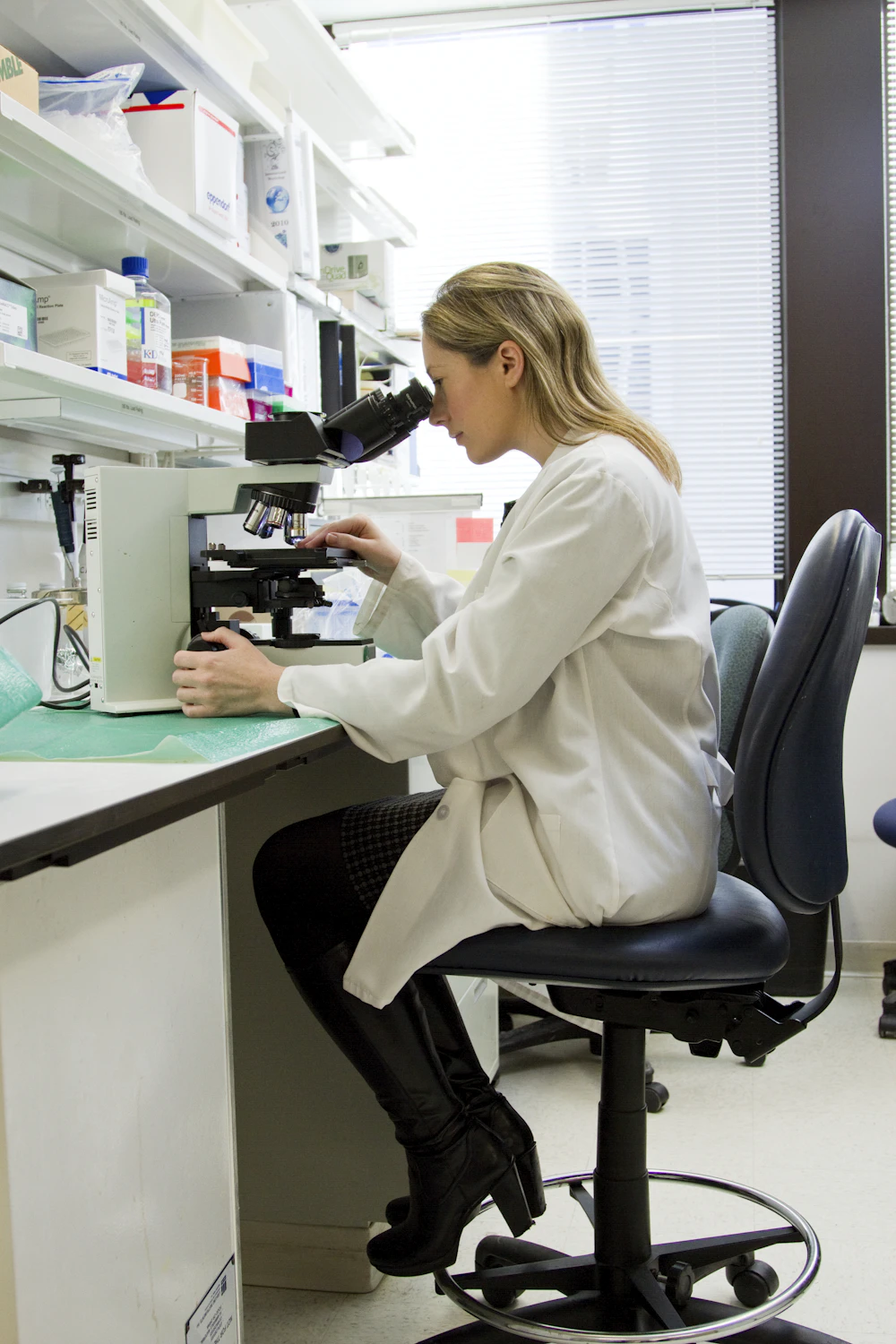
Advanced laboratory techniques enable detailed study of molecular interactions
Experimental Steps in the Phase Separation Study
| Step | Procedure | Purpose |
|---|---|---|
| System Setup | Create 3D (solution) and 2D (membrane) simulation environments | Compare protein behavior in different contexts |
| Parameterization | Incorporate known binding affinities and molecular volumes | Ensure biological relevance of simulations |
| 3D Simulation | Allow proteins to interact freely in solution | Recreate core-shell morphology observed in vitro |
| 2D Simulation | Constrain proteins to membrane-associated arrangement | Test morphology in biologically relevant context |
| Interaction Analysis | Quantify specific vs. non-specific interaction dominance | Determine driving forces behind morphological differences |
Results and Analysis: Solving the Morphology Puzzle
Morphology Reversal Confirmed
The simulation results successfully reproduced the puzzling experimental observations. In the 3D solution system, the proteins formed the expected core-shell structure with AMPA receptor/PSD-95 at the core and NMDA receptor/CaMKII in the shell 2 .
Environmental Influence Revealed
However, when the same components were simulated in membrane-associated 2D conditions, the morphology completely reversed, with NMDA receptors forming the central domains and AMPA receptors occupying the periphery—exactly as observed in living neurons 2 .
Mechanistic Understanding
Further analysis revealed that in solution, non-specific volume interactions dominated, causing the bulky CaMKII molecules to be excluded from dense regions. In contrast, on membranes, the layered arrangement reduced excluded volume effects, allowing CaMKII's specific multivalent interactions to dominate 2 .
This discovery provides profound insight into how the local environment can radically alter molecular organization through competing interactions. The findings help explain how PSD nanodomains form during long-term potentiation, with implications for understanding the molecular basis of learning and memory.
The Scientist's Toolkit: Research Reagent Solutions
Studying the complex protein networks of the postsynaptic density requires a diverse array of specialized research tools and methods. These reagents and techniques enable scientists to detect, measure, and manipulate the intricate molecular interactions that underlie brain function.
| Tool/Reagent | Function | Application Example |
|---|---|---|
| Co-immunoprecipitation | Isolates protein complexes using specific antibodies | Isolating PSD-95 along with its interaction partners CaMKII and tubulin 3 |
| Chemical Crosslinkers | Stabilizes transient protein interactions for analysis | Identifying proximity between CaMKIIα and α-tubulin in PSDs 3 |
| Mesoscale Simulations | Computationally models molecular behavior at intermediate scales | Predicting phase separation morphology of PSD proteins 2 |
| Stochastic Simulations | Models complex formation based on abundance and binding affinities | Predicting distribution of protein complexes in different brain regions 9 |
| PSINDB Database | Provides curated protein interaction data with structural context | Generating testable hypotheses about synaptic protein networks 4 |
Experimental Methods
Techniques like co-immunoprecipitation and crosslinking provide direct evidence of protein interactions in biological systems.
Computational Approaches
Simulations and modeling help predict complex behaviors that are difficult to observe directly in experiments.
Database Resources
Comprehensive databases like PSINDB integrate diverse data sources to provide a holistic view of molecular networks.
PSINDB in Action: Modeling Mutation Effects
The power of PSINDB extends beyond simple cataloging—it enables sophisticated computational modeling that predicts how changes to individual components ripple through entire networks. A compelling example comes from a 2024 study that used interaction data to model how mutations in Shank proteins (crucial scaffolding elements in the PSD) affect complex formation 9 .
The Shank1 Mutation Study
Researchers simulated over 500 different brain regions with varying protein abundance levels, modeling how a specific mutation (R743H) in the Shank1 PDZ domain that weakens but doesn't abolish binding to GKAP affects the distribution of protein complexes 9 .
Context-Dependent Effects
Surprisingly, the simulations revealed that the effect of this mutation was highly dependent on the overall availability of all protein components in the network—the same mutation had dramatically different consequences in different cellular contexts 9 .
This modeling demonstrates how context-dependent the effects of mutations can be, helping explain why mutations in universally expressed synaptic proteins can cause specific rather than global neurological effects. Such insights would be impossible without the comprehensive interaction data provided by resources like PSINDB.
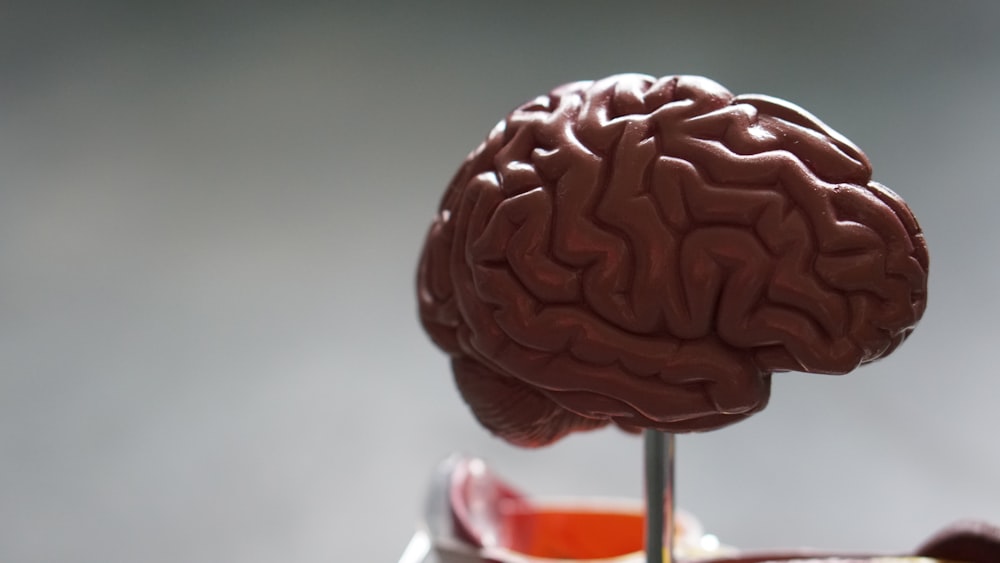
Complex network visualizations help researchers understand how mutations affect protein interactions
Conclusion: Toward a Molecular Understanding of Mind
PSINDB represents more than just a database—it's a fundamental resource that is accelerating our understanding of the brain's molecular machinery. By providing detailed, contextualized information about protein interactions in the postsynaptic density, this resource enables researchers to move from studying individual components to understanding system-level properties of neural networks.
Therapeutic Potential
Understanding exactly how these mutations disrupt specific interactions within the PSD network may eventually lead to more targeted therapeutic interventions.
As research continues, resources like PSINDB will grow increasingly vital. With each new interaction mapped and each new regulatory mechanism documented, we move closer to answering one of science's most profound questions: how the intricate dance of molecules within our synapses gives rise to the rich tapestry of human thought, memory, and consciousness.
Connecting Molecules to Mind
The social network of proteins that PSINDB helps decode may ultimately reveal how biological hardware implements cognitive software—connecting the molecular world to the mental one.