Primary Neurons vs. Immortalized Cell Lines: A Strategic Guide for Disease Modeling in Neuroscience
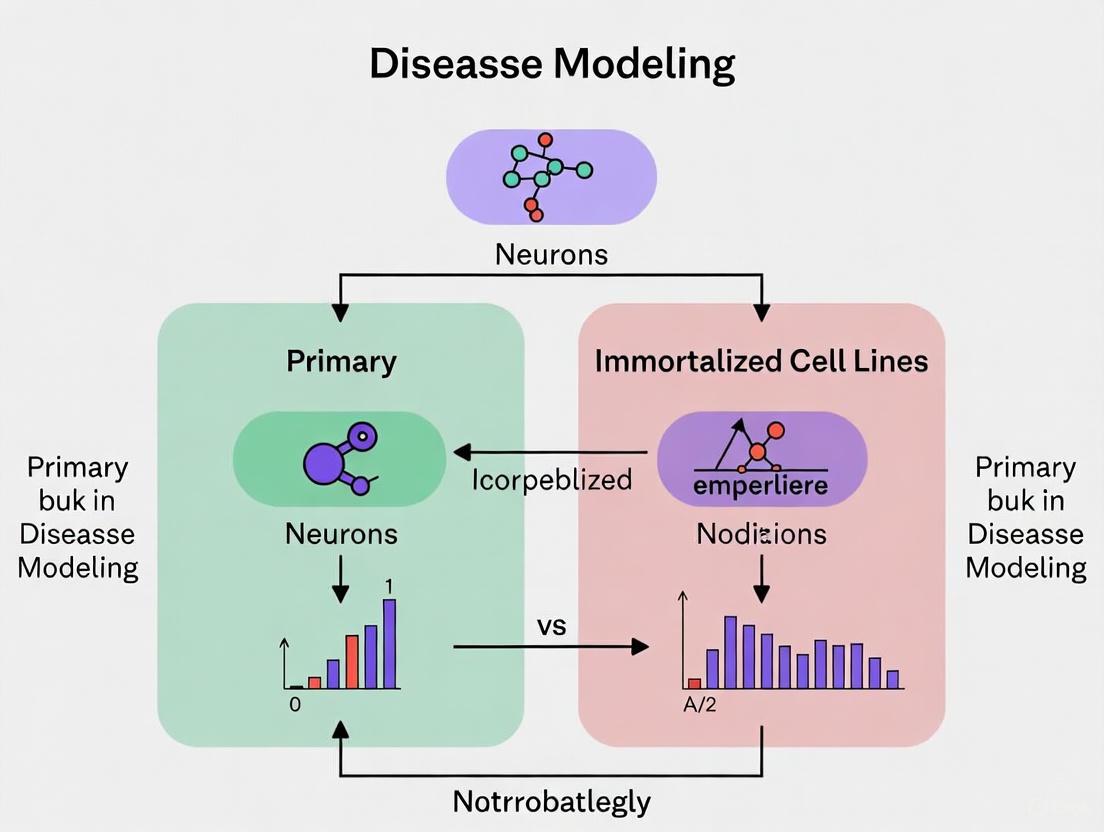
Selecting the appropriate cellular model is a critical strategic decision in neuroscience research and drug development.
Primary Neurons vs. Immortalized Cell Lines: A Strategic Guide for Disease Modeling in Neuroscience
Abstract
Selecting the appropriate cellular model is a critical strategic decision in neuroscience research and drug development. This article provides a comprehensive comparative analysis of primary neurons and immortalized cell lines for disease modeling. We explore the foundational biology of each system, detail their methodological applications in 2D and 3D cultures, address key troubleshooting and optimization challenges, and present a rigorous validation framework for model selection. Aimed at researchers and drug development professionals, this guide synthesizes current evidence to empower informed decision-making, enhance experimental reproducibility, and improve the translational potential of preclinical findings in neurological and neurodegenerative disease research.
Defining the Tools: Biological Basis and Core Characteristics of Neural Cell Models
Primary neurons, isolated directly from neural tissue and not genetically modified for indefinite proliferation, have long been considered the gold standard for physiological relevance in neuroscience research and drug development. These cells retain native cell morphology, express appropriate receptors and ion channels, and form functional synapses—characteristics essential for modeling the complex cellular behaviors of the nervous system. Their use is particularly critical in disease modeling, neuropharmacology, and neurotoxicology studies where accurately predicting human physiological responses is paramount. However, working with primary neurons presents significant practical challenges, including sourcing difficulties, technical complexity in culture, and inherent biological variability that can impact experimental reproducibility.
The decision between using primary neurons, immortalized cell lines, or emerging alternatives like induced pluripotent stem cell (iPSC)-derived models represents a fundamental consideration in experimental design. This comparison guide objectively examines the performance characteristics of primary neurons against other available models, providing researchers with the experimental data and methodological details needed to make informed decisions based on their specific research requirements, timeline constraints, and desired level of translational relevance.
Sourcing and Culture of Primary Neurons
Commercial Sourcing and Practical Implementation
Primary neurons for research are typically obtained through two main pathways: direct isolation from animal or human tissue under specific protocols, or procurement from commercial suppliers who provide cryopreserved, ready-to-plate cells. While direct isolation from rodent embryonic brain tissue (commonly E18 rats or comparable developmental stages in mice) remains widespread in academic laboratories, the availability of cryopreserved primary human neurons from commercial sources has increased accessibility to human-relevant models. These cryopreserved human neurons can be successfully cultured with only minor modifications to standard protocols, with studies demonstrating they can be maintained for over 100 days in vitro (DIV), allowing for maturation to stages essential for modeling adult brain function and neurodegenerative diseases [1].
Successful culture of primary neurons requires precise technique and optimized conditions. Recent research has demonstrated that supplementation with 10% human cerebrospinal fluid (hCSF) significantly enhances neuronal viability in primary cortical cultures derived from E18 rat embryos. Systematic evaluation of media:hCSF ratios identified the 90:10 ratio as optimal, with viability confirmed through SYTOX Green and Calcein AM/Ethidium Homodimer-2 dual-staining assays. This optimized approach offers a reproducible and physiologically relevant strategy for improving dissociated cortical neuron cultures, with implications for neurodegenerative disease modeling and neurotoxicity screening [2].
Experimental Protocol: Primary Human Neuron Culture for Disease Modeling
Methodology for Mature Human Primary Neuron Cultures (Adapted from [1])
- Cell Source: Commercially available cryopreserved primary human neurons and astrocytes.
- Thawing and Plating: Rapid thawing in a 37°C water bath, transfer to pre-warmed culture media, centrifugation at 180 × g for 3 minutes, and resuspension in complete medium. Cells are plated on poly-D-lysine coated surfaces at densities of 50,000-75,000 cells/cm² for physiological studies or higher densities for specific applications.
- Culture Medium: Neurobasal Medium supplemented with B-27, GlutaMAX, Penicillin-Streptomycin, and 10% Fetal Bovine Serum (for the first 24 hours only). For human CSF experiments, a 90:10 ratio of medium to hCSF is used [2].
- Media Change: First complete media change at 24 hours post-plating to remove residual DMSO from cryopreservation, followed by half-media changes twice weekly.
- Maturation Timeline: Cultures develop extensive neurite networks by 28 DIV, with synaptosomal-associated protein 25 (SNAP-25) and postsynaptic density protein 95 (PSD-95) levels increasing between 20-28 DIV, reflecting presynaptic and postsynaptic maturation. Cultures are typically ready for experimental manipulation after 21-28 DIV.
- Characterization: Immunostaining for class III β-tubulin (neuronal marker), MAP2 (mature neuronal marker), GFAP (astrocyte marker), and functional assessments through calcium imaging or electrophysiology.
Physiological Relevance in Disease Modeling and Drug Screening
Functional Advantages for Neurobiological Research
The principal advantage of primary neurons lies in their superior biological fidelity compared to immortalized alternatives. They exhibit native electrophysiological properties, form functional synaptic connections, and maintain appropriate receptor and ion channel expression patterns that closely mimic the in vivo environment. This physiological relevance makes them particularly valuable for studying complex neurological processes and disease mechanisms.
In Alzheimer's disease (AD) research, for example, primary human neurons have provided critical insights into senolytic drug mechanisms that were not apparent in animal models or immortalized cell lines. When used to evaluate two senolytic regimens—Navitoclax (NAV) and the dasatinib-quercetin (DQ) cocktail—primary human neurons revealed differential neurotoxicity profiles with direct clinical implications. NAV exhibited dose-dependent toxicity in both healthy and Aβ-treated neurons, while DQ demonstrated a safer profile for human neurons [1]. These findings, which might have been obscured in less physiologically relevant models, highlight the importance of human-specific validation for compounds targeting complex neurological pathways.
Advanced Functional Measurements in Primary Neurons
Cutting-edge research utilizing primary neurons increasingly employs sophisticated sensing and imaging technologies to capture dynamic physiological processes. Studies of presynaptic ATP dynamics in cerebellar mossy fiber boutons have utilized primary neurons from mice stably expressing FRET-based ATP sensors (ATeam1.03YEMK). Through two-photon FRET measurements at physiological temperature, researchers quantified how ATP concentration changes during neuronal activity, revealing that physiological-like stimulation causes a measurable decrease (~150 μM) in presynaptic ATP concentration [3]. This approach provides quantitative constraints on feedback mechanisms in neuronal metabolism that would be difficult to capture in non-primary models.
Similarly, advances in genetically encoded voltage indicators (GEVIs) like ASAP4.4-Kv have enabled real-time tracking of voltage dynamics in primary sensory neurons. This technology has revealed previously unrecognized cell-to-cell electrical synchronization and robust dynamic transformations in sensory coding following tissue injury—phenomena that were not detectable with slower calcium imaging techniques [4]. These examples demonstrate how primary neurons, when combined with advanced measurement technologies, can provide unique insights into fundamental neurobiological processes with high physiological fidelity.
Comparative Analysis: Primary Neurons vs. Alternative Models
Performance Comparison Across Model Systems
The choice between primary neurons, immortalized cell lines, and stem cell-derived models involves balancing physiological relevance against practical considerations like reproducibility, scalability, and ease of use. The table below summarizes key comparative characteristics based on current research data:
Table 1: Comparison of Key Features Across Neuronal Cell Models
| Characteristic | Primary Neurons | Immortalized Cell Lines | iPSC-Derived Neurons | ioCells |
|---|---|---|---|---|
| Biological Relevance | High - native morphology and function [5] | Low - often non-physiological (e.g., cancer-derived) [5] | Moderate to High - human-specific but may exhibit fetal-like phenotypes [5] [6] | High - human-specific and functionally validated [5] |
| Reproducibility | Low - high donor-to-donor variability [5] | High - reliable but prone to genetic drift [5] | Moderate - batch-to-batch inconsistency [5] | High - <2% gene expression variability across lots [5] |
| Scalability | Low - difficult to expand [5] | High - easily scalable [5] | Moderate - depends on differentiation efficiency [6] | High - consistent at scale (billions per run) [5] |
| Ease of Use | Low - technically complex, time-intensive [5] [7] | High - simple to culture [5] | Moderate - requires differentiation expertise [7] | High - ready-to-use, no special handling [5] |
| Time to Assay | Several weeks post-dissection [5] | 24-48 hours post-thaw [5] | Several weeks for differentiation [6] | ~10 days post-thaw [5] |
| Human Origin | Possible, but typically rodent-derived [5] | Often non-human [5] | Yes - derived from human iPSCs [6] | Yes - derived from human iPSCs [5] |
| Cost Considerations | High - especially for human sources | Low | Moderate to High | Moderate to High |
Experimental Data Comparison in Disease Modeling
The translational relevance of different neuronal models becomes particularly evident when examining experimental data from disease modeling studies. The following table compares performance in key research applications:
Table 2: Experimental Data Comparison Across Neuronal Models in Disease Research
| Research Application | Primary Neuron Data | Immortalized Cell Line Data | iPSC-Derived Model Data |
|---|---|---|---|
| Neurodegenerative Disease Modeling | Recapitulate mature synaptic markers (SNAP-25, PSD-95) by 28 DIV; Appropriate response to Aβ pathology; Species-specific toxicity profiles for senolytics [1] | Cancer-derived lines (e.g., SH-SY5Y) exhibit immature neuronal features, fail to form functional synapses, lack consistent ion channel expression [5] | Patient-specific mutations; Disease-relevant phenotypes (tau aggregation, mitochondrial dysfunction); Some limitations in maturity [6] |
| Predictive Validity for Drug Development | Revealed Navitoclax neurotoxicity not predicted by animal models; Human-specific senolytic responses [1] | ~97% failure rate for CNS-targeted drug candidates entering clinical trials [5] | Improving predictive power for cardiotoxicity (CiPA initiative); Phenotypic screening capabilities [6] |
| Metabolic Studies | Measurable ATP decreases (~150 μM) during physiological-like activity in presynaptic terminals [3] | Altered metabolic profiles due to cancerous origin; Limited relevance to neuronal energy dynamics | Functional metabolic capabilities; Used to model metabolic diseases [6] |
| Electrophysiological Properties | Native firing patterns and synaptic connectivity; Appropriate receptor expression | Immature or abnormal electrophysiological profiles | Increasingly mature electrophysiological function with protocol optimization |
Inherent Limitations and Practical Challenges
Key Limitations in Research Applications
Despite their physiological advantages, primary neurons present several significant limitations that can impact research outcomes:
Species Mismatch: Most primary neurons are rodent-derived, carrying fundamental biological differences from human biology. Comparative transcriptomic studies have shown widespread differences in gene expression, regulation, and splicing between mouse and human tissues that can significantly undermine translational relevance [5].
Donor Variability and Reproducibility Issues: Primary neurons exhibit considerable donor-to-donor variability, introducing experimental noise and reducing statistical power. This variability complicates data interpretation and requires larger sample sizes to achieve significance [5].
Technical Complexity and Scalability Constraints: Isolating and culturing primary neurons requires precise timing, technical skill, and weeks of hands-on work. The unpredictable yields and limited expansion capacity make it nearly impossible to plan or run larger studies reliably [5].
Limited Lifespan and Experimental Window: Primary neurons undergo senescence after a finite number of divisions, restricting long-term studies. The optimal experimental window is typically between 21-28 DIV for many applications, creating timing constraints for experimental design [1].
Impact on Research and Development
These limitations have measurable consequences in drug development. The high failure rate of CNS-targeted drug candidates (approximately 97% never reach market) reflects fundamental gaps in preclinical model predictivity [5]. While not solely attributable to model choice, the poor fidelity of traditional models to human biology contributes significantly to this attrition rate.
Furthermore, the technical expertise required for primary neuron culture, combined with sourcing challenges for human neurons, creates accessibility barriers for many laboratories. Even with commercially available cryopreserved human neurons, achieving consistent maturation requires optimization and experience, limiting widespread adoption [1].
Decision Framework and Future Directions
Model Selection Workflow
The following diagram illustrates a systematic approach for selecting the appropriate neuronal model based on research objectives and practical constraints:
Emerging Technologies and Improved Models
The field is rapidly evolving beyond the traditional dichotomy between primary cells and immortalized lines. Human induced pluripotent stem cells (iPSCs) offer a promising alternative, providing human-specific insights with scalability. However, many iPSC-derived neurons still rely on directed differentiation—a time-consuming and variable process that can introduce batch-to-batch inconsistency [5] [6].
New approaches like deterministic cell programming with technologies such as opti-ox are addressing these limitations by enabling precise, consistent reprogramming of iPSCs into defined neuronal populations. The resulting cells (commercially available as ioCells) demonstrate <2% gene expression variability across lots while maintaining human-specific biological relevance [5]. These advances represent a significant step toward combining the physiological relevance of primary neurons with the reproducibility and scalability of traditional cell lines.
The Scientist's Toolkit: Essential Research Reagents
Table 3: Key Research Reagents for Primary Neuron Studies
| Reagent/Category | Function/Application | Examples/Specifications |
|---|---|---|
| Cryopreserved Primary Neurons | Ready-to-use neuronal cells | Commercial human primary neurons; Rodent embryonic neurons |
| Culture Supplements | Enhance viability and maturation | B-27 Supplement; hCSF (10% for optimal viability [2]) |
| Coating Substrates | Promote cell adhesion and neurite outgrowth | Poly-D-lysine; Laminin; Poly-L-ornithine |
| Cell Viability Assays | Quantify live/dead cells and health | Calcein AM/EthD2 dual-staining; SYTOX Green [2] |
| Functional Sensors | Monitor neuronal activity and metabolism | Genetically encoded ATP sensors (ATeam1.03YEMK) [3]; GEVIs (ASAP4.4-Kv) [4] |
| Characterization Antibodies | Identify cell types and maturation | Class III β-tubulin (neurons); GFAP (astrocytes); MAP2 (mature neurons) |
| Senolytic Compounds | Study cellular senescence pathways | Navitoclax (NAV); Dasatinib-Quercetin (DQ) cocktail [1] |
Primary neurons remain an essential tool for neurobiological research where physiological fidelity is the paramount consideration. Their native morphology, functional synaptic connections, and appropriate receptor expression provide unmatched relevance for studying fundamental neurological mechanisms and complex disease processes. However, significant challenges related to species differences, donor variability, technical complexity, and scalability limitations necessitate careful consideration in model selection.
The evolving landscape of neuronal models offers researchers an expanding toolkit, with iPSC-derived neurons and deterministically programmed cells providing increasingly attractive alternatives that balance human relevance with practical experimental needs. By understanding the specific strengths and limitations of each model system, researchers can make informed decisions that optimize both scientific validity and practical feasibility in their experimental designs. As the field continues to advance, the integration of human-specific, reproducible, and scalable neuronal models promises to enhance the translational potential of neuroscience research and drug development.
In the field of biomedical research, the choice between primary neurons and immortalized cell lines is a fundamental consideration for disease modeling and drug development. Primary cells, harvested directly from living tissue, are often considered the gold standard for physiological relevance due to their retention of native cell morphology and function [5]. However, they present significant practical challenges, including technical complexity in isolation and culture, high donor-to-donor variability, limited scalability, and short lifespans [5]. These limitations can compromise the quality and reproducibility of insights, particularly in translational research where accuracy and consistency are critical. Immortalized cell lines have emerged as a powerful alternative to overcome these practical constraints. Created through genetic manipulation that allows for unlimited proliferation, these lines offer unparalleled ease of use, scalability, and reproducibility. This guide provides an objective comparison of common neural immortalized cell lines, focusing on their origins, immortalization techniques, and performance in disease modeling, to help researchers select the most appropriate model for their investigative needs.
Origin Stories and Key Characteristics of Common Neural Cell Lines
SH-SY5Y Human Neuroblastoma Cell Line
The SH-SY5Y cell line is a subline of the SK-N-SH cell line, which was originally established from a bone marrow biopsy of a 4-year-old female child with neuroblastoma [8]. This line is one of the most widely used in vitro models in neuroscience research. SH-SY5Y cells exhibit a catecholaminergic phenotype, as they can synthesize both dopamine and norepinephrine, and show moderate dopamine-β-hydroxylase activity with insignificant levels of choline acetyltransferase [8]. While they are human-derived and express several human-specific proteins not inherently present in primary rodent cultures, they retain cancer-like properties that influence their differentiation fate, viability, growth performance, metabolic properties, and genomic stability [8].
U-87 MG Glioblastoma Cell Line
The U-87 MG (Uppsala 87 Malignant Glioma) cell line was established in 1966 at Uppsala University, Sweden, from a 44-year-old male glioblastoma patient [9] [10]. This hypodiploid cell line possesses a modal chromosome number of 44 and exhibits epithelial cell-like morphology with a size ranging between 12 to 14 µm in diameter [10]. U-87 MG is an adherent cell line that grows as monolayers with an elongated shape and has a population doubling time ranging from 18-38 hours [10]. Despite its widespread use, researchers should note that serial in vitro passage may significantly affect its biological characteristics; late passage U-87 MG cells have been shown to possess lower invasion properties and exhibit more epithelial phenotype with decreased PI3K/Akt and TGF-β pathway expressions compared to early passage cells [9].
Other Notable Neural Cell Lines
Several other immortalized neural cell lines are valuable tools in neuroscience research:
- M17 Cell Line: A human neuroblastoma cell line used particularly for studying mitochondrial functions in neurodegenerative contexts [11].
- N2a Cells: A mouse neuroblastoma line frequently employed to investigate molecular mechanisms underlying amyloid plaque formation and neurite outgrowth [11].
- HT22 Cells: An immortalized mouse hippocampal cell line valuable for studying oxidative stress and excitotoxicity relevant to Alzheimer's disease [11].
- BV2 Cells: A mouse microglial cell line commonly used to study neuroinflammation, microglial activation, and cytokine production [11].
Table 1: Origin and Fundamental Characteristics of Common Neural Cell Lines
| Cell Line | Origin | Cell Type | Key Features | Common Research Applications |
|---|---|---|---|---|
| SH-SY5Y | Human neuroblastoma (bone marrow biopsy of 4-year-old female) | Neuroblastoma | Catecholaminergic phenotype; can be differentiated into neuron-like cells; expresses human-specific proteins [8] | Neurodegenerative disease modeling (Alzheimer's, Parkinson's); neurotoxicity studies; drug screening [8] [11] |
| U-87 MG | Human glioblastoma (44-year-old male) | Glioblastoma/ Astrocytoma | Epithelial cell-like morphology; hypodiploid; adherent growth; passage-dependent characteristics [9] [10] | Cancer biology; tumor microenvironment studies; drug discovery; invasion/migration assays [9] [10] |
| BV2 | Mouse microglia | Microglia | Retains many characteristics of primary microglia; responsive to polarization cues [11] | Neuroinflammation; microglial activation; cytokine production; neuron-glia interactions [11] |
| HT22 | Mouse hippocampus | Hippocampal neurons | Highly sensitive to oxidative stress; glutamate-induced toxicity model [11] | Oxidative stress research; excitotoxicity; neuroprotective compound screening [11] |
Immortalization Techniques and Their Implications
Fundamental Immortalization Principles
Cellular immortalization is the process by which cells avoid normal senescence and death during in vitro culture, allowing for long-term subculture and unrestricted proliferation. This is typically achieved through genetic modification such as introduction of SV40 large T antigen (SV40 LT), telomerase activation, or viral transformation (e.g., Epstein-Barr virus) [12]. Immortalized macrophage cell lines are frequently created by viral infection or derived from malignant single cells/tumors, which can lead to genotypic and phenotypic drift during culture and subculture [12]. While immortalized cell lines offer advantages in rapid growth, stability, and reproducibility, they often develop molecular phenotypes different from primary cells and may not accurately mimic the complex in vivo milieu [12].
Spontaneous Immortalization in Cancer-Derived Lines
Many neural cell lines, including SH-SY5Y and U-87 MG, were not deliberately immortalized but were established from tumor tissue where natural mutations confer unlimited replicative potential. These cancer-derived lines are optimized for proliferation rather than function [5]. For example, in neurobiology, SH-SY5Y cells exhibit immature neuronal features and typically fail to form functional synapses, while also lacking consistent expression of key ion channels and receptors [5]. This fundamental difference from primary cells limits their ability to replicate human-specific signaling pathways, which has measurable consequences in drug development - approximately 97% of CNS-targeted drug candidates entering phase 1 clinical trials never reach market, reflecting a fundamental gap in preclinical model predictivity [5].
Experimental Protocols and Methodologies
Cell Culture and Differentiation Protocols
SH-SY5Y Standard Culture and Differentiation
SH-SY5Y cells are typically maintained in Dulbecco's Modified Eagle's Medium (DMEM) F12 supplemented with 10% fetal bovine serum (FBS) and incubated at 37°C in a humidified atmosphere with 5% CO₂ [13]. For differentiation into mature neuron-like cells, SH-SY5Y cells can be treated with various agents including retinoic acid (most common), phorbol esters, dibutyryl cyclic AMP, or staurosporine [8]. The retinoic acid method typically involves adding 10µM retinoic acid to the culture medium for 5-7 days, which triggers cell cycle arrest and promotes neurite outgrowth [8] [13]. This process leads to morphological changes including formation and extension of neuritic processes, increased electrical excitability, and induction of neurotransmitter enzymes [8]. Successful differentiation is confirmed through expression of mature neuronal markers such as β-III Tubulin, MAP2, and NeuN [13].
U-87 MG Standard Culture Protocol
U-87 MG cells are cultured in EMEM (Eagle's Minimal Essential Medium) supplemented with 1.0 g/L L-glucose, 2.0 mM L-glutamine, 2.2 g/L NaHCO₃, 1% non-essential amino acids (NEAA), 1 mM sodium pyruvate, and 10% FBS [10]. The medium should be renewed every 2-3 days, and cells require a humidified incubator with 5% CO₂ at 37°C for optimum growth [10]. For subculturing, adherent U-87 MG cells are washed with PBS and incubated with Accutase solution, then dissociated cells are centrifuged, recovered, and resuspended in new flasks at a recommended seeding density of 1 × 10⁴ cells/cm² [10]. It is critical to note the passage number in experiments, as significant changes in tumorigenicity, invasion properties, and molecular pathway expression occur between early and late passages [9].
Key Experimental Assays and Methodologies
Cytotoxicity and Viability Assessment
Multiple assays are employed to assess cell viability and cytotoxic effects in neural cell lines:
- MTT Assay: Measures mitochondrial activity as an indicator of cell viability. Cells are incubated with MTT solution (5 mg/ml in PBS) for 4 hours at 37°C, followed by supernatant removal and dissolution of formazan crystals in DMSO [9].
- WST-1 Assay: A colorimetric assay based on the cleavage of tetrazolium salts by mitochondrial dehydrogenases in viable cells. This method is used for proliferation measurements and does not require a dissolution step [13].
- LDH (Lactate Dehydrogenase) Assay: Quantifies cell death by measuring the release of cytoplasmic LDH into the culture medium upon membrane damage, using a Cytotoxicity Detection Kit [14].
Differentiation and Functional Characterization
For SH-SY5Y cells, differentiation efficacy is evaluated through:
- Morphological Analysis: Assessment of neurite outgrowth and branching using brightfield microscopy [13].
- Immunofluorescence Labeling: Staining for neuronal markers such as Microtubule-associated protein 2 (MAP2), Neurofilament Light (NF-L), NeuN, and beta III Tubulin (β3-Tubulin) to confirm maturation [13].
- Functional Assays: Electrophysiological measurements to confirm increased electrical excitability following differentiation [8].
Table 2: Key Experimental Assays for Neural Cell Line Characterization
| Assay Type | Specific Methods | Key Applications | Advantages | Limitations |
|---|---|---|---|---|
| Viability/Cytotoxicity | MTT, WST-1, LDH release, Trypan Blue exclusion [9] [14] [13] | Compound screening; neurotoxicity assessment; IC50 determination | High-throughput compatible; quantitative; relatively low-cost | Measures different aspects of viability/death; results may vary between assays |
| Proliferation | EdU assay, MTT time-course, cell counting [9] [13] | Growth rate determination; anti-cancer drug efficacy | Temporal data; can monitor growth over time | Affected by culture conditions; serum-dependent |
| Differentiation Assessment | Neurite outgrowth quantification; neuronal marker expression (MAP2, β3-Tubulin, NeuN) [8] [13] | Validation of differentiation protocols; maturity assessment | Functional and morphological evaluation; multiple validation points | Qualitative aspects in morphology; marker expression variability |
| Migration/Invasion | Wound healing (scratch) assay; Transwell migration; Matrigel invasion [9] | Cancer metastasis studies; microenvironment interactions | Physiologically relevant for cancer models; quantifiable | Technique-sensitive; requires optimization |
| Molecular Pathway Analysis | Western blotting; RT-PCR; RNA sequencing; miRNA profiling [9] [15] [11] | Mechanism of action studies; signaling pathway investigation | Comprehensive molecular profiling; mechanistic insights | Requires specialized equipment/expertise; more complex data analysis |
Signaling Pathways and Molecular Mechanisms
Key Pathways in Neural Cell Lines
Neural cell lines exhibit characteristic signaling pathway alterations in response to various stimuli:
- PI3K/Akt Pathway: This pathway is crucial for cell survival, proliferation, and metabolism. In U-87 MG cells, late passages show decreased PI3K/Akt pathway expression, correlating with reduced tumorigenicity and invasion [9]. The pathway can be modulated by various compounds; for instance, diallyl trisulfide (DATS) inhibits U-87 MG and SH-SY5Y cell proliferation through regulation of PI3K/Akt signaling [14].
- Oxidative Stress Pathways: SH-SY5Y cells are frequently used to study oxidative stress mechanisms. The Nrf2/ARE antioxidant pathway plays a protective role, as demonstrated in studies where metformin ameliorated lead-induced neurotoxicity by activating the AMPK/Nrf2 pathway in SH-SY5Y cells [8].
- Apoptosis Regulation: Both SH-SY5Y and U-87 MG cells are used to study apoptotic pathways. DATS treatment correlates with an increase in the inactivated form of Bcl-2 in these cell lines [14]. In SH-SY5Y models of Alzheimer's disease, ginsenoside Re exhibited neuroprotective activity against Aβ25–35-induced neurotoxicity by inhibiting ROS-dependent ASK-1/JNK/BAX cell apoptosis and activating Nrf2/HO-1 antioxidant pathways [8].
- Dopaminergic and Neurotransmitter Pathways: SH-SY5Y cells express tyrosine hydroxylase, the rate-limiting enzyme in catecholamine synthesis, converting tyrosine to L-DOPA (precursor of dopamine), which is then converted to norepinephrine by dopamine-β-hydroxylase [8]. This makes them valuable for studying Parkinson's disease mechanisms and neurotoxicity.
The Scientist's Toolkit: Essential Research Reagents
Table 3: Essential Research Reagents for Neural Cell Line Studies
| Reagent Category | Specific Products/Compounds | Function/Application | Considerations |
|---|---|---|---|
| Culture Media | DMEM F12, EMEM, Opti-MEM | Base nutrient medium for cell growth and maintenance | Varying formulations affect cell behavior; EMEM for U-87 MG, DMEM F12 for SH-SY5Y [13] [10] |
| Serum/Supplements | Fetal Bovine Serum (FBS), Nu-Serum | Provides growth factors, hormones, attachment factors | FBS has batch variability; Nu-Serum offers more consistency and addresses ethical concerns [13] |
| Differentiation Agents | Retinoic Acid, BDNF, NGF, staurosporine, dibutyryl cyclic AMP | Induces neuronal differentiation; promotes maturation | Retinoic acid most common; concentration and duration affect differentiation efficiency [8] |
| Transfection Reagents | Lipofectamine, FuGENE, polyethylenimine (PEI) | Introduction of foreign DNA/RNA for genetic manipulation | Varying efficiency across cell lines; optimization required for neural cells [11] |
| Viability/Cytotoxicity Assay Kits | MTT, WST-1, LDH release kits | Quantitative assessment of cell health and compound toxicity | Different mechanisms (metabolic activity vs. membrane integrity) [9] [14] |
| Apoptosis Detection Reagents | Annexin V, caspase assays, TUNEL kits | Detection and quantification of programmed cell death | Multiple methods available; often used in combination for confirmation [8] [14] |
| Neuronal Markers (Antibodies) | MAP2, β-III Tubulin, NeuN, Neurofilament proteins | Immunodetection of neuronal differentiation and maturation | Specificity validation required; multiple markers confirm robust differentiation [13] |
| Pathway Modulators LY294002 (PI3K inhibitor), U0126 (MEK inhibitor), Nrf2 activators | Investigation of specific signaling pathways | Concentration optimization critical; off-target effects possible [9] [14] |
Performance Comparison: Immortalized Lines vs. Alternative Models
Functional Comparison Across Model Systems
Table 4: Comprehensive Comparison of Neural Cell Models
| Characteristic | Primary Neurons | Immortalized Cell Lines (e.g., SH-SY5Y, U-87 MG) | Stem Cell-Derived Neurons (e.g., iPSCs) |
|---|---|---|---|
| Biological Relevance | High (native morphology and function) [5] | Variable (cancer-derived, non-physiological in many aspects) [5] | High (human-specific, characterized functionality) [5] |
| Reproducibility | Low (high donor-to-donor variability) [5] | High (genetically homogeneous population) [5] | Moderate (batch-to-batch inconsistency in differentiation) [5] |
| Scalability | Low (limited yield, difficult to expand) [5] | High (easily scalable) [5] | Moderate (improving with technologies like opti-ox) [5] |
| Ease of Use | Technically complex, time-intensive [5] | Simple to culture [5] | Variable (traditional differentiation is time-consuming) [5] |
| Time to Assay | Several weeks post-dissection [5] | Can be assayed within 24-48 hours of thawing [5] | Several weeks for differentiation [5] |
| Species Origin | Typically rodent-derived [5] | Human origin (but cancer-derived) [8] [10] | Human-derived [5] |
| Cost Considerations | High (isolation procedures, animal costs) | Low (easy maintenance, readily available) | Moderate to high (differentiation protocols, growth factors) |
| Genetic Manipulation | Challenging | Relatively straightforward | Possible but can be complex |
| Key Limitations | Limited lifespan, variability, ethical concerns [5] | Cancer phenotype, genetic drift, limited translational predictivity [5] [9] | Differentiation efficiency, maturity, protocol standardization [5] |
Disease Modeling Specificity
The predictive validity of immortalized cell lines varies significantly by disease context:
- Neurodegenerative Disease Modeling: SH-SY5Y cells are extensively used for Alzheimer's and Parkinson's disease research. However, they are not purely adrenergic and present characteristics quite different from normal neuronal characteristics [8]. Compared to induced pluripotent stem cell-derived neurons, SH-SY5Y cells show a less relevant neuron-like phenotype, though they are easier to obtain and propagate [8].
- Cancer Research: U-87 MG cells provide valuable insights into glioblastoma biology, but their characteristics change with passage number. Late passage U-87 MG cells possess lower invasion properties and exhibit more epithelial phenotype with decreased PI3K/Akt and TGF-β pathway expressions compared to early passage cells [9].
- Neurotoxicity Screening: SH-SY5Y cells are widely used for neurotoxicity assessment of environmental pollutants, showing effects including autophagy, cell death, increased oxidative stress, mitochondrial dysfunction, disruption of neurotransmitter homeostasis, and alteration of neuritic length [16].
Emerging Alternatives and Future Directions
As limitations of traditional immortalized cell lines become more apparent, new technologies are emerging:
- Human iPSC-Derived Models: Induced pluripotent stem cells offer a promising alternative to both animal-derived and immortalized models. Unlike primary cells or immortalized cell lines, iPSCs can be renewed indefinitely and differentiated to somatic cells with improved biological relevance and closer human phenotype [5].
- Deterministic Cell Programming: Technologies like opti-ox enable precise programming of stem cells into defined cell identities, generating highly consistent populations with minimal gene expression variability (<2% across lots) [5]. These approaches address reproducibility challenges while maintaining human relevance.
- Regulatory Shifts: Regulatory agencies including the FDA are beginning to endorse New Approach Methodologies (NAMs), reinforcing the need for scalable, human-relevant alternatives beyond traditional immortalized cell lines [5].
The selection of an appropriate cell model requires careful consideration of the specific research question, with immortalized cell lines offering practical advantages for preliminary screening and mechanistic studies, while emerging technologies provide more human-relevant options for later-stage validation where translational accuracy is essential.
In the realm of biomedical research, immortalized cell lines have long served as indispensable workhorses for drug discovery and disease modeling due to their convenience, scalability, and cost-effectiveness [5] [17]. However, their utility is fundamentally compromised by a pervasive and often overlooked phenomenon: phenotypic drift. This process refers to the gradual and cumulative changes in cellular characteristics—including genetics, gene expression, and functional behavior—that occur with serial passaging in culture [18] [19]. These alterations represent a critical bottleneck in experimental reproducibility and translational relevance, particularly in complex fields like neuroscience where accurate cellular models are paramount.
The implications of phenotypic drift extend far beyond theoretical concerns. In drug development, especially for central nervous system (CNS) disorders, approximately 97% of drug candidates entering Phase 1 clinical trials fail to reach the market, with some disease-specific therapeutics approaching a 100% failure rate [5]. This staggering attrition reflects a fundamental gap in preclinical model predictivity, to which the genetic and phenotypic instability of traditional cell line models substantially contributes. As research moves toward more human-relevant systems, understanding and mitigating phenotypic drift becomes essential for generating reliable, clinically translatable data.
Defining Phenotypic Drift: Mechanisms and Manifestations
Phenotypic drift encompasses a spectrum of cellular changes that arise during long-term culture. At its core, this phenomenon stems from two primary mechanisms: genetic drift, where spontaneous mutations accumulate over successive cell divisions, and epigenetic changes, which alter gene expression patterns without modifying the underlying DNA sequence [18]. These molecular shifts manifest as observable alterations in critical cellular properties, including growth kinetics, morphological characteristics, metabolic activity, and differentiated functions [18] [19].
The drivers of phenotypic drift are multifactorial. Passage number serves as a primary determinant, with transcriptomic studies revealing nonlinear shifts in gene expression profiles across passages [19]. Culture conditions—including media composition, serum variability, pH fluctuations, and oxygen levels—create selective pressures that favor subpopulations best adapted to in vitro survival rather than physiological relevance [18]. Furthermore, the risk of cross-contamination and mycoplasma infection introduces extrinsic factors that can fundamentally alter cell behavior [18] [19]. Unlike primary cells, which maintain closer physiological resemblance to their tissue of origin, immortalized cell lines often originate from cancerous tissues and undergo transformation processes that predispose them to genomic instability [5] [20].
Diagram: Multifactorial drivers and consequences of phenotypic drift in immortalized cell lines.
Experimental Evidence: Quantifying Transcriptomic and Functional Drift
Transcriptomic Dynamics Across Passages
Recent investigations have systematically documented the molecular underpinnings of phenotypic drift through comprehensive transcriptomic analyses. A 2025 study examining two tumor cell lines (ACHN and Renca) across multiple passages (P3 to P39) revealed nonlinear transcriptomic shifts characterized by markedly different gene expression profiles at various passage stages [19]. Mid-passage cells (P10/P11, P17) demonstrated heightened activity in pathways related to cell cycle regulation, metabolic processes, and stress response, whereas both low (P3) and high passages (P24/P39) exhibited more stable—and surprisingly similar—transcriptional profiles [19].
KEGG pathway analysis further illuminated significant alterations in signaling pathways, immune function, and metabolic processes during serial passaging [19]. These findings challenge the conventional assumption that later passages simply represent more "drifted" versions of early-passage cells, instead pointing to a complex, nonlinear relationship between passage number and transcriptional identity. The implication is clear: experimental results can vary substantially depending on the specific passage number employed, potentially explaining inconsistencies in data reproducibility across laboratories using the "same" cell line.
Functional Consequences in Disease Modeling
The transcriptomic changes associated with prolonged culture manifest as functionally relevant deficits in disease modeling contexts. In neuroscience research, commonly used neuronal cell lines such as SH-SY5Y neuroblastoma cells exhibit immature neuronal features and typically fail to form functional synapses, while also lacking consistent expression of key ion channels and receptors essential for neuronal signaling [5]. These limitations fundamentally constrain their utility in modeling complex neurological disorders like Alzheimer's disease, where synaptic integrity and network function are central to disease pathology.
Similar functional deficits have been documented in immune cell models. Studies comparing primary macrophages with immortalized macrophage cell lines (e.g., RAW264.7, THP-1) reveal significant differences in polarization capacity, cytokine secretion profiles, and phagocytic activity [21]. For instance, while bone marrow-derived macrophages (BMDMs) demonstrate pronounced polarization plasticity with distinct morphological changes in response to M1 (LPS+IFN-γ) or M2 (IL-4+IL-13) stimuli, many immortalized counterparts show blunted responses that poorly recapitulate the dynamic nature of innate immune function [21].
Table 1: Documented Functional Deficits in Common Immortalized Cell Lines
| Cell Line | Cell Type | Documented Functional Deficits | Experimental Impact |
|---|---|---|---|
| SH-SY5Y | Neuronal | Immature neuronal features; deficient synapse formation; inconsistent ion channel expression [5] | Limited utility for neurodegenerative disease modeling; poor predictivity for neuropharmacology |
| RAW264.7 | Macrophage | Altered polarization capacity; modified cytokine secretion; variable phagocytic activity [21] | Compromised modeling of inflammatory responses; unreliable immunomodulatory drug screening |
| MCF-7 | Breast epithelial | Cancer-derived; optimized for proliferation rather than physiological function [5] | Poor representation of normal mammary gland biology; limited translational relevance |
| HeLa | Cervical epithelial | Extensive genomic alterations; high adaptation to culture conditions [5] | Significant divergence from original tissue phenotype; questionable experimental relevance |
Monitoring and Mitigation Strategies for Cell Line Stability
Best Practices for Stability Assurance
Maintaining phenotypic stability requires systematic monitoring and controlled culture conditions. Research indicates that implementing standardized culture protocols with minimal passage frequency significantly reduces selective pressures that drive phenotypic divergence [18]. Key recommendations include establishing comprehensive cryopreserved seed stocks (master and working cell banks) from early-passage cells, which serve as genetic reference points and enable periodic culture renewal before significant drift occurs [18].
Routine authentication and quality control measures are equally critical. Short tandem repeat (STR) profiling provides definitive cell line identification and detects cross-contamination, while karyotyping reveals chromosomal abnormalities that may accumulate over time [18]. For functional validation, protein and mRNA expression analysis of key markers can identify phenotypic deviations before they compromise experimental outcomes. In biomanufacturing contexts, where consistent performance over 60-100 generations may be required, automated bioreactor systems (e.g., perfusion or hollow fiber systems) help maintain uniform environmental conditions and minimize selective stress [18].
Table 2: Methodologies for Monitoring and Controlling Phenotypic Drift
| Method Category | Specific Techniques | Application Purpose | Recommended Frequency |
|---|---|---|---|
| Genetic Authentication | STR profiling; Karyotyping; DNA sequencing | Verify cell line identity; Detect cross-contamination; Identify chromosomal abnormalities [18] | Upon acquisition; Every 10 passages; After cryopreservation |
| Phenotypic Monitoring | Protein immunoblotting; mRNA expression analysis; Immunofluorescence | Track expression of key markers; Identify functional deviations [18] | Every 5-10 passages; Before critical experiments |
| Culture Management | Cryopreserved seed stocks; Passage number limitation; Standardized protocols | Maintain genetic reference; Reduce adaptation pressure; Ensure consistency [18] | Continuous practice; Documented culture history |
| Process Controls | Automated bioreactors; Defined media; Serum-free formulations | Minimize environmental variability; Reduce selective pressure [18] | Implementation in long-term studies |
Experimental Protocol: Assessing Transcriptomic Drift Across Passages
For researchers investigating phenotypic drift in their specific experimental systems, the following protocol provides a standardized approach for evaluating transcriptomic changes across passages:
Sample Preparation:
- Culture the cell line of interest using standardized conditions and reagents throughout the experiment.
- Harvest cells at predetermined passage milestones (e.g., P3, P10, P17, P24, P39) at 80-90% confluence [19].
- Triplicate biological replicates should be prepared for each passage timepoint to ensure statistical robustness.
- Preserve cell pellets in appropriate RNA stabilization reagents immediately after harvesting.
RNA Sequencing and Analysis:
- Extract total RNA using column-based purification systems with DNase treatment.
- Assess RNA integrity numbers (RIN) to ensure sample quality >8.0 before library preparation.
- Prepare sequencing libraries using standardized kits (e.g., Illumina TruSeq) and sequence on an appropriate platform to achieve minimum depth of 30 million reads per sample.
- Process raw sequencing data through quality control (FastQC), alignment (STAR), and quantification (featureCounts) pipelines.
- Perform differential expression analysis (DESeq2) comparing successive passages to identify significantly altered transcripts (FDR < 0.05, log2FC > 1).
- Conduct pathway enrichment analysis (KEGG, GO) to identify biological processes affected by passaging [19].
Functional Validation:
- Select key differentially expressed genes for confirmation by qRT-PCR.
- Assess corresponding protein level changes by western blot or immunocytochemistry.
- Correlate transcriptional changes with functional assays relevant to the cell type (e.g., synaptic activity for neuronal lines, phagocytosis for macrophages) [21].
Comparative Analysis: Primary Neurons Versus Immortalized Cell Lines
When selecting model systems for neurological research, understanding the relative advantages and limitations of primary neurons versus immortalized cell lines is essential for appropriate experimental design and data interpretation. The trade-offs between these systems are particularly pronounced in the context of genetic stability and physiological relevance.
Primary human neurons, derived directly from CNS tissue, undergo natural developmental trajectories and maintain synaptic maturity, native electrophysiological properties, and appropriate receptor expression that closely mirror the in vivo state [1]. These characteristics make them particularly valuable for modeling adult neurodegenerative conditions like Alzheimer's disease, where mature neuronal circuits are affected [1]. However, primary neurons present practical challenges including limited availability, technical complexity, donor-to-donor variability, and inability to proliferate in culture, which restricts scalability for high-throughput applications [5] [1].
Immortalized neuronal cell lines offer contrasting advantages of convenience, scalability, and ease of genetic manipulation, but at the cost of physiological accuracy and long-term stability [5] [7]. Their transformed nature often results in compromised neuronal differentiation, immature synaptic networks, and the ever-present risk of phenotypic drift that can undermine experimental reproducibility [5] [19].
Table 3: Comprehensive Comparison of Neuronal Model Systems
| Characteristic | Primary Neurons | Immortalized Cell Lines | iPSC-Derived Neurons |
|---|---|---|---|
| Biological Relevance | High - maintain native morphology, synaptic function, and physiological responses [1] | Low - often cancer-derived with immature features and deficient synapses [5] | Moderate-High - human-specific biology with capacity for maturation [5] |
| Genetic Stability | Stable within limited lifespan but donor-dependent | Low - prone to transcriptomic drift and genetic alterations over passages [19] | Variable - dependent on differentiation protocol and culture duration |
| Reproducibility | Moderate - subject to donor variability and technical isolation challenges | Theoretical high but compromised by phenotypic drift and cross-contamination risks [18] | Improving with standardized protocols; batch-to-batch variability remains a concern [5] |
| Scalability | Low - limited expansion capacity; requires continuous tissue sourcing | High - indefinite proliferation enables large-scale studies [5] | Moderate - renewable source but differentiation can be time-consuming |
| Experimental Timeline | Days to weeks post-isolation; mature synapses by 28 DIV [1] | Rapid - typically assay-ready within 24-48 hours of thawing [5] | Extended - requires weeks to months for differentiation and maturation |
| Ease of Use | Technically demanding; specialized culture conditions required [1] | Simple - robust and adaptable to standard culture conditions [5] | Moderate - requires expertise in stem cell culture and differentiation |
Emerging Solutions and Alternative Models
Deterministic Cell Programming and Improved iPSC Platforms
Novel technological approaches are emerging to address the limitations of traditional cell culture models. Human induced pluripotent stem cells (iPSCs) offer a promising middle ground by combining the human relevance of primary cells with the expandability of immortalized lines [5]. However, conventional iPSC differentiation protocols often suffer from batch-to-batch inconsistency, prolonged timelines, and incomplete maturation that limit their utility [5].
Advanced approaches like deterministic cell programming using technologies such as opti-ox represent significant strides toward overcoming these challenges. This methodology enables precise, consistent reprogramming of iPSCs into defined somatic cell types through controlled overexpression of specific transcription factors, resulting in populations with <2% gene expression variability across manufacturing lots [5]. The resulting cells (commercially available as ioCells) demonstrate improved biological relevance while maintaining the scalability necessary for drug discovery applications [5].
Complex Model Systems: Organoids and Assembloids
For disease modeling applications requiring enhanced physiological context, three-dimensional brain organoids have emerged as powerful tools that more faithfully recapitulate the cellular diversity and structural organization of the human brain [22]. These self-organizing structures derived from pluripotent stem cells model neurodevelopmental processes and disease pathologies in a context that preserves critical cell-cell interactions and microenvironmental cues [22].
While organoids represent a significant advance, they also introduce new challenges related to heterogeneity, variable organization, and technical complexity that must be addressed through standardized protocols [22]. The integration of organoids with microfluidic organ-on-a-chip platforms further enhances their utility by enabling controlled fluid flow, mechanical stimulation, and multi-tissue interactions that better mimic physiological conditions [22].
The Scientist's Toolkit: Essential Research Reagents and Solutions
Table 4: Key Research Reagents for Monitoring and Maintaining Cell Line Stability
| Reagent/Solution | Primary Function | Application Notes |
|---|---|---|
| Cryopreservation Media | Long-term storage of low-passage cells | Typically contains DMSO + serum or defined alternatives; enables creation of master/working cell banks [18] |
| STR Profiling Kits | Cell line authentication | Uses PCR amplification of short tandem repeats; essential for confirming identity and detecting cross-contamination [18] |
| Serum-Free Defined Media | Reduced culture variability | Eliminates batch-to-batch serum variations; formulated for specific cell types to maintain stability [18] |
| Mycoplasma Detection Kits | Contamination screening | PCR, enzymatic, or DNA staining methods; regular testing critical as infection alters gene expression [18] [19] |
| RNA Stabilization Reagents | Preserve transcriptomic profiles | Enable accurate gene expression analysis; critical for transcriptomic drift studies across passages [19] |
| Passage Tracking Software | Document culture history | Digital monitoring of population doublings; alerts for passage number limits [18] |
| hTERT Immortalization Systems | Controlled cell immortalization | Non-viral method using telomerase expression; maintains more stable phenotypes compared to viral methods [17] |
Diagram: Strategic workflow for managing phenotypic drift in research programs.
Phenotypic drift in immortalized cell lines represents a fundamental challenge that transcends individual laboratories or specific cell types. The cumulative evidence demonstrates that genetic and transcriptomic instability introduces significant variability that can compromise data interpretation, experimental reproducibility, and ultimately, the translational potential of research findings. This is particularly critical in disease modeling contexts like neuroscience, where subtle changes in cellular phenotype can dramatically alter responses to therapeutic interventions.
Moving forward, the field must embrace more rigorous standards for cell line management, including strict passage control, comprehensive authentication protocols, and transparent reporting of culture history in publications [18] [19]. Furthermore, researchers should strategically leverage the complementary strengths of different model systems—using immortalized lines for initial screening while validating key findings in primary cells or improved iPSC-derived models [5] [7]. As emerging technologies like deterministic programming and organoid systems continue to mature, they offer promising pathways to overcome the historical trade-offs between experimental convenience and biological relevance. Through thoughtful model selection and vigilant culture practices, the scientific community can mitigate the confounding effects of phenotypic drift and enhance the predictive validity of in vitro research.
In the field of biomedical research, particularly for studying neurological diseases, scientists must continually navigate a fundamental trade-off: selecting between primary neurons harvested directly from living tissue and immortalized cell lines engineered for unlimited growth. Primary neurons offer superior physiological relevance as they closely mimic in vivo conditions, retaining native morphology and functions, but they are challenging to work with due to their limited lifespan and donor variability. In contrast, immortalized cell lines provide practical advantages including unlimited expansion, ease of use, and experimental consistency, though they often diverge significantly from normal biology, particularly when derived from cancerous tissue [5] [23] [7].
This guide provides an objective comparison of these two model systems, focusing on their performance in disease modeling and drug development research. We present synthesized experimental data, detailed methodologies, and analytical frameworks to help researchers make evidence-based decisions for their specific project requirements.
Performance Comparison in Disease Modeling
The choice between primary neurons and immortalized cell lines significantly impacts the predictive validity and translational potential of research findings. The table below summarizes key comparative characteristics based on aggregated experimental data.
Table 1: Comprehensive Performance Comparison of Neuronal Cell Models
| Characteristic | Primary Neurons | Immortalized Cell Lines |
|---|---|---|
| Biological Relevance | Closer to native morphology and function; form functional synapses [5] | Often non-physiological (e.g., cancer-derived); frequently fail to form functional synapses [5] |
| Reproducibility | High donor-to-donor variability introduces experimental noise [5] | Genetically consistent but prone to phenotypic drift over long-term culture [5] [23] |
| Scalability | Low yield; difficult to expand beyond limited passages [5] | Easily scalable for high-throughput applications [5] [7] |
| Time to Assay | Several weeks post-dissection [5] | Can be assayed within 24-48 hours of thawing [5] |
| Functional Capabilities | Exhibit native neuronal properties including appropriate action potentials and synaptic transmission [24] | Often exhibit immature neuronal features; may lack key ion channels and receptors [5] |
| Species Compatibility | Typically rodent-derived, creating translational gaps for human biology [5] | Can be human-derived, though often significantly genetically altered [5] |
| Cost Considerations | Higher cost due to repeated isolation procedures [25] | Lower cost due to unlimited expansion capability [25] |
Experimental evidence highlights critical functional differences. For instance, a 2025 study directly comparing primary Müller glia with two immortalized cell lines (QMMuC-1 and ImM10) found that while immortalized lines displayed similar morphology and marker profiles, they showed significant variations in neuronal reprogramming efficiency and failed to express mature neuronal markers (HuC/D and Calbindin) that were present in primary cell derivatives [26]. Similarly, proteomic analyses reveal that immortalized hepatoma cells (Hepa1–6) show substantial downregulation of mitochondrial proteins and drug-metabolizing enzymes compared to primary hepatocytes, reflecting fundamental metabolic differences [27].
Experimental Protocols for Model Validation
Functional Characterization of Primary Neurons
Protocol Objective: To assess synaptic functionality and network formation in primary neuronal cultures.
Materials and Reagents:
- Poly-lysine coated culture vessels
- Neurobasal medium with B-27 supplement
- Papain dissociation system
- Glial feeder cells or conditioned medium
- Calcium-sensitive dyes (e.g., Fluo-4 AM)
- Immunocytochemistry reagents for synaptophysin and PSD-95
Methodology:
- Isolate neurons from postnatal day 2-5 rodent brains using enzymatic dissociation with papain [26]
- Plate cells on poly-lysine coated surfaces at optimized density (50,000-100,000 cells/cm²)
- Maintain cultures in Neurobasal medium with partial media changes every 3-4 days
- At days in vitro (DIV) 7, 14, and 21, assess:
- Synapse formation via immunostaining for pre- and post-synaptic markers
- Network activity using calcium imaging or multi-electrode arrays
- Morphological development through neurite outgrowth quantification
Validation Criteria: Mature primary neurons should demonstrate synchronized calcium oscillations by DIV 14-21 and form structurally defined synapses with appropriate protein localization [24].
Immortalized Cell Line Quality Control
Protocol Objective: To verify retention of neuronal characteristics in immortalized cell lines.
Materials and Reagents:
- Differentiation media (specific to cell line)
- Neuronal induction compounds (e.g., BDNF, GDNF, retinoic acid)
- Flow cytometry antibodies for cell-type-specific markers
- Electrophysiology equipment for patch clamping
Methodology:
- Culture immortalized neuronal precursors according to provider specifications
- Differentiate using optimized protocol (typically 7-28 days with defined factors)
- Assess neuronal maturity through:
- Transcriptional profiling (qPCR or RNA-seq) for key neuronal markers
- Immunocytochemistry for microtubule-associated protein 2 (MAP2) and β-tubulin III
- Functional assessment of action potentials using patch clamp electrophysiology
Validation Criteria: Differentiated cells should express pan-neuronal markers and demonstrate appropriate electrophysiological properties, though they may not reach the maturity of primary neurons [5] [26].
Decision Framework for Model Selection
The following workflow diagram illustrates the key decision points when selecting between primary neurons and immortalized cell lines for research applications:
Decision Framework for Neuronal Model Selection
Research Reagent Solutions
Table 2: Essential Research Reagents for Neuronal Cell Culture
| Reagent/Category | Function | Application Notes |
|---|---|---|
| Papain Dissociation System | Enzymatic tissue dissociation for primary neuron isolation | Maintains higher cell viability than trypsin-based methods; essential for sensitive neuronal tissue [26] |
| Poly-Lysine Coating | Provides adhesive substrate for neuronal attachment and neurite outgrowth | Critical for both primary and immortalized neurons; enhances survival and maturation [24] |
| Neurobasal Medium | Optimized serum-free medium for neuronal culture | Supports long-term maintenance without astrocyte feeders; supplemented with B-27 [26] |
| Glial Cell-Derived Neurotrophic Factor (GDNF) | Promotes neuronal survival and differentiation | Used in differentiation protocols for immortalized lines; enhances maturity of primary cultures [26] |
| Cellular Reprogramming Factors | Induces neuronal differentiation from stem or progenitor cells | Critical for immortalized line differentiation; typically includes BDNF, NGF, NT-3 [28] |
| Neuronal Marker Antibodies | Characterization and validation of neuronal identity | Essential for quality control; includes MAP2, β-tubulin III, NeuN, synaptophysin [29] |
Emerging Technologies and Future Directions
The limitations of both traditional models have spurred development of alternative approaches. Human-induced pluripotent stem cell (iPSC) derivatives, particularly ioCells produced via deterministic programming with opti-ox technology, offer a promising middle ground with human-specific biology and improved reproducibility (<2% gene expression variability across lots) [5]. Directly induced neurons (iNs) retain donor-specific aging signatures and adult tau isoforms, making them particularly valuable for modeling late-onset neurodegenerative conditions [28].
Advanced culture systems are also enhancing physiological relevance. Three-dimensional models, microfluidic devices, and organ-on-a-chip technologies better recapitulate the native microenvironment, allowing for more sophisticated study of cell-cell interactions and tissue-level physiology [24] [29]. These systems can be populated with either primary cells or carefully differentiated immortalized lines, depending on the research requirements and resource constraints.
The choice between primary neurons and immortalized cell lines represents a fundamental trade-off between physiological fidelity and practical scalability in neuroscience research. Primary neurons remain indispensable for studies requiring high biological relevance and mature synaptic function, while immortalized lines offer clear advantages for high-throughput screening and reductionist mechanistic studies. The optimal choice depends critically on the specific research question, with the emerging decision framework and validation protocols provided here serving as guides for appropriate model selection. As technology advances, new approaches including iPSC-derived models and complex 3D culture systems are progressively bridging the gap between these traditional options, offering increasingly sophisticated tools for understanding neurological function and dysfunction.
From Culture to Discovery: Practical Implementation in Disease Modeling
The fidelity of in vitro research in neuroscience hinges on two fundamental decisions: the selection of an appropriate cell source and the adoption of a physiologically relevant culture environment. Researchers have traditionally relied on two-dimensional (2D) monolayers of immortalized cell lines for their simplicity and scalability. However, these models often fail to recapitulate the complex morphology, gene expression, and functional connectivity of native neural tissue [30] [31]. The limitations of these traditional systems are increasingly evident, with studies showing that approximately 97% of CNS-targeted drug candidates fail in clinical trials, a high attrition rate partly attributable to inadequate preclinical models [5]. This guide provides a objective comparison of advanced culture methodologies, framing the analysis within the critical context of choosing between primary neurons and immortalized cell lines for disease modeling and drug development.
Primary Neurons vs. Immortalized Cell Lines: A Foundational Comparison
The choice between primary cells and immortalized lines represents a trade-off between biological relevance and practical experimental needs. The table below summarizes the core characteristics of available models, including a modern alternative.
Table 1: Comparison of Key Cell Models for Neural Research
| Feature | Animal Primary Cells | Immortalized Cell Lines | Human iPSC-Derived Cells (e.g., ioCells) |
|---|---|---|---|
| Biological Relevance | Closer to native morphology and function [5] | Often non-physiological (e.g., cancer-derived) [5] [7] | Human-specific and characterised for functionality [5] |
| Reproducibility | High variability (donor-to-donor) [5] | Reliable, but prone to genetic drift and poor biological fidelity [5] [27] | High consistency (<2% gene expression variability) [5] |
| Scalability | Low yield, difficult to expand [5] | Easily scalable [5] [7] | Consistent at scale (billions per manufacturing run) [5] |
| Ease of Use | Technically complex, time-intensive [5] | Simple to culture [5] [7] | Ready-to-use, no special handling required [5] |
| Time to Assay | Several weeks post-dissection [5] | Can be assayed within 24-48 hours of thawing [7] | Functional within ~10 days post-thaw [5] |
| Human Origin | Typically rodent-derived [5] | Often non-human or cancer-derived [5] [7] | Derived from human induced pluripotent stem cells (iPSCs) [5] |
Immortalized cell lines, such as SH-SY5Y neuroblastomas, are molecular biology workhorses due to their ease of culture, rapid proliferation, and suitability for high-throughput assays [5] [7]. However, most are cancer-derived and optimized for proliferation, not function. They frequently exhibit immature neuronal features, fail to form functional synapses, and lack consistent expression of key ion channels and receptors, limiting their ability to replicate human-specific signalling pathways [5]. Their genetic landscape is often significantly altered; a quantitative proteomic study comparing a hepatoma cell line to primary hepatocytes found an asymmetric distribution of over 4,000 proteins, with the cell line being deficient in mitochondria and drastically altering metabolic pathways [27].
Animal-derived primary cells offer a closer approximation to native morphology and function, retaining more in vivo-like genetic features and complex cell-cell interactions [5] [31]. This makes them a popular choice for mechanistic research. However, they come with major practical drawbacks, including species mismatch (most are rodent-derived), technically challenging isolation processes, limited scalability, and high donor-to-donor variability that introduces noise and erodes confidence in results [5].
Human induced pluripotent stem cell (iPSC)-derived models are emerging as a powerful alternative. Unlike traditional directed differentiation, newer deterministic programming technologies (e.g., opti-ox) can generate highly consistent populations of human neurons (e.g., ioCells) with less than 2% gene expression variability across lots, combining human relevance with the reproducibility and scalability required for modern drug discovery [5].
From 2D to 3D: Paradigm Shift in Neural Culture Systems
The transition from 2D to 3D culture addresses the critical shortcomings of traditional monolayers. The following diagram illustrates the core conceptual and practical differences between these systems.
Diagram 1: 2D vs 3D fundamental differences. This flowchart contrasts the fundamental biological outputs of 2D and 3D culture environments, highlighting why 3D systems offer greater physiological relevance.
Table 2: Comprehensive Comparison of 2D and 3D Cell Culture Systems [30] [31]
| Feature | 2D Cell Culture | 3D Cell Culture |
|---|---|---|
| Cost & Complexity | Lower cost, simpler protocols, easy to manage [30] | Higher cost, more complex protocols and analysis [30] |
| Growth Rate & Throughput | Faster growth, well-established for high-throughput screening [30] | Slower growth, generally lower throughput [30] |
| In Vivo Mimicry | Poor structural mimicry of natural tissue [30] [31] | Closely mimics in vivo architecture and microenvironment [30] [31] |
| Cell Morphology & Polarity | Unnatural planar shape, loss of native polarity [30] [31] | More natural morphology, preserved polarity [30] [31] |
| Gene & Protein Expression | Altered compared to in vivo [30] [31] | More representative of in vivo conditions [30] [31] |
| Microenvironment & Gradients | Lacks in vivo cues; uniform, unrestricted access to nutrients/O₂ [30] [31] | Recapitulates niche; diffusion-limited gradients of nutrients/O₂ [30] [31] |
| Drug Response Prediction | Often inaccurate, high false positive/negative rates [30] | Better prediction of clinical efficacy and toxicity [30] |
In 2D cultures, cells grow as a monolayer on a rigid plastic surface, which disturbs natural cell morphology, polarity, and division [31]. The lack of a complex microenvironment and unlimited access to nutrients and oxygen does not reflect the conditions in living tissues, particularly in solid tumors or dense neural structures [30] [31]. This leads to altered gene expression and protein synthesis, reducing the predictive power of drug tests [30] [31]. A 2023 study on ovarian cancer models demonstrated that a computational model calibrated with 2D data failed to accurately predict behavior in more complex, physiologically relevant 3D systems [32].
3D culture systems allow cells to grow and interact in all three dimensions, creating a microenvironment that more closely resembles living tissue [30]. This promotes more natural cell morphology, improved function, and gene expression profiles closer to those found in vivo [30] [31]. The development of nutrient, oxygen, and metabolic gradients within 3D structures, such as spheroids, provides a critical platform for studying drug penetration and efficacy that is impossible in 2D monolayers [30]. This enhanced physiological relevance leads to more accurate prediction of in vivo drug responses, helping to bridge the translational gap between preclinical studies and clinical trials [30].
Advanced 3D Technologies: Scaffolds, Hydrogels, and 3D Bioprinting
Scaffold-Based and Scaffold-Free 3D Cultures
3D cultures are broadly categorized into scaffold-based and scaffold-free methods. Scaffold-based systems use a supporting matrix to provide a 3D structure for cells. Key materials include:
- Natural Hydrogels: Matrigel, collagen, fibrin, hyaluronic acid. They are biocompatible and contain bioactive motifs but can have batch-to-batch variability [30] [33].
- Synthetic Hydrogels: Polyethylene glycol (PEG), functionalized with peptides like RGD (Arg-Gly-Asp) to promote cell adhesion. They offer precise control over mechanical properties (e.g., stiffness) and chemical composition [30] [33] [32].
Scaffold-free methods rely on the innate ability of cells to self-assemble into 3D structures, such as spheroids (ball-like cell clusters) and more complex organoids that mimic organ architecture and function [30] [31]. These are often formed using non-adherent plates, hanging drop methods, or magnetic levitation [30] [33].
3D Bioprinting of Functional Neural Tissues
3D bioprinting represents a controlled, precise technology for fabricating human neural tissues by spatially depositing living cells (bio-inks) into defined 3D cytoarchitectures [34] [35]. The workflow and key technological considerations for creating functional neural tissues are outlined below.
Diagram 2: 3D bioprinting workflow for neural tissues. This diagram outlines the key stages and considerations in the 3D bioprinting process, from bioink formulation to the formation of functional neural networks.
A landmark 2024 study detailed the bioprinting of human neural tissues with functional neural networks [34]. The researchers developed a specialized bioink composed of fibrin gel (2.5 mg/mL) mixed with hyaluronic acid to improve printability, combined with human iPSC-derived cortical neural progenitor cells (NPCs) [34]. A critical innovation was the printing strategy: instead of stacking layers vertically, they were deposited horizontally next to each other, with each layer being approximately 50 µm thick to overcome diffusion limits of oxygen and nutrients [34]. This approach supported robust cell viability (>85% after 6 hours, ~80% after 7 days) [34].
Experimental Protocol: Bioprinting and Analysis of Human Neural Tissues [34]
- Cell Differentiation: Differentiate GFP- or mCherry-labeled human pluripotent stem cells (hPSCs) into cortical neural progenitor cells (NPCs) over 21 days, verifying expression of markers FOXG1 and PAX6.
- Bioink Preparation: Combine NPCs with a bioink solution of fibrinogen (2.5 mg/mL) and hyaluronic acid. Prepare a crosslinking solution of thrombin (0.5 U).
- Bioprinting Process: Use an extrusion-based bioprinter to deposit the cell-laden bioink in a defined pattern (e.g., 5000 × 500 × 50 µm band). Immediately apply the thrombin solution to crosslink the fibrin gel and stabilize the structure before printing adjacent layers.
- Long-Term Culture: Maintain printed tissues in conventional culture systems for over 40 days, allowing for cellular maturation.
- Functional & Morphological Assessment:
- Immunostaining: Analyze for mature neuronal markers (MAP2, NeuN), dendritic spines (drebrin), and synaptic puncta (vGlut1, synapsin).
- Live-Cell Imaging & Electrophysiology: Assess spontaneous synaptic currents and synaptic responses to neuronal excitation to confirm functional neural circuit formation.
The results were striking: the printed NPCs differentiated into neurons with elaborate neurites and fine dendritic structures, expressing mature neuronal markers. Critically, they formed synaptic puncta and, within weeks, established functional neural circuits within and between the printed tissue layers, evidenced by spontaneous synaptic currents and appropriate responses to excitation [34].
The Scientist's Toolkit: Essential Reagents and Materials
Table 3: Key Research Reagent Solutions for Advanced Neural Culture
| Item | Function/Application | Example in Use |
|---|---|---|
| opti-ox TM Technology | Deterministic cell programming for highly consistent production of iPSC-derived cells [5]. | Generation of ioCells with <2% gene expression variability across lots [5]. |
| Fibrin-Hyaluronic Acid Bioink | A printable, biocompatible hydrogel base for 3D bioprinting that supports neural cell survival, neurite outgrowth, and synaptogenesis [34]. | Used as the primary bioink for printing functional human neural tissues [34]. |
| PEG-based Hydrogels | Synthetic hydrogel with tunable stiffness; often functionalized with RGD peptides to promote cell adhesion [33] [32]. | Used for 3D bioprinting of multi-spheroids for proliferation and drug testing studies [32]. |
| Matrigel | A complex, natural basement membrane matrix derived from mouse tumors, rich in ECM proteins. Used for 3D culture and organoid generation [31] [33]. | Used for flooding cells to form 3D tissue-like structures and study invasion/metastasis [31]. |
| RGD Peptide | Arginylglycylaspartic acid peptide sequence that mimics ECM ligands to promote integrin-mediated cell adhesion to synthetic surfaces [32]. | Functionalization of PEG-hydrogels to enable cell attachment and spheroid formation [32]. |
| CellTiter-Glo 3D | Luminescent assay for quantifying viability in 3D cell cultures, optimized to penetrate larger spheroids and organoids. | Used to assess viability of 3D-bioprinted multi-spheroids after 72 hours of drug treatment [32]. |
The evolution from 2D cultures of immortalized cell lines to advanced 3D systems, including bioprinted tissues from human iPSCs, marks a transformative period in neuroscience research and drug discovery. While 2D cultures remain useful for high-throughput initial screening and immortalized lines for their practicality, their limitations in predicting human physiology are clear. The integration of physiologically relevant human cells, such as deterministically programmed iPSC-derived neurons, within sophisticated 3D microenvironments provided by scaffolds, hydrogels, and bioprinting technologies, produces models with superior biological fidelity. These advanced systems demonstrate enhanced morphological development, in vivo-like gene expression, and, critically, the formation of functional neural networks—directly addressing the historical translational gap and offering powerful new tools to understand neural wiring, model disease pathology, and develop effective therapeutics.
Neurodegenerative diseases represent one of the most challenging frontiers in medical research, with Alzheimer's disease (AD), Parkinson's disease (PD), and amyotrophic lateral sclerosis (ALS) comprising the most prevalent and debilitating conditions. These disorders are characterized by progressive neuronal loss and nervous system impairment, creating an urgent need for effective therapeutic strategies [36]. The development of reliable in vitro models is crucial for understanding disease mechanisms and advancing drug discovery efforts. Current research primarily utilizes two complementary approaches: primary neuronal cultures and immortalized cell lines, each offering distinct advantages and limitations for modeling specific aspects of neurodegenerative pathology [37] [38]. This guide provides a comprehensive comparison of these experimental systems, focusing on their applications across AD, PD, and ALS research.
Model System Fundamentals: Primary Neurons vs. Immortalized Cell Lines
Defining Characteristics and Mechanisms
Primary neurons are directly isolated from nervous tissue and maintain authentic physiological characteristics, including native electrophysiological properties, synaptic connectivity, and appropriate expression of neuronal markers. These post-mitotic cells closely resemble in vivo neurons but have limited lifespans due to the Hayflick limit, which restricts their divisional capacity [23]. Primary cultures are particularly valuable for studying mature neuronal functions, synaptic transmission, and disease-related perturbations in a physiologically relevant context.
Immortalized cell lines are created by introducing genetic modifications that overcome natural cellular senescence, enabling infinite proliferation. Common immortalization strategies include viral oncogenes (SV40 T-antigen, HPV E6/E7), telomerase reverse transcriptase (hTERT) expression, or manipulation of transcription factors (c-MYC) [23]. These cells provide unlimited expansion capacity but may exhibit altered physiology compared to their primary counterparts, including potential malignant transformation and phenotypic drift during long-term culture [23].
Comparative Analysis of Key Characteristics
Table 1: Fundamental Characteristics of Neuronal Model Systems
| Characteristic | Primary Neurons | Immortalized Cell Lines |
|---|---|---|
| Origin | Directly isolated from nervous tissue | Genetically modified to bypass senescence |
| Lifespan | Limited (Hayflick limit) | Theoretically infinite |
| Physiological Relevance | High, maintain native properties | Variable, may display altered phenotypes |
| Expansion Capacity | Limited | Unlimited |
| Genetic Stability | Stable within lifespan | Potential drift over passages |
| Donor Variability | High (genetic and epigenetic) | Low (clonal populations) |
| Experimental Reproducibility | Moderate due to biological variability | High due to standardization |
| Cost Effectiveness | Lower for small-scale, higher for large-scale | Higher for establishment, lower for maintenance |
| Throughput Capacity | Limited | High for screening applications |
Experimental Protocols and Methodologies
Establishing Primary Neuronal Cultures
Primary neuronal cultures are typically derived from rodent embryonic or postnatal brain tissue, though human fetal tissue may also be used where ethically permissible. The standard protocol involves:
- Dissection: Isolation of specific brain regions (e.g., hippocampus for AD models, substantia nigra for PD models, spinal cord for ALS models)
- Dissociation: Enzymatic (trypsin, papain) and mechanical trituration to create single-cell suspensions
- Plating: Seeding on poly-D-lysine or laminin-coated surfaces to promote adhesion
- Maintenance: Culture in serum-free medium supplemented with B27, N2, and specific neurotrophic factors (BDNF, GDNF, CNTF)
- Characterization: Immunocytochemical validation using neuronal markers (MAP2, βIII-tubulin, NeuN) and functional assessment via calcium imaging or patch-clamp electrophysiology [37] [39]
Generating Immortalized Neuronal Models
Immortalization protocols vary based on the desired neuronal subtype and research application:
- hTERT-mediated immortalization: Introduction of telomerase reverse transcriptase to maintain telomere length, preventing replicative senescence
- Oncogene-based approaches: Expression of SV40 Large T-antigen or HPV E6/E7 proteins to inactivate tumor suppressor pathways
- Conditional systems: Cre/LoxP-controlled expression or temperature-sensitive mutants (tsA58) allowing reversible immortalization
- Validation: Comprehensive characterization to confirm retention of neuronal properties, including marker expression, electrophysiological competence, and absence of malignant transformation [23]
Advanced Differentiation Protocols for Stem Cell-Derived Models
While beyond the primary scope of this guide, it is noteworthy that many immortalized lines serve as precursors for differentiation into specific neuronal subtypes. For example, motor neuron generation typically employs dual-SMAD inhibition (using SB431542 and LDN193189) to induce neuralization, followed by caudalization with retinoic acid and ventralization with Sonic Hedgehog pathway agonists (SAG, purmorphamine) [39]. These approaches enable production of disease-relevant neuronal populations from renewable sources.
Signaling Pathways in Neuronal Development and Differentiation
The differentiation of functional neurons from precursor cells recapitulates developmental signaling pathways. The diagram below illustrates the key signaling events in motor neuron development, which form the basis for many differentiation protocols.
Disease-Specific Modeling Applications
Alzheimer's Disease Models
Primary neuronal models for AD typically utilize cortical and hippocampal cultures to study amyloid-β toxicity, tau pathology, and synaptic dysfunction. These systems authentically reproduce key AD pathologies including synapse loss, dendritic retraction, axon fragmentation, and hyperphosphorylated tau accumulation when exposed to Aβ42 oligomers [40]. The high physiological relevance enables investigation of disease mechanisms and compound screening in translationally relevant contexts.
Immortalized cell lines such as SH-SY5Y neuroblastoma cells provide scalable platforms for high-throughput screening of anti-Aβ compounds or tau-targeting therapies. However, proteomic analyses reveal significant differences in neuronal protein expression patterns compared to primary neurons, particularly in pathways related to differentiation, cytoskeleton organization, and receptor signaling [41]. These discrepancies may limit their predictive value for in vivo efficacy.
Parkinson's Disease Models
Primary dopaminergic neurons from rodent substant nigra authentically model PD-associated neurodegeneration, exhibiting characteristic sensitivity to toxins like 6-OHDA and MPTP/MPP+ [36] [42]. These cultures recapitulate key aspects of PD pathology, including mitochondrial dysfunction, α-synuclein aggregation, and Lewy body-like inclusion formation.
Immortalized mesencephalic cell lines (e.g., MES23.5, Lund human mesencephalic cells) provide renewable sources of dopaminergic neurons for large-scale screening campaigns. These systems have been instrumental in identifying neuroprotective compounds and elucidating molecular mechanisms underlying dopaminergic vulnerability [42] [38]. However, they may not fully capture the complex circuitry involved in PD-associated degeneration.
Amyotrophic Lateral Sclerosis Models
Primary motor neurons from rodent spinal cord represent the gold standard for ALS modeling, exhibiting authentic disease-relevant phenotypes including TDP-43 proteinopathy, axonal transport deficits, and hyperexcitability [39]. These cultures enable detailed investigation of cell-autonomous and non-cell-autonomous disease mechanisms through co-culture with glial cells.
Immortalized motor neuron-like lines (NSC-34, N2a) provide practical alternatives for high-throughput genetic and compound screening. However, proteomic comparisons reveal substantial differences from primary motor neurons, particularly in proteins involved in neuronal differentiation, cytoskeletal organization, and receptor signaling pathways [41]. These limitations necessitate validation of findings in primary systems.
Table 2: Disease-Specific Modeling Capabilities
| Disease | Primary Neuron Strengths | Immortalized Line Strengths | Key Pathologies Modeled |
|---|---|---|---|
| Alzheimer's Disease | Authentic Aβ and tau pathology, synaptic dysfunction, neuronal death [40] | High-throughput compound screening, genetic manipulation | Amyloid plaque formation, dystrophic neurites, synapse loss, phospho-Tau induction [40] |
| Parkinson's Disease | Native vulnerability to PD-relevant toxins, authentic Lewy body-like pathology [36] [38] | Unlimited expansion for large-scale screens, consistent genetic background | Dopaminergic neuron degeneration, mitochondrial dysfunction, α-synuclein aggregation [36] [43] |
| ALS | Cell-autonomous and non-autonomous mechanisms, authentic TDP-43 pathology [39] | Rapid assessment of genetic variants, drug candidate screening | Motor neuron degeneration, RNA processing defects, protein aggregation [39] |
Experimental Workflow for Disease Modeling
The following diagram illustrates a generalized experimental workflow for modeling neurodegenerative diseases using automated culturing platforms, adapted from established protocols for iPSC-derived neurons [40].
Quantitative Model System Comparison
Proteomic analyses provide objective assessment of how closely model systems recapitulate native neuronal characteristics. Deep proteomic evaluation of primary and cell line motor neuron models reveals significant differences in protein expression profiles [41].
Table 3: Proteomic Comparison of Motor Neuron Models
| Proteomic Category | Primary Motor Neurons | NSC-34 Cell Line | N2a Cell Line |
|---|---|---|---|
| Neuronal Differentiation Markers | High expression of mature neuronal markers | Intermediate expression | Low expression |
| Cytoskeletal Proteins | Authentic composition and organization | Significant alterations | Major differences |
| Receptor Signaling Pathways | Physiological representation | Substantial modifications | Substantial modifications |
| Metabolic Pathways | Characteristic neuronal metabolism | Generally similar | Generally similar |
| ALS-Associated Proteins | Native expression and localization | Distinct patterns | Distinct patterns |
| Overall Similarity to Native State | High (reference standard) | Moderate | Low |
The Scientist's Toolkit: Essential Research Reagents
Table 4: Key Reagents for Neuronal Culture and Disease Modeling
| Reagent Category | Specific Examples | Research Applications |
|---|---|---|
| Neural Induction Factors | Dual-SMAD inhibitors (SB431542, LDN193189) [39] | Directing pluripotent cells toward neural lineage |
| Patterning Molecules | Retinoic acid, SHH agonists (SAG, purmorphamine) [39] | Rostrocaudal and dorsoventral patterning |
| Neuronal Maturation Supplements | B27, N2, BDNF, GDNF, CNTF [39] [40] | Supporting long-term survival and maturation |
| Disease Modeling Compounds | Aβ42 oligomers, 6-OHDA, MPP+ [36] [40] | Inducing disease-relevant pathologies |
| Cell Characterization Markers | βIII-tubulin, MAP2, NeuN, TH, ChAT [39] [40] | Identifying and validating neuronal phenotypes |
| Immortalization Agents | hTERT, SV40 T-antigen, c-MYC [23] | Creating continuously proliferating lines |
The choice between primary neurons and immortalized cell lines represents a critical strategic decision in neurodegenerative disease research. Primary neurons offer superior physiological relevance and are indispensable for mechanistic studies and validation experiments, particularly for recapitulating complex disease pathologies like Aβ plaques with dystrophic neurites in AD [40] or authentic dopaminergic vulnerability in PD [38]. Conversely, immortalized cell lines provide unparalleled scalability and reproducibility for high-throughput screening applications and genetic manipulation studies [23].
The evolving landscape of neurodegenerative disease modeling continues to incorporate advanced systems such as iPSC-derived neurons and 3D organoid cultures, which aim to bridge the gap between simplicity and physiological complexity [37] [40]. However, primary neuronal cultures and carefully characterized immortalized lines remain fundamental tools that continue to provide valuable insights into disease mechanisms and therapeutic opportunities. Researchers should consider their specific objectives, throughput requirements, and need for physiological fidelity when selecting the most appropriate model system for their investigations into Alzheimer's disease, Parkinson's disease, and ALS.
Glioblastoma (GBM) is the most common and aggressive primary malignant brain tumor in adults, characterized by extreme heterogeneity, diffuse infiltration, and relentless therapeutic resistance [44] [45]. Despite standard multimodal treatment involving maximal safe surgical resection, radiotherapy, and temozolomide (TMZ) chemotherapy, median overall survival remains a dismal 12–15 months, with a five-year survival rate of less than 5% [44] [46]. The high failure rate of promising therapeutic candidates in clinical trials underscores the critical need for preclinical models that more accurately recapitulate human disease biology and predict patient responses [44] [47].
The choice between established immortalized glioblastoma cell lines and patient-derived primary cultures represents a fundamental strategic decision in drug discovery pipelines. This guide provides a objective comparison of these model systems, focusing on their performance in oncological and toxicological screening. We frame this discussion within the broader thesis of primary cells versus immortalized lines for disease modeling, evaluating each system's capacity to mirror the genetic, metabolic, and phenotypic complexity of glioblastoma in situ, thereby enabling more reliable therapeutic prediction [47] [45].
Model System Fundamentals: Key Characteristics and Applications
Immortalized Glioblastoma Cell Lines
Traditional glioblastoma research has heavily relied on a panel of established cell lines, such as U87MG, U251MG, U373MG, T98G, and D54 [48] [49]. These models are derived from human tumors but have undergone immortalization and prolonged passaging in serum-containing media, resulting in standardized, easily cultivable systems [50].
Strengths and Primary Applications:
- Reproducibility and Scalability: Their unlimited replicative capacity and stable phenotypes support large-scale, standardized high-throughput screening campaigns [50] [51].
- Metabolic Profiling: Specific lines faithfully replicate certain metabolic features of GBM. U251MG, U373MG, and D54 cells mirror the mitochondrial metabolism of primary tumors, while T98G accurately recapitulates glycolytic parameters, guiding targeted metabolic studies [48].
- Foundation for 3D Modeling: Lines like U-87MG, U-251MG, and T98G are frequently used to generate spheroids and other three-dimensional constructs for preliminary therapeutic assessment [49].
Patient-Derived Primary Cultures
Patient-derived primary cultures are established directly from surgically resected tumor tissue and cultivated under conditions designed to preserve original tumor characteristics [47] [50]. These models are further subdivided based on culture method:
- Serum-Free Neurosphere Cultures: Cells grow as floating spheres in serum-free medium supplemented with growth factors (EGF, FGF), enriching for glioma stem-like cells (GSCs) [52] [51].
- Laminin-Based Adherent Cultures: Cells grow as adherent monolayers on laminin-coated surfaces, maintaining genomic stability and facilitating high-content imaging [52] [53].
Strengths and Primary Applications:
- Functional Precision Medicine (FPM): These models are central to the FPM paradigm, where ex vivo drug sensitivity testing on a patient's own tumor cells guides personalized treatment selection [47].
- Retention of Tumor Heterogeneity: They better maintain the genetic and cellular diversity of the parent tumor, including critical subpopulations like therapy-resistant GSCs [44] [50].
- Improved Clinical Predictivity: They demonstrate superior ability to recapitulate patient-specific drug responses, helping to bridge the gap between preclinical discovery and clinical efficacy [52] [51].
Table 1: Fundamental Characteristics of GBM Model Systems
| Characteristic | Immortalized Cell Lines | Patient-Derived Primary Cultures |
|---|---|---|
| Origin | Historic human tumors, extensively passaged [50] | Directly from patient tumor tissue [50] |
| Culture Conditions | Serum-containing media (e.g., DMEM+10% FBS) [50] | Serum-free media + growth factors, as neurospheres or on laminin [52] [50] |
| Genetic Fidelity | Low; significant genetic and epigenetic drift from original tumor [47] [50] | High; maintains molecular signature and heterogeneity of parent tumor [52] [47] |
| Tumorigenicity in Vivo | Variable; often fail to recapitulate invasive phenotype [50] | High; recapitulate diffuse infiltration and tumor histology [50] |
| Scalability & Cost | High scalability, low cost, easy maintenance [45] | Lower scalability, higher cost, technically challenging [47] |
| Typical Establishment Time | Immediately available | Weeks from surgery, with variable success rates [47] |
Quantitative Comparison of Model Performance in Drug Screening
Metabolic and Phenotypic Fidelity
The translational value of a model hinges on its physiological relevance. Research directly comparing the metabolic parameters of common cell lines to primary GBM and healthy brain tissue reveals significant differences.
Table 2: Metabolic Profile Comparison of GBM Models vs. Primary Tissue [48]
| Cell Model / Tissue | Basal Mitochondrial Rate | ATP-Linked Respiration | Glycolytic Capacity | Closest to Primary GBM |
|---|---|---|---|---|
| Primary Healthy Brain | High | High | Not significantly different from GBM | Baseline for normal tissue |
| Primary GBM Tissue | Low [48] | Low [48] | Not significantly different from healthy | Gold Standard |
| U251MG | Similar to GBM | Similar to GBM | Not Specified | Mitochondrial Metabolism |
| U373MG | Similar to GBM | Similar to GBM | Not Specified | Mitochondrial Metabolism |
| D54 | Similar to GBM | Similar to GBM | Not Specified | Mitochondrial Metabolism |
| T98G | Low | High | Similar to GBM | Glycolytic Metabolism |
| U87MG | Low | Low | Not Specified | Not Representative |
A study profiling five major GBM cell lines showed that while no single line perfectly captures the full spectrum of primary GBM metabolism, specific lines are suited for particular investigations. U251MG, U373MG, and D54 most closely replicate the mitochondrial metabolism of primary GBM cells. In contrast, T98G is the most appropriate model for research focused on glycolysis [48].
Drug Response and Predictive Value
Perhaps the most critical comparison lies in the models' ability to predict clinical therapeutic efficacy. Discrepancies here have major implications for drug development.
Table 3: Drug Response Profiles Across GBM Models
| Experimental Finding | Immortalized Cell Lines | Patient-Derived Primary Cultures | Implication |
|---|---|---|---|
| Temozolomide (Standard Care) | Often require >100 µM to induce cell death in vitro [52] | Frequently resistant; EC~50~ > 50 µM in many models [52] | Lines may overstate TMZ efficacy; primary cultures better model clinical resistance. |
| Bortezomib (Proteasome Inhibitor) | Not Specified | Potently lethal across all patient-derived models tested (EC~50~: 0.7–17 nM) [52] | Highlights a potential class-effective agent missed by traditional screens. |
| MEK Inhibitors (e.g., Selumetinib) | Not Specified | Show >1000-fold differential sensitivity among models [52] | Underscores heterogeneity and potential for personalized application. |
| EGFR Amplification | Largely lack this common primary tumor mutation [50] | Retain EGFR amplification found in ~40% of primary tumors [50] | Cell lines are poor models for developing anti-EGFR therapies. |
A pivotal side-by-side screen of patient-derived cultures grown as neurospheres or on laminin against 56 targeted agents found that culture method did not fundamentally alter inhibitor sensitivity patterns [52]. This suggests that both primary culture methods are valid, and the choice can be based on experimental requirements rather than concerns over altering drug response.
Experimental Protocols for Drug Screening
High-Throughput Screening (HTS) in Patient-Derived Models
Objective: To identify patient-specific therapeutic agents from libraries of FDA-approved or investigational drugs [52] [50]. Workflow Overview:
Diagram 1: HTS in Patient-Derived Models
Detailed Methodology [52] [50] [51]:
- Cell Culture:
- Patient-Derived Primary Cells: Maintain in serum-free Neurobasal medium supplemented with B27, N2, EGF (20 ng/mL), and FGF-2 (20 ng/mL). For adherent culture, coat flasks with laminin (1 µL/cm²).
- Immortalized Lines: Maintain in DMEM with 10% FBS.
- Screening Setup:
- Dissociate neurospheres or detach adherent cells to create a single-cell suspension.
- Plate cells in 384-well plates at a density optimized for linear growth (e.g., 1,000-2,000 cells/well).
- Allow cells to adhere and recover for 24 hours.
- Compound Treatment:
- Employ a compound library focused on clinically developed agents.
- Use a 17-point, 2-fold serial dilution series for each compound to generate full dose-response curves. A typical concentration range is 0.8 nM – 50 µM.
- Include controls for normalization (e.g., DMSO-only for 100% viability, cytotoxic agent for 0% viability).
- Viability Readout:
- After 72 hours of compound exposure, measure cell viability using a homogeneous, luminescent assay like CellTiter-Glo, which quantifies ATP levels.
- Data Analysis:
- Calculate half-maximal effective concentration (EC₅₀) values for each compound-cell line pair.
- Normalize data and perform hierarchical clustering to identify patterns of sensitivity and resistance across different patient-derived models.
High-Content Screening (HCS) for Phenotypic Analysis
Objective: To perform multiparametric analysis of cell fate (e.g., death, morphology, stemness) in response to treatment in a more physiologically relevant 3D context [51]. Workflow Overview:
Diagram 2: High-Content Screening Workflow
Detailed Methodology [51]:
- Neurosphere Culture: Grow patient-derived cells in non-adherent flasks in serum-free medium to form neurospheres.
- Assay Plate Preparation: Transfer neurospheres to 384-well plates. For some assays, a low concentration of laminin (25 ng/mL) can be added to allow for partial adherence without fully dissociating the 3D structure.
- Treatment: Expose cells to a panel of chemotherapeutics with or without irradiation (e.g., 2-4 Gy) to model standard-of-care combinations.
- Staining and Fixation: After a defined period (e.g., 96 hours), stain live cells with fluorescent dyes:
- Hoechst 33342: Labels all nuclei.
- DRAQ7: Labels nuclei of dead/dying cells (membrane-impermeant).
- Fix cells and perform immunocytochemistry for markers of interest (e.g., Nestin, Sox-2 for stemness).
- Image Acquisition and Analysis: Use a high-content imager to capture multiple fields per well. Automated analysis software quantifies parameters such as:
- Total cell count (Hoechst-positive).
- Dead cell count (DRAQ7-positive).
- Neurosphere size and morphology.
- Intensity of stemness markers.
Table 4: Key Research Reagents for GBM Cell Culture and Screening
| Reagent / Resource | Function | Application Notes |
|---|---|---|
| Neurobasal Medium | Base medium for serum-free culture; optimized for neural cells [50]. | Essential for maintaining GSCs in primary cultures and preventing differentiation. |
| B27 & N2 Supplements | Provide hormones, antioxidants, and essential nutrients for neural survival and growth [50]. | Critical components of serum-free medium for both neurosphere and laminin cultures. |
| Recombinant EGF & FGF-2 | Mitogens that promote proliferation and self-renewal of neural stem and progenitor cells [52] [51]. | Used at 20 ng/mL each. Regular replenishment is required. |
| Laminin | Extracellular matrix protein that promotes adhesion and polarization of epithelial and neural cells [52] [53]. | Used for generating adherent primary cultures (coating at 1 µL/cm²) or added in small amounts to media. |
| Accutase / Trypsin | Enzymatic blends for gentle cell dissociation and passaging. | Preferable to trypsin-EDTA alone for preserving cell surface receptors on sensitive primary cells. |
| CellTiter-Glo Assay | Luminescent assay quantifying ATP content as a proxy for viable cell number [52]. | Ideal for high-throughput screening endpoints due to homogeneity, sensitivity, and wide dynamic range. |
| Hoechst 33342 & DRAQ7 | Fluorescent nuclear stains for live-cell imaging and viability assessment [51]. | Hoechst (cell-permeant) stains all nuclei; DRAQ7 (cell-impermeant) stains only dead cells. |
The choice between immortalized glioblastoma cell lines and patient-derived primary cultures is not a matter of identifying a single "best" model, but rather of selecting the most appropriate tool for a specific research question within the drug development pipeline.
Employ immortalized cell lines for: Large-scale, high-throughput drug library screens, reductionist studies of specific molecular pathways, and pilot experiments requiring high reproducibility and low cost. When using these models, researchers should be aware of their metabolic and genetic limitations and select lines based on the specific pathway being targeted (e.g., T98G for glycolytic studies) [48].
Prioritize patient-derived primary cultures for: Functional precision medicine initiatives, validation of hits identified in initial screens, studying tumor heterogeneity and therapy resistance, and investigating the biology of glioma stem cells. These models are indispensable for generating preclinical data with higher predictive value for clinical success [52] [47] [51].
The future of glioblastoma drug screening lies in the intelligent integration of these models. A synergistic approach might use immortalized lines for primary discovery due to their scalability, followed by rigorous validation in a panel of molecularly characterized patient-derived cultures that reflect the heterogeneity of the disease, ultimately providing a more robust and clinically translatable foundation for therapeutic advancement.
The traditional focus on neuronal monocultures in neuroscience research provides an incomplete picture of the brain's complex operational environment. The brain's functionality emerges not solely from neurons but from intricate interactions between neurons and glial cells, the non-neuronal cells that constitute a substantial portion of the central nervous system. Glial cells, including astrocytes, microglia, and oligodendrocytes, are now recognized as active participants in synaptic transmission, network modulation, and overall brain homeostasis [54]. During brain development, glia influence critical processes such as neuronal differentiation, synapse formation and refinement, and myelination [54]. In the mature brain, they maintain homeostasis, modulate synaptic activity, and provide metabolic support [54]. The omission of these essential cellular partners in conventional in vitro models fundamentally limits their physiological relevance and predictive validity for disease modeling and drug discovery.
This guide objectively compares the performance of primary neuron-glia co-culture systems against traditional monoculture and immortalized cell line approaches. We provide experimental data and methodologies that highlight how incorporating glial cells creates more physiologically relevant models for studying neurological function and dysfunction, ultimately enhancing the translational potential of preclinical research.
Model Systems Comparison: From Monocultures to Complex Co-cultures
The Limitations of Traditional Models
Immortalized cell lines, such as SH-SY5Y neuroblastomas, are widely used due to their ease of culture, rapid proliferation, and suitability for high-throughput assays [5]. However, most are cancer-derived and optimized for proliferation rather than physiological function. They often exhibit immature neuronal features, fail to form functional synapses, and lack consistent expression of key ion channels and receptors [5]. This translates to poor predictive power, with studies showing that findings in immortalized lines frequently fail to translate to human tissue or in vivo models [5]. The consequences are measurable: approximately 97% of CNS-targeted drug candidates entering phase 1 clinical trials never reach the market, reflecting a fundamental gap in preclinical model predictivity [5].
Primary neuronal monocultures offer improved physiological relevance but still lack the critical cellular crosstalk that defines brain microenvironment function. Without glial partners, these models fail to replicate essential processes such as synaptic pruning, neuroinflammatory signaling, and metabolic coupling [55] [54].
The Co-culture Advantage: Recapitulating Cellular Crosstalk
Integrating glial cells with neuronal cultures creates a more complete microenvironment that better mirrors in vivo conditions. Co-culture models enable investigation of the bidirectional communication between neurons and glia that is essential for understanding brain function and dysfunction [55] [56].
Table: Comparison of Neural Cell Culture Model Features
| Feature | Immortalized Cell Lines | Primary Neuronal Monocultures | Neuron-Glia Co-cultures |
|---|---|---|---|
| Biological Relevance | Often non-physiological (e.g., cancer-derived); Limited synaptic connectivity [5] | Closer to native neuronal morphology; Functional synapses [5] [57] | Recapitulates cell-cell interactions; Mimics native brain microenvironment [55] [54] |
| Reproducibility | Reliable but prone to genetic drift over passages [5] [12] | High donor-to-donor variability; Technical complexity introduces noise [5] | Improved functional consistency; Standardized ratios possible [55] [56] |
| Scalability | Easily scalable for high-throughput screens [5] | Low yield; Difficult to expand [5] | Moderately scalable with protocol optimization [56] [58] |
| Neuroinflammatory Modeling | Limited or absent inflammatory responses [55] | Partial response to insult; Lacks glial amplification | Robust, physiologically relevant responses to LPS, injury, excitotoxicity [55] |
| Key Applications | Preliminary screening, functional genomics [5] | Basic electrophysiology, synaptic studies [57] | Disease modeling, neuropharmacology, mechanistic studies of neurodegeneration [55] [59] |
Experimental Data: Functional Outcomes in Co-culture Systems
Enhanced Neuroinflammatory Responses
A primary "tri-culture" model containing neurons, astrocytes, and microglia demonstrated significantly more physiologically relevant responses to neuroinflammatory challenges compared to standard neuron-astrocyte co-cultures [55]. When exposed to lipopolysaccharide (LPS) mimicking bacterial infection, tri-cultures showed:
- Significant astrocyte hypertrophy
- Increased caspase 3/7 activity (indicating apoptosis)
- Secretion of pro-inflammatory cytokines (TNF, IL-1α, IL-1β, IL-6)
Notably, none of these responses were observed in LPS-exposed co-cultures lacking microglia [55]. This demonstrates that the complete cellular ecosystem is necessary to model neuroinflammatory processes accurately.
Microglial Neuroprotection
In models of glutamate-induced excitotoxicity (mimicking seizure activity), the presence of microglia in tri-cultures played a significant neuroprotective role, with significantly reduced neuron loss and astrocyte hypertrophy compared to microglia-free cultures [55]. This protective effect was associated with increased secretion of the neurotrophic factor IGF-1 by microglia [55].
Astrocytic Modulation of Neural Activity
Research using optogenetic tools in neuron-astrocyte co-cultures has directly demonstrated astrocytic regulation of neuronal network activity. Optical stimulation of Channelrhodopsin-2 (ChR2)-expressing astrocytes induced increased frequency of neuronal activity that persisted after illumination ceased, confirming astrocytes' active role in modulating network excitability [56].
Table: Quantitative Functional Outcomes in Co-culture vs. Monoculture Models
| Experimental Challenge | Model System | Key Measured Outcome | Result |
|---|---|---|---|
| LPS Exposure (5 μg/mL) [55] | Neuron-Astrocyte Co-culture | Pro-inflammatory Cytokine Secretion | Not detected |
| Neuron-Astrocyte-Microglia Tri-culture | Pro-inflammatory Cytokine Secretion | Significant increase (TNF, IL-1α, IL-1β, IL-6) | |
| Glutamate Excitotoxicity [55] | Neuron-Astrocyte Co-culture | Neuronal Cell Loss | Significant |
| Neuron-Astrocyte-Microglia Tri-culture | Neuronal Cell Loss | Significantly reduced | |
| Mechanical Injury (Scratch) [55] | Neuron-Astrocyte Co-culture | Caspase 3/7 Activity | Moderate increase |
| Neuron-Astrocyte-Microglia Tri-culture | Caspase 3/7 Activity | Significantly greater increase | |
| Optical Astrocyte Stimulation [56] | Neuronal Monoculture | Neuronal Firing Frequency | No change |
| Neuron-Astrocyte Co-culture | Neuronal Firing Frequency | Increased, sustained after stimulus |
Methodologies: Establishing Physiologically Relevant Co-cultures
Protocol: Primary Tri-Culture System
This protocol establishes a serum-free system supporting neurons, astrocytes, and microglia from postnatal rat cortices, maintaining physiologically relevant cell representations for at least 14 days in vitro [55].
Culture Media Preparation:
- Base Co-culture Medium: Neurobasal A supplemented with 2% B27 supplement and 1x GlutaMax
- Tri-culture Medium: Supplement base medium with 100 ng/mL IL-34, 2 ng/mL TGF-β, and 1.5 μg/mL cholesterol to support microglia viability and function [55]
Cell Culture Procedure:
- Dissection and Dissociation: Isolate neocortices from postnatal day 0 rat pups, dissociate tissues enzymatically and mechanically
- Plating: Plate cells at density of 650 cells/mm² on poly-L-lysine coated substrates
- Media Exchange: After 4 hours, replace plating medium with tri-culture medium
- Maintenance: Perform half-media changes at days in vitro (DIV) 3, 7, and 10 [55]
Protocol: Controlling Neuron-to-Astrocyte Ratios
For consistent neuron-astrocyte co-cultures, especially from postnatal animals, controlling glial proliferation is essential:
- Plating: Plate dissociated hippocampal cells from postnatal day 0-1 rodents at 500 cells/mm²
- Ara-C Treatment: At DIV 2, add cytosine arabinoside (Ara-C) at 1 μM to control proliferation
- Media Management: Replace half of the culture medium after 48 hours, gradually diluting Ara-C concentration in subsequent changes [56]
This protocol yields co-cultures where astrocytes and neurons increase at an identical ratio, providing reproducible conditions for investigating cellular interactions [56].
Signaling Pathways in Neuron-Glia Crosstalk
The functional benefits of co-culture systems emerge from recapitulating the intricate signaling pathways between neurons and glia. The following diagram illustrates key molecular interactions in a tri-culture microenvironment:
Key pathway interactions demonstrated in co-culture models:
Activity-Dependent Signaling: Neuronal release of glutamate and ATP stimulates astrocytic calcium elevations, triggering gliotransmitter release that feedbacks onto neuronal receptors to regulate synaptic plasticity [56].
Neuroimmune Crosstalk: Neuronal CX3CL1 (fractalkine) signaling through microglial CX3CR1 receptors helps maintain microglia in a surveillance state, while disruption contributes to neuroinflammation [55].
Inflammatory Amplification Loop: Under challenge (e.g., LPS), astrocytes and microglia engage in bidirectional signaling that amplifies cytokine production (TNF, IL-1, IL-6) and drives astrogliosis (GFAP hypertrophy) [55].
Microglial Neuroprotection: Microglial release of IGF-1 provides trophic support to neurons during excitotoxic challenge, demonstrating protective functions in tri-culture environments [55].
Advanced Model Systems: 3D and iPSC-Derived Platforms
3D Hydrogel-Based Co-culture Models
Moving beyond 2D systems, 3D hydrogel-based brain tissue models better recapitulate the brain's extracellular matrix (ECM). These models use collagen-based hydrogels with hyaluronic acid or polyethylene glycol to create a millimeter-thick tissue construct that supports embedded co-cultures [58]. The 3D environment influences cell morphology, proliferation, and marker expression, with astrocytes in 3D exhibiting features more similar to in vivo conditions compared to 2D cultures [58].
Human iPSC-Derived and Multicellular Integrated Models
The emergence of human induced pluripotent stem cell (iPSC) technology enables generation of all major brain cell types from human donors, preserving human-specific biology [5] [59]. The recently developed "miBrain" platform represents a significant advancement, integrating all six major human brain cell types (including neurons, astrocytes, microglia, and vasculature) into a single 3D culture [59]. These models:
- Self-assemble into functioning units with blood-brain barrier capabilities
- Can be personalized to individual patients' genomes
- Enable study of human-specific disease mechanisms
- Allow genetic manipulation of individual cell types within the complex ecosystem [59]
In one application, miBrains revealed that astrocyte-specific expression of the Alzheimer's risk gene APOE4 requires interaction with other cell types (particularly microglia) to drive tau pathology, demonstrating the critical importance of multicellular environments for modeling disease mechanisms [59].
The Scientist's Toolkit: Essential Research Reagents
Table: Key Reagents for Establishing Neuron-Glia Co-cultures
| Reagent / Material | Function | Example Application |
|---|---|---|
| IL-34 & TGF-β [55] | Supports microglia survival and function in serum-free tri-culture media | Primary tri-culture medium formulation |
| Cytosine Arabinoside (Ara-C) [56] | Inhibits astrocyte proliferation to control neuron-to-astrocyte ratios | Postnatal co-culture establishment (1 μM treatment at DIV 2) |
| Collagen-HA Hydrogels [58] | Mimics brain extracellular matrix for 3D culture | 3D brain-like tissue model development |
| LPS [55] | Toll-like receptor agonist to model neuroinflammatory responses | Inducing sterile bacterial infection mimic (5 μg/mL) |
| L-Glutamic Acid [55] | Induces excitotoxicity to model seizure pathology | Studying neuroprotection mechanisms (50 mM stock) |
| Fluorescence Calcium Indicators [57] | Indirect detection of neuronal activations via calcium imaging | Monitoring network activity in living cultures |
| Optogenetic Tools (ChR2) [56] | Precise optical control of specific cell populations | Investigating astrocyte-neuron signaling mechanisms |
Integrating glial cells into neuronal cultures represents a essential evolution in vitro modeling that significantly enhances physiological relevance. The experimental evidence demonstrates that co-culture systems:
- Recapitulate critical neuroinflammatory responses absent in monocultures
- Enable discovery of protective interactions between different neural cell types
- Provide more predictive platforms for drug discovery and disease mechanism investigation
- Reveal complex cellular crosstalk essential for understanding brain function
While primary co-cultures offer immediate advantages for many applications, emerging technologies including 3D hydrogel systems [58] and human iPSC-derived multicellular models [5] [59] represent the future of biologically complete, human-relevant brain modeling. The increased technical complexity of co-culture systems is justified by their superior biological fidelity and enhanced predictive validity for translational research.
Navigating Experimental Pitfalls: Strategies for Enhanced Reproducibility and Function
Mitigating Donor Variability and Batch Effects in Primary Neuron Isolations
The isolation and culture of primary neurons remain a cornerstone of neuroscience research, providing an in vitro model that closely mimics the native neuronal environment [60]. These cells are directly isolated from neural tissues and retain key physiological characteristics, including native cell morphology, synaptic connectivity, and electrophysiological properties essential for studying brain function and disease [5] [61]. However, their significant biological relevance is counterbalanced by substantial technical challenges, with donor variability and batch effects representing the most persistent obstacles to experimental reproducibility [5] [61].
These challenges manifest across multiple dimensions: the genetic background of source animals, subtle differences in dissection timing, enzymatic digestion efficiency, and variations in culture conditions [60] [61]. This variability introduces noise that can obscure subtle phenotypic readouts, compromise statistical power, and ultimately undermine translational relevance. This guide objectively compares the performance of primary neurons against alternative models within the broader thesis of primary neurons versus immortalized cell lines for disease modeling research, providing researchers with strategic approaches to mitigate these critical limitations.
Intrinsic Biological and Technical Factors
The variability in primary neuron preparations stems from interconnected biological and technical sources. Understanding these factors is the first step toward developing effective mitigation strategies.
Biological Sources include the genetic background of the donor animals [61], their age [60] [61], and sex [61]. Furthermore, the specific brain region isolated (e.g., cortex, hippocampus, spinal cord, dorsal root ganglia) contributes to functional differences [60].
Technical Sources encompass the entire isolation workflow: dissection technique and speed [60], enzymatic digestion conditions (enzyme type, concentration, duration) [60] [61], mechanical trituration methods [60], and culture medium composition [60] [61]. Even minor deviations in these parameters can significantly impact neuronal yield, viability, and phenotypic purity.
Table 1: Major Sources of Variability in Primary Neuron Isolation
| Variability Category | Specific Factors | Impact on Experimental Outcomes |
|---|---|---|
| Biological Sources | Donor genetic background [61] | Differences in gene expression and disease susceptibility |
| Donor age (embryonic vs. postnatal vs. adult) [60] [61] | Varying capacity for neurite outgrowth and synaptic maturation | |
| Brain region specificity [60] | Distinct neuronal subpopulations with different functions | |
| Sex of the donor animal [61] | Potential differences in pharmacological responses | |
| Technical Sources | Dissection speed and precision [60] | Neuronal viability and yield |
| Enzymatic digestion conditions [60] [61] | Cell surface receptor integrity and overall cell health | |
| Mechanical trituration force [60] | Single-cell yield versus cellular damage | |
| Coating substrate and medium formulation [60] [61] | Neuronal adhesion, survival, and functional maturation |
Quantifying the Impact: Reproducibility and Scalability
The cumulative effect of these variability sources is profound. Unlike immortalized cell lines, which offer high reproducibility, primary cells suffer from high complexity and low reproducibility, with donor-to-donor variability being a routine issue that introduces noise and erodes confidence in results [5]. This variability directly compromises scalability, as unpredictable yields make it nearly impossible to reliably plan or execute larger studies [5].
The technical demands further exacerbate these issues. Isolating and culturing primary neurons requires precise timing and considerable technical skill, often requiring weeks of hands-on work just to produce enough viable cells for a single assay [5]. This combination of variability and technical complexity creates a significant translational gap, particularly in drug discovery, where approximately 97% of CNS-targeted drug candidates fail in clinical trials—due in part to poor predictive power of preclinical models [5].
Systematic Comparison of Neuronal Models
Performance Metrics Across Model Systems
To contextualize the performance of primary neurons, it is essential to compare them objectively with other widely used models: immortalized cell lines and human-induced pluripotent stem cell (iPSC)-derived neurons. Each system presents a unique balance of biological relevance, reproducibility, and practical utility.
Table 2: Comprehensive Comparison of Neuronal In Vitro Models
| Feature | Primary Neurons (Animal-Derived) | Immortalized Cell Lines | iPSC-Derived Neurons |
|---|---|---|---|
| Biological Relevance | Closer to native morphology and function [5] | Often non-physiological (e.g., cancer-derived) [5] [62] | Human-specific and characterised for functionality [5] |
| Reproducibility | High variability due to donor differences [5] [61] | Reliable, but prone to genetic drift [5] [7] | High consistency with <2% gene expression variability [5] |
| Scalability | Low yield, difficult to expand [5] | Easily scalable [5] [62] | Consistent at scale (billions per run) [5] |
| Ease of Use | Technically complex, time-intensive [5] | Simple to culture [5] | Ready-to-use, no special handling required [5] |
| Time to Assay | Several weeks post-dissection [5] [60] | Can be assayed within 24-48 hours [5] | Functional within ~10 days post-thaw [5] |
| Species Origin | Typically rodent-derived [5] | Often human, but cancer-derived [5] [62] | Derived from human iPSCs [5] |
| Key Limitations | Limited lifespan, batch-to-batch variation [5] [61] | Poorly predictive, do not reflect human biology [5] | Differentiation variability, cost, fetal-like phenotype [6] |
Functional and Translational Relevance
Beyond basic performance metrics, the functional capacity of each model determines its suitability for specific research applications. Primary neurons form functional synapses and exhibit physiological neuronal signalling, making them valuable for studying synaptic transmission and network activity [5] [63]. However, they carry a fundamental species mismatch, as most are rodent-derived with significant differences in gene expression and regulation compared to humans [5].
Immortalized lines like SH-SY5Y exhibit immature neuronal features and typically fail to form functional synapses, lacking consistent expression of key ion channels and receptors [5]. While they are useful for high-throughput screening, their translational accuracy is limited, with studies showing that findings in these lines frequently fail to translate to human tissue [5].
iPSC-derived neurons represent a promising alternative, offering human-specific biology and the potential for patient-specific disease modeling [5] [6]. However, traditional differentiation protocols can introduce batch-to-batch inconsistency. Newer deterministic programming technologies claim to overcome these limitations, producing neurons with high batch-to-batch consistency [5].
Optimized Protocols for Enhanced Reproducibility
Region-Specific Isolation Methodologies
Standardized, optimized protocols are crucial for reducing variability. The following table summarizes key methodological considerations for isolating neurons from different brain regions, based on established protocols [60].
Table 3: Optimized Protocols for Region-Specific Primary Neuron Isolation
| Parameter | Cortical Neurons | Hippocampal Neurons | Spinal Cord Neurons | DRG Neurons |
|---|---|---|---|---|
| Ideal Donor Age | Embryonic Day 17-18 (E17-E18) [60] | Postnatal Day 1-2 (P1-P2) [60] | Embryonic Day 15 (E15) [60] | 6-week-old young adult [60] |
| Dissection Focus | Remove meninges completely; isolate hemispheres [60] | Identify and isolate C-shaped hippocampal structure [60] | Precise spinal cord extraction and cleaning | Extract and digest ganglia from multiple spinal levels |
| Enzymatic Dissociation | Trypsin-EDSA or papain-based systems [60] | Trypsin-EDSA or papain-based systems [60] | Trypsin-EDSA or papain-based systems [60] | Collagenase/dispase, often longer digestion [60] |
| Culture Medium | Neurobasal Plus + B-27 + GlutaMAX [60] | Neurobasal Plus + B-27 + GlutaMAX [60] | Neurobasal Plus + B-27 + GlutaMAX [60] | F-12 + 10% FBS + NGF [60] |
| Critical Coating | Poly-D-lysine/Laminin [60] | Poly-D-lysine/Laminin [60] | Poly-D-lysine/Laminin [60] | Poly-D-lysine/Laminin + Collagen [60] |
| Key Challenge | Rapid dissection to maintain viability (<2-3 min/embryo) [60] | Small tissue size requires precision | High non-neuronal cell contamination | Resistance to digestion requires optimization |
Advanced Isolation Techniques
For studies requiring highly purified populations, advanced separation methods can significantly reduce cross-contamination from non-neuronal cells. The immunocapture using magnetic beads allows for the sequential isolation of microglia (CD11b+), astrocytes (ACSA-2+), and neurons (by negative selection) from the same tissue sample [61]. This tandem protocol achieves high purity but requires careful handling as cells may begin to change morphology shortly after purification [61].
As a lower-cost alternative to immunocapture, Percoll gradient centrifugation is a density-based method that avoids enzymatic digestion, which can sometimes affect cell viability [61]. This technique effectively separates microglia and astrocytes but may require additional steps for neuronal purification.
The Scientist's Toolkit: Essential Reagents and Materials
Successful and reproducible primary neuron culture depends on specific, high-quality reagents. The following table details essential materials and their critical functions in the isolation and maintenance process [60].
Table 4: Essential Research Reagent Solutions for Primary Neuron Culture
| Reagent/Material | Function and Importance | Application Notes |
|---|---|---|
| Poly-D-Lysine | Coating substrate that promotes neuronal adhesion by interacting with cell surface integrins [60] | Essential for all CNS neuron types; concentration and coating time affect neuronal attachment and growth |
| Laminin | Extracellular matrix protein that supports neurite outgrowth and neuronal survival [60] | Often used in combination with Poly-D-Lysine; particularly important for long-term cultures |
| Neurobasal Medium | Optimized basal medium formulation designed to support CNS neurons [60] | Minimizes glial overgrowth while supporting neuronal health |
| B-27 Supplement | Serum-free supplement containing antioxidants, hormones, and vitamins crucial for neuronal survival [60] | Critical component for reducing oxidative stress and supporting long-term viability |
| GlutaMAX | Stable dipeptide form of L-glutamine that reduces ammonia toxicity [60] | Prevents glutamate excitotoxicity while providing essential nutrient |
| Papain/Trypsin | Proteolytic enzymes for tissue dissociation [60] [61] | Concentration and timing must be optimized to balance yield versus receptor integrity |
| Nerve Growth Factor (NGF) | Neurotrophin essential for sensory and sympathetic neuron survival [60] | Particularly critical for DRG neurons; concentration affects neurite outgrowth |
Strategic Framework for Model Selection
The choice between primary neurons and alternative models should be guided by research objectives, required throughput, and the specific biological questions being addressed. The following diagram illustrates the decision-making pathway for selecting the most appropriate neuronal model based on project goals and constraints.
While primary neurons present significant challenges in donor variability and batch effects, strategic approaches can effectively mitigate these limitations. Optimized region-specific protocols, advanced purification techniques, and careful attention to standardized culture conditions substantially enhance reproducibility. However, researchers must critically evaluate whether the biological fidelity of primary neurons justifies their technical challenges for specific applications.
The evolving landscape of neuronal modeling now includes human iPSC-derived neurons as a powerful alternative that balances human relevance with improving reproducibility [5] [6]. These models are increasingly overcoming previous limitations through technologies like deterministic programming, which claims to achieve less than 2% gene expression variability across batches [5].
For the neuroscience community, the path forward involves honest assessment of model limitations, implementation of rigorous standardization protocols when using primary neurons, and strategic adoption of human iPSC-based models where appropriate. This multifaceted approach will accelerate the development of more predictive, translationally relevant research in neurological disease modeling and drug discovery.
Combating Genetic Drift and Ensuring Authentication in Immortalized Lines
In the field of disease modeling research, the choice between primary neurons and immortalized cell lines represents a critical trade-off between physiological relevance and experimental practicality. Immortalized cell lines, with their unlimited capacity for self-renewal, offer consistency and scalability that are highly valuable for high-throughput screening. However, their utility is fundamentally challenged by two interconnected phenomena: genetic drift, which leads to progressive genomic alterations over continuous passages, and cell line misidentification, which compromises the very foundation of experimental reproducibility [64] [65]. This guide objectively compares these model systems within neurological research contexts, providing researchers with actionable protocols and data-driven insights to navigate these challenges effectively.
Understanding the Core Challenges
Genetic Drift in Immortalized Cell Lines
Genetic drift refers to random fluctuations in allele frequencies within a population over successive generations, a process that becomes particularly pronounced in finite cellular populations [66]. In cultured cells, this manifests as genetic and phenotypic instability that accumulates with repeated passage.
The primary drivers of genetic drift in immortalized lines include:
- Chromosomal Instability (CIN): Persistent chromosome mis-segregation leads to ongoing changes in chromosome number and structure [65]. This is especially prevalent in cancer-derived neuronal lines like SH-SY5Y and Neuro-2a.
- Selective Pressure: Cellular resources gradually shift toward proliferation and division, often at the expense of specialized neuronal functions [64].
- Telomere Dysfunction: Despite artificial telomere lengthening in immortalized lines, dysfunctional telomere maintenance can initiate breakage-fusion-bridge cycles that promote CIN [65].
The consequences are particularly problematic for neurological disease modeling, where faithful representation of complex neuronal functions is paramount. For instance, studies have demonstrated that PC12 cells (a neuronal line derived from rat adrenal gland) lack expression of functional NMDA receptors, while Neuro-2a cells show significantly reduced sensitivity to neurotoxins compared to primary neurons – limitations attributed to the absence of critical membrane receptors and ion channels [67].
Cell Line Misidentification and Contamination
Cell line misidentification represents another pervasive threat to research validity, primarily stemming from cross-contamination during continuous culture. The scale of this problem is substantial:
- Prevalence Rates: Analyses reveal that at least 5% of human cell lines used in manuscripts submitted for peer review are misidentified [68]. Studies of leukemia-lymphoma cell lines found only 59% were authentic and mycoplasma-free [64].
- Economic Impact: The financial consequences are staggering; approximately $990 million were spent to publish 9,894 manuscripts using just two known contaminated cell lines (HEp-2 and Intestine 407) [68].
- Historical Persistence: Despite being identified as HeLa derivatives over 50 years ago, misidentified lines like HEp-2 (wrongly used as a laryngeal carcinoma model) continue to appear in contemporary research [68].
Table 1: Documented Consequences of Cell Line Misidentification
| Aspect | Impact Level | Examples |
|---|---|---|
| Publication Record | 32,755 articles identified using known misidentified lines [68] | HEp-2, Intestine 407 repeatedly published under wrong tissue origin |
| Financial Waste | ~$990 million on studies with just 2 contaminated lines [68] | Research using misidentified lines requires retraction and repetition |
| Therapeutic Development | Misguides and delays therapy development [68] | Preclinical data based on wrong tissue type misdirects clinical trials |
Authentication Methodologies and Protocols
Short Tandem Repeat (STR) Profiling
STR profiling stands as the international reference standard for cell line authentication, utilizing PCR amplification of short tandem repeats (typically 2-7 base pair sequences) followed by capillary electrophoresis to separate amplified fragments [68] [69].
Experimental Protocol:
- DNA Extraction: Isolate genomic DNA using standardized extraction kits, ensuring DNA quality and concentration measurements.
- PCR Amplification: Amplify 8-16 core STR loci using commercial kits (e.g., PowerPlex 16 HS System).
- Capillary Electrophoresis: Separate amplified fragments and analyze using genetic analyzers.
- Data Interpretation: Compare resulting STR profile to reference databases (e.g., ATCC, DSMZ, Cellosaurus).
- Match Criteria: Authenticate cell lines showing 80-100% match to reference profiles; below 80% indicates non-authenticity [69].
The following diagram illustrates the STR profiling workflow:
STR Profiling Authentication Workflow
SNP-Based Authentication
Single Nucleotide Polymorphism (SNP) assays provide an alternative authentication method that overcomes limitations of STR profiling in cells with microsatellite instability [69].
Advantages of SNP Assays:
- Lower mutation rates and higher heritability facilitate more stable identification.
- Capacity to determine disease status, gender, and ethnicity.
- Compatibility with next-generation sequencing platforms for high-throughput applications.
Table 2: Comparison of Cell Authentication Methods
| Method | Discriminatory Power | Throughput | Cost | Best Applications |
|---|---|---|---|---|
| STR Profiling | High (with stable microsatellites) | Medium | Low | Routine authentication, biobanking |
| SNP Analysis | High (avoids microsatellite issues) | High | Medium-High | Problematic lines, genetic characterization |
| Karyotyping | Low (macroscopic changes only) | Low | Medium | Detecting major chromosomal abnormalities |
Monitoring and Controlling Genetic Drift
Detecting Chromosomal Instability
Regular monitoring of CIN provides early detection of genetic drift in immortalized neuronal lines. Key methodologies include:
Karyotype Analysis
- Protocol: Arrest cells in metaphase using colcemid, hypotonic treatment, fixation, and Giemsa banding for chromosome visualization.
- Frequency: Conduct every 10-15 passages for neuronal lines with known instability issues.
- Output: Identify numerical abnormalities (aneuploidy) and gross structural rearrangements.
Micronucleus Assay
- Principle: Detect micronuclei formation resulting from chromosome segregation errors.
- Procedure: Culture cells on chamber slides, fix and stain with DNA-specific dyes (DAPI), score micronuclei frequency microscopically.
- Interpretation: Elevated micronuclei counts indicate active CIN [65].
Strategic Practices for Drift Mitigation
- Limited Passage Usage: Establish strict passage limits for experiments (typically <20 passages for neuronal lines).
- Early-Stage Cryopreservation: Create master stocks at early passages (passage 3-5) and working stocks from these.
- Regular Re-authentication: Perform STR profiling every 3 months for actively cultured lines and for each new frozen aliquot thawed.
- Culture Conditions Optimization: Maintain consistent culture conditions to minimize selective pressures.
The following diagram illustrates the mechanisms and monitoring approaches for chromosomal instability:
Chromosomal Instability Mechanisms and Monitoring
Comparative Functional Analysis: Primary Neurons vs. Immortalized Lines
The functional consequences of genetic drift become particularly evident when comparing key neurobiological properties between primary neurons and immortalized neuronal lines.
Table 3: Functional Comparison in Neurological Research Applications
| Parameter | Primary Neurons | Immortalized Neuronal Lines | Experimental Evidence |
|---|---|---|---|
| NMDA Receptor Function | Fully functional NMDA receptors | PC12 cells lack functional NMDA receptors [67] | Electrophysiology, calcium imaging, receptor binding assays |
| Neurotoxin Sensitivity | High sensitivity to neurotoxins | Neuro-2a cells show reduced sensitivity [67] | Dose-response curves, viability assays, apoptosis markers |
| Synapse Formation | Robust synaptogenesis and network formation | SH-SY5Y cells exhibit immature synapses, limited network activity [5] | Immunostaining (synaptophysin, PSD-95), patch-clamp, MEA recordings |
| Ion Channel Expression | Native complement of voltage-gated channels | Often lack consistent expression of key channels [5] | Patch-clamp, qPCR, western blot for channel subunits |
| Metabolic Profile | Physiological metabolic rates | Shifted toward proliferation-oriented metabolism [64] | Seahorse analysis, metabolic flux assays, RNA-seq |
| Transcriptional Fidelity | Maintain tissue-specific expression patterns | Exhibit shifted expression profiles due to continuous passage [64] | RNA-seq, microarray, single-cell sequencing |
The Scientist's Toolkit: Essential Research Reagents and Solutions
Table 4: Key Reagents for Authentication and Genetic Drift Monitoring
| Reagent/Catalog Number | Supplier Examples | Function | Application Notes |
|---|---|---|---|
| PowerPlex 16 HS System | Promega | Simultaneous amplification of 15 STR loci and Amelogenin | Gold standard for human cell line authentication; requires capillary electrophoresis |
| Cellosaurus Database | ExPASy | Reference STR profiles for >8,000 human cell lines | Free resource; use CLASTR tool for similarity searches |
| G-banding Karyotyping Kit | Thermo Fisher, Abbott | Chromosomal visualization and identification | Requires metaphase arrest and specialized expertise |
| MicroNucleus Assay Kit | Cell Biolabs | Fluorescent detection of micronuclei | High-content imaging compatible; indicator of CIN |
| hTERT Lentiviral Particles | Sigma, ALSTEM | Inducible telomerase expression for controlled immortalization | Enables reversible immortalization strategies |
| Neuronal Medium (Cat #1521) | ScienCell | Optimized nutrients for neuronal growth and survival | Specialized medium for primary neuron culture [67] |
| Cellular DNA Extraction Kit | Qiagen, Macherey-Nagel | High-quality genomic DNA preparation | Critical first step for STR and SNP analysis |
Integrated Best Practices Framework
To effectively combat genetic drift and ensure authentication in immortalized lines, researchers should implement a comprehensive quality control framework:
Preemptive Authentication Strategy
- Authenticate all newly acquired lines before experimental use.
- Implement quarterly authentication for actively cultured lines.
- Verify authentication after any manipulation (transfection, gene editing).
Documentation and Tracking
- Maintain detailed records of passage numbers, freeze-thaw cycles, and culture conditions.
- Use Research Resource Identifiers (RRIDs) when publishing cell line data [68].
Judicious Model Selection
Culture Management
- Limit passage numbers based on validation data for specific lines.
- Practice consistent culture conditions to minimize selective pressures.
- Implement routine mycoplasma testing to exclude confounding factors.
This multifaceted approach enables researchers to harness the practical advantages of immortalized neuronal lines while maintaining scientific rigor through vigilant monitoring and validation protocols.
In the field of neuroscience research, the choice between primary neurons and immortalized neuronal cell lines represents a critical crossroads with significant implications for data interpretation and translational relevance. Primary neurons are isolated directly from nervous tissue and maintain native physiological properties, closely mimicking the in vivo environment [60]. In contrast, immortalized cell lines are genetically altered to proliferate indefinitely, offering practical advantages but potentially compromising key neurobiological characteristics [23]. This guide provides an objective comparison of these systems, focusing on their performance in neuronal maturation and functional phenotyping assays to inform model selection for disease modeling and drug development research.
Comparative Performance Analysis
Neurogenic Capacity and Neuronal Reprogramming
The ability of cells to differentiate into functional neurons is fundamental for neurogenesis studies and disease modeling. Research comparing primary Müller glia (MG) to two immortalized MG cell lines (QMMuC-1 and ImM10) revealed significant differences in neurogenic responses following chemical induction.
Table 1: Neuronal Reprogramming Efficiency and Marker Expression
| Parameter | Primary MG Cells | QMMuC-1 Cell Line | ImM10 Cell Line |
|---|---|---|---|
| Reprogramming Efficiency | Consistent across Neurobasal and DMEM/F12 media | Varied between culture media | Varied between culture media |
| Axon Length Extension | Similar in both media types | Varied between media | Varied between media |
| Mature Neuron Marker Expression | Expressed HuC/D and Calbindin | No expression of HuC/D or Calbindin | No expression of HuC/D or Calbindin |
| Cell Survival at Day 14 | Maintained in both media | Not reported | Survived only in DMEM/F12 media |
| Nestin Expression in Standard Medium | Baseline levels | Similar to primary MG | Similar to primary MG, with only minor differences [70] |
These findings demonstrate that while immortalized cell lines can undergo some degree of neuronal differentiation, they frequently lack the complete maturation and marker expression profile achieved by primary neurons [70].
Functional Ion Channel and Receptor Expression
Functional phenotyping depends heavily on the authentic expression of neurotransmitter receptors and ion channels that govern neuronal excitability and signaling.
Table 2: Functional Properties and Neurotransmitter Responses
| Characteristic | Primary Neurons | Neuronal Cell Lines | Functional Implications |
|---|---|---|---|
| NMDA Receptors | Fully functional | PC12 cells lack functional NMDA receptors [67] | Compromised glutamate signaling and synaptic plasticity models |
| Neurotoxin Sensitivity | Appropriate sensitivity | Neuro-2a cells show reduced sensitivity [67] | Overestimation of compound safety in neurotoxicity screening |
| Action Potential Generation | Develop mature, phasic firing properties [71] | Variable and often immature patterns | Limited relevance for excitability disorders and network studies |
| Membrane Receptor Diversity | Comprehensive repertoire | Often deficient in key receptors and ion channels [67] | Compromised signal transduction and pharmacological responses |
These functional deficiencies in cell lines may result from their immortalized nature or tumor origin, which can alter normal differentiation pathways and expression profiles [67].
Migration and Engraftment Potential
For transplantation studies and modeling neural circuit formation, cellular migration behavior provides critical functional readouts. A comparative analysis of primary neural stem cells (NSCs) versus C17.2 immortalized neural stem cells revealed striking differences:
Table 3: Migration and Engraftment Properties
| Parameter | Primary NSCs | C17.2 Immortalized Line |
|---|---|---|
| In Vivo Migration | Restricted migration pattern | Extensive migration throughout the brain [72] |
| Engraftment Pattern | Focal engraftment | Widespread dispersal [72] |
| SPIO Labeling Impact | No significant effect on differentiation | Similar differentiation to primary NSCs (Map2ab+ neurons) [72] |
| MRI Detection Threshold | 100 μg Fe/ml SPIO required for in vivo detection | 100 μg Fe/ml SPIO required for in vivo detection [72] |
The divergent migration patterns highlight fundamental biological differences between primary and immortalized cells, suggesting that cell lines may not accurately model the homing behavior and integration capacity of native neural cells [72].
Experimental Protocols for Functional Comparison
Protocol 1: Assessing Neuronal Reprogramming Capacity
This protocol adapts methods from Müller glia studies for general neuronal differentiation potential assessment [70].
Isolation and Culture Conditions:
- Primary Cells: Isolate primary Müller glia from postnatal day 2 mouse pups using Papain Dissociation System. Culture in high-glucose DMEM with 10% FBS and 1% penicillin-streptomycin on 0.1% gelatin-coated dishes. Use after two passages [70].
- Immortalized Lines: Culture QMMuC-1 and ImM10 cells in the same medium, using passages 30-40 for experiments [70].
Chemical Induction and Analysis:
- Induce differentiation in both Neurobasal and DMEM/F12 media with small molecule cocktails
- Fix cells at day 7 and day 14 for immunocytochemistry
- Assess morphology, axon extension, and marker expression (βIII-tubulin, HuC/D, Calbindin)
- Quantify reprogramming efficiency and neurite length using image analysis software
Protocol 2: Electrophysiological Functional Phenotyping
This approach evaluates intrinsic membrane properties and their correlation with synaptic development, based on MNTB neuron studies [71].
Slice Preparation and Recording:
- Prepare acute brain slices (200-300 μm thickness) in ice-cold low-Ca²⁺ ACSF
- Maintain slices in normal ACSF at 37°C for 1 hour, then room temperature
- Perform whole-cell patch clamp recordings at 34-36°C
- Measure input resistance (Rin), action potential threshold, and firing patterns in current-clamp mode
Developmental Analysis:
- Correlate biophysical maturation with presynaptic development across embryonic days through postnatal development
- Analyze acquisition of mature phasic firing properties and changes in current threshold
- Perform quantitative PCR for K+ channel subunits to correlate with electrophysiological changes
Protocol 3: Migration and Integration Assessment
This protocol adapts neural stem cell migration comparisons for general neuronal integration studies [72].
Cell Labeling and Tracking:
- Label cells with SPIO particles (0, 25, 100, and 250 μg Fe/ml) complexed with poly-D-lysine
- For in vivo tracking, transplant labeled cells into neonatal mouse brain
- Conduct longitudinal MRI at 7 weeks post-transplantation to assess migration patterns
- Process tissue for histological validation of engraftment and differentiation
Analysis Parameters:
- Quantify migration distance from injection site
- Map distribution patterns throughout the brain
- Assess differentiation status via immunohistochemistry (Map2ab for neurons, GFAP for astrocytes)
- Correlate MRI hypointensities with histological presence of labeled cells
Key Signaling Pathways in Neuronal Maturation
The maturation of functional neuronal properties involves coordinated changes in multiple signaling pathways that differ between primary and immortalized cells.
This pathway visualization illustrates the robust, coordinated maturation process in primary neurons compared to the compromised developmental trajectory often observed in immortalized cell lines. Primary neurons follow a defined developmental sequence from initial electrical excitability to complete synaptic maturation, while immortalized cells frequently exhibit arrested development at multiple points along this pathway [23] [71] [67].
The Scientist's Toolkit: Essential Research Reagents
Table 4: Key Reagents for Neuronal Culture and Differentiation Studies
| Reagent/Category | Specific Examples | Function/Application | Considerations for Model Selection |
|---|---|---|---|
| Basal Media | Neurobasal Plus Medium, DMEM/F12, High-glucose DMEM | Supports neuronal survival and growth | Neurobasal preferred for primary neurons; DMEM variants adequate for cell lines [70] [60] |
| Serum & Supplements | Fetal Bovine Serum (FBS), B-27 Plus Supplement, CultureOne | Provides essential growth factors and nutrients | Serum-free conditions with B-27 optimize primary neuron health; FBS supports cell line proliferation [70] [73] |
| Dissociation Enzymes | Papain Dissociation System, Trypsin-EDTA | Tissue dissociation for primary culture | Gentle papain systems preferred for sensitive primary neurons [70] [60] |
| Coating Substrates | Poly-D-Lysine, Poly-L-Lysine, Gelatin | Provides adhesive surface for neuronal attachment | Critical for primary neuron viability and process extension; less critical for adherent cell lines [72] [60] |
| Differentiation Inducers | Small molecule cocktails, Growth factor combinations | Promotes neuronal differentiation | Required for neuronal maturation in immortalized lines; supports innate differentiation in primary neurons [70] |
| Characterization Antibodies | βIII-tubulin, Map2ab, HuC/D, Calbindin, Nestin | Identifies neuronal maturation stages | Primary neurons express comprehensive marker profiles; cell lines may show limited repertoire [70] [72] |
The comparative data presented in this guide demonstrates that primary neurons and immortalized cell lines each occupy distinct niches in neuroscience research. Primary neurons provide superior physiological relevance for maturation studies, functional phenotyping, and translational applications, faithfully recapitulating native neuronal properties. Immortalized cell lines offer practical advantages for large-scale screening and genetic manipulation but may lack complete functional maturation.
For research programs aiming to model neurological diseases or develop neurotherapeutics, we recommend a staged approach: utilizing immortalized cells for initial high-throughput screening followed by confirmation of key findings in primary neuronal systems. This strategy balances practical efficiency with biological fidelity, ultimately strengthening the translational potential of research outcomes.
When immortalized cells must be used for practical reasons, we recommend thorough validation of the specific neuronal properties most relevant to the research question, and careful interpretation of results within the limitations of the model system.
The study of neurological function and disease has long been constrained by the limitations of existing model systems. Immortalized cell lines, such as the widely used SH-SY5Y neuroblastoma cells, and primary neurons isolated from rodents have served as fundamental tools in neuroscience research [74] [5]. However, the former often lacks physiological relevance due to their cancerous origin and simplified biology, while the latter presents challenges in scalability, reproducibility, and species translation [74] [5] [26]. Into this breach have emerged induced pluripotent stem cell (iPSC)-derived neurons, which promise to bridge the critical gap between conventional models and human biology by providing a scalable, genetically relevant, and physiologically representative system for disease modeling and drug discovery [75] [6].
This paradigm shift comes at a crucial time when the failure rate for central nervous system (CNS)-targeted drug candidates remains remarkably high, with approximately 97% of candidates entering phase 1 clinical trials never reaching the market [5]. Such attrition rates reflect a fundamental gap in preclinical model predictivity, highlighting the urgent need for more human-relevant systems [5]. iPSC-derived neurons, which capture the genetic blueprint of human patients and can be differentiated into functionally specialized neuronal subtypes, are increasingly filling this critical niche between animal studies and human clinical trials [75].
Comparative Analysis of Neuronal Models
The selection of an appropriate neuronal model requires careful consideration of biological relevance, practical constraints, and research objectives. The table below provides a systematic comparison of the three primary model systems.
Table 1: Comprehensive Comparison of Neuronal Model Systems
| Feature | Primary Neurons (Rodent) | Immortalized Cell Lines (e.g., SH-SY5Y) | iPSC-Derived Neurons |
|---|---|---|---|
| Biological Relevance | Closer to native morphology and function [5] | Often non-physiological (cancer-derived) [5] | Human-specific and characterised for functionality [5] |
| Human Origin | Typically rodent-derived [5] | Often non-human or cancer-derived [5] | Derived from human iPSCs [5] |
| Genetic Background | Represents animal donor | Homogeneous, often mutated | Captures patient-specific or population genetics [75] [6] |
| Key Advantages | Retains some native synapses and circuitry [5] | Easy culture, low cost, high-throughput amenable [74] [5] | Human pathophysiology, patient specificity, scalable [75] [6] |
| Major Limitations | Species mismatch, limited scalability, high variability [5] | Simplified biology, lack of synaptic networks, proliferative status [74] [5] | Differentiation variability, fetal-like phenotype, cost [75] [6] |
| Reproducibility | High donor-to-donor variability [5] | Reliable but prone to genetic drift [5] | High consistency with proper protocols [5] |
| Scalability | Low yield, difficult to expand [5] | Easily scalable [5] | Consistent at scale (billions possible) [5] |
| Time to Assay | Several weeks post-dissection [5] | Can be assayed within 24-48 hours [5] | Functional within ~10 days post-thaw [5] |
| Typical Applications | Early-stage functional studies [5] | Preliminary screening, target validation [74] | Disease modeling, toxicity testing, therapeutic screening [75] [74] [6] |
The iPSC Revolution: From Somatic Cells to Functional Neurons
Historical Development and Technical Foundations
The iPSC technology breakthrough came in 2006-2007 when Shinya Yamanaka and colleagues demonstrated that somatic cells could be reprogrammed into a pluripotent state using defined transcription factors [76]. This discovery, built upon decades of foundational work including John Gurdon's somatic cell nuclear transfer experiments, earned Yamanaka and Gurdon the 2012 Nobel Prize in Physiology or Medicine [76].
The core technology involves reprogramming adult somatic cells (typically fibroblasts or blood cells) into induced pluripotent stem cells (iPSCs) through the introduction of specific transcription factors, most commonly OCT4, SOX2, KLF4, and c-MYC (OSKM) [77] [76]. These iPSCs can then be directed to differentiate into specific neuronal subtypes through controlled exposure to patterning factors and morphogens that recapitulate developmental signaling pathways [75] [6].
Key Methodological Advances
Several methodological advances have been crucial for the adoption of iPSC-derived neurons in research:
- Non-Integrating Reprogramming Methods: Early safety concerns regarding viral vector integration have been addressed using non-integrating methods including episomal plasmids, synthetic mRNAs, and Sendai virus vectors [77].
- CRISPR-Cas9 Genome Editing: This enables precise genetic manipulation in iPSCs, allowing creation of isogenic control lines (where disease-causing mutations are corrected in patient lines) or introduction of specific mutations [77] [78].
- Direct Programming Approaches: Emerging techniques enable direct conversion of fibroblasts into induced neurons (iNs), potentially accelerating the process, though with limitations in mimicking developmental stages [75] [79].
- Deterministic Cell Programming: Technologies like opti-ox enable highly consistent production of defined neuronal populations by precise control of transcription factor expression [5].
The following diagram illustrates the primary workflows for generating human neuronal models using iPSC technology:
Experimental Validation: iPSC-Derived Neurons in Action
Key Experimental Protocols and Methodologies
The utility of iPSC-derived neurons has been demonstrated across multiple neurological conditions using standardized experimental approaches:
Table 2: Experimental Approaches for Characterizing iPSC-Derived Neurons
| Methodology | Protocol Details | Key Applications | Representative Findings |
|---|---|---|---|
| Electrophysiological Analysis | Whole-cell patch clamp recording; Multi-electrode arrays (MEAs) | Functional validation of neuronal maturity [75] | Confirmation of action potentials and synaptic activity; detection of network-level oscillations [75] |
| Synaptic Connectivity Mapping | Modified rabies virus tracing [75] | Quantification of neuronal connections | Reduced synaptic connectivity in schizophrenia-derived neurons [75] |
| Gene Expression Profiling | RNA sequencing; qRT-PCR; Nanostring | Validation of neuronal identity; disease-associated changes | Identification of oxidative stress gene upregulation in Parkinson's neurons [75] |
| High-Content Imaging | Immunocytochemistry; automated microscopy | Morphological analysis; protein localization | Smaller cell soma and reduced synapses in Rett syndrome neurons [75] |
| CRISPR-based Modulation | dCas9-KRAB (CRISPRi); dCas9-VPR (CRISPRa) [78] | Precise gene regulation | Targeted repression/activation of SNCA (α-synuclein) in Parkinson's models [78] |
| Toxicity and Protection Assays Treatment with stressors (H₂O₂, 6-OHDA); candidate therapeutics | Drug screening; mechanistic studies | Increased vulnerability in Parkinson's neurons; rescue by specific compounds [75] |
Disease-Specific Phenotype Recapitulation
iPSC-derived neurons have demonstrated remarkable success in modeling key aspects of human neurological diseases:
- Parkinson's Disease: Neurons carrying LRRK2 mutations show increased expression of oxidative stress-response genes and α-synuclein protein, along with enhanced sensitivity to caspase-3 activation and cell death when exposed to hydrogen peroxide and other stressors [75].
- Schizophrenia: Neurons from patients with idiopathic schizophrenia displayed defects in synaptic connectivity measured by modified rabies virus tracing, with one study showing reversal of this phenotype by specific antipsychotic medication [75].
- Rett Syndrome: Neurons with MECP2 mutations recapitulated known disease phenotypes including smaller cell bodies, reduced synapse numbers, and retention of an inactive X-chromosome, with partial rescue possible using IGF-1 or gentamycin [75].
- Alzheimer's Disease and ALS: iPSC-derived neurons have been used to model disease-specific phenotypes including tau aggregation, mitochondrial dysfunction, and motor neuron degeneration [6].
The Scientist's Toolkit: Essential Reagents and Technologies
Table 3: Key Research Reagents and Solutions for iPSC-Derived Neuron Workflows
| Reagent/Technology | Function | Examples/Specifications |
|---|---|---|
| Reprogramming Factors | Induce pluripotency in somatic cells | OCT4, SOX2, KLF4, c-MYC (OSKM) or OCT4, SOX2, NANOG, LIN28 [77] [76] |
| Neural Induction Media | Direct differentiation toward neural lineage | Combinations of SMAD inhibitors, Wnt agonists, growth factors (EGF, FGF2) [75] [6] |
| Neuronal Maturation Supplements | Promote functional maturity | BDNF, GDNF, NT-3, cAMP, ascorbic acid [75] [6] |
| CRISPR-Cas9 Systems | Genome editing and transcriptional control | dCas9-KRAB (repression), dCas9-VPR (activation) [77] [78] |
| Cell Type-Specific Markers | Characterization and purification | Antibodies against MAP2, Tau, Synapsin, NeuN; fluorescent reporters [75] [6] |
| Functional Assay Kits | Assess neuronal activity | Calcium imaging dyes, multi-electrode arrays, patch clamp reagents [75] [6] |
Current Limitations and Future Directions
Despite their considerable promise, iPSC-derived neurons face several challenges that require continued methodological development:
Technical and Biological Limitations
- Maturity Concerns: iPSC-derived neurons often exhibit fetal-like characteristics rather than fully adult phenotypes, which may limit their utility for modeling late-onset neurodegenerative diseases [75] [6].
- Differentiation Variability: Protocol differences between laboratories and batch-to-batch variability can affect reproducibility, though this is being addressed through standardized commercial sources and quality control measures [75] [6].
- Cost and Infrastructure Requirements: Maintaining iPSC cultures and differentiation protocols remains more expensive and technically demanding than traditional cell lines, potentially limiting accessibility [75] [6].
- Genetic Stability: iPSC lines may accumulate point mutations or copy number variations during reprogramming and extended culture, necessitating careful genomic monitoring [75].
Emerging Solutions and Future Perspectives
Several promising approaches are being developed to address these limitations:
- Three-Dimensional Culture Systems: Cerebral organoids and other 3D models better recapitulate the cellular complexity and tissue architecture of the human brain [80] [6].
- Automation and Standardization: Robotic systems for cell culture and differentiation are improving reproducibility and scalability for high-throughput applications [75] [6].
- Maturation Strategies: Novel approaches involving electrical stimulation, co-culture with other cell types, and extended differentiation protocols are promoting more adult-like neuronal phenotypes [6].
- Commercial Standardized Cells: Products such as ioCells using deterministic programming technologies offer highly consistent, ready-to-use human iPSC-derived neurons with minimal batch-to-batch variation [5].
iPSC-derived neurons represent a transformative technology that effectively addresses critical limitations of both primary neurons and immortalized cell lines. By providing a human-relevant, genetically customizable, and scalable platform, they enable researchers to model neurological diseases with unprecedented fidelity and conduct drug screening with enhanced predictive validity. While challenges remain in achieving full maturity and standardization, ongoing technological advances continue to strengthen their position as an indispensable tool in modern neuroscience research and therapeutic development. As the field moves forward, the integration of iPSC-derived neurons with other innovative approaches—including organoid technology, advanced gene editing, and machine learning—promises to further accelerate our understanding of the human brain and the development of effective treatments for its disorders.
Benchmarking for Success: A Rigorous Framework for Model Selection
The selection of an appropriate in vitro model is a critical determinant of success in neuroscience research, particularly for studies investigating neuronal signaling, connectivity, and disease mechanisms. This guide provides a direct functional comparison between primary neurons and immortalized cell lines, focusing on key experimental parameters for electrophysiology, synaptic activity, and network maturation. We synthesize quantitative experimental data and detailed methodologies to offer an objective framework for model selection in drug discovery and disease modeling research.
In vitro models form the cornerstone of experimental neuroscience, enabling the dissection of complex neurological processes in a controlled environment. The enduring debate centers on using primary neurons, isolated directly from animal tissues, versus immortalized cell lines, which are genetically engineered for indefinite proliferation [81] [20]. Primary cells are often considered the "gold standard" for physiological relevance, as they retain native cell morphology and key physiological behaviors, including the ability to form functioning synaptic networks [5] [82]. In contrast, immortalized cell lines, such as SH-SY5Y, PC12, and various dorsal root ganglion (DRG)-derived lines, offer practical advantages including ease of culture, rapid proliferation, and suitability for high-throughput assays [5] [81] [83].
However, this practicality often comes at a cost. Many immortalized lines are cancer-derived and optimized for proliferation rather than function, which can limit their predictive power [5]. This guide moves beyond theoretical advantages to a direct functional comparison, presenting consolidated experimental data to empower researchers in selecting the most appropriate model for studies requiring electrophysiological, synaptic, and network-level analyses.
The following tables synthesize key quantitative and qualitative findings from direct comparative studies, highlighting the performance of each model system across critical functional domains.
Table 1: Comparative Functional Properties in Neuronal Studies
| Functional Property | Primary Neurons | Immortalized Cell Lines |
|---|---|---|
| Synaptic Activity | Robust functional synaptogenesis; spontaneous postsynaptic currents detectable [82] | Often fail to form definitive synapses; lack consistent synaptic activity [82] [81] |
| Network Emergence | Develop synchronized, synaptically driven network behaviors [82] | Historically fail to exhibit coordinated network activity [82] |
| Ion Channel Expression | Native expression profile and density [84] | Often immature or non-physiological; may lack key channels [5] [84] |
| Action Potential Firing | Mature, repetitive firing patterns with hyperpolarizing after-shoots [82] | Immature or aberrant firing patterns; some lines exhibit basic excitability [82] [83] |
| Neurotransmitter Phenotype | Defined and diverse subtypes (e.g., glutamatergic, GABAergic) [81] | Often immature or inconsistent; may require induction [81] |
Table 2: Experimental and Practical Considerations
| Parameter | Primary Neurons | Immortalized Cell Lines |
|---|---|---|
| Reproducibility | High donor-to-donor variability introduces noise [5] | Genetically uniform but prone to phenotypic drift over passages [64] |
| Maturation Timeline | Require 10-11 days in vitro (DIV) for initial maturation; up to 30 DIV for robust networks [81] [85] | Can be assayed within 24-48 hours, but differentiation state may be immature even after protocol [81] |
| Scalability | Low yield; difficult to scale for high-throughput studies [5] | Easily scalable; ideal for high-throughput screening [5] [20] |
| Technical Skill Required | High; technically complex isolation and culture [5] [81] | Low; simple to culture and maintain [5] [20] |
| Data Relevance/Translational Power | High physiological relevance; strong predictive value for in vivo function [82] [64] | Poorly predictive; high attrition rate for CNS drug candidates reflects this gap [5] |
Detailed Experimental Protocols for Functional Assessment
To ensure the reliable assessment of neuronal models, standardized protocols for evaluating key functional endpoints are essential. The methodologies below are commonly used for direct comparison.
Protocol for Assessing Synaptogenesis and Network Activity
Objective: To quantify the development of functional synapses and the emergence of synchronized network activity in cultured neurons.
Methodology: High-Content Imaging (HCI) and Multi-Electrode Array (MEA) recordings are powerful complementary techniques.
High-Content Imaging of Synaptic Puncta: This method involves serial, live-cell imaging of fluorescently labeled pre- and post-synaptic proteins to accurately quantify mature, colocalized synaptic structures over time [85].
- Cell Source: Utilize transgenic mouse lines expressing endogenous fluorescent protein fusions (e.g., PSD95-mVenus for postsynaptic, VAMP2-mRFP for presynaptic) [85].
- Culture: Plate dissociated neurons in PDL-coated, glass-bottom 96-well microplates at ~200 cells/mm². Maintain cultures in a optimized medium (e.g., Neurobasal with B27) for extended periods (≥30 DIV), changing media infrequently to improve long-term viability [85].
- Imaging & Analysis: Serially image live neurons from DIV 0 to 35. Use automated image analysis software to count the number of colocalized VAMP2 and PSD95 puncta, which represent mature, functional synapses [85].
Multi-Electrode Array (MEA) Recordings: This technique allows for chronic, non-invasive monitoring of network-level electrophysiological activity from multiple neurons simultaneously [82] [81].
- Culture: Plate neurons on MEA chips coated with poly-D-lysine or other adhesion-promoting substrates.
- Recording: Record spontaneous extracellular action potentials (spikes) and local field potentials (LFPs) over weeks in culture.
- Analysis: Analyze parameters such as mean firing rate, burst frequency and duration, and network synchronization patterns. The emergence of synchronized bursting is a hallmark of a mature, functionally connected network [82].
Protocol for Direct Neuronal Reprogramming Capacity
Objective: To compare the neurogenic potential and differentiation capacity of primary glial cells versus immortalized cell lines in response to chemical induction.
Methodology: Based on a direct comparison of primary Müller glia (MG) with immortalized MG cell lines (QMMuC-1 and ImM10) [26].
- Cell Culture: Culture primary MG, QMMuC-1, and ImM10 cells in a standard growth medium (high-glucose DMEM with 10% FBS).
- Chemical Induction: Treat cells with a defined cocktail of small molecules (e.g., a set of five previously identified pro-neural small molecules) in two different culture media: Neurobasal and DMEM/F12 [26].
- Evaluation: On day 7 and day 14 post-induction, assess the following:
- Morphology: Monitor for the appearance of immature neuron-like cells with extended processes [26].
- Reprogramming Efficiency: Quantify the percentage of cells that undergo direct neuronal reprogramming.
- Marker Expression: Immunostain for mature neuronal markers (e.g., HuC/D, Calbindin) to validate the neuronal identity and maturity of the converted cells. Primary MG-derived neurons are more likely to express these mature markers [26].
Visualizing the Experimental Workflow
The following diagram illustrates the key decision points and assessment stages in a typical comparative study of neuronal models.
The Scientist's Toolkit: Key Research Reagent Solutions
Successful execution of the described protocols relies on a set of essential reagents and materials. This table details key solutions for these experiments.
Table 3: Essential Reagents for Neuronal Functional Assays
| Reagent/Material | Function/Application | Examples/Notes |
|---|---|---|
| Poly-D-Lysine (PDL) | Coating substrate for plates and coverslips to promote neuronal attachment and differentiation. | Critical for long-term cultures and high-quality imaging; superior to gelatin or PEI for synapse studies [85]. |
| Papain Dissociation System | Enzymatic dissociation of tissues for primary neuron isolation. | Gentler than trypsin; yields higher cell viability and fewer aggregates [26] [85]. |
| Defined Culture Media | Support neuronal survival and growth in serum-free conditions. | Neurobasal medium with B27 supplement is a standard for primary neurons [85]. |
| Small Molecule Inducers | Chemical compounds to induce neuronal differentiation or direct reprogramming. | Used to assess neurogenic capacity; e.g., cocktails for converting glia to neurons [26]. |
| Plasmids/Viral Vectors | For genetic manipulation and fluorescent labeling of synaptic proteins. | Lentiviral or AAV vectors for efficient gene delivery in mature neurons [81]. |
| Synaptic Marker Antibodies | Immunostaining of pre- and post-synaptic compartments. | Targets: PSD-95 (post-synaptic), Synapsin (pre-synaptic), VAMP2 (pre-synaptic) [82] [85]. |
The choice between primary neurons and immortalized cell lines is not a matter of identifying a universally superior model, but of aligning the model's strengths with the research objectives. As the data demonstrate, primary neurons remain the unequivocal choice for studies requiring high physiological fidelity, particularly those investigating synaptic mechanisms, network dynamics, and translational disease modeling where predictive validity is paramount. Conversely, immortalized cell lines offer an efficient, scalable platform for preliminary screening, genetic manipulation, and studies where the practical constraints of primary culture are prohibitive.
The emergence of novel technologies, such as human iPSC-derived neurons and deterministically programmed cells like ioCells, seeks to bridge this divide by offering human relevance combined with scalability and reproducibility [5]. Regardless of the model chosen, this comparison underscores that rigorous functional validation—through synaptic assays, electrophysiology, and network analysis—is indispensable for generating meaningful, reliable data that advances our understanding of the nervous system and its diseases.
The fidelity of in vitro models to living tissue is a foundational concern in biomedical research, particularly in neuroscience where cellular complexity underpins function. Researchers aiming to model neurological diseases are often faced with a critical choice: primary neurons derived directly from animal tissue or immortalized cell lines that offer practicality and scale. This guide objectively compares these model systems through the lens of transcriptomic and proteomic profiling—direct molecular measures of how well these cells mimic the in vivo state. The consistency and predictive power of research data rely heavily on this choice. Transcriptomic and proteomic analyses provide a powerful, unbiased method to quantify the physiological relevance of these models by comparing their global gene and protein expression patterns directly to those observed in native tissue [86] [87]. Understanding the capabilities and limitations of each system is not merely a technical exercise but a prerequisite for generating translatable and reliable scientific insights, especially in the complex realm of neuronal function and dysfunction.
A Comparative Framework: Primary Neurons vs. Immortalized Cell Lines
The following table summarizes the core characteristics of the two primary model systems based on transcriptomic and proteomic evidence.
Table 1: Characteristics of Primary Neurons and Immortalized Cell Lines for Disease Modeling
| Feature | Primary Neurons (Animal-Derived) | Immortalized Cell Lines (e.g., SH-SY5Y, HEK293) |
|---|---|---|
| Biological Relevance | Closer to native morphology and function; form functional synapses [5] [88]. | Often non-physiological; frequently cancer-derived and may fail to form functional synapses or express key ion channels [5] [7]. |
| Transcriptomic/Proteomic Fidelity | Transcriptomic fingerprints show significant divergence from intact hippocampal tissue [86]. Proteome undergoes extensive, functionally coherent remodeling during differentiation [88]. | Show dramatic transcriptomic differences compared to tissues of origin; may not replicate human-specific signaling pathways [86] [5] [89]. |
| Reproducibility & Scalability | High donor-to-donor variability; low yield and difficult to expand, limiting scalability [5]. | Highly scalable and culturally robust, but prone to genetic drift over passages, which can compromise reproducibility [5] [7]. |
| Typical Use Case | Final validation studies in disease modeling where physiological relevance is paramount [7]. | Initial high-throughput screens and preliminary mechanistic studies that prioritize scale and ease of use [5] [7]. |
Quantitative 'Omics Data: Direct Comparisons to the In Vivo State
Direct molecular comparisons reveal the extent to which in vitro models recapitulate the in vivo environment. The data indicate that while all models show some divergence, the nature and degree of the differences are critical to interpret.
Table 2: Summary of Key Transcriptomic and Proteomic Findings from Model System Studies
| Study Model | Key Finding | Experimental Method | Quantitative Result |
|---|---|---|---|
| Primary Hippocampal Neurons vs. Tissue [86] | Transcriptomic fingerprints of primary cultures and intact tissue were not comparable. | Microarray analysis of RNA from WT and transgenic mouse hippocampal tissue and DIV8 primary cultures. | Widespread transcriptomic differences were identified for both WT and 101LL genotypes. |
| Human Cell Lines vs. Human Tissues [89] | Cell lines preserve some cancer phenotype but show widespread expression differences. | RNA-seq of >1,000 human cell lines compared to TCGA tumor data and normal tissue. | 5,366 genes were expressed in all 1,019 cell lines; many showed differential expression compared to tissues. |
| Rat Hippocampal Neuron Differentiation [88] | The neuronal proteome undergoes extensive remodeling during in vitro differentiation. | SILAC-based quantitative proteomics at DIV1, DIV5, and DIV14. | 1,793 of 4,354 quantified proteins (>33%) changed >2-fold during differentiation. |
| Multispecies Heart Proteome [87] | Protein-level differences between species explain translational failures. | LC-MS/MS proteomics of cardiac chambers from humans and 5 model organisms. | Up to 25% of chamber-enriched proteins showed opposite enrichment between species. |
Detailed Experimental Protocols for Key Profiling Studies
Protocol: Transcriptomic Comparison of Primary Cultures and Tissue
This protocol is adapted from the study that directly compared primary hippocampal cell cultures to intact hippocampal tissue [86].
- Step 1: Sample Preparation. For primary cultures, dissect hippocampi from day 17 embryos (E17) and dissociate with trypsin. Plate cells on poly-L-lysine-coated dishes at a density of 400,000 cells per well and culture in serum-free neurobasal media for 8 days in vitro (DIV8), replacing one-third of the media every 3 days. For tissue controls, acutely dissect hippocampi from postnatal day 6-7 mice and immediately stabilize in RNAlater.
- Step 2: RNA Extraction and Quality Control. Extract total RNA from both culture and tissue samples using a commercial micro-kit (e.g., RNeasy Plus Micro Kit, Qiagen). Assess RNA integrity using a system like the Agilent TapeStation, accepting only samples with RNA Integrity Number (RIN) values of 9 or above.
- Step 3: Microarray Hybridization and Labelling. The labelling and hybridization of RNA is typically performed by a dedicated genomics facility. Use a standardized microarray platform (e.g., from Affymetrix or Agilent). The resulting raw data is processed and normalized using appropriate algorithms for comparative analysis.
Protocol: Quantitative Proteomic Profiling of Neuronal Differentiation
This protocol outlines the method for tracking proteome dynamics in developing neurons, as described by Frese et al. [88].
- Step 1: Culture and Harvest. Prepare primary rat hippocampal neurons and harvest cells at key developmental stages: DIV1 (axon outgrowth), DIV5 (dendritogenesis), and DIV14 (synaptogenesis).
- Step 2: Stable Isotope Labeling and Fractionation. Lyse the cells and digest the proteins with trypsin. Subject the peptides from the three time points to triplex stable-isotope dimethyl labeling. To reduce complexity, fractionate the labeled peptide mixture using strong cation-exchange (SCX) chromatography.
- Step 3: LC-MS/MS Analysis and Quantification. Analyze the fractionated peptides by nano-ultra-performance liquid chromatography coupled to high-resolution tandem mass spectrometry (nano-UPLC LC-MS/MS). Quantify relative protein abundance across time points based on the signal intensities of the stable-isotope-labeled peptide ions. Protein identification and quantification can be performed using software like MaxQuant.
Diagram 1: Experimental workflow for profiling model fidelity.
The Scientist's Toolkit: Essential Research Reagent Solutions
- Primary Hippocampal Neurons: Isolated directly from rodent brain tissue. They are considered the gold standard for physiological relevance in neuronal studies due to their ability to form functional synapses and recapitulate native morphology [86] [88].
- Immortalized Cell Lines (e.g., SH-SY5Y, SK-N-SH): Cancer-derived neuronal lines. Valued for their ease of culture and scalability but often lack consistent expression of key neuronal proteins and may not form functional synapses, limiting their predictive power [5] [7].
- RNeasy Plus Micro Kit (Qiagen): Used for the extraction of high-quality, genomic DNA-depleted total RNA from small samples like primary cultures, a critical step for reliable transcriptomic profiling [86].
- Stable Isotope Labeling (SILAC/Dimethyl Labeling): A quantitative proteomics strategy that uses stable isotopes to label proteins/peptides from different conditions, allowing for accurate measurement of relative protein abundance changes across samples [88].
- Poly-L-Lysine: A synthetic polymer used to coat culture surfaces, promoting the attachment and survival of primary neurons by mimicking the extracellular matrix [86].
- Neurobasal/B27 Culture Medium: A serum-free medium formulation optimized for the long-term survival and differentiation of primary neurons, minimizing glial cell overgrowth [86] [88].
Decision Pathways and Future Directions
Choosing the right model requires a balanced consideration of the research question's context. The following logic can guide this decision.
Diagram 2: Logic for selecting a neuronal model system.
Emerging technologies are helping to bridge the fidelity gap between in vitro models and in vivo reality. For example, human induced pluripotent stem cell (iPSC)-derived neurons offer a promising alternative, combining human genetic background with the scalability and reproducibility that primary cells lack [5]. Furthermore, advanced culture systems like organoids and sophisticated profiling techniques like Deep Visual Proteomics are demonstrating that under specific conditions, such as orthotopic transplantation, in vitro models can acquire a remarkably in vivo-like phenotype [90]. The systematic transcriptional benchmarking of models against in vivo references provides a rational framework for identifying discrepancies and iteratively improving model fidelity, as has been successfully demonstrated with intestinal Paneth cells [91]. The future of reliable disease modeling lies in the continued critical evaluation and refinement of these systems through rigorous multi-omics profiling.
The selection of an appropriate cellular model is a foundational decision in neuroscience research and drug discovery, carrying significant implications for translational success. Primary neurons, isolated directly from neural tissue, and immortalized cell lines, engineered for indefinite proliferation, represent two fundamentally different approaches to in vitro modeling. This guide provides an objective comparison of these systems, focusing on their predictive value in drug discovery and toxicity testing applications. Understanding the strengths and limitations of each model is crucial for designing physiologically relevant and reproducible experiments, particularly as the field grapples with high attrition rates in central nervous system (CNS) drug development. Approximately 97% of CNS-targeted drug candidates entering phase 1 clinical trials will never reach the market, with some disease-specific therapeutics nearing 100% failure rates [5]. This alarming attrition reflects a fundamental gap in preclinical model predictivity, underscoring the need for careful model selection. This analysis synthesizes experimental data and comparative studies to equip researchers with the evidence needed to align their model choice with specific research objectives, whether for early-stage screening, mechanistic studies, or late-stage validation.
Comparative Analysis: Primary Neurons vs. Immortalized Cell Lines
The decision between primary neurons and immortalized cell lines involves balancing physiological relevance with practical experimental needs. The table below summarizes the core characteristics of each model system based on current research data.
Table 1: Fundamental Characteristics of Neuronal Cell Models
| Feature | Primary Neurons | Immortalized Cell Lines (e.g., SH-SY5Y, PC12, Neuro-2a) |
|---|---|---|
| Origin | Isolated directly from animal or human brain tissue [61] | Derived from tumors or genetically manipulated to proliferate indefinitely [92] |
| Physiological Relevance | High; retain native morphology, gene expression, and synaptic functions [64] [61] | Variable to low; often cancer-derived, optimized for proliferation, not function [5] [27] |
| Proliferation | Non-proliferative, terminally differentiated [61] | Continuous proliferation in culture [92] |
| Genetic Profile | Genomically stable, diploid [64] | Often aneuploid, subject to genetic drift over passages [64] [92] |
| Key Advantages | • Native synaptic connectivity• Appropriate receptor/channel expression• Normal metabolic and signaling pathways | • Easily cultured and expanded• Suitable for high-throughput screening• Genetically homogeneous population |
| Major Limitations | • Finite lifespan and low yield• Technically challenging isolation• Batch-to-batch variability [61] | • Poor representation of in vivo biology• Can express aberrant gene combinations [92]• Risk of cross-contamination [64] |
Quantitative Data: Functional and Predictive Performance
Beyond fundamental characteristics, quantitative functional data reveals critical differences in how these models perform in research applications. The following table consolidates experimental findings from direct comparative studies.
Table 2: Experimental and Predictive Performance Data
| Performance Metric | Primary Neurons | Immortalized Cell Lines | Experimental Context & Citation |
|---|---|---|---|
| Transcriptomic/Proteomic Fidelity | Baseline for native state | Widespread dysregulation; many proteins down-regulated [27] | Comparative proteomics (SILAC) of primary hepatocytes vs. Hepa1-6 cell line [27] |
| Metabolic Capacity | Functional drug metabolism enzymes | Drastic shutdown of native drug-metabolizing enzymes [27] | Proteomic phenotyping of liver-specific functions [27] |
| Neurite Outgrowth | Extensive, functional networking | Immature neuronal features; often fail to form functional synapses [5] | Studies on SH-SY5Y neuroblastoma cells for neurobiology [5] |
| Ion Channel/Receptor Expression | Consistent expression of key channels | Lack consistent expression, limiting signaling pathway studies [5] | Analysis of neuronal signaling pathways in immortalized lines [5] |
| Reproducibility | High donor-to-donor variability [5] | Genetically uniform but prone to phenotypic drift [64] | Batch-to-batch analysis across model systems [5] |
| Neurogenic Conversion Efficiency | Can express mature neuronal markers (HuC/D, Calbindin) [70] | Reprogrammed cells lack mature marker expression [70] | Chemical induction of Müller glia [70] |
Experimental Protocols for Model Characterization and Use
Isolation and Culture of Primary Neurons
The isolation of primary brain cells is a multi-step process requiring precision to maximize cell viability and purity [61]. The following workflow outlines the core steps, from dissection to culture.
Titled: Primary Neuron Isolation Workflow
Key considerations for this protocol include:
- Tissue Source: The age, species, and brain region of the source animal significantly impact cell yield, phenotype, and experimental relevance. Aged neurons behave differently than embryonic or young cells [61].
- Environmental Control: After isolation, maintaining cells at correct pH, CO₂ levels, and temperature is critical. Culture vessels must be pre-coated with substrates like poly-D-lysine or laminin to promote neuronal adhesion and survival [61].
- Characterization: Isolated cells should be characterized using specific markers to confirm identity and purity. Common markers include MAP-2 for neurons, GFAP for astrocytes, and IBA-1 for microglia [61].
- Limitations: The limited lifespan of primary neurons restricts long-term experiments. Furthermore, each isolation batch can vary, necessitating phenotypic characterization before use to ensure experimental consistency [61].
Differentiation and Characterization of Immortalized Neuronal Cell Lines
Many immortalized lines require differentiation to express mature neuronal traits. The protocol for differentiating PC12 cells with Nerve Growth Factor (NGF) is a classic example.
Titled: PC12 Cell Differentiation Protocol
Key aspects of this differentiation process:
- Morphological Changes: Upon NGF treatment, PC12 cells cease division and extend long, branching neurites that resemble those of sympathetic neurons [92].
- Biochemical Maturation: Differentiated PC12 cells upregulate enzymes involved in neurotransmitter synthesis, such as tyrosine hydroxylase (TH), and can synthesize catecholamines like dopamine and norepinephrine [92].
- Functional Limitations: Despite differentiation, these cells remain a model system. They may produce an unusual combination of neurotransmitters (e.g., dopamine, norepinephrine, and acetylcholine) not typically found together in a single, normal neuron in vivo, highlighting their aberrant nature [92].
Live-Cell Imaging for Real-Time Neurite Outgrowth Analysis
Live-cell imaging systems, such as the IncuCyte, have revolutionized the quantification of dynamic neuronal processes like neurite outgrowth and degeneration, which are critical endpoints in neurotoxicity and neuroplasticity studies [93].
Table 3: Research Reagent Solutions for Live-Cell Neuronal Analysis
| Reagent / Material | Function / Application | Key Considerations |
|---|---|---|
| IncuCyte System | Automated live-cell imaging platform for real-time, kinetic analysis of cell cultures inside an incubator [93]. | Allows for continuous monitoring without disturbing the culture; superior to single time-point fixed-cell assays [93]. |
| Neurobasal Medium | A chemically defined medium optimized for the long-term survival and maintenance of primary neurons [70]. | Supports low non-neuronal cell proliferation; often supplemented with B27 [70]. |
| DMEM/F12 Medium | A complex medium used for culturing a wide variety of cells, including immortalized lines and primary cells during reprogramming [70]. | Provides robust growth; composition may influence differentiation outcomes [70]. |
| Cell Health Dyes (e.g., MTT) | Colorimetric or fluorescent assays to measure cell viability, proliferation, and cytotoxicity [94]. | Kits like the MTT Cell Proliferation Kit are available for standardized viability measurement [94]. |
| Nerve Growth Factor (NGF) | A critical neurotrophic factor used to induce differentiation of certain immortalized lines, such as PC12 cells, into a neuron-like phenotype [92]. | Concentration and duration of treatment are key parameters for successful differentiation [92]. |
| Magnetic Cell Sorting Beads | For the isolation of specific neural cell types from a mixed primary culture (e.g., using CD11b for microglia) [61]. | Enables high-purity population studies; requires specific surface markers [61]. |
Application in Drug Discovery and Toxicity Testing
Neurotoxicity and Phenotypic Screening
In neurotoxicity testing, the model's ability to accurately reflect neuronal vulnerability is paramount. Primary neurons, with their mature synapses and native metabolic pathways, are often considered a gold standard for detecting subtle toxic insults. They are particularly valuable in phenotypic screening, which seeks to identify compounds that modify disease-relevant phenotypes without prior assumptions about the molecular target [36]. For instance, assays measuring neurite outgrowth, synaptic density, or neuronal survival in primary cultures can provide high-content data for screening neuroprotective agents for diseases like Alzheimer's and Parkinson's [36]. However, their limited scalability can be a constraint for large-scale compound libraries. In such cases, immortalized lines like SH-SY5Y or PC12, especially after differentiation, offer a practical alternative for initial high-throughput screens (HTS). The key is to validate any hits from HTS in more physiologically relevant models, such as primary neurons or human induced pluripotent stem cell (iPSC)-derived neurons, before proceeding to later stages of development [5] [93].
Disease Modeling: Alzheimer's and Parkinson's Disease
Creating clinically predictive in vitro models of neurodegenerative diseases is a major goal in neuroscience. Primary neuronal cultures from transgenic animals expressing human disease-associated genes (e.g., mutant APP for Alzheimer's) can replicate certain aspects of pathology, such as amyloid-beta accumulation or tau hyperphosphorylation [36]. However, the species difference between rodent primary cells and human biology remains a significant hurdle [5].
Immortalized cell lines are also used in disease modeling. For example, SH-SY5Y cells can be stressed with toxins like 1-methyl-4-phenylpyridinium (MPP+) to model Parkinson's disease-related neuronal death [36]. A critical limitation is that most immortalized lines are cancer-derived and proliferative, which is the opposite of the post-mitotic, degenerative environment of a neurodegenerative brain. Consequently, they may not fully capture the complex, multi-cellular pathology of human diseases [5] [36]. The field is increasingly moving toward human iPSC-derived neurons, which offer a balance of human relevance and scalability, though they can also exhibit batch-to-batch variability [5] [95].
The choice between primary neurons and immortalized cell lines is not a matter of identifying a superior model, but of selecting the most appropriate tool for a specific research question within the drug discovery pipeline. Primary neurons offer high physiological fidelity and are excellent for mechanistic studies, target validation, and late-stage compound testing where human relevance is critical. Their main drawbacks are practical: limited scalability, technical difficulty, and donor variability. Immortalized cell lines provide a scalable, reproducible, and cost-effective system ideal for large-scale genetic and compound screens, and for studying fundamental cellular mechanisms where the primary cell environment is less critical. Their major weakness is their poor representation of native neuronal biology, which can limit their predictive value.
Future developments are focused on creating models that bridge this gap. Human iPSC-derived neurons are a promising alternative, offering a renewable source of human neurons [5] [95]. Furthermore, technological advances like deterministic cell programming (e.g., opti-ox technology) aim to produce iPSC-derived cells with unprecedented consistency and scalability, potentially overcoming the batch-to-batch variability that plagues both primary cells and traditional iPSC differentiation protocols [5]. As regulatory agencies like the FDA begin to endorse New Approach Methodologies (NAMs), the adoption of these more predictive, scalable, and human-relevant models is poised to accelerate, hopefully improving the tragically low success rate of CNS drug candidates [5].
Selecting the appropriate in vitro model is a critical first step in designing biologically relevant and reproducible research, especially in complex fields like neuroscience. The choice between primary neurons and immortalized cell lines involves a careful trade-off between physiological relevance and practical experimental needs. This guide provides an objective comparison to help you align your model system with your specific research questions and resources.
Table of Contents
- Introduction to Model Systems
- Head-to-Head Comparison Tables
- Experimental Protocols and Data
- Visual Decision Workflows
- The Scientist's Toolkit: Essential Reagents
Primary neurons are isolated directly from animal or human nervous tissue and are considered a gold standard for physiological relevance due to their retention of native morphology, synaptic connectivity, and gene expression patterns [5] [1] [64]. In contrast, immortalized cell lines (such as SH-SY5Y or SK-N-SH) are derived from tumors or genetically altered to bypass senescence, granting them the ability to proliferate indefinitely, which is advantageous for scalability and consistency [5] [27]. However, many immortalized lines are cancer-derived and optimized for proliferation rather than maintaining mature neuronal functions, often resulting in immature neuronal features and inconsistent expression of key ion channels and receptors [5]. A third category, human iPSC-derived neurons, is emerging as a promising alternative, offering a balance of human relevance and scalability [5] [22].
Head-to-Head Comparison Tables
To facilitate an objective comparison, the key characteristics of each model system are summarized in the following tables.
Table 1: Comparison of Key Features and Performance
| Characteristic | Primary Neurons (Animal/Human) | Immortalized Cell Lines | Human iPSC-Derived Cells (e.g., ioCells) |
|---|---|---|---|
| Biological Relevance | High; closer to native morphology and function [5] [64] | Low; often non-physiological (e.g., cancer-derived) and deficient in key pathways [5] [27] | High; human-specific and characterized for functionality [5] |
| Reproducibility | Low to Moderate; high donor-to-donor and batch-to-batch variability [5] | High; reliable, but prone to genetic drift over time [5] [64] | Very High; <2% gene expression variability across lots [5] |
| Scalability | Low; limited yield, difficult to expand [5] | High; easily scalable [5] | High; consistent at scale (billions of cells per run) [5] |
| Ease of Use | Low; technically complex and time-intensive culture [5] | High; simple to culture and maintain [5] | Moderate; ready-to-use, require specialized protocols [5] |
| Time to Assay | Weeks (post-dissection or post-thaw maturation) [5] [1] | 24-48 hours [5] | ~10 days post-thaw [5] |
| Cost | High (especially human primary) | Low | Moderate to High |
| Genetic Stability | Stable within finite lifespan [64] | Unstable; prone to genetic drift and evolution [64] | Stable when properly maintained |
| Key Advantages | Retention of in vivo-like properties, synaptic function [1] | Cost-effective, consistent, suitable for high-throughput screening [5] [17] | Human origin, reproducible, scalable [5] |
| Key Limitations | Limited lifespan, high variability, ethical considerations [5] | Poor predictive power for human biology, often cancer-derived [5] | May retain developmental signatures, cost [22] |
Table 2: Functional and Translational Utility in Research
| Application | Primary Neurons | Immortalized Cell Lines |
|---|---|---|
| High-Throughput Drug Screening | Poor suitability due to scalability and variability issues [5] | Excellent suitability due to robustness and scalability [5] [17] |
| Late-Stage Drug Validation | High value for translational accuracy in human models [5] [1] | Poor predictive power; high attrition rates in CNS drug development [5] |
| Basic Mechanistic Studies | High relevance for synaptic biology, neurodevelopment [5] | Good for preliminary studies, but findings may not translate [5] [27] |
| Disease Modeling (e.g., Alzheimer's) | High fidelity for modeling human disease pathology and drug toxicity [1] | Limited ability to capture human-relevant disease phenotypes [5] |
| Transcriptomic/Proteomic Profiling | Reflects in vivo state more accurately [27] | Shows significant divergence from primary cells; e.g., metabolic pathway deficiencies [27] |
Experimental Protocols and Data
Protocol 1: Quantitative Proteomic Phenotyping (SILAC)
This methodology directly compares cell lines to primary cells to derive a functional phenotype [27].
- Cell Culture and Labeling: The immortalized cell line (e.g., Hepa1-6) is grown for at least 8 passages in "heavy" SILAC media containing
L-13C6-15N4-arginineandL-13C6-15N2-lysine. Primary cells (e.g., mouse hepatocytes) are isolated and cultured in standard "light" media [27]. - Protein Harvest and Digestion: Cells are lysed (e.g., with RIPA buffer). Equal protein amounts from light (primary) and heavy (cell line) samples are combined. Proteins are precipitated, reduced, alkylated, and digested first with endoproteinase Lys-C (1:50 w/w) and then with trypsin (1:50 w/w) [27].
- Peptide Fractionation and MS Analysis: Peptides are separated by isoelectric focusing using an OFFGEL fractionator. Each fraction is desalted and analyzed via nanoflow LC-MS/MS (e.g., on an LTQ-Orbitrap) [27].
- Data Analysis: Raw spectra are processed with software like MaxQuant for peak list generation, SILAC quantitation, and false discovery rate calculation. Protein ratios (cell line/primary) are calculated, and bioinformatic analysis reveals functional differences [27].
Supporting Data: A comparative proteomic study of 4,063 proteins revealed an asymmetric distribution, with many proteins significantly down-regulated in the cell line. Bioinformatic analysis showed the cell line was deficient in mitochondria, drastically up-regulated cell cycle functions, and shut down key drug-metabolizing enzymes, highlighting major functional re-arrangements [27].
Protocol 2: Culturing Cryopreserved Primary Human Neurons for Mature AD Models
This protocol enables the use of commercially available cryopreserved primary human neurons for modeling adult neurodegenerative diseases [1].
- Thawing and Plating: Quickly thaw cryopreserved neurons and transfer to pre-warmed culture medium. Centrifuge to remove the cryopreservative DMSO. Plate cells on poly-D-lysine/laminin-coated plates or coverslips at the recommended density [1].
- Maintenance and Maturation: Within 24 hours, perform a full media wash to remove residual DMSO. Feed cultures with specialized neuronal maintenance media, with half-media changes every 3-4 days. Cultures can be maintained for over 100 days in vitro (DIV) to achieve synaptic maturity [1].
- Characterization and Disease Modeling: By 28 DIV, cultures should exhibit extensive neurite networks and express mature synaptic markers (e.g., SNAP-25, PSD-95). For Aβ-based AD modeling, treat mature cultures with oligomeric amyloid-beta 1-42 [1].
- Drug Testing: Evaluate compounds (e.g., senolytics like Dasatinib+Quercetin or Navitoclax) on both healthy and Aβ-treated cultures to assess efficacy and neuron-specific toxicity [1].
Supporting Data: Using this model, researchers found that the senolytic cocktail Dasatinib+Quercetin (DQ) demonstrated a safe profile for human neurons, whereas Navitoclax (NAV) exhibited non-selective, dose-dependent neurotoxicity. This highlights the critical need for human-relevant models in the AD drug-development pipeline to de-risk clinical translation [1].
Visual Decision Workflows
The following diagram outlines the key decision points for selecting a model system.
Model Selection Workflow - This flowchart provides a step-by-step guide for researchers to select the most appropriate neuronal model based on their project's primary requirements.
The molecular and functional differences between these models, as revealed by proteomic studies, can be visualized as follows.
Functional Phenotype Comparison - This diagram summarizes the systematic differences in protein expression and cellular function between immortalized cell lines and primary cells, as identified by quantitative proteomics [27].
The Scientist's Toolkit: Essential Reagents
Successful experimentation requires high-quality, well-characterized reagents. The following table lists key solutions used in the featured protocols.
Table 3: Research Reagent Solutions for Neuronal Cell Culture and Analysis
| Reagent / Material | Function / Application | Example in Protocol |
|---|---|---|
SILAC Amino Acids (L-13C6-15N4-arginine, L-13C6-15N2-lysine) |
Metabolic labeling for accurate quantitative comparison of protein levels between cell populations [27]. | Used to label immortalized cell lines for quantitative proteomic phenotyping vs. primary cells [27]. |
| Cryopreserved Primary Human Neurons | Commercially available source of human CNS cells that bypasses the need for direct tissue sourcing, enabling more labs to use mature human neuronal models [1]. | Thawed and cultured to maturity for use in an Aβ-based Alzheimer's disease model and senolytic testing [1]. |
| Poly-D-Lysine / Laminin | Coating substrates for cell culture surfaces to promote neuronal attachment and neurite outgrowth. | Used as a coating for plates and coverslips when culturing primary human neurons [1]. |
| Specialized Neuronal Maintenance Media | Formulated to support the survival, health, and functional maturation of post-mitotic neurons in long-term culture. | Used for feeding and maintaining primary human neuron cultures for over 100 days in vitro [1]. |
| Endoproteinase Lys-C & Trypsin | Proteases used in tandem for efficient and specific digestion of proteins into peptides for mass spectrometric analysis. | Used in the "in-solution" digest of proteins from mixed primary and cell line samples [27]. |
| Oligomeric Amyloid-Beta 1–42 (Aβ) | A pathogenic form of the Aβ peptide used to induce Alzheimer's disease-like pathology in cellular models. | Used to treat mature primary human neuron cultures to model AD and study senolytic interventions [1]. |
Conclusion
The choice between primary neurons and immortalized cell lines is not a matter of identifying a single superior option, but of strategically aligning the model's strengths with the research objective. Primary neurons offer unmatched physiological relevance for mechanistic studies, while immortalized lines provide unparalleled scalability for high-throughput screening. However, both systems face significant challenges in reproducibility and translational predictability. The future of neurological disease modeling lies in the continued development and standardization of more human-relevant systems, such as 3D organoids and deterministically programmed iPSC-derived neurons. These advanced models, combined with a rigorous validation framework, promise to bridge the translational gap, accelerating the discovery of effective therapies for neurodegenerative diseases and brain cancers. Researchers must critically evaluate their model systems, prioritizing functional validation to ensure that preclinical findings robustly predict clinical outcomes.
References
- 1. A human neuron Alzheimer's disease model reveals barriers ... [https://pmc.ncbi.nlm.nih.gov/articles/PMC12297865/]
- 2. Enhancing neuronal viability: The protective role of 10% ... [https://www.sciencedirect.com/science/article/pii/S0006899325003439]
- 3. Presynaptic ATP Decreases During Physiological‐Like Activity ... [https://pmc.ncbi.nlm.nih.gov/articles/PMC12415541/]
- 4. Imaging sensory transmission and neuronal plasticity in ... [https://www.nature.com/articles/s41467-025-61774-2]
- 5. Primary cells vs. cell lines: Is it not time for something better? [https://www.bit.bio/blog/primary-cells-vs-cell-lines]
- 6. Stem cell disease modeling: A new era for drug discovery [https://www.abcam.com/en-us/stories/articles/stem-cell-disease-modeling]
- 7. Stop Sabotaging Your Science With the Wrong Cell Type [https://www.synthego.com/blog/crispr-cell-type-model/]
- 8. SH-SY5Y human neuroblastoma cells - PMC - PubMed Central [https://pmc.ncbi.nlm.nih.gov/articles/PMC9838160/]
- 9. The Tumorgenicity of Glioblastoma Cell Line U87MG ... [https://pmc.ncbi.nlm.nih.gov/articles/PMC11481925/]
- 10. U87MG Cell Line - Glioblastoma Research using ... [https://www.cytion.com/Knowledge-Hub/Cell-Line-Insights/U87MG-Cell-Line-Glioblastoma-Research-using-U87MG-and-Its-Impact-on-Brain-Cancer-Studies/]
- 11. Cell culture research in aging and Alzheimer's disease [https://pmc.ncbi.nlm.nih.gov/articles/PMC11864248/]
- 12. Comprehensive review of macrophage models [https://www.frontiersin.org/journals/immunology/articles/10.3389/fimmu.2025.1640935/full]
- 13. Optimizing SH-SY5Y cell culture: exploring the beneficial ... [https://www.nature.com/articles/s41598-024-55516-5]
- 14. A possible mechanism of inhibition of U87MG and SH ... [https://pmc.ncbi.nlm.nih.gov/articles/PMC5646106/]
- 15. RNAi Regulation Profile Comparison in SH-Sy5y and U87 ... [https://www.jscimedcentral.com/jounal-article-info/International-Journal-of-Rare-Diseases-and-Orphan-Drugs/RNAi-Regulation-Profile-Comparison-in-SH-Sy5y-and-U87-Cells%3A-Response-upon-%3F-Endorphin-10183]
- 16. The SH-SY5Y human neuroblastoma cell line, a relevant in ... [https://www.sciencedirect.com/science/article/pii/S0161813X22001231]
- 17. Immortalized Cell Line Market Growth 2025 Biologics ... [https://www.towardshealthcare.com/insights/immortalized-cell-line-market-sizing]
- 18. Optimizing Cell Line Stability for Long-Term Research [https://cellculturecompany.com/optimizing-cell-line-stability-for-long-term-research/]
- 19. Cell passage number drives transcriptomic drift as an ... [https://www.nature.com/articles/s41598-025-29424-1]
- 20. Primary Cells vs. Immortalized Cell Lines: Key Differences [https://synapse.patsnap.com/article/primary-cells-vs-immortalized-cell-lines-key-differences]
- 21. Comprehensive review of macrophage models: primary cells ... [https://pmc.ncbi.nlm.nih.gov/articles/PMC12404969/]
- 22. Brain organoid model systems of neurodegenerative ... [https://www.frontiersin.org/journals/neuroscience/articles/10.3389/fnins.2025.1604435/full]
- 23. Practical Use of Immortalized Cells in Medicine [https://pmc.ncbi.nlm.nih.gov/articles/PMC10454025/]
- 24. Recent progresses in novel in vitro models of primary neurons [https://pmc.ncbi.nlm.nih.gov/articles/PMC9428288/]
- 25. Cell Immortality: In Vitro Effective Techniques to Achieve ... [https://www.mdpi.com/2075-1729/14/3/417]
- 26. Characterization and neurogenic responses of primary and ... [https://pmc.ncbi.nlm.nih.gov/articles/PMC12098385/]
- 27. Comparative Proteomic Phenotyping of Cell Lines and ... [https://pmc.ncbi.nlm.nih.gov/articles/PMC2649808/]
- 28. The Application of Directly Induced Neurons into ... [https://www.sciencedirect.com/science/article/pii/S0168010225001762]
- 29. Section 4: Stem Cell-based Model Systems [https://www.isscr.org/basic-research-standards/stem-cell-based-model-systems]
- 30. 3D vs. 2D Culture Systems: A Comprehensive Comparison ... [https://www.creative-biolabs.com/3d-biology/3d-vs-2d-culture-systems.htm]
- 31. 2D and 3D cell cultures – a comparison of different types of ... [https://pmc.ncbi.nlm.nih.gov/articles/PMC6040128/]
- 32. A comparative analysis of 2D and 3D experimental data for ... [https://www.nature.com/articles/s41598-023-42486-3]
- 33. Design approaches for 3D cell culture and 3D bioprinting ... [https://pmc.ncbi.nlm.nih.gov/articles/PMC11101206/]
- 34. 3D Bioprinting of Human Neural Tissues with Functional ... [https://pmc.ncbi.nlm.nih.gov/articles/PMC10883639/]
- 35. Recent advances in 3D bioprinted neural models [https://www.sciencedirect.com/science/article/pii/S0169409X25000092]
- 36. Cell models for Alzheimer's and Parkinson's disease [https://www.sciencedirect.com/science/article/pii/S0753332222003134]
- 37. In vitro Models of Neurodegenerative Diseases - PMC [https://pmc.ncbi.nlm.nih.gov/articles/PMC7247860/]
- 38. From cell lines to pluripotent stem cells for modelling ... [https://www.sciencedirect.com/science/article/pii/S0165027020301643]
- 39. Modeling ALS using motor neurons derived from human ... [https://pmc.ncbi.nlm.nih.gov/articles/PMC5015775/]
- 40. Improved modeling of human AD with an automated ... [https://www.nature.com/articles/s41467-021-25344-6]
- 41. Deep Proteomic Evaluation of Primary and Cell Line ... [https://www.sciencedirect.com/science/article/pii/S1535947620337671]
- 42. A review article on the development of dopaminergic ... [https://pubmed.ncbi.nlm.nih.gov/39379284/]
- 43. Experimental Cell Models for Investigating Neurodegenerative ... [https://pmc.ncbi.nlm.nih.gov/articles/PMC11396244/]
- 44. Evolution of Preclinical Models for Glioblastoma Modelling ... [https://pmc.ncbi.nlm.nih.gov/articles/PMC12081544/]
- 45. Modeling Glioblastoma for Translation: Strengths and ... [https://www.mdpi.com/2079-7737/14/11/1490]
- 46. Cell-Based Glioma Models for Anticancer Drug Screening [https://www.mdpi.com/2073-4409/13/24/2085]
- 47. Opportunities and challenges for patient-derived models of ... [https://www.nature.com/articles/s41698-025-00832-w]
- 48. The Suitability of Glioblastoma Cell Lines as Models for ... [https://pmc.ncbi.nlm.nih.gov/articles/PMC7764800/]
- 49. Advanced 3D Models of Human Brain Tissue Using Neural ... [https://www.mdpi.com/2073-4409/12/8/1181]
- 50. Drug Repositioning Screen on a New Primary Cell Line ... [https://www.frontiersin.org/journals/neuroscience/articles/10.3389/fnins.2020.578316/full]
- 51. High content screening of patient-derived cell lines highlights ... [https://journals.plos.org/plosone/article?id=10.1371/journal.pone.0193694]
- 52. High-Throughput Screening of Patient-Derived Cultures ... [https://pmc.ncbi.nlm.nih.gov/articles/PMC4538440/]
- 53. Interactive properties of human glioblastoma cells with ... [https://www.sciencedirect.com/science/article/pii/S0301468109602437]
- 54. (Re)building the nervous system: A review of neuron–glia ... [https://pmc.ncbi.nlm.nih.gov/articles/PMC11649038/]
- 55. A primary neural cell culture model to study neuron, astrocyte ... [https://pmc.ncbi.nlm.nih.gov/articles/PMC7216677/]
- 56. Co-culture platform for neuron-astrocyte interaction using ... [https://pmc.ncbi.nlm.nih.gov/articles/PMC9550905/]
- 57. Neuronal Cultures: Exploring Biophysics, Complex ... [https://www.mdpi.com/2673-4125/3/1/12]
- 58. 3D brain tissue physiological model with co-cultured primary ... [https://pmc.ncbi.nlm.nih.gov/articles/PMC7570768/]
- 59. MIT researchers invent new human brain model to enable ... [https://news.mit.edu/2025/researchers-invent-human-brain-model-to-enable-disease-research-drug-discovery-1105]
- 60. Optimized Protocols for the Isolation and Culture of Primary ... [https://www.integrmed.org/journal/view.php?number=64]
- 61. Isolation of Primary Brain Cells: Challenges and Solutions [https://pmc.ncbi.nlm.nih.gov/articles/PMC12320896/]
- 62. Advanced 3D Models of Human Brain Tissue Using Neural ... [https://pmc.ncbi.nlm.nih.gov/articles/PMC10136913/]
- 63. Protocol for co-culture of primary neurons and organotypic ... [https://www.sciencedirect.com/science/article/pii/S2666166725006343]
- 64. Cell Lines vs. Primary Cells [https://www.stemcell.com/physiological-relevance-of-human-primary-cells-vs-cell-lines]
- 65. Chromosomal instability and its effect on cell lines - PMC [https://pmc.ncbi.nlm.nih.gov/articles/PMC10242654/]
- 66. - GeeksforGeeks Genetic Drift [https://www.geeksforgeeks.org/biology/genetic-drift/]
- 67. Cell Primary Neurons vs Neuronal Lines [https://sciencellonline.com/en/blog/post/primary-neurons-vs-neuronal-cell-lines]
- 68. Cell line authentication: a necessity for reproducible ... [https://pmc.ncbi.nlm.nih.gov/articles/PMC9289526/]
- 69. Immortalized Cell Lines: Cornerstone of Biomedical ... [https://www.kosheeka.com/immortalized-cell-lines-cornerstone-of-biomedical-research/]
- 70. Frontiers | Characterization and neurogenic responses of primary and... [https://www.frontiersin.org/journals/cell-and-developmental-biology/articles/10.3389/fcell.2025.1513163/full]
- 71. Maturation of synaptic partners: functional phenotype and ... [https://pmc.ncbi.nlm.nih.gov/articles/PMC3008845/]
- 72. Magnetic resonance imaging detects differences in migration between... [https://pmc.ncbi.nlm.nih.gov/articles/PMC2573997/]
- 73. Optimized Protocol for Culture of Mouse Fetal Hindbrain ... [https://pmc.ncbi.nlm.nih.gov/articles/PMC12153581/]
- 74. Immortalized neuronal lines versus human induced ... [https://www.sciencedirect.com/science/article/abs/pii/S2468748024000195]
- 75. The human brain in a dish: The promise of iPSC-derived neurons - PMC [https://pmc.ncbi.nlm.nih.gov/articles/PMC3691069/]
- 76. Induced pluripotent stem cells (iPSCs) [https://www.nature.com/articles/s41392-024-01809-0]
- 77. Clinical translation of human iPSC technologies [https://pmc.ncbi.nlm.nih.gov/articles/PMC12498231/]
- 78. Precision Modulation of Neurodegenerative Disease -Related Gene... [https://www.nature.com/articles/srep28420?error=cookies_not_supported&code=5ca5811c-a7b6-446a-99d6-6e195869923a]
- 79. Human iPSC-Derived Neurons as A Platform for Deciphering the Mechanisms behind Brain Aging - PMC [https://pmc.ncbi.nlm.nih.gov/articles/PMC8615703/]
- 80. Best Practices for Translational Disease Using Modeling ... Human [https://pubmed.ncbi.nlm.nih.gov/30465765/]
- 81. Neuronal Cell Culture - an overview [https://www.sciencedirect.com/topics/neuroscience/neuronal-cell-culture]
- 82. Importance of being Nernst: Synaptic activity and functional ... [https://pmc.ncbi.nlm.nih.gov/articles/PMC4515435/]
- 83. Immortalized Dorsal Root Ganglion Neuron Cell Lines [https://www.frontiersin.org/journals/cellular-neuroscience/articles/10.3389/fncel.2020.00184/full]
- 84. 4.10 – in vitro Neuronal Models – Neuroscience [https://ecampusontario.pressbooks.pub/neurosciencecdn3/chapter/3-10/]
- 85. Live Neuron High-Content Screening Reveals ... [https://www.nature.com/articles/s41598-020-60118-y]
- 86. Microarray profiling emphasizes transcriptomic differences ... [https://pmc.ncbi.nlm.nih.gov/articles/PMC8361418/]
- 87. Quantitative proteome comparison of human hearts with ... [https://pmc.ncbi.nlm.nih.gov/articles/PMC8084454/]
- 88. Quantitative Map of Proteome Dynamics during Neuronal ... [https://pmc.ncbi.nlm.nih.gov/articles/PMC5316641/]
- 89. Systematic transcriptional analysis of human cell lines for ... [https://www.nature.com/articles/s41467-023-41132-w]
- 90. Deep visual proteomics reveals an in vivo-like phenotype ... [https://www.sciencedirect.com/science/article/pii/S2405471225002297]
- 91. Transcriptional benchmarking of in vitro cells to in vivo with ... [https://www.rna-seqblog.com/transcriptional-benchmarking-of-in-vitro-cells-to-in-vivo-with-single-cell-rna-seq/]
- 92. Immortalised Cell Line - an overview [https://www.sciencedirect.com/topics/neuroscience/immortalised-cell-line]
- 93. Real-Time Analysis of Neuronal Cell Cultures for CNS Drug ... [https://pmc.ncbi.nlm.nih.gov/articles/PMC11352746/]
- 94. Toxicology [https://www.atcc.org/cell-products/applications/toxicology]
- 95. Drug Discovery Models and Toxicity Testing Using Embryonic ... [https://pmc.ncbi.nlm.nih.gov/articles/PMC3357635/]