Overcoming Neurobiological Tolerance: Mechanisms, Models, and Novel Therapeutic Avenues in Addiction Research
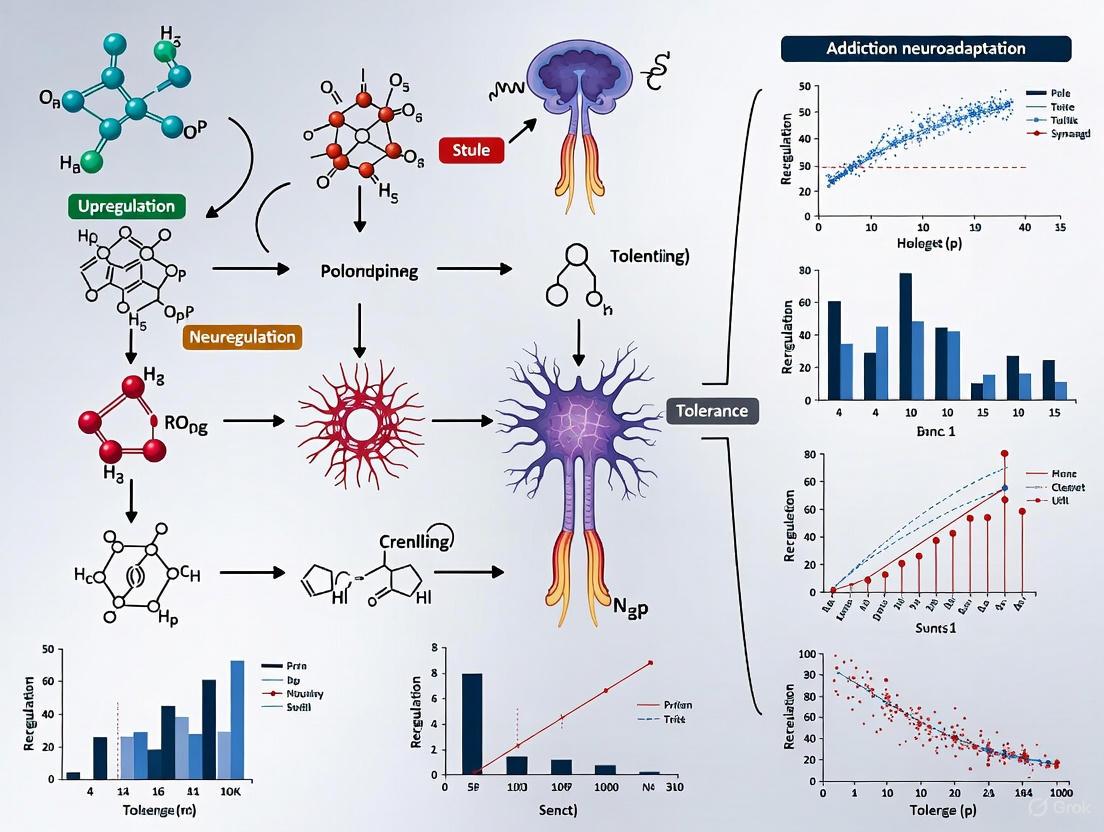
This article synthesizes current research on neuroadaptations driving tolerance in substance use disorders, a key challenge in addiction therapeutics.
Overcoming Neurobiological Tolerance: Mechanisms, Models, and Novel Therapeutic Avenues in Addiction Research
Abstract
This article synthesizes current research on neuroadaptations driving tolerance in substance use disorders, a key challenge in addiction therapeutics. We explore the foundational neurocircuitry of the addiction cycle, highlighting dopaminergic dysregulation in the basal ganglia and stress system activation in the extended amygdala. The content details innovative methodological approaches, from deep brain stimulation and neuromodulation to GLP-1 agonists and contingency management. We address troubleshooting for high relapse rates and optimization of reduced-use endpoints, while validating strategies through comparative analysis of genetic risk assessment, dopamine homeostasis induction, and integrated therapies. This resource provides drug development professionals and researchers with a comprehensive framework for advancing targeted interventions against addictive disorders.
Deconstructing Tolerance: Neurocircuitry and Neuroadaptations in the Addiction Cycle
FAQs: Troubleshooting Common Experimental Challenges
Q1: In our self-administration model, why do only a subset of subjects transition to compulsive use despite all having extended access to the drug?
A: This is an expected phenomenon reflecting individual vulnerability. Key factors to consider:
- Baseline Impulsivity: Subjects with higher baseline impulsivity are more likely to develop compulsive drug-seeking [1]. We recommend using 5-choice serial reaction time tasks prior to self-administration to stratify subjects.
- Dopamine D2 Receptor Levels: Pre-existing low levels of striatal dopamine D2 receptors are a documented vulnerability factor [2]. You can confirm this post-hoc via receptor autoradiography or PET imaging.
- Experimental Design: Incorporate progressive ratio schedules and punishment paradigms to distinguish compulsive subjects. Only vulnerable subjects will continue lever-pressing despite footshock or other adverse stimuli [3].
Q2: Our measurements of craving (preoccupation/anticipation stage) during abstinence are inconsistent. How can we better model this in a laboratory setting?
A: The "craving" state is dynamic. We recommend a multi-modal approach:
- Incubation of Craving: Measure cue-induced drug-seeking after forced abstinence at multiple time points (e.g., 1 day, 7 days, 30-45 days). Craving and drug-seeking often incubate and increase over the first month of abstinence [3].
- Neurochemical Correlates: This incubated craving is mediated by GluR2-lacking AMPA receptor formation in the nucleus accumbens [4]. Validate your behavioral measures with electrophysiology or molecular analyses of this target.
- Residual Negative Affect: Incorporate measurements of anhedonia (e.g., reduced sucrose preference) and anxiety-like behaviors (e.g., elevated plus maze) during abstinence, as these negative states drive craving [5] [3].
Q3: We are investigating pharmacological treatments to reverse tolerance. What neuroadaptations should our lead compounds target?
A: Tolerance involves counter-adaptations beyond simple receptor downregulation. Promising targets include:
- The "Anti-Reward" System: Chronic drug use upregulates brain stress systems. Target Corticotropin-Releasing Factor (CRF) in the extended amygdala and dynorphin (a kappa-opioid receptor agonist) in the striatum to reverse the negative emotional state that fuels escalating use [5] [3].
- Glutamatergic Plasticity: Tolerance and dependence are linked to impaired prefrontal cortex glutamate release and altered AMPA/NMDA receptor ratio in the nucleus accumbens [2] [3]. Compounds that normalize prefrontal glutamatergic output (e.g., mGluR2/3 agonists, N-acetylcysteine) can restore cognitive control and reduce drug-seeking.
Key Experimental Protocols for Studying the Addiction Cycle
Protocol: Modeling the Transition to Compulsivity in Rodents
Objective: To determine the compulsive phenotype in rats with extended cocaine access.
Workflow Summary:
Detailed Methodology:
- Self-Administration Training: House rats in operant chambers. Train them to press a lever for intravenous cocaine infusions (e.g., 0.5 mg/kg/infusion) on a fixed-ratio 1 (FR1) schedule during daily 1-hour sessions. A cue light should signal each infusion.
- Extended Access: Once stable responding is achieved, randomly assign subjects to:
- Short Access (ShA): Continue 1-hour sessions.
- Long Access (LgA): Extend sessions to 6 hours.
- Data Collection: Record the number of infusions per session. Over weeks, the LgA group will escalate their intake, a key behavioral marker of developing addiction [1].
- Compulsivity Assays:
- Progressive Ratio (PR): Replace the FR1 schedule with a PR schedule, where the response requirement for each subsequent infusion increases exponentially. The final ratio completed (breakpoint) measures the motivation for the drug.
- Punished Seeking: Introduce a probabilistic punishment contingency where the active lever has a chance (e.g., 30-50%) of delivering a mild footshock along with the drug infusion. Compulsive subjects will continue to respond despite the adverse consequence [3].
Protocol: Measuring Neuroadaptations in the Withdrawal/Negative Affect Stage
Objective: To quantify the dysphoric-like state and associated neurochemical changes during acute and protracted withdrawal from opioids.
Workflow Summary:
Detailed Methodology:
- Dependence Induction: Use chronic administration via implanted morphine pellets or repeated self-administration sessions over 2-3 weeks.
- Withdrawal Precipitated: Administer an opioid antagonist (e.g., naloxone, 0.1-1.0 mg/kg) to precipitate acute withdrawal. For spontaneous withdrawal, remove the drug source.
- Acute Withdrawal (0-72 hrs):
- Somatic Signs: Quantify classic physical signs like jumps, wet-dog shakes, teeth chattering, and ptosis (eyelid droop) for 30 minutes post-naloxone.
- Affective Signs: Use the elevated plus maze or light-dark box to measure increased anxiety-like behavior. Intracranial self-stimulation (ICSS) is a key tool; during withdrawal, rats will accept lower levels of brain stimulation reward, indicating a dysphoric state and elevated reward threshold [6] [3].
- Protracted Withdrawal (1-4 weeks):
- Anhedonia: Conduct a sucrose preference test. A significant reduction in preference for a sweet sucrose solution over water indicates anhedonia.
- Molecular Analysis: Sacrifice subjects and use in situ hybridization or ELISA to measure increased levels of CRF and dynorphin in the central amygdala and bed nucleus of the stria terminalis (BNST)—the core of the extended amygdala [5] [3].
Quantitative Data on Neurotransmitter Systems
Table 1: Key Neurotransmitter Changes Across the Three-Stage Addiction Cycle
| Stage | Key Neurotransmitter / Neuromodulator | Direction of Change | Primary Brain Regions Involved |
|---|---|---|---|
| Binge/Intoxication | Dopamine [1] [3] | ↑ | Ventral Tegmental Area (VTA), Nucleus Accumbens (NAc) |
| Opioid Peptides [1] [3] | ↑ | VTA, NAc, Basal Ganglia | |
| GABA [3] | ↑ | VTA, Amygdala | |
| Withdrawal/Negative Affect | Dopamine [5] [3] | ↓ | VTA, NAc |
| Corticotropin-Releasing Factor (CRF) [5] [3] | ↑ | Extended Amygdala (Central Amygdala, BNST) | |
| Dynorphin [5] [3] | ↑ | NAc, Extended Amygdala | |
| Norepinephrine [3] | ↑ | BNST, Locus Coeruleus | |
| Preoccupation/Anticipation | Glutamate [3] | ↑ | Prefrontal Cortex → NAc, Dorsal Striatum |
| Dopamine [3] | ↑ (in response to cues) | Prefrontal Cortex | |
| Hypocretin (Orexin) [3] | ↑ | Lateral Hypothalamus → VTA, Prefrontal Cortex |
Table 2: Research Reagent Solutions for Key Targets
| Research Reagent / Tool | Primary Function / Target | Application in Addiction Studies |
|---|---|---|
| Naloxone / Naltrexone | Non-selective opioid receptor antagonist | Precipitate opioid withdrawal for study; block opioid receptors to reduce relapse in alcohol/opioid use disorders [6]. |
| CRF Receptor Antagonists (e.g., CP-154,526, R121919) | Block CRF1 receptors | Test the role of stress systems in the withdrawal/negative affect stage and stress-induced relapse [3]. |
| GluR2-lacking AMPA Receptor Analysis (e.g., NASPM) | Selective inhibitor of Ca2+-permeable AMPARs | Investigate the molecular basis of incubated craving during protracted abstinence [4]. |
| Dopamine D1/D2 Receptor Agonists/Antagonists (e.g., SCH-23390, raclopride) | Modulate dopamine receptor activity | Dissect the role of dopamine signaling in drug reward, motivation, and cue reactivity across all stages [1] [2]. |
| Viral Vector Systems (e.g., DREADDs, Chemogenetics) | Targeted manipulation of specific neuron populations | Causally link activity in specific circuits (e.g., PFC→NAc) to behaviors in a specific stage of the cycle with high temporal precision [3]. |
Core Neurocircuitry of the Addiction Cycle
The following diagram synthesizes the primary brain circuits and their interactions across the three stages of addiction.
This technical support guide addresses the neurobiological mechanisms through which chronic drug exposure leads to dysregulated dopamine signaling in the nucleus accumbens (NAc), a central hub in the brain's reward circuitry. Understanding this progression from amplified "wanting" to blunted responsiveness is crucial for developing interventions that overcome tolerance and addiction neuroadaptation.
FAQ: What is the fundamental role of nucleus accumbens dopamine in addiction?
The NAc is a primary component of the ventral striatum, heavily innervated by dopaminergic projections from the ventral tegmental area (VTA) via the mesolimbic pathway [7]. Dopamine signaling in this circuit is not primarily about pleasure ("liking") but about incentive salience—the process that assigns motivational value to rewards and their cues, making them attractive and "wanted" [8]. Addictive drugs hijack this system by producing surges of dopamine that far exceed those of natural rewards, pathologically strengthening drug-cue associations and driving compulsive seeking [9] [4].
The Transition to Addiction: Key Neuroadaptations
The addiction cycle is characterized by a transition from positive reinforcement (seeking the drug's pleasurable effects) to negative reinforcement (seeking relief from withdrawal), accompanied by specific neuroadaptations [5] [4]. The table below summarizes the core concepts relevant to this transition.
Table 1: Core Concepts in Addiction Neurocircuitry
| Concept | Definition | Primary Brain Region(s) |
|---|---|---|
| Incentive Salience ("Wanting") | Motivation for a reward, driven by dopamine, which makes cues for that reward attention-grabbing and attractive [8]. | Ventral Tegmental Area (VTA), Nucleus Accumbens, Dorsal Striatum [8] |
| Reward Prediction Error (RPE) | A learning signal where dopamine is released when a reward is better than expected and decreases when it is worse [10] [11]. | VTA, NAc (in specific reward contexts) |
| Hedonic Impact ("Liking") | The actual pleasurable impact of a reward, mediated largely by opioid and endocannabinoid systems, not dopamine [8]. | Hedonic Hotspots (e.g., in NAc shell, Ventral Pallidum) |
| Negative Affect Stage | The withdrawal stage marked by a dysphoric, anxious, and irritable state that promotes drug use via negative reinforcement [5] [4]. | Extended Amygdala |
Troubleshooting Experimental Challenges
Challenge: Interpreting Complex Dopamine Signals
Issue: My dopamine sensor data doesn't neatly fit the canonical Reward Prediction Error (RPE) model, especially in aversive or non-reward contexts.
Solution: The RPE model is context-dependent. Recent evidence shows that NAc core dopamine often signals perceived saliency—the intensity or novelty of a stimulus, regardless of whether it is positive or negative—rather than a pure valence-based prediction error [10] [11].
Experimental Protocol for Saliency Encoding:
- Animal Model: Use mice expressing genetically encoded dopamine sensors (e.g., dLight1.1) in the NAc core.
- Behavioral Tasks: Employ a combination of positive reinforcement (e.g., sucrose reward) and negative reinforcement (e.g., shock avoidance/escape) tasks within the same subjects [10].
- Data Collection: Record subsecond dopamine transients in response to predictive cues (Sd), outcomes (sucberry e.g., retrieval, shock delivery), and safety signals.
- Analysis: Use machine learning (e.g., Support Vector Machine) to determine which features of the dopamine signal on a trial-by-trial basis predict future behavioral responses [10].
Expected Results & Interpretation:
- In positive reinforcement, dopamine may conform to RPE: cue responses increase and outcome responses decrease with learning [10].
- In negative reinforcement, dopamine deviates from RPE: responses to an aversive footshock itself can be positive and increase with learning, and cue responses may not change significantly [10].
- The dopamine response to the shock (a salient event), not the safety cue (a positive outcome), was found to best predict future avoidance behavior, underscoring its role in saliency and behavioral activation [10].
The following diagram illustrates the key experimental workflow and findings for distinguishing saliency encoding from RPE.
Challenge: Modeling the Blunted Response in Late-Stage Addiction
Issue: How do I model the transition from heightened drug-seeking (incentive salience) to a blunted, compulsive state in animals?
Solution: Utilize specific transgenic animal models and focus on the molecular adaptations within D1-receptor expressing medium spiny neurons (D1-MSNs) in the NAc, which are critical for persistent drug use and relapse [12] [13].
Experimental Protocol for Blunted Fentanyl Seeking:
- Animal Model: Use Drd1-cre120Mxu mice and their wildtype littermates as controls [12] [13].
- Behavioral Paradigm:
- Train mice to self-administer intravenous fentanyl over 10 days.
- Followed by a period of abstinence.
- Test for drug-seeking behavior in an extinction session (where no drug is delivered) to measure motivation.
- Key Measurement: Compare active vs. inactive nose-poke responses during the seeking test.
- Validation: Conduct molecular analysis (e.g., qPCR, RNA sequencing) on NAc tissue to assess dysregulation of D1-MSN markers, opioid receptors, glutamate receptor subunits, and TrkB [12] [13].
Expected Results & Interpretation:
- Drd1-cre120Mxu mice show normal acquisition of fentanyl self-administration and intake but exhibit significantly blunted fentanyl seeking after abstinence compared to wildtypes [13].
- This behavioral phenotype is associated with elevated D1 receptor expression and increased sensitivity to D1 agonists in drug-naïve mice, suggesting a pre-existing difference in the D1-MSN pathway that alters susceptibility [13].
- Chemogenetic stimulation of ventral mesencephalon-projecting NAc core MSNs (putative D1-MSNs) in wildtype mice can recapitulate the blunted seeking phenotype [13].
The diagram below summarizes the neuroadaptations in the D1-MSN pathway associated with blunted seeking.
The Scientist's Toolkit: Research Reagent Solutions
Table 2: Essential Research Reagents and Models
| Reagent / Model | Function / Application | Key Characteristic / Consideration |
|---|---|---|
| dLight1.1 [10] | Genetically encoded dopamine sensor for direct, subsecond monitoring of dopamine transients in vivo. | Allows for real-time measurement of dopamine dynamics in specific brain regions during behavior. |
| Drd1-cre120Mxu Mice [12] [13] | Transgenic mouse line for targeting dopamine D1 receptor-expressing neurons. | Exhibits inherent NAc gene dysregulation and blunted fentanyl seeking, requiring careful control selection. |
| Support Vector Machine (SVM) [10] | A machine learning approach for analyzing trial-by-trial relationships between neural signals (e.g., dopamine) and behavior. | Determines if specific features of a neural signal can predict behavioral outcomes. |
| Chemogenetic Tools (DREADDs) | For remote control of specific neuronal populations (e.g., NAc core D1-MSNs) to test causal roles in behavior [13]. | Allows for bidirectional manipulation (activation/inhibition) to link circuits to function. |
FAQ on Neuroadaptation and Recovery
FAQ: Are the dopamine-related neuroadaptations in addiction permanent?
No, the brain has a significant capacity for recovery. Imaging studies show that the brain's dopamine system and prefrontal cortex function can improve with prolonged abstinence [9]. For example, dopamine transporter (DAT) levels in the reward center of individuals recovering from methamphetamine use disorder can return to nearly normal levels after 14 months of abstinence [9]. Interventions like physical exercise may improve neuroplasticity and aid this recovery process [9].
FAQ: How does the "liking" vs. "wanting" distinction inform treatment strategies?
This distinction is critical. In addiction, "liking" for the drug often decreases (due to tolerance), while "wanting" or craving intensifies [9] [8]. This explains why patients may continue to use a drug even when it no longer provides pleasure. Successful treatments may therefore need to target the hyperactive "wanting" system (dopamine-centric) separately from the diminished "liking" system (opioid-centric). Furthermore, this framework helps parse symptoms in other disorders; for instance, avolition (lack of motivation) in depression may reflect impaired "wanting" with intact "liking" capacity [8].
Frequently Asked Questions (FAQs)
FAQ 1: What are the primary molecular drivers of the glutamatergic shift observed in the withdrawal stage? The glutamatergic shift is characterized by a dysregulation in the brain's excitatory-inhibitory balance. Key drivers include:
- Reduced GABAergic Tone: Chronic drug exposure decreases gamma-aminobutyric acid (GABA)-mediated inhibition on reward circuits [5].
- Increased Glutamatergic Signaling: This occurs alongside the reduction in GABA, leading to a net increase in excitatory signaling. This imbalance contributes to hyperexcitability, anxiety, and irritability during withdrawal [5]. This shift is a core component of the "between-systems" adaptation that engages the brain's stress circuits [5].
FAQ 2: How does receptor downregulation contribute to tolerance in substance use disorders? Receptor downregulation is a fundamental mechanism of tolerance, leading to a diminished response to a drug after repeated use.
- Dopaminergic System: In the binge/intoxication stage, supraphysiologic surges of dopamine initially stimulate both D1 and D2 receptors. With repeated use, the brain adapts by reducing dopamine receptor availability and baseline dopaminergic tone. This means more of the substance is required to achieve the same euphoric effect, a phenomenon known as tolerance [5] [14] [15].
- Neurocircuitry Impact: This dopaminergic downregulation is a key feature of the "within-system" neuroadaptation in the nucleus accumbens, directly reducing the pleasurable effects of the drug and natural rewards [5].
FAQ 3: What is the 'anti-reward' system and what molecular factors activate it? The "anti-reward" system is a concept describing the brain's counter-adaptive stress systems that become hyperactive during the withdrawal/negative affect stage of addiction. It is primarily mediated by the extended amygdala (including the bed nucleus of the stria terminalis and the central nucleus of the amygdala) [5] [16]. Key molecular factors that activate this system include:
- Corticotropin-Releasing Factor (CRF): A primary stress neurotransmitter [5] [16].
- Dynorphin: A kappa-opioid receptor agonist that produces dysphoric effects [5] [16].
- Norepinephrine: Involved in stress and alertness responses [5].
- Other Mediators: Orexin and vasopressin also contribute to this stress response [16]. The activation of this system creates a negative emotional state (hyperkatifeia), which drives further substance use to achieve relief via negative reinforcement [5] [16].
FAQ 4: Which transcription factors are implicated in long-term neuroadaptations? Long-term changes in gene expression are critical for the persistence of addiction. Two key transcription factors are:
- ΔFosB (DeltaFosB): This is a particularly stable transcription factor that accumulates with repeated drug exposure. It mediates a state of relatively prolonged sensitization, contributing to increased drive and motivation for the drug [17].
- CREB (cAMP response element binding protein): This factor is activated during early withdrawal. It mediates a form of tolerance and dependence, and contributes to the negative emotional state that occurs when drug use is stopped [17]. These factors work in concert to produce the complex behavioral phenotype of addiction [17].
Troubleshooting Experimental Challenges
Challenge 1: Differentiating Between Positive and Negative Reinforcement in Behavioral Models
| Challenge | Root Cause | Solution |
|---|---|---|
| Interpreting increased substance self-administration in animal models. | Behavior can be driven by pursuit of pleasure (positive reinforcement) or relief of distress (negative reinforcement). The neurobiological substrates differ. | 1. Behavioral Profiling: Integrate measures of anxiety-like behavior (e.g., elevated plus maze) and anhedonia (e.g., sucrose preference) during abstinence. 2. Pharmacological Dissection: Administer antagonists for key systems; e.g., CRF antagonists are more likely to reduce drug-taking driven by negative reinforcement [5] [16]. |
Challenge 2: Modeling the Transition from Impulsive to Compulsive Use
| Challenge | Root Cause | Solution |
|---|---|---|
| Replicating the human progression from recreational, reward-driven use to habitual, compulsive use despite negative consequences in animal models. | This transition correlates with a neuroanatomical progression from ventral striatal (nucleus accumbens) to dorsal striatal control [15]. | 1. Compulsion-Assayed Paradigms: Use protocols where drug-seeking is punished by a mild foot shock or requires overcoming an obstacle. 2. Circuit-Specific Manipulation: Employ optogenetics or chemogenetics to selectively inhibit the dorsolateral striatum to test if compulsive-like behavior is reduced [5] [14]. |
Challenge 3: Quantifying Allostatic State in Reward Circuitry
| Challenge | Root Cause | Solution |
|---|---|---|
| Moving beyond measuring homeostatic changes to capturing the chronic deviation of reward set point (allostasis) that defines addiction [18]. | Allostasis represents a new, pathological steady state, making it difficult to measure against a "normal" baseline. | 1. Intracranial Self-Stimulation (ICSS): Measure the reward threshold. A persistent elevation indicates a hedonic allostatic state, where the brain requires more stimulation to register reward [18]. 2. Molecular Profiling: Quantify the ratio of stress neurotransmitters (e.g., CRF, dynorphin) to anti-stress neurotransmitters (e.g., Neuropeptide Y, endocannabinoids) in the extended amygdala over prolonged abstinence [5] [16]. |
Table 1: Molecular and Neurotransmitter Shifts in the Three-Stage Addiction Cycle
| Addiction Stage | Core Brain Region | Primary Neurotransmitter Change | Key Molecular & Transcription Factor Adaptations |
|---|---|---|---|
| Binge/Intoxication | Basal Ganglia (Ventral Tegmental Area, Nucleus Accumbens) | Dopamine Surge: Supraphysiologic release, followed by downregulation of D2 receptors and decreased baseline tone [5] [14]. | ΔFosB Accumulation: Drives long-term sensitization and motivation [17]. |
| Withdrawal/Negative Affect | Extended Amygdala | Dopamine Deficiency: Hypodopaminergic state. Stress Surge: Increased CRF, Dynorphin, Norepinephrine. Glutamatergic Shift: Increased Glu/GABA ratio [5] [16]. | CREB Activation: Mediates tolerance and negative emotional state during withdrawal [17]. |
| Preoccupation/Anticipation | Prefrontal Cortex | Glutamate Dysregulation: Heightened cue-reactivity and craving. Impaired top-down control [5] [14]. | Epigenetic Remodeling: Long-lasting changes in gene expression from life experience and drug use, impacting synaptic and circuit function [19]. |
Table 2: Experimental Assays for Key Addiction Mechanisms
| Target Mechanism | Example Assays | Measurable Output |
|---|---|---|
| Receptor Downregulation | Radioligand binding assays, Quantitative PCR for receptor mRNA, Receptor autoradiography [15]. | Decreased B~max~ (receptor density), Decreased receptor mRNA expression. |
| Glutamatergic Shift | In vivo microdialysis, Electrophysiology (measuring AMPA/NMDA ratios), Immunohistochemistry for glutamate receptor subunits [14]. | Increased extracellular glutamate in NAcc, Altered synaptic plasticity in VTA and NAcc. |
| Anti-Reward System Recruitment | Microdialysis for CRF in extended amygdala, Behavioral tests (anxiety measures) after CRF antagonist administration, ELISA for stress hormones [5] [16] [18]. | Elevated CRF and dynorphin levels, Increased HPA axis activation (corticosterone), Anxiety-like behaviors reversible by CRF blockade. |
Detailed Experimental Protocols
Protocol 1: Assessing Dopamine Receptor Downregulation via Quantitative Autoradiography
Objective: To quantify changes in dopamine D1 and D2 receptor density in the nucleus accumbens and dorsal striatum following chronic drug administration.
Methodology:
- Tissue Preparation: Fresh-frozen brain sections (10-20 μm thick) from saline and drug-treated rodent models are cryostat-sectioned.
- Incubation: Sections are incubated with a saturating concentration of a tritiated radioligand specific for either D1 (e.g., [³H]SCH-23390) or D2 (e.g., [³H]raclopride) receptors.
- Washing & Exposure: Non-specific binding is determined by co-incubation with a high concentration of an unlabeled competitor (e.g., haloperidol). After washing, dried sections are exposed to a radiation-sensitive film alongside calibrated radioactive standards.
- Quantification: Film images are analyzed densitometrically. Receptor density (fmol/mg tissue) is calculated by comparing optical density in brain regions of interest to the standard curve [15].
Protocol 2: Electrophysiological Measurement of Glutamatergic Shifts in VTA Neurons
Objective: To measure drug-induced changes in the strength and plasticity of glutamatergic synapses onto dopamine neurons in the Ventral Tegmental Area (VTA).
Methodology:
- Slice Preparation: Acute brain slices containing the VTA are obtained from rodents.
- Whole-Cell Patch-Clamp Recording: Dopamine neurons are identified by their electrophysiological properties. Glutamatergic currents are isolated using pharmacological blockers for GABA~A~ receptors.
- Stimulating Synaptic Inputs: A bipolar stimulating electrode is placed in areas providing glutamatergic input to the VTA.
- Data Collection:
- Paired-Pulse Ratio (PPR): Assesses presynaptic release probability. A change in PPR suggests presynaptic mechanisms.
- AMPA/NMDA Ratio: A measure of postsynaptic strength. An increased ratio is a hallmark of synaptic potentiation, a form of glutamatergic shift [14].
- Measurement of LTP/LTD: Assess the capacity for further synaptic plasticity, which is often altered by prior drug exposure.
Research Reagent Solutions
Table 3: Essential Reagents for Investigating Addiction Neuroadaptations
| Reagent | Function/Application in Research |
|---|---|
| Dopamine Receptor Antagonists (e.g., SCH-23390 for D1, Eticlopride for D2) | Pharmacological tools to dissect the role of specific dopamine receptor subtypes in drug self-administration, reinstatement, and neuroadaptation [15]. |
| CRF Receptor Antagonists (e.g., Antalarmin, R121919) | Used to investigate the role of stress systems in the withdrawal/negative affect stage and in stress-induced reinstatement of drug-seeking [5] [18]. |
| Kappa-Opioid Receptor Agonists/Antagonists (e.g., U-50488, nor-BNI) | Agonists like U-50488 are used to probe the dysphoric effects of dynorphin. Antagonists like nor-BNI are used to test if blocking this system reduces negative affect and compulsive drug-taking [16]. |
| C-Fos & ΔFosB Antibodies | Standard (c-Fos) and stable (ΔFosB) markers of neuronal activation used in immunohistochemistry to map brain regions activated by acute drug challenge or altered by chronic drug use [17]. |
| Viral Vectors for Opto-/Chemogenetics (e.g., AAVs expressing Channelrhodopsin or DREADDs) | Enable precise manipulation of specific neural circuits (e.g., VTA-NAcc pathway) to establish causal links between circuit activity and addiction-related behaviors [14]. |
Signaling Pathways and Experimental Workflows
Diagram 1: The cyclical nature of addiction neuroadaptations, highlighting the primary brain regions and key molecular players in each stage.
Diagram 2: Simplified workflow of molecular mechanisms, showing how chronic drug exposure triggers core neuroadaptations that drive long-term changes via transcription factors.
Diagram 3: A generalized experimental workflow for investigating the molecular mechanisms underlying tolerance in addiction research.
Core Concepts: FAQs for Researchers
FAQ 1: What are the key neurobiological stages of addiction that interact with genetic liability? Based on the established neurobiological framework, addiction is a chronic, relapsing disorder marked by a three-stage cycle that involves specific brain regions and neurotransmitters [5]. Genetic and epigenetic predispositions can influence a person's vulnerability at each stage:
- Binge/Intoxication: This stage involves the basal ganglia and is characterized by dopamine release, contributing to the pleasurable effects of a substance and positive reinforcement [5].
- Withdrawal/Negative Affect: This stage recruits the extended amygdala (the "anti-reward" system), leading to stress, irritability, and anxiety when the substance is absent, driving negative reinforcement [5].
- Preoccupation/Anticipation: This stage involves the prefrontal cortex (PFC) and is marked by cravings and a loss of executive control over substance use, leading to compulsivity [5].
FAQ 2: How do epigenetic mechanisms contribute to therapeutic resistance in addiction? Therapeutic resistance can arise from stable epigenetic adaptations that alter gene expression without changing the DNA sequence. These changes can lock in the maladaptive neural state of addiction, making it resistant to treatment [20]. Key mechanisms include:
- DNA Methylation: The addition of methyl groups to DNA, typically at CpG islands, can lead to long-term gene silencing. Hypermethylation of gene promoter regions for tumor suppressor genes is a well-established mechanism in cancer therapy resistance, serving as a model for understanding stable changes in neural function [20].
- Histone Modifications: Chemical modifications (e.g., acetylation, methylation) to histone proteins alter chromatin structure. These changes can activate or repress genes involved in neuroplasticity and reward, contributing to the persistent nature of addiction [20].
- Non-coding RNAs: Molecules like microRNAs can regulate gene expression post-transcriptionally, fine-tuning the expression of genes involved in the addiction cycle and resistance [20].
FAQ 3: What is neuroadaptation, and how does it lead to tolerance? Neuroadaptation refers to the brain's homeostatic process of counteracting the presence of a psychoactive drug to maintain normal function [21]. With repeated drug use, these adaptations become more established, leading to increased tolerance (needing more of the drug to achieve the same effect) and eventually dependence (needing the drug to feel normal) [21]. Key types of tolerance include:
- Pharmacodynamic Tolerance: Receptors in the brain become less sensitive or increase in number, reducing the drug's effect [21].
- Pharmacokinetic Tolerance: The body becomes more efficient at metabolizing and excreting the drug [21].
Technical Troubleshooting Guides
Issue 1: Inconsistent Phenotypes in Animal Models of Addiction
- Problem: High variability in behavioral readouts (e.g., self-administration, conditioned place preference) between genetically identical subjects.
- Solution:
- Control Environmental Epigenetics: Standardize all environmental factors (light/dark cycles, handling, cage enrichment, diet) to minimize non-experimental epigenetic influences [22].
- Profile Baseline Methylation: Pre-screen subjects for baseline epigenetic markers associated with the behavior of interest (e.g., DNA methylation patterns of genes like FMR1 or HTT as models of repeat instability) to stratify experimental groups [22].
- Utilize Multi-omics Integration: Combine transcriptomic, epigenomic, and proteomic data from post-mortem tissue to identify core drivers of the phenotypic variation beyond single-gene analyses [20].
Issue 2: Failed Translation of Epigenetic Therapeutics from Pre-clinical to Clinical Models
- Problem: Epigenetic drugs (e.g., HDAC inhibitors) that are effective in cell or animal models fail in human trials for treating addiction.
- Solution:
- Validate Human-Relevant Models: Move beyond standard cell lines and animal models. Use transdifferentiated human neurons or brain organoids that better recapitulate human-specific epigenetic patterns and aging [22].
- Employ Combination Therapies: Do not rely on single-target epigenetic drugs. Combine epigenetic therapeutics with behavioral interventions or other pharmacotherapies to synergistically overcome resistance mechanisms, a strategy showing promise in oncology [20].
- Leverage Spatial Multi-omics: Apply spatial transcriptomics and epigenomics to understand the tumor microenvironment's role in therapy resistance, which can be analogized to the neural microenvironment in addiction, providing new perspectives for precision therapy [20].
Experimental Protocols
Protocol 1: Assessing DNA Methylation Changes in Reward-Related Genes
Objective: To map DNA methylation changes in the promoter region of the DRD2 gene in the nucleus accumbens post-chronic intermittent ethanol exposure.
- Tissue Dissection: Microdissect the nucleus accumbens from fresh-frozen brain tissue (n=6/group) under RNase-free conditions.
- DNA Extraction & Bisulfite Conversion: Extract high-molecular-weight DNA using a commercial kit. Treat 500 ng of DNA with sodium bisulfite to convert unmethylated cytosines to uracils.
- Pyrosequencing: Amplify the bisulfite-converted DNA using PCR primers specific to the DRD2 promoter CpG island. Analyze the PCR product by pyrosequencing to obtain quantitative methylation data at single-base resolution for 5-10 CpG sites.
- Data Analysis: Compare percentage methylation at each CpG site between experimental and control groups using a two-way ANOVA. Correlate methylation levels with behavioral data (e.g., ethanol consumption).
Protocol 2: Chromatin Immunoprecipitation (ChIP) for Histone Modifications
Objective: To investigate H3K9ac (an activating mark) enrichment at the BDNF promoter in the prefrontal cortex following cocaine self-administration.
- Cross-Linking & Sonication: Perfuse animals, isolate PFC tissue, and cross-link proteins to DNA with 1% formaldehyde. Lyse cells and sonicate chromatin to shear DNA to fragments of 200-500 bp.
- Immunoprecipitation: Incubate the chromatin solution with an antibody specific to H3K9ac. Use a non-specific IgG antibody as a negative control. Use Protein A/G beads to pull down the antibody-chromatin complex.
- DNA Purification & qPCR: Reverse cross-links, purify DNA, and analyze the enrichment of the BDNF promoter region via quantitative PCR (qPCR) using specific primers. Calculate fold enrichment relative to the input DNA and IgG control.
Signaling Pathways and Workflow Diagrams
Addiction Epigenetic Pathway
Experimental Workflow
The Scientist's Toolkit: Research Reagent Solutions
Table 1: Essential Reagents for Genetic & Epigenetic Addiction Research
| Research Reagent | Function/Brief Explanation |
|---|---|
| HDAC Inhibitors (e.g., SAHA, Trichostatin A) | Inhibit histone deacetylases, allowing for increased histone acetylation and gene activation; used to test the role of specific histone marks in addiction-related plasticity [20]. |
| DNMT Inhibitors (e.g., 5-Azacytidine, RG108) | Inhibit DNA methyltransferases, preventing DNA methylation and potentially reactivating silenced genes; used to probe the functional role of methylation in gene promoters [20]. |
| Bisulfite Conversion Kit | Prepares DNA for methylation analysis by chemically converting unmethylated cytosine to uracil, while leaving methylated cytosine unchanged [22]. |
| ChIP-Grade Antibodies | Highly specific antibodies for histone modifications (e.g., H3K4me3, H3K27ac) or chromatin proteins (e.g., CTCF); essential for Chromatin Immunoprecipitation (ChIP) assays to map protein-DNA interactions [22] [20]. |
| Magnetic Beads (Protein A/G) | Used to pull down antibody-bound chromatin complexes during the ChIP protocol, enabling the isolation of specific chromatin fragments [22]. |
| Pyrosequencing Reagents | Enable quantitative, real-time sequencing of DNA following bisulfite conversion and PCR, providing precise measurement of methylation levels at individual CpG sites [22]. |
Innovative Models and Interventions for Countering Neuroadaptive Tolerance
Frequently Asked Questions (FAQs) for Researchers
Q1: What is the mechanistic hypothesis for how NAc DBS treats addiction-related behaviors? NAc DBS is thought to counteract addiction-related neuroadaptations through several interconnected mechanisms. It primarily modulates the pathological neural activity within the reward circuit. Key processes include:
- Synaptic Depotentiation: Acute low-frequency DBS, particularly when combined with selective dopamine D1 receptor blockade, can induce depotentiation of strengthened excitatory synapses on D1R-medium spiny neurons (MSNs), normalizing transmission and reducing behavioral sensitization [23].
- Local Inhibition & GABAergic Effects: High-frequency stimulation may lead to a local inhibition of the NAc, potentially through depolarization block or the activation of local inhibitory interneurons. This is supported by findings that DBS increases GABA release, leading to a hypoactivation of NAc local neural activities via GABAB receptors [24] [23].
- Circuit-Wide Modulation: DBS effects extend beyond the local site. Stimulation of the NAc shell can activate GABAergic interneurons in the infralimbic cortex (a part of the medial prefrontal cortex), creating recurrent inhibition that reduces activity in the corticoaccumbal pathway and dampens drug-seeking behavior [23].
Q2: What are common reasons for a failure to observe therapeutic effects in preclinical NAc DBS studies? Suboptimal outcomes in DBS experiments can arise from multiple factors. A systematic review of clinical DBS failures identified issues that are directly translatable to experimental settings [25]:
- Inaccurate Lead Placement: The single most critical factor. Sub-optimally placed DBS leads will fail to modulate the intended neural population or circuit. Verification of lead placement via histology or imaging is essential [25].
- Sub-Optimal Stimulation Parameters: The selection of frequency, pulse width, and amplitude is crucial. Parameters effective for one behavior (e.g., OCD) or species may not directly translate to another (e.g., addiction). A lack of dose-response (parameter) testing is a common oversight [24] [26].
- Inadequate Animal Model: The chosen model may not accurately recapitulate the specific neuroadaptations of the addiction stage being studied (e.g., binge vs. withdrawal vs. craving) [23] [27].
- Insufficient Post-Operative Assessment: Therapeutic effects may not be immediate and require time for neuroplasticity to occur. Relying solely on acute behavioral readouts can miss long-term benefits [26].
Q3: What key electrophysiological and neurochemical biomarkers should be monitored to assess DBS efficacy in addiction models? To objectively assess the impact of DBS, researchers should track the following biomarkers, which are known to be altered in addiction and modulated by DBS:
- Local Field Potentials (LFPs): In OCD models, NAc-DBS has been shown to reverse pathological power spectral density patterns, specifically increasing relative power in the delta and gamma bands while reducing power in the theta, alpha, and beta bands [28].
- Spike (SPK) Firing: The firing rate and pattern of NAc neurons are altered following DBS. Analysis in rodent models shows a decreased firing rate and altered firing pattern post-stimulation [28].
- Neurotransmitter Levels: Microdialysis can reveal critical changes in key neurotransmitters. Studies have shown that NAc-DBS can reverse addiction- or compulsion-induced elevations in local levels of dopamine (DA), serotonin (5-HT), glutamate (Glu), and GABA in the NAc [28].
Q4: How does stimulation of the NAc core versus the shell differ in its effects on addiction behaviors? Evidence suggests the NAc core and shell subregions have distinct roles and DBS outcomes:
- NAc Core: Inhibition of the NAc core (via GABA agonists or lesion) is effective at attenuating drug reinstatement, suggesting its activity is critical for drug-seeking behavior [23].
- NAc Shell: The mechanisms for shell DBS are more complex. While its activation generally promotes reward, DBS of the shell reduces cocaine seeking, an effect not attributed to local inhibition. Instead, it is proposed to work by activating GABAergic interneurons in the infralimbic cortex, which subsequently inhibits the reward pathway [24] [23]. This highlights the importance of target selection within the NAc.
Troubleshooting Guide: Addressing Experimental Challenges
| Problem | Potential Causes | Suggested Solutions |
|---|---|---|
| Lack of Behavioral Effect | Misplaced DBS lead [25].Sub-optimal stimulation parameters [26].Insufficient model validity [27]. | Verify lead placement post-experiment with histology/imaging [25].Perform a systematic parameter sweep (frequency, amplitude, pulse width) [24].Ensure animal model robustly produces the targeted addictive behavior (e.g., cue-induced reinstatement). |
| Inconsistent Results Between Subjects | Biological variability in anatomy [25].Slight differences in lead placement [25].Varied disease progression in model. | Use larger sample sizes and randomized group assignment.Use advanced imaging and stereotactic techniques for precision [25].Include pre-DBS behavioral baselines to stratify subjects. |
| Loss of Effect Over Time | Development of tolerance to DBS [23].Battery depletion in the implantable pulse generator.Progression of the underlying disease state. | Investigate closed-loop DBS systems that adapt to neural signals [27].Monitor and ensure stable power supply to the DBS system.Design long-term studies to differentiate tolerance from disease progression. |
| Stimulation-Induced Side Effects | Current spread to adjacent structures [24].Excessive stimulation amplitude. | Carefully map therapeutic and side-effect thresholds for each contact on the DBS lead [25].Utilize current-steering technology if available to better confine the electrical field [29]. |
Table 1: Selected Preclinical and Clinical DBS Parameters for Psychiatric Disorders
| Reference (Model) | Disorder / Behavior | Target | Common DBS Parameters |
|---|---|---|---|
| Schlaepfer et al. (Human) [24] | Major Depressive Disorder (MDD) | NAc Shell/Core | 145 Hz, 4 V, 90 µs |
| Lopez-Sosa et al. (Human) [24] | Obsessive-Compulsive Disorder (OCD) | NAc Shell/Core | 130 Hz, 3.5 V, 60 µs |
| Volker Sturm et al. (Human) [24] | OCD / Anxiety | Right NAc Shell | 130 Hz, 2-6.5 V, 90 µs |
| Sesia et al. (Rodent) [24] | - | NAc Core | 130 Hz |
| Gao et al. (Human - Addiction) [23] | Drug Addiction | NAc (Ablation) | N/A (Ablation Study) |
Table 2: Neurochemical Alterations in the NAc in a Rodent OCD Model and Response to DBS [28]
| Neurotransmitter/Receptor | Change in OCD Model | Effect of NAc-DBS |
|---|---|---|
| Dopamine (DA) | Increased | Reversed to normal levels |
| Serotonin (5-HT) | Increased | Reversed to normal levels |
| Glutamate (Glu) | Increased | Reversed to normal levels |
| GABA | Increased | Reversed to normal levels |
| D1-type Dopamine Receptors | Expression Altered | Reversed |
| D2-type Dopamine Receptors | Expression Altered (Opposite to D1) | Reversed |
Experimental Protocols for Key Investigations
Protocol 1: Assessing DBS Efficacy in a Rodent Model of Addiction Reinstatement
Objective: To evaluate the ability of NAc-DBS to suppress cue-induced reinstatement of drug-seeking behavior.
- Training: Train subjects to self-administer a drug (e.g., cocaine, morphine) paired with a conditioned cue (e.g., light/tone).
- Extinction: Allow the subject to undergo extinction sessions, where lever presses no longer result in drug or cue presentation.
- Surgery & Recovery: Implant DBS electrodes bilaterally targeting the NAc (core or shell). Allow for post-surgical recovery.
- Stimulation: Divide subjects into active DBS and sham DBS groups. Apply high-frequency stimulation (e.g., 130 Hz) during the reinstatement test session.
- Reinstatement Test: Expose subjects to the conditioned cue and record non-reinforced lever presses as a measure of drug-seeking.
- Verification: Perfuse and fixate brains for histological verification of electrode placement.
Protocol 2: Measuring Neurochemical Correlates of DBS via In Vivo Microdialysis
Objective: To characterize changes in extracellular neurotransmitter levels in the NAc in response to DBS.
- Guide Cannula Implantation: Surgically implant a guide cannula above the NAc for microdialysis probe insertion.
- Probe Insertion: On the experiment day, insert a microdialysis probe through the guide cannula into the NAc.
- Baseline Sampling: Perfuse the probe with artificial cerebrospinal fluid (aCSF) and collect dialysate samples at regular intervals (e.g., every 15-30 min) to establish baseline levels of DA, Glu, and GABA.
- DBS Stimulation: Initiate DBS according to experimental parameters. Continue collecting dialysate samples throughout the stimulation period.
- Post-Stimulation Sampling: Continue sample collection for a period after DBS cessation to monitor recovery.
- Sample Analysis: Analyze dialysate samples using high-performance liquid chromatography (HPLC) or similar methods to quantify neurotransmitter concentrations.
Visualization of Key Concepts
NAc DBS Mechanisms in Addiction
Experimental Workflow for DBS Study
The Scientist's Toolkit: Research Reagent Solutions
Table 3: Essential Reagents and Materials for NAc DBS Research
| Item | Function / Application in DBS Research |
|---|---|
| Stereotactic Frame System | Precise navigation and placement of DBS electrodes into deep brain targets like the NAc [25]. |
| DBS Electrodes & Implantable Pulse Generators | Delivery of controlled electrical stimulation to the target brain region. Choice of contact configuration is critical [24] [29]. |
| * Quinpirole (QNP)* | Dopamine D2/D3 receptor agonist used to establish a validated rodent model of obsessive-compulsive disorder (OCD) for testing DBS efficacy [28]. |
| In Vivo Microdialysis System | Sampling of extracellular fluid from the brain to measure dynamic changes in neurotransmitters (DA, Glu, GABA, 5-HT) in response to DBS [28]. |
| High-Performance Liquid Chromatography (HPLC) | Analytical method for quantifying concentrations of neurotransmitters collected from microdialysis samples [28]. |
| Electrophysiology Recording System | For simultaneous recording of spikes (SPK) and local field potentials (LFP) during DBS to understand its effects on neuronal firing and network oscillations [28]. |
| c-Fos / Early Gene Staining Antibodies | Immunohistochemical markers of neuronal activation to map the brain-wide circuitry affected by NAc DBS [23]. |
| D1R and D2R Selective Agonists/Antagonists | Pharmacological tools to dissect the role of specific medium spiny neuron (MSN) pathways in mediating the effects of DBS [24] [23]. |
Troubleshooting Guides & FAQs
GLP-1 Receptor Agonists
Q1: Our in vivo models show significant variability in glycemic response to GLP-1 agonists. What are the key factors to control for?
A: Key factors influencing response variability include:
- Administration Timing: GLP-1 agonists delay gastric emptying; coordinate dosing relative to feeding schedules [30] [31].
- Compound Formulation: Use appropriate stabilizers for long-acting analogs (e.g., albumin-binding compounds like liraglutide, semaglutide) to prevent aggregation [30].
- Route of Administration: Bioavailability differs significantly between subcutaneous (e.g., liraglutide, dulaglutide) and recently approved oral (semaglutide) formulations; ensure proper technique [30].
Q2: How can we mitigate the common adverse effects of GLP-1 agonists in animal models to reduce experimental dropout?
A: The most frequent side effects are GI-related (nausea, vomiting, diarrhea) [30]. Implement these protocols:
- Dose Escalation: Begin with low doses (e.g., 10-20% of target) and increase gradually over 1-2 weeks to allow tolerance development [30].
- Hydration Monitoring: Ensure adequate fluid intake to prevent volume contraction-related acute kidney injury [30].
- Dietary Management: Provide frequent, small meals to align with the satiety effects of GLP-1 agonists [30].
Dopamine D3 Receptor Antagonists
Q3: Our D3 antagonist candidates show poor selectivity over D2 receptors. What experimental validation is required?
A: To confirm D3 selectivity, employ a multi-assay approach:
- Binding Assays: Test against cloned human D2 and D3 receptors. Target ≥100-fold selectivity for D3 [32] [33].
- Functional Assays: Use cell-based systems (e.g., cAMP inhibition) to demonstrate functional antagonism [32].
- Behavioral Models: Leverage the distinct distribution of D3 receptors in limbic areas (nucleus accumbens, thalamus). D3-selective antagonists should affect drug-seeking without inducing catalepsy, a D2-mediated motor side effect [32] [34].
Q4: What are the optimal models for testing D3 antagonists in addiction relapse?
A: Established models for relapse measure "drug-seeking" rather than "drug-taking":
- Reinstatement Models: The D3 antagonist NGB 2904 significantly inhibited cocaine-triggered reinstatement of extinguished drug-seeking behavior in rats without affecting natural reward (sucrose) seeking [34].
- Progressive-Ratio (PR) Scheduling: D3 antagonism (e.g., with NGB 2904) lowers the breakpoint for cocaine self-administration under PR reinforcement, indicating reduced motivation for the drug [34].
Novel Non-Addictive Targets (ENT1 Inhibition)
Q5: Our ENT1 inhibitor shows efficacy in neuropathic pain models but has a short half-life. What optimization strategies are recommended?
A: The Duke University team recommends these steps for translational development:
- Structural Analysis: Determine the atomic structure of the inhibitor-ENT1 complex to guide rational design for improved binding and pharmacokinetics [35].
- Potency & Selectivity Screening: Iteratively improve the compound's potency and selectivity profile against other nucleotide transporters to minimize off-target effects [35].
- Chronic Dosing Studies: Monitor for accumulation of analgesic action after repeated administration, a promising feature observed in early ENT1 inhibitors [35].
Experimental Protocols
Protocol: Assessing Effects of D3 Antagonists on Cocaine-Seeking Behavior (Reinstatement Model)
Objective: To evaluate the effect of a selective D3 receptor antagonist on cocaine-triggered relapse in rats.
Materials:
- Subjects: Male Long-Evans rats (e.g., 250-300 g)
- Drugs: Cocaine HCl, D3 antagonist (e.g., NGB 2904), vehicle
- Apparatus: Operant conditioning chambers with levers, infusion pumps, sound-attenuating cubicles
Methodology:
- Catheter Implantation: Implant intravenous catheters into the right jugular vein under anesthesia; allow 5-7 days recovery.
- Self-Administration Training: Train rats to self-administer cocaine (e.g., 0.5 mg/kg/infusion) on a Fixed-Ratio 2 (FR2) schedule during daily 2-hour sessions. A cue (e.g., tone+light) is paired with each infusion. Continue until stable responding is achieved (≈10-14 days).
- Extinction: Replace cocaine with saline. The drug-paired cue is no longer presented. Responding on the previously active lever is recorded but has no programmed consequence. Continue until responding reaches a low, stable criterion (e.g., <15 responses/session for 3 consecutive days).
- Reinstatement Test: Prior to the test session, administer the D3 antagonist (e.g., NGB 2904 at 1-5 mg/kg, i.p.) or vehicle. Subsequently, administer a non-contingent, priming injection of cocaine (e.g., 10 mg/kg, i.p.) or vehicle and reintroduce the drug-paired cue. Measure lever presses (which now result only in the cue) for 2 hours.
- Control: Include a separate group where a natural reward (e.g., sucrose) is used to control for general effects on motivation [34].
Data Analysis: Compare active lever presses during the reinstatement test between vehicle- and antagonist-pretreated groups using appropriate statistics (e.g., ANOVA). A significant reduction in the antagonist group indicates suppression of cocaine-seeking behavior.
Protocol: Evaluating the Anti-Nociceptive Efficacy of ENT1 Inhibitors
Objective: To determine the pain-relieving efficacy of an ENT1 inhibitor in mouse models of neuropathic pain.
Materials:
- Subjects: Adult male and female C57BL/6J mice
- Drugs: ENT1 inhibitor, gabapentin (positive control), vehicle
- Equipment: Von Frey filaments, Hargreaves apparatus, cold plate
Methodology:
- Neuropathic Pain Model: Induce neuropathic pain using the chronic constriction injury (CCI) model. Briefly, under anesthesia, loosely ligate the sciatic nerve. Allow 7-14 days for full development of hypersensitivity.
- Baseline Measurements: Prior to drug administration, quantify mechanical and thermal hypersensitivity:
- Mechanical Allodynia: Use Von Frey filaments to determine the paw withdrawal threshold.
- Thermal Hyperalgesia: Use a Hargreaves apparatus to measure paw withdrawal latency to a radiant heat source.
- Drug Administration: Administer the ENT1 inhibitor, vehicle, or gabapentin intraperitoneally.
- Post-Treatment Measurements: Repeat the behavioral assessments at 30, 60, 120, and 240 minutes post-injection.
- Data Analysis: Express data as mean ± SEM. Compare treatment groups to vehicle controls using two-way repeated measures ANOVA. The Duke team found their ENT1 inhibitor had higher efficacy than gabapentin in suppressing neuropathic pain [35].
Signaling Pathways & Experimental Workflows
GLP-1 Receptor Agonist Signaling Pathway
GLP-1 Receptor Signaling Cascade
Dopamine D3 Antagonist Experimental Workflow
D3 Antagonist Validation Workflow
Research Reagent Solutions
Table 1: Key Reagents for Addiction Neuroadaptation Research
| Reagent / Tool | Primary Function | Example Application | Key Feature / Consideration |
|---|---|---|---|
| NGB 2904 [34] | Selective D3 receptor antagonist | Attenuates cocaine-seeking behavior in reinstatement models; inhibits cocaine-enhanced brain stimulation reward. | High D3 selectivity; no rewarding effects of its own. |
| SB-277011-A [34] | Selective D3 receptor antagonist | Reduces cocaine-seeking behavior in response to drug-associated cues (cue-induced reinstatement). | Well-characterized in multiple addiction models; good brain penetration. |
| Liraglutide [30] | Human GLP-1 analog (long-acting) | Study metabolic & potential reward system effects. Requires once-daily subcutaneous injection. | Albumin-binding; prolonged half-life (~13 hrs). |
| Semaglutide [30] | Human GLP-1 analog (very long-acting) | Study sustained metabolic modulation & central satiety pathways. Available in subcutaneous and oral formulations. | Once-weekly dosing (SC); high efficacy for weight loss and A1c reduction. |
| Dulaglutide [30] | Human GLP-1 analog (long-acting) | Cardiovascular risk mitigation studies in diabetic models. | Once-weekly dosing; fused to IgG4-Fc fragment. |
| Oral Semaglutide [30] | First oral GLP-1 receptor agonist | Study oral bioavailability & gut-brain axis signaling. | Requires co-administration with absorption enhancer (SNAC). |
| ENT1 Inhibitor [35] | Novel non-opioid analgesic target | Testing in neuropathic pain models (inflammatory, neuropathic). | Increases extracellular adenosine; shows reverse tolerance (accumulated efficacy). |
| [¹¹C]-(+)-PHNO [33] | D3-preferring PET ligand | Quantifying receptor occupancy of D3 antagonists in vivo. | Higher affinity for D3 vs. D2 receptors; critical for translational studies. |
Table 2: Quantitative Data Summary from Key Studies
| Compound / Class | Model System | Key Efficacy Finding | Dosing / Administration |
|---|---|---|---|
| NGB 2904 [34] | Rat cocaine self-administration | Lowered break-point for cocaine under progressive-ratio reinforcement. | 1 or 5 mg/kg, i.p. |
| NGB 2904 [34] | Rat reinstatement model | Inhibited cocaine-triggered reinstatement of drug-seeking. | 1 or 5 mg/kg, i.p. |
| GLP-1 Agonists [30] | Patients with T2DM | ~1% hemoglobin A1c reduction; ~2.9 kg average weight loss. | Varies by agent (daily to weekly) |
| GLP-1 Agonists [30] | Patients with ASCVD | Cardiovascular risk reduction (Liraglutide, Sema, Dulaglutide). | Standard clinical dosing |
| ENT1 Inhibitor [35] | Mouse neuropathic pain | Higher efficacy than gabapentin; less addictive potential vs. opioids. | Compound-specific |
Drug addiction is a chronic relapsing disorder characterized by a loss of control over drug use, despite negative consequences. A core feature of this disorder is neuroadaptation—the brain's attempt to counter the persistent presence of drugs, leading to tolerance and withdrawal [6]. Historically viewed as a moral failing, addiction is now understood as a disease involving specific, drug-induced changes in brain circuitry [5] [36].
The concept of tolerance, a diminishing response to a drug with repeated use, is a key neuroadaptive process that drives increased drug consumption [5]. This technical support center is founded on the principle that these maladaptive changes are not fixed. The brain's inherent capacity for change, known as neuroplasticity, provides a mechanistic framework for developing interventions to actively remodel neural circuits, reverse the effects of tolerance, and promote recovery [37] [38] [39].
This resource provides researchers and drug development professionals with evidence-based protocols and troubleshooting guides to harness neuroplasticity for overcoming tolerance in addiction research.
Core Concepts: The Neurobiology of Addiction and Tolerance
The Three-Stage Addiction Cycle and Associated Neurocircuitry
Substance use disorder progresses through a repeating three-stage cycle, each mediated by distinct but interconnected brain regions and neurotransmitters [5] [4]. The table below summarizes the key features of each stage.
Table 1: The Three-Stage Neurobiological Cycle of Addiction
| Stage | Core Neurocircuitry | Primary Neurotransmitters | Behavioral Manifestation |
|---|---|---|---|
| Binge/Intoxication | Basal Ganglia (Ventral Striatum, Nucleus Accumbens) | ↑ Dopamine, Opioid Peptides | Euphoria, Incentive Salience, Positive Reinforcement |
| Withdrawal/Negative Affect | Extended Amygdala (BNST, CeA) | ↑ CRF, Norepinephrine, Dynorphin; ↓ Dopamine | Anxiety, Irritability, Dysphoria, Negative Reinforcement |
| Preoccupation/Anticipation | Prefrontal Cortex (OFC, dlPFC), Hippocampus, Basolateral Amygdala | Glutamate Dysregulation, ↓ GABA | Executive Dysfunction, Craving, Relapse |
During the Binge/Intoxication stage, rewarding substances trigger a surge of dopamine in the nucleus accumbens of the basal ganglia, reinforcing drug-taking behavior [5] [36]. With repeated use, dopamine firing shifts from the drug itself to cues associated with it (people, places, paraphernalia), a process known as incentive salience [5].
The Withdrawal/Negative Affect stage is characterized by two major neuroadaptations. First, chronic drug exposure decreases the baseline dopaminergic tone in the reward system, leading to a diminished experience of pleasure from both the drug and natural rewards (anhedonia) [5]. Second, there is a recruitment of brain stress systems, primarily within the extended amygdala, leading to increased release of stress mediators like corticotropin-releasing factor (CRF) and dynorphin [5] [4]. This creates a powerful negative emotional state that the individual seeks to relieve by taking more of the drug, a process of negative reinforcement [6].
The Preoccupation/Anticipation (craving) stage involves the prefrontal cortex (PFC). In this stage, executive control systems are "hijacked," leading to diminished impulse control, emotional regulation, and executive planning [5]. Cravings, mediated by glutamatergic projections from the PFC, hippocampus, and basolateral amygdala to the nucleus accumbens, predispose the individual to relapse and restart the cycle [4].
Tolerance as a Manifestation of Maladaptive Neuroplasticity
Tolerance is a direct consequence of the brain's attempt to maintain homeostasis (stability) in the face of persistent drug-induced perturbation, a process termed counteradaptation or allostasis [36] [6]. Two primary forms of neuroplasticity underlie this phenomenon:
- Synaptic/Synaptic Plasticity: This involves changes in the strength and efficacy of communication between neurons. Long-term depression (LTD) at specific synapses can reduce the responsiveness of reward circuits to a drug, requiring a higher dose to achieve the same effect [39].
- Structural Plasticity: Chronic drug use can lead to physical changes in neural architecture, including the pruning of dendritic spines in the prefrontal cortex, which contributes to the executive function deficits observed in the preoccupation/anticipation stage [39].
The transition from controlled use to compulsive, addicted use involves a shift from the ventral striatum (reward) to the dorsal striatum (habit), solidifying drug-seeking as an automatic behavior and contributing to tolerance of rewarding effects [4].
The Scientist's Toolkit: Research Reagent Solutions
Table 2: Essential Research Reagents for Neuroplasticity and Addiction Studies
| Reagent / Tool | Primary Function | Key Applications in Addiction Research |
|---|---|---|
| AAV-based Tracers & Monosynaptic Rabies Virus | Anterograde/retrograde neural circuit mapping at single-synapse resolution. | Delineating input/output connectivity of circuits involved in the addiction cycle (e.g., RSC to thalamus projections) [40]. |
| Optogenetics (e.g., Channelrhodopsin, Halorhodopsin) | Precise millisecond-scale activation or inhibition of genetically targeted neurons using light. | Causally linking specific neural populations to drug-seeking, relapse, or reward behaviors; probing circuit function [40]. |
| Chemogenetics (e.g., DREADDs) | Remote control of neural activity using engineered receptors activated by synthetic ligands (e.g., CNO). | Longer-term modulation of circuit activity to study behavioral outcomes and potential therapeutic interventions [40]. |
| Tetracysteine Display of Optogenetic Elements (Tetro-DOpE) | Multifunctional probe allowing real-time monitoring and modification of neuronal populations. | Simultaneously observing and manipulating neuronal activity to study dynamic circuit adaptations in vivo [40]. |
| c-Fos & Other Immediate Early Gene Markers | Identify neurons that have been recently activated. | Mapping brain-wide activity patterns in response to drug exposure, cues, or stress [4]. |
| Dopamine & Glutamate Sensors (dLight, iGluSnFR) | Fluorescent-based detection of specific neurotransmitter release in real-time. | Measuring neurotransmitter dynamics in the striatum or prefrontal cortex during drug self-administration or cue exposure [40]. |
| rTMS / tDCS Coils & Electrodes | Non-invasive brain stimulation to modulate cortical excitability. | Investigating whether stimulating prefrontal regions (e.g., VMPFC) can improve emotional control and reduce craving [40]. |
Technical Support & Troubleshooting FAQs
FAQ 1: Our optogenetic inhibition of mPFC projections to the nucleus accumbens is producing variable effects on cue-induced reinstatement. What could be causing this inconsistency?
Answer: Variability often stems from targeting different subpopulations of mPFC neurons or projections. The medial Prefrontal Cortex (mPFC) is not a homogeneous structure, and its projections can have opposing functions.
- Hypothesis 1: You may be targeting a mix of pyramidal neuron subtypes. The mPFC contains distinct populations of neurons that project to the core vs. the shell of the nucleus accumbens (NAc). Inhibition of these different pathways can have divergent effects on drug-seeking behavior [4].
- Recommended Protocol:
- Refined Targeting: Use Cre-dependent viral vectors in transgenic mouse lines that allow for projection-specific targeting (e.g., CaMKIIa-Cre for glutamatergic neurons combined with a retrograde AAV injected in the NAc).
- Input-Specific Mapping: Employ monosynaptic rabies virus tracing from the mPFC to identify the precise presynaptic inputs that are activated during cue-reinstatement. This can reveal which upstream circuits (e.g., basolateral amygdala, hippocampus) are driving the mPFC activity you are trying to inhibit [40].
- Functional Validation: Combine optogenetics with Fos-based neuronal activity mapping. After a behavioral session, immunostain for c-Fos to identify which neurons were naturally activated during reinstatement. Correlate this map with your opsin expression pattern to confirm you are targeting the relevant neuronal population.
Table 3: Troubleshooting Optogenetic Experiments
| Problem | Potential Cause | Solution |
|---|---|---|
| Variable Behavioral Effects | Heterogeneous neuronal population targeted. | Use intersectional genetic strategies (Cre/lox) for cell-type and projection-specific targeting. |
| No Effect on Behavior | Insufficient opsin expression or light power; inappropriate stimulation parameters. | Validate opsin expression histologically; perform a light power response curve; titrate stimulation frequency/duration. |
| Non-specific Neural Inhibition/Activation | Light-induced heating or interference with local neurons/terminals. | Use appropriate controls (e.g., eYFP-only injected animals); verify specificity with electrophysiology. |
FAQ 2: We are using rTMS to target the ventromedial prefrontal cortex (VMPFC) to enhance emotional regulation in patients with opioid use disorder, but the therapeutic response is inconsistent. How can we optimize and standardize this protocol?
Answer: Inconsistent rTMS responses are a major clinical challenge, often due to individual anatomical differences and suboptimal targeting.
- Hypothesis: The standard scalp-based "5-cm rule" for locating the prefrontal cortex fails to account for individual variability in cortical anatomy, leading to stimulation of the wrong subregion (e.g., dorsal vs. ventral PFC) [40].
- Recommended Protocol:
- Neuronavigation: Transition to MRI-guided neuronavigation. Use individual structural MRI scans to precisely target the VMPFC-amygdala circuit. The target should be based on functional connectivity maps that identify the node of the PFC most strongly connected to the amygdala in your patient cohort [40].
- Parameter Optimization: The standard 10 Hz stimulation may not be optimal for all. Consider theta-burst stimulation (TBS), which can induce stronger and longer-lasting neuroplastic effects (LTP-like plasticity) with shorter treatment durations. Systematically test different frequencies (e.g., 1 Hz inhibitory vs. 10 Hz excitatory) while monitoring target engagement with concurrent fMRI or EEG.
- Target Engagement Biomarker: Establish a real-time biomarker for target engagement. Use fMRI to confirm that your rTMS protocol is modulating activity in the VMPFC and, crucially, its downstream connection to the amygdala. Alternatively, EEG can be used to measure stimulation-induced changes in prefrontal oscillatory activity.
FAQ 3: Our measurements of BDNF in a rat model of escalating alcohol self-administration do not show the expected increase following physical exercise. Could exercise be failing to induce neuroplasticity in this model?
Answer: It is unlikely that exercise is entirely failing to induce plasticity, but the effect on BDNF may be masked by temporal, spatial, or methodological factors.
- Hypothesis 1: The timing of sample collection may not capture the transient peak of BDNF expression. BDNF release and synthesis are dynamic processes that may not be reflected in baseline measurements.
- Hypothesis 2: The maladaptive state of the addicted brain, characterized by chronic stress and neuroinflammation, may create a microenvironment that blunts the BDNF response to exercise.
- Recommended Protocol:
- Temporal Analysis: Do not rely on a single endpoint measurement. Perform a time-course analysis. Collect tissue (e.g., from hippocampus, PFC, striatum) at multiple time points post-exercise (e.g., 30 min, 2h, 6h, 24h) to capture the dynamic regulation of BDNF mRNA and protein.
- Spatial Resolution: Measure BDNF in specific brain regions and subregions (e.g., dorsal vs. ventral hippocampus; infralimbic vs. prelimbic PFC) via microdissection. Global homogenates of the entire hippocampus or PFC can dilute strong, localized signals.
- Functional Readout: Move beyond bulk BDNF measurement. Assess a functional correlate of BDNF signaling, such as:
- Phosphorylation of its receptor, TrkB (p-TrkB), via western blot.
- Exercise-induced synaptogenesis by quantifying dendritic spine density and morphology using Golgi-Cox staining or viral-based spine labeling.
- Behavioral proof: Test if the exercise regimen successfully improves performance on a BDNF-dependent cognitive task, such as reversal learning or extinction of drug-seeking, even in the absence of elevated bulk BDNF levels.
Experimental Protocols for Key Investigations
Protocol: Chemogenetic Reversal of Maladaptive Plasticity in the Extended Amygdala
Aim: To determine whether inhibiting "anti-reward" circuitry in the extended amygdala can reduce negative affect and compulsive drug-taking during the withdrawal stage.
Workflow Diagram:
Materials:
- Viral Vector: AAV5-hSyn-DIO-hM4D(Gi)-mCherry (or Cre-dependent version for specific cell types).
- Model: Adult male and female Long-Evans rats.
- Drug: Clozapine-N-oxide (CNO), dissolved in sterile saline/1% DMSO.
- Key Equipment: Stereotaxic apparatus, microinjection pump, behavioral testing equipment (Elevated Plus Maze, von Frey filaments, operant chambers).
Detailed Methodology:
- Stereotaxic Surgery and Viral Delivery: Anesthetize rats and secure them in a stereotaxic frame. Bilaterally inject ~500 nL of the AAV into the CeA (coordinates from Paxinos: AP: -2.3, ML: ±4.0, DV: -7.0 from skull). Use a microsyringe and inject at a slow rate (100 nL/min) to minimize tissue damage. Include control groups injected with a fluorophore-only (mCherry) virus.
- Model Induction & Withdrawal: After a 3-4 week recovery/viral expression period, subject rats to a chronic intermittent ethanol vapor exposure paradigm (14h on/10h off) for 4-6 weeks to induce dependence. Control groups should be exposed to air.
- Chemogenetic Manipulation & Behavioral Testing: During acute withdrawal (e.g., 6-8 hours after vapor offset), administer CNO (3-5 mg/kg, i.p.) or vehicle. After 30-45 minutes, assess:
- Negative Affect: Test anxiety-like behavior on the Elevated Plus Maze. DREADD inhibition of CeA is hypothesized to increase open arm exploration.
- Hyperalgesia: Assess mechanical pain thresholds using von Frey filaments. Inhibition should normalize withdrawal-induced hyperalgesia.
- Compulsivity: Test alcohol self-administration in operant chambers despite the presence of an aversive conditioned stimulus (e.g., quinine-adulterated alcohol). Inhibition is expected to reduce compulsive responding.
Protocol: Quantifying Exercise-Induced Neuroplasticity via Dendritic Spine Analysis
Aim: To quantitatively assess the capacity of voluntary wheel running to reverse alcohol-induced dendritic spine pruning in the prefrontal cortex.
Workflow Diagram:
Materials:
- Model: C57BL/6J mice.
- Key Reagents: Golgi-Cox staining kit (e.g., FD Rapid GolgiStain Kit), sucrose, OCT compound.
- Key Equipment: Running wheels, two-bottle choice drinking apparatus, cryostat, confocal or bright-field microscope with high-resolution (100x) oil objective, Neurolucida or Imaris software for 3D spine analysis.
Detailed Methodology:
- Experimental Groups & Paradigm: House mice in one of three conditions for 8 weeks: (1) Sedentary + Water, (2) Sedentary + Intermittent Access to 20% Alcohol, (3) Exercise + Intermittent Access to Alcohol. The exercise group has 24/7 access to a running wheel.
- Tissue Preparation: Deeply anesthetize mice and transcardially perfuse with PBS. Rapidly extract the brain and process it according to the Golgi-Cox protocol. Impregnate the brain for 2 weeks in the dark, then transfer to a sucrose solution for 48h. Section the brain at 150 µm on a cryostat.
- Imaging and Spine Analysis: Identify and image layer V pyramidal neurons from the prelimbic region of the PFC. Using a high-magnification objective, capture 3-5 segments of apical oblique dendrites per neuron (5-6 neurons per animal, 8-10 animals per group). Ensure segments are at least 50 µm from the soma.
- Spine Classification and Quantification: Blind the experimental condition to the analyst. Classify spines into morphological categories:
- Thin: Long, narrow neck with small head.
- Mushroom: Large head and narrow neck; associated with strong, stable synapses.
- Stubby: No discernible neck. Count spine density (spines/µm) and calculate the percentage of each spine type. Compare across groups to test if exercise prevents the alcohol-induced loss of spines, particularly stable mushroom spines.
Signaling Pathways in Neuroplasticity and Addiction
The molecular mechanisms of neuroplasticity are orchestrated by key signaling pathways. Brain-Derived Neurotrophic Factor (BDNF) signaling through its receptor, Tropomyosin receptor kinase B (TrkB), is a master regulator, enhancing synaptic transmission, facilitating synaptic plasticity, and promoting structural neural growth [38]. Long-term potentiation (LTP), a primary cellular mechanism for learning and memory, is driven by NMDA receptor activation leading to calcium influx and subsequent AMPA receptor insertion into the postsynaptic membrane [39]. In addiction, these adaptive processes are co-opted by drugs of abuse, leading to maladaptive plasticity. Chronic drug exposure can dysregulate BDNF signaling in different brain regions and can strengthen corticostriatal glutamatergic synapses through LTP-like mechanisms, underpinning the intense cue-drug associations and habits that drive compulsive use [4].
Signaling Pathways in Neuroplasticity and Maladaptation Diagram:
Technical Support Center: FAQs & Troubleshooting
This guide provides technical support for researchers using AI, big data, and the ABCD Study to investigate tolerance in addiction neuroadaptation.
Data Access and Management
Q: How can I access ABCD Study data for secondary analysis on neuroadaptation?
A: The ABCD Study data are publicly shared with eligible researchers at institutions with a Federal Wide Assurance (FWA) for valid research purposes [41]. The primary access point is the NIH Brain Development Cohorts (NBDC) Data Hub [42]. The process involves:
- Submitting a Data Use Certification (DUC) application via the NBDC Data Hub. Lead investigators can obtain a DUC for themselves or submit a group DUC that includes trainees and collaborators [41].
- There is no cost to access the data [41].
- Upon approval, you can access cumulative data releases, such as the ABCD 6.0 release, which includes data from baseline through the six-year follow-up visit [42].
Q: I am encountering issues with the ABCD neuroimaging data. Why is the cerebellum sometimes cut off in fMRI and dMRI scans?
A: This is a known issue described as "field of view (FOV) cutoff" [41]. Due to tight brain coverage in the acquisition protocols, the superior or inferior edge of the brain (which can include the cerebellum) may fall outside the stack of slices. The ABCD team provides guidance:
- Scenes with mild to moderate FOV cutoff are not excluded by default and are considered usable [41].
- Brain regions outside the FOV have missing values in tabulated data, but other regions remain valid for analysis [41].
- You can use automated post-processing QC metrics, which include measures of FOV cutoff, to identify and exclude participants with significant cutoff from your analyses [41].
Q: Are there any restrictions on using AI tools like ChatGPT to analyze ABCD data?
A: Yes. Inputting ABCD data into generative AI tools, such as ChatGPT, is explicitly prohibited as it violates the terms of the data use agreement [41]. You must perform all analyses within secure, approved computing environments.
Molecular Modeling and AI Protocols
Q: What are the key AI methodologies for predicting molecular properties relevant to addiction neuroadaptation?
A: AI has revolutionized molecular modeling in pharmacology. Key methodologies and their applications include [43]:
- Core Algorithms: Support vector machines, random forests, graph neural networks (GNNs), and transformers are used for molecular representation and virtual screening.
- Generative Models: Generative Adversarial Networks (GANs) and Variational Autoencoders (VAEs) enable de novo drug design, creating novel molecular structures.
- ADMET Prediction: Platforms like Deep-PK and DeepTox use graph-based descriptors and multitask learning to predict pharmacokinetics and toxicity, which is crucial for developing safer therapeutics.
- Structure-Based Design: AI-enhanced scoring functions and binding affinity models outperform classical approaches in molecular docking simulations.
Q: Can I propose new assays for biospecimens already collected by the ABCD Study?
A: All analyzed biospecimens are part of the data release. The National Institute on Drug Abuse (NIDA) has established a mechanism for requesting biosamples for research use. You can read more about the biospecimen access program through the NBDC [41].
Experimental Protocols for Addiction Neuroadaptation Research
This section outlines detailed methodologies for studying the neurobiological stages of addiction, with a focus on the mechanisms underlying tolerance.
Protocol 1: Investigating Incentive Salience and the Intoxication/Binge Stage
Objective: To quantify shifts in neural response from substance reward to substance-associated cues (incentive salience), a key mechanism in the development of tolerance and compulsive use [5].
Methodology:
- Experimental Paradigm: Use the ABCD Study's task-based fMRI data, particularly the Monetary Incentive Delay (MID) task, which probes reward processing [41] [44].
- AI-Enhanced fMRI Analysis: Employ deep learning models to analyze minimally processed fMRI data. Graph Neural Networks can model the functional connectivity between the ventral striatum (part of the basal ganglia) and prefrontal regions during cue exposure versus reward receipt [43].
- Molecular Correlation: Integrate genetic data available in the ABCD releases to identify polygenic risk scores associated with dopaminergic pathway genes (e.g., DRD1, DRD2) and correlate them with the neural activation patterns [5] [45].
Protocol 2: Characterizing the Neuroadaptations of the Withdrawal/Negative Affect Stage
Objective: To map the upregulation of brain stress systems (the "anti-reward" system) and diminished hedonic tone that drives negative reinforcement [5] [21].
Methodology:
- Data Integration: Merge ABCD data across domains: self-reported negative affect and withdrawal symptoms, structural MRI (cortical thickness of regions like the extended amygdala), and biochemical markers from saliva samples [44].
- Predictive Modeling: Use support vector machines or random forests to build a classifier that predicts withdrawal severity based on the multi-modal data inputs [43].
- Target Identification: The model's feature importance analysis can highlight key biological variables (e.g., specific genetic markers, cortical thickness measures) that are most predictive of severe withdrawal. These represent potential targets for intervention to prevent relapse [5] [46].
Quantitative Data on Neuroadaptation and Tolerance
Table 1: Key Definitions in Addiction Neuroadaptation
| Term | Definition | Neurobiological Basis |
|---|---|---|
| Tolerance [21] | The need for increased doses of a drug to achieve the original effect. | Arises from pharmacokinetic (e.g., increased hepatic metabolism) and pharmacodynamic (e.g., reduced receptor sensitivity) adaptations [21]. |
| Incentive Salience [5] | The process where drug-associated cues (people, places, things) trigger motivational urges and dopamine release. | Dopaminergic firing shifts from responding to the drug itself to anticipating reward-related stimuli [5]. |
| Negative Reinforcement [5] | The process where substance use is reinforced to remove or avoid the negative feelings of withdrawal. | Driven by an upregulated "anti-reward" system (extended amygdala) and its stress mediators (CRF, dynorphin, norepinephrine) [5]. |
Table 2: ABCD Study Data Resources for Neuroadaptation Research
| Data Domain | Description | Relevance to Tolerance Research |
|---|---|---|
| Neuroimaging [41] [42] | Minimally processed fMRI (resting-state, task-based), dMRI, and structural MRI (T1w, T2w) in BIDS format. | Tracks developmental changes in brain structure and function in reward, stress, and control circuits [5] [44]. |
| Genetics [47] [42] | Genetic data from saliva samples for participants; older participants can choose to receive personal results. | Identifies genetic predispositions to substance use disorders and variations in treatment response [45]. |
| Substance Use & Environment [44] [42] | Longitudinal data on substance use patterns, mental health, environmental exposures, and COVID-19 impact. | Models risk and resilience factors, and investigates cohort effects on substance use trajectories [44]. |
Signaling Pathways and Workflow Visualizations
Addiction Neuroadaptation Cycle
AI-Driven Research Workflow for ABCD Data
The Scientist's Toolkit: Research Reagent Solutions
Table 3: Essential Resources for AI-Driven Addiction Research
| Tool / Resource | Function / Description | Application in Research |
|---|---|---|
| NBDC Data Hub [42] | Centralized platform for accessing ABCD and HBCD study data, with query tools and streamlined data use certification. | The primary portal for obtaining the multi-modal data (imaging, genetic, behavioral) needed for analysis. |
| Graph Neural Networks (GNNs) [43] | A class of deep learning models designed to work with graph-structured data, such molecular structures or brain connectivity networks. | Modeling complex molecular interactions for drug discovery or analyzing functional connectivity in the brain. |
| Generative Adversarial Networks (GANs) [43] | AI framework where two neural networks compete to generate new, synthetic data instances that are indistinguishable from real data. | De novo design of novel molecular compounds that target specific neuroadaptations (e.g., CRF receptors). |
| Deep-PK Platform [43] | An AI-powered platform that uses graph-based descriptors and multitask learning to predict pharmacokinetic properties. | Predicting the absorption, distribution, metabolism, and excretion of potential new therapeutics early in the drug development pipeline. |
| ABCD Community Collection (ABCC) [42] | A collection of BIDS-derivatives data from the ABCD Study, providing standardized, processed neuroimaging data. | Provides a consistent starting point for advanced neuroimaging analysis, saving computational time and resources. |
Addressing Relapse and Optimizing Outcomes in Tolerance Reversal
Substance use disorders (SUDs) are chronic, relapsing conditions marked by specific neuroadaptations that persist long after substance use ceases. Historically considered a moral failing, addiction is now understood through a neurobiological framework involving a repeating three-stage cycle: binge/intoxication, withdrawal/negative affect, and preoccupation/anticipation [5]. Each stage is mediated by distinct brain regions and neurotransmitter systems, leading to impairments in executive function, reward processing, and emotional regulation [5] [9]. This technical resource center provides troubleshooting guides and experimental protocols for researchers developing interventions that target these persistent neuroadaptations, with a specific focus on integrating medication-assisted treatment (MAT) and behavioral therapies to overcome high relapse rates.
Frequently Asked Questions (FAQs) for Researchers
FAQ 1: What are the primary neuroadaptations in the addiction cycle that contribute to relapse, and how can they be measured in experimental models?
The three-stage addiction cycle is driven by neuroadaptations in specific brain circuits. The table below outlines the core regions, neurochemical changes, and measurable behavioral correlates for each stage [5].
Table 1: Neurobiological Stages of Addiction and Experimental Correlates
| Addiction Stage | Key Brain Regions | Primary Neuroadaptations | Measurable Behavioral Correlates (Preclinical/Clinical) |
|---|---|---|---|
| Binge/Intoxication | Basal Ganglia; Nucleus Accumbens (NAc) | ↑ Dopaminergic firing in mesolimbic pathway; Incentive salience to drug cues | ↑ Drug self-administration; ↑ Conditioned place preference |
| Withdrawal/Negative Affect | Extended Amygdala (BNST, CeA) | ↑ Corticotropin-releasing factor (CRF), Dynorphin; ↓ Dopaminergic tone | ↑ Anxiety-like behaviors (e.g., elevated plus maze); ↑ Aversive responses; ↑ Irritability |
| Preoccupation/Anticipation | Prefrontal Cortex (PFC) | Executive dysfunction; ↓ Impulse control; ↑ Cravings | ↑ Drug-seeking in response to cues; ↑ Reinstatement of drug-seeking; ↓ Performance on cognitive tasks (e.g., stop-signal) |
FAQ 2: What is the evidence for MAT's superiority in reducing relapse and mortality compared to behavioral-only approaches?
MAT, particularly with opioid agonists, demonstrates significantly better outcomes than abstinence-based models. The data below summarizes key comparative effectiveness metrics.
Table 2: Evidence for MAT Efficacy vs. Traditional Treatments for Opioid Use Disorder (OUD)
| Outcome Measure | Methadone/Buprenorphine (MAT) | Naltrexone | Abstinence-Based/Non-Medicated |
|---|---|---|---|
| Fatal Overdose Risk | ↓ 38% (Methadone), ↓ 34% (Buprenorphine) vs. no treatment [48] | Increased risk post-cessation [49] | ↑ 77% vs. no treatment [48] |
| Treatment Retention | High (e.g., 75% at 1 year for buprenorphine) [48] | Higher dropout in first 30 days vs. buprenorphine [49] | Lower (e.g., median 174 days opioid-free) [48] |
| Illicit Opioid Use | Sustained reductions [48] | Effective if retained in treatment [49] | High relapse rates (59% within one week) [48] |
| Proposed Mechanism | Stabilizes neural circuits, reduces craving/withdrawal via agonist effect [49] | Blocks opioid effects, no tolerance reduction [49] | Relies on cognitive control over a dysregulated brain system [5] |
FAQ 3: How should we define a clinically meaningful endpoint in SUD trials beyond sustained abstinence?
Regulatory agencies are increasingly interested in non-abstinence based endpoints that reflect how a patient feels and functions [50]. A clinically meaningful endpoint should demonstrate a reduction in the direct negative consequences of drug use, rather than just a reduction in use frequency or improvement in general functioning, which may be influenced by unrelated factors [50] [51]. Recommended instruments include:
- Inventory of Drug Use Consequences (InDUC): A 50-item scale that explicitly links problems to substance use across domains (interpersonal, physical, social responsibility) [50].
- Short Inventory of Problems (SIP): A 15-item abbreviated version of the InDUC [50].
- Addiction Severity Index (ASI): A broader measure of problem severity, though it does not specify causality between problems and substance use [50] [51].
FAQ 4: What are the key methodological considerations for imaging the brain in recovery?
Neuroimaging is critical for quantifying neuroadaptations and recovery, but each technique has limitations [9].
- Functional MRI (fMRI): Measures brain activity via blood oxygenation. Limitation: Sensitive to movement; tasks must be designed for minimal head motion.
- Positron Emission Tomography (PET): Uses radioactive tracers to measure neurotransmitter system function (e.g., dopamine receptor availability). Limitation: Requires IV tracer injection; lower temporal resolution.
- Electroencephalography (EEG): Detects electrical brain activity with high temporal resolution. Limitation: Poor spatial resolution.
- General Considerations: Techniques are expensive; selection depends on the research question (spatial vs. temporal resolution); multimodal imaging is often ideal [9].
Experimental Protocols & Workflows
Protocol: Evaluating a Novel MAT Compound in a Preclinical Model of Relapse
Objective: To assess the efficacy of a novel medication in preventing cue-induced reinstatement of drug-seeking behavior, a model of relapse.
Materials & Reagents:
- Experimental Subjects: Adult male and female rodents (e.g., Sprague-Dawley rats).
- Apparatus: Operant conditioning chambers equipped with an active lever (drug infusion/cue), inactive lever, cue lights, and auditory tone generator.
- Drugs: The self-administered drug of interest (e.g., heroin, cocaine) and the novel MAT compound for testing.
- Primary Measurement: Number of active lever presses during reinstatement sessions.
Methodology:
- Surgery: Implant intravenous catheters for drug self-administration.
- Self-Administration Training (14 days): Subjects learn to press the active lever for a drug infusion paired with a conditioned stimulus (CS: light+tone). Inactive lever presses are recorded but have no consequence.
- Extinction Training (10-14 days): Drug and CS are withheld. Lever presses are recorded but deliver no drug or cue. Continue until responding is significantly reduced.
- Drug Treatment: Administer the novel MAT compound or vehicle control during the extinction phase.
- Reinstatement Test (Relapse Model): In a single session, non-contingent presentations of the CS are delivered following a lever press. The number of presses on the previously active lever is the primary outcome measure.
- Data Analysis: Compare active lever presses in the MAT group versus the vehicle control group during the reinstatement test. A significant reduction indicates anti-relapse efficacy.
The following workflow diagram illustrates this experimental protocol.
Protocol: Clinical Trial Workflow for an Integrated MAT + Behavioral Therapy
Objective: To evaluate the effect of combining MAT with a specific behavioral therapy on cognitive outcomes and relapse rates in patients with OUD.
Materials & Reagents:
- Participants: Adults diagnosed with OUD.
- Medications: FDA-approved MAT (e.g., buprenorphine, methadone, naltrexone).
- Behavioral Therapy: Manualized therapy (e.g., Cognitive Behavioral Therapy, Contingency Management).
- Assessment Tools:
Methodology:
- Screening & Baseline Assessment: Confirm OUD diagnosis, obtain informed consent, and collect baseline data (demographics, UDS, InDUC, neuropsychological battery).
- Randomization: Randomly assign participants to one of four groups: (1) MAT Only, (2) Behavioral Therapy Only, (3) MAT + Behavioral Therapy, (4) Treatment as Usual (control).
- Treatment Phase (12 weeks):
- MAT Dosing: Initiate and stabilize participants on their assigned medication.
- Therapy Sessions: Deliver weekly individual or group therapy sessions according to the assigned condition.
- Monitoring & Data Collection:
- Weekly: UDS, therapy adherence, medication management.
- Monthly: InDUC, neuropsychological battery.
- Endpoint Analysis (Week 12): Compare groups on primary outcomes: (a) proportion of opioid-negative UDS, (b) change in InDUC score from baseline, (c) change in cognitive task performance.
The following workflow diagram illustrates this clinical trial design.
The Scientist's Toolkit: Key Research Reagents & Materials
Table 3: Essential Materials for Addiction Neuroadaptation and MAT Research
| Item Name | Function/Application | Example Use-Case |
|---|---|---|
| FDA-Approved MAT Medications (Methadone, Buprenorphine, Naltrexone) | Gold-standard comparators; used to validate experimental models and as active controls in clinical trials [49]. | Comparing relapse rates between a novel compound and buprenorphine in a reinstatement model. |
| Conditioned Stimuli (Cue Lights, Tones) | Paired with drug delivery to create conditioned reinforcers that can trigger craving and relapse [5]. | Measuring cue-induced reinstatement of drug-seeking in operant chambers. |
| Operant Conditioning Chambers | Controlled environments for studying drug self-administration and reinforcement behaviors in preclinical models. | Training animals to self-administer a drug of abuse to establish addiction-like behavior. |
| Inventory of Drug Use Consequences (InDUC) | Validated clinical scale to assess the direct negative psychosocial and health consequences of drug use [50]. | A primary endpoint in clinical trials to demonstrate functional improvement beyond mere use reduction. |
| Urine Drug Screen (UDS) Kits | Provide objective, biochemical verification of recent substance use [51]. | A secondary outcome measure in clinical trials to confirm self-reported abstinence. |
| Radioactive Tracers for PET (e.g., [11C]raclopride for D2/D3 receptors) | Enable in vivo quantification of neurotransmitter system dynamics and receptor availability [9]. | Measuring changes in dopamine receptor density in the striatum following chronic drug exposure and MAT. |
Visualization of Key Neurobiological Pathways
The following diagram illustrates the primary neurocircuitry and neuroadaptations involved in the three-stage cycle of addiction, which serves as the core therapeutic target for integrated MAT and behavioral interventions.
Troubleshooting Guides and FAQs
Common Experimental Challenges in Addiction Neuroadaptation Research
Problem: Lack of Assay Window in Reinforcement Models
- Question: "When running a self-administration experiment, my data shows no difference in lever presses between my control and experimental groups. What could be wrong?"
- Answer: The most common reason is an incorrect instrumental setup or parameter selection [52]. For behavioral paradigms like intracranial self-stimulation (ICSS), ensure the electrical stimulation parameters are correctly calibrated. A drug with abuse potential should lower the current threshold required for self-stimulation [6].
- Protocol Verification:
- Validate your operant chamber equipment and software settings.
- For ICSS, confirm electrode placement in the ventral tegmental area or medial forebrain bundle [6].
- Use positive controls (e.g., a known addictive substance) to establish a baseline assay window.
Problem: Inconsistent IC₅₀ Values Between Labs
- Question: "Why am I getting different EC₅₀/IC₅₀ values for the same compound in cell-based models of neuroadaptation compared to published literature?"
- Answer: Differences in stock solution preparation are the most common cause [52]. Additionally, in cell-based assays, the compound may not effectively cross the cell membrane, may be subject to efflux pumps, or may be targeting an inactive form of the kinase or an upstream/downstream kinase [52].
- Solution:
- Standardize stock solution preparation and storage conditions across all experiments.
- Verify the functional state (active/inactive) of your molecular target.
- Use binding assays (e.g., LanthaScreen Eu Kinase Binding Assay) to study inactive kinase forms if relevant [52].
Problem: High Variability in Behavioral Readouts
- Question: "My animal models show high variability in behavioral tests like conditioned place preference, making it difficult to interpret results on 'reduced use'."
- Answer: This variability can stem from unaccounted factors in the three-stage addiction cycle (binge/intoxication, withdrawal/negative affect, preoccupation/anticipation) [5]. Ensure you are testing animals in the correct neurobiological stage.
- Solution:
- Strictly control environmental cues and timing of tests relative to drug administration.
- Monitor for behavioral signs aligning with specific addiction stages (e.g., increased anxiety during withdrawal).
- Use the Z'-factor to assess the robustness of your behavioral assay, considering both the assay window and data variability [52]. A Z'-factor > 0.5 is considered suitable for screening.
Interpreting Data for "Reduced Use" Endpoints
Problem: Translating Molecular Findings to Behavioral Outcomes
- Question: "I have robust data on neuroadaptations (e.g., changes in dopamine receptor expression), but how do I link this to a 'reduced use' phenotype in my model?"
- Answer: Focus on behavioral paradigms that measure motivation and compulsion. The shift from impulsive to compulsive use is a core feature of addiction [5]. "Reduced use" in a validated model should reflect a decrease in this compulsivity.
- Experimental Design:
- Progressive Ratio Schedule: A significant reduction in the breaking point (the highest ratio completed for a drug infusion) indicates reduced motivation to seek the drug.
- Resistance to Aversion: Test if animals continue to self-administer the drug despite adverse consequences (e.g., foot shock). A reduction in this behavior signifies a positive outcome.
- Extinction/Reinstatement Models: Measure the reduction in drug-seeking behavior after a period of extinction and in response to drug-associated cues or stress.
Problem: Justifying "Reduced Use" as a Primary Endpoint to Regulators
- Question: "What evidence do I need to justify 'reduced use' as a meaningful endpoint, rather than complete abstinence, in a preclinical package?"
- Answer: Emphas the clinical relevance and patient-centered nature of the endpoint. Regulatory bodies are increasingly accepting patient-defined outcomes. Cite evidence that many patients consider a reduction in use frequency as a meaningful success [53].
- Evidence Generation:
- Correlate with Neurobiology: Show that "reduced use" in your model correlates with the reversal of specific neuroadaptations in the basal ganglia (reward), extended amygdala (stress), and prefrontal cortex (executive control) [5].
- Patient Perspective Data: Incorporate findings from patient interviews and surveys that define acceptable post-treatment outcomes, which may include a limited number of recurrences or reduced medication burden [53].
Experimental Protocols for Key Paradigms
Protocol 1: Somatic Signs of Withdrawal and Neuroadaptation
This protocol assesses the physical manifestations of withdrawal, which are driven by neuroadaptations in the extended amygdala and anti-reward systems [5].
Method:
- Induction: Establish dependence in rodent models via chronic drug administration.
- Precipitation: Administer an antagonist or cease drug administration.
- Observation & Scoring: Over a predetermined period (e.g., 30-minute bins), score the presence and frequency of specific somatic signs. A reduction in these signs after your intervention indicates positive effects on negative reinforcement.
Table: Common Somatic Signs of Withdrawal in Rodents
| Drug Class | Observed Somatic Signs | Primary Neural Substrate |
|---|---|---|
| Opioids | Wet dog shakes, jumping, ptosis, diarrhea | Extended Amygdala (CeA, BNST) [5] |
| Alcohol | Tremors, seizures, tail stiffness | Extended Amygdala, Hyperexcitability [6] |
| Psychostimulants | Lethargy, increased appetite, abnormal posture | Reduced Dopaminergic Tone (NAcc) [5] |
Protocol 2: Incubation of Craving and Relapse
This model measures the time-dependent increase in cue-induced drug seeking after withdrawal, a key feature of the preoccupation/anticipation stage [5].
Method:
- Self-Administration Training: Animals learn to self-administer a drug, paired with a cue (e.g., light+tone).
- Extinction: The drug and cue are no longer delivered upon lever press.
- Testing for Incubation: Test for cue-induced drug-seeking behavior after forced abstinence periods (e.g., 1 day vs. 30 days). "Reduced use" is demonstrated by a significant decrease in cue-reinstated seeking behavior at these time points.
Visualization: The Addiction Cycle and Key Experiments
The Scientist's Toolkit: Research Reagent Solutions
Table: Essential Reagents and Tools for Addiction Neuroadaptation Studies
| Item/Tool | Function/Application | Example Use in Neuroadaptation |
|---|---|---|
| LanthaScreen Eu Kinase Binding Assay | Studies kinase binding, including inactive forms [52]. | Probe signaling pathways (e.g., downstream of D1 receptors) altered by chronic drug use. |
| Z'-LYTE Kinase Assay Kit | Biochemical assay to measure kinase activity via FRET [52]. | Screen compound libraries for efficacy in modulating key kinases involved in neuroadaptation. |
| Terbium (Tb) / Europium (Eu) TR-FRET Assays | Ratiometric assays for protein-protein interactions, phosphorylation [52]. | Quantify changes in receptor trafficking or phosphorylation states in brain tissue homogenates. |
| Validated Antibodies for Neuromarkers | Detect specific protein expression changes via Western Blot, IHC [54]. | Measure neuroadaptations (e.g., ΔFosB, CRF, receptor subtypes) in specific brain regions post-treatment. |
| Designer Receptors Exclusively Activated by Designer Drugs (DREADDs) | Chemogenetically control specific neural circuits [5]. | Manipulate activity in the mesolimbic (Go) or anti-reward (Stop) circuits to validate targets. |
| Fast-Scan Cyclic Voltammetry (FSCV) | Real-time measurement of dopamine dynamics in vivo [5]. | Directly measure drug-evoked dopamine release in the NAcc and its modulation by treatment. |
Visualization: Key Neurocircuitry in Addiction
Data Analysis and Interpretation Framework
Table: Quantitative Benchmarks for "Reduced Use" Endpoints in Preclinical Models
| Behavioral Paradigm | Common Metric | Benchmark for 'Reduced Use' | Associated Neuroadaptation |
|---|---|---|---|
| Self-Administration (Fixed Ratio) | Infusions/Session | ≥40% reduction from baseline | Reversal of dopamine signal blunting in NAcc [5] |
| Progressive Ratio | Final Ratio Achieved | ≥50% reduction in breaking point | Decreased incentive salience [5] |
| Cue-Induced Reinstatement | Active Lever Presses | ≥60% reduction vs. vehicle group | Weakened basolateral amygdala→NAcc circuitry [5] |
| Somatic Withdrawal Score | Global Score | ≥50% reduction in total signs | Normalization of extended amygdala hyperreactivity [5] |
Key Statistical Consideration:
- When analyzing titration curves (e.g., dose-response), use the response ratio for normalization. This involves dividing all values in the curve by the average ratio obtained at the bottom of the curve. This normalizes the assay window to 1.0 and does not affect the IC₅₀ value [52].
- Always report the Z'-factor for your key assays to demonstrate robustness, where a value > 0.5 is considered excellent for screening purposes [52].
Addiction is a chronic, relapsing disorder characterized by specific neuroadaptations that lead to the development of tolerance, a key challenge in both treatment and research [5]. The neurobiological model of addiction describes a repeating cycle with three distinct stages: intoxication/binge, withdrawal/negative affect, and preoccupation/anticipation [5]. As this cycle repeats, neuroadaptations occur wherein the firing patterns of dopamine cells transform from responding to novel rewards to anticipating reward-related stimuli—a process known as incentive salience [5]. This shift underlies the development of tolerance, where the reinforcing impact of substances diminishes with repeated use over time, resulting in increased or more frequent substance use to achieve the original effect [5].
The Genetic Addiction Risk Score (GARS) represents a pioneering approach in personalized medicine for substance use disorders (SUDs). GARS is a predictive tool that assesses an individual's genetic vulnerability to addiction by analyzing variations in genes involved in the brain reward cascade (BRC), focusing particularly on dopaminergic function and its role in behavioral regulation [55] [56]. The test is derived from 25 years of extensive research and evaluates a panel of ten reward gene risk variants [57] [58]. When compared to the Addiction Severity Index (ASI), GARS has demonstrated significant prediction of both alcohol and drug dependency severity [57] [58].
The Reward Deficiency Syndrome (RDS) provides the foundational framework for understanding GARS. RDS describes dysfunctions in the brain's dopamine reward system, which contribute to conditions like SUDs, ADHD, and impulse control disorders [55]. This framework emphasizes the role of hypodopaminergic function in addiction risk, integrating genetic, neurochemical, and environmental factors [55]. Individuals with RDS possess a genetically-driven hypo-dopaminergic trait, making them more vulnerable to seeking substances or behaviors that can stimulate their dopaminergic system to compensate for this deficiency [59].
Technical Foundation: The Neurogenetics of Addiction and Tolerance
The Brain Reward Cascade and Key Genetic Components
The Brain Reward Cascade (BRC) refers to the natural sequence of neurochemical events that produces feelings of well-being [58]. This cascade involves the interaction of multiple neurotransmitter systems: serotonergic, endorphinergic, GABAergic, and dopaminergic [58]. In this sequence, stimulation of the serotonergic system in the hypothalamus leads to the stimulation of delta/mu receptors by serotonin, causing a release of enkephalin. Activated enkephalin then inhibits GABA transmission in the midbrain, which allows for the normal release of dopamine at the projection area of the nucleus accumbens (NAc) [58].
Dopamine is a crucial neurotransmitter with multiple functions, including behavioral effects such as "pleasure" and "stress reduction" [58]. Without normal dopamine function, individuals experience cravings and an inability to cope with stress [58]. Genetic polymorphisms or variations within the BRC can predispose individuals to addictive behaviors and altered pain tolerance [58]. These variations result in hypodopaminergia (low dopamine levels), driving individuals to seek substances or behaviors that provide temporary relief by increasing dopamine release in the NAc [56].
The GARS test targets specific genes and single nucleotide polymorphisms (SNPs) within this reward cascade. The standard GARS panel includes ten reward genes with established polymorphisms that reflect the BRC's function [57] [60]. These genes have been extensively researched, with thousands of published articles supporting their association with addictive behaviors [60].
Table 1: Core Genetic Components of the GARS Panel
| Gene Symbol | Gene Name | Primary Function in Reward Pathway | Key Risk Alleles/Polymorphisms |
|---|---|---|---|
| DRD2 | Dopamine D2 Receptor | Post-synaptic dopamine reception; density affects reward sensitivity | Taq1A1 allele associated with reduced D2 receptor density [59] |
| DRD1 | Dopamine D1 Receptor | Modulates dopamine signaling | Various SNPs affecting dopamine sensitivity [60] |
| DAT1 | Dopamine Transporter | Regulates dopamine reuptake from synapse | 9-repeat allele associated with altered transporter activity [60] |
| COMT | Catechol-O-Methyl Transferase | Dopamine degradation enzyme | Val158Met affects enzyme activity and dopamine clearance [60] |
| MAO-A | Monoamine Oxidase A | Neurotransmitter catabolism | Promoter VNTR affects expression levels [60] |
| 5-HTTLPR | Serotonin Transporter | Serotonin reuptake | Short allele associated with reduced serotonin transport [60] |
| OPRM1 | Mu Opioid Receptor | Endorphin reception; modulates dopamine release | A118G polymorphism affects receptor binding [60] |
| GABRB3 | GABA Receptor B3 | Inhibitory neurotransmission | Various SNPs affecting GABAergic function [60] |
Neuroadaptation and Tolerance: The Biological Framework
Tolerance development in addiction involves specific neuroadaptations that occur across the three stages of the addiction cycle [5]:
Binge/Intoxication Stage: During initial substance use, dopaminergic firing in the basal ganglia increases. With repeated use, these firing patterns transform to respond more to substance-associated cues than the substance itself—the phenomenon of incentive salience [5].
Withdrawal/Negative Affect Stage: Chronic substance exposure leads to decreased dopaminergic tone in the NAcc and a shift in the glutaminergic-GABAergic balance toward increased glutaminergic tone. This is accompanied by recruitment of brain stress systems (the "anti-reward" system), including structures like the extended amygdala [5].
Preoccupation/Anticipation Stage: Executive control systems in the prefrontal cortex become dysregulated, leading to diminished impulse control and heightened cravings. This stage involves a conflict between the "Go" system (driving substance-seeking) and the "Stop" system (attempting to inhibit these behaviors) [5].
These neuroadaptations create a self-reinforcing cycle that drives tolerance, dependence, and relapse. The role of GARS in this context is to identify the genetic predispositions that make individuals more vulnerable to these neuroadaptations, particularly in the context of hypodopaminergic function [58] [59].
Diagram 1: Relationship between genetic risk factors and the development of tolerance and dependence. The cycle demonstrates how genetic predispositions identified by GARS contribute to neuroadaptations that drive escalating substance use.
Experimental Protocols for GARS Implementation in Research Settings
Sample Collection and Genotyping Methodology
The GARS test utilizes a non-invasive approach to sample collection, requiring only a buccal cheek swab for DNA analysis [56]. The specific protocol for sample collection and processing includes:
Sample Collection:
- Use sterile, DNA-free buccal swab collection kits.
- Firmly rub the swab against the inside of the cheek in a circular motion for 30-60 seconds.
- Allow the swab to air dry for approximately 15 minutes before placing it in the specimen container.
- Store samples at room temperature and ship within 48 hours of collection.
DNA Extraction and Purification:
- Extract genomic DNA using commercial extraction kits (e.g., QIAamp DNA Mini Kit or similar).
- Quantify DNA concentration using spectrophotometry (e.g., Nanodrop) or fluorometry (e.g., Qubit).
- Verify DNA quality through gel electrophoresis or similar methods.
Genotyping Analysis:
- Utilize polymerase chain reaction (PCR) amplification for target gene regions.
- Perform restriction fragment length polymorphism (RFLP) analysis for specific SNPs.
- Alternatively, implement TaqMan allelic discrimination assays or microarray technology for high-throughput genotyping.
- Analyze the following specific polymorphisms as part of the standard GARS panel [60]:
- DRD1, DRD2, DRD3, DRD4 (dopamine receptors)
- DAT1 (dopamine transporter)
- 5-HTTLPR (serotonin transporter)
- COMT val158met
- MAO-A promoter VNTR
- OPRM1 (A118G)
- GABRB3 (GABA receptor)
Data Analysis and Risk Scoring Algorithm
The Genetic Addiction Risk Score is calculated based on the cumulative presence of risk alleles across the tested genes [60]:
Allele Scoring:
- Score each risk allele as 1 point.
- For each gene, record the presence of predetermined risk-associated polymorphisms.
Cumulative Risk Calculation:
- Sum all risk alleles across the ten genes to obtain a total GARS score.
- Validation studies have established specific thresholds for clinical significance [60]:
- Carriers of ≥4 risk alleles show significant prediction of drug severity risk.
- Carriers of ≥7 risk alleles show significant prediction of alcohol severity risk.
Statistical Analysis:
- Perform correlation analysis between GARS scores and standardized clinical measures such as the Addiction Severity Index (ASI-MV).
- Use regression models to control for potential confounding variables (age, gender, environmental factors).
- Calculate odds ratios for addiction risk based on allele counts.
Diagram 2: GARS testing workflow from sample collection to risk stratification. The process transforms genetic data into clinically actionable risk assessments for addiction severity.
Troubleshooting Guides and FAQs for GARS Implementation
Common Technical Challenges and Solutions
Table 2: Troubleshooting Guide for GARS Testing Procedures
| Problem | Potential Causes | Recommended Solutions |
|---|---|---|
| Low DNA yield from buccal swabs | Insufficient cheek cell collection; improper storage | Ensure vigorous swabbing of buccal mucosa; follow proper storage protocols; use hydration solution if recommended by kit manufacturer [56] |
| Inconclusive genotyping results | DNA degradation; PCR inhibition; poor sample quality | Repeat extraction with fresh swab; quantify DNA quality metrics; dilute potential inhibitors; use alternative genotyping method [60] |
| Discrepancy between GARS score and clinical presentation | Environmental factors; epigenetic modifications; additional genetic factors | Consider comprehensive family history (genogram); assess environmental triggers; evaluate potential epigenetic influences [58] |
| Inconsistent results across multiple tests | Sample contamination; methodology variations | Implement strict anti-contamination protocols; standardize laboratory procedures across testing sessions; use validated control samples [60] |
Frequently Asked Questions for Researchers
Q1: How does GARS testing specifically help in understanding and overcoming tolerance in addiction neuroadaptation studies?
A1: GARS identifies genetic predispositions to hypodopaminergic function, which is a key factor in the development of tolerance. Individuals with reward gene polymorphisms often exhibit altered dopamine receptor density and function, making them more susceptible to the neuroadaptations that drive tolerance [58] [59]. By identifying these genetic risk factors, researchers can better understand the biological mechanisms underlying tolerance and develop targeted interventions that address these specific neurochemical deficiencies.
Q2: What is the validation status of GARS, and what are its specific sensitivity and specificity metrics?
A2: GARS has been validated against the Addiction Severity Index-Media Version (ASI-MV) in studies involving diverse treatment centers across the United States [60]. In a sample of 273 subjects, results indicated a significant association between the summed GARS score and both ASI-MV alcohol (p<0.004) and drug (p<0.05) severity indices [60]. While specific sensitivity and specificity metrics for the test are not provided in the available literature, the algorithm has demonstrated that carriers of ≥4 risk alleles have significant prediction of drug severity risk, and carriers of ≥7 risk alleles have significant prediction of alcohol severity risk [60].
Q3: How can researchers account for environmental factors when interpreting GARS results?
A3: Addiction is a multifactorial disorder influenced by both genetic and environmental factors. When interpreting GARS results, researchers should consider comprehensive environmental assessments including [55]:
- Childhood trauma or adverse experiences
- Substance availability and peer influences
- Socioeconomic status and educational background
- Stress exposure and coping resources
- Family history of substance use (through genogram analysis) [58] The relationship is best understood through the mathematical expression P = G + E, where the final phenotype (P) results from both genetic (G) and environmental (E) factors [60].
Q4: What are the ethical considerations in implementing genetic testing for addiction risk?
A4: Key ethical considerations include [55]:
- Ensuring informed consent that clarifies GARS identifies predisposition, not destiny
- Implementing appropriate genetic counseling to interpret results accurately
- Protecting against genetic discrimination in employment and insurance
- Maintaining strict confidentiality of genetic information
- Avoiding genetic determinism by emphasizing the role of environmental factors
- Using results to reduce stigma by framing addiction as a neurobiological disorder rather than a moral failing [55]
Q5: How can GARS results be integrated with other biomarkers in addiction research?
A5: GARS can be combined with multiple assessment approaches for a comprehensive understanding of addiction risk and neuroadaptation:
- Neuroimaging (fMRI, PET) to assess functional brain changes [5] [9]
- Biochemical markers of substance use (urine toxicology)
- Epigenetic analyses to examine gene-environment interactions
- Neuropsychological assessments of impulse control and executive function [5] This multi-method approach allows researchers to connect genetic predisposition with actual neurological and behavioral manifestations.
Research Reagent Solutions and Essential Materials
Table 3: Essential Research Materials for GARS Implementation
| Category | Specific Products/Assays | Research Application |
|---|---|---|
| Sample Collection | Buccal swab kits (e.g., ORAcollect, DNA Genotek) | Non-invasive DNA collection; maintains sample integrity for accurate genotyping [56] |
| DNA Extraction | QIAamp DNA Mini Kit, PureLink Genomic DNA Kits | High-quality genomic DNA extraction; optimized for buccal cell samples [60] |
| Genotyping Assays | TaqMan SNP Genotyping Assays, Restriction Enzymes for RFLP | Accurate allele discrimination; validated for specific reward gene polymorphisms [60] |
| PCR Reagents | HotStart Taq DNA Polymerase, dNTPs, Buffer Systems | Amplification of target gene regions; maintains fidelity during DNA replication [60] |
| Quality Control | Nanodrop Spectrophotometer, Qubit Fluorometer, Agarose Gel Systems | DNA quantification and quality assessment; verification of successful extraction [60] |
| Analysis Software | PLINK, Haploview, R Statistical Package | Population genetics analysis; statistical evaluation of association signals [60] |
The Genetic Addiction Risk Score represents a significant advancement in personalized medicine for addiction research, particularly in the context of understanding and overcoming tolerance in neuroadaptation studies. By identifying specific genetic predispositions to reward deficiency, researchers can better elucidate the biological mechanisms underlying the development of tolerance and dependence. The troubleshooting guides and FAQs provided in this technical support center address key implementation challenges while emphasizing the importance of integrating genetic data with environmental and neurobiological factors. As research in this field evolves, GARS and similar genetic assessment tools hold promise for developing more targeted, effective interventions that address the fundamental neurochemical imbalances driving addictive behaviors.
FAQs: Integrating Trauma-Informed Care into Addiction Neuroadaptation Research
Q1: What is the core rationale for integrating Trauma-Informed Care (TIC) into preclinical addiction research models? The integration is based on the high comorbidity between trauma and substance use disorders. Trauma exposure can significantly alter an individual's emotional and psychological development, which can influence the trajectory of addiction and neuroadaptation [61]. Research shows that history of trauma and PTSD are common among individuals with substance use disorder and are associated with poorer treatment outcomes [62]. Using TIC frameworks in research design helps create models that better reflect the clinical reality of comorbid populations.
Q2: How can a TIC framework improve experimental design in addiction neuroadaptation studies? Implementing a TIC framework shifts the focus from "What's wrong with you?" to "What happened to you?" [61] [63]. In experimental terms, this means designing protocols that:
- Acknowledge how laboratory procedures (e.g., restraint, isolation, aversive stimuli) may re-traumatize animal models or human subjects [64]
- Recognize that trauma manifestations may affect behavioral outputs and physiological measurements
- Actively work to prevent re-traumatization through careful experimental design [65]
Q3: What are the key domains for implementing TIC in a research setting? Based on the Substance Abuse and Mental Health Services Administration (SAMHSA) framework, key implementation domains include: governance and leadership; policy; physical environment; engagement and involvement; cross-sector collaboration; screening, assessment, and treatment services; training and workforce development; progress monitoring and quality assurance; financing; and evaluation [61] [65].
Q4: How does trauma exposure affect neural pathways relevant to addiction? Traumatic incidents can distort emotions, memory, consciousness, and self-perception. Trauma also affects interpersonal connections and attachment to others while influencing brain and body function [61]. These alterations intersect with the three-stage addiction cycle (binge/intoxication, withdrawal/negative affect, preoccupation/anticipation) and its associated neurocircuitry [4].
Troubleshooting Guides: Common Experimental Challenges
Problem: High Attrition Rates in Longitudinal Addiction Studies Potential Cause: Unrecognized trauma triggers in experimental procedures causing participant distress or withdrawal. Solution: Apply TIC principles to create a safe and supportive experimental environment [61] [62]. This includes:
- Ensuring physical and psychological safety throughout the research process
- Maintaining trustworthiness and transparency about procedures
- Providing choice and collaboration in study participation
- Implementing trauma-informed screening at study entry
Problem: Inconsistent Behavioral Responses in Animal Models of Addiction Potential Cause: Early life stress or trauma history in animal subjects affecting neuroadaptation pathways. Solution:
- Standardize documentation of early life experiences in animal subjects
- Consider incorporating trauma history as a covariate in analyses
- Design experiments that account for the impact of stress on the brain's reward system [66] [4]
Problem: Difficulty Translating Preclinical Findings to Clinical Populations Potential Cause: Failure to account for trauma comorbidity in preclinical models. Solution: Develop animal models that incorporate trauma exposure alongside substance administration to better mimic human conditions where these comorbidities frequently coexist [62].
Experimental Outcomes: Quantitative Evidence for TIC Efficacy
Table 1: Outcomes from Feasibility Trial of Trauma-Informed Care in Residential Substance Use Treatment
| Outcome Measure | Baseline | 3-Month Follow-up | Effect Size (d) |
|---|---|---|---|
| Global Substance Involvement | Pre-treatment | Significant reduction | 0.67 |
| Depression Symptoms | Pre-treatment | Significant improvement (p<.01) | - |
| Anxiety Symptoms | Pre-treatment | Significant improvement (p<.01) | - |
| PTSD Symptoms | Pre-treatment | Significant improvement (p<.01) | - |
| Treatment Completion | - | 48% completed full 6-week program | - |
| Model Fidelity | - | Delivered as per TIC model ~88% of time | - |
Source: Adapted from Feasibility and outcomes of a trauma-informed model of care in residential treatment for substance use [62]
Table 2: Association Between Reduced Drug Use and Psychosocial Improvements in Stimulant Use Disorders
| Reduction Metric | Associated Improvements | Clinical Trials Analyzed |
|---|---|---|
| ≥75% cocaine-negative urine screens | Improved psychosocial functioning, reduced addiction severity | 11 trials |
| Reduced use patterns | Decreased depression severity, reduced craving, improved legal, family/social, and psychiatric domains | 13 trials for stimulant use disorders |
| 50% reduction in days of cannabis use | Improved sleep quality, reduced CUD symptoms | 7 trials for cannabis use disorder |
Source: Adapted from NIDA Blog on advancing reduction of drug use as an endpoint [67]
Experimental Protocols
Protocol 1: Implementing TIC Principles in Addiction Research Settings
Background: The neurobiology of addiction shares overlapping circuitry with trauma response systems, particularly involving the ventral tegmental area, ventral striatum, and extended amygdala [4].
Methodology:
- Environment Modification: Create physically and psychologically safe laboratory spaces that minimize potential triggers [63] [64]
- Staff Training: Implement ongoing trauma awareness education for research personnel using SAMHSA's core principles: safety, trustworthiness, transparency, peer support, collaboration, empowerment, and cultural responsiveness [61] [65]
- Participant Screening: Incorporate trauma history assessments using validated instruments at study enrollment
- Data Interpretation: Analyze results through the lens of potential trauma history as an effect modifier
Validation: A recent feasibility study demonstrated successful implementation of TIC in substance use treatment, with the model delivered with approximately 88% fidelity and associated with significant improvements in substance involvement and mental health outcomes [62].
Protocol 2: Assessing Addiction Outcomes Beyond Abstinence
Background: There is increasing scientific evidence supporting the clinical benefits of reduced substance use as a viable path to recovery, with the FDA encouraging alternative approaches to measure changes in drug use patterns beyond complete abstinence [67].
Methodology:
- Endpoint Selection: Include reduced use metrics alongside abstinence measures:
- Percentage of negative urine drug screens
- Reduction in use days (e.g., 50% reduction in use days)
- Reduction in consumption quantity (e.g., 75% reduction in amount used)
- Functional Outcomes: Measure parallel improvements in:
- Psychosocial functioning
- Depression and anxiety symptoms
- Craving intensity
- Sleep quality
- Overall addiction severity
- Data Collection Timeline: Assess at baseline, 3, 6, and 12-month intervals to capture trajectory of change
Validation: Secondary analyses of multiple clinical trials have found that reduced use is associated with meaningful improvements in multiple recovery indicators, supporting the clinical utility of this approach [67].
Signaling Pathways and Neurocircuitry
Diagram 1: Trauma-Addiction Neurocircuitry Overlap
Diagram 2: TIC Implementation Logic Model
Research Reagent Solutions
Table 3: Essential Materials for Integrated Trauma and Addiction Research
| Research Tool | Function/Application | Key Considerations |
|---|---|---|
| Trauma Exposure Measures (e.g., ACE questionnaire, trauma history inventory) | Quantifies trauma history in human subjects; can be used as covariate or effect modifier | Must be administered with appropriate TIC principles to avoid re-traumatization [64] |
| Behavioral Addiction Models (e.g., self-administration, conditioned place preference) | Measures drug-seeking and consumption behaviors in animal models | Should account for prior stress/trauma exposure in model interpretation [4] |
| Neuroimaging Protocols (fMRI, PET for dopamine receptors) | Maps structural and functional changes in reward and stress circuitry | Can identify trauma-associated alterations in VTA-NAc-PFC pathways [66] [4] |
| Biomarker Assays (cortisol, BDNF, inflammatory markers) | Quantifies physiological stress responses and neuroplasticity | Potential biomarkers include reinforcer pathology across addictions to different substances [68] |
| TIC Fidelity Measures (staff surveys, implementation checklists) | Assesses adherence to TIC principles in research or clinical settings | Should map to SAMHSA's implementation domains [61] [65] |
Evaluating Efficacy: From Preclinical Models to Clinical Trial Outcomes
This technical support document provides a comparative analysis of three prominent neuromodulation techniques—Transcranial Magnetic Stimulation (TMS), Transcranial Direct Current Stimulation (tDCS), and transcranial Focused Ultrasound (tFUS)—within the specific context of preclinical and clinical research on neuroadaptation and tolerance in addiction. The development of tolerance to substances of abuse represents a core feature of the addiction cycle, driven by complex neuroadaptations in key brain circuits [5]. Overcoming this tolerance is a significant hurdle in the development of effective treatments for Substance Use Disorders (SUDs). Non-invasive neuromodulation techniques offer a powerful toolkit for probing these maladaptive changes and potentially reversing them. This resource is structured to assist researchers and drug development professionals in selecting, implementing, and troubleshooting these technologies to advance the study of addiction neurobiology.
Comparative Analysis of Neuromodulation Techniques
The following table summarizes the key technical and operational characteristics of TMS, tDCS, and tFUS, critical for experimental design and tool selection in addiction research.
Table 1: Technical Comparison of Neuromodulation Techniques for Addiction Research
| Feature | TMS | tDCS | tFUS |
|---|---|---|---|
| Primary Mechanism | Electromagnetic induction induces neuronal depolarization [69]. | Weak electrical current modulates neuronal membrane potential [69]. | Mechanical pressure waves; modulates mechanosensitive ion channels & membrane capacitance [70] [71]. |
| Spatial Resolution | Low-Precision (several centimeters) [71] [72]. | Low-Precision (diffuse) [71] [72]. | High-Precision (millimeters) [73] [71] [72]. |
| Stimulation Depth | Superficial to mid-cortical layers [71]. | Limited to superficial cortical layers [71]. | Deep Brain Capability (cortical and subcortical) [70] [73]. |
| Key Advantage | Robust, established clinical protocols for depression [69]. | Low cost, portable, easy to use [74]. | Precise targeting of deep nuclei (e.g., NAcc, amygdala, insula) [70] [73]. |
| Key Disadvantage | Cannot directly target deep structures relevant to addiction [75]. | Poor spatial resolution and depth penetration [75]. | Complex setup; skull-induced attenuation requires modeling [73]. |
| Therapeutic Efficacy (for Depression, as a proxy) | Bilateral rTMS: OR 5.75 for response [69]. | Less effective than TMS protocols [69]. | Highest response rate in meta-analysis (OR: 7.24) [69]. |
Neurobiological Context: Targeting the Addiction Cycle
Addiction is a chronic cyclic disorder characterized by three neurobiological stages: binge/intoxication, withdrawal/negative affect, and preoccupation/anticipation (craving) [5]. Each stage is mediated by specific brain circuits, and repeated cycling through these stages leads to profound neuroadaptations, including tolerance and the emergence of a negative emotional state.
Tolerance can be understood through the Opponent-Process Theory [36], which posits that the initial pleasurable response to a drug (the "a-process") is automatically opposed by a counteracting "b-process." With repeated drug use, the a-process weakens (tolerance), while the b-process strengthens and persists, leading to the negative affect of withdrawal. This drives compulsive drug use to alleviate the dysphoric state, a form of negative reinforcement [5] [36].
Neuromodulation techniques can be used to target the core nodes of this cycle:
- Binge/Intoxication: Basal ganglia, Ventral Tegmental Area (VTA), Nucleus Accumbens (NAc) - central to reward and incentive salience [5].
- Withdrawal/Negative Affect: Extended amygdala (central nucleus of the amygdala, bed nucleus of the stria terminalis) - the brain's "anti-reward" or stress system [5].
- Preoccupation/Anticipation: Prefrontal cortex (PFC) - governs executive control, decision-making, and craving [5].
The following diagram illustrates these core circuits and the sites where neuromodulation can intervene.
The Scientist's Toolkit: Essential Research Reagents & Materials
Table 2: Key Reagents and Materials for Neuromodulation Research
| Item | Function/Application | Example in Addiction Research |
|---|---|---|
| Model-Based Navigation (MBN) | Computational tool using precomputed models of ultrasound propagation through an individual's skull for precise tFUS targeting [73]. | Enables accurate targeting of deep structures like the NAc or amygdala in human studies, overcoming skull-induced beam distortion [73]. |
| Theta-Burst Stimulation Protocol | A patterned, high-frequency stimulation protocol that can induce long-lasting neuroplastic changes (e.g., LTP/LTD-like effects) [72]. | Used with TMS and tFUS to probe and reverse maladaptive plasticity in corticostriatal circuits associated with craving and tolerance [72]. |
| Arterial Spin Labeling (ASL) / fMRI | MRI sequences to measure TUS-induced changes in brain perfusion (ASL) and functional connectivity (fMRI) [72]. | Quantifies network-level changes following neuromodulation of a target region (e.g., how PFC stimulation alters connectivity with the striatum) [72]. |
| Magnetic Resonance Spectroscopy (MRS) | Non-invasive technique to quantify neurochemical concentrations in the brain, such as GABA and glutamate [72]. | Measures TUS-induced reduction in GABAergic inhibitory tone in a target region, providing a neurochemical basis for increased excitability [72]. |
| Acoustic Metasurfaces | Engineered materials that manipulate ultrasound waves to achieve sub-wavelength focusing and complex beam shaping [71]. | Enhances the spatial resolution of tFUS, allowing for more precise targeting of small, deep brain nuclei in rodent models or future human applications [71]. |
Troubleshooting Guides & FAQs
Frequently Asked Questions
Q1: Our rodent models of addiction focus on deep brain structures like the nucleus accumbens. Which technique is most suitable for non-invasive modulation of these areas?
A: Transcranial Focused Ultrasound (tFUS) is the most appropriate choice. Unlike TMS and tDCS, which are limited to superficial cortical targets, tFUS can non-invasively penetrate the skull to reach deep subcortical structures with high spatial precision (on the order of millimeters) [70] [73]. This allows for direct intervention in the mesolimbic pathway, which is central to reward processing and the development of addiction [5].
Q2: We are observing high variability in tFUS effects across our human subjects. What could be the cause and how can we mitigate it?
A: The primary cause is individual anatomical variation, particularly in skull density and thickness, which scatters and attenuates the ultrasound beam, reducing the acoustic dose reaching the brain [73]. To mitigate this:
- Implement Model-Based Navigation (MBN): This advanced targeting method uses precomputed, personalized models of ultrasound wave propagation through each subject's skull (derived from their MRI). This allows for real-time adjustment and confirmation of targeting accuracy, ensuring consistent dose delivery to the intended target [73].
- Perform Acoustic Simulations: Before stimulation, run simulations on the participant's structural MRI to estimate skull-induced attenuation and ensure the acoustic parameters remain within safety limits (e.g., mechanical index <1.9) [72].
Q3: From a neurobiological standpoint, how might neuromodulation help "reverse" tolerance in addiction?
A: Tolerance is partly mediated by neuroadaptations that weaken the reward response (reduced dopamine) and strengthen the stress response (increased CRF in the extended amygdala) [5] [36]. Neuromodulation can target these changes:
- Targeting the Reward Circuit: Stimulation of the prefrontal cortex can enhance top-down control over the striatum, potentially re-regulating disrupted reward signaling.
- Targeting the Stress Circuit: Inhibitory stimulation of the hyperactive extended amygdala (e.g., with low-frequency TMS or inhibitory tFUS parameters) could dampen the negative emotional state that drives compulsive drug use during withdrawal [76]. Evidence shows tFUS can reduce GABA levels in deep brain nodes, shifting the excitatory/inhibitory balance and altering network connectivity, which may reverse maladaptive plasticity underlying tolerance [72].
Common Experimental Issues & Solutions
Table 3: Troubleshooting Common Problems in Neuromodulation Experiments
| Problem | Potential Causes | Solutions & Checks |
|---|---|---|
| No Neuromodulation Effect Observed | - Incorrect target localization.- Sub-threshold stimulation intensity.- Inadequate stimulation protocol for desired plasticity. | - Verify target coordinates with subject-specific neuroimaging.- For tFUS, use acoustic simulations to confirm sufficient intracranial pressure [72].- Utilize established protocols known to induce offline effects (e.g., theta-burst TUS [72]). |
| Inconsistent Effects Between Subjects/Sessions | - High inter-subject anatomical variability (skull).- Uncontrolled state-dependent factors (e.g., arousal, caffeine).- Slight differences in probe placement. | - Adopt MBN for tFUS or neuronavigation for TMS/tDCS [73].- Standardize participant state and environment across sessions.- Use a secure, reproducible head-restraint system. |
| Unintended Behavioral or Physiological Effects | - Stimulation of non-targeted brain regions due to low spatial resolution or off-target effects.- Auditory confounds from TMS coil click or tFUS transducer. | - Use the highest spatial resolution technique possible (favor tFUS for deep targets) [71].- For TMS/tFUS, employ a proper sham control (e.g., angled coil, blocked transducer) and use masking noise [73]. |
| Excessive Discomfort or Adverse Events | - High stimulation intensity causing scalp pain (TMS/tDCS) or headache.- Acoustic energy absorption by the skull in tFUS. | - Ensure intensity is within safety guidelines. For tDCS, check electrode contact and current density.- For tFUS, perform pre-stimulation acoustic and thermal simulations to ensure safety [72]. |
Detailed Experimental Protocols
Protocol 1: Targeting the Anterior Cingulate Cortex with Theta-Burst tFUS in Humans
This protocol is based on a study demonstrating tFUS-induced neurochemical changes in the dorsal Anterior Cingulate Cortex (dACC), a key node in the salience network that is dysregulated in addiction [72].
Workflow Summary:
- Subject-Specific Targeting: Acquire a high-resolution T1-weighted MRI scan for each participant.
- Target Definition: Manually or automatically define the left dACC as the stimulation target on the MRI.
- Acoustic Simulation: Perform transcranial acoustic simulations using the subject's MRI to generate a pseudo-CT, estimating skull properties and ensuring focal pressure and temperature rise remain within safety limits (e.g., MI < 1.9, ΔT < 2°C) [72].
- Stimulation Session: Position the participant and align the tFUS transducer using neuromavigation.
- Stimulation Parameters:
- Protocol: Theta-burst stimulation (e.g., 3 pulses at 100 Hz, repeated every 200 ms).
- Duration: 40 seconds (e.g., 2 blocks of 20s with a 40s pause) [72].
- Fundamental Frequency: 500 kHz.
- Spatial-Peak Pulse-Average Intensity (ISPPA): ~34 W/cm² (pre-simulation).
- Stimulation Parameters:
- Post-Stimulation Assessment: Conduct post-TUS MRI scans starting ~13 minutes after stimulation, including:
- Resting-state fMRI (rsfMRI): To measure changes in functional connectivity of the dACC and other network nodes.
- Magnetic Resonance Spectroscopy (MRS): Acquired ~22 minutes post-TUS from a 2x2x2 cm³ voxel centered on the dACC to quantify changes in GABA and glutamate levels.
The following diagram visualizes this experimental workflow.
Protocol 2: Utilizing tFUS to Modulate Addiction-Relevant Circuits in Rodents
This protocol outlines a general approach for using tFUS to probe circuits involved in addiction, such as those governing reward and negative affect.
Workflow Summary:
- Surgical Preparation (if required): For precise and consistent targeting in terminal or long-term experiments, implant a cranial window or a skull-mounted guide for the ultrasound transducer under anesthesia.
- Target Selection: Identify the deep brain target based on the research question (e.g., Nucleus Accumbens for reward, Central Amygdala for negative affect).
- Transducer Alignment: Use a stereotaxic apparatus to precisely align the tFUS transducer with the target coordinates.
- Stimulation Delivery:
- Excitatory vs. Inhibitory Effects: Select parameters based on the goal. Excitatory effects are often achieved with higher pulse repetition frequencies (PRF) and duty cycles, while inhibitory effects may use lower PRFs [75].
- Parameter Ranges:
- Frequency: 0.5 - 2.25 MHz.
- Intensity: Low-intensity (ISPTA < 720 mW/cm²) [75].
- Duration: Variable, often several minutes.
- Outcome Measurement:
- Behavioral Assays: Conduct tests such as conditioned place preference (CPP), self-administration, or measures of anxiety-like behavior (e.g., elevated plus maze) following tFUS to assess functional changes.
- Ex Vivo Analysis: After behavioral testing, perform immunohistochemistry (e.g., for c-Fos to map neuronal activation) or molecular biology assays on extracted brain tissue to validate target engagement and investigate mechanisms (e.g., changes in ΔFosB, CREB) [76].
FAQs: Core Scientific Concepts
Q1: What is the theoretical foundation underlying the KB220 strategy for achieving dopamine homeostasis?
KB220 is founded on the Reward Deficiency Syndrome (RDS) model, which posits that addictive behaviors stem from a hypo-dopaminergic state due to genetic and epigenetic impairments in the Brain Reward Cascade (BRC). Unlike Medication-Assisted Treatments (MATs) that block dopamine receptors (e.g., naltrexone) or are partial agonists (e.g., buprenorphine), KB220 aims to restore dopamine homeostasis by providing precursor nutrients and enkephalinase inhibition to optimize gene expression and gently upregulate the entire reward pathway, thereby inducing a "functional symphony" of neurochemistry [77] [78].
Q2: How does the mechanism of a pro-dopamine regulator differ from powerful D2 agonists or dopamine antagonists?
The core difference lies in the approach to rebalancing. Powerful D2 agonists (e.g., L-Dopa, bromocriptine) can overwhelm dopamine pathways, leading to receptor down-regulation and potential side effects. Pure antagonists block dopamine function entirely, which does not address the underlying deficiency. In contrast, a pro-dopamine regulator like KB220 acts as a neuro-adaptogen, designed to provide a balanced, synergistic blend of precursors and co-factors to promote the brain's innate ability to achieve dopamine homeostasis without causing extreme fluctuations, thereby supporting long-term stabilization of the reward cascade [77] [78].
Q3: What key neuroimaging evidence supports KB220's effect on brain connectivity?
Research utilizing fMRI has demonstrated that KB220Z variants can enhance functional connectivity and increase brain connectivity volume within the reward circuitry. Specifically, in abstinent heroin-dependent subjects, KB220Z administration was shown to recruit neuronal firing and improve network communication in regions such as the nucleus accumbens, a hub of the reward system [77] [78].
Troubleshooting Experimental Challenges
Q4: We are observing high variability in dopamine transporter (DAT) immunodetection in our cell models. How can this be resolved?
This is a common challenge due to DAT antibodies' variable specificity [79]. A 2023 systematic validation study provides critical guidance:
- Antibody Selection: The study identified that commonly used antibodies like AB2231 (Sigma-Aldrich) and MAB369 (Millipore Sigma) did not provide specific DAT signals in Western blot (WB) or immunohistology (IH). Antibodies such as SC-32258 (Santa Cruz) provided a good DAT signal but also showed non-specific bands. It is crucial to consult recent validation studies and batch-specific data before selecting an antibody [79].
- Essential Controls: Always include DAT-knockout (DAT-KO) tissue as a negative control and unilateral 6-OHDA-lesioned rat brain slices to definitively confirm antibody specificity. Proper tissue preparation and adherence to optimized WB protocols (e.g., gel type, transfer method) as detailed in the literature are essential for reproducibility [79].
Q5: Our real-time dopamine monitoring assays are inconsistent. What integrated platform could improve reliability?
Traditional endpoint methods (e.g., scintillation counting, immunoassays) are susceptible to dopamine auto-oxidation and cannot capture kinetic profiles. An integrated microfluidic c-e-sensor (cell-culture/electroanalytical sensor) platform has been developed to overcome this [80].
- Solution: This system combines dopaminergic cell culture with differential pulse voltammetry (DPV) for continuous, real-time measurement of extracellular dopamine flux.
- Protocol Summary:
- Cell Culture on Sensor: Seed and differentiate dopaminergic cells (e.g., SH-SY5Y) directly on the integrated sensor.
- Automated Fluidics: Use digital microfluidics (DMF) and passive dispensing to precisely deliver drugs or analytes.
- Continuous Electroanalysis: Perform real-time DPV measurements to monitor dopamine uptake and release kinetics in response to DAT ligands (e.g., cocaine, amphetamine) without adversely affecting cell health or differentiation [80]. This platform allows for the direct and continuous assessment of dopamine homeostasis and the pharmacokinetics (e.g., IC50) of DAT ant/agonists.
Q6: In animal models of relapse, how can we effectively model and measure the attenuation of craving by KB220?
To model craving and relapse prevention, the attenuation of "Against Medical Advice" (AMA) rates and direct craving scales have been used as key quantitative endpoints in clinical and pre-clinical trials [77].
- Experimental Paradigm: In a study with 62 severe poly-drug abusers, subjects were randomized to receive KB220 or a placebo upon intake into a residential program. The group receiving KB220 showed a six-fold decrease in leaving treatment AMA [77].
- Direct Craving Measurement: In a double-blind, placebo-controlled study with cocaine-dependent patients, a KB220 variant similar to Tropamine resulted in a statistically significant decrease in self-reported and clinically observed cocaine craving compared to the placebo group [77]. When designing animal studies, these human endpoints can be translated into behavioral metrics such as reduced drug-seeking in a reinstatement model or reduced preference for drug-paired contexts.
Experimental Protocols & Data
Protocol 1: Validating Dopamine Homeostasis in a Cellular Model Using a Microfluidic c-e-Sensor
Objective: To continuously monitor the real-time effects of KB220 constituents or other compounds on dopamine homeostasis in differentiated dopaminergic cells [80].
Materials:
- Differentiated SH-SY5Y dopaminergic cells.
- Integrated microfluidic c-e-sensor platform.
- Dopamine hydrochloride, DAT ligands (e.g., cocaine, amphetamine).
- Cell culture and differentiation media.
Methodology:
- Cell Seeding & Differentiation: Seed SH-SY5Y cells directly onto the star-shaped ITO working electrode of the c-e-sensor. Differentiate the cells into a mature neuron-like phenotype over 6 days using retinoic acid and brain-derived neurotrophic factor (BDNF) [80].
- System Calibration: Calibrate the electrochemical sensor using standard dopamine solutions to establish a linear response curve for quantification.
- Experimental Workflow:
- Baseline Measurement: Record the basal extracellular dopamine level via DPV.
- Drug Exposure: Use the integrated DMF system to passively dispense a solution containing a DAT antagonist (e.g., cocaine) onto the cells, creating a "virtual microwell."
- Uptake Phase Monitoring: Continuously monitor the increase in extracellular dopamine due to DAT blockade and its subsequent clearance.
- KB220 Testing: Pre-treat or co-treat cells with KB220 components. Repeat the dopamine challenge and monitor for changes in uptake/release kinetics, indicating homeostatic regulation.
- Data Analysis: Calculate the rate of dopamine uptake, peak extracellular concentration, and the effect of KB220 on these parameters. Determine IC50 values for DAT antagonists from dose-response curves.
Protocol 2: Assessing KB220 Efficacy in a Rodent Model of Addiction Relapse
Objective: To evaluate the effect of KB220 on craving and relapse-like behaviors using conditioned place preference (CPP) and extinction/reinstatement models.
Materials:
- Rodents (e.g., mice or rats).
- Conditioned place preference apparatus.
- Drug of abuse (e.g., morphine, cocaine).
- KB220 variant for administration.
Methodology:
- Pre-Conditioning: Measure the baseline preference of rodents for two distinct chambers in the CPP apparatus.
- Conditioning: Pair one chamber with the administration of the drug of abuse and the other with saline over several sessions.
- Post-Conditioning Test: Confirm the establishment of a CPP for the drug-paired chamber.
- Extinction: Repeatedly test the animal in the CPP apparatus without drug administration until the preference for the drug-paired chamber is extinguished.
- KB220 Intervention: Administer KB220 or vehicle during the extinction phase.
- Reinstatement Test: Following extinction, expose the animal to a priming dose of the drug or a stressor to provoke relapse. Measure the time spent in the previously drug-paired chamber. A significant reduction in reinstated preference in the KB220 group indicates attenuated craving and relapse.
Quantitative Data from KB220 Clinical and Pre-Clinical Studies
Table 1: Summary of Key Experimental Findings with KB220 Variants
| Study Model | KB220 Variant | Key Outcome Metric | Result | Citation Context |
|---|---|---|---|---|
| Poly-drug abusers (N=62) | KB220 | Against Medical Advice (AMA) Rate | 6-fold decrease vs. placebo | [77] |
| Cocaine-dependent patients (N=12) | Tropamine-like variant | Cocaine Craving | Significant decrease vs. placebo | [77] |
| Cocaine-dependent patients (N=54) | Tropamine (T) | AMA Rate | T: 4.2% vs. Control: 37.5% | [77] |
| Outpatient DUI (Alcohol) | SAAVE | 10-Month Recovery Rate | 73% recovery | [77] |
| Rodent fMRI | KB220Z | Resting-state Functional Connectivity | Increased connectivity from NAc | [77] [78] |
Research Reagent Solutions
Table 2: Essential Research Materials for Dopamine Homeostasis and KB220 Studies
| Reagent / Material | Function / Application | Example & Notes |
|---|---|---|
| Differentiated SH-SY5Y Cells | In vitro model of human dopaminergic neurons | Differentiate with retinoic acid/BDNF; useful for microfluidic and molecular studies [80]. |
| Validated DAT Antibodies | Immunodetection of dopamine transporter | Critical for WB/IH. Use validated antibodies only (e.g., SC-32258 with controls for non-specific bands). Avoid AB2231 [79]. |
| Microfluidic c-e-Sensor | Continuous, real-time monitoring of extracellular dopamine | Integrated platform for cell culture and electroanalysis; enables high-temporal resolution pharmacokinetics [80]. |
| DAT-KO Mouse Tissue | Negative control for DAT antibody specificity | Essential for confirming signal specificity in immunodetection experiments [79]. |
| KB220Z / Variants | Investigational pro-dopamine regulator | Composite neuro-nutrient; used to assess induction of dopamine homeostasis in models of addiction and craving [77] [78]. |
Signaling Pathways and Workflow Visualizations
Clinical Trial Evidence for Reduced-Use Endpoints in Stimulant, Cannabis, and Opioid Use Disorders
FAQs: Reduced-Use Endpoints in Addiction Clinical Trials
Q1: Why is the field moving towards reduced-use endpoints instead of abstinence? Abstinence has historically been the primary endpoint for substance use disorder (SUD) clinical trials. However, complete abstinence is a high bar that is not always achievable, potentially dampening signals of meaningful behavioral change and hindering the development of new therapies. Regulatory bodies like the FDA now recognize that reduction in use has clear clinical and public health benefits, including reduced overdoses, fewer emergency department visits, and improved psychosocial functioning. Reduced-use endpoints can lower barriers to treatment engagement for individuals not ready for abstinence and help reduce the stigma associated with a return to use [67].
Q2: What is the regulatory stance on using reduced-use endpoints for stimulant use disorders? The FDA's 2023 guidance for Stimulant Use Disorders encourages developers to discuss alternative approaches to measuring changes in drug use patterns. A key development is the validation of a 75% cocaine-negative urine drug screen (UDS) threshold as a clinically meaningful endpoint. Achieving this threshold is associated with better long-term psychosocial outcomes and sustained abstinence, making it a viable indicator of treatment response for clinical trials [67] [81].
Q3: How is cannabis use reduction defined and measured in clinical trials? Cannabis reduction is typically operationalized in two dimensions:
- Frequency of Use: The number of days of use per week.
- Quantity of Use: The amount of cannabis consumed, which can be measured in grams, number of joints, or standard THC units. Research indicates that reductions in the number of use days are more consistently associated with improvements in psychosocial functioning (e.g., fewer cannabis-related problems, better sleep quality) than quantity measures alone. This is partly because self-reporting quantity is challenging due to varying product potency and sharing of cannabis [82] [83].
Q4: What are the challenges in establishing reduced-use endpoints for opioid use disorder (OUD)? Compared to alcohol or stimulants, less research has been conducted on alternative endpoints for OUD. A key challenge is the high risk of fatal overdose, particularly after a period of abstinence when tolerance has been lost. A critical, unresolved research question is whether treatment aimed at reducing—rather than completely ceasing—opioid use could lead to better overdose-related outcomes by preventing the loss of tolerance. Even in the absence of trial evidence, any reduction in illicit opioid use can be reasonably argued as beneficial, as it entails less risk of overdose, infectious disease transmission, and dangers associated with obtaining illegal substances [67].
Q5: How do neuroadaptations related to tolerance inform the study of reduced-use endpoints? The transition from voluntary use to compulsive use involves progressive dysregulations in the brain's motivational and cognitive circuits, particularly the frontostriatal pathways. Chronic substance use leads to neuroadaptations, including a decreased baseline dopaminergic tone in the reward system (leading to diminished pleasure from the substance and natural rewards) and an upregulation of brain stress circuits. Reduced-use endpoints may serve as indicators of a reversal or slowing of these maladaptive neurobiological processes, reflecting a meaningful improvement in a patient's condition even in the absence of full abstinence [5] [84] [85].
Quantitative Evidence for Reduced-Use Endpoints
The tables below summarize key clinical trial evidence supporting reduced-use endpoints for various substances.
Table 1: Validated Reduction Thresholds and Associated Functional Improvements
| Substance | Reduction Endpoint | Key Supporting Evidence | Associated Clinical Benefits |
|---|---|---|---|
| Cocaine & Stimulants | ≥75% cocaine-negative urine drug screens (UDS) [81] | Pooled analysis of 11 RCTs (N=1,176) [67] [81] | Longer treatment retention, longer continuous abstinence, improved psychosocial functioning at 6-12 month follow-up [67] [81]. |
| Cannabis | 50% reduction in use days [67] | Secondary analysis of 7 CUD clinical trials [67] | Meaningful improvements in sleep quality and reduction of CUD symptoms [67]. |
| Cannabis | 75% reduction in amount used [67] | Secondary analysis of 7 CUD clinical trials [67] | Associated with the greatest clinician-rated improvement [67]. |
| Alcohol (Model Substance) | No heavy drinking days (≥4/5 drinks per day for women/men) [67] | FDA-accepted endpoint for AUD trials [67] | Established model for reduction-based endpoints, associated with improved functional outcomes [67]. |
Table 2: Correlation Between Cannabis Use Reduction and Psychosocial Outcomes
| Reduction Metric | Psychosocial Outcome | Nature of Correlation | Supporting Study Details |
|---|---|---|---|
| Frequency: Reduction in use days | Cannabis-related problems (MPS) | Strong, consistent correlation | Larger reductions in use days closely tracked with larger improvements in problem scores [82]. |
| Frequency: Reduction in use days | Anxiety & Depression (HADS) | Less pronounced and consistent | Changes were not as strongly tied to consumption patterns as other outcomes [82]. |
| Frequency: Negative trajectory of use days | Anxiety, Depression, Sleep Quality | Significant improvement | Treatment-seeking adults showing a negative trajectory in use days demonstrated functional improvements [83]. |
| Quantity & Frequency | Psychosocial Functioning | Varies by reduction pattern | Latent profile modeling showed heterogeneous reduction patterns; greater magnitude of reduction in frequency/quantity corresponded to larger MPS improvements [82]. |
Experimental Protocols for Key Studies
Protocol 1: Establishing a 75% Negative UDS Threshold for Cocaine Use Disorder
- Objective: To evaluate the clinical meaningfulness of a threshold of ≥75% cocaine-negative urine drug screens (UDS) during treatment as an endpoint for clinical trials [81].
- Methodology:
- Data Pooling: This study utilized two separate, independent pooled datasets from 11 randomized controlled trials (RCTs) for cocaine use disorder.
- Interventions: The trials evaluated various behavioral and/or pharmacologic treatments.
- UDS Collection: Urine drug screens were collected at least once per week (up to three times per week) throughout the 8- or 12-week treatment periods.
- Group Classification: Participants were classified into two groups: those who achieved the ≥75% CN UDS threshold and those who did not.
- Outcome Assessment: The groups were compared on within-treatment outcomes (e.g., retention, continuous abstinence) and long-term outcomes at follow-up periods (up to 12 months post-treatment) using measures of substance use and psychosocial functioning [81].
Protocol 2: Characterizing Cannabis Reduction Patterns Using Latent Profile Analysis
- Objective: To characterize patterns of cannabis frequency and quantity reduction and examine how these patterns correspond to changes in psychosocial functioning during treatment [82].
- Methodology:
- Data Source: Secondary analysis of data from the ACCENT trial (N=302), a 12-week RCT of N-acetylcysteine for cannabis use disorder.
- Consumption Measures:
- Frequency: Self-reported past-week days used.
- Quantity: Self-reported past-week average grams used per using day, measured using an innovative weighing procedure.
- Statistical Analysis: Latent profile modeling was used to extract distinct classes of cannabis consumption patterns based on the interplay between frequency and quantity metrics.
- Functional Outcomes: Changes in mean scores on the Marijuana Problem Scale (MPS) and Hospital Anxiety and Depression Scale (HADS) were examined across the different latent classes. Urine cannabinoid levels were used as a validity check for self-reported consumption [82].
Neurobiological Workflow: From Chronic Use to Meaningful Reduction
The following diagram illustrates the neuroadaptations driving the addiction cycle and how reduced-use endpoints can signal a reversal of these processes, thereby overcoming tolerance.
The Scientist's Toolkit: Research Reagents & Materials
Table 3: Essential Materials for Clinical Trials on Substance Use Reduction
| Reagent/Material | Function in Research | Application Example |
|---|---|---|
| Urine Drug Screens (UDS) | Objective, biological verification of recent substance use. Provides a quantifiable measure for endpoint calculation. | Primary outcome for defining the ≥75% cocaine-negative threshold in stimulant use disorder trials [81]. |
| Timeline Follow-Back (TLFB) | Structured self-report interview to retrospectively assess daily substance use frequency and quantity. | Capturing the number of cannabis use days and grams used per day in CUD trials [82] [83]. |
| Marijuana Problem Scale (MPS) | Validated patient-reported outcome measure to assess problems related to cannabis use. | Evaluating functional improvements correlated with reductions in cannabis use frequency and quantity [82]. |
| Hospital Anxiety and Depression Scale (HADS) | Standardized measure to assess states of anxiety and depression. | Examining secondary psychosocial outcomes that may change with substance use reduction [82]. |
| Addiction Severity Index (ASI) | Structured clinical interview to evaluate multiple domains of life functioning affected by addiction. | Measuring broad psychosocial improvements associated with achieving reduced-use endpoints in long-term follow-ups [81]. |
Long-Term Outcomes and Cost-Effectiveness of Contingency Management and Comprehensive Care Models
Technical Support FAQs: Implementing Contingency Management in Research & Clinical Practice
This guide addresses common technical and methodological challenges researchers face when designing and implementing studies on Contingency Management (CM) and comprehensive care models, particularly within the context of addiction neuroadaptation.
FAQ 1: How can we design a CM trial to ensure its long-term efficacy is accurately measured, especially concerning overcoming tolerance and neuroadaptation?
- Challenge: A common criticism of CM is that its effects may diminish once the incentive delivery ends, potentially failing to produce lasting neurobiological changes against tolerance.
- Recommended Protocol: To robustly measure long-term efficacy, your experimental design should prioritize objective, biologically-verified outcomes.
- Primary Outcome: Use urine toxicology screens as the primary metric for abstinence, rather than relying solely on self-report, to remove potential bias [86].
- Follow-Up Timing: Include follow-up assessments up to 1 year after the cessation of incentives to evaluate durability [86].
- Key Moderator Analysis: Plan to analyze "length of active treatment" as a key variable. Evidence shows that longer CM treatment periods significantly improve long-term abstinence rates, suggesting a dose-response effect that can counter neuroadaptive processes [86] [87].
- Troubleshooting: If long-term effects are not observed, consider increasing the duration of the active CM intervention before final data collection.
FAQ 2: Which parameters of CM reinforcement are most critical for optimizing cost-effectiveness and participant engagement in a clinical trial?
- Challenge: Balancing the effective use of incentives with budget constraints and participant preferences.
- Recommended Protocol: Carefully select reinforcement parameters based on established efficacy and emerging data on acceptability.
- Reinforcement Schedule: Evidence supports using a fixed or escalating reinforcement schedule, where a reward is delivered for every verified abstinence event. This is not only effective but also preferred by participants for its predictability [88].
- Reinforcement Delay: While immediate reinforcement is most effective for shaping behavior, research indicates participants may prefer a slight delay for larger rewards (e.g., saving points). Use vouchers or tokens as conditioned reinforcers to bridge this delay without sacrificing efficacy [88].
- Magnitude and Cost-Effectiveness: CM is a cost-effective intervention. For example, one study found the cost to add CM to cognitive-behavioral therapy (CBT) for smoking cessation was approximately €54 (US$59) per additional week of continuous abstinence per participant [88].
- Troubleshooting: For studies with limited budgets, a prize-based CM system (e.g., the "fishbowl" method) can be a lower-cost alternative, though it utilizes a variable ratio schedule which may be less preferred by some clients [88].
FAQ 3: How can neurocognitive assessments be integrated into CM studies to predict treatment response and understand underlying mechanisms?
- Challenge: Understanding individual variability in CM treatment response and linking it to neurobiological systems, such as those governing reward and executive control.
- Recommended Protocol: Incorporate measures of "future-minded decision-making" to explore mechanisms.
- Rationale: CM is theorized to scaffold future-oriented goal representation and self-control. Individuals with impaired executive function may benefit more from tangible, immediate prizes than abstract monetary rewards [89].
- Methodology: Use electroencephalography (EEG) and cognitive-behavioral tasks (e.g., measuring working memory, cognitive control, and episodic future thinking) as baseline assessments [89] [90]. These can serve as potential predictors of which participants will respond better to different types of incentives (monetary vs. tangible).
- Troubleshooting: If neurocognitive data is noisy, ensure tasks are selected for their reliability and validity in substance-using populations. Longitudinal assessment of these measures can also track treatment-related neurocognitive changes [89].
The following tables summarize key quantitative findings from recent meta-analyses and clinical trials on CM.
Table 1: Summary of Long-Term Efficacy of Contingency Management (Meta-Analysis)
| Metric | Value | Context & Notes | Source |
|---|---|---|---|
| Overall Likelihood of Abstinence (OR) | OR = 1.22 | 95% CI [1.01, 1.44]. Compared to other active treatments (e.g., CBT, community-based therapy) at median 24-week follow-up. | [86] [87] |
| Heterogeneity | I² = 36.68 | Indicates low to moderate heterogeneity across the included studies. | [86] |
| Key Significant Moderator | Longer active treatment length | Longer duration of CM intervention significantly improved long-term abstinence outcomes. | [86] |
| Number of Studies (k) | k = 23 | Randomized trials included in the meta-analysis. | [86] |
Table 2: Cost-Effectiveness of Contingency Management in Smoking Cessation
| Cost-Effectiveness Metric | Cost | Clinical Outcome | Source |
|---|---|---|---|
| Cost per Additional Week of Abstinence | €53.92 (US$ 58.39) | Cost to increase the longest duration of continuous abstinence by 1 week when adding CM to CBT. | [88] |
| Cost per Additional Abstinent Participant | €68.22 (US$ 73.88) | Cost to increase the number of participants maintaining abstinence at 6 months by one person. | [88] |
| Abstinence Rate with CBT+CM | 51.2% | Abstinence rate at 6-month follow-up. | [88] |
| Abstinence Rate with CBT Only | 28.6% | Abstinence rate at 6-month follow-up. | [88] |
Experimental Protocol: Prize-Based Contingency Management for Cocaine Use Disorder
This detailed protocol is adapted from the "Ways of Rewarding Abstinence Project (WRAP)" [89], which can be integrated into a comprehensive care model.
Objective: To evaluate the efficacy of Prize-Based Contingency Management (PBCM) in promoting abstinence from cocaine using a randomized controlled trial design that can incorporate neurocognitive predictors.
Methodology:
- Participants: Adults with Cocaine Use Disorder (CUD).
- Design:
- Baseline Assessment: Conduct comprehensive assessments including:
- Neurocognitive Testing: EEG to assess reward response, plus tasks for working memory, cognitive control, and episodic future thinking [89].
- Clinical and Demographic Data.
- Randomization: Randomly assign participants to one of three conditions:
- Condition 1 (PBCM-Monetary): 12 weeks of PBCM using monetary-based incentives.
- Condition 2 (PBCM-Tangible): 12 weeks of PBCM using tangible prize incentives.
- Condition 3 (Treatment-as-Usual - TAU): Standard care without CM.
- PBCM Intervention:
- Frequency: Participants provide biological samples (e.g., urine) thrice weekly for 12 weeks.
- Reinforcement: For each cocaine-negative sample, participants in the PBCM groups earn draws from a prize bowl.
- Prize System: The bowl contains slips of paper with the following distribution:
- 50%: "Good Job!" (no prize).
- 42.5%: "Small" prize (e.g., $1 value).
- 6.25%: "Large" prize (e.g., $20 value).
- 1.25%: "Jumbo" prize (e.g., $80-$100 value).
- Escalation: The number of draws escalates with consecutive negative samples (e.g., 1 draw for the first, 2 for the second, etc., up to a maximum), resetting to the initial level after a positive sample or missed test.
- Post-Treatment Assessment: Repeat neurocognitive and substance use assessments at the end of the 12-week treatment.
- Long-Term Follow-Up: Conduct follow-ups at 6 and 12 months post-treatment using urine toxicology to assess sustained abstinence [86].
- Baseline Assessment: Conduct comprehensive assessments including:
Data Analysis: Primary analysis will compare abstinence rates between groups. Secondary analysis will examine if baseline neurocognitive profiles predict differential response to monetary vs. tangible PBCM.
Neurobiological Workflow: CM's Action on the Addiction Cycle
Contingency Management directly targets the neurobiological stages of addiction. The diagram below illustrates how incentives intervene in this cycle to promote abstinence.
The Scientist's Toolkit: Key Research Reagents and Materials
Table 3: Essential Materials for Conducting CM and Neuroadaptation Research
| Item / Solution | Function in Research | Application Notes |
|---|---|---|
| Urine Toxicology Kits | Provides objective, biologically-verified measurement of substance abstinence; the primary outcome in efficacy trials. | Must test for the specific substance(s) targeted by the CM intervention (e.g., cocaine, methamphetamine, opioids). Frequent testing (e.g., 2-3 times/week) is standard [86]. |
| Reinforcement Inventory (Monetary) | Used in voucher-based CM. Provides a scalable, predictable reinforcer. | Can be delivered as cash, gift cards, or via electronic transfer. Preferred by some participants and effective for those with higher cognitive function [89] [88]. |
| Reinforcement Inventory (Tangible Prizes) | Used in prize-based CM. Provides immediate, varied rewards. | Includes items of varying values (small, large, jumbo). May be more effective for participants with impairments in future-oriented decision-making [89]. |
| EEG System with Event-Related Potentials (ERP) | Measures neurocognitive processes like reward anticipation (e.g., Reward Positivity) and executive control. | Used as a predictive neuromarker to determine which individuals benefit most from monetary vs. tangible CM, linking behavior to neurobiology [89]. |
| Cognitive Task Battery | Assesses domains of executive function critical to addiction: working memory, cognitive control, and episodic future thinking. | Provides behavioral correlates of prefrontal cortex function. Helps characterize the sample and explore mechanisms of CM action on the "preoccupation/anticipation" stage [89] [90]. |
Conclusion
Overcoming tolerance in addiction requires a multifaceted approach that targets the specific neuroadaptations of each addiction cycle stage. The synthesis of research confirms that successful interventions must address dopaminergic dysregulation, restore prefrontal executive control, and dampen extended amygdala stress responses. Future directions must prioritize personalized medicine through genetic risk assessment, validate reduced-use endpoints to broaden treatment engagement, and leverage emerging technologies like AI and targeted neuromodulation. The convergence of advanced neuromodulation, novel pharmacotherapies like GLP-1 agonists, and integrated psychosocial care represents a promising path toward reversing the neuroadaptive changes that sustain addiction, ultimately enabling more effective and durable recovery outcomes.
References
- 1. Neurocircuitry of Addiction - PMC - PubMed Central - NIH [https://pmc.ncbi.nlm.nih.gov/articles/PMC2805560/]
- 2. Neurobiology and principles of addiction and tolerance [https://www.sciencedirect.com/science/article/abs/pii/S1357303912002101]
- 3. Neurobiology of addiction: a neurocircuitry analysis - PMC [https://pmc.ncbi.nlm.nih.gov/articles/PMC6135092/]
- 4. Neurocircuitry of Addiction | Neuropsychopharmacology [https://www.nature.com/articles/npp2009110]
- 5. Neurobiology of Addiction - StatPearls - NCBI Bookshelf [https://www.ncbi.nlm.nih.gov/books/NBK597351/]
- 6. The Neurobiology of Addiction: An Overview - PMC [https://pmc.ncbi.nlm.nih.gov/articles/PMC6826825/]
- 7. Mesolimbic pathway [https://en.wikipedia.org/wiki/Mesolimbic_pathway]
- 8. Current perspectives on incentive salience and applications to ... [https://pmc.ncbi.nlm.nih.gov/articles/PMC5831552/]
- 9. The Brain in Recovery [https://www.recoveryanswers.org/recovery-101/brain-in-recovery/]
- 10. Dopamine release in the nucleus accumbens core signals ... [https://pmc.ncbi.nlm.nih.gov/articles/PMC9084920/]
- 11. Dopamine release in the nucleus accumbens core signals ... [https://www.sciencedirect.com/science/article/pii/S096098222101188X]
- 12. A Drd1-cre mouse line with nucleus accumbens gene ... [https://pubmed.ncbi.nlm.nih.gov/40316698/]
- 13. A Drd1-cre mouse line with nucleus accumbens gene ... [https://www.nature.com/articles/s41386-025-02116-0]
- 14. Review The Brain on Drugs: From Reward to Addiction [https://www.sciencedirect.com/science/article/pii/S0092867415009629]
- 15. Introduction: Addiction and Brain Reward and Anti-Reward ... [https://pmc.ncbi.nlm.nih.gov/articles/PMC4549070/]
- 16. Neuroscience: The Brain in Addiction and Recovery [https://www.niaaa.nih.gov/health-professionals-communities/core-resource-on-alcohol/neuroscience-brain-addiction-and-recovery]
- 17. Molecular mechanisms of drug addiction [https://pubmed.ncbi.nlm.nih.gov/15464123/]
- 18. Drug Addiction, Dysregulation of Reward, and Allostasis [https://www.nature.com/articles/1395603]
- 19. The Molecular Basis of Drug Addiction: Linking Epigenetic ... [https://www.sciencedirect.com/science/article/pii/S0896627319300431]
- 20. Targeting epigenetic regulators as a promising avenue to ... [https://www.nature.com/articles/s41392-025-02266-z]
- 21. Neuroadaptation (tolerance & withdrawal) [https://www.youthaodtoolbox.org.au/neuroadaptation-tolerance-withdrawal]
- 22. Genetic and Epigenetic Interplay Define Disease Onset and ... [https://pmc.ncbi.nlm.nih.gov/articles/PMC9110800/]
- 23. Role of deep brain stimulation (DBS) in addiction disorders [https://pmc.ncbi.nlm.nih.gov/articles/PMC10783698/]
- 24. Mechanisms of nucleus accumbens deep brain stimulation in ... [https://pmc.ncbi.nlm.nih.gov/articles/PMC11955059/]
- 25. Deep Brain Stimulation Troubleshooting and DBS Failures ... [https://movementdisorders.ufhealth.org/surgery/dbs-troubleshooting-and-dbs-failures-clinic/]
- 26. A practical guide to troubleshooting pallidal deep brain ... [https://pubmed.ncbi.nlm.nih.gov/34074583/]
- 27. Deep Brain Stimulation for Addictive Disorders—Where ... [https://www.sciencedirect.com/science/article/pii/S1878747923010760]
- 28. Potential therapeutic mechanism of deep brain stimulation ... [https://www.frontiersin.org/journals/cellular-neuroscience/articles/10.3389/fncel.2022.1057887/full]
- 29. Deep Brain Stimulation (DBS) FAQ [https://www.dbsandme.com/en/support-and-resources/faq.html]
- 30. Glucagon-Like Peptide-1 Receptor Agonists - StatPearls - NCBI [https://www.ncbi.nlm.nih.gov/books/NBK551568/]
- 31. Mechanisms of Action and Therapeutic Application ... [https://www.sciencedirect.com/science/article/pii/S1550413118301797]
- 32. Dopamine D3 Receptor Antagonists as Potential Therapeutics ... [https://pmc.ncbi.nlm.nih.gov/articles/PMC5050208/]
- 33. Pharmacological targeting of dopamine D3 receptors [https://www.sciencedirect.com/science/article/abs/pii/S0924977X15002308]
- 34. The Novel Dopamine D3 Receptor Antagonist NGB 2904 ... [https://www.nature.com/articles/1300912]
- 35. Breaking New Ground in Pain Relief: A Novel Approach to ... [https://medschool.duke.edu/news/breaking-new-ground-pain-relief-novel-approach-non-opioid-therapeutics]
- 36. Neurobiological Theories of Addiction: A Comprehensive ... [https://www.mdpi.com/2813-1851/3/1/3]
- 37. The neuroplastic brain: current breakthroughs and ... [https://www.sciencedirect.com/science/article/pii/S0006899325002021]
- 38. Harnessing Neuroplasticity: Evidence-Based Approaches ... [https://www.preprints.org/manuscript/202505.0235]
- 39. Neuroplasticity in Clinical Practice [https://www.physio-pedia.com/Neuroplasticity_in_Clinical_Practice]
- 40. Neural Circuit Mapping and Neurotherapy-Based Strategies [https://pmc.ncbi.nlm.nih.gov/articles/PMC12297084/]
- 41. FAQs [https://docs.abcdstudy.org/latest/info/faq.html]
- 42. Data Sharing [https://abcdstudy.org/scientists/data-sharing/]
- 43. Revolutionizing pharmacology: AI-powered approaches in ... [https://www.sciencedirect.com/science/article/pii/S259009862500020X]
- 44. A practical guide for researchers and reviewers using the ... [https://pmc.ncbi.nlm.nih.gov/articles/PMC9156875/]
- 45. How Big Data Can Combat Addiction - Fox School of Business [https://www.fox.temple.edu/news/2019/08/how-big-data-can-combat-addiction]
- 46. Data Science Research | National Institute on Drug Abuse [https://nida.nih.gov/about-nida/organization/divisions/division-neuroscience-behavior-dnb/data-science-research]
- 47. ABCD Study [https://abcdstudy.org/]
- 48. MAT vs 12-Step: Evidence-Based Addiction Recovery ... [https://faspsych.com/blog/evidence-based-mat-superior-addiction-recovery-over-traditional-methods/]
- 49. Medication-Assisted Treatment (“MAT”) for Opioid Use Disorder: A NACo Opioid Solutions Strategy Brief | National Association of Counties [https://www.naco.org/resource/osc-mat]
- 50. Reductions in Direct Consequences of Drug Use ... [https://pmc.ncbi.nlm.nih.gov/articles/PMC6289694/]
- 51. Clinical Outcome Measures in Addiction Psychiatry [https://mentalhealthbulletin.org/clinical-outcome-measures-in-addiction-psychiatry/]
- 52. Drug Discovery Assays Support—Troubleshooting [https://www.thermofisher.com/us/en/home/technical-resources/technical-reference-library/drug-discovery-development-support-center/drug-discovery-assays-support/drug-discovery-assays-support-troubleshooting.html]
- 53. A Paradigm Shift in Evaluating Atrial Fibrillation Ablation Efficacy [https://pmc.ncbi.nlm.nih.gov/articles/PMC8254756/]
- 54. Troubleshooting [https://www.cellsignal.com/learn-and-support/troubleshooting?srsltid=AfmBOore1PUzPAKq4GzgpVRwCm_1QlDRKbBjqgxtn9ZpT6C8tWDm5xHf]
- 55. Considerations for Genetic Testing in the Assessment of ... [https://pmc.ncbi.nlm.nih.gov/articles/PMC11781156/]
- 56. GARS Test - Addiction DNA [https://www.addictiondna.com/gars-testing]
- 57. The Benefits of Genetic Addiction Risk Score (GARS™) ... [https://pubmed.ncbi.nlm.nih.gov/30198022/]
- 58. The Benefits of Genetic Addiction Risk Score ( GARS ™) Testing in... [https://pmc.ncbi.nlm.nih.gov/articles/PMC6128289/]
- 59. Genetic Addiction Risk Score ( GARS ): Testing For... | IntechOpen [https://www.intechopen.com/chapters/17774]
- 60. Genetic Addiction Risk Score (GARS™) as a Predictor of ... [https://www.gavinpublishers.com/article/view/genetic-addiction-risk-score-GARS-as-a-predictor-of-substance-use-disorder-identifying-predisposition-not-diagnosis]
- 61. Trauma-Informed Therapy - StatPearls - NCBI Bookshelf [https://www.ncbi.nlm.nih.gov/books/NBK604200/]
- 62. Feasibility and outcomes of a trauma-informed model ... [https://www.sciencedirect.com/science/article/pii/S2949875924002832]
- 63. What is Trauma-Informed Care? [https://www.traumainformedcare.chcs.org/what-is-trauma-informed-care/]
- 64. What is Trauma-Informed Care? - UB School of Social Work [https://socialwork.buffalo.edu/social-research/institutes-centers/institute-on-trauma-and-trauma-informed-care/what-is-trauma-informed-care.html]
- 65. Effectiveness of Trauma-Informed Care Implementation in ... [https://pmc.ncbi.nlm.nih.gov/articles/PMC10940237/]
- 66. How Deep Brain Stimulation Repairs Neural Pathways To ... [https://globalrph.com/2025/06/how-deep-brain-stimulation-repairs-neural-pathways-to-end-the-addiction-cycle/]
- 67. Advancing reduction of drug use as an endpoint in addiction ... [https://nida.nih.gov/about-nida/noras-blog/2025/03/advancing-reduction-drug-use-endpoint-in-addiction-treatment-trials]
- 68. Dimensional Approaches to Understanding Addiction - PMC [https://pmc.ncbi.nlm.nih.gov/articles/PMC6233300/]
- 69. Comparison of multiple non-invasive neuromodulation ... [https://pubmed.ncbi.nlm.nih.gov/41217021/]
- 70. Ultrasound neuromodulation: mechanisms and the potential of ... [https://pmc.ncbi.nlm.nih.gov/articles/PMC7274478/]
- 71. Transcranial focused ultrasound precise neuromodulation [https://www.frontiersin.org/journals/neuroscience/articles/10.3389/fnins.2024.1463038/full]
- 72. Transcranial focused ultrasound-mediated neurochemical ... [https://www.nature.com/articles/s41467-023-40998-0]
- 73. Transcranial Focused Ultrasound: A New Frontier for Non- ... [https://mghpsychnews.org/transcranial-focused-ultrasound/]
- 74. Emerging techniques for precision neuromodulation [https://www.the-innovation.org/article/doi/10.59717/j.xinn-life.2025.100150]
- 75. The efficacy and mechanisms of low-intensity transcranial ... [https://thejournalofheadacheandpain.biomedcentral.com/articles/10.1186/s10194-025-02096-y]
- 76. Neurobiological convergence of pain and substance use ... [https://www.sciencedirect.com/science/article/pii/S2772392525000264]
- 77. Pro-Dopamine Regulator (KB220) A Fifty Year Sojourn to ... [https://pmc.ncbi.nlm.nih.gov/articles/PMC6448775/]
- 78. “Dopamine homeostasis” requires balanced polypharmacy [https://www.oatext.com/dopamine-homeostasis-requires-balanced-polypharmacy-issue-with-destructive-powerful-dopamine-agents-to-combat-americas-drug-epidemic.php]
- 79. Evaluation and Validation of Commercially Available ... [https://pmc.ncbi.nlm.nih.gov/articles/PMC10162361/]
- 80. A microfluidic platform for continuous monitoring of ... [https://www.nature.com/articles/s41378-019-0049-2]
- 81. Percentage of negative urine drug screens as a clinically ... [https://www.sciencedirect.com/science/article/abs/pii/S0376871623001850]
- 82. Characterizing cannabis use reduction and change in ... [https://pmc.ncbi.nlm.nih.gov/articles/PMC9325921/]
- 83. Measuring Within-Individual Cannabis Reduction in ... [https://pmc.ncbi.nlm.nih.gov/articles/PMC7055684/]
- 84. Common and separable neural alterations in substance ... [https://pmc.ncbi.nlm.nih.gov/articles/PMC7555084/]
- 85. Addiction as a brain disease revised: why it still matters, ... [https://www.nature.com/articles/s41386-020-00950-y]
- 86. Long-Term Efficacy of Contingency Management ... [https://pmc.ncbi.nlm.nih.gov/articles/PMC8034391/]
- 87. Long-Term Efficacy of Contingency Management ... [https://www.chcs.org/resource-center-item/long-term-efficacy-of-contingency-management-treatment-based-on-objective-indicators-of-abstinence-from-illicit-substance-use-up-to-1-year-following-treatment-a-meta-analysis/]
- 88. Contingency management works, clients like it, and it is ... [https://pmc.ncbi.nlm.nih.gov/articles/PMC4959418/]
- 89. Rationale and design for the ways of rewarding abstinence ... [https://www.sciencedirect.com/science/article/pii/S2451865421000971]
- 90. Neurocognitive predictors of addiction-related outcomes [https://www.sciencedirect.com/science/article/pii/S0149763423002646]