Optimizing Glial Cell Isolation: A Complete Guide to the Percoll Gradient Method for Astrocytes and Microglia
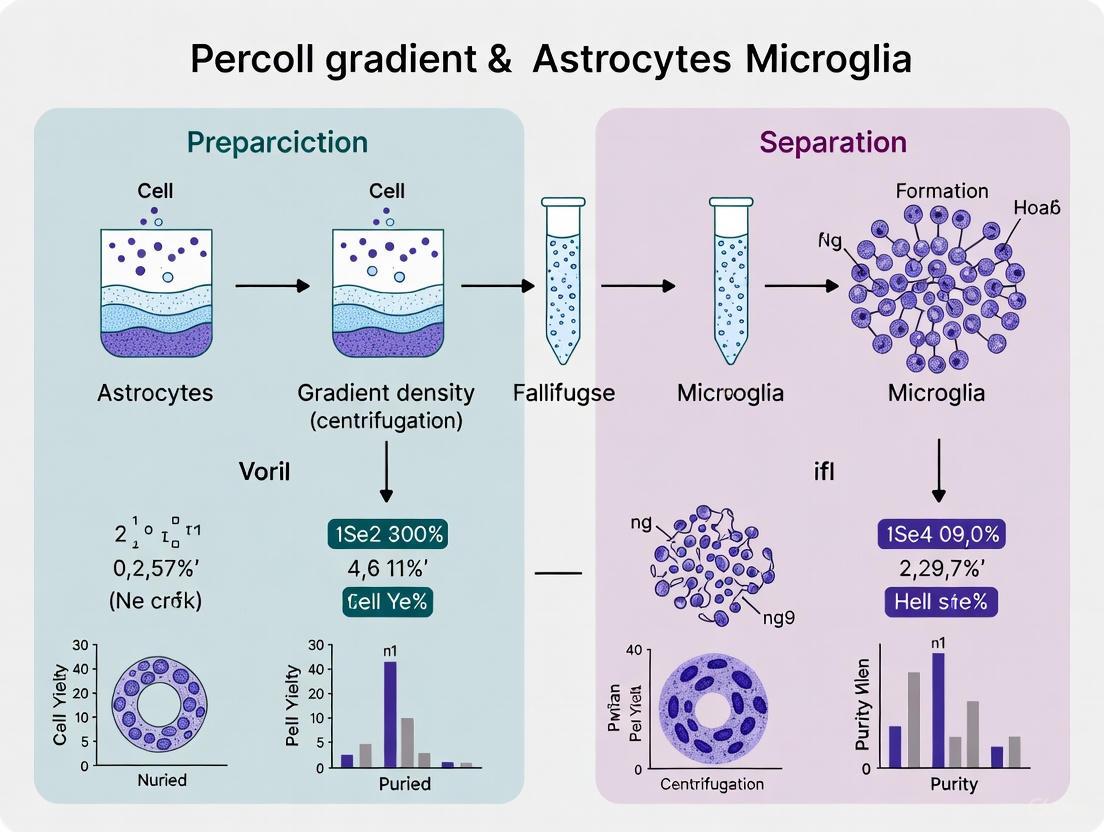
This article provides a comprehensive resource for researchers and drug development professionals on the Percoll gradient centrifugation method for the simultaneous isolation of microglia and astrocytes from adult rodent central...
Optimizing Glial Cell Isolation: A Complete Guide to the Percoll Gradient Method for Astrocytes and Microglia
Abstract
This article provides a comprehensive resource for researchers and drug development professionals on the Percoll gradient centrifugation method for the simultaneous isolation of microglia and astrocytes from adult rodent central nervous system (CNS) tissue. We explore the foundational principles of density-based cell separation, detail a step-by-step protocol that avoids enzymatic digestion and complex sorting, and present troubleshooting strategies for common issues like low yield and contamination. The method is directly compared with alternative techniques like FACS and MACS, highlighting its advantages in preserving cellular phenotype, cost-effectiveness, and yielding high numbers of immediately usable, functional cells for downstream applications such as cytokine analysis, phagocytosis assays, and transcriptomics.
Understanding Glial Cell Biology and the Principles of Density Gradient Separation
The Critical Roles of Microglia and Astrocytes in CNS Health and Disease
The central nervous system (CNS) is an immune-regulated site maintained by resident glial cells, with microglia and astrocytes representing the major non-neuronal cell types crucial for brain health and disease [1] [2]. As the parenchymal resident macrophages, microglia constitute 5-20% of the glial population and provide critical functions in CNS development, maintenance, and immunosurveillance [2] [3]. They continuously survey the brain environment via dynamic process extension, removing cellular debris and pathogens while supporting synaptic remodeling [2] [4]. Astrocytes, the most abundant glial cells, maintain extracellular ion balance, regulate cerebral blood flow, provide structural and metabolic support to neurons, and modulate blood-brain barrier function [1].
During aging, infection, or injury, both cell types undergo activation with significant consequences for neurodegenerative diseases like Alzheimer's disease (AD) [5] [2]. Aged microglia exhibit "inflammaging"—heightened baseline inflammation with increased expression of activation markers (CD45, CD68, MHC II) and declined phagocytic ability, contributing to neurodegenerative processes [2]. Astrocytes exposed to amyloid-β (Aβ) peptides can develop dysfunctional stress responses, inducing neuroinflammation and pathological progression through mechanisms like δ-secretase activation [5]. Understanding their distinct and overlapping roles requires precise isolation methods to study pure cell populations, with the Percoll gradient method emerging as a fundamental technique for separating these CNS cell types.
Application Note: Isolation of Microglia and Astrocytes Using Percoll Gradients
The Percoll gradient method is a density-based centrifugation technique that separates microglia and astrocytes from dissociated brain tissue based on their intrinsic buoyant densities without requiring expensive fluorescent antibodies or immunomagnetic beads [1]. This approach effectively removes myelin debris—a significant challenge in brain cell isolation—while preserving cell surface markers that may be compromised by enzymatic digestion [1] [3]. The technique yields functionally viable cells suitable for transcriptomics, flow cytometry, cell culture, and functional assays including phagocytosis and cytokine production studies [6] [4].
Quantitative Cell Yield and Purity Data
Table 1: Typical Cell Yields Using Percoll Gradient Isolation from Mouse Brain
| Cell Type | Mouse Age | Yield per Brain | Purity Markers | Reference |
|---|---|---|---|---|
| Microglia | Adult (>8 weeks) | 300,000 - 500,000 cells | CD11b⁺, CX₃CR1⁺, TMEM119⁺ | [6] |
| Microglia | Aged (18 months) | ~1 × 10⁶ cells (two cortices) | CD11b⁺, IBA-1⁺ | [2] |
| Microglia | 6-month-old | Protocol-dependent (see Table 2) | CD11b⁺ | [3] |
| Total Mononuclear Cells | Naïve mouse (brain + spinal cord) | 3-5 × 10⁵ cells | CD45ˡᵒ (microglia), CD45ʰⁱ (infiltrating leukocytes) | [7] |
Table 2: Comparison of Microglia Isolation Protocol Efficacy from 6-Month-Old Mice
| Protocol | Cell Yield | Key Characteristics | Purity | Reference |
|---|---|---|---|---|
| Modified Protocol 1 (Percoll-based) | Highest yield | Simple, rapid, minimal equipment | High (CD11b⁺) | [3] |
| Protocol 2 (Adhesion-based) | Moderate yield | Explains adherent properties | High (CD11b⁺) | [3] |
| Protocol 3 (Enzymatic/Percoll) | Lower yield | Extended processing time | High (CD11b⁺) | [3] |
The Scientist's Toolkit: Essential Research Reagents
Table 3: Key Reagents for Percoll Gradient Isolation of CNS Cells
| Reagent/Catalog Item | Function in Protocol | Application Notes |
|---|---|---|
| Percoll | Forms density gradient for cell separation | Use at room temperature; cold Percoll causes cell clumping [7] |
| HBSS (without Ca⁺⁺/Mg⁺⁺) | Base buffer for solutions and perfusion | Maintains ionic balance without promoting cell adhesion [7] [6] |
| Dispase II, Papain, DNase I (DDP) | Enzymatic dissociation cocktail | DNase prevents cell clumping; concentrations critical for viability [6] |
| CD11b (ITGAM) MicroBeads | Immunomagnetic separation of microglia | Used after Percoll gradient for further purification [4] |
| Fetal Bovine Serum (FBS) | Enzyme neutralization and culture supplement | Inactivates proteases after digestion; component of culture media [6] |
| Anti-CD16/CD32 (Fc block) | Blocks nonspecific antibody binding | Essential for flow cytometry to reduce background staining [7] |
| M-CSF/GM-CSF | Microglial growth factors in culture | Promotes survival and proliferation of adult microglia in vitro [3] |
Protocol: Tandem Isolation of Microglia and Astrocytes from Adult Mouse Brain
Preparation of Reagents
- Stock Isotonic Percoll (SIP): Mix 9 parts Percoll with 1 part 10X HBSS without Ca⁺⁺/Mg⁺⁺ [7] [6]
- Gradient Solutions: Prepare 70% Percoll (7.0 mL SIP + 2.0 mL 1X HBSS) and 30% Percoll (3.0 mL SIP + 6.0 mL 1X HBSS) per brain [7] [6]
- Dissociation Medium: For enzymatic dissociation, prepare DDP solution containing Dispase II (1.2 U/mL), Papain (1 mg/mL), and DNase I (20 U/mL) in DMEM/F12 [6]
- Cell Staining Buffer: PBS with 0.5% BSA and 2 mM EDTA for immunostaining [4]
Tissue Collection and Homogenization
- Perfusion and Dissection: Anesthetize mice and perfuse transcardially with ice-cold 1X HBSS until exudate runs clear (approximately 10 mL/min) [7] [4]. Remove brain and dissect desired regions (cortex, hippocampus, etc.), carefully removing meninges to avoid contamination [1]
- Tissue Dissociation:
- Mechanical Only: Place tissue in Dounce homogenizer with 3 mL RPMI, gently homogenize with loose-fitting pestle (A size) followed by tight-fitting pestle (B size) [7]
- Enzymatic + Mechanical: Mince tissue finely in serum-free media, then incubate with DDP dissociation medium for 20-60 minutes at 37°C with gentle rotation [6] [4]. Neutralize enzymes with FBS-containing media, then homogenize with Dounce homogenizer (20 passes on ice) [4]
- Cell Suspension Preparation: Complete volume to 7 mL with media, filter through 40 μm cell strainer, and centrifuge at 250-400 × g for 5 minutes [7] [6]
Density Gradient Separation
- Gradient Setup: Add 3 mL SIP to 7 mL cell suspension to create final 30% Percoll concentration [7]. Slowly layer this 10 mL suspension over 2 mL of 70% Percoll in a 15 mL conical tube using a pipette-aid set to gravity mode, maintaining a clear interface [7] [6]
- Centrifugation: Centrifuge 30-45 minutes at 500-800 × g at 18°C with no brake to avoid disturbing gradients [7] [4]
- Cell Collection: After centrifugation, carefully aspirate the top debris layer and myelin. Collect the distinct cell band at the 70%-30% interface containing microglia and astrocytes [7] [6]. For enhanced separation, some protocols use a three-layer gradient (70%, 37%, 30%) where microglia collect at the 70-37% interface [6]
- Washing: Dilute collected interface cells 3-fold with HBSS, centrifuge 7 minutes at 500 × g, and resuspend in appropriate buffer [7]
Post-Isolation Processing and Validation
- Cell Culture: Plate cells in DMEM/F12 with 10% FBS and 1% penicillin/streptomycin. For aged microglia cultures, supplement with M-CSF and GM-CSF (100 ng/mL each) to support survival [3]. Cells typically mature in 7-14 days and can be maintained for approximately 30 days [2]
- Phenotypic Validation:
- Microglia: Confirm purity using antibodies against CD11b, IBA-1, TMEM119, P2RY12, and CD45 (low expression) [2] [3]
- Astrocytes: Identify using GFAP, ACSA-2, and S100β staining [1] [5]
- Flow Cytometry: Distinguish microglial populations by CD45 expression levels: CD45ˡᵒ (resident microglia) vs. CD45ʰⁱ (infiltrating leukocytes) [7]
Diagram 1: Workflow for tandem isolation of microglia and astrocytes using Percoll gradient centrifugation.
Troubleshooting and Technical Considerations
Optimization for Challenging Applications
Low Cell Yield:
- For adult/aged mice, include enzymatic digestion step before mechanical dissociation [6] [3]
- For microglia isolation from aged mice (>18 months), use specialized media formulations with M-CSF/GM-CSF to support survival and proliferation [2]
- Ensure Percoll is at room temperature; cold Percoll causes cell clumping and reduced separation efficiency [7]
Cellular Activation:
- Minimize ex vivo processing time as extended procedures alter microglial transcriptomic signatures [4]
- Maintain tissues cold throughout dissection and use ice-cold reagents to reduce stress responses [4]
- Consider mechanical-only dissociation if studying surface markers susceptible to protease cleavage [7]
Myelin Contamination:
Cell Viability:
Application-Specific Modifications
For single-cell RNA sequencing studies, researchers have developed rapid isolation methods (<1.5 hours from dissection to single-cell suspension) from micro-dissected brain regions that maintain transcriptomic integrity, particularly for microglia and vascular cells [8]. For Alzheimer's disease research, isolating cells from appropriate AD models (e.g., PDAPP mice crossed with stress response-deficient lines) enables study of Aβ-induced astrocyte distress and its role in amyloid and tau pathologies [5]. When studying age-related neurodegeneration, using microglia from aged mice (18+ months) better models human disease than neonatal cultures, as aged microglia exhibit distinct transcriptomic profiles and functional characteristics [2] [3].
The Percoll gradient method provides a robust, cost-effective approach for isolating microglia and astrocytes from adult and aged mouse brains, enabling detailed investigation of their critical roles in CNS health and disease. This tandem isolation protocol supports diverse downstream applications including functional assays, transcriptomics, and cell culture studies. Proper technique execution—particularly regarding gradient preparation, centrifugation parameters, and cell handling—ensures high viability and purity of isolated cells. As research continues to elucidate the complex interactions between microglia, astrocytes, and neurodegenerative processes, these isolation methods remain fundamental tools for advancing our understanding of CNS pathophysiology and developing novel therapeutic interventions.
Why Primary Cells? Advantages over Immortalized Cell Lines for Physiological Relevance
In neuroscience research, particularly in the study of glial cells such as microglia and astrocytes, the choice between primary cells and immortalized cell lines is pivotal for generating physiologically relevant data. Primary cells are isolated directly from living tissues—including human donors or animal models—and maintain the key characteristics of their tissue of origin, providing a more accurate representation of in vivo conditions [9]. In contrast, immortalized cell lines are genetically modified to proliferate indefinitely, often derived from cancerous tissues, which makes them practical for large-scale studies but less representative of normal physiology [10] [11].
The focus on primary cells is especially critical in complex fields like neuroimmunology, where cellular responses depend on a native microenvironment that immortalized lines often fail to recapitulate. This application note, framed within the context of a thesis utilizing the Percoll gradient method for separating astrocytes and microglia, outlines the scientific advantages of primary cells, provides direct comparative data, and details protocols for their isolation and use.
Key Advantages of Primary Cells
Superior Physiological Relevance
- Retention of Native Phenotype: Primary cells maintain the genetic, proteomic, and phenotypic stability of their original tissue throughout their finite lifespan. They are not subject to the selective pressures of continuous passage, which in cell lines shifts cellular resources toward proliferation and away from specialized tissue-specific functions [10].
- Representation of Donor Variability: Primary cells more accurately reflect the inherent variability between donors (e.g., in HLA type or CMV status), which is critical for interpreting data and translating basic research into clinical applications. This minimizes broad assumptions often derived from homogeneous cell lines [10].
- Functional Integrity in Neuroscience: For microglia and astrocytes, primary cells isolated from adult tissue preserve the mature phenotype necessary for studying age-related neurodegenerative diseases. Immortalized microglial lines like BV2 and HAPI, often derived from neonatal animals or tumors, express few genes characteristic of adult microglia and have a distinct transcriptome signature, limiting their translational relevance [12] [3]. A 2025 study further demonstrated that the commonly used HMC3 cell line, purported to be a human microglia model, transcriptionally resembles astrocytes, not microglia [13].
Avoidance of Immortalization Artifacts
Immortalized cell lines are created by bypassing cellular senescence, often through the introduction of viral oncogenes or the upregulation of telomerase [11]. This process fundamentally alters cellular physiology:
- Genetic and Phenotypic Drift: Continuous passage of cell lines leads to genetic drift, where genomes continue to evolve, and selective pressures favor abnormal growth characteristics [10]. Cell lines derived from late-stage cancers are particularly vulnerable.
- Loss of Native Functions: The immortalization process can disrupt normal physiological functioning. For instance, neuronal cell lines like SH-SY5Y exhibit immature neuronal features, typically fail to form functional synapses, and lack consistent expression of key ion channels and receptors [14].
Minimization of Contamination and Misidentification
The use of immortalized cell lines carries a significant risk of contamination and misidentification, which has plagued the scientific literature:
- Cross-Contamination: Poor cell culture practices can lead to cross-contamination between cell lines. A study analyzing 598 leukemia-lymphoma cell lines found that only 59% were authentic and free of mycoplasma contamination [10].
- Misidentification: HeLa cells represent one of the most well-documented cases, with numerous cell lines published under different names later found to be derived from this single source [10]. This has profound implications for data reproducibility, funding, and clinical trials.
Table 1: Quantitative Comparison of Primary Cells vs. Immortalized Cell Lines
| Characteristic | Primary Cells | Immortalized Cell Lines |
|---|---|---|
| Physiological Relevance | High; retain native morphology and function [9] | Low; often non-physiological (e.g., cancer-derived) [14] |
| Genetic Stability | Genomically and phenotypically stable until senescence [10] | Prone to genetic drift and mutations with prolonged passage [10] [11] |
| Donor/Experimental Variability | Higher, reflecting biological reality [10] | Lower, but at the cost of biological fidelity [9] |
| Lifespan | Finite; limited number of divisions [9] | Infinite; capable of unlimited divisions [11] |
| Typical Cost & Effort | Higher cost, more technically challenging to isolate and culture [1] | Lower cost, easy to culture and scale [9] |
| Risk of Contamination | Low risk of cross-contamination once isolated [10] | High risk of cross-contamination and misidentification [10] |
Comparative Data in Glial Cell Research
Studies directly comparing primary glial cells and cell lines reveal significant functional differences.
Table 2: Functional Comparison of Microglia Models in Neuroscience Research
| Model | Yield (Cells/Brain) | Purity (CD11b+) | Expression of Adult Microglial Genes | Response to LPS (IL-6 Production) |
|---|---|---|---|---|
| Primary Microglia (Percoll Isolation) | ~1.5 million [3] | >95% [15] | High [3] | Robust functional increase [12] |
| BV2 Cell Line | Unlimited | N/A (Clonal line) | Low/absent [3] | Altered/unreliable [3] |
| HMC3 Cell Line | Unlimited | N/A (Clonal line) | Lacks key markers (e.g., CX3CR1, TYROBP) [13] | Not a reliable human microglia model [13] |
Featured Protocol: Simultaneous Isolation of Microglia and Astrocytes via Percoll Gradient
The following detailed protocol, adapted from current methodologies, allows for the simultaneous isolation of highly pure and functional microglia and astrocytes from the same adult rodent brain or spinal cord tissue in a single, efficient process [12] [1].
Experimental Workflow
The diagram below illustrates the key stages of the simultaneous isolation protocol.
Step-by-Step Procedure
Reagents and Materials:
- Adult mice or rats (e.g., 10-16 weeks old) [12]
- Dulbecco's Phosphate Buffered Saline (DPBS), sterile
- Percoll stock solution (GE-healthcare, 17-0891-01) [12]
- Dulbecco's Modified Eagle Medium/Nutrient Mixture F-12 (DMEM/F-12)
- Fetal Bovine Serum (FBS) and Penicillin/Streptomycin
- 70 μm nylon cell strainer
- Refrigerated centrifuge
Part A: Preparation of Discontinuous Percoll Gradient
- Create Stock Isotonic Percoll (SIP): Mix 9 parts of stock Percoll with 1 part 10X PBS to create a 100% SIP solution with a density of 1.12 g/mL [12].
- Prepare Gradient Layers: Dilute the 100% SIP with 1X DPBS to create the following solutions:
- 70% SIP (density ~1.08 g/mL)
- 50% SIP (density ~1.06 g/mL)
- 30% SIP (density ~1.05 g/mL) [12]
- Layer the Gradient: In a sterile 15 mL or 50 mL conical tube, carefully layer the solutions by density. From the bottom up: 70% SIP, 50% SIP, 30% SIP. Allow layers to stabilize at room temperature before use.
Part B: Tissue Dissociation and Cell Separation
- Harvest Tissue: Euthanize the rodent according to approved institutional protocols. Rapidly remove the brain and/or spinal cord and place it in ice-cold DPBS [3].
- Mechanical Homogenization: Transfer the tissue to a petri dish with sterile DPBS supplemented with 0.2% glucose. Mince the tissue thoroughly with a scalpel and then homogenize by pipetting up and down. Pass the resulting homogenate through a 70 μm nylon cell strainer into a 50 mL conical tube [12].
- Density Gradient Centrifugation: Carefully layer the filtered cell suspension on top of the prepared discontinuous Percoll gradient. Centrifuge at 700 × g for 10 minutes at room temperature with the brake off to prevent disturbance of the gradients [12] [15].
- Cell Collection: After centrifugation, two distinct bands at the interfaces will be visible:
- Washing: Transfer each collected cell fraction to a new tube containing at least 3 volumes of DPBS or culture medium. Centrifuge at 300 × g for 10 minutes to wash away residual Percoll. Resuspend the cell pellets in complete culture medium.
Part C: Cell Culture and Downstream Characterization
- Culture: Seed the isolated microglia and astrocytes into culture flasks or plates. A recommended culture medium is DMEM/F-12 supplemented with 10% FBS and 1% Penicillin/Streptomycin. For microglia, the addition of M-CSF (100 ng/mL) and GM-CSF (100 ng/mL) after 2 days can aid survival and proliferation [3].
- Phenotypic Validation:
- Functional Assays: Cells are ready for functional studies, such as measuring cytokine production (e.g., IL-6) after lipopolysaccharide (LPS) challenge, or performing phagocytosis assays, which demonstrate preserved in vivo functionality [12] [16].
The Scientist's Toolkit: Essential Research Reagent Solutions
Table 3: Key Reagents for Primary Glial Cell Isolation and Culture
| Reagent / Material | Function / Application | Key Considerations |
|---|---|---|
| Percoll | Density gradient medium for the physical separation of different cell types based on size and density [12] [1]. | Enables simultaneous isolation of multiple cell types without antibodies; requires preparation of isotonic stock (SIP) [12]. |
| CD11b (ITGAM) Magnetic Beads | Immunomagnetic separation and purification of microglia from a mixed cell suspension [15]. | Yields highly pure (>95%) microglial populations; ideal for downstream transcriptomic or proteomic analysis [1] [15]. |
| Enzymatic Dissociation Kit (e.g., Papain-based) | Digests extracellular matrix to create a single-cell suspension from intact tissue [15]. | Optimization of time and temperature is critical to preserve cell surface markers and viability [3]. |
| Macrophage Colony-Stimulating Factor (M-CSF) | Cytokine added to microglial culture media to promote survival and proliferation [3]. | Helps maintain microglial health in vitro without inducing excessive activation. |
| Iba1 & GFAP Antibodies | Immunocytochemical validation of microglial (Iba1) and astrocytic (GFAP) identity and purity [12] [3]. | Essential quality control step for confirming the success of the isolation protocol. |
The choice of cellular model is a foundational decision in biomedical research. For studies where physiological relevance and predictive validity are paramount—such as investigating complex neuro-glial interactions in health and disease—primary cells are the unequivocal gold standard. The Percoll gradient method provides a robust, accessible, and efficient protocol for isolating high-quality microglia and astrocytes, enabling researchers to generate more reliable and translatable data. While immortalized lines offer convenience for preliminary screens, the scientific community's shift toward more physiologically relevant models, including primary cells and advanced iPSC-derived systems, is essential for bridging the gap between in vitro findings and clinical success.
Percoll is a well-established tool in cell biology, valued for its ability to cleanly separate cells and subcellular particles based on their intrinsic buoyant densities. It is a colloidal suspension of silica particles coated with polyvinylpyrrolidone (PVP) [17] [18] [19]. This coating is critical, as it makes the particles non-toxic and prevents them from penetrating biological membranes, thereby preserving cell viability and function during separation [17] [20] [19].
Several key physical properties make Percoll ideal for density-based separations. It exhibits a very low osmotic pressure (<20 mOsm/kg H₂O) and low viscosity [17] [19]. Its high density (approximately 1.130 g/mL) can be easily adjusted with physiological buffers to create a range of working solutions [21]. Most importantly, under centrifugal force, the small, dense Percoll particles sediment to form a continuous density gradient that is both stable and reproducible due to Percoll's low diffusion constant [17] [18]. This allows for the effective separation of complex cell mixtures, such as those from dissociated brain tissue, under relatively low centrifugal forces (200–1000 × g) in a short time [17] [20].
Core Principle: Separation by Buoyant Density
The fundamental principle behind Percoll gradient centrifugation is that each cell type in a mixture has a characteristic buoyant density. When a cell suspension is layered onto a Percoll gradient and centrifuged, cells migrate through the gradient until they reach a position where their own buoyant density is equal to the density of the surrounding Percoll medium. At this isopycnic point, the net force on the cell becomes zero, and migration ceases [17] [18].
A critical factor often overlooked is the influence of osmotic pressure on a cell's apparent buoyant density. The Percoll medium itself contributes little to the osmotic pressure, allowing researchers to control the environment using salts or sucrose. As shown in the table below, increasing the osmotic pressure causes cells to lose water, thereby increasing their internal density and causing them to band in a denser region of the gradient [21]. This effect underscores the importance of maintaining physiological osmolarity (around 300 mOsm) to obtain accurate, biologically relevant separation profiles for mammalian cells [21].
Table 1: The Effect of Osmotic Pressure on the Apparent Buoyant Density of Rat Liver Cells in a Percoll Gradient [21]
| Osmotic Pressure (mOsm/kg H₂O) | Apparent Buoyant Density (g/mL) |
|---|---|
| 200 | ~1.055 |
| 300 | ~1.065 |
| 400 | ~1.075 |
Practical Application in Neuroscience: Isolating Astrocytes and Microglia
The Percoll gradient method is particularly valuable in neuroscience for isolating specific glial cell populations, such as astrocytes and microglia, from a mixed brain cell suspension. Different cell types have distinct intrinsic densities, allowing them to be partitioned at specific interfaces within a discontinuous density gradient.
Table 2: Banding Positions of Glial Cells in a Discontinuous Percoll Gradient from Adult Mouse Spinal Cord [22]
| Cell Type | Percoll Gradient Interface | Key Identity / Surface Markers |
|---|---|---|
| Astrocytes | 10%/37% interface | GFAP+ |
| Microglia | 37%/50% interface | CD11b+, CD45int |
| Lymphocytes | 50%/70% interface | CD3+, CD4+ |
This density-based separation is a powerful first step that enriches for specific cell types, reducing the presence of myelin debris and other contaminants. A systematic review confirmed that Percoll is superior for removing non-immune cells compared to other methods like sucrose [23]. For higher purity, the enriched fraction obtained from the Percoll gradient can be further refined using additional techniques, such as immunomagnetic sorting (MACS) with cell-specific antibodies (e.g., CD11b for microglia), to achieve purities of 95% or greater [1] [20].
Experimental Protocols
Preparation of Iso-osmotic Percoll Stock Solution (SIP)
A critical first step is to adjust the osmotic pressure of Percoll to a physiological level to maintain cell integrity [21].
- Combine 9 parts (v/v) of pure Percoll with 1 part (v/v) of 1.5 M Sodium Chloride (NaCl) or 10x concentrated cell culture medium.
- This mixture yields a Stock Iso-osmotic Percoll (SIP) solution with a density of approximately 1.123 g/mL (assuming ρo Percoll = 1.130 g/mL).
- For work with subcellular particles that may aggregate in salt solutions, 2.5 M sucrose can be used instead of 1.5 M NaCl, resulting in a SIP density of ~1.149 g/mL [21].
Preparation of Discontinuous Gradients for Brain Cell Isolation
The following protocol is adapted from methods used for isolating glial cells from the central nervous system [22].
- Prepare working solutions: Dilute the SIP with iso-osmotic buffer (e.g., 0.15 M NaCl or HBSS) to create the required Percoll concentrations (e.g., 70%, 50%, 37%, and 10%).
- Construct the gradient: In a centrifuge tube, carefully layer the Percoll solutions from highest to lowest density (e.g., 70% → 50% → 37% → 10%). Using a syringe with a long needle placed against the tube wall facilitates smooth layering and preserves sharp interfaces [18] [19].
- Load the sample: Layer the single-cell suspension from dissociated brain tissue on top of the gradient.
- Centrifuge: Centrifuge at 400–500 × g for 20–30 minutes at 4°C. Using low acceleration and deceleration brakes is crucial to prevent gradient disruption [20] [18] [19].
- Collect cells: After centrifugation, carefully aspirate the distinct bands of cells found at the interfaces corresponding to their buoyant densities (see Table 2).
- Wash cells: Harvested cells must be washed at least twice with a buffer or culture medium to remove residual Percoll before downstream applications like cell culture or flow cytometry [18] [19].
Diagram 1: Workflow for Discontinuous Gradient Preparation and Centrifugation.
The Scientist's Toolkit: Essential Reagents and Materials
Table 3: Essential Reagents and Materials for Percoll Gradient Centrifugation
| Item | Function / Description |
|---|---|
| Percoll | Silica colloid coated with PVP; the core medium for forming density gradients [17] [19]. |
| 1.5 M NaCl or 2.5 M Sucrose | Used to prepare the stock iso-osmotic Percoll (SIP) to physiological osmolarity [21]. |
| HBSS or PBS | Physiological buffers for diluting SIP to working concentrations and washing cells post-separation [20]. |
| Enzymes (e.g., Accutase, Trypsin) | For tissue dissociation to create a single-cell suspension prior to gradient separation [23]. |
| Antibodies & Magnetic Beads (MACS) | For further purification of gradient-enriched cells (e.g., CD11b beads for microglia) [1] [20]. |
| Refractometer / Density Marker Beads | To accurately measure and calibrate the density of prepared Percoll solutions [21]. |
Factors Influencing Gradient Formation and Separation Quality
The quality of the separation depends on several factors related to the centrifugation process itself. The total centrifugal force (g-force × time) is a key determinant of the final gradient's shape [21]. The rotor type also plays a significant role; fixed-angle rotors form shorter, steeper gradients more quickly than vertical or swing-out rotors [21]. Furthermore, the ionic strength of the dilution medium affects the sedimentation rate of Percoll particles; gradients prepared with 0.15 M NaCl form 2–3 times faster than those made with 0.25 M sucrose due to lower viscosity [21].
Diagram 2: Key Factors Affecting Percoll Gradient Separation Quality.
Percoll gradient centrifugation remains a cornerstone technique in cellular neuroscience for its robust and gentle separation of primary cells based on the fundamental principle of buoyant density. Its low toxicity and osmotic pressure allow for the high-yield isolation of viable and functional astrocytes and microglia. Mastery of the protocol—from the precise preparation of iso-osmotic solutions to the careful control of centrifugation parameters—is essential for obtaining reproducible and high-purity cell populations. When combined with subsequent purification methods like immunomagnetic sorting, Percoll gradients provide a powerful, reliable foundation for downstream cellular and molecular analyses in biomedical research and drug development.
Within the field of neuroscience research, the isolation of pure and functionally intact glial cell populations is a fundamental prerequisite for studying cellular mechanisms in health and disease. The Percoll gradient centrifugation method stands as a pivotal technique for the simultaneous isolation of astrocytes and microglia from the same tissue sample. This approach offers distinct advantages over other methods, primarily the ability to preserve native cell phenotypes by avoiding the use of harsh enzymatic digestions that can alter surface markers and cell function [1] [24]. This application note details the practical application of this method, framing it within a broader research context focused on obtaining high-quality glial cells for downstream analysis in drug development and basic research.
Key Advantages and Comparative Data
The Percoll gradient method is particularly valued for its ability to efficiently separate cells based on their inherent buoyant densities. The following table summarizes its core advantages and how they address common research challenges.
Table 1: Core Advantages of the Percoll Gradient Method for Glial Cell Isolation
| Advantage | Description | Research Impact |
|---|---|---|
| Simultaneous Isolation | Enables the co-purification of multiple neural cell types (e.g., microglia, astrocytes, lymphocytes) from a single tissue homogenate [1] [22] [24]. | Increases experimental efficiency, reduces animal use, and allows for comparative analysis of different cell populations from the same biological source. |
| Preserved Phenotype | Avoids enzymatic digestion (e.g., trypsin), which can cleave surface proteins and receptors, thereby maintaining more authentic cellular states and functions [1] [24]. | Yields cells that are more representative of their in vivo state, leading to more physiologically relevant data in functional assays and drug response studies. |
| No Enzymatic Digestion | Relies on gentle mechanical dissociation and physical separation by density, circumventing enzyme-induced activation or damage [1]. | Minimizes pre-activation of stress pathways in sensitive cells like microglia, allowing for a clearer baseline measurement or more controlled stimulation in vitro. |
Quantitative data from systematic comparisons reinforce the value of this approach. A study evaluating different isolation protocols found that a simple 30% Percoll gradient resulted in a higher recovery of neural cells compared to a more complex 30-70% discontinuous gradient [24]. Furthermore, a systematic review of microglia isolation methods confirmed that Percoll is the most commonly used and effective method for myelin removal, a critical step in preparing clean samples for flow cytometry. This review also highlighted that protocols using Percoll and the enzymatic agent accutase achieved one of the highest microglial yields with the lowest variance, underscoring the method's reliability [23].
Experimental Protocol: Simultaneous Isolation of Astrocytes and Microglia
This protocol is optimized for the isolation of astrocytes and microglia from the adult mouse brain or spinal cord [22] [24].
Reagent Preparation
- Stock Isotonic Percoll (SIP): Combine 9 parts Percoll with 1 part 10X Phosphate-Buffered Saline (PBS). Alternatively, 1.5 M NaCl can be used instead of 10X PBS [25].
- Working Percoll Solutions: Dilute the SIP with 1X PBS to create the required gradient solutions. For a standard separation of astrocytes and microglia from the spinal cord, prepare 70%, 50%, 37%, and 10% solutions (v/v in 1X PBS) [22]. Densities can be verified using density marker beads.
- Homogenization Buffer: Ice-cold Hank's Balanced Salt Solution (HBSS) or PBS, preferably supplemented with a low concentration of EDTA.
Step-by-Step Procedure
- Tissue Dissociation: After perfusion and brain or spinal cord dissection, mechanically dissociate the tissue using a Dounce homogenizer in ice-cold HBSS. Use approximately 100-120 gentle strokes with a loose pestle on ice to create a single-cell suspension [26].
- Myelin Removal and Cell Separation: a. Filter the homogenate through a 70 μm cell strainer to remove any remaining tissue clumps. b. Centrifuge the filtered suspension at 550 × g for 6 minutes at 4°C. Discard the supernatant [26]. c. Resuspend the cell pellet in a small volume (e.g., 1 mL) of a 30% Percoll solution [24] [26]. d. In a sterile centrifuge tube, carefully layer a discontinuous density gradient. For spinal cord tissue, layer the solutions in the following order from the bottom up: 70%, 50%, 37%, and 10% Percoll. Gently layer the cell suspension resuspended in 30% Percoll on top of the 10% layer [22]. e. Centrifuge the gradient at 500 × g for 20 minutes at 4°C with the brake disengaged to allow for gentle acceleration and deceleration, which prevents gradient disruption.
- Cell Collection:
After centrifugation, distinct bands of cells will be visible at the interfaces between the different density layers.
- Astrocytes are typically found at the 10%/37% interface [22].
- Microglia are typically found at the 37%/50% interface [22].
- Lymphocytes and other immune cells can be found at the 50%/70% interface [22]. Carefully collect the desired bands using a Pasteur pipette or serological pipette, transferring each population to a separate clean tube.
- Cell Washing: Dilute the collected cell fractions with at least 3-5 volumes of HBSS or PBS. Centrifuge at 400 × g for 10 minutes at 4°C to pellet the cells and wash away the Percoll. Repeat the wash step once. The cell pellet is now ready for downstream applications like flow cytometry, cell culture, or molecular analysis.
The following workflow diagram illustrates the key steps of this protocol:
The Scientist's Toolkit: Essential Research Reagents
Successful implementation of this protocol relies on a set of core reagents and equipment.
Table 2: Essential Reagents and Equipment for Percoll-Based Glial Cell Isolation
| Item | Function / Application | Example / Note |
|---|---|---|
| Percoll | Colloidal silica particles coated with polyvinylpyrrolidone (PVP), forming the basis of the density gradient [27]. | The core separation medium. Must be rendered isotonic before use. |
| 10X PBS or 1.5 M NaCl | Used to prepare a Stock Isotonic Percoll (SIP) solution, creating a physiologically compatible environment for cells [25]. | Prevents osmotic damage to cells during separation. |
| Hank's Balanced Salt Solution (HBSS) | A balanced salt solution used for tissue dissection, homogenization, and washing steps [23] [26]. | Provides ions and nutrients to maintain cell viability. |
| Dounce Homogenizer | A glass homogenizer with a loose-fitting pestle for the gentle mechanical dissociation of soft neural tissue into a single-cell suspension [26]. | Critical for breaking down tissue without excessive cell death. |
| Refrigerated Centrifuge | A centrifuge with precise temperature control (4°C) and adjustable speed/brake settings. | Essential for all pelleting and gradient centrifugation steps. The brake must be disengaged for gradient runs. |
| Antibodies for Validation | Fluorescently-labeled antibodies for flow cytometric identification and purity check of isolated cells. | Astrocytes: GFAP [1] [22]. Microglia: CD11b, CD45 (low expression) [23] [22] [26]. |
| Density Marker Beads | Calibrated beads used to measure the actual density profile of a formed Percoll gradient [28]. | Optional but recommended for protocol standardization and troubleshooting. |
The Percoll gradient centrifugation method is a robust, reliable, and relatively simple technique that fulfills a critical need in neuroscience research: the simultaneous isolation of astrocytes and microglia with minimal perturbation to their native state. By forgoing enzymatic digestion and leveraging physical properties for separation, it provides researchers with cell populations that are more reflective of their in vivo biology. This makes it an indispensable tool for preclinical research, the study of neuroinflammatory mechanisms, and the screening of novel therapeutic compounds intended to modulate glial cell function.
A Step-by-Step Protocol for Adult Rodent Brain and Spinal Cord Dissociation and Isolation
The isolation of primary brain cells, such as microglia and astrocytes, is fundamental for studying the central nervous system (CNS) in health and disease. These primary cells maintain physiological functionality and structural integrity far better than immortalized cell lines, providing more relevant models for research and drug development [1]. The critical first step in any downstream cellular analysis is the careful preparation of CNS tissue, a process that includes perfusion, mincing, and homogenization. The quality of this initial preparation directly impacts cell viability, yield, and purity, especially when the goal is the separation of specific glial cell populations using a Percoll density gradient [29]. This protocol details optimized methods for preparing rodent brain tissue, framing them within the context of a broader workflow for the simultaneous isolation of astrocytes and microglia.
Materials and Reagents
Research Reagent Solutions
The following table lists essential materials and their functions for the tissue preparation and dissociation process.
Table 1: Key Reagents and Materials for CNS Tissue Preparation
| Name of Material/Equipment | Function/Description |
|---|---|
| Phosphate-Buffered Saline (PBS), ice-cold | For transcardial perfusion to remove blood components from the cerebral vasculature [26] [30]. |
| HBSS (Hanks' Balanced Salt Solution) | A balanced salt solution used as a base medium for tissue rinsing, mincing, and homogenization [26]. |
| Dounce Homogenizer (glass, 15 mL) | Used for mechanical dissociation of brain tissue with loose and tight pestles to create a single-cell suspension [26]. |
| Cell Strainer (70 µm) | For filtering the homogenized tissue suspension to remove large clumps and debris [26]. |
| Percoll | A density gradient medium used for the separation of different neural cell types based on their buoyant density [1] [29]. |
Protocol: Tissue Preparation and Single-Cell Suspension
Perfusion and Brain Extraction
Objective: To clear the brain of blood-derived immune cells and preserve tissue integrity.
- Anesthetize the mouse according to your institutional animal care committee-approved protocol.
- Transcardially perfuse the mouse. Make an incision to expose the heart, insert a perfusion needle into the left ventricle, and make a small cut in the right atrium for outflow. Perfuse with ice-cold PBS (e.g., ~30 mL over 3-4 minutes) until the liver clears [26] [30]. Note: Adequate perfusion is critical for removing peripheral immune cells from the brain vasculature.
- Decapitate the mouse and make a midline incision through the scalp to expose the skull [26].
- Remove the brain carefully. Use sharp dissection scissors to cut through the skull sutures, gently lift the skull flap, and use blunt forceps to extract the brain [26]. Tip: To ensure analysis of the meningeal compartment, which hosts diverse immune cells, alternative protocols for extracting the brain with meninges intact may be considered [30].
- Place the brain in a Petri dish containing ice-cold PBS. Carefully remove any remaining meningeal tissues to avoid contamination of the parenchymal cell suspension [26] [1]. All subsequent steps should be performed on ice or at 4°C to maximize cell viability.
Mincing and Homogenization
Objective: To dissociate the solid brain tissue into a single-cell suspension with high yield and viability.
- Transfer the brain to a pre-cooled 15 mL glass Dounce homogenizer containing a suitable volume of ice-cold HBSS (e.g., 12 mL for a half brain, 20 mL for a whole brain) [26].
- Mechanically dissociate the tissue using the loose pestle. Perform gentle, slow strokes (approximately 100-120 strokes) on ice [26]. Note: This step is critical. Homogenization should continue until no substantial tissue chunks are visible and the pestle moves down without significant force. Over-homogenization can damage cells.
- Filter the homogenate through a 70 µm cell strainer into a 50 mL centrifuge tube to remove any remaining clumps [26].
- Rinse the homogenizer with 5 mL of HBSS and pass it through the same strainer to maximize cell yield [26].
- Centrifuge the filtered suspension at 550 × g for 6 minutes at 4°C [26].
- Aspirate the supernatant and resuspend the cell pellet in an appropriate solution for the next step, such as a density gradient medium [26].
Integration with Percoll Gradient Cell Separation
The single-cell suspension obtained from the above protocol is the direct input for the Percoll gradient separation method, which allows for the simultaneous isolation of microglia and astrocytes from the same adult rodent brain [29]. This method is advantageous as it avoids enzymatic digestion, which can alter cell surface proteins and affect viability [29].
Table 2: Percoll Gradient Parameters for Astrocyte and Microglia Isolation
| Parameter | Microglia Isolation | Astrocyte Isolation |
|---|---|---|
| Percoll Interface | 70%–50% [29] | 50%–30% [29] |
| Expected Yield (per animal) | 5 × 10⁵ – 1 × 10⁶ cells [29] | 5 × 10⁶ – 10 × 10⁶ cells [29] |
| Key Identifiers | Express Iba1, CD11bhi/CD45lo [29] | Express GFAP, GLAST-1 [29] |
The following workflow diagram illustrates the complete journey from the perfused animal to the isolated cell populations.
Discussion
The protocols for perfusion, mincing, and homogenization outlined here are designed to maximize the yield of viable cells for subsequent separation. The Percoll gradient method is a robust tool for researchers, as it efficiently isolates microglia and astrocytes from the same adult animal without the need for expensive antibodies or complex sorting equipment [29]. This is particularly valuable for drug development, where understanding cell-type-specific responses in a physiologically relevant context is paramount. Furthermore, using primary cells from adult animals provides a more accurate model for age-related neurodegenerative diseases than neonatal cells or immortalized cell lines [1] [3].
A critical consideration for researchers is that variations in the homogenization technique (e.g., number of strokes, use of enzymatic vs. mechanical digestion) can significantly impact cell surface marker expression and final yield [3]. Therefore, consistency in tissue preparation is key to obtaining reproducible results in downstream applications such as flow cytometry, transcriptomic analysis, and functional cell-based assays.
This application note provides a detailed protocol for establishing discontinuous Percoll density gradients, a fundamental technique in the purification of primary brain cells such as astrocytes and microglia. The method leverages differences in buoyant density to achieve high-purity cell separations from heterogeneous neural tissue suspensions. We outline standardized procedures for gradient preparation, fractionation, and troubleshooting to ensure reproducible isolation of functionally distinct glial subpopulations for downstream neuroscience research and drug development applications.
Density gradient centrifugation is a cornerstone technique for separating heterogeneous cell populations from complex tissues. In neuroscience research, the discontinuous Percoll gradient method is particularly valued for its ability to isolate high-purity primary astrocytes and microglia from brain homogenates based on their inherent density differences [1]. This technique offers significant advantages over fluorescence-activated cell sorting (FACS) and immunomagnetic separation by avoiding enzymatic alteration of surface epitopes and reducing equipment costs [1] [23]. When properly optimized, discontinuous Percoll gradient centrifugation enables researchers to obtain viable, functionally intact glial cells that retain their in vivo characteristics, providing a more physiologically relevant model system for studying neuroinflammation, neurodegenerative pathways, and neurovascular unit interactions [1] [31].
Theoretical Principles
Percoll, a colloidal suspension of silica particles coated with polyvinylpyrrolidone (PVP), forms isosmotic density gradients suitable for separating living cells without causing osmotic damage [32]. The discontinuous gradient approach utilizes multiple layers of Percoll solutions at precisely defined concentrations, creating distinct density interfaces that trap specific cell types during centrifugation. Astrocytes and microglia, despite their common glial origin, exhibit sufficiently different buoyant densities to permit their separation through this method [1] [23]. Microglia, being less dense, typically band at the interface between lower density layers (e.g., 30-50% Percoll), while astrocytes migrate to intermediate densities (e.g., 50-70% Percoll) [1] [33]. The reproducibility of this separation hinges on precise preparation of Percoll solutions, controlled centrifugation parameters, and careful handling during sample loading and fraction collection.
Materials and Reagents
Table 1: Essential Research Reagent Solutions for Discontinuous Percoll Gradient Centrifugation
| Reagent/Equipment | Specification/Function | Notes for Astrocyte/Microglia Isolation |
|---|---|---|
| Percoll | Silica-based density gradient medium | Store at 4°C; ensure sterile filtration of working solutions |
| Dulbecco's Phosphate Buffered Saline (DPBS) | Isotonic buffer for Percoll dilution | Calcium- and magnesium-free recommended for neural tissue |
| 10X Concentrated PBS | For preparing isotonic Percoll stock | Dilute to 1X before mixing with Percoll |
| Hank's Balanced Salt Solution (HBSS) | Tissue dissection and washing | With calcium and magnesium for tissue integrity |
| Digestion Enzymes | Tissue dissociation (e.g., papain, accutase) | Accutase shows high microglial yield with low variance [23] |
| Cell Culture Medium | DMEM or Neurobasal for cell resuspension | Supplement with appropriate growth factors for glial cells |
| Centrifuge | Refrigerated, with swinging bucket rotor | Maintain consistent temperature (4°C) during separation |
| Polypropylene Centrifuge Tubes | Sterile, conical bottom | 15mL or 50mL depending on tissue sample size |
Standardized Protocol: Creating a Discontinuous Percoll Gradient
Preparation of Isotonic Percoll Solutions
The foundation of a successful separation lies in proper preparation of isotonic Percoll solutions. Follow this standardized procedure:
Prepare 100% Isotonic Percoll Stock: Combine 9 parts Percoll with 1 part 10X concentrated PBS in a sterile container. Mix thoroughly by gentle inversion. This creates a stock solution that is isosmotic with physiological buffers (approximately 290 mOsm/kg).
Calculate Desired Working Concentrations: Using sterile 1X PBS or appropriate cell culture medium as diluent, prepare the specific Percoll concentrations required for your gradient. For simultaneous isolation of microglia and astrocytes from mouse brain, the following concentrations are typically effective [1] [23]:
- 30% Percoll: Combine 3 mL of 100% isotonic Percoll stock with 7 mL of diluent
- 50% Percoll: Combine 5 mL of 100% isotonic Percoll stock with 5 mL of diluent
- 70% Percoll: Combine 7 mL of 100% isotonic Percoll stock with 3 mL of diluent
Table 2: Recommended Percoll Gradient Concentrations for Glial Cell Separation
| Gradient Layer | Percoll Concentration | Target Cell Population | Expected Density (g/mL) |
|---|---|---|---|
| Top | 30% | Debris removal, myelin reduction | ~1.04 |
| Middle | 50% | Microglia enrichment | ~1.06 |
| Bottom | 70% | Astrocyte enrichment | ~1.09 |
Gradient Assembly Technique
Proper layering is critical for maintaining sharp interfaces between density phases. The following technique ensures minimal disruption between layers:
Start with the Highest Density: Carefully pipette the highest density Percoll solution (e.g., 70%) into the bottom of a centrifuge tube. Use approximately 3 mL for a 15 mL tube or 5 mL for a 50 mL tube.
Layer Intermediate Density: Slowly underlay the next density solution (e.g., 50%) beneath the previous layer using a sterile Pasteur pipette or automatic pipette with a long, thin tip. Position the pipette tip against the inner wall of the tube just above the existing layer and allow the solution to flow gently down the side. Alternatively, carefully overlay by slowly releasing the solution down the side of the tube at a 45-degree angle.
Add Lowest Density Layer: Repeat the process with the lowest density solution (e.g., 30%), creating the final interface.
Sample Application: Gently layer the pre-washed, single-cell suspension (prepared in PBS or isotonic buffer) on top of the gradient. The total volume of the cell suspension should not exceed 20% of the total gradient volume to prevent overloading.
Diagram: Structure of a discontinuous Percoll gradient showing the layered configuration before centrifugation. Cells will migrate to their isopycnic positions during centrifugation.
Centrifugation Parameters and Fraction Collection
Centrifugation: Place carefully balanced tubes in a swinging bucket rotor. Centrifuge at fixed-angle rotors are not suitable for this application. Optimal parameters for glial cell separation are:
- Speed: 500-800 × g
- Duration: 20-30 minutes
- Temperature: 4°C (maintained with refrigerated centrifuge)
- Acceleration/Deceleration: Use minimal acceleration and no brake during deceleration to prevent gradient disruption
Fraction Collection: After centrifugation, distinct bands should be visible at the interfaces. Collect each fraction carefully using a sterile Pasteur pipette or automatic pipette:
Cell Washing: Pool collected fractions and wash with 3-5 volumes of cold PBS or culture medium to remove residual Percoll. Centrifuge at 300-400 × g for 10 minutes to pellet cells. Resuspend in appropriate culture medium for counting and plating.
Applications in Glial Cell Research
The discontinuous Percoll gradient method has proven particularly valuable in neuroscience for isolating specific neural cell populations. Research demonstrates that this technique can achieve high-purity separations with approximately 90-98% enrichment for distinct subpopulations in mycobacterial studies, showcasing its robust separation capability [34]. For neural cells, the method enables simultaneous isolation of microglia and astrocytes from the same tissue sample, providing a powerful approach for studying neuroglial interactions in both health and disease [1] [33].
This technique effectively removes myelin debris from adult CNS tissue—a common challenge in neural cell preparations—while preserving cell viability and surface antigen integrity [23]. The resulting cell populations maintain their functional characteristics, with isolated microglia exhibiting typical ramified morphology and inflammatory responses, and astrocytes demonstrating characteristic stellar morphology and metabolic functions [1] [33]. This preservation of native phenotype makes Percoll-isolated cells particularly valuable for translational research and drug screening applications where physiological relevance is paramount [31].
Troubleshooting and Optimization
Table 3: Troubleshooting Common Issues in Discontinuous Percoll Gradient Separation
| Problem | Potential Causes | Solutions |
|---|---|---|
| Poor cell viability | Excessive centrifugal force, prolonged processing time, improper temperature control | Reduce centrifugation speed and duration; maintain 4°C throughout procedure; use pre-chilled solutions |
| Blurred interfaces | Improper layering technique, vibration during centrifugation, gradient disturbance during handling | Practice careful layering methods; ensure balanced tubes; avoid disturbing gradients during placement in centrifuge |
| Low yield | Insufficient starting material, overdigestion of tissue, incomplete tissue dissociation | Optimize enzymatic digestion time and concentration; increase starting tissue amount; filter cell suspension through appropriate mesh |
| Incomplete separation | Incorrect Percoll concentrations, overloaded gradient, insufficient centrifugation time | Adjust density concentrations based on target cell densities; reduce cell load; extend centrifugation time incrementally |
| Myelin contamination | Ineffective myelin removal, suboptimal gradient concentrations | Include additional myelin removal steps; adjust density cutpoints; consider sequential gradient approach [23] |
The discontinuous Percoll gradient centrifugation method represents a robust, reproducible approach for isolating high-purity astrocytes and microglia from neural tissue. When executed with attention to technical details—particularly in gradient preparation and fraction collection—this technique yields functionally intact cells suitable for a wide range of neuroscientific applications. As research continues to illuminate the complex interactions within the neurovascular unit, mastering these fundamental separation techniques remains essential for advancing our understanding of CNS physiology and pathology.
Within the broader thesis investigating the Percoll gradient method for separating neural cells, this application note addresses the critical, yet often underemphasized, phase that occurs after the centrifuge stops: the precise identification and harvesting of the distinct microglia and astrocyte bands. The isolation of primary brain cells, such as microglia and astrocytes, is fundamental for studying cellular behavior, signaling pathways, and disease mechanisms in the central nervous system in a controlled environment [1]. While the Percoll gradient centrifugation technique is a well-established density-based method that circumvents the need for expensive fluorescent antibodies or immunomagnetic beads, its ultimate success and cell yield are determined by the researcher's ability to correctly locate and collect the target cell populations from the opaque density gradient [1] [3]. This protocol details the post-centrifugation steps, providing a visual guide and quantitative data to ensure high purity and viability of isolated microglia and astrocytes for downstream applications in research and drug development.
Theoretical Basis of Density Gradient Separation
The Percoll gradient method separates cells based on their buoyant density, a physical property that differs among various cell types in the brain. Following tissue dissociation, the resulting single-cell suspension is layered onto a pre-formed, discontinuous Percoll gradient.
- Density Gradient Setup: A typical gradient for isolating glial cells from brain tissue is structured in layers. The densest Percoll solution (e.g., 70% isotonic Percoll) is placed at the bottom, overlayed by a 30% Percoll solution, with the cell suspension or a balanced salt solution (0% Percoll) at the very top [35] [23].
- Centrifugation Forces: During centrifugation, cells migrate through the gradient until they reach a zone that matches their own buoyant density, forming distinct, visible bands at the interfaces between the different Percoll concentrations.
- Band Formation: The formation of these bands is predictable. Microglia, being relatively dense cells, are typically found at the interface between the 70% and 30% Percoll layers [35]. Astrocytes and other less dense neural cells localize to the lower-density interfaces, such as between the 30% and 0% layers, or within the 30% layer itself [1].
The diagram below illustrates the workflow and the expected outcome of the Percoll gradient centrifugation.
Post-Centrifugation Band Identification
After centrifugation is complete, carefully remove the tube from the rotor. Avoid disturbing the gradient. Hold the tube against a dark background with good lighting to enhance the visibility of the opalescent bands.
- Microglia Band: Enriched microglia are typically found as a hazy, off-white band at the interface between the 70% and 30% Percoll layers [35].
- Astrocyte Band: Astrocytes and potentially other neural cells, such as oligodendrocytes, will form a band at the interface between the 30% Percoll layer and the top aqueous layer (0% Percoll) [1].
- Debris and Myelin: Myelin, being less dense, often forms a frothy white layer at the very top of the gradient. The bottom of the tube may contain a pellet of red blood cells and other dense debris.
The following diagram provides a visual representation of the tube post-centrifugation, showing the key layers and the location of the target cell bands.
Quantitative Data and Protocol Comparison
The choice of myelin removal method, such as Percoll gradient, significantly impacts the yield and purity of the isolated cells. The following table summarizes findings from a systematic comparison of different isolation protocols.
Table 1: Comparison of Microglia Isolation Method Outcomes
| Method | Key Characteristic | Reported Microglial Yield | Key Advantages | Key Considerations |
|---|---|---|---|---|
| Percoll Gradient | Density-based separation | High yield, effective myelin removal [23] | Superior myelin removal; high purity [23] | Long centrifugation; potential for excessive cell damage [3] |
| Sucrose Gradient | Alternative density medium | Comparable yield to Percoll [23] | Simpler reagent | Less effective at removing non-immune cells [23] |
| Immunomagnetic Beads | Antibody-based separation | N/A (High purity reported) [1] | High purity; sequential isolation from one sample [1] | Higher cost; potential for antibody-induced activation |
Beyond the core protocol, the subsequent steps of harvesting, washing, and characterizing the cells are vital for experimental success. The table below lists essential reagents and their functions in this process.
Table 2: Research Reagent Solutions for Cell Harvesting and Culture
| Reagent / Material | Function / Application |
|---|---|
| Percoll | Silica-based density gradient medium for buoyant separation of cells [35] [23] |
| HBSS / dPBS | Ice-cold, sterile buffered salt solutions for tissue washing, dissociating, and reagent dilution [2] [23] |
| DMEM/F-12 with Serum | Culture medium for resuspending and maintaining microglia and astrocytes after isolation [2] [3] |
| M-CSF & GM-CSF | Colony-stimulating factors added to culture medium to support survival and proliferation of primary microglia [3] |
| CD11b & CD45 Antibodies | Surface markers for flow cytometry identification of microglia (CD11b+ CD45int) [23] |
| Trypsin-EDTA | Enzyme solution for detaching adherent cells (e.g., microglia, astrocytes) from culture flasks for subculturing or analysis [3] |
Detailed Experimental Protocol
Harvesting of Cell Bands
Materials:
- Sterile serological pipettes or Pasteur pipettes
- Aspirator or vacuum pump
- Collection tubes containing wash buffer (e.g., HBSS or DMEM)
Procedure:
- Harvest the Astrocyte Band: Using a sterile serological or Pasteur pipette, carefully collect the hazy band located at the 30%/0% Percoll interface. Transfer the harvested volume to a clean 15 mL conical tube.
- Harvest the Microglia Band: Insert a clean sterile pipette through the upper layers and collect the distinct band at the 70%/30% Percoll interface. Transfer this to a separate 15 mL conical tube.
- Wash Cells: To each tube containing harvested cells, add wash buffer (e.g., HBSS or DMEM) to a total volume of 10-15 mL. This dilutes the dense Percoll medium.
- Centrifuge: Spin the tubes at 300–500 × g for 10 minutes to pellet the cells.
- Remove Supernatant: Carefully aspirate the supernatant, which will contain diluted Percoll and any residual contaminants.
- Repeat Wash: Resuspend the cell pellet in fresh wash buffer and centrifuge again under the same conditions to ensure complete Percoll removal.
- Resuspend Pellet: Finally, resuspend the purified microglia and astrocyte pellets in the appropriate culture medium for counting and subsequent plating.
Downstream Cell Culture and Characterization
After harvesting and washing, the cells are ready for culture and validation.
- Cell Counting and Viability: Determine cell concentration and viability using a trypan blue exclusion assay with a hemocytometer or an automated cell counter.
- Plating and Culture:
- Microglia: Plate cells in a culture flask in a mixture of 50% DMEM/F-12 and 50% conditioned medium from mixed glial cultures, supplemented with 10% FBS and 1% penicillin/streptomycin [3]. On day 2, supplement the medium with M-CSF (100 ng/mL) and GM-CSF (100 ng/mL) to support microglial survival and proliferation [3]. Cells typically require about 7 days in culture to recover a non-reactive morphology.
- Astrocytes: Plate cells in astrocyte-specific culture medium. The specific medium formulation and supplements should be selected based on the research requirements.
- Purity Assessment: Confirm the identity and purity of the isolated cells. This is typically done via:
- Immunocytochemistry: Fix a sample of cells and stain with cell-type-specific antibodies. IBA-1 or CD11b are common markers for microglia, while GFAP is a standard marker for astrocytes [1] [2].
- Flow Cytometry: For a quantitative assessment, stain live cells with antibodies against CD11b and CD45. Microglia are typically identified as a population of cells that are CD11b-positive and have intermediate CD45 expression (CD45^int^) [23].
The isolation of pure populations of astrocytes and microglia is a critical first step in studying the central nervous system (CNS) in health and disease. The Percoll gradient method is a well-established density-based centrifugation technique that allows for the simultaneous isolation of these distinct glial cell populations from the same brain tissue sample, preserving their native phenotypes for downstream investigation [1] [24]. These primary cells are indispensable for translational research as they maintain functionality and structural integrity more reliably than immortalized cell lines, which can accumulate mutations and lose their original characteristics [1]. This application note provides detailed protocols and methodologies for the culture, functional characterization, and molecular analysis of astrocytes and microglia following their isolation via Percoll gradient, providing a framework for researchers in neuroscience and drug development.
Isolation and Culture of Astrocytes and Microglia
Optimized Percoll Gradient Isolation Protocol
The following tandem protocol enables the sequential isolation of microglia and astrocytes from a single brain sample, thereby reducing inter-animal variability and increasing experimental efficiency [1] [31].
Materials and Reagents
- Hank's Balanced Salt Solution (HBSS), ice-cold
- Digestion Enzymes: Accutase, Papain, or a combination of Papain and Dispase II [23] [24]
- Percoll Solution (e.g., 30% and 30–70% gradients have been compared) [24]
- Cell Culture Media: DMEM/F-12 for astrocytes; often supplemented with GM-CSF for microglia
- Coating Reagents: Poly-L-lysine for astrocytes [31]
Step-by-Step Procedure
Tissue Dissociation:
- Transcardially perfuse mouse with cold PBS. Isolate the brain regions of interest and remove the meninges thoroughly [1].
- Mechanically dissociate the tissue in ice-cold HBSS and subject it to enzymatic digestion. Based on systematic comparisons, digestion with Accutase for 30 minutes at 37°C provides a high microglial yield with low variance [23]. Alternatively, for the combined isolation of microglia, astrocytes, and infiltrating lymphocytes, a combination of Papain and Dispase II has been identified as a highly effective digestion method [24].
- Inactivate the enzyme with a complete culture medium and centrifuge the suspension.
Myelin Removal via Percoll Gradient:
- Resuspend the cell pellet in a 30% isotonic Percoll solution.
- Centrifuge the suspension at a specified force (e.g., 700 × g for 10 minutes at 4°C) without a brake.
- After centrifugation, carefully aspirate the myelin debris layer at the top of the gradient.
- Collect the cell pellet, which contains the mixed glial population, and wash it with HBSS to remove residual Percoll [23] [24].
Sequential Cell Separation:
- Plate the resuspended cell pellet into a culture flask coated with poly-L-lysine using astrocyte culture medium.
- After a period of culture (e.g., 7-10 days), microglia will proliferate and settle on top of the adherent astrocyte monolayer.
- Isolate the microglia by subjecting the flask to mild shaking (e.g., 180 rpm for 2 hours at 37°C). The supernatant, containing the detached microglia, can then be collected and centrifuged [1] [36].
- The remaining adherent layer consists of a highly pure population of astrocytes.
Culture Conditions and Validation
Table 1: Culture Parameters for Primary Glial Cells
| Parameter | Astrocytes | Microglia |
|---|---|---|
| Base Medium | DMEM/F-12 | DMEM/F-12 |
| Common Supplements | Fetal Bovine Serum (FBS), GlutaMAX | FBS, GM-CSF |
| Substrate Coating | Poly-L-lysine | Poly-L-lysine or Astrocyte Monolayer |
| Cell Morphology | Polygonal, spindle-shaped; forms a monolayer | Smaller, amoeboid or ramified morphology |
| Key Identity Marker | GFAP (Glial Fibrillary Acidic Protein) | IBA-1 (Ionized Calcium-Binding Adapter Molecule 1) |
Maintaining strict environmental control of pH, CO₂, and temperature is critical for cell health. Cellular identity and purity must be confirmed post-isolation using immunostaining or flow cytometry for cell-specific markers such as GFAP for astrocytes and IBA-1 or TMEM119 for microglia [1].
Functional Assays for Glial Characterization
Once isolated and cultured, astrocytes and microglia can be subjected to a battery of functional assays to probe their biological activity.
Secretory Function: Cytokine and Nitric Oxide Detection
A key function of glial cells, especially in the context of neuroinflammation, is the secretion of signaling molecules.
- Principle: Activated microglia and astrocytes release pro-inflammatory cytokines (e.g., IFN-γ, IL-6) and factors like Nitric Oxide (NO). Quantifying these secretions provides a measure of glial activation status [1] [31].
- Protocol:
- Plate isolated cells and treat with an activating stimulus such as Lipopolysaccharide (LPS) [24].
- After an incubation period (e.g., 24 hours), collect the cell culture supernatant.
- Analyze cytokine levels using homogeneous, "no-wash" luminescence-based immunoassays (e.g., Lumit Technology), which offer a simpler and faster alternative to traditional ELISAs [37].
- Measure Nitric Oxide secretion, for instance via Griess assay, as a functional readout. Studies on primary Brain Microvascular Endothelial Cells (BMECs) have shown a 26.1% decrease in NO secretion following oxygen-glucose deprivation (OGD), demonstrating the utility of such measurements [31].
Metabolic and Viability Assays
Assessing cell health and metabolic activity is fundamental before and after experimental manipulations.
- Principle: Metabolic activity-based assays measure enzymatic activity as a marker for cell viability and proliferation. An increase in activity indicates enhanced cell proliferation [38].
- Protocol:
- Plate cells in a 96-well plate and apply the treatment of interest.
- Add a tetrazolium reagent like MTT or a resazurin-based solution.
- Incubate for several hours to allow viable cells to convert the reagent into a colored or fluorescent product.
- Measure the absorbance or fluorescence with a plate reader. The colorimetric method is widely preferred for its simplicity and does not require specialized equipment [38].
Phagocytosis Assay
Phagocytosis is a primary function of microglia, essential for clearing cellular debris and pathogens.
- Principle: This assay measures the capacity of microglia to internalize fluorescently labeled particles, such as latex beads or pHrodo-labeled E. coli bioparticles, which fluoresce intensely upon phagocytosis and acidification in the lysosome.
- Protocol:
- Incubate primary microglia with the fluorescent particles for a set time.
- Wash the cells thoroughly to remove non-internalized particles.
- Either image the cells using high-content imaging to quantify particle uptake per cell or measure the total fluorescence with a plate reader.
- The use of high-content imaging (HCI) allows for the capture of complex phenotypes and provides deeper insights into cellular behavior [39].
Advanced Molecular Analysis
Advanced techniques enable deep molecular profiling of isolated glial cells, linking function to underlying molecular mechanisms.
Flow Cytometry for Phenotypic Analysis
Flow cytometry is a powerful tool for quantifying and characterizing glial cells and their activation states.
- Principle: Using fluorescently labeled antibodies against cell surface and intracellular markers, researchers can identify distinct cell populations and their activation states from a heterogeneous sample [23].
- Protocol:
- Create a single-cell suspension from brain tissue or cultured cells.
- Block non-specific binding with an Fc block or FBS.
- Stain the cells with antibody cocktails. The classic combination for identifying microglia is CD11b+ (ITGAM) and CD45 (with microglia being CD45^(int) and peripheral macrophages being CD45^(hi)) [23]. Astrocytes can be identified using antibodies against ACSA-2 (Astrocyte Cell Surface Antigen-2) [1].
- Include a viability dye to exclude dead cells from the analysis.
- Run the samples on a flow cytometer and analyze the data using a systematic gating strategy.
Single-Cell Endoscopy and Live-Cell Analysis
Emerging technologies are pushing the boundaries of single-cell analysis.
- Principle: Single-cell endoscopy uses nanoscale endoscopes (e.g., glass nanopipettes, AFM tips, nanowires) for minimally invasive probing of the interiors of individual living cells. This allows for ultrasensitive molecular sensing (of nucleic acids, proteins, ions) with high spatial resolution and >95% cell viability [40].
- Application: This technique can be used to assess heterogeneous variants in RNA expression by precisely targeting organelles within cells, providing unparalleled insight into single-cell biology [40]. Furthermore, platforms like the Beacon Discovery system enable live single-cell functional analysis, allowing researchers to isolate, control, and analyze individual cells over days or weeks, and subsequently recover them for downstream transcriptomic or genomic analysis [41].
The Scientist's Toolkit: Essential Research Reagents
Table 2: Key Reagent Solutions for Glial Cell Research
| Reagent / Solution | Function | Example Application |
|---|---|---|
| Percoll | Density gradient medium for the separation of cells based on buoyancy. | Isolation of microglia and astrocytes from a mixed brain cell suspension [1] [24]. |
| Accutase / Papain | Enzymatic digestion of intercellular proteins and extracellular matrix in brain tissue. | Generation of a single-cell suspension from dissected brain tissue prior to Percoll gradient [23] [24]. |
| CD11b (ITGAM) Microbeads | Antibody-conjugated magnetic beads for positive selection of microglial cells. | Immunomagnetic separation of microglia from a mixed glial cell preparation [1]. |
| ACSA-2 Microbeads | Antibody-conjugated magnetic beads for positive selection of astrocyte cells. | Immunomagnetic separation of astrocytes from a mixed glial cell preparation [1]. |
| Lumit Cytokine Immunoassays | Homogeneous, luminescence-based detection of secreted cytokines in cell culture medium. | Quantifying IFN-γ release from activated microglia or astrocytes; faster and simpler than ELISA [37]. |
| Cell Viability Assay Kits | Measurement of metabolic activity as a proxy for cell health and proliferation. | Determining the cytotoxicity of a novel compound on primary glial cultures using colorimetric (e.g., MTT) or luminescent (ATP-based) readouts [37] [38]. |
Workflow and Pathway Visualization
The following diagrams outline the core experimental workflow and a key functional pathway studied in glial cells.
Diagram 1: Workflow for Tandem Isolation of Microglia and Astrocytes. This diagram outlines the sequential process of isolating pure populations of microglia and astrocytes from a single brain sample using the Percoll gradient and subsequent differential adhesion protocol.
Solving Common Problems and Enhancing Yield, Purity, and Cell Viability
The Percoll density gradient method is a cornerstone technique for the simultaneous isolation of astrocytes and microglia from brain tissue, enabling critical research into neuroimmunity and neurodegenerative diseases [42] [12]. However, researchers frequently encounter a significant challenge: low cell yield that compromises downstream applications. This application note systematically addresses the primary factors affecting cell yield—Percoll gradient parameters and tissue input handling—within the broader context of optimizing protocols for glial cell research. The yield and viability of isolated cells are profoundly influenced by both the physical separation parameters and the initial tissue processing methods [3] [1]. Evidence indicates that neonatal and adult brain tissues exhibit contrasting reactions to digestion enzymes and gradient separation, necessitating age-specific protocol adaptations [42]. This document provides evidence-based, optimized protocols to overcome yield limitations, supported by comparative data and detailed methodological workflows.
Comparative Analysis of Gradient Parameters and Enzymatic Digestion
The optimization of Percoll gradient concentration and enzymatic digestion protocols is crucial for maximizing cell yield and viability. Below is a systematic comparison of different parameters identified from recent studies.
Table 1: Impact of Percoll Gradient Density on Cell Yield and Purity
| Gradient Density | Target Cell Population | Recovery Efficiency | Advantages | Citations |
|---|---|---|---|---|
| 30% Isotonic Percoll | Mixed microglia, astrocytes, & lymphocytes | Higher cell recovery | Balanced method for simultaneous isolation; effective myelin removal | [42] [23] |
| Discontinuous 30%/70% | Microglia (70%/50% interface) | Effective separation | Purifies specific cell types; microglia at 70%/50% interface | [12] |
| Discontinuous 50%/30% | Astrocytes (50%/30% interface) | Effective separation | Purifies specific cell types; astrocytes at 50%/30% interface | [12] |
Table 2: Evaluation of Enzymatic Digestion Protocols for Adult Mouse Brain
| Enzymatic Protocol | Cell Yield | Cell Viability | Impact on Surface Markers | Citations |
|---|---|---|---|---|
| Papain + Dispase II | High | High | Preserves integrity for flow cytometry | [42] |
| Accutase | High (low variance) | >85% | Suitable for flow cytometry; minimal disruption | [23] |
| Trypsin | Variable | Variable | May damage surface antigens | [1] [23] |
| Mechanical Dissociation Only | Lower for adult brain | High | Isolates neonatal astrocytes better than enzymes | [42] |
Optimized Step-by-Step Protocols
Protocol 1: Simultaneous Isolation of Microglia and Astrocytes Using a Single 30% Percoll Gradient
This protocol is optimized for obtaining a mixed population of glial cells from a single brain, ideal for studies aiming to analyze multiple cell types simultaneously [42].
Workflow Diagram: Simultaneous Isolation via 30% Percoll
Reagents and Solutions:
- Hank's Balanced Salt Solution (HBSS) without Ca²⁺/Mg²⁺
- Papain (100 U) in Earle's Balanced Salt Solution (EBSS)
- Dispase II (6 U) in EBSS
- DNase I (100 U)
- Stock Isotonic Percoll (SIP)
- Phosphate Buffered Saline (PBS)
Procedure:
- Tissue Preparation: Euthanize adult mouse via cervical dislocation. Rapidly remove brain and place in cold HBSS. Carefully remove meninges, blood vessels, and choroid plexus. Finely mince tissue with scalpel [42].
- Enzymatic Digestion: Transfer tissue to MACS C-tube with 5 mL of papain (100 U) and dispase II (6 U) in EBSS, supplemented with DNase I (100 U). Mechanically dissociate at 6 rpm for 30 minutes [42].
- Reaction Termination: Stop digestion by adding cold HBSS and placing on ice. Homogenize further with 5 mL pipette (10 times). Filter through 70 μm cell strainer. Centrifuge filtrate at 300g for 10 minutes at room temperature [42].
- Percoll Separation: Prepare 30% Percoll by diluting SIP with PBS. Resuspend cell pellet in 30% Percoll solution. Centrifuge at 600g for 10 minutes with brake off [42] [23].
- Cell Collection: Carefully collect opaque cell band at the top of the gradient. Transfer to fresh tube, add 2-3 volumes of HBSS/PBS, and centrifuge at 300g for 10 minutes to wash away Percoll. Resuspend in appropriate medium for downstream applications [42].
Protocol 2: High-Purity Separation Using Discontinuous Percoll Gradient
This protocol provides higher purity separation of individual cell types, suitable for studies requiring purified microglial or astrocyte populations [12].
Workflow Diagram: High-Purity Separation via Discontinuous Gradient
Reagents and Solutions:
- Stock Isotonic Percoll (SIP): 9:1 ratio of commercial Percoll to 10X PBS (density ~1.124 g/mL)
- 70% SIP: Density 1.08 g/mL (dilute SIP with 1X DPBS)
- 50% SIP: Density 1.06 g/mL (dilute SIP with 1X DPBS)
- 35% SIP: Density 1.05 g/mL (dilute SIP with 1X DPBS)
- Dulbecco's Phosphate Buffered Saline (DPBS) with 0.2% glucose
Procedure:
- Gradient Preparation: In a 15 mL conical tube, carefully layer Percoll solutions: 2 mL of 70% SIP, followed by 2 mL of 50% SIP, and finally 2 mL of 35% SIP. Allow gradients to stabilize at room temperature before use [12].
- Tissue Processing: Mechanically homogenize brain tissue in DPBS with 0.2% glucose. Pass homogenate through 70 μm nylon cell strainer. Centrifuge at 300g for 10 minutes [12].
- Density Separation: Resuspend cell pellet in 2 mL of 35% SIP. Carefully layer onto prepared discontinuous gradient. Centrifuge at 600g for 20 minutes at room temperature with brake off [12].
- Cell Collection: After centrifugation, collect microglia from the interface between 70% and 50% Percoll layers. Collect astrocytes from the interface between 50% and 30% Percoll layers [12].
- Cell Washing: Transfer each cell fraction to separate tubes containing 10 mL DPBS. Centrifuge at 300g for 10 minutes. Repeat washing step to ensure complete Percoll removal. Resuspend cells in appropriate culture medium or staining buffer [12].
The Scientist's Toolkit: Essential Research Reagents
Table 3: Key Research Reagent Solutions for Percoll-Based Glial Cell Isolation
| Reagent/Kit | Function/Purpose | Application Notes | Citations |
|---|---|---|---|
| Papain Enzyme | Proteolytic digestion of brain tissue | Use with Dispase II for adult brain; enhances combined extraction of microglia/astrocytes | [42] |
| Accutase Enzyme | Gentle enzymatic dissociation | Alternative to papain; results in high yield with low variance | [23] |
| DNase I | Degrades extracellular DNA | Reduces clumping; improves cell suspension quality | [42] |
| Percoll Medium | Density gradient separation | Silica-based solution for separating cells by density | [42] [12] [43] |
| CD11b Antibody | Microglia identification | Combined with CD45 to distinguish microglia (CD11b+CD45int) | [12] [23] |
| ACSA-2 Antibody | Astrocyte-specific marker | Used for astrocyte identification and sorting | [1] [44] |
| Iba1 Antibody | Microglia confirmation | Immunocytochemistry validation of microglial identity | [12] [3] |
| GFAP Antibody | Astrocyte confirmation | Immunocytochemistry validation of astrocyte identity | [12] [1] |
Troubleshooting Low Cell Yield
Low cell yield remains a significant challenge in glial cell isolation. The following evidence-based strategies address common pitfalls:
Optimize Enzyme Selection for Age: Research demonstrates that neonatal and adult brains show contrasting reactions to enzymatic digestion. While mechanical dissociation alone isolates neonatal astrocytes effectively, adult brain requires enzymatic treatment with papain and dispase II for optimal yield [42]. Accutase presents an effective alternative with high yield and low variability [23].
Address Myelin Contamination: Excessive myelin remains a major yield-reducing factor. Comparative studies show Percoll gradients are superior to sucrose or no removal for effective myelim removal while preserving microglial yield [23]. The 30% Percoll gradient provides the optimal balance between myelin removal and cell recovery [42].
Minimize Mechanical Stress: Gentle mechanical dissociation is critical. Over-homogenization damages cells and reduces viability. Use gentle pipetting (10 times with 5 mL pipette) rather than vigorous vortexing [42]. For adult tissue, combine gentle mechanical dissociation with optimized enzymatic digestion [42] [3].
Validate Cell Identification: Implement rigorous gating strategies for flow cytometry analysis. Use CD11b and CD45 markers to distinguish microglia (CD11b+CD45int) from peripheral macrophages (CD11b+CD45hi) [23]. Include viability dyes to exclude dead cells from analysis [23].
Optimizing Percoll gradient parameters and tissue input handling significantly improves cell yield when isolating astrocytes and microglia. The evidence presented demonstrates that a 30% Percoll gradient combined with papain/dispase II digestion provides the most balanced approach for simultaneous isolation of both cell types from adult brain tissue. For researchers requiring higher purity of specific cell populations, discontinuous gradients (70%/50%/30%) effectively separate microglia and astrocytes into distinct fractions. The protocols and troubleshooting guidance provided herein address the most common challenges in glial cell isolation, enabling more reliable and reproducible results for neuroscience research and drug development.
In neuroimmunology research, the study of specific cell types, particularly astrocytes and microglia, is fundamental to understanding central nervous system (CNS) health and disease. Primary cells isolated directly from tissue more accurately reflect in vivo physiology compared to immortalized cell lines [12]. However, achieving high-purity populations of these glial cells presents a significant technical challenge, as cross-contamination during isolation can compromise experimental results and lead to erroneous conclusions.
The Percoll density gradient centrifugation method provides a robust, cost-effective approach for simultaneously isolating microglia and astrocytes from the same adult rodent brain or spinal cord tissue without requiring complex enzymatic digestion or antibody-based sorting systems [12]. This application note details optimized protocols and strategic considerations to maximize population purity, providing researchers with a reliable framework for obtaining clean glial cell populations for downstream applications.
Critical Factors Affecting Isolation Purity
Density Gradient Optimization
The core principle of Percoll separation relies on creating discrete density layers that correspond to the buoyant densities of target cell populations. Different gradient profiles yield distinct purity outcomes, as summarized in Table 1.
Table 1: Comparison of Percoll Gradient Methods for Glial Cell Isolation
| Gradient Type | Target Cell Population | Interface Layers | Reported Purity | Key Advantages |
|---|---|---|---|---|
| Discontinuous Gradient (Adult rodents) | Microglia | 70%-50% interface | High (Iba1+/CD11bhi/CD45lo) [12] | Simultaneous isolation of both cell types; preserves cellular phenotype [12] |
| Discontinuous Gradient (Adult rodents) | Astrocytes | 50%-30% interface | High (GFAP+/GLAST-1+) [12] | No enzymatic digestion or complex sorting needed [12] |
| 30% Single Gradient (Adult mouse brain) | Mixed glial cells | Entire pellet | N/A (Mixed population) | Balanced yield for microglia, astrocytes, and infiltrating lymphocytes [24] |
| Miniaturized Continuous Gradient (Yeast) | Quiescent cells | Continuous gradient | Differentiation of Q and NQ cells | Reduced reagent volume; high-throughput capability [45] |
For simultaneous isolation of both microglia and astrocytes from adult rodents, a discontinuous gradient with 70%, 50%, and 30% isotonic Percoll (SIP) layers has proven highly effective. Microglia consistently band at the 70%-50% interface, while astrocytes partition to the 50%-30% interface [12]. This physical separation is the primary safeguard against cross-contamination.
Tissue Preparation and Dissociation
The initial tissue dissociation process significantly impacts final purity, with optimal methods varying by animal age, as enzymatic digestion can alter cell surface markers and affect downstream separation efficiency [3].
- Adult Brain Tissue: A combination of papain and dispase II enzymes, followed by a 30% Percoll gradient, provides the most balanced approach for obtaining a mixture of microglia, astrocytes, and infiltrated immune cells with minimal activation [24].
- Neonatal Brain Tissue: Papain digestion alone, without dispase II, is sufficient and preferred for neonatal tissue [24].
- Mechanical Dissociation: Gentle mechanical homogenization remains crucial regardless of age, as excessive force can damage cells and reduce yield [12]. The cell strainer pore size (typically 70μm) should be appropriate for the tissue volume to ensure single-cell suspension without clogging [12].
Technical Considerations for Gradient Formation
Several technical factors during gradient preparation directly influence separation sharpness and purity:
- Osmolality: Percoll must be diluted in saline or cell culture medium to create an isotonic solution that prevents cell swelling or shrinking, which would alter buoyant density [46]. Consistent osmolality across experiments is critical for reproducible separation [46].
- Centrifugation Parameters: Fixed-angle rotors are generally preferred over swinging bucket rotors due to more consistent gradient formation [46]. Both time and g-force determine gradient shape; protocols must be optimized for specific cell types and equipment.
- Gradient Calibration: Using density marker beads in a parallel control tube helps validate the density profile of formed gradients, ensuring proper alignment between density layers and target cell populations [45].
Experimental Protocols
Protocol: Simultaneous Isolation of Microglia and Astrocytes from Adult Rodents
This protocol is adapted from the method described by PMC articles for simultaneous isolation of microglia and astrocytes from brain and/or spinal cord of adult mice or rats [12].
Reagents and Equipment
- Animals: Adult mice (10-14 weeks) or rats (12-16 weeks) [12]
- Percoll solution (GE-healthcare, 17-0891-01) [12]
- Dulbecco's Phosphate Buffered Saline (DPBS)
- Glucose (Millipore Sigma, G7528) [12]
- 70 μm nylon cell strainer (Millipore Sigma, Z742103-50EA) [12]
- Centrifuge with fixed-angle rotor capable of accommodating 15-50 mL tubes [46]
- Stereotaxic equipment for precise tissue dissection
Preparation of Isotonic Percoll (SIP) Solutions
- Create stock isotonic Percoll (100% SIP) by mixing Percoll with 10X PBS at a 9:1 ratio [12].
- Dilute the 100% SIP with 1X DPBS to create working solutions:
- 70% SIP (1.08 g/mL)
- 50% SIP (1.06 g/mL)
- 30% SIP (1.05 g/mL) [12]
- Allow all solutions to reach room temperature before use.
Tissue Dissociation and Gradient Setup
- Euthanize animals according to institutional guidelines. Decapitate and rapidly remove brain and/or spinal cord tissue [12].
- Place tissues in sterile DPBS on ice until homogenization.
- Mechanically homogenize tissue and pass through a 70 μm nylon cell strainer with approximately 10-15 mL of sterile DPBS supplemented with 0.2% glucose [12].
- Centrifuge the cell suspension at 300 × g for 5 minutes. Discard supernatant.
- Resuspend cell pellet in 5 mL of 30% SIP solution.
- In a 15 mL conical tube, carefully layer Percoll solutions in the following order:
- 3 mL of 70% SIP (bottom layer)
- 3 mL of 50% SIP (middle layer)
- Cell suspension in 30% SIP (top layer) [12]
- Centrifuge at 800 × g for 30 minutes at room temperature with brake disengaged.
Cell Collection and Washing
- After centrifugation, carefully collect cells from the interfaces:
- Transfer each fraction to separate 15 mL tubes containing 10 mL of DPBS.
- Centrifuge at 400 × g for 10 minutes to wash away Percoll residue.
- Resuspend cells in appropriate culture medium for counting and downstream applications.
Validation of Cell Purity
Following isolation, validate population purity through multiple methods:
- Immunocytochemistry: Microglia should express Iba1, while astrocytes should express GFAP [12].
- Flow Cytometry: Microglia typically show CD11bhi/CD45lo profile, while astrocytes express GLAST-1 [12].
- Functional Assays: Confirmation of lipopolysaccharide (LPS)-induced IL-6 production in both cell types validates functional integrity post-isolation [12].
The Scientist's Toolkit: Essential Research Reagents
Table 2: Key Research Reagent Solutions for Percoll-Based Glial Cell Isolation
| Reagent/Equipment | Function/Application | Example Specifications |
|---|---|---|
| Percoll Solution | Forms density gradient for cell separation | GE Healthcare, 17-0891-01 [12] |
| DNase I | Reduces cell clumping by digesting DNA released from damaged cells | Added during mechanical dissociation [24] |
| Papain/Dispase II | Enzymatic combination for adult brain tissue dissociation | Enhances combined extraction of microglia, astrocytes, and lymphocytes [24] |
| Density Marker Beads | Calibrates and validates density gradient formation | Cospheric DMB-kit (multiple densities) [45] |
| CD11b Antibody | Microglia identification and purity assessment | Flow cytometry and immunocytochemistry [12] [3] |
| GFAP Antibody | Astrocyte identification and purity assessment | Immunocytochemistry marker [12] |
| 70 μm Cell Strainer | Removes tissue debris and creates single-cell suspension | Nylon mesh [12] |
| Fixed-Angle Centrifuge Rotor | Provides consistent gradient formation | Preferred over swinging bucket rotors for reproducibility [46] |
Workflow Visualization
The following workflow diagram illustrates the key decision points and procedures for maximizing purity during glial cell isolation:
Achieving high-purity populations of astrocytes and microglia through Percoll density gradient centrifugation requires meticulous attention to multiple technical factors. By optimizing density gradient parameters, implementing age-appropriate tissue dissociation techniques, and rigorously validating results through multiple complementary methods, researchers can significantly minimize cross-contamination. The protocols and strategies outlined herein provide a robust framework for obtaining clean glial cell populations that faithfully represent in vivo biology, thereby enhancing the reliability and translational relevance of neuroimmunology research.
The isolation of primary brain cells, such as astrocytes and microglia, is a fundamental technique in neuroscience research, essential for studying cellular behavior, signaling pathways, and disease mechanisms in the central nervous system [1]. The fidelity of these cellular models is profoundly shaped by the initial tissue dissociation process, which requires a delicate balance between achieving efficient tissue breakdown and preserving cellular integrity, viability, and surface protein functionality [47] [48]. This technical challenge is particularly acute when studying sensitive neural cells for applications ranging from single-cell transcriptomics to functional assays and long-term culture [48]. Within the context of a broader thesis on glial cell research, mastering these dissociation techniques becomes paramount, as the method employed directly influences subsequent phenotypic characterization, experimental reproducibility, and the biological relevance of findings related to neuroinflammatory mechanisms and cell-specific responses [1] [49]. This article details the critical steps and methodological considerations for maximizing cell viability during the enzymatic and mechanical dissociation of brain tissue, with a specific focus on the isolation of astrocytes and microglia for downstream applications.
Methodological Comparison and Selection
Enzymatic versus Mechanical Dissociation: Core Principles and Trade-offs
Tissue dissociation into single-cell suspensions can be achieved through enzymatic, mechanical, or combined approaches, each with distinct advantages and limitations. The choice of method represents a significant trade-off between cell yield, viability, and the preservation of key cellular characteristics [48] [50].
Enzymatic digestion utilizes proteases to break down the extracellular matrix (ECM) that holds tissues together. Common enzymes include:
- Collagenases: Hydrolyze collagen, the most abundant protein in the ECM. Collagenase D is often recommended when the integrity of cell-surface proteins is crucial for downstream applications like flow cytometry [48].
- Serine Proteases (e.g., Trypsin): Highly efficient but generally considered harsh, with potential negative impacts on cell viability and surface antigen integrity [48].
- Dispases: Gentler enzymes that cleave fibronectin and collagen IV without disrupting cell membranes [48].
- Hyaluronidases: Glycosidases that degrade hyaluronic acid, typically used in combination with other enzymes for more thorough dissociation [48].
A primary concern with enzymatic methods is the potential for enzymes to damage cell surface proteins, which can be problematic for flow cytometry or functional assays requiring intact transmembrane receptors [48]. Furthermore, enzymatic digestion can be a time-consuming process, sometimes requiring hours, which increases the risk of contamination and allows transcriptional machinery to remain active, potentially altering the transcriptomic landscape [47] [48].
In contrast, mechanical dissociation relies on physical force to dissociate tissue and can be achieved using tools like paddle blenders (Stomachers), tissue grinders, bead mill homogenizers, or orbital shakers [48]. The key advantage of mechanical approaches is the avoidance of enzymatic cleavage of surface antigens, making them preferable for studies where receptor integrity is paramount [48]. However, purely mechanical methods often result in lower cell viability compared to enzymatic protocols and may be less efficient for denser tissues [48].
Quantitative Comparison of Dissociation Technologies
The following table summarizes the performance of various dissociation methods based on recent studies, providing a quantitative basis for protocol selection.
Table 1: Performance Metrics of Advanced Tissue Dissociation Technologies
| Technology | Dissociation Type | Tissue Type | Viability | Time | Key Findings |
|---|---|---|---|---|---|
| Optimized Chemical-Mechanical Workflow [47] | Enzymatic & Mechanical | Bovine Liver Tissue | >90% | 15 min | 92% ± 8% dissociation efficacy when combining methods. |
| Electric Field Dissociation [47] | Electrical | Bovine Liver Tissue; Glioblastoma (GBM) | 90% ± 8% (cell line); ~80% (GBM) | 5 min | >5x higher yield than traditional enzymatic-mechanical for GBM. |
| Ultrasound Sonication [47] | Ultrasound & Enzymatic | Bovine Liver Tissue | 91%-98% (cell line) | 30 min | 72% ± 10% dissociation efficacy when combined with enzymes. |
| Enzyme-Free Cold Ultrasound [47] | Ultrasound | Mouse Brain Tissue | Not Reported | Not Reported | Yield of 1.4 × 10⁴ live cells/mg of tissue. |
| Mixed Modal Microfluidic Platform [47] | Microfluidic, Mechanical & Enzymatic | Mouse Kidney, Breast Tumor, Liver, Heart | 60%-95% (varies by cell type) | 1-60 min | High cell-type specific viability; rapid processing. |
Selecting a Dissociation Strategy for Glial Cells
For the isolation of sensitive neural cells like astrocytes and microglia, a combined enzymatic-mechanical approach is often most effective, as it can leverage the efficiency of enzymes while minimizing their exposure time through mechanical assistance [1] [48]. The optimal protocol must be tailored to the specific tissue and research objectives. Key considerations include:
- Downstream Application: Flow cytometry requires intact surface antigens, favoring gentler enzymes like Collagenase D or limited enzymatic exposure [48]. For single-cell RNA sequencing, rapid processing or cold-active enzymes may be preferable to minimize transcriptional changes [48].
- Tissue Properties: Denser tissues (e.g., solid tumors) may require more aggressive enzymes or higher digestion buffer volumes, while delicate tissues (e.g., brain) need gentler protocols [48] [50].
- Experimental Goals: If preserving the tumor microenvironment is a priority, mechanical dissociation may be a compelling choice. For a more homogeneous cell population, enzymatic digestion might be preferable [50].
Detailed Experimental Protocols for Brain Cell Isolation
Standardized Protocol for Enzymatic-Mechanical Dissociation of Brain Tissue
This protocol is adapted from recent methodologies for isolating microglia and astrocytes [1] [8].
Reagents and Equipment:
- Dissection buffer (e.g., ice-cold Hanks' Balanced Salt Solution (HBSS))
- Enzymatic solution: Collagenase D (1-2 mg/mL) or Papain (20 U/mL) in dissociation buffer.
- DNase I (optional, to reduce clumping)
- Inactivation medium: Dulbecco's Modified Eagle Medium (DMEM) supplemented with 10% Fetal Bovine Serum (FBS).
- Cell strainers (70 µm and 40 µm)
- Centrifuge
- Orbital shaker or shaking water bath (maintained at 37°C)
Procedure:
- Tissue Acquisition and Mincing:
- Euthanize the animal according to approved ethical guidelines. Rapidly dissect the brain region of interest (e.g., cortex, hippocampus) and place it in ice-cold dissection buffer.
- Carefully remove the meninges to avoid contamination.
- Transfer the tissue to a petri dish and mince it into fine pieces (~1 mm³) using a sterile scalpel or razor blade.
Enzymatic Digestion:
- Transfer the minced tissue to a tube containing the pre-warmed enzymatic solution. Use a volume of 4 mL per 100 mg of tissue to improve viability [48].
- Incubate the tube on an orbital shaker (80-100 rpm) in a 37°C incubator for 15-30 minutes. The duration must be optimized for the specific tissue and enzyme concentration.
Mechanical Dissociation:
- After incubation, gently triturate the tissue mixture 10-15 times using a fire-polished glass pipette or a 1 mL pipette tip. Avoid generating bubbles.
- For a more gentle dissociation, the tube can be placed on a rocker or orbital shaker for an additional 10-15 minutes at room temperature instead of vigorous pipetting.
Reaction Inactivation and Filtration:
- Add an equal volume of cold inactivation medium (containing FBS) to halt the enzymatic reaction.
- Pass the cell suspension through a 70 µm cell strainer to remove large debris and undissociated tissue.
- Pass the filtered suspension through a 40 µm cell strainer to obtain a single-cell suspension.
Cell Collection:
- Centrifuge the filtrate at 300–400 × g for 5 minutes at 4°C.
- Carefully decant the supernatant and resuspend the cell pellet in an appropriate buffer or culture medium for subsequent counting and separation.
Tandem Isolation of Microglia, Astrocytes, and Neurons via Immunomagnetic Separation
This protocol allows for the sequential isolation of multiple cell types from a single brain sample, maximizing resource utilization [1].
Additional Reagents:
- Magnetic cell separation system (e.g., MACS)
- CD11b (ITGAM) MicroBeads for microglia
- ACSA-2 (Astrocyte Cell Surface Antigen-2) MicroBeads for astrocytes
- Biotin-antibody cocktail (non-neuronal cells) and Anti-Biotin MicroBeads for neuronal isolation by negative selection.
Procedure:
- Generate Single-Cell Suspension: Prepare a single-cell suspension from the brain tissue as described in Section 3.1.
- Isolate Microglia (CD11b+ cells):
- Incubate the cell suspension with CD11b MicroBeads.
- Pass the mixture through a magnetic column. The labeled microglia are retained in the column.
- Remove the column from the magnet and flush out the purified CD11b+ microglia.
- Isolate Astrocytes (ACSA-2+ cells):
- Take the flow-through (negative fraction) from the microglial separation.
- Incubate this fraction with ACSA-2 MicroBeads.
- Pass the mixture through a new magnetic column to retain and subsequently elute the ACSA-2+ astrocytes.
- Isolate Neurons (by Negative Selection):
- Take the flow-through from the astrocyte separation.
- Incubate with a biotin-antibody cocktail against non-neuronal cells, followed by Anti-Biotin MicroBeads.
- Pass through a magnetic column. The unlabeled neurons, which do not bind to the beads, pass through the column and are collected as the purified neuronal fraction.
This method yields highly pure populations but requires consideration of the animal's age, as the recovery and purity can vary [1].
Percoll Gradient Method for Simultaneous Microglia and Astrocyte Isolation
The Percoll gradient method is a density-based centrifugation technique that provides a cost-effective alternative to immunomagnetic separation, avoiding the use of expensive antibodies and potential enzymatic damage to surface epitopes [1] [51].
Reagents:
- Percoll solution
- 1.5 M NaCl solution
- Phosphate Buffered Saline (PBS)
Procedure:
- Prepare Percoll Isotonic Solution: Mix 90 mL of Percoll with 10 mL of 1.5 M NaCl solution to create a 100% isotonic Percoll solution [51].
- Generate Density Gradient: Create discontinuous gradients by layering different concentrations of Percoll (e.g., 30%, 70%) in a centrifuge tube. A continuous gradient can also be formed by high-speed centrifugation of the isotonic solution.
- Layer Sample and Centrifuge: Carefully layer the single-cell suspension (prepared as in Section 3.1) on top of the pre-formed gradient.
- Centrifuge: Centrifuge at 300–400 × g for 20-30 minutes at room temperature, with the brake disengaged to prevent gradient disruption.
- Harvest Cells: After centrifugation, distinct bands will form at the interfaces of different densities. Microglia, being less dense, typically band at the 30%/70% interface, while astrocytes and other glial cells are found in denser fractions [1]. Carefully collect the bands using a Pasteur pipette.
- Wash Cells: Dilute the collected fractions with at least 3-5 volumes of PBS and centrifuge at 400 × g for 10 minutes to remove the Percoll. Resuspend the cell pellets in the desired medium.
Workflow Visualization and Reagent Specification
Visualizing the Core Pathways to Cell Isolation
The following workflow diagrams summarize the two primary pathways for isolating glial cells from brain tissue, as detailed in the protocols above.
The Scientist's Toolkit: Essential Reagents for Brain Cell Isolation
Table 2: Key Research Reagent Solutions for Brain Cell Dissociation and Separation
| Reagent / Material | Function / Application | Key Considerations |
|---|---|---|
| Collagenase D | Enzymatic digestion of collagen in ECM. | Gentler on surface proteins; preferred for flow cytometry and functional assays [48]. |
| Trypsin | Serine protease for rapid tissue dissociation. | Efficient but harsh; can damage surface antigens and reduce viability [48]. |
| Percoll Solution | Density gradient medium for cell separation. | Enables enzyme-free, cost-effective separation of microglia and astrocytes based on buoyant density [1] [51]. |
| CD11b (ITGAM) MicroBeads | Immunomagnetic capture of microglia. | Binds to integrin alpha M surface protein; used for positive selection in tandem protocols [1]. |
| ACSA-2 MicroBeads | Immunomagnetic capture of astrocytes. | Binds to Astrocyte Cell Surface Antigen-2; used on the negative fraction from microglial isolation [1]. |
| Orbital Shaker / Shaking Water Bath | Provides mechanical agitation during enzymatic digestion. | Improves dissociation efficiency; water baths offer superior temperature consistency [48]. |
| Cell Strainers (70 µm, 40 µm) | Sequential filtration to remove debris and obtain single cells. | Critical for generating a high-quality single-cell suspension free of clumps. |
Maximizing cell viability during the dissociation of brain tissue is an achievable goal that hinges on a deep understanding of the trade-offs between enzymatic and mechanical forces. By critically evaluating downstream applications and carefully optimizing protocol parameters—including enzyme selection, digestion time, buffer volume, and mechanical force—researchers can reliably obtain high-quality isolates of astrocytes, microglia, and other neural cells. The protocols and data summarized here provide a robust foundation for standardizing these critical initial steps in glial cell research, thereby enhancing the reproducibility and physiological relevance of in vitro findings in neuroscience and drug development.
The Percoll gradient method is a cornerstone technique for separating neural cells, particularly astrocytes and microglia, from brain tissue based on their buoyant densities [1]. This method is prized for its ability to effectively remove myelin debris and yield functionally intact cells, making it a vital tool in neuroscience research [52] [3]. The growing demand in drug development and pre-clinical research for higher throughput, reduced reagent consumption, and the ability to work with scarce patient-derived samples has pushed conventional protocols toward miniaturization [53] [54]. This application note details the strategic adaptation of the traditional Percoll gradient protocol for high-throughput applications and specialized tissue types, framed within the context of advanced astrocyte and microglia research.
Miniaturization Fundamentals and Strategic Advantages
Miniaturization in this context refers to the systematic scaling down of reaction volumes and the adaptation of protocols for platforms such as microplates, microfluidic chips, and automated liquid handling systems [54]. The core principle involves maintaining the critical parameters of the separation—such as Percoll concentration, relative centrifugal force (RCF), and time—while proportionally reducing volumes and adapting the workflow to fit miniaturized formats [55].
Table 1: Key Strategic Advantages of Protocol Miniaturization
| Advantage | Impact on Research and Development |
|---|---|
| Increased Throughput | Enables parallel processing of dozens of samples, dramatically accelerating data generation for drug screening [53]. |
| Reduced Reagent Consumption | Lowers the consumption of expensive reagents like Percoll and enzymes, reducing costs per sample [54]. |
| Conservation of Precious Samples | Allows for the separation of specific cell populations from very small tissue samples, such as patient biopsies [54]. |
| Enhanced Reproducibility | Automation integrated with miniaturized formats reduces human error and operational variability [54]. |
| Facilitation of Complex Assays | Miniaturized cell yields are directly compatible with subsequent high-content screening in microplates [53]. |
Optimized Miniaturized Protocol for Microglia and Astrocyte Isolation
The following protocol is optimized for the simultaneous isolation of microglia and astrocytes from a single adult mouse brain, incorporating modifications for enhanced yield and viability, with notes for adaptation to high-throughput workflows [52] [1].
Reagents and Equipment
- Animals: Adult C57BL/6 mice (6-11 weeks old or older). Note that cell yield and characteristics can be age-dependent [52] [3].
- Dissection and Homogenization Tools: Fine scissors, forceps, sterile scalpels, Dounce homogenizer (7 mL), and cell strainers (70 µm) [52] [56].
- Enzymes: Collagenase D (e.g., 1 mg/mL) and DNase I (e.g., 0.1 mg/mL) in Hibernate medium or PBS. This combination has been shown to provide maximal cell yield while preserving cell surface marker integrity, outperforming trypsin or papain [52].
- Percoll Gradient Media: Stock isotonic Percoll (SIP) can be prepared by mixing 9 parts Percoll with 1 part 10X PBS. From SIP, prepare working solutions of 15%, 24%, 40%, and 60% (v/v) in 1X HBSS or PBS [52] [57].
- Centrifugation Equipment: Refrigerated centrifuge capable of accommodating 15 mL conical tubes and, for miniaturized formats, microplates or smaller tubes.
- Culture Reagents: Dulbecco's Modified Eagle Medium (DMEM)/F-12, Fetal Bovine Serum (FBS), Penicillin/Streptomycin, and macrophage colony-stimulating factor (M-CSF) for microglia culture [3].
Step-by-Step Workflow
Diagram 1: A generalized workflow for the isolation of neural cells via Percoll density gradient centrifugation. Specific density layers and centrifugal forces can be adjusted based on the target cell type.
Tissue Harvest and Preparation:
- Euthanize the mouse following approved institutional protocols. Perfuse transcardially with ice-cold saline (0.9%) to remove circulating blood cells, which reduces contamination [52] [3].
- Rapidly dissect the brain and place it in ice-cold Hibernate medium or PBS. Remove the meninges carefully to avoid contamination.
- Mince the brain tissue into small pieces (~1 mm³) using a sterile scalpel in a small petri dish.
Enzymatic Digestion and Single-Cell Suspension:
- Transfer the minced tissue to a Dounce homogenizer containing the collagenase D and DNase I solution.
- Homogenize gently with 10-15 strokes using a loose pestle. Avoid excessive force to preserve cell viability.
- Incubate the homogenate for 15 minutes at 37°C.
- Gently pass the digested tissue through a 70 µm nylon cell strainer to remove any remaining clumps. Rinse the strainer with 1-2 mL of cold PBS.
Percoll Gradient Centrifugation:
- Centrifuge the filtered homogenate at 1000 g for 5 minutes at 4°C. Discard the supernatant.
- Resuspend the cell pellet in 2 mL of 15% Percoll solution [52] [57].
- In a 15 mL conical tube, prepare a discontinuous Percoll gradient. For microglia and astrocyte isolation, a gradient of 24% and 40% Percoll is effective. Carefully layer 3.7 mL of 24% Percoll, then underlay with 1.5 mL of 40% Percoll, maintaining a sharp interface [57].
- Carefully layer the 15% Percoll cell suspension on top of the gradient.
- Centrifuge at 30,750 g for 10 minutes at 4°C in a swinging-bucket rotor with the brake off to prevent gradient disturbance.
Cell Harvesting and Washing:
- After centrifugation, distinct bands will be visible. Microglia typically band at the 24%/40% interface, while astrocytes and other neural cells may be found in other layers [1].
- Carefully aspirate and discard the top layers and myelin debris. Harvest the desired band(s) using a Pasteur pipette.
- Transfer the harvested cells to a new 15 mL tube containing at least 3 volumes of PBS or culture medium.
- Centrifuge at 16,750 g for 10 minutes at 4°C to wash away the Percoll.
- Resuspend the final cell pellet in an appropriate culture medium for counting and downstream applications.
The Scientist's Toolkit: Essential Research Reagents
Table 2: Key Research Reagent Solutions for Percoll-Based Isolation
| Reagent/Kit | Function in the Protocol |
|---|---|
| Percoll | Colloidal silica solution coated with polyvinylpyrrolidone used to form inert, low-viscosity density gradients for cell separation [52]. |
| Collagenase D | Enzyme that digests collagen in the extracellular matrix, critical for breaking down brain tissue into a single-cell suspension [52]. |
| DNase I | Degrades extracellular DNA released by damaged cells, preventing cell clumping and ensuring a smooth single-cell suspension [52]. |
| Magnetic-Activated Cell Sorting (MACS) Kits | For further purification of specific cell types (e.g., CD11b+ microglia) after Percoll enrichment, yielding very high purity [1] [58]. |
| Antibodies (e.g., CD11b, GFAP, ACSA-2) | Used for immunophenotyping isolated cells via flow cytometry or as labels for subsequent purification steps like MACS or FACS [52] [1]. |
| Hibernate Medium | A specialized medium designed to maintain the viability of neural cells during dissection and processing steps [52]. |
Quantitative Performance Data
Rigorous optimization and miniaturization of a protocol must be validated by quantitative data on yield, purity, and functionality.
Table 3: Performance Comparison of Isolation and Miniaturization Methods
| Method / Parameter | Cell Yield (per mouse brain) | Purity | Key Advantages | Reported Limitations |
|---|---|---|---|---|
| One-Step 37% Percoll [52] | ~15x higher than gradient | Preserved marker integrity (NeuN, O4, CD45, CD11b) | Simplicity, speed, high cell yield | May require subsequent steps for high purity |
| Percoll Gradient (90%-60%-37%) [52] | Baseline for comparison | Good for simultaneous analysis of neural/immune cells | Effective myelin and debris removal | Lower cell yield compared to one-step |
| Magnetic-Activated Cell Sorting (MACS) [1] | High purity (~90% CD11b+) | Very High (>90% for microglia) | High purity, gentle on cells | Requires specific antibodies, cells are bead-labeled |
| Tandem MACS (CD11b/ACSA-2) [1] | Sequential isolation of multiple types | High for microglia, astrocytes, and neurons | Isolates multiple pure populations from one sample | Technically demanding, lower overall yield per type |
| Miniaturized/Automated Workflows [53] [54] | Consistent, high-throughput | Comparable to manual methods | Massive parallelization, reagent savings | High initial setup cost, requires protocol re-optimization |
Advanced Applications and Specialized Tissue Adaptations
The principles of Percoll gradient separation can be extended beyond standard brain homogenates to more complex and challenging sample types.
Aging and Neurodegeneration Studies: Isolating microglia from aged mice presents challenges, including increased cellular debris and lower yields. A modified protocol (PROTOCOL 1) emphasizing rapid dissection, gentle mechanical disruption, and the use of a 37%/70% Percoll gradient has been shown to provide an optimal yield of functional microglial cells from 6-month-old mice, preserving their aged phenotype for in vitro study [3].
Integration with Organ-on-a-Chip and 3D Models: Miniaturized cell aggregates like spheroids and organoids are increasingly used in drug discovery. Percoll purification can be used to isolate specific neural cells from these complex 3D structures after dissociation. Furthermore, the cells obtained can be integrated into microfluidic organ-on-a-chip platforms to create more physiologically relevant models for high-throughput neuropharmacology and toxicity testing [53].
Diagram 2: A conceptual map illustrating the logical relationship between specialized research needs, the corresponding adaptations required in the Percoll protocol, and the resulting high-throughput applications.
The Percoll gradient method remains a fundamentally robust and flexible technique for isolating astrocytes, microglia, and other neural cells. Its true power in modern research is unlocked through strategic miniaturization and adaptation. By transitioning to smaller scales, integrating with automated platforms like liquid handlers, and tailoring density gradients to specific tissue types—such as aged brain or complex 3D models—researchers can significantly enhance throughput, reduce costs, and conserve precious samples. The optimized protocols and quantitative data provided here serve as a foundational guide for scientists and drug development professionals aiming to implement these advanced, high-efficiency methodologies in their pursuit of neurological discoveries.
Benchmarking the Percoll Method: Purity, Functionality, and Comparison to FACS/MACS
Within the central nervous system (CNS), microglia and astrocytes play pivotal, interconnected roles in maintaining homeostasis and mounting immune responses. The isolation of these primary brain cells is a cornerstone of neuroscience research, allowing for precise studies of cellular functions and signaling pathways [1]. The Percoll gradient method has emerged as a fundamental technique for the physical separation of these glial cells from brain tissue homogenates, providing a valuable alternative to more expensive immunomagnetic bead approaches [1] [59]. However, isolation is only the first step; rigorous validation of cellular identity and purity is paramount for generating reliable and interpretable data. This protocol details the essential marker analysis for confirming the identity of microglia and astrocytes following density gradient separation, providing a critical framework for research and drug development in neurology.
Marker Validation for Cell Identity
Defining Key Markers for Microglia and Astrocytes
The confirmation of cell identity post-isolation relies on the detection of specific intracellular and surface proteins using techniques such as immunocytochemistry, flow cytometry, and mRNA analysis. The table below summarizes the core markers used to define microglial and astrocyte populations.
Table 1: Essential Markers for Microglia and Astrocyte Identification
| Cell Type | Marker | Type | Expression / Function | Notes |
|---|---|---|---|---|
| Microglia | Iba1 | Cytoskeletal protein | Ionized calcium-binding adapter molecule; regulates cytoskeletal rearrangement during activation [59] [60]. | Morphology assessment (ramified vs. amoeboid); not entirely microglia-specific [60]. |
| CD11b (ITGAM) | Surface receptor | Integrin alpha M; part of CR3 complement receptor; common for myeloid lineage cells [1] [23]. | Used with CD45 for flow cytometry gating (CD11b+ CD45int) [23]. | |
| CD45 | Surface receptor | Protein tyrosine phosphatase; expressed on all hematopoietic cells [23]. | Distinguishes microglia (CD45int) from peripheral macrophages (CD45high) [23]. | |
| Astrocytes | GFAP | Intermediate filament | Glial Fibrillary Acidic Protein; key component of the astrocytic cytoskeleton [1] [61]. | Marker for astrogliosis; upregulation may not always indicate proliferation [61]. |
| GLAST-1 | Transporter | Glutamate Aspartate Transporter; maintains extracellular ion balance [59]. | Functional marker for astrocytes; used for positive selection (e.g., GLAST-1+) [59]. |
Quantitative Purity Assessment Post-Isolation
Following a Percoll density gradient separation, the expected purity and yield of the isolated cell populations can be quantified. The systematic review by [23] confirms that protocols using Percoll for myelin removal and accutase for enzymatic digestion yield high-quality microglial populations suitable for flow cytometric analysis.
Table 2: Typical Cell Purity and Yield from Percoll Gradient Isolation
| Parameter | Microglia | Astrocytes | Method Details |
|---|---|---|---|
| Reported Purity | ~90% (CD11b+/CD45low) [59] | ~70% (CD11bneg/GLAST-1+) [59] | Discontinuous Percoll gradient (70%, 50%, 35%) [59]. |
| Key Gating Strategy | CD11b+ CD45int [23] | GLAST-1+ [59] | Flow cytometry; distinguishes microglia from peripheral macrophages [23]. |
| High-Yield Enzymatic Digestion | Accutase [23] | Accutase [23] | 30-minute incubation at 37°C; results in high microglial yield with low variance [23]. |
Experimental Protocols
Percoll Gradient Isolation of Microglia and Astrocytes
This protocol, adapted from [59] and [23], describes the sequential isolation of microglia and astrocytes from a single adult mouse brain.
Materials and Reagents:
- Hank’s Balanced Salt Solution (HBSS), ice-cold
- Dissection tools
- Accutase enzyme solution
- Dulbecco’s Modified Eagle Medium (DMEM) with 10% FBS
- Percoll solution (GE Healthcare)
- Phosphate Buffered Saline (PBS)
- 50 mL conical tubes
Step-by-Step Procedure:
Tissue Dissociation:
- Transcardially perfuse the mouse with cold PBS under deep anesthesia. Isolate the brain and place it in ice-cold HBSS.
- Using a scalpel, mechanically mince the brain tissue into the finest pieces possible.
- Add 2 mL of Accutase enzyme solution per brain and incubate for 30 minutes at 37°C to digest the tissue [23].
- Inactivate the enzyme by adding 4 mL of DMEM/10% FBS. Centrifuge the suspension and resuspend the cell pellet in HBSS or PBS.
Density Gradient Centrifugation:
- Prepare a discontinuous Percoll gradient in a 50 mL conical tube. Carefully layer the solutions to create distinct phases: 70% isotonic Percoll at the bottom, followed by 50%, and then 35% Percoll [59].
- Gently overlay the single-cell suspension onto the top of the prepared gradient.
- Centrifuge the gradient at 2,000 × g for 20 minutes at room temperature, with the brake disengaged to prevent disturbance of the layers [59].
Cell Collection:
- After centrifugation, two main bands of interest will be visible.
- Microglia: Collect the enriched microglial cells from the interface between the 70% and 50% Percoll layers. This population is typically CD11b+/CD45low [59].
- Astrocytes: Collect the enriched astrocyte fraction from the interface between the 50% and 35% Percoll layers. This population is typically CD11bneg/GLAST-1+ [59].
- Transfer each cell fraction to a new tube, wash with a large volume of PBS or HBSS to remove residual Percoll, and centrifuge to pellet the cells.
Flow Cytometry Analysis for Validation
This protocol outlines the procedure for validating the identity and purity of the isolated microglia using flow cytometry, a highly quantitative method.
Materials and Reagents:
- Flow cytometry staining buffer (PBS with 1-5% FBS)
- Fc receptor blocking agent (e.g., anti-CD16/32)
- Fluorescently conjugated antibodies: anti-CD11b, anti-CD45, anti-GLAST-1
- Viability dye (e.g., 7-AAD or DAPI)
- FACS tubes
- Flow cytometer
Step-by-Step Procedure:
Cell Staining:
- Resuspend the cell pellets (e.g., ~1x10^6 cells) in cold flow cytometry buffer.
- Add an Fc block to prevent non-specific antibody binding and incubate for 10-15 minutes on ice.
- Without washing, add the predetermined optimal concentrations of fluorescent antibodies (e.g., FITC anti-CD11b, PerCP-Cy5.5 anti-CD45, Alexa Fluor 647 anti-GLAST-1) and a viability dye. Include single-color and unstained controls for compensation and gating.
- Incubate for 30 minutes on ice, protected from light.
- Wash the cells twice with cold staining buffer to remove unbound antibody.
Data Acquisition and Gating:
- Resuspend the cells in a fixed volume of staining buffer and acquire data on a flow cytometer.
- The gating strategy should follow a logical sequence to identify live, single cells of interest.
- First, gate on the population of interest based on forward scatter (FSC, size) and side scatter (SSC, granularity). Then, exclude doublets using FSC-H vs FSC-A.
- Select live cells by gating on viability dye-negative populations.
- For microglia, identify the population that is CD11b+ and has intermediate CD45 expression (CD45^int^), which distinguishes them from peripheral macrophages that are CD11b+ and CD45^high^ [23].
- For astrocytes, gate on GLAST-1+ cells from the appropriate fraction [59].
The Scientist's Toolkit: Research Reagent Solutions
Successful isolation and characterization of glial cells depend on a suite of specific reagents. The table below lists essential materials and their critical functions in the process.
Table 3: Essential Reagents for Glial Cell Isolation and Characterization
| Reagent / Material | Function / Application | Example Specifications |
|---|---|---|
| Percoll | Silica-based density gradient medium for the physical separation of cells based on their buoyant density [1] [59]. | GE Healthcare, Cat# 17-0891-09; diluted to 70%, 50%, 35% concentrations with 10x PBS [59]. |
| Accutase | Enzymatic blend (proteases & collagenases) for gentle tissue dissociation; superior for microglial yield and viability [23]. | StemPro Accutase, Gibco; 2 mL/brain, 30 min incubation at 37°C [23]. |
| Anti-CD11b Antibody | Primary marker for microglia and myeloid cells; used for immunomagnetic sorting and flow cytometry [1] [23]. | Clone ICRF44 (BD Biosciences), FITC conjugate; used at 1:50 dilution for flow cytometry [62] [23]. |
| Anti-CD45 Antibody | Pan-hematopoietic marker used in conjunction with CD11b to distinguish microglia (CD45int) from peripheral immune cells [23]. | Clone HI30 (BD Biosciences), Alexa Fluor 700 conjugate; used at 1:100 dilution [62] [23]. |
| Anti-Iba1 Antibody | Rabbit polyclonal antibody for immunohistochemistry; labels microglial cytoskeleton for morphological assessment [59] [60]. | Rabbit anti-Iba1, Abcam; used at 1:200 dilution for immunocytochemistry [60]. |
| Anti-GFAP Antibody | Standard marker for identifying astrocytes, particularly during reactive gliosis [1] [61]. | Mouse anti-GFAP, Sigma-Aldrich; used at 1:500 dilution for immunostaining [60]. |
| Anti-GLAST-1 Antibody | Astrocyte cell surface antigen used for positive identification and sorting of astrocytes [59]. | Used for positive selection (e.g., GLAST-1+) from cell suspensions [59]. |
Critical Considerations for Experimental Design
- Functional Validation: Morphology and surface markers provide a snapshot of cell identity. For functional studies, consider challenging cells with a stimulus like lipopolysaccharide (LPS). Microglia typically show a rapid, transient pro-inflammatory cytokine response (e.g., IL-1β, TNFα), while astrocyte cytokine induction is often delayed, demonstrating a sequential activation profile [59].
- Source Material Limitations: Be aware of the limitations of your model. Primary cells have a finite lifespan and can exhibit batch-to-batch variation [1]. Furthermore, significant differences exist between human and rodent glial cells in terms of size, morphology, and transcriptome, which can affect the translatability of findings [1] [61].
Within the context of a broader thesis on glial cell biology, the isolation of pure populations of astrocytes and microglia is a critical first step. The Percoll gradient method provides a cost-effective, enzymatic digestion-free approach for achieving this separation based on the inherent buoyant densities of these distinct cell types [1]. However, isolation alone is insufficient; rigorous functional validation of the isolated cells is paramount to confirm that their core physiological properties remain intact in vitro. This application note provides detailed protocols for the functional characterization of microglia and astrocytes, with a specific focus on assessing phagocytic capability, cytokine production profiles, and their response to lipopolysaccharide (LPS) challenge. These assays are essential for researchers and drug development professionals studying neuroinflammation, neurodegenerative diseases, and ischemic brain injury [1] [63].
The Scientist's Toolkit: Essential Research Reagents
The following table catalogues key reagents and their functions for the successful execution of the functional validation protocols described in this note.
Table 1: Key Research Reagent Solutions for Functional Validation Assays
| Reagent / Kit | Function / Application | Key Details / Specifications |
|---|---|---|
| Percoll Solution | Density gradient medium for separating microglia and astrocytes from a mixed glial cell suspension [1]. | Must be rendered isotonic by mixing with 10X PBS or 1.5 M NaCl [1]. |
| Lipopolysaccharide (LPS) | Potent TLR4 agonist used to challenge glial cells and induce a pro-inflammatory state [63] [64] [65]. | Commonly used source: E. coli 055:B5 [65]. A typical working concentration is 100 ng/mL [65]. |
| ELISA Kits (TNF-α, IL-6, IL-1β) | Quantification of specific pro-inflammatory cytokines in cell culture supernatant [63] [65]. | High-sensitivity kits are recommended to detect physiologically relevant concentrations [65]. |
| Fluorescent Latex Beads | Particles used to assess the phagocytic activity of microglia and astrocytes in vitro [64]. | Diameter should be selected based on experimental goals (e.g., 1 µm for microglia). |
| CD11b Microbeads | Immunomagnetic positive selection for microglia, often used in tandem with Percoll gradients for higher purity [1]. | Recognizes the integrin alpha M surface protein on microglia [1]. |
| ACSA-2 (Astrocyte Cell Surface Antigen-2) Microbeads | Immunomagnetic positive selection for astrocytes [1]. | Used to isolate astrocytes from the CD11b-negative cell fraction [1]. |
| Cell Culture Media (DMEM) | Base medium for maintaining BV-2 microglial cells and primary glial cultures [65] [2]. | Supplemented with 10% heat-inactivated Fetal Calf Serum (hiFCS) and antibiotics [65]. |
Quantitative Functional Profiles of Validated Glial Cells
Functional validation yields critical quantitative data that distinguishes the activity of different cell types and their states. The following tables summarize key expected outcomes from phagocytosis and cytokine production assays.
Table 2: Phagocytosis Profiles in Microglia and Macrophages
| Cell Type / Phenotype | Experimental Condition | Effect on Phagocytosis | Proposed Mechanism |
|---|---|---|---|
| M2-like Macrophages | LPS (100 ng/mL) challenge [64]. | Increase [64] | Direct enhancement of phagocytic machinery. |
| M1-like Macrophages | LPS (100 ng/mL) challenge [64]. | No change (Basal level maintained) [64]. | High COX-2/PGE2 signaling via EP4 receptor suppresses phagocytosis [64]. |
| M1-like Macrophages | LPS + COX inhibitor (e.g., NSAID) [64]. | Increase [64]. | Blockade of PGE2-EP4 signaling removes suppression [64]. |
| Tolerant BV-2 Microglia | Two-step LPS priming under Normoxia (20% O₂) [65]. | Significant Increase [65]. | Mediated by the ERK1/2 signaling pathway [65]. |
| Tolerant BV-2 Microglia | Two-step LPS priming under Hypoxia (<1% O₂) [65]. | Increase (but significantly less than normoxia) [65]. | Attenuated ERK1/2 signaling under low oxygen [65]. |
Table 3: Cytokine Production in Microglia Following LPS Challenge
| Cell Model | Experimental Context | Key Cytokine Findings | Biological Significance |
|---|---|---|---|
| Primary Mouse Microglia (in vivo) | Hyperacute (3 h) post-ischemic stroke [63]. | Elevated TNF-α, IL-6, IL-1β before peripheral immune cell infiltration [63]. | Microglia are the key drivers of early neuroinflammation [63]. |
| BV-2 Microglial Cell Line | Single LPS (100 ng/mL) challenge under Normoxia [65]. | High levels of TNF-α, IL-6, MCP-1 [65]. | Represents a classic pro-inflammatory activation. |
| BV-2 Microglial Cell Line (Tolerant) | Two-step LPS priming under Normoxia [65]. | Strongly reduced TNF-α, IL-6, MCP-1 upon re-challenge [65]. | Indicates an acquired endotoxin-tolerant, anti-inflammatory phenotype [65]. |
| BV-2 Microglial Cell Line (Tolerant) | Two-step LPS priming under Hypoxia [65]. | Further reduction in pro-inflammatory markers vs. normoxic tolerance [65]. | Hypoxia fosters a more pronounced tolerant phenotype via MyD88/NF-κB p65 pathway [65]. |
Detailed Experimental Protocols
Core Protocol: Isolation of Microglia and Astrocytes via Percoll Gradient
This protocol is adapted for the simultaneous isolation of microglia and astrocytes from a single mouse brain [1].
- Dissection and Homogenization: Euthanize the mouse via rapid cervical dislocation and dissect the desired brain region (e.g., frontal cortex). Place the tissue in ice-cold PBS. Remove the meninges completely. Mechanically dissociate the tissue by passing it through a 70 µm cell strainer [35].
- Centrifugation: Centrifuge the homogenate at 1200 × g for 5 min at 4°C. Discard the supernatant [35].
- Percoll Gradient Preparation: Prepare a discontinuous Percoll density gradient. First, resuspend the cell pellet in 70% isotonic Percoll. Carefully layer this suspension beneath a pre-formed gradient consisting of 30% and 0% isotonic Percoll solutions in a centrifuge tube [35]. Note: Isotonic Percoll is made by mixing 9 parts commercial Percoll with 1 part 1.5 M NaCl [1].
- Density Centrifugation: Centrifuge the gradient at 2000 × g for 20 min at 4°C with the brake disengaged [35].
- Cell Collection:
- Microglia: Collect the enriched microglial cells from the interphase between the 70% and 30% Percoll layers [35]. These cells can be further purified via immunomagnetic sorting using CD11b (ITGAM) microbeads [1].
- Astrocytes: The negative fraction from the CD11b selection can be used to purify astrocytes using magnetic beads conjugated to an ACSA-2 antibody [1].
- Washing and Culture: Wash the collected cells with cold PBS or culture medium. Centrifuge to remove residual Percoll. Resuspend the cell pellet in the appropriate culture medium and plate for subsequent functional assays.
Functional Assay: Phagocytosis Measurement
This protocol uses fluorescent latex beads to quantify the phagocytic activity of isolated microglia.
- Cell Plating: Plate purified microglia in a multi-well plate at a density of 1 × 10⁵ cells/well and allow them to adhere overnight.
- Stimulation (Optional): Pre-treat cells with the desired stimulus (e.g., LPS at 100 ng/mL for 24 h) or inhibitor according to the experimental design [64] [65].
- Bead Challenge: Add a suspension of fluorescent latex beads (e.g., 1 µm diameter) to each well at a multiplicity of ~50 beads per cell. Incubate for 1-2 hours at 37°C.
- Quenching and Washing: Carefully remove the medium and wash the cells three times with cold PBS to remove non-phagocytosed beads. To quench the fluorescence of any surface-adherent (but not internalized) beads, add a small volume of Trypan Blue solution (0.2% in PBS) for 1 minute, then wash again with PBS.
- Analysis: Quantify phagocytosis using flow cytometry or high-content imaging. For flow cytometry, detach the cells and analyze the percentage of fluorescent-positive cells and the mean fluorescence intensity, which correlates with the number of beads ingested per cell.
Functional Assay: Cytokine Profiling via ELISA
This protocol details the steps to quantify cytokine secretion from glial cells after LPS challenge.
- Cell Stimulation: Plate and culture purified microglia or astrocytes. Stimulate the cells with LPS (e.g., 100 ng/mL) for a defined period (typically 6-24 hours). Include an unstimulated (US) control and an unprimed (UP; stimulated once) control [65].
- Supernatant Collection: Carefully collect the cell culture supernatant 24 hours post-stimulation. Centrifuge the supernatant at high speed (e.g., 10,000 × g) for 5 minutes to remove any cells or debris. Aliquot and store the clarified supernatant at -80°C if not used immediately.
- ELISA Procedure:
- Follow the manufacturer's instructions for the specific cytokine ELISA kit (e.g., TNF-α, IL-6).
- Briefly, add prepared standards and samples to a 96-well plate pre-coated with a capture antibody. Incubate for 2 hours at room temperature.
- Wash the plate multiple times with a wash buffer (PBS with 0.05% Tween-20).
- Add the biotinylated detection antibody and incubate for 1 hour at room temperature.
- Wash again and add Avidin-Horseradish Peroxidase (HRP) conjugate. Incubate for 30 minutes.
- Perform a final wash, then add the TMB substrate solution. Incubate in the dark for 15-30 minutes until color develops.
- Stop the reaction with a stop solution (e.g., 1M H₂SO₄).
- Measure the absorbance immediately at 450 nm using a plate reader.
- Data Analysis: Generate a standard curve from the known standard concentrations and use it to interpolate the cytokine concentrations in the experimental samples.
Signaling Pathways in Glial Cell Activation
The cellular responses to LPS and the regulation of phagocytosis are governed by complex intracellular signaling networks. The following diagrams, generated using Graphviz DOT language, illustrate the key pathways involved.
LPS-Induced Signaling and Tolerance in Microglia
Diagram Title: LPS Signaling and Tolerance Pathway
PGE2-Mediated Phagocytosis Regulation
Diagram Title: PGE2 Regulation of Phagocytosis
The isolation of pure astrocyte and microglia populations is a fundamental prerequisite for advanced research in neuroscience, from studying basic cellular functions to dissecting mechanisms of neurological diseases. The Percoll gradient method serves as a critical foundation for these isolation workflows, providing an efficient means to separate brain cells from myelin and other debris. This application note provides a systematic, evidence-based comparison of three core methodologies used for the separation and isolation of astrocytes and microglia: the Percoll density gradient, Magnetic-Activated Cell Sorting (MACS), and Fluorescence-Activated Cell Sorting (FACS). We synthesize current protocols and performance data to guide researchers in selecting and optimizing the most appropriate strategy for their specific experimental goals.
Core Principles and Workflow Integration
The three techniques are not always mutually exclusive; in fact, Percoll gradient centrifugation is very often used as a preparatory step for both MACS and FACS to enhance their performance.
- Percoll Gradient Centrifugation: This is a density-based separation technique. A cell suspension is layered onto an isotonic solution of Percoll (a silica colloidal suspension) and centrifuged. Cells separate into distinct layers based on their buoyant density, allowing for the effective removal of myelin and the enrichment of a mixed population of viable brain cells, including microglia and astrocytes [1] [15] [4].
- Magnetic-Activated Cell Sorting (MACS): This technique uses superparamagnetic beads conjugated to antibodies against specific cell surface antigens (e.g., CD11b for microglia, ACSA-2 for astrocytes). When passed through a magnetic column, labeled cells are retained while unlabeled cells flow through. It is a highly efficient method for positive selection or depletion of specific cell types [66] [1] [15].
- Fluorescence-Activated Cell Sorting (FACS): This method utilizes fluorescently-labeled antibodies to detect multiple surface markers simultaneously. A stream of single cells is interrogated by lasers, and droplets containing single cells of interest are electrically charged and deflected into collection tubes based on their fluorescence profile. This allows for high-purity, multi-parameter sorting [66] [67].
The following workflow diagram illustrates how these methods can be integrated for optimal cell isolation.
Quantitative Performance Comparison
The choice between these methods involves trade-offs between cell purity, yield, viability, processing time, and cost. The following table summarizes a direct comparison based on recent methodological studies.
Table 1: Head-to-Head Performance Comparison of Isolation Methods
| Parameter | Percoll Gradient | MACS | FACS |
|---|---|---|---|
| Primary Function | Myelin removal; preliminary enrichment of microglia/astrocytes [15] [23] | High-purity isolation of specific cell types using surface markers [66] [15] | Highest-purity isolation based on multiple surface and intracellular markers [66] [67] |
| Typical Purity | Enriches population; does not isolate specific types alone | High (Microglia: ~95%, but may have slight myeloid contamination) [66] | Very High (Microglia: >99%, ideal for deep sequencing) [66] |
| Cell Viability | High (>85%) when optimized [15] [23] | High (>85%) [66] | High (>85%) [66] |
| Relative Speed | Fast (approx. 1 hour) | Fastest for single or multiple samples [66] | Slower, especially for rare cell populations [66] |
| Throughput | High | High | Low to Medium |
| Cost | Low | Medium | High (equipment and maintenance) |
| Key Advantage | Effective myelin removal; preserves cell viability; low cost [23] | Fast, simple, and high-yield; suitable for standard downstream applications [66] | Maximum purity and flexibility for multi-parameter analysis and rare cell populations [66] |
| Main Limitation | Does not provide pure cell populations; is a preparatory step | Potential for slight contamination; limited to 1-2 surface markers per sort [66] | Higher technical expertise required; can be more stressful to cells [1] |
Detailed Experimental Protocols
Foundational Protocol: Myelin Removal Using Percoll Gradient
This protocol is adapted from established methods for isolating microglia and astrocytes from adult mouse brain [15] [23] [4].
Solutions Required:
- Isotonic Percoll: Mix 9 parts Percoll with 1 part 10x HBSS.
- 35% Percoll: Combine 5.6 mL isotonic Percoll with 10.4 mL 1x HBSS (per brain).
- Enzyme cocktail: Collagenase D (e.g., 50 μL of 50 U/mL) and DNase I (e.g., 50 μL of 5 U/mL) in HBSS [4].
- Separation Buffer: PBS with 0.5% BSA and 2 mM EDTA.
Step-by-Step Procedure:
- Perfusion and Dissociation: Transcardially perfuse the mouse with ice-cold saline. Dissect the brain, remove the meninges, and mince the tissue finely. Digest the tissue with a pre-warmed enzyme cocktail for 30-60 minutes at 37°C with gentle agitation [23] [4].
- Homogenization: Mechanically dissociate the digested tissue using a Dounce homogenizer (10-20 passes) on ice. Quench the enzyme activity with a solution containing 10% FBS [4].
- Percoll Gradient: Resuspend the cell pellet in 35% Percoll solution. Carefully layer this suspension under a layer of 1x HBSS or over a higher-density Percoll layer. Centrifuge at 800× g for 45 minutes at 4°C with no brake [15] [4].
- Cell Collection: After centrifugation, a distinct cell pellet will form, with myelin and debris forming a layer above. Carefully aspirate the supernatant and myelin layer. Wash the cell pellet (containing the enriched brain cells) with HBSS or separation buffer. The resulting single-cell suspension is now ready for direct analysis or further purification via MACS or FACS [15] [23].
Sequential MACS Isolation for Multiple Cell Types
This protocol leverages the high yield and speed of MACS to sequentially isolate microglia, astrocytes, and neurons from the same animal [1].
Table 2: Tandem MACS Isolation Protocol for Brain Cells
| Step | Target Cell | Magnetic Bead Conjugate | Key Steps |
|---|---|---|---|
| 1 | Microglia | Anti-CD11b (ITGAM) | Incubate initial cell suspension with CD11b microbeads. Pass through column to retain microglia. Collect negative fraction for Step 2 [1]. |
| 2 | Astrocytes | Anti-ACSA-2 (Astrocyte Cell Surface Antigen-2) | Incubate the CD11b-negative flow-through with ACSA-2 microbeads. Pass through a new column to retain astrocytes. Collect negative fraction for Step 3 [66] [1]. |
| 3 | Neurons | Non-Neuronal Cell Biotin-Antibody Cocktail (Negative Selection) | Incubate the CD11b/ACSA-2-negative cells with a biotinylated antibody cocktail against non-neuronal cells. Add anti-biotin microbeads. Pass through a column; neurons are collected in the flow-through [1]. |
High-Purity Microglia Isolation via FACS
For the highest purity, particularly for sensitive applications like single-cell RNA sequencing, FACS is the method of choice [66] [23].
- Preparation: Generate a myelin-free single-cell suspension using the Percoll gradient protocol (Section 3.1).
- Staining: Resuspend the cell pellet in FACS buffer (PBS with 0.5-1% BSA). Incubate with a cocktail of fluorescently-labeled antibodies. For microglia, a standard combination is anti-CD11b-APC and anti-CD45-FITC, which distinguishes resident microglia (CD11b+/CD45int) from peripheral macrophages (CD11b+/CD45hi) [23]. Include a viability dye (e.g., Fixable Viability Stain) to exclude dead cells.
- Gating and Sorting: Analyze the stained cells on a flow cytometer. Use the following gating strategy: FSC-A vs. SSC-A to gate on cells, then FSC-H vs. FSC-W to exclude doublets, then viability dye-negative to select live cells, and finally, gate on the CD11b+/CD45int population for microglia. Sort this population directly into collection tubes containing culture medium or lysis buffer, depending on the downstream application [66] [23].
The Scientist's Toolkit: Essential Research Reagents
The following table lists key reagents and their critical functions in the isolation of astrocytes and microglia.
Table 3: Essential Reagents for Astrocyte and Microglia Isolation
| Reagent / Kit | Function / Application | Key Considerations |
|---|---|---|
| Percoll | Density gradient medium for myelin removal and enrichment of viable cells [15] [23]. | Superior in cell yield and viability compared to sucrose methods [15] [23]. |
| Enzyme Blends (e.g., Papain, Accutase, Trypsin, Neural Tissue Dissociation Kits) | Enzymatic digestion of extracellular matrix to generate single-cell suspensions [23] [68]. | Accutase and papain are associated with high microglial yield and viability [23]. |
| CD11b (ITGAM) MicroBeads | Immunomagnetic positive selection of microglia and other myeloid cells [1] [15]. | May co-isolate other myeloid-lineage cells; purity can be enhanced with additional markers [66]. |
| ACSA-2 (Astrocyte Cell Surface Antigen-2) MicroBeads | Immunomagnetic positive selection of astrocytes [66] [1]. | Reported to be more suitable for purifying astrocytes from newborn mice [66]. |
| Anti-CD11b & Anti-CD45 Antibodies | Essential for identifying microglia (CD11b+/CD45int) via flow cytometry, distinguishing them from peripheral macrophages [15] [23]. | Fluorochrome conjugates must be compatible with the laser and filter setup of the flow cytometer. |
| Transcription/Translation Inhibitors (e.g., Anisomycin, Actinomycin-D) | Added during dissociation to minimize ex vivo activation and preserve the in vivo transcriptional state of isolated cells [68]. | Critical for -omics studies to ensure data reflects the in vivo biology rather than an isolation artifact [68]. |
The Percoll gradient method remains an indispensable first step in the isolation of astrocytes and microglia, effectively clearing myelin and preserving cell integrity for downstream applications. The choice between MACS and FACS as the subsequent purification step should be guided by the experimental question. MACS offers a robust, fast, and cost-effective solution for high-yield isolation where ultra-high purity is not the primary concern. In contrast, FACS is the unequivocal choice for achieving the highest purity, for multi-parameter phenotypic analysis, and for applications demanding rigorous exclusion of contaminating cell populations, such as next-generation sequencing. By understanding the complementary strengths of Percoll, MACS, and FACS, researchers can design optimized and reliable isolation strategies to advance our understanding of glial biology in health and disease.
Within the context of a broader thesis on neuroinflammatory mechanisms in central nervous system (CNS) disorders, the isolation of pure glial cell populations is a critical prerequisite. Astrocytes and microglia, the two innate immune cells in the CNS, play synergistic and antagonistic roles in neuroinflammation, making their individual study essential [44]. The Percoll gradient centrifugation method represents a cornerstone technique for this purpose, offering a balance of performance and accessibility. This application note provides a systematic evaluation of key metrics—cost, speed, purity, yield, and equipment requirements—for the Percoll-based isolation of astrocytes and microglia, providing researchers with a definitive guide for protocol selection and optimization.
Quantitative Metric Comparison of Isolation Techniques
The selection of a cell isolation strategy requires a balanced consideration of multiple, often competing, performance metrics. The following table summarizes the key characteristics of Percoll gradient centrifugation alongside other common methodologies, providing a direct, data-driven comparison.
Table 1: Comparative Analysis of Glial Cell Isolation Techniques
| Method | Reported Purity | Reported Yield / Viability | Relative Cost | Processing Speed | Equipment Requirements |
|---|---|---|---|---|---|
| Percoll Gradient Centrifugation | >95% for microglia [15]; ~95% for astrocytes [33] | Microglia: ~67% viability [69]; High yield from single embryo [33] | Low to Moderate | Moderate (includes gradient preparation and centrifugation time) | Standard lab centrifuge, fixed-angle rotor [70] |
| Immunomagnetic Separation (MACS) | High, but may include slight myeloid contamination [44] | >85% viability [44] | High (cost of antibodies and magnetic columns) | Fast for single/multiple samples [44] | Magnetic separator, specialized columns |
| Fluorescence-Activated Cell Sorting (FACS) | Highest, obtains purer microglia [44] | >85% viability [44] | Very High (instrument access, antibodies) | Slower, especially for multiple samples [44] | Flow cytometer with sorting capability |
The data reveal a clear trade-off: while FACS and MACS can offer superior purity or speed, the Percoll method provides a robust, cost-effective alternative that yields cells with high purity and viability, sufficient for most downstream applications like qPCR, ELISA, and Western blotting [15]. Its independence from expensive antibodies or complex instrumentation makes it particularly valuable for labs with budget constraints or those processing large numbers of samples.
Detailed Experimental Protocol for Parallel Glial Cell Isolation
The protocol below is adapted from established methods for the parallel isolation of astrocytes and microglia from a single tissue sample, ensuring efficient use of precious biological material [33] [1].
Reagents and Materials
- Percoll Solution: GE Healthcare, catalog number 17-0891-09 [45] [15].
- Dissociation Kit: Neural Tissue Dissociation Kit (Miltenyi Biotec) [15].
- Buffers: Hanks' Balanced Salt Solution (HBSS) or Phosphate-Buffered Saline (PBS).
- Antibodies for Characterization: Anti-Iba1 (microglia), Anti-GFAP (astrocytes), Anti-CD11b [33] [69] [15].
- Centrifuge Tubes: 15 mL or 50 mL conical tubes.
- Centrifuge: Capable of at least 25,000 x g, equipped with a fixed-angle rotor [70].
Step-by-Step Procedure
Tissue Dissociation:
- Perfuse the animal with ice-cold PBS to remove circulating blood cells.
- Dissect the brain or spinal cord and remove the meninges thoroughly.
- Weigh the tissue and subject it to enzymatic digestion using the Neural Tissue Dissociation Kit according to the manufacturer's instructions (e.g., 35 min at 37°C) [15].
- Pass the resulting cell suspension through a 40 μm cell strainer to remove debris and obtain a single-cell suspension.
Myelin Removal via Percoll Gradient:
- Prepare an isotonic Percoll working solution by mixing 90% Percoll with 10% of 1.5 M NaCl [45] [15].
- Create a discontinuous density gradient in a 15 mL centrifuge tube. For microglia and astrocyte isolation, a 30% Percoll solution is often effective [15]. Gently layer the cell suspension on top of the gradient.
- Centrifuge the gradient at 700 x g for 10 minutes at 4°C [15]. Myelin and debris will remain in the upper layers, while the pelleted cells will be enriched for glial cells.
- Carefully aspirate the supernatant containing myelin. Wash the cell pellet with HBSS or culture medium to remove residual Percoll.
Cell Culture and Separation:
- Resuspend the pellet in an appropriate astrocyte culture medium, such as DMEM supplemented with 10% FBS.
- Plate the cells in a culture flask and maintain them in a humidified incubator at 37°C with 5% CO₂.
- After astrocytes reach confluence (typically 7-14 days), microglia can be harvested by shaking the flasks at 180 rpm for 2-6 hours at 37°C [1]. The supernatant contains the microglia, which can be collected and centrifuged for further use.
Cell Characterization:
The following workflow diagram summarizes the key steps of the protocol.
Critical Factors for Protocol Optimization
Technical Considerations
Several technical factors are critical for the success and reproducibility of Percoll-based isolations.
- Osmolality: Percoll must be diluted in saline (e.g., 0.15 M NaCl) or culture medium to create an isotonic solution. The buoyant density of cells is sensitive to osmolality, making consistency crucial for reproducible results [70].
- Centrifugation Parameters: The choice of rotor significantly impacts gradient formation. Fixed-angle rotors are generally preferred over swinging bucket rotors for generating more consistent gradients [70]. Both time and g-force determine the final shape and density range of the gradient.
- Tissue Source and Age: The developmental stage of the tissue affects the yield. For instance, E14.5 embryos provide a higher yield of motor neurons compared to E13.5 embryos due to increased cell size [33]. Furthermore, astrocytes from newborn pups are functionally and morphologically distinct from adult astrocytes [33].
Troubleshooting Common Issues
- Low Purity: Ensure meninges are completely removed during dissection, as they are a source of contamination. Optimize the density of the Percoll gradient for your specific tissue and cell type of interest.
- Low Viability: Avoid prolonged enzymatic digestion. Perform all steps after tissue dissection at 4°C where possible and use pre-chilled buffers [15] [1].
- Poor Yield: The initial homogenization and dissociation steps are critical. Incomplete tissue dissociation will lead to significant cell loss. Using a validated dissociation kit can improve yields.
Essential Research Reagent Solutions
The following table lists key reagents and their functions critical for the successful isolation of glial cells using the Percoll method.
Table 2: Key Research Reagents for Percoll-Based Glial Cell Isolation
| Reagent / Material | Function / Application | Example / Note |
|---|---|---|
| Percoll Solution | Forms the density gradient for separation of cells based on buoyant density. | GE Healthcare, catalog #17-0891-09 [15]. Must be rendered isotonic. |
| Enzymatic Dissociation Kit | Digests extracellular matrix to generate single-cell suspension from tissue. | Neural Tissue Dissociation Kit (Miltenyi Biotec) [15]. Preserves cell surface antigens. |
| Cell Culture Medium | Supports the growth and maintenance of isolated cells. | DMEM/F12 supplemented with FBS for astrocytes; specific factors needed for microglia [33]. |
| Characterization Antibodies | Identifies and confirms the purity of isolated cell populations via immunostaining. | Anti-IBA1 (microglia) [33] [69], Anti-GFAP (astrocytes) [33], Anti-CD11b (microglia) [15]. |
| Density Marker Beads | Calibrates and assesses the density profile of the formed Percoll gradient. | Critical for protocol optimization and reproducibility [70] [45]. |
| CD11b Magnetic Beads | Alternative/complementary method for high-purity microglia isolation (MACS). | Yields high purity; can be combined with Percoll pre-enrichment [44] [15]. |
The Percoll gradient centrifugation method remains a highly viable and effective strategy for the isolation of astrocytes and microglia. Its principal advantages of low cost, high cell viability, and minimal equipment requirements make it an excellent choice for foundational studies in neuroinflammation and glial biology. While advanced techniques like FACS can achieve the highest purity for specialized applications such as deep sequencing [44], the Percoll method offers a balance that is well-suited for a wide range of experimental needs. By carefully considering the key metrics and optimizing the protocol as detailed in this application note, researchers can reliably obtain high-quality glial cells to advance our understanding of CNS physiology and disease.
Conclusion
The Percoll gradient method stands out as a robust, efficient, and accessible technique for the simultaneous isolation of high-purity, functional microglia and astrocytes from adult CNS tissue. Its key strength lies in circumventing the need for enzymatic digestion and expensive sorting equipment, thereby preserving native cell states and making it particularly valuable for studying adult and age-related neurobiology. When directly compared to FACS and MACS, the Percoll method offers an excellent balance of purity, yield, and cost-effectiveness for a wide range of experimental applications. Future directions will likely focus on further protocol miniaturization, adaptation for human iPSC-derived glial cells, and its expanded use in creating sophisticated co-culture models to unravel the complex crosstalk in neuroinflammatory and neurodegenerative diseases, ultimately accelerating drug discovery.
References
- 1. Isolation of Primary Brain Cells: Challenges and Solutions [https://pmc.ncbi.nlm.nih.gov/articles/PMC12320896/]
- 2. Novel In Vitro Culture of Microglia from Aged Mice [https://pmc.ncbi.nlm.nih.gov/articles/PMC12365726/]
- 3. Microglia isolation from aging mice for cell culture [https://www.frontiersin.org/journals/cellular-neuroscience/articles/10.3389/fncel.2023.1082180/full]
- 4. Isolation and Phenotyping of Adult Mouse Microglial Cells | SpringerLink [https://link.springer.com/protocol/10.1007/978-1-4939-7837-3_7]
- 5. Astrocytes distress triggers brain pathology through ... [https://www.nature.com/articles/s41467-025-65536-y]
- 6. Microglia isolation from adult mouse brain - PMC [https://pmc.ncbi.nlm.nih.gov/articles/PMC4145600/]
- 7. Isolation of Brain and Spinal Cord Mononuclear Cells Using Percoll Gradients - PMC [https://pmc.ncbi.nlm.nih.gov/articles/PMC3339837/]
- 8. Rapid and robust isolation of microglia and vascular cells ... [https://www.sciencedirect.com/science/article/pii/S2405844024118695]
- 9. What Are Primary Cells vs Immortalized Cell Lines? [https://synapse.patsnap.com/article/what-are-primary-cells-vs-immortalized-cell-lines]
- 10. Cell Lines vs. Primary Cells [https://www.stemcell.com/physiological-relevance-of-human-primary-cells-vs-cell-lines]
- 11. Cell Immortality: In Vitro Effective Techniques to Achieve and ... [https://pmc.ncbi.nlm.nih.gov/articles/PMC10971253/]
- 12. Isolation, culture, and downstream characterization of primary ... [https://pmc.ncbi.nlm.nih.gov/articles/PMC7293863/]
- 13. Cellf-deception: human microglia clone 3 (HMC3) cells exhibit ... [https://pmc.ncbi.nlm.nih.gov/articles/PMC12623408/]
- 14. Primary cells vs. cell lines: Is it not time for something better? [https://www.bit.bio/blog/primary-cells-vs-cell-lines]
- 15. Efficient isolation of live microglia with preserved phenotypes ... [https://jneuroinflammation.biomedcentral.com/articles/10.1186/1742-2094-9-147]
- 16. Astrocyte priming enhances microglial Aβ clearance and is ... [https://www.nature.com/articles/s41467-025-62995-1]
- 17. percoll分离细胞的原理 [https://www.acmec.com.cn/articles/533]
- 18. 湖南韵邦Percoll细胞分离液的原理及作用 [https://www.hbsjxcl.com/NewsDetail/2291948.html]
- 19. Percoll细胞分离液的使用方法 - -上海根生生物科技有限公司 [http://www.genshengshengwu.com/zhangyuguoqing-Article-241946/]
- 20. CN103710306A - 一种分离纯化小胶质细胞的方法 [https://patents.google.com/patent/CN103710306A/zh]
- 21. 如何制作和使用Percoll梯度 [https://www.sigmaaldrich.com/HK/zh/technical-documents/protocol/cell-culture-and-cell-culture-analysis/mammalian-cell-culture/how-to-make-and-use-gradients-of-percoll?srsltid=AfmBOopBTl3jyZXxqsIz1dkKZMdIZNfG0H5GEn1h1E-743JLLBY0DGfy]
- 22. Flow Cytometry Characterization and Analysis of Glial and ... [https://www.mdpi.com/2571-6980/5/2/10]
- 23. Proposed practical protocol for flow cytometry analysis of ... [https://www.frontiersin.org/journals/cellular-neuroscience/articles/10.3389/fncel.2022.1017976/full]
- 24. Dissociation of neonatal and adult mice brain for ... [https://www.sciencedirect.com/science/article/pii/S2451830120300017]
- 25. How to Make and Use Percoll Gradients [https://www.merckmillipore.com/VE/es/technical-documents/protocol/cell-culture-and-cell-culture-analysis/mammalian-cell-culture/how-to-make-and-use-gradients-of-percoll]
- 26. Isolating Immune Cells from Mouse Brain and Skull - PMC [https://pmc.ncbi.nlm.nih.gov/articles/PMC11613012/]
- 27. Cell Separation Media for Research, Diagnostic & ... [https://www.sigmaaldrich.com/BR/en/products/clinical-diagnostics/tissue-diagnostics/cell-separation-media?srsltid=AfmBOoote-pnkfh4uiHd4Aq7xZqgF9jEPydHZzD0t_6baPG_9XblNuIb]
- 28. Applications of Percoll In Blood Cells [https://www.sigmaaldrich.com/US/en/technical-documents/technical-article/cell-culture-and-cell-culture-analysis/cell-counting-and-health-analysis/applications-of-percoll-in-blood-cells?srsltid=AfmBOooeMAZKONGX4eTAE0n2LwSNp8X-usm4jSjUV0erVY4bf22HkG3F]
- 29. Isolation, culture, and downstream characterization of ... [https://www.sciencedirect.com/science/article/abs/pii/S0165027020301655]
- 30. Isolating Central and Associated Meninges... Nervous System Tissues [https://www.jove.com/t/61166/isolating-central-nervous-system-tissues-associated-meninges-for]
- 31. Optimized protocols for the simultaneous isolation of ... [https://www.sciencedirect.com/science/article/abs/pii/S0165027025002122]
- 32. The influence of Percoll® density gradient centrifugation ... [https://bmcvetres.biomedcentral.com/articles/10.1186/s12917-022-03408-z]
- 33. High yield extraction of pure spinal motor neurons ... [https://www.nature.com/articles/srep16763]
- 34. Percoll discontinuous density gradient centrifugation ... [https://www.sciencedirect.com/science/article/pii/S2215016123003412]
- 35. 2.5. Percoll gradient enrichment of microglia [https://bio-protocol.org/exchange/minidetail?id=9177444&type=30]
- 36. Isolation of Microglia and Astrocytes From Adult Mouse Brain [https://bio-protocol.org/exchange/minidetail?id=6886774&type=30]
- 37. Potency and Functional Assays for Cell Therapy [https://worldwide.promega.com/applications/cell-and-gene-therapy/cell-therapy/potency-and-functional-assays-cell-therapy/]
- 38. Cell Viability Assays Market Surging to USD 2.05 Billion ... [https://www.towardshealthcare.com/insights/cell-viability-assays-market-sizing]
- 39. Unlocking the Potential of Cell-Based Assays in Modern ... [https://www.vipergen.com/unlocking-the-potential-of-cell-based-assays-in-modern-scientific-research/]
- 40. Single-Cell Endoscopy for Multifunctional Live ... [https://www.mdpi.com/2079-6374/15/4/244]
- 41. Bruker to launch Beacon Discovery™ at AACR 2025 ... [https://www.drugdiscoverynews.com/bruker-to-launch-beacon-discovery-at-aacr-2025-expanding-access-to-live-single-cell-functional-analysis-16337]
- 42. Dissociation of neonatal and adult mice brain for simultaneous ... [https://pmc.ncbi.nlm.nih.gov/articles/PMC7090101/]
- 43. Percoll - an overview | ScienceDirect Topics [https://www.sciencedirect.com/topics/biochemistry-genetics-and-molecular-biology/percoll]
- 44. Methodological comparison of FACS and MACS isolation ... [https://www.sciencedirect.com/science/article/pii/S0022175920301186]
- 45. A Miniaturized Percoll Gradient Method for Isolation of ... [https://pmc.ncbi.nlm.nih.gov/articles/PMC12021590/]
- 46. Percoll Gradient Centrifugation: What to consider when ... [https://labsup.net/blogs/blog/percoll-gradient-centrifugation-what-to-consider-when-isolating-cells-subcellular-particles-and-virus?srsltid=AfmBOopzsNk2ZC02LhhRlSdBNmbeJ7tYcskJeWrDPtn8fTGugz0v-8VX]
- 47. Recent advancements in tissue dissociation techniques for ... [https://pmc.ncbi.nlm.nih.gov/articles/PMC12622302/]
- 48. Enzymatic and Mechanical Approaches for Mammalian ... [https://orbitalshakers.net/blogs/blog/enzymatic-and-mechanical-approaches-for-mammalian-tissue-dissociation]
- 49. Modeling neuroinflammatory interactions between microglia ... [https://pmc.ncbi.nlm.nih.gov/articles/PMC12181861/]
- 50. The pros and cons of mechanical dissociation ... [https://www.sciopen.com/article/10.26599/CO.2024.9410009]
- 51. A Miniaturized Percoll Gradient Method for Isolation of ... [http://bio-protocol.org/en/bpdetail?id=5279&type=0]
- 52. An optimized method to process mouse CNS ... [https://www.sciencedirect.com/science/article/abs/pii/S0165027015001041]
- 53. Transforming Drug Discovery with Miniaturized Predictive ... [https://pmc.ncbi.nlm.nih.gov/articles/PMC11944397/]
- 54. The Mini Revolution: Miniaturized Assays Transforming ... [https://dispendix.com/blog/miniaturized-assays-transforming-research]
- 55. High-throughput methods for miniaturization and... [https://www.ovid.com/journals/biotp/pdf/10.1002/btpr.1533~high-throughput-methods-for-miniaturization-and-automation]
- 56. Toxoplasma gondii tissue cyst purification using Percoll ... [https://pmc.ncbi.nlm.nih.gov/articles/PMC5568674/]
- 57. Purification of functional mouse skeletal muscle ... [https://pmc.ncbi.nlm.nih.gov/articles/PMC10544150/]
- 58. Cell isolation and separation: Essential techniques [https://www.abcam.com/en-us/knowledge-center/cell-biology/cell-isolation-and-separation]
- 59. Sequential Activation of Microglia and Astrocyte Cytokine ... [https://pmc.ncbi.nlm.nih.gov/articles/PMC4707977/]
- 60. Phenotypic transition of microglia into astrocyte-like cells ... [https://pmc.ncbi.nlm.nih.gov/articles/PMC3871969/]
- 61. Microglia and Astrocyte Function and Communication [https://www.frontiersin.org/journals/neuroscience/articles/10.3389/fnins.2022.824888/full]
- 62. Protocol for density gradient neutrophil isolation and flow ... [https://pmc.ncbi.nlm.nih.gov/articles/PMC10461015/]
- 63. Microglia are prominent producers of inflammatory ... [https://www.nature.com/articles/s42003-025-08636-1]
- 64. Phagocytosis is differentially regulated by LPS in M1 [https://www.sciencedirect.com/science/article/pii/S1098882325000516]
- 65. Hypoxia Supports LPS-Driven Tolerance and Functional ... [https://pmc.ncbi.nlm.nih.gov/articles/PMC12650609/]
- 66. Methodological comparison of FACS and MACS isolation of enriched microglia and astrocytes from mouse brain - PubMed [https://pubmed.ncbi.nlm.nih.gov/32810482/]
- 67. FACS-Based Assessment of Human Hematopoietic Stem ... [https://pmc.ncbi.nlm.nih.gov/articles/PMC12429214/]
- 68. Protocol to isolate oligodendrocytes, microglia, endothelial ... [https://pmc.ncbi.nlm.nih.gov/articles/PMC12363854/]
- 69. Isolation of microglia from retinas of chronic ocular ... [https://pmc.ncbi.nlm.nih.gov/articles/PMC8445004/]
- 70. Percoll Gradient Centrifugation: What to consider when ... [https://labsup.net/blogs/blog/percoll-gradient-centrifugation-what-to-consider-when-isolating-cells-subcellular-particles-and-virus?srsltid=AfmBOooltXWw4NcELvueMzru60dNQWOTGyyX3RUERmPMvQME2M5dKSQc]