Neurobiological Predictors of Addiction Treatment Response: From Mechanisms to Personalized Interventions
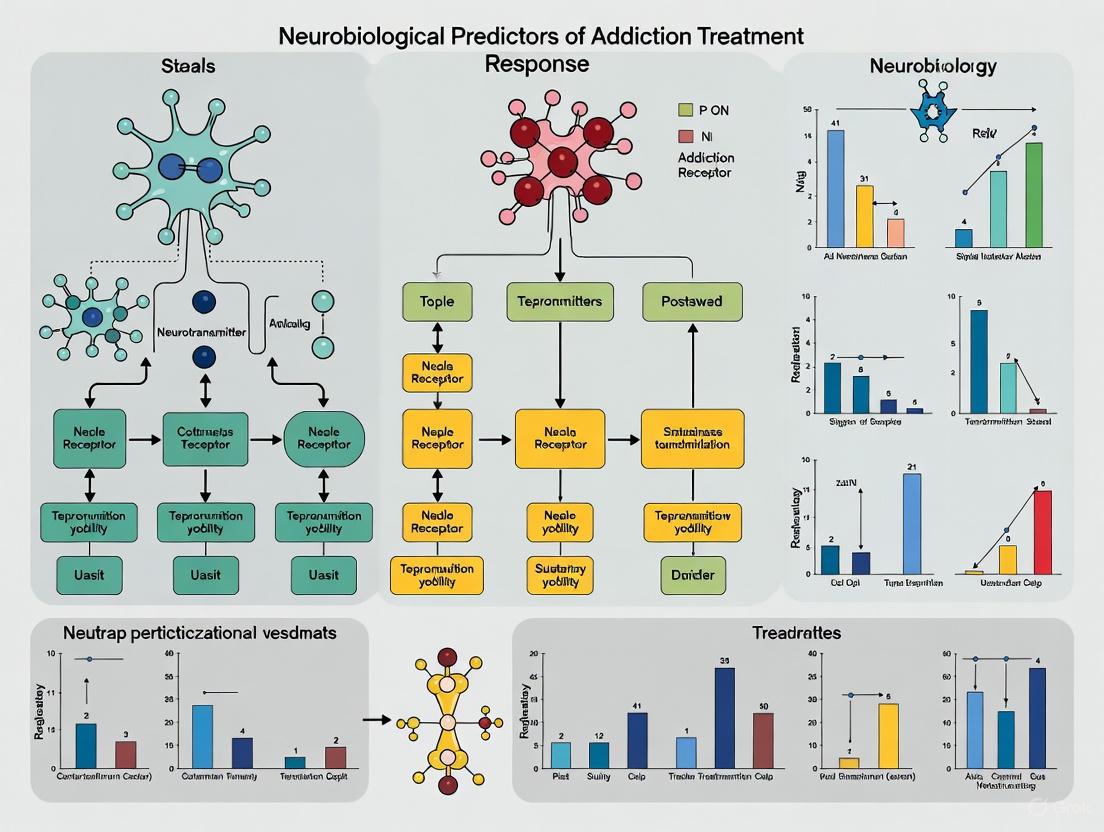
This article synthesizes current research on the neurobiological factors that predict individual responses to treatments for substance use disorders (SUDs).
Neurobiological Predictors of Addiction Treatment Response: From Mechanisms to Personalized Interventions
Abstract
This article synthesizes current research on the neurobiological factors that predict individual responses to treatments for substance use disorders (SUDs). It explores the foundational brain circuits and neurotransmitter systems implicated in addiction, reviews advanced neuroimaging and machine learning methodologies for predicting outcomes, discusses strategies for optimizing treatment for non-responders, and evaluates the comparative predictive power of neurobiological markers against other variables. Aimed at researchers, scientists, and drug development professionals, this review highlights the transformative potential of neurobiological insights for developing personalized, effective, and biomarker-driven treatment strategies for addiction.
The Addicted Brain: Core Neurobiological Circuits and Systems Governing Treatment Response
Drug addiction is a chronically relapsing disorder characterized by a compulsion to seek and take the drug, loss of control in limiting intake, and emergence of a negative emotional state (e.g., dysphoria, anxiety, irritability) when access to the drug is prevented [1] [2]. Research has conceptualized addiction as a disorder progressing from impulsivity to compulsivity, involving a composite cycle with three distinct stages: 'binge/intoxication,' 'withdrawal/negative affect,' and 'preoccupation/anticipation' (craving) [1] [3]. This three-stage heuristic model not only provides a framework for understanding the neurobiological underpinnings of addiction but also forms a critical foundation for identifying neuroadaptations that are key to vulnerability and relapse [1]. The delineation of the neurocircuitry of these evolving stages is therefore essential for the search for molecular, genetic, and neuropharmacological factors that could predict treatment response and inform novel therapeutic development [1] [4].
The transition to addiction involves profound neuroplasticity across multiple brain structures, beginning with changes in the mesolimbic dopamine system and progressing through a cascade of neuroadaptations from the ventral to the dorsal striatum and ultimately to dysregulation of prefrontal cortical and extended amygdala circuits [1] [2]. This progression mirrors a shift from positive reinforcement (driven by the rewarding effects of the drug) to negative reinforcement (driven by the motivation to relieve the distress of withdrawal) [3]. For researchers and drug development professionals, understanding these discrete circuits provides a heuristic roadmap for targeting interventions to specific stages of the addiction cycle, with the ultimate goal of disrupting the relapse trajectory and improving long-term treatment outcomes.
Stage 1: Binge/Intoxication and the Reward Circuitry
The binge/intoxication stage is primarily centered on the rewarding and reinforcing effects of drugs of abuse. This stage involves the activation of brain reward systems and is a principal focus for understanding how acute drug use progresses to escalated, uncontrolled intake [3].
Key Neurocircuitry and Neurotransmitters
The rewarding effects of nearly all drugs of abuse converge on the mesocorticolimbic dopamine system [3]. Key structures include the ventral tegmental area (VTA) and the ventral striatum (particularly the nucleus accumbens) [1] [5]. Drugs of abuse acutely increase dopamine levels in the nucleus accumbens, a mechanism shared with natural rewards [5]. This fast and steep increase in dopamine, activating low-affinity D1 receptors, is associated with the subjective "high" or euphoria reported in human studies [3]. Beyond dopamine, other neurotransmitters, including opioid peptides, serotonin, γ-aminobutyric acid (GABA), and acetylcholine, are also implicated in the binge/intoxication stage [3].
Table 1: Key Neurotransmitters and Brain Regions in the Binge/Intoxication Stage
| Neurotransmitter/System | Primary Role/Effect | Key Brain Regions |
|---|---|---|
| Dopamine | Increased; mediates reward, reinforcement, and incentive salience [3] | Ventral Tegmental Area (VTA), Nucleus Accumbens (ventral striatum) [1] |
| Opioid Peptides | Increased; modulates reward and reinforcement [3] | Nucleus Accumbens, Ventral Tegmental Area [3] |
| GABA | Increased; inhibitory regulation [3] | Ventral Tegmental Area, Nucleus Accumbens [3] |
Experimental Insights and Workflow
A core experimental protocol for studying this stage is intracranial self-stimulation (ICSS) combined with drug self-administration [5]. In preclinical models, animals are trained to press a lever to receive intravenous drug infusions or to stimulate electrodes implanted in reward-related brain pathways like the medial forebrain bundle. The role of specific neurotransmitters is tested through pharmacological antagonism (e.g., administering dopamine receptor antagonists) or neuroimaging in humans (e.g., PET scans showing dopamine release in the ventral striatum following drug intake) [3].
The transition from controlled to compulsive drug use within this stage is studied using escalation models, where animals with extended access to a drug (e.g., cocaine) progressively increase their intake, reflecting a loss of control [1]. These models have demonstrated that neuroadaptations include changes in glutamatergic transmission, such as increased surface expression of AMPA receptors in the nucleus accumbens, which contributes to behavioral sensitization [1].
Figure 1: Neurocircuitry Workflow of the Binge/Intoxication Stage. Abbreviations: VTA, Ventral Tegmental Area; NAc, Nucleus Accumbens; DA, Dopamine.
Stage 2: Withdrawal/Negative Affect and the Brain Stress Systems
The withdrawal/negative affect stage emerges when access to the drug is prevented and is characterized by a profound negative emotional state including dysphoria, anxiety, and irritability [1] [4]. This stage is critical because it provides a powerful negative reinforcement motive—the alleviation of this distress—for resuming drug taking.
Key Neurocircuitry and Neurotransmitters
The extended amygdala (including the central nucleus of the amygdala, bed nucleus of the stria terminalis, and a transition zone in the shell of the nucleus accumbens) is a key structure in this stage [1] [4]. During withdrawal, the dopamine function in the reward system is decreased, while brain stress systems are recruited [3]. Key mediators include corticotropin-releasing factor (CRF) and the dynorphin/kappa opioid receptor system in the extended amygdala [1] [3]. Other neurotransmitters involved are norepinephrine, hypocretin (orexin), and substance P, which are increased, while levels of serotonin, opioid peptide receptors, neuropeptide Y, and endocannabinoids are typically decreased [3].
Table 2: Key Neurotransmitters and Brain Regions in the Withdrawal/Negative Affect Stage
| Neurotransmitter/System | Primary Role/Effect | Key Brain Regions |
|---|---|---|
| Dopamine | Decreased; leads to reward deficit and anhedonia [3] | Ventral Striatum, Prefrontal Cortex [3] |
| CRF | Increased; activates stress responses, anxiety [3] | Extended Amygdala [1] [3] |
| Dynorphin | Increased; produces dysphoric states [3] | Extended Amygdala, Ventral Striatum [3] |
| Norepinephrine | Increased; contributes to stress and anxiety [3] | Extended Amygdala, Locus Coeruleus [3] |
Experimental Insights and Workflow
The negative affect stage is modeled in animals using measures of anxiety-like behaviors (e.g., elevated plus-maze, defensive burying) and reward thresholds (e.g., elevated ICSS thresholds) during spontaneous or antagonist-precipitated withdrawal [1] [4]. Pharmacological challenges are a key methodology; for example, administering a CRF receptor antagonist can reverse the anxiogenic effects of ethanol withdrawal in rats [1]. Human laboratory studies and neuroimaging have paralleled these findings, showing altered brain activity in the extended amygdala and connected regions during states of withdrawal.
The neuroadaptations in this stage represent an allostatic shift—a persistent deviation from the normal homeostatic set point—in brain reward and stress systems. This creates a persistent negative emotional state that not only drives relapse but also becomes a core feature of the addictive state [4].
Figure 2: Neurocircuitry Workflow of the Withdrawal/Negative Affect Stage. Abbreviations: CRF, Corticotropin-Releasing Factor.
Stage 3: Preoccupation/Anticipation (Craving) and Executive Function Dysregulation
The preoccupation/anticipation, or "craving," stage involves the persistent desire for the drug and triggers relapse after abstinence. This stage is characterized by deficits in executive function, including impaired inhibitory control and decision-making, which lead to compulsive drug-seeking [1] [3].
Key Neurocircuitry and Neurotransmitters
This stage involves a widely distributed network that mediates craving and disrupted inhibitory control [1]. Key regions include the prefrontal cortex (PFC)—particularly the orbitofrontal cortex (OFC) and dorsolateral PFC—the dorsal striatum, basolateral amygdala, hippocampus, and insula [1] [3]. The cingulate gyrus and inferior frontal cortices are also implicated in inhibitory control [1]. Glutamate is a primary neurotransmitter driving drug-seeking in this stage, particularly from the PFC to the core of the nucleus accumbens and the dorsal striatum [3]. Dopamine, hypocretin, and CRF also play significant roles [3].
Table 3: Key Neurotransmitters and Brain Regions in the Preoccupation/Anticipation Stage
| Neurotransmitter/System | Primary Role/Effect | Key Brain Regions |
|---|---|---|
| Glutamate | Increased; drives drug-seeking and relapse [3] | Prefrontal Cortex → Nucleus Accumbens Core, Dorsal Striatum [3] |
| Dopamine | Increased; contributes to craving [3] | Prefrontal Cortex, Orbitofrontal Cortex [3] |
| CRF | Increased; perpetuates stress-induced craving [3] | Extended Amygdala, Prefrontal Cortex [3] |
Experimental Insights and Workflow
Relapse is studied using reinstatement models in animals, where drug-seeking behavior is reinstated after extinction by exposure to drug-associated cues, stress, or a small "priming" dose of the drug [1]. These models have shown that the dorsal striatum is critical for habitual drug-seeking, while the orbitofrontal cortex is involved in the attribution of incentive salience to cues [1]. Reversal learning tasks demonstrate that withdrawal from cocaine self-administration produces long-lasting deficits in orbitofrontal-dependent cognitive flexibility [1].
Human neuroimaging studies have consistently shown cue-induced activation in the dorsolateral prefrontal cortex, orbitofrontal cortex, anterior cingulate, and insula in individuals with addiction [1]. The insula, in particular, is implicated in interoceptive awareness of craving states [3]. The compromised executive function in this stage reflects a dysregulation of prefrontal cortical control over basal ganglia and extended amygdala circuits, tipping the balance toward compulsive drug use.
Figure 3: Neurocircuitry Workflow of the Preoccupation/Anticipation Stage.
The Scientist's Toolkit: Key Research Reagents and Methodologies
Research into the neurocircuitry of addiction relies on a sophisticated toolkit of reagents, assays, and technologies that enable the dissection of complex neural pathways and their behavioral correlates.
Table 4: Essential Research Reagents and Materials for Addiction Neurocircuitry Research
| Research Tool / Reagent | Primary Function / Utility | Key Applications |
|---|---|---|
| Drug Self-Administration | Preclinical model of drug-taking and seeking behavior [1] | Measures reinforcement; core protocol for binge/intoxication and reinstatement studies [1] |
| Intracranial Self-Stimulation (ICSS) | Measures brain reward function [5] | Assesses reward thresholds, anhedonia during withdrawal/negative affect stage [4] |
| CRF and Receptor Antagonists | Pharmacological probes for stress system involvement [1] | Tests role of CRF in stress-induced reinstatement and withdrawal-induced anxiety [1] |
| Dopamine Receptor Antagonists | Pharmacological blockade of dopamine signaling [1] [5] | Determines necessity of dopamine for drug reward and reinforcement [3] |
| Structural & Functional MRI | Non-invasive human brain imaging | Maps structural and functional connectivity; identifies cue- or stress-activated circuits [6] |
| Positron Emission Tomography (PET) | Measures receptor occupancy and neurotransmitter release in vivo [3] | Quantifies dopamine release during intoxication in humans [3] |
| c-Fos and Other Immediate Early Gene Markers | Neuronal activity mapping | Identifies brain regions activated by drugs, cues, or stress [1] |
| Optogenetic / Chemogenetic Tools | Precise neuronal manipulation [3] | Establishes causal roles of specific neural circuits (e.g., VTA-NAc pathway) in addiction behaviors [3] |
Implications for Predicting Treatment Response and Guiding Drug Development
The neurocircuitry-based analysis of the addiction cycle provides a powerful framework for identifying predictors of treatment response and developing novel therapeutics. Understanding these circuits allows researchers to move beyond syndromic diagnosis to target specific neurobiological dysfunctions.
Neurobiological Predictors of Treatment Attrition and Outcome
Treatment discontinuation is a major challenge in addiction medicine, and neurocognitive deficits are a significant predictor. For example, cognitive deficits have been shown to predict low treatment retention in cocaine-dependent patients [1]. More recent research using machine learning approaches has begun to identify complex predictors of attrition. While some models show high accuracy in predicting opioid use disorder treatment discontinuation, others report low to moderate predictive power for general substance use disorder treatment dropout, with key predictors including treatment center type, program characteristics, and participant age [7]. This suggests that while neurobiological factors are crucial, treatment delivery systems and patient demographics are also critical variables.
Emerging Approaches: Machine Learning and Multimodal Biomarkers
Contemporary research is increasingly leveraging machine learning to predict treatment response phenotypes derived from patterns of consumption at the end of treatment [8]. These data-driven approaches can identify distinct clusters of treatment responders (e.g., mild, moderate, and severe drinkers in alcohol use disorder trials) and predict these outcomes using baseline clinical and biological data [8]. Furthermore, studies are integrating multimodal biomarkers—including brain morphology, functional connectivity, and inflammatory cytokines—to predict symptom and functioning changes in related psychiatric disorders like bipolar disorder, with high correlation between predicted and actual clinical changes [6]. This multimodal approach could be readily adapted to addiction treatment response prediction.
Targeting Specific Stages of the Addiction Cycle
The three-stage model enables a precision medicine approach where interventions can be targeted to specific neuroadaptations:
- Binge/Intoxication Stage: Interventions focus on blocking the rewarding effects of drugs (e.g., opioid antagonists like naltrexone) or modulating the dopamine system [3].
- Withdrawal/Negative Affect Stage: Therapeutics aim to counteract the dysphoric and stress-like responses of withdrawal. This includes developing CRF antagonists, neuropeptide Y enhancers, or kappa opioid receptor antagonists to alleviate the negative emotional state [3] [4].
- Preoccupation/Anticipation Stage: Treatments target craving and executive dysfunction, potentially using cognitive enhancers, glutamate modulators (e.g., N-acetylcysteine, modafinil), or interventions that strengthen prefrontal inhibitory control [3].
The progression of neuroadaptations from the ventral to the dorsal striatum and the dysregulation of prefrontal and amygdala circuits highlight the importance of early intervention before the addiction cycle becomes entrenched. Future therapeutic development may focus on combination therapies that simultaneously target multiple stages of the cycle, addressing both the motivational aspects of drug taking and the cognitive deficits that perpetuate relapse.
Substance use disorders are chronic brain diseases characterized by a compulsive drive to seek and use drugs despite serious negative consequences. This behavior is not solely a failure of willpower but is underpinned by specific, enduring dysfunctions within a network of interconnected brain regions [9] [5]. Central to this network are the prefrontal cortex (PFC), the nucleus accumbens (NAc), the amygdala, and the anterior cingulate cortex (ACC). These structures form core circuits governing reward, motivation, emotional regulation, and cognitive control. Their progressive dysregulation fuels the transition from controlled, voluntary drug use to compulsive, habitual addiction. Understanding the distinct and interactive roles of these regions is fundamental for developing targeted, effective treatments, as their functional integrity may serve as a key predictor of treatment response [10] [11]. This guide provides a comparative analysis of the dysfunction within these four key brain regions, synthesizing experimental data to inform future research and drug development.
Comparative Dysfunction of Core Brain Regions in Addiction
The table below provides a systematic comparison of the primary dysfunctions and associated clinical manifestations for each brain region in addiction.
Table 1: Comparative Dysfunction of Key Brain Regions in Addiction
| Brain Region | Primary Function(s) | Nature of Dysfunction in Addiction | Key Behavioral/Cognitive Manifestations | Supporting Experimental Evidence |
|---|---|---|---|---|
| Prefrontal Cortex (PFC) | Executive function, inhibitory control, decision-making, working memory [12] | Hypoactivation and disrupted top-down control [12] [9] [1] | Impaired response inhibition, impulsivity, poor decision-making, weakened control over drug-seeking [12] [10] | Reduced glucose metabolism/fBOLD on fMRI during cognitive tasks; longitudinal studies link PFC activity to treatment outcomes [10] |
| Nucleus Accumbens (NAc) | Reward processing, motivation, reinforcement learning [9] | Acute: Increased dopamine, synaptic plasticityChronic: Reward system hyposensitivity (allostasis) [1] [5] | Acute: Drug reward/reinforcementChronic: Reduced pleasure from natural rewards, elevated reward threshold [9] | Animal studies show drug-induced LTP/LTD impairments; human imaging shows heightened response to drug cues [13] [14] |
| Amygdala | Emotional memory, stress, fear, negative affect [1] [14] | Hyperactivity in stress/negative affect circuits, particularly in extended amygdala [1] | Heightened stress, anxiety, irritability, and negative emotions during withdrawal; potentiation of drug cues [1] | fMRI shows increased amygdala activation by drug cues; central to the "withdrawal/negative affect" stage [1] [14] |
| Anterior Cingulate Cortex (ACC) | Conflict monitoring, error detection, salience attribution, emotion regulation [12] [15] | Complex dysregulation:- Altered salience mapping- Impaired cognitive control- Structural changes [15] [14] | Craving, conflict between use/abstinence, poor error monitoring, attentional bias to drug cues [12] [15] | Resting-state fMRI shows altered ACC connectivity; DBS of ACC reduces drug-seeking in preclinical models [16] [14] |
Experimental Data and Methodologies
This section details the key experimental protocols and quantitative findings that form the evidence base for our understanding of regional brain dysfunction.
Key Experimental Protocols in Addiction Neuroscience
Table 2: Summary of Key Experimental Protocols and Their Applications
| Protocol Name | Core Methodology | Primary Measurement | Application in Addiction Research | Key Brain Regions Interrogated |
|---|---|---|---|---|
| Functional Magnetic Resonance Imaging (fMRI) | Measures brain activity by detecting changes in blood flow (BOLD signal) [12] [14] | Neural activity (indirectly) during tasks or at rest | Identify region-specific hypo/hyperactivation in response to drug cues or cognitive tasks [12] [10] [14] | PFC, ACC, Amygdala, NAc |
| Resting-State Functional Connectivity | Correlates low-frequency fMRI fluctuations between brain regions at rest [14] | Functional connectivity strength between neural circuits | Map addiction-related alterations in functional networks (e.g., heightened NAc-ACC connectivity) [14] | PFC, OFC, ACC, NAc, Amygdala |
| Conditioned Place Preference (CPP) | Animal model where a distinct context is paired with drug administration [16] | Time spent in drug-paired context vs. unpaired context | Measure the rewarding properties of a drug and its extinction/reinstatement (relapse) [16] | NAc, PFC, ACC, Amygdala |
| Deep Brain Stimulation (DBS) | Chronic, high-frequency electrical stimulation of a specific brain region via implanted electrodes [16] | Changes in behavioral outcomes (e.g., drug-seeking) | Investigate causal role of brain regions and potential for therapeutic neuromodulation [15] [16] | ACC, NAc |
| Long-Term Potentiation/Depression (LTP/LTD) Electrophysiology | In vitro or in vivo electrical stimulation to measure synaptic plasticity [13] | Change in synaptic strength (e.g., fEPSP amplitude) | Assess how addiction disrupts fundamental learning and memory mechanisms at synapses [13] | PFC-to-NAc projections |
Quantitative Data from Key Studies
Table 3: Summary of Quantitative Experimental Findings
| Experimental Paradigm | Subject Population / Model | Key Quantitative Finding | Implication for Dysfunction |
|---|---|---|---|
| Resting-State fMRI | Chronic heroin users (n=14) vs. Controls (n=13) [14] | ↑ connectivity between NAc and rostral ACC; ↓ connectivity between OFC and dorsolateral PFC [14] | Enhanced salience attribution to drugs with weakened cognitive control. |
| DBS of the ACC | Male Wistar rats in morphine CPP (n=108) [16] | DBS at 200 µA during acquisition and extinction phases inhibited CPP and facilitated extinction [16] | ACC modulation can directly disrupt reward learning and enhance extinction. |
| PFC-to-NAc Synaptic Plasticity | Rats after heroin self-administration and extinction [13] | Impaired LTP and LTD in the PFC (prelimbic) to NAc core pathway [13] | Addiction compromises fundamental synaptic plasticity in top-down regulatory circuits. |
| Response Inhibition fMRI (Longitudinal) | Adolescents prior to substance use initiation [10] | Less activation in frontal regions (e.g., IFG, ACC) during inhibition predicted future substance use [10] | Pre-existing PFC/ACC deficits may be a vulnerability factor for addiction. |
Signaling Pathways and Experimental Workflows
The following diagrams, generated using Graphviz DOT language, illustrate the core neurocircuitry of addiction and a standard experimental workflow.
Core Addiction Neurocircuitry Dysfunction
Diagram 1: This diagram illustrates the dysfunctional interactions between key brain regions in addiction. The red arrows signify the primary pathways of dysregulation, including impaired top-down control from the PFC, altered salience signaling from the ACC, and enhanced stress and negative affect drive from the Amygdala, all converging on the NAc to promote compulsive drug use.
Preclinical DBS Experiment Workflow
Diagram 2: This flowchart outlines a standard preclinical workflow for investigating Deep Brain Stimulation (DBS) as a potential treatment for addiction, as exemplified by [16]. Key phases include stereotaxic surgery for electrode implantation, a behavioral model like Conditioned Place Preference (CPP) to measure drug-seeking, the DBS intervention itself, and final outcome assessments.
The Scientist's Toolkit: Research Reagent Solutions
Table 4: Essential Research Materials and Reagents for Investigating Addiction Neurobiology
| Tool / Reagent | Primary Function in Research | Application Example | Relevant Brain Region(s) |
|---|---|---|---|
| c-Fos Immunohistochemistry | Marker of neuronal activity; identifies cells activated by a specific stimulus [16] | Quantifying DBS-induced or drug-induced neuronal activation in target regions [16] | ACC, PFC, NAc, Amygdala |
| DBS Electrodes & Systems | For chronic, targeted neuromodulation of deep brain structures in preclinical models [16] | Investigating causal role of ACC in drug reward and relapse prevention [16] | ACC, NAc |
| Conditioned Place Preference (CPP) Apparatus | Behavioral assay to measure drug reward, extinction learning, and reinstatement (relapse) [16] | Testing efficacy of pharmacological or neuromodulation interventions on drug-seeking behavior [16] | NAc, PFC, ACC, Amygdala |
| fMRI / PET Ligands | Non-invasive in vivo imaging of brain activity, connectivity, and neurochemistry [12] [9] | Measuring region-specific hypoactivation (PFC) or hyperactivation (Amygdala) in human addicts [12] [14] | PFC, ACC, NAc, Amygdala |
| Go/No-Go & Stop-Signal Tasks | Standardized behavioral paradigms to assess response inhibition and impulsivity [10] | Linking functional deficits in inhibitory control to PFC/ACC activity in fMRI studies [10] | PFC, ACC |
The comparative data presented in this guide underscore that addiction is a disorder of a network, not of a single brain region. The dysfunction is characterized by a powerful synergy: a hyperactive "go" circuit (driven by the sensitized NAc and amygdala) combined with a hypoactive "stop" circuit (weakened PFC and dysregulated ACC) [12] [1] [14]. This model provides a heuristic framework for developing targeted interventions. For instance, therapies that aim to strengthen prefrontal inhibitory control (e.g., cognitive training, neuromodulation) or calm the overactive salience and stress circuits (e.g., ACC DBS, anti-anxiety medications) represent promising avenues [10] [15] [16]. Future research must continue to leverage longitudinal designs and multimodal approaches to determine how the baseline function and plasticity of this network predict an individual's response to treatment, ultimately paving the way for personalized neurobiologically-informed therapies for substance use disorders.
The neurobiological underpinnings of addiction are characterized by profound dysregulation of key neurotransmitter systems within specific brain circuits. Research consistently demonstrates that addiction is a chronic brain disorder marked by compromised reward circuitry, amplified stress responses, and impaired prefrontal control [17] [18]. The transition from voluntary drug use to compulsive addiction involves a cascade of neuroadaptations in the dopamine, glutamate, GABA, and opioid peptide systems, which progressively alter motivation, self-control, and emotional regulation [5] [1]. Understanding the distinct yet interconnected roles of these neurotransmitter systems provides a critical framework for identifying neurobiological predictors of treatment response and developing targeted therapeutic interventions for substance use disorders (SUDs) [19].
This guide systematically compares the functions, dysregulations, and experimental measurement of these four key neurotransmitter systems within the context of addiction neurobiology. By synthesizing current evidence on their interactions in reward and stress pathways, we aim to provide researchers and drug development professionals with a structured overview of their complementary roles in the addiction cycle, supported by experimental data and methodological insights.
Comparative Roles of Key Neurotransmitter Systems in Addiction
Table 1: Functional Roles of Neurotransmitter Systems in Addiction Stages
| Neurotransmitter | Primary Brain Regions | Binge/Intoxication Stage | Withdrawal/Negative Affect Stage | Preoccupation/Anticipation Stage |
|---|---|---|---|---|
| Dopamine (DA) | Ventral Tegmental Area (VTA), Nucleus Accumbens (NAc) | Surges in NAc drive reward and reinforcement [17] [20] | Decreased tonic DA signaling leads to anhedonia [18] [21] | Drug cues trigger phasic DA release, driving craving [18] [1] |
| Glutamate (Glu) | Prefrontal Cortex (PFC), NAc, VTA | Enhances drug reward through NMDA and AMPA receptors [17] | Increased corticostriatal glutamate; contributes to hyperexcitability [18] | Mediates cue-induced relapse through glutamatergic pathways to NAc [1] |
| GABA | VTA, Extended Amygdala, PFC | GABAergic inhibition of DA neurons is reduced by some drugs (e.g., opioids) [22] | Reduced GABAergic inhibition contributes to anxiety and stress sensitivity [18] [21] | Impaired GABAergic signaling in PFC reduces inhibitory control [22] |
| Opioid Peptides | NAc, VTA, Extended Amygdala, Amygdala | Endogenous opioids modulate hedonic responses (e.g., via MOR in VTA) [17] [22] | Dynorphin/KOR system activation in amygdala promotes dysphoria [18] [21] | Altered opioid signaling contributes to negative emotional states [21] |
Table 2: Neuroadaptations in Neurotransmitter Systems in Addiction
| Neurotransmitter | Receptor Subtypes Involved | Key Neuroadaptations | Behavioral Consequences |
|---|---|---|---|
| Dopamine | D1, D2, D3 [23] | ↓ D2/3 receptor availability in striatum; ↓ tonic DA release; ↑ phasic DA to cues [18] [23] | Reduced sensitivity to natural rewards; enhanced incentive salience of drugs; compulsive drug seeking [17] [23] |
| Glutamate | NMDA, AMPA, mGluR [17] | ↑ Glu in NAc during withdrawal; altered AMPA receptor subunit composition (GluR2-lacking) [1] | Enhanced cue-induced craving; incubation of craving; impaired synaptic plasticity [1] |
| GABA | GABAA, GABAB [22] | ↓ GABAergic inhibition in VTA and amygdala; altered GABAA receptor subunit composition [22] [21] | Increased anxiety; disrupted reward processing; reduced impulse control [18] [22] |
| Opioid Peptides | MOR, DOR, KOR [17] [22] | Dysregulated endogenous opioid levels; KOR upregulation in stress pathways [22] [21] | Increased stress reactivity; negative emotional state; heightened drug craving [21] |
Neurocircuitry of Addiction: An Integrated View
The transition to addiction involves dynamic changes across interconnected brain networks, with distinct neurocircuits dominating each stage of the addiction cycle [18] [1]. The binge/intoxication stage is primarily mediated by the mesolimbic dopamine system, where drug-induced dopamine surges in the nucleus accumbens reinforce drug-taking behavior [17] [20]. This stage heavily involves the ventral tegmental area (VTA) and ventral striatum, with contributions from opioid peptides in modulating hedonic responses [17] [22].
The withdrawal/negative affect stage engages the extended amygdala (including the bed nucleus of the stria terminalis and central amygdala), where stress neurotransmitters such as CRF, dynorphin, and norepinephrine become hyperactive while dopamine function declines [18] [1] [21]. This creates a powerful negative reinforcement mechanism where drug seeking is driven by the need to alleviate this dysphoric state.
The preoccupation/anticipation stage involves widespread prefrontal-striatal circuits, where glutamatergic projections from the prefrontal cortex to the accumbens mediate executive control over drug seeking [18] [1]. During this stage, dopamine signals to drug-associated cues drive craving while compromised prefrontal inhibitory control enables compulsive drug use despite negative consequences.
Figure 1: Integrated Neurocircuitry of Addiction Stages
Experimental Approaches and Methodologies
Neurotransmitter-Specific Measurement Techniques
Table 3: Experimental Methods for Studying Neurotransmitter Systems in Addiction
| Methodology | Key Applications | Technical Considerations | Insights Gained |
|---|---|---|---|
| Microdialysis | Extracellular DA, Glu, GABA levels in specific brain regions [24] | Excellent temporal resolution; measures tonic neurotransmitter levels | Drug-induced neurotransmitter release; basal level changes in addiction |
| Fast-Scan Cyclic Voltammetry (FSCV) | Phasic DA release in response to drugs or cues [24] | Millisecond temporal resolution; limited spatial resolution | Dopamine transients during reward prediction and cue exposure |
| Electrophysiology | Firing patterns of DA neurons (tonic vs. phasic); synaptic plasticity [24] | Can measure intrinsic properties and synaptic inputs | VTA DA neuron adaptation (e.g., reduced firing during withdrawal) |
| Receptor Autoradiography & PET | Receptor/transporter availability (D2/D3, MOR, etc.) [23] [19] | Provides quantitative receptor mapping; PET allows human studies | ↓ D2/3 receptor availability in striatum correlates with addiction severity |
| Genetic Manipulations (knockout, DREADDs) | Causality of specific receptors/neurons in addiction behaviors [22] | Cell-type and circuit-specific manipulations | MOR knockout prevents reward from multiple drug classes |
Detailed Experimental Protocols
Protocol 1: Measuring Drug-Evoked Dopamine Release Using Fast-Scan Cyclic Voltammetry
This protocol enables real-time detection of dopamine concentration changes in specific brain regions with millisecond temporal resolution [24].
Surgical Preparation: Anesthetize rats and implant a carbon-fiber microelectrode in the target region (e.g., NAc core or shell) and a reference electrode in contralateral brain tissue.
Calibration: Perform pre-experiment calibration by recording current responses to known dopamine concentrations in vitro (typically 1-10 μM range).
Stimulating Electrode Implantation: Place a bipolar stimulating electrode in the VTA or medial forebrain bundle to electrically evoke endogenous dopamine release.
Voltammetric Measurements: Apply triangular waveforms (-0.4 to +1.3 V vs Ag/AgCl, 400 V/s) at 100 ms intervals. Measure oxidation current at peak dopamine oxidation potential (~+0.6-0.8 V).
Drug Administration: Systemically administer drug of interest (e.g., cocaine, 15 mg/kg i.p.) or use local application via microinjection.
Data Analysis: Identify dopamine by its characteristic oxidation/reduction peaks. Convert current to dopamine concentration using pre-calibration values.
Protocol 2: Assessing Glutamatergic Plasticity Using Electrophysiological Approaches
This protocol examines drug-induced changes in glutamatergic transmission and plasticity in reward pathways [1].
Slice Preparation: Prepare acute coronal brain slices (300 μm thickness) containing NAc or PFC using vibrating microtome in ice-cold artificial cerebrospinal fluid (aCSF).
Whole-Cell Patch-Clamp Recording: Target medium spiny neurons in NAc or pyramidal neurons in PFC. Use potassium gluconate-based internal solution for current-clamp and cesium methanesulfonate-based solution for voltage-clamp recordings.
Synaptic Stimulation: Place stimulating electrode in prefrontal cortical afferents to the NAc or basolateral amygdala inputs to the PFC.
Measure AMPA/NMDA Ratios: Isolate AMPA receptor-mediated currents at -70 mV (NMDA receptors blocked). Then measure NMDA receptor-mediated currents at +40 mV in presence of AMPA receptor antagonist NBQX.
Long-Term Potentiation Induction: After establishing stable baseline, induce LTP using high-frequency stimulation (100 Hz, 1 second) or theta-burst stimulation.
Data Analysis: Calculate AMPA/NMDA ratio as peak current at -70 mV divided by current at 50 ms post-stimulus at +40 mV. Measure LTP as percentage increase in EPSC amplitude post-induction.
Signaling Pathway Diagrams
Figure 2: Dopamine and Opioid Interactions in the Ventral Tegmental Area
Figure 3: Glutamatergic and GABAergic Balance in the Nucleus Accumbens
The Scientist's Toolkit: Essential Research Reagents
Table 4: Key Research Reagents for Investigating Addiction Neurobiology
| Reagent/Category | Specific Examples | Research Applications | Mechanism of Action |
|---|---|---|---|
| Dopamine Receptor Agonists/Antagonists | SCH-23390 (D1 antagonist), Raclopride (D2 antagonist), Quinpirole (D2 agonist) [23] | Determining receptor-specific contributions to drug reward and seeking behaviors | Selective targeting of D1-like vs. D2-like receptor families |
| DAT Inhibitors | GBR-12909, RTI-55 | Selective blockade of dopamine reuptake; studying psychostimulant effects [24] | Increase synaptic dopamine without broader receptor activation |
| Excitatory Amino Acid Transporters | TBOA, DHK | Block glutamate reuptake to study glutamatergic signaling in addiction [1] | Increase extracellular glutamate; reveal tonic glutamate regulation |
| GABAA Receptor Modulators | Muscimol (agonist), Bicuculline (antagonist), Benzodiazepines (PAMs) [22] | Assessing GABAergic inhibition in reward and stress circuits | Direct activation, blockade, or allosteric modulation of GABAA receptors |
| Opioid Receptor Ligands | DAMGO (MOR agonist), Naloxone (antagonist), U-50488 (KOR agonist) [22] | Probing opioid system roles in reward vs. aversion/stress | Selective targeting of MOR, KOR, DOR receptor subtypes |
| DREADDs | hM3Dq (Gq), hM4Di (Gi) | Chemogenetic manipulation of specific neuronal populations [22] | Remote control of neuronal activity via engineered GPCRs |
| Activity Reporters | GCamp (calcium), dLight (dopamine), iGluSnFR (glutamate) | Monitoring neurotransmitter dynamics in behaving animals | Genetically encoded sensors that fluoresce upon ligand binding |
Implications for Treatment Response Prediction
The interplay between dopamine, glutamate, GABA, and opioid systems creates distinct neurobiological signatures that may predict addiction treatment outcomes. Research indicates that baseline striatal D2/D3 receptor availability may serve as a biomarker predicting treatment response, with higher availability correlating with better outcomes [19]. Additionally, glutamatergic dysregulation patterns, particularly in prefrontal-accumbens pathways, may predict vulnerability to cue-induced relapse [1].
The GABA-opioid interactions in stress pathways suggest that individuals with heightened stress reactivity may respond better to treatments targeting both systems [22] [21]. Emerging evidence from pharmacogenetic studies indicates that genetic variations in opioid and dopamine receptor genes can influence treatment response to medications like naltrexone and bupropion [19].
Future research directions should focus on developing multifactorial models that integrate multiple neurotransmitter system metrics to improve treatment matching and outcome prediction [19]. The application of machine learning approaches to neuroimaging and genetic data holds promise for identifying distinct addiction biotypes based on their unique neurotransmitter system profiles, ultimately enabling more personalized and effective interventions for substance use disorders.
In the pursuit of improving outcomes for substance use disorders, the identification of robust neurobiological predictors has become a central focus of contemporary research. The field is moving beyond traditional diagnostic categories to embrace dimensional, neuroscience-based approaches that link specific brain alterations to clinical features of addiction [25]. Among the most promising developments are structural and functional biomarkers that may signify vulnerability to addiction or predict response to treatment. Gray matter volume (GMV) and synaptic density alterations represent two critical classes of such biomarkers, providing a window into the neuropathological processes underlying addictive disorders. This review synthesizes current evidence on these biomarkers, their measurement methodologies, and their potential application in both clinical practice and drug development pipelines. By comparing data across substance classes and neural systems, we aim to provide researchers and drug development professionals with a comprehensive resource for understanding these vulnerability factors within the broader context of addiction treatment response research.
Gray Matter Volume as a Structural Biomarker
Key GMV Alterations in Addiction
Gray matter volume abnormalities represent one of the most consistently documented structural biomarkers in addiction neuroimaging. These alterations are frequently observed in prefrontal cortical regions that subserve executive functions, including inhibitory control, decision-making, and emotion regulation [26]. Cross-sectional studies have demonstrated GMV reductions across most substance use disorders, with effects particularly pronounced in the inferior frontal gyrus (IFG), anterior cingulate cortex (ACC), ventromedial prefrontal cortex (vmPFC), dorsolateral prefrontal cortex (dlPFC), and orbitofrontal cortex (OFC) [26]. The table below summarizes key GMV findings associated with specific substances and their potential functional correlates.
Table 1: Gray Matter Volume Alterations in Substance Use Disorders
| Brain Region | Substance | GMV Alteration | Functional Correlation | Citation |
|---|---|---|---|---|
| Medial Prefrontal Cortex (mPFC) | Polysubstance | Negative correlation with number of substances used | Impaired cognitive control, decision-making | [27] |
| Inferior Frontal Gyrus (IFG) | Cocaine | Increase after 6 months of abstinence | Improved cognitive flexibility | [26] |
| Ventromedial PFC (vmPFC) | Cocaine | Increase after 6 months of abstinence | Improved decision-making | [26] |
| Insula Cortex | Methamphetamine | Decrease in subjects without craving | Craving state biomarker | [28] |
| Thalamus | Tobacco | Negative relation with use | Possible sensory integration deficits | [27] |
| Ventrolateral PFC | Cocaine | Negative relation with use | Response inhibition deficits | [27] |
Methodological Approaches for GMV Assessment
The primary methodology for quantifying GMV is voxel-based morphometry (VBM) applied to T1-weighted magnetic resonance imaging (MRI) scans [28]. The standard processing pipeline involves several sequential steps: (1) image segmentation into gray matter, white matter, and cerebrospinal fluid; (2) spatial normalization using high-dimensional registration algorithms such as DARTEL (Diffeomorphic Anatomical Registration Through Exponentiated Lie algebra) to create study-specific templates; (3) modulation to preserve tissue volume; and (4) smoothing with an isotropic Gaussian kernel (typically 8-12mm full-width at half-maximum) to improve statistical validity [28]. Statistical analysis then employs general linear models with appropriate multiple comparison corrections (e.g., family-wise error or false discovery rate), often including age, gender, educational level, cigarette use, and total intracranial volume as covariates [28] [27].
Table 2: Experimental Protocols for GMV Assessment
| Methodology | Key Parameters | Analytical Approach | Strengths | Limitations |
|---|---|---|---|---|
| Voxel-Based Morphometry (VBM) | T1-weighted MRI, 1mm isotropic voxels, 8mm smoothing kernel | Whole-brain voxelwise analysis with multiple comparison correction | Comprehensive, unbiased, automated | Sensitive to registration errors, requires large samples |
| Region-of-Interest (ROI) Analysis | A priori defined regions (e.g., AAL atlas) | ROI extraction and statistical comparison | Increased statistical power for specific hypotheses | Dependent on atlas accuracy, may miss extra-ROI effects |
| Longitudinal Design | Baseline and follow-up scans (e.g., 6-month interval) | Within-subject change analysis (e.g., paired t-tests) | Direct assessment of change over time | Vulnerable to attrition, practice effects |
| Machine Learning Classification | Structural features as input | Support vector machines (SVM) with cross-validation | Potential for individual-level prediction | Requires large datasets, risk of overfitting |
GMV Recovery with Abstinence and Treatment
Critically, GMV alterations in addiction are not necessarily permanent. Longitudinal studies provide evidence for plastic recovery of cortical gray matter following sustained reduction or cessation of drug use. In one prospective study of treatment-seeking individuals with cocaine use disorder, significant GMV increases were observed in the left IFG and bilaterally in the vmPFC after six months of significantly reduced or eliminated drug use [26]. This structural recovery was correlated with improved performance on neuropsychological tests of decision-making and cognitive flexibility, providing a behavioral functional correlate to the GMV changes [26]. Similar abstinence-mediated GMV increases have been documented in other substance use disorders, including recovery in the ACC and insula in abstinent individuals with alcohol use disorder, and in the IFG, insula, precuneus, and temporal regions after methamphetamine abstinence [26]. These findings suggest that GMV deficits reflect, at least partially, the deleterious effects of chronic drug exposure rather than solely pre-existing vulnerability factors.
Synaptic Density and Plasticity as Functional Biomarkers
Molecular Mechanisms of Synaptic Plasticity in Addiction
At the synaptic level, addictive drugs cause persistent restructuring of neuronal circuits, particularly in limbic brain regions. This structural plasticity involves changes in dendritic arborization, spine morphology, and synaptic strength that are believed to underlie long-term behavioral abnormalities associated with addiction, such as craving and relapse [29]. The molecular mechanisms center on glutamate receptor dynamics and actin cytoskeleton reorganization. Two general types of structural plasticity have been observed: (1) changes in the complexity of dendritic branching, and (2) alterations in the number and size of dendritic spines [29]. The direction of these changes often depends on the drug class, with stimulants (e.g., cocaine, amphetamine) generally increasing dendritic complexity and spine density of nucleus accumbens medium spiny neurons (MSNs), and opiates typically decreasing these parameters [29].
The diagram below illustrates the key synaptic plasticity mechanisms induced by addictive drugs:
Time-Dependent Synaptic Adaptations
Synaptic changes during addiction and withdrawal follow a complex, time-dependent trajectory. In early cocaine withdrawal, there is an increase in thin, highly plastic spines and synaptic depression, potentially representing an increased pool of silent synapses that contain NMDA glutamate receptors but few AMPA receptors [29]. During prolonged withdrawal, these recently formed spines may either retract or consolidate into more stable mushroom-shaped spines, accompanied by increased surface expression of GluR2-lacking AMPA receptors and potentiation of glutamatergic synapses [29]. This progression correlates behaviorally with the "incubation of craving" phenomenon, where susceptibility to relapse increases progressively during withdrawal. Re-exposure to drugs after extended abstinence triggers further synaptic reorganization, including reduced spine head diameter, decreased surface expression of AMPA receptors, and depression of synaptic strength [29].
Assessment Methods for Synaptic Plasticity
Multiple experimental approaches are used to investigate synaptic plasticity in addiction models, each with distinct advantages and limitations:
Table 3: Methodologies for Assessing Synaptic Plasticity in Addiction
| Methodology | Application in Addiction Research | Spatial Resolution | Temporal Resolution | Key Measured Parameters |
|---|---|---|---|---|
| Electrophysiology (LFP/Unit Recording) | Measure craving-related activity in NAc; LTP/LTD assessment | High (microns) | High (milliseconds) | Local field potentials, single-unit spiking, synaptic strength |
| Two-Photon Microscopy | Dendritic spine imaging in vivo | Very high (submicron) | Minutes to hours | Spine density, morphology, turnover |
| Viral-Mediated Gene Transfer | Manipulate specific signaling pathways | Cellular | Days to weeks | Spine dynamics, behavioral outputs |
| Molecular Assays | Protein expression and phosphorylation | Molecular | Hours to days | Receptor subunits, signaling proteins |
| fMRI Functional Connectivity | Circuit-level plasticity | Low (millimeters) | Low (seconds) | Network connectivity, BOLD signal |
Integration of Biomarkers for Treatment Prediction
Neural Circuits of Treatment Response
Neuroimaging studies have begun to identify consistent neural correlates of addiction treatment response that integrate both structural and functional biomarkers. A meta-analysis of functional neuroimaging studies in youth with addictive disorders identified six brain regions showing consistent associations with treatment outcome variables: the anterior cingulate cortex, inferior frontal gyrus, supramarginal gyrus, middle temporal gyrus, precuneus, and putamen [30]. These regions are involved in diverse functions including cognition, emotion regulation, decision-making, reward processing, and self-reference, suggesting that successful treatment engagement requires modulation across multiple neural systems [30]. Similar findings in adults have highlighted the ventral striatum, ACC, IFG, middle frontal gyrus, orbitofrontal cortex, and precuneus as candidate neural treatment targets [30].
Cue-Reactivity as a Predictive Biomarker
Cue-reactivity, measured through functional neuroimaging, represents one of the most promising biomarkers for predicting relapse risk. Enhanced neural responses to drug-related cues, particularly in limbic and paralimbic regions, are characteristic of substance use disorders and are associated with both craving and relapse [31]. Activation-likelihood estimation (ALE) meta-analyses have identified convergence across drug cue-reactivity studies in regions including the amygdala, ventral striatum, orbitofrontal cortex, and insula [31]. Importantly, pretreatment cue-reactivity in these regions can prospectively predict treatment outcomes. For instance, alcohol-dependent individuals who subsequently relapsed showed increased activation to neutral-relaxing cues in the vmPFC, ACC, ventral striatum, and precuneus, while decreased response in these regions during stress cue exposure was related to greater relapse severity [31].
The following diagram illustrates the integrated neural circuitry implicated in addiction biomarkers and treatment response:
The Scientist's Toolkit: Essential Research Reagents and Methodologies
Table 4: Essential Research Reagents and Methodologies for Biomarker Investigation
| Category | Specific Tools | Research Application | Key Considerations |
|---|---|---|---|
| Neuroimaging Modalities | 3T/7T MRI, fMRI, DTI, PET | In vivo human brain structure and function | Spatial/temporal resolution trade-offs, cost, accessibility |
| Structural Analysis Software | SPM, FSL, FreeSurfer | VBM, cortical thickness, segmentation | Algorithm differences, processing pipelines |
| Molecular Probes | Radiolabeled ligands (e.g., [11C]raclopride), receptor antibodies | Receptor quantification, protein expression | Binding affinity, specificity, signal-to-noise ratio |
| Genetic Tools | CRISPR, viral vectors (AAV, lentivirus), transgenic animals | Pathway manipulation, causal inference | Targeting efficiency, off-target effects, model validity |
| Behavioral Paradigms | Cue-reactivity tasks, delay discounting, self-administration | Translational biomarker assessment | Cross-species validity, psychological construct specificity |
| Electrophysiology | In vivo multielectrode arrays, patch-clamp recording | Neuronal activity, synaptic plasticity | Invasiveness, technical expertise requirements |
The convergence of evidence from structural and functional biomarkers is refining our understanding of addiction as a disorder of distributed neural circuits with both state and trait manifestations. Gray matter volume alterations, particularly in prefrontal regulatory regions and the insula, provide quantifiable indices of addiction-related neuropathology that demonstrate plastic recovery with sustained abstinence. At the microcircuit level, drug-induced synaptic plasticity manifests as dynamic changes in spine morphology and glutamate receptor composition that evolve throughout the addiction and recovery cycle. The integration of these multi-level biomarkers through dimensional frameworks like the Addictions Neuroclinical Assessment offers a promising path toward personalized intervention strategies. For drug development professionals, these biomarkers provide objective endpoints for clinical trials and potential targets for novel therapeutics aimed at normalizing addiction-related neural alterations. Future research should prioritize longitudinal designs that track both biomarker and behavioral trajectories throughout treatment and recovery, with the ultimate goal of developing a precision medicine approach to addiction treatment.
Genetic and Environmental Influences on Neurobiological Susceptibility to Substance Use Disorders
Substance use disorders (SUDs) represent a significant global public health challenge, characterized by compulsive drug seeking and use despite negative consequences. The neurobiological susceptibility to SUDs arises from complex interactions between inherited genetic factors and environmental exposures throughout the lifespan. Recent genome-wide association studies have revealed that SUDs have a heritability of approximately 50% [32], while environmental factors such as early life stress (ELS) constitute a major risk factor for both the development of SUDs and relapse [33]. Understanding how these genetic and environmental influences converge to shape brain structure and function is crucial for developing targeted prevention and treatment strategies.
This guide systematically compares the key genetic, environmental, and neurobiological factors influencing SUD susceptibility, providing researchers with synthesized experimental data and methodological protocols. We focus specifically on translating these findings into actionable insights for predicting treatment response and developing novel therapeutic interventions, framed within the broader context of neurobiological predictors of addiction treatment.
Genetic Architecture of Substance Use Disorders
Shared and Substance-Specific Genetic Risks
Large-scale genomic studies have identified both shared genetic factors that increase general addiction risk and substance-specific variations that influence susceptibility to particular disorders.
Table 1: Key Genetic Loci Associated with Substance Use Disorders
| Gene Symbol | Full Name | Primary Substance Association | Putative Biological Mechanism | Key References |
|---|---|---|---|---|
| ADH1B | Alcohol Dehydrogenase 1B | Alcohol | Alcohol metabolism | [32] |
| DRD2 | Dopamine Receptor D2 | Multiple SUDs | Dopamine signaling | [32] [34] |
| CHRNA2 | Cholinergic Receptor Nicotinic Alpha 2 Subunit | Cannabis | Nicotinic acetylcholine receptor function | [32] |
| CRHR1 | Corticotropin Releasing Hormone Receptor 1 | Multiple SUDs (via stress) | HPA axis regulation | [33] [21] |
A recent cross-substance meta-analysis identified 220 loci associated with SUD risk, including 40 novel loci not previously reported [35]. The study found that 785 genes were shared across multiple SUDs, primarily expressed in brain regions including the amygdala, cortex, hippocampus, and hypothalamus [35]. These shared genes predominantly influence dopamine signaling regulation and neuronal development [34], providing a common neurobiological substrate for addiction risk.
Polygenic Risk Scoring and Clinical Prediction
Polygenic scores (PGS) aggregate the effects of many genetic variants to quantify an individual's genetic susceptibility. In the 1kg-EUR-like sample, the top 10% of individuals with the highest polygenic scores had odds ratios ranging from 1.95 to 2.87 for developing SUDs [35]. These scores demonstrate potential for identifying high-risk individuals prior to substance use initiation, as children with the genetic signature for addiction were more likely to have impulsive personality traits and disrupted sleep patterns [34].
Table 2: SNP-Based Heritability (h²snps) and Genetic Correlations Across SUDs
| Substance Use Disorder | Heritability (h²snp) | Genetic Correlation with Other SUDs | Most Significant Genetic Associations |
|---|---|---|---|
| Alcohol Use Disorder | 5.6-10.0% | 0.48-0.75 | ADH1B, ADH1C, DRD2 |
| Cannabis Use Disorder | ~50-60% (twin studies) | 0.48-0.75 | CHRNA2, FOXP2 |
| Opioid Use Disorder | ~50% (twin studies) | 0.48-0.75 | OPRM1 |
| Tobacco Use Disorder | 30-70% (varying by assessment) | 0.48-0.75 | CHRNA5-CHRNA3-CHRNB4, DNMT3B |
Environmental Modifiers of Neurobiological Susceptibility
Stress and Early Life Adversity
Environmental stressors, particularly during critical developmental periods, significantly modulate neurobiological susceptibility to SUDs through multiple mechanisms:
- Early life stress (ELS) including neglect, trauma, and abuse affects approximately 702,000 children annually in the U.S. alone and is associated with substantially increased risk for mood disorders and SUDs [33].
- HPA axis dysregulation represents a key mechanism whereby stress influences SUD vulnerability. Stress-induced glucocorticoids increase dopamine synthesis and reduce its clearance, influencing sensitization to psychomotor stimulants [33] [21].
- Neuroinflammation and oxidative stress create a continuous cycle that sustains brain inflammation in response to substance use, compromising mitochondrial function and increasing free radical generation [33] [21].
The neurobiological intersections between stress and SUDs involve shared neural circuitry, including the ventral tegmental area (VTA), nucleus accumbens (NAc), prefrontal cortex (PFC), amygdala, and bed nucleus of the stria terminalis (BNST) [33]. These regions govern both stress response and different drug use stages, creating neurobiological pathways through which environmental adversity increases addiction vulnerability.
Gene-Environment Interplay
Gene-environment interactions further modulate SUD risk through several mechanisms:
- Stress-induced epigenetic changes in the dorsal striatum contribute to maladaptive decision-making [33].
- Contextual memory retrieval dependent on hippocampal glucocorticoid receptors may govern the intense craving and anxiety reported by SUD patients in response to stress and drug-cue exposure [33].
- Differential treatment response based on environmental exposures, as evidenced by findings that discharge variables (particularly depression and craving-related beliefs) better predict treatment resumption than baseline variables [36].
Neurobiological Pathways and Signaling Mechanisms
The transition from occasional substance use to substance use disorder involves progressive changes in three primary domains of addiction neurocircuitry: binge/intoxication, withdrawal/negative affect, and preoccupation/anticipation [33] [21]. The following diagram illustrates the key brain regions and molecular effects involved in these stages:
Diagram 1: Three-Stage Model of Addiction Neurocircuitry (Adapted from Koob & Volkow, 2010)
The neurobiological mechanisms underlying SUDs involve complex molecular pathways. The following diagram illustrates the cycle of oxidative stress and neuroinflammation perpetuated by substance use:
Diagram 2: Neuroinflammation and Oxidative Stress Cycle in Substance Use
Experimental Protocols and Methodologies
Genomic Analysis Protocols
Protocol 1: Genome-Wide Association Study (GWAS) for Cross-SUD Analysis
Objective: Identify genetic variants shared across multiple substance use disorders.
Sample Preparation:
- Collect summary statistics from large-scale GWAS of problematic alcohol use (PAU), cannabis use disorder (CUD), opioid use disorder (OUD), and tobacco use disorder (TUD)
- Ensure samples are genetically similar to 1000 Genomes Project European (1kg-EUR-like), African (1kg-AFR-like), and American mixed (1kg-AMR-like) populations
- Remove variants with strand ambiguities; retain variants with same rs names, reference alleles, and alternative alleles as 1kg
Meta-Analysis Procedure:
- Perform meta-analyses using Metal with sample overlapping correction
- Define concordant variants as those having same direction of effects across different SUDs
- For cross-population analyses, require concordant variants have same direction in different populations
- Use FUMA for functional mapping and annotation
- Identify independent lead variants (LD r² < 0.1) and significant loci (LD r² > 0.6, merge if <250kb apart)
Gene Mapping:
- Positional mapping (±10 kb from transcription start/end sites)
- eQTL mapping using PsychENCODE datasets
- Chromatin interaction mapping (within 2Mb)
- Limit to genes expressed in brain tissues (GTEx median TPM > 0) [35]
Longitudinal Assessment of Neurobiological Markers
Protocol 2: Long-Term Tracking of Neurobiological Markers in Alcohol Use Disorder
Objective: Monitor changes in cue reactivity, stress response, and negative emotionality over 2-year treatment period.
Participant Selection:
- Recruit patients with AUD (n=154) from treatment programs
- Exclude patients with concomitant medical illnesses affecting stress tests, cognitive impairment, or mental illnesses requiring interfering medications
- Include healthy control group (n=138) matched for sample characteristics
Assessment Timeline:
- Baseline (T0): 6-12 weeks post-detoxification
- Follow-up (T2): 24 months post-baseline
Experimental Measures:
- Startle Reflex Paradigm: Measure eyeblink magnitude when exposed to alcohol-related stimuli vs. neutral/pleasant/aversive stimuli
- Salivary Cortisol: Collect samples before and after exposure to alcohol-associated images
- Negative Emotionality Scales: Administer validated anxiety, depression, and impulsivity instruments
- Subjective Assessment: Rate valence, activation, and dominance motivated by alcohol films
Statistical Analysis:
- Use Student's t-test for related samples to assess changes between T0 and T2
- Fit repeated measures variance model to logarithmic values over time
- Compare patient and control groups at T2 [37]
Ecological Momentary Assessment (EMA) Protocol
Protocol 3: Real-Time Craving Dynamics Monitoring
Objective: Examine trajectory and temporal dynamics of craving during first 14 days of treatment as predictor of long-term outcomes.
Participant Enrollment:
- Recruit patients (18-65 years) starting treatment for alcohol, tobacco, cannabis, or opiate use disorder
- Assess with MINI International Neuropsychiatric Interview and Addiction Severity Index
- Determine primary substance based on main problematic substance and treatment focus
EMA Procedure:
- Provide personal digital assistant (PDA) programmed with 4 daily surveys (8:00 am-11:00 pm) for 14 days
- Use 20 distinct randomized signaling programs across participants
- Compensate based on completion rate (maximum for ≥75% compliance)
EMA Measures:
- Maximum craving level since previous assessment (7-point scale)
- Primary substance use since previous assessment
- Use of other psychoactive substances
Long-Term Follow-up:
- Conduct regular ASI assessments every 6 months for 5+ years
- Classify participants as "long-term substance use" (≥1 day primary substance use/past 30 days) or "abstinence" at last available follow-up
Dynamic Metrics Calculation:
- Inertia: Temporal dependency using multilevel autoregressive models
- Variability: Overall amplitude of changes (within-person standard deviation)
- Instability: Magnitude of symptom changes between consecutive assessments (mean square successive difference) [38]
Table 3: Key Research Reagents and Resources for SUD Neurobiology
| Resource Category | Specific Tool/Assay | Research Application | Key Features |
|---|---|---|---|
| Genomic Analysis | FUMA (Functional Mapping and Annotation) | GWAS functional annotation | Integrates multiple genomic data sources for functional interpretation |
| Genomic Analysis | MAGMA (Gene-Based Analysis) | Gene-based association analysis | Uses summary statistics to test gene-level associations |
| Neurobiological Assessment | Startle Reflex Paradigm | Cue reactivity measurement | Objective measure of appetitive/aversive responses to drug cues |
| Stress Physiology | Salivary Cortisol Assay | HPA axis reactivity | Non-invasive stress biomarker measurement |
| Real-Time Monitoring | Ecological Momentary Assessment (EMA) | Craving dynamics in natural environment | Captures real-time fluctuations in craving and substance use |
| Clinical Assessment | Addiction Severity Index (ASI) | Multi-dimensional addiction severity | Comprehensive evaluation of multiple life domains affected by addiction |
| Genetic Data | 1000 Genomes Project | Population genetic reference | Provides reference for genetic ancestry and population structure |
| Expression Data | GTEx (Genotype-Tissue Expression) | Tissue-specific gene expression | Identifies genes expressed in specific brain regions |
Comparative Treatment Response Predictors
Multiple neurobiological and clinical factors demonstrate predictive value for treatment outcomes across substance use disorders:
- Craving dynamics: Slower decrease in craving intensity during first 14 days of treatment predicts substance use at 5+ years follow-up (p < 0.001) [38]
- Discharge variables: Depression and craving-related beliefs at discharge better predict treatment resumption than baseline variables (76.6% classification accuracy) [36]
- Neurocognitive markers: Reward-related neurocognitive processes show promise for detecting early addiction risk and designing novel interventions [11]
- Polygenic risk scores: Individuals in top 10% of PGS have 1.95-2.87x higher odds of developing SUDs [35]
The persistence of neurobiological alterations even after extended abstinence highlights the chronic nature of SUDs. Patients with alcohol use disorder showed altered salience values, cortisol reactivity and negative emotionality compared to controls even after two years of treatment [37], suggesting the need for longer-term intervention strategies.
The integration of genetic, environmental, and neurobiological data provides a powerful framework for understanding individual differences in SUD susceptibility and treatment response. The identification of shared genetic risk factors across multiple SUDs enables development of broader therapeutic approaches, while stress-related neuroadaptations highlight potential targets for interrupting the cycle of addiction. Future research directions should include:
- Developing comprehensive risk prediction models integrating polygenic scores with environmental exposure histories
- Designing pharmacological interventions targeting identified shared genetic pathways, particularly dopamine regulation mechanisms
- Implementing monitoring protocols for dynamic risk factors like craving trajectories to guide treatment intensity adjustments
- Expanding genomic research in diverse ancestral populations to ensure equitable translation of findings
The convergence of evidence across genetic, neurobiological, and clinical domains underscores the multifactorial nature of substance use disorders while highlighting specific mechanisms that can be targeted for prevention and intervention strategies tailored to individual neurobiological susceptibility profiles.
Advanced Tools and Techniques: Neuroimaging and Machine Learning for Predicting Treatment Outcomes
Within the context of neurobiological predictors of addiction treatment response, neuroimaging provides a critical window into the brain alterations that underlie substance use disorders (SUDs). These disorders are chronic, relapsing conditions marked by high variability in treatment response and frequent relapse, arising from complex interactions among behavioral, environmental, and biological factors [19]. The neuroimaging modalities of functional Magnetic Resonance Imaging (fMRI), Positron Emission Tomography (PET), and Magnetic Resonance Spectroscopy (MRS) offer complementary and non-invasive means to quantify these brain changes, guiding the development of precision medicine approaches for SUDs [19] [39]. While the search results did not contain specific information on SPECT, this guide will objectively compare the performance of fMRI, PET, and MRS based on available experimental data, detailing their methodologies and applications in addiction research.
Comparative Analysis of Neuroimaging Modalities
The following table summarizes the core technical principles, key metrics, and primary applications of fMRI, PET, and MRS in addiction research, providing a structured comparison of their performance and utility.
Table 1: Performance and Application Comparison of Key Neuroimaging Modalities in Addiction Research
| Modality | Core Principle / Measured Target | Key Metrics in Addiction Research | Strengths | Addiction-Based Applications |
|---|---|---|---|---|
| fMRI | Indirectly maps neural activity by detecting blood flow and oxygenation changes (BOLD signal) [40]. | Functional Connectivity (FC), cue-induced brain activation [41] [40] [42]. | Non-invasive, no ionizing radiation, excellent spatial/temporal resolution, widely available. | Identifying weakened connectivity in networks like the Executive Control Network in HD [40]; predicting craving reduction via frontal connectivity [41]. |
| PET | Uses radiotracers to quantify molecular targets like neurotransmitter receptors and brain metabolism [43]. | Dopamine D2/3 receptor availability, mu-opioid receptor binding, brain glucose metabolism [19] [43]. | Direct molecular measurement, high sensitivity for neurochemical changes. | Documenting reduced D2 receptor availability in addiction; predicting treatment outcome via mu-opioid receptor binding [43]. |
| MRS | Measures the concentration of endogenous metabolites in brain tissue [44]. | Metabolite ratios (e.g., to total creatine), absolute concentrations of compounds like glutamate and GABA [44]. | Provides a unique biochemical profile of the brain, non-invasive. | Investigating neurometabolic alterations in substance abuse; used in hybrid PET/MR for complementary metabolic info [44]. |
Experimental Protocols in Addiction Research
To ensure the replicability and robust comparison of findings across studies, researchers adhere to detailed experimental protocols. The following section outlines standard methodologies for key experiments cited in this guide.
fMRI Drug Cue-Reactivity (FDCR) Protocol
fMRI cue-reactivity paradigms are fundamental for investigating the neural correlates of craving, a core feature of SUDs strongly linked to relapse [41] [42]. The Addiction Craving and Cue Reactivity Initiative Network (ACRIN) works to harmonize these methods across labs [42].
- Task Design: Participants are typically presented with drug-related cues (e.g., images of drug paraphernalia) interspersed with neutral control cues in a block or event-related design. The contrast in brain activity between drug and neutral conditions isolates craving-related neural circuitry [42].
- Data Acquisition: A standard protocol involves acquiring T1-weighted structural images (e.g., MPRAGE sequence) for anatomical co-registration. Functional images are then collected using a T2*-weighted echo-planar imaging (EPI) sequence sensitive to the BOLD signal. Key parameters might include: Repetition Time (TR) = 2000 ms, Echo Time (TE) = 30 ms, flip angle = 90°, field of view = 256 × 256 mm², and voxel size = 2 × 2 × 2 mm³ [41].
- Data Analysis: Preprocessing steps include realignment, slice-timing correction, co-registration to structural images, normalization to a standard stereotactic space, and smoothing. First-level analysis models the BOLD response to different cue types. Second-level (group) analysis then identifies consistent activation patterns across participants, often focusing on networks involving the prefrontal cortex, striatum, and amygdala [41] [40] [42].
PET Neuroimaging Protocol for Neurotransmitter Systems
PET imaging is used to probe specific neurochemical pathologies in addiction, such as alterations in the dopamine system [43].
- Radiotracer Administration: A radioligand specific to the target of interest is synthesized and administered intravenously. For example, [¹¹C]raclopride is used to assess dopamine D2/3 receptor availability, while [¹¹C]carfentanil targets mu-opioid receptors [43].
- Data Acquisition: Dynamic PET scanning is initiated concurrently with tracer injection, capturing data over 60-90 minutes to model the tracer's uptake and binding in the brain. A structural MRI (T1-weighted) is also acquired for anatomical reference and region-of-interest (ROI) definition.
- Quantification: Receptor availability is typically quantified using binding potential (BPND), which requires a reference region devoid of the specific receptors. Simplified reference tissue models are often applied to generate parametric maps of BPND [43].
MRS Data Acquisition Protocol
MRS allows for the non-invasive quantification of brain metabolite concentrations, providing insights into the neurochemistry of addiction [44].
- Voxel Placement: A voxel (typically 2x2x2 cm³) is placed in a brain region of interest, such as the posterior cingulate cortex or a prefrontal area, guided by a structural T1-weighted image [44].
- Spectral Acquisition: Spectra are acquired using a standardized sequence, such as semi-Localization by Adiabatic Selective Refocusing (semi-LASER). Example parameters include: TR/TE = 2000/35 ms, 128 transients, and spectral bandwidth = 5000 Hz. A non-water-suppressed scan with identical parameters but fewer transients is also acquired for eddy current correction and metabolite quantification [44].
- Quality Control and Quantification: The quality of acquired spectra is assessed using metrics like Signal-to-Noise Ratio (SNR) and the full width at half maximum (FWHM) of metabolite peaks. Metabolite concentrations (e.g., N-Acetylaspartate, Choline, Glutamate) are then quantified relative to an internal reference such as total creatine or water, using specialized software like LCModel [44].
Signaling Pathways and Workflows
The application of neuroimaging in addiction research follows logical pathways, from data acquisition to clinical insight. The diagram below illustrates the integrated workflow for using multimodal neuroimaging to predict treatment response.
The pathophysiological mechanisms underlying addiction involve specific disruptions in large-scale brain networks, which can be quantified with neuroimaging. The following diagram synthesizes these key neural circuits and their alterations.
The Scientist's Toolkit
To execute the protocols and analyses described, researchers rely on a suite of essential reagents, tools, and software. The following table details key solutions for neuroimaging research in addiction.
Table 2: Essential Research Reagent Solutions and Materials for Neuroimaging in Addiction
| Item / Solution | Function / Application | Example Use-Case in Protocol |
|---|---|---|
| Validated Drug Cue Databases | Standardized sets of drug-related and neutral images/videos for cue-reactivity tasks [42]. | Ensuring consistent and reliable elicitation of craving across fMRI studies in different labs [42]. |
| Radioligands (Tracers) | Radioactive molecules binding to specific neuroreceptors or tracking metabolic processes for PET [43]. | [¹¹C]raclopride: Quantifying dopamine D2/3 receptor availability in the striatum [43]. FDG: Measuring regional brain glucose metabolism [43]. |
| High-Field MRI/PET Scanners | Hardware platforms for data acquisition. Hybrid PET/MR scanners allow for simultaneous data collection [44]. | Acquiring complementary metabolic information (MRS) and neurochemical data (PET) in a single session, reducing coregistration errors [44]. |
| Specialized RF Coils | Hardware components for transmitting and receiving radiofrequency signals in MRI/MRS. | Multi-channel head coils (e.g., 32-channel) improve Signal-to-Noise Ratio (SNR) for higher quality structural, functional, and spectroscopic data [44]. |
| Processing Software (e.g., FSL, SPM, FreeSurfer) | Software packages for analyzing structural and functional MRI data. | Preprocessing fMRI data (realignment, normalization), extracting cortical thickness, and calculating Functional Connectivity [41]. |
| Spectral Analysis Software (e.g., LCModel) | Tools for quantifying metabolite concentrations from MRS data. | Providing absolute or ratio-based concentrations of neurometabolites like NAA, Cho, and Glu from acquired spectra [44]. |
The objective comparison of fMRI, PET, and MRS reveals that no single modality provides a complete picture of the addicted brain. Instead, their complementary strengths are most powerful when integrated. fMRI excels at mapping circuit-level dysfunction in networks governing executive control and craving [41] [40], PET provides direct molecular insights into neurotransmitter deficits [19] [43], and MRS offers a window into the underlying neurometabolic environment [44]. The future of neuroimaging in addiction research lies in multifactorial models that fuse these multimodal neuroimaging data with clinical and biological variables [19] [41]. This integrated approach, powered by machine learning, is the most promising path toward developing robust biomarkers that can predict individual treatment outcomes and usher in a new era of precision medicine for substance use disorders [19].
Substance-use disorders represent a leading cause of disability and death worldwide, characterized by highly variable treatment outcomes across individuals and persistently high relapse rates following intervention [45]. Within this context, methods to identify individuals at particular risk for unsuccessful treatment outcomes or relapse are urgently needed to improve therapeutic strategies and allocate resources more effectively [45]. The diagnosis of substance use disorders primarily relies on descriptive signs and symptoms according to standardized diagnostic criteria, but these approaches often fail to account for the underlying neurobiological heterogeneity that likely drives differential treatment responses [46].
Machine learning approaches, particularly Support Vector Machines (SVMs), offer a promising solution to this challenge by generating models that can classify patient status and predict treatment outcomes at the individual level [45]. Unlike traditional statistical methods that may overfit data and produce inflated effect size estimates, SVM classifiers employ cross-validation techniques designed to protect against overfitting while focusing on out-of-sample generalizability [45]. These capabilities make SVMs particularly valuable for identifying neurobiological biomarkers that can objectively classify disease status and predict treatment response, moving the field toward more personalized treatment approaches for addiction.
SVM Fundamentals: A Primer for Clinical Researchers
Support Vector Machines represent a multivariate pattern classification algorithm based on machine learning principles that iteratively improve performance in uncovering relationships between variables through classifier training [46]. Fundamentally, SVMs determine the optimal hyperplane to separate multivariate features of two classes, allowing samples to be well-divided into distinct groups (e.g., patients versus controls, or treatment responders versus non-responders) [46] [45].
The algorithm identifies the maximum margin separator between classes, effectively finding the decision boundary that maximizes the distance between the closest points of different classes (called support vectors). This property gives SVMs strong generalization capabilities to unseen data, a critical advantage when working with clinical populations where sample sizes may be limited. SVMs can handle both linear and non-linear classification tasks through the use of kernel functions that transform data into higher-dimensional spaces where linear separation becomes possible [45].
In the context of addiction neuroscience, SVM approaches typically follow a standardized workflow: (1) feature extraction from neurobiological data, (2) feature selection to identify the most discriminative variables, (3) model training using a subset of the data, (4) cross-validation to assess model performance, and (5) application to independent test data to evaluate generalizability [45].
Case Study: Classifying Methamphetamine Dependence and Predicting Abstinence
Experimental Protocol and Methodology
A landmark study by Yan et al. demonstrates the application of SVMs to classify methamphetamine (MA) dependence and predict short-term abstinence treatment response using brain graph metrics derived from resting-state functional magnetic resonance imaging (fMRI) [46]. The research enrolled 43 MA-dependent participants and 38 age- and gender-matched healthy controls, with MA-dependent participants defined as treatment responders if they showed a 50% reduction in craving [46].
The experimental protocol involved comprehensive demographic and clinical assessment followed by neuroimaging data collection. Key methodological components included:
- Participant Characterization: All subjects underwent detailed drug use history interviews, with MA addicts confirmed through positive urine tests for MA and negative tests for other drugs. Diagnosis followed DSM-IV criteria for addiction [46].
- Clinical Assessment: Researchers collected data on demographics, educational attainment, Fagerström Test for Nicotine Dependence (FTND), Alcohol Use Disorder Identification Test (AUDIT), and methamphetamine craving using the Methamphetamine Craving Questionnaire (MCQ) [46].
- Neuroimaging Acquisition: Resting-state functional MRI data were collected for all participants, providing the foundation for feature extraction [46].
- Feature Extraction: The study utilized graph-theory-based complex network analysis to examine topological properties of brain networks without requiring region of interest (ROI) selection. This approach represents brain regions as nodes and functional connections among them as edges, generating multiple graph metrics to comprehensively capture brain network characteristics [46].
- Classifier Implementation: SVM algorithms were trained to both differentiate MA-dependent subjects from healthy controls and predict treatment response among MA-dependent participants based on functional graph metrics [46].
Key Findings and Classification Performance
The study demonstrated compelling results for both classification tasks, with distinct neurobiological features driving accurate prediction in each case, as summarized in the table below.
Table 1: SVM Classification Performance for MA Dependence and Treatment Response
| Classification Task | Accuracy | Sensitivity | Specificity | Most Discriminative Features |
|---|---|---|---|---|
| MA Dependence vs. Controls | 73.2% (95% CI: 71.23-74.17%) | 66.05% (95% CI: 63.06-69.04%) | 80.35% (95% CI: 77.77-82.93%) | Nodal efficiency (right middle temporal gyrus), Community index (left precentral gyrus and cuneus) |
| Treatment Response Prediction | 71.2% (95% CI: 69.28-73.12%) | 86.75% (95% CI: 84.48-88.92%) | 55.65% (95% CI: 52.61-58.79%) | Nodal clustering coefficient (right orbital superior frontal gyrus), Nodal local efficiency (right orbital SFG, right triangular IFG, right temporal pole of middle temporal gyrus) |
For classifying MA dependence, the community index in the left precentral gyrus demonstrated the highest feature importance, while for predicting treatment response, the nodal local efficiency in the right temporal pole of the middle temporal gyrus was most significant [46]. These findings suggest that brain networks involved in sensory integration, motor control, and higher-order cognitive processes are particularly relevant for both MA dependence identification and treatment response prediction.
Comparative Performance: SVMs Against Clinical Predictors
When evaluating the performance of SVM models in addiction neuroscience, it is instructive to compare their predictive accuracy against traditional clinical assessment methods. A recent systematic review and meta-analysis of machine learning applications for predicting treatment response in emotional disorders provides valuable context, reporting that ML methods achieved an average prediction accuracy of 0.76 and area under the curve (AUC) average of 0.80 across 155 studies [47].
Table 2: Performance Comparison of Predictive Modalities in Addiction and Emotional Disorders
| Predictive Modality | Average Accuracy | Average AUC | Key Strengths | Common Applications |
|---|---|---|---|---|
| SVM with Neuroimaging Features | 73-76% [46] [47] | ~0.80 [47] | Individual-level prediction, objective biomarkers, handles high-dimensional data | Patient classification, treatment response prediction |
| Traditional Clinical/Demographic Data | Typically lower than neuroimaging [45] [47] | Not consistently reported | Easily accessible, low cost, established validity | Risk stratification, treatment matching |
| EEG/ERP-based Prediction | Varies by study [45] | Not consistently reported | Temporal precision, relatively low cost | Treatment completion prediction |
| Other ML Algorithms (Random Forests, etc.) | Comparable range to SVMs [48] | Varies substantially | Handles non-linear relationships, feature importance | Opioid outcome prediction, risk modeling |
Notably, studies using neuroimaging data as predictors were associated with higher accuracy compared to those using only clinical and demographic data [47]. This performance advantage highlights the value of incorporating neurobiological measures when predicting treatment outcomes in complex disorders like addiction.
Experimental Workflow and Signaling Pathways
The application of SVMs to addiction classification and outcome prediction follows a systematic workflow that integrates neuroimaging, computational analysis, and clinical validation. The following diagram illustrates this multi-stage process:
SVM Analysis Workflow for Addiction Biomarkers
The neurobiological pathways implicated in SVM classification of addiction status and treatment response primarily involve networks supporting reward processing, cognitive control, and sensory integration. Key circuits include:
- Frontostriatal Pathways: Connecting prefrontal regulatory regions with subcortical reward areas, these pathways modulate reward valuation and decision-making processes frequently disrupted in addiction [46] [6].
- Corticocerebellar Circuits: Linking cerebral cortical regions with cerebellar structures, these networks support motor coordination and cognitive functions potentially relevant to compulsive drug-seeking behaviors [6].
- Default Mode and Salience Networks: These large-scale brain systems contribute to self-referential processing and attention to salient stimuli, with dysregulation potentially underlying addiction-related cognitive patterns [6].
The following diagram illustrates the primary brain regions and networks identified as significant features in SVM classification of methamphetamine dependence and treatment response:
Key Neural Circuits in Addiction Classification
The Researcher's Toolkit: Essential Materials and Methods
Successful implementation of SVM classification in addiction research requires specific methodological components and analytical tools. The following table details essential research reagents and computational solutions employed in this domain.
Table 3: Essential Research Solutions for SVM-based Addiction Classification
| Tool Category | Specific Solution | Research Function | Example Application |
|---|---|---|---|
| Neuroimaging Acquisition | 3.0T MRI Scanner with Functional Sequence | Obtain resting-state fMRI data for network analysis | Brain graph metric calculation [46] [6] |
| Data Preprocessing | Statistical Parametric Mapping (SPM) | Motion correction, spatial normalization, smoothing | fMRI data preprocessing pipeline [6] |
| Computational Framework | Graph Theory Network Analysis | Quantify topological properties of brain networks | Nodal efficiency, community structure calculation [46] |
| Machine Learning Platform | SVM with Cross-Validation | Classify patients and predict outcomes with generalization testing | Individual-level treatment response prediction [46] [45] |
| Clinical Assessment | Structured Interviews and Craving Measures | Standardized symptom and outcome quantification | Methamphetamine Craving Questionnaire (MCQ) [46] |
Support Vector Machines represent a powerful methodological approach for classifying addiction status and predicting treatment response using neurobiological features. The case study in methamphetamine dependence demonstrates that SVM models can achieve clinically relevant accuracy (71-73%) in distinguishing patients from healthy controls and predicting short-term abstinence outcomes [46]. The most discriminative features derive from brain graph metrics, particularly nodal efficiency and clustering coefficients in prefrontal, temporal, and sensory integration regions [46].
These findings align with broader evidence indicating that neuroimaging predictors generally outperform traditional clinical and demographic data in treatment outcome prediction [47]. Future research directions should focus on integrating multimodal data sources (including genetic, neuroimaging, and clinical measures), improving model generalizability through external validation [45] [48], and addressing class imbalance issues common in treatment outcome research where non-responders typically represent a minority of samples [48].
As regulatory agencies like the FDA develop frameworks for evaluating AI and machine learning in drug development [49], standardized reporting of model calibration, handling of missing data, and transparency in feature selection will become increasingly important. With these advances, SVM approaches hold substantial promise for advancing personalized intervention in addiction medicine by identifying neurobiological biomarkers that can guide treatment targeting and optimization.
The identification of robust neurobiological predictors is a central challenge in addiction treatment response research. This review objectively compares the performance of graph theory metrics, with a specific focus on nodal efficiency and community structure, as predictive biomarkers across substance use disorders. By synthesizing experimental data from human neuroimaging and animal model studies, we demonstrate that these metrics consistently delineate network-level pathologies associated with methamphetamine, cocaine, and alcohol use disorders. The evidence confirms that addiction pathophysiology is characterized by measurable disruptions in brain network topology, offering a powerful framework for developing personalized neuromodulation interventions and evaluating novel pharmacotherapies. This comparison establishes graph-based biomarkers as critical tools for advancing predictive medicine in addiction neuroscience.
Addiction is increasingly conceptualized as a disorder of brain network organization rather than isolated regional dysfunction. Graph theory provides a mathematical framework to model the brain as a complex network of nodes (brain regions) and edges (structural or functional connections). This approach enables the quantification of key topological properties:
- Nodal Efficiency: Measures how efficiently a node can communicate with other nodes in the network, reflecting its integration and information-processing capacity.
- Community Structure: Identifies clusters of nodes that are more densely interconnected with each other than with the rest of the network, often corresponding to functional systems like the default mode or salience networks.
Disruptions in these properties are hypothesized to underlie core cognitive and behavioral symptoms of addiction, such as compulsive drug-seeking and impaired inhibitory control. This review compares experimental findings to evaluate the predictive performance of these graph-based biomarkers across methodologies and populations.
Comparative Performance of Graph Theory Biomarkers
The following analysis compares quantitative findings on nodal efficiency and community structure alterations from key studies investigating substance use disorders.
Table 1: Comparative Analysis of Graph Theory Biomarkers in Substance Use Disorders
| Study Focus | Population/Model | Key Findings on Nodal Efficiency | Key Findings on Community Structure/Integration | Correlation with Behavior |
|---|---|---|---|---|
| Methamphetamine Use Disorder (MUD) [50] | 78 patients (49M, 29F) vs. 65 HCs (rs-fMRI) | - Widespread disruptions in nodal metrics across frontal, parietal, and occipital lobes.- Female patients showed more extensive nodal alterations. | No significant global metric alterations, but sex-specific network topology was evident. | Nodal alterations correlated with Barratt Impulsiveness Scale scores. |
| Cocaine Memory Recall [51] | Rat Cocaine CPP Model (c-Fos mapping) | - Recall of long-term cocaine memory engaged a more distributed network.- The Retrosplenial Cortex (RSC) emerged as a critical hub. | Enhanced positive coordination and increased network stability during long-term abstinence. | Chemogenetic inhibition of the RSC hub disrupted long-term memory recall. |
| Alcohol Dependence [52] | 23 patients vs. 22 social drinkers (DTI) | - Lower global efficiency in the control network.- Lower local efficiency in whole-brain, somato-motor, and default mode networks. | Higher transitivity in the dorsal attention network, suggesting altered local clustering. | Network inefficiencies linked to ineffective information processing. |
| Addiction Network (Lesion Mapping) [53] | Human smokers with lesion-induced remission | Lesions causing remission mapped to a specific addiction-recovery network, including insula and dorsal cingulate. | A common brain circuit was identified for both smoking and alcohol addiction. | Ablation of network nodes led to spontaneous cessation of addiction. |
Key Insights from Comparative Data
- Consistency Across Modalities: Despite different imaging techniques (rs-fMRI, DTI, c-Fos mapping) and subjects (human, rodent), graph theory metrics reliably detect addiction-related network pathology [50] [51] [52].
- Sex as a Biological Variable: The performance of nodal efficiency as a biomarker can be significantly influenced by sex, underscoring the necessity for sex-stratified analysis in future research and clinical applications [50].
- Shared Addiction Circuitry: Lesion mapping evidence identifies a common brain network across nicotine and alcohol addiction, suggesting that graph theory biomarkers may tap into a shared core circuitry for substance use disorders [53].
Detailed Experimental Protocols for Key Studies
To ensure reproducibility and facilitate the adoption of these methodologies in drug development, we detail the experimental protocols from two pivotal studies.
Protocol 1: Investigating Sex-Specific Topology in MUD with rs-fMRI
This study employed graph theory analysis of resting-state functional MRI (rs-fMRI) to compare brain networks between patients with Methamphetamine Use Disorder (MUD) and healthy controls [50].
- Participants: 78 patients with MUD (49 male, 29 female) and 65 demographically matched healthy controls (HCs).
- Data Acquisition: Resting-state fMRI data were acquired. Preprocessing typically involves realignment, normalization, and band-pass filtering.
- Network Construction: Functional connectivity matrices were constructed for each subject using RESTplus V1.30 software. A brain graph was defined where nodes represent brain regions from a predefined atlas, and edges represent the temporal correlation of signals between node pairs.
- Graph Analysis: Graph metrics were computed using the GRETNA V2.0.0 toolbox. The analysis focused on:
- Global Metrics: Global efficiency, local efficiency, clustering coefficient, shortest path length, and small-worldness.
- Nodal Metrics: Degree centrality, nodal efficiency, and local efficiency for individual brain regions.
- Statistical Analysis: Group comparisons (MUD vs. HCs; males vs. females) were conducted using ANCOVA, controlling for age. False discovery rate (FDR) correction was applied to correct for multiple comparisons. Correlation analyses with Barratt Impulsiveness Scale scores were performed.
Protocol 2: Mapping the Cocaine Memory Network with c-Fos
This study combined a conditioned place preference (CPP) paradigm with c-Fos mapping and network analysis to identify brain networks underlying long-term cocaine memory in rats [51].
- Animal Model: Male Sprague Dawley rats were trained in a 6-day cocaine CPP model to acquire cocaine-context associated memory.
- Memory Recall Test: Short-term and long-term memory recall tests were conducted on day 1 and day 14 after training, respectively.
- c-Fos Immunofluorescence: Brains were collected after the recall test, and sections were processed for c-Fos immunofluorescence (a marker of neuronal activation) across 27 brain regions.
- Functional Network Construction:
- Nodes: Each of the 27 analyzed brain regions.
- Edges: Pearson correlation coefficients of c-Fos expression between all pairs of brain regions were computed. A functional connection (edge) was retained if the correlation was statistically significant (p < 0.05).
- Graph Analysis: The resulting brain networks were analyzed using graph theory to quantify network coordination and stability during short-term vs. long-term cocaine memory recall.
- Chemogenetic Intervention: Chemogenetic inhibitors were used to disrupt activity in the identified hub node (retrosplenial cortex, RSC) to confirm its causal role.
The Scientist's Toolkit: Essential Research Reagents and Solutions
The following table details key materials and tools used in the featured experiments, providing a resource for researchers aiming to implement these protocols.
Table 2: Essential Research Reagents and Solutions for Graph Theory Studies in Addiction
| Item Name | Function/Application | Specific Example from Literature |
|---|---|---|
| GRETNA Toolbox | A MATLAB toolbox for graph-theoretical network analysis of fMRI data. | Used to compute graph metrics (e.g., nodal efficiency) in the MUD study [50]. |
| RESTplus Software | Software for resting-state fMRI data preprocessing and functional connectivity analysis. | Used to construct functional connectivity matrices in the MUD study [50]. |
| c-Fos Antibody | Immunofluorescence marker for identifying recently activated neurons in animal models. | Used to map neuronal activation across 27 brain regions in the cocaine CPP study [51]. |
| DSI Studio | Software for diffusion MRI tractography and structural connectivity analysis. | Used for whole-brain tractography to reconstruct structural networks in the alcohol dependence study [52]. |
| Conditioned Place Preference (CPP) | A behavioral paradigm to assess drug reward and memory in rodents. | Used to establish cocaine-associated context memory in rats [51]. |
| Chemogenetic Vectors (e.g., DREADDs) | Tools for targeted, remote manipulation of neuronal activity in specific brain circuits. | Used to inhibit the retrosplenial cortex (RSC) and validate its role as a network hub [51]. |
The consistent findings across independent studies solidify nodal efficiency and community structure as robust, translatable biomarkers for addiction. The comparative data presented herein provides drug development professionals with a clear rationale for incorporating these graph-based metrics into preclinical and clinical trial designs.
Future research should prioritize:
- Longitudinal Studies: Tracking the evolution of network topology throughout the addiction cycle and recovery.
- Mechanistic Links: Integrating graph theory with molecular neuroscience to connect network alterations with specific neuropharmacological targets.
- Interventional Outcomes: Using these biomarkers as surrogate endpoints to assess the efficacy of novel neuromodulation therapies (e.g., TMS, DBS) and pharmacotherapies aimed at normalizing dysfunctional brain networks.
The adoption of a network-based framework, powered by graph theory, holds immense promise for realizing the goals of predictive, preventive, and personalized medicine in the treatment of substance use disorders.
Understanding and predicting treatment response is a central challenge in combating substance use disorders (SUDs). The chronic, relapsing nature of addictions such as those to methamphetamine, alcohol, and cocaine underscores the necessity of moving beyond a one-size-fits-all treatment model. Framed within the broader thesis of neurobiological predictor research, this guide objectively compares empirical data on key predictive markers—including acute drug response, executive function deficits, craving dynamics, and neurobiological markers—across these three substances. The objective is to provide a synthesized comparison of the experimental data and methodologies that are shaping the development of more personalized and effective intervention strategies for researchers and drug development professionals.
Comparative Analysis of Predictive Markers
The tables below synthesize key predictive factors and their supporting data for methamphetamine, alcohol, and cocaine use disorders, drawing from clinical and laboratory studies.
Table 1: Predictive Markers from Clinical & Laboratory Studies
| Predictive Marker | Methamphetamine | Alcohol | Cocaine |
|---|---|---|---|
| Initial Subjective Response | Effects rise slowly and remain elevated longer; slower decline may predict continued use [54]. | Low level of intoxication-like response is a risk factor for future dependence [55]. Positive effects (euphoria) facilitate repeated use [55]. | Effects peak early and decline rapidly [54]. Positive effects (euphoria, "high") predict repeated use [55]. |
| Executive Function Deficits | Impaired complex decision-making (IGT), working memory, and cognitive flexibility. Deficits in decision-making are more pronounced in women [56]. | Impaired complex decision-making (IGT), but effects on executive functions are often milder than for stimulants [56]. | Impaired complex decision-making (IGT), working memory, and cognitive flexibility. Deficits in decision-making are more pronounced in women [56]. |
| Craving Dynamics in Early Treatment | N/A | N/A | N/A |
| Post-Treatment Psychosocial Predictors | N/A | Irrational beliefs about craving and depressive symptoms at discharge significantly predict treatment resumption [36]. | Irrational beliefs about craving and depressive symptoms at discharge significantly predict treatment resumption [36]. |
| Neurobiological Markers of Relapse Risk | N/A | Altered salience (startle reflex) and cortisol reactivity to alcohol-related cues persist after 2 years of treatment, indicating chronicity and relapse risk [37]. | N/A |
Table 2: Behavioral Economic Demand as a Predictor Data derived from Blinded-Dose Purchase Task experiments, which control for drug expectancies [57].
| Demand Metric | Methamphetamine | Alcohol | Cocaine |
|---|---|---|---|
| Intensity (consumption at minimal cost) | Significantly higher for active dose (40 mg) vs. placebo [57]. | Significantly higher for active dose (1 g/kg) vs. placebo [57]. | Significantly higher for active dose (250 mg/70 kg) vs. placebo [57]. |
| Elasticity (α, sensitivity to price) | Lower α (more persistent consumption) for 40 mg vs. 20 mg dose [57]. | N/A | A similar, non-significant trend for lower α (more persistent consumption) for higher vs. lower dose [57]. |
| Association with Real-World Spending | Significant associations between demand metrics and self-reported spending on drugs [57]. | Significant associations between demand metrics and self-reported spending on drugs [57]. | Significant associations between demand metrics and self-reported spending on drugs [57]. |
Experimental Protocols and Methodologies
Assessing Acute Subjective and Cardiovascular Responses
Objective: To directly compare the time-course and pattern of subjective and cardiovascular effects of intravenous cocaine and methamphetamine in dependent individuals [54].
Protocol:
- Participants: 14 non-treatment-seeking cocaine-dependent and 12 non-treatment-seeking methamphetamine-dependent volunteers.
- Design: Double-blind, placebo-controlled. Participants received their primary drug of abuse (cocaine: 40 mg, IV; methamphetamine: 30 mg, IV) or placebo.
- Measures:
- Subjective Effects: Self-reported ratings of "Any Drug Effect," "High," and "Stimulated" were collected repeatedly for 30 minutes post-injection.
- Cardiovascular Effects: Systolic and diastolic blood pressure and heart rate were monitored for 60 minutes.
- Key Findings: The subjective effects of cocaine peaked earlier and declined more rapidly than those of methamphetamine, which rose more slowly and remained elevated. Cardiovascular effects had a similar onset but declined more rapidly for cocaine [54].
Profiling Executive Function Deficits
Objective: To characterize and compare deficits in complex decision-making, working memory, cognitive flexibility, and response inhibition across alcohol-, cocaine-, and methamphetamine-dependent individuals, and to examine the effect of sex [56].
Protocol:
- Participants: Alcohol- (n=33), cocaine- (n=27), and methamphetamine-dependent (n=38) individuals, and healthy comparisons (n=36).
- Tasks:
- Iowa Gambling Task (IGT): Measures complex decision-making and foresight for future consequences.
- Tic Tac Toe Test: Assesses the mnemonic (storage) component of visuospatial working memory.
- Task-Switching Paradigms & Wisconsin Card Sorting Test (WCST): Evaluate cognitive flexibility.
- Stop-Signal Task: Measures response inhibition.
- Key Findings: Cocaine- and methamphetamine-dependent individuals showed impairments in decision-making, working memory, and cognitive flexibility, but not in response inhibition. These deficits were more pronounced in women. Alcohol-dependent individuals showed milder deficits relative to the stimulant groups [56].
Tracking Craving Dynamics via Ecological Momentary Assessment (EMA)
Objective: To determine whether the trajectory and temporal dynamics of craving during the first 14 days of outpatient treatment predict substance use status at 5+ years [38].
Protocol:
- Participants: 39 patients beginning treatment for alcohol, tobacco, cannabis, or opiate use disorder.
- Design:
- EMA Phase: Over 14 days, participants received 4 random prompts per day on a personal digital assistant (PDA) to rate their maximum craving since the last assessment on a 7-point scale and report any substance use.
- Long-Term Follow-Up: Participants were followed for over 5 years and classified as having "Long-term substance use" or "Abstinence status" based on primary substance use in the past 30 days at their last assessment.
- Analysis: Hierarchical linear modeling was used to extract craving trajectory (linear trend), inertia (tendency to persist from one moment to the next), and instability (magnitude of moment-to-moment changes).
- Key Findings: A slower decrease in craving intensity and lower craving inertia during the first 14 days of treatment were significant predictors of substance use at the 5+ year follow-up [38].
Behavioral Economic Drug Purchase Task
Objective: To validate the Blinded-Dose Purchase Task, which assesses hypothetical drug demand for a recently experienced, blinded drug dose, thereby controlling for participant expectancies [57].
Protocol:
- Participants: Across three separate double-blind, placebo-controlled, within-subject experiments: cocaine (n=12), methamphetamine (n=19), and alcohol (n=25) users.
- Design: Participants received active drug (cocaine: 125, 250 mg/70 kg; methamphetamine: 20, 40 mg; alcohol: 1 g/kg) or placebo.
- Task: Following drug administration, participants completed a purchase task, indicating how many units of the blinded substance they would purchase and consume across a range of prices (e.g., $0-$1,000).
- Key Metrics:
- Intensity: Consumption at zero or minimal cost.
- Elasticity (α): The rate at which consumption decreases as price increases.
- Key Findings: Demand was well-modeled by the demand curve function, with significantly higher intensity for active doses versus placebo for all three substances. Demand metrics were significantly associated with peak subjective drug effects and real-world spending on drugs [57].
Visualizing Neurobiological Workflows
Addiction Neurocircuitry and Predictors
EMA Craving Analysis Workflow
The Scientist's Toolkit: Research Reagent Solutions
Table 3: Essential Research Materials and Tools
| Item | Function & Application in Predictor Research |
|---|---|
| Iowa Gambling Task (IGT) | A computerized neuropsychological task that simulates real-life decision-making under uncertainty. It is a key tool for assessing "myopia for the future" and orbitofrontal cortex function in SUDs [56]. |
| Blinded-Dose Purchase Task | A behavioral economic tool administered after controlled drug administration to quantify the reinforcing value (demand) of a drug while controlling for expectancies. It generates metrics like intensity and elasticity that correlate with real-world use [57]. |
| Startle Reflex Paradigm | A psychophysiological measure using eyeblink response to unexpected stimuli. When paired with exposure to drug-related cues, it assesses implicit motivational salience (appetitive or aversive) and is a documented predictor of relapse risk in AUD [37]. |
| Ecological Momentary Assessment (EMA) | A research method that uses mobile technology to collect real-time data on craving, affect, and substance use in a participant's natural environment. It is critical for capturing dynamic processes like craving inertia and trajectory [38]. |
| Stop-Signal Task | A classic cognitive psychology paradigm that measures response inhibition, a core executive function. It provides a precise metric (Stop-Signal Reaction Time) for assessing prefrontal cortex integrity in SUDs [56]. |
| Salivary Cortisol Kits | Non-invasive immunoassay kits used to measure cortisol levels in saliva. They are used to index hypothalamic-pituitary-adrenal (HPA) axis reactivity in response to stress or drug-related cues, a marker of stress system dysregulation in addiction [37]. |
Addiction is increasingly recognized as a chronic relapsing disorder characterized by a core neurocognitive imbalance between reward processing and executive control systems [17] [58]. Understanding this imbalance provides critical insights for developing targeted interventions and predicting treatment response. The transition from recreational drug use to compulsive drug-seeking behavior involves complex neuroadaptations in key brain circuits, particularly those governing reward valuation, inhibitory control, and emotional regulation [17] [59]. This review synthesizes current evidence on how specific neurocognitive profiles can serve as biomarkers for addiction vulnerability and treatment outcomes, with particular focus on translating laboratory measures to clinical applications.
Neuroimaging technologies have revealed that substance dependence is associated with dysfunctional prefrontal networks responsible for cognitive control alongside hyper-reactive reward circuitry that attributes excessive salience to drug-related cues [58] [60]. These systems normally interact to balance immediate reward seeking with long-term goal-directed behavior, but in addiction, this balance is disrupted. The following sections examine the component processes of these systems, their measurement, and their clinical relevance for predicting treatment outcomes across different substance use disorders.
Neurobiological Foundations: Reward and Control Circuits
Reward Processing System
The brain's reward system centers primarily on dopamine signaling from the ventral tegmental area (VTA) to the nucleus accumbens (NAc), forming a critical pathway for reinforcement learning [17]. All drugs of abuse directly or indirectly increase dopamine in this circuit, reinforcing drug-taking behavior through powerful neurochemical signals. Importantly, repetitive drug exposure triggers neuroadaptations that extend beyond dopamine to include opioid peptides, cannabinoid receptors, and stress systems, creating a complex biochemical milieu that perpetuates addiction [17] [59].
Key reward structures include:
- Ventral striatum (including NAc): Processes reward anticipation and prediction errors
- Orbital frontal cortex (OFC): Assigns value to rewards and updates reward representations
- Ventral tegmental area (VTA): Source of dopamine projections to reward regions
- Amygdala: Links rewards with emotional processing and salience
Developmental studies reveal that adolescents show heightened striatal responsiveness to rewards compared to both children and adults, which may contribute to increased risk-taking behavior during this period [61]. This neurodevelopmental trajectory helps explain why adolescence represents a period of heightened vulnerability for substance use initiation.
Executive Control Network
Executive control encompasses higher-order cognitive processes that regulate thoughts and actions in service of goal-directed behavior. The prefrontal cortex (PFC) serves as the central hub for these control processes, with different subregions contributing to distinct functions [62]. Through extensive connections with sensory, limbic, and motor systems, the PFC provides top-down biasing signals that resolve conflict, suppress automatic responses, and maintain task-relevant information.
The unity and diversity of executive functions have been systematically investigated through factor analytic approaches, revealing three core components [62]:
- Inhibitory control: Suppressing prepotent responses or attentional interference
- Working memory updating: Monitoring and manipulating actively maintained information
- Task switching: Flexibly shifting between different tasks or mental sets
These components share common variance (reflecting general cognitive control) while also demonstrating process-specific variability. The dorsolateral PFC (dlPFC) and anterior cingulate cortex (ACC) are particularly crucial for implementing control, with the ACC detecting response conflict and the dlPFC exerting top-down regulation [62].
Figure 1. Neurocircuitry of Addiction Vulnerability. The model illustrates the imbalance between hyperactive reward processing (red) and compromised executive control (blue) systems that characterizes addiction. The ventral striatum shows heightened responsiveness to drug cues, while prefrontal control regions demonstrate reduced activation and inefficient recruitment.
Neurocognitive Predictors of Treatment Outcome
Key Predictive Measures and Effect Sizes
Prospective studies have identified specific neurocognitive measures that predict substance use relapse and treatment response. These measures tap into discrete aspects of reward and control processing that appear to be disrupted in addiction. The table below summarizes the most consistently identified predictors across multiple substance use disorders.
Table 1. Neurocognitive Predictors of Addiction Treatment Outcomes
| Predictor Domain | Specific Measure | Predicted Outcome | Effect Direction | Associated Brain Regions |
|---|---|---|---|---|
| Attentional Bias | Drug Stroop interference | Relapse risk | Higher interference → Higher relapse | dACC, anterior insula [58] |
| Inhibitory Control | Go/No-Go task activation | Heavy drinking onset | Blunted frontal activation → Higher risk | Middle frontal gyrus, inferior parietal lobule [60] |
| Error Processing | Error-related negativity (ERN) | Problem substance use | Blunted ERN → Earlier problem use | dACC, middle frontal gyrus [60] |
| Reward Reactivity | Monetary incentive delay task | Relapse in alcohol use disorder | Attenuated striatal response → Relapse | Ventral striatum, VTA [58] |
| Cue Reactivity | Drug cue exposure fMRI | Smoking relapse | Enhanced cue reactivity → Relapse | dACC, anterior insula, striatum [58] |
Developmental Trajectories of Risk
Neurocognitive risk profiles appear to evolve across development, with distinct patterns emerging prior to substance use initiation versus following chronic use. In early adolescence, blunted activation of inhibitory control circuitry during response inhibition tasks predicts subsequent transition to heavy substance use [60]. For instance, youth who later become heavy drinkers show reduced activation in the bilateral middle frontal gyrus, right inferior parietal lobule, and left putamen during no-go trials up to 4 years before drinking initiation [60].
However, after heavy substance use is established, a different pattern emerges characterized by inefficient neural recruitment and heightened activation in these same regions. This suggests that pre-existing vulnerabilities may be compounded by substance-related neuroadaptations that further compromise cognitive control systems [60]. Understanding these developmental trajectories is crucial for timing interventions appropriately and identifying sensitive periods for prevention.
Experimental Protocols and Methodologies
Standardized Assessment Protocols
Translating neurocognitive measures into clinically useful predictors requires standardized assessment protocols with established reliability and validity. The following experimental paradigms represent the most widely used and validated approaches for assessing reward and control processes in addiction research.
Table 2. Experimental Protocols for Assessing Key Neurocognitive Domains
| Cognitive Domain | Primary Paradigms | Key Dependent Variables | Typical Session Duration | Clinical Validation |
|---|---|---|---|---|
| Response Inhibition | Go/No-Go, Stop Signal Task | Commission errors, stop signal reaction time, N2/P3 ERP components | 15-20 minutes | Predictive of relapse in alcohol, stimulant, and tobacco dependence [58] [60] |
| Attentional Bias | Drug Stroop, Dot-Probe Task | Reaction time interference, accuracy, dACC activation | 20-30 minutes | Associated with time to relapse; modifiable with cognitive training [58] |
| Reward Processing | Monetary Incentive Delay Task, Iowa Gambling Task | Reward prediction error signals, preference for immediate rewards, striatal activation | 25-35 minutes | Predicts treatment retention and relapse in stimulant and alcohol use disorders [61] [58] |
| Error Processing | Flanker Task, Go/No-Go with error trials | Error-related negativity (ERN), post-error slowing, dACC activation | 15-25 minutes | Blunted ERN predicts earlier problem substance use in adolescents [60] |
| Cue Reactivity | Drug cue exposure paradigm | Self-reported craving, physiological measures, ventral striatal and OFC activation | 20-30 minutes | Consistent predictor of relapse across multiple substances [58] |
Neuroimaging Acquisition Parameters
Standardization of neuroimaging protocols is essential for comparing results across studies and building predictive models with clinical utility. The following parameters represent consensus recommendations for fMRI studies of addiction:
- Scanner Requirements: 3T MRI scanner with standard head coil
- Structural Imaging: High-resolution T1-weighted MPRAGE sequence (1mm³ voxels)
- Functional Imaging: T2*-weighted echoplanar imaging (EPI) with 3-4mm³ voxels, TR=2000ms, TE=30ms
- Task Design: Block or event-related designs with adequate power (typically >20 participants per group)
- Preprocessing: Standard pipeline including realignment, normalization, and smoothing (6-8mm kernel)
For EEG/ERP studies, standard setups include 32-128 channel systems with sampling rates ≥500Hz, online filtering (0.1-100Hz), and offline processing including artifact correction and baseline correction.
The Scientist's Toolkit: Essential Research Reagents
Translating neurocognitive measures into clinically actionable biomarkers requires specialized tools and assessment platforms. The following table details key research reagents and their applications in addiction neuroscience.
Table 3. Essential Research Reagents and Assessment Tools
| Tool Category | Specific Examples | Primary Application | Key Features |
|---|---|---|---|
| Cognitive Task Batteries | CANTAB, NIH Toolbox, CNTRACS | Standardized assessment of multiple cognitive domains | Normative data, alternate forms, cross-platform compatibility |
| Neuroimaging Analysis Software | FSL, SPM, AFNI, FreeSurfer | Processing and analysis of structural and functional MRI data | Automated pipelines, quality control metrics, group analysis capabilities |
| EEG/ERP Systems | BrainVision, Neuroscan, EGI | Millisecond-temporal resolution of cognitive processes | Portable systems for clinic-based assessment, event-related potential analysis |
| Physiological Monitoring | BIOPAC Systems, Eyelink Eye Trackers | Concurrent measurement of arousal, eye movement, other physiological signals | Synchronization with cognitive tasks, multimodal data integration |
| Clinical Assessment Platforms | REDCap, Qualtrics, Medrio | Standardized collection of clinical and self-report data | Regulatory compliance, data security, integration with cognitive measures |
Integrated Neurocognitive Profiles in Clinical Translation
Biotype Approaches to Risk Stratification
Recent research has moved beyond single biomarkers toward integrated neurocognitive profiles that capture individual patterns of vulnerability and resilience. Cluster analytic approaches have identified distinct biotypes characterized by specific patterns of reward sensitivity, executive functioning, and network organization [63]. For example:
- Biotype 1 (Resilient): High executive functions with balanced integration/segregation of functional brain networks
- Biotype 2 (High Risk): Poor executive functions with low frontoparietal modularity
- Biotype 3 (Stress-Sensitive): Mixed reward sensitivity with high overall network modularity
- Biotype 4 (Anhedonia-Prone): Blunted reward decision processing with hyperconnected networks
These biotypes show differential responses to environmental stressors and distinct trajectories of mood pathology, highlighting their potential utility for personalized treatment matching [63].
Implications for Treatment Development and Personalization
The integration of neurocognitive profiles into clinical practice offers promising avenues for improving addiction treatment outcomes. Specifically, these approaches enable:
- Pre-treatment prognosis: Identifying patients at highest risk for relapse who may benefit from more intensive or specialized interventions
- Treatment matching: Assigning patients to treatments based on their specific neurocognitive deficits (e.g., cognitive training for those with inhibitory control deficits)
- Treatment development: Targeting novel interventions to specific neurocognitive mechanisms rather than heterogeneous diagnostic categories
- Monitoring treatment response: Using neurocognitive measures as objective indicators of treatment efficacy and neural recovery
Current evidence suggests that baseline frontal lobe blood flow, specific genetic polymorphisms (5-HT1a gene, 5-HTTLPR, BDNF), and neurocognitive task performance can help predict response to interventions including repetitive transcranial magnetic stimulation (rTMS) and cognitive remediation therapies [64].
The integration of neurocognitive profiles based on executive control and reward processing represents a promising paradigm shift in addiction medicine. By moving beyond symptom-based diagnoses to mechanism-based biotypes, this approach enables more precise prediction of treatment response and targeted intervention development. Current evidence consistently identifies specific patterns of prefrontal dysfunction and striatal hyperreactivity as robust predictors of clinical outcomes across substance use disorders.
Future research priorities include:
- Developing brief, clinic-friendly assessments that capture key neurocognitive domains
- Validating integrated biomarkers in large, diverse clinical populations
- Establishing standardized thresholds for clinically significant deficits
- Testing mechanism-targeted interventions in stratified patient groups
- Examining dynamic changes in neurocognitive function throughout treatment and recovery
As these evidence-based tools become more refined and accessible, they hold potential to transform addiction treatment from a one-size-fits-all approach to a personalized medicine framework where interventions are matched to individuals' specific neurocognitive profiles.
Addressing Treatment Resistance: Neurobiological Insights for Intervention Optimization
The treatment of substance use disorders (SUDs) represents a significant challenge in public health, driven by a complex interplay of neurobiological adaptations. The progression from voluntary drug use to compulsive addiction involves widespread changes in brain circuits governing reward, motivation, stress, and executive control [5]. Understanding how pharmacotherapies target these specific circuits is paramount for developing effective treatments and personalizing therapeutic strategies. This guide objectively compares the mechanisms and experimental evidence for several key pharmacotherapies—naltrexone, bupropion, and their combination, with a note on modafinil—framed within the context of neurobiological predictors of treatment response. We synthesize preclinical and clinical data, with a focus on human neuroimaging and controlled trial outcomes, to provide a resource for researchers and drug development professionals.
Comparative Mechanisms at a Glance
The table below summarizes the primary molecular targets and the consequent effects on brain circuitry for each of the featured pharmacotherapies.
Table 1: Comparative Mechanisms of Action of Select Pharmacotherapies
| Pharmacotherapy | Primary Molecular Targets | Impact on Brain Circuits & Key Regions | Postulated Therapeutic Effect |
|---|---|---|---|
| Naltrexone | Opioid receptor antagonist (primarily μ-opioid) [65] | Attenuates reward signaling in the mesolimbic pathway; modulates extended amygdala (central amygdala, BNST) to reduce negative affect [33] [66]. | Reduces craving and the rewarding, pleasurable effects of substances [67]. |
| Bupropion | Norepinephrine-dopamine reuptake inhibitor (NDRI) [65] | Increases extracellular dopamine (DA) and norepinephrine (NE) in prefrontal cortex (PFC) and nucleus accumbens (NAc) [68]. | Counters anhedonia and withdrawal dysphoria; may enhance top-down cognitive control [67] [68]. |
| Naltrexone + Bupropion (Combination) | Dual action: μ-opioid antagonism + NE/DA reuptake inhibition [65] [69] | Synergistically targets hypothalamic POMC neurons (increasing satiety) and mesolimbic reward pathways (decreasing hedonic drive) [70] [69]. | Reduces compulsive food and drug seeking by addressing both homeostatic and hedonic drives [70] [67]. |
| Modafinil | Information limited in search results Known: Atypical stimulant; weak DAT inhibitor; affects glutamate, GABA, orexin [66] | Information limited in search results Known: Modulates dorsolateral prefrontal cortex (DLPFC), anterior cingulate cortex (ACC) [66]. | Information limited in search results May improve executive function and error processing, reducing compulsive use. |
The efficacy of these mechanisms is supported by clinical and neuroimaging studies. The following table summarizes critical experimental data, including patient populations, outcomes, and key methodological details.
Table 2: Summary of Key Clinical and Neuroimaging Experimental Data
| Pharmacotherapy | Study Population / Model | Primary Outcomes / Findings | Key Experimental Measures & Protocols |
|---|---|---|---|
| Naltrexone + Bupropion | Adults with moderate or severe Methamphetamine Use Disorder (MUD) [67] | Response: 13.6% (NB) vs. 2.5% (Placebo). Treatment Effect: +11.1 percentage points (p<0.001) [67]. | Design: RCT, sequential parallel comparison. Dosage: Extended-release injectable naltrexone (380 mg/3 weeks) + oral bupropion (450 mg/day). Primary Outcome: Response = ≥3 methamphetamine-negative urine samples out of 4 at end of stage [67]. |
| Naltrexone + Bupropion | Healthy women with obesity (BMI 27-40) [70] | ↓ local/global functional connectivity density (FCD) in right superior parietal cortex and left middle frontal gyrus. Altered FC between parietal cortex, ACC, and insula. FCD change correlated with improved craving control (r=0.519, p=0.039) [70]. | Design: RCT, 4-week treatment. Imaging: Resting-state fMRI (5-min, 4-Tesla scanner). Analysis: FCD mapping & seed-voxel correlation (superior parietal cortex seed). Clinical Measure: Control of Eating Questionnaire (Craving Control) [70]. |
| Naltrexone + Bupropion | Adults with Binge-Eating Disorder (BED) [65] | Binge Eating Frequency (MD): -1.49 (95% CI -3.63 to 0.64, p=0.17). Weight Loss (MD): -3.57 kg (95% CI -4.86 to -2.27, p<0.001) [65]. | Design: Meta-analysis of 4 RCTs (n=444). Intervention: Oral NB combination. Outcomes: Binge eating frequency, weight loss, BMI [65]. |
| Bupropion (Monotherapy) | Males with Internet Gaming Disorder (IGD) or Internet-based Gambling Disorder (ibGD) [68] | Improved clinical symptoms (severity, depression, attention) in both groups. IGD: ↓ FC within posterior DMN and between DMN/CCN. ibGD: ↓ FC in posterior DMN, ↑ FC within CCN [68]. | Design: Open-label, 12-week trial. Imaging: Resting-state fMRI (3T scanner, 12-min scan). Analysis: Independent component analysis to identify DMN/CCN. Clinical Measures: YIAS, YBOCS-PG, BDI, K-ARS [68]. |
Detailed Experimental Protocols
To facilitate replication and further research, this section details the methodologies from key experiments cited in this guide.
Protocol: Resting-State fMRI for Functional Connectivity (FCD Mapping)
This protocol is adapted from the study by [70] investigating the effects of naltrexone/bupropion on brain connectivity.
1. Participant Preparation & Screening:
- Population: Recruit participants meeting specific criteria (e.g., healthy females, BMI 27-40). Exclude for psychiatric/neurological disorders, drug abuse, and standard MRI contraindications [70].
- Pre-scan Protocol: Participants should fast for 15 hours prior to the scan. Study medication is withheld on the scan day until after imaging to isolate the chronic effects of treatment [70].
2. MRI Data Acquisition:
- Scanner: 4-Tesla whole-body Varian/Siemens MRI scanner.
- Sequence: T2*-weighted single-shot gradient echo-planar imaging (EPI).
- Parameters: TR/TE = 1600/20 ms, 4 mm slice thickness, 1 mm gap, 33 coronal slices, 64 × 64 matrix size, 3.1 × 3.1 mm resolution, 90° flip angle.
- Duration: 5-minute resting-state scan. Participants keep their eyes open. Use a "quiet" acquisition sequence to minimize scanner noise interference [70].
3. Data Preprocessing:
- Steps: Realignment, normalization to Montreal Neurological Institute (MNI) space (3x3x3 mm³ voxels), and smoothing.
- Motion Handling: Monitor motion immediately after each run; use padding to minimize head movement [70].
4. Functional Connectivity Density (FCD) Mapping:
- Analysis: Compute both local and global FCD for each voxel without a priori seed selection. Local FCD measures the number of connections between a voxel and its immediate neighbors, while global FCD measures the total number of connections with all other brain voxels [70].
5. Seed-to-Voxel Correlation Analysis:
- Seed Selection: Use brain regions identified as showing significant group effects in the FCD analysis (e.g., the right superior parietal cortex) as seeds.
- Correlation: Calculate the temporal correlation (Fisher's z-transformed) between the seed region's BOLD time series and all other brain voxels [70].
6. Clinical Correlation:
- Questionnaire: Administer the Control of Eating Questionnaire (COEQ) craving control subscale.
- Statistical Test: Correlate the change in FCD measures (post- vs. pre-treatment) with the change in craving control scores [70].
Protocol: Sequential Parallel Comparison Design RCT for MUD
This protocol outlines the innovative trial design used in the ADAPT-2 study for methamphetamine use disorder [67].
1. Trial Design Overview:
- Design: Double-blind, placebo-controlled, two-stage sequential parallel comparison design.
- Purpose: To enrich the second-stage sample with participants less likely to respond to placebo, thereby increasing the study's power and efficiency [67].
- Duration: 12 weeks total, divided into two 6-week stages.
2. Participant Randomization:
- Stage 1: Participants are randomly assigned in a 0.26:0.74 ratio to receive naltrexone-bupropion (NB) or placebo.
- Stage 2: Participants from the Stage 1 placebo group who did not have a response are re-randomized in a 1:1 ratio to receive either NB or placebo for an additional 6 weeks [67].
3. Dosing and Administration:
- Naltrexone: Extended-release injectable (380 mg) administered intramuscularly on the day of randomization (or re-randomization) and again in the third week of each stage.
- Bupropion: Oral extended-release. Dose is escalated over 3 days to a target of 450 mg per day. Adherence is monitored via participant report, tablet counts, and a smartphone application [67].
4. Primary Outcome Assessment:
- Frequency: Urine samples are collected twice weekly.
- Response Definition: A "response" is defined as at least three methamphetamine-negative urine samples out of the final four samples obtained at the end of a stage [67].
5. Data Analysis:
- Statistical Model: The weighted average of the responses in the two stages is calculated. The treatment effect is the between-group difference in this overall weighted response, analyzed using a Wald z-test [67].
Signaling Pathways and Experimental Workflow
The following diagrams, generated using DOT language, visualize the core neurobiological mechanisms and experimental workflows described in this guide.
Diagram 1: Synergistic Mechanism of Naltrexone/Bupropion on POMC Neurons
Diagram 2: Resting-State fMRI Experimental Workflow
The Scientist's Toolkit: Key Research Reagents & Materials
This table details essential materials and tools used in the featured experiments, providing a resource for designing related studies.
Table 3: Essential Research Materials and Tools for Investigating Pharmacotherapy Mechanisms
| Item / Reagent | Function / Application in Research | Example from Search Results |
|---|---|---|
| Extended-Release Naltrexone/Bupropion (Fixed-Dose) | The investigational combination therapy for weight management and substance use disorders, allowing for chronic dosing studies. | Trilayer tablet; naltrexone SR (32 mg) + bupropion SR (360 mg) [70] [69]. |
| High-Field MRI Scanner (e.g., 4-Tesla) | Acquires high-resolution functional and anatomical brain images for detecting drug-induced changes in connectivity and activity. | 4-Tesla whole-body Varian/Siemens scanner used for rs-fMRI [70]. |
| Resting-State fMRI (rs-fMRI) Protocol | Measures low-frequency fluctuations in BOLD signal to assess intrinsic functional connectivity between brain regions without a task. | 5-min T2*-weighted EPI sequence under fasting conditions [70]. |
| Functional Connectivity Density (FCD) Mapping | A voxel-wise data-driven method to identify hubs in brain networks without pre-selecting regions of interest. | Used to identify superior parietal cortex and middle frontal gyrus as key hubs affected by NB [70]. |
| Control of Eating Questionnaire (COEQ) | A validated self-report instrument to assess cravings and control over eating; the craving control subscale correlates with brain FCD. | Used to link change in local FCD in the middle frontal gyrus to improved craving control (r=0.519) [70]. |
| Point-of-Care Urine Drug Test Cards | Provides rapid, semi-quantitative assessment of recent substance use as an objective outcome measure in clinical trials. | Used twice weekly to assess methamphetamine use in the ADAPT-2 trial, with temperature and adulterant checks [67]. |
| Sequential Parallel Comparison Design (SPCD) | A clinical trial design that re-randomizes placebo non-responders to increase statistical power and assay sensitivity. | Implemented in the ADAPT-2 trial for methamphetamine use disorder to enhance signal detection [67]. |
The pharmacotherapies discussed herein exemplify a rational, neurobiologically-informed approach to treating addiction and related compulsive behaviors. Naltrexone primarily dampens the hedonic impact of substances and stress via opioid receptor blockade, while bupropion appears to bolster cognitive control and counteract anhedonia by enhancing catecholaminergic transmission. Their combination produces a synergistic effect, demonstrated by its unique capacity to induce significant weight loss and alter functional connectivity in circuits governing craving and salience attribution [70] [65] [69]. The efficacy of the naltrexone-bupropion combination for methamphetamine use disorder, while modest, represents a critically important finding given the lack of FDA-approved treatments [67].
Future research must focus on elucidating the predictors of treatment response. As evidenced by the correlation between FCD changes in the prefrontal cortex and improved craving control [70], neuroimaging biomarkers hold exceptional promise. Integrating multimodal data—including genetic, neuroendocrine, and neuroimaging markers—will be essential for developing personalized treatment algorithms and advancing the next generation of dual-targeted pharmacotherapies for these complex brain disorders.
The efficacy of addiction treatment is not solely determined by the intervention itself, but is significantly influenced by the patient's unique history with prior therapies. Emerging evidence suggests that prior negative experiences with treatment can create a neurobiological and psychological legacy that undermines future therapeutic outcomes. This phenomenon represents a critical challenge in addiction medicine, where the cumulative failure of treatment attempts can progressively diminish hope and engagement while simultaneously reinforcing maladaptive neural pathways. Understanding these mechanisms is essential for researchers and drug development professionals seeking to break this cycle and develop more effective, personalized intervention strategies.
The impact of these negative experiences operates through two primary, interconnected pathways. First, psychological and behavioral mechanisms encompass eroded therapeutic alliance, diminished self-efficacy, and developed skepticism toward treatment providers and modalities. Second, neurobiological adaptations involve stress system sensitization, compromised executive function, and reward circuit dysregulation that collectively create a brain environment less responsive to therapeutic intervention. This review synthesizes current evidence on how these factors interact to influence treatment prognosis and explores experimental approaches for investigating these relationships.
Quantifying the Impact: Prevalence and Predictors of Negative Treatment Effects
Clinical Epidemiology of Negative Treatment Experiences
Table 1: Documented Prevalence of Negative Effects in Mental Health Treatments
| Study Population | Prevalence of Negative Effects | Nature of Negative Effects | Citation |
|---|---|---|---|
| Secondary mental health care patients (anxiety/depression) | 14.1% reported lasting negative effects | Worsening symptoms, development of new symptoms (anger, loss of self-esteem, anxiety) | [71] |
| Patients receiving psychological treatments | 5-10% experience deterioration | Significant decline in functioning, novel symptoms, dependency, social stigmatization | [72] |
| National survey of psychological treatment recipients | 5% reported lasting negative effects | Worsening symptoms, development of new symptoms | [71] |
Factors Associated with Negative Treatment Experiences
Table 2: Predictors of Negative Treatment Outcomes and Effects
| Predictor Category | Specific Factors | Impact on Treatment Experience | |
|---|---|---|---|
| Treatment Process Factors | Not being referred at the right time (OR = 1.71)Not receiving the right number of sessions (OR = 3.11)Not discussing progress with therapist (OR = 2.06) | Significantly increased likelihood of negative effects | [71] |
| Patient Demographic Factors | Age > 65 yearsEthnic and sexual minorities | Decreased likelihood of negative effectsIncreased likelihood of negative effects | [71] |
| Clinical Characteristics | Personality disorderChildhood trauma historyUnemployment and disability | Increased vulnerability to adverse events of therapyAssociated with greater risk of negative effects | [71] |
Neurobiological Mechanisms Linking Negative Experiences to Poor Outcomes
Stress System Sensitization and HPA Axis Dysregulation
Prior negative treatment experiences can function as significant stressors that progressively sensitize the body's stress response systems. Repeated exposure to therapeutic failures or adverse events creates a state of allostatic overload, particularly affecting the hypothalamic-pituitary-adrenal (HPA) axis. In this sensitized state, the glucocorticoid receptor (GR) system becomes dysregulated, which has direct implications for substance use disorders. Research demonstrates that GR antagonism can prevent ethanol intake in animal models, confirming the pivotal role of stress system dysregulation in maintaining addictive behaviors [21].
The neuroendocrine consequences extend to multiple neurotransmitter systems. Both stress and glucocorticoids increase dopamine synthesis while simultaneously reducing its clearance, which enhances sensitization to psychomotor stimulants and increases self-administration of cocaine, amphetamine, and heroin [21]. This creates a neurobiological environment where the motivational salience of drugs is enhanced while the capacity to resist them is diminished—a combination that directly undermines treatment efficacy. Furthermore, contextual memory retrieval depends on hippocampal GR function [21], potentially explaining how memories of prior negative treatment experiences can trigger intense craving and relapse long after the initial events.
Compromised Executive Control and Inhibitory Circuits
The prefrontal cortex, particularly the dorsolateral prefrontal cortex (DLPFC) and anterior cingulate cortex (ACC), plays a crucial role in the "preoccupation/anticipation" stage of addiction, governing executive functions such as decision-making, self-regulation, and behavioral control [21]. Longitudinal neuroimaging studies reveal that impaired response inhibition, and its underlying neural correlates, predict both the onset of substance use and abstinence-related outcomes [10]. Key regions including the inferior frontal gyrus (IFG), dorsal anterior cingulate cortex (dACC), and DLPFC show altered activation patterns that precede and predict substance use outcomes [10].
When individuals experience repeated treatment failures, these executive systems face additional cumulative burdens. The cognitive resources required to engage with new treatment approaches become progressively depleted as learned helplessness establishes itself through prior negative experiences. Evidence shows that individuals with substance use disorders exhibit decreased activation in the left dorsal ACC and right middle frontal gyrus compared to healthy controls during cognitive tasks [21]. These deficits in regions critical for behavioral control are likely exacerbated by the psychological impact of previous unsuccessful treatment attempts, creating a self-reinforcing cycle of impaired executive function and treatment failure.
Reward Circuitry Adaptations and Incentive Salience
The transition from recreational drug use to addiction involves a fundamental shift in how the brain processes reward and motivation. Initially, drugs directly activate reward pathways through dopamine release in the nucleus accumbens. However, as addiction progresses, there is a neuroadaptive shift wherein the drug cues rather than the drug itself initiate dopamine release, particularly in the dorsal striatum [73]. This shift from reward to conditioning underlies the compulsive drug-seeking behavior that characterizes established addiction.
Prior negative treatment experiences can further disrupt this already compromised system. Addicted individuals consistently show lower expression of dopamine D2 receptors, which are associated with reduced activity in orbitofrontal, anterior cingulate, and dorsolateral prefrontal regions [73]. These areas are critical for emotion regulation and decision-making, and their impairment is linked to the compulsive behaviors and impulsivity that undermine treatment adherence. The psychological impact of previous treatment failures may further dampen reward responsiveness to natural reinforcers, thereby increasing the relative motivational salience of drug-related stimuli and making abstinence more difficult to maintain.
Experimental Approaches and Research Methodologies
Longitudinal Studies of Inhibitory Control
Table 3: Methodologies for Assessing Neurocognitive Predictors of Treatment Outcome
| Experimental Paradigm | Measured Construct | Key Predictive Findings | Citation |
|---|---|---|---|
| Go/No-Go Tasks | Response inhibition, motor impulse control | Less activation in frontal regions (e.g., MFG) predicted future substance use in adolescents | [10] |
| Stop-Signal Tasks (SST) | Action cancellation, stop-signal reaction time (SSRT) | Longer SSRT (worse inhibition) predicts transition to problematic use and relapse | [10] |
| Stroop Tasks | Cognitive interference, attentional bias | Drug-related Stroop variants show impaired inhibition specific to addiction cues | [10] |
| fMRI during inhibition tasks | Neural correlates of cognitive control | Pre-treatment activation patterns in IFG, dACC, DLPFC predict treatment outcomes | [10] |
Longitudinal studies employing these methodologies have been particularly informative for establishing the predictive relationship between neurocognitive deficits and treatment outcomes. For instance, research has demonstrated that less activation in frontal control regions during response inhibition tasks predicts both the subsequent onset of substance use in drug-naïve adolescents and relapse among already-addicted individuals attempting to maintain abstinence [10]. This suggests that inhibitory control deficits are not merely consequences of chronic drug exposure but represent pre-existing vulnerability factors that can be exacerbated by negative treatment experiences.
The experimental protocols typically involve baseline assessment of inhibitory control before treatment initiation, followed by periodic reassessment throughout the treatment course and during follow-up periods. Standardization of task parameters is critical for cross-study comparisons, with specific attention to stimulus presentation timing, task difficulty calibration, and consistency of instructional sets. For drug-specific variants of these tasks (such as drug-word Stroop paradigms), careful selection of stimulus materials matched for frequency, length, and emotional valence is essential for isolating addiction-specific attentional biases rather than general cognitive deficits.
Neuroimaging and Biomarker Discovery
Advanced neuroimaging approaches are increasingly being deployed to identify neuromarkers that predict treatment response and susceptibility to negative treatment effects. Resting-state functional connectivity, task-based activation patterns, and structural imaging parameters collectively offer complementary insights into the neural substrates of treatment resistance. Research indicates that co-occurring psychopathology significantly influences these neurobiological measures, with conditions such as schizophrenia and cluster B personality disorders demonstrating amplifying effects on the neurobiological changes associated with substance use disorders [74].
Methodologically, these approaches require careful consideration of potential confounds, including substance intoxication or withdrawal states, medication effects, and motion artifacts. Multimodal imaging protocols that combine fMRI with MR spectroscopy, diffusion tensor imaging, or PET offer more comprehensive characterization of the neural systems involved. Computational approaches, particularly machine learning and artificial intelligence, are increasingly being applied to these rich datasets to develop predictive models of treatment outcome that integrate neurobiological, clinical, and demographic variables [75]. The development of a neurobiological craving signature represents one promising application of these methodologies that addresses a key diagnostic criterion of substance use disorders [75].
Table 4: Key Research Reagent Solutions for Investigating Treatment History Effects
| Research Tool | Primary Application | Key Function/Utility | Representative Examples |
|---|---|---|---|
| Negative Effects Questionnaire (NEQ) | Patient-reported outcomes | 32-item scale assessing multiple domains of negative treatment effects (symptoms, quality, dependency, stigma, hopelessness, failure) | [76] |
| Unwanted to Adverse Treatment Reaction (UE-ATR) Checklist | Therapist-administered assessment | Tool for detecting negative effects across multiple life domains; assesses relationship to treatment and severity | [72] |
| Inventory for Assessment of Negative Effects of Psychotherapy (INEP) | Comprehensive outcome assessment | 21-item instrument evaluating intrapersonal changes, relationships, stigmatization, emotions, workplace, and family effects | [76] |
| fMRI-Compatible Response Inhibition Tasks | Neurocognitive assessment | Standardized paradigms (Go/No-Go, Stop-Signal, Stroop) for evaluating neural correlates of cognitive control | [10] |
| Dopamine Receptor Ligands for PET Imaging | Neurotransmitter system mapping | Radioligands (e.g., [11C]raclopride) for quantifying dopamine D2/D3 receptor availability | [73] |
| CRF Receptor Antagonists | Stress system manipulation | Pharmacological tools for investigating HPA axis involvement in treatment resistance | [21] |
These research tools enable systematic investigation of how prior negative treatment experiences manifest across different levels of analysis, from subjective patient reports to objective neurobiological measures. The NEQ, in particular, provides a standardized metric for quantifying the nature and severity of negative treatment effects, facilitating cross-study comparisons and meta-analytic approaches [76]. When combined with neurocognitive tasks and neuroimaging protocols, these instruments help elucidate the mechanisms through which these negative experiences influence future treatment engagement and outcomes.
For researchers exploring novel therapeutic approaches, these tools also serve as valuable assessment endpoints for clinical trials. Interventions that specifically target the neurobiological consequences of negative treatment experiences—such as neuromodulation techniques to normalize prefrontal dysfunction or pharmacological approaches to mitigate stress system sensitization—can be rigorously evaluated using this multidimensional assessment toolkit. This methodological framework supports the development of more personalized treatment approaches that account for an individual's unique treatment history and its associated neurobiological correlates.
The evidence reviewed demonstrates that prior negative treatment experiences establish a cascade of psychological, behavioral, and neurobiological consequences that collectively undermine future treatment efficacy. This understanding carries important implications for both clinical practice and research methodology in addiction science. From a clinical perspective, these findings highlight the importance of trauma-informed care principles in addiction treatment, particularly recognizing that previous therapeutic encounters may represent sources of distress or harm rather than healing. Assessment of treatment history should extend beyond simply documenting prior interventions to carefully evaluating the subjective experience and perceived outcomes of those interventions.
Future research should prioritize longitudinal studies that track the cumulative impact of treatment experiences over time, integrating multimodal assessment approaches that capture changes across psychological, behavioral, and neurobiological domains. Particular attention should be given to identifying resilience factors that protect against the detrimental impact of negative treatment experiences, potentially highlighting new targets for intervention. Additionally, development of novel therapeutic approaches specifically designed to address the neurobiological consequences of negative treatment history—such as combined pharmacological and behavioral interventions that target stress system sensitization and executive function deficits—represents a promising direction for improving outcomes in this challenging clinical population.
The treatment of substance use disorders (SUDs) has long been dominated by pharmacological approaches. However, a growing body of evidence demonstrates that non-pharmacological interventions induce profound and measurable changes in brain structure and function, offering unique therapeutic pathways for addiction recovery. This review synthesizes the neurobiological mechanisms underlying three evidence-based psychosocial interventions: Cognitive Behavioral Therapy (CBT), Mindfulness-based interventions, and Contingency Management (CM). Understanding these mechanisms—how they rewire reward processing, strengthen cognitive control, and regulate emotional responses—provides critical insights for researchers and drug development professionals working within the framework of neurobiological predictors of treatment response. By comparing the specific neural circuits and physiological processes targeted by each approach, this analysis aims to inform the development of more precise, mechanism-driven treatment strategies and potential neurobiological biomarkers for predicting therapeutic success.
Table 1: Neurobiological Mechanisms and Treatment Efficacy of Three Non-Pharmacological Interventions for Substance Use Disorders
| Intervention | Primary Neural Targets | Key Neurobiological Changes | Key Behavioral Mechanisms | Effect Size on Substance Use | Temporal Efficacy Patterns |
|---|---|---|---|---|---|
| Contingency Management (CM) | Prefrontal Cortex (PFC), Striatum, Mesolimbic Dopamine Pathway | Reorients reward circuitry toward non-drug rewards; partial recovery of brain gray-matter in self-regulation circuitry [77] [18]. | Tangible reinforcement for objective evidence of abstinence or treatment adherence [77]. | Stimulant Use: ~2x effectiveness vs. CBT/counseling [77]. | Robust efficacy during active treatment; superior retention [78] [77]. |
| Cognitive Behavioral Therapy (CBT) | Prefrontal Cortex (dorsolateral, ventromedial), Anterior Cingulate Cortex | Strengthens top-down executive control; modulates connectivity in networks governing self-regulation and craving [79] [80]. | Cognitive restructuring, skill-building for managing antecedents and consequences of use [79]. | SUDs Overall: Small to moderate effects vs. inactive treatment [79]. | Comparable long-term outcomes to CM at follow-up; most effective at early follow-up (1-6 months) [78] [79]. |
| Mindfulness (MORE) | Frontal Midline Theta Oscillations, Prefrontal Cortex, Default Mode Network | Increases frontal midline theta power; enhances functional connectivity in networks supporting self-referential processing and emotional regulation [81] [82]. | Decentering, non-reactive awareness, disruption of automatic habitual responding [83] [82]. | Opioid Misuse: 45% reduction in misuse vs. standard therapy [82]. | Effects mediated by increased theta activity; promotes enduring changes in trait-level regulation [82]. |
Table 2: Direct Comparative Outcomes from a Randomized Clinical Trial (Rawson et al., 2006) This table provides specific head-to-head experimental data for CM and CBT in stimulant dependence.
| Treatment Condition | Retention During 16-Week Treatment | Stimulant Use During Treatment | Stimulant Use at 52-Week Follow-up | Evidence of Additive Effect in Combination (CM+CBT) |
|---|---|---|---|---|
| Contingency Management (CM) | Better | Lower | Comparable to CBT (by urinalysis) | No |
| Cognitive Behavioral Therapy (CBT) | Lower than CM | Higher than CM | Comparable to CM (by urinalysis) | No |
| Combined (CM + CBT) | -- | -- | -- | No |
Experimental Protocols and Methodologies
A critical understanding of the neurobiological effects of these interventions requires a detailed examination of the experimental protocols used in key studies. The methodologies below have been instrumental in uncovering the neural mechanisms of change.
Protocol for Contingency Management (CM)
CM protocols are meticulously designed to provide immediate, tangible reinforcement for biologically verified behavior change. The voucher-based and prize-based (fishbowl) methods are the two most common evidence-based reinforcement methods [77].
Voucher-Based Protocol: Participants receive a voucher with a monetary value for each substance-negative drug test. The value typically escalates with consecutive negative samples (e.g., starting at $2.50 and increasing by $1.50 with each consecutive negative test). A positive test resets the voucher value back to the initial amount. Vouchers are exchanged for goods or services compatible with a recovery-oriented lifestyle.
Prize-Based Protocol ("Fishbowl Method"): For each negative test, participants draw from a bowl containing 500 slips of paper. Approximately half are "winners." The majority of winning slips are for small prizes (~$1-$2 value), a smaller number are for large prizes (~$20 value), and one slip is for a jumbo prize (~$100 value). An escalating draw schedule is common, where the number of draws increases with consecutive abstinent samples [77].
Key Measurements: The primary outcome is typically the number of consecutive substance-free urine samples provided during the intervention period. Neurobiological studies often supplement this with fMRI to measure changes in brain activity in the prefrontal cortex and striatum in response to non-drug rewards, or EEG to assess changes in cognitive control related to recovery of self-regulation circuitry [77] [18].
Protocol for Mindfulness-Oriented Recovery Enhancement (MORE)
The study by Garland et al. (2022) provides a robust protocol for investigating mindfulness-based intervention neurobiology [82].
Intervention Structure: MORE is an 8-week, group-based intervention. Sessions are typically 2 hours weekly. Participants learn to practice mindfulness meditation through focused attention on breath and body sensations to foster metacognitive awareness and reinterpretation of craving- and withdrawal-related sensations.
Laboratory Assessment of Neurobiological Targets:
- EEG Recording: Pre- and post-treatment, participants undergo EEG recording while practicing mindfulness meditation. The key metric is the power of frontal midline theta oscillations, which are linked to states of focused attention and self-control.
- Self-Report Measures: Participants report on experiences of self-transcendence (e.g., ego dissolution, feelings of unity) during meditation and complete standardized scales on craving and substance use.
- Longitudinal Follow-up: Substance use outcomes (e.g., opioid misuse) are tracked for multiple months post-treatment to establish the durability of effects and the mediating role of neurobiological changes [82].
Protocol for Cognitive Behavioral Therapy (CBT)
CBT for SUDs is a structured, time-limited therapy that can be delivered in individual or group formats [79].
Standardized Treatment Elements:
- Functional Analysis: Participants learn to identify the antecedents (people, places, things, emotions) and consequences of their substance use.
- Skills Training: This core component involves teaching coping skills to manage high-risk situations, drug refusal skills, problem-solving, and managing thoughts about substance use.
- Relapse Prevention: Participants learn to identify and plan for potential relapse triggers.
Research Evaluation Protocol: In systematic reviews applying the Tolin Criteria, the efficacy of CBT is evaluated by synthesizing multiple meta-analyses. The key outcomes are substance use frequency/quantity, measured by self-report and/or biological assays. Effect sizes (e.g., Hedge's g) are calculated by comparing CBT to inactive controls (e.g., waitlist) or active treatments. The timing of follow-up assessments (e.g., 1-6 months vs. 8+ months) is critical for evaluating the durability of effects [79].
Signaling Pathways and Neurobiological Workflows
The following diagrams illustrate the proposed neurobiological pathways and logical frameworks through which each intervention exerts its therapeutic effects.
Contingency Management: Re-wiring the Reward System
Mindfulness: Modulating Self-Referential Processing
CBT: Enhancing Top-Down Cognitive Control
The Scientist's Toolkit: Essential Research Reagents and Materials
Table 3: Key Reagents and Materials for Research on Neurobiological Mechanisms of Addiction Treatments
| Tool/Reagent | Primary Function in Research | Specific Application Examples |
|---|---|---|
| Electroencephalography (EEG) | Measures electrical activity (brain waves) from the scalp with high temporal resolution. | Quantifying frontal midline theta power during mindfulness meditation [82]; assessing cognitive control (e.g., P300) in response to drug cues pre/post CBT. |
| Functional Magnetic Resonance Imaging (fMRI) | Measures brain activity by detecting changes in blood flow (BOLD signal), providing high spatial resolution. | Mapping reward system (striatum, VTA) activation in response to CM incentives; assessing PFC activity during cognitive tasks pre/post CBT [77] [80]. |
| Urine Drug Screen (UDS) / Rapid Point-of-Care (POC) Tests | Provides objective, biologically verified evidence of recent substance use. | Primary outcome measure in CM trials to determine incentive delivery [77]; abstinence verification in CBT and mindfulness trials. |
| Transcranial Magnetic Stimulation (TMS) | Non-invasive brain stimulation that uses magnetic fields to stimulate or inhibit specific brain regions. | Investigating causal role of dorsolateral PFC in craving and cognitive control; potential combined intervention with CBT [80]. |
| Validated Behavioral Task Batteries | Computerized tasks designed to measure specific cognitive constructs. | Assessing delay discounting, response inhibition (Go/No-Go), and attentional bias to drug cues as outcomes of CBT and mindfulness training [80]. |
| Standardized Therapy Manuals | Detailed protocols ensuring consistent, fidelity-bound delivery of psychosocial interventions. | Ensuring treatment integrity in multi-site clinical trials for CBT (e.g., Carroll & Kiluk, 2017), MORE (Garland, 2013), and CM (NIDA Clinical Trials Network) [79] [77] [82]. |
The converging evidence from neurobiological studies reveals that CBT, Mindfulness, and Contingency Management are not merely psychological interventions but powerful modulators of brain function and structure. Each operates through distinct yet complementary neural pathways: CM directly recalibrates the dysregulated reward system by providing competing reinforcement, CBT strengthens top-down prefrontal executive control over compulsive behaviors, and Mindfulness fosters a unique state of self-transcendence and decentered awareness via enhanced frontal theta activity. For researchers and drug development professionals, this mechanistic understanding is paramount. It provides a roadmap for developing biomarkers of treatment response, optimizing intervention protocols based on individual neurobiological profiles, and creating novel therapeutics that precisely target these identified circuits. Future research should prioritize the systematic integration of these modalities, guided by their known neurobiological effects, to create potent, personalized combination therapies that address the multifaceted neuropathology of addiction.
Substance use disorders (SUDs) represent a significant global health burden, characterized by high relapse rates and heterogeneous treatment responses. Despite advances in both pharmacological and behavioral interventions, a substantial proportion of patients exhibit limited benefit from first-line treatments, falling into the category of "non-responders." The neurobiological underpinnings of addiction involve complex changes in brain circuits governing reward, motivation, executive control, and emotional regulation [84]. Research increasingly indicates that individual variations in these neural systems may predict treatment outcomes, providing a rationale for targeting interventions based on specific neurobiological profiles [46] [11]. This review synthesizes current evidence on neuromodulation techniques and novel pharmacological approaches for treatment-resistant SUDs, with particular focus on identifying neurobiological predictors of response to guide personalized intervention strategies.
Neurobiological Framework for Understanding Treatment Non-Response
Neural Circuits Implicated in Addiction
Addiction is conceptualized as a cyclic disorder involving three distinct stages—binge/intoxication, withdrawal/negative affect, and preoccupation/anticipation (craving)—each mediated by discrete neural circuits [84]. The mesolimbic dopamine pathway (ventral tegmental area to nucleus accumbens) primarily mediates the rewarding effects of substances during the binge/intoxication stage. The extended amygdala and related stress systems become hyperactive during withdrawal, contributing to negative emotional states. The prefrontal cortex (including orbitofrontal cortex, dorsolateral prefrontal cortex, and anterior cingulate) and insula show dysregulation during the craving stage, leading to impaired executive control and decision-making [84]. Non-response to treatment may reflect particularly severe dysfunction in one or more of these circuits, requiring targeted intervention approaches.
Potential Neurobiological Predictors of Treatment Response
Emerging research has begun identifying neurobiological markers that may predict treatment response in SUDs. A machine learning study using support vector machine (SVM) classification of resting-state functional magnetic resonance imaging (fMRI) data identified specific graph metrics that differentiated treatment responders from non-responders in methamphetamine dependence [46]. Responders (defined by ≥50% reduction in craving) showed distinctive nodal efficiency in the right middle temporal gyrus and community structure in the left precentral gyrus and cuneus [46]. Additionally, reward-related neurocognitive processes have emerged as potentially important predictors for both addiction risk and treatment response, though longitudinal evidence remains limited [11]. Ecological momentary assessment (EMA) studies further demonstrate that craving intensity and self-efficacy are robust predictors of subsequent substance use during treatment, highlighting the importance of targeting these dynamic processes [85].
Neuromodulation Approaches for Treatment-Resistant SUDs
Repetitive Transcranial Magnetic Stimulation (rTMS)
rTMS involves the application of magnetic fields to modulate cortical excitability, with standard figure-8 coils stimulating superficial cortical areas (1.5-2 cm depth) and H-coils enabling deeper stimulation (4-5 cm depth) of subcortical regions [86]. The therapeutic effects depend on stimulation parameters: high-frequency rTMS (≥5 Hz, typically 10-20 Hz) generally increases cortical excitability, while low-frequency rTMS (≤1 Hz) and continuous theta burst stimulation decrease excitability [86].
Table 1: rTMS Protocols for Substance Use Disorders
| Target | Stimulation Parameters | Substance | Reported Outcomes | Evidence Level |
|---|---|---|---|---|
| Left DLPFC | High-frequency (≥5 Hz) | Cocaine | Significant reductions in cue-induced craving, impulsivity, and cocaine use | Multiple RCTs [86] |
| Medial PFC | High-frequency | Cocaine | Less consistent or non-significant effects | Limited RCTs [86] |
| DLPFC | Theta burst protocols | Multiple | Potential for deeper stimulation and shorter sessions | Preliminary [86] |
The most consistent evidence supports high-frequency rTMS targeting the left dorsolateral prefrontal cortex (DLPFC) for reducing craving in cocaine use disorder [86]. One systematic review of eight randomized controlled trials (RCTs) found this protocol significantly reduced self-reported cue-induced craving, impulsivity, and, in some cases, cocaine use compared to controls [86]. Importantly, rTMS appears well-tolerated with no serious adverse events reported across studies, though mild to moderate discomfort at the stimulation site may occur [86].
Transcranial Direct Current Stimulation (tDCS)
tDCS applies a weak electrical current (1-2 mA) to modulate neuronal membrane potentials, offering a more accessible and portable alternative to rTMS. While generally considered less focal and powerful than rTMS, tDCS has demonstrated potential for reducing craving in various SUDs, particularly when targeting prefrontal regions implicated in cognitive control and reward processing [86]. Combined protocols integrating tDCS with cognitive training or other interventions may yield enhanced effects, though evidence remains preliminary.
Deep Brain Stimulation (DBS)
DBS represents an invasive neuromodulation approach involving surgical implantation of electrodes to deliver continuous electrical stimulation to deep brain structures. For treatment-resistant SUDs, high-frequency stimulation of the bilateral nucleus accumbens has shown promise in reducing cravings and improving comorbid psychiatric symptoms in both preclinical and human studies [86]. Given its invasive nature and potential risks, DBS is typically reserved for severe, treatment-refractory cases where less invasive approaches have failed.
Novel Pharmacological Strategies for Treatment-Resistance
Opioid Use Disorder
While methadone, buprenorphine, and naltrexone represent first-line treatments for opioid use disorder, novel approaches focus on enhancing adherence and extending duration of action. Probuphine, a subcutaneous buprenorphine implant providing 6 months of stable drug levels, addresses diversion and adherence issues [87]. Similarly, sustained-release naltrexone formulations (including implants and monthly injections) aim to overcome limitations of daily oral dosing [87]. Beyond opioid-based therapies, investigations of NMDA antagonists like memantine target glutamatergic hyperactivity associated with addiction, showing modest effects on reducing opioid craving and reinforcing effects [87].
Table 2: Novel Pharmacological Agents for Treatment-Resistant SUDs
| Substance | Novel Agent | Mechanism | Clinical Target | Development Status |
|---|---|---|---|---|
| Opioid | Probuphine | Long-acting μ-opioid partial agonist | 6-month continuous delivery | FDA-approved [87] |
| Opioid | Depot naltrexone | Extended-release opioid antagonist | Improved adherence | Phase 3 trials [87] |
| Opioid | Memantine | NMDA receptor antagonist | Reduce craving and reinforcing effects | Phase 1 trials [87] |
| Cocaine/MA | Modafinil | Glutamate enhancer | Reduce withdrawal, blunt euphoria | Phase 2 trials [87] |
| Cocaine/MA | N-acetylcysteine | Glutamate modulator | Restore glutamate homeostasis | Preliminary studies [87] |
| Cocaine | Immunotherapies | Cocaine-binding antibodies | Reduce brain drug concentrations | Preclinical/early clinical |
Stimulant Use Disorder (Cocaine and Methamphetamine)
Despite numerous investigations, no medications have yet received FDA approval for cocaine or methamphetamine use disorder. Several novel mechanisms show promise for treatment-resistant cases. Modafinil, a glutamate-enhancing medication, may reduce cocaine withdrawal symptoms and blunt drug euphoria [87]. N-acetylcysteine targets glutamatergic dysregulation to potentially reduce craving and relapse vulnerability. Immunotherapies (vaccines and monoclonal antibodies) represent a fundamentally different approach by sequestering drug molecules in the periphery, preventing them from reaching the brain [87]. These agent-specific treatments could be particularly valuable for non-responders to conventional approaches.
Methodological Considerations in Neuromodulation Research
Experimental Protocols and Methodological Limitations
Current evidence for neuromodulation in SUDs is limited by methodological challenges across studies. Systematic reviews highlight small sample sizes, heterogeneous stimulation protocols, short follow-up periods, and high dropout rates as significant limitations [86]. Additionally, the predominantly male samples in many trials limit generalizability to female populations, and frequent exclusion of patients with psychiatric comorbidities reduces real-world applicability [86]. Reliance on subjective craving measures rather than objective use indicators and challenges in achieving truly inert sham conditions for TMS further complicate interpretation of results [86].
Assessment Protocols and Outcome Measures
Comprehensive assessment in neuromodulation trials should extend beyond substance use metrics to include multidimensional outcomes. The Initiative on Methods, Measurement, and Pain Assessment in Clinical Trials (IMMPACT) recommendations, though developed for pain research, provide a relevant framework with six core domains: pain intensity, physical functioning, emotional functioning, participant ratings of global improvement, adverse events, and participant disposition [88]. A systematic review of neurostimulation RCTs found that while 100% reported on pain intensity, only 66.7% assessed physical functioning, 57.1% measured emotional functioning, and 66.7% evaluated global improvement or satisfaction [88]. This highlights the need for more comprehensive outcome assessment in SUD neuromodulation trials.
Research Reagents and Methodological Tools
Table 3: Essential Research Materials and Assessment Tools
| Item | Function/Application | Example Use |
|---|---|---|
| fMRI with graph metrics | Quantifies brain network properties | Prediction of treatment response in MA dependence [46] |
| Ecological Momentary Assessment (EMA) | Real-time tracking of symptoms and behaviors | Capturing dynamic craving-substance use relationships [85] |
| Support Vector Machine (SVM) | Multivariate pattern classification | Individual-level treatment response prediction [46] |
| Methamphetamine Craving Questionnaire (MCQ) | Standardized craving assessment | Quantifying treatment response in MA trials [46] |
| Addiction Severity Index (ASI) | Comprehensive assessment of addiction severity | Characterizing sample characteristics and outcomes [85] |
| Evoked Compound Action Potential (ECAP) | Objective biomarker of neural activation | Closed-loop neuromodulation parameter optimization [89] |
Comparative Efficacy and Future Directions
Direct comparisons between neuromodulation approaches are limited by heterogeneous study populations and outcome measures. Overall, non-invasive neuromodulation (rTMS, tDCS) demonstrates modest effects on craving reduction with favorable safety profiles, while invasive approaches (DBS) show promise for severe, treatment-refractory cases but carry greater risks [86]. Novel pharmacological strategies primarily focus on extending duration of action (e.g., Probuphine) or targeting novel mechanisms (e.g., immunotherapies, glutamatergic agents) [87].
Future research should prioritize larger, rigorously designed trials with standardized outcome measures, longer follow-up periods, and personalized approaches based on neurobiological predictors. The integration of objective neural biomarkers (e.g., fMRI, ECAP) to guide target selection and stimulation parameters represents a promising direction for enhancing efficacy in treatment-resistant populations [89] [46]. Additionally, combination strategies integrating neuromodulation with pharmacological or behavioral interventions may yield synergistic effects for non-responders to single modalities.
The pursuit of effective treatments for substance use disorders (SUDs) necessitates a integrative understanding of how core psychological traits interact with the underlying neurobiology of addiction. Addiction is conceptualized as a chronically relapsing disorder characterized by a three-stage cycle—binge/intoxication, withdrawal/negative affect, and preoccupation/anticipation (craving)—that involves specific neurobiological adaptations [84] [90]. While neurobiological research has extensively mapped these brain changes, a significant translational gap remains in effectively bridging these findings with psychosocial treatment approaches [90]. This review examines how three key psychological traits—anxiety, self-reflection, and goal commitment—influence and are influenced by the neurocircuitry of addiction, with the aim of informing more precise and effective treatment strategies. We synthesize experimental data and neurobiological evidence to provide a comparative framework for researchers and drug development professionals, highlighting potential biomarkers and targeted interventions.
Neurobiological Underpinnings of Addiction: A Stage-Based Framework
The neurobiology of addiction is commonly described using a three-stage model, with each stage involving distinct but overlapping brain circuits and neurotransmitter systems. Understanding this framework is essential for contextualizing how psychological traits interact with biological processes. [84] [21] [90]
- Binge/Intoxication Stage: This initial stage is characterized by the rewarding and reinforcing effects of substances. It primarily involves the release of dopamine and other neurotransmitters (e.g., serotonin, opioid peptides) in the mesolimbic pathway, including the ventral tegmental area (VTA) and nucleus accumbens (NAc) [84] [90]. This surge reinforces drug-taking behavior and establishes incentive salience, whereby neutral stimuli paired with drug use become powerful cues for craving and relapse [5].
- Withdrawal/Negative Affect Stage: As substance use becomes chronic, allostatic changes occur. The brain's reward system becomes desensitized (leading to anhedonia), while the stress system becomes hypersensitive. This stage involves a decrease in dopaminergic activity and an increase in stress-related neurotransmitters, such as corticotropin-releasing factor (CRF), in the extended amygdala [84] [21] [90]. The resulting dysphoria, anxiety, and irritability create a powerful negative reinforcement driver for continued use.
- Preoccupation/Anticipation (Craving) Stage: This stage involves the compulsive seeking of drugs despite negative consequences and is linked to deficits in executive control. Key brain regions include the prefrontal cortex (PFC)—specifically the orbitofrontal cortex (OFC), dorsolateral PFC (DLPFC), and anterior cingulate cortex (ACC)—as well as the insula [84] [90]. Dysfunction in these areas leads to impaired decision-making, reduced inhibitory control, and heightened cue-reactivity, which drive craving and relapse.
The following diagram illustrates the brain regions and systems implicated in this three-stage cycle, providing a visual summary of the neurobiological framework.
Comparative Analysis of Key Psychological Traits
The following table synthesizes evidence on how specific psychological traits interact with the neurobiology of addiction, influencing treatment response and recovery outcomes.
Table 1: Interaction of Psychological Traits with Addiction Neurobiology and Treatment
| Psychological Trait | Neurobiological Correlates & Mechanisms | Impact on Treatment Response | Key Supporting Data & Experimental Findings |
|---|---|---|---|
| Anxiety | - Hyperactive amygdala and bed nucleus of the stria terminalis (BNST) during withdrawal [21].- CRF dysregulation in the extended amygdala, enhancing stress response [90].- HPA axis dysregulation, leading to elevated glucocorticoids that potentiate dopamine release and drug-seeking [21]. | - Complicates withdrawal, increases relapse vulnerability via negative reinforcement [90].- High comorbidity with SUDs (e.g., 25% in major depressive disorder) [21]. | - Preclinical models: GC receptor antagonism prevents ethanol intake [21].- Stress and GCs increase DA synthesis, sensitizing to psychomotor stimulants and increasing self-administration [21]. |
| Self-Reflection | - Linked to Prefrontal Cortex (PFC) activity, particularly medial PFC circuits for self-referential thought [90].- In addiction, PFC dysfunction impairs self-awareness of consequences and control over cravings [84]. | - Can be channeled therapeutically via Motivational Interviewing (MI), which generates "change talk" [90].- Neuroimaging: MI increases activation in prefrontal and temporal regions tied to executive control and self-reflection [90]. | - fMRI studies: MI-related "change talk" correlates with increased activation in prefrontal/temporal regions [90].- Change talk decreases activation in reward regions during cue exposure, suggesting enhanced inhibitory control [90]. |
| Goal Commitment | - Engages approach motivation systems (e.g., mesolimbic dopamine), counteracting the avoidance-focused systems often dominant in anxiety and SAD [91].- Provides a "self-organizing" framework for decision-making and resource allocation, mediated by PFC [91]. | - Daily effort/progress toward a purpose boosts well-being, meaning, and positive affect in individuals with and without Social Anxiety Disorder (SAD) [91].- Serves as a mechanism for enhancing well-being and approach motivation in deficient populations [91]. | - Experience-sampling study (N=84): Daily effort/progress toward a purpose increased self-esteem, meaning, and positive emotions, and decreased negative emotions [91].- Effects were significant for people with SAD on high effort/progress days [91]. |
Experimental Protocols for Investigating Trait-Biology Interactions
To empirically investigate the interactions outlined above, researchers employ a range of sophisticated experimental protocols. Below, we detail the methodologies for two key studies that provide foundational evidence.
Table 2: Detailed Experimental Protocols from Key Studies
| Study Focus | Participant Population & Design | Key Manipulations & Interventions | Primary Outcome Measures |
|---|---|---|---|
| Goal Commitment in Social Anxiety [91] | - N = 84 adults (41 with generalized Social Anxiety Disorder (SAD), 43 healthy controls).- Longitudinal Design: 14-day experience sampling period. | 1. Idiographic Purpose Measure: Initial identification of a personal, self-organizing life aim.2. Daily Monitoring: Participants reported daily on: - Effort dedicated to their purpose. - Progress made toward their purpose. - Well-being indicators. | - Daily Well-Being: Self-esteem, meaning in life, positive and negative emotions.- Statistical Analysis: Used within-person models to test if daily effort/progress predicted same-day well-being. |
| Neurobiological Mechanisms of Motivational Interviewing (MI) [90] | - Small sample studies, primarily individuals with alcohol use problems.- Neuroimaging Design: Pre-post or post-treatment-only fMRI scanning. | 1. Therapy Session: Standardized MI session focusing on evoking "change talk" (client speech arguing for change) versus "sustain talk" (client speech arguing for status quo).2. fMRI Task: Alcohol cue exposure task administered inside the scanner. | - Brain Activation: fMRI BOLD signal in prefrontal/temporal regions (executive control, self-reflection) and reward regions (e.g., striatum) during change talk and cue exposure.- Substance Use: Post-treatment substance use outcomes (limited in initial studies). |
The workflow for a comprehensive study integrating psychological assessment with neurobiological measurement is visualized below.
The Scientist's Toolkit: Essential Research Reagents and Materials
To conduct rigorous research in this interdisciplinary field, scientists rely on a suite of specialized tools and methodologies. The following table catalogs key resources for investigating the psychology-biology interface in addiction.
Table 3: Essential Research Reagents and Methodologies
| Tool or Reagent | Primary Function/Application | Specific Utility in Trait-Biology Research |
|---|---|---|
| Functional Magnetic Resonance Imaging (fMRI) | Non-invasive measurement of brain activity through blood-oxygen-level-dependent (BOLD) signals. | Maps neural correlates of psychological traits (e.g., PFC during self-reflection, amygdala during anxiety) and their change with intervention [84] [90]. |
| Experience Sampling Methodology (ESM) | Repeated, real-time collection of psychological and behavioral data in natural environments via smartphones or diaries. | Captures daily fluctuations in goal effort, anxiety, and well-being, allowing for within-person analysis of mechanisms [91]. |
| Corticotropin-Releasing Factor (CRF) Receptor Antagonists | Pharmacological blockers of the CRF system, a key component of the brain's stress response. | Preclinical tools to test the causal role of stress systems in anxiety-driven drug seeking and relapse [21] [90]. |
| Motivational Interviewing (MI) Integrity Coding Systems | Standardized systems (e.g., the Motivational Interviewing Skill Code) to rate therapist adherence and client speech. | Quantifies "change talk" as a mechanism of action, allowing correlation with neurobiological outcomes [90]. |
| Transcranial Magnetic Stimulation (TMS) / tDCS | Non-invasive brain stimulation techniques to modulate cortical excitability in targeted brain regions. | Tests causal roles of PFC subregions (e.g., DLPFC) in cognitive control over craving; a potential therapeutic modality [21] [75]. |
The integration of psychological trait research with advanced neurobiological methods represents a promising pathway toward personalized and effective addiction treatment. The evidence synthesized here demonstrates that anxiety, self-reflection, and goal commitment are not merely psychological constructs but are deeply embedded in the neurocircuitry of addiction, influencing and being influenced by the three-stage cycle. Future research must prioritize longitudinal studies with pre-post neuroimaging designs to establish causal mechanisms of change [90]. Furthermore, developing "neuromarkers" that combine neuroimaging data with psychological profiles using computational methods like machine learning holds immense potential for predicting treatment susceptibility and prognosis [75]. By systematically bridging the translational gap between neuroscience and psychosocial intervention, researchers and drug development professionals can unlock novel, targeted strategies to disrupt the addictive cycle and improve long-term recovery outcomes.
Benchmarking Biomarkers: Validating and Comparing Neurobiological Predictors in Clinical Contexts
The pursuit of reliable predictors for addiction treatment outcomes represents a central challenge in modern psychiatry. As a chronic brain disorder characterized by relapse, addiction necessitates predictive models that can guide personalized intervention strategies and improve long-term recovery success [5]. Historically, the field has been divided between neurobiological approaches, which focus on brain structure and function, and psychosocial frameworks, which emphasize environmental and cognitive factors. This review systematically compares the predictive power of neurobiological markers against psychological and social predictors of addiction treatment outcome, critically evaluating the empirical evidence supporting each domain. Within the broader thesis that neurobiological predictors offer unique and potentially superior prognostic value, this analysis examines the convergence and divergence of these predictive modalities, their underlying mechanisms, and their implications for future research and clinical application in addiction medicine.
Theoretical Foundations and Predictive Constructs
Neurobiological Predictors: Brain Circuits and Biomarkers
Neurobiological predictors originate from well-established models of addiction neurocircuitry, focusing on dysregulations in specific brain systems that underlie core components of addictive behavior. Central to these models is the brain reward system, particularly the mesolimbic dopaminergic pathway projecting from the ventral tegmental area to the nucleus accumbens, which mediates reward processing and reinforcement learning [5]. The opponent-process theory further provides a framework for understanding neuroadaptations, where repeated drug exposure strengthens counteradaptive processes that diminish reward sensitivity and promote negative emotional states during withdrawal [5].
Contemporary research has identified several key neurobiological constructs with predictive potential:
- Ventral Striatum (VS) Reactivity: Altered response to reward anticipation and outcomes, particularly in social comparison contexts [92] [93]
- Prefrontal Cortex Function: Compromised cognitive control and executive function, especially in dorsolateral and medial regions [11]
- Dorsal Anterior Cingulate Cortex (dACC) Activity: Enhanced sensitivity to prediction errors and social conflict, potentially signaling envy or social pain in comparative contexts [92] [94]
- Functional Connectivity Patterns: Particularly between default mode, salience, and executive control networks [6]
- Inflammatory Markers: Cytokines including sIL-6R, sIL-2R, CRP, and TNF-R1 that may reflect neuroprogressive processes [6]
Psychological and Social Predictors: Cognitive and Relational Constructs
Psychological and social predictors emerge from theoretical frameworks emphasizing cognitive processes, emotional regulation, and social environmental factors. Social comparison theory provides a fundamental mechanism through which individuals evaluate their own abilities and status relative to others, significantly influencing self-concept, emotional responses, and motivation [94] [93] [95]. These comparisons activate distinct psychological processes depending on direction: upward comparisons (to superior others) often trigger envy and social pain, while downward comparisons (to inferior others) can generate satisfaction or schadenfreude [94] [93].
Key psychological and social constructs with demonstrated predictive value include:
- Social Comparison Processes: Neural responses to relative status that predict subsequent emotional and behavioral intentions [94] [93]
- Recovery Capital: Personal, social, and community resources that support recovery, measured by instruments like the Brief Assessment of Recovery Capital (BARC-10) [96]
- Peer Recovery Support Services (PRSS): Engagement with non-clinical support services provided by those with lived experience [96]
- Childhood Trauma Exposure: Adverse childhood experiences (ACEs) and PTSD, which significantly impact treatment engagement and outcomes [97]
- Social Determinants of Health: Environmental factors including housing, employment, and social support systems [97] [96]
Comparative Predictive Performance: Quantitative Analysis
Table 1: Direct Comparison of Predictive Accuracy Across Modalities
| Predictor Category | Specific Marker | Outcome Predicted | Predictive Strength | Key Evidence |
|---|---|---|---|---|
| Neurobiological | Resting-state functional connectivity | Symptom change (YMRS, MADRS) | r > 0.86 [6] | Longitudinal study of BD patients (n=61) [6] |
| Neurobiological | Brain morphology (gray matter volume) | Functional outcomes | r = 0.59 [6] | Correlation with frontal cortex volumes [6] |
| Neurobiological | Between-network connectivity | Positive symptoms, mania | r = 0.35-0.51 [6] | Brain-network-based analysis in BD with psychosis [6] |
| Neurobiological | Ventral striatum activity | Social comparison effects | Strong, consistent effect [92] | Modulation by relative rather than absolute rewards [92] |
| Psychosocial | Recovery capital (BARC-10) | Sustained recovery | Well-validated but variable | Multiple validation studies [96] |
| Psychosocial | Peer support engagement | Treatment retention | Moderate to strong | Observational studies [96] |
| Integrated | Neuroimaging + psychosocial | Classification accuracy | 87.9-100% [6] | Machine learning approaches [6] |
Table 2: Methodological Comparison of Predictive Approaches
| Characteristic | Neurobiological Predictors | Psychosocial Predictors |
|---|---|---|
| Temporal Stability | High (trait-like measures) | Variable (state and trait components) |
| Measurement Precision | High (quantitative imaging, lab assays) | Moderate (self-report, interview) |
| Mechanistic Specificity | High (direct circuit measurement) | Moderate (inferred processes) |
| Ecological Validity | Lower (laboratory settings) | Higher (real-world contexts) |
| Cost and Accessibility | Lower (expensive, limited access) | Higher (low-cost, scalable) |
| Theoretical Grounding | Strong in neurocircuitry models | Strong in social-cognitive theories |
| Treatment Implications | Targeted neuromodulation | Psychosocial interventions |
Experimental Protocols and Methodologies
Neuroimaging Protocols for Predictive Modeling
Advanced neuroimaging protocols form the foundation of modern neurobiological prediction research. A representative protocol from a longitudinal study predicting symptom changes in bipolar disorder exemplifies this approach [6]:
Participant Characteristics: 61 stable outpatients with BD (types I and II), not in acute stages, diagnosed via DSM-5 criteria.
Image Acquisition Parameters:
- Resting-state fMRI: TR=2500 ms, TE=30 ms, flip angle=90°, voxel size=3.5×3.5×3.5 mm, 200 volumes, 43 slices
- Structural T1-weighted MPRAGE: TR=2530 ms, TE=3 ms, echo spacing=7.25 ms, flip angle=7°, FOV=256×256 mm, voxel size=1×1×1 mm
Preprocessing Pipeline:
- Removal of initial 8 volumes to stabilize magnetization
- Slice-time correction for interleaved acquisition
- Motion correction with framewise displacement threshold <0.2
- Coregistration to structural images
- Spatial normalization to MNI space
- Nuisance regression (Friston 24-parameter model, white matter, CSF, global signal)
- Bandpass filtering (0.01-0.08 Hz)
- Spatial smoothing (4mm FWHM Gaussian kernel)
Predictive Modeling: Machine learning models with feature selection trained on baseline brain morphology, functional connectivity, and cytokines to predict 1-year symptom changes on YMRS, MADRS, PANSS, UKU, and functioning scales [6].
Social Comparison Experimental Paradigms
Research investigating social comparison as a psychosocial predictor employs carefully controlled experimental paradigms:
Basic Dot Estimation Task (adapted from Fliessbach et al. [92] [93]):
- Two participants perform simultaneous dot estimation tasks during fMRI hyperscanning
- Monetary rewards based on individual performance
- Trial-by-trial feedback on both players' performance and payment
- Measurement of ventral striatal response to relative versus absolute payoff
Social Hierarchy Manipulation (Zink et al. [92]):
- Participants engage in computer game against "superior" and "inferior" players
- Unstable hierarchy condition with promotion opportunities versus stable hierarchy
- Assessment of mPFC and amygdala engagement during social status comparisons
Envy and Schadenfreude Induction (Takahashi et al. [92] [93]):
- Phase 1: Reading scenarios describing superior, self-relevant others with envy ratings
- Phase 2: Descriptions of misfortunes happening to same protagonists with schadenfreude ratings
- Correlation between dACC activity during envy and VS activity during schadenfreude
Visualizing Predictive Pathways and Mechanisms
Diagram 1: Integrated Neurobiological and Psychosocial Predictive Pathways. This diagram illustrates how genetic, substance exposure, and environmental factors converge through neuroadaptations to influence treatment-relevant intermediate phenotypes and ultimately predict clinical outcomes.
The Scientist's Toolkit: Essential Research Reagents
Table 3: Critical Reagents and Resources for Predictive Research
| Research Tool | Category | Primary Function | Key Application |
|---|---|---|---|
| 3.0T MRI Scanner with Head Coil | Neuroimaging | High-resolution structural and functional brain data | Acquisition of T1-weighted and resting-state fMRI data for predictive modeling [6] |
| Enzyme-Linked Immunosorbent Assay (ELISA) | Biomarker | Quantification of cytokine levels | Measurement of inflammatory markers (sIL-6R, sIL-2R, CRP, TNF-R1) [6] |
| Statistical Parametric Mapping (SPM12) | Software | Neuroimaging data preprocessing and analysis | Implementation of standardized processing pipeline for fMRI data [6] |
| Brief Assessment of Recovery Capital (BARC-10) | Psychosocial | Measurement of recovery resources | Quantification of personal, social, and community assets supporting recovery [96] |
| Young Mania Rating Scale (YMRS) | Clinical | Assessment of manic symptoms | Longitudinal tracking of symptom changes as outcome measure [6] |
| Montgomery-Åsberg Depression Rating Scale (MADRS) | Clinical | Assessment of depressive symptoms | Longitudinal tracking of symptom changes as outcome measure [6] |
| Hyperscanning fMRI Setup | Neuroimaging | Simultaneous scanning of multiple participants | Investigation of social comparison processes in interactive paradigms [92] |
| Peer Recovery Support Services (PRSS) Fidelity Scales | Psychosocial | Assessment of service implementation quality | Evaluation of peer support services as predictive factor [96] |
The comparative analysis of neurobiological versus psychological and social predictors reveals a complex landscape where each domain offers distinct strengths and limitations. Neurobiological predictors, particularly those derived from functional neuroimaging, demonstrate exceptionally high predictive accuracy for specific symptom outcomes, with longitudinal studies reporting correlations exceeding 0.86 [6]. These markers provide direct insight into the neural mechanisms underlying treatment response and resistance, offering targets for neuromodulation interventions. However, their practical utility is constrained by cost, accessibility, and measurement complexity.
Psychological and social predictors, while generally demonstrating more moderate predictive strength, offer advantages in ecological validity, scalability, and direct clinical applicability. Social comparison processes, in particular, provide a mechanistic bridge between social environmental factors and neural response patterns, with demonstrated relevance to emotional and behavioral outcomes [92] [94] [93]. Recovery capital measures and peer support engagement represent practically implementable predictors that align with recovery-oriented systems of care.
The most promising future direction lies not in privileging one predictive modality over another, but in developing integrated models that leverage the unique strengths of each approach. Multivariate prediction algorithms that combine neurobiological markers with psychosocial factors have demonstrated exceptional classification accuracy (87.9-100%) in preliminary studies [6]. Future research should prioritize:
- Development of cost-effective neurobiological assays suitable for clinical implementation
- Longitudinal studies mapping the dynamic interplay between neural circuits and social environmental factors across the recovery trajectory
- Refined assessment of social comparison processes across diverse cultural and demographic contexts
- Integration of predictive models with targeted intervention strategies to establish causal efficacy
As the field advances, the critical challenge remains translating predictive accuracy into improved clinical outcomes through personalized intervention strategies that target the identified neurobiological and psychosocial mechanisms.
The pursuit of biomarkers and neurocognitive predictors for addiction has largely progressed along separate trajectories for substance use disorders (SUDs) and behavioral addictions. This siloed approach persists despite growing clinical and neurobiological evidence suggesting significant overlap in their underlying mechanisms [98]. The pressing question remains: Can predictors validated in SUD contexts reliably generalize to non-substance addictive behaviors? Answering this is crucial for developing efficient, cross-disorder diagnostic tools and targeted interventions.
Contemporary neurobiological models frame addiction as a chronic brain disorder characterized by distinct cycles of binge/intoxication, withdrawal/negative affect, and preoccupation/anticipation [18]. These stages involve specific brain networks: the basal ganglia drives reward and reinforcement during binge/intoxication, the extended amygdala underlies the negative emotional state of withdrawal, and the prefrontal cortex governs executive control and craving in the anticipation stage [18] [37]. This review objectively evaluates the generalizability of predictors derived from SUD research by systematically comparing experimental data and protocols across addictive disorders, providing a foundational resource for researchers and drug development professionals.
Comparative Analysis of Neurocognitive Predictors
The translation of neurocognitive predictors from SUDs to behavioral addictions is not straightforward. A systematic review of longitudinal studies reveals a significant imbalance in research focus and predictive validity [11].
Table 1: Comparative Evidence for Neurocognitive Predictors across Addictive Disorders
| Neurocognitive Domain | Predictive Validity in SUDs | Predictive Validity in Behavioral Addictions | Key Supporting Evidence |
|---|---|---|---|
| Executive Control (Top-Down) | Established, though inconsistent | Limited and preliminary | Longitudinal studies show impaired control predicts SUD relapse; evidence for behavioral addictions is scarce [11]. |
| Reward Processing (Risk-Reward) | Emerging, potentially robust | Largely unexplored | Reward-related processes show promise for detecting early risk and treatment response in SUDs [11]. |
| Incentive Salience | Strongly established | Hypothesized, not validated | Altered startle reflex and attentional bias to drug cues are documented in AUD [37]; similar responses to behavioral cues are theorized [98]. |
| Negative Emotionality | Strongly established | Hypothesized, not validated | Anxiety, depression, and impulsivity drive negative reinforcement in AUD [37]; likely applies to behavioral addictions but lacks direct validation. |
The evidence indicates that executive dysfunction, a canonical predictor in SUDs, has not been robustly demonstrated to generalize. The most promising cross-disorder candidates appear to be aberrations in risk-reward processing and incentive salience, which tap into core shared pathways of the brain's reward system [11] [5].
Experimental Protocols for Predictor Validation
Validating predictors requires rigorous, standardized experimental paradigms. The following protocols are central to investigating the neurobiological mechanisms of addiction.
Startle Reflex Modulation Paradigm
Objective: To objectively measure appetitive motivation and cue reactivity by quantifying the modulation of the startle reflex when exposed to addiction-related cues [37].
- Procedure:
- Participant Preparation: Participants are seated and sensors are placed to measure the eyeblink component of the startle reflex (electromyography).
- Stimulus Presentation: Participants view a randomized series of visual stimuli, including addiction-related cues (e.g., pictures of alcoholic beverages, gambling scenes), pleasant, neutral, and aversive images.
- Startle Elicitation: During picture viewing, a sudden, unexpected acoustic probe (e.g., 50-millisecond white noise burst at 95-105 dB) is presented through headphones.
- Data Collection: The magnitude of the eyeblink response (peak force) within 30-50 milliseconds of the probe is recorded for each trial.
- Data Analysis: A reduced startle magnitude while viewing addiction-related cues, compared to neutral or aversive cues, indicates an appetitive, approach-oriented motivational state. This pattern is a documented marker of vulnerability and poor prognosis in Alcohol Use Disorder (AUD) [37].
Neuroimaging of Reward and Executive Circuits
Objective: To map functional and structural abnormalities in brain networks associated with the three-stage addiction cycle.
- Procedure:
- Image Acquisition: Functional MRI (fMRI) data is acquired while participants perform tasks probing reward anticipation (e.g., Monetary Incentive Delay task) and executive control (e.g., Go/No-Go, Stroop tasks).
- Cue-Reactivity Task: Participants are also shown addiction-related and neutral cues in a block or event-related design to measure brain activity in response to specific triggers.
- Structural Imaging: High-resolution T1-weighted images are collected to correlate functional measures with cortical thickness or volume in regions of interest.
- Data Analysis: Focus is on the ventral striatum (binge/intoxication stage), amygdala (withdrawal/negative affect stage), and prefrontal cortex (preoccupation/anticipation stage) [18]. Analyses assess task-related BOLD activation, functional connectivity between networks, and structural correlations.
Neurobiological Pathways and Theoretical Frameworks
The following diagram illustrates the integrated neurobiological pathways of addiction, as informed by contemporary theories.
Diagram 1: The addiction cycle involves three interconnected stages driven by distinct brain systems. The binge/intoxication stage is characterized by a dopamine surge and positive reinforcement. The withdrawal/negative affect stage is driven by stress system activation and negative reinforcement. The preoccupation/anticipation stage is marked by executive dysfunction and craving, leading to compulsive use and relapse, thus perpetuating the cycle [18] [5].
The diagram is grounded in the Allostatic Model of Koob and Le Moal, which posits that repeated drug use pushes brain reward and stress systems away from homeostasis (allostasis), creating a self-perpetuating cycle [18] [5]. This model effectively explains the chronicity of both SUDs and behavioral addictions. The Dopamine Hypothesis of Addiction, another foundational theory, asserts that the addictive power of both substances and behaviors stems from their ability to directly or indirectly elevate dopamine in the mesolimbic pathway, hijacking the brain's natural reward system [5].
The Scientist's Toolkit: Research Reagent Solutions
This table details essential materials and tools for conducting research in the field of cross-addiction predictors.
Table 2: Key Research Reagents and Tools for Cross-Addiction Investigation
| Item/Tool | Primary Function | Research Application |
|---|---|---|
| Startle Reflex System | Quantifies motivational valence via eyeblink magnitude to probes [37]. | Objectively measures cue-reactivity (appetitive/aversive) across SUDs and behavioral addictions. |
| fMRI with Task Paradigms | Maps task-related BOLD activation and functional connectivity in brain networks. | Identifies neural correlates of executive control, reward, and salience across disorders. |
| Salivary Cortisol Kits | Determines HPA axis stress reactivity via salivary cortisol levels [37]. | Assesses physiological stress response to addiction cues or withdrawal states. |
| Addiction Neuroclinical Assessment (ANA) | Translates 3-stage cycle into measurable neurofunctional domains [18]. | Provides a standardized clinical framework for assessing incentive salience, negative emotionality, and executive function. |
| Eye-Tracking Equipment | Measures attentional bias via gaze patterns and dwell time on cues. | Provides a direct, low-cost measure of attentional capture by substance and behavioral cues. |
The current evidence suggests a partial, not complete, generalizability of neurobiological predictors from SUDs to behavioral addictions. While shared mechanisms in reward and stress systems provide a strong theoretical basis for cross-disorder application [18] [5], the empirical validation is still in its infancy [11]. Key challenges include the scarcity of longitudinal studies on behavioral addictions and the need for experimental protocols that can be ethically and practically adapted to measure reactivity to non-substance cues.
Future research must prioritize prospective, longitudinal designs that directly compare individuals with SUDs and behavioral addictions using the same neurocognitive tasks and neuroimaging protocols. Furthermore, the field will benefit from exploring how cross-addiction risk profiles—where individuals transition from one addiction to another—can inform our understanding of shared vulnerability [98]. By adopting a more unified framework, the scientific community can accelerate the development of predictors that transcend traditional diagnostic boundaries, ultimately leading to more effective, personalized interventions for a broader spectrum of addictive disorders.
The study of addiction has historically followed a vulnerability model, focusing predominantly on the neurobiological differences that make susceptible individuals fall prey to substance use disorders. This approach has yielded substantial knowledge about the learning, reward, and habit-formation circuits that drive drug reinforcement, craving, and relapse [99]. However, this narrow focus on vulnerability mechanisms has created a significant gap in understanding a fundamental clinical observation: a substantial proportion of both human drug users and laboratory animals exposed to addictive substances demonstrate natural resilience, meaning they can use drugs without developing substance use disorders [99] [59]. This resilience phenomenon represents a critical, yet underexplored, frontier in addiction neuroscience.
The emerging resilience paradigm represents a conceptual shift in addiction research, arguing that mechanisms of resilience are not merely the absence of vulnerability factors but involve distinct neurobiological adaptations that actively protect against addiction development [99]. Evidence from stress neurobiology indicates that resilience employs unique compensatory mechanisms that maintain normal brain function and behavior despite drug exposure [99] [21]. This paradigm asserts that intentionally investigating these resilience mechanisms—rather than only studying susceptibility—may reveal novel therapeutic targets that could potentially induce resilience-like states in vulnerable individuals [99] [59].
This review synthesizes current advances in understanding the neurobiological basis of addiction resilience, comparing mechanistic pathways of vulnerability versus resilience, detailing experimental approaches for studying natural recovery, and outlining a translational research toolkit for developing resilience-focused interventions.
Comparative Neurobiology: Vulnerability Versus Resilience Mechanisms
Addiction neurobiology reveals a complex interplay between multiple brain systems where resilience arises from specific adaptive mechanisms that counter vulnerability processes across several domains.
The Reward System: Dopaminergic and Opioid Pathways
The mesolimbic dopamine system serves as a central hub in addiction neurocircuitry, with distinct adaptations characterizing vulnerable versus resilient phenotypes.
Table 1: Reward System Adaptations in Vulnerability vs. Resilience
| Neurobiological Component | Vulnerability Phenotype | Resilience Phenotype |
|---|---|---|
| Dopamine D2 Receptors | Lower striatal D2 receptor availability [73] | Higher striatal D2 receptor availability associated with positive emotionality [59] |
| μ-Opioid Receptors | Increased reinforcement and reward; critical for drug reward [59] | Reduced reinforcement and reward [59] |
| κ-Opioid Receptors | Reduced activity [59] | Increased activation, reducing reinforcement and reward [59] |
| Neurokinin-1 (NK1) Receptors | Required for opioid rewarding effects [59] | NK-1 receptor antagonism attenuates hedonic response to opioids [59] |
The dopamine system shows particularly distinctive patterns. While vulnerable individuals display lower striatal D2 receptor availability, resilient phenotypes demonstrate higher D2 receptor availability in the striatum, which is associated with higher positive emotionality and considered a protective factor against alcohol use disorders [59] [73]. This suggests that D2 receptors may serve as a biomarker for resilience and represents a potential therapeutic target.
The opioid system demonstrates another key divergence. While μ-opioid receptor stimulation increases reinforcement and reward (vulnerability pathway), κ-opioid receptor activation has opposing, aversive effects that reduce drug reward (resilience pathway) [59]. This oppositional model of μ and κ receptor function represents a fundamental regulatory mechanism for hedonic homeostasis, with resilience potentially involving enhanced κ-receptor signaling or μ-receptor downregulation.
Stress and Anti-Stress Systems: The HPA Axis and Beyond
The brain's stress systems become profoundly dysregulated in addiction, with resilience characterized by enhanced capacity to maintain regulatory balance despite drug exposure.
Table 2: Stress System Adaptations in Vulnerability vs. Resilience
| Neurobiological Component | Vulnerability Phenotype | Resilience Phenotype |
|---|---|---|
| CRF/CRH System | Amygdalar CRF increase stimulates compulsive drug seeking; elevated levels increase negative emotional states [59] [21] | Regulation of NE system responsiveness via α2 receptors [59] |
| Norepinephrine (NE) System | Increased brain NE enhances vulnerability to stressors during abstinence [59] | Regulation of NE system responsiveness via α2 receptors [59] |
| Serotonin System | Reduced activity might contribute to depression during withdrawal and increase relapse rate [59] | Enhanced activity of 5HT1α receptor may facilitate recovery [59] |
| Neuropetide Y (NPV) | Attenuation may relate to anxiety and depression associated with cocaine withdrawal [59] | Increased NPV levels in amygdala associated with decreased anxiety and enhanced stress performance [59] |
| DHEA | Not specifically mentioned | Higher DHEA level and DHEA:CORT ratio are biomarkers of resilience [59] |
The HPA axis and extended amygdala stress systems show distinctive patterns in resilience. While vulnerability involves elevated CRF levels that increase negative emotional states during abstinence and stimulate compulsive drug seeking, resilience is associated with regulatory mechanisms that buffer stress reactivity [59] [21]. The DHEA to cortisol ratio has been identified as a significant biomarker of resilience, with higher ratios conferring protection [59]. Exogenous DHEA administration demonstrates therapeutic potential, associated with attenuation of cocaine self-administration, reduced cocaine seeking behavior, and relapse prevention [59].
The serotonin and neuropeptide Y systems further differentiate these phenotypes. Resilient individuals show enhanced 5HT1α receptor activity that may facilitate recovery, while vulnerable phenotypes demonstrate reduced serotonergic activity that contributes to withdrawal-related depression and increased relapse risk [59]. Similarly, increased NPV levels in the amygdala are associated with resilience, correlating with decreased anxiety and enhanced performance under stressful conditions [59].
Neurocircuitry of Addiction: A Three-Stage Framework
Addiction neurocircuitry can be understood through a heuristic three-stage framework—binge/intoxication, withdrawal/negative affect, and preoccupation/anticipation—each involving specific brain regions and neuroadaptations [73] [21]. Resilience appears to involve protective mechanisms across all three stages:
- Binge/Intoxication Stage: Resilient individuals may have reduced dopamine reactivity to drug cues but preserved responsiveness to natural rewards, potentially through higher baseline D2 receptor expression [73].
- Withdrawal/Negative Affect Stage: Resilience involves enhanced anti-stress system activity (NPY, galanin, oxytocin) that counters the increased brain reward thresholds and stress system activation characteristic of withdrawal [59] [21].
- Preoccupation/Anticipation Stage: Executive control circuits, particularly the prefrontal cortex, demonstrate enhanced regulatory capacity in resilient phenotypes, maintaining cognitive control over drug-seeking impulses [21] [73].
Experimental Models and Methodologies for Studying Resilience
Investigating resilience mechanisms requires specialized experimental approaches that can differentiate resilient from vulnerable subjects within the same population.
Animal Models: Selective Breeding and Behavioral Paradigms
Animal models remain fundamental for elucidating the neurobiological mechanisms of resilience through controlled experimental designs:
- Addiction Resistance Models: Researchers use self-administration paradigms with large cohort sizes to identify the subset of animals that do not transition to compulsive drug use despite extensive drug access. These resilient subjects can then be compared with vulnerable counterparts at neurobiological levels [99] [75].
- Choice-Based Models: Modern approaches give laboratory animals a choice between drug and non-drug alternatives (such as food or social interaction), revealing that many animals preferentially choose non-drug rewards, modeling natural recovery [75]. This paradigm has provided surprising findings about the potency of social rewards in countering drug self-administration.
- Genetic Models: Selective breeding for addiction-resistant traits and conditional gene mutagenesis strategies in rodents have identified cellular phenotypes and brain circuits underlying resilience [75]. Models targeting opioid receptors and their signaling effectors in neuronal, glial, and immune cells have advanced understanding of molecular resilience mechanisms [75].
Human Research: Neuroimaging and Biomarker Studies
Human research employs complementary approaches to identify resilience markers:
- Neuroimaging Studies: fMRI and PET imaging compare individuals with substance use disorders to both resilient drug users and healthy controls. These studies have identified higher D2 receptor availability in the striatum of resilient individuals [59] [73] and enhanced prefrontal regulation in recovery.
- Longitudinal Designs: Tracking at-risk populations (e.g., those with family history of addiction) over time identifies pre-existing factors that predict resilience. These studies suggest reward-related neurocognitive processes may be important for detecting early risk and resilience factors [11].
- Genetic and Epigenetic Analyses: Studies of genetic polymorphisms in neurobiological systems (dopamine, opioid peptides, stress systems) reveal specific alleles associated with resilient outcomes [59]. Emerging evidence also implicates alternative mRNA splicing as a mechanism in resilience, particularly for alcohol use disorder [75].
The Research Toolkit: Essential Reagents and Methodologies
Table 3: Research Reagent Solutions for Investigating Addiction Resilience
| Research Tool Category | Specific Examples | Research Application |
|---|---|---|
| Animal Models | Rat self-administration with choice paradigms [75]; Conditional gene knockout models [75] | Modeling resilience behaviors; Establishing causal gene-function relationships |
| Neuroimaging Approaches | fMRI for circuit analysis; PET with D2 receptor ligands [73] | Identifying neural signatures of resilience; Quantifying receptor availability differences |
| Genetic and Molecular Tools | Polymorphism analysis; Epigenetic modifiers (epidrugs) [75]; Single-cell RNA sequencing [75] | Identifying resilience alleles; Modifying addiction-related gene expression; Cell-type specific molecular profiling |
| Neurochemical Assays | HPLC for neurotransmitter measurement; Immunoassays for hormone quantification [59] | Quantifying DHEA, cortisol, NPY, and other resilience biomarkers |
| Circuit Manipulation Tools | Optogenetics; Chemogenetics (DREADDs) [73] | Causally testing circuit functions in resilience |
| Behavioral Paradigms | Conditioned Place Preference (CPP) [59]; Extinction learning tasks [59] | Measuring drug reward and motivation; Studying resilience to relapse |
This research toolkit enables multidimensional investigation of resilience mechanisms across biological scales, from molecular to circuit levels. The integration of these approaches is essential for comprehensive understanding of this complex phenotype.
Neurobiological Pathways of Resilience: An Integrated View
The neurobiology of addiction resilience involves interconnected signaling pathways and neural circuits that maintain homeostasis despite drug exposure. The following diagram synthesizes these relationships into a coherent framework:
Integrated Resilience Pathways This diagram illustrates how resilience emerges from protective neurobiological adaptations across multiple systems that counter vulnerability pathways.
The diagram illustrates how resilience emerges from protective neurobiological adaptations across multiple systems. The reward system demonstrates resilience through higher D2 receptor availability and κ-opioid activation, which counter the dopamine dysregulation characteristic of addiction [59] [73]. The stress system shows resilience through enhanced regulatory capacity, including balanced HPA axis function, higher DHEA to cortisol ratios, and increased neuropeptide Y activity [59] [21]. Finally, executive control systems contribute to resilience through enhanced prefrontal regulation and BDNF-mediated neuroprotection [59] [73].
These systems do not operate in isolation but form an integrated network where resilience in one domain can buffer vulnerabilities in others. This systems-level understanding highlights why targeting multiple mechanisms simultaneously may yield more effective interventions than single-target approaches.
Implications for Therapeutic Development and Future Research
The resilience paradigm offers transformative potential for addiction treatment development by shifting focus from compensating for vulnerabilities to actively promoting protective mechanisms.
Novel Therapeutic Targets
Resilience research has identified promising new targets for medication development:
- D2 Receptor Enhancement: Strategies to increase striatal D2 receptor expression or function could promote resilience, with preliminary evidence suggesting regular aerobic exercise may upregulate D2 receptors [73].
- Kappa-Opioid Modulation: Kappa-opioid receptor antagonists are being investigated for their potential to treat chronic pain and substance use disorder by counteracting stress-induced dysphoria [75].
- Neuroimmune Targets: Reducing pro-inflammatory effects of microglial activation represents a viable therapeutic target for substance use disorders, particularly for nicotine, alcohol, stimulants, and opiate use disorders [75].
- Epigenetic Regulators: Epidrugs that modify addiction-related gene expression show preclinical promise, particularly for alcohol use disorder, often in connection with psychedelic-assisted therapies [75].
Biomarker Development and Personalized Interventions
The identification of resilience-associated neurocognitive profiles and genetic markers enables a more personalized approach to addiction treatment [11]. Reward-related neurocognitive processes may be particularly important for detecting early risk and designing targeted interventions [11]. Developing brain-based biomarkers (neuromarkers) for substance use disorder remains challenging but represents a critical frontier, with computational methods (machine learning and artificial intelligence) combined with neuroimaging data offering promising paths forward [75].
Future Research Directions
Critical gaps remain in understanding addiction resilience, presenting opportunities for future research:
- Non-Neuronal Cell Investigations: The roles of astrocytes and microglia in drug-induced adaptations represent an emerging frontier, with evidence that these cells regulate many aspects of neuronal activity and contribute to addiction pathophysiology [75].
- Developmental Trajectories: Understanding how resilience mechanisms operate differently across the lifespan, particularly during adolescent brain development, is crucial for age-appropriate interventions [75].
- Circuit-Level Analyses: Advanced circuit neuroscience approaches can elucidate how resilience emerges from network-level interactions across brain systems [75].
- Social-Neurobiological Integration: Research must integrate neurobiological findings with social and environmental factors, such as how social choice alternatives can counter drug self-administration in animal models [75].
The resilience paradigm represents a fundamental shift in addiction neuroscience, moving beyond vulnerability models to investigate the active protective mechanisms that enable many individuals to resist substance use disorders despite drug exposure. The accumulating evidence demonstrates that resilience employs distinct neurobiological adaptations across reward, stress, and executive control systems that maintain homeostasis despite drug challenges.
This paradigm offers transformative potential for developing novel interventions that don't merely treat addiction pathology but actively promote resilience mechanisms. Future research that integrates neuroscientific, behavioral, clinical, and sociocultural perspectives will be essential to fully elucidate the complex interplay of factors underlying addiction resilience and translate these findings into effective, personalized prevention and treatment strategies.
Biomarkers, defined as objectively measured characteristics that indicate normal or pathological biological processes or responses to an intervention, are revolutionizing modern medicine, particularly in the field of addiction treatment [100] [101]. The development of neurobiological predictors of treatment response promises to usher in an era of precision medicine for substance use disorders (SUDs), potentially matching patients with optimal treatments based on their individual neurobiology. However, the path from biomarker discovery to clinical application is fraught with challenges. This guide examines the core hurdles in biomarker development—reliability, generalizability, and ethical considerations—within the context of addiction treatment research, providing a comparative analysis of approaches and their supporting experimental data.
The Reliability Hurdle: From Measurement to Clinical Application
Reliability forms the foundation upon which any valid biomarker must be built. A biomarker that cannot be consistently measured cannot be meaningfully interpreted, regardless of its theoretical promise.
Quantifying Reliability and Its Implications
Table 1: Components of Biomarker Reliability and Their Impact
| Variance Component | Description | Impact on Biomarker Utility | Exemplary Data |
|---|---|---|---|
| Analytical Variance | Variability introduced by the measurement assay itself [102]. | High variance necessitates larger sample sizes to detect true effects and reduces confidence in individual patient measurements [102]. | Significant batch variability found for DNA-protein crosslinks and metallothionein gene expression [102]. |
| Intra-subject Variance | Natural biological fluctuation within a single subject over time [102]. | Limits the usefulness of a single measurement for longitudinal monitoring of treatment response [101]. | DNAox autoantibodies showed significant between-subject but not intra-subject variability [102]. |
| Inter-subject Variance | Biological differences between different individuals in a population [102]. | Essential for a biomarker to distinguish between different patient groups or subtypes [100]. | Amino acid biomarkers (cysteine, methionine) showed significant between-subject variability [102]. |
A critical, yet often overlooked, step is the formal reliability study. As outlined in [101], simply demonstrating a statistically significant difference between patient and control groups (a low p-value) does not guarantee that a biomarker can accurately classify individuals. The probability of classification error ((P_{ERROR})) is the true metric of diagnostic success. Rigorous reliability should be quantified using the Intraclass Correlation Coefficient (ICC), though researchers must be aware that multiple versions of the ICC exist and must select the appropriate one for their study design [101].
Experimental Protocols for Reliability Assessment
The model for biomarker validation described in [102] provides a robust experimental framework. The general scheme involves:
- Design: Recruiting
nsubjects measured onkoccasions, withjreplicate samples analyzed on each occasion. - Measurement: Using this design to disentangle the three primary sources of variability: intersubject (biological differences), intrasubject (biological fluctuation), and analytical (measurement error).
- Analysis: Performing an Analysis of Variance (ANOVA) to estimate the magnitude of each variance component.
- Application: Using the total variance estimate to calculate the minimum sample size required for a future, sufficiently powered epidemiologic or clinical study.
This methodology was successfully applied to biomarkers like DNA-protein crosslinks and metallothionein gene expression, revealing significant batch effects that would have compromised their use in field studies without this initial validation [102].
The Generalizability Gap: From RCTs to Real-World Populations
A biomarker derived from a narrow, homogenous research cohort may fail utterly when applied to the diverse patient population encountered in clinical practice. This is a critical issue in SUD treatment.
Quantitative Evidence of the Generalizability Problem
Table 2: Generalizability of RCT Findings to Target Populations
| Study Aspect | RCT Sample Characteristics | Target Population Characteristics (TEDS-A) | Impact on Treatment Effect |
|---|---|---|---|
| Sociodemographics | Higher proportion with >12 years of education and full-time jobs [103]. | More diverse, including fewer educated and employed individuals [103]. | Weighting for representativeness changed significance of effects in 6 of 10 RCTs [103]. |
| Exclusion Criteria | Commonly exclude 64-95% of potential participants [103]. | Represents the full spectrum of patients, including those with comorbidities [103]. | Positive effects became non-significant; negative effects became non-significant; and non-significant effects became positive [103]. |
| Treatment Effect | Sample Average Treatment Effect (SATE) [103]. | Population Average Treatment Effect (PATE) after statistical weighting [103]. | Suggests treatment effect heterogeneity across subgroups that are differentially represented in RCTs [103]. |
A study by Susukida et al. [103] starkly illustrates this problem. The researchers compared participants from ten SUD treatment RCTs in the National Institute of Drug Abuse Clinical Trials Network with the intended target populations drawn from the national Treatment Episodes Data Set-Admissions (TEDS-A). They found substantial differences in sociodemographic characteristics. When statistical weighting was applied to make the RCT samples resemble the target populations, the significance of the estimated treatment effects changed in the majority of trials. In some cases, positive effects became non-significant, while in others, non-significant effects became significantly positive [103]. This demonstrates that findings from RCTs do not automatically generalize when the samples are not representative and treatment effects vary across patient subgroups.
Protocol for Assessing Generalizability
The methodology for evaluating generalizability, as employed by Susukida et al. [103], involves:
- Data Source Identification: Obtaining data from both RCTs (e.g., NIDA CTN) and a database representing the real-world target population (e.g., TEDS-A).
- Target Population Definition: For each RCT, defining a corresponding target population based on the disorder, age, treatment setting, and study years.
- Propensity Score Estimation: Modeling the conditional probability of a member of the target population participating in the RCT based on a set of common covariates.
- Inverse Probability Weighting: Applying these propensity scores as weights to the RCT sample to create a pseudo-population that resembles the target population in its covariate distribution.
- Effect Re-estimation: Re-computing the treatment effect in this weighted sample to estimate the Population Average Treatment Effect (PATE).
Ethical Considerations in Precision Biomarker Research
The pursuit of biomarkers, particularly those driven by large-scale data and artificial intelligence, introduces a complex web of ethical challenges that must be proactively addressed.
A Framework of Ethical Challenges
Based on stakeholder interviews in the BIOMAP consortium, ethical challenges can be categorized into two broad areas, giving rise to three cross-cutting themes [104]:
- Disease-Related Challenges: These include the often covert psycho-socio-physical harm and suffering caused by chronic diseases, the significant impact on quality of life, the limitations of current trial-and-error treatment approaches, and the difficulties in clinical communication and expectation management.
- Biomarker-Related Challenges: These arise from the research and application process itself and include the use of big data with its inherent risks of multiple biases, the stratification of patients into subgroups which may lead to stigma or altered care, the potential invasiveness of diagnostic measures, and the management of uncertainties and expectations within the scientific community.
The cross-cutting themes emerging from these challenges are [104]:
- Multiple Forms of Harm: Harm must be understood broadly, encompassing physical, psychological, and social dimensions. A key ethical consideration is the balance between the harm of the existing clinical situation and the potential harms (e.g., privacy breaches, misclassification, stigma) introduced by new biomarker-based approaches.
- Multiple Injustices: This includes the risk of epistemic injustice, where the knowledge and experiences of patients are dismissed, as well as concerns about equitable access to advanced diagnostics and treatments, potentially exacerbating existing health disparities.
- Multiple Uncertainties: Biomarker development is fraught with uncertainty regarding their clinical validity, utility, and long-term implications. Managing these uncertainties and the expectations of both patients and researchers is a central ethical task.
Neurobiological Biomarkers in Addiction Treatment: An Emerging Frontier
Within addiction research, neuroimaging and neurobiological markers show significant potential for predicting treatment response and understanding the mechanisms of relapse.
Key Biomarker Domains and Experimental Findings
Table 3: Neurobiological Biomarkers in Addiction Treatment Research
| Biomarker Domain | Measured Construct | Experimental Support & Correlation | Relevant Substance Use Disorders |
|---|---|---|---|
| Cue-Reactivity (fMRI) | Neural response to drug-related cues [31]. | Activation in amygdala, ventral striatum, OFC, and insula correlates with craving and relapse [31]. | Alcohol, nicotine, cocaine, opioids [31]. |
| Impulsivity (fMRI/PET) | Brain structure/function during impulsive choice or action [31]. | Low pre-treatment striatal dopamine D2/D3 receptor availability linked to poorer outcomes [31]. | Cocaine, methamphetamine [31]. |
| Cognitive Control (fMRI) | Brain activation during tasks of inhibition and executive function [31]. | Altered functional connectivity between cue-reactivity networks and cognitive control (dlPFC, dACC) regions predicts relapse [31]. | Nicotine [31]. |
| Inflammatory Markers | Cytokine levels (e.g., IL-6, TNF-α, CRP) [6]. | Higher cytokine levels (e.g., TNF-α) associated with poor treatment response in bipolar disorder; remediation of inflammation post-treatment [6]. | Broader psychopathology (evidence emerging in SUDs) [6]. |
Detailed Experimental Protocol for Neuroimaging Biomarkers
A study on bipolar disorder by [6] provides a robust methodological template for developing predictive neurobiological markers, which can be adapted for SUD research. The protocol involves:
- Participant Recruitment: Enrolling a well-characterized patient cohort (e.g., stable outpatients with a confirmed DSM-5 diagnosis). Exclusion criteria typically include neurological illnesses, recent substance abuse, or head injury.
- Baseline Clinical Assessment: Administering a battery of standardized clinical scales at baseline to establish symptom severity and functioning (e.g., Young Mania Rating Scale, Montgomery–Åsberg Depression Rating Scale, Global Assessment of Functioning).
- Biomarker Acquisition:
- Structural and Functional MRI: Acquiring T1-weighted anatomical images and resting-state functional MRI (rs-fMRI) scans using a standardized protocol (e.g., TR=2500ms, TE=30ms, 200 volumes). Preprocessing includes motion correction, coregistration, normalization, nuisance regression, and band-pass filtering [6].
- Inflammatory Biomarkers: Collecting blood samples and assaying cytokines and inflammatory proteins (e.g., sIL-6R, CRP, TNF-R1) using validated kits like enzyme-linked immunosorbent assay (ELISA).
- Follow-up Assessment: Re-administering the clinical assessment battery after a defined follow-up period (e.g., 1 year) to measure change in symptoms and functioning.
- Machine Learning Modeling: Using baseline neuroimaging and biomarker data to train nonlinear, multidimensional prediction models for the change in clinical scores. Feature selection is critical to avoid overfitting in high-dimensional data.
Visualizing Workflows and Pathways
The following diagrams illustrate key processes and relationships in biomarker development.
Biomarker Development and Validation Workflow
Ethical Challenge Framework in Biomarker Research
The Scientist's Toolkit: Essential Research Reagents and Materials
Table 4: Key Reagents and Materials for Neurobiological Biomarker Research
| Item / Solution | Function / Application | Exemplary Use Case |
|---|---|---|
| ELISA Kits | Quantify protein levels of cytokines and inflammatory biomarkers in serum/plasma [6]. | Measuring sIL-6R, CRP, TNF-R1 as potential predictive or safety biomarkers [6] [100]. |
| Magnetic Resonance Imaging (MRI) | Acquire structural and functional data on brain morphology and connectivity [6] [31]. | Measuring cue-reactivity in the striatum or functional connectivity between cognitive networks [31]. |
| Activation Likelihood Estimation (ALE) | Coordinate-based meta-analysis to establish consensus across neuroimaging studies [31]. | Identifying consistent neural correlates of cue-reactivity across different substance use disorders [31]. |
| Validated Clinical Scales | Provide standardized assessment of symptom severity and functioning. | Using YMRS, MADRS, PSP to correlate biomarker levels with clinical state [6]. |
| Gene Expression Omnibus (GEO) | Public repository for transcriptomics and other high-throughput data [105]. | Accessing curated, open-access datasets for discovery-phase biomarker analysis [105]. |
In the evolving landscape of precision medicine for substance use disorders (SUDs), biomarkers have emerged as indispensable tools for transforming treatment development and application. As defined by the FDA's Biomarkers, EndpointS and other Tools (BEST) glossary, a biomarker is "a defined characteristic that is measured as an indicator of normal biological processes, pathogenic processes, or responses to an exposure or intervention" [106]. In the specific context of addiction medicine, biomarkers provide measurable indices of the neurobiological processes underlying SUDs, offering potential to identify treatment targets, detect patient subgroups, predict treatment response, and ultimately improve clinical outcomes [31].
The development of biomarker-guided therapies represents a paradigm shift from traditional "one-size-fits-all" approaches toward personalized treatment strategies that account for individual variability in the neurobiological underpinnings of addiction [107]. This transformation is particularly crucial in SUD treatment, where substantial heterogeneity in treatment response has long posed significant challenges to achieving consistent positive outcomes. Neuroimaging studies have made substantial contributions to identifying potential biomarkers by elucidating the neural correlates associated with key dimensions of addictive behavior, including cue-reactivity, impulsivity, and cognitive control [31].
The Regulatory Pathway for Biomarker Qualification
FDA Biomarker Qualification Process
The path to regulatory qualification of biomarkers follows a structured framework established by the FDA under the 21st Century Cures Act. This process involves three distinct stages designed to ensure that biomarkers can be reliably used in specific contexts during drug development [106]:
- Stage 1: Letter of Intent (LOI) - Initial submission describing the biomarker proposal, intended context of use (COU), and measurement approach
- Stage 2: Qualification Plan (QP) - Detailed proposal outlining the biomarker development plan, including analytical methods and performance characteristics
- Stage 3: Full Qualification Package (FQP) - Comprehensive compilation of supporting evidence for FDA's final qualification decision
This collaborative process between researchers and regulators emphasizes the importance of a clearly defined Context of Use (COU), which specifies exactly how and under what conditions the biomarker can be reliably applied in drug development [106]. When successfully qualified, a biomarker may be used in any CDER drug development program to support regulatory approval of new therapeutics within its specific COU.
Biomarker Categories and Applications
The BEST resource recognizes seven distinct biomarker categories, each serving different functions in drug development and clinical application [106]:
Table 1: Biomarker Categories and Applications in Addiction Medicine
| Biomarker Category | Definition | Potential Application in SUD |
|---|---|---|
| Susceptibility/Risk | Indicates potential for developing a disorder | Identifying individuals with high vulnerability to SUD |
| Diagnostic | Detects or confirms presence of a disorder | Objective identification of SUD severity |
| Monitoring | Measures status of a disorder or medical condition | Tracking disease progression during treatment |
| Prognostic | Identifies likelihood of a clinical event | Predicting relapse risk following treatment |
| Predictive | Identifies responders to a specific treatment | Matching patients to optimal pharmacotherapies |
| Pharmacodynamic/Response | Shows biological response to a therapeutic intervention | Demonstrating target engagement of new medications |
| Safety | Indicates likelihood of an adverse event | Predicting medication side effects in specific subgroups |
Neurobiological Biomarkers in Addiction Treatment
Key Neural Circuits and Biomarker Domains
Research on neurobiological predictors of addiction treatment response has primarily focused on three key domains of functioning that have been consistently linked to treatment outcomes and relapse [31]. These domains reflect core neurocognitive processes implicated in the development and maintenance of addictive behaviors:
Table 2: Key Neurocognitive Domains and Associated Neural Correlates in Addiction
| Domain | Neural Correlates | Relationship to Treatment Outcomes |
|---|---|---|
| Cue-Reactivity | Amygdala, ventral striatum, orbitofrontal cortex (OFC), insula, ventromedial PFC, anterior cingulate cortex (ACC) | Neural reactivity to drug cues predicts craving and relapse; decreased response in vmPFC, ACC, and insula during stress cue exposure relates to greater relapse severity [31] |
| Impulsivity | Orbitofrontal cortex (OFC), ACC, ventromedial PFC, ventral striatum | Impulsivity associated with poorer treatment outcomes; low pretreatment striatal dopamine function prospectively related to relapse [31] |
| Cognitive Control | Dorsolateral prefrontal cortex (DLPFC), dorsal anterior cingulate cortex (dACC) | DLPFC dysfunction associated with loss of control and compulsive drug-taking; transcranial direct current stimulation over DLPFC reduced craving in methamphetamine use disorder [21] |
Neuroimaging Methodologies and Experimental Protocols
The investigation of neurobiological biomarkers in addiction relies on advanced neuroimaging technologies and carefully designed experimental paradigms:
Functional Magnetic Resonance Imaging (fMRI) Cue-Reactivity Protocol
- Purpose: Measure neural responses to drug-related cues and their relationship to craving and relapse
- Methodology: Participants undergo fMRI while viewing drug-related cues (e.g., images of drugs, drug paraphernalia) versus neutral cues
- Analysis: Contrast brain activation between conditions; correlate activation patterns with self-reported craving and subsequent treatment outcomes
- Key Findings: Increased activation in limbic cortico-striatal regions (amygdala, ventral striatum) and insula in response to drug cues predicts treatment relapse [31]
Positron Emission Tomography (PET) for Dopamine Function Assessment
- Purpose: Evaluate dopamine transmission in relation to impulsivity and treatment outcomes
- Methodology: Administration of radioligands (e.g., [11C]raclopride) to measure D2/D3 receptor availability and displacement in the striatum
- Analysis: Correlation of pretreatment dopamine transmission with treatment outcomes
- Key Findings: Lower pretreatment dopamine transmission in the limbic striatum associated with poorer treatment outcomes in cocaine and methamphetamine addiction [31]
Real-time fMRI Neurofeedback Protocol
- Purpose: Train patients to self-regulate brain activation in response to drug cues
- Methodology: Participants receive real-time feedback about brain activation in specific regions (e.g., anterior cingulate cortex) while viewing drug cues
- Analysis: Assessment of changes in self-regulation capacity and relationship to craving reductions
- Key Findings: Preliminary studies show potential for reducing cue-induced craving in smokers [31]
Advanced Clinical Trial Designs for Biomarker Validation
Master Protocol Frameworks
The validation of biomarkers in clinical trials has been accelerated by the development of innovative trial designs that operate under master protocols. These designs represent a significant departure from traditional "one-size-fits-all" trials and are particularly suited for evaluating biomarker-guided therapies [107]:
Basket Trials
- Design Principle: Investigate a single targeted therapy across multiple disease populations that share a common biomarker
- Addiction Application: Potential to test a medication targeting a specific neurobiological mechanism (e.g., corticotropin-releasing factor antagonism) across different SUDs characterized by similar stress dysregulation
- Advantage: Efficient for evaluating targeted therapies when the biological mechanism transcends traditional diagnostic categories
Umbrella Trials
- Design Principle: Evaluate multiple targeted therapies within a single disease population stratified by different biomarkers
- Addiction Application: Test different pharmacotherapies for alcohol use disorder based on patient stratification using neuroimaging biomarkers (e.g., high vs. low cue-reactivity)
- Advantage: Enables simultaneous evaluation of multiple biomarker-guided treatment strategies
Platform Trials
- Design Principle: Continuously evaluate multiple interventions against a control group, allowing for adaptation based on accumulating data
- Addiction Application: Ongoing trial comparing different medication combinations for opioid use disorder, with flexibility to add new treatments and drop ineffective ones
- Advantage: Increased efficiency and flexibility for evaluating multiple interventions within a single infrastructure
Practical Challenges in Biomarker-Guided Trials
Despite their promise, the implementation of biomarker-guided trials in addiction medicine faces significant practical challenges [108]:
- Methodological Complexity: Adaptive designs require sophisticated statistical approaches and careful planning
- Biomarker Assessment Reliability: Ensuring consistent biomarker measurement across different sites and timepoints
- Regulatory and Ethical Considerations: Navigating informed consent processes for complex adaptive designs
- Resource Intensiveness: Higher costs associated with biomarker analysis and trial management infrastructure
- Recruitment Issues: Potential for slow accrual when targeting specific biomarker-defined subgroups
The Scientist's Toolkit: Essential Research Reagent Solutions
The development and validation of neurobiological biomarkers in addiction research requires specialized reagents and methodologies. The following toolkit outlines essential resources for investigating biomarkers in substance use disorders:
Table 3: Essential Research Reagent Solutions for Addiction Biomarker Development
| Research Tool | Function | Specific Applications in Addiction Biomarker Research |
|---|---|---|
| Next-Generation Sequencing (NGS) | Genomic analysis to identify genetic variations | Identifying genetic biomarkers associated with treatment response; exploring epigenetic modifications in addiction-related genes [109] |
| Radioligands for PET Imaging | Target-specific molecular probes for neuroreceptor imaging | Quantifying dopamine D2/D3 receptor availability with [11C]raclopride; measuring neurotransmitter system alterations [31] |
| fMRI Task Paradigms | Standardized protocols for eliciting neural responses | Cue-reactivity tasks using drug-related versus neutral cues; cognitive control tasks (e.g., Go/No-Go, Stroop) [31] |
| Immunoassay Kits | Protein quantification in biological samples | Measuring inflammatory biomarkers (e.g., cytokines) in blood and cerebrospinal fluid; stress biomarkers (e.g., cortisol) [21] |
| Machine Learning Algorithms | Pattern recognition in complex datasets | Developing multivariate biomarker signatures from neuroimaging data; predicting treatment outcomes from multimodal data [75] |
| Cell-Based Assay Systems | In vitro screening of candidate biomarkers | High-throughput screening of compounds targeting addiction-relevant pathways; validating biomarker function [110] |
Emerging Technologies and Approaches
The future of biomarker-guided trials in addiction medicine is being shaped by several emerging technologies and methodological innovations:
Artificial Intelligence and Machine Learning
- Advanced computational methods are being applied to identify complex patterns in multimodal data (neuroimaging, genetics, clinical measures) that may serve as composite biomarkers [75]. These approaches can integrate multiple data types to develop more robust predictors of treatment response than single biomarkers.
Liquid Biopsies and Minimally Invasive Sampling
- While more established in oncology, the concept of liquid biopsies is emerging in neurology and psychiatry through the analysis of blood-based biomarkers, including circulating tumor DNA, exosomes, and inflammatory markers that may reflect blood-brain barrier permeability [109].
Digital Phenotyping and Mobile Health Technologies
- Smartphone-based sensors and ecological momentary assessment enable real-world monitoring of behaviors relevant to addiction (e.g., craving, stress, social context), creating dynamic biomarkers that can be correlated with neurobiological measures [110].
Implementation Challenges and Ethical Considerations
The translation of neurobiological biomarkers from research tools to clinical applications in addiction treatment faces several significant challenges:
Technical and Methodological Hurdles
- Standardization of biomarker measurement across different platforms and sites remains challenging, particularly for neuroimaging biomarkers where acquisition parameters can significantly affect results [108]. Additionally, most candidate biomarkers require further validation in diverse populations and across different substance classes.
Regulatory and Reimbursement Barriers
- The path to regulatory qualification of biomarkers is resource-intensive and requires substantial evidence, creating barriers for academic researchers [106]. Furthermore, reimbursement for biomarker-guided treatments may be limited without demonstrated cost-effectiveness.
Ethical and Social Implications
- The use of neurobiological biomarkers raises important ethical questions regarding privacy, potential discrimination based on biomarker status, and equitable access to precision medicine approaches [109]. Stigma associated with SUDs may be exacerbated if biomarkers are misinterpreted as indicating immutable characteristics.
Biomarker-guided approaches represent a promising path toward personalized, neurobiologically-informed treatments for substance use disorders. The integration of advanced neuroimaging, genetic analyses, and innovative clinical trial designs holds potential to transform addiction treatment from its current trial-and-error approach to a more targeted, mechanism-based practice. However, realizing this potential will require addressing significant methodological, regulatory, and implementation challenges through collaborative efforts among researchers, clinicians, regulators, and patients.
The continued development of this field will depend on strategic investments in biomarker discovery and validation, the application of sophisticated analytical approaches to identify robust biomarker signatures, and the design of innovative clinical trials that can efficiently test biomarker-guided treatment strategies. As these efforts advance, they offer the prospect of substantially improving outcomes for individuals suffering from substance use disorders by enabling treatments that are tailored to their specific neurobiological characteristics.
Conclusion
The integration of neurobiological predictors into addiction treatment represents a paradigm shift towards precision medicine. Evidence confirms that brain structure and function, particularly in prefrontal control and subcortical reward circuits, provide critical prognostic information that can be harnessed with advanced analytics like machine learning. Future research must prioritize longitudinal studies to validate these biomarkers, focus on elucidating mechanisms of resilience, and develop standardized protocols for integrating neurobiological data with psychosocial factors. The ultimate goal is to move beyond a one-size-fits-all model and create a future where treatment plans are proactively tailored to an individual's unique neurobiological profile, dramatically improving outcomes for substance use disorders.
References
- 1. Neurocircuitry of Addiction | Neuropsychopharmacology [https://www.nature.com/articles/npp2009110]
- 2. Neurocircuitry of addiction - PubMed - NIH [https://pubmed.ncbi.nlm.nih.gov/19710631/]
- 3. Neurobiology of addiction: a neurocircuitry analysis - PMC [https://pmc.ncbi.nlm.nih.gov/articles/PMC6135092/]
- 4. The neurocircuitry of addiction: Implications for treatment [https://www.sciencedirect.com/science/article/abs/pii/S1566277205000551]
- 5. Neurobiological Theories of Addiction: A Comprehensive ... [https://www.mdpi.com/2813-1851/3/1/3]
- 6. Neurobiological Markers for Predicting Treatment ... [https://pmc.ncbi.nlm.nih.gov/articles/PMC9775451/]
- 7. Predictors of treatment attrition among individuals in ... [https://www.sciencedirect.com/science/article/abs/pii/S0306460325000206]
- 8. Empirical Derivation and Prediction of Treatment ... [https://pmc.ncbi.nlm.nih.gov/articles/PMC12285684/]
- 9. THE NEUROBIOLOGY OF SUBSTANCE USE, MISUSE, AND ... [https://www.ncbi.nlm.nih.gov/books/NBK424849/]
- 10. Neuroscience of inhibition for addiction medicine [https://pmc.ncbi.nlm.nih.gov/articles/PMC5319822/]
- 11. Neurocognitive predictors of addiction-related outcomes [https://www.sciencedirect.com/science/article/pii/S0149763423002646]
- 12. Dysfunction of the prefrontal cortex in addiction [https://pmc.ncbi.nlm.nih.gov/articles/PMC3462342/]
- 13. Reduced LTP and LTD in Prefrontal Cortex Synapses in ... [https://pmc.ncbi.nlm.nih.gov/articles/PMC4349426/]
- 14. Addiction related alteration in resting-state brain connectivity [https://www.sciencedirect.com/science/article/abs/pii/S1053811909009422]
- 15. Anterior Cingulate Cortex in Addiction: New Insights for ... [https://pubmed.ncbi.nlm.nih.gov/33090660/]
- 16. Deep brain stimulation of the anterior cingulate cortex ... [https://www.nature.com/articles/s41598-025-86279-2]
- 17. The Neuroscience of Drug Reward and Addiction - PMC [https://pmc.ncbi.nlm.nih.gov/articles/PMC6890985/]
- 18. Neurobiology of Addiction - StatPearls - NCBI Bookshelf [https://www.ncbi.nlm.nih.gov/books/NBK597351/]
- 19. Precision medicine in substance use disorders: Integrating ... [https://www.sciencedirect.com/science/article/pii/S0149763425003124]
- 20. Review The Brain on Drugs: From Reward to Addiction [https://www.sciencedirect.com/science/article/pii/S0092867415009629]
- 21. Neurobiological intersections of stress and substance use ... [https://www.frontiersin.org/journals/neuroscience/articles/10.3389/fnins.2025.1548372/full]
- 22. Shared Mechanisms of GABAergic and Opioidergic ... [https://pmc.ncbi.nlm.nih.gov/articles/PMC10216078/]
- 23. Neurotransmitters crosstalk and regulation in the reward ... [https://www.frontiersin.org/journals/psychiatry/articles/10.3389/fpsyt.2024.1439727/full]
- 24. Diversity of Dopaminergic Neural Circuits in Response to ... [https://www.nature.com/articles/npp201632]
- 25. Dimensional Approaches to Understanding Addiction [https://www.sciencedirect.com/science/article/abs/pii/S1471491417302307]
- 26. Prefrontal gray matter volume recovery in treatment-seeking ... [https://pmc.ncbi.nlm.nih.gov/articles/PMC5085900/]
- 27. The relation between gray matter volume and the use of ... [https://www.sciencedirect.com/science/article/pii/S0376871618302059]
- 28. Structural Imaging-Based Biomarkers for Detecting Craving ... [https://www.frontiersin.org/journals/psychiatry/articles/10.3389/fpsyt.2020.599099/full]
- 29. The Addicted Synapse: Mechanisms of Synaptic and ... [https://pmc.ncbi.nlm.nih.gov/articles/PMC2891948/]
- 30. Structural and Functional Neural Targets of Addiction ... [https://pmc.ncbi.nlm.nih.gov/articles/PMC6727475/]
- 31. Neuroimaging and Biomarkers in Addiction Treatment - PMC [https://pmc.ncbi.nlm.nih.gov/articles/PMC4427893/]
- 32. The genetic landscape of substance use disorders [https://www.nature.com/articles/s41380-024-02547-z]
- 33. Neurobiological intersections of stress and substance use ... [https://pmc.ncbi.nlm.nih.gov/articles/PMC12078238/]
- 34. Multiple substance use disorders may share inherited ... [https://medicine.washu.edu/news/multiple-substance-use-disorders-may-share-inherited-genetic-signature/]
- 35. Genome-wide meta-analyses of cross substance use ... [https://www.nature.com/articles/s41380-025-03294-5]
- 36. Predictors of Treatment Resumption after Discharge in ... [https://journals.copmadrid.org/clysa/art/clh2025a14]
- 37. Changes in neurobiological markers of reactivity to alcohol ... [https://www.frontiersin.org/journals/psychiatry/articles/10.3389/fpsyt.2025.1613169/full]
- 38. Craving changes in first 14 days of addiction treatment [https://www.nature.com/articles/s41398-024-03193-3]
- 39. Accelerating neuroscience research with neuroimaging [https://www.bms.com/life-and-science/science/advancing-neuroscience-with-neuroimaging.html]
- 40. Differences in fMRI-based connectivity during abstinence ... [https://www.sciencedirect.com/science/article/pii/S0149763425001162]
- 41. Multimodal frontal neuroimaging markers predict ... [https://www.sciencedirect.com/science/article/abs/pii/S0022395624003637]
- 42. Addiction Craving and Cue Reactivity Initiative Network ... [https://med.umn.edu/addiction/network/acrin]
- 43. PET imaging for addiction medicine: From neural ... [https://www.sciencedirect.com/science/article/abs/pii/S0079612315001223]
- 44. Comparison of Magnetic Resonance Spectra Acquired With ... [https://pmc.ncbi.nlm.nih.gov/articles/PMC12604544/]
- 45. Toward addiction prediction: An overview of cross- ... [https://pmc.ncbi.nlm.nih.gov/articles/PMC8274215/]
- 46. Treatment Response Prediction and Individualized ... [https://www.frontiersin.org/journals/psychiatry/articles/10.3389/fpsyt.2021.583950/full]
- 47. Machine learning in the prediction of treatment response ... [https://www.sciencedirect.com/science/article/pii/S0272735825000595]
- 48. A systematic review of machine learning applications in ... [https://www.nature.com/articles/s41746-024-01312-4]
- 49. Artificial Intelligence for Drug Development [https://www.fda.gov/about-fda/center-drug-evaluation-and-research-cder/artificial-intelligence-drug-development]
- 50. A Graph Theory-Based fMRI Study [https://www.sciencedirect.com/science/article/pii/S0376871625004053?dgcid=rss_sd_all]
- 51. A coordinated and enhanced brain network supports the ... [https://pmc.ncbi.nlm.nih.gov/articles/PMC12578983/]
- 52. Graph Theoretical Analysis of Brain Structural Connectivity ... [https://pmc.ncbi.nlm.nih.gov/articles/PMC10628861/]
- 53. Lesion mapping and brain connectivity data reveal addiction ... [https://medicine.uiowa.edu/news/2022/06/lesion-mapping-and-brain-connectivity-data-reveal-addiction-network]
- 54. Cocaine and methamphetamine produce different patterns ... [https://www.sciencedirect.com/science/article/abs/pii/S0091305705002480]
- 55. Do initial responses to drugs predict future use or abuse? [https://pmc.ncbi.nlm.nih.gov/articles/PMC3372699/]
- 56. Executive control deficits in substance-dependent individuals [https://pmc.ncbi.nlm.nih.gov/articles/PMC2829119/]
- 57. The Blinded-Dose Purchase Task: assessing hypothetical ... [https://link.springer.com/article/10.1007/s00213-023-06334-6]
- 58. The Clinical Relevance of Neurocognitive Measures ... [https://www.frontiersin.org/journals/psychiatry/articles/10.3389/fpsyt.2013.00185/full]
- 59. The neurobiology of addiction. A vulnerability/resilience ... [https://www.elsevier.es/es-revista-european-journal-psychiatry-431-articulo-the-neurobiology-addiction-a-vulnerability-resilience-S0213616317300800]
- 60. Recent Findings on Inhibitory Control and Reward System ... [https://link.springer.com/article/10.1007/s40429-015-0048-9]
- 61. Developmental changes in brain function underlying the ... [https://pmc.ncbi.nlm.nih.gov/articles/PMC3181104/]
- 62. The role of prefrontal cortex in cognitive control and ... [https://www.nature.com/articles/s41386-021-01132-0]
- 63. Neurocognitive Biotypes of Risk and Resilience for Mood ... [https://www.sciencedirect.com/science/article/pii/S266717432500117X]
- 64. A SYSTEMATIC REVIEW - PubMed - NIH [https://pubmed.ncbi.nlm.nih.gov/26382227/]
- 65. Efficacy of naltrexone and bupropion combination in ... [https://pmc.ncbi.nlm.nih.gov/articles/PMC12474691/]
- 66. Neurobiological convergence of pain and substance use ... [https://www.sciencedirect.com/science/article/pii/S2772392525000264]
- 67. Bupropion and Naltrexone in Methamphetamine Use Disorder [https://pmc.ncbi.nlm.nih.gov/articles/PMC8111570/]
- 68. Bupropion Shows Different Effects on Brain Functional ... [https://www.frontiersin.org/journals/psychiatry/articles/10.3389/fpsyt.2018.00130/full]
- 69. sciencedirect.com/science/article/pii/S2667368125000142 [https://www.sciencedirect.com/science/article/pii/S2667368125000142]
- 70. Effect of combined naltrexone and bupropion therapy on the... [https://www.nature.com/articles/s41366-018-0040-2?error=cookies_not_supported&code=46e9b12d-fa3e-4433-b8fb-e897757d62d2]
- 71. Patient experience of lasting negative effects of psychological ... [https://bmcpsychiatry.biomedcentral.com/articles/10.1186/s12888-021-03588-2]
- 72. Clinicians' Perspectives on Negative Effects of ... [https://pmc.ncbi.nlm.nih.gov/articles/PMC4260663/]
- 73. The neurobiology of addiction - PMC - PubMed Central - NIH [https://pmc.ncbi.nlm.nih.gov/articles/PMC6767400/]
- 74. Psychiatric comorbidity in substance use disorders, a ... [https://www.sciencedirect.com/science/article/pii/S0149763425003264]
- 75. Neuroscience and addiction research: current advances ... [https://link.springer.com/article/10.1007/s00702-024-02763-5]
- 76. Negative Effects of Psychological Treatments [https://pmc.ncbi.nlm.nih.gov/articles/PMC4917117/]
- 77. WHAT IS CONTINGENCY MANAGEMENT? - NCBI - NIH [https://www.ncbi.nlm.nih.gov/books/NBK606622/]
- 78. A comparison of contingency management and cognitive ... [https://pubmed.ncbi.nlm.nih.gov/16445555/]
- 79. An Evaluation of Cognitive Behavioral Therapy for ... [https://pmc.ncbi.nlm.nih.gov/articles/PMC10572095/]
- 80. When neurostimulation joins cognitive-behavioral therapy. ... [https://www.sciencedirect.com/science/article/abs/pii/S0304394022001458]
- 81. Neurobiological Changes Induced by Mindfulness and ... [https://pmc.ncbi.nlm.nih.gov/articles/PMC11591838/]
- 82. Largest Neuroscience Study of Mindfulness as a Treatment ... [https://drericgarland.com/2022/10/26/largest-neuroscience-study-of-mindfulness-as-a-treatment-for-addiction-published-in-science-advances/]
- 83. Mindfulness and CBT: a conceptual integration bridging ... [https://www.frontiersin.org/journals/psychology/articles/10.3389/fpsyg.2024.1489798/full]
- 84. Neurobiological mechanisms and related clinical treatment of ... [https://pmc.ncbi.nlm.nih.gov/articles/PMC10917179/]
- 85. Predictors of substance use during treatment for addiction [https://pmc.ncbi.nlm.nih.gov/articles/PMC11638523/]
- 86. Invasive and Non-Invasive Neuromodulation for the Treatment ... [https://pmc.ncbi.nlm.nih.gov/articles/PMC12294003/]
- 87. Novel Medications to Treat Addictive Disorders - PMC [https://pmc.ncbi.nlm.nih.gov/articles/PMC2610431/]
- 88. Randomized Clinical Trials on Neurostimulation for ... [https://pubmed.ncbi.nlm.nih.gov/41105070/]
- 89. news and press [https://www.saludamedical.com/press-releases/saluda-medical-announces-presentation-of-new-clinical-data-at-the-2025-nans-annual-meeting/]
- 90. Lost in Translation: the Gap Between Neurobiological ... [https://pmc.ncbi.nlm.nih.gov/articles/PMC12097766/]
- 91. Commitment to a purpose in life: An antidote to the suffering ... [https://pmc.ncbi.nlm.nih.gov/articles/PMC4145806/]
- 92. Brain mechanisms of social comparison and their influence on ... [https://pmc.ncbi.nlm.nih.gov/articles/PMC4222713/]
- 93. How Social Neuroscience Can Inform Theories of Social ... [https://pmc.ncbi.nlm.nih.gov/articles/PMC4934127/]
- 94. How social neuroscience can inform theories of social ... [https://www.sciencedirect.com/science/article/abs/pii/S0028393214000219]
- 95. The neuroscience of social comparison and competition [https://link.springer.com/article/10.3758/s13415-023-01107-2]
- 96. Substance use disorder recovery research opportunities [https://www.frontiersin.org/journals/public-health/articles/10.3389/fpubh.2025.1585533/full]
- 97. What Sobriety Means in 2025: Evidence-Based Recovery [https://recoverycentersofamerica.com/blogs/sobriety-in-2025-evidence-based-recovery/]
- 98. Cross-Addiction Risk Profile Associations with COVID-19 ... [https://pmc.ncbi.nlm.nih.gov/articles/PMC9261223/]
- 99. Addiction neurobiologists should study resilience [https://www.sciencedirect.com/science/article/pii/S2772392524000117]
- 100. An overview of statistical methods for biomarkers relevant to ... [https://pmc.ncbi.nlm.nih.gov/articles/PMC11371698/]
- 101. Biomarkers in Clinical Practice: Challenges & Opportunities [https://esmed.org/biomarkers-in-clinical-practice-challenges-opportunities/]
- 102. Application of reliability models to studies of biomarker ... [https://pmc.ncbi.nlm.nih.gov/articles/PMC1567110/]
- 103. Generalizability of Findings from Randomized Controlled ... [https://pmc.ncbi.nlm.nih.gov/articles/PMC5461185/]
- 104. Ethical challenges in biomarker research and precision ... [https://pmc.ncbi.nlm.nih.gov/articles/PMC12625220/]
- 105. A beginner's guide into curated analyses of open access ... [https://www.nature.com/articles/s41597-023-02338-1]
- 106. About Biomarkers and Qualification [https://www.fda.gov/drugs/biomarker-qualification-program/about-biomarkers-and-qualification]
- 107. New clinical trial design in precision medicine [https://www.nature.com/articles/s41392-024-01760-0]
- 108. Biomarker-guided trials: Challenges in practice - PMC [https://pmc.ncbi.nlm.nih.gov/articles/PMC6879976/]
- 109. Biomarker Analysis in Drug Development [https://blog.crownbio.com/biomarker-analysis-drug-development-precision-medicine]
- 110. New strategies for medications to treat substance use ... [https://www.sciencedirect.com/science/article/pii/S1043661824000227]