Neuroadaptations in Addiction: Decoding Incentive Salience and Negative Reinforcement Mechanisms
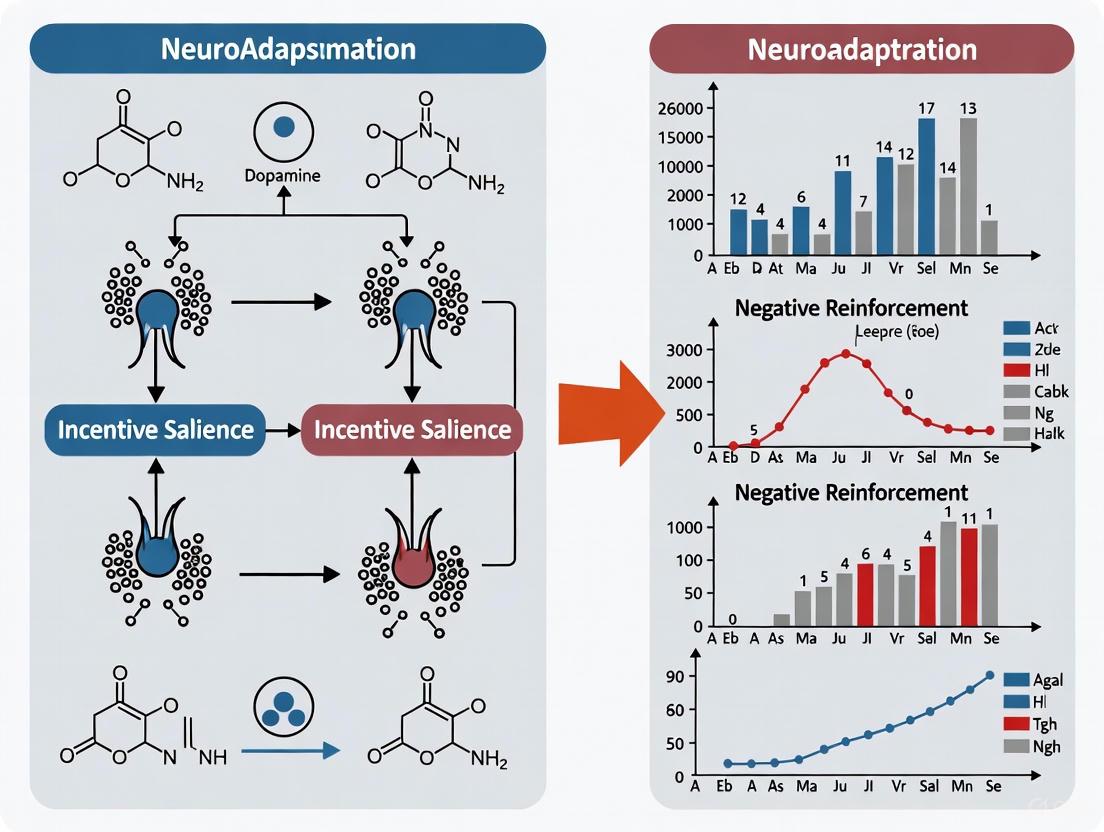
This article synthesizes contemporary neuroscience research to elucidate the neuroadaptations that underpin the transition from controlled substance use to addiction.
Neuroadaptations in Addiction: Decoding Incentive Salience and Negative Reinforcement Mechanisms
Abstract
This article synthesizes contemporary neuroscience research to elucidate the neuroadaptations that underpin the transition from controlled substance use to addiction. Focusing on the dynamic interplay between incentive salience in the binge/intoxication stage and negative reinforcement driven by hyperkatifeia in the withdrawal/negative affect stage, we provide a mechanistic framework centered on the allostatic dysregulation of brain reward and stress systems. The content explores foundational theories, cutting-edge assessment methodologies like the Addictions Neuroclinical Assessment (ANA), the neurocircuitry of the basal ganglia and extended amygdala, and the translation of these insights into novel therapeutic targets for drug development. Tailored for researchers and drug development professionals, this review bridges preclinical findings with clinical applications, addressing current challenges and future directions in the field.
The Addiction Cycle: Foundational Neurocircuitry of Incentive Salience and Negative Reinforcement
The three-stage heuristic model of addiction—encompassing binge/intoxication, withdrawal/negative affect, and preoccupation/anticipation stages—provides a comprehensive framework for understanding addiction as a chronic brain disorder driven by recurring cycles of neuroadaptation. This model conceptualizes addiction as a disorder progressing from impulsivity to compulsivity, wherein negative reinforcement mechanisms progressively dominate motivational processes [1] [2]. Groundbreaking neuroimaging and molecular studies have delineated distinct yet interconnected neural circuits that mediate each stage, revealing a cascade of neuroadaptations that reduce prefrontal executive control, enhance incentive salience, and engage brain stress systems [3] [2]. This whitepaper details the neurobiological substrates, experimental methodologies, and key molecular drivers of each addiction stage, providing researchers and drug development professionals with a sophisticated roadmap for targeting specific neurocircuits and neuroadaptive processes in therapeutic development.
Addiction is now understood as a chronic brain disease characterized by clinically significant impairments in health, social function, and voluntary control over substance use [3]. The transition from occasional substance use to addiction involves progressive neuroadaptations across multiple brain regions, fundamentally altering motivation, reward processing, and executive control [4]. The three-stage model represents a heuristic framework that captures the dynamic cycling between these different aspects of addiction, with each stage recruiting distinct neurocircuits and exhibiting unique behavioral manifestations [1].
The model highlights the shift from positive reinforcement (initial use driven by pleasurable effects) to negative reinforcement (continued use to alleviate withdrawal states) as addiction progresses [4]. This transition is mediated by allostatic adjustments in brain reward and stress systems that create a persistent deficit state, which in turn drives compulsive drug seeking [5]. The delineation of this neurobiological framework has been crucial for developing targeted interventions for substance use disorders, with several effective medications already emerging from this research paradigm [3].
Stage 1: Binge/Intoxication
The binge/intoxication stage is characterized by the pleasurable or euphoric effects of initial substance use, primarily mediated by the activation of the brain's reward system [3] [6]. This stage is dominated by positive reinforcement processes, wherein substance use is reinforced by its hedonic effects [4].
Key Neurocircuitry and Neurotransmitters
The basal ganglia, particularly the ventral striatum (including the nucleus accumbens), serve as the focal point for the rewarding effects of addictive substances [3] [2]. All addictive substances directly or indirectly increase dopamine signaling in the mesolimbic pathway projecting from the ventral tegmental area (VTA) to the nucleus accumbens [6] [2]. As addiction progresses, the dorsal striatum becomes increasingly involved, mediating the formation of habitual substance-taking behaviors [6] [2].
Table 1: Primary Neurotransmitter Systems in Binge/Intoxication Stage
| Neurotransmitter System | Role in Binge/Intoxication | Substances Primarily Involved |
|---|---|---|
| Dopamine | Enhances incentive salience; reinforces drug-taking behavior; critical for reward prediction | All addictive substances, particularly stimulants (cocaine, amphetamines) [6] |
| Opioid Peptides | Mediates pleasurable effects; modulates dopamine release | Opioids, alcohol [6] |
| GABA | Inhibitory control; modulated by alcohol and sedatives | Alcohol, benzodiazepines [2] |
| Endocannabinoids | Modulates synaptic plasticity; reward processing | Cannabis, indirect involvement with other substances [2] |
Key Experimental Protocols for Studying Binge/Intoxication
Intravenous Drug Self-Administration in Rodents: This core protocol assesses the reinforcing properties of drugs by training animals to perform an operant response (e.g., lever press, nose poke) to receive intravenous drug infusions [2]. Critical methodological considerations include:
- Catheter Implantation: Surgical implantation of chronic indwelling catheters into the jugular vein, maintained with regular heparinized saline flushes to prevent clotting.
- Dose-Response Currations: Determination of the rate of responding across a range of drug doses to establish reinforcement efficacy.
- Reinforcement Schedules: Initial fixed-ratio schedules (e.g., FR1) progress to more complex schedules (e.g., progressive ratio, second-order schedules) to assess motivation and habit formation [2].
Fast-Scan Cyclic Voltammetry (FSCV): This electrochemical technique enables real-time (sub-second) measurement of dopamine concentration changes in specific brain regions (e.g., nucleus accumbens) in awake, behaving animals during drug administration [2]. Implementation involves:
- Carbon Fiber Microelectrode Implantation: Placement in brain regions of interest to detect dopamine oxidation currents.
- Electrical Stimulation: Application of patterned stimulation to dopamine neurons or drug administration while applying a triangular voltage waveform to the electrode.
- Data Analysis: Identification of dopamine signals based on characteristic oxidation and reduction potentials.
Stage 2: Withdrawal/Negative Affect
The withdrawal/negative affect stage emerges when access to the substance is prevented, characterized by a negative emotional state including dysphoria, anxiety, irritability, and physical manifestations of withdrawal [1]. This stage marks the critical transition to negative reinforcement, wherein substance use is motivated by the desire to alleviate this aversive state [4].
Key Neurocircuitry and Neurotransmitters
The extended amygdala (including the central nucleus of the amygdala, bed nucleus of the stria terminalis, and sublenticular substantia innominata) plays a pivotal role in this stage, particularly through the recruitment of brain stress systems [3] [2]. Key neuroadaptations include the activation of corticotropin-releasing factor (CRF), dynorphin, and norepinephrine systems, which collectively contribute to the negative emotional state associated with withdrawal [5] [2].
The concept of hyperkatifeia (from the Greek "katifeia" for dejection) has been advanced to describe the heightened intensity of negative emotional/motivational symptoms during withdrawal from addictive drugs [5]. Recent research has also highlighted the intersection between hyperalgesia (increased pain sensitivity) and hyperkatifeia during alcohol withdrawal, suggesting overlapping neural substrates for physical and emotional pain [5].
Table 2: Stress Neurotransmitters in Withdrawal/Negative Affect Stage
| Stress Neurotransmitter | Role in Withdrawal/Negative Affect | Therapeutic Targeting Potential |
|---|---|---|
| Corticotropin-Releasing Factor (CRF) | Drives anxiety-like responses; activated in extended amygdala during withdrawal | CRF1 receptor antagonists show efficacy in reducing stress-induced relapse [5] [2] |
| Dynorphin | Endogenous κ-opioid receptor agonist; produces dysphoric effects; upregulated in addiction | κ-opioid receptor antagonists show promise for reducing dysphoria [5] [2] |
| Norepinephrine | Mediates stress responses, anxiety, and autonomic hyperactivity during withdrawal | α2-adrenergic agonists (e.g., clonidine) used clinically to reduce withdrawal symptoms [2] |
| Vasopressin | Potentiates CRF effects; enhances stress response | V1b receptor antagonists in experimental investigation [5] |
Key Experimental Protocols for Studying Withdrawal/Negative Affect
Intracranial Self-Stimulation (ICSS) Threshold Measurement: This protocol assesses brain reward function by measuring the minimal electrical stimulation to reward pathways (e.g., medial forebrain bundle) that an animal will work to obtain [2]. During drug withdrawal, elevated ICSS thresholds reflect a hedonic deficit state, providing a quantitative measure of the anhedonic component of withdrawal. Methodology includes:
- Electrode Implantation: Chronic implantation of stimulating electrodes into target brain regions.
- Threshold Determination: Use of discrete-trial or rate-frequency procedures to determine the minimum stimulation intensity maintaining operant responding.
- Withdrawal Assessment: Measurement of threshold elevations at various time points following drug discontinuation.
Quantitative Measures of Somatic and Affective Withdrawal Signs: Species-specific batteries are used to quantify physical and emotional manifestations of withdrawal [5] [2]. For example, in alcohol research:
- Somatic Signs: Counting tremors, head shakes, seizures, and other physical manifestations.
- Affective Signs: Using elevated plus maze, light-dark box, or operant conflict tests to assess anxiety-like behavior.
- Hyperalgesia Assessment: Measuring decreased pain thresholds using von Frey filaments or hot plate tests during alcohol withdrawal [5].
Stage 3: Preoccupation/Anticipation
The preoccupation/anticipation stage (or "craving" stage) involves the intense desire for the substance and its seeking after a period of abstinence [6]. This stage is characterized by deficits in executive function and impaired inhibitory control, leading to relapse [3].
Key Neurocircuitry and Neurotransmitters
The prefrontal cortex (including orbitofrontal, prelimbic, and cingulate cortices) plays a critical role in this stage, particularly through its connections with the basolateral amygdala, hippocampus, and dorsal striatum [3] [2]. The disruption of executive control networks reduces the ability to resist drug-seeking impulses, while memory and conditioning processes enhance the salience of drug-associated cues [7].
Recent research has revealed sex-specific physiological neuroadaptations in prelimbic cortex neurons projecting to the nucleus accumbens during cocaine abstinence, with increased excitability in Drd1-expressing neurons in males that normalizes after cue-induced relapse [8]. Similarly, synaptic adaptations (measured by AMPA/NMDA ratio) show distinct patterns between males and females during abstinence [8].
Key Experimental Protocols for Studying Preoccupation/Anticipation
Cue-Induced Reinstatement Paradigm: This gold-standard protocol models relapse in animals by measuring drug-seeking behavior in response to drug-associated cues after a period of extinction and abstinence [8] [2]. Key elements include:
- Self-Administration Training: Animals learn to self-administer drugs paired with discrete cues (e.g., light, tone).
- Extinction Phase: Drug and associated cues are withheld until operant responding declines to a baseline level.
- Reinstatement Test: Presentation of drug-associated cues (without drug availability) measures renewed drug-seeking behavior.
Electrophysiological Characterization of Prefrontal Neurons: Ex vivo patch-clamp electrophysiology in brain slices is used to measure abstinence-induced neuroadaptations in specific neuronal populations [8]. Critical methodological aspects include:
- Cell-Type-Specific Labeling: Use of Cre-lox transgenic rats (e.g., Drd1-Cre, Drd2-Cre) with viral vector labeling of projection-specific neurons.
- Measurement of Intrinsic Excitability: Current-clamp recordings to determine changes in action potential firing in response to depolarizing current.
- Synaptic Plasticity Assessment: Voltage-clamp recordings to measure changes in AMPA/NMDA ratio and spontaneous excitatory postsynaptic currents (sEPSCs).
Molecular Neuroadaptations Across the Addiction Cycle
The transition through the addiction stages involves a cascade of molecular neuroadaptations that progressively alter synaptic function, neuronal excitability, and circuit-level communication [2]. Key adaptations include:
ΔFosB Accumulation: This stable transcription factor accumulates in the nucleus accumbens with repeated drug exposure, promoting sensitized responses to drugs and enhancing drug-seeking behavior [2].
CREB Regulation in the Extended Amygdala: Upregulation of cAMP response element-binding protein (CREB) in the extended amygdala during withdrawal increases dynorphin expression, contributing to dysphoric states [2].
Glutamate Receptor Trafficking: Abstinence from cocaine and other drugs alters AMPA receptor subunit composition (increased GluA2-lacking receptors) and trafficking in the nucleus accumbens and prefrontal cortex, enhancing synaptic strength and contributing to incubation of craving [8] [2].
The following diagram illustrates the key neuroadaptations and their progression through the three stages of addiction:
Neuroadaptation Progression Through Addiction Stages
The Scientist's Toolkit: Essential Research Reagents and Models
Table 3: Key Research Reagents for Addiction Neuroscience
| Reagent/Model | Function/Application | Experimental Use |
|---|---|---|
| Cre-lox Transgenic Rodents (e.g., Drd1-Cre, Drd2-Cre) | Enables cell-type-specific targeting and manipulation of distinct neuronal populations | Studying specific neural pathways in addiction; optogenetic/chemogenetic manipulation [8] |
| Channelrhodopsin (ChR2) & Archaerhodopsin (ArchT) | Optogenetic control of neuronal activity with millisecond precision | Establishing causal relationships between specific neuronal activity patterns and drug-seeking behaviors [2] |
| Designer Receptors Exclusively Activated by Designer Drugs (DREADDs) | Chemogenetic control of neuronal activity via administration of inert ligands (e.g., CNO) | Manipulating neuronal activity over longer timescales relevant to addiction processes [2] |
| Viral Vectors (AAV, LV, HSV) | Delivery of genetic material to specific brain regions for expression of sensors, actuators, or modulators | Pathway-specific labeling and manipulation; gene expression knockdown or overexpression [8] |
| Fast-Scan Cyclic Voltammetry (FSCV) | Real-time detection of neurotransmitter release (primarily dopamine) in behaving animals | Measuring phasic dopamine signaling during drug administration and cue presentation [2] |
| Fibre Photometry | Recording population-level neuronal activity using calcium or neurotransmitter sensors | Monitoring neural ensemble activity during drug-seeking behaviors across addiction stages [8] |
| Rp-cAMPs | Protein kinase A (PKA) inhibitor | Investigating cAMP-PKA signaling pathways in synaptic plasticity during abstinence [8] |
The three-stage model of addiction provides a powerful heuristic framework for understanding the neurobiological progression from voluntary drug use to compulsive addiction. The binge/intoxication stage primarily involves dopamine-mediated reinforcement in basal ganglia circuits; the withdrawal/negative affect stage engages CRF and dynorphin systems in the extended amygdala; and the preoccupation/anticipation stage involves glutamate-mediated dysregulation of prefrontal cortical circuits [3] [2]. The transition through these stages is marked by progressive neuroadaptations that enhance incentive salience, establish negative reinforcement mechanisms, and diminish executive control [4].
Future research directions include better characterization of the neuroimmune contributions to addiction, understanding sex differences in neuroadaptations [8], elucidating epigenetic mechanisms that confer vulnerability, and developing circuit-specific interventions that can reverse or prevent the neuroadaptations driving addiction [7]. The continuing refinement of this heuristic model will undoubtedly yield novel targets for the development of more effective therapeutic strategies for substance use disorders.
Substance use disorders (SUDs) are characterized by a profound dysregulation of the brain's motivational systems, driven by a series of enduring neuroadaptations. This whitepaper delineates three core concepts—incentive salience, pathological habits, and the transition from positive to negative reinforcement—that form a modern framework for understanding the persistence of addictive behaviors. These processes are not mutually exclusive but represent interacting vulnerabilities that compromise goal-directed behavior and promote compulsion [9] [10] [11]. The ensuing sections provide a detailed examination of the definitions, underlying neurocircuitry, experimental paradigms, and quantitative data associated with each concept, providing a technical resource for researchers and drug development professionals.
Incentive Salience: The Neural Mechanism of "Wanting"
Conceptual Definition and Distinction from "Liking"
Incentive salience is a form of motivation, specifically a "wanting" process that attributes a motivational magnetic quality to reward-predicting cues [9] [12]. It is crucial to distinguish this from the hedonic "liking" of a reward. The two processes are dissociable both psychologically and neurobiologically [9].
- "Wanting" (Incentive Salience): A motivational process that makes cues associated with rewards attention-grabbing and attractive, triggering urges to pursue and consume the reward. It is largely mediated by mesocorticolimbic dopamine systems [9] [12].
- "Liking" (Hedonic Impact): The actual pleasurable impact of reward consumption. It is mediated by smaller, more fragile neural systems in hedonic hotspots within the nucleus accumbens and ventral pallidum that involve opioid and endocannabinoid signaling, and is not dependent on dopamine [9].
This dissociation is the foundation of the Incentive-Sensitization Theory of Addiction, which posits that repeated drug use sensitizes the mesolimbic dopamine system, leading to an excessive amplification of cue-triggered "wanting" for drugs, without a corresponding increase in drug "liking" [9].
Neurobiological Substrates and Sensitization
The primary neural circuit for incentive salience centers on the mesocorticolimbic dopamine pathway, comprising dopaminergic neurons in the ventral tegmental area (VTA) that project to the nucleus accumbens (NAc), prefrontal cortex (PFC), amygdala, and other forebrain structures [12].
Table 1: Key Neuroadaptations in the Incentive Salience Pathway in Addiction
| Brain Region | Primary Function in Incentive Salience | Documented Neuroadaptations |
|---|---|---|
| Ventral Tegmental Area (VTA) | Origin of dopaminergic projections; site for initial drug action. | Increased sensitivity to drug-associated stimuli; synaptic plasticity. |
| Nucleus Accumbens (NAc) | Key site for attributing motivational value; "wanting" integration. | Neural sensitization; increased dendritic length & spine density. |
| Amygdala | Processes emotional salience of cues; modulates dopamine release. | Enhanced cue-reward learning; strengthened connections to NAc. |
| Prefrontal Cortex (PFC) | Involved in cognitive desire and goal-direction; regulates subcortex. | Dysregulated glutamatergic output to NAc and VTA; impaired top-down control. |
Repeated drug exposure induces neural sensitization—a long-lasting increase in the responsiveness of dopamine-related systems to the drug and its associated cues [9]. This is supported by cellular changes, including increased dendritic length and spine density in medium spiny neurons of the NAc and pyramidal neurons of the PFC, as well as changes in dopamine receptor function (e.g., increased D1 receptor sensitivity and reduced D2 receptor availability) [12]. Phasic dopamine signaling, characterized by rapid bursts of activity, is critical for encoding reward prediction error and driving cue-directed seeking behavior [12].
Experimental Protocols and Measurement
Animal Models: A quintessential protocol is the Pavlovian Conditioned Approach (Pavlovian Instrumental Transfer can also be used). In this paradigm, a conditioned stimulus (CS; e.g., a lever extending or a light turning on) is paired with the delivery of an unconditioned stimulus (US; e.g., a food pellet). This procedure elicits distinct behavioral phenotypes [12]:
- Sign-Trackers: Animals that approach and interact with the CS (the lever). This behavior is a direct index of incentive salience, as the cue itself becomes attractive and "wanted."
- Goal-Trackers: Animals that approach the location of reward delivery (the food magazine) upon CS presentation.
The strength of sign-tracking can be quantified by the number of contacts with the CS, the latency to contact it, and the probability of contacting it. Furthermore, the conditioned reinforcement paradigm, where the animal will work to present the CS in the absence of the primary reward, is a powerful measure of the cue's acquired motivational value [12].
Human Studies: In humans, incentive salience is often proxied through cue reactivity paradigms during functional magnetic resonance imaging (fMRI) or positron emission tomography (PET). Participants are exposed to drug-related cues (e.g., pictures of drug paraphernalia) versus neutral cues. The key dependent measures are [13] [12]:
- Brain Activation: Increased BOLD signal in mesocorticolimbic circuits (ventral striatum, amygdala, mPFC, anterior cingulate cortex, insula).
- Self-Report: Ratings of craving and desire to use the drug.
- Physiological Arousal: Changes in skin conductance, heart rate.
- Attentional Bias: Measured via tasks like the visual probe or Stroop task, where drug cues capture attention more readily than neutral cues.
Table 2: Quantitative Findings from Human Neuroimaging Studies on Cue Reactivity
| Substance | Key Brain Regions Activated | Reported Effect Sizes (e.g., Cohen's d) or BOLD Signal Change | Correlation with Clinical Outcomes |
|---|---|---|---|
| Methamphetamine | Ventral Striatum, ACC, mPFC, Amygdala | Studies report significantly greater activation vs. controls (p < 0.001) [13]. | Enhanced cue reactivity predicts worse relapse outcomes [12]. |
| Cocaine | Medial Prefrontal Cortex, Anterior Cingulate | Dopamine increases in dorsal striatum correlated with craving (r = 0.78) [9]. | Cue-induced craving is a strong predictor of near-term relapse. |
| Nicotine | Ventral Striatum, Subgenual ACC | Mindfulness intervention reduced craving with moderate effect size (d = ~0.5) [12]. | Reduced cue reactivity after treatment is associated with better prognosis. |
Diagram 1: Neural circuit of incentive salience.
Pathological Habits: The Automation of Drug Seeking
From Goal-Directed Action to Stimulus-Response Habit
Habit formation in the context of addiction refers to a shift from flexible, goal-directed actions to rigid, automatic stimulus-response behaviors [10] [14]. In non-pathological states, these two systems operate in balance. However, in SUD, this balance is disrupted.
- Goal-Directed Behavior: Dependent on a Response-Outcome (R-O) association. The behavior is performed because it is expected to produce a desired outcome. It is sensitive to changes in the value of the outcome (e.g., devaluation) and the causal relationship between the response and the outcome [10] [14].
- Habitual Behavior: Dependent on a Stimulus-Response (S-R) association. The behavior is triggered automatically by antecedent stimuli and is performed largely independently of the current value of the outcome. It is characterized by its insensitivity to outcome devaluation and contingency degradation [10] [14].
Addictive drugs are hypothesized to accelerate the transition from goal-directed to habitual control and/or impair the goal-directed system's ability to override habitual responses, leading to compulsive drug use that persists despite negative consequences [10].
Neural Circuits of Habit Formation
The transition from action to habit involves a shift in the neural locus of control from ventral to dorsal striatal circuits [10] [14].
- Ventral Striatum (NAc): Critical for the initial acquisition of goal-directed actions and the processing of reward value.
- Dorsolateral Striatum (DLS): Becomes increasingly engaged as a behavior becomes habitual. This region is essential for the performance of well-learned, automatic S-R behaviors.
This striatal shift is modulated by inputs from the prefrontal cortex (providing top-down executive control) and the midbrain dopamine system (reinforcing the S-R associations) [10].
Experimental Protocols: Devaluation and Contingency Degradation
The gold-standard experimental designs for differentiating goal-directed from habitual behavior in animal models are outcome devaluation and reinforcer degradation tests, typically conducted in extinction to prevent new learning [10] [14].
Protocol 1: Outcome Devaluation
- Training: Animals are trained to perform an instrumental action (e.g., lever pressing) to earn a specific food reward (Outcome O1).
- Devaluation: The value of O1 is reduced before a critical test. This can be achieved by:
- Specific Satiety: Pre-feeding the animal with O1 until sated.
- Conditioned Taste Aversion (CTA): Pairing consumption of O1 with lithium chloride-induced gastrointestinal malaise.
- Test: The animal is placed in the operant chamber with the lever available, but no rewards are delivered (extinction). The rate of lever pressing is measured.
- Goal-Directed Outcome: A significant reduction in responding on the lever that previously earned the devalued outcome.
- Habitual Outcome: No significant reduction in responding, indicating insensitivity to the current value of the outcome.
Protocol 2: Reinforcer Degradation
- Training: As above.
- Degradation: The causal relationship between the action and its outcome is degraded. For example, the outcome (O1) is now delivered non-contingently at times when the animal is not performing the action, making its delivery independent of the animal's behavior.
- Test: The animal is tested in extinction.
- Goal-Directed Outcome: A selective reduction in performance of the action whose contingency has been degraded.
- Habitual Outcome: No selective reduction in performance.
Studies using these paradigms have shown that extended training, stress, and exposure to drugs of abuse can promote habitual responding [10].
The Shift from Positive to Negative Reinforcement
Defining the Reinforcement Spectrum
The motivation for drug use evolves throughout the addiction cycle, marked by a critical shift from positive to negative reinforcement drivers [13] [11] [15].
- Positive Reinforcement: The initial stage of drug use. The drug use behavior is reinforced by the presentation of a positive, pleasurable stimulus—the "high" or euphoria produced by the drug. The individual uses drugs to feel good [15].
- Negative Reinforcement: A later stage, central to the development of addiction. The drug use behavior is reinforced by the removal or avoidance of an aversive state. The individual uses drugs to escape feeling bad [13] [11] [15]. This aversive state can include withdrawal symptoms, negative mood states (dysphoria, anxiety, irritability), and heightened stress.
The "Dark Side" of Addiction: Neurobiology of Negative Reinforcement
Koob & Le Moal's Opponent Process Theory and the associated "dark side" conceptualization provide a neurobiological framework for negative reinforcement [11]. Chronic drug use triggers two categories of counter-adaptive neuroadaptations that create a powerful negative motivational state:
- Within-System Adaptations: Changes within the brain's primary reward circuits. This includes a decrease in the function of the dopamine reward system and the reward neurotransmitters in the NAc and VTA, leading to a hypofunctional reward state [13] [11].
- Between-System Adaptations: Recruitment of brain stress systems. This includes increased activity of corticotropin-releasing factor (CRF) in the amygdala and norepinephrine in the bed nucleus of the stria terminalis, as well as activation of the dynorphin/kappa-opioid receptor system in the NAc, which has dysphoric effects [11].
These combined adaptations create an "antireward" system, or the "darkness within," that manifests as the motivational symptoms of withdrawal—anxiety, irritability, dysphoria, and anhedonia. Drug use then becomes negatively reinforced as it temporarily restores homeostasis and alleviates this aversive state [11].
Diagram 2: Shift from positive to negative reinforcement.
The Three-Stage Cycle and Evidence in Methamphetamine Use Disorder
The modern conceptualization of addiction as a recurring three-stage cycle—Binge/Intoxication, Withdrawal/Negative Affect, and Preoccupation/Anticipation—encapsulates the interplay of positive and negative reinforcement [13] [11]. This cycle intensifies over time, driven by the neuroadaptations described above.
Research on Methamphetamine Use Disorder (MUD) provides strong evidence for negative reinforcement. Individuals with MUD show:
- Self-Report Data: A significant portion of users report using methamphetamine to alleviate negative emotional states [13].
- Behavioral and Cognitive Deficits: Difficulties with emotion regulation, impaired cognitive control, and blunted responsiveness to natural rewards [13].
- Neuroimaging Correlates: Altered brain function in regions supporting emotion and reward processing, including the insula, anterior cingulate cortex (ACC), and striatum, during tasks involving loss, negative emotion, or stress [13].
The Scientist's Toolkit: Key Research Reagents and Materials
Table 3: Essential Reagents and Models for Studying Addiction Neuroadaptations
| Reagent / Model | Function/Description | Example Application in Addiction Research |
|---|---|---|
| Pavlovian Conditioned Approach (Sign-Tracking Model) | Behavioral paradigm to measure the attribution of incentive salience to a reward-predicting cue. | Identifying individuals (rats) with high vs. low vulnerability to cue-triggered "wanting" [12]. |
| Outcome Devaluation Paradigm | Behavioral test to dissociate goal-directed (sensitive) from habitual (insensitive) actions. | Determining the extent to which chronic drug exposure accelerates habit formation [10] [14]. |
| Conditioned Place Aversion/Aversion | Test to measure the rewarding (preference for drug-paired side) or aversive (avoidance of withdrawal-paired side) properties of a state. | Quantifying the negative affective state associated with drug withdrawal [13]. |
| Dopamine Receptor Antagonists (e.g., SCH-23390 for D1, Raclopride for D2) | Pharmacological tools to block specific dopamine receptor subtypes. | Probing the necessity of dopamine signaling for the expression of incentive salience or drug seeking [9] [12]. |
| CRF Receptor Antagonists | Compounds that block the corticotropin-releasing factor receptor. | Testing the role of brain stress systems in negative reinforcement and stress-induced relapse [11]. |
| Functional Magnetic Resonance Imaging (fMRI) | Non-invasive neuroimaging to measure brain activity via blood oxygenation level-dependent (BOLD) signal. | Mapping cue-reactivity in the human mesocorticolimbic system and correlating it with craving [13] [12]. |
| Fast-Scan Cyclic Voltammetry (FSCV) | Electrochemical technique for measuring real-time, phasic dopamine release in vivo. | Characterizing dopamine dynamics in the NAc in response to drug cues vs. natural rewards [12]. |
The progression to compulsive addiction is a path marked by distinct yet interwoven neuroadaptations. The path begins with the sensitization of incentive salience, where mesolimbic dopamine circuits hyper-respond to drug cues, creating powerful, cue-triggered "wanting." This is compounded by the formation of pathological habits, as control over drug-seeking shifts to dorsal striatal circuits, rendering the behavior automatic and insensitive to negative outcomes. Finally, the fundamental motivation for use undergoes a critical shift, driven by negative reinforcement as the brain's anti-reward systems are recruited, forcing the individual to use drugs primarily to escape the dysphoric state of withdrawal. This tripartite model provides a comprehensive framework for identifying novel therapeutic targets aimed at rebalancing motivation, restoring behavioral control, and mitigating the negative affect that fuels the addictive cycle.
Hyperkatifeia, derived from the Greek katifeia for dejection or negative emotional state, is defined as a potentiated intensity of negative emotional and motivational signs and symptoms during withdrawal from drugs of abuse [16] [5] [17]. This concept is central to understanding the withdrawal/negative affect stage of the addiction cycle and serves as a key driver of compulsive drug seeking through the process of negative reinforcement—the increase in the probability of a behavior (drug taking) to remove an aversive stimulus (hyperkatifeia) [16] [18]. The study of hyperkatifeia represents a paradigm shift in addiction research, moving beyond the positive reinforcing effects of drugs to focus on the negative emotional core that perpetuates relapse and compulsive use. This whitepaper provides an in-depth technical guide to the neurobiological substrates, experimental methodologies, and significance of hyperkatifeia within a broader thesis on neuroadaptations in addiction.
Theoretical Framework and Clinical Significance
The Three-Stage Addiction Cycle
Hyperkatifeia is conceptualized within a heuristic framework of addiction that involves three interconnected stages:
- Binge/Intoxication Stage: Focused on the positive reinforcing effects of drugs and the domain of incentive salience/pathological habits, primarily involving the basal ganglia [16].
- Withdrawal/Negative Affect Stage: Characterized by the emergence of a negative emotional state when drug access is prevented, encompassing the domain of negative emotional states and mediated by the extended amygdala. It is in this stage that hyperkatifeia manifests and drives negative reinforcement [16] [18].
- Preoccupation/Anticipation Stage: Involves craving and deficits in executive function mediated by the prefrontal cortex, leading to relapse [16].
These stages interact in a spiraling cycle that intensifies over time, leading to the pathological state of substance use disorder [16]. The allostatic model of addiction posits that repeated drug use leads to a persistent deviation of brain reward and stress systems from their homeostatic set points, resulting in a progressively worsening state that underlies hyperkatifeia [16] [18].
Epidemiological Burden and Public Health Impact
The significance of understanding hyperkatifeia is underscored by the substantial public health burden of addiction. The following table summarizes key epidemiological data for alcohol and opioid use disorders in the United States:
Table 1: Epidemiological and Public Health Impact of Alcohol and Opioid Use Disorders
| Metric | Opioids | Alcohol |
|---|---|---|
| Past-Year Misuse/Use | 10,250,000 (3.7% of population) | 179,289,000 (65.5% of population) |
| Use Disorder Prevalence | 2,028,000 (0.7% of population) | 14,818,000 (5.4% of population) |
| Emergency Department Visits (Primary Reason) | 408,079 | 1,714,757 |
| Total Deaths (Annual) | 46,802 (2018) | ~95,000 |
| Notable Combinations | 15% of opioid overdose deaths involved alcohol (2018) | Particularly dangerous combination with opioids [16] |
Alcohol and opioids significantly contribute to "deaths of despair," including overdoses, suicides, and liver disease [16]. Between 1999 and 2017, deaths from alcohol-associated liver disease nearly doubled from 11,947 to 22,245 [16]. The combination of alcohol and opioids is particularly dangerous, with studies showing that alcohol at a blood alcohol level of 0.10% can further reduce ventilation by 19% from baseline when combined with oxycodone, increasing apneic events [16].
Neurobiological Substrates of Hyperkatifeia
The neurobiology of hyperkatifeia involves dysregulations in specific brain circuits and neurotransmitter systems, primarily centered on the extended amygdala and its connections [16]. These dysregulations can be categorized into within-system and between-system neuroadaptations.
Key Neurocircuitry and Neurotransmitter Systems
Table 2: Neural Systems and Neurotransmitters in Hyperkatifeia
| System Category | Specific Elements | Direction of Change in Addiction | Primary Function in Hyperkatifeia |
|---|---|---|---|
| Within-System Adaptations | Dopamine | Decreased | Reduced reward function |
| Enkephalin/Endorphin Opioid Peptides | Decreased | Diminished natural reward | |
| GABA/Glutamate | Imbalance (GABA↓, Glutamate↑) | Increased anxiety, neuronal excitability | |
| Between-System Pro-Stress Adaptations | Corticotropin-Releasing Factor (CRF) | Increased | Enhanced stress response |
| Dynorphin | Increased | Dysphoria, aversive states | |
| Norepinephrine | Increased | Anxiety, autonomic hyperactivity | |
| Hypocretin (Orexin) | Increased | Arousal, stress reactivity | |
| Between-System Anti-Stress Adaptations | Neuropeptide Y (NPY) | Decreased | Reduced stress buffering |
| Endocannabinoids | Decreased | Diminished emotional homeostasis | |
| Oxytocin | Decreased | Impaired social reward, stress relief | |
| Nociceptin | Decreased | Loss of anti-stress, anti-reward effects |
These neuroadaptations are hypothesized to mediate a negative hedonic set point that gradually gains allostatic load and shifts from a homeostatic hedonic state to an allostatic hedonic state [16]. The extended amygdala serves as a integration center for these signals, with significant overlap in brain circuits mediating both emotional and physical pain [5] [17].
Diagram 1: Neurobiological Systems Underlying Hyperkatifeia. This diagram illustrates the within-system and between-system neuroadaptations that converge on the extended amygdala to mediate hyperkatifeia in addiction.
Intersection with Physical Pain Systems
A critical development in understanding hyperkatifeia is its intersection with physical pain systems, particularly hyperalgesia (increased sensitivity to pain) [5] [17]. The Catastrophizing, Anxiety, Negative Urgency, and Expectancy (CANUE) model elaborates a conceptual framework for this intersection, proposing shared neurocircuitry between emotional and physical pain in the extended amygdala [5] [17].
Repeated misuse of alcohol and other drugs results in both hyperkatifeia and hyperalgesia, reflected by:
- Elevations of reward thresholds (anhedonia)
- Lower pain thresholds
- Anxiety-like and dysphoric-like responses during withdrawal [5] [17]
This intersection dramatically reinforces the role of negative reinforcement in alcohol and drug addiction, fitting within the allostasis framework where genetic/epigenetic vulnerability, childhood trauma, and other stressors exacerbate hyperalgesia/hyperkatifeia in driving substance use disorders [5] [17].
Experimental Approaches and Methodologies
Behavioral Assays for Measuring Hyperkatifeia
Table 3: Experimental Protocols for Assessing Hyperkatifeia in Animal Models
| Behavioral Domain | Assay Name | Detailed Protocol | Key Measured Parameters | Species Validation |
|---|---|---|---|---|
| Anhedonia/ Reward Deficits | Intracranial Self-Stimulation (ICSS) | Implant stimulating electrodes in reward sites (medial forebrain bundle). Train subjects to self-stimulate. Measure threshold changes pre- and post-drug withdrawal. | Elevations in reward thresholds (increased current required for reinforcement) | Rat, Mouse [16] [18] |
| Anxiety-Like Behaviors | Elevated Plus Maze | Place subject in center of plus-shaped apparatus with two open and two enclosed arms. Record 5-10 minute test session. | Percentage of time in open arms; Number of open arm entries | Rat, Mouse [16] |
| Depressive-Like Behaviors | Forced Swim Test | Place subject in inescapable cylinder of water (23-25°C). Record 5-6 minute test session. Measure immobility time after initial escape attempts. | Duration of immobility (floating); Latency to first immobility | Rat, Mouse [18] |
| Social Interaction Deficits | Social Interaction Test | Place subject in novel arena with conspecific for 10 minutes. Video record and score interactions. | Time spent in active social behaviors (sniffing, following, grooming); Social preference ratio | Rat, Mouse [16] |
| Mechanical Pain Sensitivity | Von Frey Filaments | Place subject on elevated mesh platform. Apply calibrated filaments to plantar surface of hindpaw. Use up-down method to determine threshold. | Paw withdrawal threshold (grams); Response frequency | Mouse [5] |
The Scientist's Toolkit: Essential Research Reagents
Table 4: Key Research Reagent Solutions for Hyperkatifeia Studies
| Reagent Category | Specific Examples | Function/Application | Experimental Use |
|---|---|---|---|
| CRF Receptor Antagonists | Antalarmin, CP-154,526, R121919 | Block CRF1 receptors to reduce stress-like responses | Testing CRF system involvement in withdrawal-induced anxiety [16] |
| Kappa Opioid Receptor Antagonists | Nor-binaltorphimine (nor-BNI), JDTic | Block dynorphin actions to attenuate dysphoric states | Reversal of withdrawal-induced place aversion, anhedonia [16] |
| NK1 Receptor Antagonists | Aprepitant, L-733,060 | Substance P receptor blockade for stress and emotional pain | Reduction of alcohol withdrawal-induced anxiety [16] |
| NPY Receptor Agonists | NPY, [Leu³¹,Pro³⁴]NPY | Enhance NPY signaling for anti-stress effects | Reduction of alcohol self-administration in dependent animals [16] |
| Nociceptin/Orphanin FQ Agonists | Nociceptin, Ro 64-6198 | Activate NOP receptors for anti-stress, anti-reward effects | Reduction of anxiety-like behavior and drug seeking [16] |
| Vasopressin Receptor Antagonists | SRX251, SSR149415 | Block V1b receptors to reduce stress response | Attenuation of stress-induced drug seeking [16] |
| Histone Deacetylase Inhibitors | Trichostatin A, SAHA | Epigenetic modulation of stress gene expression | Decrease hyperalgesia in alcohol withdrawal models [5] |
| DREADDs and Chemogenetics | hM3Dq, hM4Di | Cell-type specific neuromodulation | Circuit-specific manipulation of extended amygdala [16] |
Diagram 2: Experimental Workflow for Hyperkatifeia Research. This flowchart outlines a comprehensive methodological approach for investigating hyperkatifeia in preclinical models, from dependence induction through behavioral analysis and neurobiological validation.
Neuroadaptive Changes and Molecular Mechanisms
The transition to addiction involves profound neuroadaptations within brain reward and stress systems that underlie the expression of hyperkatifeia during drug withdrawal. Chronic drug exposure leads to within-system neuroadaptations in the dopamine system, characterized by decreased dopamine D2 receptor expression and decreased dopamine release in the nucleus accumbens, contributing to anhedonia and reward deficits [16] [18]. Simultaneously, between-system neuroadaptations occur where brain stress systems such as corticotropin-releasing factor (CRF), dynorphin, and norepinephrine in the extended amygdala become hyperactivated, while anti-stress systems such as neuropeptide Y (NPY), endocannabinoids, and oxytocin become hypoactive [16].
These neuroadaptations are thought to mediate a negative hedonic set point that represents an allostatic state—stability through change—where the brain's reward and stress systems are persistently dysregulated [16] [18]. This allostatic state manifests behaviorally as hyperkatifeia when drug use is discontinued, creating a powerful source of motivation for continued drug use through negative reinforcement.
Epigenetic Mechanisms
Emerging evidence indicates that epigenetic mechanisms contribute to the persistence of hyperkatifeia, particularly during protracted withdrawal. Histone modifications and DNA methylation changes regulate the expression of genes involved in stress and reward pathways [5]. For example, histone deacetylase inhibitors have been shown to decrease hyperalgesia in mouse models of alcohol withdrawal-induced hyperalgesia, suggesting epigenetic regulation of the hyperkatifeia/hyperalgesia interface [5].
Implications for Medication Development and Future Research
Novel Therapeutic Targets
Understanding the neurobiology of hyperkatifeia opens promising new avenues for medication development. Rather than targeting the primary reinforcing effects of drugs, treatments that reset brain stress, anti-stress, and emotional pain systems toward homeostasis represent a paradigm shift in addiction therapeutics [16]. Based on the neuroadaptations summarized in Table 2, promising targets include:
- CRF1 receptor antagonists to normalize hyperactive stress systems
- Kappa opioid receptor antagonists to counteract dynorphin-mediated dysphoria
- NPY receptor agonists to enhance anti-stress systems
- Nociceptin/orphanin FQ receptor agonists to provide anti-stress, anti-reward effects
- Vasopressin receptor antagonists to modulate stress response [16]
The focus on treating hyperkatifeia and its intersection with hyperalgesia provides new frameworks for understanding the etiology of alcohol and other substance use disorders and developing more effective treatments [5] [17].
The Addictions Neuroclinical Assessment (ANA) Framework
The ANA represents a reverse translational approach that incorporates three neuroscience-based functional domains—incentive salience, negative emotionality, and executive function—to transform the assessment and nosology of addictive disorders [19]. This framework addresses the considerable clinical heterogeneity in addictive disorders by focusing on underlying neurobiological differences rather than overt behavioral symptoms alone [19]. Within this framework, hyperkatifeia represents a core component of the negative emotionality domain that can be measured across species, facilitating reverse translation from animal models to human patients.
Hyperkatifeia represents a fundamental component of addiction that drives compulsive drug seeking through negative reinforcement. Its neurobiological basis involves complex interactions between within-system and between-system neuroadaptations centered on the extended amygdala, with significant overlap in circuits mediating emotional and physical pain. The conceptualization of hyperkatifeia has important implications for understanding the progression of addictive disorders and developing novel treatment strategies that target the negative emotional core of addiction rather than merely the positive reinforcing effects of drugs. Future research focusing on the neuroadaptations underlying hyperkatifeia will continue to advance our understanding of addiction and contribute to more effective, targeted interventions for substance use disorders.
This whitepaper provides a comprehensive analysis of the basal ganglia's intricate role in processing reward and assigning incentive salience—a neural process that becomes profoundly dysregulated in addiction. By synthesizing contemporary neurobiological research, we detail the specific circuits within the basal ganglia that mediate the transition from goal-directed behavior to compulsive drug-seeking, with a particular emphasis on the underlying neuroadaptations. The document integrates quantitative neurochemical data, outlines key experimental paradigms for investigating these mechanisms, and presents visual circuit models. This resource is intended to facilitate the development of targeted therapeutic strategies for substance use disorders by researchers and drug development professionals.
The basal ganglia, a group of subcortical nuclei, are fundamentally involved in the control of motivated behavior, integrating motor, cognitive, and affective information to guide action selection. While historically characterized for their role in movement, evidenced by the motor deficits of Parkinson's disease, it is now unequivocal that they are central to processing reward, reinforcement, and motivation [20]. The basal ganglia help solve a critical computational problem: determining which environmental stimuli are worth pursuing and which actions are most likely to yield a positive outcome. This process involves attributing incentive salience to neutral stimuli—transforming them into potent cues and triggers for motivation and action [21]. In the context of addiction, the very circuits that normally guide adaptive behavior are "hijacked" by drugs of abuse, leading to a dramatic dysregulation where drug-associated cues become overwhelmingly salient, and drug-seeking becomes compulsive [3] [22]. This review will dissect the neurocircuitry of the basal ganglia, focusing on the striatum and its dopaminergic inputs, to elucidate how these systems compute reward value and incentive salience, and how they are pathologically remodeled in the addiction cycle.
Core Neurocircuitry and Signaling Mechanisms
The Dopamine Prediction Error Signal
A cornerstone of basal ganglia reward processing is the phasic firing of midbrain dopamine neurons in the substantia nigra pars compacta (SNc) and ventral tegmental area (VTA). Approximately 70-90% of these neurons code a reward prediction error signal [20]. This signal represents the difference between received and predicted reward:
- Positive Prediction Error: An unexpected reward or a reward that is better than predicted elicits a phasic activation of dopamine neurons. This signal functions as a teaching signal, reinforcing the actions that led to the unexpected reward.
- No Prediction Error: A reward that occurs exactly as predicted in value and time elicits no phasic change in activity. The reward prediction has been accurately transferred to the cue.
- Negative Prediction Error: The omission of an expected reward or a reward that is worse than predicted induces a phasic depression in dopamine neuronal activity [20].
This dopamine signal is not related to movement per se but is a pure, homogeneous economic utility signal that satisfies stringent tests for a teaching signal in reinforcement learning models, such as Rescorla-Wagner and Temporal Difference learning [20]. Via a three-factor synaptic arrangement, this phasic dopamine signal modulates synaptic plasticity in target regions, particularly the striatum, strengthening cortico-striatal synapses that were active just prior to the reward, thereby favoring the repetition of successful behaviors [20].
Striatal Processing of Reward and Salience
The striatum (comprising the caudate nucleus, putamen, and nucleus accumbens) serves as the primary input nucleus of the basal ganglia and is a major target of dopaminergic projections. It is here that reward information is integrated with motor and sensory inputs [20]. Striatal neurons process rewards independent of their sensory and motor aspects, coding the reward value of individual actions [20].
Critically, the striatum is a key site where the components of reward are disentangled. Research demonstrates separable neural representations for:
- "Liking" (Hedonic Impact): The actual pleasurable response to a reward.
- "Wanting" (Incentive Salience): The motivational value or "wanting" triggered by reward-predicting cues [21].
These distinct signals are funneled through parallel and sometimes segregated loops within the nucleus accumbens (NAc) to ventral pallidum (VP) pathway. Manipulations of neurochemistry in the NAc can differentially affect these components; for instance, μ-opioid stimulation in a specific NAc "hotspot" enhances both 'liking' and 'wanting,' whereas dopamine stimulation enhances only 'wanting' without altering 'liking' [21]. This dissociation is crucial for understanding addiction, where 'wanting' often escalates independently of 'liking'.
Circuit Diagram of Basal Ganglia Reward Pathways
The following diagram illustrates the core circuits within the basal ganglia that process reward prediction, incentive salience, and hedonic impact, and how they are modulated by drugs of abuse.
Diagram Title: Core Basal Ganglia Reward Circuitry
Neuroadaptations in the Addiction Cycle
Addiction can be conceptualized as a chronic relapsing disorder that progresses through a three-stage cycle: binge/intoxication, withdrawal/negative affect, and preoccupation/anticipation (craving). Each stage is mediated by specific neuroadaptations within distinct brain circuits, with the basal ganglia playing a predominant role in the binge/intoxication stage [3] [22].
The Transition from Positive to Negative Reinforcement
A key feature of the addiction cycle is the shift in the primary motivation for drug use from positive reinforcement (seeking the pleasurable effects of the drug) to negative reinforcement (seeking relief from the negative emotional state of withdrawal). This transition corresponds to a shift from impulsive to compulsive drug use and is underwritten by specific neurochemical changes [22].
Table 1: Key Neurotransmitter Systems Dysregulated in the Three Stages of Addiction
| Addiction Stage | Key Neurotransmitter Changes | Primary Brain Regions | Behavioral Manifestation |
|---|---|---|---|
| Binge/Intoxication | ↑ Dopamine, ↑ Opioid Peptides [22] | Ventral Striatum (Nucleus Accumbens), Dorsal Striatum | Positive Reinforcement; Incentive Salience; Habit Formation |
| Withdrawal/Negative Affect | ↓ Dopamine, ↑ Corticotropin-Releasing Factor (CRF), ↑ Dynorphin [22] | Extended Amygdala | Negative Emotional State (Dysphoria, Anxiety, Irritability) |
| Preoccupation/Anticipation (Craving) | ↑ Glutamate, ↑ CRF [22] | Prefrontal Cortex, Basal Ganglia, Extended Amygdala | Executive Function Deficits; Craving; Relapse |
Allostatic Changes and Incentive Salience Dysregulation
Repeated drug use induces allostatic changes in the brain's reward and stress systems. In the basal ganglia, this is reflected in a growing dissociation between "liking" and "wanting." While the hedonic impact ("liking") of the drug may decrease due to tolerance, the incentive salience ("wanting") assigned to the drug and its associated cues escalates. This is driven by several mechanisms:
- Sensitization of Dopamine Systems: In some individuals, repeated drug exposure leads to a sensitized dopamine response in the NAc, particularly to drug-associated cues, rendering them hyper-salient and powerful triggers for craving and relapse [21].
- Hijacked Learning Mechanisms: The powerful dopamine teaching signal produced by drugs—far exceeding that of natural rewards—strengthens the associative connections between the drug context, cues, and the drug effect, creating deeply ingrained habits [20] [22].
- A Shift in Circuit Control: Drug seeking transitions from being controlled by the ventral striatum (goal-directed actions) to the dorsal striatum (habitual, compulsive actions) [22] [23]. This represents a neural substrate for the loss of behavioral control characteristic of addiction.
Experimental Approaches and Methodologies
Key Behavioral Paradigms
Investigating the neurobiology of incentive salience and addiction requires sophisticated behavioral models that parse different components of reward. The following are essential experimental protocols:
Pavlovian-Instrumental Transfer (PIT): This paradigm tests how a Pavlovian cue (e.g., a light or tone previously paired with a reward) can invigorate instrumental responding (e.g., lever pressing for that reward). It is a direct measure of the cue's acquired incentive salience. The subject is first trained to associate a cue with a reward (Pavlovian conditioning). Separately, it learns to perform an action to earn the same reward (instrumental conditioning). In a final test session, the cue is presented while the subject is performing the action. An increase in the rate of responding during the cue presentation indicates the cue has gained incentive motivational properties [21].
Drug Self-Administration with Reinstatement: This is the gold-standard animal model for addiction-like behavior and relapse. Animals are trained to perform an operant response (e.g., nose poke or lever press) to self-administer a drug intravenously. After stable self-administration is established, the behavior is extinguished (responding no longer delivers the drug). Subsequently, "relapse" is triggered by one of three stimuli: a priming injection of the drug, exposure to a stressor, or re-exposure to a drug-associated cue. This allows researchers to study the neurocircuitry of relapse driven by drug, stress, or cues [22].
Serial Cue Paradigm for Disentangling Reward Components: To temporally separate prediction, incentive salience, and hedonic impact, a sequence of distinct Pavlovian cues can be used. For example, an initial cue (CS+1) predicts a second cue (CS+2), which in turn predicts reward (UCS) delivery. The CS+1 carries maximal predictive information, the CS+2 coincides with peak incentive salience and motivation, and the UCS carries the hedonic impact. This allows for the separate analysis of neural firing patterns associated with each component [21].
The Scientist's Toolkit: Research Reagent Solutions
Table 2: Essential Reagents and Tools for Investigating Basal Ganglia Reward Circuits
| Research Tool / Reagent | Function and Application | Example Use in Reward Studies |
|---|---|---|
| Fast-Scan Cyclic Voltammetry (FSCV) | Measures real-time, phasic changes in dopamine concentration in specific brain regions with high temporal resolution (sub-second). | Quantifying dopamine release in the NAc in response to an unexpected reward or a reward-predicting cue [20]. |
| DREADDs (Designer Receptors Exclusively Activated by Designer Drugs) | Chemogenetic tool to selectively activate or inhibit specific neuronal populations using an inert designer drug (e.g., CNO). | Inhibiting D1-medium spiny neurons in the dorsal striatum to test their necessity for compulsive drug-seeking behavior [23]. |
| Channelrhodopsin (ChR2) & Archaerhodopsin (ArchT) | Optogenetic tools to depolarize (excite) or hyperpolarize (inhibit) neurons with millisecond precision using light. | Stimulating dopaminergic terminals from the VTA in the NAc to establish their causal role in reinforcing behavior [20]. |
| Microinjection of Receptor-Specific Agonists/Antagonists | Pharmacologically manipulating specific neurotransmitter systems in a localized brain region. | Microinjecting a μ-opioid agonist (e.g., DAMGO) into the NAc to enhance hedonic "liking" reactions to a sweet taste [21]. |
| Fos Protein Immunohistochemistry | Maps neuronal activation (as indicated by c-Fos expression) in response to a specific stimulus or behavior. | Identifying striatal subregions and cell populations activated during cue-induced reinstatement of drug-seeking [21]. |
Circuit-Specific Investigation Workflow
The following diagram outlines a generalized experimental workflow for conducting a circuit-specific investigation of basal ganglia function in reward and addiction, integrating the tools described above.
Diagram Title: Circuit-Specific Reward Research Workflow
Implications for Therapeutic Development
Understanding the precise neuroadaptations within basal ganglia circuits provides a roadmap for developing novel treatments for substance use disorders. The dissociations between "liking" and "wanting," and the distinct neurochemical substrates of different addiction stages, suggest that targeted interventions are possible.
- Targeting Incentive Salience: Since dopamine mediates "wanting" but not "liking," medications that normalize sensitized dopamine systems without completely blocking them could reduce cue-triggered craving without inducing anhedonia. Partial agonists or drugs targeting specific dopamine receptor subtypes (e.g., D1 vs. D3) are promising avenues [22] [21].
- Restoring Executive Control: The hyperactivity of the habit circuit (dorsal striatum) and the weakening of prefrontal executive control in addiction suggests that therapies aimed at strengthening prefrontal cortical function (e.g., cognitive remediation, neuromodulation) could help patients regain control over compulsive drug-seeking [3] [22].
- Countering the Negative Reinforcers: As addiction progresses, the motivation to use drugs shifts to the relief of negative affect mediated by brain stress systems (e.g., CRF, dynorphin). Antagonists of these stress neurotransmitters could be effective in treating the withdrawal/negative affect stage and preventing relapse driven by stress [22].
In conclusion, the basal ganglia sit at the crossroads of reward, motivation, and action. Their dysregulation lies at the heart of addiction pathology. Future research that continues to disentangle the complex, cell-type-specific circuits within these structures holds the greatest promise for delivering transformative therapies for those suffering from substance use disorders.
Addiction is a chronically relapsing disorder characterized by compulsion to seek and take a drug, loss of control in limiting intake, and emergence of a negative emotional state during drug withdrawal [24] [25]. The extended amygdala has been identified as a key basal forebrain macrostructure that serves as a common anatomical substrate for acute drug reward and the negative effects of compulsive drug administration on reward function [25]. This structure comprises the bed nucleus of the stria terminalis (BNST), the central nucleus of the amygdala (CeA), and a transition zone in the medial subregion of the nucleus accumbens (NAc shell) [25] [3].
The extended amygdala plays a pivotal role in the withdrawal/negative affect stage of the addiction cycle, which is driven by two interconnected processes: hyperalgesia (increased sensitivity to pain) and hyperkatifeia (a greater intensity of negative emotional/motivational signs and symptoms during withdrawal) [5] [26]. These processes create a powerful source of motivation for compulsive drug-seeking through the mechanism of negative reinforcement—the process by which removal of an aversive stimulus increases the probability of a response [5] [24]. This review explores the neurocircuitry, neuroadaptations, and experimental approaches for understanding the extended amygdala's critical role in addiction.
Neuroanatomical Framework and Key Neurotransmitter Systems
Integrated Circuitry of the Extended Amygdala
The extended amygdala represents a macrostructure that forms an integrated circuit, with the NAc shell, BNST, and CeA sharing similar morphology, immunohistochemistry, and connectivity [25]. This circuit is strategically positioned to interface reward processing with stress responses, creating a neural locus for the negative reinforcement that drives addiction [25]. The extended amygdala receives afferent connections from limbic structures such as the basolateral amygdala and hippocampus and sends efferent projections to hypothalamic and brainstem areas that mediate the autonomic and behavioral manifestations of stress responses [24].
Table 1: Key Structural Components of the Extended Amygdala
| Brain Region | Key Functions in Addiction | Major Inputs | Major Outputs |
|---|---|---|---|
| Central Nucleus of the Amygdala (CeA) | Integration of negative emotional states; CRF dysregulation | Basolateral amygdala, insular cortex | Hypothalamus, brainstem, BNST |
| Bed Nucleus of the Stria Terminalis (BNST) | Stress processing; relay between amygdala and hypothalamic-pituitary-adrenal axis | CeA, hippocampus | Hypothalamus, ventral tegmental area, brainstem |
| Nucleus Accumbens Shell | Transition zone between reward and stress systems; hedonic processing | Prefrontal cortex, basolateral amygdala, hippocampus | Ventral pallidum, ventral tegmental area, BNST |
Neurochemical Dysregulation in Addiction
The transition to addiction involves profound neuroadaptations within the extended amygdala's neurotransmitter systems, which can be categorized as within-system and between-system adaptations [26].
Within-System Neuroadaptations
Within-system adaptations refer to changes in the very neural circuits that mediate the initial acute reinforcing effects of drugs:
- Dopamine: The mesolimbic dopamine system, originating in the ventral tegmental area and projecting to the nucleus accumbens, is critically involved in the initial reinforcing effects of drugs. During withdrawal, dopamine transmission decreases, contributing to anhedonia and reduced motivation for natural rewards [26].
- Opioid Peptides: Endogenous opioid systems (endorphins, enkephalins) in the extended amygdala mediate both positive reinforcement and stress responses. Chronic drug use dysregulates these systems, particularly μ-opioid and κ-opioid receptor signaling [26].
- GABA/Glutamate: The balance between inhibitory GABAergic and excitatory glutamatergic transmission in the extended amygdala is disrupted during chronic drug use, contributing to hyperexcitability and negative emotional states during withdrawal [25].
Between-System Neuroadaptations
Between-system adaptations involve the recruitment of additional neurotransmitter systems not initially involved in acute drug reward:
- Pro-stress Systems: Chronic drug use activates several stress neurotransmitters, including corticotropin-releasing factor (CRF), norepinephrine, dynorphin, hypocretin, vasopressin, glucocorticoids, and neuroimmune factors [5] [26].
- Anti-stress Systems: Simultaneously, there is a disruption of anti-stress systems, including neuropeptide Y (NPY), nociceptin, endocannabinoids, and oxytocin, which normally buffer stress responses [5] [26].
Table 2: Key Neurotransmitter Systems in Extended Amygdala Dysregulation
| Neurotransmitter System | Primary Function in Addiction | Direction of Change in Withdrawal | Therapeutic Target Potential |
|---|---|---|---|
| Corticotropin-Releasing Factor (CRF) | Stress response activation | Increased | High (CRF1 antagonists) |
| Norepinephrine | Arousal, anxiety, stress response | Increased | Moderate (α2 agonists, β blockers) |
| Dynorphin/κ-Opioid | Dysphoria, stress response | Increased | High (KOR antagonists) |
| Neuropeptide Y (NPY) | Anti-stress, anxiolysis | Decreased | High (NPY agonists) |
| Dopamine | Reward, motivation | Decreased | Moderate (D3 receptor partial agonists) |
| Endocannabinoids | Stress buffering, emotional homeostasis | Decreased | Moderate (FAAH inhibitors) |
| Oxytocin | Social reward, stress reduction | Decreased | Moderate (Oxytocin analogs) |
The CANUE Model: Integrating Physical and Emotional Pain
The Catastrophizing, Anxiety, Negative Urgency, and Expectancy (CANUE) model provides a conceptual framework for understanding the intersection of physical and emotional pain in addiction [5]. This model is particularly relevant to the extended amygdala's role as it explains how this brain region integrates multiple dimensions of the negative reinforcement process:
- Catastrophizing: An exaggerated negative mental set during actual or anticipated pain experiences, mediated by CeA and BNST circuitry.
- Anxiety: The anticipatory awareness of potential threat, driven by CRF and norepinephrine systems in the extended amygdala.
- Negative Urgency: The tendency to react impulsively to negative emotional states, involving dysregulated prefrontal-amygdala connectivity.
- Expectancy: The learned anticipation that drug use will relieve distress, dependent on amygdala-hippocampal-prefrontal circuits.
The CANUE model posits that these psychological processes interact with neurobiological adaptations in the extended amygdala to amplify the negative reinforcement mechanisms that drive addiction maintenance and relapse [5].
Experimental Approaches and Methodologies
Behavioral Paradigms for Studying Negative Reinforcement
Several well-validated behavioral paradigms are used to investigate extended amygdala function in negative reinforcement:
- Conditioned Place Aversion (CPA): Measures the aversive effects of drug withdrawal where animals avoid environments previously paired with withdrawal states. CPA is dependent on CRF signaling in the CeA and BNST [25].
- Operant Escape and Avoidance: Animals learn responses to terminate or prevent drug withdrawal states. These paradigms engage extended amygdala stress systems and are sensitive to CRF antagonists [26].
- Elevated Plus Maze and Light-Dark Box Tests: Measure anxiety-like behavior during drug withdrawal. Withdrawal-induced anxiety is reversed by CRF antagonists microinjected into the CeA [25].
- Vocalization Thresholds: Measures pain sensitivity during withdrawal. Alcohol and opioid withdrawal lower pain thresholds (hyperalgesia), which is mediated by extended amygdala dynorphin and CRF systems [5].
Neurophysiological and Imaging Approaches
- Microdialysis and Microinjection: Direct measurement and manipulation of neurotransmitter systems in specific extended amygdala subregions in animal models. Studies show increased extracellular CRF in the CeA during ethanol, opiate, and cocaine withdrawal [25].
- Calcium Imaging: Cell-resolution functional imaging to record activity from large populations of neurons simultaneously, allowing construction of functional neuronal graphs to study network dynamics [27] [28].
- fMRI and PET in Humans: Neuroimaging studies reveal extended amygdala hyperactivity during withdrawal and cue-induced craving. Drug cues activate a network including the amygdala, anterior cingulate, and prefrontal cortex [3].
Table 3: Key Experimental Paradigms for Studying Extended Amygdala Function
| Experimental Paradigm | Primary Measurement | Extended Amygdala Subregions Involved | Key Neurotransmitters Assessed |
|---|---|---|---|
| Conditioned Place Aversion | Avoidance of withdrawal-paired environment | CeA, BNST | CRF, norepinephrine, dynorphin |
| Operant Alcohol/Drug Self-Administration | Drug-seeking to relieve withdrawal | CeA, BNST, NAc shell | CRF, NPY, orexin, dopamine |
| Fear-Potentiated Startle | Amplified startle response during withdrawal | CeA, BNST | CRF, GABA, glutamate |
| Intracranial Self-Stimulation | Brain reward thresholds during withdrawal | BNST, NAc shell | Dopamine, GABA, CRF |
| Calcium Imaging of Neural Circuits | Functional connectivity in neuronal graphs | Whole extended amygdala networks | Calcium as proxy for neural activity |
The Scientist's Toolkit: Research Reagent Solutions
Table 4: Essential Research Reagents for Extended Amygdala Studies
| Reagent Category | Specific Examples | Research Application | Key Molecular Targets |
|---|---|---|---|
| CRF Receptor Antagonists | R121919, Antalarmin, CP-154,526 | Block stress responses in withdrawal; reduce anxiety-like behavior | CRF1 receptors |
| Norepinephrine Modulators | Prazosin (α1 antagonist), Clonidine (α2 agonist), Yohimbine (α2 antagonist) | Regulate noradrenergic hyperactivity in BNST and CeA | α1, α2 adrenergic receptors |
| Kappa Opioid Receptor Antagonists | Nor-BNI, JDTic | Block dysphoric effects of dynorphin release | KOR receptors |
| Dopamine Receptor Ligands | SCH-23390 (D1 antagonist), Eticlopride (D2 antagonist), BP-897 (D3 partial agonist) | Modulate reward processing and motivation | D1, D2, D3 receptors |
| GABAergic Compounds | Baclofen (GABA-B agonist), Gaboxadol (GABA-A agonist) | Restore inhibitory control in extended amygdala | GABA-A, GABA-B receptors |
| Glutamatergic Compounds | MPEP (mGluR5 antagonist), LY-341495 (mGluR2/3 antagonist) | Modulate excitatory transmission in stress circuits | Metabotropic glutamate receptors |
| NPY Receptor Agonists | Neuropeptide Y, Leu31-Pro34 NPY (Y1/Y5 agonist) | Enhance anti-stress effects in BNST and CeA | NPY Y1, Y2, Y5 receptors |
| Oxytocin Receptor Agonists | Oxytocin, Carbetocin | Enhance social reward and reduce stress | Oxytocin receptors |
| Genetic Tools | CRF-Cre mice, DREADDs, Channelrhodopsin | Circuit-specific manipulation of extended amygdala neurons | Cell-type specific promoters |
| Calcium Indicators | GCaMP6, GCaMP7, jRCaMP1b | Functional imaging of neuronal activity in circuits | Intracellular calcium |
Visualization and Analysis of Neuronal Graphs
Advanced analytical approaches are essential for understanding the complex functional networks within the extended amygdala. Neuronal graphs—microscopic, functional networks of individual neurons extracted from calcium imaging—provide powerful insights into how addiction alters neural circuitry [28]. These graphs can be:
- Weighted or Unweighted: Representing correlation strength between neurons or simple connectivity
- Directed or Undirected: Showing directionality of influence or symmetrical relationships
- Analyzed Using Graph Theory Metrics: Including degree distribution, centrality, clustering coefficients, and community structure [28]
Key graph theory metrics applied to extended amygdala circuits include:
- Degree Centrality: Number of connections per neuron, identifying hubs in the network
- Betweenness Centrality: Neurons that act as bridges between different network modules
- Clustering Coefficient: Measure of local interconnectedness
- Modularity: Identification of functionally specialized communities within the larger network
Studies applying graph theory to calcium imaging data have revealed that developmental exposure to drugs of abuse alters the organizational structure of functional networks in brain regions including the extended amygdala, making them more segregated or more integrated depending on the brain region and developmental stage [28].
Therapeutic Implications and Medications Development
Understanding the extended amygdala's role in negative reinforcement provides promising avenues for medication development:
- CRF1 Antagonists: Show efficacy in reducing stress-induced relapse in animal models, though clinical trials have been challenging due to efficacy and safety concerns [26].
- Kappa Opioid Receptor Antagonists: Effectively block dysphoric states and show promise for reducing stress-precipitated relapse [26].
- Neuropeptide Y Agonists: Enhance resilience to stress and reduce alcohol and drug intake in dependent animals [26].
- Noradrenergic Agents: Prazosin (α1 antagonist) shows clinical efficacy for alcohol use disorder by reducing stress-induced craving [26].
- Oxytocin Administration: Shows promise for reducing drug seeking and stress reactivity in early human trials [26].
The allostatic model of addiction posits that these medications work by resetting the dysregulated stress and anti-stress systems in the extended amygdala, returning them toward homeostasis rather than simply blocking drug effects [25].
Future research on the extended amygdala should focus on:
- Cell-Type Specific Manipulations: Using intersectional genetic approaches to target specific neuronal populations within extended amygdala subregions.
- Circuit-Specific Analyses: Elucidating the precise connections between extended amygdala subnuclei and other addiction-relevant brain regions.
- Epigenetic Mechanisms: Understanding how chronic drug exposure produces persistent changes in gene expression within extended amygdala circuits.
- Human Translational Studies: Applying advanced neuroimaging and computational approaches to validate animal findings in human addiction.
- Individual Differences: Investigating the genetic, developmental, and environmental factors that confer vulnerability or resilience to extended amygdala dysregulation.
In conclusion, the extended amygdala serves as a critical nexus for integrating brain stress systems that drive negative reinforcement in addiction. Its neurocircuitry mediates the hyperkatifeia and hyperalgesia that create a powerful motivation for compulsive drug use through negative reinforcement. Understanding the molecular, cellular, and circuit-level adaptations in this region provides a roadmap for developing novel therapeutics that target the negative emotional core of addiction rather than simply the acute rewarding effects of drugs.
This technical review explores the paradigm shift from homeostatic to allostatic models in understanding chronic motivational dysregulation, with a specific focus on addiction neurobiology. The homeostatic model, defined by negative feedback mechanisms that maintain constancy, proves insufficient to explain the persistent neuroadaptations observed in addiction. The allostatic model, conceptualized as "stability through change," provides a more comprehensive framework for understanding how chronic drug use leads to a sustained deviation of reward and stress system set points. This review details the neurocircuitry, neuroadaptations, and molecular mechanisms underpinning the allostatic state in addiction, with particular emphasis on the dysregulation of incentive salience and the powerful negative reinforcement that drives compulsive drug-seeking. We present quantitative data summaries, detailed experimental methodologies, and visualizations of key signaling pathways to equip researchers with the tools necessary to advance therapeutic development for substance use disorders.
Homeostasis, a term firmly established by Walter Cannon, describes the process by which organisms maintain a stable internal environment through reactive, negative feedback mechanisms that counter deviations from a predetermined set point [29]. Examples include the physiological responses that restore blood oxygen content following a sudden drop. While foundational to physiology, the canonical homeostatic model has limitations in explaining complex, chronic pathological states like addiction, as it does not adequately account for anticipatory regulatory responses or persistent changes in the very set points being defended [29].
Allostasis, a term introduced by Sterling and Eyer, addresses these limitations by defining a process of achieving "stability through change" [29] [30]. This model incorporates two key concepts:
- Allostatic State: A chronic, sustained deviation of the regulatory system from its normal (homeostatic) operating level [30].
- Allostatic Load: The cumulative cost to the body and brain of repeated or chronic allostatic responses, leading to pathophysiological consequences [30].
In the context of addiction, allostasis describes the process by which the brain maintains apparent reward function stability by changing its reward and stress mechanisms in response to chronic drug exposure [31] [25]. This results in a new, pathological equilibrium—an allostatic state—characterized by a chronic elevation in the reward set point, which the addict defends through continued drug use [31]. This framework is crucial for understanding the transition from controlled, recreational drug use to the compulsive, relapsing disorder that defines addiction.
The Three-Stage Cycle of Addiction: A Framework for Allostatic Dysregulation
Addiction can be deconstructed into a repeating cycle of three stages, each associated with specific neurocircuitry dysregulations that feed into and intensify one another, driving the allostatic load [32] [2] [30].
Table 1: The Three-Stage Cycle of Addiction and Associated Neuroadaptations
| Stage | Core Dysregulation | Key Neurocircuitry | Primary Neurotransmitters/Neuropeptides |
|---|---|---|---|
| Binge/Intoxication | Incentive Salience & Pathological Habits | Basal Ganglia (Ventral Striatum, particularly Nucleus Accumbens) | Dopamine ↑, Opioid Peptides ↑, GABA ↓, Glutamate ↑ [32] [2] |
| Withdrawal/Negative Affect | Negative Emotional State & Stress | Extended Amygdala (BNST, CeA, NAcc Shell) | CRF ↑, Dynorphin ↑, Norepinephrine ↑, Dopamine ↓ [32] [2] [25] |
| Preoccupation/Anticipation | Executive Function & Craving | Prefrontal Cortex (OFC, dlPFC, Cingulate Gyrus) | Glutamate Dysregulation, Imbalanced Go/Stop Systems [32] [2] |
Stage 1: Binge/Intoxication - The Dysregulation of Incentive Salience
This stage is characterized by the positive reinforcement of drug use. The ventral striatum, particularly the nucleus accumbens, is a focal point where drugs of abuse cause a surge in extracellular dopamine, producing euphoria and reinforcing the drug-taking behavior [32]. With repeated use, neuroadaptations occur, including a decrease in tonic dopamine levels and a shift in dopamine firing from responding to the drug itself to anticipating drug-associated cues (people, places, paraphernalia). This process, known as incentive salience, attributes excessive motivational value to drug cues, driving compulsive drug-seeking habits [32].
Stage 2: Withdrawal/Negative Affect - The Driver of Negative Reinforcement
The cessation of drug use leads to the withdrawal/negative affect stage, which is a cornerstone of the allostatic model. This stage is defined by a "motivational withdrawal syndrome" comprising dysphoria, anxiety, irritability, and physical and emotional pain (termed hyperkatifeia) [5] [17]. Two major neuroadaptations underpin this stage:
- Within-System Neuroadaptation: Chronic drug use leads to a decrease in the function of reward systems, including reduced dopaminergic tone in the nucleus accumbens and a shift towards increased glutamatergic tone [32].
- Between-System Neuroadaptation: The brain's stress systems, primarily within the extended amygdala, become hyperactive. This involves increased release of stress mediators such as corticotropin-releasing factor (CRF), dynorphin, and norepinephrine [32] [30] [25].
The resulting negative emotional state creates a powerful motivational drive for negative reinforcement—drug taking to alleviate the aversive state of withdrawal.
Stage 3: Preoccupation/Anticipation - The Reignition of Compulsion
This stage, occurring during abstinence, is characterized by cravings and preoccupation with drug seeking. The prefrontal cortex, responsible for executive functions like impulse control, emotional regulation, and executive planning, becomes dysregulated [32] [2]. The balance between the "Go" system (driving goal-directed behaviors) and the "Stop" system (responsible for inhibitory control) is disrupted, leading to impaired judgment and an inability to resist drug-seeking urges, even despite negative consequences [32].
Quantitative Data and Neuroadaptations in the Allostatic State
The transition to an allostatic state is supported by quantifiable neurobiological changes. The following table summarizes key experimental findings from animal models of addiction.
Table 2: Quantitative Neurobiological Changes in the Allostatic State of Addiction
| Parameter Measured | Experimental Model | Key Finding | Implication |
|---|---|---|---|
| Escalation of Drug Intake | Rat extended access cocaine self-administration | Rats with short (1-hr) access maintain stable intake, while those with long (6-hr) access escalate intake over days [31] [2]. | Reflects a change in hedonic set point, requiring more drug to achieve the same effect (tolerance) and to alleviate the worsening negative state of withdrawal. |
| Elevated Reward Thresholds | Intracranial self-stimulation (ICSS) in rats | During withdrawal from cocaine, alcohol, or opioids, there is a significant increase in the current intensity required for the animal to perceive brain stimulation as rewarding [5] [31]. | Direct evidence of hedonic dysregulation and a decrease in the brain's sensitivity to natural rewards, a core component of the negative emotional state. |
| Increased CRF in Extended Amygdala | Microdialysis in dependent rats | Extracellular CRF levels are elevated in the central nucleus of the amygdala during withdrawal from ethanol, opiates, and cocaine [30] [25]. | Confirms the recruitment of brain stress systems, driving the anxiety-like and dysphoric components of withdrawal. CRF receptor antagonists can reverse these behaviors [30]. |
| Hyperalgesia & Hyperkatifeia | Animal models of alcohol withdrawal | Withdrawal from alcohol leads to lower pain thresholds (hyperalgesia) and increased intensity of negative emotional signs/symptoms (hyperkatifeia) [5] [17]. | Demonstrates the intersection of physical and emotional pain in driving negative reinforcement. This is mediated by neuroadaptations in the extended amygdala's stress and anti-stress systems. |
Experimental Protocols for Investigating Allostatic Mechanisms
Protocol: Intracranial Self-Stimulation (ICSS) to Measure Reward Deficits
Objective: To quantify the elevation in brain reward thresholds (anhedonia) during drug withdrawal as a measure of the allostatic state [31].
- Animal Preparation: Implant a bipolar stimulating electrode into the medial forebrain bundle (MFB) of rats.
- Training: Train rats to press a lever to receive a rewarding electrical stimulus to the MFB. Determine the minimal current intensity that maintains lever-pressing (the reward threshold).
- Baseline Measurement: Record stable baseline reward thresholds prior to drug administration.
- Drug Regimen: Subject rats to a chronic drug administration protocol (e.g., "extended access" 6-hour daily sessions for cocaine self-administration).
- Testing: Measure reward thresholds at specified time points (e.g., 12, 24, 48 hours) after the last drug session.
- Data Analysis: Compare post-drug reward thresholds to baseline. A statistically significant increase in the current required indicates a deficit in reward function and the establishment of an allostatic state.
Protocol: Microdialysis to Measure Extracellular CRF in the Extended Amygdala
Objective: To directly assess the recruitment of brain stress systems during drug withdrawal [25].
- Surgery: Stereotaxically implant a guide cannula aimed at the central nucleus of the amygdala (CeA) or bed nucleus of the stria terminalis (BNST) in rats.
- Dependence Induction: Render animals dependent via chronic drug exposure (e.g., alcohol vapor chambers, chronic cocaine, or morphine administration).
- Microdialysis: On the experimental day, insert a microdialysis probe through the guide cannula. Perfuse the probe with artificial cerebrospinal fluid (aCSF) at a low flow rate (e.g., 1.0 μL/min).
- Sample Collection: Collect microdialysate samples at regular intervals (e.g., every 15-30 minutes) during:
- A pre-withdrawal baseline period.
- During acute drug withdrawal (e.g., following termination of alcohol vapor or administration of an opioid antagonist in morphine-dependent rats).
- Analysis: Analyze samples for CRF content using a sensitive method such as radioimmunoassay (RIA) or enzyme-linked immunosorbent assay (ELISA).
- Validation: Verify probe placement histologically at the end of the experiment.
Visualization of Neurocircuitry and Signaling Pathways
Diagram Title: Neurocircuitry Transition from Homeostasis to Allostasis
Diagram Title: Key Signaling Pathways in the Allostatic State
The Scientist's Toolkit: Research Reagent Solutions
Table 3: Essential Research Reagents for Investigating Allostasis in Addiction
| Reagent / Tool | Category | Primary Function in Research | Example Application |
|---|---|---|---|
| CRF Receptor Antagonists (e.g., CP-154,526, R121919) | Small Molecule Pharmacological Agent | Selectively block the CRF1 receptor, inhibiting CRF signaling. | Used to reverse anxiety-like and dysphoric behaviors during drug withdrawal in animal models, validating the role of CRF in the negative affect stage [30] [25]. |
| Dopamine Receptor Ligands (e.g., SCH 23390 [D1 ant], Eticlopride [D2 ant]) | Radioligands / Antagonists | Target and manipulate specific dopamine receptor subtypes to dissect their roles in reward and motivation. | Microinjected into specific brain regions (NAc, amygdala) to assess their role in drug self-administration and reinstatement of drug-seeking [31] [2]. |
| Microdialysis & HPLC | Analytical Technique | Enables in vivo measurement of extracellular neurotransmitter levels in specific brain regions of behaving animals. | Used to document increased CRF in the CeA during ethanol withdrawal or decreased dopamine in the NAcc during cocaine withdrawal [25]. |
| Intracranial Self-Stimulation (ICSS) | Behavioral Neuroscience Apparatus | Provides a direct, quantitative measure of brain reward function and hedonic state. | Used to demonstrate elevated reward thresholds (anhedonia) during acute and protracted withdrawal from all major drugs of abuse [31]. |
| Viral Vector Systems (e.g., AAV-DREADDs, AAV-CRISPR) | Molecular Biology Tool | Allows for cell-type-specific manipulation of gene expression or neuronal activity in vivo. | Used to selectively inhibit or activate neurons in the BNST or CeA to determine their causal role in stress-induced reinstatement of drug-seeking [2]. |
| Selective KOR Antagonists (e.g., JDTic) | Small Molecule Pharmacological Agent | Block the kappa opioid receptor, counteracting the dysphoric effects of dynorphin. | Used to alleviate the dysphoric and anhedonic states associated with withdrawal, demonstrating the role of the dynorphin/KOR system in negative reinforcement [30]. |
The allostatic model provides a powerful, integrative framework for understanding addiction not as a failure of homeostasis, but as a pathological learning process that establishes a new, maladaptive equilibrium. The chronic deviation of reward and stress system set points creates a self-perpetuating cycle of dysregulation, where drug use is initially driven by positive reinforcement but is ultimately maintained by the powerful negative reinforcement of alleviating the hyperkatifeia of withdrawal. The neuroadaptations within the basal ganglia, extended amygdala, and prefrontal cortex provide a concrete neurobiological substrate for this model.
Future research must focus on translating these mechanistic insights into novel therapeutics. Promising targets include:
- CRF1 Receptor Antagonists: To mitigate the stress and negative affect driving relapse.
- Kappa Opioid Receptor Antagonists: To counter the dysphoric effects of dynorphin.
- Neuroimmune Modulators: Emerging evidence implicates neuroimmune signaling in allostatic load.
- Epigenetic Regulators: To reverse the persistent gene expression changes that sustain the allostatic state.
By targeting the core allostatic mechanisms of motivational dysregulation, rather than just the acute rewarding effects of drugs, the next generation of addiction treatments holds the potential to disrupt the addiction cycle more effectively and promote sustained recovery.
From Theory to Practice: Methodological Approaches and the Addictions Neuroclinical Assessment (ANA)
The diagnosis of addictive disorders (ADs) has historically relied on clinical presentation and behavioral symptoms, creating a nosology with high inter-rater reliability but significant underlying heterogeneity [33] [34]. This outcome-based diagnosis fails to capture the varied etiology, prognosis, and treatment response among patients meeting identical clinical criteria for addiction to the same substance [33]. The Addictions Neuroclinical Assessment (ANA) emerges as a heuristic framework designed to address this gap by translating decades of research on the neurocircuitry of addiction into a structured clinical assessment [33] [34]. This paradigm shift mirrors approaches in other medical fields, where diagnosis integrates pathophysiology with clinical history to enable targeted treatments [33]. The ANA posits that the clinical heterogeneity of addiction arises from varying dysfunctions in three core neurofunctional domains—Executive Function (EF), Incentive Salience (IS), and Negative Emotionality (NE)—which are tied to different phases of the addiction cycle [33] [35] [34]. By systematically measuring these domains, the ANA aims to reconceptualize the nosology of ADs on the basis of process and etiology, an advance poised to improve prevention and treatment strategies [33].
The Neurocircuitry of Addiction: Theoretical Foundation of the ANA
The Addiction Cycle and its Underlying Neural Substrates
Addiction is conceptualized as a chronically relapsing disorder characterized by a three-stage cycle: binge/intoxication, withdrawal/negative affect, and preoccupation/anticipation (craving) [2]. This cycle involves a progressive shift from positive reinforcement (pleasurable effects of the substance) to negative reinforcement (relief from the negative emotional and physical state of withdrawal) and is underpinned by specific neurocircuitry [2]:
- Binge/Intoxication Stage: This stage involves the rewarding and reinforcing effects of substances, primarily mediated by the mesolimbic dopamine system, with key structures including the ventral tegmental area (VTA) and ventral striatum (including the nucleus accumbens). This circuitry forms the neurobiological basis for the ANA domain of Incentive Salience [2].
- Withdrawal/Negative Affect Stage: During abstinence, a "motivational withdrawal syndrome" emerges, characterized by dysphoria, anxiety, and irritability. This negative emotional state is mediated by the extended amygdala and its stress systems (e.g., corticotropin-releasing factor, dynorphin, norepinephrine). This circuitry is central to the ANA domain of Negative Emotionality [2] [34].
- Preoccupation/Anticipation Stage: This stage involves craving and the loss of cognitive control over drug-seeking, engaging a distributed network including the prefrontal cortex (PFC) (especially orbitofrontal and dorsolateral regions), dorsal striatum, basolateral amygdala, hippocampus, and insula. The dysfunction in this network, particularly the PFC, underlies the deficits in the ANA domain of Executive Function [2].
The transition to addiction involves neuroplasticity across all these structures, beginning with changes in the mesolimbic dopamine system and cascading to the dorsal striatum and prefrontal cortex, eventually leading to dysregulation of the extended amygdala [2].
From Neurocircuitry to Clinical Domains: The ANA Framework
The ANA framework directly maps the neurocircuitry of the addiction cycle onto three assessable neurofunctional domains, which aim to capture the core motivational dysregulations in addiction [33] [35] [34]. The following diagram illustrates the relationship between the addiction cycle, its underlying neurocircuitry, and the corresponding ANA domains.
The Addictions Neuroclinical Assessment (ANA): Domains and Operationalization
The Three Core ANA Domains
The ANA is built on the assessment of three core neurofunctional domains, which provide a multi-dimensional profile of an individual's specific addiction phenotype [33] [35] [34].
- Executive Function (EF): This domain encompasses cognitive processes that facilitate goal-directed behavior, including inhibitory control, decision-making, planning, and working memory. It is linked to the "preoccupation/anticipation" stage of addiction and is primarily mediated by the prefrontal cortex (PFC) and its connections. Deficits in EF contribute to the loss of control over drug use and inability to regulate craving despite negative consequences [33] [34].
- Incentive Salience (IS): This domain involves the attribution of excessive motivational value to drug-related cues, leading to compulsive drug seeking and taking. It is tied to the "binge/intoxication" stage and involves the mesolimbic dopamine system (VTA and ventral striatum). IS manifests as intense craving and a pathologically strong motivation to consume the substance [33] [34] [36].
- Negative Emotionality (NE): This domain captures the negative affective states—such as anxiety, irritability, dysphoria, and hyperkatifeia (heightened emotional pain)—that emerge during withdrawal and protracted abstinence. It is associated with the "withdrawal/negative affect" stage and is driven by dysregulation of brain stress systems (e.g., CRF, dynorphin) within the extended amygdala. These states drive negative reinforcement, where substance use is motivated by the desire to alleviate this distress [33] [34].
Factor Structure and Dimensionality of the ANA Domains
Recent research has advanced the ANA framework by identifying the latent factor structure underlying each domain using a standardized assessment battery. A 2024 study by Ray et al. (N=300) revealed that the domains are not unidimensional but consist of several subfactors, providing a more nuanced understanding of addiction heterogeneity [35].
Table 1: Factor Structure of the ANA Domains (Ray et al., 2024) [35]
| ANA Domain | Identified Subfactors | Key Characteristics of Subfactors |
|---|---|---|
| Incentive Salience (IS) | 1. Alcohol Motivation | Measures desire, craving, and drive to consume alcohol. |
| 2. Alcohol Insensitivity | Reflects low sensitivity to the effects of alcohol, a known risk factor for AUD. | |
| Negative Emotionality (NE) | 1. Internalizing | Encompasses anxiety, depression, and inward-directed negative affect. |
| 2. Externalizing | Characterized by irritability, anger, and outward-directed negative affect. | |
| 3. Psychological Strength | A protective factor involving resilience and ability to cope with distress. | |
| Executive Function (EF) | 1. Inhibitory Control | Capacity to suppress pre-potent or inappropriate responses. |
| 2. Working Memory | Ability to hold and manipulate information over short periods. | |
| 3. Rumination | Tendency toward persistent, repetitive negative thinking. | |
| 4. Interoception | Perception and awareness of internal bodily sensations. | |
| 5. Impulsivity | Tendency to act on urges without forethought or consideration of consequences. |
This refined structure demonstrates that the ANA domains capture a wide spectrum of addiction-related constructs. The study also found varying degrees of correlation between these ten factors, with Alcohol Motivation (IS), Internalizing (NE), and Impulsivity (EF) showing the strongest inter-correlations, highlighting the interconnected nature of these systems in driving addiction [35]. Furthermore, Alcohol Motivation, Alcohol Insensitivity, and Impulsivity showed the greatest ability to classify individuals with problematic drinking and AUD, underscoring their clinical relevance [35].
Experimental Protocols and Methodologies for ANA Assessment
The ANA Standardized Battery: Design and Feasibility
To operationalize the ANA framework, researchers have developed a standardized battery of neurocognitive behavioral tasks and self-report assessments [35]. The design of this battery prioritized measures with strong psychometric properties, availability, feasibility for computer administration, and participant burden to ensure it could be practically implemented in clinical research settings [35]. The battery is administered in four randomized testing blocks, with behavioral tasks always preceding questionnaires within each block to prevent fatigue-based response bias [35].
Table 2: Select Methodologies for Assessing ANA Domains
| ANA Domain | Assessment Type | Example Instrument / Task | Primary Measured Construct |
|---|---|---|---|
| Incentive Salience | Self-Report | Alcohol Urge Questionnaire | Subjective craving for alcohol |
| Behavioral Task | Monetary Choice Questionnaire | Delay discounting (preference for immediate rewards) | |
| Negative Emotionality | Self-Report | State-Trait Anxiety Inventory (STAI) | Levels of anxiety |
| Self-Report | Beck Depression Inventory (BDI) | Severity of depressive symptoms | |
| Self-Report | Positive and Negative Affect Schedule (PANAS) | Positive and negative affective states | |
| Executive Function | Behavioral Task | Stop Signal Task (SST) | Response inhibition / inhibitory control |
| Behavioral Task | N-Back Task | Working memory | |
| Self-Report | Barratt Impulsiveness Scale (BIS-11) | Self-reported impulsivity |
Protocol for a Neuroimaging Study of the ANA Incentive Salience Domain
The following workflow details a specific experimental protocol from a 2024 study that investigated the neural correlates of the ANA Incentive Salience factor using functional magnetic resonance imaging (fMRI) [36].
Key Findings: This study demonstrated that the ANA Incentive Salience factor was significantly positively correlated with alcohol cue-elicited brain activation in regions involved in reward learning and emotion processing, including the insula, posterior cingulate cortices, bilateral precuneus, and bilateral precentral gyri [36]. Contrary to some expectations, it was not associated with activation in the ventral or dorsal striatum, suggesting that the IS factor may capture a specific sub-phenotype of AUD characterized by heightened affective and interoceptive processing of cues rather than pure striatal dopamine response [36]. This exemplifies how the ANA framework can identify distinct bio-behavioral profiles.
The Scientist's Toolkit: Essential Research Reagents and Materials
Successfully implementing the ANA framework in a research context requires a combination of validated psychometric tools, specialized software, and clinical assessment materials.
Table 3: Essential Research Reagents and Materials for ANA Implementation
| Category | Item / Tool | Specific Function in ANA Research |
|---|---|---|
| Software & Platforms | Inquisit 5 (Millisecond Software) | Administration and precise timing of computerized neurocognitive behavioral tasks (e.g., Stop Signal, N-Back). |
| fMRI Analysis Software (e.g., SPM, FSL) | Processing and statistical analysis of neuroimaging data to identify neural correlates of ANA domains. | |
| Statistical Software (e.g., R, Mplus) | Conducting factor analyses, structural equation modeling, and other advanced statistics to validate domain structure. | |
| Psychometric Assessments | Structured Clinical Interview for DSM-5 (SCID-5) | Gold-standard for determining past-year and lifetime AUD diagnosis and other comorbidities. |
| Alcohol Use Disorders Identification Test (AUDIT) | Screening and assessment of problematic drinking patterns and severity. | |
| Timeline Followback (TLFB) | Detailed retrospective calendar-based assessment of daily alcohol consumption over a specified period (e.g., past 90 days). | |
| Clinical & Laboratory Measures | Breath Alcohol Analyzer (e.g., Breathalyzer) | Confirming a negative breath alcohol concentration (BrAC = 0.000%) prior to testing sessions. |
| Clinician Institute Withdrawal Assessment (CIWA-Ar) | Objective measurement of alcohol withdrawal symptoms in inpatient settings to ensure testing occurs post-detoxification. |
Clinical Translation and Future Directions
The ultimate goal of the ANA is to translate the neuroscience of addiction into improved clinical outcomes. By deconstructing AUD into specific neurofunctional profiles, the framework enables a precision medicine approach [33] [36]. For instance, a patient with a profile dominated by high Incentive Salience might benefit most from treatments that target craving and reward pathways, such as opioid antagonists like naltrexone [33]. In contrast, a patient with a profile high in Negative Emotionality and stress-driven use might respond better to medications that dampen brain stress systems (e.g., CRF antagonists) or to acamprosate, which is hypothesized to reduce protracted withdrawal-related distress [33] [34].
Future work will focus on further validating the neurobiological correlates of the ANA factors, identifying discrete AUD subtypes through clustering algorithms based on these factors, and developing more efficient assessment batteries for use in broader clinical trials and, eventually, routine practice [35] [36]. The ANA framework, by bridging the gap between mechanistic neurocircuitry research and clinical diagnosis, represents a foundational step toward a more etiologically grounded and therapeutically relevant nosology for addictive disorders.
Addiction is a chronic relapsing disorder characterized by specific neuroadaptations that disrupt normal motivational and cognitive processes. Contemporary models frame addiction as a cycle of three distinct stages—binge/intoxication, withdrawal/negative affect, and preoccupation/anticipation—each mediated by specific brain circuits and characterized by dysfunctions in core behavioral domains [32] [22]. This framework has been formalized in the Addictions Neuroclinical Assessment (ANA), which identifies three key functional domains for understanding and assessing addictive disorders: incentive salience, negative emotionality, and executive function [34]. This technical guide provides a comprehensive overview of the methodologies for measuring dysfunction within these domains, aiming to support research and drug development efforts focused on the neuroadaptations underlying addiction.
The Three-Stage Addiction Cycle and Core Functional Domains
The addiction cycle is a recurring process that involves specific neurocircuitry and neuroadaptations. Table 1 summarizes the primary brain regions, neurobiological processes, and associated functional domains for each stage.
Table 1: Neurobiological Stages of Addiction and Corresponding Functional Domains
| Addiction Stage | Core Brain Regions | Key Neurotransmitters & Processes | Associated ANA Domain |
|---|---|---|---|
| Binge/Intoxication | Basal Ganglia (Ventral Striatum, Nucleus Accumbens), Ventral Tegmental Area [32] [2] | ↑ Dopamine, ↑ Opioid Peptides, Incentive Salience, Habit Formation [32] [22] | Incentive Salience |
| Withdrawal/Negative Affect | Extended Amygdala (BNST, CeA), Hypothalamus [32] [22] | ↑ CRF, ↑ Dynorphin, ↑ Norepinephrine; ↓ Dopamine, Recruitment of Brain Stress Systems [32] [22] | Negative Emotionality |
| Preoccupation/Anticipation | Prefrontal Cortex (OFC, dlPFC, ACC), Insula, Basolateral Amygdala, Hippocampus [32] [2] | ↑ Glutamate, ↑ Corticotropin-Releasing Factor; Executive Dysfunction, Craving [32] [22] | Executive Function |
The following diagram illustrates the interplay between these stages and their associated domains and neurocircuitry:
Measuring Incentive Salience
Incentive salience refers to the process where drug-associated cues are attributed with excessive motivational value, or "wanting," driving compulsive drug-seeking behavior. This domain is central to the binge/intoxication stage [32] [22].
Key Experimental Protocols
1. Conditioned Place Preference (CPP)
- Objective: To measure the conditioned rewarding effects of a drug by assessing an animal's preference for an environment paired with drug administration.
- Protocol:
- Pre-Test: The animal is allowed to freely explore a two- or three-chamber apparatus to establish a baseline preference.
- Conditioning: Over several days, the animal receives the drug (e.g., cocaine, morphine) and is confined to one distinct chamber. On alternate days, it receives a saline injection and is confined to a different chamber.
- Post-Test: The animal is again allowed free access to all chambers. The time spent in the drug-paired chamber versus the saline-paired chamber is measured.
- Data Analysis: A significant increase in time spent in the drug-paired chamber during the post-test indicates a conditioned place preference, reflecting the incentive salience of the drug context [22].
2. Pavlovian-Instrumental Transfer (PIT)
- Objective: To assess the ability of a conditioned stimulus (CS; e.g., a light or tone previously paired with a drug) to amplify ongoing instrumental drug-seeking behavior.
- Protocol:
- Pavlovian Conditioning: An initially neutral CS is repeatedly paired with the passive delivery of a drug reward.
- Instrumental Training: The animal learns to perform an action (e.g., pressing a lever) to self-administer the drug.
- Transfer Test: While the animal is performing the drug-seeking action, the CS is presented non-contingently. The rate of lever pressing is measured before, during, and after CS presentation.
- Data Analysis: An increase in instrumental responding during the CS presentation indicates that the cue has acquired incentive salience and can energize drug-seeking behavior [22].
Quantitative Data and Metrics
Table 2: Key Metrics for Assessing Incentive Salience
| Assay | Primary Quantitative Readout | Supporting Metrics | Neuromolecular Correlates (Measured via microdialysis, electrophysiology, etc.) |
|---|---|---|---|
| Conditioned Place Preference (CPP) | Time spent in drug-paired chamber (seconds) | % Preference score, Locomotor activity | Dopamine release in Nucleus Accumbens (NAc) upon exposure to drug-paired context [22] |
| Drug Self-Administration | Number of active lever presses, Infusions earned | Breakpoint in Progressive Ratio schedule, Response latency | Phasic dopamine firing in Ventral Tegmental Area (VTA) and NAc during drug anticipation and intake [2] [22] |
| Pavlovian-Instrumental Transfer (PIT) | % Increase in instrumental response rate during CS presentation | Discrimination score (CS+ vs CS-) | Neuronal activation (c-Fos) in Basolateral Amygdala and NAc core following test [22] |
| Cue-Induced Reinstatement | Active lever presses during cue presentation (extinguished conditions) | Relapse latency, Total session responses | Glutamate release in NAc core; Dopamine release in dorsolateral striatum [2] |
Measuring Negative Emotionality
Negative emotionality encompasses the anxiety, irritability, dysphoria, and heightened stress reactivity that define the withdrawal/negative affect stage. This state is a powerful driver of negative reinforcement, where drug use is perpetuated to alleviate these aversive feelings [32] [37].
Key Experimental Protocols
1. Sucrose/Saccharin Preference Test (Anhedonia Measure)
- Objective: To assess anhedonia, a core component of negative emotionality, by measuring the decrease in responsiveness to natural rewards.
- Protocol:
- Habituation: Animals are given simultaneous access to two bottles—one with water and one with a palatable sucrose or saccharin solution—to establish baseline preference.
- Withdrawal Induction: Following chronic drug administration, access to the drug is terminated.
- Testing: During the withdrawal period (e.g., 24-48 hours after cessation), the two-bottle choice is presented again.
- Data Analysis: A significant reduction in the consumption of or preference for the sweet solution compared to baseline or control animals indicates a state of anhedonia [22].
2. Elevated Plus Maze (Anxiety-Like Behavior)
- Objective: To measure anxiety-like behavior during drug withdrawal.
- Protocol:
- Apparatus: The maze consists of a plus-shaped platform with two open arms and two enclosed arms, elevated from the floor.
- Testing: The animal is placed in the central square facing an open arm and allowed to explore the maze for 5-10 minutes.
- Data Recording: The time spent in the open arms versus the closed arms is recorded. Anxious animals will spend less time in the open arms.
- Analysis: An increase in open-arm avoidance during drug withdrawal is indicative of a negative emotional state associated with anxiety [22].
Quantitative Data and Metrics
Table 3: Key Metrics for Assessing Negative Emotionality
| Assay | Primary Quantitative Readout | Supporting Metrics | Neuromolecular Correlates |
|---|---|---|---|
| Sucrose Preference | % Sucrose Preference [(Sucrose intake/Total fluid) * 100] | Total sucrose consumed (mL), Total fluid intake | ↓ Dopamine tone in NAc shell; ↓ Opioid peptide receptor function [22] |
| Elevated Plus Maze | % Time in Open Arms [(Open arm time/Total time) * 100] | Number of open arm entries, Total arm entries | ↑ CRF and Dynorphin release in Central Amygdala (CeA) [22] [2] |
| Startle Response | Mean amplitude of startle reflex to acoustic or tactile stimulus | % Response potentiation in presence of light cue (Fear-Potentiated Startle) | ↑ Norepinephrine activity in BNST [22] |
| Social Interaction Test | Time spent in active social investigation (sniffing, following) of a novel conspecific | Latency to interact, Number of interactions | CRF receptor antagonism in BNST normalizes social deficits [22] |
Measuring Executive Function
Executive function involves higher-order cognitive processes, including working memory, inhibitory control, cognitive flexibility, and emotional regulation. The preoccupation/anticipation stage is marked by profound executive dysfunction, leading to craving, impaired decision-making, and an inability to regulate drug-seeking impulses [32] [38] [39].
Key Experimental Protocols
1. 5-Choice Serial Reaction Time Task (5-CSRTT) - Attention and Impulse Control
- Objective: To assess sustained attention and impulsive action (premature responses).
- Protocol:
- Apparatus: An operant chamber with five apertures or nose-poke holes.
- Training & Testing: The animal must detect and respond (nose-poke) to a brief light stimulus presented randomly in one of the five holes.
- Key Measures:
- Accuracy: % Correct responses, measuring attention.
- Premature Responses: Responses made before the stimulus appears, measuring impulsivity.
- Omissions: Failure to respond to the stimulus.
- Application: Individuals with substance use disorders often show increased premature responses, reflecting impaired inhibitory control [38] [39].
2. Attentional Bias Measurement via Eye-Tracking (Human Protocol)
- Objective: To measure the automatic allocation of attention to drug-related cues, a key aspect of craving and executive dysregulation.
- Protocol:
- Stimuli: Pairs of images (drug-related and neutral) are presented on a screen.
- Induction: Emotional states can be challenged beforehand using paradigms like the Trier Social Stress Test in virtual reality [37].
- Testing: Participants' eye movements are tracked while they view the images.
- Data Analysis:
- Initial Fixation Latency: How quickly the gaze lands on a drug cue.
- Dwell Time: Total time spent looking at the drug cue versus the neutral cue.
- Outcome: Smokers, for example, show earlier and longer fixations on smoking-related stimuli, indicating an attentional bias that is context-dependent [37].
Quantitative Data and Metrics
Table 4: Key Metrics for Assessing Executive Function
| Assay | Primary Quantitative Readout | Supporting Metrics | Neuroanatomical Correlates (via fMRI, Lesion Studies) |
|---|---|---|---|
| 5-CSRTT | % Premature Responses (Impulsivity) | % Accuracy (Attention), Omissions | Prefrontal Cortex (PFC) integrity; Dorsolateral PFC and Inferior Frontal Gyrus activation [2] [22] |
| Delay Discounting | Discount rate (k); Area Under the Curve (AUC) | Indifference point (subjective value) at each delay | Prefrontal cortex-ventral striatum connectivity; Orbitofrontal Cortex (OFC) activity [38] [2] |
| Intra-/Extra-Dimensional Set Shift | Number of errors to criterion at the extradimensional shift stage | Trials to criterion, Perseverative errors | Dorsolateral Prefrontal Cortex (dlPFC); Anterior Cingulate Cortex (ACC) [39] |
| Emotion Regulation Task (fMRI) | Success rating of emotion regulation; Amygdala BOLD signal suppression during regulation | Prefrontal cortex activation during regulation attempts | Functional connectivity between PFC (vmPFC, dlPFC) and Amygdala/Insula [39] |
The Scientist's Toolkit: Research Reagent Solutions
Table 5: Essential Reagents and Tools for Addiction Domain Research
| Reagent/Tool | Function/Application | Example Use Case |
|---|---|---|
| Dopamine Receptor Antagonists (e.g., SCH 23390 - D1, Raclopride - D2) | To pharmacologically dissect the role of dopamine receptor subtypes in reward and salience. | Microinjection into NAc to test necessity of D1 receptors for drug reward in self-administration [22]. |
| CRF Receptor Antagonists (e.g., R121919) | To block the stress system and test its role in negative emotionality. | Systemic or intra-amygdala administration to reduce anxiety-like behaviors during ethanol withdrawal [22]. |
| c-Fos Immunohistochemistry | A marker of neuronal activation to map brain circuits engaged by behaviors or states. | Quantifying c-Fos expression in the PFC and amygdala following cue-induced reinstatement of drug-seeking [22]. |
| Viral Vector Systems (AAV) for DREADDs or Optogenetics | To achieve cell-type-specific neuronal manipulation (inhibition or excitation) with temporal precision. | Inhibiting projections from the Prelimbic PFC to the NAc core to demonstrate their role in compulsive drug-seeking [2]. |
| Radioligands for PET Imaging (e.g., [¹¹C]Raclopride) | To measure receptor availability and neurotransmitter dynamics in the human brain in vivo. | Showing rapid dopamine release in the ventral striatum following psychostimulant administration in humans [22]. |
| Delis-Kaplan Executive Function System (D-KEFS) | A comprehensive neuropsychological battery to assess various EFs in humans. | Using the Color-Word Interference Test to measure inhibition and task-switching in patients with SUD [39]. |
Integrated Assessment and Visualizing Neuroadaptations
The ANA framework proposes that measuring these three domains in concert provides a more precise and etiologically based assessment of addiction [34]. The neuroadaptations across these domains and circuits create a self-perpetuating cycle. The following diagram synthesizes the key signaling pathways and neuroadaptations involved in the transition to addiction, highlighting potential targets for measurement and intervention.
The global burden of addictive disorders is substantial, with alcohol use disorder (AUD) alone affecting approximately 29% of individuals at some point in their lives [19]. A major barrier to developing more effective treatments is the considerable clinical heterogeneity observed in these disorders [19]. Preclinical models, employing a high degree of control over genotype and exposure, have become indispensable for deconstructing this heterogeneity and identifying the fundamental neurobiological processes that underlie addiction [19]. Through reverse translation—applying knowledge from human studies to animal models—and forward translation, research has established that the mechanisms of addiction in mice, rats, and humans are orthologous, sharing a common evolutionary origin and functional similarity [19].
This whitepaper details how preclinical models elucidate the molecular and neurocircuitry neuroadaptations driving addiction, framed within the Addictions Neuroclinical Assessment (ANA) framework. The ANA identifies three core functional domains that are etiologic in addiction: incentive salience, negative emotionality, and executive function [19]. We will explore the experimental methodologies and key findings that link neuroadaptations within these domains to the behavioral manifestations of addiction, providing a precise roadmap for researchers and drug development professionals.
Core Neurofunctional Domains of Addiction
Research has converged on several neuroscience-based functional domains that capture the effects of inheritance and early exposures leading to trait vulnerability across addictive disorders [19]. The ANA framework organizes these into three primary domains, which are summarized in the table below.
Table 1: Core Neuroscience Domains in the Addictions Neuroclinical Assessment
| Functional Domain | Key Neurocircuitry/Neurotransmitters | Behavioral Manifestation | Contribution to Addiction Cycle |
|---|---|---|---|
| Incentive Salience | Mesocorticolimbic dopamine system; Nucleus Accumbens [19] [40] | Excessive motivation or "wanting" for drug rewards; Pathological habits [19] [5] | Drives compulsive drug seeking and taking. |
| Negative Emotionality (Hyperkatifeia) | Extended amygdala (CRF, dynorphin, norepinephrine); Brain stress systems; Anti-stress systems (NPY, endocannabinoids) [5] | Increased intensity of negative emotional/motivational signs during withdrawal (anxiety, dysphoria, hyperalgesia) [5] | Creates negative reinforcement, where drug use is motivated by relief from emotional/physical pain. |
| Executive Function | Prefrontal cortex; Anterior cingulate cortex [19] | Impulsivity, deficits in behavioral inhibition, and impaired decision-making [19] | Undermines self-regulation and contributes to loss of control over use. |
The Role of Natural Rewards
Recent findings from preclinical models highlight the therapeutic potential of natural rewards (e.g., palatable food, social interaction, physical exercise, environmental enrichment) in counteracting substance use disorder [40]. From an incentive sensitization perspective, these natural rewards are hypothesized to resist addiction by modulating the "wanting" and "liking" processes, potentially through competitive interactions with drug rewards for shared neurocircuitry [40].
Methodological Approaches in Preclinical Models
Preclinical research employs a suite of sophisticated behavioral, genetic, and neuroimaging techniques to model human addiction pathology and pinpoint underlying neuroadaptations.
Behavioral Paradigms and Protocols
Behavioral assays are critical for quantifying addiction-like states and linking them to neurobiological changes. The following table outlines key experimental protocols.
Table 2: Key Behavioral Assays in Preclinical Addiction Research
| Assay Name | Experimental Protocol | Measured Endpoint | Domain Probed |
|---|---|---|---|
| Conditioned Place Preference (CPP) | 1. Pre-test: Measure baseline time in chambers.2. Conditioning: Pair drug with one distinct context, saline with another.3. Post-test: Measure preference for drug-paired context. | Time spent in drug-paired context vs. saline-paired context. | Incentive Salence |
| Operant Self-Administration | 1. Animal learns to perform a response (e.g., lever press) to receive intravenous drug infusion.2. Can progress to schedules of reinforcement (FR, PR) to measure motivation. | Number of infusions earned; Breakpoint on a progressive ratio schedule. | Incentive Salence / Negative Reinforcement |
| Sucrose Preference Test | 1. Present animals with two bottles: one with water, one with sucrose solution.2. Measure consumption of each over 24-48 hours. | Percentage of sucrose solution consumed relative to total fluid intake. | Anhedonia (Negative Emotionality) |
| Elevated Plus Maze | 1. Place animal in center of a plus-shaped maze with two open and two enclosed arms.2. Record behavior for 5-10 minutes.3. Measure time in and entries into open arms. | Percentage of time spent in/open arm entries; Decreased exploration indicates anxiety-like behavior. | Negative Emotionality |
| Withdrawal-Induced Hyperalgesia | 1. Establish baseline mechanical pain threshold (e.g., using von Frey filaments).2. Induce dependence via chronic drug exposure.3. Measure pain threshold at peak withdrawal. | Reduction in mechanical pain threshold (grams of force). | Hyperalgesia (Negative Emotionality) [5] |
Molecular and Neuroimaging Techniques
Preclinical models allow for deep molecular and systems-level interrogation. Resting-state functional connectivity MRI (rs-fcMRI), for instance, can identify altered functional circuits in animal models of addiction, which can then be validated in human studies. For example, a recent human study on Cannabis Use Disorder (CUD) found greater rsFC between the striatum (putamen) and occipital regions, correlating with problematic use [41]. This mirrors findings in other substance use disorders and can be reverse-translated back to rodent models for mechanistic investigation.
The following diagram illustrates a generalized experimental workflow integrating these approaches, from model creation to mechanistic insight.
Elucidating Neuroadaptations: Signaling Pathways and Circuits
The cycle of addiction is maintained by specific, drug-induced neuroadaptations within key brain circuits.
Molecular Neuroadaptations in the Extended Amygdala
The negative emotional state of withdrawal (hyperkatifeia) is driven by a cascade of molecular changes within the extended amygdala. The diagram below outlines the key signaling pathways involved in this dysregulation.
This molecular shift creates an allostatic state where brain stress systems are sensitized and anti-stress systems are deficient, leading to the profound negative emotional and physical pain that drives relapse via negative reinforcement [5]. The intersection of emotional (hyperkatifeia) and physical pain (hyperalgesia) is conceptualized in the CANUE model (Catastrophizing, Anxiety, Negative Urgency, and Expectancy), which further reinforces the role of negative reinforcement [5].
Circuit-Level Neuroadaptations
Addiction manifests as a disorder of interconnected brain circuits. The incentive sensitization that characterizes the "wanting" domain involves a hyperfunction of the mesolimbic dopamine system and related striatal circuits [19] [40]. Conversely, the negative emotionality domain is characterized by a hyperfunction of extended amygdala stress circuits [5]. Executive control deficits arise from a hypofunction of the prefrontal cortical regions, impairing their ability to inhibit the overdrive from the incentive salience and stress systems.
The following diagram maps these primary neuroadaptations onto a simplified sagittal view of the rodent brain, which has direct translational validity to the human addiction neurocircuitry [19] [41].
The Scientist's Toolkit: Essential Research Reagents
The following table catalogs key reagents and tools essential for investigating addiction neuroadaptations in preclinical models.
Table 3: Research Reagent Solutions for Addiction Neuroscience
| Reagent/Material | Function/Application | Example Use Case |
|---|---|---|
| Inbred Rodent Strains | Genetically identical subjects to control for genetic heterogeneity and study gene-environment interactions [19]. | Comparing addiction vulnerability between strains or using recombinant inbred strains for genetic mapping. |
| Viral Vector Systems (AAV, Lentivirus) | For targeted gene delivery (overexpression, knockdown) or expression of sensors (e.g., GCaMP) in specific brain regions. | Knocking down CRF receptors in the central amygdala to assess role in withdrawal-induced anxiety. |
| CRF Receptor Antagonists | Pharmacological tools to block the brain stress system mediated by Corticotropin-Releasing Factor [5]. | Testing if systemic or intracerebral administration reduces compulsive drug seeking during abstinence. |
| Kappa Opioid Receptor (KOR) Agonists/Antagonists | To probe the dynorphin/KOR system, which is upregulated during withdrawal and produces dysphoric effects [5]. | Using a KOR antagonist to reverse withdrawal-induced anhedonia in a sucrose preference test. |
| DREADDs (Designer Receptors Exclusively Activated by Designer Drugs) | Chemogenetic tools for remote control of specific neuronal populations with temporal precision. | Inhibiting projections from the basolateral amygdala to the NAc during a cue-induced reinstatement test. |
| Von Frey Filaments | Calibrated nylon filaments to apply precise mechanical force to rodent paws, measuring pain threshold [5]. | Quantifying the development and persistence of alcohol withdrawal-induced hyperalgesia. |
| qPCR Assays / ELISA Kits | To quantify changes in gene expression (mRNA) and protein levels, respectively, in brain tissue. | Measuring levels of NPY, CRF, or immediate early genes (e.g., c-Fos) in microdissected brain regions post-behavior. |
Addiction is now understood as a chronic brain disorder characterized by clinically significant impairments in health, social function, and voluntary control over substance use. This condition arises from well-defined neuroadaptations in specific brain circuits that drive the transition from voluntary use to compulsive drug-taking [3]. Research has fundamentally transformed our understanding of substance use disorders, revealing that addiction involves a three-stage cycle—binge/intoxication, withdrawal/negative affect, and preoccupation/anticipation—that becomes more severe with continued substance use [3] [2]. These behavioral stages correspond to specific underlying neurobiological disruptions in three key brain regions: the basal ganglia (reward and habit formation), the extended amygdala (stress and negative affect), and the prefrontal cortex (executive control and regulation) [3].
Neuroimaging technologies, particularly Magnetic Resonance Imaging (MRI) and Positron Emission Tomography (PET), have revolutionized addiction research by enabling scientists to non-invasively visualize the structure, function, and molecular processes of the living human brain [3] [42]. These tools have been instrumental in mapping the neurocircuitry of addiction, identifying biomarkers of vulnerability, and characterizing the brain's recovery processes [43]. This technical guide explores how MRI and PET are employed to probe the addicted brain within the theoretical framework of incentive salience and negative reinforcement models of addiction.
Neurobiological Framework of Addiction
Key Brain Circuits in Addiction
The transition to addiction involves neuroplastic changes across multiple brain regions that form interconnected circuits mediating different aspects of the disorder [2].
- Basal Ganglia (Ventral Striatum including Nucleus Accumbens): This region is central to the binge/intoxication stage, processing the rewarding and pleasurable effects of drugs. All addictive substances directly or indirectly increase dopamine signaling in the nucleus accumbens, reinforcing drug-taking behavior [3] [44]. With chronic use, this area undergoes adaptations that promote the formation of habitual substance taking [3].
- Extended Amygdala: This structure plays a critical role in the withdrawal/negative affect stage. It is involved in stress responses and produces the feelings of unease, anxiety, and irritability that characterize drug withdrawal [3] [2]. This negative emotional state perpetuates drug taking as an attempt to temporarily alleviate discomfort [44].
- Prefrontal Cortex: This area is essential for the preoccupation/anticipation (craving) stage. It is involved in executive functions, including organizing thoughts, prioritizing tasks, managing time, making decisions, and exerting control over substance taking [3]. In addiction, reduced functioning of this region contributes to impaired self-regulation and compulsive drug-taking despite negative consequences [2].
Neurochemical Systems
Multiple neurotransmitter systems mediate the effects of addictive substances, with dopamine playing a central role in the initial reinforcing effects [44].
Table 1: Neuropharmacology of Major Addictive Substances
| Drug Class | Primary Molecular Target | Effect on Dopamine | Other Neurotransmitters Involved |
|---|---|---|---|
| Opioids | Mu Opioid Receptors (MOR) | ↑ in NAc via disinhibition of GABA neurons in VTA | GABA, Endogenous Opioids |
| Stimulants | Dopamine Transporter (DAT) | ↑↑ in NAc via blockade of reuptake or reversal of transport | Norepinephrine, Serotonin |
| Alcohol | Multiple targets | ↑ in NAc | GABA, Glutamate, Endogenous Opioids, Endocannabinoids |
| Nicotine | Nicotinic Acetylcholine Receptors (nAChRs) | ↑ in NAc via activation of VTA dopamine neurons | GABA, Glutamate |
| Cannabis | Cannabinoid CB1 Receptors | ↑ or ↓ in NAc via modulation of GABA/glutamate release | GABA, Glutamate, Endocannabinoids |
Abbreviations: NAc: Nucleus Accumbens; VTA: Ventral Tegmental Area; GABA: Gamma-Aminobutyric Acid. [44]
Figure 1: Core Brain Circuits and the Three-Stage Addiction Cycle. This diagram illustrates the primary brain regions involved in addiction and their association with the key stages of the addiction cycle. DA = Dopamine; NAc = Nucleus Accumbens; VTA = Ventral Tegmental Area. [3] [2]
Neuroimaging Modalities: Principles and Applications
Magnetic Resonance Imaging (MRI)
MRI provides exceptional soft-tissue contrast and spatial resolution for examining brain structure and function without ionizing radiation. Several MRI sequences are particularly valuable in addiction research.
- Structural MRI: Used to quantify brain volume, cortical thickness, and white matter integrity. Studies have revealed tissue loss in frontal regions and the hippocampus in individuals with substance use disorders, with some recovery observed during abstinence [43].
- Functional MRI (fMRI): Measures brain activity by detecting changes in blood oxygenation (BOLD signal). fMRI is ideal for mapping brain networks involved in craving, inhibitory control, and reward processing [42]. Addicted individuals often show hyperactivation of reward circuits in response to drug cues and reduced activation of prefrontal control regions during cognitive tasks [2].
- Diffusion Tensor Imaging (DTI): A technique that maps white matter tracts by measuring the directionality of water diffusion. DTI can identify impaired connectivity between prefrontal control regions and subcortical reward areas in addiction [45].
Positron Emission Tomography (PET)
PET is a molecular imaging technique that uses radioactive tracers to quantify specific neurochemical targets in the brain.
- Dopamine System Imaging: Tracers like [¹¹C]raclopride can measure dopamine release in response to drug challenges and assess baseline dopamine receptor availability. A key finding is that addicted individuals exhibit blunted dopamine increases in the striatum when consuming the drug, alongside a marked dopamine surge when exposed to drug cues, which may fuel craving [44].
- Glucose Metabolism: [¹⁸F]FDG (fluorodeoxyglucose) PET measures regional brain glucose metabolism, an index of neuronal activity. This has revealed altered metabolic networks in addiction [46].
- Neuroadaptation Mapping: Novel tracers targeting other systems (e.g., glutamate, opioid, cannabinoid) are being developed to provide a more comprehensive picture of the neurochemical alterations in addiction [42] [44].
Hybrid PET/MRI Systems
The recent advent of integrated PET/MRI scanners allows for the simultaneous acquisition of metabolic/molecular (PET) and high-resolution structural/functional (MRI) data [46] [45].
- Synergistic Advantages: This hybrid approach provides superior soft-tissue contrast compared to PET/CT, enabling more accurate anatomical localization of PET signals. It also allows for direct correlation of brain structure/function with neurochemistry in a single session, minimizing positional and physiological variability between scans [46].
- Applications in Addiction Research: PET/MRI is particularly powerful for linking molecular changes (e.g., dopamine receptor availability) with functional impairments (e.g., altered network connectivity during a decision-making task) in the same individual [42] [46].
Table 2: Key Research Reagents and Resources for Addiction Neuroimaging
| Category | Specific Examples | Function in Research |
|---|---|---|
| PET Radiotracers | [¹¹C]Raclopride, [¹⁸F]Fallypride | Binds to dopamine D2/D3 receptors to measure receptor availability and drug-induced dopamine release. |
| [¹⁸F]FDG | Measures regional cerebral glucose metabolism to map brain activity. | |
| [¹¹C]ABP688 | Targets the metabotropic glutamate receptor 5 (mGluR5) to study glutamate system adaptations. | |
| MRI Contrast Agents | Gadolinium-based agents (e.g., Gd-DTPA) | Enhances vascular contrast in perfusion imaging and can assess blood-brain barrier integrity. |
| Challenge Paradigms | Drug Cues (e.g., video, paraphernalia) | Elicits craving and allows researchers to map the neural correlates of cue-reactivity. |
| Pharmacological Probes (e.g., amphetamine) | Administered during scanning to provoke neurotransmitter release and assess system responsivity. | |
| Cognitive Tasks (e.g., Go/No-Go, Delay Discounting) | Probes specific cognitive functions like inhibitory control and decision-making. | |
| Data Analysis Software | SPM, FSL, FreeSurfer, AFNI | Used for preprocessing, statistical analysis, and visualization of neuroimaging data. |
Experimental Protocols and Methodologies
Protocol 1: Investigating Drug Cue Reactivity Using fMRI
This protocol maps brain responses to drug-related stimuli, which is a core component of craving and relapse.
- Subject Preparation: Participants are screened for substance use disorders and matched controls. They are instructed to abstain from substance use for a specified period (verified by toxicology). They must remove all metal objects before scanning.
- Stimulus Design: A block or event-related design is used. Stimuli include drug-related images (e.g., pictures of drug paraphernalia), neutral images, and sometimes pleasant images for comparison.
- Scanning Parameters:
- Structural Scan: High-resolution T1-weighted image (e.g., MPRAGE sequence) for anatomical reference.
- Functional Scan: T2*-weighted echo-planar imaging (EPI) sequence sensitive to BOLD contrast. Parameters: TR = 2000 ms, TE = 30 ms, voxel size = 3x3x3 mm³, covering the whole brain.
- Data Analysis: Preprocessing (realignment, normalization, smoothing) is followed by a general linear model (GLM) analysis. The contrast Drug Cues > Neutral Cues identifies brain regions hyperactive to drug cues, typically including the ventral striatum, amygdala, and orbitofrontal cortex [2].
Protocol 2: Measuring Dopamine Release Using PET with a Challenge
This protocol assesses the responsiveness of the dopamine system to a stimulant challenge.
- Subject Preparation: Similar screening and abstinence requirements as in Protocol 1. An intravenous line is established for tracer and challenge agent administration.
- Tracer Administration: A radiotracer with high affinity for dopamine D2/D3 receptors (e.g., [¹¹C]raclopride) is injected intravenously.
- Scanning Procedure:
- A baseline PET scan is acquired for approximately 60 minutes to establish baseline receptor binding potential.
- A stimulant drug (e.g., oral methylphenidate or intravenous amphetamine) is then administered.
- A post-challenge PET scan is acquired. The stimulant causes dopamine release, which competes with the tracer for receptor binding, leading to a reduction in the PET signal.
- Data Analysis: Binding potential (BPND) is calculated for the baseline and post-challenge scans using a reference tissue model (e.g., the simplified reference tissue model, SRTM). The percentage change in BPND in the ventral striatum is the primary outcome measure, reflecting the magnitude of dopamine release [44].
Hybrid PET/MRI Protocol for a Multimodal Assessment
This protocol leverages the strengths of both modalities simultaneously to provide an integrated view of brain structure, function, and neurochemistry.
- Patient Preparation: Follows standard PET preparation: fasting for 6 hours prior to scan to stabilize blood glucose levels, verification of blood glucose levels (should be 70-199 mg/dL), and injection of the PET tracer (e.g., [¹⁸F]FDG or a dopamine tracer) [47]. MRI screening for metal implants is mandatory.
- Simultaneous Data Acquisition:
- PET: Data is acquired in 3D list-mode, typically for 15-20 minutes per bed position for a whole-body scan, or as a single static bed position for a brain scan.
- MRI: A series of sequences are run concurrently with the PET acquisition [45]:
- Localizer: For positioning.
- T1-weighted (e.g., VIBE/LAVA): For anatomical correlation and PET attenuation correction.
- T2-weighted (e.g., FLAIR): For pathology detection.
- Diffusion-Weighted Imaging (DWI): For assessing white matter integrity.
- fMRI (BOLD): During a cognitive or cue-reactivity task.
- Data Integration: The high-resolution MRI anatomical scan is used to improve the spatial accuracy of the PET data. Statistical models then integrate the different data types (e.g., correlating dopamine receptor availability from PET with functional connectivity from resting-state fMRI) [46] [45].
Figure 2: Simplified Workflow for a Simultaneous PET/MRI Study. This chart outlines the key steps in a typical multimodal neuroimaging session. [47] [45]
Key Neuroimaging Findings in Addiction Research
Neuroimaging studies have yielded critical insights into the neuroadaptations that characterize substance use disorders.
Table 3: Summary of Key Neuroimaging Findings in Addiction
| Brain System/Process | Neuroimaging Finding | Interpretation & Clinical Correlation |
|---|---|---|
| Dopamine Signaling | ↓ Baseline D2/D3 receptor availability in the striatum; ↓ Stimulant-induced DA release. | Associated with reduced sensitivity to natural rewards, contributing to anhedonia and negative affect. |
| Drug Cue Reactivity | ↑ BOLD response in ventral striatum, amygdala, and orbitofrontal cortex to drug cues. | Neural basis of intense craving and incentive salience attributed to drug-related stimuli. |
| Executive Control | ↓ Activity and ↓ Gray matter volume in prefrontal cortex (PFC), especially dorsolateral and anterior cingulate cortex. | Underlies impaired inhibitory control, poor decision-making, and inability to regulate drug-seeking. |
| Brain Structure | ↓ White matter integrity (by DTI) in tracts connecting PFC with subcortical regions. | Suggests disrupted communication between control and reward circuits, promoting compulsivity. |
| Recovery/Plasticity | ↑ D2 receptor availability and structural recovery in frontal regions with prolonged abstinence. | Evidence of brain recovery with sustained remission, offering targets for treatment development. [43] |
Neuroimaging with MRI and PET has provided an unprecedented window into the neurobiology of addiction, firmly establishing it as a brain disorder with specific and measurable circuit-level abnormalities. The findings robustly support theoretical models that frame addiction as a disorder driven by both the positive reinforcement of a hyper-sensitized incentive salience system (focused on the drug) and the negative reinforcement of a hyper-reactive stress system, all occurring against a backdrop of weakened prefrontal cortical regulation [2] [44].
Future research will be shaped by several key trends. The increased use of simultaneous PET/MRI will enable a more integrated, systems-level understanding of how molecular changes relate to brain networks and behavior [46]. There is also a growing focus on the neurobiology of recovery, using longitudinal designs to track how the brain heals with sustained abstinence and treatment, identifying neural markers that predict successful outcomes [43]. Finally, the development of novel radiotracers for other neurotransmitter systems (e.g., glutamate, corticotropin-releasing factor) will expand our understanding of the full spectrum of neuroadaptations in addiction, paving the way for novel, mechanism-based therapeutics [42] [44].
Addiction is a chronic relapsing disorder characterized by a compulsive pattern of drug seeking and use, which contemporary neurobiological frameworks understand as a cycle of three distinct stages: binge/intoxication, withdrawal/negative affect, and preoccupation/anticipation [32] [2]. This cycle involves specific neuroadaptations that fundamentally alter an individual's motivational processes. Two primary reinforcement mechanisms drive this cycle: positive reinforcement during the binge/intoxication stage and negative reinforcement during the withdrawal/negative affect stage [32] [48]. The transition to addiction is marked by a shift from impulsive to compulsive drug use, mediated by dysregulations in key neurotransmitter systems within and between the brain's reward and stress circuits [32] [26]. This whitepaper provides an in-depth analysis of five critical neurotransmitter systems—dopamine, corticotropin-releasing factor (CRF), dynorphin, neuropeptide Y (NPY), and endocannabinoids—detailing their roles in the neuroadaptations that underlie incentive salience and negative reinforcement in addiction.
The Addiction Neurocircuitry Framework
The three-stage addiction cycle is supported by distinct but interconnected neural circuits. The basal ganglia, particularly the nucleus accumbens (NAc) and dorsal striatum, are central to the binge/intoxication stage, processing reward and forming habitual behaviors [32] [49]. The extended amygdala (including the bed nucleus of the stria terminalis BNST and central amygdala CeA) becomes hypersensitive during the withdrawal/negative affect stage, driving negative emotional states [32] [2] [48]. The prefrontal cortex (PFC), critical for executive function, shows impaired activity during the preoccupation/anticipation stage, leading to cravings and diminished impulse control [32] [49] [50].
The following diagram illustrates the primary brain regions and their interactions within this framework:
Detailed Neurotransmitter System Analysis
Dopamine System
Overview and Role in Addiction: The dopamine system, particularly the mesolimbic pathway projecting from the ventral tegmental area (VTA) to the nucleus accumbens (NAc), is fundamental to the initial reinforcing effects of drugs and the development of incentive salience [32] [49] [51]. While historically linked directly to euphoria, current understanding posits that dopamine's primary role is reinforcement and motivation, signaling the importance of stimuli and driving repetition of reward-related behaviors [49]. With chronic drug use, this system undergoes significant neuroadaptations. Tonic dopamine levels in the NAc decrease, and dopamine firing patterns shift from responding to the drug itself to anticipating drug-related cues, a phenomenon central to the development of cravings and compulsive drug-seeking [32] [52].
Table 1: Dopamine System Adaptations in the Addiction Cycle
| Addiction Stage | Primary Neural Correlates | Key Dopaminergic Adaptations | Behavioral Manifestation |
|---|---|---|---|
| Binge/Intoxication | VTA, NAc, Dorsal Striatum [32] | Surge in synaptic dopamine; stimulation of D1 receptors [32] [51] | Euphoria, positive reinforcement, incentive salience [49] |
| Withdrawal/Negative Affect | VTA, NAc [32] [48] | Reduced tonic dopamine levels; decreased D2 receptor availability [32] [49] [52] | Anhedonia, diminished reward response, loss of motivation [49] [48] |
| Preoccupation/Anticipation | PFC, Dorsal Striatum [32] | Blunted dopamine response to the drug; heightened response to cues [32] [52] | Craving, compulsive drug-seeking, loss of executive control [32] [50] |
Corticotropin-Releasing Factor (CRF)
Overview and Role in Addiction: CRF is a primary mediator of the brain's stress response. Its role in addiction is most prominent in the withdrawal/negative affect stage, where it drives the negative emotional state that fuels negative reinforcement [48] [26]. Within the extended amygdala (including the BNST and CeA), chronic drug use leads to a between-system neuroadaptation characterized by increased CRF signaling [48] [26]. This upregulated CRF system generates anxiety-like responses, dysphoria, and irritability during withdrawal. The motivation to use drugs then shifts from seeking pleasure to obtaining relief from this CRF-mediated aversive state, a core component of negative reinforcement [26].
Table 2: Key Experimental Findings on CRF in Addiction
| Experimental Paradigm | Key Finding | Implication |
|---|---|---|
| CRF Antagonist Administration | Blocks anxiety-like responses and elevated reward thresholds during withdrawal [48] [26] | CRF is a critical driver of negative affect in withdrawal. |
| Extended Access Self-Administration | CRF antagonists reduce compulsive-like drug taking [48] | CRF systems contribute to the transition to compulsive use. |
| CRF in mPFC | Excessive drug taking engages CRF in the medial PFC, paralleled by executive deficits [48] | CRF dysregulation in cortical areas may impair control over drug seeking. |
Dynorphin/κ-Opioid Receptor (KOR) System
Overview and Role in Addiction: Dynorphin is an endogenous opioid peptide that acts primarily at kappa-opioid receptors (KOR). In contrast to the reward-facilitating mu-opioid receptors, KOR activation has potent dysphoric and aversive effects [48] [26]. The dynorphin/KOR system is upregulated by chronic drug use and acts as a counteradaptive, within-system opponent process to the dopamine system. Increased dynorphin release inhibits dopamine neurons in the VTA, further contributing to the hypodopaminergic state observed during withdrawal [48] [26]. This system is thus a key component of the "anti-reward" circuitry that becomes dominant in the withdrawal/negative affect stage, and its activation is a significant source of the dysphoria that drives negative reinforcement.
Endocannabinoid System
Overview and Role in Addiction: The endocannabinoid system, featuring ligands like anandamide and 2-arachidonoylglycerol (2-AG) acting on CB1 receptors, modulates synaptic transmission broadly, including in reward and stress circuits [48] [26]. It functions as a critical buffer or anti-stress system. CB1 receptor activation generally produces anxiolytic and hedonic effects. Neuroadaptations in this system include a downregulation of CB1 receptors, as observed in individuals with alcohol use disorder [32] [48]. This loss of anti-stress tone disinhibits the brain's stress systems (e.g., CRF), thereby exacerbating the negative emotional state of withdrawal and facilitating the transition to compulsive use [26].
Neuropeptide Y (NPY) System
Overview and Role in Addiction: Neuropeptide Y (NPY) is a widely distributed neuropeptide with powerful anti-stress and anxiolytic properties [48] [26]. It is released in response to stress and acts in brain regions like the extended amygdala and hippocampus to counteract the effects of stress neurotransmitters like CRF and norepinephrine. In the context of addiction, the NPY system is dysregulated, and its function is often compromised. Preclinical evidence suggests that enhancing NPY signaling has a profile of action similar to a CRF antagonist, effectively reducing compulsive-like responding for ethanol [48]. Therefore, a deficit in NPY system function is hypothesized to contribute to the vulnerability to stress-surfeit and hyperkatifeia in addiction.
The following diagram summarizes the interactions between these key neurotransmitter systems within the addiction cycle:
Experimental Protocols & Methodologies
Assessing Negative Reinforcement: Conditioned Place Aversion (CPA)
The CPA paradigm is a standard preclinical model for measuring the aversive motivational effects of drug withdrawal, a key component of negative reinforcement.
- Objective: To quantify the aversive state produced by drug withdrawal by measuring an animal's avoidance of an environment previously paired with that state.
- Subjects: Typically rodents (rats or mice).
- Apparatus: A two or three-compartment box with distinct contextual cues (e.g., different floor textures, wall patterns).
- Procedure:
- Pre-Test: The animal is allowed free access to all compartments to determine a baseline preference.
- Conditioning:
- The animal is confined to one compartment after administration of a drug antagonist (e.g., naloxone for opioid withdrawal) or during spontaneous withdrawal. This is the "aversive" pairing.
- On alternate days, the animal is confined to the other compartment after administration of a saline control. This is the "neutral" pairing.
- Post-Test: The animal is again given free access to all compartments. The time spent in the withdrawal-paired compartment versus the saline-paired compartment is measured.
- Data Analysis: A significant decrease in time spent in the withdrawal-paired compartment during the post-test compared to the pre-test indicates Conditioned Place Aversion, reflecting the negative affective state of withdrawal [26].
- Pharmacological Validation: This protocol is used to test the efficacy of potential therapeutics (e.g., CRF1 or KOR antagonists). A compound that blocks the development or expression of CPA is considered to have anti-hyperkatifeia properties [26].
Measuring Compulsivity: Extended Access Self-Administration
This model examines the transition from controlled to compulsive drug use, a hallmark of addiction.
- Objective: To model the escalation of drug intake and the development of compulsive drug-seeking despite negative consequences.
- Subjects: Rats or mice with indwelling intravenous catheters.
- Apparatus: An operant conditioning chamber with levers or nose-poke holes, connected to an intravenous infusion system.
- Procedure:
- Training: Animals are trained to self-administer a drug (e.g., cocaine, heroin) on a reinforcement schedule (e.g., Fixed Ratio 1), where each response delivers a drug infusion.
- Extended Access: Animals are divided into two groups:
- Short Access (ShA): Allowed 1-2 hours of self-administration daily.
- Long Access (LgA): Allowed 6-12 hours of self-administration daily.
- Outcome Measures:
- Escalation: LgA animals typically show a progressive increase in daily drug intake, unlike ShA animals [2] [26].
- Compulsivity/Resistance to Punishment: After stable escalation, a negative consequence is introduced. This can be the delivery of a mild footshock (e.g., 0.2-0.3 mA) contingent upon a drug-reinforced response. Persistence of drug-taking despite the footshock is operationalized as compulsive behavior [26].
- Pharmacological/Genetic Manipulation: This model is used to test the role of specific neurotransmitter systems. For example, administration of a CRF antagonist or a KOR antagonist has been shown to reduce compulsive-like responding in LgA animals without affecting ShA responding [48] [26].
The Scientist's Toolkit: Research Reagent Solutions
Table 3: Essential Research Reagents for Investigating Addiction Neuroadaptations
| Reagent / Tool | Primary Molecular Target | Function & Application in Research |
|---|---|---|
| D2/D3 Receptor Antagonists (e.g., Raclopride, Eticlopride) | Dopamine D2/D3 Receptors [52] | Used in PET imaging ([¹¹C]Raclopride) to quantify D2/3R availability in humans and to block D2/3R in preclinical studies to model hypodopaminergia. |
| CRF1 Receptor Antagonists (e.g., R121919, Antalarmin) | CRF1 Receptor [48] [26] | Preclinical tool compounds to test the role of CRF in stress-induced reinstatement of drug seeking, withdrawal-induced anxiety, and compulsive-like drug taking. |
| KOR Antagonists (e.g., JDTic, Nor-BNI) | Kappa Opioid Receptor [48] [26] | Used to block the dysphoric effects of dynorphin. They can block dysphoric-like effects of withdrawal and the development of compulsive-like responding in extended access models. |
| CB1 Receptor Antagonists/Inverse Agonists (e.g., Rimonabant) | CB1 Cannabinoid Receptor [26] | Used to investigate the role of the endocannabinoid system in reward and stress. Rimonabant was developed as an anti-obesity drug but also reduces reward from substances like nicotine. |
| DREADDs (Designer Receptors Exclusively Activated by Designer Drugs) | Chemogenetics [52] | Allows for cell-type-specific neuromodulation. Used to selectively activate or inhibit neurons in specific circuits (e.g., VTA dopamine neurons or CeA CRF neurons) to establish causal roles in addictive behaviors. |
| CRF & NPY Immunohistochemistry | CRF & NPY Peptides | Antibodies used to visualize and quantify changes in CRF and NPY expression and localization within brain regions like the extended amygdala following chronic drug exposure or stress. |
| CRF and NPY ELISA Kits | CRF & NPY Peptides | Used to quantitatively measure fluctuations in CRF and NPY peptide levels in microdialysates from specific brain regions or in tissue homogenates. |
Integrated View: From Neuroadaptation to Dysfunctional Behavior
The five neurotransmitter systems discussed do not operate in isolation but engage in a complex crosstalk that drives the addiction cycle. The transition to addiction involves a cascade of neuroadaptations beginning in the mesolimbic dopamine system and spreading to involve the dorsal striatum (habits), extended amygdala (stress), and prefrontal cortex (executive control) [2]. A critical concept is the allostatic load model of addiction, where repeated cycles of intoxication and withdrawal lead to a persistent deviation of the brain's reward and stress systems from their homeostatic set points [48] [26].
This creates a self-perpetuating cycle: the within-system neuroadaptation (e.g., decreased dopamine signaling) and the between-system neuroadaptation (e.g., increased CRF and dynorphin signaling) create a powerful negative emotional state termed hyperkatifeia (an amplified negative emotional response) [26]. This state provides the motivational drive for negative reinforcement. The individual no longer uses drugs to get high (positive reinforcement) but to temporarily escape the dysphoria, anxiety, and irritability of withdrawal (negative reinforcement). Concurrently, the hijacking of the prefrontal cortex impairs executive function, reducing impulse control and foresight, which enables the preoccupation and cravings that trigger relapse [32] [50]. The diagram below visualizes this integrated pathology:
This integrated framework underscores that addiction is a disorder of both reward deficit and stress surfeit [48]. Effective therapeutic strategies must therefore target not only the compromised reward system but also the overactive brain stress and compromised brain anti-stress systems to successfully reverse the allostatic state and treat the core drivers of relapse.
The Catastrophizing, Anxiety, Negative Urgency, and Expectancy (CANUE) model represents a testable theoretical framework designed to explain how pain serves as an antecedent to substance use through modifiable cognitive-affective mechanisms. Proposed by Ferguson et al., this model addresses the critical need to understand the self-medication pathway wherein individuals use substances to cope with pain and associated distress, ultimately strengthening the pathway between pain and substance use over time through negative reinforcement processes [53]. The model operates within a broader reciprocal framework of pain-substance use interactions, conceptualized as a positive feedback loop that results in the exacerbation and maintenance of both conditions [53]. Understanding these mechanisms is particularly relevant for neuroadaptation research, as it highlights how repeated self-medication behavior can lead to maladaptive plasticity in neural circuits underlying both pain and reward processing.
The CANUE model specifically focuses on the pain-to-substance use pathway, acknowledging that while substance use can influence pain perception and processing (potentially leading to hyperalgesia), the motivation to use substances for pain relief represents a distinct phenomenon requiring explication [53]. This pathway is particularly relevant for understanding relapse risk and treatment resistance in substance use disorders (SUDs), as pain may serve as a barrier to cessation and a precipitant of relapse for individuals in recovery [54]. The model emphasizes modifiable risk factors that may be targeted through behavioral and psychological interventions, thereby facilitating more adaptive pain-coping responses and reducing the impact of pain on substance use outcomes [53] [55].
Core Components and Mechanistic Pathways of the CANUE Model
The CANUE model proposes a specific moderated-mediator structure wherein pain indirectly increases substance use through negative affect, with several factors moderating this relationship at different points in the pathway [55]. The model identifies four primary mechanistic components that contribute to self-medication behavior, each representing a potential target for clinical intervention.
Pain Catastrophizing and Pain-Related Anxiety
Pain catastrophizing and pain-related anxiety represent crucial pain-related attitudes that moderate the relationship between pain experience and negative affect [53]. Pain catastrophizing refers to an exaggerated negative mental set toward actual or anticipated pain experiences, encompassing rumination, magnification, and feelings of helplessness [55]. Pain-related anxiety involves fear of pain, cognitive anxiety about pain, and fearful appraisals of pain sensations [55]. These maladaptive pain-related attitudes amplify the impact of pain on negative affective states, thereby increasing the likelihood that individuals will seek relief through substance use [53]. Research indicates that these factors predict clinical pain intensity and pain-related functional limitations, establishing their relevance as treatment targets [55].
Negative Urgency
Negative urgency describes the tendency to act rashly or impulsively when experiencing negative affect [53] [55]. This trait represents a specific form of impulsivity that moderates the relationship between negative affect and substance use, particularly in the context of pain [55]. Individuals high in negative urgency may be more likely to engage in substance use as a rapid, albeit maladaptive, coping strategy when experiencing pain-related distress, without considering long-term consequences [53]. Empirical evidence supports this proposed mechanism, with studies demonstrating that greater negative urgency is associated with a larger increase in the rate of alcohol consumption in the context of pain [55].
Substance-Related Outcome Expectancies
Substance-related outcome expectancies refer to beliefs about the effects of substance use on pain and functioning [53]. These expectancies specifically concern anticipated pain relief and enhanced pain coping resulting from substance use [53]. According to the CANUE model, these expectancies moderate the relationship between negative affect and substance use, such that individuals who strongly believe that substance use will relieve their pain or improve their ability to cope with pain are more likely to use substances for self-medication purposes [53]. Research supports this proposition, demonstrating that challenging outcome expectancies can attenuate the effect of pain on the urge to smoke [55].
Table 1: Core Components of the CANUE Model and Their Theoretical Roles
| Component | Theoretical Role in CANUE Model | Clinical Manifestation |
|---|---|---|
| Pain Catastrophizing | Moderates effect of pain on negative affect | Rumination about pain, magnification of pain threat, helplessness |
| Pain-Related Anxiety | Moderates effect of pain on negative affect | Fear of pain, cognitive anxiety about pain, fearful appraisals |
| Negative Urgency | Moderates effect of negative affect on substance use | Rash action in response to pain-related distress |
| Substance Outcome Expectancies | Moderates effect of negative affect on substance use | Belief that substance use will relieve pain or enhance coping |
Integrated Mechanistic Pathway
The CANUE model proposes an integrated pathway wherein: (1) pain increases negative affect; (2) this relationship is amplified by maladaptive pain-related attitudes (catastrophizing and anxiety); (3) negative affect increases substance use; (4) this relationship is strengthened by negative urgency and substance-related outcome expectancies [53] [55]. This pathway is consistent with negative reinforcement models of addiction, which posit that substance use is maintained through the removal or reduction of aversive states [5]. The following diagram illustrates these relationships:
CANUE Model Mechanistic Pathway: This diagram illustrates the proposed relationships in the CANUE model, showing how pain leads to substance use through negative affect, with moderating influences at different stages.
Neurobiological Convergence with Addiction Neurocircuitry
The CANUE model aligns with contemporary understanding of shared neurobiology between pain processing and addiction. Research indicates significant overlap in brain circuits mediating emotional pain and physical pain, particularly involving the extended amygdala [5] [17]. This convergence provides a neurobiological substrate for the cognitive-affective processes described in the CANUE model and explains why substance use may be particularly reinforcing in the context of pain.
Neuroadaptations in Shared Pathways
Chronic pain and substance use disorders involve similar maladaptive neuroplasticity in key brain regions. The repeated misuse of substances results in hyperalgesia (increased pain sensitivity) and hyperkatifeia (heightened negative emotional state), reflected by elevations of reward thresholds, lower pain thresholds, and anxiety-like responses during withdrawal [5] [17]. These changes are hypothesized to derive from molecular and neurocircuitry neuroadaptations within the reward system and brain stress systems [17]. Specifically, neuroadaptations involve:
- Corticotropin-releasing factor (CRF) systems in the extended amygdala
- Dynorphin and norepinephrine systems
- Hypocretin, vasopressin, and glucocorticoid signaling
- Neuroimmune factors and inflammatory mediators [17]
These neuroadaptations are particularly relevant to the CANUE model as they represent the biological instantiation of allostatic load that exacerbates both pain and negative affect, thereby driving self-medication behavior [17].
Opioidergic and Mesolimbic Circuitry
The neurobiological convergence of pain and substance use disorders is particularly evident in the opioidergic and mesolimbic systems [56]. Central components of the brain's neurocircuitry—including the ventral tegmental area, nucleus accumbens, amygdala, and prefrontal cortex—play pivotal roles in both nociceptive modulation and reward processing [56]. This shared neurocircuitry contributes to a common pathophysiological substrate that may explain the high comorbidity between chronic pain and substance use disorders. At the molecular level, maladaptive neuroplastic changes involving CREB, ΔFosB, and BDNF are identified as key drivers of sensitization across both pain and addiction domains [56].
Table 2: Key Neurobiological Substrates Relevant to CANUE Model Components
| CANUE Component | Relevant Neural Circuits | Neurotransmitter/Neuromodulator Systems |
|---|---|---|
| Pain Processing | Anterior cingulate cortex, Insula, Somatosensory cortex | Glutamate, Substance P, CGRP |
| Negative Affect | Extended amygdala, Prefrontal cortex, Hippocampus | CRF, Norepinephrine, Dynorphin |
| Negative Urgency | Prefrontal cortex, Striatum | Dopamine, Serotonin |
| Expectancy | Prefrontal cortex, Striatum | Dopamine, Opioids |
| Reward/Relief | Ventral tegmental area, Nucleus accumbens, Pallidum | Dopamine, Opioids, GABA |
Experimental Evidence and Empirical Validation
Ecological Momentary Assessment Study
A recent study using ecological momentary assessment (EMA) examined hypothesized paths of the CANUE model in daily life among patients with chronic lower back pain who reported drinking alcohol [57]. The study collected intensive longitudinal data (n = 34; total n~observations~ = 2960) over fourteen days to examine associations between pain, negative affect, and alcohol use, as well as potential moderators including pain-related cognitions, alcohol expectancies, and impulsivity [57].
Key Findings:
- Previous-occasion physical pain, but not cumulative-average pain, was associated with a greater likelihood of alcohol use [57]
- Pain-related alcohol expectancies were associated with a greater likelihood of alcohol use [57]
- No main effect of cumulative-average negative affect on alcohol use was observed [57]
- Negative affect interacted with impulsivity, such that participants were more likely to continue drinking when experiencing increased negative affect and impulsivity [57]
- Results did not support the hypothesized indirect effect of pain on alcohol use via negative affect [57]
- Alcohol use was associated with reduced next-occasion pain and increased perceptions of alcohol-related pain relief [57]
These findings provide partial support for the CANUE model while suggesting potential revisions, particularly regarding the mediating role of negative affect [57].
Longitudinal Treatment Outcomes
A longitudinal observational study examined the trajectory of pain over the course of SUD treatment and associations with substance use outcomes among adults seeking treatment for alcohol, cannabis, or opioid use disorders (N = 811) [54]. Participants completed assessments at treatment admission, 30 days post-admission, and at discharge, including measures of demographics, pain, quality of life, abstinence self-efficacy, and craving [54].
Results demonstrated:
- Linear reductions in pain intensity and interference over time [54]
- Participants with opioid use disorder (OUD) had greater reductions in pain intensity and interference over time compared to those without OUD [54]
- Elevated pain intensity was associated with negative treatment outcomes, including reduced quality of life and abstinence self-efficacy, and greater craving and negative affect [54]
These findings suggest that treatment and associated abstinence may be beneficial for those with co-occurring pain and SUD, highlighting an additional benefit of improving access to SUD treatment [54].
Psychophysiological Assessment
Psychophysiological research has identified unique characteristics of patients with comorbid chronic pain and opioid use disorder (COAP) that inform the CANUE model [58]. This research compared psychophysiological responses to pain and cravings across individuals with chronic pain: (1) on current opioid-agonist medications for OUD, (2) with historical treatment with OUD medications but no current opioids, and (3) opioid-naïve participants [58].
Critical findings from this research include:
- COAP participants experienced pain faster and were able to tolerate it less than opioid-naïve chronic pain participants [58]
- Participants currently using opioid agonists for OUD treatment had slower physiological recovery subsequent to a pain exposure [58]
- Historical opioid users continued to have higher sustained physiological stress compared to opioid-naïve chronic pain participants [58]
- As duration of abstinence grew, individuals in the prolonged abstinence group showed better psychological pain tolerance [58]
These findings highlight the persistent psychophysiological alterations in COAP patients that may contribute to self-medication behavior [58].
Research Methods and Assessment Protocols
Experimental Pain Induction Modalities
Research investigating pain and substance use interactions has employed various experimental pain induction modalities to study acute pain responses in controlled laboratory settings. While the specific methods used in CANUE-related research are not fully detailed in the available literature, common approaches in the field include:
- Cold pressor task: Participants immerse their hand in cold water (typically 0-4°C) while pain threshold, tolerance, and intensity ratings are collected [58]
- Thermal stimulation: Controlled heat stimuli applied to the skin using contact heat-evoked potential stimulators
- Pressure algometry: Mechanical pressure applied to specific muscle or joint areas
- Electrical stimulation: Controlled electrical currents applied to the skin
These methods enable researchers to study pain sensitivity, tolerance, and analgesic responses to substances under controlled conditions.
CANUE-Based Screening Tool Development
Based on the CANUE model, researchers have developed a brief clinical screening tool to identify individuals at risk for self-medication of pain with substance use [55]. The development process involved:
Participant Recruitment:
- Participants (N=520; M~age~=38.8) were adults who endorsed past three-month use of at least one substance [55]
- Recruitment occurred through Amazon's Mechanical Turk (MTurk) [55]
- Chronic pain was not used as an inclusion criterion [55]
Assessment Measures:
- Demographics and medical history [55]
- Substance use: World Health Organization's Alcohol, Smoking, and Substance Involved Screening Test (ASSIST) [55]
- Pain assessment: Brief Pain Inventory (BPI) for pain intensity and interference [55]
- Negative affect: Patient Health Questionnaire-9 (PHQ-9), Generalized Anxiety Disorder-7 (GAD-7), PROMIS anger short form [55]
- Negative attitudes about pain: Pain Anxiety Symptoms Scale (PASS-20), Pain Catastrophizing Scale (PCS), Fear of Pain Questionnaire (FPQ) [55]
- Negative urgency: Negative urgency subscale from UPPS-P [55]
- Self-medication of pain: Visual analog scales assessing percentage of substance use because of pain [55]
Analytical Approach:
- Logistic regression and receiver operator characteristic analyses were used for item reduction [55]
- Initial 104-item questionnaire was reduced to achieve minimum accuracy scores [55]
- Resulted in 14-item and 7-item questionnaires [55]
The development of these screening tools represents a significant practical application of the CANUE model for clinical assessment [55].
Table 3: Key Assessment Measures for CANUE Model Components
| CANUE Component | Recommended Measures | Administration Time |
|---|---|---|
| Pain Intensity/Interference | Brief Pain Inventory (BPI) | 5 minutes |
| Negative Affect | PHQ-9, GAD-7, PROMIS Anger | 5-10 minutes |
| Pain Catastrophizing | Pain Catastrophizing Scale (PCS) | 5 minutes |
| Pain Anxiety | Pain Anxiety Symptoms Scale (PASS-20) | 5 minutes |
| Fear of Pain | Fear of Pain Questionnaire (FPQ) | 10 minutes |
| Negative Urgency | UPPS-P Negative Urgency Subscale | 2-3 minutes |
| Substance Use Outcomes | ASSIST, VAS for self-medication | 5-10 minutes |
The Scientist's Toolkit: Essential Research Reagents and Materials
The following table details key research reagents, assessment tools, and methodological components essential for investigating the CANUE model in preclinical and clinical research settings.
Table 4: Research Reagent Solutions for CANUE Model Investigation
| Research Tool | Function/Application | Specific Utility in CANUE Research |
|---|---|---|
| Cold Pressor Apparatus | Experimental pain induction | Standardized assessment of pain sensitivity and tolerance [58] |
| ASSIST (WHO Alcohol, Smoking, and Substance Involvement Screening Test) | Substance use assessment | Quantifies frequency and patterns of substance use [55] |
| Brief Pain Inventory (BPI) | Pain intensity and interference measurement | Assesses clinical pain characteristics [55] [54] |
| PHQ-9 and GAD-7 | Negative affect assessment | Measures depressive and anxiety symptoms [55] |
| Pain Catastrophizing Scale (PCS) | Pain-related cognition assessment | Quantifies maladaptive pain-related thoughts [55] |
| Pain Anxiety Symptoms Scale (PASS-20) | Pain-related anxiety measurement | Assesss fear and anxiety responses specific to pain [55] |
| UPPS-P Negative Urgency Subscale | Impulsivity assessment | Measures tendency to act rashly when distressed [55] |
| Ecological Momentary Assessment (EMA) | Real-time data collection | Captures dynamic pain-affect-substance use relationships [57] |
| Psychophysiological Recording Equipment | Physiological response measurement | Quantifies physiological correlates of pain and craving [58] |
Research Workflow and Experimental Design
The following diagram illustrates a comprehensive experimental workflow for investigating the CANUE model in human laboratory studies, integrating both psychological and psychophysiological assessment methods:
CANUE Research Experimental Workflow: This diagram outlines a comprehensive research approach for investigating the CANUE model, integrating psychological assessment with psychophysiological measurement.
Clinical Implications and Future Research Directions
The CANUE model provides a framework for developing targeted interventions for individuals with comorbid pain and substance use disorders. Based on this model, several clinical implications emerge:
Integrated Treatment Approaches
The CANUE model supports the development of integrated treatments that simultaneously address pain and substance use. The Self-regulation Therapy for Opioid Addiction and Pain (STOP) protocol represents one such approach, incorporating cognitive-behavioral and self-regulation techniques specifically designed for patients with comorbid chronic pain and opioid use disorder [58]. This 12-week outpatient group therapy addresses the unique psychophysiological needs identified through basic research, including:
- Pain management self-efficacy techniques that can be easily learned and rapidly implemented [58]
- Physiological control techniques to speed recovery from pain exposures [58]
- Education on variability in pain sensitivity and psychophysiological responses [58]
- Sleep hygiene interventions addressing the impact of sleep on pain perception and cravings [58]
Preliminary results of STOP demonstrate promising outcomes with high patient engagement and adherence, along with significant reductions in drug use and pain [58].
Targeted Mechanism Interventions
The CANUE model identifies specific modifiable targets for clinical intervention:
- Pain catastrophizing can be addressed through cognitive restructuring techniques
- Pain-related anxiety may be targeted through exposure-based approaches and interoceptive awareness training
- Negative urgency can be modified through distress tolerance and emotion regulation skills
- Substance outcome expectancies may be challenged through psychoeducation and cognitive interventions
Future research should continue to develop and refine interventions targeting these specific mechanisms, potentially leading to more personalized and effective treatment approaches.
Future Research Directions
While the CANUE model provides a valuable theoretical framework, several important research directions remain:
- Systematic investigation of the model's validity across different substance classes and pain conditions [53]
- Examination of neurobiological mediators linking cognitive-affective processes to self-medication behavior [59] [56]
- Development of brief, targeted interventions addressing specific CANUE mechanisms [55]
- Longitudinal studies examining the trajectory of CANUE factors over the course of treatment and recovery [54]
- Integration with neuroscience perspectives on allostatic load and opponent process theory in addiction [17] [56]
As research in this area advances, the CANUE model provides a valuable heuristic framework for understanding and addressing the complex relationships between pain, affective processing, and substance use behavior.
Challenges and Refinements: Addressing Heterogeneity and Novel Therapeutic Targets
The descriptive, criterion-based approach of the DSM-5 symptom checklists, while foundational for diagnosis, fails to capture the profound clinical and neurobiological heterogeneity of substance use disorders (SUDs). This whitepaper delineates the limitations of a purely symptomatic approach and advocates for a precision medicine framework that integrates distinct clinical subgroups with their underlying neuroadaptive mechanisms. We synthesize recent evidence characterizing four discrete clinical profiles based on substance type and psychiatric comorbidity, linking these phenotypes to specific dysregulations in incentive salience and negative reinforcement pathways. The analysis provides a roadmap for researchers and drug development professionals to bridge this clinical-neurobiological gap through advanced experimental protocols, reagent toolkits, and systems-level analytical approaches.
The Diagnostic Challenge: Limitations of Symptom-Based Checklists
The DSM-5 framework operationalizes SUDs through 11 diagnostic criteria, and tools like the Substance Use Symptom Checklist (SUSC) demonstrate good-to-excellent test-retest reliability (ICC=0.75-0.81) in clinical settings [60]. However, this categorical approach presents significant limitations for research and therapeutic development:
- Symptom Heterogeneity: Patients with identical SUD diagnoses exhibit marked variations in clinical presentation, psychiatric comorbidities, and treatment response [61].
- Neurobiological Insensitivity: Checklist-based diagnoses do not reflect the multifaceted neuroadaptations in specific brain circuits that drive addiction processes [3] [4].
- Dimensional Complexity: The DSM-5's cross-cutting symptom measures, while acknowledging transdiagnostic symptoms, were not designed as diagnostic tools or screeners for specific disorders and lack the granularity to guide targeted therapeutics [62].
Table 1: Reliability of DSM-5 Substance Use Symptom Checklists in Clinical Settings
| Setting | Sample Size | Symptom Count Reliability (ICC) | Severity Diagnosis Reliability (Kappa) |
|---|---|---|---|
| Primary Care | 451 | 0.81 | 0.79 |
| Mental Health Clinics | 512 | 0.74 | 0.73 |
| Full Sample | 1194 | 0.75 | 0.72 |
Mapping Clinical Heterogeneity: Evidence for Distinct Subgroups
Empirical evidence increasingly supports a person-centered approach to classifying SUDs. A confirmatory latent profile analysis of 803 inpatients with SUDs identified four distinct subgroups, characterized by different patterns of substance use and psychiatric comorbidity [61].
Subgroup Characteristics and Motivational Mechanisms
These subgroups demonstrate clinically meaningful differences in underlying motivational mechanisms, particularly in facets of impulsivity and craving, which are not discernible through DSM-5 checklists alone [61].
Table 2: Clinical Subgroups in Substance Use Disorders: Characteristics and Mechanisms
| Profile | Prevalence | Clinical Features | Craving & Impulsivity Features |
|---|---|---|---|
| HAlc/LPsy | 32.2% | High alcohol severity, low psychiatric severity | Lowest levels of craving and impulsivity |
| HDrug/HPsy | 27.1% | High drug severity, high psychiatric severity | Highest craving; elevated negative urgency |
| HAlc/HPsy | 22.5% | High alcohol severity, high psychiatric severity | High craving; elevated impulsivity across multiple facets |
| HDrug/LPsy | 18.3% | High drug severity, low psychiatric severity | Moderate craving and impulsivity |
Experimental Protocol: Latent Profile Analysis in SUDs
Objective: To identify homogeneous subgroups of individuals with SUDs based on patterns of substance use and psychiatric symptom severity.
Methodology:
- Participants: 803 individuals admitted to an inpatient addiction treatment program [61].
- Measures:
- SUD Severity: DSM-5 substance use disorder self-report checklist for alcohol and drugs [61].
- Psychiatric Symptoms:
- Patient Health Questionnaire (PHQ-9) for depression.
- Generalized Anxiety Disorder scale (GAD-7).
- PTSD Checklist for DSM-5 (PCL-5) [61].
- Motivational Mechanisms:
- Delay discounting task for impulsive choice.
- UPPS-P scale for impulsive personality traits.
- Craving visual analog scales [61].
- Statistical Analysis: Confirmatory latent profile analysis (CLPA) with hypothesis-driven 4-profile solution, evaluated using entropy, posterior probabilities, and clinical interpretability [61].
Neurobiological Underpinnings: From Clinical Phenotype to Neural Circuitry
The identified clinical subgroups reflect distinct neuroadaptive processes within three primary brain networks: the basal ganglia, extended amygdala, and prefrontal cortex [3].
The Addiction Cycle: A Neuroadaptive Framework
Addiction progresses through a three-stage cycle, each mediated by specific neuroadaptations [3] [4]:
- Binge/Intoxication: Dopaminergic signaling in the basal ganglia (particularly nucleus accumbens) reinforces drug use through positive reinforcement.
- Withdrawal/Negative Affect: Recruitment of stress systems (CRF, dynorphin, norepinephrine) in the extended amygdala drives negative reinforcement.
- Preoccupation/Anticipation: Prefrontal cortex dysregulation (decreased executive control, heightened cue-reactivity) underlies craving and relapse.
The progression through these stages involves a shift from positive reinforcement (drug-induced euphoria) to negative reinforcement (relief from withdrawal), with the latter becoming increasingly dominant in sustained addiction [4].
Neuroadaptations in Prefrontal Regulation of Relapse
Recent research examining physiological neuroadaptations in the prelimbic (PL) cortex to nucleus accumbens (NAc) pathway reveals complex, cell-type-specific changes during cocaine abstinence [8].
Experimental Protocol: Cell-Type-Specific Electrophysiology in the PL→NAc Pathway
Objective: To investigate sex-specific physiological neuroadaptations in Drd1- and Drd2-expressing PL→NAc pyramidal neurons during cocaine abstinence and relapse [8].
Methodology:
- Animal Model: Drd1- and Drd2-Cre+ transgenic male and female rats with virally labeled PL→NAc neurons [8].
- Behavioral Paradigm:
- Cocaine self-administration training.
- Withdrawal (2 hr) or forced abstinence (7 days) with or without cue-induced cocaine-seeking test [8].
- Electrophysiological Recordings (ex vivo):
- Intrinsic Excitability: Current-evoked action potentials in PLD1→NAc and PLD2→NAc neurons.
- Synaptic Transmission:
- Spontaneous excitatory postsynaptic current (sEPSC) frequency.
- AMPA/NMDA ratio [8].
- Pharmacological Manipulation: Protein kinase A (PKA) inhibition using Rp-cAMPs [8].
Key Findings:
- Intrinsic excitability increased selectively in PLD1→NAc neurons of males after withdrawal and abstinence, normalized by cue-induced relapse.
- Females showed increased AMPA/NMDA ratio after 7d abstinence, normalized by relapse.
- PKA inhibition differentially affected synaptic plasticity in a sex- and receptor-specific manner [8].
Neuroadaptations in PL→NAc Pathway
Molecular Pathways and Systems Pharmacology
Quantitative systems pharmacology analysis of 50 diverse drugs of abuse reveals both shared and category-specific molecular pathways implicated in addiction [63].
Common Neuroadaptive Pathways
Despite diverse primary targets, addictive substances converge on key cellular pathways:
- Synaptic Neurotransmission: Dopamine, serotonin, glutamate, GABA, and opioid signaling.
- Intracellular Signaling: cAMP/PKA, MAPK, and calcium signaling pathways.
- Neuroplasticity Regulation: mTORC1 emerges as a universal effector of persistent neuronal restructuring [63].
Table 3: Key Neuroadaptive Pathways in Addiction
| Pathway Category | Specific Pathways | Addiction Stage | Functional Role |
|---|---|---|---|
| Neurotransmission | Dopamine, Glutamate, GABA, Opioid | Binge/Intoxication | Acute reinforcement, synaptic plasticity |
| Stress Systems | CRF, Dynorphin, Norepinephrine | Withdrawal/Negative Affect | Negative reinforcement, hyperkatifeia |
| Intracellular Signaling | cAMP/PKA, MAPK, Ca²⁺ | All Stages | Signal transduction, gene expression |
| Growth & Plasticity | mTORC1, BDNF | Preoccupation/Anticipation | Persistent structural changes |
The CANUE Model: Integrating Physical and Emotional Pain
The Catastrophizing, Anxiety, Negative Urgency, and Expectancy (CANUE) model provides a conceptual framework for the intersection of hyperalgesia (increased pain sensitivity) and hyperkatifeia (negative emotional state) in alcohol addiction [5]. This model emphasizes:
- Shared Neurocircuitry: Extended amygdala mediates both emotional and physical pain.
- Allostatic Load: Genetic, epigenetic, and stress factors exacerbate hyperalgesia/hyperkatifeia.
- Treatment Implications: Targeting this intersection opens novel avenues for AUD therapeutics [5].
CANUE Model of Pain in Addiction
Research Reagent Solutions for Addiction Neuroscience
Table 4: Essential Research Reagents for Investigating Neuroadaptations in Addiction
| Reagent/Tool | Category | Research Application | Key Function |
|---|---|---|---|
| Drd1/Drd2-Cre+ transgenic rats | Animal Model | Cell-type-specific manipulations | Targets dopamine receptor-expressing neurons |
| Channelrhodopsin (ChR2) | Optogenetic Tool | Circuit mapping and manipulation | Precise neuronal activation with light |
| Archaerhodopsin (ArchT) | Optogenetic Tool | Circuit mapping and manipulation | Precise neuronal inhibition with light |
| Rp-cAMPs | Pharmacological Inhibitor | PKA pathway inhibition | Investigates cAMP/PKA signaling role |
| Virally-encoded calcium indicators (e.g., GCaMP) | Imaging Tool | Neural activity monitoring | Records calcium transients during behavior |
| CLARITY tissue clearing | Histological Technique | 3D circuit mapping | Enables whole-brain imaging of neural circuits |
Moving beyond DSM-5 symptom checklists requires integrating multiple levels of analysis:
- Clinical Subtyping: Identify homogeneous patient subgroups based on substance patterns and comorbidities.
- Circuit Mapping: Elucidate cell-type-specific adaptations in defined neural pathways.
- Molecular Profiling: Characterize signaling pathways that represent therapeutic targets.
- Temporal Dynamics: Track neuroadaptive changes across the addiction cycle.
This multidimensional approach promises to transform addiction therapeutics by targeting specific neuroadaptive processes in defined patient subgroups, ultimately enabling personalized interventions that address the unique clinical and biological characteristics of each individual's addiction trajectory.
{Limitations of Current Treatments and the Imperative for Mechanism-Based Therapies}
{Executive Summary}
The treatment of substance use disorders (SUDs) remains a significant public health challenge, characterized by high rates of untreated individuals and frequent relapse. Current interventions, while beneficial for some, are limited by their inability to fully address the chronic, relapsing nature of addiction and the profound neuroadaptations that underlie it. This whitepaper details the shortcomings of existing frameworks and argues for a paradigm shift toward mechanism-based therapies. By leveraging insights from the neurobiology of the addiction cycle—encompassing incentive salience, negative reinforcement, and executive dysfunction—and employing advanced tools from systems pharmacology and neuroimaging, the field is poised to develop targeted, effective, and personalized interventions that can finally alter the course of addictive disorders.
The Clinical and Neurobiological Landscape of Addiction
Addiction is now understood as a chronic brain disorder marked by a recurring three-stage cycle: binge/intoxication, withdrawal/negative affect, and preoccupation/anticipation [32] [64]. This cycle is driven by specific and enduring neuroadaptations that hijack core brain circuits governing reward, stress, and executive control.
The core neurofunctional domains of addiction, as articulated in the Addictions Neuroclinical Assessment (ANA), are:
- Incentive Salience: Attributed to the binge/intoxication stage, this domain involves the pathological assignment of motivational value to drug-related cues. It is primarily mediated by dopaminergic signaling within the mesolimbic pathway (ventral tegmental area to nucleus accumbens) and the strengthening of habits via the dorsolateral striatum [32] [65].
- Negative Emotionality: Central to the withdrawal/negative affect stage, this domain is characterized by a hyperactive brain stress system. Key mechanisms include the upregulation of corticotropin-releasing factor (CRF) and norepinephrine (NE) within the extended amygdala (including the bed nucleus of the stria terminalis and central amygdala), coupled with a hypofunctioning dopaminergic reward system [32] [66].
- Executive Dysfunction: Manifesting in the preoccupation/anticipation stage, this involves a loss of top-down control. Neuroadaptations in the prefrontal cortex (PFC), particularly a disruption in the balance between the "Go" (dorsolateral PFC) and "Stop" systems, lead to impaired impulse control, heightened craving, and an inability to regulate drug-seeking behavior [32] [34].
Despite this well-elucidated neurobiological framework, a diagnostic and treatment gap persists. Clinically, SUDs are still diagnosed based on behavioral symptomatology (e.g., DSM-5 criteria), a system that fails to capture the underlying etiological heterogeneity. Consequently, two individuals may receive the same diagnosis while having vastly different neuroclinical profiles, prognoses, and responses to treatment [34]. This heterogeneity is a fundamental limitation of our current approach.
Critical Limitations of Current SUD Treatments
The disconnect between the complex neurobiology of addiction and the available therapeutic arsenal results in several critical limitations.
Table 1: Limitations of Current Addiction Treatment Modalities
| Treatment Modality | Primary Limitations | Link to Unaddressed Neurobiology |
|---|---|---|
| Behavioral Therapies (CBT, DBT) [67] | Limited efficacy in severe cases; high variability in individual response; does not directly reverse underlying neuroadaptations. | May not fully restore PFC executive function or normalize a hyperactive extended amygdala stress response. |
| Pharmacotherapies (Methadone, Buprenorphine, Naltrexone, Acamprosate) [68] [34] | Limited scope: Only 4 FDA-approved medications for SUDs exist, with none for stimulant use disorders [69]. Access barriers: Stigma and regulatory hurdles limit availability (e.g., only 18% with OUD received medication) [68]. Symptom-targeted: Primarily manage withdrawal and craving without addressing core neuroadaptations across all three ANA domains. | Do not comprehensively target the mTORC1-mediated neuroplasticity, orexin, or CRF systems implicated in the persistent restructuring of neural circuits [63]. |
| Contingency Management [68] | Regulatory ambiguities and implementation challenges hinder widespread adoption. | While effective, it is a behavioral intervention that may not fully reverse the incentive salience assigned to drugs. |
The public health impact of these limitations is stark. In 2023, only 14.6% of people with an SUD received treatment, underscoring the inadequacy and inaccessibility of current options [68]. The high relapse rates point to treatments that are often palliative rather than curative, failing to disrupt the core addictive cycle driven by the neuroadaptations in incentive salience and negative reinforcement.
Quantitative Systems Analysis of Addiction Pathways
A quantitative systems pharmacology (QSP) approach provides a powerful framework for moving beyond single targets. By analyzing the networks of protein-drug and protein-protein interactions, this method can identify universal effector pathways common across different categories of drugs of abuse.
Table 2: Key Neurobiological Targets and Pathways Identified via Systems Analysis
| System/Pathway | Role in Addiction Cycle | Potential Therapeutic Intervention |
|---|---|---|
| mTORC1 Signaling [63] | A universal effector of persistent neuronal restructuring in response to chronic drug use; integrates multiple signaling pathways. | mTORC1 inhibitors; upstream regulators. |
| Orexin (Hypocretin) System [68] [69] | Modulates arousal, stress, and reward; implicated in drug-seeking and relapse. | Orexin receptor 1 antagonists (e.g., compounds identified via AI screening) [69]. |
| GLP-1 System [70] [68] | Beyond metabolic effects, GLP-1 receptors in the CNS may modulate neurobiological pathways underlying addictive behaviors and reduce substance craving. | GLP-1 receptor agonists (e.g., semaglutide, tirzepatide) currently under investigation for AUD, OUD, and stimulant use disorders [70]. |
| CRF & Norepinephrine Systems [66] [32] | Core mediators of the negative emotionality domain during withdrawal; upregulated in the extended amygdala. | CRF receptor antagonists; α2-adrenergic agonists (e.g., guanfacine) [66]. |
Diagram 1: The Addiction Neuroclinical Framework. This map integrates the clinical stages of addiction with their underlying neurofunctional domains and key biological systems. Emerging, cross-cutting therapeutic targets (green) are shown to act on multiple domains.
Experimental Protocols for Investigating Key Neuroadaptations
To translate mechanistic insights into novel therapies, robust and translatable experimental models are essential. The following protocols are critical for validating targets within the incentive salience and negative reinforcement frameworks.
Protocol for Conditioned Place Preference (CPP) and Reinstatement
Objective: To assess drug reward, cue-induced incentive salience, and stress-primed relapse in rodent models [65].
- Apparatus: A two- or three-chambered box with distinct contextual cues (e.g., different floor textures, wall patterns).
- Habituation: Animals are allowed free exploration of the entire apparatus. Time spent in each chamber is recorded to confirm no pre-existing bias.
- Conditioning:
- Drug-Paired Chamber: On alternating days, animals are confined to one chamber after administration of the drug of abuse (e.g., cocaine, morphine).
- Vehicle-Paired Chamber: On intervening days, animals are confined to the opposite chamber after administration of saline/vehicle.
- Post-Conditioning Test: Animals are placed in the neutral start zone and allowed free access to all chambers. A significant increase in time spent in the drug-paired chamber indicates a conditioned preference, reflecting the acquisition of incentive salience.
- Extinction: The preference is extinguished by repeatedly placing the animal in the apparatus without drug administration.
- Reinstatement Test: Following extinction, drug-seeking behavior is reinstated by either:
- A priming injection of a low dose of the drug (cue-induced reinstatement).
- Exposure to a mild unpredictable footshock stressor (stress-induced reinstatement) [66].
- Outcome Measures: Time spent in the drug-paired chamber during testing phases; locomotor activity.
Protocol for Intra-Cranial Self-Stimulation (ICSS) Threshold Measurement
Objective: To directly measure brain reward function and the negative emotionality associated with drug withdrawal [32].
- Surgery: Rats or mice are implanted with a stimulating electrode targeted to the medial forebrain bundle.
- Training: Animals learn to turn a wheel to receive a brief electrical stimulus. The minimum current intensity required for an animal to perceive the stimulus as rewarding is known as the reward threshold.
- Baseline Threshold Determination: The current intensity is varied using a psychophysical method (e.g., method of limits) to establish a stable baseline reward threshold.
- Experimental Manipulation:
- Acute Drug Effect: ICSS thresholds are measured following administration of a drug of abuse. Most drugs of abuse lower the reward threshold, indicating a hyper-dopaminergic, pro-reward state.
- Withdrawal Effect: Following chronic drug administration, thresholds are measured during abstinence. A persistent elevation in thresholds is observed, reflecting a hypofunctioning reward system and anhedonia, a core component of negative emotionality.
- Outcome Measures: Reward threshold (in microamps); response latency.
Protocol for Human Laboratory Stress and Cue-Reactivity Studies
Objective: To translate preclinical findings by examining stress- and cue-provoked craving and physiological arousal in humans with SUDs [66].
- Participant Screening: Individuals with a diagnosed SUD and matched healthy controls are recruited. Abstinence is verified via toxicology screens.
- Cue Exposure Session: Participants are exposed to drug-related cues (e.g., paraphernalia, videos of drug use) and neutral cues in a counterbalanced order.
- Stress Induction Session: On a separate day, a stressor is administered. The startle potentiation during unpredictable threat paradigm is a validated method [66]. Acoustic startle probes are delivered during predictable (cued) and unpredictable (uncued) threat periods.
- Data Collection:
- Pharmacological Challenges: The protocol can be repeated following administration of a putative therapeutic agent (e.g., a CRF antagonist or α2-adrenergic agonist like guanfacine) to test its efficacy in attenuating stress and cue reactivity.
Table 3: Essential Research Reagents for Investigating Addiction Neurobiology
| Reagent / Resource | Function and Application | Example Use-Case |
|---|---|---|
| Conditioned Place Preference (CPP) Apparatus [65] | Behavioral assay to measure drug reward and cue-induced relapse. | Validating the efficacy of a GLP-1 agonist in reducing the reinstatement of morphine-seeking behavior. |
| Intracranial Self-Stimulation (ICSS) [32] | Direct electrophysiological measure of brain reward function and withdrawal-induced anhedonia. | Determining if an orexin antagonist normalizes elevated reward thresholds during nicotine withdrawal. |
| Positron Emission Tomography (PET) Tracers [66] [68] | In vivo imaging of specific neurochemical targets (e.g., dopamine release, neuroinflammation) in the human brain. | Using a novel dopamine D3 receptor tracer to assess target engagement of a D3 partial agonist in cocaine use disorder. |
| Transcranial Magnetic Stimulation (TMS) [68] [69] | Non-invasive neuromodulation to test causality of specific circuits (e.g., dorsolateral PFC) in executive control and craving. | Ri-TMS to the dorsolateral PFC as an adjunct treatment to augment cognitive control in alcohol use disorder. |
| Ai-Based Drug Screening Platforms [69] | High-throughput in silico screening of existing drug libraries for off-target effects at novel SUD targets (e.g., orexin 1 receptor). | Identifying FDA-approved drugs that can be repurposed to antagonize the orexin 1 receptor for stimulant use disorders. |
| Genome-Wide Association Study (GWAS) Data [65] | Identification of genetic variants associated with addiction vulnerability, informing target prioritization. | Integrating GWAS findings with neuroimaging data in the Genetically Informed Neurobiology of Addiction (GINA) model. |
Diagram 2: Mechanism-Based Drug Discovery Workflow. This pipeline illustrates the integrated, bidirectional approach from target identification through clinical validation, leveraging computational, preclinical, and human laboratory methods.
Promising Directions for Mechanism-Based Therapies
The future of SUD treatment lies in therapies designed to reverse or compensate for specific neuroadaptations. Several avenues show significant promise.
- Repurposing GLP-1 Agonists: Semaglutide and other GLP-1 receptor agonists, already approved for diabetes and obesity, are now in randomized clinical trials for AUD, OUD, and stimulant use disorders [70] [68]. Early human studies show they reduce alcohol self-administration and craving, potentially by modulating mesolimbic dopamine signaling and incentive salience [70].
- Neuromodulation: Techniques like Transcranial Magnetic Stimulation (TMS) are FDA-approved for smoking cessation and are being actively investigated for other SUDs [68] [69]. These methods aim to directly correct the executive dysfunction and altered reward processing by modulating activity in the PFC and connected regions.
- Targeting Stress Neuroadaptations: Compounds that dampen the hyperactive CRF and norepinephrine systems in the extended amygdala are a major focus. The α2-adrenergic agonist guanfacine has been shown to improve PFC function and attenuate stress-related substance use in humans [66].
- Precision Assessment with ANA: The Addictions Neuroclinical Assessment framework moves beyond syndromal diagnosis to profile individuals based on their dominant dysfunction in incentive salience, negative emotionality, or executive control [34]. This enables a "biotyping" approach, where a patient with strong negative emotionality could be prescribed a CRF antagonist, while one with executive dysfunction might receive TMS or a cognitive enhancer.
Addiction is a chronically relapsing disorder characterized by a three-stage cycle: binge/intoxication, withdrawal/negative affect, and preoccupation/anticipation [32]. Hyperkatifeia (derived from the Greek "katifeia" for dejection or negative emotional state) is defined as the increased intensity of negative emotional and motivational signs and symptoms during withdrawal from drugs of abuse [16] [5]. This phenomenon represents a crucial driver of negative reinforcement in addiction, whereby individuals continue drug seeking to alleviate this amplified emotional pain [16] [17].
Within the theoretical framework of addiction, hyperkatifeia manifests primarily during the withdrawal/negative affect stage and is mediated by specific neuroadaptations in the extended amygdala and its connections [16] [2]. The extended amygdala, comprising the bed nucleus of the stria terminalis (BNST), central amygdala (CeA), and shell of the nucleus accumbens (NAcc), serves as the core neurocircuitry element for processing negative emotional states in addiction [32]. The concept of hyperkatifeia provides a critical lens through which to understand the transition from controlled drug use to compulsive addiction, as it represents a powerful motivational force that perpetuates the addiction cycle through negative reinforcement mechanisms [16] [17].
Neurobiological Foundations of Hyperkatifeia
Neurocircuitry and Key Brain Regions
The neurobiological underpinnings of hyperkatifeia involve dysregulations across multiple brain systems, with the extended amygdala serving as a central hub [2]. This region integrates information from stress and reward systems to generate the negative emotional state characteristic of drug withdrawal [32]. During the withdrawal/negative affect stage, the extended amygdala activates stress systems, leading to withdrawal symptoms and a diminished baseline pleasure level [32]. The heightened recruitment of these stress circuits represents a between-system neuroadaptation that opposes the normal functioning of reward systems [16].
The extended amygdala and its projections form what is termed the "anti-reward" system, which becomes upregulated in addiction [32]. This system drives the clinical manifestations of hyperkatifeia, including irritability, anxiety, and dysphoria, through increased release of stress mediators such as corticotropin-releasing factor (CRF), dynorphin, and norepinephrine [32]. The persistent activation of this system establishes a negative hedonic set point that gradually gains allostatic load and shifts the brain's emotional homeostasis to an allostatic state, maintaining addiction even in the absence of immediate drug effects [16].
Figure 1: Neurocircuitry of Hyperkatifeia in Addiction. This diagram illustrates the key brain regions and systems involved in hyperkatifeia, highlighting the central role of the extended amygdala and its interactions with stress and anti-stress systems.
Molecular Mechanisms and Neurochemical Systems
The molecular basis of hyperkatifeia involves complex neuroadaptations categorized as within-system and between-system changes [16]. Within-system adaptations occur primarily in the reward circuitry and include decreased dopaminergic tone in the nucleus accumbens, reduced opioid peptide signaling, and altered GABA-glutamate balance favoring excitatory transmission [16] [32]. These changes contribute to diminished euphoria from natural rewards and reduced stress tolerance.
Between-system neuroadaptations involve the recruitment of stress neurotransmitters that are not primarily involved in acute reward processing [16]. These include the upregulation of pro-stress systems (CRF, norepinephrine, dynorphin, hypocretin, glucocorticoids, and neuroimmune factors) and the downregulation of anti-stress systems (neuropeptide Y, nociceptin, endocannabinoids, and oxytocin) [16] [17]. The noradrenergic system is of particular interest, as norepinephrine dysfunction is implicated in alcohol use disorder (AUD), anxiety, chronic stress, depression, and both emotional and physical pain [71].
Table 1: Key Neurochemical Systems Involved in Hyperkatifeia
| System Category | Neurotransmitter/Neuropeptide | Direction of Change in Addiction | Primary Brain Regions | Functional Consequences |
|---|---|---|---|---|
| Pro-Stress | Corticotropin-Releasing Factor (CRF) | ↑ | Extended amygdala, BNST | Increased anxiety, stress responsiveness |
| Norepinephrine | ↑ | Locus coeruleus, BNST | Arousal, anxiety, hypervigilance | |
| Dynorphin | ↑ | Nucleus accumbens, VTA | Dysphoria, decreased dopamine release | |
| Hypocretin/Orexin | ↑ | Lateral hypothalamus | Increased drug seeking, arousal | |
| Glucocorticoids | ↑ | HPA axis | Enhanced stress response | |
| Neuroimmune factors | ↑ | Multiple brain regions | Sickness behavior, enhanced drug reward | |
| Anti-Stress | Neuropeptide Y | ↓ | Amygdala, BNST | Reduced stress buffering, increased anxiety |
| Endocannabinoids | ↓ | Prefrontal cortex, amygdala | Impaired stress adaptation, increased fear | |
| Nociceptin | ↓ | Extended amygdala | Enhanced stress responsiveness | |
| Oxytocin | ↓ | Hypothalamus, BNST | Impaired social reward, stress coping |
Experimental Models and Assessment Methodologies
Behavioral Paradigms for Measuring Hyperkatifeia
Preclinical models have been developed to quantify the negative emotional states associated with hyperkatifeia during drug withdrawal. These models leverage both unconditioned and conditioned behaviors to assess affective states in rodents [16] [5]. The elevation in reward thresholds measured by intracranial self-stimulation (ICSS) provides a direct operational measure of the anhedonic (loss of pleasure) component of hyperkatifeia [16]. During withdrawal from all major drugs of abuse, animals show increased thresholds for brain stimulation reward, reflecting a rightward shift in the brain reward function.
Other behavioral measures include the elevated plus maze and light-dark transition test for anxiety-like behavior, the forced swim test and saccharin preference test for depression-like behavior, and conditioned place aversion to assess the negative affective component of withdrawal [16] [5]. For assessing the intersection between hyperkatifeia and hyperalgesia (increased pain sensitivity), mechanical and thermal pain thresholds are measured using von Frey filaments and Hargreaves tests, respectively [5] [17]. These behavioral measures have demonstrated that alcohol withdrawal-induced hyperalgesia and hyperkatifeia persist into protracted withdrawal and contribute to the development and persistence of compulsive alcohol seeking [5].
Neurophysiological and Molecular Techniques
Complementing behavioral assessments, numerous neurophysiological and molecular techniques enable researchers to probe the mechanisms underlying hyperkatifeia. In vivo electrophysiology recordings demonstrate altered firing patterns of dopamine neurons in the ventral tegmental area and neurons in the extended amygdala during withdrawal [2]. Microdialysis and voltammetry techniques measure changes in extracellular neurotransmitter levels in specific brain regions during withdrawal states.
Molecular techniques including in situ hybridization, immunohistochemistry, and RNA sequencing reveal neuroadaptations in stress-related genes and proteins within the extended amygdala circuitry [16] [71]. Optogenetic and chemogenetic approaches (DREADDs) enable precise manipulation of specific neural circuits to establish causal relationships between circuit activity and hyperkatifeia-related behaviors [71]. These techniques have been instrumental in identifying the noradrenergic circuits originating from the locus coeruleus that project to the BNST and amygdala as critical mediators of hyperkatifeia in alcohol dependence [71].
Table 2: Core Methodologies for Studying Hyperkatifeia Mechanisms
| Method Category | Specific Technique | Primary Application | Key Readout Parameters | Technical Considerations |
|---|---|---|---|---|
| Behavioral Assessment | Intracranial Self-Stimulation (ICSS) | Anhedonia measurement | Reward threshold elevation | Requires specialized surgical skills |
| Elevated Plus Maze | Anxiety-like behavior | Time in open arms, entries | Sensitive to testing conditions | |
| Conditioned Place Aversion | Negative affective state | Time spent in paired chamber | Dependent on conditioning parameters | |
| Von Frey/Hargreaves Test | Hyperalgesia assessment | Mechanical/thermal withdrawal thresholds | Requires controlled environment | |
| Neurophysiological | In vivo Electrophysiology | Neuronal activity in awake animals | Firing rate, pattern changes | Technically challenging, low throughput |
| Fast-Scan Cyclic Voltammetry | Dopamine dynamics | Dopamine transients | High temporal resolution, spatial limits | |
| Fiber Photometry | Population calcium activity | Bulk fluorescence signals | Good temporal resolution, genetically encoded | |
| Circuit Manipulation | Optogenetics | Precise circuit control | Light-evoked behavior changes | Excellent temporal precision |
| Chemogenetics (DREADDs) | Sustained circuit modulation | Drug-induced activity changes | Better for longer-term manipulations | |
| Molecular Analysis | In situ Hybridization | Gene expression mapping | mRNA levels in specific cells | Cellular resolution, fixed tissue |
| Microdialysis | Neurotransmitter release | Extracellular concentration | Good for slow timescales, low spatial resolution |
Signaling Pathways and Neuroadaptations
The development of hyperkatifeia involves intricate signaling cascades within the extended amygdala and connected regions. The CRF signaling system, particularly through CRF1 receptors in the BNST and CeA, plays a central role in orchestrating the stress response associated with drug withdrawal [16]. CRF activates Gs-coupled receptors that stimulate adenylate cyclase, increasing cAMP production and protein kinase A (PKA) activity, ultimately leading to phosphorylation of downstream targets including CREB (cAMP response element-binding protein) [16]. CREB-mediated transcription regulates genes such as dynorphin, which in turn activates κ-opioid receptors to produce dysphoric states.
The noradrenergic system originating from the locus coeruleus engages α1- and β-adrenergic receptors in target regions including the BNST, amygdala, and prefrontal cortex [71]. These receptors activate Gq and Gs signaling pathways respectively, modulating neuronal excitability and synaptic transmission. In alcohol dependence, noradrenergic hyperactivity in the BNST contributes to anxiety-like behaviors and excessive alcohol drinking [71]. Additionally, dynorphin-κ opioid receptor signaling is upregulated in the nucleus accumbens and VTA, where it inhibits dopamine release, contributing to the anhedonic component of hyperkatifeia [16].
Figure 2: Key Signaling Pathways in Hyperkatifeia. This diagram illustrates the major neurochemical signaling cascades activated during drug withdrawal that contribute to hyperkatifeia, highlighting CRF, noradrenergic, and dynorphin systems.
Therapeutic Targeting Strategies
Pharmacological Approaches
The neurobiological understanding of hyperkatifeia has revealed numerous potential targets for pharmacological intervention. Medications that reset brain stress, anti-stress, and emotional pain systems represent promising avenues for medication development [16]. Noradrenergic targets have shown particular promise, with the α1-adrenergic receptor antagonist prazosin demonstrating efficacy in reducing alcohol drinking and withdrawal-induced anxiety in both preclinical models and clinical trials [71]. Similarly, the β-adrenergic receptor antagonist propranolol has shown potential for treating alcohol use disorder, particularly in individuals with comorbid anxiety or stress disorders [71].
CRF1 receptor antagonists have been extensively investigated in animal models, where they reliably reduce stress-induced drug seeking and withdrawal-induced anxiety [16]. Other promising targets include κ-opioid receptor antagonists, which block the dysphoric effects of dynorphin; neuropeptide Y agonists, which enhance anti-stress signaling; and endocannabinoid modulators, which may restore stress buffering capacity [16] [17]. The overlap between emotional pain (hyperkatifeia) and physical pain (hyperalgesia) circuits suggests that medications targeting both domains, such as dual enkephalinase inhibitors or neuroimmune modulators, may offer particular therapeutic benefits [5] [17].
Integrative Treatment Development
Modern drug development approaches for targeting hyperkatifeia are increasingly incorporating Model-Informed Drug Development (MIDD) principles, adaptive trial designs, and digital biomarkers [72]. These methodologies enable more efficient testing of candidate medications and better identification of patient subgroups most likely to benefit from specific treatments [72]. For instance, individuals with specific genetic profiles, comorbid chronic pain conditions, or histories of trauma may represent subgroups particularly responsive to hyperkatifeia-targeted treatments [71] [17].
The development of the Addictions Neuroclinical Assessment (ANA) provides a framework for translating the three neurobiological stages of addiction into three neurofunctional domains: incentive salience, negative emotionality, and executive function [34]. This assessment tool enables more precise measurement of the negative emotionality domain that encompasses hyperkatifeia, facilitating targeted treatment development and personalized medicine approaches for addiction [34].
Research Reagent Solutions
Table 3: Essential Research Reagents for Hyperkatifeia Studies
| Reagent Category | Specific Examples | Research Application | Key Suppliers | Experimental Notes |
|---|---|---|---|---|
| Receptor Antagonists | Prazosin (α1-adrenergic) | Noradrenergic manipulation | Sigma-Aldrich, Tocris | Reduces alcohol withdrawal anxiety |
| Propranolol (β-adrenergic) | Noradrenergic manipulation | Sigma-Aldrich, Tocris | Modulates stress-responsive drinking | |
| CRF1 antagonists (e.g., R121919) | CRF system inhibition | Tocris, custom synthesis | Reduces stress-induced drug seeking | |
| Nor-BNI (κ-opioid antagonist) | Dynorphin system blockade | Tocris | Attenuates withdrawal-induced dysphoria | |
| Agonists | Neuropeptide Y analogs | Anti-stress system activation | Bachem, Tocris | Enhances stress resilience |
| Nociceptin/OFQ | Anti-stress signaling | Tocris | Reduces excessive alcohol drinking | |
| Oxytocin | Social reward, stress buffering | Sigma-Aldrich | Modulates stress responses | |
| Genetic Tools | CREB overexpression vectors | Transcriptional regulation | Addgene | Investigates gene expression role |
| DREADDs (hM3Dq, hM4Di) | Chemogenetic circuit control | Addgene | Specific neural circuit manipulation | |
| CRF-IRES-Cre mice | Cell-type specific targeting | JAX Laboratories | Targets CRF-expressing neurons | |
| Antibodies | Anti-pCREB Ser133 | Phosphoprotein detection | Cell Signaling | Measures neuronal activation |
| Anti-CRF | Neuropeptide localization | ImmunoStar | Maps CRF expression patterns | |
| Anti-TH | Catecholamine neurons | Millipore | Identifies noradrenergic/dopaminergic cells | |
| Behavioral Assay Kits | Von Frey filament sets | Mechanical pain threshold | Stoelting | Withdrawal-induced hyperalgesia |
| Hargreaves apparatus | Thermal pain sensitivity | Ugo Basile | Pain-threshold measurements | |
| Intracranial self-stimulation | Brain reward function | Lafayette Instrument | Anhedonia assessment |
This whitepaper examines the critical role of allostatic load—the cumulative physiological burden of chronic stress—in shaping vulnerability to addiction through neuroadaptations in incentive salience and negative reinforcement pathways. We synthesize evidence demonstrating how genetic predispositions, stress-induced epigenetic modifications, and early-life adversity converge to produce a dysregulated brain reward system. The allostatic model of addiction provides a framework for understanding the persistent vulnerability to relapse, characterized by a downward spiral of reward deficit and stress sensitization. This review integrates molecular mechanisms with systems-level neurocircuitry, providing a scientific foundation for novel therapeutic interventions targeting the allostatic processes underlying addiction.
Addiction is a chronically relapsing disorder characterized by a transition from positive reinforcement driving drug use to negative reinforcement mechanisms, where substance use primarily serves to alleviate emotional distress and withdrawal symptoms [30] [31]. The allostatic model posits that chronic drug use recruits adaptive processes that maintain apparent reward stability through changes in brain reward and stress systems [31]. This process results in a persistent deviation of reward set points—an allostatic state—that represents a new, pathological equilibrium [73]. Unlike homeostasis, which maintains stability through negative feedback mechanisms, allostasis involves feed-forward mechanisms that anticipate needs and continuously adjust parameters to new set points, providing short-term adaptation at the cost of long-term pathophysiology when systems fail to shut off appropriately [30] [73].
The transition to addiction involves a three-stage cycle—binge/intoxication, withdrawal/negative affect, and preoccupation/anticipation—that progressively intensifies through dysregulation of three functional domains: incentive salience/habits, negative emotional states, and executive function [30]. This spiraling dysregulation progressively increases the allostatic load, defined as the long-term cost of maintaining stability through change, which manifests as accumulated damage across neural systems that ultimately leads to the pathological state of addiction [30] [73].
Genetic and Epigenetic Modulators of Allostatic Load
Genetic Vulnerabilities
Individual susceptibility to allostatic overload is moderated by genetic variations that influence stress reactivity and reward processing. Gene-environment interactions (G×E) play a critical role in determining vulnerability, with polymorphisms in key stress and neurotransmitter pathways altering resilience to adversity [74]. Reproducible findings have identified several candidate genes including:
- FKBP5: A glucocorticoid receptor-regulating co-chaperone that moderates HPA axis feedback sensitivity [74] [75]
- Serotonin transporter (5-HTT): Modulates serotonin signaling and stress reactivity [74]
- NR3C1: Encodes the glucocorticoid receptor, central to stress response regulation [75]
- BDNF: Brain-derived neurotrophic factor involved in neuronal plasticity and survival [75]
These genetic variations do not deterministically cause pathology but instead confer differential susceptibility to environmental stressors, particularly when combined with early-life adversity [74]. For example, specific FKBP5 polymorphisms interact with childhood trauma to predict adult psychopathology, including substance use disorders [74].
Epigenetic Mechanisms of Stress Embedding
Epigenetic modifications provide the molecular interface through which environmental experiences, particularly during critical developmental periods, produce lasting changes in gene expression and neural function. The major epigenetic mechanisms include:
- DNA methylation: The addition of methyl groups to cytosine-guanine dinucleotide (CpG) regions, typically associated with transcriptional repression [74] [75]
- Histone modifications: Post-translational modifications including methylation, acetylation, and phosphorylation that alter chromatin structure and DNA accessibility [75]
- Non-coding RNAs: Regulatory RNA molecules, particularly microRNAs (miRNAs), that control gene expression post-transcriptionally [75]
Early-life stress induces stable epigenetic reprogramming of stress-responsive pathways, particularly within the hypothalamic-pituitary-adrenal (HPA) axis. Studies of the glucocorticoid receptor gene (NR3C1) reveal that early adversity produces hypermethylation of its promoter region, reducing receptor expression and impairing HPA axis feedback regulation [75]. These modifications represent a form of molecular memory that embeds early experiences into the genome, creating persistent physiological and behavioral phenotypes.
Table 1: Epigenetic Modifications Associated with Stress Types
| Stress Type | Key Epigenetic Changes | Functional Consequences |
|---|---|---|
| Early-Life Stress | Increased DNA methylation of NR3C1 promoter; Histone modifications in VTA; Persistent open chromatin states [75] [76] | HPA axis dysregulation; Enhanced stress sensitivity; Blunted reward processing |
| Chronic Stress | Global DNA methylation changes; BDNF promoter methylation; miRNA alterations [75] | Reward system dysfunction; Structural neuronal changes; Increased addiction vulnerability |
| Acute Stress | Dynamic histone modifications (H3K9me3, H3K27me3); Rapid DNA methylation changes [75] | Immediate stress response adaptation; Potential initiation of longer-term epigenetic states |
| Traumatic Stress | OXTR methylation; SLC6A4 epigenetic modifications; FKBP5 demethylation [75] | Social behavior alterations; Serotonin system dysregulation; Enhanced stress reactivity |
Early-Life Stress and Neurodevelopmental Programming
Sensitization of Stress Pathways
Early-life stress (ELS) produces enduring neurobiological changes that sensitize stress response systems and increase vulnerability to addiction. ELS broadly encompasses adverse experiences including maltreatment, caregiver loss, poverty, exposure to violence, and systemic trauma [76]. These experiences during critical developmental windows produce latent susceptibility that may remain unexpressed until activated by subsequent stressors in adulthood [76].
Within the ventral tegmental area (VTA), ELS causes long-lasting changes in chromatin architecture that prime the epigenome for heightened response to future challenges. Recent research demonstrates that ELS induces persistent open chromatin states specifically in stress-activated neurons, with these alterations remaining detectable into adulthood [76]. This epigenetic priming facilitates enhanced transcriptional responses to subsequent stressors, representing a biological mechanism for lifelong stress sensitivity.
Molecular Mechanisms of Epigenetic Priming
The molecular signature of ELS involves specific chromatin remodeling in stress-responsive cells of the VTA. Key findings include:
- Persistent chromatin accessibility: ELS opens chromatin specifically in experience-activated cells, with 178 differentially accessible regions identified, all opened by ELS [76]
- Enhancer remodeling: 88% of these differentially accessible regions are in putative cis-regulatory elements, with significant enrichment for enhancer regions [76]
- Transcription factor motifs: ELS-opened regions are enriched for binding sites for SOX3 (nervous system development), CTCF (chromatin looping), and NFATC2 (neural activity response) [76]
- Cell-type specificity: These chromatin changes occur specifically in stress-activated neuronal populations, not in the broader VTA cell population [76]
This epigenetic priming creates a biological scaffold that facilitates exaggerated responses to subsequent stressors and drugs of abuse, ultimately increasing addiction vulnerability through altered reward processing and stress reactivity.
Neurocircuitry of Allostasis in Addiction
Within-System and Between-System Adaptations
The transition to addiction involves two primary categories of neuroadaptations:
Within-system adaptations occur in the same neural circuits that mediate the primary reinforcing effects of drugs. The key within-system adaptation involves dopaminergic dysregulation in the mesolimbic pathway. Chronic drug use leads to compensatory decreases in baseline dopaminergic function, including reduced dopamine D2 receptor expression and decreased basal dopamine release in the nucleus accumbens [73] [31]. This creates a reward deficit state characterized by anhedonia and reduced motivation for natural rewards, which the drug temporarily corrects.
Between-system adaptations recruit additional neurocircuitry not initially involved in drug reward, primarily brain stress systems. The central between-system adaptation involves corticotropin-releasing factor (CRF) signaling within the extended amygdala. Chronic drug exposure leads to persistent upregulation of CRF and downregulation of its receptors, creating a sensitized stress response system that contributes to the negative emotional state of withdrawal [30] [73]. This CRF dysregulation drives negative reinforcement mechanisms that become increasingly important as addiction progresses.
Table 2: Key Neuroadaptations in the Allostatic Model of Addiction
| Neural System | Neuroadaptation | Behavioral Manifestation |
|---|---|---|
| Mesolimbic Dopamine | Decreased basal dopamine release; Reduced D2 receptor availability; Compensatory increase in reward thresholds [73] [31] | Reward deficit; Anhedonia; Escalated drug intake to restore function |
| CRF/Stress Systems | Increased CRF signaling in extended amygdala; HPA axis dysregulation; Altered glucocorticoid receptor sensitivity [30] [73] | Negative emotional state; Anxiety; Irritability; Drug seeking to relieve distress |
| Prefrontal Cortex | Reduced prefrontal connectivity; Impaired executive function; Disrupted top-down control [30] | Compulsivity; Impulsivity; Impaired decision-making; Failure of inhibitory control |
The Addiction Cycle and Allostatic Load
The three-stage addiction cycle progressively increases allostatic load through reciprocal interactions between reward and stress systems:
- Binge/Intoxication Stage: Initially driven by positive reinforcement and dopamine surges in the nucleus accumbens, progressing to pathological habits mediated by dorsolateral striatum [30]
- Withdrawal/Negative Affect Stage: Dominated by reward deficits (dopamine system hypofunction) and stress surfeit (CRF system activation), creating a negative emotional state termed hyperkatifeia (excessive emotional pain) [30]
- Preoccupation/Anticipation Stage: Characterized by executive function deficits and impaired prefrontal regulation over hyperactive stress and reward systems, leading to craving and relapse [30]
As individuals progress through this cycle, the allostatic load accumulates, creating a persistent pathological state that manifests as compulsive drug use despite adverse consequences and a heightened vulnerability to relapse even after prolonged abstinence.
Experimental Approaches and Methodologies
Assessing Allostatic Load in Preclinical Models
Intracranial Self-Stimulation (ICSS) provides a direct measure of brain reward function and has been instrumental in characterizing the allostatic state of addiction. The methodology involves:
- Surgical implantation of bipolar electrodes into the medial forebrain bundle at the level of the lateral hypothalamus
- Threshold determination using a method of limits or discrete trials procedure to establish baseline stimulation levels that maintain responding
- Drug testing where acute drug effects typically lower reward thresholds (reflecting enhanced reward), while withdrawal from chronic drug administration elevates thresholds (reflecting reward deficit)
- Escalation monitoring where prolonged access to drugs produces progressively larger and more persistent threshold elevations, modeling the growing allostatic load [73]
This approach has demonstrated that cocaine self-administration produces acute threshold lowering followed by compensatory increases that fail to return to baseline between sessions with prolonged access, creating a residual hysteresis that represents accumulating allostatic load [73].
Epigenetic Mapping of Stress Effects
Activity-dependent cellular tagging combined with ATAC-sequencing enables precise identification of epigenetic changes in stress-activated neuronal populations. The experimental workflow includes:
- Transgenic models: ArcCreERT2 × Sun1-sfGFP-Myc mice enable activity- and ligand-dependent genetic recombination for tagging stress-responsive cells [76]
- Early-life stress protocol: Postnatal day P10-17 maternal separation for 3 hours daily in a clean cage [76]
- Cell tagging: Administration of 4-hydroxytamoxifen (4-OHT) on P17 to induce permanent genetic labeling of stress-activated neurons [76]
- Nuclei isolation: Affinity purification of tagged nuclei in adulthood (>P60) using INTACT method (isolation of nuclei tagged in specific cell types) [76]
- Chromatin accessibility profiling: ATAC-sequencing to map open chromatin regions in tagged versus untagged cell populations [76]
This approach has revealed that ELS induces persistent opening of chromatin specifically in experience-activated cells, particularly at enhancer regions, which predicts enhanced transcriptional response to adult stress [76].
Figure 1: Experimental Workflow for Epigenetic Mapping of Stress-Activated Cells
The Scientist's Toolkit: Essential Research Reagents
Table 3: Key Research Reagents for Allostasis and Addiction Research
| Reagent/Tool | Application | Research Utility |
|---|---|---|
| ArcCreERT2 × Sun1-sfGFP-Myc mice | Activity-dependent cellular tagging | Permits permanent genetic labeling of experience-activated neurons for subsequent epigenetic and molecular analysis [76] |
| 4-Hydroxytamoxifen (4-OHT) | Inducible Cre recombination | Enables temporal control over genetic labeling, restricting tagging to specific developmental windows or experiences [76] |
| ATAC-sequencing reagents | Chromatin accessibility mapping | Identifies open chromatin regions and cis-regulatory elements altered by stress and drug exposure [76] |
| Corticotropin-releasing factor (CRF) receptor antagonists | Stress system manipulation | Tools for determining CRF system involvement in addiction behaviors and stress-induced reinstatement [30] [73] |
| Dopamine receptor ligands | Dopamine system assessment | Selective agonists/antagonists for dissecting contributions of D1-like vs. D2-like receptors to addiction stages [73] |
Implications for Therapeutic Development
The allostatic model of addiction suggests several promising avenues for therapeutic intervention:
Stress system targets represent particularly promising approaches, given the central role of CRF and glucocorticoid signaling in the negative reinforcement driving addiction maintenance. CRF₁ receptor antagonists have demonstrated efficacy in preclinical models for reducing stress-induced reinstatement of drug seeking and the negative emotional state of withdrawal [30] [73]. Similarly, medications that normalize HPA axis function may reverse allostatic states contributing to addiction persistence.
Epigenetic therapies that target the molecular memory of stress and addiction represent a frontier for intervention. While still largely preclinical, approaches that modify DNA methylation or histone acetylation patterns may potentially reverse the persistent epigenetic changes that maintain the allostatic state [74] [75] [76]. The cell specificity of these changes—particularly their concentration in experience-activated neuronal ensembles—suggests potential for targeted interventions with reduced off-target effects.
Developmental timing of interventions is crucial, as research indicates that early-life adversity creates epigenetic priming that enhances vulnerability to subsequent stressors and drugs of abuse [76]. Early intervention for children experiencing adversity may prevent the development of allostatic states that create addiction vulnerability.
The allostatic model of addiction provides a comprehensive framework for understanding how genetic predispositions, epigenetic modifications, and early-life experiences converge to produce persistent vulnerability through dysregulation of brain reward and stress systems. The concept of allostatic load captures the cumulative toll of chronic drug exposure and stress, manifesting as a persistent deviation of reward and stress set points that creates a self-perpetuating cycle of addiction. Future therapeutic development should target the specific neuroadaptations underlying this allostatic state, with particular emphasis on reversing the epigenetic embedding of early adversity and normalizing the dysregulated stress and reward systems that drive compulsive drug use and relapse.
Sex Differences in Neuroadaptations and Vulnerability to Addiction
Addiction is a progressive disorder characterized by chronic, compulsive substance use despite negative consequences, arising from complex interactions between an individual's neurobiology and their environment. Significant sex differences permeate every stage of this process, from initial drug use to the development of dependence and relapse. This whitepaper synthesizes current evidence on how biological sex and sociocultural gender influences neuroadaptations within the incentive salience, negative emotionality, and executive function domains that constitute the Addictions Neuroclinical Assessment (ANA) framework. We detail how these differences manifest in preclinical and clinical findings, provide standardized experimental protocols for investigating them, and visualize the underlying neural pathways. A precision medicine approach that integrates these sex-specific vulnerabilities is essential for developing more effective, tailored treatment and intervention strategies.
Addiction, or substance use disorder, is conceptualized as a chronic brain disease characterized by a compulsive cycle of intoxication, withdrawal, and preoccupation (craving). The progression to addiction involves a shift from positive reinforcement (pleasurable drug effects) to negative reinforcement (relief from the negative emotional state of withdrawal), driven by specific neuroadaptations. The Addictions Neuroclinical Assessment (ANA) framework posits that these changes occur across three primary functional domains: incentive salience (reward processing and motivation), negative emotionality (stress and emotional pain), and executive function (behavioral control) [19]. These domains are etiologic in the initiation and progression of addictive disorders and are influenced by a combination of genetic, developmental, and environmental factors.
Crucially, these neuroadaptive processes are not uniform across sexes. Sex (biological differences) and gender (sociocultural influences) interact to shape vulnerability, progression, and treatment outcomes [77] [78]. For instance, while men generally report higher rates of substance use, women who are vulnerable to addiction often demonstrate a "telescoping" phenomenon, progressing more rapidly from initial drug use to the onset of dependence and subsequent treatment-seeking [77] [78] [79]. Understanding these differences is not merely an addendum to addiction research but is fundamental to unraveling the disorder's pathophysiology and advancing a precision medicine approach.
Sex Differences in Clinical Presentation and Epidemiology
Epidemiological data reveal distinct patterns of substance use and progression between males and females. These differences are influenced by a complex interplay of biological factors, such as hormonal fluctuations and metabolism, and sociocultural factors, including gender roles and stigma.
Table 1: Lifetime Prevalence and Key Gender-Related Differences in Substance Use and Gambling
| Substance/Behavior | Lifetime Prevalence (Male) | Lifetime Prevalence (Female) | Selected Gender-Related Differences |
|---|---|---|---|
| Alcohol | 82.4% | 78.2% | Women show a 'telescoped' progression to addiction and alcohol-related physiological diseases [78]. |
| Cigarettes | 61.9% | 53.2% | Women have poorer responses to nicotine replacement therapies than men [78]. |
| Cocaine | 17.9% | 11.2% | Subjective effects of cocaine vary by menstrual cycle phase in cocaine-dependent women [78]. |
| Cannabis | 48.0% | 40.2% | Females are more sensitive to the behavioral and physiological effects of cannabis and progress to disorder more rapidly [78]. |
| Heroin | 2.5% | 1.2% | Men report more use, but withdrawal severity and treatment outcomes are similar [78]. |
| Gambling | 82.4% | 76.5% | Men wager on strategic forms (e.g., cards, sports); women wager on nonstrategic forms (e.g., slots, bingo) [78]. |
A pivotal concept in understanding sex differences is the telescoping effect, observed in alcohol, opioids, cannabinoids, cocaine, and gambling disorders [78]. This describes a pattern where women, despite often initiating use at a later age than men, exhibit an accelerated progression from first use to the development of a use disorder and entry into treatment [77] [79]. The reasons for this are multifactorial, potentially involving pharmacokinetic differences (e.g., women may achieve higher blood alcohol levels than men from the same dose due to lower activity of gastric alcohol dehydrogenase) [78], and sociocultural factors such as greater stigma, which may delay initiation but accelerate problems once use begins [79].
Core Neuroadaptations: A Sex-Differentiated Perspective
The progression of addiction is underpinned by specific neuroadaptations. The following diagram illustrates the key pathways and neuroadaptations involved, highlighting areas where significant sex differences have been observed.
Diagram 1: Neural Circuitry of Addiction and Key Sex Differences. This diagram maps the primary neuroadaptations in the three ANA domains (Incentive Salience, Negative Emotionality, Executive Function) that drive addiction, with annotations highlighting established sex differences. denotes phenomena more prominent or distinct in females.
Incentive Salience ("The See-Saw of Pleasure and Pain")
The mesolimbic dopamine pathway is central to assigning value and motivation (incentive salience) to rewards. A powerful analogy for its dysregulation in addiction is the "see-saw" model [80]. Imagine a balance in the brain where pleasure (e.g., from a drug) tips it to one side. To restore homeostasis, the brain counteracts by tipping the balance toward pain, a process mediated by hypothetical "neuroadaptation gremlins" that represent opponent-process mechanisms. With repeated drug use, so many "gremlins" accumulate on the pain side that the individual enters a chronic dopamine-deficit state, experiencing diminished pleasure from natural rewards and a pervasive negative emotional state [80].
Sex Differences:
- Females often exhibit enhanced sensitivity to the rewarding and motivational properties of drugs. In animal models, females acquire self-administration of drugs like cocaine and amphetamines more rapidly than males and work harder to obtain them [77].
- Hormonal Influence: The phase of the menstrual cycle significantly modulates this process in humans. The subjective and reinforcing effects of cocaine and amphetamine are often reported to be greater during the follicular phase (when estrogen is high and progesterone is low) compared to the luteal phase [78]. This suggests estrogen may potentiate the dopamine-releasing effects of psychostimulants.
Negative Emotionality and the Stress System
The extended amygdala, including the central amygdala and bed nucleus of the stria terminalis, is a key structure for processing negative emotions and stress. Chronic drug use creates a persistent "allostatic load" on this system, leading to a hyperactive stress response and a chronic anxiety-like state. This negative emotional state becomes a major driver of compulsive drug use through negative reinforcement—the desperate need to alleviate the emotional pain of withdrawal [19].
Sex Differences:
- Females are more likely to report using substances to self-medicate negative affective states, such as depression and anxiety, and may initiate use in response to stress or trauma to a greater degree than males [77] [79].
- While men may experience more severe physical symptoms of alcohol withdrawal (e.g., delirium tremens), women often report greater negative affect and stress response during withdrawal from substances like nicotine [77]. This potent negative reinforcement can contribute to the telescoping phenomenon and make abstinence more challenging.
Executive Function and Prefrontal Cortex Regulation
The prefrontal cortex (PFC) is responsible for top-down executive control, including impulse regulation, decision-making, and delayed gratification. Chronic drug use is associated with hypofrontality, a state of reduced PFC activity and impaired executive function. This削弱了the ability to resist powerful drug cues and contributes to impulsive and compulsive drug-seeking behaviors [19].
Sex Differences: Research suggests that the trajectory and manifestation of PFC impairment may differ by sex. While both men and women with addiction show executive function deficits, the specific cognitive domains affected and the underlying neural correlates may vary. For instance, some studies indicate that men may exhibit more pronounced externalizing behaviors and impulsivity linked to these deficits, while women may show stronger associations with internalizing disorders [19] [79]. Further research is needed to fully delineate these differences.
Experimental Protocols for Investigating Sex Differences
To systematically study the sex differences outlined above, standardized and validated experimental paradigms are required. The following table summarizes key methodologies used in both human laboratory studies and animal models.
Table 2: Key Experimental Protocols for Studying Sex Differences in Addiction
| Domain Assessed | Protocol Name | Detailed Methodology | Key Sex-Differentiated Measures |
|---|---|---|---|
| Incentive Salience | Drug Self-Administration | Human: Measures the number of responses or monetary value assigned for a drug dose. Animal: Rodents press a lever to receive an intravenous drug infusion [78]. | Faster acquisition and higher breakpoints (motivation) in females [77] [78]. Men may assign higher monetary value to a second dose of cocaine [78]. |
| Incentive Salience | Subjective Effects Assessment | Human: Participants rate feelings of "high," "euphoria," "drug liking," and "craving" on visual analog scales after controlled drug administration [78]. | Men report more euphoric/dysphoric experiences for cocaine; women report greater "good drug effects" varying with menstrual cycle phase [78]. |
| Negative Emotionality | Stress-Induced Craving | Human: Exposure to a standardized stressor (e.g., Trier Social Stress Test) or personalized stress script, followed by craving ratings [78]. | Women may show greater cue-induced cocaine craving, while stress-induced craving is similar across genders but varies with menstrual cycle [78]. |
| Negative Emotionality | Withdrawal Symptomatology | Human/Animal: Systematic rating scales for affective (anxiety, irritability) and somatic (tremors, sweating) symptoms during abstinence [77] [78]. | Men show more severe physical alcohol withdrawal; women report greater negative affect during nicotine withdrawal [77]. |
| Executive Function | Delay Discounting Task | Human/Animal: A choice is repeatedly presented between a small immediate reward and a larger delayed reward. | Steeper discounting of delayed rewards (greater impulsivity) is a trait marker for addiction. Sex differences in baseline levels and their change with drug use are actively investigated. |
The following diagram outlines a generalized workflow for a preclinical investigation of sex differences, from subject preparation to data analysis.
Diagram 2: Preclinical Workflow for Sex Differences Research. A standardized experimental pipeline for comparing addiction vulnerability and neurobiology between males and females in animal models.
The Scientist's Toolkit: Essential Reagents and Materials
Research in this field relies on a suite of specialized reagents, assays, and tools. The following table details key items essential for conducting the experiments described in this whitepaper.
Table 3: Essential Research Reagents and Materials
| Item Name | Function/Application | Specific Use-Case Example |
|---|---|---|
| Radioimmunoassay (RIA) / ELISA Kits | Precisely quantify hormone levels (estradiol, progesterone, testosterone) in serum or plasma. | Verify and control for menstrual/estrous cycle phase in female subjects when assessing drug response or cue reactivity [78]. |
| Specific Agonists/Antagonists | Pharmacological tools to selectively activate or block specific neurotransmitter receptors (e.g., D1/D2 dopamine, mu-opioid, CRF receptors). | Determine the role of specific receptor subtypes in mediating sex differences in drug reward or stress-induced reinstatement of drug-seeking. |
| c-Fos Antibodies | Immunohistochemical marker for neuronal activation. Identify brain regions activated by specific stimuli. | Compare neural circuits engaged in male vs. female brains following drug exposure, stress, or drug-associated cues [19]. |
| Conditioned Place Preference (CPP) Apparatus | A two- or three-chambered apparatus used to measure the rewarding effects of drugs in rodents. | Assess the rewarding value of a drug dose in males and females; females often develop stronger CPP. |
| Operant Self-Administration Chambers | Sound-attenuating boxes with levers/nosepokes, cue lights, and drug infusion pumps for studying drug-taking behavior. | Measure sex differences in acquisition, motivation (progressive ratio), and relapse (reinstatement) [77]. |
| Timeline Follow-Back (TLFB) | A validated structured interview for self-reported retrospective assessment of daily substance use. | Obtain detailed longitudinal data on patterns of use in human studies, crucial for analyzing telescoping [19]. |
| Carbohydrate-Deficient Transferrin (CDT) Assay | A biomarker for chronic heavy alcohol consumption. | Objectively verify levels of alcohol use in human studies, supplementing self-report data [19]. |
Discussion and Future Directions
The evidence is unequivocal: sex and gender are critical variables that must be integrated into the very fabric of addiction neuroscience. The observed differences in neuroadaptations—from the enhanced incentive salience for drugs in females to the distinct patterns of negative emotionality—demand a move away from a one-size-fits-all model of the disorder. The ANA framework provides a powerful structure for this endeavor, allowing researchers to parse heterogeneity not just by symptom count, but by underlying neurobiological dysfunction [19].
Future research must prioritize several key areas:
- Mechanistic Studies: Delve deeper into the molecular and circuit-level mechanisms, including the role of ovarian hormones like estrogen and progesterone, that drive the observed sex differences in telescoping and treatment outcomes [78] [79].
- Integrated Approaches: Actively model the interaction between biological sex and sociocultural gender factors, such as trauma and stigma, to understand how they collectively shape vulnerability [77].
- Translational Tools: Develop and validate more biomarkers and behavioral paradigms that are sensitive to sex differences for use in both preclinical and clinical drug development [19].
In conclusion, embracing a sex-differentiated view of addiction neuroadaptations is not merely about equity in research but is fundamental to scientific accuracy and clinical efficacy. By systematically applying this lens through frameworks like the ANA, the field can accelerate the development of targeted, personalized interventions that will more effectively alleviate the suffering caused by addictive disorders for all individuals.
The transition from controlled substance use to a chronic relapsing disorder involves profound neuroadaptations within the prefrontal cortex (PFC) that erode behavioral flexibility and inhibitory control. This whitepaper examines the specific prefrontal circuitry dysfunctions that underpin the compulsive drug-seeking and loss of voluntary control characteristic of addiction, framed within the incentive salience and negative reinforcement models. We synthesize evidence from neuroimaging, neurophysiological, and preclinical studies to detail how hypofrontality and disrupted PFC-striatal-amygdala communication create a state of inflexibility that predisposes individuals to relapse despite adverse consequences. The analysis extends to emerging therapeutic targets and methodological considerations for evaluating treatment efficacy beyond binary abstinence metrics.
Drug addiction is understood as a chronic relapsing disorder characterized by a compulsive drug-taking habit that persists despite negative consequences. This behavioral dysregulation is now known to be substantially mediated by pathological changes in the prefrontal cortex (PFC), a brain region critical for executive function, emotional regulation, and behavioral inhibition [81] [22]. Historically, addiction research focused heavily on subcortical reward circuits; however, contemporary models recognize that PFC dysfunction underlies core aspects of the addiction syndrome, particularly the inability to maintain sustained recovery [81].
The addiction process unfolds through a three-stage cycle—binge/intoxication, withdrawal/negative affect, and preoccupation/anticipation (craving)—each engaging distinct neurocircuits [32] [2] [22]. The PFC plays a critical role across all stages, but its functional impairment becomes particularly evident in the preoccupation/anticipation stage, where cue-induced cravings and diminished executive control drive relapse [32]. This impairment manifests as a syndrome of impaired response inhibition and salience attribution (iRISA), wherein drug-related cues acquire excessive motivational value while non-drug rewards are devalued, and the capacity to inhibit maladaptive drug-seeking behaviors is compromised [81] [34].
This whitepaper examines the neuroadaptations in prefrontal circuitry that create this state of inflexibility, focusing on their role within the broader thesis of incentive salience and negative reinforcement. We provide a detailed analysis of the specific PFC subregions involved, the molecular and systems-level changes that disrupt cognitive control, and the experimental approaches used to investigate these mechanisms.
Neurobiological Framework: Incentive Salience and Negative Reinforcement
The progression to addiction involves a fundamental shift from positive reinforcement (drug use driven by pleasurable effects) to negative reinforcement (drug use driven to relieve emotional distress) [22]. This transition is paralleled by a shift from impulsive to compulsive drug use, mediated by specific neuroadaptations.
Incentive Salience: The binge/intoxication stage involves the assignment of excessive incentive salience to drug-associated cues. This process, often termed "motivational sensitization," depends on dopaminergic projections from the ventral tegmental area (VTA) to the nucleus accumbens (NAc) in the ventral striatum [32] [22]. With repeated drug use, dopamine firing patterns shift from responding to the drug itself to anticipating drug-related stimuli, a phenomenon that persists even as tolerance develops to the drug's euphoric effects [32].
Negative Reinforcement: The withdrawal/negative affect stage is characterized by the emergence of a negative emotional state—including dysphoria, anxiety, and irritability—when drug access is prevented. This stage involves the recruitment of brain stress systems, primarily the extended amygdala (including the bed nucleus of the stria terminalis and central nucleus of the amygdala), and the release of stress neurotransmitters such as corticotropin-releasing factor (CRF) and dynorphin [32] [22]. The PFC becomes compromised in its ability to regulate the emotional output of these circuits.
The preoccupation/anticipation stage represents the nexus where these motivational forces collide with compromised PFC function. The executive control systems of the PFC are "hijacked," leading to diminished impulse control, impaired executive planning, and emotional dysregulation, which collectively predispose the individual to relapse [32].
Prefrontal Cortex Dysfunction in Addiction
Functional Anatomy of Prefrontal Subregions
The PFC is not a monolithic structure; its subregions mediate distinct cognitive and affective processes that are differentially disrupted in addiction. Key territories include:
- Dorsolateral Prefrontal Cortex (DLPFC): Critical for executive functions including working memory, planning, and impulse control [81]. Dysfunction in the DLPFC contributes to impaired inhibitory control over drug-seeking behavior.
- Anterior Cingulate Cortex (ACC): Involved in conflict monitoring, error detection, and attention allocation [81]. ACC disruption in addiction manifests as attention bias toward drug-related stimuli and away from alternative reinforcers.
- Orbitofrontal Cortex (OFC): Central to value representation, outcome expectation, and decision-making [81] [2]. OFC dysfunction leads to poor adaptive decision-making, with individuals choosing immediate drug rewards over long-term gratifications.
- Ventromedial Prefrontal Cortex (vmPFC): Important for emotional regulation and the integration of affective information into decision-making processes [81].
Table 1: Functional Specialization of Prefrontal Subregions and Their Disruption in Addiction
| Prefrontal Subregion | Primary Functions | Manifestation of Dysfunction in Addiction |
|---|---|---|
| Dorsolateral PFC (DLPFC) | Working memory, planning, impulse control, behavioral monitoring | Impaired inhibitory control, inflexibility in goals to procure drug, formation of drug-biased working memory [81] |
| Anterior Cingulate Cortex (ACC) | Conflict monitoring, error detection, attention, salience attribution | Attention bias towards drug cues, impaired self-monitoring, error prediction deficits [81] [2] |
| Orbitofrontal Cortex (OFC) | Value coding, outcome expectation, reversal learning, decision-making | Choice of immediate reward, inaccurate prediction/action planning, disrupted reward devaluation [81] [2] |
| Ventromedial PFC (vmPFC) | Emotion regulation, subjective value, interoception | Enhanced stress reactivity, inability to suppress negative affect, reduced satiety [81] |
Neuroimaging and Neurophysiological Evidence
Functional magnetic resonance imaging (fMRI) and positron emission tomography (PET) studies in humans with substance use disorders consistently reveal PFC activity disruptions that correlate with clinical presentations.
- Hypofrontality: A common finding is reduced baseline metabolic activity and blunted recruitment of the DLPFC, ACC, and OFC during tasks requiring cognitive control and emotional regulation [81] [2]. For example, cocaine-addicted individuals show reduced DLPFC activation during a Go/No-Go task, which correlates with higher impulsivity scores [81].
- Cue-Reactivity Paradigms: Exposure to drug-related cues produces an exaggerated BOLD response in the vmPFC and OFC, which is associated with self-reports of intense craving [81] [2]. Simultaneously, there is a failure to recruit top-down control regions like the DLPFC, creating a neural imbalance that favors cue-driven drug seeking.
- Pharmacological Challenges: Administration of stimulant drugs (e.g., cocaine, methylphenidate) to drug-addicted individuals produces enhanced PFC responses, particularly in the lateral OFC and ACC, which are modulated by drug expectation [81]. This suggests that the PFC is involved in both the pharmacological and learned components of drug response.
These functional changes are believed to reflect underlying structural and neurochemical alterations, including synaptic remodeling, dendritic spine changes, and glutamatergic system dysregulation, which collectively impair the computational flexibility of PFC networks [81] [22].
Experimental Methodologies for Investigating Prefrontal Inflexibility
Preclinical Behavioral Paradigms
Animal models have been instrumental in elucidating the causal role of PFC circuits in addiction-related behaviors. Key behavioral assays include:
- Self-Administration Reinstatement Models: The gold standard for modeling relapse. Animals are trained to self-administer a drug (e.g., cocaine, heroin), followed by extinction training where the drug is no longer available. Subsequently, "relapse" is triggered by a drug-priming injection, drug-associated cue, or stressor. Reversible inactivation of the prelimbic cortex (rodent homolog of the human DLPFC) with GABA receptor agonists (e.g., muscimol+baclofen) potently attenuates cue-induced and drug-primed reinstatement of drug seeking [2] [82].
- Behavioral Flexibility Tasks: To directly probe cognitive inflexibility, tasks such as attentional set-shifting and reversal learning are employed. For example, in reversal learning, a previously rewarded stimulus is no longer rewarded, and the animal must inhibit the previously learned response. Chronic drug administration (e.g., cocaine) induces persistent deficits in reversal learning, which are linked to neuroadaptations in the OFC, including reduced synaptic strength and altered dopamine signaling [81] [2].
- Decision-Making Tasks: Paradigms like the delay discounting task, where animals choose between a small immediate reward and a larger delayed reward, assess impulsive choice. Addicted individuals and chronic drug-treated animals show steeper discounting, preferring the immediate reward. This behavior is associated with reduced activation and connectivity of the DLPFC and OFC [81].
Table 2: Key Behavioral Paradigms for Modeling Addiction-Related Inflexibility
| Behavioral Paradigm | Core Function Assessed | Typical Experimental Manipulation | Key Prefrontal Circuit |
|---|---|---|---|
| Reinstatement of Drug Seeking | Relapse vulnerability | Inactivation (muscimol+baclofen) or DREADD manipulation of PFC subregions after extinction | Prelimbic Cortex (PL), Infralimbic Cortex (IL) [2] [82] |
| Reversal Learning | Adaptive decision-making, value updating | Chronic drug self-administration followed by post-abstinence testing; pharmacological or optogenetic manipulation during task | Orbitofrontal Cortex (OFC) [81] [2] |
| Delay Discounting | Impulsive choice, intertemporal decision-making | Systemic or intra-PFC administration of dopamine receptor agents; chemogenetic modulation | DLPFC, OFC [81] |
| 5-Choice Serial Reaction Time Task (5-CSRTT) | Attention, impulse control (premature responses) | Chronic intermittent drug exposure; lesions or pharmacological inactivation of PFC subregions | Anterior Cingulate Cortex (ACC), Prelimbic Cortex [81] |
The Scientist's Toolkit: Key Research Reagents and Solutions
Table 3: Essential Research Reagents for Investigating PFC Circuitry in Addiction
| Reagent / Tool | Category | Primary Function/Application |
|---|---|---|
| Muscimol & Baclofen | Pharmacological (GABA agonists) | Reversible neuronal inactivation to determine the causal role of a specific PFC subregion in a behavior (e.g., reinstatement). |
| DREADDs (Designer Receptors Exclusively Activated by Designer Drugs) | Chemogenetics | Remote, non-invasive control of neuronal activity in specific cell populations (e.g., hM4Di for inhibition, hM3Dq for activation) in freely behaving animals. |
| Channelrhodopsin (ChR2), Archaerhodopsin (ArchT) | Optogenetics | Millisecond-precision control of neuronal activity in specific neural pathways (e.g., PFC->NAc projections) with light. |
| [^11C]Raclopride | Neuroimaging (PET Radioligand) | In vivo measurement of dopamine D2/D3 receptor binding potential in the striatum and other regions, used to correlate PFC function with striatal dopamine. |
| FDG (Fluorodeoxyglucose) | Neuroimaging (PET Tracer) | Measurement of regional cerebral glucose metabolism as an index of brain activity. |
| Virus-based Anterograde & Retrograde Tracers (e.g., AAVs, HSV) | Neuroanatomy | Mapping of afferent and efferent connections of PFC subregions to establish circuit anatomy. |
Signaling Pathways and Neurocircuitry Workflow
The transition to addiction involves neuroplasticity across a distributed network. The following diagram summarizes the key neurocircuits and their interactions mediating the addiction cycle, with a focus on PFC inflexibility.
Addiction Neurocircuitry and Prefrontal Cortex Interactions
This circuit diagram illustrates how the three stages of addiction are mediated by specific brain regions and their interactions. The PFC (yellow) is central to the preoccupation/anticipation stage but exerts regulatory influence over the basal ganglia (green) and extended amygdala (red). The VTA (blue) serves as a hub for dopamine signaling across stages. CRF: Corticotropin-Releasing Factor. BNST: Bed Nucleus of the Stria Terminalis. CeA: Central Nucleus of the Amygdala [81] [2] [22].
The molecular underpinnings of PFC inflexibility involve dysregulation of several key neurotransmitter systems. The following diagram details the primary signaling pathways disrupted within PFC neurons in addiction.
Key Signaling Pathways in Prefrontal Cortex Neuroadaptations
This signaling diagram outlines the cascade of molecular events triggered by chronic drug use that lead to PFC dysfunction. Key adaptations include dopamine dysregulation (reduced D2 receptor availability, altered D1 signaling), glutamatergic dysregulation (altered metabotropic and ionotropic receptor function), and activation of stress systems (increased CRF signaling) [81] [2] [22]. These changes converge on intracellular adaptation hubs like CREB (cAMP response element-binding protein) and ΔFosB, leading to lasting changes in gene expression and synaptic plasticity that underlie the structural and functional impairments of the PFC observed in addiction. BDNF: Brain-Derived Neurotrophic Factor. LTP/LTD: Long-Term Potentiation/Depression.
Implications for Treatment Development and Assessment
Understanding addiction as a disorder of PFC inflexibility and impaired executive function has profound implications for developing and evaluating treatments.
- Beyond Abstinence: There is a growing recognition that reduction in drug use, even short of complete abstinence, is a clinically meaningful outcome [83] [84]. For example, a 2023 analysis of cocaine use disorder trials found that achieving ≥75% cocaine-negative urine screens was associated with significant improvements in psychosocial functioning [83]. This is analogous to endpoints accepted for Alcohol Use Disorder, such as "no heavy drinking days" [83].
- Targeting Cognitive Inflexibility: Pharmacological and behavioral interventions that aim to strengthen PFC function and enhance cognitive flexibility are under active investigation. These include cognitive remediation therapy, non-invasive brain stimulation (e.g., TMS of the DLPFC), and medications that target glutamate or norepinephrine systems to improve executive function [81] [34].
- The Addictions Neuroclinical Assessment (ANA): This framework, proposed by the NIAAA, moves beyond substance-specific diagnoses to assess three core functional domains derived from the addiction cycle: Executive Function (PFC), Incentive Salience (basal ganglia), and Negative Emotionality (extended amygdala) [32] [34]. This neurofunctional profiling can help to identify subpopulations of patients and match them with targeted treatments.
The inflexibility of prefrontal circuitry is a central pathophysiological mechanism in addiction, creating a state of impaired inhibitory control and maladaptive decision-making that powerfully enables relapse. The neuroadaptations underlying this state—including dopamine and glutamate dysregulation, stress system activation, and impaired synaptic plasticity—render the PFC incapable of effectively constraining drug-seeking behaviors driven by subcortical incentive salience and negative reinforcement systems. Future research must continue to delineate these specific PFC microcircuit abnormalities and their molecular drivers. Furthermore, the addiction treatment field must embrace multidimensional outcome assessments, including measures of cognitive control and reduced use, to fully capture the clinical benefit of interventions designed to restore prefrontal flexibility and break the cycle of relapse.
Validation and Cross-Cutting Insights: From Animal Models to Human Applications
The pursuit of effective interventions for substance use disorders (SUDs) is critically dependent on a deep understanding of the persistent neurobiological changes that underpin the addicted state. Research in this domain faces a unique challenge: the subjective experience of addiction cannot be directly queried in animal models. Consequently, the field relies on a reverse translational approach, where hypotheses generated from human studies are refined and mechanistically dissected in controlled animal experiments, and insights from animal models are used to identify and validate biomarkers and novel treatment targets in humans [19]. This whitepaper synthesizes convergent evidence from preclinical and clinical studies, framing key neuroadaptations within the context of the Addictions Neuroclinical Assessment (ANA) framework, which posits that addiction can be understood through the dysregulation of three core functional domains: Incentive Salience, Negative Emotionality, and Executive Function [19]. Validating that the same neuroadaptations occur across species provides the foundational evidence required for confident drug development, ensuring that therapeutic targets are grounded in conserved pathophysiological mechanisms.
Molecular and Circuit-Level Neuroadaptations
Chronic exposure to drugs of abuse induces maladaptive plasticity in specific brain circuits, leading to the core behavioral manifestations of addiction. The table below summarizes key molecular players and their roles in this process, highlighting the convergent evidence across species.
Table 1: Key Molecular Drivers of Neuroadaptations in Addiction
| Molecule/Pathway | Function and Role in Neuroadaptation | Evidence Across Species |
|---|---|---|
| ΔFosB | A transcription factor that accumulates with chronic drug exposure. It enhances sensitivity to drugs and contributes to long-lasting neural plasticity in the nucleus accumbens (NAc), driving persistent addictive behaviors [56]. | Extensively documented in rodent models of addiction; post-mortem human studies show elevated levels in the NAc of addicted individuals. |
| CREB | A transcription factor activated in the NAc and amygdala during withdrawal. Its upregulation contributes to a negative emotional state, anxiety, and dysphoria, fueling negative reinforcement [56]. | Well-characterized in rodent models; human genomic and post-mortem studies support its role in the stress dysregulation associated with SUDs. |
| BDNF | A neurotrophic factor released in mesolimbic pathways during withdrawal. It promotes synaptic remodeling and strengthens cue-induced drug-seeking behavior, contributing to the incubation of craving and relapse [56]. | Elevated BDNF in the VTA-NAc pathway is a key mechanism for relapse in rodents; human genetic association studies and blood-based biomarker studies implicate BDNF in addiction vulnerability. |
| Dopamine (DA) in Mesolimbic Pathway | The primary neurotransmitter for reward prediction and incentive salience. Chronic drug use leads to a hypofunctional DA state, reducing sensitivity to natural rewards and enhancing the salience of drug-associated cues [56] [85]. | Rodent microdialysis and electrophysiology show drug-induced DA release and subsequent blunting; Human PET and fMRI studies consistently show reduced D2/D3 receptor availability and blunted DA response in the striatum of addicted individuals. |
| Opioidergic System | Widely distributed system modulating pain, reward, and stress. It interacts intimately with the mesolimbic DA system. Dysregulation in circuits involving the amygdala, prefrontal cortex (PFC), and ventral tegmental area (VTA) is central to both chronic pain and SUDs [56]. | Rodent models show opioid receptor desensitization and internalization; Human neuroimaging shows altered opioid receptor binding and endogenous opioid function in AUD and OUD. |
The neurocircuitry of addiction involves a cascade of adaptations across a distributed network. The following diagram illustrates the key brain regions, their functional associations with the ANA framework, and the molecular changes that drive the transition to addiction.
Experimental Protocols for Cross-Species Validation
A reverse translational framework requires carefully designed experiments where behavioral paradigms and neurobiological readouts are aligned as closely as possible across species. The following section details core methodologies.
Behavioral Paradigms
Table 2: Cross-Species Behavioral Paradigms for Core ANA Domains
| ANA Domain | Human Laboratory Paradigm | Rodent Behavioral Paradigm | Key Measured Outcome |
|---|---|---|---|
| Incentive Salience | Cue-Reactivity Task (fMRI/EEG): Presentation of drug-associated cues. | Conditioned Place Preference (CPP); Cue-Induced Reinstatement of Drug Seeking. | Physiological arousal (skin conductance), self-reported craving, BOLD signal in NAc/ventral striatum. Time spent in drug-paired chamber, number of active lever presses. |
| Negative Emotionality | Stress Imagery Scripts or Social Stress Tasks with cortisol measurement. | Elevated Plus Maze; Light/Dark Box Test; Measuring somatic signs of withdrawal (e.g., paw tremors, jumps). | Negative affect ratings, hypothalamic-pituitary-adrenal (HPA) axis response. Time in open arms, latency to enter light compartment, withdrawal severity score. |
| Executive Function | Go/No-Go Task; Stroop Task; Iowa Gambling Task. | 5-Choice Serial Reaction Time Task (5-CSRTT); Delay Discounting Task. | Commission errors, reaction time conflict, decision-making strategy. Accuracy, impulsivity (premature responses), preference for larger delayed rewards. |
Detailed Protocol: Cue-Induced Reinstatement in Rodents
The reinstatement model is a gold-standard for studying relapse and integrates all three ANA domains [19].
- Subjects: Adult, male and female Long-Evans or Sprague-Dawley rats.
- Apparatus: Standard operant conditioning chambers (Med Associates) equipped with two levers (active and inactive), a cue light above the active lever, and a syringe pump for intravenous drug infusion.
- Procedure:
- Phase 1: Surgery. Implant a chronic intravenous catheter into the jugular vein under general anesthesia. Allow 5-7 days for post-surgical recovery.
- Phase 2: Self-Administration Training (14 days). Daily 2-hour sessions under a fixed-ratio 1 (FR1) schedule of reinforcement. A response on the active lever results in: a) a drug infusion (e.g., 0.1 mg/kg/infusion of cocaine), b) illumination of the cue light for 5 seconds, and c) initiation of a timeout period. Responses on the inactive lever are recorded but have no consequence.
- Phase 3: Extinction (10-14 days). Daily sessions where responses on the active lever are recorded but no longer result in drug or cue presentation. Extinction criterion is typically <25% of the mean active lever presses during the last 3 days of self-administration.
- Phase 4: Reinstatement Test (1 session). After meeting extinction criteria, animals are placed in the chamber. Reinstatement is triggered by either non-contingent presentation of the drug-associated cue (Cue-Induced), a priming injection of the drug (Drug-Induced), or exposure to a mild stressor (Stress-Induced). Active and inactive lever presses are recorded for 1-2 hours.
- Data Analysis: The primary dependent variable is the number of active lever presses during the reinstatement test session compared to the mean number during the last 3 days of extinction. Data are analyzed using a repeated-measures ANOVA or mixed-effects model.
- Cross-Species Alignment: This model directly parallels human cue-reactivity tasks, where a former drug user is exposed to drug paraphernalia while craving and neural activity are measured [19].
Visualization of Key Signaling Pathways
The intracellular signaling cascades activated by chronic drug use are critical for enduring neuroadaptations. The diagram below details the pathway from neurotransmitter receptor activation to long-term gene expression changes.
The Scientist's Toolkit: Research Reagent Solutions
Advancing the neurobiology of addiction requires a sophisticated toolkit for measuring and manipulating neural circuits and molecular processes. The following table catalogs essential reagents and their applications.
Table 3: Key Research Reagents for Addiction Neuroscience
| Reagent / Material | Function and Application |
|---|---|
| CRISPR-Cas9 Systems | Gene editing technology used to knock out or knock in specific genes (e.g., dopamine receptors, opioid receptors) in rodent models to validate the causal role of a target gene in addiction-related behaviors [85]. |
| DREADDs (Designer Receptors Exclusively Activated by Designer Drugs) | Chemogenetic tools that allow remote control of specific neural circuits. An inhibitory DREADD (hM4Di) expressed in the amygdala could be activated by CNO to test its role in stress-induced reinstatement [19]. |
| Viral Vectors (AAV, LV) | Vehicles for delivering genetic material (e.g., genes for fluorescent reporters, DREADDs, optogenetic actuators) to specific brain regions with high cell-type specificity (e.g., using Cre-lox system) [19]. |
| Optogenetic Tools (Channelrhodopsin, Halorhodopsin) | Allows millisecond-precise activation or inhibition of specific neuronal populations with light. Used to establish causal links between neural activity in a defined circuit (e.g., VTA→NAc) and a behavioral output (e.g., drug-seeking) [19]. |
| Fast-Scan Cyclic Voltammetry (FSCV) | An electrochemical technique for measuring real-time (sub-second) fluctuations in neurotransmitter release (primarily dopamine) in awake, behaving animals during behavioral tasks like self-administration. |
| Radioligands for PET Imaging | Radioactive molecules that bind to specific neuroreceptors (e.g., [¹¹C]raclopride for D2/3 receptors). Used in human and non-human primate studies to quantify receptor availability and density in vivo, linking it to disease state and behavior [56] [85]. |
| Phospho-Specific Antibodies | Antibodies that detect the activated (phosphorylated) state of signaling proteins (e.g., pCREB, pERK). Used in post-mortem tissue analysis (Western blot, IHC) to map signaling pathway activation following drug exposure or behavioral tests. |
| Riboprobes / RNAscope | In situ hybridization probes for detecting and quantifying mRNA expression of target genes (e.g., FosB, BDNF, CRF) in specific brain regions with cellular resolution, providing a readout of neural activity and transcriptional regulation. |
Substance use disorders (SUDs) represent a significant global public health challenge, characterized by compulsive drug seeking, loss of control over intake, and emergence of a negative emotional state during withdrawal [2] [44]. Research over recent decades has revolutionized our understanding of addiction, revealing it as a chronic brain disorder driven by specific neuroadaptations rather than simply a moral failing or character flaw [3]. This whitepaper provides a comprehensive technical overview of the neurobiological adaptations that underlie addiction to three major drug classes: alcohol, opioids, and psychostimulants. The content is framed within the context of incentive salience and negative reinforcement research, exploring how chronic exposure to these substances produces both shared and distinct alterations in brain circuitry and function that perpetuate the addiction cycle [86] [31].
Addiction has been conceptualized as a three-stage cycle—binge/intoxication, withdrawal/negative affect, and preoccupation/anticipation—that becomes more intense with repeated substance use [3] [2]. These stages involve neuroadaptations in three key brain circuits: the basal ganglia (reward and habit formation), extended amygdala (stress and negative affect), and prefrontal cortex (executive control and anticipation) [3]. This review examines how alcohol, opioids, and psychostimulants produce progressive changes in these circuits, creating a spiraling pattern of dysregulation that drives the transition from controlled use to addiction [31].
The Addiction Cycle: A Unifying Neurobiological Framework
The addiction cycle provides a heuristic framework for understanding how different substance classes produce addiction through effects on shared brain circuits. This framework conceptualizes addiction as a recurring three-stage process that involves distinct neuroadaptations in specific brain regions [2].
Table 1: The Three-Stage Addiction Cycle and Associated Neuroadaptations
| Stage | Key Brain Regions | Primary Neuroadaptations | Behavioral Manifestations |
|---|---|---|---|
| Binge/Intoxication | Basal ganglia (particularly nucleus accumbens), ventral tegmental area | Increased dopamine signaling, synaptic plasticity in reward circuits | Enhanced incentive salience, pleasure, habitual drug use |
| Withdrawal/Negative Affect | Extended amygdala, hypothalamus | CRF and norepinephrine system activation, decreased dopamine function | Anxiety, irritability, dysphoria, negative reinforcement |
| Preoccupation/Anticipation | Prefrontal cortex, orbitofrontal cortex, hippocampus, basolateral amygdala | Executive dysfunction, disrupted emotional regulation | Craving, impaired decision-making, relapse |
The three-stage cycle begins with the binge/intoxication stage, primarily involving the basal ganglia and its regulation of reward and habit formation [3]. All addictive substances directly or indirectly increase dopamine signaling in the nucleus accumbens, reinforcing drug-taking behavior [44]. As addiction progresses, the withdrawal/negative affect stage emerges, driven primarily by the extended amygdala and its stress systems [2]. This stage is characterized by recruitment of brain stress neurotransmitters such as corticotropin-releasing factor (CRF) and norepinephrine, creating a negative emotional state that motivates further drug use through negative reinforcement [86] [31]. The preoccupation/anticipation stage involves the prefrontal cortex and is associated with craving and deficits in executive function that contribute to relapse [3] [2].
This framework provides a foundation for understanding both commonalities and distinctions in how different drug classes produce addiction, which will be explored in detail throughout this review.
Neuroadaptations by Drug Class
Alcohol
Alcohol use disorder (AUD) involves complex neuroadaptations across multiple neurotransmitter systems. Unlike drugs that target specific receptors, alcohol affects a wide range of molecular targets, producing particularly diverse neuroadaptive responses [86] [44].
Table 2: Key Neuroadaptations in Alcohol Use Disorder
| System | Acute Effects | Chronic Adaptations | Functional Consequences |
|---|---|---|---|
| Dopamine | Indirect increase in NAc dopamine via MOR activation and GABA disinhibition | Blunted dopamine response, decreased D2 receptors in striatum | Reduced sensitivity to natural rewards, compensatory increased drinking |
| GABA | Potentiation of GABA-A receptor function | Alterations in GABA-A receptor subunit composition | Tolerance to sedative effects, hyperexcitability during withdrawal |
| Glutamate | Inhibition of NMDA receptor function | Upregulation of NMDA receptor expression and function | Withdrawal-related hyperexcitability, seizures, neurotoxicity |
| CRF/Stress | Mild acute stress system activation | Significant CRF system activation in extended amygdala | Negative emotional state, anxiety-like behavior, negative reinforcement |
| Endogenous Opioids | Increased β-endorphin release | Downregulation of endogenous opioid peptide systems | Alterations in alcohol reward and stress response |
Alcohol's primary mechanism involves enhancing GABAergic inhibition while reducing glutamatergic excitation, producing its characteristic sedative and anxiolytic effects [44]. Chronic exposure triggers compensatory neuroadaptations, including GABA receptor subunit changes and NMDA receptor upregulation, which contribute to hyperexcitability during withdrawal [86]. The extended amygdala undergoes significant stress system activation with chronic alcohol use, with increased CRF signaling driving the negative emotional state of withdrawal [2]. Alcohol also engages the endogenous opioid system, increasing β-endorphin release that contributes to its rewarding effects [44].
Alcohol notably impacts the gut-brain axis, producing significant alterations in gut microbiome composition characterized by reduced α-diversity, decreased beneficial genera (Akkermansia, Faecalibacterium), and increased pro-inflammatory genera (Escherichia, Prevotella) [87]. These changes compromise intestinal barrier integrity, increase circulating pro-inflammatory cytokines, and may influence behavioral responses to alcohol through gut-brain signaling pathways [87].
Opioids
Opioids, including heroin, morphine, and prescription opioids, primarily target mu-opioid receptors (MOR) throughout the brain's reward and pain pathways [44]. Their potent analgesic and rewarding properties make them highly addictive, with the current opioid epidemic highlighting their devastating public health impact [44].
Table 3: Key Neuroadaptations in Opioid Use Disorder
| System | Acute Effects | Chronic Adaptations | Functional Consequences |
|---|---|---|---|
| Opioid Receptors | Agonism at MOR, inhibition of GABA interneurons | MOR desensitization, internalization, and downregulation | Tolerance, withdrawal symptoms, compensatory drug seeking |
| Dopamine | Disinhibition of VTA dopamine neurons via GABA interneurons | Blunted mesolimbic dopamine response | Reduced reward sensitivity, increased motivation for opioids |
| CRF/Stress | Minimal acute effects | Significant CRF activation in extended amygdala | Severe negative emotional state during withdrawal |
| Norepinephrine | Mild inhibition | Dramatic norepinephrine system activation in locus coeruleus | Physical withdrawal symptoms, anxiety, autonomic hyperactivity |
Opioids produce their powerful reinforcing effects primarily through agonist actions at MOR, which disinhibits dopamine neurons in the ventral tegmental area (VTA) by reducing GABAergic inhibition [44]. This leads to increased dopamine release in the nucleus accumbens, strongly reinforcing drug-taking behavior [44]. Chronic opioid use induces profound neuroadaptations, including MOR desensitization through phosphorylation and uncoupling from G-proteins, receptor internalization, and downstream changes in gene expression [86].
The withdrawal/negative affect stage is particularly pronounced with opioids, involving massive activation of brain stress systems, especially CRF in the extended amygdala and norepinephrine in the locus coeruleus [2]. This produces both a severe negative emotional state and physical withdrawal symptoms that create powerful negative reinforcement driving continued use [31]. Opioid addiction frequently co-occurs with alcohol use disorder (dual dependence), with approximately 26.4% of individuals with opioid use disorder experiencing co-morbid AUD [86]. This combination produces neuroadaptations that can differ from those seen with either substance alone and increases overdose risk due to synergistic depressive effects on respiration [86].
Psychostimulants
Psychostimulants, including cocaine and amphetamines, primarily act on the dopamine transporter (DAT) to dramatically increase extracellular dopamine levels [88] [44]. Their powerful effects on reward circuits produce distinctive neuroadaptations that drive compulsive use patterns.
Table 4: Key Neuroadaptations in Psychostimulant Use Disorder
| System | Acute Effects | Chronic Adaptations | Functional Consequences |
|---|---|---|---|
| Dopamine Transporter | Blockade (cocaine) or reversal (amphetamines) of DAT | Altered DAT density and function, decreased D2 receptors | Reduced reward sensitivity, compulsive drug seeking |
| Dopamine Receptors | Increased dopamine signaling at D1 and D2 receptors | Decreased D2 receptor availability, altered D3 receptor expression | Impaired reward processing, enhanced motivation for drugs |
| Glutamate | Indirect modulation | Increased AMPA/NMDA ratio in NAc, altered mGluR function | Enhanced cue-induced craving, incubation of craving |
| Prefrontal Cortex | Enhanced dopamine and norepinephrine | Gray matter reduction, disrupted functional connectivity | Impaired executive function, response inhibition, decision-making |
Psychostimulants produce their powerful reinforcing effects primarily through direct actions on dopamine transporters [88]. Cocaine binds to and blocks DAT, increasing synaptic dopamine by preventing reuptake, while amphetamines reverse transport direction, promoting dopamine release [44]. Chronic use leads to substantial neuroadaptations including decreased dopamine D2 receptor availability in the striatum, altered glutamate receptor function and trafficking, and impaired prefrontal cortex function [2] [44].
Research reveals sex-specific neuroadaptations in response to psychostimulants. For instance, during abstinence from cocaine, Prelimbic (PL) cortical neurons projecting to the nucleus accumbens show increased excitability in male rats but not females, while females show unique synaptic adaptations that normalize after relapse [8]. These findings highlight the importance of considering sex differences in addiction neurobiology.
The preoccupation/anticipation stage is particularly prominent in psychostimulant addiction, with robust cue-induced craving that intensifies during abstinence (incubation of craving) [2]. This involves glutamate-mediated neuroadaptations in corticostriatal circuits, particularly increased AMPA receptor signaling in the nucleus accumbens [88].
Commonalities in Neuroadaptations Across Drug Classes
Despite different primary molecular targets, alcohol, opioids, and psychostimulants produce several shared neuroadaptations in key brain circuits that drive the addiction cycle [3] [44].
Shared Dopamine System Adaptations
All three drug classes ultimately increase dopamine signaling in the nucleus accumbens during the binge/intoxication stage, albeit through different mechanisms [44]. Alcohol indirectly enhances dopamine release partially through mu-opioid receptor activation, opioids disinhibit dopamine neurons by reducing GABAergic inhibition in the VTA, and psychostimulants directly target dopamine transporters to increase synaptic dopamine [44]. With chronic use, all three drug classes produce a blunted dopamine response, decreased D2 receptor availability in the striatum, and reduced sensitivity to natural rewards [44].
Shared Stress System Activation
During the withdrawal/negative affect stage, all three drug classes activate brain stress systems, particularly CRF in the extended amygdala [2] [31]. This creates a powerful negative emotional state characterized by anxiety, irritability, and dysphoria that drives drug seeking through negative reinforcement [86]. The shared engagement of brain stress systems across drug classes represents a crucial common pathway in the development and maintenance of addiction [31].
Shared Prefrontal Cortex Impairments
The preoccupation/anticipation stage across all drug classes involves impaired executive function mediated by disruptions in prefrontal cortex circuitry [3] [2]. These impairments include reduced gray matter volume, disrupted functional connectivity, and compromised cognitive control, which contribute to an inability to resist drug-related cues and regulate compulsive drug-seeking behaviors [34] [44].
Distinctions in Neuroadaptations Across Drug Classes
While significant commonalities exist, important distinctions in neuroadaptations across drug classes have implications for understanding drug-specific addiction patterns and developing targeted treatments.
Primary Molecular Targets and Immediate Mechanisms
The most fundamental distinction lies in the primary molecular targets of each drug class [44]. Opioids directly activate opioid receptors (primarily MOR), psychostimulants target monoamine transporters (particularly DAT), and alcohol has diverse targets including GABA-A receptors, NMDA receptors, and various ion channels [44]. These different initial targets engage somewhat distinct neuroadaptive cascades despite converging on shared final pathways.
Withdrawal Symptomatology and Underlying Mechanisms
While all three drug classes produce negative emotional states during withdrawal, the specific symptomatology and underlying mechanisms differ [86]. Opioid withdrawal involves dramatic physical symptoms driven largely by norepinephrine activation in the locus coeruleus, alcohol withdrawal can produce life-threatening seizures due to GABA-glutamate imbalance, and psychostimulant withdrawal is characterized primarily by intense craving, fatigue, and anhedonia [2] [44].
Cortical-Striatal Circuit Engagement
Although all three drug classes disrupt prefrontal cortical function, the specific patterns of disruption vary [34]. Psychostimulant addiction shows particularly pronounced deficits in dorsolateral prefrontal cortex function related to inhibitory control, while opioid and alcohol addiction may involve more widespread cortical dysfunction [34]. Additionally, the progression from ventral to dorsal striatum control over drug seeking may occur at different rates across drug classes [2].
Experimental Models and Methodologies
The study of neuroadaptations in addiction relies on sophisticated experimental approaches ranging from molecular techniques to brain imaging and behavioral paradigms. Below are key methodologies used in the field.
Behavioral Paradigms
Several well-validated behavioral paradigms are used to model different aspects of the addiction cycle in animals:
Self-administration: Animals are trained to perform an operant response (e.g., pressing a lever) to receive intravenous drug infusions, modeling the binge/intoxication stage [88]. This paradigm can be used to study escalation of intake, motivation for drug (progressive ratio schedules), and drug-seeking behavior.
Conditioned Place Preference (CPP): Animals develop associations between distinctive environmental contexts and drug effects, measuring the rewarding properties of drugs [65]. This paradigm is particularly useful for studying reward learning and memory processes in addiction.
Reinstatement Models: After extinction of drug-seeking behavior, various triggers (drug primes, stress, or drug-associated cues) can reinstate drug seeking, modeling relapse in humans [88]. This paradigm is used to study the preoccupation/anticipation stage and identify potential anti-relapse treatments.
Neurobiological Assessment Techniques
In vivo Microdialysis: Allows measurement of extracellular neurotransmitter levels in specific brain regions of behaving animals, enabling researchers to correlate neurochemical changes with drug-taking behaviors [31].
Electrophysiology: Using ex vivo brain slice preparations or in vivo recordings, researchers can measure changes in neuronal excitability and synaptic plasticity following chronic drug exposure [8]. For example, whole-cell patch clamp recordings can identify abstinence-induced changes in intrinsic excitability and synaptic responses in specific neuronal populations [8].
Optogenetics and Chemogenetics: These techniques allow precise control of specific neuronal populations, enabling researchers to establish causal relationships between neural circuit activity and drug-related behaviors [34].
Brain Imaging in Humans
Structural and Functional MRI: Used to identify drug-related changes in brain structure, functional connectivity, and brain activity during drug cue exposure or cognitive tasks [3] [34].
PET Imaging: Allows measurement of receptor availability, neurotransmitter release, and brain metabolism in humans, providing insights into the neurochemical changes associated with addiction [44].
Diagram 1: Experimental approaches in addiction research and the addiction cycle stages they model. Different techniques and paradigms target specific stages of the addiction cycle, enabling comprehensive investigation of neuroadaptations.
Research Reagent Solutions
The following table details key research reagents and materials used in studying addiction neuroadaptations, with their specific applications and functions.
Table 5: Essential Research Reagents for Studying Addiction Neuroadaptations
| Reagent/Material | Application | Function | Example Use Cases |
|---|---|---|---|
| Drd1- and Drd2-Cre transgenic rats | Cell-type specific manipulation | Enables targeting of dopamine D1 vs D2 receptor-expressing neurons | Studying distinct roles of direct vs indirect pathway neurons in addiction behaviors [8] |
| Channelrhodopsin (ChR2) | Optogenetics | Allows light-activated excitation of specific neuronal populations | Establishing causal links between neural circuit activity and drug seeking [34] |
| Designer Receptors Exclusively Activated by Designer Drugs (DREADDs) | Chemogenetics | Allows chemical control of specific neuronal populations | Modulating circuit activity during specific behavioral stages without invasive hardware [34] |
| Viral vectors (AAV, Lentivirus) | Gene delivery | Enables expression of optogenetic tools, sensors, or modulators in specific cell types | Circuit-specific manipulation and monitoring of neuronal activity [8] |
| Rp-cAMPs | Pharmacological inhibition | Protein kinase A (PKA) inhibitor | Investigating role of PKA signaling in synaptic plasticity associated with addiction [8] |
| Microdialysis probes | Neurochemical monitoring | Enables sampling of extracellular fluid in specific brain regions | Measuring neurotransmitter release during drug administration and seeking behaviors [31] |
| Radioactive ligands for PET | Neuroreceptor imaging | Allows quantification of receptor availability in living brain | Measuring dopamine D2 receptor changes in human addiction [44] |
Neurotransmitter Signaling Pathways in Addiction
The neuroadaptations underlying addiction involve complex interactions between multiple neurotransmitter systems. The following diagram illustrates key signaling pathways and their interactions across the three drug classes.
Diagram 2: Neurotransmitter signaling pathways in addiction. Although different drug classes have distinct initial molecular targets, they ultimately converge on shared final pathways that drive the addiction cycle. Dashed lines represent neuroadaptations that develop with chronic use.
The comparative analysis of neuroadaptations across alcohol, opioids, and psychostimulants reveals both striking commonalities and important distinctions. All three drug classes ultimately converge on shared final pathways—dopamine dysregulation in the basal ganglia, stress system activation in the extended amygdala, and executive function impairment in the prefrontal cortex—that drive the addiction cycle [3] [2] [44]. However, the specific mechanisms through which they engage these circuits differ significantly, reflecting their distinct molecular targets and initial sites of action.
From a therapeutic perspective, these findings suggest that effective treatments for addiction may need to target both shared final pathways and drug-specific mechanisms. The shared neuroadaptations explain why certain treatment approaches show efficacy across multiple substance use disorders, while the distinctions highlight the need for personalized approaches that account for the specific substance involved [34] [88]. Future research should continue to elucidate both common and distinct neuroadaptations, particularly as polysubstance use becomes increasingly prevalent and presents unique therapeutic challenges [86].
The emerging framework of addiction as a chronic brain disease characterized by specific neuroadaptations has already transformed our understanding of these disorders and reduced the stigma associated with them [3]. Continuing to advance our knowledge of the neurobiological mechanisms underlying addiction will be crucial for developing more effective prevention and treatment strategies to address the devastating personal and societal impacts of substance use disorders.
The opioid epidemic represents one of the most severe public health crises in US history, characterized by its rapidly evolving nature and devastating mortality rates. This whitepaper examines the epidemic through the theoretical framework of negative reinforcement and associated neuroadaptations, providing a scientific basis for understanding the persistence of opioid use disorder (OUD). The transition from voluntary, positively-reinforced drug use to compulsive use driven by relief from withdrawal and negative emotional states constitutes a critical paradigm for researchers and drug development professionals. Compelling evidence indicates that plasticity in brain emotional pain systems is triggered by acute excessive drug intake and becomes sensitized during the development of compulsive drug taking, creating a self-perpetuating cycle of addiction that persists into protracted abstinence. This analysis integrates current epidemiological data, neurobiological mechanisms, and experimental approaches to inform future therapeutic development.
The current opioid epidemic has evolved through distinct waves, each characterized by different primary drivers of overdose mortality. The first wave in the late 1990s was fueled by increased prescribing of opioid analgesics, followed by a second wave marked by significant increases in heroin-related deaths beginning around 2010, and a third wave around 2013 driven by synthetic opioids, particularly fentanyl and its analogues [89]. Most recently, emerging evidence suggests a fourth wave characterized by increasing fatalities associated with the combination of psychostimulant drugs with opioids [89].
The epidemiological data reflect this escalating crisis. In 2023, 79,358 people in the United States died from opioid overdoses, with synthetic opioids, primarily fentanyl, contributing to 69.3% of all opioid overdose deaths [90]. The magnitude of the crisis is further illustrated by the nearly nine million people who misuse opioids annually, creating an economic burden estimated at $1.5 trillion annually in healthcare costs, legal programs, and lost productivity [90].
Table 1: Opioid Overdose Statistics (2023)
| Metric | Statistic | Details |
|---|---|---|
| Total Opioid Overdose Deaths | 79,358 | Accounts for 75.6% of all overdose deaths [90] |
| Synthetic Opioid-Involved Deaths | 69.3% | Primarily fentanyl and analogues [90] |
| Opioid Misuse Prevalence | 8.90 million | People aged 12+ who abused opioids [90] |
| Prescription Rate | 37.5% | Enough prescriptions for 37.5% of Americans to receive one [90] |
| Heroin-Involved Overdoses | Nearly 4,000 | 7.4% of opioid abusers use heroin [90] |
The neurobiological underpinnings of this crisis center on the transition from positive to negative reinforcement mechanisms that drive opioid use disorder. While initial drug use is largely driven by positive reinforcement (the pleasurable effects of drugs), the positive reinforcing effects decrease over time with repeated administration [91]. Individuals persist or reinitiate drug use not for pleasure, but to escape or avoid the intensely aversive symptoms of withdrawal, a process termed negative reinforcement [92]. This transition represents a fundamental shift in the motivational basis for drug seeking and use that underlies the compulsive nature of addiction.
Neurobiological Mechanisms of Negative Reinforcement
Opponent Process Theory and Hyperkatifeia
The opponent process theory provides a fundamental framework for understanding the development of negative reinforcement in OUD. According to this model, the initial pleasurable effects of opioids (the "a-process") are automatically opposed by the brain's homeostatic systems, triggering a counteracting "b-process" that becomes stronger with repeated drug use [92]. Over time, this results in a gradual reduction in the pleasurable effects of opioids (tolerance) and the emergence of a negative emotional state during withdrawal that becomes increasingly severe with repeated cycles of intoxication and withdrawal.
The concept of hyperkatifeia (derived from the Greek "katifeia" for dejection or negative emotional state) has been developed to describe the heightened intensity of the negative emotional and motivational signs and symptoms of withdrawal from drugs of abuse [92]. This extended withdrawal state is characterized by:
- Elevated reward thresholds (reflecting reduced sensitivity to natural rewards)
- Lower pain thresholds (hyperalgesia)
- Anxiety-like behavior
- Dysphoric-like responses
In animal models, repeated extended access to opioids results in these negative emotion-like states, which are hypothesized to derive from two key neuroadaptations: (1) within-system dysregulation of key neurochemical circuits that mediate incentive-salience and reward systems (dopamine, opioid peptides) in the ventral striatum; and (2) between-system recruitment of brain stress systems (corticotropin-releasing factor, dynorphin, norepinephrine, hypocretin, vasopressin, glucocorticoids, and neuroimmune factors) in the extended amygdala [92].
Molecular and Circuit-Level Neuroadaptations
At the molecular level, repeated opioid administration triggers profound changes in opioid receptor signaling and downstream intracellular pathways. The mu-opioid receptor (MOR), the primary site of action for most abused opioids, undergoes desensitization and internalization following repeated activation, mediated by G-protein-coupled receptor kinase (GRK) and β-arrestin recruitment [89]. This leads to impaired MOR signaling with intracellular effectors and adaptations in glial signaling and neuropeptide systems that interact with MOR-sensitive neurons [89].
The mesolimbic dopamine system, particularly projections from the ventral tegmental area (VTA) to the nucleus accumbens, shows decreased baseline activity and reduced responsiveness to natural rewards, creating an anhedonic state that persists into withdrawal. Concurrently, brain stress systems in the extended amygdala become hyperactive, with increased release of:
- Corticotropin-releasing factor (CRF)
- Dynorphin (a kappa-opioid receptor agonist with aversive properties)
- Norepinephrine
These neuroadaptations create a powerful negative reinforcement signal that drives drug-seeking behavior to temporarily restore homeostasis and alleviate the aversive state [92].
Experimental Models and Methodologies
Modified Iowa Gambling Task (mIGT) for Assessing Negative Reinforcement Learning
The modified Iowa Gambling Task (mIGT) represents a sophisticated experimental approach to disentangle negative reinforcement learning processes in substance-dependent individuals [91]. This paradigm builds upon the traditional IGT but incorporates key modifications to specifically assess how individuals learn to avoid negative outcomes.
Table 2: Key Modifications in the mIGT Protocol
| Traditional IGT Element | Modified IGT Approach | Experimental Advantage |
|---|---|---|
| Free choice from four decks on each trial | Computer presents card from one deck; participant can accept or reject | Isolates avoidance behavior specifically |
| Complex, confounded reinforcement schedules | Separately manipulates magnitude and frequency of gains/losses | Disentangles specific contributors to decision-making |
| Focus on net outcome over time | Requires active response to avoid disadvantageous decks | Directly measures negative reinforcement learning |
| Single outcome metric (net score) | Multiple performance indices | Richer data on cognitive processes |
The standard mIGT protocol involves:
- Participant Recruitment: Typically comparing 30 substance-dependent individuals (SDI) with 28 community controls (CTL) [91]
- Task Structure: 100 trials where participants must decide whether to accept or reject a card presented from one of four decks
- Deck Contingencies:
- Two decks vary in the magnitude of gains and losses
- Two decks vary in the frequency of gains and losses
- Measurement: The primary outcome is the ability to learn which decks to avoid to minimize loss (negative reinforcement)
This methodology has revealed that SDI do not learn to avoid negative outcomes to the same degree as controls, with this difference driven specifically by the magnitude, not the frequency, of negative feedback [91]. This suggests that repeated episodes of withdrawal may drive relapse more than the severity of any single episode.
Research Reagent Solutions for OUD Research
Table 3: Essential Research Reagents for Studying Opioid Neurobiology
| Reagent/Category | Specific Examples | Research Application |
|---|---|---|
| Opioid Receptor Agonists | DAMGO (MOR-specific), U50,488 (KOR-specific), DADLE (DOR-specific) | Receptor specificity studies; signaling pathway analysis |
| Opioid Receptor Antagonists | Naloxone, naltrexone, β-funaltrexamine (MOR-irreversible) | Receptor blockade; reversal of opioid effects |
| Signal Transduction Assays | GTPγS binding assays, cAMP quantification, β-arrestin recruitment assays | Measurement of receptor activation and downstream signaling |
| Neurochemical Measurement | Microdialysis probes, ELISA kits for CRF/dynorphin, HPLC for monoamines | In vivo neurochemical monitoring |
| Genetic Manipulation Tools | MOR knockout mice, CRISPR/Cas9 systems, viral vectors for circuit mapping | Circuit-specific manipulation; genetic vulnerability studies |
| Behavioral Assessment | Conditioned place preference, intravenous self-administration, thermal nociception tests | Animal models of reward, reinforcement, and withdrawal |
Pharmacological Properties and Clinical Implications
Neuropharmacology of Opioids and Tolerance Mechanisms
The pharmacological properties of opioid drugs significantly influence their abuse liability and role in the negative reinforcement cycle. Opioids vary in their affinity, intrinsic efficacy, pharmacokinetics, and bioavailability at mu-, kappa-, and delta-opioid receptors [89]. Drugs with fast uptake into the brain and full agonist effects at MOR, such as heroin and fentanyl, are particularly rewarding and rapidly induce neuroadaptations.
Critical to understanding negative reinforcement is the phenomenon of differential tolerance development. Tolerance occurs at different rates for various pharmacological effects:
- Rapid tolerance develops to analgesic and hedonic effects
- Slower tolerance develops to respiratory depression
- Minimal tolerance develops to constipation
This disparity explains why individuals must increase doses to maintain reward effects, thereby increasing overdose risk [89]. The development of physical dependence occurs rapidly and is responsible for the emergence of withdrawal symptoms upon discontinuation, creating a powerful negative reinforcement mechanism.
Medications for Opioid Use Disorder (MOUD) and Their Mechanisms
Current medications for OUD target the neuroadaptations underlying negative reinforcement through several mechanisms:
Methadone: A full MOR agonist with slow brain entry that prevents withdrawal without producing significant euphoria when administered orally. It also has agonist effects at galanin receptors, which antagonize MOR-mediated reward [89].
Buprenorphine: A partial MOR agonist with slow clearance that reduces craving and prevents withdrawal with lower abuse potential due to its ceiling effect [89].
Naltrexone: A MOR antagonist that blocks the effects of opioids, though compliance challenges limit its effectiveness.
These medications help stabilize the neuroadaptations that drive negative reinforcement, particularly when combined with psychosocial interventions.
Intervention Strategies and Public Health Translation
Reinforcement-Based Psychosocial Interventions
Reinforcement-based interventions represent evidence-based approaches that directly target the imbalance in reinforcement systems in OUD. A systematic review of reinforcement-based interventions for substance use supports their efficacy, with 90% of studies (9/10) showing significantly higher abstinence rates compared to controls and/or significant decreases in substance use from baseline [93].
These approaches include:
Behavioral Activation (BA): Focuses on increasing engagement in rewarding non-drug activities to counter the anhedonia and amotivation characteristic of withdrawal and hyperkatifeia.
Behavioral Economic (BE) Interventions: Address the disproportionate value placed on drug rewards compared to natural rewards in OUD.
Contingency Management (CM): Provides tangible positive reinforcement for drug-free behaviors.
The majority of studies (80%) reporting effect sizes found medium to large effects for these approaches, highlighting their potential for addressing the negative reinforcement components of OUD [93].
Public Health Initiatives and Future Directions
Major public health initiatives have been launched to address the opioid crisis through science-based solutions. The NIH HEAL (Helping to End Addiction Long-term) Initiative represents a comprehensive, NIH-wide effort to speed scientific solutions to stem the national opioid public health crisis [94]. This initiative funds over 1,000 projects nationwide that approach the epidemic from multiple angles:
- Understanding, managing, and treating pain
- Improving prevention and treatment for opioid misuse and addiction
The initiative emphasizes the importance of data sharing and collaboration, requiring all HEAL researchers to comply with data sharing policies and create data management plans to ensure that all HEAL data are findable, accessible, interoperable, and reusable (FAIR) [94].
The opioid epidemic, viewed through the lens of negative reinforcement, provides a compelling case study in public health translation. The transition from positive to negative reinforcement mechanisms in OUD reflects profound neuroadaptations in brain reward and stress systems that create a self-perpetuating cycle of addiction. The development of hyperkatifeia—the heightened negative emotional state during withdrawal—drives compulsive drug seeking through negative reinforcement processes that persist into protracted abstinence.
Future research directions should focus on:
- Elucidating the precise molecular mechanisms that underlie the transition to negative reinforcement
- Developing more targeted interventions for the between-system recruitment of brain stress pathways
- Optimizing reinforcement-based behavioral interventions that address the imbalance in reward processing
- Improving public health strategies through initiatives like the NIH HEAL Initiative that translate basic science findings into clinical applications
By understanding the neurobiological underpinnings of negative reinforcement in OUD, researchers and drug development professionals can contribute to more effective strategies for addressing this devastating public health crisis.
The clinical diagnosis of addictive disorders has historically relied on identifying behavioral symptoms, an approach that has provided reliability but fails to capture the substantial etiological and neurobiological heterogeneity underlying these conditions. Individuals diagnosed with the same substance use disorder often present with different medical histories, clinical presentations, and treatment responses, suggesting distinct pathological mechanisms. The Addictions Neuroclinical Assessment (ANA) emerges as a transformative framework designed to address this limitation by reconceptualizing addiction through three core neurofunctional domains derived from the established three-stage cycle of addiction: Incentive Salience (binge/intoxication stage), Negative Emotionality (withdrawal/negative affect stage), and Executive Function (preoccupation/anticipation stage) [32] [34]. This whitepaper provides a technical examination of the validation evidence for the ANA, detailing its quantitative assessment, neurobiological underpinnings, and implications for targeted therapeutic development.
Neurobiological Foundations of the ANA Domains
The ANA framework is grounded in a modern understanding of addiction as a chronic brain disorder marked by specific neuroadaptations that perpetuate a destructive cycle. Each domain is tied to specific brain circuits and neurochemical systems.
The Three-Stage Cycle of Addiction
Based on decades of animal and human research, addiction is understood as a repeating cycle of three distinct stages that amplify over time [32]:
- Binge/Intoxication Stage: Focused on the rewarding effects of the substance and the development of incentive salience. Key regions include the basal ganglia (particularly the nucleus accumbens) and the dopaminergic pathways (mesolimbic and nigrostriatal).
- Withdrawal/Negative Affect Stage: Characterized by the emergence of negative emotional states when the substance is absent. This stage is governed by the extended amygdala and its associated stress systems (e.g., CRF, dynorphin, norepinephrine).
- Preoccupation/Anticipation Stage: Marked by cravings and loss of executive control over substance use, primarily mediated by the prefrontal cortex (PFC).
Table 1: Neurobiological Substrates of the ANA Domains
| ANA Domain | Associated Addiction Stage | Core Brain Regions | Key Neurotransmitters/Neuromodulators |
|---|---|---|---|
| Incentive Salience | Binge/Intoxication | Basal Ganglia, Nucleus Accumbens, Ventral Striatum | Dopamine, Opioid Peptides, Endocannabinoids |
| Negative Emotionality | Withdrawal/Negative Affect | Extended Amygdala (BNST, CeA), Hippocampus | CRF, Dynorphin, Norepinephrine, Orexin, Glucocorticoids |
| Executive Function | Preoccupation/Anticipation | Prefrontal Cortex (dlPFC, vmPFC, ACC) | Glutamate, GABA, Norepinephrine, Dopamine |
Key Signaling Pathways in the Addiction Cycle
The neuroadaptations driving the addiction cycle involve complex interactions between reward and stress systems. The following diagram illustrates the primary signaling pathways and their interactions during the different stages of addiction.
The diagram above shows the primary neurocircuitry and neurochemical changes associated with each ANA domain. A critical construct within the Negative Emotionality domain is hyperkatifeia (from the Greek katifeia for dejection), which is defined as an increased intensity of the negative emotional and motivational signs and symptoms of withdrawal. This state, often accompanied by hyperalgesia (increased sensitivity to pain), is driven by neuroadaptations in the extended amygdala's stress systems (e.g., CRF, dynorphin, norepinephrine) and contributes significantly to compulsive drug seeking through negative reinforcement [5].
Quantitative Validation of the ANA Framework
Experimental Protocol for Domain Validation
A pivotal cross-sectional observational study (N=300) was designed to validate the ANA domains in a prospective clinical sample of adults across the drinking spectrum [35]. The methodology was structured as follows:
- Participant Cohort: Included 181 inpatients from a 28-day AUD treatment program and 119 non-treatment-seeking individuals from the community. All participants had a negative breath alcohol concentration at testing, and inpatients were tested post-detoxification.
- ANA Battery Administration: The battery was administered in four randomized testing blocks, with 15-minute breaks between blocks to mitigate fatigue. Behavioral tasks always preceded questionnaires within each block.
- Assessment Instruments: The battery comprised a standardized collection of computerized behavioral tasks and self-report questionnaires selected based on psychometric properties, availability, feasibility, and participant burden. Supplementary measures from the NIAAA Natural History Protocol were also included.
- Statistical Analysis: The dataset was split into testing and validation sets (n=150 each). Exploratory Factor Analysis (EFA) using robust weighted least squares estimator with geomin rotation was conducted on the testing set for each domain. Confirmatory Factor Analysis (CFA) validated the identified factor structure on the validation set. Model fit was assessed using RMSEA (≤0.06 indicating good fit) and CFI/TLI (≥0.95 indicating optimal fit).
Factor Analysis Results and Classification Accuracy
The factor analysis revealed a more complex substructure within each of the three primary ANA domains, identifying ten total factors that showed varying degrees of cross-correlation [35].
Table 2: Validated Factors and Their Classification Accuracy for AUD
| ANA Domain | Identified Subfactors | Key Constructs Measured | AUC for AUD Classification |
|---|---|---|---|
| Incentive Salience | Alcohol Motivation | Reward craving, motivational salience, habit formation | 0.84 |
| Alcohol Insensitivity | Low response to alcohol effects, requiring higher doses | 0.81 | |
| Negative Emotionality | Internalizing | Anxiety, depression, stress sensitivity | 0.76 |
| Externalizing | Irritability, impulsivity, behavioral disinhibition | 0.72 | |
| Psychological Strength | (Resilience, protective factor) | N/A | |
| Executive Function | Inhibitory Control | Prepotent response suppression, self-regulation | 0.75 |
| Working Memory | Cognitive capacity, information updating | 0.69 | |
| Rumination | Perseverative cognition, cognitive inflexibility | 0.71 | |
| Interoception | Bodily sensation awareness, craving triggers | 0.68 | |
| Impulsivity | Delay discounting, risk-taking behavior | 0.82 |
The factors of Alcohol Motivation, Alcohol Insensitivity, and Impulsivity demonstrated the strongest ability to classify individuals with problematic drinking and AUD [35]. The intercorrelations between these factors, particularly the strong links between Alcohol Motivation, Internalizing, and Impulsivity, underscore the interconnected nature of the neurofunctional domains and support the existence of a common underlying pathophysiology.
The Scientist's Toolkit: Essential Research Reagents and Materials
To operationalize and investigate the ANA domains in a preclinical or clinical research setting, specific tools and assessments are required. The following table details key solutions and their applications.
Table 3: Key Research Reagent Solutions for ANA Domain Investigation
| Reagent/Assessment Tool | Function/Application | ANA Domain Measured |
|---|---|---|
| fMRI/MRI Protocols | Non-invasive brain imaging to identify drug targets, adaptive processes, and functional connectivity in reward, stress, and executive control circuits. | All Domains |
| Behavioral Tasks (e.g., Stop-Signal, Delay Discounting) | Computerized tasks assessing inhibitory control, decision-making, and impulsivity in controlled laboratory settings. | Executive Function |
| Self-Report Questionnaires (e.g., OCDS, ADS, SCL-90) | Validated psychometric instruments to quantify craving, withdrawal severity, affective states, and psychological symptoms. | Incentive Salience, Negative Emotionality |
| Ecological Momentary Assessment (EMA) | Real-time, in-the-moment data collection on substance use, cues, and emotional states in natural environments. | All Domains |
| Genotyping & Epigenetic Arrays | Identification of genetic susceptibility (e.g., OPRM1, DRD2) and epigenetic modifications linked to addiction vulnerability and treatment response. | All Domains |
| Neuroendocrine Assays (e.g., Cortisol, CRP) | Quantification of stress system activation (HPA axis) and neuroimmune markers in blood or saliva. | Negative Emotionality |
| Electrophysiology (EEG/ERP) | Measurement of neural oscillations and event-related potentials (e.g., P300, ERN) related to cognitive control and salience attribution. | Executive Function, Incentive Salience |
Experimental Workflow for ANA-Based Phenotyping
Implementing the ANA in a research context requires a systematic workflow from participant screening to data analysis. The following diagram outlines the key steps in this process for phenotyping individuals with addictive disorders.
This workflow enables the translation of the theoretical ANA framework into actionable data. The final step, cluster analysis, is crucial for identifying neurobiologically distinct subtypes of AUD (e.g., a high-impulsivity subtype, a high-negative emotionality subtype, or a mixed subtype) that may respond differentially to specific treatments [35] [34].
The validation of the Addictions Neuroclinical Assessment represents a paradigm shift in addiction research and treatment. By moving beyond syndromic diagnosis to a focus on core neurofunctional domains, the ANA provides a powerful framework for deconstructing the heterogeneity of addictive disorders. Quantitative evidence confirms that the domains of Incentive Salience, Negative Emotionality, and Executive Function are composed of distinct, measurable subfactors that effectively classify AUD and are underpinned by specific neurocircuitry.
The future of addiction medicine lies in personalized, mechanism-based treatments. The ANA provides the necessary toolkit to identify an individual's specific neuroclinical profile, paving the way for assigning therapies that target their predominant dysfunction—whether it lies in the reward system, stress system, or executive control circuits. Future research must focus on longitudinal studies to track the stability of these phenotypes, further elucidate their neurogenetic bases, and develop even more precise biomarkers. The integration of the ANA into clinical trials is the critical next step for validating its power to predict treatment response and improve outcomes for individuals suffering from addictive disorders.
Contemporary models of addiction, historically focused on substance use disorders (SUDs), are increasingly applied to behavioral addictions such as Internet Gaming Disorder (IGD), gambling disorder, and compulsive sexual behavior (CSB). This whitepaper synthesizes current neurobiological evidence, arguing that both behavioral and substance addictions share a common core of neuroadaptations. These changes manifest through a recurrent three-stage cycle—binge/intoxication, withdrawal/negative affect, and preoccupation/anticipation—driven by dysfunctions in incentive salience, negative reinforcement, and executive control. Supported by neuroimaging, electrophysiological, and genetic studies, this framework provides a heuristic basis for developing transdiagnostic treatments targeting the shared neurocircuitry and molecular pathways of addictive disorders.
Addiction is a chronically relapsing disorder characterized by compulsion to seek and take a drug or engage in a behavior, loss of control over intake, and emergence of a negative emotional state (e.g., dysphoria, anxiety, irritability) when access is prevented [2]. The modern understanding of addiction has moved beyond moral failings to a model of chronic brain disease, marked by specific neuroadaptations that predispose an individual to compulsive engagement despite adverse consequences [32]. This model is characterized by a recurrent cycle of three distinct stages—binge/intoxication, withdrawal/negative affect, and preoccupation/anticipation (craving) [32] [2].
This three-stage framework provides a powerful lens through which to examine not only SUDs but also behavioral addictions. The Impaired Response Inhibition and Salience Attribution (iRISA) model further posits that this cycle is marked by two core impairments: the attribution of excessive salience to the addictive target (drug or behavior) and a concomitant decrease in inhibitory control [95]. This whitepaper will delineate the shared neuroadaptations across these stages, present quantitative comparative data, detail key experimental methodologies, and identify essential research tools, thereby establishing a unified neurobiological perspective on addiction.
The Shared Addiction Cycle: From Intoxication to Relapse
The transition from casual to addictive engagement with both substances and behaviors involves a cascade of neuroadaptations across a common neurocircuitry. The following diagram illustrates the three-stage cycle and its associated brain regions, based on established models [32] [2]:
Table 1: Core Neurocircuitry of the Addiction Cycle
| Addiction Stage | Key Brain Regions | Primary Neurotransmitters/Systems | Behavioral Manifestation |
|---|---|---|---|
| Binge/Intoxication | Basal Ganglia (Ventral Striatum, NAcc) | Dopamine, Opioid Peptides | Incentive Salience, Positive Reinforcement |
| Withdrawal/Negative Affect | Extended Amygdala (BNST, CeA) | CRF, Dynorphin, Norepinephrine | Hyperkatifeia, Negative Reinforcement |
| Preoccupation/Anticipation | Prefrontal Cortex (OFC, dlPFC, ACC) | Glutamate, Dopamine | Executive Dysfunction, Craving |
Binge/Intoxication Stage: The Role of Incentive Salience
The binge/intoxication stage is rooted in the brain's reward system, primarily the basal ganglia. Initial engagement with a substance or rewarding behavior produces euphoria via increased dopaminergic transmission from the midbrain to the striatum and prefrontal cortex, specifically stimulating dopamine-1 (D1) receptors [32]. This process activates the mesolimbic pathway, linking reward with reward-seeking behavior.
A critical neuroadaptation is the progressive shift in dopamine firing from responding to the reward itself to anticipating reward-related stimuli—a process known as incentive salience or "wanting" [32] [96]. According to the Incentive Sensitization Theory, repeated exposure renders brain circuits that attribute incentive salience hypersensitive, leading to pathological motivation for the addictive target [96]. This is not merely a learned habit; it is a persistent hypersensitivity that directs attention and motivation pathologically toward drug-related or behavior-related cues.
- Application to Behavioral Addiction: In IGD, neuroimaging studies reveal that gaming cues elicit stronger functional connectivity within brain regions involved in motivational salience compared to monetary rewards. This suggests an increased "wanting" process, mirroring the incentive sensitization observed in SUDs [97].
Withdrawal/Negative Affect Stage: The Drive of Negative Reinforcement
The withdrawal/negative affect stage is defined by a dysphoric state that emerges when the addictive stimulus is absent. This stage is mediated by the extended amygdala and its associated stress systems [32] [2]. Key neuroadaptations include a decrease in dopaminergic tone in the nucleus accumbens and a recruitment of brain stress neurotransmitters such as corticotropin-releasing factor (CRF), dynorphin, and norepinephrine [32] [5].
This creates an "anti-reward" system, characterized by elevated reward thresholds, lower pain thresholds, and anxiety-like responses. The construct of hyperkatifeia (an heightened negative emotional state) is crucial here, as the motivational desire to escape this state provides a powerful negative reinforcement driver for relapse [5].
- Application to Behavioral Addiction: In IGD, autonomic nervous system (ANS) dysfunction is observed, with reductions in high-frequency heart rate variability (HRV) during gaming. This altered physiological state reflects a diminished capacity for executive control and a negative emotional baseline, paralleling the withdrawal state in SUDs [97].
Preoccupation/Anticipation Stage: Executive Dysfunction and Craving
The preoccupation/anticipation stage, or craving stage, is primarily governed by the prefrontal cortex (PFC), which is responsible for executive functions such as impulse control, emotional regulation, and executive planning [32] [2]. In addiction, this region becomes "hijacked," leading to diminished inhibitory control and a preoccupation with obtaining the addictive stimulus.
Researchers conceptualize two systems within the PFC: a "Go system" (involving the dorsolateral PFC and anterior cingulate) for goal-directed behaviors, and a "Stop system" for inhibitory control. Addiction creates an imbalance, weakening the "Stop system" and strengthening the salience of the addictive target in the "Go system" [32].
- Application to Behavioral Addiction: Individuals with IGD show dysfunction in the inferior parietal lobule and reduced functional connectivity in frontostriatal pathways, which are associated with emotional regulation and self-control [97]. Similarly, those with compulsive sexual behavior (CSB) show impaired functionality in the right dorsolateral PFC, a core region for executive control [97].
Comparative Evidence: Behavioral vs. Substance Addictions
The following table summarizes key neurobiological findings that demonstrate the shared mechanisms between behavioral and substance addictions, drawing on human neuroimaging and physiological studies.
Table 2: Neurobiological Parallels: Behavioral vs. Substance Addictions
| Domain | Substance Use Disorder Findings | Behavioral Addiction Findings | Implicated Circuitry |
|---|---|---|---|
| Incentive Salience | Sensitized DA response to drug cues [96] | Increased connectivity in motivational salience networks to game cues in IGD [97] | Mesolimbic DA Pathway, Ventral Striatum |
| Negative Affect | Elevated CRF/Dynorphin in Extended Amygdala; Hyperkatifeia [5] | Altered HRV & frontostriatal connectivity in IGD; Negative self-image [97] | Extended Amygdala, Prefrontal Cortex |
| Executive Control | Reduced D2 receptor availability; Impaired OFC/ACC function [95] [2] | Reduced dlPFC activity in CSB; Poor self-regulation in IGD [97] | Prefrontal Cortex (OFC, dlPFC, ACC) |
| Attentional Bias | Cue-induced craving and limbic activation [95] | Increased Late Positive Potential (LPP) to game cues in IGD [97] | Anterior Cingulate, Insula, Amygdala |
| Molecular Markers | Downregulated CB1 receptors in AUD [32] | Dysregulated plasma miRNAs (e.g., hsa-miR-26b-5p) in IGD [97] | Epigenetic Regulation |
Experimental Protocols and Methodologies
Translating the theoretical framework into empirical evidence requires a multifaceted methodological approach. Below are detailed protocols for key methodologies used in this field.
Neuroimaging of Addiction Phenotypes
1. Functional Magnetic Resonance Imaging (fMRI) for Craving and Executive Function
- Principle: fMRI measures brain activity by detecting changes in blood flow (BOLD signal). It relies on placing participants in a strong magnetic field (1.5-9.4 T), exciting nuclear spins with a radiofrequency pulse, and measuring the signal as magnetization returns to equilibrium [95].
- Protocol for Cue-Reactivity:
- Stimulus Presentation: Participants are shown addiction-related cues (e.g., images of drugs, gaming scenes, gambling paraphernalia) interspersed with neutral cues in a block or event-related design.
- Data Acquisition: Use T2*-weighted echo-planar imaging (EPI) sequence on a 3T scanner. Parameters: TR/TE = 2000/30 ms, flip angle = 90°, voxel size = 3x3x3 mm³.
- Analysis: Preprocessing (realignment, normalization, smoothing) is followed by a general linear model (GLM) analysis. Contrast maps of [Addiction Cues > Neutral Cues] are generated.
- Application: This protocol identifies brain regions with heightened reactivity to addiction cues, such as the ventral striatum and OFC, in both SUDs and IGD [95] [97].
2. Positron Emission Tomography (PET) for Dopamine System Integrity
- Principle: PET uses radiotracers to quantify receptor availability or neurotransmitter release in vivo. A positron-emitting radionuclide (e.g., ¹¹C, ¹⁸F) is incorporated into a biologically active molecule (e.g., [¹¹C]raclopride for D2/D3 receptors). Upon annihilation with an electron, two photons are detected in coincidence to create an image [95].
- Protocol for D2 Receptor Availability:
- Radiotracer Injection: A bolus of [¹¹C]raclopride is injected intravenously.
- Data Acquisition: Dynamic PET scanning is performed over 60 minutes. Arterial blood sampling may be used to measure metabolite-corrected input function.
- Quantification: The binding potential (BP
ND) is calculated using a reference tissue model (e.g., the cerebellum), providing an index of D2 receptor availability. - Outcome: Chronic drug use is associated with reduced D2 receptor BP
NDin the striatum [95]. This is a key marker of dysregulated reward processing.
Electrophysiology and Psychophysics
1. Late Positive Potential (LPP) as a Marker of Attentional Bias
- Principle: The LPP is a positive-going event-related potential (ERP) component measured via electroencephalography (EEG), typically maximal over central-parietal sites. It reflects sustained attentional engagement with emotionally salient stimuli.
- Protocol:
- EEG Recording: A 64-channel EEG system is used. Data is recorded continuously with a sampling rate ≥ 500 Hz.
- Task: Participants view addiction-related and neutral images in a random order.
- Processing: Data is filtered, epoched, and baseline-corrected. The LPP is quantified as the mean amplitude from 400-800 ms post-stimulus over parietal electrodes.
- Application: Both IGD and OCD groups show increased LPP amplitudes in response to their specific cues, identifying LPP as a neurophysiological marker for cue-reactivity across disorders [97].
2. Heart Rate Variability (HRV) for Autonomic Function
- Principle: HRV measures the variation in time between heartbeats, serving as a non-invasive index of autonomic nervous system (ANS) balance.
- Protocol:
- Recording: Electrocardiogram (ECG) is recorded for 5 minutes at rest and during exposure to an addictive stimulus (e.g., playing a game).
- Analysis: The high-frequency (HF, 0.15-0.40 Hz) power of the HRV spectrum is calculated, representing parasympathetic (vagal) tone.
- Outcome: Reduced HF-HRV during gaming in IGD suggests ANS dysfunction and diminished executive control, paralleling findings in SUDs [97].
The Scientist's Toolkit: Essential Research Reagents and Materials
Table 3: Key Research Reagents and Resources
| Reagent/Resource | Function/Application | Example Use in Research |
|---|---|---|
| [¹¹C]Raclopride | PET radioligand for dopamine D2/D3 receptors | Quantifying striatal D2 receptor availability in cocaine use disorder vs. controls [95]. |
| fMRI Cue-Reactivity Paradigm | Presents addiction-related stimuli to probe brain reactivity | Identifying ventral striatum and OFC activation in response to gaming cues in IGD [97]. |
| Heart Rate Variability (HRV) Monitor | Non-invasive assessment of autonomic nervous system function | Demonstrating reduced parasympathetic tone during gaming in individuals with IGD [97]. |
| Late Positive Potential (LPP) EEG | Electrophysiological index of sustained attentional bias | Differentiating cue-reactivity in IGD and OCD patients from healthy controls [97]. |
| Circulating microRNA Panels | Epigenetic biomarkers from blood plasma | Identifying IGD-associated miRNAs (e.g., hsa-miR-26b-5p) for risk stratification [97]. |
| Rodent Gambling Task (rGT) | Animal model of risky decision-making | Studying how age at first exposure to gambling tasks influences impulsive choice in rats [97]. |
Integrated Neurobiological Model: A Visual Synthesis
The following diagram synthesizes the core neurocircuitry and pathways involved in the shared mechanisms of addiction, integrating the roles of incentive salience, executive control, and the anti-reward system [32] [96] [2]:
The evidence consolidated in this whitepaper strongly supports the thesis that behavioral addictions and SUDs share a common set of core neuroadaptations. These changes revolve around the dysregulation of three primary neural circuits: the reward/salience circuit (basal ganglia), leading to pathological incentive salience; the stress/anti-reward circuit (extended amygdala), driving negative reinforcement through hyperkatifeia; and the executive control circuit (prefrontal cortex), resulting in impaired inhibitory control and preoccupation.
This unified model has profound implications for future research and drug development. It argues for a transdiagnostic treatment approach that targets the underlying neurocircuitry rather than the specific addictive behavior. Promising avenues include:
- Pharmacotherapies that target the brain stress systems (e.g., CRF antagonists, neuropeptide Y agonists) to alleviate the negative affect stage [5].
- Neuromodulation techniques (e.g., TMS, DBS) focused on restoring balance to the PFC and its connections to the striatum.
- Precision medicine approaches utilizing genetic and epigenetic biomarkers (e.g., miRNA panels, Genetic Addiction Risk Score) to identify at-risk individuals and tailor interventions [97].
Future work should focus on longitudinal studies to track the development of these neuroadaptations and further refine the experimental protocols and tools needed to translate this neurobiological understanding into effective, mechanism-based treatments for all forms of addiction.
The field of addiction research is undergoing a paradigm shift, moving away from a one-size-fits-all approach toward precision medicine that accounts for individual variability in disease susceptibility and treatment response. This transition is largely driven by the integration of multi-omics technologies—encompassing genomics, transcriptomics, proteomics, and metabolomics—which together provide a comprehensive understanding of the molecular foundations of addiction [98]. Within the context of neuroadaptations in addiction, particularly those underlying incentive salience and negative reinforcement, these technologies offer unprecedented opportunities to decode the complex biological networks that drive compulsive drug-seeking behaviors.
Personalized medicine in addiction, often referred to as precision medicine, represents a transformative strategy that classifies patients into subgroups based on their predicted response to treatment or disease risk [98]. This approach is particularly relevant for alcohol and substance use disorders, which are characterized by chronic relapse and compulsive drug seeking hypothesized to result from multiple sources of motivational dysregulation in a three-stage cycle of addiction: incentive salience/pathological habits, withdrawal/negative affect, and preoccupation/anticipation [5] [17]. The integration of omics technologies allows researchers to analyze genetic, molecular, and biochemical profiles specific to each stage of this cycle, enabling more precise diagnostic and therapeutic strategies tailored to individual neurobiological signatures.
Multi-Omics Layers in Addiction Research
Genomic and Epigenomic Foundations
The human genome forms the foundational layer for personalized medicine approaches in addiction research. Variations such as single-nucleotide polymorphisms (SNPs), insertions and deletions, structural variants, and copy number variations in the human genome play significant roles in individual susceptibility to addiction and response to treatments [98]. Cutting-edge biochemical advances including genotyping and biochips have made genomic personalized medicine a reality, justifying the use of this terminology in the last few decades. These genetic insights are particularly valuable for understanding the heritable components of addiction vulnerability and for identifying subpopulations that may respond differentially to specific therapeutic interventions.
Epigenomic modifications represent another critical layer in understanding addiction neuroadaptations. The field of epigenomics explores how environmental factors, including drug exposure and stress, can alter gene expression without changing the underlying DNA sequence. These modifications can create persistent changes in neural circuitry that contribute to the transition from casual drug use to addiction. Recent research has demonstrated that chronic exposure to drugs of abuse induces stable changes in the epigenetic landscape of reward-related brain regions, potentially explaining the long-lasting nature of addiction and the high risk of relapse even after extended periods of abstinence.
Transcriptomic, Proteomic, and Metabolomic Contributions
Beyond the genome, transcriptomic analyses provide insights into gene expression patterns in specific brain regions during different stages of the addiction cycle. Technological advances such as next-generation sequencing (NGS) and bioinformatics have accelerated the analysis of genetic data and the identification of biomarkers for various disease conditions [98]. However, transcriptomic data alone provides an incomplete picture, as mRNA abundance does not always correlate with protein expression due to additional layers of regulation, including protein stability and translation rates [99].
Neuroproteomic studies offer direct investigation of the functional macromolecules that execute cellular processes in addiction. As noted in neuroproteomics research, "Proteomic tools may be an enabling technology to identify key proteins involved in drug abuse behaviors, with the ultimate goal of understanding the etiology of drug abuse and identifying targets for the development of therapeutic agents" [99]. Proteomic approaches have proven useful for elucidating the molecular effects of various substances including amphetamine, morphine, cocaine, and alcohol [99]. These technologies can identify not only changes in protein abundance but also critical post-translational modifications such as phosphorylation and glycosylation that regulate protein function in neural circuits affected by addiction.
Metabolomics completes the multi-omics picture by providing a snapshot of the biochemical downstream products of cellular processes. This approach can identify metabolic signatures associated with different stages of addiction and withdrawal, offering potential biomarkers for diagnosis and treatment monitoring. The integration of these omics layers—genomic, epigenomic, transcriptomic, proteomic, and metabolomic—enables a systems-level understanding of the neuroadaptations that underlie incentive salience and negative reinforcement in addiction.
Experimental Frameworks and Methodologies
Animal Models in Addiction Omics Research
The selection of optimal animal models is imperative for meaningful omics studies in addiction research. While postmortem human brain tissue from drug-abusing subjects provides valuable translational insights, these samples are difficult to obtain and complicated by variables including genetic background variations, drug abuse history, matched controls, comorbid conditions, and sample quality issues [99]. For most addiction researchers, animal models provide the most tractable approach to neuroproteomic and other omics studies.
Critical considerations for animal models in addiction omics research include:
Administration Paradigms: Significant differences exist between investigator-administered and self-administered drugs, both neurochemically and in terms of protein expression [99]. Self-administration procedures more closely model human drug-taking behavior but are more complex to implement.
Behavioral Correlates: Addiction research fundamentally investigates behavioral pharmacology, requiring behavioral outcomes in model systems. Proteomic changes must be correlated with specific behaviors such as reward/reinforcement (conditioned place preference, progressive ratio responding), cognitive function, or sensitization [99].
Temporal Factors: The timing of tissue collection relative to drug exposure and behavioral testing is critical, as behavioral interventions themselves can alter gene and protein expression rapidly [99].
Well-validated animal models that incorporate these considerations provide the essential foundation for generating meaningful omics data that can be translated to human addiction.
Technical Platforms for Omics Data Generation
Advanced technological platforms enable comprehensive omics profiling in addiction research. For proteomic studies, several powerful methods have been employed:
Table 1: Core Proteomic Technologies in Addiction Research
| Technology | Principle | Applications in Addiction Research |
|---|---|---|
| 2D-DIGE | 2-dimensional differential in-gel electrophoresis | Separation and quantification of complex protein mixtures from neural tissue [99] |
| iTRAQ | Isobaric tag for relative and absolute quantitation | Multiplexed protein quantification; identified molecular effects of morphine, cocaine [99] |
| ICAT | Isotope coded affinity tag | Reduced complexity quantitative analysis of protein expression changes [99] |
| Spectral Counting | Label-free quantification based on MS/MS spectra | Protein abundance measurement in complex mixtures [99] |
| Luminex/xMAP | Multiplexed bead-based immunoassays | High-throughput validation of protein biomarkers [99] |
For genomic and transcriptomic analyses, next-generation sequencing platforms provide comprehensive assessment of genetic variations and expression profiles. Metabolomic approaches typically employ mass spectrometry (MS) or nuclear magnetic resonance (NMR) spectroscopy to identify and quantify small molecule metabolites in biological samples.
The integration of these platforms generates massive datasets that require sophisticated computational approaches for meaningful biological interpretation.
Data Integration and Analytical Challenges
Computational and Bioinformatics Approaches
The analysis and integration of multi-omics data represents one of the most significant challenges in personalized medicine for addiction. The complexity of data integration across different omics layers requires advanced computational tools, including faster and more integrated processors, larger computer memories, improved sensors, sophisticated algorithms, and cloud computing [98]. These computational approaches are essential for extracting clinically useful information from vast omics datasets.
Quantitative systems pharmacology (QSP) has emerged as a powerful approach for understanding the complex networks of protein-drug and protein-protein interactions that mediate drug addiction [63]. This method involves comprehensive analysis of drug-target interactions to identify biological pathways enriched at different stages of the addiction cycle. As demonstrated in one systematic analysis, "Apart from synaptic neurotransmission pathways detected as upstream signaling modules that 'sense' the early effects of drugs of abuse, pathways involved in neuroplasticity are distinguished as determinants of neuronal morphological changes" [63]. Notably, many signaling pathways converge on important targets such as mTORC1, which emerges as a universal effector of the persistent restructuring of neurons in response to continued use of drugs of abuse [63].
Artificial intelligence (AI) and machine learning approaches are increasingly being applied to anti-addiction drug discovery, leveraging advanced algorithms to enhance both speed and precision in therapeutic development [100]. These methods can identify patterns in complex omics data that might escape conventional statistical approaches, potentially revealing novel therapeutic targets for addiction treatment.
Interpretation and Personalization Frameworks
A critical advancement in personalized medicine is the shift from population-based to individual reference intervals for interpreting omics data. Currently, population-derived references are used for individuals, risking misinterpretation due to population heterogeneity and potentially leading to medical errors [101]. Thus, personalized references are crucial for precise interpretation of individual laboratory results, and the interpretation of omics data should be based on individualized reference values [101].
This personalized statistical approach acknowledges the substantial biological variation between individuals (CVG) and within individuals over time (CVI). The index of individuality (II) helps determine whether population-based reference intervals (popRI) or personalized reference intervals (prRI) are more appropriate for specific biomarkers. For omics data with low II values (high within-subject variability relative to between-subject variability), personalized reference intervals significantly improve diagnostic accuracy.
The implementation of these personalized approaches requires longitudinal sampling to establish individual baselines and calculation of reference change values (RCV) to distinguish significant changes from normal biological variation. This framework is particularly relevant for addiction medicine, where treatment responses show substantial individual variation.
Signaling Pathways in Addiction Neuroadaptations
Research has identified numerous signaling pathways implicated in addiction processes through multi-omics approaches. Quantitative systems pharmacological analysis of diverse drugs of abuse has revealed 142 known and 48 predicted targets, with 173 pathways associated with addiction processes [63]. These pathways can be categorized based on their roles in different aspects of addiction neurobiology:
Table 2: Key Signaling Pathways in Addiction Neuroadaptations
| Pathway Category | Representative Pathways | Functional Role in Addiction |
|---|---|---|
| Neurotransmission | Dopaminergic, GABAergic, Glutamatergic, Opioid | Upstream signaling modules that "sense" drug effects; mediate acute intoxication [63] [100] |
| Neuroplasticity | mTOR, CREB, TrkB | Determinants of persistent neuronal restructuring; mediate transition to addiction [63] |
| Stress Response | CRF, Dynorphin, NPY | Regulate negative affective states; drive negative reinforcement in withdrawal [5] [17] [102] |
| Neuroimmune | Cytokine signaling, Complement system | Modulate synaptic plasticity and contribute to negative emotional states [5] [17] |
These pathways represent potential targets for personalized interventions in addiction, particularly for specific addiction stages or individual patient profiles.
Diagram 1: Integration of Omics Technologies with Addiction Neuroadaptation Research. This diagram illustrates the relationship between the three-stage cycle of addiction, associated neuroadaptations, and the multi-omics technologies used to investigate them at molecular levels.
The Scientist's Toolkit: Research Reagent Solutions
Implementing omics approaches in addiction research requires specialized reagents and methodologies. The following table outlines essential research tools and their applications in studying neuroadaptations related to incentive salience and negative reinforcement:
Table 3: Essential Research Reagents for Addiction Omics Studies
| Reagent/Method | Function | Application Example |
|---|---|---|
| Next-Generation Sequencing | Comprehensive genomic and transcriptomic profiling | Identification of genetic variants and expression changes in reward pathways [98] |
| 2D-DIGE | High-resolution separation and quantification of complex protein mixtures | Mapping proteomic changes in nucleus accumbens following drug exposure [99] |
| iTRAQ Labeling | Multiplexed protein quantification using isobaric tags | Temporal profiling of synaptic protein changes during withdrawal [99] |
| Fast-Scan Cyclic Voltammetry | Real-time measurement of neurotransmitter dynamics | Assessing dopamine release potentiation by CRF in NAc core [102] |
| CRF Receptor Ligands | Modulation of stress-related signaling pathways | Investigating stress-dopamine interactions in addiction vulnerability [102] |
| Phosphospecific Antibodies | Detection of post-translational modifications | Analysis of signaling pathway activation in addiction models [99] |
| Behavioral Assay Systems | Measurement of addiction-relevant behaviors | Correlation of omics data with incentive salience and negative reinforcement [99] |
These research tools enable the comprehensive investigation of addiction processes across multiple biological levels, from genetic predisposition to functional protein networks and behavioral outputs.
Future Perspectives and Implementation Challenges
Emerging Technologies and Approaches
The future of personalized medicine in addiction research promises significant advancements through emerging technologies and methodologies. Innovations in data analytics, machine learning, and high-throughput sequencing are expected to enhance the integration of multi-omics data, making personalized medicine more accessible and effective [98]. Several promising directions are shaping this future:
Artificial Intelligence in Drug Discovery: AI approaches are transforming anti-addiction drug discovery by enhancing precision in targeting key neurochemical systems, including the opioid system along with dopaminergic and GABAergic systems that are essential in addiction pathology [100]. These methods can rapidly identify candidate compounds and predict their efficacy for specific patient subpopulations.
Nano-Omics Convergence: The integration of nanotechnology with omics sciences is transforming personalized laboratory medicine by providing unparalleled diagnostic precision and innovative therapeutic strategies [101]. Nanoscale platforms can enhance the sensitivity and specificity of omics measurements while enabling targeted delivery of therapeutics to specific neural circuits.
Single-Cell Omics: Emerging technologies that enable omics profiling at single-cell resolution promise to reveal cellular heterogeneity in neural circuits affected by addiction, potentially identifying novel cell-type-specific therapeutic targets.
These technological advances will enable more precise mapping of the neuroadaptations underlying incentive salience and negative reinforcement, facilitating targeted interventions for specific addiction stages and individual patient profiles.
Addressing Implementation Barriers
Despite the promising potential of omics integration in personalized addiction medicine, several significant challenges must be addressed for successful implementation:
Data Complexity and Integration: The complexity of data integration across different omics layers remains a substantial hurdle [98]. Developing standardized frameworks for data representation, sharing, and integration is essential for advancing the field.
Regulatory and Validation Challenges: The regulatory environment around medicines remains ill-equipped to cope with therapies designed for specific individual profiles or small patient subgroups [98]. Obtaining the safety and efficacy data necessary for regulatory approval typically requires clinical trials with hundreds or thousands of participants, creating challenges for personalized approaches.
Ethical and Privacy Considerations: Implementing personalized medicine requires that people trust governments and companies with their genomic and other sensitive health data [98]. Robust frameworks for data privacy and ethical use are essential components of responsible implementation.
Health Equity and Access: Ensuring equitable access to advanced personalized medicine approaches represents both a practical and ethical challenge. Collaborative efforts among researchers, clinicians, and industry stakeholders are crucial to overcoming these hurdles and fully harnessing the potential of multi-omics for individualized healthcare [98].
Addressing these challenges will require multidisciplinary collaboration and continued methodological innovation. However, the potential benefits—including more effective, targeted treatments for addiction with fewer adverse effects—make these efforts essential for advancing the field of addiction medicine.
The integration of omics technologies with personalized medicine approaches represents a transformative frontier in understanding and treating addiction. By providing comprehensive molecular profiles of the neuroadaptations underlying incentive salience and negative reinforcement, these approaches enable a move beyond one-size-fits-all treatments toward precisely targeted interventions matched to individual neurobiological signatures. While significant challenges remain in data integration, interpretation, and implementation, continued advances in computational methods, analytical frameworks, and emerging technologies promise to accelerate progress in this field. The ultimate goal is a future where addiction treatment is precisely tailored to each individual's genetic, molecular, and neurocircuitry profile, dramatically improving outcomes for those affected by substance use disorders.
Conclusion
The neuroadaptations driving incentive salience and negative reinforcement represent two powerful, interconnected engines of the addiction cycle. The transition from impulsive to compulsive drug use is critically mediated by a cascade of allostatic changes, where a hypoactive reward system (incentive salience) is progressively overpowered by a hyperactive brain stress system in the extended amygdala (negative reinforcement/hyperkatifeia). The Addictions Neuroclinical Assessment provides a vital framework for deconstructing this heterogeneity, moving beyond descriptive diagnoses to target core neurofunctional domains. The future of addiction treatment lies in mechanism-based interventions that directly counter these specific neuroadaptations. Promising avenues include developing pharmacotherapies that reset brain stress and anti-stress systems (e.g., CRF antagonists, NPY agonists), combined with behavioral strategies informed by the CANUE model. For biomedical research and drug development, this necessitates a personalized medicine approach, leveraging genetic, epigenetic, and neuroclinical data to match patients with treatments most likely to reverse their specific profile of incentive salience, negative emotionality, and executive function deficits, ultimately offering new hope for sustained recovery.
References
- 1. Neurocircuitry of addiction - PubMed - NIH [https://pubmed.ncbi.nlm.nih.gov/19710631/]
- 2. Neurocircuitry of Addiction | Neuropsychopharmacology [https://www.nature.com/articles/npp2009110]
- 3. THE NEUROBIOLOGY OF SUBSTANCE USE, MISUSE, AND ... [https://www.ncbi.nlm.nih.gov/books/NBK424849/]
- 4. The Development and Maintenance of Drug Addiction [https://www.nature.com/articles/npp2013261]
- 5. A conceptual framework for the intersection of hyperalgesia ... [https://pubmed.ncbi.nlm.nih.gov/40876667/]
- 6. Understanding the 3-Stage Model of Addiction [https://www.wecaremoreohio.com/blog/3-stage-addiction-model]
- 7. The Brain Disease Model of Addiction [https://www.hazeldenbettyford.org/research-studies/addiction-research/brain-disease-model]
- 8. Physiological neuroadaptations in prefrontal cortical ... [https://www.sciencedirect.com/science/article/pii/S2772392525000410]
- 9. Liking, Wanting and the Incentive-Sensitization Theory of ... [https://pmc.ncbi.nlm.nih.gov/articles/PMC5171207/]
- 10. Defining the place of habit in substance use disorders - PMC [https://pmc.ncbi.nlm.nih.gov/articles/PMC5748018/]
- 11. Negative reinforcement in drug addiction: the darkness within [https://www.sciencedirect.com/science/article/pii/S0959438813000901]
- 12. Incentive Salience - an overview [https://www.sciencedirect.com/topics/neuroscience/incentive-salience]
- 13. Dark Times: The Role of Negative Reinforcement in ... [https://pmc.ncbi.nlm.nih.gov/articles/PMC7090143/]
- 14. Defining the place of habit in substance use disorders [https://www.sciencedirect.com/science/article/abs/pii/S0278584617303494]
- 15. Positive And Negative Reinforcement: The Pursuit Of ... [https://www.addictioncenter.com/community/positive-negative-reinforcement/]
- 16. Drug Addiction: Hyperkatifeia/Negative Reinforcement as a ... [https://pmc.ncbi.nlm.nih.gov/articles/PMC7770492/]
- 17. A conceptual framework for the intersection of hyperalgesia ... [https://www.sciencedirect.com/science/article/abs/pii/S0741832925001041]
- 18. Anhedonia, Hyperkatifeia, and Negative Reinforcement in ... [https://pubmed.ncbi.nlm.nih.gov/35112332/]
- 19. Addictions Neuroclinical Assessment: A Reverse Translational ... [https://pmc.ncbi.nlm.nih.gov/articles/PMC5569299/]
- 20. Reward functions of the basal ganglia - PMC [https://pmc.ncbi.nlm.nih.gov/articles/PMC5495848/]
- 21. Disentangling pleasure from incentive salience and ... [https://pmc.ncbi.nlm.nih.gov/articles/PMC3131314/]
- 22. Neurobiology of addiction: a neurocircuitry analysis - PMC [https://pmc.ncbi.nlm.nih.gov/articles/PMC6135092/]
- 23. Alterations in Striatal Circuits Underlying Addiction-Like ... [https://www.sciencedirect.com/science/article/pii/S1016847823006258]
- 24. Brain stress systems in the amygdala and addiction - PMC [https://pmc.ncbi.nlm.nih.gov/articles/PMC2774745/]
- 25. Neuroadaptive mechanisms of addiction: studies on the ... [https://www.sciencedirect.com/science/article/abs/pii/S0924977X03001780]
- 26. Drug Addiction: Hyperkatifeia/Negative Reinforcement as a ... [https://www.sciencedirect.com/science/article/abs/pii/S0031699724006537]
- 27. A Visual Interface for Exploring Hypotheses about Neural ... [https://pmc.ncbi.nlm.nih.gov/articles/PMC11252567/]
- 28. Neuronal Graphs: A Graph Theory Primer for Microscopic ... [https://www.frontiersin.org/journals/neural-circuits/articles/10.3389/fncir.2021.662882/full]
- 29. Clarifying the Roles of Homeostasis and Allostasis in ... [https://pmc.ncbi.nlm.nih.gov/articles/PMC4166604/]
- 30. Addiction and stress: An allostatic view [https://www.sciencedirect.com/science/article/abs/pii/S0149763418302185]
- 31. Drug Addiction, Dysregulation of Reward, and Allostasis [https://www.nature.com/articles/1395603]
- 32. Neurobiology of Addiction - StatPearls - NCBI Bookshelf [https://www.ncbi.nlm.nih.gov/books/NBK597351/]
- 33. Addictions Neuroclinical Assessment: A Neuroscience- ... [https://pmc.ncbi.nlm.nih.gov/articles/PMC4870153/]
- 34. A Neuroscience-Based Framework for Addictive Disorders [https://www.sciencedirect.com/science/article/abs/pii/S0006322315009543]
- 35. Factors underlying the neurofunctional domains of ... [https://www.nature.com/articles/s41398-024-02987-9]
- 36. Neural correlates of the addictions neuroclinical ... [https://www.sciencedirect.com/science/article/pii/S0166432824000822]
- 37. Editorial: The role of emotional dysregulation in addiction [https://www.frontiersin.org/journals/psychology/articles/10.3389/fpsyg.2023.1253541/full]
- 38. Executive Functioning and Substance Use in Adolescence [https://pmc.ncbi.nlm.nih.gov/articles/PMC5518609/]
- 39. The relationship between executive functions and emotion ... [https://www.sciencedirect.com/science/article/abs/pii/S0376871617305379]
- 40. Effect of Natural Rewards on Substance Use Disorder [https://www.sciencedirect.com/science/article/pii/S000632232501248X]
- 41. The addiction neurocircuitry during Resting-State ... [https://www.medrxiv.org/content/10.1101/2025.03.31.25324487v1]
- 42. Neuroimaging advancements in understanding and ... [https://www.frontiersin.org/research-topics/73410/neuroimaging-advancements-in-understanding-and-diagnosing-addictions]
- 43. Advancing Recovery Research | National Institute on ... - NIDA [https://nida.nih.gov/about-nida/noras-blog/2025/06/advancing-recovery-research]
- 44. The Neuroscience of Drug Reward and Addiction - PMC [https://pmc.ncbi.nlm.nih.gov/articles/PMC6890985/]
- 45. PET/MRI, Part 3: Protocols and Procedures [https://tech.snmjournals.org/content/50/1/17]
- 46. Update on the Use of PET/MRI Contrast Agents and Tracers in ... [https://pmc.ncbi.nlm.nih.gov/articles/PMC9346926/]
- 47. About Your FDG PET-MRI [https://www.mskcc.org/cancer-care/patient-education/about-your-pet-mri]
- 48. Addiction is a Reward Deficit and Stress Surfeit Disorder [https://www.frontiersin.org/journals/psychiatry/articles/10.3389/fpsyt.2013.00072/full]
- 49. Drugs, Brains, and Behavior: The Science of Addiction - NIDA [https://nida.nih.gov/publications/drugs-brains-behavior-science-addiction/drugs-brain]
- 50. Neuroscience and addiction: Unraveling the brain's reward ... [https://lpsonline.sas.upenn.edu/features/neuroscience-and-addiction-unraveling-brains-reward-system]
- 51. Neurobiological Theories of Addiction: A Comprehensive ... [https://www.mdpi.com/2813-1851/3/1/3]
- 52. Human dopamine systems in addiction disorders [https://www.sciencedirect.com/science/article/abs/pii/B9780443298677000293]
- 53. CANUE: A Theoretical Model of Pain as an Antecedent for ... [https://pmc.ncbi.nlm.nih.gov/articles/PMC8122475/]
- 54. Longitudinal associations between pain and substance ... [https://www.sciencedirect.com/science/article/abs/pii/S074054722200174X]
- 55. A brief screening tool for risk of self-medication of pain with ... [https://pmc.ncbi.nlm.nih.gov/articles/PMC11150098/]
- 56. Neurobiological convergence of pain and substance use ... [https://www.sciencedirect.com/science/article/pii/S2772392525000264]
- 57. Associations of physical pain, alcohol use, and related ... [https://www.sciencedirect.com/science/article/pii/S0741832925000813]
- 58. Developing a novel treatment for patients with chronic pain ... [https://substanceabusepolicy.biomedcentral.com/articles/10.1186/s13011-022-00464-4]
- 59. Neural and Psychosocial Mechanisms Underlying Alcohol Use and... [https://link.springer.com/article/10.1007/s40429-023-00518-y]
- 60. Test-retest reliability of DSM-5 substance use symptom ... [https://www.sciencedirect.com/science/article/abs/pii/S0376871624000292]
- 61. Characterizing Clinical Heterogeneity in a Large Inpatient ... [https://pmc.ncbi.nlm.nih.gov/articles/PMC9647308/]
- 62. DSM-5 cross-cutting symptom measures: a step towards ... [https://pmc.ncbi.nlm.nih.gov/articles/PMC4219074/]
- 63. Quantitative Systems Pharmacological Analysis of Drugs of ... [https://pmc.ncbi.nlm.nih.gov/articles/PMC6418047/]
- 64. Neurophysiological mechanisms of addictive disorders [https://www.frontiersin.org/research-topics/1502/neurophysiological-mechanisms-of-addictive-disorders/magazine]
- 65. Conflicting theories on addiction aetiology and the ... [https://www.frontiersin.org/journals/molecular-neuroscience/articles/10.3389/fnmol.2023.1166852/full]
- 66. Targeting Stress Neuroadaptations for Addiction Treatment... [https://pmc.ncbi.nlm.nih.gov/articles/PMC5440362/]
- 67. What Sobriety Means in 2025: Evidence-Based Recovery [https://recoverycentersofamerica.com/blogs/sobriety-in-2025-evidence-based-recovery/]
- 68. Reflecting on NIDA's 50th year and looking to 2025 - NIH [https://nida.nih.gov/about-nida/noras-blog/2025/01/reflecting-nidas-50th-year-looking-to-2025]
- 69. Next Generation Treatments for Substance Use Disorders [https://www.addiction.rutgers.edu/next-generation-treatments-for-substance-use-disorders/]
- 70. GLP-1s show promise in treating alcohol and drug addiction [https://www.endocrine.org/news-and-advocacy/news-room/2025/glp1s-show-promise-in-treating-alcohol-and-drug-addiction]
- 71. Noradrenergic Mechanisms and Circuitry of Hyperkatifeia ... [https://www.sciencedirect.com/science/article/pii/S0006322324016093]
- 72. Neuroscience Drug Development 2025: Alzheimer's & MS ... [https://www.allucent.com/resources/blog/all-about-neuroscience-drug-development]
- 73. Allostasis and Addiction: Role of the Dopamine and ... [https://pmc.ncbi.nlm.nih.gov/articles/PMC3288230/]
- 74. Interactions of early-life stress with the genome and ... [https://www.sciencedirect.com/science/article/abs/pii/S2352154616301681]
- 75. Epigenetic Changes Associated with Different Types of ... [https://pmc.ncbi.nlm.nih.gov/articles/PMC10177343/]
- 76. Persistent open chromatin state in early-life stress ... [https://www.nature.com/articles/s41598-025-21157-5]
- 77. SEX DIFFERENCES, GENDER AND ADDICTION - PMC [https://pmc.ncbi.nlm.nih.gov/articles/PMC5120656/]
- 78. Gender-related differences in addiction: a review of human ... [https://pmc.ncbi.nlm.nih.gov/articles/PMC11784943/]
- 79. Gender differences in drug abuse in the forensic ... [https://www.sciencedirect.com/science/article/abs/pii/S0379073816000220]
- 80. Neuroadaptation gremlins on the see-saw in your brain [https://science-education-research.com/neuroadaptation-gremlins-on-the-see-saw-in-your-brain/]
- 81. Dysfunction of the prefrontal cortex in addiction [https://pmc.ncbi.nlm.nih.gov/articles/PMC3462342/]
- 82. Common neurocircuitry mediating drug and fear relapse in ... [https://link.springer.com/article/10.1007/s00213-018-5024-3]
- 83. Advancing reduction of drug use as an endpoint in addiction ... [https://nida.nih.gov/about-nida/noras-blog/2025/03/advancing-reduction-drug-use-endpoint-in-addiction-treatment-trials]
- 84. Substance Use Disorder Treatment Outcomes [https://pmc.ncbi.nlm.nih.gov/articles/PMC12180564/]
- 85. Neuroscience - Pathways of Addiction - NCBI Bookshelf - NIH [https://www.ncbi.nlm.nih.gov/books/NBK232964/]
- 86. Drug addiction co-morbidity with alcohol - PubMed Central - NIH [https://pmc.ncbi.nlm.nih.gov/articles/PMC12459666/]
- 87. The Bidirectional Interplay Between Substances of Abuse ... [https://www.mdpi.com/2075-1729/15/6/834]
- 88. A mechanistic overview of approaches for the treatment ... [https://www.frontiersin.org/journals/pharmacology/articles/10.3389/fphar.2022.854176/full]
- 89. The Changing Opioid Crisis: development, challenges and ... [https://pmc.ncbi.nlm.nih.gov/articles/PMC7398847/]
- 90. Opioid Crisis Statistics [2025]: Prescription Opiod Abuse [https://drugabusestatistics.org/opioid-epidemic/]
- 91. Negative reinforcement learning is affected in substance ... [https://pmc.ncbi.nlm.nih.gov/articles/PMC3292654/]
- 92. Opponent Process, Hyperkatifeia, and Negative Reinforcement [https://pubmed.ncbi.nlm.nih.gov/31400808/]
- 93. A systematic review of reinforcement-based interventions ... [https://www.sciencedirect.com/science/article/abs/pii/S0740547219300649]
- 94. NIH HEAL Initiative: The Helping to End Addiction Long-term ... [https://heal.nih.gov/]
- 95. Neuroimaging for drug addiction and related behaviors - PMC [https://pmc.ncbi.nlm.nih.gov/articles/PMC3462350/]
- 96. The incentive sensitization theory of addiction: some current ... [https://pmc.ncbi.nlm.nih.gov/articles/PMC2607325/]
- 97. Editorial: Neurobiological Perspectives in Behavioral ... [https://www.frontiersin.org/journals/psychiatry/articles/10.3389/fpsyt.2019.00003/full]
- 98. Revolutionizing Personalized Medicine: Synergy with Multi ... [https://pmc.ncbi.nlm.nih.gov/articles/PMC11673561/]
- 99. The use of neuroproteomics in drug abuse research - PMC [https://pmc.ncbi.nlm.nih.gov/articles/PMC3947580/]
- 100. Artificial intelligence approaches for anti-addiction drug ... [https://www.sciencedirect.com/org/science/article/pii/S2635098X25000932]
- 101. Advancing personalized medicine: Integrating statistical ... [https://www.sciencedirect.com/science/article/pii/S0925443924003326]
- 102. Insidious Transmission of a Stress-Related Neuroadaptation [https://www.frontiersin.org/journals/behavioral-neuroscience/articles/10.3389/fnbeh.2020.564054/full]