Mechanisms Linking Social Isolation to Cognitive Decline: A Translational Research Framework for Drug Development
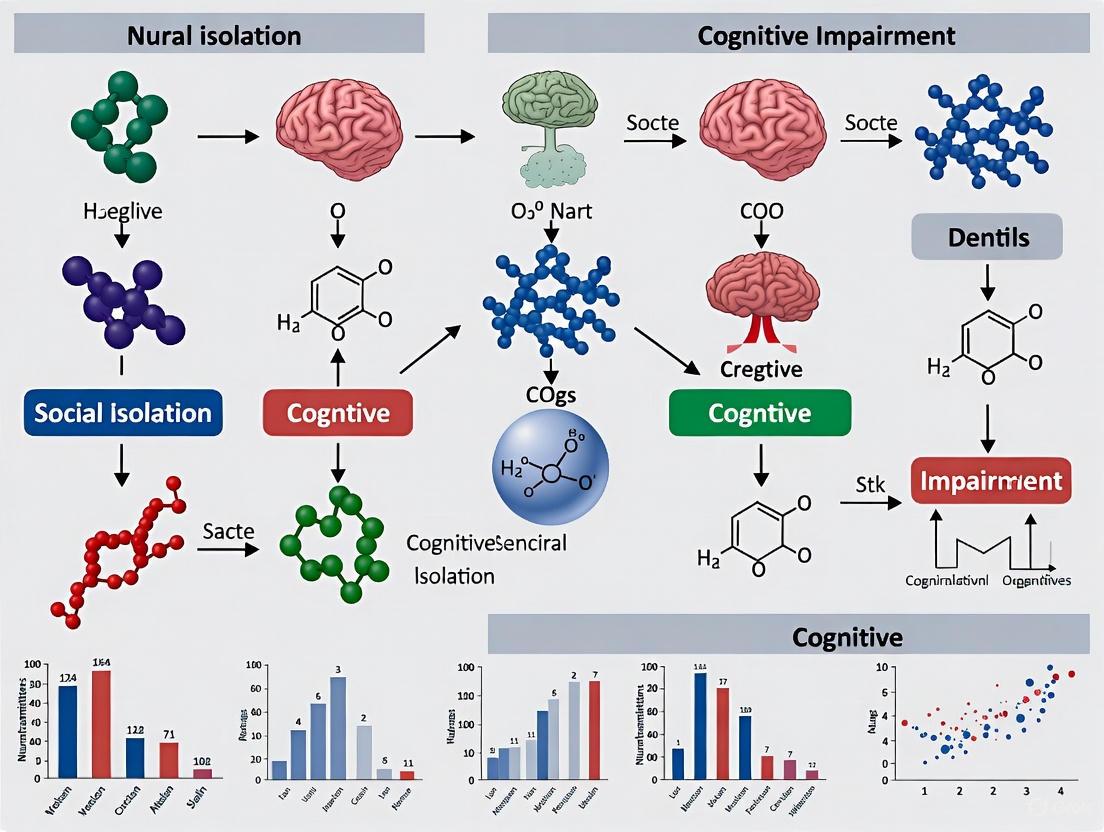
This comprehensive review synthesizes current evidence on the biological pathways connecting social isolation and loneliness with cognitive decline and Alzheimer's disease risk.
Mechanisms Linking Social Isolation to Cognitive Decline: A Translational Research Framework for Drug Development
Abstract
This comprehensive review synthesizes current evidence on the biological pathways connecting social isolation and loneliness with cognitive decline and Alzheimer's disease risk. Targeting researchers and drug development professionals, we examine distinct neurobiological mechanisms including dysregulated stress response (HPA axis), neuroinflammation, altered neurotransmission, and structural brain changes. The article explores innovative methodological approaches from large-scale multinational studies to machine learning applications and cross-species models. We critically evaluate intervention strategies targeting identified mechanisms and discuss validation through clinical trial frameworks. This synthesis provides a translational roadmap for developing mechanism-based therapeutics to disrupt the self-reinforcing cycle of social isolation and cognitive impairment.
Unraveling the Neurobiological Pathways: From Social Deficit to Cognitive Impairment
In gerontological research and public health, social isolation and loneliness represent related yet distinct concepts characterized by their objective and subjective natures respectively. Social isolation is defined as an objective state marked by the absence or paucity of social contacts and interactions between an individual and their social network [1]. It is typically quantified through metrics such as network size, frequency of contact, and social participation. In contrast, loneliness is defined as a subjective, unpleasant feeling resulting from a discrepancy between an individual's desired and actual social relationships [1] [2]. This critical distinction between external circumstances (isolation) and internal perception (loneliness) forms the foundation for understanding their differential pathways to health outcomes, particularly cognitive decline.
The relationship between these constructs is complex and non-linear. Individuals can experience loneliness without social isolation (e.g., those with extensive social networks who lack meaningful connections) and social isolation without loneliness (e.g., those with limited social contact who do not feel lonely) [2] [3]. This phenomenon, identified as social asymmetry [2], underscores the necessity of measuring both constructs independently in research settings. Understanding this distinction is particularly crucial for disentangling their unique contributions to cognitive health across the lifespan.
Measurement Approaches and Methodologies
Standardized Assessment Tools
Rigorous measurement is fundamental to distinguishing between these constructs. Researchers employ several validated scales with distinct methodological approaches, each requiring specific administration protocols.
Table 1: Primary Measurement Instruments for Social Isolation and Loneliness
| Construct Measured | Instrument Name | Items | Administration Method | Key Domains Assessed | Scoring Interpretation |
|---|---|---|---|---|---|
| Social Isolation (Objective) | Lubben Social Network Scale (LSNS-6) [1] [4] | 6 | Interview or self-report | Family & friend network size, perceived support | 0-30 total; Higher scores = larger networks |
| Social Isolation (Objective) | Social Disconnectedness Scale [4] | Multiple | Face-to-face interview | Social network characteristics, contact frequency | Composite score; Higher = greater disconnectedness |
| Loneliness (Subjective) | De Jong Gierveld Loneliness Scale [1] [2] | 11 (full), 6 (short) | Self-report questionnaire | Emotional & social loneliness subscales | 0-6 (short); Higher scores = greater loneliness |
| Loneliness (Subjective) | UCLA Loneliness Scale (Version 3) [1] | 20 | Self-report questionnaire | Perceived isolation, social satisfaction | 20-80; Higher scores = greater loneliness |
| Multidimensional | Duke Social Support Index [1] | 10 (short) | Interview | Social interaction, subjective satisfaction | Higher scores = greater social support |
Experimental Protocol for Validation Studies
Research investigating both constructs typically employs comprehensive assessment protocols. A representative methodological approach from recent validation studies [4] involves:
Participant Recruitment: Cross-sectional sampling of target populations (e.g., adults aged ≥65), with sample sizes typically exceeding 300 participants to ensure statistical power.
Assessment Administration: Trained researchers administer questionnaires face-to-face to ensure comprehension, particularly with older adults. The protocol includes:
- Collection of sociodemographic data (age, sex, education, marital status)
- Administration of social isolation measures (LSNS-6, Social Disconnectedness Scale)
- Administration of loneliness measures (De Jong Gierveld or UCLA scales)
- Collection of health outcome measures (cognitive tests, depression scales, physical health indicators)
Validation Procedures: Researchers assess internal consistency (Cronbach's alpha), structural validity (confirmatory factor analysis), and construct validity (correlations between measures) to ensure psychometric robustness.
Statistical Analysis: Employ correlation analyses to examine relationships between constructs and regression models to test associations with health outcomes while controlling for covariates.
Differential Health Impacts and Cognitive Outcomes
Distinct Pathways to Health Outcomes
Research consistently demonstrates that social isolation and loneliness impact health through different mechanistic pathways, despite some overlapping consequences.
Table 2: Differential Health Impacts of Social Isolation Versus Loneliness
| Health Domain | Social Isolation (Objective) | Loneliness (Subjective) |
|---|---|---|
| Physical Health | Stronger association with health behaviors, mortality risk [4] [5] | Weaker direct association, mediated through mental health [4] |
| Mental Health | Weaker direct association [4] [6] | Strong, direct association with depression, anxiety [4] [5] |
| Cognitive Function | Associated with decline, possibly through reduced cognitive stimulation [2] | Associated with decline, strongly mediated by depression [2] |
| Dementia Risk | ~50% increased risk [3] | Significant risk factor, independent of isolation [3] |
| Biological Mechanisms | Potentially through health behavior pathways [4] | Heightened stress response, inflammation, altered immunity [2] [3] |
Impact on Cognitive Ageing and Dementia Risk
Both constructs represent significant risk factors for cognitive decline, though likely through different mechanisms. Social isolation demonstrates a direct association with reduced cognitive function across multiple domains, including immediate and delayed recall, verbal fluency, and global cognition [2] [3]. The mechanism may primarily involve reduced cognitive stimulation and engagement [2].
Loneliness, meanwhile, shows a strong association with cognitive decline and dementia risk that appears substantially mediated by depression [2]. Neurobiological research indicates that loneliness is associated with abnormal brain structure in regions critical for cognitive function, including the prefrontal cortex, amygdala, and hippocampus [2]. Notably, studies using PET imaging have found significant relationships between loneliness and higher amyloid burden and greater tau pathology in medial temporal regions, particularly among APOEε4 carriers [2].
The relationship between these constructs and cognitive outcomes may be bidirectional [2]. While isolation and loneliness contribute to cognitive decline, cognitive impairment may also exacerbate social withdrawal and feelings of loneliness, creating a potentially destructive feedback loop throughout the ageing process.
Mechanistic Pathways to Cognitive Decline
The relationship between social constructs and cognitive outcomes operates through multiple biological and psychological pathways, visually summarized in the following mechanistic diagram:
This mechanistic framework illustrates how objective isolation primarily impacts cognitive health through reduced cognitive stimulation, while subjective loneliness operates more strongly through neuroendocrine and emotional pathways. Both converge on common pathological mechanisms including Alzheimer's pathology, brain structural changes, and systemic inflammation that collectively drive cognitive decline.
Core Assessment Instruments
For researchers investigating social isolation and loneliness in cognitive ageing, several well-validated instruments represent methodological gold standards:
Lubben Social Network Scale (LSNS-6): The abbreviated 6-item version provides efficient assessment of social isolation by measuring family and friend networks across three domains: network size, perceived support, and frequency of contact [1] [4]. Administration requires approximately 3-5 minutes, making it ideal for studies with comprehensive test batteries.
De Jong Gierveld Loneliness Scale: This instrument distinguishes between emotional loneliness (absence of intimate attachments) and social loneliness (lack of broader social network) [1]. The 6-item short form demonstrates good psychometric properties while minimizing participant burden.
Social Disconnectedness and Perceived Isolation Scales: Developed by Cornwell & Waite, these complementary scales separately capture objective network characteristics and subjective perception of isolation [4]. The scales demonstrate good internal consistency (Cronbach's alpha >0.70) and are particularly valuable for disentangling unique contributions to health outcomes.
Implementation Considerations
When incorporating these instruments into research protocols, several methodological considerations optimize data quality:
- Mode of Administration: Older adults may require interview administration rather than self-completion due to sensory or cognitive limitations [4].
- Cultural Adaptation: Instruments may require translation and cultural validation for diverse populations [4] [7].
- Covariate Assessment: Comprehensive assessment should include potential confounders including depression, functional limitations, and sociodemographic characteristics [4] [3].
- Longitudinal Design: Given the progressive nature of cognitive decline, studies with repeated assessments provide stronger evidence for causal relationships [2] [3].
The distinction between objective social isolation and subjective loneliness represents a critical theoretical and methodological consideration in research examining social connection and cognitive health. While both constructs predict cognitive decline and dementia risk, they operate through distinct mechanistic pathways and require different assessment approaches. Future research should prioritize longitudinal designs that simultaneously measure both constructs, their potential mediators, and cognitive outcomes to fully elucidate their independent and interactive effects. Such precise characterization of these relationships will inform the development of targeted interventions aimed at preserving cognitive health through social connection pathways.
The hypothalamic-pituitary-adrenal (HPA) axis represents the body's primary neuroendocrine stress response system, and its dysregulation is increasingly recognized as a significant contributor to neural injury and cognitive decline. This technical review examines the mechanisms through which chronic HPA axis activation leads to cortisol-mediated neuropathology, with particular relevance to the growing research on social isolation as a chronic stressor. We synthesize current evidence from molecular, endocrine, and clinical studies to elucidate the pathways by which glucocorticoid excess exacerbates neuroinflammation, impairs neuronal recovery, and accelerates cognitive deterioration. The analysis further explores potential therapeutic interventions targeting HPA axis regulation and presents standardized methodological approaches for investigating these mechanisms in research settings, providing a framework for drug development professionals working at the intersection of neuroendocrinology and cognitive neurology.
The hypothalamic-pituitary-adrenal (HPA) axis is a complex neuroendocrine system that constitutes the body's primary stress response mechanism, coordinating hormonal signaling between the hypothalamus, pituitary gland, and adrenal glands [8]. Under normal physiological conditions, this system maintains homeostasis through a tightly regulated cascade: in response to stressors, the hypothalamus releases corticotropin-releasing hormone (CRH), which stimulates the anterior pituitary to secrete adrenocorticotropic hormone (ACTH), ultimately triggering cortisol production from the adrenal cortex [8]. This process is governed by a negative feedback system that prevents excessive cortisol secretion, thereby protecting neural structures vulnerable to glucocorticoid excess [9].
Dysregulation occurs when chronic stress exposure leads to sustained HPA axis activation, resulting in prolonged cortisol elevation and subsequent neural injury [10]. The transition from adaptive stress response to maladaptive chronic activation involves multiple pathophysiological mechanisms, including reduced glucocorticoid receptor sensitivity, impaired negative feedback inhibition, and altered neural circuitry regulation [9] [10]. This dysregulation manifests differently across populations; for instance, diabetic mice demonstrate upregulated hypothalamic CRH, pituitary POMC, and plasma corticosterone both before and after experimental stroke, indicating hyper-activated HPA axis in metabolic disease states [11]. Similarly, human studies reveal that altered cortisol profiles, particularly diminished diurnal amplitude and blunted cortisol awakening response, correlate with neurobehavioral impairment following mild traumatic brain injury [12].
Table 1: Key Components of the HPA Axis and Their Functions
| Component | Location | Primary Hormone/Function |
|---|---|---|
| Hypothalamus | Deep brain structure | Releases corticotropin-releasing hormone (CRH) in response to stress |
| Anterior Pituitary | Base of brain below hypothalamus | Releases adrenocorticotropic hormone (ACTH) when stimulated by CRH |
| Adrenal Cortex | Top of each kidney | Produces cortisol in response to ACTH stimulation |
Mechanisms of Cortisol-Mediated Neural Injury
Neuroinflammatory Pathways
Chronic HPA axis activation and subsequent cortisol elevation directly potentiate neuroinflammatory processes through multiple interconnected pathways. Evidence from diabetic mouse models demonstrates that hyper-activated HPA axis signaling is accompanied by significant upregulation of inflammatory factors in the ischemic brain, including IL-1β, TNF-α, IL-6, CCR2, and MCP-1 [11]. While glucocorticoids typically exert anti-inflammatory effects in acute settings, chronic exposure produces paradoxical pro-inflammatory effects, particularly within the central nervous system. Studies indicate that sustained high cortisol levels suppress protective factors like CX3CL1 and CX3CR1 while simultaneously increasing interleukin (IL)-1β mRNA expression in the hippocampus [11]. Furthermore, chronically elevated glucocorticoids enhance lipopolysaccharide-induced NFκB activation and promote expression of pro-inflammatory factors including IL-1β and TNF-α, while decreasing anti-inflammatory factors in the frontal cortex and hippocampus [11].
The inflammatory consequences of cortisol excess extend beyond cytokine dysregulation to include immune cell recruitment and blood-brain barrier compromise. Research demonstrates that HPA axis dysregulation in diabetes exacerbates stroke outcomes through enhanced regulation of neuroinflammation, creating a deleterious cycle wherein neural injury promotes further inflammation [11]. This neuroinflammatory environment establishes conditions favorable to neuronal excitotoxicity, oxidative stress, and ultimately, cell death.
Structural and Functional Neural Alterations
Cortisol-mediated neural injury manifests through discernible structural and functional changes in vulnerable brain regions. Chronic exposure to elevated glucocorticoids produces differential effects on brain structure, with particular impact on regions abundant in glucocorticoid receptors, including the prefrontal cortex, hippocampus, and amygdala [9]. These structural alterations correspond with functional impairments in cognitive processes, especially memory, executive function, and emotional regulation [12].
The hippocampus, essential for learning and memory, demonstrates particular vulnerability to glucocorticoid excess. Studies document that sustained cortisol elevation inhibits neurogenesis in the hippocampal dentate gyrus, promotes dendritic atrophy in CA3 pyramidal neurons, and disrupts synaptic plasticity mechanisms [9]. These structural changes correlate with measurable cognitive deficits, particularly in declarative memory formation and consolidation. Beyond the hippocampus, chronic HPA axis activation associates with reduced prefrontal cortex volume and compromised integrity of white matter tracts, potentially underlying observed deficits in executive function and emotional regulation following prolonged stress exposure [3].
Table 2: Cortisol-Mediated Effects on Neural Structures and Functions
| Neural Structure | Structural Alterations | Functional Consequences |
|---|---|---|
| Hippocampus | Reduced neurogenesis, CA3 dendritic atrophy, synaptic plasticity impairment | Declarative memory deficits, impaired contextual learning |
| Prefrontal Cortex | Neuronal shrinkage, reduced volume, altered glial activity | Executive dysfunction, impaired working memory, reduced cognitive flexibility |
| Amygdala | Hypertrophy, increased dendritic arborization | Enhanced fear conditioning, anxiety-like behaviors, emotional dysregulation |
| White Matter | Microstructural integrity loss, disrupted myelination | Processing speed reduction, interregional communication deficits |
Intersection with Social Isolation and Cognitive Decline Research
Social Isolation as a Chronic Stressor
Social isolation represents a potent chronic psychosocial stressor that activates the HPA axis through perceived threat to social safety and attachment systems. The neuroendocrine response to social isolation shares fundamental mechanisms with other chronic stressors but may possess unique characteristics due to its sustained nature and impact on fundamental human needs for connection [2]. Research indicates that both objective social isolation (quantifiable deficit in social connections) and subjective loneliness (perceived discrepancy between desired and actual social relationships) are associated with poor health outcomes, including immune dysfunction, increased inflammation, and cognitive decline [2] [3]. These constructs, while moderately correlated (r ∼ 0.25–0.28), represent distinct aspects of social experience with potentially independent effects on HPA axis function and cognitive outcomes [2].
The mechanisms through which social isolation influences HPA axis function involve both direct neuroendocrine pathways and indirect behavioral routes. Isolated individuals demonstrate abnormal cortisol profiles, including flattened diurnal rhythms and heightened cortisol responses to acute stressors [3]. Furthermore, social isolation is associated with increased pro-inflammatory gene expression, indicating an upregulation of inflammatory signaling that serves as a precursor to higher systemic inflammation [2]. This inflammatory state both stimulates and is exacerbated by HPA axis dysregulation, creating a bidirectional pathway toward neural injury.
Pathways to Cognitive Decline
The trajectory from social isolation through HPA axis dysregulation to cognitive decline involves multiple mediating pathways. Longitudinal studies demonstrate that both social isolation and loneliness are associated with poor cognition in aging, with depression identified as a potential mediator between loneliness and cognitive decline [2]. The link between social isolation and cognitive impairment may be more strongly mediated by lack of cognitive stimulation, whereas loneliness may exert its effects more through affective pathways [2].
Neurobiological research reveals that loneliness is associated with alterations in brain structure and function, particularly in regions rich in glucocorticoid receptors. Studies document abnormalities in the prefrontal cortex, insula, amygdala, hippocampus, and posterior superior temporal cortex associated with loneliness [2]. Furthermore, loneliness correlates with biological markers of Alzheimer's disease pathology, with PET imaging studies demonstrating significant relationships between loneliness and higher amyloid burden and greater tau pathology in the right entorhinal cortex and right fusiform gyrus, particularly in APOEε4 carriers [2]. Recent research further indicates that cerebrovascular pathology, evidenced by white matter signal abnormalities (WMSA) on MRI, shows the strongest association with loneliness among various biomarkers, suggesting cerebrovascular disease may be an important pathway linking social stress to cognitive impairment [13].
Experimental Models and Methodological Approaches
Assessing HPA Axis Function in Research Settings
The investigation of HPA axis dysfunction and cortisol-mediated neural injury requires multimodal assessment strategies capable of capturing both dynamic hormonal patterns and cumulative cortisol exposure. Methodological approaches vary by temporal resolution and biological matrix, with salivary cortisol offering insights into diurnal rhythm and acute responsivity, while hair cortisol provides a retrospective measure of long-term HPA axis activity [9] [14]. In diabetic mouse models, HPA axis activation is quantified through measurement of hypothalamic CRH, pituitary proopiomelanocortin (POMC), and plasma ACTH and corticosterone levels, demonstrating comprehensive axis evaluation [11].
The diurnal cortisol profile, particularly the cortisol awakening response (CAR) and diurnal amplitude, serves as a sensitive indicator of HPA axis regulation. Studies in mTBI patients reveal that diminished amplitude of diurnal cortisol and a blunted CAR are associated with symptom severity and neurobehavioral impairment [12]. Similarly, hair cortisol concentration provides a retrospective marker of HPA activity over several months, though recent research in mTBI patients indicates challenges in using this measure due to potential washout effects and limited association with long-term outcomes [14]. For cognitive assessment, standardized neuropsychological batteries targeting memory, attention, executive function, and processing speed are essential, with common measures including the Rey Auditory Verbal Learning Test, Trail Making Test, Stroop Color-Word Test, and verbal fluency tasks [15].
Table 3: Experimental Protocols for HPA Axis and Neural Function Assessment
| Assessment Domain | Specific Measures/Methods | Key Experimental Parameters |
|---|---|---|
| HPA Axis Function | Diurnal salivary cortisol, Hair cortisol, Plasma ACTH/corticosterone | Sampling times: awakening, 30min post-awakening, afternoon, bedtime; LC-MS/MS analysis |
| Neuroinflammation | Cytokine panels (IL-1β, TNF-α, IL-6), Chemokine measurement (CCR2, MCP-1) | Multiplex immunoassays, RNA expression analysis from brain tissue |
| Neural Injury | Infarct volume measurement, Neurological scoring, Neuroimaging (MRI) | MCAO model with 30min occlusion; TTC staining for infarction; modified neurological severity scores |
| Cognitive Function | Neuropsychological testing, Behavioral assessment | Automated Neuropsychological Assessment Metric (ANAM), standardized test batteries |
Intervention Studies and Therapeutic Approaches
Experimental models evaluating interventions for HPA axis dysregulation provide critical insights into potential therapeutic strategies. Pharmacological approaches targeting glucocorticoid synthesis have demonstrated efficacy in mitigating cortisol-mediated neural injury. In diabetic mouse models, post-stroke administration of metyrapone, an inhibitor of glucocorticoid synthesis, significantly reduced IL-6 expression and infarct size in the ischemic brain [11]. This finding suggests that regulation of the stress response through HPA axis modulation may represent an effective approach to improving outcomes in stress-exacerbated neurological conditions.
Beyond direct HPA axis suppression, integrative approaches addressing multifactorial contributors to HPA dysregulation show promise. Evidence-based strategies include mind-body therapies, dietary and lifestyle interventions, targeted nutraceuticals, and adaptogenic herbs, all aimed at restoring HPA balance and improving stress resilience [10]. The therapeutic goal in these approaches is not complete HPA axis suppression but rather optimization of regulation to maintain appropriate stress responsiveness while preventing chronic hyperactivation. Research suggests that maintaining an optimal level of the stress response through HPA axis regulation may be particularly important for vulnerable populations, including those with diabetes, metabolic syndrome, or significant psychosocial stressors [11] [10].
Research Reagents and Methodological Toolkit
Table 4: Essential Research Reagents for HPA Axis and Neural Injury Studies
| Reagent/Category | Specific Examples | Research Application |
|---|---|---|
| HPA Axis Modulators | Metyrapone, CRH receptor antagonists, ACTH analogs | Experimental manipulation of HPA axis activity; testing therapeutic interventions |
| Cortisol Assessment | Salivary cortisol kits, Hair cortisol LC-MS/MS protocols, Corticosterone ELISA | Quantification of glucocorticoid levels across different biological matrices and timeframes |
| Neuroinflammatory Assays | IL-1β, TNF-α, IL-6 ELISA kits, Multiplex cytokine panels, NFκB pathway inhibitors | Measurement of inflammatory responses in neural tissue and peripheral biomarkers |
| Animal Models | High-fat diet/STZ diabetic mice, C57BL/6 strains, MCAO surgery protocols | Modeling disease states with HPA axis dysregulation and standardized neural injury |
| Neuropsychological Tests | ANAM, Rey Auditory Verbal Learning, Trail Making Test, Stroop Test | Standardized assessment of cognitive domains affected by cortisol-mediated neural injury |
The evidence reviewed establishes HPA axis dysregulation as a critical mechanism linking chronic stress exposure, including social isolation, to neural injury and cognitive decline through cortisol-mediated pathways. The bidirectional relationship between neuroinflammation and HPA axis hyperactivity creates a self-reinforcing cycle that accelerates neuronal damage and compromises cognitive function. Methodological advances in assessing HPA axis function, particularly through diurnal cortisol patterns and cumulative hair cortisol measures, provide researchers with sophisticated tools for quantifying this dysregulation across experimental and clinical settings.
Future research directions should prioritize the development of targeted interventions that specifically address HPA axis dysregulation in vulnerable populations, including those experiencing social isolation. The demonstrated efficacy of glucocorticoid synthesis inhibition in animal models, combined with integrative approaches to stress resilience, suggests promising avenues for therapeutic development. For drug development professionals, targeting specific components of the HPA axis signaling cascade may yield novel approaches to preventing cortisol-mediated neural injury while maintaining essential stress responsiveness. As research in this field advances, the incorporation of standardized HPA axis assessment into studies of cognitive aging and neurodegeneration will be essential for elucidating the full therapeutic potential of modulating this critical neuroendocrine pathway.
Microglia, the resident macrophages of the central nervous system (CNS), are fundamental players in brain immunity, homeostasis, and pathology [16] [17]. In the healthy brain, microglia dynamically survey the parenchyma, but upon detecting pathological stimuli, they undergo a phenotypic transformation into a reactive state, characterized by profound morphological and functional changes [16] [18]. This microglial activation is a cornerstone of neuroinflammation and is implicated in the pathogenesis of numerous neurodegenerative diseases, including Alzheimer's disease (AD) and Parkinson's disease (PD) [16] [19]. A growing body of evidence also links social isolation and loneliness (SIL) to accelerated cognitive decline and increased risk for Alzheimer’s Disease and Related Dementias (ADRD) [20] [21]. Converging cross-species findings indicate that SIL can trigger a self-reinforcing loop of cognitive-affective decline and physiological dysregulation, with microglial-mediated neuroinflammation emerging as a key mechanism [20]. This review details the mechanisms of pro-inflammatory gene expression in activated microglia and frames these pathways within the context of how social isolation may precipitate cognitive decline.
Molecular Mechanisms of Pro-Inflammatory Microglial Activation
Key Signaling Receptors and Pathways
The transition of microglia from a homeostatic to a pro-inflammatory state is initiated by the engagement of pattern recognition receptors (PRRs) by damage-associated molecular patterns (DAMPs) or pathogen-associated molecular patterns (PAMPs) [17].
Toll-like Receptor 4 (TLR4) Signaling: TLR4 is one of the best-characterized PRRs driving microglial pro-inflammatory responses [17]. Ligands relevant to neurodegeneration include Amyloid-β (Aβ) and α-synuclein [17]. Upon ligand binding, TLR4 activation typically triggers the MyD88-dependent signaling cascade, leading to the activation of nuclear factor-kappa B (NF-κB) and activator protein-1 (AP-1). This results in the transcription and release of pro-inflammatory factors such as interleukin-1 β (IL-1β), IL-6, tumor necrosis factor-α (TNFα), and reactive oxygen species (ROS) [17]. TLR4 expression is increased in the brains of AD patients, and its inhibition is beneficial in animal models of neurodegeneration [17].
Triggering Receptor Expressed on Myeloid Cells 2 (TREM2): TREM2 is another critical receptor, often associated with a protective, disease-associated microglia (DAM) phenotype [16]. However, its signaling is complex and can influence inflammatory responses. TREM2 ligands include lipids and Aβ [16]. Engagement of TREM2 can promote microglial survival, phagocytosis of apoptotic neurons, and amyloid clearance, but its loss-of-function variants can impair these processes and contribute to disease progression [16].
Inflammasome Activation: Intracellular sensors, such as the NLRP3 inflammasome, can be assembled in response to various danger signals. This leads to the caspase-1-mediated cleavage and secretion of mature IL-1β, a potent driver of neuroinflammation [17]. The inflammasome is a key contributor to the chronic inflammatory state in neurodegenerative diseases [19].
The following diagram illustrates the core pro-inflammatory signaling pathways in microglia:
Figure 1: Core Pro-inflammatory Signaling Pathways in Microglia. DAMPs/PAMPs engage receptors like TLR4 and TREM2, triggering intracellular cascades that activate transcription factors (e.g., NF-κB) and the NLRP3 inflammasome, leading to the production of pro-inflammatory cytokines and mediators. (Aβ: Amyloid-beta; TLR4: Toll-like Receptor 4; TREM2: Triggering Receptor Expressed on Myeloid cells 2; NF-κB: Nuclear Factor Kappa B; NLRP3: NOD-, LRR- and pyrin domain-containing protein 3; IL: Interleukin; TNFα: Tumor Necrosis Factor Alpha; COX-2: Cyclooxygenase-2; ROS: Reactive Oxygen Species).
Phenotypic Heterogeneity: Beyond M1/M2
The historical classification of microglia into pro-inflammatory "M1" and anti-inflammatory "M2" states is now considered overly simplistic [16] [17]. Single-cell RNA sequencing technologies have revealed that reactive microglia exhibit high spatial and temporal heterogeneity, adopting multiple distinct states in response to specific disease contexts [16]. For example, in Alzheimer's disease models, a specific state known as disease-associated microglia (DAM) has been identified near Aβ plaques [16]. These microglial states exist on a continuum and are influenced by intrinsic (e.g., sex, genetic background) and extrinsic (e.g., local pathology, peripheral immunity) factors [16]. This complexity underscores the need to identify disease-specific microglial states for effective therapeutic targeting.
Quantitative Morphological Analysis of Microglial Activation
A key hallmark of microglial activation is a change in morphology from a highly ramified, surveying state to a less ramified, amoeboid, reactive state [18]. Quantifying these morphological changes is a powerful method for assessing neuroinflammation.
Methodological Approaches and Comparative Analysis
Multiple ImageJ-based methods are commonly used to quantify microglial morphology, each with strengths and limitations [18]. The table below summarizes the key parameters and detection capabilities of five common methods when applied to a model of inflammatory challenge (LPS) and microglial repopulation.
Table 1: Comparison of Microglial Morphology Quantification Methods [18]
| Method Type | Specific Method | Key Parameters Measured | Detection in Treatment vs. Control | Interpretation & Notes |
|---|---|---|---|---|
| Full Photomicrograph | Percent Coverage of Iba1 | Area of Iba1+ staining | ↑ Increased coverage in treatment group | Reflects higher Iba1 expression and/or cell density; sensitive to background staining. |
| Full Photomicrograph | Skeletal Analysis (Averaged) | Mean endpoints per cell, mean branch length | ↓ Fewer endpoints; no difference in branch length | Averages morphology across all cells in a field; may mask single-cell differences. |
| Single-Cell | Fractal Analysis | Fractal Dimension (complexity) | ↓ Lower fractal dimension in treatment group | Detects less complex, less ramified branching patterns. |
| Single-Cell | Skeletal Analysis | Cell body area, number of branches, total branch length | ↑ Larger cell body; ↓ fewer/shorter branches | Provides detailed single-cell metrics; confirms hypertrophy and de-ramification. |
| Single-Cell | Sholl Analysis | Number of intersections at distances from soma | ↓ Fewer intersections in treatment group | Quantifies reduced ramification and process complexity with distance from the cell body. |
Advanced Automated Morphological Analysis
Recent advances leverage artificial intelligence (AI) to overcome the limitations of manual and semi-automated methods. Tools like StainAI use a multi-stage deep learning approach (YOLO-based detection + UNet-based segmentation) to rapidly classify millions of microglia across whole-slide images into morphological phenotypes such as ramified, hypertrophic, bushy, and amoeboid [22]. This high-throughput method allows for the mapping of microglial activation patterns across entire brain regions and has been validated in both rodent and non-human primate models, demonstrating its scalability and cross-species applicability [22].
The following workflow diagram illustrates the integrated experimental and computational pipeline for profiling microglial activation:
Figure 2: Workflow for High-Throughput Microglial Morphology Analysis. This pipeline, from tissue preparation to AI-driven quantification, enables comprehensive mapping of microglial activation states across the brain. (IHC: Immunohistochemistry; Iba1: Ionized calcium-binding adapter molecule 1).
Linking Social Isolation to Microglial Activation and Cognitive Decline
Longitudinal human studies and cross-species research provide compelling evidence that social isolation and loneliness (SIL) are risk factors for cognitive decline and dementia, with microglial-mediated neuroinflammation proposed as a key mechanistic link [23] [20] [21].
Epidemiological and Clinical Evidence
A large-scale longitudinal study across 24 countries (N=101,581) found that social isolation was significantly associated with reduced global cognitive ability, affecting memory, orientation, and executive function [21]. Another study using natural language processing on electronic health records revealed that patients with loneliness had lower cognitive scores at diagnosis, while socially isolated patients experienced a faster rate of cognitive decline in the 6 months before diagnosis [23]. These findings suggest that SIL contributes to both the level of cognitive impairment and the pace of deterioration.
Proposed Mechanistic Pathways
The framework linking SIL to microglial activation and cognitive decline involves a self-reinforcing cycle [20]:
- Cognitive-Affective and Physiological Dysregulation: SIL is associated with chronic stress, dysregulated hypothalamic-pituitary-adrenal (HPA) axis activity, and increased glucocorticoid levels. This physiological stress can directly prime or activate microglia [20].
- Microglial Priming and Pro-inflammatory Activation: In this primed state, microglia exhibit an exaggerated pro-inflammatory response to subsequent stimuli. This leads to the increased release of IL-1β, IL-6, and TNFα, which can disrupt synaptic plasticity, impair neurogenesis (particularly in the hippocampus), and contribute to neuronal damage [20] [19].
- Exacerbation of Neuropathology: Pro-inflammatory microglia may also exhibit impaired phagocytic function, reducing the clearance of pathological protein aggregates like Aβ, thereby accelerating the progression of Alzheimer's pathology [16] [17] [19].
- Behavioral Reinforcement: The resulting cognitive deficits and negative affective states (e.g., anhedonia, anxiety) can further promote social withdrawal, perpetuating the cycle of isolation and neuroinflammation [20].
Table 2: Key Molecular Mediators Linking Social Isolation to Microglial Activation [20]
| Mediator Class | Specific Factor / Pathway | Proposed Role in SIL and Microglial Crosstalk |
|---|---|---|
| Stress Hormones | Glucocorticoids (Cortisol) | HPA axis dysregulation primes microglia, leading to exaggerated pro-inflammatory responses. |
| Inflammatory Cytokines | IL-1β, IL-6, TNFα | Elevated peripherally and centrally in SIL; directly contribute to synaptic dysfunction and neurotoxicity. |
| Neurotransmitter Systems | Dopamine, Oxytocin | Dysregulated social reward signaling in SIL may indirectly influence microglial activity and neuroinflammation. |
| Cellular Metabolism | Immunometabolism | SIL-induced stress may shift microglial energy metabolism, promoting a pro-inflammatory state. |
Experimental Toolkit for Microglial Research
Table 3: Essential Research Reagents and Methods for Studying Microglial Activation
| Category | Reagent / Tool | Key Function and Application |
|---|---|---|
| Microglial Markers | Iba1 Antibody [18] [22] | Gold-standard immunohistochemical marker for identifying and visualizing microglia in tissue. |
| Activation Stimuli | Lipopolysaccharide (LPS) [18] | TLR4 agonist; used experimentally to induce robust pro-inflammatory microglial activation. |
| Genetic Tools | Cx3cl1GFP/+ Mouse Line [16] | Allows for in vivo imaging of microglial dynamics and response to the environment. |
| In Vivo Imaging | TSPO PET Ligands (e.g., PK11195) [16] | Enables non-invasive in vivo detection of "activated" microglia/macrophages in humans and animals. |
| High-Content Analysis | Cell Painting Assay [24] | An image-based, high-throughput morphological profiling assay that can be adapted to screen for compounds that reverse disease-associated microglial phenotypes. |
| AI & Computational | StainAI Pipeline [22] | Deep learning tool for high-throughput detection, segmentation, and morphological classification of microglia from whole-slide images. |
| Human Model Systems | iPSC-Derived Microglia [17] | Provides a human cellular model to study microglial biology, patient-specific responses, and for drug screening. |
Therapeutic Strategies and Clinical Outlook
Targeting microglial activation is a promising therapeutic avenue for neurodegenerative diseases and potentially for mitigating SIL-related cognitive decline [16] [19]. Strategies include:
- Enhancing Protective Functions: Promoting the phagocytic clearance of protein aggregates like Aβ [16] [19].
- Suppressing Damaging Inflammation: Using small molecules or biologics to inhibit specific pro-inflammatory pathways (e.g., TLR4 signaling, NLRP3 inflammasome) [17] [19].
- Modulating Phenotype: Driving microglia toward a protective, anti-inflammatory, or homeostatic state rather than complete suppression [16].
The field is increasingly leveraging human iPSC-derived microglia and AI-driven phenotypic drug screening to identify novel therapeutic targets and compounds [24] [25]. Several drugs targeting neuroinflammation are in clinical trials, signaling a growing commitment to translating these mechanistic insights into treatments [19] [25].
Social isolation is increasingly recognized as a major risk factor for cognitive decline and the development of neuropsychiatric disorders. The mechanistic link between the subjective experience of isolation and objective cognitive impairment lies in specific alterations to key neural circuits, particularly those involving the prefrontal cortex (PFC), hippocampus, and connecting white matter pathways. This whitepaper synthesizes current research on how social isolation induces maladaptive changes in these regions, detailing the molecular, cellular, and circuit-level mechanisms that potentially contribute to cognitive deficits. Understanding these alterations is crucial for developing targeted therapeutic interventions for conditions ranging from depression and anxiety to Alzheimer's disease.
Structural and Functional Alterations in Key Brain Regions
Prefrontal Cortex (PFC) Dysfunction
The medial PFC (mPFC) plays a central role in cognitive control, emotional regulation, and integrating learned information with behavioral output [26]. Its protracted development, which continues into early adulthood, creates an extended window of vulnerability to environmental insults such as social isolation.
- Developmental Impact: Social isolation during critical developmental periods disrupts typical mPFC maturation. This includes alterations in dendritic arborization, synaptic pruning, and the maturation of parvalbumin-positive (PV+) interneurons, which are crucial for network synchronization [26]. The mPFC undergoes a massive wave of synaptogenesis that peaks around 3.5 years of age in humans, followed by a gradual decline until adulthood; social isolation can disrupt this refined process [26].
- Circuit Dysregulation: The mPFC forms key top-down pathways to limbic structures. Social isolation disrupts the balance of these frontolimbic circuits, particularly connections with the basolateral amygdala (BLA) and nucleus accumbens (NAc), leading to maladaptive approach and avoidance behaviors [26] [27]. Dysfunction of this neural circuitry results in behavioral changes, including executive function and memory impairments, enhanced fear retention, and fear extinction deficiencies [27].
Hippocampal Adaptations
The hippocampus is essential for memory formation and contextual processing. Social isolation induces significant structural and functional changes in this region, with implications for cognitive decline.
- Volume and Subfield Alterations: Loneliness is specifically linked to morphological changes in hippocampal subfields, with the most pronounced effects observed in CA1 and the molecular layer [28]. These areas are critical for hippocampal output and integration with cortical networks.
- Representational Remapping: In animal models, drug-context association (a form of maladaptive learning) leads to a weakening of spatial coding in a subset of hippocampal CA1 place cells specifically in the non-drug-paired context [29]. This orthogonal representation for drug versus non-drug contexts is predictive of drug-seeking behavior, demonstrating how experience can maladaptively reshape hippocampal maps [29]. While this study focused on drug associations, it provides a mechanistic framework for how isolating experiences could similarly alter contextual representations.
White Matter Microstructure Changes
White matter tracts facilitate communication between distributed brain regions. The integrity of these tracts is vital for coordinated neural processing, and they are susceptible to the effects of social adversity.
Table 1: Impact of Neighborhood Disadvantage on White Matter Microstructure
| White Matter Tract | Primary Connection | Function | Impact of Adversity |
|---|---|---|---|
| Cingulum Bundle | Medial PFC regions (dorsomedial and ventromedial PFC) [30] | Emotional regulation, cognitive control [30] | Decreased Quantitative Anisotropy (QA) with increased neighborhood disadvantage [30] |
| Uncinate Fasciculus | Ventromedial PFC to anterior temporal lobe [30] | Associative learning, emotion-memory integration [30] | Decreased QA with increased neighborhood disadvantage [30] |
| Stria Terminalis/Fornix | Amygdala and hippocampus to hypothalamus [30] | Stress and emotional response, memory [30] | Decreased QA with increased neighborhood disadvantage [30] |
- Mechanistic Insights: The fornix, a major output pathway of the hippocampus, is the white matter tract most strongly linked to loneliness [28]. This alteration likely disrupts hippocampal-cortical communication, contributing to the cognitive and emotional symptoms associated with isolation. These pathways continue to develop into young adulthood, making them particularly vulnerable to disruptive experiences during adolescence [30].
Molecular and Cellular Mechanisms
The structural and functional alterations described above are driven by a cascade of molecular and cellular changes.
- Neurotransmitter System Dysregulation: Social isolation leads to imbalances in major neurotransmitter systems. This includes dysfunction in GABAergic, glutamatergic, and cholinergic signaling, which are responsible for the structural and functional changes during fear acquisition and extinction processes relevant to disorders like PTSD [27]. The mesocorticolimbic dopaminergic pathway, particularly projections from the ventral tegmental area (VTA), is also critically involved [31].
- Inflammation and Immune Response: Loneliness is associated with a higher pro-inflammatory gene expression and an upregulation of inflammatory signaling [2]. This state of heightened inflammation can negatively impact brain health, potentially contributing to cognitive decline [3].
- Oligodendrocyte and Myelination Effects: Preclinical studies suggest that social isolation at different ages distinctly alters oligodendrocyte progenitor cell differentiation and oligodendrocyte maturation, which are essential for myelination and the proper function of neural circuits [32].
Experimental Models and Methodologies
To study the effects of social isolation, researchers employ various well-established animal models that recapitulate specific aspects of human psychopathology.
Table 2: Key Animal Models for Studying Social Isolation and Stress
| Model | Protocol Description | Key Behavioral & Neural Outcomes | Translational Relevance |
|---|---|---|---|
| Single Prolonged Stress (SPS) | A single session involving sequential severe stressors (e.g., restraint, forced swim, ether anesthesia) [27]. | Increased fear learning, reduced fear extinction, hyperarousal, anhedonia, deficits in spatial memory [27]. | Models dysregulation of stress, anxiety, and fear circuits seen in PTSD [27]. |
| Fear Conditioning and Extinction (FC) | A neutral stimulus (CS) is paired with an aversive stimulus (US). Later, the CS is presented alone to study extinction learning [27]. | Enhanced fear retention, extinction deficiencies; dysfunction in PFC, hippocampus, and amygdala circuits [27]. | Highly translational for studying PTSD-like memory impairment and persistent fear phenotypes [27]. |
| Chronic Social Defeat Stress (CSDS) | An experimental animal is repeatedly exposed to an aggressive conspecific in its territory [27]. | Social avoidance, prolonged anxiety, anhedonia, working memory deficits; increased inflammatory signaling [27]. | Models social avoidance and comorbid anxiety/depression symptoms [27]. |
Advanced Imaging and Neural Circuit Dissection
Modern neuroscience employs sophisticated tools to visualize and manipulate neural circuits.
- In Vivo Calcium Imaging: Using miniature microscopes (miniscopes), researchers can image calcium activity in freely moving mice, allowing for the tracking of individual neurons (e.g., hippocampal CA1 place cells) across days during behavioral tasks like Conditioned Place Preference (CPP) [29]. This enables the study of how neural representations evolve with experience.
- Circuit Manipulation Techniques: The causal role of specific pathways is tested using optogenetics and chemogenetics (DREADDs). These tools allow for the precise activation or inhibition of defined neural projections, such as those from the mPFC to the BLA or NAc, to determine their necessity in specific behaviors [26].
Figure 1: Proposed mechanistic pathway linking social isolation to cognitive decline via neural circuitry alterations.
The Scientist's Toolkit: Research Reagent Solutions
Table 3: Essential Research Reagents and Models
| Reagent/Model | Function/Application | Example Use Case |
|---|---|---|
| Ai94; Camk2a-tTA; Camk2a-Cre mice | Enables stable GCaMP6s expression and single-cell tracking in specific cell types (e.g., pyramidal neurons) across days [29]. | Longitudinal calcium imaging of CA1 neurons during conditioned place preference [29]. |
| GCaMP6s | Genetically encoded calcium indicator; fluoresces upon neuronal activation, allowing for real-time monitoring of neural activity [29]. | Monitoring place cell activity in hippocampus during context exposure [29]. |
| DREADDs (Designer Receptors Exclusively Activated by Designer Drugs) | Chemogenetic tools to selectively activate or inhibit specific neural populations or pathways [26]. | Testing causal role of mPFC→BLA or mPFC→NAc projections in isolation-induced behaviors. |
| rAAV vectors | Recombinant adeno-associated viruses for targeted gene delivery (e.g., opsins, DREADDs, fluorescent markers) to specific brain regions [26]. | Labeling or manipulating defined neural circuits with high anatomical precision. |
| Conditioned Place Preference (CPP) | Behavioral assay to measure the rewarding or aversive properties of stimuli (drugs, social interaction) [29]. | Quantifying the strength of drug-context or social-context associations. |
| Single Prolonged Stress (SPS) Model | A rodent model to induce PTSD-like physiological and behavioral phenotypes [27]. | Studying the interaction between traumatic stress, social isolation, and neural circuit dysfunction. |
Figure 2: Experimental workflow for longitudinal neural activity imaging.
The evidence is compelling that social isolation induces significant alterations in the neural circuitry of the PFC, hippocampus, and connecting white matter tracts. These changes provide a biological substrate for the observed increased risk of cognitive decline and dementia. Future research should focus on several key areas:
- Mechanistic Links: Further elucidate the precise molecular pathways that translate the subjective experience of loneliness into structural brain changes, with a particular focus on neuro-immune interactions and myelination processes [32] [3].
- Intervention Strategies: Develop and test interventions, both pharmacological (targeting HPA axis, inflammation) and non-pharmacological (increasing social connection), that can reverse or protect against these circuit-level alterations [33].
- Translational Bridging: Continue to refine animal models to better capture the complexity of human social isolation and improve the translation of preclinical findings to clinical treatments [32].
Understanding neural circuitry alterations provides a foundational framework for developing novel therapeutic strategies to mitigate the cognitive consequences of social isolation.
The intricate interplay between the brain's dopaminergic system and the neuropeptide oxytocin forms a critical foundation for social behavior and cognitive function. Disruption within and between these signaling systems is increasingly recognized as a key mechanism by which social isolation leads to cognitive decline. Social isolation, a significant stressor with profound public health implications, triggers a cascade of neurochemical alterations that impair neural circuitry essential for both social motivation and cognitive processes [34]. This whitepaper provides a technical overview of the mechanisms through which dopaminergic and oxytocin signaling are disrupted, synthesizing recent preclinical and clinical findings for a research-oriented audience. We focus specifically on the pathway dysregulation underlying the connection between impoverished social environments and deteriorating cognitive function, a relationship illuminated by recent studies on the "oxytocin-attention loop" in chronic loneliness and the vulnerability of mesocortical dopamine pathways to environmental insults [35] [36]. Understanding these convergent mechanisms is paramount for developing targeted pharmacological and circuit-based interventions for neuropsychiatric conditions and cognitive disorders.
Dopaminergic Signaling: System Architecture and Disruption
Core Neuroanatomy and Receptor Distribution
The dopaminergic system originates from several key brain regions and projects widely to influence diverse functions. Table 1 summarizes the major dopamine pathways, their origins, projections, and primary functions [37].
Table 1: Major Central Dopamine Pathways
| Pathway | Origin | Projections | Primary Functions |
|---|---|---|---|
| Mesolimbic | Ventral Tegmental Area (VTA) | Nucleus Accumbens, Amygdala | Reward, desire, reinforcement, motivation |
| Mesocortical | Ventral Tegmental Area (VTA) | Prefrontal Cortex (PFC) | Emotional & motivational responses, executive function |
| Nigrostriatal | Substantia Nigra (SN) | Striatum | Initiation and control of movement |
| Tuberoinfundibular | Arcuate Nucleus | Median Eminence | Regulation of prolactin release |
| Incertohypothalamic | Zona Incerta | Various Hypothalamic nuclei | Sexual behavior, endocrine regulation |
Dopamine exerts its effects through two receptor classes: D1-like receptors (D1, D5), which are positively coupled to adenylate cyclase, and D2-like receptors (D2, D3, D4), which are negatively or not coupled to this enzyme [37]. D1 and D2 receptors are widely expressed in the striatum, cortex, and hypothalamus. The D3 receptor is more restricted, with high density in the nucleus accumbens and olfactory tubercles, while D4 and D5 receptors show more limited distribution in the cortex, hippocampus, and striatum [37].
Quantitative Data on Dopaminergic Disruption
Recent clinical and preclinical studies have provided quantitative measures of dopaminergic disruption in the context of aging and external insults like radiation.
Table 2: Quantitative Findings on Dopaminergic Disruption
| Study Model/Context | Key Finding | Quantitative Measure | Citation |
|---|---|---|---|
| Human Aging (DyNAMiC Study) | D1DR availability shows inverted U-shape association with functional connectivity. | Largest D1DR study worldwide (n=180, 20-80 years); association evident across adult lifespan. | [38] |
| Rat Model (Cranial Radiation) | Reduction in "awake" and total dopamine neuron density in VTA. | Sustained reduction in density post-radiation; altered firing patterns without overall rate change. | [36] |
| Human Cognitive Training | Acetylcholine increase from targeted mental exercise. | 2.3% increase in anterior cingulate cortex; counteracts typical 2.5% decrease per decade. | [39] |
| Rat Model (Cranial Radiation) | Impaired D2 receptor function and VTA-PFC connectivity. | Disrupted functional coupling between VTA and PFC, measured via electrophysiology. | [36] |
Experimental Protocols for Dopaminergic Assessment
In Vivo Electrophysiology of VTA Dopamine Neurons in Rodents: This protocol is critical for assessing the functional integrity of the mesocortical pathway [36].
- Animal Preparation: Anesthetize rats (e.g., urethane 1.3 g/kg i.p. for acute recording; ketamine/xylazine for chronic implant) and place in a stereotaxic frame. Maintain body temperature at 37°C.
- Electrode Placement: Using coordinates from a standard brain atlas (e.g., Paxinos and Watson), position glass electrodes (filled with 2 M NaCl) in the VTA (approx. 3.0 mm anterior to lambda, 0.5–0.9 mm lateral, 6.5–8.5 mm deep).
- Neuron Identification: Identify putative dopamine neurons based on established electrophysiological signatures: a long action potential duration (2–5 ms), a slow firing rate (< 10 Hz) with regular or burst-firing patterns, and a characteristic audio signal.
- Data Acquisition & Analysis: Record extracellular signals. For chronic recordings in freely moving animals, implant multi-electrode arrays and secure with dental cement. Analyze firing rates and patterns using software such as NeuroExplorer.
Longitudinal PET-MRI in Humans (DyNAMiC Protocol): This multimodal approach tracks dopaminergic and connectome changes across the lifespan [38].
- Participant Recruitment: Enroll a large cohort (e.g., n=180) spanning the adult lifespan (20-80 years) with balanced representation across decades.
- Imaging Sessions: Conduct combined Positron Emission Tomography (PET) and Magnetic Resonance Imaging (MRI) sessions. For D1 receptor availability, use the [[¹¹C]SCH23390] radioligand. A subset can be scanned with [[¹¹C]raclopride] for D2 receptor assessment.
- Image Acquisition: MRI sequences should assess brain structure (T1/T2-weighted for volume, diffusion tensor imaging for white matter), perfusion (arterial spin labeling), and function (resting-state and task-based fMRI).
- Cognitive Testing: Administer standardized tests covering domains like episodic memory, working memory, and perceptual speed.
- Data Integration: Analyze the relationship between dopamine receptor availability (D1DR/D2DR), structural/functional connectome metrics, and cognitive performance longitudinally.
Oxytocin Signaling: System Architecture and Disruption
Core Neuroanatomy and Behavioral Roles
Oxytocin (OXT) is primarily synthesized in the magnocellular neurons of the hypothalamic paraventricular (PVN) and supraoptic nuclei (SON) [40]. It functions as both a peripheral hormone and a central neuromodulator. Peripheral release into the bloodstream from the posterior pituitary regulates classic physiological functions like parturition and the milk-ejection reflex [37]. Centrally, OXT is released from dendrites and projects to extensive extrahypothalamic regions, where it modulates a spectrum of social and affective behaviors, including social bonding, parental care, and stress reactivity [40] [41]. Oxytocin receptors (OTR) are present in both the central and peripheral nervous systems, mediating these diverse effects [40].
The Oxytocin-Attention Loop in Chronic Loneliness
A recent theoretical model proposes a critical role for oxytocin in the transition from acute to chronic loneliness, creating a self-reinforcing cycle [35]. The model posits:
- Acute Loneliness: Triggers increased oxytocin release.
- Salience Amplification: This oxytocin projects to the mesolimbic reward system, amplifying the salience of social cues.
- Divergent Pathways:
- In resilient individuals, attention is biased toward affiliative social cues. Oxytocin enhances this bias, promoting reconnection and resolving loneliness.
- In vulnerable individuals, a pre-existing attention bias toward signs of social rejection is present. Oxytocin heightens this rejection vigilance, leading to increased social anxiety and avoidance, thereby perpetuating loneliness.
- Chronic Phase: Persistent loneliness is hypothesized to downregulate oxytocin system reactivity over time, weakening the motivational drive for social connection and making it harder to escape the chronic lonely state [35].
Experimental Protocol for Oxytocin Manipulation
Oxytocin Receptor Antagonism in Prairie Voles: The prairie vole model is highly translational for studying social stress due to its propensity for social bonding.
- Subjects: Use adult, sexually naïve female prairie voles (e.g., 60-90 days old), housed under controlled conditions (14:10 light/dark cycle, ad libitum food/water) [40].
- Social Isolation Manipulation: Randomly assign subjects to either a) 4 weeks of social isolation or b) continued co-housing with a same-sex sibling.
- Pharmacological Intervention: Administer the selective, blood-brain barrier-penetrant oxytocin receptor antagonist L-368,899 (e.g., 20 mg/kg, i.p.) or a vehicle control to subsets of each housing group. Doses are based on prior studies showing central activity and behavioral effects [40].
- Behavioral Phenotyping: Assess depression-related behaviors (e.g., forced swim test, sucrose anhedonia) and anxiety-related behaviors (e.g., elevated plus maze, open field test) following drug administration.
- Physiological Monitoring: In a separate cohort, implant telemetry devices to monitor cardiac function (e.g., heart rate) at baseline and during behavioral tests following L-368,899 or vehicle administration.
- Statistical Analysis: Use ANOVA to test main effects of housing condition (isolated vs. co-housed) and drug (L-368,899 vs. vehicle), and their interaction, on behavioral and cardiac outcomes.
Convergence and Interaction of Dopamine and Oxytocin Systems
Integrated Neurocircuitry for Social Behavior
Dopamine (DA) and oxytocin (OXT) signaling converge primarily in the mesolimbic pathway, particularly within the ventral tegmental area (VTA) and nucleus accumbens (NAc), to regulate social motivation, reward, and learning [41]. The VTA contains dopaminergic neurons that are crucial for processing the rewarding value of social stimuli. OXT, released from hypothalamic projections into the VTA, can modulate the activity of these DA neurons. This OXT-DA interaction is essential for forming pair bonds, parental care, and other complex social behaviors. The integrated circuit involves OXT enhancing DA release in the NAc in response to social stimuli, thereby reinforcing socially adaptive behaviors [41]. Disruption of this delicate balance, for instance via social isolation stress, can lead to profound deficits in social functioning, as seen in various neuropsychiatric disorders.
Signaling Pathway and Experimental Workflow
The following diagram illustrates the convergent signaling pathways of dopamine and oxytocin and their disruption by social isolation, culminating in cognitive and behavioral deficits.
The Scientist's Toolkit: Key Research Reagents and Models
Table 3: Essential Research Tools for Investigating DA and OXT Signaling
| Reagent / Model | Function/Description | Key Application |
|---|---|---|
| L-368,899 | Selective, brain-penetrant oxytocin receptor (OTR) antagonist. | Probing central OXT function in behavioral paradigms (e.g., social isolation, partner preference) [40]. |
| [[¹¹C]SCH23390] | Radioligand for Positron Emission Tomography (PET) imaging. | Quantifying dopamine D1 receptor (D1DR) availability in the living human brain [38]. |
| [[¹¹C]Raclopride] | Radioligand for Positron Emission Tomography (PET) imaging. | Quantifying dopamine D2 receptor (D2DR) availability in the living human brain [38]. |
| Prairie Vole (Microtus ochrogaster) | Rodent model exhibiting social monogamy and complex social behaviors. | High-translational-value studies on social bonding, isolation stress, and OXT/DA interactions [40]. |
| BrainHQ | Computerized cognitive training platform targeting processing speed and attention. | Intervention studies to enhance cognitive function and investigate acetylcholine/dopamine plasticity in humans [39]. |
| Tyrosine Hydroxylase (TH) Antibody | Immunohistochemical marker for catecholaminergic cells, including dopamine neurons. | Identifying and quantifying dopamine neuron density (e.g., in VTA, SN) in tissue sections [36]. |
| In Vivo Multi-Electrode Array | Chronic neural implant for recording electrophysiological signals in freely moving animals. | Monitoring firing patterns of VTA dopamine neurons and PFC local field potentials in real-time during behavior [36]. |
The evidence underscores that dopaminergic and oxytocinergic systems do not operate in isolation. Instead, their convergence, particularly within the mesolimbic circuit, creates a critical nexus for processing social reward and motivation. Social isolation stress disrupts both systems individually—altering dopamine neuron firing, receptor function, and circuit connectivity, while simultaneously dysregulating the oxytocin system, potentially trapping individuals in a vicious cycle of chronic loneliness and social avoidance via the proposed oxytocin-attention loop [36] [35]. These disruptions collectively contribute to the observed cognitive decline. Future research must prioritize longitudinal human neuroimaging studies, like the DyNAMiC project, integrated with precise manipulations in translational animal models to further elucidate the temporal dynamics of this interaction [38]. The development of novel ligands for imaging the oxytocin system in humans, alongside more specific pharmacological tools for both systems, will be invaluable. Therapeutic strategies aiming to synergistically target both oxytocin and dopamine signaling, perhaps in combination with cognitive or behavioral training, hold significant promise for mitigating the detrimental effects of social isolation on the brain and cognition.
Alzheimer's disease (AD) is a progressive neurodegenerative disorder and one of the most lethal and burdensome diseases of the 21st century [42]. The disease progresses along a continuum, encompassing preclinical, subjective cognitive decline (SCD), mild cognitive impairment (MCI), and dementia phases [42]. The hallmark neuropathological features of AD—amyloid-β (Aβ) plaques and neurofibrillary tangles—drive a progressive neurodegenerative process that can be captured in vivo by magnetic resonance imaging (MRI) as gray matter (GM) atrophy [42]. This technical review examines the complex interrelationship between GM volume reduction and amyloid pathology, framing these structural brain changes within the context of modifiable risk factors for cognitive decline, including social isolation.
Recent research has advanced our understanding of the spatiotemporal pattern of GM volume loss throughout the AD continuum. A key conceptual advance reveals that white matter (WM) volume loss is not merely a consequence of GM degeneration but an active and complementary contributor to clinical decline [42]. Furthermore, emerging evidence suggests that brain structural changes related to Aβ pathology may start years before Aβ positivity onset and follow nonlinear trajectories, potentially due to pathological processes such as neuroinflammatory swelling early in the disease course [43]. This refined understanding is critical for developing the next generation of biomarkers and underscores the imperative to leverage artificial intelligence for analyzing complex, multi-tissue interactions.
Gray Matter Atrophy Across the Alzheimer's Disease Continuum
Spatiotemporal Patterns of Volume Loss
GM degeneration serves as both a defining neuropathological feature of AD and a pivotal biomarker for tracking disease progression [42]. In individuals with AD, the morphology, volume, and microstructure of GM exhibit profound degenerative changes that collectively underlie core clinical manifestations including memory impairment, cognitive dysfunction, and behavioral disturbances.
Table 1: Gray Matter Volumetric Changes Across the AD Continuum
| Disease Stage | Key Brain Regions Affected | Characteristic Volume Reduction | Technical Measurement Approaches |
|---|---|---|---|
| Preclinical | Entorhinal cortex, temporal lobe | >20% reduction in entorhinal cortex up to 15 years pre-symptom [42] | Structural MRI, Voxel-Based Morphometry (VBM) |
| Subjective Cognitive Decline (SCD) | Right inferior temporal gyrus, right insula, right amygdala, dorsal precuneus [42] | Relatively minor surface morphological changes | ROI analysis, cortical thickness measurement |
| Mild Cognitive Impairment (MCI) | Transverse temporal gyrus, superior temporal gyrus, insula, operculum, hippocampus [42] | 14% hippocampal volume reduction vs. healthy individuals [42] | FreeSurfer segmentation, VBM |
| Dementia Phase | Limbic structures, frontal and temporal cortices, hippocampus [42] | 22% hippocampal volume reduction vs. healthy individuals [42] | Multi-modal MRI, automated volumetry |
The spatiotemporal pattern of GM atrophy follows a predictable trajectory throughout the AD continuum. In the preclinical phase, accelerated normal aging may facilitate early detection of AD signs in healthy individuals [42]. Standardized volumes of the entorhinal cortex show changes of more than 20% up to 15 years prior to the onset of cognitive decline [42]. The preclinical detection of AD can be achieved through integrating neuroimaging markers and plasma biomarkers, with temporal lobe atrophy progression serving as a particularly sensitive indicator of impending cognitive decline [42].
In the subjective cognitive decline (SCD) phase, cortical and subcortical morphological changes may help preserve cognitive function through compensatory mechanisms [42]. The dorsal precuneus, known to be associated with early AD, exhibits pronounced neuroimaging changes in individuals with SCD [42]. Compared to healthy controls, SCD patients display relatively minor surface morphological changes predominantly localized to the insula and pars triangularis [42]. Voxel-based morphometry (VBM) has revealed GM atrophy in the middle frontal gyrus, superior orbital gyrus, superior frontal gyrus, right rectus gyrus, entire occipital lobe, thalamus, and precuneus in SCD groups [42].
During the mild cognitive impairment (MCI) stage, patients primarily exhibit surface morphological changes in the left brain, including the transverse temporal gyrus, superior temporal gyrus, insula, and operculum [42]. These observed morphological changes are significantly associated with clinical ratings of cognitive decline [42]. Hippocampal volume has proven to be an effective biomarker for distinguishing between healthy controls, MCI, and dementia groups, with individuals with MCI exhibiting a 14% reduction in hippocampal volume compared to healthy individuals [42].
Methodological Approaches for Assessing Gray Matter Volume
Multiple neuroimaging techniques enable quantification of GM structural integrity:
Voxel-Based Morphometry (VBM): A computational approach that allows comprehensive examination of GM differences throughout the brain without a priori regional hypotheses [42]. VBM has revealed GM atrophy patterns in SCD and MCI populations across frontal, temporal, and occipital regions [42].
Surface-Based Analysis: Tools like FreeSurfer enable precise measurement of cortical thickness, surface area, and local gyrification index [44]. These metrics provide complementary information about cortical integrity beyond simple volumetric measures.
Region of Interest (ROI) Analysis: Targeted assessment of specific brain structures known to be vulnerable in AD, such as the entorhinal cortex, hippocampus, and precuneus [42]. ROI analysis in SCD has shown volume reduction in the left rectus gyrus, bilateral medial orbital gyrus, middle frontal gyrus, superior frontal gyrus, calcarine fissure, and left thalamus [42].
Multi-modal Integration: Combining structural MRI with diffusion tensor imaging (DTI) to calculate cortical tissue mean diffusivity (MDT), which captures microstructural tissue integrity complementary to macroscopic volume measures [43].
Spatiotemporal Progression of GM Atrophy in AD: This diagram illustrates the hypothesized sequence of pathological events leading to gray matter atrophy across clinical phases of Alzheimer's disease, beginning with amyloid-β accumulation and progressing through neuroinflammation, tau pathology, and eventual structural decline.
Amyloid-β Pathology and Its Relationship to Structural Changes
Molecular Mechanisms Linking Aβ to Neurodegeneration
Aβ plays a causal role in Alzheimer's disease by triggering a series of pathologic events that culminate in progressive brain atrophy [45]. The prevailing theory proposes that abnormal Aβ accumulation causes synaptic dysfunction and neuronal loss through mechanisms that remain controversial [45]. An alternative amyloid cascade/neuroinflammation theory postulates that microglial activation in response to Aβ deposition leads to the release of neurotoxic substances, resulting in tau phosphorylation and neurodegenerative changes [45].
Postmortem AD brains show increased activated microglia near amyloid plaques, implying microglia in the pathogenesis and/or progression of the pathology [45]. Work using the fluorescent amyloid probes K114 and CRANAD-3 with spectral confocal microscopy has revealed that certain spectral signatures can be correlated with different aggregates formed by different proteins, enabling detection of variability of protein deposits across samples [46]. This method offers a quicker and easier neuropathological assessment of tissue samples while introducing an additional parameter by which protein aggregates can be discriminated [46].
Nonlinear Relationships in Early AD Stages
Emerging evidence suggests that changes in brain structure during preclinical AD may not follow a monotonic decline [43]. Instead, they may exhibit biphasic trajectories that could challenge the identification of early AD-related brain changes. Several cross-sectional studies in cognitively unimpaired individuals have paradoxically reported larger brain volume and thicker cortex in the presence of Aβ, suggesting that Aβ–brain structure associations may not follow a simple linear pattern early in the disease [43].
Longitudinal data from the PREVENT-AD cohort (N=367, mean follow-up 7.17 years) reveals that higher Aβ is associated with larger brain volume, higher cortical thickness and lower mean diffusivity in regions such as the fusiform gyrus, supramarginal gyrus, hippocampal volume, inferior parietal and middle temporal cortex in the Aβ-negative group [43]. The opposite associations are found in the Aβ-positive group. Across all participants, volume and thickness show an inverse U-shaped relationship with Aβ, while mean diffusivity follows a U-shaped pattern [43].
When structural measures are aligned to the estimated time of Aβ positivity onset, volume and thickness increase years before the expected Aβ positivity onset and decline thereafter [43]. These early structural changes might be due to pathological processes such as neuroinflammatory swelling early in the course of the disease [43].
Table 2: Amyloid-β Imaging Methodologies and Findings
| Imaging Technique | Tracer/Probe | Target | Key Findings | Limitations |
|---|---|---|---|---|
| PET Imaging | 11C-PiB | Fibrillar Aβ plaques | Widespread cortical uptake in AD; associated with cortical atrophy [45] | Radiation exposure; cost; availability |
| PET Imaging | 11C-PK11195 | TSPO (microglial activation) | Increased in AD; association with Aβ uptake controversial [45] | Limited specificity; quantification challenges |
| Fluorescence Imaging | K114 | Amyloid aggregates | Discriminates different protein conformations; spectral signatures vary [46] | Post-mortem or biopsy tissue only |
| Fluorescence Imaging | CRANAD-3 | Diffuse Aβ plaques | Complements K114; detects diffuse plaques in AD cases [46] | Post-mortem or biopsy tissue only |
| Free-water corrected DTI | N/A | Tissue microstructure (MDT) | U-shaped trajectory with Aβ; sensitive to early changes [43] | Requires specialized processing |
Spatial Associations Between Aβ and Cortical Atrophy
Studies investigating spatial relationships between Aβ deposition and GM atrophy have found that associations between Aβ aggregation and brain atrophy are detected in AD in a widely distributed pattern [45]. In contrast, associations between microglia activation and structural measures of neurodegeneration are restricted to fewer anatomical regions [45].
Voxel-based multiple regression analyses between modalities have demonstrated that Aβ deposition, as opposed to neuroinflammation, is more associated with cortical atrophy, suggesting a prominent role of Aβ in neurodegeneration at a mild stage of AD [45]. This relationship appears to strengthen as the disease progresses from preclinical stages to dementia.
The Social Isolation Context: A Modifiable Risk Factor
Epidemiological and Mechanistic Links
Social isolation and loneliness have been identified as potentially modifiable risk factors for cognitive decline and dementia [2] [3]. The Lancet Commission into dementia identified social isolation among 12 potentially modifiable risk factors and investigated their contribution to dementia development and diagnosis [3]. Modifiable risk factors were attributed to 40% of worldwide cases of dementia, suggesting that almost half of dementia diagnoses are potentially preventable.
Social isolation and loneliness, while related, represent distinct constructs with potentially different pathways to cognitive impairment:
Social isolation reflects an objective reality, meaning a factual deficit in a person's social bonds and support [2]. The lack of cognitive stimulation may be a greater mediator between social isolation and cognitive health [2].
Loneliness refers to a subjective feeling of discrepancy between one's wishes of social contacts and actual interactions [2]. Depression may be an important mediator between loneliness and cognitive decline [2].
Studies have shown only modest correlations (r ∼ 0.25–0.28) between social isolation and loneliness, confirming they are separate constructs that may have independent negative effects on older adults' mental health [2].
Biological Mechanisms Linking Social Isolation to Brain Structure
Several biological pathways have been proposed to explain how social isolation and loneliness might influence AD-related neuropathology:
Immune Function: Loneliness is associated with higher pro-inflammatory gene expression, indicating an upregulation of inflammatory signaling that can be a precursor for higher systemic inflammation and worse health [2]. Loneliness impairs the immune system, reducing resistance to disease and infections [2].
Stress Physiology: Both social isolation and loneliness may activate stress response systems, leading to increased cortisol secretion that can adversely affect brain structures like the hippocampus [3].
Direct Neural Effects: Abnormal brain structure in the prefrontal cortex, insula, amygdala, hippocampus, and posterior superior temporal cortex has been associated with loneliness [2]. Loneliness has also been related to biological markers associated with Alzheimer's disease pathology, with cross-sectional PET imaging studies finding significant relationships between loneliness and higher amyloid burden and greater tau pathology in the right entorhinal cortex and right fusiform gyrus, especially in APOEε4 carriers [2].
Vascular Pathways: Social isolation and loneliness may exacerbate cardiovascular risk factors that contribute to cerebrovascular disease and compound AD pathology.
Pathways Linking Social Isolation to AD Pathology: This diagram illustrates potential biological and psychological mechanisms through which social isolation and loneliness may contribute to Alzheimer's disease pathology, highlighting both shared and distinct pathways for these related but separate constructs.
Methodological Framework and Experimental Protocols
Neuroimaging Acquisition Protocols
Standardized protocols for structural neuroimaging are essential for reliable detection of GM volume changes:
Structural MRI Parameters:
- T1-weighted sequences using three-dimensional MPRAGE (magnetization-prepared rapid gradient echo) pulse sequence [45]
- Typical parameters: TR 2530 ms; TE 3.42 ms; TI 1100 ms; flip angle 7°; isotropic voxel size 1×1×1 mm [45]
- High-resolution acquisition (176 single-shot interleaved slices with no gap; FOV 256 mm) [45]
PET Imaging for Aβ Pathology:
- 11C-PiB PET for detection of fibrillar Aβ plaques [45]
- 11C-PK11195 PET for measuring neuroinflammation via TSPO binding [45]
- Maximum interval of 5 weeks between MRI and PET examinations recommended for longitudinal studies [45]
Multi-modal Integration:
- Combination of structural MRI with free-water corrected diffusion tensor imaging (DTI) to calculate cortical tissue mean diffusivity (MDT) [43]
- PLS (partial least squares) analysis to identify brain regions showing opposite associations with Aβ pathology in Aβ- vs Aβ+ groups [43]
Analytical Approaches
Image Processing Pipeline:
- Preprocessing: Spatial normalization using high-dimensional registration DARTEL algorithm with linear affine transformation and non-linear warping [45]
- Segmentation: Automated segmentation into GM, white matter, and CSF using prior probability tissue maps [45]
- Modulation: Application of Jacobian modulation to restore tissue volumes modified during normalization [45]
- Smoothing: Normalized GM maps smoothed by an 8 mm FWHM kernel to improve anatomical standardization [45]
Statistical Analysis:
- Voxel-wise multiple regression analysis between modalities (MRI, Aβ-PET, inflammation-PET) [45]
- ROI-based correlation analysis in anatomically defined regions [45]
- Testing for nonlinear associations using quadratic and cubic terms in regression models [43]
- Alignment of structural trajectories to estimated years from Aβ positivity [43]
The Scientist's Toolkit: Essential Research Reagents and Materials
Table 3: Research Reagent Solutions for AD Structural Pathology Studies
| Reagent/Material | Application | Function/Utility | Example Specifications |
|---|---|---|---|
| Fluorescent Amyloid Probes (K114) | Post-mortem tissue analysis | Discriminates different amyloid aggregates; reveals structural variability of protein deposits [46] | Spectral signature analysis with confocal microscopy |
| Fluorescent Amyloid Probes (CRANAD-3) | Post-mortem tissue analysis | Detects diffuse Aβ plaques; complements K114 for comprehensive amyloid assessment [46] | Emission spectra correlation with distinct amyloid types |
| 11C-PiB Radiotracer | In vivo PET imaging | Binds to fibrillar Aβ plaques; enables quantification of amyloid burden [45] | Pittsburgh Compound-B; 11C labeling (half-life ~20 min) |
| 11C-PK11195 Radiotracer | In vivo PET imaging | Ligand for TSPO receptor; measures activated microglia for neuroinflammation assessment [45] | 11C labeling; targets 18 kDa Translocator Protein |
| FreeSurfer Software Suite | MRI analysis | Automated cortical reconstruction and volumetric segmentation; calculates multiple morphometry metrics [44] | Version 7.x; includes surface-based and volume-based streams |
| CAT12 Toolbox | Voxel-Based Morphometry | Computational anatomy toolbox for SPM; enables fully automatic cortex segmentation [45] | Compatible with SPM12 and MATLAB |
| High-Resolution MRI Phased Array Coil | Image acquisition | Improves signal-to-noise ratio for structural imaging; enables detection of subtle GM changes | 12-channel birdcage head coil; 3T compatibility |
The relationship between GM volume reduction and amyloid pathology in Alzheimer's disease represents a complex, dynamic process that evolves throughout the disease continuum. Rather than following simple linear patterns, emerging evidence suggests biphasic trajectories where brain structural measures may initially increase in response to early Aβ pathology before declining as neurodegeneration accelerates [43]. This refined understanding challenges traditional views of AD progression and highlights the need for sophisticated analytical approaches that can capture nonlinear relationships.
Framing these structural brain changes within the context of modifiable risk factors like social isolation offers promising avenues for intervention. With social isolation associated with a 50% increased risk of dementia [3], and both social isolation and loneliness showing associations with reduced cognitive function across multiple domains [2] [3], addressing these social factors may help mitigate AD progression through multiple biological pathways including neuroinflammation, stress physiology, and reduced cognitive stimulation.
Future research should focus on integrating artificial intelligence and multi-omics data to refine personalized predictive models of disease progression [42]. The development of standardized protocols for assessing both structural brain changes and social factors will be crucial for advancing our understanding of these complex relationships and developing effective interventions to modify the course of cognitive decline.
Advanced Research Methodologies and Translational Applications
Large-scale longitudinal studies are fundamental to advancing our understanding of complex health trajectories, particularly in investigating the mechanisms linking social isolation to cognitive decline. Such research requires substantial sample sizes and extended timeframes to detect meaningful patterns, especially when studying multifactorial conditions like Alzheimer's disease and related dementias. Multinational cohort collaborations address these challenges by pooling data from multiple studies, thereby increasing statistical power, enhancing generalizability, and enabling the investigation of rare outcomes or exposures. The Environmental influences on Child Health Outcomes (ECHO) Program, for instance, combines data from 69 cohorts representing over 57,000 children to study pediatric health [47]. Similarly, neuro-HIV research has successfully integrated data from 18,270 participants across multiple countries, significantly enhancing the diversity and utility of the combined dataset [48].
The core challenge in such collaborative research lies in the heterogeneity of data collected across independent studies. Differences in study designs, measurement instruments, data collection protocols, and participant characteristics create significant barriers to meaningful data integration. Data harmonization—the process of standardizing and integrating data from different sources—emerges as an essential methodology that enables researchers to transform disparate datasets into coherent, analyzable resources. This technical guide outlines the conceptual frameworks, methodological approaches, and practical applications of data harmonization within the specific context of researching social isolation and cognitive decline in aging populations.
Theoretical Foundations: Social Isolation, Loneliness, and Cognitive Decline
Conceptual Distinctions and Definitions
Social isolation and loneliness are related yet distinct constructs that have demonstrated independent associations with cognitive outcomes [3] [49]. Understanding this distinction is crucial for rigorous research design:
- Social Isolation: An objective state characterized by a deficiency in social connections and interactions. It can be quantified through metrics such as social network size, frequency of contact with others, and participation in social activities [3] [49].
- Loneliness: A subjective, distressing feeling resulting from a perceived discrepancy between desired and actual social relationships [3] [49]. It reflects the quality rather than merely the quantity of social connections.
Epidemiological research indicates that both constructs are significant public health concerns. Approximately one-third of adults aged 45 years and older experience loneliness, while nearly a quarter of adults aged 65 and older are socially isolated [3]. The health implications are substantial; both conditions have been associated with poor immune function, mental health risks, heart disease, and a 50% increased risk of dementia [3].
Neurobiological Pathways and Mechanisms
Emerging research has begun to elucidate the potential biological mechanisms through which social isolation and loneliness may influence cognitive health. Several pathways have been proposed, though the evidence remains mixed and inconclusive in some areas [3]:
Table 1: Potential Mechanisms Linking Social Isolation and Loneliness to Cognitive Decline
| Mechanism | Description | Supporting Evidence |
|---|---|---|
| Hypothalamic-Pituitary-Adrenal (HPA) Axis Dysregulation | Chronic stress from loneliness may lead to dysregulated cortisol secretion, potentially damaging brain structures like the hippocampus. | Associated with alterations in brain structure and function [3]. |
| Structural Brain Changes | Associations with reduced grey and white matter volume, particularly in regions vulnerable to aging and neurodegeneration. | Loneliness linked to changes in prefrontal cortex, insula, amygdala, and hippocampus [49]. |
| Inflammatory Processes | Loneliness associated with a pro-inflammatory gene expression profile, potentially contributing to neural damage. | Upregulation of inflammatory signaling observed [49]. |
| Direct Neuropathological Associations | Links with biomarkers of Alzheimer's disease and cerebrovascular pathology. | Loneliness associated with higher amyloid burden, tau pathology, and increased white matter hyperintensities [49] [13]. |
Recent findings from a study of 215 cognitively unimpaired 70-year-olds indicated that cerebrovascular disease (assessed via white matter hyperintensities on MRI) and depressive symptomatology were the most relevant measures for discriminating people with loneliness, though the unique contribution of Alzheimer's biomarkers was less clear [13]. This highlights the complex interplay between social factors, vascular health, and neuropsychiatric symptoms in cognitive aging.
Methodological Framework: Cohort Studies and Harmonization Approaches
Cohort Study Design Fundamentals
Cohort studies represent a cornerstone observational design for investigating longitudinal relationships between exposures and outcomes. In a cohort study, participants who do not have the outcome of interest are selected based on their exposure status and followed over time to evaluate the occurrence of outcomes [50]. These studies can be prospective (participants are followed forward in time) or retrospective (historical data are used to reconstruct exposure-outcome relationships) [50].
Key strengths of cohort designs include:
- Clear temporality: The exposure is measured before the outcome occurs, strengthening causal inference [50].
- Multiple outcome assessment: A single exposure can be studied in relation to multiple different outcomes [50].
- Efficiency for rare exposures: Particularly useful when investigating the effects of uncommon risk factors [50].
Notable examples include the Framingham Heart Study, which has profoundly advanced our understanding of cardiovascular disease risk factors, and the Chicago Health and Aging Project (CHAP), which has provided valuable insights into social isolation, loneliness, and cognitive decline [50] [51].
Data Harmonization: Conceptual Workflow
Data harmonization is a semi-automated process that involves standardizing and integrating data from disparate sources, formats, and dimensions to improve data quality and usability [52]. The following diagram illustrates the core workflow of a comprehensive harmonization process:
Practical Implementation Steps
The harmonization process typically involves five methodical steps [52]:
- Acquire: Identify relevant data sources and acquire datasets. In the context of social isolation research, this might include data from various cohort studies measuring social connections, cognitive function, and potential confounders.
- Map: Create a single common data model (CDM) or schema that all data must follow. This schema contains all necessary fields, validations, and coding standards.
- Ingest and Clean: Data is ingested as raw data and evaluated for integrity and validity. Incorrect, inaccurate, or inconsistent data elements are identified and modified according to the schema.
- Harmonize and Evaluate: The defined schema is applied to raw data to produce harmonized data. Analyses are conducted to ensure the harmonized data meets quality standards without loss of accuracy or originality.
- Deployment: Harmonized data is deployed on the system and made available for further processing. This creates an up-to-date, centralized resource accessible across research teams.
The ECHO Program exemplifies this approach through its use of a Cohort Measurement Identification Tool (CMIT), which systematically catalogued measures used across cohorts to inform protocol development and harmonization planning [47].
Technical Approaches to Data Harmonization
Advanced Statistical Harmonization Methods
When direct linkage between different measures is not possible, advanced statistical methods are required. A refined longitudinal harmonization method developed for HIV neurocognitive research addresses the challenge of non-overlapping cognitive tests across cohorts [48]. This approach employs factor models to create harmonized cognitive domain scores that are consistent across cohorts and preserve key patterns of variation observed in raw data [48].
Key features of this approach include:
- Creation of "harmonized scores" for cognitive abilities that closely match original test results.
- Preservation of age-related longitudinal trajectories of cognitive performance.
- Maintenance of relationships with key demographic variables such as age, education, and race.
- Adaptability to methodological challenges, as demonstrated in applications to cohorts from the United States, China, India, and Uganda [48].
Common Data Models and Standardization Frameworks
Common Data Models (CDMs) provide standardized structural frameworks for organizing data across different sources. The OHDSI Common Data Model has inspired approaches in various domains, including Alzheimer's disease research [53]. These models enable:
- Systematic data transformation from local formats to a standardized structure.
- Multi-cohort querying and analysis through consistent data representation.
- Integration of knowledge alongside data elements.
The ECHO-wide Cohort implements a CDM that accommodates both extant data collected by cohorts prior to ECHO and new data collected using a common protocol [47]. This combined approach creates a powerful resource for the research community, leveraging existing infrastructure while ensuring future data compatibility.
Applied Research: Social Isolation and Cognitive Decline
Key Studies and Findings
Recent large-scale studies have substantially advanced our understanding of the relationships between social isolation, loneliness, and cognitive outcomes:
Table 2: Key Findings from Major Studies on Social Isolation, Loneliness, and Cognitive Outcomes
| Study | Design | Population | Key Findings |
|---|---|---|---|
| Chicago Health and Aging Project (CHAP) [51] | Prospective cohort | 7,760 biracial community-dwelling older adults | Both social isolation and loneliness were significantly associated with cognitive decline and incident Alzheimer's disease. Socially isolated older adults who reported not being lonely appeared most vulnerable to cognitive decline. |
| Scoping Review (Frontiers in Aging Neuroscience, 2023) [49] | Systematic review (12 longitudinal studies) | Cognitively healthy older adults | Both social isolation and loneliness were associated with poor cognition. Depression may mediate the loneliness-cognition link, while reduced cognitive stimulation may mediate the social isolation-cognition relationship. |
| Biomarker Study (Scientific Reports, 2025) [13] | Cross-sectional with biomarker assessment | 215 cognitively unimpaired 70-year-olds | Cerebrovascular disease biomarkers (white matter hyperintensities) and depressive symptomatology were most relevant for discriminating people with loneliness. |
The CHAP study particularly highlighted that socially isolated older adults who reported not being lonely experienced accelerated cognitive decline, suggesting this may be a specific at-risk subgroup for targeted interventions [51]. This finding underscores the importance of measuring both objective and subjective social dimensions.
Experimental Protocols and Measurement Approaches
Research in this domain typically employs comprehensive assessment protocols that capture multiple domains:
Social Isolation Measurement:
- Social network indices: Number of social contacts, frequency of interaction, marital/partnership status, living arrangements.
- Social activity participation: Engagement in community activities, religious services, group activities.
- Composite measures: Indices combining multiple indicators, such as the CHAP Social Isolation Index (range 0-5) [51].
Loneliness Assessment:
- Direct single-item questions: "How often do you feel lonely?" [13].
- Standardized scales: UCLA Loneliness Scale, de Jong Gierveld Loneliness Scale.
- Frequency ratings: Categorized as rarely, sometimes, or very often [13].
Cognitive Outcome Assessment:
- Global cognition: Tests like the Mini-Mental State Examination (MMSE) or Montreal Cognitive Assessment (MoCA).
- Domain-specific cognitive function: Immediate and delayed recall, verbal fluency, processing speed, attention [3] [49].
- Incident dementia: Clinical diagnosis based on standardized criteria (e.g., NINCDS-ADRDA for Alzheimer's disease) [51].
Successful implementation of multinational cohort studies requires specific methodological resources and tools:
Table 3: Essential Resources for Multinational Cohort Research and Data Harmonization
| Resource Category | Specific Tools/Approaches | Function/Purpose |
|---|---|---|
| Data Management Systems | REDCap (Research Electronic Data Capture) [47] | Web-based application for building and managing online surveys and databases in research. |
| Common Data Models | OHDSI CDM, ECHO Common Data Model [47] [53] | Standardized frameworks for organizing data across different sources to enable systematic analysis. |
| Harmonization Methodologies | Longitudinal factor models [48], ETL (Extract, Transform, Load) pipelines [53] | Statistical and computational approaches for integrating disparate data sources. |
| Cohort Management Tools | Cohort Measurement Identification Tool (CMIT) [47] | Systematic cataloging of measures across cohorts to inform protocol development and harmonization. |
| International Standards | UNTDED, UN/LOCODE, UN Core Components Library [54] | Reference standards for data element definitions and coding, particularly relevant for international studies. |
Methodological Integration: From Data to Insight
The complete workflow from initial study design to final analysis involves multiple integrated stages, with harmonization serving as the critical bridge between disparate data sources and meaningful scientific insights. The following diagram illustrates this comprehensive research pipeline:
This integrated approach enables researchers to address fundamental questions about the relationships between social isolation, loneliness, and cognitive decline while accounting for the complex interplay with depressive symptomatology and biological markers of Alzheimer's and cerebrovascular disease [13] [51]. The resulting insights can inform targeted interventions for specific at-risk subgroups, such as socially isolated individuals who do not report loneliness but nonetheless experience accelerated cognitive decline [51].
Large-scale longitudinal studies utilizing multinational cohorts and sophisticated data harmonization approaches represent a powerful paradigm for investigating the complex relationships between social factors and cognitive health. By systematically addressing methodological challenges through common data models, standardized protocols, and advanced statistical harmonization techniques, researchers can transform disparate data sources into coherent, analyzable resources. The resulting evidence base provides critical insights for developing targeted interventions to promote cognitive health in aging populations, particularly for vulnerable subgroups identified through these sophisticated methodological approaches. As the field advances, continued refinement of harmonization methodologies and expansion of diverse multinational collaborations will further enhance our ability to elucidate the mechanisms linking social experiences to cognitive outcomes across the lifespan.
This technical guide explores the integration of Ecological Momentary Assessment (EMA) and actigraphy for the real-time monitoring of social behavior in clinical research. Framed within the context of investigating mechanisms linking social isolation to cognitive decline, this whitepaper provides researchers and drug development professionals with advanced methodologies for capturing dynamic behavioral and physiological data in naturalistic environments. The convergence of these technologies enables the identification of digital biomarkers for early detection of social isolation and its impact on cognitive health, offering new avenues for preventive interventions and therapeutic development. We present structured protocols, data synthesis frameworks, and visualization tools to standardize implementation across research settings investigating the social isolation-cognitive decline pathway.
The demographic shift toward an aging population presents significant public health challenges, with a prominent focus on aging-related adverse health outcomes including cognitive decline and dementia. Social isolation and loneliness have been identified as major modifiable risk factors for Alzheimer's Disease and related dementias (ADRD), with isolation associated with a 50% increased risk of dementia [3] [55]. The Lancet Commission on dementia identified social isolation among 12 potentially modifiable risk factors that collectively account for approximately 40% of worldwide dementia cases [3].
Ecological Momentary Assessment (EMA) and actigraphy represent complementary technological approaches that enable researchers to capture real-time, ecologically valid data on social behaviors and related physiological parameters. EMA involves repeated sampling of subjects' current behaviors and experiences in real-time in their natural environments, reducing recall bias and increasing ecological validity [56] [57]. Actigraphy provides objective measurement of physical activity, sleep patterns, and circadian rhythms through wearable sensors, offering insights into behavioral correlates of social interaction [58] [59].
The convergence of these methodologies is particularly valuable for investigating at-risk populations, such as older adults with subjective cognitive decline (SCD) or mild cognitive impairment (MCI), where early detection of social behavioral changes may enable interventions before significant cognitive decline occurs [56] [59]. This guide provides technical specifications and implementation frameworks for leveraging these technologies in research on social isolation and cognitive health.
Technical Foundations
Ecological Momentary Assessment (EMA)
EMA is a research methodology that involves collecting real-time data on participants' behaviors, experiences, and contexts in their natural environments. This approach minimizes recall bias and increases ecological validity compared to traditional retrospective self-report measures [57].
Implementation Modalities: Modern EMA implementations typically utilize mobile applications on smartphones or tablets, allowing for prompted data collection multiple times daily over extended periods [56] [59]. This approach is particularly effective for older adults with cognitive decline as it provides a comprehensive view of their everyday social lives with minimal recall burden [56].
Temporal Sampling Frameworks: EMA protocols typically employ one of three sampling approaches:
- Signal-Contingent: Participants respond to random prompts throughout the day
- Event-Contingent: Participants report when specific events occur
- Interval-Contingent: Participants report at predetermined regular intervals
Social Behavior Metrics: For social isolation research, key EMA measures include:
- Social interaction frequency: Number of social contacts or interactions per unit time
- Interaction quality: Perceived quality of social engagements
- Loneliness levels: Momentary feelings of social isolation or connection
- Contextual factors: Location, activity, and companionship during assessments
Recent studies have successfully implemented EMA protocols with older adults at risk for cognitive decline, demonstrating feasibility and compliance. One study recruited participants from dementia relief centers and community service centers, collecting EMA data four times daily for two weeks via mobile applications [56].
Actigraphy
Actigraphy involves the use of wearable sensors to continuously monitor and record movement data, which can be analyzed to infer sleep-wake patterns, physical activity levels, and circadian rhythms [58].
Technical Specifications: Actigraphy devices typically utilize piezoelectric or microelectromechanical systems (MEMS) accelerometers to detect motion across multiple axes. Clinical-grade devices are typically worn on the wrist or ankle and can collect data for extended periods (days to weeks) [58].
Data Outputs: Raw movement data is processed through validated algorithms to generate parameters including:
- Sleep latency: Time taken to fall asleep
- Total sleep time (TST): Duration of sleep
- Wake after sleep onset (WASO): Time awake after initial sleep onset
- Sleep efficiency (SE): Percentage of time in bed spent sleeping
- Activity counts: Quantitative measures of movement intensity
- Circadian rhythm metrics: Regularity of activity-rest cycles
Clinical Validation: The American Academy of Sleep Medicine has established practice parameters for actigraphy, noting its reliability and validity for detecting sleep in normal, healthy populations and as an adjunct to sleep logs for insomnia assessment [58].
Actigraphy provides critical objective data that often differs from patient-reported sleep logs, particularly for populations with cognitive impairment who may have limited recall accuracy [58]. Recent research has expanded actigraphy applications beyond sleep monitoring to include assessment of physical activity patterns that correlate with social engagement [59] [57].
Applications in Social Isolation and Cognitive Decline Research
Monitoring Social Behavior Patterns
EMA and actigraphy enable precise quantification of social behavior patterns that may serve as early indicators of isolation-related cognitive decline:
Social Interaction Frequency: EMA studies with older adults at risk for cognitive decline have demonstrated that higher average daily social interaction scores are significantly associated with lower frailty status, even after adjusting for mild behavioral impairment symptoms [56]. One study found that frequent social interaction was inversely associated with frail status in older adults with SCD or MCI (relative risk ratio 0.18, p=.02) [56].
Activity-Based Social Proxies: Actigraphy-derived measures, particularly time outside the home and general sensor counts (indicating increased activity), have been identified as among the most influential digital markers for predicting social activity levels in older adults [57]. Multilevel modeling has revealed that for every additional 30 minutes spent outside the home, social activity EMA responses increased by 0.596 points on a 5-point scale [57].
Temporal Patterns: The combination of EMA and actigraphy allows researchers to examine diurnal patterns of social behavior and their relationship to circadian rhythms, which may be disrupted in early neurodegenerative processes.
Identifying Risk Populations
Machine learning approaches applied to integrated EMA and actigraphy data have shown promise in identifying older adults at greatest risk for social isolation and subsequent cognitive decline:
Predictive Modeling: One study demonstrated that random forest models could accurately identify older adults with low social interaction frequency using actigraphy and EMA data (accuracy: 0.849; specificity: 0.857; AUC: 0.935) [59].
Differential Predictors: Research has revealed that social interaction frequency and loneliness levels may operate through distinct mechanisms, with physical movement identified as a key factor associated with low social interaction frequency, while sleep quality emerged as a key factor related to loneliness [59].
Digital Phenotyping: The combination of passive actigraphy monitoring with periodic EMA surveys enables creation of comprehensive digital phenotypes that can track subtle changes in social behavior patterns preceding measurable cognitive decline.
The table below summarizes key findings from recent studies applying these methodologies to social behavior monitoring in at-risk older adults:
Table 1: Key Quantitative Findings from EMA and Actigraphy Studies on Social Behavior
| Study Focus | Population | EMA Protocol | Key Findings | Effect Size/Statistical Significance |
|---|---|---|---|---|
| Social Interaction & Frailty [56] | 101 older adults with SCD or MCI | 4x daily for 2 weeks | Higher social interaction associated with lower frailty | RRR 0.18, p=.02 (with MBI adjustment) |
| Machine Learning for Social Isolation [59] | 99 community-dwelling older adults | 4x daily for 2 weeks | Physical movement key predictor of low social interaction | Random forest accuracy: 0.849, AUC: 0.935 |
| Smart Home Sensors & Social Behavior [57] | 44 midlife and older adults | 4x daily for 2 weeks | Time outside home predicts social activity | 0.596 point increase per 30 minutes (5-point scale) |
| Actigraphy & Loneliness [59] | 99 predementia older adults | 4x daily for 2 weeks | Sleep quality key predictor of loneliness | GBM accuracy: 0.838, AUC: 0.887 |
Elucidating Neurobiological Mechanisms
Research integrating EMA and actigraphy with neurobiological measures has advanced our understanding of how social isolation affects brain structure and function:
Neuroendocrine Pathways: Loneliness associates with increased activity in the hypothalamic-pituitary-adrenal (HPA) axis, the body's major neuroendocrine stress response system [60].
Neural Circuitry Alterations: Neuroimaging studies have identified structural and functional changes associated with social isolation, including:
- Prefrontal Cortex (PFC): Isolated individuals show weaker neuronal activation in the PFC during attentional tasks and decreased dendritic spine density in animal models [60].
- Hippocampus: Extended isolation associates with reduced hippocampal volume and decreased brain-derived neurotrophic factor (BDNF), impairing stress regulation, learning, and memory [60].
- Ventral Striatum: Lonely individuals show hampered ventral striatum response to social stimuli, reducing pleasure from social engagement [60].
Inflammatory Mechanisms: Social isolation has been linked to increased inflammatory responses, creating higher risk for inflammatory diseases that may accelerate cognitive decline [60].
The following diagram illustrates the conceptual pathway from social behavior monitoring through to cognitive outcomes:
Figure 1: Conceptual Framework Linking Social Behavior Monitoring to Cognitive Outcomes via Neural Mechanisms
Experimental Protocols and Methodologies
Integrated EMA-Actigraphy Study Design
Implementing a comprehensive EMA and actigraphy protocol requires careful study design and participant management:
Participant Recruitment: Target populations may include community-dwelling older adults with SCD or MCI, recruited from memory clinics, community centers, or population-based registries [56] [59]. Sample size calculations should account for anticipated compliance rates and potential attrition; one study initially estimated requiring 106 participants, adjusting to 127 to accommodate a 20% dropout rate [56].
Device Selection and Configuration: Research-grade actigraphy devices with validated algorithms should be selected based on study objectives. Key considerations include:
- Placement: Typically non-dominant wrist for sleep/activity monitoring
- Sampling Epochs: Typically 30-60 second intervals for sleep studies
- Event Markers: Buttons for participants to mark specific events
- Light Sensors: For capturing ambient light exposure relevant to circadian rhythms [58]
EMA Protocol Development: Social behavior assessment should include:
- Social Interaction Metrics: Frequency, duration, and type of interactions
- Loneliness Measures: Momentary feelings of isolation or connection
- Contextual Factors: Location, activity, companionship
- Cognitive Tasks: Simple cognitive tests (e.g., n-back) for concurrent assessment [57]
Compliance Optimization: Strategies to maintain participant engagement include:
- Training Sessions: Comprehensive device and application training
- Reminder Systems: Notifications for EMA prompts and device wear
- Incentive Structures: Compensation tied to compliance rates
- Technical Support: Hotline for troubleshooting
The following workflow diagram illustrates a standard implementation protocol:
Figure 2: Standard Implementation Workflow for Integrated EMA-Actigraphy Studies
Data Processing and Analysis Pipelines
Advanced analytical approaches are required to extract meaningful insights from multimodal EMA and actigraphy data:
Actigraphy Data Processing: Raw accelerometer data undergoes several processing stages:
- Data Cleaning: Identification and handling of non-wear periods and signal artifacts
- Sleep-Wake Scoring: Application of validated algorithms to distinguish sleep from wake periods
- Circadian Rhythm Analysis: Cosinor analysis or non-parametric circadian rhythm analysis (NPCRA) to quantify rhythm metrics
- Activity Pattern Analysis: Identification of activity clusters and sedentary patterns
EMA Data Management: Momentary assessment data requires:
- Compliance Monitoring: Tracking response rates to prompts
- Data Aggregation: Creating summary metrics (e.g., daily averages, variability measures)
- Multilevel Modeling: Accounting for nested data structure (moments within days within persons)
Machine Learning Approaches: Recent studies have successfully applied various ML algorithms to integrated sensor and EMA data:
- Random Forest: Effective for classifying social interaction levels (accuracy: 0.849) [59]
- Gradient Boosting Machines: Optimal for predicting loneliness levels (accuracy: 0.838) [59]
- Multilevel Modeling: Reveals relationships between sensor data and social behaviors while accounting for nested data structure [57]
Feature Extraction: Key digital markers derived from actigraphy that predict social behaviors include:
- Sensor counts: Indicator of general activity level
- Time outside home: Proxy for engagement in social activities
- Sleep metrics: Particularly sleep quality parameters
- Circadian regularity: Consistency of daily activity patterns
The Scientist's Toolkit: Research Reagent Solutions
Table 2: Essential Research Materials and Tools for EMA and Actigraphy Studies
| Tool Category | Specific Examples | Function/Application | Technical Specifications |
|---|---|---|---|
| Actigraphy Devices | Actiwatch, Motionlogger | Continuous monitoring of physical activity and sleep patterns | Piezoelectric or MEMS accelerometers, 30-60 second epochs, light sensors [58] |
| EMA Platforms | Mobile smartphone apps, Custom tablet applications | Real-time assessment of behaviors, experiences, and social contexts | 4x daily prompts, 2-week monitoring period, social behavior metrics [56] [59] |
| Data Processing Software | Actigraphy manufacturer software, R, Python packages | Processing raw sensor data, extracting digital markers, statistical analysis | Sleep scoring algorithms, circadian rhythm analysis, multilevel modeling capabilities [58] [57] |
| Machine Learning Libraries | Scikit-learn, XGBoost, TensorFlow | Developing predictive models for social behavior classification | Random forest, gradient boosting, neural networks for behavior prediction [59] [57] |
| Smart Home Sensors | Passive infrared motion sensors, Door sensors | Complementary monitoring of in-home activity patterns and exits/entries | Continuous monitoring, minimal participant burden, activity pattern detection [57] |
Future Directions and Implementation Considerations
The integration of EMA and actigraphy for social behavior monitoring presents several promising future directions and important implementation considerations for research on cognitive decline:
Multimodal Data Integration: Future research should further develop methods for integrating EMA and actigraphy with other data streams, including smart home sensors, which can provide additional contextual information about social behavior patterns [57]. One study found that sensor counts and time outside the home were among the most influential digital markers for predicting social activity [57].
Real-Time Intervention: The combination of continuous monitoring and momentary assessment creates opportunities for just-in-time adaptive interventions (JITAIs) that can deliver support when individuals show patterns of social withdrawal or loneliness that may predispose to cognitive decline.
Standardization and Validation: As noted by the American Academy of Sleep Medicine, additional research is needed to compare results from different actigraphy devices and algorithms to establish stronger standards for actigraphy technology [58]. Similarly, EMA methodologies would benefit from standardized social behavior metrics.
Diverse Population Applications: Most current research has focused on older adult populations, but these methodologies could be applied across the lifespan to understand developmental trajectories of social behavior and their relationship to cognitive health.
Ethical Considerations: Continuous monitoring raises important privacy and ethical considerations that must be addressed through transparent protocols, robust data security, and participant education about data collection and use.
The table below summarizes key methodological considerations for implementing these technologies:
Table 3: Methodological Considerations for EMA and Actigraphy Implementation
| Consideration | EMA-Specific Factors | Actigraphy-Specific Factors | Integrated Approach Solutions |
|---|---|---|---|
| Participant Burden | Frequent prompts may cause survey fatigue | Continuous wear may be inconvenient | Limit monitoring periods to 2-3 weeks; optimize prompt timing |
| Data Quality | Incomplete or rushed responses | Non-wear periods; device failure | Compliance monitoring; reminder systems; training |
| Technical Challenges | Software compatibility; connectivity | Battery life; data storage | Pre-testing equipment; technical support protocols |
| Analytic Complexity | Nested data structure; missing data | Signal processing; algorithm selection | Multilevel modeling; validated processing pipelines |
| Interpretation Limitations | Subjective self-report biases | Indirect behavior inference | Triangulation between objective and subjective measures |
Ecological Momentary Assessment and actigraphy provide powerful complementary methodologies for real-time monitoring of social behavior in research investigating the link between social isolation and cognitive decline. When implemented through carefully designed protocols and analyzed with appropriate statistical and machine learning approaches, these technologies can identify subtle behavioral changes that may serve as early indicators of isolation-related cognitive impairment. The continued refinement and standardization of these methods will enhance their utility for developing and testing interventions aimed at mitigating the impact of social isolation on cognitive health across the lifespan.
This technical guide examines the integration of machine learning (ML) in predicting social isolation risk factors within the context of cognitive decline research. Social isolation is increasingly recognized as a significant modifiable risk factor for dementia, with population-based studies attributing up to 4% of dementia risk to low social contact [23]. This whitepaper synthesizes current methodological approaches, detailing how ML algorithms process multimodal data to identify at-risk individuals and elucidate the complex biological pathways linking social isolation to cognitive deterioration. For researchers and drug development professionals, these computational approaches offer new avenues for early intervention and therapeutic targeting to mitigate cognitive decline associated with social isolation.
Social isolation represents a critical public health challenge with profound implications for cognitive health across the lifespan. Epidemiological research demonstrates that social isolation increases mortality risk at levels comparable to established factors like smoking and obesity [23] [61]. Within cognitive aging research, social isolation is conceptualized as an objective state of having limited social connections, sparse social networks, and infrequent social interactions [21]. This structural deficit differs from the subjective feeling of loneliness, though they often co-occur and interact in their effects on cognitive outcomes [51].
Longitudinal studies across diverse populations have established that social isolation accelerates cognitive decline and increases dementia risk through multiple pathways. A multinational study spanning 24 countries and including over 100,000 older adults found significant associations between social isolation and reduced cognitive ability, with consistently negative effects across memory, orientation, and executive function domains [21]. The biological mechanisms underlying this relationship involve reduced cognitive stimulation leading to diminished neural activity, neurodegenerative changes, and potentially higher amyloid burden and tau pathology in the brain [62] [63]. Neuroimaging studies have identified correlative structural and functional alterations in the social brain network, including the prefrontal cortex, amygdala, temporal lobes, and posterior superior temporal sulcus among socially isolated individuals [62].
The growing recognition of social isolation as a modifiable risk factor for cognitive decline has intensified interest in early identification of vulnerable populations. Machine learning approaches offer powerful tools for this purpose, capable of integrating complex, multimodal data sources to generate accurate risk assessment models that can inform targeted interventions during preclinical or prodromal stages of neurodegenerative disease [64] [65].
Machine Learning Approaches for Social Isolation Risk Prediction
Algorithm Selection and Performance Comparison
Research on ML applications for social isolation prediction has evaluated multiple algorithms to determine optimal approaches for different assessment contexts. Studies typically compare traditional statistical methods with more complex ML algorithms to identify the best-performing models for specific prediction tasks.
Table 1: Performance Comparison of Machine Learning Algorithms for Social Isolation Risk Prediction
| Study | Best-Performing Algorithm | Key Performance Metrics | Prediction Target |
|---|---|---|---|
| Chen et al. (2025) [64] | Gradient Boosting Decision Tree (Gbdt) | Accuracy: 0.7247; Sensitivity: 0.9207; Specificity: 0.6273; AUC: 0.84 | Social isolation in Chinese older adults |
| Hong et al. (2025) [65] | Random Forest | Accuracy: 0.849; Precision: 0.837; Specificity: 0.857; AUC: 0.935 | Low social interaction frequency in predementia stage |
| Hong et al. (2025) [65] | Gradient Boosting Machine | Accuracy: 0.838; Precision: 0.871; Specificity: 0.784; AUC: 0.887 | High loneliness levels in predementia stage |
| Liu et al. (2024) [66] | Multi-layer Perceptron | Not specified; outperformed 6 other models on multiple metrics | Loneliness among elderly Chinese |
The selection of optimal algorithms depends on the specific prediction target, with tree-based methods generally excelling at classifying objective social isolation metrics, while neural network approaches show advantages for assessing subjective loneliness states. Ensemble methods like Gradient Boosting Decision Trees (Gbdt) and Random Forest consistently demonstrate strong performance across studies, likely due to their capacity to model complex, nonlinear relationships between risk factors [64] [65].
Feature Selection and Model Interpretation
Identifying predictive features is a critical step in developing robust ML models for social isolation risk. The SHAP (SHapley Additive exPlanations) method has emerged as a valuable technique for interpreting complex models and quantifying feature importance [64].
Table 2: Key Predictive Features for Social Isolation and Loneliness Across Studies
| Feature Category | Specific Features | Relative Importance |
|---|---|---|
| Social Support Factors | Intergenerational financial support, child visits, marital status | Highest importance across multiple studies [64] [66] |
| Physical Health Metrics | Grip strength, activities of daily living (ADL/IADL) limitations | Strong predictor in elderly populations [64] [66] |
| Psychological Factors | Depression symptoms, self-reported loneliness | Significant mediators in cognitive frailty pathways [67] |
| Behavioral Patterns | Physical movement, sleep quality, sedentary behavior | Key identifiers in EMA and actigraphy studies [65] |
| Demographic Variables | Age, rural residence, education level | Consistent predictors across diverse populations [64] [21] |
| Biomarkers | Hemoglobin levels, triglyceride levels, cystatin C | Modest but significant predictive value [64] |
Studies applying SHAP analysis have demonstrated that social support factors, particularly intergenerational financial support and frequency of child visits, exhibit the strongest predictive power for social isolation in elderly Chinese populations [64]. Physical health metrics, especially grip strength as an indicator of overall vitality, also rank among the most important predictors. The dominance of social and physical functioning features underscores the multidimensional nature of social isolation risk and aligns with theoretical models that position social isolation within a biopsychosocial framework [67].
Experimental Protocols and Methodologies
Cohort Design and Data Collection Procedures
Robust ML model development requires high-quality longitudinal data capturing both social isolation metrics and potential predictive features. Several large-scale studies have established methodological frameworks for data collection in this domain:
The China Health and Retirement Longitudinal Study (CHARLS) Protocol [64] [21]:
- Participant Recruitment: Community-dwelling adults aged 60+ recruited through stratified probability sampling across 28 provinces
- Social Isolation Assessment: Composite index incorporating marital status (unmarried=1), living alone (yes=1), infrequent child contact (
- Data Collection Timepoints: Baseline assessment followed by biennial follow-ups with comprehensive physiological measurements, blood samples, and structured interviews
- Cognitive Assessment: Standardized tests including memory, orientation, and executive function tasks administered at each wave
Ecological Momentary Assessment (EMA) Protocol for Predementia Populations [65]:
- Participant Selection: Community-dwelling older adults (65+) with subjective cognitive decline or mild cognitive impairment, excluding those with neurological or psychiatric disorders
- Assessment Schedule: Mobile-based prompts 4 times daily over 14-day period assessing social interaction frequency and loneliness levels
- Actigraphy Integration: Concurrent wearing of accelerometers to capture sleep quantity/quality, physical movement, and sedentary behavior
- Feature Extraction: Derived features include sleep efficiency, total sleep time, wake after sleep onset, physical activity levels, and sedentary patterns
Machine Learning Model Development Workflow
The development of ML models for social isolation risk prediction follows a systematic workflow encompassing data preprocessing, model training, and validation:
Data Preprocessing and Feature Engineering:
- Handling missing data through multiple imputation or deletion based on missingness patterns
- Normalization of continuous variables to standard scales (e.g., z-scores)
- Categorical variable encoding using one-hot or label encoding approaches
- Feature derivation from time-series data (e.g., actigraphy) including variability metrics, temporal patterns, and intensity levels
Model Training and Validation:
- Implementation of multiple algorithms including logistic regression, decision trees, random forests, gradient boosting machines, and neural networks
- Hyperparameter optimization using grid search or Bayesian optimization methods
- Performance evaluation through k-fold cross-validation (typically 5-fold) to mitigate overfitting
- Assessment using multiple metrics including accuracy, precision, recall, F1-score, and area under the receiver operating characteristic curve (AUC-ROC)
Biological Mechanisms Linking Social Isolation to Cognitive Decline
The association between social isolation and cognitive decline operates through multiple biological pathways that can be conceptually organized within a neuro-psycho-social framework. Understanding these mechanisms is essential for developing targeted interventions and identifying potential biomarkers for ML model features.
Neural Circuit Alterations
Neuroimaging studies have consistently identified structural and functional brain alterations associated with social isolation and loneliness:
Default Mode Network (DMN) Dysregulation:
- Increased functional connectivity within the DMN represents a neural risk phenotype for both loneliness and depression [61]
- Socially isolated individuals show altered connectivity patterns between the DMN and other networks involved in social cognition
- This dysregulation may underlie the heightened social threat sensitivity observed in lonely individuals [62]
Social Brain Network Impairments:
- Reduced gray matter volume in regions including the posterior superior temporal sulcus, prefrontal cortex, and amygdala [62]
- Lower white matter density in tracts connecting social processing regions, particularly the inferior parietal lobule and temporoparietal junction [62]
- Functional alterations in the ventral striatum response to social cues, potentially reducing reward from social interactions [62]
Neuropathological Processes
Social isolation influences key pathological processes associated with cognitive decline and Alzheimer's disease:
Amyloid and Tau Pathology:
- Loneliness is associated with higher cortical amyloid burden in cognitively normal older adults [62]
- Increased tau pathology in medial temporal lobe regions, including the entorhinal cortex [62]
- Potential acceleration of neuropathological protein accumulation through stress-related mechanisms
Cellular and Molecular Mechanisms:
- Chronic stress associated with isolation may elevate cortisol levels, promoting neuroinflammation [21]
- Reduced cognitive stimulation may diminish neural activity, contributing to synaptic loss and neurodegenerative changes [21]
- Potential disruption of proteostasis, mitochondrial function, and autophagy processes that represent core hallmarks of aging [63]
The Scientist's Toolkit: Research Reagent Solutions
This section details essential materials, assessment tools, and computational resources for developing ML models for social isolation risk prediction in cognitive decline research.
Table 3: Essential Research Tools for Social Isolation and Cognitive Decline Studies
| Tool Category | Specific Instrument | Application and Function |
|---|---|---|
| Social Isolation Assessment | Berkman-Syme Social Network Index | Measures structural isolation through network size and contact frequency [21] |
| Loneliness Assessment | UCLA Loneliness Scale | Quantifies subjective loneliness experience across social and emotional domains [62] |
| Cognitive Assessment | Montreal Cognitive Assessment (MoCA) | Evaluates multiple cognitive domains with sensitivity to mild impairment [23] |
| Digital Phenotyping | Actigraphy Devices | Objectively measures physical activity, sleep patterns, and sedentary behavior [65] |
| Ecological Assessment | Mobile Ecological Momentary Assessment (EMA) | Captures real-time social interaction and affect in natural environments [65] |
| Neuroimaging Biomarkers | Resting-state fMRI | Quantifies functional connectivity in social brain networks (e.g., DMN) [61] |
| Molecular Imaging | Amyloid and Tau PET | Measures Alzheimer's pathology burden in relation to social factors [62] |
| Computational Frameworks | Python Scikit-learn | Implements ML algorithms for model development and validation [64] |
| Model Interpretation | SHAP (SHapley Additive exPlanations) | Explains model predictions and quantifies feature importance [64] |
Research Applications and Clinical Translation
Machine learning models for social isolation risk prediction have significant implications for both cognitive aging research and clinical practice:
Identifying High-Risk Populations for Targeted Intervention
ML approaches enable precise identification of vulnerable subgroups that may benefit most from interventions. Research has revealed several particularly vulnerable populations:
Socially Isolated Without Loneliness:
- Individuals who are structurally isolated but do not report subjective loneliness represent a particularly vulnerable subgroup [51]
- This group experiences accelerated cognitive decline despite absence of loneliness, possibly due to lack of awareness of social deficits [51]
- Targeted interventions may focus on increasing social engagement opportunities and cognitive stimulation
Predementia Populations:
- Individuals with subjective cognitive decline or mild cognitive impairment show distinct patterns of social isolation risk factors [65]
- Physical movement emerges as a key factor for social interaction frequency, while sleep quality primarily relates to loneliness [65]
- This suggests different intervention targets for objective versus subjective social isolation dimensions
Digital Biomarker Development
The integration of digital monitoring technologies with ML approaches enables continuous risk assessment:
Actigraphy-Derived Metrics:
- Physical activity patterns serve as proxies for social engagement and community participation [65]
- Sleep parameters, particularly sleep efficiency and fragmentation, correlate with next-day social motivation and interaction quality [65]
- Sedentary behavior patterns may indicate social withdrawal and disengagement
Geospatial and Contextual Data:
- Mobility patterns derived from GPS data can quantify community integration and social participation [61]
- Location diversity and frequency of visits to social venues provide objective indicators of social connectedness
- Temporal patterns of social interaction offer insights into routine social behaviors
Clinical Trial Enrichment and Therapeutic Development
ML models for social isolation risk have important applications in drug development and intervention research:
Risk Stratification in Clinical Trials:
- Identification of participants at high risk for social isolation can enrich trial populations for prevention studies
- Monitoring of social isolation metrics during trials may provide early indicators of functional decline
- Digital phenotyping approaches can provide objective, continuous measures of social functioning as secondary endpoints
Mechanism-Targeted Interventions:
- Physical activity interventions may compensate for social isolation effects through effects on affective well-being [61]
- Approximately 1 hour of walking at moderate intensity can fully compensate for reduced affective well-being associated with lack of social contact [61]
- This compensatory effect is particularly pronounced in individuals with neural risk markers (e.g., DMN connectivity)
Machine learning applications for predicting social isolation risk factors represent a rapidly advancing frontier in cognitive decline research. By integrating multimodal data sources including social, behavioral, psychological, and biological metrics, ML models can accurately identify at-risk individuals during preclinical stages when interventions may be most effective. The biological mechanisms linking social isolation to cognitive decline involve complex interactions between neural circuit dysfunction, neuropathological processes, and psychosocial factors that can be elucidated through these computational approaches.
For researchers and drug development professionals, these methodologies offer powerful tools for population stratification, digital biomarker development, and intervention targeting. Future directions in this field include the development of multimodal integration frameworks, dynamic forecasting models capable of predicting longitudinal trajectories, and standardized validation protocols across diverse populations. As global populations continue aging, these computational approaches will play an increasingly vital role in mitigating the cognitive health risks associated with social isolation and promoting healthy aging worldwide.
Cross-species studies provide a powerful framework for investigating the neural mechanisms that support learning-induced changes in cognition and behavior by combining complementary research methods established for different species [68]. These approaches uniquely bridge molecular, systems, and cognitive neuroscience research, enabling investigators to direct diverse arrays of genetic, molecular, systems, and cognitive neuroscience methods—invasive in animals and non-invasive in humans—at specific neuroscientific questions [68]. This methodological integration is particularly vital for translational neuroscience, as it provides a direct bridge between animal models and human neuropsychiatric disorders [68].
The preservation and homology of neural network function across rodents and humans enables meaningful cross-species investigations in various learning domains [68]. By demonstrating parallel behaviors across species, researchers can justify subsequent in-depth electrophysiological and molecular investigations in animals that would not be possible in human subjects, thereby building better biological understanding of human conditions [68]. Furthermore, cross-species validation enhances our fundamental understanding of mechanisms underlying various cognitive processes and informs the development of personalized interventions tailored to the biological state of the developing brain [68].
Theoretical Framework: Social Isolation as a Driver of Cognitive Decline
Within the context of social isolation and cognitive decline research, cross-species approaches offer unique insights into how objective social isolation and subjective loneliness may differentially impact cognitive health through distinct mechanistic pathways. While both social isolation and loneliness have been associated with poor cognition in aging, research suggests they may operate through different mediating factors [2]. Depression may be an important mediator between loneliness and cognitive decline, whereas reduced cognitive stimulation may be a greater mediator between social isolation and cognitive health [2].
Loneliness and social isolation represent distinct constructs with potentially independent effects on older adults' mental health [2] [3]. Social isolation reflects an objective reality—a factual deficit in a person's social bonds and support—while loneliness refers to a subjective feeling of discrepancy between one's wishes for social contacts and actual interactions [2]. This distinction is crucial, as individuals may experience loneliness without suffering social isolation, or vice versa [2].
The neural mechanisms underlying these relationships involve changes to brain structure and function, including alterations in the prefrontal cortex, insula, amygdala, hippocampus, and posterior superior temporal cortex associated with loneliness [2]. Furthermore, loneliness has been related to biological markers associated with Alzheimer's disease pathology, including higher amyloid burden and greater tau pathology, particularly in APOEε4 carriers [2]. Understanding these mechanisms through cross-species validation approaches strengthens our ability to develop targeted interventions for cognitive decline associated with social disconnection.
Methodological Approaches: Integrating Animal and Human Research
Cross-Species Experimental Paradigms
Cross-species research employs complementary methodologies that leverage the respective advantages of animal and human studies. The table below summarizes key methodological approaches used in cross-species validation research.
Table 1: Cross-Species Methodological Approaches in Neuroscience Research
| Research Component | Animal Models | Human Studies | Complementary Insights |
|---|---|---|---|
| Genetic Manipulation | Targeted genetic modifications (e.g., P11 knockout mice) [69] | Genetic association studies (e.g., BDNF Met allele carriers) [68] | Links specific genetic variations to neural mechanisms and behavior |
| Environmental Manipulation | Controlled stress paradigms (e.g., Chronic Unpredictable Mild Stress) [69] | Naturalistic observation of stress responses [68] | Identifies environmental contributions to neuropsychiatric disorders |
| Neural Circuit Assessment | In vivo electrophysiology, brain slice studies, immunohistochemistry [68] | fMRI, EEG, structural MRI [68] | Bridges micro-scale neural dynamics to macro-scale network patterns |
| Behavioral Assessment | Fear conditioning (freezing response), sucrose preference test, forced swim test [68] [69] | Galvanic skin conductance responses, clinical interviews, self-report measures [68] [69] | Validates behavioral paradigms across species for translational relevance |
Experimental Protocols for Cross-Species Validation
Fear Extinction Protocol (Soliman et al. Paradigm)
The fear extinction protocol represents a well-established cross-species approach for investigating the neural basis of emotional learning and its modification [68]. This paradigm takes advantage of conserved neural circuits across species, particularly prefrontal-amygdalar networks [68].
Animal Model Implementation: Rodents undergo fear conditioning where an initially neutral cue is paired with a mild footshock until the animal demonstrates a freezing response to the cue alone. During extinction training, the cue is repeatedly presented without the shock. The percentage of time spent freezing during early versus late extinction trials is quantified [68]. Subsequent neurophysiological assessments in brain slices of the ventromedial prefrontal cortex (infralimbic cortex) examine synaptic plasticity patterns, including glutamatergic synaptic transmission in pyramidal neurons evidenced by excitatory postsynaptic currents (EPSCs), AMPA vs. NMDA receptor ratios, and cFos immunohistochemistry as a marker for neural activity [68].
Human Model Implementation: Human participants undergo a similar fear conditioning procedure where a neutral cue is paired with a mild aversive stimulus (e.g., uncomfortable but not painful electric shock). During extinction, the cue is presented without the aversive stimulus. Physiological responses are measured by galvanic skin conductance responses (SCR), with typical humans progressively reducing their fear response over early versus late extinction trials [68]. Functional MRI during extinction training assesses activation in the ventromedial prefrontal cortex (vmPFC) and amygdala, with typical humans showing enhanced vmPFC activation and reduced amygdala responses during successful extinction [68].
Neuroimaging Intermediate Phenotypes Protocol (Anhedonia Research)
This protocol uses resting-state functional magnetic resonance imaging (fMRI) to identify neural intermediate phenotypes that bridge etiological factors to behavioral manifestations in depression and anhedonia [69].
Animal Model Implementation: Genetic rodent models (e.g., P11 knockout mice) and environmental stress models (e.g., Chronic Unpredictable Mild Stress in rats) undergo behavioral assessments including the sucrose preference test (SPT) for anhedonia-like behavior, forced swim test (FST) for depression-like behavior, and open field test (OFT) for anxiety-like behavior [69]. Whole-brain fMRI data are acquired using a gradient-echo echo-planar imaging (GE EPI) sequence to measure the amplitude of low-frequency fluctuations (ALFF). Voxel-based t-tests compare ALFF alterations between experimental and control animals using Data Processing and Analysis of Brain Imaging (DPABI) toolbox, with statistical significance set at voxel p < 0.05 and cluster p < 0.05 (Gaussian Random Field corrected) [69].
Human Model Implementation: Human participants with depression and healthy controls undergo clinical assessments using the 17-item Hamilton Depression Rating Scale (HAMD-17) and Snaith-Hamilton Pleasure Scale (SHAPS) [69]. Functional images are acquired using a GE EPI sequence for ALFF measures. To identify neuroimaging subtypes, t-distributed Stochastic Neighbor Embedding (t-SNE) reduces whole-brain high-dimensional ALFF data to two-dimensional representations, followed by agglomerative hierarchical clustering to categorize participants into subtypes. Consensus clustering evaluates the stability of results, and 3D residual networks (3D ResNet) classify subtypes and distinguish patients from controls [69].
Quantitative Data Synthesis in Cross-Species Research
Cross-species validation requires careful quantification of parallel phenomena across different experimental systems. The tables below summarize key quantitative findings from cross-species research.
Table 2: Cross-Species Behavioral and Neural Correlates in Fear Extinction
| Parameter | Animal Findings | Human Findings | Interpretation |
|---|---|---|---|
| Fear Extinction Impairment | Met allele carrier mice show impaired fear extinction with persistent freezing [68] | Met allele carriers show impaired extinction with elevated SCR [68] | BDNF Met allele confers similar behavioral impairment across species |
| Neural Circuit Activation | Adolescent mice show reduced vmPFC synaptic plasticity during extinction [68] | Met carriers show reduced vmPFC and elevated amygdala activity [68] | Convergent fronto-amygdalar circuit dysfunction across species |
| Developmental Variation | Adolescent mice show attenuated extinction relative to children and adults [68] | Human adolescents show reduced fear extinction [68] | Conserved developmental pattern of emotional regulation |
Table 3: Neuroimaging Intermediate Phenotypes in Depression and Anhedonia
| Research Domain | Animal Model Evidence | Human Clinical Evidence | Cross-Species Validation |
|---|---|---|---|
| Genetic Subtype | P11 KO mice show distinct ALFF patterns in subcortical and sensorimotor regions [69] | One neuroimaging subtype resembles P11 KO pattern with higher genetic susceptibility [69] | Shared genetic vulnerability manifesting in similar neural phenotypes |
| Stress Subtype | CUMS rats show distinct ALFF patterns different from genetic model [69] | Second neuroimaging subtype resembles stress animal model without elevated genetic risk [69] | Shared stress-related neural alterations across species |
| Metabolic Correlates | Not assessed in animal models | Genetic-like subtype shows abnormal tryptophan metabolism; stress-like subtype shows mitochondrial dysfunction [69] | Human biomarkers refine mechanistic understanding of subtypes |
| Behavioral Prediction | Subcortical-sensorimotor ALFF patterns predict anhedonia in rodents [69] | Same neural patterns predict anhedonia in human depression subtypes [69] | Conserved neural substrates of anhedonia across species |
Visualization of Cross-Species Research Workflows
The following diagrams illustrate key experimental workflows and conceptual frameworks in cross-species validation research.
Cross-Species Neuroimaging Validation Pipeline
Social Isolation to Cognitive Decline Pathways
Cross-Species Fear Extinction Circuitry
The Scientist's Toolkit: Essential Research Reagents and Materials
Table 4: Essential Research Reagents and Materials for Cross-Species Validation
| Research Reagent/Material | Function in Cross-Species Research | Example Applications |
|---|---|---|
| P11 Knockout Mice | Genetic model of depression with altered serotonin signaling [69] | Study genetic contributions to anhedonia and depression-related neural circuits |
| BDNF Val66Met Mutant Mice | Model of human BDNF polymorphism affecting fear extinction [68] | Investigate gene-mediated individual differences in emotional learning |
| Chronic Unpredictable Mild Stress Protocol | Environmental stress model for depression induction [69] | Study stress-induced neural and behavioral changes independent of genetic factors |
| ALFF fMRI Analysis Pipeline | Quantifies spontaneous brain activity from resting-state fMRI [69] | Identify conserved neural activity patterns across species |
| 3D Residual Networks (3D ResNet) | Deep learning approach for neuroimaging subtype classification [69] | Automate identification of neural subtypes across multiple cohorts |
| Agglomerative Hierarchical Clustering | Unsupervised machine learning for patient stratification [69] | Discover neurobiological subtypes without a priori hypotheses |
| Polygenic Risk Scores (PRS) | Quantifies genetic susceptibility for complex disorders [69] | Test genetic contributions to identified neuroimaging subtypes |
| cFos Immunohistochemistry | Marker for neuronal activation in specific brain regions [68] | Map functional neural circuits engaged during behavioral tasks |
| AMPA/NMDA Receptor Ratio Analysis | Indicator of synaptic plasticity and strength [68] | Assess molecular correlates of learning-induced neural changes |
Cross-species validation represents a powerful paradigm for linking etiological factors to their behavioral manifestations through identifiable intermediate phenotypes. By integrating human neuroimaging with animal model mechanisms, researchers can bridge the translational gap between basic neuroscience and clinical applications. This approach is particularly valuable for deconvoluting the complex etiologies contributing to neuropsychiatric disorders and developing targeted, biologically-informed interventions.
The frameworks and methodologies outlined in this technical guide provide researchers with robust tools for implementing cross-species validation in their own investigations of brain-behavior relationships. As these approaches continue to evolve, they promise to enhance our understanding of the neural mechanisms underlying cognitive decline and other neuropsychiatric conditions, ultimately facilitating the development of more effective, personalized treatment strategies.
The diagnostic framework for Alzheimer's disease (AD) has been fundamentally transformed by the validation of core biomarkers that enable in vivo detection of the disease's underlying pathology. The National Institute on Aging and Alzheimer's Association's AT(N) research framework biologically defines AD through three categories of biomarkers: (A) β-amyloid deposition, (T) tau pathology, and (N) neurodegeneration or neuronal injury [70]. Within this framework, core AD biomarkers—specifically Aβ and tau—are distinguished from biomarkers of nonspecific processes involved in AD pathophysiology (e.g., neurodegeneration and inflammation) and biomarkers of non-AD co-pathology [70]. The Alzheimer's Association further classifies these into diagnostic early-changing core 1 AD biomarkers (including Aβ PET, Aβ and tau CSF hybrid ratios, and plasma tau biomarkers) and prognostic late-changing core 2 AD biomarkers (particularly tau PET) [70]. These biomarkers develop years before clinical symptom onset, creating a critical window for early therapeutic interventions [71].
Biomarker integration is increasingly important for understanding complex interactions between biological and psychosocial risk factors for cognitive decline. Emerging research indicates that psychosocial factors like social isolation and loneliness (SIL) may accelerate brain aging through specific neurobiological pathways, including neuroinflammation, glucocorticoid imbalance, myelin disruption, and dysregulated oxytocin and dopaminergic signaling [72]. Studies demonstrate that perceived loneliness significantly mediates the relationship between mild cognitive impairment (MCI) status and executive function performance, accounting for approximately 6% of the total effect [73]. This intersection between psychosocial experience and brain biology underscores the necessity of precise biomarker measurement for elucidating mechanisms and identifying therapeutic targets.
Cerebrospinal Fluid (CSF) Biomarker Analysis
Technical Specifications and Analytical Performance
CSF analysis provides a direct window into brain biochemistry by simultaneously quantifying concentrations of Aβ, tau, and neurodegeneration biomarkers. The AT(N) framework can be effectively implemented in CSF through specific analytes: Aβ42 and Aβ42/Aβ40 ratio for amyloid pathology (A), phosphorylated tau (p-tau181, p-tau217) for tau pathology (T), and total tau (t-tau) for neuronal injury (N) [74] [70]. CSF biomarkers offer high diagnostic accuracy, with one study establishing optimal cutoff values of 759 pg/mL for Aβ42, 50 pg/mL for p-tau181, and 399 pg/mL for t-tau using amyloid PET-confirmed AD patients and cognitively unimpaired controls [74]. The biomarker ratios demonstrated particularly strong performance, with cutoff values of 0.145 for Aβ42/Aβ40 ratio, 0.060 for p-tau181/Aβ42 ratio, and 0.550 for t-tau/Aβ42 ratio [74].
Table 1: CSF Biomarker Cutoff Values and Diagnostic Performance [74]
| Biomarker | Cutoff Value | Sensitivity | Specificity | Clinical Utility |
|---|---|---|---|---|
| Aβ42 | 759 pg/mL | 85.2% | 85.7% | Amyloid plaque pathology |
| Aβ42/Aβ40 ratio | 0.145 | 90.7% | 90.5% | Improved accuracy over Aβ42 alone |
| p-tau181 | 50 pg/mL | 81.5% | 81.0% | Tau tangle pathology |
| p-tau181/Aβ42 ratio | 0.060 | 90.7% | 95.2% | Disease staging |
| t-tau | 399 pg/mL | 77.8% | 81.0% | Neuronal injury |
| t-tau/Aβ42 ratio | 0.550 | 88.9% | 90.5% | Disease progression |
CSF Collection and Laboratory Protocols
Standardized pre-analytical protocols are critical for reliable CSF biomarker measurements. The recommended procedure involves collecting CSF by lumbar puncture early in the morning after an overnight fast [74]. The initial 2 mL should be discarded to avoid blood contamination, with subsequent collection into polypropylene tubes [74]. Within 24 hours, CSF should be aliquoted into 0.5 mL polypropylene tubes and stored at -80°C without repeated freeze-thaw cycles [74]. For analysis, aliquots are thawed at room temperature and vortexed for 5 seconds for gentle mixing prior to analysis [74].
Several measurement platforms are available with varying performance characteristics. Enzyme-linked immunosorbent assays (ELISA) provide robust measurements for Aβ42, Aβ40, t-tau, and p-tau181 [74]. Fully automated electrochemiluminescence immunoassays (e.g., Elecsys on Cobas e analyzers) offer excellent reproducibility for p-tau181 and t-tau [70]. The exploratory NeuroToolKit, a panel of robust prototype immunoassays on Cobas e modules, enables measurement of CSF Aβ42/40 ratios [70]. All measurements should include quality control samples to monitor assay performance.
Clinical Utility and Impact
CSF biomarkers significantly impact diagnosis and patient management in complex cases. In a study of 633 patients with cognitive impairment, CSF disclosure changed the proposed etiology in 25.0% of participants and altered prescribed medication in 31.6% of patients [74]. Mean diagnostic confidence increased significantly from 69.5% to 83.0% following CSF biomarker disclosure [74]. CSF testing is particularly valuable in complex and atypical presentations, including patients with diagnostic uncertainty, atypical cognitive profiles, rapidly progressive decline, early age of onset, or mixed presentations with co-pathology [74].
Positron Emission Tomography (PET) Imaging
Amyloid and Tau PET Tracers
PET imaging provides regional information about protein deposition in the living brain. Amyloid PET tracers (e.g., [¹⁸F]flutemetamol) bind to fibrillar Aβ plaques, while tau PET tracers target neurofibrillary tangles containing hyperphosphorylated tau [71] [70]. PET imaging is clinically approved for detecting Aβ and remains integral to identifying candidates for disease-modifying therapies and clinical trials [71]. However, tau PET is still largely restricted to research settings due to limited accessibility and high costs [71].
Amyloid PET load, particularly in specific brain regions, shows strong associations with cognitive decline. Longitudinal research has demonstrated that Aβ PET load in the prefrontal cortex, cingulate cortex, precuneus, and anterior temporal regions is significantly associated with decline on the modified Preclinical Alzheimer's Cognitive Composite (mPACC) in cognitively unimpaired individuals [70]. Distinct patterns emerge based on Aβ status: in Aβ-positive individuals, Aβ PET load in anterior temporal regions correlates with mPACC decline, while in Aβ-negative individuals, frontoparietal regions show this association [70].
PET Imaging Protocols
Standardized acquisition protocols are essential for reliable PET quantification. For [¹⁸F]flutemetamol amyloid PET imaging, participants typically undergo a cranial CT scan for attenuation correction prior to PET acquisition on a scanner such as the Biograph mCT [70]. Reconstruction parameters should be consistent across participants, and quantitative analysis requires calculation of standard uptake value ratios (SUVRs) using a reference region (typically cerebellar gray matter).
Image analysis pipelines involve spatial normalization to a standard template, segmentation into regions of interest, and calculation of composite scores for global amyloid burden. For tau PET, regional analysis is particularly important as tau pathology follows a stereotypical spatial progression. Meta-temporal regions encompassing medial and neocortical temporal areas show particular relevance for disease staging [71].
Multimodal Biomarker Integration
Advanced Computational Frameworks
The integration of multimodal data through artificial intelligence approaches represents a transformative advancement in AD biomarker research. Transformer-based machine learning frameworks can integrate demographic information, medical history, neuropsychological assessments, genetic markers, neuroimaging, and clinically obtained data to predict both Aβ and tau PET status [71]. These models achieve robust performance, with AUROCs of 0.79 and 0.84 for classifying Aβ and tau status, respectively, using readily available clinical data [71].
A key innovation in these frameworks is their handling of missing data, which is ubiquitous in real-world clinical datasets. By incorporating random feature masking during training, these models maintain predictive accuracy even with incomplete feature sets [71]. Performance remains strong even when test datasets have 54-72% fewer features than the training data [71]. This flexibility makes such approaches particularly valuable for clinical settings where comprehensive testing may not be feasible.
Table 2: Performance of AI Framework for Predicting PET Status [71]
| Prediction Target | AUROC | Average Precision (AP) | Key Predictive Features |
|---|---|---|---|
| Global Aβ status | 0.79 | 0.78 | Neuropsychological testing, MRI, APOE-ε4 |
| Meta-temporal tau | 0.84 | 0.60 | MRI volumes, neuropsychological testing |
| Regional tau (macro-average) | 0.80 | 0.42 | Regional brain volumes, cognitive scores |
| Medial temporal tau | 0.84 | 0.60 | Hippocampal volume, memory scores |
Blood-Based Biomarkers
Plasma biomarkers represent a minimally invasive alternative for detecting AD pathology. Plasma p-tau217 demonstrates particularly strong performance, with longitudinal increases significantly associated with mPACC decline in cognitively unimpaired individuals (βSTD = -0.124, p < 0.001) [70]. This association remains significant when stratifying by Aβ status, with βSTD = -0.121 (p < 0.001) in Aβ-positive individuals and βSTD = -0.084 (p = 0.024) in Aβ-negative individuals [70].
While plasma biomarkers show promise for early detection, they currently lack the ability to capture the spatial distribution of tau pathology in the brain, which is essential for accurate biological staging of AD [71]. Additionally, variability due to non-neurological factors such as body mass index, cardiovascular and renal health can affect their clinical efficacy [71]. The generalizability and accuracy of cutoff points in racially and ethnically diverse samples also requires further validation [71].
The Scientist's Toolkit
Research Reagent Solutions
Table 3: Essential Research Reagents for AD Biomarker Analysis
| Reagent/Assay | Manufacturer/Source | Function and Application |
|---|---|---|
| Elecsys Phospho-Tau (181P) CSF | Roche Diagnostics | Quantifies CSF p-tau181 via electrochemiluminescence immunoassay |
| Elecsys Total-Tau CSF | Roche Diagnostics | Measures CSF t-tau via electrochemiluminescence immunoassay |
| EUROIMMUN ELISA Kits | EUROIMMUN AG | Quantifies CSF Aβ42, Aβ40, t-tau, and p-tau181 via ELISA |
| NeuroToolKit | Roche Diagnostics | Prototype immunoassays for CSF Aβ42/40 and other biomarkers |
| Meso Scale Discovery p-tau217 | Eli Lilly and Company | Measures plasma p-tau217 using MSD platform |
| [¹⁸F]flutemetamol | GE Healthcare | Amyloid PET tracer for detecting fibrillar Aβ plaques |
| Cobas e601 analyzer | Roche Diagnostics | Automated platform for running electrochemiluminescence assays |
Experimental Workflow Visualization
Biomarkers in Social Isolation and Cognitive Decline Research
Integrating Social and Biological Determinants
The relationship between social isolation, loneliness (SIL) and cognitive decline represents a critical frontier in AD research. Converging evidence indicates that SIL and cognitive impairment constitute a self-reinforcing loop: isolation amplifies age-related deficits in cognitive control, emotional regulation, and stress resilience, while these impairments heighten social threat sensitivity and blunt social reward, perpetuating isolation [72]. Cross-species findings implicate interconnected neural networks, including the prefrontal and insular cortices, hippocampus, and associated reward and stress-regulatory systems, as critical hubs mediating this loop [72].
Research demonstrates that perceived loneliness significantly mediates the relationship between MCI status and executive function performance, accounting for approximately 6% of the total effect [73]. Individuals with MCI exhibit higher levels of loneliness and more severe depressive symptoms compared to healthy controls [73]. Loneliness shows significant negative correlations with performance on tests assessing forward/backward digit span, vocabulary, similarity, symbol substitution, and color trails [73].
Mechanistic Pathways and Biomarker Correlations
Biomarker-Guided Intervention Strategies
Understanding the mechanistic links between SIL and AD pathology enables targeted interventions. Evidence from animal resocialization paradigms and human multimodal interventions demonstrates that SIL-related neural and behavioral alterations are partially reversible, highlighting enduring plasticity in the aging brain [72]. Interventions targeting these pathways by enhancing cognitive control, modulating reward systems, reducing stress reactivity, and strengthening social connectedness offer promising translational approaches to preserve resilience and cognitive vitality [72].
Lifestyle interventions show particular promise for mitigating AD risk, especially in genetically susceptible individuals. Research presented at AAIC 2025 indicated that people with the APOE4 genetic risk variant for Alzheimer's disease may benefit the most from healthy lifestyle interventions like walking [75]. Older adults who carry the APOE4 gene showed higher cognitive benefits from non-drug interventions like exercise, diet and cognitive training than non-carriers [75]. Making these activities habitual appears critical, as sticking with lifestyle changes for at least two years produced cognitive benefits up to seven years later [75].
The rapid evolution of Alzheimer's disease biomarkers—from CSF analysis and PET imaging to multimodal integration and blood-based markers—has fundamentally transformed our approach to diagnosis, prognosis, and therapeutic development. The precision offered by core AD biomarkers within the AT(N) framework enables unprecedented accuracy in detecting underlying pathology years before clinical symptoms emerge. Furthermore, the integration of psychosocial factors like social isolation and loneliness into biomarker research provides critical insights into the complex mechanisms driving cognitive decline and offers new avenues for preventive interventions. As biomarker technologies continue to advance, particularly through AI-driven multimodal integration and minimally invasive blood-based assays, we move closer to realizing personalized medicine approaches that can preserve cognitive health across the lifespan.
The established association between social adversity, such as social isolation, and increased risk for cognitive decline presents a critical imperative for preventive interventions. Grounding these interventions within a firm biological thesis is paramount for moving from empirical observation to targeted, mechanism-driven therapy. A scoping review of the underlying biology identifies three primary, interconnected pathways: inflammation, allostatic load, and epigenetic alterations [76]. These mechanisms represent the biological embodiment of chronic social stress, leading to physiological "wear and tear" that compromises brain health. This whitepaper provides a technical guide for designing clinical trials that do not merely observe cognitive outcomes but actively test the hypothesis that modulating these specific biological pathways can mitigate cognitive decline in socially isolated older adults. This approach is crucial for developing targeted interventions, especially for socially disadvantaged populations at highest risk [76].
Identified Biological Pathways from Social Adversity to Cognitive Decline
The link between social isolation and cognitive impairment is mediated by dysregulated biological systems. The following pathways, derived from current literature, serve as viable targets for therapeutic intervention.
- Inflammation: Chronic social adversity is a potent trigger of a pro-inflammatory state. This involves the increased production of pro-inflammatory cytokines (e.g., IL-6, TNF-α), which can promote neurodegenerative processes and disrupt neural homeostasis. Interventions may target this pathway by using anti-inflammatory agents or lifestyle changes that reduce inflammatory ton [76].
- Allostatic Load: Representing the cumulative burden of chronic stress, allostatic load encompasses dysregulation of the hypothalamic-pituitary-adrenal (HPA) axis, leading to aberrant cortisol levels, alongside metabolic and cardiovascular dysfunction. This systemic dysregulation negatively impacts brain regions critical for memory and learning, such as the hippocampus [76].
- Epigenetic Alterations: Social exposures can induce changes in gene expression without altering the DNA sequence itself. This includes age-related epigenetic changes and alterations in markers of genetic aging, which are linked to cognitive health. These changes may modify an individual's vulnerability to cognitive decline in the context of social stressor [76].
The interrelationships between these pathways, the social environment, and cognitive outcomes are illustrated below.
Core Adaptive Trial Designs for Pathway-Targeted Interventions
Traditional fixed-design trials may be insufficient for efficiently evaluating interventions targeting dynamic biological pathways. Adaptive designs offer a flexible framework that can improve ethical and statistical efficiency. The U.S. Food and Drug Administration (FDA) has provided guidance on several adaptive design elements that are particularly suited for this context [77] [78].
Key Adaptive Trial Designs
| Adaptive Design Element | Brief Description & Rationale | Application in Pathway Trials |
|---|---|---|
| Group Sequential Designs | Pre-planned interim analyses allow for early stopping for efficacy or futility [78]. | Halts trial if biomarker data (e.g., CRP reduction) shows clear success or futility, preserving resources. |
| Adaptive Treatment Arm Selection | Allows for dropping underperforming intervention arms based on interim data [78]. | Compare multiple anti-inflammatory regimens; discontinue inferior arms early. |
| Adaptive Enrichment | Modifies enrollment criteria to focus on a subpopulation more likely to respond [78]. | Enrich for participants with high baseline allostatic load or specific inflammatory profiles. |
The workflow for implementing a trial that integrates multiple adaptive features is complex and requires meticulous pre-planning, as shown in the following schema.
Quantitative Data from Foundational Studies
Evidence supporting the feasibility of lifestyle interventions to improve cognitive outcomes in at-risk populations is robust. The landmark U.S. POINTER study provides critical quantitative data supporting the rationale for multidomain interventions [79].
U.S. POINTER Study Design & Outcomes
| Trial Aspect | Structured Intervention | Self-Guided Intervention |
|---|---|---|
| Study Population | Older adults at risk for cognitive decline [79]. | Older adults at risk for cognitive decline [79]. |
| Intervention Duration | 2 years [79]. | 2 years [79]. |
| Core Components | Physical exercise, MIND diet, cognitive challenge, social engagement, heart health monitoring [79]. | Self-selected lifestyle changes based on general encouragement [79]. |
| Key Differentiator | 38 facilitated peer team meetings; prescribed activity program with measurable goals and clinician review [79]. | 6 peer team meetings; no goal-directed coaching [79]. |
| Primary Outcome | Improved global cognition [79]. | Improved global cognition [79]. |
| Comparative Result | Greater improvement in global cognition vs. self-guided [79]. | Improved cognition, but less than structured arm [79]. |
Detailed Experimental Protocols for Pathway Analysis
To objectively measure the impact of an intervention on the hypothesized biological pathways, standardized protocols for collecting and analyzing biomarkers are essential.
Protocol for Assessing Inflammatory Pathway
Objective: To quantify the effect of the intervention on systemic levels of pro-inflammatory cytokines.
- Sample Collection: Fasting blood samples will be collected at baseline, 12 months, and 24 months via venipuncture into serum separator tubes.
- Processing: Allow samples to clot for 30 minutes, then centrifuge at 1000 x g for 15 minutes. Aliquot serum and store at -80°C until analysis.
- Analysis: Measure concentrations of IL-6, TNF-α, and high-sensitivity C-reactive protein (hs-CRP) using validated, high-sensitivity electrochemiluminescence immunoassays on a Meso Scale Discovery (MSD) platform. All samples from a single participant will be analyzed in the same batch to minimize variability.
- Data Interpretation: A significant reduction in the levels of these inflammatory markers in the intervention arm compared to the control arm would support the engagement of the inflammation pathway.
Protocol for Assessing Allostatic Load
Objective: To create a composite index of physiological dysregulation across multiple systems.
- Parameters Measured: The allostatic load index will be calculated based on 10 biomarkers [76]:
- Cardiovascular: Systolic and diastolic blood pressure.
- Metabolic: Body mass index (BMI), waist-to-hip ratio, HDL cholesterol, total cholesterol.
- HPA Axis: Serum cortisol levels (from morning fasting blood draw).
- Inflammatory: Hs-CRP (as above).
- Scoring: For each biomarker, participants will be assigned a percentile score based on the sample distribution. Values in the highest-risk quartile (e.g., highest for blood pressure, cortisol, CRP; lowest for HDL) will receive 1 point. The allostatic load index is the sum of points (range 0-10).
- Data Interpretation: A significantly lower allostatic load index in the intervention group at follow-up would indicate a reduction in cumulative physiological stress.
The Scientist's Toolkit: Research Reagent Solutions
Successfully executing the proposed experimental protocols requires specific, high-quality reagents and tools.
Essential Materials for Pathway Analysis
| Item | Function / Application | Example(s) |
|---|---|---|
| High-Sensitivity Immunoassay Kits | Quantifying low levels of inflammatory cytokines (e.g., IL-6, TNF-α) and hs-CRP in serum/plasma [76]. | Meso Scale Discovery V-PLEX Proinflammatory Panel 1, R&D Systems Quantikine ELISA Kits. |
| Clinical Chemistry Analyzer | Performing standardized, high-throughput analysis of metabolic panels (cholesterol, HDL) from blood samples. | Roche Cobas c501, Siemens ADVIA 1800. |
| ELISA Kits for Hormonal Assays | Measuring cortisol levels as a key indicator of HPA axis activity and stress response [76]. | Salimetrics Salivary Cortisol ELISA, Abcam Cortisol ELISA Kit. |
| Epigenetic Clock Analysis Kit | Assessing biological age and age acceleration from DNA samples, a key marker of epigenetic aging [76]. | Zymo Research's EZ DNA Methylation Kit, Illumina's Infinium MethylationEPIC BeadChip. |
| Biomarker Data Analysis Software | Managing, integrating, and statistically analyzing complex, multi-system biomarker data to compute composite scores like allostatic load. | R Statistical Software, SPSS, SAS. |
Addressing Research Challenges and Optimizing Therapeutic Strategies
The rapid aging of populations globally has positioned age-related cognitive decline and dementia as grave public health challenges. The Lancet Commission on Dementia Prevention has identified impoverished social relationships as a significant, modifiable risk factor for cognitive impairment in later life [80]. While the detrimental impact of social isolation (SI) on cognitive function (CF) is increasingly recognized, the precise nature of their relationship remains complex. A growing body of evidence suggests this relationship is not unidirectional but rather bidirectional and dynamic, where SI can accelerate cognitive decline, and declining CF can, in turn, exacerbate isolation, creating a potential "vicious cycle" [81]. Disentangling this bidirectional causality is critical for researchers, scientists, and drug development professionals, as it informs the development of targeted interventions and the identification of novel therapeutic targets. This whitepaper synthesizes recent longitudinal evidence and advanced methodological approaches to unravel the temporal ordering and reciprocal influence between social isolation and cognitive decline.
Quantitative Evidence from Longitudinal Studies
Recent large-scale longitudinal studies have employed sophisticated statistical models to quantify the bidirectional relationships, controlling for confounding factors and reverse causality. The table below summarizes key findings from major studies.
Table 1: Key Quantitative Findings from Longitudinal Studies on Bidirectional Relationships
| Study & Population | Social Isolation to Cognitive Function | Cognitive Function to Social Isolation | Key Methodological Approach |
|---|---|---|---|
| CLHLS (China) [80] | SI and loneliness independently lower CF. Loneliness lowers CF through SI (mediation), and SI lowers CF through loneliness. | Decreased CF can increase SI and loneliness. | General Cross-Lagged Panel Model (GCLM) on 6 waves of data (2002-2018). |
| CLHLS (China) [81] | Between-person: β = -0.119 to -0.162, p<0.001Within-person: β = -0.028 to -0.051, p<0.05 | Between-person: β = -0.073 to -0.091, p<0.001Within-person: Effect was not significant after accounting for between-person differences. | Cross-Lagged Panel Model (CLPM) & Random Intercept CLPM (RI-CLPM) over 4 waves (2008-2018). |
| Multinational (24 countries) [21] | Pooled effect = -0.07 (95% CI: -0.08, -0.05)System GMM effect = -0.44 (95% CI: -0.58, -0.30) | Addressed via System GMM to mitigate endogeneity and reverse causality. | Linear mixed models & System Generalized Method of Moments (GMM) on harmonized data from 5 longitudinal studies (N=101,581). |
| SEBAS (Taiwan) [82] | Baseline disability (a proxy for functional decline linked to cognition) predicted future cognitive impairment (β = -0.25, p<0.05). | Baseline cognition predicted future disability (β = -0.03, p<0.05). The pathway from disability to cognition was stronger. | Structural Equation Models with cross-lagged analysis over 6 years. |
The evidence consistently confirms a bidirectional relationship, though the strength of each pathway varies. A crucial insight from advanced modeling is that the within-person effect of social isolation on subsequent cognitive decline appears more robust, suggesting that changes in an individual's level of social connection predict changes in their cognitive function over time [81]. Conversely, the effect of cognition on isolation may be more pronounced at the between-person level, reflecting stable differences between individuals [81]. The multinational study confirms that the negative effect of SI on CF is robust across diverse cultural contexts, though the strength of this association is moderated by national-level factors such as economic development and welfare systems [21].
Proposed Mechanisms and Pathways
The bidirectional relationship is underpinned by distinct yet interconnected psychological, physiological, and social pathways.
Pathways from Social Isolation to Cognitive Decline
- Reduced Cognitive Stimulation: The neuroplasticity theory suggests that a lack of social interaction reduces intellectual stimulation and complex mental activity, leading to diminished neural activity and potentially neurodegenerative changes such as brain atrophy and synaptic loss [21].
- Psychological Distress: SI is often accompanied by loneliness, chronic stress, and depression. These negative emotional states can induce neuroinflammation and dysregulate the hypothalamic-pituitary-adrenal (HPA) axis, leading to elevated cortisol levels and neural injury [80] [21].
- Diminished Social Capital: Isolation limits an individual's access to social resources and support, which can affect health-seeking behaviors, adherence to medical treatments, and the overall maintenance of cognitive reserve [21].
Pathways from Cognitive Decline to Social Isolation
- Functional Impairment: Cognitive impairment can directly constrain an older adult's ability to initiate and maintain social interactions, navigate social environments, and use transportation, thereby limiting social participation [80] [81].
- Socio-Emotional Changes: Cognitive decline may reduce an individual's capacity to meet their socio-emotional needs, potentially leading to withdrawal from socially complex situations [80].
- Stigma and Self-Perception: Awareness of one own's cognitive deficits may lead to embarrassment or stigma, causing individuals to self-isolate to avoid challenging social situations [82].
The following diagram synthesizes these core mechanisms and their bidirectional interplay.
Essential Methodologies for Causal Inference
Establishing bidirectional causality requires study designs and analytical techniques that go beyond simple association. The table below compares the core methodologies used in this field.
Table 2: Key Analytical Methods for Disentangling Bidirectional Causality
| Method | Primary Function | Key Advantage | Consideration |
|---|---|---|---|
| Cross-Lagged Panel Model (CLPM) | Estimates how a variable X at Time 1 predicts variable Y at Time 2, and vice versa, across multiple waves. | Intuitive for assessing temporal precedence and reciprocal effects. | Primarily captures between-person differences, which can confound within-person causal processes [81]. |
| Random Intercept CLPM (RI-CLPM) | Separates between-person stability from within-person changes by introducing a random intercept for each person. | More accurately estimates the causal effect of one variable changing on another variable changing within the same individual. | Requires multiple waves of longitudinal data and larger sample sizes [81]. |
| System Generalized Method of Moments (System GMM) | Uses internal instruments (lagged variables) to control for unobserved time-invariant confounders and account for reverse causality. | Effective at addressing endogeneity, a key source of bias in dynamic panel data. | Complex implementation and interpretation; relies on the validity of the instrumental variables [21]. |
| Structural Equation Modeling (SEM) | Tests complex networks of relationships, including mediation and latent variables (e.g., disability). | Allows for the modeling of latent constructs that are measured with multiple indicators. | Requires strong theoretical grounding to specify the correct model structure [82]. |
Recommended Experimental Workflow
A robust research protocol for investigating the SI-CF relationship involves:
- Study Design: Implement a prospective longitudinal cohort with at least three waves of data collection, with intervals of 2-3 years to detect meaningful change [80] [21].
- Population: Recruit a large, nationally representative sample of older adults (e.g., aged ≥65). Ensure stratified sampling to allow for subgroup analyses (e.g., by gender, socioeconomic status) [21].
- Measures:
- Social Isolation: Use a multi-dimensional index capturing structural aspects (e.g., living alone, marital status, contact with children/siblings, social activity participation) [80] [81].
- Cognitive Function: Assess via comprehensive batteries like the Mini-Mental State Examination (MMSE) or a harmonized global cognitive score, capturing domains like memory, orientation, and executive function [80] [21].
- Covariates: Collect baseline data on key demographics, health status, health behaviors, and depression to control for potential confounding [81].
- Analysis: Employ RI-CLPM or System GMM as the primary analytical framework to robustly separate within-person effects from between-person differences and mitigate endogeneity [21] [81].
The Scientist's Toolkit: Research Reagent Solutions
For researchers designing studies or evaluating interventions in this field, the following table details essential "research reagents" and their functions.
Table 3: Essential Research Reagents and Materials for SI-CF Research
| Item Name | Type (Tool/Scale) | Primary Function in Research |
|---|---|---|
| Multi-dimensional SI Index | Composite Scale | Quantifies objective lack of social connections across domains like living arrangements, contact frequency, and social participation [80] [81]. |
| Mini-Mental State Examination (MMSE) | Neuropsychological Assessment | A standardized 30-point questionnaire to screen for and track changes in global cognitive function over time [80] [83]. |
| Harmonized Cognitive Ability Score | Composite Metric | Enables cross-national comparison by creating standardized indices of cognitive performance from different longitudinal studies [21]. |
| CLHLS & CHARLS Datasets | Longitudinal Data Repository | Provides large-scale, longitudinal data on health, socioeconomic status, and social factors in older Chinese adults for secondary analysis [80] [84]. |
| System GMM Estimator | Statistical Algorithm | A dynamic panel data estimator that uses lagged variables as instruments to control for unobserved confounding and reverse causality, strengthening causal inference [21]. |
| RI-CLPM Script (MPlus/R) | Statistical Code | Pre-written code for implementing the Random Intercept Cross-Lagged Panel Model, facilitating accurate separation of within- and between-person effects [81]. |
The evidence from advanced longitudinal modeling unequivocally supports a bidirectional relationship between social isolation and cognitive decline. While both directions of causality exist, the weight of evidence suggests that over a specific timeframe, social isolation may exert a stronger lag effect on subsequent cognitive function, particularly when examining changes within individuals. This has profound implications for researchers and drug development professionals. It argues for the prioritization of social connection as a modifiable risk factor and a potential intervention target. Future research must continue to leverage sophisticated causal inference methods to identify the critical windows for intervention and to elucidate the underlying biological mechanisms, such as neuroinflammation and cerebrovascular pathways, that translate social isolation into neurological decline. This will pave the way for integrated therapeutic strategies that combine pharmacological and social interventions to promote healthy cognitive aging.
In public health research, establishing a clear causal direction between an exposure and an outcome is fundamentally challenging. Endogeneity represents a severe threat to causal inference, occurring when a predictor variable in a statistical model is correlated with the error term. This problem arises from several sources, including omitted variable bias, measurement error, and particularly reverse causality [85] [86]. Reverse causality exists when the presumed outcome variable simultaneously influences the presumed predictor variable, creating a bidirectional relationship that confounds the true causal direction [86]. In the specific context of research on social isolation and cognitive decline, a critical question emerges: does social isolation genuinely accelerate cognitive decline, or does incipient cognitive impairment lead to social withdrawal and isolation? This chicken-and-egg problem is a classic example of reverse causality that can distort effect estimates and lead to erroneous conclusions about the efficacy of potential interventions [87] [2].
The consequences of endogeneity in statistical models are profound. When present, it means that the model's errors are not random, as they contain information that is partially predictable from the explanatory variables. This violates a core assumption of standard regression models, leading to biased and inconsistent parameter estimates [86]. For instance, in corporate finance research, endogeneity has been identified as "probably the most significant problem plaguing researchers" [86]. This challenge is equally paramount in public health and epidemiological studies, where unobserved confounding and bidirectional relationships are inherent to the complex systems being studied. Failing to adequately address these concerns can result in recommending ineffective or even harmful public health policies and clinical interventions.
The Specific Challenge in Social Isolation and Cognitive Decline Research
Research examining the link between social isolation and cognitive decline is particularly susceptible to endogeneity concerns. Longitudinal studies consistently show an association, but the interpretation of this link is fraught with complexity due to its likely bidirectional nature [87] [2] [49].
On one hand, social isolation is theorized to be a causal driver of cognitive decline. Theoretical mechanisms suggest that a lack of social engagement reduces cognitive stimulation, which may diminish neural activity and contribute to neurodegenerative changes such as brain atrophy and synaptic loss [87]. From a psychological perspective, isolation is often accompanied by negative emotional states like loneliness, chronic stress, and depression, which may induce neuroinflammation and elevate cortisol levels, ultimately leading to neural injury [87] [3].
Conversely, cognitive decline can be a cause of social isolation. As individuals experience diminishing memory, executive function, or orientation, they may feel embarrassment, frustration, or shame about these challenges, leading them to voluntarily withdraw from social activities [87] [33]. Furthermore, cognitive impairment can directly reduce an individual's capacity to initiate and maintain social engagements, a phenomenon noted in several longitudinal studies [87]. This creates a vicious cycle where isolation and cognitive decline mutually reinforce each other over time.
A scoping review of longitudinal studies highlighted this very problem, noting that "the link between social isolation, loneliness and cognitive decline may be bidirectional" [2] [49]. Disentangling this relationship is not merely an academic exercise; it is essential for identifying the most effective entry points for therapeutic interventions and public health strategies aimed at promoting cognitive health in aging populations.
Statistical Methodologies to Address Endogeneity
To robustly address endogeneity and infer causality, researchers must move beyond standard regression models. The following table summarizes the key advanced statistical approaches available, with a particular focus on their application to longitudinal data.
Table 1: Statistical Methods for Addressing Endogeneity in Longitudinal Studies
| Method | Core Principle | Key Application in Social Isolation Research | Primary Assumptions |
|---|---|---|---|
| Linear Mixed Models (LMMs) | Accounts for both within-individual changes over time and between-individual differences [87]. | Captures fixed effects of isolation and random individual intercepts; does not fully resolve reverse causality [87]. | Correct model specification; unobserved heterogeneity is time-invariant. |
| System Generalized Method of Moments (System GMM) | Uses internal instruments (lagged values of variables) to control for unobserved heterogeneity and simultaneity [87]. | Leverages lagged cognitive scores as instruments for current cognition to isolate the effect of social isolation [87]. | Instruments are valid (relevant and exogenous); no serial correlation in errors. |
| Fixed-Effects (FE) Panel Models | Controls for all time-invariant unobserved confounders by using individuals as their own controls [88]. | Estimates effect based on within-person change in isolation status relative to within-person change in cognition. | All relevant confounders are time-invariant; no measurement error. |
| Fixed-Effects Cross-Lagged Panel Models (FE-CLPM) | Combines fixed effects with a cross-lagged structure to model reciprocal relationships over time [88]. | Explicitly tests whether prior isolation predicts subsequent cognition and whether prior cognition predicts subsequent isolation. | The specified lag structure accurately reflects the causal process. |
| Causal Mediation Analysis | Decomposes the total effect of an exposure into direct and indirect effects operating through a mediator [89]. | Tests mechanisms (e.g., depression, inflammation) linking social isolation to cognitive decline [2] [89]. | No unmeasured confounding of mediator-outcome relationship. |
The System GMM Estimator
The System Generalized Method of Moments (System GMM) is a powerful econometric technique designed explicitly for dynamic panel models with endogeneity. A major multinational study on social isolation and cognition employed System GMM "to address potential endogeneity and reverse causality, leveraging lagged cognitive outcomes as instruments to more robustly identify dynamic relationships" [87].
The workflow for implementing System GMM in this context can be visualized as follows:
The major advantage of System GMM is its ability to control for unobserved time-invariant confounders (e.g., genetic predisposition, personality traits) while also addressing simultaneity bias (reverse causality) through its instrumental variable approach. The study that applied this method found a pooled effect of social isolation on cognitive ability of -0.44 (95% CI = -0.58, -0.30), which was substantially larger than the estimate from standard linear mixed models, suggesting that conventional approaches may underestimate the true detrimental effect [87].
Fixed-Effects Cross-Lagged Panel Models
For researchers seeking to explicitly test bidirectional relationships, the Fixed-Effects Cross-Lagged Panel Model (FE-CLPM) is an intuitive and robust choice. This model isolates within-person variation and tests the reciprocal influences of two variables over time. A methodological simulation study found that FE-CLPMs were among the most accurate in recovering true causal parameters, particularly when the model's lag structure matched the data-generating process [88].
Table 2: Core Equations for a Fixed-Effects Cross-Lagged Panel Model
| Equation | Purpose |
|---|---|
| ( Y{it} = \beta{y1} Y{i(t-1)} + \beta{yx} X{i(t-1)} + \alphai + \lambdat + \epsilon{it} ) | Models cognitive score (Y) as a function of its own prior state and the prior state of social isolation (X). ( \beta_{yx} ) is the key cross-lagged effect of isolation on cognition. |
| ( X{it} = \beta{x1} X{i(t-1)} + \beta{xy} Y{i(t-1)} + \etai + \kappat + \nu{it} ) | Models social isolation (X) as a function of its own prior state and the prior state of cognitive score (Y). ( \beta_{xy} ) is the key cross-lagged effect of cognition on isolation. |
Note: In these equations, ( \alphai ) and ( \etai ) represent individual fixed effects, which control for all time-invariant unobserved characteristics of an individual. ( \lambdat ) and ( \kappat ) represent time-fixed effects that control for period-specific shocks common to all individuals.
The logical flow of this analysis is:
Experimental Protocols for Robust Causal Inference
Translating these statistical techniques into actionable research requires carefully designed experimental protocols. Below is a detailed methodology for a longitudinal study designed to minimize endogeneity concerns when investigating the social isolation-cognitive decline link.
Protocol: A Multinational Longitudinal Cohort Study with Instrumental Variable Estimation
Objective: To estimate the causal effect of social isolation on the rate of cognitive decline in older adults (≥60 years), controlling for reverse causality and unobserved confounding.
Data Collection Harmonization:
- Data Sources: Harmonize data from multiple, large-scale longitudinal aging studies (e.g., HRS, SHARE, CHARLS) to create a pooled dataset with common metrics [87].
- Social Isolation Measure: Construct a standardized, multi-dimensional index. This objective measure should include components such as network size, marital status, frequency of contact with friends and family, and participation in social groups [87] [3].
- Cognitive Ability Measure: Use a harmonized global cognitive score derived from tests covering multiple domains: episodic memory (immediate and delayed recall), orientation, and executive function (verbal fluency) [87] [2].
- Covariates: Measure and control for time-variant confounders, including age, gender, socioeconomic status, physical health status, depression (as a potential mediator), and sensory impairments [87] [3].
Primary Analytical Workflow:
- Preliminary Analysis: Fit a linear mixed model (LMM) with random intercepts for individuals and countries to obtain a baseline estimate of the association between social isolation and cognitive ability [87].
- System GMM Estimation: Fit a dynamic panel model using the System GMM estimator.
- Dependent Variable: Current cognitive score.
- Key Predictor: Current social isolation index, treated as endogenous.
- Instruments: Use the second and third lags of cognitive scores and the social isolation index as internal instruments [87].
- Diagnostics: Perform the Hansen J-test of overidentifying restrictions (null: instruments are valid) and the Arellano-Bond test for autocorrelation (testing for no second-order autocorrelation in differences) [87].
- Bidirectional Testing: Fit a Fixed-Effects Cross-Lagged Panel Model (FE-CLPM) to explicitly test the reciprocal effects between social isolation and cognitive scores across waves, controlling for all time-invariant confounders [88].
Essential Research Reagents and Materials
Table 3: Essential "Research Reagents" for Causal Analysis in Longitudinal Studies
| Item Category | Specific Example | Function in the Research Protocol |
|---|---|---|
| Harmonized Datasets | HRS, SHARE, CHARLS, KLOSA, MHAS [87] | Provides large-scale, multinational longitudinal data with repeated measures on social factors and cognition. Essential for generalizability. |
| Social Isolation Metric | Standardized, multi-item index (objective) [87] [3] | Serves as the primary endogenous independent variable (X). Must be valid, reliable, and consistent across cohorts. |
| Cognitive Assessment Battery | Tests for memory, orientation, executive function, verbal fluency [87] [2] | Provides the primary outcome variable (Y). A composite score reduces measurement error. |
| Statistical Software Package | Stata (xtabond2 command), R (plm, lavaan, mediation packages) |
Implements advanced estimators (System GMM, FE-CLPM, Causal Mediation). |
| Instrumental Variables | Lagged values of cognitive scores and social isolation [87] | The core "reagent" for System GMM. Used to purge the endogenous variable of its correlation with the error term. |
Endogeneity, particularly in the form of reverse causality, is a formidable challenge that complicates the interpretation of the observed relationship between social isolation and cognitive decline. Reliance on standard statistical models that assume a unidirectional causal pathway is insufficient and potentially misleading. This guide has outlined a suite of advanced methodological approaches, with a focus on System GMM and Fixed-Effects Cross-Lagged Panel Models, which are specifically designed to untangle these complex dynamic relationships. The application of these robust causal inference methods, within the context of carefully harmonized longitudinal studies, is paramount for generating credible evidence. Such evidence is critical for informing the development of targeted public health interventions and for accurately guiding drug development professionals in identifying modifiable risk factors for cognitive decline.
Within the overarching thesis that social isolation and loneliness (SIL) are significant modifiable risk factors for cognitive decline and Alzheimer's Disease and Related Dementias (ADRD), a critical nuance emerges: the risk is not uniformly distributed across populations. Social isolation refers to an objective lack of social connections and interactions, while loneliness is the subjective, distressing feeling of being socially isolated [20]. Although these constructs are related, they are distinct, and their impacts on cognitive health are not monolithic. A growing body of evidence underscores a profound heterogeneity in how individuals experience SIL and, consequently, in their vulnerability to subsequent cognitive impairment. Understanding this heterogeneity is paramount for transitioning from broad public health recommendations to precision interventions that effectively identify and protect the most vulnerable subgroups. This guide synthesizes current research to provide a technical framework for identifying these high-risk subgroups, detailing the experimental methodologies that underpin this research, and proposing a pathway for translating these findings into targeted clinical and public health actions. The goal is to equip researchers and drug development professionals with the tools to dissect this heterogeneity and contribute to the development of more personalized and effective cognitive health strategies.
Methodological Approaches for Subgroup Identification
A variety of sophisticated statistical and data-analytic techniques are being employed to deconstruct the heterogeneity of SIL and its cognitive consequences. The choice of method depends on the research question, the nature of the data, and the hypothesized underlying population structure.
Latent Profile Analysis (LPA)
Concept & Application: LPA is a person-centered statistical approach used to identify unobserved subgroups (latent profiles) within a population based on their responses to a set of continuous observed variables. It is particularly powerful for exploring how social isolation and loneliness co-occur in different patterns within a population.
Key Experimental Workflow:
- Participant Recruitment & Data Collection: A cross-sectional or longitudinal cohort is established. For example, a study may recruit 453 individuals aged 80 and above from 11 nursing homes [90] [91].
- Measures:
- Social Isolation: Objectively measured via indices assessing network size, frequency of contact, and social participation.
- Loneliness: Subjectively measured using standardized scales (e.g., UCLA Loneliness Scale).
- Covariates: Data on demographics (age, gender, education), socioeconomic status, health status (e.g., activities of daily living), and residential satisfaction are collected.
- Outcomes: Cognitive function (e.g., MMSE, MoCA) and depressive symptoms are assessed.
- Statistical Analysis:
- Profile Enumeration: Multiple models with an increasing number of profiles are estimated.
- Model Selection: The optimal number of profiles is determined using fit indices such as Akaike Information Criterion (AIC), Bayesian Information Criterion (BIC), entropy (measure of classification accuracy), and the Lo-Mendell-Rubin (LMR) test.
- Profile Interpretation & Validation: The selected model is interpreted by examining the mean scores of the input variables (isolation and loneliness) for each profile. Profiles are then validated by testing for differences in external variables (e.g., cognitive scores, depressive symptoms) not included in the profile creation.
- Downstream Analysis: The derived profiles can be used as independent variables in mediation or regression models to predict cognitive outcomes.
Multinational Longitudinal Cohort Analysis
Concept & Application: This approach leverages large, harmonized datasets from multiple countries to examine the dynamic relationship between SIL and cognitive decline across diverse cultural and socioeconomic contexts. It allows for the investigation of heterogeneity at a macro level.
Key Experimental Workflow:
- Data Harmonization: Harmonized data is drawn from several major longitudinal aging studies (e.g., CHARLS, SHARE, HRS) covering numerous countries [87]. Standardized indices for social isolation and cognitive ability are constructed to ensure cross-national comparability.
- Statistical Modeling:
- Linear Mixed Models: These models are used to examine the association between SIL and cognitive decline while accounting for both fixed effects (e.g., isolation, GDP) and random effects (e.g., individual-specific variation, country-specific variation).
- System Generalized Method of Moments (System GMM): This advanced econometric technique is employed to address endogeneity and reverse causality by using lagged cognitive outcomes as instruments, providing more robust estimates of causal direction [87].
- Moderation Analysis: Multilevel modeling and interaction analyses investigate moderating effects at both country-level (e.g., welfare systems, GDP) and individual-level (e.g., gender, socioeconomic status) [87].
Natural Language Processing (NLP) for Phenotyping
Concept & Application: NLP models can mine unstructured text data from Electronic Health Records (EHRs) to identify reports of social isolation and loneliness, creating large-scale cohorts for retrospective analysis where structured data is lacking.
Key Experimental Workflow:
- Cohort Definition: A cohort is defined based on clinical diagnoses (e.g., dementia) from structured EHR data [23].
- NLP Model Development:
- Pattern Matching: A statistical model for word processing (e.g., using Spacy library) identifies documents containing keywords related to SIL (e.g., "lonely," "social isolation," "living alone").
- Sentence Classification: Sentence transformer models (e.g., from Huggingface's Spacy-Setfit library) are trained to classify sentences into categories such as "Social Isolation," "Loneliness," or "Non-informative" [23].
- Trajectory Analysis: Longitudinal cognitive scores (e.g., MoCA) are extracted. Mixed-effects models then compare cognitive trajectories between patients with and without SIL reports, before and after the first SIL mention [23].
Table 1: Key Analytical Methods for Identifying Heterogeneity in SIL and Cognitive Decline
| Method | Core Concept | Data Requirements | Key Strengths | Primary Output |
|---|---|---|---|---|
| Latent Profile Analysis (LPA) | Person-centered; identifies subgroups based on similar response patterns. | Cross-sectional or longitudinal data on SIL measures. | Reveals unobserved, empirically-derived subgroups; handles variable co-occurrence. | Distinct profiles (e.g., "socially frail," "highly perceived isolation"). |
| Multinational Longitudinal Analysis | Examines dynamic associations and effect modifiers across diverse contexts. | Harmonized longitudinal data from multiple countries. | High external validity; identifies macro-level moderators (e.g., welfare systems). | Pooled effect estimates; moderation effects of country/individual factors. |
| Natural Language Processing (NLP) | Automates phenotyping from unstructured clinical text. | Electronic Health Records (EHRs) with clinical notes. | Leverages real-world data; scalable to very large cohorts. | SIL status derived from clinical text; associated cognitive trajectories. |
Diagram 1: Methodological Workflow for Subgroup Identification. This chart outlines the primary analytical pathways from raw data to the application of findings for targeted intervention.
Empirically Identified High-Risk Subgroups
The application of the above methodologies has consistently revealed specific subgroups that exhibit heightened vulnerability to cognitive decline associated with SIL.
The "Socially Frail" and "Highly Perceived Isolation" Profiles
Using LPA in a nursing home population, three distinct profiles were identified [90] [91]:
- "Socially Normal" (52.3%): Characterized by low levels of both objective social isolation and subjective loneliness. This group serves as the reference, exhibiting the best cognitive outcomes.
- "Socially Frail" (20.1%): Exhibits moderate to high levels of both social isolation and loneliness. This group experiences a combination of structural and perceptual social deficits.
- "Highly Perceived Isolation" (27.6%): Marked by low objective social isolation but high subjective loneliness. This profile highlights the critical distinction between objective circumstances and subjective experience.
The "Highly Perceived Isolation" group is of particular interest, as it suggests that the subjective feeling of loneliness may pose a greater psychological and cognitive risk than objective social isolation alone [90] [91]. This group's cognitive decline is significantly mediated by higher levels of depressive symptoms.
The Socially Isolated but Not Lonely Individual
A counterintuitive but highly vulnerable subgroup was identified in the Chicago Health and Aging Project (CHAP) [51]. This group consists of older adults who are objectively socially isolated but report not feeling lonely. Despite their lack of subjective distress, this subgroup experienced accelerated cognitive decline compared to those who were neither isolated nor lonely. This finding suggests that a lack of awareness of one's social deficit or a tendency to underreport loneliness may be a marker of vulnerability, potentially indicating a lack of social resources or support that would otherwise buffer cognitive decline.
Groups with Compounded Vulnerabilities
Large-scale studies have identified that the deleterious effects of SIL are not uniform but are exacerbated by other demographic and socioeconomic factors, creating subgroups with compounded risk [87]:
- The Oldest-Old: Individuals in advanced age show heightened vulnerability, possibly due to the accumulation of other health burdens and declining cognitive reserve.
- Women: The impact of SIL on cognition appears more pronounced in women, which may be linked to gendered social role expectations and differences in help-seeking behavior.
- Those with Lower Socioeconomic Status (SES): Individuals with lower education and income experience stronger negative effects, as they often have fewer resources to compensate for the lack of social stimulation and support.
Table 2: Characteristics and Cognitive Risks of Key High-Risk Subgroups
| High-Risk Subgroup | Defining Characteristics | Associated Cognitive Outcomes | Key Moderating/Mediating Factors |
|---|---|---|---|
| Highly Perceived Isolation | High loneliness despite adequate social networks. | Significant cognitive decline; lower MoCA scores at diagnosis [23]. | Strongly mediated by depressive symptoms [90] [91] [92]. |
| Socially Isolated & Not Lonely | Objective isolation without subjective loneliness. | Accelerated rate of cognitive decline [51]. | Potentially lower social resources or lack of awareness; requires further study. |
| Socially Frail | High levels of both isolation and loneliness. | Poor cognitive outcomes due to combined objective and subjective deficits. | Low socioeconomic status, functional limitations, low residential satisfaction [90] [91]. |
| Compounded Vulnerability | SIL combined with old age, female gender, or low SES. | Stronger negative effects on cognitive ability [87]. | Buffered by stronger national welfare systems and higher economic development [87]. |
The Scientist's Toolkit: Research Reagent Solutions
To operationalize research in this field, specific tools and assessments are critical. The table below details key "reagents" for investigating SIL and cognitive decline.
Table 3: Essential Research Tools for Investigating SIL and Cognition
| Tool / Reagent | Type | Primary Function | Application Note |
|---|---|---|---|
| Lubben Social Network Scale (LSNS-6) | Questionnaire | Quantifies objective social isolation by assessing family and friend networks. | Standard for measuring structural social support; used in large cohorts like CHAP [51]. |
| UCLA Loneliness Scale | Questionnaire | Assesss subjective feelings of loneliness and social isolation. | A gold-standard self-report measure; used in profile analysis studies [90] [91]. |
| Montreal Cognitive Assessment (MoCA) | Neuropsychological Test | Screens for mild cognitive impairment across multiple domains. | More sensitive than MMSE for early decline; used for tracking trajectories [23]. |
| NLP Sentence Transformers (e.g., from Huggingface) | Software Model | Classifies clinical text into SIL categories from EHRs. | Enables large-scale, real-world data phenotyping; requires training and validation [23]. |
| Harmonized Cognitive Batteries (e.g., from HRS, SHARE) | Test Battery | Provides standardized, cross-nationally comparable cognitive scores. | Essential for multinational longitudinal studies to ensure metric equivalence [87]. |
| Cerebrospinal Fluid (CSF) Aβ42/40 & p-tau | Biomarker | Measures core Alzheimer's disease pathology in vivo. | Used to investigate associations between SIL and AD neuropathology [92]. |
| MRI White Matter Signal Abnormalities (WMSA) | Biomarker | Quantifies cerebrovascular disease burden. | Key biomarker found to be a major discriminator for loneliness and linked to SCD [92]. |
Mechanistic Pathways and Neurobiological Underpinnings
The link between SIL and cognitive decline is not direct but is mediated through several interconnected psychological, physiological, and neural pathways. Understanding these mechanisms is key to developing targeted biological interventions.
The Central Role of Depressive Symptomatology
Multiple studies have identified depressive symptoms as a significant mediator between SIL profiles and cognitive function [90] [91] [92]. The proposed pathway is that chronic feelings of loneliness or the stress of isolation lead to a negative affective state, which in turn contributes to cognitive impairment through mechanisms such as increased stress hormone release, inflammation, and reduced engagement in cognitively stimulating activities.
The Self-Reinforcing SIL-Cognitive Decline Loop
Evidence from cross-species studies suggests that SIL and cognitive impairment form a negative feedback loop [20]. In this model:
- Social isolation and loneliness lead to reduced cognitive stimulation, accelerating age-related deficits in cognitive control (e.g., executive function) and emotional regulation.
- These cognitive-affective impairments, in turn, heighten social threat sensitivity and blunt the perception of social reward.
- This makes social engagement more difficult and less appealing, thereby perpetuating and deepening the state of isolation.
This framework positions cognitive control not just as an outcome but as a dynamic factor whose failure accelerates the entire cycle.
Associated Brain Pathology
Loneliness is associated with specific biomarkers of brain pathology, which provides a neurobiological substrate for cognitive decline. Research in cognitively unimpaired older adults has shown that:
- Cerebrovascular Disease (CVD): White matter signal abnormalities (WMSA) on MRI are a leading biomarker associated with loneliness, even more so than depressive symptoms or Alzheimer's biomarkers in some analyses [92].
- Alzheimer's Disease (AD) Pathology: Some studies link loneliness to higher cortical amyloid burden, a hallmark of AD [92]. However, the evidence for this is more mixed than for CVD, suggesting vascular pathways may be particularly salient.
Diagram 2: Mechanisms Linking SIL to Cognitive Decline. This diagram illustrates the primary pathways, including the central role of depressive symptoms, the associated neuropathology, and the self-reinforcing cycle of decline.
The evidence is clear: the population of older adults experiencing social isolation and loneliness is not a monolith. Heterogeneity in vulnerability is the rule, not the exception. The identification of distinct, high-risk subgroups—such as the "highly perceived isolation," the "socially isolated but not lonely," and those with compounded socioeconomic vulnerabilities—provides a critical roadmap for precision public health and drug development.
Future research must prioritize longitudinal studies that can clarify the temporal relationships between SIL, mediating mechanisms like depression, and cognitive outcomes. Experimental interventions should be designed to target specific subgroups; for instance, cognitive behavioral therapy for loneliness in the "highly perceived isolation" group, or social facilitation programs for the "socially isolated but not lonely." Furthermore, the strong link between SIL and cerebrovascular pathology [92] opens a promising avenue for investigating vascular-protective drugs in high-risk, isolated populations. By moving beyond a one-size-fits-all approach and embracing the complexity of human social experience, the scientific community can develop more effective strategies to preserve cognitive health and build resilience in an aging global population.
This whitepaper provides a technical framework for investigating how national-level characteristics—specifically welfare systems, economic development, and cultural buffers—moderate the established pathway between social isolation and cognitive decline. For researchers and drug development professionals, understanding these macro-level moderators is critical for designing context-sensitive interventions, clinical trials, and public health policies that account for cross-national heterogeneity. The mechanisms linking social isolation to cognitive deterioration are not uniform across populations; they are filtered through structural and cultural lenses that can either amplify or mitigate risk. This document synthesizes current evidence, presents quantitative data, and provides methodological protocols for integrating these moderators into a comprehensive research agenda.
A robust body of evidence establishes that both objective social isolation and subjective loneliness are significant risk factors for cognitive decline and the incidence of dementia [2] [3]. Social isolation is defined as an objective deficit in social connections and support, whereas loneliness is the perceived discrepancy between desired and actual social relationships [2] [33]. It is crucial to distinguish these constructs, as they may influence cognitive health through distinct pathways. Research indicates that social isolation can increase the risk of dementia by approximately 50-60% [3] [33].
The core biological pathways linking these social factors to brain health include:
- Dysregulation of the Hypothalamic-Pituitary-Adrenal (HPA) axis, leading to chronic stress and elevated cortisol levels [33].
- Increased systemic inflammation, characterized by higher levels of pro-inflammatory biomarkers such as C-reactive protein and interleukin-6 [2] [93].
- Direct neural changes, including reduced grey and white matter volume in brain regions like the prefrontal cortex, hippocampus, and amygdala [2] [3].
However, the strength of the association between social isolation and cognitive decline is not consistent across countries. This variability points to the role of higher-order moderators—welfare systems, economic development, and cultural factors—that shape an individual's exposure and vulnerability to these risks.
Quantitative Data on Key Moderators
Table 1: Cross-National Indicators of Welfare, Economy, and Social Health
| Indicator Domain | Specific Metric | Relevance to Social Isolation & Cognition | Exemplary Data Source / Framework |
|---|---|---|---|
| Welfare System Strength | Public health spending, Access to services, Social safety nets | Mitigates health sequelae of isolation; provides formal support structures. | Wellbeing and Resilience Measure (WARM) - "Support" and "Systems" domains [94]. |
| Economic Development | GDP per capita, Income inequality (Gini coefficient) | Predicts resources for social infrastructure and individual access to connectivity technology. | Jones & Klenow Welfare Index (consumption, leisure, mortality, inequality) [95]. |
| Community & Cultural Assets | Social trust, Community attachment, Civic participation | Provides informal buffering; high trust/attachment mitigates negative effects of inequality. | Cross-national studies on pro-environmental behavior moderators [96]. |
| Health & Well-being | Life expectancy, Healthy life years, Mental health prevalence | Key outcome measures; also indicators of a population's resilience capacity. | City Resilience Index ("Health & Well-being" domain) [94]. |
| Digital Inclusion | Internet access, Digital literacy rates | Enables technology-facilitated social connection, a potential intervention for isolated older adults. | Digital Literacy Assessment (DLA) tools [93]. |
Table 2: Documented Health Impacts of Social Isolation and Loneliness
| Health Outcome | Reported Effect Size / Association | Notes on Cross-National Variation |
|---|---|---|
| All-Cause Mortality | ≈ 50% increased risk [2] | Association may be stronger in individualistic cultures. |
| Dementia Incidence | ≈ 50-60% increased risk [3] [33] | Risk may be moderated by national dementia care plans and community support. |
| Cardiovascular Disease | ≈ 30% increased risk [93] | |
| Mental Health (Depression/Anxiety) | Strong bidirectional relationship [93] [3] | Welfare system access to mental healthcare is a critical moderator. |
| Inflammatory Biomarkers | Elevated CRP, Fibrinogen, IL-6 [2] [93] | Biological mechanism potentially universal, but magnitude may be influenced by psychosocial buffers. |
Proposed Moderating Pathways and Mechanisms
The relationship between social isolation and cognitive decline is not direct. The following conceptual map illustrates how national-level factors moderate this pathway, influencing both the risk of isolation and the vulnerability to its cognitive consequences.
Diagram 1: Cross-national moderation of the social isolation-cognition pathway.
Welfare Systems as Structural Moderators
Welfare systems moderate the pathway through several mechanisms:
- Funding and Service Access: Robust systems can fund community centers, subsidized transport, and home-visiting programs that directly reduce objective social isolation [94].
- Preventative vs. Reactive Models: A shift toward "preventative, relational, low-resource models of welfare provision" can build community resilience, a key domain in frameworks like the Wellbeing and Resilience Measure (WARM) [97] [94].
- Economic Dependencies: Traditional welfare systems are structurally dependent on economic growth to fund services. Post-growth welfare theory highlights the dilemma of managing increasing welfare needs, including those related to an aging population, in a non-growing economy [97].
Economic Development and Inequality
The level and distribution of a country's economic resources are fundamental moderators.
- Absolute Resource Level: Higher GDP per capita correlates with better overall health and welfare, as captured by composite indices that include consumption, leisure, and mortality [95]. This provides a buffer at the societal level.
- Economic Inequality: Perceived economic inequality is negatively associated with prosocial behaviors and can erode social trust and community attachment [96]. These two factors are, in turn, identified as key moderators that can mitigate the negative effects of inequality. Higher inequality may exacerbate the cognitive risks of isolation by increasing chronic stress across the population.
Cultural and Community Buffers
Cultural norms and community assets provide informal, non-institutional moderating effects.
- Social Trust and Community Attachment: Cross-national analysis confirms that high levels of social trust and strong community attachment can mitigate the negative effects of perceived economic inequality on individual behaviors [96]. In the context of isolation, these factors may provide a sense of belonging and perceived support, buffering the subjective feeling of loneliness.
- Collectivism: Evidence suggests that in collectivist cultures, often found in developing countries, social networks act as more essential support systems, potentially mitigating the negative impacts of isolation [93].
- Digital Literacy: As a modern cultural buffer, digital literacy determines the ability to use technology to maintain social connections, thereby reducing perceived social isolation. The "digital divide" is a significant barrier for older adults [93].
Experimental Protocols for Investigating Moderators
Protocol: Multilevel Longitudinal Cohort Study
This design is optimal for analyzing individual-level outcomes nested within national contexts.
Objective: To quantify the moderating effects of national-level welfare, economic, and cultural variables on the longitudinal relationship between social isolation and cognitive decline.
Methodology:
- Participant Recruitment: Recruit a cohort of cognitively healthy older adults (e.g., aged ≥60) from a diverse set of countries representing varying levels of welfare regimes, economic development, and cultural profiles.
- Baseline Assessment (Individual Level):
- Predictor (Social Isolation): Measure both objective isolation (e.g., Lubben Social Network Scale) and subjective loneliness (e.g., UCLA Loneliness Scale) [2] [93].
- Covariates: Collect data on demographics, SES, health behaviors, and comorbidities.
- Biomarkers: Collect blood samples for inflammatory markers (e.g., CRP, IL-6) and saliva/hair samples for cortisol as mediators [2] [93].
- Baseline Cognition: Conduct a comprehensive neuropsychological battery (e.g., assessing memory, executive function, processing speed).
- National-Level Data Collection: Compose a country-level dataset from international databases (e.g., WHO, OECD, World Bank):
- Welfare: Public health expenditure (% of GDP), pension generosity, long-term care coverage.
- Economy: GDP per capita, Gini coefficient.
- Culture: Social trust metrics (e.g., from World Values Survey), data on community attachment.
- Follow-Up: Repeat cognitive assessments every 1-2 years for a minimum of 5 years.
- Statistical Analysis: Use multilevel (mixed-effects) survival or growth curve models. The model would specify individuals (Level 1) nested within countries (Level 2). Cross-level interaction terms (e.g., Loneliness × National Social Trust) would test the moderation hypothesis.
Protocol: Cross-Cultural Neuroimaging Sub-Study
Objective: To examine how cultural and economic moderators influence the neural correlates of social isolation.
Methodology:
- Design: A cross-sectional, multi-site study across at least 3-5 countries.
- Participants: Older adults screened for high vs. low loneliness, matched for age, sex, and education.
- Procedure:
- fMRI Task: Participants undergo functional MRI while performing a social rejection or theory-of-mind paradigm.
- Structural MRI: High-resolution T1-weighted scans to assess grey matter volume in regions of interest (e.g., prefrontal cortex, hippocampus, amygdala) previously linked to loneliness [2] [3].
- Analysis:
- Compare neural activation and brain structure between high- and low-loneliness groups within and across countries.
- Use regression models to test if national-level moderators (e.g., country-level social trust score) predict the strength of the association between loneliness and brain structure/function.
The Scientist's Toolkit: Research Reagent Solutions
Table 3: Essential Materials and Measures for Cross-National Research
| Item / Tool Name | Function / Application | Technical Notes |
|---|---|---|
| UCLA Loneliness Scale (Version 3) | Gold-standard self-report measure of subjective loneliness (perceived social isolation). | Essential for consistent cross-cultural translation and validation (e.g., confirmatory factor analysis) is required before use in new populations [93]. |
| Lubben Social Network Scale (LSNS) | Assesses objective social isolation by quantifying family and friend networks. | Brief and validated in older adult populations [2]. |
| ELISA Kits for IL-6 & CRP | Quantifies inflammatory biomarkers in blood serum/plasma as a potential mediator between isolation and cognitive decline. | Ensure kits are from a single manufacturer/batch for cross-site consistency in a multi-national study [93]. |
| Cortisol ELISA Kit | Measures cortisol levels in saliva or hair samples as an indicator of HPA axis activity and chronic stress. | Hair cortisol provides a longer-term retrospective measure than diurnal salivary cortisol [33]. |
| CANTAB or CNTB | Computerized neuropsychological test batteries for sensitive assessment of cognitive domains (memory, attention, executive function). | Advantageous for cross-national work due to reduced language and cultural bias compared to some paper-and-pencil tests. |
| WARM Framework | A structured quantitative framework for measuring community resilience and welfare assets at a local or national level. | Provides indicators for "Support" (social networks) and "Systems & Structures" (public services) domains [94]. |
| City Resilience Index | A comprehensive framework for profiling urban resilience, including health, well-being, and community support. | Useful for contextualizing the living environment of urban participants [94]. |
The path from social isolation to cognitive decline is critically moderated by macro-level factors. Ignoring the moderating effects of welfare systems, economic development, and cultural buffers risks developing interventions and therapeutics that are ineffective outside specific national contexts. Future research must:
- Prioritize Collaborative, Multi-National Consortia: To achieve sufficient power for cross-level interaction analyses.
- Integrate Mixed Methods: Combine quantitative population datasets with qualitative insights to understand the mechanisms behind the moderation, such as how social trust is locally enacted to protect cognitive health [94].
- Focus on Intervention in Context: Trial interventions (e.g., digital literacy programs, community hub models) must be designed and evaluated with these moderators in mind to determine what works, for whom, and under what national conditions [97] [93].
For drug development professionals, this framework underscores that the efficacy of a pharmacological agent targeting neuroinflammation or HPA axis dysfunction may be influenced by the patient's social and economic context. A drug's real-world effectiveness could be significantly different in a robust welfare state versus a fragile one, a critical consideration for clinical trial design and health technology assessment.
A growing body of evidence from translational research indicates that the detrimental neural and behavioral consequences of social isolation and loneliness (SIL) are not necessarily permanent. Resocialization—the process of re-introducing socially isolated individuals to positive social contact—has emerged as a promising intervention that can reverse many isolation-induced alterations. This whitepaper synthesizes cross-species findings on resocialization paradigms, detailing the specific molecular, neural, and behavioral changes that demonstrate reversibility. Framed within the broader context of mechanisms linking social isolation to cognitive decline, this review provides researchers and drug development professionals with a technical guide to the experimental evidence, methodological protocols, and key mechanistic targets for therapeutic intervention. Evidence suggests that the aging brain retains a significant degree of plasticity, and targeted resocialization strategies can disrupt the self-reinforcing cycle of SIL and cognitive impairment [72] [20].
Social isolation and loneliness (SIL) are recognized as potent modifiable risk factors for cognitive decline and Alzheimer's disease and related dementias (ADRD). Theoretical frameworks, such as the Evolutionary Theory of Loneliness and Social Safety Theory, posit that SIL triggers a conserved neural and physiological response characterized by increased social threat sensitivity, affective dysregulation, and elevated inflammation [98]. Critically, converging evidence from human and animal studies indicates that SIL and cognitive decline form a self-reinforcing loop; isolation exacerbates age-related cognitive deficits and stress dysregulation, which in turn heightens social withdrawal, perpetuating the cycle [72] [20].
Within this context, resocialization represents a critical avenue for breaking this maladaptive cycle. Research in animal models demonstrates that the neural changes associated with social isolation are, to a significant extent, reversible [98]. This whitpaper consolidates the current evidence on resocialization paradigms, with a specific focus on the quantifiable reversibility of neural and behavioral alterations, providing a scientific foundation for the development of targeted interventions and pharmacotherapeutic strategies.
Neural and Behavioral Alterations from Social Isolation and Their Reversibility
Social isolation induces a range of deficits across behavioral, cognitive, and neural domains. The following table summarizes the key alterations observed in animal models and the evidenced effects of subsequent resocialization.
Table 1: Neural and Behavioral Alterations from Social Isolation and Evidence of Resocialization Reversibility
| Domain | Isolation-Induced Alteration | Resocialization Effect (Reversibility) | Experimental Model |
|---|---|---|---|
| Anxiety-like Behavior | Increased anxiety-like behaviour [99] | Reversion of isolation-induced anxiety [99] | Octodon degus |
| Social Memory/Cognition | Impaired social novelty preference; Poorer cognition and memory [2] [99] | Restoration of social memory; Improved memory and reduction in depressive behaviour [98] [99] | Octodon degus; Rodents |
| Brain Structure & Plasticity | Reductions in hippocampal cellular proliferation, neurogenesis, and neuroplasticity; Reduced myelination [98] [72] | Reversal of neuronal restructuring in the hippocampus; normalization of neuroplasticity-related gene expression in amygdala; improved myelination [98] [72] [99] | Rodents; Non-human primates |
| Molecular Signaling | Reduced oxytocin (OXT) and disrupted OXT-Ca²⁺ signaling pathway in hypothalamus, hippocampus, and prefrontal cortex [99] | Limited reversibility: Behavioral improvements occurred without normalization of OXT and OXT-Ca²⁺ signaling, suggesting permanent molecular changes [99] | Octodon degus |
| Inflammation | Increased levels of pro-inflammatory cytokines (e.g., IL-6) [98] | Suggested reduction via intervention, but more research is needed in humans [98] | Rodents; Human cross-sectional studies |
The data indicates a promising degree of reversibility for behavioral and structural neural alterations. However, as seen in the degu model, some molecular changes, such as in the oxytocin signaling pathway, may persist despite behavioral recovery, highlighting the complexity of the resocialization process and identifying potential targets for adjunct pharmacological treatment [99].
Experimental Protocols in Resocialization Research
Animal Model Protocol: Long-Term Chronic Social Isolation Stress (LTCSIS) and Re-socialization inOctodon Degus
The diurnal, social rodent Octodon degus is a pertinent model for studying SIL due to its complex social structures and long lifespan.
- Animal Housing and Isolation Groups:
- Control (CTL): Animals are left undisturbed with their family group in sex-matched cohorts.
- Chronic Isolation (CI): From post-natal day (PND) 36 through adulthood, subjects are individually housed. They retain olfactory, acoustic, and partial visual, but no physical, contact with conspecifics [99].
- Re-socialization Paradigm: Following the chronic isolation period, a subset of CI animals is introduced to a long-term re-socialization phase. This involves housing previously isolated animals with sex-matched conspecifics for an extended duration (e.g., from PND 365 to 540) [99].
- Behavioral Assessment:
- Anxiety-like Behavior: Measured using the elevated plus maze or open field test.
- Social Behavior and Memory: Assessed with a social interaction test. This typically involves a three-chamber apparatus where the test animal can choose between spending time with a familiar conspecific versus a novel conspecific (social novelty preference) [99].
- Molecular Analysis: Post-behavioral testing, brain regions of interest (e.g., hypothalamus, hippocampus, prefrontal cortex) are dissected. Tissue is analyzed via Western Blot or ELISA to quantify protein levels of oxytocin (OXT) and key elements of the OXT-Ca²⁺ signaling pathway (e.g., CaMKII, pCaMKII) [99].
Human Intervention Protocol: Conversational Engagement Clinical Trial (I-CONECT)
The Internet-based Conversational Engagement Clinical Trial (I-CONECT) is an example of a structured social intervention designed to mitigate social isolation in older adults.
- Study Population: Socially isolated adults aged 75+ with normal cognition or mild cognitive impairment (MCI). Social isolation is defined by a low score on the Lubben Social Network Scale (LSNS-6) and/or limited self-reported conversational frequency [100].
- Intervention Design: A randomized controlled trial where the experimental group engages in semi-structured, 30-minute video chats with trained conversational moderators.
- Dosing: Sessions are conducted 4 times/week for 6 months (high dose), followed by 2 times/week for a further 6 months (maintenance dose) [100].
- Methodology and Data Extraction:
- Conversation Analysis: Manual transcriptions of sessions are analyzed. Moderators' dialogue acts (DAs) are classified using frameworks like the Dialogue Act Markup in Several Layers (DAMSL) tag set.
- Participant Engagement: Participants' emotional states (e.g., joy, neutral, sad) and engagement are extracted from their responses using emotion recognition models.
- Causal Inference: Advanced statistical methods, such as the PC algorithm for causal discovery, are employed to infer the causal effects of specific moderator dialogue strategies on participant engagement and emotional state [100].
Signaling Pathways and Neural Circuits in Resocialization
Resocialization's effects are mediated through several key neurobiological systems. The following diagram illustrates the primary signaling pathways involved and their interactions in the context of social isolation and resocialization.
Diagram: Mechanisms of Social Isolation and Resocialization. Resocialization interventions can reverse many negative effects (blue), but some molecular alterations, like oxytocin signaling deficits, may persist (dashed lines).
The diagram above summarizes the complex interplay between isolation-induced alterations, intervention strategies, and outcomes. Key systems targeted by resocialization include:
- Oxytocin Signaling: Chronic social isolation leads to reduced OXT and disrupted OXT-Ca²⁺ signaling in brain regions critical for social behavior and memory (e.g., hypothalamus, hippocampus, PFC). Resocialization improves social behavior but may not fully normalize this pathway, suggesting a need for targeted pharmacological support [99].
- Inflammatory and Stress Pathways: Isolation upregulates pro-inflammatory cytokines and dysregulates the HPA axis, leading to elevated glucocorticoids. Resocialization and other interventions can help normalize this physiological dysregulation [98] [72].
- Dopaminergic and Reward Systems: Isolation blunts reward response, particularly in the ventral striatum, which can be mitigated by positive social re-engagement [72] [20].
- Neural Circuitry: Resocialization contributes to the restoration of structure and function in key brain networks, including the prefrontal cortex, hippocampus, and amygdala, which are critical for cognitive control, memory, and emotional regulation [98] [72].
The Scientist's Toolkit: Research Reagent Solutions
Table 2: Essential Research Reagents and Tools for Resocialization Studies
| Reagent / Tool | Function / Application | Specific Example |
|---|---|---|
| Enzyme-Linked Immunosorbent Assay (ELISA) | Quantifies protein levels of signaling molecules and inflammatory markers in brain tissue. | Measuring oxytocin (OXT) and pro-inflammatory cytokines (e.g., IL-6) in hippocampal homogenates [99]. |
| Western Blotting | Detects and semi-quantifies specific proteins and their post-translational modifications in neural tissue. | Analyzing levels of Ca²⁺/calmodulin-dependent protein kinase II (CaMKII) and phosphorylated CaMKII in the OXT signaling pathway [99]. |
| Dialogue Act Tagging Software (e.g., DialogTag) | Classifies utterances in conversational data into functional categories (Dialogue Acts) for quantitative analysis. | Identifying effective moderator strategies (e.g., "Open-Ended Question," "Appreciation") in human conversational trials like I-CONECT [100]. |
| Emotion Recognition Models (e.g., Emoberta) | Automatically classifies participant emotions from text or speech in intervention studies. | Tracking participant emotional states (joy, sadness, etc.) during conversational engagement to measure engagement and mood improvement [100]. |
Causal Discovery Software (e.g., PC algorithm via pcalg R package) |
Infers causal relationships from observational longitudinal data. | Modeling the causal effect of specific moderator dialogue acts on subsequent participant engagement and emotion in social interventions [100]. |
| Social Behavior Test Apparatus (e.g., 3-Chamber Test) | Standardized assessment of sociability and preference for social novelty in rodent models. | Quantifying social approach behavior and social memory in Octodon degus after resocialization [99]. |
Resocialization paradigms demonstrate significant efficacy in reversing a wide spectrum of the detrimental neural and behavioral consequences of social isolation. Evidence from translational models confirms that interventions ranging from structured social interaction in humans to re-socialization in animal models can ameliorate anxiety, restore social memory, and promote neural plasticity. However, the persistence of certain molecular deficits, such as in the oxytocin signaling pathway, underscores that while behavioral recovery is achievable, the underlying neurobiology may require combined interventions.
Future research should prioritize the development of multimodal strategies that integrate behavioral resocialization with pharmacological agents targeting resilient molecular pathways. Furthermore, leveraging computational approaches to optimize social interaction parameters and personalizing interventions based on individual neural and cognitive profiles will be crucial for maximizing efficacy. For drug development professionals, the identified signaling pathways offer a rich substrate for novel therapeutics aimed at enhancing the brain's inherent capacity for social reinstatement and cognitive resilience.
The management of cognitive decline, particularly in the context of mild cognitive impairment (MCI) and early Alzheimer's disease continuum, is undergoing a paradigm shift from single-domain interventions toward integrated, multimodal strategies. This whitepaper synthesizes current evidence on combining pharmacological and psychosocial approaches, contextualized within research on mechanisms linking social isolation to cognitive deterioration. Evidence from recent randomized controlled trials and meta-analyses indicates that well-designed combination therapies—integrating pharmacologic agents with structured lifestyle interventions—demonstrate synergistic effects that surpass individual modality benefits. These approaches represent a frontier in precision prevention, potentially altering disease trajectories when implemented early in the cognitive decline continuum. For researchers and drug development professionals, this review highlights methodological considerations, experimental protocols, and mechanistic pathways essential for advancing the next generation of combinatorial interventions.
The limitations of monotherapy approaches in addressing complex neurodegenerative conditions have stimulated investment in multimodal strategies. Alzheimer's disease and related dementias involve multifaceted pathological processes spanning amyloid deposition, tau pathology, cerebrovascular dysfunction, neuroinflammation, and synaptic degradation—none adequately addressed by single-mechanism drugs. Simultaneously, modifiable risk factors including social isolation, physical inactivity, and cognitive disengagement account for approximately 45% of dementia risk, creating compelling rationale for integrating lifestyle and pharmacological domains.
The social isolation-cognition nexus provides a particularly relevant framework for combination therapy development. Longitudinal studies demonstrate that both objective social isolation and subjective loneliness independently associate with cognitive decline and incident Alzheimer's disease, with socially isolated older adults representing a vulnerable subgroup for targeted intervention [51]. Proposed biological mechanisms include heightened inflammation, reduced cognitive reserve, and dysregulation of neuroendocrine stress responses—pathways amenable to both pharmacological and psychosocial modulation.
Evidence Base for Combined Interventions
Multidomain Lifestyle and Pharmacological Combinations
Recent systematic reviews identify twelve randomized controlled trials combining multidomain lifestyle interventions (2-7 components) with pharmacological or nutraceutical approaches [101] [102]. These trials target populations across the Alzheimer's continuum, including cognitively normal at-risk individuals, those with subjective cognitive decline (SCD), mild cognitive impairment (MCI), or prodromal Alzheimer's disease.
Table 1: Multidomain Combination Clinical Trials in Alzheimer's Prevention
| Intervention Components | Target Population | Duration | Key Findings |
|---|---|---|---|
| Lifestyle Domains (2-7): Physical exercise, cognitive training, dietary guidance, social activities, sleep hygiene, cardiovascular/metabolic risk management, psychoeducation [101] | Cognitively normal at-risk, SCD, MCI, or prodromal AD [101] [102] | ≥6 months [101] | Tailored interventions implemented early may effectively improve cognition [101] [102] |
| Pharmacological Components: Omega-3, Tramiprosate, vitamin D, BBH-1001, epigallocatechin gallate, Souvenaid, metformin [101] [102] | Some trials enriched with APOE-ε4 carriers [101] | Varies by trial | Precision medicine approach shows promise for at-risk genotypes [101] |
Notably, two trials adopted precision medicine approaches by enriching study populations with APOE-ε4 carriers, and one trial specifically targeted MCI individuals with concomitant type 2 diabetes or insulin resistance [101]. This reflects growing recognition that combination therapies may yield optimal benefits when tailored to individual genetic, biomarker, and risk profiles.
Physical-Cognitive Combined Interventions
A 2025 meta-analysis of 21 studies (n=2,256 participants) evaluated combined physical exercise and cognitive therapies in older adults with MCI [103]. The analysis revealed significant improvements in memory, attention, and executive functions, with effects exceeding benefits observed from either intervention alone. The synergistic effects are attributed to potential neurobiological mechanisms including enhanced neuroplasticity, improved cerebral blood flow, and strengthening of neural networks [103].
Neuromodulation-Cognitive Combinations
A novel combination approach transcending traditional pharmacologic-psychosocial boundaries integrates neuromodulation with cognitive training. A 2024 study demonstrated that combining transcranial direct current stimulation (tDCS) with cognitive remediation slowed cognitive decline in elderly patients with a history of depression—a population with doubled dementia risk [104]. The intervention involved:
- Treatment Protocol: tDCS targeting the prefrontal cortex plus cognitive remediation puzzles and logic problems
- Frequency: Five days weekly for eight weeks
- Outcomes: Slowed cognitive decline with benefits maintained up to six years post-intervention
- Special Efficacy: Pronounced effects in participants with remitted major depressive disorder [104]
Social Isolation as a Therapeutic Target: Mechanistic Insights
Understanding the biological pathways linking social isolation to cognitive decline provides critical insights for rational combination therapy design. Research indicates distinct yet complementary mechanisms for objective social isolation versus subjective loneliness.
Neurobiological Pathways
Table 2: Biological Mechanisms Linking Social Isolation/Loneliness to Cognitive Decline
| Mechanism Category | Specific Pathways | Relevant Biomarkers |
|---|---|---|
| Neuropsychiatric Symptoms | Depression as mediator between loneliness and cognitive decline [2] | Depressive symptomatology scales (MADRS) [13] |
| Neuroinflammatory Processes | Loneliness associated with higher pro-inflammatory gene expression [2] | Inflammatory cytokines (e.g., IL-6, TNF-α) [2] |
| Alzheimer's Pathology | Loneliness linked to cortical amyloid burden and tau pathology [2] [13] | CSF Aβ42/40 ratio, p-tau, PET amyloid imaging [13] |
| Cerebrovascular Disease | Social isolation associated with increased white matter signal abnormalities [13] | WMSA volume on MRI [13] |
| Immune Function | Loneliness impairs immune system response [2] | Reduced antibody production after vaccination [2] |
Random forest classification models have identified cerebrovascular disease biomarkers (particularly white matter hyperintensities) and depressive symptomatology as the most relevant variables discriminating individuals with loneliness [13]. When testing partial effects, however, depressive symptomatology emerged as a stronger predictor than AD biomarkers, suggesting complex interplay between these domains [13].
Implications for Combination Therapy Development
The multifactorial nature of these mechanisms suggests several strategic implications:
- Target Engagement: Therapies combining anti-inflammatory agents with social engagement interventions may simultaneously address neuroinflammatory and social isolation pathways
- Timing Considerations: Cerebrovascular changes may represent early treatment targets, as white matter abnormalities significantly contribute to loneliness classification models
- Depression Management: The strong mediation effect of depression between loneliness and cognitive decline supports inclusion of antidepressant therapies or psychotherapeutic approaches in combination paradigms
Experimental Protocols and Methodological Considerations
Protocol 1: Combined Neuromodulation and Cognitive Training
This protocol is adapted from the UT Southwestern/CAMH study demonstrating long-term cognitive benefits [104].
Key Methodological Elements:
- Participant Population: 375 older adults with remitted major depressive disorder, mild cognitive impairment, or both
- Intervention Duration: 8 weeks of active treatment with 6-year follow-up
- Stimulation Parameters: Transcranial direct current stimulation (tDCS) targeting prefrontal cortex
- Cognitive Component: Structured cognitive remediation including puzzles and logic problems
- Assessment Timeline: Baseline, post-treatment, and every six months for long-term follow-up
- Primary Outcomes: Cognitive decline trajectory, conversion to mild cognitive impairment or dementia
Protocol 2: Multidomain Lifestyle Plus Pharmacological Intervention
This protocol synthesizes elements from multiple combination trials targeting at-risk populations [101] [102].
Key Methodological Elements:
- Intervention Duration: Minimum 6 months, with several trials extending to 2+ years
- Lifestyle Components: 2-7 domains including physical exercise, cognitive training, dietary guidance, social activities, and cardiovascular/metabolic risk management
- Pharmacological Agents: Various compounds including Omega-3, vitamin D, metformin, Souvenaid, and others
- Population Stratification: Some trials enrich for APOE-ε4 carriers or specific metabolic profiles
- Outcome Measures: Cognitive performance, biomarker changes, and conversion to dementia
Table 3: Research Reagent Solutions for Combination Therapy Studies
| Tool Category | Specific Examples | Research Application |
|---|---|---|
| Cognitive Assessments | Montreal Cognitive Assessment (MoCA), Mini-Mental State Examination (MMSE), Alzheimer's Disease Assessment Scale-Cognitive Subscale (ADAS-Cog) [103] [105] | Standardized cognitive evaluation for participant screening and outcome measurement |
| Social Function Measures | UCLA Loneliness Scale, Social Isolation Index [51] | Quantification of subjective loneliness and objective social isolation as predictors or outcomes |
| Neuroimaging Biomarkers | Structural MRI (white matter signal abnormalities), Amyloid-PET, Tau-PET [13] | Assessment of cerebrovascular disease, Alzheimer's pathology, and neuroanatomical correlates |
| Fluid Biomarkers | CSF Aβ42/40 ratio, p-tau, inflammatory cytokines (IL-6, TNF-α) [13] | Objective quantification of Alzheimer's pathology and inflammatory states |
| Neuromodulation Equipment | Transcranial direct current stimulation (tDCS) devices [104] | Non-invasive brain stimulation for combined intervention protocols |
| Cognitive Training Platforms | Computerized cognitive training, Virtual reality systems [105] | Standardized delivery of cognitive remediation components |
| Genetic Profiling | APOE genotyping [101] [105] | Participant stratification and precision medicine approaches |
Combination therapies integrating pharmacological and psychosocial approaches represent a promising frontier for addressing cognitive decline across the Alzheimer's continuum. The evidence base supports several key conclusions:
- Synergistic Effects: Combined interventions consistently demonstrate benefits exceeding single-domain approaches, particularly for at-risk populations such as those with MCI or history of depression [103] [104]
- Social Isolation Context: The biological pathways linking social isolation to cognitive decline provide validated targets for combination therapy development, with specific consideration for depression and cerebrovascular mediators [2] [13] [51]
- Precision Medicine Potential: Enrichment strategies focusing on genetic (APOE-ε4), metabolic (insulin resistance), or social (isolated non-lonely) subgroups may optimize intervention efficacy [101] [51]
For drug development professionals and researchers, future efforts should prioritize:
- Standardized methodological approaches for evaluating combination therapy efficacy
- Mechanistic studies elucidating biological pathways underlying synergistic effects
- Adaptive trial designs enabling personalization of combination approaches
- Regulatory innovation addressing the unique challenges of multidomain intervention approval
The integration of pharmacological and psychosocial strategies represents not merely an incremental advance, but a fundamental reconceptualization of therapeutic approaches to cognitive health—one that acknowledges the multifactorial nature of neurodegeneration and leverages multiple mechanisms to preserve cognitive function across the lifespan.
Validating Mechanisms and Comparative Intervention Efficacy
The translation of findings from animal models to human clinical applications represents both a fundamental imperative and a significant challenge in biomedical research, particularly in neuroscience. Cross-species mechanism validation provides a powerful framework for establishing the biological plausibility of observed relationships and strengthening causal inference in complex conditions such as the relationship between social isolation and cognitive decline. This methodological approach leverages complementary strengths of controlled animal experimentation and human observational studies to establish robust, conserved biological pathways. The genetic, physiological, and behavioral homologies between species enable researchers to dissect intricate mechanisms underlying cognitive impairment while controlling for confounding factors that typically complicate human studies.
Research indicates that social dysfunction often precedes overt cognitive decline and psychosis, with social withdrawal occurring prior to psychosis onset in schizophrenia spectrum disorders [106]. This temporal relationship suggests potential causal mechanisms that can be systematically investigated through cross-species approaches. The social deafferentation hypothesis posits that social withdrawal may directly contribute to the development of psychosis in at-risk individuals through neurobiological consequences of diminished social stimulation [106]. Experimental models that manipulate social environments allow researchers to test this hypothesis while controlling for genetic and environmental confounders that complicate human observational studies.
The bidirectional relationship between social isolation and neural circuit dysfunction creates particular challenges for disentangling cause from effect in human populations [106]. Animal models provide essential tools for establishing causality by allowing precise manipulation of social experiences during critical developmental periods while measuring subsequent neurobiological and cognitive outcomes. This whitepaper provides a comprehensive technical guide to methodologies for cross-species validation, with specific application to mechanisms linking social isolation to cognitive decline, to equip researchers with robust frameworks for establishing conserved biological pathways.
Fundamental Principles of Cross-Species Validation
Conceptual Framework for Translational Research
Effective cross-species validation requires careful consideration of homologous constructs, comparable experimental paradigms, and conserved biological pathways. The theoretical framework underlying social isolation research posits multiple pathways through which isolation may impact neural circuit function: (1) direct effects through loss of neurostimulation normally provided by social interaction; (2) indirect effects through stress-mediated inflammatory mechanisms; and (3) feed-forward effects wherein initial isolation leads to circuit dysfunction that further exacerbates social withdrawal [106]. Each of these pathways presents distinct opportunities for cross-species investigation.
Construct homology must be established between behavioral phenomena across species. While human social isolation involves complex psychological experiences, core elements such as social motivation, social recognition, and social reward processing have analogous manifestations in rodent models. Similarly, cognitive domains such as working memory, executive function, and cognitive flexibility can be assessed using comparable paradigms across species. The translational continuum extends from molecular and cellular analyses through circuit-level investigations to behavioral observations, with validation required at each level [107] [106].
Experimental homology refers to the design of animal paradigms that meaningfully capture essential elements of human experiences. Social Isolation Rearing (SIR) in rodents, where post-weanling animals are raised in individual housing absent social contact, provides one viable model for investigating the biological consequences of limited social interaction during critical developmental periods [106]. This paradigm produces profound differences in behavior, pharmacologic sensitivity, and neurochemistry compared to socially reared rats, reproducing abnormalities observed in developmentally-linked brain disorders such as schizophrenia [106].
Methodological Considerations for Species Comparison
Several methodological considerations are essential for rigorous cross-species validation:
Critical period identification: Specific developmental stages show heightened sensitivity to social experience. In rodents, adolescence represents a critical period for plasticity in "social circuitry," with SIR during this period producing enduring behavioral and neurobiological consequences [106].
Endpoint harmonization: Comparable outcome measures must be established across species. Cognitive assessment in mice frequently uses T-maze working memory tests [107], while human studies employ neuropsychological test batteries. Molecular endpoints such as synaptic density, gene expression, and protein levels provide direct biological bridges.
Bidirectional translation: The most robust validation frameworks incorporate both forward translation (animal→human) and reverse translation (human→animal). Genetic discoveries in human populations can inform targeted genetic animal models, while mechanistic findings from animal studies can prioritize candidate systems for human investigation [107].
Case Study: Validation of Dlgap2 in Cognitive Decline
Initial Discovery in Murine Models
The identification of Dlgap2 as a regulator of cognitive decline provides a compelling case study in effective cross-species validation. Initial investigations utilized Diversity Outbred (DO) mice, a genetically diverse population derived from eight founder strains, providing high genetic heterogeneity that better models human genetic diversity than traditional inbred strains [107]. Researchers performed quantitative trait loci (QTL) mapping in 487 DO mice aged 6 to 18 months, assessing working memory decline via T-maze tests [107].
A significant QTL on chromosome 8 (LOD = 12.5) interacting with age to mediate working memory performance was identified, with the 1.5 LOD interval (14.3–14.6 Mb) containing a single protein-coding gene: Dlgap2 [107]. Allelic effect analyses revealed that non-obese diabetic (NOD) backgrounds contributed lower working memory scores, while 129 and B6 backgrounds contributed higher scores, with age interactions largely driven by these strains [107]. This precise genetic localization to a single candidate gene provided a strong foundation for human translation.
Table 1: Key Findings from Dlgap2 Mouse Studies
| Experimental Approach | Key Findings | Experimental Details |
|---|---|---|
| Genetic Mapping | QTL on Chr8 (LOD=12.5) for working memory decline with age | 487 DO mice aged 6-18 months; T-maze working memory assessment |
| Dendritic Spine Analysis | Correlation between spine morphology and working memory at 18 months | Hippocampal spine quantification: thin, stubby, and mushroom types |
| Molecular Characterization | Dlgap2 as postsynaptic density protein regulating synaptic function | Critical component of spines involved in synaptic function and dendritic spine morphology |
Human Translation and Validation
The translational relevance of Dlgap2 was evaluated through multiple complementary approaches in human populations. Genetic association analyses examined single nucleotide polymorphisms (SNPs) within the DLGAP2 region (±50 kb) in genome-wide association studies (GWAS) of Alzheimer's disease [107]. Among individuals of European ancestry, one locus downstream of DLGAP2 was associated with AD (rs2957061; p = 3.6 × 10‒5), while in African American individuals, a locus within DLGAP2 was associated with AD (chr8:1316870; p = 9.2 × 10‒5) [107].
Expression analyses using post-mortem human brain tissue from the Religious Orders Study and Rush Memory and Aging Project (ROS/MAP) revealed that lower DLGAP2 mRNA levels in the dorsolateral prefrontal cortex (DLPFC) were associated with poorer final cognitive performance (β = 0.10, p = 0.01) and faster cognitive decline across all study visits (β = 0.01, p = 0.002) [107]. This relationship was strongest among individuals with clinically diagnosed AD. Protein level analyses using tandem mass tag mass spectrometry consistently demonstrated that lower DLGAP2 protein levels associated with faster cognitive decline (β = 0.29, p < 0.001) [107].
Table 2: Human Validation Evidence for DLGAP2 Role in Cognitive Decline
| Validation Method | Population/Sample | Key Findings |
|---|---|---|
| Genetic Association | European ancestry GWAS | rs2957061 downstream of DLGAP2 (p=3.6×10⁻⁵) |
| Genetic Association | African American GWAS | chr8:1316870 within DLGAP2 (p=9.2×10⁻⁵) |
| mRNA Expression | ROS/MAP post-mortem DLPFC | Lower expression with poorer cognition (β=0.10, p=0.01) and faster decline (β=0.01, p=0.002) |
| Protein Expression | ROS/MAP mass spectrometry | Lower protein with faster decline (β=0.29, p<0.001) |
| Differential Expression | Multiple brain regions | Lower DLGAP2 in MCI and AD vs. normal cognition (F(2,528)=4.4, p=0.01) |
Cross-Species Concordance
The Dlgap2/DLGAP2 case demonstrates remarkable cross-species concordance. In both mice and humans, this postsynaptic density protein shows:
- Genetic association with cognitive performance and decline
- Expression relationships with cognitive outcomes
- Molecular localization to synaptic compartments
- Functional implications for synaptic integrity
The cross-species approach enabled prioritization of a novel candidate gene initially identified in mice and demonstrated its relevance to human Alzheimer's disease and cognitive aging [107]. This exemplifies the power of genetically diverse mouse populations to identify candidates with translational potential.
Experimental Models of Social Isolation and Cognitive Decline
Social Isolation Rearing (SIR) Paradigms
Social Isolation Rearing (SIR) provides a well-validated experimental approach for investigating the neurobiological consequences of limited social experience. In this paradigm, post-weanling rats (typically around 21 days of age) are raised in single-housed cages absent social contact with other rats through adulthood [106]. This manipulation during a critical developmental period has profound and enduring effects on behavior, immune function, and brain development.
The temporal parameters of SIR are critical to its effects. The post-weaning period in rodents corresponds to a time of significant neural maturation and synaptic refinement, with social play behavior normally emerging and peaking during this phase [106]. Deprivation of social interactions during this window disrupts the normal development of coordinated interactions within limbic and mesolimbic circuitry [106]. Typical SIR duration extends from post-weaning (approximately postnatal day 21) through early adulthood (approximately 8-12 weeks), though protocols vary depending on research questions.
SIR produces a range of behavioral alterations relevant to cognitive decline and neuropsychiatric disorders, including:
- Impaired sensorimotor gating (prepulse inhibition deficits)
- Enhanced responsiveness to psychostimulants
- Altered anxiety-like behaviors
- Cognitive inflexibility and working memory deficits
- Reduced social interaction and social preference
These behavioral changes parallel certain aspects of human cognitive decline and neuropsychiatric conditions, providing face validity for the model.
Neurobiological Consequences of Social Isolation
SIR produces multifaceted effects on neural systems, including:
Dopaminergic system alterations: SIR enhances mesolimbic dopamine responsiveness to stress and psychostimulants, potentially reflecting dysregulation of reward and motivation circuits [106]. These changes may contribute to the altered social motivation observed in isolation-reared animals.
Glutamatergic system modifications: NMDA receptor function and expression are altered following SIR, potentially contributing to cognitive deficits. This parallels hypotheses about glutamate dysfunction in schizophrenia and age-related cognitive decline.
Inflammatory activation: SIR is associated with increased pro-inflammatory cytokine expression and microglial activation, providing a potential mechanism linking social deprivation to neural circuit dysfunction through neuroimmune pathways [106].
Synaptic alterations: SIR affects dendritic spine density and morphology in prefrontal and limbic regions, paralleling the spine changes associated with both neurodevelopmental disorders and age-related cognitive decline [107] [106].
Methodological Protocols for Cross-Species Investigation
Genetic Mapping in Diverse Populations
The utilization of genetically diverse animal populations represents a powerful approach for identifying modifiers of cognitive decline. The Diversity Outbred (DO) mouse population, derived from eight founder strains (129S1/SvImJ, A/J, C57BL/6J, CAST/EiJ, NOD/ShiLtJ, NZO/HILtJ, PWK/PhJ, and WSB/EiJ), provides high genetic heterogeneity that models human genetic diversity [107]. The following protocol outlines QTL mapping for cognitive traits:
- Population generation: Maintain DO population through randomized outbreeding to preserve genetic diversity
- Phenotypic assessment: Implement cognitive batteries at multiple age points (e.g., 6, 12, and 18 months) to track age-related decline
- Genotype determination: Utilize high-density genotyping platforms (e.g., GigaMUGA or MiniMUGA arrays) to characterize genetic variation
- QTL mapping: Employ specialized software (e.g., R/qtl2) for QTL detection, accounting for complex pedigree structure
- Candidate gene identification: Integrate bioinformatic resources to prioritize candidate genes within QTL intervals
This approach successfully identified Dlgap2 as a modifier of working memory decline in aged mice [107], demonstrating the power of diverse genetic backgrounds for discovery of translatable candidates.
Synaptic Density Assessment Methods
Synaptic density represents a key convergent endpoint for cross-species investigation of cognitive decline. Multiple complementary approaches enable assessment across species:
Post-mortem electron microscopy: The historical gold standard for synaptic quantification, providing ultrastructural detail but limited to post-mortem tissue [107].
Immunohistochemical markers: Utilization of pre- and postsynaptic protein markers (e.g., PSD-95, synaptophysin) for semi-quantitative assessment of synaptic density in tissue sections [107].
SV2A PET imaging: A recently developed in vivo method using [¹¹C]UCB-J PET to quantify synaptic density in living humans and animals [108]. This approach demonstrated that synaptic density was a stronger predictor of cognitive performance than gray matter volume in early Alzheimer's disease [108].
The experimental workflow for cross-species synaptic assessment includes:
Social Behavior Assessment Across Species
Robust assessment of social functioning requires complementary approaches across species:
Rodent social behavior tests:
- Social interaction test: Measures direct social approach and investigation
- Social preference test: Assesses preference for social vs. non-social stimuli
- Social recognition memory: Evaluates ability to recognize familiar vs. novel conspecifics
- Effort-based social motivation: Newer paradigms measuring work expenditure for social access
Human social assessment:
- Social skills measures: Observable behaviors during social interaction
- Social cognition batteries: Theory of mind, emotion recognition, attributional style
- Social motivation assessments: Self-report and behavioral measures of social approach motivation
- Real-world social functioning: Social network size, quality of relationships
The following diagram illustrates the conceptual relationships between social isolation and cognitive decline mechanisms:
Table 3: Key Research Reagents for Cross-Species Social Isolation and Cognitive Decline Research
| Reagent/Resource | Specifications | Research Application |
|---|---|---|
| Diversity Outbred Mice | J:DO stock (JAX #009376); 8-founder diversity | Genetic mapping of complex traits; modeling human genetic diversity [107] |
| Social Isolation Chambers | Individual housing with controlled environmental conditions; typically 11"W x 11"D x 12"H | Social isolation rearing paradigms; investigation of social deprivation effects [106] |
| [¹¹C]UCB-J Tracer | SV2A PET radioligand; high-affinity synaptic vesicle glycoprotein binding | In vivo quantification of synaptic density in humans and animals [108] |
| DLGAP2 Antibodies | Validated for IHC, WB; host species-specific | Protein localization and quantification in post-mortem tissue [107] |
| Cognitive Assessment Apparatus | T-maze, radial arm maze, Morris water maze, operant chambers | Species-appropriate cognitive testing; working memory and executive function assessment [107] |
| RNA Sequencing Platforms | Bulk and single-cell RNAseq; species-specific transcriptome alignment | Gene expression analysis in brain regions affected by social isolation [107] |
| Cytokine Assay Kits | Multiplex platforms for inflammatory markers (IL-1β, IL-6, TNF-α) | Quantification of neuroinflammatory responses to social stress [106] |
Data Integration and Analytical Approaches
Cross-Species Data Harmonization
Effective integration of data across species requires careful attention to measurement harmonization and analytical approaches. Hierarchical modeling frameworks allow simultaneous analysis of data from multiple species while accounting for species-specific effects. These models can incorporate both fixed effects (e.g., treatment conditions) and random effects (e.g., species-specific variations) to estimate conserved biological signals.
Meta-analytic approaches provide complementary methods for synthesizing evidence across species. Effect sizes from comparable experiments can be synthesized using random-effects models that account for both within-species and between-species heterogeneity. This approach is particularly valuable when integrating data from multiple published studies across different laboratories and species.
Pathway enrichment analyses enable biological interpretation of cross-species findings by testing for coordinated changes in functionally related gene sets. Tools such as Gene Set Enrichment Analysis (GSEA) can identify pathways consistently altered across species, strengthening confidence in biological mechanisms.
Visualization of Cross-Species Concordance
Effective visualization of cross-species relationships enhances interpretation and communication of findings. The following diagram illustrates a workflow for cross-species validation of mechanisms linking social isolation to cognitive decline:
Cross-species mechanism validation provides a powerful framework for establishing robust, biologically plausible pathways linking social isolation to cognitive decline. The case study of Dlgap2 demonstrates how genetic discoveries in diverse mouse populations can prioritize candidates for human investigation, with subsequent validation through genetic association, expression studies, and neuroimaging approaches [107]. This multi-modal, cross-species approach strengthens causal inference and identifies potential therapeutic targets.
Future directions in this field include the development of more sophisticated human cellular models (e.g., iPSC-derived neurons) to bridge between animal models and human biology, the application of single-cell technologies to characterize cell-type-specific responses to social experience, and the implementation of network-based analyses to understand how social isolation affects integrated brain systems rather than isolated brain regions. As these approaches mature, fully integrated cross-species pipelines will increasingly define the future of mechanistic research in social neuroscience and cognitive aging.
Cognitive decline represents a grave public health concern associated with aging, with projections indicating the global dementia population will surpass 150 million by 2050 [87]. Within this context, social isolation and loneliness (SIL) have emerged as potent modifiable risk factors for cognitive impairment and Alzheimer's Disease and Related Dementias (ADRD) [20] [55]. The Lancet Commission on Dementia Prevention identified SIL as one of twelve modifiable risk factors collectively estimated to account for 40% of dementia cases [20]. Social isolation, defined as an objective reduction in social contacts, accelerates cognitive deterioration through multiple pathways including reduced cognitive stimulation, diminished neural activity, and neurodegenerative changes such as brain atrophy and synaptic loss [87]. Understanding these mechanisms provides the critical foundation for developing effective multimodal interventions that target both the cognitive and social dimensions of brain health.
This technical review examines the efficacy of cognitive training, social skill building, and pharmacological approaches within a multimodal intervention framework. We synthesize evidence from recent network meta-analyses, randomized controlled trials, and biomarker studies to provide researchers and drug development professionals with a comprehensive assessment of intervention mechanisms, efficacy metrics, and implementation protocols. The escalating costs associated with AD drug development—estimated at $42.5 billion from 1995-2021 with a 95% failure rate [71]—underscore the urgent need for effective non-pharmacological strategies and biomarkers for targeted pharmacological interventions.
Theoretical Framework: Mechanisms Linking Social Isolation to Cognitive Decline
Neurobiological Pathways
The relationship between social isolation and cognitive decline constitutes a self-reinforcing loop mediated through cognitive-affective, physiological, and behavioral domains [20]. Cross-species studies reveal that SIL accelerates brain aging through interconnected neural networks including the prefrontal and insular cortices, hippocampus, and associated reward and stress-regulatory systems [20]. Mechanistic studies identify shared molecular cascades involving neuroinflammation, glucocorticoid imbalance, myelin disruption, and dysregulated oxytocin and dopaminergic signaling [20].
Neuroplasticity theory suggests that prolonged lack of social interaction reduces cognitive stimulation, diminishes neural activity, and contributes to neurodegenerative changes [87]. Large-scale human neuroimaging consortia reveal convergent neural signatures of SIL within these networks, supported by evidence from animal models demonstrating that chronic social isolation heightens the risk of developing pathological cognitive impairments over time [87] [20]. From a psychological perspective, social isolation often accompanies negative emotional states—including loneliness, chronic stress, and depression—which may induce neuroinflammation and elevate cortisol levels, ultimately leading to neural injury and impaired cognitive functioning [87].
Figure 1: Neurobiological Pathways Linking Social Isolation to Cognitive Decline
The Cognitive Reserve Framework
The Cognitive Reserve hypothesis provides a complementary framework for understanding how multimodal interventions confer protection against cognitive decline. This theory holds that individual differences in neural networks and cognitive processes allow some people to retain cognitive function despite underlying brain pathology [109]. Lifelong participation in cognitively and socially demanding activities builds cognitive reserve that serves as a barrier against cognitive deterioration [109]. Social engagement plays a critical role in developing and preserving cognitive reserve by providing opportunities for social learning, emotional regulation, positive health-related behaviors, and cognitive stimulation [109]. Multimodal interventions that combine cognitive training with social components may more effectively mitigate age-related cognitive decline by enhancing this cognitive reserve through multiple pathways.
Comparative Efficacy of Intervention Modalities
Cognitive Training Interventions
Cognitive training (CT) encompasses structured, skill-oriented interventions targeting specific cognitive domains such as memory, attention, executive function, and visuospatial cognition [110]. A recent network meta-analysis of 43 randomized controlled trials identified significant efficacy differences among CT modalities across the cognitive impairment spectrum (subjective cognitive decline, mild cognitive impairment, and dementia) [110].
Table 1: Comparative Efficacy of Cognitive Training Modalities
| Modality | Primary Cognitive Targets | Key Findings | Effect Size Range | Stage Applicability |
|---|---|---|---|---|
| Reminiscence Therapy (RT) | Global cognition, autobiographical memory | Most effective for global cognition across SCD, MCI, and dementia [110] | SMD: 0.41-0.58 | SCD, MCI, Dementia |
| Cognitive Strategy Training (CST) | Language, immediate memory, executive function | Superior for language function, immediate memory, depressive symptoms, and quality of life [110] | SMD: 0.35-0.52 | SCD, MCI |
| Mindfulness Meditation Therapy (MMT) | Attention regulation, cognitive fatigue | Reduces cognitive fatigue; moderate effects on attention [110] | SMD: 0.28-0.45 | SCD, MCI |
| Modified Therapies (MT) | Multiple domains with supplementary elements | Combined cognitive-oriented therapeutic trials with cognitive stimulation or rehabilitation [110] | SMD: 0.30-0.48 | MCI, Dementia |
The network meta-analysis identified reminiscence therapy as the most effective intervention for improving global cognition across all stages of cognitive impairment [110]. RT's neuroplasticity benefits are linked to autobiographical memory networks and hippocampal-prefrontal connectivity, which are critical for Alzheimer's prevention [110]. Cognitive strategy training demonstrated particular efficacy for improving language function and immediate memory, supporting personalized rehabilitation in early cognitive decline [110]. Importantly, the meta-analysis found that cognitive training efficacy was unaffected by intervention duration, format, or expertise level, enabling broad implementation across diverse community settings [110].
Social Skill Building and Social Engagement Interventions
Social interventions target the structural and functional aspects of social relationships to mitigate cognitive decline. These approaches range from targeted social skills training for clinical populations to community-based social engagement programs for older adults.
Table 2: Social Skills and Engagement Interventions
| Intervention Type | Target Population | Core Components | Key Outcomes | Evidence Level |
|---|---|---|---|---|
| Cognitive Behavioral Social Skills Training (CBSST) | Schizophrenia, schizoaffective disorder | Cognitive behavioral therapy, social skills training, problem solving [111] | Improved functional outcome; particularly beneficial for individuals with executive function deficits [111] | Multiple RCTs |
| PEERS | Adolescents with HFASD | Friendship building, conversation skills, conflict management [112] | Significant improvements in social knowledge, communication, and social skills [112] | RCTs across multiple cultures |
| Social Engagement | Older adults with SCD/MCI | Group meetings, shared activities, community participation [109] | Enhanced cognitive function and emotional well-being; synergistic with cognitive training [109] | Randomized controlled trial |
| Multimodal Interventions | Older adults with MCI | Combination of social activities with physical and cognitive training [113] | Superior to single-modal interventions for global cognition, memory, executive function [113] | Scoping review of 45 studies |
A particularly compelling finding comes from research on Cognitive Behavioral Social Skills Training (CBSST) for schizophrenia, which demonstrated that individuals with lower executive functioning showed better functional outcomes after CBSST than those with higher executive functioning [111]. This paradoxical finding suggests that the thought challenging, cognitive flexibility, and problem-solving skills trained in CBSST may be compensatory for individuals with executive function deficits [111].
For older adults with subjective cognitive decline, incorporating social engagement with cognitive training produces synergistic benefits. A 12-week randomized controlled trial comparing the StrongerMemory program (daily brain exercises) with and without weekly social engagement found that both groups showed significant cognitive improvements, but the group receiving combined intervention demonstrated significantly better cognitive function [109]. The intervention group also experienced enhanced emotional well-being, suggesting broader psychosocial benefits [109].
Pharmacological Approaches and Biomarker-Based Prediction
Current pharmacological treatments for Alzheimer's disease, including cholinesterase inhibitors, remain first-line therapies but demonstrate variable efficacy and are often accompanied by adverse effects [110]. Their long-term benefits remain uncertain, creating an urgent need for more effective therapeutic strategies [110]. The emerging focus on biomarker-based prediction and early intervention represents a paradigm shift in pharmacological approaches to cognitive decline.
Recent advances in artificial intelligence have enabled the development of multimodal computational frameworks that integrate demographic information, medical history, neuropsychological assessments, genetic markers, and neuroimaging to predict Alzheimer's disease pathology. One such transformer-based ML framework achieved an AUROC of 0.79 and 0.84 in classifying Aβ and τ status, respectively, using readily available neurological assessments rather than expensive PET imaging [71]. This approach can support scalable pre-screening of candidates for anti-amyloid therapies and clinical trials targeting Aβ and τ [71].
The model's performance varied based on feature availability, with the addition of MRI data leading to a substantial improvement in meta-τ AUROC from 0.53 to 0.74 [71]. Subsequent additions of neuropsychological battery scores provided additional improvements, highlighting that the integration of multiple modalities of data leads to better overall performance in predicting tau pathology [71].
Multimodal Intervention Protocols
Integrated Cognitive-Social Interventions
The most effective interventions for cognitive decline combine cognitive and social components within a unified framework. Below are detailed protocols for evidence-based multimodal interventions:
Protocol 1: Cognitive Training with Social Engagement (for SCD/MCI)
- Session Structure: 12-week program with daily cognitive exercises and weekly group sessions [109]
- Cognitive Component: 20-30 minutes daily of reading aloud, writing in a notebook, and solving simple math questions (StrongerMemory program) [109]
- Social Component: 60-90 minute weekly group meetings focused on shared activities, discussion of cognitive strategies, and social interaction [109]
- Key Elements: Integration of cognitive training with social motivation; group problem-solving; peer support
- Outcome Measures: MoCA (global cognition), SCD-Q (perceived cognitive decline), SWEMWBS (emotional well-being) [109]
Protocol 2: Cognitive Behavioral Social Skills Training (for schizophrenia)
- Session Structure: 36 weekly 2-hour group sessions [111]
- Cognitive Component: Cognitive restructuring, hypothesis-testing, cognitive flexibility exercises
- Social Component: Social skills training, communication practice, problem-solving training
- Key Elements: Compensatory approach for executive dysfunction; realistic thought challenging; behavioral activation
- Outcome Measures: Functional outcome (specific scale not mentioned in search results), executive function measures [111]
Protocol 3: PEERS for Adolescents with HFASD
- Session Structure: 14 weekly 90-minute sessions with simultaneous parent groups [112]
- Social Skills Components: Conversation skills, electronic communication, choosing appropriate friends, organizing get-togethers, handling disagreements, changing a bad reputation [112]
- Key Elements: Manualized curriculum; homework assignments; parent involvement; behavioral rehearsal
- Outcome Measures: Social skills knowledge, social functioning, frequency of social interactions [112]
Experimental Workflow for Multimodal Intervention Research
Figure 2: Experimental Workflow for Multimodal Intervention Research
The Scientist's Toolkit: Research Reagent Solutions
Table 3: Essential Research Materials and Assessment Tools
| Tool Category | Specific Instrument | Primary Application | Key Features | Psychometric Properties |
|---|---|---|---|---|
| Global Cognition | Montreal Cognitive Assessment (MoCA) | Screening for mild cognitive impairment [109] | Assesses multiple domains: visuospatial, executive, memory | High sensitivity for MCI |
| Social Isolation Metrics | Standardized social isolation indices | Quantification of social network characteristics [87] | Combines structural and functional aspects | Validated across 24 countries |
| Biomarker Assessment | Aβ42/40 ratio, p-tau 217 | Prediction of amyloid and tau status [71] | Plasma-based; high predictive value for Aβ | AUROC: 0.79 for Aβ status [71] |
| Functional Outcome | Specific scale not named | Assessment of daily functioning in schizophrenia [111] | Measures real-world functional capacity | Moderated by executive function |
| Social Skills | Social skills knowledge test | Assessment of social skills acquisition in HFASD [112] | Measures understanding of social concepts | Sensitive to change in PEERS |
| Neuroimaging Biomarkers | Structural MRI, tau PET | Quantification of brain volume, tau deposition [71] | Spatial distribution of pathology | Regional volumes predict tau status |
Multimodal interventions that integrate cognitive training with social components demonstrate superior efficacy compared to single-modality approaches for mitigating cognitive decline across the spectrum from subjective cognitive decline to dementia. The synergistic benefits of combining cognitive training with social engagement stem from their complementary mechanisms of action: cognitive training directly targets specific cognitive domains and neural networks, while social engagement enhances cognitive reserve, provides motivational support, and engages broader neural systems involved in social cognition and emotional regulation [109].
Future research should prioritize several key areas: First, longitudinal studies are needed to validate the durability of therapeutic benefits from multimodal interventions and elucidate their long-term effects on cognitive trajectories [110]. Second, research should incorporate neuroimaging and biomarker analyses to clarify the underlying neural mechanisms through which these interventions confer protection [110] [71]. Third, studies must examine the cost-effectiveness and optimal dosing parameters of multimodal interventions to guide clinical implementation and healthcare resource allocation [113]. Finally, developing more precise biomarker-based prediction models will enable better targeting of interventions to individuals most likely to benefit [71] [114].
The compelling evidence linking social isolation to cognitive decline, coupled with the demonstrated efficacy of multimodal interventions, underscores the importance of addressing both cognitive and social factors in comprehensive brain health strategies. For researchers and drug development professionals, this integrated approach offers promising pathways for advancing cognitive health across diverse populations and clinical contexts.
Within the context of research on mechanisms linking social isolation to cognitive decline, the concept of "social connection" has emerged as a critical, modifiable risk factor. Strong social relationships are associated with a significantly reduced risk for a range of morbidities and all-cause mortality, while social isolation and loneliness (SIL) are recognized as potent determinants of cognitive decline and increased risk for Alzheimer's Disease and Related Dementias (ADRD) [115] [20]. The U.S. Surgeon General and the World Health Organization have both declared loneliness a pressing public health issue, highlighting the scale of the problem [116] [20]. This whitepaper evaluates the premise that the neurobiological substrates of social connection constitute a "druggable" target. We synthesize evidence from human and animal studies to delineate the mechanistic pathways linking SIL to poor health outcomes and assess the potential for pharmacological and circuit-based interventions to mitigate these risks for researchers and drug development professionals.
The Epidemiological and Clinical Basis for Targeting Social Connection
Extensive epidemiological evidence establishes that social connection is a viable target for intervention. A meta-analysis of 148 studies found that stronger social relationships increase the likelihood of survival by 50%, an effect comparable to well-established risk factors like smoking [115]. In the context of cognitive health, a prospective study demonstrated that strong social connections were associated with a 46% lower likelihood of developing dementia [20]. The Lancet Commission on Dementia Prevention has identified social isolation as one of twelve modifiable risk factors for dementia, collectively accounting for an estimated 40% of dementia cases [20].
However, not all components of social connection are equally impactful. A scoping review of meta-analyses revealed that social engagement and social activities show the most consistent association with a lower risk of cognitive decline. Conversely, evidence linking general social support to reduced ADRD risk was surprisingly weak, suggesting that active participation, rather than passive receipt of support, is key [115]. This granularity is crucial for designing targeted interventions.
Core Neurobiological Mechanisms and Druggable Pathways
The detrimental effects of SIL on health are mediated through identifiable neurobiological pathways. Cross-species research implicates interconnected neural networks, including the prefrontal cortex, hippocampus, and associated reward and stress-regulatory systems, as critical hubs [20]. The following table summarizes key biomarkers and their functional significance in the context of SIL.
Table 1: Key Biomarkers Associated with Social Isolation and Loneliness
| Biomarker Category | Specific Marker | Functional Significance | Direction of Change in SIL |
|---|---|---|---|
| Inflammatory Markers | High-sensitivity C-Reactive Protein (hs-CRP) | Non-specific marker of systemic inflammation | Increased [117] [118] |
| Interleukin-6 (IL-6) | Pro-inflammatory cytokine | Increased [118] | |
| Cardiac & Stress Markers | Growth Differentiation Factor-15 (GDF-15) | Involved in inflammatory and apoptotic pathways | Increased [117] |
| N-terminal pro-BNP (NT-proBNP) | Marker of cardiac ventricular function | Associated with family isolation [117] | |
| Endocrine Stress Marker | Hair Cortisol | Retrospective measure of HPA axis activity & chronic stress | Inversely correlated with emotional closeness [119] |
| Neuroplasticity & Signaling | Oxytocin (OXT) | Neuropeptide regulating social bonding, reward, and stress | Signaling disrupted; potential therapeutic target [120] [20] |
| Dopamine (DA) | Neurotransmitter central to reward and motivation processing | Signaling disrupted; associated with social anhedonia [116] [20] |
The Reward and Motivation System
The brain's reward system is fundamental to the experience of social connection. Positive social interactions are processed by corticostriatal circuits, including the ventral striatum (VS) and ventral tegmental area (VTA), which are also engaged by primary rewards like food [116]. Social isolation creates a state of deprivation, leading to "social craving" and increased motivation to seek social contact, analogous to food-seeking during fasting [116]. Acute isolation in humans increases neural responses to social cues in dopaminergic midbrain regions [116]. Chronic SIL, however, leads to a blunting of social motivation and anhedonia, perpetuating a cycle of isolation. The μ-opioid system is a key regulator within this circuit, modulating the hedonic value of social interactions. Disruption of social homeostasis, as in loneliness, is thought to increase vulnerability to substance use disorder, as opioid drugs may co-opt these same pathways [121].
The Stress Response System
Chronic SIL leads to dysregulation of the hypothalamic-pituitary-adrenal (HPA) axis. While acute isolation can elicit a robust cortisol response, chronic isolation fosters a dysregulated HPA axis, leading to persistent glucocorticoid imbalance [116] [20]. This is evidenced by research showing that the emotional closeness of social relationships, rather than the sheer size of one's social network, is significantly associated with lower levels of hair cortisol, a measure of cumulative stress [119]. This dysregulation promotes neuroinflammation and contributes to the elevated levels of pro-inflammatory biomarkers like IL-6 and CRP observed in isolated individuals [20] [118].
Social Cognitive Networks
Higher-order social cognitive processes, such as theory of mind and emotional regulation, depend on a network of brain regions including the medial prefrontal cortex (mPFC), default mode network (DMN), and amygdala [116] [120] [20]. Lonely individuals show altered functional connectivity within the DMN, which may reflect excessive episodic simulation of social interactions or a diminished sense of being understood by others [116]. Furthermore, chronic stress from SIL can lead to atrophy in the prefrontal cortex and hippocampus, impairing cognitive control and emotional regulation, which in turn makes social engagement more difficult [20].
The diagram below illustrates how these core mechanisms interact within a self-reinforcing cycle that accelerates cognitive decline.
Evaluating Druggability: Preclinical and Clinical Evidence
The "druggability" of social connection hinges on demonstrating that specific molecular targets within these pathways can be modulated to produce a therapeutically meaningful change in social behavior or physiology.
Pharmacological Modulation of Social Reward
The oxytocin and dopamine systems are prime candidates for pharmacological intervention. Oxytocin, in particular, is critical for social preference, reward, and bonding. It acts through projections from the paraventricular nucleus (PVN) to regions including the VTA, nucleus accumbens, and hippocampus [120]. In rodent models, administration of oxytocin receptor agonists can promote prosocial behaviors, while antagonists can block them. Similarly, modulating dopamine D2 receptors in the nucleus accumbens can influence social novelty preference [120]. The μ-opioid receptor system is another high-potential target, given its role in mediating the pleasurable, analgesic aspects of social touch and connection. It is hypothesized that opioid drugs of abuse hijack this innate system, and that restoring its natural function could be a therapeutic strategy [121].
Anti-inflammatory Interventions
Given the clear link between SIL and elevated inflammation, anti-inflammatory agents represent a plausible, albeit indirect, therapeutic approach. Interventions that reduce levels of IL-6 or CRP could potentially mitigate the downstream neurotoxic and neurodegenerative effects of chronic inflammation driven by SIL [118]. Clinical trials would be needed to test whether reducing inflammation in isolated individuals translates to improved cognitive or behavioral outcomes.
Technology-Based and Socially Focused Interventions
While not pharmacological, technology-based interventions provide proof-of-concept that modulating social experience can improve outcomes. A scoping review found that such interventions (e.g., using social robots or digital platforms) for people with ADRD improved social connections, activities, and quality of life, though they did not significantly impact cognition [115]. These approaches can be seen as "drugging the circuit" through external modulation of social input.
Experimental Models and Methodologies
Robust preclinical models are essential for validating targets and screening candidate therapeutics. The following section details key experimental paradigms.
Key Behavioral Paradigms in Rodent Models
Table 2: Key Rodent Behavioral Assays for Social Connection Research
| Assay Name | Experimental Protocol | Key Measured Outcomes | Linked Neural Circuit(s) |
|---|---|---|---|
| Social Preference/Choice | A test animal is placed in a 3-chamber apparatus with a novel conspecific in one side chamber and an object or empty chamber on the other. Time spent investigating each is recorded. | Preference for the social stimulus over the non-social stimulus indicates baseline sociability. | mPFC, PVT, VTA, NAc, Hippocampus [120] |
| Social Novelty Preference | In the 3-chamber apparatus, the test animal chooses between a familiar conspecific and a novel conspecific. | Preference for the novel social stimulus indicates social memory and motivation. | Ventral Hippocampus (vHPC), CA2, mPFC, VTA-NAc circuit [120] |
| Social Defeat Stress | An "intruder" animal is placed in the home cage of an aggressive "resident" animal, leading to physical confrontation and subordination. | Increased acquisition of drug self-administration, anxiety- and depressive-like behaviors. | MeA, BNST, Ventromedial Hypothalamus (VMH), HPA axis [122] [20] |
| Acute Social Isolation | Rodents are isolated for 24 hours (mice) or 10 hours (humans). | Subsequent increased seeking of social interaction ("social craving"). | Dorsal Raphe Nucleus (DRN), VTA, Striatum [116] |
Cocaine Self-Administration with Social Variables
This paradigm examines how social history and context influence drug-taking behavior, modeling the human link between loneliness and addiction. The general protocol is as follows:
- Subjects: Typically, male rodents or non-human primates.
- Social Manipulation: Subjects undergo a social stressor (e.g., social defeat) or are characterized by social rank (dominant vs. subordinate) when housed in groups.
- Self-Administration Training: Subjects are trained to perform an operant response (e.g., pressing a lever) to receive an intravenous infusion of cocaine. This is often done under a schedule of reinforcement (e.g., Fixed-Ratio 5).
- Testing: The reinforcing effects of cocaine are evaluated, for example, by allowing the animal to choose between a cocaine-paired lever and a food-paired lever.
- Key Findings: Subordinate monkeys or rodents exhibiting a "passive coping" strategy during social defeat show increased sensitivity to the reinforcing effects of cocaine, demonstrating how social stress increases vulnerability to addiction [122].
Computational Target Prioritization (Rosalind)
Advanced computational methods are being deployed to identify novel druggable targets. The Rosalind platform uses tensor factorization on a heterogeneous knowledge graph (integrating literature, expression data, and clinical trial data) to predict disease-gene therapeutic relationships [123].
- Protocol: A knowledge graph is constructed from diverse biomedical data sources. A tensor factorization model (using the ComplEx scoring function) is trained on the graph to infer missing "therapeutic relationship" links between diseases and genes.
- Validation: In a test for Rheumatoid Arthritis (RA), 55 top-ranked targets were tested in a patient-derived fibroblast-like synoviocyte (FLS) inactivation assay. Several promising targets were identified, including MYLK, validating the platform's predictive power for identifying novel biological targets [123].
The Scientist's Toolkit: Research Reagent Solutions
Table 3: Essential Reagents and Tools for Social Connection Research
| Reagent / Tool | Function/Application | Example Use in Field |
|---|---|---|
| Lubben Social Network Scale (LSNS-6) | A 6-item questionnaire to objectively measure social isolation from family and friends. | Used in human cohort studies to correlate social isolation with biomarker levels (e.g., hs-CRP, GDF-15) [117]. |
| Oxytocin Receptor Agonists/Antagonists | Pharmacological tools to directly probe the role of the oxytocin system in social behaviors. | Administered intracranially or systemically in rodents to manipulate social preference, novelty, and bonding [120]. |
| DREADDs (Designer Receptors Exclusively Activated by Designer Drugs) | Chemogenetic tool to selectively activate or inhibit specific neural populations in vivo. | Used to map and manipulate circuits from the mPFC to the NAc or BLA to establish causality in social behavior control [120]. |
| ActivPAL Accelerometer | A wearable sensor to objectively measure physical activity and sedentary behavior. | Used as a covariate or mediator in studies linking social isolation to health outcomes, as activity can confound biomarker associations [117]. |
| Cortisol ELISA Kit | Enzyme immunoassay for quantifying cortisol levels in biological samples (e.g., hair, saliva). | Used to measure chronic stress via hair cortisol concentration in relation to emotional closeness in social networks [119]. |
| Positron Emission Tomography (PET) with [^18F]FDG | Neuroimaging technique to measure regional brain glucose metabolism as a proxy for neural activity. | Used in non-human primates to examine changes in brain-wide metabolic activity following social stress (e.g., intruder paradigm) [122]. |
The following diagram outlines a generalized experimental workflow for preclinical target validation, integrating the tools and methods described above.
The accumulated evidence strongly supports the classification of social connection as a modifiable risk factor with a "druggable" biological substrate. The mechanistic pathways—centered on social reward, stress regulation, and inflammation—offer concrete targets for pharmacological and neuromodulation interventions. However, significant challenges remain. The complexity of the "social brain," with its distributed and overlapping networks, means that simplistic interventions may have limited efficacy or unintended consequences. Future research must prioritize:
- Target Specificity: Developing compounds that can selectively modulate social reward without causing widespread euphoria or addiction.
- Translational Robustness: Improving the bridge between animal models and human experience, particularly in capturing the subjective dimension of loneliness.
- Combination Strategies: Integrating pharmacological approaches with behavioral and social interventions to create synergistic effects, such as using a pro-social drug to enhance engagement with psychotherapy or social skills training.
In conclusion, while leveraging social connection as a druggable target presents formidable challenges, the potential payoff for public health—particularly in mitigating the rising burden of age-related cognitive decline and ADRD—is immense. A multidisciplinary approach that integrates molecular neuroscience, circuit manipulation, and psychosocial science is the most promising path forward.
In the landscape of clinical trials and drug development, biomarkers and surrogate endpoints have become indispensable tools for evaluating the efficacy and safety of new medical interventions. A biomarker is a defined characteristic that is measured as an indicator of normal biological processes, pathogenic processes, or responses to an exposure or intervention [124]. These objective measurements can include molecular, histologic, radiographic, or physiologic characteristics that help diagnose diseases, predict future outcomes, or identify optimal treatments for patients [124] [125]. When a biomarker is intended to serve as a substitute for a clinical outcome, it may be designated as a surrogate endpoint [124].
The use of surrogate endpoints has transformed clinical trial design by potentially reducing study duration and required participant numbers. Between 2010 and 2012, the U.S. Food and Drug Administration (FDA) approved 45% of new drugs based on surrogate endpoint evidence [124] [125]. This approach is particularly valuable when clinical outcomes might take years to study, such as in chronic diseases like Alzheimer's or cardiovascular conditions, where surrogate endpoints can accelerate the development of promising therapies while maintaining scientific rigor [124] [126].
This technical guide examines the rigorous process of validating biomarkers as surrogate endpoints, with specific application to research on social isolation and cognitive decline—an area of growing scientific and public health importance where direct clinical outcomes can take many years to manifest.
Defining Key Concepts: Endpoint Hierarchy in Clinical Research
Understanding the hierarchy of endpoints is fundamental to clinical trial design and interpretation. Endpoints vary in their direct relationship to how patients feel, function, or survive, creating a validation-based classification system [126].
Clinical Outcome Assessments vs. Biomarkers
Clinical Outcome Assessments (COAs) are distinct from biomarkers and describe or reflect how an individual feels, functions, or how long they survive [125]. These assessments include patient-reported outcomes (PROs), clinician-reported outcomes (ClinROs), and observer-reported outcomes (ObsROs) [126]. Unlike biomarkers, COAs are not biologically based measurements but rather reports generated by patients, clinicians, or observers about the patient's health status.
Biomarkers serve as objective indicators of biological processes and can be utilized for various purposes throughout drug development, including patient selection for clinical trials, safety monitoring, and measurement of therapeutic response [125]. The BEST (Biomarkers, EndpointS, and other Tools) Resource provides a comprehensive framework for classifying biomarkers based on their specific applications in research and clinical practice [125].
Endpoint Classification Hierarchy
A four-level hierarchy categorizes endpoints based on their clinical meaningfulness and validation status [126]:
Table: Endpoint Hierarchy in Clinical Trials
| Level | Endpoint Type | Description | Examples |
|---|---|---|---|
| Level 1 | Clinical Efficacy Measure | Directly measures how a patient feels, functions, or survives | Overall survival, symptomatic bone fractures, progression to wheelchair bound status in Multiple Sclerosis [126] |
| Level 2 | Validated Surrogate | Supported by evidence predicting clinical benefit for specific context | HbA1c for microvascular complications in diabetes, blood pressure for cardiovascular risk [124] [126] |
| Level 3 | Reasonably Likely Surrogate | Strong mechanistic/epidemiologic rationale but insufficient clinical data | Durable complete responses in hematologic cancers, large effects on PFS in some oncology settings [125] [126] |
| Level 4 | Biological Correlate | Measures biological activity but not established as surrogate | CD-4 counts in HIV, antibody levels in vaccines, FEV-1 in pulmonary disease [126] |
This hierarchical framework guides researchers and regulators in determining the level of evidence required for biomarker qualification and appropriate contextual use in drug development programs.
Validation Framework for Biomarkers as Surrogate Endpoints
The process of establishing a biomarker as a validated surrogate endpoint requires rigorous scientific evaluation across multiple domains. This validation process ensures that changes induced by a therapy on the surrogate endpoint reliably predict changes in a clinically meaningful endpoint [126] [127].
Analytical Validation
Analytical validation establishes that the biomarker measurement method is accurate, reliable, and reproducible under specific conditions [127]. This includes assessments of assay sensitivity, specificity, accuracy, precision, and stability. The FDA's recently issued Bioanalytical Method Validation for Biomarkers guidance provides detailed requirements for establishing these analytical properties, ensuring that the biomarker can be consistently measured across different laboratories and over time [128]. For novel biomarkers, this process must demonstrate that the measurement technique performs consistently within established parameters for its intended use [127].
Clinical Validation
Clinical validation demonstrates that the biomarker detects or predicts the disease state or clinical endpoint of interest [127]. Unlike analytical validation, which focuses on the measurement technique, clinical validation establishes the relationship between the biomarker and the clinical outcome. This requires evidence from epidemiological studies, natural history studies, and clinical trials showing that the biomarker consistently predicts the clinically meaningful endpoint across relevant populations and settings [126]. The strength of this association determines the level of confidence in the surrogate endpoint.
Clinical Utility and Surrogacy Evaluation
The final step establishes clinical utility, demonstrating that the biomarker provides actionable information that improves drug development decision-making or patient outcomes [127]. For surrogacy evaluation, this requires evidence that the effect of an intervention on the surrogate endpoint predicts its effect on the clinical outcome. This evaluation must consider the specific context of use, including the disease population, therapeutic mechanism, and clinical setting [126]. The Biomarker Qualification Program at the FDA provides a formal pathway for external stakeholders to seek regulatory qualification of biomarkers for specific contexts of use in drug development [124] [125].
Regulatory Pathways for Surrogate Endpoints
The FDA recognizes different levels of surrogate endpoint validation corresponding to distinct regulatory pathways [124] [125]:
Validated Surrogate Endpoints: These have undergone extensive testing with strong evidence that effects on the surrogate predict clinical benefit. They are accepted as evidence of benefit for traditional approval [124].
Reasonably Likely Surrogate Endpoints: These are supported by strong mechanistic or epidemiologic rationale but lack sufficient clinical data for full validation. They can support accelerated approval, requiring post-marketing studies to verify clinical benefit [124] [125].
The Accelerated Approval program allows drugs for serious conditions to be approved based on effects on a "reasonably likely" surrogate endpoint, with the requirement that sponsors conduct post-approval studies to verify the predicted clinical benefit [124] [125]. This program provides patients with earlier access to promising therapies while maintaining regulatory safeguards.
Biomarkers in Social Isolation and Cognitive Decline Research
Research into the mechanisms linking social isolation to cognitive decline provides a compelling case study for biomarker development. Social isolation and loneliness, while related, represent distinct constructs with potentially different pathways to cognitive impairment [2] [3] [51].
Defining Social Isolation and Loneliness in Research
Social isolation is an objective state characterized by limited social connections and interactions, measurable through factors such as social network size, marital status, living arrangements, and frequency of social engagement [3] [33]. In contrast, loneliness is the subjective, distressing feeling resulting from a discrepancy between desired and actual social relationships [3] [33]. These constructs show only modest correlations (r ∼ 0.25–0.28) and may operate through different biological mechanisms to influence cognitive health [2].
Recent longitudinal studies have demonstrated that both social isolation and loneliness are associated with cognitive decline and increased incidence of Alzheimer's disease [51]. One study found that a one-point increase on a social isolation index (range 0-5) was associated with accelerated cognitive decline (beta estimate = -0.002, p=0.022), while loneliness (range 0-1) showed a similar effect size (beta estimate = -0.012, p<0.001) [51]. Notably, socially isolated older adults who did not report feeling lonely still experienced accelerated cognitive decline, identifying a specific at-risk subgroup [51].
Potential Biomarkers and Mechanistic Pathways
Multiple biological systems have been implicated as potential mediators between social isolation/loneliness and cognitive decline, creating opportunities for biomarker development:
Table: Potential Biomarkers in Social Isolation and Cognitive Decline Research
| Biomarker Category | Specific Biomarkers | Research Evidence | Potential as Surrogate Endpoint |
|---|---|---|---|
| Immune Function | Pro-inflammatory gene expression, cytokine levels (e.g., IL-6), natural killer cell activity | Loneliness associated with higher pro-inflammatory gene expression; reduced immune response to vaccination [2] | Level 4: Biological correlate requiring further validation |
| Neuroendocrine | Cortisol secretion patterns, HPA axis activity | Chronic stress from isolation may dysregulate HPA axis, accelerating cognitive decline [3] [33] | Level 4: Biological correlate with strong mechanistic rationale |
| Neuroimaging | Amyloid burden, tau pathology, grey/white matter volume | Loneliness associated with higher amyloid burden and tau pathology in entorhinal cortex [2] | Level 3: Reasonably likely for specific contexts and populations |
| Brain Structure/Function | Prefrontal cortex, insula, amygdala, hippocampus activity | Abnormal structure/activity in social/emotional processing regions [2] | Level 4: Biological correlate with emerging evidence |
Methodological Considerations for Biomarker Development
Research on social isolation and cognitive decline presents unique methodological challenges for biomarker validation:
Measurement Precision: Accurate quantification of social isolation requires standardized metrics that capture network size, frequency of contact, and relationship quality. Loneliness assessment typically relies on validated scales such as the UCLA Loneliness Scale [2] [3].
Temporal Relationships: The bidirectional nature of social isolation and cognitive decline complicates causal inference. Cognitive impairment may lead to social withdrawal, creating a feedback loop that accelerates both processes [3] [33].
Confounding Factors: Numerous variables influence both social health and cognitive outcomes, including socioeconomic status, education, physical health, sensory impairments, and depression [2] [3] [51]. Studies must carefully control for these confounders to isolate specific biomarker relationships.
Population Heterogeneity: Vulnerability to social isolation effects varies by gender, age, cultural background, and socioeconomic factors [3]. Men living alone report greater loneliness than women in similar circumstances, and rural residents may face different isolation risks than urban populations [3].
Experimental Protocols and Research Tools
Rigorous methodological approaches are essential for establishing biomarkers as validated surrogate endpoints in social isolation and cognitive decline research.
Key Experimental Methodologies
Longitudinal Cohort Studies: Large, diverse population-based studies with repeated measures of social factors, candidate biomarkers, and cognitive function provide the foundation for establishing temporal relationships and predictive validity. The Chicago Health and Aging Project (CHAP) exemplifies this approach, following biracial community-dwelling older adults with mean follow-up of 7.9 years to examine associations between social isolation, loneliness, cognitive decline, and incident Alzheimer's disease [51].
Neuroimaging Protocols: Structural and functional MRI protocols assessing regions implicated in social processing (prefrontal cortex, insula, amygdala, hippocampus) and Alzheimer's pathology (amyloid and tau PET imaging) provide objective biomarkers of neural changes associated with social isolation [2]. Standardized acquisition parameters and analysis pipelines are essential for cross-study comparisons.
Immunoassay and Molecular Protocols: Standardized blood collection, processing, and storage protocols enable quantification of inflammatory markers (e.g., C-reactive protein, IL-6, TNF-α) and stress hormones (cortisol) potentially mediating social isolation's health effects [2]. The FDA's Bioanalytical Method Validation guidance provides frameworks for establishing assay performance characteristics [128].
Cognitive Assessment Batteries: Comprehensive neuropsychological testing assessing multiple domains (memory, executive function, processing speed, language) using validated instruments allows detection of domain-specific cognitive changes associated with social isolation [2] [3] [51].
The Scientist's Toolkit: Essential Research Reagents and Materials
Table: Essential Research Materials for Social Isolation and Cognitive Decline Biomarker Studies
| Category | Specific Items | Function/Application | Validation Considerations |
|---|---|---|---|
| Social Assessment Tools | UCLA Loneliness Scale, Lubben Social Network Scale, Berkman-Syme Social Isolation Index | Quantify subjective loneliness and objective social isolation | Established reliability and validity in target populations [2] [3] |
| Cognitive Assessment Tools | Mini-Mental State Examination (MMSE), Montreal Cognitive Assessment (MoCA), specific domain tests (e.g., verbal fluency, recall) | Measure global and domain-specific cognitive function | Sensitivity to change, cultural appropriateness, education adjustment [2] [51] |
| Immunoassay Kits | High-sensitivity CRP, IL-6, TNF-α ELISA kits, cortisol immunoassays | Quantify inflammatory and stress biomarkers | Sensitivity, dynamic range, lot-to-lot consistency [2] [128] |
| Neuroimaging Biomarkers | MRI sequences (T1, DTI, fMRI), amyloid and tau PET ligands | Assess brain structure, function, and pathology | Scanner compatibility, acquisition parameters, analysis pipelines [2] |
| Genetic Analysis Tools | APOE genotyping kits, genome-wide association arrays | Identify genetic moderators of social isolation effects | Quality control metrics, call rates, population stratification [2] |
| Biobanking Supplies | Standardized blood collection tubes, DNA/RNA preservation systems, -80°C freezers | Ensure sample integrity for future biomarker discovery | Stability studies, temperature monitoring, sample tracking [128] |
The validation of biomarkers as surrogate endpoints represents a critical frontier in accelerating therapeutic development for conditions with prolonged clinical courses, such as cognitive decline associated with social isolation. While significant progress has been made in establishing frameworks for biomarker qualification, several challenges remain.
The context-dependent nature of surrogate endpoints necessitates careful consideration of the specific population, intervention mechanism, and disease stage [126] [127]. A biomarker validated as a surrogate endpoint for one class of interventions may fail to predict clinical benefit for another mechanism, even within the same disease [124] [126]. This underscores the importance of continued evaluation and potential re-evaluation of surrogate endpoints as scientific understanding evolves.
For social isolation research, future studies should focus on prospective validation of candidate biomarkers in diverse populations, establishing their ability to predict cognitive decline and responsiveness to interventions. The development of composite biomarkers incorporating multiple measures from different systems (neuroendocrine, immune, neural) may provide more robust prediction than single biomarkers.
As biomarker science advances, the increased use of qualified surrogate endpoints holds promise for more efficient development of interventions targeting social isolation and cognitive decline, potentially reducing the duration and cost of clinical trials while maintaining rigorous standards for establishing clinical benefit [124] [127]. Through continued methodological refinement and collaborative efforts between researchers, regulators, and patients, biomarker validation will play an increasingly vital role in addressing this significant public health challenge.
This whitepaper provides an in-depth technical examination of the dose-response relationship between social interaction frequency and cognitive outcomes, framed within the broader research on mechanisms linking social isolation to cognitive decline. A growing body of evidence establishes social isolation as a significant risk factor for cognitive deterioration in older adults [87]. Understanding the precise parameters of social interaction—including frequency, duration, and context—that confer cognitive benefits is crucial for developing targeted interventions. This guide synthesizes current methodological approaches, quantitative findings, and analytical frameworks to advance research in this field, with particular relevance for researchers, scientists, and drug development professionals working on cognitive health and aging.
Cross-National Evidence on Social Isolation and Cognition
Table 1: Social Isolation and Cognitive Outcomes from Multinational Longitudinal Data
| Study Parameter | Specification | Cognitive Domain Affected | Effect Size (Pooled) |
|---|---|---|---|
| Overall Association | Harmonized data from 5 longitudinal studies (N=101,581) | Global Cognitive Ability | β = -0.07, 95% CI: -0.08, -0.05 [87] |
| Dynamic Causal Estimate | System GMM Analysis (Addressing Endogeneity) | Global Cognitive Ability | β = -0.44, 95% CI: -0.58, -0.30 [87] |
| Specific Cognitive Domains | Consistent negative effects across domains | Memory, Orientation, Executive Function | Consistently negative effects [87] |
| Vulnerable Subgroups | Effect moderation analysis | - | More pronounced effects in oldest-old, women, and lower SES [87] |
| Protective Country Factors | Multilevel moderation analysis | - | Buffering by stronger welfare systems & higher economic development [87] |
Methodological Framework for Dose-Response Research
Analyzing the dose-response relationship in social interaction requires sophisticated methodologies capable of capturing dynamic processes. The relational event framework provides a powerful approach for studying the mechanisms driving how sequences of social interactions evolve over time [129]. This framework enables researchers to investigate:
- Predictors of Interaction: Which individual and contextual factors drive social interactions.
- Temporal Dynamics: How the effects of these predictors change as acquaintance increases.
- Setting Dependence: How interaction dynamics vary across different environmental contexts (e.g., leisure vs. study-related settings) [129].
This methodology moves beyond static, aggregated counts of social contacts to model interactions as continuous-time events, acknowledging that each interaction is influenced by the history of previous interactions and the broader dynamic network structure [129].
Experimental Protocols & Methodologies
Protocol 1: Longitudinal Cohort Studies on Social Isolation
Objective: To examine the long-term dynamic impact of social isolation on cognitive ability in older adults across multiple countries.
Data Harmonization:
- Data Sources: Harmonized data from five major longitudinal aging studies: CHARLS (China), KLoSA (Korea), MHAS (Mexico), SHARE (Europe), and HRS (USA) [87].
- Sample Inclusion: Adults aged ≥60 years with at least two rounds of cognitive assessments.
- Final Cohort: 101,581 older adults across 24 countries, yielding 208,204 observations with average follow-up of 6.0 years [87].
Measures:
- Social Isolation: Standardized indices based on social network size, contact frequency, and participation in social activities.
- Cognitive Ability: Standardized tests covering memory, orientation, and executive function.
- Covariates: Demographic, socioeconomic, and health-related variables.
Analytical Approach:
- Primary Analysis: Linear mixed-effects models to account for within-individual changes and between-group differences.
- Causal Inference: System Generalized Method of Moments (GMM) using lagged cognitive outcomes as instruments to address endogeneity and reverse causality.
- Moderation Analysis: Multilevel modeling to examine country-level (GDP, welfare systems) and individual-level (gender, SES) moderators [87].
Protocol 2: Relational Event Modeling for Social Interaction Dynamics
Objective: To identify real-time drivers of social interaction sequences and how they predict cognitive outcomes.
Data Collection:
- Sampling: Intensive longitudinal data collection using proximity sensors, mobile phones, or direct observation.
- Setting: Naturalistic environments (e.g., university freshmen interactions, workplace settings).
- Measures: Timestamped social interactions, individual characteristics (personality, demographics), and contextual features [129].
Modeling Approach:
- Relational Event Model: Specifies the hazard of a social interaction between two individuals at a specific time.
- Predictors: Includes individual attributes (e.g., extraversion), structural network effects (e.g., reciprocity), temporal effects (e.g., inertia), and setting characteristics.
- Extensions: "Moving window" analysis to examine how drivers change over time as relationships develop [129].
Cognitive Outcomes Linkage:
- Longitudinal Analysis: Relate interaction patterns (e.g., network diversity, interaction frequency) to subsequent cognitive performance.
- Mechanistic Pathways: Test hypothesized pathways through cognitive stimulation, stress reduction, or neural mechanisms.
Signaling Pathways and Conceptual Framework
The relationship between social interaction frequency and cognitive outcomes operates through multiple interconnected psychological, physiological, and social pathways. The following diagram illustrates these core mechanisms:
Pathway 1: Psychological Mechanisms Social interaction frequency directly reduces feelings of loneliness and chronic stress, while improving overall mood states. These psychological benefits subsequently influence physiological processes, including reduced neuroinflammation and better cortisol regulation, which are neuroprotective [87].
Pathway 2: Physiological Mechanisms Regular social engagement enhances neuroplasticity through increased cognitive stimulation, potentially inducing structural and connectivity changes in brain regions critical for cognitive function, such as the hippocampus and frontal areas [87] [130].
Pathway 3: Social-Cognitive Mechanisms Social interactions provide continuous cognitive stimulation that helps build and maintain cognitive reserve. This reserve enables the brain to better compensate for age-related changes or pathology, thereby preserving cognitive function [87].
Research Reagent Solutions
Table 2: Essential Methodological Tools for Social Interaction and Cognition Research
| Research Tool | Function/Application | Technical Specifications |
|---|---|---|
| Harmonized Aging Datasets | Cross-national comparative analysis of social isolation and cognition | CHARLS, KLoSA, MHAS, SHARE, HRS; Standardized social isolation indices and cognitive batteries [87] |
| Relational Event Modeling | Statistical framework for analyzing continuous-time social interaction data | Models sequence of social interactions as dependent events; Accounts for network dependencies and temporal dynamics [129] |
| System GMM Estimation | Addresses endogeneity and reverse causality in longitudinal data | Uses lagged variables as instruments; Robust dynamic panel data estimator for causal inference [87] |
| Digital Proximity Sensing | Passive collection of real-world social interaction data | Wearable sensors or smartphone-based; Captures interaction frequency, duration, and patterns [129] |
| Standardized Cognitive Batteries | Assessment of multiple cognitive domains | Tests for memory, executive function, orientation, and global cognition; Harmonizable across studies [87] |
The dose-response relationship between social interaction frequency and cognitive outcomes represents a critical area for intervention development in cognitive aging. Evidence from large multinational studies demonstrates a consistent adverse effect of social isolation on cognitive function, with particular vulnerability among specific demographic subgroups. Methodological innovations, particularly relational event modeling and dynamic panel data analysis, provide powerful tools for elucidating the precise parameters of this relationship. Future research should focus on directly testing different "doses" of social interaction through randomized designs, examining how optimal dosing varies across populations and contexts, and further elucidating the neurobiological mechanisms through which social interaction preserves cognitive health. This evidence base is essential for developing effective, scalable interventions to mitigate cognitive decline through social pathways.
Within the broader research on mechanisms linking social isolation to cognitive decline, social isolation has been identified as a significant, modifiable risk factor for cognitive decline and dementia. The 2021 Lancet Commission report identified social isolation as one of 12 key modifiable risk factors, suggesting that addressing these factors could potentially prevent or delay up to 40% of dementia cases globally [3]. Social isolation represents an objective state of having limited social connections, sparse interpersonal networks, and infrequent social interactions, which is conceptually distinct from the subjective feeling of loneliness [87] [3]. Understanding the economic implications of interventions targeting social isolation is crucial for researchers, policymakers, and drug development professionals seeking to allocate resources efficiently toward effective prevention strategies.
The physiological and psychological mechanisms through which social isolation accelerates cognitive decline provide the biological rationale for intervention. From a neurobiological perspective, prolonged lack of social interaction can reduce cognitive stimulation, diminish neural activity, and contribute to neurodegenerative changes such as brain atrophy and synaptic loss [87]. Neuroplasticity theory suggests that social engagement helps maintain cognitive reserve through continuous neural stimulation. Simultaneously, the psychological sequelae of isolation—including chronic stress, depression, and loneliness—may induce neuroinflammation and elevate cortisol levels, ultimately leading to neural injury and impaired cognitive functioning [87] [3]. These mechanisms establish the pathway through which targeted interventions can potentially alter the trajectory of cognitive decline.
The Economic Burden of Social Isolation and Cognitive Decline
Quantifying the Economic Impact
Recent systematic reviews of economic studies have demonstrated substantial costs associated with loneliness and social isolation, primarily driven by healthcare utilization and productivity losses. A 2025 systematic review examining economic impacts found that loneliness and social isolation lead to excess costs ranging from US$2 billion to US$25.2 billion annually (converted to 2024 USD values) [131]. These cost estimates represent a significant economic burden that extends beyond direct healthcare expenses to include broader societal impacts.
The economic evidence base has grown substantially since the COVID-19 pandemic, which acted as a catalyst for research in this area due to the widespread implementation of social distancing measures [131]. The economic burden manifests through multiple pathways:
- Healthcare costs: Increased utilization of medical services for conditions exacerbated by social isolation
- Productivity losses: Both through impaired workforce participation and caregiving demands
- Social services: Increased need for community support and institutional care
- Criminal justice system: Though less directly linked, some studies have identified associations [131]
Table 1: Annual Economic Costs of Loneliness and Social Isolation
| Cost Category | Estimated Annual Cost (USD) | Primary Drivers |
|---|---|---|
| Healthcare Costs | $2B - $25.2B | Increased medical utilization, dementia care, mental health services |
| Productivity Losses | Significant portion of total | Workforce participation decline, caregiving demands |
| Social Services | Varies by intervention type | Community support programs, institutional care |
Evidence for Cost-Effectiveness and Return on Investment
Economic evaluations of social isolation interventions demonstrate favorable cost-benefit profiles across multiple study methodologies. Social return on investment (SROI) analyses consistently show positive returns, with ratios ranging from US$2.28 to US$13.72 for every dollar invested [131]. This means that for every dollar spent on well-designed interventions, society gains between $2.28 and $13.72 in value through various channels including reduced healthcare utilization, improved productivity, and enhanced quality of life.
Cost-effectiveness analyses specifically targeting social isolation interventions have shown promising results, though with some variability. Among formal economic evaluations, probability assessments indicate a 54% to 68% chance of interventions being cost-effective within commonly accepted willingness-to-pay thresholds [131]. One study focusing on severe loneliness in older adults concluded that interventions were cost-effective but unlikely to be cost-saving, suggesting that while they provide good value for money, they typically require ongoing investment rather than generating direct financial savings that offset their complete costs [131].
Table 2: Economic Returns of Social Isolation Interventions
| Analysis Type | Findings | Key Metrics |
|---|---|---|
| Social Return on Investment (SROI) | Positive returns across all studies | SROI ratios: $2.28 - $13.72 per $1 invested |
| Cost-Effectiveness Analysis | Most interventions cost-effective | 54% - 68% probability of cost-effectiveness |
| Targeted Interventions | Cost-effective for severe loneliness | Favorable value though not cost-saving |
Methodological Framework for Cost-Benefit Analysis of Social Isolation Interventions
Core Analytical Process
Cost-benefit analysis (CBA) provides a systematic framework for evaluating the economic feasibility of social isolation interventions by comparing their costs with their monetary-valued benefits. The fundamental process involves estimating both direct and indirect costs against short-term and long-term benefits, ultimately calculating a cost-benefit ratio to determine economic viability [132] [133]. According to the basic CBA formula:
Cost-Benefit Ratio = Sum of Present Value Benefits / Sum of Present Value Costs [132]
A ratio greater than 1.0 indicates a positive economic return, while a ratio below 1.0 suggests costs outweigh benefits. The present value of future benefits is calculated using the standard present value formula:
PV = FV/(1+r)^n where FV is future value, r is the rate of return, and n is the number of periods [132].
The CBA process for social isolation interventions follows five key stages: (1) establishing a framework with clear goals and scope; (2) identifying and categorizing all relevant costs and benefits; (3) estimating monetary values for each component; (4) comparing aggregate costs against benefits; and (5) conducting sensitivity analysis to test assumptions [133]. This structured approach helps researchers objectively evaluate intervention feasibility and compare alternative strategies for addressing social isolation.
Cost and Benefit Categorization for Social Isolation Interventions
Accurate identification and categorization of costs and benefits is essential for rigorous economic evaluation of social isolation interventions. The comprehensive framework includes:
Cost Components:
- Direct costs: Implementation expenses including personnel, materials, equipment, and administration specifically required for intervention delivery [132] [133]
- Indirect costs: Overhead expenses such as facility costs, utilities, and administrative support not directly attributable to intervention delivery [132] [133]
- Intangible costs: Non-monetary impacts including potential stigma, reduced autonomy, or opportunity costs of time invested in the intervention [132] [133]
- Risk costs: Potential expenses associated with implementation challenges, low participation rates, or unforeseen complications [133]
Benefit Components:
- Direct benefits: Quantifiable savings from reduced healthcare utilization, delayed institutionalization, and decreased medication requirements [131] [134]
- Indirect benefits: Broader societal gains including improved productivity, reduced caregiver burden, and extended independent living [131]
- Intangible benefits: Non-monetary improvements in quality of life, psychological wellbeing, and perceived social support [133]
- Cognitive preservation benefits: Economic value of maintained cognitive function and delayed dementia onset [87] [3]
Experimental Protocols and Measurement Approaches in Social Isolation Research
Methodological Considerations for Intervention Studies
Robust research methodologies are essential for generating high-quality evidence on social isolation interventions and their cognitive benefits. Recent advances in measurement approaches include:
Ecological Momentary Assessment (EMA): This method collects real-time self-reported data on social interactions and loneliness in natural environments, significantly reducing recall bias that plagues traditional retrospective measures [65]. EMA is particularly valuable for populations with cognitive impairment, as it minimizes memory demands by capturing experiences as they occur rather than relying on later recollection [65]. Modern implementations typically involve multiple assessments per day (e.g., 4 times daily) over extended periods (e.g., 2 weeks) to capture dynamic patterns of social engagement and isolation [65].
Actigraphy and Wearable Technology: Objective monitoring of activity patterns provides crucial behavioral data complementary to self-reported measures. Actigraphy continuously records physical movement, sleep patterns, and sedentary behavior, offering insights into behavioral correlates of social isolation [65]. These devices noninvasively collect data in real-world settings, providing objective indicators of engagement in social activities through patterns of movement and sleep-wake cycles. Specific metrics include total sleep time (TST), sleep efficiency, wake after sleep onset (WASO), physical activity levels, and sedentary behavior patterns [65].
Machine Learning Applications: Advanced computational methods enable identification of complex patterns in multidimensional data sets capturing social isolation. Random forest and Gradient Boosting Machine models have demonstrated strong performance in identifying factors associated with low social interaction frequency (accuracy = 0.849) and high loneliness levels (accuracy = 0.838) in older adults with predementia conditions [65]. These approaches can process large volumes of EMA, actigraphy, and survey data to identify nuanced risk profiles and predict intervention responsiveness.
Efficacy Assessment of Social Isolation Interventions
Systematic reviews of randomized controlled trials (RCTs) provide evidence for effective approaches to addressing social isolation. A comprehensive review of 24 RCTs published between 1978-2021 found that 18 of 24 studies (75%) demonstrated significant positive effects on reducing social isolation or loneliness [135]. Effective interventions shared several key characteristics:
Intervention Modalities:
- Group-based interventions: Structured activities bringing together isolated older adults in social settings showed consistent benefits for expanding social networks and reducing isolation [135]
- Mixed-approach interventions: Combinations of individual support and group activities addressing both structural and functional social support needs [135]
- Technology-enabled interventions: Remote support services utilizing communication technologies demonstrated particular promise for reaching isolated individuals [135]
Active Engagement Elements: Successful interventions typically positioned participants as active contributors rather than passive recipients. Activities promoting mutual support, skill development, and shared experiences produced more sustainable benefits than purely recreational or entertainment-focused approaches [135]. The most effective interventions also targeted specific social needs rather than taking generic approaches, with customized strategies for individuals with different isolation patterns and cognitive statuses.
Table 3: Essential Methodological Resources for Social Isolation and Cognitive Decline Research
| Resource Category | Specific Tools/Measures | Application in Research |
|---|---|---|
| Social Isolation Measures | Standardized isolation indices, social network mapping tools | Quantification of social connection frequency, network diversity, and relationship quality [87] |
| Cognitive Assessment | Standardized cognitive batteries, domain-specific tests | Evaluation of memory, executive function, orientation, and global cognitive performance [87] [3] |
| Ecological Momentary Assessment | Mobile EMA platforms, real-time data collection systems | In-the-moment measurement of social interactions and loneliness multiple times daily [65] |
| Actigraphy Monitoring | Wearable activity trackers, sleep monitoring devices | Objective measurement of physical activity, sleep patterns, and sedentary behavior [65] |
| Machine Learning Algorithms | Random Forest, Gradient Boosting, Extreme Gradient Boosting | Pattern identification in complex multimodal data for risk stratification [65] |
| Economic Evaluation Tools | Cost-benefit analysis templates, present value calculators | Standardized economic assessment of intervention value and return on investment [132] [133] |
Large-scale longitudinal studies provide essential data for understanding the long-term relationship between social isolation and cognitive decline. The 2025 cross-national analysis by [87] harmonized data from five major longitudinal aging studies across 24 countries (N = 101,581), creating a robust framework for multinational comparisons. This approach utilized datasets including:
- CHARLS (China Health and Retirement Longitudinal Study)
- KLoSA (Korean Longitudinal Study of Aging)
- MHAS (Mexican Health and Aging Study)
- SHARE (Survey of Health, Ageing and Retirement in Europe)
- HRS (Health and Retirement Study) [87]
The temporal harmonization strategy implemented in this research established unified timeline frameworks across diverse national contexts, enhancing cross-national comparability while maintaining methodological rigor [87]. This approach enables researchers to examine how country-level factors (GDP, income inequality, welfare systems) moderate the relationship between social isolation and cognitive outcomes, providing essential context for economic evaluations across different healthcare and social service environments.
The growing evidence base demonstrates that social isolation represents not only a significant public health concern but also a substantial economic burden, with annual costs estimated between $2-25 billion [131]. Economic evaluations consistently show that well-designed interventions can generate positive returns, with benefit-cost ratios ranging from 2.28:1 to 13.72:1 [131]. These findings underscore the economic rationale for increased investment in evidence-based approaches to addressing social isolation as a strategy for mitigating cognitive decline.
Future research should prioritize several key areas to strengthen the economic evidence base. First, expanding economic evaluations beyond healthcare costs to include broader societal impacts would provide more comprehensive assessments of intervention value [131]. Second, extending research to include younger populations and diverse socioeconomic groups would enhance understanding of how to effectively target interventions [131]. Finally, integrating advanced methodological approaches—including machine learning, ecological momentary assessment, and actigraphy—would improve the precision and personalization of economic evaluations [65]. By addressing these priorities, researchers can provide robust economic evidence to guide resource allocation decisions and maximize the cognitive health benefits of interventions targeting social isolation.
Conclusion
The evidence conclusively demonstrates that social isolation and loneliness significantly contribute to cognitive decline through multiple biological pathways, creating a self-reinforcing cycle that accelerates brain aging. Key mechanisms include neuroendocrine dysregulation, neuroinflammation, and structural brain changes, offering promising targets for therapeutic intervention. Future research should prioritize developing mechanism-based treatments that enhance cognitive control, modulate reward systems, and reduce stress reactivity. Cross-species approaches and advanced methodologies will be crucial for validating targets and translating findings into clinical applications. For drug development, focusing on the modifiable nature of social connection presents a unique opportunity to develop novel therapeutics that disrupt the isolation-cognition cycle, potentially delaying or preventing dementia onset in vulnerable populations.
References
- 1. Social Isolation and Loneliness Definitions and Measures [https://www.ncbi.nlm.nih.gov/books/NBK537897/]
- 2. Are social isolation and loneliness associated with ... [https://pmc.ncbi.nlm.nih.gov/articles/PMC9995915/]
- 3. The Impact of Loneliness and Social Isolation on Cognitive ... [https://pmc.ncbi.nlm.nih.gov/articles/PMC10357115/]
- 4. Differentiating objective and subjective dimensions of social ... [https://pmc.ncbi.nlm.nih.gov/articles/PMC7670809/]
- 5. Health Effects of Social Isolation and Loneliness [https://www.cdc.gov/social-connectedness/risk-factors/index.html]
- 6. Objective and Subjective Social Isolation and Psychiatric ... [https://pmc.ncbi.nlm.nih.gov/articles/PMC9004793/]
- 7. Should I Stay at Home Alone? Lived Experiences of ... [https://pmc.ncbi.nlm.nih.gov/articles/PMC12428462/]
- 8. Hypothalamic-Pituitary-Adrenal (HPA) Axis: What It Is [https://my.clevelandclinic.org/health/body/hypothalamic-pituitary-adrenal-hpa-axis]
- 9. Physiological biomarkers of chronic stress: A systematic review [https://pmc.ncbi.nlm.nih.gov/articles/PMC8434839/]
- 10. An Integrative Approach to HPA Axis Dysfunction [https://www.sciencedirect.com/science/article/pii/S0002934325003535]
- 11. Dysregulated Hypothalamic–Pituitary–Adrenal Axis Is ... [https://pmc.ncbi.nlm.nih.gov/articles/PMC9243263/]
- 12. Association between Altered Cortisol Profiles and ... [https://pubmed.ncbi.nlm.nih.gov/35196881/]
- 13. Loneliness and biomarkers of brain pathology in people ... [https://www.nature.com/articles/s41598-025-95411-1]
- 14. Hair cortisol as a marker of stress in mild traumatic brain ... [https://www.nature.com/articles/s41598-025-93055-9]
- 15. Psychiatric and cognitive function in patients with serotonin ... [https://www.nature.com/articles/s41398-025-03272-z]
- 16. Microglia in neurodegenerative diseases: mechanism and ... [https://www.nature.com/articles/s41392-023-01588-0]
- 17. Microglia: Agents of the CNS Pro-Inflammatory Response - PMC [https://pmc.ncbi.nlm.nih.gov/articles/PMC7407646/]
- 18. Comparisons of quantitative approaches for assessing ... [https://www.nature.com/articles/s41598-022-23091-2]
- 19. Mechanism of microglia-mediated neuroinflammation ... [https://www.sciencedirect.com/science/article/pii/S2949928324000968]
- 20. Bridging Social Isolation, Loneliness, and Brain Aging [https://www.sciencedirect.com/science/article/abs/pii/S014976342500452X]
- 21. Social isolation and cognitive decline in older adults [https://bmcgeriatr.biomedcentral.com/articles/10.1186/s12877-025-06430-6]
- 22. StainAI: quantitative mapping of stained microglia and insights ... [https://pmc.ncbi.nlm.nih.gov/articles/PMC11926354/]
- 23. Loneliness, social isolation, and effects on cognitive ... [https://pmc.ncbi.nlm.nih.gov/articles/PMC12301694/]
- 24. Integrating inflammatory biomarker analysis and artificial ... [https://pmc.ncbi.nlm.nih.gov/articles/PMC10529501/]
- 25. How AI & Biomarkers Are Reshaping the Next Frontier in ... [https://www.precisionformedicine.com/blog/how-ai-biomarkers-are-reshaping-the-next-frontier-in-drug-development]
- 26. Prefrontal cortex development and its implications in ... [https://www.nature.com/articles/s41386-025-02154-8]
- 27. The neural circuits and molecular mechanisms underlying fear ... [https://pmc.ncbi.nlm.nih.gov/articles/PMC10728304/]
- 28. Loneliness is linked to specific subregional alterations in ... [https://pmc.ncbi.nlm.nih.gov/articles/PMC8715056/]
- 29. Neural circuit dynamics of drug-context associative ... [https://www.nature.com/articles/s41467-022-34114-x]
- 30. White Matter Microstructure in the Young Adult Brain Varies ... [https://www.sciencedirect.com/science/article/abs/pii/S0306452221002529]
- 31. Neural Substrates and Circuits of Drug Addiction - PMC [https://pmc.ncbi.nlm.nih.gov/articles/PMC7923743/]
- 32. Social isolation and the brain: effects and mechanisms - PMC [https://pmc.ncbi.nlm.nih.gov/articles/PMC9702717/]
- 33. How Isolation Affects Brain Disease [https://www.americanbrainfoundation.org/isolation-brain-disease/]
- 34. Social isolation and the brain: effects and mechanisms [https://www.nature.com/articles/s41380-022-01835-w]
- 35. The oxytocin-attention loop of loneliness [https://www.sciencedirect.com/science/article/pii/S0149763425003963]
- 36. Cranial radiation disrupts signaling and connectivity in... dopaminergic [https://actaneurocomms.biomedcentral.com/articles/10.1186/s40478-025-01976-3]
- 37. Dopamine and Oxytocin Interactions Underlying Behaviors [https://pmc.ncbi.nlm.nih.gov/articles/PMC6493805/]
- 38. DyNAMiC: A prospective longitudinal study of dopamine and brain... [https://pmc.ncbi.nlm.nih.gov/articles/PMC9313590/]
- 39. Mental exercise can reverse a brain change linked to aging ... [https://www.npr.org/2025/10/22/nx-s1-5581409/mental-exercise-reverse-brain-change-aging-acetylcholine]
- 40. Social isolation and oxytocin antagonism increase emotion ... [https://pmc.ncbi.nlm.nih.gov/articles/PMC8974671/]
- 41. Insights into the neurobiology of social interactions across ... [https://www.sciencedirect.com/science/article/pii/S0149763424001441]
- 42. Structural and microstructural changes in white and gray ... [https://pmc.ncbi.nlm.nih.gov/articles/PMC12660184/]
- 43. Tracking a decade of structural changes in preclinical and ... [https://www.medrxiv.org/content/10.1101/2025.09.25.25336640v1.full]
- 44. Best Practices in Structural Neuroimaging of ... [https://pmc.ncbi.nlm.nih.gov/articles/PMC9090677/]
- 45. Investigating the Spatial Associations Between Amyloid-β ... [https://pmc.ncbi.nlm.nih.gov/articles/PMC8075404/]
- 46. Quantitative detection of grey and white matter amyloid ... [https://www.sciencedirect.com/science/article/pii/S0969996121002898]
- 47. Approaches to protocol standardization and data ... [https://pmc.ncbi.nlm.nih.gov/articles/PMC11245389/]
- 48. International Application of an Optimized Harmonization ... [https://pubmed.ncbi.nlm.nih.gov/40945590/]
- 49. Are social isolation and loneliness associated with ... [https://www.frontiersin.org/journals/aging-neuroscience/articles/10.3389/fnagi.2023.1075563/full]
- 50. Methodology Series Module 1: Cohort Studies - PMC [https://pmc.ncbi.nlm.nih.gov/articles/PMC4763690/]
- 51. Social isolation, loneliness, and their joint effects on ... [https://www.sciencedirect.com/science/article/pii/S2274580724006381]
- 52. Data harmonization: Steps and best practices [https://datavid.com/blog/data-harmonization]
- 53. A methodology for cohort harmonisation in multicentre ... [https://www.sciencedirect.com/science/article/pii/S2352914821002343]
- 54. A6 Data harmonization and standardization [https://readiness.digitalizetrade.org/technical-guide/a6-data-harmonization-and-standardization]
- 55. The impact of loneliness and social isolation on ... [https://www.sciencedirect.com/science/article/pii/S0091302223000092]
- 56. Assessing Social Interaction and Loneliness and Their ... [https://pmc.ncbi.nlm.nih.gov/articles/PMC12056436/]
- 57. Predicting Daily Cognition and Lifestyle Behaviors for Older ... [https://pmc.ncbi.nlm.nih.gov/articles/PMC11411016/]
- 58. Use of Actigraphy for the Evaluation of Sleep Disorders and ... [https://pmc.ncbi.nlm.nih.gov/articles/PMC6040804/]
- 59. Exploring Factors Related to Social Isolation Among Older ... [https://www.sciencedirect.com/org/science/article/pii/S1438887125008623]
- 60. How social isolation affects the brain [https://www.drugdiscoverynews.com/how-social-isolation-affects-the-brain-15565]
- 61. Real-life behavioral and neural circuit markers of physical ... [https://www.nature.com/articles/s44220-024-00204-6]
- 62. Neuroimaging studies exploring the neural basis of social ... [https://pmc.ncbi.nlm.nih.gov/articles/PMC8170175/]
- 63. Biological aging processes underlying cognitive decline and ... [https://pmc.ncbi.nlm.nih.gov/articles/PMC9106343/]
- 64. Explainable machine learning models predicting the risk of ... [https://pmc.ncbi.nlm.nih.gov/articles/PMC12123980/]
- 65. Exploring Factors Related to Social Isolation Among Older ... [https://www.jmir.org/2025/1/e69379]
- 66. Development of a machine learning-based risk assessment ... [https://bmcgeriatr.biomedcentral.com/articles/10.1186/s12877-024-05443-x]
- 67. Understanding exogenous factors and biological ... [https://www.sciencedirect.com/science/article/pii/S1568163724002794]
- 68. Cross-species Approaches to Cognitive Neuroplasticity ... [https://pmc.ncbi.nlm.nih.gov/articles/PMC4779436/]
- 69. Bridging animal models and humans: neuroimaging as ... [https://bmcmedicine.biomedcentral.com/articles/10.1186/s12916-025-03850-4]
- 70. Longitudinal Associations of Multimodal Core 1 Alzheimer ... [https://pmc.ncbi.nlm.nih.gov/articles/PMC12539931/]
- 71. AI-driven fusion of multimodal data for Alzheimer's disease ... [https://www.nature.com/articles/s41467-025-62590-4]
- 72. Bridging Social Isolation, Loneliness, and Brain Aging [https://pubmed.ncbi.nlm.nih.gov/41176079/]
- 73. Perceived loneliness mediates the relationship between ... [https://www.nature.com/articles/s41599-025-05367-w]
- 74. Clinical utility of cerebrospinal fluid Alzheimer's disease ... [https://www.nature.com/articles/s41398-025-03345-z]
- 75. Alzheimer's Research Advances at AAIC 2025 | alz.org [https://aaic.alz.org/releases-2025/highlights-aaic-2025.asp]
- 76. Biological Mechanisms Linking Social Adversity and Cognition [https://pmc.ncbi.nlm.nih.gov/articles/PMC12636236/]
- 77. Adaptive Designs for Clinical Trials of Drugs and Biologics ... [https://www.fda.gov/regulatory-information/search-fda-guidance-documents/adaptive-design-clinical-trials-drugs-and-biologics-guidance-industry]
- 78. Recent innovations in adaptive trial designs: A review of ... [https://pmc.ncbi.nlm.nih.gov/articles/PMC10260347/]
- 79. U.S. POINTER Study shows lifestyle program improves ... [https://health.ucdavis.edu/news/headlines/us-pointer-study-shows-lifestyle-program-improves-cognition-in-older-adults/2025/07]
- 80. Bidirectional associations between social isolation ... [https://pmc.ncbi.nlm.nih.gov/articles/PMC11931458/]
- 81. The bidirectional relationships between social isolation ... [https://www.nature.com/articles/s41598-024-83130-y]
- 82. Bidirectional relationships between disability and cognitive ... [https://pmc.ncbi.nlm.nih.gov/articles/PMC12606942/]
- 83. Assessment of Bidirectional and Threshold-Response ... [https://publichealth.jmir.org/2025/1/e80575]
- 84. Bidirectional relationship between anemia and cognitive ... [https://www.nature.com/articles/s41598-025-11830-0]
- 85. Problems of endogeneity in social science research | 12 [https://www.taylorfrancis.com/chapters/edit/10.4324/9780367810344-12/problems-endogeneity-social-science-research-arpita-ghose]
- 86. Endogeneity Problem - an overview [https://www.sciencedirect.com/topics/social-sciences/endogeneity-problem]
- 87. Social isolation and cognitive decline in older adults [https://pmc.ncbi.nlm.nih.gov/articles/PMC12522220/]
- 88. Many Roads to Mediation : A Methodological and Empirical... [https://mda.gesis.org/index.php/mda/article/view/2023.02]
- 89. in Public Health Mediation Analysis [https://www.numberanalytics.com/blog/mediation-analysis-public-health-research]
- 90. Potential heterogeneity of social isolation, loneliness and ... [https://pubmed.ncbi.nlm.nih.gov/40939230/]
- 91. Potential heterogeneity of social isolation, loneliness and ... [https://www.sciencedirect.com/science/article/abs/pii/S0197457225004550]
- 92. Loneliness and biomarkers of brain pathology in people with... [https://pmc.ncbi.nlm.nih.gov/articles/PMC11965453/]
- 93. Exploring Social Support Strategies and Socio-Cultural ... [https://pmc.ncbi.nlm.nih.gov/articles/PMC11544966/]
- 94. 2. RESULTS - What quantitative and qualitative methods have ... [https://www.ncbi.nlm.nih.gov/books/NBK534347/]
- 95. Welfare Versus GDP: What Makes People Better Off [https://www.imf.org/en/blogs/articles/2018/03/07/welfare-versus-gdp-what-makes-people-better-off]
- 96. Perceived economic inequality and pro-environmental ... [https://www.sciencedirect.com/science/article/pii/S266618882501010X]
- 97. Welfare systems without economic growth: A review of the ... [https://www.sciencedirect.com/science/article/pii/S0921800921001245]
- 98. Affective Neuroscience of Loneliness [https://pmc.ncbi.nlm.nih.gov/articles/PMC9910279/]
- 99. “Live together, die alone”: The effect of re-socialization on ... [https://pmc.ncbi.nlm.nih.gov/articles/PMC7785960/]
- 100. Causal structural learning of conversational engagement ... [https://pmc.ncbi.nlm.nih.gov/articles/PMC10101035/]
- 101. a systematic review of clinical trials combining multidomain ... [https://pmc.ncbi.nlm.nih.gov/articles/PMC12627892/]
- 102. a systematic review of clinical trials combining multidomain ... [https://www.sciencedirect.com/science/article/pii/S2274580725003097]
- 103. Combined Physical–Cognitive Therapies for the Health of ... [https://pmc.ncbi.nlm.nih.gov/articles/PMC11941773/]
- 104. Combination therapy slows cognitive decline, research ... [https://www.utsouthwestern.edu/newsroom/articles/year-2024/oct-combination-therapy-cognitive-decline.html]
- 105. Clinical Effectiveness of Treatments for Mild Cognitive ... [https://pmc.ncbi.nlm.nih.gov/articles/PMC12650899/]
- 106. The Relevance of Animal Models of Social Isolation and ... [https://pmc.ncbi.nlm.nih.gov/articles/PMC10483472/]
- 107. Cross-Species Analyses Identify Dlgap2 as a Regulator of ... [https://pmc.ncbi.nlm.nih.gov/articles/PMC7502175/]
- 108. A PET imaging study with [11 C]UCB-J - PubMed [https://pubmed.ncbi.nlm.nih.gov/35174954/]
- 109. Boosting Cognitive Training through Social Engagement [https://pmc.ncbi.nlm.nih.gov/articles/PMC12398649/]
- 110. Comparative efficacy of cognitive training modalities in ... [https://pmc.ncbi.nlm.nih.gov/articles/PMC12321626/]
- 111. Neurocognitive impairment and functional outcome in ... [https://www.sciencedirect.com/science/article/abs/pii/S0022395625006107]
- 112. Social skills interventions for children and adolescents with ... [https://pmc.ncbi.nlm.nih.gov/articles/PMC12552184/]
- 113. Nonpharmacological Multimodal Interventions for Cognitive ... [https://aging.jmir.org/2025/1/e70291]
- 114. Applications and challenges of biomarker-based predictive ... [https://pmc.ncbi.nlm.nih.gov/articles/PMC12399543/]
- 115. Social connections as determinants of cognitive health and ... [https://pmc.ncbi.nlm.nih.gov/articles/PMC11058077/]
- 116. Characterizing the mechanisms of social connection - PMC [https://pmc.ncbi.nlm.nih.gov/articles/PMC10842352/]
- 117. Social isolation, loneliness and the relationship with serum ... [https://pmc.ncbi.nlm.nih.gov/articles/PMC12049398/]
- 118. Social Isolation and Biomarkers [https://coah.jhu.edu/2022/02/14/social-isolation-and-biomarkers/]
- 119. Social connectedness and hair cortisol in ... [https://pmc.ncbi.nlm.nih.gov/articles/PMC9216631/]
- 120. Brain circuits that regulate social behavior [https://www.nature.com/articles/s41380-025-03037-6]
- 121. Opioid Regulation of Social Homeostasis: Connecting ... [https://www.sciencedirect.com/science/article/pii/S0006322324017621]
- 122. The impact of social variables in preclinical models ... [https://pmc.ncbi.nlm.nih.gov/articles/PMC8546596/]
- 123. Preclinical validation of therapeutic targets predicted by ... [https://www.nature.com/articles/s41598-020-74922-z]
- 124. FDA Facts: Biomarkers and Surrogate Endpoints [https://www.fda.gov/about-fda/innovation-fda/fda-facts-biomarkers-and-surrogate-endpoints]
- 125. Surrogate Endpoint Resources for Drug and Biologic ... [https://www.fda.gov/drugs/development-resources/surrogate-endpoint-resources-drug-and-biologic-development]
- 126. Biomarkers and Surrogate Endpoints In Clinical Trials - PMC [https://pmc.ncbi.nlm.nih.gov/articles/PMC3551627/]
- 127. Biomarkers as Surrogate Endpoints in Drug Development [https://www.sciencedirect.com/science/article/abs/pii/S0149291825002693]
- 128. commentary on the 2025 FDA Bioanalytical Method ... [https://pubmed.ncbi.nlm.nih.gov/40792533/]
- 129. Discovering trends of social interaction behavior over time [https://pmc.ncbi.nlm.nih.gov/articles/PMC10126021/]
- 130. Dose-response relationship between exercise and cognitive ... [https://pmc.ncbi.nlm.nih.gov/articles/PMC6328108/]
- 131. An Updated Systematic Literature Review of the Economic ... [https://pmc.ncbi.nlm.nih.gov/articles/PMC12370830/]
- 132. Cost-Benefit Analysis: A Quick Guide with Examples and ... [https://www.projectmanager.com/blog/cost-benefit-analysis-for-projects-a-step-by-step-guide]
- 133. Cost-benefit analysis: 5 steps to make better choices [https://asana.com/resources/cost-benefit-analysis]
- 134. Economic benefits of substance use disorder treatment [https://www.sciencedirect.com/science/article/pii/S2949875923001352]
- 135. Systematic Review of Efficacy of Interventions for Social ... [https://www.frontiersin.org/journals/psychology/articles/10.3389/fpsyg.2021.554145/full]