Mapping the Anxious Mind: A Comprehensive fMRI Guide to Neural Correlates in Anxiety Disorders
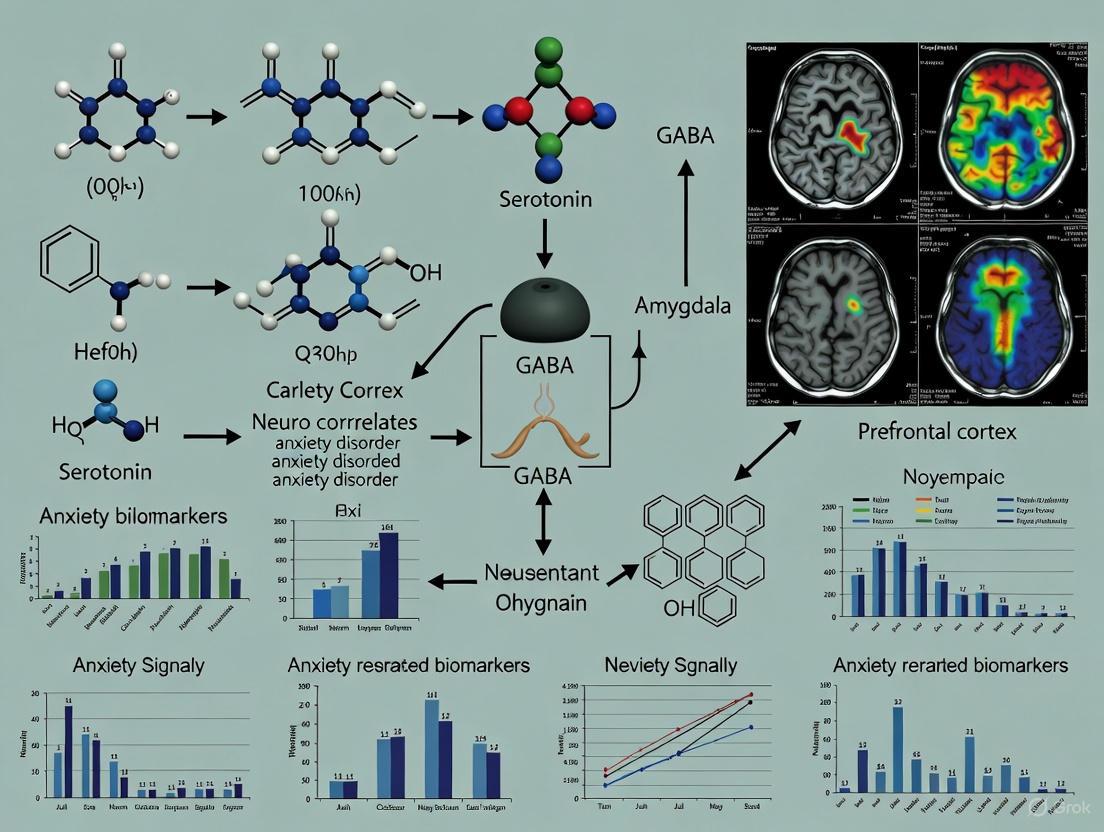
This article synthesizes the latest functional magnetic resonance imaging (fMRI) research to delineate the neural circuitry of anxiety disorders.
Mapping the Anxious Mind: A Comprehensive fMRI Guide to Neural Correlates in Anxiety Disorders
Abstract
This article synthesizes the latest functional magnetic resonance imaging (fMRI) research to delineate the neural circuitry of anxiety disorders. Targeting researchers, scientists, and drug development professionals, it explores the foundational neurobiology of anxiety, highlighting key structures like the amygdala, insula, and prefrontal cortex within the 'fear network'. It critically reviews methodological advances, including resting-state fMRI and machine learning applications, for identifying robust biomarkers. The content further addresses the translational challenge of using neuroimaging to predict treatment outcomes and optimize interventions like Cognitive Behavioral Therapy (CBT). Finally, it provides a comparative analysis of disorder-specific neural signatures—such as those in social anxiety, panic disorder, and specific phobia—against a transdiagnostic framework, offering a roadmap for future diagnostic refinement and therapeutic development.
The Brain's Fear Network: Core Neural Circuits in Anxiety Pathology
In the landscape of human emotional experience, the neural circuitry comprising the amygdala, insula, and anterior cingulate cortex (ACC) serves as a critical hub for threat detection, fear processing, and anxiety manifestation. This triad forms an integrated system that coordinates the perception, interpretation, and physiological response to potentially threatening stimuli—functions that become dysregulated across anxiety disorders, post-traumatic stress disorder (PTSD), and depression. Neuroimaging research has consistently demonstrated that these regions exhibit heightened activation and altered connectivity in clinical populations compared to healthy individuals [1] [2]. The amygdala plays a central role in identifying emotional salience and initiating fear responses; the insula contributes to interoceptive awareness and integrating bodily sensations with emotional states; and the ACC regulates emotional conflict and facilitates cognitive control over threat responses [1] [3]. Understanding the precise functions, interactions, and dysregulations within this network provides a critical foundation for developing targeted neuromodulatory treatments and biomarker-based diagnostic approaches for fear and anxiety-related disorders.
Functional Neuroanatomy of the Core Fear Circuitry
Amygdala: The Threat Detection Hub
The amygdala serves as the primary threat detection center within the fear circuitry, responsible for identifying emotionally salient stimuli and coordinating rapid physiological responses. Structural and functional neuroimaging studies consistently reveal amygdala hyperactivation in response to threat-related cues across multiple anxiety disorders, including social anxiety disorder, generalized anxiety disorder (GAD), and PTSD [1] [3]. In individuals with generalized social anxiety disorder (gSAD), for instance, the amygdala demonstrates exaggerated reactivity not only to socially threatening stimuli but also to general emotional images with negative content, with the extent of activation correlated with social anxiety severity [4]. The amygdala's role extends beyond simple threat detection to include fear learning and memory consolidation, particularly through pathways connecting the basolateral amygdala to the central amygdala (BLA-CeA), which modulates emotional memory and produces anxiolytic effects [5] [6]. Additionally, the amygdala forms extensive connections with other key regions, including the bed nucleus of the stria terminalis (BNST), ventral hippocampus (vHPC), and medial prefrontal cortex (mPFC), creating integrated circuits that underlie the expression of anxiety-like behaviors [5] [6].
Insula: The Interoceptive Integration Center
The insula functions as a critical integration center that maps internal bodily states (interoception) and processes affective stimuli, particularly those related to negative emotional appraisal [7] [3]. Neuroimaging research indicates the insula is functionally subdivided, with posterior regions processing primary visceral sensations and anterior portions, especially the ventral anterior insula, being more associated with affective experience [7]. In anxiety disorders, the insula demonstrates heightened sensitivity to emotional stimuli, with studies showing exaggerated insula reactivity in individuals with gSAD when viewing negative images compared to healthy controls [4]. Within the gSAD population, the extent of insula activation correlates specifically with trait anxiety rather than social anxiety severity, suggesting a potentially distinct role from the amygdala in anxiety representation [4]. The anterior insula is particularly implicated in interoceptive awareness—the monitoring of internal states—with heightened activation linked to individual differences in anxiety sensitivity (AS), which reflects fear of anxiety-related sensations and their catastrophic misinterpretation [3].
Anterior Cingulate Cortex (ACC): The Regulation and Conflict Monitor
The ACC serves as a regulatory hub within the fear circuitry, contributing to conflict monitoring, emotion regulation, and cognitive control. The ACC comprises functionally distinct subdivisions: the dorsal ACC (dACC) is involved in evaluating and appraising emotion, while the rostral-ventral ACC contributes to emotion regulation and control [8]. In healthy populations, both dACC and rostral ACC (rACC) activate during fear conditioning, with dACC activation positively correlated with differential skin conductance responses [1]. However, in anxiety disorders, this regulatory function appears compromised. PTSD, unlike other anxiety disorders, is associated with diminished responsivity in the rostral anterior cingulate cortex and adjacent ventral medial prefrontal cortex, suggesting impaired top-down regulation of fear responses [1]. The ACC also plays a critical role in differentiating clinical populations, with research showing distinct patterns of ACC functional connectivity in bipolar versus unipolar depression, potentially serving as a diagnostic biomarker [2].
Quantitative Synthesis of Circuit Activation Across Disorders
Table 1: Amygdala-Insula-ACC Activation Patterns Across Clinical Populations
| Disorder | Amygdala Response | Insula Response | ACC Response | Key References |
|---|---|---|---|---|
| Generalized Social Anxiety Disorder (gSAD) | Enhanced bilateral reactivity to negative images; correlated with social anxiety severity | Enhanced bilateral reactivity to negative images; correlated with trait anxiety | Not specifically reported | [4] |
| PTSD | Hyperactivity in response to threat cues | Heightened activation to emotional stimuli | Diminished responsivity in rostral ACC and adjacent vmPFC | [1] |
| Anxious Depression (AnxMDD) | Not specified | Increased dorsal anterior insula response to CS+ threat cues | Increased dorsal anterior/mid cingulate response to CS+ | [9] |
| Anxiety Disorders (General) | Relatively heightened activation to disorder-relevant threat stimuli | Activation appears heightened across multiple anxiety disorders | Varied responses depending on specific disorder | [1] |
Table 2: Functional Connectivity Findings in Fear Circuitry
| Connectivity Measure | Population | Key Finding | Clinical Correlation | Reference |
|---|---|---|---|---|
| Insula-Amygdala FC during habituation | Healthy adults | Increased FC with repeated negative image presentation | Correlated with behavioral habituation | [7] |
| Resting-state SEN connectivity | rMDD and HC | Positive association between amygdala-SEN/CCN/DMN connectivity and emotion perception accuracy | Better facial emotion perception performance | [8] |
| Dynamic FC during extinction | PTSD & Anxiety Disorders | Widespread abnormal FC in higher-order cognitive and attention networks | Correlated with fear- and anxiety-related clinical measures | [10] |
| Amygdala-insula response to neutral stimuli | Internalizing sample | Higher baseline activation predicted increased anxiety sensitivity 1.5 years later | Prospective risk marker for anxiety sensitivity | [3] |
Experimental Paradigms and Methodological Approaches
Fear Conditioning and Extinction Protocols
The Pavlovian fear conditioning and extinction paradigm represents a foundational experimental approach for investigating the amygdala-insula-ACC circuitry in both healthy and clinical populations. In a typical protocol, participants undergo a two-day fear conditioning and extinction procedure conducted within the fMRI scanner [10]. On day one, during fear conditioning, participants are presented with conditioned stimuli (CS+, CS-) paired with an aversive unconditioned stimulus (US), such as a mild electric shock or scream. This is followed by an extinction learning phase where one CS+ is repeatedly presented without the US. On day two, participants undergo an extinction memory test where they are presented with the extinguished CS+ (CS+E), unextinguished CS+ (CS+U), and CS- to assess extinction memory retention [10]. Throughout this paradigm, fMRI data acquisition typically utilizes T2*-weighted echo-planar imaging sequences on 3.0T scanners (e.g., repetition time = 2000-3000 ms, echo time = 25-30 ms, flip angle = 77°-84°, field of view = 24 cm), with preprocessing including spatial realignment, normalization to standard space (e.g., MNI), and smoothing with an 8-mm Gaussian kernel [4] [10]. This protocol effectively engages the fear network, with studies consistently reporting amygdala, insula, and ACC activation during conditioning, and vmPFC involvement during extinction recall [1] [10].
Emotional Stimulus Presentation Tasks
The presentation of standardized emotional stimuli provides another key methodological approach for probing the amygdala-insula-ACC circuit. In one commonly used protocol, participants view emotionally evocative images from the International Affective Picture System (IAPS) during fMRI scanning [4] [7]. These images are typically presented in block designs, with separate blocks for negative, positive, and neutral valence images (e.g., 20-second blocks with 5 images per block), alternated with baseline blocks of blank or grayscale images [4]. Participants may be instructed to identify the general valence of each image via button press or to rate their affective response following each image on a scale (e.g., 1-5 for most negative to most positive) [4] [7]. Stimulus presentation is often counterbalanced across participants, with specific image selection based on normative ratings of valence and arousal. In adaptation protocols designed to study habituation, participants may view repeated presentations of the same negative and neutral images, allowing researchers to examine how neural responses change with repeated exposure [7]. These paradigms reliably engage the amygdala and insula, with clinical populations typically showing heightened and sustained activation compared to healthy controls, particularly in response to negative stimuli [4] [7].
Resting-State Functional Connectivity Methods
Resting-state functional connectivity (rs-FC) approaches examine intrinsic functional organization of the amygdala-insula-ACC circuit without task demands. In a typical rs-FC protocol, participants undergo an 8-minute eyes-open resting-state scan during which they are instructed to remain still, stay awake, and let their minds wander without engaging in any structured task [8]. fMRI data acquisition parameters are similar to task-based protocols, though longer repetition times may be used (e.g., TR = 3000 ms). Preprocessing pipelines for rs-FC typically include head motion correction, spatial normalization, and band-pass filtering (e.g., 0.01-0.1 Hz) to reduce low-frequency drift and high-frequency noise [8] [2]. Seed-based correlation approaches are then employed, with seeds placed in key regions such as the amygdala, insula subregions (dorsal anterior, ventral anterior, posterior), and ACC subregions. The time series from these seed regions is correlated with every other voxel in the brain to generate whole-brain functional connectivity maps [2]. This method has revealed meaningful individual differences, such as positive associations between amygdala connectivity with salience and emotion network regions and facial emotion perception accuracy, highlighting the relevance of intrinsic functional architecture for emotion processing capabilities [8].
Circuit Visualization and Signaling Pathways
Diagram 1: Amygdala-Insula-ACC Circuitry: Functional Organization and Pathophysiology in Anxiety Disorders. This diagram illustrates the core functional relationships between the amygdala, insula, and anterior cingulate cortex (ACC) within the fear circuitry, highlighting their specialized roles, interconnectivity, and the pathophysiological changes observed in anxiety disorders.
Table 3: Key Research Reagents and Methodological Solutions for Fear Circuitry Investigation
| Resource Category | Specific Tool/Reagent | Research Application | Key Function | Example Use |
|---|---|---|---|---|
| Stimulus Sets | International Affective Picture System (IAPS) | Emotional provocation paradigms | Standardized emotional images with normative ratings | Probing amygdala-insula reactivity to negative vs. neutral stimuli [4] [7] |
| Stimulus Sets | Empathy Picture System (EPS) | Emotional habituation studies | Additional negative images complementing IAPS | Extending range of negative stimuli in repeated presentation designs [7] |
| Clinical Assessment | Liebowitz Social Anxiety Scale (LSAS) | Patient characterization | Measures social anxiety severity | Correlating with amygdala activation extent in gSAD [4] |
| Clinical Assessment | Spielberger Trait Anxiety Inventory (STAI-trait) | Participant phenotyping | Assesses anxiety proneness as stable trait | Correlating with insula activation in gSAD [4] |
| Clinical Assessment | Anxiety Sensitivity Index (ASI) | Risk factor measurement | Quantifies fear of anxiety-related sensations | Linking to amygdala-insula reactivity to neutral stimuli [3] |
| Experimental Paradigms | Pavlovian Fear Conditioning & Extinction | Fear learning investigation | Models acquisition and inhibition of fear responses | Studying dynamic FC changes in anxiety disorders [10] |
| Analysis Tools | Statistical Parametric Mapping (SPM) | fMRI data preprocessing and analysis | Software package for statistical analysis of neuroimaging data | Conventional processing of fear conditioning data [4] |
| Analysis Approaches | Seed-based Functional Connectivity | Circuit interaction mapping | Examines temporal correlations between brain regions | Assessing amygdala-insula connectivity during habituation [7] |
| Analysis Approaches | Dynamic Functional Connectivity | Time-varying network analysis | Measures how functional connections change during tasks | Identifying extinction learning impairments in PTSD [10] |
The amygdala-insula-ACC circuitry represents a fundamental neural system for threat processing and fear regulation whose dysfunction contributes significantly to the pathophysiology of anxiety disorders. Converging evidence from multiple methodological approaches demonstrates consistent hyperactivation of this circuit in clinical populations, with distinct yet complementary contributions from each region: the amygdala in threat detection, the insula in interoceptive integration, and the ACC in regulatory control. Importantly, recent research has revealed that functional connectivity between these regions, both at rest and during emotional tasks, may provide even more sensitive biomarkers of pathological anxiety than activation patterns alone [7] [10]. The prospective finding that amygdala-insula reactivity to neutral stimuli predicts future increases in anxiety sensitivity highlights the potential of this circuitry for early risk identification and preemptive intervention [3]. Future research directions should focus on clarifying the causal relationships within this circuit using neuromodulation techniques, developing network-based biomarkers for differential diagnosis, and translating these insights into targeted interventions that normalize circuit function through pharmacological, cognitive, or neurostimulation approaches.
The pursuit of neural biomarkers for psychiatric disorders is undergoing a paradigm shift, moving from diagnosis-specific models toward dimensional frameworks that account for shared neurobiology across diagnostic boundaries. This whitepaper synthesizes evidence from recent meta-analyses of functional magnetic resonance imaging (fMRI) studies to delineate both transdiagnostic and disorder-specific neural signatures, with a specific focus on anxiety disorders and frequently comorbid conditions such as major depressive disorder (MDD). Findings consistently reveal that transdiagnostic features are anchored in well-defined neurocognitive networks, including the salience network (SN), default mode network (DMN), and frontoparietal network (FPN). Conversely, disorder-specific abnormalities often manifest as variations in the magnitude, lateralization, or task-dependent engagement within these shared circuits. This synthesis underscores the potential of a neural circuit-based taxonomy to inform the development of more precise neurobiologically-grounded biomarkers and therapeutics.
Traditional psychiatric nosology, as embodied in the Diagnostic and Statistical Manual of Mental Disorders (DSM), classifies anxiety disorders, mood disorders, and other conditions into discrete categories. However, high rates of comorbidity, overlapping symptomatology, and non-specific treatment responses challenge this categorical approach [11] [12]. The National Institute of Mental Health's Research Domain Criteria (RDoC) framework addresses these limitations by advocating for the investigation of transdiagnostic dimensional constructs—such as negative valence systems—across multiple units of analysis, from circuits to behavior [13].
Functional neuroimaging, particularly fMRI, has been instrumental in identifying brain network dysfunction that transcends diagnostic labels. Converging evidence points to the central role of three core neurocognitive networks in the pathophysiology of affective disorders:
- The Salience Network (SN): Primarily involving the anterior insula (AI) and anterior cingulate cortex (ACC), this network is critical for detecting behaviorally relevant stimuli and initiating control signals. Its hyperactivation is frequently linked to the heightened interoceptive and threat awareness characteristic of anxiety and depression [13] [12].
- The Default Mode Network (DMN): Including the medial prefrontal cortex (mPFC) and posterior cingulate cortex, this network is active during self-referential thought. Its dysregulation is associated with rumination and negative self-focus, features common to both anxiety and depressive disorders [13] [11].
- The Frontoparietal Network (FPN): Encompassing the dorsolateral prefrontal cortex (dlPFC) and inferior parietal lobule, this network subserves cognitive control and emotion regulation. Its compromised function may underlie shared deficits in regulating emotional responses [13] [14].
This whitepaper integrates findings from recent coordinate-based and image-based meta-analyses to provide a contemporary overview of the neural architecture of affective disorders, distinguishing shared mechanisms from features that may confer diagnostic specificity.
Methodological Foundations of fMRI Meta-Analyses
The evidence presented herein is largely derived from Activation Likelihood Estimation (ALE), the current gold standard for coordinate-based fMRI meta-analysis.
- Core Principle: ALE identifies spatially convergent activation foci across multiple independent experiments. It treats reported foci as centers of 3D Gaussian probability distributions, accounting for spatial uncertainty, and computes the union of these probabilities to create a modeled activation (MA) map for each study [15] [14].
- Statistical Thresholding: Robust meta-analyses employ a cluster-level family-wise error (FWE) correction, typically at ( p < 0.05 ), with a cluster-forming threshold of ( p < 0.001 ) (uncorrected). This approach rigorously controls for false positives [15] [14].
- Comparative Methods: Advanced meta-analytical approaches include:
- Image-Based Meta-Analysis: Uses statistical maps from original studies, offering greater sensitivity than coordinate-based methods [16].
- Hierarchical Clustering: A data-driven technique that groups experiments based on the spatial similarity of their activation maps, independent of a priori diagnostic categories [15].
Table 1: Key Methodological Protocols in Recent Meta-Analyses
| Meta-Analysis Focus | Primary Method | Included Studies (n) | Key Statistical Threshold | Clinical Populations |
|---|---|---|---|---|
| Emotion Processing in MDD & BPD [16] | Coordinate & Image-Based Meta-Analysis | 67 | Cluster-level FWE correction | MDD, Borderline Personality Disorder |
| Implicit Emotion Regulation [13] | Activation Likelihood Estimation (ALE) | 24 | Voxel-level ( p<0.001 ), Cluster-level FWE ( p<0.05 ) | Mood & Anxiety Disorders |
| Pediatric Psychiatric Disorders [15] | ALE with Hierarchical Clustering | 147 | Voxel-level ( p<0.001 ), Cluster-level FWE ( p<0.05 ) | ADHD, CD/ODD, ANX, DEP |
| Uncertainty Processing [14] | Activation Likelihood Estimation (ALE) | 76 | Cluster-level FWE ( p=0.05 ), cluster-forming ( p<0.001 ) | Healthy Adults (for baseline circuitry) |
Transdiagnostic Neural Signatures
Recent meta-analyses provide compelling evidence for shared neural aberrations across anxiety, depressive, and related disorders, particularly during emotion processing and regulation.
Shared Aberrations in Emotion Processing
A transdiagnostic meta-analysis of implicit emotion regulation—the automatic, non-conscious modulation of emotional responses—in mood and anxiety disorders revealed consistent patterns of dysfunction. Patients exhibited hypoactivation in the right medial frontal gyrus (BA9) extending to the right anterior cingulate gyrus (BA32), and in the left middle temporal gyrus (BA21) spreading to the left superior temporal gyrus (BA22) [13]. Simultaneously, there was hyperactivation in the left medial frontal gyrus (BA9), extending to the left superior and middle frontal gyri. This pattern suggests a transdiagnostic failure to engage appropriate regulatory resources efficiently [13].
Furthermore, a study investigating affective face processing across Generalized Anxiety Disorder (GAD), Social Anxiety Disorder (SAD), and MDD found that continuous anxiety symptomatology was positively correlated with increased activation in the bilateral insula, anterior/midcingulate, and dorsolateral prefrontal cortex (dlPFC) in response to angry faces. In contrast, depressive symptoms were associated with reduced activation in the dlPFC for the same contrast, indicating that anxiety and depression may exert opposing influences on regions responsible for cognitive control [12].
The Triple Network Model
The Triple Network Model of psychopathology, involving the Salience, Default Mode, and Frontoparietal Networks, offers a parsimonious framework for understanding transdiagnostic dysfunction [17]. Abnormalities in the dynamic interaction between these networks are evident across anxiety disorders, MDD, and even functional neurological disorder (FND) and chronic pain.
- Salience Network Hyperactivity: Hyperactivation of the AI and ACC is a consistent finding during threat processing and uncertainty across disorders, reflecting a shared neural substrate for heightened salience detection and emotional reactivity [12] [14].
- Default Mode Network Dysregulation: Increased DMN activity, particularly in the mPFC, is linked to the ruminative and self-referential negative thinking common to MDD and anxiety disorders [13] [11].
- Frontoparietal Network Inefficiency: Altered function of the dlPFC and related regions signifies a transdiagnostic impairment in the cognitive control of emotion, manifesting as either compensatory hyperactivation or failure to recruit [13] [12].
Disorder-Specific Neural Signatures
Despite these shared pathways, quantitative and qualitative differences in neural activity provide evidence for disorder-specific signatures, particularly when comparing disorders with overlapping symptomatology.
Major Depressive Disorder vs. Borderline Personality Disorder
A direct comparative meta-analysis of MDD and Borderline Personality Disorder (BPD) during emotion processing revealed distinct patterns:
- During Negative Emotion Processing: Patients with BPD displayed hyperreactivity in the left hippocampus and amygdala alongside hyporeactivity in the right inferior frontal gyrus (rIFG), a key region for response inhibition. In contrast, MDD was characterized by greater hyporeactivity in the bilateral anterior cingulate cortex (ACC) compared to BPD [16]. This suggests a primary deficit in cognitive control in MDD, whereas BPD may involve heightened limbic reactivity coupled with insufficient inhibitory control.
- During Positive Emotion Processing: MDD was uniquely associated with decreased activation in the left temporal lobe, insula, and bilateral ACC, aligning with the clinical hallmark of anhedonia [16].
Anxiety Disorders vs. Depressive Disorders
While sharing many transdiagnostic features, anxiety and depression can be differentiated by their neural topography. A systematic review of self-referential processing found that while both MDD and Anxiety Disorders (AD) involve large-scale brain-wide changes, MDD more specifically affects the ACC, a region integral to emotional-cognitive processing. In contrast, AD more prominently involves prefrontal and insular regions associated with interoceptive and emotional-cognitive regulation [11].
Table 2: Disorder-Specific Neural Signatures from Comparative Meta-Analyses
| Disorder / Context | Key Disorder-Specific Neural Findings | Postulated Functional Implication |
|---|---|---|
| BPD - Negative Emotion [16] | ↑ Left Amygdala & Hippocampus; ↓ Right Inferior Frontal Gyrus | Heightened limbic emotional reactivity with poor inhibitory control |
| MDD - Negative Emotion [16] | ↓↓ Bilateral Anterior Cingulate Cortex (vs. BPD) | Profound deficit in cognitive control and conflict monitoring |
| MDD - Positive Emotion [16] | ↓ Left Temporal Lobe, Insula, Bilateral ACC | Neural correlate of anhedonia and reduced reward sensitivity |
| Anxiety Disorders - Self [11] | ↑ Prefrontal & Insular Regions | Hyper-awareness of interoceptive signals and excessive regulatory effort |
| MDD - Self [11] | ↑ Anterior Cingulate Cortex | Dominance of emotional-cognitive dysregulation and rumination |
The Scientist's Toolkit: Research Reagent Solutions
This section details key methodological tools and constructs essential for research in transdiagnostic and disorder-specific neuroimaging.
Table 3: Essential Reagents and Methodologies for fMRI Research on Neural Signatures
| Research Reagent / Tool | Type/Classification | Primary Function in Research |
|---|---|---|
| Activation Likelihood Estimation (ALE) [13] [15] [14] | Statistical Algorithm / Software (GingerALE) | Identifies statistically significant convergence of activation foci across multiple neuroimaging studies. |
| fMRI Emotional Task Paradigms (e.g., Face-Matching, Implicit Regulation) [13] [12] | Experimental Task / Probe | Elicits robust and reliable activation in brain circuits involved in emotion processing and regulation. |
| DSM-5 Diagnostic Criteria [13] | Clinical Characterization Framework | Provides standardized, operationalized definitions for recruiting participant groups with specific disorders. |
| Research Domain Criteria (RDoC) [13] [12] | Conceptual Framework | Guides the investigation of transdiagnostic dimensional constructs (e.g., acute threat) across multiple units of analysis. |
| Salience Network (AI, ACC) [13] [17] [14] | Neural System / Biomarker Target | Serves as a primary region of interest for investigating transdiagnostic abnormalities in salience detection and affective response. |
Clinical and Therapeutic Implications
Understanding shared and distinct neural circuits opens new avenues for biomarker development and treatment personalization.
Neural Correlates of Treatment Response
The dual-route model of Cognitive Behavioral Therapy (CBT) provides a framework for understanding treatment efficacy. This model posits that CBT strengthens the "reflective" top-down control pathway (involving the vmPFC and dlPFC) over the "impulsive" bottom-up fear pathway (centered on the amygdala) [18]. Successful CBT for anxiety disorders is associated with:
- Increased activation in prefrontal regulatory regions (vmPFC, dlPFC).
- Decreased activation in limbic regions (amygdala) [18].
However, recent evidence suggests this model requires expansion. For instance, CBT's efficacy in specific phobias and social anxiety is also linked to changes in the precuneus, a DMN node involved in self-awareness and attention, highlighting a neural mechanism beyond the classic dual-route circuitry [18].
Implications for Drug Development
The transdiagnostic perspective suggests a strategic shift in neuropsychiatric drug development:
- Target Circuit Dysfunction, Not Diagnoses: Therapeutics could be developed to modulate the activity of specific transdiagnostic circuits (e.g., salience network hyperreactivity) rather than for a single DSM-defined disorder [17].
- Biomarker-Driven Patient Stratification: Identifying patients based on their underlying neural circuit dysfunction (e.g., "high limbic reactivity" vs. "low cognitive control") could lead to more targeted and effective clinical trials, reducing heterogeneity and improving outcomes [16] [12].
Future Research Directions
To advance this field, several key challenges must be addressed:
- Data Sharing and Harmonization: Future progress hinges on the widespread sharing of individual participant data and the standardization of analytical pipelines across research groups to enhance reproducibility and power [19].
- Longitudinal and Developmental Designs: Studies tracking the evolution of neural circuits over time, particularly from childhood to adulthood, are critical for understanding the neurodevelopmental origins of transdiagnostic risk and disorder-specific manifestations [15].
- Multimodal Integration: Combining fMRI with other modalities like EEG (which can capture thalamocortical dysrhythmia, a potential shared mechanism in FND and chronic pain [17]) and genetics will provide a more comprehensive, multi-level understanding of psychopathology.
Implicit emotion regulation (IER), the automatic and unconscious process of managing emotional responses, is a fundamental transdiagnostic deficit in mood and anxiety disorders. Recent large-scale neuroimaging meta-analyses provide compelling evidence that these clinical populations exhibit consistent hypoactivation in the right medial frontal gyrus (BA9) extending to the right anterior cingulate gyrus (BA32), and the left middle temporal gyrus (BA21) extending to the left superior temporal gyrus (BA22) during IER tasks [20] [13]. This whitepaper synthesizes the core findings, experimental methodologies, and neural circuitry underlying these deficits, providing researchers and drug development professionals with a technical foundation for targeting these mechanisms in therapeutic development. The identified hypoactivation patterns represent potential biomarkers for diagnostic refinement and treatment response monitoring within the NIMH Research Domain Criteria (RDoC) framework.
Neural Correlates of Implicit Emotion Regulation Deficits
Quantitative meta-analyses of functional magnetic resonance imaging (fMRI) studies reveal consistent patterns of neural dysregulation during IER in mood and anxiety disorders. The convergence of hypoactivation in medial frontal and temporal regions highlights a core network deficit, while separate analyses also identify significant hyperactivation patterns that complicate the traditional model of simple prefrontal under-recruitment.
Table 1: Neural Hypoactivation During Implicit Emotion Regulation in Mood and Anxiety Disorders
| Brain Region | Brodmann Area | Peak Coordinates (x, y, z) | Clinical Implications |
|---|---|---|---|
| Right Medial Frontal Gyrus | BA9 | (4, 38, 26) | Core deficit in automatic cognitive control and self-referential processing [20] [13] |
| Right Anterior Cingulate Gyrus | BA32 | Extension from BA9 | Impaired conflict monitoring and emotional evaluation [20] [13] |
| Left Middle Temporal Gyrus | BA21 | (-64, -2, -14) | Dysfunction in social cognition and semantic processing of emotional stimuli [20] [13] |
| Left Superior Temporal Gyrus | BA22 | (-56, -6, -20) | Altered auditory and language-related emotional processing [20] [13] |
Table 2: Additional Neural Activation Patterns in Clinical Groups
| Activation Pattern | Brain Region | Disorder Specificity | Proposed Functional Interpretation |
|---|---|---|---|
| Hyperactivation | Left Medial Frontal Gyrus (BA9) | Mood & Anxiety Disorders | Compensatory effort or maladaptive regulation attempts [20] [13] |
| Hyperactivation | Insula & Claustrum | Mood Disorders Subgroup | Heightened interoceptive awareness and salience detection [20] [13] |
| Altered Connectivity | vmPFC-IFG/SFG Circuit | Social Anxiety | Neural mediator between rumination and social anxiety symptoms [21] |
Neural Activation Patterns in IER Deficits
Experimental Protocols & Methodologies
fMRI Meta-Analytic Protocol
The most comprehensive understanding of IER hypoactivation derives from recent large-scale meta-analyses synthesizing data across multiple independent studies.
- Search Methodology: Systematic literature searches across Web of Science, Scopus, PubMed/MEDLINE, and BrainMap databases using PRISMA guidelines [20] [13] [22]
- Inclusion Criteria: fMRI studies comparing patients with DSM-5 diagnosed mood/anxiety disorders to healthy controls during IER tasks; whole-brain analysis reporting coordinates in standard stereotactic space [20] [13]
- Analytical Framework: Activation Likelihood Estimation (ALE) meta-analysis for coordinate-based data; cluster-level family-wise error correction (p < .05) with uncorrected threshold of p < .001; 5,000 permutations [20] [13] [14]
- Sample Characteristics: 24 studies included (684 patients, 579 controls) covering major depressive disorder, bipolar disorder, generalized anxiety disorder, social anxiety disorder, panic disorder, and PTSD [20] [13]
Common IER Task Paradigms
Multiple experimental paradigms have been developed to probe implicit emotion regulation without conscious regulation intent.
- Implicit Emotional Response Inhibition: Measures ability to regulate cognitive control toward emotional stimuli without explicit instruction; assesses accuracy and reaction time differences [22]
- Implicit Attentional Cognitive Control: Evaluates automatic attention allocation toward or away from emotional stimuli using emotional Stroop or dot-probe paradigms [22]
- Implicit Emotional Conflict Adaptation: Examines trial-to-trial adjustments in processing emotionally conflicting information (e.g., emotional face-word Stroop) [22] [23]
- Priming-Identify (PI) Paradigm: Uses ER-related and ER-unrelated word priming followed by facial expression identification task while recording EEG/ERP components (N170, EPN, LPP) [23]
fMRI Meta-Analysis Workflow
The Scientist's Toolkit: Research Reagent Solutions
Table 3: Essential Methodologies for IER Research
| Methodology/Reagent | Primary Function | Technical Application |
|---|---|---|
| fMRI with ALE Meta-Analysis | Identifies consistent neural activation patterns across studies | Coordinate-based synthesis of neuroimaging findings; establishes transdiagnostic biomarkers [20] [13] [14] |
| Priming-Identify (PI) Paradigm | Isolates implicit ER processes from explicit strategies | Word-matching priming followed by facial expression identification with EEG/ERP recording [23] |
| fNIRS Prefrontal Mapping | Measures cortical hemodynamic changes during IER | Portable assessment of DLPFC and OFC function in ecological settings; high temporal resolution [24] |
| Bayesian Network Analysis (IMaGES+LOFS) | Models directional connectivity between neural regions | Identifies top-down vs. bottom-up information flow in PFC-limbic circuits [25] |
| ECG Heart Rate Variability | Provides autonomic nervous system correlate of ER | Measures parasympathetic dominance during successful emotion regulation [26] |
Neurobiological Significance & Clinical Implications
The identified hypoactivation patterns map onto critical neural networks for adaptive emotional functioning. The right medial frontal gyrus and anterior cingulate cortex form a core system for automatic cognitive control and conflict monitoring, while the temporal regions are crucial for social cognition and semantic processing of emotional stimuli [20] [13]. These findings align with the RDoC framework, suggesting these neural signatures may be more predictive of treatment outcomes than traditional diagnostic categories.
The concomitant hyperactivation in left medial frontal regions and insula suggests a more complex model than simple prefrontal deficit, potentially indicating maladaptive compensatory efforts or inefficient neural resource allocation [20] [26]. This has direct implications for neuromodulation therapies, suggesting that target engagement should be informed by both hypoactive and hyperactive circuits.
From a drug development perspective, these neural markers provide objective biomarkers for target engagement and candidate stratification. The vmPFC functional connectivity with inferior and superior frontal gyri as a mediator between rumination and social anxiety [21] offers a specific circuit-level target for novel therapeutics. Similarly, the distinct orbitofrontal cortex hypoactivation patterns in depression versus anxiety [24] suggest disorder-specific targets may be necessary despite shared transdiagnostic features.
Abstract This whitepaper delineates the neural circuitry underpinning threat processing and salience detection, with a specific focus on the Salience Network (SN) and the Executive Control Network (ECN). Framed within the context of identifying neural correlates for anxiety disorders via fMRI, we detail the dynamic interplay between these networks, where the SN acts as a switch, detecting potential threats and engaging the ECN for top-down cognitive regulation. Dysregulation in this crosstalk is posited as a core biomarker for pathological anxiety. This guide provides a synthesis of current neuroimaging findings, quantitative data summaries, and detailed experimental protocols for probing these systems in clinical populations.
Anxiety disorders are characterized by a hyper-sensitivity to potential threats and an impaired ability to regulate the resultant fear response. Non-invasive neuroimaging, particularly fMRI, has illuminated the central roles of two large-scale brain networks: the Salience Network (SN) and the Executive Control Network (ECN). The SN, anchored in the anterior insula (AI) and dorsal anterior cingulate cortex (dACC), is critical for detecting behaviorally relevant stimuli, including threats. The ECN, primarily involving the dorsolateral prefrontal cortex (dlPFC) and lateral posterior parietal cortex (lPPC), subserves higher-order cognitive functions such as attention, working memory, and cognitive reappraisal. The pathological anxiety state is hypothesized to stem from a hyperactive SN that excessively tags neutral stimuli as salient, coupled with a hypoactive ECN that fails to effectively down-regulate the amygdala and SN activity.
Network Anatomy and Functional Dynamics
Table 1: Core Constituents of the Salience and Executive Control Networks
| Network | Key Nodes | Primary Function in Threat Processing |
|---|---|---|
| Salience Network (SN) | Anterior Insula (AI), Dorsal Anterior Cingulate Cortex (dACC) | Detects and integrates salient internal and external stimuli; initiates network switching; signals cognitive conflict and arousal. |
| Executive Control Network (ECN) | Dorsolateral Prefrontal Cortex (dlPFC), Lateral Posterior Parietal Cortex (lPPC) | Mediates top-down cognitive control, attentional deployment, planning, and regulation of emotional responses. |
| Key Limbic Region | Amygdala | Rapid threat detection and fear response generation; strongly modulated by SN and ECN. |
The canonical model posits a triple-network architecture (SN, ECN, and the Default Mode Network). In threat processing, the SN is the first responder. Upon detecting a potential threat, it facilitates a brain-wide switch, suppressing the DMN and engaging the ECN. The ECN then appraises the threat and implements regulatory strategies.
Diagram Title: Threat Processing Network Dynamics
Quantitative fMRI Findings in Anxiety Disorders
fMRI studies consistently reveal aberrant functional connectivity and activity within and between the SN and ECN in patients with anxiety disorders compared to healthy controls.
Table 2: Representative fMRI Findings in Anxiety Disorders
| Metric | Finding in Anxiety Disorders (vs. HC) | Associated Brain Regions | Putative Interpretation |
|---|---|---|---|
| Resting-State FC | ↑ SN-amygdala connectivity | dACC/AI Amygdala | Hyper-vigilance and heightened salience attribution to interoceptive signals. |
| Resting-State FC | ↓ SN-ECN connectivity | AI dlPFC | Impaired communication for effective cognitive control engagement. |
| Resting-State FC | ↑ within-SN connectivity | AI dACC | Intrinsic hyper-synchrony of the salience detection system. |
| Task-Based Activity | ↑ Activity to threat cues | dACC, AI, Amygdala | Exaggerated neural response to potential threat, reflecting hyper-sensitivity. |
| Task-Based Activity | ↓ Activity during regulation | dlPFC, lPPC | Deficient recruitment of cognitive control resources to modulate emotional response. |
Abbreviations: FC, Functional Connectivity; HC, Healthy Controls; ↑, increased; ↓, decreased.
Key Experimental Protocols for fMRI Research
To probe the SN and ECN, researchers employ standardized tasks during fMRI scanning.
Protocol 1: Emotional Face Processing Task
- Objective: To assess neural reactivity to socially salient threat cues (e.g., fearful faces).
- Stimuli: Blocks or event-related presentations of fearful, angry, and happy faces, with neutral faces as a control.
- Procedure: Participants view faces and perform a gender discrimination or a simple perceptual task (e.g., circle/oval detection on a scrambled face) to ensure attention.
- fMRI Contrasts:
Fearful Faces > Neutral Facesto isolate threat reactivity;Angry Faces > Neutral Faces. - Key Regions of Interest: Amygdala, AI, dACC.
Protocol 2: Fear Conditioning and Extinction
- Objective: To investigate the acquisition and inhibition of fear responses.
- Stimuli: A neutral conditioned stimulus (CS+, e.g., a blue shape) is paired with an aversive unconditioned stimulus (US, e.g., a mild electric shock or loud noise). A second neutral stimulus (CS-) is never paired.
- Procedure:
- Acquisition: CS+ is repeatedly paired with US; CS- is presented alone.
- Extinction: CS+ and CS- are presented repeatedly without the US.
- fMRI Contrasts:
CS+ > CS-during acquisition (fear learning);CS+ > CS-during early extinction (fear expression);CS+ > CS-during late extinction (fear inhibition). - Key Regions of Interest: Amygdala, dACC (acquisition/expression), vmPFC (inhibition), dlPFC (extinction recall).
Protocol 3: Cognitive Reappraisal Task
- Objective: To assess the capacity for top-down emotion regulation via the ECN.
- Stimuli: Aversive images (e.g., from the International Affective Picture System).
- Procedure: Participants are cued to either
"Look"(maintain their natural emotional response) or"Reappraise"(reinterpret the image to reduce its negative impact). - fMRI Contrasts:
Reappraise > Lookto identify the core regulation network. - Key Regions of Interest: dlPFC, vlPFC, lPPC (ECN); Amygdala, Insula (down-regulation).
Diagram Title: fMRI Study Workflow
Molecular Signaling and Pharmacological Targets
The functional imbalance observed in fMRI is rooted in neurochemistry. The SN and ECN are rich in monoaminergic receptors, which are primary targets for anxiolytic drug development.
Table 3: Key Neurotransmitter Systems in SN/ECN Circuitry
| System | Role in SN/ECN Function & Anxiety | Example Drug Targets |
|---|---|---|
| Serotonin (5-HT) | Modulates AI and dACC reactivity; regulates amygdala output. Imbalance linked to negative bias and worry. | SSRIs (e.g., escitalopram), 5-HT1A agonists (e.g., buspirone). |
| Norepinephrine (NE) | Mediates arousal and vigilance via the locus coeruleus. Hyperactivity drives hyper-vigilance in SN. | Alpha-2 agonists (e.g., clonidine), beta-blockers (e.g., propranolol). |
| Glutamate | Primary excitatory neurotransmitter. ECN regulation relies on prefrontal glutamate signaling. | NMDA antagonists (e.g., ketamine), mGluR2/3 modulators. |
| GABA | Primary inhibitory neurotransmitter. Regulates amygdala and insula excitability. | Benzodiazepines (e.g., lorazepam), GABA-A receptor positive allosteric modulators. |
Diagram Title: Key Neurotransmitter Pathways in Anxiety
The Scientist's Toolkit: Essential Research Reagents & Materials
Table 4: Key Reagents and Resources for fMRI Anxiety Research
| Item | Function & Application |
|---|---|
| High-Field MRI Scanner (3T/7T) | High magnetic field strength (3T standard, 7T for enhanced resolution) for acquiring BOLD signal and structural images. |
| Multi-Channel Head Coil | Improves signal-to-noise ratio and spatial resolution of fMRI data. |
| E-Prime, PsychoPy, or Presentation | Software for precise design, presentation, and timing of experimental tasks and stimuli. |
| Biopotential Acquisition System | For recording physiological data (heart rate, skin conductance) concurrent with fMRI to correlate neural activity with arousal. |
| Eye-Tracking System (MRI-compatible) | To monitor participant vigilance and ensure fixation during tasks, controlling for confounds. |
| FSL, SPM, or AFNI | Software packages for preprocessing and statistical analysis of fMRI data (realignment, normalization, GLM modeling). |
| CONN or DPABI | Specialized toolboxes for conducting resting-state functional connectivity analyses. |
| AAL, Harvard-Oxford Atlases | Digital brain parcellation atlases used to define Regions of Interest (ROIs) for analysis. |
| International Affective Picture System (IAPS) | A standardized set of emotionally-evocative color images used in emotion regulation and threat processing studies. |
| General Anxiety Disorder-7 (GAD-7) Scale | A common clinical questionnaire used for screening and quantifying anxiety symptom severity in participants. |
The quest to elucidate the neurobiological underpinnings of anxiety disorders has increasingly focused on structural brain correlates, complementing functional activation patterns. Gray matter volume (GMV) abnormalities and white matter (WM) microstructural alterations represent critical elements in the neural architecture of anxiety pathology, potentially serving as vulnerability markers or neurobiological scars of the disorder. Within the broader context of neural correlates investigated through fMRI studies, these structural elements provide a physical substrate for the dysfunctional threat-processing and emotion-regulation circuits observed in functional studies. This technical review synthesizes evidence from volumetric and diffusion tensor imaging (DTI) studies to present a comprehensive picture of structural brain abnormalities across the anxiety spectrum, examining both clinical populations and at-risk individuals to disentangle state from trait characteristics.
Gray Matter Volume Abnormalities in Anxiety Disorders
Regional Specificity of GMV Alterations
Voxel-based morphometry (VBM) studies have identified localized GMV abnormalities in key regions involved in threat appraisal and emotion regulation. In adult patients with generalized anxiety disorder (GAD), significant volume increases have been observed in the amygdala and dorsomedial prefrontal cortex (DMPFC) compared to healthy controls [27]. This pattern contrasts with the predominant volume reductions typically reported in other psychiatric conditions, suggesting a potential pathology-specific signature. Importantly, the symptom severity in GAD patients shows positive correlations with DMPFC and anterior cingulate cortex (ACC) volumes, indicating a potential relationship between structural enlargement and clinical presentation [27].
In patients with anxious depression (AD), a clinically significant subtype of major depressive disorder characterized by prominent anxiety symptoms, different GMV patterns emerge. These patients exhibit significant increases in the right precuneus (PCUN) and right superior parietal gyrus (SPG) compared to non-anxious depression patients and healthy controls [28]. The precuneus, as a key node of the default mode network (DMN), may contribute to the excessive self-referential processing and worry characteristic of anxiety disorders.
Table 1: Gray Matter Volume Abnormalities in Anxiety Disorders
| Brain Region | Alteration Type | Associated Condition | Clinical Correlation |
|---|---|---|---|
| Amygdala | Volume increase | Generalized Anxiety Disorder | Not specified |
| Dorsomedial Prefrontal Cortex | Volume increase | Generalized Anxiety Disorder | Positive correlation with symptom severity |
| Anterior Cingulate Cortex | Volume correlation | Generalized Anxiety Disorder | Positive correlation with symptom severity |
| Right Precuneus | Volume increase | Anxious Depression | Predicts anxiety severity scores |
| Right Superior Parietal Gyrus | Volume increase | Anxious Depression | Not specified |
Structural Covariance Abnormalities
Beyond isolated regional changes, structural covariance (SC) analysis reveals disruptions in coordinated morphological variations across brain regions in anxiety disorders. In patients with anxious depression, reduced structural covariance is observed between the right precuneus and left anterior cingulate gyrus, as well as between the right precuneus and right angular gyrus [28]. These findings suggest that the pathology of anxiety disorders extends beyond localized abnormalities to encompass distributed network-level disruptions in brain morphology, potentially underlying the complex cognitive-affective disturbances characteristic of these conditions.
White Matter Microstructural Integrity in Anxiety
White Matter Alterations in Clinical and Subclinical Populations
Diffusion tensor imaging (DTI) studies have consistently demonstrated microstructural white matter abnormalities in anxiety disorders, primarily measured through fractional anisotropy (FA) reductions. In young healthy individuals with high trait anxiety, significantly decreased FA values occur in multiple WM tracts, including the corona radiata, anterior thalamic radiation, inferior fronto-occipital fasciculus, and corpus callosum [29]. These alterations in non-clinical populations suggest that white matter abnormalities may represent vulnerability markers rather than merely consequences of chronic illness.
The longitudinal relationship between WM integrity and anxiety symptoms has been demonstrated in preadolescent females with pathological anxiety, where increases in anxiety symptoms were associated with reductions in whole-brain fractional anisotropy over time, independent of age [30]. This dynamic, within-participant relation suggests that WM microstructure may be a viable target for therapeutic intervention in anxiety-related psychopathology.
Table 2: White Matter Microstructural Alterations in Anxiety
| White Matter Tract | Alteration Type | Population | Measurement Technique |
|---|---|---|---|
| Corona Radiata | Decreased FA | High Trait Anxiety | TBSS |
| Anterior Thalamic Radiation | Decreased FA | High Trait Anxiety | TBSS |
| Inferior Fronto-occipital Fasciculus | Decreased FA | High Trait Anxiety | TBSS |
| Corpus Callosum | Decreased FA | High Trait Anxiety | TBSS |
| Whole-brain White Matter | Decreased FA (longitudinal) | Preadolescent Females with Pathological Anxiety | DTI Tractography |
| Amygdala-vmPFC Pathway | Altered Connectivity | Anxiety Disorders | Structural Connectivity Analysis |
Structural Network Connectivity
Graph theoretical analysis of structural networks derived from DTI data reveals broader network disruptions in anxiety. Young healthy individuals with high anxiety levels show altered connections distributed across various regions, with particular significance in the inter-hemispheric frontal lobe, the frontal-limbic lobe in the right intra-hemisphere, and the frontal-temporal lobe in the ipsilateral hemisphere [31]. These widespread alterations suggest that anxiety-related structural pathology involves distributed neural circuits rather than isolated white matter tracts.
Diagram 1: Structural Neural Circuitry of Anxiety Disorders. This diagram illustrates key gray matter alterations (volume increases in grey nodes) and white matter disruptions (blue nodes) across prefrontal regulation, limbic/threat processing, and parietal regions, along with their structural and functional connections.
Methodological Approaches and Experimental Protocols
Volumetric Analysis Protocols
Voxel-based morphometry (VBM) provides a comprehensive, whole-brain technique for investigating focal differences in gray matter volume without a priori region selection. The standard protocol involves:
Image Acquisition: High-resolution T1-weighted structural images are acquired using magnetization-prepared rapid gradient echo (MPRAGE) sequences at 3T, with typical parameters: TR = 1900-2130 ms, TE = 2.26-2.52 ms, inversion time = 900 ms, flip angle = 8-9°, voxel size = 1×1×1 mm [28] [32].
Preprocessing: Images are processed using SPM software with the VBM toolbox, involving spatial normalization to standard template space, tissue segmentation into gray matter, white matter, and cerebrospinal fluid, and modulation to preserve tissue volume [28].
Statistical Analysis: Voxel-wise comparisons between groups are performed with appropriate covariates (age, gender, total intracranial volume), applying family-wise error correction or false discovery rate for multiple comparisons.
Diffusion Tensor Imaging Protocols
DTI measures the directional diffusion of water molecules to infer microstructural properties of white matter. Standard experimental protocols include:
Image Acquisition: Diffusion-weighted images are acquired using single-shot spin-echo echo-planar imaging sequences with multiple diffusion encoding directions (typically 30-48 directions) at b-values of 1000 s/mm², along with non-diffusion weighted (b0) images [31] [30] [29].
Preprocessing: Data processing utilizing pipelines such as PANDA or FSL includes eddy current correction, motion artifact removal, and tensor fitting to derive scalar metrics including fractional anisotropy (FA), mean diffusivity (MD), axial diffusivity (AD), and radial diffusivity (RD) [31] [29].
Analysis Methods:
- Tract-Based Spatial Statistics (TBSS): A voxel-wise approach that projects individual FA data onto a mean FA skeleton, enabling robust cross-subject comparison [29].
- Deterministic Tractography: Reconstructs white matter pathways based on principal diffusion directions, allowing quantification of tract-specific microstructural properties [30].
- Structural Network Construction: Uses brain parcellation atlases to define nodes and fiber tracking to define edges, enabling graph-theoretical analysis of network properties [31].
Diagram 2: Neuroimaging Workflow for Structural Correlates Analysis. This diagram outlines the comprehensive methodology from data acquisition through preprocessing to various analysis approaches for investigating both gray matter volume and white matter microstructural abnormalities in anxiety disorders.
The Scientist's Toolkit: Essential Research Materials and Methods
Table 3: Research Reagent Solutions for Structural Anxiety Neuroimaging
| Tool/Category | Specific Examples | Function/Application | Key Parameters |
|---|---|---|---|
| MRI Scanners | 3T Siemens Trio, Philips Achieva | High-resolution structural and diffusion imaging | Field strength: 3T; Sequence: MPRAGE, DWI-EPI |
| Analysis Software | FSL, SPM, PANDA, CONN, FreeSurfer | Image processing, normalization, statistical analysis | Pipeline automation, quality control |
| Diffusion Metrics | Fractional Anisotropy (FA), Mean Diffusivity (MD) | White matter microstructural integrity | FA range: 0-1 (1=highly directional) |
| Structural Analysis | Voxel-Based Morphometry (VBM), Surface-Based Morphometry | Gray matter volume and thickness measurement | Voxel-wise statistics, multiple comparison correction |
| Tractography | Deterministic (TrackVis), Probabilistic | White matter pathway reconstruction | FA threshold: 0.2; Angle threshold: 45° |
| Clinical Assessment | SCARED, STAI, HAMA, SCID | Anxiety symptom quantification and diagnosis | Dimensional and categorical assessment |
| Network Analysis | GRETNA, Brain Connectivity Toolbox | Graph theory metrics calculation | Global/local efficiency, small-worldness |
Integration with Functional Correlates and Clinical Implications
The structural abnormalities identified in anxiety disorders do not exist in isolation but interact with functional neural circuits to produce clinical symptomatology. The amygdala-prefrontal circuitry, consistently implicated in both structural and functional studies, demonstrates reduced structural connectivity between the amygdala and ventromedial prefrontal cortex (vmPFC) that varies with age [33]. This structural deficit likely underlies the impaired fear extinction and exaggerated threat responses observed in functional studies.
From a developmental perspective, age moderates the relationship between anxiety disorders and brain structure. While healthy individuals show increasing amygdala-vmPFC connectivity with age, this typical developmental pattern is disrupted in anxiety disorders [33]. Additionally, the specific structural correlates of anxiety vary across development, with adults showing vmPFC activation differences during fear rating, while youths show inferior temporal cortex differences during memory tasks [33] [34].
These structural findings have significant implications for medication development and treatment targeting. The identification of white matter integrity as a dynamic, modifiable factor associated with anxiety symptoms suggests that WM development could represent a novel therapeutic target [30]. Furthermore, the distinct structural patterns observed across different anxiety disorders (e.g., panic disorder vs. social anxiety disorder) may inform more personalized treatment approaches based on individual neurobiological profiles [32].
Structural neuroimaging studies have substantially advanced our understanding of anxiety disorders by identifying consistent alterations in both gray matter volume and white matter microstructure. The convergence of findings across distributed neural networks, particularly in regions supporting threat processing and emotion regulation, provides a solid anatomical foundation for interpreting functional abnormalities in anxiety circuits. Future research integrating multimodal imaging across developmental stages will be crucial for elucidating how these structural correlates emerge, progress, and potentially respond to intervention, ultimately informing targeted treatment strategies for anxiety disorders.
From Scanner to Biomarker: Advanced fMRI Techniques and Analytic Approaches
Functional magnetic resonance imaging (fMRI) has emerged as a fundamental tool for elucidating the neurobiological underpinnings of anxiety disorders. Researchers primarily employ two complementary paradigms: task-based fMRI, which measures brain activity in response to specific cognitive or emotional probes, and resting-state fMRI (rs-fMRI), which quantifies spontaneous brain activity and functional connectivity while the participant is at rest. The strategic choice between these paradigms significantly influences the design, interpretation, and clinical application of research findings. This technical guide provides an in-depth comparison of these methodologies within the context of a broader thesis on the neural correlates of anxiety disorders. It is structured to assist researchers and drug development professionals in selecting appropriate experimental designs, interpreting resultant data, and understanding the translational potential of fMRI biomarkers for precision medicine.
Paradigm Fundamentals and Theoretical Frameworks
Task-Based fMRI
Task-based fMRI is designed to probe specific brain circuits by engaging participants in structured activities within the scanner. The core principle involves measuring the blood-oxygen-level-dependent (BOLD) signal while participants perform tasks that are carefully crafted to engage cognitive or emotional processes known to be aberrant in anxiety disorders, such as threat reactivity, emotional regulation, or cognitive control [13].
- Elicitation of Neural Circuits: This paradigm is particularly powerful for testing hypotheses about specific brain functions. For instance, to study anxiety circuits, researchers use symptom provocation (e.g., presenting disorder-specific visual or auditory cues), implicit emotion regulation tasks, emotional face processing, or fear conditioning paradigms [35] [13]. These tasks are engineered to activate regions within the salience network (e.g., amygdala, insula, anterior cingulate cortex) and prefrontal regulatory areas.
- Hypothesis-Driven Approach: The design is inherently confirmatory, allowing for direct inference about how anxiety pathologies disrupt the functioning of predefined neural systems during targeted operations.
Resting-State fMRI (rs-fMRI)
In contrast, resting-state fMRI captures the intrinsic, spontaneous activity of the brain in the absence of an explicit task. Participants are typically instructed to remain still with their eyes closed or fixated on a crosshair. The primary analytical focus is on functional connectivity (FC), which measures the temporal correlation of BOLD signals between distinct brain regions, revealing the organization of large-scale intrinsic networks [36] [32] [37].
- Revealing Intrinsic Network Architecture: rs-fMRI is ideal for identifying the baseline, paradigm-free organization of brain networks that characterize individuals, potentially serving as a stable biomarker [36] [32]. It can reveal trait-like features of anxiety disorders that are not dependent on specific task performance.
- Data-Driven Discovery: This approach is more exploratory and is well-suited for identifying novel, large-scale network alterations—such as within and between the default mode network (DMN), salience network (SN), and central executive network (CEN)—that may transcend traditional diagnostic categories [38] [37].
Quantitative Findings in Anxiety Disorders
Research employing both paradigms has identified distinct and overlapping neural signatures across anxiety disorders, including panic disorder/agoraphobia (PD/AG), social anxiety disorder (SAD), and specific phobia (SP). The tables below summarize key findings.
Table 1: Key Resting-State fMRI Findings in Anxiety Disorders
| Anxiety Disorder | Altered Brain Regions/Networks | Nature of Connectivity Change |
|---|---|---|
| Panic Disorder/Agoraphobia (PD/AG) | Insula, Thalamus, Hippocampus, Amygdala, dmPFC, Periaqueductal Gray (PAG), Anterior Cingulate Cortex (ACC) | Increased positive connectivity (e.g., insula/hippocampus/amygdala–thalamus); Decreased positive connectivity (e.g., dmPFC/PAG–ACC) [36] [32] |
| Social Anxiety Disorder (SAD) | Insula, Orbitofrontal Cortex (OFC) | Decreased negative connectivity (e.g., insula–OFC) [36] [32] |
| Specific Phobia (SP) | (No significant differences found in a large multicenter study) [36] [32] | |
| Pediatric Anxiety (Transdiagnostic) | Cingulo-Opercular Network, Ventral Attention Network, Default Mode Network | Altered connectivity within the cingulo-opercular network and between it and the ventral attention/default mode/visual networks [38] |
| Anxiety Disorders (Meta-Analysis) | Amygdala, Medial Frontal Gyrus, Anterior Cingulate Cortex | Hypo-connectivity between the amygdala and medial frontal/anterior cingulate regions [37] |
Table 2: Key Task-Based fMRI Findings in Anxiety Disorders
| Cognitive Process/Disorder | Altered Brain Regions | Nature of Activation Change |
|---|---|---|
| Implicit Emotion Regulation (Mood & Anxiety Disorders) | Medial Frontal Gyrus (BA9), Anterior Cingulate Gyrus (BA32), Middle Temporal Gyrus (BA21) | Hypoactivation in right mFG/ACC and left MTG; Hyperactivation in left mFG, spreading to SFG and MFG [13] |
| Implicit Emotion Regulation (Mood Disorders Subgroup) | Insula, Claustrum | Convergence of hyperactivation [13] |
| Self-Focused Attention (SAD & BDD) | Default Network (e.g., medial PFC) | Greater activation during self vs. other trials; activity associated with CBT response [39] |
| Social Anxiety Disorder (SAD) - Facial Processing | Amygdala, Insula, ACC, dlPFC, mPFC, Occipitotemporal Regions | Hyperactivation in patients compared to controls [37] |
| Specific Phobia (SP) - Symptom Provocation | Left Amygdala, Globus Pallidum, Right Thalamus, Left Insula | Greater response to phobic stimuli [37] |
Experimental Protocols and Methodologies
Protocol for a Resting-State fMRI Study
A major multicenter study on resting-state functional connectivity in anxiety disorders provides a robust template for protocol design [36] [32].
- Participants: The study included 439 patients with primary diagnoses of PD/AG, SAD, or SP, and 105 healthy controls (HC). Diagnoses were confirmed using structured clinical interviews based on DSM criteria.
- Image Acquisition: Scanning was performed across eight sites using 3 Tesla MRI scanners. The rs-fMRI protocol involved an 8-minute T2*-weighted gradient-echo echo-planar imaging (EPI) sequence sensitive to BOLD contrast with the following parameters: TE = 30 ms, TR = 2000 ms, flip angle = 90°, voxel size = 3.3 × 3.3 × 3.8 mm³. Participants were instructed to keep their eyes closed and remain still. A high-resolution T1-weighted structural image was also acquired for anatomical co-registration.
- Data Preprocessing: Data were processed using the CONN functional connectivity toolbox. Standard steps included:
- Realignment and motion correction
- Slice-timing correction
- Outlier detection (using ART-based scrubbing)
- Spatial normalization to Montreal Neurological Institute (MNI) space
- Spatial smoothing with an 8-mm Gaussian kernel
- Functional Connectivity Analysis: The primary analysis was a region-of-interest (ROI)-to-ROI analysis. ROIs were selected a priori based on the defensive system network (e.g., amygdala, insula, ACC, thalamus, PAG, prefrontal regions). The time series from each ROI were extracted, and correlation matrices were generated to represent functional connectivity between each pair of ROIs.
Protocol for a Task-Based fMRI Study
A meta-analysis on implicit emotion regulation outlines common elements of task-based protocols in anxiety and mood disorders [13].
- Participants: Studies typically include patient groups with specific DSM-5 diagnoses (e.g., MDD, SAD, GAD, PD) and a matched group of healthy controls.
- Task Design: Participants perform computer-based tasks in the scanner that implicitly engage emotion regulation. Common paradigms include:
- Implicit emotional response inhibition (e.g., emotional Go/No-Go)
- Implicit attentional cognitive control (e.g., emotional Stroop, flanker tasks with emotional distractors)
- Indirect emotional facial processing
- Directed attention with disorder-specific stimuli (e.g., pictures of spiders for spider phobia)
- Image Acquisition: Acquisition parameters are similar to rs-fMRI, utilizing BOLD-sensitive EPI sequences. However, the run length and design are dictated by the task's block or event-related structure.
- Data Analysis: Preprocessing mirrors that of rs-fMRI. The statistical analysis then employs a general linear model (GLM) to identify voxels where the BOLD signal is significantly correlated with the task conditions (e.g., "self-referential vs. other-referential trials" or "threat vs. neutral faces"). Group-level analyses (e.g., t-tests, ANOVAs) are then conducted to compare activation patterns between patients and controls.
Figure 1: Experimental workflows for resting-state and task-based fMRI studies.
The Scientist's Toolkit: Essential Research Reagents and Materials
Table 3: Essential Materials and Tools for fMRI Anxiety Research
| Item Category | Specific Examples & Functions |
|---|---|
| MRI Scanners | 3 Tesla MRI Scanners (e.g., Siemens TrioTim, Prisma; Philips Achieva): High-field scanners provide the signal-to-noise ratio required for BOLD fMRI. Multi-site studies use harmonized scanner protocols for consistency [36] [32]. |
| Analysis Software & Toolboxes | CONN Functional Connectivity Toolbox: Preprocesses and analyzes rs-fMRI data, performing ROI-to-ROI and seed-based connectivity analyses [32]. SPM12 (Statistical Parametric Mapping): A standard platform for implementing the GLM in task-based fMRI and for core preprocessing steps. FSL, AFNI: Alternative comprehensive neuroimaging analysis suites. |
| Clinical & Behavioral Assessments | Structured Clinical Interviews (e.g., SCID for DSM-5): Essential for confirming participant diagnoses. Clinical Rating Scales: Hamilton Anxiety Rating Scale (SIGH-A), Liebowitz Social Anxiety Scale (LSAS), Panic and Agoraphobia Scale (PAS), Beck Depression Inventory (BDI-II) for quantifying symptom severity [36] [32]. |
| Computational Resources | High-Performance Computing Clusters: Necessary for processing and storing large fMRI datasets. Machine Learning Libraries (e.g., scikit-learn): Used for advanced analyses like biotype classification and predicting treatment outcomes [39] [40]. |
| Standardized Circuit Scores | Personalized Brain Circuit Scores: A system for quantifying individual participant's task-free and task-evoked circuit function relative to a healthy reference sample, enabling biotype classification [40]. |
Integration for Precision Psychiatry and Future Directions
The most promising future for fMRI in anxiety research lies not in choosing one paradigm over the other, but in their strategic integration. A landmark study by [40] exemplifies this approach by combining both task-free and task-evoked data to derive personalized, interpretable brain circuit scores. This method stratified over 800 patients with depression and anxiety into six distinct biotypes, each characterized by unique profiles of dysfunction across the default mode, salience, and attention circuits, as well as task-evoked activation. Crucially, these biotypes were differentiated by symptoms, behavioral performance, and, most importantly, response to pharmacotherapy and behavioral therapy.
Figure 2: Integrated data analysis pipeline for precision psychiatry. Combining resting-state and task-based data to identify biotypes with clinical and therapeutic relevance [40].
This integrated, precision-based framework addresses the profound heterogeneity within anxiety disorders. It moves beyond descriptive diagnostic labels to define subgroups based on coherent neurobiological dysfunction. For drug development, this offers a pathway to enrich clinical trials by selecting patients based on objective neural circuit metrics, thereby enhancing the probability of detecting a treatment signal and ultimately paving the way for neuroscience-informed, personalized patient care. Future research will focus on refining these biotypes, linking them to genetic and molecular data, and translating these findings into clinically viable tools for predicting optimal treatment pathways.
Anxiety disorders (ADs), including panic disorder with/without agoraphobia (PD/AG), social anxiety disorder (SAD), and specific phobia (SP), rank among the most prevalent mental disorders, with 12-month prevalence rates between 14.0% (EU) and 18.1% (US), posing a substantial societal challenge [32]. Modern psychopathological models increasingly advocate for a transdiagnostic viewpoint, emphasizing underlying neurobiological similarities across diagnostic labels [32]. Resting-state functional magnetic resonance imaging (rs-fMRI) has emerged as a particularly valuable, paradigm-free measure of intrinsic brain connectivity, positioning it as a temporally stable characteristic and potential biomarker [32]. However, neuroimaging findings for anxiety disorders have historically suffered from significant heterogeneity and a lack of statistical power due to small sample sizes [37]. Large-scale multicenter studies directly address these limitations by enhancing statistical power, enabling robust cross-disorder comparisons, and improving the generalizability of findings across diverse populations and scanning environments, thereby accelerating the identification of reliable neural biomarkers for diagnostic and therapeutic applications.
Case Study: The PROTECT-AD Multicenter fMRI Consortium
The national research consortium "Providing Tools for Effective Care and Treatment of Anxiety Disorders" (PROTECT-AD), sponsored by the German Federal Ministry of Education and Research, exemplifies the power of collaborative science. This initiative, complemented by data from the SpiderVR trial, created a transdiagnostic sample of 439 anxiety disorder patients and 105 healthy controls (HC) from eight different German university outpatient clinics [32]. This large-scale effort was specifically designed to overcome the limitations of previous underpowered studies and to directly investigate shared and distinct neural signatures across primary anxiety disorder diagnoses.
Table 1: Participant Demographics and Clinical Characteristics [32]
| Characteristics | All Patients (N=439) | PD/AG (N=154) | SAD (N=95) | SP (N=190) | HC (N=105) | Statistical Significance (p-value) |
|---|---|---|---|---|---|---|
| Female, n (%) | 289 (65.83%) | 81 (52.60%) | 51 ( 53.68%) | 157 (82.63%) | 54 (51.43%) | < .001 |
| Mean Age (years) | 29.70 | 32.16 | 27.16 | 28.98 | 31.96 | < .001 |
| Disease Duration (years) | 17.69 | 13.51 | 15.17 | 22.34 | N/A | < .001 |
| Symptom Severity (SIGH-A) | 24.38 | 24.73 | 24.28 | 22.56 | N/A | .235 |
| Beck Depression Inventory (BDI-II) | 11.67 | 15.71 | 19.16 | 4.62 | 2.28 | < .001 |
Experimental Protocol and Methodology
The experimental protocol was meticulously designed and harmonized across all eight participating sites to ensure data comparability and minimize site-introduced variance.
- Participant Eligibility: PROTECT-AD patient eligibility was based on the Diagnostic and Statistical Manual of Mental Disorders (DSM-5) criteria for primary diagnoses of PD, AG, SAD, or multiple SP. Healthy control participants had no history of mental illness or neurological/medical conditions preventing MRI [32].
- Clinical Assessments: Diagnoses were made by trained clinicians using standardized computerized interviews. A comprehensive battery of clinical measures was employed, including the Structured Interview Guide for the Hamilton Anxiety Rating Scale (SIGH-A), Clinical Global Impression Scale (CGI), Panic and Agoraphobia Scale (PAS), Liebowitz Social Anxiety Scale (LSAS), and the Beck Depression Inventory (BDI-II) [32].
- MRI Acquisition: MRI scans were performed at eight clinical sites using seven 3 Tesla MRI scanners. Data quality assurance was achieved through harmonized scanner sequences, trained personnel, frequent site visits, and rapid online data quality checks with direct feedback to each center [32].
- Resting-state fMRI Parameters: Functional images at rest were obtained using an 8-minute T2-weighted gradient-echo echo-planar imaging (EPI) sequence. Specific parameters included: TE = 30 ms, TR = 2000 ms, flip angle 90°, matrix size 64 × 64 voxels, voxel size 3.3 × 3.3 × 3.8 mm³, and 33 slices. Participants were instructed to keep their eyes closed [32].
- Data Preprocessing: MRI data were preprocessed using the CONN functional connectivity toolbox implemented in MATLAB and SPM12. Standard steps included realignment/motion correction, slice timing correction, and identification of outlier volumes. The first five scans were removed to allow for magnetization stabilization [32].
Diagram 1: PROTECT-AD Experimental Workflow. The flowchart outlines the key stages of the multicenter study, from participant recruitment using standardized diagnostic criteria to harmonized data acquisition and analysis.
Key Findings on Functional Connectivity in Anxiety Disorders
The PROTECT-AD consortium performed categorical and dimensional region-of-interest (ROI)-to-ROI analyses, focusing on connectivity between regions of the defensive system and prefrontal regulation areas. The findings revealed a complex picture of both shared and disorder-specific functional connectivity alterations.
- Shared Alteration: When analyzed as a single group, anxiety disorder patients showed increased connectivity between the insula and the thalamus compared to healthy controls, suggesting a potential common neural substrate for heightened threat sensitivity [32].
- Disorder-Specific Patterns: A more nuanced, cross-disorder comparison revealed distinct connectivity signatures, challenging a purely transdiagnostic model and highlighting the importance of categorical diagnoses in neuroscience research [32].
Table 2: Disorder-Specific Functional Connectivity Findings in Anxiety Disorders [32]
| Anxiety Disorder | Key Hyperconnectivity Findings | Key Hypoconnectivity Findings | Neural Network Level |
|---|---|---|---|
| Panic Disorder/Agoraphobia (PD/AG) | Insula/Hippocampus/Amygdala Thalamus | Dorsomedial Prefrontal Cortex/Periaqueductal Gray Anterior Cingulate Cortex | Widespread subcortical-cortical, including midbrain |
| Social Anxiety Disorder (SAD) | Not Reported | Insula Orbitofrontal Cortex | Exclusively cortical |
| Specific Phobia (SP) | No significant differences found compared to HC | No significant differences found compared to HC | N/A |
The study concluded that only PD/AG patients showed pronounced connectivity changes along a widespread subcortical-cortical network. In contrast, SAD alterations were confined to cortical areas, and no significant differences were found in SP patients. Dimensional analyses across all patients yielded no significant results, reinforcing the value of categorical diagnostic distinctions [32]. These findings underscore the relative specificity of neural signatures and challenge the predominance of shared transdiagnostic dysfunctions in intrinsic connectivity.
Diagram 2: Neural Circuitry of Anxiety Disorders. This diagram visualizes the key brain regions and their functional connectivity alterations identified in the PROTECT-AD study, color-coded by disorder specificity.
The Researcher's Toolkit: Essential Materials and Reagents
Successfully executing a large-scale, multicenter neuroimaging study requires a standardized set of tools and protocols to ensure data consistency and reliability across sites. The following toolkit outlines the critical components used in the PROTECT-AD consortium.
Table 3: Essential Research Reagents and Solutions for Multicenter fMRI Studies
| Tool Category | Specific Tool / Solution | Function & Purpose | Implementation in PROTECT-AD |
|---|---|---|---|
| Diagnostic & Clinical Assessment | Structured Clinical Interview for DSM-5 (SCID) | Standardized diagnostic confirmation | Primary eligibility criterion across all sites [32] |
| Symptom Severity Tracking | Hamilton Anxiety Rating Scale (SIGH-A), Panic and Agoraphobia Scale (PAS), Liebowitz Social Anxiety Scale (LSAS) | Quantification of disorder-specific symptom severity | Used for clinical characterization and correlation with neural measures [32] |
| Neuroimaging Hardware | 3 Tesla MRI Scanners (Siemens TrioTim, Verio, Prisma, Skyra; Philips Achieva) | High-resolution structural and functional brain data acquisition | Harmonized sequences across 7 scanners at 8 sites [32] |
| fMRI Sequence | T2*-weighted gradient-echo EPI sequence | Acquisition of BOLD signal for resting-state functional connectivity | 8-minute resting-state scan, parameters harmonized across sites [32] |
| Data Preprocessing & Analysis Software | CONN Functional Connectivity Toolbox, SPM12, MATLAB | Data preprocessing, denoising, and statistical analysis of functional connectivity | Standardized ROI-to-ROI analysis focusing on defensive system network [32] |
| Quality Assurance Protocol | Phantom scans, site visits, teleconferences, online data checks with feedback | Minimization of cross-site technical variability and data harmonization | Implemented for ongoing data quality assurance [32] |
Discussion and Future Directions
The findings from the PROTECT-AD study underscore the critical value of large-scale multicenter collaborations in psychiatry and neuroscience. By aggregating a substantial transdiagnostic sample, the consortium was able to identify both a shared neural feature—increased insula-thalamus connectivity—and critically, distinct, disorder-specific connectivity patterns that had been obscured in previous, underpowered studies [32]. This specificity, particularly the pronounced subcortical-cortical dysregulation in PD/AG versus the more cortical alterations in SAD, provides a more nuanced neurobiological framework for understanding these conditions. These findings directly inform the development of personalized, neuroscience-informed treatments, suggesting that neurostimulation or pharmacological interventions might target different neural circuits depending on the primary diagnosis.
Future research must build upon this foundation by further standardizing data acquisition and analytical pipelines across consortia. As highlighted by a recent systematic review, the field continues to be hampered by heterogeneous findings, underscoring "the need for data sharing when attempting to detect reliable patterns of disruption in brain activity across anxiety disorders" [37]. The integration of multimodal data—including genetics, structural imaging, and task-based fMRI—within these large frameworks will be essential for developing comprehensive models of anxiety pathophysiology. Ultimately, the enhanced power and generalizability afforded by multicenter studies like PROTECT-AD are indispensable for translating neuroimaging findings into clinically actionable biomarkers for diagnosis, treatment selection, and outcome prediction in anxiety disorders.
The integration of machine learning (ML) into clinical neuroscience represents a paradigm shift in how researchers approach the classification and prognosis of mental health disorders. Within the specific context of anxiety disorders, predictive modeling leverages multivariate patterns of brain structure and function to move beyond group-level comparisons toward individualized predictions. These models distill complex neurobiological data into tools that can potentially guide clinical decision-making, offering a significant advantage over traditional statistical methods that identify average group differences but lack predictive power at the individual level. Functional magnetic resonance imaging (fMRI) provides a rich source of features for these models, capturing both task-based activation and resting-state functional connectivity within brain networks known to be disrupted in anxiety pathology.
The fundamental advantage of machine learning in this domain is its ability to handle high-dimensional datasets where the number of features (e.g., voxels, connectivity pairs) far exceeds the number of participants. Unlike mass-univariate approaches that assess each variable independently, ML algorithms like support vector machines (SVM) and multivariate pattern analysis (MVPA) evaluate the information contained in distributed spatial patterns of brain activity. This approach has demonstrated remarkable utility, with studies showing that functional connectivity features during neutral face perception can distinguish social anxiety disorder (SAD) patients from panic disorder (PD) patients with an area under the receiver operating characteristic curve (AUC) of 0.81 [41]. Furthermore, ML can generate single-subject inferences, a critical requirement for any clinically applicable biomarker, and can integrate multimodal data, including behavioral, neurocognitive, and neuroimaging information, to enhance predictive accuracy.
Neural Correlates of Anxiety Disorders: A Foundation for Feature Selection
The development of robust predictive models requires a foundation in the established neurobiology of anxiety disorders. Converging evidence from meta-analyses of fMRI studies points to aberrant functioning within a fronto-limbic circuit that includes the amygdala, insula, anterior cingulate cortex (ACC), and prefrontal cortex (PFC). These regions are central to a threat-processing network, governing the detection of salience, emotional regulation, and the generation of adaptive behavioral responses. In social anxiety disorder (SAD), for instance, patients consistently show hyperactivation of the amygdala and medial temporal lobe in response to emotional stimuli, alongside functional connectivity abnormalities in the default mode network (DMN) and dorsal attention network (DAN) [41].
Recent meta-analytic work has further refined our understanding by examining implicit emotion regulation—the automatic, non-conscious processing of emotional stimuli. A 2025 meta-analysis of 24 clinical studies found that patients with mood and anxiety disorders exhibit a distinct pattern of neural dysregulation during implicit emotion regulation tasks. Specifically, patients showed hypoactivation in the right medial frontal gyrus (Brodmann area, BA9) extending to the right anterior cingulate gyrus (BA32), and in the left middle temporal gyrus (BA21). Simultaneously, they displayed hyperactivation in the left medial frontal gyrus (BA9), which spread to the left superior and middle frontal gyri [13] [20]. This imbalance suggests a failure in the automatic regulation of emotional responses, a potential transdiagnostic characteristic across mood and anxiety disorders. For the mood disorders subgroup, hyperactivation was also prominent in the insula and claustrum, regions deeply involved in interoceptive awareness and salience detection [13]. These consistently identified regions provide a robust, theory-driven set of features for building classification and prognostic models in anxiety disorders.
Table 1: Key Brain Regions Implicated in Anxiety Disorders and Their Functional Roles
| Brain Region | Functional Network | Role in Anxiety Pathology | Relevance to ML Features |
|---|---|---|---|
| Amygdala | Salience Network | Threat detection, fear learning | Hyperactivation to threat cues; functional connectivity with PFC |
| Anterior Cingulate Cortex (ACC) | Salience/Executive Control | Conflict monitoring, error detection | Altered activation during emotional conflict and regulation tasks |
| Insula | Salience Network | Interoceptive awareness, emotional experience | Hyperactivity in mood disorders subgroup during implicit regulation |
| Medial Prefrontal Cortex (mPFC) | Default Mode Network | Self-referential processing, emotion regulation | Hypo- and hyperactivation patterns during implicit emotion regulation |
| Inferior Frontal Gyrus (IFG) | Executive Control | Cognitive control, response inhibition | Part of the network for behavioral adaptation under uncertainty |
Machine Learning Methodologies for fMRI Analysis
Algorithm Selection and Model Training
Applying machine learning to fMRI data involves a structured pipeline from feature extraction to model validation. The choice of algorithm depends on the specific clinical question—classification (e.g., patient vs. control) or prognosis (e.g., treatment response prediction). Among the various ML approaches, Support Vector Machines (SVM) are the most frequently used classifier in the anxiety disorder literature [41]. SVM works by finding the optimal hyperplane that best separates different classes (e.g., patients vs. healthy controls) in a high-dimensional feature space. Its popularity stems from its effectiveness with high-dimensional data and its relative simplicity. Other commonly applied algorithms include Random Forests (RF), an ensemble method that builds multiple decision trees, and Logistic Regression (LR), which is particularly valued for its interpretability, as evidenced by its high predictive accuracy (AUC = 0.933) in forecasting mortality in comorbid medical and psychiatric conditions [42].
A critical step in model development is feature selection and dimensionality reduction. Given that fMRI data can contain hundreds of thousands of voxels, using all of them as features would lead to severe overfitting. Common strategies include:
- Region-of-Interest (ROI) Analysis: Extracting average activation or connectivity values from predefined brain regions based on prior knowledge (e.g., amygdala, insula).
- Data-Driven Feature Reduction: Employing techniques like Principal Component Analysis (PCA) to transform a large set of variables into a smaller one that still contains most of the information.
- Recursive Feature Elimination: Iteratively building a model and removing the weakest features until the optimal subset is identified.
The following diagram illustrates the standard workflow for developing and validating an ML model for anxiety disorder classification using fMRI data:
Model Evaluation and Validation Protocols
Rigorous validation is paramount to ensure that a model's performance is genuine and generalizable. The standard protocol involves cross-validation, most commonly k-fold cross-validation (e.g., 5-fold), where the dataset is randomly partitioned into k subsets [42]. The model is trained on k-1 folds and tested on the remaining fold, a process repeated k times until each fold has served as the test set once. The performance metrics are then averaged across all k iterations to provide a robust estimate of model accuracy.
A more robust validation method, crucial for assessing clinical utility, is external validation, where a model developed on one dataset is tested on a completely independent dataset from a different source [43]. This tests the model's generalizability to new populations and settings, a step that is often overlooked but is critical for clinical translation. Furthermore, model performance must be evaluated using multiple metrics to provide a comprehensive picture. Common metrics include:
- Area Under the Curve (AUC): Measures the overall ability of the model to discriminate between classes.
- Accuracy: The proportion of total correct predictions.
- Sensitivity: The ability to correctly identify patients (true positive rate).
- Specificity: The ability to correctly identify healthy controls (true negative rate).
Finally, to enhance the interpretability of often "black-box" ML models, techniques like SHapley Additive exPlanations (SHAP) are used [42]. SHAP values quantify the contribution of each feature (e.g., activation in a specific brain region) to the final prediction for an individual subject, thereby illuminating the "why" behind a model's output and building trust among clinicians.
Experimental Protocols for Key Research Paradigms
Protocol for Classifying Anxiety Disorders Using Resting-State fMRI
Objective: To develop an ML model that can distinguish patients with a specific anxiety disorder from healthy controls (HC) and from patients with other anxiety disorders based on resting-state functional connectivity (rsFC).
Participants: Recruitment of carefully diagnosed patients (e.g., with SAD, PD, or GAD) based on DSM-5/ICD-10 criteria through clinical referrals. A group of HC with no history of psychiatric illness, matched for age, sex, and education, should be included. A typical sample size in published studies ranges from 30 to 100 per group, though larger samples are increasingly necessary for robust ML.
fMRI Data Acquisition:
- Scanner: A 3T MRI scanner equipped with a standard head coil.
- Sequence: T2*-weighted echo-planar imaging (EPI) sequence for BOLD signal acquisition.
- Parameters: Repetition Time (TR) = 2000 ms, Echo Time (TE) = 30 ms, voxel size = 3 × 3 × 3 mm³, field of view (FOV) = 240 mm.
- Resting-State Scan: Participants are instructed to keep their eyes open, focus on a fixation cross, and let their minds wander without falling asleep. Scan duration is typically 8-10 minutes (240-300 volumes).
Data Preprocessing and Feature Extraction:
- Preprocessing: Conducted using standard software (e.g., SPM, FSL, DPABI). Steps include slice-timing correction, realignment for head motion correction, co-registration to structural images, normalization to a standard space (e.g., MNI), spatial smoothing (with a 6-8 mm Gaussian kernel), and nuisance regression (to remove signals from white matter, cerebrospinal fluid, and global mean).
- Functional Connectivity Matrix: Extract mean time series from a predefined brain atlas (e.g., Automated Anatomical Labeling, AAL; Brainnetome). Calculate pairwise correlations (Pearson's r) between all region-of-interest (ROI) time series, resulting in a connectivity matrix for each subject.
- Feature Vector: The upper triangle of the correlation matrix (excluding the diagonal) is extracted and transformed (e.g., using Fisher's z-transformation) to create a feature vector for each participant.
Machine Learning Analysis:
- Classifier: A linear Support Vector Machine (SVM) is implemented using a library like scikit-learn in Python or LIBSVM in MATLAB.
- Validation: A nested cross-validation scheme is employed. The outer loop (e.g., 5-fold) splits the data into training and test sets. The inner loop performs another 5-fold cross-validation on the training set to optimize the model's hyperparameter (e.g., the SVM regularization parameter C).
- Performance Reporting: The model's performance is reported as the average AUC, accuracy, sensitivity, and specificity across the outer test folds.
Protocol for Predicting Treatment Response Using Task-Based fMRI
Objective: To identify pre-treatment neural predictors of response to a standardized treatment (e.g., cognitive-behavioral therapy or SSRIs) in patients with an anxiety disorder.
Participants: Patients diagnosed with a specific anxiety disorder and deemed eligible for the treatment under investigation. Patients are assessed pre- and post-treatment using a standardized clinical scale (e.g., the Liebowitz Social Anxiety Scale for SAD).
fMRI Task Paradigm: An emotional face processing task is commonly used to probe the threat-processing network. The task involves viewing blocks of emotional (e.g., fearful, angry) and neutral facial expressions, presented in a block or event-related design. Participants may be asked to identify the gender of the face to ensure attention to the stimuli.
fMRI Data Acquisition and Analysis:
- Acquisition: Similar parameters to the resting-state protocol, but optimized for the specific task timing.
- First-Level Analysis: A general linear model (GLM) is constructed for each participant to identify brain activation in response to the contrast of [Emotional Faces > Neutral Faces]. This generates a statistical map for each subject.
- Feature Extraction: Activation estimates (beta weights) are extracted from a priori ROIs, such as the amygdala, insula, and ACC, which constitute the core threat network.
Predictive Modeling:
- Outcome Definition: After treatment, patients are classified as "Responders" (e.g., ≥50% reduction in symptom score) and "Non-Responders," or symptom change is treated as a continuous measure.
- Model Building: A regression model (e.g., Logistic Regression for categorical outcomes, Support Vector Regression for continuous outcomes) is trained using the pre-treatment neural activation features from the ROIs to predict the treatment outcome.
- Validation and Interpretation: The model is validated using k-fold cross-validation. SHAP analysis is then applied to the final model to determine which brain regions were most influential in predicting a positive treatment response [42] [41].
Table 2: Performance of Machine Learning Models in Anxiety Disorder Research
| Study Focus | ML Algorithm | Key Features | Performance (AUC/Accuracy) | Clinical Application |
|---|---|---|---|---|
| SAD vs. PD Classification [41] | Support Vector Machine (SVM) | Functional Connectivity during face perception | AUC = 0.81 | Differential Diagnosis |
| SAD Treatment Response [41] | Multivariate Pattern Analysis | Brain activity patterns + clinical/demographic data | 83.0% Balanced Accuracy | Treatment Selection |
| COVID-19 DKA Mortality [42] | Logistic Regression (LR) | Clinical markers (Age, CRP, AST, etc.) | AUC = 0.933 | Prognostic Stratification |
| COVID-19 DKA Severity [42] | Logistic Regression (LR) | Clinical markers (Age, CRP, LDH, etc.) | AUC = 0.898 | Prognostic Stratification |
The Scientist's Toolkit: Essential Research Reagents and Materials
Table 3: Key Reagent Solutions for fMRI-based Machine Learning Research
| Item Name | Function/Brief Explanation |
|---|---|
| 3T MRI Scanner | High-field magnetic resonance imaging system for acquiring BOLD fMRI data with sufficient signal-to-noise ratio. |
| Standard Head Coil | Radiofrequency coil that transmits and receives signals for brain imaging, essential for data acquisition. |
| Echo-Planar Imaging (EPI) Sequence | Fast MRI sequence optimized for capturing the rapid dynamics of the BOLD signal during rest or tasks. |
| Automated Anatomical Labeling (AAL) Atlas | A predefined brain parcellation template used to extract time series from standard brain regions for connectivity analysis. |
| Nuisance Regressors (WM, CSF) | Signals extracted from white matter (WM) and cerebrospinal fluid (CSF) masks, regressed out during preprocessing to reduce non-neural noise. |
| Linear Support Vector Machine (SVM) | A robust classification algorithm that finds an optimal hyperplane to separate groups in a high-dimensional feature space. |
| Scikit-learn Library | A comprehensive open-source Python library that provides simple and efficient tools for data mining and machine learning. |
| SHAP (SHapley Additive exPlanations) | A game theory-based method used to interpret the output of ML models by quantifying feature importance for individual predictions. |
| Clinical Rating Scales (e.g., LSAS, HAM-A) | Standardized questionnaires used for patient diagnosis, symptom severity assessment, and defining treatment response outcomes. |
The convergence of machine learning and fMRI in anxiety disorder research marks a decisive move toward precision psychiatry. The ability of these models to classify disorders and predict treatment outcomes at the individual level holds immense promise for revolutionizing diagnosis and personalizing therapeutic interventions. The consistent identification of neural correlates within the fronto-limbic and salience networks provides a solid, biologically grounded foundation for feature selection, enhancing the validity and interpretability of predictive models.
However, for this field to mature and realize its clinical potential, several challenges must be addressed. Future research must prioritize large, multi-site datasets to overcome the limitations of small sample sizes and ensure model generalizability [43]. Furthermore, the move toward transdiagnostic approaches, aligned with the Research Domain Criteria (RDoC) framework, will be crucial [13] [20]. Instead of classifying DSM-defined categories, future models should aim to predict dimensional symptom profiles or core biobehavioral constructs, such as threat reactivity or reward learning, which cut across traditional diagnostic boundaries. Finally, the implementation of post-deployment monitoring plans is essential to ensure that models maintain their performance over time and in diverse clinical settings [43]. By adhering to rigorous methodological standards, embracing transparency, and focusing on clinical utility, the rise of machine learning in predictive modeling will undoubtedly forge a new path toward more effective and mechanistic-based care for individuals with anxiety disorders.
Functional magnetic resonance imaging (fMRI) has become an indispensable tool for investigating the neural correlates of anxiety disorders, promising to illuminate altered brain networks and inform therapeutic development. However, the path from raw neuroimaging data to meaningful scientific insight is fraught with technical challenges that can compromise data integrity and result in misleading conclusions. Motion artifacts, physiological noise, and multi-site variance represent particularly pervasive confounds that must be addressed through rigorous preprocessing pipelines. The choice of preprocessing strategy is not merely a technical formality but a fundamental methodological decision that can systematically influence study outcomes [44]. This is especially true in anxiety disorder research, where patient populations may exhibit increased movement in the scanner due to symptom-related agitation, and where large, multi-site datasets are often necessary to achieve sufficient statistical power.
The neural substrates of anxiety disorders involve distributed networks including the amygdala, insula, anterior cingulate cortex (ACC), and prefrontal cortex (PFC) [45] [32]. These regions are particularly vulnerable to signal contamination from motion and physiological artifacts, potentially creating spurious findings or obscuring genuine effects. Furthermore, the growing emphasis on large-scale consortia and public data sharing in neuroscience has amplified the importance of standardized, automated preprocessing approaches that can handle diverse data sources while minimizing site-related variance [46] [47]. This technical guide examines current methodologies for addressing these critical challenges, providing researchers with practical frameworks for optimizing fMRI preprocessing in the context of anxiety disorder research.
Neural Correlates of Anxiety Disorders: An fMRI Perspective
Anxiety disorders, including generalized anxiety disorder (GAD), panic disorder, social anxiety disorder, and specific phobia, are associated with distinct yet overlapping patterns of functional brain alterations. Systematic reviews of fMRI studies in GAD have consistently identified prefrontal cortex (PFC) and anterior cingulate cortex (ACC) hypofunction alongside deficient top-down control systems during emotion regulation tasks [45]. This emotional dysregulation model suggests that GAD pathophysiology involves impaired cognitive control over threat-response systems, rather than simple hyperactivation of fear circuits.
Resting-state fMRI studies have further elucidated these network-level abnormalities. A recent multicenter study examining 439 anxiety disorder patients and 105 healthy controls revealed disorder-specific connectivity patterns: patients with panic disorder and/or agoraphobia showed increased connectivity between the insula, hippocampus, and amygdala with the thalamus, while social anxiety disorder patients exhibited primarily decreased negative connectivity in cortical areas (insula-orbitofrontal cortex) [32]. These findings highlight the importance of specialized threat-processing networks across anxiety disorders and underscore why preprocessing approaches must preserve subtle yet clinically meaningful connectivity patterns.
Meta-analytic evidence suggests that despite phenotypic differences, anxiety disorders share common neural features, including heightened salience network activity (particularly in the ACC and insula) alongside decreased activity in prefrontal regulatory regions [32] [19]. The consistency of these findings across studies, however, is heavily influenced by methodological choices in data acquisition and preprocessing. In particular, the small sample sizes typical of many single-site studies, combined with inconsistent preprocessing pipelines, have contributed to heterogeneous findings and hampered progress toward clinically applicable biomarkers [19].
Critical Challenges in fMRI Preprocessing
Motion Artifacts
Head motion represents one of the most significant sources of artifact in fMRI data, producing complex signal changes that can mimic or obscure genuine neural activity. Even sub-millimeter movements can introduce spurious correlations, particularly in regions near tissue boundaries [44]. This challenge is especially acute in anxiety disorder research, where participants may experience heightened arousal and difficulty remaining still during scanning. Motion artifacts can disproportionately affect regions central to anxiety circuitry, including the prefrontal cortex and limbic structures.
The impact of motion is not uniform across preprocessing approaches. Studies have demonstrated that the efficacy of motion correction strategies varies substantially across pipelines, with some approaches inadvertently introducing additional artifacts while attempting to mitigate motion effects [44]. Furthermore, motion parameters exhibit complex interactions with other preprocessing steps, including physiological noise correction and temporal filtering, making isolated optimization insufficient.
Physiological Noise
Cardiac and respiratory cycles introduce periodic fluctuations in the BOLD signal that can confound neural activity measures. These physiological noise sources present distinctive challenges as they occur at frequencies overlapping with the typical resting-state fMRI frequency range (0.01-0.1 Hz). The impact of physiological noise is particularly pronounced in regions near major blood vessels and cerebrospinal fluid spaces, potentially affecting signals from key anxiety-related regions such as the insula and amygdala.
Different preprocessing pipelines employ varied approaches for physiological noise correction, including retrospective image-based correction, data-driven cleaning methods (such as ICA-AROMA), and component-based noise regression (such as aCompCor) [48] [49]. The optimal approach depends on multiple factors, including acquisition parameters, the specific anxiety disorder under investigation, and whether the study employs task-based or resting-state paradigms.
Multi-Site Variance
Large-scale neuroimaging initiatives increasingly rely on data aggregated across multiple scanning sites to achieve sufficient sample sizes for anxiety disorder research. While this approach enables more statistically powerful studies, it introduces scanner-specific variances stemming from differences in magnetic field homogeneity, gradient nonlinearities, receiver coil sensitivities, and pulse sequence implementations [32].
A recent multicenter fMRI study in anxiety disorders implemented rigorous quality control protocols to mitigate site effects, including harmonized scanner sequences, trained personnel, frequent site visits, and rapid online data quality checks with direct feedback to each center [32]. Despite these measures, subtle inter-site differences persisted, necessitating specialized preprocessing approaches to enable valid cross-site comparisons. The growing adoption of the Brain Imaging Data Structure (BIDS) standard has facilitated more systematic handling of multi-site data by providing a consistent framework for organizing and describing neuroimaging datasets [46].
Table 1: Primary Challenges in fMRI Preprocessing for Anxiety Disorder Research
| Challenge | Impact on Data Quality | Relevance to Anxiety Disorders |
|---|---|---|
| Motion Artifacts | Spurious correlations; Signal dropouts; Reduced temporal stability | Patients may move more due to agitation; Effects may bias findings in anxiety-relevant circuits |
| Physiological Noise | Reduced signal-to-noise ratio; Confounding of neural signals | May disproportionately affect limbic regions; Interactions with anxiety-induced autonomic arousal |
| Multi-Site Variance | Introduced heterogeneity; Reduced reproducibility | Large samples needed for anxiety subtypes require multi-site designs; Site effects may confound group differences |
| Pipeline Variability | Inconsistent findings across studies; Reduced comparability | Methodological differences may explain heterogeneous literature on anxiety neurocircuitry |
Preprocessing Pipelines: Methodologies and Comparisons
Established Preprocessing Pipelines
Multiple specialized preprocessing pipelines have been developed to address the unique challenges of fMRI data, each with distinctive methodological approaches and theoretical foundations. fMRIPrep represents a leading volume-based pipeline that incorporates state-of-the-art preprocessing steps from established packages like FSL, AFNI, and FreeSurfer while providing robust handling of anatomical and functional data [47] [48]. Its comprehensive approach to spatial normalization, tissue segmentation, and confound estimation has made it widely adopted in both resting-state and task-based fMRI studies of anxiety disorders.
The FuNP (Fusion of Neuroimaging Preprocessing) pipeline distinguishes itself by combining components from multiple software packages (AFNI, FSL, FreeSurfer, and Workbench) to fully incorporate recent methodological developments into a single coherent package [48]. FuNP provides both volume- and surface-based preprocessing pathways through a user-friendly graphical interface, offering flexibility for researchers investigating cortical manifestations of anxiety disorders. Validation studies have demonstrated that FuNP outperforms other software in certain temporal characteristics and artifact removal, potentially offering advantages for detecting dynamic functional connectivity patterns relevant to anxiety pathology [48].
Emerging Solutions: Deep Learning Approaches
Traditional preprocessing pipelines face substantial computational challenges when applied to large-scale datasets, with processing times that can extend to dozens of hours per subject. Recent innovations have integrated deep learning algorithms to dramatically accelerate processing while maintaining or improving accuracy. DeepPrep, a newly developed pipeline, exemplifies this approach by incorporating specialized modules for cortical surface reconstruction (FastCSR), surface registration (SUGAR), anatomical segmentation (FastSurferCNN), and spatial normalization (SynthMorph) [47].
Evaluation of DeepPrep on over 55,000 scans demonstrated tenfold acceleration compared to fMRIPrep while achieving comparable or superior accuracy on multiple metrics including anatomical parcellation, functional connectivity, and test-retest reliability [47]. Particularly noteworthy for clinical applications, DeepPrep exhibited remarkable robustness when processing challenging cases with brain distortion, achieving 100% pipeline completion compared to 69.8% for fMRIPrep in a sample of 53 clinically complex cases [47]. This enhanced robustness could prove particularly valuable for anxiety disorder research involving comorbid populations or patients with movement disorders.
Pipeline Performance Comparison
Table 2: Comparative Performance of fMRI Preprocessing Pipelines
| Pipeline | Processing Time (per subject) | Key Strengths | Limitations | Best Suited for Anxiety Studies Involving: |
|---|---|---|---|---|
| fMRIPrep | 318.9 ± 43.2 min [47] | Comprehensive; Well-validated; BIDS-compliant | Computational intensity; Limited scalability | Single-site designs with moderate sample sizes |
| FuNP | Variable depending on options [48] | Hybrid volume/surface processing; User-friendly GUI | Less community adoption; Limited documentation | Investigations requiring cortical surface analysis |
| DeepPrep | 31.6 ± 2.4 min [47] | Computational efficiency; Robustness to pathology; Scalability | GPU dependency; Emerging validation literature | Large-scale multi-site studies; Clinical populations |
Experimental Protocols for Optimal Pipeline Implementation
Protocol for Multi-Site Data Harmonization
The PROTECT-AD multicenter study on anxiety disorders implemented a rigorous protocol for data acquisition across eight sites using seven different 3T MRI scanners [32]. Their methodology provides a template for minimizing site-related variance:
Scanner Harmonization: All sites implemented identical pulse sequences for structural (T1-weighted MPRAGE) and functional (T2*-weighted EPI) acquisitions, with careful matching of repetition time (TR), echo time (TE), flip angle, voxel size, and slice orientation.
Personnel Training: Site operators received standardized training on protocol implementation and quality assurance procedures.
Ongoing Quality Monitoring: Regular site visits and teleconferences were conducted to address protocol deviations, with rapid online data quality checks providing immediate feedback to each center.
Centralized Preprocessing: Data from all sites underwent identical preprocessing using the CONN functional connectivity toolbox, incorporating motion correction, slice timing correction, outlier detection, spatial normalization, and smoothing.
This protocol successfully identified disorder-specific functional connectivity patterns across anxiety diagnoses despite multi-site acquisition, demonstrating the feasibility of robust multi-site anxiety neuroimaging [32].
Protocol for Motion and Physiological Noise Correction
A systematic framework for evaluating motion and physiological noise correction methods provides guidance for pipeline optimization [44]:
Motion Parameter Quantification: Calculate frame-wise displacement (FD) and DVARS (standardized rate of change of BOLD signal across consecutive volumes) to identify excessive motion timepoints.
Motion Correction Implementation: Apply rigid-body transformation for head motion correction using optimized interpolation algorithms.
Physiological Noise Modeling: Incorporate cardiac and respiratory measurements (when available) or implement data-driven approaches (e.g., aCompCor) to estimate physiological noise components.
Regression-Based Cleaning: Include motion parameters, physiological noise estimates, and their temporal derivatives in a general linear model to remove confounding variance.
Temporal Filtering: Apply appropriate high-pass filtering (typically >0.008 Hz) to remove slow-frequency drifts while preserving neural signals of interest.
This study demonstrated that individually-optimized pipelines significantly improve reproducibility over fixed pipelines across subjects, highlighting the importance of tailored approaches in anxiety research where motion patterns may vary substantially across patients [44].
Experimental Visualization: Preprocessing Workflows
Comprehensive fMRI Preprocessing Workflow
Diagram 1: Comprehensive fMRI Preprocessing Workflow. This workflow illustrates the major stages in fMRI preprocessing, from raw data to analysis-ready outputs. Critical decision points include the optional use of global signal regression and the parallel processing of structural data to inform functional data normalization and cleanup.
Multi-Site Data Integration Strategy
Diagram 2: Multi-Site Data Integration Strategy. This workflow demonstrates the process for harmonizing data across multiple acquisition sites, emphasizing the importance of standardized conversion (BIDS), protocol harmonization, and specialized batch-effect correction methods like ComBat to enable valid cross-site comparisons.
Table 3: Essential Software Tools for fMRI Preprocessing in Anxiety Research
| Tool/Resource | Primary Function | Application in Anxiety Research |
|---|---|---|
| BIDS Validator | Standard verification of dataset organization | Ensures consistent data structure across multi-site anxiety studies |
| fMRIPrep | Automated preprocessing pipeline | Robust, standardized processing for single-site anxiety studies |
| DeepPrep | Accelerated preprocessing via deep learning | Large-scale anxiety consortia; Clinical populations with comorbidities |
| CONN Toolbox | Functional connectivity analysis | Specialized for network-based anxiety investigations |
| QSIPrep | Diffusion MRI preprocessing | White matter correlates of anxiety disorders |
| MRIQC | Image quality metrics | Quantitative quality assessment for anxiety study data |
| ICA-AROMA | Motion artifact removal | Data-driven cleaning for anxiety patients with elevated movement |
Implications for Anxiety Disorder Research and Therapeutics
The methodological considerations outlined in this guide have profound implications for advancing our understanding of anxiety disorders and developing novel therapeutics. Standardized preprocessing approaches enable more meaningful comparisons across studies, potentially resolving inconsistencies in the literature regarding the neural substrates of different anxiety disorders [32] [19]. Furthermore, robust preprocessing pipelines that effectively address motion artifacts are essential for studying pediatric anxiety populations, who typically exhibit greater movement during scanning.
The emergence of large-scale, multi-site datasets preprocessed with harmonized pipelines creates unprecedented opportunities for identifying robust biomarkers of anxiety disorders. Such biomarkers could potentially inform diagnostic categorization, treatment selection, and therapeutic development [49]. For example, identifying distinct functional connectivity profiles across anxiety disorders could guide the development of more targeted neuromodulation interventions.
Future directions in preprocessing methodology will likely focus on dynamic functional connectivity approaches that capture time-varying network properties relevant to the fluctuating symptom intensity characteristic of anxiety disorders. Additionally, integration of multimodal data (e.g., combining fMRI with EEG, physiological measures, or genetic data) within preprocessing frameworks may provide more comprehensive biomarkers of anxiety pathology. As these methodologies evolve, maintaining rigorous attention to motion, artifact, and multi-site variance will remain essential for generating clinically meaningful insights into anxiety disorders.
The quest to elucidate the neural correlates of anxiety disorders has long been hampered by the inherent limitations of individual neuroimaging modalities. Functional magnetic resonance imaging (fMRI) excels at spatial localization, pinpointing blood-oxygen-level-dependent (BOLD) signals in brain regions such as the amygdala, prefrontal cortex, and anterior cingulate cortex with millimeter precision. However, its temporal resolution is fundamentally constrained by the sluggish hemodynamic response, capturing changes over seconds rather than the millisecond-scale dynamics that characterize neural communication. Electroencephalography (EEG), in contrast, provides direct measurement of neuronal electrical activity with millisecond temporal resolution but offers limited spatial specificity. Research into anxiety disorders, which involve rapid shifts in threat detection and emotional regulation, demands a methodology that captures both the precise neural generators and the temporal dynamics of these processes. Integrating fMRI with EEG directly addresses this need, creating a synergistic approach that overcomes the limitations of each technique used in isolation. This technical guide explores the principles, methods, and applications of this multimodal integration, with a specific focus on advancing the understanding of anxiety disorders.
Theoretical Foundations and Neural Correlates of Anxiety
Anxiety disorders are characterized by persistent, excessive fear and apprehension. Neurocognitive models posit that these conditions involve dysregulation in key brain networks, including heightened bottom-up salience detection by the amygdala and insula, and impaired top-down cognitive control from the prefrontal cortex (PFC). The dorsal anterior cingulate cortex (dACC) is implicated in error and conflict monitoring, while the posterior cingulate cortex (PCC), a key node of the default mode network (DMN), is involved in self-referential thought and attentional shifting. In anxious individuals, a hyperactive threat detection system may overwhelm a hypoactive regulatory system.
EEG research has identified specific microstates—stable patterns of brain scalp potential topography that last for tens to hundreds of milliseconds—that are altered in anxiety. A 2025 study on social anxiety found that individuals with high social anxiety exhibited:
- Increased duration and coverage of microstate C, associated with the salience network and processing of personally significant information.
- Decreased duration and coverage of microstate D, linked to the frontoparietal network and executive functioning [50].
These findings suggest a neural predisposition for excessive self-focus and reduced executive control, providing a temporal dynamic perspective that complements the spatial maps derived from fMRI.
Methodological Approaches to EEG-fMRI Integration
The combination of EEG and fMRI can be operationalized through three primary methodological frameworks: simultaneous acquisition, sequential acquisition, and data fusion.
Simultaneous Acquisition
This "gold standard" approach involves collecting EEG and fMRI data concurrently from the same subject in the same scanner environment.
- Technical Challenges: The primary hurdles are the powerful magnetic fields (static, gradient, and radiofrequency) that induce artifacts in the EEG signal. These include ballistocardiogram (BCG) artifact, caused by head movement with the heartbeat, and gradient artifacts, induced by switching magnetic fields.
- Artifact Correction: Sophisticated post-processing algorithms, such as template subtraction and independent component analysis (ICA), are required to isolate and remove these artifacts, thereby recovering the neural EEG signal.
Sequential Acquisition
This method involves collecting EEG and fMRI data in separate sessions, often using similar or identical task paradigms.
- Advantages: It avoids the complex technical artifacts of simultaneous recording and allows for optimized setups for each modality.
- Disadvantage: It cannot capture the exact same brain state across sessions, introducing potential variance due to time, context, and participant state.
Data Fusion
Fusion techniques integrate the data streams after separate collection and preprocessing. A novel approach, EEG-fMRI fusion, treats the data from one modality as a constraint or informant for the other.
- Example Workflow: In a study on adolescent anxiety, researchers used fMRI to spatially condition cortical source models derived from EEG error-related negativity (ERN) data. The fMRI results were used to weight the source-localized EEG data, creating a fused metric that capitalized on the spatial precision of fMRI and the temporal precision of EEG [51]. This fusion score explained an additional 25% of the variance in future anxiety changes, a significant improvement over either modality alone [52] [51].
Experimental Protocols and Workflows
Implementing a successful multimodal study requires a carefully designed protocol. The following workflow, derived from recent studies, outlines the key stages.
Key Experimental Tasks
The choice of task is critical for probing anxiety-related neural circuitry.
- Flanker Task: A cognitive control task that reliably elicits the Error-Related Negativity (ERN), a frontocentral negative-going EEG potential occurring within 100 ms of an error. The ERN is consistently found to be enlarged in individuals with anxiety disorders and is considered a potential vulnerability biomarker [51].
- Resting-State Paradigms: Used to investigate intrinsic brain network dynamics without a task. This is ideal for calculating functional connectivity and analyzing EEG microstates, which reflect the rapid succession of fundamental brain states [50] [53].
- Naturalistic Paradigms: These use dynamic, ecologically valid stimuli like films or virtual reality to engage complex emotional and cognitive processes more effectively than traditional lab tasks. This approach is gaining traction for its improved real-world validity [53].
Core Analytical Workflow
- Preprocessing: EEG and fMRI data are preprocessed independently using established pipelines (e.g., FSL, SPM for fMRI; EEGLAB, FieldTrip for EEG).
- Feature Extraction:
- From EEG: Event-Related Potentials (ERPs) like the ERN, microstate parameters (duration, occurrence, coverage, transition probabilities), and spectral power in frequency bands [50].
- From fMRI: BOLD activation maps from task contrasts and resting-state functional connectivity matrices.
- Data Fusion: Implement fusion algorithms. A representative method is the creation of EEG-fMRI fusion scores, where fMRI voxel values are used to weight the corresponding source-localized EEG current density values, producing a single integrated metric [51].
Key Findings in Anxiety Disorders from Multimodal Studies
Integrating EEG and fMRI has yielded significant insights into the spatiotemporal dynamics of anxiety, summarized in the table below.
Table 1: Key Findings from Multimodal Neuroimaging Studies in Anxiety
| Neural Metric | Technical Integration Method | Finding in Anxiety | Clinical/Research Implication |
|---|---|---|---|
| Error Monitoring (ERN) | EEG-fMRI fusion during Flanker task | Hyperactivity in dACC (threat orienting) and PCC (attention shifting) predicts worsening anxiety in adolescents [51]. | Identifies a biomarker for anxiety risk trajectory; dACC as a potential intervention target. |
| Brain Microstates | Sequential resting-state EEG & fMRI correlation | ↑ Microstate C (salience/self-focus), ↓ Microstate D (executive control) in social anxiety [50]. | Reveals millisecond-level dynamic imbalance toward self-referential processing. |
| Frontal Theta Oscillations | Simultaneous EEG-fMRI with naturalistic stimuli (e.g., music) | Altered frontal theta power coupled with BOLD in PFC and amygdala during emotion regulation [53]. | Provides a systems-level view of emotion dysregulation. |
| Functional Connectivity | fMRI-derived networks with EEG as validation | Altered DMN-DAN connectivity predicts state anxiety; DMN-FPN hyperconnectivity linked to worry [54]. | Links large-scale network organization to subjective anxiety experience. |
Successful execution of a multimodal neuroimaging study requires a suite of specialized tools and software.
Table 2: Essential Resources for EEG-fMRI Anxiety Research
| Category | Item / Software Solution | Primary Function | Application in Anxiety Research |
|---|---|---|---|
| Hardware | MRI-Compatible EEG System (e.g., Brain Products, EGI) | Records EEG data inside the MRI scanner with specialized hardware to mitigate artifacts. | Enables simultaneous acquisition during anxiety provocation (e.g., viewing fearful faces). |
| Software | EEGLAB / FieldTrip (MATLAB) | Open-source toolboxes for advanced EEG processing, including ICA for artifact removal. | Critical for cleaning BCG artifacts and analyzing ERN or microstate dynamics. |
| Software | SPM / FSL / AFNI | Standard packages for fMRI preprocessing, statistical analysis, and normalization to standard brain space. | Used to analyze BOLD responses in anxiety-related circuits (amygdala, PFC, ACC). |
| Software | NIRS-SPM / Homer2 | Tools for fNIRS data analysis, offering a portable alternative/supplement to fMRI. | Measures cortical hemodynamics during tasks or resting-state in more naturalistic settings [54]. |
| Analysis Tool | Microstate Analysis (e.g., Cartool, MNE-Python) | Algorithms to identify and analyze the temporal dynamics of EEG microstates. | Quantifies rapid brain state changes (e.g., Microstate C&D) linked to self-focus in anxiety [50]. |
| Analysis Tool | Connectome Mapping Toolkit | For constructing and analyzing brain-wide functional connectivity networks. | Maps hyper- and hypo-connected networks in anxiety disorders (e.g., DMN, FPN). |
| Paradigm | Emotion Elicitation (IAPS, NimStim, ADFES) | Standardized image sets of emotional faces and scenes to reliably provoke anxiety-related brain activity. | Presents fear-relevant stimuli during scanning to probe threat reactivity [55]. |
| Assessment | Clinical Scales (LSAS, STAI, SAS) | Validated questionnaires to quantify anxiety severity (social, state, trait). | Essential for correlating neural measures with clinical phenotype [50] [56] [54]. |
The integration of fMRI and EEG represents a paradigm shift in neuroimaging, moving beyond the static, slow, or poorly localized views offered by either technique alone. For anxiety research, this multimodal approach has been particularly fruitful, revealing how the precise spatial location of aberrant activity (e.g., in the dACC) combines with millisecond-scale temporal dynamics (e.g., an enlarged ERN or altered microstate) to create and maintain anxious states. The finding that fused EEG-fMRI data can explain a substantial portion (e.g., 25%) of future anxiety variance underscores its predictive power and potential clinical translatability [51].
Future directions in this field will likely focus on several key areas:
- Standardization of Fusion Algorithms: Developing and sharing robust, validated pipelines for EEG-fMRI integration to improve reproducibility.
- Real-World Applications: Leveraging portable EEG and fNIRS in combination with fMRI to track brain dynamics in ecologically valid settings, bridging the lab and the real world [53] [54].
- Personalized Medicine: Using multimodal biomarkers to predict individual treatment responses to therapy or medication, paving the way for more effective, personalized interventions for anxiety disorders.
By providing a unified view of the brain's spatiotemporal architecture, the integration of fMRI and EEG is poised to drive a deeper understanding of anxiety disorders and accelerate the development of novel diagnostic and therapeutic strategies.
Bridging the Gap: Challenges in Clinical Translation and Biomarker Validation
Anxiety disorders, among the most common mental health conditions globally, present a significant challenge for treatment personalization. While both cognitive behavioral therapy (CBT) and pharmacotherapy demonstrate efficacy, patient response remains variable and difficult to predict. The integration of functional magnetic resonance imaging (fMRI) has opened new avenues for identifying neurobiological markers that might predict treatment outcomes, potentially revolutionizing clinical decision-making. This whitepaper synthesizes current evidence on the neural correlates of treatment response to CBT and pharmacotherapy for anxiety disorders, providing researchers and drug development professionals with a technical framework for understanding and applying these findings.
Contemporary research is increasingly framed within the dual-route model of anxiety neurocircuitry, which proposes two competing neural pathways: an automatic, fear-processing "impulsive route" centered on limbic structures like the amygdala, and a cognitive, regulatory "reflective route" involving prefrontal regions [18]. The balance between these systems appears crucial in treatment response, with effective interventions potentially normalizing their functional relationship. Furthermore, emerging evidence suggests that distinct anxiety disorders may exhibit unique neural signatures, necessitating diagnostic-specific approaches to treatment prediction [32].
Neural Mechanisms of Treatment Response
Neurobiological Signatures of CBT Response
Cognitive behavioral therapy, particularly exposure-based protocols, operates through specific neural mechanisms that can be quantified using fMRI. The predominant model suggests that CBT enhances top-down cognitive control while diminishing bottom-up emotional reactivity.
Prefrontal-Limbic Circuitry Changes: The dual-route model provides a foundational framework for understanding CBT's neural effects. Successful CBT is associated with increased activation in prefrontal regulatory regions (ventromedial and dorsolateral prefrontal cortex) and decreased activation in limbic areas (amygdala) [18]. This pattern represents enhanced cognitive control over fear responses, with the reflective route exerting greater inhibitory influence on the impulsive route.
A meta-analysis of 13 neuroimaging studies revealed that CBT across psychiatric disorders consistently alters activation in the left precuneus, with decreased activation following treatment [57]. During cognitive tasks, the left anterior cingulate and left middle frontal gyrus also show decreased activation, suggesting normalization of hyperactive cognitive control regions [57]. These changes align with the conceptualization of CBT as modulating neural circuits involved in self-referential processing (precuneus) and cognitive control (ACC, MFG).
Default Mode and Executive Networks: Beyond the dual-route model, CBT appears to modulate larger-scale brain networks. The default mode network (DMN), executive control network (ECN), and salience network (SN) represent the most relevant networks to CBT response [57]. Normalization of hyperconnectivity within and between these networks may underlie CBT's therapeutic effects, particularly for processes like rumination (DMN), cognitive control (ECN), and threat detection (SN).
Disorder-Specific Neural Patterns: CBT's neural effects manifest differently across anxiety diagnoses. In specific phobia, consistent deactivation of the anterior cingulate cortex follows successful treatment [57]. For social anxiety disorder, reductions in insula and amygdala responsiveness to phobic stimuli correlate with clinical improvement [57]. Panic disorder with agoraphobia shows the most widespread connectivity changes following CBT, including alterations in subcortical-cortical pathways involving the midbrain [32].
Neural Predictors of Pharmacotherapy Response
While neuroimaging research has traditionally focused more extensively on CBT mechanisms, emerging evidence identifies potential neural predictors of pharmacotherapy response, particularly for serotonergic medications.
Prefrontal-Amygdala Connectivity: Pharmacotherapy with SSRIs/SNRIs appears to modulate similar neural circuits as CBT, though potentially through different mechanisms. Normalization of prefrontal-amygdala functional connectivity represents a consistent predictor of positive medication response, with pre-treatment hyperconnectivity often predicting better outcomes [58].
Salience Network Normalization: The anterior insula and anterior cingulate cortex, key nodes of the salience network, show altered activity patterns following successful pharmacotherapy [13]. Pre-treatment hyperactivity in these regions may predict superior response to serotonergic medications, particularly for generalized anxiety disorder [58].
Table 1: Neural Predictors of Treatment Response in Anxiety Disorders
| Brain Region/Network | Predictive Pattern | Associated Treatment | Clinical Correlation |
|---|---|---|---|
| Amygdala | Decreased activation post-treatment | CBT [18] | Reduced fear response |
| Prefrontal Cortex (dlPFC/vmPFC) | Increased activation post-treatment | CBT [18] | Enhanced cognitive control |
| Anterior Cingulate Cortex | Decreased activation post-treatment | CBT, Pharmacotherapy [57] | Reduced conflict monitoring |
| Precuneus | Decreased activation post-treatment | CBT [57] | Altered self-referential processing |
| Insula | Normalized activation post-treatment | CBT, Pharmacotherapy [57] | Improved interoceptive awareness |
| Default Mode Network | Normalized connectivity | CBT [57] | Reduced rumination |
| Executive Control Network | Enhanced frontoparietal connectivity | CBT [57] | Improved cognitive flexibility |
Experimental Methodologies and Protocols
fMRI Paradigms for Treatment Prediction
Research on neuroimaging predictors employs standardized experimental protocols designed to probe specific neural circuits relevant to anxiety pathology and treatment.
Emotional Face Processing Tasks: These paradigms present images of emotional (often fearful) facial expressions to activate threat-processing neural circuitry. Participants view faces while performing a gender discrimination or similar neutral task, allowing assessment of automatic emotional processing [13]. Key contrast analyses focus on amygdala, insula, and prefrontal activation patterns, with pre-treatment hyperactivity often predicting better treatment response.
Implicit Emotion Regulation Paradigms: These tasks assess automatic emotion regulation without conscious effort, including implicit emotional response inhibition, implicit attentional cognitive control, and implicit cognitive reappraisal [13]. Such paradigms identify transdiagnostic impairment in mood and anxiety disorders, with hypoactivation in the right medial frontal gyrus (BA9) extending to anterior cingulate (BA32) representing a consistent finding [13].
Resting-State Functional Connectivity: This approach measures spontaneous low-frequency fluctuations in the BOLD signal while participants rest quietly in the scanner. Analysis focuses on synchronized activity between brain regions to identify functional networks [32]. For anxiety disorders, rsFC has revealed disorder-specific patterns:
- Panic disorder/agoraphobia: Increased connectivity between insula/hippocampus/amygdala and thalamus [32]
- Social anxiety disorder: Decreased negative connectivity between insula and orbitofrontal cortex [32]
- Specific phobia: Minimal connectivity differences from healthy controls [32]
Diagram 1: fMRI Experimental Workflow for Treatment Prediction
Analytical Approaches
Activation Likelihood Estimation (ALE): This coordinate-based meta-analysis technique identifies convergence across neuroimaging studies by modeling each focus as a Gaussian distribution, then testing for above-chance clustering between experiments [13]. ALE is particularly valuable for establishing consensus across heterogeneous studies and identifying robust neural predictors.
Region-of-Interest (ROI) Analysis: This hypothesis-driven approach focuses a priori on specific brain regions with theoretical relevance to anxiety pathology (e.g., amygdala, insula, prefrontal regions). ROI analyses increase statistical power for detecting changes in predetermined regions but may miss effects in unexplored areas [32].
Functional Connectivity Methods: These include seed-based correlation analysis, independent component analysis (ICA), and graph theory approaches. They measure temporal synchronization between brain regions to identify functional networks and their alterations with treatment [59] [32].
Table 2: Key fMRI Analytical Methods in Treatment Prediction Research
| Method | Technical Approach | Applications in Treatment Prediction | Advantages | Limitations |
|---|---|---|---|---|
| Activation Likelihood Estimation (ALE) | Coordinate-based meta-analysis of foci across studies | Identifying consensus regions predictive of treatment response [13] | Objective synthesis of multiple studies; identifies robust patterns | Dependent on original study quality; limited to published coordinates |
| Region-of-Interest (ROI) | A priori selection of specific brain regions for analysis | Testing hypotheses about specific circuits (e.g., amygdala-prefrontal) [32] | Increased statistical power; theoretically guided | May miss effects outside ROIs; potential for circular analysis |
| Functional Connectivity (FC) | Measures temporal correlation between brain regions | Identifying network-level predictors of treatment response [59] [32] | Comprehensive network perspective; resting-state possible | Sensitive to motion artifacts; complex interpretation |
| Regional Homogeneity (ReHo) | Measures similarity of time series of nearest neighbors | Assessing local functional coherence alterations [59] | Sensitive to local synchronization changes; minimal assumptions | Limited spatial specificity; influenced by signal-to-noise ratio |
Table 3: Research Reagent Solutions for Neuroimaging Studies of Treatment Response
| Resource Category | Specific Tools/Measures | Research Application | Technical Function |
|---|---|---|---|
| Clinical Assessment | Structured Clinical Interview for DSM-5 (SCID) [32] | Diagnostic confirmation | Standardized diagnostic classification |
| Symptom Measures | Hamilton Anxiety Rating Scale (SIGH-A) [32]; GAD-7 [58] | Treatment response quantification | Validated symptom severity assessment |
| fMRI Acquisition | 3T MRI scanners; T2*-weighted EPI sequences [32] | Neural activity measurement | Blood oxygenation level-dependent (BOLD) signal detection |
| fMRI Analysis Platforms | CONN toolbox [32]; SPM12 [32]; GingerALE [13] | Data processing and analysis | Image preprocessing, statistical analysis, meta-analysis |
| Experimental Paradigms | Emotional Face Processing Tasks [13]; Implicit Emotion Regulation Tasks [13] | Neural circuit probing | Targeted activation of threat-processing systems |
| Quality Control | Framewise displacement calculation [32] | Data quality assurance | Motion artifact identification and correction |
Integrated Neurobiological Model of Treatment Response
The emerging neurobiological model of treatment response in anxiety disorders integrates findings across multiple imaging modalities and experimental paradigms. This model proposes that successful treatment normalizes dysfunction in distributed neural circuits rather than isolated regions.
Diagram 2: Dual-Route Model of Anxiety Neurocircuitry and Treatment Effects
The dual-route model illustrates two competing neural pathways in anxiety disorders [18]. The impulsive route (red) represents automatic fear processing, where threatening stimuli rapidly activate the amygdala, triggering fight-or-flight responses via the brainstem. The reflective route (green) constitutes a slower, cognitive regulatory pathway involving sensory processing, threat evaluation in ventromedial prefrontal cortex (vmPFC) and anterior cingulate (ACC), and inhibitory control via dorsolateral prefrontal cortex (dlPFC).
Effective treatments appear to rebalance these systems through distinct mechanisms. CBT strengthens the reflective route while dampening the impulsive route, potentially through synaptic plasticity in prefrontal-limbic connections [18]. Pharmacotherapy may directly modulate activity in the impulsive route, particularly amygdala hyperreactivity, while indirectly facilitating prefrontal engagement [58]. Both modalities ultimately enhance prefrontal inhibition of amygdala responses, though via different neurobiological pathways.
Future Directions and Clinical Translation
The translation of neuroimaging predictors to clinical practice requires addressing several methodological challenges. Current research exhibits significant heterogeneity in scanning parameters, analytical approaches, and clinical populations, complicating direct comparison across studies [60]. Future studies should prioritize:
Standardization of Imaging Protocols: Consistent acquisition parameters, task paradigms, and analytical pipelines across research sites would enhance reproducibility and clinical translation [60] [32].
Multimodal Integration: Combining fMRI with other neuroimaging modalities (structural MRI, DTI, EEG) may provide a more comprehensive characterization of the neural predictors of treatment response.
Machine Learning Approaches: Pattern classification algorithms applied to neuroimaging data show promise for individual-level prediction of treatment outcomes, moving beyond group-level comparisons toward personalized medicine.
Longitudinal Designs: Studies tracking neural changes throughout the course of treatment can identify dynamic biomarkers of response, distinguishing state from trait effects and potentially guiding treatment optimization.
As these methodological advances mature, neuroimaging biomarkers may eventually inform clinical decision-making, identifying patients most likely to respond to CBT, pharmacotherapy, or their combination based on pre-treatment neural signatures.
Cognitive Behavioral Therapy (CBT) stands as a first-line psychotherapeutic treatment for anxiety disorders, with extensive clinical research validating its efficacy [57]. Despite robust behavioral evidence, the precise neurobiological mechanisms underlying its therapeutic effects have remained a central focus of neuroscience research. The dual-route model provides a compelling theoretical framework that explains CBT's efficacy through the reconfiguration of specific neural pathways [18]. This model posits that anxiety disorders are characterized by an imbalance between two competing neural systems: a bottom-up, automatic fear-processing route (impulsive system) and a top-down, cognitively regulated response route (reflective system) [18]. Functional magnetic resonance imaging (fMRI) has emerged as a crucial tool for testing this model, allowing researchers to visualize and quantify therapy-induced neuroplasticity in both structure and function.
The impulsive route, dominated by the amygdala and associated limbic structures, drives automatic fear responses to perceived threat, while the reflective route, primarily involving regions of the prefrontal cortex (PFC), modulates emotional responses through cognitive regulation [18]. CBT is hypothesized to rebalance this system by simultaneously strengthening prefrontal regulatory control while dampening limbic hyperreactivity. This whitepaper examines the current evidence for this model, details methodological approaches for testing prefrontal-limbic reconfiguration, and discusses implications for future research and therapeutic development.
The Dual-Route Model: Neural Circuits and Mechanisms
Theoretical Foundations and Neural Circuitry
The dual-route model conceptualizes emotional regulation as a dynamic interaction between two opposing neural pathways [18]. The model provides a neurobiological parallel to CBT's cognitive model, which theorizes that therapeutic change occurs through modifying maladaptive cognitive patterns and behaviors.
Impulsive Route (Bottom-Up Threat Processing):
- Primary Structures: Amygdala, thalamus, brainstem
- Function: Rapid, automatic threat detection and fear response generation
- Processing Flow: Phobic stimulus → thalamic sensory processing → amygdala activation → brainstem-mediated fight/flight response [18]
Reflective Route (Top-Down Regulation):
- Primary Structures: Ventromedial prefrontal cortex (vmPFC), dorsolateral prefrontal cortex (dlPFC), anterior cingulate cortex (ACC)
- Function: Cognitive appraisal, threat re-evaluation, and emotional regulation
- Processing Flow: Thalamic input → detailed visual cortex processing → vmPFC/ACC danger assessment → dlPFC inhibitory control over amygdala [18]
The following diagram illustrates the neural circuitry and information flow within the dual-route model:
CBT's Proposed Mechanism of Action
According to the dual-route model, CBT exerts its therapeutic effects by targeting both neural pathways simultaneously. Through cognitive restructuring, patients learn to identify and challenge maladaptive threat appraisals, thereby strengthening prefrontal regulatory circuitry. Through exposure exercises, patients gradually extinguish conditioned fear responses, leading to decreased limbic hyperactivation [18]. This dual-path approach is theorized to rebalance the impulsive and reflective systems, restoring appropriate threat-safety discrimination and reducing anxiety symptoms.
Neuroimaging evidence suggests that successful CBT is associated with both increased activation in prefrontal regulatory regions and decreased activation in limbic emotional processing areas [18] [57]. However, recent research indicates the model may require expansion to incorporate additional brain networks, including the salience network (SN) and default mode network (DMN), which show consistent alterations following CBT [57].
fMRI Evidence for Prefrontal-Limbic Reconfiguration
Regional Activation Changes Following CBT
Multiple fMRI studies have demonstrated that CBT produces reliable changes in brain activation patterns consistent with the dual-route model. The table below summarizes key findings from recent neuroimaging studies:
Table 1: Regional Brain Activation Changes Following CBT for Anxiety Disorders
| Brain Region | Network | Direction of Change | Proposed Functional Significance | Clinical Correlation |
|---|---|---|---|---|
| Amygdala | Limbic/Impulsive | Decreased [18] [61] | Reduced emotional reactivity to threat cues | Associated with symptom reduction [61] |
| Insula | Salience | Decreased [57] | Improved threat-safety discrimination | Predicts clinical improvement [57] |
| dlPFC | Executive Control | Increased/Decreased* [18] [57] | Enhanced cognitive control/Reduced effort after mastery | Mixed findings depending on task and disorder |
| vmPFC | Default Mode | Increased [18] | Enhanced emotional regulation | Correlated with symptom improvement [18] |
| ACC | Salience/Executive | Decreased [57] | Reduced conflict monitoring and error detection | Normalization of hyperactivation [57] |
| Precuneus | Default Mode | Decreased [57] | Reduced self-referential processing | Associated with reduced rumination [57] |
Note: dlPFC findings show variation across studies, with some reporting increased activation (suggesting enhanced control) and others reporting decreased activation (suggesting reduced effort after skill mastery).
A systematic review and meta-analysis of CBT across psychiatric disorders found consistent decreases in activation in the left precuneus following treatment. During cognitive tasks, decreased activation was observed in the left anterior cingulate and left middle frontal gyrus, suggesting that CBT may normalize hyperactive cognitive control regions once regulatory skills are automatized [57].
Functional Connectivity Changes
Beyond regional activation changes, CBT also alters functional connectivity between prefrontal and limbic regions. Research indicates that strengthened inverse connectivity between the amygdala and prefrontal regulatory regions following CBT predicts better long-term treatment outcomes [62].
Table 2: Functional Connectivity Changes Following CBT
| Connection | Direction of Change | Task Context | Clinical Significance |
|---|---|---|---|
| Amygdala dmPFC/dACC | Increased inverse connectivity [62] | Implicit emotion regulation | Predicts sustained symptom improvement [62] |
| Amygdala vlPFC | Increased inverse connectivity [62] | Implicit emotion regulation | Associated with post-treatment symptom reduction [62] |
| Amygdala vmPFC | Increased inverse connectivity [62] | Implicit emotion regulation | Correlated with better emotion regulation [62] |
| Prefrontal Prefrontal | Enhanced positive connectivity [62] | Explicit emotion regulation | Improved cognitive regulation capacity [62] |
Studies examining dynamic functional connectivity have revealed that these changes in network integration and recruitment are particularly important for cognitive performance, suggesting similar mechanisms may underlie CBT's effects on emotional processing [63].
Experimental Protocols for Testing the Dual-Route Model
Standardized fMRI Experimental Workflow
Testing the dual-route model requires carefully controlled fMRI experiments comparing neural activation before and after CBT intervention. The following diagram outlines a standardized experimental workflow:
Key fMRI Task Paradigms
Different task paradigms probe specific aspects of the dual-route model. The selection of appropriate tasks is critical for targeting the neural circuits of interest:
Emotional Face Processing Tasks:
- Purpose: Probe automatic threat detection and emotional reactivity
- Design: Presentation of fearful, angry, and happy facial expressions
- Neural Targets: Amygdala, insula, visual processing regions [61]
- Clinical Relevance: Social anxiety disorder pathology involves exaggerated response to threatening social signals [61]
Implicit Emotion Regulation Tasks:
- Purpose: Assess automatic emotion regulation without conscious effort
- Design: Affect labeling, emotional conflict adaptation, attentional control with emotional distractors
- Neural Targets: Medial PFC regions, ACC, vmPFC [13]
- Clinical Relevance: Maladaptive implicit emotion regulation is a transdiagnostic feature of mood and anxiety disorders [13]
Uncertainty Processing Tasks:
- Purpose: Examine decision-making under ambiguous conditions
- Design: Monetary incentive delay, reversal learning, probabilistic learning
- Neural Targets: Anterior insula, ACC, inferior frontal gyrus [14]
- Clinical Relevance: Anxiety disorders involve intolerance of uncertainty
Statistical Analysis Considerations
Appropriate statistical analysis is crucial for testing the dual-route model. Recommended approaches include:
- Whole-brain voxel-wise analysis to identify unexpected regions of change
- Region of Interest (ROI) analysis focused on a priori hypothesized regions (amygdala, PFC subregions)
- Psychophysiological Interaction (PPI) to examine task-specific changes in functional connectivity
- Longitudinal mixed-effects models to account within-subject correlations across time points
- Multiple comparison correction using Family-Wise Error (FWE) or False Discovery Rate (FDR) methods
Analysis should specifically test for group × time interactions in prefrontal and limbic regions, with correlation analyses examining relationships between neural changes and symptom improvement.
The Scientist's Toolkit: Essential Research Reagents and Materials
Table 3: Essential Reagents and Methodologies for Dual-Route Model Research
| Category | Specific Tools | Function/Application | Technical Notes |
|---|---|---|---|
| Clinical Assessment | Structured Clinical Interview (SCID) [61] | Diagnostic confirmation | Essential for sample homogeneity |
| Liebowitz Social Anxiety Scale [61] [62] | Symptom severity tracking | Sensitive to change over time | |
| Beck Depression Inventory [61] | Comorbid depression assessment | Important covariate in analyses | |
| fMRI Acquisition | 3T MRI Scanner [64] [61] | Neural activation measurement | Standard field strength for task-fMRI |
| T2*-weighted EPI sequence [64] | BOLD signal acquisition | Standard fMRI pulse sequence | |
| High-resolution T1-weighted MP-RAGE [64] | Anatomical reference | Enables spatial normalization | |
| Task Paradigms | Emotional Face Processing [61] | Threat reactivity probe | Well-validated for anxiety disorders |
| Affect Labeling Task [62] | Implicit emotion regulation | Engages prefrontal-limbic circuitry | |
| Paired-Associate Memory Task [63] | Cognitive-emotional integration | Assesses network reconfiguration | |
| Analysis Software | SPM, FSL, AFNI | fMRI data processing | Standard packages with extensive documentation |
| DPABI [63] | Processing pipeline | Particularly strong for connectivity | |
| GingerALE [14] [57] | Meta-analysis of coordinates | Enables quantitative literature synthesis |
Limitations and Future Research Directions
While evidence generally supports the dual-route model, several limitations and unanswered questions remain. Some studies report that prefrontal activation does not consistently increase following CBT, with certain experiments showing lower activation in these regions alongside clinical improvement [18]. This suggests the model may require refinement to incorporate more complex network dynamics.
Future research should:
- Investigate the role of additional brain regions beyond the classic prefrontal-limbic circuit, particularly the precuneus [18] [57] and insula [14]
- Examine individual differences in neural response to CBT to identify potential biomarkers of treatment response
- Explore dynamic functional connectivity approaches to capture temporal evolution of network reconfiguration [63]
- Integrate multimodal imaging (fMRI, DTI, EEG) to characterize structural and functional changes simultaneously
- Conduct comparative effectiveness studies examining different psychotherapy modalities
The continued refinement of the dual-route model through rigorous fMRI research holds promise for developing more targeted, effective, and personalized interventions for anxiety disorders.
Functional magnetic resonance imaging (fMRI) has promised to revolutionize our understanding of the neurobiological underpinnings of anxiety disorders. However, the field has been hampered by significant challenges related to heterogeneity, comorbidity, and reproducibility. Generalized anxiety disorder (GAD) alone demonstrates considerable clinical variability, marked by persistent excessive worry, hyperarousal, autonomic nervous system hyperactivity, and heightened vigilance [65]. The lifetime prevalence of GAD in the Chinese population ranges from 0.3% to 4.6%, illustrating the substantial public health burden and the pressing need for reproducible biomarkers [65]. Despite advances in resting-state fMRI (rs-fMRI) techniques that evaluate spontaneous brain activity to identify neuropathological changes, deriving consistent conclusions remains challenging due to clinical heterogeneity and methodological variability [65].
The central problem facing researchers is that brain-wide association studies (BWAS) have typically relied on sample sizes appropriate for classical brain mapping but potentially too small for capturing reproducible brain-behavioural phenotype associations [66]. This challenge is compounded by the high comorbidity rates between anxiety disorders, mood disorders, and chronic pain conditions, which share overlapping neural substrates and risk factors [67]. Furthermore, analytical approaches in neuroimaging have uncovered both region-specific and network-based connectivity patterns, yet inconsistent functional connectivity patterns in GAD patients—with both hyperconnectivity and hypoconnectivity phenomena reported—continue to create discrepancies across studies [65]. This technical review examines the core challenges and solutions in the quest for reproducible fMRI biomarkers of anxiety disorders, focusing on sample size requirements, comorbidity considerations, and methodological innovations.
The Sample Size Dilemma in Brain-Wide Association Studies
The Statistical Foundations of Reproducibility
Recent evidence from large-scale neuroimaging consortia has fundamentally challenged conventional sample size practices in the field. Analyses from the Adolescent Brain Cognitive Development (ABCD) Study, Human Connectome Project (HCP), and UK Biobank—with a total sample size of approximately 50,000 individuals—have quantified BWAS effect sizes and reproducibility as a function of sample size [66]. The findings reveal that BWAS associations are substantially smaller than previously thought, with the median univariate effect size (|r|) being merely 0.01 across all brain-wide associations in the rigorously denoised ABCD sample (n = 3,928) [66]. The top 1% largest of all possible brain-wide associations reached a |r| value greater than 0.06, while the largest correlation that replicated out-of-sample was |r| = 0.16 [66].
The implications of these small effect sizes are profound for study design. At small sample sizes (n = 25), the 99% confidence interval for univariate associations was r ± 0.52, demonstrating that BWAS effects can be strongly inflated by chance [66]. This sampling variability means that two independent population subsamples can reach opposite conclusions about the same brain-behaviour association solely by chance at conventional sample sizes. Even in larger samples (n = 1,964 in each split half), the top 1% largest BWAS effects were still inflated by r = 0.07 (78%) on average [66]. These findings directly explain the widespread replication failures in the literature and indicate that reproducible BWAS requires samples with thousands of individuals [66].
Effect Size Comparisons Across Modalities and Phenotypes
Table 1: Brain-Wide Association Study Effect Sizes by Imaging Modality and Phenotype Domain
| Modality/Phenotype | Median Effect Size ( | r | ) | Top 1% Effect Size ( | r | ) | Sample Size for Stable Estimation |
|---|---|---|---|---|---|---|---|
| Resting-state fMRI | 0.01 | >0.06 | Thousands | ||||
| Task fMRI | Similar to RSFC | >0.06 | Thousands | ||||
| Structural MRI | 0.01 | >0.06 | Thousands | ||||
| Cognitive Phenotypes | Slightly higher than mental health | >0.06 | Thousands | ||||
| Mental Health Questionnaires | Lowest effect sizes | <0.06 | Thousands |
The effect size distributions remain consistently small across imaging modalities. Combined task and rest functional connectivity in ABCD Study data produced the same distribution of association strengths (top 1% |r| > 0.06) as resting-state functional connectivity (RSFC) alone [66]. Similarly, analyses of 86 task activation contrasts and 39 behavioural measures from the HCP dataset revealed closely matched effect size distributions between classical task fMRI activations and RSFC [66].
Measurement reliability presents an additional concern. While behavioural phenotypes (e.g., NIH Toolbox, r = 0.90; CBCL, r = 0.94) and cortical thickness measures (r > 0.96) demonstrate high reliability, RSFC measures show more variable reliability across datasets (ABCD, r = 0.48; HCP, r = 0.79; UKB, r = 0.39) [66]. Although improvements in RSFC measurement reliability could theoretically increase effect sizes slightly, theoretical maximum BWAS effect sizes are unlikely to be reached due to fundamental biological limits on the strength of true associations and the inherent limitations of behavioural phenotyping and MRI physics [66].
Transdiagnostic Approaches to Comorbidity in Anxiety Disorders
Shared Neural Substrates Across Disorders
Comorbidity between anxiety disorders, mood disorders, and chronic pain conditions represents a fundamental challenge for neuroimaging research. A preregistered meta-analysis of 68 studies comprising 3,072 patients and 3,427 healthy controls identified common alterations in cortical thickness across chronic pain (CP), major depressive disorder (MDD), and anxiety disorders (ANX) [67]. The analysis revealed four common clusters with significant reduction in cortical thickness: the right insula, left anterior cingulate (AC), triangular part of the left inferior frontal gyrus (IFG), and left middle temporal gyrus (MTG) [67]. These findings suggest shared cortical deficits involving the ACC-insula/IFG circuit and left MTG, revealing common neural correlates for cognitive and emotional processing in these highly comorbid disorders.
The insula and anterior cingulate cortex emerge as particularly crucial nodes in this shared circuitry. The insula plays a key role in interoceptive awareness and salience processing, while the anterior cingulate contributes to emotion regulation and cognitive control [67]. Dysfunction in these overlapping regions may represent a transdiagnostic feature that cuts across traditional diagnostic boundaries and contributes to the high comorbidity observed clinically.
Implicit Emotion Regulation as a Transdiagnostic Mechanism
Beyond structural differences, functional abnormalities in implicit emotion regulation represent another transdiagnostic mechanism across mood and anxiety disorders. An activation likelihood estimation (ALE) meta-analysis of 24 clinical studies (432 patients for hypoactivation, 536 for hyperactivation) comparing implicit emotion regulation in patients with mood and anxiety disorders versus healthy controls revealed consistent patterns of neural dysfunction [13].
The analysis identified convergence of hypoactivation in patients in the right medial frontal gyrus (BA9), spreading to the right anterior cingulate gyrus (BA32); and in the left middle temporal gyrus (BA21), spreading to the left superior temporal gyrus (BA22) [13]. Conversely, convergence of hyperactivation was reported in patients in the left medial frontal gyrus (BA9), spreading to the left superior frontal gyrus and left middle frontal gyrus [13]. Separate analysis of the mood disorders subgroup further highlighted convergence of hyperactivation in the insula and claustrum [13].
These findings highlight the value of the Research Domain Criteria (RDoC) framework, which aims to develop diagnostic systems that rely on both clinical observations and recent research developments in clinical neurosciences [13]. Maladaptive implicit emotion regulation may disrupt the effectiveness of conscious emotion regulation strategies through automatic bottom-up processes, such as involuntary shifting of attention toward salient information (e.g., rumination, worry, or negative automatic thoughts) [13].
Table 2: Shared and Distinct Neural Alterations in Highly Comorbid Disorders
| Neural Correlate | Shared Across CP, MDD & ANX | Function | Associated Clinical Features |
|---|---|---|---|
| Right Insula | Yes | Interoceptive awareness, salience processing | Anxiety, pain sensitivity, emotional awareness |
| Anterior Cingulate Cortex | Yes | Emotion regulation, cognitive control | Implicit emotion regulation, conflict monitoring |
| Inferior Frontal Gyrus | Yes | Cognitive control, response inhibition | Compulsivity, emotion regulation difficulties |
| Middle Temporal Gyrus | Yes | Semantic processing, social cognition | Negative cognitive biases, social perception |
| Amygdala | No (more specific to anxiety) | Threat detection, fear processing | Hypervigilance, fear responses |
| Dorsolateral Prefrontal Cortex | No (more specific to depression) | Executive function, explicit emotion regulation | Executive dysfunction, poor emotion regulation |
Methodological Innovations for Enhanced Reproducibility
Multimodal Data Integration Approaches
The integration of multiple neuroimaging modalities shows promise for overcoming the limitations of single-modality approaches. Combining structural MRI (sMRI) and functional MRI (fMRI) provides complementary information about brain structure and function, potentially increasing the robustness of findings [68]. A novel hybrid deep learning method combining convolutional neural networks (CNNs), gated recurrent units (GRUs), and a Dynamic Cross-Modality Attention Module has demonstrated improved efficiency in blending spatial and temporal brain data [68]. This approach achieved 96.79% accuracy in classifying brain disorders using the Human Connectome Project (HCP) dataset, outperforming existing models [68].
The CNN components extract spatial features from sMRI data, while the GRUs model temporal dynamics from fMRI connectivity measures [68]. The attention mechanism helps prioritize diagnostically important features, enhancing both interpretability and classification performance. This multimodal approach helps address the curse of dimensionality in neuroimaging data, where the number of features typically exceeds the number of subjects by several orders of magnitude [69].
Core Region-Based Machine Learning Strategies
Conventional machine learning approaches in neuroimaging often face challenges with dimensionality and interpretability. A promising alternative strategy involves building machine learning models based on a set of core brain regions central to the underlying psychopathology for better performance, interpretability, and generalizability [69]. This approach recognizes that while widespread structural and functional alterations occur across the whole brain in psychiatric disorders, not all regions are uniformly involved in etiology.
For obsessive-compulsive and related disorders (OCRDs), core regions include the orbitofrontal cortex (OFC), anterior cingulate cortex (ACC), inferior frontal gyrus (IFG), insula, striatum, and thalamus [69]. These regions align with the traditional cortico-striato-thalamo-cortical hypothesis of OCRDs. Studies implementing this core-region approach have demonstrated improved classification performance, with one study achieving 90.7-95.6% accuracy in distinguishing patients with OCD from healthy controls using structural covariance features from cortical surface area and cortical thickness [69].
Advanced Analytical Techniques
Advanced analytical techniques are emerging to address specific methodological challenges in fMRI research. For investigating the differentiation of neuronal excitation and inhibition—a major challenge in fMRI interpretation—innovative multi-contrast laminar fMRI techniques at 7T allow comprehensive and quantitative imaging of neurovascular (cerebral blood flow [CBF], cerebral blood volume [CBV], BOLD) and metabolic (cerebral metabolic rate of oxygen [CMRO2]) responses across cortical layers [70]. This approach enables more precise inference of underlying neuronal activities by simultaneously measuring multiple hemodynamic parameters.
For dealing with long-term reproducibility, wavelet-domain Bayesian methods for spatial smoothing combined with multivariate support vector machine (SVM)-based activation detection have demonstrated advantages over conventional Gaussian smoothing and general linear model (GLM)-based techniques [71]. This combination reduces threshold-induced ambiguity in identifying active brain regions and shows improved long-term reproducibility in motor-task related regions of interest [71].
Diagram 1: Comprehensive Workflow for Reproducible fMRI Research. This workflow integrates sample size considerations, multimodal data acquisition, advanced analytical techniques, and rigorous validation practices to enhance reproducibility in anxiety disorder research.
The Scientist's Toolkit: Essential Methodologies and Reagents
Table 3: Research Reagent Solutions for Anxiety Disorder fMRI Studies
| Methodology/Reagent | Function/Application | Key Considerations |
|---|---|---|
| Regional Homogeneity (ReHo) | Assesses temporal synchronization of BOLD signals among adjacent voxels; indicator of localized neural activity [65] | Detects localized functional abnormalities; sensitive to regional neural synchrony |
| Seed-Based Functional Connectivity | Examines neural interactions within distributed brain networks by calculating temporal correlations between seed region and other ROIs [65] | Reveals network-level disruptions; seed selection critical for hypothesis testing |
| Multi-contrast Laminar fMRI (7T) | Simultaneously measures CBF, CBV, BOLD, and CMRO2 across cortical layers [70] | Differentiates neuronal excitation and inhibition; requires ultra-high field MRI |
| Wavelet-Domain Bayesian Smoothing | Spatial smoothing technique using temporal prior from statistical t-test in wavelet domain [71] | Improves long-term reproducibility; reduces threshold-induced ambiguity |
| Support Vector Machine (SVM) Classification | Multivariate machine learning method for identifying active voxels or classifying patient groups [71] [69] | Data-driven approach; avoids fixed statistical thresholds; handles high-dimensional data |
| Dynamic Cross-Modality Attention Module | Deep learning component that prioritizes diagnostically important features across modalities [68] | Enhances multimodal integration; improves interpretability of complex models |
| Activation Likelihood Estimation (ALE) | Coordinate-based meta-analysis method for identifying consistent activation across studies [13] | Powerful for transdiagnostic comparisons; requires standardized coordinate reporting |
Overcoming heterogeneity in anxiety disorder fMRI research requires a fundamental shift in approach across multiple domains. Sample sizes must increase dramatically, with evidence suggesting that thousands of participants are needed for reproducible brain-wide association studies [66]. Diagnostic frameworks should incorporate transdiagnostic perspectives, recognizing the shared neural substrates across frequently comorbid conditions like anxiety disorders, depression, and chronic pain [67] [13]. Methodologically, advanced approaches including multimodal data integration [68], core region-based machine learning [69], and sophisticated analytical techniques [70] [71] show promise for enhancing reproducibility and clinical relevance.
The path forward requires collaborative science, standardized protocols, and a commitment to methodological rigor. Large-scale consortia, pre-registered studies, and data sharing initiatives will be essential to build the sample sizes needed for robust findings. Furthermore, the field must embrace the RDoC framework's emphasis on dimensional constructs and neural circuits rather than remaining solely within traditional diagnostic categories [13]. By implementing these comprehensive solutions, researchers can overcome the challenges of heterogeneity and comorbidity to develop reproducible fMRI biomarkers that ultimately improve diagnosis, treatment selection, and clinical outcomes for individuals with anxiety disorders.
Functional magnetic resonance imaging (fMRI) has revolutionized cognitive neuroscience by enabling non-invasive visualization of brain activity. However, the interpretation of fMRI data, particularly regarding causal claims about brain-behavior relationships, remains subject to significant methodological constraints. This technical guide examines the core limitations of fMRI in establishing causation, focusing on physiological, temporal, and analytical constraints. Within the context of anxiety disorders research, we explore how these limitations impact study design, data interpretation, and translational applications for therapeutic development. By synthesizing current evidence and methodologies, this review provides researchers with frameworks for critically evaluating causal claims in fMRI research while outlining advanced approaches for strengthening inferential capabilities in clinical neuroscience.
Functional MRI measures brain activity indirectly through the blood-oxygen-level-dependent (BOLD) contrast, which detects changes in blood flow and oxygenation coupled with neuronal activity [72]. This neurovascular coupling forms the fundamental basis of fMRI signal but also introduces the central limitation in direct causal inference—the measured signal reflects metabolic demands rather than direct neuronal firing [73]. The prevailing critique that "fMRI provides only correlational information" requires nuanced examination; while fMRI does not establish direct causation between brain activity and behavior, it does provide causal information about how experimentally manipulated variables influence brain activity [74].
In anxiety disorders research, this distinction becomes critically important. Identifying neural correlates of anxiety symptoms represents merely the first step in understanding the underlying neuropathophysiology. The transition from correlational observations to causal models requires integration of multiple methodologies and careful consideration of fMRI's inherent constraints [75]. This review systematically addresses these limitations while providing methodological frameworks for maximizing inferential strength within appropriate boundaries.
Methodological Limitations of fMRI
Temporal and Physiological Constraints
The fMRI signal is governed by the hemodynamic response function (HRF), which introduces significant temporal delays and smoothing of underlying neural events. The BOLD response peaks 3-6 seconds after neuronal activity, creating a fundamental mismatch between neural processing and measured signal [73]. This slow response function acts as a low-pass filter, obscuring rapid neural dynamics crucial for understanding information processing in anxiety-related neural circuits.
Table 1: Temporal Limitations of fMRI Data
| Parameter | Limitation | Impact on Causal Inference |
|---|---|---|
| Temporal Resolution | Limited by hemodynamic response (peaks 3-6s) [73] | Cannot capture millisecond-scale neural events relevant to anxiety processing |
| Hemodynamic Lag | Region- and subject-specific variability [73] | Complicates comparison of timing between brain regions |
| Sampling Rate | Typically <1Hz (standard) to 10Hz (multiband) [73] | Undersamples neural activity; multiband approaches reduce signal-to-noise ratio |
| Low-Frequency Noise | Physiological fluctuations (heartbeat, respiration) [73] | Requires filtering that may remove meaningful neural signals |
The signal-to-noise ratio (SNR) in fMRI presents additional challenges. At typical clinical field strengths (1.5-3T), BOLD signal changes in gray matter represent only 1-5% variation, necessitating sophisticated statistical approaches to detect robust effects [73]. In anxiety research, where subtle state-dependent effects are expected, this low SNR complicates detection of clinically relevant neural signatures.
Analytical and Statistical Considerations
Analytical approaches in fMRI face multiple challenges in causal inference. The definition of network nodes—typically regions of interest (ROIs)—introduces arbitrariness that can influence results. Anatomical parcellations may not align with functional boundaries, potentially mixing distinct neural signals, while data-driven functional parcellations risk circular analysis [73]. For anxiety researchers, choosing appropriate ROIs requires balancing anatomical precision with functional relevance to defense system networks.
Multiple comparison problems present further constraints. With approximately 100,000 voxels in a typical brain volume, standard statistical thresholds (p < 0.05) would yield thousands of false positives without correction. While family-wise error and false discovery rate corrections address this issue, they dramatically reduce statistical power, potentially missing true effects in anxiety-related circuits [76]. Small sample sizes, common in fMRI studies, exacerbate these power limitations and reduce reproducibility.
Causal Inference Methods in fMRI Research
Approaches for Establishing Causation
Despite inherent limitations, several analytical frameworks attempt to strengthen causal inference from fMRI data. These methods model directional influences between brain regions, moving beyond simple correlation to investigate how activity in one area may predict or influence activity in another.
Table 2: Causal Inference Methods in fMRI Research
| Method | Underlying Principle | Applications in Anxiety Research | Key Limitations |
|---|---|---|---|
| Granger Causality | Temporal precedence; if A predicts B better than B's past alone, A may cause B [73] | Modeling directional influences in fear networks | Sensitive to hemodynamic confounds; assumes linearity |
| Dynamic Causal Modeling (DCM) | Bayesian framework for estimating how brain regions influence each other under experimental perturbations [73] | Testing how threat cues modulate connectivity in anxiety circuits | Computationally intensive; requires strong a priori hypotheses |
| Structural Equation Modeling (SEM) | Tests consistency of observed covariance with proposed causal structure [73] | Modeling large-scale network alterations in anxiety disorders | Limited to stationary processes; typically uses slower temporal data |
| Bayesian Networks | Probabilistic graphical models representing conditional dependencies [73] | Identifying key hubs in anxiety neurocircuitry | Difficult to establish directionality from observational data alone |
These methods remain constrained by fMRI's fundamental limitations. The hemodynamic response function variably distorts temporal relationships across brain regions, complicating inference about directional influences [73]. Additionally, causal webs in the brain likely involve mutual influences rather than unidirectional chains, making simple causal models potentially misleading.
Integration with Causal Intervention Methods
The strongest causal inferences in fMRI research come from integration with intervention approaches. Transcranial magnetic stimulation (TMS) can temporarily disrupt activity in targeted regions while measuring downstream effects with fMRI, establishing causal necessity [74]. Similarly, studies of naturally occurring lesions or surgical interventions provide evidence about causal relationships, as seen in anxiety research examining amygdala lesions on fear processing.
This integrated approach follows the framework proposed by Sarter and colleagues, where conventionally "causal" methods (lesions, TMS) inform us about P(Behavior | Activity), while imaging studies testify to P(Activity | Behavior) [74]. These probabilities are related through Bayes' rule, with each method providing complementary evidence for causal relationships. In anxiety disorders research, this might involve using TMS to target regions identified as hyperactive in fMRI studies of patients with panic disorder, then measuring changes in both neural activity and symptom severity [75].
fMRI in Anxiety Disorders Research
Current Evidence and Causal Claims
Resting-state fMRI studies in anxiety disorders have identified altered connectivity in large-scale intrinsic brain networks, though cross-disorder comparisons reveal both overlapping and distinct patterns [75]. A recent multicenter study of 439 patients with various anxiety disorders found disorder-specific connectivity alterations:
- Panic disorder/agoraphobia showed increased connectivity between insula/hippocampus/amygdala and thalamus, with decreased connectivity between dorsomedial prefrontal cortex/periaqueductal gray and anterior cingulate cortex [75].
- Social anxiety disorder demonstrated decreased negative connectivity exclusively in cortical areas (insula-orbitofrontal cortex) [75].
- Specific phobia showed no significant connectivity differences from controls [75].
These findings highlight the heterogeneous neural substrates across anxiety disorders and challenge simple causal models of a unified "anxiety circuit." The categorical differences observed at the systems neuroscience level suggest distinct pathophysiological mechanisms that may require different treatment approaches [75].
Limitations in Clinical Applications
The translation of fMRI findings to clinical applications in anxiety disorders faces several challenges. The reliability of individual-level connectivity measures remains limited for diagnostic purposes, with substantial within-disorder heterogeneity. State-related anxiety (e.g., related to the scanner environment) may confound measurements, though recent evidence suggests this does not fully explain connectivity alterations [75].
For drug development, the causal ambiguity of fMRI biomarkers presents significant hurdles. While fMRI may identify potential treatment targets, establishing that normalization of activity patterns mediates clinical improvement requires sophisticated trial designs that go beyond simple pre-post treatment comparisons. The temporal resolution limitations of fMRI further constrain its utility for measuring rapid drug effects on neural circuits.
Experimental Protocols and Methodological Recommendations
Best Practices for Robust fMRI Research
Experimental Design Considerations:
- Implement block designs with carefully matched control conditions for robust detection of anxiety-related activation
- Utilize event-related designs when temporal dynamics of anxiety responses are theoretically important
- Include resting-state scans to measure intrinsic network connectivity relevant to anxiety disorders
- Counterbalance task order and control for habituation effects in repeated measures designs
Data Acquisition Parameters:
- Use multiband sequences to improve temporal resolution when studying dynamic processes
- Maintain consistent scanner parameters across sessions and sites in longitudinal studies
- Acquire high-resolution anatomical scans to improve spatial normalization
- Monitor physiological parameters (heart rate, respiration) for noise correction
Analytical Robustness:
- Pre-register analytical approaches to minimize researcher degrees of freedom
- Use independent samples for discovery and replication of anxiety-related effects
- Implement rigorous multiple comparison corrections appropriate for the research question
- Share code and data to enhance reproducibility and enable meta-analyses [77]
Reproducible Visualization and Reporting
Code-based visualization tools (R, Python, MATLAB) enhance reproducibility over manual GUI approaches [77]. These methods establish direct links between underlying data and scientific figures, crucial for transparent reporting of anxiety neuroimaging findings. Standardized reporting guidelines (COBIDAS) provide comprehensive frameworks for documenting methodological details essential for replication [78].
Research Reagents and Tools
Table 3: Essential Materials for fMRI Anxiety Research
| Category | Specific Tools/Reagents | Function/Application |
|---|---|---|
| Data Acquisition | Multiband fMRI sequences | Improved temporal resolution for dynamic processes [73] |
| Physiological Monitoring | Pulse oximeter, respiratory belt | Monitoring physiological confounds in anxiety studies [73] |
| Anxiety Provocation | Standardized threat imagery, fear conditioning paradigms | Experimental induction of anxiety states |
| Data Analysis Platforms | SPM, FSL, AFNI, CONN | Statistical analysis of fMRI data |
| Causal Modeling | Dynamic Causal Modeling (DCM), Granger Causality toolboxes | Testing directional influences in anxiety circuits [73] |
| Visualization | MRIcroGL, BrainNet Viewer, SurfIce | Visualization of neural activation and connectivity [77] |
| Reproducibility Tools | R Markdown, Jupyter Notebooks, NeuroVault | Reproducible analysis and results sharing [77] [78] |
fMRI provides powerful tools for investigating the neural correlates of anxiety disorders, but causal interpretation of findings requires careful consideration of methodological constraints. The hemodynamic nature of the BOLD signal, temporal resolution limitations, and analytical challenges fundamentally restrict direct causal inference from observational fMRI data alone. Strengthening causal claims requires multimodal integration with interventional approaches, rigorous experimental design, and transparent analytical practices. For anxiety researchers and drug development professionals, acknowledging these limitations while leveraging fMRI's unique strengths will advance our understanding of anxiety neurocircuitry and support the development of targeted interventions.
The adoption of artificial intelligence (AI) and machine learning (ML) models is accelerating within neuroscience, particularly in the quest to unravel the neural correlates of complex psychiatric conditions such as anxiety disorders. However, the increasing complexity of these models, especially deep learning, has led to a significant challenge: the black box problem. This term refers to the lack of transparency and interpretability in AI decision-making processes, making it difficult to understand how models arrive at their predictions or recommendations [79]. As AI is applied to critical applications like diagnostic imaging, patient stratification, and treatment outcome prediction, the risks associated with black-box decision-making become more pronounced [80]. Explainable AI (XAI) has thus emerged as a crucial field, providing tools and methods to explain intelligent systems and how they arrive at a specific output [81].
In the context of fMRI research on anxiety disorders, the need for XAI is twofold. First, it allows clinical researchers to trust and verify the model's outputs. For instance, when an AI model identifies a specific neural activation pattern as indicative of a social anxiety disorder (SAD) subtype, explainability helps researchers understand the "why" behind this classification [79]. Second, the insights gleaned from XAI can potentially contribute to a deeper biological understanding of the disorders themselves. By clarifying which features—such as functional connectivity patterns or regional hyperactivity—a model relies on most, XAI can generate novel, testable hypotheses about the underlying neuropathology [13] [82]. This aligns with the National Institute of Mental Health (NIMH) Research Domain Criteria (RDoC) framework, which aims to develop diagnostic systems that are more predictive of treatment outcomes by integrating clinical observations with neuroscientific findings [13].
Core Principles and Methodologies of Explainable AI
Foundational Concepts: Transparency vs. Interpretability
In explainable AI, the concepts of transparency and interpretability are often used together, but they are not interchangeable [79].
- Transparency refers to the ability to understand how a model works internally, including its architecture, algorithms, and the data used for training. It is akin to looking at a car's engine to see all the parts and understand how they work together.
- Interpretability, however, is about understanding the reasoning behind a model's specific decisions or predictions. It helps answer the "why" – for example, why a model classified a particular patient's fMRI scan as belonging to the anxiety disorder group [79].
Another key distinction is between global and local explanations [81]:
- Global Explanations aim to explain the overall behavior and logic of the model across the entire dataset. In a neuroscience context, this might reveal which neural circuits the model consistently deems most important for distinguishing between mood and anxiety disorders.
- Local Explanations provide insights into an individual prediction. For a single patient's fMRI data, a local explanation can detail the specific factors that led to their specific diagnostic or prognostic classification.
Key XAI Techniques and Their Neuroscientific Applications
Several XAI methodologies are particularly suited for interpreting complex models in fMRI research. The following table summarizes the core techniques applicable to clinical neuroscience.
Table 1: Key Explainable AI (XAI) Techniques and Their Applications in Neuroscience
| Technique | Core Principle | Neuroscience Application Example | Level of Explanation |
|---|---|---|---|
| SHAP (SHapley Additive exPlanations) [81] | Based on cooperative game theory to assign each feature an importance value for a particular prediction. | Quantifying the contribution of hyperactivity in the anterior insula or hypoactivity in the medial frontal gyrus to a model's classification of an anxiety disorder. | Local & Global |
| Partial Dependence Plots (PDP) [81] | Shows the marginal effect one or two features have on the predicted outcome of a model. | Visualizing how changes in functional connectivity strength between the amygdala and prefrontal cortex correlate with the predicted probability of a disorder. | Global |
| Permutation Feature Importance [81] | Measures the increase in model error when a single feature is randomly shuffled. | Identifying which voxels or regions-of-interest (ROIs) are most critical for model accuracy in predicting treatment response. | Global |
| LIME (Local Interpretable Model-agnostic Explanations) [80] | Approximates any complex model locally with an interpretable one to explain individual predictions. | Creating a simple, interpretable model to explain why a specific patient's resting-state fMRI scan was flagged as high-risk for panic disorder. | Local |
Experimental Protocols for XAI in fMRI Research
Implementing XAI within an fMRI research pipeline requires a structured approach to ensure robust and interpretable results. The following workflow outlines a standardized protocol for developing and explaining a model that predicts clinical outcomes from neuroimaging data in anxiety disorders.
Diagram 1: XAI-integrated fMRI Analysis Workflow
Protocol: Model Training and Explanation for fMRI-based Classification
This protocol details the steps for using XAI to interpret a model trained to classify patients with mood and anxiety disorders based on fMRI activation patterns during an implicit emotion regulation task [13].
1. Data Preparation and Preprocessing:
- Input Data: Gather preprocessed fMRI data from patients with diagnosed mood and anxiety disorders (e.g., Major Depressive Disorder, Social Anxiety Disorder) and matched healthy controls. Data should be derived from tasks probing implicit emotion regulation [13] [82].
- Feature Vector Construction: For each subject, extract relevant features from the fMRI data. These may include:
- Activation Coefficients: Contrast values (e.g., patient > control) from key regions identified in meta-analyses, such as the medial frontal gyrus (BA9), anterior cingulate gyrus (BA32), and middle temporal gyrus (BA21) [13] [20].
- Functional Connectivity Measures: Correlation strengths between nodes of relevant networks, such as between the amygdala and the dorsomedial prefrontal cortex (DMPFC) or the posterior cingulate cortex (PCC) [82].
2. Model Training and Validation:
- Algorithm Selection: Train a complex, high-performance model such as an XGBoost classifier or a support vector machine (SVM) on the feature vectors [81].
- Validation: Use a strict train-test split or k-fold cross-validation to assess the model's generalizability. Report standard performance metrics (e.g., accuracy, AUC-ROC).
3. Global Explainability Analysis:
- SHAP Summary Analysis: Calculate SHAP values for the entire test set. Use a
shap.summary_plotto visualize the mean impact of each neurobiological feature on the model's output across all patients [81]. This identifies the model's most important features globally. - Permutation Feature Importance: Validate the findings from SHAP by running permutation importance, which confirms which features cause the model's accuracy to drop most significantly when shuffled [81].
4. Local Explainability Analysis:
- Individual SHAP Force Plots: For a specific patient of interest, use
shap.force_plotto illustrate how each feature contributed to pushing the model's output from the base value (average model prediction) to the final predicted value [81]. This is crucial for understanding individual case classifications. - LIME Explanations: Alternatively, use LIME to create a local surrogate model that approximates the black-box model's behavior for a single prediction, providing an intuitive explanation [80].
5. Biological Interpretation:
- Synthesize XAI Outputs: Correlate the top features identified by global and local explanations with the existing neuroscientific literature. For example, if the model consistently weights hyperactivation in the left medial frontal gyrus heavily, this aligns with meta-analytic findings in mood and anxiety disorders [13].
- Generate Hypotheses: The explanations can form new hypotheses, e.g., that hypoactivation in the right anterior cingulate gyrus is a stronger predictor of treatment resistance than other features.
The Scientist's Toolkit: Research Reagent Solutions
To implement the XAI protocols described, researchers require a suite of computational tools and neuroimaging resources. The following table catalogues essential "research reagents" for this interdisciplinary field.
Table 2: Essential Research Reagents for XAI in fMRI Studies
| Tool / Resource | Type | Primary Function | Application Example |
|---|---|---|---|
| SHAP Library [81] | Software Library | Unifies several explanation methods to calculate feature importance for any model. | Quantifying the contribution of the anterior insula vs. the ACC to a diagnostic classifier. |
| LIME [80] | Software Library | Creates local, interpretable surrogate models to explain individual predictions. | Explaining why a specific patient's neural activity was classified as Social Anxiety Disorder. |
| IBM AI Explainability 360 [80] | Software Toolkit | Provides a comprehensive suite of algorithms for explainability across the AI lifecycle. | Auditing a model for bias against a demographic subgroup within a patient dataset. |
| Python PDPBox Library [81] | Software Library | Generates partial dependence plots to visualize the relationship between a feature and the model's prediction. | Plotting how the model's predicted risk changes with functional connectivity strength. |
| fMRI Preprocessing Pipelines (e.g., fMRIPrep) | Data Processing Tool | Standardizes the conversion of raw fMRI data into analyzable features. | Generating normalized activation maps and time series for ROI-based feature extraction. |
| Activation Likelihood Estimation (ALE) [13] [14] | Meta-analysis Algorithm | Identifies consistent activation foci across multiple neuroimaging studies. | Defining the key ROIs for model feature extraction based on robust meta-analytic findings. |
| Connectome-based Predictive Modeling (CPM) [82] | Predictive Modeling Framework | Uses functional connectivity to build predictive models of individual differences in behavior or symptoms. | Predicting individual fear of negative evaluation scores from functional connectivity patterns. |
Interpreting AI Models: A Case Study on Anxiety Disorder Neurocircuitry
Applying XAI to a model trained on fMRI data from a study on implicit emotion regulation can yield biologically meaningful insights. Suppose a meta-analysis of 24 clinical studies found that patients with mood and anxiety disorders, compared to healthy controls, show convergence of hypoactivation in the right medial frontal gyrus (BA9) spreading to the right anterior cingulate gyrus (BA32), and hyperactivation in the left medial frontal gyrus (BA9) during implicit emotion regulation [13] [20].
A well-trained classifier will likely learn these patterns. The role of XAI is to make this learning explicit and quantifiable. A SHAP summary plot would likely show these regions among the top features. More importantly, it could reveal nuanced interactions, such as:
- The combined presence of high activation in the left medial frontal gyrus AND low activation in the right ACC confers the highest risk score.
- The hyperactivation in the insula and claustrum, particularly identified in the mood disorders subgroup [13], might be a feature that the model uses to distinguish depressive disorders from other anxiety disorders.
These data-driven insights from XAI validate existing neurobiological models and can pinpoint specific neural circuits for targeted therapeutic intervention. For instance, a non-invasive neuromodulation protocol could be designed to specifically modulate the excitability of the left medial frontal gyrus based on the model's explanation.
The integration of Explainable AI into the computational neuroscience workflow represents a paradigm shift. It moves the field beyond simply using "black box" models for prediction and towards using them as a tool for discovery and validation. By making the decision-making processes of complex AI models transparent, XAI builds the trust necessary for clinical adoption among researchers and clinicians [79] [80]. More importantly, it provides a powerful, data-driven lens to refine our understanding of the neural architecture of anxiety disorders. The ability to dissect and interpret a model's logic ensures that AI acts as a collaborative partner in the scientific process, helping to translate algorithmic findings into tangible biological insights and, ultimately, more effective and personalized patient care.
Anxiety Subtypes Under the Microscope: Distinct and Shared Neural Phenotypes
Social Anxiety Disorder (SAD) is a prevalent psychiatric condition characterized by a persistent and intense fear of social evaluation and scrutiny. While traditional neurobiological models have emphasized limbic system hyperreactivity, contemporary research reveals that the core pathophysiology of SAD involves complex alterations in large-scale brain networks, particularly those governing self-referential processing and executive control [83] [84]. This technical review synthesizes current fMRI evidence to delineate the specific network dynamics underlying SAD, focusing on the aberrant interactions between the Default Mode Network (DMN), responsible for self-focused attention, and executive control networks that regulate cognitive and emotional processes. Understanding these network-level disturbances provides a critical framework for developing targeted neuromodulation therapies and novel pharmacological agents aimed at normalizing dysfunctional brain connectivity in SAD.
Neural Correlates of Self-Referential Processing in SAD
Core Network Components and Functional Architecture
Self-referential processing (SRP), the cognitive capacity to relate external information to one's self, is aberrantly heightened in SAD. Neuroimaging studies consistently identify the cortical midline structures (CMS) as central to this dysfunction [83]. The CMS, which include the medial prefrontal cortex (MPFC), anterior cingulate cortex (ACC), and posterior cingulate cortex (PCC)/precuneus, form the anatomical core of the Default Mode Network (DMN) [83]. The DMN is intrinsically active during rest and engages in self-referential thought, autobiographical memory, and social cognition. In healthy individuals, the DMN exhibits task-induced deactivation during attention-demanding tasks; however, this regulatory capacity is disrupted in SAD [85].
The temporo-parietal junction (TPJ) and temporal pole (TP) are also integral to SRP, primarily through their roles in the Theory of Mind (ToM)—the ability to attribute mental states to others [83]. Simulation theory posits that we use our own mental states as a model to understand others, placing self-related information at the heart of social cognition. Furthermore, the insula contributes to SRP by monitoring internal bodily states and interoceptive sensations, forming the basis of bodily self-consciousness [83]. In SAD, hyperactivity within this extended SRP network underpins excessive self-focused attention and fear of negative evaluation.
Altered Effective Connectivity in SRP Networks
Effective connectivity analyses, which model the directional influence between brain regions, reveal specific pathway dysregulations in SAD during self-appraisal tasks. A study employing dynamic causal modeling (DCM) compared direct self-appraisal (e.g., "Does this word describe me?") with reflected self-appraisal (e.g., "Would others use this word to describe me?") in SAD patients and healthy controls (HC) [86]. The findings were particularly pronounced during reflected self-appraisal, a condition mirroring the core fear of negative evaluation in SAD.
Key alterations in effective connectivity include:
- Increased excitatory connectivity from the PCC to MPFC during reflected self-appraisal, suggesting heightened integration of self-referential information [86].
- Increased inhibitory connectivity from the inferior parietal lobule (IPL) to MPFC, potentially indicating disrupted modulation of self-relevant information from regions involved in attention reallocation [86].
- Reduced intrinsic excitatory connectivity from PCC to MPFC in the absence of task modulation, indicating a baseline deficit in the core DMN circuit [86].
Table 1: Effective Connectivity Changes in SAD During Reflected Self-Appraisal
| Neural Pathway | Connectivity Change in SAD | Cognitive Correlation |
|---|---|---|
| PCC → MPFC | Increased Excitatory | Hyper-integration of self-referential information |
| IPL → MPFC | Increased Inhibitory | Disrupted attentional modulation of self-focus |
| Intrinsic PCC → MPFC | Reduced Excitatory | Baseline deficit in core self-referential network |
These connectivity patterns demonstrate that SAD is characterized not merely by regional hyperactivity, but by a fundamental disruption in the information flow within networks governing self-perception and social evaluation.
Executive Control and Attentional Network Dysfunction
The Functional Network Model of Anxiety
Beyond self-referential processing, SAD involves significant disruptions in executive control networks. A functional network model of anxiety disorders proposes a characteristic pattern comprising over-active functioning of the cingulo-opercular and ventral attention networks, coupled with under-active functioning of the fronto-parietal and default mode networks [85].
The cingulo-opercular network (also known as the salience network), which includes the dorsal anterior cingulate cortex (dACC) and anterior insula, monitors for behaviorally relevant stimuli and signals the need for cognitive control. Its over-activation in SAD may result in a maladaptively low threshold for detecting potential social threats, leading to excessive anxiety [85]. Conversely, the fronto-parietal network (FPN), encompassing the dorsolateral prefrontal cortex (DLPFC) and inferior parietal cortex, implements top-down cognitive control. Its under-activation in SAD compromises the ability to regulate emotional responses and implement adaptive cognitive strategies in social situations [85].
Attentional Control and the Impact of Early-Life Adversity
Functional MRI studies using attentional control tasks, such as the emotional counting Stroop, provide direct evidence for prefrontal dysfunction in SAD. Research shows that the interaction between SAD and early-life adversity (ELA) significantly modulates neural activity in the left and medial prefrontal cortex during such tasks [87].
Notably, the neurobiological processes underlying SAD appear to differ fundamentally based on ELA history [87]:
- In individuals with low levels of ELA, SAD is associated with increased neural activity in prefrontal regions in response to disorder-related stimuli.
- In individuals with high levels of ELA, neural activity is increased only in participants without SAD, suggesting a divergent pathophysiological mechanism in this SAD subgroup.
This interaction effect is partly mediated by NR3C1 DNA methylation, an epigenetic modification of the gene encoding the glucocorticoid receptor. This mechanism represents a potential biological pathway through which early-life stress becomes biologically embedded, altering stress responsivity and attentional control networks in SAD [87].
Table 2: Neural Activity During Attentional Control as a Function of Early-Life Adversity in SAD
| ELA Level | SAD Status | Prefrontal Activity | Proposed Mechanism |
|---|---|---|---|
| Low | With SAD | Increased | Compensatory hyperactivation |
| Low | Without SAD | Normal | Typical attentional control |
| High | With SAD | Normal/Reduced | Potential neural resource depletion |
| High | Without SAD | Increased | Resilient adaptive hyperactivation |
Large-Scale Resting-State Network Alterations
Cross-Disorder Connectivity Findings
Resting-state functional connectivity (rsFC) studies provide valuable insight into the intrinsic functional architecture of the brain in SAD. A large multicenter rs-fMRI study directly compared different anxiety disorders, offering a nuanced view of both shared and distinct connectivity patterns [32].
Key cross-disorder findings include:
- Increased connectivity between the insula and thalamus across anxiety disorders (SAD, panic disorder/agoraphobia, and specific phobia) compared to healthy controls [32].
- Disorder-specific alterations: SAD patients showed decreased negative connectivity exclusively between cortical areas, specifically the insula and orbitofrontal cortex [32].
- Distinct patterns for other disorders: Patients with panic disorder/agoraphobia showed more widespread changes, including increased (insula/hippocampus/amygdala–thalamus) and decreased (dorsomedial prefrontal cortex/periaqueductal gray–anterior cingulate cortex) connectivity, while no significant differences were found in specific phobia patients [32].
These findings highlight that while transdiagnostic connectivity alterations exist, SAD is characterized by a specific signature of dysconnectivity, particularly involving cortical regions integral to social-emotional processing.
Dynamic Connectivity Changes During Anxiety Provocation and Recovery
The neural dynamics of SAD extend beyond static resting-state measures to include characteristic responses to anxiety-provoking stimuli and subsequent recovery periods. A task-based and resting-state fMRI study investigated functional connectivity modulation during and after mental imagery of social anxiety-provoking and relaxation-inducing scenarios [82].
The findings revealed that:
- During anxiety-provoking imagery, SAD patients showed increased amygdala-based connectivity with the occipital fusiform gyrus, potentially reflecting enhanced visual processing of social threats [82].
- During relaxation imagery, patients showed weaker connectivity between the hypothalamus and occipital fusiform gyrus, suggesting inadequate regulation of visual-limbic pathways [82].
- In the post-imagery resting state, patients showed persistent functional connectivity alterations, including stronger connectivity between the dorsomedial prefrontal cortex (DMPFC) and posterior cingulate cortex (PCC)—core hubs of the DMN [82].
These dynamic connectivity patterns illustrate the persistent nature of network dysfunction in SAD, which remains altered even after the cessation of explicit social threat cues.
Experimental Paradigms and Methodological Approaches
Key Experimental Tasks for Probing SAD Neuropathology
Several well-validated experimental paradigms are used in fMRI research to elucidate the neural correlates of SAD. The table below summarizes the primary tasks, their implementation, and the neural systems they engage.
Table 3: Key Experimental Paradigms in Social Anxiety Disorder fMRI Research
| Experimental Paradigm | Procedure | Key Neural Systems Engaged | SAD-Specific Alterations |
|---|---|---|---|
| Self-Referential Processing Task [86] | Judging whether trait adjectives describe oneself (direct) or how others would describe one (reflected) | DMN (MPFC, PCC), ToM (TPJ, TP) | ↑ MPFC/PCC activation; ↑ PCC→MPFC connectivity during reflected appraisal |
| Emotional Counting Stroop [87] | Counting number of social threat/neutral words while ignoring meaning | Attentional control networks (dlPFC, ACC) | Altered mPFC activity modulated by early-life adversity |
| Cyberball Social Exclusion [88] | Virtual ball-tossing game with phases of inclusion and exclusion | dACC, insula, MFG, PCC | ↑ Left IFG activation during re-inclusion; correlation with exclusion distress |
| Anxiety/Relaxation Imagery [82] | Vivid mental imagery of socially anxious or relaxing scenarios | Limbic (amygdala, hypothalamus), DMN (DMPFC, PCC) | Altered amygdala-occipital & DMN connectivity during/post-imagery |
The Scientist's Toolkit: Essential Research Reagents and Materials
Table 4: Essential Methodological Components for fMRI SAD Research
| Research Component | Function/Application | Specific Examples/Notes |
|---|---|---|
| Clinical Assessment | Diagnosis confirmation and symptom severity quantification | Liebowitz Social Anxiety Scale (LSAS) [87] [86]; Structured Clinical Interview for DSM-5 (SCID-5) [86] |
| Early-Life Adversity Measure | Assessment of environmental risk factor | Childhood Trauma Questionnaire (CTQ) [87] |
| DNA Methylation Analysis | Epigenetic profiling of stress-related genes | NR3C1 gene methylation analysis [87] |
| fMRI Acquisition Parameters | Standardized brain imaging protocols | 3T scanners; T2*-weighted EPI sequence for BOLD contrast; T1-weighted MPRAGE for structural images [87] [32] |
| Connectivity Analysis Tools | Modeling functional and effective connectivity | SPM12, CONN toolbox [32]; Dynamic Causal Modeling (DCM) [86]; FSL MELODIC ICA [89] |
Visualizing Network Interactions and Experimental Workflows
Neural Network Dynamics in Social Anxiety Disorder
The following diagram illustrates the directional effective connectivity changes within the Default Mode Network during reflected self-appraisal in Social Anxiety Disorder, based on dynamic causal modeling findings [86]:
Experimental Protocol for Self-Referential Processing fMRI
This workflow diagrams the implementation of a self-referential processing fMRI task, from participant screening to data analysis:
Social Anxiety Disorder is characterized by distinct alterations in the dynamics of self-referential and executive control networks. The pathological interaction between an overactive DMN, responsible for excessive self-focus and fear of negative evaluation, and underactive executive control networks, compromises adaptive cognitive and emotional regulation. The integration of task-based fMRI, resting-state connectivity, and epigenetic analyses reveals that these network disturbances are influenced by developmental factors such as early-life adversity, which can embed itself in the brain's functional architecture through molecular mechanisms like NR3C1 DNA methylation. These insights provide a systems-level framework for future research and therapeutic development, suggesting that interventions targeting the normalization of DMN-executive network interactions may hold particular promise for the treatment of SAD.
This whitepaper examines the distinct neural signatures of Panic Disorder and Agoraphobia (PD/AG) within the broader spectrum of anxiety disorders. Through a multicenter resting-state functional magnetic resonance imaging (rsfMRI) study, we identify pronounced alterations in functional connectivity (FC) along a widespread subcortical-cortical network in PD/AG patients, distinguishing them from other anxiety disorders such as social anxiety disorder (SAD) and specific phobia (SP). These findings underscore the value of systems neuroscience in refining diagnostic categories and inform the development of targeted, neuroscience-informed treatment interventions.
Anxiety disorders (ADs), including PD/AG, SAD, and SP, are among the most common mental disorders, with a 12-month prevalence between 14.0% and 18.1% [32]. Modern psychopathological models advocate for a transdiagnostic viewpoint, emphasizing underlying neural similarities that transcend diagnostic labels [32]. However, direct cross-disorder comparisons have been rare, leaving the true nature of shared and distinct neural markers in anxiety disorders largely uncertain [32].
This paper synthesizes findings from a large-scale, multicenter rsfMRI study to elucidate the specific functional brain connectivity patterns associated with PD/AG. The results are contextualized within the Research Domain Criteria (RDoC) framework, which aims to develop diagnostic systems that are more predictive of treatment outcomes by integrating clinical observation with neuroscientific evidence [13].
Materials and Experimental Protocols
Participant Cohort and Clinical Assessment
The analysis incorporated data from two German multicenter clinical trials (PROTECT-AD and SpiderVR) across eight sites [32]. The final sample after quality control consisted of:
- 439 AD patients with primary diagnoses of:
- Panic Disorder and/or Agoraphobia (PD/AG): N = 154
- Social Anxiety Disorder (SAD): N = 95
- Specific Phobia (SP): N = 190
- 105 Healthy Controls (HC)
Diagnoses were established by trained clinicians using standardized interviews based on DSM-5 criteria (PROTECT-AD) or DSM-IV-TR criteria (SpiderVR). Clinical assessments included the Structured Interview Guide for the Hamilton Anxiety Rating Scale (SIGH-A), Panic and Agoraphobia Scale (PAS), and other validated instruments [32].
MRI Acquisition Parameters
A harmonized MRI protocol was implemented across all seven 3 Tesla scanners to ensure data consistency [32].
Resting-state fMRI (rsfMRI):
- Sequence: T2-weighted gradient-echo echo-planar imaging (EPI)
- Duration: 8 minutes
- Parameters: TR = 2000 ms, TE = 30 ms, flip angle = 90°, matrix size = 64 × 64 voxels, voxel size = 3.3 × 3.3 × 3.8 mm³, 33 slices
- Patient Instruction: Participants were instructed to remain still with eyes closed during acquisition.
Structural Imaging:
- Sequence: 3D T1-weighted magnetization-prepared fast gradient echo (MPRAGE)
- Parameters: TR = 1900 ms, TE = 2.26 ms, inversion time (TI) = 900 ms, flip angle = 9°, voxel size = 1 × 1 × 1 mm
Data Preprocessing and Functional Connectivity Analysis
Data preprocessing and analysis were performed using the CONN functional connectivity toolbox (v19.b) within MATLAB, utilizing SPM12 [32].
Key Preprocessing Steps:
- Removal of the first five volumes to allow for magnetic field stabilization.
- Realignment and Motion Correction: Compensation for head motion.
- Slice-Timing Correction: Adjustment for acquisition time differences between slices.
- Identification of Outlier Volumes: Using ART-based identification.
- Spatial Normalization: Transformation of data into standard Montreal Neurological Institute (MNI) space.
- Spatial Smoothing: Application of an 8mm FWHM Gaussian kernel to improve the signal-to-noise ratio.
Functional Connectivity Analysis:
- Region-of-Interest (ROI)-to-ROI analyses were conducted, focusing on a priori defined regions within the defensive system network and prefrontal regulation areas.
- Nuisance covariates, including motion parameters and signals from white matter and cerebrospinal fluid, were regressed out.
Results and Quantitative Data Synthesis
Categorical Functional Connectivity Differences
The analysis revealed distinct patterns of functional connectivity alterations in PD/AG patients compared to healthy controls and other anxiety disorders.
Table 1: Categorical Functional Connectivity Changes in Anxiety Disorders
| Diagnostic Group | Increased Connectivity (vs. HC) | Decreased Connectivity (vs. HC) | Key Brain Networks Involved |
|---|---|---|---|
| All AD (Combined) | Insula — Thalamus [32] | — | Salience Network, Defensive System |
| PD/AG | Insula/Hippocampus/Amygdala — Thalamus [32] | dmPFC/PAG — Anterior Cingulate Cortex (ACC) [32] | Widespread subcortical-cortical network, including midbrain |
| SAD | — | Insula — Orbitofrontal Cortex (decreased negative connectivity) [13] | Cortical areas, Salience — Prefrontal Regulation |
| SP | No significant differences found [32] | No significant differences found [32] | — |
Abbreviations: AD: Anxiety Disorders; HC: Healthy Controls; PD/AG: Panic Disorder/Agoraphobia; SAD: Social Anxiety Disorder; SP: Specific Phobia; dmPFC: dorsomedial Prefrontal Cortex; PAG: Periaqueductal Gray.
Key Findings:
- The increased insula-thalamus connectivity observed across all ADs was primarily driven by the PD/AG subgroup.
- Only PD/AG patients exhibited pronounced connectivity changes encompassing a widespread network of both subcortical and cortical regions, including the midbrain.
- Dimensional analyses focusing on anxiety severity scores did not yield significant results, highlighting the importance of categorical diagnoses for these specific neural signatures [32].
Context of Implicit Emotion Regulation
A meta-analysis on implicit emotion regulation in mood and anxiety disorders provides a transdiagnostic context for the PD/AG-specific findings. In mood and anxiety disorders collectively, patients show [13]:
- Hypoactivation in the right medial frontal gyrus (BA9) extending to the right anterior cingulate gyrus (BA32).
- Hyperactivation in the left medial frontal gyrus (BA9).
These regions are part of a network crucial for automatic emotion regulation. The specific pattern of decreased dmPFC-ACC connectivity in PD/AG may represent a disorder-specific manifestation of this broader transdiagnostic impairment in medial prefrontal regulatory function.
Visualization of Key Neural Circuits in PD/AG
The following diagram synthesizes the core functional connectivity findings in PD/AG within the context of the broader threat-processing neural circuitry.
Diagram Title: Key Functional Connectivity Alterations in PD/AG
This diagram illustrates the central finding of this whitepaper: PD/AG is characterized by a distinct pattern of increased connectivity (green arrows) between key subcortical threat-processing regions (insula, amygdala, hippocampus) and the thalamus, coupled with decreased connectivity (red arrows) between cortical and brainstem regulatory regions (dmPFC, PAG) and the anterior cingulate cortex. For context, the alteration in insula-OFC connectivity associated with Social Anxiety Disorder is shown with a dashed line.
The Scientist's Toolkit: Essential Research Reagents & Materials
Table 2: Key Reagents and Materials for rsfMRI Anxiety Research
| Item | Specification / Vendor Example | Function in Research Context |
|---|---|---|
| 3 Tesla MRI Scanner | Siemens (TrioTim, Verio, Prisma, Skyra), Philips Achieva | High-field magnetic resonance imaging for acquiring structural and functional brain data. |
| rsfMRI Sequence | T2*-weighted EPI sequence (TR=2000ms, TE=30ms) | Captures Blood-Oxygen-Level-Dependent (BOLD) signal fluctuations during rest, reflecting intrinsic brain activity. |
| Structural T1 Sequence | 3D MPRAGE sequence (1mm³ isotropic voxels) | Provides high-resolution anatomical reference for spatial normalization and localization of functional signals. |
| Data Processing Toolbox | CONN Functional Connectivity Toolbox (v19.b+) | Integrated software for preprocessing, denoising, and statistical analysis of functional connectivity data. |
| Statistical Software | SPM12 (Statistical Parametric Mapping) in MATLAB | Performs statistical analysis on neuroimaging data, including general linear models and group comparisons. |
| Clinical Diagnostic Interview | DSM-5 Structured Clinical Interview (SCID) | Standardized tool for establishing primary and comorbid psychiatric diagnoses, ensuring sample homogeneity. |
| Anxiety Symptom Scales | Panic and Agoraphobia Scale (PAS), Hamilton Anxiety Rating Scale (SIGH-A) | Provides quantitative measures of symptom severity for clinical correlation with neural metrics. |
Discussion and Path Forward for Drug Development
The identification of a specific subcortical-cortical connectivity signature in PD/AG provides a tangible target for novel therapeutic development. The pronounced involvement of the midbrain PAG and the thalamo-cortical circuitry offers a more precise focus beyond broader anxiety-related networks.
Drug development efforts could aim to modulate this overactive subcortical threat pathway (insula-amygdala-thalamus) or strengthen the top-down regulatory influence of the dmPFC-ACC circuit. The clear differentiation of PD/AG from SAD and SP at the neural systems level suggests that pharmacological agents effective in PD/AG should demonstrate a measurable impact on this specific connectivity profile. Furthermore, these rsfRFC markers can serve as biomarkers in early-phase clinical trials to provide objective, mechanistic evidence of target engagement, potentially accelerating the development of neuroscience-informed personalized treatments for Panic Disorder and Agoraphobia.
Specific phobia (SP) represents a paradigmatic model for investigating focused fear circuitry, characterized by excessive, irrational fear triggered by a specific object or situation. This whitepaper synthesizes current neurobiological understanding of SP as a disorder of maladaptive fear processing, drawing upon recent neuroimaging, physiological, and behavioral research. We examine the distinct neural substrates underlying experiential (learned) and nonexperiential (innate) phobia subtypes, highlighting the roles of amygdala-driven fear responses, prefrontal regulatory deficits, and dysfunctional habituation/extinction processes. The synthesized evidence positions SP as an ideal model for delineating discrete fear neurocircuitry, with significant implications for targeted therapeutic development and translational research in anxiety disorders.
Specific phobia offers a unique window into fear neurocircuitry due to its discrete trigger specificity and well-characterized behavioral manifestations. Unlike diffuse anxiety disorders, SP provides a focal model system for investigating how defined threat stimuli engage conserved fear pathways [90]. Research delineates two distinct etiology pathways: experiential phobias arising from direct or observational fear conditioning, and nonexperiential phobias involving innate, learning-independent mechanisms with genetic, familial, or developmental contributions [90]. This categorical distinction enables precise mapping of neurobiological mechanisms onto etiology, positioning SP as a powerful model for fear circuitry research within functional magnetic resonance imaging (fMRI) studies of anxiety disorders.
The neurobiological basis of SP reflects dysfunction in evolutionarily conserved defensive systems. SP is characterized by exaggerated fear responses to phobic stimuli that outweigh any actual danger, despite patients recognizing their fear as irrational [90]. This clinical presentation mirrors findings from animal models of innate fear and conditioned fear, establishing cross-species translational validity. The relatively pure phenotypic expression of fear in SP, with less frequent comorbidity and cognitive complexity than other anxiety disorders, enables cleaner isolation of core fear circuitry elements [35] [91].
Neurocircuitry of Fear: Core Components and Pathways
Fear processing in specific phobia engages a coordinated network of cortical, subcortical, and brainstem structures. The following table summarizes the key regions and their functional contributions:
Table 1: Core Neural Components of Fear Circuitry in Specific Phobia
| Brain Region | Functional Role in Fear Processing | Dysfunction in Specific Phobia |
|---|---|---|
| Amygdala | Central threat detection and fear response coordination; plasticity site for fear memories [90] [91] | Hyperactivation to phobic stimuli; reduced threshold for activation; impaired habituation [90] [92] |
| Insular Cortex | Interoceptive awareness and subjective fear experience; integrates bodily signals with emotion [93] [35] | Heightened activation during phobic exposure; enhanced sensitivity to threat-relevant bodily signals [92] [32] |
| Anterior Cingulate Cortex (ACC) | Fear expression and autonomic regulation; contextual fear modulation [93] [35] | Increased activation during symptom provocation; particularly dorsal ACC in fear expression [92] [91] |
| Prefrontal Cortex (PFC) | Top-down regulation of amygdala; fear extinction and safety signaling [35] [91] | Deficient regulatory control over limbic responses; vmPFC deactivation during fear conditioning [94] |
| Periaqueductal Gray (PAG) | Coordinating defensive behaviors (freezing, flight) [90] [93] | Activation proportional to threat imminence/perceived controllability [90] [91] |
| Hippocampus | Contextual fear conditioning and memory processes [93] [35] | Enhanced contextual fear learning; may strengthen phobic responses in predictive contexts [93] |
The orchestration of fear responses follows well-defined pathways, with sensory information about phobic stimuli reaching threat detection systems through thalamic and cortical routes. The amygdala serves as the central hub, integrating sensory inputs and coordinating output responses through projections to hypothalamus, PAG, and brainstem nuclei that generate autonomic, endocrine, and behavioral fear expressions [90] [93]. This central autonomic-interoceptive network, also encompassing anterior insula and dorsal ACC, shows robust activation during fear conditioning in large-scale studies [94].
Figure 1: Neural Circuitry of Fear Processing. The core fear network shows sensory information processing through thalamic and cortical routes to the amygdala complex, with regulatory input from prefrontal and hippocampal regions, and output pathways generating fear responses through hypothalamic and brainstem targets. vmPFC = ventromedial prefrontal cortex; dACC = dorsal anterior cingulate cortex; PAG = periaqueductal gray.
Distinct Neural Mechanisms in Phobia Subtypes
Specific phobias diverge neurobiologically according to their etiology, with fundamental differences in circuit engagement between nonexperiential (innate) and experiential (learned) subtypes.
Nonexperiential Phobia: Innate Fear Mechanisms
Nonexperiential phobias involve learning-independent mechanisms activated by stimuli that instinctively evoke fear without prior associative learning [90]. These include common phobias such as fear of darkness, heights, or certain animals, often emerging early in development without traumatic antecedents.
The persistence of nonexperiential phobia involves deficient habituation - a nonassociative learning process normally reducing emotional responses to repeatedly presented, non-threatening stimuli [90]. At the neural level, habituation typically manifests as decreased amygdala activation with repeated stimulus exposure. In nonexperiential phobia, this decrement fails to occur, maintaining amygdala hyperreactivity. Additionally, sensitization processes cause exaggerated emotional reactions to specific stimuli, characterized by stimulus-specific increased neuronal responses that lower activation thresholds in fear circuits [90].
Genetic and developmental factors significantly influence nonexperiential phobia risk, potentially through effects on amygdala excitability and connectivity within innate fear circuits. These circuits include amygdala projections to PAG, bed nucleus of stria terminalis, and hypothalamus that organize defensive behaviors without requiring prior learning [90].
Experiential Phobia: Learned Fear Mechanisms
Experiential phobias result from direct traumatic experiences or observational learning, engaging associative fear conditioning mechanisms [90]. The acquisition phase involves classical fear conditioning, where neutral stimuli become aversive through association with traumatic events. Maintenance involves operant conditioning, where avoidance behaviors are negatively reinforced by fear reduction [90].
The persistence of experiential phobia primarily reflects extinction deficits - failure to reduce conditioned fear responses through repeated exposure to conditioned stimuli without adverse outcomes [90]. Extinction normally involves new learning that inhibits rather than erases original fear memories, relying on prefrontal-amygdala-hippocampal interactions. Dysfunction in this circuit prevents corrective safety learning, maintaining phobic responses.
Observational fear learning represents a distinct experiential pathway, where witnessing conspecifics experiencing fear transmits phobic responses. Primate and rodent studies demonstrate that observing others undergo fear conditioning produces robust fear responses in the observer, with similar neural mechanisms to direct conditioning [90].
Experimental Paradigms and Methodological Approaches
Fear Conditioning Paradigms
Fear conditioning experiments represent the foundational paradigm for investigating experiential phobia mechanisms. These protocols examine acquisition, expression, and extinction of learned fear associations:
Table 2: Standard Fear Conditioning Protocol
| Protocol Phase | Procedure | Measured Outcomes | Neural Correlates |
|---|---|---|---|
| Acquisition | Pairing neutral conditioned stimulus (CS+) with aversive unconditioned stimulus (US) | Development of fear responses (skin conductance, startle, freezing) to CS+ | Amygdala, dACC, insula, thalamus activation; hippocampal contextual encoding [94] |
| Extinction | Repeated CS+ presentations without US | Reduction in conditioned fear responses | vmPFC activation; amygdala inhibition; hippocampal contextual modulation [90] [94] |
| Renewal | CS+ presentation in acquisition context after extinction | Return of extinguished fear in original context | Hippocampal-contextual processing; amygdala reactivation [35] |
| Generalization | Responses to stimuli resembling CS+ | Overgeneralization of fear to safe stimuli | Overlapping activation patterns in amygdala, insula, and dACC [35] |
Large-scale mega-analyses of fear conditioning (n=2,199) reveal consistent activation in the "central autonomic-interoceptive network" including dorsal ACC, anterior insula, supplementary motor area, and thalamus, with deactivation in default mode network regions including vmPFC and hippocampus [94]. Notably, amygdala activation has been less consistently detected in human fMRI studies compared to animal models, potentially due to methodological factors [94].
Symptom Provocation Paradigms
Symptom provocation studies directly present phobia-relevant stimuli during neuroimaging, engaging the specific fear circuitry in clinically relevant contexts:
Figure 2: Symptom Provocation fMRI Paradigm. Experimental workflow for phobia symptom provocation studies, showing typical protocol stages and characteristic neural activation patterns observed in specific phobia patients.
Recent studies comparing CBT components during symptom provocation found that exposure to phobic stimuli without coping strategies produces robust activation in sensory-perceptive regions, prefrontal areas, and core fear circuitry regions including amygdala, supplementary motor area, and cingulate cortex [92]. Interoceptive sensitivity regions (insula, cingulate cortex) also show significant activation. The application of therapeutic strategies like self-verbalization and breathing techniques during exposure attenuates this activation, indicating top-down regulatory engagement [92].
Resting-State Functional Connectivity Approaches
Resting-state fMRI examines intrinsic neural network organization without task demands, revealing trait-like connectivity patterns in anxiety disorders:
Large-scale multicenter studies (n=544) comparing different anxiety disorders found that panic disorder/agoraphobia patients show increased connectivity between insula/hippocampus/amygdala and thalamus, alongside decreased connectivity between dorsomedial PFC/periaqueductal gray and anterior cingulate cortex [32]. Interestingly, specific phobia patients showed fewer resting-state connectivity alterations compared to other anxiety disorders, suggesting more phasic rather than tonic circuit dysfunction [32].
Generalized anxiety disorder studies reveal decreased regional homogeneity in right cingulate gyrus and left precentral gyrus, with altered connectivity between sensorimotor networks and default mode network components [59] [65]. These distinct connectivity profiles across diagnoses suggest both shared and disorder-specific circuit abnormalities in fear-based disorders.
Table 3: Key Research Reagents and Methodologies for Fear Circuitry Investigation
| Resource Category | Specific Tools/Assays | Research Application | Functional Utility |
|---|---|---|---|
| Neuroimaging Methods | Task-based fMRI; Resting-state fMRI; DTI; PET | Circuit mapping and connectivity analysis | Identifies activation patterns and functional/structural connectivity in fear networks [92] [32] [94] |
| Physiological Measures | Skin conductance response (SCR); Heart rate variability (HRV); Startle reflex | Objective fear response quantification | Provides peripheral correlates of central fear activation; measures arousal and defensive responses [90] [35] |
| Behavioral Paradigms | Fear conditioning; Symptom provocation; Avoidance testing | Modeling phobia-relevant processes | Examines acquisition, expression, and extinction of fear responses; tests avoidance behavior [90] [94] |
| Clinical Assessment | Structured Clinical Interview (SCID); Specific phobia scales (DSM5-SP); Anxiety sensitivity index | Diagnosis and symptom severity assessment | Standardizes patient characterization; quantifies phobia severity and treatment response [92] [32] |
| Computational Modeling | Biologically realistic neural circuit models; Normative modeling | Theoretical framework and individual prediction | Integrates multi-level data; predicts circuit dynamics; identifies individual deviations [94] [95] |
| Neuromodulation Tools | TMS; tDCS; Optogenetics (animal models) | Circuit manipulation and causal inference | Tests necessity and sufficiency of specific circuit elements; potential therapeutic application [95] |
Molecular Mechanisms and Neurochemical Systems
The fear circuitry in specific phobia involves complex neurochemical regulation across interconnected nodes:
GABAergic regulation provides essential inhibitory control over amygdala activity. Under resting conditions, the amygdala is inhibited by extensive GABA networks, with neurons exhibiting low firing rates [90]. Reduced GABAergic activity lowers the threshold for amygdala activation, facilitating fear expression. Pharmacological studies demonstrate that GABAA receptor agonists (e.g., muscimol) injected into basolateral amygdala block predator odor-induced fear behavior in animal models [90].
Monoaminergic systems modulate fear circuit excitability. Dopamine and norepinephrine play key roles in amygdala activation, with predator odor increasing dopamine metabolism in amygdala, thereby reducing GABAergic inhibitory control [90]. Norepinephrine signaling facilitates GABAergic inhibition in basolateral amygdala, and beta-blockers (e.g., propranolol) reduce amygdala reactivity and impair unlearned fear responses [90].
Serotonergic and opioid systems contribute to panic and defense responses. Serotonergic pathways from dorsal raphe nucleus and opioid signaling in PAG and amygdala modulate defensive behaviors, with dysfunction potentially contributing to exaggerated fear responses [93].
Future Directions and Therapeutic Implications
The delineation of focused fear circuitry in specific phobia opens several promising research avenues:
Circuit-based therapeutics can target specific pathway dysfunctions. For nonexperiential phobias with habituation deficits, interventions might focus on enhancing amygdala habituation through repeated exposure with parameters optimized for neural adaptation. For experiential phobias with extinction deficits, approaches could strengthen prefrontal regulatory control over amygdala responses [90] [92].
Biologically-informed exposure therapy can be refined using circuit knowledge. fMRI research reveals that different CBT components engage distinct neural mechanisms, with self-verbalization and breathing techniques during exposure producing differentiable brain activation patterns [92]. This suggests opportunities for component-specific therapy matching based on individual circuit dysfunction profiles.
Neuromodulation approaches can directly target circuit elements. Transcranial magnetic stimulation or direct current stimulation of prefrontal regulatory regions might enhance extinction learning, while future approaches might target amygdala hyperactivity through focused ultrasound or deep brain stimulation in severe cases.
Pharmacological augmentation might target specific neurochemical deficits. Based on GABAergic and monoaminergic dysfunction evidence, receptor-specific agents could potentially facilitate exposure therapy by reducing amygdala hyperreactivity or strengthening prefrontal regulation [90] [93].
Normative modeling and personalized medicine approaches use large-scale datasets to identify individual deviations from population-level circuit functioning. These methods account for factors like age, sex, and task characteristics that contribute to variability in fear conditioning responses [94]. This approach enables precise identification of individual circuit dysfunction patterns for targeted intervention.
Specific phobia's relatively circumscribed circuitry, clear behavioral readouts, and responsiveness to brief interventions make it an ideal model for developing and testing targeted circuit-based treatments that might then be extended to more complex anxiety disorders.
Specific phobia provides a powerful model for focused fear circuitry research, offering exceptional etiological clarity, phenotypic specificity, and direct mapping to conserved neurodefensive systems. The distinction between nonexperiential and experiential subtypes corresponds to dissociable neural mechanisms involving habituation versus extinction deficits, with implications for targeted interventions. Neuroimaging research consistently identifies amygdala hyperreactivity, insular involvement, and prefrontal regulatory deficits as core circuit abnormalities, though with distinct patterns across anxiety disorders. Future research leveraging large-scale datasets, normative modeling, and circuit-specific interventions promises to advance both mechanistic understanding and treatment approaches for specific phobia and fear-based disorders more broadly.
This meta-analysis synthesizes functional magnetic resonance imaging (fMRI) and electroencephalogram (EEG) evidence to delineate the common and distinct neural signatures of fear processing across anxiety-related disorders. By integrating data from over 4,000 participants across multiple studies, we identify a core "central autonomic–interoceptive" or "salience" network—including the anterior insula, dorsal anterior cingulate cortex (dACC), and prefrontal regions—that is consistently implicated in pathological fear [94] [13] [14]. Key divergences manifest in disorder-specific profiles: amygdala hyperactivity is more prominent in pediatric anxiety and specific adult disorders [96], while ventromedial prefrontal cortex (vmPFC) dysfunction varies with age and diagnosis [33] [94]. This work provides a refined neurobiological framework to inform targeted drug development and translational research.
Anxiety-related disorders, despite their distinct clinical presentations, share commonalities in their underlying neural circuitry, particularly in the brain's response to threat, fear conditioning, and uncertainty. Understanding the overlap and divergence in the fear network across diagnoses is critical for developing targeted neurobiologically informed treatments. This meta-analysis examines the neural correlates of fear processing, drawing upon recent large-scale fMRI studies and meta-analyses to identify transdiagnostic and disorder-specific neural signatures. We focus on mechanisms of fear conditioning, implicit emotion regulation, and uncertainty processing—core processes disrupted across these conditions. The findings are contextualized within the Research Domain Criteria (RDoC) framework, which aims to link dimensional behavioral constructs to their neurobiological substrates [13].
Overlap and Divergence in Neural Correlates
Table 1: Neural Activation Patterns During Fear and Emotion Processing Across Diagnoses
| Brain Region | Transdiagnostic Hyperactivation (Anxiety Disorders) | Transdiagnostic Hypoactivation (Anxiety Disorders) | Disorder-Specific Findings |
|---|---|---|---|
| Amygdala | ✓ Pediatric anxiety disorders [96] | - | - Social Anxiety disorder (SAD): Hyperactivation during emotional face processing [13] |
| Anterior Insula | ✓ Large-scale fear conditioning (CS+ > CS-) [94]; Uncertainty processing [14] | - | - |
| dACC/dmPFC | ✓ Fear conditioning (CS+ > CS-) [94]; Implicit emotion regulation [13]; Uncertainty processing [14] | - | - |
| Ventromedial PFC (vmPFC) | - | ✓ Fear conditioning (CS+ < CS-) [94] | - Age-dependent differences in anxiety disorders when rating fear [33] |
| Inferior Frontal Gyrus | ✓ Uncertainty processing [14] | - | - Right: Linked to impulse control [14]- Left: Linked to motor planning [14] |
| Medial Frontal Gyrus | ✓ Left side during implicit emotion regulation [13] | ✓ Right side during implicit emotion regulation [13] | - |
| Hippocampus/ Parahippocampal Gyrus | - | ✓ Fear conditioning (CS+ < CS-) [94] | - |
Table 2: Network Properties and Spectral Characteristics in GAD (EEG Findings)
| Metric | Theta Rhythm (4-8 Hz) | Alpha1 Rhythm (8-10 Hz) | Alpha2 Rhythm (10-13 Hz) | Small-Worldness |
|---|---|---|---|---|
| Functional Connectivity (PLI) | Significantly decreased in HGAD vs. LGAD [97] | Significantly decreased in HGAD vs. LGAD [97] | Significantly increased in HGAD vs. LGAD [97] | Significantly lower in HGAD vs. LGAD in theta and alpha2 rhythms [97] |
Detailed Experimental Protocols and Methodologies
Fear Conditioning Paradigm
The core protocol for investigating fear learning across studies involves Pavlovian fear conditioning, a fundamental model for studying associative threat learning [94]. During the acquisition phase, a neutral conditioned stimulus (CS+, e.g., a specific shape or sound) is repeatedly paired with an aversive unconditioned stimulus (US, e.g., a mild electric shock or unpleasant sound). Another neutral stimulus (CS-) is never paired with the US. Learning is assessed by comparing responses (neural, autonomic, or subjective) to the CS+ versus the CS-. In a typical fMRI session, participants undergo this conditioning procedure inside the scanner. After a delay (e.g., 24 hours or more), extinction recall is often tested, where the CS+ and CS- are presented without the US to study the retention and inhibition of fear memories [33]. The primary fMRI contrasts analyzed are CS+ > CS- (for fear-related activation) and CS+ < CS- (for safety-related deactivation).
Implicit Emotion Regulation Tasks
Implicit emotion regulation is investigated using fMRI paradigms that do not explicitly instruct participants to regulate their emotions but instead use tasks that inherently engage automatic regulatory processes [13]. Common paradigms include:
- Implicit emotional conflict tasks: Participants identify the emotion of a face while ignoring an overlaid emotional word, creating conflict.
- Emotional response inhibition: Using tasks like the emotional Go/No-Go, where participants respond to non-target stimuli but withhold responses to target emotional stimuli.
- Indirect emotional facial processing: Participants perform a gender or age judgment on faces displaying various emotions, thereby processing emotional content without it being the primary task focus. Brain activation during these tasks in patient groups (e.g., mood and anxiety disorders) is compared to that of healthy controls to identify disorder-related dysregulation.
Resting-State EEG and Functional Brain Network Analysis
For EEG studies, such as those investigating Generalized Anxiety Disorder (GAD), participants are fitted with a multi-electrode cap (e.g., following the international 10-20 system) [97]. Resting-state EEG is recorded for several minutes with eyes closed. Data is preprocessed to remove artifacts (e.g., using ICA), filtered into standard frequency bands (theta, alpha, beta), and segmented. Functional connectivity between all electrode pairs is calculated using metrics like the Phase Lag Index (PLI), which measures the asymmetry in the distribution of phase differences between two signals, reducing volume conduction effects. A functional brain network is constructed, and graph theory metrics—such as the clustering coefficient (local connectivity), characteristic path length (global integration efficiency), and small-worldness (optimized network topology)—are computed to quantify network organization [97].
The Scientist's Toolkit: Key Research Reagents and Materials
Table 3: Essential Materials and Analytical Tools for Fear Network Research
| Item/Tool | Function/Application | Specific Examples/Notes |
|---|---|---|
| 3T fMRI Scanner | High-resolution functional imaging of brain activity during tasks. | Standard for BOLD fMRI studies; used in all cited fMRI research. |
| EEG System with Electrode Cap | Recording electrical brain activity with high temporal resolution. | e.g., 16-electrode setup per 10-20 system; used for network analysis in GAD [97]. |
| Fear Conditioning Task Scripts | Standardized presentation of CS and US; behavioral response recording. | Often programmed using E-Prime, Presentation, or MATLAB. |
| Hamilton Anxiety Rating Scale (HAMA) | Clinician-administered scale to quantify anxiety severity. | Used to categorize patients into high (HGAD) and low (LGAD) anxiety groups [97]. |
| Phase Lag Index (PLI) | Metric for estimating functional connectivity from EEG signals; resistant to volume conduction. | Key for constructing EEG-based functional brain networks [97]. |
| Activation Likelihood Estimation (ALE) | Coordinate-based meta-analysis method for synthesizing neuroimaging findings across studies. | Used in large-scale meta-analyses to identify consistent neural activation foci [13] [14] [96]. |
| Normative Modeling | A computational framework to map individual deviations from a population reference in brain activation. | Used to quantify heterogeneity in fear conditioning responses in large samples (n=2199) [94]. |
Visualizing the Fear Network: Architecture and Analysis
Fear Network Flow Diagram illustrating the information flow through the core fear network, from stimulus input to behavioral output.
EEG Analysis Pipeline Experimental workflow for analyzing functional brain networks in Generalized Anxiety Disorder (GAD) using EEG.
The Research Domain Criteria (RDoC) framework represents a fundamental paradigm shift in psychiatric research, moving away from traditional categorical diagnostic systems toward a multidimensional, biology-based approach to understanding mental disorders. Developed by the National Institute of Mental Health (NIMH), RDoC seeks to elucidate the underlying biological causes of mental disorders by linking clinical syndromes with basic biological and behavioral components through a research framework that conceptualizes mental functioning as continuous valid dimensions ranging from functional to pathological [98]. This approach stands in stark contrast to the Diagnostic and Statistical Manual of Mental Disorders (DSM) and International Classification of Diseases (ICD) systems, which are based on categorical approaches that define symptoms and specify symptom clusters. While these traditional systems have provided valuable standardization and a common language for mental diseases across the world, they face significant limitations including high comorbidity, clinical heterogeneity, and exclusion of biomarkers [98].
The RDoC framework organizes human functioning into six major domains representing contemporary knowledge about major systems of emotion, cognition, motivation, and social behavior [98]. These domains and their subordinate constructs represent biopsychological processes and mechanisms regarded as continua between functional and pathological states [98]. In this sense, RDoC rethinks psychopathology by turning away from current descriptive symptom clusters toward a new biological and functional transdiagnostic psychopathology [98]. The constructs are assessed in units of analysis encompassing the entire spectrum of methods from genes, circuits, observed behaviors, self-reports, and paradigms, promoting multi-level analysis and integrating disciplines from psychology to neuroscience to biology [98]. The RDoC approach is explicitly translational and designed as a platform to engage frontline basic neuroscience, clinical neuroscience, and psychiatry, with basic science research investigating molecular and neuroanatomical substrates of clinically relevant constructs while clinical research delineates boundaries of construct operation while remaining agnostic to psychiatric nosology [99].
Figure 1: RDoC Framework Structure. The NIMH RDoC framework organizes research around behavioral domains and levels of analysis to investigate dimensional constructs relevant to mental health and illness.
Neural Circuitry of Anxiety Disorders: An RDoC Perspective
Anxiety disorders provide an exemplary model for applying the RDoC framework, as they demonstrate substantial comorbidity and heterogeneity within traditional diagnostic categories. From an RDoC perspective, anxiety pathology can be understood through dysfunction in specific functional brain networks and circuits that implement core behavioral constructs. Research has identified a particular pattern of functional network dysfunction associated with anxiety and anxiety disorders: increased functioning of the cingulo-opercular and ventral attention networks coupled with decreased functioning of the fronto-parietal and default mode networks [85].
The cingulo-opercular network (also known as the salience network), which includes portions of the dorsal anterior cingulate cortex (dACC) and anterior insula, appears particularly relevant for anxiety pathology. This network is believed to detect the need for changes in cognitive control, and increased functioning may result in a maladaptively low threshold to alter cognitive control [85]. Supporting this view, individuals with high trait anxiety demonstrate increased error-related negativity (an EEG measure of brain activity following errors) even in paradigms using generic, non-threatening stimuli, and fMRI studies of patients with post-traumatic stress disorder indicate increased activity in the dACC or insula during response conflict or while viewing non-emotional salient stimuli [85].
A 2025 multicenter resting-state fMRI study examining 439 anxiety disorder patients and 105 healthy controls revealed disorder-specific functional connectivity patterns that align with RDoC principles [32]. Patients with panic disorder and/or agoraphobia showed increased connectivity between the insula, hippocampus, and amygdala with the thalamus, alongside decreased connectivity between the dorsomedial prefrontal cortex/periaqueductal gray and anterior cingulate cortex. In contrast, social anxiety disorder patients exhibited primarily decreased negative connectivity in cortical areas (insula-orbitofrontal cortex), while specific phobia patients showed no significant differences from controls [32]. These findings demonstrate how the RDoC framework can parse neural heterogeneity across traditional diagnostic categories.
Implicit Emotion Regulation as a Transdiagnostic Mechanism
Maladaptive implicit emotion regulation represents a transdiagnostic characteristic of mood and anxiety disorders that can be effectively studied through the RDoC framework. Implicit emotion regulation occurs unconsciously, running automatically without monitoring or effort, and can be activated without a conscious strategy, goal, or intent [13]. A 2025 activation likelihood estimation (ALE) meta-analysis of 24 fMRI studies comparing implicit emotion regulation in mood and anxiety disorder patients versus healthy controls revealed consistent neural dysfunction patterns [13] [20].
The analysis, encompassing 684 patients and 579 healthy controls, identified convergence of hypoactivation in patients in the right medial frontal gyrus (Brodmann Area 9), spreading to the right anterior cingulate gyrus (BA32), and in the left middle temporal gyrus (BA21), spreading to the left superior temporal gyrus (BA22). Additionally, researchers found convergence of hyperactivation in patients in the left medial frontal gyrus (BA9), spreading to the left superior frontal gyrus and left middle frontal gyrus [13]. Separate analysis of the mood disorders subgroup further highlighted convergence of hyperactivation in the insula and claustrum [13]. These findings reveal a distinct neural signature of implicit emotion regulation deficits that cuts across traditional diagnostic boundaries of mood and anxiety disorders.
Figure 2: Neural Circuitry of Anxiety Disorders. Anxiety pathology involves hyperactive and hypoactive functional brain networks, with key regions implicated in RDoC negative valence systems.
Quantitative Neural Phenotypes in Anxiety Pathology
The application of RDoC principles to anxiety disorders has yielded specific, quantifiable neural phenotypes that transcend traditional diagnostic boundaries. These phenotypes provide dimensional measures of circuit-level dysfunction that can be linked to specific behavioral constructs within the RDoC matrix.
Meta-Analytic Evidence for Neural Activation Patterns
Recent large-scale meta-analyses have provided robust evidence for consistent neural activation patterns across anxiety disorders. The following table summarizes key findings from recent coordinate-based meta-analyses examining neural correlates of processes relevant to anxiety pathology:
Table 1: Neural Correlates of Transdiagnostic Processes in Anxiety and Mood Disorders
| Process Domain | Analysis Type | Studies/Participants | Hyperactivation | Hypoactivation |
|---|---|---|---|---|
| Implicit Emotion Regulation [13] | ALE Meta-analysis | 24 studies (684 patients, 579 HC) | Left medial frontal gyrus (BA9), extending to left SFG/MFG; Insula/claustrum (mood disorders) | Right medial frontal gyrus (BA9) to right ACC (BA32); Left MTG (BA21) to left STG (BA22) |
| Uncertainty Processing [14] | ALE Meta-analysis | 76 studies (4,186 participants) | Anterior insula (63.7% in Cluster 1), inferior frontal gyrus (40.7%), cingulate gyrus (52.9% in Cluster 2) | Not reported |
| Resting-State Connectivity in Anxiety Disorders [32] | Multicenter rsfMRI | 439 patients, 105 HC | Insula-thalamus connectivity (particularly in PD/AG) | dmPFC/PAG-ACC connectivity (particularly in PD/AG); Insula-OFC connectivity (in SAD) |
Abbreviations: HC: healthy controls; ALE: activation likelihood estimation; BA: Brodmann area; SFG: superior frontal gyrus; MFG: middle frontal gyrus; ACC: anterior cingulate cortex; MTG: middle temporal gyrus; STG: superior temporal gyrus; PD/AG: panic disorder/agoraphobia; SAD: social anxiety disorder; dmPFC: dorsomedial prefrontal cortex; PAG: periaqueductal gray; OFC: orbitofrontal cortex
Uncertainty Processing as a Cross-Cutting Construct
Uncertainty processing represents a fundamental cross-cutting construct in the RDoC framework that is particularly relevant to anxiety disorders. A 2025 meta-analysis of 76 fMRI studies on decision-making under uncertainty (N=4,186 participants) identified nine distinct activation clusters, revealing a comprehensive neural network for uncertainty processing [14]. Key findings included predominant activations in the anterior insula (up to 63.7% representation), inferior frontal gyrus (up to 40.7%), and inferior parietal lobule (up to 78.1%) [14].
The analysis revealed functional specialization between emotional-motivational processes (clusters 1-5) and cognitive processes (clusters 6-9), with notable hemispheric asymmetries. The left anterior insula was more strongly associated with reward evaluation, while the right was involved in learning and cognitive control. Similarly, the right inferior frontal gyrus was linked to impulse control, and the left to motor planning [14]. This fine-grained parsing of uncertainty processing demonstrates how RDoC constructs can be decomposed into specific neural components with distinct functional roles.
Experimental Methodologies for RDoC-Informed Research
Implementing RDoC-informed research requires specific methodological approaches that prioritize dimensional measures, multi-level assessment, and transdiagnostic sampling. The following section outlines key experimental protocols and methodologies for investigating neural phenotypes within the RDoC framework.
fMRI Paradigms for Assessing RDoC Constructs
Multiple well-validated fMRI paradigms can be employed to investigate specific RDoC constructs relevant to anxiety pathology:
Table 2: Experimental Paradigms for Assessing RDoC Constructs in Anxiety
| RDoC Construct | Paradigm Examples | Key Measures | Relevant Neural Circuits |
|---|---|---|---|
| Acute Threat (Fear) | Fear conditioning, Threat anticipation | amygdala, hippocampus, dACC, insula | Negative Valence Systems |
| Potential Threat (Anxiety) | Uncertain threat, Conflict monitoring | Bed nucleus of stria terminalis, dACC, anterior insula | Negative Valence Systems |
| Reward Prediction Error | Probabilistic reward learning, Monetary Incentive Delay | Ventral striatum, vmPFC, habenula | Positive Valence Systems |
| Implicit Emotion Regulation | Emotional conflict adaptation, Indirect affective tasks | Medial PFC, ACC, anterior insula | Arousal/Regulatory Systems |
| Uncertainty Processing | Probabilistic decision-making, Reversal learning | Anterior insula, inferior frontal gyrus, cingulate gyrus | Cognitive Systems |
Abbreviations: dACC: dorsal anterior cingulate cortex; vmPFC: ventromedial prefrontal cortex; PFC: prefrontal cortex; ACC: anterior cingulate cortex
Protocol for Multicenter fMRI Studies in Anxiety Disorders
Recent advances in RDoC-informed research have established robust protocols for multicenter fMRI studies examining anxiety pathology. The 2025 multicenter resting-state fMRI study of anxiety disorders provides an exemplary methodology [32]:
Participant Characterization: The study included 439 patients with primary diagnoses of panic disorder and/or agoraphobia (PD/AG, N=154), social anxiety disorder (SAD, N=95), or specific phobia (SP, N=190), and 105 healthy controls. Diagnoses were established using DSM-5 criteria through trained clinicians using standardized computerized interviews [32].
Clinical Assessment Battery: Comprehensive assessment included the Structured Interview Guide for the Hamilton Anxiety Rating Scale (SIGH-A), Clinical Global Impression Scale (CGI), Panic and Agoraphobia Scale (PAS), Liebowitz Social Anxiety Scale (LSAS), Dimensional Specific Phobia Scale for DSM-5 (DSM5-SP), Anxiety Sensitivity Index (ASI-3), Beck Depression Inventory (BDI-II), and Spider Phobia Questionnaire (SPQ) [32].
fMRI Acquisition Parameters: Resting-state fMRI data were acquired using an 8-minute T2-weighted gradient-echo echo-planar imaging (EPI) sequence sensitive to BOLD contrast (TE=30 ms, TR=2000 ms, flip angle 90°, matrix size 64×64 voxels, voxel size 3.3×3.3×3.8 mm³, slice thickness 3.8 mm). Participants were instructed to remain still with eyes closed during acquisition [32].
Data Preprocessing and Analysis: Data were preprocessed using CONN functional connectivity toolbox and SPM12, including realignment/motion correction, slice timing, identification of outlier volumes, normalization to Montreal Neurological Institute (MNI) space, and smoothing with an 8mm Gaussian kernel. Region of interest (ROI)-to-ROI analyses focused on connectivity between defensive system regions and prefrontal regulation areas [32].
Figure 3: RDoC-Informed Research Methodology. Comprehensive approach integrating transdiagnostic sampling, multi-method assessment, and circuit-level analysis to elucidate dimensional neural phenotypes.
Conducting RDoC-informed research on neural correlates of anxiety disorders requires specific methodological tools and resources. The following table outlines essential components of the research toolkit for this domain:
Table 3: Research Reagent Solutions for RDoC-Informed Anxiety Neuroscience
| Resource Category | Specific Tools/Measures | Application in RDoC Research |
|---|---|---|
| Diagnostic Assessment | DSM-5 Structured Clinical Interviews, Dimensional Specific Phobia Scale for DSM-5 (DSM5-SP), Liebowitz Social Anxiety Scale (LSAS) | Characterizing transdiagnostic samples and linking categorical diagnoses to dimensional measures |
| Symptom Measures | Hamilton Anxiety Rating Scale (SIGH-A), Clinical Global Impression Scale (CGI), Panic and Agoraphobia Scale (PAS), Anxiety Sensitivity Index (ASI-3), Beck Depression Inventory (BDI-II) | Quantifying symptom severity across multiple domains for correlation with neural measures |
| fMRI Acquisition | 3T MRI scanners, T2-weighted gradient-echo EPI sequences, T1-weighted MPRAGE sequences | Standardized neuroimaging data collection across multiple research sites |
| fMRI Analysis Tools | CONN functional connectivity toolbox, SPM12, FSL, AFNI, Activation Likelihood Estimation (ALE) software | Preprocessing and analysis of functional and structural neuroimaging data |
| Experimental Paradigms | Implicit emotion regulation tasks, Uncertainty processing tasks, Resting-state protocols, Fear conditioning paradigms | Assessing specific RDoC constructs through standardized behavioral tasks |
| Computational Resources | High-performance computing clusters, MATLAB, Python (NiMARE package), R statistical software | Conducting complex analyses, meta-analyses, and computational modeling |
Implications for Drug Development and Personalized Treatment
The RDoC framework's circuit-based approach to psychopathology has significant implications for developing novel therapeutic interventions and personalizing treatment for anxiety disorders. By targeting specific neural circuits rather than broad diagnostic categories, this approach promises more precise and effective treatments.
The identification of habenula dysfunction in reward prediction error provides an illustrative example of how RDoC-informed research can reveal novel therapeutic targets [99]. The habenula, a small structure in the epithalamus, has been implicated in the construct "approach motivation/expectancy_reward prediction error" within the positive valence domain [99]. Recent research suggests that the habenula is involved not only in reward prediction error but also in governing the attribution of incentive salience, evaluating the cost and benefits associated with different actions, and potentially in avoidance, aversion, and anhedonia [99]. Theoretically, high levels of tonic activity within the habenula could drive sustained thoughts of "worse-than-expected" outcomes or contribute to avoidance and anhedonia, suggesting the region could play a prominent role in one or more constructs contained within the negative valence domain [99].
Similarly, the identification of implicit emotion regulation deficits and their associated neural correlates (including the medial frontal gyrus, anterior cingulate, and insula) provides specific circuit-level targets for intervention [13]. These might include neuromodulation approaches such as transcranial magnetic stimulation (TMS) or real-time fMRI neurofeedback specifically designed to normalize activity in these circuits. The functional network model of anxiety disorders, which highlights increased functioning of the cingulo-opercular and ventral attention networks alongside decreased functioning of the fronto-parietal and default mode networks, provides a framework for developing network-specific interventions [85].
The RDoC approach will prospectively lead to significant integration of proven treatment concepts to develop innovative evidence-based interventions and a basic theory of the mind in the sense of a universally valid neuropsychotherapy [98]. As interventions are increasingly linked with biological mechanisms and aim to alter them specifically, this provides a completely new path and measurement to evaluate interventions, shifting psychotherapy toward intervention science [98]. For drug development, this approach enables targeting specific molecular mechanisms within identified dysfunctional circuits rather than developing compounds for broad diagnostic categories, potentially leading to more targeted and effective pharmacotherapies with fewer side effects.
The RDoC framework represents a transformative approach to psychiatric research that links neural phenotypes with dimensional behavioral constructs, moving beyond traditional diagnostic categories to create a more biologically-grounded understanding of mental disorders. Application of this framework to anxiety disorders has revealed specific transdiagnostic neural phenotypes, including dysfunction in the cingulo-opercular, fronto-parietal, ventral attention, and default mode networks; impaired implicit emotion regulation associated with altered activation in medial frontal and temporal regions; and distinctive patterns of uncertainty processing linked to the anterior insula and inferior frontal gyrus.
These advances provide a solid foundation for developing circuit-based interventions and personalizing treatments for anxiety disorders. Future research should continue to refine RDoC constructs through iterative processes involving multiple levels of scientific input, enhance the specification of neural circuits within the framework, and translate these findings into clinical applications that improve outcomes for individuals with anxiety pathology. The integration of neuroscience with psychopathology through the RDoC framework holds significant promise for creating a more precise and effective approach to understanding and treating mental disorders.
Conclusion
The integration of fMRI research has fundamentally advanced our understanding of anxiety disorders, moving beyond symptom-based classification to a neurobiologically-grounded framework. Key takeaways confirm a central 'fear network' involving the amygdala, insula, and anterior cingulate cortex, yet reveal critical disorder-specific variations—such as prominent subcortical-cortical dysregulation in panic disorder and altered self-referential processing in social anxiety. Methodologically, the field is progressing through large-scale collaborations and machine learning, enhancing the potential for clinically viable biomarkers. However, significant challenges remain in translating these findings into routine practice. Future directions must prioritize longitudinal studies to track neural changes, further develop neuroimaging as a predictive tool for personalized treatment selection, and validate these biomarkers within the RDoC framework. For biomedical research, this evidence base provides novel targets for next-generation therapeutics and a more objective platform for assessing their efficacy, ultimately paving the way for a more precise and effective neuroscience-informed psychiatry.
References
- 1. The Neurocircuitry of Fear, Stress, and Anxiety Disorders - PMC [https://pmc.ncbi.nlm.nih.gov/articles/PMC3055419/]
- 2. Anterior cingulate cortex, insula and amygdala seed-based ... [https://www.sciencedirect.com/science/article/pii/S0165032719305890]
- 3. Amygdala-insula response to neutral stimuli and the ... [https://www.sciencedirect.com/science/article/abs/pii/S0278584625001381]
- 4. Amygdala and insula response to emotional images in ... [https://pmc.ncbi.nlm.nih.gov/articles/PMC2702447/]
- 5. Research progress on the neural circuits mechanisms of ... [https://www.frontiersin.org/journals/neural-circuits/articles/10.3389/fncir.2025.1609145/full]
- 6. Research progress on the neural circuits mechanisms of anxiety [https://pmc.ncbi.nlm.nih.gov/articles/PMC12238031/]
- 7. Insula–amygdala functional connectivity is correlated with ... [https://pmc.ncbi.nlm.nih.gov/articles/PMC4221205/]
- 8. Integrated Cross-Network Connectivity of Amygdala, Insula ... [https://pmc.ncbi.nlm.nih.gov/articles/PMC5803100/]
- 9. Increased frontal, insula and cingulate cortex response ... [https://www.sciencedirect.com/science/article/pii/S0165032724013764]
- 10. Abnormal dynamic functional connectivity during fear ... [https://www.nature.com/articles/s41380-022-01462-5]
- 11. The self in depression and anxiety as a transdiagnostic ... [https://www.sciencedirect.com/science/article/pii/S014976342500034X]
- 12. Transdiagnostic neural correlates of affective face ... [https://pmc.ncbi.nlm.nih.gov/articles/PMC5501757/]
- 13. Neural correlates of implicit emotion regulation in mood ... [https://www.nature.com/articles/s41598-025-03828-5]
- 14. Neural correlates of uncertainty processing: meta-analysis ... [https://www.frontiersin.org/journals/neuroscience/articles/10.3389/fnins.2025.1662272/full]
- 15. Meta-analytical transdiagnostic neural correlates in ... [https://www.nature.com/articles/s41598-022-08909-3]
- 16. Transdiagnostic and Disorder-specific Neural Correlates ... [https://pubmed.ncbi.nlm.nih.gov/40180313/]
- 17. Shared neural signatures in Functional Neurological Disorder ... [https://pmc.ncbi.nlm.nih.gov/articles/PMC12258340/]
- 18. Neural Mechanisms of Cognitive Behavioral Therapy Efficacy ... [https://pmc.ncbi.nlm.nih.gov/articles/PMC11943557/]
- 19. A systematic review and meta-analysis of resting-state fMRI ... [https://www.sciencedirect.com/science/article/abs/pii/S0887618523001111]
- 20. Neural correlates of implicit emotion regulation in mood and anxiety disorders: an fMRI meta-analytic review - PubMed [https://pubmed.ncbi.nlm.nih.gov/40467619/]
- 21. Mediating role of vmPFC connectivity in resting-state fMRI [https://www.sciencedirect.com/science/article/abs/pii/S0278262625000922]
- 22. The empirical status of implicit emotion regulation in mood ... [https://www.sciencedirect.com/science/article/abs/pii/S0165032725004665]
- 23. Implicit Emotion Regulation Deficits in Trait Anxiety [https://www.frontiersin.org/journals/human-neuroscience/articles/10.3389/fnhum.2018.00382/full]
- 24. Shared and distinct prefrontal cortex alterations of implicit emotion regulation in depression and anxiety: An fNIRS investigation - ScienceDirect [https://www.sciencedirect.com/science/article/abs/pii/S0165032724004476]
- 25. Emotion reactivity-related brain network analysis in generalized anxiety disorder: a task fMRI study | BMC Psychiatry | Full Text [https://bmcpsychiatry.biomedcentral.com/articles/10.1186/s12888-020-02831-6]
- 26. Effective emotion regulation strategies improve fMRI and ECG markers of psychopathology in panic disorder: implications for psychological treatment action | Translational Psychiatry [https://www.nature.com/articles/tp2015160]
- 27. Localized gray matter volume abnormalities in generalized ... [https://pubmed.ncbi.nlm.nih.gov/20820793/]
- 28. Structural brain alterations in patients with anxious ... [https://www.frontiersin.org/journals/psychiatry/articles/10.3389/fpsyt.2025.1589040/full]
- 29. Cerebral White Matter Changes in Young Healthy ... [https://pmc.ncbi.nlm.nih.gov/articles/PMC6117387/]
- 30. A dynamic relation between whole-brain white matter ... [https://www.nature.com/articles/s41398-022-01827-y]
- 31. White Matter Structural Brain Connectivity of Young Healthy ... [https://pmc.ncbi.nlm.nih.gov/articles/PMC7031248/]
- 32. Resting-state functional connectivity in anxiety disorders: a multicenter fMRI study | Molecular Psychiatry [https://www.nature.com/articles/s41380-024-02768-2]
- 33. Age Differences in the Neural Correlates of Anxiety Disorders: An fMRI Study of Response to Learned Threat - PubMed [https://pubmed.ncbi.nlm.nih.gov/32252541/]
- 34. Recent advances in understanding neural correlates of anxiety disorders in children and adolescents - PMC [https://pmc.ncbi.nlm.nih.gov/articles/PMC8490291/]
- 35. Neural circuits in anxiety and stress disorders: a focused review [https://pmc.ncbi.nlm.nih.gov/articles/PMC4315464/]
- 36. Resting-state functional connectivity in anxiety disorders [https://pmc.ncbi.nlm.nih.gov/articles/PMC11919712/]
- 37. A Systematic Review and Meta-Analysis of Resting-state fMRI ... [https://pmc.ncbi.nlm.nih.gov/articles/PMC10753861/]
- 38. Whole-Brain Resting-State Functional Connectivity ... [https://www.sciencedirect.com/science/article/pii/S2667174321000422]
- 39. Task-based neural correlates of self-focused attention ... [https://pubmed.ncbi.nlm.nih.gov/40221123/]
- 40. Personalized brain circuit scores identify clinically distinct ... [https://www.nature.com/articles/s41591-024-03057-9]
- 41. Machine learning applied to functional magnetic ... [https://www.sciencedirect.com/science/article/abs/pii/S0165032723011333]
- 42. Machine learning based prediction models for the ... [https://www.nature.com/articles/s41598-025-85357-9]
- 43. Clinical prediction models using machine learning in ... [https://pmc.ncbi.nlm.nih.gov/articles/PMC12506039/]
- 44. Optimizing preprocessing and analysis pipelines for single-subject... [https://pubmed.ncbi.nlm.nih.gov/21455942/]
- 45. A systematic review of fMRI studies in generalized anxiety ... [https://pubmed.ncbi.nlm.nih.gov/25020268/]
- 46. The Brain Imaging Data Structure: BIDS [https://bids.neuroimaging.io/index.html]
- 47. DeepPrep: an accelerated, scalable and robust pipeline for ... [https://www.nature.com/articles/s41592-025-02599-1]
- 48. Frontiers | FuNP (Fusion of Neuroimaging Preprocessing ) Pipelines ... [https://www.frontiersin.org/journals/neuroinformatics/articles/10.3389/fninf.2019.00005/full]
- 49. Systematic evaluation of fMRI data-processing pipelines for ... [https://www.nature.com/articles/s41467-024-48781-5]
- 50. Altered microstate C and D dynamics in high social anxiety [https://pmc.ncbi.nlm.nih.gov/articles/PMC12095283/]
- 51. Integrating Multimodal Neuroimaging of Error Monitoring to ... [https://pmc.ncbi.nlm.nih.gov/articles/PMC12550640/]
- 52. For predicting teen anxiety, 2 brains scans are better than 1 [https://dornsife.usc.edu/news/stories/teen-anxiety-prediction-improves-with-combined-fmri-and-eeg-brain-scans/]
- 53. Integrating EEG and fMRI in naturalistic paradigms [https://pmc.ncbi.nlm.nih.gov/articles/PMC12590575/]
- 54. an functional near-infrared spectroscopy (fNIRS) study [https://www.nature.com/articles/s41398-020-01088-7]
- 55. The role of anxiety in modulating temporal processing and ... [https://www.nature.com/articles/s41598-025-02117-5]
- 56. Exploring Neural Correlates between Anxiety and Inhibitory ... [https://pmc.ncbi.nlm.nih.gov/articles/PMC11918997/]
- 57. Neural Effects of Cognitive Behavioral Therapy in ... [https://www.frontiersin.org/journals/psychology/articles/10.3389/fpsyg.2022.853804/full]
- 58. Comparing the efficacy of electronic cognitive behavioral ... [https://pmc.ncbi.nlm.nih.gov/articles/PMC10732166/]
- 59. Disruption of brain regional homogeneity and functional ... [https://pubmed.ncbi.nlm.nih.gov/41173360/]
- 60. Brain functional effects of cognitive behavioral therapy for ... [https://www.sciencedirect.com/science/article/pii/S016503272401574X]
- 61. Neural Predictors and Mechanisms of Cognitive Behavioral ... [https://pmc.ncbi.nlm.nih.gov/articles/PMC3951971/]
- 62. Changes in Functional Connectivity with Cognitive Behavioral ... [https://pmc.ncbi.nlm.nih.gov/articles/PMC7329578/]
- 63. The dynamic reconfiguration of the functional network ... [https://www.nature.com/articles/s41598-024-71295-5]
- 64. Dynamic Reconfiguration of Structural and Functional ... [https://pmc.ncbi.nlm.nih.gov/articles/PMC3641286/]
- 65. Disruption of brain regional homogeneity and functional ... [https://www.sciencedirect.com/science/article/abs/pii/S0306452225010425]
- 66. Reproducible brain-wide association studies require ... [https://www.nature.com/articles/s41586-022-04492-9]
- 67. Shared cortical characteristics in major depressive disorder ... [https://pmc.ncbi.nlm.nih.gov/articles/PMC12552705/]
- 68. Integration of multimodal imaging data with machine ... [https://www.frontiersin.org/journals/human-neuroscience/articles/10.3389/fnhum.2025.1552178/full]
- 69. Dissecting Psychiatric Heterogeneity and Comorbidity with ... [https://pmc.ncbi.nlm.nih.gov/articles/PMC10387015/]
- 70. Laminar multi-contrast fMRI at 7T allows differentiation of ... [https://pmc.ncbi.nlm.nih.gov/articles/PMC12254000/]
- 71. A Study of Long-Term fMRI Reproducibility Using Data ... [https://pmc.ncbi.nlm.nih.gov/articles/PMC4444074/]
- 72. Functional magnetic resonance imaging [https://en.wikipedia.org/wiki/Functional_magnetic_resonance_imaging]
- 73. Disentangling causal webs in the brain using functional ... [https://pmc.ncbi.nlm.nih.gov/articles/PMC6370462/]
- 74. Functional neuroimaging can support causal claims about ... [https://pmc.ncbi.nlm.nih.gov/articles/PMC3833908/]
- 75. Resting-state functional connectivity in anxiety ... disorders [https://pubmed.ncbi.nlm.nih.gov/39367057/]
- 76. Ten simple rules for neuroimaging meta-analysis - PMC [https://pmc.ncbi.nlm.nih.gov/articles/PMC5918306/]
- 77. A Practical Guide for Generating Reproducible and ... [https://apertureneuro.org/article/85104-a-practical-guide-for-generating-reproducible-and-programmatic-neuroimaging-visualizations]
- 78. MRI - Reporting guideline [https://www.equator-network.org/reporting-guidelines/best-practices-in-data-analysis-and-sharing-in-neuroimaging-using-mri/]
- 79. Mastering Explainable AI in 2025: A Beginner's Guide to ... [https://superagi.com/mastering-explainable-ai-in-2025-a-beginners-guide-to-transparent-and-interpretable-models/]
- 80. What is Explainable AI (XAI)? [https://www.ibm.com/think/topics/explainable-ai]
- 81. Unlocking the Power of Explainable AI in Modern Tech [https://viso.ai/deep-learning/explainable-ai/]
- 82. Neural dynamics of social anxiety during and after ... [https://www.sciencedirect.com/science/article/abs/pii/S0165032725004537]
- 83. Neural Correlates of Self-referential Processing and Their ... [https://pmc.ncbi.nlm.nih.gov/articles/PMC6361035/]
- 84. Self-Consciousness in Adolescent and Adult Social Anxiety [https://www.sciencedirect.com/science/article/abs/pii/S0301051125001553]
- 85. Functional network dysfunction in anxiety and anxiety disorders [https://pmc.ncbi.nlm.nih.gov/articles/PMC3432139/]
- 86. A brain model of altered self-appraisal in social anxiety ... [https://www.nature.com/articles/s41398-023-02644-7]
- 87. Neural correlates of attentional control in social anxiety disorder [https://pmc.ncbi.nlm.nih.gov/articles/PMC8687622/]
- 88. Correlates of Social Exclusion in Social Anxiety Disorder [https://www.nature.com/articles/s41598-017-00310-9]
- 89. Executive control network resting state fMRI functional and ... [https://www.frontiersin.org/journals/psychiatry/articles/10.3389/fpsyt.2023.1117817/full]
- 90. Neurobiology of fear and specific phobias - PubMed Central [https://pmc.ncbi.nlm.nih.gov/articles/PMC5580526/]
- 91. The Neurocircuitry of Fear, Stress, and Anxiety Disorders [https://www.nature.com/articles/npp200983]
- 92. Neuronal Activity during Exposure to Specific Phobia through ... [https://pmc.ncbi.nlm.nih.gov/articles/PMC9410164/]
- 93. Fear Circuits in Panic Disorder: An Update - PMC [https://pmc.ncbi.nlm.nih.gov/articles/PMC12231371/]
- 94. Neural correlates of human fear conditioning and sources ... [https://www.nature.com/articles/s41467-025-63078-x]
- 95. Biologically based neural circuit modelling for the study of ... [https://www.nature.com/articles/npjscilearn201615]
- 96. Neural activation of anxiety and depression in children and ... [https://www.sciencedirect.com/science/article/pii/S092549272100024X]
- 97. Altered Functional Brain Network Structure between Patients ... [https://pmc.ncbi.nlm.nih.gov/articles/PMC10093329/]
- 98. Psychotherapy Research Domain Criteria: functional ... [https://www.frontiersin.org/journals/psychiatry/articles/10.3389/fpsyt.2025.1549976/full]
- 99. Engaging Research Domain Criteria (RDoC): Neurocircuitry in ... [https://pmc.ncbi.nlm.nih.gov/articles/PMC4988756/]