Isolation and Culture of Primary Neurons from Specific Brain Regions: A 2025 Guide for Reproducible Research
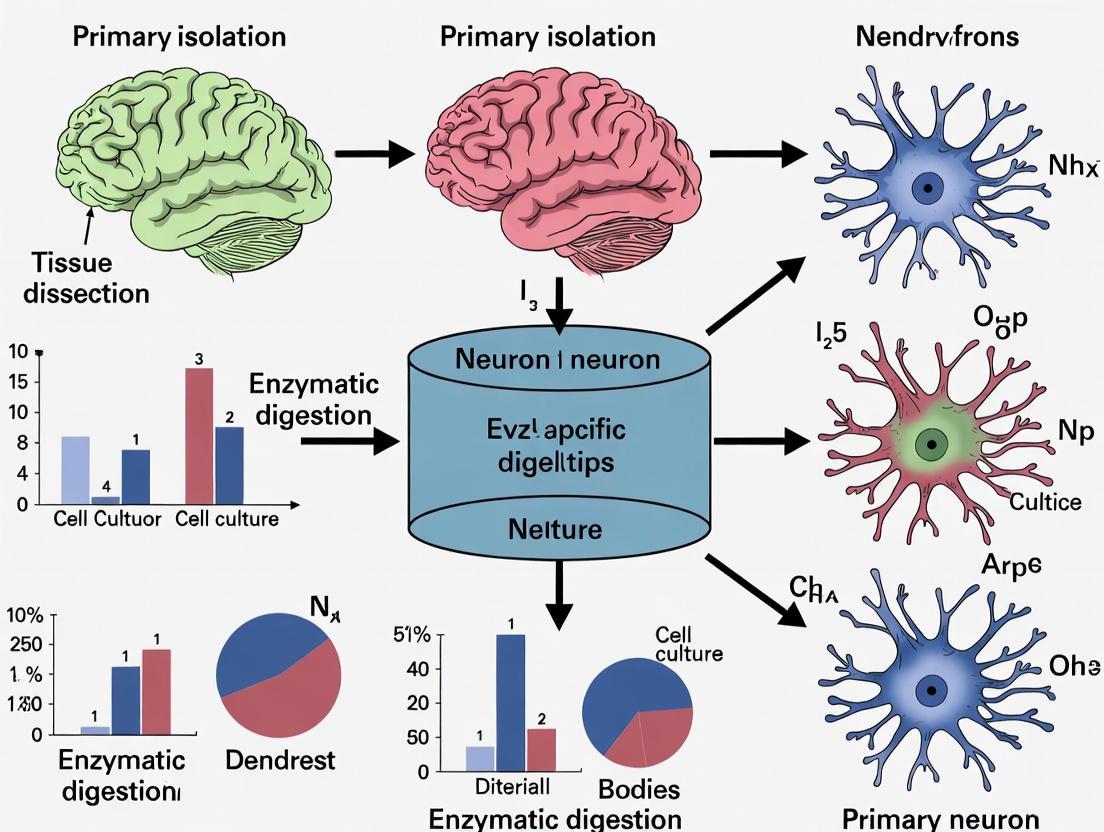
This article provides a comprehensive guide for the isolation and culture of primary neurons from specific brain regions, a cornerstone technique in neuroscience research and drug development.
Isolation and Culture of Primary Neurons from Specific Brain Regions: A 2025 Guide for Reproducible Research
Abstract
This article provides a comprehensive guide for the isolation and culture of primary neurons from specific brain regions, a cornerstone technique in neuroscience research and drug development. We synthesize foundational knowledge with the latest optimized protocols, including methods for the cortex, hindbrain, and multi-cell type co-culture systems. The content systematically addresses critical aspects from initial tissue dissection and enzymatic digestion to the validation of neuronal purity and functionality through immunocytochemistry and electrophysiology. A dedicated troubleshooting section offers solutions for common challenges like low viability and glial overgrowth. Furthermore, we present a comparative analysis of established methods against emerging technologies, such as iPSC-derived models, providing researchers with the context to select the most appropriate and reproducible system for their specific experimental goals in disease modeling and neurotoxicology screening.
The Neuroscience of Brain Region Specificity: Why Your Research Model Matters
The isolation and culture of primary neurons from specific brain regions represents a foundational methodology in modern neuroscience, providing an essential bridge between simple immortalized cell lines and complex whole-animal models. Primary cells are defined as those harvested directly from living tissue and placed into culture, retaining most of their in vivo characteristics without genetic modification for immortality [1]. In neurological research, primary neurons are indispensable for investigating cellular behavior, signaling pathways, and disease mechanisms within the central nervous system (CNS) with a degree of physiological relevance that immortalized alternatives cannot match [1]. These cultures allow researchers to conduct precise experiments on specific neuronal populations isolated from regions including the cortex, hippocampus, spinal cord, and even less-accessible areas like the hindbrain [2] [3].
The fundamental importance of primary neuronal cultures stems from their preservation of native cell morphology, physiological behaviors, and synaptic connectivity—attributes essential for studying neurological function, development, and pathology [4] [2]. Unlike tumor-derived cell lines that proliferate indefinitely but often lose their differentiated characteristics, primary neurons maintain their post-mitotic state and develop extensive neurite arborization, form functional synapses, and exhibit appropriate electrophysiological properties [1] [3]. This fidelity to in vivo conditions makes primary neurons particularly valuable for translational research aimed at understanding neurodegenerative diseases such as Alzheimer's and Parkinson's disease, neurotoxicology screening, and investigating mechanisms underlying synaptic plasticity and neural network formation [2].
Comparative Analysis of Neuronal Model Systems
Fundamental Limitations of Immortalized Cell Lines
Immortalized cell lines, such as SH-SY5Y and SK-N-SH neuroblastomas, have been widely used in molecular neuroscience due to their practical advantages: they are easy to culture, proliferate rapidly, and are amenable to high-throughput assays [4]. These characteristics make them attractive for functional genomics and early-stage screening applications. However, these practical benefits come at significant scientific cost. Most immortalized lines are cancer-derived and optimized for proliferation rather than physiological function, resulting in fundamental biological differences from native neurons [4].
In neurobiology, commonly used cell lines such as SH-SY5Y exhibit immature neuronal features and typically fail to form functional synapses. They also lack consistent expression of key ion channels and receptors, which severely limits their ability to replicate human-specific signaling pathways [4]. This biological inadequacy has measurable consequences in drug development pipelines. Approximately 97% of CNS-targeted drug candidates entering phase 1 clinical trials never reach the market, with some disease-specific therapeutics approaching 100% failure rates [4]. Such staggering attrition reflects a fundamental gap in preclinical model predictivity, particularly for complex neurological conditions where commonly used models often fail to capture human-relevant phenotypes or mechanisms of action [4].
Promise and Challenges of Induced Pluripotent Stem Cell (iPSC)-Derived Neurons
Induced pluripotent stem cells (iPSCs) have emerged as a promising alternative to both primary cells and immortalized lines. iPSCs are generated by reprogramming adult somatic cells back to a pluripotent state through the introduction of specific transcription factors, classically OCT4, SOX2, KLF4, and MYC (OSKM) [5]. These cells can then be differentiated into various neuronal subtypes, offering the potential for improved biological relevance and human-specific phenotypes [4] [5].
The iPSC technology provides several distinct advantages: capacity for indefinite expansion, amenability to genetic engineering, and the ability to generate patient-specific models that recapitulate features of disease pathology [5]. This has opened new avenues for mechanistic studies, drug screening, and therapeutic development for neurological disorders [5]. However, significant challenges remain in optimizing the efficiency and reproducibility of neuronal differentiation protocols. The duration of neurogenin-2 (NGN2) induction, a widely used method for generating cortical excitatory neurons, can lead to heterogeneity within resulting cell populations [6]. Neuronal cultures often contain varying proportions of progenitor cells, which can confound molecular analyses that should be unique to mature neurons [6]. This variability raises concerns about intra- and inter-laboratory reproducibility, particularly when modeling complex neurological diseases where subtle differences in neuronal properties are critical [6].
Advantages of Primary Neuronal Cultures
Primary neurons maintain their native cellular environment and functionality without genetic manipulation, offering superior physiological relevance for studying neuronal physiology, synapse formation, and disease mechanisms [1] [2]. These cultures closely mimic the in vivo environment, making them particularly valuable for investigating neuron-neuron interactions, neuron-glial cell relationships, and synaptic development [2]. Their preservation of regional specificity enables researchers to study distinct neuronal populations from specific brain areas, each with unique characteristics and functions [3].
For drug development and toxicity testing, primary neurons provide a more reliable platform for preclinical verification of drug efficacy and safety than immortalized cell lines [2]. They retain appropriate receptor expression, signaling pathways, and metabolic functions that better predict in vivo responses [1]. This physiological accuracy is crucial for studying complex neurological processes and disease pathogenesis, where maintaining native cellular properties is essential for generating clinically relevant insights [1] [2].
Table 1: Comprehensive Comparison of Neuronal Model Systems
| Feature | Primary Neurons | Immortalized Cell Lines | iPSC-Derived Neurons |
|---|---|---|---|
| Biological relevance | Closer to native morphology and function [4] | Often non-physiological (e.g., cancer-derived) [4] | Human-specific with characterized functionality [4] |
| Reproducibility | High variability between preparations [4] [1] | Reliable but prone to drift and poor biological fidelity [4] | Variable; dependent on differentiation protocol [4] [6] |
| Scalability | Low yield, difficult to expand [4] | Easily scalable [4] | Consistent at scale with advanced programming [4] |
| Ease of use | Technically complex, time-intensive [4] | Simple to culture [4] | Ready-to-use options available [4] |
| Time to assay | Several weeks post-dissection [4] | Can be assayed within 24-48 hours of thawing [4] | Functional within ~10 days post-thaw [4] |
| Human origin | Typically rodent-derived [4] | Often non-human [4] | Derived from human iPSCs [4] |
| Lifespan in culture | Limited, undergo senescence [1] | Essentially unlimited [4] | Can be maintained long-term [5] |
| Functional synapses | Yes, form mature synaptic connections [3] | Rarely form functional synapses [4] | Can form with optimized protocols [5] |
Technical Considerations for Primary Neuronal Culture
Isolation Techniques for Primary Brain Cells
The isolation of primary neurons involves several critical steps that must be optimized for each brain region and experimental requirement. The general process includes careful dissection, mechanical disruption, and enzymatic digestion to obtain a single-cell suspension while preserving neuronal viability [1]. Brain tissue is first carefully dissected from the skull region of interest (e.g., prefrontal cortex, thalamus, hippocampus), followed by removal of the protective meningeal layers to expose the target area [1]. The enzymatic digestion phase typically employs enzymes such as trypsin to facilitate cell separation by digesting intercellular proteins [1] [2].
Following dissociation, the protease is inactivated, and the tissue homogenate is filtered through a cell strainer to remove cell clumps. The cell suspension is then centrifuged to remove cellular debris present in the supernatant, and the resulting cell pellet is resuspended in an appropriate culture medium [1]. Several specialized techniques exist for separating specific neuronal populations:
Immunocapture using magnetic beads: This method utilizes magnetic beads conjugated to antibodies that recognize cell-type-specific surface markers. For sequential isolation of microglia, astrocytes, and neurons from the same tissue sample, a well-established tandem protocol uses CD11b-positive selection for microglia, followed by ACSA-2-positive selection for astrocytes from the negative fraction, and finally neuronal purification by negative selection using a non-neuronal cell biotin-antibody cocktail [1].
Percoll gradient centrifugation: This density-based centrifugation technique isolates specific cell types from mixed populations without requiring expensive antibodies or enzymatic digestion, which can sometimes affect cell viability [1]. The method exploits differences in buoyant density between neuronal and non-neuronal cells.
Co-isolation protocols: Recent advances enable simultaneous isolation of multiple primary cell types from the same animal. One optimized protocol describes the co-isolation of primary brain microvascular endothelial cells (BMECs) and cortical neurons from individual neonatal mice, eliminating inter-animal variability in neurovascular unit studies [7]. This approach reduces animal use by 50% while doubling data yield per cohort, providing unprecedented fidelity for modeling neurovascular interactions [7].
Region-Specific Protocols
Different brain regions require customized isolation and culture protocols to account for their unique cellular compositions and developmental characteristics:
Cortical and hippocampal neurons: These are typically isolated from rat embryos at embryonic days 17-18 (E17-E18) for cortical neurons and postnatal days 1-2 (P1-P2) for hippocampal neurons [2]. The dissection requires precise timing and technique to maximize neuronal yield while minimizing contamination with non-neuronal cells.
Spinal cord neurons: These are isolated from rat embryos at day 15 (E15), requiring careful removal of surrounding tissues and meninges [2].
Dorsal root ganglia (DRG) neurons: These are isolated from 6-week-old young adult rats, requiring different enzymatic digestion conditions than CNS neurons due to their peripheral location and distinct extracellular matrix composition [2].
Hindbrain neurons: The hindbrain (brainstem) presents unique challenges due to its complex anatomy and diverse neuronal populations. A recently developed protocol for mouse fetal hindbrain neurons involves dissection at E17.5, with careful separation from the cortex, cervical spinal cord, and cerebellum [3]. The hindbrain is then separated from the midbrain by cutting from the dorsal fold separating the two regions toward the ventral pontine flexure [3].
Table 2: Region-Specific Isolation Parameters for Primary Neurons
| Brain Region | Developmental Stage | Key Dissection Considerations | Unique Characteristics |
|---|---|---|---|
| Cortex | E17-E18 (rat) [2] | Remove meninges completely to improve neuron-specific purity [2] | Pyramidal and granular neurons; layered organization |
| Hippocampus | P1-P2 (rat) [2] | Identify C-shaped structure in posterior 1/3 of hemisphere [2] | Vulnerable to ischemic damage; high synaptic plasticity |
| Spinal Cord | E15 (rat) [2] | Carefully remove dorsal root ganglia and meninges [2] | Motor and sensory neurons; distinct regional identities |
| Dorsal Root Ganglia | 6-week adult (rat) [2] | Located alongside spinal column; separate from nerve fibers [2] | Sensory neurons; pseudounipolar morphology |
| Hindbrain | E17.5 (mouse) [3] | Separate from midbrain at pontine flexure; remove cerebellum [3] | Diverse neurotransmitter systems; respiratory centers |
Culture Conditions and Optimization
Maintaining healthy primary neuronal cultures requires meticulous attention to environmental conditions and culture medium composition. Key factors include:
Substrate coating: Culture surfaces typically require coating with poly-L-lysine or other adhesion molecules to promote neuronal attachment and neurite outgrowth [2] [7].
Culture medium: Most CNS neurons are maintained in Neurobasal medium supplemented with B-27, which provides essential nutrients and factors that support neuronal survival while inhibiting non-neuronal cell proliferation [2] [3]. For DRG neurons, F-12 medium supplemented with fetal bovine serum and nerve growth factor is typically used [2].
Environmental control: Strict regulation of pH, CO₂ levels, and temperature is critical for maintaining neuronal health [1]. Primary neurons are particularly sensitive to environmental fluctuations.
Human cerebrospinal fluid supplementation: Recent research demonstrates that supplementing culture medium with 10% human cerebrospinal fluid (hCSF) significantly enhances neuronal viability in primary cortical cultures [8]. hCSF contains neurotrophic factors, signaling molecules, and essential metabolites that support neuronal development, survival, and function under standard in vitro conditions [8].
Experimental Workflows and Applications
Standardized Workflow for Primary Neuronal Culture
The following diagram illustrates the generalized workflow for primary neuronal isolation and culture, integrating key steps from region-specific protocols:
Applications in Disease Modeling and Drug Discovery
Primary neuronal cultures have proven particularly valuable for modeling neurodegenerative diseases and screening therapeutic compounds. Their physiological relevance makes them ideal for studying disease mechanisms and evaluating drug efficacy:
Tau aggregation models: Recent developments include primary neuronal tau (hTau) seeding and propagation models that recapitulate key features of sporadic Alzheimer's disease-related tauopathies [9] [10]. In these models, neurons expressing wild-type human tau protein at physiological levels, when seeded with sub-nanomolar tau derived from Alzheimer's disease brain tissue, rapidly form tau aggregates and develop impaired mitochondrial function [10]. The resulting aggregates can be quantitatively measured using automated high-content algorithms, providing a valuable system for studying tau pathobiology and screening modulators of tau aggregation [10].
Neurovascular unit studies: The development of protocols for simultaneous isolation of primary brain microvascular endothelial cells and neurons from the same animals enables paired analysis of neurovascular crosstalk in disease contexts such as ischemia, stroke, and traumatic brain injury [7]. This approach eliminates genetic confounders while reducing processing time by 40-60% and yielding higher purity compared to conventional multi-animal protocols [7].
Synaptic function analysis: Primary neurons develop mature synapses with characteristic pre- and postsynaptic specializations, making them excellent models for studying synaptic transmission, plasticity, and the effects of neuroactive compounds [3]. Patch-clamp recordings demonstrate that these cultures contain excitable neurons capable of generating action potentials and forming functional networks in vitro [3].
The Scientist's Toolkit: Essential Reagents and Materials
Table 3: Essential Research Reagents for Primary Neuronal Culture
| Reagent/Category | Specific Examples | Function and Application |
|---|---|---|
| Basal Media | Neurobasal Plus Medium [3], F-12 Medium [2] | Provide essential nutrients and maintain osmotic balance |
| Supplements | B-27 Plus Supplement [3], GlutaMAX [3] | Supply antioxidants, hormones, and stabilized glutamine |
| Digestion Enzymes | Trypsin [2], Papain [7], Collagenase/Dispase [7] | Dissociate tissue into single-cell suspensions |
| Separation Reagents | Percoll [1], Antibody-conjugated Magnetic Beads [1] | Isolate specific cell types from mixed populations |
| Coating Substrates | Poly-L-Lysine [2] [7], Fibronectin [7] | Promote neuronal adhesion and neurite outgrowth |
| Viability Enhancers | Human Cerebrospinal Fluid [8], CultureOne [3] | Improve neuronal survival and maturation |
| Characterization Antibodies | MAP-2 (neurons), GFAP (astrocytes), IBA-1 (microglia) [1] | Identify and quantify specific cell types |
Primary neuronal cultures remain an indispensable tool in neuroscience research, offering an optimal balance between physiological relevance and experimental tractability for studying neuronal function, development, and disease mechanisms. While immortalized cell lines provide convenience and iPSCs offer human-specific models with expanding capabilities, primary neurons maintain their position as the gold standard for many applications requiring preservation of native neuronal properties. The continued refinement of region-specific isolation protocols, coupled with advanced culture techniques such as hCSF supplementation and co-culture systems, ensures that primary neuronal cultures will remain foundational to neuroscience discovery and therapeutic development. As the field progresses, the integration of primary neuronal models with emerging technologies like single-cell analysis and complex organoid systems will further enhance their utility in unraveling the complexities of the nervous system in health and disease.
The isolation and culture of primary neurons from specific brain regions is a cornerstone of neuroscience research, providing critical insights into neuronal function, development, and pathology. The cortex, hippocampus, and hindbrain exhibit remarkable diversity in their neuronal subtypes, functions, and associated behaviors. Understanding these regional specializations is essential for developing accurate in vitro models that recapitulate in vivo physiology for drug discovery and disease modeling. This technical guide synthesizes current knowledge on the unique neuronal populations within these regions, providing a foundation for research on region-specific neural circuits and their roles in health and disease. The complex interplay between region-specific neuronal identities and their functions underscores the necessity for tailored experimental approaches in primary neuronal culture.
The mammalian brain comprises specialized regions with distinct neuronal subtypes that support a wide range of functions, from vital homeostasis to higher-order cognition. Table 1 provides a comparative overview of the primary neuronal subtypes, key functions, and associated technical considerations for the cortex, hippocampus, and hindbrain.
Table 1: Comparative Overview of Brain Regions and Primary Neuronal Subtypes
| Brain Region | Primary Neuronal Subtypes | Key Functions | Associated Behaviors/Processes | Culture Considerations |
|---|---|---|---|---|
| Cortex | Pyramidal neurons (glutamatergic), various GABAergic interneurons (e.g., basket, chandelier cells) | Sensory processing, motor command, cognitive functions, conscious thought | Decision-making, sensorimotor integration, perception | Typically isolated from E17-E18 rat embryos [2] |
| Hippocampus | Pyramidal cells (CA1, CA3), Granule cells (Dentate Gyrus), various interneurons | Memory formation, spatial navigation, learning | Experience replay, memory consolidation, cognitive flexibility | Can be isolated from P1-P2 rat pups [2]; exhibits adult neurogenesis [11] |
| Hindbrain | Diverse populations including monoaminergic (e.g., serotonergic), cholinergic, GABAergic, glycinergic neurons | Control of breathing, heart rate, blood pressure, consciousness, sleep | Vital function maintenance, conveyance of motor/sensory pathways | Requires specialized protocols; cultured from E17.5 mouse fetuses [12] |
Cortex
The cerebral cortex is the brain's central hub for complex cognitive and perceptual processes. It is predominantly composed of glutamatergic pyramidal neurons, which form the major excitatory projection circuits, and a diverse array of GABAergic interneurons that provide critical inhibitory control. This balance between excitation and inhibition is crucial for information processing. Research using primary cortical cultures is fundamental for modeling neurodegenerative diseases and understanding cortical circuit development and function.
Hippocampus
The hippocampus is essential for memory formation and spatial navigation. Its highly organized trisynaptic circuit consists of distinct subpopulations: granule cells in the dentate gyrus, and pyramidal cells in the CA3 and CA1 regions. A key functional discovery involves the diversity of hippocampal ripples—highly synchronized population events that reactivate past experiences. Radsink ripples (current sinks in stratum radiatum) integrate recent waking coactivity motifs, while LMsink ripples (current sinks in stratum lacunosum-moleculare) reactivate prior motifs and gradually update them [13]. Notably, the hippocampus is one of the few brain regions where adult neurogenesis persists, with new neurons forming in the dentate gyrus throughout life, a process confirmed in humans up to 78 years of age [11].
Hindbrain
The hindbrain, comprising the medulla, pons, and cerebellum, is critical for sustaining fundamental homeostatic functions. It contains a highly diverse set of neuronal subtypes that utilize neurotransmitters including glutamate, GABA, glycine, and monoamines like serotonin and norepinephrine [12]. These neurons form circuits that autonomously regulate breathing, heart rate, and blood pressure, and are involved in the conveyance of motor and sensory pathways [12]. Its complex and vital nature necessitates specialized protocols for the isolation and culture of its distinct neuronal populations.
Experimental Methodologies for Primary Neuron Culture
The successful isolation and culture of primary neurons require region-specific protocols optimized to address unique tissue properties, enhance neuronal yield and viability, and minimize non-neuronal cell contamination. Key methodologies for the cortex, hippocampus, and hindbrain are detailed below.
Protocol for Cortical and Hippocampal Neuron Culture
Cortical and hippocampal neurons are typically isolated from rodent embryos or early postnatal pups. The following optimized protocol ensures high neuronal viability and purity [2].
- Dissection and Isolation: For cortical cultures, dissect embryos at E17-E18. For hippocampal cultures, dissect pups at postnatal days P1-P2. Rapidly isolate the brain in cold HBSS and carefully remove meninges to avoid contamination. For the hippocampus, identify the C-shaped structure in the posterior hemisphere and isolate it precisely. Limit dissection time to 2-3 minutes per embryo to maintain neuronal health.
- Tissue Dissociation: Use enzymatic digestion with Trypsin-EDTA (e.g., 0.5% Trypsin with 0.2% EDTA) for 15 minutes at 37°C, followed by gentle mechanical trituration using fire-polished Pasteur pipettes of decreasing diameters. The process should involve 10-15 up-and-down motions to dissociate the tissue without damaging cells.
- Plating and Culture Medium: Plate dissociated cells at densities of 50,000 - 70,000 cells/cm² on surfaces coated with Poly-D-Lysine (PDL). The culture medium should be Neurobasal Plus Medium supplemented with B-27 Plus Supplement, GlutaMAX, and penicillin-streptomycin. Using serum-free medium with defined supplements helps control astrocyte expansion.
Optimized Protocol for Hindbrain Neuron Culture
The preparation of primary hindbrain neurons presents unique technical challenges. The following protocol has been optimized for the culture of embryonic mouse hindbrain neurons [12].
- Dissection and Isolation: Hindbrains are isolated from E17.5 mouse fetuses. The cortex, cervical spinal cord, and cerebellum are removed to isolate the brainstem. The hindbrain is then separated from the midbrain by cutting from the dorsal fold towards the ventral pontine flexure. Meninges and blood vessels are meticulously removed.
- Tissue Dissociation and Culture: The tissue is mechanically dissociated with a plastic pipette into 2-3 mm³ pieces. It is then treated with Trypsin-EDTA for 15 minutes at 37°C. Subsequent mechanical dissociation involves trituration with a long-stem glass Pasteur pipette, followed by further trituration with a fire-refined pipette. Cells are cultured in a defined medium. To control astrocyte expansion without harming neurons, the chemically defined supplement CultureOne is added at the third day in vitro (DIV3).
Functional Validation in Culture
After 10-14 days in vitro (DIV10-14), cultured neurons should be functionally validated.
- Immunofluorescence: Characterize neuronal populations and subtypes using antibodies against markers like MAP2 (mature neurons), Synapsin (presynaptic terminals), and PSD-95 (postsynaptic densities). Colocalization of pre- and postsynaptic markers confirms mature synapse formation [12].
- Electrophysiology: Perform patch-clamp recordings to confirm the excitable nature of neurons and the presence of voltage-gated ion channels, demonstrating the establishment of functional networks in vitro [12].
Diagram 1: Primary Neuron Culture and Validation Workflow. PDL: Poly-D-Lysine; DIV: Day In Vitro.
Brain-Wide Neural Activity Mapping
Modern neuroscience aims to understand how neurons across interconnected brain regions integrate information to drive behavior. A recent landmark study created a brain-wide map of neural activity in mice performing a decision-making task, recording from 621,733 neurons across 279 brain areas using Neuropixels probes [14]. This resource provides unprecedented insight into the distributed encoding of task variables.
- Stimulus Encoding: Representations of visual stimuli appeared transiently in classical visual areas after onset, then spread to ramp-like activity in midbrain and hindbrain regions that also encoded choices.
- Action and Reward Encoding: Neural responses correlated with impending motor action were ubiquitous across the brain. Similarly, responses to reward delivery and consumption were exceptionally widespread.
- Implications for Research: This brain-wide perspective highlights that functions are not strictly localized but are distributed across many regions, which is crucial for designing experiments and interpreting data from specific brain areas.
The Scientist's Toolkit: Research Reagent Solutions
Successful isolation and culture of primary neurons depend on a standardized set of high-quality reagents. Table 2 details essential materials and their specific functions in neuronal culture protocols.
Table 2: Essential Research Reagents for Primary Neuronal Culture
| Reagent/Material | Function/Application | Example Usage & Notes |
|---|---|---|
| Neurobasal Plus Medium | Serum-free medium optimized for neuronal survival and growth | Base for cortical, hippocampal, spinal cord culture medium [12] [2] |
| B-27 Supplement | Defined serum-free supplement to support neuronal growth | Used at 1X concentration; reduces need for glial feeder layers [12] [2] |
| GlutaMAX Supplement | Stable dipeptide source of L-glutamine; reduces ammonia toxicity | Substitute for L-glutamine in culture medium [12] [2] |
| CultureOne Supplement | Chemically defined, serum-free supplement to control astrocyte expansion | Added at 1X concentration at DIV3 for hindbrain cultures [12] |
| Poly-D-Lysine (PDL) | Synthetic substrate for coating culture surfaces; promotes neuronal adhesion | Used to coat plates before plating cells [2] |
| Trypsin-EDTA | Proteolytic enzyme for tissue dissociation | 0.5% Trypsin with 0.2% EDTA used for 15 min at 37°C [12] [2] |
| Nerve Growth Factor (NGF) | Neurotrophic factor supporting survival and growth of specific neurons | Added at 20 ng/mL for DRG neuron culture medium [2] |
Signaling Pathways and Functional Workflows
Understanding the functional dynamics within and between brain regions requires mapping their signaling pathways and representational states. The following diagram illustrates the functional interplay between key hippocampal and hindbrain regions, highlighting their distinct roles in information processing.
Diagram 2: Hippocampal-Hindbrain Functional Interplay in Information Processing.
The distinct neuronal subtypes and functions of the cortex, hippocampus, and hindbrain underscore the critical importance of region-specific approaches in primary neuron research. From the cognitive circuits of the cortex to the memory-encoding ripple dynamics of the hippocampus and the vital regulatory functions of the hindbrain, each region demands tailored methodologies for successful in vitro modeling. The optimized protocols, functional validation techniques, and essential reagents detailed in this guide provide a framework for generating physiologically relevant models. These advances, coupled with new brain-wide neural activity maps, empower researchers to explore the complexities of the brain with greater precision, accelerating the development of therapeutics for neurological and psychiatric disorders.
The neurovascular unit (NVU) represents a sophisticated multicellular system essential for maintaining the health and function of the central nervous system (CNS). This dynamic structure is composed of brain microvascular endothelial cells (BMECs), astrocytes, pericytes, neurons, and microglia, all working in concert to regulate the delicate brain microenvironment [15]. The NVU forms the structural and functional basis of the blood-brain barrier (BBB), a highly selective boundary that separates the circulating blood from the brain extracellular fluid [16]. The BBB prevents the entry of harmful substances while facilitating the transport of essential nutrients, thus playing a critical role in neurological health and disease [15].
This technical guide examines the core components of the NVU, with particular emphasis on the interdependent relationships between BMECs, astrocytes, and neurons. We explore advanced in vitro modeling techniques that enable detailed study of NVU functions and interactions, with content specifically framed within the context of isolating and culturing primary neurons from distinct brain regions. Understanding these complex cellular interactions provides crucial insights for drug development strategies targeting neurological disorders where BBB dysfunction is implicated, including Alzheimer's disease, Parkinson's disease, stroke, and traumatic brain injury [17] [15].
Core Components of the Neurovascular Unit
Brain Microvascular Endothelial Cells (BMECs): The Gatekeepers
BMECs constitute the primary cellular component of the BBB, forming a continuous lining of brain capillaries characterized by specialized features that confer exceptional barrier properties. Unlike peripheral endothelial cells, BMECs exhibit continuous tight junctions that significantly limit paracellular transport, a low rate of non-specific transcytosis, and express a sophisticated array of influx and efflux transporters [18] [19]. These specialized properties are not intrinsic to BMECs but are induced and maintained through continuous signaling interactions with other NVU cells, particularly astrocytes and pericytes [18].
The barrier function of BMECs is primarily mediated by tight junction proteins including claudin-5, claudin-3, claudin-12, occludin, and junction adhesion molecules, which are anchored to the actin cytoskeleton by cytoplasmic accessory proteins such as Zonula Occludens (ZO)-1, -2, and -3 [16]. These protein complexes create a physical seal between adjacent endothelial cells, strictly controlling the passage of ions and molecules through the paracellular pathway. Additionally, BMECs express active efflux transporters like P-glycoprotein (P-gp) that actively pump toxins and drugs back into the bloodstream, further protecting the brain parenchyma from potential harmful substances [18] [17].
Astrocytes: The Central Coordinators
Astrocytes, the most abundant glial cells in the CNS, play a multifaceted role in NVU function through their distinctive stellate morphology and strategic positioning. Their terminal processes, known as end-feet, extensively enwrap the brain vasculature, forming a nearly continuous covering that allows them to directly influence BBB properties [16]. This unique anatomical arrangement positions astrocytes as crucial intermediaries that facilitate communication between neurons and the vascular system [15].
These versatile cells secrete numerous paracrine factors that directly modulate BMEC function, including Sonic Hedgehog (SHh), Angiopoietin-1 (ANG-1), retinoic acid (RA), Wnt growth factors, and Glial-derived Neurotrophic Factor (GDNF) [16]. Through these signaling molecules, astrocytes enhance the expression and proper localization of tight junction proteins in BMECs, thereby strengthening barrier integrity. Astrocytes also contribute to the basement membrane by secreting critical components such as collagen IV, fibronectin, and laminins, which provide structural support and influence BMEC differentiation and function [16].
Neurons: The Metabolic Demand Signals
As the primary functional units of the nervous system, neurons generate and transmit electrical signals, processes that require substantial energy resources. Although neurons do not directly contact brain microvessels, they communicate their metabolic demands to the vasculature through astrocytic intermediaries [15]. This neurovascular coupling, also known as functional hyperemia, ensures that active brain regions receive adequate blood supply to meet their energy requirements [16].
Neurons regulate cerebral blood flow and BBB permeability through the release of neurotransmitters and other signaling molecules that activate astrocytic receptors. This triggers calcium signaling in astrocytes, leading to the release of vasoactive substances from their end-feet, which in turn modulate vascular tone and barrier function [16]. This sophisticated communication network allows the NVU to rapidly respond to neuronal activity and maintain the homeostatic microenvironment essential for proper neural function [15].
In Vitro Modeling of the Neurovascular Unit
Advanced Co-culture Systems
Transwell-based systems have emerged as a fundamental platform for establishing sophisticated in vitro NVU models that enable researchers to study cellular interactions in a controlled environment. These systems create two distinct compartments separated by a porous membrane: an upper "apical" chamber representing the blood side and a lower "basolateral" chamber representing the brain compartment [17]. This configuration allows BMECs to be cultured as a monolayer on the membrane while other NVU cells (astrocytes, neurons, pericytes) are positioned in various arrangements in the basolateral chamber, either in direct contact or separated by the membrane [18] [17].
Research has demonstrated that multicellular co-culture systems significantly enhance BBB properties compared to BMEC monocultures. A landmark study developing an isogenic human iPSC-derived NVU model found that the optimal culture configuration involved sequential exposure of BMECs to pericytes followed by a mixture of neurons and astrocytes (in a 1:3 ratio) [18] [19]. This arrangement induced the greatest barrier tightening in BMECs, supported by a significant increase in junctional localization of occludin and a reduction in non-specific transcytosis [18]. Furthermore, the tri-culture configuration demonstrated the highest transendothelial electrical resistance (TEER), a key indicator of barrier integrity, highlighting the importance of cross-talk between all NVU components [17].
Isogenic Human iPSC-Derived Models
The development of isogenic neurovascular unit models where all cellular components (BMECs, astrocytes, neurons, and pericytes) are differentiated from the same human induced pluripotent stem cell (iPSC) source represents a significant advancement in NVU modeling [18] [19]. This approach minimizes genetic variability and provides a more physiologically relevant human system for studying NVU function in health and disease. Such models are particularly valuable for personalized medicine applications, as they can be generated from patient-specific iPSCs to model neurological disorders with BBB involvement [18].
The differentiation protocols for each cell type involve specific signaling molecules and culture conditions. BMECs are typically differentiated through exposure to unconditioned medium followed by endothelial cell medium, sometimes supplemented with retinoic acid to enhance barrier properties [18] [19]. Neurons and astrocytes are derived from intermediary neural progenitor populations (EZ-spheres and astro-spheres), while pericytes are differentiated through a neural crest lineage with subsequent enrichment of CD271-positive cells [18]. This comprehensive approach yields a fully human, isogenic NVU model that faithfully recapitulates key aspects of the human BBB.
Table 1: Quantitative Assessment of BBB Properties in Different NVU Model Configurations
| Model Configuration | TEER (Ω×cm²) | Paracellular Permeability | Junctional Protein Localization | Transcytosis Activity |
|---|---|---|---|---|
| BMEC Monoculture | Baseline | Baseline | Baseline | Baseline |
| BMEC + Astrocytes | 1.5-fold increase [17] | Reduced | Moderate improvement | Not reported |
| BMEC + Pericytes | Increased [18] | Reduced | Moderate improvement | Significantly reduced [18] |
| BMEC + Neurons | Not reported | Not reported | Not reported | Not reported |
| Tri-culture (BMEC + Astrocyte + Neuron) | Highest TEER [17] | Lowest | Significant improvement | Not reported |
| Sequential Pericyte then Neuron/Astrocyte | Greatest barrier tightening [18] | Not reported | Significant increase in occludin localization [18] | Significantly reduced [18] |
Primary Cell Isolation for NVU Models
The isolation of primary neurons from specific brain regions requires carefully optimized protocols to maximize cell viability, purity, and functionality. These protocols must address the unique properties of different neural tissues and employ region-specific dissection and dissociation techniques. For cortical and spinal cord neurons, embryonic Day 15-18 (E15-E18) rat embryos typically yield optimal results, while hippocampal neurons are best isolated from postnatal Days 1-2 (P1-P2) rat pups [2]. Dorsal root ganglia (DRG) neurons can be isolated from young adult rats (6 weeks old) [2].
Critical steps in primary neuron isolation include:
- Precision dissection of target brain regions with careful removal of meninges to minimize contamination
- Enzymatic digestion using trypsin or other proteases to dissociate tissue into single-cell suspensions
- Mechanical trituration with fire-polished glass pipettes of appropriate pore sizes to achieve single-cell suspension without excessive cell damage
- Cell separation techniques such as immunocapture using magnetic beads or Percoll gradient centrifugation to enrich neuronal populations [1]
For immunocapture methods, a well-established tandem protocol uses CD11b-conjugated magnetic beads to isolate microglia, followed by ACSA-2-conjugated beads to capture astrocytes from the negative fraction. Neurons are then purified from the remaining cell suspension using a non-neuronal cell biotin-antibody cocktail for negative selection [1]. This sequential approach allows isolation of multiple cell types from the same brain tissue, facilitating the generation of syngeneic NVU models.
Table 2: Isolation Parameters for Primary Neurons from Different Nervous System Regions
| Neural Region | Optimal Developmental Stage | Dissection Challenges | Key Markers | Specialized Culture Requirements |
|---|---|---|---|---|
| Cortex | E17-E18 rat embryos [2] | Complete meninges removal critical for neuron purity [2] | MAP-2, β III-tubulin [17] [20] | Neurobasal Plus medium with B-27 supplement [2] |
| Hippocampus | P1-P2 rat pups [2] | Precise isolation of C-shaped structure from hemisphere [2] | MAP-2, β III-tubulin | Neurobasal Plus medium with B-27 supplement [2] |
| Spinal Cord | E15 rat embryos [2] | Not specified | MAP-2, β III-tubulin | Neurobasal Plus medium with B-27 supplement [2] |
| Dorsal Root Ganglia (DRG) | 6-week-old young adult rats [2] | Not specified | β III-tubulin | F-12 medium with NGF and FBS [2] |
Molecular Mechanisms of Cellular Cross-Talk
Astrocyte-Derived Signaling Pathways
Astrocytes enhance BBB integrity through the secretion of numerous paracrine factors that directly modulate BMEC function. One of the most critical signaling pathways involved in this communication is the Sonic Hedgehog (SHh) pathway. Astrocytes secrete SHh, which binds to the Patched-1 (PTCH-1) receptor on BMECs, suppressing the inhibition of Smoothened (Smo) and allowing translocation of Gli transcription factors to the nucleus [16]. This signaling cascade induces the expression of multiple junctional proteins including claudin-3, claudin-5, occludin, junction adhesion molecule-A, VE-cadherin, and laminin, thereby strengthening barrier properties [16].
The SHh signaling pathway exhibits regional heterogeneity in the brain, with varying activity levels across different brain regions that correlate with the molecular heterogeneity of astrocyte subsets. Reactive astrocytes show stimuli-dependent decreases in SHh activity, which is precisely regulated both spatially and temporally [16]. Additionally, pro-inflammatory cytokines such as IL-1β produced by activated microglia can suppress SHh release from astrocytes, leading to increased BBB permeability [16]. This demonstrates how pathological conditions can disrupt normal astrocyte-BMEC communication and compromise barrier function.
Neurovascular Coupling Mechanisms
Neurovascular coupling represents a fundamental signaling network within the NVU that regulates cerebral blood flow to match the metabolic demands of active neurons [16]. This process involves complex communication between neurons, astrocytes, and vascular cells. During neuronal activation, neurotransmitters such as ATP and glutamate are released and activate receptors on astrocytic processes, triggering calcium signaling in astrocytes [16]. This leads to the production and release of vasoactive substances from astrocytic end-feet, including prostaglandin E2 and epoxyeicosatrienoic acids, which induce relaxation of vascular smooth muscle cells and pericytes, resulting in vasodilation and increased blood flow to active brain regions [16].
Simultaneously, neurons help maintain BBB integrity through the regulation of ion homeostasis. Specialized channels and transporters on the BBB, including Na+-K+-ATPase, voltage-gated Ca2+ channels, and K+ channels, work to maintain the precise ionic environment required for normal neuronal signaling [15]. Disruption of this ionic balance, such as occurs during energy failure when ATP production is compromised, can lead to BBB breakdown through multiple mechanisms including cellular swelling, inflammation, and ultimately cell death [15].
BMEC Signaling in Response to Neural Cues
BMECs actively participate in NVU signaling by responding to soluble factors released by astrocytes and neurons. For instance, BMECs express high levels of receptors for astrocyte-derived factors including PTCH-1 for SHh signaling and Tie2 for Angiopoietin-1 signaling [16]. Activation of these receptor systems triggers intracellular signaling cascades that enhance the expression and membrane localization of tight junction proteins, strengthen adherens junctions, and reduce transcytotic activity [18] [16].
BMECs also contribute to the basement membrane by secreting collagen IV and fibronectin, which interact with integrins on astrocytic end-feet to stabilize the overall NVU structure [16]. Specific integrins, such as α6β8 expressed by astrocytes, induce Transforming Growth Factor-β (TGF-β) production, which further stabilizes the endothelium and strengthens astrocytic end-feet attachment within the basal lamina [16]. This bidirectional communication between BMECs and astrocytes creates a positive feedback loop that maintains and enhances BBB properties.
Experimental Assessment of NVU Function
Barrier Integrity Measurements
Transendothelial electrical resistance (TEER) represents the gold standard for quantitatively assessing the integrity of the BBB in vitro. This non-invasive technique measures the electrical resistance across the BMEC monolayer, which directly correlates with the tightness of the intercellular junctions [18] [17]. Advanced NVU models incorporating multiple cell types in optimal configurations demonstrate significantly higher TEER values compared to BMEC monocultures, with the highest values typically observed in tri-culture systems that include BMECs, astrocytes, and neurons [18] [17].
In addition to TEER, paracellular permeability is frequently evaluated using various tracer molecules of different sizes. Commonly used tracers include fluorescently-labeled dextrans (e.g., 10 kDa Alexa-Fluor 488-dextran) or other small molecules whose passage across the BMEC monolayer can be quantified over time [18] [19]. These permeability assays provide complementary information to TEER measurements and together offer a comprehensive assessment of barrier function. For a more detailed analysis of specific transport pathways, researchers may also measure transporter activity, including the function of efflux transporters like P-glycoprotein using specific substrates and inhibitors [18].
Molecular Characterization Techniques
Comprehensive characterization of NVU models requires multiple molecular approaches to verify the expression and proper localization of key proteins. Immunofluorescence staining is widely used to visualize the cellular distribution of tight junction proteins (ZO-1, occludin, claudin-5), astrocytic markers (GFAP), neuronal markers (MAP-2, β III-tubulin), and pericyte markers (PDGFR-β, NG2) [18] [2] [20]. This technique allows researchers to confirm that BMECs in co-culture systems exhibit continuous, belt-like tight junctions characteristic of the in vivo BBB.
Western blot analysis and qRT-PCR provide complementary quantitative information about protein and gene expression levels, respectively [21] [20]. These techniques can detect changes in the expression of junctional proteins, transporters, and cell-type specific markers in response to different culture conditions or experimental manipulations. For example, studies have demonstrated that BMECs in multicellular co-culture systems show increased expression and phosphorylation of occludin compared to monoculture conditions [18]. More advanced multi-omics approaches, including proteomic and metabolic flux analyses, offer systems-level insights into how different NVU cell types influence each other's functions [21].
The Scientist's Toolkit: Essential Research Reagents
Table 3: Key Research Reagents for NVU Model Development
| Reagent/Category | Specific Examples | Function/Application | Considerations |
|---|---|---|---|
| Cell Culture Media | Neurobasal Plus Medium (for neurons) [2], hESFM (for BMECs) [18], BrainPhys Neuronal Medium [21] | Supports survival and function of specific NVU cell types | Component concentrations (e.g., glucose, glutamine) require optimization for different cell types [21] |
| Supplement Kits | B-27 Supplement Minus Vitamin A [18] [21], N2 Supplement [18] | Provides essential growth factors and hormones for neural cells and BMECs | Vitamin A-free formulations preferred for neuronal cultures to reduce glial proliferation [21] |
| Growth Factors & Signaling Molecules | Retinoic Acid (RA) [18] [17], bFGF [18], BDNF & NT-3 [21], NGF (for DRG neurons) [2] | Enhances barrier properties; supports neuronal differentiation and survival | Retinoic acid concentration (e.g., 10 μM) and timing critical for optimal barrier enhancement [18] |
| Enzymes for Tissue Dissociation | Accutase [18] [21], Trypsin [1] | Dissociates tissues into single-cell suspensions for primary culture or subculturing | Concentration and duration of exposure must be optimized to balance viability and dissociation efficiency [1] |
| Surface Coating Materials | Collagen IV/Fibronectin (for BMECs) [18], Poly-L-Ornithine/Laminin (for neurons) [21], Matrigel [18] | Provides appropriate substrate for cell attachment, spreading, and function | Different cell types require specific coating substrates for optimal performance |
The neurovascular unit represents a highly integrated cellular system in which BMECs, astrocytes, and neurons engage in continuous bidirectional communication to maintain CNS homeostasis. The development of sophisticated in vitro models that recapitulate these complex interactions has significantly advanced our understanding of NVU function in both health and disease. The most effective models incorporate multiple cell types in configuration that permit appropriate cellular cross-talk, resulting in enhanced barrier properties that more closely mimic the in vivo BBB.
Isolation of primary neurons from specific brain regions remains a fundamental technique for establishing physiologically relevant NVU models, though it requires careful attention to region-specific protocols and potential pitfalls. The ongoing refinement of human iPSC-derived isogenic models represents a promising direction for the field, offering the potential for personalized modeling of neurological disorders while minimizing genetic variability. As these models continue to evolve, they will undoubtedly provide new insights into NVU biology and facilitate the development of novel therapeutic strategies for CNS disorders characterized by BBB dysfunction.
The isolation and culture of primary neurons from specific brain regions is a fundamental methodology in neuroscience, providing invaluable in vitro models for investigating neuronal function, development, and pathology [2]. These cultures closely mimic the in vivo environment, yielding physiologically relevant data for studying neurodegenerative disorders, synaptic mechanisms, and potential therapeutic strategies [2]. However, the journey from a living brain to a functional in vitro culture system demands meticulous pre-experimental planning. Success hinges on three interdependent pillars: the appropriate selection of animal models, a robust ethical framework for animal experimentation, and strategic tissue acquisition protocols. This guide provides an in-depth technical overview of these essential pre-work considerations, framed within the context of a broader thesis on primary neuronal research, to equip researchers with the knowledge to establish reliable and reproducible experimental systems.
Ethical Considerations in Animal Experimentation
The use of animals in neuroscience research is a privilege that carries significant ethical responsibility. A comprehensive understanding of the ethical landscape is crucial before initiating any experimental work.
The Ethical Debate and Regulatory Frameworks
Animal experimentation is widely used to identify the root causes of human and animal diseases and to explore treatment options, with mice, rats, and purpose-bred birds comprising nearly 90% of research animals [22]. The central ethical question is whether it is morally appropriate to use animals for research, balancing the potential human benefits against the harm caused to animals [22].
Proponents argue that animals do not possess the same cognitive capabilities or full autonomy as humans and therefore do not merit the same fundamental rights. From this perspective, the potential benefits to humanity justify the harm to animals, provided that the research is conducted humanely [22]. Conversely, animal rights advocates contend that many animals can feel pain and experience pleasure, and thus should be accorded moral status similar to humans. They view the assignment of lower moral status to animals as a form of prejudice termed "speciesism" [22].
Navigating this debate, ethical committees have universally adopted the '4Rs' principles as a guiding framework for approving and monitoring animal research [22]:
- Replacement: Using non-animal methods (e.g., computer modeling, cultured human cells) or less-sentient species where possible.
- Reduction: Employing strategies to obtain comparable levels of information from fewer animals.
- Refinement: Modifying procedures to minimize pain, suffering, and distress.
- Responsibility: Prioritizing animal welfare throughout their lifetime.
Practical Implementation of Ethical Principles
Adherence to these principles is not merely bureaucratic; it is embedded in daily laboratory practice. All animal work must follow IACUC-approved (or equivalent ethical committee) procedures [23]. This includes using approved methods for euthanasia, such as CO2 inhalation for dams, followed by verification of the absence of cardiac activity and nociceptive responses [2]. For postnatal pups, hypothermia on an ice pad combined with isoflurane anesthesia is an acceptable method to induce deep anesthesia prior to dissection [2].
The 'Reduction' principle is often implemented in tissue acquisition by maximizing the yield from each animal. For example, a single E21 Sprague-Dawley rat fetus can yield approximately 1–1.5 million neurons [23], and protocols exist for the sequential isolation of multiple cell types (microglia, astrocytes, neurons) from the same brain tissue using immunomagnetic beads or Percoll gradients [1]. This approach minimizes the total number of animals required.
Animal Model and Tissue Acquisition Strategies
The choice of animal model and the strategy for acquiring neural tissue are critical decisions that directly impact the physiological relevance and feasibility of a study.
Region- and Age-Specific Dissection Protocols
The source of primary neurons must be carefully selected based on the research question. The developmental stage, brain region, and animal species all influence the neuronal phenotype, gene expression, and network behavior in culture [1] [24]. The table below summarizes optimized developmental timelines for isolating neurons from various regions of the rat nervous system.
Table 1: Developmental Timeline for Isolation of Primary Neurons from Rat Nervous System Regions
| Brain Region | Developmental Stage | Key Considerations | Typical Yield |
|---|---|---|---|
| Cortex | Embryonic Day 17-18 (E17-E18) [2] | Maintain dissection within 2-3 minutes per embryo; total dissection time should not exceed 1 hour to maintain neuron health [2]. | Varies by region and dissection skill [2]. |
| Hippocampus | Postnatal Day 1-2 (P1-P2) [2] | ||
| Spinal Cord | Embryonic Day 15 (E15) [2] | ||
| Dorsal Root Ganglia (DRG) | Young Adult (6-week-old) [2] | ||
| Hindbrain (Mouse Protocol) | Embryonic Day 17.5 (E17.5) [3] | Essential for studying vital functions (e.g., breathing, heart rate); contains diverse neuronal subtypes and neurotransmitters [3]. |
Recent advances have also made it possible to culture neurons from the adult mouse brain (up to 60 days post-natally) across multiple regions, including the hippocampus, cortex, brainstem, and cerebellum [24]. These cultured adult neurons develop polarity, exhibit spontaneous and evoked electrical activity, and form neural networks, while retaining morphological and functional characteristics of their native regions [24]. This offers a valuable tool for studying adult neuronal physiology.
Dissection and Tissue Processing Workflow
A successful primary culture begins with precise dissection and gentle tissue processing to maximize neuronal viability and purity. The following diagram illustrates the generalized workflow for the acquisition and processing of embryonic brain tissue.
Key technical steps require particular attention:
- Dissection Speed: The dissection time per embryo should be limited to 2–3 minutes, with a total dissection time kept within one hour to maintain neuronal health [2].
- Meninges Removal: The meninges must be removed completely and with care to avoid puncturing the brain. Incomplete removal is a major source of non-neuronal cell contamination, which reduces neuron-specific purity [2].
- Tissue Dissociation: A combination of loosening the tissue matrix with a low-concentration enzyme like trypsin, followed by gentle mechanical trituration using a fire-polished Pasteur pipette, is standard practice [2] [3]. The enzyme must be inactivated using a serum-containing or defined solution afterward [3].
The Scientist's Toolkit: Essential Reagents and Materials
Primary neuronal culture requires a carefully curated set of reagents to support cell survival, growth, and function in a defined in vitro environment.
Table 2: Essential Reagents for Primary Neuronal Culture
| Reagent Category | Specific Examples | Function | Application Notes |
|---|---|---|---|
| Basal Medium | Neurobasal Plus Medium, F-12 Medium [2] | Nutrient foundation for culture. | Neurobasal is standard for CNS neurons; F-12 is used for DRG cultures [2]. |
| Growth Supplements | B-27 Supplement, CultureOne [2] [3] | Provides hormones, antioxidants, and proteins; supports neuron health and inhibits glial overgrowth. | Serum-free B-27 is used for CNS neurons; CultureOne helps control astrocyte expansion in hindbrain cultures [2] [3]. |
| Enzymes | Trypsin [3] | Digests extracellular matrix for tissue dissociation. | Concentration and incubation time must be optimized for each tissue type [1]. |
| Signaling Molecules | Nerve Growth Factor (NGF) [2] | Critical for survival and neurite outgrowth of specific neurons. | Essential component of DRG neuron culture medium [2]. |
| Anti-Mitotics | Cytosine β-d-arabinofuranoside (ARAC) [23] | Inhibits division of non-neuronal cells (e.g., astrocytes). | Used to increase neuronal purity in long-term cultures [23]. |
| Coating Substrates | Poly-D-Lysine, Laminin [23] | Provides a charged surface for neuron attachment and promotes neurite outgrowth. | Culture surfaces must be pre-coated before plating cells [23]. |
Strategic pre-work encompassing ethical rigor, appropriate model selection, and masterful tissue acquisition sets the stage for successful primary neuronal cultures. When these foundational steps are executed correctly, the resulting cultures are capable of remarkable complexity. Cultured neurons exhibit assortative behavior, preferentially forming connections with other neurons of similar connectivity, and over time, these self-organizing networks optimize their information flow and robustness [25]. Furthermore, neurons in culture develop extensive axonal and dendritic branching, express synaptic proteins, and form mature, functional synapses, as demonstrated by the colocalization of pre-synaptic (e.g., synaptophysin) and post-synaptic (e.g., PSD-95) markers and confirmed by patch-clamp electrophysiology [23] [26] [3]. By adhering to the principles and protocols outlined in this guide, researchers can establish a reliable and physiologically relevant in vitro platform to decipher the mechanisms of neuronal function and dysfunction, thereby powerfully supporting a broader thesis in neuroscience.
Step-by-Step Protocols for High-Purity Isolation and Culture from Key Brain Regions
This technical guide details an optimized protocol for the simultaneous isolation of primary brain microvascular endothelial cells (BMECs) and primary cortical neurons from individual newborn mice. The method employs a refined enzymatic digestion and density-gradient centrifugation technique to obtain cells of high purity and functional maturity from a single animal. This approach eliminates inter-individual variability, reduces processing time by 40-60%, and provides a robust platform for modeling neurovascular interactions in identical genetic and physiological contexts. The isolated cells maintain key characteristics including morphological integrity, angiogenic capacity, neurotransmitter secretion, and appropriate pathophysiological responses to oxygen-glucose deprivation.
The isolation of primary brain cells is fundamental for studying cellular behavior, signaling pathways, and disease mechanisms in the central nervous system [1]. Primary neurons allow researchers to conduct experiments that closely mimic the in vivo environment as these cells retain characteristics of the original tissue, making them invaluable for translational research [1]. Current standard methodologies typically require processing brain microvascular endothelial cells and neurons from separate animals, preventing concurrent analysis of neurovascular crosstalk within identical genetic and physiological contexts [27]. This introduces inter-individual variability that can confound experimental results.
The novel protocol described herein addresses these limitations through a sophisticated technical approach that enables simultaneous isolation of neural tissue and microvascular segments from individual mice. This single-mouse methodology represents a significant advancement for neurovascular unit research, particularly in modeling complex neurological disorders such as stroke, traumatic brain injury, and neurodegenerative diseases where neuron-endothelial interactions are critically important.
Materials and Reagents
Research Reagent Solutions
The following essential materials are required for successful execution of the protocol:
Table 1: Essential Research Reagents and Their Functions
| Reagent Name | Function/Application |
|---|---|
| Bovine Serum Albumin (BSA) | Density gradient medium for initial tissue separation |
| Collagenase/Dispase | Enzymatic digestion of microvascular segments |
| DNase I | Degradation of DNA to reduce viscosity during dissociation |
| Percoll | Density gradient medium for BMEC purification |
| Poly-L-lysine | Substrate for neuronal cell adhesion and culture |
| Fibronectin | Substrate for BMEC adhesion and culture |
| Neurobasal Plus Medium | Base medium for neuronal culture |
| B-27 Supplement | Serum-free supplement for neuronal survival and growth |
| GlutaMAX Supplement | Stable source of L-glutamine for neuronal cultures |
| Basic Fibroblast Growth Factor (bFGF) | Mitogen for BMEC proliferation |
Equipment Requirements
- Cell culture plates (poly-L-lysine-coated for neurons, fibronectin-coated for BMECs)
- Centrifuge capable of controlled acceleration/deceleration
- Sterile cell strainers (70μm and 40μm)
- Laminar flow hood
- CO₂ incubator maintained at 37°C and 5% CO₂
- Dissection microscope and micro-dissection tools
Experimental Protocol
The following diagram illustrates the complete experimental workflow for the simultaneous isolation of cortical neurons and BMECs from a single newborn mouse:
Detailed Methodology
Dissection and Initial Processing
Euthanize newborn (P0.5) mice according to approved ethical guidelines. Rapidly extract brains and place in cold Hanks' Balanced Salt Solution (HBSS). Under a dissection microscope, carefully remove meninges to minimize contamination [2]. Isolate cortical regions using fine forceps, taking care to preserve tissue integrity.
Enzymatic Digestion and Tissue Separation
Subject the cortical tissue to enzymatic digestion using a combination of collagenase/dispase and DNase I. Implement a bovine serum albumin (BSA) density gradient centrifugation to simultaneously separate neural tissue from microvascular segments. This critical step allows for the divergent processing of both cell types from the same starting material [27] [7].
Neuronal Isolation and Culture
Collect the neural tissue fraction and dissociate into single cells through gentle mechanical trituration. Filter the cell suspension through a 70μm cell strainer, then centrifuge to pellet cells. Resuspend the neuronal pellet in Neurobasal Plus Medium supplemented with B-27 and GlutaMAX. Plate cells on poly-L-lysine-coated culture vessels at appropriate density [27] [2].
BMEC Isolation and Culture
Process the microvascular segment fraction with additional collagenase/dispase digestion followed by Percoll gradient centrifugation. Collect the endothelial cell-rich fraction, wash to remove Percoll residue, and plate on fibronectin-coated culture vessels in endothelial growth medium supplemented with bFGF [27] [7].
Results and Functional Validation
Cellular Purity and Morphology
The optimized protocol yields high-purity populations of both cortical neurons and BMECs from the same animal:
Table 2: Cellular Purity and Morphological Characteristics
| Cell Type | Purity Markers | Morphological Features | Culture Timeline |
|---|---|---|---|
| Primary Cortical Neurons | MAP-2, Neurofilament proteins | Characteristic somatic morphology with extensive neurite arborization | Mature network formation within 5-7 days |
| Primary BMECs | Tight junction proteins (ZO-1, occludin) | Polygonal or spindle-shaped cells forming confluent monolayers | Reach confluence with typical endothelial morphology within 3-5 days |
Functional Assessment
Comprehensive functional validation confirms that isolated cells retain physiological relevance:
Table 3: Functional Assessment of Isolated Primary Cells
| Cell Type | Functional Assay | Key Results | Response to OGD |
|---|---|---|---|
| Primary BMECs | Transendothelial Electrical Resistance (TEER) | Formation of tight barriers with high TEER values | 38.31% decrease in TEER |
| Tubulogenesis Assay | Superior tube-forming capacity compared to b.End3 cell line | Not assessed | |
| Nitric Oxide (NO) Secretion | Basal NO production | 26.1% decrease in secretion | |
| Primary Cortical Neurons | Neurotransmitter Secretion | GABA and glutamate release detectable | GABA increased 2.01-fold |
| Oxygen-Glucose Deprivation (OGD) | Heightened sensitivity to ischemic conditions | GABA decreased by 52.5% after reoxygenation |
Discussion
Advantages Over Existing Methods
This co-isolation protocol represents a significant improvement over conventional approaches where BMECs and neurons are processed from separate animals [27] [7]. The single-animal approach eliminates genetic confounders while reducing processing time by 40-60% and yielding higher purity compared to multi-animal protocols. Furthermore, primary BMECs and neurons maintain their original characteristics, including morphology, angiogenic capacity, and secretory function [7].
The method addresses several persistent challenges in primary brain cell isolation, including poor cell adhesion, low purity/yield, and labor-intensive procedures [7]. By maintaining the neurovascular relationship from isolation through culture, this protocol enables more physiologically relevant modeling of neurovascular interactions in health and disease.
Technical Considerations
Successful implementation requires careful attention to several technical aspects. Complete meningeal removal is crucial for minimizing fibroblast contamination [2]. Optimal cell viability depends on limiting dissection time and maintaining tissues at cold temperatures throughout processing. The fibronectin-dependent adhesion of primary BMECs presents a critical checkpoint; significantly enhanced adhesive capacity is observed in passages 2 and 3 [27].
For neuronal cultures, the use of Neurobasal medium supplemented with B-27 supports differentiated growth while minimizing glial proliferation [2]. The age of source animals is a critical factor, with protocols customized for embryonic day 17-18 for cortical neurons and postnatal day 0.5 for the co-isolation protocol described here [27] [2].
Applications and Translational Utility
This methodology enables paired analysis of neurovascular crosstalk in disease models such as cerebral ischemia, with demonstrated sensitivity to oxygen-glucose deprivation in both cell types [27]. The system provides unprecedented fidelity for investigating neurovascular unit dysfunction in neurological disorders and for high-throughput drug screening on syngeneic BMEC-neuron systems.
The protocol's efficiency—extracting multiple primary cell types from a single animal—aligns with the 3Rs principles in animal research, reducing overall animal use while increasing data yield per experimental cohort [27] [7].
This optimized protocol provides a reliable method for co-isolating functional primary BMECs and cortical neurons from individual newborn mice. The technical approach combines enzymatic digestion with density-gradient centrifugation to achieve high purity and functional maturation of both cell types. The methodology offers substantial advantages for modeling neurovascular interactions with unprecedented fidelity, particularly in the study of neurological disorders where neuron-endothelial crosstalk is fundamentally important. The protocol establishes a robust foundation for future investigations of neurovascular unit biology and for preclinical assessment of therapeutic interventions targeting the brain vasculature and parenchyma simultaneously.
The brainstem, or hindbrain, is a critical region of the brain that sustains fundamental homeostatic functions, including the control of breathing, heart rate, blood pressure, and consciousness [12] [28]. Despite its vital importance, the study of hindbrain circuitry has been historically neglected due to its inaccessible location and complex, reticular structure. In vitro models for investigating this region remain limited, as primary neuronal cultures in neuroscience have predominantly been optimized for hippocampus or cortex, leading to a significant gap in our methodological toolkit for studying hindbrain-specific neural populations [12]. Considerable differences exist in neuronal cell subtypes and glial cell contributions between different brain regions, underscoring the need for region-specific culture protocols [12] [28].
Primary cultures offer a more physiologically relevant alternative to tumor-derived immortalized cell lines, as they better recapitulate the properties of neuronal cells in vivo [12]. The hindbrain presents particular challenges and opportunities for cell culture, notable for its diverse neuronal cell types and wide range of neurotransmitters, including acetylcholine, glutamate, GABA, glycine, and monoamine neurotransmitters [12]. Existing protocols for culturing brainstem neurons from mice have been scarce, with most available methods developed for rats [12].
This protocol paper describes an optimized, reliable method for dissociating and culturing embryonic mouse fetal hindbrain neurons in a defined, serum-free culture medium. The protocol incorporates a chemically defined supplement to control astrocyte expansion while supporting neuronal differentiation and network formation [12] [28]. The resulting cultures develop extensive axonal and dendritic branching, form mature synapses, and demonstrate excitable properties, making them suitable for molecular, biochemical, and physiological analyses of hindbrain-specific neural populations [12].
Materials
Research Reagent Solutions
Table 1: Essential Research Reagents and Their Functions
| Reagent | Function/Purpose | Specific Example/Concentration |
|---|---|---|
| CultureOne Supplement | Chemically defined, serum-free supplement to control astrocyte expansion [12] | Used at 1× concentration from 100× stock, added at 3 days in vitro [12] |
| Neurobasal Plus Medium | Optimized basal medium for neuronal culture, supports improved growth and viability [12] [29] | Base component of NB27 complete medium [12] |
| B-27 Plus Supplement | Serum-free supplement designed to support neuronal survival [12] [30] | Used at 1× concentration (50× stock) in NB27 complete medium [12] |
| Poly-D-Lysine | Substrate for coating culture vessels to promote neuronal adhesion [30] [31] | Working solution of 0.05 mg/mL, coat for 2 hours [30] |
| Trypsin/EDTA | Enzymatic dissociation of tissue [12] | 0.5% Trypsin with 0.2% EDTA [12] |
| Papain | Proteolytic enzyme for tissue dissociation as an alternative to trypsin [31] [2] | 20 U/mL with L-cysteine and EDTA [31] |
Equipment and Instruments
- Dissecting tools: Fine forceps (Dumont No. 5), microscissors, micro knife (22.5°), small spatula [30] [31]
- Dissecting microscope with cold light source [32]
- Sterile plastic and glassware: Petri dishes, 15 mL tubes, fire-polished glass Pasteur pipettes [12] [30]
- Water bath (37°C) for warming solutions [12]
- Laminar flow hood for sterile procedures [12] [31]
- Cell culture incubator maintained at 37°C with 5% CO₂ [12] [32]
Solution Preparation
Table 2: Composition of Critical Solutions and Media
| Solution Name | Components | Final Concentration/Properties |
|---|---|---|
| Solution 1 (Dissociation) | Hank's Balanced Salt Solution (HBSS) without Ca²⁺/Mg²⁺ [12] | - |
| Solution 2 (Trituration) | HBSS with Ca²⁺/Mg²⁺, HEPES, sodium pyruvate [12] | 10 mM HEPES, 1 mM sodium pyruvate [12] |
| NB27 Complete Medium | Neurobasal Plus Medium, B-27 Plus Supplement, L-glutamine, GlutaMAX, penicillin-streptomycin [12] | Serum-free, optimized for neuronal culture [12] |
| Coating Solution | Poly-D-Lysine in borate buffer [30] [31] | 0.05 mg/mL in 50 mM borate buffer, pH 8.5 [30] |
Methods
Preparation of Coated Culture Vessels
Poly-D-Lysine Coating:
- Dilute Poly-D-Lysine stock solution to a working concentration of 0.05 mg/mL in sterile 50 mM borate buffer (pH 8.5) [30].
- Add sufficient solution to cover the culture surface (e.g., 1 mL for a 35 mm dish) and incubate for 2 hours at room temperature [30].
- Aspirate the coating solution and wash the culture vessels 3 times with sterile UltraPure distilled water [30].
- Allow the vessels to air dry for approximately 4 hours in a sterile environment [30].
- Store coated vessels wrapped with Parafilm at 4°C for up to 2 weeks [30].
Equilibration:
- Before use, add pre-warmed complete Neurobasal Plus medium to the coated culture vessels.
- Equilibrate the prepared vessels in a 37°C incubator with 5% CO₂ for at least 1 hour before plating cells [31].
Dissection of Mouse Fetal Hindbrain
Diagram 1: Hindbrain Dissection Workflow
Animal Source and Timing:
- Use timed-pregnant mice with the day of vaginal plug detection designated as embryonic day 0.5 (E0.5) [12].
- Sacrifice the pregnant mouse at E17.5 using an institutionally approved euthanasia method (e.g., cervical dislocation) [12].
- Remove the uterus and transfer it to a sterile Petri dish containing cold phosphate-buffered saline (PBS) or dissection solution [12] [31].
Brain Extraction:
- Carefully remove embryos from the uterine tissue and decapitate them [12] [31].
- Isolate the brains from the skulls and place them in a Petri dish containing sterile PBS for further dissection [12].
- Under a dissecting microscope, isolate brainstems from the whole brain [12].
- Remove the cortex, remnants of the cervical spinal cord, and cerebellum to isolate the brainstem [12].
- Separate the hindbrain from the midbrain by cutting from the dorsal fold separating the two regions towards the ventral pontine flexure [12].
- Carefully remove remaining blood vessels and meninges [12] [30].
- Transfer dissected hindbrains to a 15 mL tube containing 4 mL of Solution 1 (HBSS without Ca²⁺/Mg²⁺) [12].
- Pool up to 4 hindbrains per tube for processing [12].
Tissue Dissociation and Cell Plating
Mechanical and Enzymatic Dissociation:
- Mechanically dissociate the hindbrain tissue with a sterile plastic transfer pipette into 2-3 mm³ pieces [12].
- Add 350 μL of Trypsin 0.5% and EDTA 0.2% per tube and gently mix [12].
- Incubate the tubes for 15 minutes at 37°C to loosen the tissue matrix [12].
- Mechanically dissociate the loosened tissues with 10 up-and-down motions using a long-stem glass Pasteur pipette [12].
- Incubate again for 5 minutes at 37°C [12].
- Triturate 10 times with a fire-refined long-stem glass Pasteur pipette (diameter reduced from 750 μm to 675 μm) [12].
- Add 4 mL of Solution 2 (HBSS with Ca²⁺/Mg²⁺) to each tube and gently mix by inversion [12].
Alternative Papain-Based Dissociation:
- As an alternative to trypsin, tissue can be dissociated using papain solution [31] [2].
- Prepare papain solution at 20 U/mL in HBSS with 0.2 mg/mL L-cysteine and 1 mM EDTA [31].
- Filter-sterilize the papain solution and pre-warm to 37°C [31].
- Transfer tissue pieces to the papain solution and incubate for 5-20 minutes at 37°C until tissue appears dissociated [31].
- Add DNase I (approximately 17 U/mL) to the solution to prevent clumping [31].
Cell Plating:
- Count cells using a Trypan Blue exclusion assay to assess viability and cell number [30].
- Plate cells at appropriate densities based on culture vessel size [31]:
- 96-well plate: 17,000 cells in 100 μL
- 24-well plate: 100,000 cells in 0.5 mL
- 12-well plate: 250,000 cells in 1 mL
- 6-well plate: 1,000,000 cells in 2 mL
- Gently agitate plates back and forth to distribute cells evenly [31].
- Place cultures in a 37°C incubator with 5% CO₂ [12] [31].
Maintenance of Neuronal Cultures
Diagram 2: Neuronal Culture Maintenance Timeline
Initial Culture Period:
- Maintain cultures in NB27 complete medium (Neurobasal Plus Medium with B-27 Plus Supplement, L-glutamine, GlutaMAX, and penicillin-streptomycin) [12].
- On day 3 in vitro, incorporate CultureOne Supplement at 1× concentration to control astrocyte expansion [12].
- Cultures should not require medium changes during the first week if plated at appropriate densities [12] [33].
Long-term Maintenance:
- For extended cultures beyond 7-10 days, perform half-medium changes every 3-4 days with fresh, pre-warmed NB27 complete medium [33].
- Alternatively, transition to specialized neuronal media such as BrainPhys Neuronal Medium supplemented with SM1 Neuronal Supplement for improved neuronal activity and network bursting in long-term culture [33].
- Maintain cultures in a humidified incubator at 37°C with 5% CO₂ throughout the culture period [12].
Expected Results and Quality Assessment
Morphological Development
Table 3: Timeline of Morphological Development In Vitro
| Days In Vitro | Expected Morphological Features | Functional Correlates |
|---|---|---|
| 1-3 | Cell attachment, initial neurite extension [31] | Establishment of basic neuronal viability |
| 4-7 | Extensive axonal and dendritic branching [12] | Formation of initial neural connections |
| 7-10 | Mature neuronal morphology with complex arbors [12] | Synapse formation, network development |
| 10+ | Dense neuronal processes, synaptic puncta visible [12] [33] | Functional synaptic activity, network bursting |
Functional Validation
Immunofluorescence Characterization:
- Fix cells with 4% formaldehyde for 15 minutes at room temperature [30] [29].
- Permeabilize with 0.25% Triton X-100 for 10 minutes [34].
- Block with 5% bovine serum albumin (BSA) and 1% goat serum overnight at 4°C [34].
- Incubate with primary antibodies to identify neuronal subtypes and assess synaptic maturation:
- After primary antibody incubation, incubate with appropriate fluorescently-labeled secondary antibodies (e.g., Alexa Fluor 488, 555, or 647) [30] [29].
- Counterstain nuclei with DAPI and mount with anti-fade reagent [30].
Electrophysiological Assessment:
- Perform whole-cell patch-clamp recordings to demonstrate the excitable nature of hindbrain neurons [12].
- Validate the presence of voltage-gated ion channels and the ability to generate action potentials.
- Assess spontaneous postsynaptic currents as evidence of functional synaptic transmission.
Synapse Formation:
Troubleshooting Common Issues
Table 4: Troubleshooting Guide for Hindbrain Neuronal Cultures
| Problem | Potential Causes | Solutions |
|---|---|---|
| Poor cell viability | Over-digestion with enzyme, excessive trituration, old reagents | Optimize digestion time, use wider-bore pipettes for trituration, prepare fresh solutions [12] [31] |
| Low neuronal yield | Incomplete dissection, tissue loss during meninges removal, inefficient dissociation | Practice dissection technique, ensure complete meninges removal, optimize dissociation protocol [30] [2] |
| Excessive glial growth | Insufficient CultureOne supplement, serum contamination, high plating density | Ensure timely addition of CultureOne, verify serum-free conditions, optimize plating density [12] [28] |
| Poor neuronal differentiation | Suboptimal medium, improper coating, poor cell health | Use fresh B-27 Plus supplement, ensure proper PDL coating, verify solution pH and osmolarity [12] [29] |
Applications and Modifications
The hindbrain neuronal cultures generated using this protocol are suitable for a wide range of neuroscience applications, including studies of neuronal development, synapse formation, electrophysiological properties, and neuropharmacology [12]. The cultures demonstrate excellent reproducibility and can be used for molecular, biochemical, and physiological analyses [12] [28].
For specific applications, the protocol can be modified to include genetic manipulation using viral vectors or tamoxifen-induced Cre recombination in genetically-modified neural cells [12] [28]. The cultures can also be adapted for high-content screening applications using automated imaging and analysis systems [34] [29].
This protocol addresses a significant methodological gap in neuroscience research by providing a reliable method for generating primary neuronal cultures from the mouse hindbrain, enabling more targeted investigation of the neural populations that control vital functions and their dysfunction in neurological disorders.
The isolation and culture of primary neurons from specific brain regions has long been a fundamental technique in neuroscience research, providing invaluable insights into neuronal function, development, and pathology [2]. These primary cultures closely mimic the in vivo environment and deliver physiologically relevant data, making them particularly useful for modeling human neurodegenerative disorders such as Alzheimer's and Parkinson's disease [2]. However, traditional primary neuron cultures face significant limitations, including technical challenges in isolation, maintenance difficulties, limited lifespan, batch-to-batch variability, and an inherent inability to model complex intercellular interactions between multiple human brain cell types [2] [1].
The advent of human induced pluripotent stem cell (hiPSC) technology has revolutionized neurological disease modeling by enabling the generation of patient-specific neural cells. While hiPSC models facilitate disease modeling and drug screening, standardized methods for multi-lineage co-culture have remained limited until recently [35] [36]. The development of robust tri-culture systems integrating neurons, astrocytes, and microglia represents a significant advancement, offering a more physiologically relevant platform for studying dynamic cell-cell interactions in both healthy and diseased states [35] [37]. This protocol describes the assembly of a cryopreservation-compatible tri-culture system that enables researchers to study interactions between all three major brain cell types within a controlled in vitro environment [35] [38].
Core Protocol: Assembling the hiPSC-Derived Tri-culture
The tri-culture protocol involves the parallel differentiation of the three neural cell types from a common hiPSC source, followed by their systematic combination using optimized culture conditions. The entire process leverages cryopreservation compatibility at multiple stages, allowing for enhanced experimental flexibility and planning [35] [39]. The system has been specifically designed to study how cell-cell interactions shape transcriptional and functional states across all three cell types, with demonstrated applications in modeling neurodegenerative disease mechanisms [37].
Table 1: Key Advantages of the hiPSC-Derived Tri-culture System
| Feature | Benefit | Application |
|---|---|---|
| Cryopreservation-compatible | Enables generation of intermediate cell banks and flexible experimental timing | Long-term projects requiring multiple replicates over time |
| Same genetic background | Reduces experimental variability from genetic differences | Disease modeling with isogenic controls |
| Standardized methodology | Improves reproducibility across laboratories | Multi-center studies and drug screening |
| Physiologically relevant | Captures complex cell-cell interactions | Neurodegenerative disease research, neuroinflammation studies |
| Human cell-based | Avoids species-specific differences | Translational research and preclinical drug development |
Differentiation of Individual Cell Types
Astrocyte Differentiation from hiPSCs
The astrocyte differentiation protocol can be performed using either embryoid body (EB) or monolayer methods, followed by a crucial maturation phase [39].
- Initiate differentiation using STEMdiff Astrocyte Differentiation Kit according to manufacturer's instructions
- Continue maturation with STEMdiff Astrocyte Serum-Free Maturation Kit for at least 3 weeks
- Verify differentiation efficiency through immunocytochemistry:
- Cell population should be >70% S100β+
- >60% GFAP+
- <15% positive for neuronal markers (βIII-tubulin or DCX) [39]
Extended maturation periods beyond 3 weeks may be implemented if desired, though the protocol requires corresponding adjustments in the overall timeline [39].
Microglia Differentiation from hiPSCs
Microglia differentiation occurs through a hematopoietic progenitor intermediate stage, requiring specific kit systems for optimal results [39].
- Generate hematopoietic progenitor cells (HPCs) using STEMdiff Hematopoietic Kit
- Differentiated population should be >90% CD43+
- >20% positive for coexpression of CD34/CD45 by flow cytometry [39]
- Differentiate HPCs to microglia using STEMdiff Microglia Differentiation Kit (steps 1-8 of Section A in manufacturer's instructions)
- Resulting population should be >80% positive for coexpression of CD45 and CD11b by flow cytometry [39]
- Optional maturation: Microglia may be further cultured using STEMdiff Microglia Maturation Kit prior to tri-culture assembly
- Critical timing note: Do not exceed 10 days total of additional culture time after microglia differentiation (including both maturation and co-culture periods) [39]
Forebrain Neuron Differentiation from hiPSCs
Neuronal differentiation employs forebrain-patterning protocols to generate region-specific populations compatible with the tri-culture system [39].
- Differentiate hiPSCs to forebrain neurons using STEMdiff Forebrain Neuron Differentiation Kit via EB or monolayer method
- Complete neuronal maturation with STEMdiff Forebrain Neuron Maturation Kit for at least 7 days
- Plate neuronal precursors at optimized density for tri-culture:
- Suggested density: 1.5 × 10⁴ - 4 × 10⁴ cells/cm² [39]
- Verify neuronal differentiation by immunocytochemistry:
- Population should be >90% positive for βIII-tubulin and FOXG1
- <10% positive for astrocyte marker GFAP [39]
Table 2: Cell Type Characterization and Quality Control Markers
| Cell Type | Positive Markers | Minimum Purity | Negative Markers | Maximum Contamination |
|---|---|---|---|---|
| Forebrain Neurons | βIII-tubulin, FOXG1 | >90% | GFAP | <10% |
| Astrocytes | S100β, GFAP | >70% (S100β), >60% (GFAP) | βIII-tubulin, DCX | <15% |
| Microglia | CD45, CD11b | >80% coexpression | - | - |
Tri-culture Assembly
Establishing Neuron-Astrocyte Co-culture
The initial co-culture establishes the foundational neural network before introducing microglial cells [39].
- Dissociate mature astrocytes using appropriate dissociation reagent according to astrocyte protocol steps 1-5 of section C (Astrocyte Maturation)
- Resuspend astrocytes in complete STEMdiff Astrocyte Serum-Free Maturation Kit and perform cell count with Trypan Blue exclusion
- Dilute cell suspension to obtain required concentration and volume based on:
- Desired astrocyte-to-neuron cell-type ratio (recommended 1:1)
- Number of culture wells
- Initial density of forebrain neuronal precursors [39]
- Remove existing medium from forebrain neurons
- Seed astrocyte suspension directly onto established forebrain neuronal cultures
- Maintain overnight in STEMdiff Astrocyte Serum-Free Maturation Kit [39]
Adding Microglia to Form Tri-culture
The final step introduces microglia to the established neuron-astrocyte system using a specially optimized medium formulation [39].
- Prepare optimized Tri-culture Medium:
- Start with complete BrainPhys Neuronal Medium with supplements
- Add STEMdiff Microglia Supplement 2 to final concentration as specified in manufacturer's instructions [39]
- Replace existing medium in neuron-astrocyte co-cultures with the optimized Tri-culture Medium
- Add purified microglia to the established culture system
- Maintain tri-culture for recommended period of 3-10 days
- Critical: Do not exceed 10 days of culture following the 24-day microglia differentiation protocol to ensure optimal microglia survival [39]
The Scientist's Toolkit: Essential Research Reagents
Successful implementation of the tri-culture system requires carefully selected reagents and materials. The following table outlines essential components referenced in the protocols.
Table 3: Essential Research Reagents for hiPSC-Derived Tri-culture System
| Reagent Category | Specific Product/Component | Function/Purpose |
|---|---|---|
| Differentiation Kits | STEMdiff Astrocyte Differentiation & Maturation Kits | Directed differentiation of hiPSCs to astrocyte lineage |
| STEMdiff Hematopoietic Kit | Generation of hematopoietic progenitor cells from hiPSCs | |
| STEMdiff Microglia Differentiation & Maturation Kits | Specification of HPCs to microglial fate | |
| STEMdiff Forebrain Neuron Differentiation & Maturation Kits | Patterned differentiation to forebrain neuronal subtypes | |
| Culture Medium | BrainPhys Neuronal Medium | Physiologically optimized medium for neuronal function |
| STEMdiff Microglia Supplement 2 | Essential for microglia survival in tri-culture environment | |
| NeuroCult SM1 Neuronal Supplement | Supports neuronal health and maturation | |
| N2 Supplement-A | Provides essential components for neural culture | |
| Growth Factors | Human Recombinant BDNF | Promotes neuronal survival, differentiation, and synaptic plasticity |
| Human Recombinant GDNF | Supports neuronal health and maintenance | |
| Supplements | Dibutyryl-cAMP | Enhances neuronal maturation and survival |
| Ascorbic Acid | Antioxidant that supports neuronal differentiation | |
| Substrates | Matrigel hESC-Qualified Matrix | Provides basement membrane matrix for cell attachment |
| Poly-L-ornithine (PLO) | Enhances surface adhesion for neural cells | |
| Laminin | Promotes neuronal attachment and neurite outgrowth | |
| Dissociation Agents | Gentle Cell Dissociation Reagent | Maintains cell viability during subculture |
| ACCUTASE | Enzymatic cell detachment solution |
Key Technical Considerations and Troubleshooting
Media Optimization and Culture Conditions
The tri-culture system requires precise media formulation to support all three cell types simultaneously. The optimized Tri-culture Medium based on BrainPhys Neuronal Medium supplemented with Microglia Supplement 2 has been specifically developed to maintain the health and functionality of each cellular component while permitting their functional interactions [39]. BrainPhys medium is particularly advantageous as it provides a more physiologically relevant environment for neuronal activity and network formation compared to traditional neuronal culture media.
Environmental controls including strict maintenance of pH, CO₂ levels, and temperature are critical for sustaining healthy tri-cultures. Primary brain cells are exceptionally sensitive to subtle environmental fluctuations, and inconsistent conditions can significantly impact cellular viability and experimental reproducibility [1].
Timing and Experimental Flexibility
The protocol offers multiple entry points for cryopreservation, enabling researchers to pause the differentiation process and enhance experimental planning:
- Cryopreserved intermediate stocks can be generated after each major differentiation stage [35]
- Commercially available cryopreserved cells differentiated from established hiPSC lines (e.g., Healthy Control Human iPSC Line, SCTi003-A) can substitute for in-house differentiations to save time [39]
The total timeline from thawing cryopreserved precursors to established tri-culture can be as short as 20 days, making this an efficient system for research applications [37]. The recommended tri-culture period of 3-10 days represents the window for optimal cellular health and interaction studies, though specific experimental endpoints should be determined based on individual research objectives.
Quality Assessment and Validation
Rigorous quality control at each differentiation stage is essential for generating reproducible and interpretable results from the tri-culture system. The recommended characterization markers provide quantitative thresholds for ensuring population purity (Table 2). Beyond these basic markers, functional validation should include:
- Electrophysiological assessment of neuronal activity
- Calcium imaging to evaluate network synchronization
- Microglial phagocytosis assays to confirm functional competence
- Astrocyte reactivity profiling in response to inflammatory stimuli
In the context of disease modeling, researchers have demonstrated that tri-cultures exhibit altered responses compared to monocultures or co-cultures. For instance, when modeling familial Alzheimer's disease (fAD), the presence of astrocytes in the tri-culture significantly modulates microglial responses, particularly dampening the disease-associated microglial (DAM) signature despite inducing a prototypical inflammatory response [37]. These nuanced interactions highlight the importance of the complete tri-culture system for modeling complex neuroglial cross-talk in disease states.
Applications in Disease Modeling and Drug Development
The hiPSC-derived tri-culture system represents a significant advancement for modeling neurological disorders and screening therapeutic compounds. By reconstituting interactions between the three major brain cell types, this platform enables researchers to study neuroinflammatory processes, synaptic remodeling, and disease mechanisms in a human-relevant system that bridges the gap between traditional monocultures and in vivo models [37].
In the broader context of stem cell research and therapy development, the field has seen substantial progress in recent years. As of 2025, over 115 global clinical trials involving 83 distinct pluripotent stem cell-derived products have targeted indications in ophthalmology, neurology, and oncology, with more than 1,200 patients dosed and no significant class-wide safety concerns reported [40]. The tri-culture system aligns with this trend toward more sophisticated human cell-based models that can improve translational predictability in drug development.
The integration of this tri-culture platform with emerging technologies like "village editing" – which enables CRISPR/Cas9 gene editing in a multi-donor cell village format – provides powerful new approaches for studying how genetic background influences disease manifestations and therapeutic responses [41]. These advancements collectively represent the forefront of human iPSC-based neuroscience research, offering unprecedented opportunities to decipher the complex interactions underlying brain health and disease.
The isolation and culture of primary neurons are fundamental techniques in neuroscience research, enabling the study of neuronal function, development, and pathology in a controlled in vitro environment. This technical guide details three core methodologies—tissue dissociation, BSA/Percoll gradient centrifugation, and selective plating—that are critical for obtaining high-purity, functionally mature neuronal cultures from specific brain regions. The protocols outlined herein are optimized to maximize cell yield, viability, and neuronal purity while minimizing experimental variability, providing researchers with standardized approaches for generating reliable models for neurobiological investigation and drug development applications. When properly executed, these techniques support the establishment of neuronal cultures that exhibit extensive neurite arborization, synaptic protein expression, and electrophysiological competence, closely mimicking in vivo neuronal characteristics.
The brain comprises a complex multicellular environment where neurons interact with various glial cells, including astrocytes, microglia, and oligodendrocytes. Isolating primary neurons requires careful disruption of this tissue architecture while preserving neuronal viability and function. Unlike immortalized cell lines, primary neurons maintain their native physiological properties but have a limited lifespan and require specific culture conditions [1]. The selection of appropriate isolation techniques significantly impacts cellular yield, purity, and functional maturation, thereby influencing experimental outcomes and reproducibility.
Region-specific neuronal isolation enables researchers to investigate distinct neuronal populations with unique characteristics and vulnerabilities. Cortical neurons are commonly isolated from embryonic day 17-18 (E17-E18) rodents [42] [2], while hippocampal neurons can be obtained from both embryonic and early postnatal (P1-P2) animals [43] [2]. The developmental stage at isolation affects neuronal yield, survival, and maturation capacity, with embryonic tissue generally providing higher yields but postnatal neurons exhibiting more advanced differentiation at isolation.
Fundamental Principles and Techniques
Tissue Dissociation Methods
Effective tissue dissociation requires a balanced combination of enzymatic and mechanical techniques to disrupt extracellular matrix proteins and cell-cell junctions without compromising cellular integrity.
Enzymatic Dissociation
Enzymatic digestion represents a critical step that significantly influences neuronal yield and viability. Traditional protocols utilize trypsin, but less harsh enzymatic alternatives have demonstrated superior results:
- Papain-based digestion: Incubate tissue pieces in papain solution (50U in 5ml dissection solution containing L-cystein, APV) at 37°C for 30 minutes [42]
- Trypsin-based digestion: Incubate tissue in TrypLE Select (10X concentration) at 37°C for 25-30 minutes [30]
- Gentle commercial formulations: Optimized enzyme cocktails (e.g., Pierce Primary Neuron Isolation Kit) demonstrate 2-fold increased yield (4.5 × 10⁶ cells/mL from one mouse cortical pair) and higher viability (94-96%) compared to traditional trypsin methods (83-92%) [44]
Following enzymatic digestion, residual enzyme activity must be inhibited through sequential washes with solutions containing trypsin inhibitors and bovine serum albumin (BSA) [42] [30].
Mechanical Dissociation
After enzymatic digestion, gentle mechanical trituration completes the dissociation process:
- Utilize fire-polished glass Pasteur pipettes with progressively smaller bore sizes [42]
- Perform 10-20 pipetting cycles with each bore size, avoiding bubble formation [30]
- Limit total trituration time to less than 5 minutes to minimize cellular stress [30]
- Filter cell suspension through lens paper or cell strainers to remove undissociated tissue chunks [43]
Table 1: Comparison of Enzymatic Dissociation Methods
| Method | Cell Yield (per cortical pair) | Viability (%) | Synaptic Protein Expression | Recommended Applications |
|---|---|---|---|---|
| Papain [42] | 3-4 × 10⁶ cells | 90-95% | High | Electrophysiology, long-term cultures |
| Trypsin [44] | ~2 × 10⁶ cells | 83-92% | Moderate | General morphology, toxicity studies |
| Gentle Commercial Formulations [44] | 4-4.5 × 10⁶ cells | 94-96% | Very High | Synaptic studies, disease modeling |
Density Gradient Centrifugation with BSA/Percoll
Density gradient centrifugation separates neuronal cells based on buoyant density, effectively removing myelin debris, red blood cells, and cellular aggregates that can impair neuronal purity and function.
BSA Gradient Centrifugation
BSA solutions create an osmotically inert medium that preserves neuronal function during separation:
- Prepare BSA solutions in dissection buffer at varying concentrations (e.g., 10mg/mL fatty acid-free BSA) [45]
- Layer cell suspension over discontinuous BSA gradients (typically 3-5% and 10% BSA)
- Centrifuge at 500-800 × g for 5-10 minutes at 4°C
- Collect neuronal fraction from the interface between gradient layers [7]
Percoll Gradient Centrifugation
Percoll, composed of silica particles coated with polyvinylpyrrolidone, provides isosmotic conditions ideal for neuronal separation:
- Prepare isotonic Percoll solutions by mixing stock Percoll with 10× concentrated physiological buffer [45]
- Create discontinuous gradients with varying densities (e.g., 35%, 25%, 15% Percoll in isolation medium)
- Layer the cell homogenate on top and centrifuge at 30,000 × g for 5-15 minutes at 4°C
- Neurons typically band at the 35%/60% interface while myelin contaminants float to upper layers [45] [7]
This method effectively separates not only neurons but also subcellular components, including synaptic mitochondria, which band at specific densities different from non-synaptic mitochondria [45].
Table 2: Density Gradient Composition and Applications
| Gradient Type | Composition | Centrifugation Parameters | Target Cells/Organelles | Purity Achieved |
|---|---|---|---|---|
| BSA [7] | 3-10% BSA in dissection buffer | 500 × g, 10 min, 4°C | Whole neurons, microvascular segments | 85-90% neurons |
| Percoll [45] | 15%, 25%, 35% Percoll in IM | 30,000 × g, 5-15 min, 4°C | Synaptic mitochondria, non-synaptic mitochondria | 90-95% mitochondria |
| Combined Enzymatic/Density [7] | Collagenase/dispase + Percoll | Multiple steps | Brain microvascular endothelial cells + neurons | >90% both cell types |
Selective Plating Techniques
Selective plating exploits differences in adhesion kinetics between neuronal and non-neuronal cells to further enrich neuronal populations.
Substrate Selection and Preparation
- Poly-D-Lysine (PDL): Dilute to 0.05 mg/mL in sterile water, coat surfaces for 2 hours at room temperature or overnight, rinse 5× with sterile water, and air dry completely [42] [30]
- Poly-L-Lysine: Prepare at 1 mg/mL in borate buffer (pH 8.5), filter sterilize, coat surfaces for 1 hour to overnight [43] [2]
- Laminin/Fibronectin combinations: Use for specialized applications requiring enhanced adhesion and neurite outgrowth [7]
Plating Strategies
- Differential adhesion: Plate cell suspension for 30-60 minutes, then transfer non-adherent cells to freshly coated vessels—fibroblasts and glial cells adhere more rapidly than neurons [1]
- "Sandwich" culture: Plate neurons on coated glass coverslips suspended over glial feeder layers using paraffin wax dots, allowing trophic support without direct glial-neuronal contact [43]
- Serum manipulation: Initial plating in serum-containing medium to enhance attachment, followed by switch to serum-free defined media (e.g., Neurobasal/B27) to inhibit glial proliferation [43] [46]
Integrated Experimental Workflows
Comprehensive Protocol for Cortical Neurons
- Dissection: Dissect cortices from E17-E18 mouse embryos in cold dissection solution [42] [2]
- Meninges removal: Carefully strip meninges using fine forceps to reduce fibroblast contamination [30]
- Tissue processing: Chop tissue into 0.5-1mm pieces using spring scissors [42]
- Enzymatic digestion: Incubate in papain solution (50U/5mL) or gentle commercial enzyme formulation at 37°C for 30 minutes [42] [44]
- Enzyme inactivation: Transfer tissue through series of trypsin inhibitor/BSA solutions (2 high-concentration followed by 3 low-concentration washes) [42] [30]
- Mechanical dissociation: Triturate with fire-polished pipettes of decreasing bore diameter [42]
- Density purification: Separate cells using BSA or Percoll gradient centrifugation [45] [7]
- Plating: Plate cells at 200,000-300,000 cells per 35mm dish in Neurobasal Plus/B27 medium [30] [46]
- Maintenance: Replace 50% of medium with fresh Neurobasal/B27 every 2-3 days [42]
Simultaneous Isolation of Multiple Cell Types
Advanced protocols enable the sequential isolation of multiple primary cell types from single-animal sources, reducing inter-individual variability:
- Initial processing: Digest whole brain tissue using collagenase/dispase and DNase I [7]
- Microvascular enrichment: Separate brain microvascular endothelial cells (BMECs) using Percoll gradient centrifugation [7]
- Neural tissue collection: Recover neuronal cells from the gradient interface [7]
- Immunomagnetic separation (optional): Further purify specific populations using antibody-conjugated magnetic beads (CD11b for microglia, ACSA-2 for astrocytes) [1]
- Culture optimization: Plate BMECs on fibronectin-coated surfaces and neurons on PDL-coated surfaces in appropriate medium formulations [7]
This coordinated approach yields functionally competent BMECs that form tight junctions and neurons with extensive neurite arborization from the same biological source [7].
Diagram 1: Primary Neuron Isolation Workflow. This flowchart illustrates the sequential steps for obtaining high-purity neuronal cultures from brain tissue, highlighting the integration of dissociation, purification, and plating techniques.
Quality Assessment and Functional Validation
Purity and Viability Analysis
Rigorous quality control ensures experimental reproducibility and meaningful interpretation:
- Viability assessment: Perform trypan blue exclusion assay immediately after isolation (target: >90% viability) [44]
- Immunocytochemical characterization: Stain with neuron-specific markers (MAP2, NeuN) and glial markers (GFAP) at day in vitro (DIV) 1-7 to quantify purity [30] [44]
- Morphological analysis: Evaluate neurite outgrowth, branching complexity, and spine formation over 14-28 days in culture [43] [44]
Commercial neuron isolation kits report 90% purity at DIV1 compared to 80% with traditional trypsin methods, with comparable purity (≥95%) achieved by DIV7 in both methods when maintained in optimized media [44].
Functional Maturation Assessment
- Synaptic scaling: Quantify expression of pre- and postsynaptic proteins (synaptophysin, PSD95) via immunostaining or synaptosome preparation [44]
- Dendritic complexity: Apply Sholl analysis to GFP-transfected neurons at DIV7-21 [44]
- Electrophysiological competence: Validate using patch-clamp recording to demonstrate action potential generation and synaptic activity [42]
- Neurotransmitter secretion: Measure GABA, glutamate, or other relevant neurotransmitters under basal and stimulated conditions [7]
Technical Considerations and Troubleshooting
Optimization for Specific Brain Regions
- Cortical neurons: Isolate from E17-E18 embryos, plate at 200,000-300,000 cells per 35mm dish [42] [30]
- Hippocampal neurons: Isolate from E17-E18 embryos or P1-P2 pups, use "sandwich" culture method for low-density applications [43]
- Spinal cord neurons: Isolate from E15 embryos, require higher plating densities [2]
- Dorsal root ganglion neurons: Isolate from postnatal or adult animals, require nerve growth factor (NGF) supplementation [2]
Common Challenges and Solutions
- Low viability: Reduce enzymatic digestion time, ensure solutions are properly oxygenated, maintain strict temperature control during dissection
- Poor neurite outgrowth: Verify coating efficiency, check growth supplement aliquots for freeze-thaw cycles, ensure proper CO₂ and humidity levels
- Excessive glial contamination: Include antimitotic agents (e.g., 5-fluoro-2'-deoxyuridine [FDU] at 5μM) at DIV3-5, use serum-free conditions, employ differential plating [42]
- High batch-to-batch variability: Standardize dissection timing, use consistent animal ages and strains, aliquot all reagents to minimize freeze-thaw cycles [1]
Table 3: Essential Research Reagent Solutions
| Reagent/Category | Specific Examples | Function | Application Notes |
|---|---|---|---|
| Enzymatic Digestion | Papain, TrypLE Select, Collagenase/Dispase | Tissue dissociation | Gentle formulations increase yield/viability [42] [44] |
| Enzyme Inhibition | Trypsin Inhibitor, BSA | Protease neutralization | Sequential high/low concentration washes improve recovery [42] |
| Density Media | Percoll, BSA | Buoyant density separation | Percoll maintains isotonic conditions; BSA is cost-effective [45] [7] |
| Substrate Coating | Poly-D-Lysine, Poly-L-Lysine, Laminin | Cell adhesion | PDL requires thorough rinsing to prevent toxicity [42] [30] |
| Culture Medium | Neurobasal/B27, MEM with supplements | Neuronal survival/growth | Serum-free conditions inhibit glial proliferation [42] [46] |
| Antimitotic Agents | Cytarabine (Ara-C), FDU | Glial suppression | Apply at DIV3-5 for established neuronal cultures [42] [43] |
Applications in Neuroscience Research
The techniques described enable diverse neuroscience applications:
- Neurodevelopmental studies: Analyze neurite outgrowth, synaptogenesis, and neuronal network formation [43] [44]
- Disease modeling: Investigate pathological mechanisms in neurodegenerative disorders using transgenic animal models [42] [1]
- Drug screening: Evaluate neurotoxicity and therapeutic efficacy in pre-clinical development [7] [44]
- Neurovascular unit research: Study interactions between brain microvascular endothelial cells and neurons using co-culture systems [7]
- Mitochondrial function assessment: Isolate synaptic and non-synaptic mitochondria for metabolic and bioenergetic studies [45]
Diagram 2: Research Applications of Isolated Primary Neurons. This diagram illustrates how the core isolation techniques enable various neuroscience research applications through the provision of specific neuronal preparations.
The integrated application of tissue dissociation, BSA/Percoll gradient centrifugation, and selective plating techniques provides a robust foundation for obtaining high-purity, functionally mature primary neuronal cultures. Methodological optimization specific to brain regions, developmental stages, and research applications ensures maximal experimental relevance and reproducibility. As neuroscience continues to advance toward more complex in vitro models, including multicellular co-culture systems and organotypic preparations, these core techniques remain essential for investigating neuronal function in health and disease. The standardized protocols presented herein offer researchers reliable methodologies for generating physiologically relevant neuronal models that effectively bridge the gap between in vivo complexity and in vitro experimental control.
The isolation and culture of primary neurons from specific brain regions are fundamental techniques in neuroscience, enabling the investigation of neuronal function, development, and pathology in a controlled in vitro environment [2]. The success of these cultures is profoundly influenced by the composition of the culture medium, which must provide the precise nutritional, hormonal, and trophic support necessary to maintain neuronal viability, promote maturation, and support the development of functional neural networks [1] [47]. This whitepaper provides an in-depth technical guide to three critical media formulations—NB27 (and its variants), StemPro MSC SFM, and Astrocyte Differentiation Media—framed within the context of primary neuronal culture research. It details their compositions, summarizes data into structured tables, outlines relevant experimental protocols, and visualizes workflows to serve as a resource for researchers, scientists, and drug development professionals.
Media Formulations and Compositions
B-27 & NB27 Supplements
The B-27 supplement is a cornerstone serum-free formulation designed specifically for the survival and maintenance of primary neurons and neural stem cells [47]. It is a defined, yet complex, mixture of antioxidant enzymes, proteins, vitamins, and fatty acids combined in optimized ratios.
Table 1: Composition and Variants of B-27 Supplements
| Product Name | Key Components | Specific Formulation Notes | Recommended Applications |
|---|---|---|---|
| B-27 Supplement | Antioxidants, proteins, vitamins, fatty acids [47] | Classic formulation as described in Brewer et al. [47] | Differentiation and maintenance of stem cell-derived neurons [47]. |
| B-27 Plus Supplement | Enhanced formulation of classic components [47] | Raw material and manufacturing upgrades with minor formulation modifications [47] | Maintenance/maturation of primary (fetal, postnatal, adult) and stem cell-derived neurons; improves survival & neurite outgrowth [47]. |
| B-27 Supplement without Vitamin A | B-27 formula excluding Vitamin A [47] | N/A | Proliferation of neural stem cells [47]. |
| B-27 Supplement without AO (Antioxidants) | B-27 formula excluding antioxidants [47] | N/A | Studies of oxidative stress, damage, apoptosis [47]. |
| B-27 Supplement without Insulin | B-27 formula excluding insulin [47] | N/A | Studies of insulin secretion or insulin receptors [47]. |
The B-27 supplement is typically used at a standard concentration of 2% in Neurobasal Medium to create a complete NB27 neuronal culture medium [48]. The next-generation B-27 Plus supplement, when combined with Neurobasal Plus Medium, forms a superior culture system that increases neuronal survival by more than 50% compared to competitors, and improves neurite outgrowth and electrophysiological maturation [47].
StemPro Mesenchymal Stem Cell (MSC) Media
StemPro MSC SFM (Serum-Free Medium) is a defined, xeno-free medium formulated for the clinical-scale expansion of human mesenchymal stem cells (MSCs) [49]. Its composition is designed to replace serum-containing systems, reducing batch-to-batch variability.
Table 2: Composition of StemPro Media and Kits
| Product Name | Basal Medium | Key Supplements & Growth Factors | Primary Application |
|---|---|---|---|
| StemPro MSC SFM | Not specified in detail | Defined serum-free supplements [50] [49] | Isolation and expansion of human MSCs [50] [49]. |
| StemPro NSC SFM | KnockOut D-MEM/F-12 | StemPro Neural Supplement, EGF (20 ng/mL), bFGF (20 ng/mL), GlutaMAX [48] | Expansion of neural stem cells (NSCs) [48]. |
| StemPro Osteogenesis Kit | StemPro Osteocyte/Chondrocyte Differentiation Basal Medium | StemPro Osteogenesis Supplement [50] | Differentiation of MSCs into mineralized matrix-producing osteocytes [50]. |
Studies have demonstrated that StemPro MSC SFM supports high MSC proliferation while maintaining characteristic fibroblastoid morphology, immunophenotype (CD73+, CD90+, CD105+), and differentiation capacity [50] [49].
Astrocyte Differentiation Media
The differentiation of astrocytes from neural stem cells (NSCs) or induced pluripotent stem cells (hiPSCs) requires specific media compositions to drive glial fate. Below is a protocol for generating astrocytes from hiPSCs via an NSC intermediate.
Table 3: Astrocyte Differentiation Media Components
| Medium Name / Source | Basal Medium | Critical Supplements & Growth Factors | Function & Outcome |
|---|---|---|---|
| Commercial Astrocyte Medium | Proprietary Astrocyte Basal Medium [51] [52] | Fetal Bovine Serum (1-2%), Astrocyte Growth Supplement [51] [52] | Generation of highly pure, functional astrocytes from hiPSC-NPCs; resembles primary human fetal astrocytes [51]. |
| In-house Astrocyte Differentiation Medium | D-MEM | N-2 Supplement (1%), FBS (1%), GlutaMAX (2 mM) [48] | Differentiation of NSCs into astrocytes in vitro [48]. |
A screening study of 11 different media conditions found that commercial astrocyte media (e.g., from ScienCell and Lonza) were most effective at generating S100β- and GFAP-positive astrocytes from hiPSC-derived neural progenitor cells (NPCs) within 30 days [51].
Experimental Protocols for Cell Culture
Protocol: Differentiation of Neural Stem Cells into Neurons and Glia
This protocol outlines the directed differentiation of NSCs into neurons, astrocytes, and oligodendrocytes [48].
Preparation of Coated Culture Vessels:
- Option A (CELLstart): Dilute CELLstart substrate 1:100 in D-PBS with calcium and magnesium. Coat the culture surface and incubate at 37°C for 1 hour. Remove solution immediately before use [48].
- Option B (Geltrex): Thaw Geltrex matrix at 4°C and dilute 1:100 in cold D-MEM/F-12. Cover the culture surface and incubate for 1 hour at room temperature. Remove solution and wash with D-PBS before use [48].
- Option C (Poly-L-ornithine/Laminin): Coat with poly-L-ornithine (20 μg/mL) first, then with laminin (10 μg/mL) [48].
Preparation of Media:
- Neural Differentiation Medium: Combine Neurobasal Medium (97 mL), B-27 Supplement (2 mL), and GlutaMAX Supplement (1 mL) per 100 mL. For faster differentiation, add dibutyryl cAMP to 0.5 mM from day 7 for 3 days [48].
- Astrocyte Differentiation Medium: Combine D-MEM (97 mL), N-2 Supplement (1 mL), GlutaMAX Supplement (1 mL), and FBS (1 mL) per 100 mL [48].
- Oligodendrocyte Differentiation Medium: Combine Neurobasal Medium (97 mL), B-27 Supplement (2 mL), GlutaMAX Supplement (1 mL), and T3 (30 ng/mL) per 100 mL [48].
Differentiation Process: Plate pre-expanded NSCs onto the coated vessels in the appropriate differentiation medium. Refresh the medium every 2-3 days. Astrocyte and neuronal morphologies should become evident within days to weeks, with maturation and marker expression increasing over time [48].
Protocol: Rapid hiPSC-Derived Astrocyte Differentiation
This robust protocol generates highly pure astrocytes from hiPSCs in less than 30 days [51].
- Start with Forebrain-Patterned NPCs: Use human iPSC-derived neural progenitor cells (NPCs) [51].
- Induce Astrocyte Differentiation: Plate NPCs at a low density (15,000 cells/cm²) in a selected commercial astrocyte medium (e.g., ScienCell Astrocyte Medium). The medium typically contains 1–2% FBS and proprietary astrocyte growth supplements [51].
- Maintain and Expand: Culture the cells for approximately 30 days, refreshing the medium regularly. Cells will adopt a characteristic star-shaped astrocyte morphology and express markers like S100β and GFAP, indicating successful differentiation [51].
Workflow and Pathway Diagrams
Primary Neuronal Culture Workflow
The following diagram outlines the key stages in the isolation and culture of primary neurons from rat nervous system tissue, a foundational process in neuroscience research [2].
Astrocyte Differentiation Signaling Pathway
This diagram summarizes the key signaling molecules and their roles in the differentiation of astrocytes from neural stem and progenitor cells, as detailed in the protocols above [51] [48].
The Scientist's Toolkit: Essential Research Reagents
Table 4: Key Reagent Solutions for Neural Cell Culture
| Reagent / Kit Name | Function / Purpose | Specific Example or Note |
|---|---|---|
| B-27 Supplements | Serum-free supplement for neuronal survival and maturation in Neurobasal Medium [47]. | B-27 Plus is optimized for primary neurons; B-27 without Vitamin A for NSC proliferation [47]. |
| N-2 Supplement | Defined supplement for the culture of neural crest cells and other neurons [48]. | Used in astrocyte differentiation medium with D-MEM and low serum [48]. |
| StemPro NSC SFM | A complete, serum-free medium for the expansion of neural stem cells [48]. | Contains KnockOut D-MEM/F-12, StemPro Neural Supplement, EGF, and bFGF [48]. |
| StemPro Osteogenesis Kit | Induces MSC differentiation into bone-producing osteocytes [50]. | Kit includes a basal medium and a concentrated osteogenic supplement [50]. |
| CELLstart / Geltrex | Defined, animal-free substrates for cell attachment and growth [48]. | Used to coat culture vessels prior to plating sensitive cells like NSCs [48]. |
| Poly-L-ornithine / Laminin | Synthetic polypeptide and extracellular matrix protein used as a coating for neuronal culture [48]. | Provides a adhesive surface that promotes neurite outgrowth [48]. |
| Astrocyte Medium (Commercial) | Complete medium designed for the optimal growth of primary astrocytes or differentiation of iPSC-astrocytes [51] [52]. | Typically contains a basal medium, 1-2% FBS, and a proprietary astrocyte growth supplement [51] [52]. |
The isolation and culture of primary neurons from specific brain regions constitute a foundational methodology in modern neuroscience research, enabling the investigation of neuronal function, development, and pathological mechanisms in a controlled in vitro environment [2]. The fidelity of these models—how closely they recapitulate in vivo physiology—critically depends on the initial attachment, survival, and maturation of the neuronal cells. Central to this process is the engineered extracellular environment, specifically the surface coating of culture substrates, which provides the necessary physical and biochemical cues to support neuronal adhesion, neurite outgrowth, and network formation [53] [54].
This technical guide details optimized protocols for using three cornerstone coating substrates—Poly-L-Lysine (PLL), Laminin, and Geltrex Matrix—within the context of primary neuronal culture. The selection and precise application of these coatings are not mere preparatory steps but are decisive factors in determining the success and reproducibility of experiments aimed at studying region-specific neural populations, from the cortex and hippocampus to the hindbrain and dorsal root ganglia [2] [12]. By establishing a robust and biomimetic interface between the cells and the cultureware, researchers can significantly enhance neuronal yield, viability, and functional maturation, thereby creating more reliable models for fundamental neurobiology and drug development [2].
The Role of Surface Coatings in Neuronal Culture
Surface coatings function as a synthetic basement membrane, mimicking the natural extracellular matrix (ECM) to which cells adhere in vivo. For post-mitotic neurons, which lack prolific migratory and divisive behaviors, this initial adhesion is paramount for long-term survival and differentiation. The primary mechanisms through which these coatings operate include:
- Electrostatic Interaction: Cationic polymers like Poly-L-Lysine (PLL) or Poly-D-Lysine (PDL) electrostatically interact with the anionic phospholipid heads of the cell membrane, promoting rapid cell settling and attachment [54] [55]. This interaction provides the initial "glue" that holds the cell to the substrate.
- Integrin-Mediated Signaling: Native ECM proteins like Laminin and components of Geltrex present specific binding sites (e.g., RGD sequences) for integrin receptors on the neuronal surface [53]. This engagement activates intracellular signaling cascades that promote not just adhesion, but also cytoskeletal reorganization, neurite initiation, and long-term survival.
- Topographical Guidance: Beyond biochemistry, physical cues from the coating or the underlying substrate can profoundly influence neuronal architecture. Studies have shown that microgrooved surfaces can guide neurite extension and direct the formation of organized neural networks, demonstrating the importance of topographical design in scaffold engineering [53].
The challenge of maintaining neuronal cultures, particularly on glass substrates necessary for high-resolution imaging and electrophysiology, over extended periods required for full maturation (often exceeding 13 weeks for human neurons) underscores the critical need for optimized coating protocols [56]. Inadequate adhesion leads to cell detachment, aggregation, and ultimately, experimental failure. Therefore, a meticulous approach to surface coating is a prerequisite for any serious investigation in primary neuronal culture.
Essential Coating Reagents and Their Functions
The following table summarizes the key reagents used in surface coating for neuronal cultures, detailing their origin, primary function, and typical application context.
Table 1: Key Reagent Solutions for Neuronal Cell Adhesion
| Reagent | Composition / Type | Primary Function | Common Application Context |
|---|---|---|---|
| Poly-L-Lysine (PLL) | Synthetic polymer of L-lysine amino acids. | Provides a cationic surface for electrostatic cell adhesion [54]. | Universal pre-coating for many neuronal cell types; often used as a base layer. |
| Poly-D-Lysine (PDL) | Synthetic polymer of D-lysine amino acids. | Similar function to PLL; resistant to cellular degradation [54] [55]. | Preferred over PLL for long-term cultures due to its stability. |
| Laminin | Native glycoprotein found in the basement membrane. | Engages integrin receptors to promote strong adhesion, neurite outgrowth, and survival [53]. | Used as a secondary coating over PLL/PDL to enhance differentiation. |
| Geltrex | Soluble basement membrane extract from murine tumors. | Complex mixture of ECM proteins (e.g., Laminin, Collagen IV) that provides a biomimetic adhesion surface [57]. | Used for demanding cultures, including pluripotent stem cell-derived neurons. |
| Vitronectin (VTN-N) | Recombinant human protein. | Defined extracellular matrix molecule that supports neurite outgrowth [53]. | Can be combined with PDL to enhance neurite density and branching. |
| Diaminopropane (DAP) | Amine-based plasma polymer. | Creates a positively charged, nano-thin film on glass, drastically improving long-term cell adhesion [56]. | Advanced coating for glass coverslips used in long-term live imaging and electrophysiology. |
Optimized Coating Protocols
This section provides detailed, step-by-step methodologies for the most critical and effective coating protocols used in primary neuronal culture.
Covalent Grafting of Poly-D-Lysine on Glass Coverslips
The standard adsorption of PDL onto glass can lead to inconsistent coating density and instability over long-term cultures, resulting in neuronal detachment [54] [55]. Covalent grafting via (3-glycidyloxypropyl)trimethoxysilane (GOPS) creates a stable, uniform layer that significantly enhances neuronal maturation and network density [54].
Table 2: Key Parameters for PDL Coating Methods
| Parameter | Adsorbed PDL (Standard) | Covalently Grafted PDL (Optimized) |
|---|---|---|
| PDL Solution pH | pH 6.0 [54] | pH 9.7 [54] |
| Coating Concentration | 1 - 20 μg/mL [54] | 20 μg/mL [54] |
| Coating Method | Physical adsorption for ≥1 hour at room temperature or 37°C [54] [55] | GOPS vapor silanization, then PDL incubation (≥1 hour) for covalent binding [54] |
| Stability | Moderate; can desorb over time [54] | High; resistant to rinsing and long-term culture conditions [54] |
| Impact on Neurons | Good initial adhesion; variable long-term maturation and network stability [54] | Enhanced neurite density, synaptic activity, and network stability over weeks in culture [54] |
Detailed Protocol:
- Glass Activation and Silanization: Thoroughly clean glass coverslips. Place them in a sealed container with a small vial containing 50 μL of GOPS. Incubate at room temperature for at least 4 hours in the vapor phase to deposit an epoxy-functionalized silane layer.
- PDL Solution Preparation: Dissolve PDL (70-150 kDa) at 20 μg/mL in a 50 mM sodium carbonate buffer. Adjust the pH to 9.7 using 1M HCl, and sterilize by filtration (0.2 μm pore size) [54].
- Covalent Grafting: Apply the sterile PDL solution (pH 9.7) onto the GOPS-activated coverslips. Incubate in a humidified chamber for a minimum of 1 hour at room temperature.
- Quenching and Rinsing: Remove the PDL solution and rinse the coverslips three times with sterile ultra-pure water to remove any non-covalently bound PDL. The coverslips can be used immediately or air-dried and stored sterilely for later use.
Sequential Coating with Poly-L-Lysine and Laminin
This two-step protocol is a gold standard for central nervous system neurons (e.g., cortical, hippocampal). The PLL/PDL base provides strong initial attachment, while the Laminin overlay offers crucial biochemical signals for differentiation and neurite outgrowth [2] [53].
Detailed Protocol:
- PLL Base Coating: Apply a sterile-filtered PLL solution (e.g., 0.1 mg/mL in borate buffer or sterile water) to the culture surface (e.g., plastic dish or pre-treated glass). Incubate for 1 hour to overnight at room temperature or 37°C.
- Rinsing: Aspirate the PLL solution and rinse the surface thoroughly three times with sterile water or PBS to prevent residual PLL from being cytotoxic.
- Laminin Coating: Apply a sterile solution of Laminin (typical concentration range: 1-20 μg/mL in PBS) to the PLL-coated surface.
- Incubation: Incubate for at least 2 hours at 37°C. Do not allow the surface to dry out.
- Preparation for Plating: Immediately before plating the dissociated neurons, aspirate the Laminin solution. The surface may be rinsed once with the culture medium to equilibrate it.
Application of Geltrex Matrix
Geltrex is a soluble, defined basement membrane extract ideal for creating a more complex, in vivo-like environment for challenging cultures, such as those of peripheral neurons or neurons derived from induced pluripotent stem cells (iPSCs) [57].
Detailed Protocol:
- Thawing and Dilution: Thaw the Geltrex bottle slowly on ice or overnight at 4°C. Once thawed, keep it on ice. Dilute the stock solution to the desired working concentration (typically 1:100 to 1:50, or as optimized) in cold, serum-free medium (e.g., DMEM/F-12). Note: All tools and solutions must be pre-cooled, as Geltrex will polymerize rapidly at room temperature.
- Coating: Quickly apply the diluted, cold Geltrex solution to the culture vessel. Ensure complete coverage of the surface.
- Polymerization: Incubate the coated vessel for 1 hour at 37°C to allow the matrix to polymerize and form a gel.
- Equilibration: After polymerization, the coated surface is ready for use. It is recommended to equilibrate it by rinsing with the culture medium prior to cell plating.
Diagram 1: Surface coating protocol selection workflow for neuronal culture.
Region-Specific Considerations and Advanced Techniques
Primary neurons isolated from different regions of the nervous system exhibit unique properties and requirements. The coating protocols can be tailored to address these specific needs, as highlighted in recent literature.
Table 3: Coating and Culture Conditions for Specific Neural Regions
| Neural Region | Developmental Stage (Rat) | Recommended Coating | Key Considerations |
|---|---|---|---|
| Cortex | Embryonic Day 17-18 (E17-E18) [2] | PDL/Laminin or Geltrex [2] [53] | High neuronal yield requires meticulous meninges removal to reduce non-neuronal cell contamination [2]. |
| Hippocampus | Postnatal Day 1-2 (P1-P2) [2] | PDL/Laminin | Cultures are highly enriched in neurons. Coating promotes robust synapse formation for electrophysiological studies. |
| Spinal Cord | Embryonic Day 15 (E15) [2] | PDL/Laminin | Requires optimized enzymatic and mechanical dissociation to isolate viable neurons [2]. |
| Dorsal Root Ganglia (DRG) | Young Adult (6-week-old) [2] | Geltrex or Laminin | Peripheral neurons often benefit from a complex 3D matrix. Culture medium requires NGF supplementation [2]. |
| Hindbrain (Mouse) | Embryonic Day 17.5 (E17.5) [12] | PDL/Laminin | Serum-free medium with supplements like CultureOne helps control astrocyte expansion while supporting diverse neuronal subtypes [12]. |
For the most demanding applications, particularly long-term culture of human neurons on glass for electrophysiology, advanced coating strategies have been developed. Research has demonstrated that diaminopropane (DAP) plasma polymer treatment of glass, followed by a Laminin coating, optimally supports human neuronal adhesion and functional maturation for up to 27 weeks, far outperforming standard glass or even tissue-culture treated plastic [56]. This creates a nano-thin, positively charged surface that dramatically improves the reliability of long-term experiments.
Furthermore, engineering the physical topography of the culture substrate, such as using microgrooved poly(lactic acid) (PLA) nanosheets, can guide neuronal polarization and direct neurite outgrowth along the groove axes. This leads to more organized neural networks and upregulates genes related to postsynaptic density, offering a powerful means to control the in vitro microenvironment [53].
Diagram 2: Mechanisms of surface coatings in promoting neuronal adhesion and network formation.
The optimization of surface coating protocols is a critical, non-negotiable component of successful primary neuronal culture. It transcends a mere technicality to become a central determinant of experimental validity and reproducibility. As this guide outlines, the choice between Poly-L-Lysine, Laminin, Geltrex, or advanced polymers like DAP must be informed by the specific neural population under investigation, the intended duration of the culture, and the downstream analytical applications.
Moving forward, the field is evolving towards increasingly sophisticated culture environments. The combination of covalent grafting for unmatched stability, defined ECM proteins for specific bioactivity, and engineered microtopographies for structural guidance represents the future of neuronal cell culture substrates. By adopting and refining these optimized protocols, researchers can establish more reliable, physiologically relevant, and predictive in vitro models. This will undoubtedly accelerate discoveries in fundamental neurobiology and enhance the efficacy of drug development pipelines for neurological and psychiatric disorders.
Solving Common Challenges: A Troubleshooting Guide for Viability, Purity, and Function
Within the broader thesis research on the isolation and culture of primary neurons from specific brain regions, obtaining a highly viable single-cell suspension represents a critical, yet challenging, foundational step. The delicate nature of neuronal cells complicates efforts to acquire the high-quality samples required for sophisticated downstream analysis such as single-cell sequencing, flow cytometry, and long-term functional cultures [58]. The processes of enzymatic digestion and mechanical trituration are indispensable for tissue dissociation but, if not meticulously optimized, become primary contributors to poor cell viability and yield [1]. This technical guide provides an in-depth analysis of the factors governing these processes, presenting optimized protocols and data-driven recommendations to enable researchers to consistently obtain highly viable primary neuronal cultures.
The Critical Balance in Neural Dissociation
Neural dissociation requires a careful equilibrium where the goal of efficient tissue disruption must be balanced against the preservation of cell integrity. Inadequate dissociation results in poor yield and extensive cellular clumping, whereas overly aggressive processing directly damages cells, leading to low viability and increased debris [58].
The choice between mechanical and enzymatic methods, or a combination thereof, is pivotal. Studies evaluating over 60 different dissociation methods revealed that mechanical dissociation via pipette trituration alone consistently failed to produce a true single-cell suspension [58]. Similarly, while enzymatic digestion alone can be effective, certain enzymes like TrypLE or Trypsin-EDTA may induce the formation of gelatinous clumps that trap cells and impede analysis [58]. The consensus from recent literature strongly supports a combined approach of automated mechanical dissociation followed by enzymatic digestion to standardize sample processing and consistently yield suspensions with viabilities exceeding 90% [58].
Optimizing Enzymatic Digestion
Enzymatic digestion facilitates cell separation by breaking down the extracellular matrix and intercellular proteins. The selection of enzyme, concentration, incubation time, and temperature are all critical parameters that require optimization based on the specific brain region and developmental age [59].
Enzyme Selection and Activity
Different enzymes target specific components of the neural tissue. The table below summarizes common enzymes used in primary neuron isolation.
Table 1: Key Enzymes for Neural Tissue Dissociation
| Enzyme | Target | Typical Concentration | Optimal Incubation Conditions | Notes and Considerations |
|---|---|---|---|---|
| Papain [59] | Myofibrillar & collagen proteins | Varies by protocol | >30 min at 37°C [3] | Highly efficient for neural tissue; superior cell viability for CNS dissections [59]. |
| Trypsin-EDTA [2] [60] | Intercellular proteins | 0.25% [60] | 15 min at 37°C [3] | Can be ineffective alone; may form clumps; often used in combination [58]. |
| Collagenase [59] | Collagen (triple helix) | Type II: 1 mg/mL [7] | 30-60 min at 37°C [7] | Essential for tissues with high collagen content; several types available. |
| DNase I [58] [7] | DNA (cleaves phosphodiester bonds) | 10 µg/mL [58] | Added during or after digestion | Crucial for digesting DNA released by damaged cells, reducing viscosity and clumping [59]. |
The optimal temperature for enzymatic activity must be balanced against the risk of cellular stress. Most proteolytic enzymes, including trypsin and papain, have optimal activity at 37°C [59]. However, prolonged incubation at this temperature can be detrimental to cell health. Pre-warming the enzyme solution and the tissue culture medium used for inactivation is a critical step to prevent cold shock and ensure consistent digestion [2].
The Role of Enzyme Combinations and Commercial Kits
Complex tissues often require enzyme combinations. For instance, a protocol for the simultaneous isolation of brain microvascular endothelial cells and neurons uses a cocktail of collagenase/dispase (1 mg/mL) and DNase I (10 µg/mL) [7]. Commercial kits, such as the Adult Brain Dissociation Kit, provide pre-optimized, lyophilized enzymes (e.g., "Enzyme A" and "Enzyme P") that are designed to work in tandem, offering a standardized and reproducible solution [58]. These kits are often aliquoted and stored at -20°C to avoid freeze-thaw cycles that degrade enzyme activity [58].
Refining Mechanical Trituration Techniques
Mechanical trituration applies physical force to dissociate tissue into a single-cell suspension following enzymatic loosening. The method and intensity of this process are major determinants of final cell viability.
Manual vs. Automated Trituration
While manual trituration using fire-polished Pasteur pipettes is widespread, it introduces significant person-to-person variability that hinders experimental reproducibility [58]. Automated mechanical dissociators standardize this process by applying consistent, programmable agitation. A side-by-side comparison found that samples processed with an automated dissociator not only yielded more consistent viability but also resulted in higher purity of isolated cell populations [58]. This standardization is particularly crucial for longitudinal studies or for labs with multiple researchers.
Progressive Pipette Sizing and Technique
When manual trituration is necessary, the technique must be refined. A key strategy is to use a series of pipettes with progressively smaller diameters.
Diagram: Optimized Mechanical Trituration Workflow
This workflow, adapted from a hindbrain neuron protocol, begins with a plastic transfer pipette for initial coarse dissociation, moves to a standard long-stem glass Pasteur pipette, and culminates with a fire-polished pipette that has a narrower, smoother orifice to minimize shear stress on individual cells [3]. The number of up-and-down motions (often around 10 per step) should be consistent and gentle to avoid generating excessive force [3]. Performing these steps with the tube kept on ice as much as possible helps maintain cell viability [2].
Integrated and Region-Specific Protocols
Successful isolation requires integrating optimized enzymatic and mechanical steps into a seamless protocol. Furthermore, the optimal parameters can vary significantly depending on the brain region of interest due to differences in cellular density, connectivity, and extracellular matrix composition.
Exemplary Integrated Workflow
The following diagram outlines a generalized, optimized workflow for primary neuron isolation, synthesizing best practices from multiple recent protocols.
Diagram: Integrated Primary Neuron Isolation Workflow
Table 2: Key Reagents and Materials for Primary Neuron Isolation
| Category | Reagent / Material | Specific Example / Concentration | Function in Protocol |
|---|---|---|---|
| Dissection Solution [2] [3] | HBSS (Ca2+/Mg2+-free) + HEPES | 10 mM HEPES [3] | Maintains ionic balance and pH during dissection and tissue collection. |
| Enzymes [2] [3] | Trypsin-EDTA / Papain | 0.25% Trypsin-EDTA [60] / Papain [59] | Digests extracellular matrix to loosen tissue structure for dissociation. |
| Enzyme Inhibitor [2] [3] | Fetal Bovine Serum (FBS) | 5-10% in plating medium [3] [60] | Inactivates trypsin and other proteases to halt digestion. |
| DNase [58] [7] | DNase I | 10 µg/mL [58] [7] | Degrades free DNA from damaged cells, reducing clumping and viscosity. |
| Plating Medium [2] [60] | Neurobasal Medium + B-27 Supplement | 1x or 2x B-27 [2] [60] | Serum-free, defined medium optimized for neuronal survival and growth. |
| Coating Substrate [2] [7] | Poly-L-Lysine / Laminin | 100 µg/mL PLL [60] | Promotes neuronal attachment and differentiation on culture surfaces. |
Regional and Age-Dependent Variations
The integrated workflow must be adapted for specific research contexts. The hippocampus, cortex, and hindbrain each require subtle adjustments in protocol.
- Cortex & Hippocampus (Embryonic/Postnatal): These commonly targeted regions are typically dissociated using 0.25% trypsin-EDTA for 15 minutes at 37°C, followed by trituration with fire-polished pipettes [2] [60]. For the hippocampus proper, a combined automated mechanical and enzymatic dissociation (using a commercial kit) has been shown to yield >90% viability from adult tissue [58].
- Hindbrain (Embryonic): A reliable protocol for this region uses 0.5% trypsin-EDTA for a 15-minute incubation, followed by two rounds of mechanical trituration with glass pipettes of decreasing diameters [3].
- Adult Neurons: Isolating viable neurons from mature tissue (especially middle-age and older) is particularly challenging. A modified commercial protocol that processes larger tissue volumes at a reduced cost has been successfully used to culture cortical neurons from mice aged 4 to 48 weeks, enabling age- and sex-dependent drug screening [61].
Troubleshooting Low Viability
When cell viability falls below acceptable levels (>80-90%), a systematic investigation of the dissociation process is required. The table below guides this troubleshooting.
Table 3: Troubleshooting Guide for Low Cell Viability
| Problem | Potential Cause | Recommended Solution |
|---|---|---|
| Low Viability & High Debris | Over-digestion with enzymes; excessive trituration force. | Titrate enzyme concentration; reduce incubation time; use wider-bore pipettes for initial trituration [58] [59]. |
| Low Cell Yield | Incomplete dissociation; insufficient enzymatic activity. | Ensure tissue is finely minced; pre-warm enzymes; check enzyme aliquots for freeze-thaw cycles; use enzyme combinations [58] [7]. |
| Cell Clumping | Presence of sticky DNA from dead cells; incomplete inhibition. | Add DNase I (10 µg/mL) to the digestion mix; ensure complete enzyme inactivation with serum/BSA [58] [59]. |
| Poor Neurite Outgrowth | Harsh dissociation damaging cell membranes; suboptimal coating. | Optimize trituration technique; ensure culture surfaces are properly coated with Poly-L-Lysine/Laminin [2] [62]. |
Optimizing enzymatic digestion and mechanical trituration is not a one-time exercise but a continuous process of refinement that is critical to the success of a thesis on primary neuronal cultures. By understanding the mechanistic basis of each step, leveraging quantitative data on timing and concentration, and meticulously executing integrated protocols, researchers can systematically overcome the challenge of low cell viability. The consistent production of high-quality, viable neuronal suspensions opens the door to robust, reproducible, and physiologically relevant research in neuroscience and drug development.
The isolation and culture of primary neurons from specific brain regions is a cornerstone of modern neuroscience research, enabling the study of neuronal function, development, and disease mechanisms in a controlled in vitro environment [2]. A significant technical challenge in this field is glial contamination, where proliferating astrocytes and other glial cells can rapidly overgrow post-mitotic neuronal cultures, compromising experimental outcomes and reproducibility [63] [1]. This whitepaper details the strategic use of chemically defined supplements, specifically CultureOne, to effectively suppress glial proliferation while supporting neuronal health and maturation, providing a robust framework for regional neuronal culture studies.
The Challenge of Glial Contamination in Primary Neuronal Cultures
Why Glial Contamination Occurs
Primary neuronal cultures are initiated from dissociated neural tissue containing a mixed population of cells. While neurons are post-mitotic, glial cells such as astrocytes and neural progenitor cells retain their capacity to proliferate under standard culture conditions [1]. This fundamental difference often leads to the gradual dominance of glial cells over time, as they rapidly multiply and eventually overgrow the culture.
Consequences for Research
Glial overgrowth introduces significant experimental variability and can confound research outcomes in multiple ways:
- Altered Neuronal Signaling: Glial cells actively participate in and modulate synaptic transmission, potentially skewing electrophysiological recordings [1].
- Physical Barrier Formation: Dense glial layers can physically separate neurons, disrupting natural network formation and neurite outgrowth [63].
- Metabolic Competition: Proliferating glia compete with neurons for essential nutrients and growth factors in the culture medium [2].
- Compromised Assays: Glial contamination affects the purity and interpretation of data from imaging, transcriptomic, and electrophysiology studies [63] [64].
CultureOne Supplement: Mechanism and Advantages
Mechanism of Action
CultureOne is a chemically defined, serum-free supplement designed to be added to conventional neuronal differentiation media. Its primary mechanism involves the selective elimination of contaminating neural progenitor cells, thereby preventing the expansion of glial populations that originate from these progenitors [63]. Unlike cytotoxic agents that non-specifically target all dividing cells, CultureOne appears to act through a more targeted approach, though its exact molecular targets remain proprietary.
Key Advantages Over Traditional Methods
Traditional approaches to control glial contamination include the use of anti-mitotic agents such as cytosine β-D-arabinofuranoside (Ara-C) or mitomycin C. However, these methods present significant drawbacks:
- Reduced Cell Viability: Anti-mitotics often cause unwanted neuronal toxicity and increased cell death [63].
- Impaired Neurite Outgrowth: Neurons in Ara-C treated cultures frequently exhibit reduced neurite extension and increased cell clumping [63].
- Non-specific Action: Traditional anti-mitotics lack selectivity, potentially affecting any remaining progenitor cells necessary for neuronal support.
In contrast, CultureOne treated cultures demonstrate improved neurite outgrowth, reduced cell clumping, and lower cell death compared to Ara-C treated cultures, while effectively controlling glial proliferation [63].
Quantitative Evidence of Efficacy
Reductions in Contaminating Cell Populations
Extensive testing with CultureOne demonstrates significant improvements in culture purity across multiple parameters:
Table 1: Quantitative Efficacy of CultureOne in Neuronal Cultures
| Parameter | Result with CultureOne | Comparison to Conventional Methods |
|---|---|---|
| Neural Progenitor Cell Reduction | >75% decrease in SOX1+ NSCs [63] | Significant improvement |
| Astrocyte Control | Delayed addition controls GFAP+ astrocyte outgrowth [63] | Timing-dependent effect |
| Neuronal Yield | ~9,000 neurons from 16,000 plated NSCs (≈60% yield) [63] | Varies by NSC line |
| Culture Longevity | Maintained healthy cultures for 5+ weeks [63] | Extended experimental window |
| Neurite Outgrowth | Longer neurites after 2 weeks of differentiation [63] | Accelerated maturation |
Functional Neuronal Maturation
Beyond mere purification, CultureOne promotes critical aspects of neuronal functional maturation:
Table 2: Markers of Functional Maturation with CultureOne
| Maturation Marker | Observation with CultureOne | Functional Significance |
|---|---|---|
| Calcium Response | Increased cytosolic calcium upon KCl depolarization [63] | Enhanced excitability |
| Voltage-Gated Channels | Significantly higher numbers of voltage-gated calcium channels [63] | Marker of neural maturity |
| Spike Rates | Higher spike rates measured by multi-electrode array (MEA) [63] | Improved electrophysiological function |
| Synapse Formation | Colocalization of pre- and postsynaptic markers [12] | Functional network establishment |
| mRNA Expression | Increased neuronal mRNA, decreased NSC mRNA [63] | Molecular maturation signature |
Experimental Protocols and Workflows
Protocol: CultureOne in Regional Neuronal Culture
The following workflow integrates CultureOne into the standard process for establishing primary neuronal cultures from specific brain regions:
Protocol Application: Case Study in Mouse Fetal Hindbrain Cultures
Recent research has successfully adapted CultureOne for challenging brain regions. In a 2025 protocol for mouse fetal hindbrain cultures, researchers achieved excellent results with the following specific approach [12]:
- Tissue Source: Embryonic day 17.5 (E17.5) mouse fetuses
- Dissection: careful isolation of hindbrain from cortex, cerebellum, and spinal cord
- Culture Medium: Neurobasal Plus Medium supplemented with B-27 Plus Supplement, GlutaMax, and penicillin-streptomycin
- CultureOne Timing: Added at third day in vitro (DIV3) at 1× concentration
- Results: By DIV10, neurons developed extensive axonal and dendritic branching, formed mature synapses, and demonstrated excitable properties confirmed by patch-clamp recordings
This protocol highlights that delayed addition of CultureOne (DIV3 rather than at plating) can effectively control astrocyte expansion while supporting hindbrain neuronal development, suggesting timing optimization may be region-specific [12].
The Researcher's Toolkit: Essential Reagents and Materials
Table 3: Essential Reagents for Neuronal Culture with CultureOne
| Reagent/Catalog Number | Function | Application Notes |
|---|---|---|
| CultureOne Supplement (A3320201) [63] | Reduces neural progenitor contamination; accelerates neuronal maturation | Add to conventional differentiation media; timing can be optimized |
| Neurobasal Plus Medium (A3582901) [63] [12] | Optimized basal medium for neuronal culture | Superior for neuronal health vs. standard Neurobasal |
| B-27 Plus Supplement (A3582801) [63] [12] | Serum-free supplement for long-term neuronal viability | Shown to enhance neuron survival and function |
| GlutaMAX Supplement (35050061) [63] [12] | Stable dipeptide form of L-glutamine | Reduces ammonium buildup compared to L-glutamine |
| Poly-D-Lysine/Laminin Coating [63] | Substrate for cell attachment | Essential for neuronal process outgrowth |
| Ascorbic Acid (e.g., Sigma A8960) [63] | Antioxidant; promotes neuronal maturation | Typical concentration: 200 μM |
| BDNF/GDNF (10-20 ng/mL) [63] | Trophic factors for specific neuron types | Improves survival of certain neuronal populations |
Timing and Optimization Strategies
The timing of CultureOne addition provides a strategic parameter for optimizing culture conditions based on experimental goals:
Strategic considerations for timing [63]:
- Addition at Plating: Maximizes progenitor reduction but may eliminate beneficial early glial functions
- Delayed Addition (Day 2-4): Allows initial glial support of neuronal attachment and survival before controlling expansion
- Region-Specific Optimization: Hindbrain cultures showed success with DIV3 addition [12], while cortical cultures may differ
CultureOne represents a significant advancement in the toolkit for neuroscience researchers working with region-specific primary neuronal cultures. By effectively combating glial contamination through a chemically defined, serum-free approach, it enables the generation of more pure, functionally mature neuronal populations that better recapitulate in vivo physiology. The quantitative evidence demonstrates superior performance compared to traditional anti-mitotic methods, while the flexibility in timing protocols allows researchers to tailor the approach to their specific brain region of interest and experimental requirements. As neuroscience continues to explore the unique properties of neuronal subpopulations from diverse brain regions, defined culture systems incorporating supplements like CultureOne will be essential for generating reproducible, physiologically relevant data in both basic research and drug discovery applications.
The isolation and culture of primary neurons from specific brain regions provides an indispensable model for investigating neuronal function, development, and pathology in vitro. A critical hallmark of a successful neuronal culture is the achievement of neuronal maturity, characterized by two interdependent processes: extensive arborization, which refers to the complex branching of dendrites that facilitates information reception, and synaptogenesis, the formation of functional synaptic connections between neurons [2]. These morphological and functional developments are essential for establishing the neural networks that underpin all nervous system activity. The maturation of human neurons, however, follows a protracted timeline, often requiring months in culture to achieve adult-like function, presenting a significant bottleneck for research and therapeutic applications [65]. This whitepaper details the core strategies—spanning optimized culture protocols, molecular pathway modulation, and chemical maturation—to reliably promote these processes, thereby ensuring the physiological relevance of primary neuronal cultures within the context of isolation and culture research.
Core Strategies for Promoting Neuronal Maturation
Optimized Primary Neuronal Culture Protocols
The foundation of robust neuronal maturation lies in the initial isolation and culture conditions. Region-specific protocols are critical, as neuronal and glial subtypes vary significantly in their requirements and characteristics [12] [2]. The following workflow outlines a generalized, optimized protocol for the dissociation and culture of primary neurons, which can be adapted for specific brain regions such as the cortex, hippocampus, or hindbrain.
Diagram 1: Primary Neuron Culture Workflow
Key steps and considerations for this workflow include:
- Dissection and Dissociation: Rapid and careful dissection of the desired brain region (e.g., embryonic rat cortex or mouse fetal hindbrain) is performed in cold, sterile buffer to maintain viability [12] [2]. The tissue is then subjected to a combination of mechanical trituration using fire-polished Pasteur pipettes and gentle enzymatic digestion (e.g., with trypsin) to create a single-cell suspension while minimizing damage [12] [2].
- Culture Medium and Supplements: The use of a defined, serum-free culture medium is paramount to support neuronal health while suppressing the over-proliferation of non-neuronal glial cells. A standard formulation includes Neurobasal Plus Medium supplemented with B-27 and GlutaMAX [12] [2]. The B-27 supplement provides essential hormones, antioxidants, and proteins, creating an environment conducive to neuronal survival and maturation.
- Substrate Coating and Cell Density: Culture vessels must be pre-coated with a substrate that promotes neuronal adhesion and neurite outgrowth, such as poly-D-lysine or laminin [2]. Plating at an optimal cell density is crucial; too low a density limits cell-cell contact and synaptic activity, while too high a density can lead to overcrowding and nutrient depletion.
Harnessing Key Signaling Pathways
Neuronal morphogenesis is intricately regulated by conserved signaling pathways. Among these, the Wnt signaling pathway plays a particularly pivotal role in orchestrating both dendritic arborization and synaptogenesis [66]. Wnt proteins are secreted morphogens that activate several intracellular cascades.
Diagram 2: Wnt Signaling Pathways in Neuronal Maturation
The activation of these pathways influences neuronal maturation through several mechanisms:
- Axon and Dendrite Development: The Planar Cell Polarity (PCP) pathway, activated by ligands like Wnt5a, regulates cytoskeletal dynamics via Rho-GTPases and JNK, directly controlling axon guidance, dendritic arbor complexity, and spine formation [66].
- Synapse Formation and Function: Both the canonical and calcium pathways contribute to synaptogenesis. Wnt signaling can regulate the clustering of postsynaptic proteins and modulate presynaptic function, thereby strengthening synaptic connections and enabling plasticity [66].
- Cross-talk with Neurotrophic Factors: Wnt signaling can integrate with other pathways, such as those activated by Nerve Growth Factor (NGF), to promote axonal branching and growth, highlighting its role as a central regulator of neuronal circuit formation [66].
Chemical Acceleration of Neuronal Maturation
To overcome the slow intrinsic maturation clock of human neurons, targeted small-molecule strategies have been developed. A landmark study screened bioactive compounds and identified a cocktail termed GENtoniK, which significantly accelerates the maturation of human pluripotent stem cell-derived neurons across morphological, transcriptional, and functional parameters [65]. This approach is also highly relevant for primary neuronal cultures.
Table 1: Small-Molecule Cocktail for Accelerated Neuronal Maturation
| Compound | Target | Primary Function | Effect on Neuronal Maturation |
|---|---|---|---|
| GSK2879552 | LSD1/KDM1A (Histone demethylase inhibitor) | Chromatin remodeling / Epigenetic regulation | Promotes neurite outgrowth and synaptic gene expression [65] |
| EPZ-5676 | DOT1L (Histone methyltransferase inhibitor) | Chromatin remodeling / Epigenetic regulation | Enhances overall maturity; works synergistically with other compounds [65] |
| NMDA | NMDA-type glutamate receptor | Calcium-dependent transcription activation | Induces expression of activity-dependent genes critical for synapse function [65] |
| Bay K 8644 | L-type calcium channel (LTCC agonist) | Calcium-dependent transcription activation | Boosts neuronal excitability and IEG response to depolarization [65] |
The treatment paradigm involves transient application (e.g., 7 days) followed by a period of culture in compound-free medium. This regimen is sufficient to trigger a long-lasting "maturation memory," indicating that the compounds initiate a stable, developed state rather than a transient response [65].
Quantitative Assessment of Neuronal Maturity
Robust and quantifiable metrics are essential for evaluating the success of maturation protocols. A multi-parametric approach, leveraging both imaging and functional readouts, provides the most comprehensive assessment.
Table 2: Key Metrics for Assessing Neuronal Maturation
| Maturity Parameter | Measurement Technique | Quantitative Readout | Significance |
|---|---|---|---|
| Dendritic Arborization | Immunofluorescence (e.g., MAP2) & Automated Image Analysis [65] [67] | Total neurite length per neuron; Number of branches | Indicator of structural complexity and information-processing capacity [65] |
| Synapse Density | Immunofluorescence (Pre- & Postsynaptic markers) | Puncta density & colocalization [12] | Direct measure of network formation and connectivity [12] |
| Neuronal Activity | Calcium Imaging; Electrophysiology (Patch-clamp) [12] | Spontaneous activity; Postsynaptic currents | Confirmation of functional maturity and network integration [12] |
| Immediate Early Gene (IEG) Response | Immunofluorescence (FOS, EGR-1) after KCl depolarization [65] | % of neurons showing nuclear IEG induction | Measures functional excitability and signal transduction to the nucleus [65] |
| Nuclear Morphology | High-content imaging (DAPI stain) [65] | Nuclear size and roundness | Correlates with developmental stage and maturity [65] |
Automated image analysis software (e.g., MetaMorph) can be employed to quantitatively analyze neuronal morphology—including neurite length, branching, and developmental staging—in a high-throughput, unbiased manner, providing robust and reproducible data [67].
The Scientist's Toolkit: Essential Reagents for Neuronal Culture and Maturation
Table 3: Essential Research Reagents for Primary Neuronal Culture
| Reagent / Material | Function | Example Use Case |
|---|---|---|
| Neurobasal Plus Medium | Serum-free basal medium optimized for neuronal survival and growth [12] | Base component of culture medium for cortical, hippocampal, and hindbrain neurons [12] [2] |
| B-27 Supplement | Defined serum-free supplement containing hormones, antioxidants, and proteins | Added to Neurobasal to create a complete medium that supports long-term neuronal health [12] [2] |
| Poly-D-Lysine | Synthetic polymer that coats culture surfaces to enhance neuronal adhesion | Pre-coating of culture plates and coverslips to enable neurite outgrowth [2] |
| Papain or Trypsin | Proteolytic enzymes for digesting extracellular matrix in tissue | Enzymatic dissociation of brain tissue to obtain single-cell suspensions [2] [68] |
| Cytosine β-D-arabinofuranoside (Ara-C) | Antimitotic agent that inhibits DNA synthesis | Added to cultures to suppress the proliferation of non-neuronal glial cells [2] |
| GENtoniK Cocktail | Combination of small molecules targeting chromatin and calcium signaling | Transient treatment (e.g., 7 days) to accelerate morphological and functional maturation [65] |
Achieving mature neuronal cultures characterized by extensive arborization and functional synaptogenesis is an attainable goal through the integrated application of optimized protocols, strategic pathway modulation, and innovative chemical interventions. By adhering to region-specific dissection and culture techniques, leveraging the power of key developmental pathways like Wnt signaling, and utilizing small-molecule cocktails such as GENtoniK, researchers can significantly enhance the physiological relevance and utility of their primary neuronal models. This robust in vitro maturity is critical for generating reliable and translatable data in fundamental neuroscience research and the development of novel therapeutics for neurological disorders.
The isolation and culture of primary neurons from specific brain regions is a cornerstone of modern neuroscience research, providing invaluable models for studying neuronal function, development, and pathology. However, the fresh preparation of these cultures is technically demanding, time-consuming, and requires a constant supply of animal tissue, leading to significant experimental variability. The ability to successfully create cryopreserved, banked stocks of primary neural cells addresses these challenges directly. Cryopreservation and banking enable long-term storage, reduce the number of animals required, allow for the replication of experiments from the same biological source, and facilitate collaboration between laboratories. This technical guide outlines established and emerging best practices for the cryopreservation and recovery of primary neurons, with a focus on preserving their viability, morphological integrity, and functional properties post-thaw.
The Science of Neuronal Cryopreservation
Cryopreservation halts all biological activity by cooling cells to ultra-low temperatures, typically at or below -80°C, often using liquid nitrogen (-196°C) for long-term storage [69]. The fundamental objective is to suspend cellular metabolism without causing irreversible structural or functional damage [69]. For primary neurons, which are post-mitotic and particularly fragile, this process presents unique challenges.
The primary mechanisms of cryoinjury include:
- Intracellular Ice Formation (IIF): The most lethal form of damage. If cooling is too rapid, water inside the cell does not have time to efflux, forming ice crystals that mechanically disrupt organelles and membranes [69].
- Osmotic Stress: As extracellular ice forms, solutes become concentrated, creating a hypertonic environment that draws water out of cells. This can lead to cell shrinkage, solute toxicity, and, during thawing, rapid water influx that can cause cells to swell and burst [69].
- Cryoprotectant Agent (CPA) Toxicity: Chemicals like Dimethyl Sulfoxide (DMSO) are essential for protecting cells during freezing, but they can be toxic at high concentrations or upon prolonged exposure at non-frozen temperatures [69].
Successful protocols are therefore designed to mitigate these risks through controlled cooling rates and the use of specialized, often neuron-optimized, cryoprotective media.
Pre-Cryopreservation: Isolation and Preparation of Primary Neurons
The success of cryopreservation is critically dependent on the initial quality and health of the cell culture. Protocols must be tailored to the specific brain region of interest due to differences in cellular composition and developmental timing.
Region-Specific Dissection and Isolation
Optimized protocols exist for the isolation of neurons from various regions, including the cortex, hippocampus, spinal cord, and dorsal root ganglia [2]. Key considerations include:
- Embryonic Age: The developmental stage is crucial for neuronal yield and viability. For example, cortical and hippocampal neurons are typically isolated from rodent embryos at E17-E18, while spinal cord neurons may be isolated at E15 [2].
- Dissection Technique: Meticulous dissection is required to minimize mechanical damage and contamination from non-neuronal cells. The complete removal of the meninges is particularly critical, as incomplete removal can significantly reduce neuron-specific purity [2].
- Enzymatic and Mechanical Dissociation: Tissues are carefully dissociated using a combination of enzymes (e.g., TrypLE Select) and gentle, graded mechanical trituration with fire-polished glass pipettes to create a single-cell suspension while preserving viability [30].
Pre-Freeze Quality Control
A pre-freeze quality check is a universal best practice. It is essential to confirm ≥90% viability via Trypan Blue exclusion and ensure cultures are free from microbial contamination (e.g., mycoplasma) before proceeding with cryopreservation. Starting with damaged or infected cells drastically reduces post-thaw recovery by 20-40% [69].
Table: Key Reagents for Isolation and Cryopreservation of Primary Neurons
| Reagent Category | Specific Examples | Function |
|---|---|---|
| Basal Medium | Neurobasal Plus Medium [70] | Provides essential nutrients and salts in an optimized formulation for neuronal health. |
| Culture Supplements | B-27 Plus Supplement [70] | A serum-free supplement containing hormones, antioxidants, and proteins to support neuronal growth. |
| Dissection Solution | Hanks' Balanced Salt Solution (HBSS) with HEPES and sucrose [30] | Maintains osmotic balance and pH during the dissection and tissue processing. |
| Enzyme for Dissociation | TrypLE Select [30] | A recombinant enzyme blend for gentle tissue dissociation and generation of single-cell suspensions. |
| Cryoprotective Medium | Synth-a-Freeze [70] or Commercial Neuronal Freezing Media [71] | A defined, serum-free medium containing CPAs like DMSO, designed to minimize ice crystal formation and cell death. |
Protocols for Cryopreservation and Recovery
Standardized, validated protocols are fundamental for reproducibility, especially in multi-site clinical trials and biobanking operations [69].
Cryopreservation Protocol
The following protocol for freezing mature, differentiated neural cells is adapted from established methods [70]:
- Cell Harvest and Counting: Isolate and prepare a suspension of primary neurons. Count the cells using a hemocytometer and determine viability with Trypan Blue.
- Centrifugation: Centrifuge the cell suspension at 200 × g for 4 minutes. Aspirate the supernatant carefully.
- CPA Addition: Resuspend the cell pellet in cold, specialized cryopreservation medium (e.g., Synth-a-Freeze) at a high density, typically 2.0 × 10^6 to 1.0 × 10^7 cells/mL [70].
- Aliquoting: Make 1 mL aliquots into pre-chilled, labeled cryogenic vials.
- Controlled-Rate Freezing: Place vials in an isopropanol freezing chamber and store at -80°C overnight. This apparatus ensures a slow, controlled cooling rate of approximately -1°C per minute, which is critical for allowing water to migrate out of the cell and preventing lethal IIF.
- Long-Term Storage: The following day, transfer the frozen vials to the vapor phase of a liquid nitrogen freezer for long-term, stable storage.
Recovery and Thawing Protocol
The thawing process is equally critical. Cells are extremely fragile upon recovery and must be handled with care [70].
- Rapid Thaw: Remove a vial from liquid nitrogen and immediately thaw it gently in a 37°C water bath with gentle swirling until only a small ice crystal remains.
- Gentle Transfer: Wipe the vial with ethanol and open it in a laminar flow hood. Using a pipette tip that has been pre-rinsed with complete culture medium, gently transfer the cell suspension to a pre-rinsed 15 mL tube. Rinsing prevents cells from sticking to the plastic.
- Slow Dilution: To mitigate osmotic shock, slowly add pre-warmed complete Neurobasal Plus/B-27 Plus medium to the cell suspension at a rate of approximately one drop per second. Gently swirl the tube after each addition. A common starting volume is to slowly add 3 mL of medium for a 1 mL cryovial, bringing the total to 4 mL [70].
- Viability Assessment: Mix the suspension gently and determine the viable cell density using a hemocytometer and Trypan Blue.
- Plating: Plate the cells at the desired density (e.g., ~1 × 10^5 cells per well in a poly-D-lysine-coated 48-well plate) [70]. Do not centrifuge the cells upon recovery, as this can severely impact viability.
- Post-Thaw Culture: Incubate cells at 37°C in a humidified atmosphere of 5% CO2. Begin feeding the cultures every third day by replacing half of the medium with fresh, pre-warmed complete medium.
The workflow below visualizes this core process.
Validation and Functional Assessment of Cryopreserved Neurons
Merely achieving post-thaw viability is insufficient; it is essential to validate that cryopreserved neurons retain their key morphological, biochemical, and functional properties.
Morphological and Biochemical Integrity
Research demonstrates that with optimized protocols, cryopreserved neurons can recover robustly. Studies on cryopreserved primary mouse cortical neurons showed that after thawing, cells:
- Re-established complex morphology with extensive axonal and dendritic branching, comparable to their fresh counterparts [71].
- Expressed key neuronal markers such as MAP2 (dendrites) and synapsin (presynaptic terminals) [71].
- Formed mature synapses, as evidenced by the colocalization of pre- (e.g., synapsin) and postsynaptic (e.g., PSD95) markers [71].
Electrophysiological Functionality
The ultimate test for cryopreserved neurons is their ability to exhibit normal electrophysiology. Whole-cell patch-clamp recordings have confirmed that thawed neurons:
- Can fire action potentials [71].
- Display spontaneous synaptic activity and evoked ionic currents [71].
- Exhibit mature synaptic function, including measurable miniature excitatory postsynaptic currents (mEPSCs), indicating the presence of functional neurotransmitter release machinery [71].
Table: Post-Thaw Validation Criteria for Cryopreserved Primary Neurons
| Validation Category | Specific Assay | Expected Outcome for Validated Stocks |
|---|---|---|
| Viability & Yield | Trypan Blue Exclusion | Post-thaw viability typically >80% (protocol-dependent) [71]. |
| Morphology | Immunofluorescence (e.g., MAP2, β-III-tubulin) | Complex neurite outgrowth and arborization within days in vitro (DIV). |
| Synaptic Formation | Immunofluorescence (e.g., Synapsin/PSD95 colocalization) | Presence of mature, punctate synapses along dendrites by DIV10-14 [71]. |
| Biochemical Signaling | Western Blot (e.g., P-ERK, P-AKT) | Intact signaling pathways and response to growth factors (e.g., FGFb, EGF) [71]. |
| Functional Maturity | Whole-Cell Patch Clamp Electrophysiology | Ability to fire action potentials and record synaptic currents [71]. |
The implementation of robust cryopreservation and banking protocols is no longer a luxury but a necessity for rigorous and reproducible neuroscience research. By following best practices for the isolation, freezing, and recovery of primary neurons—emphasizing controlled cooling, gentle thawing, and slow dilution—researchers can create reliable, ready-to-use cell stocks. These stocks not only enhance experimental consistency and reduce animal use but also provide a flexible resource that empowers scientific discovery. As cryopreservation media and protocols continue to be refined, the gap between the performance of fresh and frozen neurons will continue to narrow, further solidifying banking as a foundational technique in primary neuronal research.
The isolation and culture of primary neurons from specific brain regions is a cornerstone technique in neuroscience, enabling the investigation of neuronal function, development, and pathology in a controlled in vitro environment [2]. Unlike immortalized cell lines, primary neurons maintain their in vivo functionality and structural integrity, providing physiologically relevant data for studying mechanisms underlying neurodegenerative diseases, synaptic connectivity, and for preclinical drug efficacy and toxicity testing [1] [2]. However, the sensitivity of these cells and the complexity of the isolation process present significant technical challenges. Minor variations in protocol can drastically impact culture quality, contributing to interlaboratory inconsistencies [2]. Therefore, implementing rigorous, stage-specific quality control (QC) checkpoints is paramount for generating robust, reproducible, and reliable data. This guide details the essential morphological and molecular markers to assess at each critical stage of primary neuronal culture, providing a foundational framework for research within the broader context of regional neuron isolation and culture.
Quality Control During Isolation and Plating
The initial stages of dissection and plating are critical for determining the long-term health and purity of the neuronal culture. Key parameters at this stage focus on maximizing cell viability and ensuring proper initial attachment.
Viability and Yield Assessment
Immediately after dissociation, cell viability and concentration should be quantified. Standard protocols use trypan blue exclusion and counting with a hemocytometer or automated cell counter [72]. A viability exceeding 90% is typically considered a benchmark for a successful isolation, indicating minimal damage during the enzymatic and mechanical dissociation processes [72]. The expected yield is highly dependent on the brain region and developmental stage of the source animal.
Initial Purity and Plating Efficiency
While a detailed purity analysis occurs later, an initial morphological assessment post-plating (a few hours after) can reveal a successful dissociation. A healthy preparation should show a suspension of single cells with minimal cellular debris or large clumps. Within hours of plating, neurons should begin to adhere to the substrate-coated surface (e.g., poly-D-lysine). The absence of adherence or a high degree of clumping suggests issues with the coating, enzymatic digestion, or the presence of excessive debris.
Table 1: Key Checkpoints During Isolation and Plating
| Checkpoint | Method/Tool | Benchmark for Success | Troubleshooting Notes |
|---|---|---|---|
| Cell Viability | Trypan blue stain & hemocytometer or automated cell counter [72] | >90% viability [72] | Low viability suggests overly aggressive trituration, incorrect enzyme concentration, or prolonged digestion time. |
| Cell Yield | Hemocytometer or automated cell counter [72] | Region-dependent; sufficient for desired plating density | Low yield indicates incomplete tissue dissociation or significant cell loss during dissection or filtration steps. |
| Initial Adhesion | Phase-contrast microscopy | Cells adhered and beginning to spread within 2-4 hours | Poor adhesion can be due to improper substrate coating (e.g., incomplete coverage, insufficient rinsing). |
Quality Control During Early Culture and Maturation (Days 1-7)
The first week in culture is characterized by neuronal attachment, initial neurite outgrowth, and the establishment of a network. Checkpoints during this period monitor healthy development and early signs of contamination by non-neuronal cells.
Morphological Markers
- Day 1-2: Neurons should be firmly attached and exhibit a phase-bright, rounded soma. The initial emergence of minor processes is a positive sign [3].
- Day 3-4: Significant neurite outgrowth should be apparent. Neurons begin to extend axons and dendrites, forming an interconnected network [72]. The culture should be monitored for the proliferation of flat, phase-dark glial cells, such as astrocytes, which can eventually overgrow the neuronal culture if not controlled.
- Day 5-7: By this stage, neurons should have developed extensive axonal and dendritic branching [3]. The complexity of the neuritic arbor increases, and the first signs of synaptic contacts can be observed at the ultrastructural level.
Molecular Markers for Purity and Identity
Immunostaining during this period is crucial for confirming neuronal identity and assessing culture purity.
- Neuronal Marker: MAP2: Microtubule-associated protein 2 (MAP2) is a cytoskeletal protein predominantly localized in neuronal dendrites and the soma. Staining with an anti-MAP2 antibody is a standard method for identifying and visualizing neurons. High-purity cultures should show >90% MAP2-positive cells [72].
- Astrocyte Marker: GFAP: Glial Fibrillary Acidic Protein (GFAP) is an intermediate filament protein specific to astrocytes. Co-staining with an anti-GFAP antibody allows for the quantification of astrocytic contamination. The use of serum-free media supplements like B-27 Plus or CultureOne can help control astrocyte expansion [3] [72].
- Microglial Marker: IBA-1: Ionized calcium-binding adapter molecule 1 (IBA-1) is a marker for microglia, the resident immune cells of the central nervous system [1].
Table 2: Key Checkpoints During Early Culture and Maturation
| Checkpoint | Method/Tool | Benchmark for Success | Troubleshooting Notes |
|---|---|---|---|
| Neurite Outgrowth | Phase-contrast microscopy | Clear, extensive branching visible by DIV 3-4 [72] | Limited outgrowth may indicate poor media formulation, insufficient coating, or low cell viability at plating. |
| Neuronal Purity (MAP2+) | Immunofluorescence (IF) [72] | >90% MAP2-positive cells [72] | High astrocyte contamination may require use of mitotic inhibitors or switching to more defined, serum-free media [3]. |
| Astrocyte Contamination (GFAP+) | Immunofluorescence (IF) [72] | Minimal GFAP-positive cells | |
| Cell Health & Debris | Phase-contrast microscopy | Phase-bright soma; minimal floating cells or debris | High debris or dark/phase-dark neurons suggests unhealthy culture or initial plating of dying cells. |
Diagram 1: Experimental workflow for primary neuron culture quality control.
Quality Control for Synapse Formation and Functional Maturity (Days 7-21)
As cultures mature beyond one week, the focus shifts from basic health to functional maturity, particularly the formation and validation of synaptic connections, which are the prime mediators of neuronal communication [73].
Advanced Morphological and Molecular Markers
- Morphology: Neurons should exhibit a dense and complex network of neurites with clear evidence of synaptic boutons along the processes.
- Synaptic Protein Colocalization: The gold standard for identifying mature synapses immunocytochemically is the colocalization of a presynaptic marker (e.g., Synapsin, Bassoon) with a postsynaptic marker (e.g., PSD-95, Homer) [73]. However, standard colocalization can be confounded by spurious signals, as the overlap is often incomplete.
- Proximity Ligation Assay (PLA): To circumvent the limitations of colocalization, a transsynaptic proximity ligation assay (PLA) provides superior sensitivity and specificity [73]. PLA only generates a signal when the pre- and postsynaptic marker proteins are within 40 nm of each other, a distance consistent with bona fide synaptic structures. This method is highly effective for quantifying synapse density changes in healthy and compromised cultures [73].
Functional Validation
- Patch-Clamp Electrophysiology: The ultimate validation of neuronal functionality is the demonstration of electrical excitability and synaptic activity. Whole-cell patch-clamp recordings can confirm the presence of action potentials and postsynaptic currents, indicating the establishment of functional networks in vitro [3].
- Proteomic Dynamics: Broader analysis of proteome dynamics during differentiation reveals extensive remodeling. Quantitative mass spectrometry has shown that nearly one-third of all quantified proteins undergo significant expression changes during neuronal differentiation, which can be clustered into stage-specific patterns [74]. Monitoring key protein clusters can provide a systems-level QC of the maturation process.
Table 3: Key Checkpoints for Synapse Formation and Functional Maturity
| Checkpoint | Method/Tool | Benchmark for Success | Troubleshooting Notes |
|---|---|---|---|
| Neuronal Complexity | Phase-contrast/IF microscopy | Dense, complex neuritic arborization by DIV 10-14 [3] | Simplified morphology suggests non-optimal culture conditions or immature culture. |
| Synapse Density | Immunofluorescence: Pre/Post-synaptic marker colocalization (e.g., Bassoon/PSD-95) [73] | Punctate, colocalized signals along neurites | Diffuse or non-colocalized staining indicates immature or non-specific labeling. |
| Synapse Validation | Proximity Ligation Assay (PLA) [73] | Discrete puncta indicating protein proximity <40nm | A low PLA signal suggests poor synapse formation or use of non-optimal antibodies for PLA. |
| Functional Maturity | Patch-clamp electrophysiology [3] | Recordings of action potentials and postsynaptic currents | Lack of electrical activity can indicate general poor health or insufficient maturation time. |
The Scientist's Toolkit: Essential Reagents and Materials
A successful primary neuronal culture relies on a carefully selected set of reagents and materials. The following table details essential solutions and their functions, compiled from optimized protocols [2] [3] [72].
Table 4: Research Reagent Solutions for Primary Neuronal Culture
| Reagent/Material | Function & Purpose | Example Formulation/Catalog |
|---|---|---|
| Poly-D-Lysine | Substrate coating to promote neuronal attachment and growth. | 50 µg/mL working solution in PBS [72] |
| Neurobasal Plus Medium | Serum-free basal medium optimized for long-term survival of hippocampal and other CNS neurons. | Neurobasal Plus Medium (A3582901) [3] [72] |
| B-27 Plus Supplement | Serum-free supplement containing hormones, antioxidants, and other nutrients to support neuronal health and inhibit glial overgrowth. | B-27 Plus Supplement (A3582801) [3] [72] |
| Papain | Proteolytic enzyme for gentle tissue dissociation during isolation. | 2 mg/mL in Hibernate-E without Ca²⁺ [72] |
| Hibernate-E Medium | Serum-free medium for short-term maintenance and storage of brain tissue in ambient CO₂. | Hibernate-E Medium (A12476-01) [72] |
| CultureOne Supplement | Chemically defined supplement used to control astrocyte expansion in serum-free conditions. | CultureOne Supplement 100X (A3320201) [3] |
| L-Glutamine/GlutaMAX | Critical carbon and nitrogen source for energy metabolism and neurotransmitter synthesis. | 0.5 mM GlutaMAX supplement [3] |
| Primary Antibodies (MAP2, GFAP) | Immunocytochemical identification of neurons (MAP2) and astrocytes (GFAP) for purity assessment. | Mouse anti-MAP2 (13-1500), Rabbit anti-GFAP (08-0063) [72] |
Systematic quality control is not an ancillary activity but a fundamental component of rigorous primary neuronal culture work. By implementing these stage-specific checkpoints—from initial viability assessment to functional validation of synapses—researchers can ensure the reliability and reproducibility of their in vitro models. The integration of morphological observation, immunocytochemical purity checks, and advanced techniques like PLA and electrophysiology provides a comprehensive picture of culture health and maturity. Adherence to this structured QC framework, underpinned by the consistent use of optimized reagents and protocols, strengthens the validity of experimental findings and accelerates progress in neuroscience and drug development research.
Beyond the Culture Dish: Validating Your Neuronal Model for Disease and Drug Discovery
The isolation and culture of primary neurons from specific brain regions is a cornerstone technique in modern neuroscience, enabling the investigation of neuronal function, development, and pathology in a controlled in vitro environment [2]. A critical, non-negotiable step following the establishment of these cultures is the precise confirmation of cellular identity and purity. Primary neuronal cultures are inherently mixed populations, containing not only the target neurons but also various non-neuronal cells such as astrocytes, microglia, and oligodendrocyte precursors [1]. Without proper characterization, the presence of these contaminating cells can confound experimental results, leading to misinterpretation of data and reduced reproducibility.
Immunofluorescence staining for specific protein markers provides a powerful solution to this challenge, allowing for the direct visualization, quantification, and validation of different cell types within a culture. This technical guide focuses on three essential markers: NeuN (neuronal nuclei), a definitive marker for mature neuronal identity; Tuj1 (class III β-tubulin), a marker for early neuronal differentiation and neurite outgrowth; and GFAP (glial fibrillary acidic protein), the principal marker for astrocytes [75] [76]. Used in combination, these markers enable researchers to accurately determine the proportion of mature neurons, assess neuronal differentiation and morphology, and quantify the degree of astrocytic contamination. This protocol is designed to be integrated into the broader workflow of primary neuron research, serving as a quality control checkpoint that ensures the reliability and physiological relevance of subsequent experimental findings in both basic research and drug development applications.
Marker Selection: Scientific Rationale and Technical Specifications
The selection of NeuN, Tuj1, and GFAP provides a complementary assessment of neuronal and glial populations in primary cultures. Each marker reveals distinct information about the state and identity of the cells present.
NeuN (Neuronal Nuclei) is a nuclear protein expressed in most post-mitotic neuronal cell types. Its nuclear localization provides a clear and unambiguous method for counting and identifying mature neurons. The absence of NeuN staining in a cell with neuronal morphology typically indicates an immature neuronal state or a non-neuronal cell. It is a definitive marker for establishing the mature neuronal population within a culture [75] [76].
Tuj1 (Class III β-Tubulin) is a microtubule element highly expressed in the neuronal cytoskeleton, particularly in axons and dendrites. Unlike NeuN, Tuj1 staining highlights the intricate morphological development of neurons, including neurite extension, branching, and the formation of complex neuronal networks. It is an excellent marker for assessing the health, differentiation status, and maturation progress of neurons in culture, often appearing earlier in development than NeuN [75].
GFAP (Glial Fibrillary Acidic Protein) is an intermediate filament protein predominantly found in astrocytes. It is the most widely accepted and specific marker for identifying astrocytic contamination in neuronal cultures. The presence and extent of GFAP-positive cells directly indicate the purity of the neuronal preparation. Monitoring GFAP is crucial, as astrocytes can rapidly proliferate and eventually overgrow neuronal cultures if not properly suppressed, fundamentally altering the system's physiological properties [76] [3].
Table 1: Key Characteristics of Neuronal and Glial Markers
| Marker | Full Name | Cellular Localization | Primary Function in Staining | Typical Dilution |
|---|---|---|---|---|
| NeuN | Neuronal Nuclei | Nucleus | Identifies and quantifies mature, post-mitotic neurons | 1:300 [76] |
| Tuj1 | Class III β-Tubulin | Cytoskeleton (axons, dendrites) | Visualizes neuronal morphology, neurite outgrowth, and differentiation | 1:10,000 [75] |
| GFAP | Glial Fibrillary Acidic Protein | Cytoskeleton (astrocytes) | Identifies astrocytic contamination and assesses culture purity | 1:500 - 1:1000 [75] [76] |
Experimental Workflow: From Cell Culture to Image Acquisition
The process of confirming cellular identity through immunofluorescence is a multi-stage workflow, requiring careful attention to detail at each step to ensure reliable and high-quality results. The following diagram outlines the key stages from initial cell preparation through to final imaging and analysis.
Cell Culture and Preparation
The foundation of successful immunofluorescence is a healthy, well-prepared cell culture. For primary neurons, this begins with meticulous dissection and isolation from specific brain regions, such as the cortex or hippocampus of embryonic rats (E17-E18) or postnatal pups (P1-P2) [75] [2]. Cells must be plated at an appropriate density on poly-L-lysine or poly-D-lysine-coated coverslips or culture dishes to ensure proper attachment and growth. Cultures are typically maintained in a serum-free medium, such as Neurobasal medium supplemented with B-27, to support neuronal health while suppressing the over-proliferation of glial cells [75] [63]. The use of supplements like CultureOne can be introduced to further control astrocyte expansion, significantly reducing GFAP+ cell populations without adversely affecting neuronal number or morphology [63] [3].
Fixation and Permeabilization
Once the neurons have matured to the desired stage in vitro (e.g., 7-21 days), the cells are fixed to preserve their structure and antigenicity. A common and effective fixative is 4% Paraformaldehyde (PFA) in phosphate-buffered saline (PBS), applied for 15-20 minutes at room temperature [75]. Following fixation, cells are washed with PBS to remove residual PFA. For intracellular markers like Tuj1 and GFAP, and to allow antibody penetration for the nuclear marker NeuN, the cell membrane must be permeabilized. This is achieved by treating the cells with a permeabilization solution, such as PBS containing 0.3% Triton X-100, for 30 minutes [76]. A subsequent blocking step is crucial to prevent non-specific antibody binding. This involves incubating the cells for 1 hour at room temperature in a blocking buffer, typically consisting of PBS with 0.1% Tween 20, 1% bovine serum albumin (BSA), and 5-10% normal goat serum (or serum from the host species of the secondary antibody) [76].
Antibody Incubation and Staining
This core step involves the specific binding of antibodies to the target antigens.
Primary Antibody Incubation: The fixed and blocked cells are incubated with the primary antibodies diluted in an antibody buffer (e.g., PBS with 0.1% Tween 20, 1% BSA, and 1% normal serum). A typical incubation protocol for the key markers is detailed in the table below. While some optimized protocols can achieve specific staining in 3 hours at room temperature [76], a more conventional approach is incubation overnight at 4°C, which often enhances sensitivity and signal-to-noise ratio.
Secondary Antibody Incubation: After thorough washing to remove unbound primary antibodies, the cells are incubated with fluorophore-conjugated secondary antibodies for 1 hour at room temperature in the dark. These antibodies are raised against the host species of the primary antibody and are conjugated to dyes such as Alexa Fluor 488, Cy3, or Alexa Fluor 647. A nuclear counterstain, DAPI (4',6-diamidino-2-phenylindole), is typically included in this step or added afterwards to label all nuclei, facilitating cell counting and localization. Finally, the coverslips are mounted onto glass slides using an anti-fade mounting medium to preserve fluorescence [75] [76].
Table 2: Recommended Primary Antibodies and Incubation Conditions
| Target | Host Species | Recommended Dilution | Incubation Conditions | Example Vendor & Cat. No. |
|---|---|---|---|---|
| NeuN | Chicken | 1:300 | 3 hours, RT or O/N, 4°C | Millipore, ABN91 [76] |
| Tuj1 | Mouse or Rabbit | 1:10,000 | 3 hours, RT or O/N, 4°C | (Commonly available) [75] |
| GFAP | Rat or Rabbit | 1:500 - 1:1000 | 3 hours, RT or O/N, 4°C | Thermo Fisher, 13-0300 (Rat) [76] |
Data Interpretation, Quantification, and Troubleshooting
Expected Results and Quantitative Analysis
Upon successful staining and imaging, a high-purity primary neuronal culture should display a vast majority of cells positive for NeuN, with robust Tuj1 staining revealing extensive and complex neuritic arbors. The signal for GFAP should be minimal, indicating successful control of astrocytic proliferation. Quantitative data derived from such analyses are vital for robust experimental reporting.
- Neuronal Maturation: Electrophysiological properties evolve with maturation. For instance, the sodium current amplitude in iPSC-derived neurons increases from approximately -546 pA at day 4 in vitro (DIV4) to -1862 pA at DIV38, while the resting membrane potential becomes more negative, shifting from -30 mV to -37 mV over the same period, indicating increasing excitability [77].
- Synapse Formation: The development of functional synapses can be tracked by recording spontaneous excitatory postsynaptic currents (sEPSCs). The frequency of sEPSCs increases from 0.017 Hz at DIV4 to 0.196 Hz at DIV38, demonstrating the progressive formation and maturation of synaptic networks [77].
- Astrocyte Control: The use of supplements like CultureOne can effectively control astrocyte outgrowth. Data shows that adding this supplement at the time of plating (Day 0) results in significantly lower GFAP fluorescence in both rat and mouse cortical neurons at Day 21 compared to delayed addition, proving its efficacy in enhancing neuronal culture purity [63].
Table 3: Key Quantitative Parameters During Neuronal Maturation
| Parameter | Early Stage (e.g., ~DIV4) | Late Stage (e.g., ~DIV38) | Measurement Technique |
|---|---|---|---|
| Sodium Current | ~ -550 pA | ~ -1860 pA | Whole-cell patch clamp [77] |
| Resting Membrane Potential | ~ -30 mV | ~ -37 mV | Whole-cell patch clamp [77] |
| sEPSC Frequency | ~ 0.02 Hz | ~ 0.20 Hz | Whole-cell patch clamp [77] |
| Membrane Capacitance | ~ 11 pF | ~ 32 pF | Whole-cell patch clamp [77] |
Troubleshooting Common Issues
Even with a standardized protocol, challenges can arise. The following table addresses common problems and their solutions.
Table 4: Troubleshooting Guide for Immunofluorescence Staining
| Problem | Potential Causes | Recommended Solutions |
|---|---|---|
| High Background | Inadequate blocking or washing; non-specific secondary antibody binding. | Increase blocking serum concentration; extend washing time and volume; pre-adsorb secondary antibody. |
| Weak or No Signal | Primary antibody concentration too low; over-fixation; insufficient permeabilization. | Titrate primary antibody for optimal concentration; reduce fixation time; optimize permeabilization agent concentration and duration. |
| Autofluorescence | Cell culture medium components (e.g., phenol red); glutaraldehyde fixation. | Use phenol-red free medium; avoid glutaraldehyde; use PFA only; include a Sudan Black B treatment step. |
| High GFAP+ Signal | Proliferation of astrocytes in culture. | Use serum-free media (B-27); employ anti-mitotics or glial suppressants like CultureOne at plating [63] [3]. |
The Scientist's Toolkit: Essential Reagents and Materials
Successful execution of this protocol requires a set of high-quality, specific reagents. The following table lists the essential components for the immunofluorescence workflow.
Table 5: Research Reagent Solutions for Neuronal Immunofluorescence
| Reagent/Material | Function/Purpose | Example Product/Specification |
|---|---|---|
| Poly-L-Lysine | Coats culture surfaces to promote neuronal attachment and growth. | Sigma-Aldrich, P4707 [75] |
| Neurobasal Medium | Serum-free basal medium optimized for long-term health of primary neurons. | Thermo Fisher, A3582901 [3] |
| B-27 Supplement | Defined serum-free supplement providing hormones, antioxidants, and proteins for neuronal support. | Thermo Fisher, A3582801 [3] |
| CultureOne Supplement | Chemically defined supplement used to reduce contamination by neural progenitor cells and control astrocyte proliferation. | Thermo Fisher, A3320201 [63] [3] |
| Paraformaldehyde (PFA) | Cross-linking fixative that preserves cellular architecture and antigenicity. | 4% in PBS, filtered [75] |
| Triton X-100 | Detergent used for permeabilizing cell membranes to allow antibody entry. | 0.3% in PBS for permeabilization [76] |
| Normal Goat Serum | Used as a blocking agent to bind non-specific sites and reduce background. | 5-10% in blocking buffer [75] [76] |
| DAPI | Fluorescent nuclear counterstain that binds to AT-rich regions of DNA, labeling all nuclei. | Invitrogen, D3571; used at 1:5000 dilution [76] |
| Fluoromount-G | Aqueous, anti-fade mounting medium that preserves fluorescence and prevents photobleaching. | Electron Microscopy Sciences, 17984-25 [76] |
The rigorous confirmation of cellular identity and purity is not merely a preliminary step but a fundamental component of high-quality research using primary neuronal cultures. The multiplexed immunofluorescence staining protocol for NeuN, Tuj1, and GFAP detailed in this guide provides a robust framework for researchers to validate their in vitro models, ensuring that the biological systems under study are accurately defined and of sufficient purity for reliable data generation. By systematically applying these techniques, scientists can strengthen the validity of their findings, enhance the reproducibility of their work, and build a solid experimental foundation for advancing our understanding of neuronal biology and for the development of novel therapeutic strategies for neurological disorders.
Evaluating the functional maturity of primary neurons is a cornerstone of neuroscience research, particularly for studies investigating neurodevelopmental disorders, neurotoxicity, and the mechanisms of drug action [78]. The patch-clamp electrophysiology technique represents the gold standard for this assessment, providing unparalleled insight into the electrical properties of neurons, from the activity of single ion channels to synaptic communication across entire neural networks [79] [78]. This in-depth technical guide details the application of whole-cell patch-clamp recording to quantify key biomarkers of neuronal maturity and synaptic function, framing these methodologies within the essential context of primary neuron isolation and culture.
Core Electrophysiological Properties of Maturing Neurons
The functional maturation of a neuron is characterized by the systematic development of its intrinsic electrical properties. The following table summarizes key quantitative parameters that change during maturation and can be altered in disease models, serving as critical indicators of functional maturity.
Table 1: Key Electrophysiological Properties Indicative of Neuronal Maturity
| Parameter | Description | Technical Measurement | Significance in Maturation |
|---|---|---|---|
| Resting Membrane Potential (RMP) | Voltage across the membrane at rest. | Current-clamp mode (I=0) [79]. | Becomes more negative and stable as K+ channels mature. |
| Input Resistance (Rin) | Resistance to current flow into the cell. | Measured in voltage-clamp from current response to a hyperpolarizing voltage step (e.g., +5 mV) [80]. | Decreases as the cell enlarges and channel density increases. |
| Action Potential (AP) Properties | Waveform of the generated spike. | Elicited by depolarizing current injections in current-clamp mode [80]. | Rising rate increases, half-width decreases; faster, more precise APs. |
| Rheobase | Minimum current required to elicit an AP. | Series of short depolarizing current injections [80]. | Increases as excitability becomes more regulated. |
| Cellular Excitability | Number of APs fired in response to stimulus. | Incremental depolarizing current injections (e.g., 10 pA steps) [80]. | Firing frequency increases and pattern becomes more regular. |
Quantitative data from disease models, such as a 22q11.2 deletion model of schizophrenia, highlight the utility of these measures. In this model, embryonic cortical neurons from Df(16)A+/− mice showed a significantly increased input resistance at 7 days in vitro (DIV7) compared to wild-type littermates, a finding consistent with delayed neuronal maturation [80]. These neurons also displayed significantly higher cellular excitability at both DIV7 and DIV14, indicating that some pathological changes persist even as some aspects of maturation catch up [80].
Assessing Synaptic Activity and Connectivity
The development of robust synaptic transmission is a definitive marker of neuronal maturity and network integration. Patch-clamp recordings allow for detailed quantification of both excitatory and inhibitory synaptic events.
Table 2: Synaptic Activity Metrics for Functional Assessment
| Parameter | Description | Recording Configuration | Functional Insight |
|---|---|---|---|
| sEPSC / sIPSC | Spontaneous Excitatory/Inhibitory Post-Synaptic Currents | Voltage-clamp; sEPSCs at -60 mV, sIPSCs at 0 mV [80]. | Measures network-driven synaptic activity. |
| mEPSC / mIPSC | Miniature Excitatory/Inhibitory Post-Synaptic Currents | Voltage-clamp with TTX in external solution to block action potentials [80]. | Isolates postsynaptic response, quantifying presynaptic release probability. |
| Amplitude | Peak current of a synaptic event. | Analysis software (e.g., MiniAnalysis) [80]. | Reflects postsynaptic receptor density and responsiveness. |
| Frequency | Rate of synaptic events occurring. | Analysis software (e.g., MiniAnalysis) [80]. | Indicates presynaptic release probability and number of functional synapses. |
Alterations in these synaptic properties are a hallmark of dysfunctional maturation. For example, in the 22q11.2 deletion mouse model, the properties of inhibitory synaptic events (sIPSCs/mIPSCs) were significantly altered, pointing to a specific disruption in the development of inhibitory circuits, which is a pathophysiological feature relevant to several neurodevelopmental disorders [80].
Detailed Experimental Protocols
Whole-Cell Patch-Clamp Setup and Solutions
The following methodology is adapted for primary neuronal cultures, including those derived from induced pluripotent stem cells (iPSCs) and brain organoids [79].
Essential Equipment Setup [79]:
- Microscope: Upright with 40x water immersion lens for slices/organoids; inverted for monolayer cultures.
- Amplifier & Digitizer: e.g., Multiclamp 700B amplifier with DigiData and pClamp software.
- Micromanipulator: For precise pipette positioning.
- Pipette Puller: To create borosilicate glass recording pipettes (initial resistance 3-6 MΩ).
- Perfusion System: For continuous bath application of pre-oxygenated external solution.
- Vibration Isolation Table & Faraday Cage: To minimize mechanical and electrical noise.
Solution Composition is critical for healthy recordings and isolating specific currents.
- External Solution (Artificial Cerebrospinal Fluid - ACSF) [79]:
- Composition (in mM): 125 NaCl, 2.5 KCl, 1.25 NaH₂PO₄·H₂O, 25 NaHCO₃, 1.2 MgCl₂, 2.5 CaCl₂, 2.5 Glucose, 22.5 Sucrose.
- Preparation: Bubble continuously with 95% O₂ / 5% CO₂ to maintain pH ~7.4. Osmolarity should be ~300 mOsm.
- K-gluconate-based Internal Solution (for current-clamp) [79]:
- Composition (in mM): 126 K-gluconate, 4 KCl, 10 HEPES, 4 ATP-Mg, 0.3 GTP-Na₂, 10 Phosphocreatine.
- Preparation: Adjust pH to 7.2 with KOH. Ensure final osmolarity is 270-290 mOsm. Aliquot and store at -20°C.
- Cs-based Internal Solution (for voltage-clamp synaptic recordings) [80]:
- Composition (in mM): 110 CsMeSO₄, 10 NaMeSO₄, 10 EGTA, 1 CaCl₂, 10 HEPES, 10 TEA, 5 QX-314, 5 MgATP, 0.5 Na₂GTP.
- Preparation: Adjust pH to 7.2 with CsOH. Osmolarity ~290 mOsm. Includes channel blockers (TEA, QX-314) to isolate synaptic currents.
Key Recording Protocols
The following protocols, utilizing Molecular Devices hardware/software as an example, are designed to probe the properties outlined in Tables 1 and 2.
Protocol 1: Spontaneous Synaptic Current Recording (sPSCs) [79]
- Purpose: To record ongoing, action potential-driven synaptic activity.
- Acquisition Mode: Gap-free.
- Duration: 3-5 minutes.
- Sampling Rate: 10,000 Hz.
- Holding Potential: -60 mV for sEPSCs (glutamatergic, inward currents); 0 mV for sIPSCs (GABAergic, outward currents) [80].
Protocol 2: Voltage-Clamp Step-Depolarization [79]
- Purpose: To isolate and analyze voltage-gated ionic currents (e.g., Na+, K+).
- Acquisition Mode: Episodic stimulation.
- Holding Potential: -70 mV.
- Sweeps/Run: 20.
- Protocol: Steps from -100 mV to +60 mV in 10 mV increments, 500 ms duration per step.
Protocol 3: Current-Clamp Step Injection [79] [80]
- Purpose: To assay neuronal excitability and action potential properties.
- Acquisition Mode: Episodic stimulation.
- Holding Current: Adjust to set initial membrane potential to -70 mV [80].
- Sweeps/Run: 16-25.
- Protocol: Incremental current injections (e.g., 10 pA steps, 500 ms duration) to elicit action potentials.
Visualization of Experimental Workflow and Data Analysis
The following diagram illustrates the core workflow for a patch-clamp experiment aimed at assessing neuronal maturity, from cell preparation to data acquisition.
The Scientist's Toolkit: Essential Research Reagents
A successful patch-clamp experiment relies on a suite of specialized reagents and tools. The table below details key solutions and their critical functions in supporting neuronal health and ensuring high-quality recordings.
Table 3: Key Research Reagent Solutions for Patch-Clamp Electrophysiology
| Reagent / Material | Composition / Type | Function & Importance |
|---|---|---|
| External Recording Solution (ACSF) | Ionic salts, glucose, buffer (e.g., HEPES or NaHCO3/CO2) [79] [80]. | Maintains physiological ionic environment and osmolarity; provides neuronal nutrition during recording. |
| K-gluconate Internal Solution | K-gluconate, KCl, HEPES, ATP, GTP, Phosphocreatine [79]. | Preserves intrinsic electrical properties; ideal for current-clamp recordings of action potentials. |
| Cs-based Internal Solution | Cs salts, EGTA, ATP, GTP, channel blockers (TEA, QX-314) [80]. | Blocks K+ and Na+ channels; used for voltage-clamp isolation of synaptic currents. |
| Enzymes for Dissociation | Trypsin [80]. | Digests extracellular matrix for primary dissociation of neuronal tissue. |
| Culture Media Supplements | Neurobasal media, B27, Glutamax [80]. | Supports long-term survival, health, and maturation of primary neurons in culture. |
| Pharmacological Agents | TTX, receptor agonists/antagonists (e.g., CNQX, APV, Bicuculline). | Isolates specific current types (e.g., TTX for Na+ currents) or receptor-mediated synaptic events. |
Oxygen-glucose deprivation (OGD) is a well-established in vitro technique for modeling ischemic stroke, a devastating neurological disorder and leading cause of mortality and disability worldwide [81]. This experimental approach replicates the core pathological insult of stroke by depriving neuronal cells of both oxygen and glucose, mimicking the compromised blood supply to the brain that occurs during cerebral ischemia [81]. The resulting energy deficiency triggers a cascade of pathological events including excitotoxicity, mitochondrial dysfunction, free radical release, and inflammatory responses, eventually leading to neural injury [81].
The utility of OGD extends across fundamental neurobiological research and pharmaceutical development, serving as a primary screening tool for evaluating neuroprotective compounds and understanding cellular mechanisms of ischemic injury. While animal models of stroke have historically played a substantial role in elucidating pathogenetic mechanisms, the repeated failure of neuroprotective strategies in clinical trials after success in animal models has highlighted the need for more predictive human cell-based models [81]. OGD provides a controlled, reproducible system for studying ischemic injury mechanisms and screening potential therapeutic interventions under standardized conditions.
This technical guide explores the application of OGD models within the broader context of primary neuronal culture, detailing established protocols, key readouts, and emerging research directions that leverage this fundamental technique for advancing our understanding of neurotoxicity and neuroprotection.
OGD Methodology and Experimental Design
Core OGD Protocol Components
The fundamental OGD procedure involves transferring cultured neurons from normal maintenance medium to a glucose-free solution within a hypoxic chamber typically maintained at 1-5% O₂ [81] [82]. The specific parameters—including duration of deprivation, oxygen concentration, and reperfusion period—vary depending on the cell type and research objectives.
A standardized OGD/re-oxygenation (OGD/R) procedure used with SH-SY5Y cells and primary murine neurons involves placing neuronal cells in an airtight chamber equilibrated for 15 minutes with a continuous flux of gas (95% N₂/5% CO₂), then sealing the chamber for an additional 4 hours of OGD [82]. Neuronal cells are subsequently re-oxygenated for designated time periods to model reperfusion injury [82]. Control ("mock") cells are maintained in norm-oxygenated DMEM containing glucose under standard cell culture conditions [82].
Cell Model Selection for OGD Studies
The choice of cellular model significantly influences OGD experimental outcomes and their translational relevance:
SH-SY5Y Neuroblastoma Cells: Differentiated SH-SY5Y human neuroblastoma cells represent a widely used, easily maintained model system. Following a 20-day differentiation protocol using retinoic acid and neurotrophic factors, these cells exhibit neuronal characteristics and demonstrate reproducible injury responses to OGD [81]. However, as cells of cancerous origin with genetic aberrations, their physiological relevance is somewhat limited [81].
Human Induced Pluripotent Stem Cell (hiPSC)-Derived Neurons: hiPSC-derived neural cells show great promise for studying neurological diseases as they provide an expendable cellular source of human neuronal cells that are naturally difficult to access [81]. Cortical neurons differentiated from hiPSCs through a 32-day protocol involving neural induction, expansion with FGF2, and maturation with BDNF and GDNF represent a more physiologically relevant human model [81]. Research indicates hiPSC-derived neurons may exhibit different vulnerability to OGD compared to SH-SY5Y models, with studies showing more severe damage in SH-SY5Y-derived neurons than in hiPSC-derived neurons following identical OGD conditions [81].
Primary Neuronal Cultures: Primary cultures directly isolated from specific regions of the rodent nervous system closely mimic the in vivo environment and provide physiologically relevant data [2]. These models allow exploration of distinct neural populations and their roles in health and disease, with optimized protocols available for cortex, hippocampus, spinal cord, and dorsal root ganglia [2]. Region-specific methodologies enhance neuronal viability and purity, making them suitable for a wide range of neuroscience applications [2]. Primary murine cortical neurons at day 10 in vitro (DIV) have demonstrated over 95% neuronal purity in OGD studies [82].
Hindbrain and Brainstem Neurons: The preparation of primary cultures from hindbrain and brainstem regions has been scarcely described but is increasingly recognized as important for studying neuronal networks controlling vital functions like breathing, heart rate, and blood pressure [12]. A reliable protocol for dissociating and culturing embryonic mouse fetal hindbrain neurons in a defined culture medium has been developed, with neurons demonstrating extensive axonal and dendritic branching by 10 days in vitro and forming mature synapses, suggesting establishment of functional networks [12].
Cell Line Models: Immortalized cell lines such as HT-22 mouse hippocampal neurons and bEND.3 brain endothelial cells provide standardized, reproducible models for investigating specific pathological mechanisms [83] [84]. HT-22 cells are commonly used in OGD studies investigating ferroptosis mechanisms, typically subjected to 2 hours of OGD followed by 12 hours of reoxygenation [84].
Table 1: Cell Models Used in OGD Studies
| Cell Model | Origin | Differentiation/Culture Period | Key Applications | Advantages | Limitations |
|---|---|---|---|---|---|
| SH-SY5Y-derived neurons | Human neuroblastoma | 20 days with retinoic acid and BDNF [81] | Neuroprotection screening, apoptosis mechanisms [81] | Well-established, reproducible, human origin [81] | Cancerous origin with genetic aberrations [81] |
| hiPSC-derived cortical neurons | Human induced pluripotent stem cells | 32 days with neural induction and maturation [81] | Human-specific disease mechanisms, drug discovery [81] | Physiologically relevant, human genotype [81] | Longer differentiation time, technical complexity [81] |
| Primary cortical neurons | Rodent embryos (E17-E18) [2] | 10-14 days in vitro [82] | Physiological neuronal responses, region-specific studies [2] | Most physiologically relevant, proper neuronal circuitry [2] | Technical challenging isolation, limited lifespan [2] |
| HT-22 hippocampal neurons | Mouse immortalized cell line [84] | No differentiation required | High-throughput screening, ferroptosis mechanisms [84] | Reproducible, easy to maintain [84] | Less physiologically relevant than primary neurons [84] |
| Primary hindbrain neurons | Mouse embryos (E17.5) [12] | 10 days in vitro [12] | Brainstem-specific functions, respiratory control [12] | Region-specific neuronal subtypes [12] | Technically challenging dissection [12] |
OGD Experimental Workflow
The following diagram illustrates a generalized OGD experimental workflow integrating primary neuronal culture:
Assessment Methods and Key Readouts
Viability and Cytotoxicity Assessment
Multiple complementary approaches are employed to quantify OGD-induced neuronal injury:
Cell Viability/Proliferation Assays: The Cell Counting Kit-8 (CCK-8) assay measures metabolic activity through dehydrogenase enzymes, providing a quantitative viability index [82] [84]. The EdU (5-ethynyl-2'-deoxyuridine) incorporation assay directly quantifies cell proliferation by detecting DNA synthesis in replicating cells [84].
Cytotoxicity Measurements: Lactate dehydrogenase (LDH) release provides a well-established marker of cell membrane integrity and cytotoxic injury, with released LDH measured in culture medium and normalized to total cellular LDH content [82].
Live/Dead Staining: Calcein-AM/propidium iodide (PI) double staining allows simultaneous visualization of viable (Calcein-AM positive) and dead (PI positive) cell populations, enabling morphological assessment of injury patterns [84].
Apoptosis Detection: Annexin V-FITC/propidium iodide staining with flow cytometry distinguishes early apoptotic (Annexin V+/PI-), late apoptotic (Annexin V+/PI+), and necrotic (Annexin V-/PI+) cell populations [84]. TUNEL (terminal deoxynucleotidyl transferase dUTP nick end labeling) staining detects DNA fragmentation, a hallmark of apoptotic cell death [82].
Mitochondrial Function Assessment: JC-1 staining measures mitochondrial membrane potential, with a shift from red (aggregated) to green (monomeric) fluorescence indicating mitochondrial depolarization, an early event in cell death pathways [82].
Table 2: Quantitative Assessment Methods for OGD-Induced Injury
| Assessment Method | Target Parameter | Key Findings in OGD Models | References |
|---|---|---|---|
| CCK-8 assay | Metabolic activity / Cell viability | OGD significantly reduces viability; protective compounds (e.g., phylloquinone) restore viability [84] | [82] [84] |
| LDH release assay | Membrane integrity / Cytotoxicity | OGD increases LDH release; ASC coculture reduces LDH release [82] | [82] |
| Calcein-AM/PI staining | Live/dead cell discrimination | OGD increases PI-positive (dead) cells; protective interventions increase Calcein-AM-positive (live) cells [84] | [84] |
| Annexin V/PI flow cytometry | Apoptosis quantification | OGD increases Annexin V-positive cells; miR-422a inhibition reduces apoptosis [82] | [82] [84] |
| TUNEL assay | DNA fragmentation / Apoptosis | OGD increases TUNEL-positive cells; Lnc-D63785 overexpression reduces TUNEL positivity [82] | [82] |
| JC-1 mitochondrial staining | Mitochondrial membrane potential | OGD induces mitochondrial depolarization (green monomer formation) [82] | [82] |
| EdU proliferation assay | DNA synthesis / Cell proliferation | OGD reduces EdU incorporation; ASC coculture increases proliferation [81] [84] | [81] [84] |
Molecular Pathway Analysis in OGD
OGD triggers complex molecular cascades that can be investigated through various analytical approaches:
Western Blotting: Protein expression changes in key pathways can be quantified by western blotting. Studies have shown OGD-induced alterations in proteins including MEF2D, MAPKK6, cleaved caspase-3, PARP, METTL3, and components of the xCT/GPX4 pathway [82] [84].
Quantitative PCR (qPCR): Gene expression analysis reveals OGD-mediated transcriptional changes. Research demonstrates OGD decreases Lnc-D63785 expression while increasing miR-422a accumulation, contributing to neuronal apoptosis [82].
RNA-pull down assays: These techniques identify direct molecular interactions, such as the association between Lnc-D63785 and miR-422a, elucidating mechanistic relationships in OGD-induced injury [82].
Signaling Pathways in OGD-Induced Neuronal Injury
OGD activates multiple interconnected cell death pathways. The following diagram illustrates key molecular mechanisms identified in recent research:
Applications in Neuroprotection Research
Neuroprotective Compound Screening
OGD models serve as valuable platforms for evaluating potential therapeutic compounds:
Phylloquinone (Vitamin K1): This naphthoquinone compound demonstrates significant neuroprotection against OGD-induced injury by inhibiting ferroptosis through the xCT/GPX4 pathway. Phylloquinone (10 µM) attenuates OGD-triggered ferroptosis in HT-22 hippocampal neurons and alleviates OGD-induced cellular senescence [84]. Mechanistic studies identify Kruppel-like factor 2 (Klf2) as a potential target of phylloquinone participating in its neuroprotective effects [84].
Stem Cell Therapy: Adipose-derived stem cells (ASCs) exert neuroprotective effects when cocultured with OGD-injured neurons. ASC coculture increases neuronal proliferation and decreases death in both SH-SY5Y- and hiPSC-derived neurons after OGD [81]. The restorative functions of ASCs appear mediated by paracrine effects, secreting various neurotrophic, angiogenic, and immunoregulatory factors that suppress inflammation and promote neurogenesis [81].
Environmental Toxicity Interactions
OGD models provide insight into how environmental factors influence ischemic injury:
- PM2.5 Exposure: Fine particulate matter (PM2.5) potentiates OGD-induced neurovascular unit damage by inhibiting the Akt/β-catenin pathway and causing autophagy dysregulation [83]. Co-treatment with PM2.5 and OGD amplifies the effects of OGD on viability reduction in primary neurons, HT-22 cells, and brain endothelial cells [83]. PM2.5-exposed perivascular macrophages contribute to endothelial dysfunction by increasing secretion of MMP-9 and cystatin C, leading to tight junction degradation [83].
Advanced Model Systems
Innovative approaches are enhancing the physiological relevance of OGD studies:
Neurovascular Unit Models: Integrated systems incorporating neurons, astrocytes, and brain endothelial cells enable study of cell-cell interactions in ischemic injury [83]. These models better replicate the neurovascular unit's complexity, allowing investigation of blood-brain barrier dysfunction in ischemic conditions [83].
Computational Integration: Tools like the neural circuit parameter inference (ncpi) Python toolbox integrate forward and inverse modeling of extracellular signals based on single-neuron network model simulations, enabling model-driven interpretation of electrophysiological data and evaluation of candidate biomarkers that index changes in neural circuit parameters [85].
Research Reagent Solutions
Table 3: Essential Research Reagents for OGD Studies
| Reagent/Category | Specific Examples | Function/Application | References |
|---|---|---|---|
| Cell Culture Media | Neurobasal Plus Medium, DMEM/F12, B-27 Supplement | Neuronal culture maintenance and differentiation | [81] [2] [12] |
| Differentiation Agents | Retinoic acid, BDNF, GDNF, FGF2, LDN193189, SB431542 | Neural induction and neuronal maturation | [81] |
| OGD Induction Solutions | Glucose-free DMEM, deoxygenated buffers | Creating ischemic conditions in vitro | [82] [84] |
| Viability/Cytotoxicity Assays | CCK-8, LDH assay, Calcein-AM/PI, Annexin V/PI | Quantifying cell death and survival | [82] [84] |
| Molecular Biology Reagents | siRNA for gene knockdown, qPCR primers, antibodies for Western blot | Pathway manipulation and analysis | [82] [84] |
| Specialized Supplements | CultureOne supplement, N2 supplement, GlutaMAX | Enhancing neuronal survival and reducing glial contamination | [2] [12] |
Oxygen-glucose deprivation remains a cornerstone technique for modeling ischemic brain injury in vitro, with applications spanning basic mechanistic studies to drug discovery. The continuing refinement of OGD protocols—incorporating more physiologically relevant human iPSC-derived neurons, complex neurovascular unit models, and advanced computational approaches—promises to enhance the translational predictive value of this important experimental paradigm. As our understanding of the intricate molecular pathways activated by OGD expands, including recently characterized mechanisms like ferroptosis and epigenetic regulation, so too does our ability to identify novel therapeutic targets for one of neurology's most challenging conditions.
In preclinical biomedical research, particularly in studies involving the isolation and culture of primary neurons from specific brain regions, inter-individual variability presents a significant challenge to experimental reproducibility and data interpretation. This variability, defined as the phenotypic differences between individuals of the same species and even the same inbred strain, persists despite extensive genetic standardization and environmental control [86]. In the specific context of primary neuron culture, this biological variability can manifest as differences in neuronal yield, viability, synaptic density, electrophysiological properties, and response to experimental treatments, potentially obscuring genuine treatment effects and complicating data analysis.
The strategic choice between using biological material from a single-animal versus pooling material from multiple animals represents a fundamental methodological consideration. This article provides a comparative analysis of these two approaches, framing the discussion within the practical requirements of primary neuron culture research. We evaluate the capacity of each protocol to mitigate inter-individual variability while considering implications for experimental power, ethical considerations, and translational relevance, providing a structured guide for researchers designing in vitro neurobiological experiments.
Quantifying Inter-Individual Variability: A Research Challenge
Empirical evidence consistently confirms that inter-individual variability is a robust biological phenomenon, not merely measurement noise. A 2021 study using three mouse inbred strains (BALB/c, C57BL/6, and 129S2) demonstrated that even under highly standardized conditions, individuals exhibited distinct multidimensional behavioral response types. Crucially, when this variability was systematically incorporated into experimental design via a randomized block design, it produced different results from an approach that ignored this variation, fundamentally altering the interpretation of a pharmacological experiment's outcome [86]. This finding empirically confirms that unaccounted inter-individual variability can obscure experimental results.
This variability extends to cellular and molecular levels highly relevant to neuronal culture. A 2023 study on adipose-derived mesenchymal stromal cells (adMSCs) revealed significant individual variability in the secretome composition—specifically in the concentrations of growth factors like VEGF-A, BDNF, and PDGF-AA—across different human donors. This biochemical variability directly correlated with differential neuroprotective and promyelinating effects on primary cultures of neurons and oligodendrocyte precursor cells [87]. Such findings underscore that individual differences can manifest in vitro, affecting the outcomes of studies using primary cells.
Furthermore, research into neural computations has revealed substantial heterogeneity at the systems level. A 2024 study on decision-making in rats found that despite uniformly good performance on a behavioral task, individual subjects employed distinct neural dynamics and computational strategies. This individual variability in underlying brain function persisted even after extensive training, suggesting it represents a fundamental trait characteristic rather than a performance deficit [88].
Table 1: Empirical Evidence of Inter-Individual Variability Across Biological Scales
| Biological Scale | Manifestation of Variability | Experimental System | Impact on Data |
|---|---|---|---|
| Whole-Animal Behavior [86] | Distinct multidimensional response types (e.g., anxiety-related habituation) | Mouse inbred strains (BALB/c, C57BL/6, 129S2) | Alters interpretation of pharmacological effects |
| Cellular Secretome [87] | Differential concentration of neurotrophic factors (BDNF, VEGF-A, PDGF-AA) | Human adMSC-conditioned medium on primary neural cultures | Correlates with variable neuroprotection & OPC differentiation |
| Neural Computation [88] | Heterogeneous neural dynamics underlying identical flexible decisions | Rat frontal orienting fields (FOF) during auditory task | Different neural solutions for the same behavioral output |
Single-Animal Protocols: Controlling for Variability Through Design
Core Principle and Rationale
The single-animal protocol operates on the principle of treating each individual animal as a distinct experimental unit, thereby preventing the confounding effects of inter-individual differences at the analysis stage. In this design, all biological replicates for a single experimental condition—including all primary neuronal cultures—are derived from one donor animal. This approach explicitly controls for variability by ensuring that any measured differences between treatment groups cannot be attributed to pre-existing differences between source animals.
Applications and Workflow
This approach is particularly critical for experiments where the experimental question is sensitive to individual differences. For instance, research on trait anxiety endophenotypes leverages individual variability in threat conditioning; classifying individuals as "phasic" versus "sustained" freezers based on their behavioral responses requires maintaining individual identity throughout the experiment [89]. Similarly, studies linking ex vivo electrophysiological properties or transcriptomic data to specific behavioral phenotypes depend on the single-animal approach to preserve these individual correlations.
The workflow for a single-animal primary neuron culture protocol, as detailed in multiple established methods [75] [3] [2], involves isolating and culturing neurons from one embryo or pup per culture. The process can be visualized as follows:
Advantages and Limitations
The primary advantage of this protocol is enhanced internal validity. By eliminating variance from different genetic backgrounds or unique developmental histories, researchers can be more confident that observed effects are due to the experimental manipulation. Furthermore, it allows for within-subject correlations, enabling researchers to link in vitro cellular properties with the individual animal's behavior, physiology, or genotype [89].
The main limitation is reduced generalizability. Findings from a single animal may represent an outlier or a specific subpopulation, making it risky to extrapolate conclusions to the broader species or strain. This approach also faces practical constraints when tissue yield from one animal is low, potentially limiting the scale of subsequent experiments, and requires a larger number of animals to achieve sufficient statistical power, raising ethical and cost concerns.
Multi-Animal Pooling Protocols: Averaging Biological Noise
Core Principle and Rationale
The multi-animal pooling protocol is designed to average out inter-individual differences by combining biological material from several animals into a single, homogenized sample. The underlying rationale is to create a representative sample that reflects the population mean, thereby diluting the influence of extreme individuals and reducing the background "noise" in the data.
Applications and Workflow
This method is often adopted in biochemical, molecular, and -omics studies (e.g., proteomics, metabolomics) where high sample homogeneity is required, or when the tissue yield from a single animal is insufficient for the planned analyses. For example, preparing a standardized batch of conditioned medium from adMSCs for neuroprotective studies might involve pooling cells or secretions from multiple donors to create a consistent reagent, though this can mask the functionally significant individual variability present in the secretome [87].
The workflow involves pooling dissected brain tissues from multiple animals prior to the dissociation step, creating a single, homogenized cell suspension for culture.
Advantages and Limitations
The chief advantage of pooling is the smoothing of biological noise. It increases the likelihood that the experimental sample is representative of the population average, which can be beneficial for generating consistent, standardized reagents. It also solves practical problems related to low tissue yield, making it feasible to conduct experiments that require large numbers of cells.
The most significant drawback is the irretrievable loss of individual-level information. Pooling precludes any analysis of within-group variability and masks potential biologically meaningful subgroups, such as treatment responders versus non-responders. This can lead to the "averaging out" of significant effects and false negative conclusions, as demonstrated in pharmacological studies where drug effects were only detectable when subpopulations were analyzed separately [86]. Statistically, it also pseudo-replicates and reduces the true sample size (N) to the number of pools, not the number of animals.
Strategic Protocol Selection: A Comparative Framework
The decision to use a single-animal or multi-animal protocol is not trivial and should be guided by the primary research question. The following table provides a direct comparison to aid in this strategic decision-making process.
Table 2: Decision Matrix for Selecting Single-Animal vs. Multi-Animal Protocols
| Criterion | Single-Animal Protocol | Multi-Animal Pooling Protocol |
|---|---|---|
| Primary Goal | Control for individual differences; study individual traits/correlations | Average out individual differences; achieve a representative population sample |
| Best Suited For | Linking in vitro cellular properties to individual behavior/genotype; identifying responder/non-responder phenotypes; studies of individual differences [89] | Generating standardized cellular reagents; biochemical assays requiring high cell yield; pilot studies to determine population averages |
| Impact on Variability | Preserves and allows analysis of inter-individual variability as a biological variable | Dilutes and masks inter-individual variability as statistical noise |
| Statistical Sample (N) | N = Number of animals | N = Number of pools (not number of animals per pool) |
| Risk of False Conclusions | Risk of over-generalizing from an outlier individual | Risk of false negatives by averaging out subgroup-specific effects [86] |
| Ethical Consideration | Uses more animals per independent replicate (higher N) | Uses more animals per experimental sample (lower true N, but higher animal use per sample) |
| Translational Relevance | Models personalized medicine by accounting for individual differences in treatment response [87] | Models population-averaged responses, as often reported in early-stage preclinical studies |
The Scientist's Toolkit: Essential Reagents for Primary Neuronal Culture
Successful isolation and culture of primary neurons depend on a carefully selected set of reagents. The following table details key solutions and their functions, compiled from established protocols [75] [3] [2].
Table 3: Research Reagent Solutions for Primary Neuronal Culture
| Reagent / Material | Key Components | Function in Protocol |
|---|---|---|
| Dissection Solution [75] [3] | HBSS (with or without Ca2+/Mg2+), HEPES, Sodium Pyruvate | Maintains ionic balance and physiological pH during brain dissection and micro-dissection of regions. |
| Enzymatic Dissociation Solution [75] [2] | Papain or Trypsin/EDTA, DNase, DL-Cysteine, BSA | Breaks down extracellular matrix to dissociate tissue into a single-cell suspension; DNase prevents cell clumping. |
| Trituration Medium [75] | HBSS, DNase | Medium for mechanical dissociation (trituration) of loosened tissue; DNase minimizes DNA-mediated cell clumping. |
| Plating Substrate [75] [2] | Poly-L-Lysine (PLL) | Coats culture surfaces to provide a positively charged, adhesive substrate for neuronal attachment. |
| Serum-Free Growth Medium [75] [3] [2] | Neurobasal/-Plus Medium, B-27 Supplement, GlutaMAX, Penicillin/Streptomycin | Provides optimized, defined nutrients for neuronal survival and growth while suppressing glial proliferation. |
| Serum-Containing Medium [75] | DMEM, Fetal Bovine Serum (FBS) | Used temporarily in some protocols for initial plating; switched to serum-free medium to inhibit glial overgrowth. |
The choice between single-animal and multi-animal protocols is a fundamental strategic decision in the design of experiments involving primary neuronal cultures. Neither approach is universally superior; each serves a distinct research purpose. The single-animal approach is indispensable for research questions where individual differences are the focus, as it preserves the biological information contained in that variability. In contrast, the multi-animal pooling approach is a pragmatic tool for creating standardized cellular models and overcoming limitations of tissue yield, though it carries the risk of obscuring meaningful subgroup effects.
Future directions in this field will likely involve the development of more sophisticated stratified or blocked experimental designs that actively incorporate inter-individual variability as a key factor, similar to the randomized block design used in the mouse inbred strain study [86]. Furthermore, as the field moves towards greater translational relevance, embracing individual variability through single-animal designs will be crucial for modeling the diverse treatment responses seen in human patient populations, ultimately bridging the gap between basic neuroscience and personalized neurology.
Selecting the appropriate in vitro model is a critical first step in designing neuroscientific research or drug discovery programs. The choice between primary neurons, immortalized cell lines, and induced pluripotent stem cell (iPSC)-derived neurons significantly influences data relevance, reproducibility, and translational potential. Historically, researchers have often prioritized practical considerations like cost and convenience over biological fidelity. However, as the field evolves toward human-specific models and regulatory agencies begin endorsing New Approach Methodologies (NAMs), this decision requires more sophisticated evaluation [4]. This technical guide provides a comprehensive framework for selecting neuronal models by comparing their technical requirements, biological relevance, and application-specific advantages within the context of primary neuron research.
Defining the Core Neuronal Models
Primary Neurons
Primary neurons are isolated directly from neural tissue of animals or humans and are not genetically modified for extended proliferation. They are typically harvested from specific brain regions such as the cortex, hippocampus, spinal cord, or dorsal root ganglia (DRG) [2] [1]. These cells retain native cell morphology, physiological behaviors, and regional characteristics, making them valuable for studying neuron-neuron interactions, synaptic connectivity, and gene-environment interactions [4] [2]. However, they have a limited lifespan and undergo senescence after a few divisions in culture [1].
Immortalized Cell Lines
Immortalized cell lines are created by genetically modifying primary cells to bypass cellular senescence, enabling unlimited proliferation [4]. Commonly used neuronal lines include SH-SY5Y and SK-N-SH neuroblastomas, often derived from cancers [4]. While practical for large-scale studies, they are "optimised for proliferation, not function," and frequently fail to replicate human-specific signalling pathways [4]. For instance, SH-SY5Y cells exhibit immature neuronal features and typically fail to form functional synapses [4].
iPSC-Derived Neurons
iPSC-derived neurons are generated by reprogramming somatic cells (e.g., fibroblasts or blood cells) into pluripotent stem cells, which are then differentiated into specific neuronal subtypes [90] [91]. This model offers a renewable source of human neurons that reflect the patient's genetic background [92]. Advanced technologies like deterministic cell programming (e.g., opti-ox) can enhance consistency, producing populations with less than 2% gene expression variability across lots [4].
Comparative Analysis: Key Technical and Biological Parameters
Table 1: Comprehensive Comparison of Neuronal Model Characteristics
| Parameter | Primary Neurons | Immortalized Cell Lines | iPSC-Derived Neurons |
|---|---|---|---|
| Biological Relevance | Closer to native morphology and function [4] | Often non-physiological (e.g., cancer-derived); poor predictive power [4] | Human-specific; characterized for functionality [4] |
| Reproducibility | High variability (donor-to-donor, batch-to-batch) [4] [1] | Genetically stable but prone to drift and poor biological fidelity [4] | High consistency with advanced programming (<2% gene expression variability) [4] |
| Scalability | Low yield; difficult to expand [4] | Easily scalable [4] | Consistent at scale (billions per run via opti-ox) [4] |
| Ease of Use & Culture Time | Technically complex; several weeks to assay-ready [4] [2] | Simple to culture; assay-ready in 24-48 hours [4] | Ready-to-use; functional within ~10 days post-thaw [4] |
| Species Origin | Typically rodent-derived [4] | Often human, but cancer-derived [4] | Derived from human iPSCs [4] |
| Cost Considerations | Expensive isolation; requires specific growth factors [1] | Less expensive; easy maintenance [1] | Higher initial cost; becoming more accessible |
| Lifespan | Limited; undergo senescence [1] | Unlimited proliferation [4] | Can be renewed indefinitely [4] |
| Functional Capabilities | Form functional synapses; exhibit spontaneous activity [12] [24] | Often lack consistent ion channels/receptors; limited synaptic function [4] | Develop extensive branching; form mature synapses; excitable [12] |
Table 2: Regional Specification Capabilities Across Models
| Brain Region | Primary Neuron Sources | iPSC-Derived Regional Specification |
|---|---|---|
| Cortex | Embryonic rat E17-E18 [2] | Possible with specific differentiation protocols |
| Hippocampus | Postnatal rat P1-P2 [2] | Possible with specific differentiation protocols |
| Spinal Cord | Embryonic rat E15 [2] | Possible with specific differentiation protocols |
| Dorsal Root Ganglia (DRG) | Adult rats (6-week-old) [2] | Possible with specific differentiation protocols |
| Hindbrain/Brainstem | Embryonic mouse E17.5 [12] | Emerging protocols available |
| Multiple CNS Regions | Adult mouse brain (up to 60 days post-natally) [24] | Limited for specific adult regional subtypes |
Experimental Protocols and Methodologies
Isolation and Culture of Primary Neurons from Specific Regions
The process of isolating primary neurons requires precision and regional customization. The following workflow illustrates the general protocol for primary neuron isolation, adapted from optimized procedures for various brain regions [2] [12].
Regional Considerations:
- Cortical & Hippocampal Neurons: Isolate from embryonic rat E17-E18 or postnatal rat P1-P2 [2]. Critical to completely remove meninges to maximize neuron-specific purity [2].
- Spinal Cord Neurons: Obtain from embryonic rat E15 with careful attention to ventral/dorsal patterning [2].
- DRG Sensory Neurons: Isolate from adult rats (6-week-old) requiring nerve growth factor (20 ng/mL) in culture medium [2].
- Hindbrain Neurons: Culture from embryonic mouse E17.5 with controlled astrocyte expansion using serum-free supplements like CultureOne [12].
- Adult CNS Neurons: Recent advances enable culture of neurons from adult mouse brain (up to 60 days post-natally) that develop polarity and form functional networks [24].
Culture and Differentiation of iPSC-Derived Neurons
Key Considerations:
- Passage Number: Significantly affects differentiation efficiency. Low-passage iPSCs (P5-P10) yield more mature sensory neurons with higher expression of sensory markers (TRPM8, PIEZO2, SCN9A) and superior electrophysiological properties compared to high-passage cells [92].
- Differentiation Protocol Selection: Choose based on desired neuronal subtype (sensory, cortical, dopaminergic).
- Quality Control: Essential at both iPSC and neuronal stages to ensure pluripotency and neuronal maturity.
Immortalized Cell Line Culture
While protocols vary by cell line, most immortalized lines require standard cell culture conditions with regular passaging. Their ease of maintenance makes them suitable for high-throughput screening but limited for physiological studies [4].
The Scientist's Toolkit: Essential Research Reagents
Table 3: Key Reagents for Neuronal Culture and Characterization
| Reagent Category | Specific Examples | Function & Application |
|---|---|---|
| Basal Media | Neurobasal Plus Medium, F-12 Medium | Provides nutritional support for neuronal survival and growth [2] [12] |
| Supplements | B-27 Supplement, N-2 Supplement, CultureOne | Serum-free supplements that support neuronal health and inhibit glial overgrowth [12] |
| Growth Factors | Nerve Growth Factor (NGF), BDNF, GDNF | Critical for specific neuronal subtypes; NGF essential for DRG neuron survival [2] |
| Enzymes for Dissociation | Trypsin-EDTA, Papain, Collagenase | Digest extracellular matrix for tissue dissociation and single-cell suspension [2] [1] |
| Surface Coatings | Poly-D-Lysine, Laminin, Poly-L-Ornithine | Promote neuronal adhesion to culture substrates and enhance survival [2] |
| Characterization Antibodies | MAP-2 (neurons), GFAP (astrocytes), IBA-1 (microglia) | Identify and quantify specific cell types through immunostaining [1] |
| Electrophysiology Reagents | Tetrodotoxin (TTX), Potassium Channel Modulators | Validate functional properties of neuronal cultures |
Application-Based Decision Framework
The following decision algorithm will help researchers select the most appropriate neuronal model based on their specific research goals and constraints.
When to Choose Each Model
Select Immortalized Cell Lines When:
- Conducting high-throughput preliminary screens or toxicity assays [4]
- Resources are limited and technical expertise is minimal
- Studying basic cellular processes where physiological relevance is secondary
- Rapid results are needed (assay-ready within 24-48 hours) [4]
Opt for Primary Neurons When:
- Investigating region-specific neuronal functions (cortex, hippocampus, brainstem) [2] [12]
- Studying complex cell-cell interactions (neuron-glia, synaptic connectivity) [1]
- Working with adult neuronal phenotypes is necessary [24]
- Rodent biology is sufficient and tissue availability is not constrained
- Research requires functional synapses and native electrophysiological properties [12]
Choose iPSC-Derived Neurons When:
- Human-specific biology is essential for translation [4] [91]
- Modeling human genetic diseases or patient-specific responses [90] [92]
- Requiring human neurons but facing ethical limitations of human primary tissue [1]
- Scalability and reproducibility across multiple sites are priorities [4]
- Studying age-related diseases or neurodegenerative disorders [90]
Emerging Trends and Future Directions
The field of neuronal modeling is rapidly evolving, with several key trends shaping future research:
- Advanced iPSC Technologies: New approaches like deterministic cell programming with opti-ox technology are addressing traditional limitations of iPSC variability, enabling production of highly consistent human neurons [4].
- Complex Culture Systems: Development of more sophisticated co-culture systems and organoids that better replicate the multicellular environment of the nervous system [91].
- Adult Neuron Cultures: Emerging methods now enable culturing of adult CNS neurons (up to 60 days post-natally), opening new possibilities for studying mature neuronal physiology [24].
- Transcriptomic Validation: Increasing use of detailed transcriptomic comparisons to validate neuronal models against human reference data [93].
- Regulatory Shifts: Regulatory agencies including the FDA are beginning to endorse New Approach Methodologies (NAMs) that favor human-relevant models over traditional animal-based testing [4].
The choice between primary neurons, immortalized lines, and iPSC-derived neurons involves careful consideration of research objectives, technical constraints, and translational requirements. Primary neurons remain valuable for region-specific studies and complex functional interactions, particularly when rodent models are sufficient. Immortalized cell lines offer practical advantages for high-throughput screening despite limitations in physiological relevance. iPSC-derived neurons represent the most promising path forward for human-specific modeling, especially as technologies improve their consistency and accessibility. By applying the decision framework outlined in this guide, researchers can systematically select the most appropriate neuronal model to maximize both scientific rigor and practical efficiency in their specific research context.
Conclusion
The isolation and culture of primary neurons from specific brain regions remains an indispensable tool for generating physiologically relevant data in neuroscience and drug development. This guide underscores that success hinges on a holistic approach, integrating a deep understanding of regional neurobiology with meticulously optimized, reproducible protocols. The latest advancements, such as single-mouse isolation techniques that eliminate genetic confounders and defined serum-free media that enhance neuronal purity, are pushing the field toward greater precision and reliability. Looking forward, the integration of primary neuronal cultures with complex human iPSC-derived systems, including tri-cultures with glial cells, presents a powerful path for more accurately modeling the intricate cellular crosstalk of the human brain in health and disease. By adhering to rigorous validation standards and selecting the model system most aligned with their research question, scientists can leverage these robust methods to accelerate the discovery of novel therapeutic targets for neurological disorders.
References
- 1. Isolation of Primary Brain Cells: Challenges and Solutions [https://pmc.ncbi.nlm.nih.gov/articles/PMC12320896/]
- 2. Optimized Protocols for the Isolation and Culture of Primary ... [https://www.integrmed.org/journal/view.php?number=64]
- 3. Primary Cell Cultures in Neurobiology: Optimized Protocol ... [https://www.mdpi.com/2073-4409/14/11/758]
- 4. Primary cells vs. cell lines: Is it not time for something better? [https://www.bit.bio/blog/primary-cells-vs-cell-lines]
- 5. Induced pluripotent stem cells (iPSCs) [https://www.nature.com/articles/s41392-024-01809-0]
- 6. Extended NGN2 Expression in iPSCs Dramatically Enhances ... [https://pmc.ncbi.nlm.nih.gov/articles/PMC12262333/]
- 7. Optimized protocols for the simultaneous isolation of ... [https://www.sciencedirect.com/science/article/abs/pii/S0165027025002122]
- 8. "Enhancing Neuronal Viability: The Protective Role of 10 ... [https://jdc.jefferson.edu/farberneursofp/71/]
- 9. Development of a robust, physiologically relevant neuronal ... [https://pubmed.ncbi.nlm.nih.gov/41135680/?utm_source=FeedFetcher&utm_medium=rss&utm_campaign=pubmed-2&utm_content=1Jgu41lFGSjSSgZ94OSB0eBjar79aNMWBcTu14FwljOWyYnULJ&fc=20220207203938&ff=20251031085134&v=2.18.0.post22+67771e2]
- 10. Development of a robust, physiologically relevant neuronal ... [https://www.sciencedirect.com/science/article/pii/S002192582502705X]
- 11. New research confirms that neurons form in the adult brain [https://news.ki.se/new-research-confirms-that-neurons-form-in-the-adult-brain]
- 12. Optimized Protocol for Culture of Mouse Fetal Hindbrain ... [https://pmc.ncbi.nlm.nih.gov/articles/PMC12153581/]
- 13. Hippocampal ripple diversity organizes neuronal ... [https://www.sciencedirect.com/science/article/pii/S0896627325007007]
- 14. A brain-wide map of neural activity during complex behaviour [https://www.nature.com/articles/s41586-025-09235-0]
- 15. Research developments in the neurovascular unit and the blood‑brain barrier (Review) - PMC [https://pmc.ncbi.nlm.nih.gov/articles/PMC11956146/]
- 16. Astrocyte Involvement in Blood–Brain Barrier Function [https://pmc.ncbi.nlm.nih.gov/articles/PMC10743219/]
- 17. A human-derived neurovascular unit in vitro model to study ... [https://www.frontiersin.org/journals/cellular-neuroscience/articles/10.3389/fncel.2022.1065193/full]
- 18. An isogenic neurovascular unit model comprised of human induced pluripotent stem cell-derived brain microvascular endothelial cells, pericytes, astrocytes, and neurons | Fluids and Barriers of the CNS | Full Text [https://fluidsbarrierscns.biomedcentral.com/articles/10.1186/s12987-019-0145-6]
- 19. An isogenic neurovascular unit model comprised of human ... [https://pmc.ncbi.nlm.nih.gov/articles/PMC6685239/]
- 20. Pedunculoside regulates the differentiation of neural stem ... [https://www.sciencedirect.com/science/article/pii/S1347861325000477]
- 21. Development of Cellular Energy Metabolism During ... [https://pmc.ncbi.nlm.nih.gov/articles/PMC12615542/]
- 22. Ethical considerations regarding animal experimentation [https://pmc.ncbi.nlm.nih.gov/articles/PMC9710398/]
- 23. Synaptic Structure Quantification in Cultured Neurons - PMC [https://pmc.ncbi.nlm.nih.gov/articles/PMC4318557/]
- 24. Methods for culturing adult CNS neurons reveal a ... [https://www.sciencedirect.com/science/article/pii/S266723752200128X]
- 25. Network science characteristics of brain-derived neuronal ... [https://www.nature.com/articles/s41598-020-72013-7]
- 26. Systematic Quantification of Synapses in Primary Neuronal ... [https://www.sciencedirect.com/science/article/pii/S2589004220307343]
- 27. Optimized protocols for the simultaneous isolation of ... [https://pubmed.ncbi.nlm.nih.gov/40914439/]
- 28. Primary Cell Cultures in Neurobiology: Optimized Protocol ... [https://pubmed.ncbi.nlm.nih.gov/40497933/]
- 29. High-Content Imaging and Analysis of 2D and 3D ... [https://www.thermofisher.com/us/en/home/life-science/cell-culture/cell-culture-learning-center/cell-culture-resource-library/cell-culture-transfection-application-notes/high-content-imaging-analysis-2d-3d-neuronal-cultures-grown-optimized-media.html]
- 30. Isolation and Transfection of Mouse Primary Neurons [https://www.thermofisher.com/us/en/home/references/protocols/neurobiology/neurobiology-protocols/isolation-of-mouse-primary-neurons.html]
- 31. Embryonic/Postnatal Mouse Neuron Culture Protocol [https://www.protocols.io/view/embryonic-postnatal-mouse-neuron-culture-protocol-g2kfbyctp.html]
- 32. Mouse Hindbrain Ex Vivo Culture to Study Facial ... [https://pmc.ncbi.nlm.nih.gov/articles/PMC4032788/]
- 33. BrainPhys™ Neuronal Culture Medium [https://www.stemcell.com/products/brainphys-neuronal-medium.html]
- 34. High-throughput identification of factors promoting neuronal ... [https://pmc.ncbi.nlm.nih.gov/articles/PMC6289706/]
- 35. Protocol for generating a human iPSC-derived tri-culture model to study interactions between neurons, astrocytes, and microglia - ScienceDirect [https://www.sciencedirect.com/science/article/pii/S2666166725005581]
- 36. Protocol for generating a human iPSC-derived tri-culture model to study interactions between neurons, astrocytes, and microglia – DOAJ [https://doaj.org/article/54a2ddac4ad34dd8afb07cd017aab3c1]
- 37. Astrocyte induction of disease-associated microglia is suppressed by acute exposure to fAD neurons in human iPSC triple cultures - PubMed [https://pubmed.ncbi.nlm.nih.gov/40471789/]
- 38. Protocol for generating a human iPSC-derived tri-culture ... [https://pubmed.ncbi.nlm.nih.gov/41134673/]
- 39. hPSC-Derived Tri-Culture of Neurons, Astrocytes, and Microglia [https://www.stemcell.com/how-to-tri-culture-hpsc-derived-forebrain-neurons-astrocytes-and-microglia.html]
- 40. Current Landscape of FDA Stem Cell Approvals and Trials ... [https://www.reprocell.com/blog/current-landscape-of-fda-stem-cell-approvals-and-trials-2023-2025]
- 41. Modeling Human Neural Development and Disease with ... [https://www.isscr.org/upcoming-programs/poster-award-webinar]
- 42. Preparation of Dissociated Mouse Cortical Neuron Cultures [https://pmc.ncbi.nlm.nih.gov/articles/PMC2557074/]
- 43. Low-Density Primary Hippocampal Neuron Culture - PMC [https://pmc.ncbi.nlm.nih.gov/articles/PMC5564946/]
- 44. An Efficient Method for the Isolation of Highly Functional ... [https://www.thermofisher.com/au/en/home/life-science/protein-biology/protein-biology-learning-center/protein-biology-resource-library/protein-biology-application-notes/efficient-method-isolation-highly-functional-primary-neurons.html]
- 45. Isolation of mitochondria from CNS - PMC [https://pmc.ncbi.nlm.nih.gov/articles/PMC2908900/]
- 46. Plating Primary Hippocampal | Cortical Neurons [https://www.thermofisher.com/us/en/home/references/protocols/cell-culture/primary-cell-protocols/plating-primary-hippocampal-cortical-neurons.html]
- 47. B-27 Supplement: The Standard for Neuronal Cell Culture [https://www.thermofisher.com/us/en/home/brands/gibco/gibco-b-27-supplement.html]
- 48. Differentiating Neural Stem Cells into Neurons & Glial Cells [https://www.thermofisher.com/us/en/home/references/protocols/neurobiology/neurobiology-protocols/differentiating-neural-stem-cells-into-neurons-and-glial-cells.html]
- 49. Evaluation of GMP-compliant culture media for in vitro ... [https://pubmed.ncbi.nlm.nih.gov/26911671/]
- 50. StemPro™ Osteogenesis Differentiation Kit 1 Kit | Buy Online [https://www.thermofisher.com/order/catalog/product/A1007201]
- 51. An Efficient Platform for Astrocyte Differentiation from Human ... [https://pmc.ncbi.nlm.nih.gov/articles/PMC5550034/]
- 52. Astrocyte Medium - Innoprot Cell Culture Medium Kit [https://innoprot.com/product/astrocyte-medium/]
- 53. Efficient differentiation and polarization of primary cultured ... [https://www.nature.com/articles/s41598-020-63537-z]
- 54. A simple method for poly-D-lysine coating to enhance ... [https://pmc.ncbi.nlm.nih.gov/articles/PMC10320290/]
- 55. A simple method for poly-D-lysine coating to enhance ... [https://www.frontiersin.org/journals/cellular-neuroscience/articles/10.3389/fncel.2023.1212097/full]
- 56. Long-term adherence of human brain cells in vitro is ... [https://pmc.ncbi.nlm.nih.gov/articles/PMC9039832/]
- 57. Matrix Invasion Assay | Thermo Fisher Scientific - US [https://www.thermofisher.com/us/en/home/references/protocols/cell-and-tissue-analysis/cell-profilteration-assay-protocols/angiogenesis-protocols/matrix-invasion-assay.html]
- 58. Combined Mechanical and Enzymatic Dissociation of ... [https://pmc.ncbi.nlm.nih.gov/articles/PMC9208324/]
- 59. The Importance of Tissue Dissociation Enzymes in Cell & ... [https://levitasbio.com/the-importance-of-tissue-dissociation-enzymes-in-cell-tissue-culture/]
- 60. Primary Neuronal Culture and Transient Transfection [https://en.bio-protocol.org/en/bpdetail?id=5169&type=0]
- 61. Novel adult cortical neuron processing and screening ... [https://www.nature.com/articles/s41598-022-17389-4]
- 62. Neuronal Cell Culture - an overview [https://www.sciencedirect.com/topics/neuroscience/neuronal-cell-culture]
- 63. CultureOne Supplement and Neural Differentiation [https://www.thermofisher.com/us/en/home/life-science/cell-culture/primary-cell-culture/neuronal-cell-culture/neural-stem-progenitor-cells/neuronal-cell-culture-supplement.html]
- 64. Transcriptomic and electrophysiological alterations ... [https://www.nature.com/articles/s41598-025-09208-3]
- 65. Combined small-molecule treatment accelerates ... [https://www.nature.com/articles/s41587-023-02031-z]
- 66. WNT signaling in neuronal maturation and synaptogenesis [https://pmc.ncbi.nlm.nih.gov/articles/PMC3701138/]
- 67. Stages of neuronal morphological development in vitro— ... [https://www.sciencedirect.com/science/article/abs/pii/S0165027011002536]
- 68. Isolation of Primary Brain Cells: Challenges and Solutions [https://www.fortunejournals.com/articles/isolation-of-primary-brain-cells-challenges-and-solutions.html]
- 69. Cryopreservation and Recovery of Primary Cells [https://www.intechopen.com/online-first/1231876]
- 70. Cryopreservation and Recovery of Mature Differentiated ... [https://www.thermofisher.com/us/en/home/references/protocols/neurobiology/neurobiology-protocols/cryopreservation-and-recovery-of-mature-differentiated-neural-cells.html]
- 71. Cryopreservation of Primary Mouse Neurons [https://www.frontiersin.org/journals/cellular-neuroscience/articles/10.3389/fncel.2018.00081/full]
- 72. Isolation, Culture, and Characterization of Cortical ... [https://www.thermofisher.com/sa/en/home/references/protocols/neurobiology/neurobiology-protocols/isolation-culture-and-characterization-of-cortical-and-hippocampal-neurons.html]
- 73. Systematic Quantification of Synapses in Primary Neuronal ... [https://pmc.ncbi.nlm.nih.gov/articles/PMC7516133/]
- 74. Quantitative Map of Proteome Dynamics during Neuronal ... [https://www.sciencedirect.com/science/article/pii/S2211124717300621]
- 75. Culturing primary neurons from rat hippocampus and cortex [https://pmc.ncbi.nlm.nih.gov/articles/PMC7363313/]
- 76. Staining of Gfap, Iba1,and NeuN on PFA-fixed mouse brain ... [https://www.protocols.io/view/staining-of-gfap-iba1-and-neun-on-pfa-fixed-mouse-cjqfumtn.html]
- 77. Characteristic analyses of a neural differentiation model ... [https://www.nature.com/articles/s41598-017-12452-x]
- 78. Electrophysiological Technique - an overview [https://www.sciencedirect.com/topics/neuroscience/electrophysiological-technique]
- 79. Whole cell patch clamp electrophysiology in human neuronal ... [https://pmc.ncbi.nlm.nih.gov/articles/PMC12121364/]
- 80. Altered function and maturation of primary cortical neurons ... [https://www.nature.com/articles/s41398-018-0132-8]
- 81. In Vitro Oxygen-Glucose Deprivation-Induced Stroke Models ... [https://pmc.ncbi.nlm.nih.gov/articles/PMC7647751/]
- 82. Oxygen glucose deprivation/re-oxygenation-induced ... [https://www.nature.com/articles/s41419-020-03021-8]
- 83. PM2.5 potentiates oxygen glucose deprivation-induced ... [https://www.sciencedirect.com/science/article/pii/S0269749124014428?via%3Dihub]
- 84. Phylloquinone Attenuates Oxygen-Glucose Deprivation ... [https://link.springer.com/article/10.1007/s11064-025-04616-3]
- 85. A Python toolbox for neural circuit parameter inference [https://www.nature.com/articles/s41540-025-00527-9]
- 86. Incorporating inter-individual variability in experimental design ... [https://pmc.ncbi.nlm.nih.gov/articles/PMC8341614/]
- 87. Intra-individual variability in the neuroprotective and ... [https://pmc.ncbi.nlm.nih.gov/articles/PMC10173531/]
- 88. Individual variability of neural computations underlying ... [https://www.nature.com/articles/s41586-024-08433-6]
- 89. Leveraging interindividual variability in threat conditioning of ... [https://journals.plos.org/plosbiology/article?id=10.1371/journal.pbio.3002642]
- 90. Human iPSC - Derived as A Platform for Deciphering the... Neurons [https://pubmed.ncbi.nlm.nih.gov/34829864/]
- 91. Human iPSC - derived glia models for the study of neuroinflammation [https://jneuroinflammation.biomedcentral.com/articles/10.1186/s12974-023-02919-2]
- 92. Passage number affects differentiation of sensory neurons ... [https://www.nature.com/articles/s41598-022-19018-6]
- 93. A Transcriptomic Comparison of the HD10.6 Human Sensory ... [https://pubmed.ncbi.nlm.nih.gov/40236231/]