How to Test Cell Culture Media for Sterility: A Complete Guide for Researchers
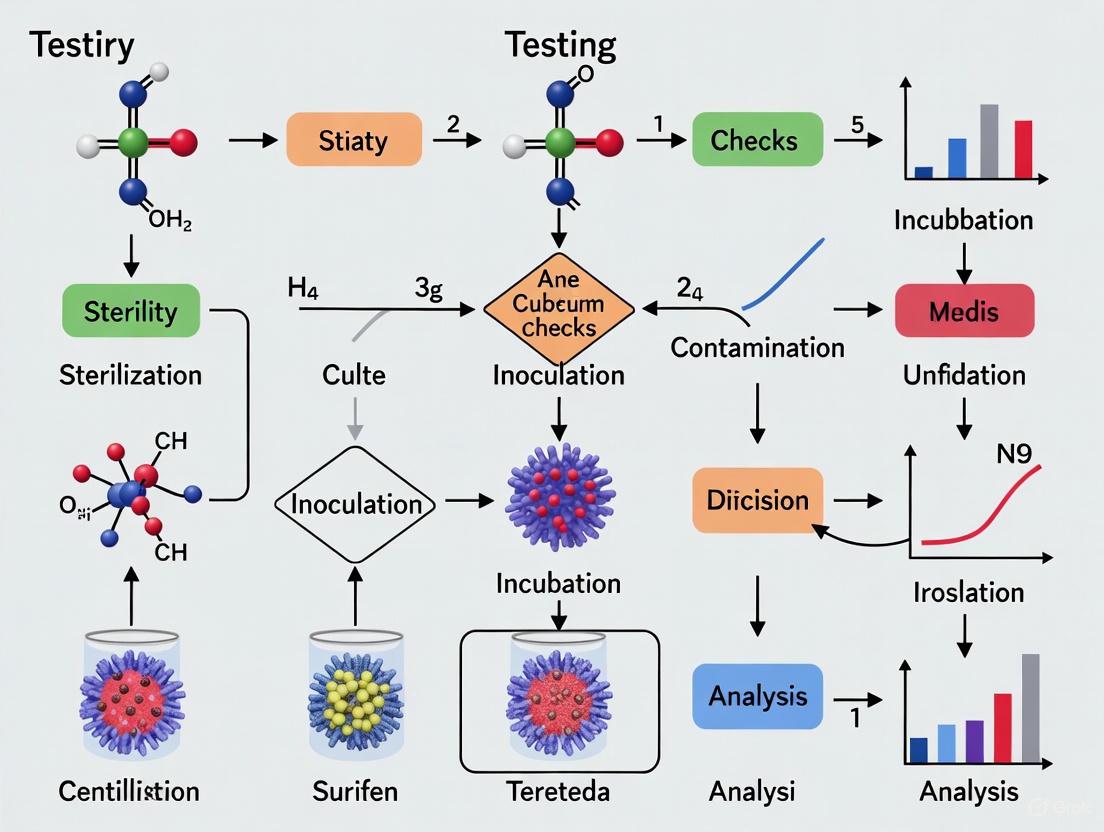
This article provides a comprehensive guide for researchers, scientists, and drug development professionals on ensuring the sterility of cell culture media.
How to Test Cell Culture Media for Sterility: A Complete Guide for Researchers
Abstract
This article provides a comprehensive guide for researchers, scientists, and drug development professionals on ensuring the sterility of cell culture media. It covers foundational principles, including the critical importance of sterility testing in protecting cell cultures and research integrity. The guide details established and emerging testing methodologies, from compendial methods like direct inoculation and membrane filtration to novel rapid techniques. It also offers practical troubleshooting and optimization strategies for common contamination issues and outlines the essential process of method validation to meet stringent regulatory standards for both research and clinical applications.
Why Sterility Testing is Non-Negotiable in Cell Culture
The Critical Impact of Contamination on Research Reproducibility and Cell Health
Contamination by viable microorganisms represents a fundamental threat to the integrity of biological research and the safety of biotherapeutic products. In the context of cell culture, the presence of microbial contaminants such as bacteria, fungi, and mycoplasma can alter cellular metabolism, gene expression, and viability, thereby compromising experimental outcomes and rendering research findings irreproducible [1] [2]. The sterility assurance of cell culture media and biological products is therefore not merely a regulatory formality but a critical scientific imperative. For researchers, scientists, and drug development professionals, implementing robust sterility testing protocols is essential for validating the quality of reagents and ensuring that experimental results reflect true biological phenomena rather than contamination artifacts.
The probabilistic nature of sterility necessitates rigorous testing approaches. A product is considered sterile when the probability of it containing a viable microorganism is less than one in one million [2]. This absolute standard cannot be guaranteed through endpoint testing alone but requires a comprehensive system of process controls, validated methods, and rigorous quality assurance. This application note provides detailed methodologies for testing cell culture media for sterility within a research framework, emphasizing practical protocols, emerging technologies, and essential reagents to safeguard cell health and research reproducibility.
The Consequences of Contamination in Biological Research
Impact on Cellular Systems and Experimental Outcomes
Microbial contamination exerts diverse detrimental effects on cell cultures, with consequences ranging from subtle alterations in cellular physiology to complete culture collapse. Common contaminants including bacteria, fungi, and mycoplasma can compete for nutrients, alter pH, introduce enzymatic activities, and trigger innate immune responses in mammalian cells [2]. Mycoplasma contamination, in particular, is notorious for its insidious nature, as it often persists without causing visible turbidity while significantly affecting cellular parameters such as growth rates, gene expression patterns, and metabolic activity. These alterations introduce uncontrolled variables that undermine experimental reproducibility and can lead to erroneous conclusions in critical research areas including drug discovery, toxicology assessments, and functional genomics studies.
Statistical Limitations of Sterility Testing
A fundamental challenge in sterility assurance lies in the statistical limitations of sampling-based testing. As highlighted in current industry practice, "absence of evidence does not equal evidence of absence" [2]. The probabilistic nature of detection means that testing a small sample from a larger lot provides only limited assurance. For example, if a 10,000-unit lot has a contamination level of 0.1%, sampling only 20 units yields a 98% probability that contamination would remain undetected [2]. This statistical reality underscores why sterility testing must be integrated within a broader framework of quality assurance that includes process validation, environmental monitoring, and aseptic technique rather than relying exclusively on endpoint testing.
Quantitative Data on Contamination Risks and Testing Efficacy
Table 1: Statistical Probability of Detecting Contamination in Sterility Testing
| Lot Contamination Rate | Lot Size | Sample Size | Probability of Detection | Probability of Missing Contamination |
|---|---|---|---|---|
| 0.1% | 10,000 units | 20 units | 2% | 98% |
| 1% | 5,000 units | 20 units | 18% | 82% |
| 0.1% | 1,000 units | 10 units | 1% | 99% |
| 5% | 1,000 units | 20 units | 64% | 36% |
Table 2: Comparison of Sterility Testing Methods and Detection Timelines
| Testing Method | Principle of Detection | Typical Incubation Time | Key Advantages | Key Limitations |
|---|---|---|---|---|
| Compendial Culture Methods | Microbial growth in liquid media | 14 days | Regulatory acceptance, broad spectrum | Lengthy turnaround, subjective reading |
| ATP Bioluminescence | Detection of microbial ATP | 5-7 days | Faster results, automated detection | Potential interference from non-microbial ATP |
| Automated Growth-Based Systems | CO₂ production by microorganisms | 7 days | Non-destructive, continuous monitoring | Capital equipment investment required |
| Membrane Filtration | Concentration of microbes on filter | 14 days (compendial) | Ability to test large volumes, rinse inhibitors | Requires filterable samples |
Essential Methodologies for Sterility Testing of Cell Culture Media
Protocol 1: Compendial Sterility Testing by Membrane Filtration
Principle: This method concentrates potential contaminants from cell culture media by filtration through a 0.45μm membrane, which is then incubated in culture media to promote the growth of any retained microorganisms. The method is particularly suitable for cell culture media as it allows for testing larger volumes and the removal of potential inhibitory substances [2].
Materials and Reagents:
- Sterile membrane filtration apparatus (e.g., Steritest system [2])
- 0.45μm pore size membrane filters
- Fluid Thioglycollate Medium (FTM)
- Soybean Casein Digest Medium (SCDM)
- Sterile diluent (e.g., phosphate buffered saline)
- Positive control microorganisms (e.g., Staphylococcus aureus, Bacillus subtilis, Pseudomonas aeruginosa, Clostridium sporogenes, Candida albicans)
Procedure:
- Aseptic Setup: Perform all operations in an ISO Class 5 cleanroom or using an isolator to prevent accidental contamination [2].
- Sample Collection: Aseptically withdraw the required volume of cell culture media (typically 100mL minimum for media bags) using sterile connection devices.
- Filtration: Transfer the sample through the filtration apparatus containing two separate 0.45μm membrane filters.
- Rinsing: If the media contains preservatives or antibiotics, rinse the membrane with an appropriate sterile diluent (3 x 100mL volumes recommended).
- Incubation: Aseptically transfer one filter to 100mL of FTM and the other to 100mL of SCDM. Incubate FTM at 32.5°C and SCDM at 22.5°C for 14 days [2].
- Observation: Examine media containers daily for visual evidence of turbidity indicating microbial growth.
- Validation: Confirm any growth by subculturing and identify the microorganisms to determine likely contamination sources.
Validation Requirements: The method must be validated for each specific cell culture media type to demonstrate that the formulation does not possess inherent antimicrobial properties that would yield false negatives. This is performed by inoculating media samples with low levels (fewer than 100 CFU) of appropriate test organisms and confirming their growth within the 14-day incubation period [2].
Diagram 1: Compendial sterility testing workflow with membrane filtration.
Protocol 2: Rapid Sterility Testing Using ATP Bioluminescence
Principle: This rapid microbiological method (RMM) detects microbial contamination through the measurement of adenosine triphosphate (ATP) using the luciferin-luciferase enzyme system. Microbial cells captured on a membrane filter are lysed to release ATP, which reacts with the enzyme substrate to produce light measured by a luminometer [3] [2].
Materials and Reagents:
- Celsis Advance II luminometer or equivalent system
- AMPiScreen ATP-bioluminescence assay reagents
- Sterile membrane filtration apparatus
- 0.45μm pore size membrane filters
- Lysis reagent
- Sterile diluent
Procedure:
- Sample Preparation: Aseptically withdraw cell culture media sample following the same stringent aseptic techniques as compendial methods.
- Filtration: Filter the specified volume of media through a 0.45μm membrane filter.
- Rinsing: Rinse the filter with sterile buffer to remove any non-microbial ATP that may cause interference.
- Reagent Addition: Apply lysis reagent to release microbial ATP from captured cells, followed by luciferin-luciferase reagents.
- Measurement: Place the membrane in the luminometer and measure light production.
- Interpretation: Compare results to established thresholds. Elevated ATP levels indicate microbial contamination.
- Incubation: While rapid methods can provide results in hours, current regulatory expectations often require additional incubation (typically 5-7 days) to confirm negative results [3].
Validation Considerations: This alternative method must be validated according to USP <1223> to demonstrate it is at least as sensitive and reliable as the compendial method. Validation includes determination of specificity, accuracy, precision, and limit of detection using a panel of representative microorganisms [3].
Diagram 2: Rapid sterility testing workflow using ATP bioluminescence.
Protocol 3: Automated Growth-Based Rapid Detection System
Principle: Systems such as the BACT/ALERT 3D utilize automated, non-destructive detection of microbial growth through colorimetric or sensor-based detection of CO₂ production by microorganisms metabolizing nutrients in the culture media [4]. These systems can significantly reduce time-to-detection while maintaining the growth-based principles required by pharmacopeial standards.
Materials and Reagents:
- BACT/ALERT 3D or equivalent automated microbial detection system
- BACT/ALERT culture media bottles (iFA for aerobic and iFN for anaerobic microorganisms)
- Sterile transfer devices
Procedure:
- Media Selection: Select appropriate culture media bottles based on testing requirements. For general sterility testing, both aerobic and anaerobic bottles are typically used.
- Sample Inoculation: Aseptically inoculate a specified volume of cell culture media (typically 1-10mL) into each culture bottle.
- Loading: Place inoculated bottles into the BACT/ALERT 3D system according to manufacturer instructions.
- Incubation and Monitoring: The system automatically incubates bottles at appropriate temperatures and continuously monitors for CO₂ production.
- Result Interpretation: The system flags positive samples when a predetermined threshold of CO₂ is detected. Negative samples are typically released after 5-7 days of incubation, significantly faster than the 14-day compendial requirement [4].
- Confirmation: Any positive results should be confirmed by subculture and identification of the microorganisms.
Optimization Notes: Recent studies demonstrate that supplementing culture media with specific growth factors and optimizing incubation conditions can enhance the detection of slow-growing microorganisms such as molds and Cutibacterium acnes, further improving the reliability of shortened incubation periods [4].
The Scientist's Toolkit: Essential Research Reagent Solutions
Table 3: Essential Reagents and Materials for Sterility Testing
| Item | Function/Application | Examples/Specifications |
|---|---|---|
| Fluid Thioglycollate Medium (FTM) | Cultivation of anaerobic and aerobic bacteria; used in compendial sterility tests | Must support growth of 6 compendial test strains [2] |
| Soybean Casein Digest Medium (SCDM) | Cultivation of fungi and aerobic bacteria; used in compendial sterility tests | Must support growth of 6 compendial test strains [2] |
| Membrane Filtration System | Concentration of microorganisms from liquid samples for improved detection sensitivity | 0.45μm pore size; Steritest closed-system [2] |
| ATP Bioluminescence Reagents | Detection of microbial ATP for rapid sterility testing | Celsis AMPiScreen reagents [3] |
| Automated Culture Bottles | Growth medium for automated systems like BACT/ALERT | BACT/ALERT iFA (aerobic) and iFN (anaerobic) [4] |
| Positive Control Organisms | Validation and quality control of sterility testing methods | Staphylococcus aureus, Bacillus subtilis, Pseudomonas aeruginosa, Candida albicans [2] |
| Class A/B Cleanroom or Isolator | Provides aseptic environment for testing to prevent false positives | ISO Class 5 environment [2] |
Ensuring the sterility of cell culture media through validated testing protocols is a fundamental requirement for research reproducibility and reliable scientific advancement. While traditional compendial methods provide a regulatory-recognized standard, emerging rapid methods offer significant advantages in speed and automation without compromising detection capability. The integration of these methodologies within a comprehensive quality system that includes proper sample selection, aseptic technique, equipment qualification, and method validation provides the most robust approach to contamination control. As the field advances, particularly for sensitive applications in cell and gene therapy research where product shelf-life may be extremely short, the adoption of rapid sterility testing methods will become increasingly essential for maintaining both scientific integrity and patient safety [4]. Researchers must select testing strategies that balance regulatory expectations with practical needs for timely results, always recognizing that sterility assurance extends far beyond a single test to encompass the entire culture handling and manufacturing process.
Maintaining sterile cell cultures is a cornerstone of reliable biomedical research and drug development. Contamination by microorganisms such as bacteria, fungi, mycoplasma, and viruses can compromise experimental results, lead to erroneous conclusions, and jeopardize the safety of cell-derived therapeutic products. These contaminants range from readily visible bacteria and fungi, which often cause turbidity and pH changes in culture media, to stealthy adversaries like mycoplasma and viruses, which can persist undetected for long periods while altering cell behavior and function [5] [6]. The economic and scientific costs of contamination are significant, potentially invalidating months of research, endangering patients in clinical trials, and necessitating costly retractions.
Within the context of testing cell culture media for sterility research, understanding the distinct characteristics, detection methods, and prevention strategies for each class of contaminant is paramount. This application note provides a detailed overview of these common contaminants and outlines validated protocols for their identification and eradication, providing researchers with the practical tools needed to safeguard their work.
Characterization of Common Contaminants
Contaminants in cell culture are categorized based on their size, structure, and detection methods. The table below summarizes the key features of the primary contaminant groups.
Table 1: Characteristics of Common Cell Culture Contaminants
| Contaminant Type | Size Range | Primary Sources | Common Examples | Visible Signs in Culture |
|---|---|---|---|---|
| Bacteria | 0.5 - 5 µm | Personnel, contaminated reagents, environment [6] | E. coli, Staphylococcus spp. | Turbidity, pH change (yellow from pink media), fine granules under microscope [5] |
| Fungi/Yeast | 2 - 10 µm (yeast); larger hyphae | Airborne spores, personnel, contaminated surfaces [6] | Candida spp., Saccharomyces spp. | Pellets at bottom, filamentous mycelia, pH change (purple from pink media) [5] |
| Mycoplasma | 0.15 - 0.3 µm | Personnel (primary), animal-derived reagents (e.g., FBS, trypsin) [6] | M. orale, M. fermentans, M. hyorhinis [6] | Often none; potential progressive cell deterioration, but no turbidity [6] |
| Viruses | 20 - 400 nm | Donor tissue/source material, contaminated reagents [5] | HIV, Hepatitis B & C, MMV [5] | None under light microscope; potential cytopathic effect [5] |
Stealthy Contaminants: Mycoplasma and Viruses
Mycoplasma and viruses pose a particular challenge due to their sub-microscopic size and lack of overt signs of contamination.
Mycoplasma are the smallest self-replicating organisms, lacking a cell wall, which makes them resistant to many common antibiotics like penicillin [7] [6]. They adhere tightly to host cells, stealing essential nutrients and nucleotides, which can lead to chronic effects on the host cell, including altered metabolism, growth rates, and gene expression [7] [6]. As shown in Table 1, the majority of mycoplasma contaminants originate from laboratory personnel (M. orale, M. fermentans, M. hominis) or from bovine serum and porcine trypsin (M. arginini, M. hyorhinis) [6]. Their stealthy nature means an infected culture can appear normal for many passages, all the while serving as a reservoir for cross-contaminating other cultures in the lab.
Viruses are obligate intracellular parasites and cannot be detected by light microscopy. Contamination most frequently arises from the original donor tissue or source material used to establish a cell line [5]. Viral contamination can cause cytopathic effects, but often persists latently, potentially interfering with host cell function and posing a safety risk to laboratory personnel [5].
Experimental Protocols for Detection and Testing
A robust sterility testing strategy employs a combination of direct and indirect methods to ensure broad detection of contaminants.
Traditional Sterility Testing (USP <71>)
The United States Pharmacopeia (USP) Chapter <71> defines two primary methods for sterility testing, which are required for the release of products labeled "sterile," including cell therapy products [8].
Table 2: Summary of USP <71> Sterility Test Methods
| Parameter | Membrane Filtration | Direct Inoculation |
|---|---|---|
| Principle | Product is filtered; membrane is cultured in media. | Product is directly inoculated into culture media. |
| Best For | Filterable aqueous, oily, or alcoholic solutions. | Ointments, creams, suspensions, and non-filterable solids. |
| Key Steps | 1. Assemble sterile filtration apparatus (0.45µm pore).2. Filter product sample.3. Rinse filter to neutralize antimicrobials.4. Transfer membrane to Fluid Thioglycollate Medium (FTM) and Soybean-Casein Digest Medium (TSB).5. Incubate at 20-25°C (TSB) and 30-35°C (FTM) for 14 days. | 1. Aseptically transfer product into culture media (FTM & TSB).2. Ensure product volume is ≤10% of media volume.3. Incubate for 14 days with regular observation. |
| Incubation | 14 days [8] | 14 days [8] |
Suitability (Validation) Testing: For both methods, "bacteriostasis and fungistasis" testing is required to validate that the product itself does not inhibit the growth of microorganisms. This involves spiking the product with low levels of specific bacteria and fungi to confirm the test can reliably detect them [8].
Protocol for Bioburden Testing
Bioburden testing estimates the total number of viable microorganisms on or in a product prior to terminal sterilization. It is performed according to ISO 11737-1 [9].
- Sample Preparation: Aseptically cut, disassemble, or flush the test unit with sterile tools.
- Microbial Extraction: Place the sample in a container with a sterile rinsate solution (e.g., buffered water with surfactant). Agitate using method(s) appropriate for the material, such as:
- Sonication (using sonic energy)
- Vortexing (using circular agitation)
- Mechanical Shaking (using horizontal or vertical agitation)
- Plating and Assay:
- Filtration Method: Filter the extract fluid through a membrane filter. Place the filter on growth agar and incubate.
- Pour Plate Method: If filtration is not possible, mix the extract fluid with tempered agar, allow to solidify, and incubate.
- Enumeration and Calculation: After incubation (typically for times specified in ISO 11737-1), count the visible colonies (Colony Forming Units, CFUs). Apply dilution, Sample Item Portion (SIP), and validation correction factors to calculate the final bioburden [9].
Rapid Microbiological Methods (RMMs) and Novel Techniques
While traditional methods are the regulatory gold standard, their lengthy incubation times (up to 14 days) are a major bottleneck, especially for short-shelf-life products like Advanced Therapy Medicinal Products (ATMPs) [10] [11]. Several rapid methods have been developed.
Table 3: Overview of Rapid Sterility Testing Methods
| Method Type | Technology Basis | Example Product | Time to Result | Key Feature |
|---|---|---|---|---|
| qPCR-based | Detection of bacterial/fungal DNA using real-time PCR. | Microsart ATMP Sterile Release [10] | ~3 hours [10] | Detects a broad range of gram-positive/negative bacteria and fungi, including dormant cells. |
| dPCR-based | Partitioning sample for absolute quantification of DNA. | Cyclus dPCR Tool Box [10] | A few hours [10] | Higher sensitivity than qPCR; compatible with various dPCR systems. |
| Spectroscopy & Machine Learning | UV absorbance patterns of cell culture fluids analyzed by ML. | Method by SMART CAMP [11] | < 30 minutes [11] | Label-free, non-invasive, and requires no specialized reagents. |
The Scientist's Toolkit: Key Reagents and Materials
The following table lists essential reagents and materials used in sterility testing and contamination control.
Table 4: Essential Reagents and Materials for Sterility Testing
| Item | Function / Application | Key Specifications / Examples |
|---|---|---|
| Culture Media for Detection | Supports the growth of potential contaminants. | Fluid Thioglycollate Medium (FTM): For aerobes, anaerobes, and microaerophiles.Soybean-Casein Digest Medium (TSB): For aerobes and fungi. |
| Rapid Test Kits | For fast, specific detection of contaminants via DNA. | Microsart ATMP Sterile Release: qPCR kit for bacteria & fungi in 3h.Cyclus dPCR Tool Box: Digital PCR for high-sensitivity detection. |
| Filtration Apparatus | Used in membrane filtration method (USP <71>). | Steritest system or similar; membrane filter with pore size ≤0.45 µm. |
| Sample Collection & Handling | Aseptic manipulation and decontamination of samples. | Sterile jars/bags, rinsate solutions (buffered water with surfactant), open-slit baskets for sample transfer, 10% bleach solution for decontamination. |
| Validation Standards | To confirm test method suitability and accuracy. | Lyophilized, quantified, non-infectious microbial standards (e.g., for USP <71> relevant species). |
Effective management of cell culture contaminants requires a multi-faceted approach that combines rigorous aseptic technique, stringent quality control of all reagents, and a strategic testing plan that leverages both traditional and rapid methods. Whereas bacteria and fungi are often readily apparent, the stealthy nature of mycoplasma and viruses necessitates dedicated, sensitive detection protocols. The advent of rapid microbiological methods, such as PCR-based kits and machine learning-aided spectroscopy, is revolutionizing quality control for advanced therapies, dramatically shortening the wait for critical sterility results from days to hours or even minutes. By integrating the protocols and principles outlined in this application note, researchers and drug developers can significantly enhance the reliability of their cell-based systems, ensure the integrity of their scientific data, and safeguard the quality of biopharmaceutical products.
For researchers and drug development professionals working with cell culture media, navigating the complex landscape of regulatory requirements is essential for ensuring product safety and data integrity. Sterility testing of cell culture media and advanced therapeutic medicinal products (ATMPs) falls at the intersection of multiple regulatory frameworks, each with distinct purposes and jurisdictions. The United States Pharmacopeia (USP) Chapter <71> provides the standardized methodology for sterility testing, while the Current Good Manufacturing Practices (cGMP) regulations establish the quality system requirements for production and testing. In contrast, the Clinical Laboratory Improvement Amendments (CLIA) govern laboratory testing for human diagnosis but have limited jurisdiction over product sterility testing [12] [13].
Understanding the applicability and boundaries of these frameworks is critical when establishing sterility testing protocols for cell culture media research. The primary distinction lies in the testing objective: cGMP focuses on product quality and safety for human use, while CLIA focuses on patient-specific diagnosis [12]. This fundamental difference influences every aspect of testing, from facility requirements and personnel qualifications to documentation standards and quality systems. For cell therapy products regulated under Section 351 of the Public Health Service Act, sterility testing must comply with cGMP standards and typically requires USP <71> methods or demonstrated equivalents [14] [15].
Table 1: Core Regulatory Frameworks Governing Sterility Testing
| Regulatory Framework | Legal Authority | Primary Focus | Governing Agency | Applicability to Cell Culture Media Sterility Testing |
|---|---|---|---|---|
| cGMP | Food, Drug, and Cosmetic Act | Product quality and safety for human use | FDA (U.S. Food and Drug Administration) | Required for products intended for human administration; encompasses methods, facilities, and controls [16] |
| USP <71> | United States Pharmacopeia | Standardized test methods for sterility | USP (United States Pharmacopeia) | Primary compendial method for sterility testing; often required under cGMP [8] [17] |
| CLIA | Clinical Laboratory Improvement Amendments | Laboratory testing for patient diagnosis | CMS (Centers for Medicare & Medicaid Services) | Limited applicability; governs patient diagnosis rather than product release testing [12] [13] |
cGMP Requirements for Sterility Testing
Current Good Manufacturing Practices (cGMP) establish comprehensive quality system requirements for pharmaceutical products, including cell culture media intended for manufacturing therapies for human use. Under cGMP regulations (21 CFR Parts 210, 211, and 600), sterility testing is not merely a technical procedure but part of an integrated quality system encompassing facilities, equipment, materials, documentation, and personnel [14] [16]. The FDA mandates that sterility testing facilities must "employ facilities and controls comparable to those used for aseptic filling operations" [12], emphasizing that the testing environment itself must not introduce contamination.
A cornerstone of cGMP compliance is the validation of equipment, software, and systems through Installation, Operational, and Performance Qualification (collectively IOPQ) [14]. This requirement extends to all critical equipment used in sterility testing, including incubators, refrigerators, automated blood culture systems, and laboratory information management systems. For clinical laboratories transitioning to cGMP work, the IOPQ process represents a significant shift from standard equipment calibration, as it requires "confirmation by examination and provision of objective evidence that the particular requirements for a specific intended use can be consistently fulfilled" [14].
The cGMP framework also imposes rigorous documentation and record-keeping requirements. Unlike clinical laboratories where data management may focus on patient-centric information, cGMP testing laboratories must maintain comprehensive documentation for materials receipt, environmental monitoring, personnel qualification, change control, and supplier audits [12]. Document retention is generally required for one year after product expiration or longer based on stability requirements [12]. Additionally, cGMP requires robust tracking and trending systems to monitor process effectiveness, with product reviews required at minimum annually to evaluate performance over time and preemptively adjust specifications or production processes [12].
USP <71> Sterility Test Methodologies
USP <71> provides the standardized methodology for sterility testing required by cGMP regulations for products claiming sterility. The compendial method specifies two primary testing approaches: membrane filtration and direct inoculation [8] [17]. The selection between these methods depends on the physical characteristics of the product being tested, with membrane filtration generally preferred for filterable products as it allows testing of larger volumes and removes potential inhibitors [8] [2].
Membrane Filtration Method
The membrane filtration method is particularly suitable for aqueous, oily, and alcoholic solutions, as well as products that can be dissolved or emulsified [8]. This method offers enhanced sensitivity as it enables testing of the entire sample volume through a single filter apparatus. The fundamental principle involves filtering the test sample through a 0.45 µm membrane filter that captures any microorganisms present, followed by rinsing to remove antimicrobial agents that might inhibit growth, and subsequent incubation of the membrane in appropriate culture media [8] [17] [18].
Table 2: Membrane Filtration Method Specifications
| Parameter | Specification | Notes |
|---|---|---|
| Filter Pore Size | ≤0.45 µm | Some debate exists about using 0.22 µm as it can be challenging for certain products [8] |
| Culture Media | Fluid Thioglycollate Medium (FTM) and Trypticase Soy Broth (TSB) | FTM for anaerobes; TSB for aerobes and fungi [8] |
| Incubation Conditions | FTM: 30-35°C; TSB: 20-25°C | Temperatures may vary slightly by pharmacopeia [8] [13] |
| Incubation Period | Minimum 14 days | Regular observation on days 3, 5, 7, and 14 recommended [8] |
| Sample Pre-treatment | Varies by product type | Oily products may require dissolution in isopropyl myristate; antibiotics may need dilution [18] |
The step-by-step protocol for membrane filtration sterility testing includes:
- Preparation and Filtration Apparatus Sterilization: Assemble and sterilize the filtration apparatus using aseptic conditions. Disinfect the testing environment using appropriate disinfectants [8].
- Sample Filtration: Transfer the test sample through the membrane filter under vacuum. For products with antimicrobial properties, rinse the membrane with a suitable sterile diluent (such as Rinse A or Rinse K) to remove residual product [8] [17].
- Membrane Transfer: Aseptically transfer the membrane to separate containers of FTM and TSB media [8] [18].
- Incubation and Observation: Incubate the media for at least 14 days with regular visual inspection for turbidity indicating microbial growth. Document observations daily [8].
Direct Inoculation Method
The direct inoculation method (also called direct plating) is utilized when membrane filtration is not suitable, such as with ointments, creams, suspensions, bulk solids, or certain medical devices [8]. This method involves directly introducing a specified quantity of the product into culture media, with the product volume not exceeding 10% of the total media volume to prevent inhibition of microbial growth [8] [17].
The experimental protocol for direct inoculation includes:
- Sample Transfer: Aseptically transfer the specified quantity of product directly into culture media [8].
- Neutralization (if required): For products with antimicrobial properties, add appropriate neutralizing agents to the media to counteract these effects [8].
- Incubation and Observation: Incubate the inoculated media for at least 14 days at specified temperatures with regular observation for turbidity [8].
For both methods, the interpretation of results follows the same principle: absence of turbidity indicates the sample complies with sterility requirements, while any turbidity must be investigated to determine if it represents true contamination or a false positive [18].
CLIA Framework and Limitations for Product Testing
The Clinical Laboratory Improvement Amendments (CLIA) establish quality standards for laboratory testing of human specimens for diagnosis, prevention, or treatment purposes [12]. CLIA's regulatory framework focuses on analytical validity rather than product quality, with oversight focused on patient-specific testing rather than batch release of manufactured products [13]. This fundamental difference in purpose creates significant limitations for using CLIA-certified laboratories for sterility testing of cell culture media intended for manufacturing therapies.
When clinical microbiology laboratories perform sterility testing for cellular therapy products, they face substantial regulatory challenges because CLIA, CAP (College of American Pathologists), and JCAHO (The Joint Commission) "have no jurisdiction in the area of biopharmaceutical product testing and compounding pharmacy environmental monitoring" [13]. The regulatory oversight for cellular therapy products instead falls under the Food, Drug, and Cosmetic Act, which establishes different requirements for quality systems, documentation, and facility controls [13].
The critical distinction lies in the consequence of testing errors: in clinical testing, an erroneous result primarily affects an individual patient, while in product sterility testing, a false negative could lead to release of a contaminated batch affecting multiple patients [12]. This higher stake necessitates more rigorous controls under cGMP, including enhanced environmental monitoring, personnel qualification, equipment validation, and documentation practices that typically exceed CLIA standards.
Comparative Analysis: cGMP vs. CLIA Requirements
Understanding the distinctions between cGMP and CLIA frameworks is essential for researchers designing sterility testing programs for cell culture media. These differences extend beyond technical methodologies to encompass facility controls, personnel requirements, documentation standards, and quality systems.
Table 3: cGMP versus CLIA Requirements for Sterility Testing
| Parameter | cGMP Requirements | CLIA Requirements |
|---|---|---|
| Legal Foundation | Food, Drug, and Cosmetic Act (Title 21 CFR) [14] [16] | Clinical Laboratory Improvement Amendments (Title 42 CFR) [12] |
| Regulatory Agency | FDA (U.S. Food and Drug Administration) [16] | CMS (Centers for Medicare & Medicaid Services) [12] |
| Primary Focus | Product quality and safety for human use [12] | Patient diagnosis and clinical management [12] |
| Testing Environment | ISO Class 5 (Class 100) cleanroom or isolator required; facilities and controls must be comparable to aseptic filling operations [12] [2] | General laboratory environment; no specific cleanroom requirement for routine bacteriology |
| Personnel Monitoring | Required routine monitoring (glove and fingertip checks) after each test; annual gowning certification [8] | Focused on universal precautions and general laboratory safety |
| Equipment Validation | Full IOPQ (Installation, Operational, Performance Qualification) required [14] | Calibration and maintenance according to manufacturer specifications |
| Documentation | Comprehensive documentation for all processes; data integrity critical; records maintained for defined periods [12] | Focus on patient report accuracy and turnaround time |
| Environmental Monitoring | Comprehensive program assessing air, surfaces, and personnel; defined action limits and corrective actions [12] | Primarily focused on temperature monitoring for incubators and refrigerators [12] |
| Test Validation | Suitability testing (bacteriostasis and fungistasis) required for each product; demonstrated equivalent to USP <71> if alternative method used [8] [15] | Verification of manufacturer's specifications; proficiency testing |
| Laboratory Information System | LIMS (Laboratory Information Management System) with full audit trails and electronic records compliance (21 CFR Part 11) [12] | LIS (Laboratory Information System) designed for patient-centric data and HIPAA compliance [12] |
Quality Systems and Method Validation
Sterility Test Suitability (Bacteriostasis and Fungistasis)
A fundamental requirement under cGMP is demonstrating that the sterility testing method does not inherently inhibit microbial growth—a process formally known as sterility test suitability testing or bacteriostasis and fungistasis validation [8]. This validation confirms that the product itself or any residual components in the test system do not prevent the detection of contaminants. The process involves intentionally inoculating the product with low levels (typically 10-100 CFU) of known microorganisms and demonstrating that the method can recover these organisms [8].
The suitability testing protocol includes:
- Selection of Challenge Organisms: Use standard strains representing gram-positive bacteria, gram-negative bacteria, anaerobes, yeasts, and molds [2].
- Sample Inoculation: Inoculate the product with each challenge organism at target concentrations of 10-50 CFU per container [15].
- Test Execution: Process the inoculated samples according to the proposed sterility testing method (membrane filtration or direct inoculation).
- Growth Comparison: Compare microbial recovery from product samples to positive controls without product.
- Acceptance Criteria: Demonstration of comparable growth in test and control samples indicates the method is suitable for the product.
Suitability testing must be performed for each new product formulation, with any significant manufacturing changes, and when modifying testing procedures [8].
Personnel and Environmental Monitoring
Under cGMP, personnel conducting sterility testing must be highly trained in aseptic techniques and undergo rigorous monitoring. Personnel Monitoring (PM) includes regular glove and fingertip checks performed after each test session to detect any contamination introduced by human interaction [8]. Additionally, technicians must complete annual gowning certification during which they demonstrate proper aseptic gowning procedures while meeting established microbial growth criteria based on RODAC agar plate samples from different gown areas [8].
Environmental Monitoring (EM) represents another critical component of the cGMP quality system, focusing on assessing the quality of the manufacturing and testing environments [12]. A comprehensive EM program includes:
- Viable Air Monitoring: Active air sampling to quantify microbial contamination in the air [12].
- Surface Monitoring: Regular sampling of critical surfaces including workbenches, equipment, and floors [12].
- Non-viable Particle Monitoring: Continuous monitoring of particulate matter in ISO Class 5 environments [12].
- Risk-Based Sampling Plan: Establishing sampling locations, frequency, and alert/action limits based on risk assessment [12].
The Scientist's Toolkit: Essential Research Reagent Solutions
Implementing compliant sterility testing programs requires specific materials and reagents validated for cGMP use. The following essential materials represent the core toolkit for researchers developing sterility testing protocols for cell culture media.
Table 4: Essential Research Reagents and Materials for Sterility Testing
| Item | Function | Application Notes |
|---|---|---|
| Fluid Thioglycollate Medium (FTM) | Culture medium for anaerobic bacteria and some aerobes | Incubated at 30-35°C; supports growth of anaerobes through oxygen gradient formation [8] [17] |
| Trypticase Soy Broth (TSB) | Culture medium for aerobic bacteria and fungi | Also known as Soybean-Casein Digest Medium (SCDM); incubated at 20-25°C [8] [17] |
| Membrane Filters (0.45 µm) | Capture microorganisms during filtration | Pore size ≤0.45 µm; various materials available for different product types [8] [18] |
| Sterile Diluents (Rinse A, Rinse K) | Remove residual product from membrane | Used particularly for products with antimicrobial properties; helps prevent false negatives [8] |
| Isopropyl Myristate (IPM) | Solubilizing agent for oily products | Enhances filterability of viscous products during membrane filtration [17] |
| Challenge Organisms | Suitability testing validation | Standard strains including Staphylococcus aureus, Bacillus subtilis, Pseudomonas aeruginosa, Clostridium sporogenes, and Candida albicans [2] |
| RODAC Agar Plates | Personnel and environmental monitoring | Used for surface sampling during personnel gowning certification and environmental monitoring [8] |
| Culture Media Kits | Growth promotion testing | Verify each media lot supports growth of compendial organisms prior to use [17] |
For researchers and drug development professionals working with cell culture media, establishing compliant sterility testing programs requires careful consideration of the appropriate regulatory framework based on the product's intended use. The cGMP regulations and USP <71> methodologies provide the foundation for product release testing when cell culture media is used in manufacturing therapies for human administration. In contrast, CLIA regulations primarily apply to patient-specific diagnostic testing and offer insufficient oversight for product sterility assurance.
The implementation decision flow depends largely on the product stage and regulatory pathway. For early-phase clinical trials, the FDA expects implementation of cGMP, with expectations increasing as the product matures toward commercialization [14]. Section 361 products (minimally manipulated, autologous) may have less clear regulatory requirements compared to Section 351 products (more than minimally manipulated, allogeneic), which are unequivocally subject to cGMP regulations [14].
Successful implementation requires a holistic approach that integrates validated methodologies (either compendial USP <71> or demonstrated equivalents), qualified personnel with ongoing monitoring, validated equipment and systems following IOPQ principles, and robust quality systems with comprehensive documentation practices. While automated blood culture systems like BacT/Alert and Bactec have shown superior detection capabilities and faster times to detection compared to compendial methods [15], they require thorough validation to demonstrate equivalence for each product matrix. By understanding these regulatory frameworks and implementing appropriate quality systems, researchers can ensure the safety and efficacy of cell culture media used in developing advanced therapies.
In the field of pharmaceutical development and biomanufacturing, sterility assurance is a critical pillar of product quality and patient safety. A sterility failure, defined as the unintended presence of viable microorganisms in a product purported to be sterile, triggers a cascade of negative consequences spanning financial, operational, and data integrity domains. For researchers and scientists testing cell culture media, understanding these ramifications is essential for designing robust sterility testing protocols and appreciating the high stakes of quality control. This application note details these consequences and provides structured protocols for effective sterility testing within a research and development context, framing the discussion within the broader thesis of advancing sterility research methodologies.
The consequences of sterility failure are severe and multifaceted. Financial losses arise from batch rejection, regulatory fines, and costly remediation efforts [19]. Operational disruption occurs through batch rejection, production halts, and extensive investigations that divert scientific resources. Furthermore, compromised data integrity from false-negative or false-positive results can invalidate research findings and jeopardize product licensing [19] [14]. For cell and gene therapies, where products are often patient-specific and have limited shelf lives, a sterility failure can have irreversible consequences, denying patients access to critical treatments [14].
Quantitative Impact of Sterility Failures
The table below summarizes the primary quantitative and qualitative impacts of a sterility failure, providing a clear overview of the associated risks.
Table 1: Consequences of Sterility Failure in Drug Development and Manufacturing
| Impact Category | Specific Consequence | Quantitative/Qualitative Effect |
|---|---|---|
| Financial Loss | Direct Batch Loss [19] | Total loss of product value and cost of goods. |
| Regulatory Fines [20] | Financial penalties from non-compliance with FDA/cGMP regulations. | |
| Recall Costs [19] | Expenses for public notification, product retrieval, and reverse logistics. | |
| Legal Liabilities [19] | Costs of litigation, class-action lawsuits, and settlements. | |
| Remediation Costs [20] | Investment in facility upgrades, process re-validation, and corrective actions. | |
| Operational & Quality | Batch Rejection [19] | Failure to release a batch, leading to product shortage. |
| Production Stoppage [20] | Halted manufacturing during investigation, delaying other programs. | |
| Regulatory Scrutiny [20] | Increased inspection frequency and more stringent filing requirements. | |
| Reputational Damage | Loss of trust from patients, investors, and regulatory bodies. | |
| Data & Research | Compromised Research Data [19] | Invalidated experimental results due to contaminated media or samples. |
| Delayed Timelines [19] | Setbacks in critical research and development milestones. |
Experimental Protocols for Sterility Testing of Cell Culture Media
Implementing rigorous sterility testing protocols is fundamental to mitigating the risks outlined above. The following section provides detailed methodologies relevant to a research setting.
Protocol 1: Validation of an Automated Microbial Detection System
This protocol is adapted from validation studies performed for systems like BACTEC, which can be applied to sterility testing of cell-based products and media [21]. The objective is to confirm the system's equivalence to pharmacopeial methods in terms of sensitivity, reliability, and detection time.
1. Principle: The validation confirms that the automated system can consistently detect low levels of contaminating microorganisms in a specific sample matrix, such as cell culture media, with performance equal to or better than the compendial method.
2. Research Reagent Solutions & Materials: Table 2: Essential Materials for Automated System Validation
| Item | Function/Description |
|---|---|
| Automated Blood Culture System (e.g., BACTEC) | Automated microbial detection system that monitors CO₂ production. |
| Culture Media for System | Specific liquid culture media vials for the system (e.g., supplemented blood culture vials). |
| Reference Microbial Strains | Panel of ATCC strains (e.g., S. aureus, P. aeruginosa, B. subtilis, C. albicans) representing Gram-positive, Gram-negative, spore-forming, and fungal organisms. |
| Sterile Diluents | Buffered Peptone Water, Phosphate Buffered Saline (PBS), or Ringer's Lactate for serial dilutions. |
| Viable Count Plates (Tryptic Soy Agar, Sabouraud Dextrose Agar) | Used for enumerating the Challenge Inoculum. |
| Pharmacopeial Growth Media (Fluid Thioglycollate Medium, Tryptic Soy Broth) | Used for the compendial comparator method. |
3. Methodology:
- Sterility of Media: First, incubate uninoculated culture media vials for the system to confirm their initial sterility.
- Growth Promotion Test: Inoculate separate system media vials with a low number (≤100 CFU) of each reference strain to verify that the media supports the growth of a wide range of organisms.
- Suitability Test (Matrix Compatibility): This is the core of the validation.
- Challenge Inoculum: Prepare a dilute suspension of each reference strain in the same fluid used to suspend your cells (e.g., Ringer's Lactate) to a target concentration of approximately 5-100 CFU per inoculum volume [21].
- Enumeration: Perform viable counts on the challenge inoculum to confirm the actual number of CFU introduced.
- Inoculation: Inoculate the system's culture media vials with the challenged sample matrix.
- Control: Simultaneously test the same inoculum using the pharmacopeial sterility test method [1].
- Confirmation: Subculture vials flagged as positive by the automated system onto solid media to confirm microbial growth.
4. Acceptance Criteria:
- The automated system must detect all challenge organisms.
- The time to detection should be equal to or faster than the pharmacopeial method.
- There should be 100% concordance between the automated system and the compendial method results (Cohen’s κ = 1.0) [21].
- The detection limit should be demonstrated at ≤10 CFU per vial.
The following workflow diagrams the validation and routine testing process.
Protocol 2: Routine Sterility Testing of Cell Culture Media Using an Automated System
Once the system is validated, it can be implemented for routine testing.
1. Principle: The test sample is inoculated into culture media in an automated system vial, which is monitored for the presence of viable microorganisms.
2. Methodology:
- Sample Preparation: Aseptically combine the cell culture media sample with the automated system's culture media vials, following a defined ratio (e.g., 1-10 mL of sample per vial) [21].
- Incubation and Monitoring: Load the vials into the automated system. The system continuously monitors for production of CO₂ or other growth indicators for a defined incubation period (e.g., 7-14 days at 30-35°C).
- Interpretation: A vial that flags as positive indicates potential contamination. This vial must be subcultured onto solid media to confirm and identify the microorganism. Vials that do not flag positive during the incubation period are considered sterile.
cGMP Considerations and Equipment Validation
For research that feeds into regulatory submissions, adherence to current Good Manufacturing Practices (cGMP) is crucial. A key requirement is the formal validation of equipment, software, and systems through Installation, Operational, and Performance Qualification (IOPQ) [14].
IOPQ Framework:
- Installation Qualification (IQ): Verifies the equipment is received as designed, installed correctly, and that the environment and utilities are suitable.
- Operational Qualification (OQ): Demonstrates the equipment functions according to its specifications across its intended operating ranges.
- Performance Qualification (PQ): Confirms the equipment consistently performs according to the specifications in its actual working environment, using the same materials and procedures as in routine operations [14].
Failure to perform and document IOPQ can lead to regulatory citations and calls into question the integrity of all data generated by that equipment [14] [20]. The diagram below illustrates this foundational qualification process.
Sterility failure presents a significant risk to patient safety, research integrity, and commercial viability in biopharmaceutical development. The consequences—financial loss, batch rejection, and compromised data—are too severe to ignore. By implementing and validating robust sterility testing protocols, such as those for automated systems, and adhering to rigorous quality standards like IOPQ from the earliest research stages, scientists and drug developers can build a foundation of sterility assurance. This proactive approach is essential for protecting valuable research, accelerating the development of advanced therapies, and ultimately ensuring the delivery of safe and effective products to patients.
A Practical Guide to Sterility Testing Methods: From Classic to Cutting-Edge
For products required to be sterile, such as injectable drugs, cell therapies, and ophthalmic solutions, sterility testing is a non-negotiable quality control requirement mandated by global regulatory bodies [22] [18]. The objective is to confirm the absence of viable contaminating microorganisms—including bacteria, fungi, and yeast—in a product batch [22]. Failure to demonstrate sterility results in the mandatory rejection of the entire batch, presenting significant financial and public health risks [22]. The internationally recognized compendial methods for this testing are published in the United States Pharmacopeia (USP) General Chapter <71>, the European Pharmacopoeia (EP), and the Japanese Pharmacopoeia (JP), which have been largely harmonized [22] [23] [2]. These guidelines describe two primary techniques: Direct Inoculation and Membrane Filtration [22] [8]. The choice between them is critical and is driven by the product's physical characteristics, volume, and potential for antimicrobial properties [22].
This article details both methods within the context of testing cell culture media and other sterile products, providing application notes and detailed protocols for researchers, scientists, and drug development professionals.
Core Principles and Regulatory Framework
The Foundation: Culture Media and Incubation
Regardless of the method chosen, all compendial sterility testing relies on a core principle: incubating a sufficient quantity of the product in universal nutrient media to allow any viable contaminant to proliferate to detectable levels [22]. The USP mandates the use of two distinct media types to support the growth of a wide range of organisms [22] [24]:
- Soybean-Casein Digest Medium (SCDM or TSB): This highly nutritious medium is optimized for cultivating aerobic bacteria and fungi [22] [24]. It is incubated at 20-25°C for at least 14 days to promote the growth of fungi and environmental bacteria [22] [25].
- Fluid Thioglycollate Medium (FTM): This medium is primarily used for detecting anaerobic bacteria but also supports the growth of aerobes, which grow in the oxygen-rich upper portion [22] [24]. It is incubated at 30-35°C for at least 14 days [22] [25].
The minimum incubation period for both media is 14 days to maximize the chance of detecting slow-growing contaminants [22] [8]. Observations are typically conducted on days 3, 5, 7, and 14 to check for macroscopic evidence of microbial growth, such as turbidity [13] [25].
The Critical Role of Method Suitability (B&F Testing)
Before any sterility testing can be performed on a final product, the chosen method must be validated through Bacteriostasis and Fungistasis (B&F) Testing [22] [26]. This is a regulatory requirement that proves the test system (the product + media + procedure) is capable of supporting microbial growth and that the product itself does not contain antimicrobial properties that would inhibit growth and cause a false-negative result [22].
The B&F test procedure involves inoculating the product-media mixture with a small, known number of viable microorganisms (typically 10 to 100 CFU) from a panel of USP-specified test organisms (e.g., Staphylococcus aureus, Candida albicans, Bacillus subtilis) [22]. The growth of these organisms is compared against control samples containing only media and the same inoculum. For the method to be validated, the test organisms must show growth in the product-containing media that is comparable to the control within the 14-day incubation period [22]. A failure necessitates method modification, such as intensifying the rinse protocol for Membrane Filtration or adding neutralizing agents, before the test can be considered valid for the product [22].
Aseptic Testing Environment
Sterility testing must be performed under stringent aseptic conditions, typically an ISO Class 5 environment, to prevent accidental introduction of contaminants from the environment or operator, which could lead to false-positive results [22] [27] [2]. This is achieved using a laminar flow hood or, increasingly, isolators [22] [27]. Isolators provide a physical barrier and can be bio-decontaminated, substantially reducing the risk of false positives compared to open benches [27]. Regulatory documents like EU GMP Annex 1 recommend performing sterility testing under aseptic conditions, with the FDA further noting that isolators minimize the chance of a false positive [27].
Sterility Testing Method 1: Membrane Filtration
Principle and Applications
The Membrane Filtration method is considered the "gold standard" for sterility testing, particularly for liquid products [22] [26] [2]. Its principle involves filtering the product through a sterile membrane with a pore size of ≤ 0.45 µm, which acts as a physical barrier to retain any microbial contaminants [22] [8] [18]. The liquid product and any soluble inhibitory substances pass through the filter. The membrane is then rinsed with a sterile diluent to remove residual product or antimicrobial agents, and is finally transferred to culture media for incubation [22] [8].
This method is highly effective for a wide range of products and is the mandatory or highly preferred method for:
- Large-volume parenterals (LVPs) and bulk products, as it allows for testing large volumes, thereby concentrating trace contaminants [22].
- Products with inherent antimicrobial properties, such as those containing preservatives or antibiotics [22] [23].
- Aqueous, oily, and alcoholic solutions [8].
Table 1: Key Characteristics of Membrane Filtration
| Aspect | Description |
|---|---|
| Principle | Physical separation of microbes from product via a 0.45 µm membrane [22] [18]. |
| Key Advantage | Removes or neutralizes antimicrobial agents, reducing false negatives [22] [2]. |
| Ideal For | Filterable liquids, large volumes, inhibitory products [22] [8]. |
| Sample Volume | Can handle large volumes (e.g., >100 mL) [22]. |
| Incubation | 14 days; FTM at 30-35°C, TSB at 20-25°C [22] [8]. |
Detailed Experimental Protocol
The following protocol outlines the Membrane Filtration method per USP <71> guidelines.
Pre-Filtration Preparation:
- Aseptic Setup: Disinfect the interior of the ISO Class 5 laminar flow hood or isolator using a sporicidal agent. Transfer all materials into the aseptic area via a pass-through chamber [8].
- Apparatus Assembly: Assemble a sterile filtration apparatus, such as the Steritest closed system or a reusable stainless-steel filter funnel connected to a vacuum flask [8] [18].
- Membrane Preparation: Place a sterile membrane filter (nominal pore size 0.45 µm) into the apparatus [8].
Filtration and Rinsing:
- Sample Introduction: Aseptically introduce the test sample into the filtration apparatus. For products in sealed containers, disinfect the exterior and aseptically transfer the contents [8] [25].
- Filtration: Apply a vacuum to draw the product through the membrane. If the product is viscous, it may be diluted with a suitable sterile diluent to aid filtration [8] [18].
- Rinsing: After the product has been filtered, wash the membrane multiple times with a sterile rinsing fluid (e.g., Peptone Water, Fluid A) containing an appropriate inactivating agent (e.g., lecithin, polysorbate 80) to remove any residual antimicrobial substances [22] [8]. A typical rinse volume is 3 x 100 mL [22].
Culture and Incubation:
- Membrane Transfer: Aseptically transfer the membrane from the apparatus. If using a Steritest canister, the membrane is already contained within. Otherwise, cut the membrane in half using sterile instruments [22] [8].
- Inoculation: Place one half of the membrane into a vessel containing FTM and the other half into a vessel containing TSB [22] [8].
- Incubation and Observation: Incubate the FTM at 30-35°C and the TSB at 20-25°C for 14 days [22] [8]. Observe the media tubes daily for visual signs of turbidity indicating microbial growth, typically on days 3, 5, 7, and 14 [8].
Sterility Testing Method 2: Direct Inoculation
Principle and Applications
The Direct Inoculation method, also known as Direct Plating, involves aseptically transferring a portion of the test sample directly into vessels containing FTM and TSB culture media [22] [8]. The ratio of sample volume to media volume is critical; the sample should generally not exceed 10% of the media volume to avoid diluting the media's growth-promotion properties beyond their capacity [24] [8] [25].
This method is typically reserved for products that are not amenable to membrane filtration, such as:
- Non-filterable products: Ointments, creams, suspensions, and insoluble solids [8] [18].
- Medical devices: Where the entire device or a representative portion can be immersed in media [27] [18].
- Small-volume products: Where the entire contents of a container can be inoculated into the media [22].
The major drawback of this method is the risk of false negatives if the product has antimicrobial properties, as the inhibitory substances remain in contact with the media throughout the incubation period [22] [2].
Table 2: Key Characteristics of Direct Inoculation
| Aspect | Description |
|---|---|
| Principle | Direct immersion of product into culture media [22] [8]. |
| Key Limitation | Risk of false negatives from antimicrobial substances in the product [22] [2]. |
| Ideal For | Non-filterable products, medical devices, small batches [22] [24] [8]. |
| Sample Volume | Must be <10% of the total media volume [24] [8]. |
| Incubation | 14 days; FTM at 30-35°C, TSB at 20-25°C [22] [25]. |
Detailed Experimental Protocol
The following protocol outlines the Direct Inoculation method per USP <71> guidelines.
Sample and Media Preparation:
- Aseptic Transfer: Wipe sample containers with a disinfectant like 70% Isopropyl Alcohol (IPA) and transfer them into the ISO Class 5 testing environment via a pass-through box [8] [25].
- Media Preparation: Dispense FTM and TSB into sterile test tubes or bottles. The media should have been pre-incubated for 24-48 hours to confirm sterility prior to use [25].
- Sample Addition: For liquid samples, aseptically add the specified volume of product directly into the culture media. The volume must not exceed 10% of the media volume (e.g., 10 mL of sample into 100 mL of media) [24] [8] [25].
- For oily products, polysorbate 80 may be added to the media to aid emulsification [25].
- For solids like ointments, first suspend the product in a sterile solvent, then inoculate into the media [18].
- For medical devices, immerse the entire device or a representative portion in the media, ensuring all surfaces are in contact with the medium [18].
Controls and Incubation:
- Negative Control: Inoculate 10 mL of sterile Water for Injection (WFI) into 100 mL portions of both FTM and TSB to confirm media sterility [25].
- Incubation and Observation: Incubate the inoculated FTM at 30-35°C and the inoculated TSB at 20-25°C for 14 days [22] [25]. Observe the media tubes daily for macroscopic evidence of microbial growth [25].
Comparative Analysis and Method Selection
Selecting the appropriate sterility testing method is a fundamental risk-management decision. The following diagram and table summarize the key decision factors and comparative advantages of each method.
Sterility Testing Method Selection Workflow
Table 3: Direct Comparison of Sterility Testing Methods
| Parameter | Membrane Filtration | Direct Inoculation |
|---|---|---|
| Principle | Filters microbes from product; incubates membrane [22] [18]. | Directly inoculates product into media [22] [8]. |
| Sample Volume | Large volumes possible, concentrates contaminants [22] [2]. | Limited to ≤10% of media volume [24] [8]. |
| Antimicrobial Interference | Effectively removed via rinsing; low false-negative risk [22] [2]. | Not removed; high risk of false negatives [22] [2]. |
| Key Advantage | High sensitivity; handles inhibitory products [22] [26]. | Simple; works for non-filterable samples [24] [8]. |
| Primary Application | Filterable liquids, LVPs, antibiotics, preserved products [22] [8]. | Ointments, creams, medical devices, insoluble solids [8] [18]. |
The Scientist's Toolkit: Essential Research Reagents and Materials
Successful execution of compendial sterility tests requires specific reagents, media, and equipment. The following table details the essential components of a sterility testing toolkit.
Table 4: Essential Research Reagents and Materials for Sterility Testing
| Item | Function/Application |
|---|---|
| Soybean-Casein Digest Medium (TSB) | Liquid medium for cultivation of aerobic bacteria and fungi; incubated at 20-25°C [22] [24]. |
| Fluid Thioglycollate Medium (FTM) | Liquid medium for cultivation of anaerobic and aerobic bacteria; incubated at 30-35°C [22] [24]. |
| Clear Thioglycollate Medium | Alternative to FTM with equivalent growth promotion but greater visual clarity for detecting turbidity [24]. |
| Membrane Filters | 0.45 µm pore size, 47 mm diameter; used to capture microorganisms during filtration [8] [2]. |
| Sterile Rinsing Fluids | e.g., Peptone Water, Fluid A; used to wash membranes free of antimicrobial substances [22] [8]. |
| Inactivating Agents | Polysorbate 80, Lecithin; added to rinsing fluids or media to neutralize preservatives and antibiotics [22] [25]. |
| Isopropyl Alcohol (70%) | Used for disinfection of sample containers and surfaces prior to introduction into the aseptic zone [25]. |
| Steritest or Similar Filtration System | Closed, sterile filtration system that minimizes the risk of false positives during membrane filtration [8] [2]. |
| Reference Microorganisms | e.g., S. aureus, B. subtilis, C. albicans; used for growth promotion and method suitability testing (B&F) [22]. |
Compendial sterility testing, governed by USP <71> and other pharmacopoeias, provides the definitive framework for verifying the absence of viable microorganisms in products that claim to be sterile. The choice between Membrane Filtration—the sensitive, robust gold standard for most products—and Direct Inoculation—the practical choice for non-filterable items—is dictated by the product's physicochemical properties and the fundamental need to avoid false results. For researchers working with cell culture media and other sensitive biologics, a thorough understanding of these methods, coupled with rigorous method suitability testing (B&F), is not merely a regulatory formality but a critical component of product safety and patient assurance. By adhering to these detailed protocols and principles, scientists can ensure the generation of reliable, defensible data that supports the release of safe sterile products.
Step-by-Step Protocol for Membrane Filtration for Cell Culture Media
Sterility testing via membrane filtration is a critical quality control procedure in pharmaceutical and biotechnological manufacturing to ensure that cell culture media are free from viable microorganisms [18]. This method is the regulatory method of choice for filterable products as cited in the USP <71>, Ph. Eur. 2.6.1, and JP 4.06, and is particularly suitable for samples that may contain preservative or antimicrobial compounds [28]. The principle involves filtering the media through a membrane with a pore size of 0.45 µm or less to capture any potential microorganisms, rinsing away inhibitory substances, and then incubating the membrane in culture media to promote the growth of any retained organisms [18] [28]. This protocol provides a detailed, step-by-step guide for performing membrane filtration sterility testing on cell culture media, ensuring reliability and compliance within the framework of sterility research.
Key Principles and Critical Parameters
The membrane filtration method offers distinct advantages for sterility testing of cell culture media, primarily its ability to test large volumes and effectively remove inhibitory substances that might otherwise prevent microbial growth [18] [28]. Before proceeding with the test, several critical parameters must be confirmed to ensure the validity of the results.
Sterility Assurance Level (SAL): The internationally recognized benchmark for a product to be considered sterile is a SAL of ≤ 10⁻⁶, meaning the probability of microbial contamination is less than or equal to one in a million [18].
Method Suitability (Method Validation): Before routine testing can begin, the method must be validated for the specific cell culture media formulation to demonstrate that the test preparation does not possess inherent antimicrobial activity and that the method can reliably detect low levels of contaminants [29] [26]. This validation includes tests for Residual Antimicrobial Activity, Antimicrobial Activity, and Stasis Test (efficacy of the test media at the end of the incubation period) [29].
Aseptic Environment: The entire process must be performed under aseptic conditions, ideally in a Grade A cleanroom within a Grade B environment or within a validated laminar flow cabinet or isolator to prevent false positives from adventitious contamination [18] [27]. The use of isolators is highly recommended to minimize the risk of false positives, which can lead to significant financial losses and potential drug shortages [27].
Materials and Equipment
Research Reagent Solutions
The following table details the essential materials and reagents required for the membrane filtration sterility test.
Table 1: Essential Materials and Reagents for Membrane Filtration Sterility Testing
| Item | Function and Critical Attributes |
|---|---|
| Membrane Filter | Sterile, individually packed cellulose nitrate (HA) or Polyvinylidene fluoride (PVDF) filters, 47 mm diameter, 0.45 µm pore size. PVDF is preferred for broad chemical compatibility and low binding [29] [28]. |
| Filtration Assembly | A sterility testing manifold made of stainless steel that can hold multiple filters. It must be sterilized (e.g., by autoclaving) before use [29] [18]. |
| Vacuum Pump | Provides the negative pressure required to drive the filtration process [18]. |
| Culture Media | Fluid Thioglycollate Medium (FTM) for anaerobic and aerobic bacteria (incubated at 30-35°C) and Soybean-Casein Digest Medium (SCDM) for fungi and aerobic bacteria (incubated at 20-25°C) [29] [26]. |
| Rinse Fluid | Sterile Peptone Water (e.g., 1% pH 7.0) or another suitable sterile diluent. Used to rinse the membrane and remove residual antimicrobial agents from the media [29]. |
| Sterile Forceps & Scissors | Used for the aseptic transfer and sectioning of membranes if using an open system [29]. |
| 70% Isopropyl Alcohol (IPA) | Used for disinfecting all surfaces of equipment and containers entering the aseptic work area [29] [30]. |
| Closed System Device (e.g., Steritest NEO) | Optional but recommended. A closed, pre-sterilized system that integrates the filter and media canisters, eliminating open-container manipulations and drastically reducing the risk of false positives [28]. |
Equipment Setup and Preparation
- Aseptic Work Area: Perform all steps within a Class II Biosafety Cabinet (BSC) or Laminar Air Flow (LAF) hood that has been validated and disinfected with 70% ethanol [30]. Alternatively, use a hydrogen peroxide bio-decontaminated isolator for the highest level of protection against false positives [27].
- Filtration Apparatus Assembly: Aseptically assemble the sterilized filtration unit. If using a closed system like Steritest NEO, follow the manufacturer's instructions for setup [28].
- Media and Rinse Preparation: Ensure all culture media and rinse fluids are sterile and have passed growth promotion tests. Wipe the outside of all containers with 70% ethanol before introducing them into the aseptic work area [30].
Step-by-Step Experimental Protocol
Pre-Filtration Sample Preparation
Cell culture media, typically an aqueous solution, can often be filtered directly without complex pre-treatment. However, if the media is highly viscous, it may be diluted with a sterile diluent to improve filterability [18].
Filtration and Rinsing Process
The following workflow diagram outlines the core steps of the membrane filtration process.
Figure 1: A sequential workflow for the membrane filtration sterility test, covering sample filtration, rinsing, incubation, and result interpretation.
Detailed Steps:
- Sample Transfer: Aseptically pour a representative volume of the cell culture media (as per your controlled document or protocol, typically the entire contents of the container for Small Volume Parenterals) into the top funnel of the filtration apparatus [29].
- Apply Vacuum: Turn on the vacuum pump to draw the liquid through the membrane filter. Microorganisms, if present, will be retained on the membrane surface [18].
- Rinse Membrane: After the media has passed through, rinse the inner walls of the funnel and the membrane with three separate 100 mL volumes of sterile peptone water or another appropriate rinse solution. This critical step ensures the removal of any residual culture media components that might inhibit subsequent microbial growth [29].
- Membrane Transfer:
- For open systems: Aseptically open the filtration funnel, retrieve the membrane with sterile forceps, and cut it into two halves with sterile scissors. Transfer one half into a container of sterile FTM and the other half into a container of sterile SCDM [29].
- For closed systems (e.g., Steritest): Simply aseptically transfer the pre-measured volumes of FTM and SCDM from their canisters through the membrane and into the final incubation canisters. The membrane remains enclosed within the system at all times, minimizing contamination risk [28].
Incubation and Results Interpretation
- Incubation: Label the media containers clearly and incubate them for 14 days [26] [18].
- FTM should be incubated at 30-35°C.
- SCDM should be incubated at 20-25°C.
- Observation and Interpretation: Examine the media containers for visible turbidity, which indicates microbial growth, at intervals during the incubation period (e.g., on days 3, 7, and 14) [29].
- Negative Result (Sterile): If no turbidity is observed in either medium after 14 days of incubation, the test sample complies with sterility requirements [18].
- Positive Result (Non-Sterile): If turbidity is observed, the test sample fails and is considered non-sterile. The contaminating microorganism should be identified to the species level to aid in an investigation into the source of contamination [29].
Table 2: Incubation Parameters and Interpretation of Results
| Culture Medium | Incubation Temperature | Incubation Time | Negative Result | Positive Result |
|---|---|---|---|---|
| Fluid Thioglycollate Medium (FTM) | 30-35°C | 14 days | Clear, no turbidity | Visible turbidity |
| Soybean-Casein Digest Medium (SCDM) | 20-25°C | 14 days | Clear, no turbidity | Visible turbidity |
Method Suitability and Validation
Before implementing this test for a new cell culture media formulation, a method suitability test must be performed to validate that the method is appropriate for that specific product [26]. This involves challenging the test system with a low number (10-100 CFU) of specific microorganisms in the presence of the product to prove that any antimicrobial activity has been satisfactorily neutralized [29].
The test organisms often used for validation include Staphylococcus aureus (ATCC 6538), Pseudomonas aeruginosa (ATCC 9027), Bacillus subtilis (ATCC 6633), Candida albicans (ATCC 10231), and Aspergillus niger (ATCC 16404) [29]. The test is considered valid only if "conspicuous growth" of the challenge organisms occurs in the test samples within 3 days for bacteria and 5 days for fungi, and the growth is comparable to that in positive control containers without the product [29]. If growth is inhibited, the method must be modified, for example, by increasing the number or volume of rinse cycles, and the validation repeated [29].
Troubleshooting and Best Practices
- False Positives (Contamination during testing): This is a major concern that can lead to unnecessary batch rejection. Mitigation strategies include using closed-system devices (e.g., Steritest) [28], performing the test within an isolator [27], rigorous environmental monitoring with settle plates and personnel finger dabs during testing [29], and ensuring staff are thoroughly trained in aseptic techniques [30].
- False Negatives (Failure to detect a contaminated sample): This can occur if antimicrobial agents in the sample are not adequately rinsed away or if the filter membrane is incompatible with the product. Ensure sufficient rinsing volume and validate the rinsing efficacy during method suitability testing. Using a PVDF membrane can help reduce binding of certain inhibitory substances [28].
- Slow Filtration: If the cell culture media contains particulates or is viscous, it can clog the filter. Using a filter with an integrated pre-filter (e.g., 0.5 µm PES) can protect the sterilizing membrane and increase filtration capacity and robustness [31] [32]. Pre-dilution of the media with a sterile diluent may also be considered [18].
Automated and Rapid Systems: Validating BACTEC and Other Automated Blood Culture Systems
For cell-therapy products, sterility testing is a non-negotiable quality control requirement to ensure patient safety. Regulated under Section 351 of the Public Health Service Act, these products must be tested for the absence of viable contaminants using methods described in 21 CFR 610.12 and USP <71>, or by methods demonstrated to be equivalent [33] [15]. While traditional compendial methods are the regulatory benchmark, automated blood culture systems like BD BACTEC and bioMerieux BacT/Alert have been widely adopted in clinical laboratories for their superior speed and sensitivity [33] [14]. Validating these automated systems is therefore paramount to ensure they meet or exceed the performance of the CFR/USP method, providing a rapid and reliable means to release life-saving cell-therapy products.
Performance Validation: Establishing Equivalence and Superiority
The core of any validation study is a direct comparison of the automated system against the compendial method. A seminal study by Khuu et al. provides a robust model for this, comparing BD BACTEC, BacT/Alert (BTA), and the CFR/USP method for testing mononuclear cell (MNC) products [33] [15].
2.1 Key Performance Metrics The study evaluated the systems using two critical metrics: the overall detection rate and the time-to-detection (TTD). The results demonstrated clear advantages for automated systems.
Table 1: Overall Detection Rates and Time-to-Detection of Three Sterility Testing Methods [33] [15]
| Testing Method | Mean Detection Rate (Range) | Mean Time-to-Detection (Range) |
|---|---|---|
| CFR/USP Method | 72% (7% - 100%) | 87 hours (24 - 264 hours) |
| BacT/Alert (BTA) | 82% (0% - 100%) | 24 hours (12 - 54 hours) |
| BD BACTEC | 93% (57% - 100%) | 33 hours (12 - 80 hours) |
2.2 Interpretation of Validation Data The data shows that both automated systems had higher overall detection rates than the CFR/USP method, with BACTEC detecting the highest percentage of positive cultures [33] [15]. More significantly, both automated systems drastically reduced the TTD. Detection occurred consistently within 7 days for BACTEC and BTA, but not for the 14-day CFR/USP method [33]. This accelerated TTD is critical for cell-therapy products which often require rapid release to patients. Recent advancements continue to improve these metrics; a 2025 study on a modified BD BACTEC aerobic media formulation reported a further mean TTD reduction of 2.6 to 2.9 hours [34].
Detailed Experimental Protocol for Method Validation
This protocol outlines the key steps for validating an automated blood culture system, such as BD BACTEC, for sterility testing of cell-therapy products, based on established methodologies [33] [35].
3.1 Sample Preparation
- Product Matrix: Use representative cell-therapy products, such as mononuclear cells (MNCs) suspended in the various media used in your manufacturing process [33].
- Sample Aliquot: A target volume of 0.5 mL containing 10–50 × 10^6 cells is recommended [33].
- Challenge Organisms: Inoculate product aliquots with a panel of USP-recommended reference strains. A panel of ten organisms, including aerobic and anaerobic bacteria, and yeast/fungi, is recommended. Test at low colony-forming unit (CFU) levels, such as 10 and 50 CFU per bottle, to challenge the system's sensitivity [33]. Common strains include Staphylococcus aureus, Pseudomonas aeruginosa, Bacteroides fragilis, Candida albicans, and Aspergillus brasiliensis [33] [35] [22].
- Controls: Include negative controls (non-inoculated product) and positive controls (media inoculated with known organisms) [35].
3.2 Test Execution
- Culture Systems: Test each inoculated sample in parallel using the automated system (e.g., BACTEC aerobic and anaerobic vials) and the CFR/USP method [33].
- Incubation: Incubate automated system bottles for 7 days and CFR/USP cultures for 14 days, following the respective manufacturer's and compendial guidelines [33] [35].
- Monitoring: The automated system will continuously monitor for microbial growth. CFR/USP methods require visual inspection of turbidity [33].
- Confirmation: Any positive signal from the automated system must be confirmed by subculturing onto solid media and identifying the organism via techniques like Gram stain or MALDI-TOF mass spectrometry [35].
3.3 Bacteriostasis and Fungistasis (B&F) Testing This is a critical validation component. It demonstrates that the product itself does not inhibit microbial growth, which could cause false-negative results.
- Procedure: Inoculate the product-media mixture with a low number (10-100 CFU) of specified test organisms. Compare the growth in the product mixture to growth in control media without the product [33] [22].
- Acceptance Criterion: Growth in the test must be comparable to the control. If inhibition is observed, the method must be modified, for example, by using antibiotic removal devices or increasing dilution factors, and re-validated [33] [22].
The workflow for the validation process is summarized below.
The Scientist's Toolkit: Essential Research Reagent Solutions
Successful validation and routine sterility testing require specific reagents and materials. The following table details key solutions for experiments using the BD BACTEC system.
Table 2: Essential Research Reagents and Materials for BACTEC Sterility Testing Validation
| Item | Function / Application |
|---|---|
| BD BACTEC Plus Aerobic/F Culture Vial | For detection of aerobic bacteria and fungi. Contains resins to neutralize antibiotics. [36] [34] |
| BD BACTEC Lytic/10 Anaerobic/F Culture Vial | For detection of anaerobic bacteria and to lyse cells for release of intracellular organisms. [36] [35] |
| BD BACTEC Mycosis IC/F Medium | Specialized for enhanced recovery of fungi and yeasts. [35] [37] |
| USP <71> Reference Strains | Panel of organisms (e.g., S. aureus, P. aeruginosa, C. albicans) for B&F testing and method suitability. [33] [22] |
| Sterile Diluent (e.g., Peptone Water) | Used for serial dilutions and rinsing membranes in filtration-based methods. [22] |
| Antibiotic Removal Devices | Resins or chemical inactivators to neutralize antimicrobial agents in the product. [33] |
Equipment and Regulatory Qualification in a cGMP Environment
Under current Good Manufacturing Practices (cGMP), equipment used for product testing must be rigorously qualified. This involves a process known as Installation, Operational, and Performance Qualification (IOPQ) [14].
- Installation Qualification (IQ): Verifies the equipment is received as specified and installed correctly in the suitable environment.
- Operational Qualification (OQ): Tests the equipment's functionality to ensure it operates as intended under defined parameters (e.g., temperature stability of incubators, accuracy of detection sensors).
- Performance Qualification (PQ): Demonstrates the equipment performs consistently under actual test conditions over time, for example, by repeatedly detecting low-inoculum challenge organisms [14].
This qualification framework, combined with robust method validation data, provides the comprehensive evidence required for regulatory compliance when using automated systems like BACTEC for sterility testing of cell-therapy products [33] [14].
Validating automated blood culture systems like BD BACTEC is a critical investment for the development of cell and gene therapies. The evidence demonstrates that these systems are not merely equivalent but are superior to the traditional CFR/USP method in both detection sensitivity and speed. By following a structured validation protocol that includes B&F testing and comprehensive equipment qualification, manufacturers can implement a rapid, reliable sterility testing method. This accelerates product release without compromising quality, ultimately supporting the timely delivery of advanced therapies to patients.
Ensuring the sterility of cell cultures is a critical and challenging step in the manufacturing of Cell Therapy Products (CTPs). Traditional sterility testing methods, such as the compendial United States Pharmacopeia (USP) <71> test, often rely on growth enrichment and visual inspection for turbidity, requiring up to 14 days for results [38]. This timeline is incompatible with the short shelf-lives of many advanced therapies, creating an urgent need for rapid alternatives [38] [11].
Emerging technologies that combine UV absorbance spectroscopy with machine learning (ML) offer a transformative solution. This label-free approach enables the non-invasive detection of microbial contamination in under 30 minutes, providing a definitive yes/no assessment that facilitates early intervention and enhances the safety of CTPs [38] [11] [39]. This Application Note details the protocol and implementation of this novel method for in-process sterility testing.
The core principle of this technology is that microbial contamination introduces distinct, measurable changes in the UV absorbance profile of a cell culture supernatant. These spectral shifts are attributed to changes in the metabolic landscape. A key hypothesis is that contamination alters the ratio of metabolites like nicotinic acid (NA) and nicotinamide (NAM), which have different spectral signatures in the UV region [38].
Machine learning, specifically a one-class Support Vector Machine (SVM) model, is trained exclusively on UV absorbance spectra from known sterile cell culture samples. This anomaly detection approach learns the "fingerprint" of a sterile environment. During testing, the model analyzes new samples and identifies significant spectral deviations, classifying them as contaminated [38] [39]. This method requires minimal sample volume (< 1 mL), is non-invasive, and does not require cell extraction or staining [38] [11].
The following workflow illustrates the complete process from sample preparation to result interpretation:
Key Experimental Data and Performance
This ML-aided UV spectroscopy method has been rigorously validated against traditional techniques. The table below summarizes its performance in detecting low-level microbial contamination compared to established methods.
Table 1: Performance Comparison of Sterility Testing Methods
| Method | Principle | Time to Detection (for ~10 CFU) | Key Performance Metrics | Sample Volume |
|---|---|---|---|---|
| ML-aided UV Spectroscopy | UV spectral shift & anomaly detection | ~21 hours (result in <30 min post-sample) [38] | Mean True Positive Rate: 92.7%; Mean True Negative Rate: 77.7% (up to 92% after donor outlier exclusion) [38] | < 1 mL [38] |
| USP <71> (Compendial) | Growth-based turbidity | ~24 hours [38] | Sensitivity of ~10 CFU, but requires long incubation [38] | 1 mL [38] |
| BACT/ALERT 3D | Automated CO₂ detection in growth media | ~16 hours [38] | High sensitivity, requires growth enrichment [38] | 1 mL [38] |
| NA/NAM Ratio (LC-MS) | Metabolic ratio via mass spectrometry | ~18 hours [38] | Demonstrates metabolic shift hypothesis [38] | Requires specialized equipment |
The method has demonstrated a low limit of detection, successfully identifying contamination at levels as low as 10 Colony Forming Units (CFUs) for a panel of seven microorganisms, including Escherichia coli, Staphylococcus aureus, and Candida albicans [38] [39].
Detailed Experimental Protocol
Research Reagent Solutions and Materials
Table 2: Essential Materials and Equipment
| Item | Specification / Function |
|---|---|
| Spectrometer | Commercial UV-Vis spectrometer capable of measuring in the 190-400 nm range. |
| Cuvettes | Quartz or UV-transparent disposable cuvettes. |
| Cell Culture Samples | Supernatant from mesenchymal stromal cell (MSC) cultures or other CTPs. |
| Positive Control | Sterile culture media spiked with a known concentration (e.g., 1000 CFUs) of E. coli [38]. |
| Negative Control | Sterile cell culture supernatant spiked with Phosphate Buffer Solution (PBS) [38]. |
| Machine Learning Software | Platform with SVM library (e.g., Python with scikit-learn). |
Step-by-Step Workflow
Step 1: Model Training (One-time Setup)
- Collect Sterile Training Set: Obtain a minimum of several dozen supernatant samples from confirmed sterile cell cultures, ideally spanning multiple donors to capture biological variability.
- Acquire UV Spectra: Measure the UV absorbance spectrum of each sterile sample across the 190-400 nm range. Perform technical replicates for robustness.
- Train SVM Model: Use the collected spectral data from sterile samples to train a one-class SVM model. This model learns the multivariate boundaries of a sterile sample's spectral profile.
Step 2: Routine In-Process Monitoring
- Sample Collection: Aseptically withdraw < 1 mL of cell culture supernatant at desired time points during the manufacturing process.
- Absorbance Measurement: Transfer the sample to a cuvette and measure its UV absorbance spectrum using the same parameters established during model training.
- Data Pre-processing: Apply standard spectral pre-processing (e.g., scaling, normalization) to the raw absorbance data to minimize instrumental noise.
- ML Analysis: Input the pre-processed spectral data into the pre-trained one-class SVM model.
- Result Interpretation: The model outputs an anomaly score.
- Low Score: The sample's spectrum falls within the sterile model's boundaries → "Sterile" prediction.
- High Score: The sample's spectrum is an outlier → "Contaminated" prediction.
Critical Assay Parameters
- Data Quality: The model's performance is directly dependent on the quality and representativeness of the initial sterile training set.
- Donor Variability: Spectral baselines can vary between donors. Including multiple donors in the training set or normalizing to donor-specific baselines improves the true negative rate [38].
- Equipment Qualification: For cGMP environments, the spectrometer must undergo proper Installation, Operational, and Performance Qualification (IOPQ) to ensure data integrity and regulatory compliance [14].
Implementation in a Regulated Environment
Integrating this technology into a cGMP-compliant workflow requires careful planning. The following diagram outlines the critical control points for deployment within a cell therapy manufacturing process, emphasizing its role as a rapid in-process check rather than a final product release test.
Troubleshooting and Technical Notes
- Low True Negative Rate: This often results from high baseline variability. Re-train the SVM model with a broader set of sterile samples from multiple donors or exclude samples with anomalously high levels of interfering compounds like nicotinic acid [38].
- Inconsistent Predictions: Ensure consistent sample preparation and measurement conditions. Verify that the spectrometer is properly calibrated and qualified.
- Regulatory Strategy: This method is ideal for real-time, in-process controls. A positive result should trigger a corrective action, which may include initiating a growth-based Rapid Microbiological Method (RMM) or compendial test for confirmation before final product release [11].
The integration of machine learning with UV absorbance spectroscopy presents a robust, rapid, and label-free methodology for detecting microbial contamination in cell therapy products. By providing actionable results in under 30 minutes, it enables a paradigm shift from end-point testing to continuous, in-process monitoring. This technology empowers manufacturers to enhance process control, improve resource allocation, and most importantly, ensure the timely delivery of safe advanced therapies to patients.
Selecting an appropriate sterility testing method is a critical decision in pharmaceutical and biopharmaceutical development, impacting product safety, release timelines, and regulatory compliance. This application note provides a structured decision matrix and detailed protocols for selecting sterility testing methods based on key parameters: media type, sample volume, and required turnaround time. We compare traditional compendial methods with rapid microbiological methods (RMMs), enabling researchers and quality control professionals to implement scientifically sound and efficient sterility testing strategies for cell culture media and related products.
Sterility testing is an essential quality control procedure to ensure that cell culture media and other sterile products are free from viable microorganisms. The foundational principle involves incubating samples in nutrient media to detect contamination, but technological advancements have introduced significant variations in detection time, automation, and sensitivity [2]. For cell-therapy products and other advanced therapeutics, regulatory standards under Section 351 of the Public Health Service Act often require testing by methods described in 21 CFR 610.12 and USP <71>, or by validated equivalent methods [33]. The core challenge lies in the probabilistic nature of sterility assurance; traditional growth-based methods alone cannot guarantee absolute absence of microorganisms, making method selection and validation paramount [19].
Traditional Compendial Methods
The United States Pharmacopeia (USP) <71> sterility test is the benchmark compendial method. It requires a 14-day incubation period during which samples are cultured in two specific media: Fluid Thioglycollate Medium (FTM) for aerobic and anaerobic bacteria, and Soybean-Casein Digest Medium (SCDM) for fungi and aerobic bacteria [26] [2]. The test can be performed via direct inoculation, where a sample is aseptically added to culture media, or membrane filtration, which is the preferred method as it allows testing of larger volumes and removal of potential inhibitory substances [2]. The definitive endpoint is visual observation of turbidity, indicating microbial growth.
Rapid Microbiological Methods (RMMs)
RMMs detect microbial contamination through mechanisms other than visible turbidity, significantly reducing detection times. These methods must be validated according to guidelines such as USP <1223> to demonstrate they are not inferior to the compendial method [40].
- ATP Bioluminescence (e.g., Celsis systems): This technology detects microbial Adenosine Triphosphate (ATP). In the presence of contaminants, microbial cells are lysed, releasing ATP which reacts with luciferin/luciferase enzyme to produce light, measured by a luminometer. This can reduce sterility test results to approximately 5-7 days [40] [2].
- CO2 Production-Based Systems (e.g., BacT/Alert): These automated systems use culture bottles with a colorimetric sensor that detects CO2 produced by microbial metabolism. The system continuously monitors the sensor, flagging positive samples often within 7 days, with some studies showing a mean detection time of 24-33 hours [33] [41].
- Fluorescent Staining & Laser Scanning (e.g., ScanRDI): This highly sensitive method uses membrane filtration followed by fluorescent staining of microbial nucleic acids and laser scanning to detect micro-colonies. It can provide results in 1-2 days, representing the fastest available technology [26].
Comparative Performance Data
To support informed decision-making, the following tables summarize the key characteristics and performance data of available sterility testing methods.
Table 1: Comparison of Sterility Testing Method Characteristics
| Method | Principle of Detection | Typical Incubation Time | Relative Cost | Automation Level | Compendial Status |
|---|---|---|---|---|---|
| USP <71> | Turbidity (Visual) | 14 days [26] | Low | Low | Compendial [2] |
| BacT/Alert | CO2 Production | ~7 days [26] [41] | High | High | Alternative Method [41] |
| Celsis | ATP Bioluminescence | ~7 days [40] [26] | Medium-High | Medium | Alternative Method [40] |
| ScanRDI | Fluorescence (Viable Cell Staining) | 1-2 days [26] | High | Medium | Alternative Method [26] |
Table 2: Microbial Detection Performance of Different Methods*
| Organism | USP <71> Detection Rate | BacT/Alert Detection Rate | Celsis Detection Rate |
|---|---|---|---|
| Staphylococcus aureus | Baseline | Equivalent or Superior [33] [41] | Statistically Equivalent [40] |
| Pseudomonas aeruginosa | Baseline | Equivalent or Superior [33] [41] | Statistically Equivalent [40] |
| Bacillus subtilis | Baseline | Equivalent or Superior [33] [41] | Statistically Equivalent [40] |
| Clostridium sporogenes | Baseline | Equivalent or Superior [33] | Statistically Equivalent [40] |
| Candida albicans | Baseline | Equivalent or Superior [33] [41] | Statistically Equivalent [40] |
| Aspergillus brasiliensis | Baseline | Equivalent or Superior [33] [41] | Statistically Equivalent [40] |
| Mean Time to Detection | 87 hours [33] | 24-33 hours [33] | ~5-7 days [40] |
*Note: Performance is dependent on successful method suitability testing for the specific product.
Decision Matrix for Method Selection
The following diagram illustrates the decision-making workflow for selecting the most appropriate sterility testing method based on sample attributes and project requirements.
Decision Workflow for Sterility Testing Method Selection
Detailed Experimental Protocols
Protocol 1: Compendial USP <71> Sterility Test by Membrane Filtration
Principle: The sample is filtered through a 0.45µm membrane, which retains microorganisms. The membrane is then incubated in culture media to promote growth of any retained viable contaminants [2].
Materials:
- Steritest or similar closed membrane filtration system
- 0.45µm pore size membrane filters
- Fluid Thioglycollate Medium (FTM)
- Soybean-Casein Digest Medium (SCDM)
- Class A Laminar Flow Cabinet or Isolator
Procedure:
- Aseptic Setup: Perform all steps under aseptic conditions (ISO Class 5 cleanroom or isolator) [2].
- Sample Transfer: Aseptically connect the sample container to the inlet of the Steritest unit.
- Filtration: Pass the entire contents of the sample unit(s) through the membrane filter.
- Rinsing: If the product contains preservatives or antimicrobials, rinse the membrane with an appropriate sterile fluid (e.g., Phosphate Buffered Saline) to remove inhibitors [2].
- Media Addition: Aseptically add ~100 mL of pre-warmed FTM to one canister and SCDM to the other [26].
- Incubation: Incubate FTM at 30-35°C and SCDM at 20-25°C for 14 days [2].
- Result Interpretation: Examine the media for turbidity indicative of microbial growth daily. Perform subculturing from any turbid media to confirm microbial presence and identity.
Protocol 2: Rapid Sterility Test Using the BacT/Alert 3D System
Principle: Microorganisms in the sample metabolize nutrients in the culture bottle, producing CO2. A sensor in the bottle changes color in response to CO2 concentration, which is detected colorimetrically by the automated instrument [41].
Materials:
- BacT/Alert 3D Microbial Detection System
- BacT/Alert Culture Bottles (e.g., iAST for aerobes, iNST for anaerobes)
- Sterile syringes and needles
Procedure:
- Sample Inoculation: Aseptically inoculate a defined sample volume (e.g., 5-10 mL) into a BacT/Alert culture bottle [33] [41].
- Loading: Place the inoculated bottles into the designated slots in the BacT/Alert 3D instrument.
- Automated Incubation & Monitoring: The system automatically incubates the bottles at 32.5-35°C (for FTM-equivalent) or 22.5-25°C (for SCDM-equivalent), agitates them periodically, and monitors the CO2 sensor every 10 minutes [41].
- Result Interpretation: The system flags a bottle as positive when the CO2 production exceeds a predetermined threshold. A typical incubation period of 7 days is used, though most positives are detected within 24-48 hours [33] [41]. Samples that are not flagged after 7 days are reported as negative for microbial growth.
The Scientist's Toolkit: Essential Reagents and Materials
Table 3: Key Research Reagent Solutions for Sterility Testing
| Item | Function & Application |
|---|---|
| Fluid Thioglycollate Medium (FTM) | Used for the cultivation of aerobic and anaerobic bacteria. The thioglycollate creates an oxygen gradient, allowing both types to grow [2]. |
| Soybean-Casein Digest Medium (SCDM) | A general-purpose medium for the cultivation of fungi and aerobic bacteria. It is also known as Tryptic Soy Broth (TSB) [2]. |
| BacT/Alert Culture Bottles (e.g., iAST, iNST) | Specialized, sealed bottles containing nutrient broth and a CO2 sensor. Formulated to support microbial growth while neutralizing common antimicrobial agents [41]. |
| Celsis AMPiScreen Reagents | ATP-bioluminescence reagents containing luciferin/luciferase enzyme and lysing agents to release microbial ATP for detection in the Celsis system [2]. |
| ScanRDI Staining Reagents | Fluorescent dyes that bind to microbial nucleic acids, enabling the detection of micro-colonies on membrane filters via laser scanning [26]. |
| 0.45µm Membrane Filters | Used in membrane filtration methods to capture microorganisms from liquid samples while allowing the product fluid to pass through [2]. |
Regulatory and Validation Considerations
Adopting any sterility testing method, especially RMMs, requires rigorous validation to demonstrate equivalence to the compendial method.
- Method Suitability (Bacteriostasis/Fungistasis): This test is mandatory to demonstrate that the product itself does not inhibit the growth of microorganisms in the test system. It must be performed for each product formulation before a sterility test can be considered valid [40] [2]. This is especially critical for cell culture media containing antibiotics [33].
- Validation Parameters for RMMs: According to USP <1223>, validation should include studies on specificity (ability to detect a broad range of relevant microbes), robustness (reliability under normal operational variation), and limit of detection (lowest number of microorganisms that can be reliably detected) [41].
- Regulatory Compliance: While USP <71> is universally accepted, using an RMM requires a regulatory strategy. Agencies like the FDA encourage the use of validated alternative methods. For instance, the BacT/Alert system is FDA-approved for sterility testing of certain cell therapy products like Carticel [41].
The selection of a sterility testing method is a multifaceted decision that balances scientific, operational, and regulatory requirements. While the traditional 14-day USP <71> test remains a regulatory benchmark, Rapid Microbiological Methods offer compelling advantages in speed, automation, and objectivity. The provided decision matrix and detailed protocols serve as a practical guide for researchers and quality professionals to navigate this critical choice, ensuring the sterility of cell culture media with both efficiency and confidence.
Troubleshooting Sterility Tests and Optimizing Your Aseptic Workflow
In the field of sterility research for cell culture media, ensuring accurate and reliable test results is paramount. False-negative results, the unintended presence of inhibitory substances, and difficulties in interpreting turbid media represent significant challenges that can compromise research integrity and patient safety, particularly in the development of advanced therapy medicinal products (ATMPs) [19] [21]. These issues become critically important when testing complex biological products where traditional growth-based methods may prove insufficient [19].
Growth-based microbiological methods, long considered the mainstay for sterility testing, face inherent limitations including inefficiency in detecting all microbial contamination and an inability to discriminate between viable and non-viable microorganisms [19]. This review addresses these critical challenges through detailed application notes and experimental protocols designed to enhance testing accuracy and reliability in research settings.
Understanding the Core Challenges
The False-Negative Problem
False-negative results occur when microbial contaminants are present in a test sample but fail to be detected by the sterility testing method. This represents one of the most significant risks in sterility assurance, as it can lead to the release of contaminated products [19]. The primary cause of false negatives is the presence of inhibitory substances in the test article that suppress microbial growth despite the presence of contaminants [42].
For cell culture media specifically, components of the media formulation itself or residues from manufacturing processes may possess antimicrobial properties that interfere with microbial detection [42]. Additionally, the use of antibiotics in some culture systems can further complicate sterility testing by inhibiting the growth of potential contaminants during the test procedure [22].
Inhibitory Substances in Testing Systems
Inhibitory substances can originate from two primary sources:
- Intentionally added substances with antimicrobial properties as part of the product design, such as antibiotics, silver impregnations, or specific chemical coatings [42].
- Unintentional inhibitory substances present on or in the product, such as residual detergents from cleaning processes, product coatings, or certain chemical components that inadvertently cause inhibition in the test method [42].
These substances can create microbicidal or microbiostatic conditions that prevent the proliferation of microorganisms in the sterility test medium, leading to falsely negative results and potentially compromising the interpretation of sterilization effectiveness [42].
Interpreting Turbid Media
Turbid media presents an interpretation challenge during sterility testing incubation periods. While turbidity typically indicates microbial growth, it can sometimes result from non-microbial factors, including:
- Chemical interactions between the product and culture medium
- Precipitation of media components
- Physical characteristics of the product itself
The United States Pharmacopeia (USP) and other compendial methods require incubation of sterility test samples for 14 days, with regular visual examination for turbidity development [43] [22]. When turbidity is observed, further investigation is required to isolate and identify any microorganisms present to confirm whether the turbidity represents true microbial contamination [43].
Method Selection: Direct Inoculation vs. Membrane Filtration
Choosing the appropriate sterility testing method is critical for overcoming the challenges of false negatives and inhibitory substances. The two primary compendial methods each present distinct advantages and limitations [22].
Table 1: Comparison of Sterility Testing Methods
| Parameter | Direct Inoculation | Membrane Filtration |
|---|---|---|
| Principle | Sample directly added to culture media [22] | Sample filtered; membrane transferred to media [22] |
| Best For | Small batches; media-miscible samples [22] | Large volumes; inhibitory products [22] |
| Inhibition Risk | Higher – test article remains in media [22] | Lower – inhibitors removed via rinsing [22] |
| Key Advantage | Simplicity of execution [22] | Effective inhibitor removal; larger sample volumes [22] |
| Key Limitation | Susceptible to antimicrobial interference [22] | More technically complex [22] |
The selection between these methods should be based on the specific characteristics of the cell culture media being tested, with membrane filtration generally preferred for samples with potential inhibitory substances due to its superior ability to separate microorganisms from the product matrix [22].
Figure 1: Sterility Testing Method Selection and Validation Workflow. This diagram outlines the decision process for selecting and validating the appropriate sterility testing method based on sample characteristics and the critical Bacteriostasis/Fungistasis (B&F) test requirement.
Essential Research Reagent Solutions
A properly equipped laboratory requires specific reagents and materials to effectively address sterility testing challenges. The following toolkit represents essential solutions for reliable sterility testing of cell culture media.
Table 2: Research Reagent Solutions for Sterility Testing
| Reagent/Material | Function/Purpose | Application Notes |
|---|---|---|
| Soybean-Casein Digest Medium (SCDM) | Promotes growth of aerobic bacteria and fungi [22] | Incubated at 20-25°C for optimal fungal/yeast growth [22] |
| Fluid Thioglycollate Medium (FTM) | Detects aerobic and anaerobic bacteria [22] | Incubated at 30-35°C; supports anaerobes in lower portion [22] |
| Membrane Filters (0.45 µm) | Retains microorganisms during filtration [22] | PVDF membranes recommended for inhibitory samples [44] |
| Neutralizing Agents | Inactivate inhibitory substances [42] [22] | Includes lecithin, polysorbate 80; selected based on inhibitor type [22] |
| Sterile Diluents | Rinse filters to remove inhibitors [22] | Peptone water commonly used; may contain inactivating agents [22] |
| USP Reference Strains | B&F test validation organisms [43] [22] | Panel of 6 organisms representing different classes [43] |
Comprehensive Experimental Protocols
Protocol 1: Bacteriostasis and Fungistasis (B&F) Test
The B&F test is a mandatory validation procedure required to demonstrate that the chosen sterility testing method can detect microorganisms in the presence of the test product [43] [22].
Objectives and Principle
The primary objective is to confirm that the cell culture media sample does not contain inhibitory substances that would prevent the growth of potential contaminants. The principle involves comparing microbial growth in product-containing media against growth in control media without the product [22].
Materials Required
- Test sample (cell culture media)
- Culture media: Soybean-Casein Digest Medium (SCDM) and Fluid Thioglycollate Medium (FTM) [22]
- USP reference microorganisms: Typically includes Staphylococcus aureus, Bacillus subtilis, Candida albicans, and other representative strains [43] [22]
- Sterile diluent (e.g., phosphate-buffered saline)
- Equipment: Incubators, sterile pipettes, membrane filtration apparatus (if applicable)
Step-by-Step Procedure
- Preparation of Inocula: Prepare separate inocula of each test microorganism containing 10-100 CFU (Colony Forming Units) [22].
- Test Sample Preparation: Aseptically add the test product to the appropriate culture media (FTM and SCDM) according to the selected sterility testing method [22].
- Inoculation: Inoculate the product-containing media with each test microorganism. Include control samples of media without product inoculated with the same microorganisms [22].
- Incubation: Incubate all test and control samples under appropriate conditions:
- Growth Comparison: Regularly observe all tubes for turbidity and compare growth in test samples versus controls throughout the incubation period [22].
Acceptance Criteria
For the method to be validated, the test organisms must show comparable growth in the product-containing media to that in the control media within the 14-day incubation period. Growth should be detected visually through turbidity development [22].
Protocol 2: Membrane Filtration with Inhibition Control
This protocol is specifically designed for cell culture media samples with suspected inhibitory substances and represents the "gold standard" for challenging samples [22].
Objectives and Principle
The objective is to effectively separate potential microbial contaminants from inhibitory substances in the test sample, thereby reducing false-negative results. The principle involves filtering the sample through a membrane that retains microorganisms while allowing inhibitory substances to pass through, followed by rinsing to remove residual inhibitors [22].
Materials Required
- Steritest or equivalent closed canister system with membrane filter [44]
- Low-adsorption PVDF membrane (0.45 µm pore size) for samples with antimicrobial properties [44]
- Sterile rinsing fluid with appropriate neutralizers (e.g., peptone water with polysorbate 80 or lecithin) [22]
- Culture media: FTM and SCDM [22]
- Forceps, cutting clamp, and other filtration accessories [44]
Step-by-Step Procedure
- Apparatus Setup: Aseptically set up the filtration apparatus with a pre-rinsed sterile membrane filter [22].
- Sample Filtration: Transfer the required volume of test sample through the membrane filter [22].
- Rinsing Protocol: Wash the membrane filter at least three times with approximately 100-200 mL of sterile rinsing fluid containing appropriate neutralizing agents to remove residual inhibitory substances [22].
- Membrane Transfer: Aseptically divide the membrane into two halves and transfer one half to each of FTM and SCDM culture vessels [43] [22].
- Incubation: Incubate the media vessels for 14 days:
- Observation: Examine the media visually for turbidity daily during the incubation period [43].
Troubleshooting Notes
- If the B&F test fails with this method, increase the number of rinsing cycles or consider stronger neutralizing agents in the rinsing fluid [22].
- For viscous samples, consider pre-dilution with a suitable solvent such as isopropyl myristate (IPM) to improve filterability [44].
- Use a cutting clamp instead of scissors when working within isolators to improve aseptic technique [44].
Protocol 3: Investigation of Turbid Media
This protocol guides the researcher through the necessary steps when turbidity is observed in sterility test media, a critical determination between true contamination and false positives.
Objectives and Principle
The objective is to determine whether observed turbidity results from true microbial contamination or from non-microbial factors. The principle involves subculturing and further analysis to confirm and identify any microorganisms present [43].
Materials Required
- Fresh culture media (FTM and SCDM)
- Gram stain reagents
- Agar plates for subculturing (e.g., blood agar, Sabouraud dextrose agar)
- Identification system for microorganisms (manual or automated)
Step-by-Step Procedure
- Documentation: Note the day of first observed turbidity and the specific media vessel affected.
- Subculturing: Aseptically transfer a portion of the turbid media to fresh media of the same type and to appropriate agar plates [43].
- Gram Staining: Prepare a smear from the turbid media, perform Gram staining, and examine microscopically for microorganisms.
- Incubation: Incubate subcultured media and plates under appropriate conditions.
- Identification: If microorganisms are confirmed, proceed with identification to at least genus level [43].
- Investigation: If the turbidity does not show microbial growth upon subculturing, investigate potential non-microbial causes such as chemical precipitation or interaction between product components and culture media.
Advanced Methods and Future Directions
Rapid Microbial Detection Methods
While growth-based methods remain the compendial standard, rapid microbiological detection methods are emerging as valuable alternatives that can address some limitations of traditional approaches. These include:
- ATP bioluminescence systems (e.g., Milliflex Rapid) that can detect microbial contamination much faster than visual growth observation [44]
- Automated blood culture systems (e.g., BACTEC) validated for sterility testing of cell-based products [21]
These systems offer the advantage of reduced time-to-detection (often 24-72 hours) while maintaining sensitivity equivalent to pharmacopeial methods [21] [44]. One study validating the BACTEC system for adipose-derived stem cell products suspended in Ringer's Lactate demonstrated detection of all reference strains within 24-72 hours with a detection limit of <5 CFU and repeatability >95% [21].
Equipment Validation Requirements
For laboratories operating under current Good Manufacturing Practices (cGMP), equipment validation through Installation Qualification (IQ), Operational Qualification (OQ), and Performance Qualification (PQ) is essential for sterility testing equipment [14]. This includes:
- Blood culture systems
- Controlled temperature units (incubators, refrigerators)
- Laboratory Information Management Systems (LIMS) [14]
Proper validation ensures that equipment functions as intended according to predefined specifications and is expected at any level of cGMP application [14].
Addressing the challenges of false negatives, inhibitory substances, and turbid media in sterility testing requires systematic approaches and rigorous methodology validation. The protocols outlined in this application note provide researchers with practical tools to enhance testing reliability for cell culture media. The critical importance of the Bacteriostasis and Fungistasis test cannot be overstated, as it represents the primary defense against false-negative results caused by inhibitory substances [43] [22].
As the field advances, integration of rapid detection methods and adherence to comprehensive equipment validation protocols will further strengthen sterility assurance programs [14] [21] [44]. By implementing these detailed protocols and maintaining rigorous attention to methodological validation, researchers can significantly improve the reliability of sterility testing for cell culture media in both basic research and advanced therapeutic applications.
In the field of sterility research, particularly when testing cell culture media, the Bacteriostasis and Fungistasis (B&F) test serves as a critical validation to ensure the reliability of sterility testing. This test confirms the absence of antimicrobial properties in pharmaceutical products and medical devices that could inhibit the detection of contaminants during sterility testing. Without this validation, it becomes impossible to verify the sterility of your manufacturing process, as microbial contaminants could be masked by antimicrobial agents present in the product itself [45] [46]. The United States Pharmacopeia (USP) and the U.S. Food and Drug Administration (FDA) require method suitability testing to ensure that standard operating procedures are appropriate for their intended use [45]. For researchers working with cell culture media, B&F testing provides the fundamental assurance that their sterility test results are valid and not compromised by inherent antimicrobial characteristics of the media formulation.
The Scientific and Regulatory Foundation of B&F Testing
The Fundamental Principle
The core principle behind B&F testing is straightforward: to demonstrate that the test product does not possess antimicrobial properties that could inhibit the detection of microorganisms [47]. This is achieved by inoculating a sterile test medium containing the product with a low number of representative test microorganisms and observing whether these organisms can multiply in the presence of the product [47] [48]. Successful microbial growth confirms that the test product does not have bacteriostatic or fungistatic properties that could influence sterility test results [47]. If growth is inhibited, the sterility test method is invalid, as it could yield false negatives where contaminants are present but undetectable due to the product's inhibitory characteristics [49].
Governing Standards and Requirements
B&F testing is governed primarily by USP Chapter <51> and USP Chapter <71>, which outline the standards for sterility testing and method validation [45] [22]. The testing should be performed following the first sterilization or aseptic manufacturing of all new products prior to sterility testing, or when significant product or manufacturing changes occur [49]. Regulatory bodies require annual re-validation to substantiate the continued suitability of the sterility test method [45] [50]. For cell culture media specifically, which may contain various supplements and growth factors, B&F testing ensures that any antimicrobial properties do not interfere with the accurate assessment of sterility, thus protecting the integrity of research outcomes and drug development processes.
Essential Reagents and Research Solutions
The following table details the key reagents and materials required for performing B&F testing in the context of cell culture media evaluation:
Table 1: Essential Research Reagents and Materials for B&F Testing
| Reagent/Material | Function in B&F Testing | Specifications & Considerations |
|---|---|---|
| Soybean-Casein Digest Medium (SCDM) | Promotes growth of aerobic bacteria and fungi | Also known as Tryptic Soy Broth (TSB); must be prepared sterilely [22] |
| Fluid Thioglycollate Medium (FTM) | Supports growth of anaerobic and aerobic bacteria | Anaerobes grow in lower portion; aerobes in upper portion [22] |
| USP-Specified Test Organisms | Challenge organisms to validate growth capability | Typically includes 6 representative strains (e.g., S. aureus, C. albicans, B. subtilis) [49] [22] |
| Membrane Filters | For separation technique in membrane filtration method | 0.45 µm pore size; retains microorganisms while allowing inhibitory substances to pass [49] [22] |
| Sterile Diluent | Washing agent for membrane filtration | Used with appropriate inactivating agents to remove residual inhibitory substances [49] |
| Inactivating Agents | Neutralize antimicrobial properties | Lecithin, polysorbate 80, or specific enzymes to counter antimicrobial effects [22] |
Comprehensive B&F Testing Protocol
Preparation and Experimental Setup
The B&F testing protocol begins with the preparation of media and test organisms. Researchers must first determine the appropriate testing method based on the product characteristics of the cell culture media being evaluated. The two primary approaches are direct transfer (for media miscible with test media) and membrane filtration (for media with potential antimicrobial properties) [22]. For the test organisms, prepare standardized inoculums containing less than 100 Colony Forming Units (CFU) of each challenge microorganism as specified in USP guidelines [49] [48]. The panel of test organisms should represent a range of gram-positive bacteria, gram-negative bacteria, yeasts, and molds to comprehensively evaluate antimicrobial effects.
Test Procedure and Incubation
The specific test procedure varies based on the selected method:
- Direct Transfer Method: Aseptically transfer the test cell culture media into containers with appropriate culture media (FTM and TSB) in a ratio that doesn't neutralize the media's growth promotion capability [22]. Inoculate each container with fewer than 100 CFU of test organisms [49] [48].
- Membrane Filtration Method: Filter the test cell culture media through a 0.45µm membrane filter [49] [22]. Rinse the filter multiple times with a sterile diluent containing appropriate inactivating agents to remove inhibitory substances [49] [22]. Transfer the membrane to culture media and inoculate with test organisms [49].
For both methods, incubate the samples for 14 days at prescribed temperatures: 30-35°C for bacteria and 20-25°C for fungi and yeasts [47] [22]. Include control samples containing only media and inoculum without the test product for comparison.
Interpretation and Acceptance Criteria
Following the incubation period, carefully examine all test containers for visual evidence of microbial growth (turbidity) and compare growth in test samples versus controls. The acceptance criterion for a valid B&F test is that all test organisms must show detectable growth in the product-containing media comparable to the control samples within the 14-day incubation period [22]. If any test organism shows inhibited growth, the B&F test fails, indicating that the cell culture media exhibits antimicrobial properties that would compromise sterility testing. In such cases, method modifications must be implemented, such as increased dilution, additional membrane filter washes, or addition of different inactivating agents to optimize microbial recovery [49].
Quantitative Data and Acceptance Parameters
The following table summarizes the key quantitative parameters for B&F testing:
Table 2: B&F Testing Quantitative Parameters and Acceptance Criteria
| Parameter | Specification | Reference Standard |
|---|---|---|
| Inoculum Level | <100 CFU per test organism | USP <71> [49] [48] |
| Incubation Period | 14 days minimum | USP <71> [47] [22] |
| Incubation Temperature (Bacteria) | 30-35°C | [47] [22] |
| Incubation Temperature (Fungi/Yeasts) | 20-25°C | [47] [22] |
| Sample Quantity | 11 sterile products for standard B&F test | [47] |
| Test Organisms | Panel of 6 USP-specified strains | USP <71> [49] [22] |
| Membrane Filter Pore Size | 0.45 µm | [49] [22] |
| Validation Frequency | Annually or when changes occur | [45] [50] |
B&F Testing Workflow
The following diagram illustrates the complete B&F testing workflow, from sample preparation to final interpretation:
Method Selection and Troubleshooting
Direct Transfer vs. Membrane Filtration
The selection between direct transfer and membrane filtration methods depends on the characteristics of the cell culture media being tested:
- Direct Transfer Method is appropriate when the cell culture media is miscible with the test media without causing significant turbidity [22]. This method is simpler but may not be suitable for media with inherent antimicrobial properties.
- Membrane Filtration Method is considered the "gold standard" for media with potential antimicrobial properties as it physically separates contaminants from inhibitory substances through filtration and washing steps [49] [22]. This method allows for testing of larger sample volumes and significantly reduces the risk of false negatives.
Addressing Common Challenges
When B&F testing fails, researchers must systematically troubleshoot and modify their approach:
- Insufficient Neutralization: Increase the concentration or type of inactivating agents in the diluent, such as lecithin or polysorbate 80, to better counteract antimicrobial properties [22].
- Inadequate Washing: For membrane filtration, increase the number or volume of rinse steps to more thoroughly remove inhibitory substances from the filter [49].
- Excessive Product Concentration: Modify the sample-to-medium ratio to dilute the product while maintaining test sensitivity [22].
- Media Interference: Consider alternative culture media or supplement existing media with specific neutralizers compatible with the test organisms.
For complex cell culture media containing novel supplements or growth factors, method development may require testing various neutralization strategies, filter membranes, and shaking or sonication techniques to achieve valid B&F results [48].
B&F testing represents an indispensable validation step in sterility testing of cell culture media, ensuring that research outcomes and drug development processes are not compromised by undetected contaminants masked by antimicrobial properties. By rigorously applying the protocols and acceptance criteria outlined in this application note, researchers can confidently validate their sterility testing methods, comply with regulatory standards, and maintain the integrity of their scientific work. The critical role of B&F testing in the quality control framework cannot be overstated—it provides the foundational assurance that sterility testing results truly reflect the microbiological status of cell culture media rather than methodological artifacts.
Best Practices for Aseptic Technique in the Biological Safety Cabinet
In the context of sterility research for cell culture media, maintaining aseptic conditions is non-negotiable. The biological safety cabinet (BSC) serves as the primary engineering control to achieve this, providing a critical barrier against microbial contamination. A BSC is an enclosed, ventilated laboratory workspace designed to protect the user, the environment, and the cell culture product from particulates and aerosols generated during the handling of potentially hazardous biological materials [51] [52]. It is essential to recognize that a BSC is not a fume hood; while fume hoods protect only the user with robust inward airflow, BSCs balance inward and HEPA-filtered downflow air to also shield the product or process from ambient contaminants [53]. Proper aseptic technique within the BSC is the cornerstone of reliable sterility testing, ensuring that research outcomes are not compromised by accidental contamination.
Fundamental Principles of BSC Operation and Safety
How a BSC Protects Your Work
BSCs operate on the principle of HEPA (High-Efficiency Particulate Air) filtration, which can trap particles and microorganisms as small as 0.3 microns with an efficiency of 99.99% [51] [54]. In a Class II BSC—the most common type in clinical and research laboratories—the mechanism involves a precise balance of airflows:
- Inflow Air: Room air is drawn inward through the front opening, creating a protective air barrier that prevents contaminants from escaping the cabinet.
- Downflow Air: Non-sterile ambient air is first HEPA-filtered, then blown in a vertical, laminar flow down onto the work surface, creating a sterile environment for cell culture procedures.
- Exhaust Air: Air that has passed over the work area is then drawn through exhaust HEPA filters before being either recirculated back into the cabinet or safely expelled from the laboratory [53] [51]. This careful balance is what allows the BSC to safeguard both the operator and the sterility of the cell cultures being tested.
BSC Classification and Selection
Selecting the appropriate BSC is a critical risk-management decision. BSCs are classified based on their design, airflow, and level of containment.
Table 1: Biosafety Cabinet Classes and Applications
| BSC Class | Personnel Protection | Product Protection | Environmental Protection | Common Applications in Sterility Research |
|---|---|---|---|---|
| Class I | Yes | No | Yes | Handling low to moderate-risk agents where product sterility is not required [52]. |
| Class II | Yes | Yes | Yes | Standard for aseptic preparation of cell culture media and sterility testing; several sub-types (A1, A2, B1, B2) exist for specific needs [53] [55]. |
| Class III | Yes | Yes | Yes | Handling high-risk pathogens; provides maximum containment via a gas-tight enclosure and glove ports [52]. |
For most cell culture and sterility testing work involving non-pathogenic microorganisms, a Class II Type A2 BSC is typically sufficient and recommended [53]. Placing the BSC in a low-traffic area, away from doors and air vents, is crucial to prevent disruptive turbulent airflow from compromising the protective air curtain [53].
Comprehensive Pre-Work Preparation and Planning
Personal Protective Equipment (PPE) and Personal Hygiene
Before approaching the BSC, researchers must don appropriate PPE, including a lab coat, gloves, and, if necessary, eye protection. It is critical to disinfect gloves with a suitable agent like 70% ethanol before initiating work within the cabinet. As humans are constantly shedding skin cells covered in bacteria, this step minimizes the introduction of contamination from the researcher's skin [53].
Gathering and Disinfecting Materials
A fundamental rule of aseptic technique is to ensure all necessary materials are gathered and placed within the BSC before starting the critical workflow. Repeatedly moving arms in and out of the cabinet disrupts the delicate airflow balance and increases contamination risk [51]. All items, including media bottles, pipettes, and reagents, should have their external surfaces wiped down with 70% ethanol or an appropriate disinfectant before being introduced into the BSC. This includes any equipment or containers that will be used for waste collection [53].
BSC Startup and Decontamination
The BSC should be turned on and allowed to run for at least 10-15 minutes to purge airborne contaminants and establish stable laminar airflow. All interior work surfaces, including the back and side walls, should be thoroughly decontaminated from top to bottom and back to front using a disinfectant effective against the organisms in use. A common mistake is over-relying on UV lights for decontamination. UV radiation has poor penetrating power and is not a substitute for manual cleaning and aseptic technique, as it cannot disinfect liquids or solids that may be protecting microbial contaminants [53].
Best Practices for Aseptic Workflow Within the BSC
Organizing the Work Zone: The "Clean to Dirty" Principle
A logical workflow organization is vital for preventing cross-contamination. The "clean to dirty" principle should be rigorously followed. For a right-handed user, this translates to:
- Clean Zone (Left Side): Place sterile supplies like media bottles, unused pipettes, and culture plates.
- Work Zone (Center): Perform all aseptic manipulations, such as media transfers and inoculations.
- Dirty/Waste Zone (Right Side): Locate waste containers for used tips, tubes, and other disposable items [53] [51]. This unidirectional workflow ensures that clean materials never cross over areas that have been exposed to potentially contaminated items.
Minimizing Disruptions to Protective Airflow
The principal safety feature of a BSC is its inward airflow, and any action that disrupts this barrier increases risk. Key practices include:
- Slow, Deliberate Movements: Rapid arm movements can create turbulent eddies that compromise the air curtain.
- Avoiding Blockages: Do not place objects over the front or rear air intake grilles. Papers, protocols, or discarded wrappers can obstruct airflow and disrupt containment [53] [51].
- Proper Arm Placement: Rest arms on the front ledge of the cabinet and avoid raising them above the work surface while handling materials.
- No Open Flames: Using a Bunsen burner inside a BSC is strongly discouraged. The heat from the flame disrupts the laminar airflow pattern, and a tragic but real risk is that HEPA filters can catch fire [53].
The following workflow diagram illustrates the logical sequence for maintaining an aseptic environment.
Sterility Testing of Cell Culture Media: Application Notes
Integrating BSC Work with Sterility Testing Methods
The ultimate validation of aseptic technique in cell culture media preparation is a successful sterility test. The two primary compendial methods for sterility testing, as defined by the U.S. Pharmacopeia (USP) <71>, are Direct Inoculation and Membrane Filtration [22] [56]. The work performed within the BSC directly feeds into these tests.
Table 2: Compendial Sterility Testing Methods
| Method | Mechanism | Suitability | Key Advantage | Key Limitation |
|---|---|---|---|---|
| Direct Inoculation | Aseptically adding a portion of the test sample directly into culture media (e.g., TSB and FTM) [22]. | Products that are miscible with media and have no antimicrobial properties. Small batch sizes. | Simplicity of setup and execution. | High risk of false negatives if the product has inherent antimicrobial activity. |
| Membrane Filtration (Gold Standard) | Filtering the sample through a 0.45μm membrane, rinsing to remove inhibitors, then culturing the membrane [22] [56]. | Large volume samples and products with antimicrobial properties (e.g., antibiotics in media). | Removes/inactivates antimicrobial agents, allowing for testing of larger sample volumes and reducing false negatives. | More complex procedure and equipment. |
The Scientist's Toolkit: Reagents for Sterility Testing
The following table details the essential materials and reagents required for conducting compendial sterility tests on cell culture media.
Table 3: Essential Research Reagent Solutions for Sterility Testing
| Reagent/Material | Function/Description | Key Application Note |
|---|---|---|
| Soybean-Casein Digest Medium (TSB) | A general-purpose liquid medium for the detection of aerobic bacteria and fungi [22] [56]. | Incubated at 20-25°C for a minimum of 14 days to optimize fungal growth. |
| Fluid Thioglycollate Medium (FTM) | A liquid medium primarily intended for the detection of anaerobic and aerobic bacteria [22] [56]. | Incubated at 30-35°C for a minimum of 14 days. The formulation creates an oxygen gradient. |
| Sterile Membrane Filters (0.45 μm pore size) | A physical barrier that retains microorganisms during the Membrane Filtration method [22]. | Allows the product's liquid and potential inhibitory substances to pass through, isolating microbes. |
| Sterile Rinsing Fluids (e.g., Fluid A) | A diluting and rinsing solution used to wash the membrane during filtration [56]. | Critical for removing residual antimicrobial agents from the product without harming potential contaminants. |
| Bacteriostasis & Fungistasis (B&F) Test Organisms | A panel of USP-specified organisms (e.g., S. aureus, C. albicans) used for test validation [22]. | Mandatory: Used to prove the test method can detect microbes in the presence of the sample, preventing false negatives. |
Experimental Protocol: Membrane Filtration Sterility Test for Cell Culture Media
This protocol is adapted from USP <71> and is designed to be performed within a Class II BSC under aseptic conditions.
Title: Sterility Testing of Cell Culture Media Using Membrane Filtration
Principle: The test sample is filtered through a sterile membrane with a pore size of 0.45 µm, which retains any contaminating microorganisms. The membrane is then rinsed with a suitable fluid to neutralize or remove any antimicrobial properties of the media. Finally, the membrane is aseptically transferred to specified culture media and incubated to promote the growth of any retained microbes.
Materials and Reagents:
- Steritest system or equivalent sterile filtration apparatus
- Sterile membrane filters, 0.45 µm pore size
- Sterile Tryptic Soy Broth (TSB) and Fluid Thioglycollate Medium (FTM)
- Sterile rinsing fluid (e.g., Peptone Water or Fluid A)
- 70% Ethanol for disinfection
- Sample of cell culture media to be tested
Procedure:
- Preparation: Turn on the BSC and disinfect all interior surfaces. Introduce all disinfected materials into the BSC, organizing them according to the "clean to dirty" principle.
- Assembly: Aseptically set up the filtration apparatus according to the manufacturer's instructions, ensuring the membrane is properly seated.
- Filtration: Pour the specified volume of the cell culture media sample into the filtration funnel and apply vacuum to draw the liquid through the membrane.
- Rinsing: After the sample has passed through, wash the membrane three times with 100-200 mL of sterile rinsing fluid each time. This step is critical to ensure any preservatives or antimicrobial agents in the media are removed from the membrane.
- Transfer: After the final rinse and with the vacuum still applied, aseptically transfer the membrane into a vessel containing TSB. Alternatively, the membrane may be divided, with one half placed in TSB and the other in FTM.
- Incubation: Incubate the TSB at 20-25°C and the FTM at 30-35°C for 14 days.
- Observation & Interpretation: Examine the media vessels for turbidity (cloudiness), which indicates microbial growth and a positive sterility test result. The absence of turbidity after the full incubation period indicates the test sample met the sterility requirements.
BSC Maintenance, Certification, and Decontamination
A BSC is only as reliable as its maintenance schedule. Properly functioning equipment is a non-negotiable part of the quality system. BSCs must undergo full validation and certification at least annually, upon installation, after any repair, and if the cabinet is moved [53] [54]. This certification, performed by an accredited professional per NSF/ANSI Standard 49, includes critical tests for:
- Airflow Velocity: Ensuring inflow and downflow velocities are within specified ranges to maintain the protective air barrier.
- HEPA Filter Integrity: Verifying that filters have no leaks and are trapping particles with 99.99% efficiency.
- Smoke Pattern Testing: Visually confirming that airflow patterns are smooth and non-turbulent, containing aerosols within the work area [53] [54].
Routine user decontamination is equally important. After each use, the work surface and interior walls should be wiped down with an appropriate disinfectant. In case of a spill, the affected area should be covered with a disinfectant-soaked towel to prevent aerosolization, and after sufficient contact time, cleaned thoroughly. To prevent corrosion of the stainless steel, a sterile water rinse may be used after disinfectant cleanup [53]. All waste generated within the BSC should be contained in a biohazard bag inside the cabinet and never placed outside the BSC during active work [53].
Mastering aseptic technique within the biological safety cabinet is a foundational competency for any researcher involved in sterility testing of cell culture media. This involves a holistic approach that combines theoretical knowledge of BSC operation, meticulous pre-work preparation, disciplined execution of an organized workflow, and integration with validated sterility testing protocols like Membrane Filtration. By adhering to these best practices—from the "clean to dirty" workflow and minimization of airflow disruptions to rigorous adherence to maintenance and certification schedules—scientists can ensure the integrity of their research, the safety of their work environment, and the generation of reliable, defensible data in the critical field of sterility research.
Integrating Sterility Testing with Environmental and Personnel Monitoring
For researchers and drug development professionals working with cell culture media, ensuring sterility is a critical component of product safety and regulatory compliance. Sterility assurance represents a fundamental challenge in biopharmaceutical manufacturing, particularly for advanced therapy medicinal products (ATMPs) like cell and gene therapies where products often have short shelf lives and cannot undergo terminal sterilization [13] [2]. In this context, sterility testing should not operate in isolation but must be integrated with comprehensive environmental monitoring (EM) and personnel monitoring (PM) programs to create a holistic contamination control strategy [57]. This integrated approach is essential because a negative sterility test alone provides limited assurance, as "absence of evidence does not equal evidence of absence" [2]. This application note details practical protocols and methodologies for implementing a unified monitoring system within cell culture and ATMP research and development frameworks.
Compendial Sterility Testing Methods
Product sterility testing for cell therapies and related biopharmaceuticals falls under current Good Manufacturing Practices (cGMP) regulated by the FDA, following the Food, Drug, and Cosmetic Act—a regulatory framework distinct from clinical laboratory requirements [13] [14]. The United States Pharmacopeia (USP) Chapter <71> serves as the industry standard for product sterility testing, with two primary methodological approaches [13] [8].
Table 1: Comparison of Compendial Sterility Testing Methods
| Parameter | Membrane Filtration Method | Direct Inoculation Method |
|---|---|---|
| Principle | Product is filtered through a 0.45µm membrane, which is then incubated in culture media [8] [2]. | Product is directly inoculated into culture media, not exceeding 10% of media volume [8] [2]. |
| Ideal For | Aqueous, oily, and alcoholic solutions; filterable products [8]. | Ointments, creams, suspensions, bulk solids, and non-filterable products [8]. |
| Key Advantage | Allows testing of larger volumes; rinsing removes inhibitors; potentially more sensitive [2]. | Simple methodology; no specialized filtration equipment needed [8]. |
| Culture Media | Fluid Thioglycollate Medium (FTM) and Tryptic Soy Broth (TSB) [13] [8]. | Fluid Thioglycollate Medium (FTM) and Soybean-Casein Digest Medium (TSB) [8] [2]. |
| Incubation | 14 days at 20-25°C (TSB) and 30-35°C (FTM) [13] [8]. | 14 days at 32.5°C (FTM) and 22.5°C (TSB) [8] [2]. |
Experimental Protocol: USP <71> Sterility Test with Membrane Filtration
Principle: This method is preferred for most cell culture media as it allows for testing of larger volumes and the removal of potential antimicrobial agents that might inhibit microbial growth [8] [2].
Materials:
- Steritest or similar closed membrane filtration system (0.45 µm pore size) [8] [2]
- Fluid Thioglycollate Medium (FTM)
- Tryptic Soy Broth (TSB) or Soybean-Casein Digest Medium
- Disinfectants (e.g., IPA, Virex, 10% bleach solution) [8]
- ISO Class 5 cleanroom or isolator [2]
Procedure:
- Aseptic Preparation: Disinfect the sterility testing environment using a rotation of disinfectants. Transfer samples into the cleanroom using open-slit baskets submerged in a 10% bleach solution [8].
- Apparatus Assembly: Aseptically assemble the filtration apparatus according to manufacturer instructions [8].
- Sample Filtration: Pass the specified volume of cell culture media product through the membrane filter [2].
- Membrane Rinsing: If the product has antimicrobial properties, rinse the membrane with an appropriate sterile diluent (e.g., Rinse A, Rinse K) to remove residual product [8].
- Media Inoculation: Transfer the membrane to containers containing FTM and TSB media. Alternatively, add the media directly to the canisters in closed systems [8] [2].
- Incubation and Observation:
- Results Interpretation: The product is considered sterile only if no growth is observed in all test vessels. Any growth must be investigated to determine if it constitutes a true product contamination or a laboratory error [8].
Environmental Monitoring (EM) Protocols
Environmental monitoring is a proactive program designed to demonstrate the control of viable and non-viable particulates in the aseptic processing environment [57]. A well-designed EM program serves as an early warning system, potentially predicting contamination risks before they appear in sterility test results [57].
Experimental Protocol: Establishing a Continuous EM Program
Principle: A continuous EM program utilizes multiple sampling techniques to provide comprehensive data on microbial levels throughout a manufacturing facility, allowing for trend analysis and early detection of contamination events [57].
Materials:
- Active air samplers
- Settle plates (e.g., 90mm contact plates)
- Surface contact plates (e.g., RODAC plates) or swabs
- Personnel monitoring contact plates
- Appropriate culture media (typically TSA for bacteria and SDA for fungi)
Procedure:
- Strategic Sample Placement: Position settle plates and active air samplers at critical locations, including filling areas, ISO Class 5 workbenches, and areas adjacent to product open containers. Plates should be exposed for a standard duration (e.g., 4 hours) [57].
- Active Air Sampling: Use a volumetric air sampler to draw a defined volume of air (e.g., 1 cubic meter) onto a contact plate containing appropriate culture media [57] [58].
- Surface Monitoring: Use contact plates or swabs to monitor critical surfaces (e.g., workbenches, equipment) and non-critical surfaces (e.g., floors, walls) at defined frequencies. For surfaces, press the RODAC plate firmly onto a standardized area [57].
- Incubation and Enumeration:
- Incubate bacterial plates at 30-35°C for 3-5 days.
- Incubate fungal plates at 20-25°C for 5-7 days.
- Count and record colony-forming units (CFUs) for each sample location.
- Data Trend Analysis: Compile results to establish baseline contamination recovery rates and investigate any excursions from established alert and action limits [57].
Table 2: Environmental Monitoring Methods and Applications
| Monitoring Method | Function | Frequency Guidelines |
|---|---|---|
| Active Air Sampling | Quantifies viable microorganisms in a specific volume of air [57] [58]. | Each operational session; continuous during critical operations. |
| Settle Plates | Measures fallout of viable particles over time via gravity [57]. | Each operational session; placed for defined durations (e.g., 4 hours). |
| Surface Monitoring (Contact Plates/Swabs) | Assesses microbial contamination on equipment and environmental surfaces [57] [8]. | Daily, weekly, or after cleaning; based on risk assessment of surface criticality. |
| Particle Monitoring | Monitors non-viable particulates as a surrogate for microbial risk in aseptic areas [57]. | Continuous in critical areas. |
Personnel Monitoring (PM) Protocols
Personnel represent the most significant potential contamination source in aseptic processing environments. Monitoring programs are essential to verify the effectiveness of aseptic technique and gowning procedures [8].
Experimental Protocol: Personnel Monitoring via Glove Fingertip Testing
Principle: Regular monitoring of operators' gloves after gowning and after critical operations provides data on the effectiveness of aseptic technique and helps prevent contamination from human interaction [8].
Materials:
- 90mm contact plates containing appropriate culture media (e.g., Tryptic Soy Agar)
- Incubators (30-35°C for bacteria)
Procedure:
- Post-Gowning Sampling: After donning sterile gloves, personnel should press their fingertips (all five fingers of each hand) onto the surface of the contact plate agar.
- Post-Operation Sampling: After completing aseptic processing activities, repeat the fingertip sampling procedure.
- Incubation: Incubate plates at 30-35°C for 3-5 days.
- Interpretation: Count CFUs per plate and compare against established action limits. Investigate excursions to identify causes related to gowning technique or aseptic practices.
Annual Gowning Certification: Microbiologists must undergo formal gowning certification where RODAC agar plates sample different gown areas (chest, forearms, etc.). Personnel must meet established PM criteria based on microbial growth levels to maintain certification [8].
Rapid Microbiological Methods for Enhanced Integration
The 14-day incubation period required for compendial sterility tests is incompatible with the short shelf life of many cell therapies [13] [59]. Rapid microbiological methods (RMM) can significantly reduce this timeline, enabling more effective integration with near-real-time environmental and personnel monitoring data.
Nucleic Acid Amplification Techniques
Principle: These methods detect microbial contamination by targeting specific nucleic acid sequences, providing results in hours rather than days. The RiboNAT Rapid Sterility Test targets ribosomal RNA (rRNA), which exists in higher quantities than genomic DNA, enabling sensitive detection (as low as 9 CFU/mL) while minimizing false positives from residual DNA of dead microorganisms [59]. Similarly, the Microsart ATMP Sterile Release kit uses real-time PCR to detect a broad range of bacterial and fungal contaminants in approximately 3 hours [10].
Protocol Overview:
- Sample Preparation: Lysate microorganisms in the cell culture media sample.
- Nucleic Acid Extraction: Purify total RNA/DNA using specialized kits.
- Amplification and Detection: Perform reverse transcription real-time PCR using primers and probes targeting conserved regions of microbial rRNA/DNA.
- Analysis: Results are available qualitatively (presence/absence) within a single work shift [59] [10].
Novel and Emerging Methods
Research continues into even faster and more integrated methods. A novel approach from MIT and SMART CAMP uses ultraviolet light absorbance spectroscopy combined with machine learning to provide a definitive yes/no contamination assessment within 30 minutes, offering a potentially automatable, label-free method for continuous safety testing during manufacturing [11].
The Scientist's Toolkit: Research Reagent Solutions
Table 3: Essential Reagents and Kits for Integrated Sterility Testing
| Product/Kit Name | Function | Key Feature |
|---|---|---|
| RiboNAT Rapid Sterility Test [59] | Rapid detection of bacteria and fungi via rRNA-targeted NAT. | 7-hour results; reduces false positives from dead cells. |
| Microsart ATMP Sterile Release [10] | qPCR-based detection of bacterial and fungal contamination. | 3-hour results; validated per EP 5.1.6 and USP <1223>. |
| Steritest Filtration System [8] [2] | Closed-system membrane filtration for USP <71> testing. | Reduces false positives from accidental sample contamination. |
| Milliflex Rapid System [2] | ATP-bioluminescence detection of microbial contamination on filters. | Reduces detection time to 7 days or less. |
| RODAC Contact Plates [8] | Surface and personnel monitoring for environmental monitoring. | Pre-poured, standardized sample area for consistent monitoring. |
Integrated Workflow and Data Correlation
The true power of integrating sterility testing with environmental and personnel monitoring lies in data correlation. A positive sterility test should trigger an immediate review of contemporaneous EM and PM data to identify potential root causes [57] [8]. Furthermore, a well-designed EM program will reveal shifts in the trend of microbial levels, enabling the prediction of increased risks before they result in a sterility test failure [57].
The following workflow diagram illustrates the integrated relationship between these monitoring systems and the critical decision points in the quality control process for cell culture media.
Integrating sterility testing with robust environmental and personnel monitoring programs creates a defensible, data-driven framework for ensuring the sterility of cell culture media and advanced therapy products. This holistic approach moves beyond relying solely on the compendial sterility test as a final quality gate and instead establishes a system of continuous monitoring that can predict and prevent contamination events. For researchers and drug developers, adopting this integrated strategy, potentially enhanced by rapid microbiological methods, is essential for advancing cell-based therapies through clinical trials and ultimately to patients, ensuring both safety and regulatory compliance.
To Use or Avoid Antibiotics? Weighing the Risks of Masking Contamination
In sterile product research and development, particularly for cell and gene therapies, the decision to use antibiotics in cell culture media presents a significant dilemma. While antibiotics can control microbial contamination, their use risks masking low-level or latent infections, potentially compromising product safety and leading to false-negative sterility test results. This application note examines the risks associated with antibiotic usage in cell cultures and provides detailed protocols for effective sterility testing within a research context. Proper sterility testing serves as a critical safeguard, ensuring that any decision regarding antibiotic use does not come at the expense of product safety and data integrity.
Antibiotic resistance, fueled by antibiotic overuse and misuse, represents one of the most pressing medical problems globally [60]. In laboratory settings, inappropriate antibiotic use can lead to false-negative sterility test results, where contaminated cultures appear sterile due to the suppression—but not necessarily elimination—of microbial growth. This masking effect creates profound risks for downstream applications, including unreliable research data, compromised biopharmaceutical products, and potential safety hazards in clinical applications.
Quantitative Data: Antibiotic Impacts and Testing Metrics
Antibiotic Resistance and Environmental Burden
Table 1: Global Impact of Antibiotic Use and Resistance
| Parameter | Value | Context & Impact |
|---|---|---|
| Annual Antibiotics Entering Rivers | ~8,500 tons | Via human metabolism and wastewater; creates selective pressure in environments [61]. |
| Antibiotic-Resistant Infections (US) | >2.8 million/year | Results in 35,000 annual deaths; underscores severity of resistance [60]. |
| Inappropriate Antibiotic Use (US) | ~30% | Neither necessary nor appropriate for the condition treated [60]. |
| Common Environmental Antibiotics | Sulfonamides, Quinolones, Tetracyclines, Macrolides | Detected in global waterways at concentrations of 1–10^4 ng/L [62]. |
Sterility Testing Method Comparison
Table 2: Comparison of Sterility Testing Methods for Cell Culture Products
| Method | Principle | Detection Timeline | Key Advantage | Key Limitation |
|---|---|---|---|---|
| Membrane Filtration [63] [64] | Sample filtration; microbes retained on 0.45µm membrane, which is incubated in culture media. | 14 days (compendial) | Removes interfering substances (e.g., antibiotics); allows testing of large volumes. | Longer incubation time for compendial method. |
| Direct Inoculation [63] [64] | Direct inoculation of sample into culture media (FTM and SCDM). | 14 days (compendial) | Simple setup; no specialized equipment; suitable for small sample volumes. | Susceptible to interference from antimicrobial samples. |
| Automated Microbial Detection (e.g., BacT/ALERT) [64] | Automated detection of CO₂ produced by microbial metabolism. | ~95% in 24h, ~98% in 72h | Rapid results; reduced hands-on time; objective, automated reading. | High initial instrument cost; validation required against compendial methods. |
| qPCR-based Detection [65] | Detection of microbial DNA (bacterial/fungal). | 1-2 days | Extremely fast; high sensitivity; specific pathogen identification. | Detects DNA, not necessarily viability; requires sophisticated equipment and expertise. |
Experimental Protocols for Sterility Testing
The following protocols are adapted from pharmacopeial standards (USP <71>, Ph. Eur. 2.6.1, JP <4.06>) for application in a research setting for cell-based products [63] [64] [65].
Protocol 1: Membrane Filtration Method
This method is preferred for cell culture supernatants and other filterable solutions, particularly when antimicrobial agents may be present.
Key Reagents:
- Fluid Thioglycollate Medium (FTM): For anaerobic and aerobic bacteria.
- Soybean-Casein Digest Medium (SCDM): For fungi and aerobic bacteria.
- Sterile Membrane Filtration Apparatus (0.45µm pore size).
- Appropriate rinsing fluid (e.g., sterile phosphate-buffered saline with surfactants).
Procedure:
- Aseptic Setup: Perform all steps under strict aseptic conditions, typically in a Class II biological safety cabinet.
- Filter Preparation: Aseptically assemble the filter unit and pre-wet the membrane with a small volume of sterile rinsing fluid.
- Sample Filtration: Transfer the specified volume of sample (e.g., cell culture supernatant) into the filtration funnel. Apply vacuum or pressure to filter the entire volume.
- Rinsing: Wash the membrane three times with at least 100 mL of sterile rinsing fluid per wash. This crucial step dilutes and removes any residual antibiotics or other antimicrobial agents from the cell culture.
- Membrane Transfer & Incubation: Aseptically transfer the membrane into a vessel containing FTM medium, or cut it in half and transfer one half each to FTM and SCDM.
- Incubation & Observation: Incubate the FTM at 32.5°C and the SCDM at 22.5°C for 14 days. Observe the media visually for turbidity (cloudiness) daily. Any turbidity indicates potential microbial growth and a positive result, necessitating further investigation.
Protocol 2: Rapid qPCR-Based Screening for Bacterial/Fungal Contamination
This rapid method is suitable for time-sensitive cell cultures, such as short-lived autologous cell therapy products, and can be used for in-process testing.
Key Reagents:
- CANVEST or equivalent Bacterial/Fungal qPCR Detection Kit.
- DNA extraction kit (designed for complex biological samples).
- Real-Time PCR instrument.
- Positive control (specific bacterial/fungal DNA) and no-template control (NTC).
Procedure:
- Sample Preparation: Concentrate microorganisms from a large volume of cell culture media (e.g., 1-10 mL) via centrifugation or microfiltration.
- DNA Extraction: Extract genomic DNA from the pellet or filter following the manufacturer's protocol. Include controls.
- qPCR Setup: Prepare the reaction mix according to the kit's instructions. Load the extracted test samples, positive control, and NTC onto the qPCR plate.
- Amplification: Run the qPCR using the validated cycling conditions (typically a 1-2 hour run).
- Result Analysis: A positive result is indicated by a cycle threshold (Ct) value below the validated limit for the target organisms. Crucially, any positive qPCR result should be confirmed with a culture-based method to validate viability and ensure results are not from non-viable contaminants or environmental DNA.
The Scientist's Toolkit: Essential Reagents for Sterility Testing
Table 3: Key Research Reagent Solutions for Sterility Testing
| Reagent/Material | Function | Application Note |
|---|---|---|
| Fluid Thioglycollate Medium (FTM) | Supports growth of anaerobic and aerobic bacteria. The thioglycollate creates an oxygen gradient [63]. | Used for detecting a wide range of bacteria; incubated at 32.5°C. |
| Soybean-Casein Digest Medium (SCDM or TSB) | General-purpose medium for fungi and aerobic bacteria [63]. | The primary medium for detecting fungi; incubated at 22.5°C. |
| Sterile Membrane Filters (0.45µm) | Traps microorganisms from liquid samples during filtration [63] [64]. | Critical for the membrane filtration method; compatible with various filtration apparatuses. |
| BacT/ALERT 3D Culture Media | Specialized culture media in sealed bottles with CO₂ sensors for automated systems [64]. | Used with the BacT/ALERT system for rapid, automated microbial detection. |
| qPCR Detection Kit (Bacterial/Fungal) | Contains primers and probes for conserved genomic regions of bacteria and fungi [65]. | Enables rapid, specific detection of microbial contaminants; requires validation. |
| Sterile Rinsing Fluid (e.g., PBS with Polysorbate) | Washes away residual antimicrobial agents from the filter membrane without harming potential microbes [63]. | A critical step when testing samples containing antibiotics. |
Decision Pathway for Sterility Testing in Research
The following workflow outlines a logical decision process for selecting the appropriate sterility testing method based on sample type and testing requirements.
The dilemma of whether to use antibiotics in cell culture is best resolved by prioritizing rigorous sterility testing over prophylactic antibiotic use. While antibiotics may seem like a convenient safeguard, they introduce significant risks, including masked contamination and the promotion of antibiotic-resistant strains. The implementation of robust, validated sterility testing protocols—whether compendial methods like membrane filtration or advanced rapid methods like qPCR—provides a more reliable foundation for ensuring the safety and integrity of cell-based research and products. By adhering to these structured protocols and making informed decisions based on the specific research context, scientists can effectively navigate the risks of masking contamination and uphold the highest standards of data quality and product safety.
Ensuring Compliance: Method Validation and Comparative Analysis for Regulatory Success
In the field of sterility research for cell culture media, a robust equipment validation lifecycle is a critical component of quality assurance, serving to ensure the reliability and integrity of test results. For researchers and drug development professionals, validating sterility testing equipment is not merely a regulatory formality but a fundamental scientific necessity. Equipment qualification provides the documented evidence that the instruments used to detect microbial contamination consistently perform as intended, thereby safeguarding the validity of the entire sterility testing process [14] [66].
The framework for this validation is known as IOPQ, which stands for Installation Qualification (IQ), Operational Qualification (OQ), and Performance Qualification (PQ). This systematic approach is required under current Good Manufacturing Practices (cGMP) for any equipment used in the quality control release testing of cellular therapies and related biological products [14]. The core purpose of IOPQ is to build a defensible, logical case proving that your equipment is fit for its intended use in a cGMP environment [66]. It is crucial to distinguish between equipment calibration and validation; while calibration is a measurement of accuracy against a known standard, validation is a comprehensive series of tests to confirm the equipment consistently functions according to pre-defined specifications for its specific application [14].
The IOPQ Framework: Core Principles and Definitions
The IOPQ process follows a strict logical sequence where each stage builds upon the verified outcomes of the previous one. You cannot operationally qualify a piece of equipment that has not been correctly installed, nor can you performance qualify a system that does not operate as specified [67] [66]. The following diagram illustrates this sequential, building-block relationship and the key question each qualification stage aims to answer.
The table below provides detailed definitions and regulatory bases for each component of the IOPQ framework.
| Qualification Stage | Definition | Primary Objective | Key Regulatory Reference |
|---|---|---|---|
| Installation Qualification (IQ) | Documentary verification that equipment has been received, installed, and configured in accordance with manufacturer specifications and design requirements [68] [66]. | To ensure the equipment is correctly installed in the intended environment and that all prerequisites for operation are met [67]. | 21 CFR 820.3(z) [14]; cGMP principles [14]. |
| Operational Qualification (OQ) | Dynamic testing of the equipment's functionality to ensure it operates as intended across its specified operating ranges, including worst-case scenarios [67] [66]. | To identify and inspect equipment features that impact product quality and to establish operational control limits [68]. | FDA Process Validation Guidance [67]; cGMP principles [14]. |
| Performance Qualification (PQ) | Verification that the equipment consistently performs according to pre-defined acceptance criteria under actual "real-world" operating conditions using routine procedures and materials [67] [66]. | To demonstrate the process will consistently yield a product (or result) meeting its predetermined quality attributes [67] [69]. | 21 CFR 820.75(b) [70]; EU GMP Annex 15 [69]. |
Detailed Protocols for IOPQ Execution
Installation Qualification (IQ) Protocol
The IQ protocol transforms the delivery and setup of a piece of equipment from an informal event into a verified and documented baseline. The goal is to create a traceable record of the "as-built" state against which all future changes can be managed [69].
Experimental Protocol: Core IQ Activities
- Pre-Installation Verification: Upon delivery, cross-check the contents of the shipment against the packing list and purchase order. Inspect all components for physical damage incurred during transit [67] [70].
- Installation Site Verification: Confirm that the installation location meets the manufacturer's requirements for space, clearances, and environmental conditions (e.g., ambient temperature and humidity) [71].
- Utility Connection Verification: Methodically verify that all utility connections—including electrical (voltage, phases), steam, water, and drain—are present, correct, and meet the specified requirements for pressure, flow, and quality [71].
- Component and Documentation Inventory: Record the model and serial numbers of the main unit and all key components. Systematically gather, catalog, and archive all supplied documentation, including operator manuals, electrical schematics, piping and instrumentation diagrams (P&IDs), and certificates of conformity [68] [71].
- Software and Calibration Check: If applicable, document the software version and configuration settings. Verify that all critical instruments and sensors come with certificates of calibration that are traceable to national standards [69].
Operational Qualification (OQ) Protocol
OQ is a dynamic testing phase that challenges the functional components of the equipment to ensure it operates correctly and safely across its entire specified range.
Experimental Protocol: Core OQ Activities
- Safety Function Tests: Verify the operation of all safety interlocks and alarms. For an autoclave, this would include testing the door lock mechanism; for an incubator, testing high/low temperature alarms [66] [69].
- Sensor and Control Accuracy: Verify the accuracy of all critical sensors (e.g., temperature, pressure, CO₂) against independent, calibrated reference standards. This is typically done at multiple points across the operating range to confirm linearity [71] [69].
- Empty Chamber Mapping (for incubators/autoclaves): Perform temperature distribution studies with an empty chamber to identify potential "cold spots" or "hot spots" and establish baseline uniformity. This involves placing a calibrated temperature mapping array at multiple locations within the chamber during a full operational cycle [66] [69].
- Functional Limit Testing: Challenge the equipment's controls by simulating "worst-case" conditions to establish the operational boundaries. This may include testing recovery times after a door opening or verifying performance at the upper and lower limits of the setpoint range [66].
Performance Qualification (PQ) Protocol
PQ integrates the qualified equipment into the actual manufacturing or testing process to demonstrate it consistently produces the desired result under routine conditions.
Experimental Protocol: Core PQ Activities
- Define Representative Loads: Identify and justify the "worst-case" load configuration that presents the greatest challenge to the process. For sterility testing, this could be the maximum load of cell culture media containers in an incubator or the specific media fill volumes in a blood culture bottle [14] [72].
- Execute Multiple Consecutive Runs: Perform a minimum of three consecutive successful cycles using the representative load and standard operating procedures. This demonstrates consistency and repeatability [66] [72].
- Challenge the System with Biological Indicators (BIs): For sterilization equipment like autoclaves, place biological indicators (e.g., Geobacillus stearothermophilus spores) at predefined worst-case locations within the load to provide a direct measure of sterility assurance [66] [72].
- Monitor and Document Critical Process Parameters: Throughout the PQ runs, continuously monitor and record all critical process parameters. For an incubator used in sterility testing, this would include continuous temperature, CO₂, and humidity data from the chamber's sensors and from independent mapping sensors placed within the load [72] [69].
Application to Key Sterility Testing Equipment
The following table outlines specific qualification focus areas for equipment commonly used in sterility testing of cell culture media.
| Equipment | IQ Focus Areas | OQ Focus Areas | PQ Focus Areas |
|---|---|---|---|
| Blood Culture System (e.g., BacT/ALERT) | Verify power, data connection to LIMS, and installation on a stable, level surface [14]. | Test and verify all alarm functions (e.g., positive bottle detection, temperature deviation). Confirm correct reading of positive and negative controls [14]. | Demonstrate consistent detection of low-inoculum challenges using representative media samples spiked with USP <71> organisms over multiple runs [14]. |
| Controlled Temperature Incubator | Verify stable power supply, gas connections (CO₂, N₂) for leaks, and proper ambient environment [14] [69]. | Perform empty chamber temperature and CO₂ mapping. Challenge and verify setpoint accuracy, stability, and alarm functionality across the operational range [69]. | Perform temperature and CO₂ mapping with a worst-case load of culture media containers. Demonstrate stable maintenance of conditions over the typical incubation period (e.g., 14 days) [14] [69]. |
| Laboratory Autoclave | Confirm proper installation of utilities (steam, water, drain, power) and pressure vessel certifications [71]. | Perform Bowie-Dick test for air removal, vacuum leak test, and empty chamber heat distribution studies [66] [69]. | Execute multiple sterilization cycles with a worst-case load (e.g., dense media-filled containers). Use biological and chemical indicators to validate sterility achievement throughout the load [66] [72]. |
The Scientist's Toolkit: Essential Research Reagent Solutions
The successful execution of IOPQ protocols relies on a set of essential materials and reagents that provide the objective evidence required for qualification.
| Item | Function in Qualification |
|---|---|
| NIST-Traceable Calibration Standards | Independent, high-accuracy temperature, pressure, humidity, and gas concentration sensors used to verify the accuracy of the equipment's built-in controls and sensors during OQ [71] [69]. |
| Biological Indicators (BIs) | Spore strips or suspensions of defined resistance (e.g., G. stearothermophilus for moist heat) used during PQ to provide a direct, quantitative measure of the sterilization process's lethality [66] [72]. |
| Chemical Indicators | Strips or inks that undergo a visual change (e.g., color change) when exposed to specific process parameters like steam or temperature. Used as an immediate, lot-specific indicator of process exposure during PQ [72]. |
| Data Loggers / Mapping Systems | Multi-channel sensor systems used to simultaneously measure and record environmental parameters (temperature, humidity, CO₂) at multiple locations within an equipment chamber during OQ and PQ mapping studies [69]. |
| USP <71> Challenge Organisms | Standardized strains of microorganisms specified in pharmacopeial standards, used during PQ of sterility test methods to demonstrate the method's capability to detect microbial growth [14]. |
A meticulously planned and executed IOPQ lifecycle is not a one-time event but the foundation for ongoing confidence in sterility testing results. By adhering to the structured protocols for Installation, Operational, and Performance Qualification, researchers and drug development professionals can generate the definitive, documentary evidence required to prove their equipment is fit for its intended purpose. This rigorous approach ensures the integrity of sterility data for cell culture media, directly supporting the safety and efficacy of advanced therapeutic products in compliance with global regulatory standards.
How to Perform a Suitability Test (Bacteriostasis and Fungistasis) for Your Media
In the realm of cell culture and sterile pharmaceutical manufacturing, ensuring the absence of microbial contamination is a fundamental requirement for both product safety and research integrity. The sterility test is a critical quality control check, but its validity is entirely dependent on the ability of the culture media to support microbial growth. The Bacteriostasis and Fungistasis (B&F) Test is a mandatory validation required by pharmacopoeial compendia (such as the United States Pharmacopeia (USP)) to prove that the product itself does not inhibit the growth of microorganisms in the test system [22]. This test confirms that the sterility test method—whether Direct Inoculation or Membrane Filtration—is capable of detecting contamination if it is present, thereby preventing false-negative results that could have severe consequences in both drug development and basic research [22].
This application note provides a detailed protocol for performing the B&F test, framed within the context of testing cell culture media for sterility research. It is designed for researchers, scientists, and drug development professionals who must ensure the validity of their sterility testing methods.
Regulatory Framework and Purpose
The Role of B&F Testing in Sterility Assurance
The B&F test is not a test for sterility itself, but a method suitability test that is a prerequisite for a valid sterility test. Its core purpose is to demonstrate that the specific combination of the product (e.g., the cell culture media) and the chosen sterility test method does not possess inherent antimicrobial properties that would suppress the growth of contaminants [22]. Without a successful B&F test, any subsequent sterility test result is considered invalid. This is particularly crucial for cell culture media, which may contain components like antibiotics or antifungal agents that, while protecting the culture during use, would invalidate a sterility test unless properly neutralized [73] [22].
Compendial Basis
The B&F test is embedded within the sterility testing chapters of major international pharmacopoeias, including USP General Chapter <71> and similar texts in the European (EP) and Japanese (JP) Pharmacopoeia [22]. The Pharmacopoeial Discussion Group (PDG) works to harmonize these texts across regions, and the ICH Q4B Expert Working Group has recommended that certain analytical procedures in the USP, EP, and JP can be used interchangeably [74]. Adherence to these compendial methods is a standard regulatory expectation.
Experimental Design and Workflow
The B&F test is a comparative growth promotion test. It involves inoculating a low number of viable microorganisms into the product-media mixture and comparing their growth to a control containing only culture media.
Key Experimental Questions and Approach
- Objective: To validate that the test sample (cell culture media) does not inhibit the growth of microorganisms under the conditions of the sterility test.
- Primary Question: Does the sample in the test system support microbial growth as well as the control system?
- Experimental Approach: A panel of representative microorganisms is inoculated at a very low concentration (typically ≤ 100 CFU) into the test system (sample + sterility test media) and the control system (sterility test media alone). After incubation, microbial growth in both systems is compared visually or via automated detection.
The following workflow outlines the key stages of the B&F test, from preparation to final interpretation.
Test Microorganisms and Preparation
The selection of microorganisms is designed to challenge the test system with a panel of compendial strains representing Gram-positive and Gram-negative bacteria, yeast, and mold [22] [75]. This ensures the media can support a broad range of potential contaminants.
Table 1: Suitability Test Microorganisms and Preparation
| Microorganism | Strain (Example) | Type | Preparation Method | Incubation Conditions (Approx.) | Key Characteristics |
|---|---|---|---|---|---|
| Staphylococcus aureus | ATCC 6538 | Gram-positive Bacterium | BioBall or fresh culture suspension [75] | 30-35°C for 3 days [75] | Aerobic |
| Bacillus subtilis | ATCC 6633 | Spore-forming Bacterium | BioBall or spore suspension [75] | 30-35°C for 3 days [75] | Aerobic, forms spores |
| Pseudomonas aeruginosa | ATCC 9027 | Gram-negative Bacterium | BioBall or fresh culture suspension [75] | 30-35°C for 3 days [75] | Aerobic |
| Clostridium sporogenes | ATCC 19404 | Anaerobic Bacterium | BioBall or fresh culture suspension [75] | 30-35°C for 3 days (anaerobic) [75] | Obligate Anaerobic |
| Candida albicans | ATCC 10231 | Yeast | BioBall or fresh culture suspension [75] | 20-25°C for 5 days [75] | Fungus |
| Aspergillus brasiliensis | ATCC 16404 | Mold | BioBall or spore suspension [75] | 20-25°C for 5 days [75] | Filamentous Fungus |
The inoculum should be prepared and confirmed to contain ≤ 100 Colony Forming Units (CFU) for the challenge. Using commercial, standardized preparations like BioBall SingleShot ensures consistency and accuracy in the inoculum size [75].
Detailed Experimental Protocols
Required Materials and Reagents
The Scientist's Toolkit: Essential Reagents for B&F Testing
Table 2: Key Research Reagent Solutions and Materials
| Item | Function/Application in B&F Test |
|---|---|
| Fluid Thioglycollate Medium (FTM) | Primary culture medium for detecting anaerobic and aerobic bacteria [22]. |
| Soybean-Casein Digest Medium (SCDM) | Also known as Tryptic Soy Broth (TSB); primary medium for detecting aerobic bacteria and fungi [22] [76]. |
| Compendial Test Strains | A panel of 6-7 standardized microorganisms used to challenge the test system's growth promotion ability [22] [75]. |
| Sterile Saline or Peptone Water | Used as a diluent for preparing microbial suspensions and as a rinsing fluid in membrane filtration [22] [75]. |
| Inactivating Agents | Compounds like Lecithin and Polysorbate 80 added to rinse fluids to neutralize antimicrobial agents in the sample [22]. |
| Membrane Filters (0.45 µm) | Used in the Membrane Filtration method to separate microorganisms from the inhibitory product matrix [22]. |
| BioBall SingleShot or equivalent | Standardized, ready-to-use microbial preparations with a defined, low CFU count, ensuring inoculum accuracy and reproducibility [75]. |
Step-by-Step B&F Test Protocol
This protocol outlines the procedure for validating both the Direct Inoculation and Membrane Filtration sterility test methods.
Part A: Preparation
- Culture Media Preparation: Aseptically prepare the sterility test media, Fluid Thioglycollate Medium (FTM) and Soybean-Casein Digest Medium (SCDM), according to the manufacturer's instructions [22].
- Test Sample Preparation: Prepare the cell culture media sample as it would be presented for sterility testing.
- Inoculum Preparation: Reconstitute standardized microbial strains (e.g., BioBall SingleShot) or prepare fresh suspensions in sterile saline. Perform plate counts to confirm the inoculum concentration is ≤ 100 CFU per inoculation volume [75].
Part B: Procedure for Direct Inoculation Method Suitability
- Test System Setup: Aseptically transfer the specified volume of the test sample into separate containers of FTM and SCDM. The sample-to-medium ratio must not dilute the medium's nutritive properties [22].
- Control System Setup: Prepare control containers with FTM and SCDM only.
- Inoculation: Inoculate each test and control vessel with the prepared suspension of each microorganism, ensuring the inoculum is ≤ 100 CFU per vessel [22].
- Incubation: Incubate all test and control vessels for 14 days [22].
- Incubate SCDM at 20-25°C to optimize fungal growth.
- Incubate FTM at 30-35°C to optimize bacterial growth [22].
- Growth Monitoring: Visually inspect the media for signs of microbial growth (turbidity) at regular intervals, such as Days 3, 7, and 14 [22].
Part C: Procedure for Membrane Filtration Method Suitability
- Filtration: Aseptically filter the specified volume of the test sample through a sterile membrane filter (0.45 µm pore size) [22].
- Rinsing: Wash the membrane filter multiple times with a sterile rinsing fluid (e.g., peptone water) containing appropriate inactivating agents (e.g., lecithin, polysorbate 80) to remove any residual antimicrobial substances from the sample [22].
- Culture: Aseptically transfer the membrane filter to containers of FTM and SCDM, or cut the membrane and place half in each medium [22].
- Inoculation, Incubation, and Monitoring: Follow the same inoculation, incubation, and monitoring steps as described for the Direct Inoculation method (Part B, steps 3-5).
Data Analysis and Interpretation
- Acceptance Criteria for a Valid Test: The B&F test is considered valid, and the sterility test method is suitable, if comparable growth is observed in the test containers (containing the product) and the control containers within the 14-day incubation period [22]. Growth is typically comparable if it becomes visible within the same time frame or with the same intensity as the controls.
- Failure and Remediation: If growth is inhibited or significantly delayed in the test system compared to the controls, the test fails [22]. This indicates the sterility test method is not suitable.
- For the Direct Inoculation method, this typically means the method cannot be used, and Membrane Filtration must be adopted.
- For the Membrane Filtration method, the rinsing protocol must be optimized. This may involve increasing the number of rinse cycles, increasing the volume of rinse fluid, or using different or higher concentrations of inactivating agents [22]. The B&F test must then be repeated with the modified protocol until it passes.
Troubleshooting and Best Practices
- False Negatives: The most common risk is a false-negative sterility test result caused by inhibitory substances in the sample. A rigorously performed and passed B&F test is the primary safeguard against this.
- Handling Slow-Growing Organisms: The full 14-day incubation is critical for detecting slow-growing microorganisms. Do not shorten this period [22].
- Aseptic Technique: All procedures must be performed under strict aseptic conditions, typically in an ISO Class 5 laminar flow hood or isolator, to prevent accidental contamination of the test itself [22].
- Documentation: Meticulously document all aspects of the test, including sample preparation, inoculum counts, incubation conditions, and daily observations. This is essential for regulatory compliance and investigating any deviations.
The Bacteriostasis and Fungistasis test is a foundational component of sterility assurance in cell culture research and pharmaceutical development. By rigorously demonstrating that sterility test media can support microbial growth even in the presence of the test sample, researchers and quality control professionals can have confidence in their sterility testing results. Adherence to this detailed protocol, based on pharmacopoeial standards, ensures the generation of reliable, defensible data that safeguards both research integrity and patient safety.
Within pharmaceutical development and manufacturing, particularly for cell and gene therapies, demonstrating the sterility of cell culture media and final products is a critical, regulatory-mandated step. Traditional sterility testing methods, while established, require a 14-day incubation period, creating a significant bottleneck for products with short shelf-lives [59] [27]. This delay can impede rapid product release and increase inventory costs.
Rapid Microbiological Methods (RMMs) have emerged as innovative solutions, leveraging advanced technologies to drastically reduce the time required to detect microbial contamination. This application note provides a comparative analysis of traditional and rapid methods, focusing on quantitative metrics of speed, sensitivity, and cost. It also presents a detailed protocol for implementing a nucleic acid-based RMM for the sterility testing of cell culture media, framed within the context of a broader research thesis.
Comparative Performance Data
The following tables summarize the key performance characteristics of traditional methods versus various categories of RMMs, based on current industry data and research.
Table 1: Comparison of Overall Method Performance Characteristics
| Characteristic | Traditional Culture-Based Methods [USP <71>] | Growth-Based Automated RMMs (e.g., BacT/Alert) | Nucleic Acid-Based RMMs (e.g., PCR, NAT) | Viability-Based RMMs (e.g., ATP Bioluminescence) |
|---|---|---|---|---|
| Time to Result (TTR) | 14 days [27] | 1-3 days [33] | ~7 hours to 1 day [59] | Under 45 minutes to several hours [77] |
| Typical Limit of Detection (LOD) | 1 CFU (theoretically) | 1-10 CFU [33] | As low as 0.05-0.1 CFU/mL for quantification [77]; ~9 CFU/mL for specific sterility tests [59] | Varies; can be 0.1 CFU/mL for bioburden [77] |
| Quantitative Output | Yes (CFU count) | Yes (Time to detection can correlate with inoculum size) | Typically qualitative or semi-quantitative; some platforms offer full quantification. | Yes (Relative Light Units correlate with microbial biomass) |
| Ability to Detect Viable Organisms | Excellent (relies on growth) | Excellent (relies on growth) | May detect non-viable organism DNA without proper design (e.g., rRNA targeting) [59] | Excellent (requires ATP from viable cells) |
| Throughput | Low (manual) | Moderate to High (automated) | High (automated) | High (automated) |
Table 2: Analysis of Operational and Economic Factors
| Factor | Traditional Culture-Based Methods | Rapid Microbiological Methods (RMMs) |
|---|---|---|
| Initial Investment | Low (standard incubators, laminar flow hoods) [27] | High (specialized instrumentation, software) [78] |
| Operational Cost per Test | Lower (inexpensive media) | Higher (cost of specialized reagents and kits) [79] |
| Labor Intensity | High (manual preparation, reading) | Low (highly automated, reduced hands-on time) [80] |
| Cost of a False Positive | High (batch scrapping, investigations, potential drug shortages) [27] | Can be mitigated by use of isolators, but still significant [27] |
| ROI Drivers | N/A | Faster batch release, reduced inventory costs, lower labor costs, reduced false positives [80] [27] |
Detailed Experimental Protocol: Nucleic Acid-Based Rapid Sterility Testing
This protocol is adapted from modern rapid sterility testing kits, such as the FUJIFILM Wako RiboNAT Rapid Sterility Test, which targets ribosomal RNA (rRNA) for high-sensitivity detection and reduced risk of false positives from dead cells [59].
Principle
The protocol uses a Nucleic Acid Amplification Test (NAT) to detect viable microorganisms in a cell culture media sample. By targeting highly abundant ribosomal RNA (rRNA) and incorporating a step to inactivate residual genomic DNA, the method ensures sensitive detection of live bacteria and fungi while minimizing false positives.
Research Reagent Solutions & Essential Materials
Table 3: Key Reagents and Materials for Rapid Sterility Testing
| Item | Function/Description |
|---|---|
| Sample (Cell Culture Media) | The test article must be representative of the batch. For filtered media, the entire volume used in the test may need to be concentrated. |
| Lysis Buffers (e.g., RNA Isolation Kit 1) | Breaks open microbial cells to release intracellular RNA, including the target rRNA. |
| Nucleic Acid Purification Kit | Isolates and purifies RNA from the sample matrix, removing potential inhibitors of the subsequent amplification reaction. |
| Reverse Transcription & Real-time PCR Master Mix (e.g., Detection Kit) | Contains enzymes (reverse transcriptase, DNA polymerase), nucleotides, and primers/probes specifically designed to detect a broad panel of pharmacopoeial microorganisms via one-step reverse transcription real-time PCR. |
| Sterility Test Isolator or Biological Safety Cabinet | Provides an aseptic processing environment to prevent external contamination (false positives) during sample handling [27]. |
| Real-time PCR Instrument | The detection platform that amplifies target nucleic acids and monitors fluorescence in real-time, providing a positive or negative result. |
| Positive Control Organisms | Inactivated or low-virulence strains of organisms specified in pharmacopoeias (e.g., S. aureus, P. aeruginosa, C. albicans) used to validate the test's performance. |
| Negative Control (e.g., Sterile Water) | A sterile matrix processed alongside samples to confirm the absence of contamination in reagents and the process. |
Workflow Diagram
The following diagram illustrates the streamlined workflow for a rapid sterility test, highlighting the significant reduction in time compared to the traditional method.
Step-by-Step Procedure
- Sample Preparation: Aseptically, under a laminar flow hood or within an isolator, withdraw a representative sample of the cell culture media. The volume should be justified by validation. If necessary, concentrate microorganisms via membrane filtration, transferring the filter membrane to a tube containing lysis buffer [27].
- Microbial Lysis and RNA Purification: a. Add the sample to the provided lysis buffer (e.g., RNA Isolation Kit 1) and mix vigorously to ensure complete lysis of any microorganisms. b. Proceed with the RNA purification steps as per the manufacturer's instructions (e.g., using RNA Isolation Kit 2). This typically involves binding RNA to a silica membrane, washing away impurities, and eluting the purified RNA.
- DNase Treatment (if not included in kit): Treat the purified RNA with DNase to degrade any residual genomic DNA, which is a critical step for preventing false-positive signals [59].
- Reverse Transcription real-time PCR (RT-rtPCR) Setup: a. Prepare the master mix from the Detection Kit, which contains primers and probes for detecting a wide range of bacteria (aerobic and anaerobic) and fungi, including the six strains typically specified in pharmacopoeias. b. Combine the purified RNA sample with the master mix in a well of a real-time PCR plate. c. Include necessary controls: a Negative Control (sterile water) and a Positive Control (kit-provided or in-house control containing target RNA from a representative organism).
- Amplification and Detection: a. Place the plate in the real-time PCR instrument. b. Run the optimized thermal cycling protocol, which will include a reverse transcription step, followed by cycles of denaturation, annealing, and extension. c. The instrument will monitor fluorescence in real-time. A significant increase in fluorescence signal that crosses the threshold within a defined cycle number indicates a positive detection of microbial contamination.
- Result Interpretation: After the run is complete (approximately 1.5-2 hours of instrument time), analyze the amplification curves. Samples showing no amplification are considered sterile. Samples with amplification are considered non-sterile. The entire process, from sample preparation to final result, can be completed in a single working day (~7 hours) [59].
Method Selection and Validation Framework
Choosing the right method requires a strategic balance of operational needs and regulatory compliance. The following decision pathway aids in evaluating the most suitable method for a specific application.
Validation Requirements
Before implementation, any RMM must be rigorously validated to demonstrate it is fit-for-purpose and, for regulated products, equivalent to the compendial method. Key validation parameters include [77]:
- Accuracy and Precision: Demonstrate that the RMM provides reliable and reproducible results compared to the traditional method. Recovery rates should be within predefined limits (e.g., >50% with a goal of <200%) [77].
- Specificity (Limit of Detection): Confirm the method can detect a panel of relevant microorganisms, including stressed or starved cells, at a sufficiently low level. This involves testing organisms specified in pharmacopeia guidance (USP <1223>, Ph. Eur. 5.1.6) and environmental isolates found in the facility [77].
- Robustness: Demonstrate that the method's performance is unaffected by small, deliberate variations in method parameters (e.g., incubation time, temperature, different reagent lots).
- Linearity: For quantitative RMMs, demonstrate that the method produces results that are directly proportional to the concentration of microorganisms in the sample over a specified range [77].
The paradigm for microbiological testing is shifting decisively towards rapid methods. For the sterility testing of cell culture media, particularly in advanced therapy applications, RMMs are not merely an alternative but a necessity. The compelling advantage of receiving results in hours rather than weeks enables faster decision-making, accelerates research and development cycles, and enhances patient safety by allowing for more meaningful testing of short-lived therapies.
While the initial investment and validation effort for RMMs are significant, the long-term operational benefits—reduced holding times, lower inventory costs, decreased labor, and minimized risk of false positives—deliver a strong return on investment. The integration of automation, artificial intelligence, and sophisticated molecular techniques like rRNA detection will continue to enhance the speed, accuracy, and reliability of these methods, solidifying their role as the new standard in pharmaceutical quality control.
In the field of biopharmaceutical development, ensuring the sterility of cell culture media is not merely a best practice but a fundamental regulatory requirement. Current Good Manufacturing Practice (cGMP) regulations enforced by the U.S. Food and Drug Administration (FDA) and the European Medicines Agency (EMA) mandate rigorous quality control and comprehensive documentation throughout the manufacturing process [16]. For cell and gene therapy products, which have seen rapid expansion with over 2,700 unique cell therapies in clinical trials as of March 2024, the stakes for contamination control are particularly high [14].
The regulatory landscape for sterility testing operates under a simple but critical premise: products labeled "sterile" must be free from harmful microorganisms [8]. Both FDA and EMA require that manufacturers establish scientifically sound and validated methods to demonstrate sterility assurance. While the FDA's approach is typically more prescriptive and rule-based (codified in 21 CFR Parts 210 and 211), the EMA operates on a principle-based directive (EudraLex Volume 4) with a stronger emphasis on quality risk management and integrated Quality Management Systems [81]. Understanding and implementing the documentation and quality control requirements within this dual regulatory framework is essential for successful product development and market approval.
Regulatory Framework and Key Concepts
Foundational cGMP Requirements
The cGMP regulations establish minimum requirements for methods, facilities, and controls used in manufacturing, processing, and packing of drug products [16]. These regulations ensure that a product is safe for use and contains the ingredients and strength it claims to have. For sterility testing specifically, laboratories must comply with 21 CFR 211.167(a), which mandates sterility testing for each batch of drug product purporting to be sterile [82].
The FDA expects that sterility testing laboratories employ facilities and controls that are not inferior to those used for aseptic manufacturing [14]. This expectation extends to Phase I clinical trials and increases as the product matures toward commercialization. A robust quality management system serves as the backbone of any cGMP program, with equipment validation through Installation Qualification (IQ), Operational Qualification (OQ), and Performance Qualification (PQ)—collectively known as IOPQ—forming a critical element within this system [14].
IOPQ: A Cornerstone of Equipment Validation
The validation of equipment, software, and systems through IOPQ is essential for cGMP compliance. This framework ensures that critical systems are installed correctly, operate according to specifications, and perform consistently to meet pre-defined acceptance criteria [14].
Table 1: Components of Equipment Validation (IOPQ) in cGMP Environments
| Qualification Type | Definition | Key Activities |
|---|---|---|
| Installation Qualification (IQ) | Verifies equipment has been received as specified and installed properly | Checks on equipment configuration, environmental conditions, presence of required components and documentation |
| Operational Qualification (OQ) | Tests equipment functionality to ensure it operates as intended under defined conditions | Running tests that challenge operational parameters, verifying functions work within specified limits |
| Performance Qualification (PQ) | Evaluates equipment performance under real-world conditions | Demonstrates consistent performance meeting pre-defined acceptance criteria |
The terminology and specific requirements of IOPQ are not common in traditional clinical laboratories, and the IQ and OQ portions are often overlooked, despite phase II CAP requirements (COM.30550 and COM.30575) [14]. All aspects of IOPQ must be documented, including validation rationale, test protocols, test results, protocol deviations, corrective actions, and validation reports, with these documents maintained throughout the entire equipment lifespan.
Sterility Testing Methods and Validation
USP 71 Sterility Testing Standards
The United States Pharmacopeia (USP) Chapter <71> provides the standard for sterility testing, helping ensure products labeled as "sterile" are free from harmful microorganisms [8]. This standard applies to a wide range of products including injectable solutions, ophthalmic solutions, medical devices, and—critically for cell culture—media components and final products.
USP 71 describes two primary sterility testing methods:
- Membrane Filtration: The preferred method for filterable products that do not inhibit microbial growth
- Direct Inoculation (Direct Plating): Used when Membrane Filtration is unsuitable, such as with products that cannot be filtered
The selection of the appropriate method depends on the nature of the product being tested, with filterable products best suited for Membrane Filtration and viscous or non-filterable products requiring Direct Inoculation [8].
Personnel and Environmental Monitoring
Sterility testing personnel must be highly trained in aseptic techniques and environmental monitoring protocols. This includes routine personnel monitoring (PM), such as glove and fingertip checks performed after each test, to prevent contamination from human interaction [8]. Annual gowning certification is required, with microbiologists following strict aseptic gowning procedures.
Environmental monitoring is equally critical, with cGMP Class A sterility test isolators representing the pinnacle of cleanliness in pharmaceutical production [83]. These controlled spaces are crucial for maintaining product sterility and ensuring patient safety, designed to provide the highest level of sterility assurance while meeting or exceeding ISO 5 cleanliness standards.
Table 2: cGMP Class A Environmental Requirements for Sterility Testing
| Parameter | Requirement | Verification Method |
|---|---|---|
| Particle Count (≥0.5µm) | ≤3,520 per m³ | Particulate monitoring |
| Viable Microorganisms | 0 CFU detected | Active air sampling, surface monitoring |
| Air Changes | >20 per hour | Airflow velocity measurements |
| Decontamination Efficacy | 6-log reduction in bioburden | VHP cycle validation, biological indicators |
cGMP Class A sterility test isolators must undergo a validated decontamination cycle before each use, typically achieving a 6-log reduction in microbial bioburden [83]. Maintaining these controlled environments involves rigorous protocols for material transfer and operator interactions to minimize contamination risks.
Experimental Protocol: USP 71 Sterility Testing for Cell Culture Media
Method Selection and Sample Preparation
For cell culture media, which are typically filterable aqueous solutions, the Membrane Filtration method is generally appropriate [8]. The step-by-step process includes:
Preparation Phase:
- Disinfect the sterility testing environment using a rotation of disinfectants (e.g., IPA, Virex, Triad III, Sporeklenz, and 10% bleach solution)
- Sterilize the membrane filter (nominal pore size ≤ 0.45 µm) and assemble the filtration apparatus under aseptic conditions
- Use open-slit baskets containing sealed (but uncapped) samples submerged in a 10% bleach solution for decontamination before transfer into the cleanroom passthrough
Sample Size Determination:
- The number of samples tested is determined by the size of each sublot
- For terminally sterilized products, each sublot from different sterilization cycles should be tested separately
Membrane Filtration Procedure
- Filtration: Pass the product through the membrane filter. For products with antimicrobial properties, rinse the filter with a sterile diluent (Rinse A or Rinse K) to remove residual product and ensure test accuracy
- Transfer: After filtration, aseptically transfer the membrane to suitable growth media:
- Fluid Thioglycollate Medium (FTM) for anaerobes
- Soybean-Casein Digest Medium (Trypticase Soy Broth, TSB) for aerobes and fungi
- Controls: Run one negative control for TSB and one negative control for FTM each test day for each microbiologist performing testing
- Incubation: Incubate the media for at least 14 days at specified temperatures (FTM at 30-35°C and TSB at 20-25°C), with recommended daily observation for signs of microbial growth/turbidity
- Documentation: Maintain daily records in bound data collection books or electronic systems complying with 21 CFR Part 11 requirements
Method Suitability (Bacteriostasis and Fungistasis) Testing
Validation is a key part of ensuring accurate sterility testing results. For USP 71 sterility testing, this includes suitability testing to ensure the testing method does not interfere with microbial detection [8]. The process involves:
- Spiking the product with known microorganisms (as per pharmacopeial recommendations)
- For Membrane Filtration, filtering the spiked product and monitoring the membrane for microbial growth
- For Direct Inoculation, adding the product to culture media and checking for microorganism recovery
- Suitability testing is required for every new sample, formulation change, or modified testing procedure
Automated Methods and Validation Approaches
Validation of Automated Systems
Automated microbial detection systems such as BACTEC offer advantages in speed and sensitivity for sterility testing of cell-based products. One recent study demonstrated the validation of the BACTEC system for sterility testing of advanced therapy medicinal product suspensions in Ringer's Lactate [21].
The validation process comprised four stages:
- Sterility testing of uninoculated media to assess reagent quality
- Growth promotion test to confirm medium performance
- Suitability testing for compatibility with the sample matrix
- Confirmation using pharmacopeial methods
The study successfully detected microbial contamination for all reference strains with a detection limit of 5 CFU and repeatability >95%. All microorganisms showed growth within 24-72 hours, well inside the 7-day acceptance criterion [21]. Quantitative comparison with the pharmacopeial method demonstrated full concordance (Cohen's κ = 1.0) and a strong correlation of detection times.
Documentation Requirements for Automated Systems
When implementing automated systems, documentation must include:
- System validation protocols and reports
- Software validation ensuring 21 CFR Part 11 compliance for electronic records
- Comparative data demonstrating equivalence to pharmacopeial methods
- Ongoing performance qualification and calibration records
- User training and competency assessment documentation
Essential Research Reagent Solutions
Successful sterility testing in cGMP environments requires specific reagents and materials, each serving critical functions in the quality control process.
Table 3: Essential Research Reagents for cGMP Sterility Testing
| Reagent/Material | Function | Specifications |
|---|---|---|
| Fluid Thioglycollate Medium (FTM) | Supports growth of anaerobes and aerobes; used for detection of anaerobic bacteria | Complies with USP <71> requirements; incubation at 30-35°C |
| Trypticase Soy Broth (TSB) | Supports growth of aerobes, fungi; primary medium for aerobic bacteria and molds | Soybean-Casein Digest Medium; incubation at 20-25°C |
| Membrane Filters | Retention of microorganisms during filtration; pore size ≤0.45µm | Compatible with filtration apparatus; non-inhibitory to microbial growth |
| Sterility Test Isolators | Provides ISO 5/Class A environment; prevents false positives from contamination | HEPA filtration; VHP decontamination capability; continuous monitoring |
| Reference Microorganism Strains | Suitability testing; growth promotion testing; method validation | ATCC or equivalent strains; as specified in pharmacopeia |
Common Deficiencies and Regulatory Enforcement
Recent FDA warning letters highlight recurring deficiencies in sterility testing programs that manufacturers should be particularly vigilant to avoid:
Inadequate Investigation of Deviations
One common deficiency is the inadequate investigation of deviations, particularly failed Growth Promotion Tests (GPT) for sterility test media [82]. In one documented case, a media batch was used for release testing of many injectables even though it failed two GPTs and only passed on the third attempt. The manufacturer's investigation cited "human error" but failed to provide specific documentation or implement effective corrective actions [82].
Data Integrity Issues
Data integrity remains a significant focus in regulatory inspections. Deficiencies include:
- Incorrect counting of colony-forming units during active air monitoring
- Lack of secondary verification of plate counts
- Inadequate documentation practices compromising data reliability
- Failure to maintain contemporaneous records [82] [81]
Inadequate Environmental Controls
FDA warning letters frequently cite failures in establishing and following procedures designed to prevent microbiological contamination [84]. This includes inadequate environmental monitoring, insufficient pre-sterilization bioburden testing, and over-reliance on terminal sterility testing without comprehensive process controls.
One warning letter specifically noted that a firm "relied on the (b)(4) sterilization process without monitoring pre-sterilization bioburden" and "failed to establish an adequate system for monitoring environmental conditions" [84]. This was identified as a repeat violation from previous inspections, highlighting the importance of robust environmental control systems.
Meeting FDA and EMA expectations for documentation and quality control in cGMP environments requires a systematic approach to sterility testing grounded in sound science and comprehensive documentation. The successful implementation of these practices ensures not only regulatory compliance but, more importantly, patient safety and product quality.
As regulatory landscapes evolve with increasing emphasis on risk-based approaches and data integrity, manufacturers must maintain vigilance in their quality systems. By adhering to the protocols outlined in this document—including proper method validation, environmental control, equipment qualification, and documentation practices—researchers and manufacturers can confidently navigate the complex regulatory requirements for sterility testing of cell culture media and other critical components in the biopharmaceutical development pipeline.
The development of Advanced Therapy Medicinal Products (ATMPs), including cell and gene therapies, presents unique challenges for sterility assurance. Unlike traditional pharmaceuticals, ATMPs often involve low-volume, high-value batches and limited sample availability, necessitating tailored sterility testing approaches [85]. The European Medicines Agency (EMA) has recognized these challenges, proposing revisions to Part IV of the EU Good Manufacturing Practice (GMP) guidelines specific to ATMPs to align with updated Annex 1 requirements and integrate ICH Q9 (Quality Risk Management) and ICH Q10 (Pharmaceutical Quality System) principles [86]. Sterility testing for ATMPs must demonstrate freedom from viable microorganisms, a critical quality attribute for patient safety, particularly for products administered via injection or implantation [87]. This case study outlines a comprehensive validation protocol for sterility testing methods suitable for ATMPs, with specific application to cell culture media used in sterility research.
Validation Framework and Performance Criteria
A robust validation framework is essential to demonstrate that the sterility testing method is suitable for its intended purpose. The protocol must establish accuracy, sensitivity, specificity, and robustness [88]. For ATMPs, this often requires adapting compendial methods to accommodate smaller sample volumes while maintaining detection reliability.
The following performance criteria should be evaluated during validation:
- Inclusivity: The method's ability to detect a wide range of relevant microorganisms. This is crucial for ATMPs, which may be susceptible to contamination from both environmental and human-derived sources [5] [88].
- Limit of Detection (LOD95): The lowest number of microorganisms that can be detected in 95% of replicates. This determines the method's sensitivity [88].
- Ruggedness/Robustness: The method's capacity to remain unaffected by small, deliberate variations in method parameters, such as incubation temperature or media batch.
- Specificity (Ability to Neutralize Inhibitory Substances): Demonstration that the method can detect contaminants in the presence of the product itself, which may have antimicrobial properties.
Table 1: Target Microorganisms for Validation Studies
| Microorganism Type | Strain Examples | Relevance to ATMPs |
|---|---|---|
| Gram-Positive Bacteria | Staphylococcus aureus, Bacillus subtilis | Common environmental contaminants; spore-formers are resistant to sterilization [19]. |
| Gram-Negative Bacteria | Pseudomonas aeruginosa, Escherichia coli | Challenge filtration processes; potential source of endotoxins [19]. |
| Fungi | Candida albicans, Aspergillus brasiliensis | Common in cleanroom environments; can affect cell culture viability [19]. |
| Anaerobic Bacteria | Clostridium sporogenes | Relevant for products with low oxygen tension [87]. |
Experimental Protocol: Validation of the Sterility Test Method
This protocol is adapted from compendial methods (USP <71>, EP 2.6.1) and recent scientific literature to address ATMP constraints [88] [85].
Materials and Equipment
- Test Sample: Cell culture media used in the ATMP manufacturing process.
- Culture Media:
- Neutralizing Agents: Beta-lactamase (e.g., LacBuster) if the product contains beta-lactam antibiotics; Catalase (e.g., ECAT01) to neutralize residual hydrogen peroxide from sanitization [87].
- Reference Microorganisms: Use the strains listed in Table 1, prepared at ≤ 100 CFU per inoculum.
- Qualified Equipment: All equipment, including incubators, isolators, and automated systems, must undergo Installation, Operational, and Performance Qualification (IOPQ) to ensure proper function under cGMP standards [14].
Validation Procedure
The validation workflow involves a structured approach to establish method suitability, as outlined below.
Step 1: Growth Promotion Test (Media Quality). Aseptically inoculate separate containers of FTM and SCDM with ≤ 100 CFU of suitable test organisms (e.g., S. aureus for SCDM, C. sporogenes for FTM). Incubate all media containers for no more than 3 days and observe for growth. The test is valid if clear growth occurs, comparable to previously qualified media, confirming the media's ability to support the growth of a low number of microorganisms [87].
Step 2: Bactericidal/Fungicidal Test (Method Suitability/Neutralization Validation). This critical step confirms the product does not inhibit the growth of contaminants.
- Option A (Membrane Filtration): Add a defined volume of product (e.g., 1 mL of cell culture media) to the membrane filtration apparatus. Filter, then inoculate the membrane with ≤ 100 CFU of test microorganisms. Rinse with a suitable fluid, transfer the membrane to the culture media, and incubate [87] [89].
- Option B (Direct Inoculation): For products that cannot be filtered, aseptically transfer the specified product volume (e.g., 1-10 mL) into the culture media. Then inoculate with ≤ 100 CFU of test organisms and incubate [85].
- Control: Inoculate culture media directly with the same test microorganism strain.
- Acceptance Criterion: The test is valid if the growth in the test containers is comparable to the control containers, demonstrating that any antimicrobial properties of the product have been adequately neutralized.
Step 3: Determination of LOD95 and Inclusivity. Repeat the method suitability test (Step 2) using a low inoculum level (approximately 10-20 CFU) for each target microorganism in Table 1. Perform a minimum of 20 replicates for each strain. The LOD95 is the microbial load that can be detected in at least 19 of 20 replicates [88].
Step 4: Robustness Testing. Deliberately introduce small variations to method parameters (e.g., incubation temperature ±2°C, media lot, different analysts). The method is considered robust if it produces consistent, acceptable results across all variations.
Equipment and Software Qualification
Under cGMP, all equipment used in sterility testing must be formally validated through an IOPQ process [14].
Table 2: Equipment Qualification Overview for Sterility Testing
| Qualification Stage | Objective | Key Activities | Example for an Incubator |
|---|---|---|---|
| Installation Qualification (IQ) | Verify equipment is received as specified and installed correctly. | Verify model/serial numbers, install per manufacturer specs, document utilities and environment. | Confirm electrical installation, location free from vibration, required documentation is present. |
| Operational Qualification (OQ) | Verify equipment operates according to specs under all expected operating ranges. | Test operational functions, alarms, and safety features. Verify setpoint accuracy. | Document temperature uniformity mapping (e.g., 22.5°C ±2.5°C) across all shelves over 24 hours. Test door-open and high/low-temperature alarms. |
| Performance Qualification (PQ) | Demonstrate consistent performance under routine operating conditions. | Test using worst-case load conditions over an extended period. | Incubate loaded media containers for the full 14-day test period while monitoring and documenting temperature stability. |
Addressing ATMP-Specific Challenges and Rapid Methods
Sample Volume Conservation
For low-yield ATMP batches, standard sterility test volumes can consume a significant portion of the product. The following strategies can be employed [85]:
- Risk-Based Justification for Reduced Sample Volume: Testing less than the compendial 1% of batch size is possible with a robust contamination control strategy and health authority approval.
- Reduced In-Process Sampling: Sample from process wastes or residual volumes instead of the product stream, especially during upstream cell culture.
- Modified Fill Volumes: Consider filling specific "test vials" with a lower volume designated for quality control testing.
Rapid Microbiological Methods
Growth-based methods require a 14-day incubation, creating a significant release bottleneck [19]. Rapid Microbiological Methods (RMM) offer faster results (1-7 days) through technologies based on cellular metabolism (e.g., CO2 production), flow cytometry, or ATP bioluminescence [88] [89]. These methods provide higher sensitivity and can detect viable but non-culturable organisms but face hurdles including high cost, extensive validation requirements, and regulatory acceptance [19].
The decision to implement a rapid method involves evaluating its principles against application needs, as shown in the classification below.
The Scientist's Toolkit: Essential Research Reagent Solutions
Table 3: Key Reagents for Sterility Testing and Environmental Monitoring
| Reagent / Solution | Function / Application | Example Product |
|---|---|---|
| Fluid Thioglycollate Medium (FTM) | Culture medium for detecting anaerobic and aerobic bacteria. | Compendial-grade FTM |
| Soybean-Casein Digest Medium (SCDM) | Culture medium for detecting aerobic bacteria and fungi. | Tryptic Soy Broth (TSB) |
| Beta-Lactamase Enzymes | Neutralizes beta-lactam antibiotics (e.g., penicillins) in the sample to prevent false negatives in sterility tests. | LacBuster-L/S [87] |
| Catalase Enzymes | Neutralizes residual hydrogen peroxide disinfectant in samples and environmental monitoring plates to prevent inhibition of microbial growth. | ECAT01 [87] |
| LAL Reagent | Detects bacterial endotoxins via the Limulus Amebocyte Lysate test, a critical safety test for injectables. | Kinetic Chromogenic LAL [89] |
| Contact & Settle Plates | For environmental monitoring of surfaces and air in cleanrooms and isolators. | TSA-based plates, optionally supplemented with neutralizers [87] |
Conclusion
Ensuring the sterility of cell culture media is a cornerstone of reliable biomedical research and safe clinical application. A robust sterility testing strategy must integrate foundational knowledge of contaminants, practical application of validated methods, proactive troubleshooting, and rigorous validation compliant with regulatory standards. The future points toward greater adoption of rapid, automated methods that leverage machine learning and novel detection technologies, significantly shortening turnaround times from days to hours. This evolution will be crucial for advancing personalized medicine, particularly in the fast-paced field of cell and gene therapy, where timely product release can be life-saving. By adhering to these comprehensive principles, researchers can safeguard their experiments, ensure data integrity, and accelerate the development of transformative therapies.
References
- 1. Sterility testing [https://www.who.int/teams/health-product-policy-and-standards/standards-and-specifications/norms-and-standards/sterility-testing]
- 2. Sampling and Testing Sterile Products [https://www.rapidmicrobiology.com/test-method/sampling-and-testing-sterile-products]
- 3. Nelson Labs Launches Rapid Method for Sterility Testing [https://www.rapidmicrobiology.com/news/nelson-labs-launches-rapid-method-sterility-testing-service-for-medical-devices-and-pharmaceuticals]
- 4. Optimizing Automated Growth-Based Methods for Faster ... [https://www.biomerieux.com/corp/en/education/resource-hub/pharma-quality-control/scientific-posters/automated-growth-methods-faster-sterility-release-testing-cell-gene-therapy.html]
- 5. Appendix 3: Cell Culture Hygiene Practices [https://www.isscr.org/basic-research-standards/appendix-3]
- 6. What Causes a Mycoplasma Contamination? [https://news.minerva-biolabs.com/informative-articles/2024/03]
- 7. Unveiling the stealthy tactics: mycoplasma's immune evasion ... [https://pmc.ncbi.nlm.nih.gov/articles/PMC10502178/]
- 8. Guide to USP 71 Sterility Testing [https://certified-laboratories.com/blog/step-by-step-guide-to-usp-71-sterility-testing-methods/]
- 9. The Basics of Bioburden Testing | TechTip [https://www.steris-ast.com/resources/techtips/the-basics-of-bioburden-testing]
- 10. Rapid Sterility Testing Kits [https://www.sartorius.com/en/products/microbiological-testing/rapid-sterility-testing]
- 11. Novel method detects microbial contamination in cell cultures [https://news.mit.edu/2025/novel-method-detects-microbial-contamination-smart-0425]
- 12. Clinical Microbiology Newsletter [https://www.sciencedirect.com/science/article/abs/pii/S0196439921000660]
- 13. Sterility Testing for Cellular Therapies: What Is the Role of ... [https://pmc.ncbi.nlm.nih.gov/articles/PMC7315024/]
- 14. All you need to know about equipment validation for ... [https://pmc.ncbi.nlm.nih.gov/articles/PMC12421869/]
- 15. of automated Comparison systems with a CFR/USP-compliant... culture [https://pubmed.ncbi.nlm.nih.gov/15203975/]
- 16. Current Good Manufacturing Practice (CGMP) Regulations [https://www.fda.gov/drugs/pharmaceutical-quality-resources/current-good-manufacturing-practice-cgmp-regulations]
- 17. Sterility Testing [https://www.sigmaaldrich.com/GN/en/applications/microbiological-testing/sterility-testing]
- 18. : A Comprehensive Guide | Rocker Sterility Testing [https://www.rocker.com.tw/en/application/sterility-testing/]
- 19. Challenges of growth-based microbiological methods in ... [https://link.springer.com/article/10.1007/s44395-025-00020-6]
- 20. FDA Updates: Key Compliance Risks from 2025 Warning Letters [https://www.uspharmareview.com/fda-updates/fda-updates-key-compliance-risks-from-2025-warning-letters]
- 21. Validation of the Bactec system for sterility testing ... [https://www.sciencedirect.com/science/article/pii/S0731708525006247]
- 22. Sterility Testing Guide: Direct Inoculation vs. Membrane ... [https://contractlaboratory.com/sterility-testing/]
- 23. Regulatory Standards for Sterility Testing [https://www.sartorius.com/en/knowledge/science-snippets/regulatory-standards-for-sterility-testing-693916]
- 24. Sterility Testing by Direct Inoculation [https://www.sigmaaldrich.com/US/en/technical-documents/technical-article/microbiological-testing/sterility-testing/sterility-testing-direct-inoculation?srsltid=AfmBOop0z3y-hnAlX50-4I_UoOED9B1zmGxMVpDSDdpcLty_WyrXZ1pZ]
- 25. Sterility Testing by Direct Inoculation Method [https://www.pharmaguideline.com/2011/01/sterility-testing-by-direct-inoculation.html]
- 26. Sterility testing methods and their comparison. [https://eagleanalytical.com/sterility/]
- 27. A Comparison of Common Sterility Testing Approaches [https://www.ecolab.com/articles/2024/06/a-comparison-of-common-sterility-testing-approaches]
- 28. Steritest® NEO Membrane Filtration Sterility Test [https://www.sigmaaldrich.com/US/en/technical-documents/technical-article/microbiological-testing/sterility-testing/steritest-neo-sterility-test?srsltid=AfmBOorjYmmUvy1vkoO0K1p7IS6c8XxQCN34BJdv27rdi2COAgGIawQL]
- 29. Sterility Validation (Membrane Filtration Method) in ... [https://www.pharmaguideline.com/2011/04/sterility-validation-membrane.html]
- 30. Aseptic Laboratory Techniques and Safety in Cell Culture [https://www.thermofisher.com/us/en/home/references/gibco-cell-culture-basics/aseptic-technique.html]
- 31. Cell Culture Media Filters [https://www.sigmaaldrich.com/US/en/products/pharma-and-biopharma-manufacturing/buffer-media-prep/media-filtration?srsltid=AfmBOopMugyPOOWHU7i7Tww2ZIphxdlEzTdJAesb4iX2BTxV19d-AyYk]
- 32. Powerful Media Filtration in Cell Culture Processes [https://www.sartorius.com/en/products/process-filtration/cell-culture-media-filtration]
- 33. Comparison of automated culture systems with a CFR/USP ... [https://www.sciencedirect.com/science/article/abs/pii/S1465324904707379]
- 34. Improved time-to-detection with the new formulation of BD ... [https://pmc.ncbi.nlm.nih.gov/articles/PMC12502807/]
- 35. Thieme E-Journals - Klinische Monatsblätter für Augenheilkunde... [https://www.thieme-connect.com/products/ejournals/abstract/10.1055/a-2468-5416]
- 36. BD BACTEC™ Blood Culture System [https://www.bd.com/en-us/products-and-solutions/products/product-families/bd-bactec-blood-culture-system]
- 37. Comparison of Analytical Methods for the Validation of the Sterility of... [https://pubmed.ncbi.nlm.nih.gov/40015309/]
- 38. Machine learning aided UV absorbance spectroscopy for ... [https://www.nature.com/articles/s41598-024-83114-y]
- 39. Machine Learning & UV Spectroscopy Enhance Detection ... [https://www.sepscience.com/machine-learning-uv-spectroscopy-enhance-detection-in-cell-therapies-10881]
- 40. Rapid Product Sterility Testing [https://www.nelsonlabs.com/testing/product-sterility-rapid/]
- 41. Performance Survey and Comparison Between Rapid ... [https://link.springer.com/article/10.1007/s12247-017-9303-z]
- 42. Screening for Adverse and Inhibitory Substances | TechTip [https://www.steris-ast.com/resources/techtips/screening-for-adverse-and-inhibitory-substances]
- 43. Sterility Testing – Bacteriostasis – Fungistasis [https://www.clongen.com/contract-research-services/sterility-testing/]
- 44. A History of Overcoming the Challenges of Sterility Testing [https://www.rapidmicrobiology.com/news/a-history-of-overcoming-the-challenges-associated-with-sterility-testing]
- 45. Method Suitability (Bacteriostasis/Fungistasis) [https://www.nelsonlabs.com/testing/method-suitability-bacteriostasis-fungistasis/]
- 46. Sterility Validation: Bacteriostasis & Fungistasis [https://www.sanichem.my/post/bacteriostasis-and-fungistasis-sterility-validation]
- 47. Bacteriostasis & Fungistasis Test - Micro-Serve laboratory [https://micro-serve.nl/bacteriostasis-fungistasis-test/]
- 48. Bioburden Testing and Sterility Testing of Medical Devices [https://pacificbiolabs.com/bioburden-sterility-testing/]
- 49. USP <71> B&F [https://www.lexamed.com/usp-bf/]
- 50. Gamma Sterilization Validations VDmax 25 and Method 1 [https://www.steris-ast.com/resources/techtips/gamma-sterilization-validations-vdmax-25-and-method-1]
- 51. Best practices for using and maintaining 'Biological Safety ... [https://cleanroomtechnology.com/best-practices-for-using-and-maintaining-biological-safety]
- 52. The Role of the Biosafety Cabinet in Preventing Infection ... [https://pmc.ncbi.nlm.nih.gov/articles/PMC10823295/]
- 53. Best Practice Tips for Biological Safety Cabinets [https://www.labmanager.com/best-practice-tips-for-biological-safety-cabinets-817]
- 54. Biosafety Cabinet Validation: Ensuring Compliance - QUALIA [https://qualia-bio.com/blog/biosafety-cabinet-validation-ensuring-compliance/]
- 55. Biosafety Cabinets: Tips for best practices [https://www.haiermedical.com/News/Biosafety-Cabinets-Tips-for-best-practices]
- 56. Sterility Testing Culture Media & Rinsing Fluids [https://www.sigmaaldrich.com/US/en/technical-documents/technical-article/microbiological-testing/sterility-testing/sterility-testing-membrane-culture-media-rinsing-fluids?srsltid=AfmBOorPNH4ziRXUXk0247YwpYe-GqurXYEHYkwviczK4oS1lyqbG6uL]
- 57. Environmental monitoring meets sterility testing [https://cleanroomtechnology.com/environmental-monitoring-meets-sterility-testing-159403]
- 58. F. Environmental Sampling | Infection Control [https://www.cdc.gov/infection-control/hcp/environmental-control/environmental-sampling.html]
- 59. FUJIFILM Wako Pure Chemical to Launch "RiboNAT™ ... [https://www.fujifilm.com/ffwk/en/news/307]
- 60. 妙佑医疗国际- 抗生素:您是否正滥用? [https://www.mayoclinic.org/zh-hans/healthy-lifestyle/consumer-health/in-depth/antibiotics/art-20045720]
- 61. 抗生素离开人体后,都去了哪里? [https://tskjy.scimall.org.cn/resource/detail?id=39317]
- 62. 地下水中抗生素污染检测分析研究进展 [http://ykcs.ac.cn/cn/article/id/219a9a71-edb5-4da4-bf01-ee19b6961b6b]
- 63. 无菌测试 [https://www.sigmaaldrich.com/HK/zh/applications/microbiological-testing/sterility-testing?srsltid=AfmBOoqs_N_g6fx7xFSwuLiCBjh3dadohGnJXQpqoetl8hr4DxgoevC_]
- 64. 细胞使用前必做的检测(二) [https://mingjiantech.com/news/info/201.html]
- 65. 快速无菌检查方法的相关法规和方法验证要求 [https://www.canvestbio.com/TheDynamicsOfYoga/info_itemid_785.html]
- 66. IQ OQ PQ: Get Equipment Validation Right the First Time [https://www.scilife.io/blog/iq-oq-pq]
- 67. What is IQ, OQ, PQ? [Quick Guide to Process Validation] [https://www.greenlight.guru/blog/iq-oq-pq-process-validation]
- 68. A Basic Guide to IQ, OQ, PQ in FDA-Regulated Industries [https://www.thefdagroup.com/blog/a-basic-guide-to-iq-oq-pq-in-fda-regulated-industries]
- 69. IQ, OQ, PQ in pharma | Guide to equipment qualification [https://eupry.com/iq-oq-pq/]
- 70. IQ, OQ, PQ - Equipment Validation in Life Sciences [https://www.cognidox.com/blog/iq-oq-pq-equipment-validation]
- 71. How To Validate an Autoclave: Installation Qualification (IQ) [https://consteril.com/autoclave-installation-qualification/]
- 72. Overview of an Ethylene Oxide Validation | TechTip [https://www.steris-ast.com/resources/techtips/overview-of-an-ethylene-oxide-validation]
- 73. Cell culture challenges: Contamination & prevention [https://greenelephantbiotech.com/blog/cell-culture-challenges-contamination-prevention/]
- 74. Comprehensive Testing Strategies: Reliable Analytical ... [https://www.bioprocessintl.com/process-development/safeguarding-bioproduction-modalities-comprehensive-testing-strategies-require-reliable-analytical-processes-and-reference-materials]
- 75. Performance Survey and Comparison Between Rapid ... [https://pmc.ncbi.nlm.nih.gov/articles/PMC5816116/]
- 76. Validation of Aseptic Processes Using Media Fill [https://ispe.org/pharmaceutical-engineering/march-april-2022/validation-aseptic-processes-using-media-fill]
- 77. A Comprehensive Approach to Testing with Microorganisms [https://www.americanpharmaceuticalreview.com/Featured-Articles/615654-Evaluating-Rapid-Microbial-Methods-A-Comprehensive-Approach-to-Testing-with-Microorganisms/]
- 78. AI driving automated microbiological testing market growth ... [https://www.europeanpharmaceuticalreview.com/news/264463/ai-driving-automated-microbiological-testing-market-growth-to-2033/]
- 79. Rapid Microbiology Testing Market [https://www.futuremarketinsights.com/reports/rapid-microbiology-testing-market]
- 80. Pharmaceutical Rapid Microbiology Testing Market Size to ... [https://www.precedenceresearch.com/pharmaceutical-rapid-microbiology-testing-market]
- 81. FDA vs EMA: Key Differences in GMP Regulations Every ... [https://www.labmanager.com/fda-vs-ema-key-differences-in-gmp-regulations-every-pharma-lab-must-know-34062]
- 82. Sterility Testing, GPT and More - Warning Letter of the US ... [https://www.gmp-compliance.org/gmp-news/sterility-testing-gpt-and-more-warning-letter-of-the-us-fda-with-various-deficiencies]
- 83. cGMP Class A Sterility Test Isolators: 2025 Guide - QUALIA [https://qualia-bio.com/blog/cgmp-class-a-sterility-test-isolators-2025-guide/]
- 84. Advanced Pharmaceutical Technology - 692576 - 03/14 ... [https://www.fda.gov/inspections-compliance-enforcement-and-criminal-investigations/warning-letters/advanced-pharmaceutical-technology-692576-03142025]
- 85. Strategies For Minimizing The Impact Of Bioburden And ... [https://www.cellandgene.com/doc/strategies-for-minimizing-the-impact-of-bioburden-and-sterility-testing-on-gene-therapy-batch-yield-0001]
- 86. EMA Proposes Revisions to GMP Guideline for ATMPs [https://www.gmp-compliance.org/gmp-news/ema-proposes-revisions-to-gmp-guideline-for-atmps]
- 87. Sterility Testing: How Scientific Industries Keep ... [https://www.biosynth.com/blog/sterility-testing]
- 88. Validation protocol for commercial sterility testing methods [https://www.sciencedirect.com/science/article/pii/S0956713519301288]
- 89. Microbiology Capabilities For Sterile Product Development [https://lgmpharma.com/blog/microbiology-capabilities-sterile-product-dev/]