Environmental Enrichment and Neural Plasticity: A Comparative Analysis of Mechanisms and Therapeutic Applications
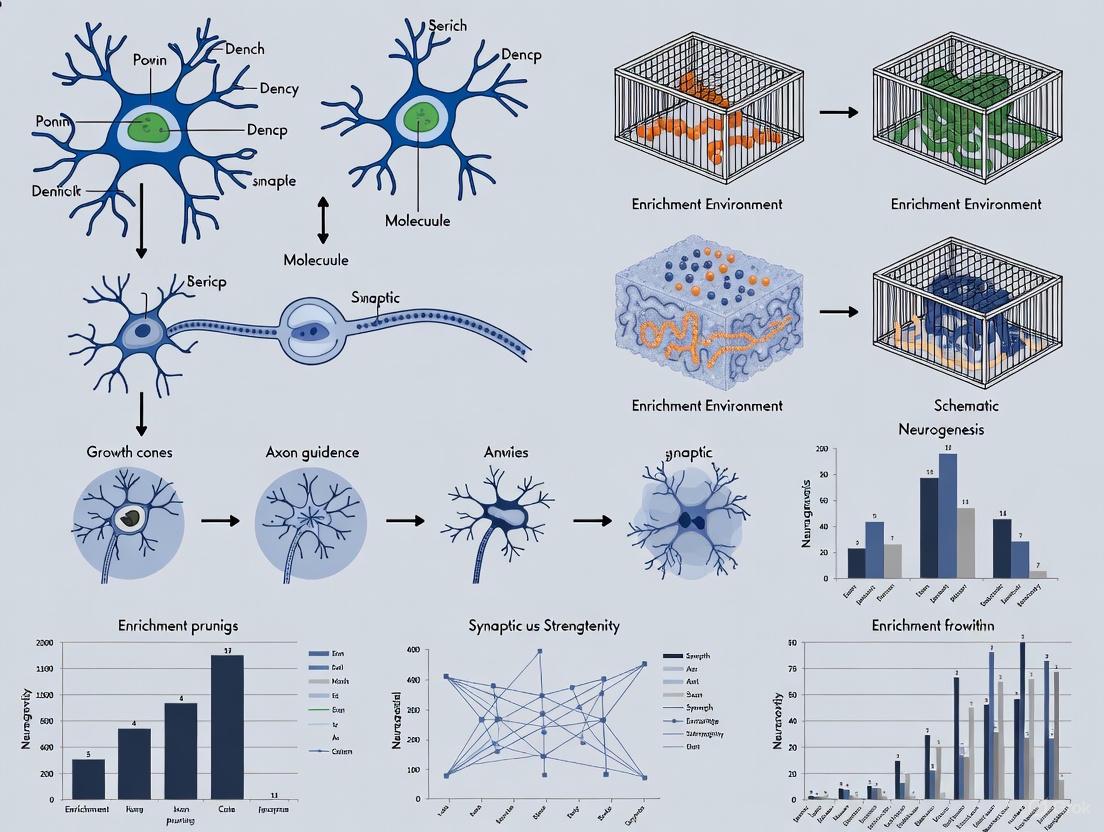
This article provides a comprehensive comparative analysis of environmental enrichment (EE) and its profound impact on neural plasticity, tailored for researchers, scientists, and drug development professionals.
Environmental Enrichment and Neural Plasticity: A Comparative Analysis of Mechanisms and Therapeutic Applications
Abstract
This article provides a comprehensive comparative analysis of environmental enrichment (EE) and its profound impact on neural plasticity, tailored for researchers, scientists, and drug development professionals. We explore the foundational neurobiological mechanisms through which complex stimulation enhances brain resilience and repair. The scope extends to methodological applications of EE and emerging 'enviromimetic' therapeutics in preclinical and clinical models of neurological and psychiatric disorders, including stroke, Alzheimer's, and depression. The analysis also addresses critical challenges in protocol standardization, optimization, and translation. Finally, we present a rigorous validation and comparative framework, contrasting EE with pharmacological plasticity-promoters like psychedelics and ketamine, to illuminate shared pathways and unique therapeutic niches for future biomedicine.
Unraveling the Neurobiology: How Environmental Stimulation Shapes Brain Plasticity
In the realm of biomedical research, the housing conditions of laboratory animals represent a critical variable that significantly influences experimental outcomes, particularly in studies of neural plasticity. Standard laboratory housing is characterized by cages designed primarily for easy maintenance and hygiene, typically providing adequate basic physiological requirements but offering limited opportunities for sensory stimulation, physical activity, or cognitive challenges [1]. This conventional approach to animal housing has drawn increasing scrutiny as evidence mounts regarding its impact on both animal welfare and scientific validity.
Environmental enrichment (EE) has emerged as a systematic alternative to standard housing, defined as a housing condition that extends beyond basic welfare requirements to provide complex sensory, motor, cognitive, and social stimulation conducive to natural behaviors [2]. The conceptual foundation for EE traces back to pioneering work by Donald Hebb, who first observed that pet rats reared in stimulating home environments demonstrated superior learning abilities and problem-solving skills compared to their laboratory-housed counterparts [1]. This initial observation was later substantiated by Marian Diamond's groundbreaking neuroanatomical research in the 1960s, which provided tangible evidence of experience-dependent neuroplasticity by demonstrating physical changes in the cerebral cortex of rats exposed to novel and complex environments [3].
This comparative analysis examines the defining characteristics of environmental enrichment against standard laboratory housing, with a specific focus on implications for neural plasticity research. By synthesizing current evidence across multiple experimental models, we provide researchers with a framework for evaluating enrichment protocols that balance scientific rigor with enhanced animal welfare.
Defining Environmental Enrichment: Core Components and Principles
Environmental enrichment represents a multifaceted approach to laboratory animal housing that incorporates several core components. According to current definitions, EE aims to enhance animal well-being by providing sensory and motor stimulation through structures and resources that facilitate species-typical behaviors and promote psychological well-being [1]. This is achieved through the thoughtful inclusion of both social and non-social features to the cage environment, with the primary goal of improving welfare through physical and psychological stimulation [4].
The core components of effective environmental enrichment protocols include:
- Social enrichment: Housing social species in stable groups to allow for conspecific interaction, or alternatively, implementing positive reinforcement training to facilitate human-animal interaction [1].
- Physical enrichment: Structural modifications including larger cages or increased floor space, along with the addition of objects that encourage exercise, exploration, and manipulation [1].
- Sensory enrichment: Provision of varied visual, auditory, tactile, and olfactory stimuli that engage the animals' sensory capabilities without causing distress [2].
- Cognitive enrichment: Introduction of challenges that require problem-solving, learning, or memory, such as puzzle feeders or novel object recognition tasks [2].
- Nutritional enrichment: Implementation of varied feeding strategies that stimulate natural foraging behaviors, such as scattered food or food puzzles [1].
Taylor et al. have further described four hierarchical levels of environmental enrichment: (1) pseudo-enrichment that provides no biological benefit; (2) enrichment meeting basic needs; (3) enrichment providing hedonistic experiences; and (4) enrichment producing long-term accumulative benefits on physical and mental health, including stress resilience and adaptability [1]. This classification system helps researchers implement appropriately targeted enrichment strategies based on specific experimental objectives.
Table 1: Core Components of Environmental Enrichment Protocols
| Component | Definition | Example Implementations |
|---|---|---|
| Social Enrichment | Opportunities for interaction with conspecifics or humans | Group housing, positive reinforcement training, stable social hierarchies |
| Physical Enrichment | Structural modifications and objects that encourage activity | Larger enclosures, running wheels, tunnels, platforms, climbing structures |
| Sensory Enrichment | Stimulation of multiple sensory modalities | Novel objects, mirrored surfaces, varied bedding materials, auditory stimuli |
| Cognitive Enrichment | Challenges requiring problem-solving or learning | Puzzle feeders, maze tasks, novel object recognition tests |
| Nutritional Enrichment | Feeding strategies that promote natural foraging behaviors | Scattered feeding, food puzzles, varied treat items |
Comparative Analysis: Standard Housing Versus Enriched Environments
The distinction between standard housing and enriched environments extends far beyond simple cage decorations, representing fundamental differences in both philosophy and practical implementation. Standard housing for laboratory rodents typically consists of relatively small, barren cages with only absorbent bedding on the floor and ad libitum access to food and water [1]. While meeting basic physiological needs, this environment is characterized by monotony, limited sensory input, restricted movement opportunities, and minimal cognitive challenges – conditions that fail to accommodate the natural behavioral repertoire of the species [1].
In contrast, enriched environments are specifically designed to promote structural and functional development of the brain while enhancing cognitive behavioral performance through increased sensory, motor, cognitive, and social stimulation [2]. The Guide for the Care and Use of Laboratory Animals formally defines EE as aiming to "enhance animal well-being by providing animals with sensory and motor stimulation, through structures and resources that facilitate the expression of species-typical behaviors and promote psychological well-being" [1].
The behavioral manifestations of these housing differences are significant. Animals in standard housing frequently develop abnormal repetitive behaviors – such as excessive grooming, bar biting, circling, and back-flipping – associated with poor environmental and cognitive stimulation [1]. Conversely, rodents reared in enriched environments demonstrate increased behavioral diversity, reduced anxiety-like behaviors, enhanced exploratory tendencies, and improved coping abilities when facing challenges [1]. These behavioral differences reflect underlying neurobiological changes that have profound implications for research outcomes, particularly in neuroscience and pharmacological studies.
Table 2: Comparative Analysis of Housing Conditions
| Parameter | Standard Housing | Enriched Environment |
|---|---|---|
| Space Complexity | Minimal floor space with limited structural complexity | Increased floor space with multi-level structures, hiding places |
| Sensory Stimulation | Limited, monotonous sensory input | Varied, rotating sensory stimuli across multiple modalities |
| Social Structure | Often individual housing or unstable groups | Stable social groups appropriate to species biology |
| Behavioral Outcomes | Increased stereotypic behaviors, anxiety-like responses | Enhanced exploratory behavior, reduced anxiety, increased behavioral diversity |
| Cognitive Engagement | Minimal cognitive challenges | Regular opportunities for problem-solving and learning |
| Physical Activity | Restricted movement opportunities | Encouraged through wheels, climbing structures, and complex environments |
Effects on Neural Plasticity: Mechanisms and Experimental Evidence
Neuroanatomical and Molecular Changes
The impact of environmental enrichment on neural plasticity is well-documented across multiple experimental models. At the neuroanatomical level, EE produces measurable changes in brain structure, including increased cortical thickness, particularly in the occipital cortex [5]. These macroscopic changes reflect underlying cellular modifications, including increases in the size of neuronal cell bodies and nuclei, enhanced dendritic branching and complexity, increased synaptic density, and greater dendritic spine numbers [5]. Environmental enrichment also promotes neurovascular changes, including increased numbers of blood capillaries in the brain and enhanced metabolic activity evidenced by elevated mitochondrial numbers [5].
At the molecular level, EE modulates key signaling pathways implicated in neuroprotection and synaptic plasticity. Research has identified modulation of extracellular regulated kinase 1/2 (ERK1/2), mitogen-activated protein kinases (MAPK), and AMPK/SIRT1 pathways as central to the effects of environmental enrichment [2]. These pathways converge on critical molecular mediators of neural plasticity, particularly brain-derived neurotrophic factor (BDNF), which shows elevated expression in enriched animals [3]. Additionally, EE induces epigenetic modifications through regulation of TET family proteins (TET1, TET2, and TET3), which affect DNA methylation levels and subsequently influence memory formation, hippocampal neurogenesis, and cognitive function [2].
Diagram 1: EE-Induced Neural Plasticity Mechanisms (13 words)
Cognitive and Behavioral Outcomes
The neurobiological changes induced by environmental enrichment translate into significant functional improvements in cognitive and behavioral domains. Enriched animals demonstrate superior performance in various learning paradigms, including spatial navigation tasks such as the Morris Water Maze, where they exhibit more efficient acquisition and enhanced memory retention [5]. This learning enhancement appears to stem from multiple factors, including rapid information acquisition, flexible use of spatial information, and improved memory consolidation processes [5].
Environmental enrichment also reduces impulsive behaviors across species, with enriched animals demonstrating greater inhibitory control in tasks requiring delayed gratification [5]. This behavioral modulation has important implications for modeling human conditions characterized by impulsivity, including attention deficit hyperactivity disorder (ADHD) and substance use disorders [5]. The anti-impulsivity effects of EE may underlie observations that enriched rats show reduced self-administration of various drugs of abuse, including amphetamines, nicotine, and alcohol [5].
Notably, these cognitive and behavioral benefits extend to clinical populations. A recent systematic review and meta-analysis of infants with or at high risk of cerebral palsy demonstrated that EE interventions significantly improved motor development, gross motor function, and cognitive development [6]. Subgroup analyses further identified optimal age windows for these interventions, with 6-18 months being most effective for motor development and 6-12 months for cognitive development [6].
Experimental Protocols and Methodological Considerations
Standardized Enrichment Protocols
Implementing environmental enrichment in research settings requires careful consideration of species-specific needs and experimental requirements. For laboratory rodents, a typical EE protocol involves housing animals in larger cages (approximately 60 × 40 × 20 cm for mice; 100 × 50 × 50 cm for rats) containing various objects that are rearranged and partially replaced with novel items 2-3 times per week to maintain novelty and prevent habituation [1]. Social housing with stable group compositions is standard, typically containing 8-12 animals per enriched cage [1].
The duration of enrichment exposure varies significantly across studies, with systematic reviews indicating that most protocols last between 1-6 weeks [1]. Approximately 30% of rodent enrichment studies expose animals during the 41-90 postnatal day period, while another significant proportion begins enrichment immediately after weaning (postnatal day 21) [1]. The timing and duration of EE exposure represent critical methodological considerations, as effects demonstrate both age sensitivity and exposure duration dependence.
For large animal models and clinical applications, EE protocols are adapted to species-specific characteristics while maintaining the core principles of complexity, novelty, and engagement. In infant human populations, EE interventions such as COPCA (Coping with and Caring for Infants with Special Needs), GAME (Goals-Activity-Motor-Enrichment), and SPEEDI (Supporting Play Exploration and Early Development Intervention) have been developed and validated, emphasizing play-based environmental stimulation combined with active social interaction with caregivers or healthcare professionals [6].
Methodological Considerations for Research
The implementation of environmental enrichment in research settings requires careful attention to several methodological considerations:
- Strain and sex differences: Responses to EE demonstrate significant variation across different rodent strains and between sexes, necessitating careful experimental design and reporting [4] [1].
- Temporal factors: The timing of enrichment initiation, duration of exposure, and age of subjects all influence outcomes, with critical periods of heightened sensitivity identified for specific cognitive domains [6].
- Standardization challenges: While concerns have been raised that EE might increase variability in experimental endpoints, empirical evidence suggests this concern may be unfounded, with no significant differences in coefficients of variation across housing conditions reported for measures of behavior, growth, or stress physiology [3].
- Interaction with experimental manipulations: EE can modify responses to various experimental interventions, including brain injuries, pharmacological treatments, and genetic manipulations, potentially enhancing translational validity but requiring careful interpretation [3].
Diagram 2: Key Experimental Design Considerations (10 words)
The Researcher's Toolkit: Essential Reagents and Materials
Implementing robust environmental enrichment protocols requires specific materials tailored to species-specific needs and research objectives. The following table details essential components for rodent enrichment protocols, though applications in other species would require appropriate adaptations.
Table 3: Research Reagent Solutions for Environmental Enrichment
| Item Category | Specific Examples | Research Function | Key Considerations |
|---|---|---|---|
| Nesting Materials | Paper strips, cotton fiber, wood wool, commercially available Nestlets | Promotes species-typical nest building behavior; provides thermal regulation and security | Material preference varies by strain; some materials may confound specific studies (e.g., allergy models) |
| Shelters/Hideaways | Plastic tunnels, wooden houses, cardboard tubes, inverted plastic containers | Provides security and retreat spaces; reduces stress through environmental control | Multiple entry points may reduce aggression; material composition affects preference and durability |
| Manipulative Objects | Wooden blocks, plastic toys, rubber items, bones/chews | Encourages exploration and manipulation; addresses gnawing needs for dental health | Objects should be rotated regularly to maintain novelty; size appropriate to prevent ingestion |
| Physical Activity Equipment | Running wheels, climbing platforms, ladders, ropes, swings | Promotes physical activity and motor skill development; enhances cardiovascular health | Voluntary use preferred; forced exercise represents a different experimental intervention |
| Foraging Enhancement | Puzzle feeders, scattered food items, treat-dispensing devices | Stimulates natural foraging behaviors; provides cognitive challenge | Nutritional content must be accounted for in dietary studies; caloric intake monitoring essential |
The comparative analysis of environmental enrichment against standard laboratory housing reveals profound differences that extend beyond animal welfare to impact experimental outcomes and translational validity. Environmental enrichment represents a complex, multifactorial intervention that induces significant changes in neurobiology, behavior, and cognitive function through mechanisms involving enhanced neural plasticity, reduced impulsivity, and improved stress resilience.
For researchers in neuroscience and drug development, these findings carry important implications. First, the housing conditions of laboratory animals must be recognized as a significant variable affecting experimental outcomes, particularly in studies of neural function, behavior, and drug efficacy. Second, environmental enrichment offers a valuable tool for enhancing the translational validity of animal models, as enriched animals may better represent the complex sensory and cognitive environments of human populations. Third, standardization of enrichment protocols across laboratories will be essential for improving reproducibility while maintaining the welfare benefits of EE.
As research continues to elucidate the mechanisms underlying enrichment effects, particularly the molecular pathways and epigenetic modifications involved, opportunities emerge for developing "enviromimetics" – pharmacological interventions that mimic or enhance the beneficial effects of environmental enrichment [3]. Such approaches may be particularly valuable for clinical populations where comprehensive environmental modification is impractical.
The transition from standard housing to enriched environments represents both an ethical imperative and a scientific opportunity. By embracing complexity and species-appropriate housing, researchers can enhance both animal welfare and the quality and translational potential of their scientific findings.
The adult brain possesses a remarkable capacity for change, a phenomenon known as neural plasticity. This plasticity is driven by fundamental cellular processes, including the growth and branching of dendrites (dendritic arborization), the formation of new connections between neurons (synaptogenesis), and the birth of new neurons (neurogenesis). Once believed to be a static organ, the brain is now understood to be highly dynamic, with its circuitry being continuously refined by experience. Environmental enrichment (EE)—a paradigm providing complex sensory, motor, and social stimulation—serves as a powerful experimental tool to probe the limits of this plasticity. This guide provides a comparative analysis of how different enrichment strategies influence these core mechanisms, offering a structured overview of experimental data, protocols, and key reagents for researchers and drug development professionals.
Comparative Experimental Data on Enrichment Effects
Research across diverse models demonstrates that enrichment protocols consistently enhance markers of neural plasticity. The table below summarizes quantitative findings from key studies, illustrating the effects of various enrichment paradigms on dendritic complexity, synapse formation, and adult neurogenesis.
Table 1: Quantitative Effects of Environmental Enrichment on Measures of Neural Plasticity
| Experimental Model | Enrichment Paradigm | Effect on Dendritic Arborization | Effect on Synaptogenesis / Markers | Effect on Neurogenesis | Primary Experimental Evidence |
|---|---|---|---|---|---|
| Healthy Rodents [7] | Combination of complex inanimate and social stimulation (Classic EE) | ↑ Dendritic length and spine density in frontal and parietal pyramidal neurons [7] | Synaptogenesis; ↑ levels of BDNF in the hippocampus and cerebellum [7] | Increased hippocampal neurogenesis [7] [8] | Morphometric analysis, immunohistochemistry, behavioral tasks (MWM, RAM) |
| Spinal Cord Injury (Mouse Model) [9] | EE housing (larger cage, novel objects, nesting material) for ≥10 days before injury | Enhanced regeneration of sensory axons in the dorsal columns in vivo [9] | Increased H3K27 and H4K8 histone acetylation in DRG neurons; mediated by Cbp [9] | Not explicitly measured | RNA-seq, histone modification analysis, chemogenetics, locomotor recovery tests |
| Synchronized hPSC-Derived Human Cortical Neurons [10] | N/A (Study of cell-intrinsic maturation) | Significant increase in total neurite length and complexity from day 25 to day 100 in vitro [10] | Progressive localization of SYN1 in presynaptic puncta; appearance of mEPSCs [10] | N/A (Model of post-mitotic neuronal maturation) | Long-term morphometric tracking, electrophysiology, scRNA-seq, ATAC-seq |
Key Insights from Comparative Data:
- Paradigm Efficacy: Complex EE, combining physical activity, cognitive stimulation, and social interaction, produces the most robust and widespread effects on plasticity across multiple brain regions [7].
- Timing and Duration: The duration of enrichment is critical. In spinal cord injury models, at least 10 days of pre-injury EE were required to induce a long-lasting pro-regenerative state in neurons [9].
- Species-Specific Dynamics: The timeline of neuronal maturation, including dendritic arborization and synaptogenesis, is intrinsically programmed and notably protracted in human neurons compared to rodents, a finding critical for translational research [10].
Detailed Experimental Protocols
To ensure reproducibility and facilitate the design of comparative studies, below are detailed methodologies for key protocols cited in the literature.
Standardized Environmental Enrichment (EE) Protocol for Rodents
This protocol is adapted from classic and contemporary studies to investigate experience-dependent plasticity [7] [8].
- Objective: To model a cognitively and physically stimulating lifestyle in a laboratory setting and assess its impact on neural plasticity.
- Materials:
- Large rodent cages (e.g., significantly larger than standard housing).
- Procedure:
- Housing: House rodents in groups (e.g., 8-12 per cage) to facilitate social interaction.
- Environmental Complexity: Equip the cage with a variety of non-chewable, novel objects (e.g., tunnels, ramps, platforms, Lego blocks) made of diverse materials (plastic, wood, metal).
- Cognitive Stimulation: Change and rearrange a portion of the objects in the cage 2-3 times per week to maintain novelty and cognitive challenge.
- Physical Activity: Provide unrestricted access to running wheels to encourage voluntary exercise.
- Duration: The intervention typically lasts from several weeks to months, depending on the research question. Control groups are housed in standard laboratory cages.
- Outcome Measures:
- Structural Plasticity: Histological analysis of dendritic spine density (e.g., Golgi-Cox staining), synaptophysin puncta, and BrdU/DCX staining for newborn neurons [11] [7].
- Molecular Plasticity: Western blot or ELISA for neurotrophic factors (e.g., BDNF); RNA sequencing for transcriptional changes [7] [9].
- Functional Recovery: In disease models, behavioral tests (e.g., BMS score for SCI, Morris Water Maze for memory) are used to assess functional outcomes [9].
Protocol for Synchronized Differentiation of Human Cortical Neurons
This protocol, based on recent work, allows for the precise study of intrinsic human neuronal maturation timelines, free from confounding ongoing neurogenesis [10].
- Objective: To generate a homogeneous, temporally synchronized population of human cortical neurons from pluripotent stem cells (hPSCs) for studying dendritic arborization and synaptogenesis.
- Materials:
- Human Pluripotent Stem Cells (hPSCs).
- Procedure:
- Neural Induction: Differentiate hPSCs into cortical neural precursor cells (NPCs) using dual SMAD inhibition (e.g., LDN-193189, SB431542) and WNT inhibition (e.g., IWR-1-endo) over ~20 days.
- Synchronization: At day 20, replate the homogeneous NPCs at an optimized density and treat with a Notch signaling inhibitor (e.g., DAPT, 10 µM) for 4-5 days. This forces nearly all NPCs to exit the cell cycle simultaneously.
- Maturation: Maintain the resulting post-mitotic neurons in culture for up to 100+ days, feeding with appropriate neuronal maturation media.
- Outcome Measures:
- Morphometric Analysis: Track neurite outgrowth and branching complexity over time using immunostaining for MAP2 and high-content image analysis [10].
- Electrophysiology: Perform whole-cell patch-clamp recordings at multiple time points to document the development of passive membrane properties, action potentials, and synaptic activity (mEPSCs) [10].
- Molecular Profiling: Use RNA-seq and ATAC-seq at serial time points (e.g., d25, d50, d75, d100) to map the gradual unfolding of transcriptional and epigenetic maturation programs [10].
Signaling Pathways in Neural Plasticity
Environmental enrichment and intrinsic genetic programs activate specific molecular pathways that converge to promote dendritic growth, synapse formation, and neurogenesis. The diagram below illustrates the core signaling machinery that integrates external stimuli with cellular changes.
Diagram Title: Key Signaling Pathways Regulating Experience-Dependent Neural Plasticity
Diagram Interpretation: This diagram synthesizes mechanisms by which environmental enrichment (EE) enhances plasticity. EE increases levels of neurotrophins like BDNF and activates epigenetic regulators like CBP, which acetylates histones (H3K27ac) to open chromatin and promote gene expression [7] [9]. These signals activate key pathways (PI3K/Akt, SIRT1, Wnt/β-catenin) that collectively drive neurogenesis, dendritic arborization, and synaptogenesis [12] [13]. Conversely, an intrinsic "epigenetic barrier" composed of factors like EZH2, EHMT1/2, and DOT1L represses these maturation programs, setting the protracted timeline for human neuronal development [10]. Inhibition of these repressors can precociously enhance maturation.
The Scientist's Toolkit: Key Research Reagents
The following table catalogues essential reagents and their applications for investigating the core mechanisms of neural plasticity.
Table 2: Essential Reagents for Studying Neural Plasticity Mechanisms
| Reagent / Tool | Function / Target | Key Application in Research |
|---|---|---|
| Bromodeoxyuridine (BrdU) [11] | Synthetic thymidine analog incorporated into DNA during S-phase. | Birth-dating and quantification of newly generated cells in neurogenic niches (e.g., SGZ, SVZ). |
| Doublecortin (DCX) Antibodies [11] [14] | Immunohistochemical marker for immature neuronal cells and neuroblasts. | Labeling and tracking of newborn, migrating neurons in adult neurogenesis. |
| DAPT (γ-Secretase Inhibitor) [10] | Potent inhibitor of Notch signaling pathway. | Synchronizing neuronal differentiation in vitro by forcing neural precursor cells to exit the cell cycle. |
| CSP-TTK21 [9] | Activator of the lysine acetyltransferase CBP. | Mimicking the pro-regenerative effects of EE by increasing histone acetylation (H3K27ac, H4K8ac) and promoting axon regeneration. |
| Recombinant BDNF [7] [12] | Exogenous brain-derived neurotrophic factor. | Directly activating TrkB receptor signaling to promote neuronal survival, dendritic growth, and synaptogenesis in cell cultures. |
| K252a | Inhibitor of Trk receptor tyrosine kinases (including BDNF receptor TrkB). | Used to block BDNF/TrkB signaling to establish its necessity in observed plasticity phenomena. |
| Retrovirus (e.g., GFP-expressing) [11] | Engineered virus that infects dividing cells and integrates into the host genome. | Specific labeling and lineage tracing of newborn neurons and their developing axons and dendrites in vivo. |
The comparative analysis of enrichment paradigms reveals a consistent theme: complex, multi-modal stimulation is a potent regulator of the core mechanisms of neural plasticity. From enhancing dendritic complexity and synaptic connectivity in healthy brains to promoting axonal regeneration and functional recovery after injury, EE acts through a conserved set of molecular pathways involving neurotrophin signaling and activity-dependent epigenetic remodeling. A critical insight for therapeutic development is the existence of a cell-intrinsic epigenetic barrier that governs the pace of neuronal maturation, particularly in humans [10]. Future research should focus on standardizing enrichment protocols to improve translational outcomes and developing targeted "enviromimetic" drugs that can recapitulate the beneficial effects of a stimulating environment for patients with neurological and psychiatric disorders.
Within the context of neural plasticity research, brain-derived neurotrophic factor (BDNF) and insulin-like growth factor-1 (IGF-1) have emerged as critical molecular mediators that translate environmental enrichment into structural and functional neuronal changes. These neurotrophic factors operate through complex, overlapping signaling pathways to govern neurogenesis, synaptic maturation, and neuronal survival throughout the lifespan [15] [16]. The comparative analysis of their mechanisms reveals both synergistic interactions and distinct functional specializations, providing a molecular framework for understanding how enriched environments enhance cognitive function and confer resilience against neurological disorders. BDNF is widely recognized for its pivotal role in activity-dependent plasticity, serving as a key mediator through which experiences shape neuronal networks [16]. IGF-1, while equally crucial for neuronal development, exhibits complementary mechanisms that enhance BDNF responsiveness and signaling efficacy [17]. Together, these factors form an integrated signaling network that calibrates brain connectivity in response to environmental stimuli, with significant implications for both fundamental neuroscience and therapeutic development.
Comparative Molecular Profiles: BDNF versus IGF-1
Table 1: Comparative Properties of BDNF and IGF-1
| Property | BDNF | IGF-1 |
|---|---|---|
| Primary Receptor | Tropomyosin receptor kinase B (TrkB) [15] | IGF-1 Receptor (IGF-1R) [17] |
| Secondary Receptor | p75 neurotrophin receptor (p75NTR) [15] | Insulin receptor (IR) [15] |
| Primary Signaling Pathways | MAPK/ERK, PI3K/Akt, PLCγ [15] | PI3K/Akt, MAPK/ERK [17] [15] |
| Core Cellular Functions | Synaptic plasticity, neuronal survival, differentiation, cognitive function [15] | Neurogenesis, neuronal survival, metabolic regulation [17] [15] |
| Isoforms | proBDNF (precursor), mBDNF (mature) [18] | IGF-1 (multiple splice variants) |
| pro-/mature Form Actions | proBDNF: apoptosis, synaptic pruning (via p75NTR) [18]; mBDNF: synaptic plasticity, neuronal survival (via TrkB) [18] | Not applicable |
| Response to Physical Exercise | Significant increase in circulating levels [19] [20] | Moderate increase in circulating levels [20] |
| Associated Disorders | Alzheimer's disease, Parkinson's disease, depression, autism spectrum disorder [15] [18] | Cognitive impairment, autism spectrum disorder, diabetes mellitus [15] [18] |
Signaling Pathways: Integrated Molecular Mechanisms
The signaling cascades activated by BDNF and IGF-1 represent a highly integrated network that converges on critical pathways regulating neuronal survival, plasticity, and metabolism. Upon binding to their high-affinity tyrosine kinase receptors (TrkB for BDNF and IGF-1R for IGF-1), both factors initiate intracellular signaling that profoundly influences neuronal function and resilience [15].
BDNF Signaling Cascade
BDNF activation of TrkB receptors triggers three principal pathways: the Ras/MAPK/ERK pathway (crucial for neuronal differentiation and survival), the PI3K/Akt pathway (central to metabolic regulation and cell survival), and the PLCγ pathway (which modulates synaptic plasticity through IP3-mediated calcium release and DAG activation of protein kinase C) [15]. The MAPK/ERK pathway is particularly important for BDNF-mediated synaptic plasticity and long-term potentiation (LTP), a cellular correlate of learning and memory [17]. The PI3K/Akt pathway activated by BDNF suppresses apoptosis and promotes cell survival [15]. Notably, BDNF signaling exhibits remarkable context dependency, with mature BDNF (mBDNF) promoting neuronal survival and plasticity through TrkB activation, while its precursor (proBDNF) often induces opposing effects through p75NTR binding, including apoptosis and synaptic pruning [18].
IGF-1 Signaling Network
IGF-1 signaling predominantly activates the PI3K/Akt pathway and, to a lesser extent, the MAPK/ERK pathway in neuronal contexts [17] [15]. The PI3K/Akt pathway is particularly important for IGF-1's neuroprotective effects and its regulation of cellular metabolism. Unlike BDNF, IGF-1 typically induces only transient or minimal activation of the MAPK/ERK pathway in neurons, which may explain its more limited direct effects on neuronal plasticity compared to BDNF [17]. However, IGF-1 significantly enhances BDNF responsiveness by potentiating its biological activity, creating a synergistic relationship that amplifies neurotrophic signaling [17].
Signaling Pathway Integration and Cross-Talk
The signaling pathways of BDNF and IGF-1 exhibit significant convergence, particularly at the level of the PI3K/Akt and MAPK/ERK cascades [15]. This cross-talk creates a coordinated signaling network that regulates critical neuronal functions. Both factors activate transcription factors such as CREB (cAMP response element-binding protein) and CBP (CREB-binding protein), which regulate expression of genes encoding proteins involved in neuronal survival, synaptic plasticity, and stress resistance [15]. Recent evidence indicates that combined BDNF and IGF-1 signaling results in enhanced and sustained activation of these pathways compared to either factor alone, particularly in the context of neuronal protection against excitotoxicity [17].
Figure 1: Integrated signaling pathways of BDNF and IGF-1. BDNF binding to TrkB receptors and IGF-1 binding to IGF-1R activates overlapping intracellular pathways (Ras/MAPK/ERK, PI3K/Akt, PLCγ) that converge on transcription factors like CREB to promote neuronal survival, plasticity, and neurogenesis. proBDNF binding to p75NTR triggers opposing effects including apoptosis and synaptic pruning. IGF-1 potentiates BDNF signaling (dashed line), creating a synergistic relationship [17] [15] [18].
Experimental Approaches: Methodologies for Neurotrophic Factor Research
Assessment of Synergistic Interactions
Research investigating the interplay between BDNF and IGF-1 employs sophisticated experimental paradigms to elucidate their combined effects on neuronal function. A foundational study examining their synergistic relationship utilized cerebrocortical neuron cultures from embryonic mice to demonstrate that co-application of IGF-1 and BDNF enhances intracellular calcium oscillations compared to either factor alone [17]. This experimental protocol involved pre-treatment with IGF-1 (50 ng/mL) for 48 hours followed by BDNF (50 ng/mL) application, with calcium imaging performed using Fura-2 AM fluorescence measurement. Results demonstrated that IGF-1 pre-treatment enhanced BDNF-mediated calcium responses by approximately 40% compared to BDNF alone, indicating potentiation of BDNF signaling efficacy [17]. Additional methodologies in this study included Western blot analysis of receptor expression, revealing that IGF-1 pre-treatment increased TrkB receptor expression, providing a potential mechanism for the enhanced BDNF responsiveness [17].
Exercise Intervention Protocols
Physical exercise represents a powerful non-pharmacological intervention for modulating neurotrophic factor levels, with different exercise parameters producing distinct effects on BDNF and IGF-1 signaling. A systematic review of randomized controlled trials in children aged 5-12 years identified that successful interventions for increasing BDNF levels featured neuromotor activities or martial arts programs conducted with frequencies ≥3 sessions/week for durations ≥12 weeks [19]. In adolescent populations, an 8-week aerobic exercise intervention utilizing treadmill training (3 days/week, 200 kcal/session) demonstrated significant increases in both serum BDNF and IGF-1 compared to sedentary controls [21]. These exercise studies typically employ enzyme-linked immunosorbent assays (ELISA) to quantify neurotrophic factor levels in serum or plasma, with blood collection standardized to morning hours following overnight fasting to control for diurnal variation [21]. Methodological rigor includes measurement of maximal oxygen consumption (VO₂max) to precisely calibrate exercise intensity and ensure consistent metabolic demand across participants [21].
Molecular Signaling Experiments
Elucidation of downstream signaling mechanisms involves techniques such as phosphoprotein analysis to track activation states of pathway components. Experimental approaches include treatment of neuronal cultures with BDNF and/or IGF-1 followed by Western blot analysis with phospho-specific antibodies against key signaling molecules (e.g., phospho-ERK, phospho-Akt) [17]. These investigations have revealed that while both BDNF and IGF-1 activate the PI3K/Akt pathway, BDNF produces more robust and sustained activation of the MAPK/ERK pathway, which is critical for its pronounced effects on synaptic plasticity [17]. Furthermore, combinatorial treatment studies demonstrate that IGF-1 enhances BDNF-mediated ERK phosphorylation, providing mechanistic insight into their synergistic relationship at the molecular level [17].
Figure 2: Experimental workflows for neurotrophic factor research. Clinical studies (top) typically involve exercise interventions with standardized blood collection and ELISA analysis. Preclinical cellular studies (bottom) employ neuronal cultures with controlled growth factor treatments, calcium imaging, and Western blot analysis to elucidate molecular mechanisms [17] [19] [21].
The Scientist's Toolkit: Essential Research Reagents and Methodologies
Table 2: Essential Research Reagents and Assays for Neurotrophic Factor Research
| Reagent/Assay | Specific Function | Application Notes |
|---|---|---|
| Commercial ELISA Kits | Quantification of BDNF, proBDNF, IGF-1 protein levels in serum/plasma [22] | R&D Systems kits show high specificity for total BDNF (#DBNT00) and proBDNF (#DY3175); specificity for mBDNF kits requires validation [22] |
| Neuronal Cell Cultures | In vitro model for mechanistic studies of neurotrophic signaling [17] | Cerebrocortical neurons from embryonic mice; maintenance in Neurobasal-A medium with B27 supplement [17] |
| Calcium Imaging Reagents | Measurement of intracellular Ca²⁺ dynamics as indicator of neuronal activity [17] | Fura-2 AM fluorescent dye; reveals enhanced Ca²⁺ oscillations with IGF-1 + BDNF co-treatment [17] |
| Phospho-Specific Antibodies | Detection of activated signaling pathway components [17] | Western blot analysis of phospho-ERK, phospho-Akt to map signaling pathway activation [17] |
| Recombinant Neurotrophins | Application of purified BDNF, IGF-1 for experimental treatments [17] | Typical concentrations: 50 ng/mL; IGF-1 pre-treatment (48h) enhances subsequent BDNF responses [17] |
| Exercise Intervention Protocols | Non-pharmacological modulation of endogenous neurotrophic factors [19] [21] | Treadmill training (3 days/week, 8 weeks) effectively increases serum BDNF and IGF-1 in adolescents [21] |
Clinical and Translational Implications
The interplay between BDNF and IGF-1 has significant implications for understanding neurodevelopmental disorders and neurodegenerative diseases. In autism spectrum disorder (ASD), altered levels of both factors have been observed, with studies reporting increased IGF-1 and decreased proBDNF in serum of children with ASD compared to controls [18]. These alterations in the balance between neurotrophic and pro-apoptotic signaling may contribute to the aberrant neural connectivity observed in ASD [18]. In epilepsy, reduced serum levels of both BDNF and IGF-1 correlate with disease duration, seizure frequency, and autonomic dysfunction, suggesting their potential utility as biomarkers of disease progression [23]. Notably, the synergistic relationship between these factors extends to therapeutic applications, as evidenced by research showing that IGF-1 administration reduces seizure severity and protects against cognitive deficits in experimental models of temporal lobe epilepsy [23].
The relevance of BDNF and IGF-1 signaling extends to pharmacological treatments for neuropsychiatric disorders. Antidepressant medications have been shown to activate TrkB signaling and gradually increase BDNF expression, with behavioral effects that are dependent on BDNF signaling through TrkB receptors, at least in rodent models [16]. This suggests that a key mechanism of antidepressant action involves the facilitation of neurotrophic signaling and the reactivation of developmental-like plasticity in adult circuits, a process termed iPlasticity [16]. The interplay between IGF-1 and BDNF may therefore represent a promising target for novel therapeutic approaches that aim to enhance neural plasticity in a range of neurological and psychiatric conditions.
The comparative analysis of BDNF and IGF-1 reveals a sophisticated signaling network in which these molecular mediators play complementary yet distinct roles in regulating neural plasticity. While BDNF serves as a primary regulator of activity-dependent synaptic plasticity, IGF-1 enhances BDNF responsiveness and promotes neuronal survival through overlapping but distinct signaling pathways. Their synergistic relationship creates a coordinated system that translates environmental experiences, including physical exercise and cognitive enrichment, into structural and functional adaptations within neural circuits. Future research directions should include the development of more specific reagents for discriminating between neurotrophic factor isoforms, particularly mature BDNF versus its precursor forms, as their opposing biological functions necessitate precise quantification [22]. Additionally, longitudinal studies examining the temporal dynamics of BDNF and IGF-1 signaling across different developmental stages will enhance our understanding of their roles in both health and disease. The integrated investigation of these key molecular mediators continues to provide critical insights into the fundamental mechanisms of neural plasticity while offering promising avenues for therapeutic intervention in neurological and psychiatric disorders.
Neuroplasticity, the nervous system's capacity to adapt its structure and function in response to experience, operates through two fundamentally distinct yet complementary mechanisms: experience-expectant and experience-dependent plasticity. Experience-expectant plasticity involves pre-programmed brain development during critical periods in early life, where the brain anticipates specific environmental inputs to refine neural circuits. In contrast, experience-dependent plasticity facilitates learning throughout life by incorporating unique individual experiences into neural architecture without strict temporal constraints. This comparative analysis examines the mechanisms, temporal windows, and functional roles of these plasticity forms, drawing on experimental data from molecular, systems, and behavioral neuroscience. Understanding their interplay provides crucial insights for developing targeted interventions in neurodevelopmental disorders, cognitive enhancement, and neural repair.
Defining the Core Concepts
Experience-Expectant Plasticity
Experience-expectant plasticity refers to the developing brain's reliance on universal experiences that occur predictably in normal environments to fine-tune neural circuits during limited developmental windows [24]. This process underpins the maturation of fundamental sensory and cognitive systems, where the brain produces an initial surplus of synapses and selectively stabilizes those reinforced by expected environmental input while pruning others [25]. The visual system provides a canonical example: for ocular dominance columns to form properly, the brain expects balanced visual input from both eyes during a specific critical period in early development [26]. When deprivation occurs during this period (such as from cataracts or strabismus), visual processing can be permanently impaired, demonstrating the time-limited nature of this plasticity mechanism [24] [26].
Experience-Dependent Plasticity
Experience-dependent plasticity involves changes in existing neural circuits that occur in response to specific learning experiences that vary across individuals [27]. Unlike experience-expectant plasticity, this mechanism is not constrained to specific developmental periods and facilitates learning throughout the lifespan, though plasticity remains most pronounced in childhood [27]. This form of plasticity enables the brain to incorporate unique information from personal experiences through the selective strengthening of particular synaptic connections in response to experience alongside the elimination of others that are under-utilized [27]. Examples include the neuroplastic changes associated with learning a musical instrument, acquiring a new language, or developing specialized skills through training [27]. The specific neural circuits that undergo change are determined by the type of experience, with the intensity and duration of environmental experiences influencing the degree of neuroplasticity that occurs [27].
Comparative Mechanisms: From Synapses to Systems
Table 1: Fundamental Characteristics at a Glance
| Characteristic | Experience-Expectant Plasticity | Experience-Dependent Plasticity |
|---|---|---|
| Purpose | Fine-tuning pre-established neural circuits using expected experiences [24] | Incorporating unique individual experiences into neural architecture [27] |
| Developmental Timing | Limited critical periods, primarily in early childhood [24] [28] | Lifelong, though most pronounced in childhood [27] |
| Environmental Reliance | Depends on universal experiences common to all species members [24] | Depends on idiosyncratic experiences that vary between individuals [27] |
| Neural Mechanisms | Selective synaptic stabilization & pruning; inhibition-gated critical periods [28] [26] | Synaptic strengthening/weakening; dendritic spine growth; neurogenesis in specific circuits [27] |
| Sensitivity to Deprivation | Highly sensitive; can lead to permanent functional deficits [24] | Less sensitive to specific deprivation; varies with experience quality [27] |
| Role of Attention | Passive exposure sufficient to drive plasticity [26] | Often requires active attention and engagement [26] |
Molecular and Cellular Mechanisms
The molecular machinery underlying these plasticity forms exhibits significant specialization. Experience-expectant plasticity critically depends on the maturation of inhibitory circuits, particularly those involving parvalbumin-positive (PV+) interneurons and GABAergic signaling [26]. The developmental increase in GABAergic inhibition appears to gate the opening and closure of critical periods, with genetic manipulations that suppress PV+ interneuron activity extending plasticity windows into adulthood [26]. During critical periods, NMDA receptor-mediated signaling plays a crucial role in initiating plasticity, while specific molecular brakes such as myelin-related factors increasingly restrict plasticity as the critical period closes [28].
Experience-dependent plasticity employs more diverse molecular mechanisms that vary by brain region and experience type. This includes AMPA receptor trafficking to strengthen individual synapses, with some forms involving calcium-permeable AMPARs at layer 4-2/3 synapses but not necessarily at layer 2/3-2/3 synapses, demonstrating remarkable input specificity [29]. Brain-derived neurotrophic factor (BDNF) signaling features prominently in both forms but serves different roles—orchestrating expected maturation in experience-expectant plasticity versus mediating activity-dependent changes in experience-dependent plasticity [30]. Structural changes in experience-dependent plasticity include the formation of new dendritic spines and synaptic connections, with persistent changes in spine morphology observed following skill learning or exposure to enriched environments [31].
Circuit-Level Organization
At the circuit level, these plasticity forms operate through distinct organizational principles. Experience-expectant plasticity typically follows a systems-level progression, with critical periods opening and closing in a hierarchical sequence across brain regions [26]. Sensory areas mature before association cortices, reflecting the sequential development from basic perceptual capabilities to higher cognitive functions. This sequential organization ensures that foundational circuits are properly established before becoming building blocks for more complex networks.
Experience-dependent plasticity exhibits more localized and distributed organization, with changes occurring specifically in circuits engaged by particular experiences [27]. For example, complex motor skill training induces structural expansion primarily in motor and cerebellar regions, whereas language learning predominantly engages perisylvian networks. The enriched environment paradigm demonstrates this distributed specificity, where increased physical activity, sensory stimulation, cognitive challenge, and social interaction collectively induce plastic changes across multiple brain systems in an experience-specific manner [31].
Figure 1: Distinct mechanistic pathways for experience-expectant (yellow) and experience-dependent (green) plasticity.
Experimental Approaches and Protocols
Paradigms for Studying Experience-Expectant Plasticity
Research investigating experience-expectant plasticity typically employs sensory deprivation or selective exposure protocols during developmentally precise windows:
Monocular Deprivation (Ocular Dominance Plasticity): This classic paradigm involves suturing one eyelid closed for defined periods during postnatal development [26]. The standard protocol involves lid suture in postnatal day 21-28 mice (or equivalent developmental stage in other species) for 2-7 days, followed by electrophysiological assessment of visual cortex responses to each eye [26]. Measurements include quantification of ocular dominance scores, where neurons are categorized based on their relative responsiveness to stimulation of each eye (categories 1-7, with 1 representing exclusive contralateral eye dominance and 7 representing exclusive ipsilateral eye dominance) [26].
Auditory Frequency Exposure: Developing animals are reared in environments dominated by specific acoustic frequencies (e.g., 7 kHz pulsed tones) during critical periods for auditory map formation [26]. The typical protocol exposes postnatal day 11-13 rat pups to tone pulses (200 ms duration, 1 Hz) for 24 hours, followed by mapping of frequency representation in primary auditory cortex using microelectrode recordings [26]. This results in significant expansion of cortical territory representing the exposed frequency.
Paradigms for Studying Experience-Dependent Plasticity
Experience-dependent plasticity research employs paradigms emphasizing skill acquisition, environmental complexity, and specific learning experiences:
Enriched Environment Housing: This paradigm compares animals housed in standard laboratory cages versus complex environments containing various toys, tunnels, running wheels, and social companions [31]. Standard protocols house rodents for 4-8 weeks in large cages (typically 60×60×60 cm or larger) containing 10-15 different objects that are rearranged daily and completely replaced with novel objects weekly [31]. Control groups are housed in standard laboratory cages (typically 30×20×15 cm) with only bedding, food, and water. Outcome measures include dendritic branching quantification (e.g., Golgi staining), synaptic density measurements, neurogenesis assays, and behavioral performance on learning and memory tasks.
Single Whisker Experience (SWE): This somatosensory paradigm involves removing all but a single large whisker (e.g., the D1 whisker) for 24 hours in young mice to study input-specific cortical plasticity [29]. The standard protocol uses postnatal day 11-17 mice with all but one whisker plucked, after which animals return to their home cage for 24 hours before electrophysiological recording [29]. Whole-cell recordings from layer 2/3 pyramidal neurons in the spared whisker barrel column measure synaptic strength changes, including AMPA/NMDA receptor ratios and rectification indices.
Table 2: Experimental Models and Quantitative Outcomes
| Experimental Paradigm | Species | Key Intervention | Primary Outcomes | Plasticity Type |
|---|---|---|---|---|
| Monocular Deprivation [26] | Mouse, Cat | Unilateral eyelid suture during P21-P28 | Ocular dominance shift: ~70% reduction in response to deprived eye | Experience-Expectant |
| Single Whisker Experience [29] | Mouse | All-but-one whisker removal for 24h | Synaptic strengthening: ~40% increase in AMPA receptor-mediated currents | Experience-Dependent |
| Enriched Environment [31] | Rat, Mouse | Complex housing for 4-8 weeks | Dendritic branching: ~20% increase; Synaptic density: ~15% increase | Experience-Dependent |
| Auditory Critical Period [26] | Rat | Specific tone exposure during P11-P13 | Cortical representation: 2-3 fold expansion for exposed frequency | Experience-Expectant |
The Scientist's Toolkit: Essential Research Reagents
Table 3: Key Research Reagents for Investigating Neural Plasticity
| Reagent/Category | Specific Examples | Research Application | Function in Plasticity Studies |
|---|---|---|---|
| GABAergic Modulators | Muscimol (GABAA agonist), Bicuculline (GABAA antagonist) [26] | Critical period manipulation | Artificially open or close plasticity windows by modulating inhibition |
| Glutamate Receptor Agents | Ifenprodil (NR2B antagonist), CNQX (AMPAR antagonist), d-APV (NMDAR antagonist) [29] | Synaptic plasticity mechanisms | Isolate receptor-specific contributions to plasticity at different synapses |
| Activity Reporters | fosGFP transgenic mice, c-Fos immunohistochemistry [29] | Neural activity mapping | Identify circuits activated by specific experiences or during critical periods |
| Structural Plasticity Tools | DiOlistics, Golgi staining, Thy1-GFP transgenic mice [31] | Dendritic spine imaging | Quantify structural changes following experience or during development |
| In Vivo Recording Methods | Chronic electrode arrays, two-photon calcium imaging [32] | Longitudinal monitoring | Track neural changes throughout learning or developmental periods |
| Molecular Plasticity Markers | BDNF antibodies, pCREB antibodies, delta Fos B assays [30] | Signaling pathway analysis | Detect molecular correlates of plastic changes in specific circuits |
Signaling Pathways in Plasticity
The distinct molecular pathways governing each plasticity form represent promising targets for therapeutic intervention:
Experience-Expectant Signaling Cascades: The opening of critical periods requires GABAergic circuit maturation triggered by sensory experience [26]. Visual experience after eye opening drives increased activity in cortical circuits, leading to BDNF release that promotes the development of inhibitory synapses, particularly onto parvalbumin-positive interneurons [26]. Mature GABAergic signaling then triggers extracellular matrix remodeling and perineuronal net formation, which progressively restricts plasticity as the critical period closes [28]. Molecular brakes including myelin-related proteins (Nogo-A, MAG, OMgp) and their common receptor (NgR) contribute to this closure by limiting structural plasticity [26].
Experience-Dependent Signaling Pathways: Experience-dependent plasticity engages more diverse signaling mechanisms, including NMDA receptor activation followed by calcium influx that triggers downstream kinases (CaMKII, PKC, PKA) and transcription factors (CREB) [27] [30]. This leads to AMPA receptor trafficking and insertion at potentiated synapses, with some forms involving delivery of calcium-permeable AMPARs at layer 4-2/3 synapses but not layer 2/3-2/3 synapses [29]. Growth factors including BDNF and neurotransmitters such as acetylcholine and norepinephrine modulate these processes, particularly when plasticity requires attention [26]. Structural adaptations involve cytoskeletal reorganization mediated by Rho GTPases and subsequent dendritic spine growth or modification [31].
Figure 2: Signaling pathways governing experience-expectant (yellow) and experience-dependent (green) plasticity. Note the sequential nature of critical period regulation versus the more parallel signaling in experience-dependent mechanisms.
Implications for Research and Therapeutics
The distinction between these plasticity mechanisms carries significant implications for research and drug development:
Neurodevelopmental Disorders: Understanding experience-expectant plasticity provides crucial insights into disorders such as autism spectrum disorder and schizophrenia, which may involve improper timing of critical periods or disrupted inhibitory circuit maturation [28]. Therapeutic strategies aiming to reopen plasticity windows in these conditions are exploring GABAergic modulation and chondroitin sulfate proteoglycan degradation to remove perineuronal nets [28].
Learning and Memory Enhancement: Experience-dependent plasticity mechanisms offer targets for cognitive enhancement and skill acquisition. Research indicates that compounds promoting glutamatergic signaling, neurotrophic factor support, or mitochondrial function may accelerate learning, while non-pharmacological approaches using enriched environments demonstrate synergistic benefits [31].
Neurological Rehabilitation: Following CNS injury, the adult brain exhibits heightened plasticity that shares mechanisms with developmental experience-dependent plasticity [31]. Stroke rehabilitation research shows that enriched environments combining physical activity, sensory stimulation, and social interaction promote functional recovery through mechanisms including enhanced neurogenesis, synaptogenesis, and dendritic branching [31]. Novel approaches exploring the plasticity-promoting effects of certain psychedelics (e.g., psilocybin, ketamine) aim to reopen periods of heightened meta-plasticity for therapeutic benefit [33].
Addiction Medicine: Substance use disorders represent maladaptive experience-dependent plasticity, where drugs of abuse co-opt natural reward learning mechanisms [30]. Chronic drug exposure produces stable changes in glutamate homeostasis and dendritic spine morphology in reward-related circuits, creating enduring addiction memories [30]. Emerging treatments target these mechanisms, with N-acetylcysteine showing promise in restoring glutamate homeostasis and reducing drug-seeking behavior in both animal models and human trials [30].
Experience-expectant and experience-dependent plasticity represent complementary yet distinct neurobiological strategies for adapting brain function to environmental demands. While experience-expectant plasticity creates a foundation of neural circuitry through precisely timed developmental windows, experience-dependent plasticity enables lifelong learning and adaptation to unique experiences. The continuing elucidation of their molecular mechanisms, circuit implementations, and temporal constraints provides not only fundamental insights into brain development and function but also promising avenues for therapeutic intervention across a spectrum of neurological and psychiatric conditions. Future research will likely focus on understanding how these plasticity forms interact throughout the lifespan and developing precisely timed interventions that optimize brain function across development, adulthood, and aging.
The understanding of the brain as a dynamic, changeable organ represents one of the most significant paradigm shifts in modern neuroscience. This transformation originated with the pioneering work of Dr. Marian Diamond in the 1960s, whose anatomical evidence first demonstrated the brain's capacity for change—a property now known as neuroplasticity [34] [35]. Before Diamond's groundbreaking experiments, neuroscientific dogma maintained that the brain was a static, immutable entity that could not change after early development [34] [36]. Diamond's research team at UC Berkeley challenged this entrenched view by providing tangible evidence that the brain's structure could be altered by experience throughout the lifespan [37]. When she first presented her findings demonstrating brain plasticity, she was met with substantial skepticism, even reportedly being confronted by an audience member who shouted, "Young lady, that brain cannot change!" [34] [35]. Undeterred, Diamond continued her investigations, ultimately establishing the foundational principle that enrichment induces measurable anatomical changes in the cerebral cortex [34].
Her work has since launched an entire field of investigation into environmental enrichment (EE), defined as a model incorporating "complex physical, social, cognitive, motor, and somatosensory stimuli" [38]. This review provides a comparative analysis of enrichment environments in neural plasticity research, tracing the historic foundations established by Marian Diamond through contemporary experimental approaches and their translational applications. We examine the quantitative anatomical and behavioral outcomes across model organisms, detail standardized experimental methodologies, and explore the emerging signaling pathways that mediate these effects, providing researchers and drug development professionals with a comprehensive framework for evaluating enrichment paradigms.
Marian Diamond's Foundational Experiments
Methodological Framework and Anatomical Findings
Marian Diamond's experimental protocol established the gold standard for early environmental enrichment research. Her seminal 1964 study employed a controlled comparative design using laboratory rats divided into two housing conditions [37] [36]. The impoverished environment consisted of a solitary rat housed in a small, desolate cage with no stimulation, while the enriched environment contained a group of 10-12 rats in a large cage furnished with various objects (e.g., toys, ladders, and mazes) that were changed and rearranged regularly to maintain novelty and complexity [36]. This experimental period typically lasted 80 days, after which Diamond conducted systematic anatomical analysis of the cerebral cortex [36].
Her quantitative histological measurements revealed that rats exposed to the enriched environment developed a cerebral cortex that was 6% thicker compared to impoverished rats [37] [36]. This increased cortical thickness represented one of the first anatomical demonstrations of neuroplasticity in a mammalian brain. Diamond later extended these findings to aging populations, demonstrating that cortical changes could occur at any age, including in older animals living up to 904 days [35] [36]. Importantly, she also observed that gentle handling and petting the rats daily could further enhance both brain development and lifespan, introducing the critical dimension of tactile stimulation to enrichment paradigms [36].
Table 1: Key Quantitative Findings from Marian Diamond's Enrichment Experiments
| Measurement Parameter | Experimental Group | Control Group | Percentage Change | Significance |
|---|---|---|---|---|
| Cortical Thickness | Increased | Baseline | +6% | p < 0.05 |
| Glial Cell Numbers | Higher | Lower | Significant increase | p < 0.05 |
| Learning Capacity | Enhanced | Diminished | Notable improvement | Observable |
| Lifespan (with handling) | Extended | Standard | Increased | Measurable |
The Scientist's Toolkit: Essential Research Materials
The following table details key reagents and materials used in Diamond's foundational experiments and their contemporary equivalents:
Table 2: Research Reagent Solutions for Enrichment Studies
| Item/Category | Function in Experimental Protocol | Specific Examples |
|---|---|---|
| Animal Models | Subject for neuroanatomical and behavioral analysis | Laboratory rats (Rattus norvegicus), Drosophila melanogaster [39] |
| Environmental Housing | Controlled manipulation of sensory, motor, and social stimulation | Impoverished: small solitary cages; Enriched: large social cages with novel objects [36] |
| Histological Tools | Tissue preparation and anatomical measurement | Celloidin embedding, microscopic analysis, cortical thickness measurement [37] |
| Molecular Assays | Analysis of cellular and molecular changes | Glial cell counts, dendritic spine analysis, protein expression [37] |
| Behavioral Assessment | Quantitative measurement of cognitive and behavioral outcomes | Learning tasks, problem-solving tests, social behavior observation [38] [40] |
Modern Experimental Protocols in Environmental Enrichment Research
Standardized Methodologies for Preclinical Research
Contemporary environmental enrichment protocols have evolved from Diamond's original paradigm while maintaining the core principle of enhanced sensory, cognitive, and social stimulation. Standardized methodologies now include carefully calibrated enrichment components that can be systematically manipulated to isolate their individual contributions to neural plasticity [34]. The complex physical environment typically consists of large cages (approximately 1m² for rodents) containing various non-toxic objects of different sizes, textures, and shapes, such as running wheels, tunnels, nesting materials, climbing structures, and manipulable toys [34] [40]. These objects are rearranged and replaced with novel items according to a predetermined schedule (typically 2-3 times weekly) to maintain cognitive engagement and prevent habituation [40].
The social enrichment component involves housing animals in stable groups of appropriate conspecifics (typically 3-5 for mice, 10-12 for rats) to facilitate natural species-typical social behaviors, including hierarchical establishment, grooming, and play behavior [34]. For cognitive and motor stimulation, food is often hidden within the bedding or placed in puzzle feeders to encourage natural foraging behaviors and cognitive processing, while elevated platforms and complex terrains promote balance and coordinated movement [40]. The minimum exposure duration to demonstrate significant neural effects is generally 4-6 weeks, though many studies employ longer durations or life-long enrichment [34]. Control groups remain important and include both standard-housed (typically smaller cages with minimal enrichment) and impoverished groups (solitary confinement in bare cages) to establish a continuum of environmental complexity [36].
Quantitative Assessment of Enrichment Efficacy
Modern research has developed sophisticated quantitative metrics to evaluate the efficacy of enrichment protocols across multiple dimensions. Behavioral assessments typically include behavioral diversity indexes (counting the number of different species-typical behaviors observed), cognitive performance measures (such as water maze learning, novel object recognition, and problem-solving tasks), and reductions in abnormal behaviors (including stereotypies, excessive grooming, or anxiety-like behaviors) [40]. Neuroanatomical measurements have expanded beyond cortical thickness to include dendritic branching complexity (through Golgi staining), synaptic density counts (electron microscopy), neurogenesis rates (BrdU labeling in hippocampal dentate gyrus), and glial cell proliferation [34] [37].
Molecular analyses now routinely measure changes in neurotrophic factors (BDNF, GDNF, NGF via ELISA or Western blot), synaptic plasticity proteins (PSD-95, synapsin-I), neurotransmitter systems, and immediate early gene expression (c-fos, Arc) as indicators of neuronal activation [34] [38]. These multidimensional assessment protocols allow researchers to establish robust correlations between specific enrichment components and their neural consequences, providing more targeted insights for therapeutic development.
Comparative Analysis of Enrichment Effects Across Experimental Models
Anatomical and Behavioral Outcomes Across Species
Environmental enrichment research has expanded beyond rodent models to include diverse species, providing comparative insights into neural plasticity mechanisms. The following table synthesizes quantitative findings across experimental models:
Table 3: Comparative Analysis of Enrichment Effects Across Species and Conditions
| Experimental Model | Enrichment Type | Anatomical/Neural Changes | Behavioral/Functional Outcomes |
|---|---|---|---|
| Laboratory Rats (Diamond, 1964) | Complex environment with toys, social groups | 6% thicker cerebral cortex; Increased glial numbers [36] | Enhanced learning capacity; Improved problem-solving [37] |
| Giant Pandas (Swaisgood et al., 2001) | Structural habitat modifications, sensory stimuli | Not measured | Reduced stereotypic behaviors; Increased behavioral diversity [40] |
| Drosophila melanogaster (2019) | Structural complexity, exploratory opportunities | Neural changes inferred | Behavior variability dependent on genotype and enrichment type [39] |
| Human MDD Patients (2022) | Cognitive, social, physical activities | BDNF level changes inferred | Lower depression scores; Improved cognitive function [38] |
| Aging Rats (Rapley et al.) | Environmental complexity | Transient increase in CNP in young rats only [34] | Age-related declines in environmental sensitivity [34] |
Sex-Specific and Age-Dependent Responses
Contemporary research has revealed that enrichment effects are not uniform across all populations. Sexual dimorphism represents a significant factor in enrichment efficacy, with studies demonstrating sexually dimorphic effects of EE on behavior, neurotrophic factor expression (BDNF), and receptor subunit composition [34]. For instance, Grech et al. found that combining BDNF haploinsufficiency with chronic corticosterone administration created a "two-hit model" with distinct sex-specific responses to enrichment, correlating with differential expression of TrkB receptors and specific NMDA receptor subunits [34].
Age-dependent effects also significantly influence enrichment outcomes. Research by Rapley et al. demonstrated that enrichment housing transiently increased C-type Natriuretic Peptide (CNP) availability in young but not older rats, suggesting age-related declines in environmental sensitivity [34]. Similarly, Mason et al. showed that nesting enrichment (closed nest boxes) produced beneficial effects in a neonatal hypoxia-ischemia model, with molecular correlates including BDNF and GDNF expression, but these effects displayed significant sexual dimorphism [34]. These findings highlight the critical importance of considering demographic variables in both preclinical research and clinical translation of enrichment paradigms.
Molecular Mechanisms: Signaling Pathways in Neuroplasticity
Key Signaling Pathways Activated by Enrichment
Environmental enrichment engages multiple interconnected signaling pathways that collectively mediate its effects on neural plasticity. The neurotrophic signaling pathway represents a central mechanism, with enrichment robustly increasing brain-derived neurotrophic factor (BDNF) expression in the hippocampus and cerebral cortex [38]. BDNF activation of its high-affinity receptor TrkB (tropomyosin receptor kinase B) triggers intracellular cascades including MAPK/ERK, PI3K/Akt, and PLCγ pathways that promote neuronal survival, dendritic arborization, and synaptic strengthening [34]. Additionally, enrichment modulates glutamatergic signaling, specifically altering the expression and phosphorylation of NMDA receptor subunits, which are critical for long-term potentiation (LTP) and learning processes [34].
The serotonergic system also undergoes significant modulation following enrichment, with transcriptional changes in components of serotonin signaling observed after just two weeks of environmental enrichment [34]. These neurochemical changes are accompanied by endocrine modulation, particularly of the hypothalamic-pituitary-adrenal (HPA) axis, with enrichment buffering corticosterone responses to stress and mitigating HPA axis dysregulation following enrichment removal [34]. Recently, non-neuronal components have been recognized as important mediators, with enrichment increasing glial cell proliferation and enhancing expression of glial-derived neurotrophic factor (GDNF), highlighting the involvement of previously underappreciated cell types in experience-dependent plasticity [34] [37].
Translational Applications and Clinical Implications
From Laboratory Findings to Clinical Interventions
The translational potential of environmental enrichment research extends across numerous neurological and psychiatric conditions. In neurodevelopmental disorders, EE paradigms have shown promise in models of autism, with clinical adaptations applied as treatment components that emphasize structured sensory integration and social interaction [38]. For neurodegenerative diseases, enrichment principles have been investigated in Huntington's disease models, where even relatively short-term enrichment (2 weeks) produced transcriptional modulation of serotonergic system components [34]. Similarly, in stroke rehabilitation, environmental enrichment concepts have informed therapeutic approaches, though significant challenges remain in aligning animal models with clinical applications [34].
The combination of enrichment with other therapeutic modalities represents an emerging frontier with substantial clinical potential. Bhaskar et al. demonstrated that combining EE with deep-brain stimulation (DBS) produced enhanced anxiolytic effects compared to DBS alone in standard-housed animals [34]. Similarly, research exploring enrichment alongside pharmacological interventions (so-called "enviromimetics") has revealed additive and potentially synergistic effects that could significantly enhance therapeutic efficacy across a spectrum of neurological and psychiatric disorders [34]. These combination approaches acknowledge the multifactorial nature of brain disorders while leveraging the multi-target mechanisms of action provided by enrichment paradigms.
Quantitative Assessment in Human Populations
Recent research has developed integrated indicators to quantify environmental enrichment in human populations. Such indicators combine measures of cognitive activities (Florida Cognitive Activities Scale), social integration (Multidimensional Social Integration in Later Life Scale), and physical activity (International Physical Activity Questionnaire) to create composite enrichment scores [38]. In clinical studies, patients with major depressive disorder showed significantly lower scores across all three enrichment domains compared to control subjects, with higher depression severity scores strongly associated with lower environmental enrichment levels [38]. These quantitative approaches facilitate the translation of enrichment concepts from preclinical models to human clinical populations, allowing researchers to establish dose-response relationships and optimize enrichment-based interventions.
The field of environmental enrichment research, pioneered by Marian Diamond's courageous challenge to neurological dogma, has evolved into a sophisticated multidisciplinary enterprise with profound implications for basic neuroscience and clinical practice. The comparative analysis presented herein demonstrates that while enrichment paradigms produce robust effects across species and conditions, their specific outcomes are highly dependent on genetic background, biological sex, developmental stage, and enrichment type [39]. Future research should focus on elucidating the precise molecular mechanisms that mediate enrichment effects, with particular attention to the temporal dynamics of plasticity induction and the critical periods during which enrichment produces maximal benefit [34].
Additionally, further investigation is needed to delineate the individual contributions of enrichment components (physical, social, cognitive) to specific neural outcomes, enabling more targeted intervention strategies [34]. The translation of successful laboratory interventions to clinical populations requires improved alignment between animal models and human conditions, as well as greater attention to the intergenerational and sex-specific effects of enrichment [34]. As the field advances, environmental enrichment principles continue to offer powerful, non-pharmacological approaches to enhance brain health across the lifespan, fulfilling the legacy of Marian Diamond's groundbreaking discovery that proper stimulation can enrich our brains at any age.
From Cage to Clinic: Methodological Paradigms and Translational Applications
Environmental Enrichment (EE) represents a multi-modal intervention strategy designed to enhance sensory, cognitive, motor, and social stimulation beyond standard laboratory or clinical conditions. While EE has demonstrated significant potential to induce neuroplastic changes and improve functional outcomes across diverse populations, the heterogeneity of protocols has historically complicated cross-study comparisons and clinical translation. The fundamental challenge lies in balancing the dynamic, complex nature of enriched environments with the methodological rigor required for reproducible scientific inquiry. This comparative analysis examines current standardized approaches to EE, dissecting their core components—novelty, physical activity, and social engagement—to establish a framework for optimizing protocol design in neural plasticity research. By systematically evaluating EE implementations across model systems and clinical populations, we aim to identify key parameters that maximize therapeutic efficacy while maintaining experimental consistency and reproducibility across research settings.
Core Components of Standardized EE Protocols
Effective Environmental Enrichment protocols integrate three principal domains of stimulation, each contributing uniquely to neuroplastic outcomes. The quantitative implementation of these components varies significantly across research models and clinical applications, necessitating careful standardization to ensure consistent therapeutic effects.
Physical Enrichment: This domain encompasses objects and opportunities that encourage motor activity and exploration. In rodent studies, this typically includes running wheels, tunnels, ladders, and varied platforms that promote climbing and balanced movement [41]. Human implementations often utilize customized exercise equipment, exergame technologies, or structured physical therapy tools designed to challenge motor coordination and strength [42]. The critical standardization parameters include the type, number, and spatial arrangement of objects, along with their rotation frequency to maintain novelty.
Sensory Enrichment: Sensory stimulation involves exposing subjects to varied visual, tactile, and auditory experiences. In animal models, this may include objects of different textures, shapes, and colors; non-aversive sounds; and occasionally olfactory stimuli [41] [43]. Clinical applications incorporate multi-sensory stimulation rooms, textured materials, music, and visually engaging environments. Standardization requires careful control of stimulus type, intensity, duration, and modality sequencing to prevent overstimulation while maintaining engagement.
Social Enrichment: This component provides opportunities for conspecific interaction, which is crucial for neurodevelopment and emotional regulation. Animal studies implement group housing with carefully controlled group sizes and composition to maximize positive social interactions while minimizing aggression [41] [43]. Human interventions leverage structured social activities, group-based exercises, and facilitated peer interactions. Standardization challenges include managing group dynamics, interaction frequency, and social density to optimize benefits across different populations.
Table 1: Quantitative Implementation of EE Components Across Research Models
| EE Component | Rodent Studies | Clinical Applications (Infants) | Adult Human Studies |
|---|---|---|---|
| Physical Activity | Running wheels, climbing structures | Motor play, reaching tasks | Exergame mats, structured exercise [42] |
| Social Engagement | Group housing (3-6 animals) | Caregiver-mediated interaction | Group-based exercise sessions [42] |
| Novelty Schedule | Object rotation 2-3 times/week | Toy variation weekly | Exercise variation every 2-3 weeks [42] |
| Session Duration | Continuous access or 1-2 hours/day [43] | 30-60 minutes daily | 70 minutes/session, twice weekly [42] |
| Program Length | 4-8 weeks during critical periods [43] | 6-18 months for optimal effect [44] | 10-12 weeks [45] [42] |
Comparative Analysis of EE Protocol Implementations
Rodent Models of EE: From Simple to Enhanced Paradigms
Rodent EE protocols demonstrate a hierarchical structure, ranging from basic social enrichment to complex multi-modal stimulation. Standardized approaches carefully control environmental variables to isolate the effects of specific enrichment components on neural and behavioral outcomes.
In a comprehensive mouse study, researchers implemented three distinct housing conditions to dissect the effects of social and physical enrichment: Standard Single (isolated), Standard Group (social control), and Enriched Group (combined physical and social enrichment) [41]. The enhanced enrichment protocol exposed mice to large cages containing various objects such as running wheels, tunnels, and manipulable toys that were regularly rearranged to maintain novelty. This structured approach revealed that enriched environments specifically enhanced sensory processing and maintained functional segregation of brain networks, whereas social isolation led to reduced network segregation, particularly in olfactory and visual systems [41].
Further refining this approach, adolescent rat studies have implemented a distinction between Simple Enrichment (SE) and Enhanced Enrichment (EE) [43]. SE conditions provided basic social and cage novelty through daily sessions in large enrichment cages with conspecifics. In contrast, EE conditions added diverse physical objects that were systematically introduced and manipulated throughout the 5-week intervention period. This graded approach demonstrated that genetic background significantly modulates response to enrichment, with environmentally-induced changes in social behavior and stress resilience being particularly pronounced in genetically anxious rat lines [43]. The findings underscore the importance of considering individual differences when standardizing EE protocols for maximal efficacy.
Clinical EE Applications: Evidence-Based Standardization
Clinical translation of EE principles requires adaptation to specific patient populations while maintaining core enrichment components. Standardized protocols have emerged for various clinical contexts, with increasing emphasis on measurable outcomes and reproducible implementation.
In infant populations with or at high risk of cerebral palsy, EE interventions have been systematically implemented through programs such as GAME (Goals-Activity-Motor-Enrichment) and COPCA (Coping with and Caring for infants with special needs) [44]. A recent meta-analysis of 14 randomized controlled trials established that EE interventions significantly improved motor development, gross motor function, and cognitive development in this population [44]. Critically, subgroup analyses identified optimal age windows for intervention: 6-18 months for motor development and 6-12 months for cognitive development [44]. These findings enable more precise protocol timing based on targeted outcomes.
For adult populations, exergame-based training programs represent a standardized approach to integrating physical and cognitive enrichment. One randomized controlled trial implemented a 10-week mat training program consisting of twice-weekly 70-minute sessions that progressed through structured warm-up, main training, and cooldown phases [42]. The protocol standardized training objectives across weeks, systematically addressing flexibility, agility, strength, balance, and cardiorespiratory endurance through gamified activities. This approach demonstrated significant improvements across multiple functional fitness parameters, with medium-to-large effect sizes (Cohen's d ranging from 0.72 to 1.89) for outcomes including upper and lower limb strength, dynamic balance, and agility [42].
Table 2: Efficacy Outcomes of Standardized EE Protocols Across Populations
| Population | Primary Outcomes | Effect Size | Protocol Specifics |
|---|---|---|---|
| Infants with CP risk [44] | Motor development | SMD = 0.35 | Caregiver-mediated, play-based |
| Gross motor function | SMD = 0.25 | 6-18 month optimal window | |
| Cognitive development | SMD = 0.32 | 6-12 month optimal window | |
| Adult Humans [42] | Limb muscular strength | d = 0.98-1.06 | Exergame mat training, 10 weeks |
| Dynamic/static balance | d = 0.84-1.12 | Twice weekly, 70 min sessions | |
| Cardiorespiratory endurance | d = 0.78 | Progression in complexity | |
| Rodents [41] | Sensory processing | Network segregation maintained | 7 weeks duration |
| Brain functionality | Enhanced response in enriched group | Social + physical components |
Hybrid and Technology-Integrated EE Models
Emerging EE implementations incorporate technology-mediated delivery to enhance standardization while maintaining therapeutic complexity. The HOPE-FIT model represents an innovative approach that combines professional health coaching, home-based exercise routines, psychological strategies based on Acceptance and Commitment Training, and smart-home monitoring technologies [45]. This hybrid framework utilizes the RE-AIM (Reach, Effectiveness, Adoption, Implementation, Maintenance) model to guide implementation and evaluation, addressing multiple domains of well-being simultaneously while collecting robust implementation data [45].
Similarly, exergame-based interventions leverage technology to standardize the delivery of complex motor and cognitive challenges. These platforms provide precise control over task parameters, progression algorithms, and feedback mechanisms, while maintaining engagement through game elements. The exergame mat training program demonstrated that technology-mediated EE can significantly increase both overall and high-intensity physical activity levels (mean difference 439, 95% CI 28-914) while enhancing quality of life across physical, psychological, and social domains [42].
Methodological Framework for EE Research
Experimental Workflow for Standardized EE Implementation
The following diagram illustrates a systematic workflow for developing, implementing, and evaluating standardized EE protocols in neural plasticity research:
Molecular Pathways Mediating EE-Induced Neuroplasticity
EE influences brain function through multiple interacting molecular pathways. The following diagram illustrates key signaling mechanisms that translate environmental stimulation into neuroplastic changes:
The Scientist's Toolkit: Essential Reagents and Materials
Successful implementation of standardized EE protocols requires specific materials and assessment tools. The following table details essential research reagents and their applications in EE research:
Table 3: Essential Research Reagents and Materials for EE Studies
| Category | Specific Items | Research Application | Example Use |
|---|---|---|---|
| Environmental Components | Running wheels, tunnels, varied platforms | Motor stimulation and physical activity | Rodent EE studies [41] [43] |
| Manipulable objects (wood blocks, plastic items) | Sensory exploration and novelty | Object rotation protocols [43] | |
| Nesting materials, housing structures | Social environment optimization | Group housing implementations | |
| Assessment Technologies | fMRI systems (resting-state & stimulus-evoked) | Brain-wide functional connectivity | Network segregation analysis [41] |
| Smart-home monitoring systems (mmWave radar, wearables) | Real-time activity monitoring | HOPE-FIT model [45] | |
| AFAscan fitness assessment, Senior Fitness Test | Functional fitness measurement | Exergame studies [42] | |
| Molecular Analysis Kits | RNA-seq reagents | Gene expression profiling | Transcriptomic changes [43] |
| ELISA kits (corticosterone, oxytocin, cytokines) | Hormonal and inflammatory markers | Stress response quantification [43] | |
| DNA methylation conversion kits (bisulfite/enzymatic) | Epigenetic profiling | Molecular mechanism studies [46] |
Standardized EE protocols that systematically integrate novelty, physical activity, and social engagement represent a powerful approach for inducing targeted neuroplastic changes across model systems and clinical populations. The comparative analysis presented herein demonstrates that while protocol specifics must be adapted to the target population and research objectives, core principles of multi-modal stimulation, progressive challenge, and social integration remain consistently essential. Future protocol development should focus on optimizing timing and duration for specific outcomes, identifying critical periods of maximum susceptibility to enrichment, and leveraging technology to enhance both standardization and individualization. As EE research progresses, continued refinement of these standardized approaches will be crucial for advancing our understanding of experience-dependent neural plasticity and developing effective interventions for neurological and psychiatric disorders.
Environmental enrichment (EE) represents a standardized preclinical paradigm for enhancing brain plasticity through complex sensorimotor stimulation. Within comparative neural plasticity research, EE serves as a critical experimental intervention for probing mechanisms of functional recovery across diverse neurological conditions. This paradigm involves housing animals in complex environments with varied stimuli, social interactions, and opportunities for physical activity, contrasting with standard laboratory conditions. The systematic application of EE across disease models provides a powerful comparative framework for identifying both universal and pathology-specific neuroplasticity mechanisms. For researchers and drug development professionals, understanding these differential responses is essential for optimizing preclinical testing and translating neurorehabilitation strategies into clinical applications.
Comparative Efficacy Across Disease Models
The therapeutic potential of EE varies significantly across neurological disorders, reflecting their distinct underlying pathologies and mechanisms of neural impairment. The table below summarizes key quantitative outcomes from EE interventions across four neurological conditions.
Table 1: Comparative Efficacy of Environmental Enrichment Across Disease Models
| Disease Model | Key Functional Outcomes | Optimal Timing/Parameters | Neural Plasticity Markers | Primary Limitations |
|---|---|---|---|---|
| Cerebral Palsy | Significantly improved motor development (SMD=0.35); improved gross motor function (SMD=0.25) and cognitive development (SMD=0.32) [44] [6] | Optimal window: 6-18 months for motor development; 6-12 months for cognitive development [44] [6] | Enhanced dendritic branching, synaptic density, cortical thickness, and hippocampal neurogenesis [44] [6] | No significant effect on fine motor function; effect size varies by protocol [44] [6] |
| Stroke | Enhanced neuroplasticity and functional recovery post-cerebral ischemia-reperfusion injury; improved Modified Neurological Severity Scores [47] | Pre-ischemic conditioning more effective than post-injury intervention alone [47] | Increased expression of neuroplasticity proteins (Synaptophysin, MAP-2); upregulated neurotrophic factors (NGF, bFGF) [47] | Translation to clinical settings has been slow with inconsistent results [48] |
| Huntington's Disease | Improved movement, memory, and longevity in HD mice; functional integration of new neurons [49] [50] | Early intervention may target developmental components; glial cell transplantation in adult models [49] [51] | Supportive glial cell function; enhanced mitochondrial health; possible neuronal regeneration [49] [51] | Progressive nature and somatic CAG expansion complicate long-term efficacy [51] [50] |
| Alzheimer's Disease | Reduced cognitive deterioration in mouse models; delayed amyloid plaque formation [52] | Early intervention before extensive amyloid deposition; combination with other therapeutic approaches [52] | Synaptic preservation; reduced amyloid pathology and gliosis [52] | Does not fully reverse neuron loss or Tau pathologies in advanced disease [52] |
Experimental Protocols and Methodologies
Cerebral Palsy Infant Models
The most effective EE protocols for cerebral palsy involve targeted interventions during critical developmental windows. These methodologies incorporate specific principles that can be translated to clinical applications:
Complexity: Spatial complexity includes varied physical components (tunnels, platforms, varied textures) while social complexity involves housing with multiple conspecifics to encourage natural social behaviors [48]. Structural elements are rearranged regularly to maintain novelty and cognitive challenge.
Variety and Novelty: New objects are introduced systematically according to a predetermined schedule, typically 2-3 times weekly, to maintain heightened exploratory behavior and sensory stimulation without causing stress from overstimulation [44].
Targeting and Scaffolding: Interventions specifically target affected motor and cognitive functions through customized activity regimens. Task difficulty progresses incrementally using scaffolding principles based on individual performance thresholds, ensuring continuous appropriate challenge levels [44] [6].
Motor, Cognitive, and Social Integration: Comprehensive protocols integrate ladder walking, balance beams, and targeted grasping exercises for motor training; spatial navigation tasks and object recognition tests for cognitive training; and structured social interaction sessions to promote social brain development [44].
These EE protocols are typically administered 2-4 hours daily, 5-7 days per week, over intervention periods ranging from 4-12 weeks depending on study design and outcome measurements [44].
Stroke Preconditioning Models
Pre-ischemic EE protocols demonstrate the powerful neuroprotective potential of enrichment prior to injury:
Preconditioning Timeline: Animals are housed in enriched conditions for 4-8 weeks prior to induction of cerebral ischemia, typically using middle cerebral artery occlusion (MCAO) models [47].
Enrichment Components: Complex housing includes running wheels, tunnels, nesting material, and regularly changing manipulanda. Social housing with 8-12 animals per large enclosure promotes natural social behaviors [47].
Functional Assessment: Neurological function is evaluated using Modified Neurological Severity Scores (MNSS) at 24, 48, and 72 hours post-reperfusion, assessing motor, sensory, balance, and reflex functions [47].
Molecular Analysis: Brain tissues are analyzed for neuroplasticity markers including synaptophysin (Syn), microtubule-associated protein-2 (MAP-2), nerve growth factor (NGF), and basic fibroblast growth factor (bFGF) using Western blot, immunohistochemistry, and ELISA techniques [47].
Huntington's Disease Neurodevelopmental Models
Emerging research reveals the importance of EE protocols that address both developmental and degenerative aspects of HD:
Mitochondrial Targeting: Interventions focus on enhancing mitochondrial health through environmental stimulation that promotes metabolic efficiency, addressing the early mitochondrial dysfunction observed in HD models [51].
Glial Cell Enhancement: Protocols designed to support glial cell function, including transplantation of healthy glial progenitor cells into affected brain regions to create a more supportive neuronal environment [49].
Cognitive-Motor Integration: Complex running wheels with variable resistance, skilled reaching tasks, and progressive spatial navigation challenges that simultaneously engage motor and cognitive systems affected in HD [49].
Early Intervention Timing: EE implementation during pre-symptomatic stages to capitalize on developmental plasticity and potentially delay disease onset by promoting neural resilience [51].
Signaling Pathways and Neuroplasticity Mechanisms
EE influences multiple molecular pathways that enhance neural plasticity and functional recovery across different disease models. The following diagram illustrates key signaling mechanisms and their interactions:
Diagram 1: EE-Activated Neuroplasticity Signaling Pathways (Width: 760px)
The molecular mechanisms through which EE enhances neural plasticity involve multiple interconnected pathways. Sensory-motor stimulation activates neurotrophic factor systems, including nerve growth factor (NGF) and basic fibroblast growth factor (bFGF), which are significantly upregulated following EE in stroke models [47]. These growth factors subsequently activate intracellular signaling cascades, particularly the MAPK/ERK and PI3K/Akt pathways, which promote neuronal survival, synaptic plasticity, and metabolic regulation. Enhanced mitochondrial function represents a crucial outcome, particularly relevant for Huntington's disease models where mitochondrial dysfunction emerges early in disease progression [51]. These molecular changes collectively drive structural and functional improvements, including synaptogenesis (increased synaptophysin), neurogenesis, and improved myelination, ultimately manifesting as enhanced cognitive and motor function across disease models.
Research Reagent Solutions Toolkit
Table 2: Essential Research Reagents for EE Studies in Neurological Disease Models
| Reagent/Resource | Primary Application | Research Function | Example Disease Models |
|---|---|---|---|
| Anti-Synaptophysin Antibodies | Synaptic density quantification | Marker for presynaptic terminals and synaptic plasticity assessment | Stroke [47], Alzheimer's [52] |
| Anti-MAP-2 Antibodies | Dendritic arborization analysis | Marker for neuronal dendrites and structural plasticity | Stroke [47], Cerebral Palsy [44] |
| NGF & bFGF ELISA Kits | Neurotrophic factor quantification | Quantification of neurotrophic factor expression levels | Stroke [47], Alzheimer's [52] |
| Neurofilament Light Chain Assays | Neuronal damage assessment | Biomarker for axonal injury and neuroaxonal integrity | Huntington's [51], Alzheimer's [52] |
| CAG Repeat Expansion Assays | Genetic instability measurement | Quantification of Huntington's disease progression markers | Huntington's [49] [50] |
| Aβ42/Aβ40 ELISA Kits | Amyloid pathology quantification | Measurement of Alzheimer's disease-related peptide aggregates | Alzheimer's [52] [53] |
| Tau Phosphorylation Antibodies | Tauopathy assessment | Detection of hyperphosphorylated tau in Alzheimer's models | Alzheimer's [52] |
| Glial Fibrillary Acidic Protein (GFAP) Antibodies | Astrocyte activation monitoring | Marker for astrogliosis and neuroinflammatory responses | Stroke [47], Alzheimer's [52] |
| Mitochondrial Stress Test Kits | Metabolic function assessment | Measurement of mitochondrial respiration and function | Huntington's [49] [51] |
| Digital Motor Function Tools | In-home movement assessment | Sensitive quantification of motor symptoms progression | Huntington's [49] |
Discussion: Comparative Analysis and Research Implications
The comparative analysis of EE applications reveals both universal mechanisms and disease-specific considerations for research and drug development. In cerebral palsy models, EE produces its most robust effects during specific developmental windows (6-18 months for motor function), highlighting the critical importance of timing in neurodevelopmental disorders [44] [6]. For stroke, preconditioning with EE demonstrates remarkable neuroprotective potential, suggesting priority applications in high-risk populations [47]. Huntington's disease models reveal an emerging emphasis on EE's potential to address both developmental deficits and progressive degenerative processes, particularly through mitochondrial enhancement and glial support [49] [51]. Alzheimer's applications show more modest benefits, primarily in delaying rather than reversing pathology, suggesting EE may be most effective in combination with other therapeutic approaches [52].
For drug development professionals, these differential outcomes highlight the importance of considering EE as both a comparative intervention and a potential combination therapy. The robust effects in neurodevelopmental disorders like cerebral palsy suggest greater potential for standalone EE interventions, while neurodegenerative conditions may require EE as an adjunct to pharmaceutical approaches. Furthermore, the molecular pathways identified in EE studies provide valuable targets for novel therapeutic development across multiple neurological conditions.
The concept of Environmental Enrichment (EE), pioneered by Donald Hebb and later developed by Marian Diamond and others, has evolved from a fascinating observation in animal models to a promising non-pharmacological intervention for human neurological conditions [3] [31]. Originally defined in rodent studies as a combination of complex inanimate and social stimulation, EE encompasses enhanced opportunities for sensory stimulation, physical activity, cognitive engagement, and social interaction [31] [3]. This review provides a comparative analysis of EE implementation across two key clinical domains: stroke rehabilitation and cognitive aging. We examine experimental protocols, efficacy data, underlying mechanisms, and practical considerations for translating EE principles from laboratory research to clinical practice, providing researchers and drug development professionals with a rigorous assessment of current evidence and methodologies.
Experimental Protocols and Methodologies
Standardized EE Protocols in Animal Research
Animal studies of EE typically employ controlled housing conditions that significantly differ from standard laboratory environments. While standardization remains challenging, common protocols incorporate:
- Structural Enrichment: Large cages containing various physical objects such as running wheels, tunnels, climbing structures, nesting materials, and manipulable toys that are regularly changed to maintain novelty [31] [3].
- Social Enrichment: Group housing with multiple conspecifics to facilitate natural social behaviors, hierarchies, and interactions [54].
- Cognitive Challenges: Mazes, puzzle feeders, and other task-oriented devices that require problem-solving and learning [31].
- Temporal Parameters: Most interventions begin post-weaning and continue for significant portions of the lifespan, though critical period analyses are increasingly focused on specific developmental windows [44].
For aging research, protocols often extend throughout the lifespan or initiate during specific age thresholds to assess neuroprotective effects. In stroke models, EE typically begins shortly after the induction of ischemia to simulate early rehabilitation windows [31].
Clinical EE Implementation in Stroke Rehabilitation
Translating EE to human stroke units has required adaptation from rodent models. Recent clinical trials have employed structured protocols:
- Multimodal Stimulation: Incorporating computers with internet access, virtual reality technology, reading materials, puzzles, games, and music players to provide cognitive and sensory engagement [55] [56] [57].
- Task-Oriented Training: Functional activities simulating real-world challenges such as supermarket shopping, subway navigation, classroom observation, and card games that integrate multiple cognitive domains [57].
- Social Integration: Structured opportunities for communication between patients and with healthcare providers throughout the rehabilitation day [55] [56].
- Physical Environment Design: Purposeful design of both private and communal spaces to encourage mobility, social interaction, and independent engagement in activities [55].
Treatment dosage in recent trials typically involves 1-2 hours daily, 5-6 days per week, for 8 weeks or longer, integrated with conventional physical and occupational therapies [56] [57].
EE Protocols in Cognitive Aging Research
Human studies on cognitive aging have taken different approaches to operationalizing EE:
- Lifetime Engagement Metrics: Using instruments like the Lifetime of Experiences Questionnaire (LEQ) that quantify participation in social, musical, artistic, cognitive, and physical activities across the lifespan [58].
- Multimodal Training Programs: Structured interventions combining physical exercise, cognitive training, and social engagement, such as those implemented by the Train the Brain Consortium [58].
- Environmental Modifications: Special Care Units (SCUs) designed with homelike environments that provide appropriate stimulation while supporting orientation and functional abilities [31].
These approaches focus on enhancing cognitive reserve through sustained engagement rather than time-limited interventions.
Table 1: Key Differences in EE Application Across Clinical Domains
| Aspect | Stroke Rehabilitation | Cognitive Aging |
|---|---|---|
| Primary Focus | Functional recovery, neuroplasticity, compensation | Prevention, reserve building, slowing decline |
| Timeframe | Weeks to months post-injury | Lifelong, with emphasis on critical periods |
| Key Components | Task-oriented training, repetitive practice, skill reacquisition | Cognitive stimulation, physical activity, social engagement |
| Outcome Measures | Functional Independence Measure (FIM), MoCA, fMRI connectivity | MoCA, hippocampal volume, memory network preservation |
| Implementation Setting | Inpatient rehabilitation units, stroke units | Community settings, residential facilities, home-based |
Comparative Efficacy Data
Stroke Rehabilitation Outcomes
Recent randomized controlled trials demonstrate the efficacy of enriched rehabilitation (ER) for post-stroke cognitive impairment (PSCI):
- Cognitive Function: A study with 40 PSCI patients showed that an 8-week ER intervention significantly improved Montreal Cognitive Assessment (MoCA) scores compared to conventional rehabilitation (ER group: 25.3±2.1 to 27.8±1.4 vs. CM group: 25.1±2.3 to 26.2±1.9) [57].
- Functional Connectivity: fMRI research revealed that ER strengthened positive functional connectivity between the right dorsolateral prefrontal cortex and key cognitive regions including the left superior frontal gyrus and anterior cingulate gyrus [56].
- Biomarker Modulation: ER significantly reduced serum glutamate levels (ER: 187.36±22.45 μmol/L to 152.33±20.17 μmol/L vs. CM: 186.79±23.12 μmol/L to 169.45±21.03 μmol/L), TNF-α, and malondialdehyde, indicating reduced excitotoxicity, inflammation, and oxidative stress [57].
Cognitive Aging and Neuroprotection
Research on EE in cognitive aging shows compelling evidence for its protective effects:
- Brain Activity Preservation: A cross-sectional study of 372 cognitively unimpaired older adults found that higher EE in early life and midlife was associated with greater similarity of functional brain activity patterns during novelty processing to young adults (β=0.13, p=0.011), particularly in those with subjective cognitive decline (β=0.20, p=0.006) [58].
- Structural Benefits: Higher LEQ scores correlate with increased gray matter volume, especially in the hippocampus, and preserved white matter microstructure of the memory system [58].
- Cognitive Performance: Older adults with enriched lifestyles demonstrate better memory function, cognitive flexibility, and reduced risk of dementia progression [58].
Developmental Applications
EE shows promise in pediatric neurological conditions:
- Cerebral Palsy: A meta-analysis of 14 RCTs with 592 participants found EE significantly improved motor development (SMD=0.35), gross motor function (SMD=0.25), and cognitive development (SMD=0.32) in infants with or at high risk of cerebral palsy [44].
- Critical Windows: Subgroup analyses identified optimal intervention windows at 6-18 months for motor development and 6-12 months for cognitive development [44].
Table 2: Quantitative Outcomes of EE Interventions Across Conditions
| Condition | Primary Outcome | Effect Size/Result | Reference |
|---|---|---|---|
| Post-Stroke Cognitive Impairment | MoCA score improvement | +2.5 points (ER) vs. +1.1 points (CM) | [57] |
| Post-Stroke Cognitive Impairment | Serum glutamate reduction | -35.03 μmol/L (ER) vs. -17.34 μmol/L (CM) | [57] |
| Cerebral Palsy (Infants) | Motor development | SMD=0.35, p=0.004 | [44] |
| Cerebral Palsy (Infants) | Cognitive development | SMD=0.32, p=0.004 | [44] |
| Healthy Aging | Memory network preservation | β=0.13, p=0.011 (whole group) | [58] |
| Aged Rats | Cognitive flexibility | Socially housed performed equal to young adults | [54] |
Molecular Mechanisms and Signaling Pathways
EE mediates its effects through multiple interconnected biological pathways that enhance neural plasticity, reduce pathology, and promote overall brain health. The diagram below illustrates key signaling pathways activated by EE across different conditions.
EE Signaling Pathways Diagram: This flowchart illustrates the primary biological mechanisms through which environmental enrichment promotes neuroplasticity and functional recovery, highlighting key molecular mediators and their interactions.
The molecular mechanisms underlying EE effects include:
- Neurotrophic Factor Upregulation: EE increases brain-derived neurotrophic factor (BDNF) and glial cell line-derived neurotrophic factor (GDNF), activating TrkB signaling pathways that promote neuronal survival, differentiation, and synaptic plasticity [31] [3].
- Glutamatergic System Modulation: EE normalizes elevated glutamate levels post-stroke, reducing excitotoxicity and supporting synaptic function [57].
- Inflammatory Pathway Regulation: EE decreases pro-inflammatory cytokines including TNF-α, creating a more permissive environment for plasticity [57].
- Oxidative Stress Reduction: EE lowers markers of oxidative damage such as malondialdehyde (MDA), protecting neuronal integrity [57].
- Epigenetic Modifications: EE induces DNA methylation and histone modifications that persistently enhance gene expression related to plasticity and resilience [59].
The Scientist's Toolkit: Essential Research Reagents and Materials
Table 3: Key Research Materials for EE Investigations
| Category | Specific Items | Research Application | Function in EE Studies |
|---|---|---|---|
| Behavioral Assessment | Morris Water Maze, Novel Object Recognition, Biconditional Association Task | Cognitive function evaluation | Quantifies learning, memory, and cognitive flexibility in rodent models [54] |
| Neuroimaging | fMRI, Resting-state functional connectivity (RSFC) | Neural circuit analysis | Maps functional brain connectivity changes following EE interventions [56] [58] |
| Molecular Biology | ELISA kits (BDNF, TNF-α, MDA), Western blot reagents | Biomarker quantification | Measures protein expression changes related to EE-mediated plasticity and neuroprotection [57] |
| Environmental Components | Running wheels, Novelty toys, Tunnels, Social housing | EE paradigm implementation | Provides physical, cognitive, and social stimulation in controlled laboratory settings [31] [54] |
| Clinical Assessment | MoCA, SDMT, TMT, GMFM, BSID | Human outcome measurement | Standardized tools for evaluating cognitive and motor function in clinical EE trials [56] [44] [57] |
Challenges and Future Directions
Despite promising results, several challenges impede optimal clinical translation of EE:
- Standardization Issues: EE protocols vary significantly across studies in components, duration, and intensity, complicating cross-study comparisons and meta-analyses [59] [55].
- Timing Considerations: Critical windows for intervention efficacy exist across the lifespan, with different optimal periods for neurodevelopmental, acute injury, and neurodegenerative applications [44].
- Individual Differences: Factors such as sex, genetic background, prior experience, and disease characteristics significantly moderate EE responses [3].
- Measurement Challenges: Quantifying "enrichment" in human environments remains methodologically complex, with current measures often focusing on leisure activities while neglecting qualitative aspects and built environment influences [55] [58].
Future research should prioritize:
- Developing standardized yet flexible EE protocols adaptable to individual needs and clinical constraints
- Identifying biomarkers that predict EE responsiveness and optimize patient selection
- Exploring combinatorial approaches with pharmacological agents and other non-invasive interventions
- Conducting large-scale longitudinal studies to establish dose-response relationships and long-term benefits
- Refining implementation strategies for real-world clinical and community settings
Environmental enrichment represents a promising, multi-modal therapeutic approach that targets multiple mechanisms of neural plasticity simultaneously. The comparative analysis presented here demonstrates consistent benefits across stroke recovery and cognitive aging, with shared biological pathways including BDNF signaling, glutamate regulation, and inflammatory modulation mediating these effects. While challenges in standardization and clinical implementation remain, the accumulating evidence supports the systematic integration of EE principles into rehabilitation protocols and preventive strategies. For researchers and drug development professionals, EE offers a platform for understanding experience-dependent plasticity and developing novel therapeutic approaches that harness the brain's inherent capacity for adaptation and repair.
The concept that a stimulating environment can reshape the brain and enhance cognitive function has evolved from a fascinating observation into a promising therapeutic strategy. Environmental enrichment (EE), defined as the enhancement of sensory, cognitive, and motor stimulation through complex housing conditions, has been extensively documented to produce beneficial effects on brain structure and function across multiple species [31] [60]. These effects include increased neurotrophic factor expression, enhanced synaptic plasticity, and elevated neurogenesis, collectively contributing to improved resilience against neurological and psychiatric disorders [61] [7].
Enviromimetics represent a novel class of pharmacological agents designed to mimic or enhance these beneficial effects of environmental stimulation at the molecular level [62] [61]. The term "enviromimetics" was first proposed over two decades ago, with subclasses subsequently emerging including exercise mimetics and the newly proposed cognitomimetics, which specifically mimic the therapeutic effects of cognitive stimulation [62]. This comparative analysis examines the current landscape of enviromimetic development, focusing on their mechanisms, efficacy, and potential to revolutionize treatment for brain disorders.
Comparative Analysis of Enrichment Paradigms and Their Mimetic Counterparts
Environmental Enrichment Components and Physiological Effects
Environmental enrichment in laboratory settings typically incorporates multiple components that provide complex stimulation. The standard implementation includes:
- Physical exercise through running wheels and complex terrains that promote spontaneous movement [31]
- Cognitive stimulation via novel objects, changing layouts, and puzzles that encourage exploration and learning [31] [7]
- Social interaction through group housing in spacious environments that facilitate natural social behaviors [31]
- Sensory enrichment employing varied visual, tactile, and auditory stimuli [31]
These components work synergistically to produce measurable neuroplastic changes. The molecular and cellular adaptations to EE include increased cortical thickness, enhanced dendritic branching, greater synaptic density, and elevated neurotrophic factor expression (particularly BDNF - Brain-Derived Neurotrophic Factor) [31] [60] [7]. From a functional perspective, these anatomical changes translate to improved performance in learning and memory tasks, accelerated recovery from CNS injury, and reduced vulnerability to addictive behaviors [31] [61].
Table 1: Neuroplastic Effects of Environmental Enrichment Components
| EE Component | Structural Changes | Molecular Changes | Functional Outcomes |
|---|---|---|---|
| Physical Exercise | Increased neurogenesis, Angiogenesis | Elevated BDNF, IGF-1 | Enhanced learning, Improved spatial memory |
| Cognitive Stimulation | Dendritic branching, Synaptogenesis | Increased BDNF, NT-3 | Cognitive flexibility, Problem-solving |
| Social Interaction | Modified cortical organization | Oxytocin pathway modulation | Stress resilience, Emotional regulation |
| Multi-modal EE | Cortical thickness, Gliogenesis | Neurotrophin upregulation, Reduced inflammation | Recovery from CNS injury, Addiction resistance |
Enviromimetics: Molecular Strategies to Mimic Environmental Benefits
Enviromimetics development has followed several strategic pathways, each targeting different aspects of the neuroplasticity cascade triggered by environmental enrichment:
BDNF-focused approaches: As one of the primary mediators of EE effects, BDNF signaling has become a major target for enviromimetic development. The antidepressant fluoxetine was among the first proposed enviromimetics due to its ability to increase both BDNF levels and hippocampal neurogenesis, mirroring key effects of EE [61].
Epigenetic modulators (Epimimetics): These compounds target the epigenetic modifications induced by EE, such as changes to chromatin structure and DNA methylation patterns that facilitate gene expression related to neuroplasticity [62] [60]. The histone deacetylase inhibitor valproate represents one such approach [61].
Glutamatergic system modulators: Compounds like D-cycloserine (DCS) target NMDA receptor function to enhance learning and extinction processes, mimicking the cognitive enhancement effects of EE [61].
Endocannabinoid system modulators: Agents such as URB597, a fatty acid amide hydrolase inhibitor that increases anandamide levels, have shown promise in modulating emotional behavior and enhancing fear extinction, paralleling certain EE effects [61].
Table 2: Comparison of Enviromimetic Candidates and Their Mechanisms
| Enviromimetic | Molecular Target | Proposed Mechanism | Therapeutic Application | Experimental Evidence |
|---|---|---|---|---|
| Fluoxetine | Serotonin transporter | Increased BDNF, Neurogenesis | Addiction, Depression | Reduced drug seeking in animal models [61] |
| D-cycloserine | NMDA receptor | Enhanced extinction learning | Addiction, Anxiety | Improved extinction of drug-related cues [61] |
| Simvastatin | HMG-CoA reductase | BDNF increase, Neuroprotection | Cognitive enhancement | Improved recovery after TBI [61] |
| Valproate | HDAC inhibitor | Epigenetic modulation | Addiction, Bipolar disorder | Modified drug reward mechanisms [61] |
| URB597 | FAAH enzyme | Increased anandamide | Anxiety, Stress responses | Enhanced fear extinction recall [61] |
Experimental Models and Methodologies in Enviromimetics Research
Standardized Environmental Enrichment Protocols
Robust experimental models form the foundation of enviromimetics research. Standardized EE protocols for rodents typically involve:
- Housing specifications: Large cages (typically ≥ 1 m²) containing 10-12 animals to facilitate social interaction [31] [7]
- Environmental complexity: Variable objects such as tunnels, running wheels, climbing structures, and nesting materials rearranged 2-3 times weekly to maintain novelty [31]
- Duration: Exposure periods ranging from 2 weeks to several months, depending on research objectives [31] [7]
- Control conditions: Comparison with standard housing (smaller cages with only bedding, food, and water) and sometimes isolated housing [31]
These protocols reliably produce measurable neurobiological changes, including increased hippocampal neurogenesis, enhanced synaptic plasticity, and elevated expression of neurotrophic factors, particularly BDNF [60] [7]. The consistency of these effects across laboratories validates EE as a reference standard for enviromimetic development.
Behavioral Paradigms for Assessing Enviromimetic Efficacy
The therapeutic potential of enviromimetic candidates is typically evaluated using well-established behavioral assays:
Morris Water Maze (MWM): Assesses spatial learning and memory by measuring the ability of rodents to locate a submerged platform using distal cues [7]. EE typically reduces escape latency and improves search strategy, providing a benchmark for cognitomimetics.
Radial Arm Maze (RAM): Evaluates working and reference memory through food reward localization in a multi-arm apparatus [7]. EE-treated animals show fewer errors and enhanced memory retention.
Conditioned Place Preference (CPP): Measures drug-seeking behavior and reward sensitivity [61]. EE consistently reduces preference for drug-paired compartments, setting a standard for anti-addiction enviromimetics.
Fear Conditioning Extinction: Assesses the ability to suppress learned fear responses [61]. EE facilitates extinction learning, providing a model for screening anxiolytic enviromimetics.
These behavioral assays provide functional readouts that complement molecular and anatomical measures, enabling comprehensive evaluation of potential enviromimetics across multiple neuroplasticity domains.
Diagram 1: From Environmental Enrichment to Enviromimetics - This workflow illustrates how different environmental enrichment components engage specific neuroplasticity mechanisms that are targeted by developing enviromimetic therapeutics.
The Scientist's Toolkit: Essential Research Reagents and Methodologies
Advancing enviromimetics from concept to clinical application requires specialized research tools and methodologies. The following table summarizes key resources currently employed in this field:
Table 3: Essential Research Reagents and Methodologies for Enviromimetics Development
| Category | Specific Tools/Assays | Research Application | Key Insights Generated |
|---|---|---|---|
| Behavioral Assays | Morris Water Maze, Radial Arm Maze, Conditioned Place Preference | Assessment of cognitive function and addictive behaviors | Quantitative comparison of EE vs. enviromimetic effects on learning and addiction [61] [7] |
| Molecular Biology | BDNF ELISA, Western blot, RT-PCR for neuroplasticity genes | Measurement of neurotrophic factors and plasticity markers | Identification of molecular pathways activated by EE and mimetics [61] [60] |
| Histological Techniques | Immunohistochemistry (IHC) for BrdU/DCX, Golgi staining | Visualization of neurogenesis and dendritic complexity | Structural evidence of neuroplastic changes [60] [7] |
| Epigenetic Tools | ChIP-seq, DNA methylation analysis | Mapping of epigenetic modifications | Mechanism of enduring EE effects and epimimetic action [62] [60] |
| Genetic Models | Transgenic animals (BDNF, CREB manipulations) | Pathway validation and target identification | Causal relationship between specific genes and EE benefits [60] [7] |
The development of therapeutics that mimic beneficial environmental stimulation represents a paradigm shift in neuroscience drug discovery. Rather than targeting single disease-specific pathways, enviromimetics aim to engage the brain's inherent plasticity mechanisms, offering potential for broader therapeutic applications across neurological and psychiatric disorders.
The comparative analysis presented here reveals both promise and challenges. While environmental enrichment produces robust, multi-faceted benefits, replicating these effects pharmacologically remains complex. Future research directions should include:
- Combination approaches: Leveraging enviromimetics as adjuvants to enhance the effects of behavioral interventions rather than as complete replacements for EE [61]
- Personalized strategies: Developing enviromimetics tailored to individual genetic backgrounds and specific disease states [62]
- Novel targets: Exploring recently identified mechanisms such as the gut-brain axis, which is modulated by both exercise and environmental stimulation [62]
- Standardized screening: Implementing validated biomarker panels to assess neuroplasticity enhancement across species [62] [61]
As the field progresses, enviromimetics may ultimately provide accessible, scalable alternatives to environmental interventions, particularly for patients with limited mobility or resources. However, their greatest value may lie in complementing rather than replacing the rich, stimulating environments that naturally enhance brain health and resilience throughout the lifespan.
The quest to enhance neural plasticity represents a central frontier in modern neuroscience, particularly for the treatment of neurological and psychiatric disorders. Within this landscape, enriched environment (EE) has emerged as a powerful non-pharmacological intervention that promotes structural and functional changes in the brain through enhanced sensory, motor, cognitive, and social stimulation [2]. Unlike unilateral approaches, recent research has focused on combination strategies that integrate EE with established interventions like deep brain stimulation (DBS) and pharmacotherapy to achieve synergistic effects greater than any single intervention alone. This comparative analysis examines the experimental evidence, mechanistic foundations, and therapeutic efficacy of these combined approaches, providing researchers and drug development professionals with a structured assessment of this promising multidisciplinary frontier.
Comparative Framework: EE as a Foundational Intervention
Enriched environment serves as a foundational component in combination strategies due to its broad effects on neural systems. EE typically consists of complex housing with varied objects, social interaction opportunities, and physical activity options that collectively stimulate neuroplasticity [2]. The molecular mechanisms through which EE operates include modulation of key signaling pathways (ERK1/2, MAPK, AMPK/SIRT1), epigenetic modifications, enhanced neurotrophic factor expression (particularly BDNF), and regulation of autophagy processes [2]. These mechanisms converge to enhance synaptic plasticity, reduce inflammation, and improve cognitive performance across various neurodegenerative disease models.
Table 1: Core Components of an Enriched Environment in Rodent Studies
| Component Type | Specific Elements | Neuroplasticity Impact |
|---|---|---|
| Sensory Stimulation | Novel objects of varying textures, colors, shapes | Enhanced sensory processing cortical thickness |
| Motor Enrichment | Climbing structures, tunnels, running wheels (post-recovery) | Improved motor cortex connections, cerebellar development |
| Cognitive Challenge | Maze patterns, changing spatial arrangements | Hippocampal neurogenesis, synaptic complexity |
| Social Interaction | Group housing (typically 4+ animals) | Oxytocin system regulation, stress resilience |
When deployed as a standalone intervention, EE demonstrates substantial efficacy in animal models of neurodegenerative conditions. For instance, EE has been shown to augment neural plasticity, reduce inflammation, and bolster cognitive performance in models of Alzheimer's disease, Parkinson's disease, Huntington's disease, and Amyotrophic Lateral Sclerosis [2]. These benefits establish EE as a robust baseline against which combination therapies can be evaluated.
EE Combined with Deep-Brain Stimulation (DBS)
Experimental Evidence and Protocols
The combination of EE with Deep-Brain Stimulation represents a promising approach where environmental context potentially enhances the efficacy of targeted neuromodulation. A pivotal 2018 study explicitly investigated this combination, implanting bipolar stimulating electrodes into the ventromedial prefrontal cortex (vmPFC) of adult Wistar rats [63]. The DBS protocol consisted of:
- Stimulation parameters: 100 μs pulse width, 200 μA amplitude, 100 Hz frequency
- Treatment duration: 1 hour daily for 9 days (days 11-19 post-surgery)
- Experimental groups: Animals were divided into four conditions: DBS+EE, DBS+Standard Housing, Sham+EE, and Sham+Standard Housing [63]
The EE component was implemented from day 1 (surgery) to day 19 (sacrifice), consisting of larger cages (72×51×110 cm), group housing (4 animals/cage), and various novel objects including climbing walls, plastic tunnels, nesting materials, and gustatory variety [63]. Behavioral assessments included home-cage emergence tests, object recognition tasks, and elevated plus-maze evaluations.
Key Findings and Synergistic Effects
The study revealed a significant interaction between environmental context and brain stimulation efficacy. DBS of the vmPFC reduced anxiety in rats specifically when coupled with simultaneous exposure to EE [63]. In contrast, effects of DBS on anxiety-like behaviors remained equivocal when animals were housed in standard laboratory conditions [63]. This suggests that the therapeutic benefits of DBS for emotional disorders may be critically dependent on environmental context.
Table 2: Comparative Outcomes of EE + DBS Combination vs. Individual Interventions
| Intervention Approach | Behavioral Outcomes | Neural Plasticity Markers | Limitations |
|---|---|---|---|
| EE Alone | Reduced anxiety-like behavior, improved cognitive performance | Enhanced synaptic complexity, increased BDNF expression | Requires active engagement, effects develop slowly |
| DBS Alone (Standard Housing) | Equivocal effects on anxiety-like behaviors | Localized plasticity at stimulation site | Limited efficacy for emotional symptoms without environmental support |
| EE + DBS Combination | Robust anxiolytic effects, accelerated therapeutic response | Structural changes in vmPFC, enhanced circuit-wide plasticity | Invasive procedure requiring surgical implantation |
Mechanism of Synergy
The synergistic effect between EE and DBS likely operates through convergent plasticity mechanisms. DBS provides targeted activation of specific neural circuits, while EE creates a permissive environment for system-wide plastic reorganization [63]. This combination may enhance the structural and functional reorganization of stimulated pathways, particularly in the vmPFC, a region critically involved in emotional regulation [63]. The environmental stimulation provided by EE may prime neural networks for more responsive adaptation to the neuromodulation provided by DBS.
EE Combined with Pharmacotherapy
Theoretical Framework and Mechanistic Basis
While the search results provided limited specific studies on EE combined with pharmacotherapy, the theoretical framework for this combination can be extrapolated from established principles of neural plasticity. Both pharmacological interventions and EE operate through modulation of synaptic plasticity mechanisms, suggesting potential for synergistic interactions [64]. The combination approach leverages pharmacological precision with the systems-level adaptability of environmental intervention.
The molecular pathways implicated in this synergy include:
- BDNF signaling: Enhanced by both EE and various pharmacological agents
- NMDA/AMPA receptor trafficking: Critical for synaptic plasticity and modulated by both approaches
- Neurotransmitter systems: Dopaminergic, serotonergic, and cholinergic systems can be precisely modulated by drugs and broadly supported by EE
- Inflammatory pathways: EE reduces neuroinflammation while certain drugs target specific inflammatory mediators
Research Gaps and Opportunities
The current literature reveals a significant gap in direct studies combining EE with pharmacotherapy compared to the more established research on EE+DBS combinations. This represents a promising area for future investigation, particularly for drug development professionals seeking to enhance therapeutic efficacy through complementary mechanisms. Potential research directions include:
- Examining EE as an adjunct to conventional antidepressant medications
- Investigating potential for EE to reduce required drug dosages while maintaining efficacy
- Exploring combination approaches for neurodegenerative conditions like Alzheimer's and Parkinson's diseases
- Assessing whether EE can mitigate side effects or extend therapeutic windows of pharmacological treatments
Molecular Mechanisms and Signaling Pathways
The therapeutic effects of EE, DBS, and their combination operate through shared molecular pathways that promote neural plasticity. Key mechanisms include:
Synaptic Plasticity Pathways
At the synaptic level, long-term potentiation (LTP) and long-term depression (LTD) represent primary mechanisms through which neural circuits adapt in response to experience and stimulation [65]. These processes involve:
- AMPA receptor trafficking: LTP induces insertion of AMPA receptors into postsynaptic densities, while LTD promotes their internalization [65]
- NMDA receptor activation: Functions as a coincidence detector, triggering calcium influx that initiates intracellular signaling cascades [65]
- Protein kinase/phosphatase balance: CaMKII activation promotes LTP, while calcineurin and PP1 activation facilitates LTD [65]
- Structural changes: LTP is associated with enlargement of dendritic spines and postsynaptic densities, while LTD involves spine shrinkage [65]
The following diagram illustrates the key signaling pathways involved in synaptic plasticity that are modulated by EE and DBS:
Pathway Convergence Points
The combination of EE and DBS likely creates enhanced plasticity through convergence on several critical mechanisms:
- Immediate-early gene expression: Both interventions regulate IEGs such as c-fos, egr-1, and Arc, which mediate lasting synaptic changes [65]
- Neurotrophic factor signaling: BDNF expression is robustly enhanced by EE and modulated by DBS parameters [2]
- Metaplasticity: The history of synaptic activity created by EE may prime circuits to respond more robustly to DBS [65]
- Epigenetic modifications: EE induces DNA methylation/hydroxymethylation changes via TET family proteins, potentially creating lasting susceptibility to neuromodulation [2]
Experimental Design and Methodological Considerations
Standardized Protocols for Combination Studies
For researchers designing studies investigating EE combined with other interventions, several methodological considerations are essential:
Table 3: Essential Research Reagents and Materials for EE + DBS Studies
| Category | Specific Items | Research Function |
|---|---|---|
| Stereotaxic Equipment | Bipolar stimulating electrodes, stereotaxic apparatus, anchor screws, dental cement | Precise electrode implantation into target brain regions |
| Stimulation Hardware | Digital stimulator (e.g., DS8000), stimulus isolators (e.g., DLS100) | Controlled delivery of electrical stimulation parameters |
| Environmental Components | Large cages (72×51×110 cm), climbing structures, tunnels, varied-texture objects, nesting materials | Provision of complex sensory, motor, and cognitive stimulation |
| Behavioral Assessment | Elevated plus-maze, open field apparatus, novel object recognition, home cage emergence test | Quantification of anxiety-like behaviors and cognitive function |
| Molecular Analysis | Antibodies for BDNF, pCREB, c-Fos; synaptic fractionation kits; PCR systems | Assessment of plasticity-related molecular pathways |
Temporal Parameters and Intervention Scheduling
The timing and sequence of combined interventions require careful consideration:
- EE preconditioning: Housing in EE for weeks prior to DBS implementation
- Simultaneous application: Concurrent EE and DBS treatment during the intervention period
- Staggered initiation: Phased introduction of interventions to identify critical periods for synergy
The experimental workflow for combined EE and DBS studies typically follows this sequence:
Comparative Efficacy and Clinical Translation
Therapeutic Efficacy Across Disorders
The combination of EE with other interventions shows variable potential across different neurological and psychiatric conditions:
- Anxiety and depression-related disorders: EE+DBS demonstrates particular promise, with robust anxiolytic effects in rodent models [63]
- Parkinson's disease: DBS is well-established, with potential for EE to enhance non-motor benefits and possibly reduce stimulation parameters [66]
- Neurodegenerative conditions: EE shows broad benefits across Alzheimer's, Parkinson's, and Huntington's disease models, suggesting potential for combination approaches [2]
Challenges in Clinical Translation
Translating these combined approaches from rodent models to human applications presents several challenges:
- Standardization of EE: Creating equivalent environmental enrichment for humans requires careful consideration of sensory, cognitive, motor, and social dimensions
- Individual variability: Response to both EE and DBS shows significant individual differences requiring personalized approaches
- Ethical considerations: The use of environmental manipulation as a therapeutic intervention raises unique implementation questions
- Timing and dosage: Optimal parameters for combining interventions remain to be established in human populations
The combination of enriched environment with deep brain stimulation and potentially with pharmacotherapy represents a promising multidimensional approach to enhancing neural plasticity. The experimental evidence demonstrates that environmental context significantly influences the efficacy of targeted neuromodulation approaches like DBS, with EE enabling robust anxiolytic effects that are equivocal with DBS alone [63]. This synergy likely operates through convergence on shared plasticity mechanisms including AMPA/NMDA receptor trafficking, neurotrophic signaling, and gene expression programs that collectively enhance structural and functional reorganization of neural circuits.
For researchers and drug development professionals, these findings highlight the importance of environmental context in therapeutic efficacy, suggesting that combination approaches may yield superior outcomes compared to unilateral interventions. Future research should focus on elucidating the precise molecular mechanisms of synergy, optimizing combination parameters across different disorders, and developing translational models that bridge rodent studies to human applications. The integration of environmental enrichment with precise neuromodulation and pharmacological approaches represents an exciting frontier in the development of more effective, systems-level interventions for disorders of neural plasticity.
Navigating Complexity: Standardization, Sex Differences, and Critical Windows for Intervention
Environmental enrichment (EE) represents a complex, multi-factorial intervention widely utilized in neuroscience research to investigate neural plasticity, cognitive function, and therapeutic potential for neurological disorders. By definition, EE is "a specialized living condition designed to promote the structural and functional development and recovery of an organism's brain, as well as enhancing cognitive behavioral performance, by increasing sensory, motor, cognitive, and social stimulation" [2]. This intervention transcends basic animal welfare requirements to provide a complex setting conducive to natural behaviors, play, motor activity, and new learning [2]. The fundamental challenge in EE research lies in standardizing these diverse elements to produce reproducible, comparable findings across different laboratories and experimental contexts.
The reproducibility crisis in scientific research broadly affects many fields, with studies indicating that a significant percentage of published findings cannot be validated in subsequent experiments [67]. One analysis of preclinical cancer research found that conclusions in 47 of 53 published papers could not be reproduced, even with input from original authors [67]. Within EE research, this challenge is exacerbated by the inherent complexity of enrichment protocols, variations in implementation, and differences in outcome measurement. This article provides a comparative analysis of EE methodologies, experimental data, and standardization approaches to enhance rigor and reproducibility in neural plasticity research.
Comparative Analysis of EE Protocols and Outcomes
Quantitative Outcomes Across Experimental Models
Table 1: EE Efficacy Across Neurological Models and Conditions
| Experimental Model | Primary Outcomes | Effect Size/Improvement | Key Assessment Methods |
|---|---|---|---|
| Infants with/at high risk of cerebral palsy [6] | Motor development | SMD = 0.35 (0.11 to 0.60); p = 0.004 | Bayley Scales of Infant and Toddler Development (BSID) |
| Gross motor function | SMD = 0.25 (0.06 to 0.44); p = 0.011 | Gross Motor Function Measure (GMFM) | |
| Cognitive development | SMD = 0.32 (0.10 to 0.54); p = 0.004 | BSID Cognitive Scale | |
| Fine motor function | No significant effect | Peabody Developmental Motor Scales (PDMS) | |
| Noise-impaired female rats [68] | Spatial learning/memory | Substantial improvement in water maze performance | Morris Water Maze test |
| Synaptic plasticity | Restoration of hippocampal LTP | Electrophysiological recordings | |
| Inhibitory interneurons | 25-33% increase in PV+ interneuron density | Immunohistochemistry | |
| Neurodegenerative disease models [2] | Neural plasticity | Enhanced dendritic branching, synaptic density | Morphological analysis |
| Cognitive performance | Improved learning and memory | Behavioral test batteries |
Table 2: Optimal Timing Windows for EE Interventions
| Population | Developmental Period | Key Findings | Reference |
|---|---|---|---|
| Infants with/at high risk of CP | 6-18 months | Optimal window for motor development | [6] |
| Infants with/at high risk of CP | 6-12 months | Optimal window for cognitive development | [6] |
| Noise-impaired rats | Adult (post-early noise exposure) | Successful reversal of prior deficits | [68] |
The comparative analysis of EE outcomes reveals significant positive effects across multiple neurological conditions and experimental models. A 2025 meta-analysis of 14 randomized controlled trials with 592 participants demonstrated that EE interventions significantly improve motor development, gross motor function, and cognitive development in infants with or at high risk of cerebral palsy [6]. The effect sizes ranged from small to moderate (SMD 0.25-0.35), indicating clinically relevant benefits. Notably, fine motor function did not show significant improvement, suggesting domain-specific responses to enrichment.
In animal models, EE has demonstrated robust recovery potential. Female rats exposed to noise during early development showed substantial impairments in hippocampus-dependent learning and memory tasks, but these deficits were effectively reversed by four weeks of EE during adulthood [68]. The behavioral improvements were correlated with restoration of parvalbumin-positive (PV+) inhibitory interneurons in hippocampal subregions and recovery of long-term potentiation (LTP), a key synaptic mechanism underlying learning and memory [68].
Critical Periods and Timing of Interventions
The timing of EE interventions appears crucial for maximizing therapeutic benefits. Subgroup analyses from the CP meta-analysis identified distinct optimal age windows for different developmental domains: 6-18 months for motor development and 6-12 months for cognitive development [6]. This highlights the concept of developmental critical periods when neural circuits exhibit heightened plasticity and responsiveness to environmental inputs.
Interestingly, EE demonstrates effectiveness even when implemented after early-life insults. In noise-exposed rats, EE during adulthood reversed functional and structural deficits, indicating that the therapeutic window for environmental interventions may extend beyond initial developmental periods [68]. This has important implications for designing intervention timelines for neurological disorders.
Experimental Protocols and Methodologies
Standardized EE Protocols for Rodent Research
Table 3: Essential Components of Rodent EE Protocols
| Component Category | Specific Elements | Implementation Details | Primary Functional Target |
|---|---|---|---|
| Social Stimulation | Group housing | 4-12 animals per enclosure | Social behavior, emotional regulation |
| Complex social hierarchy | Mixed-age groups when possible | Social cognition | |
| Physical Environment | Running wheels | Voluntary exercise | Motor cortex, cardiovascular fitness |
| Tunnels, platforms, shelters | Changed weekly | Spatial navigation, exploratory behavior | |
| Multiple levels | Elevated platforms, ramps | Motor coordination, balance | |
| Sensory Stimulation | Varied bedding | Different textures changed regularly | Somatosensory stimulation |
| Visual stimuli | Mirrors, patterned walls | Visual processing | |
| Auditory stimuli | Intermittent sound exposure | Auditory processing | |
| Cognitive Challenge | Mazes | Multiple configurations | Learning, problem-solving |
| Novel objects | Regular introduction of new items | Curiosity, recognition memory | |
| Food puzzles | Hidden treats requiring manipulation | Executive function |
The reversal of noise-induced deficits in rats followed a specific experimental timeline [68]. Rats were exposed to structured noise during development, then housed in EE for four weeks during adulthood. Behavioral assessments commenced on postnatal day 85 (one day after EE completion) and included:
- Morris Water Maze Test: Conducted to assess spatial learning and reference memory. Animals were trained over multiple days to locate a submerged platform, with escape latency and time spent in target quadrant measured.
- Novel Object Recognition Test: Employed to evaluate recognition memory based on the natural preference for novel stimuli. Preference indices were calculated comparing exploration time of novel versus familiar objects.
- Y Maze Test: Utilized to assess spatial working memory and exploratory behavior. Time spent in the novel arm versus familiar arms was quantified.
- Electrophysiological Recordings: Hippocampal LTP was measured following behavioral tests to assess synaptic plasticity mechanisms.
- Immunohistochemistry: PV+ interneuron density was quantified in CA1, CA3, and dentate gyrus hippocampal subregions.
Crucially, the study implemented controlled conditions to isolate the specific contribution of social interaction by comparing standard EE with socially isolated EE conditions [68]. This methodological approach enhances reproducibility by explicitly testing individual components of complex EE protocols.
EE Protocols for Clinical Populations
In infant populations, specific EE protocols have been systematically developed and tested:
- COPCA (Coping with and Caring for Infants with Special Needs): Family-centered approach focusing on parent-infant interaction and natural environments.
- GAME (Goals-Activity-Motor-Enrichment): Goal-oriented approach incorporating motor learning principles with environmental enrichment.
- SPEEDI (Supporting Play Exploration and Early Development Intervention): Emphasizes play-based exploration in enriched settings [6].
These protocols share common elements including stimulating, play-based environments combined with active social interactions involving caregivers or healthcare professionals [6]. The integration of professional guidance with caregiver implementation appears crucial for effective EE in clinical populations.
Molecular Mechanisms and Signaling Pathways
EE influences neural function through multiple molecular pathways that represent potential biomarkers for standardization and reproducibility assessment:
Key Signaling Pathways in EE Effects
EE modulates key signaling pathways including extracellular regulated kinase 1/2 (ERK1/2), mitogen-activated protein kinases (MAPK), and AMPK/SIRT1, which are implicated in neuroprotection and synaptic plasticity [2]. These pathways converge to enhance neuronal survival, synaptic function, and cognitive performance. Additionally, EE influences epigenetic modifications and autophagy, processes pivotal to neurodegenerative disease pathogenesis [2].
The diagram illustrates how diverse EE components activate multiple interconnected signaling pathways that ultimately converge on functional recovery outcomes. This complexity presents both challenges and opportunities for standardization - while multiple pathways can complicate reproducibility assessment, they also provide numerous potential biomarkers for protocol validation.
Reproducibility Framework and Standardization Guidelines
Defining Reproducibility in EE Research
Reproducibility is not a unitary concept but encompasses multiple dimensions relevant to EE research [67]:
- Type A Reproducibility: Ability to follow the analysis based on the same data and methodological description.
- Type B Reproducibility: Same conclusion reached from same data using different analytical methods.
- Type C Reproducibility: Same conclusion from new data collected by same team using same methods.
- Type D Reproducibility: Same conclusion from new data collected by different teams using same methods.
- Type E Reproducibility: Same conclusion from new data using different methods [67].
Each type presents distinct challenges for EE research. Type D reproducibility (different teams, same methods) is particularly difficult due to subtle variations in EE implementation, animal handling, and environmental conditions across laboratories.
The Scientist's Toolkit: Essential Research Reagents and Materials
Table 4: Essential Research Reagents and Materials for Standardized EE Research
| Category | Specific Items | Function/Purpose | Standardization Parameters |
|---|---|---|---|
| Behavioral Assessment | Morris Water Maze apparatus | Spatial learning and memory assessment | Pool diameter, water temperature, lighting, extra-maze cues |
| Novel Object Recognition set | Recognition memory evaluation | Object size, material, cleaning protocol, timing | |
| Y Maze apparatus | Spatial working memory testing | Arm dimensions, lighting, visual cues | |
| Molecular Analysis | PV antibody | Identification of parvalbumin-positive interneurons | Supplier, concentration, staining protocol |
| BDNF ELISA kit | Quantification of brain-derived neurotrophic factor | Kit manufacturer, sample preparation, units of measurement | |
| LTP electrophysiology setup | Synaptic plasticity measurement | Stimulation parameters, recording conditions, analysis criteria | |
| Environmental Components | Running wheels | Physical activity component | Wheel size, resistance, accessibility |
| Nesting materials | Sensory stimulation and comfort | Material type, quantity, placement frequency | |
| Plastic tunnels/tubes | Exploration and hiding opportunities | Dimensions, configuration, cleaning schedule | |
| Data Analysis | Statistical software packages | Quantitative analysis of outcomes | Software version, analysis scripts, threshold definitions |
The comparative analysis of EE research reveals both substantial therapeutic potential and significant standardization challenges. The effectiveness of EE interventions across diverse neurological conditions is supported by quantitative evidence, but variability in protocols, outcome measures, and implementation hinders reproducibility. Moving forward, the field would benefit from:
- Standardized Protocol Reporting: Detailed documentation of all EE components, including temporal patterns, social factors, and physical elements.
- Multimodal Outcome Assessment: Combining behavioral, physiological, and molecular measures to capture comprehensive treatment effects.
- Rigorous Experimental Design: Including appropriate controls for social interaction, physical activity, and novelty exposure.
- Data Sharing Practices: Following emerging standards for open science to enable meta-analyses and direct replication attempts.
As EE research progresses toward potential clinical applications, addressing these standardization challenges will be essential for building a reproducible, translational knowledge base. The integration of rigorous experimental design with comprehensive reporting standards will enhance the validity and impact of future EE research across basic science and clinical applications.
Environmental enrichment serves as a powerful, non-pharmacological intervention to stimulate neuroplasticity and improve cognitive and motor outcomes in preclinical research. However, a growing body of evidence demonstrates that the effects of enrichment are not uniform across sexes. This comparative analysis synthesizes findings from recent studies examining sex-specific responses to various enrichment paradigms, highlighting how biological sex influences neuroplastic outcomes. We document consistent patterns of sexual dimorphism in structural, functional, and molecular plasticity following enrichment, with implications for experimental design, data interpretation, and therapeutic translation. The evidence underscores the necessity of incorporating sex as a biological variable in preclinical studies of enrichment and neuroplasticity to enhance scientific rigor and develop truly personalized therapeutic approaches.
Neuroplasticity—the nervous system's capacity to adapt its structure and function in response to experience—varies significantly between sexes due to a complex interplay of genetic, hormonal, and environmental factors [69] [70]. Historically, preclinical research has predominantly utilized male animals, creating a substantial knowledge gap regarding female-specific neuroplastic responses [71] [70]. This bias persists despite evidence that sex chromosomes and gonadal hormones profoundly influence brain development, neural circuitry, and neuroplastic potential [69].
The National Institutes of Health (NIH) mandated the inclusion of sex as a biological variable in 2014, recognizing that its oversight undermines scientific rigor and translational relevance [71] [70]. This analysis examines how sex differences modulate responses to environmental enrichment—a paradigm known to enhance neural plasticity—across multiple species, brain regions, and behavioral domains. Understanding these dimorphic patterns is essential for advancing fundamental knowledge of brain plasticity and for developing sex-informed enrichment strategies in research and clinical translation.
Comparative Analysis of Sex-Specific Responses to Enrichment
Table 1: Sex-specific responses to environmental enrichment across experimental models
| Experimental Model | Enrichment Type | Key Findings in Males | Key Findings in Females | Citation |
|---|---|---|---|---|
| Middle-aged C57BL/6 mice | Physical & social (toys, running wheels) | Increased hippocampal GAD activity; Reduced age-related spatial memory impairment | Reduced age-related spatial memory impairment (similar magnitude); No change in hippocampal GAD activity | [72] |
| Young adult humans | Balance training | Demonstrated white matter neuroplasticity | Enhanced white matter neuroplasticity relative to males despite comparable behavioral improvement | [73] |
| Sprague-Dawley rats (BDL liver disease model) | N/A (disease model comparison) | Higher portal pressure; More liver fibrosis | Increased sinusoidal fenestration/porosity; Less fibrosis | [74] |
| Juvenile Black Rockfish | Habitat & social complexity | N/A (sex not analyzed) | N/A (sex not analyzed) | [75] |
| C57BL/6 mice (motor learning) | Physical & social (toys, running wheels, social housing) | Improved motor performance on rotarod and ErasmusLadder | Improved motor performance on rotarod and ErasmusLadder | [76] |
Table 2: Molecular correlates of sex-specific responses to enrichment and neuroplastic interventions
| Molecular Marker | Function in Neuroplasticity | Sex-Specific Regulation | Experimental Context |
|---|---|---|---|
| Glutamic Acid Decarboxylase (GAD) | GABA synthesis enzyme | Increased in hippocampus of males only after enrichment | Environmental enrichment in middle-aged mice [72] |
| Brain-Derived Neurotrophic Factor (BDNF) | Neuronal growth, synaptic plasticity | Increased in telencephalon after enrichment (fish); Mixed results in human peripheral measures | Environmental enrichment; Psychedelic administration [77] [75] |
| Synaptophysin | Presynaptic vesicle protein | No significant sex differences in response to enrichment | Environmental enrichment in middle-aged mice [72] |
| Nerve Growth Factor (NGF) | Neuronal survival, differentiation | Significantly higher in enriched groups; Interaction between enrichment types | Environmental enrichment in fish [75] |
Detailed Experimental Protocols and Methodologies
Environmental Enrichment in Rodent Models
The standard protocol for environmental enrichment in rodents involves housing animals in large cages (42 × 26 × 19 cm for mice) containing multiple stimulating objects, typically in social groups of 3-5 animals [76]. Essential enrichment components include: running wheels, climbing rods, walking bridges, tubes, shelter places, wooden sticks, and nesting materials. To maintain novelty and engagement, these objects should be replaced or reconfigured weekly. Control animals are typically housed in standard conditions (30 × 13 × 13 cm for mice) with bedding and nesting material but without additional enrichment items [76]. The enrichment period typically extends for several weeks (e.g., 29 days in middle-aged mice [72]), with behavioral testing conducted during or after the enrichment period.
Behavioral Assessment Methods
- Morris Water Maze (Spatial Memory): A 1-day version can assess both spatial acquisition and retention. Mice are trained to locate a hidden platform using spatial cues, with performance measures including latency to platform and path efficiency [72].
- Motor Coordination Tests: The accelerating rotarod tests motor learning and coordination by measuring how long animals remain on a rotating rod that gradually increases in speed [76].
- Eyeblink Conditioning: A cerebellar-dependent learning task where animals learn to associate a conditioned stimulus (CS; e.g., light) with an unconditioned stimulus (US; e.g., air puff), resulting in precisely timed eyelid closures [76].
- T-maze Tests: Used to assess spatial learning and memory in both rodents and fish, where subjects learn to navigate to a rewarded arm [75].
Molecular Analyses
Tissue collection typically follows behavioral testing, with brain regions (e.g., hippocampus, frontoparietal cortex) dissected for molecular analysis. Key techniques include:
- Enzyme Activity Assays: Measuring GAD activity via biochemical assays [72].
- ELISA/Western Blot: Quantifying protein levels of plasticity-related markers like BDNF, NGF, and synaptophysin [72] [75].
- Transcriptomic Analysis: RNA sequencing to identify differentially expressed genes and pathways between sexes and treatment conditions [74].
Signaling Pathways in Sex-Specific Neuroplasticity
Diagram 1: Signaling pathways in sex-specific neuroplasticity. Biological sex, determined by genetic and hormonal factors, interacts with enrichment experiences to modulate key molecular pathways that drive neuroplastic outcomes.
The Scientist's Toolkit: Essential Research Reagents
Table 3: Key research reagents for studying sex-specific responses to enrichment
| Reagent/Resource | Function/Application | Example Use in Sex-Specific Studies |
|---|---|---|
| C57BL/6 Mice | Standard inbred strain for neurobehavioral research | Comparing age-related spatial memory decline in both sexes [72] |
| Sprague-Dawley Rats | Outbred strain for disease modeling | Sex differences in liver cirrhosis models [74] |
| BDNF ELISA Kits | Quantify BDNF protein levels in tissue/plasma | Measure neurotrophic response to enrichment or psychedelics [77] [75] |
| Anti-Synaptophysin Antibodies | Label presynaptic terminals for quantification | Assess synaptic density changes after enrichment [72] |
| GAD Activity Assays | Measure GABA synthesis capacity | Identify sex-specific neurochemical changes [72] |
| RNA Sequencing Kits | Transcriptomic profiling of tissue samples | Identify sex-specific gene expression patterns in disease models [74] |
| Diffusion MRI | In vivo white matter microstructure assessment | Track sex-specific neuroplasticity in humans [73] |
The evidence comprehensively demonstrates that biological sex significantly moderates responses to environmental enrichment across species, behavioral domains, and levels of biological analysis. Key findings include: (1) males and females often achieve similar behavioral improvements through distinct neuroplastic mechanisms; (2) molecular pathways underlying plasticity (e.g., BDNF signaling, GABAergic function) are differentially engaged between sexes; and (3) sex chromosomes and hormonal milieu interact with environmental experiences to shape unique neuroadaptive profiles.
Future research should prioritize longitudinal studies that track sex-specific trajectories of neuroplastic change, employ multi-omics approaches to elucidate molecular mechanisms, and develop enrichment paradigms optimized for both sexes. Additionally, greater attention to sex differences in non-mammalian models and in white matter plasticity is warranted. By systematically incorporating sex as a biological variable in enrichment research, the scientific community can enhance reproducibility, accelerate therapeutic discovery, and advance toward truly personalized approaches to harnessing neuroplasticity for cognitive enhancement and neurological recovery.
Environmental Enrichment (EE), defined as a housing condition that provides complex sensory, motor, cognitive, and social stimulation beyond basic needs, has emerged as a powerful non-pharmacological intervention in neuroscience research [2] [78]. Its effects on neural plasticity and cognitive function are well-documented, but these impacts are not uniform across the lifespan or in the context of neurological diseases. This comparative guide analyzes how the timing of EE application critically determines its effectiveness, synthesizing experimental data from animal studies across developmental stages and disease progression states. Understanding these temporal dynamics is essential for researchers and drug development professionals seeking to maximize the therapeutic potential of enrichment paradigms.
The brain's capacity for plasticity—the ability to reorganize its structure and function in response to experience—varies significantly across the lifespan [79]. During early critical periods, neural circuits exhibit heightened sensitivity to environmental inputs, while in adulthood and aging, plasticity becomes more regulated and context-dependent [80] [79]. Similarly, in neurodegenerative diseases, the progressive nature of pathology creates shifting windows of opportunity where EE may exert differential effects. This review provides a systematic comparison of EE impacts across these temporal contexts, supported by experimental data and mechanistic insights.
EE Components and Experimental Paradigms
Core Components of Environmental Enrichment
EE incorporates multiple dimensions of stimulation, which researchers can modify to target specific neural systems:
- Sensory stimulation: Exposure to diverse visual, auditory, and tactile stimuli [78]
- Motor stimulation: Provision of adequate space, running wheels, and physical obstacles [78]
- Cognitive stimulation: Puzzles, learning tasks, and novel objects that challenge cognitive processes [78]
- Social stimulation: Group housing that enables interaction, communication, and social hierarchies [78]
Standard Experimental Protocols
Typical EE studies utilize controlled comparisons between enriched housing and standard laboratory conditions:
- Enriched housing: Group-housed rodents in large cages (typically 2-4 times standard size) containing running wheels, tunnels, nesting material, and novel objects that are rearranged or replaced regularly [78]
- Standard housing: Typically smaller cages with only basic bedding, food, and water [78]
- Social housing: Intermediate condition with social contact but limited physical complexity [78]
Experimental duration varies significantly across studies, from short-term exposures (days to weeks) to long-term interventions spanning months, with timing initiated at different developmental or disease stages.
Critical Periods in Neurodevelopment: EE Timing is Decisive
Developmental Neuroplasticity Windows
The developing brain exhibits distinct sensitive periods when specific neural systems are particularly responsive to environmental input [79]. During these windows, EE can produce profound and lasting changes in brain structure and function that are more difficult to achieve later in life.
Table 1: Comparative Impact of EE During Developmental Stages
| Developmental Stage | Structural Changes | Functional Outcomes | Key Molecular Mediators |
|---|---|---|---|
| Early Postnatal | Increased synaptogenesis, enhanced dendritic branching [79] | Establishment of sensory processing, initial motor skill development [79] | BDNF, NGF, IGF-1 [79] |
| Juvenile (Critical Period) | Ocular dominance plasticity, refinement of neural circuits [80] | Peak learning capacity, language acquisition, visual system development [80] [79] | BDNF, parvalbumin interneurons, perineuronal nets [80] |
| Adolescence | Myelination, synaptic pruning, prefrontal cortex maturation [79] | Executive function development, emotional regulation [79] | Dopamine, serotonin, endocannabinoids [79] |
| Young Adulthood | Adult neurogenesis, continued dendritic spine remodeling [79] | Complex skill learning, social behavior establishment [79] | BDNF, VEGF, NMDA receptors [79] |
Experimental Evidence from Developmental Studies
Research comparing EE timing in development reveals striking differences in outcomes:
- Visual system development: In classical studies of monocular deprivation, restoration of vision during the critical period (postnatal weeks 4-6 in cats) completely reverses amblyopic effects, while the same intervention in adulthood produces minimal recovery [80]. EE applied during this window enhances visual acuity and ocular dominance plasticity.
- Prefrontal cortex development: EE during adolescence (postnatal days 35-60 in rodents) produces more robust improvements in executive functions and working memory than the same enrichment in adulthood [79].
- Hippocampal development: EE during juvenile periods robustly enhances neurogenesis and synaptogenesis in the dentate gyrus, with these structural changes correlating with superior spatial learning and memory retention in adulthood [79].
The following diagram illustrates the varying sensitivity to EE across developmental stages:
Temporal Dynamics of EE in Neurodegenerative Disease Models
Differential Effects Based on Disease Progression
In neurodegenerative diseases, the timing of EE intervention relative to disease onset and progression significantly influences outcomes. EE applied at pre-symptomatic or early disease stages often produces more robust neuroprotective effects than late-stage interventions.
Table 2: EE Timing Effects in Neurodegenerative Disease Models
| Disease Model | Pre-symptomatic/ Early EE | Late-stage EE | Molecular Mechanisms |
|---|---|---|---|
| Alzheimer's Disease | Reduces amyloid-beta and tau pathology [2]; improves cognitive performance [2] | Mild cognitive benefits; limited impact on pathology [2] | Enhanced amyloid clearance; reduced inflammation; increased neurotrophic factors [2] |
| Parkinson's Disease | Protects dopaminergic neurons [2]; delays motor deficits [2] | Minor motor improvements; no neuroprotection [2] | BDNF upregulation; enhanced dopamine signaling; reduced oxidative stress [2] |
| Huntington's Disease | Delays motor onset [2]; reduces mutant huntingtin aggregation [2] | Minimal impact on motor symptoms; possible mood benefits [2] | Enhanced mitochondrial function; modulation of BDNF transport [2] |
| Multiple Sclerosis | Reduces demyelination [2]; decreases motor impairment [2] | Limited remyelination; functional compensation [2] | Immunomodulation; enhanced oligodendrocyte function [2] |
Key Signaling Pathways in EE-Mediated Neuroprotection
EE engages multiple molecular pathways that contribute to its neuroprotective effects, with varying activation depending on the timing of intervention:
Comparative Experimental Data: Timing Matters
Quantitative Outcomes Across Developmental and Disease Timelines
Table 3: Comparative Quantitative Effects of EE Based on Timing
| Intervention Timing | Structural Improvements | Functional Benefits | Magnitude of Effect |
|---|---|---|---|
| Early Development | 40-60% increase in synaptic density [79] | 50-70% improvement in learning tasks [79] | Large effect sizes (d > 1.0) [79] |
| Adult Healthy Brain | 20-30% increase in neurogenesis [79] | 25-40% improvement in cognitive tasks [79] | Moderate effect sizes (d = 0.6-0.8) [79] |
| Aging Brain | 15-25% reduction in age-related atrophy [79] | 20-30% improvement in memory retention [79] | Small to moderate effects (d = 0.4-0.7) [79] |
| Pre-symptomatic Disease | 30-50% reduction in pathology [2] | 40-60% delay in symptom onset [2] | Large effect sizes (d = 0.8-1.2) [2] |
| Established Disease | 10-20% compensatory changes [2] | 15-25% symptomatic improvement [2] | Small effect sizes (d = 0.3-0.5) [2] |
The Scientist's Toolkit: Essential Research Reagents and Methodologies
Core Reagents for EE Mechanism Research
Table 4: Essential Research Tools for Investigating EE Mechanisms
| Reagent/Method | Application in EE Research | Key Functions |
|---|---|---|
| BDNF Assays | Quantifying neurotrophic factor changes | ELISA, Western blot to measure BDNF protein levels; qPCR for gene expression [2] [79] |
| Immunohistochemistry | Visualizing structural plasticity | Antibodies against synaptic proteins (PSD-95, synapsin), neurogenesis markers (DCX, NeuN), glial cells (GFAP, Iba1) [79] |
| Activity-Dependent Labeling | Mapping functional circuits | c-Fos, Arc, and other immediate early gene markers [81] |
| Electrophysiology | Measuring synaptic plasticity | Field potential recordings for LTP/LTD in hippocampal slices [79] |
| Epigenetic Tools | Investigating molecular mechanisms | ChIP assays for histone modifications; bisulfite sequencing for DNA methylation [2] |
| Behavioral Assays | Assessing functional outcomes | Morris water maze (spatial memory), novel object recognition (memory), open field (anxiety), rotarod (motor function) [78] |
The comparative analysis presented in this guide demonstrates that critical timing is a fundamental determinant of EE outcomes across both developmental stages and neurodegenerative disease progression. Key findings indicate that:
- Developmental critical periods represent windows of exceptional sensitivity to EE, during which interventions produce robust, lasting changes in neural circuitry and function [80] [79].
- In neurodegenerative diseases, EE application during pre-symptomatic or early stages provides significantly greater neuroprotective benefits compared to late-stage interventions [2].
- The molecular mechanisms engaged by EE vary depending on timing, with early interventions preferentially activating pathways supporting synaptic plasticity and development, while later interventions primarily enhance maintenance and clearance mechanisms [2] [79].
These temporal patterns have crucial implications for designing targeted interventions. Future research should focus on precisely mapping optimal intervention windows for specific neurological conditions and developing strategies to reopen critical periods in the adult brain. For drug development professionals, these findings highlight the importance of considering disease stage when evaluating EE-mimetic pharmacotherapies or combination treatments.
Environmental Enrichment (EE), a multi-faceted intervention involving increased sensory stimulation, physical activity, and social interaction, is recognized for its benefits in neural plasticity and cognitive function. For researchers and drug development professionals, isolating the efficacy of its individual components is critical for designing targeted pre-clinical studies and translating these findings into effective, streamlined clinical interventions. This guide provides a comparative analysis of EE components, supported by experimental data and methodologies, to inform experimental design in neural plasticity research.
The evidence indicates that while multi-component interventions often yield the most robust effects, specific domains are best targeted by distinct modalities: resistance exercise shows particular promise for global cognition and memory, multi-modal exercise protects executive function in MCI, and structured social engagement significantly boosts the efficacy of cognitive training.
Comparative Efficacy of EE Components
The following table summarizes the relative effectiveness of different interventions on key cognitive and behavioral outcomes, based on network meta-analyses and controlled trials.
Table 1: Comparative Efficacy of Environmental Enrichment Components
| Intervention Type | Effect on Global Cognition | Effect on Executive Function | Effect on Memory Function | Effect on Neuropsychiatric Symptoms | Optimal Patient Profile |
|---|---|---|---|---|---|
| Resistance Exercise | +++ (SMD: 1.05) [82] | +++ (SMD: 0.85) [82] | + (SMD: 0.32) [82] | Most effective for reducing NPS [83] | Dementia; patients with significant cognitive decline [82] [83] |
| Aerobic Exercise | ++ | ++ | + | Moderate effectiveness [83] | General cognitive health; cardiovascular improvement |
| Multi-Component Exercise | +++ (SMD: 0.99) [82] | +++ (SMD: 0.72) [82] | Not Significant [82] | Data Inconsistent | Mild Cognitive Impairment (MCI) [82] |
| Cognitive Stimulation Alone | + | + | + | Limited direct evidence | Early-stage MCI; as a base intervention |
| Social Engagement Alone | + | + | + | Limited direct evidence | Combating social isolation; adjunct therapy |
| Combined Cognitive & Social | ++ | ++ | ++ | Synergistic improvement in well-being [84] | Subjective Cognitive Decline (SCD); enhancing adherence and motivation [84] |
| Combined Cognitive & Strength Training | +++ | +++ | +++ | Improves emotional well-being [85] | Community-dwelling older adults with MCI [85] |
SMD (Standard Mean Difference): <0.2 = negligible; ~0.2 = small; ~0.5 = medium; ≥0.8 = large effect size. + symbols provide a relative, qualitative ranking based on reported effect sizes.
Detailed Experimental Protocols
To ensure reproducibility and rigorous comparison, below are detailed methodologies from key studies isolating these components.
Protocol: Isolating Exercise Type in MCI/Dementia
This network meta-analysis protocol directly compares different exercise modalities [82].
- Objective: To compare and rank the effectiveness of various exercise interventions on cognitive function in patients with MCI or dementia.
- Study Design: Systematic review and network meta-analysis of 71 randomized controlled trials (RCTs) with 5,606 participants.
- Intervention Groups:
- Aerobic Exercise (AE): Activities like running, cycling, or swimming to elevate heart rate.
- Resistance Exercise (RE): Training to improve muscular strength and endurance (e.g., weight lifting).
- Multi-Component Exercise: A combination of aerobic, resistance, balance, and flexibility training.
- Other Exercises: Including tai chi and yoga.
- Control Groups: No intervention, usual care, or health education.
- Primary Outcomes: Global cognition, executive function, and memory function, measured using standardized tools like the Mini-Mental State Examination (MMSE).
- Analysis: Pairwise and network meta-analyses performed using a random-effects model. Interventions were ranked using probability values.
Protocol: Isolating Social Engagement in Cognitive Training
This RCT protocol demonstrates how to test the additive effect of a social component [84].
- Objective: To examine the combined effects of a cognitive training program and weekly social engagement on cognitive, behavioral, and emotional outcomes in older adults with Subjective Cognitive Decline (SCD).
- Study Design: 12-week randomized controlled trial with 50 participants.
- Intervention Groups:
- Control Group: Received the
StrongerMemoryprogram only (daily brain exercises involving reading, writing, and math). - Intervention Group: Received the
StrongerMemoryprogram plus weekly social engagement sessions.
- Control Group: Received the
- Outcomes: Cognitive function (MoCA), perceived cognitive decline (SCD-Q), health behaviors (GHPS), and emotional well-being (SWEMWBS).
- Key Finding: ANCOVA revealed significantly better cognitive function in the intervention group, demonstrating the synergistic benefits of social engagement [84].
Protocol: Isolating Combined Cognitive and Physical Training
This RCT protocol outlines a method for testing a dual-domain intervention [85].
- Objective: To evaluate the effects of a combined cognitive stimulation and resistance training intervention on cognitive performance and physical function in older adults with MCI.
- Study Design: 12-week RCT with 80 community-dwelling older adults with MCI.
- Intervention:
- Experimental Group: Received 12-week intervention with twice-weekly sessions. Each session consisted of cognitive stimulation (memory games, recall exercises, problem-solving) followed by progressive strength training.
- Control Group: Maintained their usual routine.
- Outcomes: Measures of cognitive function, verbal fluency, attention, processing speed, executive function, gait, balance, fall risk, and muscle strength.
Molecular Mechanisms and Signaling Pathways
The beneficial effects of EE components are mediated through distinct but overlapping molecular pathways that promote neuroplasticity.
Table 2: Key Molecular Mechanisms of EE Components
| EE Component | Primary Molecular Mechanisms | Observed Neuroplasticity Outcomes |
|---|---|---|
| Physical Exercise | ↑ BDNF, IGF-1, VEGF; ↓ inflammation & oxidative stress; ↑ cerebral blood flow [78] [86]. | ↑ Neurogenesis (hippocampus); ↑ Synaptic plasticity; ↑ Angiogenesis [86] [87]. |
| Cognitive Stimulation | Modulation of ERK1/2, MAPK pathways; epigenetic modifications (e.g., via TET proteins) [78]. | Enhanced synaptic connectivity & cortical map reorganization [78]. |
| Social Interaction | ↑ Monoaminergic transmission (serotonin, dopamine); regulation of stress hormones (e.g., cortisol) [83] [84]. | Supports neuronal survival; enhances emotional regulation & resilience [86] [84]. |
The diagram below synthesizes the primary signaling pathways activated by EE components, leading to neuroplasticity and cognitive benefits.
The Scientist's Toolkit: Research Reagent Solutions
For researchers aiming to replicate or build upon these findings, the following table details key materials and their applications.
Table 3: Essential Research Reagents and Models for EE Research
| Reagent / Model | Function / Application | Example Use in EE Research |
|---|---|---|
| C57BL/6 Mice | Standard inbred mouse strain; well-characterized brain and behavior. | Studying EE effects on motor learning (rotarod, ErasmusLadder) and spatial memory (Morris water maze) [72] [76]. |
| Environmental Enrichment Cage | Housing with various objects to provide sensory, motor, and cognitive stimulation. | Typically includes running wheels, shelters, tubes, climbing structures, and novel toys changed regularly [76] [87]. |
| Morris Water Maze | Behavioral apparatus to assess spatial learning and memory. | Measuring the reversal of age-related spatial memory deficits in middle-aged enriched mice [72]. |
| Pavlovian Eyeblink Conditioning | Cerebellar-dependent motor learning task. | Assessing precise motor timing and learning in enriched vs. standard-housed mice [76]. |
| Antibodies (Synaptophysin, BDNF) | Protein detection to quantify synaptic density and neurotrophic factors. | Measuring synaptophysin levels in the hippocampus and cortex as an index of synaptic plasticity [72]. |
| ELISA Kits (for BDNF, IGF-1, Cortisol) | Quantify protein levels in serum, plasma, or brain tissue. | Correlating exercise-induced increases in BDNF with improved cognitive performance [82] [86]. |
| StrongerMemory Program | Standardized cognitive training protocol for human studies. | Isolating the additive effect of social engagement on cognitive training outcomes in older adults [84]. |
Experimental Workflow for Isolating EE Components
Designing a study to dissect the contributions of individual EE components requires a structured workflow. The following diagram outlines a robust experimental plan, from group design to data interpretation.
The journey from promising preclinical results to successful human therapies remains one of the most significant challenges in biomedical research. Despite decades of advancement, translational failure rates remain alarmingly high, particularly in complex conditions like cancer, sepsis, and neurological disorders. This comparative analysis examines the strengths and limitations of traditional animal models and emerging human-relevant platforms, with a specific focus on their application in neural plasticity research within enriched environments. The persistent bench-to-bedside gap is underscored by the stark reality that fewer than 15% of clinical trials progress beyond phase I in cancer research, and failure rates exceed 99% in areas like Alzheimer's disease treatment development [88].
Understanding this translational disconnect requires critical examination of the fundamental differences between controlled animal models and human clinical settings. Animal models, particularly rodents, have been the cornerstone of biomedical research for decades, providing invaluable insights into disease mechanisms and potential therapeutic interventions. However, the rise of precision medicine has highlighted the limitations of these traditional models in capturing the complex interplay of genetic, environmental, and lifestyle factors that characterize human disease and treatment response [88]. This analysis objectively compares these approaches to inform more effective research strategies for overcoming translational hurdles.
Comparative Analysis of Research Models
Traditional Animal Models
Animal models have historically been indispensable tools for understanding complex biological systems and predicting intervention outcomes. Their value lies in providing a whole-organism perspective that allows researchers to study systemic interactions, long-term effects, and complex behavioral outcomes that cannot be replicated in simpler systems. In neural plasticity research, standardized laboratory animals have enabled groundbreaking discoveries, including the initial evidence of experience-dependent neuroplasticity through environmental enrichment paradigms [3].
The methodological framework for animal studies typically involves controlled housing conditions with systematic manipulation of environmental factors. Standard laboratory conditions provide basic housing with adequate food and water, while enriched environments incorporate larger living spaces, running wheels, tunnels, varied textured toys, and social housing to promote species-typical behaviors [31] [7]. These paradigms have demonstrated significant effects on neuroanatomy and function, including increased cortical thickness, enhanced dendritic branching, synaptogenesis, and improved learning and memory capabilities [31] [60].
However, animal models face significant translational limitations. The reproducibility crisis in preclinical research has revealed that many animal findings cannot be replicated, with the Reproducibility Project: Cancer Biology able to replicate only 50 of 193 experiments from high-profile papers [88]. Furthermore, interspecies differences in genetics, metabolism, and disease pathophysiology often render animal findings poorly predictive of human responses. This is particularly evident in drug development, where therapies that show promise in animal models frequently fail in human trials due to lack of efficacy (60% of failures) or unexpected toxicity (30% of failures) [89].
Advanced Human-Relevant Models
In response to the limitations of animal models, researchers have developed sophisticated human-relevant platforms that better recapitulate human physiology. These include organ-on-a-chip systems, microphysiological systems, and human induced pluripotent stem cell (iPSC) technologies that maintain human genetic and physiological context [90] [89]. These emerging platforms represent a paradigm shift in preclinical research, offering potentially more predictive models for human disease and treatment response.
The methodological approach for these systems involves cultivating living human cells in microfluidic devices that mimic key aspects of human tissue microenvironments, including fluid flow, shear stress, and mechanical forces. For example, lung-on-chip models incorporate human epithelial and endothelial cells on a permeable membrane with mechanical stretching to simulate breathing motions, while multi-organ systems (body-on-chip) enable the study of inter-organ communication and systemic drug effects [90]. These platforms have demonstrated superior performance in specific applications, such as liver-chip models that better predict drug-induced liver injury compared to animal models and hepatic spheroids [89].
These human-relevant systems offer several distinct advantages, including the ability to capture patient-specific variability by incorporating cells from individual patients, enabling personalized therapeutic testing. They also avoid interspecies differences that limit translational predictability and allow for real-time monitoring of cellular responses and mechanistic insights [90]. However, they currently face challenges in replicating the complexity of whole-organism physiology, particularly systemic interactions, long-term studies, and the influence of environmental factors on disease progression [91].
Table 1: Comparative Analysis of Model Systems in Neural Plasticity and Drug Development Research
| Parameter | Traditional Animal Models | Advanced Human-Relevant Models |
|---|---|---|
| Physiological Relevance | Whole-organism perspective but significant species differences [88] [89] | Human cells and tissues but limited systemic integration [90] [89] |
| Predictive Value for Human Outcomes | Low (e.g., <8% success rate in cancer, >99% failure in Alzheimer's trials) [88] | Emerging evidence of improved predictivity (e.g., liver-chip models) [89] |
| Ability to Model Neural Plasticity | Direct behavioral correlation but limited human translation [31] [7] | Limited currently; cannot replicate complex behaviors [89] |
| Personalization Potential | Low (genetically homogeneous populations) [90] | High (patient-specific cells enable personalized testing) [90] |
| Regulatory Acceptance | Well-established pathway [91] | Emerging (FDA Modernization Act 2.0, 2022) [90] [89] |
| Throughput and Cost | Moderate throughput, high maintenance costs [91] | Potential for high-throughput screening, variable costs [90] |
| Key Advantages | Complete biological system, behavioral analysis, established regulatory path [91] | Human relevance, patient specificity, mechanistic insights, ethical benefits [90] |
Experimental Approaches and Methodologies
Environmental Enrichment Protocols in Animal Research
The implementation of environmental enrichment in animal research represents a well-established methodology for investigating neural plasticity. The standard protocol involves housing animals in larger cages (typically 2-4 times larger than standard cages) equipped with various stimulus objects that are regularly changed (usually 2-3 times per week) to maintain novelty [31] [7]. These environments incorporate four key types of stimulation: motor stimulation (running wheels, tunnels, climbing structures), sensory stimulation (varied textured toys, auditory stimuli, olfactory cues), cognitive stimulation (complex spatial arrangements, puzzle feeders), and social stimulation (group housing with multiple conspecifics) [31].
The experimental workflow typically involves dividing age-matched animals into enriched environment, standard environment, and sometimes isolated environment groups for comparative analysis. The duration of enrichment varies by research goal, ranging from short-term exposures (2-4 weeks) to longitudinal studies spanning significant portions of the lifespan. Outcome measures include behavioral tests (Morris water maze, radial arm maze), anatomical analyses (cortical thickness, dendritic branching, synaptic density), and molecular assessments (neurotrophic factor expression, epigenetic markers) [31] [7].
This methodology has yielded robust evidence of experience-dependent plasticity, including increased neurogenesis, enhanced synaptic density, elevated expression of neurotrophic factors like BDNF, and functional improvements in learning and memory tasks [31] [60] [7]. These structural and functional changes demonstrate the remarkable plasticity of the nervous system in response to environmental stimuli and provide valuable insights into potential therapeutic approaches for humans.
Human-Relevant Model Implementation
The methodology for implementing advanced human-relevant models involves distinct technical approaches. Organ-on-chip platforms typically utilize microfluidic devices made of clear, flexible polymer about the size of a USB drive, containing hollow channels lined with living human cells [89]. These systems incorporate relevant physiological parameters, such as fluid flow, mechanical strain (e.g., breathing motions in lung chips), and electrical activity for neural models.
The experimental workflow begins with cell sourcing, which may involve primary human cells, patient-derived samples, or iPSC-differentiated cells. These are seeded into the microphysiological system and allowed to mature under optimized culture conditions. For disease modeling, researchers may introduce inflammatory mediators, pathogens, or genetic manipulations to recapitulate pathological processes. Intervention testing involves administering candidate therapeutics and monitoring outcomes through real-time imaging, transcriptomic analysis, or functional measurements of barrier integrity, metabolic activity, or contractile force [90] [89].
These systems have demonstrated particular utility in modeling human-specific disease mechanisms. For instance, lung-on-chip platforms have revealed how mechanical strain exacerbates pulmonary edema, providing insights into ventilator-induced lung injury that were not apparent in animal models [90]. Similarly, immune-vascular chips have identified distinct functional phenotypes in sepsis patients, enabling stratification possibilities that could inform personalized treatment approaches [90].
Diagram 1: Research Model Comparison: This diagram illustrates the complementary strengths and limitations of animal and human-relevant research models in addressing different research applications.
Molecular Mechanisms and Signaling Pathways
The investigation of environmental enrichment has revealed sophisticated molecular mechanisms underlying experience-dependent plasticity. The enhanced sensory, motor, cognitive, and social stimulation characteristic of enriched environments activates multiple signaling cascades that collectively promote structural and functional changes in the nervous system.
Central to these mechanisms is the upregulation of neurotrophic factors, particularly brain-derived neurotrophic factor, which plays a crucial role in neuronal survival, differentiation, and synaptic plasticity [60] [7]. Environmental enrichment also modulates neurotransmitter systems, including increased expression of serotonin receptors and noradrenaline concentration in specific brain regions [60]. These neurochemical changes are accompanied by epigenetic modifications that alter chromatin structure and gene expression patterns, potentially mediating long-lasting effects of environmental experiences [60].
At the cellular level, enriched environments enhance synaptic plasticity through mechanisms involving NMDA receptor subunits and increased expression of proteins associated with long-term potentiation [3]. There is also evidence for reduced intracerebral inhibition through changes in GABAergic signaling, potentially creating permissive conditions for plasticity [60]. These molecular changes manifest structurally as increased dendritic branching, spine density, and adult neurogenesis in specific brain regions like the hippocampus, providing the anatomical substrate for observed functional improvements [31] [7].
Diagram 2: Environmental Enrichment Signaling: This diagram illustrates the molecular and cellular signaling pathways through which environmental enrichment promotes neural plasticity and functional improvement.
The Scientist's Toolkit: Essential Research Reagents and Materials
Table 2: Essential Research Materials for Neural Plasticity and Translational Research
| Category | Specific Items | Research Function | Application Examples |
|---|---|---|---|
| Animal Model Components | Running wheels, tunnels, varied textured toys, nesting materials, social housing cages | Provide physical, cognitive, sensory, and social stimulation in enrichment paradigms | Standardized environmental enrichment protocols for studying experience-dependent plasticity [31] [7] |
| Behavioral Assessment Tools | Morris water maze, radial arm maze, open field apparatus, novel object recognition | Quantify learning, memory, anxiety-like behaviors, and cognitive flexibility | Functional assessment of neural plasticity in rodent models [7] |
| Human-Relevant Model Systems | Organ-on-chip devices (e.g., Emulate products), iPSC differentiation kits, microfluidic systems | Create human physiologically relevant platforms for disease modeling and drug testing | Liver-chip for predicting drug-induced liver injury; lung-chip for studying respiratory infections [90] [89] |
| Cell Culture reagents | Primary human cells, defined culture media, extracellular matrix components, growth factors | Maintain and differentiate human cells in advanced in vitro systems | Creating tissue-specific models for human-relevant therapeutic testing [90] [89] |
| Molecular Biology Tools | BDNF ELISA kits, RNA sequencing reagents, epigenetic modification detection kits, antibodies for synaptic markers | Analyze molecular mechanisms underlying neural plasticity and treatment responses | Quantifying neurotrophic factor expression; assessing epigenetic changes [60] [7] |
| Imaging and Analysis | Confocal microscopy systems, calcium imaging dyes, image analysis software | Visualize structural and functional changes in neural circuits | Measuring dendritic spine density; monitoring neural activity patterns [31] |
The comparative analysis of controlled animal models and human clinical settings reveals a research landscape in transition. While traditional animal models continue to provide invaluable whole-organism insights, their limitations in predicting human outcomes have stimulated the development of sophisticated human-relevant platforms. The future of translational research lies not in choosing one approach over the other, but in developing strategically integrated pipelines that leverage the complementary strengths of both systems.
A promising framework involves using human-relevant platforms for initial mechanistic insights and therapeutic screening, followed by targeted animal studies to evaluate systemic effects and behavioral outcomes before advancing to human trials [90]. This integrated approach aligns with the 3Rs principles (replacement, reduction, refinement) by potentially reducing animal use while generating more predictive data [90] [91]. Regulatory evolution, exemplified by the FDA Modernization Act 2.0, is creating pathways for incorporating these new approach methodologies into drug development [90] [89].
For researchers studying neural plasticity and developing interventions for neurological disorders, this integrated approach offers the potential to bridge the translational gap more effectively. By combining the physiological complexity of animal models with the human relevance of advanced in vitro systems, the scientific community can accelerate the development of truly effective therapies that enhance neural plasticity and improve human health outcomes.
Comparative Efficacy: Validating EE Against Pharmacological Plasticity-Promoters
The quest to harness and understand neural plasticity—the nervous system's ability to adapt and reorganize itself—has become a central focus of modern neuroscience research. Within this broad field, enrichment environment (EE) paradigms represent a non-pharmacological approach, where complex sensorimotor and social stimulation promote experience-dependent plasticity. In contrast, psychoplastogens—a class of plasticity-promoting neurotherapeutics—offer a pharmacological route to rapidly induce structural and functional neural changes. Among these, psilocybin (a classic serotonergic psychedelic) and ketamine (a dissociative anesthetic) have emerged as particularly promising compounds with distinct mechanisms of action. This review provides a comparative analysis of their effects on neural reshaping, offering researchers a detailed examination of their pharmacological profiles, neuroplasticity mechanisms, and experimental methodologies.
While both compounds demonstrate rapid and sustained therapeutic potential for conditions like treatment-resistant depression, they achieve these effects through fundamentally different molecular initiations. Psilocybin primarily acts as a serotonin 2A receptor (5-HT2AR) agonist, whereas ketamine functions mainly as an N-methyl-D-aspartate (NMDA) receptor antagonist. This fundamental difference in molecular targeting cascades into divergent effects on neurotrophic signaling, neurotransmitter systems, and ultimately, neural circuit reorganization. Understanding these distinctions is crucial for researchers developing targeted interventions for neuropsychiatric disorders and advancing our fundamental knowledge of neural plasticity mechanisms.
Table 1: Fundamental Pharmacological Profiles of Psilocybin and Ketamine
| Parameter | Psilocybin | Ketamine |
|---|---|---|
| Primary Molecular Target | Serotonin 2A receptor (5-HT2AR) agonist [92] | NMDA receptor antagonist [93] |
| Classification | Classical serotonergic psychedelic [33] | Dissociative anesthetic / Non-classical psychedelic [33] |
| Therapeutic Onset | Rapid (effects can last months after 1-2 doses) [33] [94] | Ultra-rapid (within hours); effects typically last 1-2 weeks [93] [95] |
| Key Downstream Pathways | TrkB, mTOR [92] [96] | mTOR [93] |
| Neuroplasticity Focus | Cortical structural plasticity, synaptogenesis [33] [97] | Synaptic plasticity, primarily in prefrontal cortex and hippocampus [93] [98] |
Molecular Initiation and Neurochemical Cascades
The initial molecular interactions of psilocybin and ketamine trigger distinct neurochemical cascades that ultimately converge on shared plasticity-related pathways. Understanding these sequences is essential for appreciating both their differential effects and potential synergistic applications.
Psilocybin: Serotonergic Activation and Cortical Plasticity
Psilocybin's primary mechanism begins with its action as a prodrug that is metabolized to psilocin, which acts as a partial agonist at the 5-HT2A receptor. This receptor is predominantly expressed on cortical pyramidal neurons, particularly in layer V of the prefrontal cortex. Activation of these GPCRs triggers a signaling cascade involving phospholipase C (PLC), inositol trisphosphate (IP3), and diacylglycerol (DAG), leading to increased intracellular calcium and activation of protein kinase C (PKC). This signaling ultimately promotes gene expression changes and protein synthesis necessary for structural plasticity.
The 5-HT2A receptor activation is critical for initiating a cascade that leads to increased expression of brain-derived neurotrophic factor (BDNF) and subsequent activation of the tropomyosin receptor kinase B (TrkB) and mTOR pathways [92] [96]. These pathways are essential regulators of synaptic growth and maintenance. Preclinical studies demonstrate that this results in increased dendritic spine density and dendritic arbor complexity in cortical regions, with effects that can persist for weeks after a single administration [97]. Importantly, these structural changes are thought to underlie the sustained therapeutic effects observed in clinical settings for conditions such as depression and addiction.
Ketamine: Glutamatergic Disinhibition and Synaptic Rewiring
Ketamine's primary mechanism involves non-competitive antagonism of NMDA receptors on GABAergic interneurons, particularly in the prefrontal cortex and hippocampus. This results in a disinhibition of pyramidal neurons and a transient increase in glutamate release, creating a "glutamate surge" [93]. This increased glutamatergic activity leads to enhanced activation of AMPA receptors, which triggers downstream signaling cascades critical for its rapid antidepressant effects.
The AMPA receptor activation initiates activity-dependent release of BDNF, which subsequently activates TrkB receptors and their downstream pathways, including mTOR and ERK signaling [93]. This promotes synaptic protein synthesis, synaptogenesis, and strengthening of existing synapses. Notably, ketamine's effects on structural plasticity are observed within hours of administration, corresponding with its rapid antidepressant onset. Research indicates that these changes occur prominently in the prefrontal cortex and hippocampus [98], brain regions notably affected in depressive disorders.
Table 2: Neurochemical Effects in Key Brain Regions
| Brain Region | Psilocybin Effects | Ketamine Effects |
|---|---|---|
| Frontal Cortex | ↑ Dopamine, Serotonin, Glutamate, GABA [93]; Increased dendritic spine growth [97] | ↑ Dopamine, Serotonin, Glutamate, GABA [93]; Enhanced synaptic strength [98] |
| Hippocampus | Increased neurogenesis; Altered glutamate/GABA balance [98] | Enhanced synaptic plasticity; Increased volume in depressed patients [98] |
| Nucleus Accumbens | ↑ Dopamine, Serotonin; Altered glutamate/GABA balance [98] | ↑ Dopamine, Serotonin, Glutamate, GABA [98]; Reversal of depression-induced hypertrophy [98] |
| Amygdala | Altered glutamate/GABA transmission [98] | Increased volume in depressed patients correlated with symptom reduction [98] |
Figure 1: Comparative Signaling Pathways of Psilocybin and Ketamine. While both compounds ultimately enhance neuroplasticity through TrkB and mTOR signaling, their initial molecular targets and intermediate steps differ significantly.
Experimental Approaches and Methodologies
Robust experimental protocols are essential for investigating the neuroplastic effects of psilocybin and ketamine. This section details key methodologies employed in preclinical and clinical research, providing researchers with technical insights for study design.
In Vivo Microdialysis for Neurotransmitter Measurement
Microdialysis is a widely used technique for measuring extracellular neurotransmitter levels in specific brain regions following psychedelic administration. The methodology involves surgically implanting a guide cannula into the target brain region (e.g., prefrontal cortex, nucleus accumbens, hippocampus) of anesthetized rodents. After a recovery period, a microdialysis probe with a semi-permeable membrane is inserted through the guide cannula. Artificial cerebrospinal fluid is perfused through the probe at low flow rates (0.5-2 μL/min), allowing for diffusion of neurotransmitters across the membrane.
Following psilocybin or ketamine administration, dialysate samples are collected at regular intervals (typically 15-30 minutes) and analyzed using high-performance liquid chromatography (HPLC) with electrochemical or fluorescence detection. This approach has revealed that both psilocybin (2-10 mg/kg) and ketamine (10 mg/kg) significantly increase extracellular levels of dopamine, serotonin, glutamate, and GABA in the rat frontal cortex, with ketamine generally producing more potent effects on dopamine release [93]. Similar studies in the nucleus accumbens show psilocybin increasing dopamine to approximately 180% of baseline, compared to ketamine's more robust increase to 250% of baseline [98].
Behavioral Paradigms for Assessing Therapeutic Potential
Multiple standardized behavioral tests are employed in rodent models to evaluate the therapeutic potential of psilocybin and ketamine, particularly for depression-like phenotypes:
Forced Swim Test (FST): Measures behavioral despair by quantifying immobility time when rodents are placed in an inescapable water-filled cylinder. Reduced immobility time following drug administration indicates potential antidepressant efficacy. Studies with ketamine consistently show reduced immobility, while psilocybin's effects in this test are less consistent [93].
Open Field Test (OFT): Assesses locomotor activity and anxiety-like behavior by measuring movement patterns and time spent in the center versus periphery of an arena. Psilocybin has demonstrated marked anxiolytic effects both acutely and 24 hours post-treatment [98].
Progressive Ratio (PR) Task: Evaluates motivation by requiring increasing numbers of responses (e.g., lever presses) for each subsequent food reward. The "break point" (final ratio completed) serves as the primary outcome measure. Both ketamine (1-3 mg/kg) and psilocybin (0.05-0.1 mg/kg) pretreatment increased break points in low-performing rats, suggesting enhanced motivation [97].
Serial 5-Choice Reaction Time (5-CSRT) Task: Measures attention and impulse control by requiring rodents to detect brief light stimuli presented randomly in one of five locations. Both ketamine and psilocybin improved attentional accuracy and reduced impulsive actions in poor-performing rats [97].
Comparative Experimental Data and Clinical Translation
Direct comparison of experimental findings reveals both overlapping and distinct effects of psilocybin and ketamine on neural plasticity, informing their potential clinical applications.
Table 3: Quantitative Comparison of Neuroplastic Effects from Preclinical Studies
| Effect Parameter | Psilocybin | Ketamine | Measurement Method |
|---|---|---|---|
| Dopamine Release in NAc | ~180% of baseline [98] | ~250% of baseline [98] | Microdialysis |
| Serotonin Release in NAc | 200-250% of baseline [98] | ~200% of baseline [98] | Microdialysis |
| Glutamate in Frontal Cortex | 80-300% of baseline (dose-dependent) [93] | ~150% of baseline [93] | Microdialysis |
| Structural Plasticity | Increased dendritic spine density sustained >1 month [97] | Rapid synaptogenesis within hours [93] | Two-photon imaging |
| Critical Period Re-opening | Demonstrated in visual cortex model [92] | Demonstrated in visual cortex model [92] | Ocular dominance plasticity |
Subjective Experiences and Therapeutic Outcomes
A crucial distinction between these compounds lies in the relationship between their subjective effects and therapeutic outcomes. A 2024 meta-correlation analysis of 23 studies revealed that while both compounds' subjective effects correlate with therapeutic outcomes, this relationship is stronger for psilocybin (R² = 24%) than for ketamine (R² = 5-10%) [99]. This suggests that the psychedelic experience itself may play a more significant role in mediating psilocybin's therapeutic effects, whereas ketamine's antidepressant action may rely more heavily on direct neurobiological mechanisms independent of subjective experience.
This analysis also found that the correlation between subjective effects and therapeutic outcomes was stronger for substance use disorders than for depression, irrespective of the treatment compound [99]. This has important implications for clinical translation, suggesting that the optimal balance between psychological support and pharmacological intervention may differ between these two compounds and across different clinical indications.
Clinical Trial Outcomes and Regulatory Status
Recent clinical trials demonstrate the therapeutic potential of both compounds across multiple disorders:
Psilocybin: In treatment-resistant depression, two doses of psilocybin with supportive psychotherapy decreased depression severity scores from 22.8 at baseline to 7.7 at 12 months post-treatment, with 75% response and 58% remission rates at one year [94]. COMPASS Pathways' Phase 3 trial of synthetic psilocybin (COMP360) demonstrated a statistically significant reduction in depression severity at week 6 [94].
Ketamine: Intranasal esketamine received FDA approval for treatment-resistant depression in 2019, with effects typically lasting 1-2 weeks per administration [95]. Ketamine-assisted therapy for alcohol use disorder has achieved an 86% abstinence rate six months post-treatment in phase 2 trials [94].
MDMA-assisted Therapy: Although not the focus of this review, it is noteworthy that MDMA-assisted therapy for PTSD has demonstrated 71% long-term symptom relief in Phase 3 trials, though FDA review in 2025 requested additional safety data [94].
The Researcher's Toolkit: Essential Reagents and Methodologies
Table 4: Key Research Reagent Solutions for Psychedelic Plasticity Studies
| Reagent/Method | Primary Function | Example Application |
|---|---|---|
| Radioligand Binding Assays | Quantify receptor affinity and density | Determine 5-HT2A receptor binding for psilocybin analogs [92] |
| Western Blot Analysis | Measure protein expression levels | Assess changes in glutamate receptor subunits (e.g., NR2A) after treatment [93] |
| Microdialysis with HPLC-ECD | Monitor extracellular neurotransmitter levels | Measure dopamine, serotonin, and metabolite concentrations in specific brain regions [93] [98] |
| Two-Photon In Vivo Imaging | Visualize structural plasticity dynamics | Track dendritic spine formation and elimination in cortical neurons [97] |
| fMRI/MRI | Map functional and structural brain changes | Detect altered functional connectivity and default mode network modulation [94] |
| Comet Assay | Assess genotoxic potential | Evaluate oxidative DNA damage in cortical and hippocampal tissue [93] |
This comparative analysis reveals that while psilocybin and ketamine both promote neural plasticity with therapeutic potential, they engage distinct molecular initiations, neurochemical cascades, and temporal patterns of structural reorganization. Psilocybin's primary action through 5-HT2A receptors produces sustained structural changes in cortical regions, with its subjective effects playing a potentially significant role in therapeutic outcomes. In contrast, ketamine's NMDA receptor antagonism results in rapid synaptogenesis through disinhibition of glutamatergic signaling, with a weaker connection between its dissociative effects and clinical improvement.
Critical gaps remain in our understanding of how these molecular and cellular changes translate to circuit-level reorganization and ultimately to therapeutic outcomes. Future research should focus on: (1) direct comparative studies in disease-relevant models; (2) elucidating the relationship between subjective drug effects and neuroplasticity; (3) developing non-hallucinogenic analogs that retain plasticity-promoting properties; and (4) optimizing integration strategies with psychotherapeutic approaches. As research advances, both compounds offer promising pathways for addressing neuropsychiatric disorders through targeted neural reshaping, expanding our fundamental understanding of neural plasticity mechanisms beyond what enrichment environment studies alone can reveal.
In neuroscience, the capacity of the brain to change—its neuroplasticity—is a fundamental property underlying learning, memory, and adaptation to changing environments [100]. This plasticity operates across multiple scales, from synaptic-level adjustments to large-scale circuit reorganization [100] [101]. A critical challenge in contemporary research involves accurately mapping these brain-wide changes to understand how specific experiences, such as exposure to enriched environments, reshape neural networks. Immediate-early genes like c-Fos serve as crucial markers of neuronal activation, providing a temporal snapshot of neural activity patterns in response to stimuli or behavioral experiences [102]. The development of brain-wide imaging and computational mapping tools has revolutionized our ability to capture and quantify these changes, moving beyond traditional manual analysis of selected brain regions to comprehensive, unbiased whole-brain surveys [103] [102].
This guide provides a comparative analysis of current methodologies for mapping c-Fos expression and circuit-level changes, with a specific focus on their application in studying neural plasticity. We objectively evaluate the performance of leading tools and technologies, providing researchers with the experimental data and protocols necessary to select appropriate validation approaches for their specific research questions.
Comparative Analysis of Brain-Wide Imaging and Analysis Platforms
The transition from manual, region-of-interest analysis to automated, whole-brain mapping represents a paradigm shift in neurobiological research. The table below compares three distinct approaches for quantifying neural activity markers, highlighting their respective methodologies, performance metrics, and optimal use cases.
Table 1: Comparison of Brain-Wide c-Fos Mapping and Analysis Approaches
| Method / Tool | Core Methodology | Reported Performance Metrics | Primary Applications | Species Validated |
|---|---|---|---|---|
| YOLOv5 (Deep Learning) [104] | Automated c-Fos cell detection in 2D immunofluorescence images using a one-stage object detection algorithm. | - Time: 0.0251 ± 0.0003 s per image [104]- Linear regression vs. manual: Y = 0.9730*X + 0.3821, R² = 0.933 [104] | Fast quantification of c-Fos+ cells in pre-defined brain sections; ideal for high-throughput screening. | Mouse [104] |
| Brainways (AI-Based Software) [103] | Automated registration of coronal brain slices to a 3D atlas with integrated cell detection and statistical analysis. | - Atlas registration accuracy: >93% [103]- Analysis time: ~2 weeks for a dataset previously requiring months of manual work [103] | Identification of functional networks from IEG data; analysis of fluorescent markers (e.g., tracers, RNAscope) across brain regions. | Rat, Mouse [103] |
| DELTA (Imaging Method) [105] | Brain-wide mapping of synaptic protein turnover using sequential labeling with two different Janelia Fluor (JF) dyes. | Enables measurement of protein synthesis and degradation dynamics during learning, revealing localized plasticity [105]. | Tracking changes in synaptic connections (e.g., GluA2 subunit) during learning and in response to environmental enrichment. | Mouse [105] |
Each approach offers distinct advantages depending on the research question. YOLOv5 excels in raw speed for 2D image analysis, while Brainways provides an integrated pipeline from image to statistical output for sectioned tissue. The DELTA method offers a unique window into the molecular dynamics of synaptic plasticity itself.
Experimental Protocols for Key Methodologies
c-Fos Immunohistochemistry and YOLOv5 Quantification
This protocol details the process from tissue preparation to automated quantification, commonly used for validating neuronal activity in specific brain regions or circuits [104] [102].
- Tissue Preparation: Following the experimental paradigm (e.g., behavioral test), perfuse animals and extract brains. Section brains into 20 μm thick slices using a cryostat and mount on slides [104].
- Immunofluorescence Staining: Permeabilize and block slices. Incubate with primary antibodies (e.g., c-Fos, Synaptic Systems, 226003) at 4°C for over 12 hours. After washing, incubate with fluorescent secondary antibodies (e.g., 488 donkey anti-rabbit) for 3 hours. Counterstain nuclei with DAPI [104].
- Image Acquisition: Acquire images using a confocal microscope (e.g., Nikon ECLIPSE Ti2-U). Ensure consistent parameters across all samples [104].
- Data Pre-processing for YOLOv5: Adjust image color uniformly (e.g., green for c-Fos). Enhance contrast and saturation for fuzzy images. Annotate c-Fos-positive cells using Labelme software, with annotation boxes tangential to the target cell edge. Proofread annotations by experienced technicians. Resize and/or cut images to a standardized pixel size (e.g., 512x512) [104].
- Model Training and Detection: Train the YOLOv5 model (YOLOv5l recommended for small objects) on the annotated dataset. Parameters include: batch size=64, image size=512, epochs=100, learning rate=0.001. Input pre-processed images into the trained model for automated c-Fos+ cell detection and quantification [104].
Whole-Brain c-Fos Mapping with Tissue Clearing and Light-Sheet Microscopy
This protocol enables a comprehensive, unbiased survey of neuronal activity across the entire brain [102].
- Tissue Clearing and Staining: Following perfusion and fixation, render the entire brain transparent using a clearing method such as iDISCO+. Introduce c-Fos protein antibodies to the transparent brain tissue, allowing full saturation. This step is crucial for antibody penetration to the deepest brain regions [102].
- Light-Sheet Microscopy: Image the entire cleared brain using a light-sheet microscope. This modality is specialized for rapid, high-resolution imaging of large, transparent samples with minimal photobleaching [102].
- Registration and Quantification: Register the 3D image data into a reference brain atlas (e.g., the Gubra atlas or Allen Brain Atlas). This allows for precise mapping of each individual c-Fos+ cell to its specific anatomical location. Quantify c-Fos expression profiles for each experimental condition [102].
- Data Analysis and Visualization: Use cloud-based platforms (e.g., GubraView) or other analysis software to compare group averages, generate z-scores for significance, and create 3D videos of activation maps for visualization and presentation [102].
Table 2: Key Research Reagent Solutions for c-Fos and Circuit Mapping
| Reagent / Material | Function / Application | Example Specifications / Notes |
|---|---|---|
| c-Fos Primary Antibody | Binds to c-Fos protein for visualization. | Rabbit anti-c-Fos (e.g., Synaptic Systems, 226003) [104]. |
| Fluorescent Secondary Antibody | Binds to primary antibody; emits fluorescence for detection. | Donkey anti-rabbit IgG conjugated to Alexa Fluor 488 (e.g., ThermoFisher, A21206) [104]. |
| Janelia Fluor (JF) Dyes | Bright, photostable dyes for sequential protein labeling. | Used in the DELTA method to track synaptic protein turnover over time [105]. |
| Tissue Clearing Reagents | Render brain tissue transparent for light-sheet microscopy. | iDISCO+ and similar kits are used for whole-brain immunolabeling [102]. |
| Viral Vectors (e.g., AAV) | Deliver genetic constructs for cell-type-specific labeling or manipulation. | AAV2/2Retro Plus-hSyn-nuclear-EGFP used for labeling neuronal somata [106]. |
Workflow Visualization of Key Methodologies
The following diagrams illustrate the core workflows for the primary computational and imaging methods discussed, providing a logical map of the experimental processes.
Diagram 1: YOLOv5 c-Fos quantification workflow. This deep learning-based pipeline enables rapid, automated quantification of c-Fos-positive cells from 2D immunofluorescence images [104].
Diagram 2: Brainways analysis pipeline. This integrated software solution automates the process from image registration to statistical analysis, facilitating the discovery of brain-wide functional networks [103].
Diagram 3: DELTA method for synaptic protein turnover. This imaging tool maps brain-wide changes in individual synaptic connections during learning by measuring protein synthesis and degradation [105].
The choice of a brain-wide imaging validation tool depends heavily on the specific research question, scale of analysis, and desired biological insight. For high-throughput quantification of c-Fos in specific circuits or brain regions, deep learning models like YOLOv5 offer unparalleled speed and accuracy in 2D image analysis. For comprehensive, unbiased discovery of functional networks across the entire brain from sectioned tissue, integrated platforms like Brainways provide a complete pipeline from registration to statistical comparison. To move beyond neuronal activation and directly probe the molecular mechanisms of synaptic plasticity underlying learning and environmental enrichment, innovative tools like the DELTA method are at the forefront.
Together, these technologies provide a powerful and expanding toolkit for neuroscientists and drug development professionals. They enable precise mapping of how experiences, such as enrichment environments, sculpt brain-wide activity patterns and synaptic architecture, thereby deepening our fundamental understanding of neural plasticity and informing the development of targeted therapeutic interventions.
The molecular underpinnings of neural plasticity involve a complex, interactive network of signaling pathways. Among these, serotonin (5-HT) and glutamate systems do not operate in isolation; they engage in extensive cross-talk, coordinating synaptic strength, neuronal excitability, and long-term adaptations. The 5-HT2A receptor (5-HT2AR), a G protein-coupled receptor (GPCR), and the NMDA receptor (NMDAR), a glutamate-gated ion channel, represent two critical hubs in this network. Their signaling can converge on shared downstream effectors, such as brain-derived neurotrophic factor (BDNF), to produce sustained plastic changes. Understanding the precise nature of these interactions—where pathways diverge for specialized functions and converge for integrated responses—is fundamental to advancing our knowledge of how enriched environments foster brain adaptation and to developing novel therapeutics for psychiatric and neurological disorders. This guide provides a comparative analysis of these pathways, their experimental investigation, and their modulation.
Comparative Analysis of Core Signaling Pathways
The following table summarizes the key characteristics, mechanisms, and functional outcomes of the primary signaling pathways discussed in this review.
Table 1: Comparative Overview of Key Molecular Pathways in Neural Plasticity
| Pathway Component | Primary Signaling Cascade | Key Downstream Effectors | Documented Functional Role in Plasticity | Convergence Points with Other Pathways |
|---|---|---|---|---|
| 5-HT2A Receptor (Gq/11) | Gq/11 → PLCβ → IP₃ + DAG → PKC / Intracellular Ca²⁺ Release [107] [108] | PKC, CaMKII, Src Kinase [109] [110] | Enhances neuronal excitability; facilitates NMDAR function [109] [110]; regulates cortical hyperexcitability [111] | Directly phosphorylates and enhances GluN2A-NMDARs via Src [109] [110] |
| 5-HT2A Receptor (β-arrestin2) | Receptor internalization, G protein-independent signaling (e.g., ERK) [112] [113] | ERK, Akt [112] | Mediates receptor desensitization and downregulation; potential role in non-psychedelic effects [112] | Antagonistic interaction with Gq-mediated psychedelic effects [112] |
| GluN2A-NMDA Receptor | Ca²⁺ influx → CaMKII, CREB, ERK [109] | CaMKII, CREB, BDNF [114] | Synaptic plasticity, learning and memory; dendritic integration [109] [110] | Function is potentiated by 5-HT2AR-Src signaling [109] [110] |
| BDNF Neurotrophic Signaling | TrkB → MAPK/ERK, PI3K/Akt, PLCγ [114] | CREB, Synaptogenesis proteins [114] | Neuronal survival, dendritic growth, synaptic strengthening [114] | Expression is differentially regulated by 5-HT2AR activation in cortex (up) vs. hippocampus (down) [114] |
Detailed Experimental Protocols for Key Findings
To enable replication and critical evaluation, this section outlines the core methodologies from pivotal studies cited in this guide.
Protocol 1: Investigating 5-HT2A and NMDA Receptor Interaction
This protocol is derived from studies demonstrating that 5-HT2AR activation enhances GluN2A-containing NMDAR function in rat jaw-closing motoneurons [109] [110].
- 1. Preparation of Brainstem Slices: Postnatal day 2-5 (P2-5) Wistar rats are used. Masseter motoneurons are pre-labeled by retrograde injection of dextran-tetramethylrhodamine-lysine (DRL) into the masseter muscle. After 1-3 days, transverse brainstem slices (400 μm thick) containing the trigeminal motor nucleus are prepared.
- 2. Whole-Cell Electrophysiology: Recordings are obtained from identified masseter motoneurons. Glutamate responses are evoked not synaptically, but via single- or two-photon uncaging of caged glutamate (MNI-glutamate) onto dendritic regions, allowing precise spatial control.
- 3. Pharmacological Manipulation:
- 5-HT2AR Activation: 5-HT or a selective 5-HT2AR agonist (e.g., DOI) is bath-applied.
- Receptor Blockade: The enhancement is tested in the presence of 5-HT2A/2C antagonists (e.g., ketanserin), selective NMDAR antagonists (e.g., AP5), GluN2A-subunit selective antagonists, and Src kinase inhibitors.
- Localized Application: To test spatial specificity, the 5-HT2AR agonist is puffed locally onto dendrites at varying distances from the glutamate uncaging site.
- 4. Data Analysis: The amplitude of the uncaging-evoked glutamate response is measured before and after drug application. A significant increase in amplitude that is blocked by NMDAR and Src kinase antagonists indicates 5-HT2AR-mediated enhancement of NMDAR function. Electron microscopy immunohistochemistry is used to confirm the physical proximity of 5-HT2ARs and NMDARs on the same dendrites.
Protocol 2: Assessing 5-HT2A-Mediated BDNF Regulation
This protocol is based on research showing that 5-HT2AR activation differentially regulates BDNF mRNA expression in the rat brain [114].
- 1. Animal Dosing: Male Sprague Dawley rats receive intraperitoneal (i.p.) injections of either vehicle, the 5-HT2A/2C agonist DOI (2-8 mg/kg), or a 5-HT1A agonist as a control.
- 2. Antagonist Pretreatment: To determine receptor specificity, a separate group of animals is pretreated with the selective 5-HT2A antagonist MDL 100,907 (1 mg/kg, i.p.) or a 5-HT2C antagonist 30 minutes before DOI administration.
- 3. Tissue Collection and Analysis: Animals are sacrificed 2-3 hours post-injection. Brains are removed and rapidly frozen. In situ hybridization is performed on cryostat sections using radiolabeled riboprobes specific for BDNF mRNA.
- 4. Quantification: BDNF mRNA expression levels are quantified in specific brain regions (e.g., neocortex, dentate gyrus, CA subfields of hippocampus) using densitometry. A significant increase in BDNF mRNA in the neocortex and a decrease in the dentate gyrus following DOI, which is blocked by MDL 100,907, confirms 5-HT2AR-specific regulation.
Protocol 3: Evaluating Psychedelic Potential via Head-Twitch Response
This protocol uses the head-twitch response (HTR) in mice, a behavioral proxy for 5-HT2AR activation and psychedelic potential in humans, to dissect Gq vs. β-arrestin signaling [112].
- 1. Ligand Design and In Vitro Profiling: A series of 5-HT2AR-selective ligands with varying Gq and β-arrestin2 efficacies are developed and characterized using Bioluminescence Resonance Energy Transfer (BRET) assays to measure Gq dissociation and β-arrestin2 recruitment.
- 2. HTR Behavioral Testing: Male mice are administered test compounds or vehicle intraperitoneally and placed in a observation chamber.
- 3. Automated HTR Quantification: Behavior is recorded using a high-speed digital video camera (e.g., 240 fps). The number of HTRs is counted manually or via software by reviewers blind to the treatment conditions over a 30-minute session.
- 4. Pathway Blockade: To confirm mechanism, the HTR is tested after disruption of Gq-PLC signaling (e.g., with a PLC inhibitor) or with β-arrestin-biased ligands.
- 5. Correlation Analysis: The magnitude of the HTR for each compound is correlated with its calculated Gq efficacy from the BRET assays. A strong positive correlation indicates that Gq, not β-arrestin2, signaling predicts psychedelic-like effects.
Signaling Pathway Diagrams
The following diagrams visualize the convergent, divergent, and integrated relationships between the 5-HT2A, NMDA, and BDNF signaling pathways.
5-HT2A Receptor Signaling and NMDA Receptor Convergence
Integrated 5-HT2A, NMDA, and BDNF Signaling Network
The Scientist's Toolkit: Essential Research Reagents
Table 2: Key Reagents for Investigating 5-HT2A and NMDA Receptor Pathways
| Reagent / Tool | Primary Function / Target | Example Application | Key Experimental Consideration |
|---|---|---|---|
| MDL 100,907 | Selective 5-HT2A receptor antagonist [114] [111] | To isolate 5-HT2AR-specific effects in behavioral or molecular studies [114]. | High selectivity over 5-HT2CR is crucial for clean pharmacological interpretation. |
| DOI | 5-HT2A/2C receptor agonist [114] [111] | To probe 5-HT2 receptor function and regulate BDNF expression [114]. | Often used with a selective antagonist like MDL 100,907 to confirm 5-HT2AR mediation. |
| TCB-2 | Selective 5-HT2A receptor agonist [111] | To activate 5-HT2ARs with high specificity in electrophysiology studies [111]. | Useful for isolating 5-HT2AR effects without confounding 5-HT2CR activation. |
| GluN2A-Selective Antagonist (e.g., NVP-AAM077, TCN-201) | Selective blocker of GluN2A-containing NMDARs [109] [110] | To determine the contribution of GluN2A subunits to synaptic plasticity and 5-HT2AR interactions [109] [110]. | Specificity and potency can vary between compounds and experimental conditions. |
| Src Kinase Inhibitor (e.g., PP2) | Inhibits Src family kinases [109] [110] | To test the role of Src kinase in 5-HT2AR-mediated potentiation of NMDAR currents [109] [110]. | Requires appropriate inactive analog (e.g., PP3) as a negative control. |
| Biased Agonists (e.g., 25CN-NBOH series) | Ligands with preferential Gq or β-arrestin efficacy [112] | To dissect the contribution of specific signaling pathways to behavioral and plasticity outcomes [112]. | In vitro bias factor must be thoroughly characterized before in vivo use. |
| Bioluminescence Resonance Energy Transfer (BRET) Assays | Live-cell measurement of GPCR transducer engagement (Gq, β-arrestin) [112] | To quantitatively profile ligand efficacy and bias at the 5-HT2AR [112]. | Requires careful control of receptor expression levels and measurement kinetics. |
The comparative analysis of interventions aimed at modulating neural plasticity represents a critical frontier in neuroscience and therapeutic development. This guide provides an objective comparison of two distinct approaches: environmental enrichment and Advanced Therapy Medicinal Products (ATMPs), including cell and gene therapies. While fundamentally different in nature—one being a non-invasive environmental intervention and the other a category of biopharmaceuticals—both target the brain's inherent capacity for change and repair. This analysis examines their relative efficacy, safety profiles, and scalability based on current experimental data and clinical evidence, providing researchers and drug development professionals with a structured comparison to inform future research directions and therapeutic applications.
Quantitative Efficacy Comparison
The therapeutic efficacy of environmental enrichment and ATMPs varies significantly across neurological conditions, patient populations, and outcome measures. The table below summarizes key efficacy metrics from recent studies.
Table 1: Comparative Efficacy Metrics of Enrichment Interventions and ATMPs
| Intervention Type | Target Condition | Population | Primary Efficacy Outcomes | Effect Size (SMD/Other) | Key Limitations |
|---|---|---|---|---|---|
| Environmental Enrichment | Infants with/at high risk of cerebral palsy | 592 participants across 14 RCTs [44] | Significant improvement in motor development | SMD = 0.35 (95% CI: 0.11-0.60); p=0.004 [44] | No significant effect on fine motor function |
| Environmental Enrichment | Infants with/at high risk of cerebral palsy | 592 participants across 14 RCTs [44] | Significant improvement in gross motor function | SMD = 0.25 (95% CI: 0.06-0.44); p=0.011 [44] | Effect size modest though statistically significant |
| Environmental Enrichment | Infants with/at high risk of cerebral palsy | 592 participants across 14 RCTs [44] | Significant improvement in cognitive development | SMD = 0.32 (95% CI: 0.10-0.54); p=0.004 [44] | Limited long-term follow-up data |
| Environmental Enrichment | Motor performance in mice | 28 mice (standard-housed: 11; enriched: 16) [76] | Improved performance in accelerating rotarod | p<0.05 vs standard-housed [76] | Model-specific results requiring human validation |
| Environmental Enrichment | Motor learning in mice | 28 mice (standard-housed: 11; enriched: 16) [76] | Enhanced performance in ErasmusLadder test | p<0.05 vs standard-housed [76] | No improvement in balance beam or grip strength |
| CAR-T Cell Therapies | Oncology indications | N/A [115] | Clinical efficacy in specific cancers | Demonstrated efficacy [115] | High variability in manufacturing impacts consistency |
| iPSC/Allogeneic Products | Various indications | N/A [115] | Potential for broad applications | Therapeutic potential established [115] | Challenges with immune rejection remain |
Safety Profile Comparison
The safety considerations for environmental enrichment versus ATMPs differ substantially, with the former demonstrating minimal risk and the latter presenting complex safety challenges.
Table 2: Safety and Manufacturing Considerations
| Parameter | Environmental Enrichment | Advanced Therapy Medicinal Products (ATMPs) |
|---|---|---|
| Primary Safety Concerns | Minimal risk; generally well-tolerated [44] | Tumorigenesis, immune reactions, contamination risks [116] |
| Common Adverse Events | Not reported in studies [44] [76] | Infusion reactions, cytokine release syndrome, neurotoxicity [115] |
| Contamination Risks | Not applicable | Must be free of bacteria, fungi, mycoplasma, and endotoxins [116] |
| Long-Term Safety Considerations | No long-term safety concerns identified | Requires ongoing monitoring for delayed adverse events [116] |
| Manufacturing Challenges | Protocol standardization across settings [44] | High variability in starting materials, complex GMP requirements [115] [116] |
| Regulatory Hurdles | Minimal; behavioral intervention | Stringent ATMP regulations, comparability assessments for process changes [116] |
Scalability and Manufacturing Considerations
The scalability profiles of these interventions reflect their fundamentally different natures, with environmental enrichment facing implementation barriers and ATMPs confronting complex biomanufacturing challenges.
Environmental Enrichment Scalability
Environmental enrichment interventions demonstrate theoretical scalability but face practical implementation barriers. The identified optimal age windows of 6-18 months for motor development and 6-12 months for cognitive development in infants with cerebral palsy create targeted implementation opportunities [44]. However, challenges include:
- Protocol Standardization: Lack of standardization across clinical sites creates bottlenecks in administration [115].
- Accessibility: Delivering personalized therapies to underserved regions is hampered by prohibitive costs and lack of specialized healthcare infrastructure [115].
- Implementation Models: Innovative delivery models such as decentralized implementation and point-of-care solutions are needed to bridge accessibility gaps [115].
ATMP Scalability
ATMPs face substantial scalability limitations due to manufacturing complexity and cost structures:
- Manufacturing Costs: High costs particularly for autologous products, driven by complex processes, labor inputs, and QC testing [115].
- Process Limitations: Legacy manufacturing processes remain complex, resource-intensive, and difficult to scale, creating bottlenecks that inflate costs and limit patient access [115].
- Supply Chain Challenges: Patient-specific supply chains introduce unique challenges including cold-chain maintenance, strict time constraints, and end-to-end traceability requirements [115].
- Technical Hurdles: Scalable manufacturing is complicated by high variability of cell types and gene-editing techniques, requiring reliable methods to preserve, transport, and administer delicate cellular products [115].
Experimental Protocols and Methodologies
Environmental Enrichment Protocols
The systematic review and meta-analysis on environmental enrichment for cerebral palsy provides a comprehensive methodological framework [44]:
Search Strategy and Study Selection: Researchers conducted a systematic literature search across seven databases (PubMed, Embase, Cochrane Library, CINAHL, Web of Science, PsycINFO, and SocINDEX) from inception to February 27, 2025 [44]. The search strategy utilized keywords including "Cerebral Palsy," "Randomized controlled trials," "high risk of Cerebral Palsy," and "early intervention" [44].
Eligibility Criteria: Included studies met the following criteria [44]:
- Participants aged ≤24 months diagnosed with or at high risk of CP according to 2017 International Guidelines
- Intervention involved EE-based therapies versus control groups receiving conventional treatments
- Reported at least one predefined outcome (motor development, gross/fine motor function, or cognitive development)
- Randomized controlled trials published in English
Data Analysis: All data analysis was performed using Stata 17.0. Differences were expressed using standard mean difference (SMD) with 95% confidence interval (CI) [44].
Animal Models of Environmental Enrichment
The mouse study on environmental enrichment provides detailed methodological insights [76]:
Housing Conditions: At age 3 weeks, litter mice were randomly divided into standard-housed (individual housing with bedding and nesting material) and enriched-housed groups (social housing with 3-5 littermates in large cages with running wheels, climbing rods, shelter places, and weekly object rotation) [76].
Behavioral Testing Order: All animals were subjected to five behavioral paradigms in the same sequence [76]:
- Eyeblink conditioning
- Balance beam
- Grip strength test
- Accelerating rotarod
- ErasmusLadder test
Eyeblink Conditioning Protocol: This involved [76]:
- Surgical implantation of a head-fixation pedestal
- Habituation to the setup over three days
- Training for 20 consecutive days with 240 trials per day
- CS-US pairings with varying interstimulus intervals
Signaling Pathways and Neurobiological Mechanisms
Environmental enrichment influences neuroplasticity through multiple interconnected pathways. The following diagram illustrates the key mechanistic pathways through which environmental enrichment mediates its effects on neural structure and function:
Diagram Title: Environmental Enrichment Neuroplasticity Pathways
The diagram illustrates how environmental enrichment mediates its effects through enhanced sensory input, motor activity, and social interaction, leading to structural and molecular changes that manifest as region-specific neural adaptations and ultimately improved cognitive and motor outcomes.
Research Reagent Solutions Toolkit
Table 3: Essential Research Materials for Neural Plasticity Studies
| Research Tool | Primary Application | Key Function | Example Use Cases |
|---|---|---|---|
| Bayley Scales of Infant and Toddler Development (BSID) | Developmental assessment | Quantifies motor and cognitive development | Primary outcome measure in infant EE trials [44] |
| Gross Motor Function Measure (GMFM) | Motor function assessment | Evaluates gross motor capabilities | Differentiates gross vs fine motor effects of EE [44] |
| Spherical Nucleic Acids (SNAs) | Nanomedicine development | Advanced structural nanomedicine platform | Gene regulation, drug delivery, vaccine development [117] |
| Chemoflares | Targeted drug delivery | Smart nanostructures for responsive drug release | Trigger drug release in response to disease cues [117] |
| Pedestal Implantation System | Behavioral neuroscience | Enables head-fixation during learning assays | Eyeblink conditioning studies in mice [76] |
| Environmental Enrichment Cages | Animal housing systems | Standardized enriched housing for rodents | Physical and social enrichment studies [76] |
| High-Speed Video Recording | Behavioral analysis | Captures detailed movement kinetics | Eyelid movement analysis during conditioning [76] |
This comparative analysis reveals complementary strengths and limitations of environmental enrichment and Advanced Therapy Medicinal Products in modulating neural plasticity. Environmental enrichment demonstrates statistically significant though modest efficacy in improving motor and cognitive outcomes with minimal safety concerns, but faces implementation and standardization challenges. In contrast, ATMPs offer potentially transformative therapeutic benefits for severe conditions but confront substantial manufacturing complexity, scalability limitations, and significant safety considerations. The optimal therapeutic approach depends on the specific clinical context, target population, and healthcare infrastructure available. Future research should focus on standardizing environmental enrichment protocols, addressing manufacturing bottlenecks for ATMPs, and potentially exploring combined approaches that leverage the safety profile of enrichment with the targeted efficacy of advanced therapies.
The emerging paradigm of plasticity-based therapeutics represents a transformative approach for treating neurological and psychiatric disorders. This guide provides a comparative analysis of two principal strategies within this field: psychoplastogens, which are small molecules that rapidly induce neuroplasticity, and environmental enrichment (EE), a non-pharmacological approach that enhances neural adaptation through multimodal stimulation. We objectively evaluate their mechanisms, efficacy, experimental protocols, and functional outcomes, offering researchers a framework for selecting and combining these interventions. By synthesizing current evidence from clinical and preclinical studies, this review aims to inform future drug development and therapeutic strategies targeting neural circuitry reorganization.
Neuroplasticity, the nervous system's capacity to adapt structurally and functionally in response to experience and injury, has emerged as a cornerstone for next-generation neurological and psychiatric treatments [118]. Disorders ranging from major depression to neurodegenerative conditions are increasingly understood as manifestations of maladaptive plasticity, where neural circuits become trapped in pathological patterns [119]. This understanding has catalyzed the development of interventions specifically designed to harness and direct neuroplasticity toward therapeutic outcomes.
The field has evolved along two primary trajectories: pharmacological approaches centered on psychoplastogens, and non-pharmacological strategies employing enriched environments. Psychoplastogens—a class including psychedelics (e.g., psilocybin, LSD), ketamine, and MDMA—generate rapid-onset plasticity within 24-72 hours of a single administration, contrasting with traditional antidepressants that may require weeks for similar effects [119] [120]. Concurrently, extensive research on environmental enrichment demonstrates how complex multimodal stimulation can sculpt neural architecture across the lifespan [31] [60]. While these approaches originate from distinct methodologies, they converge on shared molecular pathways and ultimately aim to restore adaptive neural functioning.
This review establishes a unifying framework for comparing these plasticity-based interventions, examining their mechanisms, experimental validation, and therapeutic applications to guide future research and clinical translation.
Comparative Mechanisms of Action
Molecular and Cellular Pathways
Psychoplastogens and environmental enrichment engage overlapping molecular pathways to promote neuroplasticity, though their initial mechanisms of action differ significantly.
Psychoplastogens act through specific receptor targets to initiate cascades promoting synaptic growth and neural reorganization. Classical psychedelics primarily agonize 5-HT2A serotonin receptors, while ketamine acts through NMDA receptor antagonism [119] [120]. Despite different primary targets, they converge on key signaling pathways:
- AMPA receptor activation triggers downstream trophic signaling
- BDNF (brain-derived neurotrophic factor) release supports neuronal survival and differentiation
- mTOR pathway stimulation promotes protein synthesis necessary for synaptogenesis
- TrkB receptor activation mediates BDNF signaling effects [120]
These molecular events rapidly manifest as structural changes, including increased dendritic complexity, spine density, and synaptogenesis, particularly in prefrontal cortical circuits [119] [120].
Environmental enrichment promotes neuroplasticity through multisensory integration, physical activity, and social interaction rather than specific receptor targeting [31]. These experiences drive activity-dependent plasticity mechanisms:
- Neurotrophin upregulation (BDNF, NGF, GDNF) supports neuronal health and connectivity
- Enhanced neurotransmitter signaling (glutamatergic, GABAergic, monoaminergic)
- Epigenetic modifications that promote gene expression related to synaptic plasticity [60]
- Reduced intracerebral inhibition through modulation of GABAergic signaling [60]
Table 1: Comparative Mechanisms of Psychoplastogens and Environmental Enrichment
| Mechanism | Psychoplastogens | Environmental Enrichment |
|---|---|---|
| Primary Initiation | Specific receptor targeting | Experience-dependent activation |
| Temporal Profile | Rapid (24-72 hours) | Gradual (days to weeks) |
| Structural Changes | Increased dendritic complexity, spine density, synaptogenesis | Enhanced cortical thickness, dendrite branching, synaptic density |
| Key Molecular Mediators | BDNF, mTOR, AMPA, TrkB | BDNF, NGF, GDNF, IGF-1 |
| Network Effects | Decreased default mode network connectivity, enhanced global connectivity | Enhanced hippocampal neurogenesis, optimized neural circuit refinement |
| Critical Period Effects | Reopen developmental windows of plasticity | Accelerate developmental maturation |
Neural Circuit and Systems-Level Effects
At the circuit level, both interventions produce functional reorganization though with distinct temporal profiles and patterns.
Psychoplastogens induce rapid changes in brain network dynamics characterized by:
- Decreased connectivity within the default mode network (DMN), correlating with reduction in habitual, self-referential thought patterns [119]
- Increased global brain connectivity and decreased network modularity, associated with enhanced cognitive flexibility [119]
- Metaplasticity - enhanced sensitivity to environmental inputs during the therapeutic window [33]
Environmental enrichment produces more gradual but enduring circuit-level adaptations:
- Accelerated maturation of neural systems during development [60]
- Enhanced sensory processing and refinement of cortical maps [60]
- Strengthened hippocampal-prefrontal circuits supporting learning and memory [31]
- Resilience to age-related circuit degradation through maintained synaptic density and connectivity [3]
Diagram 1: Neural Plasticity Signaling Pathways. This diagram illustrates the molecular and structural pathways through which psychoplastogens (yellow) and environmental enrichment (green) promote neuroplasticity, highlighting both distinct and convergent mechanisms.
Experimental Models and Methodologies
Psychoplastogen Research Models
Preclinical Models employ standardized protocols to assess psychoplastogen effects on neuroplasticity and behavior:
- In vitro neurite outgrowth assays quantify dendritic arborization and complexity in neuronal cultures [120]
- Chronic stress models (e.g., chronic unpredictable stress) evaluate reversal of stress-induced neuronal atrophy
- Fear extinction models assess enhanced plasticity in emotional learning circuits [119]
- Social learning paradigms measure improvements in social behavior and cognition [119]
Key behavioral assays include:
- Forced swim test for antidepressant-like effects [120]
- Novel object recognition for cognitive enhancements
- Social interaction tests for prosocial effects
Clinical trial methodologies have established rigorous protocols:
- Randomized controlled trials with active (e.g., midazolam) or inactive placebos [121]
- Structured therapeutic support including preparation, medication, and integration sessions [119]
- Multimodal assessment combining depression rating scales (MADRS, HDRS) with functional outcomes (Sheehan Disability Scale, cognitive batteries) [121]
- Neuroimaging (fMRI, PET) to quantify changes in brain network connectivity and synaptic density [119] [33]
Table 2: Experimental Outcomes for Psychoplastogens in Treatment-Resistant Depression
| Intervention | Clinical Trial Evidence | Symptom Reduction | Functional Improvements | Time Course |
|---|---|---|---|---|
| Ketamine/Esketamine | Multiple RCTs (sample sizes 61-884) [121] | Significant reduction in MADRS scores (p<0.001) [121] | Enhanced workplace productivity, cognitive stability [121] | Effects within hours, sustained weeks |
| Psilocybin | RCTs vs. placebo or escitalopram [121] | Rapid, sustained antidepressant effects (high-dose) [121] | Improved emotional processing, quality of life | Effects within days, sustained months |
| MDMA | Phase 3 trials for PTSD [119] | Enhanced fear extinction, reduced avoidance | Improved social functioning, interpersonal trust | Effects after 1-3 sessions |
Environmental Enrichment Protocols
Animal models of EE employ standardized housing conditions to isolate specific enrichment components:
- Complex housing with tunnels, running wheels, and novel objects changed regularly [31]
- Social enrichment through increased group sizes and social interaction
- Physical exercise via running wheels and complex terrain
- Cognitive stimulation through novel objects, maze training, and spatial learning tasks [31]
EE parameters are carefully controlled:
- Duration varies from 2 weeks to several months depending on research questions
- Onset timing examines critical periods from development through aging
- Component isolation studies tease apart effects of physical, social, and cognitive enrichment
Clinical translation of EE employs:
- Multimodal stimulation combining physical activity, cognitive training, and social engagement [31]
- Patient-directed activities tailored to individual interests and capabilities [31]
- Environmental modifications in hospital and rehabilitation settings to promote engagement
- Combination with conventional therapies to enhance outcomes in stroke, dementia, and psychiatric disorders [3]
The Scientist's Toolkit: Essential Research Reagents and Materials
Table 3: Key Research Reagents and Materials for Plasticity Studies
| Reagent/Material | Application | Function in Research |
|---|---|---|
| BDNF Immunoassays | Quantifying neurotrophin levels | Measure peripheral or tissue BDNF as plasticity marker; available for serum, plasma, brain homogenates [122] |
| Primary Neuronal Cultures | In vitro plasticity studies | Platform for neurite outgrowth assays, synaptic density measurements, dendritic complexity quantification [120] |
| 5-HT2A Receptor Ligands | Psychedelic mechanism studies | Target engagement assays (e.g., radioligand binding) for classical psychedelics [120] |
| Running Wheels & Complex Housing | Environmental enrichment studies | Enable physical activity component of EE; standard equipment for rodent EE paradigms [31] |
| fMRI/MRI Equipment | Human and animal neuroimaging | Quantify structural and functional connectivity changes following interventions [119] [33] |
| Dendritic Spine Stains (e.g., Golgi-Cox) | Histological analysis | Visualize and quantify dendritic complexity, spine density, and structural plasticity [119] |
| Fear Conditioning Equipment | Behavioral plasticity assessment | Measure fear extinction learning as behavioral correlate of neural circuit plasticity [119] |
Functional Outcomes and Therapeutic Efficacy
Psychoplastogen Clinical Outcomes
Recent systematic reviews of randomized controlled trials demonstrate promising efficacy of psychoplastogens for treatment-resistant conditions:
- Rapid symptom reduction: Ketamine and psilocybin show significant reductions in depressive symptoms within hours to days, contrasting with conventional antidepressants requiring weeks [121]
- Sustained effects: Benefits persist well beyond drug clearance, with some studies reporting effects lasting months after limited administrations [119] [121]
- Functional improvements: Beyond symptom reduction, evidence shows improved workplace productivity, cognitive performance, and quality of life [121]
- Enhanced emotional processing: Increased emotional flexibility, reduced avoidance, and improved fear extinction learning [119]
A recent meta-analysis of 10 RCTs concluded that psychedelic therapies were generally well tolerated, with favorable safety profiles and minimal cognitive adverse effects [121].
Environmental Enrichment Therapeutic Applications
Environmental enrichment demonstrates therapeutic potential across diverse conditions:
- Neurodevelopmental disorders: EE accelerates visual system maturation and improves cognitive outcomes [60]
- Neurodegenerative diseases: EE delays progression in models of Alzheimer's, Parkinson's, and Huntington's diseases [31] [3]
- Stroke recovery: EE enhances functional recovery through structural and functional reorganization [31] [118]
- Aging-related decline: EE protects against cognitive decline and maintains brain volume [3]
- Psychiatric disorders: EE produces antidepressant and anxiolytic effects while building neural resilience [3]
The therapeutic effects of EE are mediated by multiple mechanisms including enhanced neurotrophic support, reduced inflammation, optimized neural circuit refinement, and epigenetic regulation of plasticity-related genes [31] [60].
Integrated Applications and Future Directions
The convergence of psychoplastogen and environmental enrichment research suggests powerful synergistic potential. Psychoplastogens may create windows of opportunity where the brain exhibits heightened neuroplasticity, while EE provides the structured experiences necessary to guide this plasticity toward adaptive outcomes [119] [33]. This combination approach mirrors neurorehabilitation models where spontaneous plasticity is channeled through targeted therapy to maximize functional recovery [119].
Future research priorities include:
- Optimizing timing sequences for combining interventions
- Identifying biomarkers to predict individual response patterns
- Developing enviromimetics - drugs that mimic or enhance the effects of environmental enrichment [3]
- Personalizing approaches based on genetic, epigenetic, and clinical profiles
- Advancing measurement techniques beyond peripheral BDNF to more directly quantify rapid neuroplastic changes in humans [122]
Diagram 2: Intervention Integration Logic Model. This diagram illustrates the sequential and complementary relationship between psychoplastogens and environmental enrichment, showing how their combination creates synergistic therapeutic outcomes.
Psychoplastogens and environmental enrichment represent complementary approaches within the unifying framework of plasticity-based therapeutics. While psychoplastogens offer unprecedented rapidity in inducing neuroplastic states, environmental enrichment provides the necessary guidance to shape these states toward adaptive outcomes. The future of this field lies not in choosing between these approaches, but in strategically combining them while addressing methodological challenges in measuring and optimizing their effects. As research advances, plasticity-based interventions promise to transform treatment paradigms for neurological and psychiatric disorders by targeting their fundamental basis in maladaptive neural circuitry.
Conclusion
This comparative analysis synthesizes key evidence demonstrating that environmental enrichment serves as a powerful, non-invasive inducer of neural plasticity, with robust effects from the molecular to the behavioral level. The foundational principles of EE—novelty, physical activity, and social interaction—provide a blueprint for understanding how experience remodels the brain. While methodological and standardization challenges persist, the translational success of EE in models of neurological injury and degeneration is clear. The comparative framework with rapid-acting psychoplastogens like ketamine and psilocybin reveals both shared endpoints in plasticity enhancement and distinct mechanistic routes, suggesting potential for synergistic therapeutic strategies. Future research must prioritize the dissection of EE's active components, a deeper understanding of sex-specific and age-related responses, and the development of targeted 'enviromimetics' that can harness these beneficial effects for a new generation of treatments in neuropsychiatry and neural repair.
References
- 1. Environmental enrichment for laboratory rats and mice [https://www.frontiersin.org/journals/veterinary-science/articles/10.3389/fvets.2025.1622417/full]
- 2. Relationship between enriched environment and ... [https://pmc.ncbi.nlm.nih.gov/articles/PMC11761206/]
- 3. Editorial: Environmental Enrichment: Enhancing Neural ... [https://www.frontiersin.org/journals/behavioral-neuroscience/articles/10.3389/fnbeh.2019.00075/full]
- 4. Environmental enrichment and mouse models [https://pmc.ncbi.nlm.nih.gov/articles/PMC6388067/]
- 5. Effect of Environmental Enrichment on the Brain and ... [https://pmc.ncbi.nlm.nih.gov/articles/PMC8066627/]
- 6. The effects of environmental enrichment in infants with or at ... [https://bmcpediatr.biomedcentral.com/articles/10.1186/s12887-025-05954-5]
- 7. Environmental Factors Promoting Neural Plasticity [https://pmc.ncbi.nlm.nih.gov/articles/PMC5504954/]
- 8. Enrichment-induced exercise to quantify the effect of ... [https://www.sciencedirect.com/science/article/abs/pii/S0166432813002325]
- 9. Environmental enrichment increases neuroplasticity and ... [https://www.nature.com/articles/s41684-019-0313-y]
- 10. An epigenetic barrier sets the timing of human neuronal ... [https://www.nature.com/articles/s41586-023-06984-8]
- 11. Adult hippocampal neurogenesis: New avenues for treatment ... [https://pmc.ncbi.nlm.nih.gov/articles/PMC12447344/]
- 12. Regulation of Neurogenesis and Neuronal Differentiation ... [https://pubmed.ncbi.nlm.nih.gov/34493197/]
- 13. Effects of small molecules on neurogenesis: Neuronal ... [https://www.sciencedirect.com/science/article/pii/S221138352300401X]
- 14. Adult Neurogenesis and the Promise of Adult Neural Stem Cells [https://pmc.ncbi.nlm.nih.gov/articles/PMC6600486/]
- 15. Brain-derived neurotrophic factor and its clinical implications [https://pmc.ncbi.nlm.nih.gov/articles/PMC4697050/]
- 16. Neuronal plasticity and neurotrophic factors in drug ... [https://www.nature.com/articles/mp201761]
- 17. Insulin-like growth factor-I enhances the biological activity ... [https://www.sciencedirect.com/science/article/abs/pii/S0165572806002281]
- 18. BDNF, proBDNF and IGF-1 serum levels in naïve and ... [https://www.nature.com/articles/s41598-022-17503-6]
- 19. Exercise as Modulator of Brain-Derived Neurotrophic Factor ... [https://pmc.ncbi.nlm.nih.gov/articles/PMC12300162/]
- 20. The effect of physical exercise on circulating neurotrophic ... [https://www.sciencedirect.com/science/article/pii/S0531556524002250]
- 21. Expression of brain-derived neurotrophic factor, IGF-1 and ... [https://pmc.ncbi.nlm.nih.gov/articles/PMC4395704/]
- 22. A comparison of commercial assays quantifying mature ... [https://www.nature.com/articles/s41598-025-22278-7]
- 23. Serum Levels of Brain-Derived Neurotrophic Factor and ... [https://www.frontiersin.org/journals/neurology/articles/10.3389/fneur.2018.00969/full]
- 24. Experience-expectant plasticity - (Intro to Brain and Behavior) [https://fiveable.me/key-terms/introduction-brain-behavior/experience-expectant-plasticity]
- 25. The Developing Brain - From Neurons to Neighborhoods - NCBI [https://www.ncbi.nlm.nih.gov/books/NBK225562/]
- 26. Stability in the Face of Change: Lifelong Experience ... [https://www.frontiersin.org/journals/cellular-neuroscience/articles/10.3389/fncel.2020.00076/full]
- 27. 5.3: Experience-dependent plasticity [https://socialsci.libretexts.org/Bookshelves/Early_Childhood_Education/Infant_and_Toddler_Care_and_Development_2e_(Taintor_and_LaMarr)/05%3A_Supporting_Brain_Development_in_Group_Care/5.03%3A_Experience-dependent_plasticity]
- 28. Postnatal critical-period brain plasticity and ... [https://www.sciencedirect.com/science/article/pii/S1673852725002036]
- 29. Input-Specific Critical Periods for Experience-Dependent ... [https://pmc.ncbi.nlm.nih.gov/articles/PMC3066457/]
- 30. Neuroplasticity in addictive disorders - PMC - PubMed Central [https://pmc.ncbi.nlm.nih.gov/articles/PMC3181920/]
- 31. The role of enriched environment in neural development and ... [https://pmc.ncbi.nlm.nih.gov/articles/PMC9350910/]
- 32. Lifelong Experience-Dependent Plasticity in the Sensory ... [https://pubmed.ncbi.nlm.nih.gov/32372915/]
- 33. Neuroplasticity and psychedelics [https://www.sciencedirect.com/science/article/pii/S0149763425001320]
- 34. Editorial: Environmental Enrichment: Enhancing Neural ... [https://pmc.ncbi.nlm.nih.gov/articles/PMC6477072/]
- 35. Marian Diamond, known for studies of Einstein's brain, dies at 90 [https://vcresearch.berkeley.edu/news/marian-diamond-known-studies-einsteins-brain-dies-90]
- 36. Women in Science: Marian Diamond's findings [https://blog.stannah.ie/society/marian-diamond-women-in-science/]
- 37. Marian Diamond [https://en.wikipedia.org/wiki/Marian_Diamond]
- 38. An Indicator of environmental enrichment to measure ... [https://pmc.ncbi.nlm.nih.gov/articles/PMC9040238/]
- 39. The effect of environmental enrichment on behavioral ... [https://pubmed.ncbi.nlm.nih.gov/31413102/]
- 40. A quantitative assessment of the efficacy of an ... [https://www.sciencedirect.com/science/article/pii/S0003347200916105]
- 41. Differential impacts of social isolation and enriched ... [https://www.nature.com/articles/s41467-025-62253-4]
- 42. A Novel Gamified Exercise Program Incorporating Stampede ... [https://games.jmir.org/2025/1/e73474]
- 43. Adolescent environmental enrichment induces social ... [https://pmc.ncbi.nlm.nih.gov/articles/PMC11030238/]
- 44. The effects of environmental enrichment in infants with or at ... [https://pmc.ncbi.nlm.nih.gov/articles/PMC12374424/]
- 45. “HOPE-FIT” in Action: A Hybrid Effectiveness–Implementation ... [https://pmc.ncbi.nlm.nih.gov/articles/PMC12470915/]
- 46. Comparative performance evaluation of bisulfite- and enzyme ... [https://clinicalepigeneticsjournal.biomedcentral.com/articles/10.1186/s13148-025-01855-7]
- 47. Preconditioning with an Enriched Environment Enhances ... [https://www.sciencedirect.com/science/article/pii/S0361923025002710]
- 48. A Scoping Review of Preclinical Environmental Enrichment ... [https://pubmed.ncbi.nlm.nih.gov/39913056/]
- 49. July 2025: This Month in Huntington's Disease Research [https://en.hdbuzz.net/july-2025-this-month-in-huntingtons-disease-research/]
- 50. April 2025: This Month in Huntington's Disease Research [https://en.hdbuzz.net/430/]
- 51. Brain organoid models of Huntington's disease shift the focus ... [https://pmc.ncbi.nlm.nih.gov/articles/PMC12598923/]
- 52. Genetically Engineered Mouse Models for Alzheimer Disease ... [https://pmc.ncbi.nlm.nih.gov/articles/PMC12597688/]
- 53. Unraveling Molecular and Genetic Insights into ... [https://www.mdpi.com/1422-0067/24/13/10809]
- 54. Socially enriched environments linked to better memory ... [https://www.news-medical.net/news/20251009/Socially-enriched-environments-linked-to-better-memory-and-cognitive-flexibility-in-aged-rats.aspx]
- 55. Enriched Environments in Stroke Units [https://pmc.ncbi.nlm.nih.gov/articles/PMC11080395/]
- 56. Enriched rehabilitation on brain functional connectivity in ... [https://pmc.ncbi.nlm.nih.gov/articles/PMC11752906/]
- 57. The Effects of Enriched Rehabilitation on Cognitive ... [https://www.frontiersin.org/journals/neurology/articles/10.3389/fneur.2022.829090/full]
- 58. Environmental enrichment is associated with favorable ... [https://www.frontiersin.org/journals/aging-neuroscience/articles/10.3389/fnagi.2024.1451850/full]
- 59. Environmental enrichment and the aging brain: is it time for ... [https://www.sciencedirect.com/science/article/abs/pii/S0149763422002172]
- 60. Nurturing brain plasticity: impact of environmental enrichment [https://www.nature.com/articles/cdd2009193]
- 61. Environmental enrichment-inspired pharmacological tools ... [https://www.sciencedirect.com/science/article/abs/pii/S1471489220300801]
- 62. From exercise mimetics to cognitomimetics in the quest for ... [https://pubmed.ncbi.nlm.nih.gov/41022464/]
- 63. Enriched Environment Facilitates Anxiolytic Efficacy Driven ... [https://pmc.ncbi.nlm.nih.gov/articles/PMC6190853/]
- 64. Synaptic plasticity and mental health: methods, challenges ... [https://www.nature.com/articles/s41386-022-01370-w]
- 65. Boosting Psychotherapy With Noninvasive Brain Stimulation [https://pmc.ncbi.nlm.nih.gov/articles/PMC11669434/]
- 66. Opportunities and challenges for deep ... brain stimulation [https://jneuroengrehab.biomedcentral.com/articles/10.1186/s12984-025-01701-0]
- 67. Statistical Perspectives on Reproducibility: Definitions and ... [https://link.springer.com/article/10.1007/s42519-025-00459-x]
- 68. Environmental enrichment reverses noise induced ... [https://www.nature.com/articles/s41598-025-96119-y]
- 69. Sex differences in neuroplasticity and Alzheimer's disease [https://www.probiologists.com/article/sex-differences-in-neuroplasticity-and-alzheimer-s-disease-a-comprehensive-review]
- 70. Sex matters in preclinical research - PMC - PubMed Central [https://pmc.ncbi.nlm.nih.gov/articles/PMC10941654/]
- 71. Sex bias in preclinical research and an exploration of how ... [https://pmc.ncbi.nlm.nih.gov/articles/PMC6877896/]
- 72. Effects of Environmental Enrichment on Spatial Memory and ... [https://pmc.ncbi.nlm.nih.gov/articles/PMC202309/]
- 73. Sex differences in patterns of white matter neuroplasticity ... [https://www.frontiersin.org/journals/human-neuroscience/articles/10.3389/fnhum.2024.1432830/full]
- 74. Sex-specific differences in preclinical models of advanced ... [https://bsd.biomedcentral.com/articles/10.1186/s13293-025-00721-8]
- 75. Effects of Two Environmental Enrichment Methods on ... [https://www.mdpi.com/2076-2615/13/13/2131]
- 76. Impact of enriched environment on motor performance and ... [https://www.nature.com/articles/s41598-024-56568-3]
- 77. Towards an understanding of psychedelic-induced ... [https://www.nature.com/articles/s41386-022-01389-z]
- 78. Relationship between enriched environment and ... [https://clinicalepigeneticsjournal.biomedcentral.com/articles/10.1186/s13148-025-01820-4]
- 79. Exploring the Role of Neuroplasticity in Development, ... [https://www.mdpi.com/2076-3425/13/12/1610]
- 80. Comparative Neuroplasticity in Frontal‐ and Lateral‐Eyed ... [https://pmc.ncbi.nlm.nih.gov/articles/PMC12240900/]
- 81. BRAIN 2025: A Scientific Vision - BRAIN Initiative - NIH [http://braininitiative.nih.gov/vision/nih-brain-initiative-reports/brain-2025-scientific-vision]
- 82. Comparative efficacy of various exercise interventions on ... [https://pmc.ncbi.nlm.nih.gov/articles/PMC9068743/]
- 83. Review article Effectiveness of various exercise on ... [https://www.sciencedirect.com/science/article/abs/pii/S1568163725002363]
- 84. Boosting Cognitive Training through Social Engagement [https://pmc.ncbi.nlm.nih.gov/articles/PMC12398649/]
- 85. Cognitive Stimulation and Strength Training in Older Adults ... [https://www.mdpi.com/2075-4418/15/12/1477]
- 86. Physical activity and neuroplasticity in neurodegenerative ... [https://www.frontiersin.org/journals/neuroscience/articles/10.3389/fnins.2025.1502417/full]
- 87. Exercise and Environmental Enrichment as Enablers of ... [https://pmc.ncbi.nlm.nih.gov/articles/PMC4824016/]
- 88. “Lost in translation?” Animal research in the era of precision ... [https://translational-medicine.biomedcentral.com/articles/10.1186/s12967-025-06084-3]
- 89. Beyond Animals: Revolutionizing Drug Discovery with Human ... [https://wyss.harvard.edu/news/beyond-animals-revolutionizing-drug-discovery-with-human-relevant-models/]
- 90. Can patient-derived in vitro models improve clinical ... [https://pmc.ncbi.nlm.nih.gov/articles/PMC12528567/]
- 91. The continued importance of animals in biomedical research [https://www.nature.com/articles/s41684-024-01458-4]
- 92. Psychedelics and Neural Plasticity: Therapeutic Implications [https://pmc.ncbi.nlm.nih.gov/articles/PMC9665925/]
- 93. Effect of Psilocybin and Ketamine on Brain Neurotransmitters ... [https://pmc.ncbi.nlm.nih.gov/articles/PMC9224489/]
- 94. Psychedelic Therapy In 2025 -New Research Reveals ... [https://globalrph.com/2025/10/psychedelic-therapy-in-2025-new-research-reveals-surprising-clinical-outcomes/]
- 95. An overview of psilocybin, LSD, MDMA, and ketamine in ... [https://pubmed.ncbi.nlm.nih.gov/40716639/]
- 96. Psychedelics and neural plasticity - BMC Neuroscience [https://bmcneurosci.biomedcentral.com/articles/10.1186/s12868-023-00809-0]
- 97. Low Doses of Psilocybin and Ketamine Enhance ... [https://www.frontiersin.org/journals/pharmacology/articles/10.3389/fphar.2021.640241/full]
- 98. Limbic System Response to Psilocybin and Ketamine ... [https://www.mdpi.com/1422-0067/25/1/100]
- 99. Meta-correlation of the effect of ketamine and psilocybin ... [https://www.nature.com/articles/s44184-024-00091-w]
- 100. Neural plasticity across the lifespan - PMC [https://pmc.ncbi.nlm.nih.gov/articles/PMC5193480/]
- 101. Neuroplasticity [https://en.wikipedia.org/wiki/Neuroplasticity]
- 102. Understanding c-Fos and its applications in CNS research [https://www.gubra.dk/blog/understanding-c-fos-and-its-applications-in-cns-research/]
- 103. Mapping brain-wide activity networks: brainways as a tool ... [https://www.nature.com/articles/s41386-025-02105-3]
- 104. Fast identification and quantification of c-Fos protein using you ... [https://pmc.ncbi.nlm.nih.gov/articles/PMC9537349/]
- 105. New imaging tool maps brain-wide changes in neuronal ... [https://www.janelia.org/news/new-imaging-tool-maps-brain-wide-changes-in-neuronal-connections]
- 106. Brain-wide 3D neuron detection and mapping with deep ... [https://pmc.ncbi.nlm.nih.gov/articles/PMC12093273/]
- 107. Serotonin 2A (5-HT2A) Receptor Function: Ligand ... - NCBI [https://www.ncbi.nlm.nih.gov/books/NBK1853/]
- 108. 5-HT2A Receptor - an overview [https://www.sciencedirect.com/topics/neuroscience/5-ht2a-receptor]
- 109. 5‐HT2A receptor activation enhances NMDA receptor ... [https://pmc.ncbi.nlm.nih.gov/articles/PMC6487942/]
- 110. 5-HT 2A receptor activation enhances NMDA ... [https://pubmed.ncbi.nlm.nih.gov/30919966/]
- 111. 5-HT2A receptor dysregulation in a schizophrenia relevant ... [https://www.nature.com/articles/s41398-022-01930-0]
- 112. Identification of 5-HT2A receptor signaling pathways ... [https://www.nature.com/articles/s41467-023-44016-1]
- 113. REVIEW Biased signaling via serotonin 5-HT 2A receptor [https://www.sciencedirect.com/science/article/pii/S2211383525004575]
- 114. 5-HT2A Receptor-Mediated Regulation of Brain-Derived ... [https://pmc.ncbi.nlm.nih.gov/articles/PMC6573109/]
- 115. 2025 cell and gene challenges: Scalability, supply chain ... [https://www.cellgenetherapyreview.com/3975-Featured-Articles/617533-2025-cell-and-gene-challenges-Scalability-supply-chain-and-manufacturing/]
- 116. Current challenges and future directions of ATMPs in ... [https://pmc.ncbi.nlm.nih.gov/articles/PMC12274769/]
- 117. Structure dictates effectiveness, safety in nanomedicine [https://news.northwestern.edu/stories/2025/04/structure-dictates-effectiveness-safety-in-nanomedicine]
- 118. Neuroplasticity and Nervous System Recovery: Cellular ... [https://pmc.ncbi.nlm.nih.gov/articles/PMC12025631/]
- 119. Harnessing neuroplasticity with psychoplastogens [https://www.frontiersin.org/journals/psychiatry/articles/10.3389/fpsyt.2025.1565852/full]
- 120. Psychoplastogens: A Novel Therapeutic Approach for ... [https://pmc.ncbi.nlm.nih.gov/articles/PMC10510528/]
- 121. Comparative Efficacy and Functional Outcomes of ... [https://pmc.ncbi.nlm.nih.gov/articles/PMC12085959/]
- 122. Effects of psychoplastogens on blood levels of brain- ... [https://www.nature.com/articles/s41380-024-02830-z]