EEG Power Spectral Density Analysis: From Neural Oscillations to Clinical Applications in Brain Research
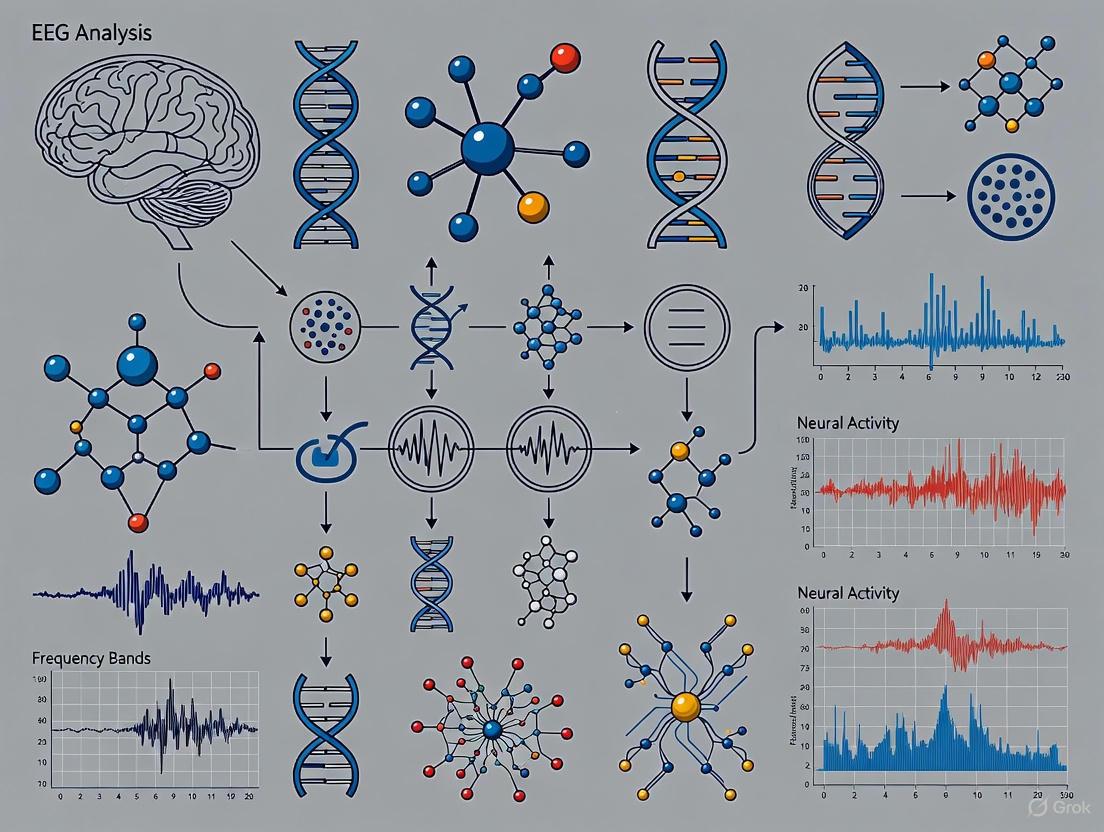
This article provides a comprehensive overview of Electroencephalography (EEG) power spectral density (PSD) analysis, a fundamental tool for quantifying brain activity.
EEG Power Spectral Density Analysis: From Neural Oscillations to Clinical Applications in Brain Research
Abstract
This article provides a comprehensive overview of Electroencephalography (EEG) power spectral density (PSD) analysis, a fundamental tool for quantifying brain activity. Tailored for researchers, scientists, and drug development professionals, we explore the neurophysiological foundations of brain rhythms and their functional correlates. The scope extends from core methodologies, including Welch's periodogram and multitaper techniques, to advanced applications in diagnosing neurological and psychiatric disorders like Alzheimer's disease and first-episode psychosis. We address critical challenges in spectral estimation, such as artifact mitigation using robust statistical methods and independent component analysis. Furthermore, the article examines the validation of PSD as a biomarker for drug development and digital therapeutics, highlighting its growing role in machine learning classification and its potential to replace invasive procedures. This synthesis aims to equip practitioners with the knowledge to reliably apply PSD analysis in both research and clinical settings.
The Fundamentals of Brain Rhythms: Understanding EEG Power Spectral Density
Theoretical Foundation
Defining Neural Oscillations
Neural oscillations, commonly referred to as brainwaves, are rhythmic or repetitive patterns of neural activity in the central nervous system [1]. These oscillations can be generated through mechanisms within individual neurons or via interactions between neurons [1]. At the microscopic level, they may appear as oscillations in membrane potential or rhythmic patterns of action potentials [1]. At macroscopic levels, synchronized activity of large neural ensembles produces oscillations measurable via electroencephalography (EEG) [1]. These oscillatory patterns facilitate critical brain functions including information transfer, perception, motor control, and memory [1].
Physiological Basis of the EEG Signal
The EEG signal primarily originates from the summation of postsynaptic currents (PSCs) in the dendrites of cortical pyramidal neurons [2] [3]. When neurotransmitters bind to receptors, they initiate localized current flows that create electrical fields [3]. The parallel arrangement of pyramidal neurons perpendicular to the cortical surface allows these tiny fields to summate, generating signals strong enough to be detected by scalp electrodes [3].
While PSCs constitute the dominant source (approximately 80%) of the EEG signal, recent computational modeling reveals that action potentials and associated afterpolarizations contribute up to 20% of the signal strength, whereas presynaptic activity contributes negligibly [2]. Among different neuron types, layer 5 pyramidal cells (L5 PCs) generate the largest PSC and action potential signals, establishing them as dominant contributors to the EEG [2].
Table 1: Relative Contribution of Neural Sources to EEG Signals
| Neural Source | Approximate Contribution | Primary Physiological Basis | Key Characteristics |
|---|---|---|---|
| Postsynaptic Currents (PSCs) | ~80% [2] | Excitatory/inhibitory postsynaptic potentials [3] | Relatively long durations; summed activity of millions of synapses [2] |
| Action Potentials & Afterpolarizations | Up to 20% [2] | Neuronal spiking and subsequent polarization [2] | Short duration but can synchronize; backpropagate into dendrites [2] |
| Presynaptic Activity | Negligible [2] | Presynaptic terminal currents [2] | Minimal contribution to far-field potentials [2] |
Table 2: Characteristics of Primary Neural Oscillation Frequency Bands
| Frequency Band | Frequency Range | Associated Cognitive/Brain States | Primary Neural Generators |
|---|---|---|---|
| Delta | 1-4 Hz [1] | Deep sleep, unconsciousness [1] | Thalamocortical networks [1] |
| Theta | 4-8 Hz [1] | Memory, navigation, meditation [1] | Hippocampal-septal circuits [1] |
| Alpha | 8-12 Hz [1] | Relaxed wakefulness, eyes closed [1] | Thalamocortical networks [1] |
| Beta | 13-30 Hz [1] | Active thinking, focus, sensorimotor behavior [1] | Local inhibitory interneurons [1] |
| Low Gamma | 30-70 Hz [1] | Sensory processing, feature binding [1] | Fast-spiking interneurons [1] |
| High Gamma | 70-150 Hz [1] | Cognitive processing, cross-regional communication [1] | Synchronized spiking activity [2] [1] |
Experimental Protocols
Protocol: Measuring resting-state EEG oscillations in clinical populations
Application Note: This protocol outlines the methodology for investigating altered neural oscillations in clinical populations, as demonstrated in postherpetic neuralgia research [4]. The approach can be adapted for various neurological and psychiatric conditions in drug development research.
Materials & Equipment:
- EEG system with appropriate electrode cap (e.g., 32-128 channels)
- Electrically shielded, sound-attenuated room
- Conductive electrogel and abrasive preparation gel
- Amplifier and data acquisition software
- Eye movement/electrooculogram (EOG) monitoring electrodes
- Computer for task presentation (if applicable)
Procedure:
- Participant Preparation:
- Measure head circumference and select appropriate electrode cap size.
- Prepare scalp surface at electrode positions with light abrasion to achieve impedance below 5 kΩ.
- Apply conductive electrogel to each electrode cup.
- Position EOG electrodes above and below the orbital ridge for vertical eye movements and at the outer canthi for horizontal movements.
Data Acquisition:
- Instruct participants to remain awake with eyes closed for 5 minutes, followed by eyes open for 5 minutes.
- Set sampling rate to at least 500 Hz to capture gamma frequencies.
- Apply online bandpass filtering (e.g., 0.1-100 Hz) during acquisition.
- Record continuous EEG with trigger markers indicating session phases.
Data Preprocessing:
- Apply high-pass filter at 0.5 Hz and low-pass filter at 80 Hz.
- Remove bad channels and interpolate using surrounding electrodes.
- Perform Independent Component Analysis (ICA) to identify and remove ocular, cardiac, and muscle artifacts.
- Re-reference data to average reference.
Protocol: Power Spectral Density Analysis for EEG Oscillations
Application Note: This protocol details the computational analysis of neural oscillations through power spectral density (PSD), which quantifies the power distribution across frequency bands [5]. This forms the core analytical approach for EEG power spectral density analysis in brain function research.
Materials & Equipment:
- Preprocessed EEG data (continuous or epoched)
- Computing environment (MATLAB, Python with MNE-Python, EEGLAB)
- Custom scripts for PSD calculation and statistical analysis
Procedure:
- Data Preparation:
- Segment continuous data into non-overlapping epochs (e.g., 2-second segments).
- Visually inspect epochs and reject those containing residual artifacts.
- Apply Hanning window to each epoch to reduce spectral leakage.
PSD Calculation:
- Use Welch's method with 50% overlapping segments.
- Compute Fast Fourier Transform (FFT) for each segment.
- Average periodograms across segments to obtain final PSD estimate.
- Normalize PSD values by dividing by the total power across all frequencies.
Statistical Analysis:
- Extract absolute or relative power in predefined frequency bands.
- Perform between-group comparisons using appropriate statistical tests (e.g., t-tests, ANOVA).
- Conduct correlation analyses between band power and clinical/behavioral measures.
- Apply false discovery rate (FDR) correction for multiple comparisons.
Visualization of Concepts and Workflows
Diagram 1: EEG signal generation and analysis workflow.
Diagram 2: Neural sources of EEG signals and their relative contributions.
The Scientist's Toolkit: Research Reagent Solutions
Table 3: Essential Research Materials and Analytical Tools for EEG Oscillation Studies
| Item | Function/Application | Examples/Specifications |
|---|---|---|
| EEG Recording System | Acquisition of neural signals from scalp | 32-256 channel systems with amplifier; Sampling rate ≥500 Hz [4] [5] |
| Computational Modeling Software | Simulating neural sources and contributions | NEURON simulation environment; Blue Brain Project models [2] |
| Signal Processing Tools | Preprocessing and analyzing EEG data | MATLAB with EEGLAB, Python with MNE-Python [5] |
| Biophysically Realistic Neuron Models | Investigating specific neural contributions | Models of L5 Pyramidal Cells, L2/3 Pyramidal Cells, interneurons [2] |
| Time-Frequency Analysis Tools | Examining frequency content over time | Short-time Fourier Transform (STFT), Continuous Wavelet Transform (CWT) [5] |
| Source Localization Algorithms | Estimating neural generator locations | Distributed inverse solutions, beamforming approaches [3] |
| Connectivity Analysis Tools | Assessing functional connectivity between regions | Weighted Phase Lag Index (WPLI), Phase-Locking Value (PLV) [4] [5] |
Electroencephalography (EEG) power spectral density (PSD) analysis serves as a fundamental tool in neuroscience research for quantifying neural oscillatory activity. Neural oscillations, rhythmic electrical patterns generated by synchronized neuronal activity, are categorized into five principal frequency bands: delta, theta, alpha, beta, and gamma [6]. These oscillations provide a window into the brain's functional state, correlating with specific cognitive processes, behaviors, and neurological conditions [6] [7]. The analysis of these frequency bands, particularly through PSD, offers researchers and drug development professionals a non-invasive, high-temporal-resolution method to investigate brain function, identify pathological patterns, and assess therapeutic interventions [8] [9]. This document outlines the defining characteristics, functional correlates, and associated experimental protocols for the analysis of these core EEG frequency bands.
Defining the Frequency Bands and Their Functional Correlates
The following table summarizes the standard frequency ranges and primary functional correlates of the five major brain waves. It is important to note that exact frequency boundaries can vary slightly across different scientific literature and research paradigms [6] [10] [7].
Table 1: Standard EEG Frequency Bands and Their Functional Correlates
| Frequency Band | Frequency Range (Hz) | Primary Functional Correlates in Healthy Cognition | Associated Neurological & Psychiatric Disorders |
|---|---|---|---|
| Delta | 0.1 - 4 [10] | Deep, dreamless sleep (non-REM stages 3 & 4) [10], restorative processes [7], inward focus [10]. | Elevated power during waking states in ADHD (difficulty focusing) [10]; Depressed power in sleep of Schizophrenia and Alzheimer's patients [6]. |
| Theta | 4 - 8 [10] | Drowsiness, light sleep [7], introspection [10], emotional processing [7], learning and memory formation [6]. | Increased power in children with ADHD [6]; Loss of long-range temporal correlations in Major Depressive Disorder [6]. |
| Alpha | 8 - 12 [10] | Relaxed wakefulness with eyes closed [7], alert calmness [10], sensory inhibition [6]. | Slowing of spontaneous oscillations in Alzheimer's disease; reduced resting power in adults with ADHD [6]; Potential marker for depression (alpha asymmetry) [11]. |
| Beta | 13 - 35 [10] | Active, alert, and focused consciousness [7]; analytical thinking, problem-solving, and active motor control [10]. | Desynchronization in Parkinson's disease [6]; Often used in neurofeedback for anxiety and ADHD [7]. |
| Gamma | 35 - 100 [10] | High-level information processing [10], sensory binding [7], focused attention, and working memory [6] [7]. | Aberrant oscillations in Alzheimer's disease, Parkinson's disease, and Fragile X syndrome [6]; Deficits linked to learning disabilities [10]. |
Beyond the analysis of individual bands, Cross-Frequency Coupling (CFC) has emerged as a critical area of research. CFC refers to the interaction between different frequency bands, such as phase-amplitude coupling where the phase of a slower rhythm (e.g., theta) modulates the amplitude of a faster rhythm (e.g., gamma) [6]. This synchronization is believed to be crucial for facilitating network-wide communication and neural plasticity, and is heavily influenced by neuromodulatory systems (e.g., noradrenergic, cholinergic) [6]. Abnormal CFC has been implicated in various neurological diseases, highlighting its importance in understanding healthy brain coordination [6].
Experimental Protocols for Power Spectral Density Analysis
This section provides a detailed methodology for conducting a robust resting-state EEG study, from data acquisition to power spectral analysis, suitable for investigating group differences or drug effects.
Protocol: Resting-State EEG Recording and PSD Analysis
Application Note: This protocol is designed to detect spectral power differences between clinical populations (e.g., patients with First-Episode Psychosis) and healthy controls, or to evaluate the electrophysiological impact of psychoactive compounds [9]. The focus on resting-state conditions allows for the assessment of the brain's intrinsic activity without the confounds of task performance.
Materials and Equipment
Table 2: Research Reagent Solutions and Essential Materials
| Item | Function/Description |
|---|---|
| EEG System | A high-density EEG recording system (e.g., 60-channel cap following the 10-10 international system) is recommended for comprehensive spatial analysis [9]. |
| Electrodes | Ag/AgCl sintered or passive electrodes. Including additional electrodes for electrooculogram (EOG) and electrocardiogram (ECG) is crucial for artifact removal. |
| Electrode Gel | Conductive electrolyte gel to ensure impedance is kept below 10 kΩ for high-quality signal acquisition. |
| Amplifier & DAQ | A high-input impedance amplifier and data acquisition system with a sampling rate of at least 1000 Hz to avoid aliasing and capture high-frequency activity [9]. |
| Software | Software for data acquisition (e.g., Eegoa, ActiView) and analysis (e.g., MATLAB with toolboxes like EEGLAB, FieldTrip, or Chronux). |
Procedure
Participant Preparation & Setup:
- Obtain informed consent according to the institutional ethics board approval.
- Measure the participant's head and fit the EEG cap according to the 10-10 international system.
- Prepare the scalp and fill each electrode with conductive gel, working impedance down to < 10 kΩ.
- Attach EOG electrodes above and below the left eye (vertical EOG) and at the outer canthi of both eyes (horizontal EOG). Attach an ECG electrode on the torso.
- Instruct the participant to sit comfortably in a chair in a dimly lit, electrically shielded, and sound-attenuated room.
Data Acquisition:
- Record a 5-minute eyes-closed resting-state segment. Instruct the participant to remain awake and relaxed.
- Record a 5-minute eyes-open resting-state segment, fixating on a central crosshair on a screen to minimize eye movements.
- The order of conditions (eyes-open/closed) should be counterbalanced across participants.
Preprocessing:
- Import & Filter: Import raw data. Apply a band-pass filter (e.g., 0.5 Hz to 35 Hz) to remove slow drifts and high-frequency noise not of interest [9].
- Artifact Removal (ICA): Use Independent Component Analysis (ICA), such as the FastICA algorithm, to identify and remove components associated with eye blinks (correlated with EOG channels) and heartbeats (correlated with ECG channels) [12] [9].
- Bad Channel Rejection: Identify and interpolate channels with persistent noise or artifacts.
- Re-referencing: Re-reference the data to an average reference or linked mastoids.
Power Spectral Density (PSD) Estimation:
- Epoch Data: Segment the continuous, clean data into non-overlapping or slightly overlapping epochs (e.g., 2-second windows) [12].
- Robust Multitaper Method: For each epoch, compute the PSD using the multitaper method to minimize spectral leakage and variance. The following diagram illustrates the core workflow for robust PSD estimation.
Diagram 1: Workflow for robust PSD estimation incorporating a robust statistics step to mitigate outlier influence [12].
- Feature Extraction:
- For each subject and condition, calculate the average absolute or relative power within each of the five frequency bands (Delta, Theta, Alpha, Beta, Gamma) for regions of interest.
The Scientist's Toolkit
This table details key analytical considerations and resources for researchers employing EEG PSD analysis.
Table 3: Key Analytical Tools and Concepts for PSD Research
| Tool/Concept | Application in PSD Analysis |
|---|---|
| Robust Spectral Estimation | A quantile-based PSD estimation method that reduces the influence of large, intermittent artifacts, minimizing the need for extensive data preprocessing and subjective data rejection [12]. |
| Eyes-Closed vs. Eyes-Open Paradigm | The two primary resting-state conditions. The eyes-closed state typically produces a strong, posterior-dominant alpha rhythm, providing a robust baseline of brain activity [11]. |
| Power Spectral Density (PSD) | A fundamental feature extraction technique that quantifies the distribution of signal power across frequency. It is highly effective for classifying neurological and psychiatric states using machine learning [9]. |
| Machine Learning Classifiers | Algorithms such as Gaussian Process Classifier (GPC), Support Vector Machine (SVM), and Random Forest can be trained on PSD features to achieve high accuracy in distinguishing clinical groups (e.g., FEP patients from controls) [9]. |
| Cross-Frequency Coupling (CFC) | An advanced analytical method investigating how the phase of a slower oscillation modulates the amplitude of a faster oscillation (e.g., Theta-Gamma CFC), implicated in memory and cognitive control [6]. |
The precise definition and functional interpretation of EEG frequency bands form the cornerstone of modern electrophysiological research. While the canonical bands provide a essential framework, advanced analytical techniques like CFC and robust PSD estimation are pushing the field toward a more nuanced understanding of large-scale brain network dynamics. The standardized protocols and tools outlined in this document provide a foundation for rigorous investigation into brain function, with significant applications in characterizing neurological and psychiatric disorders and evaluating novel therapeutics in drug development.
What is Power Spectral Density (PSD)? A Key Metric for Quantifying Brain Activity
Power Spectral Density (PSD) is a fundamental signal processing technique that quantifies how the power of a signal is distributed across different frequency components [13]. In neuroscience, PSD analysis is applied to electrophysiological signals like electroencephalography (EEG) to understand brain rhythms and their connection to cognitive states, neurological conditions, and brain function [13] [14]. This analysis provides a powerful, non-invasive window into the brain's electrical activity.
Core Concepts and Mathematical Foundations
At its core, PSD transforms a signal from the time domain into the frequency domain. This transformation allows researchers to move from viewing a signal as a voltage that changes over time to understanding its constituent oscillatory components [13].
Mathematical Definition
The PSD of a continuous signal ( x(t) ) is mathematically defined as [13] [14]: [ S(f) = \lim{T \to \infty} \frac{1}{T} \left| \int{-T/2}^{T/2} x(t)e^{-i2\pi ft}dt \right|^2 ] In practice, for real-world signals with finite length, this definition is approximated using methods like Welch’s periodogram [15].
Standard EEG Frequency Bands
Brain activity is categorized into specific frequency bands, each linked to different cognitive or behavioral states. The table below summarizes these canonical bands and their associations [13] [16] [14].
Table 1: Standard EEG Frequency Bands and Their Associated Cognitive States
| Band Name | Frequency Range (Hz) | Associated Cognitive & Behavioral States |
|---|---|---|
| Delta | 0.5 - 4 | Deep sleep, unconsciousness [13] [16] |
| Theta | 4 - 8 | Drowsiness, meditation, memory formation [13] [14] |
| Alpha | 8 - 12 | Relaxed wakefulness, eyes closed, sensory processing [13] [16] [14] |
| Beta | 13 - 30 | Active thinking, attention, motor control [13] [16] |
| Gamma | 30 - 100 | High-level cognitive processing, perception [13] [14] |
The following diagram illustrates the logical workflow of PSD analysis, from the raw brain signal to the final interpretation of its frequency content.
Practical Implementation and Analysis Protocols
Implementing PSD analysis requires careful data preprocessing and a clear methodological workflow to ensure accurate and reliable results.
Data Preprocessing and PSD Estimation
Neural signals are often contaminated with noise and artifacts that must be removed before analysis.
- Filtering and Artifact Removal: Common preprocessing steps include band-pass filtering (e.g., 0.5-35 Hz) to isolate frequencies of interest and notch filtering to remove 50/60 Hz power line interference [14]. Artifacts from eye blinks (EOG) and heartbeats (ECG) can be effectively removed using techniques like Independent Component Analysis (ICA) [9].
- Welch's Method for PSD Estimation: The classic periodogram is a noisy estimator. Welch's method improves reliability by dividing the signal into shorter, overlapping segments, calculating the periodogram for each, and averaging them. This reduces variance at the cost of slightly lower frequency resolution [15]. The frequency resolution is determined by ( F_{res} = 1 / t ), where ( t ) is the window length in seconds [15].
Calculating Absolute and Relative Bandpower
Once the PSD is estimated, the power within specific frequency bands can be quantified.
- Absolute Bandpower: This is the total power within a defined band. It is calculated by integrating the PSD over the frequency range of interest, for example, using the composite Simpson's rule to approximate the area under the PSD curve [15].
- Relative Bandpower: This expresses the power in a specific band as a percentage of the total power across all frequencies. It is useful for normalizing data and reducing inter-subject variability [15]. Relative delta power is calculated as
delta_power / total_power[15].
The workflow below details the key steps for computing bandpower from a raw EEG signal.
Research Applications and Key Findings
PSD analysis has proven to be a powerful tool in both clinical and cognitive neuroscience, providing biomarkers for various neurological and psychiatric conditions.
Clinical Biomarker Discovery
Research consistently shows that alterations in PSD can serve as non-invasive biomarkers for cognitive decline and psychiatric disorders.
- Detecting Cognitive Impairment: A 2025 resting-state EEG study compared healthy controls, individuals with Mild Cognitive Impairment (MCI), and dementia patients. The results, summarized in the table below, found that PSD could effectively differentiate dementia from healthy controls but was less sensitive for early-stage MCI detection [8] [17]. This pattern is characterized by a shift in spectral power, typically seen as increased slow-wave activity (delta, theta) and decreased fast-wave activity (alpha, beta) in clinical groups [8].
- Classifying First-Episode Psychosis (FEP): A 2024 study demonstrated that using PSD features from delta, theta, alpha, and low-beta bands allowed a Gaussian Process Classifier (GPC) to distinguish FEP patients from healthy controls with high specificity (95.78%) and accuracy (95.51%) [9]. This underscores PSD's utility as a feature extraction method for machine learning in psychiatry.
Table 2: Summary of PSD Findings in Clinical Populations
| Clinical Population | Key PSD Findings | Classification Performance |
|---|---|---|
| Dementia | Significant PSD differences from healthy controls, indicative of advanced cognitive decline [8]. | Effective differentiation from healthy controls [8]. |
| Mild Cognitive Impairment (MCI) | Limited significant PSD differences compared to healthy controls, posing a challenge for early detection [8]. | Did not show significant differences from healthy controls in a resting-state study [8]. |
| First-Episode Psychosis (FEP) | Distinct spectral patterns in resting-state delta, theta, alpha, and low-beta bands [9]. | 95.51% accuracy, 95.78% specificity using a Gaussian Process Classifier [9]. |
Integrating PSD with Other Modalities
A major advancement in the field is the integration of EEG PSD with other neuroimaging techniques.
- Fusing EEG and fMRI: A 2025 study combined high-temporal-resolution EEG with high-spatial-resolution functional MRI (fMRI). Researchers linked time-varying EEG spectral power with spatially dynamic fMRI networks [18]. They found, for instance, a strong association between the increasing volume of the primary visual network and increasing alpha power, and correlated alpha and beta power with the primary motor network [18]. This multimodal approach provides a more comprehensive view of brain dynamics.
Advanced Analytical Techniques
Beyond classical PSD analysis, several advanced techniques offer deeper insights into brain function and connectivity.
- Time-Frequency Analysis: Techniques like the Short-Time Fourier Transform (STFT) and Continuous Wavelet Transform (CWT) extend PSD to show how the frequency content of a signal evolves over time, crucial for analyzing non-stationary neural signals [14].
- Cross-Spectral Density and Coherence: These methods measure the relationship between two signals in the frequency domain, allowing researchers to investigate functional connectivity and neural synchrony between different brain regions [14].
- Combining PSD with Graph Theory: A novel approach involves converting EEG time series into complex networks using a Visibility Graph (VG). This method captures the temporal dynamics and complex structure of the signal, which can be combined with PSD features in deep learning models to improve classification accuracy for conditions like epilepsy [19].
The diagram below shows how PSD fits into a broader ecosystem of analytical techniques used in modern neuroscience.
The Scientist's Toolkit
Table 3: Essential Software and Analytical Tools for PSD Research
| Tool/Software | Language/Platform | Key Function & Purpose |
|---|---|---|
| MATLAB with EEGLAB | MATLAB | Industry-standard environment with a comprehensive toolbox for EEG analysis, including robust PSD and ICA functionality [13]. |
| Python (SciPy, MNE-Python) | Python | Flexible, open-source libraries for signal processing (SciPy's welch function) and full-featured EEG analysis and visualization (MNE) [13] [15] [20]. |
| PyEEG | Python | A specialized Python library dedicated to feature extraction for EEG signals, including PSD [13]. |
| GIFT Toolbox | MATLAB | A specialized toolbox for performing Independent Component Analysis (ICA), crucial for preprocessing fMRI and EEG data [18]. |
The reticular activating system (RAS) serves as the brain's fundamental arousal center, regulating transitions between sleep and wakefulness to enable conscious perception. This regulatory function makes the RAS a critical subject of study in neuroscience and neuropharmacology. Electroencephalogram (EEG) power spectral density (PSD) analysis provides a powerful, non-invasive method to quantify the RAS's influence on cortical activity by measuring oscillatory power across different frequency bands. These electrophysiological signatures are not only vital for understanding basic brain function but also serve as potential biomarkers for neurological disorders. This document details the application of PSD analysis to investigate RAS-mediated sensory processing, providing structured experimental protocols and analytical frameworks for researchers and drug development professionals.
Neuroanatomical and Functional Basis of the RAS
The reticular activating system is a complex network of interconnected nuclei located throughout the brainstem, extending from the medulla oblongata to the midbrain [21] [22]. It is functionally divided into the ascending reticular activating system (ARAS), which projects to the cerebral cortex, and the descending reticular system, which influences spinal cord activity [21]. The primary function of the ARAS is to regulate arousal, wakefulness, and the sleep-wake cycle, acting as an "on/off" switch for conscious perception [23] [21] [22].
The RAS achieves this regulation through several key neurotransmitter-specific nuclei, which are detailed in Table 1.
Table 1: Core Nuclei and Neurotransmitter Systems of the Ascending Reticular Activating System (ARAS)
| Nucleus / Region | Primary Neurotransmitter | Cortical Projection Pathway | Functional Role in Arousal |
|---|---|---|---|
| Locus Coeruleus | Norepinephrine (NE) [23] [21] | Dorsal pathway via thalamus [21] | Alertness, vigilance, stress response [22] |
| Raphe Nuclei | Serotonin (5-HT) [21] [22] | Diffuse cortical projections [21] | Mood regulation, circadian rhythms, attention [22] |
| Tuberomammillary Nucleus | Histamine [21] [22] | Direct to cortex [21] | Sustained wakefulness, cognition [22] |
| Pedunculopontine Tegmentum (PPT) / Laterodorsal Tegmentum (LDT) | Acetylcholine (ACh) [21] [24] [22] | Via thalamus (specific relay nuclei) [24] | Cortical desynchronization, REM sleep regulation [22] |
| Lateral Hypothalamus | Orexin (Hypocretin) [21] | Widespread to all ARAS nuclei [21] | Stabilizes wakefulness, coordinates arousal systems [22] |
Sensory input from all modalities, including those conveyed by cranial nerves, converges on the RAS [23] [24]. This includes collateral fibers from auditory, vestibular, trigeminal, and visceral sensory pathways [24]. The RAS does not process detailed sensory information but uses this input to determine the overall level of cortical arousal and alertness, sharpening the cortex's attentive state for optimal sensory perception [23].
The following diagram illustrates the integrated pathway through which sensory stimuli influence cortical activity via the ARAS.
Diagram 1: ARAS Signaling from Sensory Input to Cortical Activation. This pathway shows how sensory input is integrated by the ARAS, leading to EEG-detectable cortical arousal. PPT/LDT: Pedunculopontine Tegmentum/Laterodorsal Tegmentum; NE: Norepinephrine; ACh: Acetylcholine; 5-HT: Serotonin.
Quantitative EEG Signatures of RAS-Mediated Cortical Activation
The functional state of the RAS is directly reflected in the electrical activity of the cortex, which can be quantified using EEG Power Spectral Density (PSD) analysis. PSD quantifies the power (signal amplitude squared) of the EEG signal as a function of frequency, typically expressed in µV²/Hz [15]. The transition from a synchronized, sleep-state EEG to a desynchronized, wakeful-state EEG is a primary marker of RAS activation.
Table 2: Characteristic EEG Frequency Bands and Their Functional Correlates in RAS Research
| Frequency Band | Range (Hz) | Physiological and Cognitive Correlates | PSD Change with RAS Activation |
|---|---|---|---|
| Delta | 0.5 - 4 [25] [26] | Deep sleep (N3), sleep homeostasis [26] | Decrease [26] |
| Theta | 4 - 8 [25] [27] | Drowsiness, emotional memory consolidation [26] | Variable (context-dependent) |
| Alpha | 8 - 13 [25] [27] [26] | Relaxed wakefulness, eyes closed, internal attention [28] [26] | Decrease in posterior regions [28] |
| Beta | 13 - 30 [25] [26] | Active thinking, focus, alertness [28] | Increase [28] |
| Gamma | 30 - 48 [25] | High-level information processing, sensory binding [28] | Increase [28] |
Quantifiable alterations in these EEG bands are linked to neurological pathology. For example, in Parkinson's disease (PD), studies have found a reduction in peak alpha frequency (PAF), which correlates with global cognitive impairment [25]. Furthermore, patients with PD and cognitive impairment (PDCOG) show significantly lower alpha PSD in parieto-occipital and posterior temporal regions (e.g., electrodes P3, P4, O1, T5, T6, PZ) compared to PD patients with normal cognition (PDNC) [25]. These regional PSD measures have demonstrated high diagnostic utility, with ROC analysis showing AUC values of 0.77–0.758 for electrodes P3, PZ, and T6 in distinguishing PDCOG from PDNC [25].
Experimental Protocols for Investigating RAS Function via PSD
Protocol: PSD Analysis of Auditory Sensory Gating via the RAS
Objective: To quantify the impact of a standardized auditory stimulus on cortical arousal, mediated by the RAS, using EEG PSD analysis.
Background: Auditory stimuli are transmitted via the vestibulocochlear nerve (CN VIII) and project collaterals to the RAS, making them a robust probe for triggering and measuring the ascending arousal response.
Materials & Equipment:
- EEG system with at least 19 channels configured per the international 10–20 system [25].
- Electrodeless impedance maintained below 20 kΩ [25] or 100 kΩ [29], depending on amplifier specifications.
- Sound-attenuated, electrically shielded chamber.
- Audiometer and calibrated headphones for stimulus delivery.
Procedure:
- Participant Preparation: Seat the participant comfortably in the chamber. Apply EEG electrodes, ensuring impedance is optimized.
- Baseline Recording (5 minutes): Instruct the participant to remain relaxed with eyes closed. Acquire resting-state EEG data [25] [27].
- Stimulus Presentation: Present an auditory tone (e.g., 1000 Hz, 85 dB, 500 ms duration) via headphones. Use a block of 50 trials with a variable inter-stimulus interval (20-30 s) to prevent habituation.
- Post-Stimulation Recording (3 minutes): Immediately following the final stimulus, acquire another 3 minutes of eyes-closed, resting-state EEG.
- Data Export: Export the continuous EEG data in a standard format (e.g., .EDF or .SET for EEGLAB) for offline analysis.
Protocol: Computational Workflow for PSD Analysis
Objective: To provide a standardized, automated workflow for computing absolute and relative band power from raw EEG data, suitable for high-throughput research.
Background: This protocol uses Welch's periodogram method, which reduces variance in the PSD estimate by averaging over sliding windows, offering a robust balance between frequency resolution and estimate stability [15].
Materials & Software:
- Computing environment: Python (with NumPy, SciPy, MNE-Python) or MATLAB (with Signal Processing Toolbox and EEGLAB).
- Preprocessed, artifact-free EEG data (continuous or epoched).
Procedure:
- Data Preprocessing:
PSD Calculation via Welch's Method:
- Segment the continuous data into overlapping windows. A common approach is to use 4-second windows with 50% overlap [15].
- Apply a windowing function (e.g., Hanning) to each segment to reduce spectral leakage.
- Perform a Fast Fourier Transform (FFT) on each segment.
- Average the squared magnitude of the FFT results across all segments to obtain the final PSD estimate for each channel [15].
Bandpower Integration:
- For each frequency band of interest (see Table 2), identify the corresponding frequency bins in the PSD.
- Compute the absolute band power by integrating the PSD over the frequency bins using the composite Simpson's rule [15].
- Compute the relative band power by dividing the absolute power in a specific band by the total power across all frequency bands (or a broader range like 0.5-48 Hz) [15].
The following diagram summarizes this computational workflow.
Diagram 2: Computational Workflow for EEG Power Spectral Density (PSD) Analysis. This protocol outlines the steps from raw data to quantitative band power metrics.
The Scientist's Toolkit: Key Research Reagents & Materials
Table 3: Essential Research Solutions for RAS and PSD Investigations
| Item / Reagent | Specification / Example | Primary Function in Research Context |
|---|---|---|
| High-Density EEG System | 64-128 channels, 500+ Hz sampling rate [25] [29] | High-fidelity recording of cortical electrical activity with sufficient spatial resolution. |
| Electrode Conductive Gel/Grass | Chloride-based, low impedance | Ensures high-quality electrical signal transmission from scalp to amplifier. |
| Electroencephalography (EEG) Software Suite | EEGLAB [25] [29], MNE-Python, Cartool [29] | Data preprocessing, visualization, ICA, and advanced spectral analysis. |
| Signal Processing Toolbox | MATLAB Signal Processing Toolbox, SciPy (Python) | Implementation of FFT, Welch's method, and digital filtering. |
| Auditory Stimulation System | FDA-approved audiometer, calibrated headphones | Precise and reproducible delivery of sensory stimuli to probe RAS function. |
| Polysomnography (PSG) Equipment | Integrated EEG, EOG, EMG, ECG, respiration [26] | Comprehensive sleep staging and arousal detection during RAS/sleep studies. |
Application in Drug Development and Concluding Remarks
Quantitative EEG PSD provides a robust translational biomarker for assessing the efficacy of neuroactive compounds targeting RAS pathways. For instance, a drug designed to enhance vigilance in narcolepsy (e.g., an orexin receptor agonist) would be expected to produce a quantifiable decrease in delta/theta power and an increase in beta power during wakefulness. Conversely, a sedative agent would be expected to produce the opposite pattern. The regional specificity of PSD analysis allows for the detection of drug effects on distinct neural circuits, moving beyond subjective behavioral reports to objective, physiology-based efficacy measures.
The integration of standardized PSD protocols, as outlined in this document, into preclinical and clinical trial designs can significantly de-risk drug development by providing:
- Early Go/No-Go Decisions: Objective electrophysiological data on target engagement in early-phase trials.
- Dose Optimization: Identification of the minimal dose required to elicit a significant central nervous system (CNS) effect.
- Mechanistic Insights: Helping to elucidate whether a compound's therapeutic action is mediated through arousal systems, as reflected in the PSD profile.
In conclusion, the systematic application of EEG PSD analysis to study the RAS and sensory processing bridges fundamental neuroanatomy with clinical and pharmacological research. The protocols and frameworks provided here offer a foundation for generating reproducible, quantitative data on brain states, advancing both our understanding of brain function and the development of novel therapeutics for neurological and psychiatric disorders.
Power Spectral Density (PSD) analysis serves as a fundamental technique in neuroscience research, enabling researchers to decompose complex neural signals into their constituent frequency components and quantify the power distribution across these frequencies. This analysis provides a critical bridge between observed neural electrical activity and resulting behavior or cognitive states. By applying PSD analysis to signals obtained from electroencephalography (EEG) and local field potentials (LFP), neuroscientists can identify characteristic oscillatory patterns that correspond to specific brain states, cognitive tasks, or pathological conditions [14]. The resulting power spectrum offers a quantitative representation of brain activity that can be tracked over time, compared across experimental conditions, and correlated with behavioral measures, making it an indispensable tool for both basic research and clinical applications in neuroscience.
The mathematical foundation of PSD typically relies on the Fourier Transform, which transforms a signal from the time domain to the frequency domain. The PSD of a signal ( x(t) ) is mathematically defined as: [ S{xx}(f) = \lim{T \to \infty} \frac{1}{T} \left| \int_{-T/2}^{T/2} x(t)e^{-i2\pi ft} dt \right|^2 ] In practical applications with finite-length signals, this limit is approximated using various estimation techniques and windowing functions to reduce spectral leakage [14]. The transition from raw neural signals to interpretable spectral information requires careful signal processing and parameter selection, which forms the basis of effective PSD analysis in neuroscience research.
Core PSD Methodologies and Estimation Techniques
Signal Processing Fundamentals for PSD Analysis
Neural signals recorded via EEG or other electrophysiological methods contain substantial noise and artifacts that must be addressed before meaningful PSD analysis can be performed. Effective preprocessing is essential for extracting valid spectral information from raw neural data. Common noise sources include thermal noise, electrical interference (particularly 50/60 Hz power line noise), muscle artifacts, and eye movement artifacts [14]. Each of these contaminants can significantly distort power estimates if not properly addressed.
Several filtering and preprocessing techniques are routinely applied to neural signals prior to PSD estimation. Band-pass filtering removes frequency components outside the range of neural relevance (typically 0.5-100 Hz for EEG), while notch filtering specifically targets power line interference. Wavelet denoising provides an advanced method for separating signal from noise across multiple frequency scales. Additional preprocessing steps include detrending (removing low-frequency trends that may reflect slow drifts rather than neural activity) and normalization (scaling the signal to a common range to enable comparison across sessions or subjects) [14]. Each preprocessing step must be carefully validated to ensure that neural signals of interest are preserved while non-neural artifacts are effectively removed.
PSD Estimation Methods
The two primary approaches for estimating PSD from neural signals are the direct Fourier Transform and the Welch method, each with distinct characteristics and advantages for neuroscience applications.
The Fourier Transform (FFT) approach provides the most direct spectral estimation by computing the squared magnitude of the discrete Fourier transform of the signal. While computationally efficient, the basic FFT-based PSD estimate often appears noisy and jagged, with many different frequencies contributing to the signal [30]. This approach is particularly sensitive to the number of FFT points (N), which determines the frequency resolution according to the relationship: freqres = (fs / N), where f_s is the sampling frequency. Due to algorithmic efficiency, the convention is to set N to the next power of 2 above the signal length, though this is not mandatory [30].
The Welch method addresses limitations of the basic FFT approach by employing a moving window technique where FFT is computed within each window, with PSD estimates derived from the average across all windows [30]. This method depends on three critical parameters: window length (win), percentage of overlap between windows (noverlap), and number of FFT points (N). The Hanning window is most widely used in neuroscience applications due to its good frequency resolution and reduced spectral leakage [30]. The Welch method typically produces smoother PSD estimates because the averaging process helps cancel random noise effects, though at the potential cost of reduced frequency resolution.
Table: Comparison of PSD Estimation Methods for Neural Data
| Method | Key Features | Advantages | Limitations | Best Applications |
|---|---|---|---|---|
| Fourier Transform (FFT) | Direct computation of squared FFT magnitude | Simple implementation; High frequency resolution; Computationally efficient | Noisy, jagged appearance; Limited noise reduction; Sensitive to parameter N | Preliminary analysis; High-resolution spectral inspection |
| Welch Method | Averaged FFT across overlapping windows | Smoother PSD estimates; Better noise immunity; Robust to artifacts | Reduced frequency resolution; More parameter tuning required | Clinical applications; Noisy data conditions; Group comparisons |
Critical Parameters for PSD Estimation
Window length selection represents one of the most important parameter choices in PSD estimation, particularly for the Welch method. Shorter window sizes increase the number of windows for averaging, producing smoother PSD estimates but with compromised frequency resolution. Conversely, longer windows improve frequency resolution but result in noisier PSD due to fewer windows for averaging [30]. For example, with EEG data sampled at 173.61 Hz, a window size of approximately 1 second (174 samples) typically provides an optimal balance, revealing clear alpha oscillations (8-13 Hz) without excessive noise [30]. Excessively short windows (e.g., 0.25 seconds) may obscure frequency details, while very long windows (e.g., 5 seconds) introduce noise that complicates interpretation.
Window overlap percentage significantly affects the number of segments available for averaging. Increasing overlap (e.g., from 0% to 50%) produces more segments for averaging, resulting in smoother PSD estimates [30]. However, there are diminishing returns with very high overlap percentages (e.g., 90-99%), as highly correlated window samples provide limited additional noise cancellation. For most neuroscience applications, 50-75% overlap provides a reasonable balance between computational efficiency and PSD smoothness [30].
Windowing techniques help reduce spectral leakage that occurs when the signal contains frequency components that do not align perfectly with frequency bins. Common window functions include the Hanning window, Hamming window, and rectangular window, each offering different trade-offs between spectral resolution and leakage reduction [14]. The choice of windowing technique directly affects the PSD estimate and should be selected based on the specific characteristics of the neural signals under investigation.
Experimental Protocols for PSD Analysis in Neuroscience Research
Protocol: PSD Analysis of Resting-State EEG
Objective: To quantify oscillatory power in standard frequency bands during resting-state conditions and identify potential biomarkers for neurological disorders.
Materials and Methods:
- Participants: Patient populations and matched healthy controls
- EEG Acquisition: Continuous EEG recording from 32+ electrodes following the 10-20 international system
- Recording Parameters: Sampling rate ≥250 Hz, impedance maintained <10 kΩ
- Experimental Conditions: Eyes-closed resting state (5-10 minutes), eyes-open resting state (5-10 minutes)
- Preprocessing Steps:
- Downsampling to 250 Hz if necessary
- Band-pass filtering (0.5-45 Hz) using finite impulse response (FIR) filters
- Notch filtering at 50/60 Hz to remove line noise
- Manual or automated artifact removal for eye blinks, muscle activity
- Independent Component Analysis (ICA) for source separation and artifact removal [31]
PSD Analysis Pipeline:
- Data Segmentation: Divide continuous data into non-overlapping or slightly overlapping epochs (2-4 seconds)
- Welch Method Parameters:
- Window length: 1-2 seconds (balance between resolution and variance)
- Overlap: 50% between consecutive windows
- Window function: Hanning window to reduce spectral leakage
- Spectral Estimation: Compute PSD for each epoch and channel using FFT-based methods
- Frequency Band Integration: Calculate absolute and relative power in standard bands:
- Delta (1-4 Hz), Theta (4-8 Hz), Alpha (8-13 Hz), Beta (13-30 Hz), Gamma (30-45 Hz)
- Statistical Analysis: Compare power measures between groups, conditions, or regions
Expected Outcomes: Identification of characteristic power distribution patterns, such as posterior-dominant alpha rhythm during eyes-closed conditions, and potential alterations in specific frequency bands associated with neurological conditions.
Protocol: Event-Related Spectral Perturbation (ERSP) During Target Detection
Objective: To investigate time-locked changes in oscillatory power during cognitive tasks using a target detection paradigm.
Materials and Methods:
- Participants: 19 healthy right-handed adults with normal or corrected-to-normal vision [31]
- Experimental Design: Military-inspired target detection task with congruent, incongruent, and non-target conditions
- Stimuli Presentation: Unity software platform for precise timing control
- EEG Acquisition: Wireless 32-channel EEG system (St. EEGTM Vega) with 500 Hz sampling rate
- Task Structure:
- Fixation cross displayed continuously
- Command symbol (red asterisk) appears randomly left or right for 150 ms
- After 450 ms delay, target and distractor stimuli appear
- Participants identify real target within 2 seconds and respond with corresponding button press
- 180 trials per session, 4 sessions total with breaks [31]
Data Processing and Analysis:
- Preprocessing:
- Downsampling to 250 Hz
- Band-pass filtering (1-50 Hz)
- ICA for artifact removal
- Dipole source localization using DIPFIT2 toolbox in EEGLAB [31]
- Time-Frequency Analysis:
- Epoch data from -1000 ms to 2000 ms around stimulus onset
- Compute ERSP using Morlet wavelets or STFT
- Baseline correction using pre-stimulus period
- Statistical Comparison:
- Contrast spectral power between conditions (congruent vs. incongruent vs. non-target)
- Identify significant event-related synchronization (ERS) or desynchronization (ERD)
Key Findings: Previous applications of this protocol revealed N200-P300 wave activation in the middle occipital lobe, P300-N500 activation in the right frontal lobe and left motor cortex, suppression of delta and theta band powers in the right frontal lobe, and increased theta power in the middle occipital lobe during attention tasks [31].
Data Presentation and Quantitative Analysis
Quantitative Data Presentation for PSD Results
Effective presentation of PSD findings requires clear, standardized tables that enable comparison across conditions, groups, and studies. The following tables demonstrate appropriate formats for presenting key PSD-derived metrics in neuroscience research.
Table: Absolute Power (μV²/Hz) Across Standard Frequency Bands in Resting-State EEG
| Subject Group | Delta (1-4 Hz) | Theta (4-8 Hz) | Alpha (8-13 Hz) | Beta (13-30 Hz) | Gamma (30-45 Hz) | N |
|---|---|---|---|---|---|---|
| Healthy Controls | 4.32 ± 0.87 | 2.15 ± 0.43 | 5.82 ± 1.26 | 1.43 ± 0.31 | 0.62 ± 0.18 | 25 |
| Alzheimer's Disease | 6.84 ± 1.42* | 3.26 ± 0.71* | 3.15 ± 0.84 | 1.28 ± 0.29 | 0.58 ± 0.16 | 22 |
| Parkinson's Disease | 5.73 ± 1.18* | 2.84 ± 0.62 | 4.26 ± 0.95* | 0.92 ± 0.24* | 0.51 ± 0.14 | 19 |
| Major Depression | 5.02 ± 1.05 | 2.97 ± 0.58* | 4.05 ± 0.88* | 1.31 ± 0.28 | 0.67 ± 0.19 | 27 |
Note: Data presented as mean ± standard deviation. *p<0.05, *p<0.01 compared to healthy controls.*
Table: Cognitive Correlates of Neural Oscillation Bands [14]
| Frequency Band | Frequency Range | Associated Cognitive Processes | Clinical Correlations |
|---|---|---|---|
| Delta | 0.5-4 Hz | Deep sleep, attention | Increased in various dementia types |
| Theta | 4-8 Hz | Memory formation, navigation | Elevated in ADHD, cognitive impairment |
| Alpha | 8-12 Hz | Relaxation, sensory processing | Reduced in anxiety, Alzheimer's disease |
| Beta | 13-30 Hz | Motor control, focused attention | Abnormal in Parkinson's disease |
| Gamma | 30-100 Hz | Sensory binding, memory formation | Disrupted in schizophrenia |
The Scientist's Toolkit: Essential Research Reagents and Materials
Table: Essential Materials for EEG PSD Research
| Item | Specifications | Function/Purpose |
|---|---|---|
| EEG System | 32+ channels, sampling rate ≥500 Hz, wireless capability | Neural signal acquisition with minimal movement artifacts |
| Electrodes | Ag/AgCl, sintered silver-silver chloride, or active electrodes | Signal transduction with stable impedance characteristics |
| Electrode Gel | High conductivity, chloride-based | Ensures optimal skin-electrode interface and signal quality |
| Artifact Removal Tools | ICA algorithms, dipole source localization | Identifies and removes ocular, muscle, and environmental artifacts |
| PSD Analysis Software | EEGLAB, FieldTrip, MNE-Python, custom MATLAB scripts | Implements Welch method, time-frequency analysis, and statistical comparison |
| Stimulus Presentation | Unity, Psychtoolbox, E-Prime | Precise timing control for event-related paradigms |
| Data Visualization | MATLAB plotting functions, Python matplotlib, Brainstorm | Creates publication-quality figures of spectral results |
Advanced Applications and Interpretation
Clinical Applications and Biomarker Identification
PSD analysis has demonstrated significant utility in identifying potential biomarkers for various neurological and psychiatric disorders. In Alzheimer's disease, characteristic spectral changes include decreased fast-frequency activity (alpha and beta bands) with concomitant increases in slow-frequency power (delta and theta), particularly in posterior regions [14]. These spectral alterations often correlate with disease severity and progression, offering potential as objective monitoring tools. For Parkinson's disease, PSD analysis of LFP recordings from deep brain stimulation targets reveals prominent beta band oscillations (13-30 Hz) that correlate with motor symptoms [14]. These oscillatory signatures not only aid diagnosis but also inform treatment targeting and parameter optimization for neuromodulation approaches.
In psychiatric conditions, PSD analysis has revealed distinct patterns such as reduced frontal alpha asymmetry in depression and elevated frontal theta activity in attention-deficit/hyperactivity disorder (ADHD). The identification of these quantifiable electrophysiological biomarkers supports more objective diagnosis and provides targets for emerging neuromodulation treatments. Furthermore, PSD biomarkers can track treatment response, offering advantages over subjective behavioral ratings alone.
Multimodal Integration and Emerging Approaches
The integration of PSD measures with other neuroimaging modalities represents a growing frontier in neuroscience research. Combining EEG spectral analysis with functional MRI enables researchers to correlate electrophysiological oscillations with hemodynamic responses, providing complementary information about neural activity across different temporal and spatial scales [14]. Similarly, integrating LFP and EEG data facilitates examination of neural activity across different spatial scales, from local circuit dynamics to distributed network interactions.
Emerging approaches in the field include bridging EEG signals with generative artificial intelligence to decode and reconstruct perceptual experiences from neural activity patterns [32]. Advanced deep learning methods, including Generative Adversarial Networks (GANs) and Transformer-based Large Language Models, have shown promising results in generating images, text, and even speech from EEG features [32]. These cutting-edge applications demonstrate how traditional PSD analysis is evolving toward more comprehensive neural decoding approaches that may eventually enable direct communication from brain activity patterns.
Workflow and Conceptual Diagrams
PSD Analysis Workflow in Neuroscience
Neural Activity to PSD Applications Pathway
From Data to Discovery: PSD Methodologies and Applications in Disorder Biomarking
Electroencephalography (EEG) is a non-invasive measurement method for brain activity that has garnered significant interest in scientific research and medical fields due to its safety, high temporal resolution, and hypersensitivity to dynamic changes in brain neural signals [33]. Power Spectral Density (PSD) analysis stands as a fundamental computational technique in EEG research, enabling researchers to quantify the distribution of signal power across different frequency components that correspond to various brain states and functions. The analysis of neural oscillations through spectral estimation provides crucial insights into brain function in both healthy states and neurological disorders [33] [27]. Welch's periodogram and the Multitaper method represent two of the most widely adopted non-parametric approaches for PSD estimation, each offering distinct advantages for specific research scenarios in neuroscience and clinical applications.
Theoretical Foundations
The Periodogram and Its Limitations
The periodogram serves as the foundational non-parametric spectral estimation method, defined for a signal of length N as P(f) = (1/N) * |∑x[n]e^(-j2πfn)|² [34]. While computationally straightforward and asymptotically unbiased, the standard periodogram suffers from significant limitations that restrict its practical utility for EEG analysis. The variance of the periodogram does not decrease with increasing signal length, rendering it an inconsistent estimator of the PSD [34]. Furthermore, the finite length of EEG recordings introduces spectral leakage, where power from strong frequency components artifactually spreads to adjacent frequencies, potentially obscuring biologically relevant features [35]. These limitations have motivated the development of more advanced techniques, particularly Welch's method and the Multitaper approach.
Welch's Periodogram Method
Welch's method represents an evolution from the basic periodogram approach, addressing its inherent shortcomings through two key modifications: segment averaging and windowing [36]. The method divides the continuous EEG signal into multiple, possibly overlapping segments, applies a window function to each segment to reduce spectral leakage, computes the periodogram for each windowed segment, and averages these modified periodograms to produce the final PSD estimate [15] [34]. This approach substantially reduces the variance of the spectral estimate, though at the cost of reduced frequency resolution compared to the single periodogram [34]. The degree of overlap between segments and the specific window function chosen (e.g., Hamming, Hann, or Blackman) provide adjustable parameters that allow researchers to balance the trade-off between variance reduction and frequency resolution according to their specific research needs [34].
The Multitaper Method
The Multitaper method employs a fundamentally different approach to spectral estimation, utilizing multiple orthogonal data tapers (Slepian sequences or discrete prolate spheroidal sequences) to compute several independent spectral estimates from the same EEG signal [12] [34]. Each taper is designed to minimize spectral leakage while providing approximately uncorrelated estimates of the power spectrum. The final PSD is obtained by averaging these individual tapered periodograms [12]. This method effectively addresses both bias and variance issues simultaneously, making it particularly suitable for analyzing short EEG segments or signals with high dynamic range [12]. The Multitaper method has demonstrated superior performance in the presence of artifacts and has been extended with robust statistical techniques to further improve its reliability for EEG analysis [12].
Comparative Analysis of Methods
Table 1: Comparative characteristics of spectral estimation methods for EEG analysis
| Feature | Periodogram | Welch's Method | Multitaper Method |
|---|---|---|---|
| Variance | High variance, inconsistent estimator [34] | Reduced variance through averaging [34] | Low variance through orthogonal tapers [12] [34] |
| Bias | Low bias but susceptible to leakage [34] | Moderate bias, depends on window [34] | Low bias with proper taper selection [12] [34] |
| Frequency Resolution | Highest (uses full data length) [34] | Reduced (determined by segment length) [34] | Good, depends on NW product and taper count [12] |
| Spectral Leakage | Significant without windowing [35] | Controlled via window functions [34] | Excellent control via optimal tapers [12] |
| Computational Complexity | Low (single FFT) [34] | Moderate (multiple FFTs) [34] | Higher (multiple tapered FFTs) [34] |
| Artifact Robustness | Poor | Moderate | High, with robust extensions available [12] |
| Typical EEG Applications | Preliminary analysis | Resting-state analysis, clinical screening [37] [9] | Short epochs, event-related dynamics, artifact-prone data [12] |
Table 2: Performance of spectral-based classification in neurological and psychiatric disorders
| Condition | Spectral Feature | Classification Method | Reported Performance |
|---|---|---|---|
| Bipolar Depression | Power, mean, variance, skewness, Shannon entropy in delta, theta, alpha, beta, gamma bands [37] | SVM with statistical feature selection [37] | 97.62% accuracy, 98.70% sensitivity, 97.02% specificity [37] |
| First-Episode Psychosis | Delta, theta, alpha, low-beta band PSD [9] | Gaussian Process Classifier [9] | 95.51% accuracy, 95.78% specificity [9] |
| Alzheimer's Disease | Theta and alpha2 band PSD, coherence-based functional network [27] | Support Vector Machine [27] | Improved classification using combined PSD and connectivity features [27] |
| Consumer Preference (Neuromarketing) | Multitaper spectral features from frontal channels [38] | Bidirectional LSTM deep learning [38] | 96.83% accuracy using frontal electrodes [38] |
Experimental Protocols
Protocol 1: Welch's Method for Resting-State EEG Analysis
Purpose: To compute power spectral density estimates from resting-state EEG data for the identification of neurological or psychiatric conditions.
Materials and Equipment:
- EEG recording system with appropriate electrode montage (10-20 system or high-density arrays)
- Preprocessing tools for artifact removal (e.g., ICA-based methods) [9]
- Signal processing software (MATLAB, Python with SciPy, or Chronux toolbox)
Procedure:
- Data Acquisition: Record resting-state EEG for a minimum of 5 minutes under eyes-closed conditions to minimize ocular artifacts [9]. Maintain consistent recording parameters (sampling rate ≥200 Hz, appropriate referencing).
- Preprocessing:
- Parameter Selection:
- PSD Computation:
- Divide preprocessed EEG into segments with specified length and overlap.
- Apply selected window function to each segment.
- Compute FFT for each windowed segment.
- Square magnitude of FFT coefficients to obtain periodograms.
- Average periodograms across all segments to obtain final PSD estimate.
- Bandpower Calculation:
Troubleshooting Tips:
- If spectral estimates appear noisy, increase segment overlap or use a longer recording duration.
- If frequency resolution is insufficient for the research question, increase segment length (consider trade-off with variance).
- Validate results against known physiological patterns (e.g., prominent alpha rhythm in occipital channels during eyes-closed resting state).
Protocol 2: Multitaper Method for Event-Related or Artifact-Prone EEG
Purpose: To obtain robust spectral estimates from short EEG epochs or data with intermittent artifacts.
Materials and Equipment:
- EEG recording system with precise event-marking capability
- Chronux toolbox (or equivalent implementation of multitaper method)
- Robust statistical estimation modules [12]
Procedure:
- Data Preparation:
- Extract epochs time-locked to experimental events or stimuli.
- Apply minimal preprocessing to preserve neural signals; avoid aggressive filtering.
- Parameter Selection:
- PSD Computation:
- Compute tapered Fourier transforms for each epoch using Slepian sequences.
- Calculate individual power spectra for each taper.
- Apply robust estimator (quantile-based) across tapered estimates to minimize artifact influence [12].
- Scale robust estimate using appropriate factor to account for skewed distribution of power estimates [12].
- Confidence Interval Estimation:
- Compute Bayesian confidence intervals using provided modules [12].
- Validate coverage factors using simulated or ground-truth data.
Troubleshooting Tips:
- If tapers appear to distort signal, reduce time-bandwidth product (NW) at the cost of frequency resolution.
- For data with severe artifacts, implement iterative artifact rejection or use lower quantiles (h<0.5) in robust estimation.
- Verify consistency of results across multiple subjects or sessions.
Spectral Estimation Workflow for EEG Analysis: This diagram illustrates the parallel processing pathways for Welch's and Multitaper methods, from raw EEG data to application-ready power spectral density estimates.
The Scientist's Toolkit
Table 3: Essential research reagents and computational tools for EEG spectral analysis
| Tool/Reagent | Function/Purpose | Implementation Examples |
|---|---|---|
| Chronux Toolbox | MATLAB-based open-source platform for multitaper spectral analysis [12] | Provides implementations of standard and robust multitaper methods [12] |
| Independent Component Analysis (ICA) | Blind source separation for artifact removal [9] | FastICA algorithm for identifying and removing EOG/ECG artifacts [9] |
| Slepian Sequences (Discrete Prolate Spheroidal Sequences) | Optimal tapers for multitaper method [12] | Generated using dedicated algorithms in Chronux or similar toolboxes [12] |
| Window Functions | Reduce spectral leakage in Welch's method [34] | Hamming, Hann, or Blackman windows applied to data segments [34] |
| Robust Estimation Modules | Minimize artifact influence on spectral estimates [12] | Quantile-based estimators with appropriate scaling factors [12] |
| Scalp Electrode Arrays | EEG signal acquisition [9] | 10-10 system 60-channel caps for comprehensive cortical coverage [9] |
| Open Neuro Dataset | Publicly available EEG data for method validation [9] | ds003944: Resting-state EEG from first-episode psychosis patients and controls [9] |
Applications in Neuroscience and Clinical Research
Clinical Diagnostic Applications
Spectral estimation techniques have demonstrated significant utility in identifying neurological and psychiatric disorders through characteristic alterations in brain rhythms. In Alzheimer's disease research, PSD analysis based on autoregressive Burg method has revealed increased relative power in theta frequency bands and significant reductions in alpha2 bands, particularly in parietal, temporal, and occipital areas [27]. These spectral abnormalities correlate with disease progression and cognitive decline, offering potential biomarkers for early detection. For first-episode psychosis, resting-state EEG classification using PSD features from delta, theta, alpha, and low-beta bands has achieved high diagnostic accuracy using Gaussian Process Classifiers, providing a non-invasive method for early intervention [9]. Similarly, bipolar depression has been successfully identified using Welch periodogram-derived features combined with SVM classifiers, highlighting the translational potential of these analytical approaches in clinical psychiatry [37].
Cognitive and Commercial Applications
Beyond clinical diagnostics, spectral estimation methods have found applications in cognitive neuroscience and neuromarketing. The multitaper method combined with deep learning approaches has enabled high-accuracy classification of consumer preferences from frontal EEG signals, demonstrating the sensitivity of these techniques to subtle cognitive processes [38]. This application highlights how robust spectral estimation can extract meaningful neural signatures even in complex, real-world decision-making scenarios. In sleep research, Welch's method has been instrumental in characterizing the power density changes across different sleep stages, particularly the predominance of delta activity during deep sleep [15]. These applications across diverse domains underscore the versatility and robustness of modern spectral estimation techniques for extracting behaviorally relevant information from neural signals.
Welch's periodogram and the Multitaper method represent sophisticated approaches to power spectral density estimation that address fundamental limitations of traditional periodogram analysis. Welch's method, through segment averaging and windowing, provides a computationally efficient approach with good variance reduction suitable for longer, stable EEG recordings such as resting-state paradigms. The Multitaper method, employing orthogonal tapers and robust statistics, offers superior performance for shorter epochs, event-related designs, and artifact-prone data. The selection between these methods should be guided by specific research questions, data characteristics, and analytical priorities. As EEG continues to play an expanding role in neuroscience research and clinical applications, appropriate implementation of these spectral estimation techniques will remain essential for extracting meaningful insights into brain function and dysfunction.
Electroencephalogram (EEG) power spectral density (PSD) analysis is a cornerstone of modern brain function research, providing a window into the oscillatory dynamics of neural populations. Within this framework, the calculation of absolute and relative bandpower serves as a fundamental quantitative method for characterizing brain states in cognitive neuroscience, clinical diagnostics, and neuropharmacology. Bandpower analysis enables researchers to decompose complex EEG signals into functionally distinct frequency components—delta (0.5-4 Hz), theta (4-8 Hz), alpha (8-12 Hz), beta (13-30 Hz), and gamma (30-100 Hz)—each reflecting distinct cognitive processes and brain states [16] [15]. For drug development professionals, changes in specific frequency bands can serve as valuable biomarkers for assessing neuroactive compound efficacy and understanding treatment mechanisms [39].
This application note provides a comprehensive, practical guide to implementing bandpower analysis in both Python and MATLAB environments, framed within the broader context of EEG power spectral density analysis for brain function research. We present standardized protocols, comparative code implementations, and experimental validation methodologies to ensure reproducible results across research settings.
Theoretical Foundations
EEG Frequency Bands and Their Physiological Significance
EEG signals manifest as neural oscillations across specific frequency ranges, each associated with different brain states and cognitive functions. The table below summarizes the standard EEG frequency bands, their ranges, and primary functional correlates:
Table 1: Standard EEG Frequency Bands and Functional Correlates
| Band | Frequency Range (Hz) | Primary Functional Correlates |
|---|---|---|
| Delta | 0.5 - 4 | Deep sleep, unconscious states [16] |
| Theta | 4 - 8 | Drowsiness, meditation, memory encoding [16] [40] |
| Alpha | 8 - 13 | Relaxed wakefulness, eyes closed, inhibitory control [16] [15] |
| Beta | 13 - 30 | Active thinking, focus, problem-solving [16] |
| Gamma | 30 - 100 | High-level cognition, sensory binding, memory processing [16] [40] |
Absolute vs. Relative Bandpower
Absolute bandpower represents the total power within a specific frequency band, typically measured in microvolts squared (μV²) for EEG signals [15]. It provides a direct measure of oscillatory strength but can be influenced by individual differences and non-neural factors such as skull thickness.
Relative bandpower expresses the power in a frequency band as a percentage of the total power across all frequencies, calculated as the absolute bandpower of a specific band divided by the total power across the entire spectrum [15]. This normalization reduces inter-subject variability and makes relative bandpower particularly valuable for tracking within-subject changes over time or in response to interventions.
Mathematically, relative bandpower for a frequency band i is defined as:
[ \text{Relative Power}i = \frac{\text{Absolute Power}i}{\sum{j=1}^{n} \text{Absolute Power}j} \times 100\% ]
where n represents the total number of frequency bands under consideration.
Computational Methods
Power Spectral Density Estimation Using Welch's Method
The foundation of accurate bandpower calculation lies in robust PSD estimation. Welch's method is the most widely used approach for PSD estimation in EEG analysis due to its noise reduction capabilities and computational efficiency [16] [15] [39]. This method improves upon the classic periodogram by:
- Dividing the signal into overlapping segments
- Applying a window function (e.g., Hamming window) to each segment
- Computing the Fast Fourier Transform (FFT) for each windowed segment
- Averaging the periodograms across all segments [15]
The averaging process reduces variance in the PSD estimate, though at the cost of reduced frequency resolution according to the relationship: ( F_{res} = 1/t ), where t is the window duration in seconds [15].
The following diagram illustrates the complete workflow from EEG data acquisition to bandpower calculation:
Python Implementation
Python provides a robust ecosystem for EEG analysis through libraries such as NumPy, SciPy, and MNE-Python. The following function implements both absolute and relative bandpower calculation using Welch's method:
This implementation uses Simpson's rule for numerical integration, which typically provides better accuracy than the trapezoidal rule by approximating the area under the curve with parabolas rather than trapezoids [15].
MATLAB Implementation
MATLAB's Signal Processing Toolbox provides comprehensive functionality for bandpower calculation. The following examples demonstrate both absolute and relative bandpower computation:
MATLAB's bandpower function can also accept Power Spectral Density (PSD) estimates as direct inputs, providing flexibility for different analysis pipelines:
Experimental Protocol for EEG Bandpower Analysis
Researcher's Toolkit: Essential Materials and Reagents
Table 2: Essential Research Tools for EEG Bandpower Analysis
| Item | Specification | Purpose/Function |
|---|---|---|
| EEG System | Research-grade with minimum 16 channels, 24-bit ADC | High-quality signal acquisition with sufficient dynamic range [40] |
| Electrodes | Ag/AgCl with impedance < 5 kΩ | Reliable signal transduction with minimal artifact [40] |
| Reference Database | CHB-MIT Scalp EEG Database or Freiburg Intracranial EEG | Validated datasets for method comparison and validation [16] |
| Signal Processing Tool | Python 3.8+ with SciPy 1.8+ or MATLAB R2021a+ with Signal Processing Toolbox | Computational environment for analysis [15] [41] |
| Preprocessing Pipeline | High-pass filter (0.5 Hz), notch filter (50/60 Hz), artifact removal | Signal conditioning to remove non-neural components [40] |
Step-by-Step Experimental Procedure
Data Acquisition and Preprocessing
- Record EEG signals according to standard protocols (10-20 system)
- Apply a high-pass filter at 0.5 Hz to remove slow drifts
- Apply a notch filter at 50 Hz (or 60 Hz, region-dependent) to remove line noise
- Inspect data for artifacts and apply artifact removal algorithms
- Segment data into epochs of appropriate duration (typically 2-4 seconds)
PSD Estimation Parameters
- Select window duration based on frequency resolution requirements: ( \text{Window} \geq 2 / f{low} ) where ( f{low} ) is the lowest frequency of interest [15]
- Use 50% overlap between segments to reduce variance
- Apply a Hamming window to minimize spectral leakage
- Set frequency resolution based on research question (typically 0.5-1 Hz for most EEG applications)
Bandpower Calculation
- Define frequency bands appropriate for your research question (refer to Table 1)
- Calculate absolute bandpower using integration methods (Simpson's or trapezoidal rule)
- Calculate relative bandpower by normalizing against total power (0.5-100 Hz)
- Aggregate results across epochs and channels as required by experimental design
Validation and Statistical Analysis
- Compare results with established benchmarks or control data
- Apply appropriate statistical tests (e.g., t-tests, ANOVA) for group comparisons
- Correct for multiple comparisons when examining multiple frequency bands
The following diagram illustrates the experimental workflow for EEG bandpower analysis:
Comparative Analysis and Performance Metrics
Python vs. MATLAB Implementation Comparison
Table 3: Comparison of Bandpower Calculation in Python and MATLAB
| Feature | Python Implementation | MATLAB Implementation |
|---|---|---|
| Core Function | scipy.signal.welch() + scipy.integrate.simps() |
bandpower() |
| PSD Method | Welch's periodogram with customizable parameters | Welch's periodogram with customizable parameters |
| Integration Method | Simpson's rule (default in guide) | Rectangular method (default) |
| Relative Power | Manual calculation by normalizing against total power | Manual calculation or using total power argument |
| Typical Usage | bandpower(data, sf, [8, 12], relative=True) |
bandpower(x, fs, [8, 12])/bandpower(x, fs, [0.5, 100]) |
| Advantages | Open-source, extensive ecosystem, customizable | Integrated environment, comprehensive documentation |
| Limitations | Requires multiple libraries, steeper learning curve | Proprietary, license costs |
Application in Epilepsy Seizure Detection
Bandpower analysis has demonstrated exceptional performance in detecting pathological brain states, particularly epileptic seizures. Research using the CHB-MIT Scalp EEG Database has shown that PSD-based feature extraction combined with machine learning classifiers can achieve up to 99.1% accuracy in seizure detection using Kernel SVM classifiers [16] [42]. Deep learning approaches such as ChronoNet, a specialized recurrent neural network architecture, have reached 98.89% accuracy in abnormal EEG identification [42].
The typical spectral changes observed during epileptic seizures include:
- Ictal Period: Marked increase in gamma band power (30-100 Hz)
- Preictal Period: Gradual increase in theta and alpha band power preceding seizure onset
- Interictal Period: Relatively normal bandpower distribution between seizures
These characteristic patterns make bandpower analysis particularly valuable for both seizure detection and prediction in epilepsy monitoring.
Troubleshooting and Methodological Considerations
Common Challenges and Solutions
Poor Frequency Resolution
- Problem: Inability to distinguish closely spaced frequency components
- Solution: Increase window length (trade-off with time resolution)
Variance in PSD Estimates
- Problem: Noisy or inconsistent PSD across epochs
- Solution: Increase number of segments through greater overlap (up to 75%)
Edge Effects
- Problem: Artifactual power estimates at frequency band edges
- Solution: Use smoother window functions (e.g., Hanning instead of rectangular)
Volume Conduction
- Problem: Spatial smearing of neural sources affecting topographic specificity
- Solution: Combine with source localization techniques when spatial precision is critical
Validation and Best Practices
- Ground Truth Testing: Validate your pipeline with simulated signals containing known frequency components
- Benchmark Comparisons: Compare results with established software packages (e.g., EEGLAB, MNE-Python)
- Parameter Sensitivity Analysis: Systematically test how key parameters (window length, overlap) affect results
- Reproducibility: Document all parameters and maintain version control for analysis scripts
Calculating absolute and relative bandpower represents an essential methodological approach in EEG analysis for brain function research. This guide has provided comprehensive implementation protocols for both Python and MATLAB environments, enabling researchers to reliably quantify oscillatory activity across standard EEG frequency bands. The robustness of Welch's method for PSD estimation, coupled with appropriate numerical integration techniques, ensures accurate characterization of neural dynamics across diverse experimental paradigms.
For drug development applications, consistent implementation of these bandpower calculation methods facilitates the identification of electrophysiological biomarkers and objective assessment of neuroactive compounds. The standardized protocols presented herein support reproducible research practices while allowing sufficient flexibility for study-specific adaptations.
Electroencephalography (EEG) power spectral density (PSD) analysis provides a quantitative measure of neural oscillatory activity distributed across canonical frequency bands. This technique has emerged as a vital tool for identifying functional brain alterations in neurological disorders, offering a non-invasive, cost-effective biomarker for diagnosis and disease monitoring. In Alzheimer's disease (AD) and epilepsy, PSD analysis reveals distinct patterns of neural network dysfunction that correlate with clinical symptoms and disease progression. The application of PSD metrics allows researchers and clinicians to move beyond qualitative EEG assessment to obtain quantifiable, reproducible measures of cortical dysfunction that can be tracked over time or in response to therapeutic interventions [43] [44].
The physiological basis of PSD alterations stems from disruptions in the balanced activity of excitatory and inhibitory neuronal populations, thalamocortical circuits, and long-range cortical networks. In Alzheimer's disease, the hallmark pathological features—amyloid-beta plaques, neurofibrillary tangles, and synaptic loss—directly impact neural oscillatory activity. Similarly, in epilepsy, the hypersynchronous neuronal discharges that characterize seizures interictally manifest as altered spectral properties of the EEG background activity. These shared pathophysiological mechanisms explain the frequent comorbidity and overlapping spectral features observed between these conditions [45] [29].
PSD Alterations in Alzheimer's Disease
Characteristic Spectral Patterns
Research consistently demonstrates that Alzheimer's disease produces a recognizable "slowing" of the EEG power spectrum, characterized by increased power in lower frequencies and decreased power in higher frequencies. This pattern reflects the progressive disruption of cortical networks and cognitive processing speed in AD patients. Quantitative analysis reveals specific alterations across the frequency spectrum that correlate with disease severity and progression [46] [47].
Table 1: PSD Alterations in Alzheimer's Disease Across Frequency Bands
| Frequency Band | PSD Alteration in AD | Topographic Distribution | Clinical Correlation |
|---|---|---|---|
| Delta (1-4 Hz) | Significant increase | Diffuse, particularly frontal and temporal regions [48] | Disease severity, cognitive impairment [43] |
| Theta (4-8 Hz) | Marked increase [46] [47] | Parietal, temporal, and occipital areas [46] | Memory deficits, disease progression [47] |
| Alpha (8-13 Hz) | Decreased, particularly alpha2 (10-13 Hz) [46] [47] | Posterior regions, especially parietal, temporal, and occipital [46] | Impairment of functional connectivity, cognitive decline [46] |
| Beta (14-30 Hz) | Reduced power [48] [43] | Generalized reduction across all regions [48] | Processing speed, executive function [43] |
| Gamma (>30 Hz) | Inconsistent findings (decreased in AD, increased in prodromal AD) [43] | Varies by disease stage | Higher cognitive functions, potentially compensatory mechanisms [43] |
A large-scale study with 534 subjects (265 AD patients and 269 healthy controls) demonstrated that the relative PSD difference between eyes-open and eyes-closed conditions in AD patients showed a significant increase in the delta frequency band across all 19 EEG channels, particularly prominent in frontal, parietal, and temporal regions [48]. Another investigation utilizing autoregressive Burg method for spectral analysis found that AD patients exhibited significantly increased relative PSD in the theta band and decreased relative PSD in the alpha band, specifically the alpha2 sub-band (10-13 Hz) [46]. These alterations are not uniform across the brain but show region-specific patterns that reflect the underlying neuropathology.
Eyes-Open vs. Eyes-Closed Paradigms
The differentiation between eyes-open (EOR) and eyes-closed (ECR) resting states provides valuable insights into brain dynamics in Alzheimer's disease. In healthy individuals, ECR typically enhances alpha power, particularly in posterior regions, due to the removal of visual input and engagement of the default mode network. In AD patients, this physiological response is significantly altered. Research has demonstrated that the relative PSD difference between EOR and ECR states in AD patients shows a significant increase in delta power compared to healthy controls [48]. Furthermore, coherence analysis in the beta frequency band reveals that pair-wise coherence between different brain areas in AD patients is remarkably increased in the ECR state and decreases after subtracting the EOR state [48] [49]. These findings suggest that AD patients have impaired brain state regulation and reduced adaptability to changing cognitive demands.
PSD Alterations in Epilepsy
Spectral Features in Epilepsy
Epilepsy manifests in the power spectrum as alterations that reflect both ictal (seizure) and interictal (between seizures) brain states. While epileptiform discharges are the hallmark of epilepsy, background EEG activity also shows characteristic PSD alterations that provide information about network dysfunction and cognitive comorbidity. The spectral features vary depending on epilepsy type, syndrome, and the presence of cognitive impairment [29].
Table 2: PSD Alterations in Epilepsy and Epilepsy with Mild Cognitive Impairment (MCI)
| Frequency Band | PSD Alteration in Epilepsy | Topographic Distribution | Clinical Correlation |
|---|---|---|---|
| Delta (1-4 Hz) | Increased power, particularly in generalized epilepsies [29] | Frontal and frontotemporal regions | Associated with cognitive impairment, interictal dysfunction [29] |
| Theta (4-8 Hz) | Enhanced power, especially preceding epileptiform activity [29] | Temporal and frontal regions | Memory difficulties, disease severity [29] |
| Alpha (8-13 Hz) | Variable alterations (increased in juvenile myoclonic epilepsy) [29] | Posterior dominant rhythm regions | Thalamocortical circuit dysfunction |
| Beta (14-30 Hz) | Generally decreased, though findings vary by syndrome | Widespread or focal depending on epilepsy type | Cognitive processing, potential medication effects |
| Gamma (>30 Hz) | Increased high-frequency oscillations near seizure foci | Localized to epileptogenic zones | Seizure generation and propagation [50] |
Research involving 627 patients with epilepsy (PWE) revealed that those with comorbid mild cognitive impairment (MCI) exhibit distinct spectral patterns compared to those without cognitive impairment. These alterations are not merely epiphenomena but reflect fundamental disruptions in network dynamics that contribute to both seizure generation and cognitive deficits [29]. Importantly, studies comparing scalp EEG to electrocorticography (ECoG) have demonstrated that while EEG PSD mirrors changes in ECoG PSD across frequency bands, the ratio of scalp EEG to ECoG PSD decreases across delta and theta bands, remains stable across alpha, beta, and low gamma bands, but increases at higher frequency bands, suggesting that extracranial voltage sources contribute significantly to scalp-recorded gamma power [50].
Epilepsy with Comorbid Cognitive Impairment
The relationship between epilepsy and cognitive impairment is bidirectional, with each condition exacerbating the other. Quantitative EEG analysis has proven valuable in identifying patients with epilepsy who have comorbid cognitive deficits. In a comprehensive study comparing epilepsy patients with and without MCI, significant differences in PSD were observed, particularly in the theta and delta frequency bands [29]. These spectral alterations likely reflect the shared pathophysiological mechanisms between epilepsy and cognitive decline, including network reorganization, synaptic dysfunction, and alterations in functional connectivity.
Machine learning approaches applied to PSD and microstate parameters have demonstrated promising results in classifying epilepsy patients with and without cognitive impairment. One study developed a neural network model based on EEG microstate variables that achieved an accuracy of 0.89 and ROCAUC of 0.93 in predicting MCI comorbidity in epilepsy patients [29]. This highlights the potential of quantitative EEG measures, including PSD, as biomarkers for identifying cognitive impairment in epilepsy populations, which could facilitate earlier intervention and more comprehensive treatment approaches.
Comparative Analysis: AD vs. Epilepsy
Shared and Distinct PSD Features
While Alzheimer's disease and epilepsy represent distinct neurological conditions, they share overlapping pathophysiological mechanisms that manifest in partially similar PSD alterations. Both disorders typically exhibit increased power in lower frequency bands (delta and theta), suggesting common patterns of network disruption and cortical dysfunction. However, important differences exist in the specific topographical distributions and associated connectivity patterns that may help differentiate these conditions [45].
Table 3: Comparative PSD Alterations in Alzheimer's Disease and Epilepsy
| Feature | Alzheimer's Disease | Epilepsy |
|---|---|---|
| Primary Spectral Pattern | Generalized slowing (theta power increase, alpha decrease) [46] [47] | Focal or generalized alterations depending on syndrome |
| Delta/Theta Power | Increased, correlated with disease severity [48] [43] | Increased, particularly interictally and preceding seizures [29] |
| Alpha Power | Consistently decreased, especially posterior alpha2 [46] | Variable (increased in some syndromes, decreased in others) [29] |
| Gamma Power | Decreased in AD, potentially increased in prodromal stages [43] | Increased high-frequency oscillations near seizure foci [50] |
| Topographic Distribution | Posterior dominance (parietal, temporal, occipital) for alpha decrease [46] | Syndrome-specific (frontal, temporal, or generalized) |
| Functional Connectivity | Decreased coherence, especially interhemispheric [46] | Variable connectivity alterations (increased or decreased) |
The comparative analysis reveals that while both conditions demonstrate slowing of background activity, the topographical distribution and specific frequency band alterations differ. In Alzheimer's disease, the reduction in alpha power, particularly in the alpha2 sub-band, shows a posterior predominance that aligns with the typical neuropathological progression of AD [46]. In contrast, epileptic activity demonstrates more variable topographic patterns depending on the epilepsy syndrome and location of the epileptogenic zone. Furthermore, gamma band alterations show opposite directions in these conditions, with AD typically showing decreased gamma power (except in prodromal stages), while epilepsy often demonstrates increased gamma power near seizure foci [50] [43].
Pathophysiological Basis of Spectral Alterations
The converging mechanisms between Alzheimer's disease and epilepsy explain their overlapping spectral features. Excitotoxicity, neuroinflammation, oxidative stress, mitochondrial dysfunction, and synaptic impairment represent five interconnected pathophysiological processes common to both disorders [45]. In AD, amyloid-beta oligomers can enhance neuronal excitability and disrupt GABAergic neurotransmission, creating an imbalance between excitation and inhibition that predisposes to epileptiform activity. Conversely, in epilepsy, recurrent seizures can promote amyloid-beta accumulation and tau hyperphosphorylation through activity-dependent mechanisms, potentially accelerating Alzheimer's pathology [45].
These shared mechanisms manifest in similar spectral phenotypes. The increase in delta and theta power observed in both conditions reflects cortical disinhibition, thalamocortical dysfunction, and impaired network integrity. The reduction in alpha power, particularly prominent in AD, correlates with the degeneration of cholinergic and GABAergic systems that regulate thalamocortical rhythms. The alterations in gamma oscillations, which are crucial for cognitive processes, reflect impaired interneuronal function and synaptic loss in both disorders, though the specific manifestations differ based on the underlying network pathology [45] [43].
Experimental Protocols for PSD Analysis
EEG Data Acquisition Parameters
Standardized acquisition parameters are essential for reproducible PSD analysis across research sites and clinical studies. The following protocol outlines the recommended parameters for investigating PSD alterations in neurological disorders:
- Electrode Placement: International 10-20 system with 19-128 electrodes, depending on research question and available equipment [48] [51]
- Reference Scheme: Linked ears or average reference, with careful documentation of reference strategy
- Sampling Rate: Minimum 500 Hz to adequately capture gamma frequencies [43]
- Filter Settings: High-pass filter at 0.5 Hz, low-pass filter at 70-100 Hz, with notch filter at 50/60 Hz for line noise removal [29]
- Impedance Criteria: Maintain electrode impedance below 5kΩ [48] or 100kΩ [29], consistent throughout recording
- Recording Conditions: Resting state eyes-closed (ECR) and eyes-open (EOR) conditions, each lasting 5-10 minutes [48] [43]
- Behavioral Monitoring: Continuous observation of vigilance state with documentation of drowsiness or artifacts
- Task Conditions: Depending on research question, include cognitive tasks (memory, attention) to assess task-related spectral changes
Preprocessing Pipeline
Robust preprocessing is essential for obtaining reliable PSD estimates. The following steps represent a standardized approach:
- Visual Inspection: Identify and remove channels with persistent artifacts or poor signal quality
- Filtering: Apply consistent bandpass filtering (typically 0.5-48 Hz [43] or 1-40 Hz [29])
- Artifact Removal:
- Segmentation: Divide continuous data into epochs (2-8 seconds) [51] [29]
- Bad Segment Rejection: Remove epochs containing artifacts using automated and visual inspection
- Re-referencing: Apply common average or Laplacian reference if needed
Power Spectral Density Calculation
Multiple methods are available for PSD estimation, each with advantages and limitations:
- Welch's Method: Most commonly used approach; applies FFT to overlapping windowed segments followed by averaging [48]. Recommended settings: 4-second Hanning windows with 50% overlap.
- Multitaper Method: Uses multiple orthogonal tapers to reduce variance; particularly effective for low signal-to-noise ratio data [43]. Recommended settings: 3-5 Slepian tapers with time-bandwidth product of 3-5.
- Autoregressive (Burg) Method: Provides smoother spectra with better frequency resolution, particularly for short data segments [46] [47]. Model order selection via Akaike Information Criterion (AIC) or Bayesian Information Criterion (BIC).
- Wavelet Transform: Offers time-frequency representation suitable for non-stationary signals [51]. Recommended: Daubechies-4 wavelet with scales corresponding to standard frequency bands.
After PSD calculation, relative power is typically computed by dividing the absolute power in each frequency band by the total power across all bands, reducing the impact of interindividual differences in skull conductivity and overall signal amplitude.
The Scientist's Toolkit: Research Reagent Solutions
Table 4: Essential Resources for PSD Research in Neurological Disorders
| Resource Category | Specific Tools/Software | Application in PSD Research |
|---|---|---|
| EEG Acquisition Systems | Comet AS40 amplifier (GRASS) [48], NIHON KOHDEN EEG-1200 [29] | High-quality signal acquisition with appropriate sampling rates and filter settings |
| Analysis Software | EEGLAB [48] [29], Brainstorm [48], MATLAB with Signal Processing Toolbox [48] | Preprocessing, PSD calculation, and visualization |
| PSD Calculation Tools | Chronux 2.0工具箱 [43], Custom MATLAB scripts [43], FieldTrip | Implementation of Welch, multitaper, and autoregressive methods |
| Statistical Analysis | R, Python (SciPy, statsmodels), SPSS | Group comparisons, correlation analysis, longitudinal modeling |
| Machine Learning Frameworks | Scikit-learn, TensorFlow, PyTorch | Classification of patient groups, prediction of disease progression [29] |
| Specialized Toolboxes | Feature Analyzer [43], Cartool (microstate analysis) [29] | Extraction of comprehensive EEG features including PSD and connectivity metrics |
| Data Management | BIDS (Brain Imaging Data Structure), OpenNeuro | Standardized data organization and sharing |
The selection of appropriate tools depends on the specific research goals, technical expertise, and available resources. For comprehensive feature extraction including PSD metrics, the Feature Analyzer software package provides a dedicated solution, enabling researchers to extract 41 different EEG features spanning various domains, including complexity measures, wavelet features, spectral power ratios, and entropy measures [43]. For microstate analysis combined with spectral features, Cartool offers specialized functionality for investigating temporal dynamics of EEG topographies [29].
Power spectral density analysis of EEG provides valuable biomarkers for identifying neural network alterations in Alzheimer's disease and epilepsy. The characteristic patterns of spectral slowing in AD and the distinctive epileptiform signatures in epilepsy offer quantifiable measures of disease-related cortical dysfunction. The convergence of PSD alterations in these disorders reflects shared pathophysiological mechanisms, including excitotoxicity, neuroinflammation, and synaptic dysfunction.
Future research directions should focus on standardizing acquisition and analysis protocols across sites to facilitate multicenter studies and clinical translation. The integration of PSD measures with other electrophysiological features, such as functional connectivity and microstate parameters, may enhance diagnostic specificity and prognostic accuracy. Furthermore, longitudinal studies tracking spectral changes throughout disease progression are needed to establish PSD as a validated biomarker for monitoring treatment response and disease modification.
Advancements in machine learning approaches for analyzing multidimensional EEG features, including PSD, show particular promise for developing automated diagnostic classifiers and predictive models. As research in this field evolves, PSD analysis is poised to play an increasingly important role in both clinical management and drug development for neurological disorders.
Electroencephalography (EEG) power spectral density (PSD) analysis has emerged as a significant tool in the quest to identify objective neurophysiological biomarkers for psychiatric disorders. Its application in the study of first-episode psychosis (FEP) is particularly promising, offering a non-invasive method to decode the intrinsic brain activity alterations associated with the onset of psychotic illness. This application note details the methodologies, key findings, and experimental protocols for using resting-state EEG PSD to classify FEP, framed within the broader context of EEG power spectral density analysis for brain function research. The content is tailored for researchers, scientists, and drug development professionals seeking to implement or evaluate this emerging biomarker technology.
The classification of FEP presents a significant diagnostic challenge due to the overlap of symptoms with other psychiatric conditions and the subjective nature of current clinical assessments. Resting-state EEG offers a practical and cost-effective measure of neural function, capturing spontaneous brain oscillations that reflect the underlying neurophysiological state without the confounds of task performance [52]. Historically, EEG research in psychosis focused on stimulus-dependent, high-frequency oscillations; however, recent evidence confirms that low-frequency resting-state activity, analyzable via PSD, also carries critical diagnostic information [53] [52].
Comparative Analysis of EEG Modalities in FEP Research
The table below summarizes key findings from recent studies utilizing different EEG analysis techniques to investigate first-episode psychosis.
Table 1: Comparative Analysis of EEG Biomarkers in First-Episode Psychosis Research
| EEG Analysis Modality | Key Findings in FEP | Clinical/Research Utility | Representative Study |
|---|---|---|---|
| Power Spectral Density (PSD) | Effective for machine learning classification; specific spectral patterns in delta and alpha bands can distinguish FEP from healthy controls (HCs) with high specificity [53] [52]. | High accuracy in cross-sectional classification; potential diagnostic biomarker. | Redwan et al. (2024) [52] |
| EEG Microstates | Drug-naïve FEP patients show altered microstate dynamics, including increased duration, occurrence, and contribution of microstate class C and decreased contribution and occurrence of microstate class D [54]. | Potential trait marker of the disease; correlates with psychopathology (e.g., microstate D occurrence negatively correlates with positive symptoms) [54]. | Wang et al. (2022) [54] |
| Auditory Evoked Potentials (N100/M100) | Smaller baseline N100 (EEG) and M100 (MEG) amplitudes in response to a simple auditory tone predict poorer symptom recovery at 7-month follow-up, independent of baseline severity [55]. | Prognostic biomarker for predicting longitudinal symptom improvement, particularly in general psychopathology [55]. | Salisbury et al. (2025) [55] |
| Macroscale Characteristics (Power, Connectivity) | In a large sample of antipsychotic-naïve FEP patients, no baseline differences from HCs were found in spectral power or functional connectivity, but these features could predict positive symptom reduction after treatment [56]. | Limited utility for diagnostic classification in antipsychotic-naïve cohorts; potential for predicting treatment response [56]. | de Lange et al. (2023) [56] |
Detailed Experimental Protocol for PSD-Based FEP Classification
The following section outlines a standardized protocol for conducting a resting-state EEG study aimed at classifying FEP, based on established methodologies [52].
Participant Recruitment and Clinical Assessment
- FEP Group: Recruit individuals experiencing their first episode of psychosis. Diagnosis should be confirmed using structured clinical interviews based on standard criteria (e.g., ICD-10 or DSM-5). Key inclusion criteria: age 18-60, ability to provide informed consent. Key exclusion criteria: history of significant neurological disorder, moderate to severe traumatic brain injury, current substance dependence.
- Healthy Control (HC) Group: Recruit demographically matched (age, gender, premorbid IQ) healthy individuals with no current or lifetime Axis I psychiatric disorders.
- Clinical Measures: Administer standardized symptom rating scales at the time of EEG recording, such as the Positive and Negative Syndrome Scale (PANSS) or the Brief Psychiatric Rating Scale (BPRS), to quantify symptom severity [56] [52].
EEG Data Acquisition
- Equipment: Use a high-density EEG system (e.g., 60-channel cap following the 10-10 international system).
- Setting: Conduct recordings in a quiet, electrically shielded room with participants seated comfortably.
- Procedure:
- Instruct participants to relax with their eyes closed and remain awake for a 5-minute resting-state recording.
- Monitor vigilance and alert the participant if signs of drowsiness appear.
- Include additional electrooculogram (EOG) and electrocardiogram (ECG) channels to facilitate subsequent artifact removal.
- Parameters: Sampling rate should be ≥ 1000 Hz. Use a linked-mastoids or common average reference during acquisition [52].
Pre-processing and Power Spectral Density Analysis
- Pre-processing:
- Band-pass Filtering: Apply a temporal band-pass filter (e.g., 0.5-35 Hz) to remove slow drifts and high-frequency noise.
- Artifact Removal: Use Independent Component Analysis (ICA), such as the FastICA algorithm, to identify and remove components corresponding to eye blinks (correlated with EOG) and heartbeats (correlated with ECG) [52].
- Epoch Selection: Divide the clean, continuous data into non-overlapping epochs (e.g., 2-4 seconds). Visually inspect and reject epochs containing residual artifacts.
- PSD Calculation:
- For each artifact-free epoch and each EEG channel, compute the Power Spectral Density using a method like the Fast Fourier Transform (FFT).
- Define the frequency bands of interest: Delta (0.5-4 Hz), Theta (4-8 Hz), Alpha (8-12 Hz), and low-Beta (12-16 Hz) [52].
- Calculate the absolute or relative power within each band. Relative power is often preferred, computed by dividing the power in a specific band by the total power across all bands of interest, which helps control for individual differences in overall signal strength.
Machine Learning Classification Pipeline
- Feature Extraction: The primary features for classification are the PSD values (absolute or relative) for each frequency band and EEG channel. These features are compiled into a feature vector for each participant.
- Model Training and Evaluation:
- Data Splitting: Split the dataset into training and testing sets (e.g., 80/20) using stratified sampling to maintain class ratios. Alternatively, use k-fold cross-validation (e.g., 10-fold) for more robust performance estimation [52] [57].
- Classifier Training: Train multiple machine learning classifiers on the training set. As demonstrated in recent research, the Gaussian Process Classifier (GPC) has shown high performance, achieving a specificity of 95.78% [52]. Other viable models include Support Vector Machine (SVM) and Random Forest [53] [52] [57].
- Performance Metrics: Evaluate model performance on the test set using metrics such as accuracy, sensitivity, specificity, and F1-score.
The following workflow diagram illustrates the complete experimental pipeline from data acquisition to clinical insight.
The Scientist's Toolkit: Essential Research Reagents and Materials
Successful implementation of this research requires a combination of hardware, software, and methodological components. The following table details the key "research reagent solutions" essential for this field.
Table 2: Essential Research Materials and Tools for FEP EEG Research
| Category | Item/Solution | Specification/Function | Application Note |
|---|---|---|---|
| Hardware | High-Density EEG System | 60+ channel amplifier and cap based on 10-10 system. | Ensures sufficient spatial resolution for source analysis and connectivity measures [52]. |
| Software | EEG Pre-processing Toolbox | e.g., EEGLAB, Brainstorm, MNE-Python. | Provides standardized pipelines for filtering, ICA, and epoching. Critical for reproducibility [54] [52]. |
| Software | Microstate Analysis Plugin | e.g., Plugin for EEGLAB by Thomas Koenig. | Used for calculating and analyzing EEG microstate parameters (duration, occurrence, contribution) [54] [58]. |
| Analytical | FastICA Algorithm | A fast iterative algorithm for Independent Component Analysis. | Efficiently separates and removes ocular and cardiac artifacts from EEG data [52]. |
| Analytical | Gaussian Process Classifier (GPC) | A probabilistic machine learning classifier. | Demonstrated high specificity (95.78%) in classifying FEP using PSD features [52]. |
| Biological | Clinical Rating Scales | PANSS (Positive and Negative Syndrome Scale). | Gold-standard for quantifying symptom severity in psychosis; essential for clinical correlation [55] [56] [54]. |
While PSD provides a powerful framework for classification, integrating it with other EEG biomarkers can offer a more comprehensive view of the neurophysiology of FEP.
- Complementarity with EEG Microstates: Microstates reflect the rapid dynamics of large-scale brain networks at a millisecond scale. Studies in drug-naïve FEP patients consistently show increased microstate class C and decreased microstate class D [54] [58]. These alterations are thought to represent abnormal activity in the salience network (class C) and the attention network (class D). Combining temporal microstate parameters with spectral PSD features could potentially enhance classification accuracy and provide linked spectral and temporal biomarkers.
- Prognostic Value of Evoked Potentials: The N100 component of the auditory evoked potential, measurable with EEG, has demonstrated significant prognostic value. A smaller baseline N100 amplitude predicts poorer symptom recovery months later, providing a tool for identifying patients who might need more intensive early intervention [55].
In conclusion, resting-state EEG power spectral density analysis represents a robust and practical approach for classifying first-episode psychosis. When executed via a rigorous protocol encompassing standardized data acquisition, meticulous pre-processing, and advanced machine learning, PSD can achieve high classification performance. For the research and pharmaceutical development community, this methodology offers a path toward objective diagnostic and prognostic tools that could facilitate earlier intervention, stratify patient populations for clinical trials, and help monitor treatment response. Future work should focus on the integration of PSD with other EEG metrics, such as microstates and evoked potentials, to build multi-modal biomarkers that more fully capture the complexity of psychotic disorders.
Pharmaco-electroencephalography (Pharmaco-EEG) represents a specialized application of quantitative EEG (QEEG) analysis dedicated to measuring the effects of pharmacological substances on central nervous system (CNS) activity [59]. By applying complex mathematical algorithms to digital EEG signals, researchers can extract objective, quantifiable features that reflect drug-induced neurophysiological changes [59]. Power Spectral Density (PSD) stands as a fundamental analytical method in this domain, enabling researchers to quantify oscillatory activity within specific frequency bands that correspond to distinct brain states [60] [61]. The American Academy of Neurology and the American Clinical Neurophysiology Society recognize QEEG as complementary to conventional EEG, particularly for monitoring therapeutic responses to psychotropic medications [59].
The International Society of Pharmaco-EEG (IPEG) defines quantitative pharmaco-EEG as "the description and quantitative analysis of the effects of substances on the central nervous system in clinical and experimental pharmacology, neuro-toxicology, therapeutic research and other disciplines" [59]. This methodology enables researchers to classify psychopharmacological agents based on their characteristic signatures of brain wave features, providing a neurophysiological basis for understanding drug mechanisms and efficacy [59].
Theoretical Foundations of PSD Analysis in Pharmacology
EEG Rhythm Physiology and Pharmacological Modulation
The EEG power spectrum decomposes the complex EEG signal into constituent oscillatory components that reflect synchronized postsynaptic potentials from cortical pyramidal neurons [60]. These rhythmic activities are generated by thalamocortical circuits and cortical networks that are differentially sensitive to neurotransmitter systems. Pharmaco-EEG capitalizes on the fact that psychoactive compounds alter the firing patterns of these circuits by modulating neurotransmitter systems, consequently producing measurable changes in oscillatory power [59].
The major frequency bands and their pharmacological correlates include:
- Delta (δ: 0.5-4 Hz): Dominant during deep sleep and increased by many sedative compounds
- Theta (θ: 4-8 Hz): Associated with drowsiness and memory processes, often enhanced by sedative medications
- Alpha (α: 8-13 Hz): Prominent during relaxed wakefulness, modulated by adrenergic and cholinergic systems
- Beta (β: 13-30 Hz): Associated with active cognition and alertness, typically increased by stimulants
- Gamma (γ: 30-100 Hz): Involved in sensory integration and cognitive processes, affected by various neurotransmitter systems
Methodological Approaches to PSD Calculation
Several computational approaches exist for calculating PSD from EEG signals, each with distinct advantages for pharmacological applications:
Fast Fourier Transform (FFT) provides a fast algorithm for computing discrete Fourier transform (DFT), offering high-frequency resolution but susceptibility to noise [60]. The DFT is calculated as: [X\left(k\right)=\sum_{n=0}^{N-1}x\left(n\right){e}^{-i2\pi nk/N},\mathrm{k}=0,\dots ,\mathrm{N}-1] where (X\left(k\right)) denotes the DFT, (N) represents the length of the available data, and (x\left(n\right)) refers to the input signal in the time domain [60].
Welch's Method improves upon FFT by allowing overlap between data segments and applying window functions (e.g., Hamming window) to reduce spectral leakage and variance in power spectral density estimation [60]. This method is particularly valuable for analyzing the non-stationary characteristics often present in pharmaco-EEG data.
Autoregressive (AR) Modeling provides superior frequency resolution for short data segments and can produce cleaner spectra without the leakage problems of FFT-based methods, making it suitable for tracking rapid drug-induced changes [60].
Experimental Protocols for Pharmaco-EEG Studies
Standardized Study Design
Subject Selection and Screening: Implement rigorous inclusion/exclusion criteria targeting healthy volunteers or specific patient populations. Conduct comprehensive medical screening, including neurological examination, pregnancy testing, and verification of abstinence from confounding substances. For CNS-active drug studies, typical sample sizes range from 20-40 subjects per treatment arm to achieve adequate statistical power [59].
Baseline Assessments: Conduct pre-drug baseline EEG recordings under standardized conditions (resting state, eyes closed). Include psychological and cognitive assessments to establish baseline performance. Implement appropriate washout periods (typically 5-6 half-lives) for subjects previously medicated with psychoactive drugs.
Drug Administration and Monitoring: Employ randomized, double-blind, placebo-controlled crossover or parallel-group designs. For crossover designs, ensure adequate washout periods between treatments. Record EEG at predetermined intervals post-administration (e.g., 1, 2, 4, 6, 8, 24 hours) to capture pharmacokinetic-pharmacodynamic relationships.
EEG Data Acquisition Parameters
Table 1: Standardized EEG Acquisition Parameters for Pharmaco-EEG Studies
| Parameter | Specification | Rationale |
|---|---|---|
| Recording System | High-impedance, DC-coupled amplifiers with 24-bit resolution | Ensures accurate capture of low-frequency components and minimal signal distortion |
| Sampling Rate | ≥512 Hz | Prevents aliasing and enables analysis of high-frequency oscillations [62] |
| Electrode Placement | International 10-20 system or high-density arrays | Standardized positioning enables comparison across studies and laboratories |
| Reference Scheme | Linked mastoids, average reference, or CSD | Choice depends on study objectives and brain regions of interest |
| Impedance Threshold | <10 kΩ | Maintains signal quality and reduces artifacts [61] |
| Filter Settings | High-pass: 0.1-0.3 Hz; Low-pass: 100-250 Hz; Notch: 50/60 Hz | Removes slow drifts and high-frequency noise while eliminating line interference |
PSD Processing Pipeline
Artifact Detection and Removal: Implement both visual and automatic artifact detection methods. Visual inspection remains the gold standard but is time-intensive [61]. Automatic methods using Hjorth parameters (activity, mobility, complexity) provide efficient alternatives for large datasets [61]. Calculate Hjorth parameters as follows:
- Activity: (act=var(y_t)) - represents signal variance
- Mobility: (mob=\frac{var(dyt/dt)}{var(yt)}) - reflects average signal slope
- Complexity: (comp=\frac{mob(dyt/dt)}{mob(yt)}) - indicates signal complexity relative to sine wave [61]
PSD Calculation Protocol:
- Segment artifact-free EEG into 4-second epochs (2048 samples at 512 Hz)
- Apply Hanning or Hamming window to reduce edge effects
- Compute PSD using Welch's method with 50% overlapping segments
- Average spectra across epochs to reduce variance
- Normalize power values (absolute power μV²/Hz or relative power % total)
- Log-transform data to normalize distribution for statistical analysis
Frequency Band Definition: Predefine frequency bands based on study objectives: delta (0.5-4 Hz), theta (4-8 Hz), alpha (8-13 Hz), beta (13-30 Hz), gamma (30-100 Hz) [60]. Consider subdividing bands (e.g., low-alpha, high-beta) for enhanced sensitivity to drug effects.
Quantitative PSD Metrics for Drug Classification
Primary Pharmaco-EEG Parameters
Table 2: Key PSD-Derived Metrics for CNS Drug Evaluation
| Metric | Calculation | Pharmacological Interpretation |
|---|---|---|
| Absolute Band Power | Area under PSD curve within defined frequency band | Reflects overall activity in neurophysiological processes associated with each band |
| Relative Band Power | (Band power / Total power) × 100% | Normalized measure indicating predominance of specific brain states |
| Peak Frequency | Frequency at which maximum power occurs within a band | Indicates shifts in dominant rhythms (e.g., alpha peak slowing with sedatives) |
| Power Asymmetry | Interhemispheric difference in band power | Reveals lateralized drug effects and potential hemispheric selectivity |
| Theta/Alpha Ratio | θ power / α power | Sensitive indicator of sedation and cognitive impairment |
| Delta/Alpha Ratio (DAR) | δ power / α power | Marker of pathological slowing; increased with encephalopathies [59] |
| Beta/Alpha Ratio | β power / α power | Indicator of alertness and potential anxiety-like activation |
Characteristic PSD Signatures of Drug Classes
Table 3: Characteristic PSD Patterns for Major CNS Drug Classes
| Drug Class | Delta | Theta | Alpha | Beta | Gamma | Clinical Correlation |
|---|---|---|---|---|---|---|
| Benzodiazepines | ↑ | ↑↑ | ↓/↑ (peak frequency ↓) | ↑↑ (fast beta) | ↓ | Sedation, anxiolysis, cognitive impairment [59] |
| Antidepressants (SSRIs) | /↑ | ↑ | ↑ (early) (late) | /↑ | Delayed therapeutic response, initial activation | |
| Stimulants | ↓ | ↓ | ↓ | ↑↑ | ↑ | Alertness, improved attention, potential anxiety |
| Antipsychotics | ↑↑ | ↑ | ↓ | ↓/ | ↓ | Reduction in psychomotor agitation |
| Anticonvulsants | ↑ | ↑ | ↓ | ↓ | ↓ | EEG slowing correlates with seizure protection [59] |
| Sedative-Hypnotics | ↑↑ | ↑↑ | ↓ (peak frequency ↓) | ↓ | ↓ | Dose-dependent sedative effects |
Pattern Interpretation Guidelines:
- EEG Slowing: Increased delta/theta power with decreased alpha peak frequency typically indicates sedative effects [59]
- EEG Activation: Increased beta/gamma power with decreased theta activity suggests stimulant properties
- Profile Stability: Consistent patterns across subjects strengthen drug classification certainty
- Dose-Response Relationship: Linearity between dose and PSD changes supports pharmacologically specific effects
Research Reagent Solutions and Materials
Table 4: Essential Research Materials for Pharmaco-EEG Studies
| Item | Specification | Function/Application |
|---|---|---|
| EEG Acquisition System | 64-channel DC-coupled systems with 24-bit resolution (e.g., ANT Neuro) [62] | High-fidelity recording of electrical brain activity with minimal noise |
| Electrode Caps | Ag/AgCl sintered electrodes in standardized montages (10-20 system) | Consistent electrode placement across subjects and sessions |
| Electrolyte Gel | High-conductivity, low-impedance chloride-based gels | Ensures optimal electrical contact between scalp and electrodes |
| Calibration Equipment | Signal generators and phantom head models | Verification of system performance and channel consistency |
| Acquisition Software | Configurable packages (e.g., EEGLab, BrainVision, E-Prime) | Experimental control, data recording, and real-time monitoring |
| PSD Analysis Tools | MATLAB with Signal Processing Toolbox, Python (MNE, SciPy), Luna [61] | Signal processing, artifact management, and spectral analysis |
| Statistical Packages | R, SPSS, SAS with appropriate licenses | Advanced modeling of dose-response relationships and population effects |
Advanced Analytical Frameworks
Integration with Other EEG Metrics
While PSD provides fundamental information for pharmaco-EEG, integration with complementary analytical approaches enhances drug evaluation:
Connectivity Metrics: Phase-based measures (phase slope index) and coherence analyses reveal drug effects on functional brain networks [63]. Graph theoretical analysis can quantify changes in network topology following drug administration [63].
Source Localization: Combining PSD with source reconstruction techniques (sLORETA, beamforming) localizes drug effects to specific brain regions or networks, providing insight into neuroanatomical substrates of drug action.
Machine Learning Applications: Supervised learning algorithms (SVMs, deep neural networks) can classify drugs based on multidimensional EEG features [19]. ChronoNet and InceptionTime architectures have shown promise in EEG classification tasks [19].
Pharmacokinetic-Pharmacodynamic Modeling
Integrate PSD parameters with plasma drug concentrations using effect-compartment modeling: [E = \frac{E{max} \times Ce^\gamma}{EC{50}^\gamma + Ce^\gamma}] Where (E) is the PSD-derived effect (e.g., theta power), (Ce) is the effect-site concentration, (E{max}) is the maximum effect, (EC_{50}) is the concentration producing 50% of maximal effect, and (\gamma) is the sigmoidicity factor.
Quality Assurance and Validation
Standardization Procedures: Implement standard operating procedures (SOPs) for all aspects of data collection and analysis. Include system calibration checks before each recording session. Verify impedance values meet quality thresholds (<10 kΩ) throughout recordings [61].
Blinding Protocols: Maintain strict blinding of treatment conditions during both data acquisition and analysis phases. Use automated preprocessing pipelines to minimize analyst bias.
Test-Retest Reliability: Assess reproducibility through duplicate baseline measurements. Pharmaco-EEG measures should demonstrate high intra-subject reliability (ICC > 0.8) for qualified biomarker application.
Validation Against Clinical Endpoints: Correlate PSD changes with established clinical measures (psychiatric rating scales, cognitive tests, patient-reported outcomes) to establish predictive validity.
Digital therapeutics (DTx) represent an emerging class of evidence-based, clinically evaluated software interventions designed to treat, manage, and prevent diseases [64]. Unlike conventional pharmaceuticals, DTx deliver therapeutic interventions directly to patients through software-driven modalities such as mobile applications, virtual reality, and video games [64]. Among various intervention strategies, sound stimulation has emerged as a promising non-invasive approach to modulate nervous system activity, potentially offering a safer alternative to neuropharmacological treatments and electrical stimulation methods that carry risks of side effects and complications [65]. This application note explores the mechanistic basis, experimental protocols, and analytical frameworks for using sound stimulation as a digital therapeutic, with particular emphasis on electroencephalogram (EEG) power spectral density (PSD) analysis for quantifying neurological effects.
The theoretical foundation for auditory-based digital therapeutics lies in the neuroanatomy of the reticular activating system (RAS). The cranial nerves, including the acoustic nerve (vestibulocochlear nerve), originate from the brain and connect to the reticular formation—a structure of nerve fiber bundles extending through the diencephalon, midbrain, pons, and medulla [65]. This network regulates cortical activity throughout the brain via the RAS, which is activated by sensory inputs [65]. Selective stimulation of the acoustic nerve can therefore potentially activate the RAS and induce measurable changes in cortical activity observable via EEG [65].
Key Experimental Findings and Quantitative Data
Research has demonstrated that sound stimulation can induce specific, measurable changes in brain activity patterns. One study involving 20 subjects (average age 26 ± 2.40 years) investigated EEG changes in response to three types of sound stimulation delivered through both air and bone conduction methods [65]. The analysis focused on EEG signals from electrodes positioned at P4, Cz, F8, and T7 according to the 10/10 system, corresponding to parietal, central, frontal, and temporal lobe regions [65].
Table 1: Experimental Findings from Sound Stimulation Study
| Stimulation Parameter | Neurological Effect | EEG Correlation | Potential Therapeutic Application |
|---|---|---|---|
| Sound <1 KHz via air conduction | Brainstem activation & RAS engagement | Increased power in specific frequency bands | Drug replacement potential for sedation |
| Neutral music via air conduction | Activation of reticular activating system | Distinct PSD patterns in alpha/beta bands | Alternative to neuropharmacological treatment |
| Bone conduction stimulation | Direct inner ear stimulation bypassing eardrum | Different PSD patterns compared to air conduction | Treatment modality for hearing impairments |
| Multiple sound sources (native, foreign, neutral music) | Differential cortical activation patterns | Variable PSD across frequency bands | Personalized sound therapy approaches |
The study confirmed that sound stimulation using neutral music delivered via air conduction could activate the reticular activating system and induce nervous system changes comparable to those achieved with propofol for sedative effects, demonstrating significant potential for replacing pharmacological interventions in certain clinical scenarios [65].
Table 2: EEG Frequency Bands and Their Functional Correlations
| Frequency Band | Range (Hz) | Functional Associations | Response to Sound Stimulation |
|---|---|---|---|
| Delta | 0.5-4 | Deep sleep, restorative processes | Modulated by low-frequency sounds |
| Theta | 4-8 | Drowsiness, meditation, memory | Affected by rhythmic stimulation |
| Alpha | 8-13 | Relaxed wakefulness, eyes closed | Enhanced during neutral music stimulation |
| Beta | 13-30 | Active thinking, focus | Altered during cognitive processing of sound |
| Gamma | 30-45 | Cross-modal processing, consciousness | Potentially modulated by complex sounds |
Experimental Protocol for Sound Stimulation and EEG Analysis
Subject Preparation and EEG Setup
Materials and Equipment:
- EEG recording system with at least 4 channels (compatible with P4, Cz, F8, T7 positions)
- Electrodes according to 10/10 international system
- Reference and ground electrodes for earlobe placement
- Sound delivery system: in-ear headphones and bone conduction headphones
- Acoustic isolation chamber or sound-shielded room
- Three types of sound stimuli: native language music, foreign language music, neutral music
Subject Recruitment:
- Recruit 20 participants with balanced gender representation
- Target age range: 20-30 years (average 26 ± 2.40 years)
- Exclude participants with hearing impairments, neurological disorders, or current psychoactive medication
- Obtain informed consent and ethical approval
EEG Electrode Placement:
- Position electrodes at P4 (parietal lobe), Cz (central lobe), F8 (frontal lobe), and T7 (temporal lobe) according to the 10/10 international system
- Attach reference electrode to left earlobe and ground electrode to right earlobe
- Ensure electrode impedance maintained below 20 kΩ [25]
Experimental Procedure
The complete experimental protocol follows this structured workflow:
Detailed Protocol Steps:
Baseline Recordings (6 minutes total):
- Record 3 minutes of resting-state EEG with eyes open while subject focuses on a fixation cross
- Record 3 minutes of resting-state EEG with eyes closed
- Ensure subject is seated in a comfortable chair in a sound-shielded room
Air Conduction Sound Stimulation (9 minutes total):
- Deliver three 3-minute sound stimuli through in-ear headphones:
- Native language song (3 minutes)
- Non-native language song (3 minutes)
- Neutral music (acoustic, synthesizer, neutral sound) (3 minutes)
- Counterbalance presentation order to avoid sequence effects
- Deliver three 3-minute sound stimuli through in-ear headphones:
Bone Conduction Sound Stimulation (9 minutes total):
- Deliver the same three sound stimuli through bone conduction headphones
- Maintain identical duration and presentation order as air conduction phase
EEG Data Acquisition Parameters:
EEG Data Preprocessing and Analysis
Data Preprocessing Steps:
- Artifact Removal: Manually identify and remove segments with excessive noise or movement artifacts
- Filtering:
- Apply 1-40 Hz Butterworth band-pass filter
- Implement 50 Hz (or 60 Hz) notch filter with quality factor of 30 to remove line noise
- Segmentation: Extract continuous 2-minute epochs of clean data from each condition for analysis
- Frequency Band Separation: Decompose EEG signals into standard frequency bands using digital filters:
- Delta (0.5-4 Hz)
- Theta (4-8 Hz)
- Alpha (8-13 Hz)
- Beta (13-30 Hz)
- Gamma (30-45 Hz)
Power Spectral Density Analysis:
- Compute PSD using Bartlett's method or Fast Fourier Transform (FFT)
- For FFT calculation, use Hann window function with window length = 4 seconds and 50% overlapping [25]
- Normalize PSD values to compensate for inter-individual variability in brain neurophysiology and anatomy
- Analyze regional PSD differences across the four electrode locations (P4, Cz, F8, T7)
Statistical Validation:
- Perform T-tests to compare PSD between different stimulation conditions
- Conduct correlation analysis between PSD changes and stimulation parameters
- Apply multiple comparison corrections where appropriate (e.g., Bonferroni correction)
The Scientist's Toolkit: Essential Research Reagents and Materials
Table 3: Essential Materials for Sound Stimulation DTx Research
| Item | Specification | Research Function |
|---|---|---|
| EEG System | 4+ channels, 200+ Hz sampling rate | Recording electrical brain activity with sufficient temporal resolution |
| EEG Electrodes | Ag/AgCl, compatible with 10/10 system | Ensuring consistent electrode placement across subjects |
| In-ear Headphones | Flat frequency response, electromagnetic shielding | Delivering air-conducted sound stimuli without introducing artifacts |
| Bone Conduction Headphones | Frequency range 250-4000 Hz, comfortable fit | Stimulating inner ear directly through skull vibrations |
| Acoustic Chamber | Sound-shielded, electrically isolated | Minimizing environmental auditory and electrical interference |
| Sound Stimuli | Native music, foreign music, neutral music | Providing diverse auditory inputs to probe different neural pathways |
| Signal Processing Software | MATLAB with EEGLAB toolbox, Python with MNE | Preprocessing, analyzing, and visualizing EEG data and PSD |
| Statistical Analysis Package | SPSS, R, Python SciPy | Validating significance of observed neurological changes |
Neurological Pathways of Sound Stimulation
The mechanism by which sound stimulation modulates nervous system activity follows a specific neuroanatomical pathway that can be visualized as follows:
This pathway illustrates how sound stimuli, whether delivered via air or bone conduction, ultimately converge to activate higher cortical regions through brainstem engagement, resulting in measurable EEG changes quantifiable through PSD analysis.
Sound stimulation represents a promising modality within the expanding field of digital therapeutics, offering a non-invasive approach to modulate nervous system activity with potential applications in sedation, cognitive enhancement, and neurological rehabilitation. The experimental protocol outlined herein provides a standardized methodology for investigating sound-induced neural changes using EEG power spectral density analysis. The findings demonstrate that sound stimulation, particularly at frequencies below 1 KHz delivered via air conduction, can activate the reticular activating system and induce neurological changes comparable to pharmacological interventions. As digital therapeutics continue to evolve, sound-based approaches offer a safe, scalable, and potentially personalized treatment option that merits further investigation in clinical trials and translational research.
Navigating Pitfalls: Robust PSD Estimation and Artifact Correction Strategies
Electroencephalogram (EEG) power spectral density (PSD) analysis serves as a fundamental tool in brain function research and drug development, providing quantifiable metrics on the oscillatory activity of the brain. However, the accurate interpretation of PSD is critically dependent on signal quality, as non-neural artifacts can introduce significant confounding variances. Artifacts are unwanted signals originating from sources other than the brain, and their high amplitude—often 100 times greater than cerebral signals—can obscure genuine neural activity and lead to misleading conclusions in both basic research and clinical trials [66] [67]. Effective artifact management is, therefore, not merely a preprocessing step but a foundational requirement for ensuring the validity of EEG-based biomarkers. This document outlines the characteristics of common artifact types and provides detailed protocols for their identification and removal, with a specific focus on preserving signal integrity for PSD analysis.
Characterization and Impact of Common Artifact Types
Artifacts in EEG recordings are broadly classified into physiological (originating from the subject's body) and extraphysiological (from the environment or equipment) sources [66]. Their contamination is particularly problematic for PSD analysis, as they can distort power estimates across key frequency bands, mimicking or masking neurophysiological phenomena of interest, such as drug-induced changes in alpha or beta power.
Physiological Artifacts
Ocular Artifacts
Ocular artifacts arise from eye movements and blinks, generating electrical potentials that propagate across the scalp [68].
- Source: Changes in the orientation of the retina-cornea dipole and alterations in ocular conductance [68].
- Typical Frequency Band: Delta range (0-4 Hz) [66].
- Topography: Most prominent over the anterior and frontal scalp regions [66].
- Impact on PSD: Inflates power in the delta and theta bands, which can be misconstrued as slow-wave activity in sleep studies or pathological slowing in neurological disorders.
Muscle Artifacts (EMG)
Muscle artifacts are caused by the contraction of head, neck, and jaw muscles [68] [69].
- Source: Activity from masseter, temporalis, and other cranial muscles [66].
- Typical Frequency Band: A very broad spectrum from 12 Hz to 300 Hz, with most energy between 30-150 Hz [66] [69].
- Topography: Most commonly affects temporal (F3, F4, T3, T4) and posterior sites [66].
- Impact on PSD: Masks or mimics genuine high-frequency neural activity (e.g., gamma oscillations), leading to a significant overestimation of power in the beta and gamma bands. This is a critical confound in studies investigating cognitive processes or drug effects on high-frequency activity.
Cardiac Artifacts
These artifacts are linked to the cardiac cycle [66] [68].
- Source: Two primary types: ECG artifact, from the heart's electrical activity, and pulse artifact, caused by a electrode placed over a pulsating blood vessel [66].
- Typical Frequency: Around 1.2 Hz for pulse artifacts [68].
- Impact on PSD: Introduces a regular, sharp component in the delta frequency range, which can be mistaken for pathological sharp waves or interfere with the analysis of slow cortical potentials.
Extraphysiological Artifacts
Environmental Noise
- Source: Ambient electromagnetic interference, most notably from 50 Hz/60 Hz AC power lines, lighting, and other electronic equipment [66] [70].
- Impact on PSD: Creates a large, narrowband peak at the line frequency (e.g., 50 Hz) and its harmonics, which can obscure high-frequency neural oscillations and distort the overall spectral profile.
Electrode and Motion Artifacts
- Source: Electrode "pop" (sudden impedance change), lead movement, and perspiration [66] [70].
- Typical Characteristics: Electrode pops appear as brief, high-amplitude transients, while sweat causes very slow, undulating baselines (>2 seconds) [66].
- Impact on PSD: Slow drifts from sweat affect the very low-frequency components, while pops introduce broadband noise, both compromising the accuracy of the PSD estimate.
Table 1: Summary of Common EEG Artifacts and Their Spectral Characteristics
| Artifact Type | Primary Source | Key Frequency Range | Main Impact on PSD | Common Topographic Distribution |
|---|---|---|---|---|
| Ocular | Eye blinks & movements | 0 - 4 Hz (Delta) | Inflates Delta/Theta power | Anterior/Frontal |
| Muscle (EMG) | Head & neck muscle contraction | 30 - 150 Hz (up to 300 Hz) | Inflates Beta/Gamma power | Temporal, Posterior |
| Cardiac | Heartbeat / Pulse | ~1.2 Hz (Pulse) | Adds sharp Delta component | Localized, depends on electrode |
| Environmental | AC Power lines | 50 Hz / 60 Hz | Large narrowband peak | Global |
| Electrode Pop | Sudden impedance shift | Broadband | Adds broadband noise | Single electrode |
| Sweat | Skin conductance changes | < 0.5 Hz | Causes slow baseline drift | Global |
Methodologies for Artifact Identification and Removal
A successful artifact management strategy involves a combination of experimental precautions and advanced signal processing techniques.
Experimental Precautions and Data Acquisition
Preventing artifact generation at the source is the most effective strategy.
- Participant Preparation: Ensure the subject is comfortable and relaxed to minimize muscle tension. Instruct them to minimize eye blinks during critical trial periods and to remain still [67] [70].
- Environment and Equipment: Use a Faraday cage if available to shield from environmental noise. Keep participants away from AC power sources and switch unnecessary electronic equipment off. Use high-quality amplifiers with proper grounding [67] [70].
- Electrode Application: Achieve and maintain low electrode impedance (e.g., < 10 kΩ) through proper skin preparation and application of conductive gel. This minimizes electrode pops and environmental interference [66] [70].
Signal Processing-Based Removal Methods
Blind Source Separation (BSS) and Independent Component Analysis (ICA)
ICA is a leading BSS method that linearly decomposes multi-channel EEG data into maximally temporally independent components (ICs) [66] [68]. The goal is to separate neural and artifactual sources into different ICs.
Protocol: ICA for Artifact Removal [66] [69]
- Data Preprocessing: Bandpass filter the continuous EEG data (e.g., 1-100 Hz). Bad channels should be interpolated or removed.
- Data Epoching (Optional but Recommended): For event-related studies, segment data into epochs. For resting-state, shorter, contiguous epochs can be used.
- ICA Decomposition: Apply an ICA algorithm (e.g., Extended Infomax, FastICA, or SOBI/TDSEP) to the preprocessed data. This produces a mixing matrix (A) and a set of source components (S), such that
X = A * S, where X is the original EEG. - Component Classification: Identify artifactual ICs using a combination of criteria:
- Scalp Map: Ocular artifacts show strong fronto-polar projections; muscle artifacts are spatially localized and patchy [66].
- Power Spectrum: Ocular artifacts have a smoothly decreasing 1/f spectrum; muscle artifacts show high power in high frequencies (>20 Hz) [66].
- Time Course: Visual inspection can reveal classic blink or muscle burst patterns.
- (Optional) Use automated classifiers like IC_MARC or ADJUST [69] [71].
- Artifact Removal & Reconstruction: Remove the columns of A and rows of S corresponding to artifactual ICs. Reconstruct the cleaned EEG signal by projecting only the brain-related components back to the sensor space:
X_clean = A_brain * S_brain.
The following workflow illustrates the core steps of the ICA-based artifact removal process:
Table 2: Comparison of Common Linear Decomposition Methods for Artifact Removal
| Method | Underlying Principle | Advantages | Limitations | Suitability for PSD |
|---|---|---|---|---|
| ICA (e.g., Infomax) | Maximizes statistical independence of components | Effective for various artifacts (ocular, muscle); widely used and validated. | Requires many channels; computationally intensive; may leave mixed components. | High (when components are well-separated) |
| TDSEP/SOBI | Decorrelates signals over multiple time lags | Exploits temporal structure; can be more robust than ICA for certain data. | Performance may degrade with low number of channels. | High |
| Canonical Correlation Analysis (CCA) | Maximizes autocorrelation within components | Can be effective for muscle artifact removal; suitable for online processing. | Less universally adopted for EEG than ICA. | Medium |
| Spatio-Spectral Decomposition (SSD) | Optimizes signal bandpower ratio for oscillatory sources | Excellent for extracting specific rhythmic brain activity. | Less "blind"; requires pre-definition of frequency bands of interest. | Very High (for targeted rhythms) |
Regression-Based and Hybrid Methods
- Regression Methods: These use reference signals (e.g., EOG) to estimate and subtract the artifact contribution from each EEG channel [68] [72]. A major limitation is bidirectional contamination, where neural activity from the frontal lobes contaminating the EOG is also removed, leading to loss of cerebral signal [68] [72].
- Hybrid ICA-Regression: Advanced methods combine the strengths of ICA and regression. ICA first isolates ocular artifacts into specific components. Then, instead of entirely removing these components, a regression-based technique is applied within them to subtract only the artifact portion, potentially preserving more cerebral activity that may be present in the component [72]. The schematic below illustrates this hybrid approach.
Other Advanced and Automated Methods
- Wavelet Transform: Useful for denoising and removing localized, transient artifacts like electrode pops without affecting the entire signal [71].
- Machine Learning/Deep Learning: Supervised models (e.g., SVM, CNN) can be trained to automatically classify and remove artifacts from EEG signals or components, showing high accuracy [73] [71].
- Artifact Subspace Reconstruction (ASR): An online, component-based method that uses statistical anomaly detection to remove large-amplitude or transient artifacts from multichannel data in real-time [70] [71].
The Scientist's Toolkit: Research Reagent Solutions
Table 3: Essential Tools for EEG Artifact Management in Research
| Tool / Reagent | Category | Primary Function in Artifact Management |
|---|---|---|
| High-Density EEG System (64+ channels) | Hardware | Provides sufficient spatial information for effective source separation techniques like ICA. |
| Low-Impedance Ag/AgCl Electrodes | Hardware | Minimizes environmental noise and electrode pops by ensuring stable electrical contact. |
| Abralyte or Similar Conductive Gel | Consumable | Reduces skin-electrode impedance; crucial for obtaining high-fidelity signals. |
| Electrooculogram (EOG) Electrodes | Hardware | Provides reference signals for ocular artifacts, used in regression and validation of methods. |
| Faraday Cage / Shielded Room | Laboratory Equipment | Attenuates environmental electromagnetic interference (e.g., 50/60 Hz line noise). |
| EEGLab (MATLAB Toolbox) | Software | A standard platform offering implementations of ICA, ASR, and multiple visualization tools. |
| MNE-Python | Software | An open-source Python package for EEG processing, including ICA and machine learning. |
| IC_MARC / ADJUST Classifier | Software Algorithm | Automated tools for classifying ICA components as neural or artifactual, reducing subjectivity. |
The integrity of EEG power spectral density analysis is inextricably linked to the effective management of artifacts. Ocular, muscle, and environmental noises present distinct spectral and topographic profiles that can severely distort PSD estimates if not adequately addressed. A rigorous approach combines preventative experimental design with advanced signal processing methodologies, among which ICA-based techniques remain a gold standard for their ability to separate neural and artifactual sources. The growing adoption of hybrid methods and automated machine learning classifiers promises to further enhance the objectivity and efficiency of this critical preprocessing step. For researchers in brain function and drug development, a thorough and documented artifact handling protocol is not optional—it is a fundamental prerequisite for generating reliable, interpretable, and reproducible spectral results.
Electroencephalography (EEG) provides a non-invasive, cost-effective method for studying brain dynamics with millisecond temporal precision, making it invaluable for cognitive research and clinical applications [74] [75]. The utility of EEG, particularly for power spectral density (PSD) analysis in brain function research, depends critically on effective preprocessing to remove artifacts that can obscure neural signals. Biological artifacts (e.g., eye blinks, muscle activity) and environmental noise (e.g., power line interference) often exhibit amplitudes orders of magnitude greater than cortical EEG, significantly compromising data integrity [76] [77]. This application note details standardized protocols for three fundamental preprocessing steps—band-pass filtering, notch filtering, and Independent Component Analysis (ICA)—framed within the context of preparing data for robust PSD analysis in biomarker discovery and pharmacological research.
Core Preprocessing Methods
Band-Pass Filtering
Band-pass filtering isolates frequency components of interest by applying a low-frequency cutoff (high-pass filter) and a high-frequency cutoff (low-pass filter). This process is crucial for eliminating slow drifts and high-frequency noise outside the relevant spectrum for PSD analysis.
- Function and Purpose: A band-pass filter allows signals within a specific frequency range (defined by lower and upper thresholds) to pass through while attenuating frequencies outside this range. It can be conceptualized as a combination of a high-pass filter and a low-pass filter [78].
- Parameter Selection: The choice of cutoff frequencies depends on the research focus. For broad cognitive studies, a common band-pass range is 1–40 Hz, encompassing delta (1–3 Hz), theta (3–7 Hz), alpha (8–12 Hz), and beta (13–29 Hz) bands, while potentially excluding sleep-associated delta and high-frequency gamma noise [75]. A high-pass cutoff of 1–2 Hz is often critical for stabilizing data and enabling successful subsequent ICA decomposition [79].
- Impact on PSD Analysis: Proper band-pass filtering ensures that power estimates in frequency bands of interest (e.g., alpha for relaxation, theta for memory) are not contaminated by slow drifts or muscle artifacts, leading to more accurate and interpretable PSD results.
Notch Filters and Advanced Alternatives
Notch filters and their modern alternatives target narrowband noise, primarily 50/60 Hz power line interference, which can create strong artifacts in the gamma range and confound PSD estimates.
- Notch Filter: A notch filter is a specific band-stop filter designed to aggressively attenuate a very narrow frequency band, typically centered at 50 Hz or 60 Hz. Its frequency response resembles a "V" shape [78]. While effective, traditional notch filters can introduce signal distortions, such as a "ringing" artifact known as the Gibbs phenomenon, in the time domain [80].
- Spectrum Interpolation: This method has been introduced as a superior alternative for handling non-stationary power line noise with fluctuating amplitude. It operates in the frequency domain, interpolating over the discrete frequency bins corresponding to the line noise and its harmonics. Synthetic test signals indicate it introduces less distortion compared to a standard notch filter while being equally effective at noise removal [80].
- CleanLine Algorithm: An adaptive frequency-domain (multi-taper) regression technique that estimates and removes sinusoidal artifacts without creating gaps in the power spectrum. This method is favored in automated pipelines like DISCOVER-EEG for exploring gamma frequencies (>30 Hz) as it avoids the spectral distortions introduced by traditional filters [81].
Table 1: Comparison of Power Line Noise Removal Techniques
| Method | Underlying Principle | Key Advantages | Limitations | Suitability for PSD Analysis |
|---|---|---|---|---|
| Notch Filter [78] | Sharp attenuation of a specific frequency in the time domain. | Simple, widely implemented. | Risks severe signal distortions (Gibbs effect/ringing) [80]. | Can create artificial power drops, confounding true spectral features. |
| Spectrum Interpolation [80] | Frequency-domain interpolation around line noise frequencies. | Outperforms alternatives with non-stationary noise; less time-domain distortion than notch filters. | --- | Superior for accurate PSD representation, especially in gamma bands. |
| CleanLine [81] | Adaptive multi-taper regression in the frequency domain. | Does not create gaps in the power spectrum; avoids filter distortions. | --- | Ideal for studies focusing on gamma activity, preserves spectral integrity. |
Independent Component Analysis (ICA)
ICA is a blind source separation technique that resolves recorded EEG signals into statistically independent components, allowing for the identification and removal of artifacts stemming from non-neural sources.
- Principle and Application: ICA assumes that the multichannel EEG data (X) is a linear mixture of independent source signals (S), such as neural activity, eye blinks, and muscle noise, such that X = A × S, where A is the mixing matrix. ICA solves for an "unmixing matrix" W to reconstruct the independent sources: S = W × X [77]. Once components are reconstructed, those identified as artifacts (e.g., based on topography, time course, and spectrum) can be removed, and the data is reconstructed without them [77].
- Utility in PSD Research: ICA is particularly effective for removing large-amplitude physiological artifacts like ocular (eye blinks and movements) and cardiac signals without discarding valuable data epochs [79] [77]. This correction is vital for PSD analysis, as these artifacts can disproportionately inflate power estimates across a wide frequency range, leading to spurious findings in group comparisons or drug response studies.
Table 2: ICA Algorithms and Their Performance Characteristics
| ICA Algorithm | Key Characteristics | Performance in Comparative Studies |
|---|---|---|
| Extended Infomax | A standard algorithm in EEGLAB; separates sub- and super-Gaussian sources. | Produces comparable results to other algorithms like SOBI in artifact removal [82]. |
| SOBI | Exploses temporal structure for source separation. | Shows performance similar to Extended Infomax in pipeline comparisons [82]. |
| PICARD | Preconditioned ICA for Real Data; a maximum likelihood approach. | Faster convergence than Infomax; used in specialized pipelines like RELAX-Jr for developmental data [83]. |
Integrated Preprocessing Pipelines and Protocols
For reliable PSD analysis, individual methods must be integrated into a coherent, standardized workflow. Automated and semi-automated pipelines enhance reproducibility, reduce experimenter bias, and facilitate the processing of large datasets essential for biomarker discovery [83] [81].
A Standardized Semi-Automated Protocol with Quality Control
The following protocol, incorporating band-pass filtering, ICA, and artifact correction, is adapted from established procedures with step-by-step quality checking [79].
Title: Semi-Automated EEG Preprocessing for Ocular and Transient Artifact Removal Key Objectives: To remove major artifacts (ocular, large-amplitude transient, line noise) to prepare clean data for Power Spectral Density analysis. Materials:
- Software: EEGLAB environment in MATLAB.
- Data: Continuous raw EEG data without EOG channels. Procedure:
- Band-Pass Filtering & Bad Channel Interpolation
- Apply a band-pass filter (e.g., 1–40 Hz). A high-pass cutoff of at least 1 Hz is critical for subsequent ICA stability [79].
- Identify and interpolate bad channels (e.g., based on flat-lining, excessive noise, or poor correlation with other channels).
- Quality Check: Visually inspect data to confirm the removal of slow drifts and high-frequency noise, and verify the interpolation of bad channels.
- ICA Decomposition for Ocular Artifact Removal
- To meet the stationarity assumption of ICA, select a clean, stationary data segment that contains ocular artifacts (e.g., from a dedicated calibration task or a quiet resting segment with natural blinks).
- Run ICA (e.g., using Extended Infomax or PICARD algorithm) on this segmented data to obtain the unmixing weights.
- Apply the resulting ICA weights to the entire, continuous dataset.
- Identify and remove components corresponding to eye blinks and eye movements (often characterized by strong frontal topography and high amplitude at event timings).
- Quality Check: Overlay the cleaned data on the original data to confirm the removal of ocular artifacts while preserving neural signals.
- Handling Large-Amplitude Transient Artifacts and Line Noise
- Remove large-amplitude, non-stationary transient artifacts (e.g., from muscle twitches) using Principal Component Analysis (PCA). PCA can be applied to project and remove the variance associated with these high-amplitude artifacts [79].
- Remove power line interference using spectrum interpolation [80] or the CleanLine algorithm [81], as these methods minimize spectral and temporal distortion compared to a standard notch filter.
- Quality Check: Visually inspect the final data to ensure major artifacts are removed and the signal resembles clean, stationary EEG.
Fully Automated Pipelines for Large-Scale Analysis
For high-throughput studies, such as clinical trials or large-scale biomarker discovery, fully automated pipelines are advantageous.
- DISCOVER-EEG: An open, fully automated pipeline for resting-state EEG. It follows the BIDS standard and incorporates robust preprocessing (including CleanLine for line noise, bad channel rejection, and band-pass filtering) followed by automated feature extraction, including oscillatory power and connectivity measures [81].
- RELAX-Jr: A fully automated pipeline adapted for developmental EEG data, which often contains more pronounced artifacts. It combines Multi-channel Wiener Filtering (MWF) and wavelet-enhanced ICA (wICA) with an adjusted artifact detection algorithm to effectively handle artifacts in pediatric populations [83].
The Scientist's Toolkit
Table 3: Essential Research Reagents and Tools for EEG Preprocessing
| Tool/Solution | Function/Application | Example Use in Protocol |
|---|---|---|
| EEGLAB [79] [81] | An open-source MATLAB toolbox providing an interactive environment for EEG processing. | Core platform for running the semi-automated protocol, including filtering, ICA, and plotting. |
| FieldTrip [81] | An open-source MATLAB toolbox for advanced analysis of MEG and EEG data. | Used in DISCOVER-EEG for feature extraction, such as time-frequency and connectivity analysis. |
| Python (MNE) [77] | A Python software package for exploring, visualizing, and analyzing human neurophysiological data. | An alternative environment for implementing ICA and building preprocessing pipelines. |
| CleanLine [81] | An EEGLAB plugin for adaptive removal of line noise. | Used in the DISCOVER-EEG pipeline for effective 50/60 Hz removal without notch filtering. |
| PREP Pipeline [80] | A standardized preprocessing pipeline for large-scale EEG analysis. | Used for initial data preparation, including line noise removal and robust average referencing. |
| Adjusted-ADJUST [83] | An automated ICA component classification algorithm adapted for Geodesic electrode nets. | Integrated into RELAX-Jr to optimally identify artifact components in child EEG data. |
Workflow and Decision Diagrams
The following diagram illustrates the logical sequence and key decision points in a robust EEG preprocessing pipeline designed for PSD analysis.
EEG Preprocessing Workflow for PSD Analysis
The integrity of EEG power spectral density analysis is fundamentally dependent on a meticulously designed and executed preprocessing pipeline. Band-pass filtering establishes the foundational frequency range of interest, while modern approaches like spectrum interpolation or CleanLine effectively mitigate line noise with minimal distortion. ICA remains a powerful tool for segregating and removing pervasive physiological artifacts. By integrating these methods into standardized, quality-checked protocols—whether semi-automated or fully automated—researchers and drug development professionals can ensure the production of high-fidelity, reliable neural data. This rigor is paramount for the valid discovery of biomarkers and the accurate assessment of brain function in both basic research and clinical applications.
Robust statistical estimation represents a paradigm shift in the analysis of electroencephalogram (EEG) signals, particularly for quantifying brain activity through power spectral density (PSD) analysis. Typical EEG recordings contain substantial artifact from non-neural sources including eye movements, muscle activity, electrode movement, and environmental electric fields [12]. These artifacts, often large and intermittent, interfere with accurate quantification of the neural signal via its power spectrum. Traditional preprocessing approaches to this problem involve manual identification of artifact-containing segments and automated methods like independent component analysis (ICA), which can be labor-intensive, time-consuming, subjective, and result in the discard of usable data [12].
The quantile-based PSD estimation method offers an alternative approach that reduces dependence on extensive data preprocessing by minimizing the effect of large intermittent outliers on spectral estimates. Using the multitaper method as a starting point, this robust approach replaces the final averaging step of standard power spectrum calculation with a quantile-based estimator, enabling recovery of the underlying signal's power spectrum even in the presence of substantial artifact [12]. This methodology is particularly valuable in both research and clinical settings where EEG spectral measures in specific frequency bands carry direct biological interpretations for assessing brain function and pharmaceutical effects [12].
Comparative Analysis: Standard vs. Robust PSD Estimation
Standard Multitaper Method
The standard multitaper method for PSD estimation follows a well-established procedure designed to minimize spectral leakage while managing the bias-variance tradeoff. The method involves windowing data segments using an orthogonal set of Slepian tapers, applying Fourier analysis to these tapered segments, and averaging the results [12]. Formally, for a signal X(t) with B segments denoted as x₁(t), ..., xB(t), and K Slepian tapers a₁(t), ..., aK(t), the standard multitaper estimate is defined as:
Ŝstandard(ω) = (1/B) ∑{b=1}^B (1/K) ∑{k=1}^K (1/T) |∫0^T xb(t)ak(t)e^{-iωt} dt|² [12]
This nested averaging approach—first across tapers within segments, then across segments—provides optimal performance for Gaussian signals but remains highly susceptible to bias from large intermittent outliers common in EEG recordings [12].
Robust Quantile-Based Estimation
The robust quantile-based method modifies the standard approach by replacing the final averaging step across segments with a robust estimator. The core implementation maintains the initial averaging across tapers within each segment but applies a quantile estimator across segments:
Ŝquantileh(ω) = quantileh({Ŝb(ω)}) / C(h,d,B) [12]
where:
- quantile_h represents the hth quantile of the segment power estimates
- C(h,d,B) is a data-independent scale factor that accounts for the positive skew of spectral estimates
- d is the degrees of freedom (d=2K for most frequencies, d=K for DC and Nyquist)
- B remains the number of segments [12]
This approach specifically targets the vulnerability of means to outliers while maintaining the desirable properties of the multitaper method within segments. The scale factor correction is essential because spectral estimates follow a chi-squared distribution rather than a normal distribution, and this correction enables proper conversion of quantile estimates to the mean power scale [12].
Table 1: Key Differences Between Standard and Robust PSD Estimation Methods
| Parameter | Standard Multitaper Method | Robust Quantile-Based Method |
|---|---|---|
| Outlier Sensitivity | High sensitivity to large intermittent outliers | Reduced sensitivity to outliers |
| Final Estimation Step | Mean across segments | Quantile across segments |
| Bias-Variance Tradeoff | Optimal for Gaussian data | Optimized for outlier-contaminated data |
| Confidence Interval Method | Jackknife or bootstrap | Bayesian approach |
| Computational Requirements | Standard | Additional scale factor calculation |
Quantitative Performance Assessment
Simulation Studies
Evaluation of the robust quantile-based PSD method using simulated data demonstrates superior performance in the presence of artifacts compared to standard approaches. When contaminated with large intermittent outliers, the robust method produces spectral estimates that more accurately reflect the underlying true power spectrum, with significantly reduced bias in both spectral shape and amplitude [12]. The method's resistance to outlier influence means that inclusion of artifactual segments produces fewer changes in the overall shape of the power spectrum, preserving biologically relevant features across frequency bands.
The coverage factors of confidence intervals also show marked improvement with the robust method. The Bayesian confidence intervals developed for the quantile-based approach yield "close-to-veridical coverage factors," indicating that the uncertainty estimates accurately reflect the true variability in the data [12]. This represents a significant advantage over standard methods whose confidence intervals can become unreliable when outliers are present.
Application to Human EEG Data
Application of the robust method to human EEG data confirms the practical benefits observed in simulations. In real-world recording conditions where complete artifact removal is challenging, the quantile-based approach provides more stable spectral estimates across subjects and sessions [12]. This stability is particularly valuable for longitudinal studies in pharmaceutical development and clinical research where consistent measurement of brain activity patterns is essential for detecting treatment effects.
For epilepsy detection, where accurate PSD estimation is crucial for identifying seizure-related patterns, robust methods have demonstrated particular utility. Studies comparing time-domain and frequency-domain approaches for seizure detection have achieved 99.1% accuracy using Power Spectral Density features with Kernel SVM classifiers [42]. The robust PSD method enhances this capability by providing more reliable spectral features in the presence of artifacts that commonly occur during seizure events.
Table 2: Performance Metrics of PSD-Based EEG Analysis Methods
| Method | Application Context | Reported Accuracy | Artifact Resistance | Key Strengths |
|---|---|---|---|---|
| Standard Multitaper PSD | General EEG analysis | Varies with data quality | Low | Computational efficiency, established methods |
| Robust Quantile-Based PSD | Artifact-prone EEG recordings | Maintained with outliers | High | Reduced preprocessing, stable estimates |
| Welch PSD with Kernel SVM | Epilepsy detection | 99.1% [42] | Moderate | High classification accuracy |
| ChronoNet | Epilepsy detection | 98.89% [42] | Moderate | Deep learning architecture, temporal feature extraction |
Implementation Protocols
Experimental Workflow for Robust PSD Estimation
The following diagram illustrates the complete experimental workflow for implementing robust quantile-based PSD estimation for EEG analysis:
Parameter Selection Guidelines
Critical parameters for implementing robust PSD estimation require careful consideration based on both statistical principles and practical recording constraints:
Segment duration: Balance between frequency resolution and stationarity assumptions. Longer segments (e.g., 2-3 seconds) provide better frequency resolution but may violate stationarity assumptions; shorter segments (e.g., 0.5-1 second) maintain stationarity but reduce frequency resolution [30].
Number of tapers (K): Determines the bias-variance tradeoff. A common choice for 3-second segments is K=5, which provides reasonable spectral concentration with manageable variance [12].
Quantile selection (h): The median (h=0.5) serves as a robust default, but other quantiles may be optimal for specific noise characteristics. The provided MATLAB modules include scale factors for various quantile values [12].
Segment count (B): Sufficient segments are necessary for reliable quantile estimation. While the robust method performs better than standard averaging with limited data, adequate sampling remains important for precision.
MATLAB Implementation Code
The robust PSD estimation method extends the widely used Chronux toolbox and is implemented in provided MATLAB modules. The core functionality includes:
Visualization & Accessibility Guidelines
Accessible PSD Visualization Protocol
Creating accessible visualizations of PSD results is essential for effective communication of findings in both publications and presentations. The following guidelines ensure visualizations are interpretable by all audience members, including those with color vision deficiencies:
Color contrast: Maintain a minimum contrast ratio of 4.5:1 for text against background and 3:1 for adjacent data elements like bars in a bar graph or sections in a pie chart [84].
Non-color coding: Avoid relying solely on color to convey meaning. Incorporate additional visual indicators such as patterns, shapes, or text labels to distinguish between different experimental conditions or frequency bands [84].
Direct labeling: Position labels directly beside or adjacent to corresponding data points rather than relying on legends that require cross-referencing [84].
Supplemental formats: Provide data in multiple formats such as accessible tables alongside graphical representations to accommodate different analytical preferences and needs [84].
Comparative Visualization Framework
The following diagram illustrates the conceptual differences between standard and robust PSD estimation approaches, highlighting how each method handles outlier contamination:
The Scientist's Toolkit: Research Reagent Solutions
Table 3: Essential Resources for Robust EEG Spectral Analysis
| Resource Category | Specific Tool/Platform | Function/Purpose | Implementation Notes |
|---|---|---|---|
| Software Libraries | MATLAB with Chronux Toolbox | Core platform for multitaper spectral analysis | Provides foundation for robust method implementation [12] |
| Robust PSD Extensions | Custom MATLAB Modules | Implements quantile-based estimation and Bayesian confidence intervals | Extends Chronux with robust statistical methods [12] |
| Reference Datasets | CHB-MIT Scalp EEG Database | Contains preictal, ictal, and interictal segments for validation | Includes 23 channels, ideal for seizure detection studies [16] |
| Reference Datasets | Freiburg Intracranial EEG Database | High-quality iEEG data with minimal noise | Useful for method validation against cleaner signals [16] |
| Visualization Tools | DABEST (Data Analysis with Bootstrap Estimation) | Creates estimation plots for robust statistical visualization | Available for MATLAB, Python, and R [85] |
| Performance Metrics | Accuracy, Sensitivity, Specificity | Standard measures for classification performance | Essential for evaluating seizure detection capability [16] |
| Spectral Parameters | Standard EEG Frequency Bands (Delta, Theta, Alpha, Beta, Gamma) | Enables biological interpretation of spectral features | Links statistical findings to physiological states [16] |
Robust quantile-based PSD estimation represents a significant methodological advancement for EEG analysis in both research and pharmaceutical development contexts. By reducing dependence on labor-intensive preprocessing and minimizing the influence of artifacts, this approach provides more reliable spectral estimates of underlying brain activity—particularly valuable for longitudinal studies and clinical trials where data quality consistency cannot be guaranteed. The integration of this method with existing analysis pipelines, complemented by appropriate visualization and validation protocols, offers researchers a powerful tool for advancing brain function research and therapeutic development.
The provided implementation protocols, parameter guidelines, and validation frameworks establish a comprehensive foundation for adopting robust PSD estimation methodologies while maintaining scientific rigor and analytical transparency. As EEG continues to play a crucial role in understanding brain function and evaluating pharmaceutical effects, such robust analytical approaches will be increasingly essential for generating reliable, reproducible findings.
Electroencephalography (EEG) provides non-invasive measurement of brain activity with millisecond temporal resolution, making it invaluable for both clinical and research applications. However, a significant limitation exists in its ability to capture high-frequency neural activity due to the skull's pronounced filtering effect. The skull possesses significantly lower electrical conductivity compared to other head tissues, which attenuates and distorts electrophysiological signals as they travel from the brain to scalp electrodes [86]. This conductivity barrier acts as a low-pass filter, severely limiting the passage of high-frequency neural oscillations and action potentials to the scalp surface [87].
Understanding these limitations is crucial for the accurate interpretation of EEG power spectral density (PSD) data, particularly in research domains investigating high-frequency brain activity in cognitive processes, epilepsy, and pharmaceutical interventions. This application note details the biophysical basis of these constraints, presents quantitative findings on detectable high-frequency activity, and provides methodological guidance for researchers working within these technical boundaries.
Biophysical Basis and Signal Attenuation
The skull's filtering effect stems from its fundamental electrical properties. The skull-to-brain conductivity ratio is a critical parameter in head modeling, with reported values ranging from 1/20 to 1/80 [86]. This low conductivity, attributable to the compacta and spongiosa bone layers, presents a high-resistance barrier to current flow. Realistic head model simulations demonstrate that inaccuracies in modeling this conductivity ratio can generate significant errors in estimated scalp potentials due to higher potential differences [86].
The attenuation of signals is frequency-dependent. While the skull dampens all cortical electrical fields, its low-pass filtering characteristics preferentially suppress high-frequency components [87]. This occurs because higher frequency signals undergo greater resistive dissipation and capacitive shunting as they traverse the low-conductivity bony layer. Furthermore, the spatial blurring introduced by the skull makes it particularly challenging to detect high-frequency oscillations (HFOs), which are often generated by small, discrete cortical patches.
Table 1: Head Tissue Conductivity Properties and Their Impact on EEG
| Tissue Type | Relative Conductivity | Functional Impact on EEG | Modeling Recommendation |
|---|---|---|---|
| Skull | Low (1/20 to 1/80 of brain) | Acts as low-pass filter; attenuates high-frequency signals | Essential to model with accurate ratio; inclusion of spongiosa/compacta distinction improves accuracy |
| Cerebrospinal Fluid (CSF) | High | Shunts currents; significantly alters potential distribution | Critical to include for accurate localization |
| Gray Matter | Medium | Primary source of EEG signals; postsynaptic potentials | Distinction from white matter improves localization |
| White Matter | Anisotropic (direction-dependent) | Conductivity varies with fiber direction; influences current pathways | Modeling anisotropy can improve accuracy by 5-10 mm |
| Scalp/Skin | Medium | Surface conduction path; minimal filtering effect compared to skull | Standard inclusion in all models |
High-Frequency Activity in Scalp EEG: Evidence and Limitations
The Spectral Profile of Scalp-Detectable Activity
Biophysical simulations combining statistical modeling reveal that action potentials (APs) contribute negligibly to the overall spectral trend of scalp EEG [87]. While neuronal spiking produces broadband signals in invasive recordings, the unsynchronized nature of APs and the skull's filtering prevent their significant contribution to scalp measurements. The EEG spectral trend is instead primarily explained by a combination of synaptic timescales and electromyogram (EMG) contamination from scalp muscles [87].
Despite these limitations, research has identified specific circumstances under which high-frequency activity becomes detectable on scalp EEG. Simulations indicate that APs can generate detectable narrowband power between approximately 60 and 1000 Hz when neurons fire synchronously, reaching frequencies much faster than would be possible from synaptic currents alone [87]. This activity typically manifests as oscillatory bursts rather than continuous broadband signals, requiring different spectral detrending strategies than those used for synaptically generated oscillations.
High-Frequency Oscillations (HFOs) in Epilepsy and Cognition
In clinical epilepsy research, HFOs in the ripple (80-200 Hz) and fast ripple (250-500 Hz) ranges have emerged as important biomarkers [88] [89]. While best detected with intracranial electrodes, numerous studies have successfully identified scalp HFOs, particularly in children with epilepsy [90]. These pathological HFOs have proven more specific than traditional interictal spikes in localizing the epileptogenic zone and predicting surgical outcomes [90].
Advanced signal processing techniques have enabled researchers to isolate high-frequency brain activity from muscle artifacts in scalp EEG. Independent component analysis (ICA) combined with spectral decomposition has revealed distinct classes of broadband high-frequency (~15-200 Hz) modulations differentially associated with brain sources, scalp muscle, and ocular motor activity [91]. These findings confirm that contrary to prevalent assumption, unitary spectral modulations encompassing beta, gamma, and high gamma frequencies can be isolated from scalp recordings and may be associated with cognitive activities [91].
Table 2: Characteristics of High-Frequency Activity in Scalp EEG
| Frequency Band | Typical Amplitude | Primary Generators | Detection Challenges |
|---|---|---|---|
| Gamma (30-100 Hz) | Low (often <5 μV) | Synchronized synaptic activity; cognitive processing | Significant EMG contamination (20-300 Hz) |
| Ripples (80-200 Hz) | Very low (microvolts) | Pathological epileptic networks; physiological memory processes | Requires high sampling rate (>600 Hz); low signal-to-noise ratio |
| Fast Ripples (250-500 Hz) | Extremely low (often near noise floor) | Pathological out-of-phase neuronal firing | Primarily detectable in intracranial EEG; rare on scalp |
| Action Potentials | Negligible contribution | Unsynchronized neuronal spiking | Skull filtering prevents detection; requires synchronization |
Methodological Framework for High-Frequency Analysis
Experimental Design and Recording Parameters
Accurate capture of high-frequency EEG activity requires specific technical considerations:
Sampling Rate: Must substantially exceed the Nyquist rate for the frequency of interest. For HFO analysis up to 500 Hz, sampling rates of at least 2000 Hz are recommended, with some studies using 2000 Hz or higher [88] [89]. A minimum of three times the maximum frequency of interest is advisable to prevent aliasing.
Electrode Placement: High-density EEG systems (64-256 channels) using the 10-20 system or denser configurations improve spatial sampling and source localization accuracy [92]. The international 10-20 system is commonly employed [93].
Artifact Management: EMG contamination from scalp and neck muscles spans 20-300 Hz, directly overlapping with neural high-frequency bands [91]. Experimental protocols should minimize muscle tension through proper subject positioning and relaxation techniques.
Signal Processing and Analytical Approaches
Spectral Analysis: Welch's method of power spectral density estimation is superior to classical periodograms for high-frequency analysis, as it segments signals into overlapping windows and averages resulting spectra, enhancing frequency resolution and noise robustness [93]. This approach helps mitigate spectral leakage and variance problems common in high-frequency bands.
Source Separation: Independent component analysis (ICA) effectively separates scalp EEG data into maximally independent component processes, allowing isolation of brain-related high-frequency activity from muscle and ocular artifacts [91].
Phase-Space Analysis: For epilepsy applications, phase-space reconstruction of gamma-band filtered signals can reveal nonlinear dynamical features and abrupt changes in neuronal synchrony associated with ictal states [93].
The diagram below illustrates a recommended workflow for detecting high-frequency activity in scalp EEG:
Table 3: Essential Methodological Components for High-Frequency EEG Research
| Resource Category | Specific Example/Implementation | Research Function |
|---|---|---|
| Head Modeling | Finite Element Method (FEM) with multiple compartments (skin, skull, CSF, gray/white matter) | Realistic forward modeling of signal transmission through head tissues |
| Spectral Analysis | Welch's Power Spectral Density (PSD) estimation with sliding windows | Robust quantification of high-frequency power while reducing variance |
| Artifact Removal | Independent Component Analysis (ICA) with visual validation | Separation and removal of muscle and ocular artifacts from neural signals |
| Source Localization | sLORETA with realistic head model | Spatial identification of high-frequency activity generators |
| HFO Detection | Automated algorithms with visual verification (e.g., Montreal Neurological Institute pipeline) | Objective identification and quantification of high-frequency oscillations |
| Normative Databases | Scalp EEG normative maps from healthy controls (e.g., 17+ subjects) [92] | Reference for identifying pathological deviations in patient populations |
| Spatial Normalization | Lausanne parcellation with 114 neocortical regions | Standardized anatomical framework for cross-study comparisons |
Application in Drug Development and Clinical Research
The careful application of high-frequency EEG analysis holds significant promise in pharmaceutical research and clinical applications:
Biomarker Development: Pathological HFOs rates correlate with disease severity and seizure activity, decreasing after successful medical treatment [90]. This makes them potential biomarkers for anti-epileptic drug efficacy assessment.
Surgical Planning: In epilepsy surgery evaluation, the resection of HFO-generating tissue has been linked to better postoperative outcomes [88] [89]. Scalp HFOs provide a non-invasive method for initial localization of epileptogenic tissue.
Cognitive Research: High-frequency gamma activity has been associated with various cognitive processes, including emotion and information processing [91]. Pharmacological modulation of these processes could potentially be monitored through scalp EEG with appropriate artifact control.
Normative Mapping: Creating standardized normative maps of high-frequency activity across brain regions enables identification of subtle pathological deviations in neurological disorders [92]. This approach is particularly valuable for tracking disease progression and treatment response.
The skull's filtering effect presents a fundamental limitation to capturing high-frequency neural activity in conventional scalp EEG. However, through appropriate methodological approaches including high sampling rates, advanced signal processing, and realistic head modeling, researchers can extract valuable information about high-frequency neural processes. The development of standardized pipelines for HFO detection and normative databases will enhance the reliability and cross-study comparability of high-frequency EEG biomarkers.
Future advancements in high-density EEG systems, computational modeling, and artifact removal algorithms will continue to push the boundaries of detectable high-frequency information. For now, researchers should maintain appropriate skepticism about claims of high-frequency activity in scalp EEG and implement rigorous controls to distinguish neural signals from non-cerebral artifacts. When properly applied, the analysis of high-frequency scalp EEG components provides a valuable window into brain function and pathology with applications spanning basic neuroscience to clinical drug development.
Electroencephalography (EEG) power spectral density (PSD) analysis serves as a fundamental tool for quantifying brain activity in neuroscience research and clinical neurology. The accuracy and interpretability of PSD estimates are critically dependent on the selection of analysis parameters, including window length, overlap percentage, and frequency resolution. This application note provides a structured framework for optimizing these parameters, detailing their mathematical interrelationships and empirical trade-offs. Designed for researchers and drug development professionals, the protocols herein enable robust spectral estimation tailored to diverse experimental paradigms, from resting-state studies to event-related potential analysis, ensuring reliable quantification of neural oscillations for biomarker development and pharmacological outcome assessment.
Electroencephalography (EEG) provides a non-invasive, high-temporal-resolution measure of macroscopic brain activity, with spectral analysis being one of the most ubiquitous methods for quantifying oscillatory dynamics [94] [33]. The power spectral density (PSD) estimates the distribution of signal power across frequency components, revealing neural oscillations of physiological and clinical significance [95]. However, EEG signals are characterized by low amplitude and susceptibility to biological and environmental artifacts, making reliable PSD estimation challenging [94] [96]. The fidelity of this estimation is not inherent but is governed by analytical choices, particularly the window length, window overlap, and frequency resolution [30]. These parameters engage in fundamental trade-offs between estimation variance, frequency resolution, and bias [30] [12]. This document formalizes the principles guiding parameter selection and provides standardized protocols for optimizing PSD analysis within the context of brain function research and neuropharmacological investigation.
Theoretical Foundations and Parameter Interdependencies
The transformation of EEG time-series data from the temporal to the frequency domain is most commonly accomplished via the Fast Fourier Transform (FFT) or related methods like the Welch periodogram [30] [97]. The following parameters determine the characteristics of the resulting PSD estimate.
The Window Length (Win) and Frequency Resolution
The length of the data segments, or windows, used for Fourier analysis directly determines the frequency resolution. The resolution, defined as the spacing (in Hz) between adjacent frequency bins, is calculated as:
Frequency Resolution (Hz) = Sampling Frequency (Hz) / Number of FFT Points (N)
When the number of FFT points (N) is set equal to the window length, this simplifies to f_s / Win [30]. A longer window provides finer frequency resolution, allowing for the discrimination of closely spaced frequency components. Conversely, a shorter window results in coarser frequency resolution, which can obscure narrowband oscillations [30].
The Number of Windows and Estimation Variance
The Welch method reduces the variance (or noisiness) of the PSD estimate by averaging the periodograms from multiple, often overlapping, windows [30] [97]. A larger number of windows leads to more averaging, which smooths the PSD and produces a more stable estimate. The number of windows is inversely related to the window length for a fixed data record duration. Therefore, a shorter window increases the number of segments, reducing variance at the cost of poorer frequency resolution [30].
Overlap Percentage (Noverlap)
Overlap between consecutive windows increases the number of segments available for averaging without reducing the window length. A 50% overlap is a common and effective choice, as it provides a substantial increase in the number of segments while ensuring that the data segments remain sufficiently independent [30]. While higher overlap (e.g., 75%) can further increase the number of segments, the returns diminish due to the high correlation between highly overlapping segments [30].
Table 1: Core Parameter Definitions and Their Roles in PSD Estimation
| Parameter | Mathematical Definition | Primary Role in PSD Estimation | Impact on Output |
|---|---|---|---|
| Window Length (Win) | Duration of each data segment (samples or seconds) | Determines fundamental frequency resolution (f_s / Win) [30] |
Longer windows: finer resolution, sharper peaks [30] |
| Overlap (Noverlap) | Percentage of samples shared between consecutive windows | Controls the number of segments for averaging [30] | Higher overlap: smoother PSD (up to a limit) [30] |
| FFT Points (N) | Number of points used in the FFT calculation | Sets the number of frequency bins in the spectrum [30] | N ≥ Win; N > Win adds zero-padding for interpolated spectrum [30] |
| Averaging | Mean of periodograms across all windows | Reduces variance of the PSD estimate [30] | More averages: smoother, more stable spectrum [30] |
Quantitative Guidelines for Parameter Selection
Optimizing parameters requires balancing the competing demands of resolution and variance based on the specific research question and the characteristics of the EEG data.
Trade-offs Between Window Length and PSD Quality
The choice of window length is a primary determinant of PSD quality. The following table summarizes empirical observations from EEG analysis [30]:
Table 2: Impact of Window Length on PSD Estimate Characteristics
| Window Length | Frequency Resolution | PSD Smoothness (Variance) | Recommended Use Cases |
|---|---|---|---|
| Short (e.g., 0.25 s) | Poor (Coarse) | High (Very Smooth) | Initial, exploratory analysis; identifying very broad spectral features [30] |
| Medium (e.g., 1-2 s) | Good | Moderate (Smooth) | General-purpose analysis for rhythms >1 Hz (e.g., alpha, beta) [30] |
| Long (e.g., 4-5 s) | Excellent (Fine) | Low (Noisy) | Resolving very close frequencies or analyzing very low-frequency oscillations (<1 Hz) [30] |
As demonstrated experimentally, a 0.25-second window can produce an overly smooth PSD with a wide alpha peak (8–13 Hz), while a 1-second window yields a narrower, well-defined peak. A 5-second window may offer only marginally sharper resolution but a significantly noisier PSD due to fewer averages [30].
Optimizing Overlap and FFT Points
For a chosen window length, overlap and N can be fine-tuned. A 50% overlap is typically recommended as a starting point [30]. The number of FFT points (N) should be set to at least the window length. Using N = 2^(nextpow2(Win)) (the next power of two greater than the window length) is a common convention that optimizes the computational efficiency of the FFT algorithm [30].
Experimental Protocols for PSD Estimation
The following protocols provide detailed methodologies for performing PSD analysis using different techniques, from the standard Welch method to more advanced robust estimators.
Protocol 1: Standard PSD Estimation using the Welch Method
This protocol is suitable for most clean, artifact-free EEG datasets [30] [97].
Research Reagent Solutions
| Item | Specification/Function |
|---|---|
| Computing Environment | MATLAB, Python (SciPy), or R with necessary signal processing toolboxes. |
| EEG Data | Preprocessed, continuous data from a single channel or multiple channels. |
| Welch Function | Implementation such as pwelch (MATLAB) or scipy.signal.welch (Python). |
| Windowing Function | A windowing function such as Hanning (typically default in Welch functions). |
Procedure
- Data Preparation: Load a preprocessed, continuous EEG recording. Ensure the data is appropriately filtered (e.g., high-pass filtered at 0.5 Hz, low-pass filtered below the Nyquist frequency) and that major artifacts have been removed.
- Parameter Selection:
- Sampling Frequency (
f_s): Confirm the known sampling rate of the recorded data. - Window Length (
Win): Select a window length based on Table 2. For a first analysis of standard frequency bands, 2-second windows are a robust starting point. Calculate the window in samples asWin_samples = ceil(Win_seconds * f_s). - Overlap (
Noverlap): Set the overlap to 50%. Calculate in samples asNoverlap_samples = ceil(0.5 * Win_samples). - FFT Points (
N): SetN = Win_samplesorN = 2^(nextpow2(Win_samples))for computational efficiency.
- Sampling Frequency (
- PSD Computation: Execute the Welch function (e.g.,
[pxx, f] = pwelch(x, Win_samples, Noverlap_samples, N, f_s)), wherexis the input signal vector. - Output & Visualization: The function returns the power spectrum
pxxat frequenciesf. Visualize the result on a log-log or semilog-y plot to better observe the characteristic 1/f background pattern and oscillatory peaks.
The logical workflow and parameter dependencies for this protocol are outlined below.
Protocol 2: Robust PSD Estimation for Artifact-Corrupted Data
This protocol is essential for data with intermittent, large-amplitude artifacts that are difficult to remove completely via preprocessing, a common scenario in pharmacological studies or patient populations [12].
Research Reagent Solutions
| Item | Specification/Function |
|---|---|
| Robust PSD Toolbox | MATLAB code extending the Chronux toolbox with robust estimators [12]. |
| EEG Data | Continuous data that may contain intermittent, high-amplitude artifacts. |
| Multitaper Parameters | Slepian tapers (e.g., time-halfbandwidth product, number of tapers). |
Procedure
- Data and Toolbox Setup: Load the EEG data and ensure the robust spectral estimation modules are available in the MATLAB path [12].
- Define Segments: Cut the continuous data into segments. These can be non-overlapping or have a small overlap, contrasting with the standard Welch method.
- Apply Multitaper Method: For each data segment, multiply by K Slepian tapers and compute the Fourier transform to obtain tapered power estimates
S_b,k(ω)for each segmentband taperk[12]. - Within-Segment Averaging: For each segment, compute the mean power across the K tapers:
S_b(ω) = mean( S_b,k(ω) )[12]. - Robust Across-Segment Estimation: Instead of averaging
S_b(ω)across all segments, compute a robust statistic. The default is often the median (h=0.5 quantile):S_quantile_h(ω) = quantile_h( { S_b(ω) } )[12]. - Apply Scaling Factor: Correct for the positive skew of the chi-squared distributed spectral estimates by dividing the quantile value by a data-independent scale factor
C(h, d, B)to obtain the final robust PSD:S_robust(ω) = S_quantile_h(ω) / C(h, d, B)[12]. - Calculate Confidence Intervals: Use the provided Bayesian approach to compute confidence intervals for the robust spectral estimate, as traditional jackknife methods are unsuitable for quantile-based statistics [12].
The following diagram illustrates the key conceptual difference between the standard and robust averaging steps.
Advanced Application: Tailoring Parameters to EEG Type
The optimal configuration of analysis parameters depends on the nature of the EEG signal under investigation. The classification of EEG into specific types can directly inform parameter selection [33] [60].
Table 3: Parameter Guidance Based on EEG Signal Type
| EEG Type | Definition & Example | Recommended Parameters | Rationale |
|---|---|---|---|
| Time-Invariant EEG | Brain state is stable over time (e.g., resting-state with no psychological activity, steady sleep stages) [33] [60] | Longer windows (4-8 s), Moderate overlap (50%) | Maximizes frequency resolution for characterizing stable spectral properties; long data segments are available [30] [33] |
| Accurate Event-Related EEG | EEG induced by a time-locked stimulus (e.g., auditory evoked potentials, P300) [33] [60] | Window length aligned with epoch, High overlap (e.g., 75%) | Epoch length is fixed by experimental design; high overlap maximizes number of averages from limited data [33] |
| Random Event-Related EEG | EEG with unpredictable state changes (e.g., epileptic seizures, sleep spindles) [33] [60] | Shorter, adaptive windows (0.5-2 s), Possible robust estimation | Shorter windows allow tracking of dynamic changes; robust methods handle artifacts common in pathological states [33] [12] |
The rigorous optimization of window length, overlap, and frequency resolution is not a mere procedural step but a critical determinant of success in EEG power spectral density analysis. This document has outlined the theoretical principles and provided concrete, practical protocols to guide researchers in making these choices. By aligning parameter selection with their specific research objectives—whether for characterizing steady-state neural oscillations, analyzing time-locked cognitive events, or detecting pathological discharges—scientists can ensure the production of valid, reliable, and interpretable spectral estimates. Adherence to these guidelines will enhance the reproducibility of EEG findings and strengthen the validity of spectral metrics used in foundational neuroscience and drug development.
Benchmarking Biomarkers: Validating PSD for Diagnosis and Therapeutic Development
Electroencephalography (EEG) serves as a fundamental, non-invasive tool for investigating brain function by recording electrical activity from the scalp. Among the various quantitative EEG (qEEG) measures, Power Spectral Density (PSD) has emerged as a critical biomarker for identifying oscillatory abnormalities in neuropsychiatric and neurological disorders. PSD quantifies the distribution of signal power across different frequency bands (delta, theta, alpha, beta, gamma), providing insight into the balance between neuronal excitation and inhibition. Its utility in clinical research and drug development is growing due to its objectivity, cost-effectiveness, and high temporal resolution, which can detect functional brain changes preceding structural damage. This document outlines the application of PSD analysis, detailing its diagnostic performance across disorders and providing standardized protocols for researchers.
Diagnostic Performance of PSD Across Disorders
The diagnostic validity of PSD is established by its ability to distinguish patient populations from healthy controls with significant specificity and sensitivity. The following tables summarize key quantitative findings.
Table 1: Diagnostic Performance of PSD and Related Biomarkers in Neurological Disorders
| Disorder | Key PSD Findings | Sensitivity (%) | Specificity (%) | Area Under Curve (AUC) | Citation |
|---|---|---|---|---|---|
| Alzheimer's Disease (AD) | ↑ Theta power; ↑ Theta/Alpha ratio; ↑ Theta/Beta ratio | Data pending | Data pending | Data pending | [43] |
| Prodromal AD (MCI) | ↑ Gamma power; ↑ Gamma/Alpha ratio; ↑ Gamma functional connectivity | Data pending | Data pending | Data pending | [43] |
| Drug-Resistant Temporal Lobe Epilepsy | ↑ PSD in theta, alpha, beta (anterior); ↑ delta (posterior); ↓ Alpha/Theta Ratio (posterior) | 86.2 (for general cognitive impairment) | Not Reported | Not Reported | [98] |
| Post-Stroke Depression (PSD) | N/A - Diagnosis relies on clinical scales | N/A | N/A | N/A | [99] |
Table 2: Performance of Standard Clinical Scales for Post-Stroke Depression (for Context)
| Assessment Tool | Type | Diagnostic Target | Reported Sensitivity | Reported Specificity | Citation |
|---|---|---|---|---|---|
| Patient Health Questionnaire-9 (PHQ-9) | Self-rating | Any Depression | 82% | 87% | [100] |
| Hamilton Depression Scale (HDRS) | Clinician-rated | Major Depression | 92% | 89% | [100] |
| Stroke Aphasic Depression Questionnaire (SADQ-10) | Observer-rated | Depression in aphasia | 70% | 77% | [99] |
Experimental Protocols for PSD Analysis
A standardized workflow is crucial for obtaining reliable and reproducible PSD metrics. The following section details a recommended protocol, from data acquisition to feature extraction.
Data Acquisition and Preprocessing
Participant Preparation and Recording:
- Setup: Record resting-state EEG in a quiet, shielded room. Use systems adhering to the international 10-20 electrode placement system. Impedance should be kept below 5-10 kΩ.
- Paradigm: Collect at least 5 minutes of eyes-closed resting-state data. Instruct participants to relax but remain awake. Avoid analyzing the first 10 seconds after eye closure to minimize initial settling artifacts [43].
- Parameters: A sampling rate of 500 Hz or higher is recommended to adequately capture gamma activity. Record with a bandpass filter of 0.1-100 Hz during acquisition [43].
Preprocessing Pipelines: Two robust preprocessing pipelines are recommended to ensure artifact suppression.
Pipeline A (Detrending & Hampel Filter -
det-Hamp):- Import Data: Load raw EEG data into MATLAB using toolboxes like EEGLAB [101] or MNE-Python [102].
- Bandpass Filter: Apply a zero-phase bandpass filter (e.g., 0.5-48 Hz) to remove slow drifts and high-frequency noise [43].
- Detrending: Use local detrending (e.g., using Chronux Toolbox) to remove baseline wandering and motion artifacts [43].
- Hampel Filtering: Apply a Hampel filter to suppress transient, high-amplitude artifacts like muscle spikes and electrode pops [43].
- Bad Channel/Segment Rejection: Manually or semi-automatically identify and remove/reconstruct bad channels and reject segments with persistent artifacts.
Pipeline B (Artifact Subspace Reconstruction - ASR):
- Import and Filter: Load and bandpass filter the data as in Pipeline A.
- Apply ASR: Use the ASR algorithm available as an EEGLAB plug-in to statistically identify and remove high-variance artifact components from the data [43].
- Manual Inspection: Visually inspect the cleaned data to confirm artifact removal.
Power Spectral Density (PSD) Estimation
Core Workflow for PSD Calculation: The following diagram illustrates the primary steps for converting preprocessed EEG data into a validated PSD estimate.
Detailed Methodology:
- Epoching: Segment the continuous, preprocessed EEG into consecutive or overlapping epochs (e.g., 2-second segments). This allows for subsequent averaging [102].
- Tapering: Multiply each epoch by a tapering window (e.g., Hanning window) to reduce spectral leakage. For a better bias-variance tradeoff, the multitaper method using Slepian tapers is highly recommended, especially for smaller data segments [103] [43].
- Spectral Estimation: Compute the Fast Fourier Transform (FFT) for each tapered epoch.
- Periodogram Calculation: Obtain the periodogram for each epoch by squaring the magnitude of the FFT coefficients.
- Averaging and Normalization: Average the periodograms across all epochs to reduce variance. Normalize the final average by the frequency resolution to obtain the PSD in units of µV²/Hz.
Feature Extraction and Statistical Analysis
Feature Extraction:
- Extract the absolute or relative power from the canonical frequency bands: delta (1-4 Hz), theta (4-8 Hz), alpha (8-13 Hz), beta (13-30 Hz), and gamma (30-48 Hz).
- Calculate spectral power ratios (e.g., theta/alpha, theta/beta, gamma/alpha), which have shown high discriminant ability in Alzheimer's disease and prodromal Alzheimer's [43].
- Compute other relevant features such as dominant frequency in alpha band and spectral entropy for a comprehensive analysis.
Statistical Analysis for Biomarker Validation:
- Group Comparison: Use non-parametric tests (e.g., Mann-Whitney U test) or ANCOVA (controlling for age/sex) to compare PSD features between patient and control groups. Apply false discovery rate (FDR) correction for multiple comparisons [43].
- Correlation with Clinical Scores: Perform Spearman or Pearson correlation analysis between significant PSD features and clinical test scores (e.g., MMSE for cognitive impairment) [98].
- Diagnostic Accuracy: Conduct Receiver Operating Characteristic (ROC) analysis to evaluate the sensitivity, specificity, and Area Under the Curve (AUC) of identified PSD biomarkers [104].
The Scientist's Toolkit: Essential Research Reagents & Software
Table 3: Key Software and Analytical Tools for PSD Research
| Tool Name | Function/Purpose | Key Features | Citation |
|---|---|---|---|
| MNE-Python | Open-source Python package for EEG/MEG data analysis. | Comprehensive pipeline: preprocessing, filtering, ICA, epoching, time-frequency analysis, source estimation. | [102] |
| EEGLAB | Interactive MATLAB toolbox for electrophysiological data analysis. | GUI-driven processing, ICA, extensive plug-in ecosystem, visualization. | [101] [105] |
| Feature Analyzer | Custom comprehensive toolbox for EEG feature extraction. | Extracts 41+ features (complexity, spectral ratios, entropy, connectivity). | [43] |
| Chronux 2.0 | MATLAB toolbox for neuroscientific data analysis. | Specialized in spectral analysis, including multitaper methods. | [43] |
| BioSig | Open-source library for biomedical signal processing. | Works with MATLAB/Octave; provides filtering, feature extraction, classification. | [105] |
Workflow Integration in Drug Development
PSD analysis can be seamlessly integrated into clinical trial protocols to serve as a biomarker for patient stratification, target engagement, and treatment efficacy.
Logical Flow of PSD Application in Clinical Trials: The following diagram outlines how PSD biomarkers can be utilized throughout the stages of drug development.
Application Steps:
- Screening: Use established PSD biomarkers (e.g., elevated theta/alpha ratio for Alzheimer's) to enroll a homogenous patient cohort [43].
- Baseline Assessment: Conduct a pre-treatment EEG to establish a quantitative baseline for each participant.
- Interim & Endpoint Assessment: Repeat PSD measurements at predefined intervals during and after the treatment period.
- Analysis:
- Target Engagement: Determine if the investigational drug induced a significant change in the PSD biomarker towards a "normalized" profile (e.g., reduction of pathological high theta power).
- Clinical Correlation: Analyze whether the magnitude of PSD change correlates with improvement in primary clinical endpoints (e.g., ADAS-Cog score). A significant correlation strengthens the evidence for the drug's mechanism of action and efficacy [43].
Electroencephalography (EEG) is a fundamental tool in neuroscience research and drug development, providing a non-invasive, high-temporal-resolution window into brain dynamics. Among the plethora of analytical techniques available, Power Spectral Density (PSD), EEG Microstates, and Functional Connectivity (FC) have emerged as three powerful and complementary approaches. This article provides a detailed comparative analysis of these methods, framing them within the context of brain function research. We will delineate their core principles, practical applications, and specific experimental protocols to guide researchers in selecting and implementing the most appropriate method for their investigative goals.
The following table summarizes the fundamental characteristics of PSD, Microstates, and Functional Connectivity.
Table 1: Core Characteristics of PSD, Microstates, and Functional Connectivity
| Feature | Primary Domain | Temporal Resolution | Spatial Resolution | Core Concept | Key Metrics |
|---|---|---|---|---|---|
| Power Spectral Density (PSD) | Frequency | High (ms) | Low (Scalp-level) | Quantifies the power of neural oscillations across frequency bands [30] | Absolute/Relative Band Power, Spectral Peaks |
| EEG Microstates | Spatial & Temporal | Very High (ms) | Medium (Scalp topography) | Identifies quasi-stable global brain states defined by scalp topography [106] | Duration, Occurrence, Coverage, Transition Probabilities |
| Functional Connectivity (FC) | Network & Statistical | High (ms) | Medium to High (Source-level) | Measures statistical dependencies between signals from different brain regions [107] | Phase-Lag Index (PLI), Amplitude Envelope Correlation (AEC) |
Elaboration of Core Concepts
Power Spectral Density (PSD): PSD estimation, often computed via the Fast Fourier Transform (FFT) or Welch's method, decomposes the EEG signal into its constituent oscillatory components (e.g., Delta, Theta, Alpha, Beta, Gamma) [30]. It is a cornerstone for investigating brain states such as arousal, cognitive load, and pathological slowing, as seen in conditions like Mild Cognitive Impairment (MCI) [29] [17]. The choice of parameters, such as window length and overlap, is critical, as it involves a trade-off between frequency resolution and the smoothness of the estimate [30].
EEG Microstates: This analysis posits that the brain's global electrical field topography remains stable for brief periods (60-120 ms) before rapidly transitioning to another stable configuration [106]. These "atoms of thought" are typically clustered into four canonical topographies (A, B, C, D), each associated with large-scale functional networks: the auditory (A), visual (B), salience/default mode (C), and dorsal attention (D) networks [29] [106] [108]. Their temporal dynamics provide a unique window into the rapid succession of global brain network states.
Functional Connectivity (FC): FC moves beyond analyzing individual channels or topographies to assess how different brain regions interact. It quantifies the functional coupling between signals, which can be undirected (e.g., coherence) or directed (e.g., Granger Causality) [107]. FC is crucial for understanding how neural networks integrate information, a process often disrupted in neurological and psychiatric disorders [109] [110]. Metrics like the Phase-Lag Index (PLI) are preferred for their robustness against volume conduction effects [109].
Comparative Quantitative Analysis
The utility of each EEG feature is demonstrated by its ability to differentiate between clinical populations and cognitive states. The table below consolidates key empirical findings.
Table 2: Empirical Findings from Comparative Studies
| EEG Feature | Study Population | Key Differentiating Findings | Classification Performance |
|---|---|---|---|
| PSD | Epilepsy with vs. without MCI [29] | Significant PSD differences in alpha, delta, and theta bands. | N/A |
| PSD | Dementia vs. Healthy Controls [17] | Effective in differentiating dementia from healthy controls. | N/A |
| PSD | Cognitive Workload (N-back task) [111] | Spectral features (e.g., alpha power decrease) differed with cognitive load. | In-ear-EEG: 74-85% accuracy |
| Microstates | Epilepsy with vs. without MCI [29] | Significant alterations in microstate parameters (A, B, C, D). | Neural Network model: 89% accuracy, AUC 0.93 |
| Microstates | ASD vs. Typically Developing Children [110] | Altered dynamics: e.g., reduced occurrence of A, longer duration of D. | N/A |
| Functional Connectivity | Disorders of Consciousness [109] | Altered stability (mean) and variability (SD) of AEC and wPLI. | MLP model with AEC: 96.3% accuracy |
| Functional Connectivity | ASD vs. Typically Developing Children [110] | Reduced theta-band FC between fronto-parietal and occipito-temporal regions. | N/A |
Detailed Experimental Protocols
Protocol 1: Power Spectral Density Analysis for Cognitive State Assessment
This protocol is designed to quantify spectral power changes during cognitive tasks, suitable for studies on cognitive workload or pharmacological interventions.
Workflow Overview
Step-by-Step Methodology:
Participant Preparation & Experimental Design:
- Recruit participants according to the study protocol (e.g., patients vs. healthy controls).
- Design a block-based paradigm alternating between conditions (e.g., rest vs. N-back task or pre-drug vs. post-drug administration) [111].
Data Acquisition:
- Record EEG using a standard cap system (e.g., 20-channel 10-20 system) or a mobile ear-EEG system for ecological validity [29] [111].
- Set sampling rate to ≥ 250 Hz. Impedance should be kept below 10 kΩ [29] [111].
- For resting-state studies, instruct participants to remain awake with eyes closed for a defined period (e.g., 5-10 minutes) [29].
EEG Preprocessing (Using EEGLAB/FieldTrip in MATLAB or Python MNE):
- Apply a band-pass filter (e.g., 1-40 Hz) and a notch filter (48-52 Hz or 58-62 Hz) to remove line noise [29].
- Re-reference data to the average of all electrodes or a specific reference (e.g., linked mastoids).
- Perform manual or automated artifact rejection to remove segments with high-amplitude noise, blinks, or muscle activity. Independent Component Analysis (ICA) can be used to remove ocular and cardiac artifacts [29].
Epoch Segmentation:
- Segment the continuous data into non-overlapping or slightly overlapping epochs (e.g., 2-second segments) [29].
- Ensure to segment separately for each experimental condition (e.g., task blocks, rest).
PSD Estimation (Using Welch's Method):
- For each epoch, compute the PSD using the Welch method. Key parameters in a function like
pwelchin MATLAB are: - Calculate the average power within standard frequency bands: Delta (1-4 Hz), Theta (4-8 Hz), Alpha (8-13 Hz), Beta (13-30 Hz), and Gamma (30-40 Hz). Power can be absolute or relative (normalized by total power).
- For each epoch, compute the PSD using the Welch method. Key parameters in a function like
Statistical and Group Analysis:
- Perform statistical tests (e.g., repeated-measures ANOVA, t-tests) on band power values to compare conditions or groups.
- Use machine learning classifiers (e.g., step-wise Linear Discriminant Analysis) on spectral features to discriminate between cognitive states [111].
Protocol 2: Microstate Analysis for Characterizing Brain Network Dynamics
This protocol is ideal for investigating rapid, large-scale brain network dynamics in resting-state studies or in response to task demands.
Workflow Overview
Step-by-Step Methodology:
Data Acquisition & Preprocessing:
- Acquire high-density (≥ 64 channels) or standard (20-channel) resting-state EEG. An average reference is commonly used [106].
- Follow standard preprocessing steps as in Protocol 1, ensuring careful artifact removal.
Identify Global Field Power (GFP) Peaks:
- Compute the GFP, which is the spatial standard deviation of the potential across all electrodes at each time point [106].
- Identify the time points at which the GFP reaches a local maximum. The topographies at these GFP peaks represent moments of highest signal-to-noise ratio and are used for subsequent clustering [106].
Microstate Clustering (Using Cartool or custom scripts):
- Apply a clustering algorithm (e.g., k-means, modified k-means) to the topographic maps at the GFP peaks to identify the prototypical microstate maps that best explain the data [29] [106].
- Determine the optimal number of clusters (k) via cross-validation, explaining the maximum global variance. While four microstates (A, B, C, D) are canonical, the optimal number can be dataset-specific [108].
Back-Fitting & Microstate Quantification:
- Assign every time point in the preprocessed EEG to the prototypical microstate with which it has the highest spatial correlation [106].
- Calculate temporal parameters for each microstate class:
Statistical Analysis:
- Compare microstate parameters (duration, occurrence, coverage) between groups (e.g., epilepsy with MCI vs. without MCI [29], ASD vs. controls [110]) using ANOVAs or t-tests.
- Use microstate parameters as features in machine learning models (e.g., Neural Networks) for classification or prediction [29].
Protocol 3: Functional Connectivity Analysis for Network Integrity Assessment
This protocol assesses the functional integration between brain regions, which is particularly relevant for disorders where network integrity is compromised.
Workflow Overview
Step-by-Step Methodology:
Data Acquisition & Preprocessing:
- Acquire resting-state or task-based EEG. High-density systems are advantageous for source reconstruction.
- Preprocess data meticulously, as connectivity metrics are highly sensitive to artifacts [107].
Source Localization (Optional but Recommended):
- To overcome the volume conduction problem in scalp-level connectivity, reconstruct the cortical source time series using methods like sLORETA or eLORETA [107].
- Define Regions of Interest (ROIs) based on a standard atlas (e.g., AAL, Destrieux) and extract their time series.
Connectivity Estimation:
- Select appropriate connectivity metrics. For sensor-level analysis, use metrics robust to volume conduction like the Phase-Lag Index (PLI) or Weighted PLI (wPLI) [109]. For source-level data, Amplitude Envelope Correlation (AEC) is also a valid choice [109].
- Compute the connectivity metric for each pair of sensors/ROIs within each frequency band of interest.
Dynamic Connectivity via Sliding Window Correlation (SWC):
- To capture the temporal dynamics of connectivity, use a sliding window approach [109].
- Choose a window length (e.g., 16-20 seconds with a step size of 1 second) and compute the connectivity matrix within each window [109].
- For each connection, calculate summary statistics like the mean (representing connection strength/stability) and standard deviation (representing variability/flexibility) across all windows [109].
Graph Analysis and Statistical Comparison:
- Model the brain as a graph where nodes are sensors/ROIs and edges are the connectivity values.
- Calculate graph-theoretical measures such as clustering coefficient, characteristic path length, and betweenness centrality to describe network topology [107].
- Use network measures or dynamic connectivity features (mean, SD) as input for group-level statistics (e.g., to distinguish disorders of consciousness [109]) or classification with machine learning models like Multilayer Perceptrons (MLP) [109].
The Scientist's Toolkit: Essential Research Reagents & Materials
Table 3: Essential Tools and Software for EEG Feature Analysis
| Category | Item | Specific Example / Function |
|---|---|---|
| Hardware | EEG Amplifier & Cap | High-density (64+ channels) or standard (20-32 channels) systems for scalp EEG; Mobile systems for ear-EEG [111]. |
| Software | Preprocessing Toolbox | EEGLAB, FieldTrip, MNE-Python: For filtering, artifact rejection, and ICA [29]. |
| Software | Microstate Analysis Tool | Cartool: Specialized software for microstate clustering and analysis [29]. |
| Software | Connectivity & Source Toolbox | Brainstorm, SPM: For source localization and connectivity analysis [107]. |
| Computational Metric | PSD Estimator | Welch's method (pwelch in MATLAB/Python) for robust power spectrum calculation [30]. |
| Computational Metric | Microstate Parameters | Duration, Occurrence, Coverage, and Transition Probabilities [29] [110]. |
| Computational Metric | Connectivity Metrics | Phase-Lag Index (PLI), Weighted PLI (wPLI), Amplitude Envelope Correlation (AEC) [109]. |
Application Notes for Research and Drug Development
Clinical Biomarker Discovery: The combination of PSD, microstate, and FC analyses offers a multi-faceted biomarker profile. For instance, in epilepsy with MCI, alterations in alpha power (PSD), prolonged microstate C duration, and disrupted fronto-parietal theta connectivity can collectively provide a more comprehensive signature of the disease than any single metric [29] [110].
Pharmaco-EEG and Clinical Trials: These features are highly sensitive to neuroactive compounds. PSD can track drug-induced changes in oscillatory power (e.g., GABAergic agonists increasing beta power). Microstate dynamics can reflect alterations in the temporal organization of brain networks. FC is ideal for assessing whether a drug normalizes aberrant network communication, a key mechanism for therapeutics in Alzheimer's disease and schizophrenia [107].
Longitudinal Monitoring and Personalized Medicine: Wearable EEG systems, particularly ear-EEG, enable the collection of PSD and other metrics in real-world settings [111]. This facilitates long-term monitoring of disease progression or treatment response outside the lab, paving the way for personalized treatment adjustments based on objective neurophysiological data.
Electroencephalography (EEG) power spectral density (PSD) analysis has emerged as a foundational tool for decoding brain function in both clinical and research settings. This technique quantifies the distribution of signal power across key neural oscillation bands (delta, theta, alpha, beta, gamma), providing robust biomarkers for neurological and psychiatric conditions. When integrated with sophisticated machine learning (ML) classifiers—including Support Vector Machines (SVM), Gaussian Process Classifiers (GPC), and various Neural Network architectures—PSD-based features enable high-accuracy classification of brain states and disorders. This document outlines validated protocols and application notes for leveraging PSD analysis within a machine learning validation framework, specifically tailored for research in brain function and drug development. The methodologies presented herein support the broader thesis that PSD analysis provides a reliable, quantifiable metric for assessing brain function across diverse experimental paradigms.
Performance Comparison of ML Classifiers with PSD Features
Table 1: Classifier Performance on EEG PSD Data
| Classifier | Application Context | Reported Accuracy | Key PSD Features Utilized | Reference |
|---|---|---|---|---|
| Gaussian Process Classifier (GPC) | First-Episode Psychosis (FEP) vs. Healthy Controls | 95.51% (± 1.74%) | Delta, Theta, Alpha, Low-Beta Band PSD [9] | |
| Support Vector Machine (SVM) | Alzheimer's Disease (AD) vs. Healthy Controls | High (Combined Feature Set) | Alpha2 Band Relative PSD [27] | |
| SVM with Gaussian Kernel | General EEG Signal Classification | 69.9% | Broadband PSD Features [112] | |
| Random Forest | First-Episode Psychosis (FEP) vs. Healthy Controls | Lower than GPC | Delta, Theta, Alpha, Low-Beta Band PSD [9] | |
| Adaptive Deep Belief Network (ADBN) | Motor Imagery Task Classification | 95.7% | Integrated with SPoC and CSP [113] | |
| ChronoNet | General EEG Classification | High (with VG features) | Integrated with Visibility Graph Features [19] |
Detailed Experimental Protocols
Protocol 1: PSD-Based Classification of First-Episode Psychosis using GPC
This protocol details the methodology for achieving state-of-the-art classification results for FEP using resting-state EEG and a GPC model [9].
1. EEG Data Acquisition & Subjects
- Recording Parameters: Record resting-state EEG for 5 minutes using a 60-channel cap configured per the 10-10 system. Use a sampling frequency of 1000 Hz and linked mastoids as the online reference. Include additional EOG and ECG channels for artifact removal.
- Subject Cohort: The dataset included 44 patients with FEP and 28 healthy controls, matched for age, gender, and estimated premorbid IQ [9].
2. Data Preprocessing
- Filtering: Apply a temporal band-pass filter (0.5–35 Hz) to remove low-frequency drifts and high-frequency noise not critical for studying intrinsic brain activity.
- Artifact Removal: Use Independent Component Analysis (ICA), specifically the FastICA algorithm, to identify and remove components correlated with EOG (eye blinks) and ECG (heartbeat) artifacts.
- Data Balancing: Address class imbalance (e.g., 44 patients vs. 28 controls) using synthetic data generation techniques like Borderline-SMOTE [9].
3. Feature Extraction: Power Spectral Density (PSD)
- Method: Calculate the PSD for each EEG channel and epoch.
- Frequency Bands: Extract the relative power from four key frequency bands: Delta (0.5–4 Hz), Theta (4–8 Hz), Alpha (8–12 Hz), and Low-Beta (12–16 Hz). These bands are chosen for their relevance to intrinsic, resting-state brain activity.
- Output: A feature vector for each trial containing the PSD values from all channels and the specified frequency bands.
4. Machine Learning Validation: Gaussian Process Classifier
- Model: Implement a Gaussian Process Classifier. GPC is a non-parametric, probabilistic model that provides not only predictions but also uncertainty estimates.
- Training: The model is trained on the PSD feature vectors to learn the decision boundary separating FEP patients from healthy controls.
- Performance: This specific approach achieved an accuracy of 95.51% (± 1.74%) and a specificity of 95.78% (± 3.3%), demonstrating high reliability in identifying FEP [9].
Protocol 2: Robust PSD Estimation and Application with SVM
This protocol focuses on obtaining clean PSD estimates in the presence of artifacts and using them for classification, as demonstrated in Alzheimer's disease research [12] [27].
1. Robust PSD Estimation using Multitaper and Quantile Methods
- Challenge: Standard PSD calculation (mean across segments) is highly sensitive to large, intermittent artifacts (e.g., muscle movements), which bias the spectrum upwards [12].
- Solution: Robust Multitaper Method:
- Calculate tapered periodograms for each data segment.
- Instead of averaging, use a quantile-based estimator (e.g., the median) across segments.
- Apply a data-independent scale factor to correct for the positive skew inherent in power spectra, converting the median into an unbiased estimate of the mean power [12].
- Advantage: This method minimizes the impact of outliers without requiring the complete removal of data segments, thus preserving more data and reducing preprocessing bias.
2. Application to Alzheimer's Disease Classification
- Feature: Compute relative PSD in the Alpha2 band (specific frequency range within the alpha rhythm, e.g., 10-12 Hz). AD patients typically show a significant power reduction in this band, particularly in parietal, temporal, and occipital areas [27].
- Classifier: Utilize a Support Vector Machine (SVM). The PSD features from the relevant brain regions are used to train the SVM model to distinguish AD patients from healthy controls [27].
- Enhanced Performance: Combining this single-channel PSD feature with multi-channel features like coherence (a measure of functional connectivity) can further improve classification accuracy [27].
Workflow Diagram for PSD-based EEG Classification
The following diagram illustrates the generalized, end-to-end pipeline for EEG classification using PSD and machine learning, integrating steps from the cited protocols.
The Scientist's Toolkit: Key Research Reagents & Solutions
Table 2: Essential Materials and Software for PSD-based EEG Classification
| Item Name | Function/Application | Specifications & Notes |
|---|---|---|
| EEG Recording System | Acquisition of raw neural signals. | 60+ channels following the 10-10 system; includes EOG/ECG channels for artifact monitoring [9]. |
| ICA Algorithm (e.g., FastICA) | Blind source separation for artifact removal. | Critical for isolating and removing ocular and cardiac artifacts from EEG data [9]. |
| Robust Spectral Estimation Toolbox | Calculation of artifact-resistant PSD. | Extends standard toolboxes (e.g., Chronux) with quantile-based estimators [12]. |
| Machine Learning Libraries | Implementation of classifiers (SVM, GPC, NN). | Scikit-learn (SVM, GPC), TensorFlow/PyTorch (Neural Networks). |
| Public EEG Datasets | Benchmarking and training models. | OpenNeuro (e.g., ds003944 for FEP [9]), BCI Competition IV, PhysioNet. |
Electroencephalography (EEG) Power Spectral Density (PSD) analysis provides a fundamental metric for quantifying oscillatory brain activity across canonical frequency bands. However, interpreting PSD findings within a broader neurophysiological and clinical context requires robust cross-modal validation strategies. By correlating EEG PSD patterns with data from magnetoencephalography (MEG), functional magnetic resonance imaging (fMRI), and clinical assessments, researchers can establish a more comprehensive understanding of the neural dynamics underlying brain function and pathology. This multimodal approach is particularly valuable in clinical neuroscience and drug development, where it enhances the interpretation of EEG biomarkers and strengthens their predictive validity for cognitive status and treatment outcomes [114] [115].
The fundamental rationale for cross-modal validation stems from the complementary strengths and limitations of each neuroimaging technique. While EEG offers direct measurement of neural electrical activity with millisecond temporal resolution, its spatial resolution is limited. Conversely, fMRI provides excellent spatial resolution but measures hemodynamic changes that are only indirectly linked to neural activity, with temporal resolution limited by the slow hemodynamic response [116]. MEG shares EEG's high temporal resolution while offering better spatial specificity for certain neural sources, particularly in cortical regions [114] [116]. Validating PSD findings across these modalities creates a convergent framework for interpreting brain activity, where each method constrains and informs the others, leading to more biologically grounded conclusions about brain function and dysfunction.
Methodological Foundations
EEG Power Spectral Density Computation
The accurate computation of PSD is a critical first step in cross-modal validation pipelines. The Welch method remains the most widely used approach for PSD estimation, as it effectively balances frequency resolution and variance reduction through a segmented averaging process. This method involves dividing the continuous EEG signal into overlapping windows, applying a windowing function (typically Hanning), computing the Fast Fourier Transform (FFT) for each window, and averaging the resulting periodograms to produce a smooth power spectrum estimate [30].
Key parameters must be carefully optimized based on research objectives and physiological characteristics of the signals of interest. Window length directly determines frequency resolution; longer windows provide finer frequency resolution but fewer segments for averaging, while shorter windows increase averaging at the cost of frequency resolution. For typical EEG applications investigating standard frequency bands (delta, theta, alpha, beta, gamma), window lengths of 1-4 seconds offer a practical compromise. Overlap percentage between segments affects variance reduction; 50-75% overlap typically provides optimal smoothing without introducing excessive correlation between segments. The number of FFT points should equal or exceed the window length to avoid frequency binning artifacts, with zero-padding used to interpolate the spectrum when desired [30].
Multi-Modal Data Acquisition and Coregistration
Robust cross-modal validation requires precise temporal synchronization and spatial coregistration between EEG, MEG, and fMRI datasets. For simultaneous EEG-fMRI acquisitions, specialized MR-compatible systems with artifact correction algorithms are essential. For parallel MEG-EEG studies, systems with integrated acquisition capabilities provide native temporal synchronization. When modalities are acquired separately, careful experimental design with matched cognitive states (e.g., resting-state, task paradigms) is critical for meaningful comparison [116].
Spatial coregistration typically involves mapping all data types to a common coordinate system (e.g., MNI space) using individual structural MRI scans or template brains. For MEG and EEG source localization, this requires constructing accurate head models based on structural MRI, identifying the positions of sensors relative to head landmarks, and solving the electromagnetic forward problem. For fMRI, standard spatial normalization procedures are employed. The accuracy of this coregistration process directly impacts the validity of subsequent cross-modal correlations [116].
Table 1: Technical Specifications for Multi-Modal Data Acquisition
| Modality | Temporal Resolution | Spatial Resolution | Primary Signal Origin | Key Acquisition Parameters |
|---|---|---|---|---|
| EEG | Millisecond (ms) | ~1-3 cm (scalp) ~1 cm (source) | Post-synaptic potentials (primarily pyramidal cells) | Sampling rate: ≥250 Hz, Electrode placement: 10-20 system or denser, Reference scheme, Impedance: <10 kΩ |
| MEG | Millisecond (ms) | ~3-5 mm (source) | Post-synaptic currents (primarily tangential sources) | Sampling rate: ≥1000 Hz, Sensor type: magnetometers/gradiometers, Shielded room, Head position indicator |
| fMRI | 1-3 seconds | 1-3 mm | Hemodynamic response (blood oxygenation) | TR/TE, Field strength (1.5T/3T/7T), Voxel size, Slice acquisition order, B0 field homogeneity |
Experimental Protocols for Cross-Modal Correlation
Protocol 1: Validating Resting-State Networks Across Modalities
This protocol outlines procedures for correlating EEG PSD patterns with fMRI resting-state networks (RSNs) identified through MEG, addressing the electrophysiological basis of large-scale brain networks.
Participants and Acquisition Parameters:
- Recruit 20-50 healthy adult participants with no neurological history
- Acquire simultaneous EEG-fMRI data or sequential MEG and fMRI within the same session
- EEG Parameters: 64+ channels, 1000 Hz sampling rate, 10-20 system placement with additional coverage of association areas
- fMRI Parameters: 3T scanner, T2*-weighted EPI sequence, TR=2000ms, TE=30ms, 3mm isotropic voxels, 8-minute resting-state scan
- MEG Parameters: 306-channel system, 1000 Hz sampling rate, 5-minute resting-state recording
- Instruct participants to maintain eyes-open fixation while remaining alert
Analytical Workflow:
- Preprocess EEG data: filter (0.5-70 Hz), remove artifacts (ICA, manual inspection), compute PSD via Welch method (2-second windows, 50% overlap)
- Preprocess fMRI data: slice-time correction, motion realignment, spatial normalization, smoothing (6mm FWHM)
- Identify RSNs using independent component analysis (ICA) on fMRI data
- Extract MEG source time-series using beamforming or minimum-norm estimation
- Compute amplitude envelope correlations in standard frequency bands (delta, theta, alpha, beta, gamma) from MEG source data
- Correlate EEG band-limited power with RSN time-courses and MEG network metrics
- Perform statistical correction for multiple comparisons using false discovery rate (FDR)
Expected Outcomes and Interpretation: This analysis typically reveals robust correlations between posterior alpha power and the default mode network, visual network connectivity with occipital alpha, and attentional network correlations with frontal theta and beta bands [117]. The MEG-based network analysis should demonstrate similar spatial patterns to fMRI RSNs, providing convergent evidence for the electrophysiological basis of these networks.
Protocol 2: Pharmaco-EEG with Multi-Modal Validation
This protocol applies cross-modal validation to pharmacodynamic studies, correlating drug-induced EEG PSD changes with clinical outcomes and MEG/fMRI measures.
Participants and Study Design:
- Randomized, placebo-controlled, crossover design with 20-40 participants
- Central nervous system (CNS) compounds with known EEG effects (e.g., benzodiazepines, opioids, antiepileptics)
- Multiple assessment timepoints covering pharmacokinetic profile (peak, trough concentrations)
- Include clinical measures relevant to drug mechanism (cognitive tests, symptom ratings)
Data Acquisition and Analysis:
- EEG Recording: 19+ channels, 250+ Hz sampling rate, eyes-closed resting state, pre-drug baseline and multiple post-dose timepoints
- Quantitative EEG Analysis: Compute PSD for standard frequency bands, measure absolute and relative power, mean frequency, and power ratios
- MEG Acquisition (subset): 10-minute resting-state pre- and post-drug administration
- fMRI Acquisition (subset): Task-based or resting-state fMRI pre- and post-drug administration
- Clinical Assessment: Cognitive testing, symptom scales, adverse event monitoring at matched timepoints
- Pharmacokinetic Sampling: Plasma drug concentrations at key timepoints for PK/PD modeling
Cross-Modal Correlation Analysis:
- Compute correlation matrices between EEG PSD features, MEG oscillatory power, fMRI connectivity measures, and clinical outcomes
- Build mixed-effects models with drug concentration as predictor and multimodal features as outcomes
- Use canonical correlation analysis to identify latent relationships between electrophysiological, hemodynamic, and clinical variable sets [118] [115]
Interpretation Guidelines: Drug-induced PSD changes (e.g., increased beta power for benzodiazepines) should correlate with corresponding MEG spectral changes in similar frequency bands. Spatial patterns of fMRI connectivity changes should align with regions showing maximal electrophysiological effects. Significant correlations with clinical measures strengthen the validity of PSD biomarkers for drug effects [115] [119].
Figure 1: Cross-Modal Validation Workflow. This diagram illustrates the comprehensive workflow for correlating EEG PSD findings with MEG, fMRI, and clinical assessments, spanning study design, multi-modal data acquisition, and integrated analysis phases.
Clinical Applications and Case Studies
Case Study: Predicting Cognitive Impairment in Epilepsy
A recent large-scale study demonstrates the clinical utility of cross-modal validation for predicting mild cognitive impairment (MCI) in patients with epilepsy (PWE). The research incorporated EEG microstate analysis alongside PSD measurements to develop a machine learning framework for MCI risk stratification [29].
Methodological Approach:
- 627 participants with epilepsy (106 with MCI, 521 without)
- Resting-state EEG recordings analyzed for PSD and microstate parameters
- Multiple machine learning algorithms compared (SVM, Neural Network, Random Forest, KNN, Naive Bayes)
- Optimal model selected based on ROC-AUC, accuracy, and calibration metrics
Key Findings: The neural network model utilizing microstate parameters demonstrated superior performance (ROCAUC=0.93, accuracy=0.89) compared to traditional cognitive screening instruments. Significant PSD differences emerged between groups across multiple frequency bands, with the MCI group showing altered power distribution consistent with network dysfunction. Microstate analysis revealed altered dynamics in states associated with attention and salience networks, providing a mechanistic link to cognitive symptoms [29].
Table 2: EEG Biomarkers for Cognitive Impairment in Epilepsy
| Analysis Type | Specific Parameters | Group Differences (EPMCI vs EPNMCI) | Clinical Correlation | Proposed Mechanism |
|---|---|---|---|---|
| PSD Analysis | Delta/Theta Power | Increased slow-wave activity | Negative correlation with memory performance | Thalamocortical dysrhythmia, cortical inefficiency |
| Alpha Peak Frequency | Slowing of dominant rhythm | Correlated with processing speed | Degeneration of thalamocortical pacemakers | |
| Beta Power | Decreased in frontal regions | Associated with executive dysfunction | Compromised inhibitory interneuronal networks | |
| Microstate Analysis | Microstate C Duration | Shorter duration | Correlated with DMN integrity | Salience network disruption |
| Microstate D Coverage | Reduced coverage | Associated with attentional deficits | Dorsal attention network dysfunction | |
| Transition Probabilities | Altered sequence patterns | Related to cognitive flexibility | Impaired network switching capacity |
Application in Drug Development
Cross-modal validation of EEG PSD measures plays an increasingly important role in CNS drug development, particularly in early-phase clinical trials. The FDA has encouraged the incorporation of safety EEG assessments in Phase 1 studies for compounds with potential CNS effects, extending beyond traditional seizure risk evaluation to include quantitative EEG (qEEG) biomarkers of target engagement [120].
Subject Enrichment Strategies:
- Variability Reduction: Exclusion of subjects with baseline EEG abnormalities or neurological history
- Prognostic Enrichment: Selection of subjects with specific EEG profiles predictive of treatment response
- Predictive Enrichment: Stratification based on qEEG biomarkers linked to drug mechanism
In practice, approximately 20% of "healthy normal volunteers" exhibit non-epileptiform EEG abnormalities of uncertain significance, highlighting the importance of EEG screening in trial populations. The emerging literature supports qEEG for pharmacokinetic/pharmacodynamic (PK/PD) modeling, exposure-response analysis, and exploratory endpoints, particularly for drugs with novel CNS mechanisms [120].
Implementation Framework:
- Pre-study hypothesis generation regarding expected EEG signatures based on drug mechanism
- Standardized EEG acquisition protocols with quality control metrics
- Multimodal assessment integrating EEG with clinical, cognitive, and neuroimaging measures
- Blinded interpretation by multiple clinical neurophysiologists to mitigate reader variability
- Prospective statistical analysis plans for qEEG endpoints
Table 3: Key Reagents and Solutions for Cross-Modal EEG Research
| Category | Specific Tool/Resource | Function/Purpose | Implementation Notes |
|---|---|---|---|
| Software & Analytical Tools | EEGLAB/FieldTrip (MATLAB) | EEG preprocessing, PSD computation, time-frequency analysis | Open-source, extensive plugin ecosystem, requires programming proficiency |
| Brainstorm | MEG/EEG source reconstruction, multimodal integration | User-friendly interface, streamlined pipeline for source localization | |
| FSL/SPM (fMRI) | fMRI preprocessing, statistical analysis, spatial normalization | Standard tools for fMRI analysis, integration with EEG/MEG possible | |
| Cartool | Microstate analysis, topographic mapping | Specialized for microstate computation, used in clinical epilepsy research [29] | |
| Methodological Resources | Welch PSD Estimation | Power spectral density calculation | Balance window length/overlap for optimal resolution [30] |
| Beamforming (LCMV) | MEG source reconstruction | Spatial filtering approach, excellent for oscillatory source localization | |
| Independent Component Analysis (ICA) | Artifact removal, network identification | Critical for EEG artifact rejection, fMRI RSN identification | |
| Canonical Correlation Analysis | Multimodal data fusion | Identifies relationships between variable sets [118] | |
| Experimental Resources | International 10-20 System | Standardized electrode placement | Foundation for reproducible EEG acquisition, expandable to high-density |
| MR-Compatible EEG Systems | Simultaneous EEG-fMRI acquisition | Specialized hardware for artifact reduction in scanner environment | |
| Head Position Indicator (HPI) | MEG head localization | Critical for accurate source reconstruction in MEG | |
| Cognitive Task Batteries | Clinical correlation assessment | Standardized tests for memory, attention, executive function |
Implementation Considerations and Technical Challenges
Successful implementation of cross-modal validation protocols requires careful attention to several methodological challenges. Temporal synchronization represents a particular hurdle when combining modalities with vastly different sampling rates and physiological latencies. For simultaneous EEG-fMRI, the pulse and ballistocardiographic artifacts require sophisticated correction algorithms. For separately acquired data, ensuring matched cognitive states through standardized paradigms and instructions is essential for meaningful correlation [116].
The spatial alignment of EEG/MEG source reconstructions with fMRI data introduces another layer of complexity. Forward modeling errors in electromagnetic source imaging can create systematic mislocalizations that confound cross-modal comparisons. Utilizing individual structural MRI scans for head model construction, rather than template brains, significantly improves coregistration accuracy. For group-level analyses, appropriate spatial normalization parameters must be consistently applied across all modalities [114] [116].
Statistical considerations for multimodal correlation analyses require special attention to multiple comparison correction. With numerous frequency bands, brain regions, and potential connectivity metrics, the risk of false positives is substantial. Non-parametric permutation testing provides a robust approach to control family-wise error rates in this context. Additionally, the different signal-to-noise characteristics and physiological confounds across modalities necessitate careful preprocessing to avoid spurious correlations [121].
Recent methodological advances address these challenges through integrated analysis frameworks. Data-driven fusion techniques like joint ICA and multimodal canonical correlation analysis allow for the identification of coupled patterns across modalities without requiring perfect spatial or temporal correspondence. These approaches are particularly valuable for clinical applications where individual differences in anatomy and functional organization might otherwise obscure group-level effects [117] [118].
Figure 2: Multi-Tier Validation Framework. This diagram illustrates the comprehensive validation approach for EEG PSD biomarkers, incorporating technical, analytical, and clinical validation tiers through correlation with MEG, fMRI, and clinical measures.
Cross-modal validation of EEG PSD findings represents a methodological imperative in modern neuroscience research and clinical applications. By systematically correlating spectral features with MEG oscillatory activity, fMRI hemodynamic responses, and clinically relevant outcomes, researchers can transform simple power measurements into biologically grounded biomarkers with enhanced interpretability and predictive validity. The protocols and frameworks outlined herein provide a structured approach for implementing these validation strategies across diverse research contexts, from basic cognitive neuroscience to clinical drug development.
As multimodal integration methodologies continue to advance, the potential for PSD-based biomarkers to inform individualized prediction and treatment in neurological and psychiatric disorders will expand accordingly. Future directions include the development of standardized validation pipelines across research consortia, machine learning approaches for heterogeneous data fusion, and the integration of molecular imaging to bridge the gap from oscillations to neurotransmitter systems. Through rigorous cross-modal validation, EEG PSD analysis will maintain its essential role in the multimodal neuroimaging toolkit, providing unique insights into the rhythmic foundations of brain function and dysfunction.
Electroencephalography (EEG) provides a non-invasive, high-temporal-resolution window into brain dynamics, making it an invaluable tool for researching neurological disorders. For patients with epilepsy (PWE), cognitive impairment is a frequent and debilitating comorbidity, with early identification being crucial for effective intervention [122] [123]. This application note details a methodology that leverages two advanced EEG analysis techniques—Power Spectral Density (PSD) and EEG microstates—to predict the risk of Mild Cognitive Impairment (MCI) in epilepsy patients. This protocol is designed for researchers and clinicians in neuroscience and drug development who require a robust, electrophysiology-based framework for assessing cognitive comorbidities.
Background and Rationale
Epilepsy and cognitive decline share complex, overlapping pathophysiological mechanisms, often involving alterations in large-scale functional brain networks [122] [124]. Up to 30-40% of adult patients with epilepsy experience cognitive changes, which can significantly impact quality of life [125] [123]. Traditional cognitive screening tools like the Mini-Mental State Examination (MMSE) and Montreal Cognitive Assessment (MoCA) can be difficult to administer in specific populations, such as those with communication impairments or low educational levels, creating a need for objective, physiological biomarkers [122] [29].
EEG microstate analysis parses the continuous EEG signal into a sequence of quasi-stable brain states, each lasting around 60-120 milliseconds. These microstates (typically labeled A, B, C, and D) are thought to represent the fundamental "atoms of thought," reflecting the rapid activation and inactivation of canonical resting-state networks [29] [126]. Spectral analysis, through PSD, quantifies the distribution of oscillatory power across standard frequency bands (delta, theta, alpha, beta, gamma), providing information on the brain's neurophysiological state health [122] [29]. Combining these methods offers a multi-faceted view of brain function, capturing both rapid network dynamics and oscillatory patterns, which has been shown to be more predictive than either measure alone [122] [126].
Key Research Findings and Quantitative Data
A seminal 2025 study by J Transl Med provides a strong foundation for this protocol, demonstrating significant alterations in both microstate parameters and PSD in epilepsy patients with MCI (EPMCI) compared to those without (EPNMCI) [122] [29]. The study, involving 627 patients, successfully developed a machine learning model to predict MCI risk.
The tables below summarize the core quantitative findings and the performance of different machine learning models tested in the study.
Table 1: Significant EEG Alterations in Epilepsy Patients with MCI (EPMCI) vs. Without MCI (EPNMCI)
| EEG Metric | Specific Parameters | Observed Alterations in EPMCI | Putative Functional Correlates |
|---|---|---|---|
| EEG Microstates | Microstate A | ↑ Duration, ↑ Coverage, ↑ Frequency [29] | Auditory/Sensorimotor Network [127] |
| Microstate C | ↓ Duration, ↓ Coverage [29] [127] | Salience Network / Default Mode Network [29] [128] | |
| Microstates B & D | Parameters showed significant differences [122] | Visual Network & Attention Network [29] | |
| Power Spectral Density (PSD) | Theta & Delta Bands | Enhanced spectral power [29] | "Spectral slowing," indicative of cognitive pathology |
| Alpha Band | Higher PSD in certain epilepsy types [29] | Altered idling/inhibition processes | |
| Beta Band | Changes leading to cognitive impairment [29] | Disrupted cognitive and motor processing |
Table 2: Performance Comparison of Machine Learning Models for MCI Prediction in Epilepsy (Based on Microstate Variables) [122]
| Machine Learning Model | ROCAUC | Accuracy | Standard Error |
|---|---|---|---|
| Neural Network (NNET) | 0.93 | 0.89 | 0.11 |
| Support Vector Machine (SVM) | Not Specified | Lower than NNET | Higher than NNET |
| Random Forest (RF) | Not Specified | Lower than NNET | Higher than NNET |
| K-Nearest Neighbors (KNN) | Not Specified | Lower than NNET | Higher than NNET |
| Naive Bayes (NB) | Not Specified | Lower than NNET | Higher than NNET |
The study identified the Neural Network (NNET) model, based on microstate variables, as the optimal predictor. It demonstrated not only high accuracy and ROCAUC but also superior calibration, with a discrimination index (D) of 0.724, a Brier score of 0.084, and an unreliability index (U) of 0.006. Decision curve analysis confirmed its greater clinical utility and wider range of applicable thresholds compared to traditional MMSE-based decisions [122] [29].
Detailed Experimental Protocol
This section provides a step-by-step protocol for replicating the data acquisition and analysis workflow.
Participant Selection and Assessment
- Inclusion Criteria: Patients (age 18-80) diagnosed with epilepsy according to the International League Against Epilepsy (ILAE) criteria, who are seizure-free for at least 72 hours [122] [29].
- Cognitive Assessment: Classify patients using the Montreal Cognitive Assessment (MoCA) with education-adjusted cut-offs (e.g., ≤19 for ≤6 years of education, ≤22 for 7-12 years, ≤24 for >12 years) [29] [125]. This defines the EPMCI and EPNMCI groups.
- Exclusion Criteria: Non-epileptic seizures, poor-quality EEG data, inability to complete cognitive testing, and significant psychiatric comorbidities [29] [125].
EEG Data Acquisition
- Equipment: Use a standard 20-channel EEG system with electrodes placed according to the International 10-20 system (e.g., Fp1, Fp2, F3, F4, F7, F8, C3, C4, P3, P4, T3, T4, T5, T6, O1, O2, Fz, Cz, Pz, Oz) [29].
- Setting: Participants should be seated in a dimly lit, quiet room, awake and relaxed.
- Parameters: Record a 10-minute resting-state EEG with eyes open. Use a sampling rate of 500 Hz, a band-pass filter of 0.5-70 Hz, and maintain electrode impedance below 100 kΩ [122] [29].
EEG Data Preprocessing
Preprocessing can be performed using tools like EEGLAB in MATLAB.
- Filtering: Apply a 1-40 Hz band-pass filter and a 48-52 Hz notch filter to remove line noise.
- Re-referencing: Re-reference data to the average reference.
- Segmentation: Divide the continuous data into 2-second epochs.
- Artifact Removal: Manually reject epochs with major artifacts (e.g., muscle movement). Then, use Independent Component Analysis (ICA) to identify and remove components corresponding to eye blinks and other biological artifacts [29]. A minimum of 90 clean 2-second epochs should be retained for analysis.
Feature Extraction
Microstate Analysis
Microstate analysis can be conducted using the Cartool software or equivalent plug-ins.
- Clustering: Fit the four canonical microstate maps (A, B, C, D) to the grand-average global field power (GFP) of all subjects using a clustering algorithm (e.g., k-means) [29] [126].
- Back-Fitting: Fit these group-level templates to each individual's EEG and calculate temporal parameters for each microstate class:
Power Spectral Density (PSD) Analysis
- Calculation: Compute the PSD for each EEG channel and epoch using a method like Welch's periodogram.
- Averaging: Average the PSD across epochs for each subject.
- Band Power: Calculate the absolute or relative power in the standard frequency bands: delta (1-4 Hz), theta (4-8 Hz), alpha (8-13 Hz), beta (13-30 Hz), and gamma (30-40 Hz) [29].
Predictive Modeling
- Feature Set: Use the extracted microstate parameters (duration, coverage, frequency of A, B, C, D) and PSD band powers as features.
- Model Training: Train a Neural Network (NNET) model, or compare multiple algorithms (SVM, RF, etc.), using a dataset with known outcomes (EPMCI vs. EPNMCI).
- Validation: Employ a strict training/test set split (e.g., 70%/30%) or k-fold cross-validation to evaluate model performance and avoid overfitting [122] [125].
- Evaluation Metrics: Assess the model using ROCAUC, accuracy, sensitivity, specificity, and calibration metrics (Brier score) [122].
The following diagram illustrates the complete experimental and analytical workflow:
Figure 1: Experimental workflow for predicting MCI in epilepsy patients, from data acquisition to model validation.
The Scientist's Toolkit: Essential Research Reagents & Materials
Table 3: Key Materials and Software for Protocol Implementation
| Category / Item | Specification / Example | Primary Function in Protocol |
|---|---|---|
| EEG Acquisition System | NIHON KOHDEN EEG-1200 or equivalent | High-fidelity recording of raw neural signals with multiple channels. |
| EEG Electrodes & Cap | 20+ channels arranged in 10-20 system | Captures electrical activity from standardized scalp locations. |
| Data Preprocessing Tool | EEGLAB (MATLAB toolbox) | Performs filtering, re-referencing, epoching, and artifact removal via ICA. |
| Microstate Analysis Tool | Cartool software plugin | Identifies canonical microstates and computes temporal parameters. |
| Spectral Analysis Tool | Custom scripts (MATLAB/Python) or EEGLAB | Calculates Power Spectral Density (PSD) and band power. |
| Machine Learning Platform | R, Python (scikit-learn), or MATLAB | Builds, trains, and validates predictive models (e.g., Neural Networks). |
| Cognitive Assessment Tool | Montreal Cognitive Assessment (MoCA) | Standardized classification of patients into MCI and non-MCI groups. |
Pathway to Cognitive Impairment and Biomarker Efficacy
The alterations in microstates and PSD are not mere correlates but are likely reflective of the underlying neural mechanisms linking epilepsy to cognitive decline. Microstate C, associated with the salience and default mode networks, is crucial for attention and self-referential thought. Its degradation disrupts the efficient switching between brain networks, a process vital for flexible cognitive functioning [128] [126]. Concurrently, increased power in lower frequencies (theta, delta) signifies "spectral slowing," a hallmark of neural inefficiency and cognitive pathology observed across neurodegenerative conditions [29] [126]. The combined assessment of these metrics provides a powerful, multi-dimensional biomarker for the network-level dysfunction that underpins cognitive impairment in PWE.
The following diagram illustrates the conceptual relationship between neural dysfunction and the measurable EEG biomarkers:
Figure 2: Conceptual pathway linking core neural dysfunction in epilepsy to measurable EEG biomarkers and their integration into a predictive model.
The integration of EEG microstate and PSD analysis provides a potent, non-invasive method for predicting MCI in patients with epilepsy. The protocol outlined here, validated on a large patient cohort, demonstrates that a Neural Network model leveraging these features can achieve high predictive accuracy (ROCAUC: 0.93, Accuracy: 0.89). This approach offers researchers and drug developers a valuable tool for early screening, patient stratification in clinical trials, and objective monitoring of treatment efficacy for cognitive symptoms in epilepsy. Future work should focus on external validation in diverse populations and longitudinal studies to assess the model's prognostic value for dementia conversion.
Conclusion
EEG Power Spectral Density analysis has firmly established itself as an indispensable, non-invasive tool for probing brain function, offering critical insights into both healthy states and a spectrum of neurological and psychiatric conditions. The journey from understanding the foundational principles of neural oscillations to implementing robust methodological pipelines enables researchers to reliably extract meaningful biomarkers from complex EEG data. The successful application of PSD in classifying disorders like first-episode psychosis and Alzheimer's disease, coupled with its growing utility in pharmaco-EEG and digital therapeutics, underscores its translational value. Future directions point toward the integration of PSD with other neural metrics within multivariate machine learning models to enhance diagnostic precision and predictive power. Furthermore, the emergence of PSD in validating non-pharmacological interventions, such as targeted sound stimulation, opens new frontiers for developing safer therapeutic alternatives. For biomedical and clinical research, continued refinement of robust analytical techniques and their validation against gold-standard measures will be paramount in unlocking the full potential of PSD to decode brain function and revolutionize patient care.
References
- 1. - Wikipedia Neural oscillation [https://en.wikipedia.org/wiki/Neural_oscillation]
- 2. Relative contributions of different neural sources to the EEG - PMC [https://pmc.ncbi.nlm.nih.gov/articles/PMC10288371/]
- 3. in Electroencephalography | Brain Topography Computational Models [https://link.springer.com/article/10.1007/s10548-021-00828-2]
- 4. Altered neural patterns and functional connectivity in... oscillation [https://pubmed.ncbi.nlm.nih.gov/40778234/]
- 5. Unlocking Neural Oscillations [https://www.numberanalytics.com/blog/neural-oscillations-electrophysiology-techniques]
- 6. Neuromodulation of Neural Oscillations in Health and Disease - PMC [https://pmc.ncbi.nlm.nih.gov/articles/PMC10045166/]
- 7. Understanding Brain Waves: Beta , Alpha , Theta , Delta + Gamma [https://www.diygenius.com/the-5-types-of-brain-waves/]
- 8. Resting-State EEG Power Spectral Density Analysis Between Healthy and Cognitively Impaired Subjects [https://www.mdpi.com/2076-3425/15/2/173]
- 9. Power spectral density-based resting-state EEG classification of first-episode psychosis | Scientific Reports [https://www.nature.com/articles/s41598-024-66110-0]
- 10. Types of Brain Waves - Vielight Inc [https://www.vielight.com/types-of-brain-waves/]
- 11. Frontiers | EEG Frequency Bands in Psychiatric Disorders: A Review of Resting State Studies [https://www.frontiersin.org/journals/human-neuroscience/articles/10.3389/fnhum.2018.00521/full]
- 12. Robust power spectral estimation for EEG data - PMC [https://pmc.ncbi.nlm.nih.gov/articles/PMC4903894/]
- 13. Unlocking Brain Signals with Power Spectral Density [https://www.numberanalytics.com/blog/power-spectral-density-neuroscience-guide]
- 14. Mastering Power Spectral Density for Neuroscience Analysis [https://www.numberanalytics.com/blog/mastering-power-spectral-density-neuroscience]
- 15. Bandpower of an EEG signal [https://raphaelvallat.com/bandpower.html]
- 16. GitHub - AsutoshaNanda/ EEG -Signal- Analysis [https://github.com/AsutoshaNanda/EEG-Signal-Analysis]
- 17. Resting-State EEG Analysis Between Healthy... Power Spectral Density [https://pubmed.ncbi.nlm.nih.gov/40002506/]
- 18. Frontiers | Integrating fMRI spatial network dynamics and EEG ... [https://www.frontiersin.org/journals/neuroscience/articles/10.3389/fnins.2025.1484954/full]
- 19. Frontiers | Enhanced visibility graph for EEG classification [https://www.frontiersin.org/journals/neuroscience/articles/10.3389/fnins.2025.1541062/full]
- 20. Data Visualization [https://neuro.inf.unibe.ch/AlgorithmsNeuroscience/Tutorial_files/DataVisualization.html]
- 21. Reticular formation - Wikipedia [https://en.wikipedia.org/wiki/Reticular_formation]
- 22. Neuroanatomy, Reticular Activating System - StatPearls - NCBI Bookshelf [https://www.ncbi.nlm.nih.gov/books/NBK549835/]
- 23. Reticular Activating System - an overview | ScienceDirect Topics [https://www.sciencedirect.com/topics/veterinary-science-and-veterinary-medicine/reticular-activating-system]
- 24. | PPTX Reticular activating system [https://www.slideshare.net/slideshow/reticular-activating-system-47234257/47234257]
- 25. Frontiers | Peak alpha frequency and alpha power as... spectral density [https://www.frontiersin.org/journals/neuroscience/articles/10.3389/fnins.2025.1575815/full]
- 26. Frontiers | EEG Power Spectral Analysis of Abnormal Cortical Activations During REM/NREM Sleep in Obstructive Sleep Apnea [https://www.frontiersin.org/journals/neurology/articles/10.3389/fneur.2021.643855/full]
- 27. Power spectral density and coherence analysis of Alzheimer’s EEG - PMC [https://pmc.ncbi.nlm.nih.gov/articles/PMC4427585/]
- 28. Exploring the neural basis of creativity: EEG of analysis ... power [https://pmc.ncbi.nlm.nih.gov/articles/PMC11937046/]
- 29. microstates, EEG , and risk prediction in epilepsy... spectral analysis [https://translational-medicine.biomedcentral.com/articles/10.1186/s12967-025-07023-y]
- 30. Factors that Impact Power Spectral Density Estimation - Sapien Labs [https://sapienlabs.org/lab-talk/factors-that-impact-power-spectrum-density-estimation/]
- 31. Dynamics of Target Detection via Wireless Neural in Embodied... EEG [https://pmc.ncbi.nlm.nih.gov/articles/PMC8348206/]
- 32. [2502.12048] A Survey on Bridging Signals and Generative AI... EEG [https://arxiv.org/abs/2502.12048]
- 33. The applied principles of EEG analysis methods in neuroscience and clinical neurology - PMC [https://pmc.ncbi.nlm.nih.gov/articles/PMC10729551/]
- 34. Non-parametric spectral estimation methods | Advanced... | Fiveable [https://fiveable.me/advanced-signal-processing/unit-3/non-parametric-spectral-estimation-methods/study-guide/0WzfN6LLvBKoFEze]
- 35. Nonparametric Methods - MATLAB & Simulink [https://de.mathworks.com/help/signal/ug/nonparametric-methods.html]
- 36. Power Spectrum Estimation of the Welch Method Based... | Scientific.Net [https://www.scientific.net/AMM.278-280.1260]
- 37. Automated diagnosis of bipolar depression through Welch ... [https://link.springer.com/article/10.1007/s43538-023-00201-w]
- 38. Multi-channel EEG -based classification of consumer preferences using... [https://link.springer.com/article/10.1007/s11042-023-17114-x]
- 39. Mastering Frequency Domain Techniques [https://www.numberanalytics.com/blog/advanced-frequency-domain-techniques]
- 40. Real-Time Electroencephalogram Data Visualization Using Generative AI Art [https://www.mdpi.com/2411-9660/9/1/16]
- 41. in Comparing and Bandpower Using... - AskPython MATLAB Python [https://www.askpython.com/python-modules/pandas/comparing-bandpower-matlab-python-numpy]
- 42. (PDF) Different Methods of EEG Signal Analysis Using Power ... [https://www.academia.edu/143286743/Different_Methods_of_EEG_Signal_Analysis_Using_Power_Spectral_Density_ChronoNet_and_ResNest]
- 43. EEG biomarkers in Alzheimer’s and prodromal Alzheimer’s: a comprehensive analysis of spectral and connectivity features | Alzheimer's Research & Therapy | Full Text [https://alzres.biomedcentral.com/articles/10.1186/s13195-024-01582-w]
- 44. EEG in Dementia and Encephalopathy: Overview, Dementia, Vascular Dementia [https://emedicine.medscape.com/article/1138235-overview]
- 45. Alzheimer’s Disease, Epilepsy, and Vascular Dementia: Convergent Mechanisms and Shared Therapeutic Pathways [https://www.mdpi.com/2813-2475/4/4/44]
- 46. and coherence analysis of Power ' spectral density Alzheimer s EEG [https://pubmed.ncbi.nlm.nih.gov/25972978/]
- 47. Multiple characteristics analysis of Alzheimer ’ s electroencephalogram... [https://link.springer.com/article/10.1007/s11571-015-9367-8]
- 48. qEEG as Biomarker for Alzheimer’s Disease: Investigating Relative PSD Difference and Coherence Analysis - PMC [https://pmc.ncbi.nlm.nih.gov/articles/PMC10642578/]
- 49. Quantitative EEG as Biomarker for Alzheimer’s Disease | NDT [https://www.dovepress.com/qeeg-as-biomarker-for-alzheimers-disease-investigating-relative-psd-di-peer-reviewed-fulltext-article-NDT]
- 50. A comparison of the power of scalp spectral and... density EEG [https://pubmed.ncbi.nlm.nih.gov/26386645/]
- 51. Computational methods of EEG signals analysis for Alzheimer’s disease classification | Scientific Reports [https://www.nature.com/articles/s41598-023-32664-8]
- 52. -based Power - spectral of... density resting state EEG classification [https://www.nature.com/articles/s41598-024-66110-0?error=cookies_not_supported&code=eb04c7e2-e893-48ff-bf98-124dbbc81898]
- 53. -based Power - spectral of... density resting state EEG classification [https://pubmed.ncbi.nlm.nih.gov/38956297/]
- 54. Abnormalities of Electroencephalography Microstates in Drug-Naïve, First-Episode Schizophrenia - PMC [https://pmc.ncbi.nlm.nih.gov/articles/PMC8964053/]
- 55. Auditory sensory processing measures using EEG and MEG predict... [https://pubmed.ncbi.nlm.nih.gov/39756309/]
- 56. Macroscale EEG characteristics in antipsychotic-naïve patients with first-episode psychosis and healthy controls | Schizophrenia [https://www.nature.com/articles/s41537-022-00329-6]
- 57. Diagnosis of Psychiatric Disorders Using EEG ... | Research Square [https://www.researchsquare.com/article/rs-6973433/v1]
- 58. EEG microstates as biomarker for psychosis in ultra-high-risk patients | Translational Psychiatry [https://www.nature.com/articles/s41398-020-00963-7]
- 59. The Role of Quantitative EEG in the Diagnosis of Neuropsychiatric... [https://pmc.ncbi.nlm.nih.gov/articles/PMC7175442/]
- 60. The applied principles of EEG in neuroscience and... analysis methods [https://mmrjournal.biomedcentral.com/articles/10.1186/s40779-023-00502-7]
- 61. Comparing Manual and Automatic Artifact Detection in Sleep EEG ... [https://pmc.ncbi.nlm.nih.gov/articles/PMC11807946/]
- 62. Brain activity characteristics of RGB stimulus: an EEG study | Scientific Reports [https://www.nature.com/articles/s41598-023-46450-z]
- 63. Frontiers | Exploring EEG Effective Connectivity Network in ... [https://www.frontiersin.org/articles/10.3389/fninf.2019.00066/full]
- 64. Digital therapeutics in the clinic - PMC [https://pmc.ncbi.nlm.nih.gov/articles/PMC10354777/]
- 65. The sound method and EEG change analysis for... stimulation [https://pmc.ncbi.nlm.nih.gov/articles/PMC9804039/]
- 66. | PPT EEG artefacts [https://www.slideshare.net/slideshow/eeg-artefacts/10516191]
- 67. Signal to Noise in EEG - NMSBA [https://www.nmsba.com/neuromarketing-companies/neuromarketing-2021/signal-to-noise-in-eeg]
- 68. Removal of Artifacts from EEG Signals: A Review - PMC [https://pmc.ncbi.nlm.nih.gov/articles/PMC6427454/]
- 69. Removal of muscular in artifacts signals: a comparison of linear... EEG [https://braininformatics.springeropen.com/articles/10.1007/s40708-017-0074-6]
- 70. How To Reduce Noise In EEG Recordings [11 Solutions] | Mentalab [https://mentalab.com/reduce-noise-in-eeg-recordings/]
- 71. Assessing the effects of artifacts and noise in EEG signals on car-following driving behavior prediction - ScienceDirect [https://www.sciencedirect.com/science/article/abs/pii/S1746809424009807]
- 72. Frontiers | Hybrid ICA—Regression: Automatic Identification and... [https://www.frontiersin.org/journals/human-neuroscience/articles/10.3389/fnhum.2016.00193/full]
- 73. Classifying Ocular and Muscle in Artifacts Signals | SpringerLink EEG [https://link.springer.com/chapter/10.1007/978-3-031-64813-7_34]
- 74. Resting-State EEG Power Spectral Density Analysis Between Healthy and Cognitively Impaired Subjects - PMC [https://pmc.ncbi.nlm.nih.gov/articles/PMC11853412/]
- 75. Dynamic Changes in EEG Power Spectral Densities During NIH-Toolbox Flanker, Dimensional Change Card Sort Test and Episodic Memory Tests in Young Adults - PMC [https://pmc.ncbi.nlm.nih.gov/articles/PMC7248326/]
- 76. (PDF) EEG Eye Blink Artifacts Removal with Wavelet Denoising and... [https://www.academia.edu/122627363/EEG_Eye_Blink_Artifacts_Removal_with_Wavelet_Denoising_and_Bandpass_Filtering]
- 77. TMSi — an Artinis company — Removing From Artifacts Data... EEG [https://www.tmsi.artinis.com/blog/removing-eeg-artifacts-with-independent-component-analysis-ica]
- 78. Fundamentals of EEG (electroencephalogram) data... | Medium [https://medium.com/@ileeric/basics-of-eeg-electroencephalogram-data-handling-part-1-993f1faf3c3e]
- 79. for semi-automatic Protocol preprocessing incorporating... EEG [https://pmc.ncbi.nlm.nih.gov/articles/PMC11930125/]
- 80. Reducing power in line and MEG data via spectrum... noise EEG [https://pubmed.ncbi.nlm.nih.gov/30639330/]
- 81. DISCOVER-EEG: an open, fully automated EEG pipeline for biomarker discovery in clinical neuroscience | Scientific Data [https://www.nature.com/articles/s41597-023-02525-0]
- 82. Selecting methods for a modular EEG pre-processing pipeline: An objective comparison - ScienceDirect [https://www.sciencedirect.com/science/article/pii/S1746809423012636]
- 83. RELAX‐Jr: An Automated Pre‐Processing Pipeline for Developmental EEG Recordings - PMC [https://pmc.ncbi.nlm.nih.gov/articles/PMC11456615/]
- 84. Data Visualizations, Charts, and Graphs | Digital Accessibility [https://accessibility.huit.harvard.edu/data-viz-charts-graphs]
- 85. Robust and Beautiful Statistical Visualization [https://acclab.github.io/robust-statistical-visualization.html]
- 86. (PDF) EEG Analysis on Skull Conductivity Perturbations Using... [https://scispace.com/papers/eeg-analysis-on-skull-conductivity-perturbations-using-2fb6z41665]
- 87. Contributions of action potentials to scalp : Theory and biophysical... EEG [https://pmc.ncbi.nlm.nih.gov/articles/PMC11809874/]
- 88. High-Frequency Oscillations as a New Biomarker in Epilepsy - PMC [https://pmc.ncbi.nlm.nih.gov/articles/PMC3754947/]
- 89. High Frequency Oscillations in Epilepsy: Detection Methods and Considerations in Clinical Application - PMC [https://pmc.ncbi.nlm.nih.gov/articles/PMC6706641/]
- 90. High-frequency oscillations in scalp EEG: A systematic review of methodological choices and clinical findings - ScienceDirect [https://www.sciencedirect.com/science/article/pii/S1388245722000153]
- 91. Frontiers | High - frequency broadband modulation of... [https://www.frontiersin.org/journals/human-neuroscience/articles/10.3389/neuro.09.061.2009/full]
- 92. Normative brain mapping using scalp and potential clinical... EEG [https://www.nature.com/articles/s41598-023-39700-7?error=cookies_not_supported&code=338cff08-43b9-4d18-89b0-41a3d1d8d304]
- 93. Discerning and quantifying high in frequency under... activities EEG [https://arxiv.org/html/2508.12670v1]
- 94. Electroencephalography Signal Processing: A Comprehensive Review and Analysis of Methods and Techniques - PMC [https://pmc.ncbi.nlm.nih.gov/articles/PMC10385593/]
- 95. Awareness and the EEG : power of spectrum analysis frequencies [https://pubmed.ncbi.nlm.nih.gov/15377585/]
- 96. Frontiers | Parameter of 3D convolutional neural network... optimization [https://www.frontiersin.org/journals/neuroscience/articles/10.3389/fnins.2025.1469244/full]
- 97. Methods of EEG Signal Features Extraction Using Linear Analysis in Frequency and Time-Frequency Domains - PMC [https://pmc.ncbi.nlm.nih.gov/articles/PMC4045570/]
- 98. Quantitative EEG of cognitive performance in... biomarkers [https://pubmed.ncbi.nlm.nih.gov/39983589/]
- 99. Post-Stroke Depression: Can Prediction Help Prevention? - Page 4 [https://www.medscape.com/viewarticle/727042_4]
- 100. Validity of evaluation scales for post-stroke depression: a systematic... [https://bmcneurol.biomedcentral.com/articles/10.1186/s12883-024-03744-7]
- 101. EEGLAB [https://sccn.ucsd.edu/eeglab/]
- 102. Overview of MEG/EEG analysis with MNE-Python — MNE 1.10.2 documentation [https://mne.tools/stable/auto_tutorials/intro/10_overview.html]
- 103. Task-Oriented Comparison of Power Spectral Density Estimation Methods for Quantifying Acoustic Attenuation in Diagnostic Ultrasound Using a Reference Phantom Method - PMC [https://pmc.ncbi.nlm.nih.gov/articles/PMC3879804/]
- 104. Diagnostic performance of isolated-check visual evoked potential versus retinal ganglion cell-inner plexiform layer analysis in early primary open-angle glaucoma | BMC Ophthalmology [https://link.springer.com/article/10.1186/s12886-017-0472-9]
- 105. What software do I use for EEG analysis? [https://www.neuroelectrics.com/blog/what-software-do-i-use-for-eeg-analysis]
- 106. An Introduction to EEG - Sapien Labs | Shaping the... Microstates [https://sapienlabs.org/lab-talk/an-introduction-to-eeg-microstates/]
- 107. Connectivity Analysis in EEG Data: A Tutorial Review of the State of the Art and Emerging Trends - PMC [https://pmc.ncbi.nlm.nih.gov/articles/PMC10044923/]
- 108. MEG Microstates : An Investigation of Underlying Brain Sources and... [https://pmc.ncbi.nlm.nih.gov/articles/PMC11408537/]
- 109. Frontiers | Functional connectivity in EEG: a multiclass classification approach for disorders of consciousness [https://www.frontiersin.org/journals/neuroscience/articles/10.3389/fnins.2025.1550581/full]
- 110. Neural mechanisms of spatial navigation in ASD and TD children... [https://pmc.ncbi.nlm.nih.gov/articles/PMC12006063/]
- 111. Assessing focus through ear- EEG : a comparative study between... [https://pmc.ncbi.nlm.nih.gov/articles/PMC10565859/]
- 112. (PDF) Classification of EEG signals using machine and deep... learning [https://www.academia.edu/82196543/Classification_of_EEG_signals_using_machine_learning_and_deep_learning_techniques]
- 113. Motor imagery EEG signal classification using novel deep learning algorithm | Scientific Reports [https://www.nature.com/articles/s41598-025-00824-7]
- 114. Combining magnetoencephalography with magnetic ... resonance [https://elifesciences.org/articles/54055]
- 115. Electroencephalogram-based pharmacodynamic measures: a review - PMC [https://pmc.ncbi.nlm.nih.gov/articles/PMC3637024/]
- 116. The relationship between MEG and fMRI - ScienceDirect [https://www.sciencedirect.com/science/article/abs/pii/S1053811913010975]
- 117. Data-driven MEG analysis to extract fMRI resting-state networks - PubMed [https://pubmed.ncbi.nlm.nih.gov/38445551/]
- 118. Extracting drug mechanism and pharmacodynamic information from clinical electroencephalographic data using generalised semi-linear canonical correlation analysis - PubMed [https://pubmed.ncbi.nlm.nih.gov/25402261/]
- 119. Quantitative EEG Brain Mapping In Psychotropic Drug Development, Drug Treatment Selection, and Monitoring - PubMed [https://pubmed.ncbi.nlm.nih.gov/11850678/]
- 120. The Utility of EEG in Clinical Trials - CortiCare [https://www.corticare.com/the-utility-of-eeg-in-clinical-trials/]
- 121. A comparison between power spectral density and network metrics: An EEG study - ScienceDirect [https://www.sciencedirect.com/science/article/abs/pii/S1746809419303416]
- 122. , EEG analysis, and risk microstates in spectral ... prediction epilepsy [https://pubmed.ncbi.nlm.nih.gov/41035031/]
- 123. Which clinical and neuropsychological factors are responsible for cognitive impairment in patients with epilepsy? - PubMed [https://pubmed.ncbi.nlm.nih.gov/32533220/]
- 124. Prediction of Cognitive Decline in Temporal Lobe Epilepsy and Mild Cognitive Impairment by EEG, MRI, and Neuropsychology - PMC [https://pmc.ncbi.nlm.nih.gov/articles/PMC7256687/]
- 125. Predicting cognitive impairment in outpatients with epilepsy using machine learning techniques | Scientific Reports [https://www.nature.com/articles/s41598-021-99506-3]
- 126. EEG microstate complexity for aiding early diagnosis of Alzheimer’s disease | Scientific Reports [https://www.nature.com/articles/s41598-020-74790-7]
- 127. Frontiers | Altered Resting-State Electroencephalography Microstates ... [https://www.frontiersin.org/journals/neurology/articles/10.3389/fneur.2021.710952/full]
- 128. Degradation of EEG microstates patterns in subjective cognitive decline and mild cognitive impairment: Early biomarkers along the Alzheimer’s Disease continuum? - PMC [https://pmc.ncbi.nlm.nih.gov/articles/PMC10149415/]