Dopamine in Motivation and Reward: From Neural Circuits to Novel Therapeutics
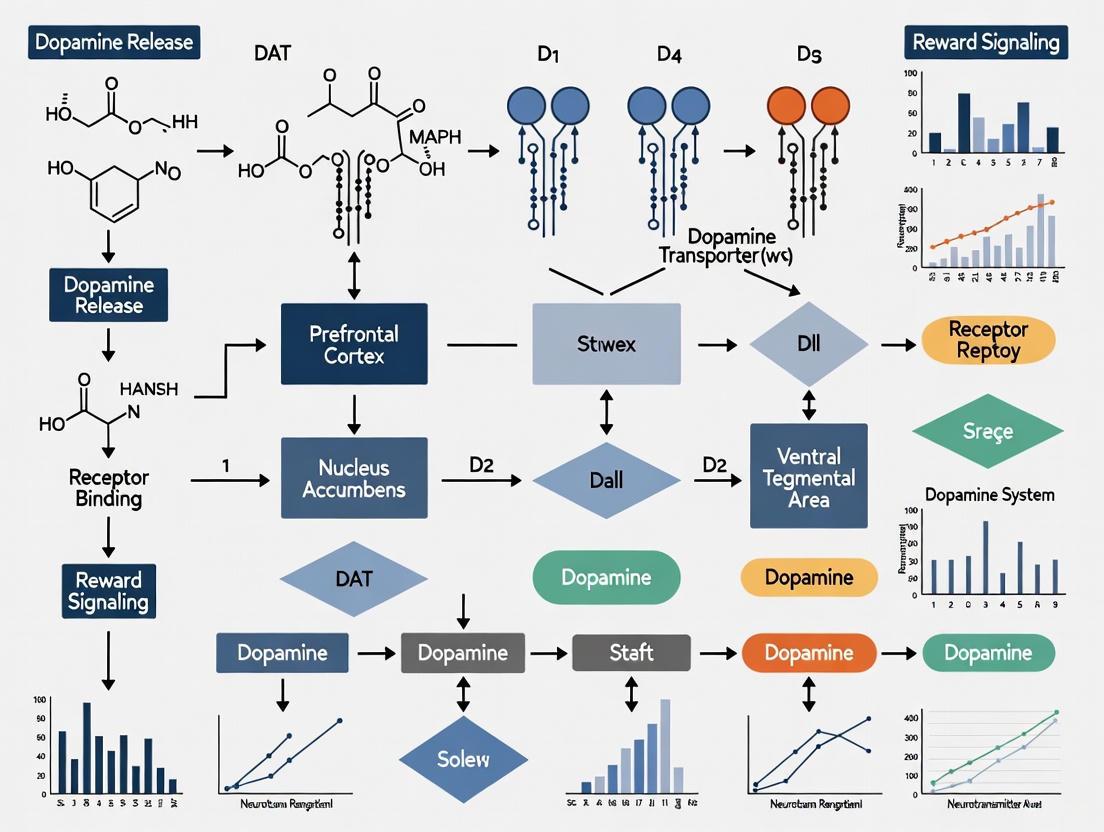
This article provides a comprehensive analysis of dopamine's multifaceted role in motivation and reward processing, tailored for researchers and drug development professionals.
Dopamine in Motivation and Reward: From Neural Circuits to Novel Therapeutics
Abstract
This article provides a comprehensive analysis of dopamine's multifaceted role in motivation and reward processing, tailored for researchers and drug development professionals. It explores the foundational neuroscience, including key pathways and the established reward prediction error hypothesis, while also integrating cutting-edge findings on dopamine's function in encoding reward timing. The content details advanced methodologies for measuring dopamine release and signaling, examines dysfunctions linked to neurological and psychiatric disorders, and evaluates current and emerging therapeutic strategies. By synthesizing foundational knowledge with recent advancements, this review aims to inform future research and the development of targeted treatments for conditions like Parkinson's disease, addiction, and schizophrenia.
The Neurobiological Foundation of Dopamine: Pathways, Prediction, and Salience
Dopamine Synthesis, Metabolism, and Key Neuroanatomical Pathways
Dopamine (DA) is a critical monoamine neurotransmitter that regulates essential physiological and behavioral processes, including movement, motivation, reward processing, and cognition [1]. The dopaminergic system's intricate organization enables its diverse functions, with distinct pathways arising from specific midbrain nuclei to innervate various forebrain regions. Dysfunction within these circuits is implicated in numerous neurological and psychiatric disorders, including Parkinson's disease, addiction, and schizophrenia [2] [1]. This technical review synthesizes current understanding of dopamine synthesis, metabolism, and neuroanatomical pathways, with particular emphasis on their integrated role in motivational control—a central component of reward processing. Recent research continues to refine our models of dopamine function, revealing specialized neuronal subpopulations and regulatory mechanisms that enable adaptive behavior [3] [4] [5].
Dopamine Biosynthesis and Metabolic Regulation
Core Biosynthetic Pathway
Dopamine biosynthesis occurs primarily within catecholaminergic neurons through a highly conserved two-step enzymatic pathway [6] [7]:
Tyrosine Hydroxylation: L-tyrosine is converted to L-3,4-dihydroxyphenylalanine (L-DOPA) by tyrosine hydroxylase (TH), which represents the rate-limiting step in dopamine synthesis [6] [7]. This enzyme requires tetrahydrobiopterin (BH4), molecular oxygen, and iron as essential cofactors.
DOPA Decarboxylation: L-DOPA is rapidly decarboxylated to dopamine by aromatic L-amino acid decarboxylase (AADC), which utilizes pyridoxal phosphate (vitamin B6) as a cofactor [6].
Following synthesis, dopamine is sequestered into synaptic vesicles via the vesicular monoamine transporter 2 (VMAT2), which protects this oxidation-prone molecule from metabolic degradation while maintaining a ready pool for activity-dependent release [7].
Table 1: Core Enzymes in Dopamine Biosynthesis
| Enzyme/Protein | Gene | Function | Cofactors/Requirements |
|---|---|---|---|
| Tyrosine hydroxylase (TH) | TH | Converts L-tyrosine to L-DOPA; rate-limiting step | BH4, Fe²⁺, O₂ |
| Aromatic L-amino acid decarboxylase (AADC) | DDC | Decarboxylates L-DOPA to dopamine | Pyridoxal phosphate |
| Vesicular monoamine transporter 2 (VMAT2) | SLC18A2 | Packages dopamine into synaptic vesicles | Proton gradient |
Cofactor Synthesis and Regulation
The BH4 cofactor essential for TH activity is synthesized through the de novo pathway beginning with GTP cyclohydrolase 1 (GTPCH1), the rate-limiting enzyme in BH4 production [6]. Subsequent steps involve 6-pyruvoyl tetrahydropterin synthase (PTPS) and sepiapterin reductase (SPR), with regeneration occurring through pterin-4α-carbinolamine dehydratase (PCD) and dihydropteridine reductase (DHPR) [6]. TH activity is regulated at multiple levels, including transcription, alternative splicing (with four human isoforms identified), and post-translational modification via phosphorylation at serine residues 8, 19, 31, and 40 [7]. Phosphorylation at Ser40 particularly relieves feedback inhibition by dopamine, enabling increased enzymatic activity during neuronal stimulation.
Dopamine Metabolism and Homeostatic Control
Metabolic Pathways
Dopamine undergoes enzymatic degradation through consecutive steps involving both intracellular and extracellular mechanisms:
- Monoamine Oxidase (MAO): Primarily MAO-B in glial cells and MAO-A in neurons catalyzes dopamine oxidation to 3,4-dihydroxyphenylacetaldehyde (DOPAL) [6].
- Catechol-O-Methyltransferase (COMT): Transfers a methyl group to dopamine, producing 3-methoxytyramine [7].
- Aldehyde Dehydrogenase (ALDH): Converts DOPAL to 3,4-dihydroxyphenylacetic acid (DOPAC) [7].
- Additional Conversions: DOPAC is further metabolized by COMT to homovanillic acid (HVA), the principal dopamine metabolite measured in cerebrospinal fluid [7].
The dopamine transporter (DAT) plays a crucial role in terminating synaptic signaling by rapidly reuptaking dopamine into presynaptic terminals, making it a primary target for psychostimulants like cocaine and amphetamine [6].
Metabolic Implications for Neurodegeneration
Dopamine metabolism inherently generates reactive oxygen species (ROS) and potentially toxic quinones, creating substantial oxidative stress particularly vulnerable to dopaminergic neurons in the substantia nigra [7]. This vulnerability is exacerbated in Parkinson's disease, where post-mortem studies show increased lipid peroxidation and oxidative damage [7]. The delicate balance between dopamine synthesis, storage, release, and degradation is therefore critical for maintaining neuronal viability, with disruptions potentially accelerating neurodegenerative processes.
Table 2: Inherited Disorders of Dopamine Metabolism
| Disorder | Defective Gene | Enzyme/Protein Deficiency | Key Clinical Features |
|---|---|---|---|
| Tyrosine Hydroxylase Deficiency | TH | Tyrosine hydroxylase | L-DOPA responsive dystonia to severe encephalopathy |
| AADC Deficiency | DDC | Aromatic L-amino acid decarboxylase | Infantile hypotonia, oculogyric crises, developmental delay |
| GTPCH1 Deficiency (AD) | GCH1 | GTP cyclohydrolase 1 | DOPA-responsive dystonia (Segawa syndrome) |
| DAT Deficiency | SLC6A3 | Dopamine transporter | Infantile-onset hyperkinetic movement disorder |
| DNAJC12 Deficiency | DNAJC12 | Hsp40 co-chaperone | Intellectual disability, dystonia, parkinsonism |
Neuroanatomy of Dopaminergic Pathways
Major Projection Pathways
The mammalian brain contains several distinct dopaminergic pathways originating primarily from midbrain nuclei:
Major Dopamine Pathways and Functions
- Mesolimbic Pathway: Originates in the ventral tegmental area (VTA) and projects to the ventral striatum (particularly the nucleus accumbens). This pathway mediates reward-related cognition, incentive salience ("wanting"), and positive reinforcement [1] [2].
- Mesocortical Pathway: Also arises from the VTA but projects to prefrontal cortical regions. This circuit regulates executive functions, including attention, working memory, and inhibitory control [1].
- Nigrostriatal Pathway: Projects from the substantia nigra pars compacta (SNc) to the dorsal striatum (caudate nucleus and putamen). This pathway primarily regulates motor function and habit learning [1] [2]. Its degeneration is the hallmark of Parkinson's disease.
- Tuberoinfundibular Pathway: Originates in the hypothalamus and projects to the pituitary gland, where it inhibits prolactin secretion [1].
Recently Identified Circuitry
Recent research has revealed additional complexity within these pathways. MIT researchers identified parallel pathways arising from striosomes (rather than the surrounding matrix) that project to dopamine-producing neurons in the substantia nigra [3]. These striosomal circuits appear to modulate dopamine release in response to emotional information, potentially influencing decisions with strong motivational or anxiety components [3]. This discovery suggests a more complex model of basal ganglia organization than previously recognized, with direct pathways for behavioral control interacting with modulatory circuits that fine-tune dopamine signaling based on emotional context.
Dopamine in Motivation and Reward Processing
Dopamine Neuron Signals
Dopamine neurons exhibit two primary firing modes: tonic (slow, irregular pacemaker-like activity) and phasic (brief, high-frequency bursts) [8]. Phasic dopamine signals closely resemble reward prediction errors (RPEs), increasing firing when rewards exceed expectations and decreasing when outcomes are worse than predicted [8]. This RPE signal is ideally suited to support reinforcement learning by updating the value of actions and environmental states.
Contemporary research indicates specialized functional diversity among dopamine neurons. Current evidence supports at least two distinct subpopulations [8] [4]:
- Value-Encoding Neurons: Excited by rewarding events but inhibited by aversive stimuli, supporting brain systems for goal-seeking, outcome evaluation, and value learning.
- Salience-Encoding Neurons: Respond to both rewarding and aversive events, supporting orienting responses, cognitive processing, and general motivational drive.
Neuropeptide-Defined Subpopulations
Genetic studies have further refined our understanding of dopamine neuron heterogeneity. Research on ventral tegmental area (VTA) neurons identified neuropeptide-defined subpopulations with distinct functional roles [4]:
- Crhr1-Expressing Neurons: Project primarily to the nucleus accumbens core and are critical for Pavlovian association learning and acquisition of instrumental behavior.
- Cck-Expressing Neurons: Project mainly to the nucleus accumbens shell and support sustained motivated responding and incentive salience.
Simultaneous activation of both populations produces synergistic effects on behavioral reinforcement, suggesting these parallel systems normally cooperate to optimize reward-related learning and performance [4].
Dopamine in Aversive Motivation
Recent research from Northwestern University demonstrates that dopamine also plays a crucial role in learning to avoid negative outcomes [5]. Dopamine signals in different subregions of the nucleus accumbens respond differentially to aversive experiences: dopamine increases in the ventromedial shell but decreases in the core during negative events [5]. These complementary signals evolve as animals learn avoidance behaviors, with different subregions contributing to early versus late stages of learning. This dynamic response pattern helps explain how individuals adapt behavior based on whether aversive situations are predictable or controllable [5].
Experimental Approaches and Research Tools
Key Methodologies
Research elucidating dopamine's role in motivation employs diverse technical approaches:
Electrophysiological Recording: In vivo single-unit or multi-unit recordings in awake, behaving animals permit characterization of dopamine neuron firing patterns during reward-based tasks [8] [4]. This methodology enables direct correlation of phasic dopamine signals with specific behavioral events, such as cue presentation, action execution, and reward delivery.
Fast-Scan Cyclic Voltammetry (FSCV): This electrochemical technique provides subsecond measurements of dopamine concentration changes in specific brain regions, allowing researchers to track dopamine release dynamics during learning and behavioral performance [5].
Optogenetic Manipulation: Cell-type-specific control of dopamine neuron activity using Cre-driver lines (e.g., targeting TH⁺, Crhr1⁺, or Cck⁺ neurons) enables causal interrogation of distinct dopamine subpopulations in reward processing and learning [4]. This approach allows both excitation and inhibition of specific pathways during discrete behavioral epochs.
Genetic and Molecular Approaches: Creation of transgenic animal models using Cre-lox technology, combined with viral vector-mediated gene delivery, permits targeted manipulation of dopamine-related genes in specific neuronal populations [4] [2].
Research Reagent Solutions
Table 3: Essential Research Reagents for Dopamine Studies
| Reagent/Category | Specific Examples | Research Application |
|---|---|---|
| Cre-driver Lines | TH-IRES-Cre, DAT-Cre, Crhr1-Cre, Cck-Cre | Cell-type-specific targeting of dopamine neurons and subpopulations |
| Viral Vectors | AAV-DIO-ChR2, AAV-DIO-NpHR, AAV-DIO-GCaMP | Optogenetic control or calcium imaging in defined neuronal populations |
| Dopamine Sensors | dLight, GRABDA | Fluorescent detection of dopamine dynamics with high spatiotemporal resolution |
| DAT Inhibitors | Cocaine, GBR12909, Nomifensine | Block dopamine reuptake to amplify extracellular dopamine signaling |
| Enzyme Inhibitors | α-Methyl-p-tyrosine (TH inhibitor), Benserazide (AADC inhibitor) | Pharmacological disruption of dopamine synthesis pathways |
| Receptor Agonists/Antagonists | Quinpirole (D2R agonist), Haloperidol (D2R antagonist) | Selective manipulation of specific dopamine receptor subtypes |
Dopamine in Disease and Therapeutic Implications
Dysregulation of dopaminergic signaling contributes to numerous neuropsychiatric disorders:
Parkinson's Disease: Characterized by progressive degeneration of nigrostriatal dopamine neurons, leading to motor symptoms including bradykinesia, rigidity, and tremor [6] [2]. Current treatments focus on dopamine replacement therapy using L-DOPA, though long-term efficacy is limited by side effects and declining effectiveness [6].
Addiction Disorders: Involves hijacking of mesolimbic reward pathways, with drugs of abuse producing supraphysiological dopamine release that alters synaptic plasticity and creates powerful reward memories [1]. Recent research shows that repeated rewarding experiences cause desensitization of D2 dopamine receptors, similar to mechanisms underlying drug tolerance [9].
Motivational Disorders: Depression and other psychiatric conditions often feature disrupted dopamine function, particularly in pathways mediating motivation and effort-based decision making [5]. The recently discovered role of dopamine in processing both rewarding and aversive experiences provides new insights into how excessive avoidance—a hallmark of anxiety disorders and depression—may develop through alterations in dopamine function [5].
Novel therapeutic approaches under investigation include cell replacement therapies, gene therapies targeting inherited dopamine deficiencies, and small molecules designed to enhance dopamine synthesis or receptor signaling while minimizing adverse effects [6].
Dopamine systems implement sophisticated computational processes that extend far beyond simple reward signaling. Through specialized anatomical pathways, diverse neuronal subpopulations, and dynamic regulation of synthesis and release, dopamine coordinates multiple aspects of motivational control—from value-based learning and incentive salience to aversive processing and behavioral adaptation. Contemporary research continues to reveal unexpected complexity in dopaminergic function, including recently identified striatal circuits that modulate dopamine release based on emotional context [3] and neuropeptide-defined VTA subpopulations that mediate distinct aspects of reward processing [4]. These advances not only refine fundamental understanding of motivational circuitry but also open new avenues for targeted therapeutic interventions in the numerous neurological and psychiatric conditions involving dopamine dysregulation.
Dopamine has long been characterized as a reward neurotransmitter, but contemporary research reveals its functions are far more complex and integral to adaptive behavior. This whitepaper synthesizes current evidence establishing dopamine's dual role in encoding both motivational salience and reward prediction errors (RPEs). We examine how distinct dopamine neuron populations process valued, salient, and alerting signals to support learning and motivational control. Emerging insights into dopamine neuron heterogeneity, signaling precision, and dysfunctional states provide a refined framework for understanding motivational pathologies and developing targeted therapeutic interventions.
The traditional neurobiological model positioned dopamine primarily as a hedonic signal, central to pleasure and reward processing. However, decades of research have consistently demonstrated that dopamine's functions extend beyond simple reward coding to encompass fundamental learning and motivational processes [10]. The prevailing contemporary framework recognizes dopamine as crucial for reward prediction error (RPE) signaling—computing discrepancies between expected and actual outcomes to guide future behavior [10] [8]. Furthermore, growing evidence indicates dopamine also encodes motivational salience, responding to both rewarding and aversive stimuli based on their significance rather than their valence [8].
This whitepaper examines dopamine's multifaceted roles within these paradigms, focusing on their implications for research and drug development. We synthesize foundational theories with recent discoveries about dopamine neuron heterogeneity, signaling mechanisms, and functional specialization across different neural circuits.
Conceptual Framework: Prediction Errors and Motivational Salience
Reward Prediction Error Signaling
Reward Prediction Errors (RPEs) represent a fundamental learning signal in the brain, calculated as the difference between expected and received outcomes [10]. Dopamine neurons encode these errors through phasic firing patterns:
- Positive Prediction Error: Unexpected rewards or cues predicting reward increase trigger dopamine neuron excitation, reinforcing actions that led to the reward [8].
- Negative Prediction Error: When anticipated rewards fail to materialize or are worse than expected, dopamine neurons are phasically inhibited, discouraging repeated actions [8].
- Fully Predicted Rewards: Expected rewards elicit minimal dopamine response once learning is complete, as no new information is conveyed [8].
This RPE signaling follows computational principles formalized in reinforcement learning models, notably the Rescorla-Wagner model and temporal difference learning algorithms [10]. These models describe how agents learn to predict future rewards through iterative value updates driven by prediction errors.
Motivational Salience Coding
Beyond RPEs, evidence indicates dopamine also signals motivational salience—the significance or intensity of stimuli regardless of their positive or negative valence [8]. Salience-coding dopamine neurons exhibit:
- Arousal to Salient Events: Response to both rewarding and aversive stimuli based on their intensity and unexpectedness.
- Alerting Function: Rapid detection of potentially important sensory cues requiring behavioral adaptation.
- General Motivational Drive: Support for cognitive processing, orienting responses, and overall behavioral activation.
This salience coding operates alongside value-coding systems, creating parallel dopaminergic pathways for different motivational aspects [8].
Figure 1: Differential encoding of motivational value and salience by dopamine neuron subtypes. Value-encoding neurons respond with excitation to rewards and inhibition to aversive stimuli, while salience-encoding neurons respond to both rewarding and aversive stimuli based on intensity.
Dopamine Neuron Heterogeneity and Functional Specialization
Recent research has revealed significant functional and molecular diversity among dopamine neurons, fundamentally challenging homogeneous models of dopaminergic signaling.
Genetic and Functional Subtypes
Advanced genetic and imaging techniques have identified multiple molecularly distinct dopaminergic neuron subtypes with specialized functions:
- Pro-locomotor Dopamine Neurons: A genetically distinct subtype identified in the substantia nigra that fires during body movement but does not respond to rewards [11]. These neurons are specifically implicated in Parkinson's disease motor deficits rather than general reward processing.
- Value-Encoding vs. Salience-Encoding Neurons: Functional distinction between neurons that respond selectively to reward value (excited by rewards, inhibited by aversive stimuli) versus those responding to motivational salience (excited by both rewards and aversive events) [8].
- Region-Specific Specialization: Dopamine neurons projecting to different brain areas (e.g., striatum, amygdala, cortex) show distinct molecular profiles and functional characteristics developed during embryogenesis [11].
Signaling Precision and Dynamics
Traditional views of dopamine as a diffuse neuromodulator have been superseded by evidence of its highly precise signaling capabilities:
- Spatiotemporal Precision: Recent findings demonstrate dopamine operates with "surgical precision" rather than as a broad broadcast signal, forming concentrated hotspots that enable targeted, rapid responses in specific neural circuits [12].
- Dual Signaling Modes: Dopamine transmission occurs through both phasic (brief, high-concentration) and tonic (steady-state) release, mediating distinct behavioral functions with different temporal dynamics [8].
- Sex and Species Differences: Systematic evaluations reveal significant heterogeneity in dopamine dynamics between males and females and across species in striatal subregions, reflecting functional diversity in dopamine kinetics [13].
Experimental Approaches and Methodologies
Measuring Dopaminergic Activity
Diverse methodological approaches enable comprehensive investigation of dopamine signaling across different temporal and spatial scales:
Table 1: Techniques for Measuring Dopaminergic Function in Animal Models
| Technique | Temporal Resolution | Spatial Resolution | Key Applications | Limitations |
|---|---|---|---|---|
| Single-cell Electrophysiology | Millisecond | Single neuron | Recording phasic/tonic firing patterns of VTA/SN dopamine neurons [10] | Invasive; limited to accessible brain regions |
| Fast-Scan Cyclic Voltammetry (FSCV) | Subsecond | Micrometer | Measuring stimulus-evoked dopamine concentration in brain slices with kinetic analysis [13] | Limited to pre-implanted locations; tissue damage risk |
| Microdialysis | Minutes | Millimeter | Monitoring extracellular dopamine concentrations over extended periods [10] | Poor temporal resolution; tissue disruption |
| Optogenetics | Millisecond to second | Cell-type specific | Causally manipulating specific dopamine neuron subtypes in behaving animals [10] | Requires genetic manipulation; artificial activation |
Probing Prediction Error and Salience Encoding
Experimental paradigms for investigating dopamine's roles in prediction error and salience coding typically involve:
- Classical Conditioning Tasks: Pairing conditioned stimuli (CS) with rewards (unconditioned stimuli, US) to examine how dopamine responses transfer from US to CS during learning [10].
- Blocking Designs: Testing Kamin's blocking effect where a previously learned cue-outcome association prevents learning about additional redundant cues, demonstrating prediction error necessity [10].
- Probabilistic Reward Learning: Tasks with variable reward probabilities to examine how dopamine signals track unexpected outcomes and guide behavioral adaptation.
- Aversive Conditioning: Presenting aversive stimuli (e.g., mild footshock) to distinguish between value-coding and salience-coding dopamine responses [8].
Figure 2: Generalized experimental workflow for investigating dopamine signaling in preclinical models, integrating stimulation, measurement, and behavioral paradigms.
Quantitative Data Synthesis
Pharmacological Manipulation Effects
A recent comprehensive meta-analysis of 68 dopamine studies and 39 serotonin studies in healthy volunteers revealed distinct associations with reinforcement learning components:
Table 2: Dopamine vs. Serotonin Effects on Reinforcement Learning Components (Standardized Mean Differences)
| Reinforcement Learning Component | Dopaminergic Manipulation Effect (SMD) | Serotonergic Manipulation Effect (SMD) | Functional Interpretation |
|---|---|---|---|
| Reward Learning/Sensitivity | 0.26 [0.11, 0.40] [14] | Not significant | Dopamine enhances reward learning; serotonin has minimal effect |
| Punishment Learning/Sensitivity | Not significant | 0.32 [0.05, 0.59] [14] | Serotonin enhances punishment learning; dopamine has minimal effect |
| Reward Vigor | 0.32 [0.11, 0.54] [14] | Not significant | Dopamine increases response energy for rewards |
| Reward Discounting | -0.08 [-0.14, -0.01] [14] | -0.35 [-0.67, -0.02] [14] | Both reduce delay discounting, with serotonin having stronger effects |
| Aversive Pavlovian Bias | Not significant | 0.36 [0.20, 0.53] [14] | Serotonin promotes inhibition in aversive contexts |
Regional Heterogeneity in Dopamine Dynamics
Systematic FSCV measurements across striatal subregions reveal significant variations in dopamine release and uptake parameters:
Table 3: Regional and Sex Differences in Dopamine Dynamics in Rodent Striatum
| Striatal Subregion | Sex Differences in DAT Activity | Species Variations | Functional Correlates |
|---|---|---|---|
| Dorsolateral Caudate Putamen (dlCPu) | Consistently increased DAT activity in females [13] | Rat vs. mouse differences in release magnitude | Motor control, habit formation |
| Ventromedial Caudate Putamen (vmCPu) | Consistently increased DAT activity in females [13] | Species-specific uptake kinetics | Sensorimotor integration |
| Nucleus Accumbens Core (NAc core) | Consistently increased DAT activity in females [13] | Cross-species conservation in reward processing | Reward learning, motivation |
| NAc Lateral Shell | Consistently increased DAT activity in females [13] | Variation in release probability | Incentive salience, addiction |
| NAc Medial Shell | Consistently increased DAT activity in females [13] | Distinct clearance mechanisms | Social reward, motivation |
The Scientist's Toolkit: Essential Research Reagents and Materials
Table 4: Key Research Reagents and Tools for Dopamine Signaling Investigation
| Reagent/Tool | Category | Function/Application | Example Uses |
|---|---|---|---|
| Fast-Scan Cyclic Voltammetry (FSCV) | Measurement technique | Selective measurement of dopamine with high spatiotemporal resolution [13] | Determining concentrations of stimulus-evoked DA in brain tissue slices |
| DAT-Cre Transgenic Lines | Genetic model | Cell-type specific targeting of dopamine transporter-expressing neurons | Selective manipulation of dopaminergic circuits |
| D2 Receptor Antagonists | Pharmacological tool | Blocking D2 dopamine receptors to study reward learning and addiction mechanisms [15] | Investigating natural motivational fatigue and addiction pathways |
| Channelrhodopsin (ChR2) | Optogenetic actuator | Precise light-activated stimulation of specific dopamine neuron populations [10] | Causally testing dopamine function in behaving animals |
| Single Nucleus RNA Sequencing | Molecular profiling | Identifying molecularly distinct dopaminergic neuron subtypes [11] | Classifying dopamine neuron heterogeneity and functional specialization |
Clinical Implications and Future Directions
Pathophysiological Mechanisms
Dysfunctions in dopamine signaling pathways contribute to multiple neuropsychiatric disorders:
- Parkinson's Disease: Primarily involves degeneration of pro-locomotor dopamine neurons in the substantia nigra rather than all dopaminergic cells [11], explaining predominant motor symptoms.
- Addiction Disorders: Characterized by dysregulated prediction error signaling and D2 receptor desensitization, leading to compromised natural reward processing [15].
- Schizophrenia and Depression: Associated with disrupted salience coding and altered dopamine receptor function, contributing to aberrant motivational states [10] [16].
Therapeutic Development Strategies
Emerging research suggests promising avenues for targeted interventions:
- Subtype-Specific Treatments: Leveraging dopamine neuron heterogeneity to develop precision therapeutics that target pathological circuits while sparing functional ones [11].
- Circuit-Based Approaches: Focusing on specific dopaminergic pathways (mesolimbic, nigrostriatal, mesocortical) rather than global dopamine modulation [10] [12].
- Receptor-Specific Modulation: Developing compounds that selectively target dopamine receptor subtypes (D1-like vs. D2-like) to fine-tune motivational processes [15].
Future research should prioritize mapping the complete heterogeneity of dopamine neuron populations, understanding how different subtypes integrate into broader neural circuits, and developing technologies for precisely monitoring and manipulating specific dopaminergic signals in behaving organisms. These advances will enable more targeted interventions for dopamine-related disorders while minimizing disruptive side effects.
The ventral tegmental area (VTA) is a crucial hub in the brain's reward circuit, primarily known for its role in reward prediction error signaling. Recent research has unveiled a more sophisticated function: the VTA operates as a precise "dopamine clock," encoding not just the likelihood of future rewards but also their exact timing. This in-depth technical guide synthesizes current findings on the temporal predictive capabilities of VTA dopamine neurons, detailing the experimental paradigms that revealed them, their underlying neural mechanisms, and their implications for motivational research and therapeutic development. We frame these advances within the broader thesis that dopamine's role in motivation extends beyond simple reward valuation to encompass complex, time-based predictive modeling that guides adaptive behavior.
For decades, the predominant model of dopamine function centered on the reward prediction error (RPE) hypothesis. This theory posits that phasic activity of VTA dopamine neurons signals the difference between received and predicted rewards [8]. When a reward is larger than predicted, dopamine neurons fire vigorously (positive prediction error); when a reward is omitted, their activity is suppressed (negative prediction error) [8]. This RPE signal is thought to serve as a teaching signal for reinforcement learning, enabling organisms to adapt their behavior to maximize future rewards [8].
However, a growing body of evidence indicates that this framework is incomplete. It has become clear that dopamine neurons are not a homogeneous population and that their functions extend beyond pure reward processing [8] [11]. Some dopamine neurons are excited by both rewarding and aversive events, encoding motivational salience, while others specifically encode motivational value [8]. Furthermore, groundbreaking research has identified genetic subtypes of dopamine neurons that do not respond to rewards at all but instead fire during body movement [11].
This refined understanding sets the stage for the most recent discovery: the VTA's role as a temporal predictor. Rather than merely encoding whether a reward will occur, VTA dopamine neurons have been found to forecast when it will occur, functioning as a multi-timescale "clock" for future rewards [17]. This review will dissect the experimental evidence, computational principles, and neurobiological mechanisms underlying this sophisticated temporal prediction system.
The Dopamine Clock: Core Concept and Key Findings
From Reward Value to Reward Timing
The conceptual leap from value-based to time-based reward prediction represents a significant advancement in our understanding of dopamine function. Initial studies established that when a reward consistently follows a sensory cue (e.g., a light signal), VTA dopamine release shifts from the moment of reward delivery to the onset of the predictive cue [17]. This demonstrated that dopamine encodes the prediction of reward rather than the reward itself.
Recent research reveals that this predictive coding is far more sophisticated. A 2025 study published in Nature demonstrated that the VTA encodes the temporal evolution of anticipated rewards [17]. Instead of predicting a weighted sum of future rewards, the VTA represents each potential gain separately, along with the precise moment it is expected. This allows the brain to construct a detailed timeline of expected future outcomes.
Multi-Timescale Representation of Reward
A key finding is that different VTA dopamine neurons operate on different temporal scales, creating a distributed system for tracking imminent and delayed rewards [17].
- Specialized Neural Populations: The VTA contains distinct populations of dopamine neurons that specialize in different temporal horizons. Some neurons focus on rewards expected within seconds, while others encode rewards anticipated minutes away [17].
- Collective Temporal Encoding: The diversity of time-specialized neurons enables the VTA population to collectively represent the precise timing of expected rewards. This distributed coding scheme provides the learning system with great flexibility, allowing it to adapt behavior to maximize either immediate or delayed rewards based on current goals and priorities [17].
Table 1: Key Characteristics of the Dopamine Temporal Prediction System
| Characteristic | Traditional RPE Model | Dopamine Clock Model |
|---|---|---|
| Primary Signal | Difference between received and predicted reward value | Expected timing and value of future rewards |
| Temporal Granularity | Coarse (whether a reward will occur) | Fine (precisely when a reward will occur) |
| Neural Representation | Largely homogeneous response | Diverse, multi-timescale specialized neurons |
| Computational Basis | Scalar reward summation | Temporal evolution of reward expectations |
| Functional Role | Learning stimulus-reward associations | Orchestrating timed behavioral sequences |
Experimental Evidence and Methodologies
Paradigm for Probing Temporal Prediction
The discovery of the dopamine clock relied on innovative experimental designs that dissociate reward timing from reward identity and value. A 2023 study in Nature Neuroscience employed a sophisticated odor-based choice task for rats to demonstrate that dopamine neurons can track multiple independent predictive streams [18].
Experimental Protocol:
- Subjects: Rats were trained in an olfactory decision-making task.
- Task Design: The timing and identity of multiple rewards delivered within each trial were systematically varied across trial blocks.
- Independent Variables: The paradigm independently manipulated:
- The specific reward type (e.g., sucrose vs. maltodextrin).
- The precise timing of reward delivery after a cue.
- The sequence of multiple rewards within a single trial.
- Neural Recording: Dopamine neurons in the VTA were recorded during task performance to monitor phasic activity patterns in response to cues and rewards.
This design created a scenario where subjects had to form and maintain multiple independent beliefs about the "what" and "when" of expected outcomes, pushing beyond the capabilities of a single-stream predictive model [18].
Integration of Artificial Intelligence and Neuroscience
The interpretation of the complex neural data resulting from these experiments was achieved through a fruitful collaboration between neuroscience and artificial intelligence [17].
Methodological Workflow:
- Algorithm Development: Researchers developed a purely mathematical machine learning algorithm based on reinforcement learning principles that incorporated the timing of reward processing.
- Data Collection: Extensive neurophysiological data on VTA activity was gathered from animals experiencing rewards with varying temporal contingencies.
- Model Fitting: The algorithm was applied to the empirical neural data.
- Validation: The model's predictions showed a perfect match with the observed neurophysiological findings, confirming that VTA neurons collectively implement a multi-timescale reinforcement learning algorithm [17].
This approach demonstrates a powerful bidirectional exchange between fields: brain-inspired AI can in return serve as a tool to reveal fundamental neurophysiological mechanisms.
Diagram: The "Dopamine Clock" Conceptual Model. Sensory cues are processed by the heterogeneous VTA dopamine population. Specialized neuronal subpopulations, tuned to different temporal horizons (short, mid, and long-term), collectively generate a precise temporal prediction signal that guides behavior.
The Scientist's Toolkit: Key Research Reagents and Solutions
Research into the dopamine clock relies on a sophisticated arsenal of molecular, genetic, and physiological tools. The table below details essential reagents and their applications in this field.
Table 2: Essential Research Reagents for Investigating the Dopamine Clock
| Reagent / Tool | Function / Application | Key Details & Utility |
|---|---|---|
| DAT::Cre Mice | Genetic access to dopamine neurons for targeted manipulation. | Enables cell-type-specific expression of optogenetic actuators or sensors in dopamine transporter (DAT)-expressing neurons [19]. |
| TH-Cre Rats | Allows targeting of tyrosine hydroxylase (TH)-positive catecholamine neurons, including dopamine neurons. | Used for in vivo recording and manipulation of dopaminergic populations during complex behavior [20]. |
| AAV5-EF1a-DIO-hChR2(E123T/T159C)-mCherry | A Cre-dependent adeno-associated virus (AAV) for optogenetic excitation. | Permits millisecond-precise activation of defined dopamine neuron subpopulations to probe causal roles in temporal prediction [20]. |
| D1/D5 Receptor Antagonists | Pharmacological blockade of key dopamine receptors in target regions. | Used to dissect the necessity of dopamine signaling for LTP induction and memory formation in hippocampal-prefrontal circuits [19]. |
| Multitetrode Microdrives with Optrodes | Combined electrophysiology and optrogenetics during behavior. | Enables simultaneous recording of neural ensemble activity (e.g., in CA1, mPFC) while manipulating VTA dopamine neurons [20]. |
| Single Nucleus RNA Sequencing (snRNA-seq) | Molecular profiling of neuronal diversity. | Identifies genetically distinct dopaminergic neuron subtypes, linking molecular identity to functional specialization (e.g., motor vs. reward response) [11]. |
Implications and Future Directions
Redefining Motivational Control and Cognitive Flexibility
The discovery of the dopamine clock necessitates an update to models of motivational control. Motivation is not solely driven by the magnitude of a predicted reward but is finely tuned by its temporal proximity. This explains the behavioral preference for immediate over delayed rewards (temporal discounting) at a neural circuit level. The coordination between this refined dopamine signal and cognitive brain regions is critical for behavioral adaptation.
Recent simultaneous recordings from VTA, hippocampal CA1, and medial prefrontal cortex (mPFC) in rule-switching tasks reveal that developing dopamine reward predictions are temporally coordinated with changes in rule representations in mPFC and CA1. This coordinated dynamic ultimately leads to a shift in behavioral strategy [20]. The dopamine clock thus appears to provide a crucial reward-based teaching signal that guides the updating of cognitive maps and task representations in higher-order circuits.
Novel Avenues for Therapeutic Intervention
Understanding the dopamine clock opens new possibilities for treating psychiatric and neurological disorders characterized by motivational and temporal processing deficits.
- Parkinson's Disease (PD): The progressive loss of dopamine neurons in PD may not just be a loss of a generic reward or motor signal. New evidence suggests there are different molecular subtypes, and PD may specifically affect "pro-locomotor" dopaminergic neurons [11]. This refined understanding could lead to more targeted, subtype-specific treatments that spare non-motor functions.
- Addiction: The same D2 dopamine receptor (D2R) desensitization mechanism underlying drug addiction also governs the natural decline in motivation for repeated non-drug rewards [9]. In addiction, drug-induced dopamine surges may corrupt the precise temporal models maintained by the VTA, leading to maladaptive prioritization of drug-seeking. Strategies to restore normal D2R sensitivity or temporal signaling could represent novel therapeutic approaches.
- Cognitive Disorders: Deficits in the ability to represent future outcomes are hallmarks of conditions like schizophrenia and ADHD. A dysfunctional dopamine clock could underlie poor foresight and impulsivity, suggesting new biomarkers and neuromodulatory targets.
The conceptualization of the VTA as a "dopamine clock" marks a paradigm shift in motivational neuroscience. Moving beyond the classic reward prediction error model, this new framework posits that dopamine neurons implement a multi-threaded, temporally precise predictive model of the world. This allows an organism not only to learn what is valuable but to precisely anticipate when valuable outcomes will occur, enabling exquisitely timed and adaptive behavioral responses. The continued integration of large-scale neural recording, cell-type-specific manipulation, and computational modeling will be essential to fully unravel the mechanisms of this sophisticated neural clock and its profound implications for understanding and treating disorders of motivation and cognition.
The dopamine system is fundamental to motivational control, but it is not a monolithic entity. Emerging evidence from modern neuroscience reveals a functional specialization within midbrain dopamine neurons, forming distinct circuits that process different aspects of motivation [21]. This functional division is critical for adaptive behavior: some dopamine neurons specifically encode motivational value (how good or bad an outcome is), supporting brain networks for reward seeking, evaluation, and value-based learning [21]. In parallel, other dopamine neurons encode motivational salience (how noticeable or important a stimulus is regardless of its positive or negative valence), supporting brain networks for orienting, cognition, and general motivation [21] [22]. This whitepaper delineates the anatomical, physiological, and functional distinctions between these neuronal populations, framing their operations within the broader context of dopamine research on motivation and reward processing. Understanding this dichotomy provides a crucial framework for developing targeted therapeutic interventions for disorders of motivation, including addiction, depression, and anhedonia.
Theoretical Framework and Key Distinctions
Conceptual Definitions
- Motivational Value: Refers to the inherent attractiveness (positive value) or aversiveness (negative value) of a stimulus. Value-coding signals are therefore valence-dependent—they differentiate between rewarding and aversive outcomes [21]. These signals guide goal-directed behavior by informing the organism "what is good and what is bad."
- Motivational Salience: Refers to the intensity of a stimulus's motivational impact, irrespective of whether it is appetitive or aversive [22]. Salience-coding signals are valence-independent—they respond to both rewarding and aversive stimuli because both are motivationally significant and demand attention [21] [23]. These signals alert the organism to "what is important."
Underlying Computational Roles
The reward prediction error (RPE) theory posits that dopamine neurons signal the difference between received and predicted rewards [24]. This error signal is crucial for reinforcement learning. However, this classic view has been refined by the discovery of distinct dopamine neuron types:
- Value-Coding Neurons: These neurons appear to implement a canonical RPE signal. They are activated by rewards better than expected (positive prediction error), remain at baseline for fully predicted rewards, and show depressed activity when rewards are worse than expected (negative prediction error) [24]. This precise, valence-dependent coding is ideal for updating value expectations and learning about specific rewards and punishments.
- Salience-Coding Neurons: These neurons signal motivational salience and respond to both rewarding and aversive stimuli [21] [23]. They function as a general alerting system, flagging potentially important sensory cues to facilitate rapid detection and processing. This signal is thought to drive general motivation and arousal, enhancing attention and cognitive resources for dealing with salient events [21].
Table 1: Core Characteristics of Value-Encoding vs. Salience-Encoding Neurons
| Feature | Value-Encoding Neurons | Salience-Encoding Neurons |
|---|---|---|
| Response to Reward | Strong activation [24] | Strong activation [21] |
| Response to Aversive Stimuli | Depression of activity [24] | Strong activation [21] |
| Key Signal Encoded | Reward Prediction Error (RPE) [24] | Motivational Salience [21] [23] |
| Valence Dependence | Valence-dependent | Valence-independent [23] |
| Primary Functional Role | Learning specific stimulus-reward associations, guiding seeking behavior [21] | General alerting, orienting attention, enhancing cognitive processing [21] |
| Theoretical Basis | Reinforcement Learning (e.g., Temporal Difference Learning) [24] [25] | Motivational Salience and Attentional Capture [23] [22] |
Neural Circuitry and Signaling Pathways
The dissociable functions of value and salience processing are instantiated in partially distinct brain networks. Evidence suggests that while both neuronal types may originate in similar midbrain regions (ventral tegmental area, VTA; substantia nigra, SN), they are embedded in different input-output circuits [21].
Value-encoding neurons are strongly connected to brain regions involved in reward evaluation and goal-directed behavior, such as the orbitofrontal cortex and the ventromedial striatum (particularly the nucleus accumbens shell for attributing "wanting") [21] [22]. These circuits use the precise RPE signal to update the value of states and actions.
In contrast, salience-encoding neurons project to regions like the anterior cingulate cortex and the dorsal striatum, which are implicated in attention, cognitive control, and motor preparation [21]. This pathway amplifies processing of salient cues across the brain. The basal forebrain also contains distinct neuronal populations that encode motivational salience with phasic bursting activity, which are neurophysiologically different from movement-related neurons in the same region [26].
Experimental Evidence and Methodologies
Key Experimental Paradigms
The distinction between value and salience encoding has been elucidated through carefully designed neurophysiological experiments. The following protocols represent core methodologies in this field.
Classical Conditioning with Rewarding and Aversive Stimuli
This paradigm directly tests neuronal responses to valenced outcomes [21] [23].
Objective: To determine whether a neuron's response is valence-specific (value-coding) or valence-general (salience-coding).
Protocol:
- Subjects: Rodents (rats or mice) or non-human primates.
- Apparatus: Operant chamber with reward delivery system (e.g., liquid dispenser) and aversive stimulus delivery system (e.g., mild footshock or a puff of air to the face).
- Stimuli: Auditory or visual conditioned stimuli (CS+, CS-) and unconditioned stimuli (US).
- Procedure:
- Training Phase: A neutral cue (CS+, e.g., a tone) is paired with a rewarding US (e.g., sucrose solution). A different cue (CS-) is paired with no outcome. In separate blocks or for different cues, a CS+ is paired with an aversive US (e.g., mild shock).
- Test Phase/Recording: Extracellular recordings are made from dopaminergic neurons in the VTA/SN during the presentation of the CS+ and CS- cues, as well as the USs.
- Key Metrics: Neuronal firing rate in response to the CS+ for reward, CS+ for punishment, and the USs themselves.
Interpretation: Value-coding neurons will fire to the reward-predictive CS+ and the reward US, but will be inhibited by the aversive-predictive CS+ and the aversive US. Salience-coding neurons will fire to both the reward- and aversive-predictive CS+ [21].
Reward Prediction Error (RPE) Task
This protocol tests the core tenet of dopamine function and reveals sub-populations that deviate from the pure RPE signal [24].
Objective: To quantify how neuronal activity tracks the difference between expected and actual reward outcomes.
Protocol:
- Subjects: Typically non-human primates or rodents.
- Apparatus: Behavioral setup with cues and liquid reward delivery.
- Procedure:
- A conditioned stimulus (e.g., a shape on a screen) reliably predicts the delivery of a specific quantity of reward after a fixed delay.
- In a minority of trials, the reward is either omitted ("negative prediction error") or delivered in an unexpectedly large quantity ("positive prediction error").
- Neuronal activity is recorded during the cue, reward expectation period, and reward delivery/omission.
- Key Metrics: Firing rate at the time of reward delivery compared to baseline across expected, omitted, and unexpected reward conditions.
Interpretation: A canonical value-coding (RPE) neuron will show: i) No response to a fully predicted reward, ii) A phasic burst to an unexpected reward (positive PE), and iii) A dip in activity below baseline when a predicted reward is omitted (negative PE) [24]. Neurons that fire to both unexpected rewards and unexpected punishments in this context are likely salience-encoders.
Quantitative Data and Findings
Table 2: Representative Experimental Data from Key Studies
| Experiment Reference | Neuron Type | Response to Reward-Predicting Cue | Response to Aversive-Predicting Cue | Proposed Circuit/Pathway |
|---|---|---|---|---|
| Bromberg-Martin et al., 2010 [21] | Value-Encoding | Strong activation | Inhibition or no response | Connected to brain networks for seeking and value learning |
| Bromberg-Martin et al., 2010 [21] | Salience-Encoding | Strong activation | Strong activation | Connected to brain networks for orienting and general motivation |
| Schultz, 2016 [24] | RPE (Value) | Transferred from reward; scales with probability/magnitude | Not typically tested (theory predicts inhibition) | Nigrostriatal and Mesolimbic pathways |
| Anderson et al., 2021 [23] | Salience-Sensitive (fMRI BOLD) | Attentional capture by reward-associated distractors | Attentional capture by threat-associated distractors | Motivational salience network (overlapping activation in striatum, VTA/SN) |
| Lin et al., 2014 [26] | Basal Forebrain Salience | Phasic bursting to salient stimuli (both S-Large & S-Small) | Phasic bursting to salient stimuli | Corticopetal basal forebrain neurons (slow-firing, broad waveforms) |
The following diagram illustrates the typical workflow for an experiment designed to dissociate these neuronal types, integrating behavioral training, electrophysiological recording, and data analysis.
The Scientist's Toolkit: Research Reagent Solutions
Table 3: Essential Reagents and Tools for Investigating Motivational Encoding
| Reagent/Tool | Primary Function | Application Example |
|---|---|---|
| In Vivo Electrophysiology (Multi-electrode arrays, e.g., NeuroNexus) | Records action potentials from single or populations of neurons in behaving animals. | Chronic implantation in VTA/SN of rodents [26] or non-human primates to record dopamine neuron activity during behavioral tasks. |
| Optogenetics (Channelrhodopsin, Halorhodopsin) | Millisecond-precision control of specific neuronal populations using light. | Expressing opsins in genetically-defined dopamine neurons (e.g., TH-Cre mice) to causally test their role in value or salience encoding via excitation/inhibition [25]. |
| Dopamine Sensors (dLight, GRABDA) | Fluorescent or bioluminescent sensors for real-time detection of dopamine release. | Expressing sensors in target regions (e.g., striatum) via viral vectors to measure dopamine transients evoked by value or salience cues with fiber photometry. |
| Quantitative Behavioral Software (e.g., Med-PC, Bpod) | Precisely controls and monitors operant conditioning tasks. | Programming and running complex reinforcement learning paradigms with precise timing for stimulus delivery and reward/aversive outcome contingencies [26]. |
| Functional MRI (fMRI) | Measures brain-wide activity indirectly via the BOLD signal. | Identifying overlapping and distinct brain networks activated by rewarding vs. aversive stimuli in humans, supporting the value/salience dichotomy [23]. |
| Pharmacological Agents (Dopamine receptor agonists/antagonists) | Selectively enhances or blocks dopamine signaling at specific receptor subtypes. | Systemic or localized infusion (e.g., into NAc) to determine how D1 vs. D2 receptor signaling contributes to value-driven vs. salience-driven attention and behavior [23]. |
Implications for Drug Development and Disease Models
The dissociation between motivational value and salience has profound implications for understanding and treating neuropsychiatric disorders. Dysfunction in these distinct circuits can lead to separable symptom profiles.
- Addiction: This disorder is characterized by a pathological hijacking of incentive salience processes [22]. Drug-associated cues acquire excessive motivational salience, triggering intense craving and relapse, even when the conscious "liking" (value) for the drug may have diminished [22]. Therapies aimed at reducing the exaggerated salience of drug cues, rather than just targeting hedonic value, may be more effective.
- Schizophrenia: Positive symptoms, such as psychosis, may arise from a misattribution of salience to neutral stimuli, making them seem profoundly significant [21]. This could result from hyperactivity in salience-coding dopamine pathways. Antipsychotics, which are D2 dopamine receptor antagonists, may act by normalizing this aberrant salience signaling.
- Depression and Anhedonia: These conditions may primarily involve a deficit in the value-encoding system. The inability to experience pleasure (anhedonia) and a reduced drive to pursue rewards suggest a blunted RPE signal and impaired function in value-processing circuits like the ventral striatum and orbitofrontal cortex. Therapeutic approaches might focus on enhancing value responsiveness.
This framework encourages a move beyond a one-size-fits-all approach to modulating the dopamine system. Future drug development should aim for circuit-specificity, targeting either value or salience pathways based on the specific symptom domain of the disease.
Measuring Dopaminergic Signaling and Applying Insights in Drug Development
The study of dopamine is fundamental to understanding core brain functions such as motivation, reward processing, and learning. Research in this field has been propelled forward by significant technological advancements in our ability to detect this neurotransmitter in the living brain. The progression from established methods like Fast-Scan Cyclic Voltammetry (FSCV) and microdialysis to the revolutionary emergence of genetically encoded sensors represents a paradigm shift in neuroscience. These tools have moved the field from coarse, slow measurements to high-resolution, cell-type-specific detection of dopamine dynamics during complex behaviors.
This evolution is particularly crucial for research on motivation and reward. For instance, recent research into maternal motivation, a potent natural behavior, has shown that dopamine regulates both the "appetitive" (goal-seeking, such as pup retrieval) and "consummatory" (rewarding, such as nursing) aspects of caregiving [27]. Understanding such complex behavioral sequences requires tools that can capture dopamine dynamics across multiple timescales and in specific neural circuits. This guide provides an in-depth technical overview of these core techniques, their methodologies, and their application in modern dopamine research, framing them within the context of a broader scientific quest to decipher the neurochemical basis of motivated behavior.
Foundational Methods: FSCV and Microdialysis
Before the advent of optical sensors, electrochemical and sampling-based methods were the gold standards for in vivo dopamine detection. While offering distinct advantages, they also possess inherent limitations that have shaped their application.
Fast-Scan Cyclic Voltammetry (FSCV)
Core Principle: FSCV employs small, implanted carbon-fiber microelectrodes (CFMEs) to which a rapid, repeating voltage waveform (typically from -0.4 V to +1.3 V and back) is applied. When dopamine molecules adsorb to the carbon surface, they oxidize, producing a measurable electrical current. The resulting "voltammogram" serves as a fingerprint, allowing for the identification and quantification of dopamine with high temporal resolution (milliseconds) [28] [29].
Detailed Experimental Protocol: A typical FSCV experiment for measuring dopamine transients in vivo involves the following steps [29] [30]:
- Electrode Fabrication: A single carbon fiber (5–10 µm in diameter) is sealed within a glass capillary. One end is trimmed to expose ~50-200 µm of the fiber.
- Pre-Calibration: Before implantation, the electrode's sensitivity is quantified in vitro by recording its current response to known concentrations of dopamine in a buffer solution (e.g., Tris buffer, pH 7.4).
- Surgical Implantation: The anesthetized animal is placed in a stereotaxic frame. A small craniotomy is performed, and the CFME is precisely lowered into the target brain region (e.g., nucleus accumbens or dorsal striatum). A reference electrode (e.g., Ag/AgCl) is placed elsewhere.
- In Vivo Recording: In an awake, behaving animal, the FSCV waveform is applied at 10 Hz. The resulting current is amplified and digitized.
- Data Processing & Analysis: Background currents are subtracted to isolate the Faradaic current from dopamine. Signals are identified by comparing the cyclic voltammogram against a library of known standards.
- Post-Calibration: After the experiment, the electrode is re-calibrated. However, sensitivity is often reduced after in vivo use due to biofouling [29].
Advancements and Limitations: A key limitation of traditional 7 µm CFMEs is their mechanical fragility and limited lifespan for chronic recordings. Recent work has focused on improving their robustness. For example, one study fabricated 30 µm cone-shaped CFMEs, which demonstrated a 3.7-fold improvement in dopamine signals in vivo and a 4.7-fold increase in lifespan compared to standard 7 µm CFMEs, due to reduced tissue damage and improved biocompatibility [30].
Despite its excellent temporal resolution, FSCV requires the implantation of a physical probe and can struggle to distinguish dopamine from other electroactive interferents with similar redox potentials, such as norepinephrine [28].
Microdialysis
Core Principle: Microdialysis measures extracellular solute concentrations by mimicking the function of a blood capillary. A probe with a semi-permeable membrane is implanted into the brain. A physiological solution (perfusate) is pumped slowly through the probe, and molecules from the extracellular fluid, including dopamine, diffuse across the membrane into the dialysate, which is collected for offline analysis, typically via high-performance liquid chromatography (HPLC) [31].
Detailed Experimental Protocol:
- Probe Implantation: A guide cannula is surgically implanted above the target brain region. After a recovery period (to mitigate acute injury effects), a microdialysis probe (typically ~300 µm in diameter) is inserted through the guide cannula [31].
- Perfusion and Sample Collection: The probe is perfused with an artificial cerebrospinal fluid (aCSF) at a low flow rate (0.5–2 µL/min). Dialysate is collected in vials at intervals of 5–20 minutes, reflecting the slow sampling rate of the technique.
- Sample Analysis: Collected dialysate samples are injected into an HPLC system coupled with an electrochemical or mass spectrometry detector to quantify absolute dopamine concentrations.
- Pharmacological Manipulation: A major advantage of microdialysis is "retrodialysis," where drugs are delivered directly to the tissue via the perfusate, allowing for localized pharmacological manipulations [31].
Limitations and the Tissue Injury Response: The primary limitation of microdialysis is its poor temporal resolution (minutes), which is insufficient to track the phasic, sub-second dopamine release events critical for reward prediction error and motivation [28]. Furthermore, the large probe size causes significant tissue damage. Studies using FSCV have documented a gradient of disrupted dopamine activity around an implanted microdialysis probe, with evoked dopamine release reduced by up to ~90% at a distance of 200 µm [31]. This underscores the importance of allowing for a post-implantation recovery period and carefully interpreting data in the context of this penetration injury.
Table 1: Core Characteristics of Foundational Dopamine Detection Methods
| Feature | Fast-Scan Cyclic Voltammetry (FSCV) | Microdialysis |
|---|---|---|
| Temporal Resolution | ~10-1000 ms (Millisecond scale) | ~5-20 minutes |
| Spatial Resolution | Micrometer (single electrode) | Millimeter (large probe footprint) |
| Measurement Type | Tonic and phasic release events | Steady-state extracellular concentration |
| Key Advantage | Excellent temporal resolution for transient signals | Broad chemical scope; absolute concentrations |
| Primary Limitation | Limited chemical identification; invasive probe | Poor temporal resolution; significant tissue damage |
The Genetically Encoded Sensor Revolution
Genetically encoded fluorescent sensors have transformed neuroscience by enabling optical recording of neurotransmitter dynamics with high spatiotemporal precision and genetic specificity.
Core Principles and Sensor Engineering
The most prominent dopamine sensors, GRABDA (GPCR Activation-Based Dopamine) and dLight, are engineered using a similar principle [32] [28]. They consist of a dopamine receptor (D1-like for dLight, D2-like for GRABDA) as the sensing module, integrated with a circularly permuted green fluorescent protein (cpEGFP) as the reporter module. Upon dopamine binding, a conformational change in the receptor is allosterically transmitted to the cpEGFP, causing a measurable increase in fluorescence intensity [28] [33].
This design strategy is summarized in the following workflow:
Key Sensor Variants and Properties
Through iterative engineering, researchers have created a family of sensors with varying affinities and dynamic ranges to suit different experimental needs. A head-to-head comparison of several key sensors expressed in "sniffer cell" lines provides clear guidance for selection [33].
Table 2: Head-to-Head Comparison of Select Genetically Encoded Dopamine Sensors
| Sensor Name | Sensor Family | Apparent EC₅₀ for DA | Dynamic Range (ΔF/F₀%) | Key Application |
|---|---|---|---|---|
| GRABDA1h | D2R-based | ~10 nM [28] | ~250% [33] | High-affinity detection of subtle dopamine fluctuations |
| GRABDA2m | D2R-based | ~100 nM | ~477% [33] | Balancing sensitivity and large signal for most in vivo work |
| dLight1.1 | D1R-based | ~40 nM [33] | ~229% [33] | Sensitive detection via D1 receptor-expressing circuits |
| dLight1.3b | D1R-based | ~600 nM [33] | ~661% [33] | Detection of high, saturating dopamine concentrations |
These sensors exhibit excellent molecular specificity for dopamine over other neurotransmitters, though they can be activated by high levels of norepinephrine [28] [33]. Crucially, they are engineered to have minimal coupling to downstream G-protein signaling, making them inert reporters that do not interfere with native neurotransmission [28].
Experimental Protocol for Fiber Photometry
A common application of these sensors is fiber photometry, which measures bulk fluorescence changes in a specific brain region in freely behaving animals [32] [34].
- Viral Delivery: A virus (e.g., AAV) carrying the gene for the chosen sensor (e.g., GRABDA2m) is injected into the target brain region (e.g., nucleus accumbens) of a model animal (e.g., mouse). This allows for region-specific expression.
- Fiber Implantation: An optical fiber (typically 200-400 µm core diameter) is implanted above the viral injection site to excite the sensor and collect its emitted fluorescence.
- Recording Session: The animal is connected to a fiber photometry system via a patch cord during behavior. The system delivers excitation light and records the resulting fluorescence signal.
- Data Analysis: The recorded fluorescence (F) is normalized to a baseline (F₀) to calculate ΔF/F₀, which reflects changes in dopamine concentration. Signals are time-locked to behavioral events.
Application in Motivation and Reward Research
The convergence of these techniques has provided unprecedented insights into dopamine's role in motivation. A seminal study used FSCV, fiber photometry with a calcium indicator (GCaMP) in dopamine neurons, and GRABDA sensors to demonstrate that dopamine in the ventral striatum accurately encodes real-time reward availability over sustained periods [34].
In this task, mice learned that an 80-second tone (S-) signaled reward unavailability. Dopamine levels, measured by all three techniques, showed a sustained decrease throughout the S- period, reflecting the state of reward unavailability, and exhibited rapid transients at the transitions between availability states [34]. This multi-faceted encoding—on both slow (seconds-minute) and fast (sub-second) timescales—illustrates how modern tools can capture the complex dynamics of motivational signals and would be impossible to observe with microdialysis alone.
Furthermore, the use of genetically encoded sensors has allowed researchers to probe dopamine dynamics during complex, naturalistic behaviors such as maternal care [27] and social interaction, revealing how this system is dynamically recruited to coordinate sequential appetitive and consummatory actions.
The Scientist's Toolkit: Essential Research Reagents
Table 3: Key Reagents and Materials for Dopamine Sensing Experiments
| Item | Function / Description | Example Use Case |
|---|---|---|
| GRABDA or dLight AAV | Genetically encoded sensor; enables cell-type or region-specific expression of dopamine sensor. | Viral injection into NAc for fiber photometry [28]. |
| Carbon Fiber Microelectrode | Working electrode for FSCV; typically 7-30 µm diameter. | Measuring phasic dopamine release in striatum [30]. |
| Microdialysis Probe | Semi-permeable membrane probe for sampling extracellular fluid. | Chronic monitoring of basal dopamine levels [31]. |
| Optical Fiber | For delivering excitation light and collecting fluorescence in photometry. | Implanted above NAc to record from GRABDA-expressing neurons [34]. |
| Dopamine Receptor Antagonists | Pharmacological blockers (e.g., Haloperidol for D2R) to verify signal specificity. | Confirming GRABDA signal is blocked by receptor antagonist [28]. |
The choice of technique fundamentally shapes the experimental design and the nature of the questions that can be asked. The following diagram contrasts the core workflows for applying FSCV, microdialysis, and genetically encoded sensors in a behavioral neuroscience experiment.
The journey from FSCV and microdialysis to genetically encoded sensors represents a dramatic leap in our capacity to observe neurochemical signals in the brain. While FSCV remains unmatched for tracking the very fastest electrochemical events, and microdialysis provides a broad chemical profile, genetically encoded sensors offer an unparalleled combination of genetic specificity, high spatiotemporal resolution, and relatively minimal invasiveness. For researchers investigating the role of dopamine in motivation and reward, the modern toolkit is not about choosing a single "best" method, but rather about strategically selecting and integrating these complementary techniques to illuminate the full spectrum of dopamine's dynamics, from millisecond transients to sustained motivational states.
Dopamine is a critical neurotransmitter regulating voluntary movement, motivation, reward and addictive behavior, moods, cognition, memory, learning, and food intake [35]. The dopaminergic system plays a pivotal role in motivational control – in learning what things in the world are good and bad, and in choosing actions to gain the good things and avoid the bad things [8]. Midbrain dopamine neurons, located in the substantia nigra pars compacta (SNc) and ventral tegmental area (VTA), transmit dopamine via multiple pathways including the nigrostriatal (voluntary movement), mesolimbic (reward processing), mesocortical (executive function), and tuberoinfundibular (prolactin regulation) pathways [35].
Contemporary research reveals that dopamine operates with extraordinary precision in the brain, functioning not as a broad diffusion signal but as a finely-tuned system that delivers highly localized messages to specific nerve cell branches at exact moments in time [12]. This precision signaling enables dopamine to simultaneously fine-tune individual neural connections and orchestrate complex behaviors like movement, decision-making, and learning. Furthermore, recent advances demonstrate that dopamine signals in key brain areas respond differently to negative experiences, helping the brain adapt based on whether a situation is predictable or controllable [5]. This challenges simplistic "dopamine detox" concepts and provides insight into how alterations in dopamine function may contribute to excessive avoidance in psychiatric conditions such as anxiety, obsessive-compulsive disorder, and depression [5].
Dopamine Receptors and Signaling Mechanisms
Receptor Classification and Intracellular Signaling
Dopamine receptors belong to the G protein-coupled receptor (GPCR) superfamily with seven transmembrane domains and are subdivided into two classes based on their pharmacological, biochemical, and genetic properties [35] [36] [37]:
Table 1: Dopamine Receptor Classification and Signaling Mechanisms
| Receptor Family | Receptor Types | G-protein Coupling | Primary Signaling Mechanism | Brain Expression Patterns |
|---|---|---|---|---|
| D1-like | D1, D5 | Gs family | Activates adenylyl cyclase → ↑ cAMP → activates protein kinase A | Striatum, cerebral cortex, nucleus accumbens |
| D2-like | D2, D3, D4 | Gi/o family | Inhibits adenylyl cyclase → ↓ cAMP | Striatum, substantia nigra, pituitary, limbic regions |
Beyond these canonical signaling pathways, dopamine receptors can also act via G protein-independent mechanisms. D1-D2 receptor heterodimers can couple to Gq proteins that activate phospholipase C and increase intracellular calcium concentrations [35]. Dopamine receptors may also directly interact with ion channels and regulate cAMP-independent pathways such as protein kinase B (Akt)/glycogen synthase kinase 3 signaling [35].
Dopamine Receptor Activation Mechanism
The activation mechanism of dopamine receptors involves specific molecular interactions that differ between agonists and antagonists. Computational studies using molecular dynamics and fragment molecular orbital methods have revealed that a strong salt bridge with aspartate (D3.32) initiates receptor inhibition by antagonists [36]. While agonists may also form this interaction, the conformational change to the active state begins with interaction with cysteine (C3.36) [36]. This activation mechanism may occur even for agonists unable to form hydrogen bonds with serine (S5.46), previously considered crucial for GPCR activation [36].
Figure 1: Dopamine Receptor Activation and Signaling Pathways
Dopamine Agonists: Mechanisms and Clinical Applications
Classification and Pharmacological Properties
Dopamine agonists are compounds that activate dopamine receptors and belong to two main subclasses: ergoline and non-ergoline derivatives [37]. The older ergot derivatives (bromocriptine, cabergoline, pergolide) are rarely used today due to the risk of valvular and lung fibrosis, with pergolide withdrawn from the US market [35]. The newer non-ergot dopamine agonists (pramipexole, ropinirole, rotigotine, apomorphine) have a more favorable side effect profile and are currently preferred for treatment [35] [37].
Table 2: Pharmacokinetic Properties of Commonly Prescribed Dopamine Agonists
| Drug | Class | Half-life | Protein Binding | Metabolism | Excretion | Maintenance Dosage |
|---|---|---|---|---|---|---|
| Bromocriptine | Ergot | 2-8 hours | 90-96% | Hepatic, CYP3A4 (93% first-pass) | Bile (94-98%), Renal (2-6%) | 2.5-40 mg/day [37] |
| Pramipexole | Non-ergot | 8-12 hours | 15% | Minimal (<10%) | Urine (90%), Fecal (2%) | 0.125 mg 3x/day (IR), 0.375 mg/day (ER) [37] |
| Ropinirole | Non-ergot | 5-6 hours | 10-40% | Hepatic, CYP1A2 | Renal (>88%) | 0.25 mg 3x/day (IR), 2 mg/day (ER) [37] |
| Rotigotine | Non-ergot | 3 hours | 92% | Hepatic (CYP-mediated) | Urine (71%), Fecal (23%) | 2-4 mg/day (transdermal) [37] |
| Apomorphine | Non-ergot | - | - | - | - | As needed for "off" episodes [35] |
Clinical Applications of Dopamine Agonists
Parkinson's Disease
Dopamine agonists are primarily used in the treatment of Parkinson's disease motor symptoms [35] [37]. They act directly on dopamine receptors to mimic dopamine's effect, compensating for the progressive loss of dopaminergic neurons in the substantia nigra [37]. Initiation of treatment with dopamine agonist monotherapy is recommended in young patients to postpone therapy with levodopa and subsequent development of extrapyramidal side effects that occur after several years of levodopa treatment [35].
Hyperprolactinemia
Dopamine agonists are first-line therapy for hyperprolactinemia secondary to pituitary tumors [35]. Dopamine released from the hypothalamus normally binds to dopamine D2 receptors and inhibits prolactin synthesis and secretion from the anterior pituitary gland [35]. Bromocriptine and cabergoline are effective in reducing prolactin levels and decreasing the size of prolactinomas [37].
Restless Legs Syndrome
Dopamine agonists are first-line treatment for restless legs syndrome, with pramipexole and ropinirole being the most frequently prescribed agents in the US [35] [36]. The efficacy in this dopamine-dependent disorder stems from their ability to stimulate dopamine receptors and increase dopamine signaling [37].
Other Applications
Additional applications include bromocriptine for neuroleptic malignant syndrome and type 2 diabetes, and fenoldopam (a selective D1 receptor agonist) for hypertensive emergencies [35]. Fenoldopam causes vasodilation of renal, splanchnic, and coronary arteries with rapid onset (10 minutes) and short elimination half-life, making it suitable for hypertensive emergencies with acute kidney injury or cerebrovascular accident [35].
Adverse Effects and Risks of Dopamine Agonists
The adverse effect profile varies between ergoline and non-ergoline agonists, with ergot derivatives causing more side effects due to their lack of specificity (targeting D1, 5-HT, and adrenergic receptors in addition to D2 receptors) [37]. Common side effects include constipation, nausea, headaches, dizziness, and indigestion [37] [38]. Serious adverse effects include:
- Impulse control disorders: Manifesting as pathological gambling, hypersexuality, compulsive shopping, or binge eating [37] [38]
- Sleep disturbances: Somnolence, sleep attacks, daytime sleepiness, and insomnia [37]
- Cardiac effects: Hypotension, arrhythmias, and with ergot derivatives - valvular heart disease [37]
- Neuropsychiatric effects: Confusion, depression, mania, psychosis-like symptoms (delusions and hallucinations) [38]
- Dopamine agonist withdrawal syndrome (DAWS): Occurs in 15-20% of patients with sudden dose reduction or discontinuation, characterized by anxiety, panic attacks, agitation, fatigue, pain, and sweating [38]
Risk factors for DAWS include higher dopamine agonist doses, pre-existing impulse control disorders, and previous deep brain stimulation [38].
Dopamine Antagonists: Mechanisms and Clinical Applications
Classification and Pharmacological Properties
Dopamine antagonists are medications that block dopamine receptors, preventing dopamine from activating certain types of cells in the brain and body [39]. They primarily treat mental health conditions involving excessive brain activity but also help with severe nausea and vomiting [39].
Table 3: Classification and Applications of Dopamine Antagonists
| Drug Class | Representative Agents | Primary Indications | Receptor Targets |
|---|---|---|---|
| First-generation (typical) antipsychotics | Haloperidol, Chlorpromazine, Fluphenazine, Perphenazine | Schizophrenia, bipolar disorder, agitation, psychosis | Primarily D2 receptors |
| Second-generation (atypical) antipsychotics | Risperidone, Olanzapine, Quetiapine, Ziprasidone, Aripiprazole, Clozapine | Schizophrenia, bipolar disorder, depressive disorders with psychotic features | D2 + 5-HT2A serotonin receptors |
| Antiemetics | Metoclopramide, Prochlorperazine, Droperidol, Domperidone | Nausea, vomiting (including chemotherapy-induced) | D2 receptors in chemoreceptor trigger zone |
Clinical Applications of Dopamine Antagonists
Psychiatric Disorders
Dopamine antagonists are a cornerstone treatment for psychosis and schizophrenia, based on the dopamine hypothesis which posits that excessive dopamine activity contributes to psychotic symptoms [39] [40]. These drugs are extremely helpful, or even lifesaving, for reducing positive symptoms of schizophrenia such as hallucinations and disturbing behavior [40]. They are also used in bipolar disorder, delusional disorder, major depressive disorder with psychotic features, and substance-induced psychotic disorder [39].
Nausea and Vomiting
Several dopamine antagonists effectively treat nausea and vomiting by blocking D2 receptors in the chemoreceptor trigger zone [39]. These are particularly valuable for managing chemotherapy-induced nausea and postoperative nausea [39].
Adverse Effects and Risks of Dopamine Antagonists
Dopamine antagonists cause a range of side effects, primarily due to dopamine blockade in various pathways:
- Extrapyramidal symptoms (EPS): Including drug-induced Parkinsonism (decreased movement, rigidity, tremor), akathisia (intense internal restlessness), acute dystonic reactions (sudden muscle spasms), and tardive dyskinesia (repetitive involuntary movements that can be permanent) [40]
- Metabolic disturbances: Weight gain, hyperglycemia, and increased risk of type 2 diabetes [40]
- Prolactin elevation: Causing sexual dysfunction, galactorrhea, amenorrhea, gynecomastia, and oligospermia [35] [40]
- Cardiac effects: QT prolongation and risk of torsades de pointes [40]
- Neuroleptic malignant syndrome: A rare but life-threatening reaction with fever, mental status changes, and muscle rigidity [35]
Experimental Approaches in Dopamine Research
In Vivo Dopamine Recording and Behavioral Analysis
Contemporary research investigating dopamine's role in motivation and reward employs sophisticated techniques to record dopamine activity during specific behavioral tasks. The following protocol exemplifies approaches used in recent studies [5]:
Objective: To understand how dopamine signals evolve as animals learn to avoid negative outcomes and how these signals adapt to changing environmental contingencies.
Methodology:
- Animal Model: Mice are trained in a two-chamber avoidance task
- Behavioral Paradigm: Mice learn to respond to a 5-second warning cue predicting an unpleasant outcome by moving to the opposite chamber to avoid the outcome
- Dopamine Recording: Fiber photometry or electrochemical recording techniques are used to measure dopamine activity in specific nucleus accumbens subregions (ventromedial shell and core)
- Task Variation: After acquisition, task rules are modified so the outcome cannot be avoided, regardless of the animal's actions
- Data Analysis: Dopamine signals are correlated with behavioral performance across learning stages and task conditions
Key Findings: This approach revealed that dopamine responses in different nucleus accumbens subregions show distinct patterns - with dopamine in the ventromedial shell increasing during aversive experiences while dopamine in the core decreases [5]. These responses evolve differently during learning, with one pattern important for early learning and the other for later-stage learning [5]. When outcomes become unavoidable, dopamine patterns revert to those seen early in training, demonstrating contextual sensitivity [5].
Figure 2: Dopamine Recording During Avoidance Learning - Experimental Workflow
Computational Approaches to Dopamine Receptor-Ligand Interactions
Advanced computational methods provide insights into the structural basis of dopamine receptor activation:
Objective: To identify key differences in binding modes, complex dynamics, and binding energies for D4 receptor agonists versus antagonists [36].
Methodology:
- Database Construction: Compile compounds with known agonist/antagonist activity against human D4 receptors from chemical databases (e.g., ChEMBL)
- Molecular Docking: Use induced-fit docking algorithms to model ligand-receptor interactions
- Molecular Dynamics Simulations: Characterize conformational dynamics of receptor structural motifs upon agonist versus antagonist binding
- Dynamic Network Analysis: Apply dynamical network methodology to explore communication paths between ligand and G-protein binding sites
- Energy Calculations: Employ fragment molecular orbital with pair interaction energy decomposition analysis to estimate binding energy differences
Key Findings: This approach revealed that antagonists show higher residue occupancy of the receptor binding site than agonists, forming more stable complexes [36]. Antagonists were characterized by repulsive interactions with S5.46, distinguishing them from agonists [36].
The Scientist's Toolkit: Key Research Reagents and Methods
Table 4: Essential Research Tools for Dopamine Signaling Investigation
| Reagent/Method | Application/Function | Experimental Context |
|---|---|---|
| Fibre Photometry | Real-time measurement of dopamine release or neural activity using fluorescent sensors | In vivo dopamine recording in specific brain regions during behavior [5] |
| Fast-Scan Cyclic Voltammetry | Electrochemical detection of dopamine concentration changes with high temporal resolution | Measuring phasic dopamine release during reward/aversion tasks [8] |
| Microdialysis | Sampling of extracellular fluid for dopamine quantification | Tonic dopamine level measurement in specific brain regions |
| Dopamine Receptor Ligands | Selective agonists/antagonists for specific receptor subtypes (D1-D5) | Pharmacological dissection of dopamine receptor functions [36] |
| Molecular Dynamics Software | Simulation of dopamine receptor-ligand interactions and conformational changes | Studying binding modes and activation mechanisms [36] |
| Fragment Molecular Orbital (FMO) | Quantum mechanical calculation of binding energies for ligand-receptor complexes | Understanding structural basis of agonist vs antagonist action [36] |
| Two-Chamber Avoidance Task | Behavioral paradigm for studying aversive learning and avoidance behavior | Investigating dopamine roles in negative outcome learning [5] |
Dopamine agonists and antagonists represent essential therapeutic classes with well-established mechanisms targeting specific dopamine receptor subtypes. Their clinical applications span neurological, psychiatric, and endocrine disorders, with distinct risk-benefit profiles that guide clinical decision-making. Contemporary research continues to refine our understanding of dopamine signaling, revealing unprecedented precision in dopamine's actions [12] and complex roles in both reward and aversion learning [5].
Future research directions include developing more selective receptor-targeting compounds with improved side effect profiles, understanding the structural basis of receptor activation for rational drug design [36], and investigating how distinct dopamine signals in different brain regions coordinate to guide adaptive behavior [5]. The integration of advanced computational methods with experimental approaches holds promise for developing novel therapeutics that can precisely modulate dopamine signaling in pathological conditions while minimizing disruptive side effects.
The dopamine (DA) system is a cornerstone of motivational control, playing a critical role in how we learn what is beneficial, evaluate costs and benefits, and execute goal-directed behaviors [8]. Dysfunction within this system contributes to reward-related pathologies in addiction, depression, and schizophrenia [41]. Research into these mechanisms relies heavily on pharmacological tools that can selectively manipulate DA signaling. Two cornerstone strategic approaches involve using the DA precursor levodopa to augment dopamine synthesis, and employing reuptake inhibitors to enhance endogenous dopamine signaling. These compounds allow researchers to probe different aspects of DA function: levodopa primarily influences tonic DA levels supporting motivation and effort, while reuptake inhibitors can amplify phasic DA signals critical for reward learning and reinforcement [41] [42]. This whitepaper provides a technical guide to the mechanisms, experimental applications, and strategic use of these compounds in motivation and reward research.
Neuropharmacology of Target Pathways
Dopamine Synthesis, Release, and Reuptake
Dopamine signaling is a dynamic process involving synthesis, release, and tightly regulated termination. Understanding this cycle is fundamental to grasping the strategic use of pharmacological tools.
- Synthesis and Metabolism: DA synthesis begins with the amino acid tyrosine, which is converted to levodopa (L-DOPA) by the enzyme tyrosine hydroxylase. Levodopa is then decarboxylated to dopamine by aromatic L-amino acid decarboxylase (AADC) [43]. Dopamine is metabolized by monoamine oxidase (MAO) and catechol-O-methyltransferase (COMT) into metabolites like homovanillic acid (HVA) [44] [45].
- Release Dynamics: DA neurons signal in different modes. Tonic release refers to steady, baseline levels of extracellular DA that maintain general circuit function. Phasic release involves brief, high-concentration bursts in response to salient events, such as unexpected rewards [8]. These modes are theorized to support different functions, with phasic DA implicated in reward prediction error signaling and learning, and tonic DA implicated in regulating motivation and effort [41].
- Reuptake Mechanisms: The primary mechanism for clearing synaptic DA is reuptake via the dopamine transporter (DAT), which moves DA from the synaptic cleft back into the presynaptic neuron for reuse or metabolism [44]. Under conditions of DAT loss or saturation, other high-affinity transporters, namely the serotonin transporter (SERT) and norepinephrine transporter (NET), can compensate by taking up extracellular DA [44].
Figure 1: Dopamine Synaptic Dynamics. This diagram illustrates the synthesis, release, and reuptake of dopamine at a synapse. Key processes include conversion of tyrosine to dopamine, vesicular release, post-synaptic receptor activation, and reuptake via DAT for metabolism or recycling [41] [44] [43].
Key Pharmacological Targets and Receptor Profiles
Dopamine exerts its effects through multiple receptor subtypes, which are differentially involved in reward processing.
- DA Receptor Types: Five DA receptor types (D1-D5) are grouped into two families: D1-like (D1, D5) and D2-like (D2, D3, D4) [41]. D1-like receptors are primarily post-synaptic and require higher DA concentrations for activation, while D2-like receptors are found both pre- and post-synaptically, with presynaptic autoreceptors having high affinity that allows them to be activated under low DA conditions to regulate release [41].
- Theoretical Framework for Reward: Different theoretical frameworks segment reward into distinct behavioral phases, including anticipation, evaluation of costs/benefits, execution of actions, pleasure/liking, and reward learning [41]. These phases are supported by distinct, albeit overlapping, neural circuits and are differentially sensitive to pharmacological manipulation.
Strategic Use of Levodopa
Mechanism of Action
Levodopa (L-3,4-dihydroxyphenylalanine) is a metabolic precursor to dopamine. Its primary strategic value lies in its ability to cross the blood-brain barrier (BBB), unlike dopamine itself [46] [47].
- Prodrug Strategy: Once past the BBB, levodopa is converted to dopamine by the enzyme AADC [46] [45]. This conversion can occur in both dopaminergic and serotonergic neurons, which becomes particularly relevant in diseased states like Parkinson's disease (PD) where dopaminergic neurons are lost [44] [47].
- Administration with Inhibitors: Orally administered levodopa is extensively metabolized in the periphery by AADC and COMT. To increase central bioavailability, it is almost always co-administered with a peripheral AADC inhibitor (e.g., carbidopa, benserazide) and sometimes a COMT inhibitor (e.g., entacapone) [46] [47] [45]. This combination reduces peripheral side effects and prolongs the half-life of levodopa in the central nervous system (CNS).
Table 1: Levodopa Pharmacokinetics and Research Formulations
| Parameter | Immediate-Release (Standard) | Extended-Release Formulations | Continuous Infusion (Duodopa/Duopa) |
|---|---|---|---|
| Bioavailability | High with AADCI [46] | Reduced compared to IR [47] | High, direct GI delivery [47] |
| Time to Peak | ~0.5 hours (inhaled) [46] | Slower, delayed [47] | Continuous, stable levels [47] |
| Half-Life | ~1.5 hours (with AADCI) [46] | Prolonged | N/A (continuous) |
| Research Utility | Studying pulsatile DA effects, learning [41] | Modeling stable tonic DA, reducing fluctuations [47] | Maintaining constant DA tone, studying motivation [41] [47] |
| Key Limitations | Short duration, pulsatile delivery causes fluctuations [47] | Slower symptom relief [47] | Invasive administration [47] |
Research Applications and Experimental Protocols
In research, levodopa is used to investigate how enhancing DA synthesis influences various reward components.
- Impact on Reward Learning: Drug challenge studies show that DAergic drugs have different effects on different phases of reward [41]. The relationship between DA and reward functioning is complex and appears to be non-linear, often described by an inverted U-shaped function where both insufficient and excessive DA can impair function [41] [42].
- Modeling Pathological States: Long-term or pulsatile administration of levodopa in animal models of PD is used to study motor and non-motor complications, such as levodopa-induced dyskinesia (LID) and "OFF" phases [44] [47]. These states are associated with fluctuating striatal DA levels resulting from the loss of dopaminergic terminals and a consequent reliance on serotonergic neurons for DA release, which lacks regulatory autoreceptors [44].
Sample Experimental Protocol: Investigating Effort-Based Decision Making
- Objective: To determine the effect of enhanced DA synthesis on the willingness to exert physical effort for rewards.
- Subjects: Rodents or healthy human volunteers.
- Design: Randomized, double-blind, placebo-controlled trial.
- Intervention: Administration of levodopa/carbidopa (e.g., 100/25 mg in humans) vs. placebo.
- Behavioral Task: Progressive ratio (PR) or effort discounting task. In a PR task, the number of responses required to earn a reward increases with each successive reward. The "breakpoint" (the last completed ratio) serves as the primary measure of motivation [42].
- Key Measures:
- Primary: Breakpoint in PR task.
- Secondary: Choice behavior in effort discounting task (preference for high-effort/high-reward vs. low-effort/low-reward options), task completion time, subjective ratings of willingness to work.
- Interpretation: An increase in breakpoint or a greater preference for high-effort options under levodopa would suggest a specific role for DA in motivating effortful behavior to obtain reward [41].
Strategic Use of Dopamine Reuptake Inhibitors
Mechanism of Action
Dopamine reuptake inhibitors (DRIs) enhance dopaminergic transmission by blocking the dopamine transporter (DAT), preventing the reuptake of dopamine from the synaptic cleft back into the presynaptic neuron [42].
- Synaptic Action: This blockade leads to increased concentration and prolonged duration of action of synaptic dopamine, thereby amplifying dopaminergic signaling [42].
- Specificity and Compensation: It is important to note that many DRIs are not entirely selective. For example, bupropion is a norepinephrine-dopamine reuptake inhibitor (NDRI), and methylphenidate also blocks norepinephrine transporters with appreciable potency [42]. Furthermore, in states of low DAT availability (e.g., Parkinson's disease), other transporters like SERT and NET can compensate for dopamine reuptake, meaning that SSRIs and SNRIs can indirectly influence dopamine levels [44].
Table 2: Profile of Common Dopamine Reuptake Inhibitors in Research
| Compound | Primary Target(s) | Example Doses in Research | Key Research Findings on Reward |
|---|---|---|---|
| Amphetamine | DAT, NET; also promotes DA release [42] | 10-20 mg (human oral) [42] | Increased caudate activation during reward anticipation; induced conditioned place preference; increased breakpoint in PR tasks [42]. |
| Methylphenidate | DAT, NET [42] | 0.5 mg/kg - 60 mg (human oral) [42] | Mixed effects: can increase subjective "interest/motivation" and striatal DA; but high doses may blunt reward-related VS activation, suggesting an inverted-U effect [42]. |
| Modafinil | DAT [42] | 100-400 mg (human oral) [42] | Increased subjective effort for high gains; dose-dependent increase in breakpoint in PR tasks [42]. |
| Bupropion | DAT, NET [42] | 150-450 mg daily (human oral, clinical) | Used to study role of DA/NE in apathy, energy, and attention; limited direct evidence for acute reward effects in healthy subjects [42]. |
Research Applications and Experimental Protocols
Reuptake inhibitors are valuable tools for probing the role of phasic dopamine signaling and incentive salience.
- Studying Incentive Salience: Drugs like amphetamine and methylphenidate have been shown to increase the attribution of incentive salience to stimuli, making them more desirable and "wanted" [42]. This is measured through tasks like conditioned place preference and subjective ratings of "wanting" or "liking" for rewards.
- Inverted U-Shaped Function: Research with methylphenidate highlights the non-linear dose-response relationship in the DA system. Lower doses may enhance reward signaling and learning, while higher doses can sometimes blunt neural responses and behavior, possibly by increasing tonic DA to a level that disrupts the signal-to-noise ratio needed for phasic coding [42].
Sample Experimental Protocol: Probing Reward Anticipation and Learning
- Objective: To assess the effect of DAT blockade on neural responses during reward anticipation and feedback-based learning.
- Subjects: Healthy human volunteers.
- Design: Randomized, double-blind, placebo-controlled, crossover study.
- Intervention: Administration of methylphenidate (e.g., 20 mg) vs. placebo.
- Task: Monetary Incentive Delay (MID) task during functional MRI (fMRI). The MID task involves cue-induced anticipation of monetary gains/losses, followed by a motor response and feedback.
- Key Measures:
- Neural: BOLD signal in the ventral striatum (VS) during the anticipation phase; prediction error signaling in the VS during outcome feedback.
- Behavioral: Reaction time to targets (invigoration), learning rate from rewards vs. punishments in a separate probabilistic learning task.
- Interpretation: Enhanced VS activity during reward anticipation under methylphenidate would support a role for phasic DA in incentive motivation. Altered prediction error signaling would implicate DA in reinforcement learning [41] [42].
Figure 2: Strategic Pathways Comparison. This flowchart contrasts the primary mechanisms and theorized behavioral impacts of the levodopa (precursor) strategy versus the reuptake inhibitor strategy. Levodopa boosts baseline (tonic) DA, influencing motivation, while reuptake inhibitors amplify signal bursts (phasic DA), affecting learning and salience [41] [8] [42].
The Scientist's Toolkit: Research Reagent Solutions
Table 3: Essential Reagents for Dopamine Pathway Research
| Reagent / Tool | Function / Mechanism | Key Research Applications |
|---|---|---|
| Levodopa/Carbidopa | DA precursor + peripheral AADC inhibitor. Increases central DA synthesis [46] [47]. | Modeling DA restoration; studying effort, motivation, and tonic DA functions; inducing/studying dyskinesias in PD models [41] [47]. |
| Amphetamine | DA/Norepinephrine reuptake inhibitor and releaser [42]. | Studying incentive salience, reward anticipation, conditioned place preference, and addictive potential [42]. |
| Methylphenidate | DA/Norepinephrine reuptake inhibitor [42]. | Probing reinforcement learning, motivation, and the inverted U-shaped function of DA signaling; clinical translation for ADHD [42]. |
| D2-like Antagonist (e.g., Haloperidol) | Blocks D2 receptors, including pre-synaptic autoreceptors, which can paradoxically increase DA release at low doses [41]. | Dissecting the role of D2 vs. D1 receptors in reward; studying anhedonia and reduced motivation [41]. |
| SSRI (e.g., Fluoxetine) | Selective serotonin reuptake inhibitor; can indirectly affect DA in Parkinsonian models via SERT [44]. | Investigating DA-Serotonin interactions; studying modulation of levodopa-derived DA release and dyskinesia [44]. |
| [^11C]Raclopride | D2/D3 receptor radioligand for Positron Emission Tomography (PET). | Quantifying endogenous DA release via competitive displacement; mapping receptor availability [42]. |
The strategic application of levodopa and reuptake inhibitors remains a powerful approach for dissecting the dopamine system's intricate role in motivation and reward. The prevailing evidence indicates that these compounds target distinct, yet complementary, aspects of DA signaling: levodopa primarily supports tonic DA processes related to motivational drive and effort, while reuptake inhibitors amplify phasic DA signals critical for reinforcement learning and attributing incentive salience [41] [8] [42]. Future research will benefit from more sophisticated pharmacological designs that consider the inverted U-shaped dose-response curve, individual differences in baseline DA tone, and the interplay between multiple neurotransmitter systems. Furthermore, the development of novel compounds with greater selectivity for specific DA receptor subtypes or transporter complexes will refine our ability to precisely manipulate this system. As our understanding deepens, these pharmacological strategies will continue to be indispensable for developing targeted therapies for psychiatric and neurological disorders characterized by reward dysfunction.
The intricate role of dopamine in motivation and reward processing is a cornerstone of neuroscience research, providing a critical framework for understanding the pathophysiology of neurodegenerative diseases. Midbrain dopamine neurons are well known for their strong responses to rewards and their critical role in positive motivation, but it has become increasingly clear that they also transmit signals related to salient non-rewarding experiences [8]. This dual function in motivational control makes the dopaminergic system a compelling therapeutic target, particularly for conditions like Parkinson's disease where dopamine-producing neurons are progressively lost. The growing recognition that dopamine neurons come in multiple types—some encoding motivational value and others encoding motivational salience—has opened new avenues for therapeutic intervention [8]. This scientific understanding now converges with unprecedented innovation in the neurodegenerative drug pipeline, where disease-modifying therapies (DMTs) represent a paradigm shift from symptomatic treatment to fundamentally altering disease progression.
The global burden of neurodegenerative diseases continues to escalate, with Parkinson's disease now recognized as the fastest-growing neurodegenerative condition worldwide [48]. More than 10 million people across the globe are living with Parkinson's, a number expected to double by 2040 [48]. Similarly, Alzheimer's disease (AD) remains the predominant form of dementia, with an estimated 55.2 million individuals affected globally [49]. This stark reality has catalyzed an intensive drug development effort, characterized by diversification of therapeutic targets and innovation in drug modalities. The 2025 Alzheimer's disease drug development pipeline alone hosts 182 trials and 138 novel drugs, with biological and small-molecule disease-targeted therapies comprising 30% and 43% of the pipeline respectively [50]. This review examines the current landscape of neurodegenerative disease therapeutics through the dual lens of motivational neuroscience and pharmacological innovation, providing researchers and drug development professionals with a comprehensive analysis of emerging disease-modifying strategies.
Current Landscape of the Neurodegenerative Drug Pipeline
The neurodegenerative therapeutic pipeline has expanded significantly in recent years, reflecting both increased understanding of disease mechanisms and technological advances in drug development. The current AD pipeline demonstrates considerable diversity, with agents that address 15 basic disease processes [50]. This expansion is particularly notable given the historical challenges in developing effective neurodegenerative treatments, where past development practices have been characterized by high attrition rates despite increasing research expenditures [51].
Table 1: 2025 Alzheimer's Disease Drug Development Pipeline Overview
| Pipeline Category | Number of Drugs | Percentage of Pipeline | Primary Therapeutic Focus |
|---|---|---|---|
| Biological DMTs | 41 | 30% | Target-specific pathophysiology |
| Small Molecule DMTs | 59 | 43% | Multiple disease mechanisms |
| Cognitive Enhancers | 19 | 14% | Symptomatic relief |
| Neuropsychiatric Symptom Drugs | 15 | 11% | Behavioral symptoms |
| Repurposed Agents | 46 | 33% | Multiple applications |
Table 2: Clinical Trial Phase Distribution Across Neurodegenerative Conditions
| Disease | Phase 3 Trials | Phase 2 Trials | Phase 1 Trials | Total Participants (Estimated) |
|---|---|---|---|---|
| Alzheimer's Disease | 4 | 8 | 15 | 5,600+ |
| Parkinson's Disease | 0 | 3 | 12 | 1,800+ |
| Amyotrophic Lateral Sclerosis | 2 | 4 | 9 | 900+ |
| Huntington's Disease | 1 | 1 | 3 | 400+ |
Beyond traditional pharmacological approaches, regenerative medicine has emerged as a significant component of the therapeutic landscape. An evaluation of 94 stem cell clinical trials for neurodegenerative diseases revealed that nearly 70% of enrolled participants were in AD-related studies, though most investigations remain in early phases [52]. Only three Phase 3 studies were identified across all neurodegenerative conditions, highlighting both the preliminary nature of this approach and its significant potential.
The Role of Biomarkers and Modern Diagnostic Frameworks
Biomarkers have assumed a central role in neurodegenerative drug development, serving both to establish patient eligibility and as outcome measures in clinical trials. Biomarkers are among the primary outcomes of 27% of active AD trials [50], reflecting a shift toward biological definitions of disease that can identify pathology in preclinical stages. The ATN framework (Amyloid, Tau, Neurodegeneration) has been elaborated to include emerging biomarkers for inflammation (I), vascular injury (V), and α-synuclein (αSyn) pathology, creating an more comprehensive ATNIVαSyn classification system [53]. This refined staging system recognizes that AD pathology evolves in specific spatiotemporal patterns [53], enabling more precise patient stratification and target engagement assessment.
Recent technological collaborations are further accelerating biomarker discovery and validation. The partnership between Aligning Science Across Parkinson's (ASAP) and the Allen Institute has integrated data from 3 million human cells across 9 brain regions from individuals with Parkinson's into the Allen Brain Cell Atlas, increasing its cellular data by nearly 50% [48]. This resource employs a standardized reference of human brain cell types, allowing researchers to "understand what types of cells and molecular programs are affected in any brain disease at a very high level of detail, and to compare across diseases using the same vocabulary" [48]. Such tools are invaluable for identifying novel therapeutic targets and understanding shared mechanisms across neurodegenerative conditions.
Dopamine Signaling in Motivation and Disease: Mechanistic Insights
Fundamental Dopamine Pathways in Motivational Control
Dopamine neurotransmission plays a complex role in motivational control, operating through both tonic and phasic firing modes to regulate behavior. In their tonic mode, dopamine neurons maintain a steady baseline level of dopamine that enables normal neural circuit function, while phasic activity involves sharp increases or decreases in firing rates that cause large changes in dopamine concentrations lasting several seconds [8]. These phasic dopamine responses are triggered by rewards and reward-related sensory cues and ideally positioned to fulfill dopamine's roles in motivational control, including its function as a teaching signal that underlies reinforcement learning [8].
Research has revealed that dopamine neurons are more diverse than previously thought, with different subpopulations dedicated to distinct aspects of motivation. One type encodes motivational value, excited by rewarding events and inhibited by aversive events, while a second type encodes motivational salience, excited by both rewarding and aversive events [8]. This specialization enables dopamine to support separate brain systems—one for seeking goals, evaluating outcomes, and value learning, and another for orienting, cognitive processing, and general motivation [8]. The critical function of dopamine in reinforcement learning is hypothesized to operate through synaptic plasticity mechanisms that can be roughly stated as "neurons that fire together wire together, as long as they get a burst of dopamine" [8].
Diagram 1: Dopamine Signaling in Motivation and Fatigue. This pathway illustrates how repeated dopamine release leads to D2 receptor desensitization and subsequent motivational decline, a mechanism relevant to both natural behavior and addiction.
Dopamine Dysregulation in Neurodegenerative Conditions
In neurodegenerative diseases, the precise functioning of dopamine systems becomes profoundly disrupted. Parkinson's disease is characterized by the specific loss of dopamine-producing neurons in the substantia nigra, directly impacting motor control and motivation [48] [54]. The resulting dopamine deficiency manifests not only as motor symptoms but also as motivational deficits such as apathy, anhedonia, and fatigue. These non-motor symptoms often prove equally debilitating as the characteristic movement disturbances.
Recent research has revealed that the same dopamine receptor mechanism responsible for drug addiction also governs the natural decline in motivation when repeating rewarding behaviors [9]. Studies in fruit flies demonstrate that dopamine acting through the D2 receptor promotes persistence during mating, but repeated experiences cause these receptors to desensitize through β-arrestin-dependent mechanisms [9]. Once desensitized, dopamine becomes less effective, and motivated behaviors are more easily abandoned when challenged. This mechanism represents "the first natural function for the notorious susceptibility of the D2R to drug-induced desensitization" [9] and has profound implications for understanding motivational deficits in neurodegenerative conditions.
Beyond Parkinson's disease, Alzheimer's pathology also involves dopaminergic dysfunction, though less directly. The cholinergic hypothesis that long dominated AD research has been supplemented by recognition that multiple neurotransmitter systems, including dopamine, are disrupted in AD progression [49]. These disruptions contribute to the neuropsychiatric symptoms and motivational impairments that characterize AD, creating opportunities for therapeutic interventions that target dopaminergic systems alongside primary disease pathology.
Emerging Therapeutic Modalities and Molecular Targets
Disease-Modifying Therapies for Alzheimer's Disease
The approval of three disease-modifying therapies for Alzheimer's disease since 2021—aducanumab, lecanemab, and donanemab—has validated the amyloid cascade hypothesis as a molecular roadmap for therapeutic development [53]. These amyloid β-protein (Aβ) targeting drugs have demonstrated the ability to reduce parenchymal amyloid burden and slow functional deterioration, providing a foundation for developing more efficacious treatments [53] [49]. The theoretical framework for intervening in the amyloid aggregation pathway encompasses at least five strategies: (1) preventing production of Aβ monomer, (2) enhancing degradation of Aβ monomer and/or aggregates, (3) stabilizing monomer to prevent aggregation, (4) disaggregating existing aggregates, and (5) neutralizing and/or removing existing aggregates [53].
Current anti-Aβ monoclonal antibodies in clinical trials preferentially bind to aggregated forms of Aβ, but important distinctions exist in their mechanisms. Lecanemab, aducanemab, sabirnetug, and trontinemab recognize aggregated Aβ while retaining ability to engage de novo aggregates after plaque removal, whereas donanemab, remternetug, and ALIA-1758 preferentially recognize Aβ with a pyroglutamate 3 (pE3) N-terminus that forms after Aβ deposits in plaques [53]. This distinction may have clinical implications for long-term efficacy. Trontinemab represents particular innovation as a bispecific fusion protein that incorporates an anti-transferrin receptor (TfR) motif to facilitate blood-brain barrier crossing, achieving rapid amyloid clearance with extremely low incidence of amyloid-related imaging abnormalities (ARIA) [53].
Table 3: Novel Alzheimer's Disease Therapeutic Approaches Beyond Amyloid Targeting
| Therapeutic Approach | Molecular Target | Mechanism of Action | Development Stage |
|---|---|---|---|
| Tau Immunotherapy | Tau protein | Prevent tau aggregation and spread | Phase 2/3 trials |
| APOE-targeted Therapies | Apolipoprotein E | Modulate lipid metabolism and Aβ clearance | Preclinical/Phase 1 |
| α-synuclein Targeting | α-synuclein protein | Address co-pathology in AD | Early discovery |
| BACE Inhibitors | β-secretase | Reduce Aβ production | (Previous failures) |
| Gamma-secretase Modulators | γ-secretase | Shift Aβ production to shorter forms | Limited development |
Beyond amyloid, the field is increasingly prioritizing tau, apolipoprotein E, and α-synuclein as validated targets for next-generation therapies [53]. The approval of initial amyloid-targeting drugs creates opportunity for combination therapies that address multiple aspects of AD pathology simultaneously, potentially yielding greater clinical efficacy than monotherapies.
Innovative Platforms: Stem Cells, Exosomes, and Engineered Therapeutics
Stem cell therapies have emerged as a promising strategy for neurodegenerative diseases based on their potential to repair damaged tissues, replace lost neurons, and modulate neuroinflammation [52]. Various stem cell types—including mesenchymal stem cells (MSCs), neural stem cells (NSCs), induced pluripotent stem cells (iPSCs), and embryonic stem cells (ESCs)—have demonstrated ability to replace damaged or lost neurons, restore disrupted brain circuits, and integrate into injured brain regions [52]. However, significant challenges remain regarding tumorigenesis risk, particularly with pluripotent stem cells, and limitations in transplanted cell survival and integration into host tissue [52].
An emerging alternative approach investigates stem cell-derived exosomes, nanovesicles that transport diverse biomolecules including proteins, lipids, and RNA that facilitate intercellular communication and impact disease mechanisms [52]. Exosomes offer multiple advantages over stem cell therapies, including reduced risk of immunological rejection and tumorigenesis, enhanced blood-brain barrier crossing capability, diminished neuroinflammation, and easier preservation and administration [52]. Recent advances in exosome engineering, including surface modifications, therapeutic agent loading, and transgenic modifications, have improved targeting, stability, blood-brain barrier delivery, and neural cell interactions [52].
Diagram 2: Amyloid-β Production Pathway and Therapeutic Intervention Points. This workflow illustrates the proteolytic processing of APP into Aβ and key opportunities for therapeutic intervention in the aggregation pathway.
Concurrently, innovative drug development approaches are being applied to neurodegenerative diseases. Selective inhibitors, dual-target inhibitors, allosteric modulators, covalent inhibitors, proteolysis-targeting chimeras (PROTACs), and protein-protein interaction (PPI) modulators represent next-generation strategies to improve safety and efficacy profiles compared to conventional drugs [49]. These approaches leverage structural biology and sophisticated chemistry to achieve greater target specificity and therapeutic precision.
Experimental Models and Methodological Advances
In Vivo Models of Dopamine Function and Neurodegeneration
Animal models remain essential for evaluating potential neurodegenerative therapies and understanding disease mechanisms. Recent research using Drosophila melanogaster has provided crucial insights into dopamine function in motivation and behavior fatigue. Experimental protocols typically involve monitoring male fruit fly mating behavior across multiple trials while challenged with distractions or threats [9]. Researchers measure the likelihood of abandoning copulation under challenge conditions after repeated mating experiences, quantifying motivation through behavioral persistence.
Key methodological aspects include:
- Controlled presentation of mating opportunities with standardized intervals
- Introduction of standardized threatening stimuli (e.g., air puffs) or distractions
- Pharmacological manipulation of dopamine signaling through receptor-specific agonists/antagonists
- Genetic manipulation of dopamine receptor expression in specific neural circuits
- Measurement of copulation duration and persistence metrics under challenge conditions
These experiments have revealed that "dopamine signals through the D2-like receptor (D2R) to promote resilience to challenges that might otherwise cause the male to switch behaviors" [9]. Furthermore, repetition-induced devaluation results from "β-arrestin-dependent desensitization of the D2R on the copulation decision neurons (CDNs), rendering them temporarily resistant to naturally released or experimentally supplied dopamine" [9]. When local desensitization to dopamine is prevented through genetic manipulation, males show no signs of fatigue, treating each mating as if it were their first [9].
The Scientist's Toolkit: Essential Research Reagents and Platforms
Table 4: Key Research Reagent Solutions for Neurodegenerative Disease Investigation
| Research Tool | Function/Application | Representative Examples |
|---|---|---|
| Dopamine Receptor Agonists/Antagonists | Pharmacological manipulation of dopaminergic signaling | Pramipexole (D3-preferring agonist), Ropinirole (D2/D3 agonist) [54] |
| Monoaminergic Antibodies | Immunodetection of dopamine and related neurotransmitters | Anti-tyrosine hydroxylase, anti-dopamine transporter antibodies |
| Single-Cell RNA Sequencing Platforms | Cell-type specific transcriptomic profiling | 10X Genomics, SMART-seq technologies [48] |
| Brain Atlas Resources | Spatial mapping of gene expression and cell types | Allen Brain Cell Atlas, SEA-AD [48] |
| Stem Cell Differentiation Kits | Generation of disease-relevant cell types | iPSC-to-neuron differentiation systems [52] |
| Protein Aggregation Assays | Quantification of amyloid, tau, or α-synuclein aggregation | Thioflavin T assay, protein misfolding cyclic amplification |
| Blood-Brain Barrier Models | Assessment of CNS penetrance | In vitro BBB constructs, transferrin receptor targeting [53] |
Advanced research platforms are increasingly essential for neurodegenerative disease research. The Allen Brain Cell Atlas provides intuitive data visualization and exploration tools, enabling scientists to "identify, investigate, and understand brain cell types and gene expression" [48]. This resource, part of the Brain Knowledge Platform, represents an effort to build the largest open-source database of brain cell data in the world [48]. The recent incorporation of Parkinson's disease data through collaboration with ASAP provides nearly 50% more cellular data, creating unprecedented opportunities for cross-disease comparison using shared cell type vocabulary [48].
Model-based drug development (MBDD) represents another methodological advance, defined as "a paradigm and a mindset which promotes the use of modeling to delineate the path and focus of drug development" [51]. In MBDD, models serve as both instruments and aims of drug development, using available data, information, and knowledge to improve the efficiency of the drug development process [51]. This approach stands in contrast to traditional study-centric research, instead emphasizing continuous quantitative integration of data across studies and development phases.
The converging advances in understanding dopamine's role in motivation and reward processing, coupled with innovations in neurodegenerative therapeutic development, create a promising landscape for addressing these devastating conditions. The dopamine system, with its complex architecture of value-coding and salience-coding neurons [8], provides both therapeutic targets and a mechanistic framework for understanding non-motor symptoms in neurodegenerative diseases. The recognition that "repeated experiences can cause behavior-specific fatigue" through dopamine receptor desensitization mechanisms [9] offers new perspectives on apathy and motivational deficits in Parkinson's and Alzheimer's patients.
The neurodegenerative drug pipeline has entered an era of unprecedented diversity and target validation. With 138 drugs in clinical trials for Alzheimer's alone [50] and growing investment in Parkinson's research [48], the field is rapidly transitioning from symptomatic management to disease modification. The approved amyloid-targeting therapies provide both clinical benefit and, equally importantly, validation of the amyloid hypothesis as a foundation for further innovation [53]. Emerging approaches—including stem cell therapies, exosome-based delivery systems, bispecific antibodies, and novel small molecules—represent multiple parallel paths toward more effective treatments.
Looking forward, the most significant advances will likely come from combination therapies that address multiple pathological processes simultaneously and personalized approaches matched to individual patients' biomarker profiles and disease subtypes. The development of sophisticated brain atlases and single-cell databases [48] will enable increasingly precise targeting of vulnerable neural populations. Furthermore, integration of motivation research into therapeutic development may yield compounds that address both the molecular pathology and the devastating motivational deficits that diminish quality of life for neurodegenerative patients. Through continued collaboration across basic and clinical neuroscience, the field is positioned to translate mechanistic insights into meaningful clinical advances for the growing population affected by neurodegenerative conditions.
Dopaminergic Dysregulation in Disease: Mechanisms and Therapeutic Challenges
Parkinson's disease (PD) is the second most common neurodegenerative disease worldwide, characterized by a progressive loss of dopaminergic neurons in the substantia nigra pars compacta [55] [56]. This neuronal degeneration results in severe dopamine depletion in the striatum, disrupting the normal function of basal ganglia-thalamo-cortical circuits responsible for movement initiation, execution, and control [57]. The central role of dopamine extends beyond motor control to encompass motivation and reward processing, with midbrain dopamine neurons transmitting signals related to rewarding, aversive, and alerting experiences [8]. Understanding PD motor deficits and treatment strategies requires an integrated perspective that considers both the motor circuit disruptions and the broader motivational functions of dopaminergic systems.
Molecular Pathogenesis of Parkinson's Disease
The pathogenesis of PD involves multiple interconnected mechanisms that ultimately lead to the degeneration of dopaminergic neurons. The identified mechanisms include α-synuclein aggregation, oxidative stress, ferroptosis, mitochondrial dysfunction, neuroinflammation, and gut dysbiosis [56]. Environmental factors such as pesticide exposure and genetic predispositions interact to initiate these pathological processes. The aggregation of α-synuclein into Lewy bodies represents a neuropathological hallmark of PD, observed in surviving neurons in various brain regions [56]. Mutations in genes including SNCA, LRRK2, and PRKN disrupt critical cellular processes including protein degradation, mitochondrial function, and vesicular transport, accelerating neuronal vulnerability and death [56].
Table 1: Key Pathogenic Mechanisms in Parkinson's Disease
| Mechanism | Key Components | Consequence |
|---|---|---|
| Protein Aggregation | α-synuclein, Lewy bodies, ubiquitin-proteasome system dysfunction | Impaired neuronal function and connectivity |
| Oxidative Stress | Reactive oxygen species (ROS), antioxidant depletion | Cellular damage to lipids, proteins, and DNA |
| Mitochondrial Dysfunction | Complex I deficiency, PINK1/Parkin mutations, ATP depletion | Energy failure and increased apoptosis |
| Neuroinflammation | Microglial activation, NLRP3 inflammasome, pro-inflammatory cytokines | Chronic inflammatory environment toxic to neurons |
| Genetic Factors | SNCA, LRRK2, PRKN, GBA mutations | Disrupted protein handling, mitochondrial quality control |
Motor Deficits in Parkinson's Disease
The motor symptoms of PD primarily include bradykinesia (slowness of movement), rigidity (muscle stiffness), resting tremor, and postural instability [58] [55] [56]. These symptoms typically present asymmetrically and progress over time, with significant implications for functional independence and quality of life. Bradykinesia manifests as difficulty initiating movement, reduced movement amplitude, and progressive slowing of repetitive actions. Rigidity involves increased resistance to passive movement throughout the range of motion, often described as "lead-pipe" or "cogwheel" rigidity when combined with tremor. The characteristic 4-6 Hz resting tremor of PD typically begins unilaterally in the distal extremities and may involve the lips, chin, and jaw [56].
The progression of motor symptoms correlates with the advancing neuropathological changes in PD. In early stages, dopaminergic neuron loss is predominantly in the ventrolateral substantia nigra, with progressive involvement of other nigral regions and extranigral areas as the disease advances [56]. This results in increasing severity of motor symptoms and the development of treatment complications including motor fluctuations and dyskinesias [59].
Current Treatment Strategies for Motor Symptoms
Pharmacological Interventions
Pharmacological management of PD motor symptoms primarily focuses on dopamine replacement and modulation of dopaminergic signaling. Levodopa, administered with a peripheral decarboxylase inhibitor (carbidopa), remains the most effective treatment for PD motor symptoms [55] [59]. Other pharmacological approaches include dopamine agonists, MAO-B inhibitors, COMT inhibitors, and anticholinergic medications, each with distinct mechanisms and clinical applications.
Table 2: Pharmacological Treatments for Parkinson's Motor Symptoms
| Drug Class | Mechanism of Action | Examples | Key Benefits | Common Side Effects |
|---|---|---|---|---|
| Levodopa/Carbidopa | Dopamine precursor with peripheral inhibitor | Sinemet, Rytary, Duopa | Most effective for motor symptoms | Nausea, dyskinesias, motor fluctuations |
| Dopamine Agonists | Direct stimulation of dopamine receptors | Pramipexole, Ropinirole, Rotigotine | Longer duration, less dyskinesia risk | Nausea, edema, somnolence, impulse control disorders |
| MAO-B Inhibitors | Block dopamine metabolism | Selegiline, Rasagiline | Mild symptomatic benefit, possible neuroprotection | Insomnia, interactions with other medications |
| COMT Inhibitors | Extend levodopa half-life | Entacapone, Opicapone | Reduce "off" time | Diarrhea, urine discoloration, liver toxicity (tolcapone) |
| Anticholinergics | Restore dopamine-acetylcholine balance | Benztropine, Trihexyphenidyl | Helpful for tremor | Cognitive impairment, dry mouth, constipation |
| Amantadine | Multiple mechanisms including NMDA antagonism | Immediate release, Gocovri (ER) | Reduces dyskinesia | Livedo reticularis, edema, cognitive changes |
Surgical and Device-Assisted Therapies
For patients with advanced PD and motor complications refractory to pharmacological optimization, surgical interventions provide important treatment options. Deep brain stimulation (DBS) represents the most established neurosurgical technique, with robust evidence supporting its efficacy for improving motor symptoms and reducing motor fluctuations [58]. DBS involves the implantation of electrodes into specific brain targets—most commonly the subthalamic nucleus (STN) or globus pallidus interna (GPi)—connected to implantable pulse generators that deliver controlled electrical stimulation [58].
Focused ultrasound (FUS) provides a noninvasive alternative for creating precise lesions in brain targets, with applications for thalamotomy (for tremor) and pallidotomy (for dyskinesias) [58]. While offering the advantage of being incisionless, long-term data on FUS outcomes remain limited compared to DBS. Other surgical approaches include lesioning procedures (pallidotomy, thalamotomy) and investigational approaches such as cell-based therapies and gene therapies [58] [57].
Emerging and Experimental Treatments
The pipeline for PD treatments includes numerous innovative approaches targeting both symptomatic improvement and disease modification. Gene therapy strategies aim to provide continuous production of neuroprotective factors or restore dopamine synthesis capacity. AAV2-GDNF delivers glial cell line-derived neurotrophic factor directly to the putamen to support dopaminergic neuron survival and function [60]. Similarly, AAV2-hAADC enhances the conversion of levodopa to dopamine by increasing aromatic L-amino acid decarboxylase expression [58].
Novel pharmacological targets include NLRP3 inflammasome inhibitors (inzomelid, NT-0796) that address chronic neuroinflammation, and glucocerebrosidase enhancers (ambroxol) that improve lysosomal function and α-synuclein clearance [60]. Selective D1 receptor agonists represent another promising approach, with tavapadon currently under FDA review as the first novel drug treatment for PD in over half a century [61]. This D1-selective agonist appears to provide efficacy comparable to levodopa with potentially fewer side effects than existing dopamine agonists [61].
Table 3: Emerging Treatments in Clinical Development
| Therapy | Mechanism | Development Stage | Key Findings |
|---|---|---|---|
| Tavapadon | Selective D1 dopamine receptor agonist | New Drug Application submitted | Once-daily oral medication; improves motor control as monotherapy or adjunct to levodopa |
| Ambroxol | Molecular chaperone for glucocerebrosidase | Phase 2 (GREAT trial) | Increases GCase activity; potentially disease-modifying, especially in GBA mutation carriers |
| AAV2-GDNF | Gene therapy delivering neurotrophic factor | Phase 2 | Promotes dopaminergic neuron survival; continuous local GDNF production |
| NLRP3 Inhibitors | Reduces neuroinflammation | Phase 1-2 (multiple compounds) | Decreases pro-inflammatory cytokines; potentially disease-modifying |
| Solangepras (CVN-424) | GPCR6 inverse agonist | Phase 3 | Reduces daily "off" time by 1.3 hours; non-dopaminergic mechanism |
Experimental Models and Research Methodologies
Animal Models of Parkinson's Disease
Experimental models of PD are essential for investigating disease mechanisms and evaluating potential treatments. The most widely used models employ neurotoxins to selectively lesion dopaminergic neurons. The 6-hydroxydopamine (6-OHDA) model in rats involves unilateral injection of this neurotoxin into the medial forebrain bundle or striatum, producing robust and predictable dopaminergic denervation [57]. This model enables assessment of rotational behavior in response to dopaminergic drugs and evaluation of potential restorative therapies.
The MPTP (1-methyl-4-phenyl-1,2,3,6-tetrahydropyridine) model is particularly valuable in non-human primates, recapitulating the major motor features of PD including tremor, bradykinesia, and rigidity [57]. MPTP is converted to MPP+ in the brain, which inhibits mitochondrial complex I, leading to selective dopaminergic neuron death. Genetic models include the weaver mouse, which exhibits progressive degeneration of midbrain dopamine neurons, providing a model of genetic dopamine deficiency [57]. More recent genetic models target PD-associated genes including SNCA, LRRK2, and PRKN.
Assessment Methodologies
Motor function assessment in PD models employs standardized rating scales and quantitative measures. The Unified Parkinson's Disease Rating Scale (UPDRS) represents the gold standard for clinical assessment of PD severity and progression, with Part III specifically evaluating motor function [58]. In animal models, rotational behavior testing following dopamine agonist administration provides a quantitative measure of unilateral dopaminergic denervation in 6-OHDA-lesioned rats [57].
Advanced imaging techniques facilitate both research and clinical management of PD. Dopamine transporter single-photon emission computed tomography (DAT-SPECT) enables visualization of presynaptic dopaminergic deficits, aiding differential diagnosis [56]. Quantitative susceptibility mapping (QSM) and neuromelanin imaging (NMI) provide measures of iron accumulation and neuromelanin content in the substantia nigra, offering potential biomarkers for disease progression [56].
Research Reagent Solutions
Table 4: Essential Research Reagents for Parkinson's Disease Investigations
| Reagent/Category | Function/Application | Examples/Specific Uses |
|---|---|---|
| Neurotoxins | Selective ablation of dopaminergic neurons | 6-OHDA (rat/mouse models), MPTP (primate models) |
| Dopamine Receptor Ligands | Pharmacological manipulation of dopaminergic signaling | D1 agonists (e.g., tavapadon), D2 agonists (e.g., pramipexole) |
| AAV Vectors | Gene delivery to brain targets | AAV2-GDNF (neurotrophic support), AAV2-hAADC (enzyme restoration) |
| Antibodies for Protein Detection | Histological and biochemical analysis of PD pathology | α-synuclein (Lewy body detection), tyrosine hydroxylase (dopaminergic markers) |
| DAT Imaging Tracers | Visualization of dopaminergic terminal integrity | 123I-ioflupane (DaTscan) for clinical diagnosis and research |
| Cell Lines | In vitro modeling of PD mechanisms | SH-SY5Y (human neuroblastoma), LUHMES (dopaminergic differentiation) |
Signaling Pathways and Neural Circuits in Parkinson's Disease
The motor deficits in PD primarily result from disrupted signaling in the basal ganglia-thalamo-cortical circuit. The loss of dopaminergic input from the substantia nigra pars compacta leads to increased inhibitory output from the basal ganglia to the thalamus, ultimately reducing cortical activation and movement initiation. The differential effects of dopamine on the direct and indirect pathways through D1 and D2 receptor activation, respectively, create an imbalance that favors excessive inhibition of movement [8] [54].
Beyond motor control, dopamine plays critical roles in motivation and reward processing through mesolimbic and mesocortical pathways. Phasic dopamine signals encode reward prediction errors—the difference between expected and actual rewards—which guide reinforcement learning and motivated behavior [8]. In PD, the degeneration of these systems contributes to non-motor symptoms including apathy, anhedonia, and motivational deficits. Recent research indicates that dopamine neurons are more diverse than previously recognized, with distinct populations encoding motivational value versus motivational salience [8].
Dopamine Pathways in Parkinson's Disease: This diagram illustrates the key neural circuits affected in PD, showing how dopamine depletion disrupts the balance between direct and indirect pathways in the basal ganglia, leading to increased inhibitory output and reduced movement initiation.
Molecular Pathogenesis Network: This diagram shows the interconnected molecular mechanisms driving Parkinson's disease progression, illustrating how genetic and environmental factors initiate pathological processes that converge to cause dopaminergic neuron death.
The treatment landscape for Parkinson's disease motor deficits continues to evolve, with ongoing research illuminating the complex interplay between dopamine signaling, motor control, and motivational processes. Current treatments primarily address symptomatic management through dopamine replacement and surgical interventions, providing significant benefit but failing to halt disease progression. Emerging therapies targeting novel mechanisms—including neuroinflammation, protein aggregation, and specific dopamine receptor subtypes—offer promise for both improved symptomatic control and potentially disease-modifying effects.
Future research directions include the development of biomarkers for early diagnosis and progression monitoring, personalized approaches based on genetic and molecular profiling, and combination therapies that simultaneously target multiple pathogenic mechanisms. The integration of advanced delivery systems, including continuous intestinal and subcutaneous infusion, may optimize symptomatic control while minimizing treatment complications. As our understanding of dopamine's roles in both motor function and motivation continues to deepen, increasingly sophisticated therapeutic strategies will emerge to address the complex challenges of Parkinson's disease.
Schizophrenia remains one of the most challenging neuropsychiatric disorders, affecting approximately 1% of the global population and typically first appearing in early adulthood. The dopamine hypothesis has endured as the predominant framework for understanding its pathophysiology, particularly the psychotic elements of the illness. Contemporary research has evolved beyond simplistic models of dopamine dysregulation to reveal a complex imbalance between D1 and D2 receptor systems that extends throughout cortico-striatal circuits. This technical review synthesizes current evidence on D1 and D2 receptor dysregulation in schizophrenia, framed within the broader context of dopamine's fundamental role in motivation and reward processing. We examine the distinct yet complementary functions of these receptor systems, their integration at cellular and circuit levels, and the implications for developing more targeted therapeutic strategies that address both positive and negative symptoms of this devastating disorder.
The dopaminergic system constitutes a critical neuromodulatory network that regulates reward processing, motivation, and cognitive function. Dopamine-producing neurons primarily originate in the midbrain, forming several distinct pathways: the mesolimbic pathway (ventral tegmental area to nucleus accumbens and other limbic regions), mesocortical pathway (VTA to prefrontal cortex), and nigrostriatal pathway (substantia nigra to dorsal striatum) [62]. These pathways coordinate various behavioral domains, with the mesolimbic and mesocortical systems being particularly relevant to reward processing and the pathophysiology of schizophrenia.
Dopamine receptors are classified into D1-like (D1 and D5) and D2-like (D2, D3, D4) families based on their structural and functional properties [63]. These receptors exhibit distinct distributions throughout the brain and initiate opposing intracellular signaling cascades:
- D1 receptors: Gs-coupled, activate adenylyl cyclase, increase cAMP production, and facilitate neuronal excitation
- D2 receptors: Gi/o-coupled, inhibit adenylyl cyclase, decrease cAMP levels, and promote neuronal inhibition [64]
The balanced functioning of these receptor systems is essential for normal reward processing, motivation, and cognitive control. Disruption of this delicate balance represents a core feature of schizophrenia pathology.
Dopamine Dysregulation in Schizophrenia: Evidence and Mechanisms
Historical Foundation and D2 Receptor Hyperactivity
The dopamine hypothesis of schizophrenia originated with the seminal observation by Van Rossum in 1967 that "overstimulation of dopamine receptors could be part of the aetiology" of the disorder [65]. This hypothesis gained substantial support from several key lines of evidence:
- Pharmacological correlation: All effective antipsychotic medications share dopamine D2 receptor antagonism as their primary mechanism of action [65]
- Receptor elevation: Postmortem studies consistently revealed elevated D2 receptors in the striata of patients with schizophrenia, though interpretation is complicated by previous antipsychotic treatment [65]
- Endogenous dopamine competition: Innovative imaging studies using [11C]raclopride and [123I]IBZM demonstrated increased baseline occupancy of D2 receptors by dopamine in schizophrenia, suggesting presynaptic overactivity [65]
Advanced imaging techniques have helped resolve earlier discrepancies in D2 receptor measurements. When accounting for the obscuring effects of endogenous dopamine through partial depletion using α-methylparatyrosine, D2 receptors were significantly elevated in schizophrenia patients compared to control subjects [65]. This suggests the presence of both increased dopamine release and increased D2 receptor density in schizophrenia.
D1 Receptor Dysregulation and Cortical Dysfunction
While D2 hyperactivity has been strongly associated with positive symptoms of schizophrenia, D1 receptor dysfunction appears particularly relevant to cognitive impairments and negative symptoms:
- Frontal cortex alterations: PET imaging studies have revealed increased variability and reduced D1-receptor binding in the frontal cortex of drug-naive schizophrenia patients [66]
- Therapeutic implications: Clinical trials with selective D1 receptor antagonists have shown no evidence of antipsychotic activity and may potentially aggravate symptoms [66]
- Cognitive correlation: Reduced D1 activity in the prefrontal cortex appears to contribute to the pathogenesis of negative symptoms and working memory deficits characteristic of schizophrenia [63] [67]
The opposing adaptations in D1 and D2 receptor systems following pharmacological challenge highlight their complex interplay. Acute administration of the NMDA antagonist phencyclidine (PCP), which induces schizophrenia-like symptoms, produces an 18% decrease in D1 receptor binding in the medial caudate putamen alongside a trend toward increased D2 receptor binding across multiple striatal regions [68].
Table 1: Regional Dopamine Receptor Alterations in Schizophrenia
| Brain Region | D1 Receptor Changes | D2 Receptor Changes | Functional Correlates |
|---|---|---|---|
| Dorsal Striatum | Decreased after acute PCP [68] | Elevated density; increased dopamine occupancy [65] | Positive symptoms; motor control |
| Prefrontal Cortex | Reduced binding; increased variability [66] | Less consistently altered | Cognitive symptoms; working memory |
| Ventral Striatum (NAc) | Complex changes in D1-MSNs [64] | Complex changes in D2-MSNs [64] | Motivation; reward processing |
D1-D2 Imbalance in Reward Processing and Motivation
The striatum serves as a crucial hub for reward processing and motivated behavior, with D1 and D2 receptor-expressing medium spiny neurons (MSNs) forming the foundation of parallel processing pathways. Recent research has revealed sophisticated functional specializations within these systems that are profoundly disrupted in schizophrenia.
Complementary Roles in Reinforcement Learning
Computational approaches to analyzing probabilistic reversal learning have demonstrated distinct yet complementary roles for D1 and D2 receptors in adaptive decision-making:
- D1 receptor signaling: Primarily modulates learning from positive feedback (reward delivery) in the ventral striatum [69]
- D2 receptor signaling: Critically regulates learning from negative feedback (reward omission) in the ventral striatum [69]
- Exploratory behavior: D2 receptor stimulation in ventral and dorsolateral (but not dorsomedial) striatum promotes explorative choice behavior [69]
This differential involvement in valenced learning creates a balanced system for updating reward expectations based on environmental feedback. Disruption of this balance in schizophrenia produces characteristic impairments in behavioral adaptation and cognitive flexibility.
Circuit-Level Consequences of Receptor Imbalance
Chronic antipsychotic treatment with D2 antagonists leads to complex remodeling of striatal circuits that extends beyond acute receptor blockade:
- Synaptic reorganization: 30-day haloperidol treatment alters more than 400 striatal proteins, particularly those involved in glutamatergic and GABAergic synaptic transmission [70]
- Cell-type-specific effects: Chronic D2 antagonism not only reduces D2-MSN excitability but also increases the inhibitory/excitatory synaptic ratio specifically onto D1-MSNs [70]
- Delayed therapeutic effects: This slow remodeling of D1-MSNs may mediate the delayed therapeutic effect of haloperidol, explaining why clinical improvement occurs weeks after initial D2 blockade [70]
These findings demonstrate that effective antipsychotic action involves rebalancing of both direct (D1-MSN) and indirect (D2-MSN) pathway activity, rather than simple D2 receptor blockade.
Experimental Approaches and Methodologies
Receptor Binding Protocols
In vitro autoradiography for D1 and D2 receptors [68]:
- Tissue preparation: Fresh-frozen cryostat brain sections (20μm) mounted on gelatinized slides
- D1 receptor binding:
- Preincubation: 10 minutes in buffer (120 mM NaCl, 5 mM KCl, 2.5 mM CaCl₂, 1 mM MgCl₂, 50 mM Tris HCl, pH 7.4)
- Incubation: 60 minutes with 2-3 nM [³H]SCH 23390 + 5μM ketanserin (to block 5-HT2 receptors)
- Nonspecific binding: Determined with 10μM SKF 38393
- Washes: 2×1 minute in ice-cold buffer
- D2 receptor binding:
- Preincubation: 20 minutes in buffer (120 mM NaCl, 2 mM CaCl₂, 1 mM MgCl₂, 50 mM Tris HCl, pH 7.4)
- Incubation: 60 minutes with 3-4 nM [³H]raclopride
- Nonspecific binding: Determined with 10μM butaclamol
- Washes: 2×5 minutes in ice-cold buffer
- Quantification: Film exposure with tritium standards (36 days for [³H]SCH 23390, 70 days for [³H]raclopride); computer-assisted densitometry
Behavioral Assessment of D1/D2 Function
Probabilistic reversal learning task [69]:
- Apparatus: Operant chambers with two response levers
- Reinforcement contingencies:
- High-probability lever: 80% reinforcement, 20% time-out
- Low-probability lever: 20% reinforcement, 80% time-out
- Reversal criterion: 8 consecutive responses on high-probability lever triggers contingency reversal
- Session duration: 90 minutes or fixed trial number
- Computational modeling: Q-learning algorithms with separate learning rates for positive (α+) and negative (α-) feedback:
Chronic Drug Administration Models
30-day haloperidol treatment protocol [70]:
- Subjects: BAC transgenic mice with eGFP-labeled D2-MSNs
- Drug administration: Daily injections for 30 consecutive days
- Tissue preparation: Acute brain slice preparation after treatment period
- Electrophysiological recording: Targeted whole-cell patch clamp from identified D1- and D2-MSNs
- Measurements:
- Intrinsic excitability (current-firing relationship)
- Spontaneous EPSCs (AMPA receptor-mediated)
- Spontaneous IPSCs (GABA receptor-mediated)
- Inhibitory/excitatory ratio calculation
Research Reagent Solutions
Table 2: Essential Research Reagents for D1/D2 Receptor Studies
| Reagent | Specificity | Primary Applications | Key Features |
|---|---|---|---|
| [³H]SCH 23390 | D1 receptor antagonist | In vitro autoradiography, receptor binding assays | Kd ≈ 1 nM; requires ketanserin to block 5-HT2 sites |
| [³H]Raclopride | D2 receptor antagonist | In vitro autoradiography, receptor binding assays | Kd ≈ 1.05 nM; benzamide class |
| SCH 39166 | Selective D1 antagonist | In vivo pharmacological manipulation, behavioral studies | D1-selective benzonaphthazepine; 0.025-0.1 mg/kg dosing range [71] |
| Raclopride | Selective D2 antagonist | In vivo pharmacological manipulation, behavioral studies | Benzamide derivative; 0.25-1 mg/kg dosing range [71] |
| Phencyclidine (PCP) | NMDA receptor antagonist | Pharmacological modeling of schizophrenia | 40 mg/kg acute dose; induces dopamine-related behaviors and receptor adaptations [68] |
| Haloperidol | D2 receptor antagonist | Chronic treatment models, therapeutic mechanisms | Typical antipsychotic; 30-day chronic administration reveals synaptic remodeling [70] |
Signaling Pathways and Circuit Mechanisms
The following diagram illustrates the complex interplay between D1 and D2 receptor systems in striatal circuits and their disruption in schizophrenia:
D1/D2 Receptor Imbalance in Striatal Circuits
This diagram illustrates the core pathophysiological mechanisms in schizophrenia:
- D2 receptor hyperactivity: Increased dopamine release and D2 receptor density in the striatum amplifies indirect pathway activity, contributing to positive symptoms
- D1 receptor hypoactivation: Reduced D1 signaling in prefrontal cortical projections impairs direct pathway function and working memory, underlying negative and cognitive symptoms
- Circuit-level effects: Chronic antipsychotic treatment induces complex synaptic remodeling that rebalances the D1/D2 system over time
Therapeutic Implications and Future Directions
Current antipsychotic medications primarily target D2 receptors, but their limited efficacy for negative and cognitive symptoms has driven the development of novel therapeutic approaches:
Beyond D2 Antagonism
The third generation of antipsychotics explores mechanisms beyond simple D2 receptor blockade:
- D2 receptor partial agonism: Agents like aripiprazole provide functional stabilization of dopamine signaling rather than complete antagonism [63]
- Multi-receptor targets: Combined 5-HT and dopamine modulation (e.g., D2/5-HT2A antagonism) characterizes second-generation antipsychotics [63]
- Novel receptor targets: Emerging research explores D3, 5-HT1A, 5-HT7, and mGlu2/3 receptors as additional therapeutic targets [63]
Targeting Receptor Balance
Future treatment strategies should address the fundamental D1/D2 imbalance rather than focusing exclusively on D2 hyperactivity:
- D1 receptor agonists: May potentially improve cognitive and negative symptoms by restoring prefrontal function [66]
- Region-specific approaches: Strategies that selectively target receptor subtypes in specific brain regions could optimize therapeutic effects while minimizing side effects
- Combination therapies: Simultaneous modulation of both D1 and D2 systems may provide more comprehensive symptom control
The development of compounds that restore the physiological balance between D1 and D2 receptor systems represents a promising direction for creating more effective treatments for schizophrenia that address the full spectrum of symptoms.
The pathophysiology of schizophrenia involves a complex dysregulation of dopamine signaling characterized by imbalanced D1 and D2 receptor function. While D2 receptor hyperactivity in subcortical regions contributes to positive symptoms, D1 receptor hypoactivation in cortical circuits underlies cognitive deficits and negative symptoms. This imbalance disrupts the normal complementary functions of D1 and D2 systems in reward learning, motivation, and behavioral adaptation. Advanced research methodologies have revealed that effective antipsychotic action involves gradual remodeling of both receptor systems rather than acute D2 blockade alone. Future therapeutic development should focus on reestablishing the physiological balance between D1 and D2 receptor function through targeted approaches that address the distributed circuit abnormalities in this debilitating disorder.
Attention-Deficit/Hyperactivity Disorder (ADHD) is a prevalent neurodevelopmental disorder characterized by core symptoms of inattention, impulsivity, and hyperactivity, with a high trajectory of persistence into adulthood [72]. A significant clinical challenge is the frequent comorbidity between ADHD and substance use disorders (SUD), with prevalence rates of comorbid SUD reaching up to 58% in ADHD patients, contrasted with 4–5% in the general population [73]. This comorbidity is associated with earlier substance use initiation, more rapid progression to disorder, and greater treatment resistance [73]. Research increasingly indicates that shared dysfunctions in the brain's reward system, particularly involving the neurotransmitter dopamine, underlie this comorbidity. This whitepaper examines the neurobiological mechanisms of dysfunctional reward processing in ADHD and its relationship to addiction, framed within the broader context of dopamine's role in motivation and reward processing research.
The central thesis posits that ADHD is characterized by a hypodopaminergic state, primarily within the mesocorticolimbic circuitry, which creates a predisposition for seeking reinforcement through external stimuli, including substances of abuse [74] [75]. This reward deficiency drives a cycle of self-medication and compensation, which, when coupled with the neuroplastic changes induced by repeated substance use, facilitates the transition to addiction. Understanding these shared pathways is crucial for developing targeted therapeutic interventions for this treatment-resistant population.
Neurobiological Basis of Reward Processing
Key Dopaminergic Pathways
Dopaminergic pathways are sets of projection neurons consisting of individual dopaminergic neurons that synthesize and release the neurotransmitter dopamine [1]. These pathways are responsible for a wide array of physiological and behavioral processes, including motor control, cognition, executive functions, reward, motivation, and neuroendocrine control [1]. Among the several identified pathways, the mesolimbic, mesocortical, and nigrostriatal pathways are most critically involved in reward processing and motivation.
Table 1: Major Dopaminergic Pathways Involved in Reward Processing
| Pathway Name | Origin → Termination | Primary Functions | Associated Disorders |
|---|---|---|---|
| Mesolimbic Pathway | Ventral Tegmental Area (VTA) → Ventral Striatum (Nucleus Accumbens) | Incentive salience ("wanting"), motivation, reinforcement learning, pleasure processing ("liking") | ADHD, Addiction, Schizophrenia [1] |
| Mesocortical Pathway | Ventral Tegmental Area (VTA) → Prefrontal Cortex | Cognition, executive functions (attention, working memory, inhibitory control), emotional regulation | ADHD, Schizophrenia [1] |
| Nigrostriatal Pathway | Substantia Nigra pars compacta → Dorsal Striatum | Motor function, reward-related cognition, associative learning | ADHD, Parkinson's Disease, Huntington's Disease [1] |
The mesolimbic and mesocortical pathways are collectively known as the mesocorticolimbic system and originate from the ventral tegmental area (VTA) [1]. This system is fundamental to the brain's reward processing capabilities. The mesolimbic pathway, often termed the "reward pathway," is particularly crucial for assigning incentive salience to rewards, motivating reward-seeking behaviors, and facilitating reinforcement learning [1]. When a reward is anticipated, the firing rate of dopamine neurons in this pathway increases significantly [1]. The mesocortical pathway, projecting to the prefrontal cortex, modulates higher-order cognitive functions essential for goal-directed behavior, including attention, working memory, and impulse control [1].
Dopamine Dysregulation in ADHD
The ADHD brain is characterized by a state of dopamine dysregulation that profoundly impacts reward processing. Key aspects of the reward system are underactive in ADHD brains, making it difficult to derive reward from ordinary activities [74]. This dopamine-deficient state is driven by several neurobiological factors:
- Reduced Dopamine Availability: ADHD brains exhibit reduced availability of dopamine, particularly in the synapses, which decreases the perceived significance of tasks and impairs the ability to attend to the most important stimuli [74].
- Altered Dopamine Receptors and Transporters: Genetic factors contribute to dopamine dysfunction in ADHD. The DRD2 gene, which codes for dopamine D2 receptors, may not function optimally, making it harder for neurons to respond to dopamine [75]. Additionally, genes responsible for dopamine transporters (which remove dopamine from the synapse) may be defective, further disrupting dopamine signaling [75].
- Reward Deficiency Syndrome (RDS): This model explains why ADHD brains require stronger incentives to sustain motivation. Deficits in the reward pathway, including decreased availability of dopamine receptors, reduce motivation, particularly when rewards are mild or linked to long-term gratification [74].
As a consequence of this hypodopaminergic state, ADHD brains compulsively scan the environment for engaging stimulation to increase dopamine release more quickly and intensely [74]. This pursuit of pleasurable rewards becomes a potent form of self-medication, with dependent brains exhibiting similar dysregulation of the dopamine reward system as seen in addiction [74].
Neural Correlates of Reward Processing Deficits
Functional Neuroimaging Findings
Advanced neuroimaging techniques, particularly functional magnetic resonance imaging (fMRI), have enabled researchers to identify specific neural activation patterns associated with reward processing deficits in ADHD and comorbid substance misuse. The Monetary Incentive Delay (MID) task has emerged as a standard paradigm for investigating these neural correlates, measuring brain activation during both the anticipation and receipt of rewards.
Table 2: Neural Activation Patterns During Reward Processing in ADHD and Comorbid Substance Misuse
| Brain Region | ADHD-Only vs Controls | ADHD + Substance Misuse vs Controls | ADHD + Substance Misuse vs ADHD-Only | Functional Significance |
|---|---|---|---|---|
| Ventral Striatum (VS) | ↓ Hypoactivation during reward anticipation [73] | ↑ Hyperactivation during reward anticipation [73] | ↑ Hyperactivation during reward anticipation [73] | Reward anticipation, motivation salience |
| Putamen | No consistent differences | ↑ Hyperactivation during reward anticipation [73] | ↑ Hyperactivation during reward anticipation [73] | Motor preparation, habit formation |
| Frontal Pole | ↑ Hyperactivation during reward outcome [73] | ↑ Hyperactivation during reward and neutral outcome [73] | ↑ Hyperactivation during neutral outcome [73] | Complex cognitive processing, integration |
| Orbitofrontal Cortex (OFC) | ↑ Hyperactivation during reward outcome [73] | ↑ Hyperactivation during reward outcome [73] | No significant differences | Value representation, decision-making |
| Motor/Sensory Cortices | ↓ Hypoactivation during reward outcome [73] | ↓ Hypoactivation during reward outcome [73] | No significant differences | Motor response, sensory processing |
A multi-site fMRI study comparing ADHD groups with and without substance misuse revealed distinct neural activation profiles. Contrary to what might be expected, ADHD patients with substance misuse (ADHD+SM) showed hyperactivation in the putamen during reward anticipation compared to both ADHD-only patients and healthy controls [73]. This finding contrasts with the typical VS hypoactivation observed in ADHD-only patients during reward anticipation and suggests that substance misuse may alter the neural circuitry of reward in ADHD in unique ways.
Furthermore, compared to controls, both ADHD groups showed hypoactivation in motor/sensory cortices and hyperactivation in the frontal pole and orbitofrontal cortex (OFC) during reward outcome [73]. The ADHD+SM group also demonstrated hyperactivation in the frontal pole during neutral outcomes, suggesting a generalized dysregulation of reward evaluation networks that extends to non-rewarding contexts [73].
Functional Connectivity Alterations
Beyond regional activation differences, research has identified disruptions in functional connectivity between key nodes of the reward network in ADHD patients with comorbidities. A study investigating intrastriatal connectivity found a significant linear effect pointing toward less left intrastriatal connectivity in patients depending on the number of comorbidities [72]. This suggests that reduced intrastriatal connectivity parallels disorder severity rather than disorder specificity, while MID task abnormalities seem to be primarily driven by ADHD itself [72].
The nucleus accumbens (NAcc), as a central hub of the reward system, shows altered connectivity patterns in ADHD with comorbidities. These connectivity disruptions likely contribute to the impaired reward-based decision-making and motivation regulation observed in these patients.
Experimental Paradigms and Methodologies
Monetary Incentive Delay (MID) Task
The Monetary Incentive Delay task is a widely used and well-validated paradigm for probing the brain's reward system using fMRI. The task specifically measures neural responses during both the anticipation and outcome phases of reward processing.
Detailed MID Task Protocol:
Task Structure: Participants complete multiple trials (typically 60-90) while undergoing fMRI scanning. Each trial consists of:
- Cue Phase: Visual presentation of a conditioned stimulus (smiley for reward trials; scrambled smiley for neutral trials) for 1500ms, indicating the potential to win money on that trial [72].
- Anticipation Delay: Variable delay period where participants anticipate the upcoming target.
- Target Phase: Brief presentation of a target stimulus to which participants must respond with a button press within a limited time window.
- Feedback Phase: Presentation of outcome (win/loss) and cumulative account balance for 1650ms [72].
- Inter-Trial Interval: Variable rest period between trials.
Behavioral Adaptation: The reaction time threshold for successful responses is dynamically adjusted based on performance (typically ±10-15ms after each trial) to maintain a success rate of approximately 60-70% across participants [72].
Reinforcement: Participants are informed that money won during the task will be paid out in cash after the experiment, ensuring ecological validity of the reward motivation [72].
fMRI Acquisition Parameters: Echo planar imaging (EPI) sequences with the following typical parameters: TR=2000-2500ms, TE=25-40ms, flip angle=70-90°, voxel size=3×3×3mm, 35-40 axial slices covering the whole brain [72].
fMRI Preprocessing Pipeline: Images are realigned, slice-time corrected, spatially normalized to standard stereotactic space (Montreal Neurological Institute template), resampled to 3mm isotropic voxels, and smoothed with an 8mm full-width at half-maximum Gaussian kernel [72].
Dopamine Release Measurements
Several specialized techniques are employed to measure dopamine release and signaling in research settings, each with distinct advantages and limitations:
Table 3: Methods for Measuring Dopamine Release and Signaling
| Method | Temporal Resolution | Spatial Resolution | Primary Application | Key Limitations |
|---|---|---|---|---|
| Fast-Scan Cyclic Voltammetry (FSCV) | High (10-100 Hz) | Excellent (μm) | Detecting phasic dopamine changes in vivo [76] | Limited to superficial structures; measures changes rather than baseline |
| Amperometry | Very High (kHz range) | Excellent (μm) | Measuring quantal release from single vesicles [76] | Low chemical specificity; consumes dopamine during measurement |
| Microdialysis with HPLC | Low (minutes) | Good (mm) | Measuring absolute basal dopamine levels [76] | Poor temporal resolution; significant tissue damage |
| D2 IPSC Recording | Medium (ms) | Good (single cells) | Reporting D2 receptor activation [76] | Indirect measure; relies on GPCR signaling delay (~50-100ms) |
| Genetically Encoded Sensors (dLight, GrabDA) | High (ms-s) | Excellent (single cells) | Real-time dopamine detection in vitro and in vivo [76] | Uncertain localization compared to endogenous receptors |
| VMAT-pHluorin Imaging | High (ms-s) | Excellent (single vesicles) | Measuring fusion of single vesicles from individual varicosities [76] | May not precisely report endogenous dopamine vesicle exocytosis |
Research Reagent Solutions
The following table details essential research tools and reagents used in studying dopamine signaling and reward processing in ADHD and addiction models.
Table 4: Essential Research Reagents for Dopamine and Reward Processing Studies
| Reagent/Category | Specific Examples | Research Application | Key Functions |
|---|---|---|---|
| Dopamine Receptor Ligands | SCH-23390 (D1R antagonist), Raclopride (D2R antagonist), Pramipexole (D2/D3R agonist) [77] | Receptor binding studies, behavioral pharmacology | Selective targeting of dopamine receptor subtypes to elucidate their functions |
| Dopamine Transporter Inhibitors | GBR-12909, Nomifensine, Methylphenidate [75] | Studying dopamine reuptake mechanisms | Block dopamine transporters to increase synaptic dopamine levels |
| Neurotoxins | 6-Hydroxydopamine (6-OHDA), MPTP | Creating dopaminergic lesion models | Selective ablation of dopaminergic neurons for disease modeling |
| Genetic Models | DAT-KO (Knockout) mice, DRD2 knockout mice, DAT-Cre transgenic lines [77] | Studying genetic contributions to dopamine dysfunction | Modeling genetic variations associated with ADHD and addiction |
| Activity Reporters | dLight, GRABDA, VMAT-pHluorin [76] | Real-time monitoring of dopamine dynamics | Genetically encoded sensors for visualizing dopamine release and signaling |
| c-Fos & Immediate Early Genes | c-Fos immunohistochemistry kits | Mapping neuronal activation | Identifying recently activated neurons in reward pathways |
| Behavioral Assay Systems | Operant conditioning chambers, Intracranial self-stimulation setups | Measuring reward-related behaviors | Quantifying motivation, reinforcement, and reward sensitivity |
Implications for Drug Development
The understanding of shared dopamine dysfunction in ADHD and addiction has significant implications for therapeutic development. Current ADHD medications primarily target the dopamine system—methylphenidate blocks dopamine transporters, preventing reuptake and increasing synaptic dopamine levels [75]. While effective for core ADHD symptoms, these treatments may require careful consideration in patients with comorbid SUD due to potential misuse liability.
Future drug development should focus on several promising strategies:
Dopamine Receptor Subtype-Selective Ligands: Developing compounds with specific affinity for particular dopamine receptor subtypes (e.g., D3 receptor-selective ligands) may yield treatments with improved efficacy and reduced side effects [77]. Computational approaches, including in silico analysis of receptor-ligand interactions, facilitate the design of such selective compounds.
Multi-Target Approaches: Given the interplay between dopamine and other neurotransmitter systems, including serotonin and norepinephrine, multi-target therapeutics may offer superior outcomes for comorbid conditions [77]. The finding that dopamine transporter knockout affects serotonin levels across multiple brain regions highlights the need for such integrated approaches [77].
Circuit-Targeted Interventions: As research identifies specific circuit abnormalities in ADHD-SUD comorbidity (e.g., hyperactive putamen response during reward anticipation), neuromodulation approaches like transcranial magnetic stimulation or deep brain stimulation could be explored for treatment-resistant cases.
Biomarker-Driven Therapies: Identifying neural biomarkers, such as specific functional connectivity patterns or reward anticipation signatures, could enable personalized treatment approaches based on an individual's specific neurobiological profile.
The high comorbidity between ADHD and substance use disorders, coupled with their shared neurobiological basis in dopamine dysfunction, represents a significant challenge in clinical practice. By elucidating the precise mechanisms through which reward processing becomes disrupted in these conditions, researchers can develop more effective, targeted interventions that address the underlying pathophysiology rather than merely managing symptoms. Continued investigation into the dopamine pathways governing motivation and reward remains essential for advancing treatment for these debilitating conditions.
Addressing High Attrition Rates in Neuropsychiatric Drug Development
The development of novel therapeutics for neuropsychiatric disorders (NPDs) is characterized by exceptionally high attrition rates, presenting a critical barrier to addressing the growing global disease burden. This stagnation stems from decades of incremental innovation focused on slight variations of existing mechanisms, which has failed to produce breakthroughs for patients with severe mental illness [78]. The industry is now undergoing a dramatic shift toward a 'big risk, big reward' approach, placing strategic bets on novel therapies that target the fundamental biology of psychiatric disorders in ways never before attempted [78]. This whitepaper examines the attrition crisis through the lens of dopaminergic mechanisms in motivation and reward processing, proposing that a deeper understanding of these systems is essential for developing more effective, precision-based neuropsychiatric drugs.
Quantifying the Attrition Problem
Attrition, in the context of drug development, refers to the failure of drug candidates as they progress through sequential development phases. High attrition rates lead to enormous financial losses, wasted scientific resources, and most importantly, a lack of effective treatments for patients. The following table summarizes key quantitative findings on attrition rates and associated challenges.
Table 1: Key Challenges and Metrics in Neuropsychiatric Drug Development
| Challenge Area | Specific Findings & Metrics | Implications |
|---|---|---|
| Global Disease Burden | 3 million disability-adjusted life-years worldwide in 2019 due to NPDs [79]. | Urgently necessitates effective therapeutics. |
| Workforce & Research Gap | Global shortfall of 18 million health workers projected by 2030 [80]. | Impacts clinical trial execution and healthcare system capacity. |
| Modeling Limitations | Lack of molecular biomarkers and objective diagnostic tests for DSM-defined disorders [81]. | Hinders development of valid animal and in vitro models with predictive power. |
| Genetic Complexity | Different genetic variants (e.g., in Disc1) can give rise to schizophrenia, bipolar disorder, and depression within a single family [81]. | Complicates the creation of accurate genetic models and requires a focus on endophenotypes. |
Dopamine Signaling: A Core Framework for Understanding Motivation and Attrition
The neurotransmitter dopamine (DA) is fundamental to motivational control—learning the value of environmental stimuli and selecting actions to gain rewards or avoid punishments [8]. A nuanced understanding of its mechanisms provides a powerful framework for interpreting why many neuropsychiatric therapeutic approaches fail.
Phasic Dopamine Signaling and Reward Prediction Error
Midbrain dopamine neurons in the substantia nigra pars compacta (SNc) and ventral tegmental area (VTA) release DA in two modes: tonic (steady baseline) and phasic (brief, large changes) [8]. Phasic DA activity is not a simple reward signal but closely resembles a reward prediction error [8]. These neurons are:
- Excited when a reward is larger than predicted (positive prediction error).
- Inhibited when a reward is smaller than predicted or omitted (negative prediction error).
- Unaffected by fully predicted rewards (zero prediction error) [8].
This prediction error signal is ideal for reinforcement learning, acting as a teaching signal to update the value of actions and states, and as an incentive signal to motivate reward-seeking behavior [8].
Dopamine Neuron Diversity and Non-Reward Functions
Contrary to simpler models, dopamine neurons are not homogeneous. They comprise multiple types with distinct roles [8]:
- Value-Coding DA Neurons: Excited by rewarding events and inhibited by aversive events. They support brain systems for goal-seeking, outcome evaluation, and value learning.
- Salience-Coding DA Neurons: Excited by both rewarding and aversive events. They support brain systems for orienting, cognitive processing, and general motivational drive [8].
This diversity is crucial for drug development, as compounds that non-specifically modulate dopamine may disrupt salience detection while attempting to correct value assessment, leading to unintended side effects and lack of efficacy.
D2 Receptor Desensitization: A Shared Mechanism for Addiction and Motivational Fatigue
Recent research reveals that the same dopamine receptor mechanism responsible for drug addiction also governs the natural decline in motivation upon repeating rewarding behaviors. The key mechanism is the desensitization of the D2 dopamine receptor (D2R) [9].
- Mechanism: During a motivated behavior like mating in fruit flies, dopamine signaling through D2R promotes persistence. However, with repetition, β-arrestin-dependent desensitization of D2R occurs, making the local circuitry less responsive to dopamine [9].
- Consequence: This localized desensitization causes the brain to devalue that specific behavior, increasing the likelihood of abandoning it when challenged [9].
- Clinical Relevance: This provides a biological basis for phenomena like boredom, fatigue, and loss of interest. It suggests that drugs which non-specifically cause widespread D2R desensitization (a trait of many existing antipsychotics) may pathologically devalue a wide range of natural, motivated behaviors, contributing to the high attrition of drugs that cause debilitating motivational side effects.
Best Practices and Methodological Innovations to Reduce Attrition
Advanced hiPSC-Based Models
Human induced pluripotent stem cell (hiPSC) models offer a patient-specific platform to overcome the limitations of animal models. The table below outlines essential components for robust hiPSC research.
Table 2: Essential Research Reagents and Practices for hiPSC-Based Neuropsychiatric Research
| Item / Practice | Function / Purpose | Key Considerations |
|---|---|---|
| Donor Clinical Data | Provides essential phenotypic context for in vitro findings. | Must include demographic, medical history, treatment response, and diagnostic scale data [79]. |
| Control Groups | Allows for discrimination of disease-specific phenotypes. | Should include genetically related controls (e.g., from family members) and unrelated healthy controls [79]. |
| Biological Replicates | Ensures findings are reproducible and not line-specific artifacts. | Use multiple hiPSC lines per donor/genotype to account for clonal variation [79]. |
| Technical Replicates | Accounts for technical variability in experimental procedures. | Multiple repeated measurements within the same experiment are crucial for statistical power [79]. |
| Sex-Matched Lines | Controls for the significant impact of sex on disease pathophysiology and drug response. | Ensures observed effects are due to the disease genotype rather than sex differences [79]. |
Experimental Protocol: Evaluating Compound Effects on Dopaminergic Signaling in hiPSC-Derived Neurons
Objective: To assess the functional impact of a novel neuropharmacological compound on dopamine receptor sensitivity and downstream signaling in patient-derived neurons, predicting potential for motivational side effects.
Methodology:
- Cell Culture: Differentiate hiPSC lines from healthy controls and patients with a defined neuropsychiatric disorder (e.g., carrying a risk variant in a dopamine-associated gene) into mature, patterned midbrain dopamine neurons. Ensure a minimum of 3 biological replicates (lines) per group and 3 technical replicates per assay.
- Reagent Solutions:
- Culture Medium: Specialized neuronal differentiation and maintenance media.
- Calcium Dyes: Chemically defined, cell-permeable fluorescent calcium indicators (e.g., Cal-520 AM) for live-cell imaging.
- Agonists/Antagonists: Defined concentrations of dopamine, a D2R-specific agonist (e.g., Quinpirole), and the test compound.
- FRET Reporters: Genetically encoded biosensors for cAMP or β-arrestin recruitment to monitor D2R activation and desensitization.
- Experimental Workflow:
- Step 1 - Baseline Characterization: Measure basal electrophysiological properties (patch-clamp) and spontaneous dopamine release (Fast-Scan Cyclic Voltammetry) to confirm neuronal maturity and function.
- Step 2 - Acute D2R Response: Challenge neurons with a pulse of dopamine or a D2R agonist while measuring downstream signaling (e.g., cAMP inhibition via FRET). This establishes the baseline efficacy of D2R signaling.
- Step 3 - Chronic Exposure & Desensitization Test: Pre-incubate cultures for 24-48 hours with the test compound at a therapeutically relevant concentration. Subsequently, re-challenge with the D2R agonist and re-measure the downstream response. A blunted response indicates D2R desensitization promoted by the test compound.
- Step 4 - Data Analysis: Compare the degree of desensitization between patient-derived and control neurons, and against a reference antipsychotic. Compounds inducing significant desensitization are flagged as high risk for causing motivational deficits.
Diagram: Experimental protocol for evaluating D2R desensitization.
Cognitive Science Approaches to Data Visualization
Improving how complex data (e.g., from electrophysiology or clinical trials) is presented and interpreted can reduce errors in decision-making. Leveraging cognitive science tools like eye-tracking and qualitative interviews can test whether data visualizations convey the intended information or introduce bias, thereby improving the quality of go/no-go decisions in the drug development pipeline [82].
Overcoming the high attrition rates in neuropsychiatric drug development requires a fundamental shift in strategy. This entails moving beyond serendipity and incrementalism toward a science-driven approach grounded in a deep understanding of neural circuits, such as those governing dopamine-mediated motivation. The integration of advanced, patient-specific hiPSC models, a focus on specific neural mechanisms like D2R desensitization, and the rigorous application of best practices in experimental design will be critical for de-risking the development of the next generation of neuropsychiatric therapeutics. By framing drug discovery through the lens of motivational neurobiology, we can better predict and mitigate the failures that have long plagued this field.
Comparative Analysis of Dopamine Theories and Validating New Discoveries
Dopamine has long been recognized as a critical neuromodulator governing motivation, reward processing, and motor control. Traditional models characterized dopamine primarily as a volume transmitter, acting through slow, diffuse signaling across broad neural regions. However, emerging research reveals a far more complex picture in which dopamine employs both volume transmission and rapid, spatially precise synaptic communication, with the mode of transmission dictating functional outcomes in motivational processes. This evolving paradigm stems from advances in detection technologies that have uncovered the spatiotemporal diversity of dopaminergic signaling, demonstrating that dopamine neurons can operate through multiple transmission modes to coordinate behavioral functions [83] [84]. The signaling mode depends on firing patterns of dopaminergic neurons, the molecular architecture of release sites, and the balance between release and reuptake mechanisms [83] [84]. Understanding this duality is essential for comprehending dopamine's role in motivation and for developing targeted therapeutic strategies for neuropsychiatric disorders involving dopaminergic dysfunction.
Historical Perspective: From Volume Transmission to Synaptic Specificity
The Ascendancy of the Volume Transmission Model
The volume transmission model dominated dopamine research for decades, positing that dopamine diffuses widely through the extracellular space to act on distant receptors. This concept emerged from key anatomical observations: dopamine varicosities frequently lack post-synaptic specializations, creating an "open" synaptic configuration, and dopamine receptors often localize extrasynaptically, distant from release sites [83]. Early microdialysis studies detecting "ambient" dopamine levels further supported this model, suggesting tonic dopamine concentrations in extracellular fluid. According to this view, dopamine signaling was considered relatively slow and spatially imprecise, well-suited for modulating overall brain states like arousal, motivation, and mood rather than transmitting discrete information [83].
The functional implications for motivation and reward were significant: dopamine was seen as generating a diffuse "wanting" signal that amplifies incentive salience rather than providing precise reward prediction error signals [8] [85]. This model also explained why dopamine mediates general motivational states and why drugs that amplify dopamine signaling produce broad motivational enhancements rather than specific behavioral responses.
Challenges to the Purely Volume-Based Model
Despite the explanatory power of the volume transmission model, several findings challenged its exclusivity. Electrophysiological studies demonstrated surprisingly fast dopaminergic signaling inconsistent with purely diffuse transmission. Behavioral experiments revealed that dopamine antagonists specifically impair the learning of reward associations while sparing the motivational impact of already-learned reward-predictive cues [85]. Additionally, anatomical evidence indicated that a subset of dopamine varicosities do form synaptic connections, suggesting potential for more targeted communication [83]. These inconsistencies prompted the development of more nuanced models that incorporate elements of both volume and wired transmission, setting the stage for our current understanding of dopamine's dual signaling modes.
Molecular and Structural Determinants of Dopamine Signaling Modes
Release Site Architecture and Vesicular Dynamics
The structural foundations of dopamine signaling diversity begin at the release sites themselves. Dopamine neurons possess specialized structural and molecular properties that enable flexible communication strategies:
- Varicosity Diversity: Dopamine axons form extensive arbors with varicosities that range from purely non-synaptic to fully synaptic, with a continuum between these extremes [83]. This anatomical diversity provides the structural basis for both diffuse and targeted signaling.
- Vesicular Heterogeneity: Dopamine neurons utilize multiple vesicle types, including small synaptic-like vesicles and large dense-core vesicles, which may differ in their release properties and dopamine content [83].
- Active Zone Proteins: Contrary to earlier assumptions, dopamine release sites can contain active zone proteins like Bassoon, which organizes release machinery similarly to classical synapses [86]. This molecular organization enables precise, localized release.
- Dendritic Release Capability: Dopamine neurons exhibit significant somatodendritic release, with specialized hotspots along dendritic processes that operate with spatial precision around 3.2 μm FWHM (full width at half maximum) [86].
Table 1: Structural Elements Governing Dopamine Release Characteristics
| Structural Element | Volume Transmission Features | Precise Transmission Features |
|---|---|---|
| Release Site Architecture | Non-synaptic varicosities; minimal post-synaptic differentiation | Bassoon-positive active zones; synaptic appositions |
| Vesicle Populations | Large dense-core vesicles; extrasynaptic release | Small clear vesicles; active zone-localized |
| Spatial Organization | Sparse distribution; minimal receptor alignment | Hotspot clustering; receptor proximity |
| Dendritic Contributions | Widespread dendritic release | Focal dendritic hotspots (≈3.2 μm FWHM) |
Dopamine Diffusion, Reuptake, and Receptor Positioning
The balance between dopamine diffusion and constraint is governed by multiple molecular mechanisms that determine signaling mode:
- Transporter Regulation: The dopamine transporter (DAT) serves as the primary regulator of dopamine diffusion, with high-activity periods overwhelming DAT capacity and permitting volume transmission [84].
- Receptor Specificity: Dopamine receptors differ in their affinity and localization, with high-affinity D2 receptors detecting diffuse dopamine and lower-affinity D1 receptors requiring more concentrated signals [8].
- Extracellular Barriers: The extracellular space presents physical barriers to diffusion, while enzymatic degradation further shapes dopamine spread.
- Geometric Considerations: Recent imaging reveals that dopamine escaping synaptic clefts exits through limited channels (1-3 outlets), creating constrained diffusion patterns even during volume transmission [84].
These molecular and structural factors collectively determine whether dopamine acts as a broad-volume neuromodulator or a precise synaptic messenger, with significant implications for its roles in motivational processes.
Advanced Methodologies for Visualizing Dopamine Dynamics
Cutting-Edge Detection Technologies
Recent methodological advances have revolutionized our ability to visualize dopamine signaling with unprecedented spatiotemporal resolution:
DopaFilm Nanotechnology: This engineered 2D composite nanofilm uses near-infrared fluorescent dopamine nanosensors to visualize dopamine efflux with synaptic resolution, quantal sensitivity, and simultaneous monitoring of hundreds of release sites [86]. The platform enables real-time imaging of dopamine's temporal evolution with millisecond precision, revealing previously inaccessible aspects of dopamine release geography and dynamics.
Multiplexed GRABDA Imaging and FSCV: The combination of genetically encoded GPCR-activation-based dopamine (GRABDA) sensors with fast-scan cyclic voltammetry (FSCV) allows concurrent observation of dopaminergic transmission at synaptic, perisynaptic, and extrasynaptic locations [84]. This approach enables researchers to correlate dopamine release with specific firing patterns and determine when dopamine transitions from synaptic to volume transmission.
Genetically Encoded Sensor-Based Image Analysis Program (GESIAP): This analytical tool visualizes dopamine diffusion at individual releasing synapses, revealing how stimulation parameters influence dopamine spread and when volume transmission thresholds are crossed [84].
Table 2: Key Methodologies for Studying Dopamine Transmission Modes
| Methodology | Spatial Resolution | Temporal Resolution | Key Applications |
|---|---|---|---|
| DopaFilm | Synaptic (micrometer) | Millisecond | Mapping release hotspots; dendritic release dynamics |
| GRABDA-FSCV Multiplexing | Cellular to subcellular | Subsecond to second | Correlating intracellular and extracellular dopamine signals |
| GESIAP | Nanodomain | Millisecond | Quantifying diffusion profiles from single release sites |
| Fast-Scan Cyclic Voltammetry | ~10-100 μm | Millisecond | Measuring extracellular dopamine kinetics |
Experimental Protocols for Determining Transmission Modes
Determining Synaptic vs. Volume Transmission Thresholds:
- Prepare acute brain slices containing regions of interest (e.g., nucleus accumbens)
- Express GRABDA sensors in target neurons and position carbon-fiber microelectrode adjacent to expressing cells
- Apply electrical stimulations mimicking different firing patterns (tonic: ~2 Hz; phasic: 5 spikes at ~8 Hz; high-frequency: 8 spikes at 25-32 Hz)
- Simultaneously record GRABDA fluorescence (representing synaptic/perisynaptic dopamine) and FSCV signals (detecting extracellular dopamine)
- Analyze signal presence/absence: synaptic transmission shows only GRABDA responses, while volume transmission shows both GRABDA and FSCV responses [84]
Visualizing Dopamine Release Sites with DopaFilm:
- Drop-cast dopamine nanosensors onto glass coverslips to create a 2D sensing surface
- Culture midbrain dopamine neurons on the DopaFilm surface for up to 6 weeks
- Image with 785 nm excitation laser while monitoring NIR-SWIR fluorescence (850-1350 nm)
- Apply pharmacological or electrical stimulation while recording at video rate
- Identify release hotspots as localized fluorescence increases with specific spatiotemporal profiles [86]
Neural Activity Patterns Dictate Transmission Modes
Firing Patterns and Their Behavioral Correlates
Dopamine neurons exhibit distinct firing patterns associated with specific behavioral contexts, and these patterns directly determine the mode of dopamine transmission:
- Tonic Firing (1-5 Hz): This baseline activity maintains steady dopamine levels supporting general motivation and readiness. Under these conditions, dopamine operates predominantly in synaptic mode, with effective reuptake preventing significant extrasynaptic spread [84].
- Low-Frequency Phasic Activity (5-15 Hz): Brief bursts in this range occur in response to modest rewards or alerting stimuli. These patterns produce localized dopamine transients that may begin to saturate reuptake mechanisms but generally remain confined [84].
- High-Frequency Phasic Activity (20-35 Hz): These vigorous bursts signal salient events like large rewards or punishing stimuli. The high dopamine concentration released during these events overwhelms DAT capacity, triggering volume transmission that spreads to extrasynaptic receptors [84].
Activity-Dependent Transmission Switching
The transition between transmission modes follows specific thresholds determined by activity patterns:
Critical Thresholds in Transmission Mode Transitions:
- Frequency Threshold: Volume transmission typically requires stimulation frequencies above 15-20 Hz with multiple pulses
- Synchrony Threshold: Simultaneous activation of multiple dopamine axons dramatically increases dopamine concentration, facilitating volume transmission
- DAT Saturation Threshold: When dopamine release exceeds DAT reuptake capacity (approximately 0.65% ΔF/F0 GRABDA response with >60% releasing synapses showing expanded diffusion), volume transmission occurs [84]
These activity-dependent transmission modes allow the same dopamine neurons to support both precise reinforcement learning signals (through synaptic transmission) and broad motivational states (through volume transmission), depending on behavioral requirements.
Functional Implications for Motivation and Reward Processing
Distinct Roles for Synaptic and Volume Transmission in Motivation
The duality of dopamine signaling modes enables sophisticated regulation of motivational processes:
- Synaptic Transmission Supports Precise Reward Learning: Spatially constrained dopamine signaling mediates specific stimulus-reward and response-reward associations through targeted actions in striatal and cortical regions [85]. This precision is essential for reinforcement learning, where dopamine prediction errors must modify specific synaptic connections.
- Volume Transmission Modulates General Motivational States: Widespread dopamine diffusion creates tonic activation of extrasynaptic receptors, establishing background motivational levels that influence vigor, persistence, and overall behavioral engagement [8] [85].
- Signal Amplification Through Mode Switching: When important rewards are detected, high-frequency bursting switches dopamine to volume transmission mode, amplifying motivational impact by recruiting broader neural circuits [84].
The Dopamine Balance in Normal and Pathological Motivation
The interplay between dopamine transmission modes helps explain various motivational phenomena:
- Motivational Fatigue: Repeated engagement in rewarding behaviors leads to D2 receptor desensitization, reducing dopamine's effectiveness and diminishing motivation—a process sharing mechanisms with addiction [9].
- Addiction Pathologies: Drugs of abuse cause widespread dopamine receptor desensitization, disrupting the normal balance between precise and volume transmission and devaluing natural rewards [9].
- Therapeutic Targeting: Understanding transmission modes enables more precise interventions, with synaptic transmission potentially targeted for learning deficits and volume transmission for general motivational impairments.
Research Reagents and Experimental Tools
Table 3: Essential Research Reagents for Dopamine Transmission Studies
| Reagent/Tool | Type | Primary Function | Key Applications |
|---|---|---|---|
| GRABDA Sensors | Genetically encoded fluorescent sensor | Real-time detection of dopamine dynamics with subcellular resolution | Multiplexed imaging with FSCV; monitoring synaptic vs volume transmission |
| DopaFilm | 2D nanosensor composite film | Visualization of dopamine efflux with synaptic resolution | Mapping release hotspots; dendritic release dynamics; quantal release events |
| Cocaine | DAT inhibitor | Blocks dopamine reuptake to probe transporter function | Studying dopamine diffusion regulation; modeling addiction mechanisms |
| Cabergoline | D2 receptor agonist | Selective activation of D2 dopamine receptors | Probing receptor-specific contributions to motivation and learning |
| Pergolide | D1/D2 receptor agonist | Combined activation of D1 and D2 receptor pathways | Studying receptor interactions in cortical signal-to-noise enhancement |
| Domperidone | Peripheral dopamine antagonist | Prevents peripheral side effects of dopamine agonists | Enabling higher doses of dopamine agonists in research settings |
Integrated Model of Dopamine Signaling and Future Directions
Unified Framework for Dual-Mode Dopamine Signaling
The emerging model of dopamine signaling integrates both transmission modes into a cohesive framework:
This integrated model reveals how dopamine neurons dynamically switch between signaling modes to support different aspects of motivation: precise synaptic transmission for specific reward learning and diffuse volume transmission for general motivational states. The balance between these modes is regulated by neural activity patterns, DAT function, and release site properties.
Future Research Directions and Clinical Implications
Several promising research directions emerge from this integrated model:
- Pathological Imbalances: Investigating how disruptions in the balance between transmission modes contribute to neuropsychiatric disorders, including addiction, depression, and Parkinson's disease.
- Circuit-Specific Signaling: Determining whether different dopamine pathways (mesolimbic, mesocortical, nigrostriatal) employ distinct transmission mode balances to support their specialized functions.
- Therapeutic Targeting: Developing strategies to selectively modulate specific transmission modes rather than globally altering dopamine function, potentially yielding more precise treatments with fewer side effects.
- Technological Innovations: Creating next-generation sensors capable of simultaneously monitoring dopamine release, diffusion, and receptor engagement at multiple spatial and temporal scales.
The evolving understanding of dopamine transmission modes represents a paradigm shift in neuroscience, revealing previously unappreciated sophistication in how this crucial neuromodulator regulates motivation and reward. As research continues to elucidate the mechanisms and functional consequences of these signaling modes, we move closer to comprehensive models of dopamine function that can explain both precise behavioral adaptations and broad motivational states.
The role of dopamine in reward processing has been a cornerstone of motivational neuroscience research, yet competing theoretical frameworks have historically presented a fragmented understanding. This whitepaper synthesizes three dominant theories—reward prediction error (RPE), incentive salience, and alerting signals—into an integrated model of dopaminergic function. We present quantitative comparisons of neural coding properties, detailed experimental protocols for isolating each signal, and visualizations of their synergistic operations within distinct mesocorticolimbic circuits. The reconciled framework presented herein provides researchers and drug development professionals with a comprehensive toolkit for investigating dopamine's multifaceted roles in motivation, with significant implications for developing targeted therapies for addiction, depression, and related disorders.
Dopamine signaling represents one of the most intensively studied yet debated topics in systems neuroscience. For decades, three primary theoretical frameworks have vied for explanatory dominance: the reward prediction error (RPE) hypothesis, which casts dopamine as a teaching signal for learning [24]; the incentive salience theory, which positions dopamine as a "wanting" mechanism for motivation [87] [88]; and the alerting signal perspective, which emphasizes dopamine's role in detecting salient stimuli regardless of valence [8] [21]. Rather than representing contradictory accounts, emerging evidence suggests these theories describe complementary functions of distinct dopamine subsystems that operate in parallel [8] [21].
This whitepaper reconciles these seemingly competing theories by synthesizing evidence from neurophysiological recordings, pharmacological manipulations, and behavioral paradigms. We demonstrate how these signals are integrated across specialized dopamine pathways to support adaptive behavior, providing researchers with a unified framework for experimental design and therapeutic development. Understanding these distinct but interacting dopaminergic functions is particularly crucial for developing precisely targeted treatments for disorders of motivation, including addiction, depression, and schizophrenia, where specific components of this system may be differentially affected [89].
Theoretical Foundations and Key Distinctions
Core Theoretical Principles
The three major theories of dopamine function emphasize distinct aspects of reward processing and motivation, each supported by robust experimental evidence:
Reward Prediction Error (RPE): This theory posits that phasic dopamine signals encode the difference between expected and received rewards, serving as a teaching signal for reinforcement learning [24] [25]. Dopamine neurons exhibit phasic bursts when rewards exceed expectations (positive prediction error), remain at baseline for fully predicted rewards, and show phasic depression when rewards are worse than expected (negative prediction error) [24]. This RPE signal is crucial for updating value predictions and stamping in associative links between cues, actions, and outcomes.
Incentive Salience ("Wanting"): This framework distinguishes 'wanting' (incentive salience) from 'liking' (hedonic pleasure) and learning, proposing that dopamine specifically mediates the motivational component of reward [87] [88]. Incentive salience transforms neutral cues into "motivational magnets" that trigger desire and approach behavior [87] [90]. Critically, this 'wanting' can be dissociated from both learned predictions and conscious pleasure, leading to instances where individuals 'want' what they don't necessarily 'like' [88] [89].
Alerting Signals: This perspective emphasizes dopamine's role in responding to salient, attention-grabbing stimuli regardless of their rewarding or aversive qualities [8] [21]. These alerting signals facilitate rapid detection of potentially important sensory cues and support cognitive processing and orienting behaviors, representing a more general salience detection system beyond reward-specific processing.
Comparative Theoretical Framework
Table 1: Core Distinctions Between Dopamine Signaling Theories
| Theoretical Aspect | Reward Prediction Error | Incentive Salience | Alerting Signal |
|---|---|---|---|
| Primary Function | Learning stimulus-reward associations | Generating motivation for rewards | Detecting salient stimuli |
| Key Neural Signal | Difference between expected vs. actual reward | Attribution of motivational value | Response to salient/attention-grabbing events |
| Temporal Dynamics | Phasic responses to reward prediction violations | Momentary "peaks" triggered by cues | Brief responses to unexpected salient events |
| Relationship to Reward | Exclusive to rewarding or punishing outcomes | Specific to reward-related stimuli | Independent of reward (responds to aversive too) |
| Role in Learning | Primary driver of reinforcement learning | Modulates motivation without requiring new learning | Supports attention and orienting for learning |
| Psychological Process | Prediction updating and learning | Motivation and 'wanting' | Attention and alertness |
Neural Dissection: Distinct Dopamine Subsystems
Anatomical and Functional Segregation
Converging evidence from single-unit recordings and circuit-mapping studies reveals that dopamine neurons are not homogeneous but consist of multiple subtypes with distinct functional properties and connectivity patterns [8] [21]. Bromberg-Martin et al. (2010) proposed a fundamental division between motivational value and motivational salience encoding dopamine neurons [8] [21]:
Value-Coding Neurons: These dopamine neurons are excited by rewarding events but inhibited by aversive events, closely matching the classic RPE signal. They primarily project to circuits involved in goal-seeking, outcome evaluation, and value-based learning, including specific regions of the striatum and prefrontal cortex [8].
Salience-Coding Neurons: These dopamine neurons respond to both rewarding and aversive stimuli, encoding motivational salience regardless of valence. They support brain networks for orienting, cognitive processing, and general motivational drive, projecting to distinct target regions that prioritize stimulus detection over value assessment [8] [21].
Both populations additionally transmit alerting signals triggered by unexpected sensory cues of high potential importance, facilitating rapid detection of behaviorally relevant stimuli [8].
Integrated Circuitry of Dopamine Signals
Table 2: Dopamine Neuron Subtypes and Their Functional Properties
| Property | Value-Coding DA Neurons | Salience-Coding DA Neurons |
|---|---|---|
| Response to Reward | Phasic excitation | Phasic excitation |
| Response to Aversive Stimuli | Phasic inhibition | Phasic excitation |
| Primary Function | Value learning and seeking | Salience detection and orienting |
| Theoretical Alignment | Reward Prediction Error | Alerting Signal + Incentive Salience |
| Target Regions | Ventromedial striatum, ventromedial PFC | Dorsal striatum, dorsolateral PFC |
| Modulation by States | Less influenced by momentary states | Highly sensitive to physiological states |
The following diagram illustrates how these distinct dopamine signals are integrated within broader neural circuits:
Experimental Dissection: Methodologies for Isolateing Signals
Behavioral Paradigms for Signal Separation
Researchers have developed sophisticated behavioral protocols to dissociate dopamine's roles in prediction error, incentive salience, and alerting:
Pavlovian-Instrumental Transfer (PIT) is a key paradigm for measuring incentive salience [87]. In this protocol, animals first learn Pavlovian associations between a conditioned stimulus (CS) and an unconditioned stimulus (US; e.g., food reward). In a separate phase, they learn instrumental responses (e.g., lever pressing) for the same reward. During testing, presentation of the CS invigorates instrumental responding, with the magnitude of this enhancement serving as a direct measure of cue-triggered 'wanting' or incentive salience [87]. This effect is potentiated by dopamine manipulations in the nucleus accumbens, confirming dopamine's specific role in incentive salience [87].
Conditioning Protocols with Devaluation dissociate learning from motivation. Animals learn cue-reward associations, after which the reward is devalued through specific satiety or conditioned taste aversion. If dopamine mediates learning, its responses should diminish for devalued rewards; if it mediates 'wanting,' it may persist despite devaluation [88]. Experiments show that dopamine neuron responses to cues can be maintained for devalued rewards that are still 'wanted' but no longer 'liked,' supporting the incentive salience account [88].
Oddball Paradigms with Neutral/Aversive Stimuli isolate alerting signals by presenting unexpected salient stimuli without reward association. Dopamine neurons responding to both rewarding and aversive unexpected stimuli demonstrate salience coding beyond reward-specific functions [8].
Neuroscientific Approaches
Single-Unit Electrophysiology in awake-behaving animals during reinforcement tasks allows characterization of dopamine neuron responses to rewards, punishments, and predictive cues, enabling classification into value-coding versus salience-coding populations [24] [8].
Microdialysis and Fiber Photometry measure tonic and phasic dopamine release in target regions during behavior, revealing how different dopamine signals are routed to distinct circuits [90].
Optogenetic and Chemogenetic Manipulations enable causal testing by selectively stimulating or inhibiting specific dopamine pathways during behavioral tasks, establishing necessity and sufficiency for particular functions [89].
The Scientist's Toolkit: Research Reagent Solutions
Table 3: Essential Research Tools for Investigating Dopamine Signals
| Research Tool | Function/Application | Experimental Utility |
|---|---|---|
| Dopamine Receptor Agonists/Antagonists (D1/D2 selective) | Pharmacologically modulate specific dopamine receptor subtypes | Dissecting receptor-specific contributions to RPE, incentive salience, and alerting |
| Viral Vector Systems (AAV-DIO-ChR2/AAV-DIO-NpHR) | Optogenetic control of specific dopamine neuron populations | Causal manipulation of defined dopamine pathways with temporal precision |
| Microdialysis Probes | Measure extracellular dopamine concentrations in specific brain regions | Monitoring tonic dopamine levels during behavioral tasks |
| GRAB-DA Sensors | Genetically encoded dopamine indicators for fiber photometry | Recording phasic dopamine signals with high spatiotemporal resolution |
| Pavlovian Conditioning Chambers | Standardized environments for associative learning paradigms | Measuring acquisition and expression of cue-reward associations |
| Operant Conditioning Systems with PIT capabilities | Automated testing of cue-triggered motivation | Quantifying incentive salience through transfer tests |
| Fast-Scan Cyclic Voltammetry (FSCV) | Real-time detection of dopamine transients | Capturing rapid dopamine signaling events with subsecond resolution |
Computational Implementation: Modeling Integrated Signals
Computational models provide formal frameworks for understanding how different dopamine signals interact to guide behavior. The Zhang model exemplifies this approach by incorporating a dynamic brain state factor (κ) that modulates the motivational value of learned cues based on current physiological states [90]. This allows for instant changes in incentive salience without requiring new learning, capturing how cues can rapidly gain or lose motivational power in different states.
Reinforcement learning models successfully simulate RPE signals using temporal difference learning algorithms, where dopamine represents the discrepancy between predicted and actual future rewards [24] [25]. These models can be extended to include multiple state variables that influence incentive salience separately from learned predictions.
The following diagram illustrates the computational architecture integrating these signals:
Pathophysiological Implications and Therapeutic Applications
Dysregulation in specific dopamine signals contributes to distinct neuropsychiatric disorders, suggesting targeted therapeutic approaches:
Addiction: The incentive sensitization theory posits that repeated drug use sensitizes mesolimbic dopamine systems, resulting in hyperactive incentive salience for drug cues [87] [89]. This leads to compulsive 'wanting' even as the pleasurable 'liking' effects diminish, explaining the dissociation between drug craving and pleasure. Therapeutic approaches targeting cue reactivity may specifically address this sensitized 'wanting' system [90].
Depression and Avolition: Deficits in incentive salience rather than hedonic capacity may explain motivational impairments in depression [89]. Patients often show intact 'liking' for pleasures but reduced 'wanting,' suggesting a dopamine-specific deficit in incentive salience generation rather than true anhedonia [89].
Schizophrenia: Aberrant salience attribution by dopamine systems may contribute to psychotic symptoms, where normally insignificant stimuli acquire inappropriate motivational significance [89]. This may involve hyperactivity in salience-coding dopamine systems that assign importance to irrelevant stimuli.
Understanding these distinct dopamine signals enables more precise targeting of novel therapeutics, such as interventions that normalize incentive salience without affecting learning or hedonic responses.
The reconciliation of reward prediction error, incentive salience, and alerting signal theories represents a significant advance in understanding dopamine's multifaceted roles in motivation. Rather than competing explanations, these theories describe complementary functions of specialized dopamine subsystems that operate in parallel to support adaptive behavior [8] [21]. The integrated framework presented here provides researchers with a comprehensive foundation for investigating dopamine function across normal and pathological states.
Future research should further elucidate the genetic and circuit mechanisms that segregate dopamine neuron subtypes, develop more sophisticated behavioral paradigms to dissect their interactions, and translate these insights into precisely targeted therapies for disorders of motivation. As our understanding of these distinct dopamine signals continues to refine, we move closer to developing interventions that can selectively modulate malfunctioning components while preserving adaptive motivational functions.
Cross-Species Validation of Dopamine Functions in Reward and Motivation
The neurotransmitter dopamine is a fundamental component of the brain's systems for motivational control, influencing how organisms learn what is beneficial or harmful and select actions to obtain rewards and avoid punishments [8]. Understanding dopamine's functions has historically required a cross-species research approach, integrating findings from humans, non-human primates, rodents, and even invertebrates like Drosophila (fruit flies). This convergence of evidence confirms that core principles of dopamine signaling are conserved across species, although the complexity of its functions increases in mammals [8] [91]. The central thesis of this field is that dopamine supports motivation and reward processing through multiple, distinct, yet cooperative signaling pathways that enable adaptive behavior. This whitepaper synthesizes evidence from key experimental studies across species to validate these core dopamine functions, providing detailed methodologies and quantitative data for research and drug development professionals.
Core Dopamine Signaling Pathways and Functions
Dopamine neurons originating in the ventral tegmental area (VTA) and substantia nigra pars compacta (SNc) signal through two primary modes: tonic (slow, baseline firing maintaining steady extracellular dopamine levels) and phasic (rapid, burst firing causing large, transient changes in synaptic dopamine) [8] [92]. These signals are mediated by dopamine receptors, categorized into D1-like (D1, D5) and D2-like (D2, D3, D4) families, which differ in their affinities for dopamine and their downstream effects on neuronal excitability and plasticity [92]. Phasic dopamine activity is particularly crucial for reinforcement learning, often encoding a reward prediction error—the difference between received and predicted reward value [8].
Recent research reveals that midbrain dopamine neurons are not homogeneous but can be categorized into distinct types supporting different aspects of motivation [8] [21]. The prevailing model proposes that one population encodes motivational value (excited by rewards, inhibited by aversive stimuli), while another encodes motivational salience (excited by both rewarding and aversive salient events) [8]. A third, alerting signal facilitates rapid detection of potentially important cues. These coordinated pathways enable the brain to evaluate outcomes, direct attention, and mobilize behavioral resources effectively.
Figure 1: Dopamine Signaling Pathways for Motivational Control. Dopamine neurons in the VTA/SNc signal through tonic and phasic modes. Phasic signaling engages distinct value-encoding and salience-encoding pathways, while different receptor types (D1-like, D2-like) mediate effects on learning, motivation, and desensitization [8] [92] [9].
Cross-Species Experimental Validation
Reward Prediction Error Coding
Theoretical Framework: The reward prediction error hypothesis posits that phasic dopamine signals report the difference between actual and predicted reward, serving as a teaching signal for reinforcement learning [8]. This resembles the temporal difference error algorithm used in machine learning.
Primate Electrophysiology Protocol:
- Subjects: Non-human primates (e.g., rhesus macaques)
- Behavioral Task: Classical conditioning paradigm. Animals are presented with sensory cues (e.g., light, sound) that predict delivery of liquid reward (e.g., fruit juice) after a fixed delay. The reward probability, magnitude, or timing is systematically varied.
- Neural Recording: Extracellular single-unit recordings from identified dopamine neurons in the VTA and SNc using chronically implanted electrodes.
- Data Analysis: Peristimulus time histograms of firing rates are aligned to cue and reward delivery events. Responses are compared across conditions: fully predicted reward, unexpected reward, reward omission, and better-/worse-than-expected outcomes [8].
Key Quantitative Findings in Primates:
| Experimental Condition | Dopamine Neuron Response | Interpretation |
|---|---|---|
| Unexpected Reward | Strong phasic excitation | Positive Prediction Error |
| Fully Predicted Reward | No response | Zero Prediction Error |
| Reward Omission | Phasic inhibition | Negative Prediction Error |
| Cue Predicting Reward | Phasic excitation (transfers from reward) | Value Prediction |
| Cue Predicting No Reward | No response or inhibition | No Value Prediction |
Cross-Species Validation:
- Humans: Neuroimaging studies using fMRI show ventral striatal activity consistent with prediction error coding [92]. PET studies with [¹¹C]raclopride confirm dopamine release correlates with reward unpredictedness [93].
- Rodents: Optogenetic and electrophysiological studies confirm similar prediction error signals in mouse VTA dopamine neurons, and demonstrate their causal role in learning [8].
Aversive Stimulus Processing and Avoidance Learning
Theoretical Framework: Beyond reward, dopamine responds to salient aversive events, facilitating learning to avoid negative outcomes [8] [5]. Different dopamine signals in nucleus accumbens subregions support this learning.
Rodent Neurochemistry Protocol:
- Subjects: Laboratory mice (C57BL/6 line)
- Behavioral Task: Active avoidance learning in a two-chamber box. A 5-second warning cue (e.g., tone) predicts a mild footshock. If the mouse moves to the opposite chamber during the cue, it avoids the shock.
- Neural Measurement: Fiber photometry recordings of dopamine sensor (e.g., GRAB-DA) fluorescence in nucleus accumbens core and ventromedial shell.
- Data Analysis: Fluorescence signals are time-locked to warning cue onset and shock delivery. Signals are compared across early vs. late learning stages and correlated with avoidance behavior [5].
Key Quantitative Findings in Mice:
| Brain Region | Early Learning Response | Late Learning Response | Function |
|---|---|---|---|
| NAc Core | Decrease to shock | Decrease to cue | Value/Threat Estimation |
| NAc Shell | Increase to shock | Transient increase to cue | Arousal/Persistence |
Cross-Species Validation:
- Primates: Some primate dopamine neurons show excitatory responses to aversive stimuli (e.g., air puffs) or alerting cues, consistent with a salience-coding role [8].
- Drosophila: Fruit flies exhibit dopamine-dependent avoidance of bitter tastes and other negative stimuli, demonstrating the evolutionary conservation of this function [91].
Motivational Fatigue and Receptor Desensitization
Theoretical Framework: Repeated engagement in rewarding behaviors can lead to motivational fatigue, characterized by decreased persistence. Recent evidence links this to β-arrestin-dependent desensitization of D2 receptors [91] [9] [15].
Drosophila Genetics Protocol:
- Subjects: Male fruit flies (Drosophila melanogaster) with genetic manipulations of dopamine receptors or β-arrestin.
- Behavioral Paradigm: Repeated mating trials. Male flies are presented with virgin females in successive mating trials. In challenged trials, a aversive stimulus (e.g., air puff, heat) is applied during copulation.
- Genetic Manipulations: (1) Cell-specific RNAi knockdown of D2R in "copulation decision neurons" (CDNs); (2) Knockout of β-arrestin; (3) Optogenetic activation of dopamine neurons.
- Measurements: Copulation duration, probability of mating termination under challenge [91] [15].
Key Quantitative Findings in Drosophila:
| Genetic Condition | Mating Persistence (1st trial) | Mating Persistence (4th trial) | D2R Sensitivity |
|---|---|---|---|
| Wild-type | High | Low (fatigue) | Desensitized |
| β-arrestin Knockout | High | High (no fatigue) | Sustained |
| D2R RNAi (CDNs) | Low | Low | Constitutively low |
Cross-Species Validation:
- Humans: PET studies show that drug addiction is associated with reduced striatal D2 receptor availability, suggesting similar desensitization mechanisms contribute to pathological motivation [9] [93].
- Clinical Relevance: This mechanism may underlie symptoms in depression, OCD, and addiction where motivation is dysregulated [5] [9].
Drug Reward and Pharmacokinetics
Theoretical Framework: The addictive potential of drugs is strongly influenced by the speed of dopamine increases in the brain. Fast dopamine surges preferentially activate distinct corticostriatal circuits associated with intense reward [93].
Human Neuroimaging Protocol:
- Subjects: Healthy human adults.
- Pharmacological Challenge: Double-blind, counterbalanced administration of methylphenidate (a dopamine transporter blocker) orally (slow delivery) and intravenously (fast delivery), with a placebo control.
- Brain Imaging: Simultaneous PET-fMRI. PET with [¹¹C]raclopride tracks dynamic dopamine increases (via D2/D3 receptor displacement). fMRI tracks associated brain activity changes.
- Subjective Measures: Periodic self-reported 'high' ratings on a standardized scale.
- Data Analysis: Time-series regression links rate of dopamine increase, brain activity/connectivity in candidate circuits (e.g., salience network), and subjective 'high' ratings [93].
Key Quantitative Findings in Humans:
| Administration Route | Time to Peak [DA] | Subjective 'High' | dACC/Insula Activation |
|---|---|---|---|
| Oral (Slow) | ~60-90 min | Low/Minimal | No |
| Intravenous (Fast) | ~10-20 min | Strong | Yes |
Cross-Species Validation:
- Rodents: Faster administration of cocaine leads to greater dopamine increases, more robust conditioned place preference, and higher self-administration rates, confirming the rate-dependency of reward [93].
The Scientist's Toolkit: Key Research Reagents and Models
Table 1: Essential Research Tools for Dopamine and Motivation Studies
| Tool/Method | Function/Application | Example Use Case |
|---|---|---|
| Fiber Photometry | Records neural activity (via calcium or neurotransmitter sensors) in freely behaving animals. | Measuring real-time dopamine dynamics in mouse NAc during avoidance learning [5]. |
| Fast-Scan Cyclic Voltammetry (FSCV) | Measures phasic dopamine release with high temporal resolution (ms). | Detecting reward prediction error signals in rat striatum. |
| [¹¹C]Raclopride PET | Quantifies dopamine release in humans by measuring competition with endogenous DA for D2/D3 receptors. | Linking speed of dopamine increases to subjective drug 'high' [93]. |
| Drosophila Mating Assay | Models repetition-induced motivational fatigue in a genetically tractable system. | Identifying D2R desensitization as mechanism for behavioral devaluation [91]. |
| DREADDs (Designer Receptors) | Chemogenetically activates or inhibits specific neuronal populations. | Causally testing role of specific dopamine pathways in motivational persistence. |
| β-arrestin Knockout Models | Prevents G-protein-coupled receptor desensitization. | Testing role of receptor desensitization in motivational fatigue [91]. |
Figure 2: Experimental Workflow for Cross-Species Dopamine Research. A multi-level approach integrates different model systems, interventions, and measurement technologies to validate dopamine functions across species [8] [5] [91].
Cross-species research provides compelling validation that dopamine's role in motivation and reward is implemented through conserved yet adaptable neural mechanisms. Core findings—including reward prediction error signaling, dual value/salience coding, avoidance learning, and repetition-induced motivational fatigue via D2 receptor desensitization—demonstrate remarkable consistency from Drosophila to humans. These conserved principles provide a solid foundation for developing novel therapeutic strategies for addiction, mood disorders, and other conditions of motivational dysregulation. Future research should focus on precisely how these distinct dopamine pathways interact within larger brain networks to produce integrated motivational states, leveraging cross-species experimental paradigms and emerging technologies for monitoring and manipulating neural circuit activity.
The Impact of AI and Computational Models on Dopamine Research
The study of dopamine, a crucial neurotransmitter in motivation and reward processing, is undergoing a revolutionary transformation through integration with artificial intelligence (AI) and computational modeling. Traditional reinforcement learning (RL) frameworks simplified dopamine signaling to a single reward prediction error—a scalar value representing the difference between expected and received rewards [8]. However, recent research leveraging advanced computational techniques reveals a far more complex and nuanced system. AI-inspired models now show that dopamine neurons collectively encode a rich, probabilistic map of possible futures, representing not just whether rewards will come, but also when they might arrive and how big they could be [94]. This paradigm shift, moving beyond averages to full distributional representations, is reshaping our fundamental understanding of motivational processes and opening new avenues for therapeutic intervention in disorders of reward processing such as addiction, depression, and impulsivity.
Key Computational Advances and Theoretical Frameworks
From Scalar to Distributional Reinforcement Learning
The most significant computational advance in recent dopamine research comes from distributional reinforcement learning. Traditional RL models collapsed future rewards into a single expected value, akin to an average, which discarded crucial information about the timing, magnitude, and probability of potential outcomes [94]. Distributional RL, originally developed by AI researchers at DeepMind, preserves this full spectrum of possibilities.
Research at the Champalimaud Foundation demonstrates that the brain implements a similar algorithm through heterogeneous populations of dopamine neurons [94]. Instead of a homogeneous population broadcasting a single prediction error, different dopamine neurons specialize in different aspects of future rewards. This biological implementation enables the brain to represent a multidimensional reward space that can be dynamically weighted based on current context and internal states.
Table 1: Diversity in Dopamine Neuron Encoding
| Neuron Type | Temporal Sensitivity | Reward Magnitude Sensitivity | Theoretical Role |
|---|---|---|---|
| "Impatient" Neurons | High sensitivity to immediate rewards | Variable | Promote rapid action for immediate gains |
| "Patient" Neurons | Higher sensitivity to delayed rewards | Variable | Support long-term planning and delayed gratification |
| "Optimistic" Neurons | Variable | Stronger response to larger-than-expected rewards | Encourage exploration and risk-taking |
| "Pessimistic" Neurons | Variable | Stronger response to reward omissions | Promote caution and loss avoidance |
Multi-Timescale Representation and Hyperbolic Discounting
Complementary research from Harvard and the University of Geneva reveals another key dimension of dopamine coding: representation across multiple timescales [95]. While individual dopamine neurons perform exponential discounting with fixed rates, the population as a whole displays hyperbolic discounting—a pattern long observed in behavioral economics where immediate rewards are valued disproportionately compared to future ones.
This multi-timescale representation provides computational advantages for artificial learning systems. In AI implementations, agents incorporating diverse discount factors outperformed single-timescale agents in environments where reward contingencies changed over time [95]. This helps explain how biological systems balance immediate needs against long-term goals, a crucial capacity for adaptive behavior in complex, changing environments.
Experimental Protocols and Methodologies
Behavioral Paradigms for Probing Dopamine Function
Cutting-edge dopamine research employs sophisticated behavioral tasks combined with neural recording techniques. A representative protocol used in recent studies involves odor-guided reward tasks in rodent models:
Odor-Reward Association Task:
- Subjects: Genetically modified mice allowing for identification and recording of dopamine neurons
- Apparatus: Behavioral chamber with odor delivery system, reward delivery mechanism, and neural recording equipment
- Trial Structure:
- Presentation of specific odor cues, each predicting rewards of particular sizes or delays
- Variable delay periods between cue and reward (0-10 seconds)
- Reward delivery with varying magnitudes (different sucrose concentrations)
- Inter-trial intervals to prevent temporal conditioning
- Neural Recording: Fiber photometry or electrophysiological recordings from identified dopamine neurons in ventral tegmental area (VTA) and substantia nigra pars compacta (SNc)
- Behavioral Measures: Licking responses, response latencies, movement toward reward port
This protocol allows researchers to examine how dopamine neurons encode information about both reward timing and magnitude, and how this encoding relates to behavioral expressions of anticipation and preference [94].
Computational Analysis Methods
The data generated from these experiments require sophisticated analytical approaches:
Population Decoding Analysis:
- Recordings from dozens of individual dopamine neurons
- Analysis of heterogeneous response patterns across the population
- Advanced decoding techniques to reconstruct represented reward distributions
- Comparison of neural representations with behavioral choices
Model Fitting Procedures:
- Maximum likelihood estimation of model parameters
- Bayesian model comparison to identify best-fitting computational models
- Cross-validation to assess model generalizability
- Parameter recovery analyses to verify identifiability
Table 2: Computational Modeling Approaches in Dopamine Research
| Model Type | Key Variables | Application in Dopamine Research |
|---|---|---|
| Temporal Difference Learning | Reward prediction error, value estimates | Traditional framework for phasic dopamine responses [8] |
| Distributional RL | Full distribution of future rewards, risk estimates | Explains diversity in dopamine neuron responses [94] |
| Multi-Timescale RL | Multiple discount factors, temporal horizons | Accounts for population-level hyperbolic discounting [95] |
| Actor-Critic Models | Policy updates, value estimates | Links dopamine to both learning and motivation |
Experimental Visualization and Workflows
Signaling Pathway Diagram
Experimental Workflow for Dopamine Research
The Scientist's Toolkit: Essential Research Reagents and Materials
Table 3: Key Research Reagents and Computational Tools for Dopamine Research
| Category | Specific Tools/Reagents | Function/Application |
|---|---|---|
| Animal Models | DAT-Cre transgenic mice, DREADD-equipped models | Targeted manipulation and recording of specific dopamine neuron populations |
| Neural Recording | Fiber photometry systems, Multi-electrode arrays, Fast-scan cyclic voltammetry | Real-time monitoring of dopamine neuron activity and dopamine release |
| Computational Frameworks | TensorFlow, PyTorch, custom RL implementations | Implementation and testing of distributional RL and multi-timescale models |
| Behavioral Apparatus | Operant conditioning chambers, Odor delivery systems, Automated reward dispensers | Precise control of behavioral tasks and stimulus presentation |
| Data Analysis Tools | MATLAB, Python (SciPy, NumPy, pandas), Computational modeling software | Statistical analysis, neural decoding, model fitting and comparison |
| Molecular Tools | D2 receptor ligands, β-arrestin assays, CRISPR-Cas9 systems | Probing molecular mechanisms of dopamine signaling and receptor function |
Implications for Drug Development and Therapeutic Applications
The insights from computational dopamine research have profound implications for developing treatments for neuropsychiatric disorders. Understanding dopamine through the lens of distributional RL provides new frameworks for:
Addiction Treatment: The discovery that D2 receptor desensitization underlies natural motivational fatigue as well as drug addiction suggests novel therapeutic targets [9]. Rather than broadly manipulating dopamine, future treatments might target specific receptor adaptation processes to restore normal motivational dynamics without affecting overall reward sensitivity.
Personalized Medicine Approaches: Individual differences in how dopamine systems represent future rewards may explain variations in impulsivity, risk tolerance, and susceptibility to addiction [94]. Computational assays could stratify patients based on their specific dopamine coding properties, enabling more targeted interventions.
Neuromodulation Therapies: Deep brain stimulation and other neuromodulation approaches could be optimized using computational models that account for the diverse, multi-timescale nature of dopamine signaling. Instead of one-size-fits-all stimulation parameters, therapies could be tailored to an individual's specific dopamine profile.
The integration of AI and computational modeling with dopamine research represents a powerful convergence that is rapidly advancing our understanding of motivation and reward processing. Future research directions include:
- Elucidating Molecular-Computational Bridges: Determining how molecular mechanisms (e.g., receptor desensitization) implement computational algorithms at the circuit level [9]
- Cross-Species Validation: Testing computational principles across species to identify conserved algorithms and species-specific adaptations
- Clinical Translation: Developing diagnostic tools and interventions based on computational profiles of dopamine function
- AI Inspiration: Using increasingly sophisticated biological insights to develop more adaptive and efficient artificial learning systems [94]
In conclusion, the impact of AI and computational models on dopamine research has been transformative, moving the field from simplified scalar representations to rich, multidimensional computational frameworks. This paradigm shift has not only advanced theoretical understanding but also opened new practical avenues for addressing disorders of motivation and reward. As both neuroscience and AI continue to evolve, their synergistic relationship promises to yield even deeper insights into one of the brain's most crucial neurotransmitter systems.
Conclusion
The role of dopamine in motivation and reward processing is far more complex and sophisticated than a simple 'pleasure chemical.' It is a crucial regulator that encodes predictive information, including the precise timing of expected rewards, and assigns motivational value and salience to guide behavior. Dysfunctions in distinct dopaminergic pathways and receptor systems underpin a wide spectrum of neurological and psychiatric disorders, presenting significant challenges for therapeutic intervention. Future directions in biomedical research should leverage emerging technologies—such as high-resolution dopamine sensors, AI-driven computational models, and genetically targeted therapies—to develop precise, disease-modifying treatments. The continued synergy between basic neuroscience and clinical application is paramount for translating our growing understanding of dopaminergic mechanisms into improved patient outcomes for conditions ranging from Parkinson's and addiction to schizophrenia and beyond.
References
- 1. Dopaminergic pathways [https://en.wikipedia.org/wiki/Dopaminergic_pathways]
- 2. Dopaminergic Neurons and Brain Reward Pathways [https://pmc.ncbi.nlm.nih.gov/articles/PMC4816693/]
- 3. Brain pathways that control dopamine release ... - MIT News [https://news.mit.edu/2024/brain-pathways-control-dopamine-release-may-influence-motor-control-1023]
- 4. The role of dopamine in reward-related behavior [https://pmc.ncbi.nlm.nih.gov/articles/PMC11961061/]
- 5. It's the path to pleasure, but here's how dopamine helps us ... [https://news.northwestern.edu/stories/2025/04/how-dopamine-helps-us-learn-to-avoid-bad-outcomes]
- 6. Dopamine synthesis and transport: current and novel ... [https://pmc.ncbi.nlm.nih.gov/articles/PMC11346439/]
- 7. Complexity of dopamine metabolism [https://biosignaling.biomedcentral.com/articles/10.1186/1478-811X-11-34]
- 8. Dopamine in motivational control: rewarding, aversive, and ... [https://pmc.ncbi.nlm.nih.gov/articles/PMC3032992/]
- 9. Thrill Fatigue: How Dopamine Devalues Repeated Rewards [https://neurosciencenews.com/dopamine-motivation-29964/]
- 10. Dopamine, Prediction Error and Beyond - PMC [https://pmc.ncbi.nlm.nih.gov/articles/PMC7804370/]
- 11. New Insights Into Dopamine with Raj Awatramani, PhD, and ... [https://www.feinberg.northwestern.edu/research/podcast/2023/new-insights-dopamine.html]
- 12. New Discovery Reveals Dopamine Operates with Surgical ... [https://news.cuanschutz.edu/news-stories/new-discovery-reveals-dopamine-operates-with-surgical-precision-not-as-a-broad-signal]
- 13. Comparison of dopamine release and uptake parameters ... [https://pmc.ncbi.nlm.nih.gov/articles/PMC11632670/]
- 14. Dopamine and serotonin differentially associated with reward ... [https://pmc.ncbi.nlm.nih.gov/articles/PMC12159863/]
- 15. Fruit fly study reveals brain mechanism underlying ... [https://www.news-medical.net/news/20251120/Fruit-fly-study-reveals-brain-mechanism-underlying-motivation-fatigue.aspx]
- 16. How dopamine guides our social world - McKnight Brain Institute [https://mbi.ufl.edu/2025/08/06/how-dopamine-guides-our-social-world/]
- 17. The dopamine clock: How your brain predicts when you'll ... [https://www.sciencedaily.com/releases/2025/06/250609054401.htm]
- 18. Dopaminergic prediction errors in the ventral tegmental area ... [https://pubmed.ncbi.nlm.nih.gov/37081296/]
- 19. Ventral tegmental area dopamine projections to ... - Nature [https://www.nature.com/articles/s41467-024-47481-4]
- 20. Ventral Tegmental Area Dopamine Neural Activity ... [https://pmc.ncbi.nlm.nih.gov/articles/PMC12424963/]
- 21. Dopamine in Motivational Control: Rewarding, Aversive, ... [https://www.sciencedirect.com/science/article/pii/S0896627310009384]
- 22. Motivational salience [https://en.wikipedia.org/wiki/Motivational_salience]
- 23. Motivational salience guides attention to valuable and ... [https://pmc.ncbi.nlm.nih.gov/articles/PMC8578406/]
- 24. Dopamine reward prediction error coding - PMC [https://pmc.ncbi.nlm.nih.gov/articles/PMC4826767/]
- 25. Why does the brain have a reward prediction error? [https://medium.com/the-spike/why-does-the-brain-have-a-reward-prediction-error-6d52773bd9e7]
- 26. Distinct neuronal populations in the basal forebrain encode ... [https://www.frontiersin.org/journals/behavioral-neuroscience/articles/10.3389/fnbeh.2014.00421/full]
- 27. Dopamine dynamics underlying maternal motivation and reward [https://pmc.ncbi.nlm.nih.gov/articles/PMC12478588/]
- 28. A genetically-encoded fluorescent sensor enables rapid and ... [https://pmc.ncbi.nlm.nih.gov/articles/PMC6092020/]
- 29. Quantitation of in vivo measurements with carbon fiber ... [https://www.sciencedirect.com/science/article/abs/pii/S0165027099001557]
- 30. Improved longevity and in vivo performance of ... [https://www.frontiersin.org/journals/bioengineering-and-biotechnology/articles/10.3389/fbioe.2025.1579380/full]
- 31. A review of the effects of FSCV and microdialysis ... [https://pmc.ncbi.nlm.nih.gov/articles/PMC4437820/]
- 32. Review Genetically encoded dopamine sensors: principles ... [https://www.sciencedirect.com/science/article/abs/pii/S2352154625000087]
- 33. Multimodal detection of dopamine by sniffer cells ... [https://www.nature.com/articles/s42003-022-03488-5]
- 34. Dopamine encodes real-time reward availability and ... [https://www.nature.com/articles/s41467-022-31377-2]
- 35. Dopamine Agonists - StatPearls - NCBI Bookshelf - NIH [https://www.ncbi.nlm.nih.gov/books/NBK551686/]
- 36. The Pivotal Distinction between Antagonists' and Agonists ... [https://pmc.ncbi.nlm.nih.gov/articles/PMC10815553/]
- 37. Dopamine agonist [https://en.wikipedia.org/wiki/Dopamine_agonist]
- 38. Dopamine Agonist: What It Is, Uses, Side Effects & Risks [https://my.clevelandclinic.org/health/treatments/24958-dopamine-agonists]
- 39. Dopamine Antagonist: What It Is, Uses, Side Effects & Risks [https://my.clevelandclinic.org/health/treatments/24962-dopamine-antagonists]
- 40. How well do you know your dopamine antagonists? - NCBI [https://www.ncbi.nlm.nih.gov/books/NBK598497/]
- 41. Using pharmacological manipulations to study the role of ... [https://pmc.ncbi.nlm.nih.gov/articles/PMC7855845/]
- 42. Dopamine Reuptake Inhibitor - an overview [https://www.sciencedirect.com/topics/neuroscience/dopamine-reuptake-inhibitor]
- 43. Dopamine: The pathway to pleasure [https://www.health.harvard.edu/mind-and-mood/dopamine-the-pathway-to-pleasure]
- 44. What Mechanisms Are Responsible for the Reuptake of ... [https://pmc.ncbi.nlm.nih.gov/articles/PMC5156842/]
- 45. Mechanism of action of levodopa plus a peripheral dopa ... [https://neurotorium.org/slidedeck/parkinsons-disease-treatment-principles/slide/5-mechanism-of-action-of-levodopa-plus-a-peripheral-dopa-decarboxylase-inhibitor/]
- 46. Levodopa: Uses, Interactions, Mechanism of Action [https://go.drugbank.com/drugs/DB01235]
- 47. Levodopa treatment: impacts and mechanisms throughout ... [https://link.springer.com/article/10.1007/s00702-025-02893-4]
- 48. Expanded Research Tool to Crack the Code on ... [https://parkinsonsroadmap.org/news/expanded-research-tool-to-crack-the-code-on-parkinsons-the-fastest-growing-neurodegenerative-disease/]
- 49. Recent advances in Alzheimer's disease: mechanisms ... [https://www.nature.com/articles/s41392-024-01911-3]
- 50. Alzheimer's disease drug development pipeline: 2025 - PMC [https://pmc.ncbi.nlm.nih.gov/articles/PMC12131090/]
- 51. Concepts and Challenges in Quantitative Pharmacology ... [https://pmc.ncbi.nlm.nih.gov/articles/PMC2628212/]
- 52. Stem Cell Clinical Trials and Promise of Engineered Exosomes [https://pmc.ncbi.nlm.nih.gov/articles/PMC12409071/]
- 53. A manifesto for Alzheimer's disease drug discovery in the era ... [https://molecularneurodegeneration.biomedcentral.com/articles/10.1186/s13024-025-00872-7]
- 54. Dopamine: What It Is, Function & Symptoms [https://my.clevelandclinic.org/health/articles/22581-dopamine]
- 55. Treatment Options for Motor and Non-Motor Symptoms of ... [https://pmc.ncbi.nlm.nih.gov/articles/PMC8074325/]
- 56. Signaling pathways in Parkinson's disease: molecular ... [https://www.nature.com/articles/s41392-023-01353-3]
- 57. Dopamine and Parkinson's Disease - NCBI - NIH [https://www.ncbi.nlm.nih.gov/books/NBK6271/]
- 58. The Next Frontier in Parkinson's Disease Treatment - PMC - NIH [https://pmc.ncbi.nlm.nih.gov/articles/PMC12391019/]
- 59. Medications for Motor Symptoms | Parkinson's Disease [https://www.michaeljfox.org/news/medications-motor-symptoms]
- 60. New Parkinson's Treatments in the Clinical Trial Pipeline [https://www.apdaparkinson.org/article/new-pd-treatments-clinical-trial-pipeline/]
- 61. Research Breakthroughs Lead to Potential New ... [https://newsroom.uvahealth.com/2025/10/27/research-breakthroughs-lead-to-potential-new-parkinsons-drug/]
- 62. Stress and the dopaminergic reward system [https://www.nature.com/articles/s12276-020-00532-4]
- 63. New Therapeutic Targets and Drugs for Schizophrenia ... [https://pmc.ncbi.nlm.nih.gov/articles/PMC10961082/]
- 64. Molecular reprogramming of D1 and D2 dopaminoceptive ... [https://www.sciencedirect.com/science/article/abs/pii/B978044329867700030X]
- 65. Schizophrenia - dopamine, more D2 receptors [https://pmc.ncbi.nlm.nih.gov/articles/PMC33999/]
- 66. Dopamine Receptor Function in Schizophrenia [https://www.nature.com/articles/1395428]
- 67. Improper activation of D1 and D2 receptors leads to excess ... [https://www.frontiersin.org/journals/computational-neuroscience/articles/10.3389/fncom.2015.00031/full]
- 68. Rapid Changes in D1 and D2 Dopamine Receptor Binding ... [https://www.cpn.or.kr/journal/view.html?uid=239&vmd=Full]
- 69. Differential contributions of striatal dopamine D1 and D2 ... [https://pmc.ncbi.nlm.nih.gov/articles/PMC6897916/]
- 70. Chronic treatment with D2-antagonist haloperidol leads to ... [https://www.nature.com/articles/s41398-023-02609-w]
- 71. Combined inhibition of dopamine D1/D2 receptors induces ... [https://www.frontiersin.org/journals/behavioral-neuroscience/articles/10.3389/fnbeh.2025.1621017/full]
- 72. Effects of comorbid disorders on reward processing and ... [https://www.nature.com/articles/s41398-021-01758-0]
- 73. Effects of substance misuse on reward-processing in patients ... [https://pmc.ncbi.nlm.nih.gov/articles/PMC8027205/]
- 74. Never Enough? Why ADHD Brains Crave Stimulation [https://www.additudemag.com/brain-stimulation-and-adhd-cravings-dependency-and-regulation/?srsltid=AfmBOoqWhuZgNQDqDlseWnundpt3zX-RJBaRBP5jKWXQ8UGA0ak2ChjX]
- 75. How Dopamine Influences ADHD Symptoms and Treatment [https://add.org/adhd-dopamine/]
- 76. Mechanisms and regulation of dopamine release - PMC [https://pmc.ncbi.nlm.nih.gov/articles/PMC6629510/]
- 77. The Role of Dopamine in Neurological, Psychiatric, and ... [https://pmc.ncbi.nlm.nih.gov/articles/PMC11853172/]
- 78. The era of safe bets in psychiatric medicine is over - STAT News [https://www.statnews.com/2025/11/14/psychiatric-drug-development-biotech-novel-therapies/]
- 79. Recommendations, guidelines, and best practice for the ... [https://www.sciencedirect.com/science/article/pii/S2772408523001072]
- 80. A rapid review of the rate of attrition from the health workforce [https://pmc.ncbi.nlm.nih.gov/articles/PMC5333422/]
- 81. Animal Models of Neuropsychiatric Disorders - PMC [https://pmc.ncbi.nlm.nih.gov/articles/PMC3750731/]
- 82. Improving Data Visualization With Cognitive Science (2024 ... [https://bassconnections.duke.edu/project/improving-data-visualization-cognitive-science-2024-2025/]
- 83. Mechanisms of neuromodulatory volume transmission [https://www.nature.com/articles/s41380-024-02608-3]
- 84. Coding principles of dopaminergic transmission modes - PMC [https://pmc.ncbi.nlm.nih.gov/articles/PMC12118558/]
- 85. Dopamine, learning and motivation [https://www.nature.com/articles/nrn1406]
- 86. Visualizing synaptic dopamine efflux with a 2D composite ... [https://elifesciences.org/articles/78773]
- 87. From prediction error to incentive salience: mesolimbic ... [https://pmc.ncbi.nlm.nih.gov/articles/PMC3325516/]
- 88. The debate over dopamine's role in reward - PubMed [https://pubmed.ncbi.nlm.nih.gov/17072591/]
- 89. Current perspectives on incentive salience and applications to ... [https://pmc.ncbi.nlm.nih.gov/articles/PMC5831552/]
- 90. Incentive Salience - an overview [https://www.sciencedirect.com/topics/neuroscience/incentive-salience]
- 91. Behavioral devaluation by local resistance to dopamine [https://www.nature.com/articles/s41593-025-02079-x]
- 92. Using pharmacological manipulations to study the role of ... [https://www.sciencedirect.com/science/article/abs/pii/S0149763420306369]
- 93. Neural circuit selective for fast but not slow dopamine ... [https://www.nature.com/articles/s41467-023-41972-6]
- 94. Many Possible Futures: How Dopamine in the Brain Might ... [https://www.fchampalimaud.org/news/many-possible-futures-how-dopamine-brain-might-inform-ai-adapts-quickly-change]
- 95. Understanding Dopamine Neurons on Multiple Timescales [https://www.mcb.harvard.edu/department/news/understanding-dopamine-neurons-on-multiple-timescales/]