D1 vs D2 Dopamine Receptors in Addiction: Molecular Mechanisms, Therapeutic Applications, and Future Directions
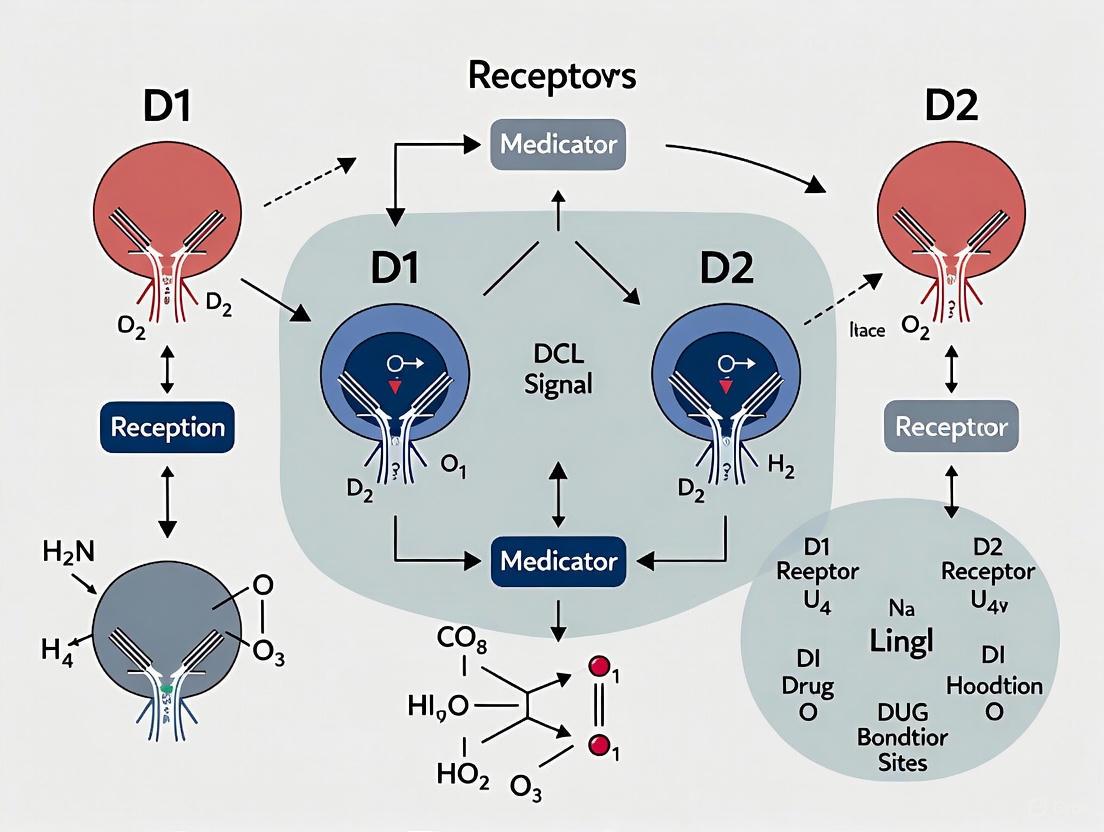
This comprehensive review synthesizes current research on dopamine D1 and D2 receptor mechanisms underlying addiction pathophysiology and medication development.
D1 vs D2 Dopamine Receptors in Addiction: Molecular Mechanisms, Therapeutic Applications, and Future Directions
Abstract
This comprehensive review synthesizes current research on dopamine D1 and D2 receptor mechanisms underlying addiction pathophysiology and medication development. Targeting researchers and drug development professionals, we explore foundational receptor neurobiology, differential signaling cascades, and concentration-dependent activation dynamics. The article examines methodological approaches for investigating receptor-specific effects across substance use disorders, troubleshooting challenges in therapeutic targeting, and validation through comparative analysis of emerging targets including D1-D2 heteromers and GLP-1 agonists. Evidence indicates distinct D1-mediated reinforcement versus D2-mediated seeking behaviors, with novel complex formations offering promising therapeutic avenues for preventing relapse across multiple addiction types.
Fundamental Neurobiology: D1 and D2 Receptor Signaling in Reward Pathways
Dopamine receptors are G-protein coupled receptors (GPCRs) that play critical roles in modulating motor functions, motivation, cognition, and reward processing [1] [2]. These receptors are classified into two major families based on their structural and functional properties: D1-like receptors (D1 and D5) and D2-like receptors (D2, D3, and D4) [1]. The D1 and D2 receptor subtypes represent the most abundant dopamine receptors in the brain and exhibit fundamentally different signaling mechanisms [1] [3]. When dopamine binds to these receptors, it triggers distinct intracellular cascades that ultimately produce diverse physiological effects—sometimes opposing, sometimes synergistic—depending on brain region, receptor distribution, and dopamine concentration [4] [3]. Understanding these signaling pathways is particularly crucial for research on addiction medications, as drugs of abuse co-opt these native dopamine signaling mechanisms to drive compulsive drug-seeking behaviors [5]. This review provides a comprehensive comparison of D1 and D2 receptor signaling pathways, their experimental characterization, and their implications for addiction pharmacology.
Canonical Signaling Pathways: D1 vs D2 Receptors
The D1 Receptor Pathway: Gs-cAMP-PKA Activation
The D1 dopamine receptor couples primarily to the stimulatory G-protein (Gs), which activates adenylyl cyclase (AC) upon receptor stimulation [1]. This activation catalyzes the conversion of adenosine triphosphate (ATP) to cyclic adenosine monophosphate (cAMP), leading to increased intracellular cAMP levels [1]. The rise in cAMP subsequently activates protein kinase A (PKA), which phosphorylates numerous downstream targets including dopamine- and cAMP-regulated phosphoprotein of 32 kDa (DARPP-32) [4] [3]. Phosphorylated DARPP-32 inhibits protein phosphatase 1 (PP-1), thereby amplifying the phosphorylation state of various neuronal proteins [4]. This signaling cascade influences gene expression regulation, ion channel activity, and neurotransmitter release, ultimately contributing to D1 receptor-mediated functions such as memory, attention, impulse control, and locomotion [1].
The D2 Receptor Pathway: Gi-AC Inhibition
In contrast to D1 receptors, D2 dopamine receptors couple to inhibitory G-proteins (Gi/o), which inhibit adenylyl cyclase upon receptor activation [1]. This inhibition reduces the conversion of ATP to cAMP, leading to decreased intracellular cAMP levels and consequent reduction in PKA activity [1] [4]. The D2 receptor signaling cascade also involves the activation of potassium (K+) channels [1] and a complex pathway that includes platelet-derived growth factor receptor (PDGFR) activation, increased phospholipase C (PLC) activity, inositol trisphosphate (IP3)-mediated calcium release from intracellular stores, and activation of protein phosphatases 1 and 2A (PP1/2A) through decreased DARPP-32 phosphorylation [4]. These signaling events mediate D2 receptor functions including locomotion, attention, sleep, and learning [1].
Table 1: Core Signaling Components of D1 and D2 Dopamine Receptor Pathways
| Signaling Component | D1 Receptor Pathway | D2 Receptor Pathway |
|---|---|---|
| G-protein Coupling | Gs (stimulatory) | Gi/o (inhibitory) |
| Adenylyl Cyclase Effect | Activation | Inhibition |
| cAMP Production | Increased | Decreased |
| PKA Activity | Activated | Inhibited |
| Key Effector Proteins | DARPP-32, CREB | GIRK channels, β-arrestin |
| Additional Pathways | Phospholipase C activation [1] | K+ channel activation, PDGFR-PLC-IP3 cascade [4] |
| Primary Functions | Memory, attention, locomotion, reward [1] | Locomotion, attention, sleep, aversion [1] [6] |
Experimental Characterization of Dopamine Receptor Signaling
Dopamine Concentration Determines Receptor Activation
Research has revealed that dopamine concentration is a critical factor determining preferential activation of D1 versus D2 signaling pathways, particularly in the prefrontal cortex [4]. In vitro patch-clamp recordings demonstrate that low dopamine concentrations (<500 nM) enhance inhibitory postsynaptic currents (IPSCs) via D1 receptor activation of the PKA pathway [4]. In contrast, higher dopamine concentrations (>1 μM) decrease IPSCs through D2 receptor activation of a Gi-mediated cascade involving PDGFR, phospholipase C, IP3-mediated calcium release, and subsequent activation of protein phosphatases [4]. This concentration-dependent signaling suggests that the relative amount of cortical inhibition is finely tuned by dopamine levels, differentially regulating cortical network activity [4].
The D1-D2 Receptor Heteromer: A Novel Signaling Entity
Despite the traditional segregation of D1 and D2 receptor pathways, a significant advancement in dopamine research has been the discovery of D1-D2 receptor heteromers in a unique subset of neurons [3]. These heteromeric complexes represent a novel signaling entity that activates a distinct pathway involving Gq proteins and phospholipase C, leading to intracellular calcium release [3] [7]. This heteromer-specific signaling occurs without significantly altering cAMP levels [3]. The D1-D2 heteromer regulates signaling cascades implicated in addiction, including calcium/calmodulin-dependent kinase IIα (CaMKIIα), brain-derived neurotrophic factor (BDNF), and glycogen synthase kinase 3 (GSK-3) signaling [7]. These pathways contribute to synaptic plasticity changes that underlie addiction vulnerability, highlighting the therapeutic potential of targeting the D1-D2 heteromer for addiction treatment [7].
Table 2: Experimental Evidence for Dopamine Receptor Signaling Mechanisms
| Experimental Approach | Key Findings | Reference |
|---|---|---|
| Patch-clamp recordings in PFC | Low DA (<500 nM) enhances IPSCs via D1-PKA; High DA (>1 μM) decreases IPSCs via D2-Gi-PLC-IP3-Ca2+ pathway | [4] |
| FRET & co-immunoprecipitation | Demonstrates D1-D2 heteromer formation with ~20% FRET efficiency in NAc (5-7 nm distance between receptors) | [3] |
| Calcium imaging | D1-D2 heteromer activation mobilizes intracellular calcium via Gq-PLC-IP3 pathway without altering cAMP | [3] |
| Optogenetics with PR task | Both D1 and D2 neuron activation in NAc increases motivation (breakpoint); challenges simple D1-D2 functional antagonism | [6] |
| Receptor knockout studies | D2R ablation in CeA increases compulsive-like eating despite negative consequences | [8] |
| Combined antagonist studies | Co-inhibition of D1/D2 receptors induces cognitive/emotional dysfunction via oxidative stress and DA neuron damage | [9] |
Research Reagent Solutions for Dopamine Receptor Studies
Table 3: Essential Research Reagents for Dopamine Receptor Signaling Studies
| Reagent | Function/Application | Example Use in Research |
|---|---|---|
| SCH23390 | Selective D1 receptor antagonist | Blocks D1-mediated enhancement of IPSCs at low DA concentrations [4] |
| Sulpiride | Selective D2 receptor antagonist | Blocks D2-mediated decrease of IPSCs at high DA concentrations [4] |
| SKF81297 | D1 receptor agonist | Used to study D1-mediated effects on cocaine-seeking behavior [10] |
| Quinpirole | D2 receptor agonist | Used to study D2-mediated cocaine-seeking behavior and locomotion [10] |
| SCH39166 | D1 receptor antagonist | Combined with raclopride to study co-inhibition of D1/D2 receptors [9] |
| Raclopride | D2 receptor antagonist | Used in combination with SCH39166 for dual receptor inhibition studies [9] |
| H-89 | PKA inhibitor | Blocks D1-mediated signaling cascades [4] |
| Calcium indicators (GCaMP6) | Monitor intracellular calcium | Detects calcium mobilization via D1-D2 heteromer activation [8] |
| AAV-EF1a-DIO-hChR2-eYFP | Cre-inducible channelrhodopsin vector | Allows optogenetic activation of specific dopamine receptor-expressing neurons [6] |
Methodologies for Key Experiments
Patch-Clamp Electrophysiology in Brain Slices
The fundamental methodology for characterizing dopamine receptor signaling in native neurons involves in vitro patch-clamp recordings from brain slices [4]. The standard protocol includes preparing coronal slices (300 μm thick) containing regions of interest such as the prefrontal cortex, nucleus accumbens, or striatum from rodents (typically rats or mice aged 14-28 days) [4]. Slices are maintained in oxygenated artificial cerebrospinal fluid (ACSF) at 33-36°C during recordings [4]. Whole-cell patch-clamp configurations are established using borosilicate pipettes (3-7 MΩ resistance) filled with appropriate internal solutions [4]. To isolate GABAA receptor-mediated inhibitory postsynaptic currents (IPSCs), researchers include NMDA receptor antagonists (e.g., AP-5) and AMPA/kainate receptor antagonists (e.g., DNQX or CNQX) in the perfusion medium [4]. Dopamine receptor-specific effects are investigated by applying selective agonists or antagonists before and during electrical stimulation, allowing precise characterization of D1 versus D2-mediated modulation of synaptic transmission [4].
Optogenetic Activation of Specific Neuronal Populations
Optogenetics has revolutionized the functional dissection of D1 versus D2 receptor-expressing neuronal pathways [6]. The standard approach involves injecting Cre-inducible adeno-associated viral (AAV) constructs coding for channelrhodopsin (ChR2) into specific brain regions (e.g., nucleus accumbens) of transgenic mouse lines expressing Cre recombinase under the control of D1 or D2 receptor promoters [6]. After allowing sufficient time for viral expression (typically 3-6 weeks), animals are subjected to behavioral tests such as the progressive ratio (PR) task or Pavlovian-to-instrumental transfer (PIT) while receiving optical stimulation [6]. This approach enables researchers to causally test how activation of each neuronal population affects motivated behaviors, demonstrating that both D1 and D2 neuron activation can enhance motivation—a finding that challenges the classic view of D1-D2 functional antagonism [6].
Behavioral Assays for Addiction-Related Phenomena
Addiction research employs specialized behavioral paradigms to model different aspects of addictive behaviors in rodents. The cocaine self-administration model allows researchers to study addiction-related alterations in dopamine receptor responses following chronic drug exposure [10]. Animals are trained to self-administer cocaine for several weeks, after which they are categorized based on their preferred levels of drug intake [10]. Following a withdrawal period, animals are tested for cocaine-seeking behavior in response to D1 and D2 receptor agonists, revealing that high intake rats show differential sensitivity to D1 versus D2 activation compared to low intake rats [10]. For compulsive-like behavior assessment, researchers use punishment-resistant paradigms where animals continue to seek palatable food or drugs despite adverse consequences (e.g., footshock) [8]. These models have demonstrated that ablation of D2 receptors in the central amygdala markedly enhances compulsive-like eating despite negative consequences [8].
Dopamine Receptor Signaling in Addiction Medication Development
The distinct signaling cascades of D1 and D2 receptors have profound implications for developing addiction medications. Drugs of abuse initially produce their reinforcing effects by triggering supraphysiological dopamine surges in the nucleus accumbens that simultaneously activate the direct striatal pathway (via D1 receptors) and inhibit the indirect pathway (via D2 receptors) [5]. Repeated drug administration induces neuroplastic changes in glutamatergic inputs to the striatum and midbrain dopamine neurons, enhancing reactivity to drug cues while reducing sensitivity to natural rewards [5]. These drug-induced impairments are long-lasting, suggesting that interventions designed to mitigate or reverse them would be beneficial for addiction treatment [5].
Research reveals that addiction is related specifically to differential alterations in functional D1 and D2 receptors and their ability to modulate drug-seeking behavior [10]. Following chronic cocaine self-administration, high intake rats become subsensitive to D1 agonist-induced inhibition of cocaine-seeking but supersensitive to D2 agonist-triggered cocaine seeking [10]. Additionally, high intake rats develop profound increases in locomotor responses to D2 receptor challenge during withdrawal, while low intake rats show increased responsiveness to D1 receptor challenge [10]. These findings suggest that optimal addiction pharmacotherapy may require carefully balanced modulation of both D1 and D2 signaling pathways rather than selective targeting of one receptor subtype.
Signaling Pathway Diagrams
D1 and D2 Receptor Signaling Cascades
D1-D2 Receptor Heteromer Signaling Pathway
Dopamine (DA) signaling fine-tunes critical brain functions, including reward, motivation, and cognition, primarily through D1-like (D1R) and D2-like (D2R) dopamine receptor families [11]. These receptors often exert opposing actions on intracellular signaling and physiological outcomes, creating a complex regulatory system [4] [12]. A pivotal question in neuroscience and pharmacology has been what determines whether D1 or D2 receptor pathways dominate in a given circumstance. Emerging evidence identifies DA concentration as a fundamental regulatory mechanism [4]. This review synthesizes findings demonstrating that low concentrations of DA (<500 nM) preferentially activate D1 receptors, enhancing cortical inhibition, whereas higher concentrations (>1 μM) engage D2 receptors, decreasing inhibition [4] [12]. This concentration-dependent switching mechanism has profound implications for understanding the tuning of cortical networks and developing targeted therapies for addiction and other neuropsychiatric disorders.
Comparative Receptor Pharmacology and Signaling
Fundamental Differences Between D1 and D2 Receptors
D1-like (D1, D5) and D2-like (D2, D3, D4) receptor families differ in their structure, brain distribution, and downstream signaling effects, as summarized in Table 1.
Table 1: Fundamental Properties of D1 and D2 Dopamine Receptors
| Property | D1-like Receptors (D1, D5) | D2-like Receptors (D2, D3, D4) |
|---|---|---|
| G-protein Coupling | Gαs/Gαolf | Gαi/Gαo |
| Effect on cAMP | ↑ Activation of adenylyl cyclase → ↑ cAMP → ↑ PKA [4] [13] | ↓ Inhibition of adenylyl cyclase → ↓ cAMP → ↓ PKA [4] [13] |
| Primary Brain Regions | Striatum, cerebral cortex, nucleus accumbens [13] | Striatum, substantia nigra, hypothalamus [13] |
| Receptor Affinity for DA | Lower affinity [4] | Higher affinity [4] |
| Key Functions | Memory, attention, impulse control, locomotion [13] | Locomotion, attention, sleep, memory, learning [13] |
Concentration-Dependent Activation and Signaling Cascades
The differential affinity of receptor families for DA underpins the concentration-dependent activation switch. In the prefrontal cortex (PFC), this mechanism bidirectionally regulates inhibitory postsynaptic currents (IPSCs) in pyramidal cells via distinct signaling pathways [4] [12].
- Low DA concentrations (<500 nM) preferentially activate D1 receptors, initiating a signaling cascade through Gαs, adenylyl cyclase, cAMP, and Protein Kinase A (PKA), leading to a potentiation of IPSCs [4]. This enhances GABAergic inhibition, fine-tuning PFC networks.
- High DA concentrations (>1 μM) engage the higher-affinity D2 receptors. This triggers a complex cascade: D2 → Gαi → platelet-derived growth factor receptor (PDGFR) → phospholipase C (PLC) → IP3 → intracellular Ca2+ release. The elevated calcium promotes dephosphorylation of DARPP-32 and activation of protein phosphatase 1/2A (PP1/2A), ultimately reducing IPSCs and decreasing cortical inhibition [4] [12]. At these concentrations, the D2-mediated suppression occludes the D1-mediated enhancement.
Figure 1: Dopamine Concentration Determines Signaling Pathway Activation. Low DA levels activate the excitatory D1-cAMP-PKA pathway, while high DA levels engage the complex inhibitory D2-PLC-Ca²⁺ pathway, leading to opposing effects on cortical inhibition.
Experimental Evidence and Methodologies
Key Experimental Protocol: Electrophysiology in Prefrontal Cortex
The foundational evidence for concentration-dependent receptor activation comes from in vitro patch-clamp recordings in rodent PFC. The following workflow details the core methodology [4]:
Figure 2: Workflow for Assessing DA Effects on Cortical Inhibition. Key experimental protocol using patch-clamp recording to measure DA-induced changes in IPSCs [4].
Using this protocol, researchers quantified the opposing effects of DA concentration on inhibitory signaling, as shown in Table 2.
Table 2: Dopamine Concentration Effects on Cortical Inhibition [4] [12]
| DA Concentration | Receptor Engaged | Effect on IPSCs | Key Signaling Molecules |
|---|---|---|---|
| Low (< 500 nM) | D1 | Enhancement (↑) | Gαs, AC, cAMP, PKA |
| High (> 1 μM) | D2 | Suppression (↓) | Gαi, PDGFR, PLC, IP3, Ca2+, DARPP-32, PP1/2A |
Implications in Addiction and Behavioral Responses
The differential activation of D1 and D2 receptors extends to behavioral models of addiction, revealing significant alterations in receptor responses following chronic cocaine use.
Table 3: Addiction-Related Alterations in D1 and D2 Receptor Responses
| Phenotype / Intervention | D1 Receptor Response | D2 Receptor Response |
|---|---|---|
| High Cocaine Intake Rats | Subsensitive to D1 agonist (SKF 81297) inhibition of cocaine-seeking [14] [10] | Supersensitive to D2 agonist (quinpirole) triggered cocaine-seeking [14] [10] |
| Low Cocaine Intake Rats | Increased responsiveness to D1 challenge [14] [10] | Developed increased locomotor response to D2 challenge [14] [10] |
| D1-D2 Heteromer Activation | Attenuates cocaine reward, self-administration, and reinstatement [15] | Co-activation in heteromer inhibits cocaine-seeking [15] |
Studies in non-human primates further demonstrate that the efficacy of pharmacological interventions can depend on intrinsic drug efficacy and social factors. For instance, the low-efficacy D1 agonist SKF 38393 decreased cocaine choice in subordinate monkeys, while the high-efficacy agonist SKF 81297 and antagonist SCH 23390 showed no effect [16]. This highlights the complex and nuanced role of D1 receptors in modulating cocaine-seeking behavior.
The D1-D2 receptor heteromer, a complex formed by a subpopulation of neurons in the nucleus accumbens, represents a novel target. Activation of this heteromer with SKF 83959 attenuates cocaine reward, self-administration, and reinstatement of drug-seeking behavior. This occurs through a unique signaling pathway involving activation of Cdk5 and phosphorylation of DARPP-32 at Thr75, which subsequently attenuates cocaine-induced ERK signaling and ΔFosB accumulation [15].
The Scientist's Toolkit: Key Research Reagents
Advancing research in D1/D2 receptor pharmacology relies on a standardized set of research tools. Table 4 catalogues essential reagents for probing these systems.
Table 4: Essential Research Reagents for D1/D2 Receptor Studies
| Reagent Name | Receptor Target | Function / Intrinsic Efficacy | Key Experimental Uses |
|---|---|---|---|
| SCH 23390 | D1-like | Antagonist | Block D1 receptor-mediated signaling and behavior [4] [16] |
| SKF 81297 | D1-like | High-Efficacy Agonist | Probe full D1 receptor activation; self-administration studies [14] [16] |
| SKF 38393 | D1-like | Low-Efficacy Agonist | Probe partial D1 activation; decreased cocaine choice in primates [16] |
| Sulpiride | D2-like | Antagonist | Block D2 receptor-mediated signaling and behavior [4] |
| Quinpirole | D2-like | Agonist | Probe D2 receptor activation; trigger cocaine-seeking behavior [14] [10] |
| SKF 83959 | D1-D2 Heteromer | Agonist | Selectively activate the D1-D2 receptor complex; study calcium signaling [15] |
| TAT-D1 Peptide | D1-D2 Heteromer | Disrupting Peptide | Selectively disrupt D1-D2 heteromer formation; validate heteromer-specific effects [15] |
The experimental evidence firmly establishes that dopamine concentration is a critical biological switch determining D1 versus D2 receptor pathway activation, fundamentally shaping cortical network activity and output. The opposing signaling cascades and behavioral responses mediated by these receptors are not only central to normal brain function but are also profoundly disrupted in addiction. The emergence of the D1-D2 heteromer as a functionally distinct unit and the nuanced effects of ligands with varying intrinsic efficacy reveal a system of remarkable complexity. Future medication development for cocaine use disorder and other addictive conditions must account for this intricate D1-D2 receptor balance, moving beyond simplistic activation or blockade toward strategies that selectively target specific pathways or receptor complexes to restore physiological dopamine signaling.
The neural pathway from the ventral tegmental area (VTA) to the nucleus accumbens (NAc) forms the central component of the brain's mesolimbic system, a circuitry critically implicated in reward processing, motivation, and the pathophysiology of addiction [17] [18]. This dopaminergic pathway, often termed the "reward pathway," connects the midbrain VTA to the ventral striatum, primarily the NAc, and serves as a key substrate upon which addictive drugs act to produce reinforcing effects [17]. Understanding the precise anatomical distribution, neurochemical diversity, and functional organization of VTA-to-NAc projections provides crucial insights for developing targeted pharmacological interventions for substance use disorders. Research within this domain is increasingly focused on the differential roles of dopamine receptor subtypes (D1 vs. D2) and the complex synaptic adaptations that occur in response to drug exposure, forming a critical foundation for modern addiction medication development [7] [10].
Anatomical Organization of VTA to NAc Projections
Structural Connectivity and Neurochemical Diversity
The mesolimbic pathway comprises a collection of dopaminergic neurons that originate in the VTA and project to various components of the ventral striatum, including the NAc core and shell regions [17]. Ultrastructural analyses reveal remarkable phenotypic diversity in VTA axons projecting to the NAc, with these fibers exhibiting varied morphological characteristics and synaptic arrangements [19].
Table 1: Phenotypic Diversity of VTA to NAc Projections
| Axon Type | Morphological Features | Synaptic Targets | Neurochemical Content |
|---|---|---|---|
| Dopamine-like | Relatively short or absent symmetric-type synapses | Dendritic shafts and necks of dendritic spines | Dopamine |
| GABAergic | Longer, more pronounced synapses | Various neuronal elements | GABA |
| Glutamatergic | Asymmetric-type synapses | Dendritic spines | Glutamate (vGlut2+) |
| Peptidergic | Content of dense-core vesicles | Multiple targets | Peptide co-transmitters |
This neurochemical diversity enables complex modulation of NAc function, as these projection systems can co-release multiple neurotransmitters and neuromodulators to shape behavioral outcomes [19]. The VTA contains not only dopaminergic neurons but also GABAergic and glutamatergic neurons that project to the NAc, allowing for integrated regulation of reward-related behaviors [17] [19].
Distinct Prefrontal Inputs to Mesolimbic Circuitry
The medial prefrontal cortex (mPFC) provides major glutamatergic input to both the VTA and NAc, forming a critical tripartite circuit that regulates reward processing and executive control [20]. Recent research demonstrates that NAc-projecting and VTA-projecting mPFC neurons represent largely distinct populations with different laminar distributions and molecular profiles [20].
Table 2: Characteristics of mPFC Neurons Projecting to Mesolimbic Targets
| Feature | mPFC→NAc Neurons | mPFC→VTA Neurons |
|---|---|---|
| Laminar Distribution | Layers 2/3 and 5a | Layers 5b and 6 |
| Molecular Markers | Calbindin, Ntsr1 | Ctip2, FoxP2 |
| Projection Class | Intertelencephalic (IT) | Pyramidal Tract (PT) |
| Cortical Subregions | Medial Orbital, Prelimbic, Infralimbic | Prelimbic, Infralimbic |
| Overlap | Minimal cellular overlap with VTA-projecting neurons | Minimal cellular overlap with NAc-projecting neurons |
This anatomical separation suggests specialized functional roles for these parallel prefrontal circuits in regulating mesolimbic function, with potential implications for understanding how different cortical inputs modulate reward processing and addiction vulnerability [20].
Methodological Approaches for Circuit Analysis
Advanced Tract-Tracing Techniques
Contemporary neuroanatomical research employs sophisticated tracing methods to elucidate the complex connectivity of mesolimbic circuitry:
Retrograde Tracers: Classical tracers including Cholera Toxin B subunit (CTB) and Fluoro-Gold (FG) are injected into target regions (NAc or VTA) to identify afferent input sources [20]. These tracers are transported backward along axons to label neuronal cell bodies in projecting areas.
Conditional Viral Tracing: Recombinant adeno-associated viruses (AAV) expressing fluorescent proteins or optogenetic actuators (e.g., Channelrhodopsin-2/ChR2) enable selective labeling and manipulation of specific neuronal pathways [19] [20]. Cell-type specificity is achieved using Cre-lox systems in transgenic animal lines.
Canine Adenovirus Type 2 (CAV2): This retrograde vector exhibits high efficiency for tracing direct synaptic connections and is particularly useful for determining overlap between different projection populations [20].
Optogenetic Functional Interrogation
Optogenetic approaches allow precise temporal control of specific neural pathways to determine their causal roles in behavior:
Channelrhodopsin-2 (ChR2) Expression: ChR2 is delivered to VTA neurons via AAV injections, enabling light-activated stimulation of VTA terminals in the NAc [21] [19].
Fiber Optic Implantation: Optical fibers are positioned above the NAc to deliver laser stimulation (typically 473nm blue light) to ChR2-expressing terminals [21].
Synaptic Physiology Measurements: Whole-cell voltage-clamp recordings in brain slices quantify optogenetically-induced changes in excitatory postsynaptic currents (EPSCs) in NAc medium spiny neurons, revealing short-term plasticity mechanisms [19].
Molecular and Cellular Characterization
Multiple fluorescent immunohistochemistry combined with tracing techniques enables detailed molecular profiling of neural circuits:
Cell-Type Specific Markers: Antibodies against proteins such as tyrosine hydroxylase (dopamine neurons), GAD67 (GABA neurons), vGlut2 (glutamate neurons), parvalbumin, calbindin, Ctip2, and FoxP2 allow precise classification of neuronal subpopulations [20].
Activity Mapping: Staining for immediate early genes (e.g., c-Fos) identifies neurons activated during specific behavioral states or in response to stimuli [10].
Electron Microscopy: Ultrastructural analysis reveals subcellular localization of proteins and synaptic architecture between specific neuronal populations [19].
Signaling Mechanisms in Mesolimbic Pathways
Dopaminergic Signaling and Receptor Dynamics
Dopamine release from VTA terminals in the NAc activates two primary classes of postsynaptic receptors - D1 and D2 dopamine receptors - which are largely segregated in distinct populations of medium spiny neurons (MSNs) and mediate different behavioral outcomes [17] [10].
Figure 1: Dopamine Receptor Signaling Pathways in Mesolimbic Circuitry. D1 and D2 receptors activate distinct intracellular cascades in separate MSN populations, while D1-D2 heteromers activate unique signaling pathways.
Chronic cocaine exposure induces specific alterations in D1 and D2 receptor-mediated responses that vary based on individual patterns of drug intake [10]. Animals with high preferred levels of cocaine intake develop subsensitivity to D1 agonist-induced inhibition of cocaine-seeking behavior but supersensitivity to D2 agonist-triggered cocaine seeking compared to low intake animals [10]. These addiction-related alterations in dopamine receptor function represent potential targets for medication development.
Glutamatergic Adaptations in Addiction
Drug exposure induces significant plasticity in glutamatergic transmission within the mesolimbic circuit, particularly affecting AMPA receptor function and trafficking:
Table 3: Molecular Adaptations in Cocaine Exposure
| Molecule | Brain Region | Change After Cocaine | Modulation by NAc-VTA Inputs |
|---|---|---|---|
| ERK | VTA and mPFC | Significant reduction | Further modulation by GABAergic activation |
| GluA1 (Ser845) | NAc | Reduced phosphorylation | Decreased with optic stimulation of NAc-VTA |
| GluA1 (Ser831) | NAc | Decreased phosphorylation | No additional effect of stimulation |
| GluA1 subunit | VTA and mPFC | Decreased expression | Further reduction with GABAergic activation |
Activation of inhibitory GABAergic projections from the NAc to the VTA during cocaine exposure can modulate these molecular adaptations, particularly affecting GluA1 phosphorylation states and ERK signaling pathways in reward-related brain regions [21]. These findings highlight the potential for circuit-based interventions to normalize addiction-related synaptic abnormalities.
Experimental Models for Evaluating Addiction Phenotypes
Behavioral Paradigms
Preclinical research employs several validated behavioral models to assess addiction-related phenotypes and medication efficacy:
Conditioned Place Preference (CPP): Measures drug-associated contextual reward. Animals spend more time in environments previously paired with drug administration. This paradigm assesses rewarding properties of drugs and potential treatments [21].
Self-Administration: Animals perform operant responses (e.g., lever presses) to receive intravenous drug infusions. This direct measure of drug-taking behavior allows assessment of reinforcement strength and motivation [10].
Repeated Exposure Place Preference (RePP): A modified CPP protocol that provides more efficient assessment of behavioral outcomes resulting from neural manipulation during drug exposure [21].
Extinction/Reinstatement Models: After self-administration training and extinction of drug-seeking behavior, various triggers (drug primes, stress, cues) are presented to provoke reinstatement, modeling relapse in humans [10].
Electrophysiological Approaches
Brain slice electrophysiology enables detailed investigation of synaptic function and plasticity in mesolimbic circuitry:
Whole-Cell Voltage-Clamp Recordings: Measure postsynaptic currents in identified NAc MSNs while optogenetically stimulating VTA inputs [19].
Evoked EPSC Analysis: Electrically stimulate glutamatergic inputs while recording from MSNs to assess presynaptic release probability and postsynaptic responsiveness [19].
Cell-Type Specific Targeting: Combine optogenetics with transgenic mouse lines (e.g., D1-Cre, D2-Cre) to selectively interrogate specific MSN populations [19].
Research Reagent Solutions
Table 4: Essential Research Tools for Mesolimbic Circuit Investigation
| Reagent/Tool | Specific Examples | Research Application |
|---|---|---|
| Viral Vectors | AAV2-flex-ChR2, AAV2-retro, CAV2-Cre | Cell-type specific labeling and manipulation |
| Optogenetic Actuators | Channelrhodopsin-2 (ChR2), Halorhodopsin | Precise temporal control of neuronal activity |
| Transgenic Mouse Lines | TH-IRES-Cre, D1-Cre, D2-Cre, Ntsr1-Cre | Genetic access to specific neuronal populations |
| Dopamine Receptor Agonists/Antagonists | SKF 81297 (D1 agonist), Quinpirole (D2 agonist), SCH23390 (D1 antagonist), Eticlopride (D2 antagonist) | Pharmacological dissection of receptor functions |
| Retrograde Tracers | Cholera Toxin B subunit (CTB), Fluoro-Gold (FG) | Mapping neural connectivity |
| Antibodies for Immunohistochemistry | Anti-tyrosine hydroxylase, anti-c-Fos, anti-Ctip2, anti-FoxP2, anti-calbindin | Cellular phenotyping and activity mapping |
Implications for Medication Development
Emerging Pharmacological Targets
Understanding the anatomical and functional organization of VTA to NAc projections has revealed several promising targets for addiction medication:
D1-D2 Heteromer Signaling: The dopamine D1-D2 receptor heteromer regulates distinct signaling cascades involving CaMKIIα, BDNF, and GSK-3 that are implicated in addiction processes [7]. This heteromer represents a novel target that may avoid limitations of selectively targeting individual receptor subtypes.
GLP-1 Receptor Agonists: Glucagon-like peptide-1 receptor agonists (e.g., exenatide, semaglutide), currently used for diabetes and obesity, show promise for treating substance use disorders [22]. Preclinical studies demonstrate reduced alcohol, opioid, and nicotine self-administration, potentially through direct actions on mesolimbic circuitry.
Long-Acting Formulations: Novel drug delivery systems, such as nor-levo-alpha-acetylmethadol (nor-LAAM) encapsulated in biodegradable microparticles, provide sustained medication release that may improve adherence and treatment outcomes for opioid use disorder [23].
Paradigm Shift in Treatment Outcomes
Recent perspectives from the National Institute on Drug Abuse advocate for broadening acceptable treatment endpoints beyond complete abstinence to include meaningful reductions in drug use [24]. This approach recognizes that:
Reduced substance use provides significant public health benefits, including decreased overdose risk, infectious disease transmission, and criminal justice involvement [24].
Clinical trials for cocaine, cannabis, and stimulant use disorders demonstrate that reduced use is associated with meaningful improvements in psychosocial functioning, craving, and addiction severity [24].
Embracing multiple paths to recovery may reduce stigma and barriers to treatment engagement, potentially expanding the reach of effective interventions [24].
The anatomical distribution of VTA to NAc projections reveals a complex circuit architecture with diverse neuronal phenotypes and highly specialized subcircuits. The functional organization of this system, particularly the segregation of D1 and D2 receptor signaling pathways and their adaptations in addiction, provides a critical framework for developing targeted medications. Contemporary research approaches combining precise circuit manipulation with detailed molecular analysis continue to reveal novel therapeutic targets for substance use disorders. The ongoing development of longer-acting formulations and emerging drug classes like GLP-1 receptor agonists represents promising frontiers in addiction treatment, while evolving perspectives on treatment outcomes may accelerate the translation of basic circuit research to clinical applications.
The prefrontal cortex (PFC) is essential for higher-order cognitive functions, including working memory, which relies on precisely tuned neural network activity. Dopamine (DA) regulates the activity of these PFC networks through distinct receptor systems, with profound implications for both normal cognitive function and neuropsychiatric disorders. Research has established that the dopaminergic and GABAergic systems interact closely in the PFC to fine-tune network computations [25]. Dopaminergic projections from the ventral tegmental area form symmetric synapses primarily on GABA-immunoreactive neurons, with the highest density found in deep cortical layers [25]. This anatomical arrangement positions dopamine to powerfully modulate inhibitory circuits in the PFC.
The most abundant dopamine receptors—D1 and D2—frequently exert opposing effects on neuronal signaling. D1-like receptors (D1 and D5) primarily couple to the stimulatory G protein Gs, enhancing neuronal excitability, while D2-like receptors (D2, D3, D4) primarily couple to the inhibitory G protein Gi, reducing neuronal activity [26]. This review synthesizes current evidence demonstrating the bidirectional modulation of GABAergic inhibition in the PFC through these receptor systems, with particular emphasis on its relevance to addiction pharmacology and the development of targeted therapeutic interventions.
Comparative analysis of D1 and D2 receptor effects on GABAergic transmission
Opposing effects on inhibitory postsynaptic currents (IPSCs)
Comprehensive electrophysiological studies using whole-cell patch-clamp recordings from PFC pyramidal neurons have revealed that dopamine exerts temporally biphasic and mechanistically distinct effects on GABAergic inhibition [25]. The table below summarizes the key experimental findings regarding D1 versus D2 receptor modulation of IPSCs:
Table 1: Differential Effects of D1 and D2 Receptor Activation on GABAergic Transmission in PFC
| Parameter | D1 Receptor Activation | D2 Receptor Activation |
|---|---|---|
| Evoked IPSCs | Late, slow-developing enhancement | Initial abrupt reduction in amplitude |
| Spontaneous IPSCs (sIPSCs) | Enhanced frequency | No significant effect |
| Miniature IPSCs (mIPSCs) | No significant effect | Significant reduction |
| Postsynaptic GABA Response | Not affected | Reduced response to GABAA agonist |
| Primary Mechanism | Increased intrinsic excitability of interneurons | Decreased GABA release probability |
| Receptor Localization | Predominantly on parvalbumin-containing interneurons | Presynaptic terminals and postsynaptic sites |
The bidirectional modulation follows a distinct temporal pattern: dopamine application produces an initial abrupt decrease in IPSC amplitude mediated by D2 receptors, followed by a delayed increase mediated by D1 receptors [25]. This temporal sequence suggests that the net effect of dopamine on cortical inhibition depends critically on the timing and concentration of dopamine release, providing a dynamic mechanism for fine-tuning network excitability.
Dopamine concentration determines receptor activation
The opposing effects of D1 and D2 receptors are differentially engaged based on local dopamine concentrations, creating a sophisticated regulatory mechanism for cortical circuits [4]. At low DA concentrations (<500 nM), enhancement of IPSCs occurs primarily through D1 receptor activation of the protein kinase A (PKA) and cAMP pathway. In contrast, at higher DA concentrations (>1 μM), D2 receptor activation dominates, decreasing IPSCs through a complex cascade involving Gi, platelet-derived growth factor receptor, phospholipase C, IP3, intracellular calcium release, and protein phosphatase activation [4].
This concentration-dependent switching mechanism ensures that the balance between cortical excitation and inhibition can be precisely calibrated according to behavioral demands. The higher affinity of D2 receptors for dopamine compared to D1 receptors further reinforces this concentration-dependent effect, with D2 receptors being activated at lower dopamine concentrations than D1 receptors [2].
Experimental approaches and methodologies
Core electrophysiological protocols
The foundational findings on bidirectional dopamine modulation derive primarily from in vitro slice preparations using specific methodological approaches [25] [4]. The standard protocol involves:
Slice Preparation: Coronal brain slices (300 μm thickness) containing the prelimbic-infralimbic region of the PFC are obtained from 14-28 day old Sprague-Dawley or Long-Evans rats. Slices are maintained in oxygenated artificial cerebrospinal fluid (ACSF) [25].
Whole-Cell Recordings: Pyramidal neurons in layer V are identified under differential interference contrast optics. Recordings are performed using borosilicate pipettes (3-10 MΩ resistance) filled with intracellular solution containing potassium gluconate or CsCl-based internal solutions [25].
Synaptic Isolation: GABAA receptor-mediated IPSCs are isolated through continuous bath application of glutamate receptor antagonists (APV and DNQX/CNQX) to block NMDA and AMPA receptors, respectively [25] [4].
Stimulation Paradigm: Bipolar stimulating electrodes positioned within 200 μm of the recorded soma in layer V deliver low-intensity square-wave pulses (100-150 μsec duration) every 30-60 seconds to evoke IPSCs [25].
Drug Application: Dopamine receptor-specific agonists (SKF81297 for D1, quinpirole for D2) and antagonists are bath-applied to determine receptor-specific effects. Fresh dopamine is prepared with antioxidants (ascorbic acid or Na-meta bisulfite) to prevent oxidation [25].
The following diagram illustrates the experimental workflow for studying dopamine effects on IPSCs:
Research reagent solutions toolkit
Table 2: Essential Research Reagents for Studying Dopamine Receptor Modulation
| Reagent/Category | Specific Examples | Research Application | Mechanistic Insight |
|---|---|---|---|
| D1 Receptor Agonists | SKF81297, SKF83959 | Selective D1 receptor activation | Enhances IPSCs via increased interneuron excitability [25] |
| D2 Receptor Agonists | Quinpirole | Selective D2 receptor activation | Reduces IPSCs via decreased GABA release probability [25] |
| D1 Receptor Antagonists | SCH23390 | D1 receptor blockade | Reveals D1-mediated component of dopamine effects [4] |
| D2 Receptor Antagonists | Sulpiride, L745870 | D2 receptor blockade | Reveals D2-mediated component of dopamine effects [4] |
| Signaling Inhibitors | H-89 (PKA inhibitor), KN-62 (CaMKII inhibitor) | Pathway dissection | Identifies intracellular mechanisms [4] |
| D1-D2 Heteromer Probes | SKF83959, TAT-D1 peptide | Heteromer-specific manipulation | Investigates D1-D2 complex function [15] |
Molecular mechanisms and signaling pathways
Distinct intracellular signaling cascades
The opposing effects of D1 and D2 receptors on GABAergic transmission are mediated through fundamentally different signaling pathways that converge on the regulation of GABA release and postsynaptic response [4]:
The D1 receptor pathway enhances GABAergic inhibition through a Gs-coupled mechanism that activates adenylyl cyclase, increases cAMP production, and activates protein kinase A (PKA). This signaling cascade ultimately enhances the intrinsic excitability of GABAergic interneurons, particularly parvalbumin-positive fast-spiking interneurons, thereby increasing GABA release onto pyramidal neurons [25] [4].
The D2 receptor pathway operates through a more complex Gi-coupled mechanism that involves inhibition of adenylyl cyclase, activation of platelet-derived growth factor receptor, stimulation of phospholipase C, production of IP3, release of intracellular calcium, activation of protein phosphatase 1/2A, and consequent reduction in GABAA receptor function [4]. This pathway primarily reduces GABA release probability from presynaptic terminals and decreases postsynaptic responsiveness to GABA [25].
The following diagram illustrates these opposing signaling pathways:
Structural insights into receptor differences
Recent structural biology advances have provided atomic-level understanding of the differences between D1 and D2 receptors. Cryo-EM structures of D1R-Gs and D2R-Gi complexes reveal conserved agonist binding modes but distinct receptor topologies that underlie ligand selectivity and G protein-coupling specificity [26]. These structural insights explain the fundamental pharmacological differences between D1 and D2 receptors and provide templates for designing more selective therapeutic compounds targeting specific dopamine receptor subtypes.
The D1 receptor demonstrates a more open binding pocket compared to D2 receptors, which may contribute to differences in ligand selectivity and signaling kinetics [26]. Understanding these structural differences is crucial for drug development efforts aimed at selectively modulating specific aspects of dopamine signaling without producing off-target effects.
Relevance to addiction mechanisms and medication development
Dopamine receptor alterations in addiction
Addiction involves profound alterations in dopamine receptor function and expression that differentially impact D1 and D2 receptor pathways. Preclinical models of chronic cocaine self-administration demonstrate that animals with high cocaine intake develop subsensitivity to D1 agonist effects but supersensitivity to D2 agonist effects on cocaine-seeking behavior [10]. This divergent plasticity creates an imbalance between D1 and D2 signaling that may contribute to compulsive drug-seeking behaviors.
Additionally, the D1-D2 receptor heteromer—a complex formed by physical interaction between D1 and D2 receptors—has emerged as an important player in addiction mechanisms [15]. Activation of this heteromer complex attenuates cocaine reward and reinstatement of cocaine-seeking through inhibition of key signaling molecules including DARPP-32, ERK, and ΔFosB [15]. The density of D1-D2 heteromer-expressing neurons increases in the striatum following chronic cocaine administration, suggesting a potential compensatory mechanism that limits reward sensitivity [27].
Implications for medication development
The bidirectional modulation of cortical networks by D1 and D2 receptors offers multiple potential targets for addiction pharmacotherapy:
D1-selective agonists may help restore deficient prefrontal function in addiction, potentially enhancing cognitive control over drug-seeking behaviors [10].
D2-selective antagonists may reduce excessive drug cue sensitivity by dampening D2-mediated signaling in corticostriatal circuits [5].
D1-D2 heteromer stabilizers represent a novel approach that could leverage the natural inhibitory control this complex exerts over reward signaling [15] [27].
The concentration-dependent effects of dopamine on D1 versus D2 receptor activation further suggest that medications that subtly modulate dopamine tone, rather than completely block or activate dopamine receptors, may produce more favorable therapeutic outcomes with fewer side effects [4].
The bidirectional modulation of GABAergic inhibition in the PFC by D1 and D2 dopamine receptors represents a fundamental mechanism for fine-tuning cortical network activity. The D1-mediated enhancement and D2-mediated suppression of IPSCs operate through distinct temporal patterns, signaling pathways, and concentration dependencies, creating a sophisticated system for dynamic network regulation. In the context of addiction, imbalances between these opposing systems contribute to the pathological neuroadaptations that characterize substance use disorders. Future medication development should consider strategies that restore the natural balance between D1 and D2 receptor signaling rather than exclusively targeting one system, potentially leveraging emerging knowledge about receptor heteromers and concentration-dependent effects to achieve more precise pharmacological control over cortical network function.
The striatum, the primary input nucleus of the basal ganglia, is predominantly composed of GABAergic medium spiny neurons (MSNs) that play critical roles in action selection, motor control, and reward-related learning [28]. MSNs are traditionally classified into two major populations based on their projection targets and dopamine receptor expression: D1-type MSNs of the direct pathway facilitate movement and reward, while D2-type MSNs of the indirect pathway inhibit movement and mediate aversion [28]. The precise localization patterns of these receptors—whether strictly segregated or co-expressed in individual neurons—has profound implications for understanding the molecular mechanisms of addiction and developing targeted pharmacotherapies. This guide objectively compares the experimental evidence for segregated versus co-expressed D1 and D2 receptor patterns in MSNs, providing researchers with synthesized data, methodological protocols, and analytical frameworks to advance addiction medication development.
Comparative Analysis of D1/D2 Receptor Localization Patterns
The degree of D1 and D2 dopamine receptor co-expression in striatal MSNs remains a subject of active investigation, with methodological approaches yielding varying estimates. The table below summarizes key quantitative findings across experimental paradigms:
Table 1: Quantitative Evidence on D1 and D2 Receptor Co-expression in Medium Spiny Neurons
| Experimental Model | D1/D2 Co-expression Level | Developmental Stage | Technical Approach | Citation |
|---|---|---|---|---|
| BAC transgenic mice (drd1a-tdTomato × drd2-GFP) | ~10% | Embryonic day 18 (E18) | Fluorescence microscopy of brain sections | [29] |
| BAC transgenic mice (drd1a-tdTomato × drd2-GFP) | <5% | Postnatal day 14 (P14) | Fluorescence microscopy of brain sections | [29] |
| BAC transgenic mice primary cultures | Maintained high segregation | 14 days in vitro (DIV) | Fluorescence microscopy of cultured neurons | [29] |
| Human striatum (approximation) | ~40% of MSNs express both DRD1 and DRD2 mRNA | Adult | mRNA analysis | [28] |
Detailed Experimental Protocols for Receptor Localization
BAC Transgenic Mouse Model and Tissue Preparation
Principle: Bacterial Artificial Chromosome (BAC) transgenic mice with fluorescent reporters under the control of D1 (drd1a-tdTomato) and D2 (drd2-GFP) receptor promoters enable visual quantification of receptor expression patterns with high cellular resolution [29].
Protocol Details:
- Animal Models: Cross hemizygous drd1a-tdTomato and drd2-GFP BAC transgenic mice on a C57BL/6 background to generate double-transgenic offspring.
- Genotype Verification: Screen pup brains for both red (tdTomato) and green (GFP) fluorescence under a dissection microscope prior to experimentation.
- Tissue Preparation: Anesthetize animals according to developmental stage (cryoanesthesia for P0 pups, halothane for P14). Transcardially perfuse with ice-cold phosphate-buffered saline (PBS) followed by 4% paraformaldehyde (PFA). Post-fix brains in 4% PFA for 48 hours at 4°C.
- Sectioning: Cut 100 μm thick coronal sections using a vibrating microtome (e.g., Leica VT1000s). Select sections from the middle rostro-caudal axis of the dorsal striatum for consistency.
- Imaging & Quantification: Capture high-resolution fluorescence images using confocal microscopy. Systematically count tdTomato-positive (D1-MSNs), GFP-positive (D2-MSNs), and double-labeled neurons across multiple striatal sections. Calculate co-expression percentage as (double-labeled neurons / total fluorescent neurons) × 100.
Primary Neuronal Culture and In Vitro Validation
Principle: MSN primary cultures allow investigation of receptor segregation in a controlled environment, independent of afferent inputs.
Protocol Details:
- Cell Dissociation: Dissect dorsal striatum from P0-P2 double-transgenic pups. Incubate tissue in papain solution (20 min, 37°C) for enzymatic dissociation. Mechanically triturate to create a single-cell suspension.
- Culture Conditions: Seed dissociated neurons onto poly-L-lysine-coated glass coverslips at densities of 240,000-500,000 cells/mL. Maintain cultures in Neurobasal medium supplemented with B-27 and GlutaMAX for 14 days in vitro (DIV).
- Co-culture Variations: To test environmental influences, establish co-cultures with wild-type cortical and/or ventral mesencephalic neurons to reconstitute glutamatergic and dopaminergic inputs, respectively.
- Fixation and Analysis: Fix cultures in 4% PFA for 30 minutes at room temperature. Quantify fluorescence patterns as described for tissue sections to determine if in vitro conditions alter receptor segregation observed in vivo.
Signaling Pathways in Segregated MSN Populations
The functional significance of receptor segregation is evident in the distinct intracellular signaling cascades activated in D1- versus D2-MSNs. The diagram below illustrates these pathway-specific mechanisms:
D1 and D2 Receptor Signaling Pathways in Medium Spiny Neurons
D1-MSN Signaling Cascade: Dopamine binding to D1 receptors activates Golf, stimulating AC5 to produce cAMP, which activates PKA. PKA phosphorylates multiple targets including GluR1 (promoting AMPA receptor trafficking), DARPP-32 at Thr34 (inhibiting PP1), and contributes to ERK activation through crosstalk with NMDAR-mediated calcium signaling [30].
D2-MSN Signaling Cascade: Dopamine binding to D2 receptors activates Gi, inhibiting AC5 and reducing cAMP production, leading to PKA inhibition. This promotes DARPP-32 phosphorylation at Thr75, activating PP1 and opposing plasticity mechanisms [30] [31].
Pathway Crosstalk: In D1-MSNs, the NMDAR/Ca2+/RAS and AC5/cAMP/PKA cascades show regulated interaction. ERK activation depends on D1R availability but not Golf levels, while GluR1 phosphorylation shows the opposite pattern, indicating compartmentalized signaling despite receptor segregation [30].
The Scientist's Toolkit: Essential Research Reagents
Table 2: Key Reagents for Studying Dopamine Receptor Localization and Function
| Reagent / Model | Type | Primary Research Application | Key Features & Considerations |
|---|---|---|---|
| drd1a-tdTomato BAC transgenic mice | Animal model | Visualizing D1 receptor-expressing MSNs | Labels D1-MSNs with red fluorescent protein; enables live imaging and sorting |
| drd2-GFP BAC transgenic mice | Animal model | Visualizing D2 receptor-expressing MSNs | Labels D2-MSNs with green fluorescent protein; ideal for co-localization studies |
| SCH 23390 | Pharmacological agent | Selective D1 receptor antagonist | Used to probe D1 receptor function in self-administration and signaling studies |
| Eticlopride | Pharmacological agent | Selective D2 receptor antagonist | Used to investigate D2 receptor contributions to motivation and addiction phenotypes |
| Translating Ribosome Affinity Purification (TRAP) | Molecular technique | Cell-type-specific translatome analysis | Isolates ribosome-bound mRNA from specific MSN populations; reveals expression profiles |
| Cre-conditional TRAP mice | Genetic tool | Neuron-specific translatome profiling | Enables analysis of iMSN-specific translatome in response to D2 receptor manipulation |
Functional Implications for Addiction Mechanisms
The segregation of D1 and D2 receptors in largely distinct MSN populations creates parallel pathways with opposing functions in reward and addiction. D1-MSNs in the direct pathway mediate the reinforcing effects of psychostimulants and promote drug-seeking behavior, whereas D2-MSNs in the indirect pathway inhibit reward-related behaviors and compete with drug-associated responses [28]. In addiction, this balance is disrupted, with molecular adaptations including reduced striatal D2 receptor availability observed across multiple substance use disorders (cocaine, alcohol, methamphetamine) [32] [33].
Chronic cocaine exposure produces a profound shift in dopamine receptor function, with D1 receptors becoming less critical for motivating drug use in addicted states while D2 receptor signaling is impaired [34] [33]. This creates a pathological imbalance favoring D2-mediated mechanisms that may underlie compulsive use patterns. Furthermore, genetic variation in DRD1 affects transition time from initial opioid use to dependence and modulates the subjective pleasure response, highlighting the clinical relevance of receptor-specific mechanisms [35]. These findings suggest that therapeutic strategies targeting the precise balance of D1 versus D2 receptor activity in distinct MSN populations may prove more effective than non-selective approaches.
Research Methodologies and Therapeutic Targeting Strategies
Substance use disorder is a complex condition characterized by compulsive drug seeking, loss of control over consumption, and emergence of a negative emotional state during withdrawal. To study the neurobiological mechanisms underlying addiction, researchers employ standardized preclinical behavioral models that capture different facets of the disorder. The three predominant paradigms—self-administration (SA), conditioned place preference (CPP), and locomotor sensitization—each provide unique insights into drug reward, reinforcement, and neuroplasticity [36] [37] [38]. These models are particularly relevant for investigating the distinct roles of dopamine D1 and D2 receptors in addiction processes, as these receptors mediate critical signaling pathways in reward-related learning and behavioral adaptation [7] [4] [11].
D1 and D2 dopamine receptors exert often opposing effects on intracellular signaling cascades, creating a delicate balance that regulates corticostriatal function and behavioral output [4] [11]. The D1 receptor (D1DR) is primarily expressed on striatal neurons giving rise to the direct pathway, while D2 receptors (D2DR) are predominantly found on indirect pathway neurons [11]. Understanding how drugs of abuse disrupt this balance through these preclinical models provides crucial insights for developing targeted pharmacotherapies for addiction.
Model Comparisons: Experimental Design and Applications
The table below summarizes the key characteristics, applications, and methodological considerations for the three major preclinical models of addiction.
Table 1: Comparative overview of major preclinical addiction models
| Parameter | Self-Administration (SA) | Conditioned Place Preference (CPP) | Locomotor Sensitization |
|---|---|---|---|
| Core Principle | Operant conditioning where animal performs behavior to receive drug [37] | Pavlovian conditioning associating drug effects with specific environment [36] [39] | Progressive increase in locomotor response to repeated drug exposure [38] |
| What It Measures | Drug reinforcement, motivation, craving, relapse [37] | Drug reward/aversion, associative learning [36] [39] | Neuroadaptations related to behavioral plasticity [38] |
| Key Procedural Aspects | Intravenous catheter implantation; lever pressing/nose poking for drug delivery [37] | Apparatus with distinct compartments; pairing drug with specific context [36] | Repeated drug exposure with measurement of locomotor activity [38] |
| Administration Route | Typically intravenous; also oral, intracranial [37] [40] | Experimenter-administered (systemic) [36] | Experimenter-administered (systemic) [38] |
| Temporal Aspects | Acquisition, maintenance, extinction, reinstatement phases [37] | Habituation, conditioning, preference testing [36] [39] | Initial drug response followed by challenge after withdrawal [38] |
| Face Validity | High - volitional drug intake [37] | Moderate - measures context associations [39] | Moderate - measures hyperlocomotion [38] |
| D1/D2 Receptor Insights | D2 antagonists reduce SA [36]; D1-D2 heteromer involvement [7] | D2 antagonists block CPP [36]; D1-D2 heteromer regulates signaling [7] | Requires D1 and NMDA receptors for induction [38] |
Experimental Protocols and Methodologies
Self-Administration Protocol
Self-administration procedures are built on operant conditioning principles where animals learn to perform a specific behavior (e.g., lever press or nose poke) to receive a drug infusion [37]. The core methodology involves:
Surgical Preparation: Animals are implanted with chronic intravenous catheters, typically in the jugular or femoral vein, to allow for repeated drug delivery [37] [40].
Apparatus: Experiments are conducted in operant chambers containing one or more response levers/nose poke ports, a cue light, and a drug delivery system [37].
Training Phases:
- Acquisition: Animals learn the operant response (e.g., lever press) that results in drug delivery, often accompanied by a conditioned stimulus (light or tone) [37].
- Maintenance: Stable patterns of drug-taking behavior are established, typically under fixed-ratio (FR) schedules where a set number of responses yield one drug infusion [37].
- Extinction: Drug is no longer delivered contingent on responding, and the previously paired cues are absent, leading to a gradual reduction in drug-seeking behavior [37].
- Reinstatement: Following extinction, drug-seeking behavior is reinstated by exposure to drug-associated cues, a small "priming" dose of the drug, or stress, modeling relapse in humans [37].
Schedule Variations:
- Fixed-Ratio (FR): A set number of responses required for each drug infusion [37].
- Progressive-Ratio (PR): The response requirement increases with each subsequent infusion until the animal ceases responding, providing a measure of reinforcing efficacy or motivation [37].
- Second-Order: Animals work for a conditioned stimulus that has been paired with drug delivery, allowing study of drug-seeking independent of actual drug consumption [37].
Conditioned Place Preference Protocol
The CPP paradigm measures the rewarding properties of drugs by assessing an animal's preference for an environment previously paired with drug exposure [36] [39]. The standard procedure involves three distinct phases:
Apparatus: A multi-compartment chamber (typically two or three compartments) with distinct visual, tactile, and sometimes olfactory cues differentiating each compartment [36] [39].
Habituation Phase:
Conditioning Phase:
- Animals receive drug injections before being confined to one compartment for 15-40 minutes [36].
- On alternate sessions, animals receive vehicle injections before being confined to the other compartment [36].
- Typically, 2-8 conditioning sessions are conducted for each condition (drug and vehicle) [36] [39].
- Design Considerations:
Testing Phase:
- Conducted in drug-free state with free access to all compartments [36] [39].
- Time spent in each compartment is measured, with increased time in drug-paired compartment indicating CPP [36].
- CPP score is calculated as: (time in drug-paired compartment on test day) - (time in drug-paired compartment during baseline) [39].
Locomotor Sensitization Protocol
Locomotor sensitization refers to the progressive and enduring enhancement of locomotor responses to drugs of abuse following repeated, intermittent administration [38]. The standard protocol involves:
Apparatus: Open fields, activity boxes, or circular corridors with infrared beams to track movement [38].
Procedure:
- Habituation: Animals are acclimated to the testing apparatus and injection procedure for several days [38].
- Baseline Measurement: Locomotor activity is measured following saline injection to establish baseline activity levels [38].
- Drug Administration:
- Acute Response: Animals receive initial drug injection and locomotor activity is recorded for 1-3 hours [38].
- Repeated Administration: Animals receive intermittent drug injections (typically 1-2 times daily for 5-14 days) in the testing environment, with locomotor activity measured each time [38].
- Challenge Test: After a withdrawal period (days to weeks), animals receive a challenge dose of the drug, and enhanced locomotor response indicates sensitization [38].
- Two-Injection Protocol (TIPS): A simplified approach where a single drug exposure induces sensitization that is revealed by a challenge injection days or weeks later [38].
Context Dependence: Sensitization is enhanced when drug administration consistently occurs in the same environment, demonstrating the importance of drug-context associations [38].
Quantitative Data Comparison
The table below summarizes representative quantitative findings from studies utilizing these preclinical models, highlighting key dependent variables and typical outcomes with commonly abused drugs.
Table 2: Quantitative outcomes across preclinical addiction models
| Model | Dependent Variables | Typical Outcomes with Drugs of Abuse | Representative Data |
|---|---|---|---|
| Self-Administration | Number of infusions; Breakpoint (PR); Response rate; Reinstatement responses [37] | Cocaine: 50-100 infusions/3h (FR1); Amphetamine: 30-60 infusions/3h (FR1) [37] | PR breakpoint for cocaine: 100-400 responses/infusion; Extinction: 10-20% of maintenance responding [37] |
| Conditioned Place Preference | CPP score (seconds); % time in drug-paired side; Preference ratio [36] [39] | Morphine: 200-400s CPP score; Cocaine: 150-300s CPP score; Nicotine: 100-200s CPP score (dose-dependent) [36] | Nicotine CPP at 0.4-0.8 mg/kg; CPA at higher doses [36]; 2-8 conditioning sessions typically needed [36] [39] |
| Locomotor Sensitization | Distance traveled; Beam breaks; Rearing episodes; Stereotypy rating [38] | Cocaine (20 mg/kg): 2-3 fold increase in activity after 5-7 injections [38] | TIPS: 50-100% increase in locomotor response to challenge dose [38]; Context-dependent enhancement: 30-50% greater than context-independent [38] |
Signaling Pathways and Neuroadaptations
Diagram 1: Dopamine receptor signaling in addiction models. This diagram illustrates the distinct and interacting signaling cascades mediated by D1 and D2 dopamine receptors that contribute to behavioral adaptations measured in preclinical addiction models. The D1-D2 receptor heteromer regulates key signaling molecules including ERK, GSK-3, and BDNF [7].
Drugs of abuse hijack dopamine signaling in the mesolimbic system, with D1 and D2 receptors mediating distinct but complementary roles in addiction-related behaviors:
D1 Receptor Signaling
D1 receptor activation stimulates adenylyl cyclase (AC) activity, increasing protein kinase A (PKA) and leading to phosphorylation of DARPP-32 (dopamine and cAMP-regulated phosphoprotein) [4]. Phosphorylated DARPP-32 inhibits protein phosphatase 1 (PP1), amplifying dopaminergic signaling and promoting long-term potentiation (LTP) in the direct pathway of the striatum [4] [11]. This pathway is critical for the "prepare" function in the "prepare and select" model of basal ganglia function, generating the set of possible appropriate responses [11].
D2 Receptor Signaling
D2 receptor activation inhibits AC, reducing PKA activity and decreasing DARPP-32 phosphorylation [4]. This leads to increased PP1 activity and reduced neuronal excitability in the indirect pathway [4]. The D2-mediated pathway contributes to the "select" function, shaping and refining the response set generated by the direct pathway [11].
D1-D2 Heteromer Signaling
The dopamine D1-D2 receptor heteromer activates a distinct signaling cascade involving phospholipase C, inositol trisphosphate, and intracellular calcium release [7]. This heteromer regulates key signaling molecules including CaMKIIα, GSK-3, and BDNF, which are critically involved in synaptic plasticity and structural adaptations underlying addiction [7].
Experimental Workflow Integration
Diagram 2: Integrated experimental workflow for addiction research. This diagram outlines the strategic approach for investigating D1 vs D2 receptor mechanisms using complementary preclinical models, from research question formulation through data integration.
The Scientist's Toolkit: Essential Research Reagents
The table below summarizes key reagents and tools used in addiction research, particularly for studying D1 and D2 receptor mechanisms.
Table 3: Essential research reagents for addiction pharmacology studies
| Reagent/Tool | Primary Function | Example Applications | D1/D2 Receptor Specificity |
|---|---|---|---|
| SCH23390 | D1 receptor antagonist | Blocks cocaine CPP when administered systemically; reduces cocaine SA at high doses [36] [38] | Selective D1 antagonist |
| Raclopride | D2 receptor antagonist | Reduces amphetamine SA; blocks morphine CPP [36] [38] | Selective D2 antagonist |
| SKF38393 | D1 receptor agonist | Induces CPP on its own; enhances drug SA at low doses [36] | Selective D1 agonist |
| Quinpirole | D2 receptor agonist | Produces biphasic effects on drug reward; induces locomotor sensitization [36] | Selective D2 agonist |
| GBR12783 | Dopamine transporter inhibitor | Increases extracellular dopamine; induces sensitization to cocaine [38] | Indirect agonist via DAT blockade |
| DARPP-32 Mutants | Signaling pathway disruption | Alters morphine sensitization (Thr-34-Ala mutation) [38] | Downstream of D1/D2 signaling |
| CREB Modulators | Transcription regulation | Overexpression in NAc decreases cocaine CPP but increases SA [41] | Regulates D1/D2-mediated gene expression |
| Clozapine | Atypical antipsychotic | Decreases amphetamine CPP but increases SA [41] | Mixed D1/D2/D4 affinity |
The three preclinical models discussed—self-administration, conditioned place preference, and locomotor sensitization—provide complementary approaches for studying different aspects of substance use disorders. While these models often yield consonant results, there are important dissociations that provide unique insights into addiction mechanisms [41]. For instance, environmental enrichment increases CPP for amphetamine but decreases its self-administration, while manipulations of CREB function in the nucleus accumbens produce opposite effects on these two measures [41]. These dissociations highlight how these models tap into different psychological processes—CPP measures associative reward values, while SA measures motivational aspects of drug taking.
The differential roles of D1 and D2 receptors cut across these behavioral models, with D1 receptors primarily mediating the "prepare" function of generating potential responses, and D2 receptors mediating the "select" function of refining these responses [11]. The D1-D2 receptor heteromer represents a particularly promising target for future therapeutics, as it regulates signaling cascades involving CaMKIIα, BDNF, and GSK-3 that are critically involved in synaptic plasticity underlying addiction [7].
When designing studies to investigate addiction mechanisms, researchers should consider employing multiple behavioral models to obtain a comprehensive understanding of drug effects, as each paradigm offers unique advantages and addresses different facets of this complex disorder.
Dopamine receptors are central players in neurotransmission, fundamentally categorized into D1-like (D1 and D5) and D2-like (D2, D3, D4) families based on their genetic, structural, and functional properties. Selective pharmacological tools are indispensable for dissecting the distinct roles of these receptor subtypes in normal physiology and disease states, including addiction. This guide provides an objective comparison of key selective agents for D1-like (SCH 23390, SKF 38393, SKF 82958) and D2-like (eticlopride, quinpirole) receptors. We focus on their performance in experimental models, supported by quantitative data, to inform their appropriate application in research, particularly within the context of addiction medication mechanisms.
Comparative Pharmacology of D1-like and D2-like Agents
Table 1: Key Characteristics of Selective Dopamine Receptor Agents
| Agent | Primary Target | Receptor Action | Key Pharmacological Characteristics | Common Experimental Uses |
|---|---|---|---|---|
| SCH 23390 | D1-like | Selective antagonist | Also possesses significant affinity for 5-HT2 and 5-HT1C serotonin receptors [42] [43]. | Studying D1-mediated behaviors, blocking D1 receptors in addiction models [10]. |
| SKF 38393 | D1-like | Selective agonist | Also interacts with 5-HT1C receptors; its hypophagic effects are not reliably antagonized by SCH 23390 [42] [43]. | Probing D1 receptor function in behaviors like feeding and cocaine-seeking [42] [14]. |
| SKF 82958 | D1-like | Selective agonist | A "fuller" agonist than SKF 38393; its anorectic effects are fully attenuated by SCH 23390 and SCH 39166 [42] [43]. | |
| Eticlopride | D2-like | Selective antagonist | High affinity and selectivity for D2-like receptors; negligible affinity for 5-HT sites [44] [45]. | Studying D2-mediated behaviors, blocking D2 receptors in self-administration and relapse models [44] [10]. |
| Quinpirole | D2-like | Selective agonist | Activates D2 autoreceptors and postsynaptic receptors; modulates dopamine release and seeking behavior [45] [10]. | Studying D2 receptor sensitivity, precipitating cocaine-seeking behavior [14] [10]. |
Table 2: Quantitative Behavioral and Neurochemical Responses
| Experimental Context | Agent(s) Tested | Key Finding | Interpretation & Implication |
|---|---|---|---|
| Feeding Behavior (Rats) [42] | SCH 23390 (0.1-1.0 mg/kg) vs. SCH 39166 (0.1-3.0 mg/kg) | Both inhibited food intake dose-dependently; SCH 23390 was approximately twice as potent as SCH 39166. | Confirms D1 antagonist-mediated hypophagia is a generalizable effect, though potency varies. |
| Feeding Behavior (Rats) [42] [43] | SKF 38393 (10-56 mg/kg) + SCH 23390 or SCH 39166 | Neither antagonist produced more than a marginal attenuation of SKF 38393-induced hypophagia. | Calls into question the use of SKF 38393 as a selective D1 agonist in feeding studies. |
| Cocaine-Seeking (Rats, Withdrawal) [14] [10] | SKF 81297 (D1 agonist) & Quinpirole (D2 agonist) in High vs. Low cocaine intake rats | High-intake rats were subsensitive to D1 agonist-induced inhibition of seeking but supersensitive to D2 agonist-triggered seeking. | Suggests addiction is related to divergent alterations in D1 (subsensitivity) and D2 (supersensitivity) receptor function. |
| Dopamine Release (Nucleus Accumbens) [45] | Quinpirole (1 mg/kg) & Eticlopride in Lead-Exposed vs. Control rats | Quinpirole-induced attenuation of DA release was more pronounced in lead-exposed rats. Eticlopride's effect was blunted. | Indicates that D2 receptor systems can be perturbed by environmental factors, altering agonist/antagonist responses. |
Experimental Protocols for Key Findings
Protocol: Assessing D1 Agonist/Antagonist Interactions in Feeding Behavior
This protocol is based on the comparative study by Terry et al. (1994) [42] [43].
- 1. Subjects: Laboratory rats (e.g., Sprague-Dawley), food-deprived to a standard degree to ensure consistent feeding behavior.
- 2. Drug Preparation:
- D1 Agonists: SKF 38393 or SKF 82958, dissolved in saline or distilled water. Dosing range: 10-56 mg/kg for SKF 38393; 1.0-3.0 mg/kg for SKF 82958.
- D1 Antagonists: SCH 23390 or SCH 39166, dissolved in solution. Dosing range: 0.1-1.0 mg/kg for SCH 23390; 0.1-3.0 mg/kg for SCH 39166.
- 3. Experimental Procedure:
- Administration: Antagonists are typically administered peripherally (e.g., intraperitoneally) 30-60 minutes before testing. Agonists are administered shortly before the test session.
- Testing: Rats are placed in test chambers with a measured amount of food. Food intake is measured precisely over a set period (e.g., 30-120 minutes).
- Design: A within-subject or between-groups design is used to test various doses of agonists alone, antagonists alone, and agonist-antagonist combinations, compared to vehicle control.
- 4. Data Analysis: Food consumption (in grams) is recorded. Data are analyzed using ANOVA to determine main effects of drugs and significant interactions between agonists and antagonists.
Protocol: Evaluating D1/D2 Receptor Sensitivity in a Model of Cocaine Addiction
This protocol is derived from the work of Edwards et al. (2007) [14] [10].
- 1. Animal Model:
- Cocaine Self-Administration: Outbred rats are trained to self-administer intravenous cocaine on a fixed-ratio schedule for several weeks.
- Phenotyping: Animals are categorized as "Low Intake" or "High Intake" based on individual preferred levels of cocaine intake, modeling non-addicted and addicted phenotypes, respectively.
- Withdrawal: Animals undergo a period of forced withdrawal (e.g., 3 weeks).
- 2. Drug Challenge for Seeking Behavior:
- Priming: After withdrawal, cocaine-seeking behavior (reinstatement) is elicited by a priming injection of cocaine or a receptor-specific agonist.
- D1 Challenge: The ability of the D1 agonist SKF 81297 to inhibit cocaine-seeking behavior is tested.
- D2 Challenge: The ability of the D2 agonist quinpirole to trigger cocaine-seeking behavior is tested.
- 3. Data Analysis: Active lever presses (extinguished but no longer delivering drug) are counted. Comparisons of seeking behavior between low and high intake phenotypes in response to D1 vs. D2 challenges are made to assess receptor subsensitivity/supersensitivity.
Protocol: In Vivo Microdialysis to Measure Dopamine Response to D2 Agents
This protocol is based on the study by Areola and Jadhav (2004) [45].
- 1. Surgery and Exposure:
- Lead Exposure (if applicable): Rats are exposed to lead acetate in drinking water (e.g., 50 ppm) post-weaning for a subchronic period.
- Microdialysis Guide Cannula Implantation: A guide cannula is surgically implanted stereotaxically into the target brain region (e.g., nucleus accumbens core) of anesthetized rats.
- 2. Microdialysis Procedure:
- Probe Insertion: On the experiment day, a microdialysis probe is inserted through the guide cannula so its membrane extends into the target region.
- Perfusion: The probe is perfused with artificial cerebrospinal fluid (aCSF) at a low flow rate (e.g., 1-2 µL/min).
- Baseline Sampling: Dialysate samples are collected every 10-20 minutes to establish stable baseline levels of extracellular dopamine.
- 3. Drug Challenge and Sampling:
- Systemic Drug Administration: After stable baseline, the D2 agonist quinpirole (e.g., 1 mg/kg) or antagonist eticlopride is administered systemically.
- Post-Drug Sampling: Dialysate collection continues for a further 1-2 hours to monitor changes in dopamine concentration.
- 4. Sample Analysis: Dialysate samples are analyzed for dopamine content using high-performance liquid chromatography with electrochemical detection (HPLC-EC).
- 5. Data Analysis: Dopamine levels are expressed as a percentage of baseline. The time course and magnitude of the dopamine response to the drug are compared between experimental and control groups.
Signaling Pathways and Experimental Workflows
Diagram 1: Simplified Dopamine Receptor Signaling Pathways. D1-like receptors couple to Gs proteins, stimulating adenylyl cyclase and increasing cAMP production. D2-like receptors couple to Gi proteins, inhibiting adenylyl cyclase and decreasing cAMP. D2-like receptors also directly modulate ion channels to regulate neuronal firing and dopamine release. Agonists (green arrows) activate these pathways, while antagonists (red arrows) block receptor activation.
Diagram 2: In Vivo Microdialysis Workflow. This flowchart outlines the key steps in a typical microdialysis experiment used to measure extracellular dopamine levels in response to systemic administration of pharmacological tools like quinpirole or eticlopride [45].
The Scientist's Toolkit: Key Research Reagent Solutions
Table 3: Essential Materials for Dopamine Receptor Pharmacology Research
| Item | Function/Application | Specific Example |
|---|---|---|
| Selective D1 Antagonist | To block D1 receptor activity and study its role in behavior and neurotransmission. | SCH 23390: A prototypical D1 antagonist; useful but requires caution due to significant off-target serotonergic effects [42] [43]. |
| Selective D2 Antagonist | To block D2 receptor activity and study its role in behavior, antipsychotic action, and addiction. | Eticlopride: A highly selective D2-like antagonist with negligible affinity for 5-HT sites, making it a cleaner tool than many typical antipsychotics [44] [45]. |
| Selective D1 Agonist | To activate D1 receptors and probe their functional responses. | SKF 82958: Preferable over SKF 38393 for studies of hypophagia and potentially other behaviors, as it produces effects that are more reliably blocked by D1 antagonists [42] [43]. |
| Selective D2 Agonist | To activate D2 receptors, useful for studying autoreceptor function and postsynaptic effects. | Quinpirole: A standard D2-like agonist used to probe D2 receptor sensitivity in models of addiction and to study the regulation of dopamine release [14] [45] [10]. |
| In Vivo Microdialysis System | To monitor real-time changes in extracellular neurotransmitter levels (e.g., dopamine) in specific brain regions of live animals in response to drug challenges. | Includes microdialysis probes, guide cannulae, perfusion pump, and fraction collector. Essential for protocols like those measuring dopamine response to quinpirole [45]. |
| Cocaine Self-Administration Setup | To model drug-taking and seeking behaviors in rodents, allowing for the study of addiction phenotypes and the assessment of anti-craving medications. | Includes operant conditioning chambers, intravenous catheters, and infusion pumps. Critical for experiments investigating receptor alterations in addiction [14] [10]. |
Dopamine receptors play distinct roles in drug relapse, with D1 and D2 receptor families mediating different aspects of addiction-related behaviors. This review synthesizes findings from preclinical studies examining how D1 and D2 receptors contribute to drug-seeking reinstatement across various substances. Research demonstrates that D1 receptors primarily mediate context-induced reinstatement, while D2 receptors show greater involvement in stress and priming-induced relapse. These differential roles are consistent across heroin, cocaine, and other substances, though substance-specific variations exist. Understanding these mechanisms provides critical insights for developing targeted pharmacotherapies for substance use disorders.
Drug addiction remains a significant public health challenge characterized by high relapse rates despite periods of abstinence. The reinstatement model has emerged as a primary preclinical paradigm for studying relapse mechanisms, where drug-seeking behavior returns following exposure to triggers such as drug-associated contexts, discrete cues, stress, or the drug itself [46]. Central to these processes is the mesolimbic dopamine system, comprising dopamine neurons in the ventral tegmental area (VTA) that project to the nucleus accumbens (NAc) and other limbic regions [47]. This system mediates the rewarding effects of drugs and contributes to persistent vulnerability to relapse.
Dopamine exerts its effects through two primary receptor families: D1-like (D1 and D5) and D2-like (D2, D3, D4) receptors. These receptors differ in their signaling mechanisms, brain distribution, and functional roles in addiction behaviors [47]. D1 receptors typically couple to Gs proteins and activate adenylate cyclase, while D2 receptors couple to Gi/o proteins and inhibit adenylate cyclase. Beyond these traditional signaling pathways, D1-D2 receptor heteromers have been identified that regulate unique signaling cascades involving calcium calmodulin kinase IIα (CaMKIIα), brain-derived neurotrophic factor (BDNF), and glycogen synthase kinase 3 (GSK-3), which contribute to synaptic plasticity and addiction vulnerability [7].
This review systematically examines the differential contributions of D1 and D2 receptors to drug-seeking reinstatement across multiple classes of abused substances, highlighting key methodological approaches, neural substrates, and implications for medication development.
Methodological Approaches in Reinstatement Research
Reinstatement Models
Two primary behavioral paradigms dominate the study of drug relapse mechanisms: the self-administration reinstatement model and the conditioned place preference (CPP) reinstatement model. Each offers distinct advantages for investigating different aspects of relapse-like behavior.
The self-administration reinstatement model involves training animals to perform an operant response (e.g., lever pressing) to receive drug infusions. After stable self-administration is established, extinction sessions are conducted where drug is no longer available. Reinstatement of drug-seeking is then tested following exposure to various triggers [46]. This model directly measures drug-seeking behavior and has strong predictive validity for human relapse [46].
The conditioned place preference (CPP) reinstatement model utilizes Pavlovian conditioning, where animals learn to associate distinct environmental contexts with drug effects. After establishing preference for the drug-paired context, extinction sessions are conducted where animals experience both contexts without drug. Reinstatement is then tested following priming injections or stress exposure [48]. This model is non-invasive, cost-effective, and particularly useful for studying contextual factors in relapse [48].
Experimental Workflow
The following diagram illustrates the standard experimental workflow for reinstatement studies:
Research Reagent Solutions
The table below outlines key pharmacological tools used to investigate D1 and D2 receptor functions in reinstatement studies:
Table 1: Key Research Reagents for D1/D2 Receptor Research
| Reagent Name | Receptor Target | Action | Primary Research Use | Example Findings |
|---|---|---|---|---|
| SCH 23390 | D1-family | Antagonist | Context-induced reinstatement | Attenuates heroin context-induced reinstatement [49] |
| SKF 81297 | D1 | Agonist | Reward, reinstatement | Induces CPP; reinstates cocaine CPP [50] |
| SKF 82958 | D1 | Agonist | Reward processing | Produces dose-dependent CPP [50] |
| ABT-431 | D1 | Agonist | Reward processing | Produces dose-dependent CPP [50] |
| Quinpirole | D2/D3 | Agonist | Reinstatement mechanisms | Fails to reinstate cocaine CPP; reveals cocaine-induced sensitivity [50] |
| 7-OH-DPAT | D2/D3 | Agonist | Reward processing | No effect on place preference in drug-naive rats [50] |
| A-77636 | D1 | Agonist | Reward processing | Produces place aversion [50] |
Differential Roles of D1 and D2 Receptors by Substance
Heroin
Research on heroin reinstatement reveals distinct neuroanatomical substrates for D1 receptor-mediated relapse. Bossert et al. demonstrated that systemic administration of the D1-family receptor antagonist SCH 23390 attenuated context-induced reinstatement of heroin seeking [49]. Importantly, site-specific injections revealed a double dissociation within the nucleus accumbens: SCH 23390 injections into the medial or lateral accumbens shell attenuated context-induced reinstatement, whereas injections into the accumbens core were ineffective [49]. In contrast, SCH 23390 injections into the accumbens core, but not the shell, attenuated discrete-cue-induced reinstatement [49]. These findings highlight the critical importance of considering neuroanatomical specificity when investigating D1 receptor functions in opioid relapse.
Cocaine
Cocaine research reveals complex alterations in D1 and D2 receptor function following chronic exposure. Edwards et al. reported that after 3 weeks of withdrawal from cocaine self-administration, rats with high preferred levels of cocaine intake showed distinct patterns of D1 and D2 receptor sensitivity [10]. High-intake rats were subsensitive to the ability of the D1 agonist SKF 81297 to inhibit cocaine-seeking behavior elicited by cocaine priming, but supersensitive to cocaine seeking triggered by the D2 agonist quinpirole [10]. These findings suggest that cocaine addiction is related specifically to differential alterations in functional D1 and D2 receptors and their ability to modulate cocaine-seeking behavior.
In the conditioned place preference model, D1 receptor agonists (SKF 81297, SKF 82958, ABT-431) produce dose-dependent place preferences in drug-naive rats, whereas D2/D3 receptor agonists (quinpirole, 7-OH-DPAT) are ineffective [50]. However, in cocaine-treated rats, SKF-81297-induced place preference was reduced, whereas quinpirole-induced place preference was revealed [50], suggesting chronic cocaine exposure induces a shift in receptor contributions to reward processing.
Comparative Mechanisms Across Substances
The table below synthesizes findings on D1 and D2 receptor roles in reinstatement across different classes of abused substances:
Table 2: D1 vs. D2 Receptor Roles in Drug-Seeking Reinstatement Across Substances
| Substance | D1 Receptor Role | D2 Receptor Role | Key Brain Regions | Methodological Notes |
|---|---|---|---|---|
| Heroin | Mediates context-induced reinstatement [49] | Less critical for context-induced reinstatement [49] | Accumbens shell (context); accumbens core (discrete cues) [49] | Double dissociation in accumbens subregions |
| Cocaine | Agonists reinstate CPP; chronic use induces subsensitivity [10] [50] | Agonists induce seeking in chronic users; supersensitivity develops [10] | Dorsal mPFC, accumbens core and shell [46] | Chronic exposure alters receptor sensitivity profiles |
| General Mechanisms | Regulates context- and discrete-cue-induced reinstatement [46] | Mediates stress and drug-priming reinstatement [51] | VTA, NAc, BNST, CeA [51] | Cross-substance commonalities in circuitry |
Neurobiological Mechanisms and Signaling Pathways
The differential roles of D1 and D2 receptors in drug reinstatement are supported by distinct neuroanatomical distributions and signaling mechanisms. D1 receptors are preferentially expressed in striatonigral medium spiny neurons (direct pathway), while D2 receptors are concentrated in striatopallidal neurons (indirect pathway) [47]. These pathways ultimately exert opposing effects on behavior, with D1 activation facilitating movement and reward pursuit, and D2 activation inhibiting these processes.
Beyond the classic direct and indirect pathway model, emerging research highlights the importance of D1-D2 receptor heteromers, which activate a novel signaling cascade involving Gq/11, phospholipase C, and calcium release [7]. These heteromers regulate CaMKIIα, BDNF, and GSK-3 signaling, three proteins highly implicated in the regulation of glutamate transmission and synaptic plasticity underlying addiction to amphetamine, opioids, and cocaine [7]. This heteromer-specific signaling may represent a novel therapeutic target for substance use disorders.
The following diagram illustrates the key signaling pathways involved in D1 and D2 receptor function:
Discussion and Research Implications
The evidence reviewed demonstrates consistent differential roles for D1 and D2 dopamine receptors in drug-seeking reinstatement across multiple substances. D1 receptors primarily mediate context-induced reinstatement and contribute to the motivational "pull" of drug-associated environments, while D2 receptors are more involved in stress-induced relapse and general behavioral activation [51] [47]. These functional distinctions align with the broader roles of these receptor families in behavior: D1 receptors facilitate goal-directed actions, while D2 receptors regulate behavioral inhibition and habit formation [47].
Several important research implications emerge from these findings. First, the neuroanatomical specificity of D1 receptor function in reinstatement highlights the need for regionally targeted pharmacological interventions. The double dissociation in accumbens subregions for context versus discrete cue reinstatement [49] suggests that medications targeting D1 receptors may need to be delivered to specific brain regions to maximize efficacy while minimizing side effects.
Second, the substance-specific alterations in receptor sensitivity following chronic drug use [10] [50] indicate that optimal treatment approaches may differ depending on the primary substance of abuse. The development of D2 receptor supersensitivity in high cocaine intake rats suggests D2 antagonists might be particularly useful for cocaine dependence, while the prominent role of D1 receptors in heroin context-induced reinstatement indicates D1 antagonists may be more effective for opioid use disorder.
Third, the discovery of D1-D2 receptor heteromers and their unique signaling pathways [7] opens new avenues for medication development. Rather than broadly targeting D1 or D2 receptors, future treatments might selectively disrupt heteromer formation or signaling, potentially providing therapeutic effects with fewer neurological side effects.
Future research should continue to elucidate the circuit-level mechanisms of D1 and D2 receptor function using modern techniques such as cell-type-specific recording and manipulation. Additionally, translational studies examining these receptor systems in human addiction using PET imaging [52] will be crucial for validating preclinical findings and guiding clinical application.
D1 and D2 dopamine receptors play distinct but complementary roles in drug-seeking reinstatement across multiple classes of abused substances. D1 receptors are critically involved in context-induced reinstatement, particularly in the accumbens shell, while D2 receptors contribute more prominently to stress and priming-induced relapse. Chronic drug exposure produces substance-specific adaptations in these systems, including altered receptor sensitivity and the emergence of novel signaling mechanisms through D1-D2 heteromers. These findings highlight the potential of selectively targeting dopamine receptor subtypes and their signaling pathways for the development of more effective, substance-specific treatments for addiction.
Dopamine signaling is central to the regulation of locomotion, emotion, reward, and cognition, with its dysregulation implicated in numerous neuropsychiatric disorders including addiction, schizophrenia, and Parkinson's disease [53] [54]. The five dopamine receptors have been traditionally classified into D1-like (D1, D5) and D2-like (D2, D3, D4) families based on their canonical signaling pathways—D1-like receptors activate Gαs/olf proteins to stimulate cAMP production, while D2-like receptors couple to Gαi/o proteins to inhibit adenylyl cyclase [53] [55]. However, this conventional understanding has been significantly expanded by the discovery that dopamine receptors can form heteromeric complexes with unique functional properties [53] [54].
Among these, the dopamine D1-D2 receptor heteromer represents a particularly significant signaling entity that exhibits distinct pharmacological and functional characteristics not observed with either receptor alone [54] [56]. This heteromeric complex activates a previously unrecognized signaling pathway that links dopamine receptor activation to intracellular calcium mobilization through a Gαq/PLC-dependent mechanism [53] [56]. This pathway is especially relevant in the context of addiction research, as it is predominantly expressed in brain regions critically involved in reward processing, including the nucleus accumbens [54] [56]. Understanding the unique properties of this heteromer provides new insights into dopamine signaling complexity and may reveal novel therapeutic targets for addiction medications.
Signaling Mechanisms: Comparative Analysis of Dopamine Receptor Pathways
Canonical vs. Non-Canonical Dopamine Receptor Signaling
Table 1: Comparison of Dopamine Receptor Signaling Pathways
| Signaling Feature | Canonical D1 Receptor | Canonical D2 Receptor | D1-D2 Heteromer |
|---|---|---|---|
| Primary G-protein | Gαs/olf [55] | Gαi/o [57] | Gαq [53] [56] |
| Second Messenger | Increased cAMP [55] | Decreased cAMP [57] | IP3/Ca²⁺ mobilization [53] [56] |
| Calcium Dependence | Not typically involved | Not typically involved | Intracellular stores via IP3 receptors [56] |
| Key Effectors | PKA, DARPP-32 [55] [54] | GSK3β, AKT [57] | CaMKIIα, BDNF [53] [56] |
| Receptor Localization | Dynorphin neurons [54] | Enkephalin neurons [54] | DYN/ENK co-expressing neurons [54] |
The D1-D2 heteromer activates a unique intracellular signaling cascade that differs fundamentally from the canonical pathways of either constituent receptor. When both D1 and D2 receptors within the heteromer are concomitantly activated by dopamine or selective agonists, the complex couples to Gαq proteins rather than the traditional Gαs or Gαi/o proteins [53] [56]. This triggers the activation of phospholipase C (PLC), which subsequently cleaves phosphatidylinositol 4,5-bisphosphate (PIP2) into inositol trisphosphate (IP3) and diacylglycerol (DAG) [53] [56]. IP3 then binds to its receptors on the endoplasmic reticulum, leading to the rapid mobilization of calcium from intracellular stores [56]. This calcium signal is transient and occurs independently of extracellular calcium influx, distinguishing it from other dopamine-mediated calcium responses [53].
The downstream consequences of this calcium release are functionally significant. The increase in intracellular calcium activates calcium/calmodulin-dependent kinase IIα (CaMKIIα), which translocates to the nucleus and promotes the expression of brain-derived neurotrophic factor (BDNF) [56]. This cascade ultimately accelerates neuronal maturation and differentiation, marked by increased microtubule-associated protein 2 production and enhanced dendritic branching [56]. This direct linkage from dopamine receptor activation to BDNF-mediated neuronal plasticity through a rapid calcium signaling pathway represents a previously unrecognized mechanism by which dopamine can regulate neuronal development and adaptation.
Regional Specificity and Co-expression Patterns
The D1-D2 receptor heteromer demonstrates significant regional specificity within the brain, with important implications for its functional roles. Confocal FRET analysis has revealed that the heteromer is present in a unique subset of striatal neurons that coexpress both dynorphin and enkephalin, with varying distribution across different brain regions [54]. In the caudate-putamen, only approximately 6-7% of D1 receptor-expressing neurons also contain D2 receptors, whereas in the nucleus accumbens, this co-expression rises to 20-30% [54]. Most strikingly, in the globus pallidus, approximately 59% of D1 receptor-expressing neurons also contain D2 receptors [54]. This regional variation suggests distinct functional roles for the heteromer in different brain circuits, with potentially significant implications for reward processing and addiction mechanisms given its substantial presence in the nucleus accumbens.
Table 2: Regional Distribution of D1-D2 Heteromer in Rat Brain
| Brain Region | Proportion of D1R Neurons Coexpressing D2R | FRET Efficiency | Functional Significance |
|---|---|---|---|
| Caudate-Putamen | ~6-7% [54] | ~5% [54] | Motor control |
| Nucleus Accumbens | ~20-30% [54] | ~20% [54] | Reward processing, addiction |
| Globus Pallidus | ~59% [54] | Not specified | Basal ganglia output |
| Ventral Pallidum | Present [54] | Not specified | Limbic-motor integration |
The strength of interaction between D1 and D2 receptors also varies regionally. In the nucleus accumbens, FRET efficiency measurements indicate a high efficiency of approximately 20%, with a relative distance of 5-7 nm between receptors, indicating a close physical interaction consistent with heteromer formation [54]. In contrast, the caudate-putamen shows lower FRET efficiency (~5%) and greater distance between receptors (8-9 nm), suggesting either weaker interaction, fewer heteromers, or lower-order oligomers in this region [54]. This anatomical specificity may explain why the functional outcomes of D1-D2 heteromer activation are particularly relevant to reward-related behaviors and addiction processes.
Experimental Approaches: Methodologies for Heteromer Characterization
Key Experimental Protocols
The investigation of D1-D2 heteromer signaling employs multiple complementary methodological approaches that together provide compelling evidence for its existence and functional significance:
Intracellular Calcium Measurement: The mobilization of intracellular calcium is typically assessed using cameleon FRET probes or similar calcium-sensitive indicators in both heterologous expression systems (e.g., HEK293 cells) and primary striatal neuronal cultures [56]. Experiments are conducted in calcium-free medium to isolate intracellular calcium release from potential extracellular influx. Dopamine or selective agonists are applied, and calcium transients are measured in real-time. Specificity for the D1-D2 heteromer is confirmed through the application of selective D1 (SCH 23390) and D2 (raclopride) receptor antagonists, both of which are required to block the calcium response [56].
Receptor Interaction Mapping: Direct physical interaction between D1 and D2 receptors is demonstrated through multiple approaches. Co-immunoprecipitation from striatal tissue or transfected cells shows that antibodies against one receptor can pull down the other, indicating complex formation [54] [56]. Confocal FRET techniques provide spatial resolution of receptor proximity in native neurons and brain slices, with measurements of FRET efficiency and distance calculations (typically 5-7 nm for closely interacting receptors) [54] [56]. This approach has confirmed heteromer formation in striatal neurons and specific brain regions with high FRET efficiency in the nucleus accumbens (~20%) [54].
Pathway Dissection: The specific signaling components involved are identified through pharmacological inhibition and genetic approaches. The Gq-specific inhibitor YM 254890 abolishes the calcium response by approximately 90%, while pertussis toxin (Gi/o inhibitor) and SQ22536 (adenylyl cyclase inhibitor) have no effect, confirming selective Gq coupling [56]. PLC involvement is demonstrated using U73122, which attenuates calcium mobilization, while thapsigargine (which depletes intracellular calcium stores) and 2-APB (IP3 receptor inhibitor) prevent the response, confirming the intracellular source of calcium [56]. Studies in D1-/- and D5-/- knockout mice provide genetic evidence that the pathway requires D1 but not D5 receptors [56].
Diagram 1: D1-D2 heteromer signaling pathway. The diagram illustrates the sequential activation from receptor stimulation to neuronal growth outcomes through intracellular calcium release.
The Scientist's Toolkit: Essential Research Reagents
Table 3: Key Research Reagents for D1-D2 Heteromer Investigation
| Reagent/Category | Specific Examples | Research Application | Experimental Function |
|---|---|---|---|
| Selective Agonists | SKF 83959 [58] [56] | Heteromer activation | Proposed selective activator of D1-D2 heteromer calcium signaling (though cross-reactivity concerns exist) [58] |
| Receptor Antagonists | SCH 23390 (D1), Raclopride (D2) [56] | Pathway validation | Blockade of calcium signaling when applied together, confirming requirement for both receptors [56] |
| Pathway Inhibitors | YM 254890 (Gq), U73122 (PLC), 2-APB (IP3-R) [56] | Mechanism elucidation | Identification of signaling components in calcium mobilization cascade [56] |
| Calcium Indicators | Cameleon FRET probes [56] | Signal quantification | Real-time measurement of intracellular calcium release [56] |
| Genetic Models | D1-/-, D2-/-, D5-/- knockout mice [56] | Receptor specificity | Determination of essential receptors for heteromer signaling [56] |
Functional Relevance: Implications for Addiction and Therapeutic Development
The D1-D2 receptor heteromer and its unique signaling pathway have significant implications for understanding the neurobiology of addiction and developing novel treatment approaches. Several lines of evidence support this relevance:
First, addiction-related alterations in dopamine receptor function have been documented in animal models of chronic cocaine self-administration. Studies show that rats with higher preferred levels of cocaine intake develop differential alterations in D1 and D2 receptor-mediated behaviors, becoming subsensitive to D1 agonist inhibition of cocaine-seeking but supersensitive to D2 agonist-triggered cocaine seeking [14]. These addiction-related changes specifically involve functional alterations in dopamine receptors and their ability to modulate drug-seeking behavior [14].
Second, the D1-D2 heteromer is predominantly expressed in brain regions critically involved in reward and addiction processes, particularly the nucleus accumbens [54] [56]. The activation of this heteromer leads to increased BDNF expression, which plays a well-established role in drug-induced neuroplasticity and addiction progression [56]. This suggests that the heteromer may mediate some of the structural and functional neural adaptations that characterize addiction.
Third, the heteromer provides a potential mechanism for the "requisite D1/D2 synergism" observed in many dopamine-mediated behaviors, where concomitant stimulation of both receptors is necessary for certain effects [54]. This synergism has been demonstrated in dopamine-stimulated expression of immediate-early genes, GABA release in striatum, neural and behavioral sensitization to cocaine, and changes in basal ganglia output [54]. The heteromer represents a physical basis for this obligate cooperation between receptor subtypes.
Finally, the unique signaling properties of the D1-D2 heteromer offer potential novel therapeutic targets for addiction medication. Traditional approaches to dopamine-related disorders have focused on targeting individual receptor subtypes, but the heteromer represents a distinct signaling entity that could be modulated with greater specificity and potentially fewer side effects. The development of ligands that selectively target the heteromer without affecting the individual receptor homomers could provide a new generation of pharmacotherapeutics for addiction and other neuropsychiatric disorders.
The D1-D2 dopamine receptor heteromer represents a functionally significant signaling complex that expands the repertoire of dopamine-mediated effects in the brain. Through its unique coupling to the Gαq/PLC pathway and subsequent mobilization of intracellular calcium, this heteromer activates a signaling cascade distinct from the canonical cAMP pathways associated with either receptor alone. This pathway engages important downstream effectors including CaMKIIα and BDNF, ultimately influencing neuronal growth and differentiation—processes highly relevant to the neuroadaptations that underlie addiction.
The regional specificity of the heteromer, with particularly strong representation in reward-related areas like the nucleus accumbens, together with addiction-related alterations in D1 and D2 receptor function, positions this complex as a significant player in the neurobiology of substance use disorders. Future research focusing on the development of heteromer-selective ligands may yield novel pharmacological tools that can differentially target this specific signaling pathway, potentially offering new therapeutic approaches for addiction that avoid the limitations of current dopamine-targeting medications.
Behavioral Effects of Receptor-Specific Manipulation on Cocaine, Methamphetamine, and Alcohol Seeking
Dopamine signaling through D1- and D2-like receptor families represents a fundamental mechanism governing drug-seeking behaviors across substance use disorders. These receptor subtypes exert often opposing influences on neural circuits involved in reward, motivation, and behavioral control [59] [55]. The D1 receptor (D1R) is canonically coupled to Gαs/olf proteins, activating adenylyl cyclase and increasing intracellular cAMP levels, while D2 receptors (D2R) primarily couple to Gαi/o proteins, inhibiting adenylyl cyclase and reducing cAMP production [55] [60]. Beyond these canonical signaling pathways, both receptors regulate diverse effector systems including ion channels, protein kinases, and β-arrestin-mediated signaling, creating complex cellular responses that vary by brain region and cell type [55].
The nucleus accumbens (NAc), a key ventral striatal region, contains two largely non-overlapping populations of medium spiny neurons (MSNs) that express either D1 or D2 receptors, along with distinct neuropeptides and other receptors [59]. Recent evidence demonstrates that these neuronal populations play opposing roles in cocaine-associated behaviors, with D1-MSNs promoting drug seeking and D2-MSNs opposing these behaviors [59]. Similar receptor-specific mechanisms extend to methamphetamine and alcohol seeking, though with notable substance-specific variations in their relative contributions. This review synthesizes current experimental evidence on receptor-specific manipulation of drug seeking, providing comparative analysis of methodological approaches and behavioral outcomes across three major substances of abuse.
Comparative Tables of Receptor-Specific Effects on Drug Seeking
Table 1: Summary of D1 vs. D2 Receptor Manipulation Effects on Drug Seeking
| Substance | D1 Receptor Manipulation | Effect on Seeking | D2 Receptor Manipulation | Effect on Seeking | Key References |
|---|---|---|---|---|---|
| Cocaine | Agonist (SKF 81297) | Inhibits seeking in low-intake rats [10] | Agonist (Quinpirole) | Potentiates seeking in high-intake rats [10] | [59] [10] |
| Antagonist (SCH 23390) | Attenuates cue-induced reinstatement [59] | Antagonist (Eticlopride) | Mixed effects; reduces reinstatement in some paradigms [59] | ||
| Methamphetamine | Antagonist (SCH 23390) | Attenuates drug-seeking behavior [61] | Antagonist (Eticlopride) | No significant effect on seeking [61] | [62] [61] |
| Agonist (Quinpirole) | Variable effects on locomotor sensitization [62] | ||||
| Alcohol | Agonist (SKF 81297) | Tends to increase intake in PF/LH [63] | Agonist (Quinelorane) | Reduces ethanol consumption [63] | [63] [64] |
| Antagonist (SCH 23390) | Decreases ethanol intake in PF/LH [63] | Antagonist (Sulpiride) | Increases ethanol consumption [63] | ||
| Strain-dependent: blocks alcohol reward in DBA mice [64] | Strain-dependent: blocks alcohol reward in C57 mice [64] |
Table 2: Quantitative Behavioral Responses to Receptor-Specific Manipulations
| Experimental Paradigm | Receptor Target | Compound (Dose) | Behavioral Measure | Quantitative Effect | Subject Population |
|---|---|---|---|---|---|
| Cocaine reinstatement | D1 | SKF 81297 | Cocaine-seeking | Subsensitive inhibition in high-intake rats [10] | Rats with cocaine self-administration history [10] |
| Cocaine reinstatement | D2 | Quinpirole | Cocaine-seeking | Supersensitive potentiation in high-intake rats [10] | Rats with cocaine self-administration history [10] |
| MA reinstatement | D1 | SCH 23390 (0.015-0.06 mg/kg) | MA-seeking | Significant attenuation [61] | Rats with MA self-administration history [61] |
| MA reinstatement | D2 | Eticlopride (0.025-0.1 mg/kg) | MA-seeking | No significant effect [61] | Rats with MA self-administration history [61] |
| Alcohol consumption | D1 | SCH 23390 (PF/LH injection) | Ethanol intake | Significant decrease [63] | Sprague-Dawley rats [63] |
| Alcohol consumption | D2 | Sulpiride (PF/LH injection) | Ethanol intake | Significant increase [63] | Sprague-Dawley rats [63] |
| Brain Stimulation Reward | D1 | SCH 23390 (0.003-0.056 mg/kg) | BSR threshold | Dose-dependent elevation [64] | C57 and DBA mice [64] |
| Brain Stimulation Reward | D2 | Raclopride (0.01-0.56 mg/kg) | BSR threshold | Elevation in C57 mice only [64] | C57 and DBA mice [64] |
Receptor-Specific Signaling Pathways in Addiction
The opposing roles of D1 and D2 receptors in drug seeking behaviors stem from their distinct signaling cascades and neural circuit connections. The diagram below illustrates the core signaling pathways and their integration in medium spiny neurons.
Figure 1: Opposing D1 and D2 receptor signaling pathways in medium spiny neurons. D1-MSN activation promotes drug seeking through enhanced glutamatergic transmission and structural plasticity, while D2-MSN activation opposes these behaviors. Chronic drug exposure disrupts this balance, favoring D1-mediated pro-addiction pathways.
The cellular pathways highlighted in Figure 1 translate to distinct behavioral outcomes through their actions in specific neural circuits. In the nucleus accumbens, D1-MSNs and D2-MSNs exhibit differential projection patterns, though unlike in dorsal striatum, both cell types in NAc project to ventral pallidum, creating a more complex circuit architecture for regulating drug seeking [59]. These pathways undergo substance-specific adaptations following chronic drug exposure, explaining the differential effectiveness of receptor-specific manipulations across cocaine, methamphetamine, and alcohol.
Experimental Protocols for Studying Receptor-Specific Effects
Self-Administration and Reinstatement Paradigms
The drug self-administration model with subsequent reinstatement testing represents the gold standard for studying drug seeking behaviors in experimental animals. The workflow below illustrates a typical experimental design for assessing receptor-specific contributions.
Figure 2: Experimental workflow for self-administration and reinstatement studies. This design enables assessment of receptor-specific manipulations on drug-seeking behavior following extinction.
The core methodology involves training animals to self-administer drugs intravenously (for cocaine and methamphetamine) or orally (for alcohol) over several weeks [10] [61]. For cocaine and methamphetamine studies, animals are typically implanted with intravenous catheters and trained to press a lever for drug infusions paired with discrete cues (e.g., light stimuli). Alcohol studies often employ two-bottle choice procedures or operant self-administration of alcohol solutions [63]. Once stable self-administration is established (typically 2-3 weeks), extinction sessions begin where responding no longer delivers drug or paired cues. After extinction criteria are met (e.g., <80% reduction in responding), reinstatement tests assess drug-seeking behavior following administration of receptor-specific compounds.
Receptor-Specific Pharmacological Manipulations
Studies employ selective agonists and antagonists to dissect D1 versus D2 receptor contributions:
- D1-like receptor manipulations: SCH 23390 (antagonist); SKF 81297 or SKF 82958 (agonists)
- D2-like receptor manipulations: Eticlopride or raclopride (antagonists); Quinpirole (agonist)
Compounds are typically administered systemically (intraperitoneal or subcutaneous) or via direct intracerebral infusion into specific brain regions like nucleus accumbens, ventral pallidum, or perifornical lateral hypothalamus [63]. Doses are selected based on prior literature demonstrating receptor-specific effects without general motor impairment.
Behavioral Measurements and Analysis
Key dependent variables include:
- Active lever presses: Responses on the previously drug-paired lever
- Inactive lever presses: Control for non-specific motor effects
- Reinstatement magnitude: Difference in responding between test sessions and extinction baseline
- Threshold changes (in ICSS studies): Current intensity required to maintain self-stimulation
Statistical analyses typically employ mixed-design ANOVAs with between-subjects factors like drug history or phenotype (e.g., high vs. low drug intake) and within-subjects factors like dose or test condition [10] [64].
The Scientist's Toolkit: Essential Research Reagents
Table 3: Key Research Reagents for D1/D2 Receptor Manipulation Studies
| Reagent/Category | Specific Examples | Primary Research Application | Key Characteristics & Considerations |
|---|---|---|---|
| D1-like Agonists | SKF 81297, SKF 82958 | Probe D1 receptor contribution to drug seeking; test therapeutic potential | Catecholamine-based; pharmacokinetic limitations; recently developed non-catechol alternatives show promise [55] |
| D1-like Antagonists | SCH 23390 | Block D1 receptors to assess necessity in drug seeking behaviors | Also has significant 5-HT2B receptor affinity; appropriate controls needed [63] [61] |
| D2-like Agonists | Quinpirole, Quinelorane | Activate D2 receptors including autoreceptors; assess inhibition of drug seeking | Dose-dependent effects: low doses preferentially activate autoreceptors; high doses activate post-synaptic receptors [62] [63] |
| D2-like Antagonists | Eticlopride, Raclopride, Sulpiride | Block D2 receptors to assess their role in drug seeking | Varying selectivity profiles; eticlopride has high D2 vs. D3 selectivity [61] |
| Genetic Models | D1/D2 receptor knockout mice; Cre-lox systems; DREADDs | Cell-type specific manipulation; circuit mapping | Conditional knockout mice allow dissociation of autoreceptor vs. heteroreceptor functions [60] |
| Imaging Tracers | [11C]NNC112 (D1), [18F]fallypride (D2) | PET imaging of receptor availability in humans and animals | Correlate receptor levels with drug-seeking behaviors [65] |
| Signal Pathway Reporter | Phospho-CREB, phospho-DARPP-32 assays | Measure downstream signaling activation | Assess functional consequences of receptor activation beyond binding [55] |
Comparative Analysis of Substance-Specific Mechanisms
Cocaine Seeking: Opposing D1/D2 Dynamics
Cocaine seeking demonstrates particularly strong opposition between D1 and D2 receptor systems, with added complexity based on individual addiction phenotypes. In rats categorized as "high intake" based on self-administration patterns, profound alterations in receptor sensitivity emerge during withdrawal [10]. High intake rats become subsensitive to the anti-seeking effects of D1 agonists while simultaneously developing supersensitivity to the pro-seeking effects of D2 agonists [10]. This double dissociation highlights how addiction-like phenotypes involve coordinated shifts in both receptor systems.
The cellular basis for these changes involves cocaine-induced neuroadaptations in D1-MSNs and D2-MSNs, including altered synaptic plasticity, glutamatergic signaling, and spine morphology [59]. cocaine exposure preferentially potentiates glutamatergic synapses on D1-MSNs while depressing synapses on D2-MSNs, creating an imbalance that favors drug-seeking behavior [59]. These findings illustrate how opposing receptor mechanisms become dysregulated in addiction, providing targets for therapeutic intervention.
Methamphetamine Seeking: D1-Dominant Mechanism
In contrast to cocaine, methamphetamine seeking appears to rely more predominantly on D1 receptor mechanisms. Studies examining reinstatement of methamphetamine seeking found that the D1-like antagonist SCH 23390 dose-dependently attenuated drug-seeking behavior, while the D2-like antagonist eticlopride was ineffective across a range of doses [61]. This selective D1 involvement distinguishes methamphetamine from other drugs of abuse where both receptor families typically contribute to seeking behaviors.
This D1 dominance may relate to methamphetamine's mechanism of increasing extracellular dopamine—primarily through reverse transport and dopamine efflux rather than reuptake inhibition. The massive dopamine release produced by methamphetamine may preferentially engage D1 receptors due to their lower affinity for dopamine compared to D2 receptors [62]. Additionally, methamphetamine-induced neurotoxicity may preferentially affect D2-rich striatal regions, potentially altering the normal balance between receptor systems.
Alcohol Seeking: Brain Region and Strain Specificity
Alcohol seeking demonstrates complex receptor-specific effects that vary by brain region and genetic background. In the perifornical lateral hypothalamus (PF/LH), D1 and D2 receptors exert opposing effects on alcohol consumption, with D1 activation increasing and D2 activation decreasing intake [63]. These hypothalamic mechanisms may involve interactions with local orexin/hypocretin systems, as D1 agonists increase and D2 agonists decrease orexin mRNA expression [63].
Genetic background significantly moderates alcohol-receptor interactions. In C57BL/6J and DBA/2J mouse strains, which differ substantially in dopamine system organization, D1 and D2 antagonists show strain-specific efficacy in blocking alcohol reward [64]. SCH 23390 prevented alcohol-induced lowering of brain stimulation reward thresholds in DBA mice, while raclopride was effective in C57 mice [64]. These findings highlight the importance of considering individual differences in receptor expression and function when developing targeted treatments for alcohol use disorder.
Receptor-specific manipulation of drug seeking reveals both conserved principles and substance-specific mechanisms across cocaine, methamphetamine, and alcohol. The consistent opposition between D1 and D2 receptor systems provides a fundamental organizational framework for understanding addiction neurobiology, while variations in relative receptor contributions highlight the need for substance-specific treatment approaches.
Future research directions should prioritize:
- Cell-type specific interventions using modern genetic tools to target distinct neuronal populations
- Circuit-level analysis of how D1 and D2 receptor manipulations alter information flow through reward networks
- Translational studies bridging preclinical findings with human imaging and genetics
- Novel therapeutic development including biased agonists and allosteric modulators that target beneficial signaling pathways while minimizing side effects [55]
The expanding toolkit for receptor-specific manipulation, combined with increasingly sophisticated behavioral paradigms, continues to refine our understanding of addiction mechanisms and promises more effective, targeted interventions for substance use disorders.
Challenges in Receptor-Targeted Therapy and Optimization Approaches
Substance use disorders trigger complex neuroadaptations in the brain's dopamine system, particularly affecting D1 and D2 receptor function and downstream signaling pathways. This review synthesizes preclinical and clinical evidence comparing addiction-related alterations in D1- and D2-type receptors, their sensitivity shifts, and associated intracellular cascades. We present quantitative analyses of receptor binding changes, behavioral sensitization data, and molecular adaptations across multiple addiction models. The compiled evidence demonstrates that D1 and D2 receptors undergo divergent, often opposing adaptations following chronic drug exposure, with D2 receptors frequently showing reduced sensitivity and D1 receptors displaying enhanced signaling capacity. These receptor-specific alterations create an imbalance in the direct and indirect striatal pathways that underlies compulsive drug-seeking behaviors. Understanding these distinct adaptive mechanisms provides critical insights for developing targeted therapeutic interventions that restore normative dopamine signaling in addiction.
Addiction is characterized by compulsive drug-seeking behaviors that persist despite negative consequences, with substantial evidence implicating dysregulation of the brain's dopamine systems as a core pathological mechanism. Dopamine receptors are classically divided into D1-like (D1 and D5) and D2-like (D2, D3, and D4) families based on their structural and functional properties [66]. These receptor families exert often opposing effects on intracellular signaling cascades, creating a balanced system for reward processing and behavioral control. Chronic exposure to drugs of abuse disrupts this balance through compensatory neuroadaptations that include changes in receptor sensitivity, expression levels, and downstream signaling efficacy.
The susceptibility to develop addiction is influenced by multiple factors including genetic predisposition, neuroadaptive mechanisms, and neurochemical changes that together alter homeostasis of the brain reward system [67]. This review systematically compares the distinct adaptations in D1 versus D2 receptor signaling across different stages of addiction, from initial drug exposure through withdrawal and relapse. We focus specifically on receptor supersensitivity phenomena and alterations in downstream signaling pathways that represent potential targets for medication development.
Comparative analysis of D1 and D2 receptor adaptations
Receptor sensitivity and behavioral responses
Chronic cocaine exposure produces divergent adaptations in D1 and D2 receptor sensitivity that correlate with addiction-like behaviors. In rats classified as "high intake" based on cocaine self-administration behavior, researchers observed subsensitivity to D1 receptor stimulation but supersensitivity to D2 receptor activation compared to "low intake" rats [10]. Specifically, high intake rats showed reduced inhibition of cocaine-seeking behavior when treated with the D1 agonist SKF 81297, but enhanced cocaine-seeking when administered the D2 agonist quinpirole [10]. These differential sensitivity changes emerged after 3 weeks of withdrawal from cocaine self-administration and were associated with a rightward shift in the cocaine dose-response function and increased resistance to extinction.
The temporal development of these receptor adaptations also differs between subtypes. High intake rats developed progressively increasing locomotor responses to D2 receptor challenge from early to late withdrawal periods, whereas low intake rats showed increased responsiveness to D1 receptor challenge over time [10]. This suggests that the addiction phenotype is characterized by a specific pattern of D1 subsensitivity and D2 supersensitivity that develops during prolonged withdrawal.
Table 1: Behavioral and Receptor Sensitivity Changes in High vs. Low Cocaine Intake Phenotypes
| Parameter | High Intake Phenotype | Low Intake Phenotype |
|---|---|---|
| D1 agonist response | Subsensitive inhibition of cocaine-seeking | Normal inhibition of cocaine-seeking |
| D2 agonist response | Supersensitive triggering of cocaine-seeking | Normal cocaine-seeking response |
| Locomotor sensitization | Progressive increase to D2 challenge | Increased responsiveness to D1 challenge |
| Dose-response function | Vertical and rightward shift | Minimal change |
| Extinction resistance | Increased | Normal |
Receptor availability and expression changes
Human imaging studies using positron emission tomography (PET) have consistently demonstrated decreased striatal D2 receptor availability across multiple substance use disorders. This decrease of approximately 20% is observed in cocaine, alcohol, methamphetamine, and opiate dependence [32]. The consistency of this finding across different classes of drugs suggests that reduced D2 receptor binding represents a common neuroadaptation in addiction rather than a substance-specific effect.
Unlike D2 receptors, D1 receptor availability does not show consistent changes across addiction types. However, recent evidence suggests that D1 and D2 receptors are distinctly associated with rest-activity rhythms and drug reward sensitivity [52]. Higher D1 receptor availability in the caudate is associated with delayed rest-activity rhythms and greater sensitivity to methylphenidate reward [52]. This indicates that D1 and D2 receptors may subserve different aspects of the addiction phenotype, with D2 reductions relating more to generalized addiction vulnerability and D1 variations influencing specific behavioral components like circadian rhythms and reward sensitivity.
Table 2: Dopamine Receptor Alterations in Human Addiction Imaging Studies
| Substance | D2 Receptor Availability | D1 Receptor Availability | Study References |
|---|---|---|---|
| Cocaine | Decreased ~20% | No consistent change | [32] |
| Alcohol | Decreased ~20% | No consistent change | [32] |
| Methamphetamine | Decreased ~20% | No consistent change | [32] |
| Opiates | Decreased ~20% | No consistent change | [32] |
| Tobacco/Nicotine | Decreased ~20% | No consistent change | [32] |
Molecular mechanisms of receptor sensitivity shifts
Recent research has elucidated specific molecular mechanisms underlying dopamine receptor sensitivity changes following drug exposure. A 7-day cocaine exposure regimen was found to reduce the sensitivity, but not the expression level, of D2 receptors in the nucleus accumbens [68]. This reduced sensitivity resulted from decreased Gαo expression, which altered the relative expression and coupling of G protein subunits at D2 receptors [68]. Importantly, blocking this reduction in G protein expression prevented cocaine-induced behavioral adaptations, indicating a causal role for this mechanism in the development of addiction-related behaviors.
The sensitivity of D1 and D2 receptors is also regulated by dopamine concentration in a concentration-dependent manner. At low dopamine concentrations (<500 nM), D1 receptor signaling predominates, enhancing IPSCs via a protein kinase A and cAMP-dependent mechanism [4]. At higher dopamine concentrations (>1 μM), D2 receptor signaling takes precedence, decreasing IPSCs through a cascade involving Gi, platelet-derived growth factor receptor, phospholipase C, IP3, calcium, and protein phosphatase 1/2A [4]. Chronic drug exposure may disrupt this concentration-dependent signaling balance, potentially through alterations in receptor coupling efficiency or downstream signaling components.
Downstream signaling alterations
cAMP/PKA/DARPP-32 signaling pathway
The cAMP/protein kinase A (PKA) pathway is a critical mediator of dopamine receptor signaling and a key site for addiction-related neuroadaptations. D1 receptor stimulation activates adenylyl cyclase (AC) activity, increasing PKA activity, while D2 receptor activation inhibits AC [4]. PKA phosphorylates multiple downstream targets, including dopamine- and cAMP-regulated phosphoprotein of 32 kDa (DARPP-32), which integrates dopaminergic signals in medium spiny neurons.
Calcium/calmodulin-stimulated AC isoforms 1 and 8 (AC1/8) have been identified as particularly important for methamphetamine-induced neuroplasticity underlying behavioral sensitization [69]. Mice lacking both AC1 and AC8 show markedly attenuated development and expression of methamphetamine-induced behavioral sensitization across doses relative to wild-type controls [69]. These behavioral deficits are accompanied by dysregulated dopamine homeostasis in the dorsal striatum and impaired DARPP-32 activation, indicating that AC1/8 signaling is essential for normal drug-induced neuroadaptations in striatal pathways.
Opposing actions in direct and indirect pathways
A "prepare and select" model has been proposed to explain the functional implications of D1 versus D2 receptor signaling in the basal ganglia [11]. According to this model, D1 receptor-expressing striatal neurons in the direct pathway "prepare" a set of possible appropriate responses, while D2 receptor-expressing striatal neurons in the indirect pathway then shape and "select" from this initial response set [11]. This model helps explain how balanced D1 and D2 receptor signaling enables appropriate response selection, while imbalance leads to the maladaptive behaviors characteristic of addiction.
Chronic drug exposure disrupts this prepare-and-select system through multiple mechanisms. Cocaine-induced reductions in D2 receptor sensitivity [68] would be expected to impair the selection function of the indirect pathway, potentially leading to inefficient action selection and compulsive drug-seeking behaviors. Simultaneously, alterations in D1 receptor signaling may disrupt the preparation of appropriate response options, further contributing to addictive behaviors.
Experimental approaches and methodologies
Key experimental protocols
Research investigating dopamine receptor adaptations in addiction employs several well-established protocols:
Chronic self-administration with phenotypic stratification: Animals are trained to self-administer drugs (typically cocaine) for extended periods (e.g., 3 weeks), after which they are stratified into high- and low-intake phenotypes based on individual differences in drug intake [10]. This approach allows identification of addiction-relevant neuroadaptations rather than general drug effects.
Receptor sensitivity assessment: Following behavioral stratification, receptor sensitivity is evaluated using selective D1 and D2 agonists and antagonists. Common compounds include the D1 agonist SKF 81297, D2 agonist quinpirole, D1 antagonist SCH23390, and D2 antagonist raclopride [10] [9]. Behavioral responses (e.g., drug-seeking, locomotion) or neurochemical measures are compared between phenotypes.
PET imaging of receptor availability: Human studies use PET with radiotracers such as [11C]raclopride for D2/3 receptors and [11C]SCH23390 for D1 receptors [32] [52]. Binding potential (BPND) is calculated as specific binding normalized by non-specific binding. The percent decrease in binding following a stimulant challenge (e.g., amphetamine) provides an estimate of presynaptic dopamine release.
G protein coupling assays: To assess receptor sensitivity independent of expression levels, researchers measure G protein coupling efficiency using techniques like [35S]GTPγS binding or examination of specific G protein subunit expression (e.g., Gαo) [68].
Intracellular signaling measurement: Downstream signaling elements are quantified using techniques including Western blot for phosphoproteins (e.g., DARPP-32, PKA substrates), ELISA for cAMP, and enzymatic assays for kinases and phosphatases [69] [9].
Research reagent solutions
Table 3: Key Research Reagents for Studying Dopamine Receptor Adaptations
| Reagent | Receptor Target | Primary Application | Key References |
|---|---|---|---|
| SCH23390 | D1 antagonist | Receptor blockade, PET imaging | [4] [9] |
| Raclopride | D2/3 antagonist | Receptor blockade, PET imaging | [32] [9] |
| SKF81297 | D1 agonist | Receptor stimulation studies | [10] |
| Quinpirole | D2/3 agonist | Receptor stimulation studies | [10] |
| [11C]Raclopride | D2/3 radioligand | PET imaging in humans | [32] |
| [11C]SCH23390 | D1 radioligand | PET imaging in humans | [52] |
| SCH39166 | D1 antagonist | Behavioral and molecular studies | [9] |
Signaling pathway diagrams
Dopamine Concentration-Dependent Signaling
Cocaine-Induced D2 Receptor Hyposensitivity Mechanism
Implications for medication development
The distinct adaptations in D1 and D2 receptor signaling pathways outlined in this review suggest several targeted approaches for addiction medication development. Strategies that restore balance between D1 and D2 receptor function may be more effective than those targeting either receptor in isolation. Potential approaches include:
D2 receptor sensitization: Given the documented reductions in D2 receptor sensitivity following chronic drug exposure [68], interventions that restore normal D2 receptor coupling and signaling efficiency could reduce drug-seeking behaviors. This might involve targeting specific G protein subunits or downstream signaling elements rather than the receptors themselves.
D1/D2 combination therapies: Carefully calibrated combinations of D1 and D2 modulators might restore the prepare-and-select functions of the direct and indirect pathways [11]. However, combined D1/D2 receptor inhibition has been shown to induce cognitive and emotional dysfunction through oxidative stress and dopaminergic neuron damage [9], highlighting the importance of balanced receptor modulation.
Pathway-specific interventions: As D1 and D2 receptors are predominantly expressed in distinct neuronal populations, cell-type-specific interventions could selectively modulate addiction-relevant circuits while minimizing side effects.
Signaling pathway normalization: Targeting downstream signaling elements such as AC1/8 [69], PKA, or DARPP-32 might provide more precise control over addiction-related neuroadaptations than receptor-targeted approaches.
The comparative data presented in this review provide a framework for evaluating potential medication strategies based on their ability to correct the specific receptor and signaling imbalances characteristic of the addicted state.
Dopamine receptors are pivotal therapeutic targets for neuropsychiatric disorders, including addiction, Parkinson's disease, and schizophrenia. The classic dichotomy of D1-like (D1, D5) and D2-like (D2, D3, D4) receptor families has guided drug discovery for decades, yet achieving sufficient selectivity remains a formidable challenge [70] [71]. Traditional ligands targeting individual receptor subtypes often produce dose-limiting side effects due to the broad distribution of dopamine receptors throughout the brain and periphery [71] [72]. This limitation has prompted investigation into an emerging paradigm: targeting receptor heteromers, particularly the dopamine D1-D2 receptor complex, with novel compounds such as the TAT-D1 peptide [70] [15]. This approach represents a strategic pivot from conventional receptor-monomer targeting to exploiting unique macromolecular complexes that may offer greater specificity and therapeutic windows.
The D1-D2 Heteromer: A Distinct Pharmacological Entity
Identification and Signaling Properties
The dopamine D1-D2 receptor heteromer constitutes a functionally distinct receptor complex with signaling properties divergent from its constituent protomers. Unlike individual D1 receptors (which couple to Gαs/olf and activate adenylate cyclase) or D2 receptors (which couple to Gαi/o and inhibit adenylate cyclase), the D1-D2 heteromer activates a novel Gαq-mediated phospholipase C (PLC) signaling pathway [70] [71] [15]. This pathway triggers intracellular calcium release and activates calcium/calmodulin kinase IIα (CaMKII), ultimately leading to increased brain-derived neurotrophic factor (BDNF) production and neuronal growth [70] [15]. The heteromer is expressed in specific neuronal populations, with relatively high incidence in the nucleus accumbens (NAc) of the striatum, a key region governing reward and motivation [70] [15].
Challenges with Conventional Ligands
The benzazepine derivative SKF 83959 has been utilized as an agonist for the D1-D2 heteromer complex due to its ability to activate the Gαq-PLC-calcium signaling pathway at nanomolar concentrations [70] [15]. However, this compound exhibits significant pharmacological limitations. SKF 83959 binds with high affinity to D1 and D5 receptors and with lower affinities to D2, D3, and D4 receptors, as well as to adrenoceptors, serotonin receptors, and sigma-1 receptors [15] [73]. While its calcium-releasing effects in the striatum are likely mediated by the D1-D2 heteromer (given minimal D5 receptor expression in this region), its selectivity is compromised in other brain regions or when Gq proteins are highly expressed [70] [73]. Furthermore, traditional D1 or D2 receptor antagonists block D1-D2 heteromer-activated calcium signaling but simultaneously inhibit their respective homomers, lacking the specificity required for precise therapeutic intervention [70].
The TAT-D1 Peptide: A Heteromer-Specific Disrupting Agent
Rational Design and Mechanism of Action
The TAT-D1 peptide represents a groundbreaking approach to selectively target the D1-D2 receptor heteromer interface. Through serial deletions and point mutations, researchers identified a critical interaction interface within the carboxyl tail of the D1 receptor, with residues 404Glu and 405Glu being essential for heteromer formation with the D2 receptor [70]. Mutation of these residues abolished agonist-induced calcium signaling through the D1-D2 heteromer without affecting individual receptor function [70].
The therapeutic agent was engineered as a small peptide generated from the D1 receptor sequence containing these critical amino acids, fused to the NH2-terminus of a TAT peptide sequence to confer cell permeability [70] [15]. This design allows the peptide to specifically disrupt the physical interaction between D1 and D2 receptors, as demonstrated by co-immunoprecipitation and bioluminescence resonance energy transfer (BRET) analyses [70]. The disruption leads to a switch in G-protein affinities and consequent inhibition of calcium signaling, effectively functioning as a selective antagonist of D1-D2 heteromer function [70] [15].
Selectivity Profile
The TAT-D1 peptide demonstrates exceptional selectivity for the D1-D2 heteromer without affecting other receptor complexes. Experimental evidence confirms that the peptide has no effect on D1-D1, D2-D2, D5-D5, D2-D5, D1-D3, or D2-5HT2A receptor homomers or heteromers [15]. This specificity is a paramount advantage over conventional dopamine receptor ligands, which typically interact with multiple receptor subtypes and complexes. The precision of this targeting approach validates the strategy of developing compounds that interfere with specific receptor-receptor interaction interfaces rather than traditional ligand-binding domains.
Comparative Analysis: TAT-D1 Peptide vs. Conventional Dopamine Ligands
Table 1: Pharmacological Properties of D1-D2 Heteromer-Targeting Compounds Versus Traditional Ligands
| Property | TAT-D1 Peptide | SKF 83959 | Traditional D1/D2 Antagonists |
|---|---|---|---|
| Target Specificity | D1-D2 heteromer interface [70] | D1/D5 receptors, other GPCRs [15] [73] | Individual D1 or D2 receptors [70] |
| Signaling Effect | Disrupts heteromer formation; inhibits Gαq-PLC-Ca2+ signaling [70] | Activates Gαq-PLC-Ca2+ signaling [70] [15] | Blocks canonical cAMP signaling of individual receptors [70] |
| Selectivity | Highly selective for D1-D2 heteromer; no effect on other tested homomers/heteromers [15] | Limited selectivity; activates multiple receptor types [15] [73] | Non-selective; affects all populations of targeted receptor [70] |
| Therapeutic Potential | Potential for pathophysiological specificity with reduced side effects [70] [15] | Limited by off-target effects [73] | Limited by widespread receptor distribution [71] |
| Experimental Applications | In vitro signaling disruption; in vivo behavioral models [70] [15] | In vitro calcium signaling; in vivo behavioral studies [70] [15] | Broad pharmacological tool across systems [70] |
Table 2: Experimental Evidence for D1-D2 Heteromer Function in Addiction-Related Behaviors
| Experimental Paradigm | SKF 83959 (Agonist) Effect | TAT-D1 Peptide (Disruptor) Effect | Implication for Addiction |
|---|---|---|---|
| Cocaine Conditioned Place Preference | Abolished cocaine CPP [15] | Induced reward-like effects; enhanced cocaine CPP [15] | Heteromer activation inhibits cocaine reward [15] |
| Cocaine Self-Administration | Reduced cocaine intake [15] | Enhanced cocaine-seeking [15] | Heteromer exerts inhibitory control over drug reinforcement [15] |
| Reinstatement of Cocaine-Seeking | Inhibited drug-induced reinstatement [15] | Enhanced reinstatement [15] | Heteromer activation prevents relapse-like behavior [15] |
| Locomotor Sensitization | Abolished cocaine-induced sensitization [15] | Enhanced sensitization [15] | Heteromer modulates long-term neuroadaptations [15] |
| Intracellular Signaling | Activated Cdk5/Thr75-DARPP-32; inhibited cocaine-induced pERK and ΔFosB [15] | Blocked heteromer-mediated signaling pathways [15] | Heteromer opposes molecular pathways of addiction [15] |
Experimental Protocols for Studying D1-D2 Heteromer Function
In Vitro Signaling and Disruption assays
Co-immunoprecipitation and BRET Analysis: The physical interaction between D1 and D2 receptors and its disruption by TAT-D1 peptide can be quantified using co-immunoprecipitation and bioluminescence resonance energy transfer (BRET) assays [70]. Cells co-expressing D1 and D2 receptors are treated with TAT-D1 peptide or control, followed by lysis and immunoprecipitation with D1 receptor-specific antibodies. Co-precipitated D2 receptors are detected via immunoblotting, with reduced signal indicating heteromer disruption [70]. BRET provides complementary real-time assessment of receptor-receptor proximity through energy transfer between receptor-fused luciferase and fluorescent protein tags, where increased distance due to heteromer disruption decreases BRET efficiency [70].
Calcium Mobilization assays: Functional assessment of D1-D2 heteromer activity is performed using calcium fluorescence assays in striatal neuronal cultures or heterologous cells [70] [15]. Following pretreatment with TAT-D1 peptide or vehicle, cells are stimulated with SKF 83959 (typically 100 nM), and intracellular calcium flux is measured using fluorometric imaging plate reader (FLIPR) systems or calcium-sensitive dyes (e.g., Fura-2) [70]. The TAT-D1 peptide specifically inhibits calcium signaling through the heteromer without affecting other Gαq-coupled receptor pathways [70].
In Vivo Behavioral Assessments
Models of Addiction and Reward: The role of the D1-D2 heteromer in addiction-related behaviors is evaluated using established preclinical models. For cocaine studies, animals are trained in self-administration paradigms, conditioned place preference, or locomotor sensitization protocols [15]. The TAT-D1 peptide is administered intracranially (typically into the nucleus accumbens) or systemically via the cell-penetrant TAT sequence, followed by assessment of drug-seeking, reward, and reinstatement behaviors [15]. Control experiments ensure peptide effects are specific to heteromer disruption and not general behavioral alteration.
Molecular Signaling Analysis: Following behavioral tests, brain tissue is analyzed for molecular markers of D1-D2 heteromer signaling, including phosphorylation states of DARPP-32 at Thr75 (activated by heteromer) versus Thr34 (activated by cocaine via D1 homomer), ERK phosphorylation, and ΔFosB accumulation [15]. These analyses validate the specific signaling pathways modulated by heteromer disruption and connect behavioral observations to intracellular mechanisms.
Signaling Pathways and Experimental Workflow
Diagram 1: D1-D2 heteromer signaling pathway and TAT-D1 peptide disruption mechanism. The heteromer activates a unique Gαq-mediated cascade leading to behavioral inhibition, while TAT-D1 peptide specifically targets the interaction interface to block this signaling.
The Scientist's Toolkit: Key Research Reagents
Table 3: Essential Research Reagents for Studying D1-D2 Receptor Heteromers
| Reagent/Tool | Function/Application | Key Characteristics |
|---|---|---|
| TAT-D1 Peptide | Selective disruption of D1-D2 heteromer [70] [15] | Cell-penetrant peptide targeting D1 C-tail (404Glu-405Glu); inhibits heteromer formation and function [70] |
| SKF 83959 | D1-D2 heteromer agonist [70] [15] | Activates Gαq-PLC-Ca2+ signaling; partial agonist at D1-cAMP pathway [15] [73] |
| SCH23390 | D1 receptor antagonist [4] | Blocks D1-mediated signaling; inhibits D1-D2 heteromer calcium signal [70] |
| Sulpiride | D2 receptor antagonist [4] | Blocks D2-mediated signaling; inhibits D1-D2 heteromer calcium signal [70] |
| Proximity Ligation Assay (PLA) | Detection of heteromers in native tissue [74] [72] | Allows in situ visualization of receptor-receptor proximity; validated in striatal slices [72] |
| BRET/FRET Systems | Monitoring receptor interactions in live cells [71] [72] | Quantifies real-time protein-protein interactions; confirms heteromer disruption [70] [71] |
| Calcium-Sensitive Dyes | Measuring intracellular Ca2+ flux [70] [15] | Functional readout of heteromer activation (Fura-2, Fluo-4) [70] |
| Phospho-Specific Antibodies | Detecting signaling pathway activation [15] | Measures Thr75-DARPP-32, pERK, ΔFosB as heteromer signaling markers [15] |
The development of heteromer-specific compounds like the TAT-D1 peptide represents a paradigm shift in overcoming ligand selectivity issues that have long plagued dopamine receptor pharmacology. By targeting unique protein-protein interaction interfaces rather than traditional ligand-binding domains, this approach achieves unprecedented specificity for the D1-D2 receptor complex [70] [15]. The experimental evidence demonstrates that this heteromer plays a significant role in modulating reward-related behaviors and possesses the potential for developing novel addiction therapeutics with improved side-effect profiles [15].
Future directions in this field will require addressing several challenges, including optimizing delivery strategies for peptide-based therapeutics, developing small molecule alternatives that mimic TAT-D1 peptide action, and identifying additional heteromer-specific interaction interfaces across other receptor pairs [74] [72]. The continued refinement of heteromer-targeted compounds holds promise for not only advancing fundamental understanding of dopamine receptor signaling but also for creating more precise pharmacological interventions for addiction and other neuropsychiatric disorders with reduced adverse effects.
This guide compares the roles of dopamine D1 and D2 receptors in addiction medication mechanisms, focusing on how receptor responsiveness undergoes fundamental shifts during drug withdrawal. Experimental data from preclinical and clinical studies reveal that the timing and dosing of receptor-specific interventions are critically dependent on withdrawal stage, substance class, and individual addiction phenotypes. The comparative analysis below synthesizes key findings on receptor sensitivity changes, therapeutic windows, and functional outcomes to inform targeted medication development for substance use disorders.
Comparative Analysis of D1 vs. D2 Receptor Responses
Table 1: Receptor Response Characteristics During Withdrawal
| Parameter | D1 Receptor Response | D2 Receptor Response |
|---|---|---|
| Morphine Withdrawal - Somatic Signs | Agonist (SKF 82958) reduces somatic signs and place aversion [75] | Agonist (quinpirole) decreases aggression but with non-specific motor effects [76] |
| Morphine Withdrawal - Molecular Changes | Shifts signaling from CREB to GluR1 phosphorylation; increased P-GluR1 with agonist treatment [75] | Baseline availability decreased in opiate-dependent subjects; no significant change during naloxone-precipitated withdrawal [77] |
| Cocaine Withdrawal - Behavioral Phenotypes | High intake rats develop subsensitivity to D1 agonist inhibition of cocaine-seeking [14] [10] | High intake rats develop supersensitivity to D2 agonist triggering of cocaine-seeking [14] [10] |
| Cocaine Withdrawal - Temporal Pattern | Increased responsiveness in low intake rats during late withdrawal [10] | Profound increased locomotor responses in high intake rats from early to late withdrawal [10] |
| Therapeutic Potential | Agonists may treat opioid withdrawal symptoms [75]; Low-efficacy agonists reduce cocaine choice in non-human primates [16] | Supersensitivity may contribute to opioid-stimulant co-use; mediates relapse vulnerability [78] |
Table 2: Experimental Dosing Protocols and Outcomes
| Experimental Context | Receptor Target | Compound & Dose | Timing Relative to Withdrawal | Functional Outcome |
|---|---|---|---|---|
| Morphine Withdrawal (Rat) | D1 agonist | SKF 82958 | During naloxone-precipitated withdrawal | Blocked place aversions and somatic signs; rewarding effect [75] |
| Morphine Withdrawal (Mouse) | D1 agonist | SKF 38393 | 5h after pellet removal | Decreased aggression without altering motor activity [76] |
| Morphine Withdrawal (Mouse) | D2 agonist | Quinpirole | 5h after pellet removal | Decreased aggression but with non-specific motor suppression [76] |
| Cocaine Self-Administration (Rat) | D1 agonist | SKF 81297 | 3 weeks after withdrawal | High intake rats: subsensitive for inhibiting cocaine-seeking [14] [10] |
| Cocaine Self-Administration (Rat) | D2 agonist | Quinpirole | 3 weeks after withdrawal | High intake rats: supersensitive for triggering cocaine-seeking [14] [10] |
| Food-Cocaine Choice (Monkey) | D1 low-efficacy agonist | SKF 38393 | Acute administration before session | Selectively decreased cocaine choice in subordinate monkeys [16] |
Experimental Protocols and Methodologies
Naloxone-Precipitated Morphine Withdrawal Model
Objective: To assess the effects of D1 receptor stimulation on somatic and motivational signs of morphine withdrawal [75].
Protocol:
- Subjects: Morphine-dependent rats implanted with morphine pellets for induction of dependence
- Withdrawal Induction: Administration of opioid antagonist naloxone to precipitate withdrawal
- Intervention: D1 agonist SKF 82958 administered during withdrawal
- Behavioral Measures: Somatic signs count, conditioned place aversion testing
- Molecular Analysis: Brain tissue analysis of phosphorylated CREB and GluR1 in nucleus accumbens via immunohistochemistry or Western blot
- Timeline: Dependence induction (5-7 days) → Withdrawal precipitation → Behavioral testing → Tissue collection
Cocaine Self-Administration Phenotype Model
Objective: To determine addiction-related alterations in D1 and D2 receptor responses following chronic cocaine self-administration [14] [10].
Protocol:
- Subjects: 40 outbred Sprague-Dawley rats trained to self-administer cocaine for 3 weeks
- Phenotype Classification: Identification of high vs. low intake rats based on dose-response function and resistance to extinction
- Withdrawal Period: 3 weeks abstinence from cocaine self-administration
- Receptor Challenges: D1 agonist SKF 81297 and D2 agonist quinpirole administration after withdrawal
- Behavioral Measures: Cocaine-seeking behavior elicited by cocaine priming, locomotor responses
- Control Experiments: Mixed D1/D2 agonist apomorphine and NMDA antagonist MK-801 to test specificity
Food-Cocaine Choice Procedure in Non-Human Primates
Objective: To examine effects of D1-like receptor ligands on cocaine choice in socially housed monkeys [16].
Protocol:
- Subjects: Socially housed male cynomolgus monkeys with established social hierarchies
- Behavioral Procedure: Concurrent food-cocaine choice with daily cocaine dose-effect curve determination
- Drug Testing: Acute administration of high-efficacy D1 agonist SKF 81297, low-efficacy D1 agonist SKF 38393, and D1 antagonist SCH 23390
- Dosing: Administration before choice sessions; dose-response determination
- Data Analysis: Cocaine choice percentage, total reinforcers, selectivity assessment (doses without response disruption)
- Social Factor Analysis: Comparison of dominant vs. subordinate monkeys
Signaling Pathways and Neurobiological Mechanisms
D1/D2 Receptor Signaling in Withdrawal
The Scientist's Toolkit: Research Reagent Solutions
Table 3: Essential Research Reagents for D1/D2 Receptor Studies
| Reagent | Receptor Target | Key Characteristics | Research Applications |
|---|---|---|---|
| SKF 82958 | D1 agonist | High efficacy; 57-fold selectivity for D1 over D2 [79] | Morphine withdrawal reversal; reward mechanisms [75] |
| SKF 38393 | D1 low-efficacy agonist | Very high D1 selectivity; negligible affinity for other receptors [79] | Aggression reduction in withdrawal; cocaine choice studies [76] [16] |
| SKF 81297 | D1 high-efficacy agonist | 200-fold selectivity for D1 over any other receptor [79] | Cocaine-seeking inhibition studies; phenotype differentiation [14] [10] |
| Quinpirole | D2 agonist | Selective D2 receptor agonist | Cocaine-seeking triggering; locomotor sensitization studies [14] [10] [76] |
| SCH 23390 | D1 antagonist | Prototypical D1 receptor antagonist [79] | Control experiments; receptor blockade studies [16] |
| [11C]Raclopride | D2/3 radiotracer | PET imaging ligand sensitive to endogenous dopamine [77] | Human receptor availability measurement; withdrawal studies [80] [77] |
Key Mechanistic Insights and Clinical Implications
Withdrawal-Dependent Temporal Dynamics
The temporal progression of receptor sensitivity changes follows distinct patterns for D1 and D2 receptors. Following cocaine self-administration, high intake rats develop progressive supersensitivity to D2 receptor stimulation from early to late withdrawal periods, while simultaneously becoming subsensitive to D1 receptor-mediated inhibition of drug-seeking [14] [10]. This divergence creates a therapeutic window where timing of intervention is critical. Similarly, in opioid withdrawal, a dopamine supersensitivity state emerges soon after abstinence and increases in magnitude throughout protracted withdrawal, mediated primarily by changes in D2 receptor sensitivity rather than quantity [78].
Phenotype-Specific Treatment Responses
Individual differences in addiction phenotypes significantly moderate treatment responses. In cocaine self-administration models, high intake rats show fundamentally different receptor sensitivity profiles compared to low intake rats, with the former developing D2 supersensitivity and the latter showing enhanced D1 responsiveness [10]. Similarly, in non-human primate studies of cocaine choice, social status influences drug efficacy, with subordinate monkeys showing significantly greater reduction in cocaine choice following low-efficacy D1 agonist administration compared to dominant monkeys [16]. This highlights the need for personalized approaches based on individual behavioral and neurobiological characteristics.
Molecular Switching Mechanisms
Chronic opioid exposure induces a dependence-associated shift in molecular signaling mechanisms that favors D1 receptor activation of GluR1 rather than CREB phosphorylation [75]. This molecular switch represents a fundamental neuroadaptation that may underlie the altered behavioral responses to D1 receptor stimulation during withdrawal. The finding that D1 agonist treatment increases P-GluR1 in the nucleus accumbens specifically in morphine-dependent rats suggests that withdrawal creates a unique molecular environment that differentially processes receptor activation signals [75].
Experimental Workflow for Withdrawal Studies
The comparative analysis of D1 and D2 receptor responsiveness during withdrawal reveals complex, timing-dependent neuroadaptations that critically inform medication development for substance use disorders. D1 receptor agonists show promise for managing opioid withdrawal symptoms and reducing cocaine choice in specific populations, while D2 receptor supersensitivity represents a key mechanism underlying enhanced relapse vulnerability and opioid-stimulant co-use patterns. Future research should focus on optimizing timing-specific interventions that account for individual phenotypic differences and the dynamic nature of receptor sensitivity changes throughout withdrawal progression. The development of novel compounds with tailored intrinsic efficacy at D1 receptors, particularly for specific withdrawal phases, represents a promising direction for targeted therapeutic development.
The efficacy of pharmacological interventions for addiction is not uniform across patient populations. Individual differences, stemming from a complex interplay of socio-demographic factors, drug intake patterns, and genetic background, significantly influence treatment outcomes. This variability can be understood through the lens of addiction's core neurobiology, particularly the distinct and interactive roles of dopamine D1 and D2 receptors. While D2 receptor antagonism has been a traditional focus for mitigating the reinforcing effects of drugs, a growing body of evidence suggests that D1 receptor antagonism and the activity of the D1-D2 receptor heteromer offer a more nuanced therapeutic profile, with the potential for reduced extrapyramidal side effects and efficacy in treating both positive and negative symptoms of substance use disorders [81]. This guide provides a comparative analysis of treatment mechanisms, offering researchers a structured overview of experimental data, protocols, and key reagents to advance the development of personalized addiction therapeutics.
Comparative Analysis of D1 vs. D2 Receptor-Targeted Effects
Table 1: Comparative Effects of D1 and D2 Receptor Antagonists in Primate Models [81]
| Parameter | D1 Antagonist (NNC 756) | D2 Antagonist (Raclopride) | Combined D1/D2 Antagonism |
|---|---|---|---|
| Anti-amphetamine Efficacy | Effective in counteracting motoric unrest and stereotypies | Less effective than D1 or combined antagonism | Superior to D2 antagonism alone |
| Acute EPS (Dystonia) | Tolerance developed with chronic treatment | No tolerance developed with chronic treatment | Tolerance developed with chronic treatment |
| Chronic EPS (Dyskinesia) | No exacerbation of oral dyskinesia | Exacerbation of pre-existing oral dyskinesia | No exacerbation of oral dyskinesia |
| Therapeutic Implication | Potential for sustained antipsychotic efficacy with lower EPS risk | Traditional mechanism with higher EPS liability | Potential for clozapine-like profile with lower EPS risk |
Table 2: Impact of Socio-demographic and Genetic Factors on General Medication Adherence [82] [83] [84]
| Factor Category | Specific Factor | Impact on Adherence/Persistence | Impact on Treatment Response (Antidepressants) |
|---|---|---|---|
| Socio-economic | Low Income / Need for Social Assistance | ↓ Adherence and Persistence across multiple medication classes [83] [84] | OR for non-response = 1.35 [82] |
| Demographic | Immigration Status / Non-native Language | ↓ Persistence and Adherence [83] | Not specifically reported |
| Behavioral | Alcohol and Illicit Drug Use | Not directly measured for general medications | OR for non-response = 1.59 [82] |
| Clinical | Male Gender | Variable effect across medications [83] | OR for non-response = 1.25 [82] |
| Genetic | CYP2C19 Poor Metabolizer Status | Modest association with persistence for some drugs [83] | OR for non-response = 1.31 [82] |
| Genetic | High Polygenic Score for Depression | Not reported | OR for negative SSRI outcome = 1.08 [82] |
Detailed Experimental Protocols and Signaling Pathways
This protocol is designed to evaluate the long-term efficacy and side-effect profile of dopamine antagonists.
- Subject Population: Cebus apella monkeys, preferably with a history of neuroleptic exposure to model susceptibility to extrapyramidal symptoms (EPS).
- Drug Administration:
- Test Compounds: Chronic administration of a selective D1 antagonist (e.g., NNC 756), a selective D2 antagonist (e.g., raclopride), or a combination of both.
- Control: Vehicle control.
- Behavioral Assessment:
- Anti-amphetamine Effects: Administration of dextroamphetamine to induce motoric unrest and stereotypies. The ability of pre-treated antagonists to counteract these behaviors is quantified.
- Extrapyramidal Side Effects (EPS):
- Acute Dystonia: Scored regularly following drug administration.
- Tardive Dyskinesia: Pre-existing oral dyskinesia is monitored for exacerbation.
- Outcome Measures: The primary outcomes are the degree of reduction in amphetamine-induced behaviors and the incidence/severity of acute and chronic EPS over the treatment period.
This protocol uses molecular and behavioral tools to investigate the function of the D1-D2 heteromer complex in reward.
- Subject Population: Rat models.
- Verification of Heteromer Existence:
- Methodologies: In situ proximity ligation assay (PLA), FRET, and co-immunoprecipitation in rat and monkey striatum to confirm the physical interaction between D1 and D2 receptors.
- Behavioral Paradigms:
- Conditioned Place Preference (CPP): To measure drug reward.
- Intravenous Self-Administration: To model drug-taking behavior.
- Reinstatement of Drug-Seeking: To model relapse.
- Pharmacological Manipulation:
- Heteromer Activation: Using the agonist SKF 83959.
- Heteromer Disruption: Using a selective interfering peptide (TAT-D1).
- Molecular Analysis:
- Post-mortem analysis of key signaling molecules in the nucleus accumbens, including phosphorylation states of DARPP-32, ERK, and accumulation of ΔFosB.
- Outcome Measures: The effect of heteromer activation or disruption on cocaine reward, seeking, and relapse, correlated with changes in the associated intracellular signaling pathways.
The Scientist's Toolkit: Key Research Reagents
Table 3: Essential Pharmacological and Molecular Tools for D1/D2 Research
| Reagent / Tool Name | Receptor Target | Primary Function in Research | Key Research Finding Enabled |
|---|---|---|---|
| SCH 23390 | D1 antagonist | Selective blockade of D1 receptors. | D1 antagonism alone did not induce NGF mRNA, unlike D2 antagonists [85]. |
| Raclopride | D2 antagonist | Selective blockade of D2 receptors. | D2 antagonism exacerbates chronic oral dyskinesia in primate models [81]. |
| SKF 83959 | D1-D2 heteromer agonist | Selective activation of the D1-D2 receptor complex. | Activation attenuates cocaine reward and reinstatement of drug-seeking [15]. |
| TAT-D1 Peptide | D1-D2 heteromer disruptor | Selective disruption of D1-D2 heteromer formation. | Disruption induces reward-like effects and enhances cocaine's effects, confirming heteromer's inhibitory role [15]. |
| NNC 756 | D1 antagonist | Chronic study of D1 blockade. | Demonstrated anti-amphetamine effects without causing tolerance to EPS in primates [81]. |
| Haloperidol | D2 antagonist | Classic D2 antagonist for comparison. | Induced nerve growth factor (NGF) protein in specific brain regions [85]. |
The comparative data indicate that targeting D1 receptors or the D1-D2 heteromer presents a compelling therapeutic strategy, potentially offering anti-amphetamine efficacy with a more favorable EPS profile compared to pure D2 antagonism [81]. Furthermore, the inhibitory control exerted by the D1-D2 heteromer over cocaine reward pathways highlights its potential as a novel target for developing anti-relapse medications [15]. Critically, the efficacy of any therapeutic intervention is moderated by individual patient characteristics. Socio-economically disadvantaged groups consistently show lower medication adherence, a factor that must be accounted for in clinical trial design and treatment planning [83] [84]. Future research must therefore integrate deep phenotyping of patients—including social status, intake patterns, and genetic markers like the Genetic Addiction Risk Score (GARS) [86]—with a nuanced understanding of dopamine receptor pharmacology to realize the promise of personalized and effective addiction treatment.
In the development of pharmacotherapies for addiction and psychiatric disorders, the differential targeting of dopamine D1 and D2 receptors represents a critical frontier for balancing therapeutic efficacy with adverse event profiles. Dopamine receptors are categorized into two major families: D1-like (D1 and D5) and D2-like (D2, D3, and D4) receptors, which differ substantially in their neuroanatomical distributions, signaling mechanisms, and behavioral functions [87]. The therapeutic challenge stems from the intertwined yet distinct roles these receptors play in mediating both the desired therapeutic effects on motivation and reward and the unwanted motor and motivational side effects that often limit treatment success.
Research indicates that D1 and D2 receptors display a positive correlation in their distribution across many brain regions, with a Pearson correlation coefficient of r = 0.80 (P < 0.001) across 21 analyzed brain regions [87]. Despite this anatomical colocalization, these receptors exist in fundamentally different affinity states—with the D2 receptor primarily in a high affinity agonist state (RH = 77 ± 3%) while the D1 receptor is primarily in a low affinity state (RH = 21 ± 6%) in the absence of guanine nucleotides [87]. This biochemical difference underpins their distinct roles in behavior and pharmacology, presenting both challenges and opportunities for therapeutic intervention.
Comparative Pharmacology of D1 and D2 Receptor Antagonists
Therapeutic Efficacy and Side Effect Profiles
Direct comparisons of selective D1 and D2 antagonists in primate models reveal distinct patterns of therapeutic potential and side effect liability. Chronic administration studies in Cebus apella monkeys demonstrate that D1 antagonists (NNC 756), D2 antagonists (raclopride), and combined D1+D2 antagonism produce markedly different outcomes on both anti-amphetamine effects (modeling antipsychotic efficacy) and extrapyramidal side effects (EPS) [81].
Table 1: Comparative Effects of D1 and D2 Antagonists in Primate Models
| Treatment Type | Anti-amphetamine Effects | Acute Dystonia | Tardive Dyskinesia Impact | Tolerance Development |
|---|---|---|---|---|
| D1 antagonist (NNC 756) | Significant reduction | Present but tolerance develops | No exacerbation | Tolerance to dystonic symptoms |
| D2 antagonist (raclopride) | Moderate reduction | Persistent | Marked exacerbation | No tolerance to dystonic symptoms |
| Combined D1+D2 | Significant reduction | Present but tolerance develops | Intermediate effect | Tolerance to dystonic symptoms |
These findings suggest that D1 antagonism alone or combined D1 and D2 antagonism offers the potential of antipsychotic efficacy with a lower risk of EPS than traditional D2 antagonism [81]. This is particularly relevant for addiction medicine, where medication adherence is often compromised by adverse effect profiles.
Neurotrophic Effects and Regional Specificity
Beyond immediate receptor blockade, D1 and D2 antagonists differentially regulate neurotrophic factors with implications for both therapeutic and adverse effects. Following acute administration, D2 receptor antagonists (haloperidol and (-)-sulpiride) induce nerve growth factor (NGF) gene expression in mice, mediated by c-fos interaction with the AP-1 binding site in the NGF gene, while the D1 receptor antagonist SCH23390 produces no such effect [85].
However, after 14 consecutive days of administration, both D1 and D2 antagonists significantly increase NGF protein levels in multiple brain regions including the hippocampus, piriform cortex, amygdala, dorsal striatum, and nucleus accumbens [85]. This induction has region-specific functional implications—NGF enhancement in the hippocampus and piriform cortex may potentially enhance cognition, while induction in the striatum and nucleus accumbens may relate to late-onset extrapyramidal symptoms [85].
Addiction-Related Alterations in D1 and D2 Receptor Function
Receptor Adaptations in Addiction Phenotypes
Chronic substance use induces profound adaptations in dopamine receptor systems that differ significantly between D1 and D2 receptors. In rat models of cocaine addiction, animals with high cocaine intake phenotypes develop differential alterations in D1 and D2 receptor responsiveness after 3 weeks of withdrawal [10].
Table 2: Addiction-Related Alterations in Dopamine Receptor Responses
| Receptor Type | Behavioral Response in High Intake Rats | Time Course of Adaptation | Therapeutic Implication |
|---|---|---|---|
| D1 receptor | Subsensitivity to agonist (SKF 81297) | Increased responsiveness from early to late withdrawal | Reduced efficacy of D1-targeted treatments |
| D2 receptor | Supersensitivity to agonist (quinpirole) | Profound increases in locomotor response from early to late withdrawal | Increased liability for D2-mediated side effects |
These addiction-related alterations are specific to dopamine receptors, as responses to the mixed D1/D2 agonist apomorphine and the NMDA glutamate receptor antagonist MK-801 did not differ between low and high intake rats [10]. This suggests that the cocaine-addicted phenotype is related specifically to differential alterations in functional D1 and D2 receptors and their ability to modulate drug-seeking behavior.
D1-D2 Receptor Heteromers in Addiction Vulnerability
The D1-D2 receptor heteromer represents a unique signaling entity with particular relevance to addiction vulnerability, especially during adolescence. This heteromer complex is associated with regulation of calcium calmodulin kinase IIα (CaMKIIα), brain-derived neurotrophic factor (BDNF), and glycogen synthase kinase 3 (GSK-3) signaling—three proteins highly implicated in regulating glutamate transmission and synaptic plasticity underlying addiction processes [7].
Adolescence represents a developmental period of heightened sensitivity to psychostimulant-induced reward, placing adolescents at increased risk for developing addiction. The D1-D2 heteromer exhibits age-dependent and brain region-specific changes in expression and function, potentially contributing to this developmental vulnerability [7]. This heteromer regulates signaling cascades known to significantly contribute to the neurobiological mechanisms underlying addiction to amphetamine, opioids, and cocaine, presenting a novel target for therapeutic intervention.
Methodologies for Evaluating Dopamine-Targeting Therapies
Primate Models of Therapeutic Efficacy and Side Effects
The chronic antagonist treatment protocol in Cebus apella monkeys provides a robust methodology for simultaneously evaluating both therapeutic potential and side effect liability [81]. This model employs monkeys with prior neuroleptic exposure that have developed oral dyskinesia and sensitization to dystonia, creating a platform for assessing both acute and chronic extrapyramidal side effects.
Experimental Protocol:
- Subjects: Eight Cebus apella monkeys with prior neuroleptic exposure
- Treatment Groups: Chronic administration with either:
- Selective D1 antagonist (NNC 756)
- Selective D2 antagonist (raclopride)
- Combined D1 + D2 antagonism
- Efficacy Assessment: Dextroamphetamine-induced motoric unrest and stereotypies as a psychosis model
- Side Effect Monitoring:
- Acute dystonic reactions
- Exacerbation of pre-existing dyskinesia
- Tolerance development to adverse effects
- Duration: Chronic administration over several weeks to assess tolerance development
This protocol allows for direct comparison of anti-amphetamine effects (therapeutic efficacy) against extrapyramidal side effect liability, providing critical preclinical data for drug development decisions.
Self-Administration and Relapse Models
The cocaine self-administration model in rodents enables the identification of addiction-prone phenotypes and their differential receptor adaptations [10]. This methodology is particularly valuable for understanding the neurobiological basis of individual differences in treatment response.
Experimental Protocol:
- Training: 40 outbred Sprague-Dawley rats trained to self-administer cocaine for 3 weeks
- Phenotype Identification: Classification into low and high intake groups based on preferred levels of cocaine intake
- Withdrawal Period: 3 weeks of enforced abstinence
- Receptor Challenge Tests:
- D1 agonist (SKF 81297) effects on cocaine-seeking behavior
- D2 agonist (quinpirole) effects on cocaine-seeking behavior
- Locomotor responses to D1 and D2 receptor challenges
- Behavioral Assessment: Extinction resistance and relapse susceptibility
This approach reveals that cocaine addiction is related specifically to differential alterations in functional D1 and D2 receptors and their ability to modulate cocaine-seeking behavior, providing a model for testing receptor-specific therapeutics.
Signaling Pathways and Molecular Mechanisms
Diagram 1: Dopamine Receptor Signaling Pathways. D1 receptors activate adenylyl cyclase increasing cAMP and PKA activity linked to therapeutic effects. D2 receptors inhibit adenylyl cyclase reducing cAMP linked to side effects. The D1-D2 heteromer regulates CaMKIIα, BDNF, and GSK-3 signaling implicated in both therapeutic and adverse effects [7] [87].
The differential signaling cascades activated by D1 and D2 receptors provide a molecular basis for their distinct behavioral effects and side effect profiles. D1 receptors primarily couple to Gαs/olf proteins to stimulate adenylyl cyclase activity and increase cAMP production, while D2 receptors couple to Gαi/o proteins to inhibit adenylyl cyclase and reduce cAMP formation [87]. Beyond these canonical pathways, the D1-D2 receptor heteromer activates distinct signaling effectors including calcium calmodulin kinase IIα (CaMKIIα), brain-derived neurotrophic factor (BDNF), and glycogen synthase kinase 3 (GSK-3) [7].
The affinity states of D1 and D2 receptors also differ substantially, with the D2 receptor existing primarily in a high affinity agonist state (77 ± 3%) while the D1 receptor is primarily in a low affinity state (21 ± 6%) in the absence of guanine nucleotides [87]. In the presence of guanine nucleotides, both receptors convert completely to low affinity states. These biochemical differences significantly impact drug binding and functional responses, contributing to the distinct pharmacological profiles of D1 and D2 targeting compounds.
Research Reagent Solutions Toolkit
Table 3: Essential Research Reagents for Dopamine Receptor Studies
| Reagent Name | Receptor Target | Functional Activity | Primary Research Application |
|---|---|---|---|
| SCH23390 | D1 antagonist | Competitive antagonist | D1 receptor blockade; control for D1-mediated effects [85] |
| NNC 756 | D1 antagonist | Selective antagonist | Chronic D1 blockade studies; EPS profiling [81] |
| Raclopride | D2 antagonist | Selective antagonist | Chronic D2 blockade studies; motor side effect assessment [81] |
| SKF 81297 | D1 agonist | Selective agonist | D1 receptor activation; behavioral response characterization [10] |
| Quinpirole | D2 agonist | Selective agonist | D2 receptor activation; addiction vulnerability assessment [10] |
| [³H]SCH23390 | D1 receptor | Radioligand | Receptor autoradiography; binding site quantification [87] |
| [³H]Spiperone | D2 receptor | Radioligand | Receptor autoradiography; distribution studies [87] |
This toolkit provides the essential pharmacological agents for comprehensive investigation of D1 and D2 receptor functions in both in vitro and in vivo paradigms. The selective antagonists allow for receptor blockade studies, while the agonists enable investigation of receptor activation effects. The radioligands facilitate anatomical mapping and receptor quantification, providing crucial data on receptor distribution and density changes in disease states and following drug treatments.
The comparative analysis of D1 and D2 receptor targeting reveals a complex therapeutic landscape where balanced approaches may yield superior clinical outcomes. Evidence from primate models suggests that combined D1 and D2 antagonism or selective D1 antagonism may provide antipsychotic efficacy with reduced extrapyramidal side effects compared to selective D2 antagonism [81]. Meanwhile, addiction models indicate that chronic drug use induces opposing adaptations in D1 and D2 receptor systems, with D1 receptors becoming sub-sensitive and D2 receptors becoming super-sensitive in high intake phenotypes [10].
The emerging understanding of D1-D2 receptor heteromers adds additional complexity, revealing a unique signaling entity that regulates key plasticity-related proteins including CaMKIIα, BDNF, and GSK-3 [7]. This heteromer represents a novel target for therapeutic intervention, particularly for adolescent populations showing heightened vulnerability to addiction. Future medication development should consider these nuanced receptor interactions and their adaptations in disease states to achieve optimal balance between therapeutic effects and motor and motivational side effects.
Validation of Mechanisms and Comparative Analysis of Novel Targets
Comparative Analysis of Behavioral and Biochemical Effects
The dopamine D1-D2 receptor heteromer functions as an endogenous brake on reward pathways, demonstrating significant attenuation of cocaine-seeking behaviors through a unique signaling mechanism. The table below synthesizes key experimental findings from preclinical studies.
Table 1: Summary of Experimental Findings on D1-D2 Heteromer Modulation of Cocaine Effects
| Behavioral or Biochemical Measure | Effect of D1-D2 Heteromer Activation | Effect of D1-D2 Heteromer Disruption | Experimental Model & Citation |
|---|---|---|---|
| Cocaine Conditioned Place Preference (CPP) | Abolished cocaine CPP [88] [15] | Enhanced cocaine-induced effects, including at a subthreshold dose of cocaine [88] [15] | Rat models [88] [15] |
| Cocaine Locomotor Sensitization | Abolished locomotor sensitization [88] [15] | Potentiated locomotor sensitization [88] [15] | Rat models [88] [15] |
| Intravenous Cocaine Self-Administration | Blocked self-administration [88] [15] | Enhanced self-administration [88] [15] | Rat models [88] [15] |
| Reinstatement of Cocaine-Seeking | Blocked reinstatement (a model of relapse) [88] [15] | Promoted reinstatement [88] [15] | Rat models [88] [15] |
| Sucrose Preference & Palatable Food Seeking | Inhibited natural reward processing [88] [15] | Induced reward-like effects [88] [15] | Rat models [88] [15] |
| DARPP-32 Phosphorylation | Increased pThr75-DARPP-32; inhibited cocaine-induced pThr34-DARPP-32 [88] [15] | Opposed the heteromer's effects on DARPP-32 [88] | Rat striatum/NAc [88] [15] |
| ERK Phosphorylation | Attenuated cocaine-induced pERK accumulation [88] [15] | Opposed the heteromer's effect on pERK [88] | Rat striatum/NAc [88] [15] |
| ΔFosB Accumulation | Blocked cocaine-induced ΔFosB accumulation [88] [15] | Opposed the heteromer's effect on ΔFosB [88] | Rat striatum/NAc [88] [15] |
Detailed Experimental Protocols
To ensure reproducibility and critical evaluation, this section outlines the core methodologies used to generate the data presented in this guide.
Behavioral Assays for Cocaine Reward and Relapse
The following established behavioral paradigms were used to quantify the effects of D1-D2 heteromer modulation:
- Conditioned Place Preference (CPP): This assay measures the rewarding properties of a drug. Rats are placed in a box with two distinct contexts. After receiving cocaine in one context and saline in the other during training, the animal's preference for the cocaine-paired context is tested in a drug-free state. Heteromer activation was shown to abolish this preference, indicating a blockade of cocaine's rewarding effects [88] [15].
- Intravenous Self-Administration and Reinstatement: This is a direct model of drug-taking and relapse. Rats are trained to perform an operant response (e.g., nose-poking) to receive intravenous cocaine infusions. After the behavior is extinguished (i.e., the drug is no longer delivered), the ability of various triggers (e.g., a priming dose of cocaine, drug-associated cues, or stress) to reinstate drug-seeking behavior is measured. Activation of the D1-D2 heteromer blocked both ongoing self-administration and the reinstatement of seeking behavior [88] [15].
- Locomotor Sensitization: Repeated, intermittent administration of psychostimulants like cocaine leads to a progressive and enduring enhancement of locomotor activity. This sensitization is thought to reflect neuroadaptations relevant to addiction. Heteromer activation was found to prevent the development of this sensitized response [88] [15].
Biochemical and Molecular Techniques
- Heteromer Detection and Validation:
- Proximity Ligation Assay (PLA): This in situ technique allows for the visualization of receptor heteromers in tissue samples with high specificity and sensitivity. Primary antibodies against D1 and D2 receptors are applied to brain sections (e.g., from the Nucleus Accumbens). If the two receptors are in close proximity (<40 nm), secondary antibodies with attached DNA strands enable a rolling-circle amplification reaction, generating a fluorescent or colorimetric signal that is detected by microscopy [89] [88] [27].
- Förster Resonance Energy Transfer (FRET): Used to confirm direct protein-protein interactions. When D1 and D2 receptors are tagged with donor and acceptor fluorophores and are in very close proximity, excitation of the donor leads to energy transfer to the acceptor, which is quantified to confirm heteromer formation [88] [15] [53].
- Co-immunoprecipitation: Brain tissue lysates are incubated with an antibody against one receptor (e.g., D1). The antibody-receptor complex is pulled down, and the precipitate is then probed with an antibody for the other receptor (e.g., D2). The presence of the second receptor in the precipitate confirms a physical interaction [88] [15].
- Signaling Pathway Analysis: Western blotting is the primary technique used to measure changes in key signaling proteins. Specific phospho-antibodies are used to quantify the phosphorylation states of DARPP-32 (at Thr34 and Thr75), ERK, and CaMKIIα, as well as the accumulation of ΔFosB, in striatal or NAc tissue from subjects undergoing behavioral testing [88] [15].
Signaling Pathway Diagrams
The D1-D2 heteromer exerts its inhibitory effects on cocaine reward by activating a signaling cascade that directly opposes the canonical pathway triggered by cocaine in neurons expressing individual D1 receptors.
The Scientist's Toolkit: Key Research Reagents
This table details essential reagents and tools used to study the D1-D2 heteromer, facilitating experimental design and replication.
Table 2: Key Research Reagents for D1-D2 Heteromer Investigation
| Reagent / Tool | Function & Mechanism | Key Experimental Use |
|---|---|---|
| SKF 83959 | A benzazepine agonist that potently activates the D1-D2 heteromer, leading to Gq coupling and intracellular calcium mobilization [88] [15] [53]. | Used to probe the functional consequences of heteromer activation in vivo (behavior) and in vitro (signaling). |
| TAT-D1 Interfering Peptide | A cell-penetrating peptide that selectively disrupts the physical interaction between D1 and D2 receptors, preventing heteromer formation without affecting homomer function [88] [15]. | Serves as a critical control to confirm that observed effects are specific to the heteromer. Its application induces a pro-reward phenotype. |
| In situ Proximity Ligation Assay (PLA) | A highly sensitive microscopy-based technique to visualize and quantify receptor heteromers in native tissue with high specificity [89] [88] [27]. | Used to map the distribution of the D1-D2 heteromer in the brain and to detect changes in its expression following manipulations like chronic cocaine exposure. |
| Phospho-Specific Antibodies | Antibodies that selectively recognize phosphorylated forms of proteins (e.g., pThr75-DARPP-32, pThr34-DARPP-32, pERK, pCaMKIIα) [88] [15]. | Essential for quantifying the activity of downstream signaling pathways via Western blot or immunohistochemistry. |
| D1/D2 BAC Transgenic Mice | Genetically engineered mice where D1 or D2 receptor-expressing neurons are labeled with fluorescent reporters (e.g., EGFP) [53]. | Enable the identification, isolation, and specific study of neuronal subpopulations that express D1 and/or D2 receptors. |
Dopamine receptors play a central role in the neurobiology of substance use disorders, but their specific contributions vary significantly across different drugs of abuse. Groundbreaking research has revealed a fundamental dissociation: drug-seeking behavior for methamphetamine (METH) is primarily mediated by dopamine D1-like receptor mechanisms, whereas relapse to cocaine and heroin seeking is predominantly governed by dopamine D2-like receptor mechanisms [61]. This receptor-specific specialization provides a critical framework for understanding the distinct neurobiological underpinnings of addiction to various substances and has profound implications for developing targeted therapeutic strategies. The differentiation of these pathways challenges earlier monolithic views of addiction and suggests that effective pharmacotherapies must account for the specific neuropharmacological profiles of different drugs.
The following comparative analysis synthesizes key findings from preclinical studies to elucidate the distinct dopaminergic mechanisms underlying METH versus cocaine and heroin relapse. We present quantitative data comparisons, detailed experimental methodologies, and visual schematics of the signaling pathways to provide researchers with a comprehensive resource for understanding these divergent addiction mechanisms.
Comparative Data Analysis: Quantitative Evidence for Receptor Specialization
Table 1: Comparative Roles of Dopamine Receptors in Drug-Seeking Behaviors
| Experimental Measure | Methamphetamine (METH) | Cocaine | Heroin |
|---|---|---|---|
| D1 Receptor Antagonist Effects | SCH 23390 significantly attenuates drug-seeking [61] | Mixed effects across studies [61] | Less crucial than D2 mechanisms [90] |
| D2 Receptor Agonist Effects | Minimal reinstatement of seeking behavior [61] | Quinpirole robustly reinstates seeking (early withdrawal) [90] | Quinpirole robustly reinstates seeking (early withdrawal) [90] |
| D2 Receptor Antagonist Effects | Eticlopride ineffective at attenuating seeking [61] | Eticlopride attenuates drug-seeking [61] | Eticlopride attenuates drug-seeking [90] |
| Temporal Dependence | Not well-characterized | D2-mediated seeking decreases but persists during late withdrawal (>3 weeks) [90] | D2-mediated seeking absent during late withdrawal (>3 weeks) [90] |
| Behavioral Sensitization Association | Primarily D1-associated | Strongly associated with D2-mediated seeking [90] | Strongly associated with D2-mediated seeking in early withdrawal [90] |
Table 2: Neuroadaptations in Dopamine Receptor Signaling Pathways
| Adaptation Parameter | D1 Receptor Pathway | D2 Receptor Pathway |
|---|---|---|
| Primary Drug Association | Methamphetamine seeking [61] | Cocaine and heroin relapse [90] |
| Neuronal Correlates | Increased D1R expression in dorsal striatum [91] | Reduced D2R availability in striatum [92] |
| Downstream Signaling | CaMKII and D1R upregulation after inhibition [93] | ERK and Akt pathway alterations [93] |
| Circuitry Involvement | Dorsal striatum D1-MSNs [93] | NAcc Cholinergic Interneurons [94] |
| Chemogenetic Inhibition Effect | Enhances METH self-administration [93] | Increases cocaine susceptibility [94] |
Experimental Evidence: Delineating Receptor-Specific Mechanisms
D1 Receptor Dominance in Methamphetamine Seeking
The predominant role of D1-like receptors in METH seeking was demonstrated through systematic pharmacological investigations. In one pivotal study, researchers trained rats to self-administer METH followed by extinction procedures where the drug was replaced with vehicle. Subsequent experiments revealed that the D1-like antagonist SCH 23390 effectively attenuated drug-seeking behavior induced by experimenter-administered METH priming injections. In striking contrast, the D2-like antagonist eticlopride proved completely ineffective at suppressing METH-seeking behavior under identical experimental conditions [61].
This clear pharmacological dissociation provides compelling evidence that METH seeking depends primarily on D1 receptor activation rather than D2 receptor pathways. The same study further demonstrated that the dopamine uptake inhibitor GBR 12909 reinstated extinguished METH-seeking behavior in a dose-dependent manner, confirming the crucial involvement of dopaminergic systems while highlighting the specific dominance of D1 receptor mechanisms in METH relapse pathways [61].
Further supporting evidence comes from chemogenetic approaches investigating the role of D1-receptor expressing medium spiny neurons (D1-MSNs) in the dorsal striatum. Transient inhibition of these neurons using hM4D Gi-DREADDs resulted in enhanced METH self-administration, suggesting that reduced activity of the direct pathway (D1-MSNs) may disrupt inhibitory control over drug-taking behavior [93]. This finding aligns with human imaging studies showing that chronic drug use leads to compromised D1-receptor-mediated prefrontal circuitry governing inhibitory control [92].
D2 Receptor Mediation of Cocaine and Heroin Relapse
In contrast to METH, relapse to cocaine and heroin seeking demonstrates profound dependence on D2 receptor mechanisms. Seminal research by De Vries et al. demonstrated that during early withdrawal phases (<1 week), activation of dopamine D2 receptors with the agonist quinpirole produced robust, dose-dependent reinstatement of non-reinforced responding in both cocaine- and heroin-trained rats [90].
This D2-mediated drug seeking was associated with a dramatic enhancement of psychomotor effects induced by the D2 agonist, indicating that behavioral sensitization to D2-mediated events had developed following chronic drug self-administration. The time-dependent nature of this phenomenon represents a crucial aspect of D2 involvement - during late withdrawal phases (>3 weeks), reinstatement of cocaine seeking by quinpirole remained apparent but was less robust, while in heroin-trained rats, D2-mediated increases in responding were no longer observed [90].
The association between D2 receptors and addiction vulnerability is further supported by research on individual differences in susceptibility. A 2020 study discovered that upregulation of D2 receptors in cholinergic interneurons (ChINs) within the nucleus accumbens distinguishes cocaine-susceptible from cocaine-resilient mice [94]. This specific D2R overexpression in ChINs reduced their firing rate and enhanced motivation for cocaine self-administration, establishing a causal relationship between D2R expression patterns and addiction susceptibility.
Methodological Approaches: Key Experimental Protocols
Self-Administration and Reinstatement Paradigm
The primary methodology for investigating drug-seeking behavior involves intravenous self-administration in rodents followed by extinction-reinstatement procedures. The standard protocol comprises several phases:
Training Phase: Rats or mice are trained to self-administer drugs (METH, cocaine, or heroin) intravenously, typically using an FR1 (fixed ratio 1) schedule of reinforcement where each response delivers a drug infusion paired with a conditioned stimulus (e.g., light cue) [61].
Extinction Phase: The drug solution is replaced with saline, and the drug-paired conditioned stimulus is omitted. This phase continues until operant responding decreases to a predetermined criterion (e.g., <20% of baseline response rates) [61].
Reinstatement Testing: Drug-seeking behavior is assessed following non-contingent administration of dopamine receptor agonists/antagonists or drug-priming injections. Responses during reinstatement tests typically produce no drug or drug-paired stimuli [61].
This model effectively captures the relapse phenomenon observed in human addicts and allows for systematic investigation of the neuropharmacological mechanisms underlying drug-seeking behavior.
Chemogenetic Approaches (DREADDs)
Designer Receptors Exclusively Activated by Designer Drugs (DREADDs) have emerged as powerful tools for selectively manipulating specific neuronal populations. The standard protocol involves:
Viral Vector Delivery: Cre-activated adeno-associated viruses (AAVs) carrying hM4D(Gi) (for inhibition) or rM3D(Gs) (for activation) DREADD constructs are microinjected into the dorsal striatum of transgenic rats expressing Cre-recombinase under the Drd1a promoter (for targeting D1-MSNs) [91] [93].
Receptor Expression: After 2-4 weeks for viral expression, animals undergo behavioral testing.
Receptor Activation: Before behavioral sessions, the inert DREADD ligand clozapine-N-oxide (CNO) is administered (typically 1-5 mg/kg, i.p.) to activate the engineered receptors [93].
This approach allows temporally precise and cell-type-specific manipulation of neuronal activity, enabling researchers to establish causal relationships between specific neural circuits and drug-seeking behaviors.
Signaling Pathways and Neurocircuitry
The diagram illustrates the fundamental dissociation in dopamine receptor pathways mediating addiction to different substances. The METH pathway (red) demonstrates dominance of D1 receptor signaling through direct pathway medium spiny neurons (D1-MSNs) in the dorsal striatum, leading to CaMKII-mediated plasticity and drug-seeking behavior. In contrast, the cocaine/heroin pathway (blue) shows predominant D2 receptor involvement, particularly through modulation of cholinergic interneurons in the nucleus accumbens, resulting in reduced acetylcholine release and relapse behavior.
The Scientist's Toolkit: Essential Research Reagents
Table 3: Key Research Reagents for Dopamine Receptor Studies
| Reagent | Specificity | Primary Application | Key Findings Enabled |
|---|---|---|---|
| SCH 23390 | D1-like antagonist | Pharmacological blockade of D1 receptors | Attenuated METH-seeking behavior [61] |
| Eticlopride | D2-like antagonist | Pharmacological blockade of D2 receptors | Confirmed D2 role in cocaine/heroin relapse [61] |
| Quinpirole | D2-like agonist | D2 receptor activation | Reinstated cocaine/heroin seeking [90] |
| GBR 12909 | Dopamine transporter inhibitor | Dopaminergic challenge | Reinstated METH-seeking via DA increase [61] |
| DREADDs (hM4D/rM3D) | Chemogenetic actuators | Cell-type-specific manipulation | Causal roles of D1-MSNs in METH intake [93] |
| Clozapine-N-Oxide (CNO) | DREADD ligand | Chemogenetic receptor activation | Selective D1-MSN manipulation [91] |
The compelling dissociation between D1 receptor dominance in METH seeking and D2 receptor mediation of cocaine and heroin relapse represents a paradigm shift in addiction neuroscience. These receptor-specific specializations highlight the necessity for targeted pharmacotherapeutic approaches based on the specific neuropharmacological profile of each drug of abuse.
Future research should focus on elucidating the molecular adaptations downstream of these receptor systems, the circuit-level interactions between striatal subregions, and the temporal dynamics of receptor contributions across different stages of addiction. The development of receptor-specific ligands with optimal pharmacokinetic profiles and the exploration of allosteric modulators represent promising avenues for translating these fundamental discoveries into effective treatments for substance use disorders.
Understanding these distinct dopaminergic mechanisms will enable researchers and drug development professionals to design more precise interventions that target the specific neurobiological processes underlying addiction to different classes of drugs, ultimately leading to improved outcomes for individuals suffering from substance use disorders.
The development of effective pharmacotherapies for substance use disorders represents a critical challenge in neuropsychiatry, requiring a nuanced understanding of the neurobiological mechanisms underlying addiction. Traditional research has extensively focused on the dopamine system, particularly contrasting the roles of D1 and D2 receptor families in reward processing and addictive behaviors. Within this framework, D3 receptor antagonists have emerged as promising candidates that may offer therapeutic benefits without the motor side effects associated with broader dopamine blockade. Simultaneously, glucagon-like peptide-1 receptor agonists, initially developed for metabolic disorders, have demonstrated surprising potential to modulate reward pathways beyond their glucoregulatory effects. This review comprehensively compares these emerging therapeutic approaches, examining their distinct yet complementary mechanisms, preclinical efficacy profiles, and potential clinical applications for addiction treatment, thereby expanding our understanding of addiction medication mechanisms beyond conventional D1 versus D2 receptor paradigms.
GLP-1 Receptor Agonists: From Metabolic Regulation to Addiction Treatment
Mechanisms of Action
GLP-1 receptor agonists function as potent modulators of the mesolimbic reward system through multiple interconnected mechanisms. These compounds, including exenatide, liraglutide, and semaglutide, bind to GLP-1 receptors expressed in key brain regions involved in reward processing, including the ventral tegmental area, nucleus accumbens, and prefrontal cortex [95] [96]. Upon activation, these receptors inhibit dopamine neuron firing in the VTA, thereby blunting dopamine release in the NAc—a critical mechanism for drug reinforcement [95] [96]. The signaling cascade involves Gαs-protein coupling, increased cAMP production, and protein kinase A activation, with semaglutide exhibiting G protein-biased agonism that favors prolonged cAMP signaling while limiting β-arrestin recruitment [95]. This unique signaling profile may enhance therapeutic efficacy by reducing receptor desensitization [95]. Additionally, GLP-1 receptors modulate glutamatergic and GABAergic neurotransmission in mesocorticolimbic circuits and interact with gut-brain vagal pathways, creating a multi-system approach to craving reduction [95].
Table 1: GLP-1 Receptor Agonists in Preclinical Addiction Models
| Compound | Experimental Model | Key Findings | Proposed Mechanism |
|---|---|---|---|
| Liraglutide | A53T transgenic mouse model of Parkinson's [97] | Reduced α-synuclein accumulation, improved motor function, reduced inflammation | Normalization of energy utilization, dopamine levels, and neuroinflammation |
| DA5-CH (Dual GLP-1/GIP agonist) | A53T transgenic mouse model of Parkinson's [97] | Superior to liraglutide in reducing α-synuclein, improving motor function, reducing inflammation | Enhanced blood-brain barrier penetration, synergistic GLP-1/GIP receptor activation |
| Semaglutide | Rodent models of alcohol use disorder [96] | Reduced voluntary alcohol consumption, prevented relapse, blunted stress-induced alcohol seeking | Reduced dopamine release and activation in reward centers |
| Exenatide | Phase II trial in Parkinson's patients [97] | Halted disease progression in Parkinson's patients | Resensitized insulin signaling in the brain |
Experimental Evidence and Protocols
Preclinical studies have established robust experimental paradigms for evaluating the anti-addictive properties of GLP-1 receptor agonists. In quantitative observational studies, researchers typically establish doses that do not produce untoward effects before assessing behavioral outcomes [98]. For behavioral analysis, the pole test is employed to measure bradykinesia and motor coordination, where latency until mice turn completely downward (T-turn) and time taken to reach the floor (T-LA) are recorded [97]. The rotarod test evaluates motor coordination through latency to fall off a rotating rod, with animals familiarized with the apparatus for 3 days before testing at accelerating speeds [97]. Open field testing assesses motor activity and exploratory behavior in a square arena, recording line crossings and rearings [97].
Molecular analyses involve sacrificing animals after anesthesia, followed by rapid brain removal and sectioning of substantia nigra and striatum regions using a vibratome [97]. Tissue protein concentration is quantified via BCA protein assay after lysis with RIPA buffer containing protease and phosphatase inhibitors [97]. Western blot protocols separate proteins on 10% SDS-polyacrylamide gels, transfer to PVDF membranes, and incubate with primary antibodies against targets such as α-synuclein (pSer129), TNF-α, Mfn2, OPA1, Drp1, and Nrf2 [97]. Bands are visualized using ECL-enhanced chemiluminescence, providing quantitative data on molecular pathways affected by GLP-1 receptor activation.
Comparative Efficacy of GLP-1 Agonists
The comparative effectiveness of GLP-1 receptor agonists has been evaluated in head-to-head studies. For instance, in the A53T transgenic mouse model of Parkinson's disease, the novel dual GLP-1/GIP receptor agonist DA5-CH was directly compared to liraglutide [97]. Both compounds reduced impairments in motor tests, decreased α-synuclein levels in the substantia nigra, reduced neuroinflammation, and normalized biomarkers of autophagy and mitochondrial function [97]. However, DA5-CH demonstrated superior efficacy in almost all measured parameters, suggesting enhanced therapeutic potential [97]. This superiority may stem from its improved blood-brain barrier penetration and synergistic activation of both GLP-1 and GIP receptor systems [97]. The differential CNS penetrance of various GLP-1 agonists significantly impacts their clinical efficacy, as demonstrated by the failure of PEGylated exendin-4 (NLY01) in a phase II trial for Parkinson's disease, attributed to poor blood-brain barrier penetration [97].
Dopamine D3 Receptor Partial Agonists: Targeted Modulation of Reward Pathways
D3 Receptor Mechanisms in Addiction
The dopamine D3 receptor has emerged as a promising therapeutic target for addiction due to its restricted localization primarily to the mesolimbic pathway, with particularly high density in the nucleus accumbens, and its involvement in motivation, reward, and cognitive processes [98]. Unlike D2 receptors, which are widely distributed throughout the striatum, D3 receptors demonstrate a selective distribution that may enable more targeted intervention in addiction pathways with reduced extrapyramidal side effects [98]. Chronic drug exposure produces a long-term elevation of D3 receptor expression and protein markers in the nucleus accumbens of humans and rodents, a neuroadaptation not observed with D2 receptors [98]. This D3 receptor upregulation is regulated by brain-derived neurotrophic factor, a growth factor implicated in synaptic plasticity and cocaine-conditioned associations [98]. D3 receptor signaling influences behavioral sensitization to cocaine through calcium/calmodulin-dependent protein kinase II, an enzyme critical in learning and memory [98]. Additionally, D3 mechanisms modulate impulsivity, with antagonism in the nucleus accumbens shell increasing impulsivity in highly impulsive rats while having the opposite effect in the nucleus accumbens core [98].
Table 2: Dopamine D3 Receptor Agents in Preclinical Studies
| Compound | Receptor Profile | Experimental Model | Key Behavioral Effects |
|---|---|---|---|
| PG01037 | D3-preferring antagonist [98] | Squirrel monkeys trained to discriminate cocaine | Attenuated cocaine's discriminative stimulus effects, attenuated cocaine-induced reinstatement |
| PD128907 | D3-preferring agonist (~13-fold D3/D2 selectivity) [98] | Squirrel monkeys trained to discriminate cocaine | Partially reproduced cocaine's discriminative stimulus effects |
| Nafadotride | D3-preferential antagonist [98] | Highly impulsive rats | Region-dependent effects on impulsivity (increased in NAc shell, decreased in NAc core) |
| - | - | D3 receptor knockout mice [98] | Altered sensitivity to conditioned reinforcing effects of cocaine |
D3 Receptor Imaging and Clinical Evidence
Positron emission tomography studies using the D3 receptor-preferring radiotracer [11C]-(+)-PHNO have provided critical insights into D3 receptor system alterations in human addiction. Individuals with cocaine dependence demonstrate higher [11C]-(+)-PHNO binding potential in the substantia nigra compared to healthy controls, indicating elevated D3 receptor levels [99]. This elevated binding correlates significantly with behavioral measures of impulsiveness and risky decision-making [99]. In contrast, [11C]raclopride binding (measuring D2/3 availability) was lower across the striatum in cocaine-dependent individuals after ≥2 weeks of abstinence, consistent with the well-established D2 receptor deficiency in addiction [99]. This dissociation suggests that D3 receptor upregulation may represent a distinct neuroadaptation in addiction, separate from D2 receptor deficiencies [99]. The D3 receptor system has thus emerged as a promising biomarker and therapeutic target, with D3 antagonism currently under investigation as a novel approach for addiction treatment [99].
Comparative Therapeutic Profiles and Clinical Translation
Target Engagement and Side Effect Profiles
The therapeutic profiles of GLP-1 receptor agonists and D3-directed compounds differ significantly in their target engagement and side effect manifestations. GLP-1 receptor agonists frequently produce gastrointestinal side effects, including nausea and vomiting, which occur in approximately 70% of participants and represent the primary reason for treatment discontinuation [100]. These effects are mediated by GLP-1 receptor activation in the area postrema of the medulla, which signals to the lateral parabrachial nucleus to induce aversion [100]. Additionally, GLP-1 agonists may reduce food preferences and eating-related pleasure, with uncertain effects on depression risk that require further investigation [100]. In contrast, D3 receptor antagonists appear to produce fewer peripheral side effects, though their potential to cause affective blunting or mood disturbances requires careful evaluation. The different side effect profiles stem from their distinct receptor distributions—GLP-1 receptors are widely expressed in peripheral tissues and brain regions regulating nausea, while D3 receptors are more concentrated in limbic regions, potentially offering a more targeted approach with fewer peripheral consequences.
Blood-Brain Barrier Penetration and Drug Design Considerations
Blood-brain barrier penetration represents a critical consideration for both therapeutic classes, significantly impacting their clinical efficacy. For GLP-1 receptor agonists, CNS penetrance varies considerably between compounds. Liraglutide demonstrates limited CNS penetration, while semaglutide exhibits broader central distribution [95]. Notably, GLP-1 agonists do not cross the blood-brain barrier through endothelial cells but are instead taken up by tanycytes, specialized glial cells lining the third ventricle that transport them into the brain [100]. This transport mechanism is essential for their anti-obesity and potentially anti-addiction effects, as impaired tanycyte transport attenuates liraglutide-induced weight loss [100]. The importance of BBB penetration is highlighted by the clinical failure of NLY01, a PEGylated exendin-4 that does not readily cross the blood-brain barrier and showed limited effects in Parkinson's disease trials [97]. For D3 receptor compounds, optimal receptor engagement requires sufficient CNS penetration, with design strategies focusing on molecular properties that facilitate blood-brain barrier transit while maintaining receptor selectivity.
The Scientist's Toolkit: Essential Research Reagents
Table 3: Key Research Reagents for Investigating Addiction Mechanisms
| Reagent/Category | Specific Examples | Research Application | Experimental Function |
|---|---|---|---|
| GLP-1 Receptor Agonists | DA5-CH, liraglutide, semaglutide, exenatide [97] [95] | Mechanistic studies in addiction models | Target GLP-1 receptors in reward pathways to modulate dopamine signaling and craving |
| Dopamine Receptor Ligands | PG01037 (D3-preferring antagonist), PD128907 (D3-preferring agonist), L-741626 (D2-preferring antagonist) [98] | Receptor-specific mechanistic studies | Dissect contributions of D2 vs. D3 receptors to addiction behaviors |
| PET Radiotracers | [11C]-(+)-PHNO (D3-preferring), [11C]raclopride (D2/3 antagonist) [99] [32] | Human and animal imaging studies | Quantify receptor availability, dopamine release, and neuroadaptations in addiction |
| Behavioral Assessment Tools | Rotarod apparatus, open field test, pole test [97] | Preclinical motor and behavioral phenotyping | Evaluate motor coordination, exploratory behavior, and bradykinesia in animal models |
| Molecular Biology Reagents | RIPA lysis buffer, protease/phosphatase inhibitors, BCA protein assay, primary antibodies (α-synuclein pSer129, TNF-α, Drp1) [97] | Protein expression and signaling studies | Quantify protein levels, post-translational modifications, and neuroinflammatory markers |
Visualizing Key Neurobiological Mechanisms
The following diagrams illustrate the primary neurobiological mechanisms and experimental approaches for the therapeutic strategies discussed in this review.
GLP-1 Agonist Addiction Mechanisms
Dopamine D3 vs D2 Receptor Roles
Experimental Workflow for Addiction Therapeutic Development
The expanding investigation of GLP-1 receptor agonists and dopamine D3 receptor partial agonists represents a promising diversification of the therapeutic arsenal for substance use disorders, moving beyond traditional D1 versus D2 receptor paradigms. GLP-1 agonists offer a unique approach that integrates metabolic and reward signaling pathways, potentially addressing comorbidities between addiction and metabolic disorders. Meanwhile, D3 receptor-targeted compounds provide more precise modulation of mesolimbic dopamine pathways, potentially mitigating addiction-relevant behaviors while avoiding the motor side effects associated with broader dopamine antagonism. The continuing refinement of these approaches—including the development of dual agonists with enhanced blood-brain barrier penetration and optimized receptor signaling profiles—holds significant promise for developing more effective, personalized treatments for addiction. Future research directions should focus on identifying biomarkers for patient stratification, optimizing combination therapies, and further elucidating the synaptic and circuit-level mechanisms through which these novel therapeutics exert their beneficial effects.
Dopamine signaling fine-tunes brain function and behavior through two primary receptor classes: D1-like (D1R) and D2-like (D2R) receptors. These receptors exert opposing cellular effects; D1R typically stimulates adenylate cyclase via Gs proteins, while D2R inhibits it via Gi proteins [101] [102]. Disruption in the balance of these systems is implicated in substance use disorders. Emerging evidence further suggests that components of rest-activity rhythms—such as timing, amplitude, and regularity—are linked to addiction vulnerability [103] [104]. This review synthesizes recent human clinical evidence demonstrating that striatal D1R and D2/3R availability forms a neurobiological bridge between circadian rest-activity rhythms and sensitivity to the rewarding effects of drugs, providing a mechanistic framework for developing targeted interventions.
Comparative Analysis of D1 and D2 Receptor Characteristics and Functional Correlates
Table 1: Fundamental Properties of Dopamine D1 and D2 Receptors
| Characteristic | D1-like Receptors (D1R) | D2-like Receptors (D2/3R) |
|---|---|---|
| G-protein Coupling | Gs/Golf [102] | Gi/Go [102] |
| Adenylate Cyclase Regulation | Stimulation [101] | Inhibition [101] |
| Neuronal Effect | Net excitatory [105] | Net inhibitory [105] |
| Receptor Availability in Cortex | Higher in association vs. sensorimotor cortices [105] | Higher in association vs. sensorimotor cortices [105] |
| D1R/D2R Ratio | Higher in association cortices [105] | Lower in sensorimotor cortices [105] |
Table 2: Clinical and Behavioral Correlates of Dopamine Receptor Availability
| Correlate | Association with D1R Availability | Association with D2/3R Availability |
|---|---|---|
| Rest-Activity Rhythm Timing (Phase) | Delayed rhythm associated with higher D1R in caudate [103] [104] | No specific association with rhythm timing reported [104] |
| Rest-Activity Rhythm Height (Amplitude) | Trend for negative correlation with activity level measures [104] | Physical inactivity associated with higher D2/3R in NAc [103] [104] |
| Drug Reward Sensitivity | Higher caudate D1R associated with greater methylphenidate reward [103] [104] | Higher NAc D2/3R associated with greater methylphenidate reward [103] [104] |
| Cognitive Performance | D1R/D2R ratio in association cortices positively correlates with spatial working memory [105] | Not specifically reported |
| Aging | D1R/D2R ratio in association cortices negatively correlates with age [105] | Not specifically reported |
| Addiction Phenotype (Preclinical) | Subsensitivity to D1 agonist inhibition of drug-seeking [14] [10] | Supersensitivity to D2 agonist triggering of drug-seeking [14] [10] |
Detailed Experimental Protocols and Methodologies
Multimodal Assessment of Rest-Activity Rhythms and Dopamine Function
The pivotal clinical study linking these variables employed a comprehensive multimodal design in 32 healthy adults [104]. The key methodological steps were:
- Rest-Activity Rhythm Assessment: Participants wore actigraphs for one continuous week to obtain objective activity data. Rhythm parameters were analyzed using both parametric (cosinor analysis) and nonparametric methods.
- Rhythm Height: Measured via parametric amplitude (peak-nadir difference), mesor, and nonparametric metrics including M10 (mean activity in the 10 most active hours), L5 (mean activity in the 5 least active hours), and M10-L5 (a nonparametric amplitude measure).
- Rhythm Timing: Assessed via parametric acrophase (time of peak activity) and nonparametric sleep midpoint and M10/L5 start times.
- Rhythm Regularity: Quantified using intra-daily variability (IV, fragmentation within a day) and inter-daily stability (IS, consistency between days) [104].
- Dopamine Receptor Imaging: Participants underwent two separate Positron Emission Tomography (PET) scans.
- Drug Reward Sensitivity: In a separate session, participants received 60 mg oral methylphenidate. The subjective rewarding effects of the drug were assessed using standardized self-report questionnaires [104].
Pharmacological fMRI Protocol for Assessing Receptor-Specific Network Responses
Another key study utilized a combined PET/fMRI drug challenge design in 36 healthy adults to probe how D1R and D2R availability modulates brain network responses to dopamine increases [105]:
- Baseline Scans: Participants underwent baseline [11C]NNC112 PET for D1R and [11C]raclopride PET for D2R availability.
- Drug Challenge: On two separate days, participants received either 60 mg oral methylphenidate or a placebo before subsequent fMRI and D2R PET scans.
- fMRI Metrics: Resting-state fMRI was used to calculate the fractional amplitude of low-frequency fluctuations (fALFF, an index of local brain activity) and resting-state functional connectivity (rsFC) within brain networks [105].
Signaling Pathways and Neurobiological Workflows
The following diagrams illustrate the core neurobiological mechanisms and experimental workflows underpinning the clinical correlations reviewed.
Dopamine Receptor Signaling Cascade
Rest-Activity Rhythm Link to Drug Reward
Experimental Workflow for Clinical Correlation Studies
The Scientist's Toolkit: Key Research Reagents and Materials
Table 3: Essential Reagents for Dopamine Receptor and Rhythm Research
| Reagent / Material | Primary Function / Application | Key Details / Rationale |
|---|---|---|
| Actigraph | Objective, continuous measurement of rest-activity rhythms over days/weeks. | Provides data for both parametric (cosinor) and nonparametric (IV, IS, L5, M10) rhythm analysis [104]. |
| [11C]NNC112 | Radioligand for Positron Emission Tomography (PET) imaging of D1 receptor availability. | Selective antagonist for D1R; used to quantify binding potential in striatum and cortical regions [103] [104]. |
| [11C]Raclopride | Radioligand for PET imaging of D2/3 receptor availability. | Selective antagonist for D2/3R; well-validated for measuring striatal D2/3R binding and drug-induced dopamine release [105] [104]. |
| Oral Methylphenidate | Psychostimulant drug challenge to probe dopamine system reactivity. | 60 mg dose used to assess subjective rewarding effects and to displace [11C]raclopride binding, indicating dopamine release [105] [103]. |
| High-Resolution fMRI | Measurement of drug-induced changes in brain activity (fALFF) and functional connectivity (rsFC). | Reveals how receptor availability modulates network-level responses to dopamine increases [105]. |
Substance use disorders (SUDs) represent a significant global health challenge, with opioid, nicotine, and alcohol use disorders contributing substantially to morbidity and mortality. The brain's dopamine system, particularly the mesolimbic pathway originating from the ventral tegmental area and projecting to the nucleus accumbens (NAc), serves as a common neural substrate for the reinforcing effects of virtually all drugs of abuse [106]. Within this circuitry, dopamine D1 and D2 receptors play critical and often opposing roles in mediating addiction-related behaviors, though their specific contributions vary across drug classes and stages of the addiction cycle. The enduring nature of addiction reflects persistent molecular and circuit-level adaptations in the striatum, where chronic drug exposure induces neuroplasticity that underlies compulsive drug-seeking and relapse vulnerability [10] [107].
This review synthesizes contemporary evidence on D1 and D2 receptor mechanisms across opioid, nicotine, and alcohol use disorders, employing a cross-substance validation framework to identify conserved and divergent neurobiological pathways. Understanding these receptor-level adaptations provides crucial insights for developing targeted pharmacotherapies that can restore normative dopamine signaling in addiction.
Comparative Receptor Alterations Across Substance Classes
Table 1: D1 and D2 Receptor Alterations in Substance Use Disorders
| Substance Class | Receptor Alterations | Behavioral Correlates | Research Models |
|---|---|---|---|
| Alcohol | Increased striatal D1 receptor density after early life adversity [108]; Differential excitability of D1R+ and D2R+ neurons in vCA1 after chronic intake [109] | Enhanced alcohol drinking, especially in males [108]; Altered reward processing [109] | Limited bedding and nesting (LBN) paradigm [108]; Intermittent-access two-bottle-choice drinking [109] |
| Nicotine | Potentiated dopamine release through synergistic D1-D2 receptor interactions [110] [111] | Enhanced rewarding properties of co-used alcohol [110]; Increased addiction liability [110] | Transdermal nicotine patches; nasal spray; intravenous infusion [110] |
| Opioids | Lower striatal D2/3 receptor availability in opioid use disorder [106] | Impaired executive function; heightened salience attribution to drug cues [106] | PET imaging with [11C]raclopride [106] |
| Cocaine | D1 receptor subsensitivity and D2 receptor supersensitivity in high-intake rats [10]; Distinct transcriptional profiles in D1/D2 MSNs [107] | Increased cocaine-seeking behavior; heightened relapse vulnerability [10] [107] | Cocaine self-administration models; fluorescence-activated nucleus sorting (FANS) [10] [107] |
Table 2: Methodological Approaches for Studying Dopamine Receptors in Addiction Research
| Technique | Primary Application | Key Reagents/Tools | Experimental Readouts |
|---|---|---|---|
| Positron Emission Tomography (PET) | Quantifying receptor availability in humans [106] | [11C]raclopride (D2/3 receptor antagonist) [106] | Striatal D2/3 receptor binding potential |
| Autoradiography | Ex vivo receptor localization and density [108] | Radiolabeled D1 and D2 receptor ligands [108] | Receptor binding density in brain sections |
| Fluorescence-Activated Nucleus Sorting (FANS) + snRNAseq | Cell-type-specific transcriptomics [107] | Drd1a-/Drd2a::eGFP-L10a transgenic mice [107] | Gene expression profiles in D1 vs. D2 MSNs |
| Slice Electrophysiology | Neuronal excitability and functional properties [109] | Whole-cell patch-clamp recording [109] | Spike firing patterns; current responses |
| Transgenic Animal Models | Cell-type-specific manipulation and monitoring [109] | D1-Cre; D2-Cre; Ai14 reporter lines [109] | Behavior; neuronal activity; connectivity |
Experimental Protocols for Dopamine Receptor Research
Limited Bedding and Nesting (LBN) Paradigm for Early Life Adversity
The limited bedding and nesting paradigm models early life adversity in genetically identical C57BL/6J mice to investigate lasting effects on dopamine receptor systems and addiction vulnerability [108]. From postnatal days 2-9, dams and pups are housed with minimal nesting material, creating an environment of reduced resources and increased stress. Control animals receive standard bedding and nesting materials. In adulthood, the behavioral and neurobiological consequences are assessed through: (1) tests of risk avoidance, (2) measurement of acute alcohol responses, (3) voluntary alcohol drinking in socially-housed conditions, and (4) autoradiography for striatal D1-like and D2-like receptor binding. This protocol has revealed that LBN-rearing increases striatal D1 receptor density, skews the D1-to-D2 receptor ratio, and promotes social alcohol drinking, with particularly pronounced effects in males [108].
Fluorescence-Activated Nucleus Sorting with Single-Nucleus RNA Sequencing
This cutting-edge approach enables high-resolution transcriptomic profiling of specific neuronal populations in the nucleus accumbens [107]. The protocol involves: (1) utilizing transgenic mouse lines (Drd1a/Drd2a::eGFP-L10a) for cell-type-specific nuclear tagging, (2) acute or chronic cocaine exposure regimens (e.g., 10 daily IP injections of 20 mg/kg cocaine), (3) prolonged withdrawal periods (e.g., 30 days), (4) nucleus isolation and fluorescence-activated sorting of D1 and D2 MSNs, and (5) single-nucleus RNA sequencing to characterize transcriptional profiles. This method has identified significant heterogeneity within both D1 and D2 MSN populations, revealing distinct clusters with unique transcriptional responses to cocaine exposure and withdrawal [107]. The technology has uncovered novel immediate early gene responses and withdrawal-specific regulatory networks that represent potential therapeutic targets for cocaine use disorder.
Cocaine Self-Administration with D1/D2 Agonist Challenges
This protocol models addiction-like behavior in rats based on individual differences in cocaine intake [10]. Outbred Sprague-Dawley rats are trained to self-administer cocaine for 3 weeks, after which animals are categorized as low or high intake phenotypes. Following 3 weeks of withdrawal, the functional status of D1 and D2 receptors is assessed through agonist challenges: (1) the D1 agonist SKF 81297 is administered to evaluate inhibition of cocaine-seeking behavior triggered by cocaine priming, and (2) the D2 agonist quinpirole is administered to measure cocaine-seeking behavior. High intake rats exhibit subsensitivity to D1 agonist-mediated inhibition of drug-seeking but supersensitivity to D2 agonist-triggered seeking behavior [10]. Additionally, locomotor responses to D1 and D2 receptor challenges are tracked across early and late withdrawal timepoints to characterize the temporal dynamics of receptor adaptation.
Dopamine Receptor Signaling Pathways and Experimental Workflows
Dopamine Receptor Signaling Pathways
D1 and D2 Dopamine Receptor Signaling in Medium Spiny Neurons
Experimental Workflow for Cell-Type-Specific Transcriptomics
Cell-Type-Specific Transcriptomics Workflow
The Scientist's Toolkit: Essential Research Reagents
Table 3: Key Research Reagents for Dopamine Receptor Studies
| Reagent/Model | Application | Key Features | Experimental Use |
|---|---|---|---|
| Drd1a-Cre & Drd2-Cre Mice [109] | Cell-type-specific manipulation | High specificity for D1/D2 MSNs; compatible with optogenetics, chemogenetics | Behavioral studies; circuit mapping |
| Drd1a-eGFP & Drd2-eGFP Mice [109] | Visual identification of neurons | Fluorescent labeling of D1/D2 MSNs; validated against Cre lines | Electrophysiology; morphology |
| [11C]Raclopride [106] | PET imaging of D2/3 receptors | Selective D2/3 antagonist; quantifiable binding potential | Human and non-human primate studies of receptor availability |
| SKF 81297 [10] | Selective D1 receptor agonist | Full agonist at D1-like receptors; blood-brain barrier permeable | Probing D1 receptor function in behavior |
| Quinpirole [10] | Selective D2 receptor agonist | Preferentially activates D2 and D3 receptors | Assessing D2-mediated behaviors and sensitization |
| SCH 23390 [112] | Selective D1 receptor antagonist | High affinity for D1 receptors; radiologand for autoradiography | Receptor blockade studies; binding assays |
| Fluorescence-Activated Cell/Nucleus Sorting (FACS/FANS) [107] | Isolation of specific neuronal populations | High-purity cell sorting; compatible with downstream transcriptomics | Preparation of D1/D2 MSNs for sequencing |
The evidence synthesized in this review reveals both conserved and substance-specific adaptations in D1 and D2 receptor systems across opioid, nicotine, and alcohol use disorders. A consistent finding is the imbalance between D1 and D2 receptor signaling, though the direction and nature of this imbalance varies by substance, exposure pattern, and stage of the addiction cycle [108] [106] [10]. The emerging paradigm recognizes that while D1 and D2 receptors traditionally exert opposing effects on cAMP signaling, their cooperative activation is required for certain behavioral responses, including drug self-administration [111].
Recent technological advances, particularly cell-type-specific transcriptomics and high-resolution imaging, have revealed unprecedented heterogeneity within D1 and D2 receptor-expressing neuronal populations [107] [109]. These findings challenge the traditional binary classification of striatal neurons and suggest that discrete subpopulations within these broad categories may drive specific addiction-related behaviors. The dynamic regulation of receptor systems—from epigenetic modifications to synaptic plasticity—represents a critical area for future therapeutic development.
Cross-substance validation of receptor mechanisms highlights both shared therapeutic targets and substance-specific approaches needed for precision medicine in addiction treatment. The ongoing characterization of D1 and D2 receptor adaptations across substance classes continues to inform the development of novel pharmacotherapies that can restore normative function to dysregulated reward circuits.
Conclusion
The distinct yet complementary roles of D1 and D2 dopamine receptors in addiction pathophysiology provide multiple targeting opportunities for medication development. Key takeaways include the dopamine concentration-dependent activation paradigm, the opposing effects of D1 and D2 signaling on drug-seeking behavior, and the emerging significance of the D1-D2 heteromer as an endogenous inhibitory mechanism. Future research should focus on developing receptor complex-specific compounds, exploring temporal dynamics of receptor adaptations throughout addiction stages, and investigating personalized approaches based on individual receptor profiles. The integration of these receptor-targeted strategies with novel therapeutic classes like GLP-1 agonists represents a promising frontier for addressing the persistent challenge of treatment-resistant addiction.
References
- 1. Biochemistry, Dopamine Receptors - StatPearls - NCBI - NIH [https://www.ncbi.nlm.nih.gov/books/NBK538242/]
- 2. Dopamine Receptor Subtypes, Physiology and ... [https://www.frontiersin.org/journals/pharmacology/articles/10.3389/fphar.2020.01003/full]
- 3. Dopamine D1-D2 receptor heteromer signaling pathway in the ... [https://pmc.ncbi.nlm.nih.gov/articles/PMC3138392/]
- 4. Mechanisms Underlying Differential D1 versus D2 Dopamine ... [https://pmc.ncbi.nlm.nih.gov/articles/PMC5509068/]
- 5. Review The Brain on Drugs: From Reward to Addiction [https://www.sciencedirect.com/science/article/pii/S0092867415009629]
- 6. Activation of D2 dopamine receptor-expressing neurons in ... [https://www.nature.com/articles/ncomms11829]
- 7. Dopamine D₁-D₂ receptor heteromer regulates signaling ... [https://pubmed.ncbi.nlm.nih.gov/24820626/]
- 8. Dopamine D2 receptor modulation of insulin ... [https://www.nature.com/articles/s41380-025-03150-6]
- 9. Combined inhibition of dopamine D1/D2 receptors induces ... [https://www.frontiersin.org/journals/behavioral-neuroscience/articles/10.3389/fnbeh.2025.1621017/full]
- 10. Addiction-Related Alterations in D1 and D2 Dopamine ... [https://www.nature.com/articles/1301062]
- 11. Functional implications of dopamine D1 vs. D2 receptors [https://www.sciencedirect.com/science/article/pii/S0306452214005843]
- 12. Mechanisms underlying differential D1 versus D2 dopamine ... [https://pubmed.ncbi.nlm.nih.gov/15564581/]
- 13. What is the Difference Between D1 and D2 Receptors? [https://www.celtarys.com/insights-faqs/celtarys-what-is-the-difference-between-d1-and-d2-receptors]
- 14. Addiction-related alterations in D1 and D2 dopamine receptor ... [https://pubmed.ncbi.nlm.nih.gov/16541082/]
- 15. Activation of Dopamine D1-D2 Receptor Complex ... [https://www.frontiersin.org/journals/pharmacology/articles/10.3389/fphar.2017.00924/full]
- 16. Effects of Dopamine D1-Like Receptor Ligands on Food ... [https://www.sciencedirect.com/science/article/abs/pii/S0022356524271159]
- 17. Mesolimbic pathway [https://en.wikipedia.org/wiki/Mesolimbic_pathway]
- 18. The distribution of neurotransmitters in the brain circuitry [https://pubmed.ncbi.nlm.nih.gov/39004195/]
- 19. Ventral Tegmental Area Projection Regulates ... [https://www.nature.com/articles/s41598-019-55007-y]
- 20. Molecular characteristics and laminar distribution of ... [https://elifesciences.org/articles/78813]
- 21. Activation of nucleus accumbens projections to the ventral ... [https://pmc.ncbi.nlm.nih.gov/articles/PMC10962329/]
- 22. GLP-1s show promise in treating alcohol and drug addiction [https://www.endocrine.org/news-and-advocacy/news-room/2025/glp1s-show-promise-in-treating-alcohol-and-drug-addiction]
- 23. VCU researchers are developing a long-acting medication for ... [https://news.vcu.edu/article/2025/03/vcu-researchers-are-developing-a-long-acting-medication-for-opioid-addiction]
- 24. Advancing reduction of drug use as an endpoint in addiction ... [https://nida.nih.gov/about-nida/noras-blog/2025/03/advancing-reduction-drug-use-endpoint-in-addiction-treatment-trials]
- 25. Bidirectional Dopamine Modulation of GABAergic Inhibition ... [https://pmc.ncbi.nlm.nih.gov/articles/PMC6762481/]
- 26. Structural insights into the human D1 and D2 dopamine ... [https://pmc.ncbi.nlm.nih.gov/articles/PMC8215686/]
- 27. Dopamine D1-D2 receptor heteromer expression in key ... [https://www.sciencedirect.com/science/article/pii/S0969996120302928]
- 28. - Wikipedia Medium spiny neuron [https://en.wikipedia.org/wiki/Medium_spiny_neuron]
- 29. Evaluation of D and 1 Dopamine D in the... 2 Receptor Segregation [https://journals.plos.org/plosone/article?id=10.1371/journal.pone.0067219]
- 30. and Crosstalk of Segregation - D Activation of... 1 Receptor Mediated [https://pmc.ncbi.nlm.nih.gov/articles/PMC3907292/]
- 31. Low Dopamine D2 Receptor Expression Drives Gene ... [https://www.sciencedirect.com/science/article/pii/S2667174322001033]
- 32. Imaging addiction: D2 receptors and dopamine signaling in ... [https://pmc.ncbi.nlm.nih.gov/articles/PMC4106030/]
- 33. Role of nucleus accumbens dopamine 2 receptors in ... [https://www.frontiersin.org/journals/pharmacology/articles/10.3389/fphar.2023.1237990/full]
- 34. Diminished Role for Dopamine D1 Receptors in Cocaine ... [https://pmc.ncbi.nlm.nih.gov/articles/PMC4237589/]
- 35. Dopamine D1 Receptor Gene Variation Modulates Opioid ... [https://journals.plos.org/plosone/article?id=10.1371/journal.pone.0070805]
- 36. Conditioned Place Preference - NCBI - NIH [https://www.ncbi.nlm.nih.gov/books/NBK5229/]
- 37. Self-administration of drugs in animals and humans as a ... [https://pmc.ncbi.nlm.nih.gov/articles/PMC2695138/]
- 38. Mechanisms of Locomotor Sensitization to Drugs of Abuse in ... [https://pmc.ncbi.nlm.nih.gov/articles/PMC2794893/]
- 39. Drug-Induced Conditioned Place Preference and Its ... [https://www.frontiersin.org/journals/behavioral-neuroscience/articles/10.3389/fnbeh.2020.582147/full]
- 40. Self-Administration - an overview [https://www.sciencedirect.com/topics/medicine-and-dentistry/self-administration]
- 41. Opposite regulation of conditioned place preference and ... [https://www.sciencedirect.com/science/article/abs/pii/S0149763420304334]
- 42. A comparison of the effects of the D1 receptor antagonists ... [https://pubmed.ncbi.nlm.nih.gov/7862841/]
- 43. A comparison of the effects of the D 1 receptor antagonists ... [https://link.springer.com/article/10.1007/BF02245205]
- 44. A Review of the Discovery, Pharmacological Characterization ... [https://pmc.ncbi.nlm.nih.gov/articles/PMC2753830/]
- 45. Responsiveness of extracellular dopamine in the nucleus ... [https://www.sciencedirect.com/science/article/abs/pii/S1382668904001747]
- 46. The reinstatement model of drug relapse - PubMed Central - NIH [https://pmc.ncbi.nlm.nih.gov/articles/PMC3770775/]
- 47. Dopamine Circuit Mechanisms of Addiction-Like Behaviors [https://www.frontiersin.org/journals/neural-circuits/articles/10.3389/fncir.2021.752420/full]
- 48. Reinstatement of Drug-seeking in Mice Using the Conditioned ... [https://pmc.ncbi.nlm.nih.gov/articles/PMC6101638/]
- 49. Effects of Blockade of Dopamine Differential -Family D in... 1 Receptors [https://pmc.ncbi.nlm.nih.gov/articles/PMC2117350/]
- 50. ability of Differential and D dopamine 1 agonists to induce... D 2 receptor [https://link.springer.com/article/10.1007/s00213-006-0473-5]
- 51. Stress-Induced Reinstatement of Drug Seeking: 20 Years ... [https://www.nature.com/articles/npp2015142]
- 52. Dopamine D1 and D2 receptors are distinctly associated ... [https://www.jci.org/articles/view/149722]
- 53. Heteromerization of dopamine D2 receptors with dopamine D1 or D5 receptors generates intracellular calcium signaling by different mechanisms - PMC [https://pmc.ncbi.nlm.nih.gov/articles/PMC2818238/]
- 54. Dopamine D1-D2 receptor heteromer signaling pathway in the brain: emerging physiological relevance | Molecular Brain | Full Text [https://molecularbrain.biomedcentral.com/articles/10.1186/1756-6606-4-26]
- 55. The Signaling and Pharmacology of the Dopamine D1 Receptor [https://pmc.ncbi.nlm.nih.gov/articles/PMC8801442/]
- 56. Calcium signaling cascade links dopamine D1–D2 receptor heteromer to striatal BDNF production and neuronal growth - PMC [https://pmc.ncbi.nlm.nih.gov/articles/PMC2795506/]
- 57. New Concepts in Dopamine D2 Receptor Biased Signaling ... [https://pmc.ncbi.nlm.nih.gov/articles/PMC5702557/]
- 58. D1-D2 Dopamine Receptor Synergy Promotes Calcium ... [https://pmc.ncbi.nlm.nih.gov/articles/PMC3716318/]
- 59. Cocaine-induced adaptations in D1 and D2 accumbens ... [https://pmc.ncbi.nlm.nih.gov/articles/PMC3681928/]
- 60. The Role of D2-Autoreceptors in Regulating Dopamine ... [https://pmc.ncbi.nlm.nih.gov/articles/PMC4108583/]
- 61. Role of dopamine D1- and D2-like receptor mechanisms in ... [https://www.sciencedirect.com/science/article/abs/pii/S0091305711000499]
- 62. Role of dopamine D1-like receptors in methamphetamine ... [https://pmc.ncbi.nlm.nih.gov/articles/PMC2741405/]
- 63. Differential role of D1 and D2 receptors in the perifornical ... [https://pmc.ncbi.nlm.nih.gov/articles/PMC4203365/]
- 64. Different Contributions of Dopamine D1 and D2 Receptor ... [https://www.sciencedirect.com/science/article/abs/pii/S0022356524187423]
- 65. Low Striatal Dopamine D2-type Receptor Availability is ... [https://www.nature.com/articles/npp2017138]
- 66. Genetics of dopamine receptors and drug addiction : a comprehensive... [https://pubmed.ncbi.nlm.nih.gov/19179847/]
- 67. Experimental Genetic Approaches to Addiction [https://www.sciencedirect.com/science/article/pii/S0896627302009728]
- 68. Cocaine shifts dopamine D2 receptor sensitivity to gate ... [https://www.sciencedirect.com/science/article/pii/S0896627321006097]
- 69. Deficits in behavioral sensitization and dopaminergic ... [https://pmc.ncbi.nlm.nih.gov/articles/PMC5049486/]
- 70. A peptide targeting an interaction interface disrupts the ... [https://pmc.ncbi.nlm.nih.gov/articles/PMC4200327/]
- 71. Receptor heteromerization and drug discovery - PMC [https://pmc.ncbi.nlm.nih.gov/articles/PMC2834828/]
- 72. Modulation and functions of dopamine receptor heteromers ... [https://www.sciencedirect.com/science/article/pii/S0028390818309031]
- 73. Does GαQ–Phospholipase C Actually Play a Role? [https://www.sciencedirect.com/science/article/abs/pii/S0022356524188015]
- 74. Challenges in the Development of Heteromer-GPCR ... [https://www.sciencedirect.com/science/article/abs/pii/B9780123869319000064]
- 75. Behavioral and molecular effects of dopamine D1 receptor stimulation during naloxone-precipitated morphine withdrawal - PubMed [https://pubmed.ncbi.nlm.nih.gov/16775132/]
- 76. Morphine withdrawal aggression: modification with D1 and D2 receptor agonists - PubMed [https://pubmed.ncbi.nlm.nih.gov/1357705/]
- 77. Dopamine D2 Receptor Availability in Opiate-Dependent ... [https://www.nature.com/articles/1380527.pdf]
- 78. Dopamine Supersensitivity: A Novel Hypothesis of Opioid ... [https://www.frontiersin.org/journals/psychiatry/articles/10.3389/fpsyt.2022.835816/full]
- 79. Dopamine receptor D1 - Wikipedia [https://en.wikipedia.org/wiki/Dopamine_receptor_D1]
- 80. Imaging Receptor Changes in Human Drug Abusers - PMC [https://pmc.ncbi.nlm.nih.gov/articles/PMC3760378/]
- 81. Chronic Dopamine D1, Dopamine D2 and Combined ... [https://www.nature.com/articles/1395232]
- 82. Sociodemographic, clinical, and genetic factors associated ... [https://pubmed.ncbi.nlm.nih.gov/40071563/]
- 83. Socio-demographic and genetic risk factors for drug ... [https://www.nature.com/articles/s41467-024-53556-z]
- 84. Factors associated with medication adherence trajectory ... [https://pmc.ncbi.nlm.nih.gov/articles/PMC12521283/]
- 85. Comparative effects of dopamine D(1) and D(2) receptor ... [https://pubmed.ncbi.nlm.nih.gov/10940355/]
- 86. Dopamine Genetics and Function in Food and Substance Abuse [https://pmc.ncbi.nlm.nih.gov/articles/PMC3609029/]
- 87. Anatomical and affinity state comparisons between ... [https://www.sciencedirect.com/science/article/pii/0306452289901681]
- 88. Activation of Dopamine D1-D2 Receptor Complex Attenuates ... [https://pmc.ncbi.nlm.nih.gov/articles/PMC5758537/]
- 89. Dopamine D1–D2 receptor heteromer expression in key brain ... [https://pmc.ncbi.nlm.nih.gov/articles/PMC7450246/]
- 90. and heroin-seeking behavior mediated by dopamine D2 ... [https://pubmed.ncbi.nlm.nih.gov/11751029/]
- 91. Chemogenetic Inhibition of Dopamine D1-expressing ... [https://pmc.ncbi.nlm.nih.gov/articles/PMC8153194/]
- 92. Dopamine in drug abuse and addiction : results from imaging studies... [https://www.nature.com/articles/4001507?error=cookies_not_supported&code=b2aaf50b-8a98-4cfe-b5a7-595a5b30a404]
- 93. Transient Chemogenetic Inhibition of D1-MSNs in the ... [https://www.mdpi.com/2076-3425/9/11/330]
- 94. A Mechanism of Cocaine Addiction Susceptibility Through... [https://pmc.ncbi.nlm.nih.gov/articles/PMC7971775/]
- 95. Mechanisms of GLP-1 in Modulating Craving and Addiction [https://pmc.ncbi.nlm.nih.gov/articles/PMC12372146/]
- 96. A turning point in addiction psychiatry? [https://sph.brown.edu/news/2025-07-24/brain-science-glp-1s-addiction]
- 97. A Dual GLP-1/GIP Receptor Agonist Is More Effective than ... [https://pmc.ncbi.nlm.nih.gov/articles/PMC10545468/]
- 98. Dopamine D3 and D2 Receptor Mechanisms in the Abuse ... [https://pmc.ncbi.nlm.nih.gov/articles/PMC2913766/]
- 99. Heightened D3 Dopamine Receptor Levels in Cocaine ... [https://www.nature.com/articles/npp2013192]
- 100. insights into incretin-based therapies for obesity [https://link.springer.com/article/10.1007/s13340-025-00819-9]
- 101. Clinical importance of D-1 and D-2 receptors [https://pubmed.ncbi.nlm.nih.gov/2960428/]
- 102. Structural insights into the human D1 and D2 dopamine ... [https://www.sciencedirect.com/science/article/pii/S0092867421000702]
- 103. Dopamine D1 and D2 receptors are distinctly associated with ... [https://pubmed.ncbi.nlm.nih.gov/34264865/]
- 104. Dopamine D1 and D2 receptors are distinctly associated with ... [https://pmc.ncbi.nlm.nih.gov/articles/PMC8439593/]
- 105. Cortical D1 and D2 dopamine receptor availability ... [https://www.nature.com/articles/s42003-022-03434-5]
- 106. Human dopamine systems in addiction disorders [https://www.sciencedirect.com/science/article/abs/pii/B9780443298677000293]
- 107. Cocaine-induced gene regulation in D1 and D2 neuronal ... [https://www.nature.com/articles/s42003-025-08327-x]
- 108. Early life adversity increases striatal dopamine D1 receptor ... [https://pubmed.ncbi.nlm.nih.gov/41292875/]
- 109. Dopamine D1 or D2 receptor-expressing neurons in the ... [https://pmc.ncbi.nlm.nih.gov/articles/PMC5654711/]
- 110. Addiction-Related Outcomes of Nicotine and Alcohol Co-use [https://pmc.ncbi.nlm.nih.gov/articles/PMC9278825/]
- 111. Cooperative Activation of Dopamine D1 and D2 Receptors ... [https://pmc.ncbi.nlm.nih.gov/articles/PMC6741176/]
- 112. A role for D2 but not D1 dopamine receptors in the cross- ... [https://www.sciencedirect.com/science/article/abs/pii/S0091305706000335]