Bridging the Translational Gap: Challenges and Solutions in Applying Animal Dopamine Research to Human Neuropsychiatry
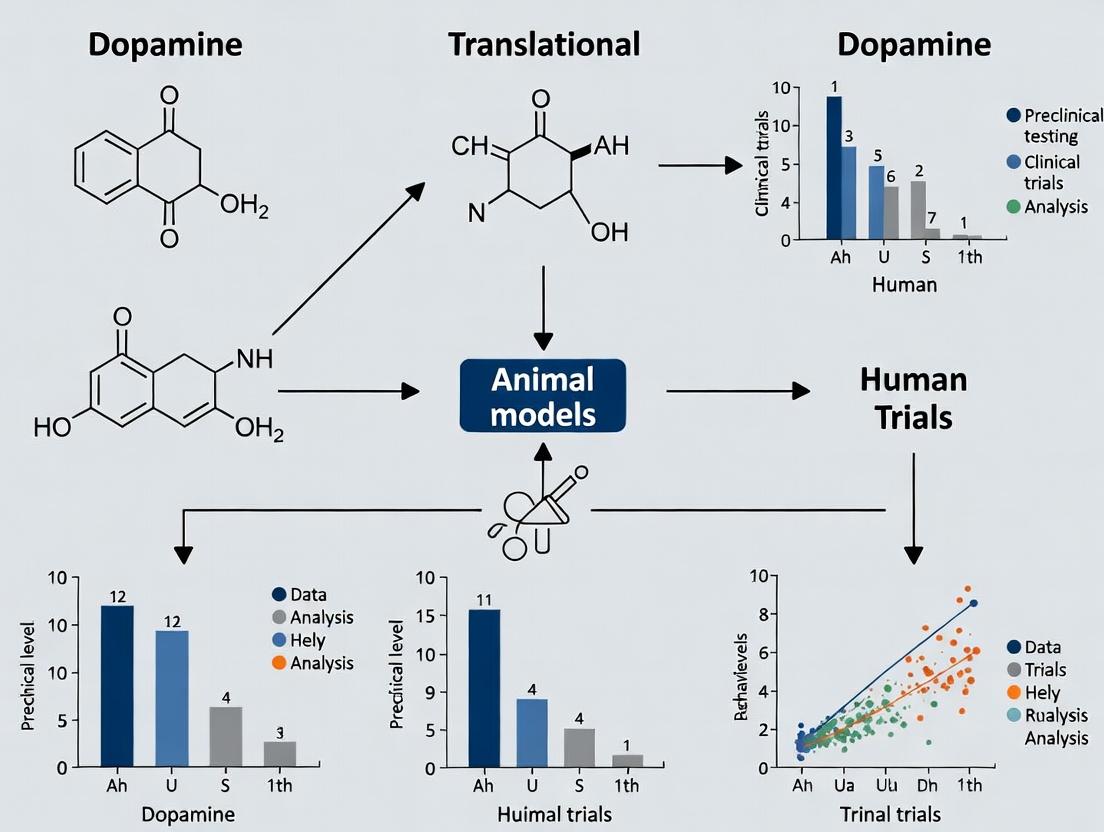
This article examines the critical translational challenges in extrapolating dopamine findings from animal models to human neuropsychiatric research and drug development.
Bridging the Translational Gap: Challenges and Solutions in Applying Animal Dopamine Research to Human Neuropsychiatry
Abstract
This article examines the critical translational challenges in extrapolating dopamine findings from animal models to human neuropsychiatric research and drug development. It explores the foundational anatomical and functional differences between species, analyzes methodological hurdles in human measurement techniques, troubleshoots common pitfalls in experimental design, and validates emerging comparative approaches. Aimed at researchers and industry professionals, it provides a roadmap for optimizing translational strategies to accelerate the development of more effective treatments for disorders like schizophrenia, addiction, and Parkinson's disease.
From Rodent to Human: Exploring Fundamental Differences in Dopaminergic Systems
Troubleshooting Guide & FAQs
This support center addresses common experimental challenges in cross-species dopamine pathway research within the context of Overcoming challenges in translating animal dopamine findings to human research.
FAQ 1: How do I account for differences in striatal sub-compartmentalization (patch/matrix) when comparing rodent and primate models?
- Issue: The striatal patch (striosome) and matrix compartments are differentially organized and connected across species, affecting functional interpretation of manipulations.
- Solution: Implement dual-label immunohistochemistry using validated cross-reactive antibodies or in situ hybridization probes for compartment-specific markers (e.g., μ-opioid receptor for patches, calbindin for matrix in many species). Use stereological counting within defined compartments, not the whole striatum.
- Protocol: Stereological Quantification of Striatal Compartments
- Perfuse-fix brains with 4% PFA. Section coronally at 40µm on a cryostat.
- Perform IHC: Block in 3% NGS/0.3% Triton for 1hr. Incubate in primary antibody cocktails (e.g., mouse anti-mu-opioid receptor [1:1000] + rabbit anti-calbindin [1:2000]) for 48hr at 4°C.
- Incubate with species-appropriate fluorescent secondary antibodies (e.g., Alexa Fluor 568 & 488) for 2hr.
- Image entire striatum using a confocal microscope with motorized stage.
- Use stereology software (e.g., Stereo Investigator) to overlay a systematic random counting grid. Count immunopositive cells separately for patch (MOR+) and matrix (Calbindin+) regions, using the optical fractionator method.
- Key Reagent Table:
Research Reagent Function in Experiment Anti-μ-opioid Receptor Antibody (Clone MOR-1) Labels striatal patch (striosome) compartments. Anti-Calbindin D-28k Antibody Labels striatal matrix compartments. Fluorophore-conjugated Secondary Antibodies (e.g., Alexa Fluor series) Enable simultaneous visualization of multiple targets. Stereo Investigator Software Provides unbiased stereological cell counting protocols.
FAQ 2: What is the best method to trace homologous cortical inputs to the midbrain dopamine system in mice vs. non-human primates?
- Issue: The prefrontal cortical (PFC) regions providing top-down control of midbrain dopamine neurons (e.g., VTA, SNc) are not directly homologous, leading to mistranslation.
- Solution: Use complementary anterograde and retrograde tracing viruses in both species, targeting putative homologous regions based on recent connectomic studies (e.g., rodent medial PFC (mPFC) prelimbic area vs. primate dorsolateral PFC (dlPFC) area 46).
- Protocol: Comparative Viral Tract Tracing
- Rodent: Inject 300 nL of AAV1-CAG-GFP (anterograde) into mPFC (AP: +1.8 mm, ML: ±0.4 mm, DV: -2.8 mm from Bregma). In a separate cohort, inject 200 nL of RetroAAV-hSyn-mCherry into the VTA.
- Non-human Primate: Inject 1-2 µL of AAV1-CAG-GFP into area 46 of dlPFC using MRI-guided stereotaxy. Inject 1 µL of CTB-488 (Cholera Toxin Subunit B) into the SNc/VTA for retrograde labeling.
- Allow 3-4 weeks (rodent) or 8-12 weeks (primate) for transport.
- Perfuse and section brain. Counterstain with DAPI.
- Image and quantify overlap/co-localization in the midbrain using confocal microscopy and image analysis software (e.g., Imaris, FIJI).
- Key Reagent Table:
Research Reagent Function in Experiment AAV1-CAG-GFP (Anterograde Tracer) Labels axons and terminals from injection site to projection targets. RetroAAV-hSyn-mCherry (Retrograde Tracer) Labels cell bodies of neurons projecting to the injection site. Cholera Toxin Subunit B (CTB), conjugated Classical, highly efficient retrograde tracer for use in primates. DAPI (4',6-diamidino-2-phenylindole) Nuclear counterstain for anatomical reference.
FAQ 3: How can I standardize the measurement of dopamine release dynamics across species with different brain sizes and kinetics?
- Issue: Techniques like microdialysis or fiber photometry yield data with different temporal resolutions and basal levels that are not directly comparable.
- Solution: Employ fast-scan cyclic voltammetry (FSCV) in conjunction with a standardized, behaviorally-relevant task (e.g., probabilistic reward) to measure phasic release. Normalize signals to the maximal response evoked by electrical stimulation of the dopamine bundle in the same recording location.
- Protocol: Cross-Species FSCV During Probabilistic Reward
- Implant a carbon-fiber microelectrode into the ventral striatum (NAc core) and a stimulating electrode in the VTA/medial forebrain bundle.
- Train animals (rodent or primate) on a probabilistic reversal learning task where one cue has a higher reward probability (e.g., 80% vs 20%).
- During task performance, apply a triangular waveform (-0.4 V to +1.3 V to -0.4 V, 400 V/s) at the recording electrode every 100 ms.
- Record dopamine oxidation currents. Identify dopamine by its characteristic reduction-oxidation potential pattern.
- Deliver a train of electrical pulses (60 pulses, 60 Hz, 300 µA) at the session's end to evoke maximal dopamine release.
- Normalize all behaviorally-evoked phasic dopamine signals (peak height in nA) as a percentage of this maximum evoked release (% max) for cross-session and cross-species comparison.
Table 1: Comparative Anatomy of Key Dopamine Pathway Features
| Feature | Rodent (Rat/Mouse) | Non-Human Primate (Macaque) | Human (Post-mortem) | Translational Consideration |
|---|---|---|---|---|
| Cortical Origin of Mesocortical Pathway | Medial Prefrontal Cortex (mPFC: IL, PL) | Principally Dorsolateral PFC (Area 46) & Anterior Cingulate | Dorsolateral PFC (Area 9/46) & Anterior Cingulate | Function may shift from limbic to executive across phylogeny. |
| Striatal Compartmentalization | Well-defined patches (striosomes) embedded in a matrix. | Less distinct patches; more intricate matrix subdivisions. | Complex, intermingled chemoarchitecture. | Compartment-specific dysfunction (e.g., in OCD) is hard to model. |
| Midbrain Dopamine Neuron Topography | VTA (A10) compact; SNc (A9) dorsal. Substantial nigral A8 group. | VTA is more expansive and subdivided. SNc neurons are larger and densely packed. | VTA complex; SNc neurons susceptible to degeneration in PD. | Vulnerability factors may differ by subregion and species. |
| D2:D1 Receptor Density Ratio in Striatum | ~2:1 to 4:1 | ~1.5:1 to 2:1 | ~1:1 to 1.5:1 | Drug efficacy targeting specific receptor types may not scale directly. |
Table 2: Representative Quantitative Differences in Dopamine Neurotransmission
| Parameter | Typical Rodent Value | Typical Primate Value | Measurement Technique | Implication for Translation |
|---|---|---|---|---|
| Basal Striatal [DA]ext | 5-15 nM | 1-5 nM | In vivo Microdialysis | Tonic signaling milieu differs, affecting receptor occupancy. |
| Phasic DA Release (Δ[DA]) | 50-250 nM | 100-500 nM (but slower kinetics) | Fast-Scan Cyclic Voltammetry (FSCV) | Reward prediction error signaling magnitude may scale differently. |
| DA Transporter (DAT) Density in Caudate | Moderate | Very High | PET (using [11C]PE2I or [123I]FP-CIT) | Reuptake capacity differs, impacting psychostimulant effects and synaptic lifetime. |
| DA Neuron Firing Rate (Basal) | 2-8 Hz | 3-15 Hz | In vivo Extracellular Electrophysiology | Baseline activity states are not equivalent. |
Visualizations
Diagram 1: Comparative Cortico-Striatal-Midbrain Loops
Diagram 2: Experimental Workflow for Cross-Species Pathway Validation
Troubleshooting Guide & FAQ
Q1: Our cell-based assay for D2 receptor signaling shows inconsistent Gi/o-mediated cAMP inhibition results. What are common pitfalls? A1: Inconsistent cAMP inhibition can stem from receptor overexpression artifacts, endogenous receptor expression in host cells, or inadequate washing steps leading to residual forskolin. Ensure you are using a validated cell line (e.g., CHO-K1 with stable, moderate-level expression) and include a thorough wash step after forskolin activation before lysis. Use a cAMP analog as a positive control for inhibition.
Q2: When expressing human D1 vs. D5 receptors in heterologous systems, we observe conflicting data on β-arrestin recruitment. How can we standardize this? A2: D1 and D5, while both Gαs-coupled, have distinct β-arrestin recruitment kinetics and preferences. Standardize by:
- Using a bioluminescence resonance energy transfer (BRET) platform with identical donor/acceptor ratios.
- Including a positive control (e.g., Angiotensin II Type 1 Receptor activation) in every experiment.
- Ensuring the C-terminal tags do not interfere with arrestin binding domains; consider using a split-luciferase complementation assay as an alternative.
Q3: Our attempts to model D3 receptor ligand bias in mouse striatal neurons fail to replicate human neuronal data. What's missing? A3: A key factor is the differing expression levels of regulatory proteins like RGS (Regulator of G-protein Signaling) proteins between species and cell types. Mouse neurons may have a different RGS complement that shapes D3 signaling output. Incorporate RGS inhibitors or use human induced pluripotent stem cell (iPSC)-derived neurons to better model the human signaling network.
Q4: Why do our radioligand binding assays for the D4 receptor yield abnormally high non-specific binding? A4: High non-specific binding for D4 is common due to its lipophilic nature and potential sequestration in membrane compartments. Optimize your filtration protocol:
- Use GF/C filters pre-soaked in 0.5% polyethyleneimine (PEI) for at least 60 minutes to reduce cationic ligand binding to the filter.
- Increase the volume and decrease the temperature of the wash buffer (e.g., ice-cold 10mM Tris-HCl, pH 7.4).
- Validate with a highly selective D4 antagonist like L-745,870.
Essential Experimental Protocols
Protocol 1: BRET Assay for G Protein vs. β-Arrestin Signaling Bias Objective: Quantify ligand bias between G-protein activation and β-arrestin recruitment for dopamine receptors. Method:
- Cell Preparation: Seed HEK-293T cells in poly-D-lysine coated 6-well plates.
- Transfection: Co-transfect with:
- Dopamine receptor tagged with Renilla luciferase (RLuc8) at its C-terminus.
- For G-protein assay: A GFP10-tagged Gγ subunit + untagged Gβ and relevant Gα.
- For β-arrestin assay: β-arrestin 2 tagged with GFP10.
- Assay: 48h post-transfection, detach cells, resuspend in assay buffer, and dispense into a 96-well white plate. Add the RLuc substrate coelenterazine-h (5µM). Acquire baseline luminescence/fluorescence, then add ligand. Measure BRET ratio (GFP emission / RLuc emission) over time.
- Analysis: Calculate ΔBRET (peak response minus baseline). Normalize to a reference full agonist (e.g., dopamine) to calculate transducer coefficients (ΔΔLog(τ/KA)) to determine bias.
Protocol 2: Electrophysiological Assessment of D2 Receptor Autoreceptor Function in iPSC-Derived Dopaminergic Neurons Objective: Measure the inhibitory effect of D2 autoreceptor activation on action potential firing. Method:
- Neurons: Use mature (Day >60) human iPSC-derived dopaminergic neurons (e.g., from a PARK2 or healthy control line).
- Recording: Perform whole-cell current-clamp recording at 32°C in artificial cerebrospinal fluid (aCSF). Maintain resting potential near -60mV with injected current.
- Stimulation: Induce tonic firing (1-4 Hz) with a small depolarizing current step.
- Drug Application: Bath apply a selective D2 agonist (e.g., quinpirole, 10 µM) for 5 minutes while recording firing frequency.
- Analysis: Compare average firing frequency (spikes/sec) during the last 2 minutes of drug application to the 2-minute baseline before application. A >30% reduction confirms functional autoreceptors.
Research Reagent Solutions Toolkit
| Reagent / Material | Function & Application |
|---|---|
| HEK-293T Cells | Standard heterologous expression system for initial receptor characterization and signaling assays. |
| Human iPSC-Derived Dopaminergic Neurons | Physiologically relevant model expressing native human receptor complexes and signaling machinery. |
| NanoBiT (Split-Luciferase) System | For studying protein-protein interactions (e.g., receptor-arrestin) with high signal-to-noise and low background. |
| Tag-lite SNAP-tagged Dopamine Receptors | Pre-labeled receptors for homogeneous time-resolved FRET (HTRF) binding and signaling assays. |
| Phos-tag Acrylamide Gels | To separate and detect differentially phosphorylated receptor isoforms, key for signaling specificity. |
| PathHunter β-Arrestin Recruitment Assay (DiscoverX) | Enzyme fragment complementation-based, off-the-shelf assay kits for robust, high-throughput arrestin signaling data. |
| Selective RGS Inhibitors (e.g., CCG-4986 for RGS4) | To probe the role of specific RGS proteins in shaping dopamine receptor response kinetics in native cells. |
Table 1: Key Pharmacological Parameters of Human Dopamine Receptor Subtypes
| Receptor | Primary G-protein | cAMP Effect | High Affinity Agonist (Ki, nM) | High Affinity Antagonist (Ki, nM) | β-Arrestin Recruitment Potency (Relative to D1) |
|---|---|---|---|---|---|
| D1 | Gαs/olf | ↑ | SKF-81297 (0.5) | SCH-23390 (0.2) | 1.0 (Reference) |
| D2 | Gαi/o | ↓ | (−)-Quinpirole (1.2) | Haloperidol (0.7) | 2.3 (Strong) |
| D3 | Gαi/o | ↓ | PD-128907 (0.7) | Eticlopride (0.1) | 1.5 (Moderate) |
| D4 | Gαi/o | ↓ | PD-168077 (3.0) | Clozapine (20) | 0.8 (Weak) |
| D5 | Gαs/olf | ↑ | SKF-38393 (2.0) | – | 0.5 (Very Weak) |
Table 2: Expression Profile in Key Human Brain Regions (RPKM*)
| Receptor | Caudate Nucleus | Putamen | Nucleus Accumbens | Prefrontal Cortex | Substantia Nigra |
|---|---|---|---|---|---|
| D1 | 25.4 | 28.1 | 18.9 | 5.2 | 1.1 |
| D2 | 15.7 | 16.3 | 12.5 | 2.8 | 8.5 |
| D3 | 0.8 | 0.5 | 3.2 | 0.4 | 0.2 |
| D4 | 1.2 | 1.0 | 0.9 | 4.5 | 0.1 |
| D5 | 0.5 | 0.6 | 0.4 | 1.1 | 0.3 |
*Reads Per Kilobase Million (representative data from GTEx Consortium).
Signaling & Workflow Diagrams
Title: Dopamine Receptor Canonical & Arrestin Signaling Pathways
Title: Translational Research Workflow for Dopamine Receptors
Technical Support Center
Frequently Asked Questions & Troubleshooting Guides
Q1: Our rodent probabilistic reward task shows robust learning, but the analogous human fMRI task yields high inter-subject variability and no significant ventral striatal BOLD signal. What are the primary troubleshooting steps?
A1: This is a common translational challenge. Follow this systematic guide:
- Check Perceptual/Motor Fidelity: Ensure the human task's sensory stimuli (e.g., visual cue duration, contrast) and motor response requirements are as isomorphic as possible to the rodent task. Human tasks often add unnecessary cognitive load.
- Calibrate Task Parameters: Human learning rates are faster. Adjust the probabilistic reversal schedule. Use adaptive staircasing in pilot sessions to determine subject-specific thresholds for reward magnitude and probability that elicit reliable effort.
- Control for Explicit Cognition: Humans will explicitly model probabilistic tasks. Implement a concurrent working memory distractor (e.g., tone counting) to suppress explicit reasoning and engage habitual systems, or use post-session questionnaires to stratify subjects into "model-based" vs. "model-free" learners.
- fMRI Acquisition Analysis: Confirm your hemodynamic response function (HRF) model aligns with ventral striatal timing. Check for susceptibility artifacts in key regions. Use physiological noise correction.
Experimental Protocol: Adaptive Probabilistic Selection Task with Cognitive Load
- Subjects: 50 healthy adults, screened for prior psychology/statistics knowledge.
- Apparatus: MRI-compatible button box, auditory headphones for distractor.
- Procedure: Subjects choose between two abstract symbols. Pair A/B: 80/20% reward probability. Pair C/D: 70/30%. Pair E/F: 60/40%. Reward is "Correct" feedback.
- Cognitive Load: In 50% of trials, a concurrent auditory stream of high/low tones is presented. Subjects must press a foot pedal for two consecutive high tones.
- Analysis: Compare BOLD signal in the ventral striatum during feedback between high-load and low-load blocks. Model-free analysis (FSL's FILM) is recommended.
Q2: When translating a rodent operant effort-based choice task (e.g., T-maze barrier climbing) to human analogs, how do we quantify and equate "effort" across species?
A2: Effort must be operationalized proportionally to the subject's capacity. See the quantitative comparison below.
Table 1: Equating Effort Parameters Across Species
| Parameter | Rodent Model (Efort-Related Choice) | Human Translational Analog | Calibration Method |
|---|---|---|---|
| Physical Effort | Barrier height in T-maze, lever press force. | Squeeze dynamometer, bicycle ergometer. | Set levels as a percentage (e.g., 30%, 60%, 90%) of individual's maximum voluntary force or VO₂ max. |
| Cognitive Effort | Duration of delayed reward, working memory load in radial arm maze. | N-back task, arithmetic problems, task-switching. | Titrate difficulty to achieve 70% correct performance in a calibration block. Use adaptive algorithms (e.g., QUEST). |
| Effort Discounting Metric | (High Effort Reward - Low Effort Reward) / Choice Latency |
Subjective Value = Reward / (1 + k*Effort Cost) |
Fit choice data to hyperbolic discounting models to derive subject-specific 'k' (discounting rate) parameters for comparison. |
Experimental Protocol: Iso-Effort Discounting Task
- Calibration Phase: (Human) Measure max handgrip strength. (Rodent) Measure maximum barrier-climbing capability.
- Task Phase: Present repeated choices between a low-effort/low-reward option (e.g., 30% max effort for 1 pellet/¢1) and a high-effort/high-reward option (e.g., 70% max effort for 4 pellets/¢4).
- Analysis: Calculate indifference points where subjects are equally likely to choose either option. The required reward multiplier for high effort is a direct, cross-species comparable metric of effort sensitivity.
Q3: Our drug (a novel D2/D3 partial agonist) increases breakpoint in rodent progressive ratio tasks but fails to enhance motivation in human clinical trials for apathy. What could explain this disconnect?
A3: The progressive ratio (PR) task measures perseverative motivation, but human apathy is a multidimensional syndrome. The rodent task may not capture the specific cognitive deficit.
Table 2: Discrepancy Analysis: Rodent PR vs. Human Apathy Trials
| Factor | Rodent PR Task Finding | Human Clinical Apathy Measure | Potential Disconnect |
|---|---|---|---|
| Primary Construct | Motoric perseverance (instrumental vigor). | Goal-directed behavior initiation (cognitive/emotional planning). | Drug may affect motoric 'vigor' but not cognitive 'initiation'. |
| Reward Type | Primary (food pellet). | Secondary/Abstract (social engagement, personal accomplishment). | Dopaminergic circuits for primary vs. abstract reward may have different receptor profiles. |
| Temporal Dynamics | Acute effect measured over 1-2 hours. | Chronic effect measured over 4-12 weeks. | Compensatory neuroadaptations may negate acute pro-motivational effects. |
| State Dependency | Tested in food-restricted, healthy rodents. | Tested in satiated, clinically apathetic patients (e.g., in Alzheimer's). | Baseline dopamine tone and receptor availability differ drastically. |
Experimental Protocol: Translational Goal-Directed Planning Task
- Rodent Version (Plan-Act-Task): A sequential two-lever press task where the correct sequence (e.g., Left-then-Right) changes daily. Measures the ability to plan an action sequence for reward.
- Human Analog (Four-Token Test): On-screen, subjects must collect four tokens by making sequential choices, planning 2-3 steps ahead to avoid dead ends.
- Rationale: This directly tests the cognitive planning component of motivation/initiation. A pro-cognitive drug effect here would be a better predictor for apathy trials.
The Scientist's Toolkit: Key Research Reagent Solutions
| Item | Function & Rationale |
|---|---|
| DREADDs (Designer Receptors Exclusively Activated by Designer Drugs) | Chemogenetic tool to selectively activate or inhibit specific neuronal projections (e.g., VTA→NAc) during complex behavioral tasks, establishing causality. |
| Fiber Photometry System | Allows real-time, in vivo measurement of calcium (proxy for neural activity) or dopamine sensor (e.g., dLight) fluorescence in freely moving rodents during task performance. |
| Computational Modeling Software (e.g., TDRL models, hBayesDM) | Fits choice behavior to parameters like learning rate, reward sensitivity, and effort discounting ('k'), providing quantitative, theory-based cross-species behavioral phenotypes. |
| fMRI-Compatible Effort Apparatus | Precision devices (e.g., handgrip, pedal) that deliver calibrated physical effort within the scanner, linking BOLD signal to effort expenditure. |
| Eye-Tracking & Pupillometry | Provides implicit, continuous measures of arousal, attention, and decision conflict during human cognitive tasks, analogous to rodent orienting/pupil dilation. |
Signaling Pathway: Dopaminergic Modulation of Corticostriatal Circuits in Effort-Based Choice
Experimental Workflow: Translational Pipeline for Motivation Research
Technical Support Center
Frequently Asked Questions & Troubleshooting Guides
FAQ 1: How do I account for species differences in basal dopamine levels when designing translational experiments?
- Answer: Basal extracellular dopamine concentrations, measured via microdialysis, vary significantly across species and brain regions. A key challenge is that rodent levels are often higher than in non-human primates (NHPs) and humans. This can affect the interpretation of drug efficacy. Always establish species- and region-specific baseline values in your model system before testing novel compounds. Refer to Table 1 for comparative data.
FAQ 2: My drug candidate evokes a robust dopamine release in mice but shows no signal in our NHP PET study. What could explain this discrepancy?
- Answer: This is a common translational hurdle. First, verify your methodology. In rodents, you are likely measuring phasic release (fast, synaptic) via fast-scan cyclic voltammetry (FSCV). PET imaging in large animals primarily reflects tonic dopamine levels and D2/3 receptor occupancy. The drug may be affecting release dynamics undetectable by PET. Consider these troubleshooting steps:
- Check pharmacokinetics: Ensure the drug reaches the target in the NHP brain at sufficient concentrations.
- Validate target engagement: Use a radioligand displacement PET study to confirm the drug binds to the intended target.
- Explore alternative mechanisms: The release mechanism (e.g., via DAT reversal vs. vesicular depletion) may differ between species.
FAQ 3: Why do DAT inhibitor effects vary between species in behavioral assays?
- Answer: Inhibitor potency is influenced by species-specific DAT structure, density, and regulation. For example, cocaine binds with different affinity to rodent vs. human DAT. Furthermore, the balance between dopamine release and reuptake capacity is not constant. Consult Table 2 for inhibitor profiles. You must pharmacologically characterize your compound's interaction with the DAT from your species of interest using heterologous expression systems prior to in vivo work.
FAQ 4: How can I accurately model human dopamine reuptake dynamics in a rodent system?
- Answer: Complete modeling is impossible due to inherent differences in neural circuitry. However, using transgenic mice expressing humanized DAT or VMAT2 proteins can provide a better platform for studying pharmacodynamics of reuptake inhibitors or releasers. Always pair this with verification in an NHP model before human translation.
Comparative Data Tables
Table 1: Representative Basal Extracellular Dopamine Concentrations Across Species
| Species | Brain Region (Method) | Basal Concentration (nM) | Key Consideration |
|---|---|---|---|
| Mouse (C57BL/6J) | Striatum (Microdialysis) | 1.5 - 4.0 | Highly strain-dependent; sensitive to stress. |
| Rat (Sprague-Dawley) | Nucleus Accumbens (Microdialysis) | 3.0 - 8.0 | Considerably higher than in primates. |
| Non-Human Primate (Rhesus) | Caudate (Microdialysis) | 0.5 - 2.5 | Closer to human estimates; high individual variability. |
| Human (Estimated) | Striatum (PET & CSF) | 0.1 - 1.0 (estimated) | Indirect measures; CSF levels are global, not regional. |
Table 2: Species-Specific Pharmacological Profiles of Selected Dopamine Transporters (DAT)
| Compound | Primary Action | Relative Potency (Human DAT) | Relative Potency (Rat DAT) | Translational Note |
|---|---|---|---|---|
| GBR-12909 | DAT Inhibitor | 1.0 (Reference) | ~0.8 | Similar high-affinity binding across species. |
| Cocaine | DAT Inhibitor | 1.0 (Reference) | ~0.3-0.5 | Lower binding affinity in rodent DAT. |
| Amphetamine | DAT Substrate/Releaser | 1.0 (Reference) | ~2.0 | More potent at rodent DAT; also differs in VMAT2 interaction. |
| Modafinil | DAT Inhibitor (Weak) | Low | Very Low | Species-specific metabolism affects exposure. |
Detailed Experimental Protocols
Protocol A: Measuring Phasic Dopamine Release Using Fast-Scan Cyclic Voltammetry (FSCV) in Rodent Striatal Slices
- Tissue Preparation: Rapidly decapitate anesthetized rodent, extract brain, and submerge in ice-cold, sucrose-based cutting buffer. Prepare 300-400 μm thick coronal slices containing the striatum using a vibratome.
- Electrode Preparation: Carbon-fiber microelectrodes are fabricated and conditioned. The FSCV waveform is applied (-0.4 V to +1.3 V and back, 400 V/s, 10 Hz).
- Recording: Place slice in aCSF-perfused chamber (32°C, flow rate ~2 ml/min). Position electrode in striatum. Evoke dopamine release with a bipolar stimulating electrode (single pulse, 0.6 mA, 4 ms).
- Data Analysis: Identify dopamine oxidation (~+0.6 V) and reduction (~ -0.2 V) peaks. Convert current to concentration using post-calibration with known dopamine solutions (3 μM).
Protocol B: In Vivo Microdialysis for Tonic Dopamine in Non-Human Primates
- Surgery & Probe Implantation: Under sterile conditions and general anesthesia, implant a guide cannula targeting the caudate or putamen using MRI-guided stereotaxy.
- Post-Op Recovery: Allow at least 1-2 weeks for recovery and habituation.
- Dialysate Collection: Insert a concentric microdialysis probe (e.g., 2-4 mm membrane) and perfuse with artificial CSF (1-2 μL/min). After a 1-2 hour equilibration period, collect samples every 10-20 minutes into vials containing 5 μL of 0.1M HCl to preserve analyte.
- HPLC-ECD Analysis: Inject samples onto a C18 reverse-phase column coupled to an electrochemical detector. Quantify dopamine against external standards. Data expressed as % change from baseline.
Diagrams
Diagram 1: Core Dopamine Synapse & Key Measurement Points
Diagram 2: Translational Research Workflow for Dopamine Drugs
The Scientist's Toolkit: Research Reagent Solutions
| Item | Function & Application in Species Comparison |
|---|---|
| Humanized DAT Knock-in Mice | Genetically engineered mice expressing the human dopamine transporter protein. Critical for testing drug interactions with the human target in a live animal system before primate studies. |
| Selective D2/D3 Receptor Agonists (e.g., Quinpirole, Pramipexole) | Used to probe autoreceptor function and provide negative feedback on dopamine release. Potency differences can reveal species-specific receptor regulation. |
| DAT Inhibitors (e.g., GBR-12909, Nomifensine) | High-affinity, selective tools to block reuptake. Used to compare reuptake capacity and baseline occupancy across species in microdialysis experiments. |
| VMAT2 Inhibitor (Tetrabenazine) | Depletes vesicular dopamine stores. Used to assess the contribution of vesicular vs. cytosolic dopamine pools to species-specific release dynamics. |
| Radiolabeled PET Ligands (e.g., [¹¹C]Raclopride for D2/3, [¹¹C]PE2I for DAT) | Essential for non-invasive measurement of receptor availability and transporter density in NHP and human brains. Allows cross-species comparison of target expression. |
| aCSF (Artificial Cerebrospinal Fluid) | The perfusion medium for electrophysiology and microdialysis. Ionic composition (Ca²⁺, Mg²⁺, K⁺) must be optimized for the species and preparation (in vivo vs. slice). |
Measuring the Invisible: Methodological Hurdles in Human Dopamine Research
Welcome to the Neuroimaging Technical Support Center. This resource is designed within the context of overcoming challenges in translating animal dopamine findings to human research. Below are troubleshooting guides, FAQs, and essential resources for integrating multimodal neuroimaging.
Troubleshooting & FAQs
Q1: Our PET study with [11C]Raclopride failed to show expected dopamine release in the striatum following a reward task, despite strong animal model predictions. What could be wrong? A: Common issues include:
- Pharmacological Specificity: Confirm the ligand's binding affinity (Ki) for D2/3 receptors vs. other targets. Consider using a higher-specificity ligand like [11C]PHNO for D3-rich regions.
- Temporal Mismatch: PET has low temporal resolution (~minutes). The task-induced dopamine pulse is rapid (seconds). Solution: Synchronize task onset precisely with the tracer's peak sensitivity window (refer to its binding potential curve). Use a block-design task rather than a single event.
- Baseline Issues: Ensure subjects are in a consistent, neutral state pre-scan (no caffeine, nicotine) to stabilize baseline receptor availability.
Q2: Our fMRI study shows robust BOLD activation in a predicted cortical region, but we cannot confirm if dopamine is the driver. How can we disambiguate this? A: The BOLD signal is neurovascular and not neurotransmitter-specific.
- Troubleshooting Step: Conduct a concurrent pharmacological fMRI (phMRI) challenge. Administer a controlled dose of a dopamine agonist (e.g., levodopa) or antagonist during scanning.
- Protocol: Utilize a double-blind, placebo-controlled, crossover design. Compare BOLD response patterns between drug and placebo sessions in the same subject. A significant modulation of task-related activation suggests dopaminergic involvement.
Q3: We recorded excellent temporal signals with MEG during decision-making, but source localization is pointing to an implausibly broad area. How can we improve spatial accuracy? A: This is a classic MEG limitation.
- Solution: Coregistration with structural MRI. Use individual high-resolution T1-weighted MRI scans to constrain the MEG inverse solution.
- Advanced Protocol: Implement an anatomically constrained minimum norm estimate (MNE) or beamforming (e.g., SAM) algorithm. The key is to supply the processing pipeline with the subject's precise MRI geometry, skull contour, and sensor positions from digitized head points.
Q4: We want to combine MEG's temporal resolution with fMRI's spatial resolution to study dopamine-mediated connectivity. What is the best practical method? A: Use Simultaneous MEG-fMRI recording or sequential sessions with careful alignment.
- Critical Protocol for Sequential Data: 1) Acquire MEG and fMRI in the same session with the subject in a fixed, comfortable position to minimize movement. 2) Use fiducial markers (nasion, left/right pre-auricular points) in both modalities. 3) Employ multimodal integration software (e.g., MNE-Python, SPM) to coregister data using the fiducials and head shape. 4) Apply fMRI-derived regions of interest (ROIs) as spatial filters for MEG source time-series, then perform connectivity analysis (e.g., phase locking value) within those regions.
Table 1: Key Specifications of Primary Neuroimaging Modalities for Dopamine Research
| Modality | Primary Measure | Spatial Resolution | Temporal Resolution | Direct Dopamine Sensitivity? | Key Limitation for Translation |
|---|---|---|---|---|---|
| PET | Receptor ligand binding | 3-5 mm | Minutes | Yes (with specific ligands) | Poor temporal resolution misses phasic signals; invasive (radioactivity). |
| fMRI | Blood Oxygenation (BOLD) | 1-3 mm | 1-3 seconds | No (indirect via hemodynamics) | Neurovascular coupling lag; confounded by other neuromodulators. |
| MEG | Magnetic fields from neuronal currents | 5-10 mm (with MRI) | Milliseconds | No | Limited sensitivity to subcortical (e.g., VTA/SNc) deep sources. |
Table 2: Common Dopamine-Targeted PET Ligands
| Ligand | Primary Target | Binding Potential (BPND) in Striatum* | Best For | Translational Challenge |
|---|---|---|---|---|
| [11C]Raclopride | D2/3 receptors (antagonist) | ~3.0 | Competition studies, release dynamics | Lower BPND than some newer ligands; sensitive to endogenous dopamine. |
| [11C]PHNO | D3 > D2 receptors (agonist) | ~4.5 (GP) / ~2.7 (Striatum) | Highlighting D3-rich regions (globus pallidus) | Agonist profile may reflect high-affinity state receptors; complex interpretation. |
| [18F]FDOPA | Dopa decarboxylase activity | Kicer ~0.01 min-1 | Presynaptic dopamine synthesis capacity | Uptake is not specific to dopaminergic neurons alone. |
*Representative values from literature; actual BPND varies by study and analysis.
The Scientist's Toolkit: Research Reagent & Solutions
| Item | Function & Application in Translational Dopamine Imaging |
|---|---|
| High-Affinity D2/D3 PET Ligands (e.g., [11C]FLB 457) | Enables imaging of low-density extrastriatal dopamine receptors in cortical regions, bridging rodent cortical dopamine findings. |
| Simultaneous EEG-fMRI Cap | Allows direct correlation of electrophysiological events (e.g., reward positivity) with BOLD activation maps in humans. |
| Cyclotron & Radiochemistry Suite | On-site production of short-lived (e.g., C-11, t1/2=20.4 min) radiotracers for flexible, patient-specific PET study designs. |
| Computational Modeling Software (e.g., COMKAT, PMOD) | Enables kinetic modeling of PET data to extract quantitative parameters (e.g., BPND, VT) for cross-species comparison. |
| Multimodal Data Integration Platform (e.g., MNE-Python, CONN) | Essential for coregistering and statistically analyzing combined data from PET, fMRI, and MEG within a unified brain space. |
Experimental Protocols & Visualizations
Protocol: Concurrent fMRI & Pharmacological Challenge (phMRI) for Dopamine Modulation
- Design: Double-blind, placebo-controlled, within-subject crossover.
- Session 1 (Placebo): Administer oral placebo 60 minutes prior to scan. Perform task (e.g., monetary incentive delay) during fMRI acquisition.
- Washout: Allow sufficient time for drug clearance (days to weeks).
- Session 2 (Drug): Administer a dopamine modulator (e.g., 100mg levodopa + carbidopa) 60 minutes prior to scan. Repeat identical fMRI task.
- Analysis: Use general linear model (GLM) to compare task activation (Drug vs. Placebo). Significant clusters indicate dopamine-modulated networks.
Diagram: Multimodal Integration Workflow for Dopamine Research
Title: Cross-Species Multimodal Data Integration Pathway
Diagram: Temporal-Spectral Resolution of Imaging Modalities
Title: Imaging Modality Resolution Trade-off Space
Technical Support Center
Troubleshooting Guide & FAQs
Q1: Our CSF homovanillic acid (HVA) measurements show high inter-assay variability. What are the primary sources of contamination or interference, and how can we mitigate them? A: High variability in CSF HVA often stems from:
- Pre-analytical Factors: Delay in CSF centrifugation (>30 minutes) leads to metabolite degradation by platelets. Immediate processing on ice is critical.
- Drug Interference: Concurrent administration of MAO inhibitors, L-DOPA, or antipsychotics drastically alters HVA levels. A 14-day washout period (where ethically possible) is recommended.
- Dietary Catechols: Caffeine and certain fruits can influence levels. Standardize participant fasting (overnight) and caffeine restriction prior to lumbar puncture.
- Protocol Fix: Implement a standardized CSF collection protocol: LP in lateral decubitus position, discard first 1-2 mL, collect 10-15 mL in polypropylene tubes, immediately centrifuge at 2000g for 10 min at 4°C, aliquot, and store at -80°C.
Q2: When measuring plasma catechol-O-methyltransferase (COMT) activity as a proxy for dopamine degradation, the enzymatic assay yields inconsistent results. What are the optimal conditions? A: Inconsistency is commonly due to substrate concentration and plasma preparation.
- Issue: Using non-physiological (too high) concentrations of the substrate (e.g., S-adenosyl methionine, SAM) can mask genetic (e.g., Val158Met) effects on enzyme kinetics.
- Solution: Use a kinetically sensitive assay with near-physiological SAM and dopamine concentrations. Perform the assay at 37°C and pH 7.8. Pre-treat plasma with a chelating agent to remove endogenous inhibitors.
- Standardized Protocol:
- Isolate plasma from EDTA blood within 60 minutes.
- Dialyze plasma overnight against 0.1M phosphate buffer (pH 7.8) to remove endogenous catechols.
- Run assay in triplicate with final concentrations: 100 µM Dopamine, 20 µM SAM, 2 mM MgCl₂, and 0.1 mM dithiothreitol.
- Quantify the product (3-methoxytyramine) via HPLC-ECD.
Q3: Our epigenome-wide association study (EWAS) for dopamine receptor methylation in peripheral blood mononuclear cells (PBMCs) shows poor correlation with brain data. How can we improve translational validity? A: This is a major cross-tissue correlation challenge.
- Problem: Cell-type heterogeneity in blood masks brain-relevant methylation signals.
- Mitigation Strategy:
- Cell Sorting: Isolate specific PBMC subtypes (e.g., CD14+ monocytes, lymphocytes) using FACS or magnetic beads to reduce noise.
- Bioinformatic Deconvolution: Use reference-based (e.g., Houseman method) or reference-free algorithms (e.g., MeDeCom) to estimate and adjust for cell composition in bulk methylation data.
- Validate with Proxy QTLs: Cross-reference identified CpG sites with known methylation quantitative trait loci (mQTLs) that are shared between blood and brain tissues (using databases like BIOS QTL browser or GTEx).
Q4: We are developing a multiplex digital ELISA for low-abundance dopamine-related proteins in serum. What are the key validation steps to ensure specificity against cross-reactive analogs? A: Specificity is paramount for assays like α-synuclein or DJ-1.
- Step 1: Cross-Reactivity Panel: Test the assay against a panel of structurally similar proteins (e.g., β- and γ-synuclein, serum albumin fragments) at 1000x concentration.
- Step 2: Spike-and-Recovery: Spike known amounts of purified native antigen into different serum matrices. Recovery should be 80-120%.
- Step 3: Parallelism: Perform serial dilutions of patient samples. The resulting dose-response curve should be parallel to the standard curve generated with the calibrator.
- Step 4: Orthogonal Method Correlation: Validate a subset of samples with an orthogonal technique (e.g., SIMOA for single-plex comparison or mass spectrometry).
Table 1: Reference Ranges for Key CSF Dopamine Metabolites in Healthy Controls
| Biomarker | Typical Concentration (ng/mL) | Sample Volume Required | Key Pre-analytical Consideration |
|---|---|---|---|
| Homovanillic Acid (HVA) | 30 - 60 | 0.5 - 1 mL CSF | Must be acidified, avoid repeated freeze-thaw |
| 3,4-Dihydroxyphenylacetic Acid (DOPAC) | 1 - 4 | 0.5 - 1 mL CSF | Extremely light-sensitive, process in amber vials |
| 3-Methoxytyramine (3-MT) | 0.1 - 0.5 | ≥ 1 mL CSF | Requires immediate protease inhibition |
Table 2: Comparison of Genetic & Epigenetic Proxy Methodologies
| Proxy Target | Common Assay | Tissue Source | Turnaround Time | Key Limitation |
|---|---|---|---|---|
| COMT Val158Met Genotype | TaqMan PCR or Microarray | Whole Blood/Saliva | 1-2 Days | Reflects function, not dynamic state |
| DRD2 Promoter Methylation | Pyrosequencing or Illumina EPIC Array | PBMCs/Buffy Coat | 3-7 Days | Cell-type specificity is critical |
| DAT1 (SLC6A3) VNTR | Capillary Electrophoresis | Genomic DNA | 2-3 Days | Population-specific allele frequency variation |
Experimental Protocol: Isolation and Methylation Analysis ofDRD2Promoter in PBMCs
Title: Protocol for PBMC DRD2 Methylation Analysis
Materials:
- EDTA or Citrate blood collection tubes.
- Ficoll-Paque PLUS density gradient medium.
- PBS (Phosphate Buffered Saline), nuclease-free.
- QIAamp DNA Blood Mini Kit or equivalent.
- EZ DNA Methylation Kit (Zymo Research) or bisulfite conversion equivalent.
- PyroMark PCR Kit and primers designed for DRD2 promoter CpG island (e.g., around GRCh38 chr11:113,409,567-113,409,900).
- Pyrosequencing instrument (e.g., Qiagen PyroMark Q48).
Method:
- PBMC Isolation: Layer whole blood over Ficoll-Paque. Centrifuge at 400g for 30 min at 20°C with no brake. Harvest the mononuclear cell layer. Wash twice with PBS.
- Genomic DNA Extraction: Extract DNA from PBMC pellet using column-based kit. Quantify via Nanodrop or Qubit.
- Bisulfite Conversion: Treat 500 ng of DNA using the EZ DNA Methylation Kit per manufacturer's instructions. This converts unmethylated cytosines to uracil.
- PCR Amplification: Amplify the target DRD2 promoter region using bisulfite-converted DNA as template. Validate PCR product on agarose gel.
- Pyrosequencing: Analyze the PCR product on the Pyrosequencer. The software calculates percentage methylation at each interrogated CpG site based on C/T ratio.
Signaling Pathway & Experimental Workflow Diagrams
Title: Dopamine Proxy to Pathway Relationship Map
Title: Biomarker Validation Pipeline Workflow
The Scientist's Toolkit: Research Reagent Solutions
Table 3: Essential Reagents for Dopamine Biomarker Research
| Item | Function & Specificity | Example Product/Catalog |
|---|---|---|
| Anti-phospho-S129-α-Synuclein Antibody | Detects pathologically relevant phosphorylated form of α-synuclein in CSF exosomes. | Abcam, clone EP1536Y, #ab51253 |
| Magnetic Beads for Neuron-Derived Exosome Isolation | Isolate L1CAM-positive exosomes from plasma/CSF to enrich for CNS-derived biomarkers. | biotechne, Human L1CAM Immunobeads, #LEXO-HC |
| dELISA Assay Kit for Oligomeric α-Synuclein | Ultrasensitive detection of pathogenic oligomeric forms in biofluids. | Quanterix, pS129-α-synuclein assay (RUO) |
| Bisulfite Conversion Kit | Converts unmethylated cytosine to uracil for downstream methylation analysis. | Zymo Research, EZ DNA Methylation Kit, #D5001 |
| COMT Enzyme Activity Assay Kit | Fluorometric measurement of COMT activity in plasma or tissue lysates. | Sigma-Aldrich, COMT Activity Assay Kit, #MAK221 |
| Human Dopamine Receptor D2 (DRD2) CRISPRa Stable Cell Line | For in vitro validation of genetic/epigenetic hits on receptor signaling. | Synthego, engineered K562 or HEK293 cells |
Technical Support Center: Troubleshooting Translational Dopamine Research
Context: This support center is designed to assist researchers in overcoming specific methodological challenges when translating in vitro and preclinical (animal) dopamine findings to human research and clinical drug development.
FAQs & Troubleshooting Guides
Q1: Our team calculated a human equivalent dose (HED) from rodent studies for a novel D2/3 receptor agonist, but the initial human trial showed unexpected hypotension not seen in animals. What went wrong?
- A: This is a common issue rooted in dose equivalency. The standard method using body surface area (BSA) scaling (e.g., FDA guidance) assumes linear pharmacokinetics and similar receptor distribution and physiology, which often fails for CNS targets.
- Troubleshooting Protocol: Move beyond BSA scaling.
- Re-Occupancy Modeling: Use PET imaging data from your animal study to determine the plasma concentration ([P]) required for 50% receptor occupancy (RO₅₀). If unavailable, use published in vivo Kᵢ values.
- PBPK/PD Modeling: Implement a Physiologically-Based Pharmacokinetic/Pharmacodynamic model. Input species-specific parameters: organ weights, blood flow, tissue composition, and plasma protein binding.
- Validate with Biomarkers: Corrogate the predicted human dose with a functional biomarker (e.g., prolactin suppression for D2 antagonists) in a Phase 0/microdose study to anchor the exposure-response relationship before a full therapeutic dose trial.
Q2: We observed a therapeutic effect in our mouse model of cognitive dysfunction at 80% D1 receptor occupancy. In our human PET study, we achieved the same occupancy but saw no clinical effect. How should we debug this?
- A: This discrepancy likely involves differences in receptor reserve, signaling bias, or functional selectivity between species.
- Troubleshooting Protocol:
- Assay the Signaling Cascade: In human-derived cell lines (e.g., HEK293 expressing human D1 receptors), repeat your in vitro signaling assays (cAMP, pERK, β-arrestin recruitment). Compare the signaling bias profile (e.g., Log(τ/KA) ratios) to your mouse cell/assay data.
- Check for Receptor Reserve: Perform an in vitro irreversible receptor inactivation experiment (e.g., with EEDQ) to determine the fraction of receptors required for response. A high receptor reserve in mice means a low occupancy can produce efficacy, while humans may have a lower reserve.
- Review PET Analysis: Verify your human PET quantification method (reference region vs. arterial input). Ensure you are measuring occupancy in the correct brain subregion (e.g., dorsolateral PFC for cognitive tasks, not striatum).
Q3: A compound showed no extrapyramidal side effects (EPS) in rats but caused significant EPS in a human Phase II trial for psychosis. How can we better predict such side effect profiles preclinically?
- A: Rat models are poor predictors of human EPS due to differences in striatal circuitry and motor system compensation. The issue often relates to differential receptor occupancy thresholds in various brain regions.
- Troubleshooting Protocol:
- Conduct a Multi-Region Occupancy Study: In your next animal study, use ex vivo autoradiography or in vivo PET to measure occupancy simultaneously in the striatum (linked to EPS) and the cortex/limbic regions (linked to efficacy). Generate a comparative table.
- Determine the Therapeutic Index (TI): Calculate the in vivo TI as:
TI = Occupancy at ED₅₀ (for Efficacy) / Occupancy at ED₅₀ (for Induction of Catalepsy in rats). A TI < 2 is a high risk for EPS in humans. Incorporate this into your candidate screening funnel. - Use a Translational Biomarker: Implement Quantitative Electroencephalography (qEEG) in both animal models and early human trials. A specific increase in gamma band power may be a more translational biomarker for D2 antagonism and EPS risk than catalepsy alone.
Table 1: Comparative Dopamine Receptor Parameters: Rodent vs. Human
| Parameter | Typical Mouse/Rat Data | Typical Human Data | Key Translational Consideration |
|---|---|---|---|
| Striatal D2 Receptor Density (Bmax) | ~15-20 pmol/g tissue | ~10-15 pmol/g tissue | Lower density in humans may affect occupancy-response curves. |
| D2 Receptor in vivo Affinity (Kᵢ, nM) | 1.5 - 2.5 (Raclopride) | 0.7 - 1.2 (Raclopride) | Higher apparent affinity in humans impacts dose calculations. |
| Efficacy Occupancy Threshold (D2 Antagonists) | 60-70% (for hyperdopaminergia) | 65-80% (for psychosis) | Human threshold is higher and more variable. |
| EPS Threshold Occupancy (Striatal D2) | >80% (often unclear in rats) | Consistently >78-80% | A critical, well-defined threshold in humans. |
| D1 Receptor in vivo ED₅₀ for Cognition | Often very low (high reserve) | Appears significantly higher | Receptor reserve and circuit connectivity differ. |
Table 2: Common Dose Scaling Methods & Limitations
| Scaling Method | Formula/Approach | Utility for CNS Targets | Primary Limitation |
|---|---|---|---|
| Body Surface Area (BSA) | HED (mg/kg) = Animal Dose (mg/kg) x (Animal Wt / Human Wt)^(1-0.67) | FDA default; conservative for toxicity. | Ignores brain size, receptor expression, and clearance mechanisms. |
| Pharmacokinetic (PK) Scaling | Allometric scaling of Clearance, Volume: Y = a * W^b | Good for predicting plasma PK. | Does not predict brain penetration or pharmacodynamics (PD). |
| Receptor Occupancy (RO) Modeling | HED based on achieving target [P] linked to RO₅₀ via in vivo Kᵢ. | Most direct for target engagement. | Requires robust in vivo PET or autoradiography data in animals. |
| PBPK/PD Modeling | Integrates species-specific physiology, tissue partitioning, and in vitro binding data. | Gold standard for translation. | Complex; requires extensive input parameters and validation. |
Experimental Protocols
Protocol 1: In Vivo Receptor Occupancy Determination via Ex Vivo Autoradiography
- Animal Dosing: Administer test compound at multiple doses (e.g., 0.1, 0.3, 1, 3 mg/kg, s.c.) to groups of rats (n=4-6/group). Include vehicle control.
- Radioligand Injection: At Tmax of test compound, inject a radioiodinated or tritiated selective antagonist (e.g., [¹²⁵I]IBZM for D2) via tail vein.
- Sacrifice & Dissection: Euthanize animals 10-30 min post-radioligand. Rapidly remove brain, freeze in isopentane (-40°C).
- Sectioning & Exposure: Cryosection brain (20µm). Thaw-mount onto slides. Expose alongside radioactive standards to a phosphor imaging plate or film for 3-7 days.
- Quantification: Use imaging software to convert optical density to nCi/mg. Calculate % Occupancy = (1 - (Bounddrug / Boundvehicle)) * 100.
- Data Analysis: Fit occupancy vs. plasma concentration to a hyperbolic function to estimate in vivo Kᵢ or EC₅₀ for occupancy.
Protocol 2: Signaling Bias Assay for Dopamine Receptor Ligands
- Cell Preparation: Culture HEK293 cells stably expressing human D1 or D2 receptors. Transiently transfect with biosensors: cAMP BRET sensor (e.g., GloSensor) and β-arrestin recruitment sensor (e.g., PathHunter).
- Assay Plating: Plate cells in separate assay plates for each pathway.
- Agonist Stimulation: For cAMP (D1): Add agonist in serial dilutions (10^-11 to 10^-5 M), incubate 10-15 min, add luciferin substrate, read luminescence. For β-arrestin (D2): Add agonist, incubate 90 min, add detection reagent, read luminescence.
- Data Normalization & Analysis: Normalize data to % max response of full agonist (e.g., dopamine). Fit curves using a three-parameter logistic equation. Calculate ΔΔLog(τ/KA) or Bias Factor relative to a reference agonist (e.g., dopamine) to quantify bias.
Visualizations
Diagram 1: Translational Dose-Finding Workflow
Diagram 2: Dopamine D1 Receptor Signaling Pathways
The Scientist's Toolkit: Key Research Reagent Solutions
| Item | Function in Translational Dopamine Research |
|---|---|
| Selective Radioligands (e.g., [¹¹C]Raclopride, [¹¹C]SCH23390) | For quantitative PET imaging to measure receptor occupancy and density in vivo in humans and large animals. |
| Trifluoperazine (or other typical antipsychotic) | A standard D2 antagonist control for in vitro binding assays and in vivo occupancy studies to benchmark novel compounds. |
| EEDQ (N-ethoxycarbonyl-2-ethoxy-1,2-dihydroquinoline) | An irreversible receptor inactivator used to determine receptor reserve in isolated tissue or cell-based assays. |
| PathHunter or BRET-based β-Arrestin Recruitment Assay Kits | To quantitatively measure the β-arrestin signaling pathway activation for bias factor calculation. |
| cAMP GloSensor or HTRF cAMP Assay Kits | For sensitive, real-time measurement of Gs/Gi-mediated cAMP production in cells expressing D1/D2 receptors. |
| Species-Specific Receptor-Expressing Cell Lines | Stable cell lines expressing cloned human, rat, or mouse dopamine receptors for standardized in vitro pharmacology. |
| PBPK Modeling Software (e.g., GastroPlus, Simcyp) | Platforms containing physiologically-based species models to simulate drug disposition and brain exposure. |
Frequently Asked Questions (FAQs) & Troubleshooting
Q1: My multi-scale model exhibits instability (e.g., numerical blow-ups) when synaptic plasticity rules at the micro-scale are coupled to circuit-level dynamics. What are the primary checkpoints?
- A: This is often a timescale mismatch or integration error. Follow this guide:
- Check Timescales: Ensure your simulation
dtis appropriate for the fastest process (e.g., neuronal spiking). A good rule isdtshould be at least 10x smaller than the fastest time constant. For stability in plasticity-coupled models, you may needdt< 1ms. - Stiffness: Plasticity rules (e.g., STDP) can introduce stiff equations. Switch from a simple Euler integration method to an implicit or adaptive method (e.g., Runge-Kutta 4, CVODE).
- Weight Boundaries: Implement hard or soft bounds on synaptic weights within the plasticity rule to prevent runaway positive feedback.
- Circuit Feedback: Isolate the plasticity rule in a minimal network to verify it's stable alone, then slowly reintroduce the full circuit connectivity.
- Check Timescales: Ensure your simulation
- A: This is often a timescale mismatch or integration error. Follow this guide:
Q2: How do I validate parameters for a human cortical-striatal circuit model when my primary data is from rodent electrophysiology?
- A: Parameter translation is a key challenge. Use this protocol:
- Core Constraint: Anchor your model to conserved biological ratios, not absolute values. For example, use the ratio of D1 to D2 receptor activation thresholds or the relative strength of cortical vs. thalamic inputs to striatum.
- Scale Morphology: Adjust neuronal compartment sizes and dendritic arborization based on comparative histology data. Use scaling factors derived from literature.
- Leverage Human Data: Constrain population-level parameters (e.g., mean firing rates, oscillation bands) with non-invasive human data (fMRI BOLD signals, MEG/EEG power spectra).
- Sensitivity Analysis: Perform a global sensitivity analysis to identify which parameters most strongly influence circuit output. Prioritize accurate estimation of these high-sensitivity parameters.
- A: Parameter translation is a key challenge. Use this protocol:
Q3: My model fails to reproduce key behavioral phenotypes (e.g., reward prediction error) despite accurate single-unit dynamics. Where should I look?
- A: The issue likely lies in the network architecture or the readout mechanism.
- Architecture Verification: Confirm your model includes all necessary pathways. A common omission is the indirect pathway modulation of the globus pallidus externus/internus in basal ganglia circuits.
- Neuromodulation Tonic/Balance: Ensure dopamine is modeled not just as a phasic signal but also with a correct tonic baseline level. The tonic/phasic balance is critical for stable learning.
- Behavioral Readout: The transformation from neural activity to a behavioral output (e.g., a choice) may be oversimplified. Implement a biologically plausible action selection layer (e.g., a diffusion-to-bound model driven by circuit output).
- A: The issue likely lies in the network architecture or the readout mechanism.
Q4: What are the best practices for sharing and reproducing integrated multi-scale models?
- A: Adhere to FAIR (Findable, Accessible, Interoperable, Reusable) principles.
- Use Standardized Formats: Use simulator-specific standards (e.g., NeuroML, SONATA) for model description. For equations, provide a clear mathematical appendix.
- Version Control: Host all code on platforms like GitHub or GitLab. Use explicit version tags for publications.
- Containerization: Package the model and its dependencies in a Docker or Singularity container to ensure runtime environment reproducibility.
- Document Parameters: Use structured tables (see below) for all parameters, citing primary sources.
- A: Adhere to FAIR (Findable, Accessible, Interoperable, Reusable) principles.
Key Experimental Protocols Cited
Protocol 1: Calibrating a Plasticity Rule Using In Vitro Electrophysiology Data
- Objective: Derive parameters for a synaptic plasticity model (e.g., triplet STDP) from rodent slice experiments.
- Procedure: a. Extract spike-timing-dependent plasticity (STDP) curves from published literature or raw data repositories. b. Fit the amplitude of potentiation and depression as a function of spike timing difference using a least-squares optimization algorithm. c. Incorporate dopamine concentration dependence by scaling the plasticity curve amplitude based on voltammetry data from paired stimulation experiments. d. Validate the fitted rule by testing if it can reproduce metaplasticity effects (e.g., frequency-dependent plasticity).
- Output: A set of mathematical parameters (see Table 1) ready for implementation in a spiking neural network simulator (e.g., NEURON, NEST, Brian).
Protocol 2: Translating Circuit Model Predictions to a Human fMRI Biomarker
- Objective: Generate a simulated BOLD signal from a spiking circuit model for comparison with human fMRI data.
- Procedure: a. Run the circuit model simulation under task conditions (e.g., probabilistic reward learning). b. Extract the local field potential (LFP) or aggregate firing rate time-series from a key region (e.g., striatum). c. Convolve this neural activity signal with a canonical hemodynamic response function (HRF). d. Downsample the convolved signal to match the fMRI repetition time (TR). e. Add realistic noise (temporal autocorrelation and Gaussian noise) matching the observed fMRI data.
- Validation: Correlate the simulated BOLD time-series with the actual fMRI data from a cohort performing the same task. The model's reward prediction error signal should correlate with ventral striatal BOLD activity.
Data Presentation Tables
Table 1: Typical Parameters for a Dopamine-Modulated STDP Rule (Triplet Model)
| Parameter | Symbol | Rodent Slice Value (Reference) | Translated Human Model Scaling Factor | Notes |
|---|---|---|---|---|
| Potentiation Time Constant | τ₊ | 16.8 ms | 1.0 - 1.2 | Relatively conserved; scale if membrane time constants differ. |
| Depression Time Constant | τ₋ | 33.7 ms | 1.0 - 1.2 | Relatively conserved. |
| Triplet Potentiation Parameter | A₃₊ | 6.5 x 10⁻³ | 0.8 - 1.0 | May be reduced if baseline dopamine tone is lower in model. |
| Triplet Depression Parameter | A₃₋ | 2.3 x 10⁻³ | 0.8 - 1.0 | Sensitive to D2 receptor activation. |
| Dopamine Modulation Factor (D1) | μ_D1 | 1.8 | Fit to human behavioral learning rates | Scales potentiation. Critical for translation. |
| Dopamine Modulation Factor (D2) | μ_D2 | 0.6 | Fit to human behavioral learning rates | Scales depression. |
Table 2: Comparative Circuit Properties for Model Scaling
| Property | Rodent (Direct Meas.) | Human (Estimated/Proxy) | Translation Consideration |
|---|---|---|---|
| Cortical Neuron Count (S1) | ~2 x 10⁶ | ~8 x 10⁷ | Scale population sizes proportionally, not linearly. |
| Mean Striatal MSN Firing Rate | 0.5 - 5 Hz | 0.1 - 2 Hz (from LFP) | Use lower baseline rates in human models. |
| DA Transient Rise Time (VTA) | ~50 ms | ~100 ms (from PET/MRS) | Slower dynamics may require adjusting temporal credit assignment. |
| Cortico-Striatal Transmission Delay | 2-5 ms | 10-20 ms | Increase conduction delays based on white matter tract scaling. |
The Scientist's Toolkit: Research Reagent Solutions
| Item | Function in Computational Research |
|---|---|
| NEURON Simulator | Environment for biophysically detailed, multi-compartment neuron models. Essential for modeling synaptic integration and dendritic plasticity. |
| NEST Simulator | Engine for large-scale, efficient simulations of point neuron networks. Ideal for circuit-level dynamics with thousands to millions of neurons. |
| Brian 2 (Python) | Flexible simulator for prototyping novel neuron and synapse models quickly. Excellent for implementing custom plasticity rules. |
| NeuroML Standard | XML-based model description language. Enables model sharing, interoperability between simulators, and archival. |
| Open Source Brain Platform | Repository and visualization resource for standardized, curated models. Facilitates model reuse and validation. |
| Docker/Singularity | Containerization tools to package a model, its dependencies, and the simulator for guaranteed reproducibility. |
Visualizations
Multi-Scale Model Integration Flow
From Animal Data to Human Prediction Workflow
Navigating the Translational Maze: Troubleshooting Common Pitfalls and Optimizing Design
Technical Support Center: Troubleshooting Preclinical Dopamine Research
FAQs & Troubleshooting Guides
Q1: Our dopamine receptor agonist showed efficacy in young male C57BL/6J mice but failed in aged female mice of the same strain. What are the primary variables to control? A: This is a common issue in translational dopamine research. Key variables to isolate and report are:
- Age-Related Changes: Dopamine D2 receptor density decreases ~8-10% per decade in the human striatum after age 20. In C57BL/6J mice, significant declines begin at 12-14 months.
- Sex Hormones: Estradiol potentiates dopamine release in the striatum and modulates D1 receptor sensitivity. Always report estrous cycle stage in female rodents (diestrus vs. proestrus can cause >30% difference in amphetamine-induced DA release).
- Strain Differences: BALB/c mice have 15-20% lower basal striatal dopamine levels compared to C57BL/6J. Swiss Webster mice show 25% greater amphetamine-induced locomotion.
Q2: Our microdialysis experiments show high variability in basal extracellular dopamine across subjects. What is the optimal protocol to minimize this? A: Follow this standardized protocol:
- Habituation: Handle animals for 5 min/day for 5 consecutive days prior to surgery.
- Surgery Timing: Perform all surgeries within a 2-hour window (e.g., 9:00-11:00 AM) to control for circadian dopamine fluctuations, which can vary up to 40%.
- Probe Calibration: Calibrate microdialysis probes in vitro at 37°C with aCSF at 1.0 μL/min. Accept only probes with recovery >15% for dopamine.
- Baseline Collection: Discard the first 90 min of sample, then collect 3-4 baseline samples at 20-min intervals. Variability >25% between these samples indicates system instability.
Q3: When translating rodent doses of dopamine modulators to human equivalent doses (HED), which scaling method is most appropriate? A: For dopamine-targeting compounds, use Body Surface Area (BSA) scaling over simple mg/kg. The formula is: HED (mg/kg) = Animal Dose (mg/kg) × (Animal Km / Human Km). Key Km values:
- Mouse: 3
- Rat: 6
- Human: 37
For a 5 mg/kg dose in rats: HED = 5 × (6/37) = 0.81 mg/kg.
Key Data Tables
Table 1: Strain-Specific Dopamine Neurochemistry in Common Mouse Strains
| Strain | Basal Striatal DA (ng/g tissue) | DAT Density (fmol/μg protein) | Amphetamine-Induced DA Release (% increase) | Primary Use Case |
|---|---|---|---|---|
| C57BL/6J | 12,450 ± 1,200 | 125 ± 15 | 320 ± 40 | Standard for genetic models |
| BALB/c | 10,200 ± 950 | 110 ± 12 | 280 ± 35 | Anxiety-related DA studies |
| DBA/2J | 9,850 ± 1,100 | 95 ± 10 | 250 ± 30 | Sensory gating/PPI models |
| Swiss Webster | 13,100 ± 1,400 | 140 ± 18 | 400 ± 50 | Pharmacology screening |
Table 2: Age and Sex Effects on Dopamine Metrics in Rodents
| Variable | Dopamine Turnover (DOPAC/DA ratio) | D2 Receptor Bmax (fmol/mg protein) | Vesicular Monoamine Transporter (VMAT2) Activity |
|---|---|---|---|
| Young Male (3 mo) | 0.22 ± 0.03 | 420 ± 35 | 100% (reference) |
| Aged Male (24 mo) | 0.35 ± 0.04* | 310 ± 28* | 68 ± 7%* |
| Young Female (3 mo) | 0.19 ± 0.02 | 450 ± 38 | 105 ± 9% |
| Aged Female (24 mo) | 0.40 ± 0.05* | 285 ± 25* | 62 ± 6%* |
*Significantly different from young counterparts (p<0.01)
Experimental Protocols
Protocol: Standardized Cross-Species Dopamine D2 Receptor Autoradiography
- Tissue Preparation: Perfuse animals with 0.1 M PBS followed by 4% PFA. Post-fix for 24h at 4°C. Section striatum at 20 μm using cryostat.
- Receptor Binding: Incubate sections in 50 mM Tris-HCl (pH 7.4) with:
- 0.5 nM [³H]raclopride (specific D2/D3 antagonist)
- 10 μM sulpiride (for nonspecific binding wells)
- 120 mM NaCl, 5 mM KCl, 2 mM CaCl₂, 1 mM MgCl₂
- Incubate for 60 min at room temperature
- Washing & Imaging: Wash 2× in ice-cold buffer (10 sec each), dip in dH₂O, air-dry. Expose to tritium-sensitive film for 21 days with [³H] standards.
- Quantification: Convert optical density to fmol/mg protein using standard curve. Normalize to protein content via Lowry assay.
Protocol: Controlling for Estrous Cycle in Female Rodent Dopamine Studies
- Vaginal Cytology: Collect daily samples at 8:00 AM for 10 days prior to experiment.
- Staging:
- Proestrus: Predominantly nucleated epithelial cells. High estrogen, optimal for DA sensitivity experiments.
- Estrus: Mostly cornified squamous cells.
- Metestrus: Mix of cornified and leukocyte cells.
- Diestrus: Primarily leukocytes. Low estrogen, baseline state.
- Group Assignment: Assign equal numbers from each stage to all experimental groups OR conduct experiments on single stages only (proestrus for maximum signal-to-noise).
Research Reagent Solutions
| Reagent/Material | Function | Key Considerations |
|---|---|---|
| [³H]raclopride | Radioligand for D2/D3 receptor binding | Specific activity: 70-87 Ci/mmol; Use within 2 half-lives |
| GBR-12909 | Selective dopamine transporter inhibitor | Prepare fresh in DMSO; final [DMSO] <0.1% in aCSF |
| HPLC-ECD System | Detection of dopamine and metabolites | Requires 5 pg detection limit; Use C18 reverse-phase column |
| Stereotaxic Frame with Digital Calibration | Precise intracranial targeting | Verify accuracy to ±0.1 mm monthly; Use bregma-lambda plane standardization |
| Estradiol ELISA Kit | Quantify circulating 17β-estradiol | Cross-reactivity with estrone <1%; Sensitivity: 5 pg/mL |
Diagrams
Title: Preclinical-Clinical Dopamine Research Workflow
Title: Dopamine Synthesis Pathway and Modulators
Welcome to the Technical Support Center. This resource provides troubleshooting and methodological guidance for researchers working on the translation of animal-model dopamine findings to human research, with a specific focus on experimental paradigms dealing with environmental complexity.
Frequently Asked Questions (FAQs) & Troubleshooting Guides
Q1: Our rodent study showed a clear dopamine response to environmental enrichment, but we are failing to replicate a comparable neural signature in human fMRI studies using complex social tasks. What could be the issue?
A: This is a common translational challenge. The discrepancy often lies in the definition of "enrichment" or "complexity."
- Troubleshooting Steps:
- Audit Task Equivalence: The rodent enrichment (novel objects, social housing) may not be cognitively or emotionally equivalent to your human task (e.g., a multiplayer economic game). Conduct a careful functional analysis: is the core cognitive demand (novelty, reward uncertainty, social cooperation) truly matched?
- Check for Confounding Variables: Human socio-cultural environments introduce "noise" (prior experience, cultural norms, verbal instructions) absent in controlled animal settings. Use post-session questionnaires to quantify subjective task perceptions.
- Protocol Suggestion: Implement a graded complexity paradigm in both species. For humans, start with a simple sensorimotor task, add cognitive layers (rules), then social layers (other players). Scan at each stage to map dopamine circuit recruitment progressively.
Q2: How do we control for the extreme difference in baseline environment between captive laboratory animals and free-living humans when designing pharmacological fMRI studies?
A: This baseline difference is a fundamental confound for dopamine system tone.
- Troubleshooting Steps:
- Pre-Study Habituation: For animal studies, extend habituation to the testing apparatus and experimenter. For human studies, consider a "scanner acclimatization" session that is not part of the experimental data.
- Employ Within-Subject Designs: Where ethically and practically possible, use crossover designs where the same subject experiences different environmental complexity conditions. This controls for baseline individual differences.
- Biomarker Calibration: Use a standardized, non-pharmacological dopamine probe (e.g., a well-validated reward prediction error task) at the start of each session. Use the BOLD response to this probe as a covariate in your main analysis to "calibrate" baseline dopaminergic reactivity.
Q3: We observe habituated dopamine responses to repeated stimuli in animal models, but human subjects in socio-cultural experiments show sustained or evolving responses. Is this a species difference or a design flaw?
A: Likely neither; it's a reflection of true environmental complexity. Human socio-cultural stimuli are rarely truly identical upon repetition (meaning changes with context).
- Troubleshooting Steps:
- Review Stimulus Design: Ensure your animal stimuli are physically and contextually identical. For human stimuli, deliberately introduce legitimate minor variations (e.g., changing the background color, using different avatar identities) that mimic naturalistic variation.
- Measure Salience: Incorporate pupil dilation or skin conductance response as a parallel measure of salience alongside your primary dopamine-dependent measure (e.g., fMRI, choice behavior). This helps dissociate dopamine's role in salience from pure reward.
Q4: What are the best practices for validating that a human neuroimaging task engages the homologous dopamine circuits identified in animal optogenetic/electrophysiology studies?
A: Convergence of evidence is key.
- Troubleshooting Protocol:
- Task Translation: Base your human task on a paradigm with strong, published links to specific dopamine neuron activity patterns in rodents/non-human primates (e.g., probabilistic reward learning, punishment avoidance).
- Pharmacological Challenge: In a separate, safe, controlled human study, administer a low dose of a dopamine receptor antagonist (e.g., amisulpride) or precursor (L-DOPA) and test the task performance. A dose-dependent modulation confirms dopaminergic engagement.
- Correlate with PET: If resources allow, a sub-group of participants can undergo [¹¹C]raclopride or [¹¹C]PHNO PET scanning to quantify task-induced dopamine release in the striatum, providing direct neurochemical validation of your fMRI paradigm.
Table 1: Comparative Metrics of Environmental Complexity in Animal vs. Human Studies
| Metric | Standard Laboratory Rodent Environment | Human "Controlled Lab" Environment | Naturalistic Human Socio-Cultural Environment |
|---|---|---|---|
| Social Group Size | 2-5 (usually same sex) | 1 (isolated testing) | 5-150+ (variable familiarity) |
| Spatial Complexity | <1 m² cage; limited landmarks | ~10 m² testing room | Highly variable, unbounded |
| Cognitive Demand | Experimenter-defined task | Structured task instructions | Multi-goal, self-directed |
| Sensory Modalities | Primarily olfactory, tactile | Primarily visual, auditory | Full multimodal integration |
| Dopamine Probe | Fast-scan cyclic voltammetry | fMRI-BOLD/PET | Ecological momentary assessment |
Table 2: Impact of Environmental Enrichment on Dopamine-Related Outcomes
| Outcome Measure | Rodent Studies (Avg. Effect Size) | Human Neuroimaging Studies (Avg. Effect Size) | Key Translational Note |
|---|---|---|---|
| Striatal D2/3 Receptor Availability | ↓ 15-25% (Post-mortem) | or ↓ 5-10% (PET) | Direction consistent, magnitude differs. |
| Dopamine Release to Novelty | ↑ 40-60% (FSCV) | ↑ 10-20% (fMRI-BOLD) | Measured via ventral striatal BOLD to novel stimuli. |
| Cognitive Flexibility | ↑ 30-50% (set-shifting) | ↑ 10-30% (task-switching) | Larger effect in animal models of captivity. |
Experimental Protocols
Protocol: Cross-Species Graded Environmental Complexity Paradigm
Objective: To map the dose-response relationship of environmental complexity on dopaminergic circuitry in a translatable way.
Methodology:
- Animal Arm (Rodent):
- Groups: (1) Standard housing, (2) Physical Enrichment (novel objects rotated weekly), (3) Social + Physical Enrichment.
- Duration: 6-8 weeks of housing manipulation.
- Testing: At endpoint, perform in vivo electrophysiology or FSCV in the VTA/SNc and striatum during a novel object exploration task. Measure firing patterns or dopamine transients.
- Analysis: Compare phasic dopamine responses between groups.
- Human Arm (fMRI):
- Task Design: A multi-stage video game within the scanner.
- Stage 1 (Simple): Press a button when a target appears. Monetary reward per correct press.
- Stage 2 (Cognitive): Learn a rule (e.g., press left for squares, right for circles). Rule changes unpredictably (set-shift).
- Stage 3 (Social): Play against "other players" (computer agents) in a trust game, requiring mentalizing.
- Imaging: Collect BOLD fMRI data. Focus on ventral tegmental area (VTA) & striatal regions of interest (ROI).
- Analysis: Model BOLD activity against prediction error signals derived from a computational model (e.g., Rescorla-Wagner). Compare the magnitude of prediction error signaling across task stages.
- Task Design: A multi-stage video game within the scanner.
Signaling Pathways & Workflow Diagrams
The Scientist's Toolkit: Research Reagent Solutions
| Item | Function in Context |
|---|---|
| Fast-Scan Cyclic Voltammetry (FSCV) Setup | Provides real-time, sub-second measurement of dopamine concentration changes in specific brain regions of awake, behaving animals. Critical for establishing temporal dynamics. |
| Computational Modeling Software (e.g., TDRL models) | Used to fit behavioral choice data and generate trial-by-trial estimates of prediction errors, the putative teaching signal carried by dopamine neurons. Enables comparison across species. |
| Dopamine Receptor Ligands for PET (e.g., [¹¹C]raclopride) | Allows quantification of dopamine D2/3 receptor availability and stimulus-induced dopamine release in the living human brain, providing a direct neurochemical bridge to animal data. |
| Validated Ecological Momentary Assessment (EMA) App | Allows sampling of real-world experiences, moods, and contexts via smartphone. Used to capture the "socio-cultural environment" and correlate it with self-report or physiological measures of dopamine-related states (e.g., motivation, pleasure). |
| Optogenetics Kit (for animal models) | Allows precise, cell-type-specific stimulation or inhibition of dopamine neurons in rodents to establish causal links between neural activity, environmental variables, and behavior. |
Technical Support Center: Troubleshooting Translational Dopamine Research
Thesis Context: This support center is designed to assist researchers in overcoming challenges when translating findings from controlled animal models of dopamine function to human research, where comorbidity and polypharmacy are prevalent.
FAQs & Troubleshooting Guides
Q1: Our rodent model of Parkinson's disease shows a robust response to a novel D2 agonist, but the compound failed in a human Phase II trial with high placebo response and variable efficacy. What might explain this discrepancy?
A: This is a classic translational failure often stemming from model limitations.
- Issue: Standard animal models (e.g., 6-OHDA lesion, MPTP in mice) use young, otherwise healthy subjects with a single, discrete dopaminergic lesion. Human Parkinson's patients are older, often have comorbidities (e.g., hypertension, diabetes), and are on multiple medications (polypharmacy) that can interact with the trial drug and dopamine systems.
- Troubleshooting Steps:
- Review Co-medications: Audit the trial population's common concomitant drugs. Statins, antidepressants, and antihypertensives can influence dopamine receptor expression and signaling.
- Implement Predictive Polypharmacy Dosing: In follow-up animal studies, co-administer the top 3 most common patient medications (e.g., a statin, an SSRI, a beta-blocker) at clinically relevant doses alongside your novel agonist. Use aged animals if possible.
- Expand Behavioral Metrics: Move beyond simple rotation (apomorphine-induced) or cylinder tests. Implement complex cognitive-behavioral batteries (e.g., operant reversal learning, effort-based choice) sensitive to frontal-striatal function, which is differentially affected by age and comorbidities.
Q2: When modeling schizophrenia-relevant dopamine hyperactivity, our amphetamine-sensitized rodent model shows clear hyperlocomotion reversed by our candidate compound. However, in human neuroimaging, we cannot replicate the predicted striatal dopamine release. What protocols can bridge this gap?
A: The issue likely involves the complexity of the "dopamine hyperactivity" state in humans.
- Issue: Amphetamine sensitization models a specific, pharmacologically induced hyperdopaminergic state. Human schizophrenia involves genetic, developmental, and environmental factors, often with comorbid anxiety and substance use, leading to a more nuanced dopamine dysfunction.
- Troubleshooting Steps:
- Incorporate a Developmental Insult Model: Switch from simple acute sensitization to a combined model (e.g., maternal immune activation + adolescent cannabinoid exposure). This better captures the neurodevelopmental trajectory and comorbidity profile.
- Protocol for Translational Biomarker Alignment:
- Animal Phase: Perform in vivo microdialysis or FSCV in the ventral striatum of your advanced model during a cognitive task (e.g., latent inhibition). Measure dopamine transient patterns, not just bulk levels.
- Human Phase: Design your PET/fMRI protocol to probe the same cognitive function (latent inhibition task). Use [¹¹C]-(+)-PHNO PET to measure D2/3 receptor availability specifically in the ventral striatum during task performance.
- Account for Antipsychotic Polypharmacy: In your animal model, test your candidate compound not in drug-naive model animals, but in animals chronically treated with a low dose of risperidone (a common clinical baseline), mimicking treatment-resistant patients.
Q3: We are developing a dopamine stabilizer for bipolar disorder. Our data from single-rodent models of mania (e.g., DAT KD) and depression (e.g., CMS) are promising, but the human condition cycles and uses mood stabilizers (e.g., lithium). How can we model this pharmacologically complex reality?
A: The core challenge is modeling diagnostic comorbidity and chronic polypharmacy.
- Issue: Studying isolated disease states in animals ignores the cyclical nature and standard-of-care background medications in patients.
- Troubleshooting Guide & Protocol:
- Establish a Cyclic Model: Use a protocol like chronic sleep deprivation interspersed with periods of stress to induce cycling-like behavioral phenotypes in mice (measured via circadian activity monitoring and sucrose preference).
- Implement a Background Polypharmacy Regimen: Administer a clinically relevant dose of lithium (via chow) to all animals for 4 weeks prior to testing your novel stabilizer. Maintain lithium throughout.
- Assessment: Test your candidate drug's ability to attenuate both "mania-like" (increased wheel-running, risk-taking in elevated plus maze) and "depression-like" (anhedonia, social withdrawal) phases within the same cohort. Compare efficacy to valproate alone.
Key Experimental Protocols Cited
Protocol 1: Predictive Polypharmacy Dosing in Aged Parkinsonian Model.
- Subjects: Aged (18-month) male and female C57BL/6 mice.
- Lesioning: Unilateral, partial 6-OHDA lesion of the medial forebrain bundle (2.5 µg in 0.5 µl ascorbate-saline).
- Polypharmacy Mimicry: Following 3-week recovery, administer via drinking water for 4 weeks: Simvastatin (10 mg/kg/day), Citalopram (5 mg/kg/day), Metoprolol (20 mg/kg/day). Adjust for mean water intake.
- Drug Testing: In week 5, administer novel D2 agonist (dose range) or vehicle. Perform forelimb akinesia test (cylinder test) and operant progressive ratio task 60-min post-injection.
- Endpoint: Compare agonist efficacy in polypharmacy vs. control (water) aged lesioned mice.
Protocol 2: Neurodevelopmental Model for Schizophrenia with Translational Biomarker Readout.
- Model Induction: Time-mated dams receive poly(I:C) (5 mg/kg, i.p.) on gestational day 12.5. Male offspring receive ∆9-THC (3 mg/kg, i.p.) daily during adolescence (PND 45-60).
- Animal Biomarker (Week 1): At PND 90, implant carbon-fiber microelectrodes in ventral striatum. Perform fast-scan cyclic voltammetry during a conditioned fear extinction task. Measure dopamine release amplitude and kinetics.
- Human Biomarker Alignment (Week 2): Recruit early-psychosis patients. Perform [¹¹C]-(+)-PHNO PET scans during a validated fear extinction task. Calculate non-displaceable binding potential (BP
ND) in ventral striatum during extinction recall. - Analysis: Correlate the pattern of animal dopamine transients with human BP
NDchanges across homologous task phases.
Data Presentation
Table 1: Impact of Common Comorbid Medications on Dopaminergic Signaling Pathways
| Medication Class (Example) | Common Human Comorbidity | Key Interaction with Dopamine System | Potential Effect on Translational Outcome |
|---|---|---|---|
| SSRIs (Sertraline) | Depression, Anxiety | Inhibits SERT, increasing synaptic 5-HT; 5-HT2C receptor activation inhibits striatal DA release. | May dampen efficacy of DA agonists; amplify extrapyramidal side effects of D2 antagonists. |
| Statins (Atorvastatin) | Hyperlipidemia, CVD | Reduces protein prenylation, potentially altering D2 receptor membrane localization and G-protein coupling. | Can confound dose-response of novel DA-targeting compounds. |
| Beta-Blockers (Propranolol) | Hypertension, Anxiety | Blocks β-adrenergic receptors; β-arrestin-mediated cross-talk with D2 receptor signaling pathways. | May modify behavioral responses (e.g., tremor, anxiety) independent of primary DA target. |
| Anticholinergics (Benzotropine) | Parkinson's (side effect) | Muscarinic M4 receptor antagonism; disinhibits striatal DA release. | Can mask pro-cognitive or motor side effects of novel agents in models. |
Table 2: Comparison of Animal Model Paradigms vs. Human Clinical Reality
| Aspect | Controlled Animal Model | Human Clinical Reality | Translational Risk |
|---|---|---|---|
| Disease Etiology | Single, defined cause (genetic, lesion, drug). | Multifactorial (genetic, epigenetic, environmental). | Model may not capture key compensatory pathways. |
| Comorbidity | Typically absent. | >50% of psychiatric/neuro patients have ≥1 major comorbidity. | Drug efficacy/toxicity profile is altered. |
| Polypharmacy | Rarely modeled. | Extremely common (e.g., 5+ meds in elderly). | Unpredicted pharmacokinetic/dynamic interactions. |
| Dopamine System State | Manipulated to a known, uniform state. | Heterogeneous, modified by age, diet, and lifetime drug exposure. | Animal dose-response curves do not predict human ones. |
| Behavioral Readout | Simplified, automated (locomotion, preference). | Complex, subjective (clinical scales, cognitive tests). | Mechanistic insight may not link to clinical endpoint. |
Mandatory Visualizations
Diagram Title: Translational gap between animal models and human reality.
Diagram Title: Polypharmacy interactions converging on dopamine signaling.
The Scientist's Toolkit: Research Reagent Solutions
| Item | Function / Relevance |
|---|---|
| Aged Rodent Colonies | Provides subjects with natural age-related neuronal and metabolic changes, modeling a key human comorbidity factor. |
| Polypharmacy Chow | Custom-formulated rodent diets containing stable doses of multiple human drugs (e.g., lithium + SSRI) to model chronic background medication. |
| [¹¹C]-(+)-PHNO | PET radioligand with high affinity for D3 receptors; allows more sensitive measurement of dopamine release in limbic striatum in humans and NHPs. |
| Fast-Scan Cyclic Voltammetry (FSCV) Setup | For real-time, subsecond measurement of dopamine transients in behaving animals, aligning kinetic data with human PET metrics. |
| Neurodevelopmental Model Reagents | Poly(I:C) for maternal immune activation; ∆9-THC for adolescent cannabinoid exposure; models complex etiology and comorbidity. |
| Operant Behavioral Chambers (with cognitive tasks) | For assessing effort-based choice, reversal learning, and probabilistic reasoning—complex behaviors more analogous to human clinical deficits. |
| Liquid Chromatography-Tandem Mass Spectrometry (LC-MS/MS) | Essential for verifying plasma/tissue levels of multiple drugs in polypharmacy models, ensuring clinical relevance of dosing. |
Introduction
This technical support center is framed within the broader thesis of overcoming challenges in translating animal dopamine findings to human research. The following troubleshooting guides and FAQs are designed to assist researchers in selecting, implementing, and refining animal models to maximize their translational predictive validity for neuropsychiatric disorders.
Troubleshooting Guides & FAQs
Q1: Our chosen genetic mouse model (e.g., DAT-KO, COMT Val158Met) shows extreme hyperdopaminergia and phenotypes not seen in the human condition. How can we refine the model to improve face and predictive validity?
A: Extreme, non-physiological genetic manipulations often reduce translational power. Consider these refinement strategies:
- Use of Conditional/Knockdown Models: Replace full knockouts with region-specific (e.g., striatal) or temporally inducible (e.g., Cre-ERT2) systems to achieve subtler, more disease-relevant dysregulation.
- Introduction of Polygenic Risk: Use CRISPR or breeding strategies to introduce multiple risk-associated single nucleotide polymorphisms (SNPs) to create a polygenic model that better reflects human genetic architecture.
- Integration of Environmental Stressors: Combine mild genetic susceptibility with a validated chronic mild stress protocol. This "two-hit" model often produces more translationally relevant behavioral and neurochemical phenotypes.
Experimental Protocol: Chronic Mild Stress (CMS) for a "Two-Hit" Model
- Animals: Adult male/female mice with mild genetic susceptibility (e.g., heterozygous knockout).
- CMS Regimen: Expose animals to two randomly scheduled, mild stressors per day for 4-6 weeks (e.g., damp bedding, cage tilt, white noise, overnight illumination, period of social isolation).
- Control Group: Genetically identical animals housed under standard, stable conditions.
- Weekly Monitoring: Measure body weight and sucrose preference (anhedonia assay) weekly.
- Endpoint Assays: At week 4-6, conduct behavioral batteries (e.g., forced swim test, social interaction, locomotor response to amphetamine) followed by post-mortem tissue analysis (e.g., HPLC for monoamines, qPCR for immediate early genes).
Q2: Behavioral tests (like forced swim or prepulse inhibition) in our rodents show poor reproducibility across labs and fail to predict clinical drug efficacy. What are the key sources of variance and how can we control them?
A: Key confounding variables and their solutions are summarized below:
| Variable | Impact on Data | Control Strategy |
|---|---|---|
| Experimenter | Odor, handling, scoring subjectivity | Blind testing, automated scoring, minimal personnel rotation. |
| Circadian Phase | Dopamine tone & reactivity vary with time of day | Perform all tests within a strict 2-4 hour window during the animal's active phase. |
| Acoustic/Environmental Noise | Alters stress levels and startle responses | Use sound-attenuating behavioral cabinets; calibrate prepulse sound levels regularly. |
| Home Cage Social Housing | Isolation induces stress; crowding induces conflict | Standardize group housing (e.g., 3-5 per cage) with companion animals from same experimental group. |
| Pharmacokinetics | Species-specific drug metabolism | Conduct pilot dose-response and time-course studies using plasma/brain exposure levels (TK/PD). |
Q3: How do we validate that our animal model is recapitulating the specific dopaminergic circuit dysfunction hypothesized in a human disorder (e.g., mesolimbic hyperdopaminergia in psychosis)?
A: Rely on multi-modal cross-species readouts. Behavioral phenotypes alone are insufficient. Implement the following circuit-validation protocol:
Experimental Protocol: Cross-Species Circuit Validation for Mesolimbic Dopamine
- In Vivo Fiber Photometry: In rodents, inject AAV encoding a dopamine sensor (e.g., dLight) into the nucleus accumbens (NAc) and implant an optical fiber. Record dopamine transients during task behavior (e.g., reward prediction, stress).
- Ex Vivo Electrophysiology: Perform patch-clamp recordings on VTA dopamine neurons in brain slices to measure intrinsic excitability and synaptic inputs.
- Molecular Analysis: Quantify dopamine receptor (D1/D2) ratios and ΔFosB expression in the NAc via immunohistochemistry or western blot.
- Cross-Species Alignment: Compare patterns from steps 1-3 to human positron emission tomography (PET) data showing altered dopamine release in the ventral striatum and/or connectomic (fMRI) data showing altered VTA-NAc functional connectivity in patient populations.
Q4: What are the most critical reagents and tools for assessing dopaminergic function in animal models?
A: Research Reagent Solutions Toolkit
| Item | Function & Application |
|---|---|
| dLight1.1 or GRAB_DA AAV | Genetically encoded dopamine sensor for in vivo fiber photometry recordings of real-time dopamine dynamics. |
| DAT-Cre or TH-Cre Mouse Line | Enables cell-type specific targeting of dopaminergic neurons for manipulation (optogenetics/chemogenetics) or monitoring. |
| Clozapine-N-oxide (CNO) | Ligand for activating Designer Receptors Exclusively Activated by Designer Drugs (DREADDs) to modulate neuronal activity. |
| Microdialysis Probes (1-4mm membrane) | For in vivo sampling of extracellular dopamine and metabolites in specific brain regions with high chemical specificity. |
| [^3H]-SCH-23390 & [^3H]-Raclopride | Radioligands for quantitative autoradiography to map D1 and D2 receptor densities ex vivo. |
| α-Methyl-para-tyrosine (AMPT) | Tyrosine hydroxylase inhibitor used to temporarily deplete dopamine stores and assess dopamine-dependent behaviors. |
| High-Performance Liquid Chromatography (HPLC) with Electrochemical Detection | Gold-standard method for quantifying tissue concentrations of dopamine, DOPAC, and HVA. |
Visualizations
Simplified Dopaminergic Synapse Signaling Pathway
Animal Model Selection and Validation Workflow
Validating the Leap: Comparative Approaches and Converging Evidence
Technical Support Center: Troubleshooting Translational Dopamine Research
FAQs & Troubleshooting Guides
Q1: Our rodent model shows a robust behavioral response to a D2/3 receptor agonist, but the same compound fails in human fMRI studies targeting the striatal BOLD signal. What are the primary cross-species confounds to investigate? A: This is a core translational challenge. Key confounds to troubleshoot are summarized in the table below.
| Confounding Factor | Rodent vs. Human Divergence | Recommended Troubleshooting Step |
|---|---|---|
| Circuit Homology | Rodent striatal sub-regions may not have direct 1:1 functional homology with human striatal subdivisions. | Perform circuit-mapping (e.g., TRAP, fiber photometry) in rodents to define the exact cell population/module driving the behavior. Compare to human resting-state fMRI connectivity (e.g., from HCP) of the homologous region. |
| Receptor Distribution | D2/D3 receptor ratio and localization (pre- vs. post-synaptic) can differ significantly between species. | Use autoradiography or PET ligand data (if available) for both species to compare receptor density profiles in the target region. |
| Temporal Dynamics | BOLD signal is an indirect, slow measure of neural activity and may miss phasic dopamine signaling captured in rodent electrophysiology. | In rodents, correlate your behavioral readout with simultaneous fiber photometry (dopamine sensor, e.g., dLight) and local field potentials. Seek a human biomarker with better temporal resolution (e.g., EEG signatures, MEG). |
| Behavioral State | The cognitive/behavioral context (e.g., task engagement, anxiety) during compound administration profoundly modulates dopamine signaling. | Ensure the human task engages the homologous cognitive construct (e.g., reinforcement learning, motivation) validated by computational modeling, not just a superficial analog. |
Q2: We have identified a conserved VTA-NAc circuit gene signature. What is a robust experimental protocol to functionally validate its role in a behavior relevant to human disorders (e.g., anhedonia)? A: Use a cross-species, vertically integrated protocol.
Experimental Protocol: Functional Validation of a Conserved Gene Signature Objective: To test if manipulation of a specific gene module within the VTA→NAc circuit alters motivation in a translatable paradigm. Species: Mouse (for causal manipulation) and Human (for correlation/ biomarker). Part A: Rodent Causal Manipulation & Behavioral Assay
- Target Identification: From your RNA-seq signature, select 2-3 hub genes.
- Viral-Mediated Manipulation: Inject a Cre-dependent AAV (e.g., for CRISPRi/CRISPRa or DREADDs) into the VTA of transgenic mice expressing Cre under the control of a dopamine-specific promoter (e.g., DAT-Cre).
- Circuit-Specificity: Use a retrograde tracer injected into the NAc to confirm VTA neurons projecting to NAc are transduced.
- Behavioral Paradigm (Probabilistic Reward Task):
- Train mice on an operant task where one lever has a high-reward probability (HR, 80%) and the other a low-reward probability (LR, 20%).
- Key Translational Readout: Calculate the "Response Bias," a measure of reinforcement learning and motivational engagement. Anhedonia-like states reduce bias towards the HR lever.
- Manipulation: Activate/inhibit the gene module during task performance or during consolidation post-training.
- Validation: Ex vivo slice electrophysiology of VTA→NAc synapses to confirm the biophysical effect of gene manipulation.
Part B: Human Correlative Biomarker Study
- Task: Administer a computerized analog of the Probabilistic Reward Task to healthy controls and patient cohorts.
- Imaging: Acquire resting-state fMRI to measure connectivity strength of the homologous VTA-NAc circuit (using defined coordinates from meta-analyses).
- Analysis: Correlate individual differences in "Response Bias" with individual VTA-NAc functional connectivity strength. Test if the patient cohort shows blunted bias and connectivity.
Q3: Our target validation in zebrafish and mouse models is contradictory. Which conserved circuitry metrics are most reliable for prioritizing targets for primate/human studies? A: Prioritize targets based on multi-layered conservation evidence, not a single model. Use the following decision table.
| Conservation Metric | High-Priority Evidence | Low-Priority / Contradictory Evidence |
|---|---|---|
| Genetic Orthology & Expression | Identical gene ortholog expressed in homologous brain nuclei across zebrafish, rodent, and primate brain atlases. | Gene family expansions/divergence; expression limited to non-homologous regions in one species. |
| Circuit Connectivity | Conserved pattern of inputs/outputs (e.g., amygdala→VTA→NAc) traced via comparative connectomics. | Major differences in upstream regulatory inputs or downstream targets between species. |
| Functional Pharmacology | Similar behavioral or physiological response profile to receptor-specific ligands across species. | Opposite directional responses (e.g., agonist causes activation in one model, inhibition in another). |
| Molecular Pathway Activation | The same intracellular signaling cascade (e.g., D2R→AKT/GSK3β) is engaged in response to the same stimulus. | Different downstream effectors or pathway branching. |
| Behavioral Domain | Involvement in a conserved core behavioral process (e.g., prediction error, novelty seeking). | Involvement in species-specific behaviors with no clear human analog. |
Q4: When designing a translational study for a novel dopamine modulator, what are the essential materials and reagents for cross-species comparison? A: Research Reagent Solutions Toolkit
| Item | Function & Cross-Species Application |
|---|---|
| DREADDs (hM3Dq, hM4Di) & PSAM/PSEM | Chemogenetic tools for remote, reversible neuronal manipulation. Validated in rodents and non-human primates. Critical for establishing causal circuit function before drug development. |
| dLight, GRAB_DA Sensors | Genetically encoded fluorescent dopamine sensors for fiber photometry. Provides real-time, receptor-independent dopamine dynamics in rodents. Establishes a biomarker profile for PET/CSF studies in humans. |
| High-Affinity, Subtype-Selective PET Ligands (e.g., [¹¹C]PHNO, [¹⁸F]fallypride) | For non-invasive quantification of receptor availability (D2/3, D1) in humans and NHPs. Essential for confirming target engagement of your modulator in the living human brain. |
| Cross-Reactive Antibodies for IHC (e.g., anti-pERK, anti-cFos) | To map neural activity or pathway activation in post-mortem rodent, NHP, and human brain tissue. Validates conservation of molecular response. |
| Induced Pluripotent Stem Cell (iPSC)-Derived Dopaminergic Neurons | From human patients and controls. Provides a human cellular model for in vitro pharmacology, toxicity screening, and transcriptomic profiling of your modulator. |
| Standardized Behavioral Batteries (e.g., CNTRICS, RDoC tasks) | Computerized cognitive tasks designed to measure specific constructs (e.g., working memory, effort valuation) translatable across rodents, NHPs, and humans. |
Pathway & Workflow Visualizations
Frequently Asked Questions (FAQs) & Troubleshooting
Q1: Our voltammetry recordings in awake, behaving NHPs show inconsistent dopamine transients. What are common sources of noise?
- A: Inconsistent signals often stem from motion artifact or biofouling. First, ensure your carbon fiber microelectrode is securely anchored to the guide cannula with a stable, lightweight connector. Implement a digital high-pass filter (≥ 100 Hz) to remove slow drift from breathing/pulse. For chronic implants, biofouling over days is inevitable; schedule regular cyclic voltammetry scans to monitor electrode sensitivity degradation. Consider using Nafion-coated electrodes to enhance catecholamine selectivity against background anions like ascorbate.
Q2: We observe a significant drop in viral vector (AAV) expression efficiency in NHP striatum compared to rodent models. How can we optimize transduction?
- A: NHP brain tissue has higher parenchymal density and different cellular tropism. Key optimizations:
- Serotype: Use AAVrh.10 or AAV9 over AAV2/5 for broader neuronal transduction in primates.
- Titer: Increase titer to ≥ 1x10^13 vg/mL, confirmed via digital droplet PCR.
- Infusion Protocol: Use convection-enhanced delivery (CED) with a step-down protocol (e.g., 2 µL/min for 5 min, then 1 µL/min for 10 min) and a reflux-preventing cannula. Always use co-infusion of a gadolinium-based tracer (e.g., Gd-DTPA) monitored via real-time MRI to verify target coverage.
- A: NHP brain tissue has higher parenchymal density and different cellular tropism. Key optimizations:
Q3: Our PET ligand ([11C]raclopride) binding shows high inter-subject variability after a pharmacological challenge. What factors should we control?
- A: Beyond standard diet control, monitor the following:
- Hormonal Status: Testosterone and cortisol levels significantly influence baseline D2/D3 receptor availability. Schedule scans at a consistent time of day and account for female cycle phase.
- Anesthesia: If used, maintain a stable, low-dose propofol infusion (not ketamine) for at least 30 minutes prior to baseline scan. Record exact dosing.
- Kinetic Modeling: Use a reference region model (e.g., cerebellum) with arterial input function correction for the most accurate BPND estimation, as simplified ratio methods fail under dynamic dopamine release.
- A: Beyond standard diet control, monitor the following:
Experimental Protocol: Fast-Scan Cyclic Voltammetry (FSCV) in Behaving NHP
Objective: To measure phasic dopamine release in the caudate nucleus of a rhesus macaque during a reward prediction error task.
Materials & Workflow:
- Pre-Surgery: Sterilize all implants. Prepare the carbon fiber microelectrode (CFM) and Ag/AgCl reference electrode.
- Surgery: Under isoflurane anesthesia and aseptic conditions, secure a titanium recording chamber over a craniotomy targeting the caudate (A/P: +16, M/L: ±5, D/V: -10 mm from dura). Anchor the reference electrode in contralateral cortex.
- Post-Op Recovery: Allow ≥ 2 weeks recovery with analgesic and antibiotic support.
- Recording Day: Insert the CFM into the brain via a guide tube. Apply the triangular waveform (-0.4 V to +1.3 V to -0.4 V, 400 V/s, 10 Hz).
- Calibration: Post-experiment, calibrate the electrode in a flow cell with known dopamine concentrations (100 nM – 10 µM) in artificial cerebrospinal fluid.
- Data Analysis: Use principal component analysis (PCA) with custom software (e.g., DEMON) to isolate the dopamine oxidation current from pH and other electrochemical changes.
The Scientist's Toolkit: Key Research Reagent Solutions
| Item | Function & Rationale |
|---|---|
| AAVrh.10-hSyn-DIO-hM3Dq-mCherry | Enables chemogenetic (DREADD) activation of specific, transduced neuronal populations in NHP brains with high efficiency and cell-type specificity via Cre-dependent expression. |
| [¹¹C]PHNO PET Ligand | A D3 receptor-preferring radiotracer providing greater sensitivity to dopamine fluctuations in key regions like the ventral striatum compared to [¹¹C]raclopride. |
| Fluorescent Microspheres (for CED) | Co-infused with viral vectors to allow post-mortem histological validation of infusion spread and accurate targeting reconstruction. |
| Ceramic Multielectrode Array | Provides stable, high-yield chronic recordings from multiple units in deep NHP structures, resistant to biofouling compared to standard metal arrays. |
| Ketamine-Medetomidine Anesthesia | Preferred for initial sedation and analgesia during lengthy surgical procedures, requiring reversal with atipamezole for controlled recovery. |
Quantitative Data Summary
Table 1: Comparison of Dopamine System Metrics Between Rodent & NHP Models
| Metric | Rodent (Sprague-Dawley) | NHP (Rhesus Macaque) | Implication for Translation |
|---|---|---|---|
| Striatal DA Concentration | ~50-100 nM (microdialysis) | ~5-15 nM (microdialysis) | Human-like baseline in NHP demands higher assay sensitivity. |
| DA Transient Half-Life | ~90 ms (FSCV) | ~120 ms (FSCV) | Slower NHP kinetics may affect temporal coding assumptions. |
| D2 Receptor Density (Striatum) | ~15 fmol/mg protein | ~22 fmol/mg protein | Higher NHP density influences drug occupancy requirements. |
| AAV Transduction Efficiency (Striatum) | ~70-90% neurons | ~20-40% neurons | Significantly higher viral loads needed for NHP gene delivery. |
Table 2: Common NHP Behavioral Paradigms & Dopaminergic Correlates
| Paradigm | Behavioral Measure | Primary DA Signal | Key Brain Region |
|---|---|---|---|
| Probabilistic Reversal Learning | Perseverative errors, learning rate | Negative Prediction Error | Orbitofrontal Cortex, Ventral Striatum |
| Delay Discounting | Choice impulsivity (k value) | Incentive Salience (cue) | Nucleus Accumbens, Amygdala |
| Effort-Based Decision Making | Cost-benefit integration | Motivational Vigor | Anterior Cingulate Cortex, Dorsal Striatum |
Visualizations
Troubleshooting Guide & FAQs
Q1: My human midbrain organoids show high batch-to-batch variability in dopamine neuron yield. What are the key parameters to control? A: Consistency hinges on precise control of patterning factors. Key parameters include:
- Sizing: Use AggreWell plates to standardize embryoid body size (e.g., 3000 cells/EB).
- SMAD Inhibition Timing: Dual SMAD inhibition (LDN-193189 & SB431542) must be applied within a strict window (days 0-5). Prolonged inhibition reduces neural yield.
- Sonic Hedgehog (SHH) & FGF8 Concentration: Titrate SHH (e.g., 100-500 ng/mL Purmorphamine) and FGF8 (e.g., 100 ng/mL) around day 5-10. Excessive dosing can cause off-target patterning.
- Metabolic Stress: From day ~20, ensure adequate oxygen and nutrient penetration by moving to orbital shaking or spinner flasks.
Q2: My stem cell-derived dopamine neurons mature but lack functional activity (electrophysiological firing or dopamine release) in long-term culture. How can I improve functional maturation? A: Functional maturation requires prolonged culture and specific environmental cues.
- Co-culture with Astrocytes: Introduce human primary astrocytes or astrocyte-conditioned medium after day 60 to provide trophic support.
- Extracellular Matrix: Switch to a 3D Matrigel or laminin-based scaffold at the neural progenitor stage to enhance synaptic formation.
- Chronic Electrical Stimulation: Implement low-frequency (e.g., 1 Hz) stimulation using multi-electrode arrays (MEAs) from week 10 to promote network activity.
- Validate with Calcium Imaging: Use GCaMP-expressing lines and potassium chloride/dopamine receptor antagonist challenges to confirm activity.
Q3: When transplanting organoid-derived neural progenitors into rodent models, I observe poor survival and limited functional integration. What steps can I take to improve engraftment? A: This is a critical translation challenge. Optimize the pre- and post-transplant protocol:
- Progenitor State: Transplant early-stage progenitors (FOXA2+/LMX1A+, ~day 25-35) rather than post-mitotic neurons. They better tolerate the procedure and integrate.
- Host Immune Suppression: Use a rigorous regimen (e.g., daily Cyclosporine A for 5 days pre-transplant, then tapered for at least 4 weeks). Human cells are rejected in immunocompetent rodents.
- Graft Preparation: Dissociate organoids gently with papain, not accutase, and maintain cells in "stitching media" with Rock inhibitor (Y-27632) and growth factors (GDNF, BDNF) during transplantation.
- Delivery Route: Use stereotactic injection into the striatum (e.g., AP: +1.0 mm, ML: -2.2 mm, DV: -4.5 mm from bregma) at a slow rate (0.5 µL/min) to minimize tissue damage.
Q4: How do I validate that my in vitro dopamine neuron findings are predictive of human in vivo biology, beyond rodent models? A: Employ a multi-modal validation strategy:
- Transcriptomic Benchmarking: Perform single-cell RNA-seq on your derived neurons and compare to public databases of post-mortem human midbrain neurons (e.g., from the Human Cell Atlas). Target a correlation score >0.85 for key dopaminergic gene sets (e.g., TH, DDC, SLC6A3, SLC18A2, FOXA2).
- Pharmacological Profiling: Test response to human-specific neurotoxicants (e.g., MPP+) and therapeutics (e.g., Levodopa, novel GLP-1 receptor agonists) and compare IC50/EC50 values to ex vivo human tissue studies where available.
- Circuit Integration: Use rabies virus-based trans-synaptic tracing from grafted human neurons in host brain slices to confirm synaptic input from host striatum and output to relevant targets.
Key Experimental Protocols
Protocol 1: Generating Midbrain Dopamine Neurons from Human iPSCs
- Maintenance: Culture iPSCs in mTeSR Plus on Geltrex-coated plates. Passage with EDTA.
- Patterning (Day 0-5): Accutase-dissociate iPSCs to single cells. Seed 15,000 cells/cm² in mTeSR Plus with 10 µM Y-27632. At 24h, switch to neural induction medium (NIM: DMEM/F12, N2 supplement) with 100 nM LDN-193189 and 10 µM SB431542. Change media daily.
- Midbrain Patterning (Day 5-12): Change to NIM with 100 ng/mL recombinant human SHH (C24II) and 100 ng/mL FGF8b. Add 2 µM Purmorphamine from day 7. Media changes every other day.
- Maturation (Day 12+): On day 12, switch to neuronal maturation medium (Neurobasal, B27, GDNF 10 ng/mL, BDNF 10 ng/mL, ascorbic acid 200 µM, db-cAMP 500 µM). Culture for 6+ weeks with half-media changes twice weekly.
Protocol 2: Functional Validation via Fast-Scan Cyclic Voltammetry (FSCV)
- Preparation: Culture neurons/organoids on carbon-fiber microelectrode (CFM) compatible plates or transfer slices to recording chamber.
- Setup: Perfuse with artificial cerebrospinal fluid (aCSF) at 32°C, saturated with 95% O2/5% CO2.
- Stimulation & Recording: Place CFM near neurons. Apply a triangular waveform (-0.4 V to +1.3 V and back, 400 V/s, 10 Hz). Use electrical stimulation (biphasic, 1 ms pulse) or puff application of high-K+ solution to evoke dopamine release.
- Analysis: Identify dopamine oxidation peak at ~+0.6 V. Quantify release amplitude (nA) and reuptake kinetics (tau).
Table 1: Comparison of Dopamine Neuron Yield Across Differentiation Protocols
| Protocol Name | Key Patterning Factors | Duration to TH+ Expression | Typical TH+ Neuron Yield (% of total cells) | Functional Dopamine Release (Measured by FSCV) |
|---|---|---|---|---|
| Dual SMAD + SHH/FGF8 | LDN, SB, SHH, FGF8, Purmo. | 25-30 days | 15-25% | Detected at >6 weeks |
| Floor-Plate Based | CHIR99021, SHH, FGF8 | 20-25 days | 20-30% | Detected at >5 weeks |
| Transcription Factor Overexpression | Lentiviral expression of LMX1A, FOXA2, ASCL1 | 14-21 days | 30-40% | Often lower amplitude, erratic |
Table 2: Common Challenges in Translating Rodent DA Findings to Human Models
| Rodent Finding | Challenge in Human Stem-Cell Model | Suggested Validation Approach |
|---|---|---|
| Neuroprotection by Compound X in 6-OHDA model | Compound X shows toxicity in human neurons | Perform dose-response (IC50) in human DA neurons vs. rodent primary cultures. |
| Specific receptor subtype mediates response in mouse | Receptor subtype expression differs in human midbrain | Validate via qPCR/scRNA-seq and use human-selective agonists/antagonists. |
| Graft-derived recovery in PD rat model | Poor survival of human grafts in mice | Optimize immune suppression and use rat or NOD-scid host for transplantation studies. |
Diagrams
Human DA Neuron Differentiation & Translation Workflow
SHH Signaling in Midbrain Patterning
The Scientist's Toolkit: Research Reagent Solutions
| Reagent/Material | Primary Function in DA Research | Key Consideration |
|---|---|---|
| LDN-193189 | Small molecule inhibitor of BMP type I receptors (ALK2/3). Used for dual SMAD inhibition to induce neural lineage. | Critical concentration and timing; typically used at 100-200 nM. |
| Purmorphamine | Small molecule agonist of the Sonic Hedgehog (SHH) pathway. Used to pattern neural progenitors to a floor-plate/midbrain fate. | More stable than recombinant SHH protein; use at 0.5-2 µM. |
| Recombinant Human GDNF | Glial cell line-derived neurotrophic factor. Essential for survival, neurite outgrowth, and maturation of post-mitotic dopamine neurons. | Use at 10-20 ng/mL; quality/bioactivity varies by supplier. |
| Y-27632 (Rock Inhibitor) | Inhibits ROCK kinase. Promotes survival of single dissociated cells (e.g., during passaging or transplantation). | Use at 10 µM; only in short-term (<48h) applications. |
| Matrigel / Geltrex | Basement membrane extract. Provides a 3D scaffold for organoid formation or promotes adhesion and polarization of neural cells. | Lot-to-lot variability; growth factor-reduced versions are preferred. |
| AggreWell Plates | Microwell plates for forming uniformly sized embryoid bodies (EBs). Standardizes the starting point for organoid generation. | Essential for reducing batch variability in organoid protocols. |
| Multi-Electrode Array (MEA) | Platform for non-invasive, long-term electrophysiological recording of neural network activity in 2D or 3D cultures. | Validates functional maturation and network integration. |
Technical Support Center
FAQs & Troubleshooting
Q1: Our GWAS-identified SNP is in a non-coding region. How do we determine its functional impact and create a relevant animal model? A: Non-coding SNPs likely affect gene regulation. Follow this protocol:
- In Silico Analysis: Use tools like HaploReg, RegulomeDB, and UCSC Genome Browser to predict if the SNP alters transcription factor binding sites or marks an enhancer/promoter region.
- Functional Validation (in vitro):
- Cloning: Clone the human genomic region (containing both risk and protective alleles) into a luciferase reporter vector (e.g., pGL4).
- Cell Assay: Transfer the constructs into a relevant cell line (e.g., SH-SY5Y for neuronal, or iPSC-derived dopaminergic neurons). Measure luciferase activity to confirm allelic effects on transcriptional activity.
- Animal Model Generation: Use CRISPR-Cas9 to knock-in the human risk allele or its functional equivalent into the orthologous regulatory region of the mouse genome. Avoid simple whole-gene knockouts.
Q2: We engineered a mouse with a human GWAS risk variant, but it shows no dopaminergic phenotype. What are the next steps? A: This is common. Proceed with this troubleshooting guide:
- Verify Genetic Integrity: Re-sequence the modified locus to confirm correct integration and check for off-target effects.
- Expand Phenotyping: Conduct deeper, multi-domain assessments beyond baseline locomotion.
- Circuit-Level Interrogation: Use fiber photometry or fast-scan cyclic voltammetry in behaving animals to measure dopamine release dynamics in response to complex tasks (e.g., probabilistic reward learning).
- Chronic Stress Paradigms: Many psychiatric GWAS hits confer risk that manifests only under environmental challenge. Subject animals to chronic mild stress or social defeat before phenotyping.
- Network Analysis: Use c-Fos immunohistochemistry or in vivo calcium imaging to assess dysfunction across corticostriatal-thalamic circuits.
- Consider Species Differences: The genomic or cellular context may differ. Create a complementary model in patient-derived iPSC dopaminergic neurons to cross-validate findings.
Q3: How do we handle polygenic risk in an animal model? A: Modeling polygenicity is challenging. Two main approaches exist:
- Convergent Functional Approach: Identify the biological pathway (e.g., postsynaptic dopamine receptor signaling) enriched for multiple GWAS hits. Create a model targeting a key node in that pathway (e.g., PSD-95, D2R).
- Genetic Stacking: Use iterative breeding or multiplex CRISPR to introduce 3-5 of the top-ranked risk variants into a single animal. This requires careful monitoring for synthetic lethal effects.
Q4: Our animal model shows a phenotype, but candidate drugs that work in the model fail in human trials. What might be wrong? A: This often stems from poor target engagement or population heterogeneity.
- Action: Before moving to a clinical trial, use your refined animal model to:
- Conduct rigorous PK/PD studies to confirm the drug engages the intended target in the dopaminergic system.
- Test if the drug rescues the circuit-level dysfunction (e.g., abnormal burst firing in VTA) identified in your model, not just the behavioral output.
- Stratify your preclinical data by biological sex, as this is a major variable in human trial outcomes.
Experimental Protocols
Protocol 1: Validating a Non-Coding GWAS Hit via Luciferase Assay
- Amplify a 500-1000bp genomic fragment flanking the human SNP (for both alleles) from patient or control DNA.
- Clone into the multiple cloning site of the pGL4.23[luc2/minP] vector.
- Co-transfect each construct with a Renilla luciferase control plasmid (pRL-SV40) into cultured cells using Lipofectamine 3000.
- After 48h, lyse cells and measure firefly and Renilla luciferase activity using a dual-luciferase reporter assay kit.
- Normalize firefly luminescence to Renilla. Compare allelic constructs across ≥3 independent transfections (unpaired t-test).
Protocol 2: In Vivo Dopamine Release Kinetics with Fast-Scan Cyclic Voltammetry (FSCV)
- Implant a carbon-fiber microelectrode (CFM) and an Ag/AgCl reference electrode into the striatum of an anesthetized or freely-moving mouse model.
- Apply a triangular waveform (-0.4V to +1.3V to -0.4V vs Ag/AgCl, 400 V/s, 10 Hz) to the CFM.
- Deliver a controlled electrical stimulus (e.g., 60 pulses, 60 Hz) to the medial forebrain bundle to evoke dopamine release.
- Record current at the CFM. Background-subtract and convert the resulting cyclic voltammogram using principal component analysis (TarHeel CV software) to isolate the dopamine signal.
- Quantify peak dopamine concentration ([DA]max) and uptake rate (Km, Vmax) via Michaelis-Menten modeling.
Data Presentation
Table 1: Comparison of Animal Model Engineering Strategies for GWAS Findings
| GWAS Variant Type | Model Strategy | Example Tool/ Method | Key Advantage | Primary Challenge |
|---|---|---|---|---|
| Non-coding, putative enhancer | Regulatory element knock-in | CRISPR-Cas9 HDR | Preserves native genomic context; tests direct causality | Identifying correct cell type & in vivo regulatory function |
| Missense coding variant | Point mutation knock-in | CRISPR-Cas9 base editing | Models exact human molecular change | Phenotypic penetrance may be low |
| Gene-level association | Haploinsufficiency model | Conditional knockout | Models loss-of-function risk | May not reflect polygenic or gain-of-function mechanisms |
| Polygenic risk score | Convergent pathway targeting | CRISPR multiplex or breeding | Models systems-level biology | Difficult to define number and combination of variants |
Table 2: Key Dopaminergic Phenotyping Assays & Their Readouts
| Assay Domain | Specific Test | Measured Readout | Relevant to Human Phenotype |
|---|---|---|---|
| Baseline Motor | Open field, Rotarod | Total distance, velocity, coordination | Psychomotor slowing, extrapyramidal symptoms |
| Reward/Motivation | Sucrose preference, Progressive ratio | Anhedonia, breakpoint for reward | Anhedonia, amotivation in depression |
| Learning/Adaptation | Probabilistic reversal learning | Perseverative errors, win-stay/lose-shift | Cognitive inflexibility in OCD, addiction |
| Circuit Dynamics | FSCV, Fiber Photometry | Striatal [DA] max, uptake kinetics, calcium transients | Biomarkers for circuit dysfunction |
Signaling Pathway & Workflow Visualizations
Diagram Title: Reverse Translation Workflow from GWAS to Model
Diagram Title: Postsynaptic D2 Receptor Signaling Pathway
The Scientist's Toolkit: Key Research Reagent Solutions
| Reagent/Material | Supplier Examples | Function in Reverse Translation |
|---|---|---|
| pGL4 Luciferase Reporter Vectors | Promega | Cloning human regulatory sequences to test allele-specific activity in vitro. |
| CRISPR-Cas9 (Alt-R System) | IDT, Synthego | Precise genome editing to knock-in human risk variants or modify regulatory elements in animal models. |
| AAV-DJ serotype vectors | Addgene, Vector Biolabs | Efficient delivery of cre, sensors (e.g., dLight), or modulators (DREADDs) to specific dopaminergic cell populations. |
| dLight dopamine sensor | Addgene, custom | Genetically-encoded sensor for real-time, in vivo dopamine dynamics via fiber photometry. |
| Anti-phospho-DARPP-32 (Thr34) Antibody | Cell Signaling Tech | Key readout for postsynaptic dopamine D1 receptor pathway activity in IHC/Western blot. |
| Clozapine-N-oxide (CNO) | Tocris, Sigma | Ligand for chemogenetic (DREADD) manipulation of targeted neuronal populations in vivo. |
| Isoflurane/Oxygen vaporizer system | Patterson Veterinary | Essential for prolonged anesthesia during precise stereotaxic surgery and in vivo electrophysiology. |
Conclusion
Successfully translating animal dopamine research to human applications requires a nuanced, multi-pronged strategy that acknowledges fundamental biological differences while innovating methodological and comparative approaches. Key takeaways include the necessity of: 1) Moving beyond simplistic one-to-one mappings of brain regions and behaviors; 2) Embracing multi-modal, cross-species methodologies that provide converging evidence; 3) Systematically troubleshooting model validity at each translational step; and 4) Fostering bidirectional dialogue between preclinical and clinical research. Future progress hinges on integrating advanced neuroimaging, computational psychiatry, genetically refined animal models, and human cellular assays. By adopting this holistic framework, researchers can bridge the translational gap, de-risk drug development pipelines, and ultimately deliver more effective, mechanistically targeted therapies for dopamine-related disorders.