Bridging the Gap: Translating Addiction Neurobiology into Effective Clinical Treatments
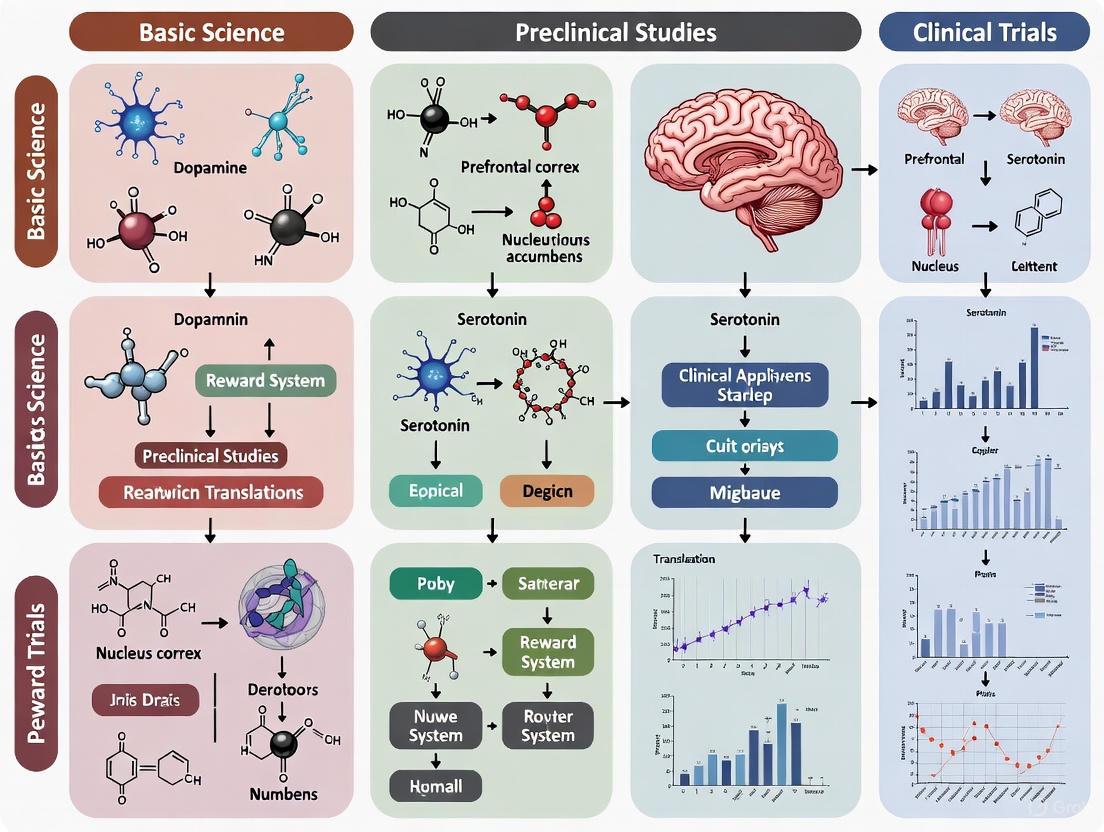
This article examines the critical challenges and emerging solutions in translating advances in addiction neuroscience into effective clinical treatments for substance use disorders (SUDs).
Bridging the Gap: Translating Addiction Neurobiology into Effective Clinical Treatments
Abstract
This article examines the critical challenges and emerging solutions in translating advances in addiction neuroscience into effective clinical treatments for substance use disorders (SUDs). Despite a robust understanding of the neurobiological mechanisms underlying addiction—encompassing dysregulation in reward, stress, and executive control circuits—a significant translational gap persists, contributing to high relapse rates and modest treatment efficacy. We explore this disconnect through a multi-faceted lens, covering foundational neurobiological models, innovative methodological approaches like neuromodulation and AI, and the systemic hurdles of stigma and fragmented healthcare infrastructure. By synthesizing findings from recent clinical trials and policy discussions, this review aims to provide researchers and drug development professionals with a comprehensive framework for optimizing the pipeline from bench to bedside, ultimately paving the way for more personalized, effective, and accessible addiction interventions.
The Neurobiological Blueprint of Addiction: From Circuit Dysfunction to Clinical Manifestation
Addiction is a chronic brain disorder characterized by a recurring, three-stage cycle that involves distinct neurocircuitry, neurotransmitters, and behavioral domains [1] [2]. This cycle, comprising Binge/Intoxication, Withdrawal/Negative Affect, and Preoccupation/Anticipation stages, becomes more severe over time, driven by neuroadaptations in key brain regions [3] [4]. Understanding this heuristic model is fundamental for research aimed at translating neurobiological findings into effective treatments [5].
Stage 1: Binge/Intoxication
Core Question: What neurocircuitry and neurotransmitters mediate the initial rewarding and reinforcing effects of addictive substances?
This stage is defined by the acute rewarding effects of a substance and the subsequent development of compulsive substance-seeking habits [2]. It is primarily mediated by the basal ganglia, including key structures like the ventral striatum (nucleus accumbens) and dorsal striatum [4] [1].
Experimental Protocol: Measuring Reward and Habit Formation in Animal Models
- Objective: To investigate the neurobiological substrates of drug reward and the transition from goal-directed to habitual drug seeking.
- Methodology:
- Animal Model: Laboratory rats or mice are trained to self-administer a drug (e.g., cocaine, heroin) by pressing a lever.
- Intracranial Self-Stimulation (ICSS): Electrodes are implanted into brain reward areas like the medial forebrain bundle. A decrease in the threshold for ICSS following drug administration indicates the substance's rewarding effect.
- Behavioral Sensitization: Repeated, intermittent administration of a psychostimulant leads to a progressive and enduring enhancement in locomotor activity. This model captures drug-induced neuroplasticity.
- Conditioned Place Preference (CPP): An animal receives a drug in one distinct context and a saline vehicle in another. After several pairings, the animal is given free access to both contexts. A preference for the drug-paired context measures the drug's rewarding properties.
- Circuit Dissection: Utilize techniques like chemogenetics (DREADDs) or optogenetics to selectively inhibit or activate specific neural pathways (e.g., ventral tegmental area to nucleus accumbens pathway) during self-administration to determine their causal role.
- Expected Outcome: Data will reveal the specific circuits necessary for drug reward and show a shift in control from the ventral to the dorsal striatum as drug-seeking becomes habitual [3] [2].
Key Neurotransmitter Dynamics in Binge/Intoxication
Table 1: Primary Neurotransmitter Changes During the Binge/Intoxication Stage.
| Neurotransmitter | Direction of Change | Primary Function in this Stage |
|---|---|---|
| Dopamine | Increase [2] | Mediates reward, reinforcement, and incentive salience [4] [1]. |
| Opioid Peptides | Increase [2] | Contributes to euphoria and reward, particularly for alcohol and opioids [4]. |
| GABA (γ-aminobutyric acid) | Increase [2] | Inhibits VTA neurons; modulates reward signals [2]. |
| Serotonin | Increase [2] | Modulates mood and impulse control; contributes to initial euphoria [2]. |
Diagram 1: Key neurocircuitry of the Binge/Intoxication stage. Substances activate the VTA, leading to dopamine release in the NAc, which drives reward and reinforcement. With repeated use, control shifts to the dorsal striatum, promoting compulsive habit formation.
Stage 2: Withdrawal/Negative Affect
Core Question: What neural mechanisms drive the negative emotional state and stress response during abstinence?
When access to the drug is prevented, a withdrawal syndrome emerges that is not only physical but also characterized by a profound negative emotional state (dysphoria, anxiety, irritability) [3] [2]. This stage is primarily mediated by the extended amygdala and its associated stress systems [4] [1].
Experimental Protocol: Inducing and Measuring Withdrawal and Negative Affect
- Objective: To quantify the negative emotional state of withdrawal and identify the underlying neurobiological stress mechanisms.
- Methodology:
- Chronic Drug Administration: Animals are exposed to chronic, intermittent, or continuous drug administration via minipumps, vapor inhalation, or repeated injections to induce dependence.
- Precipitated Withdrawal: In opioid-dependent animals, administration of an opioid receptor antagonist (e.g., naloxone) rapidly precipitates a measurable withdrawal syndrome.
- Behavioral Measures:
- Anxiety-like Behaviors: Tested using the elevated plus maze or open field test. Increased avoidance of open arms indicates a heightened anxiety-like state during withdrawal.
- Reward Deficits: Measured using ICSS, where an increase in the stimulation threshold indicates a state of anhedonia (inability to feel pleasure).
- Conditioned Place Aversion: Animals avoid an environment paired with the negative state of withdrawal.
- Neurobiological Measures: Microdialysis or in vivo electrophysiology in the central amygdala and BNST to measure increased release of stress neurotransmitters like CRF and dynorphin during withdrawal.
- Expected Outcome: Dependent animals will show elevated anxiety-like behavior, anhedonia, and increased CRF and dynorphin signaling in the extended amygdala, which can be reversed by CRF receptor antagonists [2] [5].
Key Neurotransmitter Dynamics in Withdrawal/Negative Affect
Table 2: Primary Neurotransmitter Changes During the Withdrawal/Negative Affect Stage.
| Neurotransmitter | Direction of Change | Primary Function in this Stage |
|---|---|---|
| Corticotropin-Releasing Factor (CRF) | Increase [2] | Key driver of stress responses; produces anxiety-like and dysphoric effects [4] [5]. |
| Dynorphin | Increase [2] | Acts on kappa opioid receptors; produces dysphoric states [2]. |
| Norepinephrine | Increase [2] | Contributes to anxiety, arousal, and physical signs of withdrawal [2]. |
| Dopamine | Decrease [2] | Leads to anhedonia and reduced motivation for natural rewards [4]. |
| Neurotransmitter Y (NPY) | Decrease [2] | Reduction of this endogenous anti-stress molecule exacerbates the stress response [4]. |
Diagram 2: Key neurocircuitry of the Withdrawal/Negative Affect stage. Abstinence triggers hyperactivity in the extended amygdala, increasing stress neurotransmitters (CRF, Dynorphin, Norepinephrine) and decreasing reward (Dopamine), producing a negative emotional state.
Stage 3: Preoccupation/Anticipation (Craving)
Core Question: How does executive control become compromised, leading to intense craving and relapse?
This stage involves intense craving for the drug and a loss of executive control over the urge to use, often leading to relapse [3] [6]. It is primarily mediated by the prefrontal cortex (PFC) and its projections to the basal ganglia and extended amygdala [4] [1].
Experimental Protocol: Modeling Craving and Relapse
- Objective: To investigate the neural mechanisms of drug craving and relapse precipitated by cues, stress, or the drug itself.
- Methodology:
- Self-Administration & Extinction: Animals are trained to self-administer a drug, after which the behavior is extinguished by no longer delivering the drug upon a lever press.
- Reinstatement Models: The extinguished drug-seeking behavior is reinstated by:
- Cue-induced: Presentation of a light or tone previously paired with drug delivery.
- Drug-induced: A non-contingent, priming injection of the drug.
- Stress-induced: Exposure to a mild stressor, such as a footshock.
- Neural Manipulation: Chemogenetic or optogenetic silencing of specific PFC subregions (e.g., prelimbic cortex "Go" system vs. infralimbic cortex "Stop" system) during reinstatement tests to determine their role in relapse.
- Neurochemical Analysis: Measure glutamate release in the nucleus accumbens core during cue-induced reinstatement, a key mechanism for craving.
- Expected Outcome: Cue, drug, and stress stimuli will robustly reinstate drug-seeking. This reinstatement will depend on increased glutamate transmission from the PFC to the NAc and an imbalance between "Go" and "Stop" circuits in the PFC [2] [6].
Key Neurotransmitter Dynamics in Preoccupation/Anticipation
Table 3: Primary Neurotransmitter Changes During the Preoccupation/Anticipation Stage.
| Neurotransmitter | Direction of Change | Primary Function in this Stage |
|---|---|---|
| Glutamate | Increase [2] | Drives cue-induced craving and relapse via projections from PFC to striatum [2]. |
| Dopamine | Increase [2] | Released in PFC and striatum in response to drug cues, contributing to craving [5]. |
| Corticotropin-Releasing Factor (CRF) | Increase [2] | Mediates stress-induced craving and relapse [5]. |
Diagram 3: Key neurocircuitry of the Preoccupation/Anticipation stage. Drug cues and stress hyperactivate the "Go" system while hypoactivating the "Stop" system in the PFC. This imbalance leads to increased glutamate drive on motivation circuits, resulting in intense craving and relapse.
The Scientist's Toolkit: Essential Research Reagents & Models
Table 4: Key Reagents and Models for Studying the Addiction Cycle.
| Tool/Reagent | Function/Application | Example Use in Addiction Research |
|---|---|---|
| DREADDs (Designer Receptors Exclusively Activated by Designer Drugs) | Chemogenetic control of neuronal activity. | Inhibiting VTA dopamine neurons during binge/intoxication to quantify reduced reward [2]. |
| Channelrhodopsins (ChR2) & Halorhodopsins (NpHR) | Optogenetic activation or inhibition of specific neurons with light. | Stimulating PFC-to-NAc glutamate projections to probe their causal role in cue-induced reinstatement [2]. |
| Cre-Lox Transgenic Animals | Cell-type-specific genetic targeting. | Expressing opsins or DREADDs selectively in D1 vs. D2 medium spiny neurons in the striatum to dissect their roles in habit formation [2]. |
| CRF Receptor Antagonists | Pharmacological blockade of the stress system. | Testing if blocking CRF receptors in the extended amygdala reduces the negative affect of withdrawal and stress-induced reinstatement [2] [5]. |
| Fast-Scan Cyclic Voltammetry (FSCV) | Real-time, in vivo detection of neurotransmitter release (e.g., dopamine). | Measuring the phasic dopamine release in the NAc core in response to a drug-associated cue [2]. |
| fMRI / PET Imaging (Human Studies) | Non-invasive mapping of brain activity and receptor distribution. | Identifying reduced D2 receptor density in the striatum of addicted individuals or hyperactivity in the extended amygdala during withdrawal [1] [2]. |
Troubleshooting Common Research Challenges
FAQ 1: Our reinstatement model shows high variability in relapse behavior between subjects. How can we account for this?
- Answer: High variability is expected and reflects individual differences in vulnerability. Pre-screen subjects for traits like impulsivity or stress reactivity. Use larger cohort sizes and consider using "addiction-like" criteria (e.g., based on persistence of use despite negative consequences, motivation for the drug, and relapse propensity) to subgroup subjects, rather than treating all drug-exposed animals as identical [2].
FAQ 2: We are unable to replicate the finding that a CRF antagonist blocks stress-induced reinstatement. What could be wrong?
- Answer: Key variables to check include: 1) The degree of dependence established; CRF systems are more critical in dependent animals. 2) The site of administration; central (intracerebroventricular or intra-amygdala) vs. systemic administration may be required. 3) The specific antagonist and dosage used. 4) The type and intensity of the stressor [2] [5].
FAQ 3: How do we best model the transition from controlled use to addiction in animals?
- Answer: Move beyond simple short-access self-administration. Use models that incorporate: 1) Long-access (6+ hours) sessions to promote escalation of intake. 2) Second-order schedules to measure the motivating strength of drug-associated cues. 3) Punishment-based paradigms where the drug is paired with a mild footshock to measure compulsive use. These models more effectively capture the defining features of addiction [3] [2].
FAQ 4: Our translational interventions work in animal models but fail in clinical trials. What is the core of this disconnect?
- Answer: This is a central challenge in the field [5]. Animal models often focus on a single stage or behavior, while the human condition is a chronic, cycling disorder. Improve translation by: 1) Testing interventions across all three stages of the addiction cycle. 2) Using animal models with higher face validity (e.g., those measuring compulsivity). 3) Incorporating non-drug alternative rewards and complex environments in animal studies. 4) Designing human trials that specifically target the neurobiological mechanism identified in animal work (e.g., a CRF antagonist for patients high in negative emotionality) [5].
Technical Support Center: Troubleshooting Neural Circuit Research in Addiction
This support center provides targeted guidance for researchers investigating the roles of the striatum, extended amygdala, and prefrontal cortex in substance use disorders. The FAQs below address common experimental challenges within the broader context of translating addiction neurobiology into effective treatments.
Frequently Asked Questions: Experimental Troubleshooting
Q1: Our team is studying incentive salience in the basal ganglia. We find that substance-associated cues trigger intense seeking behavior in our model, but we struggle with low signal-to-noise ratios during neuronal tracing. How can we improve detection?
A: This is a common challenge when mapping the binge/intoxication stage circuitry, where the basal ganglia, particularly the nucleus accumbens, is a focal point [1] [3]. To improve tracer detection:
- Confirm Tracer Fixability: Ensure you are using a fixable tracer form (i.e., one containing a primary amine). Dextrans without a primary amine will not be retained during fixation [7].
- Optimize Concentration and Fixation: Increase the injection concentration or amount of tracer, typically up to 1–20% (10 mg/mL or higher). Always use aldehyde-based fixatives to cross-link amines on the tracer [7].
- Validate Detection Method: Perform a spot test by pipetting a small amount of undiluted tracer stock onto a slide and viewing it under your microscope's filter to confirm the fluorescence can be detected and your filter is functioning correctly [7].
- Prevent Lipid Stripping: If your protocol requires permeabilization, use a dye that covalently binds to membrane proteins, such as CellTracker CM-DiI. Standard lipophilic dyes will be lost with detergent or alcohol-based permeabilization [7].
Q2: We are investigating the stress dysregulation of the extended amygdala during the withdrawal/negative affect stage. Our immunofluorescence assays for CRF often show high background. What are the primary steps to resolve this?
A: High background can obscure critical findings related to the extended amygdala's role in the negative emotional state of withdrawal [1] [3]. We recommend:
- Enhanced Blocking: Use a normal serum from the same species as your secondary antibody for blocking. For charge-based background, consider using a specialized blocker like Image-iT FX Signal Enhancer [8].
- Antibody Titration: Titrate both primary and secondary antibodies to the lowest concentration that still provides adequate specific signal. Over-concentration is a common cause of high background [7] [8].
- Control for Autofluorescence: Use unstained samples as controls to check for autofluorescence. Prepare fresh dilutions of fixatives, as old formaldehyde stocks can autofluoresce. For low-abundance targets, image in longer wavelength channels [8].
- Rigorous Washing: Increase washing steps after fixation and secondary antibody application to remove excess fixative and loosely bound, non-specific antibodies [8].
Q3: In models of relapse, we assess executive control governed by the prefrontal cortex. When culturing prefrontal cortical neurons for electrophysiology, we have difficulty with neuronal transduction. How can we improve efficiency?
A: The prefrontal cortex is critical for the preoccupation/anticipation (craving) stage and exerts top-down control over substance seeking [1] [3]. To improve transduction in primary neurons:
- Increase Multiplicity of Infection (MOI): Neurons are generally more difficult to transduce than other cell types. The main approach is to label with a higher number of viral particles per cell [7].
- Optimize Timing: Transduce primary neurons at the time of plating rather than waiting for established cultures to form. This can significantly improve transduction efficiency [7].
- Account for Expression Kinetics: Be aware that the onset of expression is often slower in neurons. Peak expression frequently occurs 2–3 days after transduction rather than the 16 hours common in other cell types [7].
Q4: Our research aims to bridge basic findings on these circuits to clinical applications. What are the key translational challenges we should anticipate?
A: You are confronting the "bench-to-trench" problem, which is pronounced in addiction and pain research [9]. Key challenges include:
- Pressure for Rapid Translation: Scientists often feel pressure to quickly translate basic research findings into clinical or public health use, which can lead to technologies being rushed without adequate evaluation of ethical and social implications [10].
- Long Timeframes: The translation pipeline can be slow. For example, it took approximately 56 years for buprenorphine to move from discovery to mainstream adoption for opioid use disorder [9].
- Translational Gaps: Portfolio analyses reveal gaps in the research pipeline, including the underrepresentation of certain populations (e.g., sexual/gender minorities) in studies and a concentration of later-stage (T2-T4) research in healthcare settings with limited transferability to community contexts [9].
- Biological and Social Complexity: Addiction is a "bio-cultural phenomenon" influenced by many genes, neurobiological pathways, and socio-environmental factors. A multi-disciplinary approach is essential for successful translation [10].
Key Data and Neurobiological Framework
The transition to addiction involves a three-stage cycle that becomes more severe with continued substance use, driven by neuroadaptations in specific brain circuits [1].
Table 1: Primary Brain Regions and Their Roles in the Addiction Cycle
| Brain Region | Primary Function in Addiction | Associated Stage | Key Neuroadaptations |
|---|---|---|---|
| Basal Ganglia | Controls rewarding/pleasurable effects; formation of habitual substance taking [1]. | Binge/Intoxication [3] | Enables substance-associated cues to trigger substance seeking (incentive salience) [1]. |
| Extended Amygdala | Involved in stress, feelings of unease, anxiety, and irritability during withdrawal [1]. | Withdrawal/Negative Affect [3] | Reduces sensitivity of reward systems and heightens activation of brain stress systems [1]. |
| Prefrontal Cortex | Involved in executive function (decision-making, impulse control, emotion regulation) [1]. | Preoccupation/Anticipation (Craving) [3] | Reduces functioning of brain executive control systems, impairing the ability to regulate actions and impulses [1]. |
Table 2: Translational Research Stages and Definitions (Blumberg Model)
| Stage | Focus | Typical Settings & Outputs |
|---|---|---|
| T0 - Basic Science | Fundamental discovery of biological processes & disease mechanisms [9]. | Laboratory settings; insights into neurobiological pathways [9]. |
| T1 - Translation to Humans | Preclinical research & initial safety/testing in humans [9]. | Phase I clinical trials; evidence of safety & dosage [9]. |
| T2 - Translation to Patients | Efficacy testing of interventions in patient groups [9]. | Phase II/III trials; data on treatment efficacy [9]. |
| T3 - Translation to Practice | Integration of effective interventions into clinical practice [9]. | Health services research; clinical guidelines & policies [9]. |
| T4 - Translation to Community | Dissemination to public health systems & population health [9]. | Public health interventions; policies for health equity [9]. |
The Scientist's Toolkit: Essential Research Reagents
Table 3: Key Research Reagent Solutions for Neural Circuit Studies
| Reagent / Material | Primary Function | Example Use-Case & Note |
|---|---|---|
| Fixable Tracers (e.g., CM-DiI, CFDA SE) | Covalently bind to cellular proteins, allowing retention after permeabilization [7]. | Anterograde/retrograde neuronal tracing in fixed tissue; superior to lipophilic dyes for IHC co-staining [7]. |
| Aldehyde-Based Fixatives | Cross-link cellular components, preserving tissue architecture and amine-containing tracers [7]. | Standard fixation for immunohistochemistry; essential for retaining fixable dextrans and protein-conjugated tracers [7]. |
| Tyramide Signal Amplification (TSA) | Enzyme-mediated detection method for signal amplification of low-abundance targets [7]. | Detecting subtle changes in receptor surface expression (e.g., AMPA receptors in NAc) during behavioral sensitization [7]. |
| Anti-fade Mounting Reagents | Increase photostability and reduce initial fluorescence quenching in fixed samples [7]. | Preserving signal during prolonged imaging of fluorescently-labeled prefrontal cortex sections [7]. |
| NeuroTrace Nissl Stains | Label the Nissl substance (ribosomal RNA) to identify neuronal cell bodies [7]. | Distinguishing neurons from glia in complex brain regions like the extended amygdala; requires concentration optimization [7]. |
Experimental Workflows and Signaling Pathways
Addiction Cycle Neurocircuitry
Translational Research Pipeline
The fundamental challenge in addiction research lies in translating robust neurobiological findings into effective, approved human treatments. Despite a dramatic increase in research funding and scientific publications over recent decades, the development of new, FDA-approved medications for substance use disorders has stagnated for more than 15 years [11]. This translation failure stems, in part, from an over-reliance on certain preclinical models that do not fully capture the complexity of human addiction. This technical support guide addresses this gap by providing researchers with frameworks and methodologies to study the core neuroadaptations and allostatic processes in addiction, with the aim of improving the predictive validity of preclinical research and accelerating therapeutic development.
Core Neurobiological Concepts: FAQs
FAQ 1: What are the key neuroadaptations in the three-stage addiction cycle? The addiction cycle is a framework that describes the persistent, relapsing nature of substance use disorders as a repeating process with three distinct stages, each associated with specific neuroadaptations in defined brain regions [4] [12] [1].
Table: The Three-Stage Addiction Cycle and Associated Neuroadaptations
| Stage of Cycle | Core Dysfunction | Primary Brain Regions | Key Neuroadaptations |
|---|---|---|---|
| Binge/Intoxication | Incentive Salience & Habits | Basal Ganglia (especially Nucleus Accumbens) | Increased dopaminergic signaling from VTA; shift from goal-directed to habitual control [4] [1]. |
| Withdrawal/Negative Affect | Negative Emotional State | Extended Amygdala | Recruitment of brain stress systems (CRF, dynorphin, norepinephrine); decreased reward function (hypodopaminergic state) [4] [12] [13]. |
| Preoccupation/Anticipation | Executive Function Deficits | Prefrontal Cortex | Weakened "Stop" system (impaired impulse control) and heightened "Go" system (craving); disrupted emotional regulation [4] [1]. |
FAQ 2: How does the concept of allostasis and allostatic load apply to addiction? Traditional homeostasis models suggest the brain returns to a fixed set point after stress. In contrast, allostasis is the process of achieving stability through change; the brain actively adjusts its set points in response to chronic challenges like repeated drug use [14] [13] [15]. Allostatic load is the cumulative cost of this adaptation—the "wear and tear" on neural and physiological systems after repeated cycles of substance use and withdrawal [16] [17]. In addiction, this manifests as a persistent allostatic state characterized by a lowered reward threshold and a heightened stress system baseline, creating a negative emotional state (hyperkatifeia) that drives compulsive drug use via negative reinforcement [12] [13].
Troubleshooting Common Experimental Challenges
Challenge 1: Preclinical drug self-administration data fails to translate to clinical efficacy. Problem: Many candidate medications that reduce drug self-administration in single-operant procedures (SODs) fail in human trials. A decrease in drug-taking in an SOD can result from either a therapeutically desirable reduction in the drug's reinforcing effects or from undesirable motor or cognitive impairment caused by the candidate treatment, leading to false-positive results [11]. Solution: Implement drug-choice procedures.
- Protocol Detail: In a choice procedure, subjects have concurrent access to at least two operant manipulanda. Responding on one delivers the drug, while responding on the other delivers a non-drug alternative reinforcer (e.g., food, sucrose, or social interaction) [11].
- Key Metrics: This generates two dependent variables:
- Percent Drug Choice: Measures the relative reinforcing effects of the drug.
- Total Reinforcement Rate: Measures general motor/cognitive function.
- Interpretation: An optimal candidate medication will decrease % Drug Choice without decreasing the total reinforcement rate, signifying a specific reduction in the drug's value and a reallocation of behavior toward the non-drug alternative. This design minimizes false positives from sedating or motor-impairing treatments [11].
Challenge 2: Quantifying the cumulative physiological burden of chronic stress in addiction models. Problem: The neurobiological impact of chronic stress from substance use is complex and multi-systemic, making it difficult to measure objectively. Solution: Utilize an Allostatic Load Index (ALI).
- Protocol Detail: The ALI is a composite measure of biomarkers across multiple physiological systems. It is often calculated using a count-based method where a point is assigned for each biomarker that falls into a high-risk quartile (e.g., the least favorable 75th percentile) based on population or control group norms [16] [17].
- Biomarker Systems and Example Measures [16] [15] [17]:
- Neuroendocrine: Salivary or urinary cortisol, urinary norepinephrine and dopamine.
- Inflammatory: C-reactive protein (CRP), Interleukin-6 (IL-6), Tumour Necrosis Factor-alpha (TNF-α).
- Cardiometabolic: Systolic and diastolic blood pressure, waist-to-hip ratio, HbA1c, HDL cholesterol, total cholesterol.
- Other: Resting heart rate, markers of oxidative stress.
- Application: A higher ALI predicts greater morbidity and mortality in various cohorts and can be used to stratify risk and track disease progression in populations with opioid use disorder and other substance use disorders [16].
The Scientist's Toolkit: Research Reagent Solutions
Table: Essential Reagents for Investigating Addiction Neurobiology
| Research Reagent / Tool | Primary Function in Experimentation |
|---|---|
| Drug Self-Administration Apparatus | The core system for modeling drug-taking behavior in animals (e.g., rodents, non-human primates). It allows an animal to perform an operant response (e.g., lever press, nose poke) to receive an intravenous, oral, or other form of drug infusion [11]. |
| Intracranial Cannulae & Microinjection Systems | Used for the site-specific administration of pharmacological agents (e.g., receptor agonists/antagonists, CRF, etc.) or viral vectors into discrete brain regions like the extended amygdala or prefrontal cortex to manipulate specific circuits [13]. |
| Radioligands for PET Imaging | Radioactive molecules that bind to specific neuroreceptors (e.g., dopamine, opioid, or cannabinoid receptors). Used with Positron Emission Tomography (PET) in human and animal studies to quantify receptor availability and density in vivo [1]. |
| CRF (Corticotropin-Releasing Factor) & Receptor Ligands | CRF is a key stress neurotransmitter. Receptor agonists (e.g., CRF itself) and antagonists (e.g., antalarmin) are critical for probing the role of the brain's stress systems in the withdrawal/negative affect stage of addiction [14] [13]. |
| Kappa Opioid Receptor (KOR) Agonists/Antagonists | KOR agonists (e.g., U50,488) induce dysphoric effects, while antagonists (e.g., nor-BNI, LY2456302) are used to investigate the dynorphin/KOR system's role in the stress and dysphoria associated with drug withdrawal [11] [13]. |
| Dopamine Receptor Ligands | Includes D1-like family antagonists (e.g., SCH-23390) and D2-like family partial agonists/antagonists (e.g., aripiprazole, olanzapine) to dissect the role of dopaminergic signaling in reward, motivation, and executive control [11]. |
Visualizing Key Concepts and Workflows
Diagram 1: The Three-Stage Addiction Cycle Neurocircuitry
Diagram 2: Allostatic Load in Addiction - A Downward Spiral
Diagram 3: Experimental Workflow for Validating Candidate Medications
FAQs: Core Concepts and Common Experimental Challenges
Q1: What is the key distinction between 'liking' and 'wanting' in addiction neurobiology, and how can this dissociation be measured in human experiments?
A1: 'Liking' refers to the hedonic impact or pleasure derived from a reward, while 'wanting' (incentive salience) is the motivational drive to obtain it. These components are dissociable and mediated by different neural substrates [18] [19].
- 'Liking' Neural Circuitry: Mediated by discrete hedonic hotspots in the nucleus accumbens medial shell, ventral pallidum, and orbitofrontal cortex, primarily involving opioid and related signals [18] [19].
- 'Wanting' Neural Circuitry: Powered by a larger mesocorticolimbic dopamine system, including the ventral tegmental area, nucleus accumbens, dorsal striatum, and amygdala [18] [19] [3].
- Measurement Challenge: Explicit self-reports may not adequately differentiate them. In humans, behavioral paradigms like the Pavlovian Instrumental Transfer (PIT) test or physiological indices like spontaneous eyeblink rate (EBR) as a proxy for striatal dopamine can be used. Questionnaires must be carefully designed to separate desires ('wanting') from enjoyment ('liking') [20] [21].
Q2: According to the iRISA model, how do impaired response inhibition and salience attribution create a cycle of addiction?
A2: The Impaired Response Inhibition and Salience Attribution (iRISA) model posits that addiction is fueled by a core deficit in two areas [22]:
- Impaired Response Inhibition: A reduced capacity to suppress prepotent urges to seek and use drugs, linked to hypoactivity in the executive network (vlPFC, dlPFC) [22].
- Aberrant Salience Attribution: Drugs and their cues become pathologically salient, "hijacking" the salience network (anterior insula, dACC) and reward network (NAcc, OFC). This leads to increased attention and motivation for drug cues, while non-drug rewards are devalued [22]. These two impairments create a vicious cycle: salient drug cues trigger intense 'wanting,' while poor inhibitory control undermines the ability to resist drug-seeking actions, leading to compulsive use [22] [3].
Q3: What is the role of reward deficiency in substance use disorders, and how does it relate to incentive sensitization?
A3: This presents a paradox where both hyper- and hypo-sensitivity to reward are observed.
- Reward Deficiency: A hypofunctioning dopamine system leads to a blunted response to natural, non-drug rewards. This can create a vulnerability where individuals use substances to compensate for a deficient reward system [23] [21].
- Incentive Sensitization: With repeated drug use, the mesolimbic dopamine system becomes sensitized to the drug and its cues, leading to excessive, cue-triggered 'wanting' [20] [18] [19]. The addicted state is characterized by a combination of these two: a generalized reward deficiency for natural rewards co-existing with a narrowly focused, hypersensitized 'wanting' for the drug [23] [21].
Q4: In an incentivized response inhibition task, why do some individuals with substance use tendencies perform worse when a reward is offered?
A4: This counterintuitive finding can be explained by an interaction between reward sensitivity and cognitive control. Research shows that the presence of a reward can paradoxically impair inhibitory control in certain individuals.
- Key Evidence: One study found that university students with substance abuse tendencies showed poorer inhibitory control (slower Stop Signal Reaction Time) under reward conditions, but only if they had low baseline striatal dopamine levels (as measured by low spontaneous eyeblink rate) [20] [24].
- Troubleshooting Interpretation: This suggests that for some vulnerable individuals, the opportunity for reward may overwhelm a already compromised cognitive control system. The reward's incentive salience may exacerbate the competition between the 'go' and 'stop' processes, to the detriment of inhibition. Ensure your analysis considers moderating variables like baseline dopamine function [20] [25].
Experimental Protocols & Data Summaries
Protocol: Investigating Incentivized Response Inhibition
This protocol is adapted from studies examining how reward modulates inhibitory control in populations with substance use tendencies [20] [24].
Objective: To assess the effect of monetary reward on response inhibition and how this relationship is moderated by substance abuse tendencies and striatal dopamine levels.
Participants: Target sample of ~100 individuals (e.g., university students) screened for substance use tendencies using a validated scale like the Externalizing Spectrum Inventory-Brief Form [20] [24].
Materials & Setup:
- Task Software: Stop Signal Task (SST) programmed to include both neutral and reward blocks.
- Dopamine Proxy: Eye-tracking equipment to record spontaneous eyeblink rate (EBR). A faster EBR is used as an indirect index of higher striatal tonic dopamine [20].
- Questionnaires: Demographics, substance use history, and trait impulsivity scales.
Procedure:
- Baseline Assessment: Participants complete questionnaires and a 5-minute resting eye-blank recording to measure baseline EBR.
- Task Practice: A short practice session of the SST.
- Main Task - Within-Subjects Design:
- Neutral Block: Standard SST. Participants press a key for go signals (e.g., arrows) and inhibit responses when a stop signal (e.g., auditory beep) occurs. No monetary incentives.
- Reward Block: Identical SST, but participants earn a small monetary reward for every successful inhibition on a stop trial.
- Debriefing.
Key Dependent Variable:
- Stop Signal Reaction Time (SSRT): The estimated time required to inhibit a response. Longer SSRTs indicate poorer inhibitory control [20] [24].
Statistical Analysis: A hierarchical linear regression is recommended to test the interactive effect of substance use tendencies and EBR on SSRT in the reward condition, controlling for relevant covariates like trait disinhibition [20].
Table 1: Key Findings from a Study on Incentivized Response Inhibition [20] [24]
| Variable/Finding | Description | Statistical Result |
|---|---|---|
| Sample Size | 98 university students | N/A |
| Key Interaction | Substance Use Tendencies × Striatal Dopamine (EBR) on incentivized SSRT | F = 7.613, p = .007 |
| Main Finding | Substance abuse tendencies were associated with slower SSRT (poorer inhibition) under reward conditions, but only in individuals with low striatal dopamine (low EBR). | Significant interaction effect |
| Theoretical Implication | Reward motivation can hinder inhibitory control in drug users with low tonic dopamine, potentially driving reward-seeking at the expense of self-control. | N/A |
Table 2: Neural Networks Impaired in Addiction (as per the iRISA model) [22]
| Brain Network | Core Function | Manifestation in Addiction |
|---|---|---|
| Reward Network (NAcc, sgACC/rACC, OFC) | Appraisal of subjective value | Hyperactive during drug cue exposure; correlates with craving. Blunted response to non-drug rewards. |
| Habit Network (Dorsal Striatum) | Stimulus-response learning; automatization of behavior | Underlies the transition from voluntary to compulsive drug-seeking. |
| Salience Network (Anterior Insula, dACC) | Directing attention to salient stimuli | Hyper-reactive to drug cues, assigning them excessive motivational importance. |
| Executive Network (vlPFC, dlPFC) | Selection of behavioral responses; inhibitory control | Hypoactive; leads to deficits in inhibiting prepotent drug-seeking actions. |
| Self-Directed Network (dmPFC, PCC/Precuneus) | Self-referential thought (Default Mode Network) | Dysregulated, potentially contributing to self-related thoughts about drug use. |
Signaling Pathways and Workflow Visualizations
The Dissociable 'Liking' and 'Wanting' Pathways in Reward Processing
The iRISA Model: A Cycle of Dysregulated Networks
Experimental Workflow: Probing Incentivized Inhibition
The Scientist's Toolkit: Research Reagent Solutions
Table 3: Essential Reagents and Tools for Investigating Addiction Frameworks
| Tool/Assay | Function/Measurement | Key Considerations |
|---|---|---|
| Stop Signal Task (SST) / Go/No-Go Task | Behavioral measure of response inhibition. Primary outcome is Stop Signal Reaction Time (SSRT). | Can be modified to include reward/punishment conditions to probe incentivized control [20] [24] [26]. |
| Spontaneous Eyeblink Rate (EBR) | A non-invasive, indirect physiological proxy for striatal tonic dopamine function. | Faster EBR = higher tonic dopamine. Note: Some PET studies question the strength of this link; use as a proxy with caution [20] [24]. |
| Pavlovian Instrumental Transfer (PIT) Paradigm | Measures the extent to which a Pavlovian cue can trigger or invigorate instrumental reward-seeking, a core test of "wanting." | Directly assesses incentive salience in animal models and can be adapted for human studies [18]. |
| Externalizing Spectrum Inventory-Brief Form (ESI-BF) | A self-report questionnaire assessing substance abuse and disinhibition tendencies. | Useful for identifying individuals on a spectrum of externalizing psychopathology, which is a risk factor for addiction [20] [24]. |
| fMRI / PET Neuroimaging | Maps brain activity and neurochemistry across the reward, salience, executive, and habit networks. | Critical for testing the iRISA model and related frameworks in humans by showing hyper- and hypo-activation in specific circuits [22] [23]. |
| Event-Related Potentials (ERPs): FRN & P3 | EEG components (Feedback-Related Negativity, P3) sensitive to reward prediction error and attentional resource allocation during learning and inhibition. | Useful for tracking rapid neural processes during reward learning and inhibitory control tasks in disorders like IGD [26]. |
From Mechanism to Modality: Leveraging Novel Technologies and Treatment Paradigms
Technical Support Center: Troubleshooting Guides and FAQs
This section addresses common technical and interpretative challenges faced by researchers investigating Glucagon-like Peptide-1 Receptor Agonists (GLP-1RAs) for treating addictive disorders.
Frequently Asked Questions
Q1: Our rodent models show suppressed GLP-1 neuron activity during fasting states. How does this metabolic state impact studies on drug self-administration?
A: This is an expected physiological response. The endogenous central GLP-1 system contributes to metabolic state-dependent modulation of motivated behavior [27]. During negative energy balance (e.g., fasting), the suppression of hindbrain GLP-1 neurons is accompanied by increased food intake, drug self-administration, and operant responding for drugs [27]. To control for this:
- Standardize Feeding Schedules: Conduct behavioral testing under consistent feeding conditions (e.g., ad libitum or scheduled feeding) across all experimental groups.
- Include Controls: Ensure control groups match the metabolic state of experimental groups. This metabolic-state dependency is a key feature of the system, not an artifact.
Q2: We are detecting limited central penetrance of fluorescently-tagged GLP-1RAs. Are our results invalid?
A: Not necessarily. Current fluorescent imaging techniques may underestimate brain penetrance [27]. Systemically administered GLP-1RAs primarily access the brain via specialized uptake around circumventricular organs (e.g., area postrema), not widespread passage through the blood-brain barrier [27]. Furthermore, GLP-1R binding promotes receptor internalization, and competition with endogenous GLP-1 may reduce tag visibility. Consider:
- Method Validation: Use multiple techniques (e.g., behavioral assays, electrophysiology) to corroborate central activity beyond fluorescence imaging.
- Focus on Key Regions: Concentrate analytical efforts on circumventricular organs and adjacent brain regions like the nucleus of the solitary tract (NST), which are critical for the systemic effects of GLP-1RAs [27].
Q3: What are the primary neurobiological mechanisms by which GLP-1RAs might influence addictive behaviors?
A: Preclinical evidence points to several key mechanisms rooted in addiction neurobiology:
- Reduction of Incentive Salience: GLP-1RAs may reduce the exaggerated dopamine signaling in the mesolimbic pathway (binge/intoxication stage) that attributes excessive "wanting" to drug-associated cues [4] [27].
- Attenuation of Negative Affect: By potentially modulating the "anti-reward" systems in the extended amygdala (withdrawal/negative affect stage), GLP-1RAs may alleviate the anxiety and irritability that drive negative reinforcement and relapse [4].
- Restoration of Executive Control: GLP-1RAs may help improve "stop" system function in the prefrontal cortex (preoccupation/anticipation stage), thereby reducing cravings and improving impulse control [4].
Q4: Why is there a translational gap between promising preclinical findings and clinical applications for addiction?
A: This is a central challenge in the field. Our analysis of the NIH HEAL Initiative portfolio and scientist surveys reveals several key barriers [9] [10]:
- Over-reliance on Laboratory Settings: A significant portion of early-stage (T0-T1) research occurs in labs, with limited transferability to real-world contexts [9].
- Pressure for Rapid Translation: Scientists report feeling pressure to quickly translate findings, which can rush applications into use without sufficient critical evaluation of their ethical and social implications or their value compared to existing interventions [10].
- Underrepresentation of Key Populations: Translational research often underrepresents critical demographics, such as sexual and gender minorities, limiting the generalizability of findings [9].
The following tables summarize key pharmacological and research data on GLP-1 receptor agonists.
Table 1: FDA-Approved GLP-1 Receptor Agonists: Dosing and Clinical Profiles
| Drug Name | Backbone | Dosing Frequency | Key Indications (FDA-Approved) | Notable Clinical Trial Findings & Cardiovascular Effects |
|---|---|---|---|---|
| Liraglutide | Human GLP-1 | Daily [28] | T2DM, Obesity [28] | Proven cardiovascular benefit; reduces major adverse cardiovascular events (MACE) [28]. |
| Semaglutide | Human GLP-1 | Weekly (SC), Daily (Oral) [28] | T2DM, Obesity [28] | Proven cardiovascular benefit; high efficacy for glucose lowering and weight loss [28]. |
| Dulaglutide | Human GLP-1 | Weekly [28] | T2DM [28] | Proven cardiovascular benefit; reduces MACE [28]. |
| Exenatide | Exendin-4 | Twice-daily, Weekly [28] | T2DM [28] | First GLP-1 analog; based on exendin-4 from Gila monster venom [29]. |
| Tirzepatide | GIP/GLP-1 | Weekly [28] | T2DM, Obesity [28] | Dual GIP/GLP-1 receptor agonist; outperformed semaglutide in phase 3 clinical trials for weight loss [29]. |
Table 2: Common Adverse Effects and Management Strategies for GLP-1RAs
| Adverse Effect | Incidence | Recommended Management Strategy |
|---|---|---|
| Gastrointestinal (Nausea, Vomiting, Diarrhea) | Most frequent [28] | Initiate therapy with a low dose and titrate up slowly. Counsel patients that medication increases satiety; advise on dietary modifications (e.g., smaller, blander meals) [28]. |
| Injection Site Reactions | Common, especially with long-acting agents [28] | Ensure proper injection technique and rotate injection sites. Typically mild and transient [28]. |
| Hypoglycemia | Low risk (minor episodes) [28] | Risk is low when used as monotherapy. Higher risk when combined with insulin or insulin secretagogues; may require dose adjustment of concomitant therapies [28]. |
Experimental Protocols
This section provides detailed methodologies for key experiments investigating the role of GLP-1 in addiction-related behaviors.
Protocol 1: Assessing the Effect of GLP-1RAs on Drug Self-Administration in Rodents
Objective: To evaluate the efficacy of a GLP-1RA in reducing operant responding for a drug of abuse (e.g., cocaine, alcohol) in a rodent model.
Materials:
- Animals: Adult male and female rodents (e.g., Sprague-Dawley rats).
- GLP-1RA: e.g., Liraglutide or Exenatide.
- Vehicle: Sterile phosphate-buffered saline (PBS).
- Operant conditioning chambers (Skinner boxes) equipped with: Active and inactive levers, Cue lights, Drug infusion pump.
- Drug of abuse.
Methodology:
- Catheter Implantation: Surgically implant a chronic intravenous catheter into the jugular vein under aseptic conditions. Allow 5-7 days for recovery.
- Training Phase: Train animals to self-administer the drug (e.g., cocaine, 0.5 mg/kg/infusion) on a fixed-ratio 1 (FR1) schedule of reinforcement. Each active lever press results in a drug infusion paired with a cue light. Sessions typically last 2 hours daily. Stable responding is achieved when the number of infusions varies by <10% over 3 consecutive days.
- Treatment Phase: Once stable self-administration is established, animals are randomly assigned to two groups:
- Experimental Group (n=12): Administer GLP-1RA (e.g., Liraglutide, 100 µg/kg, SC) 30 minutes before the self-administration session.
- Control Group (n=12): Administer an equal volume of vehicle (PBS) 30 minutes before the session.
- Note: Dosing regimen should be optimized based on the pharmacokinetics of the specific GLP-1RA.
- Testing: Conduct the self-administration session as during training. Record the number of active and inactive lever presses.
- Data Analysis:
- Primary outcome: Compare the mean number of drug infusions earned between the GLP-1RA and vehicle groups using a two-tailed t-test or ANOVA.
- Secondary outcome: Assess the discrimination between levers by comparing active vs. inactive lever presses within and between groups.
Protocol 2: Evaluating GLP-1RA Penetrance in Key Brain Regions via Immunohistochemistry
Objective: To visualize and localize the presence of a systemically administered GLP-1RA in brain regions implicated in addiction.
Materials:
- Animals: Adult rodents.
- GLP-1RA: Fluorescently-tagged (e.g., Cy5-Semaglutide) or primary antibody against the GLP-1RA.
- Vehicle.
- Perfusion and fixation equipment.
- Cryostat.
- Primary antibody (if not using a pre-tagged drug).
- Fluorescently-conjugated secondary antibody.
- Mounting medium with DAPI.
- Confocal microscope.
Methodology:
- Drug Administration: Administer a single dose of fluorescently-tagged GLP-1RA or vehicle via subcutaneous injection.
- Perfusion and Tissue Collection: At a predetermined time post-injection (e.g., 60-90 minutes), deeply anesthetize the animal and transcardially perfuse with PBS followed by 4% paraformaldehyde (PFA). Extract the brain and post-fix in 4% PFA for 24 hours, then cryoprotect in 30% sucrose.
- Sectioning: Using a cryostat, collect coronal sections (30-40 µm thick) containing regions of interest: Nucleus of the Solitary Tract (NST), Ventral Tegmental Area (VTA), Nucleus Accumbens (NAc), Prefrontal Cortex (PFC), and Amygdala.
- Immunohistochemistry (if needed): If a tag-specific primary antibody is required, process free-floating sections through blocking, primary antibody incubation, and secondary antibody incubation steps.
- Imaging and Analysis: Mount sections and image using a confocal microscope. Identify GLP-1RA signal (fluorescence) and co-localize with cellular markers (e.g., NeuN for neurons). Pay particular attention to circumventricular organs and periventricular regions [27].
Signaling Pathway and Experimental Workflow Diagrams
The Scientist's Toolkit: Research Reagent Solutions
Table 3: Essential Research Reagents for Investigating GLP-1RAs in Addiction
| Item | Function/Description | Example Use Case in Research |
|---|---|---|
| GLP-1 Receptor Agonists (Liraglutide, Exenatide, Semaglutide) | Activate GLP-1 receptors; available in various formulations (lyophilized powder for reconstitution, solution) for in vitro and in vivo studies. | The primary investigational compound administered to animal models or used in cell cultures to assess effects on signaling and behavior. |
| Fluorescently-Tagged GLP-1RAs (e.g., Cy5-Semaglutide) | Allow visualization and tracking of drug distribution and receptor binding within tissues. | Used in immunohistochemistry protocols to study brain penetrance and localization of GLP-1RAs post-systemic administration [27]. |
| GLP-1 Receptor (GLP-1R) Antibodies | Detect and quantify GLP-1R protein expression in tissue samples (Western Blot, IHC) or on cell surfaces (Flow Cytometry). | Validate GLP-1R presence and density in specific brain regions (e.g., NAc, VTA, NST) implicated in addiction. |
| GLP-1R Knockout (KO) Rodent Models | Genetically modified animals lacking the GLP-1R gene. Used to establish the specificity of GLP-1RA effects. | Critical control experiments to confirm that behavioral or physiological effects of a GLP-1RA are mediated specifically through the GLP-1 receptor and not off-target mechanisms. |
| c-Fos Antibodies | Marker for neuronal activation. An increase in c-Fos expression indicates recent neural activity. | Identify specific brain regions that are activated or inhibited following GLP-1RA administration in the context of drug exposure or withdrawal [27]. |
Technical Support Center: FAQs & Troubleshooting Guides
This technical support center provides researchers and scientists with practical guidance on applying Transcranial Magnetic Stimulation (TMS), transcranial Direct Current Stimulation (tDCS), and transcranial Focused Ultrasound (tFUS) in substance use disorder (SUD) research. The content is framed within the recognized challenges of translating foundational neurobiology into effective, reliable, and safe treatments for addiction [9].
Frequently Asked Questions
1. What are the key translational advantages of tFUS over TMS and tDCS for probing deep brain targets in SUD?
tFUS offers a unique combination of non-invasiveness and high spatial precision, enabling it to target both superficial and deep brain structures with millimeter-scale resolution (typically 1–5 mm) [30]. This is a significant advantage for investigating the roles of deep brain circuits, such as the striatum or thalamus, in addiction.
- TMS: Provides non-invasive neuromodulation but has a larger stimulation area (cm-scale resolution) and primarily affects superficial cortical regions, making it less suitable for precisely targeting deep subcortical structures [30] [31].
- tDCS: Also non-invasive but offers the lowest spatial resolution (cm-scale) and lacks the focal depth penetration to reliably modulate deep brain areas [30] [31].
- tFUS: Uniquely combines non-invasiveness with the ability to focus energy on small, deep brain targets, positioning it as a powerful tool for mapping and modulating the addiction neurocircuitry [32] [31].
2. We are seeing high inter-subject variability in our tDCS study. What factors could be contributing to this?
Significant inter-subject variability is a widely recognized challenge in tDCS research [33]. Key factors influencing response variability include:
- Anatomical Differences: Individual variations in skull thickness, subcutaneous fat levels, cerebrospinal fluid density, and cortical surface topography can dramatically alter current flow and density patterns in the brain [33].
- Technical Setup: Factors such as hair thickness, electrode attachment methods, and slight variations in electrode placement can affect current delivery and introduce inconsistency [33].
- Physiological State: An individual's neurophysiology, hormonal cycles (e.g., menstrual phase), and cortisol levels can impact their response to stimulation [33].
3. Are the effects of a single tDCS session reliable across multiple days in the same subject?
The intra-subject reliability of tDCS over time is not well established and represents a critical knowledge gap [33]. While some group-level studies suggest effects may be replicable across days, others report significant reductions in effect size or even reversal of the expected modulation direction (e.g., excitation instead of inhibition) in subsequent sessions [33]. This underscores the need for more systematic research on the reliability of tDCS protocols before they can be confidently translated into clinical practice.
4. What are the critical safety parameters and common adverse effects for these neuromodulation techniques?
Safety profiles and monitoring requirements differ significantly between techniques. The tables below summarize key quantitative data for easy comparison.
Table 1: Safety Parameters and Common Adverse Effects Comparison
| Feature | TMS | tDCS/tACS | tFUS |
|---|---|---|---|
| Serious Risks | Seizure (rare); mania in individuals with bipolar disorder [34] | Single seizure reported (causal relationship unclear); mania/hypomania in depression [35] | No serious adverse events reported in initial DOC and mental disorder trials [32] [31] |
| Common Side Effects | Scalp discomfort, headache, facial muscle twitching, transient hearing changes [34] [36] | Mild tingling, itching, redness, skin irritation (similar to burn); headache [35] | Headache, neck pain, scalp tingling, somnolence; typically mild and transient [31] |
| Key Safety Metrics | Magnetic field strength; stimulation intensity and frequency [34] | Current density (e.g., standard protocols use 0.029-0.08 mA/cm²); electrode size and placement [35] | Spatial-peak pulse-average intensity (ISPPA) & Mechanical Index (MI); FDA guidelines and ITRUSST consensus recommend MI/MItc ≤ 1.9 [30] |
Table 2: Technical and Protocol Characteristics for SUD Research
| Characteristic | TMS | tDCS | tFUS |
|---|---|---|---|
| Spatial Resolution | Centimeter-scale (3-5 cm); improved with focused coils [30] | Centimeter-scale (5-7 cm); improved with HD-tDCS (2-3 cm) [30] | Millimeter-scale (1-5 mm) [30] |
| Stimulation Depth | Primarily cortical; deep TMS coils reach deeper structures [34] | Cortical only [30] | Can penetrate to subcortical and deep brain structures [30] [31] |
| Typical Session Duration | ~19-37 min daily, 4-6 weeks [37] | ~9-20 min per session [35] | Protocol-dependent; often shorter durations (e.g., 5-40s sonications) [30] |
| Mechanism of Action | Electromagnetic induction to modulate cortical excitability [34] | Modulation of neuronal membrane resting potential [33] | Acoustomechanical effects (e.g., ion channel modulation, synaptic changes) [30] |
| Bidirectional Modulation | Yes (excitatory/inhibitory protocols) | Yes (anodal/cathodal) | Yes, depends on parameters (e.g., PRF, pressure) [30] |
Troubleshooting Common Experimental Issues
Issue: Inconsistent Behavioral Outcomes in Preclinical tFUS Models of Addiction
Potential Causes & Solutions:
- Cause: Suboptimal stimulation parameters. The effects of tFUS are highly parameter-dependent.
- Solution: Systematically titrate parameters. For excitatory effects, consider lower pulse repetition frequencies (e.g., 2.5 Hz) with higher duty cycles; for inhibitory effects, try higher PRFs (e.g., 20 Hz) with lower duty cycles [30]. Document and report all parameters meticulously.
- Cause: Inaccurate targeting of the brain region of interest (e.g., prefrontal cortex, striatum).
- Solution: Integrate tFUS with real-time neuroimaging (e.g., MRI-guided neuronavigation) to ensure precise and consistent targeting across subjects and sessions [31]. Develop subject-specific computational models to account for skull-induced aberrations [30].
Issue: Poor Sham Control Blinding in tDCS Trials
Potential Causes & Solutions:
- Cause: Inadequate sham protocol that fails to mimic the authentic sensory experience of active tDCS.
- Solution: Use a validated sham technique that initially ramps up the current to induce the characteristic tingling sensation before gradually turning it off, rather than simply delivering no current [33]. Post-study, systematically assess blinding integrity by asking participants to guess which group they were in.
- Cause: Participant and experimenter expectations.
- Solution: Implement double-blind procedures where neither the participant nor the outcome assessor is aware of the stimulation condition.
Issue: Managing Subject Discomfort and Safety in TMS
Potential Causes & Solutions:
- Cause: High stimulation intensity, especially during initial motor threshold mapping.
- Solution: Ensure proper motor threshold determination at the beginning of the treatment course. For subsequent sessions, use measurement from the first session to place the coil, avoiding repeated motor threshold assessments [36]. Provide earplugs to mitigate the loud clicking sound.
- Cause: Scalp discomfort under the coil.
- Solution: This is common in the first week. Adjust coil placement or stimulation intensity as needed. Over-the-counter pain relievers can be used to manage discomfort [36].
The Scientist's Toolkit
Table 3: Essential Research Reagents & Materials for Neuromodulation Studies
| Item | Function/Application |
|---|---|
| MRI-Guided Neuronavigation System | Critical for precise coil/transducer placement in TMS and tFUS studies, ensuring accurate and reliable targeting of specific brain regions across sessions [31]. |
| Computational Head Models | Used to model electric field distribution (for tDCS/TMS) or acoustic wave propagation (for tFUS), accounting for individual anatomical differences to optimize stimulation dose and predict effects [30] [33]. |
| Piezoelectric Transducer (for tFUS) | The core component of tFUS systems that generates the focused ultrasound energy. Multi-element phased arrays offer enhanced focusing and aberration correction [30]. |
| Electroencephalography (EEG) | A key outcome measure to assess the electrophysiological effects of neuromodulation, such as changes in neural oscillations and event-related potentials, following stimulation [32]. |
| Validated Sham Stimulation Setup | Essential for conducting rigorous, double-blind controlled trials. The sham must credibly mimic the sensory aspects of active stimulation without delivering the full neuroactive dose [33]. |
Experimental Workflows & Signaling Pathways
Diagram: Simplified tFUS Experimental Workflow for Preclinical SUD Research
Diagram: Proposed Signaling Pathways Modulated by tFUS in SUD
Technical Support Center: AI in Addiction Research
This guide provides troubleshooting support for researchers implementing artificial intelligence (AI) methodologies in addiction and therapeutic development studies. The FAQs and protocols below are framed within the core challenge of translating neurobiological findings into effective treatments for substance use disorders.
Frequently Asked Questions (FAQs)
1. Our AI model for predicting individual overdose risk is performing well on training data but generalizes poorly to new datasets. What steps should we take? This is a classic sign of overfitting, where the model learns noise and specific biases in your training data rather than the underlying pattern [38]. To address this:
- Data Quality and Augmentation: Ensure your training data is robust and representative. Techniques to correct for noise, uneven illumination (in image data), or inaccurate entries are crucial [38].
- Cross-Validation: Implement cross-validation techniques during model training to ensure it learns generalizable patterns [38].
- Feature Selection: Re-examine and curate the predictive features used. Reducing redundant or non-predictive features can help the model focus on the most relevant signals [38].
- External Validation: Always validate the final model on a completely independent, external dataset to confirm its stability and performance in real-world conditions [38].
2. What are the key data requirements for building a predictive model for population-level opioid overdose risk? A successful model, like the one developed by the University of Alberta, relies on large-scale, anonymized, population-level health data [39]. Essential data types include:
- Longitudinal Medical Records: Data across multiple years to track patient history [39] [40].
- Administrative Health Data: Physician billing records, hospital visits, and emergency department encounters [39].
- Clinical Histories: Prescription records and mental health indicators (e.g., prior treatment for substance use, depression, anxiety) are strong predictive factors [39].
3. How can we improve the interpretability of our AI models to gain trust from clinicians and biologists? The "black box" nature of some complex AI models is a significant barrier to clinical translation.
- Use Interpretable Models: When possible, use models that offer inherent explainability.
- Leverage Explanation Frameworks: Employ tools like SHAP (SHapley Additive exPlanations) analysis. SHAP can quantify the contribution of each input feature (e.g., a specific diagnosis or prescription) to an individual prediction, making the model's decision-making process transparent to clinicians and researchers [41].
4. Our AI-identified therapeutic target shows promise in silico but fails in early biological validation. Where did we go wrong? This highlights the challenge of bridging AI-driven discovery ("dry lab") with experimental biology ("wet lab").
- Data Bias Check: The training data used to discover the target may contain biases or may not fully capture the biological complexity of the disease state in humans [38].
- Context Specificity: An AI model might identify a statistically significant target based on genomic data, but that target's role in the specific context of the disease's neurobiology might be different. Close collaboration between AI experts and neurobiologists is essential to ensure biological plausibility before moving to validation [42].
Troubleshooting Guides for Experimental Protocols
Guide 1: Implementing a Machine Learning Workflow for Overdose Risk Prediction
This guide outlines the methodology based on the study by Cao et al. that achieved over 80% balanced accuracy [39].
Detailed Protocol:
Data Acquisition and Curation
- Action: Obtain and anonymize linked administrative health data from a large population (e.g., 4 million individuals). Data should span multiple years.
- Troubleshooting Tip: Data formatting inconsistencies across different sources (e.g., hospital vs. billing records) are a common hurdle. Establish a rigorous data mapping and normalization pipeline first.
Feature Engineering
- Action: From the raw data, engineer relevant predictive features. Key features identified in successful models include:
- Prior treatment for substance use disorder.
- Diagnoses of depression or anxiety disorders.
- History of specific physical injuries (e.g., skin wounds).
- Patterns in prescription history and physician visits [39].
- Troubleshooting Tip: Use natural language processing (NLP) to extract meaningful features from unstructured clinical notes if available [43].
- Action: From the raw data, engineer relevant predictive features. Key features identified in successful models include:
Model Training and Validation
- Action: Split the data, using one year (e.g., 2017) for training and the subsequent year (e.g., 2018) for testing. Use a balanced accuracy metric to account for class imbalance.
- Troubleshooting Tip: The model must be tested on several subsequent years of data to confirm its reliability over time and account for potential "concept drift" [39] [38].
Performance and Ethical Deployment Analysis
- Action: Analyze the model's performance, including its false-positive rate (5-11% in the reference study). Develop a framework for the ethical and responsible deployment of the prediction tool, given the stigmatized nature of substance use [39].
- Troubleshooting Tip: A high false-positive rate can misallocate resources and cause stigma. Fine-tuning the prediction threshold based on the specific intervention goal is necessary.
Guide 2: Applying Large Language Models (LLMs) to Analyze Longitudinal Records for Overdose Prediction
This guide provides an alternative approach using more recent LLM technology [40].
Detailed Protocol:
Data Preprocessing for LLMs
- Action: Transform longitudinal patient records (e.g., insurance claims) into a coherent textual sequence. This timeline should include all medical events, diagnoses, and prescriptions in chronological order.
- Troubleshooting Tip: The format of the input text significantly impacts LLM performance. Experiment with different structuring prompts (e.g., "Patient record: In [month/year], diagnosed with X; prescribed Y...").
Model Selection and Setup
- Action: Choose a powerful LLM like GPT-4o. Evaluate its performance in both zero-shot and fine-tuned settings.
- Zero-shot: Provide the model with a prompt and the patient record directly, without any task-specific training.
- Fine-tuned: Further train the LLM on a labeled dataset of patient records with known overdose outcomes [40].
- Troubleshooting Tip: Fine-tuning typically yields superior performance but requires significant computational resources and a high-quality labeled dataset.
Evaluation and Benchmarking
- Action: Compare the LLM's performance against strong traditional machine learning baselines (e.g., gradient boosting models). Use standard metrics like AUC (Area Under the Curve).
- Troubleshooting Tip: LLMs can be computationally intensive for large-scale deployment. The choice between an LLM and a traditional model may involve a trade-off between predictive power and operational efficiency [40].
The table below summarizes key quantitative findings from recent AI applications in the field.
Table 1: Performance Metrics of AI Models in Drug Discovery and Overdose Prediction
| AI Application Area | Key Metric | Reported Value / Finding | Context and Implications |
|---|---|---|---|
| Overdose Prediction (Machine Learning Model) [39] | Balanced Accuracy | > 80% | Model trained on population-level health data; demonstrates high predictive power for a complex public health problem. |
| Overdose Prediction (Machine Learning Model) [39] | False Positive Rate | 5 - 11% | Highlights a limitation; requires careful consideration when planning clinical interventions based on predictions. |
| Drug Discovery (Generative AI) [44] | Timeline Reduction | Novel drug candidate designed in ~18 months | AI drastically accelerated the early drug discovery phase for idiopathic pulmonary fibrosis. |
| Virtual Screening (AI Platform) [44] | Timeline Reduction | Drug candidates for Ebola identified in <1 day | Showcases the immense speed of AI in screening vast chemical libraries compared to traditional methods. |
| AI Model Performance (General Benchmark) [38] | AUROC (Area Under the ROC Curve) | > 0.80 considered "good" | A common benchmark for evaluating model performance; values above this threshold are generally considered clinically useful. |
Research Reagent Solutions: Essential Materials for Featured Experiments
The table below lists key computational "reagents" and resources required for implementing the AI methodologies discussed.
Table 2: Essential Research Reagents and Computational Tools
| Item / Resource | Function / Application | Specific Examples / Notes |
|---|---|---|
| Anonymized Population Health Data | The foundational dataset for training predictive models for overdose risk. | Includes physician billing, hospital visits, prescription history, and mental health indicators [39]. |
| Large Language Model (LLM) | Used to analyze longitudinal medical records as textual data for overdose prediction and other clinical tasks [40]. | OpenAI's GPT-4o; can be used in both zero-shot and fine-tuned settings [40]. |
| Generative Adversarial Network (GAN) | A deep learning model used for de novo molecular design and optimization of drug candidates [44] [38]. | Comprises a generator (creates new molecules) and a discriminator (evaluates them) [38]. |
| SHAP (SHapley Additive exPlanations) | A critical tool for explaining the output of any machine learning model, increasing interpretability and trust [41]. | Helps identify which patient factors (features) were most important for a specific overdose risk prediction [41]. |
| Cloud Computing Platform (e.g., AWS) | Provides scalable infrastructure for building end-to-end data and analytics pipelines, especially for real-world evidence generation [41]. | Essential for handling the computational load of large AI models and massive datasets [41]. |
Experimental Workflow Visualizations
Overdose Prediction Model Workflow
AI-Driven Drug Discovery & Repurposing
The translation of basic neurobiological findings into effective treatments for addiction represents one of the most significant challenges in modern neuroscience. Large-scale data resources have emerged as powerful assets in addressing this challenge, providing unprecedented opportunities to understand the complex interplay between brain development, environmental factors, and substance use trajectories. The Adolescent Brain Cognitive Development (ABCD) Study stands as a preeminent example, following approximately 11,800 youth from ages 9-10 into young adulthood with annual assessments to create a population-level, socio-demographically diverse sample [45]. Similarly, the widespread adoption of Electronic Health Records (EHRs) has created vast repositories of real-world clinical data that can be leveraged for observational research [46]. When harnessed effectively, these complementary data sources can illuminate the multilevel pathways by which social, environmental, and biological factors influence addiction risk and resilience across development.
However, working with these complex datasets presents unique methodological hurdles that can compromise research validity if not properly addressed. This technical support center provides targeted guidance for researchers navigating the complexities of large-scale datasets, with particular emphasis on the ABCD Study and EHRs, within the context of accelerating the translation of addiction neurobiology to treatment development.
ABCD Study: Technical Guide for Researchers
Dataset Fundamentals and Access
What is the ABCD Study's primary research focus? The ABCD Study was initially designed to examine risk and resilience factors associated with substance use disorder development, particularly cannabis use. Its aims have since expanded to inform population-level inferences about biopsychosocial correlates of mental and physical health throughout adolescence [45]. The study employs a longitudinal cohort design, following youth and their families from pre-adolescence to young adulthood with annual lab-based assessments and bi-annual imaging acquisitions [45].
How do I access ABCD Study data? ABCD data is available through the NIH Brain Development Cohorts (NBDC) Data Hub. As of the most current information, the ABCD 6.0 data release includes cumulative data from baseline through the six-year follow-up visit. Key steps for access include:
- Visit the NBDC Data Hub: https://www.nbdc-datahub.org/
- Complete a Data Use Certification (DUC) application
- Choose between individual or investigator-led group DUC
- Complete responsible use training prior to data access approval [47]
Note that as of June 2, 2025, The NIMH Data Archive is no longer accepting new or renewal data access requests for ABCD Study data, having transitioned to the NBDC Data Hub platform [47].
What data types and structure are available? The ABCD Study releases data across multiple domains in curated annual releases. The most recent release (6.0) includes:
- Neuroimaging Data: Brain Imaging Data Structure (BIDS)-formatted raw data, concatenated resting-state and task-based data, and ABCD Community Collection (ABCC) BIDS derivatives data [47]
- Tabulated Behavioral and Environmental Data: Two new tables containing general participant information (dynamic variables) and visit-specific information (static variables) [47]
- Genetic Data: Includes 11,411 MRI scans and genetic data from 10,627 individuals on 517,724 SNP variants, which can be imputed to 15.3M SNPs following quality control protocols [48]
- COVID-19 Supplemental Data: Additional surveys on healthcare access, COVID-19 symptoms, and attitudes towards vaccination collected during the pandemic [45]
Troubleshooting Common ABCD Data Challenges
How should I handle missing data and attrition in longitudinal analyses? Missing data is an inherent challenge in longitudinal research. In the ABCD Study, parental education level and employment status have been identified as consistent indicators of risk for missed visits and study withdrawal [45]. To address this:
- Implement multiple imputation techniques that account for the missing data mechanism
- Incorporate known predictors of attrition (e.g., socioeconomic indicators) as covariates in statistical models
- Use full information maximum likelihood estimation when possible to handle missing data
- Examine differential attrition by comparing baseline characteristics between retained and lost participants
For data collected during the COVID-19 pandemic (2020-2022), note that assessment methods changed substantially (e.g., transition to virtual visits), and these period effects should be accounted for in analyses [45].
How can I account for historical events and cohort effects? The ABCD Study cohort has been exposed to significant historical events during the study period, including the COVID-19 pandemic and social movements such as Black Lives Matter [45]. These events represent both challenges and opportunities:
- Leverage supplemental data collected on pandemic-related stressors, changes in routines, and experiences of racism
- Incorporate appropriate fixed effects for data collection wave or period in statistical models
- Use residential or census data available through ABCD to investigate geocoded environmental exposures [45]
- Consider hierarchical modeling approaches that nest participants within historical contexts
What are best practices for analyzing developmental trajectories? The longitudinal nature of ABCD data provides powerful opportunities to examine developmental change. To maximize the rigor of these analyses:
- Select appropriate developmental models (e.g., latent growth curves, mixed effects models) that match your research question
- Account for the multilevel structure of the data (repeated measures within individuals, individuals within sites)
- Consider both age and cohort effects when interpreting developmental patterns
- Utilize open educational resources such as the ABCD Workshop (https://abcdworkshop.github.io) and ABCD Reproducible Protocols (https://www.abcd-repronim.org/about.html) for guidance on analytical approaches [45]
Electronic Health Records: Technical Implementation Guide
EHR Data Fundamentals and Quality Assurance
What types of data are available in EHR systems? EHR data can be categorized into two primary types, each with distinct advantages and challenges for research:
Table: Structured vs. Unstructured Data in Electronic Health Records
| Data Type | Description | Examples | Common Errors/Biases |
|---|---|---|---|
| Structured Data | Standardized fields with discrete outcomes | Sociodemographics, medications, diagnosis codes, laboratory values | Misclassification, systematic error, recording error [46] |
| Unstructured Data | Free-text clinical narratives | Physician notes, discharge summaries, imaging/pathology reports | Reporting bias, recall bias, reporting error [46] |
What are the most common sources of bias in EHR data and how can I mitigate them? EHR data contain multiple potential sources of bias that must be addressed to ensure research validity:
Table: Common Biases in Electronic Health Records Research
| Bias Type | Definition | Examples in EHR | Mitigation Strategies |
|---|---|---|---|
| Information Bias | Inaccuracies in data measurement or recording | Misclassification of diagnoses for billing purposes; underreporting of substance use [46] | Validate key variables against other sources; use natural language processing to extract symptoms from clinical notes [46] |
| Selection Bias | Study population does not represent intended population | Underserved populations may have fragmented care or limited access, leading to underrepresentation [46] | Compare characteristics of study population with general population; use appropriate sampling weights [46] |
| Ascertainment Bias | Differential measurement based on clinical need | More extensive social history documentation for patients with known substance use disorders [46] | Document and account for variability in assessment practices across providers and sites [46] |
| Informed Presence Bias | Only patients with adequate access undergo testing | Sicker patients or those with better insurance have more documented diagnoses [46] | Carefully consider inclusion criteria; avoid requiring extensive data that might bias toward complex patients [46] |
Troubleshooting Common EHR Data Challenges
How should I handle missing data in EHRs? Missing data in EHRs is often not random and requires careful consideration:
- Distinguish between true negatives and unmeasured variables - absence of a diagnosis code may mean the condition wasn't present or wasn't assessed
- Account for left censoring - outcomes of interest may have occurred before the patient entered the healthcare system
- Consider right censoring - patients may be lost to follow-up due to transferring care to another system [46]
- Use multiple data sources where possible to fill information gaps (e.g., linkage with mortality records, pharmacy data)
What strategies can improve the validity of phenotype definitions? Accurately identifying patient populations is a fundamental challenge in EHR research:
- Develop algorithm-based phenotypes that combine multiple data elements (diagnosis codes, medications, procedures, clinical notes)
- Implement validation studies using chart review to assess positive predictive value of case definitions
- Utilize natural language processing (NLP) and machine learning approaches to extract information from clinical narratives [46]
- Leverage clinical expertise to refine case definitions based on clinical practice patterns
Integrating Multimodal Data for Addiction Research
Methodological Approaches for Data Integration
The integration of ABCD data with other data sources presents opportunities to examine addiction from multiple levels of analysis. The following workflow illustrates a conceptual approach for integrating large-scale datasets in addiction research:
Essential Research Reagents and Computational Tools
Successfully working with large-scale datasets requires specialized tools and approaches. The following table outlines key resources for ABCD and EHR research:
Table: Essential Research Reagents and Computational Tools for Large-Scale Data Analysis
| Tool Category | Specific Examples | Function/Purpose | Application Context |
|---|---|---|---|
| Data Access Platforms | NBDC Data Hub [47] | Centralized repository for ABCD and HBCD data with customized query tools | ABCD data discovery and access |
| Neuroimaging Processing | ABCD-BIDS MRI Pipeline [47] | Processing structural and functional MRI data in BIDS format | ABCD neuroimaging analysis |
| Genetic Data Processing | Odyssey Imputation Pipeline [48] | Phasing and imputation of genetic data using reference panels | ABCD genetic analysis |
| Phenotype Algorithms | NLP extraction from clinical notes [46] | Identifying cases and outcomes from unstructured EHR data | EHR-based cohort definition |
| Statistical Analysis | Multilevel modeling frameworks | Accounting for nested data structures (repeated measures, sites) | Longitudinal ABCD and EHR analyses |
| Data Visualization | Violin plots, kernel density estimates [49] | Displaying full distributional information rather than just summary statistics | Communicating complex distributions in large samples |
Implementing Responsible and Equitable Data Practices
Addressing Equity in Large-Scale Data Research
How can I conduct responsible health disparities research using ABCD data? The ABCD Study's diverse cohort provides opportunities to examine health disparities, but requires careful methodological approaches:
- Use a multilevel framework that integrates the NIMHD Research Framework, examining determinants across individual, interpersonal, community, and societal levels [50]
- Incorporate strength-based perspectives alongside risk-focused analyses to avoid deficit-based narratives about marginalized populations
- Acknowledge structural discrimination as the root cause of health disparities rather than focusing solely on individual-level factors [50]
- Leverage ABCD's extensive measures of social determinants of health across multiple levels of influence
How can I avoid perpetuating biases in EHR-based addiction research? EHR data often reflect and can perpetuate existing healthcare disparities:
- Examine differential documentation of substance use and pain conditions by patient demographics
- Account for systematic differences in access to treatment and diagnostic testing
- Validate algorithms across demographic subgroups to ensure equitable performance
- Consider historical context of substance use treatment in marginalized communities
Data Visualization Best Practices
Effective visualization is particularly important for communicating results from complex datasets:
- Prefer distribution-revealing plots (violin plots, box plots) over bar plots for continuous outcomes to show full data shape [49]
- Always define uncertainty measures when presenting error bars (e.g., "error bands indicate 95% confidence intervals") [49]
- Label dependent variables clearly including units of measurement [49]
- Avoid misleading aspect ratios and unnecessary 3D effects that distort data relationships [49]
- Ensure color choices are accessible to those with color vision deficiencies by avoiding red-green contrasts [49]
The ABCD Study and EHR systems represent complementary powerful resources for understanding the developmental trajectories of addiction. By applying rigorous methods to address their unique technical challenges - from missing data in longitudinal assessments to bias mitigation in clinical records - researchers can accelerate the translation of neurobiological discoveries into effective interventions. The frameworks, troubleshooting guides, and best practices outlined here provide a foundation for harnessing these large-scale datasets responsibly and effectively, with the ultimate goal of addressing the profound personal and societal impacts of addiction.
Navigating the Translational Bottleneck: Key Hurdles and Strategic Solutions
FAQs: Core Concepts and Foundational Knowledge
FAQ 1.1: What is the fundamental "disconnect" in translational addiction research? The core disconnect lies in the gap between advanced neurobiological models of addiction and the development of psychosocial interventions that directly target these mechanisms. While neuroscience conceptualizes addiction as a chronic brain disorder characterized by specific neuroadaptations in circuits governing reward, stress, and executive control, many psychosocial treatments were developed and implemented prior to, and often in isolation from, this neurobiological evidence base. This has resulted in a situation where the effectiveness of many psychosocial SUD treatments is modest, with approximately half of individuals relapsing within a year of treatment completion [5].
FAQ 1.2: What are the key neurobiological stages of addiction? Addiction is understood as a cyclical process involving three distinct but interacting stages, each with underlying neurocircuitry [5] [4]:
- Binge/Intoxication Stage: Centered on the basal ganglia, this stage involves dopamine release and the positive reinforcement of substance use. Neutral cues paired with drug use become salient through incentive salience, motivating compulsive drug seeking [5] [4].
- Withdrawal/Negative Affect Stage: Governed by the extended amygdala, this stage is marked by a hyperactive brain stress response (e.g., CRF release) and a hypoactive reward system. The resulting negative emotional state (dysphoria, anxiety, irritability) fuels further drug use through negative reinforcement [5] [4].
- Preoccupation/Anticipation Stage: Driven by the prefrontal cortex (PFC), this stage involves executive dysfunction—including diminished inhibitory control, heightened cue-induced craving, and deficits in decision-making—which leads to relapse [5] [4].
FAQ 1.3: Beyond biology, what psychosocial factors predict addiction? Addictive disorders arise from a complex interplay of psychosocial factors. Research has identified several key predictors [51]:
- Psychological Factors: Higher levels of impulsivity predict all types of addictive disorders. Other traits like higher neuroticism and lower agreeableness and conscientiousness are also common predictors, though their profiles can vary between different substance and behavioral addictions [51].
- Social Factors: A conflict-oriented family environment and a higher number of reported negative life events are significant social predictors of addiction development [51].
Troubleshooting Guides: Common Experimental Challenges and Solutions
Challenge 2.1: My animal model findings are not translating to human clinical outcomes. This is a prevalent issue in translational neuroscience. Common pitfalls and their solutions are detailed below [52].
Table 1: Troubleshooting Translation from Animal Models to Human Trials
| Challenge | Root Cause | Proposed Solution |
|---|---|---|
| Poor Clinical Predictive Validity | Animal models (e.g., transient MCAO for stroke, transgenic Alzheimer's models) are often uniform and monogenic, failing to reflect the multifactorial and polygenetic nature of human diseases [52]. | Utilize more complex disease models (e.g., thromboembolic stroke models, Alzheimer's models incorporating vascular pathology) that better mimic human disease etiology [52]. |
| Lack of Generalizability | Laboratory animals are typically inbred, young, male, and otherwise healthy, contrasting sharply with the genetic diversity, age, risk factors, and comorbidities of human patient populations [52]. | Incorporate outbred, aged animals of both sexes, and animals with relevant risk factors or comorbidities into study designs. Consider using diverse genetic reference panels like the Collaborative Cross [52]. |
| Inadequate Study Endpoints | Observer-based, symptom-oriented tests in animals often do not correlate with daily-life relevant disability endpoints used in human clinical trials [52]. | Design animal behavioral tests to evaluate functions that as closely as possible mirror daily-life relevant activities and capacities in patients [52]. |
Challenge 2.2: I am struggling to identify a neurobiological mechanism of action for my behavioral intervention. This is a central challenge in bridging the disconnect. The following experimental protocol is designed to address this gap.
Experimental Protocol 2.2.1: Identifying Neurobiological Mechanisms of Psychosocial Treatment
- Objective: To determine if a psychosocial intervention for SUD (e.g., Motivational Interviewing) exerts its effects by normalizing neurocircuitry dysfunction in the three-stage addiction cycle.
- Hypothesis: Treatment responders will demonstrate pre-to-post intervention changes in brain activity (e.g., reduced amygdala hyperactivity to stress cues, increased PFC activity during inhibitory control tasks) that correlate with reductions in substance use and craving.
- Methodology:
- Design: A longitudinal, pre-post intervention study with neuroimaging and behavioral assessments.
- Participants: Adults with a primary SUD, recruited for the intervention.
- Intervention: A manualized, evidence-based psychosocial treatment (e.g., Contingency Management, CBT) delivered over a defined period.
- Measures:
- Primary Neurobiological Outcomes: Functional MRI (fMRI) during tasks probing (a) reward anticipation (e.g., monetary incentive task), (b) stress/negative affect (e.g., exposure to stress cues), and (c) executive control/craving (e.g., drug cue exposure with cognitive inhibition).
- Primary Behavioral Outcome: Biomarker-verified substance use (e.g., urine toxicology) collected at baseline, throughout treatment, and at follow-up.
- Psychosocial Mechanisms: Validated self-report measures of craving, negative affect, and motivation.
- Analysis: Use mediation models to test whether neurobiological changes (e.g., in PFC-amygdala connectivity) mediate the relationship between treatment receipt and substance use outcomes [5] [53].
The workflow for this experimental approach is summarized in the following diagram:
Challenge 2.3: My clinical trial results show high heterogeneity in patient treatment response. Heterogeneity is a rule, not an exception, in addiction treatment. A paradigm shift from a one-size-fits-all approach to a personalized, biomarker-informed strategy is required [54] [53].
Table 2: Addressing Heterogeneity in Treatment Response
| Challenge | Implication | Translational Strategy |
|---|---|---|
| Multifinality of Risk | A single risk factor (e.g., early adversity) can lead to multiple different outcomes (SUD, depression, etc.) [53]. | Identify transdiagnostic neurobiological systems (e.g., threat/reward systems, anhedonia) as intermediary targets for intervention [53]. |
| Diagnostic Overlap | High symptom profile variability within disorders (e.g., 1,000+ profiles for Major Depressive Disorder) obscures clear neurobiological links [53]. | Move beyond diagnostic categories to focus on specific neurocognitive or neurofunctional domains, such as incentive salience or negative emotionality, as defined by frameworks like the Addictions Neuroclinical Assessment (ANA) [4] [53]. |
| Unclear Biomarkers | It is difficult to predict who will respond to which treatment prior to initiation. | Utilize neuroscientific measures (e.g., resting-state functional connectivity MRI, inflammatory markers) as moderators of treatment response to guide personalized treatment selection [53]. |
The Scientist's Toolkit: Research Reagent Solutions
This table outlines key reagents and tools essential for modern translational research in addiction neuroscience.
Table 3: Essential Research Tools for Translational Addiction Science
| Tool Category | Specific Examples | Function in Translational Research |
|---|---|---|
| Neuroimaging | Functional MRI (fMRI), Positron Emission Tomography (PET) [52] [54] | Enables non-invasive examination of brain structure, function, and neurochemistry in living human patients and animal models. Critical for linking behavior to neural circuits. |
| Molecular Profiling | Transcriptomics, Proteomics, Metabolomics [52] [54] | Allows for large-scale analysis of gene expression, protein networks, and metabolic pathways to identify novel biomarkers and therapeutic targets. |
| Genetic Tools | CRISPR/Cas9, Optogenetics, Chemogenetics [52] | Enables precise manipulation of specific neuronal cell types and pathways in animal models to establish causal links between genes, neural circuits, and addictive behaviors. |
| AI & Data Analysis | Deep Learning, Artificial Intelligence (AI) [52] [54] | Facilitates the extraction of meaningful patterns from large, complex datasets (e.g., neuroimaging, multiomics) that are intractable for conventional analysis. |
| Preclinical Models | Human-induced pluripotent stem cell (iPSC)-derived neurons, Human organoids, Patient-derived grafts [52] | Provides more human-relevant experimental platforms for studying disease mechanisms and screening therapeutics, potentially bridging the gap between animal models and human patients. |
Visualizing the Neurobiology-Treatment Link
The following diagram illustrates the primary neurocircuits of the addiction cycle and maps evidence-based interventions that are hypothesized to target each stage.
The translation of groundbreaking discoveries in addiction neurobiology into effective, widely available treatments is a paramount challenge for modern medicine. Despite a robust and growing understanding of the brain's reward circuits and the biological basis of substance use disorders (SUDs), researchers and clinicians face a triad of systemic barriers that impede progress. These include regulatory and infrastructural hurdles that delay studies, pervasive stigma that influences both research funding and clinical care, and critical gaps in healthcare infrastructure that limit the dissemination of evidence-based practices. This article serves as a technical guide for scientists and drug development professionals, offering a troubleshooting framework to navigate these complex challenges and accelerate the development and deployment of life-saving interventions.
Troubleshooting Guide: A Researcher's FAQ
This section addresses common, specific roadblocks researchers encounter, providing actionable protocols and solutions.
FAQ 1: How can I efficiently navigate the regulatory process for studying Schedule I substances?
The Problem: Researchers consistently report that initiating studies on Schedule I substances, which include psychedelics with therapeutic potential like psilocybin and MDMA, as well as fentanyl-related substances, is prohibitively slow and costly. The former director of the National Institute on Drug Abuse (NIDA), Dr. Nora Volkow, has noted that these barriers actively delay scientific progress [55].
The Solution: The recently enacted HALT Fentanyl Act (July 2025) introduces specific reforms to streamline research. Understanding and leveraging these changes is crucial [55].
- Protocol: Utilize the new single-license framework for multi-site clinical trials. The Act allows one license to cover multiple study sites, making larger, more definitive trials feasible.
- Protocol: For studies with an FDA-approved clinical trial application, use the new "notice process" rather than waiting for a full DEA registration, which previously took an average of 105 days [55].
- Reagent Solution: For studies on fentanyl-related substances, the Act's permanent Schedule I classification provides regulatory certainty, while the accompanying red-tape reductions apply to all Schedule I compounds.
FAQ 2: What methodologies can mitigate the impact of stigma on participant recruitment and study validity?
The Problem: Stigma frames addiction as a moral failure rather than a medical condition, leading to the under-representation of individuals with SUDs in research cohorts. This selection bias threatens the external validity of studies. Between 20% and 51% of health professionals hold negative attitudes toward people with SUDs, which can permeate research settings [56].
The Solution: Implement stigma-mitigation strategies at the study design phase.
- Protocol: Integrate stigma-focused training for all research staff interacting with participants. This training should frame addiction according to the chronic disease model of illness [56].
- Protocol: Use person-first, non-stigmatizing language in all study materials (e.g., "person with a substance use disorder" instead of "addict" or "substance abuser") to build trust and respect [57].
- Protocol: Actively collaborate with community-based organizations and treatment centers that have established trust with the patient population to improve recruitment and retention.
FAQ 3: How can we address infrastructure inequalities that limit the generalizability of research findings?
The Problem: Research infrastructure—including digital systems, clinical facilities, and specialized equipment—is distributed highly unequally. Countries in the Global South have only 50-80% of the infrastructure access of Global North countries, with inequality levels 9-44% higher [58]. This disparity limits the geographical reach and applicability of research.
The Solution: Adopt a tiered, collaborative approach to study design and infrastructure planning.
- Protocol: For multi-site international trials, conduct a pre-trial infrastructure access assessment. Categorize access to economic (e.g., telecom), social (e.g., hospitals), and environmental infrastructure to identify and mitigate site-specific limitations [58].
- Protocol: Leverage and help build shared informatics infrastructures. This includes using standardized terminologies and data exchange standards (e.g., FHIR) to ensure data from diverse sites can be aggregated and analyzed meaningfully [59].
- Reagent Solution: Invest in and utilize portable or decentralized diagnostic and data collection technologies (e.g., mobile health platforms, wearable sensors) that can function in low-resource settings.
Quantitative Data on Systemic Barriers
The following tables summarize key quantitative findings on the barriers facing addiction research and treatment.
Table 1: Infrastructure Access and Inequality by Region (2020 Data) [58]
| Region | Economic Infrastructure Access (Mean ± SD) | Social Infrastructure Access (Mean ± SD) | Environmental Infrastructure Access (Mean ± SD) |
|---|---|---|---|
| Global North | 0.49 ± 0.25 | 0.42 ± 0.27 | 0.42 ± 0.27 |
| Global South | 0.39 ± 0.25 | 0.21 ± 0.21 | 0.35 ± 0.27 |
| Africa | 0.24 ± 0.18 | 0.13 ± 0.11 | 0.28 ± 0.23 |
| Asia | 0.41 ± 0.27 | 0.29 ± 0.27 | 0.21 ± 0.21 |
Table 2: The Treatment Gap for Substance Use Disorders (2023 Data) [60]
| Metric | Statistic |
|---|---|
| People with any SUD who received treatment | 14.6% |
| People with Opioid Use Disorder (OUD) who received medication | 18% |
| Reported overdose reversals via naloxone by SOR grant recipients (Year to March 2023) | >92,000 |
The Scientist's Toolkit: Research Reagent Solutions
This table details essential non-pharmacological tools and frameworks critical for conducting research in this field.
Table 3: Key Research Reagent Solutions for Overcoming Systemic Barriers
| Item / Solution | Function & Application |
|---|---|
| HALT Fentanyl Act Provisions | Regulatory framework that streamlines Schedule I research by enabling single licenses for multi-site trials and a notice process for FDA-approved protocols [55]. |
| Standardized Data Terminologies (e.g., SNOMED CT) | Provides a consistent vocabulary for indexing and retrieving clinical data, enabling data aggregation and reuse across heterogeneous systems and international sites [59]. |
| Stigma-Mitigation Training Protocols | Structured educational interventions for research staff to reduce implicit bias, improve participant engagement, and enhance the ethical quality of research [56] [57]. |
| Digital Health Platforms & AI Analytics | Supports the delivery of behavioral therapies, analyzes large datasets (e.g., electronic health records, social media) for trends, and enables remote data collection to broaden participation [60]. |
| Centralized Evidence Repositories (e.g., Cochrane Collaboration) | Digital sources of synthesized evidence, such as systematic reviews, that inform study design and practice guideline development [59]. |
Visualizing the Research Pathway and Barriers
The following diagram maps the journey from basic neurobiological discovery to implemented treatment, highlighting the major systemic barriers at each stage and the recommended tools to overcome them.
Diagram 1: The research-to-treatment pathway with systemic barriers and solutions.
This diagram illustrates the linear pathway of translational research and the points where key systemic barriers (red) most prominently impede progress. The corresponding tools and solutions (green) provide specific strategies for researchers to overcome these obstacles.
Overcoming the systemic barriers of stigma, infrastructure inequality, and regulatory complexity requires a concerted and strategic effort from the entire research community. By adopting the detailed protocols, utilizing the outlined reagent solutions, and leveraging new regulatory frameworks, scientists can design more robust, inclusive, and impactful studies. The continued translation of addiction neurobiology into effective treatments depends not only on scientific innovation but also on our collective ability to troubleshoot and dismantle these very real-world impediments to progress.
This technical support center provides troubleshooting guides and FAQs to address common challenges researchers face when developing and implementing biomarkers in clinical trials, with a specific focus on translating addiction neurobiology into treatment research.
Frequently Asked Questions (FAQs)
1. What are the most critical factors causing the translational gap between preclinical biomarker discovery and clinical application?
Multiple interrelated factors contribute to this challenge. Key issues include over-reliance on traditional animal models with poor human biological correlation, lack of robust validation frameworks and standardized protocols, and failure to account for disease heterogeneity in human populations versus controlled preclinical conditions. Additionally, biological differences between species (genetic, immune, metabolic) significantly affect biomarker expression and behavior, while many biomarker studies lack sufficient sample sizes and diversity for adequate statistical power [61].
2. How can I determine the appropriate level of validation needed for my biomarker assay?
Validation requirements follow a "fit-for-purpose" approach, meaning the level of validation should match the biomarker's intended use and the associated patient risk. Higher-risk applications require more rigorous validation. The process should be guided by a clearly defined Intended Use statement that specifies the patient population, test purpose, specimen type, intended user, and potential patient benefits and risks. This statement should be established early and refined throughout development [62].
3. What methodological standards should FDCR studies follow to improve consistency and reliability?
For Functional Magnetic Resonance Imaging Drug Cue Reactivity (FDCR) studies, promoting standardized best practices is essential. Key recommendations include using harmonized reporting standards like the COBIDAS guideline and the ENIGMA Addiction Cue-Reactivity Initiative (ACRI) reporting checklist. Researchers should clearly report key methodological elements such as cue sensory modality, task design parameters, and participant characteristics. Furthermore, employing centralized data coordination and analysis cores can help maintain objectivity and ensure standardization across multiple research sites [63] [64].
4. What are the key regulatory considerations when planning to use a biomarker in an early-phase clinical trial?
For early-phase trials, Good Clinical Practice must be followed for biobanking and sample collection. If the biomarker will be used for patient treatment decisions, a CLIA-validated or fully validated assay is required. For exploratory biomarkers, a "fit-for-purpose" validation is typically performed. It is crucial to ensure proper documentation and quality controls are in place. The clinical study protocol and informed consent form must clearly define biomarker sample collection, including consent for future use and potential companion diagnostic development [65].
5. How can I address the challenge of data heterogeneity in multi-omics biomarker studies?
Successfully addressing data heterogeneity requires an integrated framework prioritizing three pillars: multi-modal data fusion, standardized governance protocols, and interpretability enhancement. Leveraging advanced computational approaches, including deep learning algorithms, can help systematically identify complex biomarker-disease associations in high-dimensional data. Furthermore, ensuring diversity and inclusivity in patient populations during the validation process is critical for improving the generalizability of findings across different cohorts [66].
Troubleshooting Common Experimental Issues
Problem: Inconsistent Biomarker Measurements Across Study Sites
Potential Causes and Solutions:
- Cause: Lack of standardized protocols for sample collection, processing, and storage.
- Solution: Implement a detailed Laboratory Manual with standardized operating procedures across all sites. Use validated controlled temperature units for sample storage and 21 CFR Part 11 compliant sample management systems to ensure chain of custody [65].
- Cause: Variable analytical performance of the assay across different platforms or laboratories.
- Solution: Conduct a robust analytical validation before the clinical study begins. Establish performance limits during validation and use them to monitor assay performance throughout the clinical study [62] [67].
Problem: Poor Correlation Between Preclinical Biomarker Data and Human Clinical Outcomes
Potential Causes and Solutions:
- Cause: Over-reliance on traditional animal models that do not fully recapitulate human disease biology.
- Solution: Incorporate more human-relevant models such as patient-derived organoids, patient-derived xenografts, and 3D co-culture systems that better mimic human physiology and the tumor microenvironment [61].
- Cause: Single time-point measurements that fail to capture dynamic biomarker changes.
- Solution: Implement longitudinal sampling strategies to capture temporal biomarker dynamics, which provide a more robust picture than static measurements and can reveal trends related to disease progression or treatment response [61].
Experimental Protocols and Workflows
Protocol 1: Biomarker Validation Pathway
The following workflow outlines the key stages for transitioning a discovered biomarker toward clinical application. This pathway emphasizes a "fit-for-purpose" approach, where the level of validation escalates with each stage [62].
Protocol 2: Four-Stage Clinical Biomarker Implementation in Trials
This protocol details the operational timeline and goals for integrating biomarker studies into an early-phase clinical trial, from planning to data reporting [65].
Table 1: Analysis of 415 Functional MRI Drug Cue Reactivity (FDCR) Studies (1998-2022). This table summarizes the evidence base for different types of biomarkers in addiction research, highlighting areas of concentration and potential gaps [64].
| Biomarker Type | Number of Studies Providing Evidence | Percentage of Total Studies | Key Substance Focus Areas |
|---|---|---|---|
| Diagnostic | 143 | 32.7% | Nicotine, Alcohol, Cocaine |
| Treatment Response | 141 | 32.3% | Nicotine, Alcohol, Cocaine |
| Severity | 84 | 19.2% | Various SUDs |
| Prognostic | 30 | 6.9% | Various SUDs |
| Predictive | 25 | 5.7% | Various SUDs |
| Monitoring | 12 | 2.7% | Various SUDs |
| Susceptibility | 2 | 0.5% | Various SUDs |
Table 2: Key Research Reagent Solutions for Biomarker Development. This table outlines essential tools and platforms used in modern biomarker research, particularly for addressing translational challenges [61] [68].
| Reagent / Platform | Primary Function | Key Application in Biomarker Research |
|---|---|---|
| Patient-Derived Organoids | 3D culture models from patient tissue | Retain characteristic biomarker expression; used for therapeutic response prediction and personalized treatment selection. |
| Patient-Derived Xenografts (PDX) | Human tumor models in immunodeficient mice | Recapitulate patient tumor characteristics and evolution; valuable for predictive and prognostic biomarker validation. |
| 3D Co-culture Systems | Multi-cell type culture environments | Model complex tissue microenvironments; identify biomarkers in specific cell populations (e.g., treatment-resistant cells). |
| Multi-Omics Platforms (Genomics, Transcriptomics, Proteomics) | Simultaneous analysis of multiple biological layers | Identify context-specific, clinically actionable biomarkers missed by single-approach studies; enables comprehensive molecular profiling. |
| AI/ML-Driven Analytical Tools | Pattern identification in large datasets | Discover complex biomarker signatures from high-dimensional data; predict clinical outcomes based on preclinical biomarker data. |
Advanced Technical Diagrams
FDCR Biomarker Development Pathway
The following diagram outlines the structured framework for developing and qualifying biomarkers derived from Functional MRI Drug Cue Reactivity studies, from initial specification to regulatory qualification and clinical implementation [64].
FAQs: Navigating Common Collaborative Challenges
FAQ 1: What are the primary neurobiological stages of addiction that psychosocial treatments should target?
Addiction is conceptualized as a cyclical, stage-based process involving distinct neurobiological changes. Effective treatments should target mechanisms within these stages:
- Binge/Intoxication Stage: Substance use activates reward neurocircuitry (VTA and ventral striatum) via dopamine, serotonin, and opioid peptides. Treatments can aim to counteract incentive salience, where neutral cues become triggers for compulsive use [5].
- Withdrawal/Negative Affect Stage: Chronic use leads to allostatic changes, including a desensitized reward system and a hypersensitive stress response system (involving the extended amygdala and CRF). This results in negative mood states, and treatments can focus on mitigating this negative reinforcement [5].
- Preoccupation/Anticipation Stage: Substance-induced changes in prefrontal cortex regions lead to deficits in executive function and inhibitory control. Successful treatments enhance top-down control over cue-induced craving in circuits involving the prefrontal cortex, anterior cingulate, and striatum [5].
FAQ 2: How can we effectively integrate lived experience into neuroscience research?
Meaningfully engaging people with lived and living experience (PWLE) is crucial for ensuring research relevance and impact. Key strategies include:
- Establish Community Boards: Create and sustain Community Boards of PWLE using structured frameworks like Community-Based Participatory Research (CBPR) [69].
- Equitable Partnership: Co-develop research questions, implementation plans, and dissemination strategies with community members. This involves establishing clear roles, expectations, and equitable decision-making structures [69] [70].
- Practical Support: Plan for appropriate compensation for Community Board members and facilitate inclusive, trauma-informed meetings to sustain engagement [69] [70].
FAQ 3: What are the common pitfalls when communicating complex neuroscience findings to clinicians or the public?
Neuroscience is particularly prone to misinformation and oversimplification. Common pitfalls include:
- Sensationalism: Evocative but inaccurate media headlines (e.g., "God spots," "miracle cures") can create false expectations and undermine public trust [71].
- The Seductive Allure of Neuro-Explanations: Brain scan images and neuroscience terminology can confer an unwarranted sense of objectivity, a phenomenon known as "neurorealism" [71].
- Lack of Context: Failing to provide sufficient context about the limitations of research or the incremental nature of scientific progress can lead to public misunderstanding, especially on issues challenging personal, philosophical, or religious beliefs [71].
Troubleshooting Guides
Guide 1: Diagnosing and Addressing Gaps in Translational Research
Problem: A significant disconnect exists between neurobiological models of addiction and the targets of psychosocial treatment research, contributing to modest treatment outcomes [5].
| Observed Gap | Potential Root Cause | Corrective Action |
|---|---|---|
| Psychosocial interventions do not target known neurobiological mechanisms of addiction. | Interventions were implemented prior to rigorous investigation of their mechanisms of action [5]. | Prioritize research on the mechanisms of behavior change. Design studies that test how interventions alter specific neurobiological pathways [5] [72]. |
| Restrictive samples (e.g., only alcohol use) limit generalizability of neurobiological findings. | Practical constraints and homogeneity in recruitment [5]. | Employ larger and more diverse samples across different substance use disorders to improve external validity [5]. |
| Neuroimaging studies use post-treatment-only designs. | Methodological simplicity and cost [5]. | Implement pre-/post-treatment designs to measure neurobiological changes directly attributable to the intervention [5]. |
| Failure to link neurobiological changes to substance use outcomes. | Disconnected research aims between basic and clinical scientists [5]. | Ensure study designs explicitly test associations between neurobiological mechanisms (e.g., brain activity, hormonal levels) and post-treatment substance use outcomes [5]. |
| Lack of sustained community engagement in research. | Absence of infrastructure and established practices for community partnership [69]. | Utilize toolkits for building Community Boards and apply CBPR principles to foster bidirectional communication throughout the research process [69] [70]. |
Guide 2: Implementing a Transdisciplinary Research Framework
Problem: Research silos prevent the integration of etiological findings and methodologies necessary for personalized intervention models [72].
Solution: Adopt a transdisciplinary neuroscience framework.
- Action 1: Identify Common Ground. Stimulate cross-disciplinary communication to establish shared priorities and a common language between neuroscientists, clinicians, and community stakeholders [71] [72].
- Action 2: Share and Integrate Data. Apply multilevel methodologies to analyze integrated datasets that combine neurobiological, behavioral, and self-report measures [72].
- Action 3: Co-Develop Research. Engage in collaborative investigations where basic and clinical scientists, alongside community partners, jointly design studies to understand the mechanisms of behavioral change [69] [72]. The resulting research will more effectively inform prevention, practice, and policy [72].
The following table synthesizes key neurobiological targets and their related psychological processes within the addiction cycle, based on the stage-based model [5].
Table 1: Neurobiological Targets in the Cycle of Addiction
| Stage of Addiction Cycle | Key Brain Regions | Primary Neurotransmitters/Hormones | Targetable Psychological Process |
|---|---|---|---|
| Binge/Intoxication | Ventral Tegmental Area (VTA), Ventral Striatum | Dopamine, Serotonin, Opioid Peptides | Positive Reinforcement, Incentive Salience |
| Withdrawal/Negative Affect | Extended Amygdala | CRF, reduced Dopamine/Serotonin | Negative Reinforcement, Stress Response |
| Preoccupation/Anticipation | Prefrontal Cortex (OFC, dlPFC, vmPFC), Anterior Cingulate, Striatum | Dopamine, GABA | Executive Function, Craving, Inhibitory Control |
Experimental Protocols
Protocol 1: Investigating Neurobiological Mechanisms of Motivational Interviewing (MI)
Objective: To determine if MI evokes neural changes in circuits involved in decision-making and reward processing [5].
Methodology:
- Participants: Adults with Substance Use Disorder (e.g., Alcohol Use Disorder).
- Design: A pre-/post-intervention design with fMRI and behavioral assessments.
- fMRI Task: Participants undergo an alcohol cue-reactivity task during fMRI scanning before and after receiving MI.
- Coding: MI sessions are coded for "change talk" (client speech arguing for change) and "sustain talk" (client speech arguing for the status quo).
- Analysis:
- Compare neural activation (e.g., in prefrontal and temporal regions) during change talk versus sustain talk [5].
- Analyze changes in brain activity in response to alcohol cues pre- and post-MI, particularly in reward-related regions (e.g., striatum) and executive control networks (e.g., prefrontal cortex) [5].
- Test for associations between the amount of change talk, observed neural changes, and post-treatment substance use outcomes [5].
Protocol 2: Hyperscanning for Patient-Clinician Brain Concordance
Objective: To measure brain-to-brain coupling during clinical interactions and its relationship to therapeutic alliance [73].
Methodology:
- Participants: Dyads of patients (e.g., with chronic pain) and their clinicians.
- Setup: fMRI hyperscanning, where dyads are scanned simultaneously in two scanners while maintaining audiovisual communication [73].
- Procedure: The clinician provides treatment (e.g., simulated electroacupuncture) while the patient undergoes experimentally induced pain. Both participants' brains are scanned throughout the interaction.
- Data Processing:
- Brain Data: Analyze concordance in brain activity, particularly in circuitry like the insula and temporoparietal junction [73].
- Behavioral Data: Use automated facial action unit (AU) extraction from video recordings to quantify nonverbal communication [73].
- Causality Analysis: Apply neural-network-based Granger causality modeling to determine the directionality of facial expression information flow between patient and clinician [73].
- Correlation: Examine how brain concordance and directional communication flow correlate with self-reported therapeutic alliance questionnaires [73].
Signaling Pathways & Workflow Visualizations
The Scientist's Toolkit: Research Reagent Solutions
Table 2: Essential Resources for Translational Addiction Neuroscience
| Resource Category | Specific Tool / Reagent | Primary Function in Research |
|---|---|---|
| Community Engagement Frameworks | Community-Based Participatory Research (CBPR) Toolkit [69] | Provides structured guidance for building and sustaining equitable partnerships with community members who have lived experience. |
| Neuroimaging & Analysis | fMRI Hyperscanning Setup [73] | Enables synchronous recording of brain activity from two interacting individuals to study brain-to-brain concordance. |
| Behavioral Coding Software | Automated Facial Action Unit (AU) Extraction (e.g., Affectiva) [73] | Algorithmically quantifies subtle facial movements from video data to objectively measure nonverbal communication. |
| Data Analysis Models | Echo-State Granger Causality [73] | A neural-network-based causality model used to determine the direction of information flow in time-series data (e.g., who is leading the facial communication). |
| Mechanism Investigation Designs | Pre-/Post-Treatment fMRI with Behavioral Tasks [5] | An experimental design that measures neurobiological and behavioral changes before and after an intervention to identify its mechanisms of action. |
Evaluating Efficacy and Implementation: Clinical Trials, Policy, and Real-World Impact
Advancements in the neurobiological understanding of addiction have redefined opioid use disorder (OUD) as a chronic brain condition, moving beyond historical misconceptions of moral failing. The addiction cycle involves three key stages: bingeing/intoxication (basal ganglia-driven reward reinforcement), withdrawal/negative affect (extended amygdala stress system activation), and preoccupation/anticipation (prefrontal cortex executive function dysregulation) [4]. This neurobiological framework provides the scientific foundation for evidence-based interventions, yet significant challenges persist in translating this knowledge into widespread clinical practice.
Despite strong evidence for medications for OUD (MOUD), including methadone, buprenorphine, and naltrexone, numerous implementation barriers prevent broader access. Less than 35% of adults with OUD received treatment in the past year, with treatment delays averaging 4-7 years after disorder onset [74]. The most persistent barriers include stigma, inadequate professional education, fragmented delivery systems, and regulatory restrictions [74]. This technical support guide addresses these translation challenges by providing researchers and clinicians with evidence-based troubleshooting strategies for optimizing MOUD access and integrating effective psychosocial interventions, particularly contingency management.
Technical FAQs: Resolving Key Implementation Challenges
MOUD Access Barriers
- What are the primary evidence-based strategies to overcome treatment center resistance to MOUD implementation?
Survey research reveals that leadership beliefs—not financial constraints—most significantly correlate with low MOUD adoption. Centers with low adoption rates are significantly more likely to endorse misconceptions that MOUD is "substituting one drug for another" or causes harmful side effects [75]. Effective strategies include:
- Collect and present center-specific outcome data rather than general research evidence
- Utilize patient narratives and testimonials from individuals who have benefited from MOUD
- Implement standardized treatment option protocols that reduce clinician bias in presentation
- Eliminate external referral options that allow centers to avoid direct MOUD provision [75]
Contingency Management Integration
How can researchers design effective contingency management protocols for participants receiving MOUD? Effective contingency management (CM) protocols should incorporate these evidence-based parameters:
- Target multiple behaviors: CM shows efficacy for abstinence (stimulants, illicit opioids, polysubstance use, cigarettes), treatment attendance, and medication adherence [76]
- Use escalating incentive values for consecutive demonstrated positive behaviors
- Implement immediate incentive delivery following verified behavior change
- Apply higher-value incentives rather than minimal amounts, with recent SAMHSA guidance increasing the allowable limit to $750 per individual annually [77]
- Reset incentives following negative behaviors (e.g., positive drug test) [77]
What policy barriers affect contingency management implementation and how can they be navigated?
- Anti-kickback statutes: The U.S. Department of Health and Human Services Office of Inspector General now analyzes CM programs case-by-case rather than universally prohibiting them [77]
- Funding mechanisms: States can use Medicaid Section 1115 demonstration waivers (approved in CA, DE, HI, MT, WA with others pending) to fund CM programs [77]
- SAMHSA incentives limit: Updated 2025 guidance increased the allowable incentive limit from $75 to $750 per individual per year for SOR/TOR grant-funded programs [77]
Digital Psychosocial Interventions
- What behavior change principles are most effectively incorporated into digital interventions for MOUD patients?
Recent scoping reviews of digital psychosocial interventions (2016-2024) identify these key components:
- Self-monitoring of triggers, cravings, and mood states
- Feedback and reinforcement mechanisms
- Psychoeducation about addiction and recovery
- Cue awareness training
- Instruction on specific coping skills [78] Delivery methods showing promise include smartphone apps (most prevalent), telemedicine, virtual reality, and text messaging, with participants preferring flexible, patient-centered formats [78].
Experimental Protocols & Methodologies
Contingency Management Implementation Protocol
The following protocol is synthesized from meta-analyses of 74 randomized clinical trials involving 10,444 participants receiving MOUD [76]:
- Target Population: Adults with OUD receiving MOUD with comorbid stimulant use, polysubstance use, poor attendance, or medication non-adherence
- Incentive Structure:
- Schedule: Fixed ratio for each verified behavior
- Type: Vouchers (exchangeable for goods/services) or prize drawings
- Value: Escalating with consecutive positive behaviors (e.g., starting at $2-3, increasing by $1-2 per consecutive negative sample, with bonus payments after 2-3 consecutive weeks)
- Reset: Return to initial value after positive drug test or non-adherence
- Behavior Verification:
- Abstinence: Urine drug screens (3x/week initially)
- Attendance: Electronic check-in or clinician verification
- Medication adherence: Direct observation, metabolite testing, or electronic monitoring
- Duration: Typically 12-24 weeks, with some programs implementing maintenance phases
- Combined Interventions: CM is most effective when combined with other evidence-based treatments like cognitive behavioral therapy and MOUD [77]
Psychosocial Pain Management Intervention Protocol
For patients with co-occurring chronic pain and OUD (approximately 45% prevalence), this randomized controlled trial protocol addresses a critical complication in MOUD treatment:
- Population: Adults with OUD and chronic pain receiving buprenorphine [79]
- Intervention Arm (PPMI):
- Format: Eight 1-hour telehealth sessions over 6 weeks
- Approach: Integrated CBT and acceptance-based therapy
- Components: Pain coping strategies, adaptive thinking patterns, pain acceptance, barrier problem-solving (e.g., medication reminders, transportation)
- Target: Negative thinking at the intersection of pain and substance use [79]
- Control Arm (Enhanced Usual Care):
- Format: Two 15-minute telehealth sessions over 6 weeks
- Content: General education about pain and MOUD without active skill-building [79]
- Primary Outcome: Buprenorphine retention at 3 months
- Secondary Outcomes: Longer-term retention (12 months), pain levels, functioning, substance use frequency [79]
Data Synthesis: Efficacy Metrics for Intervention Planning
Table 1: Contingency Management Effect Sizes by Target Behavior
| Target Behavior | Number of Studies | Cohen's d Effect Size [95% CI] | Clinical Interpretation |
|---|---|---|---|
| Psychomotor Stimulant Use | 22 | 0.70 [0.49, 0.92] | Medium-Large effect |
| Cigarette Smoking | 6 | 0.78 [0.43, 1.14] | Medium-Large effect |
| Illicit Opioid Use | 17 | 0.58 [0.30, 0.86] | Medium-Large effect |
| Medication Adherence | 5 | 0.75 [0.30, 1.21] | Medium-Large effect |
| Polysubstance Use | 8 | 0.46 [0.30, 0.62] | Small-Medium effect |
| Therapy Attendance | 11 | 0.43 [0.22, 0.65] | Small-Medium effect |
Data synthesized from meta-analysis of 74 randomized clinical trials (n=10,444 participants) [76]
Table 2: Digital Psychosocial Intervention Delivery Modalities
| Delivery Modality | Number of Studies | Intervention Type | Synchronous/Asynchronous |
|---|---|---|---|
| Smartphone Applications | 8 | CBT, self-monitoring, reinforcement | Primarily asynchronous |
| Telehealth/Videoconferencing | 3 | CBT, MORE, counseling | Synchronous |
| Text Messaging | 3 | CBT, reminders, support | Asynchronous |
| Virtual Reality | 1 | Mindfulness-Oriented Recovery Enhancement | Synchronous |
| Telephone Calls | 1 | CBT counseling | Synchronous |
Data from scoping review of 16 studies (2016-2024) on digital interventions for OUD [78]
Neurobiological Workflows: From Mechanisms to Intervention
Addiction Neurobiology to Intervention Mapping
Research Reagent Solutions: Essential Materials for Implementation Studies
Table 3: Key Materials and Measures for MOUD & Contingency Management Research
| Item Category | Specific Examples | Research Application |
|---|---|---|
| MOUD Medications | Methadone, Buprenorphine, Naltrexone | Pharmacological foundation for OUD treatment; partial vs. full agonist mechanisms require different administration protocols [74] [79] |
| Behavior Verification Tools | Urine drug test cups, breathalyzers, electronic medication monitors, attendance logs | Objective measurement of target behaviors for contingency management reinforcement [76] [77] |
| Incentive Systems | Gift cards, retail vouchers, prize drawers, cash-equivalent systems | Tangible reinforcement for behavior change; value and escalation schedule must be calibrated to target behavior [76] [77] |
| Digital Platform Components | Smartphone apps, telehealth software, text messaging systems, virtual reality hardware | Delivery mechanisms for psychosocial interventions; enable scalable implementation beyond clinical settings [78] |
| Psychosocial Intervention Manuals | CBT protocols, Mindfulness-Oriented Recovery Enhancement (MORE), Contingency Management guidelines | Standardized implementation of evidence-based psychosocial approaches with fidelity [78] [79] |
| Outcome Assessment Tools | Retention measures, abstinence biomarkers, pain scales (e.g., Brief Pain Inventory), quality of life measures | Multidimensional evaluation of intervention effectiveness across substance use and functioning domains [80] [79] |
The successful translation of addiction neurobiology to treatment implementation requires addressing belief-based barriers alongside evidence-based practice. MOUD remains fundamentally underutilized due to persistent stigma and misconceptions, even among treatment providers [74] [75]. Contingency management demonstrates robust efficacy for addressing comorbid behavioral challenges in MOUD patients, particularly the growing crisis of stimulant co-use [76] [77]. Emerging delivery methods, including digital platforms and telehealth, show promise for expanding the reach of psychosocial interventions while maintaining evidence-based behavior change principles [78]. Future implementation success depends on developing neurobiologically-informed combination approaches that simultaneously target the distinct stages of addiction while addressing the very real-world implementation barriers that have limited the impact of these evidence-based interventions to date.
FAQs: Addressing Core Research Challenges
FAQ 1: What are the primary neurobiological mechanisms that explain the rapid action of intranasal naloxone in reversing opioid overdose?
Intranasal (IN) naloxone rapidly reverses opioid overdose by competitively antagonizing mu-opioid receptors (MOR) in the central nervous system. Pharmacokinetic studies using positron emission tomography (PET) with the MOR agonist radioligand [¹¹C]carfentanil have quantified this process. Following IN administration, naloxone is quickly absorbed through the nasal mucosa, enters the bloodstream, and crosses the blood-brain barrier. PET imaging demonstrates that IN naloxone achieves significant brain MOR occupancy within minutes, with peak occupancies of approximately 67% for a 2 mg dose and 85% for a 4 mg dose. Half of the peak occupancy is reached about 10 minutes post-administration. This rapid occupancy displaces opioid agonists from MORs, thereby reversing respiratory depression—the primary cause of death in opioid overdose [81].
FAQ 2: How can computational physiology models inform naloxone dosing guidelines, especially for potent synthetic opioids like fentanyl?
Whole-body physiological models, such as the BioGears engine, simulate the pharmacokinetics and pharmacodynamics of opioids and naloxone. These models integrate data on drug absorption, distribution, metabolism, and excretion with physiological systems, including a robust nervous system with chemoreceptor feedback that controls respiration.
When applied to fentanyl overdose, these models reveal a nonlinear, logistic relationship between the fentanyl dose and the naloxone rescue dose required to reverse respiratory depression. The response features three distinct phases: an onset phase, a phase of rapid acceleration in naloxone requirement, and a plateau for very high fentanyl doses (above 1.2 mg). The models indicate that for increasing doses of fentanyl, naloxone requirements also increase, and suggest that current single-dose guidelines (e.g., 2 mg or 4 mg Narcan nasal sprays) may be insufficient for many fentanyl overdose scenarios, highlighting the need for repeated dosing protocols [82].
FAQ 3: What is the documented effectiveness of community-based naloxone distribution programs, and does it hold with the rise of fentanyl?
Systematic reviews and meta-analyses of Overdose Education and Naloxone Distribution (OEND) programs demonstrate consistently high effectiveness across different community settings and time periods, including after the rise of fentanyl.
Table: Survival Rates Following Naloxone Administration in Community Settings (Meta-Analysis Results)
| Program Target Group | Time Period (Studies) | Summary Survival Proportion (95% CI) |
|---|---|---|
| People Who Use Drugs (PWUD) | 2003-2018 | 98.3% (97.5% - 98.8%) |
| Family & Community Members | 2003-2018 | 95.0% (91.4% - 97.1%) |
| Police | 2003-2018 | 92.4% (88.9% - 94.8%) |
| Mixed Groups | 2018-2022 | Similarly high survival rates sustained |
These findings confirm that community-based naloxone distribution is a potent public health intervention, and its success has been sustained despite changes in the drug supply [83].
FAQ 4: Beyond acute reversal, what are the long-term outcomes for individuals who survive an opioid overdose with naloxone?
While naloxone is highly effective at preventing immediate death, surviving an overdose is a critical marker for extreme future risk. A longitudinal study in Massachusetts that linked emergency medical services, claims, and death data found that patients treated by EMS with naloxone had a 9.3% one-year mortality rate. Among those who survived the initial event, 10% were dead within one year, with over half of these subsequent deaths occurring within the first month. Many deaths occur outside the hospital, underscoring the need for bystander naloxone. This data highlights that the post-overdose period is a crucial window for engaging individuals in long-term treatment, such as with medications like buprenorphine, and providing recovery coaches and accessible treatment sites [84].
FAQ 5: What are the significant barriers to the successful translation of naloxone research into public health practice?
Translating naloxone from a proven intervention to widespread public health impact faces several barriers:
- Knowledge Gaps: Among the general public, there are significant gaps in the "naloxone treatment cascade." While 74.8% of surveyed adults in one state were familiar with naloxone, only 18.2% knew how to access it, and 18.0% knew how to use it [85].
- Stigma: Perceived community stigma toward people who use drugs is associated with lower odds of knowing how to access and use naloxone [85]. Some emergency responders have also reported perceptions that naloxone enables riskier drug use [86].
- Systemic Limits: Logistical hurdles include insufficient pharmacist training, discomfort in discussing naloxone, and uncertainties with insurance billing. Furthermore, policies such as the prohibition of Syringe Service Programs (SSPs) in some states severely limit a key distribution channel [86] [85].
Technical Support & Troubleshooting Guides
Challenge: Inconsistent Results in Preclinical Modeling of Naloxone Dosing
Problem: Your whole-body physiology model does not accurately replicate the nonlinear naloxone dose requirements observed in human overdose scenarios involving high-potency synthetic opioids.
Investigation & Solution Protocol:
Verify Opioid Pharmacokinetic/Pharmacodynamic (PK/PD) Parameters:
- Action: Ensure the simulated fentanyl or other synthetic opioid has a high volume of distribution, rapid tissue penetration, and potency (EC50) consistent with recent literature. Using outdated parameters for prescription opioids will underestimate the antagonist requirement.
- Rationale: The high potency and specific binding kinetics of fentanyl are key drivers of the nonlinear naloxone rescue dose [82].
Calibrate the Competitive Binding Model:
- Action: Implement a dynamic model of competitive binding at the mu-opioid receptor. The model should account for receptor affinity (Ki), association/dissociation rates, and concentration of both agonist (opioid) and antagonist (naloxone).
- Rationale: Naloxone's efficacy depends on out-competing the opioid agonist for receptor sites. The model from [81] provides human PET data on MOR occupancy rates that can be used for validation.
Integrate Physiological Feedback Loops:
- Action: Confirm that the model includes a dynamic respiratory control system influenced by chemoreceptors (responding to pCO2/pO2) and the depressant effect of opioids on the brainstem.
- Rationale: The BioGears model uses this approach to simulate respiratory depression and its reversal, which is critical for generating meaningful outcomes [82].
Validate Against Human Overdose Data:
- Action: Compare your model's predictions for the required naloxone dose to reverse a given fentanyl dose against clinical and observational data, such as the logistic relationship described in [82].
- Rationale: This ensures the model's output is clinically relevant and not just a theoretical construct.
Challenge: Low Translational Uptake of a Novel Naloxone Formulation or Delivery Device
Problem: Despite promising preclinical data (e.g., faster absorption, higher bioavailability), your novel naloxone intervention is not being adopted by target populations or public health agencies.
Investigation & Solution Protocol:
Conduct a "Naloxone Cascade" Analysis:
- Action: Quantify the drop-off at each step of the cascade in your target population: Awareness → Access → Training → Carrying → Administration.
- Rationale: Research, such as the Nebraska survey, shows major gaps between awareness and access/competency. Identifying the specific point of failure is the first step to addressing it [85].
Assess and Address Stigma:
- Action: Use validated scales (e.g., adaptations of the Brief Opioid Stigma Scale) to measure perceived community stigma among potential users and providers. Develop and test messaging that frames naloxone as a lifesaving public health tool, separate from enabling drug use.
- Rationale: Stigma is a documented barrier among both the public and emergency responders and can directly impact willingness to carry and use naloxone [86] [85].
Engage End-Users in the Design Process:
- Action: Form focus groups with people who use drugs, first responders, and potential lay responders to get feedback on the design, usability, and acceptability of your formulation/device.
- Rationale: Studies show that involving people who use drugs in programs leads to successful overdose reversals, as they are often the first responders in an overdose event [87] [83]. Their practical experience is invaluable.
Experimental Protocols
Protocol 1: Quantifying Mu-Opioid Receptor Occupancy of Intranasal Naloxone via PET Imaging
Objective: To characterize the onset and duration of brain mu-opioid receptor occupancy following intranasal administration of naloxone in healthy human volunteers.
Methodology Summary (Based on [81]):
- Subjects: Healthy volunteers (e.g., n=14), male, aged 20-31, with no history of drug abuse and negative urine drug screen.
- Radioligand: [¹¹C]carfentanil, a selective MOR agonist PET tracer.
- Study Design: Randomized, double-blind, placebo-controlled, crossover study.
- Part 1 (Onset): Participants receive an IN dose of naloxone (2 mg or 4 mg) or placebo during the PET scan, 20 minutes after the tracer injection. Scanning continues for 60 minutes post-dose.
- Part 2 (Offset): In a separate session, participants receive IN naloxone or placebo 5 hours before the tracer injection and PET scan.
- Image Analysis: Generate regions of interest (ROIs) from individual T1-weighted MRI scans using software like FreeSurfer. Calculate MOR binding potential in the presence of naloxone/placebo.
- Pharmacokinetics: Collect venous blood samples at frequent intervals to determine plasma naloxone concentrations.
- Key Outputs:
- Time to peak MOR occupancy.
- Peak MOR occupancy for 2 mg and 4 mg doses.
- Half-life of occupancy disappearance.
- Relationship between plasma naloxone concentration and brain MOR occupancy.
Protocol 2: Evaluating the Community Effectiveness of an Overdose Education and Naloxone Distribution (OEND) Program
Objective: To prospectively measure the number of opioid overdose reversals performed by participants provided with take-home naloxone in an Opioid Treatment Program (OTP) setting.
Methodology Summary (Adapted from [87]):
- Setting & Participants: Patients with Opioid Use Disorder (OUD) enrolled in an OTP (e.g., n=244) and treated with methadone, buprenorphine, or naltrexone.
- Intervention:
- Education: A 15-20 minute individual session on recognizing overdose, rescue breathing, calling 911, and using a naloxone auto-injector.
- Distribution: Provision of one naloxone kit (e.g., containing two auto-injectors and one training device).
- Study Design: Prospective cohort study with 3-month follow-up.
- Data Collection:
- Baseline: Demographics, social and drug use history.
- Follow-up: Interview at 3 months to ascertain if the kit was used, lost, or stolen. If used, collect details on the event: number of doses, outcome, relationship to victim, substances involved, and whether 911 was called.
- Primary Outcome: The number and proportion of participants who reported using their naloxone to reverse a community overdose.
- Statistical Analysis: Descriptive analysis of demographic and reversal event data.
The Scientist's Toolkit: Research Reagents & Materials
Table: Essential Resources for Naloxone and Overdose Reversal Research
| Item/Tool | Function/Application in Research |
|---|---|
| BioGears Physiology Engine | An open-source, whole-body human physiology simulator used to create PK/PD models of opioid overdose and naloxone reversal, allowing for in-silico testing of dosing scenarios [82]. |
| [¹¹C]carfentanil | A selective MOR agonist radioligand used in Positron Emission Tomography (PET) to quantify mu-opioid receptor availability and occupancy by drugs like naloxone in the living human brain [81]. |
| Naloxone Auto-injector | A FDA-approved, single-use, pre-filled auto-injector (e.g., Evzio) that provides audible instructions. Used in community-based studies to evaluate layperson administration outcomes [87]. |
| Intranasal Naloxone Devices | Liquid spray devices (e.g., Pfeiffer Bidose) used in clinical trials to deliver precise doses of naloxone for studying the pharmacokinetics and efficacy of the intranasal route [81]. |
| Brief Opioid Stigma Scale | A validated survey instrument adapted to measure community-level stigma toward people who use opioids. Used in translational research to identify barriers to naloxone access and use [85]. |
| OEND Program Framework | A standardized framework for Overdose Education and Naloxone Distribution, including educational materials and data collection tools, for implementing and evaluating community-based naloxone distribution programs [87] [83]. |
The translation of addiction neurobiology into effective treatments represents one of the most promising yet challenging frontiers in medical science. Clinical trials form the essential bridge between basic neuroscience discoveries and validated therapeutic applications, yet they face significant methodological and societal hurdles. Stigma surrounding substance use disorders (SUDs) remains a formidable barrier to both participant enrollment and the broader acceptance of novel treatments, often impeding the pace of scientific progress. This technical support center provides essential resources for researchers navigating the complex landscape of addiction treatment development, offering practical solutions to common experimental challenges while advancing a more evidence-based and compassionate approach to SUD research.
Troubleshooting Common Clinical Trial Challenges
Recruitment and Retention Hurdles
- Problem: Low enrollment rates, particularly among historically underrepresented populations, and high participant dropout rates compromise data integrity and trial validity.
- Solutions:
- Evidence-Based Recruitment Strategies: Implement a multi-pronged approach leveraging the most successful methods identified in recent research. These include using electronic health records and disease registries for identification, strategic social media advertising, snowball sampling techniques, and direct mailing of recruitment letters [88].
- Understanding Participant Motivation: Data indicates the primary motivations for trial participation are self-related ("To help myself," "To improve my health") rather than financial incentives [89]. Frame recruitment materials to emphasize personal health benefits and contributions to science.
- Addressing Practical Barriers: Actively reduce participation barriers by addressing time constraints and transportation costs, which are significant factors in refusal rates [89].
Quantifying Intervention Efficacy
- Problem: Inconsistent metrics and subjective endpoints for measuring treatment success, particularly in behavioral and neuromodulation therapies.
- Solutions:
- Adopt Multimodal Data Collection: Follow emerging frameworks like the ARPA-H EVIDENT initiative, which emphasizes collecting multimodal, longitudinal data (e.g., psychological, social, digital, biological) to create more objective measures of treatment response [90].
- Leverage Meta-Analytic Benchmarks: Consult recent syntheses of intervention research to establish realistic expectations. The table below summarizes relapse prevention data from a 2025 meta-analysis [91].
Table: Relapse Prevention Intervention Outcomes
| Intervention Type | Study Characteristics | Key Efficacy Findings | Statistical Significance |
|---|---|---|---|
| Mindfulness-Based Relapse Prevention (MBRP) | RCT, 286 participants | Significantly fewer days of substance use and heavy drinking at 12-month follow-up vs. control groups [91] | Effect sizes not explicitly provided, but statistically significant |
| MBRP + Contingency Management | RCT, 63 participants, stimulant use | Reduced depression (d=0.58) and psychiatric severity (d=0.61); lower odds of stimulant use [91] | OR=0.78 for depression, OR=0.68 for anxiety |
| Pharmacological Interventions | 12 studies, 2162 patients | Intervention type significantly influences relapse periods [91] | Large F-statistic, p<0.05 |
| Age-Based Considerations | 12 studies, 2162 patients | Patient age explained 44.2% of variability in mean relapse period [91] | p = 0.0131 |
Validating Novel Therapeutic Mechanisms
- Problem: Demonstrating causal links between neurobiological mechanisms and clinical outcomes in novel interventions like neuromodulation and GLP-1 agonists.
- Solutions:
- Incorporate Neuroimaging Metrics: Utilize connectivity-based neuromarkers (Attention Network, Default Mode Network, Salience Network, Executive Control Network) as pre-diagnostic markers and treatment response indicators [92].
- Implement Rigorous Control Conditions: For neuromodulation trials, employ sham-controlled designs with objective biological endpoints alongside self-report measures.
- Target Transdiagnostic Circuits: Focus on brain circuits common across addictions rather than substance-specific pathways alone. Promising targets include D3 receptor partial agonists/antagonists, orexin antagonists, and GLP-1 agonists [60].
Frequently Asked Questions (FAQs)
Q: What are the most promising novel therapeutic targets currently in clinical trials for addiction?
A: The field is moving beyond substance-specific treatments to target shared neurocircuits. Particularly promising targets include:
- GLP-1 Agonists (e.g., semaglutide, tirzepatide): Already used for diabetes/obesity, these drugs are now in NIDA-funded randomized trials for opioid/stimulant use disorders and smoking cessation based on anecdotal reports of reduced substance interest [60].
- Neuromodulation Approaches: Transcranial magnetic stimulation (TMS) is FDA-approved for smoking cessation, while peripheral auricular nerve stimulation is approved for opioid withdrawal. Low-intensity focused ultrasound—a non-invasive method reaching deep brain targets—is in trials for cocaine use disorder and OUD [60].
- Digital Therapeutics: AI-powered tools like the ChatThero framework combine cognitive behavioral therapy and motivational interviewing to provide real-time support and relapse prevention [93].
Q: How can we effectively reduce stigma in our recruitment materials and trial protocols?
A: Neuroscience-informed approaches are particularly effective:
- Use Neurobiological Framing: Present SUD as a chronic brain condition characterized by specific neuromarkers and neural network dysregulation, which helps reduce moralistic interpretations [92] [72].
- Embrace Non-Judgmental Language: Move beyond "scare tactics" to informative content that encourages informed decisions. Studies show explaining the brain's role in addiction (e.g., the imbalance between socioemotional and cognitive control systems) improves engagement and reduces blame [92].
- Ensure Privacy Protections: Implement robust data security (e.g., blockchain technology) and emphasize anonymity in materials, as stigma creates major barriers to service seeking, particularly among adolescents [93] [92].
Q: What methodological considerations are crucial for designing trials with digital therapeutics?
A: Digital health interventions require specific methodological rigor:
- Ensure Replicability and Fidelity: Digital platforms must standardize intervention delivery to remove therapist skill variations, ensuring all participants receive identical intervention quality [92].
- Incorporate Engagement Metrics: Define engagement thresholds (e.g., login frequency, module completion) as process measures and analyze their relationship with primary outcomes.
- Validate Against Gold Standards: Compare digital therapeutic efficacy to traditional in-person treatments using non-inferiority designs where appropriate.
- Plan for Technical Support: Include resources for troubleshooting technical issues to prevent dropouts unrelated to the intervention itself.
Experimental Protocols and Workflows
Protocol: Neuroscience-Informed Psychoeducation Intervention
Background: This protocol outlines the development and testing of digital neuroscience-informed psychoeducation, based on a feasibility study of the "NIPA" app designed to increase adolescent resilience to SUD [92].
Methodology:
- Content Development:
- Base educational material on the Research Domain Criteria (RDoC) framework.
- Characterize SUD using brain network concepts (Attention, Default Mode, Salience, and Executive Control Networks).
- Develop content explaining the "Dual Systems Model" of adolescent brain development: the faster-maturing socioemotional system (reward-seeking) versus the slower-developing cognitive control system [92].
- Digital Platform Implementation:
- Deliver through mobile application or website with multimedia content.
- Include interactive elements to enhance engagement.
- Provide personalized feedback based on user inputs.
- Evaluation Metrics:
- Feasibility: Recruitment rates, retention, app usage statistics.
- Acceptability: User satisfaction surveys, qualitative feedback.
- Preliminary Efficacy: Pre/post measures of substance use knowledge, attitudes toward drugs, intention to use substances, and resilience measures.
Table: Research Reagent Solutions for Addiction Neuroscience
| Reagent/Material | Function/Application | Key Characteristics |
|---|---|---|
| Neuromarkers (fMRI) | Identify neural network connectivity patterns as biomarkers for vulnerability and treatment response [92]. | Non-invasive; measures functional connectivity in networks like Default Mode, Salience, and Executive Control. |
| GLP-1 Agonists | Investigate repurposing of diabetes/obesity medications for substance use disorders based on anecdotal reports of reduced consumption [60]. | Compounds include semaglutide and tirzepatide; target brain circuits common across addictions. |
| Low-Intensity Focused Ultrasound | Non-invasive neuromodulation to reach deep brain targets for SUD treatment [60]. | Reaches subcortical structures without surgery; in trials for cocaine use disorder and OUD. |
| AI-Powered Analytical Models | Analyze large datasets (e.g., neuroimaging, biometric) to design therapeutics and predict outcomes [60]. | Uses 3D molecular structure of drugs and receptors; can analyze social media for real-time overdose data. |
Visualization: Clinical Trial Workflow for Novel Addiction Therapeutics
The following diagram illustrates the integrated workflow for developing and validating novel addiction therapeutics, from target identification through post-trial implementation, highlighting how neuroscience validation and stigma reduction inform the process.
Visualization: Neural Circuits in Addiction and Recovery
This diagram maps the key neural networks implicated in substance use disorders and targeted by novel therapeutics, showing both the systems affected by addiction and the interventions that modulate them.
FAQs: Core Challenges in Translational Addiction Research
FAQ 1: What are the most significant barriers to translating basic neurobiological findings into effective addiction treatments?
A primary barrier is the translation bottleneck at the interface between experimental research and clinical studies [94]. Key challenges include:
- Endpoint Selection: Difficulties in selecting appropriate study readouts and clinical endpoints in human trials that accurately reflect neurobiological changes observed in pre-clinical models [94].
- Model Standardization: A lack of standardization in experimental models, interventions, and assessments across animal and human studies, which hinders the reproducibility and comparability of results [94].
- Diagnostic Heterogeneity: Substance use disorders present with significant heterogeneity, where individuals with the same diagnosis can have vastly different symptom profiles. This complexity makes it difficult to link neurobiological findings to broad diagnostic categories and to predict treatment response [53].
- Funding and Collaboration: Significant barriers remain in funding investigator-driven clinical trials and in fostering enhanced communication between experimental neuroscientists and clinicians, which is essential for successful translation [94].
FAQ 2: How can neuroscience inform more effective public health policies for addiction prevention?
Neuroscience provides evidence that early life experiences and brain development are critical vulnerability factors for addiction [60]. Policy can be informed by this in several ways:
- Early Intervention: Policies can support evidence-based prevention interventions aimed at mitigating the impact of socioeconomic disadvantage and adverse childhood experiences, which negatively impact brain development in ways that increase vulnerability to addiction [60] [95].
- Targeting Adolescent Brain Development: Since the brain continues developing until about age 25, and early drug use increases the risk of addiction, public health policies can focus on delaying the initiation of substance use [96].
- Optimizing Messaging: Insights from neuroscience, such as the "optimism bias" (where individuals update beliefs more with favorable information), can help craft more effective public health messages. For example, positive messages about successful quitting may be more effective than fear-based messaging [97].
FAQ 3: What novel technologies show promise for advancing addiction treatment?
Several technologies emerging from neuroscience and pharmacology are creating new pathways for treatment:
- Neuromodulation: Non-invasive techniques like Transcranial Magnetic Stimulation (TMS) are already FDA-approved for smoking cessation and are being investigated for other substance use disorders. Low-intensity focused ultrasound, which can reach deep brain targets, is also in clinical trials for cocaine and opioid use disorders [60].
- Repurposed Medications: GLP-1 agonists (e.g., semaglutide), used for diabetes and obesity, are showing unexpected benefits in reducing alcohol and drug use in early studies, with randomized clinical trials underway [60] [96].
- Artificial Intelligence (AI): AI is being used to design new therapeutics based on the 3D structure of drug receptors, predict overdose outbreaks using social media data, and deliver behavioral therapies through virtual chatbots [60].
Troubleshooting Guides: From Bench to Policy
Guide 1: Troubleshooting Clinical Trial Design for Addiction Therapies
| Challenge | Symptom | Potential Solution & Methodology |
|---|---|---|
| High Placebo Response & Heterogeneity | Inability to separate drug effect from placebo effect; high variability in treatment response. | Utilize AI-powered trial simulations and digital twins. Develop quantitative systems pharmacology (QSP) models to simulate disease trajectories and test dosing regimens. Platforms like Unlearn.ai can create virtual control arms, reducing placebo group sizes and ensuring faster, more statistically powerful trials [98]. |
| Identifying Mechanistic Biomarkers | Lack of objective, neurobiological measures to confirm target engagement or predict treatment success. | Incorporate multi-modal biomarkers. Develop protocols that integrate functional neuroimaging (e.g., fMRI to predict campaign success [97]), inflammatory markers (e.g., cytokines for an "inflammatory subtype" [53]), and behavioral tasks linked to specific neural circuits (e.g., reward processing) as secondary endpoints. |
| Translating Pre-clinical Findings | Therapies effective in animal models fail in human trials. | Adopt a translational neuroscience (TN) approach. Ensure experimental procedures in animals closely match clinical conditions. Focus on cross-species behavioral and neurobiological endpoints (e.g., neural circuits for threat and reward) rather than solely on substance consumption [53] [94]. |
Guide 2: Troubleshooting the Implementation of Neuroscience-Informed Policy
| Challenge | Symptom | Potential Solution & Methodology |
|---|---|---|
| Bridging the Communication Gap | Neuroscientists and policymakers operate in silos; research findings are misunderstood or misapplied. | Establish a shared language and framework. Adopt a clear, consensus definition for Neuro-Informed Policy and Practice (NPP), moving beyond tautological definitions. This framework should consider the brain in the context of broader social and environmental factors [95]. Create structured stakeholder engagement processes. |
| Screening Policy Effectiveness | Testing multiple policies at the population level is slow and inefficient. | Use neuroimaging for efficient screening. Follow the methodology used in tobacco control research: use fMRI to measure brain activity in a representative sample in response to different policy stimuli (e.g., graphic warning labels). Activity in regions like the medial prefrontal cortex can predict the real-world population-level effectiveness of campaigns, helping to prioritize policies for rollout [97]. |
| Ethical Concerns of "Nudging" | Policies that leverage subconscious brain processes raise concerns about infringing on autonomy. | Integrate neuroethical analysis. Conduct a transparent ethical review informed by neuroscience. Acknowledge that addiction involves impaired prefrontal cortex function affecting self-regulation. This can justify and guide the ethical design of policies that support autonomous decision-making for health protection [97]. |
The following table details essential resources for conducting translational research in addiction neuroscience.
| Research Reagent / Resource | Function / Application in Addiction Research |
|---|---|
| PROteolysis TArgeting Chimeras (PROTACs) | Small molecules that drive the degradation of specific target proteins by recruiting E3 ligases. Used to investigate the roles of specific proteins in addiction pathways and as a novel therapeutic modality [98]. |
| GLP-1 Receptor Agonists (e.g., semaglutide) | A class of repurposed diabetes drugs now in clinical trials to test their efficacy in reducing craving and consumption for opioids, stimulants, and alcohol. Their mechanism in addiction is an active area of investigation [60] [96]. |
| Transcranial Magnetic Stimulation (TMS) | A non-invasive neuromodulation device that uses magnetic fields to stimulate nerve cells in the brain. Used as an adjunct treatment for smoking cessation and under investigation for other SUDs [60]. |
| Resting-State Functional Connectivity MRI (rs-fcMRI) | A neuroimaging technique that measures spontaneous brain activity to map functional brain networks. Investigated as a potential biomarker to predict individual response to treatments for conditions like depression, with relevance for co-occurring SUDs [53]. |
| Adolescent Brain Cognitive Development (ABCD) Study Data | A landmark NIH-funded study collecting vast quantities of neuroimaging, biometric, and psychometric data from childhood into young adulthood. Serves as an unprecedented resource for studying the impact of drug exposures on the developing brain and informing prevention [60]. |
| AI-Powered Digital Twin Platforms | Software that uses AI to create "virtual patient" simulations. Allows researchers to simulate thousands of individual disease trajectories and test clinical trial designs, dosing, and inclusion criteria in silico before enrolling human participants [98]. |
Experimental Protocol: Using fMRI to Screen Public Health Policies
Title: A Protocol for Using Functional Neuroimaging to Predict the Population-Level Effectiveness of Graphic Warning Labels for Tobacco Control.
Background: This methodology leverages neuroscience to efficiently screen potential public health policies before costly and time-consuming population-level rollouts [97].
Detailed Methodology:
- Stimulus Design: Develop a set of candidate graphic warning labels (GWLs) and neutral control labels.
- Participant Recruitment: Recruit a representative sample of smokers (~50 participants).
- fMRI Task: Participants undergo fMRI while viewing the GWLs and control labels in a randomized, block-designed task.
- Image Acquisition: Acquire T2*-weighted BOLD images. Focus on regions of interest (ROIs) previously linked to emotional salience and decision-making, such as the medial prefrontal cortex (mPFC) and amygdala [97].
- Data Analysis:
- Preprocessing: Standard preprocessing steps (realignment, normalization, smoothing).
- First-Level Analysis: Model the BOLD response for GWLs vs. control labels for each participant.
- Group-Level Analysis: Extract contrast estimates from ROIs.
- Prediction Model: The neural activity (e.g., BOLD signal change in mPFC) in response to the GWLs is used as a predictor in a model. This model is calibrated against known behavioral outcomes from historical campaigns.
- Validation: The top-performing candidate GWL, as identified by the neural data, is selected for a subsequent, smaller-scale behavioral trial to confirm its effectiveness in prompting quit attempts.
This workflow demonstrates the translation of a basic neuroscience technique (fMRI) into a tool for applied public health research.
Signaling Pathway: Dopaminergic Dysregulation in Addiction
Addiction involves profound changes in the brain's reward circuitry, primarily driven by the neurotransmitter dopamine. The following diagram illustrates key adaptations.
Conclusion
Translating the intricate neurobiology of addiction into transformative clinical treatments remains a formidable yet surmountable challenge. Success hinges on a multi-pronged approach that prioritizes closing the identified gaps. Future efforts must focus on developing a more integrated, transdisciplinary science where basic findings directly inform the design of interventions. This involves a concerted push for personalized medicine strategies, leveraging biomarkers, AI, and large datasets to match individuals to optimal treatments. Furthermore, overcoming systemic hurdles—such as stigma, fragmented care, and inadequate funding for investigator-driven clinical trials—is paramount. By fostering a collaborative 'community of crosscutting scientists' and aligning policy with neuroscientific evidence, the field can accelerate the development of more effective, accessible, and compassionate care for substance use disorders, ultimately turning the promise of addiction neuroscience into a tangible reality for patients and families.
References
- 1. THE NEUROBIOLOGY OF SUBSTANCE USE, MISUSE, AND ... [https://www.ncbi.nlm.nih.gov/books/NBK424849/]
- 2. Neurobiology of addiction: a neurocircuitry analysis - PMC [https://pmc.ncbi.nlm.nih.gov/articles/PMC6135092/]
- 3. Neurocircuitry of Addiction | Neuropsychopharmacology [https://www.nature.com/articles/npp2009110]
- 4. Neurobiology of Addiction - StatPearls - NCBI Bookshelf [https://www.ncbi.nlm.nih.gov/books/NBK597351/]
- 5. Lost in Translation: the Gap Between Neurobiological ... [https://pmc.ncbi.nlm.nih.gov/articles/PMC12097766/]
- 6. The Addiction Cycle Part III: Preoccupation/Anticipation Stage [https://www.aquilarecovery.com/blog/the-addiction-cycle-part-iii-preoccupation-anticipation-stage/]
- 7. Neuroscience Support—Troubleshooting [https://www.thermofisher.com/us/en/home/technical-resources/technical-reference-library/cell-analysis-support-center/neuroscience-support/neuroscience-support-troubleshooting.html]
- 8. Immunofluorescence (IF) Troubleshooting Guide [https://www.cellsignal.com/learn-and-support/troubleshooting/if-troubleshooting-guide?srsltid=AfmBOoqmg2mrvZHT3MvIR1juTWLscBulmawS4q4p1BO1aCHvHwUkS5uh]
- 9. Advancing research translation in addiction and pain [https://pmc.ncbi.nlm.nih.gov/articles/PMC12089859/]
- 10. Challenges in Translational Research: The Views of Addiction ... [https://pmc.ncbi.nlm.nih.gov/articles/PMC3976268/]
- 11. Confronting the challenge of failed translation in medications ... [https://pmc.ncbi.nlm.nih.gov/articles/PMC8418188/]
- 12. Neuroscience: The Brain in Addiction and Recovery [https://www.niaaa.nih.gov/health-professionals-communities/core-resource-on-alcohol/neuroscience-brain-addiction-and-recovery]
- 13. Addiction and stress: An allostatic view [https://www.sciencedirect.com/science/article/abs/pii/S0149763418302185]
- 14. Stress Allostasis in Substance Use Disorder - PubMed Central [https://pmc.ncbi.nlm.nih.gov/articles/PMC7259491/]
- 15. Integrating allostasis and emerging technologies to study ... [https://www.nature.com/articles/s42003-025-08939-3]
- 16. Allostatic load in opioid use disorder: a scoping review protocol [https://pmc.ncbi.nlm.nih.gov/articles/PMC10030489/]
- 17. Allostatic load biomarkers of chronic stress and impact on ... [https://www.sciencedirect.com/science/article/abs/pii/S0149763409001481]
- 18. Current perspectives on incentive salience and applications to ... [https://pmc.ncbi.nlm.nih.gov/articles/PMC5831552/]
- 19. Current perspectives on incentive salience and ... [https://www.sciencedirect.com/science/article/abs/pii/S2352154617301948]
- 20. Examining the link between reward and response inhibition in ... [https://pmc.ncbi.nlm.nih.gov/articles/PMC6340392/]
- 21. The Role of Impulsivity and Reward Deficiency in “Liking” ... [https://www.frontiersin.org/journals/psychiatry/articles/10.3389/fpsyt.2022.820836/full]
- 22. Neuroimaging Impaired Response Inhibition and Salience ... [https://pmc.ncbi.nlm.nih.gov/articles/PMC5995133/]
- 23. The Neuroscience of Drug Reward and Addiction - PMC [https://pmc.ncbi.nlm.nih.gov/articles/PMC6890985/]
- 24. Examining the link between reward and response ... [https://www.sciencedirect.com/science/article/abs/pii/S0376871618308226]
- 25. Impaired cognitive control moderates the relation between ... [https://www.sciencedirect.com/science/article/abs/pii/S0376871623010542]
- 26. The effect of reward learning on inhibitory control in ... [https://www.sciencedirect.com/science/article/abs/pii/S0166432825001445]
- 27. GLP-1 Mechanisms in the Brain - NCBI - NIH [https://www.ncbi.nlm.nih.gov/books/NBK615028/]
- 28. Glucagon-Like Peptide-1 Receptor Agonists - StatPearls - NCBI [https://www.ncbi.nlm.nih.gov/books/NBK551568/]
- 29. Glucagon-like peptide-1 receptor: mechanisms and ... [https://www.nature.com/articles/s41392-024-01931-z]
- 30. A panoramic review of transcranial focused ultrasound ... [https://pmc.ncbi.nlm.nih.gov/articles/PMC12570825/]
- 31. The promise of transcranial focused ultrasound in disorders of ... [https://ccforum.biomedcentral.com/articles/10.1186/s13054-025-05338-2]
- 32. Advances in transcranial focused ultrasound ... [https://www.sciencedirect.com/science/article/abs/pii/S0278584624003129]
- 33. Transcranial direct current stimulation: five important issues ... [https://www.frontiersin.org/journals/systems-neuroscience/articles/10.3389/fnsys.2014.00002/full]
- 34. Transcranial magnetic stimulation [https://www.mayoclinic.org/tests-procedures/transcranial-magnetic-stimulation/about/pac-20384625]
- 35. Adverse events of tDCS and tACS: A review - PubMed Central [https://pmc.ncbi.nlm.nih.gov/articles/PMC6123849/]
- 36. TMS Frequently Asked Questions [https://www.butler.org/faqs]
- 37. TMS Therapy Frequently Asked Questions [https://advocates.org/tms-therapy-frequently-asked-questions]
- 38. Artificial Intelligence ( AI ) Applications in Drug Discovery and Drug ... [https://pmc.ncbi.nlm.nih.gov/articles/PMC11510778/]
- 39. U of A researchers use machine learning to predict future ... [https://www.ualberta.ca/en/medicine/news/2025/06/u-of-a-researchers-use-machine-learning-to-predict-future-opioid-overdose-cases.html]
- 40. Large Language Models for Drug Overdose Prediction ... [https://arxiv.org/abs/2504.11792]
- 41. Artificial Intelligence in Clinical and Translational Science [https://pmc.ncbi.nlm.nih.gov/articles/PMC12580936/]
- 42. The future of pharmaceuticals: Artificial intelligence in drug ... [https://www.sciencedirect.com/science/article/pii/S2095177925000656]
- 43. AI Troubleshooting Guide 2025 [https://www.rapidinnovation.io/post/ai-agents-for-technical-troubleshooting]
- 44. Transformative Role of Artificial Intelligence in Drug ... [https://pmc.ncbi.nlm.nih.gov/articles/PMC12406033/]
- 45. A practical guide for researchers and reviewers using the ... [https://pmc.ncbi.nlm.nih.gov/articles/PMC9156875/]
- 46. Challenges in and Opportunities for Electronic Health ... [https://pmc.ncbi.nlm.nih.gov/articles/PMC10938158/]
- 47. Data Sharing Update [https://abcdstudy.org/scientists/data-sharing-data-release-6/]
- 48. ABCD study data preprocessing [https://bio-protocol.org/exchange/minidetail?id=10319990&type=30]
- 49. Data visualization in the neurosciences - PubMed Central - NIH [https://pmc.ncbi.nlm.nih.gov/articles/PMC4427844/]
- 50. Responsible research in health disparities using the ... [https://www.sciencedirect.com/science/article/pii/S1878929324001580]
- 51. Who becomes addicted and to what? psychosocial ... [https://www.sciencedirect.com/science/article/abs/pii/S0165178119326125]
- 52. Most prominent challenges in translational neuroscience and ... [https://pmc.ncbi.nlm.nih.gov/articles/PMC12373390/]
- 53. Levers and Barriers to Success in the Use of Translational ... [https://pmc.ncbi.nlm.nih.gov/articles/PMC7131983/]
- 54. Paradigm shift required for translational research on the brain [https://www.nature.com/articles/s12276-024-01218-x]
- 55. Reforming Outdated Barriers to Research on Mental Health ... [https://www.brainfutures.org/?post_type=post&p=6823]
- 56. Stigmatization of people with addiction by health ... [https://pmc.ncbi.nlm.nih.gov/articles/PMC10656222/]
- 57. Stigma toward substance use disorders: a multinational ... [https://www.frontiersin.org/journals/psychiatry/articles/10.3389/fpsyt.2024.1295818/full]
- 58. Inequality in infrastructure access and its association with ... [https://www.nature.com/articles/s41562-025-02208-3]
- 59. An Informatics Infrastructure Is Essential for Evidence- ... [https://pmc.ncbi.nlm.nih.gov/articles/PMC131027/]
- 60. Reflecting on NIDA's 50th year and looking to 2025 - NIH [https://nida.nih.gov/about-nida/noras-blog/2025/01/reflecting-nidas-50th-year-looking-to-2025]
- 61. Bridging the Gap: Translating Preclinical Biomarkers to ... [https://blog.crownbio.com/bridging-the-gap-translating-preclinical-biomarkers-to-clinical-success]
- 62. A Guide to Biomarker Validation [https://sonraianalytics.com/a-guide-to-biomarker-validation/]
- 63. FAQs for RFA-MH-15-800 Consortium on Biomarker Outcome ... [https://www.nimh.nih.gov/funding/grant-writing-and-application-process/faqs-for-rfa-mh-15-800]
- 64. Parameter Space and Potential for Biomarker Development in ... [https://pmc.ncbi.nlm.nih.gov/articles/PMC11304510/]
- 65. Biomarker Considerations for Early Phase Clinical Trials [https://www.clinicaltrialsarena.com/news/biomarker-considerations-in-early-phase-clinical-trials-5789431-2/]
- 66. Applications and challenges of biomarker-based predictive ... [https://pmc.ncbi.nlm.nih.gov/articles/PMC12399543/]
- 67. Validation of Analytical Methods for Biomarkers Employed ... [https://pmc.ncbi.nlm.nih.gov/articles/PMC2744124/]
- 68. Insights from Biomarkers & Precision Medicine 2025 [https://www.signifyresearch.net/insights/biomarkers-billions-and-breakthroughs-insights-from-biomarkers-precision-medicine-2025/]
- 69. New Toolkit Available to Help Researchers Build ... [https://www.addictionpolicy.org/post/new-toolkit-available-to-help-researchers-build-partnerships-with-communities-affected-by-substance]
- 70. Patient and Community Engagement Resources [https://heal.nih.gov/resources/engagement]
- 71. NeuroTalk: Improving the Communication of Neuroscience [https://pmc.ncbi.nlm.nih.gov/articles/PMC2818800/]
- 72. A translational framework for personalizing intervention ... [https://www.sciencedirect.com/science/article/pii/S2772392525000124]
- 73. Patient–clinician brain concordance underlies causal ... [https://www.nature.com/articles/s41398-022-01810-7]
- 74. Barriers to Broader Use of Medications to Treat Opioid ... - NCBI [https://www.ncbi.nlm.nih.gov/books/NBK541389/]
- 75. Overcoming Challenges to Providing Medications for OUD [https://ldi.upenn.edu/our-work/research-updates/overcoming-challenges-to-providing-medications-for-opioid-use-disorder/]
- 76. Contingency Management for Patients Receiving Medication ... [https://pmc.ncbi.nlm.nih.gov/articles/PMC8340014/]
- 77. Contingency Management for Adults with Substance Use ... [https://www.chcs.org/resource/contingency-management-for-adults-with-substance-use-disorder/]
- 78. Digital Psychosocial Interventions Tailored for People in ... [https://www.jmir.org/2025/1/e69538]
- 79. The psychosocial pain management to improve opioid use ... [https://www.sciencedirect.com/science/article/pii/S1551714425002757]
- 80. Psychosocial and behavioral therapy in conjunction with ... [https://pmc.ncbi.nlm.nih.gov/articles/PMC9187597/]
- 81. Intranasal naloxone rapidly occupies brain mu-opioid ... [https://pmc.ncbi.nlm.nih.gov/articles/PMC6785104/]
- 82. Whole body physiology model to simulate respiratory ... [https://pmc.ncbi.nlm.nih.gov/articles/PMC11169242/]
- 83. Effectiveness of naloxone distribution in community settings to ... [https://bmcpublichealth.biomedcentral.com/articles/10.1186/s12889-025-22210-8]
- 84. An important tool, but not the solution to the opioid crisis [https://www.health.harvard.edu/blog/naloxone-tool-not-solution-opioid-crisis-2017113012800]
- 85. Factors associated with gaps in naloxone knowledge [https://harmreductionjournal.biomedcentral.com/articles/10.1186/s12954-024-00954-7]
- 86. Barriers to naloxone use and acceptance among opioid ... [https://pmc.ncbi.nlm.nih.gov/articles/PMC7153573/]
- 87. An Innovative Model for Naloxone Use Within an OTP Setting [https://pmc.ncbi.nlm.nih.gov/articles/PMC5865489/]
- 88. Strategies for Recruiting Participants Underrepresented in ... [https://www.sciencedirect.com/science/article/abs/pii/S0277953625009347]
- 89. Perceptions and attitudes toward clinical trial participation [https://pmc.ncbi.nlm.nih.gov/articles/PMC12615447/]
- 90. ARPA-H to invest in leading-edge approaches to mental ... [https://arpa-h.gov/news-and-events/arpa-h-invest-leading-edge-approaches-mental-health-treatment]
- 91. A Meta-Analysis on Intervention for Relapse Prevention [https://pmc.ncbi.nlm.nih.gov/articles/PMC12028592/]
- 92. Neuroscience-informed psychoeducation for addiction [https://www.frontiersin.org/journals/psychiatry/articles/10.3389/fpsyt.2025.1527828/full]
- 93. Addiction Recovery Process 2025: Complete Guide [https://glendorarecoverycenter.com/addiction-recovery-process-2025/]
- 94. Most prominent challenges in translational neuroscience ... [https://www.explorationpub.com/Journals/en/Article/1006106]
- 95. A Scoping Review and Concept Definition of Neuro-Informed ... [https://pmc.ncbi.nlm.nih.gov/articles/PMC11674288/]
- 96. Why our brains are wired for addiction: What the science says [https://med.stanford.edu/news/insights/2025/08/addiction-science-human-brain-ancient-wiring.html]
- 97. How public health policy can be informed by neuroscience [https://www.cambridge.org/core/journals/behavioural-public-policy/article/how-public-health-policy-can-be-informed-by-neuroscience/1EC6B72935619733098120CE53C7C44C]
- 98. The latest trends in drug discovery | CAS [https://www.cas.org/resources/cas-insights/2025-drug-discovery-trends]