Brain Organoids from Pluripotent Stem Cells: A Complete Guide for Neural Disease Modeling and Drug Development
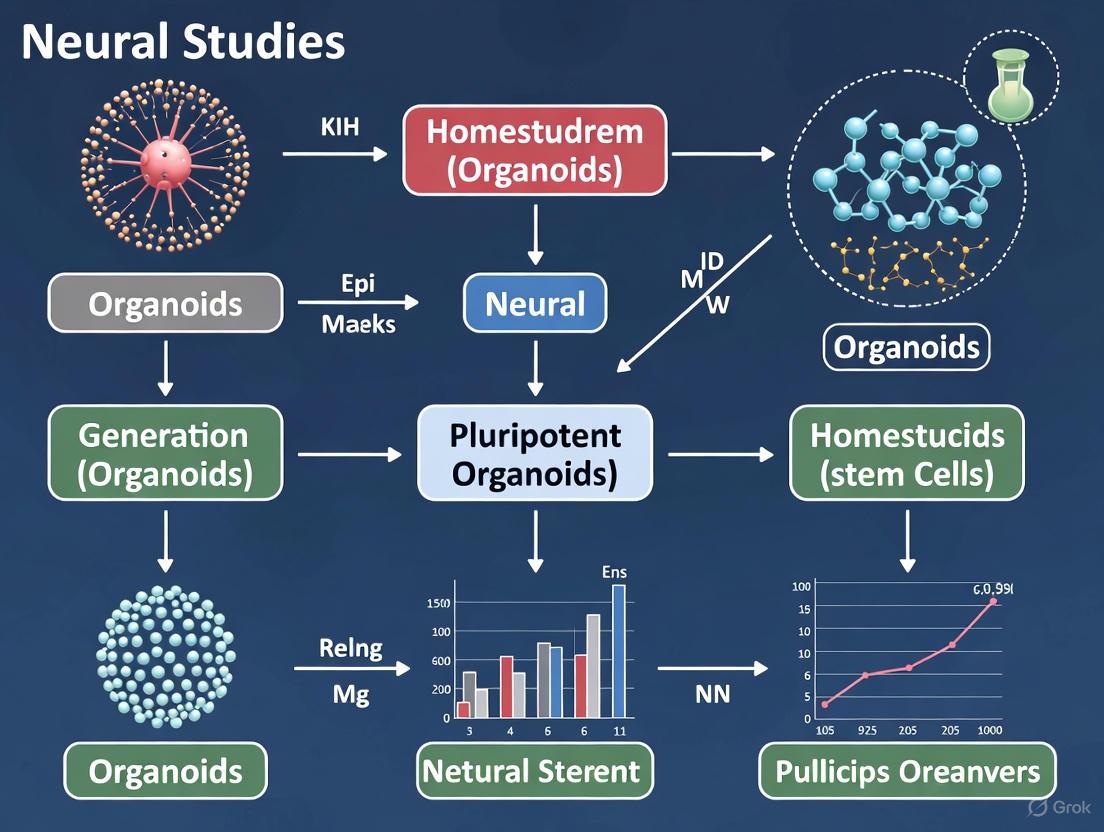
This article provides a comprehensive resource for researchers and drug development professionals on generating and utilizing neural organoids derived from human pluripotent stem cells (hPSCs).
Brain Organoids from Pluripotent Stem Cells: A Complete Guide for Neural Disease Modeling and Drug Development
Abstract
This article provides a comprehensive resource for researchers and drug development professionals on generating and utilizing neural organoids derived from human pluripotent stem cells (hPSCs). It covers the foundational principles of brain organoid technology, from the self-organization of stem cells to the creation of complex, region-specific models. Detailed protocols for generating cerebral, cortical, and assembloid systems are discussed, alongside their direct applications in modeling neurodevelopmental disorders, neurodegenerative diseases, and infectious diseases. The guide also addresses critical challenges including heterogeneity, vascularization, and maturation, offering practical troubleshooting and optimization strategies. Finally, it evaluates the validation of these models for toxicology testing, high-throughput drug screening, and their comparative advantages over traditional 2D cultures and animal models, positioning organoids as indispensable tools for advancing neuroscience and precision medicine.
The Rise of Brain Organoids: Principles and Potential in Neuroscience
Brain organoids are three-dimensional (3D) multicellular microtissues derived from human pluripotent stem cells (hPSCs) that self-organize to mimic the complex structure and functionality of the developing human brain [1]. These innovative models have emerged as a transformative technology in neural studies, bridging the critical gap between traditional two-dimensional (2D) cell cultures and animal models that often fail to capture human-specific neurodevelopmental features [2] [3]. By recapitulating aspects of human brain development in vitro, brain organoids provide an unprecedented platform for investigating neurodevelopment, disease mechanisms, and potential therapeutic interventions [4] [5].
The fundamental value of brain organoids lies in their ability to recapitulate the cellular diversity, spatial organization, and cell-cell interactions of the embryonic human brain to a degree unattainable in previous model systems [3]. Unlike neurospheres or 2D cultures, brain organoids harness the intrinsic self-organizing capacity of PSCs to form organized architectures containing progenitor zones, neurons, and glial cells arranged in patterns reminiscent of the fetal brain [6]. This review details the defining characteristics, generation protocols, and applications of brain organoids, providing researchers with comprehensive methodological guidance for implementing these advanced models in neural studies.
Defining Characteristics of Brain Organoids
Brain organoids are distinguished from other 3D cell cultures by three essential criteria. First, they are 3D biological microtissues containing multiple cell types found in the developing brain [1]. Second, they recapitulate the complexity, organization, and structure of neural tissue, often forming ventricle-like structures and distinct progenitor zones [1] [6]. Third, they resemble at least some aspects of brain functionality, exhibiting features such as neuronal activity, synapse formation, and network-level electrophysiological properties [1] [5].
The formation of brain organoids follows a "default program" driven by intracellular gene expression and tissue autonomy, wherein pluripotent stem cells progressively differentiate through neuroepithelial and neural progenitor stages into various neuronal and glial subtypes [2]. This self-organization process mimics the endogenous developmental program, generating structures that mirror the early stages of human brain development, typically corresponding to the first trimester based on histological comparisons [7] [6].
Table 1: Key Characteristics of Brain Organoid Model Systems
| Feature | Traditional 2D Models | Animal Models | Brain Organoids |
|---|---|---|---|
| Cellular Complexity | Limited cell types | Species-specific cell types | Human-specific cell types including oRG cells |
| Spatial Organization | Flat, monolayer | Intact brain architecture | Self-organized 3D structures with ventricular zones |
| Neurodevelopmental Recapitulation | Limited | Complete but species-specific | Mimics early human fetal brain (1st trimester) |
| Human Disease Relevance | Moderate for cell-autonomous processes | Limited by cross-species differences | High for neurodevelopmental disorders |
| Throughput for Screening | High | Low | Moderate to high |
| Cost and Accessibility | Low | High | Moderate |
Brain Organoid Generation Methodologies
Two primary approaches dominate brain organoid generation: unguided and guided differentiation protocols. The choice between these methods represents a strategic trade-off between recapitulating global brain organization versus modeling specific brain regions with higher reproducibility.
Unguided (Self-Organizing) Protocols
Unguided methodologies rely exclusively on the spontaneous morphogenesis and intrinsic differentiation capacity of hPSC aggregates without exogenous patterning factors [2] [6]. The seminal protocol developed by Lancaster and Knoblich involves embedding embryoid bodies (EBs) derived from hPSCs in an extracellular matrix (Matrigel) and culturing them in spinning bioreactors to promote tissue expansion and neural differentiation [7] [6]. This approach generates cerebral organoids containing diverse brain region identities—including forebrain, midbrain, hindbrain, retina, and choroid plexus—within a single organoid [2] [6]. While this diversity offers opportunities to study inter-regional interactions, it results in significant batch-to-batch variability and heterogeneous cellular arrangements [6].
Guided (Region-Specific) Protocols
Guided methods utilize small molecules and growth factors to direct hPSC differentiation toward specific brain region identities [2] [5] [6]. These protocols build upon the serum-free culture of EB-like aggregates (SFEBq) developed by the Sasai group and typically employ strategic manipulation of developmental signaling pathways—such as Wnt, TGF-β, BMP, and SHH—to generate organoids with cerebral cortical, hippocampal, hypothalamic, midbrain, or cerebellar characteristics [5] [6]. The "dual-SMAD inhibition" method, using TGF-β and BMP inhibitors, efficiently converts hPSCs to neuroectodermal identity [5]. Subsequent patterning with specific morphogens yields region-specific organoids with more consistent cellular composition and reduced heterogeneity compared to unguided methods [6].
Advanced Methodological Innovations
Recent advances have addressed several limitations in early organoid technologies. Assembloids—fused assemblies of region-specific organoids—enable modeling of interactions between different brain regions, such as cortical-striatal or cortical-thalamic connections [4] [3]. Vascularization strategies, including co-culture with vascular organoids or endothelial cells, aim to overcome nutrient diffusion limitations that restrict organoid size and maturation [4] [8]. Bioengineering approaches incorporating microfluidic devices, bioreactors, and synthetic matrices enhance reproducibility and maturation while reducing heterogeneity [9]. Additionally, transplanted organoids grafted into rodent brains demonstrate enhanced maturation and functional integration with host circuits [4] [3].
Table 2: Comparison of Brain Organoid Generation Methods
| Method Characteristic | Unguided Protocol | Guided Protocol |
|---|---|---|
| Principle | Spontaneous morphogenesis without external patterning | Directed differentiation using morphogens and small molecules |
| Key Components | ECM embedding (Matrigel), spinning bioreactors | Specific morphogen combinations (e.g., dual-SMAD inhibition) |
| Brain Regions Formed | Multiple regions (forebrain, midbrain, hindbrain, retina) | Specific regions (cortex, midbrain, hypothalamus, etc.) |
| Reproducibility | Low to moderate; high heterogeneity | Moderate to high; more consistent |
| Technical Complexity | Moderate | High (requires optimization of patterning factors) |
| Primary Applications | Studying inter-regional interactions, overall brain development | Modeling region-specific disorders, high-throughput screening |
| Protocol Examples | Lancaster & Knoblich cerebral organoids | Cortical, midbrain, hypothalamic organoids |
Experimental Protocols
Cerebral Organoid Generation
The following protocol adapts the seminal cerebral organoid methodology with subsequent refinements for laboratory implementation [7] [6]:
Day 0: Embryoid Body (EB) Formation
- Dissociate hPSC colonies into single cells using Versene or Accutase [10].
- Plate 9,000 cells per well in ultra-low attachment 96-well plates in EB seeding medium supplemented with 10 µM Y-27632 (ROCK inhibitor) to enhance cell survival [10].
- Centrifuge plates at 100 × g for 3 min to promote aggregate formation.
Days 2-5: EB Maintenance and Neural Induction
- On day 2 and 4, carefully add 100 µL of EB formation medium without disturbing the aggregates [10].
- On day 5, transfer EBs to low-attachment 24-well plates in neural induction medium to promote neural ectoderm formation [7].
Days 6-10: Matrix Embedding and Neuroepithelial Expansion
- On day 6-7, individually embed EBs in Matrigel droplets (approximately 20 µL per EB) and incubate at 37°C for 30 minutes to polymerize [7] [10].
- Transfer Matrigel-embedded EBs to expansion medium in low-attachment plates.
- On day 10, transfer organoids to maturation medium on an orbital shaker (65 rpm) to enhance nutrient and oxygen exchange [10].
Days 11+: Long-term Maintenance and Maturation
- Maintain organoids in maturation medium with regular medium changes (2-3 times per week).
- Culture can be continued for several months to promote neuronal maturation, synaptogenesis, and gliogenesis [5].
Vascularized Cerebral Organoid Generation
This protocol generates vascularized brain organoids by fusing cerebral organoids with blood vessel organoids, enhancing nutrient delivery and enabling modeling of neurovascular interactions [8]:
Blood Vessel Organoid Generation
- Differentiate hPSCs in V-bottom 96-well plates in mesoderm induction medium with CHIR99021 (Wnt activator) for 2 days.
- Transition to endothelial induction medium containing VEGF (50 ng/mL), BMP4 (25 ng/mL), and bFGF (10 ng/mL) for 4 days to promote endothelial specification.
- Transfer to endothelial maturation medium in low-attachment plates for 14-21 days with medium changes every 2-3 days.
Fusion and Maturation
- Fuse pre-differentiated cerebral organoids (day 25-30) and blood vessel organoids (day 21) by co-culturing in Matrigel droplets.
- Maintain fused organoids in expansion medium with VEGF (20 ng/mL) to support vascular network formation and stability.
- Culture on orbital shakers for up to 60 days to allow robust vascular network integration throughout the cerebral organoid.
The Scientist's Toolkit: Essential Research Reagents
Successful brain organoid culture requires carefully selected reagents and materials. The following table details essential components and their functions in organoid generation and maintenance.
Table 3: Essential Research Reagents for Brain Organoid Generation
| Reagent Category | Specific Examples | Function | Application Notes |
|---|---|---|---|
| Basal Media | DMEM/F12, Neurobasal | Nutrient foundation | Often used in combination (1:1 ratio) for optimal neural support |
| Media Supplements | N2 Supplement, B27 Supplement (with/without Vitamin A) | Provide hormones, antioxidants, and essential nutrients | B27 without vitamin A used early; standard B27 for maturation |
| Extracellular Matrix | Matrigel (Growth Factor Reduced) | Structural support mimicking brain ECM | Critical for neuroepithelial bud expansion; hESC-qualified for consistency |
| Small Molecule Inhibitors | Dorsomorphin (BMP inhibitor), SB431542 (TGF-β inhibitor), LDN193189 (BMP inhibitor) | Direct neural differentiation (dual-SMAD inhibition) | Used in specific combinations and timing for regional patterning |
| Growth Factors | bFGF, VEGF, EGF, BDNF | Promote progenitor expansion, vascularization, neuronal survival | Concentration and timing critically important for specific outcomes |
| Enzymatic Dissociation Reagents | Accutase, Versene | Gentle cell dissociation | Preserve cell viability during passaging and EB formation |
| ROCK Inhibitor | Y-27632 | Enhances single-cell survival | Critical for EB formation from single cells; use first 24-48 hours |
| Specialized Equipment | Low-attachment plates, Orbital shakers, Spinning bioreactors | Promote 3D culture, enhance nutrient exchange | Spinning bioreactors reduce necrosis in larger organoids |
Signaling Pathways and Molecular Regulation
Brain organoid development is orchestrated by precisely regulated signaling pathways that mirror in vivo brain development. The diagram below illustrates the key signaling pathways manipulated in guided differentiation protocols to achieve specific regional identities.
The molecular regulation of brain organoid development centers on manipulating key developmental signaling pathways. Dual-SMAD inhibition (targeting both TGF-β and BMP signaling) establishes the default neural fate from hPSCs by blocking alternative differentiation paths and promoting neuroectodermal specification [5]. Anterior-posterior patterning is controlled through Wnt signaling modulation, where inhibition promotes anterior (forebrain) fates while activation drives posterior (midbrain/hindbrain) identities [5]. Dorsal-ventral patterning is regulated by sonic hedgehog (SHH) signaling, with low SHH activity permitting dorsal telencephalic (cortical) fates and increased SHH signaling promoting ventral identities [5]. These pathway manipulations, applied at specific developmental timepoints, enable the generation of region-specific organoids with defined cellular compositions.
Applications in Neural Research
Brain organoids have diversified into numerous applications that leverage their unique capacity to model human-specific brain development and dysfunction.
Disease Modeling
Patient-derived brain organoids have become invaluable tools for investigating the cellular and molecular mechanisms underlying neurodevelopmental and neurodegenerative disorders. Organoids generated from induced pluripotent stem cells (iPSCs) of patients with Machado-Joseph disease (MJD/SCA3) successfully recapitulated disease-associated neuropathology, including increased ventricular-like zones and mutant ataxin-3 protein aggregates, providing a platform for therapeutic screening [10]. In microcephaly, brain organoids revealed impaired radial glial stem cell expansion and premature neuronal differentiation, offering insights into pathological mechanisms underlying reduced brain size [7]. Organoids modeling Alzheimer's disease, schizophrenia, and autism spectrum disorders have identified disease-specific alterations in neural progenitor dynamics, neuronal maturation, and synaptic function [3] [9].
Drug Discovery and Toxicology
The physiological relevance of brain organoids makes them attractive platforms for drug screening and toxicology assessments. They enable high-content phenotypic screening of compound effects on complex neural tissues, surpassing the predictive value of 2D cultures [1]. Organoids facilitate personalized medicine approaches through patient-specific models that can predict individual drug responses [3]. Additionally, they provide human-relevant systems for assessing neurodevelopmental toxicity of environmental chemicals and pharmaceuticals, addressing ethical and species-translation concerns associated with animal testing [5].
Host-Pathogen Interactions
Brain organoids have emerged as unique models for studying neurotropic infections. They have been utilized to investigate Zika virus-induced microcephaly, revealing preferential infection of neural progenitor cells and resulting cortical thinning [5]. Organoids also enable exploration of SARS-CoV-2 neurotropism and associated neuroinflammatory responses, providing insights into the neurological manifestations of COVID-19 [5]. These applications demonstrate how organoids can illuminate infection mechanisms in human-specific neural tissue contexts difficult to study in other models.
Current Limitations and Future Perspectives
Despite their transformative potential, brain organoid technologies face several limitations that active research seeks to address. Current organoids lack functional vascular networks, limiting their size and maturation due to necrotic cores [2] [9]. They exhibit incomplete cellular diversity, particularly for non-ectodermal lineages like microglia and vascular cells that play crucial roles in brain development and function [9]. Organoids show inadequate neuronal maturation and rarely develop complex, organized neural circuits characteristic of the mature human brain [9] [6]. Additionally, batch-to-batch variability remains a challenge for quantitative studies and high-throughput applications [9].
Future developments will likely focus on advanced vascularization strategies to support larger, more mature organoids [4] [8]. Incorporation of non-neural cell types through co-culture or modified differentiation protocols will enhance physiological relevance [9]. Bioengineering innovations including microfluidic integration, biomaterial scaffolds, and bioelectronic interfaces will improve reproducibility and enable more sophisticated functional analyses [9]. Standardization of protocols across laboratories will enhance comparability and reliability for both basic research and translational applications [6].
As these technologies evolve, brain organoids will continue to reshape our understanding of human brain development and dysfunction, offering unprecedented opportunities to investigate neurological disorders and develop novel therapeutic strategies in clinically relevant human neural systems.
Human pluripotent stem cells (hPSCs), encompassing both embryonic stem cells (ESCs) and induced pluripotent stem cells (iPSCs), provide a foundational platform for studying human neural development, modeling pathological processes, and developing novel therapeutics [11]. Their capacity for self-renewal and ability to differentiate into virtually all somatic cell types make them an indispensable resource for generating in vitro models of the human brain [12]. This application note details standardized protocols for the generation of neural lineages from hPSCs, quantitative quality control methods, and specific applications in disease modeling, framed within the context of a broader thesis on organoid generation for neural studies research.
Core Principles of Neural Differentiation from hPSCs
The guided differentiation of hPSCs into specialized neural subtypes relies on recapitulating fundamental developmental principles observed in embryogenesis. The process involves sequential steps that mirror in vivo development [11].
Initial Neural Induction
The first critical step is neural induction, transitioning hPSCs from a pluripotent state to a neuroepithelial (NE) or neural stem cell (NSC) fate. This can be achieved via:
- Default Differentiation: Culturing hPSC aggregates (embryoid bodies) in serum-free medium, which favors neural over meso-endoderm differentiation [11].
- Dual-SMAD Inhibition: A more efficient and reproducible method utilizing small molecule inhibitors (e.g., SB431542 and Noggin) to block SMAD-dependent TGFβ and BMP signaling pathways. This method is highly effective for monolayer cultures, reducing variability associated with embryoid body formation [11].
Neural progenitors initially carry an anterior identity, expressing markers like PAX6 and OTX2, but lack caudal markers such as HOX genes [11].
Patterning via Morphogen Gradients
The regional identity of neural progenitors is determined by exposure to temporally and spatially controlled morphogen gradients along the Anterior-Posterior (A-P) and Dorsal-Ventral (D-V) axes [11].
- Anterior-Posterior Patterning is governed by morphogens like FGFs, WNTs, and Retinoic Acid (RA). The canonical WNT pathway activator CHIR99021 (CHIR) exerts a dose-dependent effect, patterning NE cells to forebrain, midbrain, hindbrain, and spinal cord fates at increasing concentrations [11].
- Dorsal-Ventral Patterning is controlled by the opposing actions of SHH (ventralization) and WNT/BMP signaling (dorsalization). Incremental concentrations of SHH direct progenitors to more ventral identities [11].
The following diagram illustrates the key signaling pathways and their roles in this patterning process:
Diagram 1: Signaling pathways for neural patterning.
Quantitative Quality Control of hPSC-Derived Neural Models
A significant challenge in the field is the heterogeneous and often immature characteristics of hPSC-derived neural cells and organoids [13]. To address this, quantitative evaluation methods are essential for robust quality control.
Web-based Similarity Analytics System (W-SAS)
The W-SAS is a computational tool that quantifies the similarity between hPSC-derived cells/organoids and specific human reference organs using RNA-seq data [13].
- Input: Raw RNA-seq data (TPM, FPKM/RPKM values) from hPSC-derived models.
- Process: The algorithm compares the expression profile of the sample against organ-specific gene expression panels (Organ-GEPs) constructed from human tissue databases (e.g., GTEx).
- Output: A quantitative organ similarity score (percentage) and gene expression pattern data, providing researchers with a standardized metric for quality assessment [13].
Organ-Specific Gene Expression Panels (Organ-GEPs)
The construction of Organ-GEPs involves a rigorous multi-step bioinformatic process to identify genes with high specificity to target tissues [13]. The table below summarizes the key features of neural-relevant Organ-GEPs:
Table 1: Organ-Specific Gene Expression Panels for Quantitative Similarity Assessment
| Organ/Tissue | Number of Specific Genes in Panel | Key Associated Functions (from IPA) | Primary Application |
|---|---|---|---|
| Heart (HtGEP) | 144 Genes | Cardiac-specific functions, muscle contraction | Modeling cardiac diseases, toxicity screening [13] |
| Brain (General) | Varies by region | Neural development, synaptic signaling, inflammatory response [13] | General neural differentiation, disease modeling [11] [12] |
| Hippocampus | Specific markers used (e.g., PROX1, ZBTB20, GRIK1) [14] | Memory formation, neuronal excitability | Modeling Alzheimer's disease, neurodevelopmental disorders [14] |
Experimental Protocol: Generating Patterned Neural Progenitors
This protocol describes the generation of region-specific neural progenitors from hPSCs using a monolayer, dual-SMAD inhibition-based method, adaptable for forebrain, midbrain, or hindbrain fates [11].
Materials and Reagents
Table 2: Essential Research Reagents for Neural Differentiation
| Reagent/Solution | Function/Purpose | Example |
|---|---|---|
| SMAD Inhibitors | Induces neural induction by inhibiting TGFβ and BMP pathways | SB431542 (TGFβ inhibitor), Noggin or LDN-193189 (BMP inhibitor) [11] |
| WNT Pathway Activator | Caudalizing factor for A-P patterning; concentration determines regional identity | CHIR99021 (GSK3β inhibitor) [11] |
| Ventralizing Factor | Specifies ventral D-V identity | Sonic Hedgehog (SHH) or small molecule agonists (e.g., Purmorphamine) [11] |
| Neural Basal Medium | Serum-free medium supporting neural cell survival and growth | DMEM/F-12 with N2 and B27 supplements [11] |
| Extracellular Matrix | Provides a substrate for adherent monolayer culture | Matrigel, Geltrex, or Laminin [11] |
Step-by-Step Procedure
- Culture and Preparation of hPSCs: Maintain hPSCs in a pluripotent state using standard feeder-free or feeder-dependent culture conditions. Ensure cells are healthy and at a low passage number.
- Neural Induction (Days 0-7):
- Accurately dissociate hPSCs into a single-cell suspension.
- Plate cells on an extracellular matrix-coated culture vessel at a defined density in neural induction medium containing dual-SMAD inhibitors (e.g., 10 µM SB431542 and 100 ng/mL Noggin).
- Refresh the medium daily. By day 7, >80% of cells should express the neural progenitor marker PAX6.
- Regional Patterning (Days 7-14):
- Switch cells to a neural patterning medium.
- To specify midbrain dopamine neuron progenitors, add a defined concentration of CHIR99021 (e.g., 3 µM) and a low dose of SHH (e.g., 100 ng/mL) [11].
- To generate hindbrain serotonin neurons, use a higher concentration of CHIR99021 (e.g., 6 µM) in combination with FGF8 [11].
- For forebrain cortical progenitors, maintain culture in the absence of exogenous WNT activators and SHH.
- Culture for an additional 7-10 days, refreshing medium every other day. Monitor the expression of regional markers (e.g., OTX2/LMX1A for midbrain, FOXG1 for forebrain).
- Terminal Differentiation and Maturation (Day 14+):
- Dissociate patterned neural progenitors and re-plate for terminal differentiation.
- Culture in neural maturation medium lacking mitogens but containing neurotrophic factors (e.g., BDNF, GDNF, cAMP).
- Allow neurons to mature for 4-8 weeks, analyzing functional properties via electrophysiology and immunohistochemistry.
The workflow for generating hippocampal progenitors, a specific neural subtype, is detailed below:
Diagram 2: Workflow for hippocampal progenitor generation.
Applications in Disease Modeling and Drug Discovery
hPSC-derived neural models have been extensively applied to model human neurological diseases and for pre-clinical drug screening.
Modeling Neurodegenerative and Neurodevelopmental Diseases
The ability to generate specific, disease-vulnerable neural subtypes allows for the precise modeling of pathological processes [11] [12].
- Parkinson's Disease (PD): Midbrain dopamine neurons derived from patient-specific iPSCs with mutations in genes like DNAJC6 recapitulate disease phenotypes such as impaired neuronal development, enabling mechanistic studies and drug screening [12].
- Alzheimer's Disease (AD): Cerebral organoids with APOE risk variants show accelerated neural differentiation, reduced progenitor cell renewal, and exacerbated tau pathology [12].
- Hippocampal Disorders: Hippocampal models derived from hPSCs are being used to study AD-related amyloid-beta pathology and the impact of viral infections like SARS-CoV-2 on neural tissue [14].
High-Throughput Drug Screening
hPSC-derived 2D and 3D models are increasingly used for high-content and high-throughput screens [12].
- Safety and Toxicity Evaluation: Cardiac organoids are used to screen for drug-induced cardiotoxicity, while liver organoids assess hepatotoxicity [12] [15].
- Phenotypic Drug Discovery: Organoid models of diseases like cystic fibrosis or colorectal cancer are used to screen compound libraries for rescue of disease-specific phenotypes (e.g., forskolin-induced swelling in cystic fibrosis organoids) [12].
- Viral Infection and Treatment: Lung and cardiac organoids infected with SARS-CoV-2 have been used to identify FDA-approved drugs (e.g., Imatinib) that can block viral entry and rescue cellular function [12].
Table 3: Examples of Disease Modeling Using hPSC-Derived Neural Cells
| Disease Modeled | hPSC-Derived Model | Genetic Mutation(s) | Observed Phenotype | Reference |
|---|---|---|---|---|
| Parkinson's Disease | Midbrain Organoids | DNAJC6 | Impaired midbrain dopamine neuron development | Wulansari et al. [12] |
| Alzheimer's Disease | Cerebral Organoids | APOE | Accelerated differentiation, exacerbated tau pathology | Zhao et al. [12] |
| Frontotemporal Dementia | Cerebral Organoids | MAPT | Increased susceptibility to glutamate toxicity | Bowles et al. [12] |
| Spinal Muscular Atrophy | Spinal Organoids | SMN1 | Motor neuron degeneration | Hor et al. [12] |
The central nervous system (CNS) is the most complex biological system in the human body, both in terms of morphological organization and cellular diversity [16]. The generation of this remarkable cellular variety relies on a relatively small number of molecular signals that pattern the developing neural tube. Decades of research have established a general model of neural tube regionalization where extrinsic diffusible factors, known as morphogens, trigger coordinated activation of specific transcription factors in uncommitted progenitor cells to establish different cell identities [16]. These morphogens include members of the Hedgehog (notably Sonic Hedgehog, SHH), transforming growth factor beta (TGF-β), Wingless (WNT), fibroblast growth factors (FGFs), bone morphogenetic proteins (BMPs), and retinoic acid (RA) families [16].
Morphogens function by creating concentration gradients across receiving tissues, diffusing from cellular sources often referred to as organizing centers [16]. The same morphogens are repurposed across time and space throughout embryonic development, with specific developmental outcomes depending on the basal gene expression program in the receiving cells within different tissue contexts [16]. In humans, neural induction begins around the end of the 3rd gestational week, when the notochord initiates neural plate formation from the overlying ectoderm, primarily by inhibiting BMP, nodal, and TGF-β signaling [16]. The proper spatiotemporal control of these morphogen gradients is essential for establishing the complex architecture of the human brain, and disruptions in these fine-tuned processes have been linked to neurodevelopmental and neuropsychiatric disorders including autism spectrum disorder, bipolar disorder, and schizophrenia [16].
Key Signaling Pathways in Neural Patterning
Dorsal-Ventral Patterning
In the dorso-ventral (D-V) direction, SHH secreted from the notochord ventralizes the neural tube by establishing the floor plate [16]. On the opposite side, BMP and WNT signaling, emanating from the overlying ectoderm, contribute to dorsal patterning with the specification of the roof plate [16]. SHH signaling regulates and activates GLI transcription factors (Gli1, Gli2, and Gli3), which then trigger a transcription factor cascade that prompts further specification of ventral progenitor cells in the neuroepithelium [16]. The mutual repression between transcription factors induced by these opposite gradients helps sharpen and define boundaries between progenitor domains [16].
Anterior-Posterior Patterning and Secondary Organizers
Immediately after neural tube closure, secondary organizers arise that further refine brain regionalization [16]:
- The anterior neural ridge (ANR) at the rostro-ventral edge of the neural tube is critical for forebrain specification, secreting multiple WNT inhibitors to maintain low levels of WNT signaling [16].
- The isthmic organizer (IsO) forms at the midbrain-hindbrain boundary and secretes FGF8 and WNT1, coordinating the development of the midbrain and anterior hindbrain [16].
- The cortical hem, located in the dorsal-medial forebrain, secretes WNTs and BMPs to specify the hippocampus and choroid plexus territories [16].
- The zona limitans intrathalamica (ZLI) within the diencephalon secretes SHH to organize thalamic patterning [16].
By the 5th gestational week, RA activity emerges with a caudal-to-rostral gradient, refining hindbrain and spinal cord identity via homeobox (HOX) gene expression [16].
Application Note: Generating Expanded Neuroepithelium Organoids (ENOs) via Temporal TGF-β Signaling Gradients
Background and Principle
Traditional brain organoid protocols typically employ static medium switches to guide pluripotent stem cell (PSC) differentiation, resulting in the formation of multiple independent neuroepithelium units (rosettes) within each organoid [17]. This multi-rosette architecture does not parallel in vivo brain organogenesis, where development originates from a single neural tube, and may contribute to organoid heterogeneity and reduced reproducibility [17]. Recent research demonstrates that initiating neural induction in a temporal stepwise gradient rather than through sudden medium switches guides the generation of brain organoids composed of a single, self-organized apical-out neuroepithelium, termed Expanded Neuroepithelium Organoids (ENOs) [17].
The key innovation lies in providing morphogen switches in a temporal and gradual manner, mimicking the tight and time-controlled morphogen gradients that underlie proper in vivo development [17]. Specifically, a prolonged, decreasing gradient of TGF-β signaling during neural induction serves as a determining factor in ENO formation, allowing for an extended phase of neuroepithelium expansion [17]. This approach results in organoids with improved cellular morphology and tissue architectural features that more closely resemble in vivo human brain development, including expanded germinal zones and enhanced cortical specification [17].
Comparative Analysis: ENOs vs. Conventional Organoids
Table 1: Quantitative comparison of ENOs versus conventional cortical organoids (COs) at day 25 of differentiation
| Parameter | Conventional COs (Sudden NI) | ENOs (Stepwise NI) | Biological Significance |
|---|---|---|---|
| Organoid Circularity | High (0.8-0.9) | Low (0.5) [17] | Reflects complex 3D morphology |
| Neuroepithelium Organization | Multiple independent rosettes [17] | Single, continuous neuroepithelium [17] | Recapitulates single neural tube |
| Perimeter Length | Standard | Increased [17] | Indicates surface folding |
| TGF-β Signaling Duration | Short | Prolonged gradient [17] | Key mechanistic difference |
| Germinal Zones | Limited | Expanded [17] | Enhanced progenitor expansion |
Table 2: Key signaling pathways and their roles in neural patterning for organoid differentiation
| Signaling Pathway | Role in Neural Patterning | Key Components | Application in Organoid Protocols |
|---|---|---|---|
| TGF-β/SMAD | Neural induction, dorsal-ventral patterning [16] | TGF-β, BMP, Noggin, Chordin | Dual SMAD inhibition for neural induction [17] |
| SHH | Ventralization, thalamic patterning [16] | SHH, GLI transcription factors | Ventral forebrain, striatal organoids [18] |
| WNT/β-catenin | Anterior-posterior patterning, dorsalization [16] | WNT ligands, Frizzled receptors | Dorsal forebrain, cortical hem specification [16] |
| FGF | Rostro-caudal patterning, midbrain-hindbrain [16] | FGF8, FGF17 | Anterior neural ridge, isthmic organizer [16] |
| Retinoic Acid | Caudal-rostral gradient, hindbrain/spinal cord [16] | RA synthesis enzymes, RAR/RXR | Hindbrain, spinal cord organoids [16] |
Protocol: Generating ENOs with Temporal Morphogen Gradient
Step-by-Step Procedure
Day 0: Preparation and Embryoid Body Formation
- Culture Conditions: Maintain all cells in a humidified incubator at 37°C with 5% CO₂ [19].
- hPSC Preparation: Culture human pluripotent stem cells (hPSCs) in essential 8 medium (TeSR-E8) on Matrigel-coated plates [19]. For H1 hESCs, use feeder-free conditions.
- Matrix Coating: Thaw Matrigel matrix overnight on ice at 2-8°C. Dilute one 200μL aliquot with 20mL ice-cold DMEM/F12 medium. Keep Matrigel on ice throughout handling [19].
- Embryoid Body Formation: Dissociate hPSCs using Accutase and reaggregate into embryoid bodies in stem cell medium containing 10μM Y-27632 ROCK inhibitor. Use consistent initial cell numbers (e.g., 3,000-9,000 cells per aggregate) [17].
Days 1-10: Neural Induction with Temporal Gradient
- Dual SMAD Inhibition: Employ dual SMAD inhibition for cortical neural induction using appropriate small molecules (e.g., LDN193189 for BMP signaling, SB431542 for TGF-β signaling) [17].
- Stepwise Gradient Protocol:
- Days 1-3: Gradually transition from 100% stem cell medium to 25% neural induction medium (NIM)/75% stem cell medium
- Days 4-6: Transition to 50% NIM/50% stem cell medium
- Days 7-10: Transition to 100% NIM
- Control Protocol: For conventional organoids, switch directly to 100% NIM on day 1.
- Medium Composition: Neural induction medium should contain DMEM/F12, vitamin C (71μg/mL) [19], and dual SMAD inhibitors.
Days 11-25: Expansion Phase
- Expansion Medium: Switch to expansion medium containing EGF (20ng/mL) and FGF2 (20ng/mL) to support neural progenitor proliferation [17].
- Morphological Monitoring: Around days 12-14, ENOs should begin showing distinctive convoluted morphology with lighter borders and ridges at the apex, while conventional organoids maintain spherical shapes with multiple rosettes [17].
- Quality Check: At day 14-16, confirm neuroepithelium formation via immunostaining for N-Cadherin (NCAD). ENOs should display elongated, continuous, radially organized NCAD+ neuroepithelium, while conventional organoids show multiple discrete rosettes [17].
Day 25 Onwards: Maturation and Regionalization
- Maturation Medium: Switch to maturation medium containing Matrigel droplets to support further differentiation and tissue organization [17].
- Regional Patterning: For specific regional identities, add appropriate patterning molecules:
- Extended Culture: Maintain organoids with regular medium changes (every 2-3 days) for up to 120 days or longer to allow for advanced maturation and circuit formation [18].
Quality Control and Validation
Morphological Assessment
- Circularity Measurement: Quantify organoid circularity using brightfield images. ENOs should show significantly reduced circularity (approximately 0.5 at day 25) compared to conventional organoids [17].
- Perimeter Analysis: Measure organoid perimeter length, with ENOs displaying increased perimeter indicative of complex surface folding [17].
Immunohistochemical Validation
- Neuroepithelium Markers: Stain for N-Cadherin (NCAD) to visualize neuroepithelium organization [17].
- Neural Progenitor Markers: Confirm presence of SOX2+ neural progenitors in the ventricular zone-like structures [17].
- Apical-Basal Polarity: Assess polarity markers such as aPKC and ZO-1 to confirm apical-out morphology in ENOs [17].
Molecular Validation
- qPCR Analysis: Verify neural identity through robust expression of NCAD and Nestin, with absence of off-lineage markers (e.g., SOX17 for endoderm, Brachyury for mesoderm) [17].
- scRNA-seq: For comprehensive characterization, perform single-cell RNA sequencing at multiple timepoints to validate cell type composition and developmental trajectory [18].
The Scientist's Toolkit: Essential Research Reagents
Table 3: Key research reagents for brain organoid differentiation and morphogen gradient studies
| Reagent Category | Specific Examples | Function/Application | Protocol Specifications |
|---|---|---|---|
| hPSC Culture | TeSR-E8 medium, Matrigel, Vitronectin, Synthemax | Pluripotent stem cell maintenance and expansion | Culture on Matrigel-coated plates in TeSR-E8 [19] |
| Neural Induction | LDN193189, SB431542, Noggin, DMEM/F12, Vitamin C | Dual SMAD inhibition for neural induction | Use in neural induction medium at appropriate concentrations [17] [19] |
| Morphogens & Patterning | CHIR99021 (WNT agonist), SAG (SHH agonist), FGF8, BMP4, Retinoic Acid | Regional patterning of neural tissue | Concentration and timing critical for specific regional identities [18] [16] |
| Extracellular Matrix | Matrigel, Laminin, Collagen | Support 3D organization and polarization | Embedding at specific timepoints enhances neuroepithelium formation [17] [20] |
| Cell Lines | H1 hESC, H9 hESC, H14 hESC, WTC-11 hiPSC | Consistent organoid generation across lines | Multiple lines (H1, H9, H14) validated for ENO protocol [17] |
| Analysis Reagents | Anti-N-Cadherin, Anti-SOX2, Anti-PAX6, DAPI | Immunofluorescence validation of cell types | Standard dilutions (1:200-1:400) for organoid section staining [17] [19] |
Troubleshooting and Technical Considerations
Common Challenges and Solutions
- Poor Neuroepithelium Formation: Ensure proper temporal gradient implementation and validate small molecule concentrations. Test new aliquots of TGF-β/BMP inhibitors.
- High Organoid-to-Organoid Variability: Standardize initial cell aggregation numbers and use controlled aggregation systems if necessary.
- Insufficient Expansion: Verify growth factor concentrations (EGF/FGF2) and ensure fresh preparation of expansion factors.
- Necrotic Centers: Optimize organoid size during initial aggregation and consider using spinning bioreactors or orbital shakers for improved nutrient exchange.
Applications in Disease Modeling and Drug Screening
The ENO platform provides enhanced reproducibility and structural organization that makes it particularly valuable for disease modeling and therapeutic screening [17]. Recent studies have successfully utilized brain organoids to model neurodevelopmental disorders such as Hereditary Sensory and Autonomic Neuropathy Type IV (HSAN IV) caused by NTRK1 mutations, revealing disrupted balance of neuronal and glial differentiation [21]. Similarly, village editing approaches with NRXN1 knockouts in iPSCs from multiple donors have enabled study of schizophrenia-related mutations across different genetic backgrounds [21]. The improved architectural features of ENOs should further enhance these applications by providing more physiologically relevant tissue contexts.
Recapitulating brain development through precise control of signaling pathways and morphogen gradients represents a powerful approach for generating advanced in vitro models of human neural development. The temporal TGF-β signaling gradient protocol for generating Expanded Neuroepithelium Organoids provides significant improvements in tissue architecture and reproducibility compared to conventional methods. By carefully orchestrating the timing and concentration of key morphogens including TGF-β, WNT, SHH, and FGF signals, researchers can guide pluripotent stem cells through developmental trajectories that more faithfully mimic in vivo brain development. These advanced organoid models offer unprecedented opportunities for studying human-specific aspects of brain development, modeling neurodevelopmental disorders, and screening therapeutic compounds in a physiologically relevant context.
Understanding human brain development and dysfunction represents a major goal in neurobiology, yet has remained challenging due to the inability to recapitulate human brain-specific features in animal models and the ethical limitations surrounding human fetal tissue research [22] [5]. While traditional two-dimensional (2D) cell models and animal models have provided fundamental insights, they face significant limitations: 2D models lack the three-dimensional spatial architecture and complex intercellular communication networks of the human brain, while animal models exhibit interspecies biological differences that inadequate simulation of human pathological phenotypes [22]. In this context, three-dimensional (3D) brain organoids have emerged as a transformative experimental system that recapitulates critical aspects of early human neurodevelopment in vitro [23].
Brain organoids are 3D, self-organizing, miniaturized in vitro culture models derived from human pluripotent stem cells (hPSCs), including both embryonic stem cells (ESCs) and induced pluripotent stem cells (iPSCs) [22] [23]. By recapitulating certain key aspects of human brain development, they can generate diverse cell types, including neurons and glia relevant to specific brain regions, while mimicking the complex cellular composition, spatial organization, and cell-cell interactions found in the developing brain to a degree unattainable in traditional 2D cultures [22]. This review comprehensively examines the two primary paradigms in neural organoid technology: whole-brain/organoid models and region-specific approaches, detailing their generation protocols, applications, and the emerging bioengineering innovations that enhance their fidelity and functionality.
Neural Organoid Generation: Fundamental Principles and Workflow
The differentiation of human neural organoids begins with the self-organization of hESCs or hiPSCs, typically through a series of carefully orchestrated steps that mimic the in vivo developmental signaling environment [24]. The fundamental process involves several critical stages, summarized in the workflow below:
Embryoid Body Formation
The initial step in neural organoid differentiation involves the formation of embryoid bodies (EBs), which are 3D aggregates of stem cells [24]. Two common strategies are employed:
- Forced Aggregation (SFEBq): Enzymatically digested SCs are aggregated in V-bottomed, low-adhesion 96-well plates through centrifugation [24].
- Self-Aggregation: High-confluence SCs in 2D culture self-aggregate over several days, with EBs excised mechanically or enzymatically [24].
Recent innovations include the "Hi-Q brain organoid" culture method that bypasses the traditional EB stage entirely, instead directly inducing iPSCs to differentiate into neurospheres using custom uncoated microplates for precise size control, thereby eliminating size inconsistencies and differentiation abnormalities [22].
Neural Induction
Following EB formation, neural induction is achieved through directed or undirected differentiation:
- Directed Differentiation: Utilizes inductive cues like dual SMAD inhibition (dSMADi), where BMP and TGF-β signaling are suppressed by small molecule inhibitors to achieve neuroectodermal lineage [24]. This approach generates highly uniform populations with reduced heterogeneity.
- Undirected Differentiation: Relies on self-organization capabilities of EBs in minimal media formulas with reduced basic FGF, allowing spontaneous neural patterning without external inductive cues [24].
Regional Patterning and Maturation
The final stages involve specifying regional identities and extended maturation:
- Regional Patterning: Achieved through supplementation with specific morphogens (e.g., Wnts, SHH, FGFs, BMPs) that guide anterior-posterior and dorso-ventral patterning [5].
- Tissue Maturation: Organoids are maintained in differentiation media for extended periods (months to over a year) using spinning bioreactors or orbital shakers to enhance nutrient and oxygen exchange, supporting the emergence of mature neuronal and glial cell types [22] [5].
Comparative Analysis of Organoid Paradigms
The field has evolved two primary approaches for generating neural organoids, each with distinct advantages, limitations, and applications, as summarized in the table below.
Table 1: Comparative Analysis of Whole-Brain vs. Region-Specific Organoid Protocols
| Parameter | Whole-Brain/Unpatterned Organoids | Region-Specific/Patterned Organoids |
|---|---|---|
| Key Features | Relies on cellular self-organization; Embedded in Matrigel; Uses rotating bioreactors [22] | Uses small molecule morphogens; Directed differentiation into specific regions; Precise control of developmental pathways [22] |
| Protocol Examples | Lancaster/Knoblich protocol [22] | Pasca lab protocols (dorsal/ventral forebrain) [22] |
| Advantages | Models interactions between multiple brain regions; No exogenous patterning factors required; Suitable for studying global developmental events [22] | High regional consistency and reproducibility; Good cellular purity; Ideal for studying region-specific disorders [22] |
| Disadvantages/Limitations | High batch-to-batch variability; Uncontrolled regional composition; Frequent necrotic core formation [22] | Sacrifices whole-brain complexity; Requires pre-definition of target region; Demands precise timing of morphogens [22] |
| Representative Brain Regions | Heterogeneous regions including forebrain, midbrain, hippocampus [22] | Cerebral cortex, basal ganglia, hypothalamus, midbrain, cerebellum, spinal cord [22] [9] |
| Applications | Studying global brain organization; Modeling disorders with unknown regional specificity; Exploratory development studies [22] | Investigating region-specific disorders; High-throughput drug screening; Disease modeling with known neuroanatomy [22] |
Region-Specific Organoid Models: Signaling Pathways and Protocols
Region-specific organoids are generated through precise manipulation of developmental signaling pathways that pattern the embryonic neural tube. The following diagram illustrates the key morphogens and their roles in establishing anterior-posterior and dorso-ventral identities:
Cortical Organoid Protocols
Cerebral cortical organoids model the development of the human cortex, the brain region responsible for higher cognitive functions. The standard protocol involves:
- Neural Induction: Using dual SMAD inhibition (dSMADi) with small molecule inhibitors (SB431542 and LDN193189) for efficient neuroectodermal conversion over 10-14 days [24] [23].
- Dorsal Patterning: Treatment with Wnt agonists (e.g., CHIR99021) and low levels of SHH signaling inhibitors (e.g., cyclopamine) to promote dorsal telencephalic fate [23] [5].
- Maturation: Extended culture in differentiation media containing BDNF, GDNF, and NT-3 for 3-6 months to generate functional glutamatergic neurons exhibiting cortical layer markers (TBR1, BCL11B, SATB2) [23].
Midbrain Organoid Protocols
Midbrain organoids specifically model dopaminergic neurons relevant to Parkinson's disease research:
- Early Patterning: Combined activation of SHH signaling (e.g., purmorphamine) and Wnt signaling (e.g., CHIR99021) during neural induction stages [5].
- Regional Specification: FGF8 supplementation to promote midbrain identity and inhibit anterior and posterior fates [5].
- Dopaminergic Differentiation: Treatment with ascorbic acid and GDNF to support the generation and survival of tyrosine hydroxylase-positive (TH+) dopaminergic neurons [9].
Forebrain Patterning for Dorsal-Ventral Axis
The forebrain can be patterned into dorsal and ventral identities through precise morphogen exposure:
- Dorsal Forebrain: Generated using BMP4 and Wnt activation after dual SMAD inhibition, producing cortical excitatory neurons [23] [5].
- Ventral Forebrain: Requires SHH activation early in differentiation (days 5-15) to generate GABAergic inhibitory neurons characteristic of the ganglionic eminences [23].
Advanced Model Systems: Assembling Complexity
To overcome the limitation of studying isolated brain regions, scientists have developed assembloid techniques that fuse organoids from different brain regions to model inter-regional connectivity [22]. This approach enables:
- Study of Long-Range Neuronal Connections: Cortical-striatal assembloids model the corticostriatal pathway affected in Huntington's disease [22].
- Analysis of Cell Migration: Ventral forebrain assembloids fused with cortical organoids demonstrate interneuron migration from ventral to dorsal regions, recapitulating in vivo developmental processes [22] [23].
- Circuit-Level Analysis: Cortical-thalamic assembloids enable investigation of reciprocal thalamocortical connections essential for sensory processing [22].
Table 2: Quantitative Fidelity Assessment of Neural Organoid Protocols Based on Integrated Transcriptomic Atlas Data [25]
| Organoid Protocol Type | Transcriptomic Similarity to Primary Counterparts | Best Represented Cell Types | Underrepresented Cell Types | Presence of Non-Neural Cells |
|---|---|---|---|---|
| Unguided Whole-Brain | Variable across regions (30-70%) | Dorsal telencephalic NPCs and neurons | Thalamic, cerebellar, and midbrain subtypes | Limited to absent (no vascular, immune cells) |
| Guided Cortical | High for dorsal telencephalic cells (>75%) | Upper and deep layer cortical neurons | Non-telencephalic neuronal subtypes | Limited to absent |
| Guided Midbrain | Moderate for midbrain dopamine neurons (60-70%) | Midbrain dopaminergic neurons | Cerebellar and thalamic neurons | Limited to absent |
| Assembloids | Improved maturation of connected regions | Region-specific neuronal subtypes | Late-born neuronal subtypes | Can be incorporated via co-culture |
The Scientist's Toolkit: Essential Reagents and Solutions
Table 3: Essential Research Reagents for Neural Organoid Generation and Analysis
| Reagent Category | Specific Examples | Function/Application | Protocol Specificity |
|---|---|---|---|
| Induction Factors | SB431542 (TGF-β inhibitor), LDN193189 (BMP inhibitor), DMH1 | Dual SMAD inhibition for neural induction | Universal for most protocols [24] |
| Patterning Morphogens | SHH agonists (purmorphamine), Wnt agonists (CHIR99021), FGF8, BMP4, Retinoic Acid | Regional specification along AP and DV axes | Region-specific protocols [23] [5] |
| Extracellular Matrix | Matrigel, Geltrex, Synthetic hydrogels | Provides 3D scaffold for growth and polarization | Essential for unguided protocols [22] |
| Culture Media Supplements | N2, B27 supplements, BDNF, GDNF, NT-3, ascorbic acid | Supports neuronal survival, maturation, and function | Varies by protocol stage and region [26] |
| Analysis Tools | scRNA-seq, Immunostaining markers (PAX6, SOX2, TBR1, CTIP2, SATB2, GAD67, TH), Multi-electrode arrays | Characterization of cell types, organization, and function | Varies by analysis goal [25] [9] |
The parallel development of whole-brain and region-specific neural organoid models has created complementary experimental platforms for studying human brain development and disease. While whole-brain organoids offer the advantage of modeling interactions between multiple brain regions, region-specific protocols provide enhanced reproducibility and cellular purity for investigating disorders with known neuroanatomy [22]. The emergence of assembloid techniques further enables the study of circuit-level interactions between defined brain regions [22] [23].
Future developments in neural organoid technology will likely focus on enhancing maturation, incorporating non-neural cell types (microglia, vascular endothelial cells), and improving reproducibility through bioengineering approaches such as microfluidic organoid-on-a-chip systems and defined synthetic matrices [9]. As the Human Neural Organoid Cell Atlas (HNOCA) continues to expand, providing a comprehensive reference of 1.77 million cells from 26 distinct protocols, researchers will be better equipped to quantitatively assess organoid fidelity and select optimal protocols for specific research applications [25]. These advancements promise to further establish neural organoids as indispensable tools for modeling human brain development, dysfunction, and therapeutic interventions.
The field of neural modeling has been transformed by the advent of three-dimensional in vitro systems that recapitulate human-specific brain development. Brain organoids, which are three-dimensional, self-organizing, and miniaturized in vitro culture models derived from human induced pluripotent stem cells (iPSCs), address the significant limitations of traditional two-dimensional cell models and animal models [3] [22]. These models mimic the complex cellular composition, spatial organization, and cell-cell interactions found in the developing human brain to a degree unattainable in traditional 2D cell cultures [22]. The progression from simple cerebral organoids to complex multi-region assembloids represents a quantum leap in our ability to model neural circuitry, inter-regional connectivity, and the pathological mechanisms underlying neuropsychiatric disorders [3]. This evolution in model system complexity enables unprecedented study of human brain development, disease mechanisms, and therapeutic screening with enhanced physiological relevance.
Fundamental Protocols in Brain Organoid Generation
The generation of brain organoids from human pluripotent stem cells involves distinct methodological approaches, each with specific advantages and applications. The choice between unguided and guided differentiation strategies depends on the research objectives, whether exploring global brain organization or modeling disorders associated with specific brain circuits [3] [27].
Table 1: Comparison of Brain Organoid Generation Protocols
| Protocol/Lab | Key Features | Advantages | Disadvantages/Limitations |
|---|---|---|---|
| Whole-Brain/Unguided Organoids (Knoblich/Lancaster) [22] | Relies on cellular self-organization without exogenous patterning factors; embedded in Matrigel; uses rotating bioreactors | Models interactions between multiple brain regions; suitable for studying global developmental events | High batch-to-batch variability; uncontrolled regional composition; frequent necrotic core formation |
| Region-Specific/Guided Organoids (Pasca et al.) [22] | Uses small molecule morphogens for directed differentiation into specific brain regions; precise control of developmental pathways | High regional consistency and reproducibility; good cellular purity; ideal for studying region-specific disorders | Sacrifices whole-brain complexity; requires pre-definition of target brain region; demands precise timing and concentration of morphogens |
| Assembloids (Pasca et al.) [22] | Assembly of organoids from different regions; models inter-regional connectivity; studies cell migration and projections | Enables study of long-range neuronal connections; reveals mechanisms of brain region interactions; models complex neural circuits | Higher technical complexity; assembly efficiency requires optimization; fusion consistency needs improvement |
| Hi-Q Brain Organoids (Ramani et al.) [3] [22] | Bypasses embryoid body stage; uses custom uncoated microplates; precise control of neurosphere size | High reproducibility and consistency; minimal activation of cellular stress pathways; supports cryopreservation and large-scale screening | Relatively new protocol; long-term developmental potential requires further validation |
Protocol: Generation of Whole-Brain Organoids
This protocol adapts the pioneering Lancaster/Knoblich method for generating unguided whole-brain organoids containing multiple brain region identities [22].
Materials:
- Human iPSCs (pluripotent status confirmed)
- Matrigel or similar extracellular matrix
- Essential cytokines regulating neural development (e.g., Noggin, SB431542)
- Neural induction medium
- Differentiation medium
- Rotating cell culture system (bioreactor)
Procedure:
- Embryoid Body (EB) Formation: Harvest human iPSCs using gentle cell dissociation reagent. Aggregate approximately 9,000 cells per well in a low-adherence 96-well plate centrifuged at 300 × g for 3 min to form EBs.
- Neural Induction: At day 2, transfer EBs to neural induction medium containing Matrigel (approximately 20% final concentration). Culture for 5 days with medium change every other day.
- Matrix Embedding: On day 6, embed individual neuroepithelial buds in Matrigel droplets. Allow polymerization for 30 minutes at 37°C.
- Expanded Differentiation: Transfer Matrigel-embedded organoids to differentiation medium in a rotating bioreactor system. Maintain culture for up to several months with weekly medium changes.
- Monitoring and Analysis: Monitor morphological development daily. Confirm multiple brain region identities (forebrain, midbrain, hindbrain) via immunostaining for region-specific markers after 30-60 days.
Quality Control: Assess organoid size uniformity and presence of ventricular zone-like structures. Batch variability is inherent to this method; include sufficient replicates (minimum n=10-15 per experiment) [22].
Protocol: Generation of Region-Specific Cortical Organoids
This protocol utilizes exogenous morphogens to direct differentiation toward dorsal forebrain fate with high regional specificity and reproducibility [22].
Materials:
- Human iPSCs
- Matrigel
- SMAD inhibitors (e.g., Dorsomorphin, SB431542)
- Wnt inhibitors (e.g., IWR-1)
- Growth factors (BDNF, GDNF)
- Defined cortical differentiation medium
Procedure:
- EB Formation: Aggregate 15,000 iPSCs per well in a 96-well low-adherence plate. Centrifuge at 400 × g for 5 min to form uniform EBs.
- Dual SMAD Inhibition: From day 1-6, maintain EBs in neural induction medium containing 100 nM LDN-193189 (BMP inhibitor) and 10 μM SB431542 (TGF-β inhibitor) with daily medium changes.
- Neural Induction: On day 5, embed EBs in Matrigel and transfer to 6-well plates with neural expansion medium.
- Forebrain Patterning: From days 7-25, apply 2 μM IWR-1 (Wnt inhibitor) to promote dorsal forebrain identity. Change medium every other day.
- Terminal Differentiation: From day 26 onward, maintain organoids in differentiation medium containing BDNF (20 ng/mL) and GDNF (20 ng/mL) in rotating bioreactors. Change medium twice weekly.
- Maturation: Culture for 60-120 days to obtain mature cortical neurons and glial cells.
Quality Control: Assess reproducibility of regional identity via immunostaining for FOXG1 (forebrain), CTIP2 (deep layer neurons), and SATB2 (upper layer neurons). This method yields highly consistent organoids suitable for quantitative studies [22].
Advanced Assembloid Generation and Integration
The assembloid technique represents the cutting edge of in vitro neural modeling, enabling the study of complex neural circuits and inter-regional interactions not possible with single organoids [3].
Table 2: Established Assembloid Models and Their Applications
| Assembloid Type | Component Regions | Key Features Modeled | Research Applications |
|---|---|---|---|
| Cortical-Striatal [3] [22] | Cerebral cortex and striatum | Corticostriatal projections; medium spiny neuron differentiation | Huntington's disease; Parkinson's disease; compulsive disorders |
| Cortical-Thalamic [22] | Cerebral cortex and thalamus | Thalamocortical projections; sensory processing circuits | Epilepsy; autism spectrum disorders; schizophrenia |
| Midline [22] | Hypothalamus and pituitary | Neuroendocrine signaling; hormone release pathways | Neuroendocrine disorders; pituitary dysfunction |
| Vascularized Neural [3] | Brain organoid and vascular organoid | Blood-brain barrier functionality; vascular perfusion | Neurovascular diseases; drug delivery studies |
Protocol: Generation of Cortical-Striatal Assembloids
This protocol details the assembly of region-specific cortical and striatal organoids to model corticostriatal circuitry, relevant for studying Huntington's disease and other basal ganglia disorders [3] [22].
Materials:
- Pre-differentiated cortical organoids (day 40-50)
- Pre-differentiated striatal organoids (day 40-50)
- Low-melting-point agarose
- Assembloid fusion medium
- Vibratome or tissue slicer
Procedure:
- Component Validation: Prior to assembly, confirm regional identity of individual organoids via marker expression: cortical organoids should express FOXG1 and TBR1, while striatal organoids should express GSX2 and CTIP2.
- Proximity Assembly: Select age-matched cortical and striatal organoids (approximately 2-3 mm diameter). Place in direct physical contact in a low-adhesion 24-well plate with minimal medium.
- Fusion Promotion: Add assembled organoids to Matrigel droplets (approximately 30% concentration) to encourage fusion. Incubate for 2-4 hours until stable fusion is observed.
- Long-term Culture: Transfer fused assembloids to spinning bioreactors with assembloid fusion medium supplemented with 10 ng/mL BDNF and 10 ng/mL GDNF to support neuronal survival and axonal extension.
- Circuit Maturation: Culture assembloids for 30-60 additional days to allow robust axonal projections between regions.
- Functional Validation: Confirm functional connectivity using optogenetic stimulation paired with calcium imaging, or patch-clamp electrophysiology.
Quality Control: Assess assembly success rate (typically 70-80% with practice). Validate functional connectivity between regions using anterograde tracing or synaptic marker colocalization [3].
Advanced Imaging and Analysis Techniques
The complex three-dimensional nature of brain organoids and assembloids demands sophisticated imaging approaches for proper phenotypic quantification. Phase-contrast imaging provides a low-cost method for observing growth and morphology but offers limited molecular specificity [28]. Holotomography (HT), a 3D extension of quantitative phase imaging, enables real-time capture of cellular dynamics in organoids without phototoxicity or photobleaching concerns associated with fluorescent labels [29]. For high-content phenotypic quantification without physical staining, PhaseFIT (phase-fluorescent image transformation) utilizes a segmentation-informed deep generative model to transform phase images into virtual multi-channel fluorescent images, enabling large-scale, informative organoid analysis [28]. Recent advances also incorporate machine learning to predict organoid formation outcomes from early-stage morphological features, with one model achieving 79% accuracy in predicting pituitary organoid formation using day 9 phase-contrast images [30].
Research Reagent Solutions
Successful organoid generation requires carefully selected reagents and materials to support the complex process of self-organization and neural differentiation.
Table 3: Essential Research Reagents for Organoid Generation
| Reagent/Category | Specific Examples | Function | Application Notes |
|---|---|---|---|
| Extracellular Matrix | Matrigel, Geltrex | Provides structural support and biochemical cues for 3D organization; mimics native neural microenvironment | Quality between lots varies; requires pre-screening; maintain temperatures below 4°C during handling [27] |
| Neural Induction Agents | SMAD inhibitors (LDN-193189, SB431542), Wnt inhibitors (IWR-1) | Directs pluripotent stem cell differentiation toward neural lineage by inhibiting alternative differentiation pathways | Critical concentration and timing windows; requires precise dosing [22] |
| Patterning Factors | Noggin, R-Spondin, FGFs, SHH | Regional specification of neural tissue; guides development of specific brain identities | Combination and concentration determine regional fate; use validated concentrations for target regions [3] |
| Maturation Factors | BDNF, GDNF, NT-3, NT-4 | Supports neuronal survival, differentiation, and synaptic development during extended culture | Essential for long-term culture (>60 days); promotes functional maturation [22] |
| Metabolic Support | N-acetylcysteine, B27 supplement, lipids | Reduces cellular stress; supports energy-intensive processes of neural development | Minimizes necrotic core formation; improves organoid health during extended culture [29] |
Quantitative Analysis and Data Presentation
Effective presentation of quantitative data from organoid studies requires appropriate graphical representations that accurately convey complex datasets while maintaining scientific rigor.
Histograms for Size Distribution Analysis
Histograms present the frequency distribution of continuous numerical data (e.g., organoid diameter, cell counts) grouped into class intervals. Unlike bar graphs, histograms have bars touching each other as the horizontal axis represents a continuous number line [31]. For organoid research, histograms effectively display size distributions across experimental conditions, revealing population heterogeneity and treatment effects.
Frequency Polygons for Comparative Analysis
Frequency polygons are derived by connecting the midpoints of histogram bars and are particularly valuable for comparing multiple distributions on the same axes [31] [32]. In organoid research, frequency polygons can illustrate differential effects of growth factors on organoid size distributions or compare cellular composition across different protocols.
Line Graphs for Temporal Trends
Line graphs effectively display time-course data, showing developmental trends, maturation trajectories, or treatment responses over culture periods [32]. For longitudinal organoid studies, line graphs can illustrate volume changes, marker expression dynamics, or functional maturation across weeks or months of culture.
Scatter Plots for Correlation Analysis
Scatter plots display the relationship between two continuous variables by plotting individual data points on X and Y axes [32]. In organoid research, scatter plots can reveal correlations between organoid size and neuronal maturity, gene expression relationships, or drug response patterns across different cell lines.
The progression from simple cerebral organoids to complex multi-region assembloids represents a paradigm shift in neural modeling, offering unprecedented opportunities to study human-specific brain development, disease mechanisms, and therapeutic interventions. The protocols outlined herein provide researchers with robust methodologies for generating increasingly sophisticated neural models that bridge the gap between traditional in vitro systems and in vivo human brain complexity. As these technologies continue to evolve—enhanced by advanced imaging, machine learning prediction, and standardized quantification methods—they promise to accelerate the translation of basic neurodevelopmental insights into personalized medicine and effective therapeutic strategies for neurological and psychiatric disorders. Future directions will likely focus on further reducing technical variability, enhancing functional maturation, and incorporating additional cellular components such as vasculature and microglia to create even more physiologically relevant models of the human brain.
Protocols in Practice: Generating and Applying Brain Organoids for Disease and Drug Screening
Human pluripotent stem cell (hPSC)-derived neural organoids represent a groundbreaking advancement in neuroscience research, offering three-dimensional (3D) in vitro models that mimic the developing human brain's cellular diversity, spatial structure, and functional connectivity [27]. These models provide an unprecedented experimental platform that effectively addresses ethical and practical limitations in traditional biomedical research, enabling in-depth studies of organ development, disease progression, and drug interactions [33] [34]. Compared to conventional two-dimensional (2D) cultures and animal models, neural organoids demonstrate superior fidelity in replicating human brain architecture, making them indispensable tools for neurodevelopmental research, disease mechanism elucidation, and therapeutic screening [27]. This protocol details a robust, standardized methodology for generating mature neural organoids through embryoid body formation, providing researchers with a reliable system for studying human-specific neurodevelopmental processes and neurological disorders.
Key Principles of Neural Organoid Generation
Neural organoid generation leverages the self-organizing capacity of hPSCs to form 3D structures that recapitulate key aspects of human brain development. Two primary methodological approaches exist: unguided and guided differentiation. Unguided protocols rely on spontaneous self-organization without exogenous patterning signals, resulting in heterogeneous brain regions within a single organoid [27]. In contrast, guided approaches apply defined patterning cues to direct differentiation toward specific brain regions (e.g., cortex, midbrain, hypothalamus), enhancing regional fidelity and reproducibility [27]. The protocol described herein utilizes a guided approach to ensure consistent results suitable for research applications.
Successful organoid generation requires meticulous attention to three critical phases: embryoid body (EB) formation as the initial 3D aggregate, neural induction to specify neuroepithelial fate, and extended maturation to develop complex neural tissue architecture. Each phase demands precise control of signaling pathways, timing, and culture conditions to replicate in vivo developmental milestones [35].
Materials and Reagents
Cell Culture Materials
- hPSCs: Maintained in pluripotent state using appropriate culture system (e.g., mTeSR Plus) [35]
- 96-well round-bottom ultra-low attachment plate (e.g., Corning #7007) for EB formation [35]
- 24-well ultra-low attachment plate (e.g., Corning #3473) for neural induction [35]
- 6-well ultra-low attachment plates (e.g., STEMCELL Technologies #38071) for organoid expansion [35]
- Organoid Embedding Sheets (STEMCELL Technologies #08579) or Parafilm for Matrigel embedding [35]
Critical Reagents
- STEMdiff Cerebral Organoid Kit (STEMCELL Technologies #08570) or equivalent specialized media system [35]
- Gentle Cell Dissociation Reagent (STEMCELL Technologies #07174) [35]
- Y-27632 (ROCK inhibitor) (STEMCELL Technologies #72302) for improved cell survival after dissociation [35]
- Corning Matrigel hESC-Qualified Matrix (Corning #354277) for embedding [35]
- D-PBS (Without Ca++ and Mg++) (STEMCELL Technologies #37350) [35]
Experimental Protocol
Stage I: Embryoid Body Formation (Days 0-5)
Day 0: EB Seeding
- Prepare EB Formation Medium: Combine 10 mL of STEMdiff Cerebral Organoid Supplement A with 40 mL of STEMdiff Cerebral Organoid Basal Medium 1 [35].
- Prepare hPSCs: Visually identify and remove regions of differentiation in hPSC cultures by scraping with a pipette tip or aspiration [35].
- Dissociate cells: Aspirate medium from hPSC culture, rinse with PBS, then add 1 mL of Gentle Cell Dissociation Reagent. Incubate at 37°C for 8-10 minutes [35].
- Harvest cells: Gently resuspend cells by pipetting up and down slowly 3-5 times using a 1 mL pipettor. Transfer cell suspension to a sterile 50 mL conical tube [35].
- Prepare EB Seeding Medium: Supplement EB Formation Medium with 10 µM Y-27632 [35].
- Wash and centrifuge: Rinse the well with 1 mL of EB Seeding Medium and add to cell suspension. Centrifuge at 300 × g for 5 minutes [35].
- Resuspend and count: Remove supernatant and resuspend cells in 1-2 mL of EB Seeding Medium. Count cells using Trypan Blue and hemocytometer [35].
- Plate EBs: Adjust cell concentration to 90,000 cells/mL in EB Seeding Medium. Add 100 µL of cell suspension (9,000 cells/well) to each well of a 96-well round-bottom ultra-low attachment plate [35].
- Initial incubation: Incubate at 37°C without disturbance for at least 24 hours. After 24 hours, small EBs (100-200 μm diameter) with a layer of unincorporated cells around the central EB should be visible [35].
Days 2-5: EB Maintenance and Growth
- Feed EBs: On days 2 and 4, add 100 µL of EB Formation Medium (without Y-27632) to each well using a multi-channel pipettor [35].
- Monitor EB development: By day 5, EBs should reach >300 μm diameter (typically 400-600 μm) with round, smooth edges, indicating readiness for neural induction [35].
Table 1: Embryoid Body Formation Parameters
| Parameter | Specification | Notes |
|---|---|---|
| Initial cell density | 9,000 cells/well in 100 µL | In 96-well U-bottom ultra-low attachment plate |
| Medium | EB Formation Medium + 10 µM Y-27632 (Day 0 only) | Y-27632 improves cell survival after dissociation |
| Feeding schedule | Days 2 and 4: add 100 µL EB Formation Medium | Cumulative volume: 300 µL/well by day 5 |
| Target EB size by day 5 | 400-600 μm diameter | Round, smooth edges indicate healthy EBs |
| Critical quality metrics | <10% differentiation in source hPSC culture | Passage hPSCs at 70-80% confluency |
Stage II: Neural Induction (Days 5-7)
Day 5: Transition to Induction Conditions
- Prepare Induction Medium: Add 0.5 mL of STEMdiff Cerebral Organoid Supplement B to 49.5 mL of STEMdiff Cerebral Organoid Basal Medium 1 [35].
- Plate induction wells: Add 0.5 mL of Induction Medium to each well of a 24-well ultra-low attachment plate [35].
- Transfer EBs: Using a wide-bore 200 µL pipette tip, transfer 1-2 EBs to each well of the 24-well plate:
- Draw up 50 µL from one well of the 96-well plate containing EB(s)
- Carefully eject most medium back into the well, retaining EB(s) in tip
- Dispense EB(s) into well with Induction Medium [35]
- Distribute EBs: Ensure even distribution by shaking plate back and forth 3-4 times in incubator. EBs that touch may merge; transfer single EB per well if merging becomes excessive [35].
- Induction incubation: Incubate plate at 37°C for 48 hours [35].
Day 7: Assessment
- By day 7, EBs should be visible to the naked eye (500-800 μm diameter) with smooth, translucent edges, indicating successful neuroepithelium formation [35].
Stage III: Expansion and Maturation (Days 7 Onward)
Day 7: Matrigel Embedding
- Prepare materials: Thaw Matrigel on ice at 2-8°C for 1-2 hours. Chill all plasticware at -20°C for at least 30 minutes prior to use [35].
- Prepare Expansion Medium: Add 0.25 mL of STEMdiff Cerebral Organoid Supplement C and 0.5 mL of STEMdiff Cerebral Organoid Supplement D to 24.25 mL of STEMdiff Cerebral Organoid Basal Medium 2 [35].
- Set up embedding: Add sterile Organoid Embedding Sheet to sterile empty 100 mm dish [35].
- Collect EBs: Using wide-bore 200 µL pipette tip, transfer 12-16 EBs from induction plate to embedding surface [35].
- Remove excess medium: Carefully draw up medium with standard 200 µL pipette tip, positioning opening away from EB to avoid aspiration [35].
- Embed in Matrigel: Using chilled pipette tip, add 15 µL Matrigel dropwise onto each EB. Reposition EB to center of droplet with new chilled tip [35].
- Polymerize Matrigel: Incubate plate at 37°C for 30 minutes to polymerize Matrigel [35].
- Transfer to culture: Use sterile forceps to grasp embedding sheet and position above well of 6-well ultra-low attachment plate. Using 1 mL pipettor, draw up Expansion Medium and gently wash Matrigel droplets into well. Use 3 mL Expansion Medium per well [35].
Ongoing Culture and Maturation
- Feed organoids: Change 50% of medium with fresh Expansion Medium every 3-4 days [35].
- Monitor development: Over 4-8 weeks, organoids should develop distinct neural structures, including ventricular zones, cortical plates, and various neuronal subtypes.
- Assess maturity: Mature organoids (30-60 days) should exhibit neuronal activity, synaptic connections, and appropriate cellular layering.
Table 2: Neural Organoid Culture Timeline and Key Transitions
| Stage | Time Period | Key Milestones | Culture Format |
|---|---|---|---|
| Embryoid Body Formation | Days 0-5 | 3D aggregation, >300 μm diameter, smooth edges | 96-well U-bottom ultra-low attachment plate |
| Neural Induction | Days 5-7 | Neuroepithelium formation, 500-800 μm diameter, translucent edges | 24-well ultra-low attachment plate |
| Expansion & Early Maturation | Days 7-30 | Neuroectoderm expansion, regional patterning, initial neuronal differentiation | 6-well ultra-low attachment plate (Matrigel embedded) |
| Extended Maturation | Days 30-90+ | Complex tissue architecture, neuronal layering, synaptic connections, functional activity | 6-well ultra-low attachment plate or bioreactor |
The Scientist's Toolkit: Research Reagent Solutions
Table 3: Essential Research Reagents for Neural Organoid Generation
| Reagent/Kit | Function | Application Notes |
|---|---|---|
| STEMdiff Cerebral Organoid Kit | Provides optimized basal media and supplements for each stage of organoid development | Ensures reproducibility; includes stage-specific supplements A, B, C, D [35] |
| Gentle Cell Dissociation Reagent | Non-enzymatic dissociation of hPSCs for EB formation | Preserves cell viability; preferred over enzymatic methods for initial aggregation [35] |
| Y-27632 (ROCK inhibitor) | Enhances cell survival after dissociation | Critical for initial EB formation; use only in seeding medium (day 0) [35] |
| Corning Matrigel hESC-Qualified Matrix | Provides extracellular matrix support for neuroepithelial expansion | Essential for structural support during neural induction phase; maintain on ice to prevent polymerization [35] |
| Ultra-Low Attachment Surface Plates | Prevents cell attachment, promotes 3D aggregation | Required for all stages; available in 96-well, 24-well, and 6-well formats [35] |
Workflow and Signaling Pathways
Neural Organoid Generation Workflow
Quality Control and Troubleshooting
Critical Quality Metrics
- Source hPSC quality: Cultures should exhibit <10% differentiation and be passaged at 70-80% confluency [35]
- EB formation efficiency: >90% of wells should contain single, spherical EBs of uniform size (400-600 μm by day 5) [35]
- Neuroepithelial formation: Day 7 EBs should appear smooth and translucent, indicating proper neural induction [35]
- Organoid structure: Mature organoids should exhibit distinct borders, tight cellular packing, and minimal surface differentiation (<10% of colony surface area) [35]
Common Technical Challenges and Solutions
- EB merging: Transfer single EB per well if excessive merging occurs during neural induction stage [35]
- Irregular EB formation: Optimize initial cell density (typically 7,000-10,000 cells/well) for specific hPSC line [35]
- Poor neural induction: Verify supplement concentrations and ensure timely transition to induction medium
- Hypoxic cores in mature organoids: Reduce organoid density per well and ensure regular medium changes
Applications in Neural Research
Neural organoids generated using this protocol serve as valuable models for numerous research applications:
- Disease modeling: Patient-derived iPSCs enable generation of organoids that reproduce disease-specific phenotypes for conditions including Alzheimer's disease, Parkinson's disease, and autism spectrum disorders [27]
- Drug screening and toxicity testing: Organoids provide human-relevant platforms for evaluating drug efficacy and neurotoxicity with superior predictive value compared to traditional models [34]
- Development studies: The system recapitulates early human brain development, enabling investigation of neurodevelopmental processes and timing [27]
- Personalized medicine: Patient-specific organoids allow for individualized therapeutic testing and treatment optimization [34]
Advanced applications incorporate multi-omics technologies (transcriptomics, proteomics, epigenomics) to decode disease mechanisms, while emerging bioengineering approaches enable the creation of assembloids (fused region-specific organoids) to study inter-regional interactions and network-level dysfunctions [27].
The generation of organoids from human pluripotent stem cells (hPSCs) has emerged as a scientifically transformative technology for modeling human brain development and disease. These self-organizing three-dimensional (3D) in vitro structures recapitulate the physical architecture and organic functionality of their in vivo counterparts, providing unprecedented opportunities for neurological research and drug discovery [36]. The fidelity of these models is critically dependent on the precise formulation of culture environments, which must provide the appropriate biological cues to direct stem cell fate toward specific neural lineages. This application note details the essential components—growth factors, extracellular matrices, and culture media—required for the successful generation and maintenance of neural organoids, with a specific focus on protocols for brain region-specific models.
Core Culture Components
Essential Growth Factors and Signaling Molecules
Growth factors are critical mediators of cell signaling that dictate stem cell survival, proliferation, and differentiation. The careful inhibition and activation of specific signaling pathways is fundamental for neural induction and patterning.
Table 1: Essential Growth Factors for Neural Organoid Culture
| Growth Factor / Molecule | Target Pathway | Primary Function in Neural Organogenesis | Typical Working Concentration |
|---|---|---|---|
| R-spondin 1 [37] | Wnt/β-catenin | Potentiates Wnt signaling in epithelial stem cells; critical for stem cell maintenance | 25 nM |
| Noggin / Gremlin 1 [37] | BMP | Inhibits BMP signaling to prevent differentiation and support neuroectoderm commitment | 25 nM |
| CHIR99021 [38] | Wnt/β-catenin | GSK-3β inhibitor; activates Wnt signaling to pattern neural tissue | 0.4 μM |
| DMH1 [38] | BMP | Inhibits BMP type I receptors (ALK2/3); used in Dual SMAD inhibition | 2 μM |
| SB431542 [38] | TGF-β | Inhibits TGF-β/Activin/Nodal signaling; used in Dual SMAD inhibition | 2 μM |
| SHH C25 II [38] | Sonic Hedgehog | Morphogen for ventralization (e.g., midbrain, striatal organoids) | 100-500 μg/mL |
| SAG [38] | Sonic Hedgehog | Smoothened agonist; activates Hedgehog signaling for ventral patterning | 2 μM |
| BDNF [39] | TrkB | Supports neuronal survival, differentiation, and maturation | 10 ng/mL |
| Doxycycline [39] | Tet-On System | Induces transgene expression (e.g., NGN2) in inducible systems | 1-2 μg/mL |
The production of highly pure recombinant growth factors, such as Gremlin 1 and R-spondin 1, from bacterial expression systems has been demonstrated to provide defined cellular activity while reducing costs significantly compared to commercially sourced alternatives, enabling larger-scale applications like genetic screening and clinical biobanking [37].
Extracellular Matrices (ECM) and Scaffolds
The extracellular matrix provides the critical physical and biochemical microenvironment for 3D organoid development. In brain organoid protocols, an extrinsic ECM such as Matrigel is often supplied to support the formation and expansion of a polarized neuroepithelium surrounding large luminal regions [20]. Research shows that exposure to this ECM modulates tissue morphogenesis by inducing cell polarization, fostering lumen enlargement through fusions, and altering global patterning and regionalization of organoids. These changes are associated with modulation of the WNT signaling pathway and YAP-mediated mechanosensing [20]. The ECM enhances lumen expansion as well as telencephalon formation, whereas organoids grown without an extrinsic matrix exhibit altered morphologies with increased neural crest and caudalized tissue identity [20].
For 2D culture and initial plating, Vitronectin-coated surfaces are commonly used for the maintenance of hPSCs, while Poly-D-Lysine and Matrigel combinations provide a suitable substrate for neuronal attachment and differentiation [38] [39].
Basal Media and Supplements
The basal medium formulation provides the foundational nutrients for cell survival. Key media used in neural organoid generation include:
- mTeSR1: For maintenance of undifferentiated hPSCs [38] [39].
- Neural Induction Media (NIM): Typically based on DMEM/F12 and Neurobasal mixtures, formulated with N2 and B27 supplements to support neural precursor survival and differentiation [20] [38] [39].
- N2B27 Medium: A standard 1:1 mixture of DMEM/F12 supplemented with N2 and Neurobasal medium supplemented with B27, often used for neuronal maturation [39].
Experimental Protocols
Protocol 1: Generation of Midbrain Organoids from hPSCs
This protocol adapts established methods for generating region-specific brain organoids with midbrain characteristics [38].
Day 0: Neural Induction
- Passage hPSCs at 70-80% confluency using EDTA and plate onto a vitronectin-coated 6-well plate in mTeSR1 medium with a rock inhibitor (Y-27632).
- 24 hours after passaging, replace the medium with Neural Induction Medium containing small molecules for patterning: SB431542 (2 μM), DMH1 (2 μM), CHIR99021 (0.4 μM), and SHH C25 II (500 μg/mL) [38].
Days 2-8: Medium Changes
- Replace half of the neural induction medium every other day with fresh medium containing the same small molecules.
Day 9: Transfer to 3D Culture
- Add dispase (1 U/mL) to the wells and incubate at 37°C for 7-10 minutes until the edges of the colonies curl.
- Gently wash the cells with DMEM/F12 and use a pipette to blow off the colonies.
- Centrifuge the cell suspension at 800× g for 1 minute, aspirate the supernatant, and resuspend the colonies in neural induction medium containing CHIR99021 (0.4 μM), SHHC25 (100 μg/mL), and SAG (2 μM).
- Transfer the cell suspension to a culture flask and culture stationary. The flask size should be selected based on the number of organoids (e.g., T25 flask for 20-45 organoids in 8-10 mL medium) [38].
Day 15 Onwards: Maturation
- Transfer organoids to a bioreactor or agitate for improved nutrient exchange if desired.
- Continue culture with regular medium changes twice a week for several weeks to allow for neuronal maturation and tissue organization.
Protocol 2: Viral Infection of Midbrain Organoids
Targeted viral delivery enables genetic manipulation within mature organoids for disease modeling and tracking studies [38].
Equipment Preparation:
- Prepare a virus injection apparatus, typically consisting of a micromanipulator and a microinjector system.
- Pull glass capillaries to a fine tip (1-5 μm diameter) suitable for penetrating the organoid without causing significant damage.
Virus Preparation:
- Select an appropriate viral serotype (e.g., AAV9 for neuronal targeting) and combine with a cell type-specific promoter (e.g., synapsin for neurons) [38].
- Concentrate the virus to a high titer (>10¹² vg/mL) to minimize the volume injected.
Microinjection Procedure:
- Place a mature midbrain organoid (e.g., Day 60-100) in a glass-bottom dish with fresh medium.
- Load the viral suspension into the glass capillary.
- Using the micromanipulator, carefully advance the capillary into the core of the organoid, targeting tube-like ventricular zone (VZ) regions.
- Apply a brief pulse of pressure to deliver 50-500 nL of viral suspension.
- Withdraw the capillary slowly and return the organoid to the incubator.
- Visualize infected cells after 48-72 hours using fluorescence microscopy if a reporter gene (e.g., GFP) is included.
Signaling Pathways in Neural Organoid Development
The directed differentiation of hPSCs into neural organoids requires precise temporal control of key evolutionary conserved signaling pathways that pattern the embryonic brain.
The Dual SMAD inhibition protocol, which simultaneously inhibits both BMP and TGF-β/Activin/Nodal signaling using small molecules like DMH1 and SB431542, efficiently directs hPSCs toward neuroectoderm [38] [39]. Subsequently, regional identity is imposed through the coordinated activation of pathways like Wnt (promoting dorsal fates) and Sonic Hedgehog (promoting ventral fates) using pathway agonists [38] [18]. The extracellular matrix engages with these pathways through mechanosensing mechanisms, particularly involving YAP1, which influences WNT signaling and thereby impacts brain regionalization [20].
The Scientist's Toolkit: Research Reagent Solutions
Table 2: Essential Materials for Neural Organoid Research
| Reagent / Material | Function | Example Use Case |
|---|---|---|
| Vitronectin [38] | Defined, xeno-free substrate for hPSC attachment and maintenance | Coating cultureware for hPSC passaging before neural induction |
| Matrigel [20] [38] | Basement membrane extract providing a 3D scaffold for organoid development | Embedding embryoid bodies to support neuroepithelium formation and lumen expansion |
| Accutase / Dispase [38] [39] | Enzymatic cell detachment solutions for gentle dissociation of hPSCs and organoids | Passaging hPSCs; harvesting neural rosettes for 3D aggregation |
| N2 & B27 Supplements [39] | Chemically defined supplements providing hormones, lipids, and antioxidants for neural cell survival | Formulating neural induction and maturation media (N2B27) |
| Y-27632 (ROCK inhibitor) [38] [39] | Inhibits Rho-associated kinase to enhance cell survival after dissociation | Adding to medium during passaging and when dissociating cells for plating |
| Doxycycline [39] | Inducer for Tet-On gene expression systems | Activating NGN2 transgene expression for direct neuronal differentiation |
| AAV9 with Synapsin Promoter [38] | Viral vector for efficient and specific transduction of neurons in organoids | Delivering genetic constructs for labeling or manipulating neuronal populations |
The robust generation of neural organoids from human pluripotent stem cells is contingent upon the meticulous combination of growth factors, extracellular matrices, and culture media formulations. The protocols and component details provided herein serve as a foundation for researchers to establish reliable models for studying human brain development and neurological diseases. By understanding the role of each component and its impact on signaling pathways, scientists can not only replicate established protocols but also innovate and optimize for specific research applications. As the field advances, the move toward precisely defined, cost-effective reagents of consistent potency will be crucial for scaling applications and enhancing the reproducibility of organoid technology in basic research and drug discovery pipelines.
The emergence of human brain organoid technology, derived from human pluripotent stem cells (hPSCs), represents a transformative advancement in neural studies research. These self-organizing three-dimensional (3D) structures recapitulate key aspects of human brain development, including cell type diversity, cytoarchitectural organization, and developmental trajectories that are often impossible to study in traditional two-dimensional models or animal systems [40]. The capacity to model the developing human brain in vitro provides unprecedented opportunities for investigating neurodevelopmental disorders, neurodegenerative diseases, and for conducting drug screening and toxicology studies [40] [41].
A critical advancement in this field has been the development of patterning techniques using small molecules and morphogens to generate region-specific organoids. Unlike unguided protocols that produce heterogenous tissues containing multiple brain regions, guided approaches employ precise temporal modulation of key developmental signaling pathways to generate organoids representing specific brain regions with higher reproducibility and relevance [40]. This application note details the fundamental principles, experimental protocols, and practical considerations for generating region-specific brain organoids through controlled patterning with small molecules and morphogens, providing researchers with a comprehensive framework for implementing these techniques in neural studies and drug development research.
Principles of Neural Patterning
Fundamental Signaling Pathways in Brain Development
The development of the embryonic central nervous system follows conserved morphogen gradients that pattern the neural tube along its major axes. Recapitulating these gradients in vitro is the foundation for generating region-specific brain organoids [40]. The following diagram illustrates the core signaling pathways involved in this patterning process:
The initial step in neural patterning involves specifying neuroectodermal fate through dual-SMAD inhibition, which simultaneously inhibits both BMP and TGFβ pathways [40]. Subsequently, regional identity is determined along the rostral-caudal axis through modulation of retinoic acid (RA), WNTs, and FGFs. Activation of these pathways promotes caudalization (toward spinal cord and hindbrain), while their inhibition supports rostral (forebrain) fate [40]. Along the dorsal-ventral axis, Sonic hedgehog (SHH) is critical for ventral patterning, while BMP and WNT signaling promote dorsal fate specification [40].
Regional Patterning Strategies
The combination and concentration of these morphogens can be precisely tuned to generate organoids modeling specific brain regions. A systematic analysis integrating 36 single-cell transcriptomic datasets across 26 protocols has quantified the capacity of different protocols to generate primary brain cell types, confirming that guided protocols successfully enrich for targeted regions while unguided protocols produce more heterogeneous tissues [25]. The table below summarizes standard patterning strategies for generating major brain region-specific organoids:
Table 1: Patterning Strategies for Brain Region-Specific Organoids
| Target Brain Region | Key Patterning Factors | Resulting Cell Types | Regional Markers |
|---|---|---|---|
| Dorsal Forebrain/Cortex | Dual-SMAD inhibition; TGFβ & WNT inhibition [40] | Cortical projection neurons, outer radial glia [40] | TBR1, CTIP2, SATB2 [40] |
| Ventral Forebrain (MGE) | Dual-SMAD inhibition; High SHH activation [40] | GABAergic interneurons [40] | NKX2.1, DLX2, GABA [40] |
| Striatum | TGFβ activation (Activin A); WNT inhibition; RA activation [40] | GABAergic medium spiny neurons [40] | GSX2, CTIP2, DARPP-32 [40] |
| Midbrain | Dual-SMAD inhibition; WNT activation; SHH & FGF8 treatment [40] | Dopaminergic neurons [40] | TH, FOXA2, LMX1A [40] |
| Cerebellum | TGFβ inhibition; FGF2 & insulin; Sequential FGF19 & SDF1 [40] | Purkinje cells, granule cells, Golgi cells [40] | ATOH1, CORL2, SKOR2 [40] [10] |
| Hypothalamus | High SHH & WNT signaling [40] | Peptidergic neurons [40] | NKX2.1, RAX, OTP [40] |
Experimental Protocols
General Workflow for Region-Specific Organoid Generation
The generation of region-specific brain organoids follows a systematic workflow from pluripotent stem cells to differentiated neural tissues. The process involves several critical stages, each requiring specific conditions and quality control checkpoints, as illustrated below:
Detailed Protocol for Dorsal Forebrain Organoid Generation
Starting Materials: High-quality human pluripotent stem cells (hESCs or hiPSCs) at 70-80% confluence, cultured under feeder or feeder-free conditions [40].
Day 0: Embryoid Body (EB) Formation
- Dissociate hPSC colonies to single cells using enzymatic or non-enzymatic dissociation reagents.
- Resuspend cells in EB seeding medium (e.g., STEMdiff Cerebral Organoid Kit basal medium with Supplement A) containing 10µM Y-27632 (ROCK inhibitor) [10].
- Plate 9,000 cells/well in ultra-low attachment 96-well plates to promote aggregate formation [10].
- Centrifuge plates at 100 × g for 3 min to enhance aggregation.
Days 2-4: EB Maintenance
- On days 2 and 4, add 100µL of EB formation medium without disturbing the aggregates [10].
- Maintain cultures at 37°C with 5% CO₂.
Day 5: Neural Induction
- Transfer EBs to 24-well ultra-low attachment plates using wide-bore pipette tips.
- Replace medium with neural induction medium containing dual-SMAD inhibitors (e.g., LDN-193189 and SB431542) [40].
- Culture for 48 hours to specify neuroectodermal fate.
Day 7: Regional Patterning and ECM Embedding
- For dorsal forebrain patterning, use neural induction medium supplemented with TGFβ inhibitor (e.g., SB431542) and WNT inhibitor (e.g., IWR-1) [40].
- Embed each EB in a droplet of Matrigel (hESC-qualified) to support neuroepithelial expansion and polarization [40] [7].
- Incubate at 37°C for 30 minutes to allow polymerization.
- Transfer Matrigel-embedded EBs to expansion medium in ultra-low attachment plates.
Day 10 Onwards: Maturation
- Transfer organoids to maturation medium (e.g., STEMdiff Cerebral Organoid Basal Medium 2 with Supplement E) [10].
- Culture in an incubator with orbital shaker at 65 rpm to enhance nutrient and oxygen exchange [10].
- Change medium every 3-4 days, monitoring for neuroepithelial bud formation.
- For long-term cultures (>30 days), consider switching to neuronal maintenance medium (e.g., BrainPhys) to support neuronal activity and network maturation [42].
Protocol Modifications for Other Brain Regions
Midbrain Organoids: After dual-SMAD inhibition, pattern EBs with WNT activation (e.g., CHIR99021) and SHH pathway activation (e.g., purmorphamine and FGF8) from days 5-9 [40]. Embed in Matrigel at day 7 and maintain in maturation medium with occasional SHH pathway stimulation to promote dopaminergic neuron specification [40].
Ventral Forebrain Organoids: After dual-SMAD inhibition, pattern with high concentrations of SHH pathway agonists (e.g., purmorphamine and SAG) from days 5-15 [40]. These organoids can be fused with dorsal forebrain organoids to create cortico-striatal assembloids for studying interneuron migration [40].
Cerebellar Organoids: Use TGFβ inhibition with FGF2 and insulin for early cerebellar neuroepithelium induction, followed by sequential addition of FGF19 and SDF1 to generate laminated cerebellar cytoarchitectures with rhombic lip-like zones [40].
The Scientist's Toolkit: Essential Research Reagents
Table 2: Essential Reagents for Region-Specific Brain Organoid Generation
| Reagent Category | Specific Examples | Function | Application Notes |
|---|---|---|---|
| PSC Maintenance | mTeSR Plus, Vitronectin [42] | Maintains pluripotency | Feeder-free culture simplifies downstream differentiation |
| Neural Induction | LDN-193189 (BMP inhibitor), SB431542 (TGFβ inhibitor) [40] | Dual-SMAD inhibition for neuroectoderm specification | Critical first step for efficient neural conversion |
| Patterning Molecules | IWR-1 (WNT inhibitor), Purmorphamine (SHH agonist), CHIR99021 (WNT agonist), Retinoic Acid [40] | Regional specification | Concentration and timing are protocol-dependent |
| Extracellular Matrix | Corning Matrigel [40] [7] | Structural support for neuroepithelium | hESC-qualified, LDEV-free recommended |
| Basal Media | STEMdiff Neural Organoid kits, Neurobasal, BrainPhys [10] [42] | Nutrient support | BrainPhys enhances neuronal activity in mature organoids |
| Cryopreservation | O.C.T. Compound, Sucrose solution [10] | Tissue preservation for histology | Stepwise sucrose incubation before freezing |
Advanced Applications and Methodological Considerations
Functional Characterization and Analysis
Comprehensive characterization of region-specific organoids requires multimodal analysis to validate molecular, structural, and functional properties:
Molecular Validation:
- Immunohistochemistry: Section organoids and stain for regional markers (see Table 1) and structural proteins [10].
- Single-cell RNA sequencing: Provides comprehensive transcriptomic profiling and validation of regional identity [18] [25]. The recently published Human Neural Organoid Cell Atlas (HNOCA) enables quantitative comparison to primary brain references [25].
Functional Assessment:
- Calcium imaging: Monitor neuronal activity and network synchronization [40].
- Microelectrode arrays (MEAs): Record extracellular field potentials and network activity. Ultra-high-density CMOS MEAs (e.g., 236,880 electrodes) enable single-cell resolution mapping of neural activity across entire organoids [42].
- Patch-clamp electrophysiology: Characterize intrinsic electrophysiological properties of individual neurons [40].
Advanced Model Systems
Assembloids: Fuse region-specific organoids (e.g., cortical and striatal) to model inter-regional connectivity and cell migration [40]. Recent work has demonstrated unidirectional synaptic connections in cortico-striatal assembloids and interneuron migration in cortical-ventral forebrain assembloids [40].
Microglia Integration: Standard neural organoids lack microglia, which originate from non-neuroectodermal lineages. Co-culture with iPSC-derived microglia progenitors creates immune-competent models for studying neuroinflammation, synaptic pruning, and microglial contributions to disease [43].
Disease Modeling: Region-specific organoids generated from patient-derived iPSCs enable modeling of neurological disorders. For example, midbrain organoids model Parkinson's disease, while cerebellar organoids can model conditions like Machado-Joseph disease [10].
Troubleshooting and Protocol Optimization
Variability Reduction: Organoid-to-organoid variability remains a challenge. Standardize starting cell numbers, use controlled aggregation systems (e.g., AggreWell plates), and implement quality control checkpoints [18].
Necrotic Centers: Long-term culture often leads to necrotic cores due to diffusion limitations. Use spinning bioreactors or orbital shakers, and consider the slicing method or air-liquid interface cultures for enhanced oxygen and nutrient exchange [40] [7].
Lineage Validation: Regularly validate regional identity through marker expression analysis and comparison to reference datasets like HNOCA [25].
Within the field of neural studies, the generation of organoids from human pluripotent stem cells (hPSCs) has marked a significant advancement for modeling the developing human brain. However, traditional organoid models are limited by their inability to recapitulate the complex, polysynaptic circuits connecting distinct regions of the nervous system. Assembloids—three-dimensional (3D) systems formed by integrating multiple region-specific organoids or specialized cell types—have emerged as a next-generation platform to overcome this limitation [44]. These models self-organize to recreate functional neural pathways, providing an unprecedented human-derived system for investigating brain development, disease mechanisms, and therapeutic candidates [45] [44]. This protocol details the generation and application of assembloids to model the ascending somatosensory neural pathway, a circuit crucial for sensory perception [45].
Assembloid Generation Workflow
The creation of a functional neural assembloid involves the guided differentiation of hPSCs into regionalized neural organoids, followed by their systematic fusion and functional validation. The workflow for generating a human Ascending Somatosensory Assembloid (hASA) is outlined below.
Generation of Regionalized Neural Organoids
The first critical step is the independent generation of the four core regionalized organoids from human induced pluripotent stem cells (hiPS cells) using guided differentiation protocols with specific small molecules and growth factors [45].
- Human Somatosensory Organoids (hSeO): These organoids, containing sensory neurons analogous to those in dorsal root ganglia (DRG), are derived by leveraging cues from two-dimensional methods to direct differentiation toward a neural crest lineage [45]. Key markers include
POU4F1andSIX1(peripheral neuron identity), andSOX10(neural crest origin) [45]. Approximately 30-40% of neurons in hSeO express these peripheral markers [45]. - Human Dorsal Spinal Cord Organoids (hdSpO): These are generated by modifying protocols for ventral spinal cord organoids through the exclusion of ventralizing cues [45]. They are characterized by the expression of markers such as
HOXB4andPHOX2A, identifying the dorsal spinal cord and hindbrain projection neurons [45]. - Human Diencephalic Organoids (hDiO): These thalamic organoids are generated using established guided differentiation methods and are rich in thalamic excitatory neurons, marked by
TCF7L2andSLC17A6[45] [46]. - Human Cortical Organoids (hCO): Similarly produced using validated methods, these organoids contain cortical glutamatergic neurons expressing
FOXG1andSLC17A7[45] [46].
Transcriptomic profiling via single-cell RNA sequencing (scRNA-seq) and immunostaining for these key markers are essential for verifying the identity and regional specificity of each organoid before proceeding to assembly [45].
Assembly and Functional Validation
Once mature, the regionalized organoids are brought into contact to form a single integrated structure, the hASA, which models the spinothalamic pathway from sensory neurons to the cerebral cortex [45].
- Sequential Assembly: The organoids are fused in a sequence that reflects the biological pathway: somatosensory organoids (hSeO) are fused with dorsal spinal cord organoids (hdSpO), which are subsequently fused with diencephalic organoids (hDiO), and finally with cortical organoids (hCO) [45].
- Circuit Validation: The presence of synaptic connections is confirmed using:
- Rabies Virus Tracing: This technique demonstrates monosynaptic connectivity from sensory neurons to dorsal spinal cord neurons, and subsequently to thalamic neurons [45].
- Calcium Imaging: Coordinated calcium transients across the entire hASA in response to specific sensory stimuli (e.g., noxious chemical stimulation or glutamate uncaging on sensory neurons) confirm functional circuit integration [45].
- Electrophysiology: Extracellular recordings can reveal synchronized network activity across the different regions of the assembloid [45] [46].
Key Methodologies and Applications
Functional Analysis and Perturbation Studies
The true power of assembloids lies in their utility for modeling circuit function and dysfunction.
- Chemogenetics and Sensory Stimulation: Functional interrogation can be performed by applying agonists to sensory receptors expressed in hSeOs. For example, application of
α,β-methyleneATP(a P2RX3 agonist) orcapsaicin(a TRPV1 agonist) induces characteristic calcium transients in hSeO neurons, which can be tracked through the circuit [45]. - Modeling Genetic Disorders: The assembloid platform is ideal for studying the circuit-level effects of genetic mutations. A key application is the investigation of sodium channel
NaV1.7(encoded bySCN9A) pathologies [45]:- Loss-of-function mutations causing congenital insensitivity to pain disrupt synchronized activity across the hASA.
- Gain-of-function variants associated with extreme pain disorder induce hypersynchrony throughout the sensory pathway [45].
- Therapeutic Screening: The ability to recapitulate disease-specific phenotypes like hypersynchrony makes hASAs a powerful platform for high-throughput screening of analgesic drugs or genetic therapies, such as antisense nucleotides tested in other assembloid models of neurodevelopmental disorders [44].
Essential Research Reagents and Solutions
Table 1: Key Reagents for Generating and Analyzing Ascending Somatosensory Assembloids
| Reagent / Material | Function / Application | Example Markers / Targets | Experimental Use |
|---|---|---|---|
| Human iPS Cells | Starting material for generating all organoids | OCT4, SOX2, NANOG |
Foundation for guided differentiation [45] [46] |
| Regionalization Factors | Small molecules/growth factors for fate specification | BMP, WNT, SHH, RA | Generate hSeO, hdSpO, hDiO, hCO [45] |
| Sensory Neuron Agonists | Chemogenetic activation of sensory pathways | P2RX3, TRPV1 | α,β-methyleneATP, Capsaicin [45] |
| Calcium Indicator | Genetically encoded (e.g., GCaMP) | N/A | Live imaging of coordinated circuit activity [45] |
| Monosynaptic Tracer | Rabies virus (G-deleted) | N/A | Mapping synaptic connectivity between regions [45] |
| Antibodies for Validation | Immunostaining of regional identity | POU4F1 (hSeO), HOXB4 (hdSpO), TCF7L2 (hDiO), FOXG1 (hCO) |
Confirm organoid specificity pre-fusion [45] |
The Ascending Somatosensory Pathway in hASA
The hASA model specifically recapitulates the anatomy and function of the spinothalamic pathway, which is critical for pain, temperature, and crude touch sensation. The following diagram illustrates the neural circuit reconstituted in the hASA and the experimental methods used for its validation.
Assembloid technology represents a significant leap beyond traditional organoids by enabling the modeling of complex, multi-regional neural circuits. The hASA platform demonstrates how key components of the human sensory pathway can be functionally assembled from hiPS cells to study circuit development, sensory processing, and genetic disorders like congenital pain insensitivity [45]. The modular nature of this system allows for the modeling of various neural pathways, such as corticothalamic circuits or forebrain assemblies for studying interneuron migration [46] [44].
Future directions will focus on enhancing the physiological complexity of assembloids. This includes incorporating vascular networks to improve nutrient delivery and model the blood-brain barrier, integrating microglia to study neuroimmune interactions, and creating interspecies assembloids through transplantation to study human neuron integration in vivo [4] [44]. As protocols mature, assembloids will become an indispensable tool for deconstructing the mechanisms of neurodevelopment and neurological disease, accelerating the discovery of novel therapeutics.
The study of human neurological diseases has been persistently challenged by the limited accessibility of functional human brain tissue and the inherent species differences of animal models, which often poorly predict human neuropathology and therapeutic response [47] [48] [10]. The emergence of three-dimensional (3D) brain organoids derived from human pluripotent stem cells (hPSCs) has revolutionized this landscape by providing in vitro models that recapitulate aspects of human brain development, cellular diversity, and tissue organization [49] [50]. These self-organizing structures offer an unprecedented platform for investigating disease mechanisms, screening therapeutic compounds, and developing personalized treatment approaches. This application note details protocols and case studies employing brain organoids to model three distinct neurological conditions: Alzheimer's disease (AD), Parkinson's disease (PD), and Zika virus (ZIKV) infection, highlighting their unique contributions to understanding human-specific disease processes.
Alzheimer's Disease Modeling with Vascularized Neuroimmune Organoids
Disease Context and Modeling Challenges
Alzheimer's disease (AD), afflicting over 55 million individuals globally, is characterized by extracellular amyloid-beta (Aβ) plaques, intracellular neurofibrillary tangles composed of hyperphosphorylated tau, neuroinflammation, and synaptic loss [48]. While most models focus on familial AD (FAD) caused by mutations in APP, PSEN1, or PSEN2, over 95% of cases are sporadic AD (sAD) without clear genetic causes, making them particularly difficult to model [49] [48]. Traditional 2D cultures and animal models have failed to fully recapitulate the complex human pathology, contributing to numerous failures in clinical trials [48].
Protocol: Generating Vascularized Neuroimmune Organoids for sAD
Principle: This advanced protocol creates a multi-cellular human brain model containing neurons, astrocytes, microglia, and blood vessels, enabling the study of sAD pathology induced by human brain-derived seeds [48].
Table 1: Key Reagents for Vascularized Neuroimmune Organoid Generation
| Component | Function | Specific Example/Citation |
|---|---|---|
| hPSC-derived Neural Progenitor Cells (NPCs) | Foundation for neuronal and glial populations | PAX6+/NESTIN+ progenitors [48] |
| hPSC-derived Primitive Macrophage Propmakers (PMPs) | Source for resident microglia | CD235+/CD43+ progenitors [48] |
| hPSC-derived Vascular Progenitors (VPs) | Forms endothelial cells and vascular tubes | GFP+ labeled lines for tracking [48] |
| Matrigel | Provides extracellular matrix support for 3D structure | hESC-qualified Matrix [7] [10] |
| Interleukin-34 (IL-34) & VEGF | Supports microglia survival and vascular maturation | Added to differentiation medium [48] |
| sAD Patient Brain Extracts | Source of Aβ and tau proteopathic seeds to induce pathology | Postmortem tissue extracts [48] |
Experimental Workflow:
- Progenitor Generation: Differentiate hPSCs (iPSCs or ESCs) into NPCs, PMPs, and VPs using established 2D protocols [48].
- Initial Aggregation: Combine 30,000 NPCs, 12,000 PMPs, and 7,000 VPs in a low-attachment well to form a single embryoid body (EB). Culture in proliferation medium with bFGF for 5 days [48].
- 3D Differentiation and Maturation: Transfer EBs to neural differentiation medium containing IL-34 and VEGF. Maintain organoids on an orbital shaker (65 rpm) for long-term culture (4+ weeks) to allow for the maturation of neurons, microglia, and vascular networks [48].
- sAD Pathology Induction: At maturity (e.g., 4 weeks), expose organoids to brain extracts from sAD patients or vehicle control. Pathology typically manifests within 4 weeks post-exposure [48].
- Pathology Assessment and Drug Testing: Analyze organoids for Aβ aggregates, phosphorylated tau, synaptic density, and neuroinflammation. For therapeutic validation, treat induced organoids with candidate drugs (e.g., Lecanemab) and quantify changes in pathology [48].
Figure 1: Experimental workflow for generating vascularized neuroimmune organoids and modeling sporadic Alzheimer's disease, including the key steps for pathology induction and therapeutic testing.
Key Findings and Application Notes
This model successfully recapitulates multiple AD pathologies within four weeks of exposure to sAD brain extracts. Key outcomes include the formation of Aβ plaque-like aggregates and tau tangle-like structures, significant neuroinflammation (microgliosis and astrogliosis), elevated synaptic pruning by microglia, and consequent synapse and neuronal loss [48]. The incorporation of a vascular component is crucial, as it not only improves organoid health and longevity but also allows for the study of vascular inflammation, a key player in AD pathogenesis. This system has been validated for drug discovery, demonstrating, for example, that Lecanemab treatment significantly reduces amyloid burden in organoids, albeit with a potential side effect of increased vascular inflammation [48]. This model is particularly valuable for studying sAD mechanisms and for screening immunotherapies in a human-relevant system.
Parkinson's Disease Modeling with Midbrain Organoids
Disease Context and Modeling Challenges
Parkinson's disease (PD) is characterized by the progressive loss of dopaminergic (mDA) neurons in the substantia nigra and the presence of intraneuronal Lewy bodies, which are primarily composed of aggregated α-synuclein (α-Syn) [47] [50]. Motor symptoms include tremor, bradykinesia, and rigidity. While toxin-based and genetic animal models exist, they fail to fully capture the human-specific pathology of PD, including the presence of neuromelanin, a pigment found in human mDA neurons [47] [50].
Protocol: Generating Midbrain Organoids (hMLOs) for PD
Principle: This protocol directs hPSCs to form 3D midbrain-specific structures containing mDA neurons, along with other relevant cell types like astrocytes and oligodendrocytes, providing a human-specific environment to study PD pathogenesis [47] [50].
Table 2: Key Reagents for Midbrain Organoid (hMLO) Generation
| Component | Function | Specific Example/Citation |
|---|---|---|
| Dual SMAD Inhibitors | Induces neural ectoderm formation | SB431542, LDN193189 [50] |
| Midbrain Patterning Factors | Patterns neural progenitors to a midbrain fate | SHH (or agonist Purnorphamine), FGF8, CHIR99021 [50] |
| Matrigel | Provides structural support for neuroepithelial bud expansion | Embedded after EB formation [7] [50] |
| Orbital Shaker / Bioreactor | Enhances nutrient and oxygen exchange, prevents necrosis | Spinning bioreactors or orbital shakers [7] [51] |
| Tyrosine Hydroxylase (TH) & FOXA2 | Key markers for validated mDA neurons | Immunostaining validation [50] |
Experimental Workflow:
- Embryoid Body Formation: Aggregate hPSCs into uniform EBs using low-attachment U-bottom 96-well plates [50].
- Neural Induction and Midbrain Patterning: Simultaneously treat EBs with dual SMAD inhibitors (e.g., SB431542, LDN193189) and midbrain patterning morphogens (SHH, CHIR99021, FGF8) for 8-14 days to specify a midbrain floor plate identity. This induces progenitors expressing FOXA2 and LMX1A [50].
- 3D Maturation and Long-Term Culture: Embed the patterned EBs in Matrigel droplets to support the growth of complex neuroepithelial structures. Transfer to differentiation medium on an orbital shaker. Maintain for several months to allow for full maturation of mDA neurons (TH+, DAT+), astrocytes, and oligodendrocytes. The emergence of neuromelanin granules can be observed in long-term cultures (>2-3 months) [47] [50].
- PD Modeling: Model PD using two primary strategies:
- Genetic PD: Use iPSCs from patients with PD-associated mutations (e.g., in LRRK2, GBA, SNCA) or introduce mutations via CRISPR-Cas9 in wild-type lines [47] [51].
- Toxin-Induced PD: Expose mature hMLOs to neurotoxins like rotenone or 1-methyl-4-phenyl-1,2,3,6-tetrahydropyridine (MPTP) to model sporadic PD [47].
- Phenotype Analysis: Assess key PD phenotypes, including mDA neuron loss, α-Syn aggregation, Lewy body-like inclusion formation, mitochondrial dysfunction, and neuroinflammation [51].
Figure 2: Protocol for generating and applying midbrain organoids (hMLOs) to model both genetic and sporadic forms of Parkinson's disease.
Key Findings and Application Notes
hMLOs robustly generate mDA neurons that exhibit characteristic electrophysiological pacemaker activity and release dopamine [47]. A significant advantage over rodent models is the spontaneous appearance of neuromelanin granules in long-term cultures, a hallmark of human aging and PD [50]. hMLOs from patients with LRRK2 G2019S mutations have revealed pathogenic mechanisms such as mitochondrial dysfunction and increased α-Syn accumulation [51]. These organoids serve as an excellent platform for drug screening, having been used to test compounds like LRRK2 kinase inhibitors, which successfully reversed pathological phenotypes in mutant organoids [51]. Future efforts are focused on integrating vascular networks and microglia to better model neuroimmune interactions and enable longer-term studies.
Zika Virus Infection Modeling in Cerebral Organoids
Disease Context and Modeling Challenges
Zika virus (ZIKV) is a neurotropic flavivirus that causes global health concerns. A major pathological consequence is its ability to cause microcephaly and other severe brain abnormalities in fetuses when contracted during pregnancy [52]. Studying ZIKV neurotropism and its devastating impact on the developing human brain has been difficult due to the inaccessibility of fetal tissue and the lack of suitable animal models that fully recapitulate the human condition.
Protocol: Utilizing Cerebral Organoids to Model ZIKV-Induced Microcephaly
Principle: Cerebral organoids model the early developing human brain (1st trimester equivalent), providing a 3D human tissue context to investigate ZIKV tropism, its cytotoxic effects on neural progenitor cells, and the resulting disruption of cortical structure [52] [53].
Table 3: Key Reagents for ZIKV Modeling in Cerebral Organoids
| Component | Function | Specific Example/Citation |
|---|---|---|
| ZIKV Strain | Pathogen for infection studies | Asian lineage (responsible for recent epidemics) [52] |
| STAT3 Signaling Agonists | Enhances outer radial glia population, improving cortical expansion | Used in optimized organoid protocols [53] |
| Microglia-Containing Organoids | Model neuro-immune interactions during infection | Co-culture of pNPCs and PMPs [54] |
| Neutralizing Antibodies / Drugs | Tool for therapeutic validation in a human system | e.g., candidate compound screening [53] |
Experimental Workflow:
- Organoid Generation: Generate cerebral organoids using established unguided or guided protocols. Optimized protocols that enhance STAT3 signaling can improve the formation of outer radial glial cells (oRGs), a progenitor type abundant in the human cortex, leading to organoids with better structural complexity [53].
- Viral Infection: Infect mature organoids (e.g., ~30 days old) with ZIKV. Multiplicity of infection (MOI) should be determined empirically [53].
- Phenotype Analysis (4-10 days post-infection):
- Histology: Analyze organoids for size reduction (microcephaly-like phenotype), disrupted ventricular zone architecture, and thinning of the neuronal layers [52] [53].
- Cell Death and Progenitor Depletion: Assess for increased apoptosis (e.g., TUNEL assay) and a reduction in neural progenitor markers (SOX2, PAX6) [53].
- Viral Receptors and Tropism: Use organoids to identify candidate ZIKV entry receptors in the human brain, such as TIM1, TYRO3, and AXL [53].
- Therapeutic Screening: Use the infected organoid platform to screen for antiviral compounds or neutralizing antibodies that can mitigate ZIKV-induced damage [53].
Advanced Model: Incorporating Microglia for Neuroimmune Response
A significant advancement is the generation of microglia-containing brain organoids [54]. The protocol involves co-culturing hPSC-derived primitive neural progenitor cells (pNPCs) with primitive macrophage progenitors (PMPs) from the start of organoid formation. This allows for the seamless integration of microglia throughout the organoid. In this model, ZIKV infection not only directly damages neural cells but also triggers a neuroimmune response, leading to excessive synaptic pruning by the resident microglia, which may contribute to the pathology [54]. This model is essential for understanding the full spectrum of ZIKV pathogenesis and for testing therapies that modulate the immune response.
Figure 3: Modeling Zika virus infection in standard and microglia-containing advanced cerebral organoids to capture both direct cytopathic effects and neuroimmune responses.
The Scientist's Toolkit: Essential Research Reagent Solutions
Table 4: Essential Research Reagents for Brain Organoid Disease Modeling
| Reagent Category | Specific Examples | Critical Function in Protocol |
|---|---|---|
| Stem Cells | Human iPSCs (patient-derived or CRISPR-edited), ESCs | Starting cellular material; enables patient-specific and genetic disease modeling [47] [48] [10] |
| Induction & Patterning Molecules | Dual SMAD inhibitors (SB431542, LDN193189), SHH, FGF8, CHIR99021, Retinoic Acid | Directs differentiation towards neural and region-specific fates (cortical, midbrain) [50] |
| Extracellular Matrix | Matrigel, Laminin/Entactin | Provides structural and biochemical support for 3D morphogenesis and neuroepithelial budding [7] [10] |
| Culture Supplements | B-27 Supplement, N-2 Supplement, BDNF, GDNF, VEGF, IL-34 | Supports neuronal survival, differentiation, and the maintenance of non-neuronal cells like microglia and vasculature [7] [48] |
| Specialized Equipment | Low-attachment plates, Orbital shakers, Spinning bioreactors | Facilitates 3D aggregation and improves nutrient/O2 diffusion to prevent central necrosis [7] [51] |
Brain organoid technology has provided the field of neuroscience with powerful and transformative tools to model human-specific disease processes. The case studies outlined herein demonstrate their unique utility in recapitulating complex pathologies of AD, PD, and ZIKV infection in a controlled, human-relevant system. From revealing the seeding capability of sAD brain extracts and the vulnerability of human mDA neurons in PD to elucidating ZIKV's mechanism of microcephaly and the role of microglia, organoids have yielded fundamental insights. As protocols continue to advance—incorporating vascularization, diverse glial populations, and functional output measurements—brain organoids will become an even more indispensable platform for deconvoluting disease mechanisms and accelerating the development of effective therapeutics.
The advent of three-dimensional (3D) brain organoids derived from human induced pluripotent stem cells (iPSCs) has ushered in a transformative era for neurotoxicological screening and therapeutic development. Unlike traditional two-dimensional cultures, brain organoids mimic the structural complexity and cellular diversity of the human brain, enabling more accurate modeling of brain development and disease pathogenesis [55]. These self-organizing 3D structures recapitulate key developmental processes, including neuroepithelial formation, lumen expansion, and regional patterning, providing unprecedented opportunities to study human-specific neurotoxicological events [20]. The integration of advanced technologies such as long-term live imaging, single-cell transcriptomics, and deep learning-based analysis has further enhanced the resolution and predictive power of organoid-based screening platforms [20] [56]. This application note details standardized protocols and analytical frameworks for leveraging brain organoids in high-throughput toxicity and efficacy assessment, establishing a new paradigm in preclinical drug discovery.
Experimental Protocols
Generation of Unguided Brain Organoids from Human iPSCs
Principle: This protocol establishes a robust method for generating unguided brain organoids that spontaneously undergo neural induction and regionalization, suitable for developmental neurotoxicity screening.
Materials:
- Human induced pluripotent stem cells (iPSCs)
- Neural induction medium (NIM)
- Basement membrane extract (e.g., Matrigel)
- ROCK inhibitor (Y-27632)
- Aggregation plates (96-well, ultra-low attachment)
- Light-sheet fluorescence microscope
Procedure:
- Cell Aggregation (Day 0): Dissociate iPSCs to single cells and aggregate approximately 500 cells per well in V-bottom ultra-low-cell-adhesion plates using medium containing 10 µM ROCK inhibitor [20].
- Embryoid Body Formation (Days 0-4): Culture aggregates in medium maintaining proliferation and multipotency without neural induction factors.
- Neural Induction (Day 4): Transfer embryoid bodies to neural induction medium (NIM) containing extrinsic matrix (Matrigel) to support neuroepithelial formation.
- Neural Differentiation (Day 10): Exchange media to enhance neural differentiation.
- Maturation (Day 15): Supplement culture with vitamin A to support organoid maturation and regionalization [20].
Technical Notes:
- For live imaging applications, transfer day 4 organoids to imaging chambers stabilized with matrix.
- Maintain organoids in controlled environmental conditions suitable for long-term culture.
- For multiplexed profiling, utilize iPSC lines with endogenously tagged proteins (e.g., actin, tubulin, plasma membrane markers) combined with unlabeled parental lines at 2:100 ratio [20].
Toxicity Assessment Using Neural Organoids
Principle: Expose mature brain organoids to chemical compounds and evaluate multiple neurotoxicity endpoints using functional and morphological readouts.
Materials:
- 28-day mature brain organoids
- Test compounds dissolved in appropriate vehicles
- Lipopolysaccharides (LPS) for neuroinflammatory challenge
- Immunostaining reagents (anti-APP, anti-tau, anti-GFAP antibodies)
- ELISA kits for IL-1β and amyloid-β (Aβ) quantification
- Calcium imaging reagents for functional assessment
Procedure:
- Compound Exposure: Treat mature organoids with test compounds or vehicle control for predetermined exposure periods (typically 24-72 hours).
- Neuroinflammatory Challenge (Optional): For Alzheimer's disease modeling, expose organoids to 1 µg/mL LPS for 24 hours to induce neuroinflammatory and amyloidogenic pathways [57].
- Endpoint Analysis:
- Histological Analysis: Fix organoids and process for H&E staining and immunohistochemistry for neural markers (β-III-tubulin, MAP2), astrocytes (GFAP), microglia (Iba1), and progenitor cells (Nestin) [57].
- Protein Quantification: Measure intracellular IL-1β and extracellular Aβ levels using ELISA.
- Gene Expression Profiling: Analyze expression of APP, tau, and inflammatory markers via qPCR or RNA-seq.
- Functional Assessment: Perform calcium imaging to evaluate neuronal network activity.
Technical Notes:
- Include appropriate positive (e.g., known neurotoxicants) and negative controls.
- For high-throughput screening, adapt protocol to 96-well format and automate imaging and analysis.
- LPS concentration may require optimization for different organoid batches and experimental endpoints.
Data Presentation
Table 1: Quantitative Morphodynamic Parameters During Early Brain Organoid Development
| Development Day | Organoid Volume (Relative Increase) | Total Lumen Volume | Average Lumen Number per Organoid |
|---|---|---|---|
| Day 4 | 1x (baseline) | Not formed | Not formed |
| Day 5 | 2x | Initial formation | 3.7 ± 2.5 |
| Day 6 | 3x | Expanding | 13.4 ± 2.5 |
| Day 7 | 3.5x | Peak volume | 8.2 ± 1.8 |
| Day 8 | 4x | Decreasing | 5.4 ± 1.2 |
Table 2: Key Toxicity Endpoints in Brain Organoid Screening
| Endpoint Category | Specific Markers | Detection Method | Significance in Toxicity Assessment |
|---|---|---|---|
| Cell Viability LDH release, ATP content | Biochemical assays | General cytotoxicity | |
| Neuronal Damage | β-III-tubulin, MAP2, Synapsin | Immunostaining, Western blot | Neuronal integrity and synaptic function |
| Neuroinflammation | GFAP, IL-1β, TNF-α | ELISA, Immunostaining | Astrocyte activation and inflammatory response |
| Proteinopathies | APP, Aβ, phosphorylated tau | ELISA, Immunostaining | Alzheimer's disease-like pathology |
| Oxidative Stress | ROS, GST, SOD | Biochemical assays | Redox imbalance and oxidative damage |
| Functional Activity | Calcium oscillations, Network bursting | Calcium imaging, MEA | Neuronal network functionality |
Signaling Pathways and Experimental Workflows
Organoid Screening Workflow and Key Neurotoxic Pathways
The Scientist's Toolkit
Table 3: Essential Research Reagent Solutions for Organoid Generation and Screening
| Reagent/Category | Specific Examples | Function/Application |
|---|---|---|
| Stem Cell Lines | Fluorescently tagged iPSCs (CAAX, ACTB, TUBA1B, HIST1H2BJ, LAMB1) | Enable live imaging of subcellular structures and cell behaviors [20] |
| Induction Media | Neural Induction Medium (NIM) with vitamin A | Directs pluripotent stem cells toward neural lineage and supports maturation [20] |
| Extracellular Matrix | Matrigel, Basement Membrane Extract (BME) | Provides scaffold for 3D growth, enhances neuroepithelial formation and lumen expansion [20] [57] |
| Signaling Modulators | TGF-β inhibitor (SB431542), GSK3β inhibitor (CHIR99021), BMP4, ROCK inhibitor (Y-27632) | Control differentiation toward neural crest and neuroepithelial lineages [58] |
| Characterization Tools | Anti-β-III-tubulin, GFAP, Iba1, Nestin antibodies | Identification of neurons, astrocytes, microglia, and progenitor cells [57] |
| Pathology Markers | Anti-APP, anti-phospho-tau, anti-Aβ antibodies | Assessment of Alzheimer's disease-relevant pathologies [57] |
| Cytokine Analysis | IL-1β, TNF-α ELISA kits | Quantification of neuroinflammatory responses [57] |
Discussion and Future Perspectives
The integration of brain organoid technologies with advanced analytical methods represents a paradigm shift in neurotoxicity screening and therapeutic development. The protocols outlined herein enable researchers to model key aspects of human brain development and disease in a controlled, reproducible system that overcomes species-specific limitations of traditional animal models. The quantitative parameters and standardized workflows facilitate direct comparison of compound effects across different laboratories and experimental batches.
Future developments in this field will likely focus on enhancing organoid complexity through the incorporation of vascular networks [59] and multiple brain region identities, improving maturation to adult-like states, and increasing throughput via automated culture and analysis systems. Furthermore, the integration of deep learning approaches for high-content screening will enable more efficient extraction of meaningful patterns from complex multidimensional data [56]. As these technologies continue to evolve, brain organoid-based screening platforms are poised to become indispensable tools in the drug discovery pipeline, providing more human-relevant toxicity and efficacy data while reducing reliance on animal testing.
Overcoming Technical Hurdles: Strategies for Enhanced Reproducibility, Maturation, and Complexity
Addressing Batch-to-Batch Variability and Heterogeneity
Batch-to-batch variability remains a significant challenge in human pluripotent stem cell (hPSC)-derived brain organoid generation, impacting morphological reproducibility, cellular composition, and ultimately, the reliability of experimental data for neural studies and drug development [34] [60]. This variability, stemming from differences in pluripotent stem cell lines, protocol execution, and spontaneous differentiation, can obscure disease phenotypes and complicate the interpretation of drug screening results [34] [61]. This application note details standardized protocols and quantitative quality control measures to minimize heterogeneity and enhance the reproducibility of cortical brain organoids.
Quantitative Analysis of Organoid Variability
Understanding the scope and sources of variability is the first step toward standardization. Recent studies have quantified this heterogeneity across different cell lines and protocols.
Table 1: Quantified Sources of Brain Organoid Variability
| Variability Source | Key Quantitative Findings | Impact on Organoid Quality |
|---|---|---|
| Morphological Heterogeneity | Feret diameter threshold of 3050 µm identified to distinguish high-quality organoids (Youden Index: 0.68) [60]. | Organoids exceeding this diameter often correlate with lower quality and increased mesenchymal cell content [60]. |
| Cellular Composition | Mesenchymal cell (MC) content ranges from 0.5% to 74% across organoids; high-quality organoids show consistently lower MC [60]. | High MC content is a major confounder, negatively correlating with neural lineage purity and quality [60]. |
| hPSC Line Influence | Coefficient of variation for MC content between different donors: 80.98% [60]. | The donor-specific genetic background of the hPSC line is a significant determinant of final organoid composition [60]. |
| Protocol-Directed Cell Fate | Systematic scRNA-seq reveals protocol choice influences cell-type representation and differentiation propensity [18]. | Selecting a protocol aligned with the research question is critical for recapitulating the desired in vivo cell types [18]. |
Standardized Protocol for Cortical Brain Organoid Generation
The following simplified, self-patterning protocol minimizes handling steps and media supplements to enhance reproducibility in generating cortical brain organoids from feeder-independent induced pluripotent stem cells (iPSCs) [62].
Materials and Reagents
Table 2: Essential Research Reagent Solutions
| Item | Function/Application | Example (Supplier/Catalog) |
|---|---|---|
| Feeder-independent iPSC Line | Starting cell source for organoid differentiation. | WTC-11 (Coriell, GM25256) [62]. |
| V-Bottom 96-Well Plate | For consistent embryoid body (EB) aggregation. | PrimeSurface Ultra-low Attachment Plate [62]. |
| Extracellular Matrix | 3D scaffold to support neuroepithelial budding and structure. | Matrigel (Corning, #356234) [62]. |
| Neural Induction Medium | Basal medium for initial neural commitment. | Advanced DMEM/F-12 supplemented with N-2, Penicillin-Streptomycin, and Heparin [62]. |
| Orbital Shaker or Bioreactor | Provides dynamic culture conditions for improved nutrient/waste exchange. | Digital CO2-resistant orbital shaker or custom spinner flask [62] [61]. |
| Custom Spherical Plate | Forced-aggregation microwell plate for uniform neurosphere formation. | 24-well plate with 185x1x1mm microwells, fabricated from Cyclo-Olefin-Copolymer (COC) [61]. |
Step-by-Step Workflow
- Preparation of iPSCs: Culture feeder-independent iPSCs (e.g., WTC-11) in StemFlex Medium on Geltrex-coated plates. Ensure cells are at >90% confluency and in a pluripotent state before dissociation [62].
- Embryoid Body (EB) Formation (Day 0):
- Dissociate iPSCs into a single-cell suspension using Accutase.
- Count cells and resuspend in original iPSC culture medium supplemented with a ROCK inhibitor (e.g., RevitaCell).
- Seed exactly 9,000 cells per well of a V-bottom 96-well ultra-low attachment plate in a volume of 150 µL [62]. This precise cell number is critical for uniform EB formation.
- Centrifuge the plate at 100 x g for 3 min to aggregate cells at the well bottom.
- Neural Induction (Day 2 - Day 8):
- On Day 2, carefully replace the medium with Neural Induction Medium (Advanced DMEM/F-12, 1x N-2 Supplement, 1% Penicillin-Streptomycin, 1 µg/mL Heparin).
- Continue feeding every other day until Day 8. Neuroepithelial structures should be visible.
- 3D Maturation and Agitation (Day 18 Onwards):
- On Day 18, transfer individual organoids to a 60 mm non-adherent culture dish containing Cortical Differentiation Medium (e.g., Glasgow-MEM based) [62].
- Place the dish on an orbital shaker inside a CO2 incubator, set to 60-70 rpm. Agitation improves nutrient exchange and reduces central necrosis.
- For long-term maturation (beyond Day 35), an optional step is to embed organoids in Matrigel droplets to provide a supportive 3D scaffold [62].
- Feed organoids twice a week by replacing 50-70% of the medium.
The Hi-Q Scalability and Standardization Protocol
For applications requiring high quantities of organoids, such as drug screening, the Hi-Q (High Quantity) protocol offers a highly reproducible and scalable alternative by bypassing the EB formation stage [61].
Hi-Q Workflow for High-Quantity Generation
- Forced Aggregation (Day 0):
- Dissociate hiPSCs and resuspend in Neural Induction Medium with a ROCK inhibitor.
- Plate the cell suspension directly into a custom spherical microwell plate (e.g., 185 microwells per well, 1x1mm). The geometry forces the formation of uniformly sized aggregates without centrifugation [61].
- After 24 hours, replace the medium to remove the ROCK inhibitor.
- Neurosphere to Organoid Transition (Day 5 - Day 150):
- By Day 5, uniform-sized neurospheres with neural rosettes will have formed.
- Transfer all neurospheres to a 75 mL spinner flask bioreactor with Neurosphere Medium.
- On Day 9, switch to a Brain Organoid Differentiation Medium containing TGF-β/BMP inhibitors (e.g., 0.5 μM Dorsomorphin, 5 μM SB431542) to direct neural differentiation.
- On Day 30, transition to a Brain Organoid Maturation Medium.
- Maintain culture in the spinner flask at 25 RPM, with medium changes twice a week. This method can generate thousands of organoids per batch that are highly consistent in size and cellular composition and can be maintained long-term or cryopreserved [61].
Quality Control and Analytical Methods
Implementing rigorous QC checkpoints is essential for ensuring organoid reproducibility batch after batch.
- Brightfield Imaging and Morphometric Analysis: At Day 30, acquire brightfield images of organoids. Use image analysis software (e.g., ImageJ) to measure the Feret diameter. A threshold of 3050 µm can be used as a key quality indicator, with organoids below this threshold being preferentially selected for experiments [60].
- Immunostaining and Flow Cytometry: Validate neural identity and purity around Day 30-35. Cryosection organoids and stain for neural progenitors (SOX2, PAX6) and mature neurons (MAP2). Quantify the percentage of PAX6+ cells via flow cytometry to assess progenitor population consistency [60] [62].
- Transcriptomic Analysis: For in-depth QC, perform bulk or single-cell RNA-seq. Analyze data for the expression of neural lineage markers and the absence of undesired lineages, particularly mesenchymal cell signatures. Computational deconvolution tools (e.g., BayesPrism) can estimate the proportion of mesenchymal cells, which should be minimized [60] [18].
By adopting standardized protocols like the simplified cortical or Hi-Q method and implementing quantitative quality controls such as Feret diameter measurement and transcriptional analysis, researchers can significantly reduce batch-to-batch variability in brain organoid generation. This enhanced reproducibility is fundamental for leveraging organoids in robust disease modeling, reliable mechanistic studies, and meaningful drug screening pipelines.
Human brain organoids derived from pluripotent stem cells have revolutionized in vitro modeling of human neurodevelopment, providing unprecedented insights into cortical patterning, neural circuit assembly, and pathogenic mechanisms of neurological disorders [63]. These three-dimensional, self-organizing structures uniquely recapitulate human-specific developmental processes—such as the expansion of outer radial glia—that are absent in rodent models, making them indispensable for studying human brain function and dysfunction [63]. Despite significant advancements, a major bottleneck persists: achieving late-stage maturation markers typically requires extended culture periods (≥6 months), yet prolonged conventional 3D culture exacerbates metabolic stress, hypoxia-induced necrosis, and microenvironmental instability [63]. This results in asynchronous tissue maturation with electrophysiologically active superficial layers juxtaposed with degenerating cores, severely limiting their utility in modeling adult-onset disorders and high-fidelity drug screening [63].
The functional maturation of both neuronal and glial populations is essential for generating translationally relevant brain organoids. Current models fundamentally remain constrained at fetal-to-early postnatal stages even after extended culture (>100 days), exhibiting developmental arrest that precludes modeling of adult neurological disorders and compromises drug screening validity due to immature pharmacodynamic responses [63]. This review details standardized benchmarks for assessing organoid maturity and provides comprehensive protocols to overcome these limitations through innovative bioengineering strategies that enhance neuronal and glial development.
Multidimensional Framework for Assessing Brain Organoid Maturity
Accurately evaluating the maturity of brain organoids using scientifically validated methods is critical for experimental repeatability, reliability, and translational relevance [63]. The selection of evaluative dimensions encompasses a spectrum of structural, functional, and biological characteristics, each reflecting the profound complexity inherent to the human brain [63]. Below, we outline a multidimensional assessment framework integrating established methodologies for comprehensive maturity evaluation.
Table 1: Multidimensional Assessment Framework for Brain Organoid Maturity
| Assessment Dimension | Key Benchmarks | Standard Techniques |
|---|---|---|
| Structural Architecture | Cortical lamination (SATB2, TBR1, CTIP2); Synaptic maturation (SYB2, PSD-95); Barrier formation (glia limitans, BBB units) | Immunofluorescence, Immunohistochemistry, Confocal Microscopy, Electron Microscopy [63] |
| Cellular Diversity | Neuronal markers (NEUN, βIII-tubulin); Maturity-stage markers (DCX, NeuroD1, MAP2); Neurotransmitter identity (VGLUT1, GAD65/67); Glial markers (GFAP, S100β, MBP) | Immunofluorescence, FACS, scRNA-seq [63] |
| Functional Maturation | Neural activity (synchronized network bursts); Glial homeostatic functions; BBB functionality | Patch Clamp, Calcium Imaging, Multielectrode Arrays [63] |
| Molecular & Metabolic Profiling | Transcriptomic signatures; Metabolic activity; Cholesterol transfer | scRNA-seq, Lipidomics, Metabolic Assays [63] [64] |
Quantitative Maturity Metrics
The NEST-Score provides a computational framework to evaluate cell-line- and protocol-driven differentiation propensities through comparisons to in vivo references [18] [65]. This standardized metric enables researchers to systematically quantify cell-type recapitulation across different organoid protocols and cell lines, addressing a critical need in the field for cross-study comparability [18]. Additionally, single-cell RNA sequencing serves as a cornerstone for evaluating structural maturation by resolving cellular heterogeneity through transcriptome-wide profiling of individual cells, enabling precise quantification of neuronal and glial populations [63] [18].
Engineering the Microenvironment: Extracellular Matrix and Morphogen Guidance
The extracellular microenvironment plays an instructive role in brain development, and replicating these cues is essential for organoid maturation. Research demonstrates that exposure to an extrinsic ECM modulates tissue morphogenesis by inducing cell polarization and neuroepithelial formation, fostering lumen enlargement through fusions, and altering global patterning and regionalization [20]. These changes in tissue patterning are associated with modulation of the WNT signaling pathway and YAP-mediated upregulation of WNT ligand secretion mediator (WLS) expression [20].
Protocol: ECM-Enhanced Brain Organoid Culture
Principle: Native brain-derived ECM provides developmental stage-specific biochemical cues that promote neuronal and glial differentiation, surpassing the limitations of conventional matrices like Matrigel [66].
Materials:
- Human induced pluripotent stem cells (iPSCs)
- Neural induction medium (NIM)
- Porcine fetal brain-derived ECM [66]
- Silk protein scaffolds [66]
- Collagen type I hydrogel [66]
Procedure:
- ECM Preparation: Decellularize fetal porcine brain tissue using established protocols [66].
- Scaffold Seeding: Infuse silk protein scaffolds with collagen type I hydrogels supplemented with 1-2 mg/mL fetal brain-derived ECM [66].
- Cell Culture: Seed iPSCs onto ECM-enriched constructs at a density of 10×10^6 cells/mL [66].
- Neural Induction: Culture in NIM for 10-15 days with medium changes every 2-3 days [20].
- Maturation: Maintain cultures for up to 7 months with periodic assessment of neuronal and glial markers [66].
Quality Control: Fetal brain ECM-enriched constructs should show significantly greater neuronal volume coverage compared to unsupplemented cultures at 1 month, with astrocytes becoming evident within the second month of differentiation [66]. Reactive astrogliosis should be inhibited in brain ECM-enriched cultures when compared to unsupplemented cultures [66].
Figure 1: Experimental workflow for ECM-enhanced brain organoid culture
Integrated Cellular Systems: Microglia Incorporation and Vascularization
The absence of microglia and vascular systems represents a significant limitation in conventional brain organoid models. Microglia, the brain's resident macrophages, play essential roles in regulating neural circuits, maintaining homeostasis, and monitoring immune function [3]. Their dysfunction is mechanistically linked to neurodegenerative diseases and psychiatric disorders [3]. Similarly, the lack of vascularization restricts oxygen and nutrient diffusion to deeper layers, leading to reduced cellular function or necrosis [67].
Protocol: Generating Microglia-Sufficient Brain Organoids
Principle: Co-culturing brain organoids with primitive-like macrophages generated from the same human iPSCs enables incorporation of microglia-like cells (iMicro) that promote organoid maturation through lipid-mediated crosstalk [64].
Materials:
- Human iPSC-derived brain organoids (day 30-40)
- iPSC-derived primitive-like macrophages (iMac) [64]
- Co-culture medium
- PLIN2 staining reagents
Procedure:
- iMac Generation: Differentiate iPSCs into primitive-like macrophages using established protocols [64].
- Organoid Preparation: Culture brain organoids for 30-40 days to establish neural progenitor populations.
- Co-culture Establishment: Combine iMac with brain organoids at a 1:5 ratio in low-attachment plates [64].
- Maturation: Maintain co-cultures for 30-60 days with medium changes every 3-4 days.
- Validation: Confirm iMicro integration via PLIN2+ lipid droplet detection and IBA1 staining [64].
Mechanistic Insight: iMicro contain high levels of PLIN2+ lipid droplets that export cholesterol and its esters, which are taken up by neural progenitor cells in the organoids, limiting proliferation and promoting axonogenesis [64]. This pathway substantially advances current human brain organoid approaches by discovering a key pathway of lipid-mediated crosstalk between microglia and neural precursor cells that leads to improved neurogenesis [64].
Table 2: Effects of Microglia Incorporation on Organoid Maturation
| Parameter | Conventional Organoids | Microglia-Sufficient Organoids | Functional Significance |
|---|---|---|---|
| Neural Progenitor Cell Proliferation | High | Limited | Prevents overproliferation, mimics developmental regulation [64] |
| Axonogenesis | Moderate | Enhanced | Improved neuronal connectivity and network formation [64] |
| Cholesterol Homeostasis | Limited endogenous regulation | Active cholesterol transfer via PLIN2+ lipid droplets | Supports membrane formation and synaptogenesis [64] |
| Inflammatory Modeling | Limited | Physiologically relevant neuroimmune responses | Enables study of neuroinflammation in disease [3] |
Protocol: Vascularization via Organoid Assemblage
Principle: Fusing induced vascular organoids with brain organoids creates functional vascular networks that mimic BBB structure and enhance nutrient delivery throughout the tissue [3].
Materials:
- Brain organoids (day 60-80)
- Vascular organoids (from iPSCs)
- Assembly medium
- Microfluidic device (optional)
Procedure:
- Specialized Organoid Generation: Generate separate brain and vascular organoids using region-specific protocols.
- Assemblage: Co-culture brain and vascular organoids in low-attachment plates to promote fusion.
- Maturation: Maintain assembloids for 30-45 days to allow vascular network integration.
- Validation: Assess BBB functionality through tracer exclusion assays and CD31+ endothelial tube formation [3].
Bioengineering Approaches: Bioreactors and Electrical Stimulation
Active bioengineering interventions can decouple maturation milestones from rigid temporal frameworks, accelerating functional development. The synergistic integration of chronological optimization and active bioengineering accelerators represents a promising roadmap to generate translationally relevant brain organoids [63].
Protocol: Electrical Stimulation for Functional Maturation
Principle: Application of controlled electrical stimulation promotes neuronal activity-dependent maturation and enhances synaptic refinement and network plasticity [63].
Materials:
- Multielectrode arrays (MEAs)
- Functionally mature brain organoids (day 80+)
- Electrical stimulation system
- Calcium imaging setup
Procedure:
- Organoid Selection: Identify organoids with baseline spontaneous activity using MEA recording.
- Stimulation Protocol: Apply biphasic electrical pulses (0.1-1.0 mV, 0.1-10 Hz) for 30 minutes daily.
- Progress Monitoring: Record synchronized neuronal network activity, including γ-band oscillations and spontaneous action potentials weekly [63].
- Functional Assessment: Utilize calcium imaging to visualize dynamic calcium transients within neurons and astrocytes [63].
Protocol: Dynamic Culture in Bioreactor Systems
Principle: Rotating bioreactor systems promote uniform distribution of metabolic substances and gas exchange, reducing hypoxia-induced necrosis in organoid cores [3].
Materials:
- Spinning bioreactor system
- Oxygen-permeable culture vessels
- Continuous monitoring system
Procedure:
- System Setup: Transfer day 20-30 organoids to spinning bioreactors at 60-70 rpm.
- Environmental Control: Maintain precise temperature, gas exchange, and nutrient delivery.
- Long-term Culture: Continue culture for up to 6 months with periodic sampling.
- Assessment: Monitor for reduction in necrotic cores and improved cellular diversity in inner regions.
The Scientist's Toolkit: Essential Research Reagent Solutions
Table 3: Key Research Reagents for Brain Organoid Maturation Studies
| Reagent/Category | Specific Examples | Function & Application |
|---|---|---|
| Extracellular Matrices | Fetal brain-derived ECM, Matrigel, Collagen I | Provides structural support and biochemical cues for neuroepithelial formation and polarization [20] [66] |
| Patterning Molecules | BMP, SHH, FGF, WNT pathway modulators | Guides regional specification and brain patterning during early organoid development [3] [20] |
| Cell Type-Specific Markers | SATB2, TBR1 (neuronal); GFAP, S100β (astrocytes); IBA1, TMEM119 (microglia) | Enables assessment of cellular diversity and maturity stage via immunostaining and scRNA-seq [63] |
| Functional Assessment Tools | Recombinant Tau PFFs (TAU-H5116), Calcium indicators, MEA systems | Models proteinopathies; monitors neural activity and network synchronization [68] [63] |
| Specialized Culture Media | Neural induction medium, Organoid maturation kits | Supports specific differentiation stages and long-term maintenance [68] |
The strategies outlined herein provide a comprehensive framework for advancing brain organoid maturation beyond fetal stages. By combining microenvironment engineering, cellular system integration, and bioengineering interventions, researchers can generate more physiologically relevant models that better recapitulate adult human brain function and pathology.
Figure 2: Integrated strategy for promoting brain organoid functional maturation
The protocols and application notes presented here establish a standardized yet flexible approach for generating brain organoids with enhanced neuronal and glial maturity. These advanced models will significantly improve our ability to study human-specific neurodevelopmental processes, model late-onset neurological disorders, and conduct clinically predictive drug screening.
The advent of human pluripotent stem cell (hPSC)-derived brain organoids has revolutionized the study of the human brain, providing an unprecedented in vitro platform for investigating neurodevelopment, disease pathogenesis, and drug responses [3]. However, traditional brain organoid models historically lacked critical physiological components, namely functional vasculature and resident immune cells, such as microglia. This limitation results in models that are avascular, lack a functional blood-brain barrier (BBB), and do not fully recapitulate the complex cell-cell interactions fundamental to neural tissue homeostasis and disease [69] [70].
The integration of these missing components is no longer a frontier but a necessity for advancing the physiological relevance of neural organoids. Vascularization is crucial for overcoming diffusion-limited necrosis in the organoid core, enabling enhanced growth and maturation, and modeling neurovascular interactions and the BBB [69] [63]. Concurrently, incorporating neuro-immune interactions is essential for studying microglial roles in synaptic pruning, circuit refinement, and their dysfunction in neuropsychiatric and neurodegenerative disorders [3] [70]. This Application Note provides detailed protocols and frameworks for integrating vascular and immune systems into brain organoids, creating more holistic and physiologically relevant models for neural studies.
Vascularization of Brain Organoids
Key Vascularization Strategies and Outcomes
The establishment of a vascular network within brain organoids addresses a major bottleneck in long-term culture and functional maturation. Below is a comparison of the primary methodologies.
Table 1: Comparison of Vascularization Strategies for Brain Organoids
| Method | Description | Key Outcomes | Limitations |
|---|---|---|---|
| Incorporation of Mesodermal Progenitor Cells (MPCs) [71] | Co-culture or fusion of hPSC-derived Brachyury+ MPCs with neural spheroids. | Forms hierarchically organized CD31+ endothelial networks with αSMA+ pericytes/smooth muscle cells; responsive to hypoxia and anti-angiogenic drugs; connects to host vessels in vivo. | Requires optimization of MPC-to-neural cell ratio; network distribution can be initially uneven. |
| Induction of Vasculature via Hypoxia [71] | Culture of organoids under low oxygen tension (e.g., 2% O₂). | Promotes pro-angiogenic signaling (e.g., VEGF), leading to a more expansive and evenly distributed endothelial network. | May induce non-physiological stress responses; does not independently generate perfusable vessels. |
| Organoid Transplantation [3] | Engraftment of organoids into immunocompromised mouse brains. | Host-derived vasculature infiltrates the organoid, creating a functional, blood-perfused network. | An in vivo model; not suitable for pure in vitro drug screening; involves host-derived (murine) cells. |
| Bioengineering Approaches [69] | Use of microfluidic chips (Organ-on-Chip) to support vascularization. | Enables precise control over the microenvironment and fluid flow; promotes vessel formation and allows for real-time monitoring. | Requires specialized equipment and expertise; protocol standardization is still ongoing. |
Detailed Protocol: Vascularization via Mesodermal Progenitor Cell (MPC) Incorporation
This protocol describes the generation of vascularized neural organoids by incorporating hPSC-derived MPCs, leading to the formation of a human-derived vascular network in vitro [71].
Research Reagent Solutions
Table 2: Essential Reagents for Vascular Co-culture Protocol
| Item | Function/Description | Example |
|---|---|---|
| hiPSC Line | Source for generating both neural and mesodermal lineages. | Sendai NHDF iPSC [71] |
| GSK3β Inhibitor (Chir99021) | Activates Wnt signaling to induce mesodermal differentiation. | 3-10 µM in base medium [71] |
| Bone Morphogenetic Protein 4 (BMP4) | Promotes lateral plate mesodermal fate, giving rise to vascular and hematopoietic lineages. | 10-50 ng/mL in base medium [71] |
| Matrigel | Provides a biomimetic extracellular matrix (ECM) for 3D culture. | Growth Factor Reduced (GFR) Matrigel [72] [73] |
| Rocking Platform | Improves gas exchange and nutrient diffusion in long-term suspension cultures. | N/A |
| Anti-CD31 Antibody | Immunostaining marker for endothelial cells. | N/A |
| Anti-αSMA Antibody | Immunostaining marker for pericytes and smooth muscle cells. | N/A |
Step-by-Step Procedure
Generation of Neural Spheroids:
- Differentiate hiPSCs into neural lineages using your preferred protocol (e.g., dual-SMAD inhibition) to form Sox1+/Pax6+ neural spheroids [71].
- Culture neural spheroids in suspension until they reach the desired size (e.g., 150-500 µm in diameter).
Induction of Mesodermal Progenitor Cells (MPCs):
- Culture hiPSCs in mTeSR or similar medium until 70-80% confluent.
- Initiate mesodermal differentiation by switching to a base medium (e.g., RPMI) supplemented with 3-10 µM Chir99021 and 10-50 ng/mL BMP4.
- Culture for 3 days. By day 2, approximately 80% of cells should express Brachyury, confirming MPC identity [71].
Co-culture and Organoid Assembly:
- Option A (Mixing): Dissociate MPCs and mix them directly with dissociated neural progenitor cells in a defined ratio (e.g., 1:1) before aggregating into a 3D structure.
- Option B (Sphere Fusion): Form separate spheres of neural progenitors and MPCs. Manually bring them into contact in a low-attachment plate to allow for fusion into a single aggregate [71].
- Embed the fused or mixed aggregates in a GFR Matrigel droplet and culture in neural differentiation medium.
Long-term Culture and Maturation:
- Transfer the organoids to a suspension culture on a rocking platform to enhance nutrient exchange. Culture can be maintained for over 60 days, and up to 280 days [71].
- To enhance vascular network formation, culture can be performed under hypoxic conditions (2% O₂) for a defined period, which stabilizes HIF1α and promotes VEGF-driven angiogenesis [71].
Validation and Analysis:
- Immunohistochemistry: Confirm vascular network formation using antibodies against CD31 (endothelial cells) and αSMA (perivascular cells). The formation of a lumen can be assessed via confocal microscopy of stained sections.
- Functionality Assay: For advanced validation, organoids can be transplanted onto the chicken chorioallantoic membrane (CAM) to assess anastomosis with a host circulatory system [71].
Diagram 1: Workflow for vascularizing brain organoids via MPC incorporation.
Incorporating Neuro-Immune Interactions
Strategies for Integrating Microglia and Other Immune Cells
The immune component of the brain, primarily microglia, is integral to neural function. Co-culture models enable the study of these critical neuro-immune interactions.
Table 3: Strategies for Establishing Neuro-Immune Co-culture Models
| Method | Description | Key Outcomes & Applications |
|---|---|---|
| Co-culture with iPSC-Derived Microglia [3] | Differentiation of microglia from iPSCs followed by addition to mature brain organoids. | Microglia migrate into organoids, exhibit phagocytic activity, and participate in synaptic pruning. Used to model their role in neurodegeneration and schizophrenia. |
| Incorporation via Mesodermal Progenitors [71] | MPCs incorporated during organoid formation give rise to Iba1+ microglia-like cells. | Generates tissue-resident immune cells from the outset; Iba1+ cells infiltrate neural tissue and exhibit microglial morphology. |
| Tumor Organoid-Immune Co-culture [72] | Co-culture of tumor organoids with peripheral blood lymphocytes or PBMCs. | Enables study of T-cell mediated tumor cell killing; used for personalized immunotherapy screening in colorectal and lung cancer. |
| Assembloid Approach [3] | Fusion of brain organoids with separately generated immune organoids (e.g., lymphoid tissue models). | Models systemic immune responses in a neural context; allows study of T-cell infiltration and antigen-specific responses. |
Detailed Protocol: Integrating iPSC-Derived Microglia into Brain Organoids
This protocol outlines the method for generating and incorporating microglia into existing brain organoid models to study neuro-immune interactions [3] [70].
Research Reagent Solutions
Table 4: Essential Reagents for Neuro-Immune Co-culture Protocol
| Item | Function/Description | Example |
|---|---|---|
| Cytokines: IL-34, M-CSF, GM-CSF | Key factors for the differentiation and survival of microglial precursors and mature microglia. | Added to base medium at defined concentrations [70] |
| Matrigel | ECM for 3D co-culture, providing a supportive microenvironment for cell migration and integration. | Growth Factor Reduced (GFR) Matrigel [72] |
| Iba1 Antibody | Immunostaining marker for microglia and macrophages. | N/A |
| TMEM119 Antibody | A specific marker for homeostatic microglia. | N/A |
Step-by-Step Procedure
Differentiation of iPSC-Derived Microglia:
- Differentiate hiPSCs into hematopoietic progenitor cells using a protocol that yields myeloid precursors. This often involves the formation of embryoid bodies and supplementation with cytokines like BMP4, VEGF, and SCF.
- Direct the myeloid precursors toward a microglial lineage by culturing in the presence of key growth factors, including IL-34, M-CSF, and TGF-β, for 3-4 weeks to generate microglial precursors [70].
Harvesting and Co-culture:
- Harvest the generated microglial precursors by gentle dissociation.
- Add a suspension of these cells (e.g., 50,000 - 100,000 cells per organoid) to mature brain organoids (typically >30 days old) in a low-attachment plate.
- Allow the microglia to adhere and infiltrate the organoid for 24-48 hours.
Long-term Co-culture and Maturation:
- Transfer the co-cultured organoids to an orbital shaker or rocking platform for long-term culture. Maintain the culture in a medium that supports both neuronal and microglial health, supplemented with IL-34 and M-CSF.
- Culture for several weeks to months to allow for full integration and functional maturation of the microglia.
Validation and Analysis:
- Immunohistochemistry: Confirm microglial integration and identity using antibodies against Iba1 and TMEM119. Analyze their distribution and morphology within the organoid.
- Functional Assays:
- Phagocytosis Assay: Incubate organoids with pHrodo-labeled beads or synaptosomes and assess microglial uptake via live imaging or flow cytometry [63].
- Calcium Imaging: Use GCaMP reporters under a microglial-specific promoter (e.g., CX3CR1) to monitor microglial activity and responses to stimuli [63].
Applications in Disease Modeling and Drug Screening
The integration of vascular and immune components significantly expands the utility of brain organoids in translational research.
Enhanced Disease Modeling: Vascularized brain organoids (vhBOs) enable the study of neurovascular developmental defects and BBB dysfunction in conditions like Alzheimer's disease, where impaired amyloid-β clearance is a key pathological feature [69] [63]. Neuro-immune organoids are pivotal for modeling microglial involvement in neurodegenerative diseases (e.g., Alzheimer's, Parkinson's) and neurodevelopmental disorders like schizophrenia [3].
Advanced Drug Screening Platforms: Co-culture models provide a more physi relevant context for preclinical testing. Tumor-immune co-culture models are used to assess the efficacy of T-cell mediated cytotoxicity and checkpoint inhibitors in a patient-specific manner [72] [74]. Vascularized organoids allow for the evaluation of drug transport across the BBB, a critical factor in central nervous system (CNS) drug development [69]. The responsiveness of these models to pharmacological intervention is demonstrated by the successful testing of anti-angiogenic compounds like Sorafenib in vascularized tumor organoids [71].
Diagram 2: Key signaling pathways in vascular and immune co-cultures.
The protocols outlined herein for vascularizing brain organoids and incorporating neuro-immune interactions represent a significant leap toward creating more physiologically complete in vitro models of the human brain. By moving beyond traditional avascular and immuno-naive organoids, researchers can now probe the intricate interplay between neurons, vasculature, and immune cells in development, health, and disease. The continued refinement of these co-culture systems—through standardization, the use of advanced biomaterials, and integration with microfluidic platforms—will further enhance their fidelity and solidify their role as indispensable tools in neuroscience research and drug discovery.
In the field of neural studies research, the generation of brain organoids from human pluripotent stem cells (hPSCs) has emerged as a transformative technology for modeling human brain development and disease. These three-dimensional, self-organizing structures recapitulate key aspects of neurodevelopment, including neuronal diversity, regional architecture, and functional network activity [3] [75]. However, a significant challenge persists: as organoids increase in size beyond approximately 400 μm in diameter, they inevitably develop a necrotic core due to oxygen and nutrient diffusion limitations [76] [77]. This necrosis adversely affects cell viability, alters cellular behavior, and compromises the ability of organoids to accurately model later stages of brain development and function [77]. This Application Note details targeted strategies and protocols to overcome diffusion limitations, enabling the generation of larger, more viable neural organoids for advanced research applications.
Quantitative Analysis of Necrosis and Culture Performance
Research indicates that the formation of a necrotic core is primarily driven by hypoxia and nutrient deprivation when diffusion distances become too great. The table below summarizes key quantitative findings on necrosis relative to organoid size and the performance of various culture methods.
Table 1: Quantitative Analysis of Necrosis and Culture Method Efficacy
| Organoid Diameter | Necrotic Core Status | Culture Method | Impact on Viability |
|---|---|---|---|
| ~400 μm | Begins to form [76] | Static | Eventual necrosis [76] |
| Several millimeters | Significant necrosis [76] | Static (control) | Widespread central cell death [77] |
| >800 μm | Unpreventable with surface methods [76] | Orbital Shaking / Microfluidic Flow | Reduces but cannot prevent necrosis [76] |
| N/A (Cut fragments) | Significantly reduced [77] | Regular Mechanical Cutting | Improved nutrient diffusion, increased proliferation [77] |
Computational modeling using 3D finite element simulation, calibrated with fluorescent imaging data, has systematically compared culture methods. These models use the Damköhler Number and Michaelis-Menten kinetics to simulate O₂ starvation-induced necrosis and confirm that static conditions, orbital shaking, and even microfluidic flow around the organoid surface cannot prevent necrosis beyond a critical size [76]. The model further proposes that 3D spatial perfusion, achieved through uniformly distributed internal capillaries, could significantly overcome this limitation [76].
Experimental Protocols for Enhanced Viability
Protocol: Regular Mechanical Cutting for Long-Term Culture
This protocol describes an efficient method for cutting organoids using 3D-printed jigs to maintain viability over extended culture periods [77].
Materials and Reagents
- Organoid Cutting Jig: 3D-printed (e.g., using BioMed Clear resin) with a blade guide. A flat-bottom design is recommended for superior efficiency [77].
- Blades: Sterile double-edge safety razor blades [77].
- Culture Vessels: Mini-spin bioreactors for long-term maintenance [77].
- Basal Medium: DMEM/F12 with HEPES [77].
Step-by-Step Procedure
- Preparation: Sterilize the cutting jig, blade guide, and tweezers. Perform all steps in a biosafety cabinet under sterile conditions [77].
- Harvesting: On day 35 of culture (or every 3 weeks thereafter), transfer approximately 30 organoids from the mini-spin bioreactor into a 50 mL conical tube containing DMEM/F12 with HEPES [77].
- Transfer to Jig: Aspirate organoids in a small volume of medium using a cut 1000 µL pipette tip and deposit them into the channel of the cutting jig base [77].
- Alignment: Use a 200 µL pipette tip to remove excess medium from the channel. With sterile fine-point tweezers, gently align organoids at the bottom of the channel without contacting adjacent organoids [77].
- Cutting: Position the blade guide onto the jig base. Push the blade down through the guide slots until it contacts the base, cleanly slicing the organoids [77].
- Collection: Remove the blade and guide. Flush the cut organoid halves with medium into a clean dish. Check the underside of the blade guide for any stuck fragments and collect them with tweezers [77].
- Reculture: Collect all sliced organoids in a new 50 mL conical tube and return them to the mini-spin bioreactor with fresh culture medium. Allow organoids to recover for at least 6 days before subsequent analysis or passage [77].
Visualization of Workflow
Protocol: Generation of Vascularized Assembloids
Integrating vascular networks within organoids is a promising strategy to mimic native perfusion. This protocol outlines steps for fusing brain organoids with vascular organoids to create a functional blood-brain barrier (BBB) [3].
Materials and Reagents
- Induced Vascular Organoids: Pre-differentiated from hiPSCs.
- Brain Organoids: Region-specific (e.g., cortical) or whole-brain organoids.
- Fusion Medium: Appropriate matrix (e.g., Geltrex or Matrigel) and neural basal medium supplemented with required morphogens.
Step-by-Step Procedure
- Generation of Component Organoids: Differentiate hiPSCs separately into vascular organoids and the desired type of brain organoid using established, guided protocols [3].
- Co-culture Setup: Select mature vascular and brain organoids. Place them in close proximity within a drop of ECM matrix (e.g., Geltrex) in a low-attachment plate.
- Fusion: Allow the organoids to fuse over 24-48 hours. The fused structure will self-organize to form an integrated assembloid.
- Maturation and Analysis: Culture the vascularized brain assembloid to allow for the formation of a functional BBB. Validate the structure and function via immunostaining for endothelial markers (e.g., CD31) and BBB transporters, as well as microglia phagocytosis assays [3].
The Scientist's Toolkit: Essential Research Reagents
The following table catalogues key materials and their applications for improving organoid viability and complexity.
Table 2: Research Reagent Solutions for Advanced Neural Organoid Culture
| Reagent/Material | Function/Application | Specific Example/Note |
|---|---|---|
| 3D-Printed Cutting Jigs | Enables uniform, sterile sectioning of organoids to reduce diffusion limits and prevent necrosis [77]. | Fabricated from BioMed Clear resin; flat-bottom design offers superior efficiency [77]. |
| Mini-Spin Bioreactors | Provides dynamic culture environment for improved nutrient distribution and gas exchange during long-term organoid maintenance [77]. | Used for culture of gonad and other hPSC-derived organoids [77]. |
| Vascular Organoids | Fused with brain organoids to create functional vascular networks and a blood-brain barrier (BBB) within assembloids [3]. | Mimics in vivo perfusion, enhances survival, and allows study of BBB function and microglial activity [3]. |
| GelMA (Gelatin Methacrylate) | A synthetic hydrogel used as a tunable extracellular matrix (ECM) for embedding organoids; improves reproducibility over animal-derived matrices [77] [78]. | Used for creating organoid arrays for high-throughput analysis [77]. |
| Microfluidic Devices | Provides precise control over the cellular microenvironment, promotes vascular network formation, and enables real-time dynamic monitoring [3]. | Key technology for next-generation bioreactor design [76] [3]. |
Visualization of Strategic Framework
The convergence of organ-on-a-chip (OoC) technology and 3D bioprinting represents a paradigm shift in bioengineering, offering unprecedented capabilities for creating biomimetic human tissue models. This integration addresses critical limitations in traditional preclinical models, where approximately 90% of drug candidates fail during clinical trials despite promising preliminary results [79]. Organ-on-a-chip systems are microfluidic devices that contain bioengineered tissues designed to mimic the crucial structures and functions of living organs, while providing detailed feedback about cellular activities [79]. When combined with the spatial patterning capabilities of 3D bioprinting, researchers can create more complex tissue architectures that better emulate human physiology, particularly for neural studies [79] [80].
For researchers focusing on neural studies, this technological synergy enables the generation of cerebral organoids from human pluripotent stem cells (PSCs) that closely mimic the endogenous developmental program of the human brain [7]. These 3D brain tissues recapitulate aspects of developing cerebral cortex, ventral telencephalon, and choroid plexus, providing unprecedented opportunities to study human-specific brain development and disorders within a controlled in vitro environment [7]. The methodology represents an amalgamation of previous protocols combined in a specific manner to address two main objectives: establishing neural identity and differentiation, and recapitulating 3D structural organization [7].
Technical Approaches and Methodologies
3D Bioprinting Techniques for OoC Fabrication
Bioprinting technologies have evolved significantly, offering diverse approaches for constructing biological structures with cellular precision. These techniques are broadly categorized into nozzle-based and optical-based methods, each with distinct advantages for organ-on-a-chip applications [79] [81].
Nozzle-based bioprinting encompasses several approaches where bioink is deposited through a nozzle system. Inkjet bioprinting utilizes thermal, piezoelectric, acoustic, or electrostatic actuators to generate droplets containing biomaterials or cells [79]. Micro-extrusion bioprinting employs pneumatic, piston, or screw actuators to dispense continuous filaments of temperature-controlled, viscous bioinks [79]. A notable advancement in this category is Freeform Reversible Embedding of Suspended Hydrogels (FRESH), which constructs 3D structures within a rheologically-adjusted hydrogel bath that provides temporary support during printing [79].
Optical-based bioprinting techniques use light-material interactions for fabrication. Stereolithography (SLA) and digital light processing (DLP) utilize light to selectively polymerize photosensitive bioinks in a layer-by-layer fashion [79]. Laser-induced forward transfer (LIFT) employs pulsed laser beams to generate cavitation bubbles that transfer bioink from a donor surface to a receiving substrate [79]. More advanced techniques like two-photon polymerization enable fabrication at micro- and nano-scales, while tomographic volumetric bioprinting allows rapid fabrication of complex geometries with hollow channels in scattering materials within tens of seconds [79].
Table 1: Comparison of 3D Bioprinting Techniques for OoC Applications
| Approach | Specific Method | Resolution | Advantages | Disadvantages | Suitable Neural Applications |
|---|---|---|---|---|---|
| Nozzle-based | Inkjet | Moderate | Ease of handling, low cost, rapid prototyping | Low printing speed, instability for vascular channels | Neural cell patterning, gradient formation |
| Nozzle-based | Sacrificial extrusion | Moderate to high | Structural complexity, resolution | Long post-processing, low biocompatibility | Vascularized neural tissues, perfusion channels |
| Nozzle-based | Extrusion-assisted embedded | High | 3D stability, structural complexity | Cost, long preparation, slow fabrication | Complex cerebral organoid structures |
| Optical-based | Stereolithography (SLA) | High | Resolution, rapid prototyping, ease of preparation | Limited material, low biocompatibility | Microfluidic chip fabrication, scaffolds |
| Optical-based | Digital light processing | High | Very high printing speed, complexity | Cost, limited material | High-throughput neural OoC production |
| Optical-based | Two-photon polymerization | Very high | Nanoscale resolution | High cost, very slow printing speed | Precise neural circuit patterning |
Integration Strategies for Neural Tissue Models
The integration of bioprinting with organ-on-chip technology enhances neural model development through several strategic approaches. Sacrificial printing creates perfusable vascular networks within neural tissues by depositing fugitive inks that are later removed, leaving behind hollow channels that can be endothelialized and perfused [81]. This approach addresses the critical limitation of nutrient diffusion in thick tissues, enabling the development of more substantial and physiologically relevant neural constructs.
Multi-material printing facilitates the creation of heterogeneous neural tissues with precise spatial organization of different cell types and extracellular matrix components [80]. This capability is particularly valuable for replicating the layered architecture of the cerebral cortex or the distinct regions within brain organoids. Furthermore, direct printing of microfluidic features enables the fabrication of integrated perfusion systems and microfluidic networks alongside tissue constructs in a single manufacturing process [81].
For cerebral organoid generation, the protocol involves establishing embryoid bodies from pluripotent stem cells in medium with decreased bFGF and high-dose ROCK inhibitor to limit cell death [7]. Subsequent neural induction follows minimal media formulations similar to those established for neural rosettes, but with EBs kept in suspension to promote uniform neural ectoderm formation [7]. A critical advancement is embedding the organoids in Matrigel to provide structural support that promotes continuity and proper orientation of neuroepithelium, followed by agitation in spinning bioreactors or orbital shakers to enhance nutrient diffusion and tissue survival [7].
Application Notes for Neural Studies
Cerebral Organoid Generation Protocol
Materials and Reagents:
- Human pluripotent stem cells (PSCs)
- Essential 8 Medium or equivalent PSC maintenance medium
- Neural induction medium (Neurobasal medium, B27 supplement, N2 supplement, GlutaMAX)
- Growth factor-reduced Matrigel
- Differentiation medium (Neurobasal medium, B27 supplement without vitamin A, 2-mercaptoethanol, insulin)
- Rock inhibitor Y-27632
Procedure:
- Embryoid Body (EB) Formation: Dissociate PSCs into single cells and aggregate in low-attachment plates in ES medium with low bFGF and 10μM ROCK inhibitor. Culture for 5-6 days with medium change every other day [7].
Neural Induction: Transfer EBs to neural induction medium. Culture for additional 6-11 days until neural ectoderm formation is observed around the EB periphery [7].
Matrigel Embedding: Carefully embed individual neural EBs in Matrigel droplets. Polymerize at 37°C for 20-30 minutes. Transfer embedded organoids to differentiation medium [7].
Agitated Culture: Place organoids in spinning bioreactor (60-70 rpm) or orbital shaker (85-90 rpm) to enhance nutrient diffusion. Culture for up to several months with medium changes twice weekly [7].
Monitoring and Analysis: Monitor neuroepithelial bud formation daily. After 15-20 days, assess the emergence of brain region identities through immunostaining for region-specific markers [7].
Table 2: Research Reagent Solutions for Neural Organoid-on-Chip Models
| Reagent/Category | Specific Examples | Function | Application Notes |
|---|---|---|---|
| Basal Media | Neurobasal Medium | Supports neural differentiation and survival | Foundation for neural induction and differentiation media |
| Supplements | B27 Supplement | Provides antioxidants, hormones, and fatty acids | Essential for neuronal health; use without vitamin A for early stages |
| Supplements | N2 Supplement | Provides transferrin, insulin, and other factors | Supports neural progenitor maintenance |
| Extracellular Matrix | Growth Factor-Reduced Matrigel | Provides structural support and biochemical cues | Critical for neuroepithelial bud expansion and polarization |
| Small Molecules | ROCK Inhibitor (Y-27632) | Reduces apoptosis in dissociated cells | Essential for survival during EB formation from single cells |
| Enzymes | Accutase | Gentle cell dissociation | Maintains cell viability during passaging |
| Soluble Factors | 2-Mercaptoethanol | Antioxidant | Supports neural stem cell maintenance |
| Soluble Factors | Insulin | Metabolic regulation | Promotes neural progenitor survival |
Bioprinted Neural Tissue Integration in OoC Platforms
The integration of bioprinted neural tissues into microfluidic platforms requires careful consideration of several parameters. Scaling and physiological relevance must be maintained by ensuring appropriate cell numbers and ratios that reflect in vivo conditions [79]. For cerebral organoids, this involves replicating the distinctive expansion of neuronal output characteristic of human brain development [7].
Material compatibility between bioprinted constructs and chip materials is crucial for long-term culture success. Research indicates that materials like polydimethylsiloxane (PDMS) may absorb small molecules, potentially affecting signaling pathways in neural cultures [81]. Alternative materials including various resins and thermoplastics can be utilized with 3D printing approaches to mitigate these issues [80].
Perfusion systems must be optimized to provide adequate nutrient delivery and waste removal while maintaining appropriate shear stress levels for neural tissues. The use of 3D-printed membrane-based valves and pumps integrated directly into chip designs enables sophisticated environmental control [81]. For neural applications, these systems can be designed to mimic cerebrospinal fluid flow, providing more physiologically relevant culture conditions.
Visualization of Workflows and Signaling
Cerebral Organoid Generation Workflow
Bioprinting Integration Process for Neural OoC
Discussion and Future Perspectives
The integration of 3D bioprinting with organ-on-chip technology represents a transformative approach for neural research, enabling the creation of more physiologically relevant human brain models. These advanced platforms facilitate studies of neurodevelopmental processes, disease mechanisms, and drug responses in a human-specific context, addressing limitations of animal models that often poorly predict human outcomes [79] [7].
For neural applications specifically, this integration allows researchers to examine unique aspects of human brain development, such as the distinctive behaviors of radial glial stem cells and their role in the expanded neuronal output characteristic of human corticogenesis [7]. Furthermore, these models provide unprecedented opportunities to study neurological disorders with human-specific pathogenesis, including certain forms of microcephaly, autism, intellectual disability, and epilepsy [7].
Future developments in this field will likely focus on enhancing model complexity through the creation of multi-regional brain chips that incorporate interconnected brain regions, the integration of vascular networks for improved nutrient delivery, and the incorporation of immune cells to model neuroinflammation. Additionally, advancements in biosensor integration will enable real-time monitoring of neural activity, metabolic responses, and neurotransmitter release within these systems [80] [81].
As these technologies mature, standardized protocols and quality control metrics will be essential for ensuring reproducibility and reliability across research laboratories. The automation capabilities offered by bioprinting systems present opportunities for scaling these advanced neural models for drug screening applications, potentially transforming early-stage neuropharmaceutical development [79] [80].
Benchmarking Brain Organoids: Validation, Translation, and Comparative Analysis with Existing Models
The emergence of three-dimensional brain organoids derived from human pluripotent stem cells (hPSCs) has opened new avenues for studying human brain development, disease mechanisms, and drug screening. However, protocol choices and pluripotent cell line selection significantly influence organoid variability and cell-type representation, complicating their use in biomedical research [18] [82]. This application note provides detailed methodologies for validating brain organoid fidelity through genomic, transcriptomic, and functional assays, framed within the context of neural studies research. We summarize quantitative benchmarks and provide standardized protocols to ensure researchers can rigorously assess how closely their organoid models recapitulate in vivo brain development and function.
Transcriptomic Profiling for Cell-Type Identification
Single-cell RNA sequencing (scRNA-seq) has become the gold standard for comprehensively characterizing the cellular diversity and transcriptional landscapes of brain organoids. This approach enables systematic analysis of cell-type recapitulation across different protocols and cell lines.
Experimental Protocol: scRNA-Seq of Brain Organoids
Sample Preparation:
- Organoid Generation: Generate brain organoids using chosen differentiation protocol (e.g., dorsal forebrain, ventral forebrain, midbrain, or striatum protocols) from multiple hPSC lines [18].
- Replication: Include multiple biological replicates (recommended: ≥3 organoids per condition) to account for organoid-to-organoid variability.
- Time Points: Collect organoids at relevant developmental time points (e.g., day 120 for mature cell types, with additional time-resolved sampling for developmental trajectories) [18].
Single-Cell Suspension Preparation:
- Dissociation: Gently wash organoids in cold PBS and incubate in enzyme-free cell dissociation buffer for 10-15 minutes at 37°C with gentle agitation.
- Trituration: Mechanically dissociate using fire-polished Pasteur pipettes with progressively smaller openings.
- Filtration: Pass cell suspension through 40μm cell strainer to remove aggregates.
- Viability and Counting: Assess viability using Trypan Blue exclusion and count cells using automated cell counter. Aim for >90% viability before proceeding.
Library Preparation and Sequencing:
- Platform Selection: Use 10x Genomics Chromium platform for high-throughput scRNA-seq.
- Cell Loading: Target 5,000-10,000 cells per sample to avoid doublets.
- Sequencing Depth: Sequence to a minimum depth of 50,000 reads per cell using Illumina NovaSeq6000 platform in 100 nt paired-end configuration [18].
Computational Analysis:
- Data Processing: Process raw sequencing data using Cell Ranger pipeline (10x Genomics) for alignment to human reference genome (GRCh38), barcode assignment, and UMI counting.
- Quality Control: Filter out cells with <500 genes detected, >10% mitochondrial reads, or evidence of doublets.
- Normalization and Integration: Normalize data using SCTransform and integrate multiple samples using Harmony or Seurat's integration methods to correct for batch effects.
- Clustering and Annotation: Perform principal component analysis, graph-based clustering, and visualization with UMAP. Annotate cell types using marker gene expression and reference datasets.
Quantitative Benchmarks for Transcriptomic Fidelity
Table 1: Quantitative metrics for assessing brain organoid transcriptomic fidelity
| Metric | Target Benchmark | Calculation Method | Interpretation |
|---|---|---|---|
| NEST-Score [18] | Protocol-specific | Comparison to in vivo reference atlases using Spearman correlation | Higher scores indicate better recapitulation of in vivo cell types |
| On-Target Cells [83] | >90% for FSC/ASC-derived; >80% for PSC-derived | Projection to fetal/adult primary tissue atlases with label transfer | Percentage of cells matching target tissue identity |
| Cell-Type Diversity [18] | Recapitulation of major developing brain cell types | Identification of distinct neural progenitor and neuronal clusters | Presence of expected regional cell types and absence of prominent off-target populations |
| Differentiation Efficiency [61] | Consistent across batches (CV < 15%) | Proportion of target cell types in total population | Measures protocol robustness and reproducibility |
Fidelity Assessment Using Reference Atlases
To evaluate how well organoid cell states match primary tissue counterparts, compare organoid transcriptomes with reference atlases:
Reference Data Collection:
- Obtain scRNA-seq data from human fetal and adult brain regions from public repositories (e.g., BrainSpan, Allen Brain Atlas).
- Process reference data using same pipeline as organoid data for consistency.
Projection and Comparison:
- Use label transfer methods (e.g., Seurat's anchor-based integration) to project organoid cells onto reference atlas.
- Calculate similarity metrics (e.g., neighborhood graph correlation) between organoid cell types and primary counterparts [83].
- For PSC-derived organoids, expect highest similarity to fetal counterparts; ASC-derived organoids should resemble adult tissue more closely [83].
Genomic and Molecular Validation Methods
Beyond transcriptomics, several molecular approaches provide crucial validation of organoid fidelity, focusing on morphology, protein expression, and genomic integrity.
Experimental Protocol: Immunohistochemical Analysis
Organoid Fixation and Sectioning:
- Fixation: Incubate organoids in 4% paraformaldehyde (PFA) for 30 minutes to 4 hours (depending on size) at 4°C with gentle agitation.
- Cryopreservation: Transfer to 30% sucrose solution in PBS overnight at 4°C until organoids sink, then embed in OCT compound and freeze on dry ice.
- Sectioning: Cut 10-20μm sections using cryostat and collect on charged glass slides [84].
Immunostaining:
- Permeabilization and Blocking: Permeabilize with 0.1-0.3% Triton X-100 in PBS for 15 minutes, then block with 2.5% goat serum and 2.5% donkey serum in PBS for 1 hour at room temperature.
- Primary Antibody Incubation: Incubate with primary antibodies diluted in blocking solution overnight at 4°C. Key neural markers include:
- PAX6 (radial glia)
- TBR2 (intermediate progenitors)
- CTIP2 (deep layer neurons)
- SATB2 (upper layer neurons)
- GFAP (astrocytes)
- Secondary Antibody Incubation: Incubate with fluorophore-conjugated secondary antibodies (1:500) for 1-2 hours at room temperature protected from light.
- Counterstaining and Mounting: Counterstain with DAPI (1μg/mL) for 5 minutes, wash, and mount with anti-fade mounting medium [84].
Imaging and Analysis:
- Image using confocal or light-sheet microscopy with consistent settings across samples.
- Quantify marker-positive cells in multiple regions across different organoids (minimum 3 organoids, 5 sections each).
- Assess tissue organization features: ventricular-like zone organization, radial glial fiber alignment, neuronal migration patterns.
Experimental Protocol: Quantitative PCR (qPCR) Analysis
RNA Extraction:
- Homogenize organoids in TRIzol reagent using mechanical disruption (e.g., TissueLyser II with 5mm stainless steel beads for 10 minutes) [84].
- Extract total RNA using Qiagen RNeasy Mini Kit with DNase I treatment according to manufacturer's protocol.
- Assess RNA quality using Bioanalyzer (RIN > 8.0 required).
cDNA Synthesis and qPCR:
- Synthesize cDNA from 500ng-1μg total RNA using High-Capacity cDNA Reverse Transcription Kit.
- Perform qPCR reactions in triplicate using SYBR Green or TaqMan chemistry on real-time PCR system.
- Include reference genes (e.g., GAPDH, β-actin, HPRT1) for normalization.
- Analyze using comparative Ct method (2^(-ΔΔCt)) relative to appropriate control.
Table 2: Essential molecular and imaging assays for organoid validation
| Assay Type | Key Targets | Expected Outcomes | Quality Indicators |
|---|---|---|---|
| Immuno-histochemistry | Regional markers (FOXG1, OTX2, NKX2.1), Layer-specific neurons, Glial markers | Region-specific patterning, Layered organization, Appropriate temporal emergence of cell types | Clear structural organization, Marker expression in expected patterns, Minimal ectopic expression |
| qPCR | Pluripotency markers (OCT4, NANOG), Early neural markers (SOX1, SOX2), Regional specification genes | Downregulation of pluripotency genes, Upregulation of neural markers, Region-specific gene expression | High correlation with scRNA-seq data, Appropriate developmental trajectories |
| Morphometric Analysis [20] | Organoid size, Lumen number and size, Neuroepithelial thickness | Consistent growth curves, Appropriate lumen formation and fusion, Polarized neuroepithelium | Low variability across organoids, Progressive lumen expansion, Reproducible neuroepithelial organization |
Functional Assays for Neuronal Maturation and Activity
Functional validation is essential to demonstrate that brain organoids not only express appropriate markers but also develop mature electrophysiological properties and neural network activity.
Experimental Protocol: Calcium Imaging
Organoid Preparation and Loading:
- Transfer mature organoids (≥day 60) to artificial cerebrospinal fluid (aCSF) containing: 125mM NaCl, 2.5mM KCl, 1mM MgCl₂, 2mM CaCl₂, 1.25mM NaH₂PO₄, 26mM NaHCO₃, and 25mM glucose (oxygenated with 95% O₂/5% CO₂).
- Incubate with 5μM Cal-520 AM or Fluo-4 AM calcium indicator dye in aCSF for 60-90 minutes at room temperature with gentle agitation.
- Wash with fresh aCSF for 30 minutes to allow for dye de-esterification.
Image Acquisition:
- Secure dye-loaded organoids in recording chamber with permeable support under submerged conditions.
- Perform time-lapse imaging using confocal or two-photon microscope with 10-20x objective.
- Acquire images at 2-4Hz frequency for 5-10 minutes to capture spontaneous activity.
- For pharmacological tests, acquire baseline activity (5 minutes), then perfuse with compounds (e.g., 50μM GABA, 10μM glutamate, 1μM TTX) while continuing acquisition.
Data Analysis:
- Extract fluorescence traces (ΔF/F) from regions of interest corresponding to individual cells.
- Detect calcium transients using threshold-based algorithms (e.g., 3 standard deviations above baseline noise).
- Calculate network activity parameters: event frequency, duration, amplitude, synchronicity index, and burst properties.
Experimental Protocol: Multi-Electrode Array (MEA) Recording
Organoid Preparation:
- Transfer mature organoids (≥day 80) to MEA recording chamber maintained at 37°C with continuous perfusion of oxygenated aCSF.
- Allow organoids to settle and make contact with multiple electrodes (≥8 electrodes for reliable recording).
Data Acquisition:
- Record extracellular signals using MEA system with sampling rate ≥10kHz.
- Acquire continuous data for minimum 10 minutes per condition.
- Apply pharmacological agents via perfusion system after baseline recording.
Signal Processing and Analysis:
- Filter raw data: bandpass 300-3000Hz for spike detection, 1-100Hz for local field potentials.
- Detect spikes using threshold-based methods (typically ±4-5 standard deviations from noise).
- Calculate functional network metrics: mean firing rate, burst frequency and duration, interspike interval, synchrony index, and network bursting properties.
Signaling Pathway Analysis in Organoid Patterning
Understanding and validating signaling pathways active during brain organoid development is crucial for assessing regional specification and maturation. The WNT and Hippo pathways play particularly important roles in brain regionalization and morphogenesis.
Diagram 1: Signaling pathways in brain organoid regionalization. Extrinsic matrix triggers mechanosensing pathways that activate YAP1, which upregulates WLS expression to enhance WNT signaling and promote non-telencephalic regional identities [20].
Experimental Protocol: Validating Regional Specification
Regional Marker Analysis:
- Perform RNA in situ hybridization or immunofluorescence for region-specific markers at multiple time points (days 30, 60, 90):
- Telencephalon: FOXG1, EMX1
- Dorsal forebrain: PAX6, EMX2
- Ventral forebrain: NKX2.1, DLX2
- Midbrain: FOXA2, LMX1A
- Hindbrain: HOXA2, HOXB2
- Quantify the proportion and distribution of regionally-specified domains across multiple organoids.
Pathway Manipulation:
- To test pathway dependency, apply pathway inhibitors during critical windows:
- WNT inhibitor: IWP-2 (1-5μM) during days 10-20
- YAP/TAZ inhibitor: Verteporfin (0.5-2μM) during days 5-15
- Assess changes in regional marker expression and tissue patterning.
Research Reagent Solutions for Organoid Validation
Table 3: Essential research reagents for brain organoid validation assays
| Reagent Category | Specific Examples | Application Purpose | Key Considerations |
|---|---|---|---|
| scRNA-seq Platform | 10x Genomics Chromium | Comprehensive cell type identification | Enables analysis of 5,000-10,000 cells per sample; requires specialized equipment |
| Neural Antibodies | PAX6, SOX2, TBR2, CTIP2, MAP2, GFAP | Protein expression validation | Validate specificity using appropriate controls; optimize dilution for 3D tissue |
| Calcium Indicators | Cal-520 AM, Fluo-4 AM, Fura-2 AM | Functional neuronal activity imaging | AM esters require adequate loading time and de-esterification; consider phototoxicity |
| Electrophysiology Systems | Multi-electrode arrays, Patch clamp | Network activity and single-cell properties | MEA allows long-term network recording; patch clamp provides detailed single-cell data |
| Regional Markers | FOXG1, NKX2.1, OTX2, HOX genes | Brain region specification assessment | Use multiple markers for each region; confirm specificity with positive and negative controls |
| Pathway Modulators | IWP-2 (WNT inhibitor), SAG (SHH agonist), Dorsomorphin (BMP inhibitor) | Testing patterning mechanism | Apply during critical windows; titrate concentration to avoid toxicity |
Rigorous validation of brain organoid fidelity requires a multi-dimensional approach spanning transcriptomic, genomic, molecular, and functional assays. The protocols and benchmarks provided here establish a framework for researchers to systematically evaluate their organoid models against appropriate in vivo references. By implementing these standardized validation pipelines, the field can improve reproducibility, enhance model fidelity, and increase confidence in using brain organoids for studying neurodevelopment, disease mechanisms, and therapeutic screening.
The study of human neural development, physiology, and disease has long been constrained by the limitations of existing model systems. Animal models, while valuable, often fail to fully recapitulate human-specific brain features and disorders due to apparent genetic, biochemical, and metabolic differences between species [85] [86]. Similarly, traditional two-dimensional (2D) cell culture systems, though simple and inexpensive, grow cells as a monolayer on flat plastic surfaces—an environment that profoundly alters cell morphology, polarity, and function [87] [88]. The transition to three-dimensional (3D) organoid models represents a paradigm shift in neural research, offering unprecedented ability to mimic the complex architecture and cellular diversity of the human brain [89] [90]. This application note details how 3D cerebral organoids benchmark against conventional 2D cultures, with a focus on their superior recapitulation of tissue architecture and cellular heterogeneity, and provides detailed protocols for their generation and characterization.
Comparative Analysis: 2D Versus 3D Culture Systems
Fundamental Limitations of 2D Cultures for Neural Research
In adherent 2D cultures, cells grow as a monolayer attached to a flat plastic or glass surface, resulting in an environment that disturbs natural cell-cell and cell-extracellular matrix (ECM) interactions [87]. These interactions are crucial for proper cell differentiation, proliferation, gene expression, and responsiveness to stimuli [87]. Key limitations include:
- Altered Cell Morphology and Polarity: Cells grown in 2D lose their natural three-dimensional architecture and polarity, which subsequently affects their function, intracellular organization, and response to apoptosis [87] [88].
- Unlimited Access to Nutrients: Unlike the variable nutrient and oxygen availability found in vivo due to tissue architecture, cells in 2D culture have equal and unlimited access to medium components, creating non-physiological conditions [87].
- Aberrant Gene Expression and Signaling: The 2D environment changes gene expression patterns, mRNA splicing, and cellular biochemistry, potentially leading to misleading research conclusions [87] [91].
- Lack of Tissue Microenvironment: Monocultures preclude the study of critical interactions between different cell types that constitute the natural neural tissue microenvironment or "niches" [87].
Advantages of 3D Organoid Models
3D cerebral organoids are self-organizing 3D structures derived from pluripotent stem cells that mimic the complex architecture and cellular composition of the developing human brain [89] [90]. These models address many limitations of 2D systems:
- Physiological Tissue Architecture: Organoids spontaneously form complex structures resembling the fetal human brain, including progenitor zones, neuronal layers, and glial populations [89] [86].
- Proper Cell-Cell and Cell-ECM Interactions: The 3D environment preserves natural interactions that critically influence cell differentiation, proliferation, gene expression, and metabolic functions [87] [91].
- Gradient Formation: Similar to in vivo conditions, organoids establish physiological gradients of oxygen, nutrients, metabolites, and signaling molecules [88] [91].
- Cellular Diversity: Organoids contain heterogeneous cell populations, including various neuronal subtypes, astrocytes, and oligodendrocytes, enabling study of their interactions [89] [90].
Table 1: Systematic Comparison of 2D and 3D Culture Characteristics
| Parameter | 2D Culture | 3D Organoid Culture | References |
|---|---|---|---|
| Culture Formation Time | Minutes to hours | Several hours to days (weeks for maturation) | [87] |
| Tissue Architecture | Monolayer; no tissue-like organization | Self-organized structures resembling developing brain | [87] [89] |
| Cell-Cell & Cell-ECM Interactions | Limited, unnatural interactions | Physiological interactions preserved | [87] [86] |
| Cellular Morphology & Polarity | Altered morphology; loss of native polarity | Native morphology and polarity maintained | [87] [91] |
| Nutrient & Oxygen Access | Uniform, unlimited access | Physiological gradients formed | [87] [88] |
| Gene Expression Profile | Aberrant expression patterns | In vivo-like expression patterns | [87] [91] |
| Cellular Diversity | Typically monoculture | Multiple neural cell types present | [89] [90] |
| Cost & Technical Demand | Low cost, simple technique | More expensive, technically demanding | [87] [92] |
| Throughput & Scalability | High throughput, easily scalable | Lower throughput, more challenging to scale | [92] [88] |
| Reproducibility | High reproducibility | Variable; batch-to-batch differences | [93] [90] |
Signaling Pathways Governing Neural Differentiation and Organoid Formation
The successful generation of cerebral organoids from human pluripotent stem cells (hPSCs) requires precise manipulation of key developmental signaling pathways. The diagram below illustrates the core signaling pathways targeted during neural induction and patterning:
Figure 1: Core signaling pathways targeted during cerebral organoid generation. Inhibition of BMP and TGFβ (Dual SMAD inhibition) drives initial neural induction, while subsequent modulation of FGF, WNT, and Notch signaling patterns neural progenitors toward forebrain cortical identities.
Key Signaling Manipulations
- Dual SMAD Inhibition: Simultaneous inhibition of BMP and TGFβ signaling using small molecules (e.g., DMH1 and SB431542) enables highly efficient neural induction, directing over 80% of hPSCs toward neural lineage [85] [89]. This method eliminates the need for stromal feeders or embryoid body intermediates and represents the foundation of most modern neural differentiation protocols.
- Accelerated Cortical Patterning: Subsequent inhibition of FGF, WNT, and Notch signaling following neural induction promotes rapid differentiation of functional cortical neurons, reducing protocol duration from several months to approximately 16 days in 2D cultures [89]. Similar principles apply to 3D organoid differentiation, though the timeline remains longer due to structural complexity.
Protocol: Generation and Analysis of Cerebral Organoids from hPSCs
hPSC Maintenance and Quality Control
Materials:
- hPSC Lines: H9 (WA09) or equivalent clinically acceptable lines [94]
- Culture Medium: Essential 8 Medium (Basal medium supplemented with E8 supplement) [94]
- Matrix: Vitronectin (VTN-N), diluted to 0.5 μg/cm² in DMEM/F12 [94]
- Passaging Reagent: 0.5 mM EDTA or gentle cell dissociation reagent [94]
Procedure:
- Plate Coating: Add 1 mL of vitronectin working solution (0.5 μg/mL) per well of a 6-well plate. Incubate at 4°C for minimum 12 hours (maximum 1 week) [94].
- hPSC Passaging: Wash cells with DPBS, then incubate with 0.5 mM EDTA for 3-5 minutes at room temperature. Monitor cells for detachment of borders [94].
- Cell Seeding: Aspirate EDTA and add Essential 8 medium. Gently scrape and dissociate cells into small clusters. Seed at appropriate density (typically 1:10 to 1:20 split ratio) onto coated plates [94].
- Medium Change: Refresh Essential 8 medium daily until cells reach 80-90% confluence, typically requiring passage every 5-7 days [94].
Quality Control: Before organoid differentiation, ensure hPSCs maintain normal karyotype, high expression of pluripotency markers (OCT4, NANOG, SOX2), and absence of spontaneous differentiation.
Neural Induction and Embryoid Body Formation
Materials:
- Neural Induction Medium: DMEM/F-12 supplemented with 1X N2 Supplement, 1X NEAA, 2 μM SB431542 (TGF-β inhibitor), and 2 μM DMH1 (BMP inhibitor) [94]
- Alternative Medium: Neurobasal medium with 1% GlutaMAX, 1% N2, 2% B27 supplement, and 1.25 μM dorsomorphin can also be used with comparable efficiency [94]
Procedure:
- hPSC Dissociation: Harvest hPSCs using Accutase or similar dissociation reagent to generate single-cell suspension [89] [94].
- Embryoid Body Formation: Resuspend cells in neural induction medium supplemented with 10 μM ROCK inhibitor (Y-27632) to enhance single-cell survival. Plate in low-attachment 6-well plates at density of 1-3 × 10⁶ cells per well [89] [94].
- Medium Refresh: After 24 hours, carefully replace half of the medium with fresh neural induction medium without ROCK inhibitor [94].
- Aggregate Monitoring: Culture for 5-7 days, with medium changes every other day. During this period, cells will form compact, spherical embryoid bodies with smooth, defined borders [89] [94].
Cerebral Organoid Maturation and Patterning
Materials:
- Organoid Maturation Medium: DMEM/F-12 supplemented with 1X N2 Supplement, 1X NEAA, 1X B27 Supplement (minus vitamin A), and 1X Penicillin/Streptomycin [94]
- Embedding Matrix: Growth factor-reduced Matrigel or similar basement membrane extract [89] [94]
Procedure:
- Matrix Embedding: On day 7-10, carefully transfer individual embryoid bodies to Matrigel droplets (approximately 20-30 μL per EB) using wide-bore pipette tips. Incubate at 37°C for 20-30 minutes to allow polymerization [89] [94].
- Organoid Culture Transfer: Gently transfer Matrigel-embedded organoids to 6cm dishes or specialized orbital shaker systems containing organoid maturation medium [94].
- Long-term Maintenance: Culture organoids for up to 3-6 months (or longer depending on research goals), with medium changes every 3-4 days. For extended cultures, transition to orbital shaker systems after 2-3 weeks to enhance nutrient/waste exchange [89] [94].
- Morphological Assessment: Monitor organoid development weekly. By 4-6 weeks, visible neural tube-like structures and cortical regions should be apparent [89] [94].
Phenotypic Analysis of Neural-Tube-Like Structures
Immunohistochemical Characterization
Materials:
- Fixation: 4% Paraformaldehyde (PFA) in PBS [94]
- Cryopreservation: Optimal Cutting Temperature (OCT) Compound [94]
- Primary Antibodies: SOX2 (neural progenitors), TBR2 (intermediate progenitors), TBR1 (deep layer neurons), CTIP2 (subcortical projection neurons), SATB2 (callosal projection neurons), TUJ1 (neuronal marker), Ki67 (proliferation marker) [94]
- Nuclear Counterstain: Hoechst 33258 or DAPI [94]
Procedure:
- Organoid Fixation: Transfer organoids to 4% PFA and fix for 30-60 minutes at 4°C with gentle agitation [94].
- Cryosectioning: Wash fixed organoids in PBS, cryoprotect in 30% sucrose overnight, embed in OCT compound, and section at 10-20 μm thickness using cryostat [94].
- Immunostaining: Perform standard immunofluorescence protocol including permeabilization (0.3% Triton X-100), blocking (5% donkey serum), primary antibody incubation (overnight at 4°C), and appropriate secondary antibody incubation (2 hours at room temperature) [94].
- Imaging and Analysis: Image using confocal or epifluorescence microscopy. Quantify neural progenitor proliferation (Ki67+ cells in ventricular zones) and neuronal differentiation (layer-specific markers) across multiple organoids and sections for statistical analysis [94].
Table 2: Essential Research Reagent Solutions for Cerebral Organoid Generation and Analysis
| Reagent Category | Specific Examples | Function | Protocol Step |
|---|---|---|---|
| Stem Cell Maintenance | Essential 8 Medium, Vitronectin | Maintain hPSCs in pluripotent state | hPSC Culture |
| Neural Induction | SB431542 (TGF-β inhibitor), DMH1 (BMP inhibitor), Dorsomorphin | Direct differentiation toward neural lineage | Embryoid Body Formation |
| Extracellular Matrix | Matrigel, Synthetic hydrogels | Provide 3D scaffold for structural organization | Organoid Maturation |
| Neural Patterning | B27 Supplement (minus vitamin A), N2 Supplement | Support neural differentiation and survival | Organoid Maturation |
| Cell Survival | ROCK inhibitor (Y-27632) | Enhance single-cell survival after dissociation | Embryoid Body Formation |
| Progenitor Markers | SOX2, Nestin, PAX6 | Identify neural stem/progenitor cells | Phenotypic Analysis |
| Neuronal Markers | TUJ1, MAP2, NeuN | Identify post-mitotic neurons | Phenotypic Analysis |
| Cortical Layer Markers | TBR1 (Layer VI), CTIP2 (Layers V/VI), SATB2 (Layers II-IV) | Determine cortical layer specification | Phenotypic Analysis |
| Proliferation Markers | Ki67, pHH3 | Assess cell proliferation in ventricular zones | Phenotypic Analysis |
The experimental workflow for generating and analyzing cerebral organoids is summarized below:
Figure 2: Comprehensive workflow for cerebral organoid generation and analysis, highlighting key culture stages and corresponding methodological steps.
Cerebral organoids represent a transformative model system that significantly advances upon traditional 2D cultures by recapitulating the cellular diversity and tissue architecture of the developing human brain. While 2D cultures remain valuable for high-throughput screening and certain mechanistic studies, their inability to mimic the complex 3D microenvironment of neural tissue limits their physiological relevance. The protocols detailed herein enable researchers to generate 3D cerebral organoids with appropriate neural patterning and cellular heterogeneity, providing a more physiologically relevant platform for studying human cortical development, disease mechanisms, and therapeutic interventions. As organoid technology continues to evolve—addressing current limitations in reproducibility, maturation, and integration—these 3D models are poised to become increasingly indispensable tools in neuroscience research and drug development.
The historical reliance on animal models in biomedical research has provided invaluable insights but is frequently complicated by significant species-specific differences that limit their predictive value for human biology and disease [95]. This is particularly acute in neurology, where human brain development exhibits unique aspects, such as increased complexity and expansion of neuronal output, that are difficult to study in model organisms [96] [97]. Organoid technology, specifically three-dimensional (3D) cerebral organoids derived from human pluripotent stem cells (PSCs), has emerged as a transformative tool. These in vitro models recapitulate the endogenous developmental program of the human brain, offering a new pathway to bridge the species gap and generate human-relevant data for both developmental studies and disease modeling [96] [98].
Comparative Analysis: Organoids vs. Animal Models
The selection of an appropriate model system is a critical strategic decision in research. The table below provides a systematic comparison of the core characteristics of human organoids and traditional in vivo mouse models.
Table 1: Key characteristics of organoid and in vivo mouse models.
| Feature | Organoids | In Vivo Mouse Models |
|---|---|---|
| Species | Human, mouse, rat, pig, etc. [99] | Mouse [99] |
| Derivation | Healthy/diseased tissue or PSCs [99] | Wild-type or genetically engineered [99] |
| Human Genetic Relevance | High [99] [95] | Low [99] |
| Microenvironment | Limited; can be enhanced via coculture [99] [98] | Full in vivo context [99] |
| Throughput & Scalability | High (suitable for multiplex drug screening) [99] | Low to medium [99] |
| Genetic Manipulation | Rapid (<1 month) [99] | Slow (>3-6 months) [99] |
| Cost | Low to medium [99] | Medium [99] |
This comparison highlights that organoids are not a mere replacement for animal models, but rather a complementary technology that excels in specific areas. Their most significant advantage is the ability to study human-specific biology and diseases in a controlled, scalable system. However, animal models remain indispensable for studying systemic physiology and complex interactions between different organ systems [99] [95].
Advantages of Organoids in Neurological Research
Modeling Human-Specific Neurodevelopment
The human brain possesses unique features not found in other species, such as an expanded outer subventricular zone (oSVZ) populated by outer radial glia (oRG) cells, which are crucial for cortical expansion and folding [98] [97]. Cerebral organoids have been shown to generate these oRG progenitor cells, providing a previously inaccessible window into human-specific brain development and evolution [98] [97]. Furthermore, organoids allow for the study of human-specific genes, like ARHGAP11B and NOTCH2NL, which have been implicated in the expansion of the human neocortex [97].
Enhanced Pathophysiological Relevance and Throughput
Organoids enable the direct study of patient-specific genetics. By using induced PSCs (iPSCs) from individual patients, researchers can generate organoids that preserve the specific genetic background of that individual, creating a powerful model for neurodevelopmental and neurodegenerative diseases like Timothy syndrome, Angelman syndrome, and Alzheimer's disease [97]. This approach bypasses the evolutionary conservation required for animal models. Moreover, organoids provide a tractable platform for high-throughput screening of pharmaceutical compounds and CRISPR-Cas9 genetic screens, overcoming the ethical, cost, and throughput limitations associated with large-scale animal studies [99] [100].
Protocols: Generating Human Cerebral Organoids
Foundational Cerebral Organoid Protocol
The seminal protocol for generating cerebral organoids from human PSCs, as described by Lancaster et al., relies on intrinsic signaling and self-organization to mimic the endogenous developmental program [96] [98]. This robust method can yield developing cerebral cortex, ventral telencephalon, and retinal identities within 1-2 months.
Table 2: Key reagents and materials for cerebral organoid generation.
| Research Reagent | Function / Application |
|---|---|
| Human Pluripotent Stem Cells (PSCs) | Starting material; can be embryonic stem cells (ESCs) or induced pluripotent stem cells (iPSCs) [96] [101]. |
| Matrigel or Basement Membrane Extract | Provides a 3D extracellular matrix environment to support self-organization and polarize tissue [96]. |
| DMEM/F-12 Medium | Base culture medium [96]. |
| N-2 Supplement | Serum-free supplement for neural induction and maintenance [96]. |
| B-27 Supplement | Serum-free supplement for neural cell culture [96]. |
| Recombinant EGF & bFGF | Growth factors that promote neural progenitor proliferation [96]. |
| Spin Bioreactor | Enhances nutrient and oxygen exchange during prolonged culture, improving organoid survival and growth [96] [98]. |
Workflow Overview:
- Embryoid Body (EB) Formation: Aggregate PSCs into 3D EBs in low-attachment plates.
- Neural Induction: Culture EBs in neural induction medium without patterned morphogens to specify neuroectodermal fate.
- Matrix Embedding: Embed the resulting neuroectoderm in Matrigel droplets to provide a scaffold for complex tissue growth.
- Expansion and Maturation: Transfer embedded organoids to a spinning bioreactor containing differentiation medium for long-term culture (can exceed 1 year) to promote expansion, regional specification, and maturation [96].
Advanced Protocol: Telencephalic Organoids from Single Neural Rosettes
Recent advancements have led to more refined protocols for generating region-specific organoids. One such method produces human telencephalic organoids from stem cell-derived isolated single neural rosettes [101]. This protocol offers enhanced reproducibility and predictable cellular organization.
Workflow Overview:
- Generation of Single Neural Rosettes: Differentiate PSCs into neural progenitor cells and manually isolate individual neural rosettes, which are polarized neuroepithelial structures.
- 3D Organoid Culture: Culture the isolated single rosettes in suspension to form organoids.
- Characterization: The resulting organoids demonstrate a reproducible composition of telencephalic neural cells organized around a single lumen and contain functionally mature neurons capable of generating action potentials and synaptic activity [101].
This method is particularly useful for modeling neurodevelopmental disorders and studying the specification and organization of neural circuits with reduced heterogeneity.
Diagram 1: Workflow for generating cerebral and telencephalic organoids, showing standard and advanced protocol branches.
Quantitative Assessment of Organoid Quality
A significant challenge in organoid research is the inherent variability between batches and lines [98] [102]. To address this, quantitative methods are being developed to objectively assess the quality and fidelity of organoids. One such approach uses organ-specific gene expression panels (Organ-GEP) constructed from public human transcriptome data (e.g., GTEx database) [102].
Methodology:
- Panel Construction: Organ-specific genes are identified through a multi-step bioinformatic analysis (t-test, confidence interval, and quantile comparison) to filter for genes highly and uniquely expressed in a target organ (e.g., brain, heart, liver) [102].
- Similarity Calculation: RNA sequencing data from a derived organoid is compared against the relevant Organ-GEP. An algorithm calculates a quantitative organ similarity score, presented as a percentage, which indicates how closely the organoid's transcriptome matches that of the native human tissue [102].
- Accessibility: Web-based platforms like the Web-based Similarity Analytics System (W-SAS) are being developed to make this quantitative assessment accessible to researchers, providing a standardized metric for quality control and protocol optimization [102].
The Scientist's Toolkit: Essential Reagents & Technologies
Successful organoid research relies on a suite of specialized reagents and technologies. The table below details key solutions for cerebral organoid generation and analysis.
Table 3: Essential research reagent solutions for cerebral organoid research.
| Tool / Reagent | Function in Organoid Research |
|---|---|
| Induced Pluripotent Stem Cells (iPSCs) | Patient-derived starting material for creating genetically relevant disease models and studying individual variation [100] [97]. |
| CRISPR-Cas9 Systems | For precise genetic engineering in PSCs (e.g., introducing disease mutations, creating reporter lines); enables rapid genetic manipulation compared to animal models [99] [101]. |
| Niche Factor Cocktails | Combinations of growth factors and signaling molecules (e.g., EGF, Noggin, R-spondin) that maintain stem cells and guide regional patterning [99] [98]. |
| Air-Liquid Interface (ALI) Culture | An advanced culture technique that improves neuronal survival, axon outgrowth, and formation of active neuronal networks, facilitating the study of connectivity [98]. |
| Two-Photon Microscopy | Enables deep-tissue, high-resolution 3D imaging of large, dense organoids, overcoming light-scattering limitations of confocal or light-sheet microscopy [103]. |
| Single-Cell RNA Sequencing (scRNA-seq) | A powerful analytical method to deconstruct the cellular heterogeneity within organoids and validate the presence of diverse, region-specific cell types [98] [101]. |
Signaling Pathways in Organoid Self-Organization
The self-organization of cerebral organoids is governed by the interplay of key evolutionary conserved signaling pathways. Recapitulating these pathways in vitro is essential for proper regional patterning and cellular differentiation.
Diagram 2: Key signaling pathways and their roles in brain organoid patterning, showing common reagents for pathway modulation.
Human cerebral organoids represent a paradigm shift in neurological research, effectively bridging the long-standing species gap between animal models and human physiology. By providing a scalable, human-derived model system that recapitulates key aspects of brain development and disease, organoids enable the investigation of human-specific processes previously inaccessible to researchers. While challenges remain—such as enhancing reproducibility, vascularization, and complete cellular complexity—the integration of organoid technology with traditional animal models creates a powerful, complementary framework. This synergistic approach, leveraging the unique strengths of each system, promises to accelerate our understanding of the human brain and the development of novel therapeutics for neurological disorders.
The assessment of Developmental Neurotoxicity (DNT) is a critical toxicological endpoint aimed at identifying chemicals that can disrupt the developing nervous system, potentially leading to long-term cognitive, motor, and behavioral deficits in children. Traditional DNT testing has relied heavily on animal models, particularly rodents. However, these models are associated with high costs, lengthy timelines, ethical concerns, and significant challenges in translating findings to human health outcomes due to interspecies differences [104]. These limitations have driven the scientific and regulatory community to develop and validate New Approach Methodologies (NAMs) that are more human-relevant, efficient, and predictive.
A pivotal moment for DNT NAMs was the 5th International Conference on DNT Testing (DNT5) in April 2024, where experts from regulatory agencies, industry, and academia convened to advance the integration of animal-free methods into Next-Generation Risk Assessment (NGRA) [105] [106]. A central topic was the application and further development of the DNT in vitro test battery (DNT-IVB), a collection of assays designed to cover key neurodevelopmental processes [105]. The field is now embracing innovative models, including embryonic zebrafish, AI-driven computational approaches, and complex, electrically active brain organoids [105] [106]. This document details the application of human pluripotent stem cell (hPSC)-derived brain organoids within this new testing paradigm, providing detailed protocols for their use in DNT assessment.
Human Brain Organoids as a Predictive Model for DNT
Human brain organoids are three-dimensional, self-organizing in vitro models derived from human pluripotent stem cells (hPSCs), including induced pluripotent stem cells (iPSCs). They recapitulate key aspects of early human brain development, including cellular diversity, spatial organization, and complex cell-cell interactions, to a degree unattainable by traditional 2D cell cultures [3] [27]. This biological fidelity makes them a transformative platform for studying neurodevelopment and its disruption by toxicants.
Compared to traditional models, brain organoids offer significant advantages for DNT testing. While 2D human neuronal cell lines (e.g., SH-SY5Y, LUHMES) are useful for high-throughput screening, they lack the functional maturity and 3D architecture of the brain [3] [104]. Animal models, though providing an organismal context, face translational challenges due to species-specific differences in brain development [27]. Brain organoids bridge this gap by providing a human-relevant, 3D model system that can replicate patient-specific phenotypes when derived from iPSCs [27].
The table below summarizes a comparison of different neural models used in DNT research, highlighting the unique position of 3D brain organoids.
Table 1: Comparison of Models for DNT Research
| Model | Advantages | Limitations |
|---|---|---|
| 3D Human Brain Organoids (hBOs) | Mimic complex 3D structure and microenvironment; realistic cell-cell interactions; patient-specific disease modeling using iPSCs; contain multiple neural cell types [27]. | Insufficient nutrient diffusion can lead to necrotic cores; batch-to-batch variability; absence of all relevant cell types (e.g., functional microglia, vasculature) without specific co-culture protocols [27]. |
| 2D Human Cell Cultures (e.g., SH-SY5Y, LUHMES) | Suitable for high-throughput screening; ease of genetic manipulation; lower cost [3] [104]. | Lack spatial complexity and cellular diversity; inadequate neural maturity; fail to replicate the human brain's 3D synaptic architecture [3] [27]. |
| Animal Models (e.g., Rodents, Zebrafish) | Provide organismal context and behavioral readouts; well-established protocols for DNT (rodents); zebrafish offer high fecundity and transparency for real-time observation [104]. | High cost and low throughput (rodents); significant interspecies differences limit human translatability; ethical concerns [104]. |
To further enhance their physiological relevance, advanced brain organoid systems are being developed. Assembloids are created by fusing region-specific organoids (e.g., cortical-striatal) to model interactions between different brain areas and simulate long-range axonal connections [3]. Furthermore, co-culture with induced vascular organoids or microglia can introduce vascular networks and immune cells, respectively, improving maturation and allowing for the study of neuroimmune interactions and blood-brain barrier function [3] [27].
Protocols for Brain Organoid Generation and DNT Testing
This section provides detailed methodologies for generating region-specific brain organoids and applying them to DNT testing. The workflow involves major stages: (1) the generation of neural progenitor cells (NPCs) from pluripotent stem cells, (2) the differentiation and maturation of 3D brain organoids, and (3) their exposure and analysis in a DNT context.
Protocol 1: Generation of Dorsal Forebrain Organoids
This protocol is adapted from guided differentiation strategies that use exogenous morphogens to direct differentiation toward a dorsal forebrain fate, enhancing regional fidelity and reproducibility [3] [27].
Research Reagent Solutions:
- Matrigel or Geltrex: A basement membrane extract used to embed organoids, providing essential structural support and promoting proper 3D tissue organization [27].
- DMEM/F-12 + GlutaMAX: Base medium for cell culture, providing essential nutrients and stable glutamine.
- KnockOut Serum Replacement (KSR): A defined, serum-free replacement used in the initial stages of neural induction.
- N-2 Supplement: A defined supplement for the differentiation and growth of neural stem cells.
- B-27 Supplement (without Vitamin A): A serum-free supplement used for the maintenance and differentiation of neural cells.
- Recombinant Human Noggin (100 ng/mL): A BMP inhibitor that promotes neural induction and dorsal forebrain patterning.
- Recombinant Human SB431542 (10 µM): A TGF-β inhibitor that enhances neural induction by suppressing mesodermal and endodermal differentiation.
- ROCK Inhibitor (Y-27632, 10 µM): Used to enhance cell survival during passaging and single-cell plating, reducing apoptosis.
- Accutase: A cell detachment solution used to create a single-cell suspension from pluripotent stem cells.
Procedure:
- Culture of Human Pluripotent Stem Cells (hPSCs): Maintain hPSCs in a feeder-free culture system (e.g., on Vitronectin-coated plates) with essential medium (e.g., mTeSR Plus). Ensure cells are in a state of active, undifferentiated growth and are >85% confluent before starting differentiation.
- Neural Induction (Days 1-7): Dissociate hPSCs into a single-cell suspension using Accutase and plate them at a high density (e.g., 5x10^5 cells per well in a low-attachment 6-well plate) in neural induction medium (DMEM/F-12, 15% KSR, 1x GlutaMAX, 1x Non-Essential Amino Acids, 1x Penicillin-Streptomycin, 0.1 mM β-mercaptoethanol) supplemented with Noggin (100 ng/mL) and SB431542 (10 µM). Change medium every other day. By day 7, neural rosettes should be visible.
- Formation of Embryoid Bodies (EBs) and Embedding (Days 7-10): Mechanically scrape or gently lift the neural rosette structures and transfer them to low-attachment plates to form free-floating EBs in the same neural induction medium. On day 10, individually embed each EB in a droplet of Matrigel (approximately 20 µL) according to the manufacturer's instructions. Allow the Matrigel to polymerize at 37°C for 20-30 minutes.
- Forebrain Patterning and Expansion (Days 10-30): Transfer the Matrigel-embedded EBs to a neural differentiation medium (DMEM/F-12, 1x N-2 Supplement, 1x B-27 Supplement without Vitamin A, 1x Penicillin-Streptomycin) without Noggin/SB431542. Culture the organoids in a dynamic culture system (e.g., an orbital shaker at 60-80 rpm) to improve nutrient exchange. Change the medium every 3-4 days. Over this period, the organoids will expand and develop ventricular zone-like structures populated by neural progenitor cells.
- Long-term Maturation (Days 30-90+): Continue culture in neural differentiation medium on an orbital shaker, with medium changes twice a week. For extended cultures (>60 days), consider supplementing with BDNF (20 ng/mL) and GDNF (20 ng/mL) to support neuronal survival and maturation. Organoids can be maintained for several months, during which they will generate deep-layer cortical neurons and exhibit spontaneous electrical activity.
Protocol 2: DNT Testing Using Brain Organoids
This protocol outlines the exposure of mature brain organoids (e.g., Day 60-90) to chemicals and the assessment of key DNT-related endpoints.
Research Reagent Solutions:
- Test Chemical Solution: The chemical of interest dissolved in an appropriate solvent (e.g., DMSO, water). Include vehicle control groups.
- CellTiter-Glo 3D Cell Viability Assay: A luminescent assay for determining the number of viable cells in 3D culture structures by quantifying ATP.
- RNA Lysis Buffer: A buffer containing a guanidinium-based denaturant for stabilizing and isolating total RNA (e.g., QIAzol).
- Immunostaining Solutions: Primary and secondary antibodies for key neural markers, a permeabilization buffer (e.g., 0.5% Triton X-100), and a blocking buffer (e.g., 5% normal goat serum).
- Calcium Indicator Dye (e.g., Cal-520 AM): A fluorescent dye for monitoring intracellular calcium flux as a proxy for neuronal activity.
- Multi-Electrode Array (MEA) System: A platform for non-invasively recording extracellular action potentials from networks of neurons in brain organoids.
Procedure:
- Exposure Paradigm:
- Select mature, size-matched organoids (e.g., Day 60) and randomly assign them to treatment groups (vehicle control, positive control, test chemical at multiple concentrations).
- Perform chemical exposure by adding the test compound directly to the culture medium. A typical exposure period for DNT assessment is 48-72 hours, but this can be adjusted based on the test question. Include a minimum of n=6 organoids per group.
- Maintain organoids in exposure medium on an orbital shaker under standard culture conditions (37°C, 5% CO2).
- Endpoint Analysis:
- Cellular Viability and Cytotoxicity: After exposure, assess organoid viability using the CellTiter-Glo 3D assay according to the manufacturer's instructions. Normalize luminescence values to the vehicle control group.
- Histological and Immunofluorescence Analysis: Fix a subset of organoids in 4% Paraformaldehyde (PFA) for 2-4 hours at 4°C. Process for cryosectioning or whole-mount immunostaining. Stain for key DNT-relevant markers to evaluate alterations in:
- Neural Progenitor Population: SOX2, Nestin, Ki67.
- Neuronal Differentiation: β-III-Tubulin (TUJ1), MAP2.
- Neuronal Migration: Analyze the radial organization of progenitors and neurons in sections.
- Synaptogenesis: PSD95, Synapsin-1.
- Transcriptomic Analysis (qPCR/RNA-seq): Lyse individual organoids in RNA lysis buffer and isolate total RNA. Perform qRT-PCR for a panel of DNT-relevant genes (e.g., involved in neural differentiation, axon guidance, synaptogenesis) or proceed with bulk/single-cell RNA-seq for an unbiased analysis.
- Functional Analysis (Calcium Imaging or MEA):
- For calcium imaging, load live organoids with Cal-520 AM dye. Record spontaneous calcium oscillations using a confocal or widefield fluorescence microscope. Analyze the frequency, duration, and synchronicity of calcium spikes.
- For MEA analysis, transfer individual organoids to an MEA chip coated with a cell-adhesive substrate. Record spontaneous electrical activity over several minutes. Parameters to analyze include mean firing rate, burst frequency, and network synchrony.
Data Presentation and Analysis
The application of brain organoids in DNT testing generates multi-dimensional data, from gene expression to functional readouts. The following table provides a framework for quantifying key DNT-related endpoints following chemical exposure.
Table 2: Quantitative Endpoints for DNT Assessment in Brain Organoids
| Endpoint Category | Specific Assay/Metric | Measurement Output | Interpretation in DNT Context |
|---|---|---|---|
| Cellular Viability & Proliferation | ATP-based Viability Assay (e.g., CellTiter-Glo 3D) | Luminescence (Relative Luminescence Units) | General cytotoxicity; IC50 calculation. |
| Immunofluorescence for Ki67+/SOX2+ cells | % Ki67+ Progenitors | Impact on neural progenitor cell proliferation. | |
| Neuronal Differentiation & Migration | qRT-PCR for TBR1 (deep-layer neuron marker) | Fold-change in mRNA expression | Alteration in neuronal fate specification. |
| Immunofluorescence for MAP2 / β-III-Tubulin | Fluorescence intensity, area of staining | Overall neuronal mass and neurite outgrowth. | |
| Analysis of cortical layer architecture | Thickness of VZ/SVZ and CP layers | Disruption of radial neuronal migration. | |
| Synapse Formation & Function | Immunofluorescence for PSD95 & Synapsin-1 | Puncta density and co-localization | Impact on excitatory synaptogenesis. |
| Functional Neurophysiology | Calcium Imaging | Frequency of Ca2+ spikes, % of active cells | Alteration in spontaneous neuronal activity and network synchronization. |
| Multi-Electrode Array (MEA) | Mean Firing Rate (Hz), Burst Frequency | Disruption of network-level electrophysiological function. |
The Scientist's Toolkit: Essential Research Reagents
The table below catalogs the essential materials required for the successful generation and DNT testing of human brain organoids.
Table 3: Research Reagent Solutions for Brain Organoid-based DNT Studies
| Item | Function/Application | Example Catalog Number / Provider |
|---|---|---|
| Human Induced Pluripotent Stem Cells (iPSCs) | Patient-specific starting material for generating all neural cell types. | N/A (Cell line dependent) |
| Matrigel / Geltrex | Basement membrane extract providing a 3D scaffold for organoid growth and polarization. | Corning #356231, Thermo Fisher A1413202 |
| N-2 Supplement (100X) | A defined supplement for the differentiation and growth of neural stem cells. | Thermo Fisher #17502048 |
| B-27 Supplement (50X), minus Vitamin A | Serum-free supplement used for the long-term maintenance and differentiation of neural cells. | Thermo Fisher #12587010 |
| Recombinant Human Noggin | Bone Morphogenetic Protein (BMP) inhibitor critical for neural induction and dorsal patterning. | R&D Systems #6057-NG |
| SB431542 | TGF-β/Activin A receptor inhibitor that synergizes with Noggin to promote neural induction. | Tocris #1614 |
| Accutase Solution | Enzyme solution for gentle detachment and generation of single-cell suspensions from hPSCs. | Thermo Fisher #A1110501 |
| ROCK Inhibitor (Y-27632) | Enhances survival of single hPSCs and neural progenitors, reducing anoikis. | Tocris #1254 |
| Anti-SOX2 Antibody | Immunostaining marker for neural progenitor cells. | Cell Signaling Technology #3579 |
| Anti-β-III-Tubulin (TUJ1) Antibody | Immunostaining marker for post-mitotic neurons. | BioLegend #801201 |
| Anti-PSD95 Antibody | Immunostaining marker for excitatory post-synapses. | Abcam #ab238135 |
| CellTiter-Glo 3D Cell Viability Assay | Luminescent assay optimized for quantifying viability in 3D organoid cultures. | Promo #G9681 |
| Cal-520 AM Calcium Indicator | Fluorescent dye for monitoring dynamic changes in intracellular calcium during neuronal activity. | AAT Bioquest #21130 |
| Multi-Electrode Array (MEA) System | Platform for non-invasive, long-term recording of network-level electrophysiological activity. | Axion Biosystems, MaxWell Biosystems |
Workflow and Signaling Visualization
The following diagrams illustrate the key experimental workflow and the molecular signaling pathways targeted during brain organoid differentiation.
Brain Organoid DNT Testing Workflow
Signaling Pathways in Neural Induction
Organoid technology, particularly brain organoids derived from human induced pluripotent stem cells (iPSCs), represents a transformative approach in biomedical research. These three-dimensional, self-organizing structures mimic the architectural and functional complexity of human brain tissue, enabling unprecedented study of neurodevelopment, disease mechanisms, and therapeutic interventions [3]. The clinical translation of this technology offers promising pathways for personalized medicine while introducing novel regulatory considerations, especially as global regulatory agencies begin transitioning from traditional animal models to human-relevant systems [107] [108].
This application note provides a structured framework for the generation and utilization of neural organoids within a clinical translation context, focusing on standardized protocols, analytical methodologies, and regulatory compliance strategies essential for research and drug development professionals.
Regulatory Landscape for Organoid-Based Applications
Recent regulatory shifts are accelerating the adoption of human-relevant models in drug development. The U.S. Food and Drug Administration (FDA) has announced plans to phase out animal testing requirements for certain drug classes, including monoclonal antibodies, building upon the FDA Modernization Act 2.0 [108]. Concurrently, the National Institutes of Health (NIH) has committed to prioritizing funding for non-animal research technologies [108]. These changes reflect growing recognition of the limitations of animal models, where approximately 90% of drugs successfully tested in animals fail in human trials [107].
For organoid technologies to meet regulatory standards for clinical translation, several key considerations must be addressed:
- Standardization and Reproducibility: Development of clear, reproducible protocols for culturing organoids and running assays is essential. International standards organizations are now working to define global standards for organoid culture [107].
- Validation and Verification: Guidelines for validating organoid models against clinical endpoints are needed to establish their predictive value [108].
- Quality Control: Implementation of robust quality control measures ensures batch-to-batch consistency, particularly for patient-derived organoids used in treatment decision-making [108].
Table 1: Quantitative Features of Brain Organoid Morphogenesis During Early Development (Adapted from [20])
| Developmental Day | Organoid Volume (Relative Increase) | Total Lumen Volume | Average Lumen Number per Organoid |
|---|---|---|---|
| Day 4 | 1x (Baseline) | Not formed | Not formed |
| Day 5 | ~2x | Early formation | 3.7 ± 2.5 |
| Day 6 | ~3x | Expanding | 13.4 ± 2.5 |
| Day 7 | ~3.5x | Peak volume | ~8-10 (after fusion) |
| Day 8 | ~4x | Decreasing | 5.4 (stable after fusion) |
Protocols for Neural Organoid Generation and Application
Core Brain Organoid Generation Protocol
This protocol establishes a standardized methodology for generating unguided brain organoids from human iPSCs, optimized for clinical translation applications.
Materials and Reagents
- Human induced pluripotent stem cells (iPSCs)
- Neural Induction Medium (NIM)
- Extracellular matrix (e.g., Matrigel)
- Basement membrane extract (BME) matrix
- Rocking incubator system (e.g., CellXpress.ai)
- Vitamin A supplement
Procedure
- Aggregation (Day 0): Aggregate approximately 500 iPSCs into spherical embryoid bodies using low-adhesion plates [20].
- Proliferation Phase (Days 0-4): Culture embryoid bodies in medium maintaining proliferation and multipotency.
- Neural Induction (Day 4): Transition organoids to Neural Induction Medium (NIM) containing extrinsic matrix (Matrigel) to support neuroepithelium formation [20].
- Neural Differentiation (Day 10): Exchange media to enhance neural differentiation.
- Maturation (Day 15): Provide vitamin A to support maturation and regionalization [20].
- Long-term Culture (Days 30-100): Maintain organoids in dynamic culture conditions with regular feeding for maturation studies.
Critical Steps for Standardization
- Maintain consistent cellular aggregation density (500 cells/embryoid body) to minimize size variability [20].
- Implement automated feeding schedules to ensure consistent nutrient availability, reducing necrotic core formation [109].
- Utilize rocking incubator systems for constant motion, ensuring even nutrient distribution and preventing sedimentation [109].
Protocol for Disease Modeling Using Alzheimer's Disease Pathogenesis
This application protocol demonstrates how brain organoids can be utilized to model neurodegenerative diseases, specifically Alzheimer's disease (AD), for drug screening and personalized medicine applications.
Materials and Reagents
- Mature brain organoids (30+ days in culture)
- Lipopolysaccharides (LPS)
- Immunostaining reagents for Amyloid Precursor Protein (APP), tau protein, and Glial Fibrillary Acidic Protein (GFAP)
- ELISA kits for amyloid-beta (Aβ) and IL-1β detection
Procedure
- Organoid Maturation: Culture brain organoids for a minimum of 28 days to establish neural circuitry and glial populations [57].
- Pathogenesis Induction: Treat organoids with LPS (100 ng/mL for 48 hours) to induce neuroinflammatory responses mimicking AD pathology [57].
- Phenotypic Analysis:
Validation Metrics
- Successful AD modeling demonstrates elevated APP expression, tau phosphorylation, GFAP activation (indicating astrogliosis), increased IL-1β, and Aβ accumulation [57].
- Compare results to non-treated organoids from the same iPSC line to establish baseline measures.
Advanced Engineering and Analytical Approaches
CRISPR Screening in Organoids for Target Discovery
The integration of CRISPR technology with organoid models enables systematic identification of genes affecting drug responses and disease mechanisms in a physiologically relevant human system [110].
Materials and Reagents
- Cas9-expressing organoid lines
- Pooled lentiviral sgRNA libraries
- Puromycin selection antibiotic
- Next-generation sequencing reagents
Procedure
- Organoid Engineering: Generate stable Cas9-expressing organoid lines using lentiviral transduction [110].
- Library Delivery: Transduce organoids with pooled sgRNA library at coverage >1000 cells per sgRNA [110].
- Selection and Expansion: Apply puromycin selection 48 hours post-transduction, then culture organoids maintaining cellular coverage [110].
- Phenotypic Screening: Expose organoids to therapeutic compounds (e.g., cisplatin for cancer models) [110].
- Sequencing and Analysis: Harvest organoids at endpoint, extract genomic DNA, and sequence sgRNA regions to determine relative abundance changes [110].
Applications in Personalized Medicine
- Identify genetic modifiers of drug sensitivity in patient-derived organoids [110].
- Uncover patient-specific therapeutic vulnerabilities for targeted treatment strategies [111].
- Establish gene-drug interactions in human-specific contexts before clinical trials [110].
Automation and AI-Driven Quality Control
Automation addresses critical challenges in organoid clinical translation by enhancing reproducibility, scalability, and standardization.
Implementation Strategy
- Automated Culture Systems: Implement integrated systems (e.g., CellXpress.ai) combining liquid handling, imaging, and incubation with rocking capability [109].
- AI-Driven Monitoring: Utilize machine learning algorithms for real-time assessment of organoid morphology, growth kinetics, and differentiation status [108].
- High-Throughput Screening: Adapt organoid cultures to multi-well formats for drug sensitivity testing across compound libraries [108].
Impact Assessment
- Automation reduces manual culture time by up to 90% while improving reproducibility [109].
- AI-based image analysis enables quantitative assessment of complex 3D structures without destructive sampling [108].
- Automated systems maintain consistent feeding schedules, including weekends and holidays, eliminating variability associated with manual handling [109].
Table 2: Essential Research Reagent Solutions for Neural Organoid Generation and Analysis
| Reagent/Category | Specific Examples | Function in Workflow |
|---|---|---|
| Stem Cell Source | Human iPSCs | Foundation for generating patient-specific neural tissue models [3] |
| Extracellular Matrix | Matrigel, BME matrix | Provides scaffold for 3D growth and structural organization [20] [57] |
| Neural Induction Media | NIM with specific growth factors | Directs differentiation toward neural lineages [20] |
| Gene Editing Tools | CRISPR/Cas9, CRISPRi, CRISPRa | Enables functional genetic studies and disease modeling [110] |
| Maturation Factors | Vitamin A, patterning molecules | Supports regional specification and functional maturation [20] |
| Characterization Reagents | Antibodies for neural markers, calcium indicators | Allows assessment of cellular composition and functional activity [57] |
Signaling Pathways in Brain Organoid Regionalization
The following diagram illustrates key signaling pathways involved in brain organoid regionalization and morphogenesis, particularly highlighting the role of extracellular matrix interactions:
Workflow for Automated Organoid Culture
The following diagram outlines an automated workflow for generating and analyzing brain organoids, enhancing reproducibility for clinical applications:
The path to clinical translation for neural organoid technology requires integration of robust protocols, advanced engineering approaches, and compliance with evolving regulatory frameworks. By implementing standardized methodologies, leveraging automation for reproducibility, and utilizing CRISPR-based screening for target discovery, researchers can harness the potential of organoid models to advance personalized medicine. As regulatory agencies increasingly recognize the value of human-relevant models, organoid technologies are poised to transform drug development and clinical treatment strategies for neurological disorders.
Conclusion
Brain organoid technology represents a paradigm shift in neural research, offering an unprecedented window into human-specific brain development and disease. This guide has synthesized how these 3D models bridge the critical gap between traditional 2D cultures and animal studies, providing a more physiologically relevant platform for probing disease mechanisms and screening therapeutic candidates. While challenges in reproducibility, maturation, and model complexity persist, ongoing innovations in bioengineering, single-cell omics, and assembloid techniques are rapidly overcoming these hurdles. The future of the field lies in creating even more integrated and functional systems—vascularized, immune-competent, and connected in multi-organ circuits—that will further enhance their predictive power. As these models continue to evolve, they are poised to dramatically accelerate drug discovery, refine personalized treatment strategies, and deepen our fundamental understanding of the human brain, ultimately paving the way for novel interventions for neurological and psychiatric disorders.
References
- 1. Organoids, 3D Organoid Research [https://www.moleculardevices.com/applications/3d-cell-models/organoids]
- 2. Emerging brain organoids: 3D models to decipher, identify ... [https://pmc.ncbi.nlm.nih.gov/articles/PMC11869974/]
- 3. Brain organoids: a new paradigm for studying human ... [https://www.frontiersin.org/journals/neuroscience/articles/10.3389/fnins.2025.1699814/full]
- 4. Human Brain : Development and Organoids - PMC Applications [https://pmc.ncbi.nlm.nih.gov/articles/PMC12149405/]
- 5. Human 3D brain organoids: steering the ... [https://www.nature.com/articles/s41420-023-01523-w]
- 6. Brain organoids: advances, applications and challenges - PMC [https://pmc.ncbi.nlm.nih.gov/articles/PMC6503989/]
- 7. Generation of Cerebral Organoids from Human Pluripotent ... [https://pmc.ncbi.nlm.nih.gov/articles/PMC4160653/]
- 8. Generation of Human Blood Vessel and Vascularized Cerebral... [https://bio-protocol.org/en/bpdetail?id=4870&type=0]
- 9. Bioengineering innovations for neural organoids with ... [https://www.sciencedirect.com/science/article/abs/pii/S1934590925001341]
- 10. Establishment and characterization of human pluripotent ... [https://www.nature.com/articles/s41598-022-16369-y]
- 11. Neural Subtype Specification From Human Pluripotent Stem ... [https://pmc.ncbi.nlm.nih.gov/articles/PMC5127287/]
- 12. Human pluripotent-stem-cell-derived organoids for drug ... [https://pmc.ncbi.nlm.nih.gov/articles/PMC10775018/]
- 13. Development of a quantitative prediction algorithm for ... [https://www.nature.com/articles/s41467-021-24746-w]
- 14. Human pluripotent stem cell-derived models of the ... [https://www.sciencedirect.com/science/article/pii/S1357272524001882]
- 15. Generation and applications of an expandable and mature ... [https://www.sciencedirect.com/science/article/pii/S221138352500632X]
- 16. Engineering human neuronal diversity: Morphogens and stem ... [https://pmc.ncbi.nlm.nih.gov/articles/PMC12447334/]
- 17. Temporal morphogen gradient-driven neural induction shapes ... [https://pmc.ncbi.nlm.nih.gov/articles/PMC10684874/]
- 18. Quantitative profiling of human brain organoid cell diversity ... [https://www.sciencedirect.com/science/article/pii/S2211124725009398]
- 19. Protocol for differentiation of human pluripotent stem cells into ... [https://pmc.ncbi.nlm.nih.gov/articles/PMC12205342/]
- 20. Morphodynamics of human early brain organoid ... [https://www.nature.com/articles/s41586-025-09151-3]
- 21. Modeling Human Neural Development and Disease with ... [https://www.isscr.org/upcoming-programs/poster-award-webinar]
- 22. Brain organoids: a new paradigm for studying human ... [https://pmc.ncbi.nlm.nih.gov/articles/PMC12620469/]
- 23. Application of brain organoids in neurodevelopmental ... [https://www.sciencedirect.com/science/article/abs/pii/S0006291X25011209]
- 24. Human neural organoids: Models for developmental ... [https://pmc.ncbi.nlm.nih.gov/articles/PMC8364509/]
- 25. An integrated transcriptomic cell atlas of human neural ... [https://www.nature.com/articles/s41586-024-08172-8]
- 26. Analysis of organoid and immune cell co-cultures by machine ... [https://pmc.ncbi.nlm.nih.gov/articles/PMC10827864/]
- 27. Human brain organoids: an innovative model for ... [https://pmc.ncbi.nlm.nih.gov/articles/PMC12417440/]
- 28. PhaseFIT: live-organoid phase-fluorescent image ... [https://pmc.ncbi.nlm.nih.gov/articles/PMC10721831/]
- 29. Long-term three-dimensional high-resolution imaging of ... [https://www.nature.com/articles/s12276-024-01312-0]
- 30. Prediction of the hypothalamus-pituitary organoid formation ... [https://www.sciencedirect.com/science/article/pii/S2667237525001559]
- 31. Presenting Quantitative Data Graphically [https://courses.lumenlearning.com/waymakermath4libarts/chapter/presenting-quantitative-data-graphically/]
- 32. Presentation of Quantitative Data [https://ihatepsm.com/blog/presentation-quantitative-data]
- 33. Mapping the Trajectory of Organoid Research: Insights into ... [https://www.sciencedirect.com/science/article/pii/S2666138125000179]
- 34. Stem Cells and Organoids: A Paradigm Shift in Preclinical ... [https://pmc.ncbi.nlm.nih.gov/articles/PMC12299584/]
- 35. Protocol for Neural Organoid Culture [https://www.stemcell.com/neural-organoid-culture.html]
- 36. Organoids: fundamentals, present and future - PMC [https://pmc.ncbi.nlm.nih.gov/articles/PMC11397781/]
- 37. Organoid culture media formulated with growth factors of ... [https://www.nature.com/articles/s41598-019-42604-0]
- 38. Protocol for differentiating human pluripotent stem cells into ... [https://pmc.ncbi.nlm.nih.gov/articles/PMC12318278/]
- 39. Transcriptomic profiling of neural cultures from the KYOU ... [https://www.frontiersin.org/journals/molecular-neuroscience/articles/10.3389/fnmol.2025.1661986/full]
- 40. Patterning of brain organoids derived from human pluripotent ... [https://pmc.ncbi.nlm.nih.gov/articles/PMC9167774/]
- 41. Neural Organoids [https://www.stemcell.com/technical-resources/area-of-interest/organoid-research/neural-organoids/overview.html]
- 42. Advanced neural activity mapping in brain organoids via ... [https://www.frontiersin.org/journals/neuroscience/articles/10.3389/fnins.2025.1634582/full]
- 43. Microglia-containing neural organoids as brain ... [https://pmc.ncbi.nlm.nih.gov/articles/PMC12528120/]
- 44. Assembloid models of cell-cell interaction to study tissue and ... [https://pmc.ncbi.nlm.nih.gov/articles/PMC12143640/]
- 45. of the ascending Human sensory... | Nature assembloid model neural [https://www.nature.com/articles/s41586-025-08808-3?error=cookies_not_supported&code=c3f6b696-4b8e-4144-a595-e00f2b0f0871]
- 46. Protocol for generating human assembloids to investigate ... [https://www.sciencedirect.com/science/article/pii/S266616672500036X]
- 47. Human midbrain organoids - npj parkinson's disease [https://www.nature.com/articles/s41531-024-00799-8]
- 48. Alzheimer's disease patient brain extracts induce multiple ... [https://www.nature.com/articles/s41380-025-03041-w]
- 49. Current progress of cerebral organoids for modeling ... [https://pmc.ncbi.nlm.nih.gov/articles/PMC10013781/]
- 50. Midbrain organoids—development and applications in ... [https://pmc.ncbi.nlm.nih.gov/articles/PMC10913847/]
- 51. Midbrain organoids for Parkinson's disease (PD) [https://www.sciencedirect.com/science/article/abs/pii/S0024320524002005]
- 52. Are the Organoid Models an Invaluable Contribution to ZIKA ... [https://pmc.ncbi.nlm.nih.gov/articles/PMC8537471/]
- 53. Self-Organized Cerebral Organoids with Human-Specific ... [https://www.sciencedirect.com/science/article/pii/S2211124717313372]
- 54. Developing human pluripotent stem cell-based cerebral ... [https://www.sciencedirect.com/science/article/pii/S2213671121003179]
- 55. Toxicity assessment using neural organoids [https://pubmed.ncbi.nlm.nih.gov/40013084/]
- 56. Deep learning advances high-throughput toxicity screening ... [https://www.sciencedirect.com/science/article/abs/pii/S1001074225006205]
- 57. A new protocol for the development of organoids based on ... [https://www.sciencedirect.com/science/article/abs/pii/S0165027025000457]
- 58. Jawbone-like organoids generated from human pluripotent ... [https://www.nature.com/articles/s41551-025-01419-3]
- 59. Advancements in Stem Cell Research: Creating Vascularized ... [https://med.stanford.edu/cvi/mission/news_center/articles_announcements/2025/advancements-in-stem-cell-research-creating-vascularized-organoids.html]
- 60. Deciphering brain organoid heterogeneity by identifying ... [https://www.nature.com/articles/s42003-025-08855-6]
- 61. Reliability of high-quantity human brain organoids for ... [https://www.nature.com/articles/s41467-024-55226-6]
- 62. A simplified protocol for the generation of cortical brain ... [https://www.frontiersin.org/journals/cellular-neuroscience/articles/10.3389/fncel.2023.1114420/full]
- 63. Navigating Brain Organoid Maturation: From Benchmarking ... [https://pmc.ncbi.nlm.nih.gov/articles/PMC12383812/]
- 64. iPS- cell -derived microglia promote brain organoid ... | Nature maturation [https://www.nature.com/articles/s41586-023-06713-1?error=cookies_not_supported&code=cd1482f6-1916-4b4c-84d3-13f774fca3ab]
- 65. Quantitative profiling of human brain organoid cell diversity ... [https://pubmed.ncbi.nlm.nih.gov/40864552/]
- 66. Functional maturation of human neural stem cells in a 3D ... [https://www.nature.com/articles/s41598-019-54248-1]
- 67. Frontiers | “Armed in-vitro retina”-generating microglial retinal... [https://www.frontiersin.org/journals/cell-and-developmental-biology/articles/10.3389/fcell.2025.1574283/full]
- 68. Exploring tau PFF and cerebral organoid co-culture [https://www.news-medical.net/whitepaper/20250922/Tau-PFF-and-cerebral-organoid-co-culture-in-the-fight-against-neurodegenerative-diseases.aspx]
- 69. Vascularized human brain organoids: current possibilities ... [https://www.sciencedirect.com/science/article/pii/S0167779924003573]
- 70. Incorporating Immune Cells into Organoid Models [https://www.mdpi.com/2674-1172/2/3/11]
- 71. Generation of complex human organoid models including ... [https://www.nature.com/articles/s41598-019-52204-7]
- 72. Tumor organoid-immune co-culture models: exploring a ... [https://www.nature.com/articles/s41420-025-02407-x]
- 73. Recent progress on the organoids: Techniques ... [https://www.sciencedirect.com/science/article/pii/S0753332225001362]
- 74. Immune Organoids: A Review of Their Applications in Cancer ... [https://pmc.ncbi.nlm.nih.gov/articles/PMC12384695/]
- 75. The emergence of electrical activity in human brain organoids [https://pmc.ncbi.nlm.nih.gov/articles/PMC12447339/]
- 76. Computational modeling of necrosis in neural organoids [https://pmc.ncbi.nlm.nih.gov/articles/PMC12248042/]
- 77. An Efficient Organoid Cutting Method for Long-Term ... [https://pmc.ncbi.nlm.nih.gov/articles/PMC12209159/]
- 78. Breakthroughs and challenges of organoid models for ... [https://www.nature.com/articles/s41420-025-02505-w]
- 79. Bioprinting on Organ-on-Chip: Development and Applications - PMC [https://pmc.ncbi.nlm.nih.gov/articles/PMC9775862/]
- 80. Recent advances in 3D-printing-based organ-on-a-chip - ScienceDirect [https://www.sciencedirect.com/science/article/pii/S2950489924000034]
- 81. Bioprinters for Organs-On-Chips - PMC [https://pmc.ncbi.nlm.nih.gov/articles/PMC6756175/]
- 82. Brain organoids: A new tool for modelling of ... [https://pmc.ncbi.nlm.nih.gov/articles/PMC11388061/]
- 83. An integrated transcriptomic cell atlas of human endoderm- ... [https://www.nature.com/articles/s41588-025-02182-6]
- 84. Comparative Transcriptomic Analysis of Cerebral Organoids ... [https://pmc.ncbi.nlm.nih.gov/articles/PMC7698857/]
- 85. Neural Lineage Differentiation From Pluripotent Stem Cells to ... [https://pmc.ncbi.nlm.nih.gov/articles/PMC6908493/]
- 86. 3D neural tissue models: From spheroids to bioprinting [https://www.sciencedirect.com/science/article/abs/pii/S0142961217306361]
- 87. 2D and 3D cell cultures – a comparison of different types of ... [https://pmc.ncbi.nlm.nih.gov/articles/PMC6040128/]
- 88. A Century of Cell Culture And The Rise of Organ-Chips [https://emulatebio.com/2d-vs-3d-cell-culture-models/]
- 89. Neural lineage differentiation of human pluripotent stem cells [https://pmc.ncbi.nlm.nih.gov/articles/PMC10324500/]
- 90. Organoids | Nature Reviews Methods Primers [https://www.nature.com/articles/s43586-022-00174-y]
- 91. 3D vs 2D Cell Culture: Key Insights and Advantages [https://www.mimetas.com/en/blogs/345/3d-cell-culture-vs--traditional-2d-cell-culture-explained.html]
- 92. 2D Versus 3D Cell Cultures: Advantages and Disadvantages [https://www.mimetas.com/en/blogs/315/2d-versus-3d-cell-cultures-advantages-and-disadvantages.html]
- 93. Advanced 3D Models of Human Brain Tissue Using Neural ... [https://pmc.ncbi.nlm.nih.gov/articles/PMC10136913/]
- 94. Optimized protocol for analysis of neural stem proliferation in ... [https://pmc.ncbi.nlm.nih.gov/articles/PMC10026034/]
- 95. Human organoids: model systems for human biology and ... [https://www.nature.com/articles/s41580-020-0259-3]
- 96. Generation of cerebral organoids from human pluripotent stem cells - PubMed [https://pubmed.ncbi.nlm.nih.gov/25188634/]
- 97. Human cerebral organoids — a new tool for clinical neurology research | Nature Reviews Neurology [https://www.nature.com/articles/s41582-022-00723-9]
- 98. Brain organoid: a 3D technology for investigating cellular composition and interactions in human neurological development and disease models in vitro | Stem Cell Research & Therapy [https://link.springer.com/article/10.1186/s13287-021-02369-8]
- 99. Organoid vs In Vivo Mouse Model: Which is Better ... [https://pmc.ncbi.nlm.nih.gov/articles/PMC8593653/]
- 100. New approach methodologies gain momentum, providing ... [https://www.nature.com/articles/s41684-025-01619-z]
- 101. and characterizing Generating ... | Nature human Protocols [https://www.nature.com/articles/s41596-025-01197-x?error=cookies_not_supported&code=ae46cdf3-7ccd-45fc-bcfa-ed84125223a2]
- 102. Development of a quantitative prediction... | Nature Communications [https://www.nature.com/articles/s41467-021-24746-w?error=cookies_not_supported&code=cc435789-58ca-4fd0-b301-e716f0152d92]
- 103. A quantitative pipeline for whole-mount deep imaging and analysis of... [https://elifesciences.org/reviewed-preprints/107154]
- 104. Developing a feasible fast-track testing method for ... [https://www.frontiersin.org/journals/toxicology/articles/10.3389/ftox.2025.1567225/full]
- 105. Developmental neurotoxicity (DNT): A call for ... [https://pubmed.ncbi.nlm.nih.gov/40235170/]
- 106. Developmental Neurotoxicity (DNT): A Call for ... [https://pure.johnshopkins.edu/en/publications/developmental-neurotoxicity-dnt-a-call-for-implementation-of-new-]
- 107. Beyond animal models: how organoids could transform ... [https://www.nature.com/articles/d42473-025-00219-2]
- 108. Building reliable organoid models for human-relevant drug ... [https://www.drugtargetreview.com/article/189707/building-reliable-organoid-models-for-human-relevant-drug-discovery/]
- 109. Automating Brain Organoid Culture Process [https://www.moleculardevices.com/lab-notes/3d-biology/automating-brain-organoid-culture]
- 110. Large-scale CRISPR screening in primary human 3D ... [https://www.nature.com/articles/s41467-025-62818-3]
- 111. Integration of Organoids With CRISPR Screens: A Narrative ... [https://pmc.ncbi.nlm.nih.gov/articles/PMC11995251/]