Biochemical Assays for Intracellular Signaling Analysis: From Foundational Principles to Advanced Applications in Drug Discovery
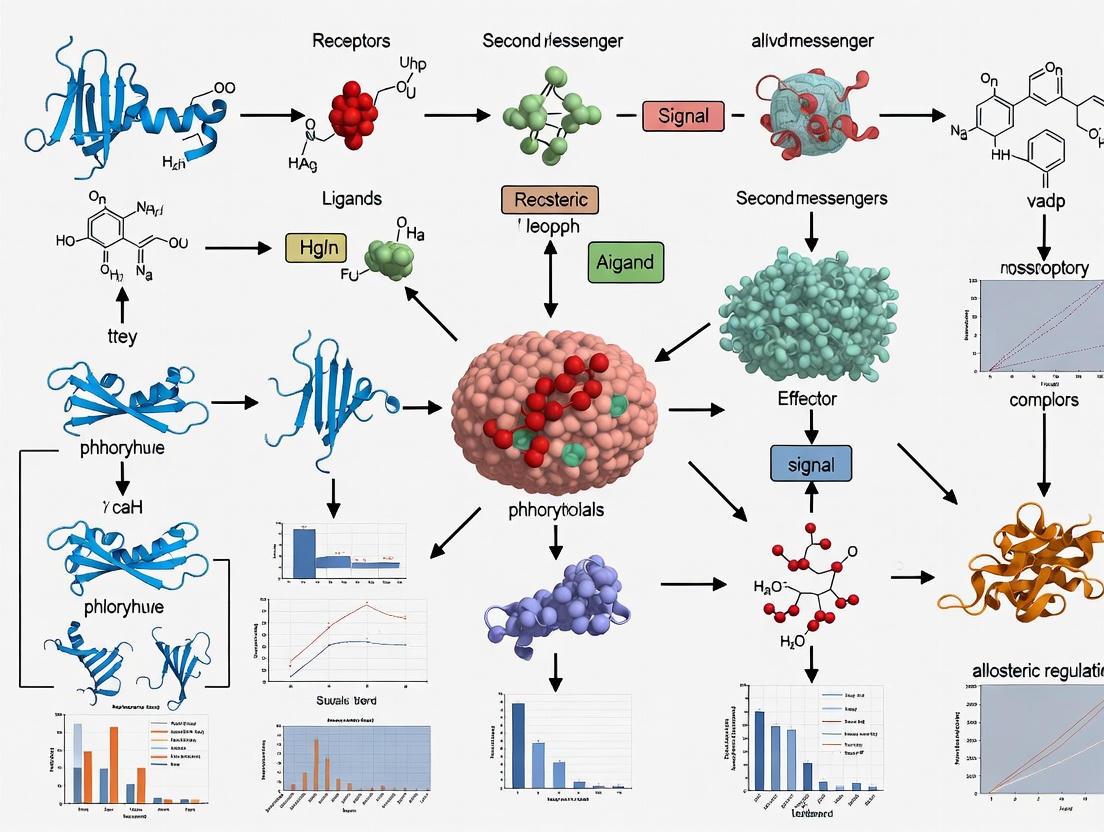
This article provides a comprehensive resource for researchers and drug development professionals on the application of biochemical assays for intracellular signaling analysis.
Biochemical Assays for Intracellular Signaling Analysis: From Foundational Principles to Advanced Applications in Drug Discovery
Abstract
This article provides a comprehensive resource for researchers and drug development professionals on the application of biochemical assays for intracellular signaling analysis. It covers the foundational principles of key signaling pathways, including GPCR, MAPK, and JAK/STAT cascades, and details a wide array of methodological approaches from traditional second messenger assays to modern high-throughput and high-content screening platforms. The content further addresses critical troubleshooting and optimization strategies to ensure assay robustness and reproducibility, and concludes with rigorous validation and comparative analysis frameworks. By integrating current methodologies with emerging trends in quantitative proteomics, transcriptomics, and 3D culture systems, this guide aims to enhance the efficiency and success of target validation and therapeutic development in precision medicine.
Understanding Intracellular Signaling Pathways: Core Principles and Therapeutic Targets
Intracellular second messengers are small molecules and ions that relay signals from cell surface receptors to target molecules within the cell, amplifying signals and regulating diverse physiological responses. This application note focuses on four key second messengers—cyclic adenosine monophosphate (cAMP), calcium ions (Ca²⁺), inositol 1,4,5-trisphosphate (IP3), and diacylglycerol (DAG)—that play central roles in cellular signal transduction. These messengers translate extracellular stimuli into precise cellular actions through complex networks, making them critical targets for research and drug development [1] [2].
Understanding the dynamics of these signaling systems requires specialized biochemical assays capable of capturing their rapid, compartmentalized changes within cells. This note provides detailed methodologies for monitoring these messengers, framed within the context of biochemical assay development for intracellular signaling analysis. We present quantitative data comparisons, structured experimental protocols, and visual workflow representations to support researchers in implementing these techniques effectively.
Key Second Messengers: Mechanisms and Biological Roles
Cyclic AMP (cAMP)
cAMP is a ubiquitous second messenger synthesized from ATP by adenylyl cyclase (AC) upon activation of G-protein-coupled receptors (GPCRs). Its production is regulated by stimulatory (Gαs) and inhibitory (Gαi) G-protein subunits, while its degradation is primarily mediated by phosphodiesterases (PDEs) that hydrolyze it to 5'-AMP [3]. cAMP functions principally by activating protein kinase A (PKA), which phosphorylates serine/threonine residues on target proteins including the transcription factor CREB (cAMP response element-binding protein) that regulates gene expression [3]. Additionally, cAMP activates exchange proteins directly activated by cAMP (EPAC), influencing cell adhesion, exocytosis, differentiation, and proliferation [4] [3].
Spatiotemporal control of cAMP signaling is maintained through compartmentalization into multiprotein complexes organized by A-kinase anchoring proteins (AKAPs), which tether PKA with specific effectors, phosphodiesterases, and phosphatases to create localized signaling microdomains [3]. This compartmentalization ensures signaling specificity despite cAMP's involvement in numerous pathways.
Biological Implications: cAMP signaling exhibits paradoxical roles in cancer—promoting tumor growth, invasion, and therapy resistance in some contexts while suppressing migration in others [3]. In the nervous system, cAMP regulates neuronal growth, synaptic plasticity, and memory formation, with disruptions linked to neurodevelopmental and neurodegenerative disorders [3]. In immunity, cAMP generally exerts anti-inflammatory effects, dampening pro-inflammatory cytokine release and promoting resolution of inflammation [3].
Calcium Ions (Ca²⁺)
Calcium ions serve as versatile signaling messengers regulating processes from fertilization and development to metabolism, secretion, muscle contraction, and neural functions including learning and memory [2]. Intracellular Ca²⁺ levels are tightly regulated, with cytosolic concentrations maintained at approximately 0.1 μM against extracellular concentrations orders of magnitude higher. Calcium is stored in intracellular compartments like the endoplasmic reticulum (ER) and sarcoplasmic reticulum (SR) [5].
Ca²⁺ signaling occurs through transient increases in cytosolic concentration, often through release from ER stores via channels including IP3 receptors (IP3Rs) and ryanodine receptors (RyRs) [6] [5]. These increases regulate numerous target proteins, including protein kinases, phosphatases, and calcium-binding proteins, which transduce the signal into cellular responses.
Research Applications: Advanced detection methods like total internal reflection fluorescence (TIRF) microscopy enable visualization of localized Ca²⁺ release events ("Ca²⁺ puffs") with high spatial and temporal resolution, providing insights into fundamental signaling mechanisms [7].
Inositol 1,4,5-Trisphosphate (IP3) and Diacylglycerol (DAG)
IP3 and DAG are second messengers generated concurrently through hydrolysis of the membrane phospholipid phosphatidylinositol 4,5-bisphosphate (PIP₂) by phospholipase C (PLC) [5]. This reaction is activated downstream of both GPCRs and receptor tyrosine kinases (RTKs) [5].
IP3 is water-soluble and diffuses through the cytosol to bind ligand-gated calcium channels (IP3 receptors) on the ER membrane, triggering Ca²⁺ release into the cytosol [6] [5]. This IP3-induced calcium release regulates various calcium-dependent processes and can further amplify signaling through calcium-induced calcium release mechanisms [5].
DAG remains membrane-associated due to its hydrophobic properties and functions primarily by activating protein kinase C (PKC) isoforms [5]. DAG also serves as a source for prostaglandin synthesis, a precursor for the endocannabinoid 2-arachidonoylglycerol, and an activator of TRPC cation channels [5].
The IP3/DAG pathway exemplifies signal divergence, where a single initial stimulus (PIP₂ hydrolysis) generates two distinct messengers that regulate parallel signaling branches—calcium mobilization and PKC activation—which often converge to regulate downstream cellular responses synergistically.
Table 1: Key Characteristics of Major Second Messengers
| Second Messenger | Precursor | Primary Activator | Key Effectors | Primary Functions |
|---|---|---|---|---|
| cAMP | ATP | Adenylyl cyclase | PKA, EPAC, CNG/HCN channels | Metabolic regulation, gene expression, cardiac contractility, neurotransmission |
| Ca²⁺ | ER stores, extracellular space | IP3R, RyR channel opening | Calmodulin, CaMK, PKC | Muscle contraction, secretion, synaptic plasticity, proliferation |
| IP3 | PIP₂ | Phospholipase C | IP3 receptor (calcium channel) | Calcium release from ER, regulation of calcium-dependent processes |
| DAG | PIP₂ | Phospholipase C | PKC, TRPC channels | Cell growth, differentiation, proliferation, exocytosis |
Quantitative Analysis of Second Messenger Dynamics
Understanding the quantitative behavior of second messengers is essential for deciphering their biological functions. The table below summarizes key quantitative parameters for the featured second messengers, based on current research findings.
Table 2: Quantitative Parameters of Second Messenger Systems
| Second Messenger | Detection Method | Dynamic Range | Key Kinetic Parameters | Reference System |
|---|---|---|---|---|
| cAMP | FRET-based biosensors (EPAC*) | 150 nM - 15 μM | FRET efficiency: 35% (low cAMP) to 20% (high cAMP) ΔE = 15% | N1E-115 neuroblastoma cells [4] |
| Ca²⁺ | TIRF microscopy with Cal-520 | N/A | High temporal resolution (ms); subcellular spatial resolution | HEK-293 cells [7] |
| IP3 | Caged compounds with photo-uncaging | N/A | Controlled temporal release; resistant to degradation (ci-IP3-PM) | DT40 cells expressing IP3R subtypes [6] |
Experimental Protocols for Second Messenger Analysis
FRET-Based Measurement of cAMP Concentrations
This protocol describes a robust method for quantitative measurement of intracellular cAMP concentration using Förster resonance energy transfer (FRET)-based biosensors, adapted from published methodology [4].
Principle
The method employs an Epac1-based biosensor (EPAC*) where cAMP binding induces conformational changes altering FRET efficiency between cyan (eCFP) and yellow (eYFP) fluorescent proteins. Using two-excitation wavelength spectral FRET analysis accounts for environmental factors affecting fluorophore folding, enabling quantitative cAMP measurement without additional calibration [4].
Materials
- Plasmids: cDNA encoding eCFP-Epac(δDEP-CD)-eYFP (EPAC*) in pcDNA3 vector [4]
- Cell Line: N1E-115 neuroblastoma cells (or other adherent cell types)
- Transfection Reagent: Lipofectamine2000
- Imaging Equipment: Fluorescence spectrometer or microscope capable of dual-excitation measurements (e.g., Fluorolog-322)
- Buffers: Intracellular solution (140 mM KCl, 5 mM NaCl, 1 mM MgCl₂, 10 mM HEPES, pH 7.2)
Procedure
Cell Culture and Transfection:
- Culture N1E-115 cells in Dulbecco's modified Eagle's medium with 10% fetal calf serum at 37°C under 5% CO₂.
- Seed cells at low density (1×10⁶ cells) in 60 mm dishes or on glass coverslips 24 hours before transfection.
- Transfect with EPAC* plasmid using Lipofectamine2000 according to manufacturer's instructions.
- Serum-starve cells overnight before analysis to enhance response.
Sample Preparation:
- Wash transfected cells three times with intracellular solution.
- Homogenize cells in 2.3 mL intracellular solution using a homogenizer at 2500 rpm for 2 minutes.
- Centrifuge homogenate at 21,000 × g for 1 minute at 4°C.
- Transfer supernatant to quartz cuvettes equipped with magnetic stirrer.
Spectral FRET Measurements:
- Perform measurements in 1 nm wavelength steps with 2 nm spectral resolution.
- Use front-face arrangement to minimize scattering and reabsorption.
- Record emission spectra with excitation at both 420 nm and optimal donor/acceptor wavelengths.
- Collect reference spectra from empty vector-transfected cells for background subtraction.
Data Analysis:
- Fit measured spectra as linear combinations of eCFP and eYFP reference spectra.
- Calculate apparent FRET efficiency from donor/acceptor emission ratios.
- Determine cAMP concentration from calibration curve relating FRET efficiency to [cAMP].
Applications
This method enables spatially resolved quantitative measurement of dynamic cAMP changes, applicable to studying GPCR signaling, such as Gs-coupled serotonin receptor (5-HT7) activation in neuroblastoma cells [4].
Detection of Elemental Calcium Signals (Ca²⁺ Puffs)
This protocol outlines steps to visualize and detect localized Ca²⁺ release events (puffs) following photo-liberation of caged IP3 using total internal reflection fluorescence (TIRF) microscopy [7].
Principle
TIRF microscopy provides high axial resolution and signal-to-background ratio for imaging near the plasma membrane. Photo-uncaging of membrane-permeant caged IP3 (ci-IP3-PM) induces Ca²⁺ release through IP3 receptors, visualized using the high-performance calcium indicator Cal-520.
Materials
- Cell Line: HEK-293 cells expressing native IP3R type 1 ("endo hR1 cells")
- Calcium Indicator: Cal-520-AM (1 mM stock in DMSO)
- Caged IP3: ci-IP3-PM (1 mM stock in DMSO)
- Calcium Buffer: EGTA-AM (10 mM stock in DMSO)
- Imaging System: TIRF microscope with 488 nm laser excitation and UV uncaging system
- Imaging Buffer: Hanks' Balanced Salt Solution (HBSS: 137 mM NaCl, 0.56 mM MgCl₂, 4.7 mM KCl, 1 mM Na₂HPO₄, 10 mM HEPES, 5.5 mM glucose, 1.26 mM CaCl₂, pH 7.4)
Procedure
Cell Preparation:
- Culture endo hR1 cells in DMEM with 10% FBS at 37°C under 5% CO₂.
- Passage cells at least twice after thawing before experiments.
- Seed cells on glass-bottom dishes at 30-50% confluence 24-48 hours before imaging.
Dye Loading and Reagent Incubation:
- Prepare loading solution: 2-5 μM Cal-520-AM, 1-2 μM ci-IP3-PM, and 10-20 μM EGTA-AM in HBSS.
- Incubate cells with loading solution for 30-45 minutes at room temperature protected from light.
- Wash cells twice with fresh HBSS to remove extracellular dye.
TIRF Microscopy and Photo-uncaging:
- Mount dish on TIRF microscope stage maintained at 35-37°C.
- Focus on cell basal membrane using 488 nm laser at low intensity.
- Acquire baseline images at high speed (≥10 fps) for 10-30 seconds.
- Apply brief UV flash (1-100 ms) to uncage IP3 while continuing acquisition.
- Record for additional 1-5 minutes to capture Ca²⁺ puff dynamics.
Data Analysis:
- Identify Ca²⁺ puffs as localized, transient fluorescence increases (ΔF/F₀) using automated detection algorithms.
- Determine puff kinetics: amplitude, rise time, full width at half maximum, and spatial spread.
- Analyze puff frequency and distribution under different experimental conditions.
Technical Notes
- Cal-520 offers superior quantum efficiency and signal-to-noise ratio compared to other green calcium indicators.
- EGTA-AM limits recruitment of neighboring IP3R clusters, improving spatial resolution.
- Avoid photo-damage by minimizing laser exposure and using lowest effective UV intensity.
The Scientist's Toolkit: Essential Research Reagents
Table 3: Key Research Reagents for Second Messenger Studies
| Reagent/Category | Specific Examples | Function/Application | Experimental Notes |
|---|---|---|---|
| FRET Biosensors | eCFP-Epac(δDEP-CD)-eYFP (EPAC*) | Quantitative cAMP measurement | Excitation at 420 nm; ΔE = 15% between high/low cAMP [4] |
| cAMP Pathway Modulators | Gαs-coupled receptor agonists, PDE inhibitors (BPN14770) | Manipulate cAMP levels; study pathway function | PDE4D inhibition shows clinical benefit in Fragile X syndrome [3] |
| Calcium Indicators | Cal-520-AM | High-performance green calcium indicator | Superior quantum efficiency, signal-to-noise ratio, intracellular retention [7] |
| Caged Compounds | ci-IP3-PM (cell-permeant caged IP3) | Precise temporal control of IP3 delivery | Poorly metabolizable; UV uncaging releases active IP3 [7] |
| IP3R Agonists | Adenophostin A, d-chiro-inositol analogs | Potent IP3R activation; study receptor pharmacology | 10-fold more potent than endogenous IP3; activates all IP3R subtypes [6] |
| Cell Lines | HEK-293 endo hR1, N1E-115 neuroblastoma | Model systems for signaling studies | Genetically engineered to express specific IP3R subtypes [7] |
Signaling Pathway Visualizations
Second Messenger Signaling Pathways
Experimental Workflow for Second Messenger Detection
Concluding Remarks
The intricate networks of intracellular second messengers represent fundamental communication systems that coordinate cellular behavior in health and disease. The experimental approaches detailed in this application note—FRET-based cAMP biosensing and TIRF microscopy for calcium puff detection—provide powerful methodologies for quantifying the spatiotemporal dynamics of these signaling molecules with high precision.
These techniques enable researchers to move beyond static snapshots of signaling states toward dynamic understanding of how information flows through cellular networks. This is particularly relevant for drug development, where understanding the temporal and compartmentalized nature of second messenger signaling can inform more targeted therapeutic strategies with reduced off-target effects.
Future directions in second messenger research will likely involve increased integration of multiple detection modalities to simultaneously monitor several messengers, further development of genetically encoded biosensors with improved sensitivity and dynamic range, and application of these tools in more physiologically relevant model systems including 3D organoids and in vivo preparations.
Intracellular signaling pathways form the cornerstone of cellular communication, governing critical processes such as proliferation, differentiation, inflammation, and apoptosis. In the realm of drug discovery, understanding these pathways is paramount for developing targeted therapies for a wide spectrum of diseases, including cancer, autoimmune disorders, and neurodegenerative conditions. This article provides a detailed overview of four major signaling pathways—GPCRs, MAPK, JAK/STAT, and NF-κB—within the context of biochemical assays for intracellular signaling analysis. We present comprehensive application notes and experimental protocols tailored for researchers, scientists, and drug development professionals, facilitating the investigation and therapeutic targeting of these pivotal pathways.
Pathway Fundamentals and Disease Relevance
G Protein-Coupled Receptors (GPCRs)
GPCRs represent the largest superfamily of cell surface membrane receptors, encoded by approximately 1000 genes in humans and characterized by a conserved seven-transmembrane (7TM) helix structure [8]. These receptors transduce diverse extracellular signals—including photons, ions, lipids, neurotransmitters, hormones, and peptides—into intracellular responses [8]. Upon agonist binding, GPCRs undergo conformational changes that trigger the exchange of GDP for GTP on the associated Gα subunit, leading to dissociation of the Gα from the Gβγ dimer [8] [9]. The activated G protein subunits then initiate downstream signaling cascades through various effector proteins. Notably, approximately 34% of FDA-approved drugs target GPCRs, underscoring their tremendous therapeutic importance [8].
Mitogen-Activated Protein Kinase (MAPK) Pathway
The MAPK pathway comprises serine/threonine protein kinases that convert extracellular stimuli into diverse cellular responses [10]. This pathway is activated by various factors, including reactive oxygen species (ROS), growth factors, and stress stimuli, regulating fundamental processes such as cell proliferation, differentiation, and apoptosis [11] [10]. In skin aging and cancer, overactivation of the p38/MAPK signaling pathway leads to collagen degradation, extracellular matrix disruption, and excessive inflammatory factor release [11] [10]. The pathway demonstrates significant interplay with autophagy processes, creating complex regulatory networks that influence disease progression and therapeutic outcomes [10].
Janus Kinase/Signal Transducer and Activator of Transcription (JAK/STAT) Pathway
Discovered more than a quarter-century ago, the JAK/STAT pathway functions as a rapid membrane-to-nucleus signaling module [12]. This pathway is activated by more than 50 cytokines and growth factors, including interferons, interleukins, and colony-stimulating factors [12]. The pathway consists of three main components: cellular receptors, JAK proteins (JAK1, JAK2, JAK3, TYK2), and STAT proteins (STAT1, STAT2, STAT3, STAT4, STAT5a, STAT5b, STAT6) [12] [13]. Dysregulation of JAK/STAT signaling is associated with various cancers and autoimmune diseases, making it a promising target for therapeutic intervention [12] [14]. Natural products have demonstrated significant potential in modulating this pathway through mechanisms such as inhibiting JAK/STAT phosphorylation, blocking STAT dimerization, and interfering with STAT-DNA binding [13].
Nuclear Factor Kappa B (NF-κB) Pathway
First identified in 1986, NF-κB is a transcription factor that binds to the kappa enhancer of the gene encoding the κ light-chain of immunoglobulin in B cells [15]. The mammalian NF-κB transcription factor family comprises five members: NF-κB1 (p105/p50), NF-κB2 (p100/p52), p65 (RELA), RELB, and c-REL [15]. NF-κB activation occurs through canonical, alternative, or atypical pathways in response to diverse stimuli such as pro-inflammatory cytokines, bacterial toxins, viral products, and cell death stimuli [16] [15]. This pathway controls gene expression of numerous pro-inflammatory mediators and regulates genes involved in tumorigenesis, metastasis, proliferation, and apoptosis [16]. NF-κB's involvement in inflammation, immune regulation, and the tumor microenvironment underscores its significance as a therapeutic target [15].
Table 1: Core Components of Major Signaling Pathways in Drug Discovery
| Pathway | Key Components | Primary Activators | Cellular Processes Regulated | Therapeutic Areas |
|---|---|---|---|---|
| GPCRs | ~800 GPCRs, Gα (Gs, Gi/o, Gq/11, G12/13), Gβγ, GRKs, β-arrestins | Photons, ions, lipids, neurotransmitters, hormones, peptides [8] | Sensory perception, neurotransmission, endocrine processes [8] | Cardiovascular disease, neurological disorders, metabolic diseases [8] |
| MAPK | p38, JNK, ERK | ROS, growth factors, stress stimuli, UV radiation [11] [10] | Proliferation, differentiation, apoptosis, collagen degradation [11] [10] | Cancer, inflammatory diseases, skin aging [11] [10] |
| JAK/STAT | JAK1-3, TYK2, STAT1-6, cytokine receptors | Interferons, interleukins, colony-stimulating factors [12] | Hematopoiesis, immune responses, proliferation, apoptosis [12] [13] | Autoimmune diseases, leukemias, lymphomas, breast cancers [12] [14] |
| NF-κB | p50, p52, p65, RELB, c-REL, IκB, IKK complex | TNF-α, IL-1, LPS, viral products, UV radiation [16] [15] | Inflammation, immune regulation, apoptosis, tumorigenesis [16] [15] | Inflammatory diseases, cancer, autoimmune disorders [15] |
Quantitative Analysis and Detection Methods
Advanced detection methodologies are essential for quantifying signaling pathway activity and evaluating therapeutic interventions. The following section outlines key experimental approaches for analyzing these pathways.
GPCR Signaling Assays
GPCR signaling can be quantified using multiple approaches that measure different activation stages. Ligand-binding assays utilize radiolabeled or fluorescent-tagged ligands to assess receptor binding affinity and kinetics [9]. Conformational change sensors detect agonist-induced receptor activation through fluorescence changes [9]. G protein activation is commonly measured using GTP binding assays, cAMP assays for Gs/Gi-coupled receptors, inositol-phosphate (IP) accumulation assays for Gq-coupled receptors, and calcium mobilization assays [17] [9]. β-arrestin recruitment is typically assessed using BRET (Bioluminescence Resonance Energy Transfer) or FRET (Förster Resonance Energy Transfer) techniques, which rely on energy transfer between donor and acceptor molecules when in close proximity (<10 nm) [17] [9]. Additionally, transcriptional reporter assays monitor pathway activation through downstream gene expression changes [9].
MAPK Pathway Detection
MAPK pathway activity is frequently analyzed using phospho-specific antibodies targeting phosphorylated forms of p38, JNK, or ERK via Western blotting or immunofluorescence [11]. High-content imaging systems can quantify the subcellular localization and activation status of MAPK components [11]. For apoptosis detection within the MAPK pathway, TUNEL assays measure DNA fragmentation, while Western blotting analysis of pro-apoptotic (p53, Bax, caspase-3) and anti-apoptotic (Bcl-2) proteins provides additional mechanistic insights [11]. Functional assays such as cell viability (CCK-8), clonogenic survival, and migration assays (scratch wound healing, Transwell) evaluate the phenotypic consequences of MAPK pathway modulation [11].
JAK/STAT Pathway Analysis
JAK/STAT activation is commonly detected through phosphorylation status of JAKs and STATs using phospho-specific flow cytometry or Western blotting [12] [13]. STAT dimerization and nuclear translocation can be visualized via immunofluorescence microscopy [13]. DNA binding activity is measured using Electrophoretic Mobility Shift Assays (EMSAs) or reporter gene assays [13]. Gene expression profiling of downstream targets (e.g., SOCS proteins) provides functional readouts of pathway activity [12]. The RNAscope assay offers an ultra-sensitive method for detecting low-abundance transcripts of pathway components, serving as an alternative to antibody-based detection [14].
NF-κB Translocation Assay
NF-κB activation is predominantly assessed through its translocation from the cytoplasm to the nucleus. The High Content Screening (HCS) assay utilizes automated fluorescent microscopy to quantify this translocation [16]. Cells are stained with a nuclear dye (Hoechst, DAPI, or DRAQ5) and antibodies against NF-κB p65 subunit [16]. Image analysis algorithms create nuclear and cytoplasmic masks, calculating translocation values as either the difference (Cyto-Nuc Difference) or ratio (Nuc/Cyt Ratio) of NF-κB intensity between these compartments [16]. This approach can be multiplexed with other biofluorescent probes to simultaneously measure additional signaling nodes or viability markers [16].
Table 2: Quantitative Assays for Signaling Pathway Analysis
| Assay Category | Specific Assays | Measured Parameters | Applications | Key Reagents |
|---|---|---|---|---|
| Binding & Activation | Radioligand binding, FRET/BRET conformational sensors | Receptor-ligand affinity, conformational changes [9] | Compound screening, mechanism of action studies [9] | Radiolabeled ligands, fluorescent-tagged ligands [9] |
| Second Messenger | cAMP assay, IP accumulation, calcium flux | G protein activation, downstream signaling [17] [9] | Pathway mapping, receptor coupling efficiency [9] | cAMP analogs, ionomycin, thapsigargin [9] |
| Translocation | High-content imaging, immunofluorescence | Protein subcellular localization (e.g., NF-κB, STATs) [16] [13] | Nuclear translocation studies, activation kinetics [16] | NF-κB p65 antibodies, STAT antibodies, nuclear dyes [16] |
| Transcriptional Activity | Reporter gene assays, RNAscope | Downstream gene expression, pathway activity [13] [14] | Functional pathway readout, target engagement [9] [14] | Luciferase constructs, fluorescent reporters, target-specific probes [9] [14] |
| Phenotypic Assays | Cell viability, migration, apoptosis | Functional cellular responses [11] | Efficacy assessment, toxicity profiling [11] | CCK-8 reagents, TUNEL assay kits, matrix proteins [11] |
Experimental Protocols
Protocol 1: NF-κB Translocation Assay Using High Content Screening
Principle: This assay quantifies cytokine-induced translocation of NF-κB (p65 subunit) from the cytoplasm to the nucleus in fixed cells using automated fluorescent microscopy and image analysis [16].
Reagents:
- Cell line (e.g., HeLa cells)
- Proinflammatory cytokines (IL-1α or TNF-α)
- Fixative (e.g., 4% paraformaldehyde)
- Permeabilization buffer (e.g., 0.1% Triton X-100)
- Blocking buffer (e.g., 1-5% BSA in PBS)
- Primary antibody: anti-NF-κB p65
- Secondary antibody: fluorophore-conjugated (e.g., Alexa Fluor 488)
- Nuclear stain: Hoechst 33342, DAPI, or DRAQ5
- Reference control inhibitor: IKK inhibitor (e.g., BMS-345541)
Procedure:
- Cell Seeding and Treatment: Seed cells in 96-well microplates at optimal density (e.g., 10,000-20,000 cells/well) and culture overnight. Stimulate cells with IL-1α (0.1-10 ng/mL) or TNF-α (1-50 ng/mL) for 5-30 minutes to activate NF-κB pathway. Include DMSO vehicle control and IKK inhibitor control (pre-treated for 1 hour) [16].
- Cell Fixation and Staining: Fix cells with 4% paraformaldehyde for 15 minutes at room temperature. Permeabilize with 0.1% Triton X-100 for 10 minutes. Block with 1-5% BSA for 30-60 minutes. Incubate with anti-NF-κB p65 primary antibody (diluted in blocking buffer) for 2 hours at room temperature or overnight at 4°C. Wash 3× with PBS. Incubate with fluorophore-conjugated secondary antibody and nuclear stain for 1 hour at room temperature protected from light. Perform final PBS washes [16].
- Image Acquisition and Analysis: Acquire images using high-content imaging system with 20× or 40× objective. Acquire 4-9 fields per well to ensure adequate cell counting (≥1000 cells/well). Use appropriate filter sets for nuclear stain and NF-κB signal. Perform image analysis using translocation algorithm: identify nuclei based on nuclear stain; create cytoplasmic mask; measure mean NF-κB intensity in nucleus and cytoplasm; calculate translocation index as Nuc/Cyt Ratio or Cyto-Nuc Difference [16].
- Data Analysis: Export well-level summary data for statistical analysis. Calculate Z-factor to assess assay quality: Z-factor = 1 - (3×SDmax + 3×SDmin) / |Meanmax - Meanmin|, where max = cytokine-stimulated control and min = inhibitor or unstimulated control. Z-factor > 0.5 indicates excellent assay quality [16].
Protocol 2: GPCR G Protein Activation Using BRET-Based Sensor
Principle: This assay measures real-time G protein activation by monitoring agonist-induced dissociation of Gα and Gβγ subunits using Bioluminescence Resonance Energy Transfer (BRET) [9].
Reagents:
- Cells expressing GPCR of interest
- Gα-Rluc8 and Gβγ-GFP2 constructs
- GPCR agonists and antagonists
- Coelenterazine h substrate (5 μM)
- Assay buffer (e.g., HBSS with 0.1% BSA)
Procedure:
- Cell Preparation and Transfection: Culture cells in appropriate medium. Transfect with Gα-Rluc8 and Gβγ-GFP2 constructs using preferred transfection method. For optimal results, maintain 1:3 ratio of Gα-Rluc8:Gβγ-GFP2 DNA. Include untransfected cells for background correction. Allow 24-48 hours for protein expression [9].
- BRET Measurements: Harvest cells and resuspend in assay buffer at 0.5-1×10^6 cells/mL. Distribute cell suspension in white 96-well plates (80-100 μL/well). Add compounds (agonists/antagonists) to test wells. Initiate BRET measurement by adding coelenterazine h (final concentration 5 μM). Immediately measure luminescence and fluorescence using compatible microplate reader with filters for Rluc8 (485 ± 20 nm) and GFP2 (530 ± 20 nm). Take readings every 1-2 seconds for 2-5 minutes to capture rapid kinetics [9].
- Data Analysis: Calculate BRET ratio as (emission at 530 nm) / (emission at 485 nm). Subtract BRET ratio from cells expressing Rluc8 donor alone. Plot corrected BRET ratio versus time. Determine area under the curve (AUC) or maximum response for concentration-response curves. Fit data to appropriate model (e.g., four-parameter logistic equation) to calculate EC50/IC50 values [9].
Protocol 3: JAK/STAT Phosphorylation Analysis by Phospho-Flow Cytometry
Principle: This protocol enables quantitative analysis of STAT phosphorylation at single-cell resolution using antibody-based detection and flow cytometry, allowing for multiplexed analysis of multiple phospho-proteins simultaneously [12] [13].
Reagents:
- Single-cell suspension from culture or primary tissue
- Serum-free medium for starvation
- Cytokine stimulants (e.g., IFN-γ, IL-6)
- JAK inhibitors (e.g., ruxolitinib) for controls
- Fixation buffer (e.g., 4% paraformaldehyde)
- Permeabilization buffer (e.g., 100% methanol or commercial perm buffers)
- Phospho-specific antibodies (e.g., anti-pSTAT1, pSTAT3, pSTAT5)
- Fluorescently-labeled secondary antibodies (if using indirect detection)
- Flow cytometry staining buffer (PBS with 1-5% FBS)
Procedure:
- Cell Stimulation and Fixation: Starve cells in serum-free medium for 2-4 hours to reduce basal phosphorylation. Stimulate with cytokines (e.g., IFN-γ at 10-100 ng/mL) for 15-30 minutes at 37°C. Include unstimulated controls and inhibitor-treated controls (pre-incubate with JAK inhibitor for 1-2 hours). Immediately fix cells with 4% paraformaldehyde for 10-15 minutes at room temperature. Wash cells with flow cytometry staining buffer [12] [13].
- Cell Permeabilization and Staining: Permeabilize cells with ice-cold 100% methanol for 30 minutes on ice or overnight at -20°C. Alternatively, use commercial permeabilization buffers according to manufacturer's instructions. Wash cells twice with staining buffer. Incubate with phospho-specific primary antibodies (optimally titrated) for 30-60 minutes at room temperature. For indirect detection, wash cells and incubate with fluorescently-labeled secondary antibodies for 30 minutes protected from light [13].
- Flow Cytometry Acquisition and Analysis: Resuspend cells in staining buffer and acquire data on flow cytometer with appropriate laser and filter configurations. Include single-stained controls for compensation. Collect ≥10,000 events per sample. Analyze data using flow cytometry software. Gate on live, single cells. Measure median fluorescence intensity (MFI) of phospho-STAT staining. Calculate fold change in MFI relative to unstimulated controls [13].
The Scientist's Toolkit: Research Reagent Solutions
Table 3: Essential Research Reagents for Signaling Pathway Analysis
| Reagent Category | Specific Examples | Function | Application Examples |
|---|---|---|---|
| Cell Line Models | HeLa (NF-κB translocation), HEK293 (GPCR signaling), HepG2 (MAPK apoptosis), Primary immune cells (JAK/STAT) [16] [11] [13] | Provide biologically relevant systems for pathway manipulation and compound screening | NF-κB translocation assay [16], Liver cancer apoptosis studies [11] |
| Detection Antibodies | Phospho-specific STAT antibodies, NF-κB p65 antibodies, Phospho-p38 antibodies [16] [11] [13] | Detect protein expression, localization, and post-translational modifications | Phospho-flow cytometry, Western blotting, Immunofluorescence [16] [11] [13] |
| FRET/BRET Components | Rluc8, GFP2, Coelenterazine h substrate [9] | Enable real-time monitoring of protein-protein interactions and conformational changes | GPCR G protein dissociation assays [9] |
| Pathway Modulators | IKK inhibitors (BMS-345541), JAK inhibitors (ruxolitinib), p38 inhibitors (SB203580) [16] [13] | Activate or inhibit specific pathway nodes for mechanistic studies and control experiments | NF-κB assay validation [16], JAK/STAT pathway inhibition [13] |
| High-Content Imaging Reagents | Hoechst 33342, DAPI, DRAQ5, CellMask stains [16] | Enable cellular and subcellular segmentation and morphology assessment | NF-κB translocation quantification [16] |
| Gene Expression Analysis | RNAscope probes for JAK/STAT pathway genes, Luciferase reporter constructs [9] [14] | Measure transcriptional activity and gene expression changes | Detection of low-abundance transcripts [14], Reporter gene assays [9] |
Pathway Diagrams and Visualization
GPCR Signaling and Detection Methods
JAK/STAT Signaling Pathway
NF-κB Translocation Assay Workflow
MAPK Signaling in Liver Cancer Apoptosis
The comprehensive analysis of GPCR, MAPK, JAK/STAT, and NF-κB signaling pathways provides critical insights for targeted drug discovery. The experimental protocols and application notes presented here offer robust methodologies for investigating these pathways, enabling researchers to quantify pathway activity, screen therapeutic compounds, and elucidate mechanisms of action. As our understanding of signaling network complexity grows, continued refinement of these biochemical assays will accelerate the development of novel therapeutics for cancer, inflammatory diseases, and other conditions driven by signaling pathway dysregulation. The integration of advanced detection technologies with pathway-specific assays represents a powerful approach for advancing drug discovery in the precision medicine era.
Intracellular signaling pathways represent the fundamental communication networks that govern cellular life, translating extracellular stimuli into precise physiological responses. The deliberate targeting of these pathways by pharmacological agents stands as a cornerstone of modern therapeutics, enabling treatment of cancer, metabolic disorders, neurological conditions, and inflammatory diseases. The historical recognition that small, hydrophobic molecules like steroid hormones could traverse the plasma membrane and directly influence nuclear transcription factors marked the conceptual birth of intracellular signaling as a druggable space [18]. This paradigm has evolved dramatically, expanding from nuclear receptors to encompass G-protein-coupled receptors (GPCRs), kinase networks, and stem cell signaling pathways, with modern drug discovery increasingly focused on achieving unprecedented selectivity through structural biology and mechanistic understanding.
The clinical and commercial impact of targeting intracellular signaling is profound; approximately 30% of all FDA-approved medications target GPCRs alone [19], while drugs targeting nuclear receptors and protein kinases constitute another substantial segment of the pharmacopeia. Contemporary research has moved beyond simple receptor antagonism or agonism toward sophisticated manipulation of biased signaling, pathway selectivity, and allosteric modulation, allowing for finer control over therapeutic outcomes while minimizing adverse effects. This application note details the key historical milestones, current methodological approaches, and practical protocols that enable researchers to investigate and manipulate intracellular signaling pathways for therapeutic development, framed within the context of biochemical assays for intracellular signaling analysis research.
Historical Context and Key Discoveries
The conceptual foundation for targeting intracellular signaling was laid in the early 20th century with the discovery of hormones and their receptors. In 1905, Ernest Starling coined the term "hormone," establishing the principle of chemical messengers [18], while the subsequent isolation of estrogen by Adolf Butenandt and Edward Adelbert Doisy in 1929 provided the first tangible evidence that specific molecules could exert profound physiological effects [18]. The critical breakthrough came in the late 1950s through Elwood Jensen's experiments elucidating how estrogen regulates reproductive organ maturation, demonstrating that these hormones acted through specific intracellular receptors [18].
The molecular biology revolution of the 1980s accelerated this understanding dramatically. In 1985, Ronald Evans successfully cloned the human glucocorticoid receptor (GR) [18], while Pierre Chambon's laboratory identified the first estrogen receptor, ERα, from the ESR1 gene [18]. These discoveries revealed that steroid and thyroid hormone receptors shared evolutionary conservation with v-erbA, a viral oncogene recognized as a thyroid hormone receptor, leading to the formal establishment of the nuclear receptor superfamily [18]. This period marked the transition from physiological observation to molecular mechanism, revealing that many intracellular receptors functioned as ligand-activated transcription factors that directly bind DNA to modulate gene expression.
The therapeutic potential of targeting intracellular signaling was recognized in the 1970s when tamoxifen was shown to inhibit ER-dependent breast cancer cells [18]. This established the proof-of-concept that intracellular signaling pathways could be pharmacologically modulated for disease treatment, paving the way for countless subsequent therapies. The discovery and characterization of GPCRs as the largest family of membrane receptors further expanded the intracellular targeting landscape, with ongoing research continuing to reveal new dimensions of complexity, including receptor heterodimerization, intracellular allosteric sites, and biased signaling pathways that enable precise pharmacological control [19].
Table 1: Historical Milestones in Intracellular Signaling Research
| Year | Discovery | Key Researchers | Significance |
|---|---|---|---|
| 1905 | Concept of "hormones" established | Ernest Starling | Foundation of endocrine signaling |
| 1929 | Isolation of estrogen | Butenandt & Doisy | First evidence of specific signaling molecules |
| Late 1950s | Estrogen receptor mechanism | Elwood Jensen | Demonstrated intracellular signaling pathways |
| 1985 | Cloning of glucocorticoid receptor | Ronald Evans | Molecular understanding of nuclear receptors |
| 1980s | Identification of ERα | Pierre Chambon | Established nuclear receptor superfamily |
| 1970s | Tamoxifen therapeutic mechanism | Multiple groups | Proof-of-concept for targeted intracellular therapy |
| 2010s-Present | Intracellular biased allosteric modulators | Multiple groups | Pathway-selective pharmacological manipulation |
Modern Targeting Strategies and Signaling Pathways
Nuclear Receptors as Pharmacological Targets
Nuclear receptors (NRs) represent one of the most therapeutically successful classes of intracellular targets. The human genome encodes 48 nuclear receptors that sense hydrophobic signaling molecules—including steroids, thyroid hormones, vitamin D, retinoic acid, and fatty acid derivatives—to directly modulate gene expression [18]. These receptors share a conserved modular structure containing a DNA-binding domain (DBD), ligand-binding domain (LBD), and transcription activation domains [18]. Upon ligand binding, NRs undergo conformational changes, form dimers, and bind to specific hormone response elements (HREs) in regulatory regions of target genes [18].
The clinical importance of NRs is exemplified by drugs like tamoxifen and raloxifene (estrogen receptor modulators for breast cancer and osteoporosis), enzalutamide (androgen receptor antagonist for prostate cancer), and thiazolidinediones (PPARγ agonists for type 2 diabetes) [18]. Current research focuses on developing agents with improved specificity to overcome the side effects associated with first-generation NR drugs, including severe heart failure observed with some PPARγ agonists [18]. The structural characterization of NR-ligand interactions has enabled rational drug design approaches to optimize binding affinity and functional selectivity.
G-Protein-Coupled Receptors (GPCRs) and Intracellular Modulation
GPCRs represent the largest family of cell surface receptors and the most successful target class for FDA-approved drugs [19]. Traditional drug discovery focused on orthosteric binding sites, but recent advances have revealed the therapeutic potential of intracellular allosteric modulators that offer superior subtype selectivity and pathway bias [19]. GPCR signaling complexity arises from their ability to couple to multiple intracellular transducer families—including Gαs, Gαi/o, Gαq/11, and Gα12/13 subunits—as well as β-arrestins, which can mediate both receptor desensitization and G protein-independent signaling [19].
The concept of biased signaling (or functional selectivity) has emerged as a pivotal strategy for intracellular pharmacological targeting [19]. Biased ligands stabilize distinct receptor conformations that preferentially activate beneficial signaling pathways while minimizing engagement of pathways responsible for adverse effects. For example, at the mu opioid receptor (MOR), G protein-biased agonists may provide analgesia without the β-arrestin-mediated effects associated with respiratory depression and constipation [20]. Recent structural biology breakthroughs, including cryo-electron microscopy studies, have identified novel intermediate receptor states (latent, engaged, unlatched, and primed) that provide unprecedented opportunities for designing precision therapeutics [20].
Stem Cell Signaling Pathways
The signaling networks that regulate stem cell fate—including Hedgehog, TGF-β, Wnt, Hippo, FGF, BMP, and Notch pathways—represent increasingly important pharmacological targets for regenerative medicine and cancer treatment [21]. These pathways collectively control stem cell self-renewal, differentiation, and migration, offering multiple intervention points for therapeutic manipulation [21]. Pharmacological modulation of these pathways enables enhancement of stem cell survival, directed differentiation, and suppression of tumorigenic potential in stem cell-based therapies [21].
The TGF-β pathway exemplifies both the promise and challenge of targeting developmental signaling pathways. This pathway plays crucial roles in tissue homeostasis, immune regulation, and stem cell maintenance [21]. TGF-β signaling occurs through SMAD-dependent (SMAD1/5/8 or SMAD2/3) and SMAD-independent (TAB/TAK) pathways, with context-dependent effects that can either suppress or promote disease progression [21]. This dual nature makes careful pharmacological modulation essential, particularly in applications involving stem cell fate control.
Protein Kinase Networks
Protein kinases represent one of the largest and most pharmacologically targeted enzyme families, regulating virtually all intracellular signaling processes through phosphorylation. As of 2025, numerous small molecule kinase inhibitors have received FDA approval for conditions ranging from cancer to inflammatory diseases [22]. These agents typically target the conserved ATP-binding pocket but achieve selectivity through unique interactions with adjacent regions. Modern kinase drug discovery emphasizes covalent inhibitors, allosteric modulators, and bivalent compounds that can overcome resistance mutations and improve therapeutic windows.
Experimental Approaches and Methodological Considerations
Biochemical vs. Cellular Assays: Bridging the Activity Gap
A fundamental challenge in targeting intracellular signaling is the frequent discrepancy between compound activity measured in biochemical assays (BcAs) and cellular assays (CBAs). These discrepancies often arise from differences in membrane permeability, intracellular compound stability, target specificity, and the distinct physicochemical environments between simplified in vitro conditions and the intracellular milieu [23].
The intracellular environment differs dramatically from standard biochemical assay conditions like phosphate-buffered saline (PBS). Intracellular conditions feature high macromolecular crowding (occupying 5–40% of total volume), viscosity approximately 4 times that of water, and reversed potassium-to-sodium ratio (K+ ~140–150 mM vs. Na+ ~14 mM) compared to extracellular-like buffers [23]. These differences can alter measured Kd values by up to 20-fold or more between biochemical and cellular contexts [23]. To address this, researchers are developing cytoplasm-mimicking assay buffers that incorporate crowding agents (e.g., Ficoll, dextrans), adjusted ionic composition, and viscosity modifiers to better predict cellular activity [23].
Table 2: Key Differences Between Standard Biochemical and Intracellular Conditions
| Parameter | Standard Biochemical Assay (e.g., PBS) | Intracellular Environment | Impact on Binding/Activity |
|---|---|---|---|
| K+ vs. Na+ Ratio | Low K+ (4.5 mM), High Na+ (157 mM) | High K+ (140-150 mM), Low Na+ (~14 mM) | Alters electrostatic interactions & binding |
| Macromolecular Crowding | Minimal | 5-40% of volume occupied | Enhances binding affinity through excluded volume effect |
| Viscosity | ~1 cP (similar to water) | ~4 cP | Slows diffusion & affects binding kinetics |
| pH | Generally 7.4 | Variable by compartment | Affects ionization & hydrogen bonding |
| Redox Potential | Oxidizing | Reducing (high glutathione) | Affects disulfide-dependent proteins |
Quantifying Intracellular Drug Exposure and Activity
Understanding the relationship between extracellular concentration and intracellular target engagement is crucial for developing drugs against intracellular targets. The growth rate inhibition (GR) method provides a robust framework for quantifying cellular drug sensitivity by normalizing response to cell division rate, generating metrics such as GR50 (concentration producing half-maximal growth inhibition) and GRmax (maximal response) [24]. This approach minimizes confounding effects from variable cell division rates that plague traditional IC50 measurements [24].
Complementing GR analysis, liquid chromatography tandem mass spectrometry (LC-MS/MS) enables direct quantification of intracellular drug concentrations, bridging the gap between nominal dosing and actual target exposure [24]. This is particularly important for compounds like the auristatins (MMAE and MMAD), which exhibit differential cellular accumulation due to variations in passive permeability, efflux transporter activity, and intracellular binding [24]. For example, MMAD shows higher lipophilicity (eLogD 4.43 vs. 3.99 for MMAE) and greater susceptibility to MDR1 and BCRP efflux pumps, significantly impacting its intracellular concentration despite similar passive permeability [24].
Application Notes and Protocols
Protocol: Growth Rate Inhibition (GR) Assay for Cellular Sensitivity
Purpose: To robustly quantify cellular sensitivity to pharmacological compounds by normalizing response to cell division rate.
Materials:
- Cell lines of interest (e.g., MDA-MB-468, HCC1806 for triple-negative breast cancer)
- Compound(s) of interest (e.g., MMAE, MMAD as tool microtubule inhibitors)
- Cell culture medium and supplements
- CellTiter-Glo (CTG) viability assay kit
- White opaque tissue culture-treated assay plates
- Plate reader capable of measuring luminescence
Procedure:
- Cell Seeding: Seed cells in exponential growth phase at optimal density (typically 500-5000 cells/well depending on doubling time) in 100 μL medium per well. Include background control wells (medium only) and vehicle control wells (DMSO equivalent to highest compound concentration).
- Compound Treatment: After 24-hour incubation, add compound in serial dilutions (typically 3- or 10-fold), maintaining constant DMSO concentration across all wells (≤0.1%).
- Endpoint Viability Measurement: Following 72-hour compound exposure, equilibrate plates to room temperature for 30 minutes. Add CellTiter-Glo reagent (1:1 volume to medium), mix for 2 minutes, incubate for 10 minutes to stabilize signal, and measure luminescence.
- GR Calculation:
- Calculate normalized growth rate inhibition using the GR calculator (available at GRcalculator.org)
- Apply the formula: GR(c) = 2^(log2(x(c)/x0)/log2(x1/x0)) - 1, where x(c) = measured viability at concentration c, x0 = viability at time of compound addition, x1 = viability of untreated cells at endpoint
- Derive GR50 (concentration where GR = 0.5) and GRmax (maximal effect) values from the GR curve
Troubleshooting:
- If GR curves show poor fit, verify cell doubling time during assay and adjust seeding density
- If high variability between replicates, ensure consistent cell counting and mixing before seeding
- If signal-to-background ratio is low, optimize cell seeding density or extend treatment duration
Protocol: In-Cell Biochemical Binding Assessment
Purpose: To measure protein-ligand binding affinity under conditions mimicking the intracellular environment.
Materials:
- Purified target protein
- Test compounds
- Cytoplasm-mimicking buffer (20 mM HEPES, pH 7.4, 140 mM KCl, 14 mM NaCl, 5 mM MgCl2, 1 mM DTT, 20% Ficoll PM-70)
- Standard assay buffer (e.g., PBS for comparison)
- Binding assay reagents (e.g., fluorescence polarization tracers, SPR chips)
Procedure:
- Buffer Preparation: Prepare cytoplasm-mimicking buffer with crowding agent (Ficoll PM-70 at 20% w/v) and adjusted ionic composition to match intracellular conditions.
- Binding Reaction Setup: Dilute purified target protein in both cytoplasm-mimicking and standard buffers. Incubate with compound serial dilutions using assay-appropriate format (96- or 384-well plate).
- Equilibrium Measurement: For fluorescence polarization, incubate with tracer ligand and measure polarization after equilibrium (typically 30-60 minutes at 25°C). For SPR, immobilize target and measure compound binding in both buffer systems.
- Kd Calculation: Fit binding data to appropriate model (e.g., one-site binding) to determine Kd values in both buffer systems.
- Data Interpretation: Compare Kd values between standard and cytoplasm-mimicking conditions. A significant difference (>3-fold) suggests intracellular environment impacts binding affinity.
Notes:
- Include controls for non-specific binding in both buffer systems
- For membrane protein targets, incorporate lipid vesicles at physiologically relevant composition
- Consider temperature dependence (25°C vs. 37°C) for physiologically relevant measurements
Protocol: Intracellular Drug Concentration Measurement by LC-MS/MS
Purpose: To quantitatively determine intracellular drug concentrations correlating with pharmacological activity.
Materials:
- Treated cell cultures
- LC-MS/MS system with appropriate analytical column
- Internal standard (stable isotope-labeled analog of analyte)
- Solvents: methanol, acetonitrile, water (LC-MS grade)
- Formic acid (LC-MS grade)
Procedure:
- Sample Preparation: After compound treatment, wash cells twice with cold PBS. Lyse cells with 80:20 methanol:water containing internal standard. Vortex vigorously and centrifuge at 15,000 × g for 10 minutes.
- Sample Analysis: Inject supernatant onto LC-MS/MS system. Use appropriate mobile phase gradient (typically water and methanol/acetonitrile with 0.1% formic acid) and MRM transitions for compound quantification.
- Normalization: Determine protein concentration in pellet using BCA assay or count cells in parallel wells for normalization.
- Data Analysis: Calculate intracellular concentration using standard curve with internal standard normalization. Express as pmol/mg protein or pmol/million cells.
Validation:
- Determine extraction efficiency by comparing spiked samples before and after extraction
- Establish linear range and lower limit of quantification using matrix-matched standards
- Assess matrix effects by post-extraction spiking experiments
The Scientist's Toolkit: Essential Research Reagents
Table 3: Key Research Reagents for Intracellular Signaling Analysis
| Reagent/Category | Example Products | Research Application | Considerations |
|---|---|---|---|
| Cytoplasm-Mimicking Buffers | Custom formulations with Ficoll, dextrans | Biochemical assays under intracellular-like conditions | Significantly impacts measured Kd values; improves translatability |
| GR Metrics Software | GR Calculator (online) | Robust quantification of cellular drug sensitivity | Normalizes for cell division rate; more reliable than traditional IC50 |
| LC-MS/MS Systems | Various commercial platforms | Direct measurement of intracellular drug concentrations | Bridges extracellular dosing and intracellular target engagement |
| Spectral Flow Cytometry | 39-color panels | High-dimensional immune profiling in minimal samples | Enables identification of 60+ immune subsets from small biopsies |
| Intracellular Biased Modulators | Carvedilol (β-arrestin-biased β-blocker) | Pathway-selective GPCR modulation | Demonstrates therapeutic potential of biased signaling |
| Crowding Agents | Ficoll PM-70, dextran | Mimicking intracellular macromolecular crowding | Excluded volume effect enhances binding affinity |
| Cryo-EM Platforms | Various commercial systems | Structural biology of receptor-ligand complexes | Enabled discovery of novel GPCR states (latent, engaged, unlatched, primed) |
Signaling Pathway Visualizations
Diagram 1: GPCR Intracellular Signaling Pathways. Ligand binding to GPCRs initiates multiple intracellular signaling cascades, including G-protein-dependent pathways (green) and β-arrestin-mediated pathways (red), demonstrating the complexity enabling biased agonism.
Diagram 2: Nuclear Receptor Signaling Mechanism. Small hydrophobic ligands traverse the plasma membrane to bind intracellular nuclear receptors, which translocate to the nucleus, dimerize, bind hormone response elements (HREs), and recruit co-regulators to modulate gene expression.
Diagram 3: Integrated Workflow for Intracellular Target Validation. Comprehensive approach combining functional cellular response (GR metrics), intracellular exposure quantification, and target engagement assessment under physiologically relevant conditions.
The targeted modulation of intracellular signaling pathways continues to evolve from broad receptor antagonism toward exquisitely precise manipulation of specific signaling nodes and conformational states. The integration of advanced structural biology techniques like cryo-EM, which recently revealed four previously unknown conformational states of the mu opioid receptor [20], with sophisticated cellular pharmacology approaches such as GR analysis and intracellular exposure measurement, provides an unprecedented toolkit for rational drug design. The deliberate recreation of intracellular physicochemical conditions in biochemical assays further bridges the gap between simplified in vitro systems and complex cellular environments, enhancing the predictive power of early discovery assays [23].
Future directions in intracellular signaling pharmacology will likely emphasize tissue-specific pathway modulation, combination therapies targeting complementary nodes within signaling networks, and patient-specific approaches informed by genomic and proteomic profiling. The continued development of research tools that more accurately recapitulate the intracellular environment—coupled with advanced analytics for quantifying target engagement in physiologically relevant contexts—will accelerate the development of safer, more effective therapeutics that precisely manipulate intracellular signaling for diverse therapeutic applications.
Application Note: Unraveling Wnt/β-catenin Pathway Crosstalk in Colorectal Cancer
In colorectal cancer (CRC), intricate cross-talk between dysregulated microRNAs (miRNAs) and the Wnt signaling pathway plays a pivotal role in cancer initiation and progression [25]. Systems biology approaches reveal that this miRNA-Wnt crosstalk represents a critical regulatory layer, offering promising avenues for innovative therapeutic strategies. Network analysis of these interactions has identified key hub proteins that serve as central regulators within the signaling network, making them potential high-value targets for intervention [25].
Key Findings from Network Analysis
A comprehensive systems biology study compiling genes influenced by dysregulated miRNAs targeting the Wnt pathway identified 15 central hub proteins through protein-protein interaction (PPI) network analysis [25]. These hubs represent critical nodes where multiple signaling pathways converge and cross-talk occurs.
Table 1: Central Hub Proteins in Wnt-miRNA Crosstalk Network
| Hub Protein | Functional Category | Role in Signaling Network |
|---|---|---|
| EP300 | Transcriptional coactivator | Chromatin modification, signal integration |
| NRAS | GTPase | Proliferative signaling |
| NF1 | GTPase activating protein | Ras pathway regulation |
| CCND1 | Cyclin | Cell cycle progression |
| SMAD4 | Transcription factor | TGF-β signaling pathway |
| SOCS7 | Suppressor of cytokine signaling | Cytokine signaling regulation |
| SOCS6 | Suppressor of cytokine signaling | Cytokine signaling regulation |
| NECAP1 | Adaptor protein | Clathrin-mediated endocytosis |
| MBTD1 | Chromatin reader | Transcriptional regulation |
| ACVR1C | Receptor serine/threonine kinase | TGF-β superfamily signaling |
| ESR1 | Nuclear hormone receptor | Estrogen signaling |
| CREBBP | Transcriptional coactivator | Histone acetyltransferase |
| PIK3CA | Lipid kinase | PI3K-AKT signaling |
Gene ontology and KEGG enrichment analysis revealed these hub proteins participate in critical biological processes, cellular components, and molecular functions, with significant enrichment in cancer-related pathways [25]. CytoCluster analysis further identified dysregulated miRNA-targeted gene clusters linked to these pathways, while promoter motif analysis provided insights into regulatory elements governing hub protein expression.
Protocol: Multiplex Analysis of Intracellular Signaling Pathways
This protocol describes a multiplex microbead suspension array approach for simultaneous phosphoproteomic profiling of multiple signaling proteins in lymphoid cells, enabling comprehensive analysis of signaling pathway cross-talk and kinetics from membrane-proximal events to nuclear transcription factors [26].
Materials and Reagents
Table 2: Research Reagent Solutions for Multiplex Signaling Analysis
| Reagent/Category | Specific Examples | Function/Application |
|---|---|---|
| Phospho-specific Antibodies | Anti-pCD3, Anti-pLck, Anti-pZap-70, Anti-pErk, Anti-pAkt, Anti-pSTAT3 | Target-specific detection of phosphorylation events |
| Microbead Suspension Array | Luminex-based beadsets | Multiplex analyte detection platform |
| Cell Lysis Buffer | Modified RIPA with phosphatase/protease inhibitors | Protein extraction while preserving phosphorylation |
| Detection Reagents | Phycoerythrin-conjugated secondary antibodies | Signal amplification and detection |
| Validation Tools | Western blot, Immunoprecipitation reagents | Method validation and confirmation |
Experimental Workflow
Detailed Methodology
Cell Stimulation and Protein Extraction
- Culture Jurkat T-cells or B-cell chronic lymphocytic leukemia lines in appropriate medium
- Stimulate cells with relevant activators for varying durations (0-60 minutes) to capture signaling kinetics
- Lyse cells in ice-cold lysis buffer containing phosphatase and protease inhibitors
- Clarify lysates by centrifugation at 14,000 × g for 15 minutes at 4°C
- Quantify protein concentration using standardized assay (e.g., BCA assay)
Multiplex Bead Assay
- Incubate 50 μg of total protein with antibody-coupled microbead mixture for 2 hours at room temperature with gentle shaking
- Wash beads twice with wash buffer to remove unbound protein
- Incubate with phospho-specific detection antibodies for 1 hour
- Add phycoerythrin-conjugated secondary antibody for 30 minutes
- Analyze using suspension array reader with manufacturer-recommended settings
Data Analysis and Validation
- Normalize fluorescence intensities to internal controls
- Generate kinetic profiles for each phosphoprotein across time points
- Validate key findings using traditional immunoprecipitation and Western blot methods [26]
- Perform statistical analysis to determine significant phosphorylation changes
Protocol: Systems Biology Workflow for Network Analysis of Signaling Pathways
This protocol outlines a multi-layered systems biology framework for identifying key regulatory genes and proteins in complex signaling networks, adapted from successful applications in cancer and plant stress biology research [25] [27].
Computational Materials and Tools
Table 3: Computational Tools for Systems Biology Analysis
| Tool Category | Specific Tools | Application Purpose |
|---|---|---|
| Network Analysis | Cytoscape with StringApp 2.0 | PPI network construction and visualization |
| Enrichment Analysis | ClusterProfiler, Enrichr | Gene ontology and pathway enrichment |
| Topology Analysis | CytoHubba, NetworkAnalyzer | Hub protein identification |
| Data Integration | Custom R/Python scripts | Multi-omics data integration |
Systems Biology Workflow
Detailed Computational Methods
Data Integration and Candidate Gene Selection
- Compile initial gene/protein list from relevant omics datasets (transcriptomics, proteomics)
- For CRC Wnt signaling example: compile genes influenced by dysregulated miRNAs targeting Wnt pathway [25]
- Utilize miRDB database for high-scoring miRNA-target interactions
- Apply statistical corrections (e.g., FOSCO method) to address gene size bias when working with SNP data [27]
Network Construction and Analysis
- Import candidate genes into Cytoscape and construct PPI networks using StringApp 2.0
- Apply multiple algorithms (MCC, MNC, DMNC, and Degree) for robust hub protein identification
- Calculate network topology parameters (betweenness centrality, closeness centrality)
- Identify network clusters and modules using CytoCluster algorithms
Functional Enrichment and Validation
- Perform gene ontology analysis for biological process, cellular component, and molecular function
- Conduct KEGG pathway enrichment to identify significantly represented pathways
- Execute promoter motif analysis to identify regulatory elements
- Validate computational predictions through experimental approaches (qPCR, functional assays)
Protocol: Advanced Network Visualization in Cytoscape
Visualization Setup for Signaling Networks
Effective visualization is crucial for interpreting complex signaling networks and their cross-talk. This protocol details advanced Cytoscape techniques for highlighting hub proteins and pathway interactions [28].
Visualization Workflow
Detailed Visualization Steps
Style Configuration for Hub Proteins
- Create a new style in Cytoscape Style interface
- Map node size to network degree or betweenness centrality to highlight hubs:
- Go to Properties → Size → Size and select Column mapping
- Choose degree column and set size range (20-100 for clear visualization)
- Map node color to functional category or pathway association:
- Select Properties → Fill Color and choose Discrete mapping
- Assign distinct colors to different functional categories
- Map node shape to protein type (receptor, kinase, transcription factor)
Edge and Pathway Visualization
- Map edge line type to interaction type (protein-protein, protein-DNA)
- Set edge width proportional to interaction confidence score
- Use curved edges for improved visualization of dense networks
- Apply edge opacity settings to reduce visual clutter in dense networks
Advanced Layout and Color Schemes
- Apply force-directed layout algorithms to emphasize network structure
- Use hierarchical layout for signaling cascades
- Implement sequential color palettes for gradient data (expression levels)
- Use divergent color palettes for positive/negative regulation data
- Apply qualitative color palettes for discrete categorical data [29]
Data Integration and Interpretation
Quantitative Data Analysis Framework
Systems biology approaches generate multiple quantitative datasets that require standardized summarization and interpretation frameworks [30] [31].
Statistical Analysis and Data Representation
- Generate frequency distributions for node degrees, interaction counts, and expression values
- Create histogram visualizations to understand distribution patterns of network parameters
- Calculate relative frequencies for pathway representation analyses
- Perform comparative analysis between different signaling conditions or time points
Table 4: Quantitative Data Analysis Methods for Signaling Networks
| Data Type | Analysis Method | Visualization Approach |
|---|---|---|
| Node Degree Distribution | Frequency table, histogram | Power-law distribution plot |
| Pathway Enrichment | Hypergeometric test, FDR correction | Bar chart, bubble plot |
| Expression Profiles | Relative frequency, z-score normalization | Heat map, line graph |
| Kinetic Phosphorylation | Time-series analysis | Frequency polygon, multi-line chart |
The integration of multiplex experimental approaches with computational systems biology creates a powerful framework for unraveling the complexity of signaling networks, identifying critical hub proteins, and understanding pathway cross-talk in disease and therapeutic contexts. These protocols provide researchers with comprehensive methodologies to advance signaling network research from isolated pathway analysis to integrated network perspectives.
A Practical Guide to Biochemical Assay Technologies for Signaling Analysis
G protein-coupled receptors (GPCRs) represent a paramount family of cell surface receptors and are critical targets in modern drug discovery. Their activation triggers intracellular signaling cascades mediated by key second messengers, including cyclic AMP (cAMP), calcium ions (Ca²⁺), and inositol trisphosphate (IP3), which is indirectly measured via its downstream metabolite, inositol monophosphate (IP1). Accurate quantification of these second messengers is therefore fundamental to understanding receptor function, screening for novel therapeutics, and deciphering complex cellular communication networks [32] [33].
This application note provides a consolidated resource for researchers and drug development professionals, detailing the principles, protocols, and quantitative data for three essential assays. The content is framed within a broader research context focused on biochemical assays for intracellular signaling analysis, emphasizing the practical aspects of assay selection, optimization, and data interpretation to ensure reliable and physiologically relevant results.
Second Messenger Pathways and Assay Principles
Signaling Pathways and Detection Logic
The following diagrams illustrate the core signaling pathways and the fundamental principles behind the assays used to quantify each second messenger.
Diagram 1: Second Messenger Signaling and Detection. This figure outlines the primary GPCR signaling pathways. Activation of Gαs or Gαi proteins regulates cAMP production by adenylyl cyclase (AC), while Gαq activation triggers phospholipase C (PLC), which cleaves PIP₂ into DAG and IP₃. IP₃ releases Ca²⁺ from intracellular stores, and is rapidly metabolized to IP1. Dashed lines indicate the specific molecular species measured by each assay [32] [33] [34].
Core Assay Methodologies
The following diagram provides a high-level overview of the experimental workflow common to these second messenger assays, highlighting key steps from cell preparation to data analysis.
Diagram 2: Generic Experimental Workflow. This flowchart summarizes the core steps for performing cAMP, IP1, and Ca²⁺ mobilization assays. Key optimization points include cell density, stimulation time, and compatibility with antagonist/inverse agonist studies [33] [35] [34].
The Scientist's Toolkit: Research Reagent Solutions
Selecting the appropriate reagents and tools is critical for successful assay execution. The following table catalogs key solutions used in the featured experiments.
Table 1: Essential Research Reagents and Kits for Second Messenger Assays
| Item Name | Function/Description | Example Assay Context |
|---|---|---|
| cAMP-Glo Assay [36] | Bioluminescent assay measuring cAMP via protein kinase A (PKA)-coupled luciferase reaction. | Homogeneous, high-throughput screening for Gαs- and Gαi-coupled GPCR activity. |
| HTRF cAMP Kit [33] | Competitive immunoassay using Eu³⁺-cryptate labeled antibody and d2-labeled cAMP; TR-FRET readout. | Gold-standard for cAMP quantification in Gαs/Gαi studies; used with suspension or adherent cells. |
| FLIPR Calcium 4/5 Assay Kit [37] [35] | No-wash fluorescent dye kit for detecting intracellular calcium flux. | Real-time kinetic measurements of Ca²⁺ mobilization in Gq-coupled receptor activation on FLIPR/FlexStation. |
| Fluo-4 AM / Fura-2 AM [32] | Cell-permeant, calcium-sensitive fluorescent dyes for live-cell imaging and fluorometry. | Flexible calcium mobilization assays adaptable to various plate readers and imaging systems. |
| IP-One HTRF Kit [38] [34] | Competitive immunoassay quantifying accumulated IP1, a stable downstream metabolite of IP3. | Robust and homogeneous assay for Gαq-coupled receptor activity; measures IP1 accumulation in cell lysates. |
| HTplex Assay [34] | Multiplexed HTRF assay allowing simultaneous measurement of cAMP and IP1 from a single well. | Investigating biased agonism or receptor cross-talk between Gαi/s and Gαq pathways. |
Comparative Analysis of Key Assay Parameters
A critical step in experimental design is selecting the assay most appropriate for the biological question and logistical constraints. The following table provides a direct comparison of the core quantitative and operational parameters for the three second messenger assays.
Table 2: Quantitative and Operational Comparison of Second Messenger Assays
| Parameter | cAMP Assay (e.g., HTRF) [33] [34] | Ca²⁺ Mobilization Assay [32] [37] [35] | IP1 Assay (e.g., HTRF) [38] [34] |
|---|---|---|---|
| Primary GPCR Coupling | Gαs (increase), Gαi (decrease) | Gαq, Gαi (via βγ subunits) | Gαq |
| Key Measured Analyte | Intracellular cAMP | Free cytosolic Ca²⁺ | Intracellular IP1 |
| Detection Technology | Competitive TR-FRET immunoassay | Fluorescent intensity (Fluo-4, Fura-2) | Competitive TR-FRET immunoassay |
| Assay Readout | Ratiometric (Em665/Em620) | Fluorescence units (RFU) | Ratiometric (Em665/Em620) |
| Assay Format | Endpoint (cell lysis) | Real-time kinetic | Endpoint (cell lysis) |
| Detection Range | ~0.1 - 10,000 nM (cAMP) | N/A (kinetic trace) | ~1 - 10,000 nM (IP1) |
| Temporal Resolution | Single time point (e.g., 30 min - 1 hr) | High (seconds) | Single time point (e.g., 1 hr) |
| Constitutive Activity Detection | Yes [32] | No [32] | Yes [32] |
| Advantages | Highly sensitive, robust HTS, direct quantification, multiplexable | Fast, highly dynamic, provides kinetic profile | Highly robust HTS, insensitive to receptor internalization, direct quantification |
Detailed Experimental Protocols
Protocol: cAMP Assay for Gαs-Coupled Receptors using HTRF
This protocol utilizes the Cisbio HTRF cAMP kit to measure agonist-induced cAMP production in cells expressing a Gαs-coupled GPCR [33].
Materials:
- Cells expressing the target GPCR (e.g., HEK293 or CHO cells)
- HTRF cAMP assay kit (Cisbio)
- Assay Buffer: 1X HBSS with 20 mM HEPES, 0.1% BSA (fatty acid-free)
- Forskolin (for Gαi-coupled receptor assays)
- Reference agonist and test compounds
- 384-well low-volume, white microplate
Procedure:
- Cell Preparation: Harvest cells in log growth phase. Centrifuge at 1000 rpm for 5 minutes, aspirate medium, and resuspend in assay buffer. Count and dilute cells to an optimized density (e.g., 0.5-1 million cells/mL). Dispense 20 µL of cell suspension into each well of a 384-well assay plate.
- Compound Addition: Prepare a 5X concentration of the agonist or test compound in assay buffer. Add 5 µL of the 5X compound solution to the cell suspension, resulting in a final 1X concentration and a total assay volume of 25 µL. Incubate the plate for 30 minutes at room temperature.
- Detection Reagent Addition: During the incubation, prepare the HTRF detection solution by reconstituting the lyophilized cAMP-d2 (acceptor) and Anti-cAMP-Eu³⁺ Cryptate (donor) according to the kit instructions. Add 5 µL of the detection solution to each well.
- Incubation and Reading: Incubate the plate for 1 hour at room temperature protected from light. Read the plate on a compatible microplate reader (e.g., BMG LABTECH PHERAstar) equipped with HTRF optics. Settings include: excitation at 337 nm, dual-emission detection at 620 nm (donor) and 665 nm (acceptor) after a 50-150 µs delay.
- Data Analysis: Calculate the fluorescence ratio for each well: (Emission at 665 nm / Emission at 620 nm) × 10⁴. Convert the ratio to cAMP concentration by interpolating from a cAMP standard curve run on the same plate. Plot agonist concentration-response curves to determine EC₅₀ values.
Notes: For Gαi-coupled receptors, cells must be co-stimulated with a concentration of forskolin (e.g., EC₅₀-EC₈₀) to elevate cAMP levels to a detectable range, upon which receptor activation will cause a decrease in the HTRF signal [33]. It is critical to use the standard curve for data conversion, as using raw signal ratios can lead to significant errors in potency estimation [33].
Protocol: Calcium Mobilization Assay using FLIPR Calcium 5 Dye
This protocol describes a robust method for measuring real-time intracellular calcium flux in response to Gq-coupled GPCR activation, optimized for a FlexStation microplate reader [35].
Materials:
- Cells expressing the target GPCR (e.g., HEK293-AT1R)
- FLIPR Calcium 5 Assay Kit (Molecular Devices)
- Poly-L-lysine (for cell adhesion)
- Probenecid (optional, to inhibit dye extrusion)
- Assay Buffer: 1X PBS or HBSS
- 96-well black-walled, clear-bottom assay plate
Procedure:
- Plate Preparation: Coat a 96-well assay plate with 0.01% poly-L-lysine (50 µL/well) for 30 minutes at 37°C. Remove the solution and wash wells once with PBS.
- Cell Seeding: Seed cells at an optimized density (e.g., 50,000 cells/well in 50 µL growth medium) to achieve 90-100% confluency at assay. Incubate overnight at 37°C, 5% CO₂.
- Serum Starvation: Aspirate the growth medium and add 100 µL of serum-free medium. Incubate for 2 hours at 37°C.
- Dye Loading: Prepare the FLIPR Calcium 5 dye loading solution according to the manufacturer's instructions. Add an equal volume (100 µL) of the dye solution directly to the serum-free medium in each well (do not aspirate). Incubate for 1 hour at 37°C, 5% CO₂, followed by 30 minutes at room temperature.
- Instrument Setup: Place the assay plate in the FlexStation. Prepare a ligand plate with agonists at 5X final concentration in a clear U-bottom plate. Configure the SoftMax Pro software with the following parameters:
- Read Mode: Fluorescence (Ex: 485 nm, Em: 525 nm)
- Sensitivity: High
- Read Time: 120 seconds
- Interval: 2 seconds
- Compound Transfer: 50 µL at 18 seconds
- Run and Data Acquisition: Initiate the assay. The instrument will read baseline fluorescence for 18 seconds, automatically add the agonist, and continue reading for the remaining time. The resulting kinetic trace will show a sharp increase in fluorescence upon calcium release.
Notes: The cell number, dye loading time, and temperature are critical parameters that require optimization for each cell line. Probenecid (2.5 mM final) can be added to the dye solution to prevent anion transport of the dye out of the cells [35].
Protocol: IP1 Assay for Gq-Coupled Receptors using HTRF
The IP1 assay is an excellent alternative to calcium mobilization, especially for receptors that internalize quickly or when a more robust, endpoint HTS assay is required [38] [34].
Materials:
- Cells expressing the target GPCR (e.g., CHO-V2R)
- IP-One HTRF Kit (Cisbio)
- Stimulation Buffer (provided in kit)
- LiCl (often included in kit to inhibit IP1 degradation)
- 384-well microplate
Procedure:
- Cell Stimulation: Seed cells in a 384-well plate at 30,000 cells/well and culture overnight. Aspirate the supernatant and add 10 µL of stimulation buffer containing LiCl (e.g., 50 mM) to each well. Add 10 µL of agonist prepared in stimulation buffer to the wells. Incubate the plate for 1 hour at 37°C.
- Lysis and Detection: Add 5 µL of the IP1-d2 tracer (acceptor) and 5 µL of the Anti-IP1-Eu³⁺ Cryptate (donor) to each well. Incubate for 1 hour at room temperature protected from light.
- Reading and Analysis: Read the plate on a TR-FRET compatible reader. Calculate the ratio (Emission at 665 nm / Emission at 620 nm) × 10⁴. The signal is inversely proportional to the concentration of IP1 in the lysate. Determine IP1 accumulation by comparison to an IP1 standard curve.
Notes: The IP1 assay measures the accumulation of IP1 over time in the presence of LiCl, which blocks the dephosphorylation of IP1, making it a stable marker for PLC activity [38]. This assay is particularly valuable for detecting the constitutive activity of receptors and for profiling inverse agonists [32].
Critical Optimization Parameters
Successful implementation of these assays requires careful optimization of key variables to maximize the signal-to-noise ratio and ensure pharmacological relevance.
Table 3: Key Optimization Parameters for Second Messenger Assays
| Parameter | cAMP Assay | Ca²⁺ Mobilization Assay | IP1 Assay |
|---|---|---|---|
| Cell Density | Crucial; too high can reduce S/B [33] | Crucial; must form a confluent monolayer [35] | Requires optimization (e.g., 30,000/well) [34] |
| Receptor Expression Level | High expression can increase potency and efficacy, masking partial agonism [33] | Must be optimized; stable overexpression often required for robust signal [35] | Suitable for a range of expression levels |
| Stimulation Time | Endpoint (e.g., 30 min) [33] | Real-time kinetic (readings over 60-120 sec) [32] [35] | Endpoint (e.g., 30-60 min with LiCl) [38] [34] |
| Signal Conversion | Essential to convert ratio to [cAMP] via standard curve [33] | Direct measurement of RFU; baseline subtraction and peak analysis | Convert ratio to [IP1] via standard curve |
| Key Controls | cAMP standard curve, forskolin control (for Gi), reference agonist/antagonist [33] | Vehicle control, reference agonist, ionomycin control (for max signal) | IP1 standard curve, reference agonist/antagonist |
The quantitative analysis of cAMP, Ca²⁺, and IP1 provides a powerful toolkit for deconstructing GPCR signaling and driving drug discovery. Each assay offers distinct advantages: Ca²⁺ mobilization for high-temporal resolution of Gq signaling, cAMP assays for comprehensive Gs/Gi profiling, and the IP1 assay for a robust, HTS-friendly measurement of Gq activity, including constitutive receptor signaling. The choice of assay should be guided by the biological question, the G-protein coupling of the receptor, and the practical requirements of the screening campaign.
By following the detailed protocols and optimization guidelines outlined in this note, researchers can reliably quantify these key second messengers, thereby generating high-quality, pharmacologically relevant data to elucidate intracellular signaling mechanisms and identify novel therapeutic compounds.
Cell-based assays are indispensable tools in modern biological research and drug development, enabling the study of complex intracellular signaling pathways in a physiological context. Among the most powerful platforms are Reporter Gene Assays, Förster Resonance Energy Transfer (FRET) biosensors, and High-Content Imaging (HCI). Each platform offers unique capabilities for monitoring dynamic cellular events, from gene expression regulation to protein activity and spatial organization. This application note provides a detailed overview of these technologies, including standardized protocols and performance comparisons, to guide researchers in selecting and implementing the most appropriate assay for their investigative needs. The content is framed within the broader context of biochemical assays for intracellular signaling analysis research, providing actionable methodologies for scientists and drug development professionals.
Reporter Gene Assays
Reporter Gene Assays (RGAs) are a fundamental technique for investigating gene expression regulation and cellular signal transduction pathway activation. They involve the use of easily detectable reporter genes, such as luciferase or fluorescent proteins, placed downstream of a regulatory sequence of interest [39] [40]. When this regulatory sequence is activated, the reporter gene is expressed, producing a measurable signal that serves as a proxy for the pathway's activity.
Application Note: Utilizing RGAs for Signaling Pathway Analysis
RGAs are highly dependent on drug mechanisms, offering high accuracy and precision. They are particularly valuable for studying pathways where endogenous cellular responses are weak or difficult to measure. For instance, RGAs can be designed to study pathways activated by growth factors, cytokines, or G-protein coupled receptors (GPCRs) [40]. The key advantage is the ability to conduct high-throughput screening to evaluate the activity of drug candidates or to investigate the mechanism of action of biological products, such as therapeutic antibodies [39].
Key Performance Metrics: The table below summarizes the performance of RGAs compared to other biological activity methods, demonstrating their excellent sensitivity and robustness [39].
Table 1: Comparison of Key Performance Metrics for Biological Detection Methods
| Classification | Detection Method | Limit of Detection (LOD) | Dynamic Range | Intra-batch CV (%) |
|---|---|---|---|---|
| Transgenic cell-based methods | Reporter Gene Assay (RGA) | ~ 10⁻¹² M | 10² – 10⁶ relative light units | Below 10% |
| Cell-based activity methods | Cell Proliferation Inhibition | ~ 10⁻⁹ – 10⁻¹² M | Varies with cell ratio | Below 10% |
| Cytotoxicity Assay | ~ 100 cells per test well | 10–90% cell death | Below 10% | |
| New technology-based methods | Surface Plasmon Resonance (SPR) | ~ 10⁻⁹ M | Wide, typically 10⁴ – 10⁶ | ~ 1–5% |
| Homogeneous Time-Resolved Fluorescence (HTRF) | ~ 10⁻¹² M | Moderate, typically 10² – 10⁴ | ~ 2–8% |
Protocol: Dual-Luciferase Reporter Assay
This protocol is adapted for a 96-well plate format and is designed to sequentially measure the activities of firefly and Renilla luciferases from a single sample. The firefly luciferase serves as the experimental reporter, while the Renilla luciferase acts as a control reporter to normalize for variations in transfection efficiency and cell viability [40].
Research Reagent Solutions:
- Luciferase Reporter Vector: Contains the regulatory sequence (e.g., promoter, enhancer) of interest cloned upstream of the firefly luciferase gene.
- Control Reporter Vector: Expresses Renilla luciferase from a constitutively active promoter (e.g., CMV).
- Cell Line: A relevant mammalian cell line (e.g., HEK293, HeLa).
- Transfection Reagent: A chemical or lipid-based reagent for introducing DNA into cells.
- Dual-Luciferase Reporter Assay System: A commercial kit containing Firefly Luciferase Assay Buffer, Renilla Luciferase Assay Buffer, and Lysis Buffer.
- White, Flat-Bottom 96-Well Microplate: Optimized for luminescence detection.
- Microplate Luminometer: Instrument capable of injecting reagents and measuring luminescence.
Experimental Workflow:
Detailed Procedure:
- Cell Seeding: Seed appropriate mammalian cells in a 96-well tissue culture plate at a density that will yield 70-90% confluency at the time of assay (e.g., 20,000 cells/well for HEK293). Incubate for 24 hours.
- Transfection: For each well, co-transfect cells with the Luciferase Reporter Vector (e.g., 100 ng) and the Control Reporter Vector (e.g., 10 ng) using a standard transfection protocol. Include control wells (e.g., empty vector, constitutive promoter).
- Treatment: After 6-24 hours post-transfection, apply the experimental treatments (e.g., drug compounds, growth factors) to the cells. Incubate for the desired time (e.g., 6-48 hours) to allow for pathway activation and gene expression.
- Lysis: Remove the culture medium from all wells. Add a predetermined volume of passive lysis buffer (e.g., 50 µL/well) and gently shake the plate for 15 minutes at room temperature to ensure complete cell lysis.
- Luminescence Measurement:
- Program the luminometer to perform a two-step injection and measurement sequence.
- Place the plate in the instrument. For each well, first inject the Firefly Luciferase Assay Buffer (e.g., 50 µL) and measure the luminescence signal for 2-10 seconds.
- Immediately after, inject the Renilla Luciferase Assay Buffer (which quenches the firefly reaction and activates the Renilla luciferase) and measure the luminescence signal for 2-10 seconds.
- Data Analysis: For each sample, calculate the normalized reporter activity by dividing the Firefly Luminescence value by the Renilla Luminescence value. This ratio minimizes the impact of well-to-well variability and is used for all subsequent comparisons.
FRET Biosensor Assays
Förster Resonance Energy Transfer (FRET) is a powerful technique for monitoring protein-protein interactions, conformational changes, and enzyme activities in live cells with high temporal resolution. A FRET-based multi-parameter imaging platform (FMIP) allows simultaneous high-throughput monitoring of multiple signaling pathways, providing a systems-level view of network activity [41].
Application Note: Monitoring Signaling Network Dynamics with FRET
FRET biosensors are crucial for understanding the interconnected architecture and temporal dynamics of signaling networks. They have been successfully applied to study complex biological questions, such as the crosstalk between epidermal growth factor receptor (EGFR) and insulin-like growth factor-1 receptor (IGF-1R) signaling, the effects of pathological EGFR mutations, and the mechanism of action of drugs like the MEK inhibitor selumetinib [41]. The platform's strength lies in its ability to generate multi-dimensional data from a single experiment, capturing the nuanced behavior of signaling pathways in their native, live-cell environment.
Key Characteristics of FRET Biosensor Platforms:
- Live-Cell Analysis: Enables monitoring of signaling dynamics in real-time.
- High Temporal Resolution: Captures rapid changes in protein activity.
- Multi-Parameter Capability: Allows simultaneous tracking of several pathway activities [41].
Protocol: Live-Cell FRET Imaging for Kinase Activity
This protocol outlines the process for using a FRET biosensor, such as a CFP-YFP (Cyan-Yellow Fluorescent Protein) pair linked by a kinase-specific substrate, to monitor kinase activity (e.g., ERK, PKA) in live cells using a widefield epifluorescence microscope.
Research Reagent Solutions:
- FRET Biosensor Expression Vector: Encodes the FRET biosensor for the kinase of interest (e.g., EKAR for ERK kinase).
- Cell Line: Adherent cell line suitable for live-cell imaging (e.g., HeLa, HEK293).
- Transfection Reagent: For introducing the biosensor DNA.
- Imaging Medium: Phenol-red free culture medium, buffered with HEPES for ambient CO₂ imaging.
- 35 mm Glass-Bottom Dish: Optimized for high-resolution microscopy.
- Widefield Epifluorescence Microscope: Equipped with a temperature/CO₂ incubation chamber, a high-sensitivity camera (e.g., sCMOS), and appropriate filter sets for CFP excitation/emission and YFP emission.
Experimental Workflow:
Detailed Procedure:
- Cell Preparation: Seed adherent cells onto a 35 mm glass-bottom dish at a low density (e.g., 50,000 cells/dish) to allow for individual cell analysis. Incubate for 24 hours.
- Transfection: Transfect cells with the FRET biosensor DNA using a method suitable for the cell line (e.g., lipofection). Incubate for 24-48 hours to allow for sufficient biosensor expression.
- Microscope Setup: Pre-warm the microscope environmental chamber to 37°C and, if available, set to 5% CO₂. Switch to a 40x or 60x oil-immersion objective. Configure the software for time-lapse imaging and define the positions of multiple cells or fields of view.
- Image Acquisition:
- FRET Channel: Use the CFP excitation filter and collect emission through the YFP filter. This channel captures the FRET signal.
- CFP Channel: Use the CFP excitation filter and collect emission through the CFP filter. This channel captures the donor signal and is used for ratio-metric analysis.
- Acquire images from both channels at regular intervals (e.g., every 30 seconds or 1 minute) for a 5-10 minute baseline period.
- Stimulation: Without moving the dish, carefully add the stimulus (e.g., growth factor) or inhibitor to the dish. Gently mix and continue the time-lapse acquisition for the desired duration (e.g., 30-60 minutes).
- Image and Data Analysis:
- Use image analysis software (e.g., ImageJ, MetaMorph) to define regions of interest (ROIs) around individual cells.
- For each time point, measure the mean fluorescence intensity in the FRET channel and the CFP channel for each ROI.
- Calculate the FRET ratio for each cell as
FRET_Channel_Intensity / CFP_Channel_Intensity. - Normalize the FRET ratio for each cell to its average baseline value (set to 1.0 or 100%). Plot the normalized FRET ratio over time to visualize the kinetic response of the kinase to the stimulus or inhibitor.
High-Content Imaging (HCI) Assays
High-Content Imaging (HCI) combines automated microscopy with multi-parametric image analysis to extract quantitative data from cell populations. It enables the simultaneous measurement of multiple parameters relating to cellular structures, functions, and responses, making it ideal for complex phenotypic screening and detailed mechanistic studies [42] [43].
Application Note: Multiplexed Analysis of Cell Morphology and Signaling
HCI is exceptionally powerful for multiplexed assays where multiple readouts are required from the same set of cells. For example, it can be used to simultaneously analyze cell cycle phase, apoptosis, and neurite outgrowth, or to measure mitochondrial health and oxidative stress in response to drug treatments [42]. The technology's throughput allows for the screening of compound libraries while providing deep biological insights through the quantification of features like protein localization and expression levels, cell morphology, and subcellular component organization [43].
Common HCI Applications in Signaling Research:
- Multiplexed mitosis and apoptosis analysis.
- Cell cycle screening using FUCCI technology.
- Quantitation of proliferating cells.
- Analysis of cytotoxicity and mechanism of cell death.
- Measurement of oxidative stress using CellROX reagents [42].
Protocol: Multiplexed HCI for Cell Health and Apoptosis
This protocol describes a fixed-cell HCI assay to simultaneously assess cell viability, nuclear morphology, and apoptosis in a 96-well plate format, suitable for screening the effects of compounds on cellular health.
Research Reagent Solutions:
- Cell Line: Adherent cell line relevant to the research question.
- 96-Well Microplate: Optically clear, black-walled, flat-bottom plate for imaging.
- Treatment Compounds: Drugs or stimuli of interest.
- Fixative: 4% Paraformaldehyde (PFA) in PBS.
- Permeabilization/Blocking Buffer: PBS containing 0.1% Triton X-100 and 1-5% Bovine Serum Albumin (BSA).
- Primary Antibodies: e.g., Anti-cleaved caspase-3 (apoptosis marker).
- Secondary Antibodies: Conjugated with fluorescent dyes (e.g., Alexa Fluor 488, 555, 647).
- Fluorescent Dyes:
- HCS NuclearMask Deep Red Stain or Hoechst 33342: for nuclear counterstain and segmentation.
- HCS LIVE/DEAD Green Kit or propidium iodide: for viability assessment.
- CellEvent Caspase-3/7 Green Detection Reagent: as an alternative apoptosis marker.
- High-Content Imager: Automated microscope (e.g., ImageXpress, ArrayScan) with environmental control and multiple fluorescence channels.
Experimental Workflow:
Detailed Procedure:
- Cell Seeding and Treatment: Seed cells into a 96-well HCI-compatible microplate at an optimal density for analysis (e.g., 5,000-10,000 cells/well). Incubate for 24 hours to allow for attachment. Treat cells with the experimental compounds or vehicle controls for the desired duration (e.g., 24-48 hours). Include appropriate positive and negative controls (e.g., Staurosporine for apoptosis induction).
- Staining (Live-Cell Option): If using live-cell dyes for viability (e.g., HCS LIVE/DEAD Green) or apoptosis (CellEvent Caspase-3/7), add them to the culture medium according to the manufacturer's instructions and incubate for 30-60 minutes before fixation.
- Fixation and Permeabilization:
- Aspirate the medium and carefully wash the cells once with PBS.
- Add 4% PFA (50-100 µL/well) and incubate for 15 minutes at room temperature to fix the cells.
- Aspirate the PFA and wash the cells twice with PBS.
- Add Permeabilization/Blocking Buffer (100 µL/well) and incubate for 30-60 minutes at room temperature.
- Immunostaining:
- Dilute the primary antibody (e.g., anti-cleaved caspase-3) in Blocking Buffer. Aspirate the blocking buffer and add the primary antibody solution (50 µL/well). Incubate for 2 hours at room temperature or overnight at 4°C.
- Wash the plate three times with PBS.
- Dilute the fluorescently conjugated secondary antibody and the nuclear stain (e.g., HCS NuclearMask Deep Red) in Blocking Buffer. Add this solution (50 µL/well) and incubate for 1 hour at room temperature in the dark.
- Wash the plate three times with PBS. Leave a small volume of PBS in the wells to prevent drying.
- Image Acquisition: Seal the plate with an optical adhesive seal. Load the plate into the HCI system. Using a 20x objective, acquire images from multiple fields per well to ensure a statistically significant cell count (e.g., >1000 cells/well). Acquire images in all relevant fluorescence channels (e.g., DAPI/Blue for nuclei, FITC/Green for apoptosis, TRITC/Red for other markers).
- Image Analysis:
- Use the HCI system's software (e.g., HCS Studio, MetaXpress) to create an analysis algorithm.
- Step 1: Identify Nuclei. Use the nuclear stain channel to segment and count all individual nuclei.
- Step 2: Assess Apoptosis. Within the identified nuclei, measure the intensity of the cleaved caspase-3 signal or the CellEvent signal. Set a threshold to classify cells as "apoptotic" or "non-apoptotic".
- Step 3: Assess Viability/Morphology. Measure nuclear size and shape (e.g., condensation, fragmentation). If a membrane or dead cell dye was used, quantify the intensity in that channel.
- Export data for each well, including total cell count, percentage of apoptotic cells, and average nuclear area.
High-Throughput Screening (HTS) Approaches for Signaling Drug Discovery
High-Throughput Screening (HTS) represents a foundational approach in modern drug discovery, enabling the rapid assessment of thousands to hundreds of thousands of chemical compounds against biologically relevant targets. In the specific context of intracellular signaling research, HTS technologies allow researchers to identify novel modulators of signal transduction pathways—the complex molecular circuits that transfer non-genetic information within and between cells to coordinate physiological functions and maintain homeostasis [44] [45]. The dysfunction of these signaling pathways underpins numerous disease states, making them prime targets for therapeutic intervention.
Traditional signal transduction experiments often focus on the apparent magnitude of biochemical events, such as the fold-increase in protein phosphorylation following stimulation. However, such assessments may not accurately reflect functional importance within cellular contexts [44]. HTS approaches overcome this limitation by enabling the quantitative analysis of signaling events across their complete dynamic range, providing crucial information about the relationship between signal strength and cellular response [44]. This capability is particularly valuable for understanding the information content that signaling pathways transmit, a key consideration in targeted drug discovery.
The evolution of HTS has been marked by significant technological advances, including the miniaturization of assay formats from 96-well to 1536-well and 3456-well plates, with typical working volumes now ranging from 2.5 to 10 μL [46]. This miniaturization, coupled with sophisticated automation and detection technologies, has dramatically increased screening throughput while reducing reagent consumption and costs. Current HTS systems can routinely screen 10,000-100,000 compounds per day, with Ultra High-Throughput Screening (uHTS) platforms capable of exceeding 100,000 assays daily [45] [46]. These technological advances have positioned HTS as an indispensable tool for identifying starting compounds in signaling drug discovery programs, particularly when little structural or mechanistic information is available about the pharmacological target [45].
Key HTS Platforms for Signaling Research
Biochemical versus Cell-Based Assay Platforms
HTS approaches for signaling research primarily utilize two complementary platforms: biochemical assays and cell-based assays. Each platform offers distinct advantages and limitations for studying intracellular signaling pathways, and the selection depends on the specific research objectives, target biology, and available resources.
Biochemical assays typically employ purified signaling components, such as enzymes (e.g., kinases, phosphatases), receptors, or protein-protein interaction domains, in controlled in vitro systems. These assays focus on discrete molecular events and provide precise mechanistic information about compound-target interactions. For example, biochemical HTS methods for novel histone deacetylase (HDAC) inhibitors utilize a peptide substrate coupled to a suitable leaving group that allows quantification of substrate activation by the HDAC enzyme [45]. Similarly, Swingle et al. established a miniaturized fluorescence intensity enzymatic assay in 1536-well format to detect protein phosphatase inhibitors (PP1C and PP5C), demonstrating the application of biochemical HTS for identifying signaling pathway modulators [45].
Cell-based assays utilize intact cellular systems to monitor signaling pathway activity in more physiologically relevant contexts. These assays can detect compounds that modulate signaling through various mechanisms, including direct target binding, allosteric modulation, or effects on upstream regulators. Cell-based HTS approaches often employ reporter gene systems, protein translocation assays, or phospho-specific antibodies to quantify signaling activity [44] [46]. The development of cellular microarrays has further advanced cell-based screening, enabling multiplexed interrogation of living cells and analysis of cellular responses to library compounds [46]. These systems are particularly valuable for assessing functional outcomes of signaling modulation and for detecting membrane-permeable compounds that can access intracellular targets.
Table 1: Comparison of Biochemical and Cell-Based HTS Platforms for Signaling Research
| Parameter | Biochemical Assays | Cell-Based Assays |
|---|---|---|
| Complexity | Lower | Higher |
| Physiological Relevance | Limited | High |
| Mechanistic Insight | Direct | Indirect |
| Throughput Potential | Higher | Moderate |
| False Positive Rate | Lower (specific interference) | Higher (multiple interference mechanisms) |
| Target Identification | Defined | May require deconvolution |
| Key Applications | Enzyme inhibitors, direct binders | Functional modulators, phenotypic screening |
| Primary Detection Methods | Fluorescence, luminescence, mass spectrometry | Microscopy, fluorescence, luminescence |
Detection Technologies and Signal Measurement
Accurate detection and quantification of signaling events are fundamental to successful HTS campaigns. Multiple detection technologies have been adapted for HTS applications, each with unique strengths for monitoring specific aspects of signaling pathway activity.
Fluorescence-based methods remain the most widely used detection approach due to their sensitivity, responsiveness, ease of use, and adaptability to HTS formats [45]. Techniques such as Fluorescence Resonance Energy Transfer (FRET) and Homogeneous Time Resolved Fluorescence (HTRF) enable precise monitoring of molecular interactions and conformational changes in signaling proteins [46]. For example, FRET-based biosensors like EKAR3 (a reporter for ERK kinase activity) allow dynamic monitoring of signaling activity in live cells by detecting phosphorylation-induced conformational changes through shifts in emission properties of CFP/YFP FRET pairs [44].
Luminescence-based detection provides high sensitivity with minimal background interference, making it suitable for assays requiring high signal-to-noise ratios. Luciferase reporter systems are commonly used to monitor signaling pathway activation that leads to gene expression changes, particularly in pathways that converge on transcription factor activation.
Mass spectrometry (MS)-based methods are increasingly employed in HTS for unlabeled biomolecules, permitting the screening of compounds in both biochemical and cellular settings [45]. MS approaches enable direct detection of molecular modifications (e.g., phosphorylation) and compound binding without requiring specialized labels or reporters.
Label-free technologies including differential scanning fluorimetry (DSF) monitor changes in protein stability upon ligand binding by measuring fluorescence as a function of temperature [45]. The binding of a ligand to a signaling protein typically increases its melting temperature (Tm), providing information about compound-target interactions without the need for engineered reporters.
Critical to all these detection methods is the concept of dynamic range—the range of input signals over which the assay can accurately distinguish different levels of activity [44]. For a signaling pathway to transmit information effectively, the transfer functions of every element in the pathway must be well aligned, avoiding both saturation and insufficient stimulation of downstream components [44]. Similarly, HTS assays must be optimized to detect signals across the biologically relevant range to avoid false negatives from insufficient sensitivity or false positives from saturation artifacts.
Experimental Protocols
Protocol 1: Biochemical HTS for Kinase Inhibitor Discovery
Objective: To identify novel kinase inhibitors through biochemical HTS using a fluorescence-based enzymatic assay in 384-well format.
Principle: This protocol measures compound effects on kinase activity through a coupled enzyme system that detects ADP production using fluorescence resonance energy transfer (FRET). The assay utilizes an anti-ADP antibody labeled with Eu3+-cryptate as donor and ADP labeled with d2 as acceptor. Kinase activity produces ADP, which competes with d2-ADP for binding to the anti-ADP antibody, decreasing FRET signal in proportion to kinase activity.
Materials:
- Purified recombinant kinase catalytic domain
- ATP (100 mM stock solution)
- Kinase substrate peptide or protein
- HTRF Kinase Kit (Cisbio) or equivalent
- Test compounds (10 mM in DMSO)
- 384-well low-volume microplates
- Automated liquid handling system
- Plate reader capable of time-resolved FRET detection
Procedure:
- Assay Optimization:
- Determine Km values for ATP and substrate using varying concentrations (0-100 μM ATP, 0-10 μM substrate).
- Establish linear reaction kinetics with respect to time (0-120 minutes) and enzyme concentration (0-100 ng/well).
- Optimize DMSO tolerance (typically ≤1% final concentration).
Compound Plate Preparation:
- Prepare intermediate compound plates at 50 μM in 100% DMSO using acoustic dispensing.
- Transfer 50 nL of compounds to assay plates using pintool transfer, achieving final concentration of 5 μM in 1% DMSO.
Kinase Reaction:
- Add 5 μL kinase solution (1 ng/well in reaction buffer) to assay plates.
- Add 5 μL substrate/ATP mixture (2× final concentration in reaction buffer).
- Centrifuge plates briefly (500 rpm, 30 seconds) to mix.
- Incubate at room temperature for 60 minutes.
Detection:
- Add 10 μL detection solution containing Eu3+-anti-ADP antibody and d2-ADP.
- Incubate for 60 minutes at room temperature.
- Read TR-FRET signal at 620 nm and 665 nm using appropriate delay times.
Controls:
- Positive control: 100 μM staurosporine (complete inhibition)
- Negative control: DMSO only (maximum kinase activity)
- Background control: No enzyme
Data Analysis:
- Calculate ratio: (665 nm emission / 620 nm emission) × 10,000
- Determine inhibition %: [1 - (Ratio sample - Ratio positive)/(Ratio negative - Ratio positive)] × 100
- Apply Z'-factor validation: Z' = 1 - [3(SDpositive + SDnegative)/(Meanpositive - Meannegative)]
- Compounds showing >50% inhibition at 5 μM proceed to dose-response analysis
Troubleshooting:
- Low Z'-factor (<0.5): Optimize enzyme concentration or incubation time
- High variability: Check liquid dispensing accuracy and mixing
- Signal drift: Ensure consistent timing between reagent addition and detection
Protocol 2: Cell-Based HTS for GPCR Signaling Modulators
Objective: To identify modulators of G protein-coupled receptor (GPCR) signaling using a β-arrestin recruitment assay in 384-well format.
Principle: This protocol employs a enzyme fragment complementation (EFC) system to monitor β-arrestin recruitment to activated GPCRs. The GPCR is tagged with a small fragment of β-galactosidase (ProLink) while β-arrestin is tagged with the larger enzyme acceptor fragment. Ligand-induced GPCR activation promotes β-arrestin recruitment, bringing the enzyme fragments together to form active β-galactosidase, which is detected using chemiluminescent substrate.
Materials:
- GPCR-expressing cell line (PathHunter or equivalent)
- Assay medium (serum-free, appropriate for cell line)
- Ligand (agonist for antagonist screening; none for agonist screening)
- Test compounds (10 mM in DMSO)
- Detection reagents (PathHunter Detection Kit)
- 384-well cell culture microplates
- CO2 incubator
- Automated plate washer
- Luminescence plate reader
Procedure:
- Cell Preparation:
- Maintain cells in appropriate growth medium at 37°C, 5% CO2.
- Harvest cells at 80-90% confluence using non-enzymatic dissociation reagent.
- Resuspend cells in assay medium at 1.0 × 10^6 cells/mL.
Assay Plate Preparation:
- Add 20 μL cell suspension (20,000 cells/well) to 384-well plates.
- Incubate plates overnight (18-24 hours) at 37°C, 5% CO2.
Compound Addition:
- Prepare intermediate compound plates at 50 μM in 100% DMSO.
- Transfer 100 nL compounds to assay plates using acoustic dispensing.
- For antagonist mode: Add 10 μL EC80 concentration of agonist.
- For agonist mode: Add 10 μL assay medium.
- Incubate 90 minutes at 37°C, 5% CO2.
Detection:
- Add 15 μL PathHunter detection reagent mixture.
- Incubate 60 minutes at room temperature in darkness.
- Measure luminescence signal with integration time of 500 ms/well.
Controls:
- Maximum signal control: Agonist only (antagonist mode) or reference agonist (agonist mode)
- Minimum signal control: Antagonist (antagonist mode) or assay medium (agonist mode)
- Background control: No cells
Data Analysis:
- Calculate normalized response: (Luminescence sample - Luminescence min)/(Luminescence max - Luminescence min) × 100
- Determine modulation %: (Normalized response - 50%) × 2 (for antagonist screening, 100% = complete inhibition)
- Apply B-score normalization to correct for spatial effects across plates
- Hit criteria: >30% modulation with p<0.01 versus controls
Troubleshooting:
- Edge effects: Use buffer-filled outer wells or specialized microplates
- Low signal window: Optimize cell density and incubation times
- High variability: Ensure consistent cell health and passage number
HTS Experimental Workflow and Signaling Pathway Analysis
The following diagram illustrates the complete HTS workflow for signaling drug discovery, from target identification through hit validation:
HTS Workflow for Signaling Drug Discovery
The application of HTS to signaling pathway analysis requires careful consideration of the intrinsic properties of signal transduction systems. Intracellular signaling pathways function as complex communication networks with characteristics that parallel engineered communication systems [44]. Each signaling component acts as an element that receives an input signal and produces an output signal, with the relationship between input and output defined by its "transfer function" [44]. For effective information transmission through a pathway, the transfer functions of every element must be well aligned to prevent saturation or insufficient stimulation of downstream components—a concept critical to both natural signaling and HTS assay design [44].
The following diagram illustrates a generalized signaling pathway and potential intervention points for HTS-identified compounds:
Signaling Pathway with HTS Intervention Points
Research Reagent Solutions
The successful implementation of HTS for signaling drug discovery requires specialized reagents and tools designed for robustness, sensitivity, and compatibility with automated systems. The following table details essential research reagent solutions for HTS campaigns targeting signaling pathways:
Table 2: Essential Research Reagents for Signaling HTS
| Reagent Category | Specific Examples | Function in HTS | Key Considerations |
|---|---|---|---|
| Detection Technologies | HTRF, AlphaLISA, LANCE | Enable homogeneous, no-wash detection of signaling events | Compatibility with automation, minimal interference, stability |
| Cell Lines | Recombinant reporter lines, GPCR-expressing lines, Pathway-specific biosensor lines | Provide physiological context for signaling modulation | Pathway relevance, reproducibility, genetic stability |
| Compound Libraries | Diverse small molecules, Targeted kinases, FDA-approved drugs | Source of potential modulators for screening | Chemical diversity, drug-like properties, purity |
| Microplates | 384-well, 1536-well, Low volume, Cell culture-treated | Miniaturized reaction vessels for HTS | Well-to-well uniformity, evaporation control, surface treatment |
| Automated Liquid Handlers | Acoustic dispensers, Pintools, Nanoliter dispensers | Enable precise compound and reagent transfer | Accuracy at low volumes, carryover minimization, reliability |
| Labeling Reagents | Fluorescent dyes, Luminescent substrates, Antibody conjugates | Signal generation for detection | Brightness, stability, minimal background |
| Enzymes & Substrates | Recombinant kinases, Phosphatases, Peptide/protein substrates | Critical components for biochemical assays | Purity, specific activity, lot-to-lot consistency |
Data Analysis and Hit Triage Strategies
The analysis of HTS data generated from signaling assays requires specialized statistical approaches to distinguish true signaling modulators from assay artifacts. The massive datasets produced by HTS campaigns—often encompassing hundreds of thousands of data points—necessitate robust computational methods for hit identification and prioritization [45].
Primary Data Analysis: Raw data from HTS campaigns typically undergo multiple normalization steps to correct for systematic biases, including plate-position effects, background signal, and inter-plate variability. The Z'-factor is widely used as a metric for assay quality assessment, with values >0.5 indicating excellent assay robustness [45]. For signaling assays, additional considerations include the dynamic range of detection and the accurate quantification of signaling events across their biologically relevant activity spectrum [44].
Hit Triage Approaches: Hit triage involves ranking HTS output into categories based on probability of success, employing both statistical and cheminformatic methods [45]. This process is particularly important for signaling targets due to the prevalence of false positives from various interference mechanisms:
- Assay interference detection: Compound fluorescence, quenching, or chemical reactivity with assay components
- Promiscuous inhibitors: Compounds that inhibit multiple signaling targets through non-specific mechanisms
- Cytotoxicity flags: For cell-based assays, distinguishing specific signaling modulation from general cellular toxicity
Advanced triage strategies incorporate machine learning models trained on historical HTS data to identify compounds with higher likelihood of representing true signaling modulators [45]. These approaches can significantly improve the efficiency of the hit-to-lead process by prioritizing compounds for confirmation studies.
Dose-Response Analysis: Confirmed hits from primary screening progress to dose-response analysis to establish potency (IC50/EC50 values) and efficacy (maximum response). For signaling targets, it is essential to characterize the relationship between compound concentration and pathway modulation across the full dynamic range of the signaling response [44]. This analysis provides critical information about the compound's transfer function within the signaling pathway context.
Table 3: HTS Data Analysis Parameters for Signaling Assays
| Analysis Parameter | Calculation Method | Acceptance Criteria | Signaling-Specific Considerations | ||
|---|---|---|---|---|---|
| Assay Quality | Z'-factor = 1 - [3(σp + σn)/ | μp - μn | ] | Z' > 0.5 | Dynamic range sufficient for pathway quantification |
| Hit Selection | % Inhibition/Activation relative to controls | Typically >3 SD from mean | Confirmation in orthogonal signaling assays | ||
| Potency | IC50/EC50 from dose-response curves | R² > 0.9 for curve fit | Correlation with pathway modulation in functional assays | ||
| Specificity | Selectivity index versus related targets | >10-fold selectivity preferred | Assessment in pathway-focused counter-screens | ||
| Cellular Activity | Efficacy in cell-based signaling assays | IC50 < 10 μM | Membrane permeability and target engagement |
Advanced Applications and Future Directions
The application of HTS in signaling drug discovery continues to evolve with advancements in technology and biological understanding. Several emerging areas represent particularly promising directions for future research:
High-Content Screening (HCS) for Signaling Pathway Analysis: High-content screening combines HTS throughput with multiparametric readouts from automated microscopy, enabling detailed analysis of signaling pathway modulation in morphological and subcellular contexts. HCS approaches can simultaneously monitor multiple nodes within signaling networks, providing systems-level information about compound effects. For intracellular signaling research, HCS can track protein translocation, post-translational modifications, and dynamic reorganization of signaling complexes in response to compound treatment.
Pharmacotranscriptomics in HTS: Recent advances in pharmacotranscriptomics—the integration of transcriptional profiling with compound screening—are enhancing HTS approaches for signaling research [47]. This methodology enables comprehensive characterization of signaling pathway modulation by connecting compound activity to gene expression changes, providing deeper insight into mechanisms of action and potential off-target effects. Artificial intelligence-driven analysis of pharmacotranscriptomic data further enhances the elucidation of bioactive constituents and their effects on signaling networks [47].
Ultra-High-Throughput Screening (uHTS) Advancements: uHTS platforms capable of testing >300,000 compounds per day are pushing the boundaries of screening capacity [45]. These systems utilize 1536-well and 3456-well formats with assay volumes of 1-2 μL, requiring specialized fluid handling and detection technologies. The implementation of miniaturized, multiplexed sensor systems that allow continuous monitoring of multiple analytes addresses a key limitation of traditional uHTS and enables more comprehensive analysis of signaling pathway modulation [45].
Stem Cell-Based Screening Platforms: Advances in stem cell biology introduce new opportunities for toxicity testing and signaling analysis in more physiologically relevant systems [46]. Human stem cell (hESC and iPSC)-derived models are being evaluated for their potential to predict human organ-specific toxicities and signaling pathway responses. The development of model cell lines compatible with industrial HTS formats represents a continuing challenge but offers significant potential for improving the clinical predictivity of signaling-targeted drug discovery [46].
In conclusion, HTS approaches for signaling drug discovery have become increasingly sophisticated, integrating advanced detection technologies, specialized reagent systems, and computational analysis methods. The continuing evolution of HTS platforms promises to enhance our understanding of intracellular signaling networks and accelerate the discovery of novel therapeutics targeting these critical regulatory pathways.
Protein phosphorylation, the reversible addition of a phosphate group to serine, threonine, or tyrosine residues, serves as a primary regulatory mechanism controlling virtually all intracellular signaling processes [48] [49]. This pivotal post-translational modification acts as a molecular switch to acutely and reversibly turn cellular pathway activities "on" or "off," governing critical processes including signal transduction, cell differentiation, metabolism, and cell cycle progression [48]. Research indicates that approximately 30% of all cellular proteins may be phosphorylated at any given time, with kinases and phosphatases constituting about 2% of the human genome [48] [49]. The analysis of phosphoproteins and phosphoproteomes provides researchers with critical insights into the dynamic molecular events that drive cellular responses to external stimuli, disease pathogenesis, and therapeutic interventions.
The analytical challenge in phosphoprotein research stems from several inherent biological and technical factors. Phosphorylation stoichiometry is generally low, with only a small fraction of a protein's cellular pool being phosphorylated at any moment [48]. Many signaling molecules exist at low abundance, and phosphorylation sites often display heterogeneity across protein populations [48]. Furthermore, the dynamic nature of phosphorylation, with rapid turnover mediated by phosphatase activity, necessitates careful sample preparation with phosphatase inhibition to preserve the in vivo phosphorylation state [48] [50]. These challenges have driven the development of increasingly sophisticated enrichment and detection methodologies that enable comprehensive analysis of phosphorylation events across entire signaling networks.
Analytical Methodologies: Principles and Applications
Method Comparison for Phosphoprotein Analysis
The selection of an appropriate analytical technique depends on research objectives, requiring careful consideration of throughput, sensitivity, and multiplexing capabilities.
Table 1: Comparison of Major Phosphoprotein Analysis Techniques
| Method | Best Application | Multiplexing Capacity | Quantitation | Key Advantages | Key Limitations |
|---|---|---|---|---|---|
| Western Blot [51] | Validation, confirmation, and visual identification | Up to 4-plex with fluorescent detection | Semi-quantitative | Widely accessible; molecular weight information | Low throughput; limited multiplexing |
| Phospho-Specific ELISA [52] [51] | Single-target analysis with specificity and sensitivity | None (single-plex) | Quantitative with standard curve | High sensitivity and specificity; easily quantifiable | Requires high-quality antibodies |
| Luminex Multiplex Assays [53] [52] | High-throughput profiling of multiple biomarkers | Up to 50 analytes simultaneously | Quantitative; via calibration curve | Maximizes data from limited sample volumes | Higher reagent costs; specialized equipment |
| Mass Spectrometry [48] [54] | Discovery and mapping of novel phosphorylation sites | Virtually unlimited in discovery mode | Quantitative with labeling (e.g., TMT, SILAC) | Identifies novel sites without prior knowledge; high throughput | Technically challenging; requires enrichment |
Phosphoproteomic Workflows and Enrichment Strategies
Large-scale phosphoproteomic analysis predominantly employs mass spectrometry (MS)-based approaches, which fall into two principal categories: bottom-up (analyzing proteolytically digested peptides) and the emerging top-down (analyzing intact proteins) methodologies [50]. The bottom-up approach represents the most widely applied strategy, wherein proteins are digested with trypsin, and the resulting peptides are subjected to MS analysis [50]. A critical step in this workflow involves phosphopeptide enrichment to overcome the sub-stoichiometric nature of protein phosphorylation and the suppression of phosphopeptide signals by non-phosphorylated peptides [48] [54].
The most commonly employed enrichment techniques include Immobilized Metal Ion Affinity Chromatography (IMAC) and Titanium Dioxide (TiO₂) Affinity Chromatography [54]. IMAC functions through coordination between positively charged metal ions (commonly Fe³⁺ or Ga³⁺) immobilized on a stationary phase and the negatively charged phosphate groups on peptides [54]. TiO₂ enrichment operates on a similar principle of electrostatic interaction but typically offers stronger binding capacity and enhanced stability [54]. The efficiency of these enrichment strategies is paramount for achieving comprehensive phosphoproteome coverage, as they significantly reduce sample complexity and increase the relative abundance of phosphopeptides for subsequent MS detection.
Figure 1: Generalized workflow for bottom-up phosphoproteomic analysis, highlighting key stages from sample preparation to data processing.
Quantitative Approaches in Phosphoproteomics
Understanding the dynamics of phosphorylation events often provides more valuable biological insights than static identification alone [49]. Several quantitative mass spectrometry methods have been incorporated into phosphoproteomic workflows, primarily relying on stable isotope labeling:
- SILAC (Stable Isotope Labeling with Amino acids in Cell culture): Metabolic labeling where cells are cultured in media containing heavy (¹³C, ¹⁵N) or light amino acids; samples are combined before processing, enabling precise quantification [49].
- TMT (Tandem Mass Tag): Isobaric chemical labeling that allows multiplexing of up to 16 samples; peptides are labeled after digestion and combined, with reporter ions quantified in MS/MS spectra [54].
- Label-Free Quantification (LFQ): Relies on chromatographic alignment and comparison of precursor ion intensities across runs without isotopic labeling [54].
- DIA (Data-Independent Acquisition): Emerging as a powerful alternative to data-dependent acquisition (DDA), DIA fragments all ions in predetermined m/z windows, improving reproducibility and dynamic range for phosphopeptide analysis [54].
A comparative study evaluating DDA, DIA, and direct DIA (dDIA) for phosphopeptide analysis demonstrated that DIA methods quantified up to twice as many phosphopeptides as DDA while maintaining comparable error rates and superior reproducibility [54]. For large-scale phosphoproteomic studies, DIA provides significant advantages in coverage, sensitivity, and dynamic range.
Luminex Multiplexing Technology: Principles and Applications
Luminex xMAP technology enables the simultaneous quantification of multiple analytes from a single small volume sample by employing color-coded magnetic beads [53] [52]. Each bead set is impregnated with varying ratios of two fluorescent dyes, creating a unique spectral signature that can be distinguished by the analyzer. The beads are coated with analyte-specific capture antibodies, allowing for the parallel measurement of multiple phosphorylation events within the same biological sample.
The assay workflow begins with the addition of sample to a mixture of magnetic beads, each population specific to a different target. After incubation and washing, a biotinylated detection antibody cocktail is added, followed by streptavidin-phycoerythrin (PE) conjugate [53]. The analyzer then identifies each bead by its spectral code while quantifying the associated PE fluorescence intensity, which is directly proportional to the amount of captured analyte [53]. This sophisticated approach enables researchers to obtain multiparametric signaling data from limited sample material, a common constraint in primary cell research and clinical samples.
Figure 2: Schematic representation of the Luminex assay procedure, detailing the sequential steps from bead incubation to fluorescence detection.
Application in Signaling Pathway Analysis
Recent technological innovations have further enhanced the capabilities of Luminex technology for signaling research. The development of ProcartaPlex Dual Reporter panels enables the simultaneous detection of both phosphorylated and total forms of several proteins within a single well [52]. This advancement provides immediate normalization of phosphorylation levels to total protein expression, streamlining data interpretation and enhancing experimental efficiency.
The utility of multiplexed phosphoprotein analysis is exemplified by a phosphoproteomic investigation of Formyl-Peptide Receptor 2 (FPR2) signaling [55]. Researchers employed a combination of phosphoprotein enrichment and high-resolution MS/MS to identify 290 differentially phosphorylated proteins and 53 unique phosphopeptides in response to receptor stimulation [55]. Selected phosphorylation events were subsequently validated by Western blot, confirming their dependence on FPR2 activation [55]. This integrated approach demonstrates how discovery-based phosphoproteomics can identify novel signaling nodes that may be further investigated using targeted multiplexed assays.
Experimental Protocols
Detailed Protocol: Phosphoproteomic Analysis Using TiO₂ Enrichment and MS
This protocol provides a robust method for large-scale phosphopeptide identification and quantification, adapted from established methodologies [54] [55].
Materials Required:
- Lysis Buffer: 8 M Urea, 100 mM ammonium bicarbonate, phosphatase inhibitors
- TiO₂ beads
- Tryptsin (TPCK-treated)
- C18 StageTips for desalting
- LC-MS/MS system
Procedure:
Sample Preparation:
- Lyse cells in ice-cold lysis buffer with phosphatase inhibitors.
- Determine protein concentration using a compatible assay.
- Reduce disulfide bonds with 10 mM DTT (1 h at 55°C).
- Alkylate with 55 mM iodoacetamide (45 min at room temperature in darkness).
Protein Digestion:
- Dilute urea concentration to below 2 M using 100 mM ammonium bicarbonate.
- Digest proteins with trypsin (1:50 enzyme-to-substrate ratio) overnight at 37°C.
- Acidify digest with trifluoroacetic acid (TFA) to pH < 3.
Phosphopeptide Enrichment with TiO₂:
- Equilibrate TiO₂ beads in loading buffer (80% acetonitrile, 5% TFA).
- Incubate acidified peptide mixture with TiO₂ beads (1:4 bead-to-peptide ratio) for 30 min with rotation.
- Pellet beads by centrifugation and transfer to a StageTip.
- Wash sequentially with:
- Loading buffer (80% acetonitrile, 5% TFA)
- Wash buffer 1 (50% acetonitrile, 0.1% TFA)
- Wash buffer 2 (25% acetonitrile, 0.1% TFA)
- Elute phosphopeptides with 50 μL of 1% ammonium hydroxide, followed by 50 μL of 5% ammonium hydroxide.
- Acidify eluates immediately with formic acid and concentrate by vacuum centrifugation.
LC-MS/MS Analysis and Data Processing:
- Reconstitute peptides in 0.1% formic acid.
- Separate using a C18 nanoflow LC system with a 60-120 min gradient.
- Analyze using a high-resolution mass spectrometer operating in DDA or DIA mode.
- Search MS/MS spectra against appropriate protein databases using search engines (e.g., MaxQuant, Spectronaut).
- Apply phosphosite localization algorithms (e.g., Andromeda, Ascore) for confident site assignment.
Detailed Protocol: Luminex Multiplex Assay for Phosphoprotein Detection
This protocol outlines the standard procedure for running a commercially available Luminex multiplex assay for phosphoprotein detection [53].
Materials Required:
- R&D Systems Luminex Assay Kit
- Luminex or Bio-Rad analyzer
- Wash buffer
- Microplate shaker
Procedure:
Preparation:
- Bring all reagents to room temperature.
- Prepare standards and samples as recommended.
- Dilute microparticle cocktail as instructed.
Assay Procedure:
- Add 50 μL of standard or sample to each well.
- Add 50 μL of diluted microparticle cocktail to each well.
- Incubate for 2 hours at room temperature on a shaker at 800 rpm.
- Wash plate 3 times with 100 μL wash buffer using a magnetic plate washer.
- Add 50 μL of diluted biotin-antibody cocktail to each well.
- Cover and incubate for 1 hour at room temperature on a shaker at 800 rpm.
- Repeat wash step 3 times.
- Add 50 μL of diluted streptavidin-PE to each well.
- Incubate for 30 minutes at room temperature on a shaker at 800 rpm.
- Repeat wash step 3 times.
- Add 100 μL of wash buffer to each well and incubate for 2 minutes at room temperature on a shaker at 800 rpm.
Data Acquisition and Analysis:
- Resuspend microparticles immediately prior to reading.
- Analyze plates within 90 minutes using a Luminex or Bio-Rad analyzer.
- Calculate phosphoprotein concentrations from standard curves using five-parameter logistic curve-fitting.
Research Reagent Solutions
Table 2: Essential Research Reagents for Phosphoprotein Analysis
| Reagent Category | Specific Examples | Function & Application |
|---|---|---|
| Enrichment Materials | TiO₂ beads, IMAC (Fe³⁺/Ga³⁺) resin, Phosphoprotein Purification Columns | Selective isolation of phosphoproteins or phosphopeptides from complex mixtures prior to MS analysis [54] [55] |
| Phospho-Specific Antibodies | Anti-phosphotyrosine, Anti-phosphoHSP-27(S82), Anti-phosphoMCM2(S139) | Detection and quantification of specific phosphorylation events in Western blot, ELISA, and multiplex assays [55] [51] |
| Multiplex Bead Kits | ProcartaPlex Signaling Panels, R&D Systems Luminex Kits | Simultaneous measurement of multiple phosphorylated and total proteins in limited sample volumes [53] [52] |
| Mass Spectrometry Labels | TMT, SILAC amino acids, iTRAQ reagents | Enable multiplexed quantitative phosphoproteomics by isotopic labeling of samples [49] [54] |
| Phosphatase Inhibitors | Sodium orthovanadate, β-glycerophosphate, Sodium fluoride | Preserve phosphorylation states during sample preparation by inhibiting endogenous phosphatase activity [48] [55] |
The integrated application of phosphoprotein analysis techniques provides researchers with powerful tools to decipher complex intracellular signaling networks. Mass spectrometry-based phosphoproteomics offers an unbiased discovery platform for identifying novel phosphorylation events across entire signaling networks, while Luminex multiplexing delivers targeted, quantitative analysis of specific pathway components with high throughput and sensitivity. The selection between these approaches should be guided by specific research objectives, with MS ideal for exploratory studies and multiplex immunoassays optimal for validation and screening applications.
Future advancements in phosphoprotein analysis will likely focus on improving sensitivity for low-abundance signaling molecules, enhancing temporal resolution to capture rapid phosphorylation dynamics, and developing integrated computational platforms for network-level analysis. As these technologies continue to evolve, they will undoubtedly yield deeper insights into signaling pathway dysregulation in disease states and accelerate the development of targeted therapeutic interventions.
Biochemical assays for intracellular signaling analysis are indispensable tools in molecular research and therapeutic development. These methodologies enable researchers to decipher the complex flow of biological information that governs cellular behavior in both health and disease. This article presents two detailed case studies that exemplify the application of these assays in distinct pathological contexts: the CD40 signaling pathway in rheumatoid arthritis (RA) and the AKT signaling axis in a poorly differentiated neuroendocrine cancer. Each case study integrates genetic discoveries with functional signaling assays, demonstrating a powerful framework for identifying and validating novel therapeutic targets. The protocols and data presented herein provide a practical roadmap for researchers investigating signaling networks in autoimmune diseases and cancer.
Case Study 1: Targeting CD40-Mediated NF-κB Signaling in Rheumatoid Arthritis
Background and Genetic Rationale
Rheumatoid arthritis is a complex autoimmune disorder characterized by chronic inflammation and joint destruction. Genetic studies have identified a common variant in the CD40 gene (rs4810485) as a significant risk factor for RA [56]. Fine-mapping of the CD40 locus in 7,222 seropositive RA patients and 15,870 controls confirmed this single-nucleotide polymorphism (SNP) as the causal allele, with no additional independent signals detected [56]. The CD40 receptor, a member of the tumor necrosis factor receptor superfamily, is expressed on antigen-presenting cells and transduces signals that activate both adaptive and innate immune responses.
Functional validation revealed that the RA risk allele acts as a gain-of-function variant. Subjects homozygous for the risk allele demonstrated approximately 33% more CD40 protein on the surface of primary human CD19+ B lymphocytes compared to those homozygous for the non-risk allele [56]. This finding was corroborated by expression quantitative trait loci (eQTL) analysis in peripheral blood mononuclear cells from 1,469 healthy individuals [56]. The increased CD40 surface expression directly correlated with enhanced phosphorylation of RelA (p65), a key subunit of the NF-κB transcription factor, establishing a mechanistic link between genetic risk and pro-inflammatory signaling output [56].
Experimental Workflow and Protocol
Figure 1: Experimental workflow for CD40-NF-κB signaling analysis and drug screening.
Key Experimental Protocols
1. CD40 Surface Expression Measurement on Primary B Cells
- Cell Source: Primary human CD19+ B lymphocytes isolated from peripheral blood mononuclear cells (PBMCs) of genotyped healthy donors [56].
- Staining Protocol: Resuspend 1×10^6 cells in FACS buffer (PBS + 2% FBS). Incubate with fluorochrome-conjugated anti-human CD40 antibody (e.g., clone 5C3) or isotype control for 30 minutes at 4°C in the dark [56].
- Analysis: Analyze by flow cytometry. Measure median fluorescence intensity (MFI) of CD40 staining. Compare MFI across genotype groups (GG, GT, TT for rs4810485) using appropriate statistical tests (e.g., ANOVA) [56].
2. NF-κB Luciferase Reporter Assay for High-Throughput Screening
- Cell Line: Human B lymphocyte cell line (BL2) maintained in RPMI-1640 with 10% FBS [56].
- Stimulation: Plate cells at 2×10^4 cells/well in 96-well plates. Stimulate with trimerized CD40 ligand (tCD40L) at 100 ng/mL for 6 hours [56].
- Luciferase Measurement: Lyse cells and add luciferase substrate. Measure luminescence using a plate reader [56].
- Quality Metrics: The established assay demonstrated a Z' factor >0.7, indicating excellent robustness for high-throughput screening [56].
3. High-Throughput Compound Screening
- Compound Library: 1,982 chemical compounds and FDA-approved drugs [56].
- Screening Protocol: Pre-incubate BL2-NF-κB-luciferase cells with compounds (10 µM) for 1 hour, then stimulate with tCD40L for 6 hours. Measure luciferase activity [56].
- Hit Selection Criteria: Compounds showing >50% inhibition of NF-κB activation with <20% cytotoxicity in viability assays [56].
Key Research Reagents and Solutions
Table 1: Essential research reagents for CD40-NF-κB signaling studies
| Reagent/Solution | Function/Application | Example Specifications |
|---|---|---|
| Anti-CD40 Antibody | Flow cytometric measurement of CD40 surface expression | Clone 5C3, fluorochrome-conjugated [56] |
| Trimerized CD40L | Physiological activation of CD40 signaling pathway | Recombinant human, 100 ng/mL working concentration [56] |
| BL2 B Cell Line | Model system for CD40 signaling studies | Human B lymphocyte line, NF-κB responsive [56] |
| NF-κB Luciferase Reporter | Readout for CD40 pathway activation | Plasmid construct with NF-κB response elements driving firefly luciferase [56] |
| Primary Human B Cells | Validation in physiologically relevant cells | CD19+ selected from human PBMCs [56] |
| Phospho-RelA (p65) Antibody | Measurement of NF-κB pathway activation | Western blot or intracellular flow cytometry [56] |
Results and Outcomes
The integrated genetic and functional approach identified two novel chemical inhibitors of CD40-mediated NF-κB signaling that were not previously implicated in inflammatory pathways [56]. These compounds demonstrated efficacy in primary human B cells, establishing their potential as starting points for therapeutic development. This case study demonstrates how human genetics can directly guide the development of phenotypic cellular assays for drug discovery, particularly for complex traits like RA.
Case Study 2: Signaling Pathway Screening in a Cancer of Unknown Primary Origin
Clinical Presentation and Molecular Characterization
This case report details a patient with a poorly-differentiated neuroendocrine tumor of unknown primary origin, a rare and aggressive malignancy with limited treatment options [57]. Initial whole exome sequencing (WES) of the tumor specimen failed to identify actionable driver mutations, a common challenge in clinical oncology [57].
Whole genome sequencing (WGS) revealed amplifications of chromosomal arms 3q and 5p, which encompass the PIK3CA and RICTOR genes respectively [57]. These genes encode key regulators of the PI3K/AKT/mTOR pathway, suggesting potential activation of this oncogenic signaling axis. To functionally validate these genetic findings, researchers employed a multi-platform signaling analysis approach using low-passage tumor-derived cell cultures.
Experimental Workflow and Protocol
Figure 2: Signaling pathway analysis in cancer of unknown primary origin.
Key Experimental Protocols
1. Phospho-Signaling Array Analysis
- Cell Preparation: Lyse tumor-derived low-passage cells and normal primary control cells (e.g., NHBE, SAEC) in RIPA buffer with phosphatase and protease inhibitors [57].
- Array Protocol: Incubate cell lysates with nitrocellulose membranes spotted with antibodies against phosphorylated signaling proteins. Detect bound phospho-proteins using chemiluminescence or fluorescence [57].
- Data Analysis: Quantify signal intensity for each phospho-antibody. Normalize to internal controls and compare between tumor and normal cells to identify hyperactivated pathways [57].
2. Phospho-Receptor Tyrosine Kinase (RTK) Array
- Membrane-Based Assay: Use commercial human phospho-RTK arrays according to manufacturer's protocol [57].
- Detection: Incubate tumor cell lysates with array membranes. Detect phosphorylated RTKs using pan-phospho-tyrosine antibodies with chemiluminescent substrates [57].
- Interpretation: Identify activated RTKs by comparing signal intensity to control samples. In this case, hyperactivation of the insulin receptor was detected [57].
3. In Vitro Drug Sensitivity Assays
- Compound Testing: Treat tumor-derived cells with PI3K inhibitors (e.g., AZD8835, GDC0941) and AKT inhibitors (e.g., AZD5363, MK2206) across a concentration range (e.g., 0.1-10 µM) for 72 hours [57].
- Viability Assessment: Measure cell viability using ATP-based assays (e.g., CellTiter-Glo). Calculate IC50 values for each compound [57].
- Apoptosis Measurement: Assess apoptosis by Annexin V/propidium iodide staining and flow cytometry [57].
4. In Vivo Efficacy Studies in PDX Models
- PDX Establishment: Implant patient tumor fragments subcutaneously into immunodeficient NSG mice [57].
- Treatment Protocol: When tumors reach 200-300 mm³, randomize mice into treatment groups (n=5-8/group). Administer AKT inhibitor AZD5363 (e.g., 100 mg/kg twice daily orally) or vehicle control [57].
- Tumor Monitoring: Measure tumor dimensions 2-3 times weekly using calipers. Calculate tumor volume using the formula: Volume = (Length × Width²)/2 [57].
Key Research Reagents and Solutions
Table 2: Essential research reagents for cancer signaling pathway analysis
| Reagent/Solution | Function/Application | Example Specifications |
|---|---|---|
| Phospho-Signaling Array | Multiplex analysis of signaling pathway activation | Commercial phospho-antibody arrays (e.g., AKT, PRAS40, GSK3α/β) [57] |
| Phospho-RTK Array | Profile of activated receptor tyrosine kinases | Membrane-based antibody array for human RTKs [57] |
| AKT Inhibitors | Therapeutic targeting of AKT pathway | AZD5363 (ATP-competitive), MK2206 (allosteric) [57] |
| PI3K Inhibitors | Therapeutic targeting of PI3K pathway | BKM120 (pan-PI3K), GDC0941 (p110α-selective) [57] |
| Patient-Derived Xenograft | In vivo model preserving tumor biology | NSG mice implanted with patient tumor fragments [57] |
| Phospho-Specific Antibodies | Western blot validation of pathway activation | Anti-pAKT (Ser473), anti-pPRAS40 (Thr246), anti-pGSK3α/β (Ser21/9) [57] |
Results and Quantitative Data
Table 3: Drug response data in neuroendocrine tumor models
| Treatment | Mechanism of Action | In Vitro Apoptosis Induction | In Vivo Tumor Growth Inhibition | Downstream Pathway Modulation |
|---|---|---|---|---|
| AZD5363 | AKT inhibitor (ATP-competitive) | Significant increase [57] | ~50% reduction vs vehicle [57] | Sustained suppression of pPRAS40 & p-rpS6 [57] |
| MK2206 | AKT inhibitor (allosteric) | Significant increase [57] | Not reported | Sustained suppression of pPRAS40 [57] |
| AZD8835 | PI3K p110α inhibitor | Minor effect [57] | No significant difference vs vehicle [57] | Transient pathway suppression [57] |
| GDC0941 | PI3K p110α inhibitor | Minor effect [57] | Not reported | Transient pathway suppression [57] |
Signaling pathway analysis revealed hyperactivation of the AKT pathway in the tumor cells, evidenced by increased phosphorylation of AKT, PRAS40, and GSK3α/β [57]. Despite the genetic amplification of both PIK3CA and RICTOR, functional assays demonstrated superior efficacy of AKT inhibitors compared to PI3K inhibitors. Mechanistic studies revealed that AKT inhibitors caused sustained inactivation of the AKT substrate PRAS40 and subsequent inhibition of mTORC1 signaling, while PI3K inhibitors only produced transient effects [57]. This case highlights how signaling assays can identify effective therapeutic targets even when genetic alterations alone provide ambiguous guidance.
Discussion
These case studies illustrate complementary approaches to investigating dysregulated signaling pathways in human disease. The RA research exemplifies a genetics-to-therapy paradigm, where a disease-associated genetic variant guided the development of a targeted phenotypic screen [56]. In contrast, the cancer case study demonstrates a functional signaling approach to identify therapeutic vulnerabilities when genetic findings are inconclusive [57].
Both studies successfully bridged the gap between molecular discovery and therapeutic development by implementing well-designed signaling assays. The CD40-NF-κB pathway study in RA leveraged genetic findings to establish a biologically relevant screening platform, leading to the identification of novel chemical inhibitors [56]. The cancer signaling analysis integrated multiple assay platforms—including phospho-protein arrays, in vitro drug sensitivity testing, and in vivo PDX models—to build a compelling case for AKT inhibition despite initially ambiguous genetic findings [57].
These approaches align with the growing recognition that signaling pathway convergence occurs across different diseases, where diverse genetic alterations activate common downstream pathways [58]. This phenomenon creates therapeutic opportunities, as inhibitors targeting these shared nodes may be effective across multiple conditions. However, pathway divergence—where signaling branches into context-specific functional programs—can create resistance mechanisms that require combination therapies [58].
The application of biochemical signaling assays, as detailed in these case studies, provides a powerful framework for translating basic research findings into therapeutic strategies. The experimental protocols and reagents described offer practical guidance for researchers investigating signaling pathways in various disease contexts. As signaling network analysis technologies continue to advance—including more multiplexed phospho-proteomic methods, real-time live-cell signaling reporters, and sophisticated computational analysis tools—our ability to precisely map and target dysregulated pathways will further improve. These advances will accelerate the development of targeted therapies for complex diseases like rheumatoid arthritis and cancer, ultimately enabling more effective and personalized treatment approaches.
Optimizing Assay Performance: Critical Factors and Quality Control Metrics
Assay reproducibility forms the cornerstone of reliable scientific research, particularly in the field of intracellular signaling analysis. Inconsistencies in experimental outcomes often stem from subtle variations in cell culture practices, a factor frequently overlooked in the pursuit of biochemical insights. This application note delineates the critical parameters—cell culture conditions, passage number, and reagent stability—that directly impact the reliability of data generated from biochemical assays. By establishing standardized protocols and monitoring procedures, researchers can significantly enhance experimental consistency, thereby strengthening the validity of research conclusions in drug development and basic scientific inquiry.
Quantitative Parameters for Cell Culture Consistency
Maintaining cellular health and phenotypic stability requires diligent monitoring of key parameters. The following table summarizes critical quantitative metrics that researchers should track to ensure culture consistency.
Table 1: Critical Cell Culture Parameters for Assay Reproducibility
| Parameter | Definition | Optimal Range | Impact on Assay Reproducibility |
|---|---|---|---|
| Passage Number | Number of times a cell population has been subcultured [59]. | Cell-line specific; must be predetermined and kept consistent [60]. | High passage numbers lead to genetic drift, altered morphology, and changed response to stimuli [60] [61]. |
| Population Doubling (PD) | The approximate number of doublings a cell population has undergone [62]. | More accurate than passage number for estimating culture age [59]. | Accounts for different split ratios; better predictor of senescence, especially in primary cells and MSCs [59]. |
| Cell Seeding Density | Number of cells plated per unit area (adherent) or volume (suspension) [59]. | Adherent: 5,000–50,000 cells/cm²; Suspension: 2×10⁴ to 5×10⁵ cells/mL [59]. | Influences growth rate, morphology, gene expression, and cell-cell interaction; incorrect density causes stress or contact inhibition [59]. |
| Confluency Percentage | Percentage of culture surface area covered by adherent cells [59]. | 60-80% for proliferation; 70-90% for transfection/transduction [59]. | Over-confluency causes nutrient depletion, contact inhibition, and stress, altering gene expression and assay outcomes [59]. |
| Viability Percentage | Measure of the percentage of healthy, living cells in a population [59]. | >90% for critical work (e.g., transfection, cryopreservation); 80-95% for healthy maintenance [59]. | Low viability distorts assay results via interference from dead cells and triggers non-physiological stress responses [59]. |
The Impact of Passage Number on Cellular Phenotype
The passage number is a critical record of a culture's expansion history. Each subculture subjects cells to evolutionary pressures in vitro, where faster-growing subpopulations can overtake others, leading to a culture that may no longer represent the original material [60] [62]. This is especially critical for transformed and cancerous cell lines, which often possess genomic instability that is exacerbated by continual subculture [60].
Key Phenotypic Changes at High Passage Numbers
- Genetic and Epigenetic Drift: Accumulation of molecular changes over time alters gene expression profiles, response to stimuli, and growth rates [59] [60]. For instance, MIN-6 mouse insulinoma cells at high passage (P40) showed significant differences in the expression of nearly 1,000 genes involved in secretion, adhesion, and proliferation compared to low passage (P18) cells [60].
- Altered Signaling Pathways: The functional consequences of passage-dependent changes can directly impact intracellular signaling research. A study on the LNCaP prostate cancer cell line demonstrated that the PI3K/Akt pathway regulated androgen receptor activity in a passage number-dependent manner [60].
- Loss of Differentiated Function: Primary cells and finite cell lines are particularly prone to losing tissue-specific properties as they adapt to in vitro conditions [60] [62].
Experimental Protocol: Establishing a Passage Number Range
Objective: To determine the acceptable passage number range for a specific cell line and application that maintains consistent performance.
Materials:
- Low-passage vial of cell line (e.g., from a Biological Resource Center)
- Standard culture reagents and media
- Microscope with camera
- Materials for downstream functional assays (e.g., Western blot, qPCR reagents)
Procedure:
- Revive and Expand Cells: Thaw a low-passage vial. This is considered passage 1 (P1) upon seeding. Do not increase passage number upon freezing, only upon subculturing after thawing [59] [62].
- Systematic Passaging: Culture and passage cells according to standard protocols, maintaining consistent split ratios and meticulous records of each passage.
- Morphological Documentation: At each passage, capture high-quality digital images of cells at low and high density under consistent magnification. Maintain a log for comparison [60].
- Growth Kinetics Analysis:
- Every 5 passages, perform a growth curve analysis.
- Seed cells at a standard density in multiple wells.
- Trypsinize and count cells from triplicate wells every 24 hours for several days.
- Plot the mean cell count versus time and calculate the population doubling time [60].
- Functional Endpoint Assessment:
- At designated passages (e.g., P5, P10, P15, P20), assay a key functional property relevant to your research (e.g., phosphorylation status in response to a ligand, differentiation capacity, or protein expression levels via Western blot).
- Data Analysis:
- Correlate morphological, growth, and functional data with passage number.
- Define the upper passage limit as the point before significant deviations in key parameters are observed.
- Establish a working range (e.g., P5-P15) for all future experiments. Return to a new low-passage vial once this limit is reached [61] [62].
Standardization of Cell Culture Conditions
Suboptimal culture conditions are a major driver of genomic alterations and phenotypic drift in cell lines [63]. Implementing a Quality Management System (QMS) with Standard Operating Procedures (SOPs) for cell culture has been shown to strikingly improve the genomic stability of human pluripotent stem cells (hPSCs), reducing the probability of potentially pathogenic chromosomal aberrations [63]. The following workflow outlines a systematic approach to standardizing culture conditions to minimize variability.
Diagram 1: Workflow for Standardizing Cell Culture Conditions
Protocol: Implementing a Quality Management System for Cell Culture
Objective: To create and adhere to standardized cell culture protocols that minimize technical variability and its impact on assay results.
Materials:
- Pre-qualified, consistent lots of basal media, serum, and supplements
- Master Cell Bank
- Detailed laboratory notebooks or electronic record-keeping system
- Authentication and characterization test materials (e.g., for STR profiling)
Procedure:
- Reagent Standardization:
- Quality all serum batches before large-scale purchase. Use a standardized growth promotion test or clonogenic assay to compare performance.
- Use chemically defined, serum-free media where possible to reduce variability introduced by complex biological components like serum [61].
- Record lot numbers for all reagents (media, supplements, enzymes, plastics) used in a given experiment.
- Process Standardization:
- Develop SOPs for every routine process: thawing, feeding, passaging (including precise split ratios), and cryopreservation [63].
- Control critical environmental factors: Maintain strict temperature control (37°C), CO₂ levels (typically 5%), and humidity.
- Routine Monitoring and Quality Control:
- Daily morphology checks: Be alert for unexpected changes in cell appearance under the microscope [60].
- Routine authentication: Perform Short Tandem Repeat (STR) profiling on cell lines, especially those not obtained from a reputable bank or cultured for extended periods [61].
- Mycoplasma testing: Conduct frequent tests (e.g., monthly) to ensure culture purity.
Ensuring Reagent Stability and Potency
The stability and functional performance of critical reagents, from fetal bovine serum (FBS) to assay antibodies and ADC payloads, are paramount for reproducible results. Technical challenges in developing robust potency assays for complex biologics like Antibody-Drug Conjugates (ADCs) highlight the universal importance of this principle [64].
The Scientist's Toolkit: Essential Reagent Solutions
Table 2: Key Research Reagent Solutions for Intracellular Signaling Assays
| Reagent / Material | Function | Critical Stability & Handling Considerations |
|---|---|---|
| Fetal Bovine Serum (FBS) | Provides growth factors, hormones, and attachment factors promoting cell growth [59]. | High batch-to-batch variability [59]. Pre-qualify and purchase a large, single lot for long-term projects. Store at ≤ -20°C. |
| Basal Media | Supplies nutrients, energy, and pH buffering for cells [59]. | Store at 4°C protected from light. Pre-warm before use. Monitor for precipitation or color change. |
| Trypsin/Enzymatic Passaging Reagents | Detaches adherent cells from the culture surface by digesting adhesion proteins. | Aliquoting and storage at ≤ -20°C is recommended. Avoid repeated freeze-thaw cycles. Inconsistencies in enzyme activity can introduce variability [64]. |
| Critical Assay Reagents (e.g., ADC Payloads) | Highly potent compounds used to elicit a biological response in functional assays. | Handle with extreme care using double gloves and respiratory protection [64]. Track stability under different storage conditions (temperature, freeze-thaw cycles) as degradation affects potency [64]. |
| Reference Standard | A well-characterized material used as a benchmark in potency assays (e.g., for an ADC) [64]. | Essential for ensuring batch-to-batch consistency and accurate interpretation of stability data [64]. Must be stored according to rigorously defined conditions. |
Technical Challenges in Potency Assay Development
The development of robust potency assays for ADCs illustrates the complexities of maintaining reagent stability and function. Key challenges include [64]:
- Inherent Biological Variability: Cell-based potency assays must account for variability in the biological system itself, including passage number, media composition, and incubation time [64].
- Signal-to-Noise Optimization: Achieving a large, reliable dynamic range requires sensitive detection methods without excessive background noise [64].
- Regulatory Compliance: Potency assays must meet strict validation criteria for accuracy, precision, linearity, and specificity under guidelines like ICH Q2(R2) [64].
Integrated strategy for reproducible assays
Achieving high levels of assay reproducibility requires an integrated strategy that simultaneously addresses cell culture history, current culture conditions, and the stability of all input reagents. The following diagram synthesizes the key factors and their interrelationships into a single, actionable framework.
Diagram 2: Integrated Strategy for Assay Reproducibility
Reproducibility in biochemical assays for intracellular signaling is not a matter of chance but of rigorous control. As demonstrated, key factors such as passage number, standardized cell culture conditions, and reagent stability are deeply interconnected. Neglecting any one of these can introduce significant variability, compromising data integrity and leading to irreproducible results. By adopting the protocols and strategies outlined herein—establishing defined passage number windows, implementing SOPs under a quality management framework, and rigorously tracking reagent performance—researchers can systematically enhance the reliability of their findings, thereby accelerating the pace of discovery and drug development.
The reliability of biochemical assays is paramount in intracellular signaling analysis and drug discovery research. Assay quality metrics, particularly the Z'-factor, serve as a critical statistical tool for evaluating the robustness and suitability of an assay for high-throughput screening (HTS) [65]. This application note details the theoretical foundation, calculation methodology, and practical protocols for implementing Z'-factor analysis to validate assays, with specific emphasis on applications in intracellular signaling research. The Z'-factor is distinguished from similar metrics by its exclusive use of positive and negative control data during assay validation phases, before test samples are introduced [65]. This enables researchers to objectively determine whether an assay format possesses a sufficient dynamic range and acceptable signal variability to warrant progression to full-scale screening.
Theoretical Foundation of the Z'-Factor
Definition and Interpretation
The Z'-factor is a statistical parameter that quantifies the separation band between the signals of positive and negative controls relative to the dynamic range of the assay [65] [66]. It is calculated exclusively from control data, providing an assessment of inherent assay quality prior to testing unknown compounds [65].
The standard interpretation guidelines for Z'-factor values are [66]:
- Z'-factor = 1.0: An ideal, but theoretically unattainable, assay with no variation and infinite separation.
- 0.5 ≤ Z'-factor < 1.0: An excellent assay suitable for high-throughput screening.
- 0 < Z'-factor < 0.5: A marginal assay that may be usable but requires careful consideration.
- Z'-factor ≤ 0: An unacceptable assay where positive and negative control signals overlap significantly.
Key Differentiators: Z'-factor vs. Z-factor
It is crucial to distinguish between Z'-factor and Z-factor, as they serve different purposes in the assay development and screening workflow as shown in Table 1.
Table 1: Comparison of Z'-factor and Z-factor
| Parameter | Z'-factor (Z') | Z-factor (Z) |
|---|---|---|
| Data Used | Positive and negative controls only [65] | Test samples and controls [65] |
| Primary Use Case | Assay development and validation [65] | During or after screening [65] |
| Evaluates | Quality and feasibility of the assay system [65] | Performance of the assay with actual test compounds [65] |
| Typical Stage | Pre-screening optimization [65] | Active screening or post-screening analysis [65] |
Calculation Methodology
Mathematical Formulation
The Z'-factor is calculated using the following equation [65]:
Z' = 1 - [3(σₚ + σₙ) / |μₚ - μₙ|]
Where:
- σₚ = Standard deviation of positive controls
- σₙ = Standard deviation of negative controls
- μₚ = Mean of positive controls
- μₙ = Mean of negative controls
This equation effectively compares the separation band (the difference between the mean signals adjusted for their variability) to the dynamic range (the absolute difference between the means) [66]. The resulting value indicates what portion of the dynamic range is free of overlap from the variability of both controls.
Conceptual Visualization
The following diagram illustrates the relationship between the statistical parameters used in the Z'-factor calculation:
Impact of Control Group Variability
The Z'-factor is mathematically dependent on two key properties of the control datasets: the separation between control groups (indicated by the HZ ratio) and the coefficient of variation (CV) within each control group [67]. Understanding this relationship is essential for proper assay optimization. The following table summarizes the quantitative relationships between control group characteristics and Z'-factor values.
Table 2: Relationship Between Control Group Variability and Z'-factor Quality
| Control Group CV | HZ Ratio (Separation) | Expected Z'-factor | Assay Quality Assessment |
|---|---|---|---|
| < 5% | > 10 | > 0.85 | Excellent, ideal for HTS |
| 5-10% | 5-10 | 0.6-0.85 | Good, suitable for HTS |
| 10-15% | 3-5 | 0.4-0.6 | Acceptable, may need optimization |
| 15-20% | 2-3 | 0.1-0.4 | Marginal, requires optimization |
| > 20% | < 2 | < 0.1 | Unacceptable, fundamental redesign needed |
Experimental Protocol for Z'-Factor Determination
The complete experimental workflow for Z'-factor determination and assay validation follows a systematic process as illustrated below:
Detailed Protocol Steps
Assay Design and Plate Layout
- Plate Selection: Choose appropriate microplates (96, 384, or 1536-well) based on assay requirements and detection system [65].
- Control Placement: Distribute positive and negative controls across the plate to account for positional effects (e.g., edge effects, gradient biases). A minimum of 16 replicates per control is recommended for statistical reliability [65].
- Reagent Optimization: Titrate all critical reagents (e.g., enzyme concentrations, substrate levels, detection antibodies) to identify optimal concentrations that maximize signal-to-background ratio.
Plate Preparation and Experimental Execution
- Liquid Handling: Use precision liquid handlers to minimize volumetric errors, particularly in low-volume assays.
- Environmental Control: Maintain consistent temperature (e.g., 25°C for enzyme assays, 37°C for cell-based assays) and CO₂ levels (for bicarbonate-buffered systems) throughout the assay procedure.
- Timing Consistency: Adhere to strict incubation timelines, particularly for kinetic assays where reaction rates are critical.
Data Collection and Signal Detection
- Instrument Calibration: Verify proper calibration of microplate readers according to manufacturer specifications [65].
- Detection Optimization: Configure instrument settings (e.g., gain, integration time, excitation/emission wavelengths) to maximize dynamic range while avoiding signal saturation.
- Multiple Readouts: For high-content screening approaches, collect all relevant parameters simultaneously where possible [68].
Data Analysis and Z'-factor Calculation
- Data Export: Transfer raw data to appropriate analysis software (e.g., GraphPad Prism, R, Python).
- Quality Control: Inspect data for outliers or technical artifacts using appropriate statistical methods.
- Calculation: Compute means and standard deviations for both control groups and apply the Z'-factor formula.
Quality Assessment and Decision Point
- Benchmarking: Compare calculated Z'-factor against acceptance criteria (typically Z' ≥ 0.5 for HTS) [66].
- Troubleshooting: If Z'-factor is unacceptable, identify whether high variability or insufficient dynamic range is the primary cause and optimize accordingly.
- Documentation: Record all parameters, calculations, and quality assessments for future reference and reproducibility.
Application in Intracellular Signaling Analysis
Special Considerations for Signaling Assays
Intracellular signaling assays present unique challenges for Z'-factor determination due to their inherent biological variability and often modest signal amplitudes. Key considerations include:
- Cellular Context: Signaling pathway activation is highly dependent on cell type, confluence, passage number, and serum conditions [44].
- Temporal Dynamics: Signaling responses are often transient, requiring precise timing of stimulations and fixations [44].
- Multiparametric Outputs: Modern signaling assays frequently measure multiple parameters (e.g., phosphorylation events, second messenger production, translocation) that may benefit from integrated Z'-factor approaches [68].
Research Reagent Solutions for Signaling Assays
Table 3: Essential Reagents for Intracellular Signaling Assays
| Reagent Category | Specific Examples | Function in Assay Development |
|---|---|---|
| Reporter Systems | FRET-based biosensors (e.g., EKAR3), Luciferase reporters, GFP-fusion proteins [44] | Enable real-time monitoring of signaling pathway activity in live cells |
| Detection Technologies | HTRF, AlphaLISA, Fluorescent antibodies for phospho-epitopes [65] | Provide sensitive, specific detection of signaling molecules with minimal background |
| Cell Viability Assays | CellTiter-Glo, MTT, Resazurin [65] | Control for compound toxicity and normalize signaling data to cell number |
| Pathway Modulators | Chemical inhibitors, siRNA, CRISPR/Cas9 constructs [65] | Generate positive and negative controls for specific pathway manipulation |
| Specialized Microplates | Cell culture-treated plates, Poly-D-lysine coated plates, ECM-coated surfaces | Optimize cell attachment and signaling responses for different cell types |
Advanced Applications and Methodological Extensions
Multiparametric Z'-factor for High-Content Screening
Traditional Z'-factor calculations focus on a single readout, but modern high-content screening approaches generate multiple parameters simultaneously. Recent methodological extensions enable the integration of multiple readouts into a unified Z'-factor calculation using linear projections to condense multiple readouts into a single parameter for assay quality assessment [68]. This approach is particularly valuable for complex intracellular signaling analyses where multiple pathway nodes are monitored concurrently.
Adaptation for Cell-Based Assays
While the Z'-factor threshold of 0.5 is widely used for biochemical assays, this standard may be unnecessarily stringent for some cell-based signaling assays due to their higher biological variability [65]. A more nuanced approach that considers the specific research context and the unmet need for the assay is recommended [65]. For foundational research on novel signaling pathways, a Z'-factor as low as 0.4 may be acceptable with appropriate validation, while drug discovery applications typically require more rigorous thresholds.
Integration with Other Quality Metrics
The Z'-factor should not be used in isolation but rather as part of a comprehensive assay quality assessment strategy that includes [65]:
- Signal-to-Noise Ratio: Particularly useful for assays with very low background signals.
- Signal-to-Blank: Appropriate for assays where the negative control represents a true blank measurement.
- Dynamic Range: Absolute difference between positive and negative control means.
- Coefficient of Variation: Measures reproducibility within control groups.
The Z'-factor remains an essential metric for validating assay quality in intracellular signaling research and drug discovery. By systematically applying the protocols outlined in this document, researchers can objectively evaluate assay performance, troubleshoot suboptimal conditions, and ensure the generation of high-quality, reproducible data. The continued evolution of Z'-factor applications, including multiparametric extensions and context-specific interpretation guidelines, ensures its ongoing relevance in an era of increasingly complex biological assays.
Mitigating False Positives and Negatives in High-Throughput Screening Campaigns
High-Throughput Screening (HTS) is an essential technique in modern drug discovery, enabling the simultaneous analysis of thousands of compounds for biological activity. However, the effectiveness of HTS campaigns is significantly challenged by the occurrence of false positives (compounds wrongly identified as active) and false negatives (active compounds missed during screening). These errors consume valuable resources, delay discovery timelines, and can lead to missed therapeutic opportunities. While traditional assay technologies such as fluorescence and chemiluminescence are prone to interference, recent advances in mass spectrometry (MS)-based methods and sophisticated data analysis approaches are providing powerful solutions to these persistent challenges [69] [70].
Within the context of intracellular signaling research, the implications of screening inaccuracies are particularly profound. Biochemical assays designed to interrogate signaling pathways require exceptional specificity to distinguish subtle molecular interactions. False positives in this context can misdirect research efforts toward irrelevant compounds, while false negatives can cause researchers to overlook potentially transformative modulators of signaling pathways. The integration of HTS with intracellular signaling analysis thus demands specialized approaches to mitigate these errors and ensure the biological relevance of screening outcomes [71] [72].
Origins and Impact of False Positives
False positives in HTS arise from diverse mechanisms, both technical and biological. In mass spectrometry-based screening, a previously unreported mechanism for false-positive hits has been identified, highlighting that even MS methods—which are generally less prone to artefacts than fluorescence-based assays—require careful optimization to avoid erroneous results [73]. Non-specific binding of compounds to target proteins or assay components represents a common source of false positives, particularly in affinity selection-MS screening methods (ASMS) where it introduces significant disadvantages [70].
Other technical sources include compound interference with detection systems (e.g., fluorescence quenching or enhancement), assay artefacts from coupling enzymes, and compound aggregation. In cellular systems for intracellular signaling research, additional biological complexities emerge, including off-target effects where compounds modulate unintended pathways and cellular toxicity that non-specifically affects readouts [71]. These false positives consume substantial resources, as they necessitate follow-up validation studies and can misdirect entire research programs toward dead ends.
Challenges Posed by False Negatives
False negatives represent the equally problematic opposite error—genuinely active compounds that escape detection during screening. The statistical challenges in quantitative HTS (qHTS) contribute significantly to this problem, as parameter estimation with widely used models like the Hill equation proves highly variable with standard experimental designs [74]. This variability can cause truly active compounds to be misclassified as inactive.
In MS-based screening, a fundamental limitation arises from the differential ionization efficiency of compounds. Ligands with poor ionization properties may remain undetected even when they exhibit strong binding to the target protein, leading to false negatives [70]. In cell-based screening for intracellular signaling targets, additional factors include inadequate cellular permeability of compounds, insufficient exposure time to affect the pathway, and compensatory mechanisms within complex signaling networks that mask compound effects [71] [75].
The statistical trade-off between false positives and false negatives presents a fundamental challenge in HTS design. Overly stringent hit-selection criteria may reduce false positives but simultaneously increase false negatives, potentially excluding valuable lead compounds [76].
Table 1: Major Sources of Error in HTS and Their Impact on Intracellular Signaling Research
| Error Type | Primary Sources | Impact on Signaling Research |
|---|---|---|
| False Positives | Non-specific binding, assay interference, compound aggregation, off-target effects | Misallocation of resources to invalid targets, erroneous pathway assignment |
| False Negatives | Poor ionization efficiency (MS), inadequate cellular permeability, Hill equation parameter variability, short exposure times | Missed therapeutic opportunities, incomplete pathway mapping |
| Statistical Errors | Suboptimal concentration range, inadequate replicates, inappropriate hit-selection thresholds | Reduced reproducibility, inaccurate potency estimates |
Emerging Solutions and Methodological Advances
Mass Spectrometry-Based Approaches
Recent innovations in mass spectrometry have yielded promising approaches for mitigating both false positives and false negatives. A novel LC-MS-based HTS workflow has been developed that simultaneously addresses both challenges through a clever reporter displacement strategy [70]. This method involves incubating the target protein with a known ionizable weak binder (reporter molecule), then exposing this complex to library compounds. When a stronger binder is present, it displaces the reporter molecule, producing a detectable signal increase in LC-MS analysis.
This approach offers several distinct advantages. First, it eliminates false negatives caused by poor ionization, as detection relies on the reporter molecule rather than the binding ligand itself. Second, it reduces false positives by specifically identifying compounds that actively displace the reporter from the binding site of interest. The method achieves high throughput with minimal protein consumption (nanograms per compound analyzed) and can screen over 10,000 compounds daily [70]. For intracellular signaling research, this technology can be adapted to study signaling proteins with well-characterized binding sites, including kinases, phosphatases, and adaptor proteins.
Another MS-based approach, High-Affinity Mass Spectrometry screening (HAMS), similarly evades false positive detection but currently faces throughput limitations, requiring two LC-MS datasets per 350 compounds [70]. These MS technologies represent significant advancements over traditional affinity selection-MS screening (ASMS), which although capable of screening over 100,000 compounds daily, produces substantial false positives due to non-specific binding [70].
Quantitative HTS and Statistical Innovations
Quantitative HTS (qHTS) has emerged as a powerful paradigm that addresses statistical limitations of traditional single-concentration screening by testing compounds across multiple concentrations simultaneously. This approach generates concentration-response curves for thousands of compounds, potentially yielding lower false-positive and false-negative rates than traditional HTS [74]. However, qHTS introduces its own statistical challenges, particularly in the reliable estimation of parameters from nonlinear models.
The Hill equation (HEQN) remains the most common model for analyzing qHTS data, but its parameter estimates can show extreme variability when experimental conditions are suboptimal [74]. Simulation studies reveal that this variability is particularly problematic when the tested concentration range fails to include at least one of the two HEQN asymptotes. For example, when AC50 = 0.001 μM and Emax = 25%, the 95% confidence interval for AC50 estimates spans an astonishing 4.26×10⁻¹³ to 1.47×10⁴ [74].
Table 2: Impact of Sample Size on Parameter Estimation Precision in qHTS
| True AC50 (μM) | True Emax (%) | Sample Size (n) | Mean AC50 Estimate [95% CI] | Mean Emax Estimate [95% CI] |
|---|---|---|---|---|
| 0.001 | 25 | 1 | 7.92×10⁻⁵ [4.26×10⁻¹³, 1.47×10⁴] | 1.51×10³ [-2.85×10³, 3.10×10³] |
| 0.001 | 25 | 5 | 7.24×10⁻⁵ [1.13×10⁻⁹, 4.63] | 26.08 [-16.82, 68.98] |
| 0.001 | 100 | 1 | 1.99×10⁻⁴ [7.05×10⁻⁸, 0.56] | 85.92 [-1.16×10³, 1.33×10³] |
| 0.001 | 100 | 5 | 7.24×10⁻⁴ [4.94×10⁻⁵, 0.01] | 100.04 [95.53, 104.56] |
| 0.1 | 25 | 1 | 0.09 [1.82×10⁻⁵, 418.28] | 97.14 [-157.31, 223.48] |
| 0.1 | 25 | 5 | 0.10 [0.05, 0.20] | 24.78 [-4.71, 54.26] |
Increasing sample size through experimental replicates significantly improves parameter estimation precision, as shown in Table 2. For reliable results, study designs must ensure the concentration range adequately defines response asymptotes and incorporates sufficient replication [74].
Advanced statistical approaches such as receiver-operating characteristic (ROC) curve analysis offer promising frameworks for balancing false positives and false negatives. This method does not strictly control Type I or Type II errors but instead enables researchers to select rejection levels that optimize the trade-off between these errors based on the specific research context [76].
AI and Machine Learning Integration
Artificial intelligence and machine learning are progressively transforming HTS by improving hit identification accuracy and reducing false alerts. In related fields such as financial transaction monitoring, machine learning models have demonstrated superior performance compared to traditional rules-based systems by detecting subtle, complex patterns that static rules miss [77].
The application of federated machine learning is particularly promising for HTS, as it enables multiple institutions to collaboratively train models without sharing proprietary compound libraries or screening data. This approach produces "smarter, more well-rounded models" that benefit from diverse data sources, potentially improving pattern recognition and reducing false positives that might appear suspicious only in narrow contexts [77]. For intracellular signaling research, such models could integrate screening data from multiple signaling pathways and cell types, enhancing the identification of genuinely specific modulators.
AI-driven iterative screening represents another emerging approach that changes the traditional HTS paradigm by using artificial intelligence to guide successive rounds of screening, effectively learning from each iteration to improve hit-finding efficiency [71]. This strategy can potentially reduce both false positives and false negatives by focusing resources on chemical space with higher probabilities of genuine activity.
Application Notes: Practical Protocols for Error Reduction
Protocol 1: LC-MS-Based Reporter Displacement Assay
This protocol describes a practical implementation of the reporter displacement method for identifying binders to intracellular signaling proteins while minimizing false positives and negatives [70].
Research Reagent Solutions:
- Target Protein: Purified intracellular signaling protein (e.g., kinase, phosphatase)
- Reporter Molecule: Known weak binder with high ionization efficiency
- Coupling Buffer: Protein-specific buffer at optimal pH (e.g., PBS for carbonic anhydrase)
- Incubation Buffer: Ammonium acetate (20 mM, pH optimized for protein)
- Compound Library: 300-400 compounds per screening batch
Procedure:
- Protein Immobilization:
- Dialyze purified target protein into coupling buffer
- Immobilize protein on Aminolink Plus coupling resin overnight with rocking
- Wash with coupling buffer, block with Tris-HCl, and wash with incubation buffer
Complex Formation:
- Incubate immobilized protein with 200 μL of 300 nM reporter molecule
- Centrifuge at 3000 × g for 5 minutes, remove supernatant
- Wash twice with 500 μL incubation buffer
Compound Screening:
- Add 200 μL of compound library mixture (300 nM final concentration) to protein complex
- Rock mixture for 1 hour at room temperature
- Centrifuge at 3000 × g for 5 minutes, collect supernatant for analysis
LC-MS Analysis:
- Analyze supernatant using LC-MS with optimized parameters for reporter detection
- Compare reporter signal to control (protein complex without library compounds)
- Identify hits as samples with significantly increased reporter signal
This method requires only 10 minutes per batch of 300-400 compounds, enabling throughput exceeding 10,000 compounds daily while consuming minimal protein [70]. The approach is particularly valuable for intracellular signaling targets with known ligand-binding domains.
Protocol 2: qHTS Design for Intracellular Signaling Assays
This protocol outlines a robust qHTS framework for cell-based screening of compounds modulating intracellular signaling pathways.
Research Reagent Solutions:
- Cell Line: Engineered reporter cell line with pathway-specific readout
- Assay Medium: Optimized for pathway activation and compound exposure
- Compound Library: Arrayed in concentration series (typically 7-15 points)
- Reference Agonists/Antagonists: Well-characterized pathway modulators
Procedure:
- Assay Development:
- Validate assay window using reference compounds
- Establish optimal cell density and incubation time
- Determine DMSO tolerance and edge effects
Plate Design:
- Implement randomized compound placement to minimize positional biases
- Include control wells on every plate (positive, negative, vehicle controls)
- Use 1536-well plates for miniaturization where feasible
Concentration Series Preparation:
- Prepare compound dilutions spanning at least 4 orders of magnitude
- Ensure concentration range captures both asymptotes of response curve
- Include replicate wells at each concentration
Data Processing:
- Normalize plate data using control wells
- Fit concentration-response curves using Hill equation with appropriate constraints
- Apply quality control criteria (e.g., curve fit goodness, efficacy limits)
Hit Selection:
- Implement dual-parameter classification (potency and efficacy)
- Use ROC-based approaches to balance false positives and negatives
- Apply mechanism-based filters where applicable
This qHTS approach is particularly valuable for intracellular signaling research, as it enables the identification of compounds with varying degrees of partial agonism/antagonism, which are common in complex signaling networks [74] [71].
Visualization of Key Concepts and Workflows
HTS Error Mitigation Strategy Diagram
Reporter Displacement MS Workflow Diagram
The mitigation of false positives and false negatives in HTS campaigns requires a multi-faceted approach combining advanced technologies, robust statistical methods, and specialized protocols. For intracellular signaling research, where specificity and biological relevance are paramount, the implementation of mass spectrometry-based reporter displacement assays, quantitative HTS designs, and AI-enhanced analysis provides a powerful framework for improving screening outcomes. These methodologies enable researchers to more reliably identify genuine modulators of signaling pathways while minimizing both false leads and missed opportunities. As these technologies continue to evolve, they promise to further enhance the efficiency and effectiveness of drug discovery efforts targeting intracellular signaling networks.
The reliability of biochemical assays for intracellular signaling analysis is fundamentally dependent on the precise control of key environmental variables. Fluctuations in pH, temperature, ion concentration, and solvent composition can significantly alter enzyme kinetics, protein stability, and molecular interactions, potentially compromising data integrity and experimental reproducibility. For researchers and drug development professionals, establishing robust protocols that systematically manage these factors is essential for generating physiologically relevant and translatable results. This application note provides detailed methodologies for characterizing and optimizing these critical parameters, framed within the context of intracellular signaling research, to ensure the highest quality data from biochemical assays.
Variable Optimization Protocols
Simultaneous Determination of pH and Temperature Optima
Principle: Conventional methods determine pH and temperature optima separately, treating these variables as independent. However, this approach fails to capture critical interactions between pH and temperature that significantly impact enzymatic activity. A three-dimensional, multi-factor experimental design provides a more accurate and comprehensive activity profile.
Materials:
- Gradient PCR thermocycler with 96-well capability
- 96-well PCR plates
- Citrate-phosphate buffer stock solutions:
- Solution A: 0.2 M citric acid with 0.1 M NaCl
- Solution B: 0.4 M disodium hydrogen phosphate with 0.1 M NaCl
- Enzyme of interest (e.g., glycoside hydrolases, kinases)
- Appropriate substrates (e.g., barley-β-glucan, arabinoxylan, p-NP-glycosides)
- Detection reagents (e.g., DNSA assay solution, d-Glucose HK Assay Kit)
Procedure [78]:
- Buffer Preparation: Prepare a citrate-phosphate buffer system covering pH 4.0 to 8.0 in increments (e.g., pH 4.0, 4.6, 5.2, 5.8, 6.4, 7.0, 7.6, 8.0). Verify pH stability across the intended temperature range (e.g., 20-80°C).
- Plate Setup: Aliquot 50 µL of each pH buffer into individual wells of a 96-well PCR plate according to a predefined layout, creating 96 different pH-temperature combinations.
- Reaction Assembly: Add 50 µL of substrate solution (prepared in the same buffer) to each well. For the DNSA assay, use 1% (w/v) substrate concentration.
- Enzyme Addition: Add enzyme dilution (e.g., 0.5 µg/mL Cel8A for barley-β-glucan hydrolysis) to initiate the reaction. Use electronic pipettes for precision.
- Controlled Incubation: Place the plate in the gradient PCR thermocycler and incubate at the desired temperature gradient profile for a predetermined time (e.g., 10-30 minutes).
- Reaction Termination & Detection:
- For DNSA assay: Add 100 µL of DNSA reagent to each well, incubate at 95°C for 10 minutes, then cool on ice.
- Measure absorbance at 540 nm.
- Include appropriate controls (no-enzyme, no-substrate, substrate background).
- Data Analysis: Calculate relative activities for each pH-temperature combination. Transform data into a three-dimensional contour plot for visualization of optimal activity zones.
Troubleshooting:
- High Background: Include substrate-only controls for each pH-temperature combination and subtract appropriate backgrounds.
- Signal Instability: Establish reaction linearity over time and enzyme concentration to ensure measurements within the linear range.
- Buffer pH Drift: Confirm citrate-phosphate buffer stability across the temperature range prior to running the full experiment.
Comprehensive Optimization of Multi-Variable Systems
Principle: For assays involving ionizable compounds or multiple buffer components, a systematic approach evaluating solvent content, temperature, and pH simultaneously is necessary to predict retention behavior and selectivity changes, particularly in chromatographic assays used in analytical biochemistry.
Materials:
- HPLC system with C18 column (e.g., Zorbax SB C18)
- Ionizable test compounds (e.g., diuretics, beta-blockers)
- Mobile phase components (acetonitrile, buffer salts)
- Temperature-controlled column compartment
Procedure [79]:
- Experimental Design: Establish a three-factor experimental space:
- Acetonitrile content: 25-45% (v/v)
- pH range: 3-7
- Temperature: 20-50°C
- Retention Modeling: For each compound, measure retention times across the factor space. Use mathematical models that consider polarity contributions of solute, stationary, and mobile phases to predict retention.
- Protonation Constant Determination: Analyze shifts in retention versus pH curves to determine protonation constants under different solvent and temperature conditions.
- Selectivity Optimization: Identify conditions within the factor space that maximize separation selectivity for compounds of interest.
- Model Validation: Validate prediction models with test runs under intermediate conditions not included in the initial experimental design.
Applications: This methodology is particularly valuable for developing robust analytical assays for monitoring intracellular signaling molecules and their metabolites in complex biological samples.
Research Reagent Solutions
Table 1: Essential Reagents for Biochemical Assay Optimization
| Reagent/Category | Specific Examples | Function in Assay Optimization |
|---|---|---|
| Buffer Systems | Citrate-phosphate, HEPES, Tris | Maintain pH stability across temperature ranges; provide consistent ionic environment |
| Detection Reagents | Transcreener ADP/GDP Assays, DNSA, HK Assay Kits | Quantify reaction products with minimal interference; provide high signal-to-background ratios |
| Enzyme Stabilizers | Bovine Serum Albumin (BSA), DTT, glycerol | Preserve enzyme conformation and activity; reduce surface adsorption |
| Orthogonal Detection Kits | Fluorescence Polarization, TR-FRET, Luminescence | Confirm hits through alternative detection mechanisms; minimize compound interference artifacts |
| Quality Control Standards | Reference enzymes, control compounds | Track assay performance across multiple runs; validate reagent lot consistency |
Experimental Workflow and Data Analysis
Integrated Experimental Workflow
Data Analysis and Visualization Framework
Optimal Condition Reference Tables
Table 2: Experimentally Determined Optimal Ranges for Common Assay Types
| Assay Type | Optimal pH Range | Optimal Temperature Range | Critical Ions/Cofactors | Recommended Solvent Tolerance |
|---|---|---|---|---|
| Kinase Assays | 7.0-7.5 | 25-30°C | Mg²⁺/Mn²⁺ (1-10 mM), ATP | DMSO ≤1% |
| Phosphatase Assays | 6.0-7.0 | 25-37°C | DTT (0.5-1 mM), Metal chelators | DMSO ≤0.5% |
| GTPase Assays | 7.0-7.5 | 25-37°C | Mg²⁺ (1-5 mM), EDTA (0.1-1 mM) | DMSO ≤1% |
| Glycosyltransferase Assays | 6.5-7.5 | 30-37°C | Mn²⁺/Mg²⁺ (5-15 mM), DTT | DMSO ≤0.5% |
| Protease Assays | Varies by protease | 25-37°C | Specific to protease class | DMSO ≤1% |
Table 3: Quantitative Effects of Variable Changes on Assay Parameters
| Variable Change | Impact on Km | Impact on Vmax | Effect on Z' Factor | Recommended Compensation Strategy |
|---|---|---|---|---|
| pH decrease by 0.5 units | Increase 15-30% | Decrease 10-25% | Decrease 0.1-0.3 | Increase enzyme concentration 20%; extend incubation time |
| Temperature increase 5°C | Variable | Increase 20-50% | Decrease 0.1-0.2 (if unstable) | Shorten incubation time; optimize enzyme concentration |
| DMSO increase 0.5% | Increase 10-40% | Decrease 5-20% | Decrease 0.05-0.15 | Maintain consistent DMSO concentration; include vehicle controls |
| Mg²⁺ decrease 2 mM | Increase 20-60% | Decrease 10-30% | Decrease 0.1-0.4 | Titrate essential cofactors; include in buffer optimization |
Implementation for Intracellular Signaling Research
For intracellular signaling analysis, where biochemical assays often precede or validate cellular studies, physiological relevance must be balanced with technical robustness. Key considerations include:
Physiologically Relevant Conditions: Mimic intracellular conditions with appropriate pH (7.0-7.4), temperature (37°C), and ion concentrations (e.g., physiological Mg²⁺, Ca²⁺ levels) while maintaining assay performance.
Cofactor Considerations: Include essential signaling cofactors (ATP, GTP, metal ions) at concentrations reflecting their cellular abundance rather than solely optimizing for enzyme kinetics.
Membrane Permeability: For assays screening compounds destined for cellular studies, consider solvent compatibility with subsequent cellular experiments, particularly regarding DMSO tolerance and compound solubility.
Correlation with Cellular Assays: Establish correlation between biochemical optimization data and cellular activity through parallel testing of reference compounds in both systems.
The methodologies outlined provide a systematic framework for developing robust, reproducible biochemical assays suitable for drug discovery and intracellular signaling research. By implementing these protocols, researchers can significantly enhance data quality, improve translational potential, and accelerate research outcomes.
The Role of Standard Operating Procedures (SOPs) and Bioinformatic Support in Robust Assay Development
In the field of intracellular signaling analysis, the development of robust and reproducible assays is not merely a technical prerequisite but a fundamental scientific imperative. Research on complex signaling pathways, such as the PI3K-Akt-mTOR-S6 pathway implicated in activated PI3Kδ syndrome (APDS) and other diseases, requires assays of exceptional quality to generate reliable, clinically relevant data [80]. The integration of Standard Operating Procedures (SOPs) and bioinformatic support creates a foundational framework that transforms research assays from exploratory tools into validated methods capable of supporting critical decisions in both basic research and drug development pipelines [81] [82].
The crisis of irreproducibility in preclinical research has highlighted the enormous scientific and economic costs of unreliable assays [81]. For researchers investigating biochemical assays for intracellular signaling, this is particularly relevant when translating discoveries from exploratory research to validated diagnostic or therapeutic applications. Properly designed functional and cellular assays reveal the pathogenic consequences of gene variants and contribute significantly to diagnosis, especially for complex conditions like inborn errors of immunity [80]. The Assay Guidance Manual (AGM), originally developed by Eli Lilly and Company and now managed by the National Center for Advancing Translational Sciences (NCATS), provides extensive best practices to address these challenges through rigorous assay development and validation [81] [82].
The Foundation: Standard Operating Procedures in Assay Development
Conceptual Framework and Definition
Standard Operating Procedures (SOPs) are detailed, written instructions that outline the steps necessary to perform specific tasks or processes consistently [83]. In the context of intracellular signaling assay development, they function as a comprehensive roadmap for researchers, ensuring that complex experimental procedures are performed uniformly regardless of personnel, timing, or location. The fundamental purpose of SOPs extends beyond mere documentation; they are critical tools for maintaining compliance with regulatory standards, ensuring data integrity, and minimizing variability in task performance [83]. This systematic approach significantly reduces the potential for human error and bias while dramatically enhancing the reproducibility of results—attributes essential for any successful drug discovery campaign or clinical translation [82].
Key Components of Effective SOPs for Signaling Assays
Effective SOPs for biochemical assays share several critical components that ensure their utility and reliability in research settings. These elements include a clear title and purpose statement that articulates the rationale behind the procedure, a detailed process section outlining each step in sequence, definitions of technical terms, specification of the SOP's scope, and explicit roles and responsibilities for all personnel involved [83]. Research indicates that SOPs typically range from 2 to 8 pages, with straightforward protocols requiring 1-3 pages and more complex procedures extending up to 10 pages [83].
For intracellular signaling assays, specific additional components are particularly crucial:
- Instrument calibration protocols with defined quality control measures
- Reagent qualification standards and validation procedures
- Sample acceptance criteria and handling specifications
- Data quality thresholds and acceptance parameters
- Troubleshooting guidelines for common technical issues
- Version control procedures to track protocol modifications
The development of these components should incorporate stakeholder input and visual aids, as studies demonstrate that individuals perform tasks 323% better with visual guidance compared to text-only instructions [83].
Implementation in Intracellular Signaling Analysis
The practical implementation of SOPs in intracellular signaling research is exemplified by advanced techniques such as phospho-specific intracellular flow cytometry. For assays measuring Akt and S6 phosphorylation in the PI3Kδ pathway, rigorous standardization measures are essential [80]. These include daily quality control checks using fluorospheres to ensure consistent instrument performance, precisely defined target median values for fluorescence intensities, and systematic adjustment of gain settings to generate reproducible measurements across different instruments and timepoints [80].
The development of a standard operating procedure for intracellular flow cytometry (commercialized as IMMUNE SIGNAL) demonstrates how detailed protocols enhance reproducibility. This procedure specifies exact conditions for cell resting periods (37°C for 30 minutes), surface antibody staining, fixation with pre-warmed Lyse/Fix Buffer, permeabilization with Perm III Buffer, and intracellular staining with phospho-specific antibodies [80]. Such exhaustive specification prevents procedural deviations that could compromise data quality or interpretation.
Bioinformatic Support in Assay Development
Bioinformatics Workflow for Assay Development
Bioinformatics provides essential computational support throughout the assay development pipeline, particularly for bridging the "cross-technology translation gap" that often hinders the transition from exploratory proteomics to validated immunoassays [84]. The integration of bioinformatics follows a logical workflow that aligns with key decision points in assay development. This systematic approach helps researchers select optimal biomarker candidates, choose appropriate affinity reagents, and design effective immunogenic peptides for antibody production [84].
Table 1: Bioinformatics Resources for Assay Development Stages
| Development Stage | Bioinformatic Tools | Primary Application |
|---|---|---|
| Biomarker Selection | Protein databases, Structural analysis tools | Evaluate biological context, protein features, and proteoform complexity [84] |
| Antibody Selection | Immunoreagent databases, Epitope prediction tools | Identify commercially available antibodies or design immunogenic peptides [84] |
| Assay Optimization | AI-driven analysis platforms, Multi-omics integration | Enhance sensitivity, specificity, and predictive value [85] [86] |
| Data Analysis | Specialized algorithms, Robust statistical methods | Handle non-Gaussian data distributions and unusual variability [82] |
AI and Machine Learning Applications
Artificial intelligence and machine learning are revolutionizing bioinformatics support for assay development through multiple applications. AI-powered tools like AlphaFold have dramatically advanced protein structure prediction from amino acid sequences, facilitating better understanding of potential antibody binding sites and assay targets [85]. In genome analysis, AI models help identify genes, regulatory elements, and mutations more accurately than traditional methods [85]. For intracellular signaling assays, AI and ML algorithms identify patterns in complex data sets, enabling detection of disease-related biomarkers and regulatory networks that might escape conventional analysis [85].
The rise of large language models capable of interpreting genetic sequences represents a particularly promising development. As one expert explains, "Large language models could potentially translate nucleic acid sequences to language, thereby unlocking new opportunities to analyze DNA, RNA and downstream amino acid sequences" [86]. This approach treats genetic code as a language to be decoded, opening new paths for understanding how signaling pathway components interact and how their dysfunction contributes to disease mechanisms.
Multi-Omics Integration and Data Security
The integration of multi-omics data (genomics, transcriptomics, proteomics, metabolomics) through bioinformatics provides a comprehensive understanding of biological systems and disease mechanisms [85]. This holistic approach is particularly valuable for intracellular signaling research, as it enables researchers to connect genetic information with protein activity and metabolic pathways affected by signaling abnormalities [85]. The resulting insights facilitate more accurate disease diagnosis, prognosis, and therapy selection by considering multiple molecular factors simultaneously [85].
As genomic data volumes grow exponentially—with the National Human Genome Research Institute estimating that genomic research may produce 40 exabytes of data in the near future—data security becomes increasingly important [87]. Genetic information represents exceptionally sensitive data, revealing not just current health status but potential future conditions and information about relatives [86]. Leading bioinformatics platforms now implement advanced encryption protocols, secure cloud storage solutions, and strict access controls to protect this sensitive information while maintaining research accessibility [86].
Integrated Workflow: SOPs and Bioinformatics in Action
Synergistic Application in Signaling Research
The powerful synergy between SOPs and bioinformatics becomes evident when examining their integrated application in intracellular signaling research. This collaboration creates a continuous quality improvement cycle where bioinformatics tools inform SOP development, and standardized procedures generate high-quality data that further refines computational models. For signaling pathway analysis, this integration enables researchers to move from disconnected observations to comprehensive understanding of pathway dynamics and dysregulation.
The following workflow diagram illustrates this integrated approach:
Case Study: APDS Diagnosis Through PI3K-Akt-S6 Pathway Analysis
A compelling example of this integrated approach comes from the diagnosis of Activated PI3Kδ Syndrome (APDS), where researchers developed a robust functional assay to analyze phosphorylation status of Akt and S6 proteins in the PI3K pathway [80]. The bioinformatic component involved comprehensive literature mining and pathway analysis to identify these specific phosphorylation events as clinically relevant biomarkers. This informed the development of a detailed SOP for intracellular flow cytometry that specified every critical parameter—from blood collection timeframes and processing protocols to instrument calibration and data analysis procedures [80].
The resulting protocol demonstrated exceptional robustness and reproducibility across different flow cytometers (FACS Canto II and DxFlex), enabling accurate diagnosis and monitoring of PI3K-targeted treatments [80]. This case exemplifies how bioinformatic insights combined with rigorous standardization can transform a research technique into a clinically valuable tool. The authors emphasized that "having a defined experimental procedure is important, including the cytometer setup, which allows cytometer reproducibility for a period of time, enabling the comparison of a sample at different times" [80].
Experimental Protocols and Methodologies
Protocol: Intracellular Phospho-Flow Cytometry for Signaling Analysis
This protocol provides a detailed methodology for detecting phosphorylation events in intracellular signaling proteins using flow cytometry, adapted from published approaches for PI3K-Akt-S6 pathway analysis [80].
Preparation and Stimulation
- Sample Preparation: Isolate peripheral blood mononuclear cells (PBMCs) using Ficoll density gradient centrifugation. Resuspend 5 × 10⁵ PBMCs in 500 μl complete medium in Falcon tubes.
- Experimental Conditions: Include unstimulated (basal phosphorylation) and stimulated samples in independent tubes in triplicate. For B-cell receptor stimulation, use 15 μg/ml mouse F(ab)₂ anti-human IgM (μ chain specific).
- Resting and Staining: Allow PBMCs to rest at 37°C for 30 minutes while simultaneously staining with surface antibodies (e.g., anti-CD27 BV421, anti-CD19 PE Cy7).
- Stimulation: Activate cells with anti-IgM for 10 minutes at 37°C for phosphorylation induction.
Fixation, Permeabilization, and Intracellular Staining
- Fixation: Use pre-warmed Lyse/Fix Buffer (37°C) for 10 minutes to preserve phosphorylation states.
- Permeabilization: Apply Perm III Buffer according to manufacturer's instructions to enable antibody access to intracellular epitopes.
- Intracellular Staining: Stain with antibodies against phosphorylated residues (e.g., Alexa Fluor 488 anti-pAkt [Ser 473], Alexa Fluor 488 anti-pS6 [S235-236]) alongside appropriate isotype controls.
Data Acquisition and Analysis
- Flow Cytometer Setup: Perform daily quality control with fluorospheres to ensure consistent instrument performance. Use standardized target values for each fluorochrome.
- Compensation Controls: Include single-color controls prepared with identical fixation and permeabilization conditions.
- Gating Strategy: Identify viable lymphocytes, then B-cell populations (CD19⁺), and finally analyze phosphorylation levels in target proteins.
- Data Interpretation: Compare median fluorescence intensities (MFIs) between unstimulated and stimulated conditions, normalizing to isotype controls.
Essential Research Reagent Solutions
Table 2: Key Reagents for Intracellular Signaling Assays
| Reagent Category | Specific Examples | Function and Application |
|---|---|---|
| Phospho-Specific Antibodies | Alexa Fluor 488 anti-pAkt (Ser 473), Alexa Fluor 488 anti-pS6 (S235-236) | Detection of specific phosphorylation events in signaling proteins [80] |
| Cell Stimulation Reagents | Mouse F(ab)₂ anti-human IgM (μ chain specific) | Activation of specific signaling pathways through receptor engagement [80] |
| Fixation/Permeabilization Kits | Lyse/Fix Buffer, Perm III Buffer (BD Phosflow) | Preservation of intracellular epitopes while enabling antibody access [80] |
| Viability Markers | Propidium iodide, LIVE/DEAD fixable dyes | Exclusion of dead cells to reduce non-specific antibody binding [88] |
| Isotype Controls | Mouse IgG (MOPC-21) | Determination of non-specific antibody binding and background signals [80] |
| Surface Marker Antibodies | anti-CD27 BV421, anti-CD19 PE Cy7, anti-CD3 APC | Identification of specific cell populations for subset analysis [80] |
Quality Control and Validation Procedures
Robust assay development requires systematic quality control measures integrated throughout the experimental workflow:
- Instrument Standardization: Regular calibration using fluorospheres with defined target MFI values for each channel. Implement compensation matrices to address spectral overlap [80] [88].
- Process Controls: Include unstimulated controls to establish baseline phosphorylation, isotype controls for antibody specificity, and stimulated positive controls to verify assay performance [80].
- Biological Controls: Process healthy donor samples alongside test samples to establish normal reference ranges and account for biological variability [80].
- Reagent Validation: Regularly test antibody performance using known positive controls and consider alternative clones or fluorophore conjugates if signals weaken [88].
- Data Quality Monitoring: Track key performance indicators including cell viability post-stimulation, stimulation index ratios, and background fluorescence levels to ensure assay consistency over time [88].
The integration of Standard Operating Procedures and bioinformatic support represents a paradigm shift in how researchers approach assay development for intracellular signaling analysis. This powerful combination transforms variable research protocols into robust, reproducible tools capable of generating clinically actionable data. As the field advances, several emerging trends will further enhance this integration.
The bioinformatics services market is projected to grow from USD 3.94 billion in 2025 to approximately USD 13.66 billion by 2034, reflecting increasing recognition of its value in biological research [87]. This growth is largely driven by AI integration, which improves analytical accuracy by up to 30% while reducing processing time by half [86]. Cloud-based platforms now connect over 800 institutions globally, making sophisticated bioinformatic analysis accessible to smaller laboratories [86]. These developments promise to further democratize and standardize robust assay development across the research community.
For researchers investigating intracellular signaling pathways, the implementation of detailed SOPs and comprehensive bioinformatic support is no longer optional but essential. As one expert emphatically states, "From the very beginning, you cannot move a molecule through a drug discovery program without robust assays" [82]. The continued collaboration between experimentalists and bioinformaticians, guided by rigorous standardization and cutting-edge computational tools, will undoubtedly accelerate the development of novel therapies and deepen our understanding of cellular signaling in health and disease.
Validation Strategies and Comparative Analysis of Signaling Assays
Robust assay validation is a critical pillar in the drug development process, ensuring that methods used to quantify drug substance and evaluate intracellular signaling pathways generate reliable, accurate, and reproducible data. The establishment of definitive frameworks for specificity, sensitivity, and robustness is paramount for translating preclinical findings into successful clinical outcomes. This document outlines standardized application notes and protocols for validating biochemical assays, with a specific focus on their application in intracellular signaling analysis for drug discovery research. Adherence to these frameworks provides the foundational data integrity required for regulatory submissions and confident decision-making throughout the pharmaceutical development lifecycle.
Core Principles of Assay Performance
The analytical characteristics of diagnostic tests, determined during the initial validation stage, are fundamental for predicting future test performance and deciding whether a prototype assay progresses in development [89]. These parameters provide the basis for assessing the fitness-for-purpose of an analytical method.
Key Validation Parameters
Specificity is the ability of an assay to measure solely the analyte of interest without interference from other components in the sample matrix. In intracellular signaling, this confirms that a measured phosphorylation signal originates exclusively from the target protein and not from cross-reacting kinases [89] [90]. Validation for specificity includes:
- Identification: Demonstrate 100% detection of the specific analyte, reporting detection rates with 95% confidence limits.
- Interference Testing: Quantify bias in the presence of potentially interfering compounds or matrices, expressed as (Measurement - Standard) in units [90].
Sensitivity encompasses two primary concepts:
- Analytical Sensitivity (ASe): Synonymous with the lower limit of detection (LOD), representing the lowest amount of analyte that can be reliably distinguished from background [89].
- Functional Sensitivity: The lowest concentration at which an assay can precisely measure analyte levels with acceptable precision, particularly crucial for quantifying low-abundance signaling molecules in intracellular pathways.
Robustness refers to an assay's capacity to remain unaffected by small, deliberate variations in method parameters (e.g., temperature, pH, incubation times) and provides an indication of its reliability during normal usage [89]. Robustness is intrinsically linked to repeatability (intra-assay precision) and precision, which together determine an assay's consistency across operational environments.
Quantitative Acceptance Criteria
Establishing mathematically rigorous acceptance criteria that evaluate method performance relative to product specification tolerance is mandatory for proper validation [90]. Traditional measures like % coefficient of variation (%CV) should be report-only, with acceptance criteria based on the allowable consumption of the specification tolerance.
Table 1: Recommended Acceptance Criteria for Analytical Method Validation
| Parameter | Recommended Evaluation | Excellent | Acceptable | Application Notes |
|---|---|---|---|---|
| Specificity | Specificity/Tolerance × 100 | ≤ 5% | ≤ 10% | For identification, demonstrate 100% detection [90] |
| Repeatability | (Stdev × 5.15)/(USL-LSL) × 100 | ≤ 25% of Tolerance | ≤ 50% of Tolerance (for bioassays) | Uses two-sided specification limits [90] |
| Bias/Accuracy | Bias/Tolerance × 100 | ≤ 10% of Tolerance | ≤ 15% of Tolerance | Evaluated once reference standard is available [90] |
| LOD | LOD/Tolerance × 100 | ≤ 5% | ≤ 10% | Below 80% of LSL if two-sided specifications [90] |
| LOQ | LOQ/Tolerance × 100 | ≤ 15% | ≤ 20% | Must demonstrate acceptable precision and accuracy at LOQ [90] |
Experimental Protocols for Validation
Protocol 1: Specificity and Selectivity Assessment
Purpose: To demonstrate that the assay unequivocally measures the intended analyte in intracellular signaling pathways (e.g., phosphorylated MAPK) without interference from similar signaling molecules (e.g., other phosphorylated kinases).
Materials:
- Positive control: Target analyte (e.g., purified pMAPK)
- Negative controls: Related but distinct analytes (e.g., pERK, pJNK)
- Interfering substances: Cell lysate matrix, ATP, phosphatase inhibitors
- Assay reagents: Antibodies, buffers, detection systems
Procedure:
- Prepare samples containing target analyte at 80%, 100%, and 120% of target concentration.
- Prepare interference samples spiked with potential interfering substances at expected physiological concentrations.
- Prepare matrix-only samples to assess background signal.
- Run all samples in triplicate across three independent assay runs.
- Calculate % recovery for each sample: (Measured Concentration/Theoretical Concentration) × 100.
Acceptance Criteria:
- Average % recovery for target analyte: 85-115%
- Average % recovery for interference samples: 85-115%
- Matrix-only samples should show signal ≤ LOD
- Cross-reactivity with related analytes: < 5%
Protocol 2: Sensitivity and Limit of Detection Determination
Purpose: To establish the lowest concentration of an intracellular signaling molecule (e.g., second messenger cAMP) that can be reliably distinguished from background noise.
Materials:
- Analyte standard series (e.g., 0, 0.1, 0.5, 1, 5, 10, 50, 100 nM)
- Matrix-matched blank (cell lysate without analyte)
- Assay reagents appropriate for detection method
Procedure:
- Prepare at least 6 replicates of matrix-matched blank samples.
- Prepare standard curve with minimum of 8 concentrations in duplicate.
- Run samples in randomized order across multiple plates and days.
- Record signal response for all samples.
- Calculate mean and standard deviation of blank responses.
- LOD = Meanblank + 3 × SDblank
- LOQ = Meanblank + 10 × SDblank
Acceptance Criteria:
- LOD signal must be distinguishable from blank with 95% confidence
- LOQ must demonstrate ≤ 20% CV and 80-120% accuracy
- Calibration curve R² ≥ 0.99
Protocol 3: Robustness and Ruggedness Evaluation
Purpose: To demonstrate that the assay remains unaffected by small, deliberate variations in method parameters, ensuring reliability across different operators, instruments, and days.
Materials:
- Quality control samples at low, medium, and high concentrations
- Multiple analysts (minimum of 2)
- Multiple instruments of same type (minimum of 2)
- Varied reagent lots (minimum of 3)
Procedure:
- Identify critical method parameters (e.g., incubation time ± 10%, temperature ± 2°C, reagent volumes ± 5%).
- Using a design of experiments (DOE) approach, systematically vary parameters around nominal values.
- Analyze QC samples at all test conditions.
- Calculate precision (CV%) and accuracy (% bias) for each condition.
- Compare results to nominal conditions using statistical tests (e.g., F-test, t-test).
Acceptance Criteria:
- All test conditions must meet pre-defined precision (CV ≤ 20%) and accuracy (85-115%) criteria
- No single parameter variation should cause statistically significant (p < 0.05) change in results
- Inter-operator, inter-instrument, and inter-lot CV ≤ 15%
Application in Intracellular Signaling Analysis
Pathway-Specific Considerations
Intracellular signaling involves complex networks where proteins function as molecular switches, with signaling pathways such as Ras/Raf/MEK/ERK, PI3K/Akt/mTor, and JAK/STAT transmitting extracellular signals into cellular responses [91]. The integration of different signaling pathways in the cell signaling network, rather than individual pathways alone, ultimately determines cellular fate [91].
Validating assays for these pathways presents unique challenges:
- Dynamic Range: Signaling events often show fold changes rather than absolute concentration differences, requiring assays with wide dynamic range to capture physiologically relevant variations [44].
- Temporal Resolution: Many signaling events occur rapidly (seconds to minutes), necessitating validation of kinetic parameters and assay stability over short timeframes.
- Spatial Localization: Compartmentalization of signaling molecules requires validation of subcellular resolution when using imaging-based assays.
Advanced Technologies for Signaling Analysis
Recent advances in assay technology provide new opportunities for intracellular signaling analysis:
Structural Dynamics Response (SDR) Assay: A novel technique that measures changes in protein vibrations and motions upon ligand binding, using NanoLuc luciferase as a sensor protein [92]. This method is particularly valuable for:
- Detecting allosteric modulators that bind outside active sites
- Targets without known substrates or functional assays
- High-throughput screening with minimal protein consumption
Cellular Thermal Shift Assay (CETSA): Measures target engagement in intact cells by detecting ligand-induced protein stabilization, providing physiologically relevant confirmation of drug-target interactions [93].
Genetically Encoded Biosensors: Fluorescent and bioluminescent probes for monitoring second messengers, protein phosphorylation, conformational changes, and protein-protein interactions in living cells [91].
The Scientist's Toolkit: Research Reagent Solutions
Table 2: Essential Research Reagents for Intracellular Signaling Assays
| Reagent/Material | Function | Application Examples |
|---|---|---|
| NanoLuc Luciferase | Sensor protein for SDR assays; light output modulated by target protein's ligand-influenced motions | Detecting compound binding to diverse protein targets without need for substrates [92] |
| Phospho-Specific Antibodies | Detect specific phosphorylation states of signaling proteins | Western blot, ELISA, and immunofluorescence for MAPK, Akt, STAT signaling pathways |
| CETSA Reagents | Enable measurement of target engagement in intact cells through thermal shift principles | Validation of direct drug-target interactions in physiological environments [93] |
| Genetically Encoded Biosensors | Fluorescent/bi luminescent probes for monitoring second messengers and protein activities in living cells | Real-time monitoring of cAMP, Ca²⁺, kinase activity, and protein-protein interactions [91] |
| qHTS-Compatible Assay Kits | Optimized reagents for quantitative high-throughput screening | Screening thousands of compounds across multiple concentrations for signaling pathway modulators [92] |
Regulatory and Industry Perspectives
The Drug Development Tool (DDT) qualification programs established by the FDA provide a framework for qualifying biomarkers and other tools for specific contexts of use in drug development [94]. Qualification is a conclusion that within the stated context of use, the DDT can be relied upon to have a specific interpretation and application in drug development and regulatory review.
Current trends in drug discovery emphasize:
- Integrated, Cross-Disciplinary Pipelines: Combining computational chemistry, structural biology, pharmacology, and data science for predictive frameworks [93].
- Functionally Relevant Assay Platforms: Moving beyond descriptive data to decisive target engagement validation using physiologically relevant systems [93] [92].
- Artificial Intelligence and Machine Learning: Informing target prediction, compound prioritization, and pharmacokinetic property estimation to reduce attrition rates [93].
Comprehensive validation of specificity, sensitivity, and robustness forms the foundation of reliable biochemical assays for intracellular signaling analysis in drug development. By implementing the protocols and acceptance criteria outlined in this document, researchers can ensure generation of high-quality, reproducible data that meets regulatory standards and advances therapeutic discovery. The integration of traditional validation approaches with emerging technologies such as SDR and CETSA creates a powerful framework for confirming pharmacological activity in biologically relevant systems, ultimately enhancing translational success in drug development programs.
Comparative Analysis of Biochemical vs. Cell-Based Assay Formats
The study of intracellular signaling pathways is a cornerstone of modern biological research and drug discovery. The choice of assay format—biochemical or cell-based—is pivotal, as it directly influences the relevance, interpretation, and translational potential of the data generated. Biochemical assays investigate molecular interactions in a purified, controlled environment, whereas cell-based assays evaluate these processes within the complex physiological context of a living cell [95] [96]. This application note provides a comparative analysis of these two foundational formats, detailing their principles, applications, and methodologies, with a specific focus on interrogating intracellular signaling pathways.
Core Principles and Comparative Analysis
Definition and Key Characteristics
Biochemical Assays are analytical procedures that detect and quantify biomolecular interactions, such as enzyme activity or protein-protein binding, using purified components in a test tube. They are designed to study specific molecular events in isolation from cellular complexity [95] [97].
Cell-Based Assays are analytical measurements defined by a set of reagents that produce a detectable signal for quantifying a biological process within an intact cellular environment. They are regarded as more biologically relevant surrogates to predict the complexity of a therapeutic response in a biological system [95] [96].
The following table summarizes the fundamental differences between biochemical and cell-based assay formats, highlighting their distinct advantages and limitations.
Table 1: Comparative Analysis of Biochemical and Cell-Based Assays
| Feature | Biochemical Assays | Cell-Based Assays |
|---|---|---|
| Experimental Environment | Simplified, controlled system with purified components [95] | Complex, physiologically relevant cellular environment [95] [96] |
| Primary Information Gained | Direct information on binding affinity and enzymatic mechanisms [95] | Biologically relevant information on cell viability, proliferation, cytotoxicity, and complex signaling [95] [98] |
| Throughput & Cost | Typically higher throughput and lower cost per sample | Often lower throughput and higher cost due to cell culture requirements [96] |
| Complexity & Control | Lower complexity; high degree of experimental control | Higher complexity; inherent biological variability [23] [96] |
| Key Limitations | May not reflect true cellular physiology; can yield false positives [23] | Technically challenging; more prone to artifacts; results can be difficult to deconvolute [23] [96] |
Experimental Protocols for Intracellular Signaling Analysis
Protocol 1: Biochemical Assay for Deacetylase Activity
The FLUOR DE LYS assay is a representative biochemical method for measuring the activity of histone deacetylases (HDACs) or sirtuins, key enzymes in epigenetic signaling [95].
1. Key Research Reagent Solutions:
- FLUOR DE LYS Substrate: An acetylated peptide substrate sensitized for developer reaction.
- FLUOR DE LYS Developer II: A developer solution that produces a fluorophore from the deacetylated substrate.
- Assay Buffer: A optimized biochemical buffer to maintain enzyme activity and pH.
- Recombinant Enzyme: Purified HDAC or sirtuin enzyme (e.g., human SIRT1).
- Test Compound: Putative activator or inhibitor in DMSO or aqueous buffer.
2. Methodology: 1. Reaction Setup: In a 96-well plate, combine the following: * Assay Buffer * FLUOR DE LYS Substrate * Recombinant deacetylase enzyme * Test compound (e.g., inhibitor) or vehicle control. 2. Incubation: Incubate the reaction mixture for 30 minutes to 2 hours at 37°C to allow the enzyme to deacetylate the substrate. 3. Developer Addition: Stop the enzymatic reaction and simultaneously sensitize the signal by adding the FLUOR DE LYS Developer II solution. The developer reacts specifically with the deacetylated product. 4. Incubation: Incubate for another 15-30 minutes at room temperature to allow for full fluorophore development. 5. Signal Detection: Measure the resulting fluorescence using a plate reader with excitation at 360 nm and emission at 460 nm. 6. Data Analysis: Enzyme activity is proportional to the fluorescence signal. Calculate the percentage of inhibition or activation for test compounds relative to vehicle-treated controls.
Protocol 2: Cell-Based BRET Assay for Protein-Protein Interactions
This protocol outlines a cell-based method utilizing Bioluminescence Resonance Energy Transfer (BRET) to monitor intracellular protein-protein interactions, such as the interaction between LMO2 and an intracellular antibody (iDAb), in live cells [99].
1. Key Research Reagent Solutions:
- BRET Donor Plasmid: Expression vector for the protein of interest (e.g., LMO2) fused to a luciferase donor (e.g., RLuc8).
- BRET Acceptor Plasmid: Expression vector for the interaction partner (e.g., iDAb LMO2) fused to a fluorescent protein acceptor (e.g., GFP2).
- Cell Line: Relevant mammalian cell line (e.g., HEK-293T) for transient or stable transfection.
- Cell Culture Medium: Appropriate medium (e.g., DMEM) supplemented with serum.
- Luciferase Substrate: A cell-permeable luciferase substrate (e.g., coelenterazine).
- Test Compounds: Chemical library or specific compounds to be screened for disrupting the interaction.
2. Methodology: 1. Cell Seeding and Transfection: Seed cells in a white, opaque-walled 96-well plate. The following day, co-transfect cells with the BRET donor and acceptor plasmids using a standard transfection reagent. 2. Compound Treatment: 24-48 hours post-transfection, treat cells with test compounds or vehicle control for a predetermined time. 3. Substrate Addition & Signal Measurement: Add the luciferase substrate to the cells. Immediately measure two signals using a plate reader capable of detecting both luminescence and fluorescence: * Donor Signal: Luminescence at ~475 nm. * BRET Signal: Fluorescence of the acceptor (e.g., ~510 nm for GFP2) resulting from energy transfer. 4. Data Analysis: Calculate the BRET ratio as the emission intensity of the acceptor divided by the emission intensity of the donor. A decrease in the BRET ratio upon compound treatment indicates a disruption of the protein-protein interaction. Normalize data to vehicle-treated controls to determine the potency of test compounds.
Visualization of Assay Pathways and Workflows
Conceptual Workflow for Assay Selection
The following diagram illustrates the logical decision-making process for selecting between biochemical and cell-based assay formats based on the research objective.
Signaling Pathway in a Cell-Based Assay Context
This diagram conceptualizes a simplified intracellular signaling pathway that could be investigated using the described cell-based BRET assay, highlighting key components and a key post-translational modification.
Leveraging Proteomic and Transcriptomic Data for Pathway Activation Quantification
The shift from a gene-centric to a pathway-centric view is a foundational principle in modern systems biology. While traditional analyses focused on identifying individual differentially expressed genes or proteins, it has become clear that cellular phenotypes are driven by the coordinated activity of complex molecular pathways. The quantification of pathway activation levels from high-throughput data provides a more robust and biologically meaningful biomarker compared to the expression levels of individual gene products [100]. This approach is revolutionizing fundamental research, bioindustry, and medicine, particularly in the field of drug development where understanding the mechanism of action and off-target effects of compounds on intracellular signaling is critical [100] [101].
The integration of proteomic and transcriptomic data is especially powerful, as it provides a more comprehensive view of cellular regulation. It is crucial to note that mRNA and protein expression data from the same cells often show poor correlation, a phenomenon attributed to factors such as differing half-lives of molecules, translational efficiency influenced by codon bias and ribosomal density, and extensive post-translational modifications [102] [103]. Therefore, a joint analysis of both data types can reveal insights into active intracellular processes that would be obscured by analyzing either dataset in isolation [103] [104]. This Application Note details the principles, protocols, and key reagents for the quantitative assessment of intracellular molecular pathway activation using integrated omics data.
Key Principles of Pathway Activation Analysis
The core objective is to move from qualitative assessments (i.e., is a pathway affected?) to quantitative measurements of the extent of pathway up- or down-regulation [100]. This quantitative output, known as the Pathway Activation Level (PAL), is a continuous value that can take both positive and negative values, reflecting the direction and magnitude of pathway regulation [100].
Pathway analysis methods can be broadly categorized by their underlying statistical approach. A critical distinction is made between competitive null tests, which ask if a pathway is more differentially expressed than the background of all other genes, and self-contained null tests, which ask if the genes in a pathway are jointly differentially expressed between two phenotypes [101]. For proteomic data with limited sample sizes, self-contained tests are often recommended, as competitive tests can imply an unrealistic assumption of gene independence and lead to false positives [101].
Furthermore, methods for calculating pathway activity can be classified as follows:
- Univariate Tests: These methods aggregate expression values within a pathway using simple statistics like the mean or median, or use a weighted sum of t-scores. They typically treat genes as independent units.
- Multivariate Tests: These methods, such as those based on Principal Component Analysis (PCA), take into account the associations and interactions between genes or proteins within a pathway, providing a more biologically realistic model [101].
Quantitative Methods for Pathway Activity Scoring
Various computational algorithms have been developed to transform gene-level or protein-level data into pathway activity scores. The table below summarizes the key features of several prominent methods.
Table 1: Comparison of Pathway Activity Quantification Methods
| Method | Core Algorithm | Input Data | Key Features | Limitations |
|---|---|---|---|---|
| rROMA [105] | Principal Component Analysis (PCA) | Transcriptomics, Proteomics | Provides statistical significance (p-value); distinguishes between "shifted" and "over-dispersed" gene sets; robust to outliers. | Requires data with sufficient sample size for reliable significance estimation. |
| PLAGE [105] | Principal Component Analysis (PCA) | Transcriptomics, Proteomics | Simple and efficient; uses the first principal component (PC1) as the pathway activity score. | No statistical significance assessment; may not detect all activation patterns. |
| T2-Statistic [101] | Multivariate Hotelling's T²-test | Proteomics (ideal for small sample sizes) | Uses knowledge-based covariance matrices (e.g., from STRING DB); designed for limited sample sizes in proteomics. | Primarily focused on proteomic data; relies on the quality of prior interaction knowledge. |
| ssGSEA/GSVA [105] | Rank-based enrichment | Transcriptomics | Non-parametric; robust to noise; calculates a sample-wise enrichment score. | May not preserve the characteristics of the original expression data as well as PCA-based methods. |
| Mean/Method | Averaging | Transcriptomics, Proteomics | Simple and intuitive; calculates the mean or median expression of genes in a pathway. | Ignores interactions between genes and is sensitive to outliers. |
Integrated Experimental and Computational Protocols
The following section provides detailed protocols for generating and analyzing multi-omics data to derive pathway activation scores.
Protocol 1: Generating Integrated Transcriptomic and Proteomic Data from Tissue Samples
This protocol is adapted from studies on human infant lung and pituitary adenoma tissues [102] [106].
A. Sample Preparation and Cell Sorting
- Tissue Acquisition: Obtain fresh tissue samples, ensuring appropriate ethical consent and institutional review board approval. Snap-freeze tissue in liquid nitrogen or use specific fixatives for subsequent analysis.
- Single-Cell Suspension: Mechanically dissociate and enzymatically digest the tissue to create a single-cell suspension.
- Fluorescence-Activated Cell Sorting (FACS): Stain the cell suspension with fluorescently conjugated antibodies against specific cell surface markers (e.g., CD45 for immune cells, CD31 for endothelial cells). Use a FACS instrument (e.g., BD FACSAria II) to isolate pure populations of target cells into collection tubes.
- Split Sample: Divide the sorted cell populations for parallel transcriptomic and proteomic analysis.
B. Transcriptomic Profiling via RNA-Sequencing
- RNA Extraction: Isolve total RNA from sorted cells using a commercial kit (e.g., Qiagen RNeasy). Assess RNA integrity (RIN > 8).
- Library Preparation and Sequencing: Convert RNA into a sequencing library using a platform-specific kit (e.g., Illumina TruSeq). Perform high-throughput sequencing on an instrument such as an Illumina HiSeq or NovaSeq to generate raw sequencing reads (FASTQ files).
C. Proteomic Profiling via TMT-LC-MS/MS
- Protein Extraction: Lyse sorted cells in a buffer containing 8 M urea, 2 M thiourea, and 4% CHAPS. Sonicate on ice and centrifuge to collect the supernatant [104] [106].
- Protein Quantification: Determine protein concentration using a colorimetric assay (e.g., Bradford or BCA assay).
- Digestion and Tandem Mass Tag (TMT) Labeling:
- Reduce proteins with Dithiothreitol (DTT) and alkylate with Iodoacetamide (IAA).
- Digest proteins into peptides with trypsin (e.g., trypsin/protein ratio of 1:50, overnight, 37°C).
- Label the resulting peptides from different samples with different TMT reagents (e.g., TMT 11-plex) as per manufacturer's instructions. Pool the labeled samples.
- Liquid Chromatography and Mass Spectrometry:
- Perform fractionation and desalting using C18 solid-phase extraction cartridges.
- Analyze peptides by Liquid Chromatography-Tandem Mass Spectrometry (LC-MS/MS) on an instrument such as an Orbitrap Fusion Lumos.
- Use data-dependent acquisition to fragment peptides and generate MS/MS spectra.
D. Data Processing
- Transcriptomics: Align RNA-Seq reads to a reference genome (e.g., GENCODE) using a splice-aware aligner (e.g., STAR). Generate counts per million (CPM) reads for each gene.
- Proteomics: Identify and relatively quantify proteins from MS/MS data using software such as MaxQuant. Search spectra against a reference protein database. Export log2-transformed, median-normalized protein intensity values.
Protocol 2: Computational Analysis of Pathway Activation with rROMA
This protocol uses the rROMA R package to quantify pathway activity from the generated omics data [105].
- Input Data Preparation:
- Format the expression data into a matrix where rows are genes/proteins and columns are samples.
- Obtain a gene set file in GMT format representing the pathways of interest (e.g., from KEGG, Reactome).
- Running rROMA:
- Install the rROMA package from GitHub (
www.github.com/sysbio-curie/rROMA). - Use the
rromafunction with the expression matrix and GMT file as primary inputs.
- Install the rROMA package from GitHub (
- Output Interpretation:
- The algorithm returns a list of active pathways, providing for each:
- Module Activity Score: The PC1-based score representing the pathway's activity level in each sample.
- P-value: The statistical significance of the pathway activity.
- Type of Signal: Classification as "Shifted" (coordinated change in one direction) or "Over-dispersed" (high variance across samples).
- The algorithm returns a list of active pathways, providing for each:
- Integrated Multi-Omics Analysis:
- Run rROMA separately on the transcriptomic and proteomic matrices.
- Compare the resulting pathway activity scores to identify concordant and discordant pathway regulation. Pathways showing significant activation in both datasets represent high-confidence targets for further investigation.
Visualizing the Integrated Workflow and Pathway Relationships
The following diagrams, generated using Graphviz DOT language, illustrate the core experimental workflow and the conceptual relationship between different data layers in pathway analysis.
Diagram 1: Integrated Omics Workflow
Diagram 2: Data Integration Logic
The Scientist's Toolkit: Essential Research Reagent Solutions
Successful execution of the described protocols requires a suite of reliable reagents and kits. The following table details key solutions for major experimental steps.
Table 2: Key Research Reagent Solutions for Integrated Omics
| Experimental Step | Essential Reagent/Kits | Primary Function |
|---|---|---|
| Cell Sorting | Fluorescently-conjugated Antibodies (e.g., anti-CD31, anti-CD45, anti-CD326) [102] | Specific labeling of cell surface proteins for isolation of pure cell populations via FACS. |
| Transcriptomics | RNA Extraction Kits (e.g., Qiagen RNeasy); RNA-Seq Library Prep Kits (e.g., Illumina TruSeq) [102] | Isolation of high-integrity total RNA and preparation of sequencing-ready libraries from low-input samples. |
| Proteomics | Lysis Buffers (Urea/Thiourea/CHAPS) [104] [106]; TMT Isobaric Labels; Trypsin | Efficient protein solubilization and digestion, and multiplexed labeling for relative protein quantification across samples. |
| Pathway Activity Verification | Phospho-Specific Antibodies; ELISA Kits (e.g., PathScan) [107] [108] | Targeted validation of key signaling nodes (e.g., phosphorylated AKT, SRC) identified by pathway analysis [106]. |
| Functional Validation | Enzyme Activity Assays; Receptor Binding Assays; Cell-Based Assays [108] | Provide functional insights into the mechanism of action of compounds or the biological role of a pathway in a phenotypic context. |
Concluding Remarks
The quantitative assessment of pathway activation through integrated proteomic and transcriptomic data represents a significant advancement over single-omics, gene-centric approaches. The methodologies and protocols outlined herein provide researchers and drug development professionals with a robust framework to uncover the complex, systems-level mechanisms driving biological processes and disease states. By leveraging computational tools like rROMA and robust experimental workflows, scientists can generate high-confidence, quantitative pathway biomarkers that are instrumental in target identification, understanding drug mechanisms, and advancing personalized medicine.
The Role of Counter-Assays and Secondary Assays in Confirming Signaling Modulation
In the analysis of intracellular signaling pathways for drug discovery and basic research, the initial activity detected in a primary assay is often merely the starting point. True confirmation of target-specific signaling modulation requires a rigorous cascade of counter-assays and secondary assays designed to eliminate false positives arising from compound interference and assay artifacts. This application note details the common sources of false positives in signaling analysis, outlines a strategic workflow for hit confirmation, and provides detailed protocols for intracellular signaling assays, with a specific focus on the PI3K-Akt-S6 pathway analyzed via flow cytometry. The systematic approach described herein is essential for generating robust, reproducible, and biologically relevant data.
In high-throughput screening (HTS) and targeted intracellular signaling analysis, a significant challenge is differentiating true biological activity from assay artifacts. A signal observed in an assay may not result from specific modulation of the targeted signaling pathway but from surreptitious compound activity involving the assay detection system [109]. Such compound interference can be especially deceptive as it is often reproducible and concentration-dependent—characteristics typically attributed to genuine bioactive compounds [109].
The U.S. Tox21 program, which generates over 100 million data points from quantitative high-throughput screening (qHTS), explicitly addresses this challenge by implementing counter-screens to minimize interferences from non-target specific assay artifacts [110]. Without such confirmatory steps, researchers risk pursuing false leads, misallocating resources, and drawing incorrect biological conclusions.
Common Mechanisms of Assay Interference
Understanding the origins of false positives is the first step in designing effective confirmation strategies. The table below summarizes common interference mechanisms encountered in signaling pathway analysis.
Table 1: Common Types of Assay Interference in Signaling Analysis
| Interference Type | Effect on Assay | Characteristics | Identification Strategy |
|---|---|---|---|
| Compound Aggregation | Non-specific enzyme inhibition; protein sequestration [109] | Concentration-dependent; sensitive to detergent addition; steep Hill slopes [109] | Include detergent (e.g., Triton X-100); test for reversibility by dilution [109] |
| Compound Fluorescence | Increase or decrease in detected signal affecting apparent potency [110] [109] | Reproducible; concentration-dependent; varies with excitation/emission wavelengths [109] | Pre-read plates before assay reaction; use red-shifted fluorophores; counter-screen for fluorescence [110] [109] |
| Luciferase Inhibition | Inhibition or activation in reporter gene assays [109] | Concentration-dependent inhibition of luciferase enzyme [109] | Counter-screen against purified luciferase; use orthogonal assays with different reporters [109] |
| Redox Cycling | Generation of reactive oxygen species that inhibit or activate targets [109] | Potency depends on concentration of reducing reagents; time-dependent [109] | Test in presence of catalase; replace strong reducing agents in buffers [109] |
| Cytotoxicity | Apparent inhibition in cell-based assays due to cell death [110] [109] | Often occurs at higher compound concentrations; non-specific [109] | Multiplex with cell viability assays; examine concentration dependence [110] |
| Off-Target Signaling | Modulation of parallel or upstream pathways [80] | Activity in pathway-specific assays without direct target engagement | Assess pathway node phosphorylation; use selective inhibitors |
The Assay Cascade: A Strategic Workflow for Hit Confirmation
A well-designed screening cascade systematically triages compounds from initial identification to confirmed hits. The following workflow illustrates a robust strategy for confirming signaling modulation, integrating primary, counter, and secondary assays.
This systematic approach ensures that only compounds demonstrating true, target-specific activity progress through the pipeline. Each stage serves as a critical filter to remove compounds with undesirable characteristics [111].
Essential Controls for Intracellular Signaling Assays
Robust assay design requires appropriate controls to ensure data validity. This is particularly critical for intracellular signaling analysis where multiple processing steps can introduce variability.
Table 2: Essential Controls for Intracellular Signaling Analysis by Flow Cytometry
| Control Type | Purpose | Implementation |
|---|---|---|
| Unstimulated Control | Measures baseline phosphorylation state [80] | Cells processed identically without pathway stimulation |
| Stimulated Control | Determines maximum inducible signal [80] | Cells treated with known pathway agonist (e.g., anti-IgM for BCR) |
| Viability Staining | Excludes dead cells that show non-specific antibody binding [112] [113] | Use cell-impermeable DNA dyes (7-AAD, PI) or fixable viability dyes |
| FMO Controls | Defines positive/negative populations in multicolor panels [112] | Samples stained with all antibodies except one |
| Isotype Controls | Assess background from non-specific antibody binding [112] | Antibodies of same species/isotype but irrelevant specificity |
| Compensation Controls | Corrects for spectral overlap between fluorochromes [112] | Single-stained samples or compensation beads |
| Biological Controls | Establishes normal reference range and assay performance [80] | Healthy donor samples processed alongside test samples |
Detailed Protocol: Analysis of PI3K-Akt-S6 Pathway Phosphorylation by Flow Cytometry
The following protocol provides a detailed methodology for analyzing phosphorylation states in the PI3K-Akt-S6 pathway, a key signaling cascade dysregulated in various diseases including Activated PI3Kδ Syndrome (APDS) [80].
Principle
This procedure enables quantification of phosphorylated Akt (Ser473) and S6 ribosomal protein (S235/236) in specific immune cell subsets (e.g., B cells, T cells) through multiparameter flow cytometry. The method can be performed under basal conditions or following B-cell receptor stimulation to reveal pathway hyperactivation characteristics of APDS and related disorders [80].
Materials and Reagents
Table 3: Key Research Reagent Solutions for PI3K Pathway Analysis
| Reagent | Function | Example Products |
|---|---|---|
| Surface Antibodies | Cell subset identification | Anti-CD19, Anti-CD27, Anti-CD3 [80] |
| Phospho-Specific Antibodies | Detection of signaling activation | Anti-pAkt (Ser473), Anti-pS6 (S235/236) [80] |
| Fixation Buffer | Preserves cellular protein structure | Lyse/Fix Buffer (BD Phosflow) [80] or IC Fixation Buffer [114] |
| Permeabilization Buffer | Enables antibody access to intracellular epitopes | Permeabilization Buffer (BD Phosflow) [80] or Permeabilization Buffer [114] |
| Stimulation Agent | Pathway activation | F(ab')₂ anti-human IgM [80] |
| Viability Dye | Exclusion of dead cells | Fixable Viability Dyes eFluor series [114] |
| Flow Cytometry Staining Buffer | Antibody dilution and washing | Flow Cytometry Staining Buffer [114] |
Step-by-Step Procedure
Stage 1: Sample Preparation and Stimulation
- Prepare PBMCs: Isolate peripheral blood mononuclear cells (PBMCs) from fresh blood using Ficoll density gradient centrifugation [80].
- Rest Cells: Resuspend 5×10⁵ PBMCs in 500 µL complete medium and let them rest at 37°C for 30 minutes [80].
- Stimulation (Optional): For assessing inducible phosphorylation, stimulate cells with 15 µg/mL F(ab')₂ anti-human IgM for 10 minutes at 37°C. Include unstimulated controls for baseline measurements [80].
Stage 2: Cell Surface Staining
- Stain Surface Markers: During the resting period, stain cells with surface antibodies (e.g., anti-CD27 BV421, anti-CD19 PE-Cy7) to enable subsequent gating on specific lymphocyte populations [80].
- Wash Cells: Centrifuge at 200 × g for 5 minutes at 4°C and resuspend in wash buffer.
Stage 3: Fixation and Permeabilization
- Fix Cells: Fix cells using pre-warmed Lyse/Fix Buffer [80] or IC Fixation Buffer [114]. Incubate for 20-60 minutes at room temperature, protected from light.
- Wash: Add 2 mL of permeabilization buffer and centrifuge at 400-600 × g for 5 minutes. Discard supernatant.
- Permeabilize: Permeabilize cells using Permeabilization Buffer (BD Phosflow) [80] or similar. Incubate for 10-15 minutes at room temperature.
Stage 4: Intracellular Staining
- Stain Intracellular Targets: Resuspend cell pellet in 100 µL permeabilization buffer. Add directly conjugated antibodies against intracellular targets (anti-pAkt Alexa Fluor 488, anti-pS6 Alexa Fluor 488) and appropriate isotype controls [80].
- Incubate: Incubate for 20-60 minutes at room temperature, protected from light.
- Wash: Add 2 mL permeabilization buffer, centrifuge, and discard supernatant. Repeat once.
Stage 5: Data Acquisition and Analysis
- Resuspend: Resuspend stained cells in an appropriate volume of Flow Cytometry Staining Buffer [114].
- Acquire Data: Analyze samples on a flow cytometer. Implement daily quality control checks and standardized cytometer setup using fluorospheres to ensure reproducibility across experiments [80].
- Analyze: Gate on live lymphocytes based on scatter properties, then on specific immune subsets using surface markers (e.g., CD19+ B cells). Compare median fluorescence intensity (MFI) of phospho-protein staining between unstimulated and stimulated conditions, comparing patient samples to healthy control reference ranges [80].
Critical Assay Optimization Steps
- Fresh Processing: Process samples within 24 hours of blood collection for optimal results, especially when including stimulation conditions [80].
- Antibody Titration: Titrate all antibodies to determine optimal signal-to-noise ratios [112].
- Fixation/Permeabilization Optimization: Different intracellular targets may require optimization of fixation and permeabilization conditions. For nuclear proteins, consider one-step fixation/permeabilization protocols [114].
- Instrument Standardization: Use standardized quality control procedures and target MFI values to maintain consistency across instruments and over time [80].
Orthogonal Assay Approaches for Signaling Modulation
To confirm findings from the flow cytometry-based phosphorylation assay, implement these orthogonal approaches:
- Western Blot Analysis: Provides complementary quantification of phosphorylation states with molecular weight confirmation.
- Biophysical Binding Assays: Surface plasmon resonance (SPR) or thermal shift assays can confirm direct target engagement [111].
- Functional Cell-Based Assays: Measure downstream functional consequences of pathway modulation, such as proliferation, apoptosis, or cytokine production.
- Selectivity Screening: Test compounds against related kinase panels or pathway nodes to establish selectivity profiles and minimize off-target effects [111].
Confirming specific signaling modulation requires a systematic, multi-layered approach that extends far beyond initial activity detection in a primary assay. By implementing the detailed protocols, controls, and cascade strategy outlined in this application note, researchers can effectively differentiate true pathway-specific modulators from compounds exhibiting assay interference or off-target effects. This rigorous framework is essential for generating high-quality, reproducible data that reliably advances both basic research in intracellular signaling and targeted drug discovery programs.
Integrating In Silico Methods with Experimental Validation for Predictive Modeling
The integration of in silico computational methods with robust experimental validation represents a paradigm shift in modern drug discovery and biochemical assay development. This approach addresses the critical challenges of traditional drug development, which typically requires $2.3 billion and spans 10–15 years with success rates falling to approximately 6.3% by 2022 [115]. For research focused on intracellular signaling analysis, bridging the gap between computational prediction and experimental measurement is particularly crucial, as discrepancies often arise from fundamental differences between simplified assay conditions and the complex intracellular environment [23]. This protocol details methodologies for creating predictive models that account for intracellular physicochemical conditions, thereby enhancing the translational relevance of findings from initial computation through experimental verification.
Quantitative Foundations: Key Discrepancies and Parameters
Understanding the quantitative discrepancies between biochemical assays (BcAs) and cell-based assays (CBAs) is fundamental for developing predictive models. The following parameters significantly influence binding affinities and must be controlled across experimental setups.
Table 1: Key Physicochemical Parameters Affecting Assay Concordance
| Parameter | Standard Biochemical Assay Conditions | Intracellular Environment | Impact on Kd/IC50 |
|---|---|---|---|
| Cation Composition | High Na+ (157 mM), Low K+ (4.5 mM) [23] | High K+ (140-150 mM), Low Na+ (~14 mM) [23] | Altered ionic interactions & binding affinity |
| Macromolecular Crowding | Dilute aqueous solution [23] | Highly crowded (30-60% solvent by weight) [23] | Kd values can vary by up to 20-fold or more [23] |
| Viscosity | Low, similar to water [23] | High cytoplasmic viscosity [23] | Affects diffusion and reaction kinetics |
| Redox Potential | Oxidizing (unless additives like DTT used) [23] | Reducing (high glutathione) [23] | Impacts protein folding & disulfide bonds |
| Enzyme Kinetics | Measured under ideal dilute conditions [23] | Occurs in crowded, viscous cytosol [23] | Reaction rates can change by up to 2000% [23] |
The dissociation constant (Kd) and half-maximal inhibitory concentration (IC50) are primary metrics for evaluating ligand-target interactions in both BcAs and CBAs. For competitive inhibition, the Cheng-Prusoff equation relates IC50 to the inhibition constant (Ki): Ki = IC50 / (1 + [S]/Km), where [S] is substrate concentration and Km is the Michaelis constant [23]. This relationship highlights that IC50 values are dependent on assay conditions and are not direct measures of intrinsic binding affinity.
Protocol 1: In Silico Drug-Target Interaction (DTI) Prediction
Objective
To computationally predict and prioritize potential drug candidates against a specific intracellular target using machine learning and structural modeling.
Methodology
Step 1: Data Collection and Curation
- Gather chemical structures (e.g., SMILES strings) and bioactivity data (IC50, Ki, Kd) from public databases like ChEMBL or BindingDB.
- Collect target protein sequences from UniProt and 3D structures from PDB or AlphaFold DB.
- Critical Step: Apply "true-negative" construction techniques to generate reliable non-interacting drug-target pairs for model training and mitigate data sparsity issues [115].
Step 2: Molecular Representation and Feature Engineering
- For small molecules: Use molecular descriptors, fingerprints, or modern large language models (LLMs) trained on chemical structures [115].
- For target proteins: Utilize sequence-based features (e.g., amino acid composition, physicochemical properties), structural features from AlphaFold2 predictions, or protein language models [115].
- Integrate features into a unified representation using multimodal data integration frameworks [115].
Step 3: Model Selection and Training
- Select appropriate algorithms based on data characteristics and prediction task (classification or regression):
- KronRLS: For regression tasks using chemical and genomic similarity matrices [115].
- SimBoost: A nonlinear approach for continuous DTI prediction that provides confidence intervals [115].
- MVGCN: A multiview graph convolutional network for link prediction in heterogeneous biomedical networks [115].
- DeepICL: Incorporates interaction-aware features (hydrophobic, hydrogen bonds, salt bridges) for structure-based design [115].
- Implement rigorous "cold-start" evaluation protocols to simulate real-world scenarios where both new drugs and new targets are being predicted [115].
Step 4: Prediction and Prioritization
- Apply the trained model to screen virtual compound libraries.
- Rank candidates based on predicted affinity scores and confidence metrics.
- Output: A prioritized list of candidate compounds for experimental validation.
Workflow Visualization
Protocol 2: Cytoplasm-Mimicking Biochemical Assay Validation
Objective
To experimentally validate in silico predictions using biochemical assays under conditions that mimic the intracellular environment, thereby improving translational accuracy.
Methodology
Step 1: Preparation of Cytoplasm-Mimicking Buffer (CMB)
- Base Composition:
- Cations: 140 mM KCl, 14 mM NaCl (reverse ratio of PBS) [23]
- pH Buffer: 20 mM HEPES, pH 7.2 (intracellular pH)
- Crowding Agents: Add macromolecular crowders (e.g., 100-200 g/L Ficoll 70, dextran, or BSA) to simulate cytoplasmic crowding [23]
- Viscosity Modifiers: Adjust to cytoplasmic viscosity (~2-4 cP) using glycerol or polyethylene glycol [23]
- Cosolvents: Include compounds to modulate solution lipophilicity toward intracellular conditions [23]
Step 2: Biochemical Assay Under Standard and CMB Conditions
- Perform parallel binding or enzymatic assays:
- Condition A: Standard buffer (e.g., PBS)
- Condition B: Cytoplasm-mimicking buffer (CMB)
- Use the same protein and compound concentrations across conditions.
- Measure dose-response curves and calculate IC50 values for each condition.
Step 3: Data Analysis and Correlation Assessment
- Calculate the fold-difference in IC50 between standard and CMB conditions: Fold Change = IC50(CMB) / IC50(Standard)
- Compare the CMB IC50 values with cell-based assay results from literature or parallel experiments.
- Analyze correlation between computational predictions and experimental results under CMB conditions.
Table 2: Example Experimental Results Comparing Assay Conditions
| Compound ID | Predicted pIC50 | Standard Buffer IC50 (nM) | CMB IC50 (nM) | Cell-Based Assay IC50 (nM) | Fold Change (CMB/Standard) |
|---|---|---|---|---|---|
| Cpd-001 | 7.2 | 63.1 | 520.0 | 810.0 | 8.2 |
| Cpd-002 | 6.8 | 158.5 | 950.0 | 1,200.0 | 6.0 |
| Cpd-003 | 8.1 | 7.9 | 45.2 | 63.1 | 5.7 |
| Cpd-004 | 5.9 | 1,258.9 | 5,011.9 | 7,943.3 | 4.0 |
Workflow Visualization
Case Study: Integrated Discovery of Antifungal Agents
A recent study demonstrates the successful application of this integrated approach for designing novel Phytophthora infestans inhibitors [116]. Researchers developed Quantitative Structure-Activity Relationship (QSAR) models using an interactive OCHEM web platform, achieving balanced accuracy of 77-85% for training sets and 89-93% for external validation sets [116]. The models prioritized thirteen synthesized 2-oxoimidazolidine-4-sulfonamides for experimental testing. In vitro validation revealed inhibition rates ranging from 23.6% to 87.4%, with six compounds showing activity comparable to known fungicides (79.3% to 87.4% inhibition) [116]. Acute toxicity assessment using Daphnia magna showed low toxicity (LC50 values 13.7 to 52.9 mg/L), and molecular docking simulations suggested inhibition of fungal CYP51, a sterol biosynthesis enzyme, as the mechanism of action [116]. This end-to-end pipeline—from computational prediction to experimental validation—showcases the power of integrated methodologies for accelerating antifungal discovery.
The Scientist's Toolkit: Essential Research Reagents and Materials
Table 3: Key Research Reagent Solutions for Integrated Predictive Modeling
| Reagent Category | Specific Examples | Function in Integrated Workflow |
|---|---|---|
| Crowding Agents | Ficoll 70, Dextran, Bovine Serum Albumin (BSA) | Mimics macromolecular crowding of cytoplasm in biochemical assays [23] |
| Ionic Components | KCl (140-150 mM), HEPES buffer | Replicates intracellular cation concentration and pH regulation [23] |
| Viscosity Modifiers | Glycerol, Polyethylene Glycol (PEG) | Adjusts solution viscosity to match cytoplasmic conditions [23] |
| Computational Platforms | OCHEM, KronRLS, SimBoost, AlphaFold | Provides in silico prediction of drug-target interactions and protein structures [115] [116] |
| Validation Assay Systems | Enzymatic activity assays, Binding assays (SPR, ITC) | Experimentally measures compound potency and binding affinity [23] |
| Cellular Models | Cell lines relevant to target pathway, Daphnia magna (toxicity) | Assesses biological activity and compound safety in physiological context [116] [23] |
The integration of in silico prediction with physiologically-relevant experimental validation creates a powerful framework for accelerating drug discovery and enhancing the predictive accuracy of models for intracellular signaling research. By accounting for critical intracellular physicochemical parameters—including macromolecular crowding, ion composition, and viscosity—researchers can significantly reduce the discrepancies between biochemical and cellular assay results. The protocols outlined herein provide a actionable roadmap for implementing this integrated approach, from computational screening using advanced machine learning methods to experimental validation under conditions that better mirror the intracellular environment. This methodology promises to enhance the efficiency of the drug discovery pipeline and improve the translation of computational predictions to biologically relevant outcomes.
Conclusion
Biochemical assays for intracellular signaling analysis represent a cornerstone of modern drug discovery, providing critical insights into target engagement and mechanism of action. The integration of foundational knowledge with sophisticated methodological applications, rigorous optimization, and comprehensive validation creates a powerful framework for identifying and developing novel therapeutics. Future directions will be shaped by the increasing adoption of systems biology approaches, the quantitative analysis of pathway activation levels from omics data, and the application of more physiologically relevant 3D culture models. As our understanding of signaling network dynamics deepens, these advanced assay technologies will be pivotal in realizing the promise of precision medicine, enabling the development of more effective and targeted therapies for complex diseases like cancer and autoimmune disorders.
References
- 1. Cell–cell communication: new insights and clinical ... [https://www.nature.com/articles/s41392-024-01888-z]
- 2. Calcium assays: at the centre of biology [https://www.bmglabtech.com/en/blog/calcium-assays-at-the-centre-of-biology/]
- 3. cAMP – a currency of cell signaling [https://biocrates.com/camp/]
- 4. Quantitative Measurement of cAMP Concentration Using ... [https://pmc.ncbi.nlm.nih.gov/articles/PMC2586560/]
- 5. IP3 and DAG Pathway - GeeksforGeeks Signaling [https://www.geeksforgeeks.org/biology/ip3-and-dag-signaling-pathway/]
- 6. The discovery and development of IP3 receptor modulators [https://pmc.ncbi.nlm.nih.gov/articles/PMC8169518/]
- 7. A protocol for detecting elemental calcium signals (Ca2+ ... [https://pmc.ncbi.nlm.nih.gov/articles/PMC8225975/]
- 8. G protein-coupled receptors (GPCRs): advances in ... [https://www.nature.com/articles/s41392-024-01803-6]
- 9. Quantitative approaches for studying G protein-coupled ... [https://pmc.ncbi.nlm.nih.gov/articles/PMC11828474/]
- 10. Interplay between MAPK signaling pathway and autophagy ... [https://www.frontiersin.org/journals/cell-and-developmental-biology/articles/10.3389/fcell.2025.1625357/full]
- 11. Targeting the p38/MAPK pathway to induce apoptosis [https://www.nature.com/articles/s41598-025-23009-8]
- 12. The JAK/STAT signaling pathway: from bench to clinic [https://www.nature.com/articles/s41392-021-00791-1]
- 13. Modulating the JAK/STAT pathway with natural products [https://pmc.ncbi.nlm.nih.gov/articles/PMC12018655/]
- 14. JAK STAT Signaling Pathway [https://acdbio.com/science/applications/research-areas/jak-stat-signaling-pathway]
- 15. NF-κB in biology and targeted therapy: new insights and ... [https://www.nature.com/articles/s41392-024-01757-9]
- 16. Nuclear Factor Kappa B (NF-κB) Translocation Assay ... - NCBI [https://www.ncbi.nlm.nih.gov/books/NBK100914/]
- 17. Therapeutic exploration of biased ligands at class A G ... [https://www.sciencedirect.com/science/article/abs/pii/S0163725825001305]
- 18. Nuclear receptors in health and disease: signaling ... [https://www.nature.com/articles/s41392-025-02270-3]
- 19. Intracellular GPCR modulators enable precision ... [https://www.nature.com/articles/s44386-025-00011-8]
- 20. New molecular insights could lead to design of non- ... [https://www.drugdiscoverynews.com/new-molecular-insights-could-lead-to-design-of-non-addictive-opioid-drugs-16814]
- 21. Pharmacological modulation of stem cells signaling pathway ... [https://stemcellres.biomedcentral.com/articles/10.1186/s13287-025-04438-8]
- 22. Properties of FDA-approved small molecule protein kinase ... [https://www.sciencedirect.com/science/article/pii/S1043661825001483]
- 23. Comparative Analysis of Biochemical and Cellular Assay ... [https://pmc.ncbi.nlm.nih.gov/articles/PMC12429910/]
- 24. Application of drug-induced growth rate inhibition and ... [https://pmc.ncbi.nlm.nih.gov/articles/PMC11814085/]
- 25. Unraveling the Crosstalk between the Wnt Pathway and ... [https://pubmed.ncbi.nlm.nih.gov/40729072/]
- 26. Multiplex Analysis of Intracellular Signaling Pathways in ... [https://www.sciencedirect.com/science/article/pii/S1535947620303595]
- 27. A multi-layered systems biology framework reveals dual ... [https://link.springer.com/article/10.1007/s00299-025-03643-2]
- 28. 12. Styles — Cytoscape User Manual 3.10.4 documentation [https://manual.cytoscape.org/en/stable/Styles.html]
- 29. Advanced Visualization: Working with Palettes [https://cytoscape.org/cytoscape-tutorials/protocols/advanced-palettes/]
- 30. 11 Summarising quantitative data | Scientific Research and ... [https://bookdown.org/pkaldunn/SRM-Textbook/SummariseQuantData.html]
- 31. 4.2: Summarizing Data Using Tables [https://stats.libretexts.org/Bookshelves/Introductory_Statistics/Statistical_Thinking_for_the_21st_Century_(Poldrack)/04%3A_Summarizing_Data/4.02%3A_Summarizing_Data_Using_Tables]
- 32. Calcium Mobilization Assay - an overview [https://www.sciencedirect.com/topics/medicine-and-dentistry/calcium-mobilization-assay]
- 33. Measurement of cAMP for Gαs- and Gαi Protein-Coupled ... [https://www.ncbi.nlm.nih.gov/books/NBK464633/]
- 34. IP1 assay for GPCR activation measurements [https://www.bmglabtech.com/en/application-notes/gpcr-activation-is-measured-using-cisbios-camp-and-ip1-htrf-htplex-cell-based-assay/]
- 35. Calcium Mobilization Assay to Measure the Activity of Gq ... [https://en.bio-protocol.org/en/bpdetail?id=790&type=0]
- 36. cAMP-Glo™ Assay Protocol [https://www.promega.com/resources/protocols/technical-bulletins/101/camp-glo-assay-protocol/]
- 37. Ca2+ mobilization assays in GPCR drug discovery [https://pubmed.ncbi.nlm.nih.gov/25563178/]
- 38. Quantifying Gq Signaling Using the IP1 Homogenous Time ... [https://pubmed.ncbi.nlm.nih.gov/39395094/]
- 39. Advancements in the application of reporter gene cell lines ... [https://pmc.ncbi.nlm.nih.gov/articles/PMC12460214/]
- 40. Gene reporter assays [https://www.bmglabtech.com/en/blog/gene-reporter-assays/]
- 41. High-Content Imaging Platform for Profiling Intracellular ... [https://www.sciencedirect.com/science/article/pii/S2451945616304317]
- 42. High-Content Analysis (Quantitative Imaging) Information [https://www.thermofisher.com/us/en/home/life-science/cell-analysis/cell-analysis-learning-center/cell-imaging-information/high-content-analysis-information.html]
- 43. High-content Imaging | HCI Systems [https://www.moleculardevices.com/products/cellular-imaging-systems/high-content-imaging]
- 44. Experimental and engineering approaches to intracellular ... [https://pmc.ncbi.nlm.nih.gov/articles/PMC6619420/]
- 45. High-Throughput Screening - Drug Discovery [https://www.technologynetworks.com/drug-discovery/articles/high-throughput-screening-principles-applications-and-advancements-405121]
- 46. Adaptation of High-Throughput Screening in Drug Discovery ... [https://pmc.ncbi.nlm.nih.gov/articles/PMC3269696/]
- 47. Advances in high-throughput drug screening based on ... [https://www.sciencedirect.com/science/article/pii/S2090123225006897]
- 48. Phosphoprotein analysis: from proteins to proteomes - PMC [https://pmc.ncbi.nlm.nih.gov/articles/PMC1557478/]
- 49. Phosphoproteomics: new insights into cellular signaling - PMC [https://pmc.ncbi.nlm.nih.gov/articles/PMC1242200/]
- 50. Methodologies for Characterizing Phosphoproteins by ... [https://pmc.ncbi.nlm.nih.gov/articles/PMC2185548/]
- 51. Methods for Detecting Protein Phosphorylation [https://www.rndsystems.com/resources/articles/methods-detecting-protein-phosphorylation]
- 52. Cell Signaling ELISA Kits and Multiplex Immunoassays [https://www.thermofisher.com/us/en/home/life-science/antibodies/immunoassays/immunoassay-research-areas/cell-signaling-elisa-kits-immunoassays.html]
- 53. How to Run an R&D Systems Luminex® Assay [https://www.rndsystems.com/resources/protocols/how-run-rd-systems-luminex-assay]
- 54. Phosphoproteomics Methods [https://www.creative-proteomics.com/resource/phosphoproteomics-methods.htm]
- 55. Phosphoproteomic analysis sheds light on intracellular ... [https://www.nature.com/articles/s41598-019-54502-6]
- 56. Human Genetics in Rheumatoid Guides... | PLOS Genetics Arthritis [https://journals.plos.org/plosgenetics/article?id=10.1371/journal.pgen.1003487]
- 57. a case report for a cancer of unknown primary origin [https://www.nature.com/articles/s41525-018-0055-6]
- 58. Convergent and Divergent Signaling Pathways in Cancer [https://www.cancernetwork.com/view/convergent-and-divergent-signaling-pathways-in-cancer-a-dual-axis-model-for-adaptive-precision-oncology]
- 59. 7 Critical Numbers in Cell Culture Every Researcher ... [https://www.atlantisbioscience.com/blog/7-critical-numbers-in-cell-culture-every-researcher-should-know/?srsltid=AfmBOopTpQb_qLEr8n5SDqOYInbjI5IcUTJbI6aTgszUIS0C4Nj6U9N2]
- 60. Passage Number Effects in Cell Lines [https://www.atcc.org/resources/technical-documents/passage-number-effects-in-cell-lines]
- 61. Optimizing Cell Line Stability for Long-Term Research [https://cellculturecompany.com/optimizing-cell-line-stability-for-long-term-research/]
- 62. Cell line passage numbers explained [https://www.culturecollections.org.uk/training-and-support/cell-line-passage-numbers-explained/]
- 63. Standardization of Cell Culture Conditions and Routine ... [https://pmc.ncbi.nlm.nih.gov/articles/PMC9265327/]
- 64. Challenges in developing robust potency assays for ADCs [https://abzena.com/articles/feature-articles/robust-potency-assays-for-adcs/]
- 65. The Z prime value (Z´) [https://www.bmglabtech.com/en/blog/the-z-prime-value/]
- 66. Calculating a Z-factor to assess the quality of a screening ... [https://www.graphpad.com/support/faq/calculating-a-z-factor-to-assess-the-quality-of-a-screening-assay/]
- 67. Mathematical relationships between control group ... [https://pubmed.ncbi.nlm.nih.gov/36841433/]
- 68. Integration of Multiple Readouts into the Z′ Factor for ... [https://www.sciencedirect.com/science/article/pii/S2472555222078662]
- 69. High throughput screening in modern drug discovery [https://www.drugdiscoverynews.com/high-throughput-screening-in-modern-drug-discovery-16695]
- 70. Rapid LC-MS Based High - Throughput Method, Affording... Screening [https://www.nature.com/articles/s41598-017-08602-w?error=cookies_not_supported&code=23b0c027-662a-4650-a885-7361d4b19511]
- 71. Challenges and advancements in high-throughput ... [https://accscience.com/journal/GTM/3/2/10.36922/gtm.2448]
- 72. Biochemical Assays and Intracellular Signaling [https://www.semanticscholar.org/paper/Biochemical-Assays-and-Intracellular-Signaling-Carter-Shieh/673c254dd7d3fb769d84100000ea790d74ce3811]
- 73. Overcoming a false - positive mechanism in RapidFire MRM-based... [https://pubmed.ncbi.nlm.nih.gov/40684946/]
- 74. Quantitative high-throughput screening data analysis [https://pmc.ncbi.nlm.nih.gov/articles/PMC4375054/]
- 75. Mechanisms that matter: unbiased cellular screening for ... [https://www.nature.com/articles/s44386-025-00028-z]
- 76. Balancing false positives and false negatives for the ... [https://pmc.ncbi.nlm.nih.gov/articles/PMC2747693/]
- 77. How transaction monitoring is being transformed by false ... positive [https://fintech.global/2025/04/30/how-transaction-monitoring-is-being-transformed-by-false-positive-reduction/]
- 78. A new method to evaluate temperature vs. pH activity profiles for biotechnological relevant enzymes - PMC [https://pmc.ncbi.nlm.nih.gov/articles/PMC5637330/]
- 79. Combined effect of solvent content, temperature and pH on the chromatographic behaviour of ionisable compounds - PubMed [https://pubmed.ncbi.nlm.nih.gov/17585924/]
- 80. Technical challenges of intracellular flow cytometry-based ... [https://pmc.ncbi.nlm.nih.gov/articles/PMC11604744/]
- 81. Assay Guidance Manual for Drug Discovery: Robust or Go ... [https://pmc.ncbi.nlm.nih.gov/articles/PMC9590373/]
- 82. Achieve Robust and Reproducible Assays to Ride the Drug ... [https://www.slas.org/publications/electronic-laboratory-neighborhood/2021-eln-articles/achieve-robust-and-reproducible-assays-to-ride-the-drug-discovery-pipeline/]
- 83. Understanding SOP Meaning in Research: Importance and ... [https://www.sowflow.io/blog-post/understanding-sop-meaning-in-research-importance-and-components]
- 84. Bioinformatics tools and data resources for assay ... [https://biomarkerres.biomedcentral.com/articles/10.1186/s40364-022-00425-w]
- 85. Top Trends in Bioinformatics: Expert Insights for 2025 [https://bdglifesciences.com/blogs/top-trends-in-bioinformatics-expert-insights-for-2025]
- 86. The 2025 Bioinformatics Toolkit: From Sample Prep to AI- ... [https://blog.omni-inc.com/blog/the-2025-bioinformatics-toolkit-from-sample-prep-to-ai-driven-analysis]
- 87. Bioinformatics Services Market Size to Hit USD 13.66 ... [https://www.precedenceresearch.com/bioinformatics-services-market]
- 88. Intracellular Cytokine Staining Protocol [https://anilocus.com/intracellular-cytokine-staining-protocol/?srsltid=AfmBOorgu3YhDs4e4iJsBPlJz6YICfrAiW5UzE9slWxif7jekecXrV06]
- 89. Review of critical factors affecting analytical characteristics of serological and molecular assays - PubMed [https://pubmed.ncbi.nlm.nih.gov/34140740/]
- 90. Establishing Acceptance Criteria for Analytical Methods | BioPharm International [https://www.biopharminternational.com/view/establishing-acceptance-criteria-analytical-methods]
- 91. Intracellular Signaling - an overview [https://www.sciencedirect.com/topics/biochemistry-genetics-and-molecular-biology/intracellular-signaling]
- 92. New Assay Technology Could Reshape Approach to Drug ... [http://ncats.nih.gov/news-events/news/new-assay-technology-could-reshape-approach-drug-discovery]
- 93. Top 5 Drug Discovery Trends 2025 Driving Breakthroughs [https://www.pelagobio.com/cetsa-drug-discovery-resources/blog/drug-discovery-trends-2025/]
- 94. Drug Development Tool (DDT) Qualification Programs [https://www.fda.gov/drugs/development-approval-process-drugs/drug-development-tool-ddt-qualification-programs]
- 95. Cell-Based Assay or Biochemical Assay? Now That's the ... [https://www.enzo.com/note/cell-based-assay-or-biochemical-assaynow-thats-the-question/]
- 96. Cell Based Assays in Drug Development [https://www.immunologixlabs.com/blog/cell-based-assays-in-drug-development-comprehensive-overview/]
- 97. Biochemical Assays | www.antibodies-online.com [https://www.antibodies-online.com/kit/biochemical-assay/?srsltid=AfmBOooEM9k69wDRTruw4T0On7p2-WPrHznAS8bRMKrwbRtMi-jeZTCk]
- 98. The Use of Cell-Based Assays for Translational Medicine ... [https://www.bioagilytix.com/blog/the-use-of-cell-based-assays-for-translational-medicine-studies/]
- 99. A cell-based screening method using an intracellular ... [https://pmc.ncbi.nlm.nih.gov/articles/PMC8034850/]
- 100. Using proteomic and transcriptomic data to assess activation of intracellular molecular pathways - PubMed [https://pubmed.ncbi.nlm.nih.gov/34340765/]
- 101. statistic to perform pathway analysis for quantitative proteomic ... [https://journals.plos.org/ploscompbiol/article?id=10.1371/journal.pcbi.1005601]
- 102. Integration of transcriptomic and proteomic data identifies biological functions in cell populations from human infant lung - PMC [https://pmc.ncbi.nlm.nih.gov/articles/PMC6766718/]
- 103. Integrated Analysis of Transcriptomic and Proteomic Data - PMC [https://pmc.ncbi.nlm.nih.gov/articles/PMC3637682/]
- 104. Frontiers | Integration of Transcriptomics and Proteomics Improves the Characterization of the Role of Mussel Gills in a Bacterial Waterborne Infection [https://www.frontiersin.org/journals/marine-science/articles/10.3389/fmars.2021.735309/full]
- 105. Representation and quantification of module activity from ... [https://www.nature.com/articles/s41540-024-00331-x]
- 106. Quantitative Analysis of Proteome in Non-functional ... [https://www.frontiersin.org/journals/endocrinology/articles/10.3389/fendo.2019.00854/full]
- 107. Protocols [https://www.cellsignal.com/learn-and-support/protocols?srsltid=AfmBOoqxOV7Z6kBxMTr77XMzH2_TeOyn9uFyV4vP0B3l8HXOFp0bgwWt]
- 108. Biochemical Assays [https://lifesciences.danaher.com/us/en/products/assay-kits/biochemical-assays.html]
- 109. Apparent Activity in High-Throughput Screening: Origins ... [https://pmc.ncbi.nlm.nih.gov/articles/PMC2878863/]
- 110. A Quantitative High-Throughput Screening Data Analysis ... [https://pmc.ncbi.nlm.nih.gov/articles/PMC9540341/]
- 111. Screening Cascade Development Services [https://www.sygnaturediscovery.com/drug-discovery/bioscience/screening/screening-cascade-development/]
- 112. Recommended controls for flow cytometry [https://www.abcam.com/en-us/technical-resources/guides/flow-cytometry-guide/recommended-controls-for-flow-cytometry]
- 113. Flow Cytometry Protocol | Abcam [https://www.abcam.com/en-us/technical-resources/protocols/flow-cytometry-for-intracellular-and-extracellular-targets]
- 114. Staining Intracellular Antigens for Flow Cytometry [https://www.thermofisher.com/us/en/home/references/protocols/cell-and-tissue-analysis/protocols/staining-intracellular-antigens-flow-cytometry.html]
- 115. In silico methods for drug-target interaction prediction - PMC [https://pmc.ncbi.nlm.nih.gov/articles/PMC12570315/]
- 116. In silico modeling and experimental validation of 2- ... [https://www.sciencedirect.com/science/article/pii/S2773237124001023]