Addiction as a Brain Disease: A Neurobiological Comparison with Chronic Medical Disorders
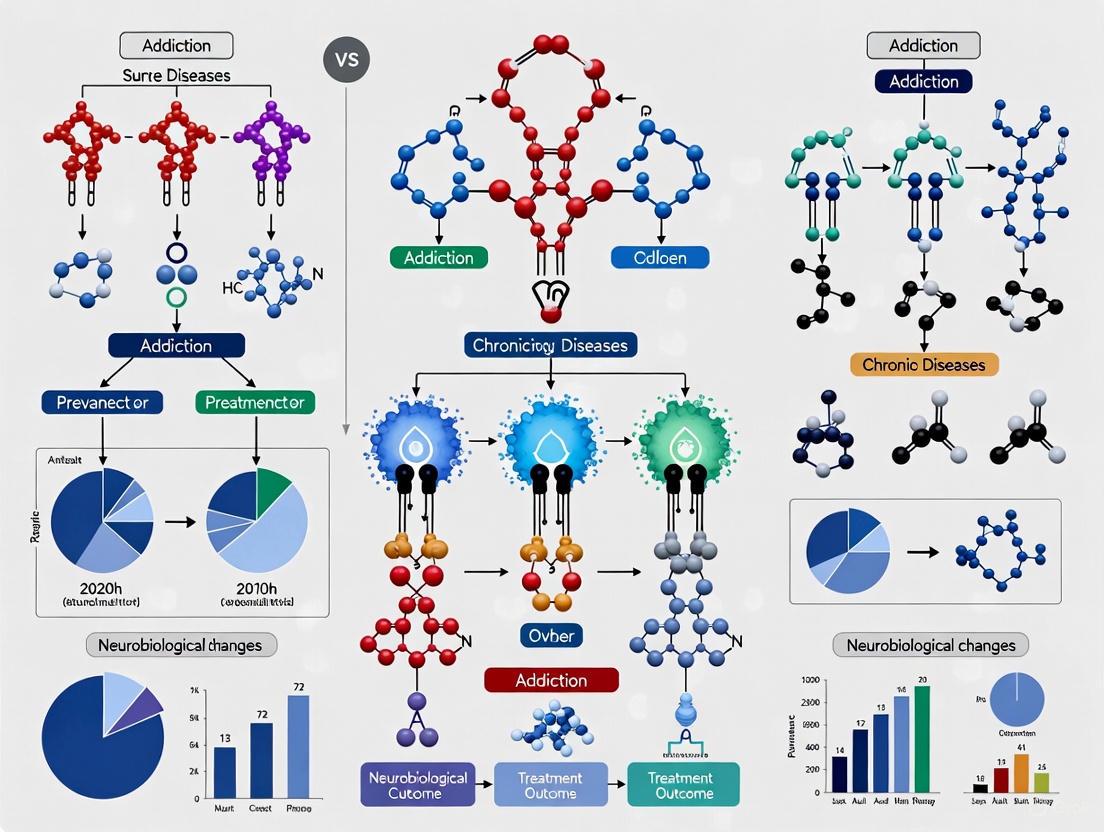
This article synthesizes contemporary neuroscience research to critically evaluate the model of addiction as a chronic brain disease.
Addiction as a Brain Disease: A Neurobiological Comparison with Chronic Medical Disorders
Abstract
This article synthesizes contemporary neuroscience research to critically evaluate the model of addiction as a chronic brain disease. We compare neurobiological mechanisms, disease trajectories, and treatment responses between substance use disorders and other chronic conditions such as diabetes, hypertension, and neurological diseases. By examining shared features including neuroadaptations in the basal ganglia, extended amygdala, and prefrontal cortex, alongside distinct characteristics like choice involvement and recovery patterns, this review provides a nuanced framework for researchers and drug development professionals. The analysis integrates evidence from neuroimaging, genetic studies, and clinical outcomes to inform targeted therapeutic development and refine diagnostic approaches for addictive disorders.
The Neurobiological Foundations of Addiction as a Chronic Disease
Addiction is conceptualized as a chronically relapsing disorder characterized by a compulsive cycle of drug seeking and taking, loss of behavioral control, and emergence of a negative emotional state during withdrawal [1]. This disorder progresses through a three-stage cycle—binge/intoxication, withdrawal/negative affect, and preoccupation/anticipation—with each stage engaging distinct but interconnected neural circuits [2]. The delineation of this neurocircuitry provides a heuristic framework for understanding the transition from voluntary, controlled drug use to the chronic, compulsive pattern that defines addiction, forming a critical foundation for comparing addiction with other chronic diseases and developing targeted therapeutic interventions [1] [3].
The Three-Stage Neurobiological Cycle: Systems and Pathways
The addiction cycle represents a dynamic interaction between three primary stages, each mediated by specific brain regions and neurochemical systems. This cycle tends to intensify over time, with each completion strengthening the neural pathways that drive compulsive drug-seeking [2] [4].
Stage 1: Binge/Intoxication
The binge/intoxication stage begins with consumption of a rewarding substance and is primarily mediated by the basal ganglia [2] [4]. During this stage, drugs of abuse activate the brain's dopamine system, producing intense pleasure or euphoria that positively reinforces drug use [4]. The rewarding effects activate two significant pathways: the mesolimbic pathway, which facilitates reward and reinforcement through dopamine and opioid peptide release in the nucleus accumbens, and the nigrostriatal pathway, which controls habitual motor function and behavior [2]. As addiction progresses, dopamine firing patterns transform from responding to the drug itself to anticipating drug-related stimuli (cues), a phenomenon known as incentive salience [2].
Stage 2: Withdrawal/Negative Affect
The withdrawal/negative affect stage occurs when drug consumption ceases and is primarily mediated by the extended amygdala (often termed the "anti-reward" system) [2]. This stage involves two key neuroadaptations: (1) within the reward system, chronic drug exposure decreases dopaminergic tone in the nucleus accumbens while shifting the glutamate-GABA balance toward increased glutamatergic activity, diminishing euphoria from the drug and reducing satisfaction from natural rewards; and (2) between-systems adaptation upregulates brain stress circuits, increasing release of stress mediators including corticotropin-releasing factor (CRF), dynorphin, and norepinephrine, while positively modulating the hypothalamic-pituitary-adrenal (HPA) axis [2]. The clinical manifestation includes irritability, anxiety, dysphoria, and physical withdrawal symptoms, which drive further drug use through negative reinforcement mechanisms [1] [2].
Stage 3: Preoccupation/Anticipation
The preoccupation/anticipation stage (craving) occurs during abstinence and is primarily mediated by the prefrontal cortex [2] [4]. This stage involves executive function systems that become dysregulated in addiction, particularly two competing systems: a "Go system" that involves goal-directed behaviors driven by the dorsolateral prefrontal cortex and anterior cingulate, and a "Stop system" responsible for inhibitory control [2]. In addiction, the Go system becomes hyperactive while the Stop system becomes hypoactive, resulting in intense cravings and preoccupation with drug seeking that override inhibitory control mechanisms [2]. This stage engages a widely distributed network involving the orbitofrontal cortex, dorsal striatum, basolateral amygdala, hippocampus, and insula [1].
Table 1: Neural Substrates and Primary Functions in the Three-Stage Addiction Cycle
| Stage | Core Brain Region | Key Neural Circuits | Primary Neurotransmitters/Mediators | Behavioral Manifestation |
|---|---|---|---|---|
| Binge/Intoxication | Basal Ganglia | Mesolimbic pathway, Nigrostriatal pathway | Dopamine, Opioid peptides, GABA | Euphoria, Positive reinforcement, Habit formation |
| Withdrawal/Negative Affect | Extended Amygdala | Brain stress circuits, HPA axis | CRF, Dynorphin, Norepinephrine, Glutamate | Anxiety, Irritability, Dysphoria, Negative reinforcement |
| Preoccupation/Anticipation | Prefrontal Cortex | Executive control networks, "Go/Stop" systems | Glutamate, Norepinephrine, Dopamine | Craving, Preoccupation, Loss of inhibitory control, Compulsive drug-seeking |
Comparative Experimental Methodologies in Addiction Research
The neurobiological understanding of the addiction cycle has been advanced through complementary animal and human laboratory models that capture specific aspects of each stage. These experimental approaches allow researchers to investigate the underlying neural mechanisms and test potential interventions.
Table 2: Key Experimental Models for Studying the Addiction Cycle
| Addiction Stage | Animal Models | Human Laboratory Models | Key Measured Outcomes |
|---|---|---|---|
| Binge/Intoxication | Drug self-administration, Conditioned place preference, Intracranial self-stimulation | Drug self-administration, Subjective drug effects measurement | Drug intake, Breakpoints in progressive ratio schedules, Pleasure ratings |
| Withdrawal/Negative Affect | Spontaneous withdrawal measurement, Conditioned place aversion, Elevated plus maze, Startle response | Provoked withdrawal, Affective response measures, Stress induction | Somatic signs, Anxiety-like behaviors, Emotional response thresholds |
| Preoccupation/Anticipation | Drug-induced reinstatement, Cue-induced reinstatement, Stress-induced reinstatement | Cue reactivity, Stress challenge, Cognitive bias tasks | Drug-seeking behavior, Craving ratings, Physiological responses, Attention bias |
Detailed Experimental Protocols
Protocol 1: Drug Self-Administration (Binge/Intoxication Stage) This protocol examines the reinforcing effects of drugs and the development of compulsive drug-taking behaviors [1]. Animals (typically rats or mice) are surgically implanted with intravenous catheters connected to an infusion pump. The animals are placed in operant chambers equipped with response levers or nose-poke devices. Responses on the active device result in intravenous drug infusion, typically accompanied by a cue light or tone. Sessions are conducted daily, with drug availability typically signaled by illumination of a house light. Data collected include number of infusions earned, inter-infusion intervals, and response patterns. Variations include fixed-ratio, progressive-ratio, and long-access (6+ hours) schedules to model different patterns of drug intake. This protocol allows researchers to study the transition from controlled to compulsive drug use and the neuroadaptations in the basal ganglia that underlie this transition [1].
Protocol 2: Conditioned Place Aversion (Withdrawal/Negative Affect Stage) This protocol measures the aversive effects of drug withdrawal, capturing the negative affective state that drives negative reinforcement [1]. Animals are exposed to a conditioning apparatus with two or more distinct compartments distinguished by visual, tactile, and sometimes olfactory cues. During preconditioning, animals explore the entire apparatus, and time spent in each compartment is recorded to establish baseline preferences. During conditioning, animals receive a drug treatment that induces a withdrawal state (either spontaneous after chronic drug exposure or precipitated by an antagonist) and are confined to one compartment. On alternate days, animals receive a neutral (saline) injection and are confined to the other compartment. During testing, animals have free access to all compartments in a drug-free state. A significant decrease in time spent in the withdrawal-paired compartment indicates conditioned place aversion. This model directly measures the negative affective component of withdrawal mediated by the extended amygdala [1] [2].
Protocol 3: Reinstatement Models (Preoccupation/Anticipation Stage) Reinstatement procedures model relapse to drug-seeking behavior and capture the craving and preoccupation characteristic of the anticipation stage [1]. Animals are first trained to self-administer a drug, then undergo extinction training where responses no longer result in drug delivery. Once drug-seeking behavior is extinguished, reinstatement is triggered by one of three methods: (1) Drug-induced reinstatement: A non-contingent priming injection of the drug previously self-administered; (2) Cue-induced reinstatement: Presentation of drug-associated cues (light or tone) previously paired with drug infusion; (3) Stress-induced reinstatement: Exposure to various stressors such as footshock or pharmacological stressors. The magnitude of reinstatement is measured as responses on the previously active lever during the reinstatement test session. This protocol engages prefrontal cortex circuitry and models the vulnerability to relapse that characterizes addiction [1].
Neurocircuitry of the Addiction Cycle: Signaling Pathways
The transition through the addiction cycle involves sequential recruitment of brain regions and progressive neuroadaptations. The following diagram illustrates the primary neural pathways and their interactions across the three stages:
Addiction Cycle Neurocircuitry and Neurotransmission
This diagram illustrates the primary neural circuits and neurochemical changes that characterize progression through the three-stage addiction cycle. The basal ganglia, particularly the mesolimbic dopamine pathway, mediates the binge/intoxication stage through increased dopamine and opioid peptide release, producing euphoria and positive reinforcement [1] [2]. With repeated cycling, the extended amygdala (anti-reward system) becomes engaged during withdrawal/negative affect, increasing stress mediators including CRF, dynorphin, and norepinephrine while decreasing dopaminergic tone [2]. The prefrontal cortex governs the preoccupation/anticipation stage through dysregulated executive control, characterized by increased glutamatergic activity and diminished inhibitory control [1] [2]. The cyclical nature of addiction is maintained through neuroadaptations that create feedback between these systems, ultimately leading to the compulsive drug-seeking that defines addiction [1].
The Scientist's Toolkit: Key Research Reagents and Materials
Research investigating the addiction cycle utilizes specific reagents and methodological approaches to dissect the neurobiological mechanisms underlying each stage.
Table 3: Essential Research Reagents and Methodologies for Addiction Neuroscience
| Reagent/Methodology | Primary Application | Specific Function in Addiction Research | Example Experimental Use |
|---|---|---|---|
| Microdialysis | Neurochemical measurement | In vivo monitoring of neurotransmitter release in specific brain regions | Measuring dopamine efflux in nucleus accumbens during drug self-administration |
| Immunohistochemistry | Cellular localization | Identifying protein expression and activation in specific neuronal populations | Detecting c-Fos expression as a marker of neuronal activation in response to drug cues |
| DREADDs (Designer Receptors Exclusively Activated by Designer Drugs) | Chemogenetic manipulation | Selective activation or inhibition of specific neural circuits | Modulating prefrontal cortex to ventral striatum projections during reinstatement tests |
| CRISPR-Cas9 Gene Editing | Genetic manipulation | Targeted manipulation of genes involved in addiction vulnerability | Knocking out specific dopamine receptor subtypes to assess role in drug reward |
| Radioligand Binding Assays | Receptor characterization | Quantifying receptor density and affinity in brain tissue | Measuring changes in dopamine D2 receptor availability following chronic drug exposure |
| Fast-Scan Cyclic Voltammetry | Real-time dopamine detection | Monitoring rapid dopamine transients with high temporal resolution | Measuring phasic dopamine release in response to drug-associated cues |
| Optogenetics | Circuit-specific manipulation | Precise temporal control of specific neural pathways using light-sensitive opsins | Stimulating or inhibiting projections from basolateral amygdala to nucleus accumbens during withdrawal |
Neuroadaptations in the Transition to Addiction
The transition from occasional drug use to addiction involves progressive neuroplasticity across all elements of the addiction cycle [1]. This transition may begin with changes in the mesolimbic dopamine system, followed by a cascade of neuroadaptations that progress from the ventral striatum to dorsal striatum and orbitofrontal cortex, eventually leading to dysregulation of the prefrontal cortex, cingulate gyrus, and extended amygdala [1]. As an individual moves through repeated cycles, a shift occurs from positive reinforcement driving motivated behavior to negative reinforcement and automaticity, with impulsivity dominating early stages and compulsivity dominating later stages [1]. The delineation of this neurocircuitry provides a framework for identifying molecular, genetic, and neuropharmacological adaptations key to vulnerability for developing and maintaining addiction [1] [3].
The contemporary understanding of addiction as a brain disease emphasizes that while substance use may begin with voluntary choices, the resulting neuroadaptations produce fundamental changes in brain structure and function that impair voluntary control [3]. This perspective is supported by evidence showing that addiction shares key characteristics with other chronic medical conditions, including heritability, course, and responsiveness to treatment [3]. The three-stage model not only provides insight into addiction mechanisms but also highlights potential targets for therapeutic intervention at each stage of the cycle, from reducing the rewarding effects of drugs during intoxication to managing negative affect during withdrawal and enhancing cognitive control during anticipation [2]. This neurobiological framework continues to guide the development of novel treatment strategies for addictive disorders.
Addiction is increasingly understood as a chronic brain disorder characterized by clinically significant impairments in health, social function, and voluntary control over substance use. This view represents a paradigm shift from historical perspectives that attributed addiction to moral failings or character flaws. Groundbreaking neuroscientific research has revealed that addiction involves distinct and reproducible changes in brain structure and function, particularly within three key neurocircuits: the basal ganglia, the extended amygdala, and the prefrontal cortex [5]. These networks, which normally regulate reward, stress, and executive control, undergo specific adaptations that drive the compulsive drug-seeking and loss of control over intake that define addiction [6].
The transition from voluntary substance use to addiction involves a three-stage cycle—binge/intoxication, withdrawal/negative affect, and preoccupation/anticipation—that becomes more severe over time and produces dramatic changes in brain function [5] [7]. This cycle is maintained by allostatic adjustments in brain reward and stress systems, creating a persistent state of dysregulation that extends beyond homeostatic mechanisms [8]. Understanding the specific contributions of each brain network to this cycle provides a heuristic framework for developing targeted interventions for substance use disorders, with implications for medication development and behavioral treatment approaches.
The Three-Stage Addiction Cycle and Associated Brain Networks
Conceptual Framework
The addiction process is conceptualized as a repeating cycle comprising three distinct stages that interact and intensify over time, each linked to specific brain regions and neurocircuitry [6]. This framework explains the transition from impulsive to compulsive drug use, with a corresponding shift from positive reinforcement (seeking pleasure) to negative reinforcement (seeking relief from discomfort) as the primary motivational driver [7].
Table 1: The Three-Stage Addiction Cycle and Associated Brain Networks
| Stage | Core Features | Primary Brain Regions | Key Neurotransmitters |
|---|---|---|---|
| Binge/Intoxication | Pleasurable effects of drug use; reinforcement of drug-taking behavior | Basal ganglia (particularly nucleus accumbens), ventral tegmental area | Dopamine, opioid peptides, endocannabinoids |
| Withdrawal/Negative Affect | Negative emotional state (dysphoria, anxiety, irritability) when drug access is prevented; negative reinforcement | Extended amygdala (central nucleus of amygdala, bed nucleus of stria terminalis) | CRF, norepinephrine, dynorphin |
| Preoccupation/Anticipation | Craving; drug-seeking behavior; executive function dysregulation | Prefrontal cortex (orbitofrontal, anterior cingulate, dorsolateral), basolateral amygdala, hippocampus | Glutamate, dopamine |
Visualizing the Addiction Cycle
The following diagram illustrates the interconnected nature of the three-stage addiction cycle and its associated brain networks:
Basal Ganglia: The Reward Hub Hijacked
Neuroanatomy and Normal Function
The basal ganglia are a group of subcortical structures including the nucleus accumbens (particularly the ventromedial shell region), dorsal striatum, ventral pallidum, and substantia nigra [5] [8]. Under normal conditions, this network plays crucial roles in reward processing, habit formation, and the control of voluntary movements. The basal ganglia facilitate reward-based learning by associating positive outcomes with specific behaviors, thereby reinforcing actions that promote survival and well-being [9].
Dysfunction in Addiction
In addiction, drugs of abuse produce powerful stimulation of the basal ganglia reward circuitry, particularly by triggering dopamine release in the nucleus accumbens [9]. This dopamine surge is significantly more rapid and intense than that produced by natural rewards, effectively "hijacking" the brain's normal reward system [5]. With repeated drug exposure, neuroadaptations occur within the basal ganglia that include:
- Downregulation of dopamine D2 receptors, reducing sensitivity to natural rewards
- Strengthening of glutamate-mediated pathways that consolidate drug-related habits
- Transition of control from the ventral to dorsal striatum, shifting behavior from goal-directed to habitual and compulsive drug use [6]
These changes result in the assigning of excessive incentive salience to drug-associated cues, diminished sensitivity to non-drug rewards, and the establishment of deeply ingrained patterns of compulsive drug-seeking behavior [10].
Experimental Evidence and Methodologies
Table 2: Key Experimental Approaches for Studying Basal Ganglia in Addiction
| Methodology | Key Findings | Technical Considerations |
|---|---|---|
| Microdialysis in rodents | Acute administration of all major drugs of abuse increases extracellular dopamine in shell of nucleus accumbens [8] | High temporal resolution but limited spatial resolution; measures neurotransmitter levels in specific brain regions |
| Self-administration studies | Animals will reliably self-administer drugs into mesolimbic dopamine pathways; escalation of intake with extended access [8] | Models human drug-taking behavior; allows examination of transition from controlled to compulsive use |
| Brain imaging (fMRI/PET) | Reduced dopamine D2 receptor availability in striatum of addicted individuals; enhanced reactivity to drug cues [11] [10] | Non-invasive human studies; correlates neurochemical changes with behavior and subjective experience |
| Chemogenetics/optogenetics | Selective manipulation of specific neural pathways demonstrates causal role in drug-seeking behavior [10] | High temporal and cell-type specificity; establishes causal relationships rather than correlations |
Extended Amygdala: The Stress Engine of Addiction
Neuroanatomical Components
The extended amygdala represents a macrostructure composed of several interconnected regions: the central nucleus of the amygdala, the bed nucleus of the stria terminalis (BNST), and a transition zone in the shell of the nucleus accumbens [8]. This network serves as a critical interface between the brain's reward and stress systems, integrating emotional and motivational information to coordinate appropriate behavioral responses to environmental challenges [7].
Role in the Withdrawal/Negative Affect Stage
During the development of dependence, the extended amygdala becomes dysregulated, driving the negative emotional state that characterizes drug withdrawal [7]. Key neuroadaptations include:
- Recruitment of brain stress systems, particularly corticotropin-releasing factor (CRF) and norepinephrine within the central amygdala and BNST
- Activation of the dynorphin-κ opioid receptor system, which produces dysphoric effects
- Reduced function of anti-stress systems involving neuropeptide Y and oxytocin [8]
These changes create a powerful negative reinforcement mechanism, whereby drug use is motivated not by pleasure-seeking but by the desire to alleviate the distressing symptoms of withdrawal [7] [6]. The extended amygdala thus becomes increasingly sensitive with repeated drug exposure, contributing to the transition to addiction and vulnerability to relapse even after prolonged abstinence.
Neuropharmacological Mechanisms
The following diagram illustrates key neurotransmitter systems within the extended amygdala that contribute to the negative affect stage of addiction:
Prefrontal Cortex: The Compromised Executive
Functional Subregions and Their Roles
The prefrontal cortex (PFC) encompasses several functionally distinct but interconnected subregions that collectively regulate executive function, including the orbitofrontal cortex (OFC), anterior cingulate cortex (ACC), and dorsolateral prefrontal cortex (DLPFC) [11]. These areas normally work in concert to enable:
- Self-control and behavioral monitoring (DLPFC, dorsal ACC)
- Emotion regulation (ventromedial PFC, subgenual ACC)
- Decision-making and valuation (OFC, ventromedial PFC)
- Salience attribution (medial OFC, ventromedial PFC) [11]
Dysfunction in Addiction: The iRISA Model
In addiction, the PFC undergoes structural and functional changes that result in a syndrome of impaired Response Inhibition and Salience Attribution (iRISA) [11] [10]. This model posits that addiction involves:
- Attributing excessive salience to drug and drug-related cues
- Decreased sensitivity to non-drug reinforcers
- Decreased ability to inhibit maladaptive behaviors [11]
These core deficits manifest as the inability to resist drug seeking despite adverse consequences, with drug-related motivation dominating at the expense of other activities [10]. Neuroimaging studies consistently show reduced gray matter volume and hypoactivity in PFC regions among individuals with substance use disorders, particularly during tasks requiring executive control [11] [10].
Quantitative Changes in Prefrontal Cortex
Table 3: Prefrontal Cortex Alterations in Addiction Documented by Neuroimaging
| PFC Subregion | Structural Changes | Functional Alterations | Behavioral Correlates |
|---|---|---|---|
| Orbitofrontal Cortex (OFC) | Reduced gray matter volume in medial OFC [11] [10] | Hyperactivity during drug cue exposure; hypoactivity during non-drug reward processing [11] | Compulsivity; impaired reward valuation; failure to adjust behavior despite negative consequences |
| Dorsolateral PFC (DLPFC) | Reduced gray matter volume [10] | Hypoactivity during executive function tasks (working memory, response inhibition) [11] | Impaired self-control; reduced working memory capacity; diminished cognitive flexibility |
| Anterior Cingulate Cortex (ACC) | Reduced gray matter in rostral and dorsal ACC [10] | Hyperactivity during craving; hypoactivity during error detection and conflict monitoring [11] | Impaired behavioral monitoring; attention bias to drug cues; reduced cognitive control |
| Ventromedial PFC | Reduced gray matter volume [10] | Hypoactivity during decision-making and emotion regulation tasks [11] | Poor decision-making; emotional dysregulation; preference for immediate reward |
Cross-Species Validation and Research Methodologies
Integrating Human and Animal Research
A comprehensive understanding of addiction neurocircuitry has emerged from the convergence of evidence from human neuroimaging studies and controlled animal experiments [5] [10]. Each approach offers complementary strengths:
- Human studies (fMRI, PET, structural MRI) allow correlation of brain changes with subjective experience and clinical outcomes
- Non-human primate studies provide crucial information on causal relationships while controlling for confounding factors impossible to address in humans
- Rodent models enable detailed molecular and cellular investigations with high experimental control [10]
This cross-species approach has been particularly valuable for establishing that chronic drug use causes prefrontal cortex damage rather than merely reflecting pre-existing vulnerabilities [10]. Longitudinal studies in non-human primates demonstrate that chronic drug self-administration produces PFC alterations similar to those observed in humans, establishing a causal relationship [10].
Table 4: Key Research Reagents and Methodologies for Addiction Neurocircuitry Studies
| Research Tool | Primary Application | Key Utility in Addiction Research |
|---|---|---|
| DREADDs (Designer Receptors Exclusively Activated by Designer Drugs) | Chemogenetic manipulation of specific neural circuits | Allows prolonged modulation of specific neural pathways to establish causal roles in addiction behaviors [10] |
| Fibre Photometry | Recording neural activity in freely behaving animals | Enables measurement of population-level neural activity during specific behaviors across the addiction cycle [10] |
| CRF Receptor Antagonists | Pharmacological blockade of CRF signaling | Used to demonstrate role of extended amygdala stress systems in withdrawal and negative reinforcement [7] [8] |
| Dopamine Receptor Ligands for PET | In vivo measurement of dopamine system function in humans | Quantifies dopamine receptor changes associated with chronic drug use and correlation with clinical measures [11] |
| Viral Vector Tracing Systems | Mapping neural connectivity | Delineates circuit-specific changes in addiction; identifies novel therapeutic targets [10] |
Implications for Treatment Development and Future Research
The delineation of specific roles for the basal ganglia, extended amygdala, and prefrontal cortex in addiction has profound implications for developing targeted interventions. Medications that normalize dopamine function may address basal ganglia dysfunction, while CRF antagonists and noradrenergic agents show promise for mitigating the negative affect driven by the extended amygdala [7] [8]. Strategies to strengthen prefrontal regulatory control, including neuromodulation approaches and cognitive training, may help restore behavioral control in addiction [11] [10].
Future research directions include:
- Developing circuit-specific interventions that target distinct nodes of addiction neurocircuitry
- Identifying biomarkers that predict treatment response and disease trajectory
- Exploring neuroplasticity mechanisms that support recovery of function
- Integrating psychosocial interventions with biological approaches to address the multifaceted nature of addiction [10] [12]
The recognition that these brain changes persist long after substance use stops but may be reversible through targeted interventions offers hope for developing more effective, neuroscience-informed treatments for substance use disorders [5]. As research continues to elucidate the complex interactions between these key brain networks, our ability to intervene at specific points in the addiction cycle will continue to improve, ultimately leading to more personalized and effective approaches to this chronic brain disorder.
- Dopamine signaling primer: Introduction to dopamine pathways, receptors, and synaptic mechanisms.
- Theoretical frameworks: Compares incentive-sensitization and reinforcement learning models.
- Molecular neuroadaptations: Tables and mechanisms of dopamine system changes in addiction.
- Research tools: Experimental methods and reagent solutions for studying dopamine signaling.
Neuroadaptations in Dopamine Signaling: From Reward Processing to Incentive Salience
Dopamine (DA) serves as one of the principal neurotransmitter systems regulating reward processing, motivation, and the development of addictive behaviors. The mesolimbic dopamine pathway, originating from the ventral tegmental area (VTA) and projecting to the nucleus accumbens (NAc), forms the core neurocircuitry through which DA mediates both natural rewards and the effects of addictive substances [13] [14]. DA neurons exhibit two distinct firing patterns: tonic firing maintains baseline DA levels for steady-state signaling, while phasic bursting creates transient, high-concentration DA pulses that encode reward prediction errors and salient stimuli [14]. These signals are transmitted through five distinct G-protein-coupled receptor subtypes, categorized into D1-like (D1, D5) and D2-like (D2, D3, D4) families based on their structural and pharmacological properties and their opposing effects on intracellular cAMP signaling [15] [14].
The transition from recreational drug use to addiction involves profound adaptations within this dopamine signaling framework. All major drugs of abuse, despite differing primary molecular targets, converge on the shared endpoint of increasing extracellular dopamine in the striatum, either through direct actions on DA neurons or indirect modulation of afferent inputs [16] [13] [17]. With repeated drug exposure, neuroadaptive changes occur at multiple levels of the dopamine system, including altered receptor density, modified synaptic strength, and recalibrated circuit-level communication between reward-related brain regions [16] [17]. These adaptations progressively shift dopamine's role from signaling reward prediction to assigning excessive incentive salience to drug-associated cues, a transition that represents the core pathological process in addiction [18] [19].
Theoretical Frameworks: From Reward to Incentive Salience
The understanding of dopamine's role in addiction has been shaped by two major theoretical frameworks that explain how dopamine signaling transitions from normal reward processing to pathological incentive salience. The incentive-sensitization theory and reinforcement learning models provide complementary perspectives on this process, with recent evidence suggesting they may be implemented by distinct dopamine subcircuits.
Table 1: Theoretical Frameworks of Dopamine in Addiction
| Framework | Key Mechanism | Primary Dopamine Function | Behavioral Manifestation |
|---|---|---|---|
| Incentive-Sensitization Theory [19] | Neural sensitization of 'wanting' systems | Mediates incentive salience ('wanting') | Cue-triggered craving and compulsive drug pursuit |
| Reinforcement Learning Model [18] | Reward prediction error signaling | Facilitates acquisition of reward associations | Learning of drug-taking behaviors through reinforcement |
| Dual-System Perspective [18] | Genetically distinct DA subpopulations | Separate mediation of association (learning) and motivation (wanting) | Synergistic amplification of drug-seeking behaviors |
The incentive-sensitization theory posits that addiction fundamentally represents a pathological amplification of the psychological process of "wanting" without necessarily increasing "liking" [19]. This critical distinction explains why individuals with addiction may compulsively seek drugs despite deriving diminished pleasure from their consumption. The theory proposes that repeated drug exposure induces neuroadaptive sensitization in mesolimbic dopamine systems that mediate incentive salience, making these circuits hyperresponsive to drugs and drug-associated cues [19]. This sensitization leads to excessive attribution of motivational value to drug cues, rendering them attention-grabbing and desirable. Importantly, this "wanting" system is dissociable from the "liking" system that mediates actual pleasure, which depends on different neural substrates and is not dopamine-dependent [19].
Complementing this view, reinforcement learning models emphasize dopamine's role in signaling reward prediction errors (RPEs) - the discrepancy between expected and received rewards [18]. According to this framework, phasic dopamine bursts following unexpected rewards facilitate the learning of reward-contingent behaviors, while dopamine dips when expected rewards are omitted promote the extinction of such behaviors [18]. In addiction, drugs of abuse create artificially strong prediction error signals by provoking supraphysiological dopamine release, thereby powerfully reinforcing drug-taking behaviors [18] [16].
Recent research has bridged these theories by identifying genetically distinct dopamine subpopulations that separately mediate these functions. Heymann et al. (2020) demonstrated that Crhr1-expressing VTA neurons project primarily to the NAc core and are critical for Pavlovian association learning (reinforcement learning), while Cck-expressing VTA neurons project mainly to the NAc shell and support the maintenance of motivated instrumental behavior (incentive salience) [18]. The coordinated activation of both populations produces the most robust drug-seeking behaviors, suggesting these different domains of dopamine-mediated reward are both functionally distinct and synergistic [18].
Molecular and Circuit-Level Neuroadaptations in Addiction
Chronic drug exposure induces profound molecular and cellular adaptations throughout dopamine signaling pathways, which drive the transition from controlled use to compulsive addiction. These drug-induced neuroadaptations create a self-reinforcing cycle that progressively diminishes responsiveness to natural rewards while enhancing drug-related motivation.
Dopamine Receptor Alterations
Table 2: Dopamine Receptor Alterations in Substance Use Disorders
| Receptor Type | Change in Addiction | Functional Consequences | Evidence Source |
|---|---|---|---|
| Striatal D2/3R | ↓ Availability across multiple SUDs | Reduced sensitivity to natural rewards; Enhanced drug cue sensitivity | Human PET studies [17] |
| D1-MSNs | ↑ Sensitivity and signaling | Strengthened direct pathway activation; Increased drug-seeking | Preclinical models [16] [13] |
| D2-MSNs | ↓ Sensitivity and signaling | Weakened indirect pathway inhibition; Reduced behavioral control | Preclinical models [16] [13] |
| D1-D2 Heteromers | Altered expression and signaling | Atypical Gq coupling and calcium signaling; Enhanced relapse vulnerability | Primate studies [15] |
Human imaging studies using positron emission tomography (PET) have consistently demonstrated reduced striatal D2/3 receptor (D2/3R) availability across multiple substance use disorders, including cocaine, methamphetamine, alcohol, and opioid addictions [17]. This downregulation of D2/3 receptors represents one of the most reliable biomarkers in addiction neuroscience and is associated with reduced sensitivity to natural rewards and diminished activity in prefrontal regions governing executive function and impulse control [17]. The functional impact of these receptor changes is further refined by alterations in the balance between D1- and D2-expressing medium spiny neurons (MSNs) in the striatum. Chronic drug exposure leads to hyper-sensitization of D1-MSNs in the direct pathway, which promotes action initiation, while simultaneously causing hypo-sensitization of D2-MSNs in the indirect pathway, which normally inhibits behavior [16] [13]. This dual adaptation creates a powerful push-pull dynamic that biases behavior toward compulsive drug seeking.
Synaptic Plasticity Mechanisms
At the synaptic level, drugs of abuse hijack mechanisms of neuroplasticity that normally support adaptive learning, creating instead maladaptive synaptic strengthening in reward-related circuits. In the VTA, drugs including cocaine, nicotine, and opioids induce long-term potentiation (LTP) at glutamate synapses onto dopamine neurons, enhancing their excitability and response to drug-related stimuli [16]. This drug-evoked plasticity involves several key mechanisms:
- Insertion of Ca2+-permeable AMPARs at glutamate synapses, which increases synaptic strength and calcium influx [16]
- NR2A/NR2B NMDA receptor alterations that modify threshold for synaptic plasticity induction [16]
- Weakened GABAergic inhibition of DA neurons through reduced GABAB receptor-dependent G-protein-gated inwardly rectifying K+ (GIRK) signaling [16]
In the nucleus accumbens, chronic drug exposure produces silent synapses - immature connections containing only NMDA receptors - which subsequently undergo consolidation during relapse events to create robust, drug-strengthened circuits [16]. This drug-evoked synaptic reorganization preferentially strengthens prefrontal-accumbens projections while weakening hippocampal-accumbens inputs, creating an imbalance that biases behavior toward drug-seeking at the expense of contextual modulation [16].
Circuit-Level Reorganization
Beyond molecular and synaptic changes, addiction involves large-scale circuit reorganization that extends throughout cortico-striato-thalamo-cortical loops. The progression from voluntary drug use to compulsive addiction is reflected in a shift from ventral to dorsal striatal control over behavior, corresponding to a transition from goal-directed actions to habitual responses [13]. This represents a fundamental reallocation of behavioral control from the mesolimbic pathway (VTA to ventral striatum), which mediates motivated behavior toward salient goals, to the nigrostriatal pathway (substantia nigra to dorsolateral striatum), which supports habit formation and automatic behavior execution [13].
Functional magnetic resonance imaging (fMRI) studies in humans with substance use disorders reveal impaired functional connectivity in fronto-striatal circuits, particularly involving the prefrontal regions responsible for executive control, decision-making, and impulse regulation [17]. These circuit-level adaptations help explain the core clinical features of addiction: enhanced motivation for drugs, diminished sensitivity to natural rewards, reduced behavioral control, and impaired decision-making capabilities [13] [17].
Research Methods and Experimental Toolkit
The study of dopamine neuroadaptations in addiction relies on a sophisticated array of experimental approaches that enable researchers to probe different aspects of dopamine signaling with increasing precision and circuit specificity.
Key Experimental Protocols
Optogenetic Circuit Dissection: Modern addiction research employs channelrhodopsin (ChR2) and halorhodopsin (NpHR) to enable precise excitation or inhibition of specific dopamine neuron populations with millisecond temporal precision [18] [13]. A typical protocol involves injecting Cre-dependent AAV vectors into the VTA of transgenic mice expressing Cre recombinase under the control of neuropeptide-specific promoters (e.g., Crhr1-Cre or Cck-Cre), allowing selective targeting of dopamine subpopulations [18]. Optical fibers are then implanted in projection regions such as the NAc core or shell to enable terminal stimulation during behavioral assays including Pavlovian conditioning, operant self-administration, and real-time place preference [18].
Fast-Scan Cyclic Voltammetry (FSCV): This electrochemical technique allows real-time measurement of dopamine concentration changes with subsecond temporal resolution [16]. In typical implementation, a carbon-fiber microelectrode is implanted in the striatum and a triangular voltage waveform is applied to oxidize and reduce dopamine molecules, generating a current signature that is quantified against pre-established calibration curves [16]. FSCV is particularly valuable for measuring phasic dopamine transients evoked by drug-related cues or drug administration itself, providing insight into dopamine release dynamics throughout the addiction cycle.
DARPP-32 Phosphorylation Mapping: As a critical integrator of dopamine signaling, the phosphorylation state of DARPP-32 at different residues provides a readout of D1 vs. D2 receptor activation [14]. Experimental protocols typically involve rapid tissue fixation following behavioral tasks, followed by quantitative immunohistochemistry or Western blotting using phospho-specific antibodies against Thr34 (PKA site, enhanced by D1 activation) and Thr75 (Cdk5 site, regulated by D2 signaling) [14]. This approach reveals the spatial and temporal patterning of dopamine receptor engagement during drug-related behaviors.
Research Reagent Solutions
Table 3: Essential Research Tools for Studying Dopamine Neuroadaptations
| Research Tool | Function/Application | Key Utility in Addiction Research |
|---|---|---|
| Cre-driver Mouse Lines (e.g., Crhr1-Cre, Cck-Cre) [18] | Enables genetic access to dopamine subpopulations | Dissection of functionally distinct DA circuits in reward processing |
| DREADDs (Designer Receptors Exclusively Activated by Designer Drugs) [14] | Chemogenetic control of neuronal activity | Probing causal relationships between specific circuit activity and addiction behaviors |
| Fluorescent Dopamine Sensors (e.g., dLight, GRABDA) [16] | Real-time visualization of dopamine dynamics | Monitoring dopamine release during drug-seeking and relapse behaviors |
| DARPP-32 Phospho-specific Antibodies [14] | Detection of dopamine signaling cascade activation | Mapping intracellular signaling pathways engaged by drugs of abuse |
| Viral Tracing Tools (e.g., CAV2-Cre, AAV-retro) [18] [13] | Retrograde labeling of neural circuits | Identification of input-output relationships of dopamine subsystems |
Comparative Analysis: Addiction Versus Other Chronic Diseases
Understanding the neuroadaptations in dopamine signaling allows addiction to be conceptualized within a chronic disease framework, revealing both similarities and distinctions with other long-term medical conditions.
Like other chronic diseases, addiction involves progressive physiological changes that follow a predictable trajectory, exhibit high rates of recurrence after periods of remission, and demonstrate individual differences in vulnerability based on genetic, developmental, and environmental factors [17]. The dopamine system alterations observed in addiction share features with the neurotransmitter dysfunction seen in Parkinson's disease, though in opposite directions - while Parkinson's is characterized by dopamine depletion leading to motor impairments, addiction involves initially heightened then dysregulated dopamine signaling leading to motivational pathologies [15] [17].
However, addiction differs from many chronic diseases in its fundamental relationship to learning mechanisms. Unlike conditions such as hypertension or diabetes, addiction hijacks the brain's natural learning processes, creating powerful maladaptive memories that are exceptionally resistant to extinction [16] [19]. The drug-induced synaptic plasticity in dopamine circuits shares mechanistic similarities with the physiological plasticity underlying normal learning, but results in pathological outcomes due to the supraphysiological nature of drug-evoked dopamine signals [16]. This explains why addiction represents not merely a chemical dependence but a fundamental disorder of motivation and decision-making circuitry.
Importantly, emerging evidence suggests that dopamine synthesis capacity may not be the primary determinant of addiction vulnerability, contrary to earlier models [20]. Instead, individual differences appear to reside more in mechanisms controlling dopamine release dynamics and reuptake, as well as in the responsiveness of dopaminergic neurons to salient stimuli [20]. This refined understanding highlights the importance of studying presynaptic dopamine function beyond traditional focus on receptor availability and synthesis capacity.
The investigation of dopamine neuroadaptations in addiction has evolved from conceptualizing dopamine as a unitary reward signal to understanding it as a diverse modulator of multiple psychological processes implemented by distinct neural circuits. The transition from reward processing to incentive salience involves coordinated adaptations across molecular, synaptic, and circuit levels that progressively shift behavior from goal-directed drug use to compulsive drug-seeking. The identification of genetically defined dopamine subpopulations with dissociable roles in reward association versus motivation provides a refined framework for understanding how different aspects of addiction are mediated by specific neural circuits [18].
Future research directions will likely focus on integrating ultrahigh-resolution neuroimaging in humans with cell-type-specific circuit manipulation in animal models to bridge the gap between molecular mechanisms and clinical manifestations [17]. Additionally, the development of dopamine sensors with improved spatiotemporal resolution will enable more precise characterization of dopamine dynamics during naturalistic drug-seeking behaviors [16] [17]. From a therapeutic perspective, interventions that specifically target the incentive salience system without disrupting natural reward processing hold promise for treating addiction while minimizing adverse effects on normal motivation [19]. Similarly, strategies aimed at reversing drug-induced synaptic plasticity through memory reconsolidation interference or metaplasticity induction represent promising avenues for destabilizing the maladaptive learning that underpins addiction [16].
The recognition that addiction shares features with other chronic diseases while possessing unique characteristics rooted in its basis as a learning disorder should guide the development of more effective, biologically-based interventions that address the specific neuroadaptations in dopamine signaling that drive this devastating condition.
The conceptualization of addiction as a chronic brain disease has fundamentally shifted both research and clinical paradigms, moving away from historical perceptions of moral failing or character weakness. This framework allows addiction to be systematically studied and treated like other chronic conditions [3]. Contemporary models define addiction as a chronic and relapsing disorder marked by specific neuroadaptations that predispose an individual to pursue substances despite negative consequences [2]. This neurobiological perspective enables direct comparison with the pathophysiological mechanisms underlying diabetes, hypertension, and asthma.
Understanding addiction through this lens has profound implications for drug development, treatment approaches, and stigma reduction. When examined alongside other chronic diseases, addiction demonstrates comparable patterns in heritability, treatment compliance, relapse rates, and environmental influences [3]. This article provides a comprehensive comparative analysis of disease conceptualizations, neurobiological mechanisms, and research methodologies across these conditions to inform targeted therapeutic development.
Neurobiological Foundations of Addiction
Addiction manifests through a repeating cycle of three distinct neurobiological stages mediated by specific brain regions and neurotransmitter systems. This cycle intensifies over time, leading to significant biological, psychological, and sociological harm [2].
The Three-Stage Addiction Cycle
The binge/intoxication stage begins with consumption of a rewarding substance, primarily involving the basal ganglia. Rewarding substances increase dopaminergic transmission from the midbrain to the striatum and prefrontal cortex. This process stimulates dopamine-1 (D1) receptors, producing subjective euphoria and activating two key pathways: the mesolimbic pathway (responsible for reward and positive reinforcement) and the nigrostriatal pathway (controlling habitual motor function) [2].
The withdrawal/negative affect stage involves both within-system and between-system neuroadaptations. Chronic reward exposure decreases dopaminergic tone in the nucleus accumbens (NAcc) while increasing glutamatergic activity. Simultaneously, the extended amygdala (the "anti-reward" system) becomes upregulated, increasing release of stress mediators including dynorphin, corticotropin-releasing factor (CRF), and norepinephrine. This creates a clinical presentation of irritability, anxiety, and dysphoria during abstinence [2].
The preoccupation/anticipation stage occurs during abstinence and is characterized by cravings, primarily mediated by the prefrontal cortex (PFC). This stage involves disruption of executive control systems, presenting as diminished impulse control, impaired emotional regulation, and compromised executive planning. Researchers have identified competing "Go" and "Stop" systems within the PFC that determine an individual's ability to resist substance use urges [2].
Figure 1: The Three-Stage Neurobiological Model of Addiction. This diagram illustrates the cyclic nature of addiction, highlighting key brain regions and neurotransmitter systems involved in each stage.
Genetic and Molecular Mechanisms
Specific genetic, epigenetic, and molecular mechanisms predispose individuals to the addiction cycle. The neurobiological framework of addiction reveals that these mechanisms contribute to the four central behaviors observed in addiction: impulsivity, compulsivity, positive reinforcement, and negative reinforcement. Initial substance exposure typically involves impulsivity and positive reinforcement, but with repeated use, a shift occurs toward compulsivity driven by negative reinforcement mechanisms as individuals seek to avoid withdrawal symptoms [2].
Comparative Disease Models: Diagnostic Frameworks and Clinical Definitions
Table 1: Diagnostic Criteria and Clinical Definitions Across Chronic Diseases
| Disease Category | Clinical Definition | Diagnostic Thresholds | Key Diagnostic Tools |
|---|---|---|---|
| Addiction | A chronic, relapsing disorder characterized by compulsive drug seeking, continued use despite harm, and long-lasting changes in the brain [3]. | Based on DSM-5 criteria grouping into four categories: physical dependence, risky use, social problems, and impaired control [21]. | Clinical assessment using DSM-5 criteria, Addictions Neuroclinical Assessment (ANA) [2]. |
| Diabetes | A metabolic disorder characterized by high blood glucose levels due to insulin resistance or inadequate insulin production. | Fasting plasma glucose ≥126 mg/dL, HbA1c ≥6.5%, or random glucose ≥200 mg/dL with symptoms. | HbA1c testing, fasting plasma glucose, oral glucose tolerance test. |
| Hypertension | A cardiovascular condition defined by persistently elevated blood pressure in the arteries. | AHA/ACC 2025: Stage 1: SBP ≥130 or DBP ≥80 mmHg; Stage 2: SBP ≥140 or DBP ≥90 mmHg [22]. | Office BP measurement confirmed by home BP monitoring or ambulatory BP monitoring [22]. |
| Asthma | A chronic respiratory condition characterized by inflammation and hyper-reactivity of the airways [23]. | Clinical diagnosis based on symptoms (wheezing, cough, dyspnea) and reversible airflow obstruction. | Spirometry, bronchodilator responsiveness testing, fractional exhaled nitric oxide (FeNO). |
Neurobiological and Pathophysiological Comparisons
Central Nervous System Pathways in Addiction
The neurocircuitry of addiction involves specific pathways that differ from other chronic conditions. The reward system, centered on the mesolimbic dopamine pathway, becomes hijacked by addictive substances. With repeated use, neuroadaptations occur that transfer dopamine release from responding to the substance itself to anticipating substance-related cues (incentive salience) [2]. This mechanism helps explain why individuals with addiction continue substance use despite negative consequences and why changing people, places, and things associated with substance use is critical to treatment.
The Addictions Neuroclinical Assessment (ANA) translates these three neurobiological stages into three neurofunctional domains: incentive salience, negative emotionality, and executive dysfunction. This clinical instrument allows for targeted treatments for specific clinical presentations [2].
Comparative Pathophysiology Across Disease States
Table 2: Comparative Pathophysiological Mechanisms Across Chronic Diseases
| Disease | Primary System Affected | Core Pathophysiological Mechanisms | Key Mediators/Molecules |
|---|---|---|---|
| Addiction | Central Nervous System | Hijacked reward circuitry, neuroadaptations in stress systems, executive function impairment [2]. | Dopamine, CRF, dynorphin, glutamate, GABA, norepinephrine [2]. |
| Diabetes | Metabolic/Endocrine System | Insulin resistance, β-cell dysfunction, impaired glucose regulation. | Insulin, glucagon, amylin, incretins (GLP-1, GIP). |
| Hypertension | Cardiovascular System | Increased peripheral resistance, altered renin-angiotensin-aldosterone system, endothelial dysfunction [22]. | Angiotensin II, aldosterone, catecholamines, endothelin. |
| Asthma | Respiratory System | Airway inflammation, bronchial hyperresponsiveness, reversible airflow obstruction [23]. | Histamine, leukotrienes, interleukins (IL-4, IL-5, IL-13), immunoglobulin E (IgE). |
Emerging Therapeutic Approaches and Research Methodologies
GLP-1 Agonists: A Novel Mechanism Targeting Multiple Disease Pathways
GLP-1 (Glucagon-Like Peptide-1) therapies represent a promising class of medications demonstrating efficacy across multiple chronic conditions, including addiction. Originally developed for diabetes and obesity, GLP-1 receptor agonists have shown potential for treating alcohol and other substance use disorders [21] [24].
The mechanism involves GLP-1 receptors within the central nervous system that curb appetite and encourage individuals to eat when hungry and stop when full. Research suggests that GLP-1 therapies may modulate neurobiological pathways underlying addictive behaviors, potentially reducing substance craving and use while addressing comorbid conditions [21]. Early research indicates that GLP-1 receptor agonists reduce dopamine release in the brain's reward system, decreasing the hedonic value of not only food but also substances like alcohol and nicotine [24].
Figure 2: GLP-1 Receptor Agonist Mechanisms and Therapeutic Applications. This diagram illustrates the dual pathways through which GLP-1 therapies exert effects on both metabolic conditions and addictive disorders.
Experimental Protocols for Addiction Research
Clinical Trial Design for GLP-1 Agonists in Addiction
Recent investigations into GLP-1 receptor agonists for addiction treatment have followed specific methodological approaches:
- Study Population: Individuals with alcohol use disorder (AUD), with some studies focusing on subgroups with comorbid obesity [21].
- Intervention Protocol: Randomized controlled trials using exenatide (first GLP-1 receptor agonist) or low-dose semaglutide (newer GLP-1 receptor agonist) [21].
- Outcome Measures: Alcohol self-administration in laboratory settings, drinks per drinking day, craving measurements, and subgroup analyses based on comorbid conditions [21].
- Control Conditions: Standard care or placebo controls with appropriate blinding procedures.
For opioid use disorder, rodent model methodologies have included:
- Self-administration paradigms for heroin, fentanyl, and oxycodone [21].
- Reinstatement of drug seeking tests as a model of relapse [21].
Neurobiological Assessment Protocols
The Addictions Neuroclinical Assessment (ANA) represents a standardized approach for translating the three-stage neurobiological model into clinical practice:
- Assessment Domains: Incentive salience (binge/intoxication stage), negative emotionality (withdrawal/negative affect stage), and executive dysfunction (preoccupation/anticipation stage) [2].
- Implementation: Clinical evaluation targeting specific neurofunctional domains to guide treatment selection.
- Objective: To provide targeted, personalized treatments based on individual neurobiological profiles rather than generalized approaches.
The Scientist's Toolkit: Essential Research Reagents and Materials
Table 3: Key Research Reagents and Materials for Addiction and Chronic Disease Research
| Research Tool | Application/Function | Specific Examples |
|---|---|---|
| GLP-1 Receptor Agonists | Investigational therapeutic for addiction and metabolic disorders; modulates reward pathways and insulin signaling [21] [24]. | Exenatide, semaglutide, liraglutide. |
| Rodent Self-Administration Models | Preclinical models of drug-seeking behavior and reinforcement [21]. | Heroin, fentanyl, oxycodone, or alcohol self-administration paradigms. |
| Addictions Neuroclinical Assessment (ANA) | Clinical instrument translating neurobiological stages into functional domains for targeted treatment [2]. | Assessment tools for incentive salience, negative emotionality, executive function. |
| fMRI and Neuroimaging | Mapping brain region activation and connectivity in addiction stages [2]. | Functional magnetic resonance imaging, PET scanning. |
| Predicting Risk of Cardiovascular Disease Events (PREVENT) | Risk assessment tool for hypertension management and treatment decisions [22]. | Algorithm incorporating multiple risk factors. |
Implications for Drug Development and Clinical Practice
The reconceptualization of addiction as a chronic brain disease has significant implications for pharmaceutical development and therapeutic approaches. Understanding the shared neurobiological mechanisms between addiction and other chronic conditions enables repurposing of existing medications and development of novel targeted therapies.
GLP-1 Agonists: A Case Study in Cross-Disease Application
The investigation of GLP-1 receptor agonists for addiction treatment demonstrates how understanding shared mechanisms can expand therapeutic applications. Early research shows promising results:
- Alcohol Use Disorder: A randomized controlled trial with low-dose semaglutide reduced laboratory alcohol self-administration, drinks per drinking days, and craving in people with AUD [21].
- Opioid Use Disorder: Rodent models demonstrate that several GLP-1 receptor agonists reduce self-administration of heroin, fentanyl, and oxycodone, and reduce reinstatement of drug seeking [21].
- Tobacco Use Disorder: Preclinical data show that GLP-1 receptor agonists reduce nicotine self-administration and reinstatement of nicotine seeking in rodents [21].
Addressing Stigma and Treatment Gaps Through Neurobiological Understanding
Despite robust neurobiological evidence, stigma remains a significant barrier to addiction treatment. A recent study revealed that primary care providers were significantly less likely to offer direct treatment for opioid use disorder compared to type 2 diabetes, despite recognizing OUD as a chronic brain disease [25]. This discrepancy highlights the ongoing need to translate neurobiological understanding into clinical practice and public perception.
The chronic disease model emphasizes that addiction shares fundamental characteristics with other chronic conditions: genetic vulnerability, environmental triggers, progressive development, and high relapse rates [3]. Framing addiction within this context helps reduce stigma and promotes evidence-based treatment approaches comparable to those for diabetes, hypertension, and asthma.
The comparative analysis of addiction, diabetes, hypertension, and asthma reveals significant parallels in their conceptualization as chronic diseases with biological, environmental, and behavioral components. The neurobiological model of addiction provides a robust framework for understanding its pathophysiology, comparable to established mechanisms in other chronic conditions.
Emerging research on GLP-1 receptor agonists demonstrates how targeting shared biological pathways may yield effective treatments across multiple disease states. However, translational challenges remain in converting neurobiological insights into clinical practice and public health policy. Future research should focus on elucidating precise molecular mechanisms, developing biomarkers for individualized treatment, and implementing integrated care models that address the complex biopsychosocial aspects of all chronic diseases, including addiction.
The conceptualization of addiction as a chronic brain disease continues to evolve, driven by advances in neuroscience and clinical research. This evolving understanding promises to yield more effective, targeted interventions while reducing the stigma that has historically impeded treatment access and recovery for individuals with substance use disorders.
Substance use disorders (SUDs) represent a significant global public health challenge, characterized by compulsive drug seeking and use despite harmful consequences. The contemporary understanding frames addiction not as a moral failing but as a chronic, relapsing brain disease [26] [3]. This perspective allows for a more nuanced comparison with other complex chronic disorders, such as type 2 diabetes, hypertension, and asthma, which similarly arise from intricate interactions between genetic predisposition and environmental exposures [3]. The brain disease model has been instrumental in reducing stigma and legitimizing the biological underpinnings of addiction, thereby fostering the development of evidence-based medical interventions [3].
The allostatic load framework provides a critical theoretical lens for understanding these disorders. It describes how chronic exposure to stress—whether physiological, psychological, or social—leads to a cumulative dysregulation of the body's regulatory systems, pushing them beyond their normal operating range and resulting in long-term pathological changes [27] [28]. This review will objectively compare the genetic architecture and environmental determinants of SUDs against other chronic conditions, supported by experimental data and a detailed analysis of the shared neurobiological pathways that underscore their parallel nature.
Quantitative Data Comparison: Risk Factors Across Disorders
Large-scale genomic studies and epidemiological research have generated substantial quantitative data, enabling a structured comparison of risk factors. The tables below summarize key genetic and environmental findings for SUDs and analogous chronic diseases.
Table 1: Comparative Genetic Risk Factors
| Disorder | Key Genetic Findings | Study Sample Size | Primary Source |
|---|---|---|---|
| Substance Use Disorders (General Addiction Risk) | 19 independent SNPs significantly associated with general addiction risk; Genes implicated in regulation of dopamine signaling [29]. | 1,025,550 individuals (European ancestry); 92,630 (African ancestry) [29]. | Hatoum et al., 2023 (NIDA/NIAAA) [29] |
| Alcohol Use Disorder | Substance-specific SNPs identified; Polygenic risk scores are statistically significant but account for a smaller proportion of risk compared to environmental factors [30]. | >11,000 individuals (including >5,000 each of African and European ancestry) [30]. | Na et al., 2025 (American Journal of Psychiatry) [30] |
| Type 2 Diabetes, Hypertension, Asthma | Highly polygenic; No single genetic locus is necessary or sufficient for diagnosis; Diagnostic thresholds identify extremes of population risk spectra [3]. | Varies by study (typically large cohorts) | McLellan et al., 2000 (as cited in Neuropsychopharmacology) [3] |
Table 2: Comparative Environmental and Modifiable Risk Factors
| Risk Factor Category | Impact on Substance Use Disorders | Impact on Other Chronic Disorders (e.g., Diabetes, Hypertension) |
|---|---|---|
| Socioeconomic Status | Lower household income and less education are among the strongest environmental predictors [30]. | Lower socioeconomic status is a known risk factor, linked to poor nutrition, limited healthcare access, and chronic stress [3]. |
| Early Life Exposure | Exposure to household substance use before age 13 significantly increases risk [30]. | Early life nutrition and stress can "program" long-term metabolic and cardiovascular function [27]. |
| Comorbid Mental Health | Post-traumatic stress disorder (PTSD) shows a strong association [27] [30]. | Chronic stress, depression, and anxiety are linked to worse outcomes and poorer disease management [27]. |
| Social Environment | Attending religious services can be a protective factor [30]. | Strong social support networks are consistently associated with better health outcomes. |
| Lifestyle & Behavior | Polysubstance use and drug availability are key drivers [29] [27]. | Diet, physical inactivity, and smoking are primary modifiable risk factors. |
Experimental Protocols in Addiction Neurobiology
Genomic Association Studies
Objective: To identify common genetic variants (single-nucleotide polymorphisms, or SNPs) associated with a general risk for substance use disorders and for specific substance use disorders [29].
Methodology:
- Sample Collection: Genome-wide data was aggregated from over 1 million individuals through international consortia. The sample included 1,025,550 individuals of European ancestry and 92,630 of African ancestry to examine both general and ancestry-specific signals [29].
- Genome-Wide Association Study (GWAS): Researchers scanned the entire genome of each participant to identify SNPs that were statistically more frequent in individuals with a diagnosed SUD compared to controls. Both a broad, cross-substance "general addiction risk" and substance-specific risks (for alcohol, nicotine, cannabis, and opioid use disorders) were analyzed [29].
- Polygenic Risk Scoring: The aggregate effect of many SNPs across the genome was calculated to generate a polygenic risk score (PRS) for each individual, estimating their genetic predisposition to addiction [29] [30].
- Validation and Correlation: The identified genetic patterns were tested for their ability to predict the presence of multiple (two or more) SUDs concurrently. These patterns were also correlated with other health outcomes, including psychiatric disorders and chronic physical illnesses [29].
Neuroimaging in Opioid Use Disorder
Objective: To identify structural and functional alterations in the brains of individuals with Opioid Use Disorder (OUD) using magnetic resonance imaging (MRI) [31].
Methodology:
- Participants: The study compared 103 individuals with OUD against 105 non-addicted controls. The cohort was sexually balanced, with approximately half being female [31].
- Structural MRI: High-resolution T1-weighted scans were performed to assess the volume and morphology of brain regions with high densities of opioid receptors, such as the thalamus, medial temporal lobe, cerebellum, and brainstem [31].
- Functional MRI (fMRI): Resting-state fMRI was conducted on a subset (74 OUD, 100 controls) to measure functional connectivity—the temporal correlation of neural activity across different brain regions [31].
- Data Analysis: Volumetric differences were calculated from structural scans. For fMRI, connectivity matrices were generated and compared between groups to identify hyper- or hypoconnected networks. Sex differences were specifically assessed [31].
Shared Neurobiological Pathways
The transition from casual use to addiction and the progression of other chronic diseases involve maladaptive plasticity in core neural and physiological systems. The following diagram illustrates the key shared pathways between stress, substance use, and chronic pain, which contribute to the allostatic load and drive the pathology of SUDs.
Pathway Logic: The diagram illustrates how three primary inputs—Stress, Chronic Pain, and Substance Use—converge on shared neurobiological systems. The HPA axis and mesolimbic dopamine pathways are core hubs that become dysregulated, leading to downstream dysfunction in brain regions critical for emotional regulation (Amygdala/BNST) and executive control (Prefrontal Cortex) [27] [32] [28]. These changes are further perpetuated by cycles of neuroinflammation and oxidative stress [27]. The persistent dysregulation of these interconnected systems contributes to an escalating allostatic load, which underlies the chronic and relapsing nature of both SUDs and other stress-sensitive medical conditions [27] [28].
The Scientist's Toolkit: Essential Research Reagents
Table 3: Key Reagents for Investigating Genetic and Neurobiological Risk
| Reagent / Material | Primary Function in Research | Application Context |
|---|---|---|
| Genome-Wide Arrays | Genotyping platform to detect millions of SNPs across the genome. | Identification of genetic variants associated with SUD risk in large human cohorts [29]. |
| Polygenic Risk Scores (PRS) | Algorithm that calculates an individual's aggregated genetic susceptibility. | Quantifying genetic liability for SUDs and studying its interaction with environmental factors [29] [30]. |
| Structural & Functional MRI | Non-invasive brain imaging to assess volume, morphology, and functional connectivity. | Identifying OUD-related alterations in thalamus, prefrontal cortex, and cerebellum [31]. |
| Conditioned Place Preference (CPP) | Behavioral test in animal models to measure drug reward and reinforcement. | Studying the role of the microbiome in oxycodone reward (e.g., in germ-free mice) [33]. |
| Germ-Free (GFR) Mice | Animal models raised without any microorganisms to study host-microbiome interactions. | Investigating the causal influence of the gut microbiome on opioid reward and brain connectivity [33]. |
| Corticotropin-Releasing Factor (CRF) Receptor Antagonists | Pharmacological tools to block stress signaling. | Probing the role of the HPA axis and extra-hypothalamic CRF in stress-induced drug relapse [27] [32]. |
The data compellingly demonstrate that genetic and environmental risk factors for SUDs operate in a manner highly analogous to other complex chronic disorders. Genetically, SUDs are highly polygenic, with no single gene responsible, and the identified genetic markers often influence broad risk pathways (e.g., dopamine regulation) rather than substance-specific consumption [29]. Environmentally, factors such as low socioeconomic status, early life adversity, and comorbid mental illness exert a influence that, in many cases, surpasses that of genetic predisposition alone [30]. This is a critical parallel to disorders like type 2 diabetes, where lifestyle and environment are paramount in determining disease onset and progression in genetically vulnerable individuals [3].
The neurobiological consilience is evident in the shared allostatic mechanisms. The brain's reward (mesolimbic dopamine) and stress (HPA axis, extended amygdala) systems undergo profound and persistent changes in response to chronic drug exposure, chronic pain, and chronic stress [27] [28]. These maladaptive neuroplasticity mechanisms, including the involvement of transcription factors like ΔFosB and CREB, are fundamental to the transition from a controlled state to a chronic disease state [28]. This shared pathophysiology argues for a unified treatment approach, targeting common mechanisms such as stress dysregulation, prefrontal cortex dysfunction, and neuroinflammation, rather than focusing exclusively on specific substances [27] [28].
Future research must prioritize the inclusion of diverse ancestral populations to ensure the robustness and equity of genetic findings [29]. Furthermore, while the brain disease model is scientifically valid and clinically useful, it must be integrated with an understanding of the powerful social determinants of health—such as poverty, trauma, and lack of opportunity—that create the environments in which these neurobiological vulnerabilities are most likely to be expressed [34]. Effective strategies will therefore require a dual focus: advancing personalized, neurobiologically-informed treatments while simultaneously implementing public health policies that address these root environmental causes.
Methodological Approaches in Addiction Neurobiology Research and Translation
The conceptualization of addiction as a chronic brain disorder has been fundamentally advanced by neuroimaging techniques that allow researchers to visualize brain structure and function in living humans [3]. Functional Magnetic Resonance Imaging (fMRI) and Positron Emission Tomography (PET) represent two cornerstone methodologies that have transformed our understanding of the neurobiological mechanisms underlying addiction. These techniques provide complementary windows into brain function: fMRI measures indirect neural activity through hemodynamic changes, while PET utilizes radioactive tracers to quantify specific molecular targets. The application of these technologies has revealed that addiction is characterized by disturbances in frontostriatal circuitry and dopaminergic pathways that are central to reward processing, decision-making, and cognitive control [35] [36].
The value of comparing addiction to other chronic diseases lies in identifying both shared and distinct pathophysiological mechanisms. Similar to how cardiovascular disease damages the heart, addiction changes the brain and impairs its functioning, particularly in regions such as the prefrontal cortex which is associated with judgment and decision-making [37]. This comparative framework helps destigmatize addiction while guiding the development of targeted interventions. Within this context, fMRI and PET have emerged as indispensable tools for mapping the neurobiological signatures of addiction, predicting treatment response, and tracking recovery-related changes in brain structure and function.
Technical Fundamentals: fMRI and PET
Physical Principles and Methodological Approaches
Functional Magnetic Resonance Imaging (fMRI) operates on the principle of detecting changes in blood oxygenation levels related to neural activity. When brain regions become active, they trigger a hemodynamic response that increases blood flow to these areas, altering the ratio of oxygenated to deoxygenated hemoglobin. This blood oxygenation level-dependent (BOLD) contrast serves as an indirect marker of neural activity [35] [36]. fMRI requires placing the subject within a strong magnetic field (typically 1.5-9.4 Tesla for human scanners), where radiofrequency pulses excite hydrogen nuclei in biological tissues. The resulting MR signal depends on tissue-specific relaxation times (T1 and T2), which provide the contrast mechanism for differentiating brain structures and detecting functional activation [36]. The primary strength of fMRI lies in its excellent spatial resolution (on the order of millimeters) and its non-invasive nature, as it does not involve ionizing radiation.
Positron Emission Tomography (PET) imaging relies on the physical principles of positron emission and coincidence detection. PET utilizes radionuclides (such as ¹¹C, ¹⁵O, and ¹⁸F) with short half-lives that are incorporated into biologically active molecules called radiotracers [36]. When administered to a subject, these radiotracers emit positrons that travel a short distance before annihilating with electrons, producing two photons that travel in opposite directions. Coincidence detection of these photon pairs by opposing detectors allows precise localization of the radiotracer distribution. PET is exceptionally versatile for measuring receptor availability, neurotransmitter dynamics, drug distribution, and glucose metabolism in the brain [36]. For example, [¹¹C]raclopride can measure dopamine D2 receptor availability, while [¹¹C]cocaine can assess dopamine transporter (DAT) availability [36].
Comparative Technical Specifications
Table 1: Technical comparison between fMRI and PET methodologies
| Parameter | fMRI | PET |
|---|---|---|
| Spatial Resolution | High (1-4 mm) | Moderate (4-8 mm) |
| Temporal Resolution | Moderate (1-4 seconds) | Low (minutes to tens of minutes) |
| Primary Measures | BOLD signal (indirect hemodynamic response) | Receptor/transporter availability, metabolism, drug distribution |
| Radiation Exposure | None | Low to moderate (depends on radiotracer) |
| Molecular Specificity | Limited | High |
| Typical Session Duration | 30-90 minutes | 60-120 minutes |
| Key Strengths | Non-invasive, excellent spatial resolution, wide availability | Direct molecular quantification, receptor binding measurements |
| Principal Limitations | Indirect neural measure, sensitive to motion | Radioactive tracer requirement, lower temporal resolution |
Application in Addiction Research: Insights and Workflows
Mapping Addiction-Related Brain Circuits with fMRI
Functional MRI has been instrumental in identifying disturbed frontostriatal circuitry across various addictive disorders [35]. Meta-analyses of fMRI studies consistently show that addiction is associated with functional disturbances within specific cognitive domains that predict drug relapse and treatment response [35]. Resting-state fMRI (rs-fMRI) studies have revealed that both substance use disorders and behavioral addictions share altered activity in key brain regions, including increased activity in the striatum and supplementary motor area, alongside decreased activity in the anterior cingulate cortex and ventromedial prefrontal cortex [38]. These patterns represent a common neural signature across addictive disorders.
One prominent application of fMRI in addiction research involves drug cue reactivity studies, where individuals are exposed to drug-related stimuli while undergoing scanning. These studies consistently demonstrate that drug cues elicit heightened activation in reward-related brain regions among addicted individuals compared to controls [37]. Recent advances have integrated machine learning with fMRI to develop predictive models of craving. For instance, one study used fMRI drug cue reactivity data from individuals with methamphetamine use disorder to train a model that successfully predicted subjective craving intensity, achieving a root mean squared error (RMSE) of 0.983 and statistically significant classification of high versus low craving states (AUC-ROC = 0.714) [39]. The key neurobiological signatures identified included the parahippocampal gyrus, superior temporal gyrus, and amygdala (positively associated with craving), as well as the inferior temporal gyrus (negatively associated) [39].
Figure 1: Workflow of a typical fMRI study protocol in addiction research
Molecular Insights from PET Imaging in Addiction
PET imaging has provided fundamental insights into the neurochemical basis of addiction by quantifying specific molecular targets. A key finding across multiple PET studies is that chronic drug use is associated with reduced DA D2 receptor availability across several substance use disorders [36]. This dopaminergic alteration is particularly significant as it affects corticolimbic circuits involved in reward salience, motivation, and inhibitory control. PET studies using [¹¹C]raclopride have consistently demonstrated that individuals with stimulant use disorders show reduced D2 receptor binding potential in the striatum compared to healthy controls [36].
Beyond receptor quantification, PET enables the investigation of drug pharmacokinetics and distribution in the human brain. Studies using [¹¹C]cocaine have visualized the distribution and kinetics of cocaine in the human brain, revealing its rapid uptake and clearance patterns, as well as its binding to dopamine transporters [36]. Similarly, PET has been used to assess the effects of cigarette smoke on the concentration of monoamine oxidases (MAO A and MAO B) in the human brain, revealing significant inhibition of these enzymes [36]. This application extends to measuring the occupancy of therapeutic drugs at their target sites, providing critical pharmacokinetic-pharmacodynamic relationships for medication development.
Figure 2: PET radiotracers and their applications in addiction research
Comparative Neuroimaging Findings Across Addictive Disorders
Table 2: Characteristic neuroimaging findings across different addictive disorders
| Addictive Disorder | Key fMRI Findings | Key PET Findings |
|---|---|---|
| Methamphetamine Use Disorder | Increased activity in bilateral putamen during abstinence predicts early relapse [40]; Altered ReHo/fALFF in striatum and prefrontal regions | Reduced dopamine transporter (DAT) availability; Decreased D2 receptor binding |
| Alcohol Use Disorder | Reduced functional connectivity in prefrontal networks; Hyperactivity to alcohol cues in ventral striatum | Reduced D2 receptor availability; Altered serotonin transporter binding |
| Cocaine Use Disorder | Decreased functional connectivity in frontostriatal circuits; Enhanced amygdala reactivity to drug cues | Marked reduction in D2 receptor binding; Altered dopamine release in striatum |
| Behavioral Addictions | Shared alterations in striatum and anterior cingulate with substance addictions [38]; Distinct patterns in OFC | Limited direct evidence; Possible involvement of dopamine and serotonin systems [38] |
| Nicotine Dependence | Increased cue reactivity in insula and dorsal anterior cingulate; Reduced prefrontal regulation | Reduced MAO A and B activity; Moderate reductions in D2 receptors |
Experimental Protocols and Research Reagents
Standardized Experimental Paradigms
fMRI Drug Cue Reactivity Protocol: A standardized approach involves presenting participants with drug-related and neutral cues in a block or event-related design while acquiring BOLD fMRI data [39]. Participants typically undergo screening for abstinence through urine toxicology, followed by a structured interview to assess craving levels. The scanning session includes acquisition of high-resolution structural images (T1-weighted) followed by functional runs during cue exposure. Preprocessing pipelines include realignment, normalization to standard stereotactic space, and spatial smoothing. Statistical analysis employs general linear models (GLM) to compare brain responses to drug versus neutral cues, often complemented by functional connectivity analyses and machine learning approaches for predictive modeling [39].
PET Receptor Quantification Protocol: A typical PET study for quantifying dopamine D2 receptor availability involves intravenous administration of [¹¹C]raclopride followed by dynamic PET scanning over 60-90 minutes. Arterial blood sampling may be performed to measure the arterial input function for quantitative modeling. The outcome measure is typically the binding potential (BPND), representing the ratio of specifically bound radioligand to non-displaceable radioligand in tissue. This requires equilibrium or kinetic modeling approaches, with reference tissue models (using cerebellum as reference) often employed to avoid arterial sampling. Participants are carefully screened for medical and psychiatric conditions, and substance use status is confirmed through toxicology screening.
Essential Research Reagents and Materials
Table 3: Key research reagents and materials for addiction neuroimaging studies
| Reagent/Material | Function/Application | Example Specifications |
|---|---|---|
| fMRI-Compatible Cue Presentation System | Visual and auditory stimulus delivery during scanning | LCD goggles or projector system with response recording |
| Radioactive Tracers for PET | Molecular targeting for neuroreceptor imaging | [¹¹C]Raclopride (D2 receptors), [¹¹C]cocaine (DAT), [¹⁸F]FDG (metabolism) |
| Structural MRI Sequences | Anatomical reference for functional data localization | T1-weighted MPRAGE or SPGR sequences (1mm isotropic) |
| Physiological Monitoring Equipment | Monitoring heart rate, respiration during scanning | MRI-compatible pulse oximeter, respiratory belt |
| Data Processing Software | Image preprocessing and statistical analysis | SPM, FSL, AFNI, FreeSurfer, DPABI |
| Cognitive Task Programming Platforms | Implementation of experimental paradigms | E-Prime, Presentation, PsychoPy, MATLAB |
| Radioisotope Production | On-site radiotracer synthesis for PET | Cyclotron facility with radiochemistry laboratory |
Integration with Other Techniques and Future Directions
The integration of fMRI and PET with other neuroimaging modalities is creating powerful multidimensional approaches to understanding addiction. Multimodal imaging combines the strengths of different techniques to overcome individual limitations, such as PET's poor temporal resolution and fMRI's lack of molecular specificity [37]. For instance, simultaneous PET-fMRI acquisition allows investigators to correlate receptor binding with functional connectivity patterns in the same scanning session, providing unique insights into how neurochemical deficits relate to disturbed network dynamics in addiction.
Emerging directions include the combination of neuroimaging with genetic analyses, computational modeling, and machine learning approaches to develop personalized predictive models of addiction risk and treatment response [39]. There is also growing emphasis on using neuroimaging to study recovery processes, with evidence suggesting that the brain can recover over time with abstinence. For example, research on recovery from methamphetamine use disorder has shown that dopamine transporter levels in the reward center can return to nearly normal functioning after 14 months of abstinence [37]. This focus on recovery mechanisms represents a promising avenue for identifying neural markers of successful treatment outcomes and developing interventions that promote brain healing.
Addiction, or substance use disorder, is increasingly recognized as a chronic relapsing brain disorder, a concept central to the brain disease model of addiction [41]. This condition is characterized by a repeating cycle of binge/intoxication, withdrawal/negative affect, and preoccupation/anticipation, each stage linked to specific brain regions and circuits [41]. Understanding this complex disorder has required the continuous development and refinement of preclinical models that can capture its multifaceted nature. The journey of addiction modeling began with broad psychological theories explaining behavioral phenomena and has progressively evolved toward precise circuit-based approaches that delineate specific neurobiological mechanisms.
This evolution reflects a paradigm shift in neuroscience research—from conceptualizing addiction as a moral failing to recognizing it as a medical condition with identifiable neurobiological correlates [41]. Early models provided foundational principles about the temporal dynamics of addiction, while contemporary approaches leverage advanced techniques to manipulate and measure specific neural circuits with increasing precision. This article systematically compares these modeling approaches, examining their theoretical underpinnings, methodological applications, and contributions to our understanding of addiction neurobiology, ultimately framing this progression within the broader context of addiction research as a brain disease.
Theoretical Foundations: From Psychology to Neurobiology
Opponent-Process Theory
Proposed by Solomon and Corbit in 1974, the opponent-process theory represents one of the earliest comprehensive frameworks for understanding addictive processes [42] [43]. This psychological model posits that the brain maintains emotional homeostasis through opposing processes: when a primary affective response (A-process) is activated by a stimulus (e.g., drug-induced pleasure), it automatically triggers an opposing secondary response (B-process) to counterbalance this effect [42] [43]. The A-process is characterized as the initial, rapid reaction to a stimulus (e.g., the euphoric "high" from a drug), while the B-process emerges more slowly, peaks later, and decays gradually after the stimulus ceases [43].
With repeated drug exposure, the theory predicts critical changes: the primary pleasurable response (A-process) weakens, demonstrating hedonic tolerance, while the opponent aversive response (B-process) strengthens, accelerates in onset, and prolongs in duration [42] [43]. This dynamic explains key addiction phenomena: tolerance (diminished pleasure from the same drug dose), withdrawal (the unpleasant state when drug effects wear off), and the transition from positive reinforcement (seeking pleasure) to negative reinforcement (seeking relief from withdrawal) [42]. The theory also incorporates Pavlovian conditioning, whereby environmental cues paired with drug use can eventually trigger the opponent process, creating craving and discomfort that promote continued use [42].
Dopaminergic Hypothesis and Early Neurobiological Models
The dopaminergic hypothesis of addiction, pioneered by Wise and colleagues in the 1980s, marked a significant shift from psychological description to neurobiological specification [42]. This model identified the mesolimbic dopaminergic pathway—projecting from the ventral tegmental area to the nucleus accumbens—as the common neural substrate for both natural rewards and drugs of abuse [42]. The critical evidence supporting this hypothesis included findings that various addictive drugs increased dopamine in the nucleus accumbens, while dopamine antagonists blocked the rewarding effects of these substances [42].
This framework explained how drugs hijack brain reward systems, but had limitations in accounting for the full addiction cycle, particularly the compulsive drug-seeking despite negative consequences and the persistent vulnerability to relapse [42]. Nonetheless, it established a crucial neurochemical foundation for understanding reward processing and motivated behavior, paving the way for more sophisticated circuit-based explanations that would emerge with advanced research technologies.
Contemporary Circuit-Based Approaches
Modern addiction research has embraced a circuit-based information approach that moves beyond assigning behavior to specific brain regions toward understanding how neural circuits perform computations that contribute to addiction-related behaviors [44] [45]. This paradigm shift has been driven by technological advances enabling precise measurement and manipulation of specific neural populations, revealing addiction as a disorder of distributed brain networks rather than isolated brain areas.
Key Circuit Elements in Addiction
Table 1: Neural Circuits and Their Roles in Addiction
| Brain Circuit/Region | Primary Function in Addiction | Associated Behaviors |
|---|---|---|
| Corticothalamic-Basal Ganglia Circuit | Reward processing, habit formation, decision-making | Compulsive drug-seeking, impaired impulse control [45] |
| Amygdala Intercalated Clusters (ITCs) | Bidirectional valence coding | Opposing responses to positive/negative stimuli [46] |
| Prefrontal Cortex | Executive control, decision-making | Reduced impulse control, compromised judgment [41] |
| Extended Amygdala | Stress processing | Negative affect during withdrawal [41] |
| Basal Ganglia | Reward/habit circuits | Initial drug reward, habitual drug-taking [41] |
The amygdala intercalated clusters (ITCs) exemplify the circuit-based approach to understanding specific addiction mechanisms. Recent research demonstrates that distinct ITC subregions show opposite response selectivity: the dorsomedial cluster (ITCdm) codes negative valence while the ventromedial cluster (ITCvm) codes positive valence [46]. These clusters mutually inhibit each other through GABAergic connections, creating a neural substrate ideal for implementing opponent-process theory at a circuit level [46]. This bidirectional valence coding system enables integrated processing of rewarding and aversive stimuli for appropriate behavioral selection [46].
Brain-Wide Network Perspectives
Contemporary models recognize that addiction involves distributed brain networks rather than isolated circuits. Large-scale studies, such as the Adolescent Brain Cognitive Development (ABCD) study, have identified structural differences in the brains of adolescents who initiate substance use before age 15 [47]. These differences include greater total brain volume and subcortical volume, plus regional variations in cortical thickness primarily in brain areas involved in reward processing, decision-making, and impulse control [47]. Importantly, many of these differences appear to predate substance initiation, suggesting they may represent vulnerability factors rather than merely consequences of use [47].
Methodological Comparisons: Experimental Approaches and Protocols
Evolution of Methodological Techniques
The progression from opponent-process theory to circuit-based approaches reflects fundamental advances in research methodologies. Early opponent-process research typically employed behavioral observation and pharmacological interventions, while contemporary circuit-based approaches utilize sophisticated techniques for precise neural manipulation and measurement.
Table 2: Comparison of Methodological Approaches in Addiction Research
| Methodological Approach | Key Techniques | Data Output | Theoretical Association |
|---|---|---|---|
| Behavioral Observation | Skydiver emotion analysis [43], shock titration in rodents [46] | Temporal dynamics of affective responses | Opponent-Process Theory [43] |
| Pharmacological Manipulation | Dopamine antagonists [42], receptor agonists/antagonists | Changes in drug self-administration, place preference | Dopaminergic Hypothesis [42] |
| Calcium Imaging | Miniaturized microscopes (e.g., Inscopix GRIN lenses), GCaMP indicators [46] | Real-time neural activity in freely behaving animals | Circuit-Based Approaches [46] |
| Circuit-Specific Manipulations | Cre-dependent viral vectors (e.g., AAV2/5.CaMK2.GCaMP6f), optogenetics, chemogenetics [46] | Causal relationships between specific circuits and behaviors | Circuit-Based Approaches [46] [45] |
| Genetic Models | Conditional knockout mice (e.g., FoxP2-IRES-Cre, Arc-CreER) [46] | Cell-type-specific gene function in addiction behaviors | Circuit-Based Approaches [48] |
| Human Neuroimaging | Structural and functional MRI (e.g., ABCD study) [47] | Brain-wide structural differences and functional connectivity | Brain Disease Model [47] [41] |
Detailed Experimental Protocols
Shock Intensity Titration Protocol (Traditional Approach): This protocol investigates how neural circuits represent negative stimulus value. Animals are presented with aversive foot shock stimuli of varying intensities (e.g., five different intensities presented five times each) in a clear square chamber with an electrical grid floor [46]. Neural activity is monitored during stimulus presentation, typically using in vivo calcium imaging with miniaturized microscopes in freely moving animals [46]. Data analysis focuses on how population-averaged neural responses scale with increasing shock intensity and the proportion of significantly responding neurons across different intensities [46].
Reward Consumption Protocol: This method examines positive valence coding using a behavior box equipped with multiple lick ports that deliver different rewarding liquids (e.g., 20% sucrose solution, 15% sweetened condensed milk) [46]. Rewards are provided multiple times each with random intervals to prevent anticipation effects [46]. Lick onsets are detected via analog input boards when the tongue contacts a metal receptacle, with TTL-controlled syringe pumps ensuring precise liquid delivery [46]. Simultaneous calcium imaging tracks neural activity patterns during reward consumption.
Circuit-Specific Functional Manipulation Protocol (Contemporary Approach): This advanced protocol establishes causal relationships between specific circuits and behaviors. Researchers first inject Cre-dependent viral vectors (e.g., AAV2/9.CAG.flex.GCaMP6f for imaging or opsins for manipulation) into target regions of transgenic mice expressing Cre recombinase in specific cell types [46]. After adequate expression time, miniature microscopes (e.g., Inscopix GRIN lenses) are implanted for calcium imaging, or optical fibers are placed for optogenetic manipulation [46]. During behavioral tasks, specific neural populations are activated or inhibited while monitoring behavioral outputs and/or neural activity in downstream regions. Post-hoc histological verification confirms viral expression and implant placement [46].
Data Comparison: Quantitative Findings Across Models
Key Experimental Findings
Table 3: Comparative Quantitative Findings from Different Addiction Models
| Experimental Paradigm | Key Quantitative Finding | Interpretation | Citation |
|---|---|---|---|
| Foot Shock Intensity Titration | 78.7% of ITCdm neurons excited by 0.65mA foot shocks; Population response increased with shock intensity (P = 7.7×10⁻⁶) | ITCdm neurons scale activity to represent negative stimulus value [46] | |
| Amygdala ITC Recording | ITCdm and ITCvm show mutually inhibitory connectivity; Opposite response to fear/anxiety stimuli | Neural implementation of opponent-process organization [46] | |
| HPA Axis Modeling | Slow changes (weeks) in functional mass of endocrine glands explain tolerance and withdrawal | Structural plasticity as opponent process in alcohol addiction [49] [50] | |
| ABCD Study Neuroimaging | 3,460 of 9,804 adolescents showed substance initiation before 15; Associated with global and regional structural differences (5 global, 39 regional) | Brain structure differences may predate and contribute to substance use vulnerability [47] | |
| Dopamine Antagonist Studies | Dopamine antagonists block rewarding effects of stimulants and natural rewards | Common dopamine-dependent substrate for reward [42] |
The quantitative findings from contemporary circuit-based approaches reveal remarkable specificity in neural coding of addiction-relevant information. For instance, in the amygdala ITC system, individual neurons show reliable responses to stimuli of the same intensity across trials in terms of both response amplitude and latency, suggesting precise information transmission from peripheral sensing systems [46]. Meanwhile, the proportion of significantly responding neurons remains constant across different shock intensities, indicating that value intensity coding occurs through scaling of individual neuron activity rather than recruitment of additional neurons [46].
Visualization of Key Concepts and Methodologies
Opponent-Process Theory Dynamics
Neural Implementation of Opponent-Process Theory
Circuit-Based Approach Workflow
Contemporary Circuit-Based Research Workflow
The Scientist's Toolkit: Essential Research Reagents and Materials
Table 4: Key Research Reagents and Materials for Addiction Neuroscience
| Reagent/Material | Primary Function | Example Application | Citation |
|---|---|---|---|
| Cre-dependent AAV Vectors | Cell-type-specific gene expression | Targeted neural manipulation in transgenic animals [46] | |
| GCaMP Calcium Indicators | Neural activity monitoring | Real-time calcium imaging in freely behaving animals [46] | |
| Inscopix GRIN Lenses | Deep brain imaging | Miniaturized microscopes for in vivo calcium imaging [46] | |
| Cre-driver Mouse Lines | Cell-type-specific targeting | Genetic access to specific neural populations (e.g., FoxP2-IRES-Cre) [46] | |
| DREADDs (Designer Receptors) | Remote neural manipulation | Chemogenetic control of neural activity [48] | |
| Optogenetic Tools | Precise temporal control of neural activity | Millisecond-timescale neural manipulation [48] |
Discussion: Integration and Future Directions
The progression from opponent-process theory to contemporary circuit-based approaches represents a natural evolution in addiction neuroscience, with each framework building upon rather than replacing its predecessors. The psychological insights of opponent-process theory find their neural implementation in systems like the mutually inhibitory ITC clusters of the amygdala [46], while the dopaminergic hypothesis's focus on reward systems expands to include distributed brain networks [45].
Contemporary circuit-based approaches offer several advantages: they establish causal relationships through precise manipulations, resolve neural coding at the level of specific cell types, and capture the distributed nature of addiction across brain-wide networks [44] [45]. These approaches have revealed that addiction involves complex interactions between multiple circuits—including reward, stress, executive control, and habit systems—that evolve throughout the addiction cycle [41].
Future directions in addiction modeling include developing more sophisticated behavioral paradigms that incorporate choice between drug and non-drug rewards [48], investigating non-neuronal cells (astrocytes and microglia) in circuit function [48], and creating brain-based biomarkers for different stages of addiction [48]. The integration of computational modeling with circuit manipulation, as demonstrated in HPA axis research [49] [50], provides a powerful approach for understanding multi-scale addiction processes.
As these models continue to evolve, they reinforce the concept of addiction as a chronic brain disease with identifiable neurobiological correlates, helping to reduce stigma while guiding the development of more effective, biologically-informed interventions [41]. The progression from theoretical frameworks to circuit-level understanding exemplifies how neuroscience advances our fundamental understanding of complex psychiatric disorders.
The Addictions Neuroclinical Assessment (ANA) represents a paradigm shift in addiction medicine, moving beyond traditional symptom-based diagnoses to a framework grounded in the neurobiological processes underlying Alcohol Use Disorder (AUD) and other substance use disorders. This framework addresses the profound clinical heterogeneity observed among individuals meeting the same diagnostic criteria by proposing three core neurofunctional domains: Executive Function, Incentive Salience, and Negative Emotionality [51]. This guide provides a comparative analysis of the ANA against other major research frameworks, detailing its experimental protocols, neural correlates, and potential to reconceptualize addiction nosology for researchers and drug development professionals.
Traditional diagnosis of addictive disorders, as outlined in the DSM-5, is based on clinical presentation and symptom clusters. While reliable, this approach captures a highly heterogeneous population, where individuals with the same diagnosis may differ significantly in etiology, prognosis, and treatment response [51]. This heterogeneity has obstructed the development of precisely targeted and effective interventions. The ANA was conceived to address this gap by proposing a neuroscience-based assessment framework that links clinical presentation to underlying neurobiological dysfunction [52].
This approach aligns with broader initiatives like the Research Domain Criteria (RDoC) and is particularly relevant in the context of debates surrounding the Brain Disease Model of Addiction (BDMA). While the BDMA has been instrumental in highlighting the neurobiological basis of addiction, it has faced criticism for potential oversimplification and for not fully accounting for the roles of psychosocial factors and recovery [12] [3]. The ANA offers a more nuanced path forward by focusing on specific, measurable neurofunctional domains that can parse heterogeneity and guide treatment development without necessarily making overarching claims about the disease status of all addiction presentations.
Comparative Analysis of Addiction Research Frameworks
The table below compares the ANA with other prominent frameworks and models in addiction research, highlighting their distinct focuses and contributions.
| Framework/Model | Primary Focus | Key Domains/Dimensions | Utility in Drug Development |
|---|---|---|---|
| Addictions Neuroclinical Assessment (ANA) | Parsing clinical heterogeneity via neurofunctional domains [51] | Executive Function, Incentive Salience, Negative Emotionality [51] [52] | High; identifies neurobiologically defined patient subtypes for targeted therapeutics. |
| Brain Disease Model of Addiction (BDMA) | Establishing addiction as a chronic, relapsing brain disease [3] [41] | Focus on addiction cycle stages: Binge/Intoxication, Withdrawal/Negative Affect, Preoccupation/Anticipation [41] | Medium; justifies neurobiological research but offers limited granularity for subtyping. |
| NIAAA AARDoC | Alcohol-specific research framework [51] | Similar domains to ANA (e.g., Incentive Salience, Negative Emotionality, Executive Function) [51] | High; similar to ANA but specific to alcoholism research. |
| Impaired Response Inhibition & Salience Attribution (iRISA) | Neurocognitive model of addiction [51] | Impaired response inhibition, altered salience attribution [51] | Medium; focuses on specific cognitive dysfunctions relevant for cognitive enhancers. |
| DSM-5 Criteria (Standard) | Symptom-based clinical diagnosis [52] | 11 behavioral and psychosocial symptoms (e.g., craving, withdrawal, tolerance) [52] | Low; defines the broad patient population but lacks neurobiological specificity. |
The ANA Framework: Core Domains and Experimental Measurement
The ANA is built upon three core neurofunctional domains, each tied to a specific phase in the addiction cycle. A recent comprehensive study (N=300) across the drinking spectrum further refined these domains into subfactors, providing a more detailed structure for assessment [52].
Core Domains and Subfactors
| ANA Domain | Associated Addiction Stage [51] | Key Subfactors (from factor analysis) [52] | Example Assessment Tools [52] |
|---|---|---|---|
| Executive Function (EF) | Preoccupation/Anticipation | Inhibitory Control, Working Memory, Rumination, Interoception, Impulsivity | Stop-Signal Task, Digit Span, Barrett Impulsiveness Scale |
| Negative Emotionality (NE) | Withdrawal/Negative Affect | Internalizing, Externalizing, Psychological Strength | State-Trait Anxiety Inventory, Perceived Stress Scale |
| Incentive Salience (IS) | Binge/Intoxication | Alcohol Motivation, Alcohol Insensitivity | Alcohol Urge Questionnaire, Alcohol Effects Questionnaire |
Experimental Protocol for ANA Domain Assessment
A standardized protocol for assessing the ANA domains was implemented in a prospective clinical sample [52].
- Study Population: Adults (N=300) across the drinking spectrum, including both inpatient treatment-seekers and non-treatment-seeking community participants [52].
- Procedure: The ANA battery was administered in four randomized testing blocks, with breaks to mitigate fatigue. Assessments were computer-based (Inquisit 5) and included behavioral tasks followed by self-report questionnaires within each block [52].
- Data Analysis: The dataset was split into testing and validation sets. Exploratory Factor Analysis (EFA) using a robust weighted least squares estimator with geomin rotation was conducted on the testing set to identify latent factors for each domain. Confirmatory Factor Analysis (CFA) was then used to validate the factor structure on the validation set. Model fit was assessed using RMSEA (≤0.06 indicating good fit) and CFI/TLI (≥0.95 indicating optimal fit) [52].
Diagram 1: Experimental workflow for ANA domain validation, showing the process from participant testing to factor analysis.
Neural Correlates and Validation of the ANA Framework
A critical step in validating the ANA is linking its behavioral and self-report domains to specific neural circuitry. Neuroimaging studies have begun to map these domains to brain structure and function.
Neural Correlates of ANA Domains
| ANA Domain | Hypothesized Neural Circuitry [51] | Empirical Neural Correlates |
|---|---|---|
| Executive Function | Prefrontal cortex (PFC), anterior cingulate cortex (ACC) [51] | Not assessed in the provided studies. |
| Negative Emotionality | Extended amygdala, hippocampus, insula [51] | Not assessed in the provided studies. |
| Incentive Salience | Basal ganglia, ventral striatum [51] | Cue-reactivity in AUD: Positive correlation with activation in insula, posterior cingulate cortex, precuneus, and precentral gyri. No significant link found with ventral or dorsal striatum [53]. |
| General Brain Structure | Not applicable | Adolescent substance initiation: Associated with global and regional structural differences in the cortex (e.g., total brain volume, cortical thickness) present before substance use [47]. |
Research Reagent Solutions for ANA Investigations
The following table details key materials and tools essential for conducting research within the ANA framework.
| Research Reagent / Tool | Function in ANA Research | Specific Examples / Notes |
|---|---|---|
| Neurocognitive Battery | Assesses behavioral performance across ANA domains. | Computerized tasks from Millisecond Test Library (e.g., Stop-Signal Task for inhibitory control) [52]. |
| Self-Report Assessments | Captures subjective experience, craving, affect, and personality traits. | Alcohol Urge Questionnaire (IS), Perceived Stress Scale (NE), Barrett Impulsiveness Scale (EF) [52]. |
| Functional MRI (fMRI) | Measures neural activity correlates of ANA domains. | Used with cue-reactivity tasks to map Incentive Salience circuitry [53]. |
| Structural MRI (sMRI) | Quantifies brain volume, cortical thickness, and surface area. | Identifies pre-existing structural differences associated with addiction risk [47]. |
| Factor Analysis Software | Identifies latent factors underlying assessment data. | R statistical packages (e.g., lavaan) for EFA and CFA to validate domain structure [52]. |
Data Synthesis: Clinical Implications and Subtyping
The ultimate goal of the ANA is to improve patient outcomes by identifying clinically meaningful subtypes of AUD. The refined factor structure reveals which components are most strongly linked to diagnosis.
- Cross-Domain Correlations: The ten identified subfactors are not independent. The strongest correlations were observed between the alcohol motivation (IS), internalizing (NE), and impulsivity (EF) factors, suggesting a potential patient subtype characterized by high motivation for alcohol, negative affect, and poor behavioral control [52].
- Discriminative Power: Receiver operating characteristics analyses showed that alcohol motivation, alcohol insensitivity, and impulsivity had the greatest ability to classify individuals with problematic drinking and AUD, highlighting their central role in the disorder's presentation [52].
Diagram 2: Relationships between ANA domains and subfactors. The strongest correlations form a loop between key subfactors, which also demonstrate the highest power for identifying AUD.
The Addictions Neuroclinical Assessment represents a significant advance in the quest to ground addiction assessment and treatment in neurobiology. By moving beyond syndromal diagnosis to a multi-domain framework based on Executive Function, Negative Emotionality, and Incentive Salience, the ANA provides a powerful tool for parsing the clinical heterogeneity of AUD. Experimental validation has confirmed the framework's complex factor structure and begun to map its neural correlates, although further work is needed to fully elucidate the brain circuits underlying each domain.
For the research and drug development community, the ANA offers a pathway to precision medicine in addiction. It enables the identification of patient subtypes based on specific neurofunctional deficits, which can in turn be targeted with novel pharmacological and behavioral interventions. Future research must focus on longitudinal studies to track these domains over time and in response to treatment, solidifying the ANA's role in building a more mechanistic and effective nosology for addictive disorders.
Biomarker Development for Addiction Severity and Treatment Response
The pursuit of objective, measurable indicators to refine the diagnosis and treatment of Substance Use Disorders (SUDs) has catalyzed the development of diverse biomarker classes. The table below provides a high-level comparison of the primary biomarker modalities currently under investigation and development.
Table 1: Comparative Analysis of Primary Biomarker Modalities in Addiction
| Biomarker Modality | Measured Constructs & Targets | Key Strengths | Inherent Limitations | Development & Translational Stage |
|---|---|---|---|---|
| Neuroimaging Biomarkers (fMRI, PET) | Cue-reactivity, Executive Function, Incentive Salience [54] [55] | Direct assessment of brain structure/function; Systems-level insight | High cost, low portability; Complex data analysis | Mature research application; limited clinical translation |
| Behavioral & Cognitive Biomarkers (e.g., Reinforcer Pathology) | Delay Discounting, Decision-Making, Impulsivity [54] [56] | Low-cost, non-invasive; High translational potential | Can be influenced by non-addiction factors (e.g., fatigue) | Growing empirical validation; suitable for clinical trials |
| Digital Biomarkers (Wearables, Smartphones) | Sleep, Physical Activity, Heart Rate, Geospatial Data [57] | Continuous, passive monitoring; Real-world, ecological data | Data privacy concerns; Requires validation in diverse populations | Early/protocol stage (e.g., 2025); high future potential |
| Molecular Biomarkers (Genetics, Epigenetics, Liquid Biopsy) | Genetic risk (e.g., ADH1B), Epigenetic modifications, Neurofilament Light Chain [54] [58] | Potential for high specificity; Insight into molecular mechanisms | Often invasive (sample required); Complex interpretation | Primarily research-focused; emerging for relapse monitoring |
Dimensional Frameworks: Guiding Biomarker Discovery
A paradigm shift from purely categorical diagnoses (e.g., DSM-5 criteria) toward dimensional approaches is shaping modern biomarker development. These frameworks conceptualize addiction as a dysfunction in core neuropsychological domains, providing a structured roadmap for identifying biomarkers [54].
The Addictions Neuroclinical Assessment (ANA): This neuroscience-based framework proposes three core domains that are dysregulated in addiction:
- Incentive Salience: The process by which drug-related cues become highly desired and powerful triggers for craving and use. Biomarkers here may measure neural response to drug cues [54].
- Negative Emotionality: The increased stress, anxiety, and irritability experienced during withdrawal and abstinence. Biomarkers may involve stress system hormones or related brain circuit activity [54] [5].
- Executive Function: The loss of top-down cognitive control, including impairments in self-regulation, decision-making, and impulse control. Biomarkers often target prefrontal cortex function and connectivity [54] [5].
The Three-Stage Addiction Cycle: This model, highlighted in the Surgeon General's Report, describes addiction as a recurring cycle involving:
- Binge/Intoxication: Dysfunction in the basal ganglia, particularly the nucleus accumbens, drives the rewarding effects of substances [5].
- Withdrawal/Negative Affect: Dysfunction in the extended amygdala leads to negative emotional states that motivate continued use [5].
- Preoccupation/Anticipation: Dysfunction in the prefrontal cortex underlies cravings, impaired judgment, and compulsive drug-seeking [5].
These frameworks clarify that addiction biomarkers should index processes in the brain, moving beyond traditional markers that merely confirm substance exposure (e.g., urine drug screens) or physical consequences (e.g., liver function tests) [54].
Detailed Experimental Protocols for Key Biomarker Classes
Protocol 1: Functional Magnetic Resonance Imaging (fMRI) for Cue-Reactivity
Objective: To quantify neural correlates of cue-induced craving as a biomarker of relapse vulnerability [55].
Workflow Summary: This protocol measures brain activity in response to substance-related cues to identify neural patterns predictive of craving and relapse.
Table 2: Key Research Reagents and Tools for fMRI Cue-Reactivity Studies
| Item/Tool Name | Specific Function in Protocol | Experimental Rationale |
|---|---|---|
| 3T MRI Scanner | High-resolution functional and structural brain imaging. | Provides the necessary magnetic field strength for adequate signal-to-noise ratio in measuring Blood-Oxygen-Level-Dependent (BOLD) response. |
| Cue Presentation Software (e.g., E-Prime, Presentation) | Precisely timed display of drug-related and neutral control visual/auditory cues. | Ensures standardized stimulus delivery, allowing for reliable measurement of cue-specific brain activation. |
| Craving Self-Report Scale | Subjective rating of craving intensity (e.g., 0-10 scale) following cue exposure. | Provides a behavioral correlate to validate and interpret the neural activation data. |
| Activation-Likelihood Estimation (ALE) | Coordinate-based meta-analysis software for cross-study comparison. | Used to establish consensus across multiple studies, identifying the most robust neural biomarkers [55]. |
Detailed Methodology:
- Participant Recruitment: Adults meeting DSM-5 criteria for a specific SUD (e.g., Alcohol, Nicotine, or Cocaine Use Disorder), typically both treatment-seeking and non-treatment-seeking individuals.
- Stimulus Development: Curate sets of standardized images: substance-related cues (e.g., pictures of alcohol, smoking) and matched neutral cues (e.g., pictures of water, pencils).
- fMRI Data Acquisition: Participants undergo scanning while performing a task where substance and neutral cues are presented in a block or event-related design. High-resolution T1-weighted structural images and T2*-weighted echo-planar imaging (EPI) sequences are acquired for functional scans.
- Data Analysis:
- Preprocessing: Standard steps include realignment, slice-time correction, normalization to a standard brain template (e.g., MNI), and smoothing.
- First-Level Analysis: A general linear model (GLM) is constructed for each participant to identify brain regions with significantly greater BOLD response to drug cues versus neutral cues.
- Group-Level Analysis: Individual contrast images are entered into second-level models (e.g., t-tests, ANOVA) to identify consistent activation patterns across the group.
- Predictive Analysis: Neural activity in regions of interest (e.g., ventral striatum, insula, mPFC) is correlated with prospective clinical outcomes, such as time to relapse or relapse severity, to establish predictive validity [55].
Protocol 2: Behavioral Economic Assessment of Reinforcer Pathology
Objective: To measure "reinforcer pathology" as a trans-disease behavioral biomarker, characterized by excessive valuation of a substance (demand) and devaluation of delayed rewards (delay discounting) [54] [56].
Workflow Summary: This protocol uses computer-based tasks to quantify decision-making processes related to reward, providing a low-cost, scalable behavioral biomarker.
Table 3: Key Research Reagents and Tools for Behavioral Economic Assessments
| Item/Tool Name | Specific Function in Protocol | Experimental Rationale |
|---|---|---|
| Computerized Task Software (e.g., MATLAB, PsychoPy, jsPsych) | Precise administration of behavioral tasks and data collection. | Allows for millisecond accuracy in stimulus presentation and response recording, ensuring data integrity. |
| Delay Discounting Task | Presents choices between a smaller immediate reward and a larger delayed reward. | Quantifies impulsivity; a steeper discounting rate (k) indicates greater devaluation of future outcomes. |
| Purchase Task | Assesses consumption of a commodity (e.g., alcohol, cigarettes) across a range of prices. | Quantifies motivation for a substance; lower demand elasticity (alpha) indicates persistence of consumption despite cost. |
| Nonlinear Model Fitting (e.g., in R, Python) | Fits behavioral data to mathematical models (e.g., hyperbolic model for DD, exponentiated demand model for APT). | Extracts precise, theoretically grounded parameters (k, alpha, intensity) from raw choice data. |
Detailed Methodology:
- Participant Recruitment: Individuals with SUD and matched healthy controls.
- Delay Discounting Task:
- Participants complete a series of choices between a variable, smaller-sooner reward (e.g., "Would you prefer $10 now?") and a fixed, larger-later reward (e.g., "$50 in 2 weeks?").
- The indifference points across delays are fit to a hyperbolic function:
V = A / (1 + kD), whereVis the subjective value,Ais the reward amount,Dis the delay, andkis the subject-specific discounting rate. A higherkindicates steeper discounting and greater impulsivity [56].
- Purchase Task:
- Participants report how many units of a substance (e.g., standard drinks) they would consume in a single session across a range of prices (e.g., $0 to $100 per drink).
- Consumption data is fit to an exponentiated demand equation to derive metrics like
intensity(consumption at minimal price) andelasticity (alpha)(sensitivity of consumption to price increases). Lower elasticity reflects more persistent demand [54].
- Data Integration: The composite construct of "reinforcer pathology" is supported by the confluence of high demand (low alpha) and steep delay discounting (high k). This behavioral profile has been shown to predict treatment outcomes and is modifiable through interventions like Episodic Future Thinking [54] [56].
Protocol 3: Digital Phenotyping for Relapse Prediction
Objective: To develop a machine learning model that predicts relapse risk by integrating continuous, passive data from wearable devices with active psychological assessments [57].
Workflow Summary: This protocol leverages modern technology to create a digital phenotype of SUD by collecting multimodal data over an extended period in a patient's natural environment.
Table 4: Key Research Reagents and Tools for Digital Phenotyping
| Item/Tool Name | Specific Function in Protocol | Experimental Rationale |
|---|---|---|
| Commercial Smartwatch/Band (e.g., Fitbit, Garmin) | Continuous, passive collection of physiological and behavioral data (heart rate, HRV, sleep, step count). | Provides an ecologically valid, unobtrusive method for capturing real-time data in the patient's natural environment [57]. |
| Automatic Facial Emotion Recognition Software | Analysis of video recordings during craving induction to objectively code emotional reactions. | Offers an objective measure of emotional state that complements subjective self-reports, which can be biased. |
| Smartphone Application | Serves as a data hub for the wearable, administers ecological momentary assessments (EMAs), and collects usage data. | Facilitates the integration of multiple data streams and allows for active data collection at random intervals. |
| Machine Learning Platform (e.g., Python with scikit-learn, TensorFlow) | Development and validation of predictive algorithms (e.g., neural networks) using the collected multimodal data. | Capable of identifying complex, non-linear patterns in high-dimensional data that predict relapse risk with high accuracy (AUC ≥0.80 target) [57]. |
Detailed Methodology (Based on a 2025 Prospective Cohort Study Protocol) [57]:
- Participants and Setting: Adult male patients in a residential rehabilitation center and matched control volunteers.
- Data Collection:
- Passive Digital Biomarkers: Participants wear a commercial smartwatch for 18 months (6 months in rehab, 12 months post-discharge). Data streams include heart rate, heart rate variability (HRV), sleep duration/quality, and physical activity levels.
- Psychological Assessments: Self-reported demographic, clinical, and psychological data are collected at baseline and 6 months.
- Automatic Facial Emotion Recognition (FER): At 3 and 6 months, participants' facial expressions are video-recorded during a craving induction procedure. Software automatically codes for basic emotions (e.g., fear, anger, happiness).
- Emotional State During Craving (ESDC): Subjective craving and emotional states are recorded during the FER procedure.
- Data Analysis and Modeling:
- Feature Engineering: Digital biomarker data are processed to create summary features (e.g., nightly average HRV, weekly sleep variability).
- Model Training: A neural network is trained on the multimodal dataset (digital, psychological, FER, ESDC) to predict the binary outcome of rehabilitation or relapse.
- Validation: The model's predictive validity is tested on a hold-out sample, with a target of achieving an Area Under the Curve (AUC) of ≥0.80. The model's performance is compared to other algorithms.
Integrated Multifactorial Models and Future Directions
The limitations of single-factor models are increasingly clear. The most promising approach involves integrating multiple biomarker classes into multifactorial models [58]. For instance, combining a neuroimaging marker (e.g., prefrontal cortex activity during a cognitive control task) with a behavioral marker (e.g., delay discounting rate) and a genetic risk score may yield significantly greater predictive power for treatment outcomes than any single marker alone [58] [55].
Future directions are being shaped by several key trends:
- Artificial Intelligence and Machine Learning: AI/ML is revolutionizing biomarker discovery by enabling predictive analytics of disease progression and automated interpretation of complex, high-dimensional datasets from multi-omics and neuroimaging [59] [58].
- Multi-Omics Integration: Combining genomics, proteomics, and metabolomics provides a holistic view of disease mechanisms, facilitating the identification of comprehensive biomarker signatures [59].
- Liquid Biopsies for CNS Disorders: Advances in detecting circulating biomarkers, such as neurofilament light chain (a marker of neuronal injury) or exosomes from the brain, offer a future potential for minimally invasive monitoring of SUD progression and relapse [59] [58].
- Patient-Centric Approaches and Real-World Evidence: Future biomarker development will increasingly incorporate patient-reported outcomes and be validated using real-world evidence from diverse populations to ensure clinical utility and relevance [59].
Neurobiological Framework of Addiction: A Three-Stage Cycle
Addiction is a chronic brain disorder characterized by a recurring three-stage cycle—binge/intoxication, withdrawal/negative affect, and preoccupation/anticipation. Each stage involves specific brain regions, neurocircuits, and neurotransmitters, driving the compulsive behaviors that define the disorder [60].
Binge/Intoxication Stage: This initial stage is associated with circuits in the basal ganglia. The consumption of a substance activates the brain's reward circuits, primarily through the release of dopamine from the ventral tegmental area to the nucleus accumbens [60]. This process assigns "incentive salience" to cues (people, places, things) associated with the rewarding effects, strengthening habit formation and laying the groundwork for compulsive use. Key neurotransmitters include dopamine, GABA, glutamate, and opioid peptides [60].
Withdrawal/Negative Affect Stage: When substance use stops, activity in reward circuits decreases while stress circuits in the extended amygdala become hyperactive [60]. This leads to a hypersensitive negative emotional state known as hyperkatifeia, characterized by dysphoria, irritability, anxiety, and emotional pain. This state creates a powerful negative reinforcement driver, motivating further use to relieve discomfort. This stage involves a loss of reward neurotransmitters, activation of stress neurotransmitters (e.g., corticotropin-releasing factor, dynorphin), and inhibition of anti-stress neurotransmitters [60].
Preoccupation/Anticipation Stage: This "craving" stage is linked to the prefrontal cortex. Impairments in executive function, impulse control, and decision-making make it difficult to resist urges to use, especially when triggered by stress, negative emotions, or substance-related cues. Glutamate is a key neurotransmitter in this stage, mediating the powerful cravings that can lead to relapse [60].
The following diagram illustrates the interconnected nature of this three-stage cycle and the primary brain regions involved.
Comparative Research Methodologies Across Biological Scales
Understanding addiction requires integrating data from molecular to whole-organism levels. The table below compares the experimental approaches, key outputs, and associated technologies used at different scales of neuroscience research.
Table 1: Methodologies for Multi-Scale Data Integration in Addiction Research
| Biological Scale | Core Experimental Approaches | Primary Data Outputs | Associated Technologies |
|---|---|---|---|
| Molecular & Genetic | Genome-Wide Association Studies (GWAS), Genomic Analysis, Polygenic Risk Scoring | Genetic variants (e.g., ADH1B, ALDH2), estimated 40-60% genetic contribution to addiction [61]. Polygenic risk scores for disease prediction [62]. | DNA sequencers, genomic databases, high-throughput screening. |
| Cellular & Circuit | Neuroimaging (fMRI, PET), Optogenetics, Chemogenetics, Neurophysiological Recording | Identification of neural cell types, circuit diagrams, real-time neural activity maps. Altered brain structure/function in prefrontal cortex and limbic system [61] [63]. | fMRI, two-photon microscopy, multi-electrode arrays, DREADDs. |
| Systems & Behavioral | Behavioral Phenotyping, Cognitive Testing, Deep Phenotyping, Self-Report Measures | Patterns of substance use, craving intensity, cognitive performance (impulse control, decision-making), relapse behavior. | Automated behavioral chambers, ecological momentary assessment (EMA), AI-driven ocular motor assessments [62]. |
| Clinical & Population | Randomized Controlled Trials (RCTs), Cohort Studies, National Surveys (NSDUH) | Treatment efficacy (e.g., abstinence rates, use reduction), prevalence data, overdose mortality, psychosocial functioning outcomes [64] [65]. | Telehealth platforms, electronic health records, FDA-approved clinical endpoints. |
A key workflow in modern addiction neuroscience involves starting with human genetic data to identify targets, validating their function in animal models, and finally testing interventions in clinical populations. The following diagram outlines this integrative experimental pipeline.
Clinical Endpoints and Treatment Efficacy: Beyond Abstinence
The clinical evaluation of addiction treatments is evolving. While complete abstinence has historically been the primary endpoint in clinical trials, there is a growing recognition of the clinical and public health value of reduced substance use as a meaningful outcome [64]. This shift is crucial for accelerating the development of new medications and aligns addiction treatment endpoints more closely with those of other chronic diseases, where reduction in symptoms is a recognized measure of success.
The table below compares standard and emerging endpoints for Substance Use Disorders (SUDs), highlighting the supporting evidence for this paradigm shift.
Table 2: Comparison of Endpoints in Substance Use Disorder Clinical Trials
| Substance Use Disorder | Traditional Endpoint (Abstinence) | Emerging Endpoint (Reduction) | Evidence for Reduced Use Efficacy |
|---|---|---|---|
| Alcohol Use Disorder (AUD) | Complete abstinence from alcohol. | Percentage of subjects with no heavy drinking days; reduction in "risk drinking" levels [64]. | Accepted by FDA as a valid primary endpoint; associated with improved psychosocial outcomes. |
| Stimulant Use Disorder (Cocaine, Methamphetamine) | Sustained abstinence, confirmed by urine drug screens. | Achieving a high percentage (e.g., ≥75%) of negative urine screens; any reduction in use frequency [64]. | Associated with significant improvement in depression, craving, and addiction severity scores [64]. |
| Cannabis Use Disorder (CUD) | Complete cessation of cannabis use. | 50% reduction in use days or 75% reduction in amount used [64]. | Associated with meaningful improvements in sleep quality and reduction in CUD symptoms [64]. |
| Opioid Use Disorder (OUD) | Abstinence from illicit opioids. | Reduction in use frequency; retention in treatment; avoidance of overdose. | Any reduction entails lower risk of overdose, infectious disease transmission, and criminal justice involvement [64]. |
This shift is supported by data showing that recovery is often non-linear. For instance, a 2025 analysis found that 65.2% of adults in self-identified recovery had used alcohol or other drugs in the past month [64]. Evidence confirms that reductions in use, even without full abstinence, are associated with significant improvements in patient functioning and public health outcomes.
The Scientist's Toolkit: Key Research Reagent Solutions
Advancing addiction research relies on a suite of sophisticated tools and reagents that allow scientists to probe the nervous system with increasing precision. The following table details essential resources for multidisciplinary investigation.
Table 3: Essential Research Reagents and Tools for Addiction Neuroscience
| Tool/Reagent | Core Function | Application in Addiction Research |
|---|---|---|
| DREADDs (Designer Receptors Exclusively Activated by Designer Drugs) | Chemogenetic tool for remote control of neural circuit activity. | Testing causal roles of specific neural populations in addiction-related behaviors (e.g., craving, relapse) in animal models [63]. |
| Channelrhodopsins & Other Optogenetic Tools | Light-sensitive ion channels for millisecond-scale control of neuron activity. | Mapping functional connectivity of reward and stress circuits; dissecting neural dynamics during the addiction cycle [63]. |
| fMRI & PET Ligands | Non-invasive neuroimaging to measure brain activity, structure, and neurochemistry. | Identifying structural and functional brain changes in humans with AUD/SUD; measuring receptor availability and neurotransmitter release [61] [60]. |
| Polygenic Risk Scores (PRS) | Algorithmic assessment of an individual's genetic vulnerability based on multiple genes. | Stratifying patient populations for clinical trials; understanding genetic overlap between addiction and other psychiatric disorders [61] [62]. |
| Medication-Assisted Treatment (MAT) | Pharmacotherapies (e.g., buprenorphine, methadone, naltrexone) combined with counseling. | Gold-standard clinical intervention for OUD and AUD; used to validate animal models and explore mechanisms of recovery [61] [66]. |
| α-Synuclein Biomarkers | Assays to detect pathological protein aggregates in CSF or skin. | Emerging tool for understanding comorbidity and shared mechanisms between addiction and neurodegenerative disorders like Parkinson's [62]. |
The application of these tools in an integrated manner is key to modern research. For example, a gene variant identified through human genomics (e.g., ADH1B) can be studied in an animal model using DREADDs or optogenetics to determine its precise role in a specific brain circuit. Insights from this mechanistic work can then inform the development of a pharmacological agent, whose efficacy is ultimately tested in a clinical population stratified by a polygenic risk score. This闭环 workflow accelerates the translation of basic scientific discoveries into effective clinical interventions.
Addressing Challenges and Controversies in the Brain Disease Model of Addiction
The chronic brain disease model of addiction (BDMA) has dominated neuroscientific research and public policy for nearly three decades, framing addiction as a chronic, relapsing condition caused by specific neurobiological alterations [12]. This paradigm, prominently advanced by the National Institute on Drug Abuse, has significantly shaped research priorities and funding allocation worldwide [67] [12]. However, a growing body of criticism challenges the BDMA's foundational principles, particularly focusing on two key empirical observations: the phenomenon of spontaneous remission and the preserved capacity for choice mechanisms in decision-making processes [68] [3] [12].
The debate centers on whether evidence of spontaneous recovery and behavioral flexibility undermines the conceptualization of addiction as a chronic brain disease similar to other medical conditions. Proponents of the BDMA argue that documented neuroadaptations in key brain circuits provide sufficient biological evidence for disease status [67] [2], while critics contend that the model's deterministic framework fails to account for heterogeneous recovery trajectories and the role of cognitive processes in addiction maintenance and resolution [68] [12]. This review systematically evaluates both positions through comparative analysis of epidemiological data, neurobiological evidence, and behavioral research to provide a comprehensive assessment of the model's strengths and limitations for research and drug development professionals.
Spontaneous Remission: Epidemiological Evidence and Theoretical Implications
Quantitative Evidence for Natural Recovery
Spontaneous remission, defined as recovery from substance abuse without formal treatment, presents a significant challenge to the chronicity assumption of the BDMA. Quantitative reviews of substance abuse literature reveal substantial rates of natural recovery across multiple substances.
Table 1: Spontaneous Remission Rates Across Substance Types
| Substance Category | Broad Definition Prevalence | Narrow Definition Prevalence | Key Influencing Factors |
|---|---|---|---|
| Alcohol, Tobacco, and Other Drugs | 26.2% | 18.2% | Health concerns, social pressure, identity transformation [69] |
| Alcohol | Variable across studies | Typically lower than broad rates | Social support, non-drug-using friendships, willpower [69] |
| Tobacco | Differs from illicit substances | Differs from illicit substances | Distinct recovery mechanisms [69] |
| Severe Addiction Cases | Less common | Less common | Often requires structured intervention [3] |
The epidemiological data indicates that nearly one-quarter of individuals with substance use disorders achieve remission without professional treatment [69]. This pattern is observed across substance categories, though the mechanisms may differ between tobacco, alcohol, and illicit drugs. The prevalence of natural recovery has led critics to question the BDMA's characterization of addiction as necessarily chronic and relapsing [68].
Cognitive and Behavioral Mechanisms in Spontaneous Remission
Research on the qualitative aspects of spontaneous remission has identified key psychological and social factors that facilitate natural recovery:
- Health Concerns: Emerging physical or psychological health problems frequently motivate cessation efforts [69]
- Social Influences: Pressure from family and friends, along with formation of non-drug-using social networks, supports behavioral change [69]
- Cognitive Shifts: Identity transformation and development of non-addict self-concept reinforce recovery maintenance [69]
- Willpower and Self-Regulation: Conscious efforts to resist cravings and avoid triggers contribute to sustained remission [70]
These mechanisms operate independently of formal treatment interventions and highlight the role of agential processes in recovery, contrasting with the BDMA's emphasis on neurobiological determinism [68].
Choice Mechanisms and Decision-Making Processes in Addiction
The Biased Choice Model as Theoretical Alternative
Critics of the BDMA have proposed alternative frameworks that acknowledge neurobiological contributions while preserving concepts of agency and decision-making. The biased choice model represents the most developed alternative, suggesting addiction emerges from systematically distorted decision processes rather than complete loss of control [68].
This model incorporates neurobiological findings but interprets them differently: altered brain functioning creates predictable biases in cost-benefit analyses toward substance use without eliminating choice capacity [68] [71]. From this perspective, addictive behaviors reflect choices made under modified preference structures rather than purely compulsive actions [71].
Table 2: Comparison of Brain Disease vs. Biased Choice Models
| Model Characteristic | Chronic Brain Disease Model | Biased Choice Model |
|---|---|---|
| Primary Framework | Medical disease model | Behavioral economic model |
| Core Mechanism | Hijacked brain circuits impairing control | Systematic distortions in decision-making |
| Role of Neurobiology | Deterministic cause of compulsive use | Source of cognitive biases favoring use |
| View of Agency | Diminished or eliminated capacity for choice | Preserved but biased decision-making |
| Treatment Implications | Medical interventions to correct biology | Cognitive retraining, contingency management |
| Recovery Outlook | Chronic condition requiring lifelong management | Modifiable through cognitive and environmental changes |
Neurobiological Evidence for Preserved Choice Capacity
The biased choice model receives support from neuroimaging studies demonstrating that decision-making networks remain functionally intact in addiction:
- Prefrontal Cortex Engagement: Executive control systems show reduced rather than absent activity, suggesting impaired but operational cognitive control [2]
- Dual Process Theories: Research supports competition between automated substance-seeking habits and goal-directed decision systems rather than complete dominance of habitual processes [68]
- Context-Dependent Control: Executive function impairments fluctuate based on context, motivation, and cognitive load rather than representing fixed deficits [68]
These findings indicate that cognitive control capacities persist in addiction, operating suboptimally rather than being entirely disabled [2] [68]. This supports models incorporating elements of choice alongside recognized neurological alterations.
Methodological Approaches in Addiction Neuroscience Research
Experimental Protocols for Investigating Addiction Mechanisms
Research evaluating the BDMA versus alternative models employs sophisticated methodological approaches across multiple levels of analysis:
Table 3: Key Methodological Approaches in Addiction Neuroscience
| Methodology | Application | Insights Generated |
|---|---|---|
| Functional Neuroimaging (fMRI, PET) | Mapping brain activity during decision-making tasks | Identified altered reward prediction, executive control, and emotional processing networks [2] |
| Longitudinal Epidemiological Studies | Tracking natural history of substance use disorders | Documented spontaneous remission rates and heterogeneous recovery trajectories [69] |
| Behavioral Economic Paradigms | Quantifying decision biases using reward delay, cost-benefit analyses | Revealed systematic distortions in substance-related decision-making [71] |
| Genetic and Molecular Studies | Identifying vulnerability factors and neuroadaptations | Discovered specific neurotransmitter system alterations (dopamine, glutamate, opioid) [72] |
| Intervention Trials | Testing efficacy of pharmacological and behavioral treatments | Demonstrated partial normalization of brain function with various interventions [67] |
Contemporary addiction neuroscience relies on specialized reagents and methodologies to investigate the neurobiological basis of addiction:
- Dopamine Receptor Ligands ([¹¹C]raclopride for PET imaging): Enables quantification of dopamine release and receptor availability in living humans [72]
- Functional MRI Paradigms (Monetary Incentive Delay Task, Stroop, Go/No-Go): Measures brain activity during reward anticipation, cognitive control, and response inhibition [2]
- Genetic Analysis Tools (GWAS, SNP arrays, epigenetic markers): Identifies hereditary vulnerability factors and substance-induced molecular adaptations [3]
- Neuromodulation Techniques (TMS, tDCS equipment): Investigates causal roles of specific brain regions through non-invasive stimulation [67]
- Behavioral Assays (Delay Discounting, Iowa Gambling Task variants): Quantifies decision-making biases and impulsivity in laboratory settings [71]
Conceptual Framework of the Brain Disease Debate
The following diagram illustrates the competing theoretical models and their relationship to empirical evidence:
Theoretical Models and Empirical Evidence Relationships
This conceptual framework illustrates how different forms of empirical evidence inform competing theoretical models of addiction. The brain disease model receives strongest support from documented neurobiological changes [67] [2], while the choice model better accounts for spontaneous remission data and preserved agency observations [69] [68]. Both models generate different treatment approaches and have complex relationships with stigma reduction efforts [68] [3].
Implications for Research and Therapeutic Development
Limitations of the Brain Disease Model
Critiques of the BDMA highlight several significant limitations with implications for research and treatment development:
- Neurobiological Reductionism: Overemphasis on brain mechanisms may neglect critical psychosocial, economic, and environmental factors that contribute to addiction development and maintenance [12]
- Therapeutic Pessimism: Characterizing addiction as a chronic, relapsing condition may diminish hope for recovery among patients, families, and treatment providers [68]
- Diagnostic Specificity: The absence of validated biomarkers or specific neural signatures for addiction undermines claims of a distinct neuropathological entity [12]
- Agency Neglection: Failure to account for the role of choice and self-regulation in addiction recovery limits development of empowerment-based interventions [68] [71]
Integrative Approaches and Future Directions
Moving beyond the polarized debate between disease and choice models requires integrated approaches that acknowledge the complex, multi-level nature of addiction:
- Multidisciplinary Research Frameworks: Combining neuroscientific, psychological, social, and cultural perspectives to develop comprehensive models [3]
- Recovery Neuroscience: Intensified study of neural mechanisms underlying successful recovery, whether spontaneous or treatment-facilitated [3]
- Personalized Intervention Strategies: Matching treatments to individual neurocognitive, psychological, and social profiles rather than applying uniform disease-based approaches [3] [12]
- Developmental Trajectory Mapping: Longitudinal studies tracking the dynamic interplay between neurobiological changes, decision-making patterns, and environmental influences across the addiction-recovery spectrum [3]
For drug development professionals, this integrated perspective suggests pursuing pharmacological agents that enhance cognitive flexibility and decision-making capacity rather than exclusively targeting reward pathways, while simultaneously developing behavioral interventions that leverage preserved choice mechanisms [67] [68].
The chronic brain disease model of addiction provides a valuable but incomplete framework for understanding addiction neurobiology. Evidence of spontaneous remission and preserved choice mechanisms necessitates more nuanced models that incorporate neurobiological alterations without adopting fully deterministic perspectives. For researchers and drug development professionals, advancing the field requires acknowledging both the compelling evidence for addiction-related neuroadaptations and the equally compelling evidence for natural recovery and decision-making capacity. Future progress depends on developing integrative models that account for the full complexity of addiction as a biopsychosocial phenomenon with heterogeneous manifestations and recovery trajectories.
The conceptualization of addiction carries profound implications for both societal stigma and scientific inquiry. Historically, two dominant frameworks have vied for acceptance: the moral model, which views addiction as a personal failing resulting from weak character or poor choices, and the disease model, which characterizes it as a chronic medical condition with biological underpinnings [73]. A more recent evolution, the brain disease model of addiction (BDMA), specifically frames addiction as a chronic, relapsing brain disease characterized by compulsive drug seeking and use despite harmful consequences [26] [12] [41].
For researchers, scientists, and drug development professionals, the choice of model is not merely semantic; it directly influences research priorities, funding allocation, and the development of therapeutic interventions [12]. This guide provides an objective comparison of these frameworks, focusing on their empirical support, impact on stigma, and utility in advancing the neurobiological understanding and treatment of substance use disorders.
Conceptual Foundations and Key Differentiators
The table below outlines the core principles, etiological focus, and proposed interventions associated with each major model of addiction.
Table 1: Fundamental Comparison of Addiction Models
| Model | Core Principle | Etiological Focus | Implied Intervention |
|---|---|---|---|
| Moral Model | Addiction is a sin or moral failing due to a lack of willpower [73]. | Individual character and voluntary choices [74]. | Punishment, incarceration, moral exhortation [73]. |
| Disease Model | Addiction is a chronic medical illness, often with a genetic component [61]. | Multifactorial: genetic vulnerability, environmental exposure, and psychological factors [41]. | Medical treatment, therapy, and long-term management of a chronic condition [41]. |
| Brain Disease Model (BDMA) | Addiction is a chronic brain disease defined by fundamental changes in brain structure and function [12] [41]. | Neurobiological changes in specific brain circuits (reward, stress, executive control) [41]. | Pharmacotherapies targeting brain circuits, combined with behavioral interventions [41] [3]. |
A key critique of the BDMA is that it may exist on a spectrum of definitions. The narrow view posits that addiction qualifies as a brain disease only if it manifests similarly to paradigmatic brain diseases like Alzheimer's, with known structural or functional damage. In contrast, the broad view suggests that brain disease status is automatically granted to all mental disorders since all mental activity resides in the brain. The absence of a consistent definition has been noted to obstruct productive scientific debate [12].
Empirical Evidence and Experimental Data
Neurobiological Evidence Supporting the BDMA
Neuroimaging and genetic studies have provided substantial evidence for the brain disease model. The following table summarizes key experimental findings and the methodologies used to obtain them.
Table 2: Key Neurobiological Evidence and Associated Experimental Protocols
| Experimental Finding | Experimental Protocol/Methodology | Key Data/Outcome | Implications for Model |
|---|---|---|---|
| Identification of Addiction-Related Brain Circuits | Functional and structural MRI to map brain regions and networks involved in reward, motivation, and self-control [41]. | The three-stage addiction cycle (binge/intoxication, withdrawal/negative affect, preoccupation/anticipation) is linked to specific brain regions: basal ganglia, extended amygdala, and prefrontal cortex [41]. | Supports BDMA by localizing addiction pathology to specific, measurable neural circuits. |
| Pre-existing Structural Brain Differences | Large-scale longitudinal study (ABCD Study) using baseline MRI scans of ~9,800 children (ages 9-11) who were followed for substance use initiation [47]. | Adolescents who initiated substance use before age 15 showed distinct structural differences in brain regions like the cortex at baseline, prior to any substance use [47]. | Suggests neurobiological vulnerability, supporting a disease framework while complicating a purely moral one. |
| Genetic Associations | Genome-wide association studies (GWAS) comparing individuals with and without substance use disorders [41]. | Identification of specific genetic loci (e.g., CHRNA2 gene under-expression linked to cannabis use disorder) [41]. | Provides evidence for heritable risk factors, aligning with the disease model. |
The Scientist's Toolkit: Key Research Reagents and Materials
Research into the neurobiology of addiction relies on a sophisticated toolkit. The following table details essential resources for investigators in this field.
Table 3: Essential Research Reagents and Methodologies for Addiction Neurobiology
| Research Tool | Function/Application | Relevance to Addiction Models |
|---|---|---|
| Structural & Functional MRI | Non-invasive imaging to measure brain anatomy (volume, thickness) and functional connectivity [47]. | Core technology for identifying structural differences and functional anomalies in brain circuits, providing direct evidence for the BDMA [47] [41]. |
| Genome-Wide Association Studies (GWAS) | A hypothesis-free approach to scan the entire genome for genetic variants associated with a trait or disorder [41]. | Identifies specific genetic contributors to addiction risk, supporting the genetic component of the disease model and informing targets for pharmacogenetics [41]. |
| Animal Models (e.g., Self-Administration) | Preclinical models where animals (e.g., rats) perform an operant response (e.g., pressing a lever) to receive a drug infusion [74]. | Allows for the study of compulsive drug-seeking, neural adaptations, and the effects of pharmacological interventions in a controlled setting, foundational for the BDMA [74]. |
| Longitudinal Cohort Studies (e.g., ABCD Study) | Prospective studies that track a large cohort of participants (often from childhood) over time to identify risk and resilience factors [47]. | Provides critical data on the temporal relationship between neurobiological traits, environmental exposures, and the subsequent development of addiction, testing the predictive power of the BDMA [47]. |
The relationship between these research approaches and the core claims of the BDMA can be visualized as an integrated workflow. The following diagram maps the logical flow from foundational research through the core claims of the BDMA and onto their resulting implications and critiques.
Stigma Implications: A Critical Comparison
The primary rationale often advanced for adopting a disease framework is the reduction of stigma. The moral model explicitly stigmatizes individuals, framing their condition as a character flaw deserving of punishment [73]. However, empirical evidence on whether the BDMA effectively reduces stigma is mixed and reveals a more complex picture.
Mechanisms of Stigma in Different Models
Table 4: Comparative Analysis of Stigma Across Addiction Models
| Model | Nature of Stigma | Impact on Individual | Impact on Healthcare System |
|---|---|---|---|
| Moral Model | Blame and Punishment: Addiction is a voluntary choice; individuals are weak or bad [73]. | Shame, isolation, criminalization, reluctance to seek help due to judgment [73]. | Withholding of treatment ("they don't deserve it"), preference for criminal justice responses over healthcare [73]. |
| Brain Disease Model (BDMA) | Pessimism and Reduced Agency: Individuals are seen as "hijacked" by their brain disease, with diminished capacity for self-control [12] [75]. | Feelings of hopelessness and passivity ("I can't change my brain"); a new form of stigma based on perceived biological defect [12]. | Clinician pessimism about recovery; focus on biological interventions may overshadow psychosocial supports; despite medical language, stigma persists among health professionals [12] [76]. |
Evidence on the BDMA's Efficacy in Reducing Stigma
Contrary to initial hopes, research indicates that the BDMA has not been consistently effective in reducing stigma. Studies of health professionals show that 20% to 51% still hold negative attitudes or beliefs about people with substance use disorders [76]. While the BDMA challenges the notion of addiction as a moral failure, it can introduce a pessimistic neuroessentialism, where individuals are identified with their "broken" brain, fostering a sense of permanent damage and reduced capacity for change [12] [75].
Furthermore, the BDMA's intense focus on the individual's brain can obscure the fundamental social and environmental determinants of addiction, such as poverty, trauma, and lack of opportunity [12]. This can shift attention away from policy-level interventions and place the entire burden of the "disease" within the individual, albeit for different reasons than the moral model.
The evidence indicates that neither the moral model nor the brain disease model fully resolves the profound stigma associated with addiction. The moral model actively promotes stigma through blame, while the BDMA, despite its humanitarian aims, risks fostering a clinical, deterministic stigma that can undermine perceived agency and hope for recovery [12] [75].
For the research and drug development community, this analysis suggests that a nuanced approach is critical. The BDMA has been immensely productive, driving discovery in neurocircuitry and genetics and leading to effective pharmacotherapies [41] [3]. However, an exclusive focus on the brain may be insufficient. Future research should strive for a consilient approach that integrates neurobiological findings with a deep understanding of psychosocial, environmental, and developmental factors [12] [3]. This includes:
- Intensifying the neuroscientific study of recovery to illuminate the brain's capacity for healing and change, thereby countering deterministic narratives [3].
- Developing interventions that target social determinants of health alongside biological ones, recognizing that the "causes of the causes" are often outside the brain [12].
- Designing communication strategies that accurately convey the neurobiology of addiction without stripping individuals of agency, thus avoiding the pitfalls of both moral and purely disease-based frameworks.
Ultimately, moving beyond the rigid dichotomy of "brain disease versus moral failing" is essential for advancing both the science and the ethical treatment of people with substance use disorders.
The conceptualization of addiction as a chronic brain disease is fundamentally supported by evidence of substance-induced neuroadaptations. Countering the historically persistent view of addiction as a moral failing, contemporary neuroscience has demonstrated that chronic alcohol and drug use produces significant structural and functional changes in key brain circuits governing reward, stress, and executive control [60] [3]. This review synthesizes evidence from neuroimaging studies showing that the brain retains a remarkable capacity for reorganization during abstinence. Recovery is not a simple reversal of damage but a complex process of neuroplasticity, wherein the brain's inherent adaptability facilitates both functional and structural recovery, albeit often incompletely and at variable rates across different neural systems [77] [78] [79]. Understanding the trajectory and mechanisms of this recovery provides critical insights for developing targeted therapeutic interventions.
Addiction can be understood as a cyclic disorder involving three stages—binge/intoxication, withdrawal/negative affect, and preoccupation/anticipation—each mediated by distinct but interacting neurocircuits [60]. Chronic substance use hijacks brain circuits that regulate reward, motivation, learning, and inhibitory control, leading to a transition from voluntary to compulsive use. This is underpinned by alcohol-related neuroadaptations in the prefrontal-striatal-limbic (PSL) circuit, which integrates reward processing (striatum), emotional response (amygdala), and executive function (prefrontal cortex) [79].
The foundational premise of this review is that the same neuroplastic capabilities that allow the brain to adapt to chronic substance use also enable recovery during abstinence. Neuroplasticity, the brain's capacity to reorganize itself by forming new neural connections, is not limited to early development but continues throughout the lifespan [80] [81]. This continuous plasticity is governed by context- and outcomes-dependent release of neuromodulators like dopamine, acetylcholine, and noradrenaline, which enable learning and change in the older brain [81]. In the context of recovery, this plasticity facilitates a presumed neural recovery process, though the extent and completeness of this recovery are influenced by the substance of abuse, duration of use, and individual factors such as co-occurring health conditions [77] [78].
Comparative Trajectories of Brain Recovery in Abstinence
Quantitative data from longitudinal neuroimaging studies provide compelling evidence for brain reorganization during abstinence. The trajectory, rate, and extent of recovery vary significantly across different substance use disorders and brain regions.
Table 1: Recovery of Brain Structure and Function Across Substances During Abstinence
| Substance | Brain Metric & Method | Recovery Trajectory & Key Findings | Limiting Factors |
|---|---|---|---|
| Alcohol [78] | Cortical Thickness (MRI) | - Significant recovery in 25 of 34 brain regions over 7.3 months.- Recovery was more rapid between 1 week and 1 month than later.- Thickness nearly matched controls in 24 regions after 7 months. | - Heavier pre-treatment alcohol consumption.- Cardiovascular health conditions.- Smoking. |
| Cocaine [77] | Gray Matter Volume (GMV) & Functional Connectivity (fMRI) | - Recovery is most pronounced in neural systems for reward, craving, and inhibitory control (e.g., striatum, insula, dorsolateral PFC).- Recovery in decision-making systems (e.g., medial OFC, VMPFC) is slower and less complete, even after 1-30 years of abstinence. | - Duration of cocaine use.- Pre-existing vulnerabilities in prefrontal circuits. |
| Methamphetamine [40] | Regional Brain Activity (fALFF/ReHo via rs-fMRI) | - Abnormal activity persists during early abstinence, including increased activity in the bilateral putamen.- Relapse is associated with a wider range of abnormalities, particularly increased activity in the striatum and prefrontal regions. | - Relapse events reverse and exacerbate functional improvements.- Duration of methamphetamine use. |
The data reveal a common theme: while the brain possesses a significant capacity for self-repair, the recovery process is often partial and region-specific. Subcortical regions related to reward and craving may show robust recovery, while higher-order prefrontal regions involved in executive control and decision-making can exhibit persistent deficits, creating a lingering vulnerability to relapse [77] [79]. Furthermore, the recovery trajectory is non-linear, with the most rapid improvements often occurring in the initial weeks of abstinence [78].
Experimental Protocols for Measuring Neuroplasticity in Recovery
Research on neuroplasticity in addiction recovery relies on sophisticated neuroimaging and analysis protocols. Below is a detailed methodology for a typical longitudinal study examining brain changes during abstinence.
Protocol: Longitudinal Assessment of Cortical Recovery in AUD
This protocol is adapted from a study investigating cortical thickness changes in abstinent individuals with Alcohol Use Disorder (AUD) [78].
Participant Recruitment & Screening:
- AUD Group: Recruit participants from treatment programs following a diagnosis of moderate to severe AUD. Exclude individuals for major neurological or psychiatric disorders (e.g., psychosis, bipolar disorder) or MRI contraindications.
- Control Group: Recruit healthy controls matched for age, sex, and education, with no history of AUD or other substance use disorders.
- Informed Consent: Obtain written informed consent from all participants, with approval from the institutional review board (IRB).
Baseline Assessment:
- Clinical & Behavioral Interviews: Collect data on substance use history (e.g., average drinks per day, years of use), smoking status (pack-years), and co-occurring psychiatric or medical conditions (e.g., hypertension, mood disorders).
- Urine Toxicology: Verify recent abstinence from alcohol and other drugs.
MRI Data Acquisition:
- Scanner: Use a 3.0 Tesla MRI scanner.
- T1-Weighted Structural Scan: Acquire high-resolution anatomical images for cortical thickness measurement. Example parameters: Repetition Time (TR) = 1900ms; Echo Time (TE) = 2.48ms; slice thickness = 1mm.
- Resting-State fMRI (rs-fMRI): Acquire functional data to assess brain activity. Participants are instructed to keep their eyes closed but stay awake. Example parameters: TR/TE = 3000/40ms; slice thickness = 4mm; number of volumes = 133.
Longitudinal Follow-up:
- Conduct follow-up assessments at predetermined intervals (e.g., 1 week, 1 month, and 7 months post-treatment initiation).
- Repeat clinical interviews, urine toxicology, and MRI scans at each time point to monitor abstinence and brain changes.
Data Analysis:
- Cortical Thickness Processing: Use specialized software (e.g., FreeSurfer) to process T1-weighted images. This involves reconstructing cortical surfaces and calculating cortical thickness at each vertex across the brain.
- Statistical Modeling: Employ longitudinal statistical models to assess changes in cortical thickness over time within the AUD group. Compare the AUD group's trajectory to the control group using mixed-effects models, controlling for age, sex, and intracranial volume.
- Correlation Analysis: Investigate correlations between the rate of cortical thickening and clinical variables (e.g., drinking history, smoking pack-years, presence of cardiovascular conditions).
Diagram 1: Experimental workflow for longitudinal recovery studies.
Key Functional and Structural Metrics
In addition to cortical thickness, studies on recovery often employ the following analytical measures from fMRI data to gauge brain function [77] [40]:
- Fractional Amplitude of Low-Frequency Fluctuation (fALFF): Measures the intensity of spontaneous brain activity. Decreased fALFF in certain regions may indicate hypoactivity, while increased fALFF may reflect heightened sensitivity or craving.
- Regional Homogeneity (ReHo): Assesses the synchronization of neural activity within a region. Abnormal ReHo can indicate disrupted local functional integration, which may normalize with recovery.
- Functional Connectivity (FC): Examines the temporal correlation of neural activity between different brain regions. Studies on cocaine abstinence, for instance, have investigated FC in circuits linking the striatum, prefrontal cortex, and insula [77].
The Scientist's Toolkit: Essential Research Reagents and Materials
Cut-edge research in this field depends on a suite of specialized tools and reagents for quantifying neuroplastic changes.
Table 2: Key Research Reagent Solutions for Neuroplasticity Studies
| Tool/Reagent | Primary Function | Application in Recovery Research |
|---|---|---|
| 3.0 Tesla MRI Scanner | High-resolution structural and functional brain imaging. | The primary tool for in vivo measurement of gray matter volume (GMV) changes and functional activity/connectivity in longitudinal studies [78] [40]. |
| Analysis Software (e.g., FreeSurfer, DPABI) | Processing of neuroimaging data. | Automated pipeline for cortical thickness measurement (FreeSurfer) and analysis of resting-state fMRI metrics like fALFF and ReHo (DPABI) [78] [40]. |
| Native In Vitro Models | High-content screening for structural and functional plasticity. | Enables quantification of neuritogenesis and synaptogenesis for high-throughput drug discovery targeting neuroplasticity pathways [82]. |
| Structured Clinical Interviews (e.g., SCID) | Standardized diagnostic assessment. | Ensures participant cohorts meet specific diagnostic criteria (e.g., DSM-IV/V for substance dependence) and characterizes co-occurring conditions [40]. |
Neurocircuitry of Addiction and Recovery
The cycle of addiction is maintained by dysregulation in three key interlinked neurocircuits. Recovery involves the gradual normalization of function within these circuits, though the process is often asynchronous.
Diagram 2: The three-stage cycle of addiction and asynchronous recovery.
- Basal Ganglia (Binge/Intoxication): This reward system is dominated by dopamine. Chronic use leads to a hypodopaminergic state during withdrawal, reducing the sensitivity to natural rewards. Recovery involves a gradual normalization of dopamine signaling and reward function [60] [79].
- Extended Amygdala (Withdrawal/Negative Affect): This stress system becomes hyperactive during withdrawal, driven by neurotransmitters like corticotropin-releasing factor (CRF) and dynorphin. This creates hyperkatifeia—a hypersensitive negative emotional state that is a major driver of relapse. Recovery requires the dampening of this stress response, a process that can be slow and incomplete [60].
- Prefrontal Cortex (Preoccupation/Anticipation): This region, critical for executive control, decision-making, and inhibiting impulses, becomes dysregulated in addiction. This results in impaired impulse control and intense cue-induced cravings. Recovery of this system is often slow and partial, which may explain why individuals with long-term abstinence remain vulnerable to lapses in judgment [60] [77].
The evidence unequivocally demonstrates that the brain engages active neuroplastic processes during abstinence from addictive substances, leading to significant structural and functional reorganization. However, this recovery is a vulnerability-informed process, not a guaranteed return to a pre-addiction state. Key factors such as the specific substance used, duration of use, co-occurring health conditions (especially cardiovascular), and smoking status significantly modulate the trajectory and extent of recovery [78] [79].
The most compelling finding is the asynchrony of neural recovery. Systems governing reward and stress may show substantial improvement, while higher-order executive circuits, particularly those in the ventromedial and orbitofrontal prefrontal cortex, can exhibit persistent deficits [77]. This incomplete recovery creates a neurobiological landscape of enduring vulnerability, where an individual may be more susceptible to relapse if reward salience and craving become intense [77].
Future research must focus on elucidating the precise molecular and cellular mechanisms that drive both adaptive and maladaptive plasticity in these vulnerable circuits. Furthermore, the development of brain plasticity-based therapeutics—including pharmacological agents, targeted neuromodulation, and computerized cognitive training—designed to actively promote corrective neuroplasticity in deficient circuits, represents the next frontier in fostering sustained recovery [80] [81].
The management of chronic diseases, particularly substance use disorders, has historically been hampered by standardized treatment approaches that fail to account for profound individual variability in treatment response. Contemporary neuroscience research has fundamentally transformed our understanding of addiction, revealing it to be a chronic brain disorder characterized by specific neuroadaptations across three distinct stages: binge/intoxication, withdrawal/negative affect, and preoccupation/anticipation [2]. This neurobiological framework provides the foundation for developing personalized treatment strategies that move beyond one-size-fits-all approaches. The dynamic nature of addiction necessitates equally dynamic treatment regimes that can adapt to individual patient characteristics, treatment history, and evolving therapeutic needs [83].
Research confirms that addiction shares fundamental characteristics with other chronic conditions like diabetes, hypertension, and asthma, including complex genetic and environmental etiology, treatment adherence challenges, and propensity for relapse [3]. However, the neurobiological underpinnings of addiction create unique challenges and opportunities for personalized intervention. The development of evidence-based dynamic treatment regimes (DTRs) represents a paradigm shift in chronic disease management, enabling systematic individualization of treatment type, dosage, and timing at each stage of intervention [83]. This article examines the methodological frameworks, experimental evidence, and emerging tools that are advancing personalized approaches to addiction treatment, with particular relevance for researchers and drug development professionals.
Neurobiological Foundations of Individual Variability
The Three-Stage Addiction Cycle and Associated Neurocircuitry
Addiction is marked by specific neuroadaptations that occur in three distinct yet interconnected stages, each involving different brain regions, neurotransmitters, and behavioral manifestations. Understanding these stages is crucial for identifying individualized treatment targets.
Table 1: Neurobiological Stages of Addiction
| Stage | Primary Brain Regions | Key Neurotransmitters/Mediators | Behavioral Manifestations |
|---|---|---|---|
| Binge/Intoxication | Basal ganglia, Nucleus accumbens, Ventral tegmental area | Dopamine, Opioid peptides, GABA | Euphoria, Positive reinforcement, Incentive salience |
| Withdrawal/Negative Affect | Extended amygdala, Bed nucleus of stria terminalis | CRF, Norepinephrine, Dynorphin | Anxiety, Irritability, Dysphoria, Negative reinforcement |
| Preoccupation/Anticipation | Prefrontal cortex, Anterior cingulate, Orbitofrontal cortex | Glutamate, Norepinephrine | Craving, Impaired executive function, Compulsivity |
During the binge/intoxication stage, dopaminergic firing in the basal ganglia increases for substance-associated cues while diminishing for the substance itself, a phenomenon known as incentive salience [2]. The withdrawal/negative affect stage involves activation of stress systems in the extended amygdala, leading to withdrawal symptoms and diminished baseline pleasure [2]. Finally, the preoccupation/anticipation stage is characterized by executive control system dysfunction in the prefrontal cortex, presenting as diminished impulse control, executive planning, and emotional regulation [2]. This neurobiological model provides multiple targets for intervention that can be tailored to an individual's specific pattern of dysregulation.
Individual Differences in Neurofunctional Domains
The Addictions Neuroclinical Assessment (ANA) translates the three neurobiological stages of addiction into three measurable neurofunctional domains: incentive salience, negative emotionality, and executive dysfunction [2]. This clinical instrument enables researchers and clinicians to profile individuals based on their specific patterns of neural dysfunction, facilitating targeted treatments for specific clinical presentations. Individual variability in these domains helps explain differences in treatment response and provides a framework for personalizing interventions.
Methodological Frameworks for Studying Individual Variability
Sequential Multiple Assignment Randomized Trial (SMART) Designs
SMART designs represent a methodological breakthrough for developing dynamic treatment regimes. These specialized trial designs involve an initial randomization of patients to possible treatment options, followed by rerandomizations at each subsequent stage of some or all of the patients to another treatment available at that stage [83]. The rerandomizations at each subsequent stage may depend on information collected after previous treatments but prior to new treatment assignment, such as how well the patient responded to the previous treatment [83].
Table 2: Comparison of SMART Designs vs. Traditional RCTs
| Characteristic | SMART Designs | Traditional RCTs |
|---|---|---|
| Randomization | Multiple randomizations across treatment stages | Single randomization at study onset |
| Treatment Adaptability | Adapts based on intermediate outcomes (e.g., response, adherence) | Fixed treatment throughout study |
| Primary Objective | Develop dynamic treatment strategies | Test efficacy of fixed interventions |
| Data Output | Evidence for sequential decision rules | Evidence for single timepoint decisions |
| Delayed Effects | Capable of detecting and accounting for them | Typically unable to detect delayed effects |
SMART designs conform to the clinical practice procedures used in treating chronic disorders but retain the well-known virtues of randomization. Examples of SMART applications include the Clinical Antipsychotic Trials of Intervention Effectiveness (CATIE) for Alzheimer's disease, the Sequenced Treatment Alternatives to Relieve Depression (STAR*D) trial, and various smoking cessation and cancer trials [83].
Ecological Momentary Assessment (EMA) for Real-Time Monitoring
EMA utilizes mobile technology to measure individual momentary states in natural environments and in real time through repeated measurements [84]. This methodology is particularly well-suited for capturing the dynamic nature of craving, which varies in intensity and frequency from day to day under the influence of internal and environmental factors [84]. EMA protocols typically involve administering multiple electronic surveys per day via personal digital assistants or smartphones, allowing researchers to capture craving intensity, substance use, and contextual factors as they occur naturally [84].
Longitudinal studies using EMA have demonstrated that craving trajectory during early treatment predicts long-term outcomes. Research has shown that substance use at 5+ years was significantly associated with slower decrease of craving intensity and lower craving inertia (the tendency to persist from one moment to the next) during the first 14 days of treatment [84]. These dynamic metrics provide valuable early indicators of treatment resistance that can inform personalized intervention adjustments.
Experimental Evidence and Quantitative Outcomes
Dynamic Treatment Regimes in Addiction Management
A prototypical example of DTR application comes from an addiction management study involving alcohol-dependent participants with two decision stages [83]. Initially, clinicians prescribed either naltrexone or cognitive-behavioral therapy (CBT). Participants were classified as responders or nonresponders based on heavy drinking levels in subsequent months. Nonresponders to naltrexone could be switched to CBT or augmented with enhanced motivation + CBT + naltrexone, while nonresponders to CBT could be switched to naltrexone or similarly augmented [83]. This approach acknowledged that optimal sequencing might produce delayed effects where an initially less effective treatment could yield better long-term outcomes due to its impact on subsequent treatment efficacy.
Biofeedback Interventions for Craving Regulation
Recent technological innovations have enabled the development of wearable biofeedback devices that address individual variability in stress reactivity and craving. A 2025 phase 2 clinical trial tested a heart rate variability (HRV) biofeedback smart patch on 115 adults with severe substance use disorder in their first year of recovery [85]. The device detected when participants were stressed or experiencing cravings and used AI to prompt them to do brief bursts of biofeedback breathing exercises.
Table 3: Efficacy Outcomes of HRV Biofeedback Intervention
| Outcome Measure | Biofeedback Group | Control Group | Effect Size |
|---|---|---|---|
| Negative Emotions | Significant reduction | No significant change | Not reported |
| Cravings for Alcohol/Drugs | Significant reduction | No significant change | Not reported |
| Substance Use Likelihood | 64% reduction | No significant change | Risk Ratio: 0.36 |
| Scheduled Practice Compliance | ≥10 minutes daily | Not applicable | Not applicable |
| Prompted Practice Compliance | ≥5 minutes daily | Not applicable | Not applicable |
Participants using the biofeedback device showed significantly better outcomes across multiple dimensions, demonstrating how personalized, adaptive technology can address individual variability in stress and craving reactivity [85]. The intervention was particularly effective because it provided real-time, personalized support during high-risk moments rather than relying solely on scheduled therapy sessions.
Visualization of Methodological Approaches
SMART Design Workflow
Neurobiological Pathways in the Addiction Cycle
The Scientist's Toolkit: Essential Research Reagents and Materials
Table 4: Key Research Reagents and Methodological Tools
| Tool/Category | Specific Examples | Primary Research Function | Application Context |
|---|---|---|---|
| Clinical Assessment Instruments | Addictions Neuroclinical Assessment (ANA), Addiction Severity Index (ASI), Mini International Neuropsychiatric Interview (MINI) | Patient phenotyping, Severity measurement, Domain-specific profiling | Translational research, Clinical trials, Treatment matching studies |
| Ecological Momentary Assessment (EMA) Platforms | Personal digital assistants (PDA), Smartphone applications, Electronic surveys | Real-time data collection, Craving dynamics measurement, Contextual factor analysis | Behavioral tracking, Treatment response monitoring, Relapse prediction |
| Biomarker Assays | Heart rate variability (HRV) monitoring, Genetic testing, Neuroimaging (fMRI, PET) | Physiological stress response quantification, Genetic vulnerability assessment, Neural circuit mapping | Biofeedback interventions, Risk stratification, Mechanism of action studies |
| Statistical Analysis Methods | Q-learning, Hierarchical linear modeling (HLM), MCP-Mod, Bayesian Optimal Interval (BOIN) design | Dynamic treatment regime optimization, Multilevel data analysis, Dose-finding, Adaptive trial design | SMART studies, EMA data analysis, Early phase clinical trials |
| Biofeedback Devices | Lief HRVB Smart Patch, Wearable biosensors | Real-time stress and craving detection, HRV biofeedback delivery | Digital therapeutics, Relapse prevention interventions |
Implications for Drug Development and Regulatory Science
The paradigm of personalized addiction treatment aligns with evolving regulatory science frameworks, including the FDA's Fit-for-Purpose Initiative, which provides pathways for regulatory acceptance of dynamic tools for use in drug development programs [86]. This initiative acknowledges that drug development tools (DDTs) must be evaluated based on their intended purpose and context of use, enabling greater utilization of innovative methodologies in drug development programs [86] [87].
For drug development professionals, the implications are substantial. First, conventional randomized controlled trial designs may be insufficient for developing adaptive treatment strategies, necessitating SMART designs and other innovative methodologies. Second, biomarker development must advance beyond diagnostic applications to include predictors of treatment response across different stages of recovery. Third, regulatory submissions may increasingly incorporate evidence from dynamic treatment regimes and personalized intervention algorithms.
The emerging evidence suggests that future treatment development should focus on modular interventions that can be combined and sequenced according to individual patient characteristics and evolving treatment needs. This approach recognizes that addiction is not a static condition but a dynamic disorder that progresses through neurobiological stages, each requiring different therapeutic strategies [2] [3]. By embracing this complexity, researchers and drug development professionals can create more effective, personalized interventions that address the substantial individual variability in treatment response.
For decades, the brain disease model of addiction (BDMA) has dominated scientific discourse and public policy, framing addiction as a chronic, relapsing condition characterized by compulsive drug use driven primarily by neurobiological pathology. While neuroscience has undeniably identified significant substance-induced alterations in brain structure and function, a growing body of research challenges the completeness of this paradigm. This review examines the emerging integrative framework that reconciles neurobiological findings with behavioral economic principles of biased choice. We synthesize evidence demonstrating how goal-directed decision-making processes—systematically skewed by both neuroadaptations and environmental contingencies—can explain addictive behaviors without requiring assumptions of complete compulsion or irreparable brain pathology. The analysis highlights how this integrated perspective maintains scientific rigor while offering enhanced clinical utility and reduced stigma.
The fundamental question of whether addiction represents a disease of compulsion or a disorder of choice has profound implications for research priorities, treatment development, and social policy. The dominant brain disease model, extensively promoted since the 1990s, posits that addiction is a chronic medical condition characterized by fundamental and persistent changes in brain structure and function, particularly within reward, stress, and executive control systems [2] [12]. This perspective emerged partly to counter moralistic views of addiction as purely a character flaw, aiming to reduce stigma by emphasizing biological underpinnings [88].
However, the BDMA faces mounting empirical and conceptual challenges. Critics note that its predictive power for clinical outcomes remains limited, with no diagnostic or prognostic biomarkers identified despite decades of research [12]. Furthermore, epidemiological data reveal that the natural history of addiction frequently contradicts the "chronic relapsing" characterization, with most individuals who meet criteria for substance use disorders achieving stable remission, often without professional intervention [89]. For example, studies indicate that approximately half of those dependent on cocaine achieve remission within four years of onset, with similar patterns observed for other substances [89].
The alternative framework of "biased choice" has gained traction as a complementary perspective that accommodates neurobiological findings while acknowledging the preserved capacity for voluntary decision-making in most individuals with addiction [88] [90]. This model conceptualizes addiction as a pattern of preference shifts where drug-related options acquire excessive value, particularly under specific environmental conditions and internal states, rather than as behavior completely divorced from choice processes.
Table 1: Contrasting Models of Addiction
| Feature | Brain Disease Model | Biased Choice Model | Integrated Perspective |
|---|---|---|---|
| Primary Mechanism | Compulsion due to neurobiological dysfunction | Goal-directed choice with skewed valuation | Biased goal-directed choice amplified by neuroadaptations |
| Role of Neurobiology | Determinative pathology | Substrate for decision-making | Necessary but insufficient contributor |
| Decision Status | Impaired/compromised | Preserved but biased | Context-dependent impairment |
| Recovery Framework | Disease management | Recalibration of preferences | Neuroplasticity-supported behavior change |
| Stigma Implications | Reduces blame but may promote biological essentialism | Preserves agency but may increase perceived responsibility | Balanced view of constrained choice |
Neurobiological Foundations: Essential but Insufficient Explanations
Contemporary neuroscience has meticulously documented how repeated substance use alters brain structure and function. The addiction cycle framework organizes these changes into three primary stages: binge/intoxication (dominated by reward circuits), withdrawal/negative affect (driven by stress systems), and preoccupation/anticipation (characterized by executive function alterations) [2].
Key Neuroadaptations in Addiction
The mesolimbic dopamine system, particularly projections from the ventral tegmental area to the nucleus accumbens, constitutes the primary reward circuitry implicated in the initial reinforcing effects of substances [42]. With repeated use, a transition occurs from hedonic consumption to habitual and ultimately compulsive use patterns, mediated by a progression from ventral to dorsal striatal control [2]. Simultaneously, the extended amygdala (including the bed nucleus of the stria terminalis and central amygdala) undergoes adaptations that result in a persistent negative emotional state during withdrawal, creating powerful negative reinforcement contingencies [2].
The prefrontal cortex, especially regions mediating executive control, demonstrates reduced functionality, manifesting as impaired inhibitory control, heightened impulsivity, and altered decision-making [2]. These changes collectively create a neurobiological environment where drug cues trigger potent conditioned responses, abstinence produces profound psychological distress, and the cognitive resources necessary for behavioral regulation are compromised.
Limitations of Purely Biological Explanations
Despite this robust neurobiological evidence, the BDMA alone provides an incomplete account of addiction phenomena. The brain's inherent plasticity means that neural changes associated with addiction do not necessarily indicate permanent pathology, as recovery is associated with normalization of many functional and structural abnormalities [88]. Additionally, the same neural systems implicated in addiction undergo modifications in response to numerous life experiences, raising questions about what constitutes a "disease state" versus normal neuroplasticity [88].
Perhaps most problematically, the BDMA struggles to explain natural recovery patterns observed epidemiologically. The high rates of spontaneous remission without formal intervention suggest that neuroadaptations alone cannot deterministically maintain addictive behavior when environmental contingencies strongly favor change [89]. This discrepancy between laboratory findings and real-world outcomes highlights the need for models that better integrate neurobiological predispositions with decision-making contexts.
Biased Choice Models: Goal-Directed Behavior with Skewed Valuations
The biased choice perspective reframes addiction not as compulsive drug use per se, but as systematically skewed decision-making in which substance use is overvalued relative to alternative reinforcers. This approach incorporates principles from behavioral economics while acknowledging the neurobiological mechanisms that underlie valuation processes.
Core Principles of Biased Choice
Rather than representing a breakdown of volition, addictive behaviors reflect goal-directed choices made based on expected outcomes, with the critical distinction that the valuation process itself becomes distorted through multiple mechanisms [90]. The incentive salience hypothesis helps explain how drugs alter the "wanting" system independently from "liking," creating powerful motivation even when subjective pleasure diminishes [88].
Hyperbolic discounting describes the tendency to excessively devalue delayed rewards, making immediate drug effects disproportionately appealing compared to the delayed negative consequences of use [89]. Additionally, reward contrast effects mean that in states of withdrawal or stress, the relative value of drug use increases dramatically compared to natural reinforcers, whose capacity to reward becomes blunted [2] [90].
Table 2: Behavioral Economic Principles in Addiction
| Principle | Mechanism | Neurobiological Correlate |
|---|---|---|
| Hyperbolic Discounting | Steep devaluation of delayed outcomes | Prefrontal cortex dysfunction; altered intertemporal choice circuits |
| Incentive Salience | "Wanting" dissociated from "liking" | Dopamine system sensitization |
| Reward Contrast | Drug value enhanced in negative states | Basolateral amygdala and extended amygdala adaptations |
| Melioration | Local rather than global optimization | Orbital frontal cortex dysfunction |
| Demand Elasticity | Price-insensitivity for drugs | Heightened drug valuation in mesolimbic circuits |
Evidence for Goal-Directed Drug Seeking
Contrary to habit models that emphasize automaticity, substantial evidence indicates that drug seeking remains sensitive to contingency changes and outcome expectations even in established addiction. Laboratory studies demonstrate that both animals and humans with substance use disorders adjust their drug-seeking behavior in response to changes in drug availability, effort requirements, and alternative reinforcement opportunities [90].
Dependence severity correlates strongly with economic demand metrics, indicating that substance use follows predictable patterns of consumption relative to price, rather than appearing as invariant compulsive use [90]. Furthermore, substance use demonstrates sensitivity to environmental constraints—fear of legal consequences, economic pressures, and social disapproval all significantly influence consumption patterns, consistent with choice models rather than pure compulsion [89].
Integrating Neurobiology and Biased Choice: An Emergent Synthesis
The most compelling contemporary models integrate neurobiological and decision-making perspectives, recognizing that brain changes create the conditions for biased choice without entirely eliminating volition.
Neurobiological Mechanisms of Choice Bias
Specific neural adaptations underlie the cognitive and motivational biases that characterize addiction. Prefrontal cortex dysfunction contributes to steeper delay discounting and impaired impulse control, while amygdala and insula alterations enhance the emotional salience of drug cues and withdrawal states [90] [2]. The dopamine system's role in signaling prediction errors and incentive motivation provides a mechanism through which drugs come to dominate attention and motivation at a neurocomputational level [42].
The opponent-process theory, one of the earliest integrative frameworks, explains how the brain establishes automatic counter-responses to drug effects, leading to tolerance and withdrawal phenomena that alter decision-making calculus [42]. Modern extensions of this theory emphasize allostatic adjustments that progressively shift reward set points, creating a decision-making environment where drug use becomes the preferred option for maintaining emotional equilibrium [2].
Negative Affect as a Catalyst for Biased Choice
A key integrative insight concerns how negative emotional states dramatically alter decision-making calculus in addiction. The integrated model posits that stress and negative affect do not simply trigger automatic drug use but rather increase the expected value of drug effects within a goal-directed framework [90]. This explains why individuals with comorbid affective disorders show heightened vulnerability to addiction—their more frequent negative states create more contexts in which drug use appears subjectively optimal.
Neurobiologically, this relationship is mediated by cross-talk between stress and reward systems, particularly CRF and dynorphin signaling in the extended amygdala that simultaneously generates negative affect and enhances drug reward processing [2]. This neuro-affective state creates the conditions for the "biased choice" characteristic of addiction—where drug use becomes the preferred solution to emotional distress despite its long-term consequences.
Experimental Evidence and Methodological Approaches
Research supporting the integrated model employs diverse methodologies spanning neuroscience, behavioral economics, and clinical psychology.
Key Experimental Paradigms
Behavioral economic drug purchase tasks measure demand elasticity by having participants indicate hypothetical drug consumption at various prices, quantifying valuation processes [90]. Outcome devaluation procedures test whether drug-seeking behavior adjusts when the outcome value changes, distinguishing goal-directed from habitual control [91] [90]. Attentional bias tasks, such as the drug Stroop paradigm, measure automatic allocation of attention to substance-related cues, revealing cognitive biases that influence choice [92]. Affective priming studies examine how induced negative states alter drug-related decision-making, testing the central premise that negative affect amplifies drug value [90].
Table 3: Experimental Support for Integrated Model
| Experimental Paradigm | Key Finding | Interpretation |
|---|---|---|
| Economic Demand | Dependence severity correlates with inelastic demand | Addiction involves heightened drug valuation, not just compulsion |
| Outcome Devaluation | Drug seeking adjusts to value changes in many contexts | Behavior often remains goal-directed rather than habitual |
| Affective Priming | Negative mood induction increases drug choice | Negative states systematically alter decision weights |
| fMRI During Choice | Prefrontal and valuation circuitry activation during decisions | Neural decision systems remain engaged in addiction |
| Longitudinal Epidemiology | High rates of natural recovery without treatment | Neuroadaptations not deterministically permanent |
- Behavioral Economic Purchase Tasks: Computerized assessments measuring consumption across price points to generate demand curves quantifying drug valuation [90]
- fMRI with Computational Modeling: Neuroimaging combined with computational models of decision processes to identify neural correlates of valuation and choice [92]
- Ecological Momentary Assessment: Mobile technology for real-time tracking of mood, context, and substance use in natural environments [90]
- Outcome Devaluation Protocols: Experimental designs testing whether behavior adjusts following specific satiety or taste aversion procedures [91]
- Drug Stroop and Dot-Probe Tasks: Standardized cognitive measures of attentional bias toward drug-related cues [92]
- Genetic and Epigenetic Profiling: Tools for identifying individual differences in vulnerability to addiction-related neuroadaptations [61]
Clinical Implications and Future Directions
The integrated neurobiological-choice model offers distinct advantages for treatment development and clinical practice compared to purely disease or moral models.
Treatment Implications
Rather than focusing exclusively on biological interventions or willpower enhancement, the integrated model suggests targeting the specific mechanisms of choice bias. Contingency management approaches directly alter the reinforcement landscape to make abstinence more valuable than use [89]. Cognitive remediation targets the neurocognitive deficits that contribute to impulsive choice and poor self-regulation [93]. Mindfulness-based interventions may decouple negative affect from automatic drug use by improving emotional regulation and increasing awareness of choice points [88]. Pharmacological interventions can be reconceptualized not as "fixing" brain pathology but as rebalancing decision-making systems to reduce the relative value of drug use [61].
Research Directions
Future research should prioritize longitudinal studies tracking the co-evolution of neuroadaptations and choice patterns across different stages of addiction and recovery [12]. Computational psychiatry approaches offer promising methods for formally modeling the decision processes underlying addictive behavior and their neural implementation [90]. Developmental studies examining how adolescent neurodevelopment interacts with drug exposure to produce characteristic choice patterns could inform prevention efforts [92]. Individual differences research identifying factors that confer resilience despite similar neuroadaptations may reveal novel intervention targets [92].
The integration of neurobiological findings with behavioral economic principles of biased choice represents a paradigm shift in addiction science that transcends unproductive dichotomies between disease and moral models. This synthesized perspective acknowledges the profound effects of substances on brain structure and function while recognizing that these changes primarily alter rather than eliminate decision-making capacities. The resulting framework provides a more comprehensive, empirically supported, and clinically useful account of addiction—one that respects neurobiological reality while preserving human agency and creating multiple pathways for recovery.
Comparative Validation: Error Processing and Neural Correlates Across Disorders
The brain disease model of addiction posits that addiction involves significant neurobiological dysfunction, a concept that has been extensively debated since its formal introduction by Leshner in 1997 [94]. Central to this debate is the need for objective, brain-based evidence that can quantify the degree of neural impairment in addiction relative to other, well-established neurological disorders. Error-processing, a fundamental cognitive control function, provides a valuable framework for such comparisons, as it can be precisely measured using electroencephalography (EEG) via the error-related negativity (ERN) and error positivity (Pe) components [94] [95]. The ERN, a negative deflection in the EEG waveform occurring within 100 ms after an error commission, is generated primarily in the anterior cingulate cortex (ACC) and reflects early, automatic error monitoring [94] [95]. The Pe, a later positive component, is associated with conscious error awareness or motivational salience [94]. This meta-analytic review synthesizes evidence from direct comparisons of these neural error-processing markers between individuals with addictive disorders and those with neurological diseases, thereby testing core predictions of the brain disease model of addiction and quantifying the relative severity of associated brain dysfunction.
Meta-Analytic Comparison: ERN and Pe in Addiction vs. Neurological Disorders
A recent meta-regression analysis directly compared error-related brain potentials between addiction and neurological disorders, providing robust, quantitative evidence for the brain disease model [94] [96]. The analysis incorporated 17 studies on addiction and 32 studies on neurological disorders, comparing ERN and Pe amplitudes and latencies between patient groups and healthy controls [94].
Table 1: Meta-Analytic Findings for ERN and Pe Components
| Component | Parameter | Addiction Findings | Neurological Disorder Findings | Group Comparison |
|---|---|---|---|---|
| ERN | Amplitude | Significantly diminished compared to controls [94] | Significantly diminished compared to controls [94] | Impairment marginally larger in neurological disorders (p < 0.10) [94] |
| ERN | Latency | Not significantly different from controls [94] | Significantly shorter latency compared to controls [94] | Neurological disorders presented significantly shorter ERN latencies than addiction [94] |
| Pe | Amplitude | No significant difference from controls [94] [96] | No significant difference from controls [94] [96] | No significant difference between groups [94] [96] |
| Pe | Latency | No significant difference from controls [94] | No significant difference from controls [94] | No significant difference between groups [94] |
The meta-analysis revealed that both diagnostic categories are accompanied by a diminished ERN amplitude, suggesting shared impairments in the brain's early error-detection system [94] [96]. The degree of ERN amplitude reduction was marginally larger in neurological disorders, though this difference did not reach traditional levels of statistical significance [94]. Beyond group comparisons, the meta-analysis found that aging was associated with a reduced ERN amplitude, but no other moderators (e.g., specific substance type or neurological diagnosis) significantly contributed to heterogeneity in findings [94]. The authors concluded that these results generally support the brain disease model of addiction while emphasizing the importance of quantifying degrees of brain dysfunction rather than making simple categorical distinctions [94].
Experimental Protocols and Methodological Approaches
The evidence summarized in this guide stems primarily from well-established experimental protocols in cognitive neuroscience. The following section details the key methodological elements common across studies.
Core Experimental Task: The Flanker Task
The majority of studies investigating ERN in clinical populations employ speeded response tasks designed to elicit a sufficient number of errors for reliable ERP averaging [97] [95] [98].
- Task Design: Participants are typically presented with a series of stimuli (e.g., arrows or letters) and must respond quickly based on a central target stimulus. In the Eriksen Flanker Task, the central target is flanked by congruent (e.g.,
>>>>>>) or incongruent (e.g.,<<><<<) distractors, creating conflict and inducing errors [98]. - Procedure: Participants indicate their response via button press. The task is designed to be challenging under time pressure, typically resulting in error rates of 10-20% [95]. Multiple blocks of trials are administered to accumulate a sufficient number of error trials (typically 15-30) for EEG averaging.
- Measures: The primary behavioral measures are error rates and reaction times. The key neural measures are the ERN and Pe, derived from response-locked EEG averages.
EEG Data Acquisition and Processing
Standardized protocols are used to record and process EEG data for ERP analysis [95] [99].
- Recording: Continuous EEG is recorded from multiple electrodes (e.g., 32, 64, or 128 channels) according to the international 10-20 system, with a focus on fronto-central sites (e.g., FCz, Cz) where the ERN is maximal.
- Processing:
- Filtering: Data are band-pass filtered (e.g., 0.1-30 Hz) to remove high-frequency noise and slow drifts.
- Epoching: EEG data are segmented into epochs time-locked to the participant's response (e.g., from -200 ms before to 500 ms after the response).
- Artifact Rejection: Epochs containing excessive noise, eye blinks, or muscle artifacts are manually or automatically rejected.
- Averaging: Separate averages are created for error trials and correct trials. The ERN is quantified as the mean or peak negativity in the 0-100 ms post-response window. The Pe is quantified as the mean or peak positivity in the 200-400 ms window.
Diagram 1: Experimental workflow for ERN studies, showing the sequence from participant recruitment to data analysis.
Neurobiological Basis of Error Monitoring and Addiction
The neural circuitry underlying error processing provides critical insights into the brain dysfunction observed in both addiction and neurological disorders.
The Performance Monitoring Network
Error monitoring is implemented by a distributed neural network [95]:
- Anterior Cingulate Cortex (ACC): The primary generator of the ERN, particularly the rostral ACC and anterior midcingulate cortex (aMCC). This region detects response conflicts and errors, signaling the need for increased cognitive control [94] [95].
- Posterior Medial Frontal Cortex (pMFC): Encompasses the ACC and pre-supplementary motor area (pre-SMA), involved in conflict monitoring and behavioral adaptation [94] [95].
- Dorsolateral Prefrontal Cortex (DLPFC): Implements top-down cognitive control following error detection [99].
- Basal Ganglia and Dopaminergic System: Modulates performance monitoring through dopamine projections to the ACC, with phasic dopamine dips theorized to signal negative prediction errors that contribute to ERN generation [42].
Diagram 2: Key brain regions and signaling pathways in the performance monitoring network.
Addiction-Related Dysfunction in Error Processing
Addiction involves widespread disruptions to the performance monitoring network [94] [100] [42]:
- ACC/PFC Dysfunction: Chronic substance use leads to structural and functional impairments in the ACC and prefrontal regions, compromising error detection and cognitive control capacities [100] [99].
- Dopaminergic Dysregulation: Addictive substances produce neuroadaptations in the mesocorticolimbic dopamine system, altering how prediction errors are signaled and potentially contributing to the blunted ERN observed in addiction [42].
- Compromised Cognitive Control: The diminished ERN in current addiction states reflects impaired performance monitoring, which may contribute to difficulties in recognizing maladaptive drug-use patterns and modifying behavior accordingly [94] [97].
The Scientist's Toolkit: Key Research Reagents and Materials
Table 2: Essential Materials and Methods for ERN Research in Clinical Populations
| Category | Item/Technique | Specific Function in ERN Research |
|---|---|---|
| Neuroimaging Modality | Electroencephalography (EEG) | Records electrical brain activity with high temporal resolution to capture millisecond-scale ERN/Pe components [99] |
| Experimental Paradigm | Flanker Task; Go/No-Go Task | Generates sufficient error commissions under time pressure to elicit robust ERN responses [95] [98] |
| ERP Analysis Software | EEGLAB; ERPLAB; BrainVision Analyzer | Processes continuous EEG data, performs artifact rejection, and extracts ERN/Pe amplitudes and latencies [95] |
| Clinical Assessment | Structured Clinical Interviews (SCID); Addiction Severity Index | Verifies diagnosis of Substance Use Disorder or neurological condition and assesses clinical severity [97] |
| Electrode Systems | Active/Passive EEG Electrode Caps (10-20/10-10 systems) | Ensures standardized placement of recording electrodes, particularly critical at FCz/Cz for ERN measurement [95] |
Discussion and Clinical Implications
The meta-analytic evidence indicates that addiction shares a common neurobiological signature of impaired error processing with neurological disorders, specifically a reduced ERN amplitude. This finding provides substantial support for the brain disease model of addiction by demonstrating objectively measurable brain dysfunction in a fundamental cognitive process [94] [100]. However, the marginally smaller impairment in addiction compared to neurological disorders, along with the absence of differences in Pe components, suggests nuances in the brain disease conceptualization that warrant further investigation.
These findings have significant implications for both research and clinical practice. From a research perspective, ERN represents a promising transdiagnostic biomarker for quantifying cognitive control deficits across neuropsychiatric conditions [94] [101]. The documented sensitivity of ERN to clinical status (e.g., normalization in remission states) suggests its potential utility as an objective indicator of treatment response and recovery trajectories in addiction [97]. From a clinical perspective, these findings support the development of interventions targeting the performance monitoring system, such as neuromodulation techniques (e.g., transcranial Direct Current Stimulation targeting the ACC/DLPFC) and cognitive training protocols designed to enhance error awareness and behavioral adaptation [99].
While this meta-analytic evidence strengthens the neurobiological case for addiction as a brain disease, it also highlights the importance of considering addiction within a broader biopsychosocial framework. The brain changes identified through ERN research represent crucial biological components that interact with psychological, social, and environmental factors to shape the expression and course of addictive disorders [68] [100].
The conceptualization of addiction as a brain disease, while historically subject to debate, is fundamentally supported by decades of neuroscientific research indicating that addictive substances and behaviors produce lasting changes in brain structure and function [3]. Similarly, chronic pain is increasingly recognized not merely as a symptom but as a condition involving maladaptive neuroplasticity within the central nervous system [102]. A growing body of evidence reveals a significant convergence in the neural circuitry and neurobiological mechanisms underlying both chronic pain and substance use disorders (SUDs). This convergence creates a self-perpetuating cycle wherein substances may initially be used to alleviate pain, but ultimately exacerbate both pain and addiction through shared pathways [103]. This guide provides a comparative analysis of these shared neural substrates for researchers and drug development professionals, synthesizing current experimental data and methodologies.
Comparative Analysis of Shared Neural Mechanisms
The following sections break down the specific brain regions, neurotransmitter systems, and functional processes that are dysregulated in both chronic pain and addiction.
Overlapping Brain Regions and Circuits
Key nodes of the brain's reward, stress, and executive control systems are implicated in both conditions. The table below summarizes the primary brain regions involved and their functional roles.
Table 1: Key Brain Regions Implicated in Chronic Pain and Addiction
| Brain Region | Primary Function in Healthy State | Dysfunction in Chronic Pain | Dysfunction in Addiction | Key Supporting Evidence |
|---|---|---|---|---|
| Prefrontal Cortex (PFC) | Executive function, decision-making, impulse control [41] | Impaired inhibitory control, catastrophizing [102] | Reduced impulse control, compulsive drug seeking [41] | Human imaging studies [103] |
| Nucleus Accumbens (NAc) | Reward processing, motivation, reinforcement learning [104] | Deficient reward processing, anhedonia [102] | Blunted response to natural rewards, incentive sensitization to drugs [102] [104] | Preclinical models of pain and addiction [102] [104] |
| Amygdala / Extended Amygdala | Processing fear, anxiety, and emotional salience [41] | Heightened negative affect, stress sensitivity [102] | Negative reinforcement, stress-induced craving [41] [105] | Role in negative reinforcement in both conditions [103] [105] |
| Paraventricular Nucleus of the Thalamus (PVT) | Stress and anxiety regulation [105] | Not explicitly detailed in results | Hyperactive during withdrawal, links cues to relief from negative state [105] | Recent Scripps Research study on alcohol seeking in rats [105] |
| Ventral Hippocampus (vHPC) | Contextual memory and emotional processing | Not explicitly detailed in results | Contextual memory reconsolidation for drug cues [104] | Circuit mapping with NAc in cocaine models [104] |
| Orbitofrontal Cortex (OFC) | Value-based decision making | Not explicitly detailed in results | Structural correlation with behavioral addiction severity (e.g., short video addiction) [106] | MRI studies on behavioral addiction [106] |
Common Neurotransmitter and Molecular Pathways
Dysregulation of several key neurotransmitter systems forms the neurochemical basis for the shared symptomatology.
Table 2: Key Neurotransmitter Systems in Chronic Pain and Addiction
| Neurotransmitter System | Role in Reward & Pain Processing | Dysregulation in Chronic Pain | Dysregulation in Addiction | Therapeutic Target Potential |
|---|---|---|---|---|
| Dopamine | Mediates pleasure, motivation, and prediction error [107] | Reward deficiency; reduced dopamine signaling [102] | Initial surge, then blunted response and motivational toxicity [102] [107] | High (e.g., agents to stabilize dopamine pathways) |
| Opioid Peptides (Endogenous) | Endogenous analgesia, regulation of mood and stress [103] | Dysregulation of endogenous opioid tone | Engagement by exogenous opioids leading to dependence [103] | High (e.g., mu-opioid receptor agonists/antagonists) |
| Corticotropin-Releasing Factor (CRF) | Primary mediator of the stress response [102] | Increased CRF in the amygdala, driving negative affect [102] | Increased CRF in extended amygdala, driving negative reinforcement [102] [105] | High (e.g., CRF1 receptor antagonists) |
| Glutamate | Major excitatory neurotransmitter; synaptic plasticity [26] [104] | Central sensitization of pain pathways [103] | Synaptic plasticity in NAc and PFC; drug memory reconsolidation [104] | Emerging (e.g., N-acetylcysteine) [26] |
| Dynorphin/Kappa Opioid Receptor (KOR) | Stress-induced dysphoria and aversion [102] | Upregulated, contributing to the aversive state [102] | Upregulated during withdrawal, contributing to dysphoria [102] | High (e.g., KOR antagonists) |
The following diagram illustrates the integrated neurocircuitry and neurochemical interactions that form a shared pathway between chronic pain and addiction.
Figure 1: Integrated Neurocircuitry of Chronic Pain and Addiction. This diagram illustrates the shared neural pathways and the vicious cycle linking chronic pain and substance use disorders. Key brain regions and their interacting neuroadaptations drive both conditions through negative reinforcement and reward deficiency. PFC: Prefrontal Cortex; NAc: Nucleus Accumbens; PVT: Paraventricular Nucleus of the Thalamus; vHPC: Ventral Hippocampus; CRF: Corticotropin-Releasing Factor.
Experimental Data and Methodologies
This section details the core experimental paradigms and data that underpin our understanding of these shared mechanisms.
Key Experimental Models and Protocols
Research in this field relies on a combination of well-established preclinical models and human experimental designs.
Table 3: Key Experimental Models for Studying Pain-Addiction Overlap
| Model Name | Model Type | Core Protocol | Key Measured Outcomes | Applications & Insights |
|---|---|---|---|---|
| Conditioned Place Preference (CPP) | Preclinical (Rodent) | Pairing one distinct context with drug/analgesic and another with saline. Measure time spent in each context post-conditioning [104]. | Preference for drug-paired context indicates rewarding properties. | Used to study reward from opioids and relief from pain; also to study memory reconsolidation [104]. |
| Operant Self-Administration | Preclinical (Rodent), Human Laboratory | Animals or humans perform an action (e.g., lever press) to receive a drug infusion. Can measure motivation (e.g., progressive ratio) [105]. | Drug intake, breaking point, relapse (reinstatement). | Gold standard for studying addiction-like behavior, including in pain states. |
| Chronic Constriction Injury (CCI) / Neuropathic Pain Model | Preclinical (Rodent) | Surgical ligation of the sciatic nerve to induce neuropathic pain [103]. | Mechanical/thermal hypersensitivity (allodynia, hyperalgesia). | Used to study comorbidity of chronic pain and increased opioid self-administration. |
| Alcohol Deprivation-Effect with Withdrawal | Preclinical (Rodent) | Cycles of chronic alcohol access followed by periods of abstinence induce withdrawal and negative affect [105]. | Brain activity (c-Fos), PVT hyperactivity, compulsive-like drinking [105]. | Models the negative reinforcement driving relapse in AUD. |
| Human Cue-Reactivity | Human (Clinical & Neuroimaging) | Presentation of drug-related or pain-related cues while measuring brain activity (fMRI), physiology, and self-reported craving/pain [103]. | Activation in PFC, NAc, amygdala; skin conductance; craving scores. | Identifies shared neural substrates of craving and pain catastrophizing in humans. |
Detailed Experimental Workflow: Memory Reconsolidation Disruption
Recent innovative approaches target maladaptive memory processes. The following diagram details a protocol from recent research investigating the disruption of cocaine-associated contextual memory, a paradigm with clear relevance for breaking the pain-addiction cycle.
Figure 2: Experimental Workflow for Disrupting Drug Memory Reconsolidation. This protocol, based on [104], demonstrates how inhibiting specific circuits during the reconsolidation window can persistently erase established drug memories. vHPC: ventral Hippocampus; NAc: Nucleus Accumbens; CPP: Conditioned Place Preference; DREADDs: Designer Receptors Exclusively Activated by Designer Drugs.
The Scientist's Toolkit: Essential Research Reagents
Advancing research in this field requires a sophisticated toolkit of reagents, models, and technologies.
Table 4: Essential Research Reagents and Models
| Category | Reagent / Model / Technology | Specific Example(s) | Research Application |
|---|---|---|---|
| Animal Models | Neuropathic Pain Model | Chronic Constriction Injury (CCI) [103] | Induces chronic pain state to study comorbidity with addiction behaviors. |
| Alcohol Dependence Model | Intermittent alcohol access with deprivation periods [105] | Models negative reinforcement and relapse driven by withdrawal. | |
| Pharmacological Tools | DREADDs (Designer Receptors) | hM4Di (inhibitory) expressed in vHPC→NAc pathway [104] | Chemogenetic inhibition of specific neural circuits during behavior. |
| Opioid Receptor Agonists/Antagonists | Morphine, Naloxone, KOR antagonists [103] | Probe the role of mu and kappa opioid systems in pain and addiction. | |
| CRF Receptor Antagonists | CRF1R antagonists [102] | Test the role of stress systems in negative reinforcement. | |
| Molecular & Genetic Tools | Activity-Dependent Labeling | FosTRAP2; Arc/Arg3.1 labeling [104] | Identify and manipulate neurons activated during specific behavioral events (e.g., memory recall). |
| Gene Expression Analysis | RNA-seq, in situ hybridization | Profile transcriptional changes in specific brain regions (e.g., [106]). | |
| Analytical & Imaging Tech | Dendritic Spine Analysis | Neurolucida software, confocal microscopy [104] | Quantify neuroplastic changes (spine density, morphology) following behavior. |
| Whole-Brain Activity Mapping | c-Fos imaging, fMRI [105] | Identify brain-wide networks activated by cues, pain, or withdrawal. | |
| Transcriptomic-Neuroimaging Fusion | IS-RSA (Inter-Subject Representational Similarity Analysis) [106] | Link individual differences in brain structure/function to gene expression patterns. |
The evidence for shared neural substrates between chronic pain and addiction is compelling, with overlapping disruptions in the prefrontal cortex, nucleus accumbens, amygdala, and key neurotransmitter systems. This convergence explains the high comorbidity and the vicious cycle that traps individuals, where substance use for pain relief ultimately worsens both conditions through mechanisms like negative reinforcement and allostatic neuroadaptations [102] [103]. Future research must move beyond a narrow brain disease model that downplays psychosocial factors and embrace a consilience approach that integrates neuroscience with social and environmental contexts [12] [3]. The most promising therapeutic frontiers include targeting specific relief-learning circuits like the PVT [105], disrupting the reconsolidation of maladaptive drug and pain memories [104], and repurposing emerging pharmacological agents like GLP-1 agonists [107]. For drug development, this mechanistic overlap suggests that therapies designed for one condition should be evaluated for efficacy in the other, paving the way for novel, dual-purpose treatment strategies.
Addiction is increasingly recognized as a chronic, relapsing disorder characterized by compulsive drug seeking and use despite harmful consequences. This understanding stems from decades of research demonstrating that addiction involves persistent neurobiological changes that transcend mere behavioral choices [3]. The chronicity and relapse patterns observed in substance use disorders share remarkable similarities with other chronic medical conditions such as type 2 diabetes, hypertension, and asthma, all of which involve complex interactions between biological vulnerability, environmental factors, and behavior [3].
The neurobiological framework for understanding addiction and relapse centers on a three-stage cycle: binge/intoxication, withdrawal/negative affect, and preoccupation/anticipation [2]. Each stage engages specific brain circuits and neurotransmitter systems that become dysregulated with repeated substance use, creating a self-perpetuating cycle that drives relapse. This review systematically compares these relapse mechanisms across substance use disorders and examines how they parallel and differ from pathophysiological processes in other chronic relapsing conditions, with particular emphasis on implications for drug development and therapeutic interventions.
Neurobiological Stages of Addiction and Relapse
The Three-Stage Addiction Cycle
The addiction cycle is characterized by distinct neuroadaptations in specific brain regions that perpetuate substance use and relapse vulnerability [2]:
Binge/Intoxication Stage: This initial stage involves the acute rewarding effects of substances primarily mediated through dopamine release in the basal ganglia, particularly the nucleus accumbens (NAcc) [2]. The mesolimbic pathway facilitates reward and positive reinforcement through dopamine and opioid peptides, while the nigrostriatal pathway controls habitual motor functions and behaviors [2]. With repeated cycles, dopamine firing patterns shift from responding to the substance itself to anticipating substance-related cues, a phenomenon known as incentive salience [108].
Withdrawal/Negative Affect Stage: During abstinence, reward system dysregulation occurs, characterized by decreased dopaminergic tone in the NAcc and a shift toward increased glutamatergic tone [2]. This is accompanied by recruitment of brain stress systems in the extended amygdala (including the bed nucleus of the stria terminalis and central amygdala), leading to increased release of stress mediators such as corticotropin-releasing factor (CRF), dynorphin, and norepinephrine [2]. These neuroadaptations manifest clinically as irritability, anxiety, dysphoria, and diminished pleasure from natural rewards, creating negative reinforcement mechanisms that drive renewed substance use [109].
Preoccupation/Anticipation Stage: This stage involves executive control systems in the prefrontal cortex (PFC) and is characterized by cravings and diminished impulse control [2]. The PFC is responsible for executive functions including planning, task management, and regulation of thoughts, emotions, and impulses [2]. In addiction, this region shows compromised function, with an imbalance between "Go" systems (driving goal-directed behaviors) and "Stop" systems (inhibiting impulses), leading to heightened preoccupation with substance use and impaired decision-making [2].
Table 1: Neurobiological Substrates of Relapse Across Addiction Stages
| Addiction Stage | Primary Brain Regions | Key Neurotransmitters/Neuromodulators | Behavioral Manifestation |
|---|---|---|---|
| Binge/Intoxication | Basal ganglia, Nucleus accumbens, Ventral tegmental area | Dopamine, Opioid peptides, GABA | Positive reinforcement, Incentive salience |
| Withdrawal/Negative Affect | Extended amygdala, Hypothalamic-pituitary-adrenal axis | CRF, Dynorphin, Norepinephrine, Glutamate | Negative reinforcement, Hyperkatifeia (negative emotional state) |
| Preoccupation/Anticipation | Prefrontal cortex, Anterior cingulate, Dorsolateral PFC | Glutamate, Dopamine, Norepinephrine | Executive dysfunction, Craving, Compulsivity |
Neuroadaptations in Specific Substance Use Disorders
Opioid Use Disorder (OUD)
Opioid use disorder demonstrates characteristic neuroadaptations that perpetuate relapse vulnerability. Chronic opioid exposure leads to dysregulation of the brain's reward and stress systems, with key roles identified for the dynorphin-κ-opioid receptor system in the dysphoric component of stress and withdrawal [109]. The central nucleus of the amygdala and bed nucleus of the stria terminalis show increased norepinephrine and CRF activity during withdrawal, contributing to aversive states that drive negative reinforcement [109]. The dopamine system develops supersensitivity following chronic opioid exposure, potentially underlying opioid-stimulant co-use and opioid relapse [109]. Craving, a central component of OUD, involves complex interactions between these neurosystems and strongly predicts return to opioid misuse [108].
Alcohol Use Disorder (AUD)
Alcohol use disorder involves widespread neuropathology across multiple brain regions. Post-mortem studies reveal brain region-specific cellular adaptations including white matter loss in the prefrontal cortex, glial cell loss in the hippocampus, and disproportionate effects on specific hypothalamic neuron populations [110]. Proteomic analyses of the PFC show declines in metabolic enzymes essential for energy transduction and alterations in cytoskeletal proteins, suggesting mechanisms behind frontal lobe damage in AUD [110]. Longitudinal studies demonstrate persistent alterations in neurobiological markers even after two years of treatment, including abnormal startle reflex responses to alcohol-related stimuli and dysregulated cortisol reactivity, confirming the chronicity of moderate-severe AUD and ongoing relapse risk [111].
Nicotine/Tobacco Use Disorder
Nicotine reinforcement is mediated primarily through activation of neuronal nicotinic acetylcholine receptors (nAChRs) in the mesoaccumbens dopamine pathway [112]. Particular emphasis is placed on α4β2* nAChRs in nicotine reinforcement, supporting the development of pharmacotherapies targeting this receptor population [112]. Adolescent nicotine exposure produces enduring molecular and cellular alterations by perturbing the normal trajectory of cholinergic and dopamine systems, with evidence of increased α4-containing nAChR expression in the ventral tegmental area during adolescence that correlates with nicotine intake [113]. These developmental disruptions may underlie the association between adolescent nicotine exposure and increased vulnerability to later substance abuse and psychiatric disorders [113].
Cocaine Use Disorder (CUD)
Cocaine use disorder involves particularly high relapse rates, with studies showing only approximately 25% of patients maintaining abstinence after one year [114]. Neuroimaging research has highlighted the critical role of striatal activity, particularly in the ventral striatum/nucleus accumbens, in predicting abstinence [114]. The most consistent findings from functional MRI studies involve the functional role of the striatum in CUD severity and abstinence prediction, with cue-induced craving tasks and inhibition measures revealing persistent alterations in reward system function [114].
Comparative Experimental Models for Studying Relapse
Preclinical Models of Relapse
Animal models have been instrumental in elucidating the neurobiological mechanisms underlying relapse. The most widely used paradigm is the self-administration/extinction/reinstatement model, which demonstrates face, predictive, and construct validity for studying human relapse behavior [112].
Nicotine Reinstatement Protocol:
- Self-Administration Phase: Rats are trained to self-administer intravenous nicotine following an operant response (lever press or nose poke). This typically occurs over several weeks, establishing stable drug-taking behavior [112].
- Extinction Phase: The drug reinforcement is removed, and operant responses no longer deliver nicotine. This phase continues until responding declines to a predetermined criterion [112].
- Reinstatement Testing: After extinction, various stimuli are presented to precipitate renewed responding, including priming injections of nicotine, presentation of drug-associated cues, or exposure to stress. This drug-seeking behavior in the absence of reinforcement models relapse in humans [112].
This model has proven valuable for medication screening, with varenicline (an FDA-approved smoking cessation pharmacotherapy) shown to attenuate nicotine reinstatement in rats, paralleling its effects on smoking relapse in humans [112].
Human Laboratory Models of Relapse
Human laboratory studies provide complementary approaches for investigating relapse mechanisms, particularly through cue-reactivity paradigms:
Alcohol Cue-Reactivity Protocol:
- Startle Reflex Assessment: The magnitude of the eyeblink startle response is measured when subjects are exposed to pictures of alcoholic beverages and alcohol-related scenes. Appetitive stimuli typically decrease startle magnitude, reflecting approach motivation [111].
- Cortisol Response Measurement: Salivary cortisol is measured before and after exposure to alcohol-associated images to assess stress system reactivity [111].
- Subjective Measures: Participants rate craving, valence, activation, and dominance motivated by alcohol cues, alongside assessments of negative emotionality (anxiety, depression, impulsivity) [111].
This paradigm has demonstrated that alcohol-dependent patients show altered cue-reactivity and stress responses that persist even after two years of treatment, suggesting enduring neuroadaptations that maintain relapse vulnerability [111].
Table 2: Comparative Relapse Rates and Key Biomarkers Across Chronic Relapsing Conditions
| Condition | Approximate 1-Year Relapse/Recurrence Rate | Key Biological Markers of Vulnerability | Primary Systems Involved |
|---|---|---|---|
| Opioid Use Disorder | 50-70% [109] | Altered dopamine D3/D4 receptor function, Dynorphin/CRF system activation, Altered µ-opioid receptor genetics [109] | Reward system (VTA-NAc), Stress systems (amygdala, BNST) |
| Cocaine Use Disorder | ~75% [114] | Striatal activity on fMRI, BDNF levels, Inflammatory markers (IL-6, TNF-α) [114] | Mesolimbic dopamine system, Prefrontal-striatal circuits |
| Alcohol Use Disorder | 40-70% [111] | Startle reflex modulation, Cortisol reactivity, Altered PFC proteomics [110] [111] | Cortical-striatal circuits, HPA axis, Extended amygdala |
| Nicotine Use Disorder | 80-90% without medication [112] | α4β2* nAChR availability, Dopamine receptor polymorphisms [112] [113] | Mesolimbic dopamine system, Habenulo-interpeduncular pathway |
| Type 2 Diabetes | 30-50% (with lifestyle intervention) | HbA1c, HOMA-IR, Adipokines | Metabolic system (pancreas, liver, adipose tissue) |
| Hypertension | 40-60% (with lifestyle intervention) | Renin-angiotensin-aldosterone markers, Endothelin-1 | Cardiovascular system (heart, vessels, kidneys) |
| Asthma | 30-70% (symptom recurrence) | IgE, Eosinophil counts, FeNO | Immune system (airways, inflammatory cells) |
Neurocircuitry of Relapse: Signaling Pathways and Mechanisms
The neural circuitry underlying relapse involves integrated signaling across multiple brain regions. The following diagram illustrates the primary pathways and neurotransmitter systems involved in addiction relapse:
This diagram illustrates how the three stages of addiction interact through interconnected neural circuits. Drug-associated cues, stressors, and drug priming can trigger relapse through their effects on these pathways, with the prefrontal cortex playing a critical role in executive control that becomes compromised in addiction.
The Scientist's Toolkit: Essential Research Reagents and Methodologies
Table 3: Essential Research Reagents and Methodologies for Relapse Mechanism Studies
| Research Tool Category | Specific Reagents/Assays | Research Application | Key Insights Generated |
|---|---|---|---|
| Neuroimaging Agents | [¹¹C]raclopride (D2/D3 receptor PET ligand), [¹⁸F]FDG (metabolic activity), BOLD fMRI (neural activation) | Mapping receptor availability, neural activity, and connectivity in reward and control circuits | Revealed reduced D2 receptor availability in striatum, PFC dysfunction during cue exposure [114] |
| Genetic/Genomic Tools | PCR genotyping for OPRM1 (A118G), DRD2/3/4 variants, BDNF polymorphisms, RNA-seq for transcriptomics | Identifying genetic vulnerability factors and substance-induced gene expression changes | Associated specific polymorphisms with increased relapse risk; identified neuroplasticity-related gene expression changes [109] [114] |
| Neuroendocrine Assays | Salivary cortisol ELISA, Corticotropin-releasing factor (CRF) immunoassays, Dynorphin measurements | Quantifying stress system activation during withdrawal and cue exposure | Demonstrated HPA axis dysregulation and elevated stress mediators in withdrawal [2] [111] |
| Behavioral Paradigms | Self-administration/reinstatement models, Startle reflex modulation, Cue-reactivity tasks | Modeling relapse behavior and measuring cue-reactivity in humans and animals | Established predictive validity for medication screening; identified persistent cue-reactivity despite treatment [112] [111] |
| Electrophysiological Approaches | In vivo single-unit recording, Patch-clamp electrophysiology, Local field potential measurements | Assessing neuronal excitability, synaptic plasticity, and circuit dynamics | Revealed drug-induced alterations in VTA dopamine neuron firing and PFC synaptic plasticity [112] |
Implications for Drug Development and Future Directions
The recognition of addiction as a chronic relapsing disorder with specific neurobiological underpinnings has profound implications for therapeutic development. Rather than focusing exclusively on acute detoxification, modern treatment approaches must address the persistent neuroadaptations that maintain relapse vulnerability [3]. Medications like opioid agonists (buprenorphine, methadone) for OUD demonstrate the effectiveness of targeting the underlying neurobiology, significantly reducing craving and relapse risk [108] [109].
Future directions include developing therapies that target specific components of the addiction cycle:
- Incentive Salience Phase: Medications that normalize dopamine signaling without producing abuse liability
- Negative Affect Phase: CRF antagonists, neurokinin-1 receptor antagonists, and other stress system modulators
- Preoccupation/Anticipation Phase: Cognitive enhancers that improve PFC function and glutamate modulators that restore cortical control over substance-seeking behaviors [2] [109]
The high relapse rates across substance use disorders (50-90% within one year without ongoing treatment) underscore the chronic nature of these conditions and the need for long-term management strategies comparable to those for other chronic diseases [3] [109]. Advancements in neuroimaging, genetic screening, and biomarker identification hold promise for personalized treatment approaches that match specific medications to individuals based on their dominant relapse mechanisms [114].
Ultimately, recognizing the neurobiological foundations of addiction and relapse patterns is essential for reducing stigma, guiding evidence-based policy, and developing more effective interventions for these chronic disorders. As with other medical conditions, a biopsychosocial approach that integrates pharmacological treatments with behavioral interventions and social supports offers the most promising framework for addressing the complex challenge of addiction [3] [61].
Executive function (EF) constitutes a set of higher-order cognitive processes essential for goal-directed behavior, including inhibition, working memory updating, and set-shifting [115]. Contemporary neurobiological models position EF as a central mechanism disrupted across multiple diagnostic categories, with substance use disorders (SUDs) representing a paradigmatic case for studying these deficits. The neurobiological basis of addiction is characterized by a repeating cycle of three distinct stages—binge/intoxication, withdrawal/negative affect, and preoccupation/anticipation—each engaging specific brain circuits and producing characteristic EF impairments [2]. Understanding EF deficits across diagnostic categories requires examining both behavioral manifestations and their underlying neural substrates, which include structural and functional alterations in frontostriatal circuits, the anterior cingulate cortex, and prefrontal regions responsible for cognitive control [115] [116].
This review synthesizes comparative evidence of EF deficits across SUDs and related conditions, with particular emphasis on quantitative behavioral data, neural correlates, and standardized assessment methodologies. We further integrate emerging perspectives that frame addiction as a disorder of impaired self-regulation rooted in developmental neurobiology and attachment systems [117]. By examining EF through comparative neurobiological frameworks, we aim to elucidate both shared and distinct pathological mechanisms across diagnostic categories, informing targeted intervention strategies and future research directions.
Comparative Behavioral Profiles of Executive Dysfunction
Substance Use Disorders: Opioid Dependence as a Case Study
A controlled study investigating Turkish men with opioid use disorder (OUD) demonstrated significant EF impairments across multiple domains compared to healthy controls. Researchers employed the Cambridge Neuropsychological Test Automated Battery (CANTAB) to assess continuous attention, cognitive impulsivity, motor impulsivity, and executive functions in three groups: active OUD users (n=40), OUD patients in remission on buprenorphine/naloxone maintenance (BMT; n=41), and healthy controls (HC; n=43) [118].
Table 1: Executive Function Performance in Opioid Use Disorder (CANTAB Measures)
| Executive Domain | Active OUD Group | BMT Group | Healthy Controls | Statistical Significance |
|---|---|---|---|---|
| Continuous Attention | Significant impairment | Significant impairment | Normal range | p<0.01 vs. HC |
| Cognitive Impulsivity | Significant impairment | Significant impairment | Normal range | p<0.01 vs. HC |
| Motor Impulsivity | Significant impairment | Significant impairment | Normal range | p<0.01 vs. HC |
| Executive Functions | Significant impairment | Significant impairment | Normal range | p<0.01 vs. HC |
Critically, the study found no significant differences in cognitive performance between active OUD users and those maintained on buprenorphine, suggesting that neurocognitive deficits persist despite clinical remission and pharmacotherapy [118]. This finding indicates that EF impairments may represent trait-like vulnerabilities rather than state-dependent manifestations of intoxication or withdrawal.
Behavioral Addictions and Substance Use Disorders: Shared Mechanisms
Evidence from neuroimaging meta-analyses reveals that individuals with SUDs display consistent alterations in neural networks encompassing the striatum, thalamus, cingulate cortices, and precuneus across multiple task domains [116]. While executive function, negative stimuli, and positive stimuli processing engage this common network, drug cue exposure uniquely activates the brain's reward system, supporting the incentive-sensitization theory of addiction [116].
The Battery for Executive Functions in Addiction (BFE-A) represents a specialized assessment tool developed to detect subtle EF impairments in addiction populations. This battery includes contextualized tasks such as the Modified Stroop Task for Addiction (measuring attention regulation and interference suppression) and Modified Go/No-go Task for Addiction (measuring inhibitory control) that incorporate addiction-specific stimuli to enhance ecological validity [119].
Neurobiological Substrates of Executive Dysfunction
The Prefrontal Cortex in the Addiction Cycle
The preoccupation/anticipation stage of addiction primarily engages prefrontal cortex (PFC) circuits, where executive dysfunction manifests as diminished impulse control, impaired executive planning, and emotional dysregulation [2]. Contemporary models propose two competing systems within the PFC: a "Go system" involving the dorsolateral prefrontal cortex and anterior cingulate for goal-directed behaviors, and a "Stop system" responsible for inhibitory control [2]. Addictive processes disrupt this balance, strengthening the Go system while weakening the Stop system, resulting in the compulsive drug-seeking characteristic of addiction.
Table 2: Neural Circuits Impaired in Addiction and Associated Executive Deficits
| Brain Region | Addiction Stage | Primary Executive Deficits | Neurocognitive Tasks |
|---|---|---|---|
| Prefrontal Cortex | Preoccupation/Anticipation | Impaired inhibitory control, poor decision-making, emotional dysregulation | Stop Signal Task, Cambridge Gambling Test |
| Anterior Cingulate Cortex | Preoccupation/Anticipation | Impaired error detection, conflict monitoring, cognitive flexibility | Intra-Extra Dimensional Set Shift |
| Striatum/Nucleus Accumbens | Binge/Intoxication | Incentive salience, reward learning, habit formation | Pavlovian-instrumental transfer tasks |
| Extended Amygdala | Withdrawal/Negative Affect | Negative emotional bias, impaired stress regulation | Emotional Stroop, Fear conditioning |
Attachment Theory and Neurodevelopmental Perspectives
An emerging integrative model conceptualizes addiction as an attachment disorder with distinct neurobiological correlates. Research on attachment systems reveals that individuals with SUDs exhibit elevated levels of insecure attachment and altered oxytocin responses to attachment cues [117]. From a neuro-evolutionary perspective, Panksepp's primary emotional systems—particularly the SEEKING system—share neural substrates with attachment systems, primarily involving dopaminergic pathways connecting the amygdala and nucleus accumbens to the prefrontal cortex [117].
Neuroimaging studies demonstrate that patients with poly-drug use disorder show structural abnormalities and altered functional connectivity between the default mode network and salience network, particularly among those with insecure attachment patterns [117]. These findings suggest that early developmental trauma and attachment disruptions may confer vulnerability to addiction through effects on brain networks supporting self-awareness, emotion regulation, and social cognition.
Methodological Approaches in Executive Function Research
Standardized Neuropsychological Assessment Batteries
The Cambridge Neuropsychological Test Automated Battery (CANTAB) represents a widely-validated tool for assessing EF domains in addiction research. This computerized battery utilizes touch screen technology to provide rapid, non-invasive cognitive assessments sensitive to detecting cognitive disorders in psychiatric populations [118]. Key CANTAB subtests for addiction research include:
- Cambridge Gambling Test (CGT): Assesses decision-making and risk-taking behavior outside a learning context
- Intra-Extra Dimensional Set Shift (IED): Measures attention and cognitive flexibility
- Rapid Visual Information Processing (RVP): Tests sustained attention
- Stop Signal Task (SST): Quantifies inhibitory control and response inhibition
CANTAB demonstrates moderate stability coefficients for EF measures in adult samples (generally ranging from 0.60 to 0.70) and has been validated across multiple psychiatric disorders [118].
Integrating Electrophysiological Biomarkers
Electroencephalography (EEG) provides complementary biomarkers for EF assessment in addiction. Event-Related Potentials (ERPs), particularly the N200 and P300 components, serve as neurophysiological markers of response inhibition and attentional allocation [119]. During Go/No-Go tasks, theta and delta band activity separately increases in relation to response inhibition and correlates with these ERP components [119].
Research indicates that individuals with SUDs show altered EEG profiles, including:
- Reduced frontal theta amplitude during Stroop task incongruent conditions
- Lower delta, theta, and slow alpha power in alcoholics during Go/No-Go responses
- Reduced alpha band in left prefrontal cortex in individuals vulnerable to internet addiction
- Increased amplitude of P3 component during Go/No-Go tasks as potential vulnerability marker
The integration of EEG with behavioral tasks enables distinction between the quality and quantity of cognitive impairment across different phases of addiction severity and clinical course [119].
Table 3: Key Methodologies and Reagents for Executive Function Research
| Resource Category | Specific Tool/Assessment | Primary Application | Key Features |
|---|---|---|---|
| Neuropsychological Batteries | Cambridge Neuropsychological Test Automated Battery (CANTAB) | Comprehensive EF assessment across multiple domains | Computerized, touch-screen technology, standardized norms |
| Specialized Addiction Assessments | Battery for Executive Functions in Addiction (BFE-A) | EF assessment with addiction-relevant stimuli | Contextualized tasks (Stroop, Go/No-Go) with addiction cues |
| Electrophysiological Tools | Event-Related Potentials (N200/P300) | Neural correlates of response inhibition and attention | Millisecond temporal resolution, non-invasive |
| Neuroimaging Modalities | Functional MRI (fMRI), Structural MRI | Brain activation and connectivity during EF tasks | Spatial localization of neural circuits |
| Clinical Interviews | Structured Clinical Interview for DSM-IV (SCID-I) | Diagnostic confirmation and comorbidity screening | Standardized psychiatric assessment |
| Symptom Tracking | Adult ADHD Self-Report Scale (ASRS) | Attention deficit symptom screening | Self-report, validated for adult populations |
Emerging Research Paradigms and Future Directions
The Cognitive Dysfunction in the Addictions (CDiA) research program represents an innovative, interdisciplinary approach to investigating EF across SUDs. This comprehensive program comprises seven interconnected projects that aim to evaluate how EF domains relate to functional outcomes in adults seeking treatment for SUDs [115]. CDiA employs a dimensional framework to examine relationships between EF components (inhibition, working memory, set-shifting) and underlying neural circuits, molecular biomarkers, and disorder heterogeneity.
Novel technological approaches include the use of wearable EEG devices for continuous monitoring of neurocognitive functioning in ecological settings. These devices enable real-time assessment of cognitive load fluctuations and may provide objective markers of treatment response and recovery progress [119]. Combined with neurostimulation techniques such as transcranial magnetic stimulation and transcranial direct current stimulation, these technologies offer promising avenues for modulating dysfunctional neural circuits underlying EF deficits in addiction.
Future research directions emphasize multi-level integrative approaches that bridge molecular, cellular, circuit, and behavioral domains. The CDiA program exemplifies this approach through projects that link EF to healthcare utilization, apply whole-person modeling to integrate multi-modal data, and use clustering methods to identify patient subtypes [115]. Such initiatives hold promise for developing personalized interventions that target specific EF profiles and their neurobiological substrates across diagnostic categories.
Substance use disorders (SUDs) represent a pervasive global health challenge, affecting approximately 64 million people worldwide as of 2022 [120]. Conceptualizing addiction as a chronic brain disease has profound implications for treatment expectations, policy, and research funding allocation. This review systematically compares the treatment efficacy, relapse patterns, and underlying neurobiological mechanisms of pharmacological interventions for SUDs against those for other well-characterized chronic medical illnesses, including diabetes, hypertension, and asthma. Evidence synthesized from recent meta-analyses, systematic reviews, and clinical guidelines indicates that addiction pharmacotherapies demonstrate comparable efficacy to interventions for other chronic diseases when evaluated through similar longitudinal frameworks. The analysis supports a paradigm shift toward chronic disease management models for SUDs, emphasizing continued therapeutic engagement, individualized treatment protocols, and the reconceptualization of relapse as a temporary exacerbation rather than treatment failure.
The classification of substance use disorders as chronic conditions represents a fundamental shift from historical moralistic or behavioral choice models. The American Society of Addiction Medicine (ASAM) defines addiction as a chronic brain disorder influenced by genetic vulnerability and repeated substance exposure, characterized by functional changes to brain circuits involved in reward, stress, and self-control [61] [121]. This neurobiological understanding positions SUDs within the same conceptual framework as other chronic medical conditions that require long-term management strategies rather than one-time cures.
The chronic disease model acknowledges that SUDs share key characteristics with conditions like diabetes, hypertension, and asthma: complex etiology with genetic and environmental components, progressive nature, and tendency for recurrence or relapse. Research indicates that for a substantial proportion of individuals, SUD follows a chronic trajectory, with studies showing that 35-54% of affected individuals take approximately 17 years from disorder onset to a full year without meeting diagnostic criteria [122]. This understanding has prompted calls for a fundamental reorganization of treatment services toward extended, personalized approaches that mirror chronic disease management in other medical specialties [123] [122].
This review examines the empirical evidence supporting this paradigm shift by directly comparing pharmacological treatment efficacy, relapse rates, and management approaches between SUDs and other chronic diseases. Such comparisons are crucial for validating the disease model of addiction, reducing stigma, and guiding future treatment development and healthcare policy.
Methodological Approaches for Cross-Disease Treatment Comparisons
Literature Search and Selection Criteria
This analysis synthesizes findings from systematic reviews, meta-analyses, and clinical trials identified through comprehensive database searches including PubMed, Cochrane Library, PsycINFO, and other scientific repositories. The search strategy prioritized studies published between 2000-2023 to capture contemporary treatment approaches, with selective inclusion of seminal earlier works. Search terms included combinations of "substance use disorder," "pharmacological treatment," "medication-assisted treatment," "chronic disease," "diabetes," "hypertension," "asthma," "relapse rates," "treatment efficacy," and "comparative outcomes."
Inclusion criteria focused on studies providing quantitative efficacy data for SUD pharmacotherapies and medications for comparator chronic diseases, with particular attention to longitudinal outcomes, relapse rates, and adherence metrics. The analysis specifically excluded tobacco-only studies to maintain methodological consistency, as these often utilize disparate outcome measures and treatment settings [120].
Efficacy Metrics and Outcome Measures
Comparative analysis of treatment efficacy across different disease domains requires careful operationalization of outcome variables. For SUD treatments, efficacy metrics typically include:
- Abstinence rates: Complete cessation of substance use, often verified through biological testing [120]
- Relapse rates: Return to substance use after a period of abstinence [124]
- Retention in treatment: Duration of continuous engagement with treatment services [120]
- Reduction in use: Decreased frequency or quantity of substance consumption [122]
For comparator chronic diseases, efficacy metrics include:
- Biomarker control: Hemoglobin A1c levels (diabetes), blood pressure readings (hypertension), pulmonary function tests (asthma)
- Symptom recurrence: Exacerbation rates requiring intensified treatment
- Hospitalization rates: Disease-related acute care utilization
- Medication adherence: Persistence with prescribed treatment regimens
A significant challenge in cross-disease comparisons is the heterogeneity in operational definitions and outcome measurements, particularly within SUD research [120]. Recent systematic reviews have identified inconsistent metrics and criteria across studies, complicating cross-trial comparisons and meta-analyses.
Comparative Efficacy of Pharmacological Interventions
Pharmacotherapy Efficacy for Substance Use Disorders
Pharmacological interventions for SUDs target various neurobiological mechanisms, including neurotransmitter systems implicated in reward, motivation, and stress regulation. Table 1 summarizes key medication classes, their mechanisms of action, and efficacy ranges for different substance dependencies.
Table 1: Pharmacological Interventions for Substance Use Disorders
| Medication Class | Examples | Mechanism of Action | Target SUD | Efficacy Measures |
|---|---|---|---|---|
| Opioid Agonists/Antagonists | Methadone, Buprenorphine, Naltrexone | μ-opioid receptor activation or blockade | Opioid Use Disorder | 50-70% retention in treatment at 12 months; 40-60% reduction in illicit opioid use [125] [126] |
| Glutamate Modulators | Acamprosate, N-Acetylcysteine | Glutamate system stabilization; cystine-glutamate antiporter stimulation | Alcohol, Cocaine, Nicotine | 20-30% increase in abstinence rates; reduced cue-induced craving [125] |
| GABA Agonists | Baclofen, Vigabatrin | GABAB receptor activation; GABA transaminase inhibition | Alcohol, Stimulants | 25-40% higher abstinence rates vs. placebo; reduced withdrawal severity [125] |
| Dopamine Modulators | Bupropion, Modafinil | Dopamine transporter inhibition; dopamine/norepinephrine reuptake inhibition | Stimulants, Nicotine | Mixed efficacy; bupropion effective only in light methamphetamine users [125] |
| Immunotherapies | NicVAX, TA-CD | Antibody-mediated sequestration of drug molecules | Nicotine, Cocaine | Limited efficacy in clinical trials; cocaine vaccine in phase IIB trials [125] |
Recent meta-analyses demonstrate that long-term treatment approaches (≥18 months) for SUDs significantly improve outcomes, with participants receiving planned long-term treatment having a 23.9% greater likelihood of abstinence or moderate consumption compared to those receiving shorter standard treatment (OR = 1.347 [CI 95% = 1.087–1.668], p < .006) [122]. This supports the conceptualization of SUD as a chronic condition requiring extended management strategies.
Relapse Rate Comparisons Across Chronic Conditions
Relapse rates provide a critical comparative metric for treatment efficacy across chronic conditions. Table 2 compares relapse rates for SUDs with exacerbation rates for other chronic diseases, demonstrating similar patterns of recurrence across conditions.
Table 2: Relapse/Exacerbation Rates Across Chronic Diseases
| Chronic Disease | Relapse/Exacerbation Rate | Time Frame | Key Influencing Factors |
|---|---|---|---|
| Substance Use Disorders | 40-60% [127] [124] | 1 year post-treatment | Stress, environmental cues, comorbid mental health conditions, social support |
| Diabetes | 30-50% [127] | 1 year | Adherence to medication/diet, physical activity, stress management |
| Hypertension | 50-70% [127] | 1 year | Medication adherence, dietary factors, physical activity |
| Asthma | 40-60% [127] | 1 year | Environmental triggers, medication adherence, respiratory infections |
The similarity in relapse rates across these conditions underscores the chronic, relapsing nature of SUDs and supports their classification within a chronic disease framework. As with other chronic conditions, relapse in SUD should be viewed as a temporary exacerbation requiring treatment re-engagement rather than as treatment failure [127].
Medication Adherence Comparisons
Treatment adherence represents another informative cross-disease comparison metric. Research indicates that medication adherence rates for SUDs are comparable to those for other chronic conditions:
- Medications for Opioid Use Disorder (MOUD): Approximately 50-60% retention at 12 months [126]
- Antihypertensive medications: 50-70% adherence at 12 months [127]
- Oral hypoglycemic agents: 60-80% adherence at 12 months [127]
- Asthma controller medications: 40-60% adherence at 12 months [127]
These parallel adherence patterns further support the conceptual alignment of SUDs with other chronic diseases and highlight the universal challenges in maintaining long-term treatment engagement across chronic conditions.
Neurobiological Foundations of Addiction Pharmacotherapies
Key Neurocircuitry and Molecular Targets
Pharmacological interventions for SUDs target specific neural pathways and molecular mechanisms implicated in addiction processes. The primary neurobiological systems targeted include:
- Dopaminergic reward pathway: Mesolimbic dopamine system, particularly the ventral tegmental area (VTA) to nucleus accumbens (NAc) projection, mediates drug reinforcement and incentive salience [125]
- Opioid systems: Endogenous opioid receptors (μ, δ, κ) modulate reward, stress response, and emotional state [125]
- Glutamatergic circuitry: Prefrontal cortical projections to striatal regions mediate executive control, decision-making, and cue-induced craving [125]
- GABAergic systems: Inhibitory circuitry regulating dopamine neuron firing and anxiety-related aspects of withdrawal [125]
- Stress systems: Corticotropin-releasing factor (CRF) and norepinephrine systems in extended amygdala mediate negative reinforcement and stress-induced relapse [125]
The following diagram illustrates the primary neural circuits and neurotransmitter systems targeted by addiction pharmacotherapies:
Neurobiological Targets of Addiction Pharmacotherapy
Molecular Mechanisms of Action
At the molecular level, addiction pharmacotherapies employ several strategic approaches:
- Receptor agonism: Partial or full activation of receptors (e.g., buprenorphine at μ-opioid receptors) to alleviate withdrawal and craving while producing reduced euphoria [125]
- Receptor antagonism: Blockade of receptors (e.g., naltrexone at opioid receptors) to prevent drug effects [125]
- Enzyme inhibition: Interference with metabolic enzymes (e.g., disulfiram inhibition of aldehyde dehydrogenase) to create adverse reactions to substance use [125]
- Neurotransmitter modulation: Alteration of synaptic neurotransmitter levels through reuptake inhibition or enhanced release (e.g., bupropion effects on dopamine and norepinephrine) [125]
- Allosteric modulation: Enhancement of endogenous neurotransmitter effects (e.g., benzodiazepines at GABAA receptors) [125]
The development of future pharmacotherapies increasingly focuses on targeting individual vulnerabilities, such as specific genetic profiles, cognitive deficits, and psychiatric comorbidities, representing a personalized medicine approach to SUD treatment [125].
Research Reagents and Methodological Tools
Advancement in addiction pharmacology relies on specialized research reagents and methodological approaches. Table 3 outlines key tools essential for investigating addiction mechanisms and evaluating potential treatments.
Table 3: Essential Research Reagents and Methodological Tools
| Research Tool Category | Specific Examples | Research Applications | Functional Role |
|---|---|---|---|
| Receptor-Specific Ligands | SB-277011A (D3 antagonist), LY379268 (mGluR2/3 agonist), Antalarmin (CRF1 antagonist) | Target validation, mechanism studies | Selective probing of receptor subtypes implicated in addiction processes [125] |
| Genetic Models | CRISPR-Cas9 systems, transgenic animals (knockout/knockin), viral vector delivery systems | Genetic vulnerability studies, circuit manipulation | Elucidation of gene function in addiction vulnerability and medication response [125] |
| Neuroimaging Techniques | fMRI, PET radioligands, structural MRI | In vivo monitoring of drug effects, treatment outcomes | Assessment of functional and structural brain changes, receptor occupancy, neural circuit activity [12] |
| Behavioral Paradigms | Self-administration, conditioned place preference, reinstatement models | Preclinical efficacy screening | Modeling different aspects of addiction (reinforcement, craving, relapse) [125] |
| Biomarker Assays | ELISA kits, mass spectrometry panels, genetic/epigenetic profiling | Treatment response prediction, patient stratification | Identification of biological indicators of SUD severity and treatment response [124] |
These research tools enable the precise investigation of addiction mechanisms and the development of targeted interventions. The integration of these methodologies facilitates the translation of basic neurobiological findings into clinically effective pharmacotherapies.
Implications for Research and Clinical Practice
Methodological Considerations for Treatment Evaluation
The chronic nature of SUDs necessitates specific methodological approaches in treatment research:
- Longitudinal designs: Studies with extended follow-up periods (≥18 months) to capture the relapsing-remitting pattern of SUDs [122]
- Heterogeneous outcomes: Assessment of multiple efficacy domains beyond substance use, including psychosocial functioning, quality of life, and healthcare utilization [120]
- Personalized metrics: Development of biomarkers and predictive models to match patients with optimal treatments based on individual characteristics [125]
- Real-world effectiveness: Implementation research examining treatments in diverse clinical settings beyond highly controlled trials [123]
Recent systematic reviews have highlighted the persistent heterogeneity in outcome measures across SUD treatment studies, complicating cross-study comparisons and meta-analytic approaches [120]. Standardization of efficacy metrics and reporting criteria represents an important priority for advancing the field.
Future Directions in Addiction Pharmacology
Emerging research directions in addiction treatment include:
- Pharmacogenetics: Investigation of genetic variants influencing treatment response to enable personalized medication selection [125]
- Combined pharmacotherapies: Strategic pairing of medications targeting different mechanisms (e.g., reward and stress systems) [125]
- Neuromodulation approaches: Development of non-invasive brain stimulation techniques (e.g., TMS) as adjuncts to pharmacological treatment [61]
- Digital therapeutics: Integration of mobile health technologies to support medication adherence and provide real-time intervention [61]
- Vaccine-based approaches: Continued development of immunotherapies that sequester drug molecules before they reach the brain [125]
These innovative approaches reflect the growing sophistication of addiction treatment and its alignment with cutting-edge developments in other chronic disease management domains.
The comparative analysis of pharmacological interventions for substance use disorders and other chronic diseases reveals fundamental similarities in treatment efficacy, relapse patterns, and long-term management requirements. Evidence from meta-analyses and systematic reviews demonstrates that SUD pharmacotherapies show comparable effectiveness to interventions for conditions like diabetes, hypertension, and asthma when evaluated through appropriate chronic disease frameworks. Relapse rates for drug addiction (40-60% at one year) align closely with exacerbation rates for these comparator conditions, supporting the conceptualization of addiction as a chronic medical illness rather than a moral failing or simple behavioral choice.
The chronic disease management model offers a constructive framework for advancing SUD treatment through extended intervention timelines, personalized approaches, and continued therapeutic engagement across the recovery trajectory. This paradigm emphasizes that relapse represents a temporary exacerbation requiring treatment modification rather than fundamental failure, mirroring the clinical approach to other chronic conditions. Future research should prioritize standardized outcome measurement, longitudinal designs, and the development of targeted interventions addressing individual vulnerabilities in the neurobiological substrates of addiction.
Conclusion
The neurobiological evidence firmly establishes addiction as a disorder with significant brain pathology, while acknowledging nuances that distinguish it from other chronic diseases. The three-stage cycle of addiction involving specific brain networks shows both parallels with and distinctions from conditions like diabetes and hypertension in terms of genetic vulnerability, environmental influences, and relapse patterns. Future research must focus on quantifying degrees of brain dysfunction across disorders, developing biomarkers for personalized treatment matching, and investigating recovery-associated neuroplasticity. For drug development, this comparative approach suggests targeting specific addiction cycle stages with precision therapeutics, while clinical implementation requires balanced frameworks that acknowledge biological underpinnings without diminishing hope for recovery. The integration of neuroscientific, behavioral, and sociocultural perspectives remains essential for advancing both treatment and destigmatization efforts.
References
- 1. Neurocircuitry of Addiction - PMC - PubMed Central - NIH [https://pmc.ncbi.nlm.nih.gov/articles/PMC2805560/]
- 2. Neurobiology of Addiction - StatPearls - NCBI Bookshelf [https://www.ncbi.nlm.nih.gov/books/NBK597351/]
- 3. Addiction as a brain disease revised: why it still matters, ... [https://www.nature.com/articles/s41386-020-00950-y]
- 4. Three Stages Of Addiction [https://resurgencebehavioralhealth.com/3-stages-of-addiction/]
- 5. THE NEUROBIOLOGY OF SUBSTANCE USE, MISUSE, AND ... [https://www.ncbi.nlm.nih.gov/books/NBK424849/]
- 6. Neurocircuitry of Addiction | Neuropsychopharmacology [https://www.nature.com/articles/npp2009110]
- 7. Brain stress systems in the amygdala and addiction - PMC [https://pmc.ncbi.nlm.nih.gov/articles/PMC2774745/]
- 8. Neuroadaptive mechanisms of addiction: studies on the ... [https://www.sciencedirect.com/science/article/abs/pii/S0924977X03001780]
- 9. Addiction and the Brain [https://www.psychologytoday.com/us/basics/addiction/addiction-and-the-brain]
- 10. The neurobiology of drug addiction: cross-species insights ... [https://www.nature.com/articles/s41386-021-01153-9]
- 11. Dysfunction of the prefrontal cortex in addiction [https://pmc.ncbi.nlm.nih.gov/articles/PMC3462342/]
- 12. Reevaluating the brain disease model of addiction [https://www.sciencedirect.com/science/article/abs/pii/S2215036625000604]
- 13. Dopamine Circuit Mechanisms of Addiction-Like Behaviors [https://www.frontiersin.org/journals/neural-circuits/articles/10.3389/fncir.2021.752420/full]
- 14. Frontiers | Dopamine Signaling in reward-related behaviors [https://www.frontiersin.org/journals/neural-circuits/articles/10.3389/fncir.2013.00152/full]
- 15. Dopamine in Health and Disease: Much More Than a ... [https://pmc.ncbi.nlm.nih.gov/articles/PMC7911410/]
- 16. Dopamine modulation of synaptic transmission in drug ... [https://www.sciencedirect.com/science/article/abs/pii/B9780443298677000372]
- 17. Human dopamine systems in addiction disorders [https://www.sciencedirect.com/science/article/abs/pii/B9780443298677000293]
- 18. The role of dopamine in reward-related behavior [https://pmc.ncbi.nlm.nih.gov/articles/PMC11961061/]
- 19. Liking, Wanting and the Incentive-Sensitization Theory of ... [https://pmc.ncbi.nlm.nih.gov/articles/PMC5171207/]
- 20. New Study Refutes Role of Dopamine in Cocaine Addiction [https://www.psychiatrist.com/news/new-study-refutes-role-of-dopamine-in-cocaine-addiction/]
- 21. GLP-1s show promise in treating alcohol and drug addiction [https://www.endocrine.org/news-and-advocacy/news-room/2025/glp1s-show-promise-in-treating-alcohol-and-drug-addiction]
- 22. A trans-Atlantic perspective on the 2025 AHA/ACC ... [https://pmc.ncbi.nlm.nih.gov/articles/PMC12356496/]
- 23. Cannabis consumption and risk of asthma: a systematic ... [https://bmcpulmmed.biomedcentral.com/articles/10.1186/s12890-025-03516-0]
- 24. Do New Obesity and Diabetes Drugs Also Curb Drinking ... [https://www.bu.edu/articles/2025/diabetes-drugs-also-curb-addictions/]
- 25. New study led by OHIO researcher reveals surprising ... [https://www.ohio.edu/news/2025/09/new-study-led-ohio-researcher-reveals-surprising-attitudes-among-ohio-primary-care]
- 26. Similarities and Differences in Neurobiology [https://pubmed.ncbi.nlm.nih.gov/41171560/]
- 27. Neurobiological intersections of stress and substance use ... [https://pmc.ncbi.nlm.nih.gov/articles/PMC12078238/]
- 28. Neurobiological convergence of pain and substance use ... [https://www.sciencedirect.com/science/article/pii/S2772392525000264]
- 29. New NIH study reveals shared genetic markers underlying ... [https://nida.nih.gov/news-events/news-releases/2023/03/new-nih-study-reveals-shared-genetic-markers-underlying-substance-use-disorders]
- 30. Do Genes, Environment or Other Factors Increase Alcohol ... [https://www.psychiatry.org/news-room/apa-blogs/factors-increasing-alcohol-use-disorder-risk]
- 31. Opioid Abuse Can Change the Brain [https://www.usnews.com/news/health-news/articles/2024-12-10/opioid-abuse-can-change-the-brain]
- 32. Neurobiological intersections of stress and substance use ... [https://www.frontiersin.org/journals/neuroscience/articles/10.3389/fnins.2025.1548372/full]
- 33. The microbiome's influence on the neurobiology of opioid ... [https://www.sciencedirect.com/science/article/pii/S0361923024002934]
- 34. Does it still make sense to call addiction a 'brain disease'? [https://psyche.co/ideas/does-it-still-make-sense-to-call-addiction-a-brain-disease]
- 35. The neurobiology of addiction: the perspective from magnetic ... [https://pmc.ncbi.nlm.nih.gov/articles/PMC5244682/]
- 36. Neuroimaging for drug addiction and related behaviors - PMC [https://pmc.ncbi.nlm.nih.gov/articles/PMC3462350/]
- 37. The Brain in Recovery [https://www.recoveryanswers.org/recovery-101/brain-in-recovery/]
- 38. The resting-state brain activity signatures for addictive ... [https://www.sciencedirect.com/science/article/pii/S2666634024000382]
- 39. Craving Prediction From fMRI Drug Cue Reactivity in ... [https://pmc.ncbi.nlm.nih.gov/articles/PMC12537833/]
- 40. Abnormal regional brain activity associated with relapse in ... [https://www.nature.com/articles/s41598-025-11438-4]
- 41. The Brain Disease Model of Addiction [https://www.hazeldenbettyford.org/research-studies/addiction-research/brain-disease-model]
- 42. Neurobiological Theories of Addiction: A Comprehensive ... [https://www.mdpi.com/2813-1851/3/1/3]
- 43. Opponent-process theory [https://en.wikipedia.org/wiki/Opponent-process_theory]
- 44. A Circuit-Based Information Approach to Substance Abuse ... [https://pubmed.ncbi.nlm.nih.gov/33168235/]
- 45. A Circuit-Based Information Approach to Substance Abuse ... [https://www.sciencedirect.com/science/article/pii/S0166223620302253]
- 46. Bidirectional valence coding in amygdala intercalated clusters [https://pmc.ncbi.nlm.nih.gov/articles/PMC11621204/]
- 47. Brain structure differences are associated with early use of ... [https://nida.nih.gov/news-events/news-releases/2024/12/brain-structure-differences-are-associated-with-early-use-of-substances-among-adolescents]
- 48. Neuroscience and addiction research: current advances ... [https://link.springer.com/article/10.1007/s00702-024-02763-5]
- 49. An opponent process for alcohol addiction based on ... [https://pmc.ncbi.nlm.nih.gov/articles/PMC7903339/]
- 50. Article An opponent process for alcohol addiction based on ... [https://www.sciencedirect.com/science/article/pii/S258900422100095X]
- 51. Addictions Neuroclinical Assessment: A Neuroscience- ... [https://pmc.ncbi.nlm.nih.gov/articles/PMC4870153/]
- 52. Factors underlying the neurofunctional domains of ... [https://www.nature.com/articles/s41398-024-02987-9]
- 53. Neural correlates of the addictions neuroclinical ... [https://www.sciencedirect.com/science/article/pii/S0166432824000822]
- 54. Dimensional Approaches to Understanding Addiction - PMC [https://pmc.ncbi.nlm.nih.gov/articles/PMC6233300/]
- 55. Neuroimaging and Biomarkers in Addiction Treatment - PMC [https://pmc.ncbi.nlm.nih.gov/articles/PMC4427893/]
- 56. Dimensional Approaches to Understanding Addiction [https://www.sciencedirect.com/science/article/abs/pii/S1471491417302307]
- 57. Development of a Cohesive Predictive Model for ... [https://www.researchprotocols.org/2025/1/e71374]
- 58. Precision medicine in substance use disorders: Integrating ... [https://www.sciencedirect.com/science/article/pii/S0149763425003124]
- 59. Challenges and Future Trends in Biomarker Analysis for ... [https://blog.crownbio.com/challenges-and-future-trends-in-biomarker-analysis-for-clinical-research-whats-ahead-in-2025]
- 60. Neuroscience: The Brain in Addiction and Recovery [https://www.niaaa.nih.gov/health-professionals-communities/core-resource-on-alcohol/neuroscience-brain-addiction-and-recovery]
- 61. Is Addiction a Disease? New Insights in 2025 [https://www.pcicenters.com/is-addiction-a-disease-new-insights-2025/]
- 62. Key Highlights from the 2025 American Neurological ... [https://www.neurologylive.com/view/key-highlights-from-2025-ana-annual-meeting]
- 63. BRAIN 2025: A Scientific Vision - BRAIN Initiative - NIH [http://braininitiative.nih.gov/vision/nih-brain-initiative-reports/brain-2025-scientific-vision]
- 64. Advancing reduction of drug use as an endpoint in addiction ... [https://nida.nih.gov/about-nida/noras-blog/2025/03/advancing-reduction-drug-use-endpoint-in-addiction-treatment-trials]
- 65. NCDAS: Substance Abuse and Addiction Statistics [2025] [https://drugabusestatistics.org/]
- 66. 2025 Data on Substance Abuse & Trends [https://www.addictiongroup.org/resources/addiction-statistics/]
- 67. Brain Disease Model of Addiction: why is it so controversial? [https://pmc.ncbi.nlm.nih.gov/articles/PMC4556943/]
- 68. Challenging the chronic brain disease model of addiction [https://www.news-medical.net/news/20240701/Challenging-the-chronic-brain-disease-model-of-addiction.aspx]
- 69. Spontaneous remission from alcohol, tobacco, and other ... [https://pubmed.ncbi.nlm.nih.gov/10976668/]
- 70. Spontaneous Remission - Jackson House [https://www.jacksonhousecares.com/blog/posts/2023/october/spontaneous-remission/]
- 71. A Model of Spontaneous Remission From Addiction [https://www.semanticscholar.org/paper/A-Model-of-Spontaneous-Remission-From-Addiction-Mocenni-Montefrancesco/0ffe4de9cac37a599cb8d969f14ee2784d729627]
- 72. Similarities and Differences in Neurobiology [https://pubmed.ncbi.nlm.nih.gov/29098667/]
- 73. Addiction Disease Model vs Moral Model - Inspire Recovery [https://inspirerecovery.com/addiction-disease-model-vs-moral-model/]
- 74. Addiction and Moralization: the Role of the Underlying Model ... [https://pmc.ncbi.nlm.nih.gov/articles/PMC5486499/]
- 75. Q: Is Addiction a Brain Disease or a Moral Failing? A: Neither [https://pmc.ncbi.nlm.nih.gov/articles/PMC5486515/]
- 76. Stigmatization of people with addiction by health ... [https://www.sciencedirect.com/science/article/pii/S2772724623000665]
- 77. Presumed Structural and Functional Neural Recovery after ... [https://pmc.ncbi.nlm.nih.gov/articles/PMC5880688/]
- 78. A look at the brain over time during abstinence after ... [https://www.recoveryanswers.org/research-post/brain-recovery-over-time-abstinence-after-alcohol-use-disorder/]
- 79. Neuroplasticity and Predictors of Alcohol Recovery - PMC [https://pmc.ncbi.nlm.nih.gov/articles/PMC4476600/]
- 80. The neuroplastic brain: current breakthroughs and ... [https://www.sciencedirect.com/science/article/pii/S0006899325002021]
- 81. Brain plasticity-based therapeutics - PMC - PubMed Central [https://pmc.ncbi.nlm.nih.gov/articles/PMC4072971/]
- 82. Tools for discovery of novel targets and molecules involved ... [https://www.nature.com/articles/d44224-024-00001-7]
- 83. Dynamic Treatment Regimes for Managing Chronic Health ... [https://pmc.ncbi.nlm.nih.gov/articles/PMC3000720/]
- 84. Craving changes in first 14 days of addiction treatment [https://www.nature.com/articles/s41398-024-03193-3]
- 85. Wearable patch reduces cravings for alcohol and drugs [https://news.harvard.edu/gazette/story/2025/10/wearable-patch-reduces-cravings-for-alcohol-and-drugs/]
- 86. Drug Development Tools: Fit-for-Purpose Initiative [https://www.fda.gov/drugs/development-approval-process-drugs/drug-development-tools-fit-purpose-initiative]
- 87. Drug Development Tools | DDTs [https://www.fda.gov/drugs/development-approval-process-drugs/drug-development-tools-ddts]
- 88. Addiction: Biased choice not a chronic brain disease, ... [https://www.eurekalert.org/news-releases/1048858]
- 89. Frontiers | Addiction and Choice: Theory and New Data [https://www.frontiersin.org/journals/psychiatry/articles/10.3389/fpsyt.2013.00031/full]
- 90. Addiction is driven by excessive goal-directed drug choice ... [https://www.nature.com/articles/s41386-020-0600-8]
- 91. Addiction: Choice or Compulsion? - PMC [https://pmc.ncbi.nlm.nih.gov/articles/PMC3736117/]
- 92. Biased Behaviors: Towards Understanding Vulnerability ... [https://pmc.ncbi.nlm.nih.gov/articles/PMC4088321/]
- 93. Curing the broken brain model of addiction [https://www.sciencedirect.com/science/article/pii/S0306460320307322]
- 94. Addiction as a brain disease? A meta-regression ... [https://www.sciencedirect.com/science/article/abs/pii/S0149763423000969]
- 95. The Error-Related Negativity Predicts Self-Control Failures ... [https://www.frontiersin.org/journals/human-neuroscience/articles/10.3389/fnhum.2020.614979/full]
- 96. Addiction as a brain disease? A meta-regression ... [https://pubmed.ncbi.nlm.nih.gov/36921702/]
- 97. Error-Related Neural Activity and Alcohol Use Disorder [https://pmc.ncbi.nlm.nih.gov/articles/PMC7952020/]
- 98. Social context effects on error-related brain activity are ... [https://www.nature.com/articles/s41598-018-38417-2]
- 99. Biomarkers and neuromodulation techniques in substance ... [https://bioelecmed.biomedcentral.com/articles/10.1186/s42234-020-0040-0]
- 100. Addiction as a brain disease revised: why it still matters, and ... [https://pmc.ncbi.nlm.nih.gov/articles/PMC8357831/]
- 101. Neuroimaging Biomarkers in Addiction - PMC - PubMed Central [https://pmc.ncbi.nlm.nih.gov/articles/PMC11398440/]
- 102. Common Brain Mechanisms of Chronic Pain and Addiction [https://www.sciencedirect.com/science/article/pii/S0896627315010338]
- 103. The Convergent Neuroscience of Affective Pain and ... [https://pmc.ncbi.nlm.nih.gov/articles/PMC8700315/]
- 104. The ventral hippocampus and nucleus accumbens as ... [https://www.nature.com/articles/s41398-025-03734-4]
- 105. Scientists find brain circuit that traps alcohol users in ... [https://www.sciencedaily.com/releases/2025/10/251006051124.htm]
- 106. Neuroanatomical and functional substrates of the short ... [https://www.sciencedirect.com/science/article/pii/S105381192500031X]
- 107. Why our brains are wired for addiction: What the science says [https://med.stanford.edu/news/insights/2025/08/addiction-science-human-brain-ancient-wiring.html]
- 108. Craving in Opioid Use Disorder : From Neurobiology to Clinical Practice [https://pubmed.ncbi.nlm.nih.gov/31543832/]
- 109. A Review of Relapse in Opioid Use Disorder | Current Addiction... [https://link.springer.com/article/10.1007/s40429-025-00672-5]
- 110. The Neuropathology of Alcohol Use Disorder: Cellular Insights ... [https://pmc.ncbi.nlm.nih.gov/articles/PMC12424107/]
- 111. Changes in neurobiological markers of reactivity to alcohol ... [https://www.frontiersin.org/journals/psychiatry/articles/10.3389/fpsyt.2025.1613169/full]
- 112. and Neurophysiological Mechanisms Underlying... Neurobiological [https://pmc.ncbi.nlm.nih.gov/articles/PMC6388439/]
- 113. Adolescent nicotine exposure and persistent neurocircuitry changes... [https://www.nature.com/articles/s41380-025-03110-0?error=cookies_not_supported&code=91af9201-0e4b-4197-91a1-25d49e7d0993]
- 114. Biomarkers of Relapse in Cocaine Use Disorder [https://www.mdpi.com/2076-3425/12/8/1013]
- 115. Cognitive Dysfunction in the Addictions (CDiA): protocol for ... [https://www.frontiersin.org/journals/psychiatry/articles/10.3389/fpsyt.2025.1455968/full]
- 116. A meta-analysis using activation network mapping across ... [https://www.sciencedirect.com/science/article/pii/S0149763425004385?dgcid=rss_sd_all]
- 117. Addiction, attachment, and the brain: a focused review of ... [https://www.frontiersin.org/journals/human-neuroscience/articles/10.3389/fnhum.2025.1625880/full]
- 118. Comparing attention, impulsivity, and executive functions ... [https://pmc.ncbi.nlm.nih.gov/articles/PMC10898529/]
- 119. Integrating EEG biomarkers in the neurocognitive ... [https://www.frontiersin.org/journals/psychiatry/articles/10.3389/fpsyt.2024.1472565/full]
- 120. Substance Use Disorder Treatment Outcomes [https://pmc.ncbi.nlm.nih.gov/articles/PMC12180564/]
- 121. Drug Misuse and Addiction | National Institute on Drug Abuse [https://nida.nih.gov/publications/drugs-brains-behavior-science-addiction/drug-misuse-addiction]
- 122. A systematic review and meta-analysis of the efficacy ... [https://www.sciencedirect.com/science/article/abs/pii/S0277953621006213]
- 123. The Case for Chronic Disease Management for Addiction - PMC [https://pmc.ncbi.nlm.nih.gov/articles/PMC2756688/]
- 124. A Meta-Analysis on Intervention for Relapse Prevention [https://www.mdpi.com/1648-9144/61/4/619]
- 125. Future pharmacological treatments for substance use disorders [https://pmc.ncbi.nlm.nih.gov/articles/PMC4014020/]
- 126. Treatment of Substance Use Disorders [https://www.cdc.gov/overdose-prevention/treatment/index.html]
- 127. Does Drug Treatment Work? | whitehouse.gov [https://obamawhitehouse.archives.gov/blog/2013/01/30/does-drug-treatment-work]