A Researcher's Guide to Troubleshooting High Background in Fluorescence-Based Assays
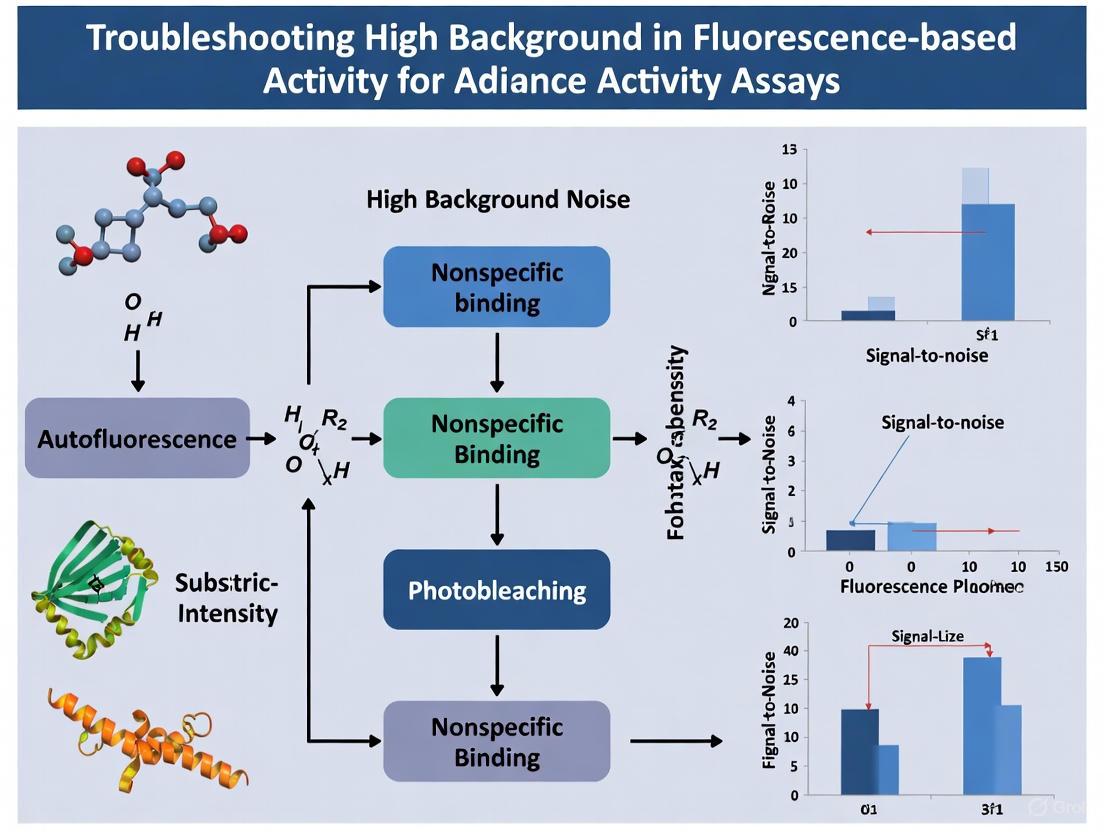
High background fluorescence is a pervasive challenge that can compromise data quality in fluorescence-based activity assays, leading to false positives/negatives and reduced screening efficiency.
A Researcher's Guide to Troubleshooting High Background in Fluorescence-Based Assays
Abstract
High background fluorescence is a pervasive challenge that can compromise data quality in fluorescence-based activity assays, leading to false positives/negatives and reduced screening efficiency. This article provides a comprehensive guide for researchers and drug development professionals, covering the foundational sources of interference, methodological best practices for assay design, systematic troubleshooting protocols, and validation strategies using statistical metrics like Z'-factor. By integrating experimental design with orthogonal validation, this resource aims to empower scientists to enhance the robustness and reliability of their screening campaigns.
Understanding the Enemy: Foundational Sources of Assay Background and Interference
What is Background Fluorescence and Why Does It Matter?
Background fluorescence, often referred to as noise, is any fluorescent signal you detect but do not want as part of your specific measurement [1]. In quantitative assays, the ability to distinguish your specific signal from this background is paramount. The quality of your data is frequently expressed as a signal-to-background ratio, sometimes calculated as ∆F/F, where ∆F is (signal – background) and F is the background itself [1]. A high ratio, achieved by having a strong specific signal and minimal background, results in greater image contrast and more reliable, quantifiable data [1].
Background fluorescence generally originates from two main categories: the instrument/imaging setup and the biological/chemical components of your sample [1]. The table below summarizes the primary sources and their characteristics.
Table 1: Common Sources of Background Fluorescence
| Source Category | Specific Source | Description of Interference |
|---|---|---|
| Sample & Reagents | Autofluorescence | Natural emission of light from sample components (e.g., cells, tissue) when excited [1] [2]. |
| Unbound or Nonspecifically Bound Dye | Fluorophores not attached to the specific target, creating diffuse or off-target signal [1] [3]. | |
| Drugs or Inducing Agents | Some compounds or their metabolites can themselves become fluorescent [1]. | |
| Vessel & Medium | Imaging Vessel | The plate or dish itself, especially plastic-bottomed ones, can fluoresce brightly [1]. |
| Imaging Medium | Cell culture media (e.g., those with phenol red or riboflavin) can contribute to background [1] [2]. | |
| Instrument Setup | Excitation Light & Camera Noise | Imperfections in the light source or detector can introduce noise [1] [4]. |
| Ambient Light | Stray light from the environment can contaminate the signal [1]. |
How Can I Troubleshoot and Reduce High Background Fluorescence?
A logical, step-by-step approach is the most effective way to troubleshoot high background. The following workflow outlines a systematic path to identify and resolve the issue.
Diagram 1: A logical workflow for troubleshooting high background fluorescence.
Based on the troubleshooting workflow, here are detailed protocols for implementing the most critical steps:
A. Optimize Reagent Concentration and Staining
- Titrate Your Antibodies or Dyes: Systematically label your sample with a titration of the fluorescent dye (using concentrations below, at, and above the suggested concentration) to find the optimal concentration that provides bright, specific signal with minimal background [1].
- Include Essential Controls: Always run controls to identify the source of background. These include a "no transfection," "no antibody," or "no dye" control to check for autofluorescence, and a "no primary antibody" control to check for secondary antibody specificity [2].
- Verify Fixation: Over-fixation can modify antigen epitopes and lead to non-specific antibody binding. Ensure your fixation procedure is appropriate for your target [3].
B. Enhance Washing and Blocking
- Increase Washing Stringency: After labeling, wash the sample 2-3 times with a buffered saline solution like PBS. Ensure extensive washing between each incubation step to remove unbound fluorophores [1] [3].
- Optimize Blocking: Use an appropriate, non-contaminated blocking buffer. If background is high, try increasing the blocking incubation time or switching to a different type of blocking buffer to better reduce non-specific binding [3].
C. Select Appropriate Vessels and Media
- Switch to Glass-Bottom Vessels: If you are using plastic-bottom dishes, which are prone to autofluorescence, switch to glass-bottom imaging vessels to significantly reduce this source of background [1].
- Use Optimized Imaging Media: For live-cell imaging, replace standard cell culture media with an optically clear buffered saline solution or a medium specifically designed to reduce background fluorescence, such as FluoroBrite DMEM [1].
D. Leverage Computational Background Correction
Software tools can retrospectively correct for uneven illumination and background drift, which are common issues.
- Use the BaSiC Tool: The BaSiC algorithm is an open-source tool available as an ImageJ/Fiji plugin. It can correct both spatial shading and temporal background drift in time-lapse microscopy data and requires very few input images for accurate correction [5].
- Apply Wavelet-Based Methods: Wavelet-based Background and Noise Subtraction (WBNS) is another powerful algorithm that effectively removes both low-frequency background intensity and high-frequency camera noise from images [6].
What Are Key Reagent Solutions for Minimizing Background?
The following table lists essential materials and reagents used in the featured experiments and troubleshooting guides to help you plan your research.
Table 2: Research Reagent Solutions for Background Reduction
| Reagent / Material | Function / Application | Key Considerations |
|---|---|---|
| PBS (Phosphate Buffered Saline) | Washing buffer to remove unbound dye [1]. | Standard buffer for maintaining pH and osmolarity during washes. |
| FluoroBrite DMEM | Low-fluorescence live-cell imaging medium [1]. | Reduces background from media while providing nutrients. |
| Glass-Bottom Dishes | Imaging vessel with low autofluorescence [1]. | Preferred over plastic for reducing vessel-borne background. |
| TetraSpeck Beads | Multi-spectral beads for system calibration [7]. | Used to measure PSF, resolution, and chromatic aberration. |
| Bovine Serum Albumin (BSA) | Common blocking agent for immunoassays [3]. | Reduces non-specific binding of antibodies. |
| Fab Fragments | Smaller antibody fragments for staining [8]. | Can reduce non-specific binding compared to full antibodies. |
How Do I Calibrate My System to Account for Background and Noise?
Regular calibration of your fluorescence microscope is critical for ensuring quantitative accuracy and reproducibility [7]. The protocol below utilizes fluorescent beads and the 3D-Speckler software.
Protocol: Microscope Calibration with 3D-Speckler
Background: This protocol uses fluorescent beads of known size to determine the resolution limits, accuracy of size measurements, and illumination flatness of your imaging system [7].
Materials and Reagents:
- TetraSpeck Fluorescent Microspheres Size Kit (e.g., 100 nm and 500 nm sizes) [7].
- Appropriate immersion medium (oil, water, silicone) for your objective.
- Fluorescence microscope.
Procedure:
- Power on your microscope system and select the objective lens for calibration.
- Prepare a slide with a dilution of 100 nm TetraSpeck beads. Ensure the beads are evenly distributed and not aggregated.
- Locate a field of view with well-spaced beads. Finely adjust the focus, camera exposure time, and light source power for optimal imaging without saturation.
- Acquire images at the wavelengths you use in your assays. For 3D calibration, acquire a z-stack with a step size of less than 200 nm.
- Repeat the imaging at several different locations on the slide for a thorough calibration.
- Repeat steps 2-5 using a slide with larger TetraSpeck beads (e.g., 500 nm).
- Analyze the images using the 3D-Speckler software to determine your system's point spread function (PSF), measure actual bead sizes for accuracy validation, and check for chromatic aberrations [7].
Troubleshooting Notes:
- If beads are too crowded, dilute the stock solution further to minimize errors in identifying individual beads.
- Routine calibration is recommended to monitor and maintain system performance over time [7].
Frequently Asked Questions
What are the most common sources of endogenous interference in fluorescence assays? Endogenous interference arises from naturally occurring molecules in your biological samples. The most prevalent sources include:
- NAD(P)H: A metabolic cofactor found in the cytoplasm; only the reduced form (NAD(P)H) is fluorescent (Ex: 340 nm, Em: 450 nm) [9].
- Flavins (FAD): Metabolic coenzymes in mitochondria; only the oxidized form is fluorescent (Ex: 380–490 nm, Em: 520–560 nm) [9].
- Structural Proteins: Collagen (Ex: 270 nm, Em: 390 nm) and elastin in tissues and extracellular matrices [9].
- Lipopigments: Lipofuscin, found in aged cells (Ex: 345–490 nm, Em: 460–670 nm) [9].
- Aromatic Amino Acids: Such as tryptophan in proteins (Ex: 280 nm, Em: 350 nm) [9].
- Pigments: Melanin in skin and hair cells (Ex: 340–400 nm, Em: 360–560 nm) [9].
Which cell culture media components cause the most background fluorescence? The table below summarizes the primary media-related culprits and their solutions.
Table: Troubleshooting Media-Related Background Fluorescence
| Component | Primary Function | Type of Interference | Recommended Solution |
|---|---|---|---|
| Phenol Red [10] [11] | pH indicator | Fluorescence quenching; increases background [10]. | Use phenol red-free medium for live-cell imaging [10] [11]. |
| Riboflavin [12] [10] | Vitamin (B2) | Autofluorescence in UV-green spectrum (Ex: 375-500 nm) [12]. | Use specialized, low-fluorescence imaging media [11]. |
| Serum (e.g., FBS) [11] | Nutrient supplement | Contains aromatic amino acids and hormones that autofluoresce [11]. | Reduce serum concentration to the minimum necessary for the experiment [11]. |
How can I confirm if my high background is due to autofluorescence? Run a no-dye control. Prepare a sample (cells or tissue) identically to your experimental samples, but omit the fluorescent dye or probe. If you detect a signal in the no-dye control under your standard imaging parameters, it confirms the presence of autofluorescence [13]. This control should be a standard part of your experimental design.
My assay was working, but now I have high background. What changed? Consider recent modifications to your protocol:
- Fixative Age: Old aldehyde fixatives (formaldehyde, glutaraldehyde) can form fluorescent aggregates. Always prepare fresh dilutions or use high-purity, electron microscopy-grade reagents [13] [14].
- Sample Processing: Excessive heat during dehydration or staining can induce autofluorescence, particularly in the red channel (530-600 nm). Ensure all steps are performed at room temperature [14].
- Contamination: Fluorescent contaminants from lint, dust, or plastic fragments from labware can introduce artifacts [12].
Troubleshooting Guides
High Background in Live-Cell Imaging
Symptoms: Consistently high background across all wells, including negative controls, when imaging live cells. Low signal-to-blank ratio.
| Possible Cause | Solution | Experimental Protocol |
|---|---|---|
| Autofluorescent Media [11] | Replace standard medium with a low-fluorescence alternative. | Protocol:1. Aspirate the standard culture medium from your cells.2. Gently wash the cells 2-3 times with pre-warmed PBS+ or a saline buffer.3. Add a specialized imaging medium (e.g., FluoroBrite DMEM) for the duration of the image acquisition [11]. |
| Reading Through Medium [11] | Switch from top to bottom optics on your microplate reader or microscope. | Protocol: In your instrument's software, select "bottom reading." This prevents the excitation and emission light from passing through the autofluorescent supernatant, significantly improving the signal-to-blank ratio, especially for adherent cells [11]. |
| Cell-Derived Autofluorescence [11] | Use red-shifted fluorophores to avoid cell-derived background in the blue-green spectrum. | Protocol: When designing your assay, choose dyes or fluorescent proteins that emit in the red or far-red region (e.g., Alexa Fluor 647, RFP) [9] [11]. Fewer endogenous molecules fluoresce in this range. |
High Background in Fixed Cells or Tissues
Symptoms: High, diffuse background in immunohistochemistry (IHC) or immunofluorescence (IF) experiments, even in areas with no target expression.
Table: Troubleshooting Fixed Sample Background
| Possible Cause | Solution | Experimental Protocol |
|---|---|---|
| Fixative-Induced Autofluorescence [14] | Reduce fixation time or use non-aldehyde fixatives. For aldehyde-fixed tissues, use a reducing agent. | Protocol:1. For formaldehyde-fixed tissues, treat with ice-cold sodium borohydride (1 mg/mL) in PBS or TBS for 30 minutes after fixation [15].2. Wash thoroughly with buffer before proceeding with staining. |
| Endogenous Enzymes [15] | Quench peroxidase and phosphatase activity. | Protocol:1. After deparaffinization and rehydration, incubate tissue sections with 3% H2O2 in methanol or water for 15 minutes at room temperature [15].2. For alkaline phosphatase, include 1-5 mM levamisole in the substrate solution. |
| Endogenous Biotin [15] | Block endogenous biotin before applying biotin-streptavidin detection systems. | Protocol:1. After antigen retrieval, incubate sections with a ready-to-use avidin/biotin blocking solution.2. Follow the manufacturer's instructions, typically involving sequential 15-minute incubations with avidin and then biotin solutions [15]. |
| Nonspecific Antibody Binding [15] [13] | Optimize antibody concentration and improve blocking. | Protocol:1. Titrate your primary and secondary antibodies to find the optimal concentration.2. Block tissues with 2-10% (v/v) normal serum from the same species as the secondary antibody for 1 hour at room temperature.3. Include 0.05% Tween-20 in wash buffers [15]. |
Systematic Workflow for Troubleshooting High Background
The following diagram outlines a logical, step-by-step process for diagnosing and resolving high background fluorescence.
The Scientist's Toolkit: Key Research Reagent Solutions
The following table lists essential reagents and materials for effectively managing endogenous interference.
Table: Essential Reagents for Managing Autofluorescence
| Reagent/Material | Function | Example Use Cases |
|---|---|---|
| Phenol Red-Free Medium [10] [11] | Eliminates fluorescence quenching and background from the pH indicator. | All live-cell fluorescence imaging experiments. |
| Specialized Imaging Media [11] [1] | Formulated with minimal autofluorescent components (e.g., low riboflavin). | Long-term live-cell imaging where nutrient support is necessary. |
| Low-Fluorescence Microplates [1] | Vessels made from specially formulated polymers or glass to minimize intrinsic fluorescence. | Sensitive assays in microplate readers; high-resolution microscopy. |
| Red/Far-Red Fluorophores [16] [9] [11] | Dyes (e.g., Alexa Fluor 647, 750) that emit at wavelengths with low cellular autofluorescence. | Multiplexing, imaging in highly autofluorescent tissues (e.g., skin, liver). |
| Antifade Mounting Media [13] | Contains agents that retard photobleaching of fluorophores and sometimes autofluorescence. | Preserving fluorescence signal in fixed samples during microscopy. |
| Sodium Borohydride [15] | A reducing agent that mitigates autofluorescence induced by aldehyde fixatives. | Treating formaldehyde or glutaraldehyde-fixed tissues prior to staining. |
| Avidin/Biotin Blocking Kit [15] | Blocks endogenous biotin to prevent non-specific signal in avidin-biotin detection systems. | IHC/IF assays using biotinylated secondary antibodies. |
| Hydrogen Peroxide (H₂O₂) [15] | Quenches endogenous peroxidase activity to reduce false-positive signal in enzymatic detection. | IHC assays using HRP-based detection (e.g., DAB). |
Frequently Asked Questions (FAQs)
What are compound-mediated quenching and autofluorescence? Compound-mediated quenching occurs when test substances absorb emitted light or otherwise interfere with the fluorescence detection process, leading to a diminished signal. Autofluorescence is the inherent fluorescence of compounds, cells, or reagents, which elevates the background signal. Both phenomena are major sources of artifactual bioactivity readouts in fluorescence-based assays, potentially causing false positives or negatives [12] [17].
Why is my assay background so high even with negative controls? High background in controls can stem from multiple exogenous sources. Common culprits include autofluorescence from culture media components like riboflavins, fluorescent compounds present in the drug or treatment being tested, or fluorescence from the plastic of the assay plate or vessel itself [12] [1]. Insufficient washing to remove unbound dye or non-specifically bound antibody can also be a factor [3] [1].
How can I distinguish between true biological activity and assay interference? True biological activity is often confirmed through the use of orthogonal assays that utilize a fundamentally different detection technology (e.g., luminescence instead of fluorescence) [12] [17]. Additionally, statistical analysis of fluorescence intensity data can flag compounds that are outliers, and these can be investigated further by reviewing raw images or running specific counter-screens for interference [12].
My signal disappears after compound addition. Is this quenching? A sudden loss of signal upon compound addition is a classic sign of potential fluorescence quenching. This can occur when the compound absorbs the excitation or emission light (inner-filter effect) or directly interacts with the fluorophore to quench its signal [17]. However, profound cytotoxicity leading to cell loss can also cause a signal reduction and should be ruled out [12].
Troubleshooting Guide: High Background and Signal Artifacts
### Problem: High Uniform Background Across the Well
| Potential Cause | Recommended Action | Underlying Principle |
|---|---|---|
| Autofluorescent Test Compound [12] [1] | 1. Pre-screen compounds: Measure fluorescence of compound alone at assay concentrations.2. Switch assay technology: Use a non-fluorescence-based method (e.g., bioluminescence).3. Use red-shifted dyes: Move to fluorophores with longer excitation/emission wavelengths. | Compounds with conjugated ring systems can absorb and emit light, increasing background noise. |
| Autofluorescence from Media [12] [1] | Use phenol-red free, low-fluorescence, or specially formulated "FluoroBrite" imaging media for live-cell assays. | Components like riboflavins and phenol red are intrinsically fluorescent in the UV-green spectrum. |
| Autofluorescence from Assay Vessel [1] | Switch from plastic-bottom plates to glass-bottom dishes or plates certified for low fluorescence. | The polystyrene used in standard culture plastic can have significant autofluorescence. |
| Insufficient Washing [3] [1] | Increase the number or volume of wash steps after labeling with fluorescent dyes or antibodies to remove unbound probe. | Excess, unbound fluorescent molecules in solution contribute to a high, diffuse background signal. |
| Antibody Concentration Too High [3] [18] | Titrate both primary and secondary antibodies to determine the optimal dilution that maximizes signal-to-noise. | High antibody concentrations promote non-specific binding to off-target sites. |
### Problem: Signal Loss or Apparent Quenching
| Potential Cause | Recommended Action | Underlying Principle |
|---|---|---|
| Signal Quenching by Compound [12] [17] | 1. Use TR-FRET: Time-resolved detection minimizes short-lived compound fluorescence interference.2. Confirm orthogonally: Use a non-fluorescent assay format.3. Dilute the compound: Determine if the effect is concentration-dependent. | Compounds can absorb excitation/emission photons (inner-filter effect) or directly quench the fluorophore. |
| Profound Cytotoxicity [12] | Include a viability stain (e.g., a nuclear dye) to check if compound treatment has caused significant cell death or detachment. | The signal is lost because the cells and the labeled target are no longer present or viable. |
| Compound-Mediated Cell Loss [12] | Check the number of analyzed objects (e.g., nuclei) per well. A large drop indicates cell loss from toxicity or adhesion failure. | Image analysis algorithms fail or report low signal if the number of cells falls below a critical threshold. |
The tables below summarize key quantitative information for planning and troubleshooting fluorescence-based assays.
| Source | Typical Spectral Range (Ex/Em) | Notes / Relevant Assays |
|---|---|---|
| Riboflavins (Media) [12] | Ex: 375-500 nmEm: 500-650 nm | Interferes with UV through GFP variant assays. |
| NADH [12] | Not Specified | Common endogenous cellular fluorophore. |
| FAD [12] | Not Specified | Common endogenous cellular fluorophore. |
| Test Compounds [12] | Varies Widely | Must be measured empirically for each library. |
Table 2: Comparison of Proximity Assay Technologies and Interference Resistance
| Assay Technology | Readout | Key Advantage for Mitigating Interference |
|---|---|---|
| FRET [17] | Fluorescence | Well-established for studying molecular proximity (1-10 nm). |
| TR-FRET [17] | Time-resolved Fluorescence | Time delay avoids short-lived autofluorescence from compounds. |
| BRET [17] | Bioluminescence | No excitation light source; eliminates autofluorescence from illumination. |
| AlphaScreen/AlphaLISA [17] | Chemiluminescence | Uses long-wavelength laser (680 nm) excitation, less prone to compound interference. |
Experimental Protocols
Protocol 1: Detecting Compound Autofluorescence
Purpose: To identify if test compounds in a library are autofluorescent and could cause high background in your specific assay conditions [12] [1].
- Preparation: Prepare a solution of your assay buffer or medium in a microplate well.
- Compound Addition: Add the test compound at the highest concentration used in your screening campaign. Include a vehicle-only control (e.g., DMSO).
- Signal Acquisition: Using the same instrument settings (exposure time, gain, wavelengths/filter sets) as your primary assay, read the fluorescence signal from the compound well and the vehicle control well.
- Analysis: A signal in the compound well that is significantly higher (e.g., >3 standard deviations) than the vehicle control indicates autofluorescence. Flag such compounds for further evaluation.
Protocol 2: Orthogonal Assay to Confirm True Bioactivity
Purpose: To confirm that a compound's activity is due to a specific biological effect and not fluorescence interference [12] [17].
- Hit Identification: Identify active compounds from your primary fluorescence-based HCS/HTS.
- Assay Selection: Develop or select a secondary assay that measures the same biological endpoint but uses a different detection method. For example:
- If your primary assay is a FRET-based kinase assay, use a radiometric or mobility-shift assay.
- If your primary assay is an imaging-based phenotypic screen, use a cell viability luminescence assay (e.g., ATP-content) to rule out cytotoxicity as the cause of the phenotype [12].
- Counter-Screening: Test the active compounds in the orthogonal assay. Compounds that show activity in both the primary and orthogonal assays are high-confidence hits, while those active only in the primary fluorescence assay are likely interferers.
Signaling Pathways and Experimental Workflows
Fluorescence Interference Mechanisms
Experimental Triage for Suspected Interference
The Scientist's Toolkit: Research Reagent Solutions
| Reagent / Material | Function in Mitigating Interference |
|---|---|
| Low-Fluorescence Imaging Medium [1] | Reduces background autofluorescence from riboflavins and other fluorescent media components during live-cell imaging. |
| Glass-Bottom Plates [1] | Provide a low-fluorescence substrate for cells, avoiding the high autofluorescence of standard plastic cultureware. |
| Time-Resolved FRET (TR-FRET) Reagents [17] | Lanthanide-based donors have long emission lifetimes, allowing a time delay that filters out short-lived compound autofluorescence. |
| Bioluminescence Resonance Energy Transfer (BRET) Substrates [17] | Enable proximity assays without an external light source, eliminating background from light-induced compound autofluorescence. |
| Anti-fade Mounting Medium [18] | Preserves fluorophore signal and reduces photobleaching in fixed-cell imaging, improving signal-to-noise over time. |
Instrumental and Environmental Contributions to Background Noise
FAQs: Identifying and Resolving Background Noise
What are the most common sources of background fluorescence? Background fluorescence, or noise, originates from two main categories: instrumental setup and sample-related factors. Instrumental sources include light from the excitation source, camera noise, and ambient light. Sample-related sources encompass autofluorescence (the natural fluorescence of the sample itself), nonspecific binding of dyes, fluorescence from the cell culture vessel or imaging medium, and fluorescent drugs or inducing agents [19].
How can I reduce high background in my cell-based assay? High background in cell-based assays can often be traced to fluorescent molecules in culture media. Common culprits are Fetal Bovine Serum and phenol red due to their aromatic side chains. To address this, consider using alternative media types optimized for microscopy or performing measurements in phosphate-buffered saline with calcium and magnesium (PBS+). Alternatively, configure the reader to take measurements from below the microplate to prevent excitation and emission light from traveling through the fluorescent supernatant [20].
My fluorescence readings are inconsistent across the plate. What should I check? Uneven signals are frequently due to pipetting inconsistencies, evaporation, or an uneven distribution of cells or precipitates. To minimize this variation, use calibrated multi-channel pipettes, employ sealing films to prevent evaporation, and ensure thorough mixing of samples. For adherent cells or heterogeneous solutions, use the well-scanning function on your plate reader (e.g., an orbital or spiral scan) to obtain a more representative measurement from across the entire well surface [20] [21].
What can I do if my signal is weak or the detector is saturated? For a weak signal, first verify that the excitation and emission filter settings match your fluorophore's spectra. You can then try increasing the integration time or adjusting the gain setting. For signal saturation, which makes quantitative comparisons unreliable, reduce the gain, shorten integration times, or dilute your samples before repeating the assay [21].
Troubleshooting Guides
Guide 1: Addressing Sample and Reagent-Based Noise
Background arising from the biological sample and reagents is a frequent challenge. The table below summarizes common issues and corrective actions.
Table: Troubleshooting Sample and Reagent-Related Background
| Source of Noise | Problem Description | Corrective Actions |
|---|---|---|
| Unbound Dye | Excess, unbound fluorophores in solution cause high background signal [19]. | Perform 2-3 washes with a buffered saline solution (e.g., PBS) after labeling. Optimize dye concentration via titration [19]. |
| Sample Autofluorescence | The sample itself (e.g., cells, tissues) emits natural fluorescence that obscures the specific signal [19]. | Switch to a fluorescent dye with longer excitation/emission wavelengths (e.g., red or far-red instead of green) [19]. |
| Culture Vessel | The plate or dish material, especially plastic, can be highly autofluorescent [19]. | Switch to a glass-bottom dish or a microplate with black walls to reduce background noise [19] [20]. |
| Imaging Medium | Standard culture media like DMEM with phenol red can be fluorescent [19] [20]. | For live-cell imaging, use an optically clear buffered saline or a specialty low-fluorescence medium like FluoroBrite DMEM [19]. |
| Fixation & Pre-treatment | In FISH assays, under-fixation or over-fixation can increase non-specific probe binding [22]. | Adhere strictly to fixation times. Use freshly prepared fixatives. For FFPE tissues, optimize enzyme digestion and heat pre-treatment times [22]. |
Guide 2: Addressing Instrumental and Measurement-Based Noise
Noise from the instrument setup and measurement parameters can be just as critical. Systematic optimization is key to resolution.
Table: Troubleshooting Instrumental and Measurement-Related Background
| Source of Noise | Problem Description | Corrective Actions |
|---|---|---|
| Microplate Color | Using the wrong microplate color can drastically affect signal-to-noise ratio [20]. | Use black-walled plates for fluorescence to quench cross-talk; white plates to reflect and amplify weak luminescence signals [20]. |
| Optical Filters | Worn, damaged, or incorrect filters can cause weak signal and high background [22]. | Check filters for mottling or damage; close the microscope shutter when not in use; replace filters per manufacturer guidelines (typically every 2-4 years) [22]. |
| Gain Setting | Incorrect gain can lead to oversaturation of the detector or an inability to detect a dim signal [20] [21]. | For bright signals, use a lower gain. For dim signals, use a higher gain. Use instruments with Enhanced Dynamic Range (EDR) for kinetic assays where signal intensity builds over time [20]. |
| Focal Height | Measuring at the wrong height within the well can result in a much weaker-than-expected signal [20]. | Adjust the focal height to be slightly below the liquid surface for homogeneous samples, or at the bottom of the well for adherent cells. Keep sample volumes consistent [20]. |
| Wash Stringency | In FISH, insufficient washing fails to remove non-specifically bound probes, increasing background [22]. | Optimize the pH, temperature, and time of wash buffers. Use freshly prepared, high-quality wash buffers to ensure effectiveness [22]. |
Experimental Protocols
Protocol 1: Optimizing Fluorescent Dye Concentration to Minimize Background
Purpose: To determine the optimal concentration of a fluorescent dye that provides a strong specific signal with minimal background from unbound dye [19].
Procedure:
- Prepare a Titration Series: Prepare a range of dye concentrations that are below, at, and above the manufacturer's suggested concentration.
- Label Samples: Label separate samples with each concentration in your titration series. Ensure all other experimental conditions (incubation time, temperature, washing steps) remain identical.
- Image and Quantify: Acquire images using standardized instrument settings. Measure the fluorescence intensity of the specific signal and an area of background for each condition.
- Calculate Signal-to-Background: For each concentration, calculate the ratio of specific signal intensity to background intensity.
- Select Optimal Concentration: Choose the dye concentration that yields the highest signal-to-background ratio, not necessarily the absolute brightest signal.
Protocol 2: Systematic Check of Instrumental Setup for Fluorescence Plate Readers
Purpose: To diagnose and correct instrumental factors contributing to high background or weak signals in microplate-based assays.
Procedure:
- Verify Plate Type: Confirm you are using a black-walled microplate for fluorescence assays to minimize background and optical cross-talk [20].
- Check Filter Settings: Ensure the instrument's excitation and emission filters/wavelengths are correctly matched to the spectral profile of your fluorophore [21].
- Optimize Gain and Integration Time:
- Using a well with a high expected signal (e.g., a positive control), increase the gain until the signal just barely avoids saturation. Use this gain setting for your experiment [20].
- If the signal is weak, increasing the integration time can help boost it.
- Adjust Focal Height:
- Use a well with a representative sample to manually adjust the focal height. The signal intensity is usually highest slightly below the liquid surface for homogeneous solutions or at the monolayer for adherent cells [20].
- Address Signal Heterogeneity:
- If your sample (e.g., adherent cells) is unevenly distributed, use the well-scanning function to take multiple readings across the well surface (orbital or spiral pattern) instead of a single point in the center [20].
Diagnostic Workflow Diagram
The following diagram outlines a logical pathway for diagnosing the source of high background noise in fluorescence experiments.
Diagnostic Path for Background Noise
The Scientist's Toolkit: Key Reagent Solutions
Table: Essential Reagents for Minimizing Background Noise
| Reagent / Material | Function in Reducing Background |
|---|---|
| Low-Fluorescence Media (e.g., FluoroBrite DMEM) | Specially formulated imaging media provides nutrients for live cells without the autofluorescence of phenol red and other compounds found in standard media [19] [20]. |
| Black-Walled Microplates | The black plastic absorbs scattered excitation and emission light, preventing it from bouncing between wells and causing cross-talk, thereby significantly reducing background noise [20] [21]. |
| Glass-Bottom Dishes | Glass exhibits much lower autofluorescence compared to standard plastic culture dishes, reducing a major source of background signal when imaging cells [19]. |
| Buffered Saline Solutions (e.g., PBS) | Using a simple, optically clear solution like PBS for imaging, instead of complex media, removes the variable of fluorescent media components and is ideal for short-term imaging [19] [20]. |
| High-Stringency Wash Buffers (e.g., SSC) | In hybridization assays like FISH, these buffers are critical for removing weakly, non-specifically bound probes while leaving the specific probe-target complex intact, thus lowering background [22]. |
| Tissue Pretreatment Kits | For solid tissue samples (e.g., FFPE), these kits use controlled enzyme and heat treatment to break down proteins that mask target sequences, improving probe access and reducing non-specific binding [22]. |
Proactive Assay Design: Methodological Strategies to Minimize Background from the Start
Troubleshooting Guides
High Background in Fluorescence-Based Assays
Q: My fluorescence assays have a high background. What are the main causes and solutions?
A: High background, or non-specific staining, is a common issue that can obscure your results. The table below outlines the primary causes and their solutions.
| Possible Cause | Recommended Solution |
|---|---|
| Antibody Concentration Too High | Titrate antibodies to find the optimal concentration; high concentrations cause non-specific binding [3] [23]. |
| Insufficient Blocking | Use an appropriate blocking buffer (e.g., BSA or serum) and consider increasing blocking incubation time [3] [24]. |
| Inadequate Washing | Increase wash steps and volumes between incubations; include a mild detergent like Tween-20 in wash buffers [3] [23]. |
| Cell or Tissue Autofluorescence | Include an unstained control; use red-shifted fluorophores (e.g., APC); employ autofluorescence quenchers [24] [25]. |
| Presence of Dead Cells | Gate out dead cells using a viability dye during flow cytometry analysis [24]. |
| Over-fixation | Optimize fixation time and concentration; strong fixation can modify epitopes and increase non-specific binding [3]. |
| Non-specific Secondary Antibody | Use cross-adsorbed secondary antibodies and always run a secondary-only control to check for non-specific binding [25]. |
Optimizing Cell Seeding Density
Q: How does cell seeding density affect my assay, and how can I optimize it?
A: Cell density is a critical factor that influences cellular metabolism, assay sensitivity, and signal robustness. An incorrect density can lead to nutrient depletion, contact inhibition, or weak signals [26] [12]. The following protocol and data will help you determine the optimal density for your experiment.
Experimental Protocol: Determining Optimal Seeding Density [26]
- Cell Preparation: Harvest cells during their exponential growth phase and create a single-cell suspension. Count cells using an automated cell counter or hemocytometer.
- Plate Seeding: Seed cells into a 96-well plate at a range of densities. A common starting range is between 1,000 and 10,000 cells per well, but this should be adjusted based on the cell line. The cited study used a series from 125 to 8,000 cells per well [26].
- Control Wells: Include wells containing medium only (no cells) as a blank control to measure background signal.
- Incubation and Assay: Culture the cells for the desired duration (e.g., 24, 48, 72 hours) and then perform your viability or fluorescence assay (e.g., MTT).
- Data Analysis: Measure the signal (e.g., absorbance at 570 nm) and plot it against the cell seeding density. Perform linear regression analysis to identify the density that provides a strong, linear signal without reaching saturation.
Quantitative Data on Optimal Seeding Density
The table below summarizes findings from recent studies on optimal cell densities for various applications.
| Cell Line / System | Assay Type | Optimal Seeding Density | Key Findings |
|---|---|---|---|
| Multiple Cancer Cell Lines (HepG2, Huh7, etc.) [26] | MTT Viability Assay | 2,000 cells/well (96-well plate) | This density yielded consistent linear viability across all six tested cell lines and time points (24, 48, 72 h) [26]. |
| OP9 Stromal Cells for hESC Co-culture [27] | Hematopoietic Differentiation | 10.4 x 10⁴ cells/cm² (1.0 x 10⁶ cells/6-well) | This density, cultured for just 24 hours before co-culture, achieved high differentiation efficiency 5 days earlier than the traditional overgrown method [27]. |
Fixation and Permeabilization Troubleshooting
Q: I am getting weak or no intracellular fluorescence signal. What could be wrong with my fixation and permeabilization?
A: Inadequate fixation and permeabilization is a common cause of failure in detecting intracellular targets. The guide below addresses frequent issues.
| Problem | Possible Cause | Recommendation |
|---|---|---|
| Weak or No Signal | Insufficient Permeabilization: The antibody cannot access the intracellular target. | Use the appropriate permeabilization agent (e.g., Saponin, Triton X-100, or ice-cold methanol) validated for your target [24]. |
| Large Fluorochrome Conjugate: Large dyes cannot efficiently penetrate membranes. | Use low molecular weight fluorochromes for intracellular staining [23]. | |
| Fixative Incompatibility: Some surface epitopes are compromised by fixation. | Test how your extracellular epitope responds to fixation before performing dual staining [24]. | |
| High Background | Over-fixation: This can modify antigen epitopes and lead to non-specific antibody binding [3]. | Optimize fixation time and concentration. Follow manufacturer protocols precisely. |
| Antibody Trapping: Excess antibody is physically trapped inside the cell. | Ensure adequate washing steps; include a detergent like Tween-20 in wash buffers [23]. | |
| Loss of Cell Morphology/Adhesion | Harsh Fixation or Permeabilization: This can detach cells from the plate surface. | For methanol permeabilization, chill cells on ice first and add ice-cold methanol drop-wise while vortexing [24]. |
Frequently Asked Questions (FAQs)
Q: Besides antibody titration, what can I do to reduce non-specific staining in fluorescence microscopy?
A: For fluorescence microscopy, several factors can be optimized:
- Photobleaching: Use an antifade mounting medium to preserve signal [25].
- Cross-talk: In multi-color experiments, use spectrally well-separated dyes and image single-stain controls in all channels to check for bleed-through [25].
- Charged Dyes: Highly charged fluorescent dyes (e.g., Alexa Fluor 647) can cause non-specific binding. Use specialized blocking buffers designed to suppress this background [25].
Q: My antibody works in other applications (e.g., Western Blot) but not in flow cytometry. Why?
A: This is a common issue. First, check the manufacturer's datasheet to confirm the antibody is validated for flow cytometry. If it is not, you can try a titration series to determine the optimal concentration. The epitope recognized by the antibody might be masked or altered in the native, folded protein as it exists on the cell surface, unlike the denatured state in a Western blot [24].
Q: Should I choose a fluorescence or bioluminescence assay for my live-cell experiment?
A: The choice depends on your primary need. The table below compares the two technologies for key experimental considerations.
| Feature | Fluorescence | Bioluminescence |
|---|---|---|
| Signal Source | External excitation light [28] | Enzymatic reaction (e.g., luciferase + substrate) [28] |
| Background Signal | Moderate to High (due to autofluorescence and light scatter) [28] | Very Low (most cells have no endogenous bioluminescence) [28] |
| Sensitivity | Moderate to High | Very High (due to low background) [28] |
| Photobleaching | Yes, can occur over time [28] | No [28] |
| Multiplexing | Excellent (with multiple fluorophores) [28] | Limited [28] |
| Best For | Imaging, flow cytometry, multiplex assays where spatial resolution is key [28] | Reporter assays, live-cell kinetics, detecting low-abundance targets where sensitivity is critical [28] |
The Scientist's Toolkit: Essential Research Reagents
| Item | Function |
|---|---|
| BSA or Normal Serum | Used in blocking buffers to reduce non-specific antibody binding by occupying reactive sites [24] [25]. |
| Cross-adsorbed Secondary Antibodies | Secondary antibodies that have been purified to remove antibodies that could cross-react with proteins from other species, crucial for multi-color staining [25]. |
| Viability Dyes (e.g., PI, 7-AAD) | Distinguish and allow gating of live cells from dead cells in flow cytometry, reducing background from dead cells [24]. |
| Permeabilization Agents (e.g., Saponin, Triton X-100) | Detergents that create holes in the cell membrane, allowing antibodies to access intracellular targets [24]. |
| TrueBlack or Similar Autofluorescence Quenchers | Reagents that chemically reduce inherent background fluorescence from cells and tissues (e.g., lipofuscin) [25]. |
| MTT Reagent | A tetrazolium salt used in colorimetric assays to measure cell viability and metabolic activity [26]. |
Supporting Diagrams
Experimental Workflow for Assay Optimization
Relationship Between Key Parameters and Signal Quality
Frequently Asked Questions (FAQs)
Q1: Why does my cell culture medium cause high background in fluorescence imaging?
Several standard cell culture media components are common sources of background fluorescence. Phenol red, a pH indicator, can quench the signal of some fluorescent dyes used in live-cell microscopy [10]. Furthermore, riboflavin (Vitamin B2), another common media component, is intrinsically autofluorescent [10]. Serum supplements, particularly Fetal Bovine Serum (FBS), also contribute significantly to background noise because they contain molecules with autofluorescent aromatic side chains [11].
Q2: When should I switch to phenol red-free media?
You should consider using phenol red-free media in the following situations [10] [29]:
- When performing live-cell fluorescent microscopy with a low-intensity fluorescent signal.
- When conducting hormone or receptor-sensitive assays, as phenol red can exhibit weak estrogen-like activity.
- When running any fluorescence-based or absorbance-based assay where the color of the medium could interfere with light-based measurements.
Q3: How does serum supplementation affect my fluorescence assay?
The autofluorescent components in FBS can severely limit the dynamic range of your assay by increasing the background noise. The Signal-to-Blank (S/B) ratio is substantially reduced when media are supplemented with higher amounts of serum (e.g., >5%) [11]. For the best results, reduce serum supplementation to the minimum necessary for your cells during the imaging or measurement period.
Q4: What are the alternatives to standard media for fluorescence assays?
- Phenol red-free media is the first alternative to eliminate the pH indicator's contribution [10] [11].
- Specialized imaging media (e.g., FluoroBrite) are commercially available and are specifically optimized to have very low autofluorescence while still providing nutrients for live cells [11].
- For short-term measurements of fixed cells, consider using a simple buffer with low autofluorescence, such as Phosphate-Buffered Saline (PBS+) [11].
Troubleshooting High Background
Media and Serum Optimization
High background fluorescence often originates from the culture environment itself. The table below summarizes the key contributors and recommended solutions.
Table 1: Troubleshooting Background from Culture Media and Serum
| Source | Problem | Recommended Solution | Expected Outcome |
|---|---|---|---|
| Phenol Red | Signal quenching; background absorbance/fluorescence [10] [29] | Use phenol red-free medium or specialized live-cell imaging medium [10] [11] | Improved signal-to-noise ratio (S/N) for sensitive detections |
| Fetal Bovine Serum (FBS) | Autofluorescence from aromatic compounds [11] | Reduce serum to a necessary minimum (e.g., ≤5%) during measurement; use serum-free or low-fluorescence serum alternatives [11] | Higher S/B ratio, increased assay dynamic range |
| Riboflavin | Autofluorescence [10] | Use media formulations low in riboflavin or specialized imaging media | Reduced background in the green emission range |
Assay Design and Detection Optimization
Beyond reagents, your assay setup and detection method are crucial for minimizing noise.
Table 2: Troubleshooting Background from Assay Design and Detection
| Source | Problem | Recommended Solution | Expected Outcome |
|---|---|---|---|
| Endogenous Cellular Components | Autofluorescence from proteins, NAD(P)H, etc., primarily in blue-green spectrum [11] | Use red-shifted or near-infrared fluorophores emitting above 600 nm [11] | Significantly higher S/B ratio by avoiding cell-derived background |
| Optics Configuration | Excitation of autofluorescent media components above the cell layer [11] | Use bottom optics when measuring adherent cells to avoid reading through the supernatant [11] | Limited excitation of media components; decreased light loss and scatter |
| Microplate Selection | High background noise from the plate itself [20] | Use black microplates for fluorescence to reduce background and cross-talk [20] | Better S/B ratios and more reliable data |
Experimental Protocols
Protocol: Transitioning to Low-Fluorescence Media for Live-Cell Imaging
This protocol is designed to adapt cells to an optimal environment for fluorescence imaging with minimal background.
Materials:
- Cells in standard growth medium
- Phenol red-free, low-fluorescence imaging medium (e.g., FluoroBrite DMEM)
- PBS+ (Phosphate-Buffered Saline with calcium and magnesium)
- Low-autofluorescence FBS (optional)
Workflow:
- Preparation: Pre-warm the phenol red-free imaging medium.
- Rinsing: For adherent cells, wash the monolayer gently with PBS+ to remove residual phenol red and serum-containing medium.
- Feeding: Replace the standard medium with the phenol red-free imaging medium. If necessary for cell health, supplement with a low concentration (e.g., 1-2%) of FBS or use serum-free formulations.
- Equilibration: Allow cells to equilibrate in the new medium for at least 30 minutes in the incubator before starting imaging experiments.
- Imaging: Proceed with live-cell imaging. The use of bottom optics on your microplate reader or microscope is highly recommended [11].
Protocol: General-Use Blocking for Reducing Non-Specific Binding in Flow Cytometry
Non-specific antibody binding is a major cause of high background. This blocking protocol mitigates Fc receptor-mediated and other non-specific interactions [30].
Materials:
- Cells (e.g., mammalian immune cells)
- Mouse serum (e.g., Thermo Fisher, cat. no. 10410)
- Rat serum (e.g., Thermo Fisher, cat. no. 10710C)
- FACS buffer
- Brilliant Stain Buffer (for panels containing SIRIGEN "Brilliant" polymer dyes) [30]
Workflow:
- Prepare Blocking Solution: Create a solution as per the table below.
- Prepare Cells: Dispense cells into a V-bottom 96-well plate. Centrifuge (5 min, 300 × g) and remove the supernatant.
- Block: Resuspend the cell pellet in 20 µL of the prepared blocking solution.
- Incubate: Incubate for 15 minutes at room temperature in the dark.
- Stain: Without washing, add 100 µL of your surface antibody staining master mix (which can also contain Brilliant Stain Buffer) directly to the cells and mix by pipetting. Proceed with your standard staining protocol [30].
Table 3: Blocking Solution Formulation
| Reagent | Dilution Factor | Volume for 1 mL Mix |
|---|---|---|
| Mouse Serum | 3.3 | 300 µL |
| Rat Serum | 3.3 | 300 µL |
| Tandem Stabilizer | 1000 | 1 µL |
| Sodium Azide (10%)* | 100 | 10 µL |
| FACS Buffer | To final volume | 389 µL |
Note: Sodium azide may be omitted for short-term assays [30].
Visual Workflows and Pathways
Pathway to Low-Noise Fluorescence Assays
This diagram outlines the logical decision-making process for troubleshooting and preventing high background fluorescence.
Top vs. Bottom Optics in Microplate Reading
This diagram visually explains why bottom optics are preferred for reducing background in cell-based fluorescence assays.
The Scientist's Toolkit: Essential Research Reagent Solutions
Table 4: Key Reagents for Low-Noise Fluorescence Experiments
| Reagent / Material | Function / Purpose | Key Consideration |
|---|---|---|
| Phenol Red-Free Medium | Base medium that eliminates interference from the phenolic pH indicator [10] [11]. | Essential for live-cell imaging and sensitive fluorescence detection. |
| Low-Fluorescence Serum | Provides necessary nutrients and factors with minimal autofluorescent contaminants [11]. | Look for specialized "low-FBS" or "charcoal-stripped" formulations to reduce background. |
| Specialized Imaging Media | Formulations (e.g., FluoroBrite) optimized for minimal autofluorescence while supporting cell health [11]. | Ideal for long-term live-cell imaging experiments. |
| Red-Shifted Fluorophores | Fluorescent dyes emitting in the red to near-infrared spectrum (>600 nm) [11]. | Avoid the blue-green region where cellular autofluorescence is highest. |
| Fc Receptor Blocking Serum | Normal serum from the host species of your antibodies to block non-specific binding to Fc receptors [30]. | Use mouse or rat serum for most murine and rat antibody-based flow cytometry. |
| Brilliant Stain Buffer | Prevents dye-dye interactions between conjugated antibodies in flow cytometry panels [30]. | Critical for panels containing SIRIGEN "Brilliant" polymer dyes. |
| Tandem Dye Stabilizer | Protects susceptible tandem dye conjugates from degradation, which can cause erroneous signals [30]. | Add to staining buffers and sample resuspension buffer to maintain data integrity. |
| Black Microplates | Microplates with black walls to minimize background noise and cross-talk between wells in fluorescence assays [20]. | Do not use for luminescence; use white plates instead to reflect and amplify signal. |
FAQs: Optimizing Your Assay with Advanced Fluorophores
What are the main advantages of using red-shifted dyes?
Red-shifted dyes (emitting in the far-red to near-infrared spectrum, typically >600 nm) offer significant benefits for fluorescence assays. The primary advantage is the reduction of background autofluorescence, as most biological samples and plastics exhibit much lower intrinsic fluorescence in these longer wavelength regions compared to the blue/green spectrum [25]. This inherently improves your signal-to-noise ratio. Furthermore, near-infrared light penetrates tissue more effectively, making these dyes superior for imaging applications in thick samples or whole organisms [31].
How do fluorogenic probes fundamentally reduce background signal?
Fluorogenic probes are designed to be dark (non-fluorescent) in their unbound state and only "turn on" upon binding to their specific target, such as a protein, nucleic acid sequence, or other biomolecule [32] [33] [34]. This mechanism drastically reduces non-specific background fluorescence because unbound probes throughout the sample do not contribute to the signal. This is often achieved through an intramolecular equilibrium—like the spirocyclization in rhodamines—where the dye switches between a fluorescent "open" form and a non-fluorescent "closed" form based on its local environment [31] [32].
My assay has high background even with a red-shifted dye. What should I check?
High background with a red-shifted dye often points to issues beyond spectral choice. Key areas to troubleshoot include:
- Probe Concentration: Titrate your dye concentration. Too high a concentration can lead to non-specific binding and aggregate formation, increasing background [35] [25].
- Sample Preparation: Inadequate fixation (both under- and over-fixation) can compromise cellular structure, leading to non-specific probe trapping and high background [36].
- Wash Stringency: Optimize the pH, temperature, and salt concentration of your wash buffers. Increased stringency helps remove loosely bound, non-specific probes [36] [25]. Always use freshly prepared buffers.
- Microscope Filters: Check that your optical filters are not worn or damaged, as this can cause signal bleed-through and a mottled background appearance [36].
Troubleshooting Guides
Problem: High Background in Fluorescence In Situ Hybridization (FISH) Assays
High background in FISH obscures critical data and can lead to erroneous conclusions [36]. The sources are varied and require a systematic approach.
1. Refine Sample Preparation:
- Cause: Improper fixation of samples, especially FFPE tissues. Under-fixation causes DNA degradation and non-specific binding, while over-fixation creates excessive cross-linking that masks targets and elevates background [36].
- Solution: Use freshly prepared fixative solutions and adhere strictly to recommended fixation times. For blood smears, using a hypotonic solution like potassium chloride during fixation can reduce background. For FFPE tissues, aim for sections 3-4μm thick [36].
2. Optimize Pre-treatment Steps:
- Cause: Insufficient pre-treatment leaves cellular debris that autofluoresces or acts as a non-specific binding site. Over-digestion damages the sample and target sequence [36].
- Solution: Use a dedicated pre-treatment kit and carefully optimize the temperature and duration of heat and enzyme treatments. Refresh pre-treatment solutions between slide batches [36].
3. Adjust Denaturation Conditions:
- Cause: Denaturation temperature and time that are too low prevent effective probe binding, while settings that are too high promote non-specific binding [36].
- Solution: Follow the FISH probe protocol precisely for denaturation temperature and time. Avoid prolonged denaturation times, which can unmask non-specific binding sites [36].
4. Master Washing Steps:
Problem: High Background in Immunofluorescence (IF) and General Fluorescence Staining
Background in these applications can stem from the instrument, sample, or staining protocol itself [35].
1. Address Sample Autofluorescence:
- Cause: The sample itself (e.g., tissues, some primary cells) fluoresces, particularly in blue/green wavelengths [25] [37].
- Solution:
- Use Red-Shifted Dyes: Switch to a dye that is excited and emits in the red or far-red spectrum [35].
- Use Autofluorescence Quenchers: Treat samples with commercial quenchers specifically designed to reduce lipofuscin-like autofluorescence [25].
- Check Drugs/Treatments: Ensure that any drugs or inducing agents used are not fluorescent themselves [35].
2. Optimize Antibody and Dye Usage:
3. Improve Blocking and Washing:
- Cause: Insufficient blocking allows antibodies to bind to non-specific sites [37] [38].
- Solution: Use an appropriate blocking serum (usually from the same species as the secondary antibody) and ensure the incubation time is adequate. Increase the number and volume of washes after antibody incubation [25] [37].
4. Control for Secondary Antibody Cross-Reactivity:
The Scientist's Toolkit: Research Reagent Solutions
The table below lists key reagents and their functions for optimizing fluorescence assays and reducing background.
| Reagent/Material | Function & Rationale |
|---|---|
| Hypotonic Solution (e.g., KCl) | Used during fixation of blood smears in FISH to reduce background fluorescence [36]. |
| CytoCell LPS 100 Tissue Pretreatment Kit | A pre-optimized kit for breaking down proteins and debris in FFPE tissues before FISH, reducing autofluorescence and non-specific probe binding [36]. |
| TrueBlack Lipofuscin Autofluorescence Quencher | A chemical reagent used to quench the natural autofluorescence of tissues and cells, particularly effective in the blue/green spectrum [25]. |
| TrueBlack IF Background Suppressor | A blocking buffer designed to suppress non-specific background caused by charged interactions, especially useful for dyes like Alexa Fluor 647 [25]. |
| Gibco FluoroBrite DMEM | A specially formulated, optically clear imaging medium that reduces background fluorescence for live-cell imaging while providing necessary nutrients [35]. |
| EverBrite Mounting Medium | An antifade mounting medium that retards photobleaching of fluorophores during microscopy, preserving signal intensity [25]. |
| Highly Cross-Adsorbed Secondary Antibodies | Secondary antibodies that have been purified to remove antibodies that could cross-react with immunoglobulins from other species, minimizing non-specific staining [25]. |
Fluorophore Properties and Performance Data
Understanding the photophysical properties of dyes is crucial for selection. The following table summarizes key metrics for a selection of Janelia Fluor (JF) dyes, illustrating the trade-offs between wavelength and lactone-zwitterion equilibrium [31].
| Dye Name | λabs (nm) | λem (nm) | Extinction Coefficient (ε, M⁻¹cm⁻¹) | Quantum Yield (Φ) | KL–Z (Equilibrium Constant) |
|---|---|---|---|---|---|
| JF502 | 502 | 533 | 57,800 | 0.71 | 4.33 |
| JF549 | 549 | 571 | 101,000 | 0.88 | 3.47 |
| JF570 | 570 | 593 | 83,600 | 0.63 | 2.24 |
| JF608 | 608 | 631 | 99,000 | 0.67 | 0.091 |
| JF646 | 646 | 664 | 5,600 | 0.54 | 0.0014 |
| JF669 | 669 | 682 | 112,000 | 0.37 | 0.262 |
| JF724 | 724 | 748 | 6,600 | 0.05 | ~0.001 |
Experimental Protocol: Validating and Optimizing a No-Wash, Live-Cell Imaging Assay Using Fluorogenic Probes
This protocol outlines the steps to implement a no-wash imaging strategy using fluorogenic probes, such as those based on HaloTag or SNAP-tag technology, which is critical for observing dynamic processes in live cells with minimal background [32].
Objective: To label a specific intracellular protein with a fluorogenic probe and image its localization and dynamics without the need for washing out unbound dye.
Materials:
- Cells expressing the protein of interest fused to HaloTag or SNAP-tag.
- Fluorogenic dye ligand (e.g., JF525-HTL, JF585-HTL, or a 5-exo-trig Cy5-SNAP-tag ligand) [31] [32].
- Appropriate culture medium and imaging medium (e.g., FluoroBrite DMEM).
- Live-cell imaging chamber.
- Confocal or epifluorescence microscope with environmental control.
Procedure:
- Cell Preparation: Plate cells expressing the fusion protein in a glass-bottom dish or plate to minimize vessel autofluorescence [35]. Grow to 60-80% confluency.
- Dye Titration: Prepare a dilution series of the fluorogenic dye ligand in DMSO or buffer. A typical starting range is 0.1 - 1.0 µM.
- Staining: Replace the culture medium with the pre-warmed imaging medium. Add the diluted dye ligand directly to the cells and incubate according to the manufacturer's recommendations (e.g., 15-30 minutes at 37°C). No wash steps are performed.
- Imaging: Directly image the cells on the microscope. Use the appropriate excitation/emission filters for your chosen dye. The signal should be localized specifically to the tagged protein, with minimal background from the unbound dye in the medium.
- Optimization: If background is still detectable, reduce the dye concentration or incubation time. Conversely, if the signal is weak, increase the concentration or incubation time.
Mechanisms and Workflows
Diagram 1: A systematic troubleshooting workflow for diagnosing and resolving high background fluorescence in imaging assays.
Diagram 2: The lactone-zwitterion equilibrium underlying the fluorogenicity of rhodamine-based dyes. Binding to a target shifts the equilibrium toward the fluorescent, open form.
Technical Guide
Bottom-Reading Optics: Principles and Setup
What are bottom-reading optics and why are they crucial for cell-based assays? Bottom-reading optics is a detection method in microplate readers where measurements are taken from the bottom of the well. This technique is particularly advantageous for cell-based fluorescence and luminescence assays, as it reduces the distance between the cell layer and the detector, thereby minimizing the signal-attenuating effects of the cell culture medium above the cells [39]. This setup leads to increased signal strength and improved data quality.
How does direct optic bottom reading differ from conventional systems? Direct optic bottom reading, available in advanced microplate readers, offers a superior optical path compared to conventional systems. It uses a series of software-controlled, motor-driven mirrors to directly focus light on the bottom of the plate, creating a free air optical path. This design eliminates the need for fiber optic bundles or light guides, which are associated with significant light loss. The result is higher signal intensity and greater sensitivity [39].
Table: Key Features of Advanced Bottom-Reading Systems [39]
| Feature | Description | Benefit |
|---|---|---|
| Direct Optic Path | Uses mirrors for a direct, free-air optical path to the well bottom. | Reduces light loss, resulting in higher signals. |
| Software-Controlled Switching | Switch between top and bottom reading modes within the control software. | No displacement or installation of additional hardware is required. |
| Automatic Z-Height Focusing | Motor-driven automatic focusing with a resolution of 0.1 mm. | Ensures optimal focal height for the strongest signal from the sample. |
| Well Scanning | Ability to scan a larger well surface (orbital, spiral, matrix). | Provides optimal results for unevenly distributed samples like adherent cells. |
Protocol: Configuring Your Reader for Optimal Bottom-Reading
- Select Reading Mode: In the instrument control software, select the "bottom" reading mode [39].
- Set Focal Height: Utilize the auto-focus feature to automatically identify the height at which the sample signal is at its highest. If auto-focus is unavailable, perform a focal height scan to determine the optimal setting manually [40].
- Implement Well-Scanning: For unevenly distributed samples (e.g., adherent cells), enable well-scanning modes such as orbital or matrix scanning to average signals across a larger area of the well, reducing variability [40].
- Validate Setup: Perform a test measurement with a known control to ensure the signal is within the dynamic range of the detector and not saturated.
Diagram: Direct Optic Bottom Reading Path. This illustrates the direct optical path via mirrors to the cell layer at the well bottom, minimizing travel through the culture medium.
Filter Set Optimization for Fluorescence Assays
What are the essential filter set components and their functions? A standard optical filter set for fluorescence microscopy or microplate reading consists of three critical components that work together to isolate the fluorescence signal [41]:
- Excitation Filter (EX): Selectively transmits a specific portion of the light from the source to excite the fluorophore.
- Dichroic Beamsplitter (DB): Reflects the selected excitation light toward the sample. It then transmits the longer-wavelength emitted fluorescence from the sample toward the detector while diverting residual excitation light.
- Emission Filter (EM): Also called the barrier filter, it further purifies the signal by blocking unwanted spectral components, such as residual excitation light or sample autofluorescence, allowing only the desired emission to reach the detector [41].
How do I select the right filter set for my assay? Filter selection is a trade-off between maximizing signal and minimizing background [41]. The key is to match the filter specifications to the spectral characteristics of your fluorophore.
- Bandpass vs. Longpass: Use bandpass emission filters when spectral discrimination is critical to maximize the signal-to-noise ratio (e.g., in multiplexing). Use longpass filters when maximum emission collection is needed and background autofluorescence is low [41].
- Bandwidth: A wider bandwidth captures more light, increasing the signal, but may lead to unacceptable overlap with the excitation light (crosstalk), increasing background. A narrower bandwidth reduces crosstalk but may weaken the signal. A bandwidth of 15-20 nm is often a good starting point [42].
- Stokes Shift: The difference between excitation and emission peaks. To prevent crosstalk, the excitation and emission filters should be separated by at least the sum of their bandwidths plus a 5 nm buffer [42].
Table: Common Filter Sets for Popular Fluorophores [43]
| Fluorophore | Excitation Filter (nm) | Emission Filter (nm) | Dichroic Beamsplitter |
|---|---|---|---|
| DAPI | 330-380 | 420-470 | Reflects UV, transmits blue |
| FITC/GFP | 450-490 | 500-550 | Reflects blue, transmits green |
| TRITC/mCherry | 540-580 | 600-660 | Reflects green/yellow, transmits red |
| Cy5 | 620-650 | 660-720 | Reflects red, transmits far-red |
Protocol: Optimizing Wavelengths and Bandwidths to Reduce Crosstalk
- Identify Spectra: Use a fluorescence spectra viewer to find the excitation and emission maxima of your fluorophore under experimental conditions [41].
- Prevent Overlap: Ensure a sufficient gap between the highest transmitted excitation wavelength and the lowest transmitted emission wavelength. A minimum 30 nm separation is recommended [40].
- Tune Settings: If using monochromators, set the excitation wavelength slightly below the fluorophore's peak and the emission wavelength slightly above its peak to maximize the Stokes shift and minimize crosstalk [42].
- Validate with Controls: Always include a negative control (no fluorophore) to measure background from crosstalk or autofluorescence. The signal from the control should be minimal.
Diagram: Fluorescence Filter Set Function. This shows how the three filter components work together to separate intense excitation light from the weaker emission signal.
Troubleshooting High Background (FAQs)
The background in my fluorescence assay is very high. What are the first things I should check? High background is a common issue often stemming from experimental protocol and instrument setup. First, check these areas [3] [1]:
- Insufficient Washing: Re-wash your sample 2-3 times with a buffer like PBS to remove unbound dye [1].
- Antibody/Dye Concentration: Titrate your antibody or fluorescent dye. A concentration that is too high is a primary cause of non-specific binding and high background [3] [44].
- Blocking: Ensure you are using an appropriate, non-contaminated blocking buffer and that the blocking time is sufficient [3].
- Excitation/Emission Crosstalk: Verify that your filter sets are appropriate for your fluorophore and that there is no spectral overlap between your excitation and emission settings [42].
I am using the correct filter set, but my background is still high. What could be the cause? The issue may lie with your sample or imaging environment [1]:
- Sample Autofluorescence: Cells and tissues naturally fluoresce, often in the blue-green spectrum. Consider switching to a red or far-red fluorescent dye that uses a different filter set to move away from autofluorescence [1] [44].
- Fluorescent Vessels or Media: Plastic culture dishes can be highly fluorescent. Switch to glass-bottom vessels for imaging. Also, check if your imaging medium or any drugs/treatments in the well contribute to background fluorescence [1].
- Non-Specific Antibody Binding: Optimize antibody concentration through titration and use Fc receptor blocking if applicable [44].
In a multiplexed assay, how can I reduce background from spectral overlap (spillover)? Spectral overlap is a major challenge in multiplexing [44].
- Panel Design: Use a panel builder tool to select fluorophores with minimal spectral overlap. Choose bright fluorophores for dimly expressed antigens and dim fluorophores for brightly expressed antigens [44].
- Filter Selection: Use bandpass filters with narrow bandwidths to better isolate signals from multiple fluorophores [41].
- Spectral Compensation: After data collection, apply mathematical compensation to correct for any remaining spillover between detection channels [44].
The Scientist's Toolkit
Table: Essential Reagents and Materials for Optimizing Fluorescence Assays
| Item | Function | Example & Notes |
|---|---|---|
| Black Microplates | Vessel for fluorescence assays; black plastic minimizes cross-talk between wells. | Polypropylene or polystyrene plates with clear glass bottoms are ideal for cell-based assays [1] [40]. |
| Low-Fluorescence Media | Medium for live-cell imaging that minimizes background autofluorescence. | Gibco FluoroBrite DMEM is an example that provides nutrients with low background [1]. |
| Blocking Buffers | Reduces non-specific binding of antibodies to the sample or vessel. | BSA, serum, or commercial protein blockers. Ensure it is fresh and not contaminated [3]. |
| Wash Buffers | Removes unbound fluorophores and reagents from the sample. | Phosphate-Buffered Saline (PBS) is standard. Perform extensive washing at each step [3] [1]. |
| Mounting Media (for fixed cells) | Preserves samples for microscopy and can contain antifade agents to reduce photobleaching. | Choose media compatible with your fluorophores (e.g., for blue, green, red) [1]. |
Systematic Troubleshooting: A Step-by-Step Protocol for Diagnosing and Resolving High Background
Why is titrating fluorophore concentration critical for reducing high background?
Answer: Titrating fluorophore concentration is a fundamental step in minimizing high background because using an antibody or dye concentration that is too high is a primary cause of nonspecific binding and off-target fluorescence, which obscures your specific signal [1] [3]. The optimal concentration provides a bright, specific signal while minimizing excess, unbound dye that contributes to background noise [25]. Systematic titration is the most direct way to find this balance and significantly improve your signal-to-background ratio.
Detailed Protocol: How to Perform a Fluorophore Titration
The goal of this experiment is to determine the fluorophore concentration that yields the highest signal-to-background ratio for your specific experimental conditions (e.g., cell type, fixation method) [25].
Materials Needed:
| Material | Function |
|---|---|
| Stock Solution of Fluorophore-Conjugated Antibody | The primary reagent whose optimal concentration is being determined. |
| Appropriate Buffer (e.g., PBS) | To create serial dilutions of the antibody. |
| Experimental Samples (Cells/Tissue) | The biological material used for the assay. |
| Control Samples (Unstained, Isotype Control) | Essential for measuring background and nonspecific binding. |
| Blocking Buffer | Reduces nonspecific binding of antibodies [3]. |
| Wash Buffer | Removes unbound fluorophore after staining [1]. |
Methodology:
- Prepare Dilutions: Create a series of dilutions for your fluorophore-conjugated antibody. It is recommended to test concentrations both below and above the supplier's suggested concentration [1]. For a primary antibody, a starting range might be from 0.5 µg/mL to 5 µg/mL [25].
- Stain Samples: Divide your samples into aliquots. Stain each aliquot with a different dilution from your series. Ensure you include the necessary controls:
- Wash: After incubation, wash all samples thoroughly 2-3 times with a generous volume of buffer (e.g., PBS) to remove any unbound fluorophore [1] [3].
- Image/Acquire Data: Analyze your samples using your imaging system or flow cytometer. Use the same instrument settings (e.g., gain, exposure, laser power) for all samples in the titration series to allow for direct comparison.
What quantitative outcomes should I expect from a titration experiment?
Answer: A well-executed titration will clearly show a point of diminishing returns, where the specific signal plateaus but the background signal continues to increase with higher concentrations. The data can be summarized and interpreted using the following table:
| Concentration | Specific Signal | Background Signal | Signal-to-Background Ratio | Interpretation |
|---|---|---|---|---|
| Low | Low | Low | Moderate | Insufficient staining. |
| Optimal | High | Low | Highest | Target concentration for experiments. |
| Too High | High (or Plateaued) | High | Lower | Excess antibody causes nonspecific binding [25]. |
The figure below illustrates the logical workflow and expected relationship between fluorophore concentration and the resulting signals.
Frequently Asked Questions (FAQs)
Q1: My titration shows high background at all concentrations tested. What else can I do? Answer: If high background persists, the issue may extend beyond antibody concentration.
- Check Blocking: Ensure you are using an appropriate blocking buffer and that the blocking time is sufficient [3].
- Include Fc Block: Use an Fc receptor blocking reagent to prevent antibodies from binding nonspecifically to Fc receptors on cells [45].
- Assay Sample Autofluorescence: Include an unstained control to determine your sample's inherent autofluorescence level. If autofluorescence is high, consider switching to a far-red fluorescent dye instead of blue/green dyes, as autofluorescence is often more intense at shorter wavelengths [25].
Q2: Can I use the same titration protocol for direct and indirect staining methods? Answer: The core principle is the same, but indirect staining (using a primary antibody followed by a fluorophore-conjugated secondary antibody) requires a two-step titration. You must first titrate the primary antibody and then titrate the secondary antibody using the optimal primary concentration. Furthermore, for indirect methods, it is critical to use highly cross-adsorbed secondary antibodies to prevent cross-reactivity and increased background [25] [45].
Q3: What are the key "Research Reagent Solutions" for tackling high background? Answer: The following table details essential reagents used to suppress high background fluorescence.
| Research Reagent | Function |
|---|---|
| TrueBlack Lipofuscin Autofluorescence Quencher | Specifically quenches tissue autofluorescence, a major source of background [25]. |
| TrueBlack IF Background Suppressor | A blocking buffer designed to reduce nonspecific binding from charged fluorescent dyes in immunofluorescence [25]. |
| Fc Receptor Blocking Reagent | Blocks Fc receptors on cells to prevent nonspecific antibody binding, a common source of high background [45]. |
| FluoroBrite DMEM or Similar Imaging Media | A low-fluorescence culture medium designed for live-cell imaging to reduce background from the medium itself [1]. |
| Antifade Mounting Medium | Reduces photobleaching during microscopy, helping to preserve signal intensity [25]. |
FAQs on Washing and Blocking
What are the most common causes of high background in fluorescence assays? High background typically stems from multiple sources, which can be categorized as follows:
- Sample-Derived Issues: Autofluorescence from cells or tissues (e.g., from endogenous molecules like FAD, FMN, NADH, or lipofuscin), over-fixation (especially with glutaraldehyde), or tissue that is too thick [46] [47] [48].
- Assay Protocol Issues: Insufficient blocking, insufficient washing between steps, or using antibody concentrations that are too high [46] [47].
- Reagent-Related Issues: Non-specific antibody binding, cross-reactivity of secondary antibodies, or fluorescent media components like phenol red and serum [12] [11] [48].
How can I effectively reduce autofluorescence from my samples? Several strategies can mitigate autofluorescence:
- Use Red-Shifted Fluorophores: Choose dyes that emit in the red or near-infrared spectrum (>600 nm) to avoid the blue-green region where cellular autofluorescence is highest [11] [49].
- Chemical Quenching: Treat samples with autofluorescence quenchers, such as TrueBlack Lipofuscin Autofluorescence Quencher or the ReadyProbes Tissue Autofluorescence Quenching Kit [48].
- Optimize Media: For live-cell assays, use phenol red-free media and reduce serum supplementation to a necessary minimum. Consider specialized low-fluorescence media like FluoroBrite [11].
- Fixation Control: Avoid glutaraldehyde fixative or wash fixed samples with sodium borohydride to remove free aldehyde groups that cause autofluorescence [46].
My blocking doesn't seem to be working. What can I improve? Insufficient blocking is a major cause of high background. Enhance your blocking strategy by:
- Increasing Incubation Time: Extend the blocking incubation period [46].
- Changing the Blocking Agent: Consider using normal serum from the same species as your secondary antibody or a charge-based blocker like Image-iT FX Signal Enhancer [47] [48].
- Fc Receptor Blocking: When working with immune cells, use normal serum or Fab fragment antibodies to block Fc receptors and prevent non-specific antibody binding [48].
What is the best way to optimize washing steps? Proper washing is critical for removing loosely bound reagents. Ensure you are following protocol guidelines precisely. Increase the number or duration of washes, and ensure the washing buffer adequately covers the sample. Using buffers like TBS-Tween can sometimes be more effective than PBS-Tween for certain tissues [46] [47].
Troubleshooting Guide: High Background
| Problem Category | Specific Issue | Recommended Solution |
|---|---|---|
| Sample & Staining | High autofluorescence | Use red-shifted fluorophores; apply chemical quenchers; check and optimize fixation method [46] [11] [48]. |
| Non-specific antibody binding | Titrate antibodies to find optimal concentration; use cross-adsorbed secondary antibodies; ensure proper blocking [46] [48]. | |
| Tissue is too thick | Use thinner tissue sections for analysis [46]. | |
| Assay Reagents | Fluorescent media components | Switch to phenol red-free, low-serum, or specialized low-fluorescence media [11]. |
| Secondary antibody cross-reactivity | Run a secondary-only control; if staining occurs, change the secondary antibody [46] [47]. | |
| Instrumentation | Signal amplification too high | Reduce amplification incubation time and/or dilute the secondary antibody [46]. |
| Spectral overlap in multiplexing | Adjust light sources and filters; choose fluorophores with non-overlapping spectra [46] [50]. |
Experimental Protocol: A Systematic Workflow for Background Reduction
The following diagram and protocol outline a step-by-step approach to diagnosing and resolving high background issues.
Title: High Background Troubleshooting Workflow
Procedure:
- Run an Unstained Control: Prepare a sample that undergoes the entire staining protocol but without the addition of any primary or secondary antibodies. This control identifies autofluorescence originating from the sample itself, media, or fixatives [47] [48].
- If background is high: Proceed to Step 3.
- If background is low: Proceed to Step 2.
- Run a Secondary Antibody-Only Control: Prepare a sample stained only with the secondary antibody. This identifies non-specific binding or cross-reactivity of the secondary antibody [46] [47].
- If background is high: Proceed to Step 4.
- If background is low: The issue likely lies with the primary antibody concentration or specificity.
- Address Autofluorescence:
- Strategy 1 (Proactive): Switch your fluorophore to a red-shifted dye (emitting >600 nm) to avoid the high autofluorescence region of the spectrum [11] [49].
- Strategy 2 (Reactive): Apply a commercial autofluorescence quenching reagent, such as TrueBlack Lipofuscin Autofluorescence Quencher, according to the manufacturer's instructions [48].
- Address Non-Specific Binding:
- Optimize Blocking: Extend the blocking incubation time and/or change your blocking agent (e.g., to normal serum or a specialized blocking solution) [46] [48].
- Titrate Antibodies: Perform a dilution series for both primary and secondary antibodies to find the concentration that provides the best signal-to-noise ratio [46] [47].
- Use Cross-Adsorbed Secondary Antibodies: Employ secondary antibodies that have been cross-adsorbed against immunoglobulins from irrelevant species to minimize cross-reactivity [48].
Research Reagent Solutions
The following table lists key reagents used to implement the strategies discussed above.
| Reagent Category | Example Products | Function & Application |
|---|---|---|
| Low-Fluorescence Media | FluoroBrite DMEM [11] | Reduces background from phenol red and other autofluorescent media components in live-cell assays. |
| Autofluorescence Quenchers | TrueBlack Lipofuscin Autofluorescence Quencher, ReadyProbes Tissue Autofluorescence Quenching Kit [48] | Chemically reduces autofluorescence from lipofuscin, aldehyde fixatives, and other endogenous molecules in fixed samples. |
| Cross-Adsorbed Secondaries | Highly Cross-Adsorbed Secondary Antibodies (Biotium), Cross-Adsorbed (min X) Secondaries (Jackson ImmunoResearch) [48] | Minimizes non-specific binding and cross-reactivity in multiplexed experiments or species-on-species staining. |
| Specialized Blockers | Image-iT FX Signal Enhancer, Normal Serum [47] [48] | Improves blocking efficacy to prevent non-specific antibody binding, with some products using charge-based blocking. |
| Red-Shifted Fluorophores | Alexa Fluor 647, Super Bright 702, CF740 Tyramide [51] [11] [48] | Fluorophores emitting at longer wavelengths (>600 nm) to avoid the high cellular autofluorescence typical of the blue-green spectrum. |
Frequently Asked Questions
What are the most critical factors to control during hybridization to minimize background? The most critical factors are temperature, probe concentration, and time. Using excessively high probe concentration or overly long incubation times are primary causes of high background [3]. The hybridization temperature must be precisely optimized for your specific probe sequence and tissue type, as even small deviations can promote non-specific binding [52].
How can I determine the correct stringency for my post-hybridization washes? Stringency is controlled by temperature, salt concentration (SSC), and detergent use [52]. Higher temperatures and lower salt concentrations increase stringency, washing away imperfectly matched probes. The optimal stringency depends on your probe type and length. For shorter or more complex probes, use lower temperatures (up to 45°C) and lower stringency (1–2x SSC). For single-locus or large probes, use higher temperatures (around 65°C) and higher stringency (below 0.5x SSC) [52].
My background is high despite optimized hybridization. What other steps should I check? High background can often be traced to steps before and after hybridization. Ensure sufficient blocking (1–2 hours with an appropriate buffer like MABT with BSA or serum) and thorough washing after the antibody incubation [3] [52]. Also, verify that your sample did not dry out at any point after hybridization begins, as this causes non-specific binding and high background [52].
Troubleshooting High Background
Primary Causes and Solutions
| Troubleshooting Focus | Specific Parameter to Adjust | Recommended Optimization Strategy |
|---|---|---|
| Probe & Hybridization | Probe Concentration [3] | Titrate the probe to find the lowest concentration that gives a clear specific signal. |
| Hybridization Temperature [52] | Test a range (e.g., 55–65°C); optimize for each tissue and probe. Use a calibrated water bath or heat block. | |
| Hybridization Time [3] | Avoid over-incubation. Optimize time (e.g., 1 hour to overnight) rather than using the maximum. | |
| Post-Hybridization Washes | Wash Stringency [52] | Increase stringency by raising wash temperature and/or lowering salt concentration (SSC) in steps. |
| Wash Duration & Volume [3] | Perform extensive washing (e.g., 3x5 min) with ample buffer volume in each step to remove unbound probe. | |
| Sample & Protocol | Blocking Efficiency [3] | Ensure complete blocking. Increase blocking time or change blocking reagents (e.g., BSA, milk, serum). |
| Sample Drying [52] | Never let slides dry out from the hybridization step onwards. Use a humidified chamber. |
Experimental Optimization Protocols
Protocol 1: Titrating Probe Concentration and Hybridization Temperature
This protocol systematically identifies the optimal probe concentration and hybridization temperature to maximize signal-to-noise ratio [3] [52].
Materials:
- Prepared slides with target sample
- Probe stock solution
- Hybridization buffer (e.g., containing formamide, salts, Denhardt's solution, dextran sulfate) [52]
- Humidified hybridization chamber
- Precision water bath or heat block
Method:
- Prepare Probe Dilutions: Serially dilute the probe stock in hybridization buffer. A suggested starting range is 1:50 to 1:1000, depending on the initial concentration [3].
- Denature Probes: Heat each diluted probe to 95°C for 2 minutes in a PCR block, then immediately chill on ice [52].
- Apply Probes: Drain pre-hybridization buffer from slides and apply the different probe dilutions to identical sample sections. Cover with a coverslip.
- Parallel Hybridization: Incubate slides in a humidified chamber at different temperatures (e.g., 55°C, 58°C, 60°C, 62°C, 65°C) overnight [52].
- Stringent Washing: The next day, perform identical stringent washes for all slides [52]:
- Wash with 50% formamide in 2x SSC, 3x5 min at 37–45°C.
- Wash with 0.1-2x SSC, 3x5 min at a temperature based on probe type.
- Detection and Analysis: Complete the detection protocol. Compare the signal intensity and background levels across the different conditions to identify the optimal combination.
Protocol 2: Optimizing Post-Hybridization Wash Stringency
This protocol fine-tunes wash stringency to remove non-specifically bound probe without diminishing the specific signal.
Materials:
- Hybridized slides (from Protocol 1 or a standard run)
- Wash buffers: 2x SSC and 0.1x SSC
- Water baths set to 45°C, 55°C, 65°C
Method:
- Initial Formamide Wash: After hybridization, wash all slides with 50% formamide in 2x SSC for 3x5 minutes at 37–45°C [52].
- Differential Stringency Wash: Divide the slides into groups for the second wash step.
- Detection and Analysis: Complete the remaining detection steps identically for all slides. Compare the results to determine the wash condition that yields the cleanest background while retaining a strong specific signal.
Relationship Between Protocol Parameters and Background
The diagram below illustrates how key experimental parameters influence background fluorescence and how they are interconnected.
The Scientist's Toolkit: Key Research Reagent Solutions
The following table details essential reagents and their roles in achieving clean hybridization.
| Item | Function / Purpose in Optimization | Key Consideration |
|---|---|---|
| Formamide [53] [52] | Chemical denaturant in hybridization buffer; lowers the required hybridization temperature and helps control stringency. | Concentration must be optimized (e.g., via titration) as it strongly influences signal brightness and specificity [53]. |
| Saline Sodium Citrate (SSC) [52] | Provides ionic strength in wash buffers. Lower SSC concentrations (e.g., 0.1x) increase wash stringency. | A 20x stock solution (3M NaCl, 0.3M sodium citrate) is commonly prepared and diluted for use. |
| Blocking Reagent(e.g., BSA, Milk, Serum) [3] [52] | Reduces non-specific binding of probes and detection antibodies to the sample. | The choice of blocker (e.g., MABT + 2% BSA) and incubation time (1-2 hours) may require optimization for different tissues [3]. |
| Proteinase K [52] | Digests proteins to permeabilize the tissue, allowing probe access to the target. | Concentration and time are critical. Over-digestion damages morphology; under-digestion reduces signal. Perform a titration [52]. |
| Deionized Formamide | A high-quality formamide for use in hybridization buffers. | Deionization removes ions that can interfere with hybridization, improving consistency and reducing background. |
| Dextran Sulfate [52] | A volume-excluding agent in hybridization buffer that increases the effective probe concentration, enhancing hybridization efficiency. | Typically used at a final concentration of 10% in the hybridization mix. |
Why is controlling for cytotoxicity and artifacts critical in fluorescence assays?
In high-content screening (HCS) and other fluorescence-based assays, test compounds can cause cellular injury or death (cytotoxicity) or possess intrinsic optical properties that interfere with fluorescence detection. These factors can produce false positives, false negatives, or obscure the true activity of a compound at the biological target of interest, leading to invalid conclusions and wasted resources [12]. Recognizing and mitigating these sources of error is a fundamental step in assay validation and troubleshooting.
Troubleshooting Guide: Common Artifacts and Solutions
The table below summarizes frequent issues, their possible causes, and recommended solutions.
| Problem | Possible Cause | Recommended Solution |
|---|---|---|
| High Background Fluorescence | Insufficient washing steps; high antibody concentration; autofluorescence from media/components; non-specific antibody binding [3] [12] [20]. | Increase PBS washing after each step [3]; titrate antibodies for optimal signal-to-noise [3] [54]; use phenol red-free media and black microplates [20] [55]; include Fc receptor blocking steps [54]. |
| High Signal Variability | Uneven cell distribution; inconsistent focal height; meniscus formation in wells; low number of measurement flashes [20]. | Use well-scanning mode to measure multiple areas [20]; optimize and standardize focal height for sample type [20]; use hydrophobic plates and avoid detergents to minimize meniscus [20]; increase flash number to 10-50 for better averaging [20]. |
| Unexpected Signal Loss (Quenching) | Compound itself is a fluorescence quencher; colored or pigmented compounds alter light transmission [12]. | Manually review images for abnormalities [12]; run an orthogonal assay with a different detection technology (e.g., luminescence) [12]. |
| False Positives in Viability Readouts | Dead cells show non-specific antibody binding or autofluorescence [12] [54]. | Include a cell viability dye (e.g., propidium iodide, 7-AAD) to gate out dead cells during analysis [54]. |
| Compound Autofluorescence | Test compounds are inherently fluorescent in the detection channel [12]. | Analyze unstained, compound-treated cells to check for elevated signal [12] [54]; use red-shifted fluorophores to avoid common autofluorescence spectra [12]. |
Experimental Protocol: Assessing Compound Cytotoxicity
This protocol provides a detailed methodology for determining the cytotoxicity of chemical compounds using fluorescent proteins (e.g., GFP, RFP), which is similar in principle to the LDH assay but does not require a chromogenic substrate [55].
1. Generation of Reporter Cell Line:
- Generate a cell line that stably expresses a fluorescent protein (e.g., GFP or RFP). The use of lentiviral vectors for stable genomic integration is recommended for reproducible, long-term expression. Avoid simple transfection with non-integrating vectors, as the presence of selecting antibiotics can interfere with viability measurements [55].
2. Cell Seeding and Compound Treatment:
- Seed the modified cells into the wells of a microplate. A 96-well plate format is suitable for high-throughput screening. The provided study used 20,000 cells per well for monocultures and 10,000 cells of each line per well for co-cultures [55].
- After a suitable attachment period (e.g., 24 hours), replace the growth medium with a medium containing the test compounds at the desired concentrations. Include control wells: untreated control wells (positive viability control) and lysis control wells (negative viability control, for maximum signal) [55].
3. Cell Lysis and Sample Preparation:
- Following the compound incubation period (e.g., 48 hours), add a detergent (e.g., 0.5-1% Triton X-100) to the lysis control wells and the experimental wells to lyse all cells and release the fluorescent protein. Mix the contents by pipetting and incubate for 20 minutes [55].
- Centrifuge the microplate at 1000g for 10 minutes to sediment cell debris and detached cells [55].
4. Signal Measurement and Analysis:
- Transfer a sample of the supernatant (e.g., 50 µl) from each well to a new plate.
- Measure the fluorescence in the supernatant using a microplate reader. The provided study used the following settings on a BMG Clariostar reader [55]:
- For GFP: Excitation = 488 nm, Emission = 516 nm
- For RFP: Excitation = 554 nm, Emission = 585 nm
- Calculate the percentage of cytotoxicity based on the fluorescence signal relative to the untreated (low control) and fully lysed (high control) wells.
Experimental Workflow: Cytotoxicity Assessment
The diagram below outlines the logical workflow for the cytotoxicity assay protocol.
Frequently Asked Questions (FAQs)
Q1: My negative control wells show high fluorescence. What could be wrong? This typically indicates high background. Common causes include autofluorescence from the culture medium (e.g., from phenol red or riboflavins), insufficient blocking leading to non-specific antibody binding, or contamination from lint or dust on the microplate [3] [12] [20]. Switch to phenol red-free medium, use black microplates to reduce background noise, and ensure your workspace and microplates are clean [20] [55].
Q2: How can I confirm that a "hit" from my screen is not due to compound autofluorescence? Run a counter-screen by analyzing the fluorescence of the compounds in the absence of any biological system or fluorescent reporter. Prepare wells containing the compound in buffer alone, using the same microplate and reader settings as your primary assay. A significant signal indicates compound autofluorescence [12]. Additionally, implementing an orthogonal, non-fluorescence-based assay (e.g., a luminescence assay) can confirm true bioactivity [12].
Q3: What is the best way to handle compounds that cause rapid cell death or detachment? Substantial cell loss can invalidate image analysis algorithms that depend on a minimum cell count. One strategy is to use adaptive image acquisition, where the instrument captures multiple fields of view until a preset threshold number of cells is analyzed. However, this can be time-consuming. A more robust approach is to include a viability marker or a fluorescent protein release assay (as described above) that can be measured from the supernatant, which is less affected by cell adhesion [12] [55].
The Scientist's Toolkit: Key Research Reagent Solutions
Essential materials and reagents for controlling artifacts in fluorescence-based assays are listed below.
| Item | Function |
|---|---|
| Phenol Red-Free Medium | Eliminates background autofluorescence contributed by the pH indicator phenol red, which is common in standard culture media [20] [55]. |
| Black/Wall Microplates | Black microplates reduce background noise and crosstalk in fluorescence assays. White microplates reflect light to enhance weak signals in luminescence assays [20]. |
| Fc Receptor Blocking Reagent | Blocks non-specific binding of antibodies to Fc receptors on immune cells (e.g., monocytes, macrophages), reducing false-positive signals [54]. |
| Cell Viability Dyes | Dyes like propidium iodide (PI) or 7-AAD are impermeable to live cells but stain dead cells, allowing them to be gated out during flow cytometry or image analysis [54]. |
| Validated Antibodies | Antibodies that have been specifically validated for application (e.g., flow cytometry, ICC) and titrated for optimal concentration ensure specificity and a high signal-to-noise ratio [54]. |
| Fluorescent Protein Vectors | Lentiviral or other vectors for stable expression of fluorescent proteins (GFP, RFP) enable the creation of reporter cell lines for cytotoxicity and other functional assays [55]. |
| Triton X-100 | A detergent used to lyse cells in control wells to establish the maximum signal (e.g., for LDH or fluorescent protein release assays) [55]. |
Frequently Asked Questions
What are the most common causes of high background in fluorescence-based assays? High background typically stems from reagent-related issues, insufficient washing, or suboptimal experimental conditions. Common causes include antibody concentration being too high, insufficient blocking of the sample, non-specific binding of antibodies (especially via Fc receptors), cross-reactivity of secondary antibodies, and autofluorescence from cells or old fixatives [56] [3] [57]. In flow cytometry, poor compensation and spillover spreading can also significantly increase perceived background [58] [45].
How can I determine if my secondary antibody is causing high background? Secondary antibody issues often involve cross-reactivity or excessive concentration. Use an isotype control to check for cross-reactivity and ensure the secondary antibody is specific to the host species of your primary antibody [56] [57]. Prepare secondary antibodies freshly and titrate them to find the optimal concentration that provides a clear signal without background [3] [45]. Indirect detection, while sensitive, is more prone to this issue; using directly conjugated primary antibodies can eliminate it entirely [45].
My filters and optical components are clean and aligned. Could the reagents themselves be the problem? Yes, reagents degrade over time. Tandem dyes (e.g., PE-Cy7) are particularly sensitive and can dissociate, especially if exposed to fixation agents for extended periods or excessive light, leading to high background [45]. Fixation solutions like formalin can develop high autofluorescence if old or improperly stored [56] [57]. Always protect fluorescent reagents and stained samples from light and use fresh fixation solutions diluted from stable stocks [59] [57].
Troubleshooting Guide: Reagents and Filters
The following table summarizes common issues and validation steps for critical reagents and optical components.
| Component | Common Problems | Validation & Replacement Guidelines |
|---|---|---|
| Antibodies (Primary & Secondary) | Too high concentration; Non-specific binding; Fc receptor binding; Cross-reactivity [56] [3] [45]. | Titrate to find optimal concentration [58] [45]; Use Fc receptor blocking reagents [58] [45]; Validate with isotype and FMO controls [58] [45]. |
| Fluorophores/Dyes | Photobleaching; Tandem dye dissociation; Mismatched laser/filter setup [45]. | Protect from light [59] [45]; Check instrument laser and filter compatibility [59] [45]; Use bright fluorophores for low-abundance targets [45]. |
| Cells & Samples | Autofluorescence (from dead cells, media like phenol red, or old samples) [20] [56] [45]. | Use fresh, viable cells [45]; Include viability dyes [45]; Use media without phenol red for imaging [20]; Run unstained controls [56] [57]. |
| Buffers & Fixatives | Old or improper fixatives (e.g., expired formalin); Detergents causing high background [56] [57] [45]. | Prepare fresh fixative dilutions [57]; For intracellular staining, consider alcohol permeabilization as an alternative to detergents [45]. |
| Optical Filters | Incorrect filter set for fluorophore; Signal bleed-through [59] [20]. | Use a spectra viewer to match filters to fluorophore excitation/emission profiles [45]; Ensure narrow band pass filters to minimize spillover [58]. |
Experimental Protocols
Protocol 1: Titrating a Fluorescent Antibody for Flow Cytometry
Titration is essential to find the antibody concentration that delivers the best stain index (a measure of signal-to-noise ratio), not just the brightest signal [58] [45].
- Preparation: Prepare a suspension of at least 4 million cells expressing your target antigen. Split into several aliquots (e.g., 5-6 tubes).
- Antibody Dilutions: Prepare a series of doubling dilutions of the antibody (e.g., 1:50, 1:100, 1:200, 1:400, 1:800) in an appropriate buffer. Include an unstained control.
- Staining: Add each antibody dilution to a cell aliquot. Incubate in the dark for the recommended time (e.g., 20-30 minutes on ice).
- Wash and Resuspend: Wash cells with buffer, centrifuge, and resuspend in a fixed volume for acquisition.
- Acquisition and Analysis: Run all samples on the flow cytometer. For each dilution, plot the fluorescence intensity and calculate the stain index using the formula: (Median Positive Population - Median Negative Population) / (2 × SD of Negative Population). The dilution with the highest stain index is optimal [58].
Protocol 2: Validating Filter Performance and Specificity
Correct filter sets are critical for minimizing spectral bleed-through (spillover) [59] [58].
- Single-Stained Control Preparation: Use compensation beads or cells stained with a single fluorophore. Prepare one control for each fluorophore in your panel [45].
- Data Acquisition: Acquire data from each single-stained control, ensuring the positive population is bright and well-defined (>5,000 events) [45].
- Spillover Assessment: Check the signal in all detector channels. A fluorophore should show a strong signal in its primary detector and minimal signal in others. Significant signal in a secondary channel indicates spectral overlap, which must be compensated for electronically [58] [45].
- Filter Verification: Use an online spectra viewer to confirm that your instrument's optical filters appropriately cover the excitation and emission peaks of your fluorophores. Mismatches here can lead to a dramatic loss of signal [45].
The Scientist's Toolkit: Research Reagent Solutions
| Reagent/Material | Function in Troubleshooting High Background |
|---|---|
| Fc Receptor Blocker | Blocks non-specific binding of antibodies to Fc receptors on immune cells, a major source of background [58] [45]. |
| Viability Dye (e.g., DAPI, PI, 7-AAD) | Distinguishes dead cells (which are highly autofluorescent and bind antibodies non-specifically) from live cells during analysis [45]. |
| Antibody Capture Beads | Used as a consistent negative control and for creating robust single-stained controls for flow cytometry compensation, superior to fragile cells [45]. |
| Normal Serum | Used as a blocking agent; should be from the same species as the secondary antibody to reduce non-specific binding [56] [57]. |
| Hydrophobic Microplates | For microplate readers, these plates help reduce meniscus formation, which can distort absorbance and fluorescence measurements [20]. |
| Alternative Permeabilization Reagents | Switching from detergents (e.g., Triton X-100) to alcohol-based permeabilization (methanol/acetone) can reduce high background for some intracellular targets, though it may affect some fluorophores [45]. |
Experimental Workflow for Validation
This workflow provides a logical pathway for diagnosing and resolving high background issues related to reagents and filters.
Reagent and Filter Troubleshooting Workflow
Step-by-Step Filter and Reagent Validation Protocol
This detailed procedure ensures your optical setup and reagents are optimized for minimal background.
Filter and Reagent Validation Protocol
Following this structured approach to validate and replace critical reagents and filters will systematically address key sources of high background, leading to more reliable and publishable data in fluorescence-based activity assays.
Ensuring Assay Robustness: Validation Metrics and Orthogonal Assays for Hit Confirmation
The Scientist's Toolkit: Key Reagents for Fluorescence-Based Assays
Table 1: Essential Reagents and Materials
| Reagent/Material | Function in Assay | Examples & Notes |
|---|---|---|
| Fluorescent Dyes & Probes | Signaling unit; produces measurable signal upon binding or reaction. | Small organic dyes (e.g., Fluorescein, Rhodamine); Fluorogenic molecules that turn on upon target interaction [60]. |
| Quenchers | Reduces background signal by quenching donor fluorescence via FRET until a specific event (e.g., cleavage) occurs [60]. | DABCYL, QSY dyes, Black Hole quenchers [60] [61]. |
| Positive & Negative Controls | Used to calculate assay performance metrics and define the dynamic range of the assay [62]. | A known activator (agonist) and inhibitor (antagonist) of the target biology. |
| S-Adenosylmethionine (SAM) Analogues | Co-factor for methyltransferase assays; can be fluorescently labeled for displacement assays [63]. | FL-NAH (fluorescein N-adenosylhomocysteine) [63]. |
Frequently Asked Questions (FAQs)
1. What are the key metrics for quantifying the quality of a high-throughput screening (HTS) assay? The three fundamental metrics for assessing assay quality are the Z'-factor, the Signal-to-Background (S/B) Ratio, and the Coefficient of Variation (CV). These parameters collectively describe the robustness, dynamic range, and variability of your assay, determining its suitability for screening purposes [62] [64] [65].
2. My assay has a high Z'-factor, but I keep missing obvious hits. What could be wrong? A high Z'-factor calculated from an extremely strong positive control may not be representative of the more subtle hits you seek in a screen [62]. If your positive control induces a much stronger response than your actual hits, the assay's sensitivity to weaker, but still biologically relevant, effects may be low. To troubleshoot, include a moderate or mild positive control, or use a decreasing dose of a strong control to better understand the sensitivity of your assay to realistic hits [62].
3. How can I reduce high background noise in my fluorescence-based assay? High background can be caused by various factors, including autofluorescence of plate materials, light scattering due to uneven surfaces, or incomplete quenching of free fluorescent probes [66]. To address this:
- Use Fluorogenic Probes: Employ probes that are dark (quenched) in their unbound state and fluoresce only upon interaction with the target (e.g., molecular beacons) [60].
- Optimize Optical Surfaces: For imaging in microfluidic devices, ensure the substrate surface is extremely flat (e.g., using silicon-on-insulator wafers) to prevent light scattering that compromises filter performance and increases background [66].
- Validate Filter Sets: Ensure your excitation and emission filters are appropriate for your fluorophore and that the optical path is correctly aligned, as the angle of incident light can affect filter performance [66].
4. Where should I place controls on my assay plate? The standard practice of placing controls only in the first and last columns can make your assay susceptible to spatial biases like edge effects [62]. A better strategy is to spatially alternate positive and negative controls in the available wells (e.g., in the first and last columns) so they appear on multiple rows and columns. For custom plates, random placement is ideal, though often impractical in large screens [62].
Core Concepts: The Quantitative Metrics
Table 2: Assay Quality Metrics at a Glance
| Metric | Formula | Interpretation | Ideal Range | ||
|---|---|---|---|---|---|
| Z'-Factor [62] [65] | `1 - [3*(σp + σn) / | μp - μn | ]`σ = standard deviation; μ = mean; p = positive control; n = negative control | Overall assay robustness. Accounts for both the dynamic range and data variation of controls. | 0.5 – 1.0 (Excellent) |
| Signal-to-Background (S/B) Ratio [65] | μp / μn (for agonist mode) |
Measures the fold-change between positive and negative controls. Does not account for variability. | >1. The higher, the better. | ||
| Coefficient of Variation (CV) | (σ / μ) * 100%σ = standard deviation; μ = mean |
A measure of well-to-well variability, expressed as a percentage. Lower values indicate higher precision. | <10%. The lower, the better. |
Interpreting the Z'-Factor: The Z'-factor is a dimensionless value that is widely used as a benchmark for HTS assay quality [64].
- Z' > 0.5: Indicates an excellent assay robust enough for screening [65].
- 0 < Z' ≤ 0.5: Indicates a marginal or "yes/no" type assay. This range may be acceptable for complex biological assays where hits are subtle but valuable [62].
- Z' < 0: Indicates a failed assay where the positive and negative control signals are not separable [62].
Troubleshooting Guide: From Problem to Solution
Problem 1: Low Z'-Factor due to high variability or low signal window
- Potential Cause: High CV in control wells.
- Solution: Check reagent stability and pipetting accuracy. Ensure cells are seeded uniformly and are at a consistent confluence. Perform a plate uniformity assessment to identify spatial patterns of variability [67].
- Potential Cause: Inadequate dynamic range (low S/B ratio).
- Solution: Optimize the concentration of key reagents (e.g., enzyme, substrate, cells). Titrate your positive control to ensure it produces a robust but realistic signal. Extend incubation times to increase the assay signal [62].
Problem 2: Inconsistent results between replicate plates
- Potential Cause: Edge effects or spatial bias.
- Solution: Avoid using only the outer wells for controls and samples. Use a plate layout that intersperses controls across the plate to better account for intra-plate variation [62]. For long-running screens, use a pre-made, frozen control plate that is thawed batch-by-batch to minimize preparation variability [62].
- Potential Cause: Reagent instability or DMSO sensitivity.
Problem 3: High background in fluorescence-based assays
- Potential Cause: Autofluorescence of plates or media components.
- Solution: Use validated, low-fluorescence microplates and phenol-red free media. Centrifuge reagents to remove particulate matter.
- Potential Cause: Inefficient quenching or direct excitation of the acceptor.
Experimental Protocols for Validation
Protocol 1: Plate Uniformity and Signal Variability Assessment
This procedure evaluates the signal consistency and dynamic range across the entire microplate [67].
- Prepare Assay Solutions: Create three distinct solutions to represent the dynamic range of your assay:
- Max Signal: Represents the maximum assay response (e.g., cells with a strong agonist, or enzyme reaction with no inhibitor).
- Min Signal: Represents the background or minimum response (e.g., cells with a potent antagonist, or enzyme reaction stopped at time zero).
- Mid Signal: Represents a mid-point response (e.g., cells with an EC~50~ concentration of an agonist, or enzyme with an IC~50~ concentration of an inhibitor) [67].
- Plate Layout (Interleaved-Signal Format): Use a plate layout where Max (H), Mid (M), and Min (L) signals are systematically interspersed across the entire plate. An example for a 96-well plate is shown below. This design helps identify and account for spatial biases [67].
- Execution: Run the assay over multiple days (at least 2-3) using independently prepared reagents to assess inter-day reproducibility [67].
- Data Analysis: Calculate the mean, standard deviation, and CV for each signal type (Max, Min, Mid) on each plate and across all days. Calculate the Z'-factor and S/B ratio using the Max and Min controls.
The following workflow diagram illustrates the key steps and decision points in the assay validation process:
Protocol 2: Calculating Key Performance Metrics
Use the data collected from the Plate Uniformity Assessment to calculate the following:
- Coefficient of Variation (CV): For the Max and Min signal wells, calculate the CV as (Standard Deviation / Mean) * 100. This measures well-to-well variability.
- Signal-to-Background (S/B) Ratio: Calculate the ratio of the mean Max signal to the mean Min signal [65].
- Z'-Factor: Use the formula in Table 2 with the mean and standard deviation of your Max (positive control) and Min (negative control) signals [62] [65].
The relationship between these core metrics and their impact on assay quality can be visualized as follows:
FAQs: Troubleshooting High Background Fluorescence
1. What are the most common sources of high background in fluorescence-based activity assays?
High background fluorescence typically originates from three primary sources:
- Autofluorescence: From cells, culture media components (e.g., riboflavins, phenol red), labware, or biological molecules like collagen and lipofuscin [12] [1] [44]. This is particularly problematic in the UV to blue spectral ranges [12] [44].
- Compound Interference: Test compounds can be intrinsically fluorescent (autofluorescence) or can quench fluorescence [12] [68]. Compound libraries show approximately 5% fluorescence interference in blue-green spectral regions [68].
- Assay-Specific Issues: These include nonspecific antibody binding, insufficient washing, unbound dye, spectral overlap (spillover) between fluorophores, and suboptimal reagent concentrations [1] [48] [69].
2. How can I determine if my test compounds are causing fluorescence interference?
Implement these experimental strategies:
- Pre-read plates: Take a fluorescence measurement immediately after compound addition but before assay initiation to detect intrinsically fluorescent compounds [68].
- Counterscreen with fluorescent controls: Plate known concentrations of your assay's fluorescent substrate or product in assay buffer. Add compounds to detect changes in expected fluorescence caused by autofluorescence or quenching [68].
- Statistical analysis: Flag compounds that produce fluorescence intensity values that are statistical outliers compared to control wells [12].
- Dose-response analysis: Compare the EC50 of compound fluorescence (from pre-read) to the IC50 of the biological response. Discrepancies may indicate interference [68].
3. What are the most effective strategies to reduce media-related autofluorescence?
- Switch to low-fluorescence media: Use commercially available media specifically formulated for fluorescence imaging, such as FluoroBrite DMEM, which reduces background from components like riboflavin [1].
- Image in clear buffer: For endpoint live-cell imaging, replace media with an optically clear buffered saline solution (e.g., PBS) before reading [1].
- Characterize media components: Measure fluorescence of media alone across your assay's excitation/emission spectra to identify problematic components [12].
4. How can assay design minimize fluorescence interference from compound libraries?
- Red-shift your readout: Design assays with detection above 500 nm, as compound libraries have significantly less fluorescence interference in red-shifted spectral regions [68].
- Use black plates: Black assay plates absorb scattered fluorescence and reduce cross-talk between adjacent wells compared to clear or white plates [68].
- Implement kinetic reads: For enzyme activity assays, use kinetic measurements rather than single endpoint reads, as compound interference is often immediate while biological effects develop over time [68].
Troubleshooting Guides
Problem: High Background Throughout the Assay Plate
Potential Causes and Solutions:
Media autofluorescence
- Solution: Switch to low-fluorescence imaging media or image in clear buffer [1].
Microplate material
- Solution: Change from plastic-bottom to glass-bottom vessels, as plastic can fluoresce brightly [1].
Insufficient washing or unbound dye
- Solution: Increase wash steps (2-3 times with buffered saline) after labeling and optimize dye concentration through titration [1].
Nonspecific antibody binding
Problem: Specific Wells Showing High Background (Compound-Related)
Potential Causes and Solutions:
Compound autofluorescence
Compound quenching
- Solution: Use counterscreens with fluorescent controls to identify quenchers; dilute compounds to reduce inner filter effects [68].
Compound-induced cytotoxicity
- Solution: Include cell viability assays; monitor nuclear counts and morphology; use adaptive image acquisition to ensure sufficient cells for analysis [12].
Problem: High Background in Multiplexed Assays
Potential Causes and Solutions:
Spectral overlap between fluorophores
- Solution: Redesign panel using fluorophores with minimal spectral overlap; use spectral compensation; leverage online panel design tools [44].
Antibody cross-reactivity
Experimental Protocols
Protocol 1: Counterscreen for Compound Autofluorescence and Quenching
Purpose: Identify compounds that interfere with fluorescence detection through autofluorescence or quenching [68].
Materials:
- Assay buffer
- Fluorescent reference standard (e.g., your assay's product or substrate)
- Test compounds
- Assay plates
Procedure:
- Prepare a solution of your fluorescent reference standard in assay buffer at the concentration used in your primary assay.
- Dispense equal volumes into assay wells.
- Add test compounds at the same concentration used in primary screening.
- Measure fluorescence immediately using the same excitation/emission settings as your primary assay.
- Calculate percentage change in fluorescence compared to reference standard alone.
Interpretation:
- Compounds showing significantly increased fluorescence likely exhibit autofluorescence.
- Compounds showing significantly decreased fluorescence may be quenchers.
- Compounds with >20% change in fluorescence should be flagged for further evaluation [68].
Protocol 2: Autofluorescence Quenching for Fixed Cells/Tissues
Purpose: Reduce autofluorescence from endogenous sources in fixed samples [48].
Materials:
- TrueBlack Lipofuscin Autofluorescence Quencher or similar product
- Mounting medium (if needed)
- PBS
Procedure:
- Complete immunostaining and washing steps.
- Prepare quenching solution according to manufacturer instructions.
- Apply quenching solution to samples and incubate for 2-5 minutes.
- Rinse gently with PBS or appropriate buffer.
- Mount samples if proceeding to imaging.
Notes:
- Test quenching time on a control sample first, as over-incubation can reduce specific signal.
- For non-lipofuscin autofluorescence, consider alternative quenchers like the ReadyProbes Tissue Autofluorescence Quenching Kit [48].
Fluorescence Interference by Spectral Region
Table 1: Percentage of compound library showing fluorescence interference across spectral regions
| Spectral Region | Excitation (nm) | Emission (nm) | % Library Fluorescent |
|---|---|---|---|
| Blue | 360-380 | 450-470 | ~5% [68] |
| Green | 470-495 | 515-545 | ~2% [68] |
| Red | 530-560 | 590-620 | <1% [68] |
| Far-Red | >620 | >660 | <0.5% [68] |
Table 2: Troubleshooting common autofluorescence sources
| Autofluorescence Source | Spectral Range | Recommended Solutions |
|---|---|---|
| Culture media components (riboflavin) | UV-Green (375-650 nm) [12] | Use low-fluorescence media [1] |
| Plastic labware | Broad spectrum | Switch to glass-bottom vessels [1] |
| Aldehyde fixatives | Blue-Green | Use alternative fixatives or quenching agents [48] |
| Intracellular components (lipofuscin, NADH) | Blue-Green | Use lipofuscin quenchers; shift to red fluorophores [48] |
| Phenol red | Green | Use phenol-red free media [1] |
The Scientist's Toolkit: Research Reagent Solutions
Table 3: Essential reagents for managing background fluorescence
| Reagent/Category | Specific Examples | Function | Application Notes |
|---|---|---|---|
| Low-fluorescence Media | FluoroBrite DMEM [1] | Reduces media autofluorescence | Ideal for live-cell imaging; contains necessary nutrients |
| Autofluorescence Quenchers | TrueBlack Lipofuscin Autofluorescence Quencher [48] | Reduces specific autofluorescence signals | Optimize incubation time for each sample type |
| Fc Blocking Reagents | Anti-CD16/CD32 antibodies (e.g., 2.4G2) [69] | Blocks nonspecific antibody binding to Fc receptors | Essential for immune cell staining |
| Cross-Adsorbed Secondary Antibodies | Highly Cross-Adsorbed Secondaries [48] | Reduces off-target antibody binding | Critical for multiplexed experiments |
| Signal Amplification Reagents | Tyramide Signal Amplification (TSA) kits [48] | Enhances weak specific signals | Can provide 200-fold sensitivity enhancement |
| Live/Dead Discrimination Dyes | Fixable viability dyes [69] | Identifies dead cells that nonspecifically bind antibodies | Include in every staining panel |
Experimental Workflows
Troubleshooting Workflow for High Background Fluorescence
Counterscreen Implementation Pathway
Leveraging Orthogonal Assays for Hit Verification and De-risking
High background signal is a common and critical challenge in fluorescence-based activity assays, particularly during early drug discovery stages like high-throughput screening (HTS) and hit validation. This elevated noise can obscure true signal from genuine hits, leading to both false positives and false negatives that compromise screening efficiency and cost. Orthogonal assays, which use a fundamentally different detection method or technology, provide a powerful strategy to confirm that observed activity stems from true biological modulation rather than assay-specific artifacts. This guide provides troubleshooting advice and frameworks for implementing these essential verification tools.
FAQs: Troubleshooting High Background and Hit Verification
High background fluorescence, or noise, originates from multiple sources, which can be categorized as follows [1]:
Sample and Reagent-Based Sources:
- Autofluorescence: The sample itself (e.g., cells, tissues) can naturally fluoresce.
- Unbound or Nonspecifically Bound Dye: Excess fluorescent dye not bound to the specific target.
- Media and Vessels: Culture media components (e.g., riboflavins) and plastic-bottom dishes can contribute significant background signal [12].
- Drugs and Treatments: Some inducing agents or small-molecule compounds are inherently fluorescent.
Instrument and Detection-Based Sources:
- Ambient Light and Excitation Source Leakage.
- Camera Noise.
- Compound Interference: Test compounds can be auto-fluorescent or act as fluorescence quenchers [68].
How can I quickly reduce high background in my assay?
You can employ several practical strategies to lower background [1]:
- Optimize Wash Steps: After labeling, perform 2-3 washes with a buffered saline solution like PBS to remove unbound dye.
- Titrate Your Dye: Use a concentration titration of the fluorescent dye to find the optimal concentration that provides bright specific signal with minimal background.
- Switch to a Red-Shifted Dye: Autofluorescence from cells and media is often stronger in the green-blue spectrum. Using a dye that is excited and emits in the red or far-red spectrum can significantly improve the signal-to-background ratio [68].
- Use Low-Fluorescence Vessels and Media: Replace standard plastic-bottom dishes with glass-bottom vessels and use optically clear, low-fluorescence imaging media like FluoroBrite DMEM [1].
- Run a Pre-read Plate: Before initiating the assay reaction, take a fluorescence pre-read to measure and account for the intrinsic fluorescence of the compound library itself [68].
My primary screen yielded many hits. How do I know which are real?
A significant number of initial hits from a fluorescence-based HTS can be artifacts. Implementing a screening cascade is crucial for hit qualification [70]. The following table outlines a multi-step verification strategy:
| Step | Objective | Action |
|---|---|---|
| 1. Confirmatory Screening | Confirm initial activity | Retest the primary hits in the same assay format. |
| 2. Orthogonal Assay | Verify activity is not an artifact of the detection method | Test hits in an assay with a fundamentally different readout (e.g., switch from fluorescence to luminescence or absorbance). |
| 3. Counter-Screens | Rule out specific mechanisms of interference | Test hits in assays designed to detect autofluorescence, quenching, aggregation, or general cytotoxicity [12]. |
| 4. Selectivity Profiling | Assess specificity for the primary target | Screen hits against a panel of related but unrelated targets (e.g., other kinases, phosphatases) to identify selective compounds [71]. |
| 5. Hit Qualification | Evaluate drug-likeness and mechanism | Perform dose-response analysis, and assess basic physicochemical and ADME properties (Absorption, Distribution, Metabolism, Excretion) [70]. |
What exactly is an orthogonal assay, and why is it critical for hit verification?
An orthogonal assay is one that measures the same biological endpoint or target activity but uses a detection technology that is fundamentally different from your primary assay [72] [68].
- Primary Goal: To confirm that a compound's apparent activity is due to a genuine interaction with the biological target and not an artifact of the primary assay's detection method (e.g., fluorescence interference).
- Why It's Critical: Relying solely on the primary assay format can lead to costly pursuit of false positives. Orthogonal strategies de-risk the discovery pipeline by providing independent, corroborating evidence of biological activity [71] [72]. For example, an active compound from a fluorescence polarization (FP) assay should also be active in a non-fluorescence-based assay like an enzyme-linked immunosorbent assay (ELISA) or a radiometric assay to be considered a verified hit.
How do I choose the right orthogonal assay for my research?
Selecting an orthogonal assay depends on your primary assay format and the biological question. The decision process can be visualized as follows:
The core principle is to move from your initial detection method to a fundamentally different one. The table below provides concrete examples based on common primary assay formats.
| Primary Assay Format | Potential Orthogonal Assay(s) | Key Advantage of Orthogonal Method |
|---|---|---|
| Fluorescence Intensity | Luminescence, Absorbance, ELISA [73] | Eliminates interference from autofluorescent or quenching compounds. |
| Fluorescence Polarization (FP) | Time-Resolved FRET (TR-FRET), Surface Plasmon Resonance (SPR), Radioligand Binding | Uses different physical principles to measure binding, avoiding light scattering or inner filter effects. |
| High-Content Imaging (HCS) | Cell-based ELISA, Western Blot, Transcriptomics (RNA-seq) [72] [12] | Confirms phenotypic changes with a biochemical or molecular readout, independent of imaging artifacts. |
| Any Antibody-Based Method (e.g., ELISA) | In Situ Hybridization, RNA-seq [72] | Confirms protein expression or localization using nucleic acid-based detection, avoiding antibody-specific artifacts. |
Experimental Protocols for Hit Verification
Protocol 1: A Confirmatory Counter-Screen for Fluorescence Interference
This protocol helps determine if a hit compound is interfering with the optical readout of your assay.
Objective: To identify compounds that are auto-fluorescent or act as quenchers in the same spectral range as your assay dye [68].
Materials:
- Assay buffer
- Black, opaque microplate (e.g., 384-well)
- Test compounds (hits from primary screen)
- Fluorophore used in your primary assay (e.g., Rhodamine 110, Fluorescein)
- Microplate reader capable of fluorescence detection
Procedure:
- Prepare a solution of your fluorophore in assay buffer at the same concentration used in your primary assay.
- Dispense the fluorophore solution into all wells of the microplate.
- Add the test compounds to the designated wells. Include control wells with buffer only (no compound).
- Incubate the plate for the same duration and temperature as your primary assay.
- Read the plate using the same excitation/emission wavelengths as your primary assay.
Data Analysis:
- Autofluorescence: A significant increase in fluorescence signal in compound wells compared to the buffer-only control indicates the compound is auto-fluorescent.
- Quenching: A significant decrease in fluorescence signal in compound wells compared to the control indicates the compound is a quencher.
- Compounds exhibiting either behavior should be deprioritized or flagged for further analysis.
Protocol 2: Implementing a Simple Orthogonal Sandwich ELISA
For hits from a biochemical binding assay, a sandwich ELISA provides a robust, non-fluorescence-based orthogonal method for confirmation [73].
Objective: To verify the binding of hit compounds to the target protein using an enzyme-linked colorimetric or chemiluminescent readout.
Materials:
- Clear or white polystyrene microplate (96-well or 384-well)
- Capture antibody specific to your target protein
- Blocking buffer (e.g., PBS with 1% BSA or 5% non-fat dry milk)
- Target antigen
- Hit compounds
- Detection antibody (specific to a different epitope than the capture antibody) conjugated to HRP or AP
- Wash buffer (e.g., PBS with 0.05% Tween-20)
- Appropriate substrate for the enzyme (e.g., TMB for HRP)
- Stop solution (if required, e.g., 1M H₂SO₄ for TMB)
- Microplate reader (spectrophotometer or luminometer)
Procedure:
- Coating: Dilute the capture antibody in carbonate-bicarbonate buffer (pH 9.4) or PBS. Add to the microplate wells and incubate for several hours at 37°C or overnight at 4°C.
- Washing: Discard the coating solution and wash the plate 3 times with wash buffer.
- Blocking: Add blocking buffer to each well to cover all unsaturated binding sites. Incubate for 1-2 hours at room temperature. Wash 3 times.
- Antigen & Compound Incubation: Add the target antigen to the wells. Simultaneously or subsequently, add the hit compounds. Incubate to allow binding. Wash 3 times to remove unbound antigen and compound.
- Detection Antibody Incubation: Add the enzyme-conjugated detection antibody. Incubate and then wash thoroughly 3-5 times to remove all unbound antibody.
- Signal Detection: Add the enzyme substrate. For a colorimetric readout, incubate in the dark until color develops and then add stop solution. Measure the absorbance or luminescence with a plate reader.
Data Analysis: A genuine hit that binds the target will reduce the amount of antigen captured, leading to a decrease in signal (for a competitive format) or an increase in signal (for a sandwich format) compared to control wells without compound. This confirms the compound's activity in a system free from fluorescence-based interference.
The Scientist's Toolkit: Research Reagent Solutions
The following table details key reagents and materials essential for developing robust fluorescence assays and orthogonal verification methods.
| Reagent / Material | Function / Application | Key Considerations |
|---|---|---|
| Low-Fluorescence Imaging Media (e.g., FluoroBrite DMEM) [1] | Reduces background autofluorescence from media components during live-cell imaging. | Contains necessary nutrients for long-term culture while minimizing riboflavin-related fluorescence. |
| Glass-Bottom Culture Dishes | Provides a low-fluorescence substrate for imaging cells. | Superior to standard plastic dishes, which can fluoresce brightly and contribute to background [1]. |
| "Red-Shifted" Fluorophores (e.g., Cy5, Alexa Fluor 647, QBC dyes) [68] [74] | Fluorescent labels with excitation/emission in the red/far-red spectrum. | Minimizes interference from compound autofluorescence and cellular autofluorescence, which are more prevalent in blue-green wavelengths. |
| Tri-NTA-Based Turn-On Probes [74] | Probes that fluoresce only upon binding to His-tagged proteins on cell surfaces. | Enable wash-free detection of protein-protein interactions with very low background signal. |
| Horseradish Peroxidase (HRP) & Substrates | Enzyme-conjugate and substrates for colorimetric (e.g., TMB) or chemiluminescent ELISA. | A cornerstone of orthogonal assay development, moving detection away from fluorescence [73]. |
| Quinoline-Based Cyanine (QBC) Dyes (e.g., Thiazole Orange) [74] | Fluorogenic dyes used in low-background, turn-on probes. | Exhibit minimal fluorescence in solution but show strong fluorescence enhancement upon binding and restriction (e.g., upon binding to a protein target). |
| Cross-Adsorbed Secondary Antibodies | Secondary antibodies used in sandwich or indirect ELISA and other multiplex assays. | Minimizes cross-reactivity with capture antibodies, ensuring assay specificity [73]. |
FAQs: Troubleshooting High Background
1. What are the most common causes of high background in fluorescence-based parasitic screening assays?
High background typically originates from two main categories: assay-specific components and external contaminants.
- Assay Components: Autofluorescence from culture media components like riboflavins, unbound or nonspecifically bound fluorescent dyes, and autofluorescence from cells or parasites themselves can elevate background [12] [1].
- Test Compounds: Many compounds are intrinsically fluorescent or can quench fluorescence, leading to artifactual readouts [12].
- Contaminants: Dust, lint, plastic fragments from labware, and other environmental contaminants can cause image aberrations and elevated background signals [12].
- Protocol Issues: Inadequate washing steps, suboptimal probe concentration, or over- or under-fixation of samples are frequent procedural sources of high background [22] [3].
2. How can I optimize my assay to reduce background without compromising the specific signal?
Several optimization strategies can significantly improve your signal-to-noise ratio.
- Dye Titration: Always perform a concentration curve for your fluorescent dye. Using the optimal concentration ensures bright, specific signal while minimizing excess, unbound dye that contributes to background [1].
- Stringency Washes: Implement rigorous and optimized wash protocols after staining to remove unbound probes or dyes. The stringency (pH, temperature, ionic strength) of wash buffers can be fine-tuned to remove non-specifically bound probes without eluting the specific signal [22] [75].
- Media and Vessel Check: Image cells in optically clear, low-fluorescence buffering saline or specially formulated media (e.g., FluoroBrite DMEM) instead of standard culture media. Use glass-bottom dishes instead of autofluorescent plastic-bottom plates [1].
3. My positive control shows good signal, but the negative control has high fluorescence. What should I do?
A high signal in your negative control indicates significant non-specific binding or background interference.
- Review Sample Preparation: Check fixation conditions. Both under-fixation and over-fixation can increase non-specific binding and background [22].
- Enhance Blocking: Ensure you are using an effective and fresh blocking buffer. Increase blocking incubation time or consider changing your blocking reagent to more effectively mask non-specific sites [3] [75].
- Verify Antibody/Dye Specificity: Titrate your primary and secondary antibody concentrations. A concentration that is too high is a common cause of non-specific staining. Also, ensure secondary antibodies are species-specific and pre-adsorbed to minimize cross-reactivity [3].
4. Are there computational methods to correct for background fluorescence?
Yes, mathematical modeling and software-based corrections can be applied.
- Background Subtraction: A common method involves subtracting the average fluorescence intensity of a no-cell or negative control area from the signal in experimental wells [1].
- Mathematical Modeling: For flow cytometry or other single-cell analyses, algorithms can model cellular autofluorescence based on control histograms and estimate the histogram corresponding to specific immunofluorescence staining alone [76].
Troubleshooting Guide: A Systematic Workflow
Use the following workflow to diagnose and resolve high background issues systematically. The diagram below outlines the logical troubleshooting path.
Experimental Protocols for Validation
Protocol 1: Assessing and Minimizing Assay Component Autofluorescence
Purpose: To identify and mitigate background signals originating from standard assay components [12] [1].
Methodology:
- Prepare Blank Controls: In a 96-well plate, add the following to separate wells:
- 100 µL of culture medium alone.
- Uninfected red blood cells (RBCs) suspended in culture medium at the hematocrit (HCT) used in your assay (e.g., 2.5%). For Babesia and Theileria screening, a low HCT of 2.5-5% has been shown to be optimal [77] [78].
- A well with only the glass or plastic substrate of the plate.
- Incubate and Read: Add your standard lysis buffer and fluorescent nucleic acid stain (e.g., SYBR Green I). Incubate in the dark as per your protocol. Measure the fluorescence intensity using your plate reader with standard excitation/emission settings (e.g., 485/518 nm).
- Interpretation and Mitigation: The well with the highest signal indicates a major source of background.
- High Media Signal: Switch to a custom medium, reduce riboflavin content, or use a low-fluorescence imaging medium like FluoroBrite DMEM [1].
- High Cell Signal: Consider using a fluorescent dye whose excitation/emission spectrum does not overlap with the cell's autofluorescence (e.g., use a red dye instead of green) [1].
- High Substrate Signal: Switch from plastic-bottom to glass-bottom imaging vessels [1].
Protocol 2: Counter-Screen for Compound-Mediated Interference
Purpose: To identify if test compounds are autofluorescent or cause fluorescence quenching, which can produce false positives/negatives [12].
Methodology:
- Prepare Compound Plates: In a 96-well plate, add your test compounds at the same concentrations used in the primary HTS assay. Include a known non-fluorescent negative control compound and a vehicle control (e.g., DMSO).
- Run in Absence of Biological System: To each well, add the standard lysis buffer and fluorescent dye used in your parasitic assay. Do not add any cells or parasites.
- Incubate and Read: Follow your standard incubation and reading protocol.
- Data Analysis: Compounds that yield a fluorescence signal significantly higher or lower than the vehicle control are flagged as potential interferers. These compounds should be prioritized for confirmation in an orthogonal, non-fluorescence-based assay [12].
Protocol 3: Optimization of Fluorescence Linearity and Assay Quality (Z'-Factor)
Purpose: To validate that the fluorescence signal is linearly related to parasitemia and to statistically confirm the assay's robustness for HTS [77] [78].
Methodology:
- Create a Parasitemia Standard Curve: Serially dilute parasitized RBCs (pRBCs) with non-parasitized RBCs to create a range of parasitemia (e.g., from 0.25% to 8%). Perform this in triplicate.
- Process and Measure: Process these samples with your standard fluorescence assay protocol (lysis buffer + SYBR Green I). Measure fluorescence.
- Linear Regression: Plot the measured fluorescence (RFU) against the known parasitemia (as determined by microscopy). A robust assay will show a strong linear correlation (R² > 0.95) [78].
- Calculate Z'-Factor: On multiple separate plates, run a minimum of 12 positive control wells (e.g., 1% pRBCs) and 12 negative control wells (e.g., uninfected RBCs treated with a lethal dose of drug). Calculate the Z'-factor using the formula:
- Z' = 1 - [ (3σ₊ + 3σ₋) / |μ₊ - μ₋| ] (where σ=standard deviation, μ=mean, ₊=positive control, ₋=negative control). A Z'-factor > 0.5 indicates an excellent assay suitable for HTS [78].
The table below summarizes quantitative data from a validated fluorescence-based assay for Babesia and Theileria parasites, demonstrating the impact of hematocrit (HCT) optimization on assay quality [78].
Table 1: Assay Quality Parameters at Different Hematocrits for B. bovis and T. equi
| Parasite | Hematocrit (HCT) | Z'-Factor | Signal-to-Noise (S/N) Ratio | % CVmax (Positive Control) | % CVmin (Negative Control) |
|---|---|---|---|---|---|
| B. bovis | 2.5% | 0.78 | 28.5 | 4.2 | 3.1 |
| 5% | 0.65 | 19.1 | 5.8 | 4.5 | |
| 10% | 0.41 | 10.3 | 8.9 | 7.2 | |
| T. equi | 2.5% | 0.71 | 22.1 | 5.1 | 4.0 |
| 5% | 0.80 | 31.2 | 3.9 | 2.8 | |
| 10% | 0.59 | 15.8 | 7.2 | 5.5 |
The Scientist's Toolkit: Key Research Reagent Solutions
Table 2: Essential Reagents for Troubleshooting and Optimizing Fluorescence-Based Assays
| Reagent Category | Specific Examples | Function & Utility in Troubleshooting |
|---|---|---|
| Low-Fluorescence Media | FluoroBrite DMEM [1] | Reduces background from riboflavins and phenol red in live-cell imaging. |
| Blocking Reagents | StabilGuard, StabilBlock [75] | Blocks non-specific binding sites on cells and plates, reducing background in immunoassays. |
| Assay Diluents | MatrixGuard Diluent [75] | Formulated to block matrix interferences from complex samples (e.g., serum) that cause false positives. |
| Nucleic Acid Stains | SYBR Green I (SGI) [77] [78] | High-sensitivity DNA stain for quantifying parasite DNA in HTS; requires optimization of concentration and lysis conditions. |
| Fluorogenic Dyes/Probes | BODIPY-sphingomyelin, Perfringolysin O* (PFO) [79] | "Turn-on" probes with low intrinsic fluorescence until they bind their target (e.g., lipids), enabling no-wash or minimal-wash assays. |
| Wash Buffers | Freshly prepared Tris- or PBS-based buffers with detergents (e.g., Triton X-100) [22] [78] | Critical for removing unbound dye and probes; stringency (pH, salt) can be adjusted to reduce non-specific binding. |
Advanced Strategies: No-Wash Assays and Mathematical Corrections
When conventional troubleshooting is insufficient, consider these advanced approaches.
- No-Wash Assay Protocols: New technologies like the Mirrorball laser scanning fluorescent plate cytometer enable robust cell-based fluorescence assays without washing steps. This eliminates variability and artifacts introduced by washing and is ideal for detecting accumulated substrates inside cells (e.g., fluorescent lipids in lysosomal storage disease models) [79]. The workflow for implementing such an assay is illustrated below.
- Mathematical Background Correction: For data already acquired with high background, computational methods can help. One method involves modeling cellular fluorescence distributions from negative controls (autofluorescence or irrelevant antibody) and positively stained samples. Algorithms can then estimate the fluorescence histogram corresponding purely to the specific signal, providing a software-based correction [76]. This is particularly useful for flow cytometry and quantifying low-abundance targets.
Conclusion
Effectively troubleshooting high background in fluorescence assays requires a holistic strategy that spans from initial assay design to final hit validation. A deep understanding of interference sources, combined with proactive methodological choices, creates a robust foundation. When high background occurs, a systematic troubleshooting protocol is indispensable. Ultimately, validating assay performance with statistical rigor and confirming hits with orthogonal methods are critical steps to ensure the discovery of genuine bioactive compounds. Adopting this comprehensive approach empowers researchers to generate high-quality, reliable data, thereby accelerating the pace of discovery in biomedical research and drug development.
References
- 1. Background in Fluorescence Imaging [https://www.thermofisher.com/us/en/home/life-science/cell-analysis/cell-analysis-learning-center/molecular-probes-school-of-fluorescence/imaging-basics/protocols-troubleshooting/troubleshooting/background-fluorescence.html]
- 2. A beginner's guide to rigor and reproducibility in fluorescence ... [https://pmc.ncbi.nlm.nih.gov/articles/PMC6080651/]
- 3. Why the immune fluorescence result has high background? [https://www.sinobiological.com/category/if-icc-troubleshooting-high-background]
- 4. Fluorescence microscopy image noise reduction using a ... [https://www.nature.com/articles/srep20640]
- 5. A BaSiC tool for background and shading correction of ... [https://www.nature.com/articles/ncomms14836]
- 6. Wavelet-based background and noise subtraction for ... [https://pmc.ncbi.nlm.nih.gov/articles/PMC7901331/]
- 7. Calibrating Fluorescence Microscopy With 3D-Speckler ... [https://bio-protocol.org/en/bpdetail?id=5051&type=0]
- 8. An update on recent advances in fluorescent materials for ... [https://pubs.rsc.org/en/content/articlehtml/2025/ra/d5ra03102h]
- 9. A Biological Breakdown of Autofluorescence: Why Your ... [https://evidentscientific.com/en/insights/a-biological-breakdown-of-autofluorescence-why-your-samples-naturally-glow]
- 10. Background Fluorescence - FAQ [https://ibidi.com/content/793-which-components-of-cell-culture-media-can-cause-background-fluorescence]
- 11. How to reduce autofluorescence in cell-based assays [https://www.bmglabtech.com/en/howto-notes/how-to-reduce-autofluorescence-in-cell-based-assays/]
- 12. Interference and Artifacts in High-content Screening - NCBI - NIH [https://www.ncbi.nlm.nih.gov/books/NBK615088/]
- 13. Immunofluorescence (IF) Troubleshooting Guide [https://www.cellsignal.com/learn-and-support/troubleshooting/if-troubleshooting-guide?srsltid=AfmBOoqm9VaHcP7m7L3PthOUuS1-nSkaKom688jZ3pP3iamSK-3t6ayV]
- 14. Causes of Autofluorescence [https://visikol.com/blog/2022/07/21/causes-of-autofluorescence/]
- 15. IHC Troubleshooting Guide [https://www.thermofisher.com/us/en/home/life-science/protein-biology/protein-biology-learning-center/protein-biology-resource-library/pierce-protein-methods/ihc-troubleshooting-guide.html]
- 16. Autofluorescence can interfere with flow cytometry imaging [https://www.bdbiosciences.com/en-us/learn/science-thought-leadership/blogs/Autofluorescence-imaging]
- 17. Compound-Mediated Assay Interferences in Homogeneous ... [https://www.ncbi.nlm.nih.gov/books/NBK553584/]
- 18. Immunofluorescence (IF) Troubleshooting Guide [https://www.cellsignal.com/learn-and-support/troubleshooting/if-troubleshooting-guide?srsltid=AfmBOoq0x11jtg1yzIGkDif_u2ovSgXAe8ke_HxmOSOquex5tKy7B3_X]
- 19. Background in Fluorescence Imaging [https://www.thermofisher.com/br/en/home/life-science/cell-analysis/cell-analysis-learning-center/molecular-probes-school-of-fluorescence/imaging-basics/protocols-troubleshooting/troubleshooting/background-fluorescence.html]
- 20. The Ultimate Guide to Troubleshooting Microplate Assays [https://bitesizebio.com/81249/troubleshooting-microplate-assays/]
- 21. Troubleshooting Fluorescence Intensity Plate Reader ... [https://basicmedicalkey.com/troubleshooting-fluorescence-intensity-plate-reader-experiments/]
- 22. How do I reduce high background in my FISH assay? [https://www.ogt.com/ca/resources/fish-resources-and-support/fish-resources/optimize-your-fish-assay-simple-fixes-for-reducing-high-background-signal/]
- 23. Troubleshooting Flow Cytometry [https://www.hycultbiotech.com/flow-cytometry/troubleshooting/]
- 24. Flow Cytometry Troubleshooting Guide [https://www.cellsignal.com/learn-and-support/troubleshooting/flow-cytometry-troubleshooting-guide?srsltid=AfmBOooAM7iF8fe5o9B3hLtwKZqdggf6nYCoSWb_aX0br_Ks-yueZdnY]
- 25. Troubleshooting Tips for Fluorescence Staining [https://biotium.com/tech-tips-protocols/troubleshooting-tips-for-fluorescence-staining/]
- 26. Optimizing Cell Density and Unveiling Cytotoxic Profiles of ... [https://pmc.ncbi.nlm.nih.gov/articles/PMC12388702/]
- 27. Optimization of seeding density of OP9 cells to improve ... [https://bmcmolcellbiol.biomedcentral.com/articles/10.1186/s12860-024-00503-x]
- 28. Bioluminescence vs. Fluorescence: Choosing the Right ... [https://www.promegaconnections.com/bioluminescence-fluorescence-choosing-the-right-assay-for-your-experiment/]
- 29. The Essential Guide to Phenol Red in Cell Culture Media [https://www.thermofisher.com/blog/life-in-the-lab/the-essential-guide-to-phenol-red-in-cell-culture-media/]
- 30. Optimization of the Blocking and Signal Preservation ... [https://pmc.ncbi.nlm.nih.gov/articles/PMC12462741/]
- 31. A general method to optimize and functionalize red-shifted ... [https://pmc.ncbi.nlm.nih.gov/articles/PMC7396317/]
- 32. A general strategy to develop fluorogenic polymethine ... [https://www.nature.com/articles/s41557-023-01367-y]
- 33. Fluorogenic probes for super-resolution microscopy [https://www.sciencedirect.com/org/science/article/pii/S1477052022011375]
- 34. Getting the Most Out of Fluorogenic Probes: Challenges ... [https://pmc.ncbi.nlm.nih.gov/articles/PMC10685636/]
- 35. Background in Fluorescence Imaging [https://www.thermofisher.com/hk/en/home/life-science/cell-analysis/cell-analysis-learning-center/molecular-probes-school-of-fluorescence/imaging-basics/protocols-troubleshooting/troubleshooting/background-fluorescence.html]
- 36. How do I reduce high in my FISH background ? assay [https://www.ogt.com/resources/fish-resources-and-support/fish-resources/optimise-your-fish-assay-simple-fixes-for-reducing-high-background-signal/]
- 37. Immunofluorescence (IF) Troubleshooting Guide [https://www.cellsignal.com/learn-and-support/troubleshooting/if-troubleshooting-guide?srsltid=AfmBOoo6Gw25A8OcsYec6cM3Gl3h4meR7sakPLKq9JjeHgykTwAh7Grf]
- 38. Immunofluorescence Troubleshooting [https://stjohnslabs.com/blog/immunofluorescence-troubleshooting?srsltid=AfmBOoq4WrZxWcvvahrNR-ruW8JmAqDtNLoXl7IHINONeFwY42NWMsnc]
- 39. Direct Optic Bottom Reading [https://www.bmglabtech.com/en/direct-optic-bottom-reading/]
- 40. 6 Factors to Consider When Troubleshooting Microplate ... [https://www.labroots.com/trending/genetics-and-genomics/27605/6-factors-consider-troubleshooting-microplate-assays?srsltid=AfmBOop14sQXk7lWzB8eaNH7Itu-_YLZZqsDoWjF9NRto9HBDwztjmJg]
- 41. Selecting Optical Filters for Fluorescence Microscopy— ... [https://www.thermofisher.com/us/en/home/references/molecular-probes-the-handbook/technical-notes-and-product-highlights/selecting-optical-filters-for-fluorescence-microscopy.html]
- 42. How to develop an optimal fluorescence assay - The Blog [https://www.tecan.com/blog/how-to-develop-an-optimal-fluorescence-assay]
- 43. What are the Essential Filter Sets for Fluorescence Microscopy? [https://optolongfilter.com/what-are-the-essential-filter-sets-for-fluorescence-microscopy/?srsltid=AfmBOoodjb5Ki8gL7qcdq9lgQZWHo4JRKYd7IpjNK_mFtNMtPSrhxMIO]
- 44. Newsletter: Background Fluorescence [https://fluorofinder.com/newsletter-background-fluorescence/]
- 45. Flow Cytometry Troubleshooting Guide [https://www.bio-techne.com/applications/flow-cytometry/flow-cytometry-troubleshooting-guide]
- 46. Immunofluorescence Troubleshooting | Tips & Tricks [https://www.stressmarq.com/support/technical-support/troubleshooting/immunofluorescence-troubleshooting/?srsltid=AfmBOoqKQr-Jo4mZi6etSlRdgqRb14Y1eJlwNiGqXbS22Tiwwyf2nz4M]
- 47. Immunofluorescence (IF) Troubleshooting Guide [https://www.cellsignal.com/learn-and-support/troubleshooting/if-troubleshooting-guide?srsltid=AfmBOoqNkQTMJZepq-HKRrIoz5YLl-R1XbVg2dX1ZSWnbuNrJC0-fCCf]
- 48. Amplification and Background Reduction Techniques [https://fluorofinder.com/amplification-and-background-reduction-techniques/]
- 49. Avoiding Fluorescence Assay Interference—The Case for ... [https://pmc.ncbi.nlm.nih.gov/articles/PMC4840916/]
- 50. Choosing Fluorophores for Microscopy and Flow Cytometry [https://bitesizebio.com/30265/choosing-fluorophore-palette/]
- 51. A Guide to Spectral Flow Cytometry Fluorophore Selection [https://www.thermofisher.com/us/en/home/life-science/cell-analysis/flow-cytometry/flow-cytometry-learning-center/flow-cytometry-resource-library/flow-cytometry-methods/spectral-flow-cytometry-fluorophore-selection.html]
- 52. ISH: in situ hybridization protocol [https://www.abcam.com/en-us/technical-resources/protocols/in-situ-hybridization]
- 53. Protocol optimization improves the performance of ... [https://www.nature.com/articles/s41598-025-17477-1]
- 54. Recommended controls for flow cytometry [https://www.abcam.com/en-us/technical-resources/guides/flow-cytometry-guide/recommended-controls-for-flow-cytometry]
- 55. Method for determining of cytotoxicity based on the release of ... [https://bmcmolcellbiol.biomedcentral.com/articles/10.1186/s12860-025-00532-0]
- 56. Troubleshooting - Immunofluorescence Assays [https://ibidi.com/content/366--troubleshooting]
- 57. Immunofluorescence (IF) Troubleshooting Guide [https://www.cellsignal.com/learn-and-support/troubleshooting/if-troubleshooting-guide?srsltid=AfmBOooIQJOBKcz1HPjcGEZDxeIQa36d09YurmJzm-9G643J7oThCttT]
- 58. Principles of Advanced Flow Cytometry: A Practical Guide [https://pmc.ncbi.nlm.nih.gov/articles/PMC10802916/]
- 59. TN 154 Fluorescence Measurement Best Practices [https://www.denovix.com/tn-154-fluorescence-measurement-best-practices-/]
- 60. Recent Advances in Design of Fluorescence-based Assays ... [https://pmc.ncbi.nlm.nih.gov/articles/PMC7262998/]
- 61. Fluorescence Resonance Energy Transfer FRET—Note 1.2 [https://www.thermofisher.com/br/en/home/references/molecular-probes-the-handbook/technical-notes-and-product-highlights/fluorescence-resonance-energy-transfer-fret.html]
- 62. Advanced Assay Development Guidelines for Image-Based ... [https://www.ncbi.nlm.nih.gov/books/NBK126174/]
- 63. A universal fluorescence polarization high throughput ... [https://pmc.ncbi.nlm.nih.gov/articles/PMC10165934/]
- 64. What Metrics Are Used to Assess Assay Quality? [https://htds.wordpress.ncsu.edu/topics/what-metrics-are-used-to-assess-assay-quality/]
- 65. Understanding Assay Performance Metrics [https://indigobiosciences.com/understanding-assay-performance-metrics/]
- 66. Improvement of the signal to noise ratio for fluorescent ... [https://www.nature.com/articles/s41598-022-23426-z]
- 67. HTS Assay Validation - Assay Guidance Manual - NCBI - NIH [https://www.ncbi.nlm.nih.gov/books/NBK83783/]
- 68. Interference with Fluorescence and Absorbance - NCBI - NIH [https://www.ncbi.nlm.nih.gov/books/NBK343429/]
- 69. Flow Cytometry (FACS) Recommendations for Background ... [https://www.sinobiological.com/category/fcm-facs-background-control]
- 70. Hit Identification | Hit qualification [https://axxam.com/screening-hit-to-lead/hit-identification/hit-qualification/]
- 71. Hit to Lead Assays: Accelerating Early Drug Discovery [https://bellbrooklabs.com/hit-to-lead-assays/?srsltid=AfmBOoq-1NsFRg7SZwF0GFr0ovn1iUrzg1ibDGlB8OCi4jTyXS5GT95I]
- 72. Hallmarks of Antibody Validation: Orthogonal Strategy [https://www.cellsignal.com/about-us/approach-validation-principles/orthogonal-data?srsltid=AfmBOorQxGrJpayaYzw23LQm9t2pRqbwjfcv8gzKMPDhUgdFggdmsRlD]
- 73. ELISA Assay Technique | Thermo Fisher Scientific - US [https://www.thermofisher.com/br/en/home/life-science/protein-biology/protein-biology-learning-center/protein-biology-resource-library/pierce-protein-methods/overview-elisa.html]
- 74. Low‐Background His‐Tag‐Targeting Probes for Turn‐On ... [https://pmc.ncbi.nlm.nih.gov/articles/PMC12372432/]
- 75. What Causes High Background in ELISA Tests? [https://shop.surmodics.com/elisa-test-results-high-background-causes]
- 76. Correction of cellular autofluorescence in flow cytometry by ... [https://pubmed.ncbi.nlm.nih.gov/3208620/]
- 77. Optimization of a Fluorescence-Based Assay for Large-Scale ... [https://journals.plos.org/plosone/article?id=10.1371/journal.pone.0125276]
- 78. Optimization of a Fluorescence-Based Assay for Large- ... [https://pmc.ncbi.nlm.nih.gov/articles/PMC4411034/]
- 79. Cell-Based No-Wash Fluorescence Assays for Compound ... [https://www.sciencedirect.com/science/article/abs/pii/S002235652425833X]