A Researcher's Guide: Detecting and Preventing Mycoplasma Contamination in Primary Neurons
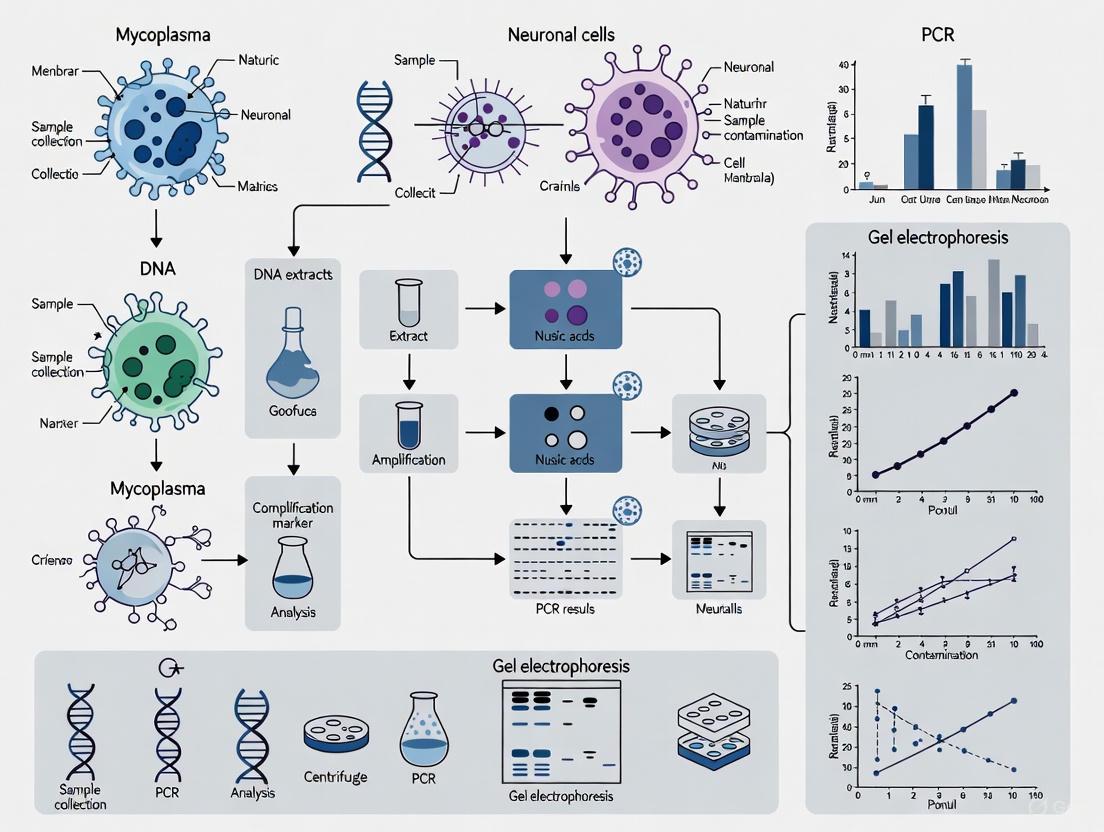
Mycoplasma contamination poses a severe threat to the integrity of research using primary neurons, potentially altering cellular metabolism, gene expression, and viability, leading to unreliable data.
A Researcher's Guide: Detecting and Preventing Mycoplasma Contamination in Primary Neurons
Abstract
Mycoplasma contamination poses a severe threat to the integrity of research using primary neurons, potentially altering cellular metabolism, gene expression, and viability, leading to unreliable data. This article provides a comprehensive guide for researchers and drug development professionals on the foundational knowledge, detection methodologies, troubleshooting strategies, and validation techniques essential for identifying and preventing mycoplasma contamination in primary neuronal cultures. It covers the unique vulnerabilities of primary neurons, compares the sensitivity and specificity of current methods like PCR, DNA staining, and immunofluorescence, and offers optimized protocols to ensure the generation of robust and reproducible experimental results.
Understanding the Threat: Why Mycoplasma Poses a Unique Risk to Primary Neurons
Mycoplasmas, belonging to the class Mollicutes, are the smallest and simplest self-replicating prokaryotes known [1]. Their defining biological characteristic is the complete absence of a cell wall, a trait that distinguishes them from other bacteria and contributes significantly to their stealthy nature as contaminants [2] [1]. This lack of a rigid cell wall makes them naturally resistant to beta-lactam antibiotics such as penicillins and cephalosporins, which typically target cell wall synthesis [3] [1]. The mycoplasma cell contains only the minimal set of organelles essential for growth and replication: a plasma membrane, ribosomes, and a double-stranded circular DNA genome [1].
With genome sizes ranging from approximately 580 to 2200 kilobase pairs and containing only 500 to 1000 genes, mycoplasmas have the smallest genomes of any free-living organisms [4] [1]. This reduced genetic complement results in limited biosynthetic capabilities, making them nutritionally fastidious and dependent on their host for essential precursors including fatty acids, amino acids, and nucleic acids [4]. Many mycoplasmas require cholesterol for growth, a unique property among prokaryotes, which they incorporate into their plasma membranes [1]. Mycoplasmas are highly pleomorphic, ranging from spherical to filamentous shapes, with diameters typically between 0.15-0.3 μm [5]. This small size and plasticity enable them to pass through standard 0.2 μm filters used for sterilizing solutions, contributing to their spread in laboratory settings [5].
Mycoplasma contamination represents a pervasive challenge in research laboratories and biopharmaceutical production worldwide. Global contamination rates of cell cultures are estimated to range between 15-35%, with some studies reporting extreme incidences of 65-80% in certain settings [6] [5]. The economic and scientific impacts are substantial, as contaminated cultures can lead to erroneous research data, compromised drug safety, and loss of unique cell lines [5].
The majority of mycoplasma contamination incidents can be traced to a limited number of sources, predominantly human, bovine, and porcine in origin [5]. Table 1 outlines the most common mycoplasma species encountered as cell culture contaminants, their natural hosts, and typical frequencies.
Table 1: Common Mycoplasma Contaminants in Cell Culture
| Species | Natural Host | Frequency | Primary Source |
|---|---|---|---|
| M. orale | Human | ~25% | Laboratory personnel (oropharyngeal tract) |
| M. hyorhinis | Porcine | ~20% | Trypsin solutions of porcine origin |
| M. arginini | Bovine | ~15% | Fetal bovine serum (FBS) |
| M. fermentans | Human | ~10% | Laboratory personnel |
| A. laidlawii | Bovine | ~10% | Fetal bovine serum (FBS) |
| M. hominis | Human | ~5% | Laboratory personnel |
Laboratory personnel represent the most significant source of contamination, accounting for approximately 50% of all infections [5]. Human-derived species such as M. orale, M. fermentans, and M. hominis originate from the oropharyngeal tract and can be introduced through poor aseptic technique, even in modern laboratory settings [5]. The practice of mouth pipetting was historically a major transmission route, though current risks primarily involve aerosol formation during routine cell culture procedures [5].
Bovine-derived contaminants enter cell culture systems primarily through fetal bovine serum (FBS) and other serum supplements [5]. M. arginini and A. laidlawii can survive the filtration processes used in serum manufacturing due to their small size and membrane flexibility [5]. Porcine-derived M. hyorhinis typically contaminates cell cultures via trypsin solutions of porcine origin [5].
Transmission Dynamics
Mycoplasmas spread efficiently in laboratory environments. Studies demonstrate that a single contaminated culture can lead to widespread laboratory infection within weeks [5]. The trypsinization of an infected culture in a laminar flow hood can result in contamination of equipment surfaces, including pipettors and hemocytometers, with viable mycoplasmas remaining detectable on hood surfaces for 4-6 days [5]. A clean culture subcultured weekly in the same hood previously used for contaminated cells can test positive for mycoplasma within just 6 weeks [5].
Specific Implications for Primary Neurons Research
The impact of mycoplasma contamination on primary neuronal cultures is particularly concerning given the specialized nature of neuronal research and the critical importance of maintaining authentic neuronal physiology. Recent evidence demonstrates that certain mycoplasma species can directly infect neuronal cells and induce significant pathological changes.
Neuronal Infection and Cytopathic Effects
Mycoplasma fermentans has been shown to infect and replicate in human neuronal cells, including neuroblastoma cell lines (SH-SY5Y) and differentiated neuronal cells, ultimately inducing necrotic cell death rather than apoptosis [2]. This finding is particularly relevant for primary neurons research, as it demonstrates the potential for mycoplasma contamination to directly compromise neuronal viability and experimental outcomes.
The mechanism of neuronal damage involves IFITM3-mediated amyloid-β deposition, with significantly increased intracellular Aβ(1-42) levels detected in infected cells [2]. This pathological process depends on toll-like receptor 4 (TLR4) signaling, as TLR4 antagonists inhibit IFITM3 upregulation and subsequent amyloid-β deposition [2]. The critical role of amyloid precursor protein (APP) in this cascade was confirmed through knockdown experiments, where APP depletion abolished necrotic neuronal cell death despite mycoplasma infection [2].
Validation in Complex Neuronal Models
The pathogenicity of M. fermentans in neuronal tissue has been further validated using human brain organoid models [2]. Infected brain organoids showed significant size reduction compared to controls and demonstrated evidence of infection through detection of intracellular and secreted M. fermentans DNA [2]. This experimental system provides a more physiologically relevant model than traditional 2D cultures and underscores the particular vulnerability of neuronal tissues to mycoplasma-mediated damage.
Detection Methodologies
Effective detection of mycoplasma contamination requires specialized approaches due to the organisms' small size, limited metabolic capabilities, and fastidious growth requirements. No single method detects all possible contaminants, necessitating complementary approaches depending on research context and requirements.
Conventional Detection Methods
Table 2: Comparison of Mycoplasma Detection Methods
| Method | Principle | Duration | Sensitivity | Key Limitations |
|---|---|---|---|---|
| Direct Culture | Growth on agar plates with "fried egg" colony morphology | 4-5 weeks | 10-100 CFU/mL | Technically demanding; slow; cannot detect non-cultivable species |
| Indirect Culture (Indicator Cell Culture) | Hoechst DNA staining of infected Vero cells | 3-5 days | 100-1000 CFU/mL | Less sensitive than direct culture; requires fluorescence microscopy |
| PCR-Based Methods | Amplification of 16S rRNA genes | 2.5-5 hours | <10 genome copies | May detect non-viable organisms; potential false positives |
| Enzymatic Methods | Biochemical detection | 1-6 hours | Varies | Limited species spectrum; lower sensitivity |
The direct culture method, considered the historical gold standard, involves inoculating agar plates with test material and incubating for 4-5 weeks while monitoring for characteristic "fried egg" colonies [7]. While sensitive, this method is technically demanding and slow, making it impractical for rapid quality control [7].
The indirect culture method uses DNA staining with Hoechst 33258, a fluorescent dye that binds specifically to DNA, revealing filamentous mycoplasma DNA in the cytoplasm of infected indicator cells (typically Vero cells) after 3-5 days of culture [6] [7]. This approach detects a broader range of species but offers lower sensitivity than direct culture [7].
Molecular Detection Methods
PCR-based methods have emerged as the preferred approach for rapid, sensitive detection in most research settings [4] [7]. Most commercial PCR tests target the 16S rRNA gene regions that are well-conserved across Mollicutes but distinct from other bacterial species [7]. Properly validated PCR assays can detect as few as 10 genome copies and provide results within 2.5-5 hours [7].
Real-time PCR (RT-PCR) offers advantages over endpoint PCR through its quantitative capabilities and potentially higher sensitivity, enabling faster detection of low-level contamination [7]. The European Pharmacopeia and US FDA now accept validated PCR methods as alternatives to conventional culture for pharmaceutical testing [7].
The following workflow diagram illustrates the decision process for selecting appropriate detection methods in primary neurons research:
Experimental Protocols for Detection in Neuronal Cultures
PCR-Based Detection Protocol
Principle: This protocol utilizes primers targeting conserved regions of the 16S rRNA gene to detect a broad spectrum of mycoplasma species, including those most commonly contaminating cell cultures [7].
Sample Collection:
- Collect conditioned medium from primary neuronal cultures after 48-72 hours of incubation
- Centrifuge at 16,000 × g for 30 minutes to concentrate potential contaminants
- Resuspend pellet in 100 μL of PCR-grade water or specific lysis buffer
DNA Extraction:
- Use commercial DNA extraction kits suitable for bacterial DNA
- Include positive controls (known mycoplasma DNA) and negative controls (PCR-grade water)
- Process samples in a dedicated area to prevent cross-contamination
PCR Amplification:
- Utilize universal mycoplasma primers targeting 16S rRNA regions conserved across Mollicutes
- Reaction mix: 2X PCR master mix (12.5 μL), forward primer (0.5 μM), reverse primer (0.5 μM), template DNA (5 μL), PCR-grade water to 25 μL
- Cycling conditions: Initial denaturation 95°C for 5 minutes; 40 cycles of 95°C for 30s, 55-60°C for 30s, 72°C for 45s; final extension 72°C for 7 minutes
Analysis:
- Analyze products by gel electrophoresis (expected band ~500 bp)
- For real-time PCR, calculate cycle threshold (Ct) values
- Interpret results: Ct <35 indicates positive; Ct 35-40 requires retesting; Ct >40 indicates negative
Validation: Test each new lot of primers with reference strains including M. fermentans, particularly relevant for neuronal cultures [2] [7].
Hoechst Staining Protocol for Indicator Cells
Principle: This fluorescent DNA staining method detects mycoplasmas in co-cultured indicator cells, revealing characteristic extranuclear staining patterns [6] [7].
Procedure:
- Seed sterile coverslips with Vero cells or other indicator cells at 10^4 cells/cm²
- After 24 hours, add test samples (conditioned medium from neuronal cultures)
- Co-culture for 3-5 days with medium changes as needed
- Wash coverslips with PBS and fix with fresh methanol:acetic acid (3:1) for 10 minutes
- Stain with Hoechst 33258 (0.05-0.1 μg/mL in PBS) for 30 minutes in the dark
- Wash with PBS and mount on slides with antifade mounting medium
Microscopy:
- Examine using fluorescence microscope with DAPI filter set
- Scan entire coverslip systematically at 400-600× magnification
- Positive control: Deliberately infected indicator cells
- Negative control: Known mycoplasma-free cells
Interpretation:
- Negative: Only nuclear staining visible
- Positive: Filamentous or granular extranuclear fluorescence in cytoplasm
- Inconclusive: Faint particulate staining—retest with concentrated samples
This method is particularly valuable for detecting species that grow poorly in culture medium alone [7].
The Scientist's Toolkit: Essential Research Reagents
Table 3: Essential Research Reagents for Mycoplasma Management in Neuronal Research
| Reagent/Category | Specific Examples | Function/Application | Considerations for Primary Neurons |
|---|---|---|---|
| PCR Detection Kits | ATCC Universal Mycoplasma Detection Kit; MycoSEQ Detection System; MycoTOOL (Roche) | Broad-spectrum detection of 60-90 mycoplasma species via 16S rRNA targeting | Validate sensitivity with neuronal-relevant species (e.g., M. fermentans) |
| Culture Media Components | Mycoplasma Growth Supplement; Sterile Fetal Bovine Serum (FBS) | Supports growth of fastidious mycoplasmas in culture-based detection | Source components from certified mycoplasma-free suppliers |
| Staining Reagents | Hoechst 33258; DAPI; DNA-specific fluorescent dyes | Detection of mycoplasma DNA in indicator cell culture systems | Optimize concentration for neuronal cultures to reduce background |
| Antibiotic Controls | Macrolides (Azithromycin); Tetracyclines; Fluoroquinolones | Positive controls for susceptibility testing; not for routine prophylaxis | Avoid routine antibiotic use in neuronal cultures to prevent masking contamination |
| Reference Materials | Titered Mycoplasma Reference Strains; Quantitative Genomic DNA | Assay development, validation, and quality control | Include M. fermentans as neuronal-relevant reference strain |
| Eradication Agents | BM Cyclin; Mynox; Plasmocin | Elimination of contamination from valuable neuronal cell stocks | Use with caution in primary neurons due to potential cytotoxic effects |
Prevention and Control Strategies
Preventing mycoplasma contamination requires a systematic approach addressing multiple potential entry points. The following diagram outlines key prevention and detection workflows essential for maintaining mycoplasma-free neuronal cultures:
Comprehensive Prevention Framework
Quarantine Procedures: All new cell lines, including primary neuronal preparations, should undergo mandatory quarantine and testing before introduction to main culture areas [5]. Maintain separate media, reagents, and equipment for quarantined cultures, and process them after confirmed clean cultures.
Aseptic Technique Reinforcement: Implement strict aseptic protocols including proper personal protective equipment, limited talking during manipulations, and careful workflow planning to minimize cross-contamination risks [5]. Restrict movement between clean and potentially contaminated culture areas.
Reagent Quality Control: Source all cell culture reagents from suppliers providing certificate of analysis for mycoplasma-free status [5]. Filter-sterilize all media and supplements through 0.1 μm filters rather than standard 0.2 μm filters to enhance mycoplasma removal [5]. Test serum lots for mycoplasma contamination before bulk purchase.
Antibiotic Policy: Avoid routine inclusion of antibiotics in neuronal culture media, as this may mask low-level contamination and promote development of resistant strains [5]. Reserve antibiotics for specific experimental needs rather than prophylactic use.
Systematic Monitoring and Response
Regular Testing Schedule: Establish a routine testing protocol based on laboratory risk assessment. Test neuronal cultures every 2-4 weeks during active experimentation, upon receipt, before and after cryopreservation, and before critical experiments [5].
Culture Discard Policy: Implement a strict policy of immediate discard of contaminated cultures unless they represent irreplaceable unique neuronal models [5]. Attempts to eradicate mycoplasma from contaminated cultures should be reserved for exceptional circumstances due to the risk of persistence and spread.
Laboratory Design Considerations: Where possible, implement physical separation between cell culture areas and other laboratory functions. Use dedicated biosafety cabinets for clean versus potentially contaminated work, and consider geographical separation if handling known contaminated cultures is unavoidable.
These comprehensive strategies, consistently applied, provide the most effective defense against the stealthy threat of mycoplasma contamination in primary neurons research, protecting both experimental integrity and valuable neuronal cultures.
Cell culture models are fundamental tools in neuroscience research and drug development. The choice between using primary neurons and immortalized cell lines carries significant implications, not only for the physiological relevance of the data but also for the technical challenges involved in maintaining contamination-free cultures. Mycoplasma contamination represents a particularly insidious threat, capable of altering cellular functions and compromising experimental integrity without causing overt turbidity in culture media. This technical guide examines the comparative vulnerabilities of primary neuronal cultures and established cell lines to mycoplasma contamination, framed within the context of detection and prevention strategies. Understanding these inherent vulnerabilities is crucial for researchers aiming to generate reliable, translatable data in neuroscience and pharmaceutical development.
Primary Neurons vs. Cell Lines: A Comparative Analysis
Fundamental Characteristics and Trade-offs
The decision between primary neurons and immortalized cell lines involves balancing biological relevance with practical experimental needs. Primary neurons are isolated directly from neural tissue and maintain native morphology, physiological characteristics, and synaptic functionality, making them superior for modeling in vivo neuronal behavior [8] [9]. However, they possess a finite lifespan, undergo senescence after limited divisions, and require specialized culture conditions [9] [10]. In contrast, immortalized cell lines (such as SH-SY5Y neuroblastoma cells) are practical for large-scale studies due to their unlimited replicative capacity, ease of culture, and suitability for high-throughput screening [11]. The most significant trade-off is that most neuronal cell lines are cancer-derived, genetically altered, and may not fully recapitulate the complex signaling pathways of mature, healthy neurons [11].
Inherent Vulnerabilities to Mycoplasma Contamination
The table below summarizes the key characteristics and vulnerabilities of each culture system:
Table 1: Comparative Analysis of Primary Neurons and Immortalized Cell Lines
| Characteristic | Primary Neurons | Immortalized Cell Lines |
|---|---|---|
| Biological Relevance | High; retain native morphology and function [8] [9] | Low; often cancer-derived and non-physiological [11] [9] |
| Reproducibility | Low; high batch-to-batch and donor variability [11] [8] | High; genetically uniform populations [11] |
| Scalability | Limited yield; difficult to expand [11] | Easily scalable [11] |
| Vulnerability to Mycoplasma Effects | High; sensitive to metabolic stress and subtle functional alterations | Moderate; often already adapted to stress, but data becomes irrelevant [11] |
| Contamination Detection Challenge | High; complex culture media can interfere with assays; functional deficits may be mistaken for experimental variables [8] | Lower; simpler systems facilitate detection, but contamination often goes unnoticed without testing [12] |
Primary neurons exhibit greater vulnerability to the deleterious effects of mycoplasma contamination. Their non-proliferative nature and heightened metabolic sensitivity mean that mycoplasma infection—which competes for essential nutrients and precursors—can rapidly lead to metabolic stress, altered gene expression, and compromised synaptic function without necessarily causing cell death [11] [13]. Furthermore, the complex culture media (often containing serum and growth factors) required for primary neurons can mask the visual signs of contamination and potentially interfere with detection assays [9]. For cell lines, while they may be more robust to the presence of mycoplasma, the resulting data on cellular pathways and drug responses are fundamentally unreliable, contributing to the high failure rate of CNS-targeted drug candidates in clinical trials [11].
Detection of Mycoplasma Contamination
Established Detection Methodologies
Robust detection is the first line of defense against mycoplasma contamination. Several methodologies are available, each with distinct advantages and limitations.
Table 2: Mycoplasma Detection Methods
| Method | Principle | Time to Result | Sensitivity & Notes |
|---|---|---|---|
| Microbiological Culture | Growth on specialized agar and broth media [12] | Minimum 28 days [12] [13] | Considered the "gold standard" for viable mycoplasma but slow and requires expertise [13]. |
| Direct DNA Staining (Hoechst) | Fluorescent staining of extranuclear DNA [14] | 1-2 days | Prone to false positives from cellular DNA debris (e.g., micronuclei, apoptotic fragments) [14]. |
| PCR / qPCR | Amplification of mycoplasma-specific DNA sequences (e.g., 16S rDNA) [13] | 5-8 hours to 1 day [12] [13] | Fast, sensitive; cannot distinguish between viable and dead cells [12] [13]. |
| Enzymatic / Colorimetric Assays | Detection of mycoplasma-specific enzymes | 1-2 days | Less common; sensitivity varies by kit. |
Advanced Protocol: Colocalization Staining for Enhanced Specificity
Standard Hoechst staining alone is often insufficient for reliable detection in primary neuron cultures due to interference from cytoplasmic DNA. An advanced protocol utilizing colocalization of DNA and membrane staining significantly improves accuracy [14].
Experimental Workflow: Colocalization Staining
Diagram 1: Colocalization Staining Workflow
Detailed Procedure:
- Cell Preparation: Grow primary neurons or cell lines on confocal dishes. Include a positive control (known mycoplasma-contaminated culture) and a negative control.
- Staining:
- Washing and Imaging: Gently wash the cells twice with 1x PBS to remove unbound dye. Image immediately using a confocal microscope with a 60x oil-immersion objective [14].
- Analysis:
- Positive Contamination: Look for bright, granular Hoechst (blue) fluorescence that colocalizes precisely with the WGA (green) membrane signal, forming a ring or patches on the cell surface. This indicates mycoplasma bound to the membrane.
- Negative Result: Hoechst staining is confined to the nucleus. Any faint, diffuse cytoplasmic blue staining (e.g., from mitochondrial DNA or apoptotic fragments) will not colocalize with the green membrane stain.
This method effectively discriminates true mycoplasma contamination from false positives caused by host cell DNA, a common pitfall when using Hoechst stain alone [14].
The Scientist's Toolkit: Essential Reagents for Detection
Table 3: Key Research Reagents for Mycoplasma Detection
| Reagent / Kit | Function | Application Notes |
|---|---|---|
| Hoechst 33342 | Cell-permeant DNA-binding fluorescent dye. | Stains nuclear and extranuclear DNA. Critical for direct staining and colocalization protocols [14]. |
| WGA Oregon Green 488 | Wheat Germ Agglutinin conjugate that binds to cell membrane glycoproteins. | Used in colocalization assays to delineate the plasma membrane and confirm surface-associated mycoplasma [14]. |
| VenorGeM qEP Kit | Commercial qPCR-based detection kit. | Example of a NAT assay. Targets common contaminating species. Sensitivity can vary between kits [13]. |
| Mycoplasma Sensitivity Standards | Defined panels of inactivated mycoplasma DNA. | Essential for validating the sensitivity and specificity of in-house PCR assays [13]. |
| Custom qPCR Primers/Probes | Oligonucleotides targeting conserved 16S rDNA regions. | Enable the development of lab-specific PCR methods with broad detection range for diverse Mycoplasma species [13]. |
Impact of Contamination on Neuronal Phenotype and Function
Mycoplasma contamination exerts profound effects on fundamental neuronal properties, which can critically confound experimental outcomes.
Altered Cellular Phenotypes
The diagram below illustrates the primary functional domains impacted by mycoplasma contamination in neuronal cultures.
Diagram 2: Functional Impacts of Mycoplasma Contamination
Functional Consequences in Primary vs. Immortalized Cells
The functional consequences of contamination manifest differently across model systems:
- Primary Neurons: The most significant impacts are on synaptic function, ion channel integrity, and cell viability [11]. Mycoplasmas parasitize the cell surface, disrupting receptors and signaling complexes essential for neuronal communication. Studies show contaminated primary neurons exhibit immature features and fail to form functional synapses, directly undermining their value as a physiological model [11].
- Immortalized Cell Lines: While often more resilient to cell death, contaminated cell lines provide data that does not reflect true biology. For example, in microglial models, the immortalized HMC3 cell line shows a highly dissimilar phenotype and secretome compared to primary human microglia, including markedly lower phagocytic capacity—a key immune function [15].
- General Effects: Common across all cell types are chromosomal alterations, changes in membrane antigenicity, and unreliable results in assays measuring gene expression, cytokine secretion, and metabolic activity [13].
Prevention and Eradication Strategies
A multi-pronged, orthogonal strategy is essential for controlling mycoplasma contamination.
Prevention as the Primary Defense
- Rigorous Aseptic Technique: This is the cornerstone of prevention. Personnel are a primary source of contamination (e.g., M. orale, M. fermentans), emphasizing the need for strict adherence to protocol [12] [13].
- Regular and Routine Testing: Implement a scheduled testing regime for all cell cultures, especially upon receipt of new lines from external sources. Rapid PCR methods are ideal for frequent monitoring [13].
- Judicious Use of Antibiotics: Avoid continuous antibiotic prophylaxis in culture media, as this can mask low-level contamination and promote antibiotic-resistant strains.
Eradication and Control Methods
When contamination is detected, several options exist:
- Antibiotic Treatment: Commercial kits like Myco-Off Mycoplasma Cleaner can be effective. However, treatment requires a 2-week course and must be validated by multiple detection methods post-treatment to confirm eradication [14].
- Physical Methods: Heat treatment (45°C for 30 min) and radiation (25-35 kGy) can inactivate mycoplasma in media or reagents but risk damaging heat-labile components [12].
- Filtration: Using 0.1 µm membrane filters on liquid media can remove mycoplasmas, but retention efficiency varies by species and filter type and should not be relied upon exclusively [12].
The inherent vulnerabilities of primary neurons and immortalized cell lines to mycoplasma contamination are distinct yet consequential. Primary neurons, while physiologically superior, are more susceptible to functional degradation upon contamination. Immortalized lines, though more robust, yield unreliable data when infected. A deep understanding of these vulnerabilities, coupled with the implementation of robust, specific detection protocols like fluorescence colocalization and validated PCR assays, is non-negotiable for ensuring the integrity of neuroscience research and the development of effective neurological therapies. As the field moves toward more complex human-relevant models like iPSC-derived neurons, maintaining vigilant contamination control practices will be paramount to translating in vitro findings into clinical success.
Mycoplasma contamination represents a pervasive and insidious threat to biomedical research, particularly in studies utilizing primary neuronal cultures. These bacteria, lacking cell walls and possessing reduced genomes, are notorious for covertly infecting cell cultures, with estimates suggesting they contaminate 15-35% of cell cultures used in research [13]. The consequences extend beyond mere inconvenience; mycoplasma infection directly compromises neuronal viability, alters key physiological functions, and ultimately undermines the integrity of scientific data. This technical review examines the specific mechanisms through which mycoplasma species, particularly Mycoplasma fermentans, disrupt neuronal physiology and provides researchers with advanced methodologies for detection and eradication within the context of primary neuron research.
Mechanisms of Neuronal Pathophysiology Induced by Mycoplasma
Direct Neuronal Damage and Cell Death
Mycoplasma species instigate neuronal damage through both direct and indirect pathways. Mycoplasma fermentans demonstrates a particular neurotropism, capable of actively infecting and replicating within human neuronal cells [16]. This infection triggers a cascade of molecular events leading to necrotic cell death, a pathological process distinct from programmed apoptosis.
The central mechanism identified involves the upregulation of interferon-induced transmembrane protein 3 (IFITM3) following mycoplasma infection. IFITM3 subsequently promotes the abnormal intracellular accumulation of amyloid-β (1-42), a peptide notoriously associated with neurodegenerative pathology [16]. This amyloid-β deposition is not merely correlative; targeted depletion of its precursor protein, amyloid precursor protein (APP), via short hairpin RNA (shRNA) successfully abolishes the mycoplasma-induced necrotic neuronal death [16]. This pathway appears to be mediated through toll-like receptor 4 (TLR4) signaling, as TLR4 antagonists inhibit the infection-mediated IFITM3 upregulation [16]. The validity of these findings extends to more physiologically relevant models, as M. fermentans infection similarly induces necrotic neuronal death in human brain organoids [16].
Table 1: Key Proteins in Mycoplasma fermentans-Induced Neuronal Death
| Protein/Factor | Role in Mycoplasma Pathogenesis | Experimental Evidence |
|---|---|---|
| IFITM3 | Dramatically upregulated after infection; mediates amyloid-β deposition | Knockdown abolishes amyloid-β deposition and cell death [16] |
| Amyloid-β (1-42) | Intracellular accumulation leads to necrotic neuronal death | APP depletion via shRNA prevents cell death [16] |
| Toll-like Receptor 4 | Signaling upstream of IFITM3 upregulation | TLR4 antagonist inhibits IFITM3 increase [16] |
Neuroinflammatory Cascades
Beyond direct cellular damage, mycoplasma infection triggers significant neuroinflammation, primarily through the activation of glial cells and the release of pro-inflammatory mediators. While commonly studied in other mycoplasma species, these inflammatory pathways provide insight into potential mechanisms occurring in neuronal environments.
For instance, extracellular vesicles (EVs) released from mycoplasma-infected cells play a crucial role in propagating inflammation. In bovine models, EVs from Mycoplasma bovis-infected mammary epithelial cells package distinct protein and miRNA cargoes that, when taken up by macrophages, stimulate significantly increased expression of pro-inflammatory cytokines TNF-α, IL-1β, and IL-6 [17]. The proteomic analysis of these EVs revealed 86 significantly upregulated and 27 downregulated proteins, while miRNA sequencing identified 9 upregulated and 2 downregulated miRNAs [17]. This maladaptive intercellular communication potentially exacerbates neuronal damage in a paracrine manner, creating a toxic microenvironment that compromises neuronal function and survival.
Detection Methodologies for Mycoplasma Contamination
Advanced Molecular Detection Techniques
Robust detection is the first line of defense against mycoplasma-compromised research. While traditional culture-based methods require 28 days, modern nucleic acid amplification techniques (NATs) reduce detection time to 1-2 hours [18]. Universal PCR, enzymatic recombinase amplification (ERA), and quantitative PCR (qPCR) assays targeting the 16S-23S rRNA intergenic spacer region (ISR) have demonstrated superior performance, detecting as few as 10⁻¹ copies for qPCR with 100% agreement with pharmacopeial gold standards [18]. These methods offer comprehensive species coverage across 143 mycoplasma species, including fastidious strains that grow poorly in vitro [18].
Table 2: Comparison of Modern Mycoplasma Detection Assays
| Assay Type | Detection Limit | Time to Result | Key Advantage |
|---|---|---|---|
| Microbiological Culture | Viable organisms only | 21-28 days | Traditional "gold standard" [13] |
| Conventional PCR | 10¹ copies | 1-2 hours | Broad species coverage [18] |
| Enzymatic Recombinase Amplification (ERA) | 10⁰ copies | 1-2 hours | Simplified workflow, no complex DNA extraction [18] |
| Quantitative PCR (qPCR) | 10⁻¹ copies | 1-2 hours | Superior sensitivity, quantitative results [18] |
| Direct DNA Staining (Hoechst) | ≥10⁶ CFU/mL | 4-7 days | Low sensitivity, risk of false positives [14] [13] |
Enhanced Microscopy-Based Detection
A common challenge in primary neuronal cultures is distinguishing genuine mycoplasma contamination from other fluorescent signals when using DNA-binding dyes like Hoechst. An improved method utilizes colocalization of the DNA dye Hoechst with a cell membrane stain, wheat germ agglutinin (WGA) [14].
Since mycoplasma predominantly parasitizes the external surface of the host cell plasma membrane, this colocalization approach accurately discriminates true membrane-associated mycoplasma signals from interference caused by cytoplasmic DNA components, such as micronuclei or apoptotic fragments [14]. The protocol involves:
- Growing cells on confocal dishes
- Staining with WGA Oregon Green 488 conjugate for 15 minutes at 37°C
- Staining with Hoechst 33342 for 15 minutes at 37°C
- Washing with PBS and imaging via confocal microscopy [14]
This method effectively minimizes false-positive results common when using Hoechst staining alone, especially in neuronal cultures where cellular debris and complex morphology can complicate interpretation [14].
The Researcher's Toolkit: Essential Reagents and Protocols
Table 3: Essential Research Reagents for Mycoplasma Detection and Study
| Reagent / Assay | Specific Function | Application in Neuronal Research |
|---|---|---|
| Hoechst 33342 | DNA-binding fluorescent dye | Stains mycoplasma DNA in the background of cells [14] |
| WGA Oregon Green 488 | Binds to cell membrane sugars | Colocalization with Hoechst confirms membrane-associated mycoplasma [14] |
| Universal ISR Primers | Targets 16S-23S intergenic spacer region | Detects 143 Mycoplasma species in PCR/ERA/qPCR assays [18] |
| TLR4 Antagonist | Inhibits Toll-like Receptor 4 signaling | Experimental tool to confirm IFITM3-mediated pathway [16] |
| shRNA targeting APP | Knocks down amyloid precursor protein | Validates role of amyloid-β in mycoplasma-induced necrosis [16] |
Experimental Protocol: Validating Mycoplasma-Induced Neuronal Damage
For researchers investigating the functional impact of mycoplasma contamination on neuronal physiology, the following protocol derived from Sim et al. (2023) provides a methodological framework [16]:
Step 1: In Vitro Infection Model
- Culture human neuronal cells or primary neurons in appropriate medium.
- Infect cells with Mycoplasma fermentans at a defined multiplicity of infection (MOI).
- Include control groups with TLR4 antagonist pretreatment to confirm specific pathway involvement.
Step 2: Assessment of Cell Death
- Quantify necrotic cell death via lactate dehydrogenase (LDH) release assay or propidium iodide exclusion.
- Compare infected cells versus uninfected controls over 24-72 hours.
Step 3: Molecular Pathway Analysis
- Perform RNA sequencing or targeted qPCR to assess IFITM3 upregulation.
- Implement Western blotting or immunofluorescence to detect intracellular amyloid-β (1-42) accumulation.
- Validate functional role of IFITM3 using siRNA knockdown approaches.
Step 4: Advanced Model Validation
- Confirm key findings in human brain organoid models to approximate tissue-level complexity.
Signaling Pathways in Mycoplasma-Induced Neurodegeneration
The molecular pathway through which Mycoplasma fermentans infection leads to neuronal death involves a defined sequence of events, culminating in necrotic cell death. The following diagram illustrates this pathway, which can be replicated in experimental settings to confirm the mechanism.
Impact on Data Integrity and Research Outcomes
The alterations in neuronal physiology induced by mycoplasma contamination have profound implications for research integrity across multiple domains of neuroscience research:
Neurodegeneration Studies: The mycoplasma-induced amyloid-β deposition and neuronal necrosis [16] can produce misleading data in studies investigating Alzheimer's disease pathways, potentially leading to erroneous conclusions about therapeutic efficacy.
Neuroinflammation Research: The cytokine profiles and inflammatory signaling pathways activated by mycoplasma infection [17] [19] can confound results in studies examining neuroinflammatory mechanisms in conditions like Parkinson's disease or multiple sclerosis.
Electrophysiological Studies: Neuronal cultures shipped between laboratories [20] may harbor undetected mycoplasma infections, potentially compromising functional studies of synaptic activity and network properties.
Drug Screening: Contaminated primary neuronal cultures used for high-throughput screening of neuroprotective compounds may yield false positives or negatives due to the underlying pathological state induced by mycoplasma.
Mycoplasma contamination in primary neuronal research represents more than a mere technical nuisance; it constitutes a significant confounding variable that directly alters fundamental neuronal physiology through specific molecular mechanisms. The identification of the IFITM3-amyloid-β axis in M. fermentans-induced neuronal necrosis provides both a mechanistic understanding and potential diagnostic biomarkers for assessing contamination impact. Implementation of robust detection methodologies, particularly the highly sensitive NAT-based approaches and colocalization microscopy techniques, is essential for maintaining data integrity. As neuronal models increase in complexity—from primary cultures to brain organoids—vigilance against mycoplasma contamination remains a critical prerequisite for generating reliable, reproducible neuroscientific data.
In neuroscience research, particularly in studies utilizing primary neurons, the integrity of experimental models is paramount. Among the various threats to this integrity, laboratory contamination stands as a significant and recurring challenge. Contamination can originate from a multitude of sources, including microbial invaders like mycoplasma, chemical impurities, and cross-contamination from other cell lines. These contaminants can profoundly alter cellular physiology, leading to unreliable data and erroneous scientific conclusions [21] [6]. This guide provides an in-depth examination of common contamination sources within the neuroscience laboratory, with a specific focus on identifying mycoplasma contamination in primary neuron cultures. We will detail detection methodologies, outline preventive strategies, and provide a practical toolkit for researchers to safeguard their experiments, thereby ensuring the validity and reproducibility of their findings in drug development and basic research.
Mycoplasma Contamination: The Invisible Adversary
Mycoplasma species are small, wall-less bacteria that represent one of the most frequent and deleterious contaminants of cell cultures, with incidence rates in continuous cell cultures ranging from 15% to 35% [6]. Their small size (0.3–1 μm) and lack of a cell wall make them resistant to many common antibiotics, such as penicillin, and difficult to remove by standard filtration methods [22] [6].
Predominant Mycoplasma Species and Their Effects
While over 190 species exist, only about 20 species of human, bovine, and porcine origin are commonly found in cell culture. A mere eight species account for approximately 95% of all contaminations [6]. The table below summarizes the most prevalent species and their typical origins.
Table 1: Predominant Mycoplasma Species in Cell Culture Contamination
| Species | Origin | Prevalence Notes |
|---|---|---|
| M. arginini | Bovine | One of the top 8 contaminating species |
| M. fermentans | Human | One of the top 8 contaminating species |
| M. hominis | Human | One of the top 8 contaminating species |
| M. hyorhinis | Porcine | Frequently used in experimental studies [14] |
| M. orale | Human | One of the top 8 contaminating species |
| M. pirum | Human | One of the top 8 contaminating species |
| M. salivarium | Human | One of the top 8 contaminating species |
| Acholeplasma laidlawii | Bovine | One of the top 8 contaminating species |
The effects of mycoplasma contamination on primary neurons and other cell types are extensive and can compromise nearly every aspect of cellular physiology. Documented effects include [21] [6]:
- Chromosomal aberrations and disruption of DNA and RNA synthesis.
- Altered metabolism and inhibition of cell proliferation.
- Changes in cell membrane antigenicity.
- Modulation of gene expression profiles.
- Reduced virus production and decreased transfection efficiency.
- Induction of cellular death via apoptosis or other mechanisms.
Understanding how mycoplasma enters cell culture systems is the first step in prevention. The primary sources include [22] [6]:
- Laboratory Personnel: Human-derived species (e.g., M. orale, M. hominis) can be introduced via poor aseptic technique.
- Contaminated Reagents: Fetal bovine serum (FBS) and other culture reagents can harbor bovine species (e.g., M. arginini, A. laidlawii).
- Cross-Contamination: The most common source is the introduction of a new, already contaminated cell line into the laboratory, which can then spread to other cultures.
- Laboratory Equipment: Reusing pipette tips or working in a malfunctioning laminar flow hood can facilitate the spread of mycoplasma.
Detection and Identification of Mycoplasma
Routine testing is the cornerstone of mycoplasma contamination control. Several reliable methods are available, each with its own advantages and limitations.
Colocalization Staining with Hoechst and WGA
Direct DNA staining with a fluorochrome like Hoechst 33342 is a common technique, but it can yield equivocal or false-positive results due to interference from cytoplasmic DNA components like micronuclei or apoptotic fragments [14]. An enhanced method combines DNA staining with a cell membrane stain.
Table 2: Reagent Solution for Colocalization Staining
| Research Reagent | Function/Brief Explanation |
|---|---|
| Hoechst 33342 | DNA-binding fluorescent dye that stains the nuclei of host cells and the DNA of mycoplasma. |
| Wheat Germ Agglutinin (WGA) Oregon Green 488 | Fluorescent conjugate that specifically binds to sugars on the host cell plasma membrane. |
| Anti-mycoplasma Antibiotics (e.g., Myco-Off) | Used in eradication studies as a positive control for clearance. |
| Confocal Microscope | Essential for high-resolution imaging to visualize colocalization. |
Experimental Protocol:
- Cell Culture: Grow primary neurons or other cells of interest on confocal dishes.
- Staining:
- Incubate cells with WGA Oregon Green 488 conjugate (1-5 μg/mL) for 15 minutes at 37°C to label the cell membrane.
- Subsequently, stain the cells with Hoechst 33342 (1 μg/mL) for 15 minutes at 37°C in the dark.
- Washing and Imaging: Wash the cells twice with phosphate-buffered saline (PBS) and image immediately using a confocal microscope equipped with a 60x or higher oil-immersion objective.
- Interpretation: In a contaminated culture, the blue Hoechst fluorescence from mycoplasma will be seen colocalized with the green WGA stain on the surface of the plasma membrane, forming a distinct ring or associated spots. This colocalization differentiates true mycoplasma contamination from other cytoplasmic DNA artifacts [14].
Figure 1: Colocalization staining workflow for mycoplasma detection.
PCR and Direct qPCR Detection
PCR-based methods are highly sensitive and specific for detecting mycoplasma DNA. A significant advancement is the direct qPCR method, which eliminates the need for DNA purification, streamlining the process and increasing sensitivity.
Experimental Protocol for Direct qPCR:
- Sample Collection: Aspirate a small volume (e.g., 6 μL) of cell culture supernatant.
- qPCR Reaction Setup: Use a commercially available probe-based qPCR kit (e.g., PhoenixDx Mycoplasma Mix). Add the 6 μL sample directly to the reaction mix.
- Optimized qPCR Cycling:
- Annealing/Extension Temperature: 52°C.
- Annealing/Extension Time: 20 seconds.
- Total Cycle Time: Approximately 65 minutes.
- Interpretation: The Cycle Threshold (Ct) value is used for quantification. This optimized direct qPCR has been shown to have sensitivity nearly identical to regular qPCR performed on DNA purified from a 10x larger sample volume (60 μL), making it an exceptionally efficient detection method [22].
Comparison of Major Detection Methods
No single detection method is perfect; therefore, employing at least two different techniques is often advisable for confirmation.
Table 3: Comparison of Mycoplasma Detection Methods
| Method | Principle | Key Advantage | Key Disadvantage | Sensitivity & Notes |
|---|---|---|---|---|
| Direct Culture | Growth on agar for 4-5 weeks | Gold standard, detects viable organisms | Very slow (weeks), requires specialized culture | High specificity but low throughput |
| Indirect Culture (Hoechst) | Staining with Hoechst 33258 | Can detect non-cultivable species | Requires fluorescence microscopy, subjective | More sensitive than direct culture |
| PCR/qPCR | Amplification of 16S rRNA gene | Rapid (hours to a day), highly sensitive | Does not distinguish viable/dead cells | Can detect <20 genome copies [6] |
| Direct qPCR | qPCR without DNA purification | Fastest, high sensitivity, no purification | Potential for PCR inhibition (mitigated by optimization) | Ct ~23.4 for 6μL direct vs 60μL purified sample [22] |
| Colocalization (Hoechst/WGA) | Fluorescent co-staining of DNA & membrane | Reduces false positives from cellular DNA | Requires high-resolution confocal microscopy | Qualitative/quantitative imaging-based assessment [14] |
While mycoplasma is a major concern, other significant contamination sources can derail neuroscience research.
Chemical and Elemental Contamination
In techniques with low detection limits, such as ICP-MS, trace elemental contamination is a major concern. Common sources include:
- Water: Low-purity water is a significant source of ions and organics. Using ASTM Type I water is essential for sensitive applications [23].
- Acids and Reagents: Low-purity acids can introduce high levels of contaminants. For example, 5 mL of acid with 100 ppb Ni will introduce 5 ppb of Ni into a 100 mL sample [23].
- Labware:
- Glassware: Can leach boron, silicon, and sodium.
- Plastics & Tubing: Silicone tubing can release aluminum, iron, and magnesium, while neoprene tubing can contaminate samples with zinc [23].
- Laboratory Environment: Airborne dust from ceiling tiles, paints, and rust can introduce various metals. Heating and cooling systems can circulate these particulates [23].
Cross-Contamination and Misidentification
Cross-contamination between cell lines, including primary neurons, and misidentification are persistent problems. Maintaining rigorous protocols for handling multiple cell lines and regularly authenticating cell identities using STR profiling is critical to ensure the validity of research models [6].
Best Practices for Prevention and Control
A proactive approach is far more effective than dealing with a contamination event after it occurs. Key best practices include:
- Aseptic Technique: Fundamental and non-negotiable. Always work in a certified biosafety cabinet, use personal protective equipment (PPE), and never reuse pipette tips between different cell lines or reagents [6].
- Quarantine New Cell Lines: All new cell lines introduced into the laboratory should be quarantined and tested for mycoplasma and other contaminants before being incorporated into the main cell culture space [6].
- Avoid Indiscriminate Antibiotic Use: Relying on routine antibiotics can mask contamination and lead to the development of resistant strains. Antibiotics should not be used as a substitute for good aseptic technique [6].
- Quality Control of Reagents: Source all media, sera, and reagents from reputable suppliers that provide certification of being mycoplasma-free.
- Routine Testing Schedule: Implement a mandatory and regular schedule for mycoplasma testing (e.g., monthly) for all actively cultured cells.
- Good Cell Banking: Adhere to the seed stock principle. Maintain a master cell bank from which working banks are derived. This allows for quick recovery if a working bank becomes contaminated [6].
- Laboratory Cleanliness: Maintain a clean and uncluttered workspace. Use powder-free gloves to avoid zinc contamination, and prohibit jewelry, cosmetics, and lotions in the lab [23].
Figure 2: Proactive cell culture management and contamination monitoring workflow.
Vigilance against contamination is a fundamental requirement for rigorous and reproducible neuroscience research, especially when working with sensitive primary neuron cultures. Mycoplasma contamination, with its insidious nature and profound effects on cell physiology, represents a primary threat that requires a multifaceted management strategy. This involves a thorough understanding of its sources, implementing robust and routine detection methods like direct qPCR and colocalization staining, and adhering to strict preventive protocols. By integrating the detailed methodologies and best practices outlined in this guide—from stringent aseptic technique and reagent quality control to systematic cell banking and environmental management—researchers can fortify their laboratories against not only mycoplasma but also chemical and cross-contamination. This proactive and comprehensive approach is essential to safeguard the integrity of cellular models, thereby ensuring the validity of experimental data and the successful translation of research findings from the bench to the clinic.
A Practical Toolkit: Step-by-Step Methods for Detecting Mycoplasma in Neuronal Cultures
Mycoplasma contamination represents a critical, yet often undetected, threat to the integrity of cell culture research, particularly in sensitive models like primary neurons. These cell wall-less bacteria can alter neuronal physiology, gene expression, and signaling pathways, leading to irreproducible and unreliable scientific data. This whitepaper establishes Nucleic Acid Amplification Techniques (NAT), specifically Polymerase Chain Reaction (PCR) and quantitative PCR (qPCR), as the gold standard for mycoplasma detection. We provide a comprehensive technical guide detailing the principles, validated protocols, and implementation frameworks for deploying these methods to safeguard research on primary neurons, ensuring data validity and compliance with evolving pharmacopeial standards.
The fidelity of research utilizing primary neurons is paramount in neuroscience, as these post-mitotic cells exquisitely reflect the in vivo state of neuronal networks. Mycoplasma contamination poses a severe and insidious risk to this model system. As the smallest self-replicating organisms, mycoplasmas lack a cell wall and can persistently infect cell cultures without causing overt turbidity or cell death [24]. Their impact, however, is profound. Mycoplasmas can parasitize host cells, depleting essential nutrients like arginine and nucleic acid precursors, which is particularly detrimental to the high metabolic demands of primary neurons [24]. This can lead to subtle yet significant alterations, including:
- Compromised Cellular Physiology: Reduced cell growth rates, changes in morphology, and decreased viability [24].
- Aberrant Neural Signaling: Interference with cellular signal transduction pathways, potentially skewing results from neuropharmacological or electrophysiological experiments [24].
- Genetic and Transcriptomic Instability: Induction of chromosomal alterations and global changes in gene expression profiles, which can confound studies on neurodevelopment, neurodegeneration, and synaptic plasticity [24].
Historical culture-based methods, while considered a traditional gold standard, require 1-2 weeks of incubation and fail to detect many non-cultivable strains [24]. In contrast, NATs, particularly PCR and qPCR, offer the speed, sensitivity, and specificity required to protect valuable primary neuron cultures. The recent update to the European Pharmacopoeia Chapter 2.6.7, effective April 2026, now formally recognizes PCR-based methods as fully equivalent to culture assays, cementing their role in quality control [25].
PCR and qPCR as the Gold Standard: Principles and Advantages
PCR and its quantitative derivative, qPCR (or real-time PCR), have become the cornerstone of modern mycoplasma detection due to their robust performance characteristics.
- High Sensitivity and Specificity: These techniques can detect extremely low levels of mycoplasma DNA. For instance, a well-designed PCR assay can achieve a limit of detection (LOD) as low as 6.3 pg of genomic DNA, equivalent to approximately 8.21 x 10^3 genomic copies [24]. This sensitivity is crucial for identifying low-grade, chronic contaminations.
- Broad Detection Spectrum: By targeting conserved genomic regions, such as the 16S rRNA gene, a single PCR assay can be designed to detect a wide range of mycoplasma species. Advanced bioinformatics approaches have yielded primer sets with coverage of 92% of all species across the six orders of the class Mollicutes [24]. Commercial kits based on this principle can detect over 160 different mycoplasma species, including common contaminants like M. orale, M. arginini, and A. laidlawii [26].
- Rapid Turnaround and Throughput: Results can be obtained within 3 hours, allowing for timely decision-making in experimental workflows [26]. This is a significant advantage over culture methods and is essential for working with short-lived primary neuron preparations.
- Quantification Capability (qPCR): qPCR provides not only a qualitative yes/no result but also quantifies the bacterial load through the threshold cycle (Ct). This allows researchers to monitor the severity of contamination and track the effectiveness of decontamination efforts [27].
The following diagram illustrates the core workflow and principle of a combined qPCR assay for mycoplasma detection, which includes an internal control to verify the integrity of the entire process.
Establishing a Universal Protocol: Target Selection and Primer Design
The reliability of PCR-based detection hinges on the careful selection of amplification targets and the design of highly specific primers.
Target Identification: The 16S rRNA Gene
The 16S ribosomal RNA (rRNA) gene is a cornerstone for bacterial phylogenetic studies and detection assays due to its presence in all bacteria and containing both highly conserved and variable regions. This allows for the design of primers that can broadly target the entire Mollicutes class while differentiating it from other bacterial contaminants and eukaryotic DNA [24] [27].
Bioinformatics-Driven Primer Design
A robust protocol involves a comprehensive bioinformatics analysis of available sequence databases, such as the NCBI Bacterial 16S Ribosomal RNA RefSeq Targeted Loci Project. The goal is to identify ultra-conserved sequence regions unique to mycoplasmas. One validated approach uses a single primer pair that matches 198 out of 216 mycoplasma species, providing a theoretical coverage of 92% [24]. The assay's specificity is confirmed by a low off-target rate, with only 3% of matched strains being non-mycoplasma species [24].
The Four-Primer PCR Strategy
A key innovation in routine testing is the incorporation of an internal control directly within the same reaction. This is achieved through a "four-primer" PCR:
- Mycoplasma-specific primers: Amplify a sequence from the mycoplasma 16S rRNA gene, producing a fragment of 166-191 bp.
- Eukaryotic-specific primers: Target a conserved region of the host genome (e.g., the U48 snoRNA gene), producing a distinct fragment (e.g., 105 bp).
This design ensures that a successful PCR reaction is confirmed by the presence of the eukaryotic control band, while mycoplasma contamination is indicated by the appearance of the mycoplasma-specific band. This effectively rules out false negatives due to PCR failure or inhibition [24].
Technical Specifications and Performance Metrics
The performance of PCR and qPCR assays for mycoplasma detection is characterized by standardized metrics, which are summarized in the table below for easy comparison.
Table 1: Performance Metrics of NATs for Mycoplasma Detection
| Parameter | PCR (Gel-Based) | qPCR (TaqMan Probe-Based) | Notes |
|---|---|---|---|
| Limit of Detection (LOD) | ~6.3 pg DNA or 8.21x10³ copies [24] | <100 GC/ml or ≤10 CFU/ml [25] [26] | LOD can vary based on target species and sample matrix. |
| Theoretical Coverage | 92% of Mollicutes species [24] | >130 species (commercial kits) [26] | Coverage depends on primer/probe design. |
| Time-to-Result | ~3 hours (including extraction) [26] | ~1 hour (post-extraction) [28] [29] | New automated systems can deliver results in about one hour. |
| Quantification | No | Yes (via Ct value) | qPCR allows for monitoring contamination load. |
| Key Advantage | Cost-effective; visual confirmation via gel. | High specificity; closed system; compliant with EP 2.6.7. | qPCR is preferred for regulated environments. |
Table 2: Coverage of Common Contaminants by a Universal 16S rRNA Assay [24]
| Mycoplasma Species | Order | Coverage |
|---|---|---|
| Acholeplasma laidlawii | Acholeplasmatales | 89% (8/9 species) |
| Mycoplasmopsis fermentans | Mycoplasmatales | 98% (43/44 species) |
| Mesomycoplasma hyorhinis | Mycoplasmatales | 100% (13/13 species) |
| Metamycoplasma orale | Mycoplasmatales | 100% (22/22 species) |
| Mycoplasmopsis arginini | Mycoplasmatales | 98% (43/44 species) |
| Ureaplasma species | Mycoplasmatales | 100% (9/9 species) |
Detailed Experimental Protocol for Mycoplasma Detection in Primary Neuron Cultures
This section provides a step-by-step methodology for detecting mycoplasma in primary neuron cultures using a robust PCR protocol.
Sample Collection
- Collect approximately 100-200 µL of cell culture supernatant from the primary neuron culture. Avoid collecting cells, as excessive eukaryotic DNA can inhibit the reaction. Alternatively, a small fraction of trypsinized cells can be used.
- Include a positive control (e.g., supernatant from a deliberately contaminated culture or a quantified mycoplasma standard) and a negative control (fresh, unused culture medium) in each batch.
Nucleic Acid Extraction
- Use a commercial DNA extraction kit following the manufacturer's instructions. This typically involves:
- Lysis: Incubating the sample with a proteinase K-containing lysis buffer.
- Binding: Transferring the lysate to a spin column where DNA binds to a silica membrane.
- Washing: Passing wash buffers through the column to remove contaminants.
- Elution: Eluting the purified DNA in nuclease-free water or a provided elution buffer.
- The eluted DNA can be used immediately or stored at -20°C.
PCR Reaction Setup
- Prepare a master mix for the number of reactions to be run (samples + controls + contingency). The following table lists the essential reagents.
Table 3: The Scientist's Toolkit: Key Reagents for Mycoplasma PCR
| Reagent | Function | Final Concentration/Amount |
|---|---|---|
| PCR Master Mix | Contains Taq polymerase, dNTPs, MgCl₂ in a optimized buffer. | 1X |
| Mycoplasma Forward Primer | Binds to the specific sense strand of the mycoplasma 16S rRNA target. | 0.2 - 0.5 µM |
| Mycoplasma Reverse Primer | Binds to the antisense strand of the mycoplasma target. | 0.2 - 0.5 µM |
| Eukaryotic Forward Primer | Binds to the host gene (internal control) sense strand. | 0.2 - 0.5 µM |
| Eukaryotic Reverse Primer | Binds to the host gene antisense strand. | 0.2 - 0.5 µM |
| Nuclease-Free Water | Solvent to adjust final volume. | To volume |
| Template DNA | The extracted nucleic acids from the sample. | 2 - 5 µL |
| Total Reaction Volume | 25 - 50 µL |
- Aliquot the master mix into PCR tubes or a plate, then add the template DNA to each respective tube.
- Centrifuge briefly to collect all liquid at the bottom of the tube.
Thermocycling Conditions
- Run the PCR in a thermal cycler using the following optimized protocol:
- Initial Denaturation: 95°C for 5 minutes. (Activates the polymerase and denatures DNA)
- 35-40 Cycles of:
- Denaturation: 95°C for 30 seconds.
- Annealing: 60°C for 30 seconds. (Primers bind to the target sequence)
- Extension: 72°C for 45 seconds. (Polymerase synthesizes new DNA strand)
- Final Extension: 72°C for 7 minutes. (Ensures all amplicons are fully extended)
Analysis of Results
- Analyze the PCR products by agarose gel electrophoresis.
- Prepare a 2-3% agarose gel with an intercalating DNA dye.
- Load the PCR products alongside a DNA ladder.
- Run the gel at a constant voltage (e.g., 100V) until bands are sufficiently separated.
- Visualize the gel under UV light.
- A positive mycoplasma contamination is indicated by a band at the expected size for the mycoplasma amplicon (e.g., 166-191 bp).
- The internal control band (e.g., 105 bp) must be present in all samples for the test to be valid.
- The negative control should only show the internal control band.
- The positive control should show both bands.
The logical flow of results interpretation is mapped out below.
Validation, Quality Control, and Regulatory Compliance
For reliable and defensible results, especially in a biopharmaceutical or advanced therapy context, rigorous validation is required.
- Limit of Detection (LOD): The assay must reliably detect a defined low level of mycoplasma. This is typically established using serial dilutions of a quantified mycoplasma DNA standard, such as M. orale, to determine the lowest concentration that yields a positive result in ≥95% of replicates [24] [25]. The new EP 2.6.7 sets this benchmark at 10 CFU/ml or <100 genomic copies per ml [25].
- Specificity: The assay should be tested against a panel of different mycoplasma species to confirm breadth of detection and against unrelated bacteria and eukaryotic DNA to confirm the absence of cross-reactivity [24] [27].
- Robustness and Precision: The assay's performance should be consistent across different operators, days, and reagent lots.
- Use of Controls: Every run must include a positive control (with known mycoplasma DNA), a negative control (water), and an internal control (eukaryotic primers) to monitor for PCR inhibition [26].
The regulatory landscape is evolving to embrace NAT. The new European Pharmacopoeia Chapter 2.6.7 (Edition 12.2), effective April 2026, formally establishes PCR-based methods as equivalent to the culture method for lot release testing [25]. This aligns with guidance from other pharmacopoeias like the USP and JP, facilitating the use of these rapid methods in Good Manufacturing Practice (GMP) environments [28] [29].
The adoption of PCR and qPCR as the gold standard for mycoplasma detection is a critical safeguard for research involving primary neurons. The high sensitivity, specificity, and speed of these NATs provide researchers with a powerful tool to ensure that their experimental outcomes are not compromised by undetected contamination. By implementing the validated protocols and quality control measures outlined in this whitepaper, the scientific community can uphold the highest standards of data integrity, accelerate drug development pipelines, and advance our understanding of the brain with greater confidence and reliability.
Mycoplasma contamination is a pervasive and serious problem in cell biology research, with studies indicating that 15-35% of continuous cell cultures are affected [6]. These wall-less bacteria, with diameters of 300-800 nm, can substantially alter cell physiology while often remaining undetected in routine cell culture work [30] [31]. Mycoplasmas lack a cell wall, rendering them resistant to common antibiotics like penicillin and streptomycin, and their small size allows them to pass through standard 0.45 µm microbiological filters [30] [31]. The primary species contaminating cell lines include Mycoplasma arginini, Mycoplasma fermentans, Mycoplasma hyorhinis, Mycoplasma orale, Mycoplasma hominis, and Acholeplasma laidlawii [30] [6].
The impact of mycoplasma contamination on research outcomes is profound, particularly in primary neuron studies where accurate physiological responses are critical. Mycoplasmas compete for nutritional substances with host cells and release metabolic products that can disrupt cellular metabolism, induce chromosomal aberrations, alter cytokine production, and affect signal transduction pathways [30] [31]. In the context of neuronal research, these effects can compromise studies on synaptic function, neuroinflammation, and neurodevelopment. For transfection experiments, mycoplasma contamination can reduce efficiency dramatically—by over 90% in some cell lines [31]. Therefore, reliable detection methods are essential for maintaining research integrity, with fluorescent staining by Hoechst and DAPI representing one of the most accessible and widely used approaches.
Principles of Hoechst and DAPI Staining
Biochemical Properties and Staining Mechanisms
Hoechst 33258 and DAPI (4',6-diamidino-2-phenylindole) are bisbenzimidazole fluorochromes that share a common mechanism of action: both dyes bind preferentially to the minor groove of double-stranded DNA, with a particular affinity for AT-rich regions [14] [31]. Upon binding, their fluorescence intensity increases significantly, making them excellent tools for visualizing DNA in fixed and live cells. DAPI exhibits maximum fluorescence emission at approximately 460 nm (blue spectrum) when excited by UV light, while Hoechst 33258 has similar spectral properties [30] [31].
In mycoplasma-free cell cultures, these dyes predominantly stain the organized nuclear DNA of eukaryotic cells, resulting in clear, well-defined nuclear staining. However, when mycoplasmas are present, their bacterial DNA also binds these fluorochromes. Since mycoplasmas primarily reside extracellularly in close association with the host cell membrane, the resulting fluorescence pattern shows characteristic granular or filamentous staining outside the nucleus, often appearing as a veil or speckling in the cytoplasmic and perimembranous regions [14] [6]. This distinctive pattern forms the basis for visual interpretation of contamination status.
Advantages and Limitations in Mycoplasma Detection
The popularity of Hoechst and DAPI staining for mycoplasma detection stems from several practical advantages. These methods are relatively inexpensive, quick to perform, and require only standard fluorescence microscopy equipment available in most research facilities [30] [31]. The protocols can be completed within hours, providing rapid feedback compared to culture methods that require weeks.
However, these methods have significant limitations that researchers must recognize:
- Low signal intensity: The small genome size of mycoplasmas (580-1358 kb) results in comparatively weak fluorescence signals relative to eukaryotic nuclear DNA [30].
- Subjective interpretation: Results depend on visual assessment of staining patterns, requiring experience and introducing potential for inter-observer variability [14].
- Interference issues: Cytoplasmic DNA fragments, micronuclei, nuclear fragmentation, and bacterial contaminants can produce false-positive signals [14].
- Sensitivity constraints: These methods reliably detect only heavily contaminated cultures, with detection limits typically around 10⁴-10⁵ CFU/mL [30] [14].
- Spectral limitations: The blue emission spectrum (∼460 nm) of these dyes falls in a range where human eye sensitivity is low, potentially compromising visual detection [30].
Table 1: Comparison of Hoechst and DAPI Staining Properties
| Property | Hoechst 33258 | DAPI |
|---|---|---|
| Excitation Maximum | ~360 nm (UV) | ~358 nm (UV) |
| Emission Maximum | ~460 nm (Blue) | ~460 nm (Blue) |
| DNA Binding Mode | Minor groove AT preference | Minor groove AT preference |
| Cell Permeability | Permeant to live cells | Less permeant to live cells |
| Primary Application | Live or fixed cell staining | Primarily fixed cell staining |
| Sensitivity to Mycoplasma | Moderate | Moderate |
Staining Protocols and Methodologies
Standard Staining Protocol for Mycoplasma Detection
The following protocol adapts established Hoechst and DAPI staining methods for detecting mycoplasma contamination, with particular considerations for primary neuronal cultures:
Materials Required:
- Hoechst 33342 (1 mg/mL stock solution in PBS or dH₂O) or DAPI (1 mg/mL stock solution)
- Phosphate-buffered saline (PBS), calcium and magnesium-free
- Fixative solution: Freshly prepared 3:1 methanol:acetic acid or 4% paraformaldehyde
- Mounting medium (glycerol-based with antifade agent recommended)
- Microscope slides and coverslips
- Fluorescence microscope with UV excitation and appropriate filters
Staining Procedure:
- Cell Preparation: Grow primary neurons on sterile glass coverslips until approximately 70-80% confluent. Include known negative and positive controls.
- Fixation: Remove culture medium and gently rinse cells with warm PBS. Fix cells with 3:1 methanol:acetic acid for 10-15 minutes at room temperature. Alternatively, use 4% paraformaldehyde for 15 minutes followed by PBS rinses.
- Staining: Prepare working stain solution by diluting Hoechst 33342 or DAPI stock to 1 µg/mL in PBS. Apply sufficient stain to completely cover cells and incubate for 15-30 minutes in the dark at room temperature.
- Washing: Remove stain solution and rinse gently with PBS two to three times to remove unbound dye.
- Mounting: Air dry slides briefly, then mount coverslips using antifade mounting medium. Seal edges with clear nail polish if necessary for long-term storage.
- Microscopy: Examine using fluorescence microscope with UV excitation (∼360 nm) and blue emission filter (∼460 nm). Use 40× or 60× oil immersion objectives for optimal resolution.
Critical Considerations for Primary Neurons:
- Primary neurons are particularly sensitive to environmental stress. Maintain strict sterile techniques throughout the procedure.
- Avoid over-fixation, which can increase background fluorescence and compromise cellular morphology.
- For live-cell staining with Hoechst 33342 (which more readily penetrates live cells), use reduced dye concentrations (0.5-1 µg/mL) and shorter incubation times (15-20 minutes) to minimize cytotoxicity.
- When working with neuronal cultures, be aware that extensive neurite networks can make visualization of mycoplasma contamination more challenging. Focus on areas between cells and along processes.
Enhanced Specificity Through Colocalization Staining
Recent methodological advances address the limitation of false positives from cytoplasmic DNA by implementing a dual-staining approach that combines DNA staining with membrane labeling [14]. This technique significantly improves detection accuracy by confirming that extranuclear DNA signals colocalize with the host cell membrane—the primary residence of mycoplasma contaminants.
Colocalization Protocol:
- Cell Preparation: Culture neurons on confocal dishes or coverslips until 70-80% confluent.
- Membrane Staining: Incubate cells with Wheat Germ Agglutinin (WGA) Oregon Green 488 conjugate (5 µg/mL in PBS) for 15 minutes at 37°C to label the plasma membrane.
- DNA Staining: Without washing, add Hoechst 33342 to a final concentration of 1 µg/mL and incubate for an additional 15 minutes at 37°C in the dark.
- Washing: Gently rinse cells twice with pre-warmed PBS to remove unbound dyes.
- Imaging: Examine using confocal microscopy with appropriate filter sets for DAPI/Hoechst (blue) and Oregon Green (green). Collect z-stack images through the entire cell volume.
- Analysis: Process images using software such as ImageJ. Genuine mycoplasma contamination appears as Hoechst signals directly colocalizing with WGA membrane staining, forming a distinctive ring pattern around the cell periphery.
Table 2: Troubleshooting Common Staining Issues
| Problem | Potential Cause | Solution |
|---|---|---|
| High background fluorescence | Inadequate washing, over-staining, dye precipitation | Increase wash steps, optimize dye concentration, filter stain solution |
| Weak or no nuclear staining | Insufficient dye concentration, degraded dye, over-fixation | Prepare fresh dye stock, check dye activity, reduce fixation time |
| Cytoplasmic speckling in known negative cells | Nuclear fragmentation, apoptosis, micronuclei | Implement membrane colocalization staining, check cell health status |
| Unclear distinction between true mycoplasma and artifacts | Subjective interpretation, inexperienced user | Include positive and negative controls, use blinded assessment, confirm with alternative method |
| Photobleaching during microscopy | Prolonged UV exposure, inadequate antifade mounting | Use antifade mounting medium, minimize exposure time, capture images promptly |
Interpretation and Analysis
Microscopy and Visual Assessment
Proper interpretation of Hoechst and DAPI staining patterns requires careful attention to specific morphological features. In mycoplasma-free cultures, staining should be predominantly confined to intact, well-defined nuclei with smooth, homogeneous staining intensity. The extranuclear regions should appear dark with minimal particulate fluorescence [31]. In contrast, mycoplasma-contaminated cultures exhibit characteristic granular or filamentous fluorescence patterns outside the nuclear boundaries, typically appearing as:
- Fine speckling throughout the cytoplasmic regions
- Delicate veil-like formations surrounding the host cells
- Distinct punctate signals aligned along cellular membranes
- In heavy contaminations, a "honeycomb" pattern between adjacent cells
For primary neuronal cultures, particular attention should be paid to regions along neurites and in areas between cell bodies, as these are common sites for mycoplasma colonization. The interpretation should always be performed by multiple independent observers when possible to reduce subjective bias, and results should be correlated with cell morphology in phase-contrast images.
Advanced Imaging and Quantitative Analysis
While visual assessment remains the standard approach, advanced imaging techniques can enhance detection sensitivity and objectivity. Confocal microscopy with z-stack acquisition allows for better discrimination of membrane-associated signals from cytoplasmic artifacts [14]. Image analysis software (e.g., ImageJ, CellProfiler) can be employed to quantify extranuclear fluorescence parameters, including:
- Percentage of cellular area occupied by extranuclear signals
- Intensity ratio between nuclear and cytoplasmic regions
- Puncta size distribution and density
- Colocalization coefficients in dual-staining approaches
These quantitative approaches establish more objective thresholds for positive versus negative classification and can detect subtle contaminations that might be missed by visual inspection alone. However, they require appropriate validation against known standards and may not be practical for routine screening.
Comparison with Alternative Detection Methods
While Hoechst and DAPI staining offer practical advantages for routine screening, researchers should understand how these methods compare with other detection approaches, particularly when working with sensitive systems like primary neurons.
Table 3: Comprehensive Comparison of Mycoplasma Detection Methods
| Method | Principle | Time Required | Sensitivity (CFU/mL) | Advantages | Disadvantages |
|---|---|---|---|---|---|
| Hoechst/DAPI Staining | DNA binding fluorochromes | 1-2 hours | ~10⁴-10⁵ | Rapid, inexpensive, simple procedure | Moderate sensitivity, subjective interpretation, false positives from cytoplasmic DNA |
| Microbiological Culture | Growth on selective media | 28 days | ~10-100 | High sensitivity, "gold standard" regulatory method | Extremely lengthy, detects only cultivable species |
| PCR-Based Methods | DNA amplification | 3-4 hours | ~10-100 | Excellent sensitivity, species identification, rapid | Requires specialized equipment, false positives from dead organisms |
| Indicator Cell Culture | Amplification on reporter cells + DAPI | 7-10 days | ~10-100 | Detects fastidious species, regulatory acceptance | Time-consuming, requires cell culture facilities |
| Enzymatic Labeling | DNA polymerase + modified nucleotides | 4-5 hours | ~10²-10³ | High sensitivity, minimal nuclear background | Complex protocol, not yet widely established [30] |
| Colocalization Staining | Hoechst + WGA membrane label | 1-2 hours | ~10³-10⁴ | Reduced false positives, clear interpretation | Requires confocal microscopy, additional staining steps [14] |
For primary neuron research, where culture longevity and phenotypic stability are critical, the combination of multiple methods provides the most robust approach to contamination monitoring. A practical strategy might include regular monthly screening with Hoechst/DAPI staining supplemented by quarterly PCR verification. The enzymatic labeling method described in recent literature offers a promising alternative with reportedly higher sensitivity than conventional DAPI staining and significantly reduced background from nuclear DNA, though it requires more specialized reagents and expertise [30].
Experimental Workflow and Best Practices
The following workflow diagram illustrates a comprehensive approach to mycoplasma detection and management specifically tailored for primary neuron research:
Mycoplasma Detection Workflow for Primary Neurons
Prevention Strategies and Quality Control
Given the potential impact of mycoplasma contamination on neuronal research outcomes, prevention remains the most effective strategy:
- Implement strict aseptic techniques: Work in certified biosafety cabinets, use proper personal protective equipment, and avoid simultaneous handling of multiple cell lines.
- Quarantine new cell lines: Test all incoming cell lines before incorporation into main culture areas.
- Use mycoplasma-free reagents: Source fetal bovine serum and other culture components from suppliers that provide mycoplasma testing certification.
- Establish routine screening schedules: Test primary neuronal cultures every 4-6 weeks, as these valuable cultures are particularly vulnerable to cross-contamination.
- Maintain cryopreserved stocks: Preserve low-passage primary neuronal cultures to regenerate stocks if contamination occurs.
- Avoid routine antibiotic use: Antibiotics can mask low-level contaminations while not eliminating mycoplasma, leading to persistent, undetected problems.
The Scientist's Toolkit: Essential Research Reagents
Table 4: Key Reagents for Mycoplasma Detection by Fluorescent Staining
| Reagent/Category | Specific Examples | Function and Application Notes |
|---|---|---|
| DNA Staining Dyes | Hoechst 33342, DAPI | Bind AT-rich regions of DNA; Hoechst 33342 preferred for live-cell applications due to better membrane permeability |
| Membrane Staining Dyes | WGA Oregon Green 488, WGA Alexa Fluor conjugates | Label cell surface glycoproteins and glycolipids; enable colocalization analysis to confirm membrane-associated mycoplasma |
| Fixation Reagents | Methanol:acetic acid (3:1), 4% paraformaldehyde | Preserve cellular architecture; methanol:acetic acid provides superior DNA preservation for staining |
| Mounting Media | Antifade mounting media (e.g., Vectashield, ProLong Gold) | Reduce photobleaching during microscopy; maintain fluorescence signal for documentation and re-examination |
| Positive Controls | Known mycoplasma-contaminated cell lines, Mycoplasma hominis (ATCC 23114) | Validate staining procedure and establish recognition patterns; essential for method verification |
| Molecular Detection Kits | MycoSPY PCR kits, MycoAlert PLUS Detection Kit | Provide confirmatory testing through alternative methods; essential for validating ambiguous results |
Hoechst and DAPI staining methods provide valuable, accessible approaches for monitoring mycoplasma contamination in primary neuronal cultures. While these techniques have limitations in sensitivity and specificity, their simplicity and rapid turnaround make them ideal for routine screening programs. The recent development of enhanced colocalization methods combining DNA and membrane staining significantly improves diagnostic accuracy by reducing false positives from cytoplasmic DNA artifacts [14]. For critical applications involving primary neurons—where culture longevity, phenotypic stability, and experimental reproducibility are paramount—a comprehensive approach combining regular fluorescent staining with periodic PCR verification offers the most robust protection against the detrimental effects of mycoplasma contamination. Proper implementation of these detection strategies, coupled with strict preventive measures, helps safeguard the integrity of neuronal research outcomes and ensures the reliability of scientific conclusions drawn from these valuable experimental systems.
Mycoplasma contamination represents a pervasive and costly challenge in cell culture research, with reported contamination rates of 15-35% in continuous cell cultures [6] [32]. Traditional detection methods, particularly direct DNA staining with Hoechst, frequently yield equivocal or false positive results due to interference from cytoplasmic DNA components such as micronuclei and apoptotic fragments [14]. This technical guide details the implementation of a robust colocalization approach combining Hoechst 33342 with wheat germ agglutinin (WGA) membrane staining to accurately identify mycoplasma contamination while significantly reducing false positives. By leveraging the specific association of mycoplasma with host cell membranes, this method provides researchers with a reliable technique particularly valuable for precious primary neuron cultures where both accurate detection and cell viability are critical concerns.
Mycoplasmas are small (0.3-0.8 μm diameter), pleomorphic parasitic bacteria devoid of a cell wall, making them resistant to many common cell culture antibiotics like penicillin [14] [32] [33]. These contaminants persistently parasitize cell surfaces, altering critical cellular functions including metabolism, gene expression, proliferation, and membrane antigenicity [6] [32]. For neuronal research, where subtle phenotypic changes and functional characteristics are paramount, undetected contamination can compromise months of experimental work.
The challenge of detection stems from several factors: mycoplasma contamination does not cause media turbidity, the organisms are too small for routine microscopy observation, and they can reach high concentrations (>10⁶ CFU/mL) without obvious signs [32] [34]. Primary neurons are particularly vulnerable as they cannot be easily replaced or subjected to aggressive antibiotic treatments, making early, accurate detection essential.
Limitations of Conventional Detection Methods
Standard methods for mycoplasma detection each present significant limitations for neuronal culture applications:
Direct DNA Staining (Hoechst Alone): The bisbenzimidazole fluorochrome Hoechst 33342 binds directly to DNA and is used to detect extranuclear fluorescent spots characteristic of mycoplasma contamination [14]. However, this method frequently yields false positives from host cell cytoplasmic DNA including micronuclei from cell division, nuclear fragmentation from toxins, and apoptotic DNA fragments [14].
Microbiological Culture: Considered the "gold standard" but requires at least 28 days for results, making it impractical for routine monitoring [13].
PCR-Based Methods: While rapid and sensitive, PCR may detect non-viable organisms after antibiotic treatment and requires specific primer sets that may not detect all contaminating species [14] [13].
Enzymatic/Biochemical Methods: These approaches may lack the sensitivity required for early detection in slow-growing primary cultures [33].
The table below summarizes the limitations of conventional methods for detecting mycoplasma in primary neuronal cultures:
Table 1: Comparison of Mycoplasma Detection Methods
| Method | Detection Principle | Time to Result | Key Limitations for Neuronal Cultures |
|---|---|---|---|
| Direct DNA Staining (Hoechst) | Fluorescent DNA binding | 1-2 days | High false positives from cytoplasmic DNA [14] |
| Microbiological Culture | Growth on specialized agar | 28 days | Impractically long for routine use [13] |
| PCR-Based Methods | DNA amplification | 1-2 days | May detect non-viable organisms; species-dependent sensitivity [14] [13] |
| Enzymatic Methods | Metabolic activity | 1-3 days | Lower sensitivity for early detection [33] |
Hoechst/WGA Colocalization Methodology
Theoretical Basis
The Hoechst/WGA colocalization method leverages the fundamental biological characteristic that mycoplasma predominantly parasitizes the extracellular surface of host cells in close association with the plasma membrane [14] [35]. While Hoechst staining alone identifies all DNA present in the sample (both nuclear and extranuclear), the combination with WGA specifically labels the plasma membrane, enabling discrimination between membrane-associated mycoplasma and other cytoplasmic DNA sources.
This approach effectively addresses the primary limitation of direct DNA staining by utilizing spatial information to distinguish true positives from false positives. The method is particularly advantageous for primary neuronal cultures as it:
- Requires only standard fluorescence microscopy equipment
- Preserves cell viability for continued experimentation
- Provides visual confirmation of contamination localization
- Yields results within hours rather than days or weeks
Experimental Protocol
Materials and Reagents
Table 2: Essential Research Reagents for Hoechst/WGA Colocalization
| Reagent/Equipment | Specification/Function | Example Source/Catalog Number |
|---|---|---|
| Hoechst 33342 | Cell-permeable DNA dye; labels all nuclear and extranuclear DNA | BD Biosciences, Cat. No. 561908 [14] |
| WGA Oregon Green 488 | Lectin that binds to plasma membrane glycoproteins; outlines cell surface | Invitrogen, Cat. No. W6748 [14] |
| Cell Culture Medium | Maintenance of cell health during staining procedure | Appropriate for primary neurons |
| Confocal Microscopy | High-resolution imaging for colocalization assessment | System with 60× oil-immersion objective recommended [14] |
| Image Analysis Software | Quantitative colocalization analysis | ImageJ v.3.51 or similar [14] |
Staining Procedure
Cell Preparation: Plate primary neuronal cells on confocal dishes or coverslips suitable for microscopy. Maintain cells in appropriate culture conditions until ready for staining. For primary neurons, ensure cultures have established appropriate maturity (typically 7-14 days in vitro).
Membrane Staining:
- Aspirate culture medium and gently wash cells with pre-warmed PBS.
- Apply WGA Oregon Green 488 conjugate diluted in culture medium to achieve a working concentration of 5-10 μg/mL.
- Incubate for 15 minutes at 37°C under standard culture conditions [14].
DNA Staining:
- Without washing out the WGA stain, add Hoechst 33342 directly to the culture to achieve a final concentration of 1 μg/mL.
- Incubate for an additional 15 minutes at 37°C protected from light [14].
Final Preparation:
- Carefully remove the staining solution and wash cells twice with warm PBS.
- Add a small volume of fresh culture medium or PBS to prevent drying during imaging.
- Proceed immediately to microscopy analysis.
Imaging and Analysis
Image Acquisition: Capture images using a confocal microscope equipped with appropriate laser lines and filters for DAPI (Hoechst) and FITC (Oregon Green) channels. A 60× oil-immersion objective (NA1.3) is recommended for optimal resolution [14].
Colocalization Assessment:
- True Positive: Mycoplasma contamination appears as bright extranuclear Hoechst spots that precisely colocalize with the WGA-labeled cell membrane, often forming a distinctive ring pattern at the cell periphery [14].
- False Positive: Cytoplasmic Hoechst staining (e.g., from micronuclei, mitochondrial clusters, or apoptotic fragments) appears inside the WGA membrane boundary without colocalization.
Quantitative Analysis:
- Use image analysis software such as ImageJ with colocalization plugins to calculate Pearson's Correlation Coefficient or other colocalization metrics [36].
- Determine the proportion of cells showing membrane-colocalized fluorescence by counting at least 100 cells across multiple fields of view.
The following workflow diagram illustrates the experimental process and decision criteria for accurate mycoplasma identification:
Validation and Interpretation
Method Validation
The Hoechst/WGA colocalization method has been rigorously validated against established detection techniques. In comparative studies, this approach yielded results consistent with PCR and flow cytometry methods, while direct Hoechst staining alone produced false positives in cell lines that tested negative by other methods [14].
Specifically, in experiments with B16 and MDA-MB-231 cells contaminated with Mycoplasma hyorhinis, direct Hoechst staining suggested persistent contamination after antibiotic treatment, while the Hoechst/WGA method correctly identified the absence of membrane-associated mycoplasma, a finding confirmed by PCR validation [14].
Data Interpretation Guidelines
Proper interpretation of staining results is crucial for accurate mycoplasma assessment:
True Positive Contamination:
- Distinct Hoechst-positive puncta or filaments precisely aligned with the WGA-labeled membrane
- Often appears as a continuous or semi-continuous ring of external DNA staining
- Signal persists after careful focusing through the z-plane
False Positive Indicators:
- Hoechst signal internal to the WGA membrane boundary
- Large, irregular DNA aggregates within the cytoplasm
- Isolated bright spots not associated with membrane staining
Negative Results:
- Clean nuclear Hoechst staining only
- No extranuclear Hoechst signal, or rare signals that don't colocalize with membrane
The following decision tree illustrates the analytical process for differentiating true positives from false positives:
Quantitative Assessment
For objective comparison across experiments or conditions, implement quantitative colocalization analysis:
Pearson's Correlation Coefficient (PCC): Measures the linear relationship between intensity values in the Hoechst and WGA channels [36]. PCC values >0.5 suggest significant colocalization potentially indicating mycoplasma contamination.
Threshold-Based Analysis:
- Use software such as Bioloc3D to automatically quantify colocalization events across multiple images [37].
- Establish baseline values with known positive and negative control samples.
Statistical Analysis:
- Compare the proportion of cells with membrane-colocalized spots across experimental conditions using appropriate statistical tests (e.g., unpaired t-test) [14].
- Express data as mean ± standard error from at least three independent experiments.
Implementation in a Quality Control Program
Integration with Routine Culture Maintenance
For comprehensive mycoplasma management in primary neuronal research, implement a multi-layered detection strategy:
- Regular Screening: Test primary neuronal cultures every 2-4 weeks using the Hoechst/WGA method.
- Quarantine Procedure: Screen all newly acquired cell lines before introducing to main culture facility.
- Post-Antibiotic Verification: Confirm elimination of contamination after any antibiotic treatment.
- Cryopreservation Stock Validation: Test representative samples from master cell banks.
Complementary Methods
While Hoechst/WGA colocalization provides excellent specificity, these complementary approaches enhance detection reliability:
- PCR-Based Testing: Use as a confirmatory method for ambiguous results [13].
- Microbiological Culture: Employ for definitive validation when time permits [34].
- Electronic Microscopy: Reserve for ultrastructural confirmation in critical situations.
Table 3: Optimal Usage Scenarios for Different Detection Methods
| Method | Best Use Context | Frequency | Advantages |
|---|---|---|---|
| Hoechst/WGA Colocalization | Routine screening of precious primary neurons | Every 2-4 weeks | High specificity, preserves cell viability, rapid results |
| PCR-Based Methods | Confirmatory testing | For new cell lines or ambiguous results | High sensitivity, species identification |
| Microbiological Culture | Gold standard validation | For master cell bank characterization | Detects viable organisms only |
| Direct DNA Staining (Hoechst alone) | Initial screening of robust cell lines | When specificity concerns are minimal | Rapid, inexpensive |
The implementation of Hoechst/WGA colocalization microscopy represents a significant advancement in mycoplasma detection for primary neuronal research. By effectively distinguishing true mycoplasma contamination from cytoplasmic DNA artifacts, this method addresses the critical limitation of false positives associated with conventional direct DNA staining approaches. The technique leverages standard laboratory equipment and reagents while providing visual confirmation of membrane-associated contamination with specificity comparable to PCR but with the advantage of spatial context preservation.
For the neuroscience research community, where primary neuronal cultures represent considerable investment and scientific value, this method offers an optimal balance of specificity, sensitivity, and practical feasibility. Regular implementation of this colocalization approach as part of a comprehensive quality control program will significantly enhance research reliability by ensuring the integrity of precious neuronal cultures against mycoplasma contamination.
Mycoplasma contamination represents one of the most serious and prevalent threats to the integrity of primary neuron culture research. These bacteria, belonging to the class Mollicutes, are frequent contaminants of cell cultures, with estimated contamination rates ranging from 15% to 35% for continuous cell lines and at least 1% for primary cell cultures [6]. The absence of a rigid cell wall allows mycoplasma to assume pleomorphic shapes and pass through standard 0.2µm sterilization filters, facilitating their stealthy introduction into culture systems [5] [38].
For researchers working with precious primary neuron cultures, mycoplasma contamination can profoundly alter critical cellular functions, potentially compromising months of experimental work. Mycoplasma parasitizes the cell surface, interfering with cellular metabolism and causing a range of detrimental effects including chromosomal aberrations, disruption of nucleic acid synthesis, changes in membrane antigenicity, inhibition of cell proliferation and metabolism, and ultimately cell death [6]. Given that primary neurons are post-mitotic, non-renewable resources with limited lifespans in culture, protecting these cultures from mycoplasma contamination is not merely good practice—it is essential for generating reliable and reproducible neuroscience data.
This guide provides detailed methodologies for detecting mycoplasma contamination in primary neuron cultures, enabling researchers to identify contamination early and take appropriate corrective actions to protect their valuable experimental models.
Mycoplasma Detection Methods: Principles and Applications
Multiple detection methods are available for identifying mycoplasma contamination, each with distinct principles, advantages, and limitations. The most common methods include PCR-based detection, indirect staining techniques, and microbial culture. The following table provides a comparative overview of these primary detection methodologies:
Table 1: Comparison of Major Mycoplasma Detection Methods
| Method | Principle | Time to Result | Sensitivity | Key Advantages | Key Limitations |
|---|---|---|---|---|---|
| PCR-Based Detection | Amplification of mycoplasma-specific 16S rRNA gene sequences [7] | 2.5-5 hours [7] | High (can detect <10 genome copies) [38] | High speed, excellent sensitivity, detects non-cultivable species [7] [38] | Cannot distinguish viable from non-viable organisms [7] |
| Fluorescent Staining (Hoechst) | DNA-binding dye stains extranuclear mycoplasma DNA [14] | 1-2 days | Moderate | Visual confirmation, relatively simple protocol | Subject to false positives from cellular DNA fragments [14] |
| Microbial Culture | Growth on specialized agar media forming "fried egg" colonies [7] | 4-5 weeks [7] | High for cultivable species | Regulatory gold standard, confirms viability | Very slow, misses non-cultivable species [7] |
| Enzyme-Linked Immunosorbent Assay (ELISA) | Detects anti-mycoplasma antibodies in infected hosts [39] | 5-6 hours | Variable based on antigen target | Useful for serological studies | Not direct detection in culture; limited to specific species [40] |
Advanced Colocalization Staining Method
Recent advancements in staining techniques have improved the accuracy of DNA-based methods. A 2025 study demonstrated that combining DNA staining with membrane staining significantly reduces false positives by confirming that detected DNA is located on the cell surface where mycoplasma typically parasitizes host cells [14].
This method utilizes Hoechst 33342 for DNA staining and Wheat Germ Agglutinin (WGA) Oregon Green 488 conjugate for membrane staining, allowing researchers to distinguish true mycoplasma contamination (which colocalizes with the membrane) from cytoplasmic DNA artifacts that may result from nuclear fragmentation or apoptosis [14]. The protocol for this method is detailed in Section 4.2.
Quantitative Comparison of Detection Performance
Understanding the relative performance of different detection methods is crucial for selecting appropriate testing strategies. The following table synthesizes quantitative performance data from method validation studies:
Table 2: Quantitative Performance Metrics of Detection Methods
| Method Type | Specific Variant | Detection Limit | Target Species/Scope | Consistency/Reliability Metrics |
|---|---|---|---|---|
| qPCR | Mycoplasma agassizii detection [41] | ~5 fg DNA [41] | Species-specific | N/A |
| Colocalization Staining | Hoechst + WGA [14] | Visual detection of membrane-associated DNA | Broad spectrum | Eliminated false positives from cytoplasmic DNA seen with Hoechst alone [14] |
| Immunoassay | CLIA for M. pneumoniae [40] | N/A | Mycoplasma pneumoniae | >88% overall consistency with ELISA; kappa coefficient: 0.804 [40] |
| PCR-Based Kit | Microsart ATMP Mycoplasma kit [38] | <10 cfu/mL [38] | All pharmaceutical-relevant species | Validated per European Pharmacopoeia standards [38] |
Detailed Experimental Protocols
PCR-Based Detection Protocol
PCR-based methods represent the most efficient approach for routine screening of primary neuron cultures due to their combination of speed, sensitivity, and specificity.
Workflow: PCR-Based Mycoplasma Detection
Sample Collection and DNA Extraction
- Collect 200-500 µL of cell culture supernatant from primary neuron cultures. Avoid collecting cells to minimize host DNA contamination [7].
- Extract DNA using a commercial DNA extraction kit following manufacturer's instructions. For primary neuron cultures, it is recommended to use kits specifically validated for mycoplasma detection to ensure efficient recovery of mycoplasma DNA [14] [38].
- Include appropriate controls: negative control (sterile culture medium) and positive control (known mycoplasma DNA).
PCR Setup and Amplification
- Utilize primers targeting the 16S rRNA gene of mycoplasma, which contains conserved regions common to all Mollicutes but distinct from mammalian DNA sequences [7].
- Prepare PCR reaction mix according to kit specifications. For conventional PCR, reaction conditions typically include:
- Initial denaturation: 94°C for 4 minutes
- 35 cycles of:
- Denaturation: 94°C for 30 seconds
- Annealing: 54°C for 30 seconds
- Extension: 72°C for 30 seconds [14]
- Final extension: 72°C for 5 minutes
- For real-time PCR (qPCR), follow kit-specific cycling conditions. The Microsart ATMP Mycoplasma kit provides results in under 3 hours with sensitivity below 10 cfu/mL for all pharmaceutical-relevant mycoplasma species [38].
Analysis and Interpretation
- Analyze PCR products by gel electrophoresis (conventional PCR) or interpret amplification curves (qPCR).
- A positive result indicates mycoplasma contamination in the primary neuron culture.
- Confirm any positive results with a second, independent method, especially if considering elimination procedures.
Fluorescent Colocalization Staining Protocol
This enhanced staining method provides visual confirmation of mycoplasma contamination while minimizing false positives through membrane colocalization.
Workflow: Colocalization Staining Method
Cell Preparation and Staining
- Plate primary neurons on confocal dishes and culture until 50-70% confluent [14].
- Prepare staining solution: WGA Oregon Green 488 conjugate (Invitrogen, Cat. No. W6748) in PBS at working concentration.
- Stain cells with WGA solution for 15 minutes at 37°C in the dark [14].
- Without washing, add Hoechst 33342 (BD Biosciences, Cat. No. 561908) at a final concentration of 1 µg/mL and incubate for an additional 15 minutes at 37°C in the dark [14].
- Wash cells twice with 1× PBS to remove unbound dye.
Imaging and Analysis
- Image cells using a confocal microscope with appropriate filters for Oregon Green (excitation/emission: 488/520 nm) and Hoechst (excitation/emission: 350/461 nm) [14].
- Capture images using a 60× oil-immersion objective to ensure sufficient resolution for detecting small mycoplasma particles (0.15-0.3 µm) [5].
- Process images using ImageJ or similar software to quantify colocalization.
- True positive mycoplasma contamination is indicated by Hoechst-stained DNA that colocalizes with the WGA-stained cell membrane, appearing as a tight ring of fluorescence on the membrane surface [14].
- False positive signals from cytoplasmic DNA (e.g., mitochondrial DNA, nuclear fragments) will appear inside the membrane ring and should not be interpreted as mycoplasma contamination [14].
Table 3: Essential Research Reagents for Mycoplasma Detection
| Reagent/Kit | Specific Example | Function/Application | Key Features |
|---|---|---|---|
| DNA Stain | Hoechst 33342 (BD Biosciences, Cat. No. 561908) [14] | Binds AT-rich regions of DNA; stains both host and mycoplasma DNA | Cell-permeable; blue fluorescence; used at 1 µg/mL [14] |
| Membrane Stain | WGA Oregon Green 488 (Invitrogen, Cat. No. W6748) [14] | Binds to sialic acid and N-acetylglucosamine on cell membranes | Green fluorescence; defines cell boundary for colocalization [14] |
| PCR Detection Kit | Microsart ATMP Mycoplasma kit [38] | qPCR-based detection of mycoplasma contamination | Validated per EP 2.6.7; results in <3 hours; detects <10 cfu/mL [38] |
| Antibiotics | Myco-Off Mycoplasma Cleaner (Vazyme, Cat. No. D103) [14] | Eliminates mycoplasma contamination from infected cultures | Treatment period: 2 weeks [14] |
| DNA Extraction Kit | TIANGEN DNA Extraction Kit (Cat. No. 4992199) [14] | Extracts DNA from culture supernatant for PCR analysis | Effective for both host cells and mycoplasma [14] |
Prevention Strategies and Quality Control
Implementing robust prevention strategies is crucial for protecting primary neuron cultures from mycoplasma contamination, as treatment options are limited and often stressful to delicate neuronal cells.
- Primary contamination sources: Laboratory personnel (human-derived species: M. orale, M. fermentans, M. hominis), fetal bovine serum (bovine-derived species: M. arginini, A. laidlawii), and trypsin solutions (porcine-derived species: M. hyorhinis) [5] [6].
- Aseptic technique: Always work in certified vertical laminar flow hoods using proper personal protective equipment. Avoid recapping bottles or reusing pipette tips, which can transfer contaminated media [6].
- Quarantine procedures: All new cell lines, including primary neuron preparations, should be quarantined and tested for mycoplasma before introduction to main culture areas [6].
- Media and reagent quality: Use media components from reputable suppliers that provide certification of mycoplasma-free status. Consider using serum alternatives like Nu-Serum to reduce contamination risks associated with fetal bovine serum [42].
Testing Frequency and Documentation
- Test primary neuron cultures upon receipt, before and after cryopreservation, and regularly during long-term culture (e.g., monthly) [6] [7].
- Maintain detailed records of all testing results, including methods used, dates, and outcomes.
- Implement a cell banking system with comprehensive mycoplasma testing to ensure a continuous supply of contamination-free cultures [6].
Mycoplasma contamination poses a significant threat to primary neuron research, potentially compromising phenotypic and functional characteristics of these precious, non-renewable cellular models. Implementation of robust, regular testing protocols using PCR-based methods for routine screening supplemented by colocalization staining for confirmation provides the most comprehensive protection for neuroscience research programs. By adhering to the detailed protocols outlined in this guide and maintaining vigilant prevention practices, researchers can safeguard the integrity of their primary neuron cultures and ensure the reliability of their experimental data in the pursuit of neurological insights and therapeutic development.
Solving Common Problems: Optimizing Detection and Avoiding Pitfalls
Primary neuronal cultures are indispensable tools in neuroscience research, providing a model system that closely recapitulates the in vivo environment of the central nervous system [43] [44]. Unlike immortalized cell lines, primary neurons maintain their native functionality and structural integrity without genetic modification, making them particularly valuable for studying cellular behavior, signaling pathways, and disease mechanisms [43] [8]. However, working with these cells presents two fundamental technical challenges: their inherently limited lifespan as post-mitotic cells that cannot be expanded through cell division, and their low biomass yield from isolation procedures [44] [45]. These constraints become particularly problematic when researchers need to conduct repeated experiments or perform analyses requiring substantial biological material. Within this already challenging context, mycoplasma contamination represents a critical threat that can compromise the viability and molecular integrity of these precious cultures, potentially leading to erroneous scientific conclusions and wasted resources.
This technical guide examines the intersection of primary neuronal challenges with mycoplasma contamination, providing researchers with advanced detection strategies tailored to the constraints of limited lifespan and low biomass. We present optimized protocols and analytical frameworks to safeguard neuronal cultures against this pervasive threat, ensuring the reliability of data derived from these valuable biological systems.
Fundamental Challenges of Primary Neuronal Cultures
Limited Lifespan of Primary Neurons
The postmitotic nature of neurons constitutes their defining characteristic and most significant experimental limitation. Once neurons complete neurogenesis, they permanently exit the cell cycle and cannot be expanded through passaging like other cell types [44]. This biological reality imposes strict constraints on experimental timelines:
- Fixed experimental window: Primary neurons typically maintain optimal functionality for several weeks to a few months in culture, with variations depending on species, brain region, and culture conditions [44] [45].
- No expansion potential: The inability to passage neurons means each isolation provides a finite resource that diminishes over time, making contamination events particularly devastating [45].
- Age-dependent responses: Neuronal characteristics and response capacities change with time in culture, with aged neurons exhibiting different properties than their younger counterparts [43].
Low Biomass Yield from Isolation
The process of isolating primary neurons from nervous tissue inherently yields limited quantities of cellular material, creating persistent challenges for comprehensive experimental analysis:
- Technical complexity: Successful dissection and preparation require substantial skill, with even experienced practitioners obtaining modest cell numbers from each animal [46] [45].
- Region-specific challenges: While protocols exist for cortex and hippocampus, isolation from other regions like hindbrain presents additional difficulties with typically lower yields [47].
- Density-dependent survival: Neurons suffer at low density due to reduced cell-cell interactions, creating a tension between distributing cells for multiple experiments and maintaining viability [44].
Table 1: Primary Neuron Sources and Yield Considerations
| Neural Tissue Source | Developmental Stage | Approximate Yield Challenges | Key Applications |
|---|---|---|---|
| Cerebral Cortex (Rat) | E17-E18 embryos | Moderate yield; requires skilled dissection | General neuronal function, synaptic studies [45] |
| Hippocampus (Rat) | E17-E18 embryos | Lower yield due to smaller tissue volume | Learning, memory, neuronal polarity [44] [45] |
| Hippocampus (Mouse) | P1-P2 postnatal | Limited yield from smaller tissue | Development, network formation [46] |
| Hindbrain (Mouse) | E17.5 embryos | Technically challenging; lower cell numbers | Brainstem function, vital control centers [47] |
| Spinal Cord (Rat) | E15 embryos | Moderate yield with specific dissociation needs | Motor function, neurodegenerative disease [46] |
Mycoplasma Contamination in Primary Neuronal Cultures
The Unique Threat to Primary Neurons
Mycoplasma contamination presents a particularly severe problem for primary neuronal cultures due to their inherent vulnerabilities. With 15-35% of continuous cell cultures and approximately 1% of primary cell cultures contaminated, mycoplasma represents the most common bacterial contamination in cell culture systems [6]. The impact on primary neurons is especially profound due to:
- Irreplaceable nature: Contamination of primary neurons often means complete loss of the biological material, as they cannot be regenerated from frozen stocks without repeating the entire isolation process [43] [45].
- Subtle morphological effects: Unlike many bacterial contaminants, mycoplasma infection does not typically cause rapid culture death but induces more subtle changes including alterations in gene expression, disruption of nucleic acid synthesis, and inhibition of cell proliferation and metabolism [6].
- Resource implications: The time, cost, and animal resources invested in primary neuronal cultures make contamination events particularly wasteful, potentially setting back research programs by weeks or months.
Detection Challenges with Limited Biomass
The low biomass characteristic of primary neuronal cultures creates specific analytical challenges for mycoplasma detection:
- Sample sufficiency: Many conventional detection methods require substantial biological material, which may be impractical when working with precious primary neuronal cultures.
- Sensitivity requirements: Detection methods must be exceptionally sensitive to identify low-level infections before they compromise the entire culture.
- Validation difficulties: Re-running tests to confirm positive results may not be feasible when cell numbers are limited.
Advanced Detection Methodologies for Low-Biomass Systems
Enhanced Microscopy with Colocalization Approach
Traditional DNA staining with Hoechst 33342 alone often produces equivocal or false-positive results in neuronal cultures due to DNA fragmentation during cell division or nuclear degradation [14]. An enhanced method utilizing dual staining with Hoechst 33342 and wheat germ agglutinin (WGA) provides superior specificity:
Table 2: Enhanced Staining Protocol for Mycoplasma Detection
| Step | Reagent | Concentration | Incubation | Purpose |
|---|---|---|---|---|
| Cell Membrane Staining | WGA Oregon Green 488 conjugate | As manufacturer recommends | 15 min at 37°C | Outline cell boundaries |
| DNA Staining | Hoechst 33342 | 1 μg/mL | 15 min at 37°C | Identify all DNA-containing elements |
| Analysis | Confocal microscopy | 60× oil-immersion objective | N/A | Identify colocalization patterns |
This methodology leverages the fact that mycoplasma primarily parasitizes the surface of host cells, allowing researchers to distinguish true contamination (Hoechst signal colocalized with WGA membrane staining) from cytoplasmic DNA artifacts [14]. The approach significantly improves detection accuracy in precious neuronal cultures where false positives could lead to unnecessary disposal of irreplaceable material.
Optimized PCR-Based Detection
PCR represents the most sensitive approach for mycoplasma detection in low-biomass systems. Recent advances have established protocols with exceptional coverage of contaminating species:
Universal Mycoplasma Detection Workflow
This PCR strategy employs:
- Ultra-conserved primers covering 92% of all species in the six orders of the class Mollicutes [24]
- Dual amplification targets detecting both mycoplasma (166-191 bp product) and eukaryotic control (105 bp product) sequences
- High sensitivity with detection limits of approximately 6.3 pg mycoplasma DNA or 8.21×10³ genomic copies [24]
Table 3: PCR Detection Performance Characteristics
| Parameter | Performance | Significance for Primary Neurons |
|---|---|---|
| Species Coverage | 92% of Mycoplasmatota | Broad protection against diverse contaminants |
| Detection Limit | 6.3 pg mycoplasma DNA | Suitable for low-biomass cultures |
| Eukaryotic Internal Control | Co-amplification of 105 bp product | Confirms PCR functionality despite limited sample |
| Sample Requirement | Can use conditioned medium | Preserves precious cellular material |
Protocol for Mycoplasma Detection in Low-Biomass Neuronal Cultures
Materials Required:
- Neuronal culture supernatant (200-500 μL)
- DNA extraction kit (e.g., TIANGEN DNA extraction kit)
- PCR reagents: primers targeting 16S rRNA gene
- Forward primer: 5'-GAACGGGATGTAGCAATACATT-3'
- Reverse primer: 5'-TTTTAAGTGAAGCTGTGAAGCT-3' [14]
- Agarose gel electrophoresis equipment
- Optional: Hoechst 33342 and WGA Oregon Green 488 for confirmatory staining
Procedure:
- Collect conditioned medium from neuronal cultures, concentrating if necessary
- Extract DNA using commercial kits according to manufacturer instructions
- Set up PCR reactions with both mycoplasma-specific and eukaryotic control primers
- Use touchdown PCR protocol: 94°C for 4 min; 35 cycles at 94°C for 30 s, 54°C for 30 s, 72°C for 30 s; final extension at 72°C for 5 min [24]
- Analyze products by gel electrophoresis
- For positive results, confirm with alternative method when possible
The Scientist's Toolkit: Essential Research Reagents
Table 4: Key Research Reagents for Mycoplasma Management in Neuronal Cultures
| Reagent/Category | Specific Examples | Function/Application | Considerations for Primary Neurons |
|---|---|---|---|
| Culture Medium | Neurobasal Plus Medium [47] | Neuronal maintenance | Serum-free formulations reduce contamination risk |
| Supplements | B-27 Plus Supplement [46] | Neuronal survival and differentiation | Essential for long-term culture viability |
| Detection Dyes | Hoechst 33342 [14] | DNA staining | Use in combination with membrane dyes |
| Membrane Stains | WGA Oregon Green 488 [14] | Plasma membrane outline | Enables colocalization analysis |
| Enzymes | Papain, DNase I [45] | Tissue dissociation | Specific concentrations critical for viability |
| Antibiotics | Myco-Off Mycoplasma Cleaner [14] | Mycoplasma eradication | Use cautiously as effects on neurons may vary |
| Coating Substrates | Poly-L-lysine, Poly-D-lysine [44] | Surface preparation | Essential for neuronal adhesion |
| PCR Components | 16S rRNA primers [24] | Mycoplasma DNA detection | Ultra-conserved for broad species coverage |
Strategic Framework for Contamination Management
Integrated Prevention and Detection Strategy
Effective management of mycoplasma risk in primary neuronal cultures requires a comprehensive approach that addresses both prevention and detection:
- Aseptic technique reinforcement: Strict adherence to aseptic practices is paramount, as mycoplasma contamination often occurs through poor culturing practices or malfunctioning laboratory equipment [6].
- Routine screening protocol: Implement regular testing schedules using at least two complementary methods (e.g., PCR and enhanced microscopy) to maximize detection reliability [14] [24].
- Culture condition optimization: Maintain neuronal health through proper density (typically 26,000-80,000 cells/cm² [44]), appropriate coating substrates (poly-L-lysine or poly-D-lysine [44]), and defined media formulations to enhance innate resistance to contamination effects.
- Antibiotic limitations: Recognize that standard antibiotics like penicillin and streptomycin are generally ineffective against mycoplasma, and specialized anti-mycoplasma antibiotics should be used cautiously due to potential neuronal toxicity [6].
When working with the inherent constraints of primary neuronal cultures, strategic experimental design becomes essential:
- Batch characterization: Acknowledge that each isolation represents a unique biological batch with potential variations in phenotype and function [43] [8].
- Sample pooling: When biomass limitations prevent individual analysis, consider pooling samples from multiple culture wells with identical treatment conditions.
- Staged experimentation: Prioritize time-sensitive experiments earlier in the culture period when viability is highest.
- Backup cultures: Maintain duplicate cultures at different densities to ensure material availability if contamination occurs.
The challenges of limited lifespan and low biomass in primary neuronal cultures necessitate specialized approaches to mycoplasma detection and prevention. By implementing the enhanced methodologies outlined in this guide—particularly the colocalization microscopy technique and optimized PCR protocols—researchers can significantly improve their ability to detect contamination in precious neuronal samples. The integrated strategy combining rigorous prevention with sensitive detection provides a framework for safeguarding these invaluable biological resources, ensuring the reliability and reproducibility of neuroscience research despite the inherent limitations of primary neuronal culture systems. As technological advances continue to improve both neuronal culture techniques and contamination detection methods, the research community must maintain vigilance against this persistent threat to data integrity.
The accurate detection of mycoplasma contamination in primary neuron research is critical, as these stealthy contaminants can profoundly alter cellular physiology and compromise experimental data. Mycoplasmas, which are small bacteria lacking a cell wall, often surreptitiously contaminate cell cultures without obvious signs of infection [5]. In neuronal cultures, a significant challenge arises from the presence of cytoplasmic DNA, which can produce false positive results in standard DNA-based detection methods [14]. This technical guide provides detailed methodologies to differentiate true mycoplasma infection from cytoplasmic DNA artifacts, specifically within the context of primary neuron research.
The problem of cytoplasmic DNA interference is particularly acute in neuroscience research, where primary neurons may contain various forms of cytoplasmic nucleic acids, including mitochondrial DNA and potential nuclear DNA fragments. Standard mycoplasma detection methods relying solely on DNA staining with dyes like Hoechst can misinterpret these endogenous DNA sources as contamination [14]. This ambiguity necessitates more sophisticated approaches that leverage the fundamental biological distinction that mycoplasma parasites typically colonize the external surface of the host cell membrane, while confounding cytoplasmic DNA resides within the cell [14] [5].
The Problem of Cytoplasmic DNA Interference in Neuronal Cultures
Primary neurons present unique challenges for mycoplasma detection due to several intrinsic sources of cytoplasmic DNA:
Mitochondrial DNA (mtDNA): Neurons are metabolically active cells with substantial mitochondrial content, each containing multiple copies of mitochondrial DNA [48]. During normal cellular processes or in response to stress, this mtDNA can be released into the cytoplasm.
Nuclear DNA fragments: Processes such as DNA damage response, repair mechanisms, and the formation of micronuclei during cell division can lead to the presence of DNA in the cytoplasmic compartment [14].
Cytosolic self-DNA activation: In neurodegenerative conditions, cytoplasmic DNA sensors like cGAS (cyclic GMP-AMP synthase) detect mislocalized self-DNA, indicating that neurons can accumulate cytoplasmic DNA under various pathological or experimental conditions [49].
Limitations of Conventional Detection Methods
Traditional mycoplasma detection methods face significant limitations when applied to neuronal cultures:
Table 1: Comparison of Mycoplasma Detection Methods for Neuronal Cultures
| Method | Principle | Limitations in Neuronal Cultures | Risk of False Positives |
|---|---|---|---|
| Direct DNA Staining | Fluorescent DNA-binding dyes (e.g., Hoechst) detect extranuclear DNA [14] | Cannot differentiate between cytoplasmic DNA and membrane-bound mycoplasma [14] | High due to neuronal cytoplasmic DNA |
| PCR-Based Methods | Amplification of mycoplasma-specific DNA sequences [6] | Detects DNA but not spatial localization; cannot confirm active infection on cell membrane [14] | Moderate from environmental contamination |
| Enzymatic Methods | Detection of mycoplasma-specific enzymes [5] | May miss some mycoplasma species; requires specific conditions | Low, but limited sensitivity |
| Culture Methods | Growth on specialized agar media [6] | Time-consuming (4-5 weeks); some mycoplasma species difficult to culture [6] | Low, but may miss non-cultivable species |
The fundamental problem with direct DNA staining methods lies in their inability to distinguish spatial localization. As mycoplasma primarily parasitizes the surface of host cells [14] [5], while interfering cytoplasmic DNA resides within the cell, methods that rely solely on DNA detection without spatial context are inherently ambiguous.
Advanced Colocalization Methodology
Principle of Membrane-DNA Colocalization
The membrane-DNA colocalization technique addresses the fundamental limitation of conventional methods by simultaneously visualizing both DNA and cell membrane localization. This approach leverages the biological fact that mycoplasma organisms attach to the exterior surface of the host cell membrane, while cytoplasmic DNA artifacts reside within the cell boundaries [14]. By staining both components with different fluorescent markers and analyzing their spatial relationship, researchers can definitively distinguish true membrane-associated mycoplasma infection from internal cellular DNA.
The theoretical foundation of this method recognizes that during mycoplasma contamination, these bacteria "form a tight ring" along the plasma membrane surface when visualized microscopically [14]. In contrast, cytoplasmic DNA from sources such as mitochondrial networks or nuclear fragments appears inside this membrane boundary. This spatial distinction provides the critical diagnostic criterion missing from single-parameter detection methods.
Experimental Protocol for Primary Neurons
Materials Required:
- Primary neuronal cultures
- Hoechst 33342 DNA stain (e.g., BD Biosciences, Cat. No. 561908) [14]
- Wheat Germ Agglutinin (WGA) Oregon Green 488 conjugate (e.g., Invitrogen, Cat. No. W6748) [14]
- Phosphate-buffered saline (PBS)
- Culture medium without phenol red
- Confocal microscopy dishes
- Laser scanning confocal microscope with 60× oil-immersion objective [14]
Step-by-Step Procedure:
Culture Preparation: Plate primary neurons on confocal-compatible dishes at appropriate density. Maintain cultures under standard neuronal culture conditions until ready for testing.
Membrane Staining:
- Aspirate culture medium and gently wash cells with pre-warmed PBS.
- Add WGA Oregon Green 488 conjugate diluted in culture medium without phenol red to a working concentration of 5-10 μg/mL.
- Incubate at 37°C for 15 minutes protected from light [14].
DNA Staining:
- Without washing, add Hoechst 33342 to a final concentration of 1-2 μg/mL directly to the staining solution.
- Continue incubation at 37°C for an additional 15 minutes protected from light [14].
Washing and Imaging:
- Gently wash cells twice with pre-warmed PBS to remove unbound dye.
- Add fresh culture medium without phenol red.
- Image immediately using a confocal microscope equipped with appropriate filter sets for DAPI (Hoechst) and FITC (Oregon Green) [14].
Image Acquisition Parameters:
- Use a 60× oil-immersion objective (NA1.3, WD 0.3 mm recommended) [14]
- Acquire z-stack images to capture full three-dimensional relationship between membrane and DNA signals
- Maintain identical acquisition settings across all experimental conditions
- Include appropriate controls (known mycoplasma-positive and negative cultures)
Data Interpretation and Analysis
Table 2: Interpretation Guide for Membrane-DNA Colocalization
| Pattern Observed | Hoechst Signal | WGA Signal | Colocalization | Interpretation |
|---|---|---|---|---|
| Positive Mycoplasma Contamination | Strong punctate spots on cell periphery | Clear membrane staining | Yes - Hoechst signals align with WGA membrane ring | Mycoplasma attached to cell surface |
| Cytoplasmic DNA Artifact | Diffuse or punctate intracellular spots | Clear membrane staining | No - Hoechst signals inside membrane boundary | Mitochondrial or other cytoplasmic DNA |
| Negative Culture | Nuclear staining only | Clear membrane staining | No extranuclear Hoechst signal | No mycoplasma contamination |
| Uncertain/Complex | Mixed pattern | Clear membrane staining | Partial or ambiguous | Requires additional testing |
Quantitative Analysis:
- Calculate the proportion of cells with membrane-colocalized spots versus cytoplasmic spots across multiple visual fields [14]
- Use line-scan analysis across cells to plot fluorescence intensity profiles for both channels
- Employ image analysis software (e.g., ImageJ) to quantify colocalization coefficients
- Establish threshold values for positive classification based on control samples
The Scientist's Toolkit: Essential Research Reagents
Table 3: Key Research Reagents for Mycoplasma Detection in Neuronal Cultures
| Reagent/Category | Specific Examples | Function/Purpose | Considerations for Neuronal Cultures |
|---|---|---|---|
| DNA Stains | Hoechst 33342 [14] | Binds to AT-rich regions of DNA; labels all DNA present | Can penetrate live cells; minimal toxicity at working concentrations |
| Membrane Labels | WGA Oregon Green [14] | Binds to sialic acid and N-acetylglucosamine on cell membranes | Labels neuronal membranes effectively; alternative: DiI or CellMask |
| PCR Kits | Commercial mycoplasma detection kits [6] | Amplifies mycoplasma-specific 16S rRNA sequences | Can detect low-level contamination; cannot confirm spatial localization |
| Antibiotics | Myco-Off Mycoplasma Cleaner [14] | Eliminates mycoplasma contamination from cultures | Use only on valuable cultures; may induce temporary stress responses |
| Positive Controls | Titered mycoplasma reference strains [6] | Provide positive control for optimization | Essential for method validation; use non-neuronal cells for safety |
Troubleshooting and Quality Control
Common Technical Challenges and Solutions
High background fluorescence: Optimize dye concentrations and incubation times; include proper wash steps; use phenol-red free medium during imaging.
Weak membrane staining: Test different WGA concentrations; ensure proper pH and temperature during staining; verify dye activity with control cells.
Non-specific Hoechst staining: Check for cellular debris in culture; ensure cells are healthy; exclude areas with apoptotic cells from analysis.
Ambiguous colocalization: Use higher resolution microscopy (e.g., super-resolution); implement quantitative colocalization analysis; include additional markers for confirmation.
Validation and Quality Assurance
Regular testing schedule: Implement routine testing of neuronal cultures every 4-6 weeks [5]
Multiple method validation: Correlate colocalization results with PCR-based methods [14] for ambiguous cases
Positive and negative controls: Always include known positive and negative samples in each experiment
Documentation: Maintain detailed records of testing dates, methods, results, and any corrective actions taken
The membrane-DNA colocalization method provides a robust solution to the critical challenge of differentiating true mycoplasma contamination from cytoplasmic DNA artifacts in primary neuronal cultures. By leveraging the spatial distinction between membrane-associated mycoplasma and intracellular DNA sources, this technique offers superior specificity compared to conventional detection methods. Implementation of this approach, complemented by appropriate controls and validation protocols, will enhance the reliability of mycoplasma screening in neuroscience research and protect valuable experimental data from the confounding effects of both false positive results and undetected contamination.
Figure 1: Experimental workflow for membrane-DNA colocalization method to differentiate mycoplasma contamination from cytoplasmic DNA artifacts in primary neuronal cultures.
Figure 2: Visual differentiation between true mycoplasma contamination (positive) and cytoplasmic DNA artifacts (negative) using membrane-DNA colocalization principle.
Mycoplasma contamination represents one of the most serious and prevalent threats to cell culture integrity, with estimated contamination rates ranging from 15% to 35% of continuous cell cultures worldwide [5] [6]. For researchers working with primary neurons, the risk is particularly concerning given the technical challenges, time investment, and specialized expertise required to generate these sensitive cultures [20]. Mycoplasmas are the smallest self-replicating organisms, characterized by their absence of a cell wall and small size (0.15-0.3µm), which allows them to pass through standard 0.2µm filters used for sterilizing media and reagents [5] [50]. The consequences of contamination extend beyond mere inconvenience; mycoplasma infection can extensively alter host cell physiology and metabolism, leading to erroneous scientific data and non-reproducible results [5] [24].
In neuronal research specifically, studies have demonstrated that certain mycoplasma species, such as M. fermentans, can infect and replicate in human neuronal cells, inducing necrotic cell death accompanied by intracellular amyloid-β deposition and significant alterations in gene expression patterns [51]. These profound effects underscore why prevention—rather than detection or eradication—must be the cornerstone of any rigorous primary neuron research program. Unlike cell lines that can be replaced, primary neuronal cultures represent an invaluable resource that, once contaminated, may be irrecoverable, potentially compromising months of specialized work [20].
Effective prevention strategies must begin with a thorough understanding of how mycoplasma contamination enters and spreads within laboratory environments. The major sources of contamination have been well-characterized through decades of cell culture research.
Table 1: Major Sources of Mycoplasma Contamination in Cell Culture
| Source Category | Specific Examples | Common Species | Prevention Approach |
|---|---|---|---|
| Laboratory Personnel | Oral flora during mouth pipetting; improper aseptic technique | M. orale, M. fermentans, M. hominis, M. salivarium | Training, PPE, biosafety cabinet use |
| Cell Culture Components | Fetal bovine serum, trypsin solutions | M. arginini, A. laidlawii (sera); M. hyorhinis (trypsin) | Quality verification, filtration |
| Cross-Contamination | Sharing equipment with contaminated cultures; laboratory aerosols | Multiple species | Quarantine new cultures, equipment dedication |
| Nonsterile Supplies & Equipment | Improperly sterilized media, solutions, or labware | Multiple species | Validation of sterilization protocols |
Approximately more than half of all mycoplasma infections in cell cultures originate from laboratory personnel, primarily through species that normally inhabit the human oropharyngeal tract such as M. orale [5]. Before modern pipetting aids, mouth pipetting was a significant route of transmission. Today, improper aseptic technique remains a primary vector.
Animal-derived products represent another major contamination source. Fetal bovine serum can harbor M. arginini and A. laidlawii, while trypsin solutions of porcine origin may contain M. hyorhinis [5] [50]. Although reputable manufacturers now implement rigorous testing, the end-user responsibility for verification remains critical.
Perhaps most concerning is the potential for cross-contamination within the laboratory. Studies have demonstrated that after intentional inoculation of a single culture with mycoplasma, live organisms can be recovered from multiple surfaces within laminar flow hoods, including technicians' gloves, outside of flasks, hemocytometers, and pipettors [5]. Alarmingly, mycoplasma can survive on laminar flow hood surfaces for four to six days, and clean cultures subcultured in the same hood previously used for contaminated cells can test positive within just six weeks [5].
Figure 1: Mycoplasma Contamination Pathways and Prevention Targets
Comprehensive Aseptic Technique Protocols
Aseptic technique encompasses all procedures designed to prevent the introduction of contaminating organisms into cell culture systems. For primary neuronal cultures, which are particularly vulnerable, these practices must be implemented with exceptional rigor.
Foundational Aseptic Practices
Personal Protective Equipment (PPE): Always wear appropriate PPE—including laboratory coats and gloves—that is donned immediately before entering cell culture areas and removed when leaving. Gloves should be changed frequently, particularly after touching potentially contaminated surfaces or equipment [6].
Biosafety Cabinet Management: Conduct all cell culture manipulations within a certified vertical laminar flow biosafety cabinet that has been properly validated. Allow the cabinet to run for at least 15 minutes before use, and decontaminate all surfaces with an appropriate disinfectant (e.g., 70% ethanol, diluted bleach) both before and after use. Position all materials within the cabinet to minimize disruption of the laminar airflow [6].
Liquid Handling Discipline: Never pipette by mouth. Use sterile, disposable pipettes or automated pipetting aids with filtered tips. When pouring from bottles is unavoidable, work quickly and avoid contact between the bottle neck and the receiving vessel. Discard pipettes and tips that have touched non-sterile surfaces or that may have become contaminated during use [5].
Specialized Practices for Primary Neurons
Quarantine Protocol for New Arrivals: All new cell cultures, including those obtained from reputable sources, should be treated as potentially contaminated. Maintain new arrivals in physical separation from established cultures until mycoplasma testing confirms their status. This is particularly crucial when introducing cells from external sources [6].
Equipment Dedication: Designate specific biosafety cabinets, incubators, and media for primary neuronal cultures whenever possible. If equipment must be shared, implement a spatial and temporal separation protocol, with neuronal cultures handled first, before other cell types, in a freshly cleaned and prepared biosafety cabinet [5].
Antibiotic Limitations: Understand that standard cell culture antibiotics like penicillin are ineffective against mycoplasma due to their lack of a cell wall. Even antibiotic mixtures specifically marketed for mycoplasma control should not be relied upon for prevention, as they may only suppress contamination without eliminating it, potentially leading to false negatives in detection assays [6].
Reagent and Media Quality Control Systems
Quality control of all cell culture components represents the second critical pillar of mycoplasma prevention. Even with perfect aseptic technique, contaminated reagents will introduce mycoplasma into cultures.
Filtration Standards and Limitations
While most cell culture media are filter-sterilized using 0.2µm pore size membranes, it is important to recognize that this provides only partial protection against mycoplasma. Due to their small size and membrane plasticity, mycoplasma can sometimes pass through 0.2µm filters, particularly when higher pressure differentials are used [5]. For critical applications or when filtering raw animal-derived sera, consider implementing 0.1µm pore size filters instead, though flow rates will be significantly reduced [5].
The filtration method itself impacts effectiveness. Low pressure differential (5-10 psi) is less likely to force mycoplasma through membrane filters compared to systems using 20 psi or higher pressure [5]. When processing large volumes of media or serum, validate filtration efficacy through testing rather than assuming sterility.
Sera and Reagent Qualification
Sera Qualification: While modern serum manufacturing has reduced contamination rates, with reputable suppliers now rarely distributing contaminated products, the responsibility for verification remains with the end user [5]. Purchase sera that has been certified as mycoplasma-free, and consider implementing lot-testing upon receipt, particularly for sera that will be used for primary neuronal cultures.
Component Segregation: Dedicate reagent aliquots specifically for primary neuronal cultures to minimize repeated exposure to potential environmental contaminants. Once opened, reagents should be used within a defined period or discarded. Never share aliquots between different cell types, particularly when some are known to be higher risk [6].
Table 2: Reagent Quality Control and Validation Methods
| Reagent Category | Primary Risk | Prevention Methods | Validation Approach |
|---|---|---|---|
| Basal Media | Low (manufacturing) | Filtration (0.1µm/0.2µm) | Growth promotion testing |
| Animal Sera | Moderate (bovine/origin) | Sourcing, filtration, heat-inactivation | Mycoplasma testing, sterility testing |
| Enzymes (Trypsin) | Moderate (porcine origin) | Sourcing, filtration | Mycoplasma testing |
| Supplements | Variable | Filtration, aliquoting | Lot-testing |
Detection Methods for Quality Assurance
While prevention remains paramount, regular monitoring provides the quality assurance necessary to confirm the effectiveness of prevention strategies. No prevention program can be considered complete without a robust detection component.
PCR-Based Detection Protocols
PCR has emerged as one of the most sensitive and rapid methods for mycoplasma detection, with modern protocols capable of detecting a broad spectrum of species. Recent advances have led to the development of highly conserved primer sets targeting the 16S rRNA gene that can detect >90% of Mycoplasmatota species with high specificity [24].
Sample Preparation: For primary neuronal cultures, test both cell pellets and culture supernatants, as mycoplasma may be cell-associated or free-floating in the media. Concentrate supernatant samples by centrifugation to enhance detection sensitivity. Include both positive controls (mycoplasma DNA) and negative controls (mycoplasma-free water) in each assay run [24] [52].
Four-Primer PCR Protocol: A recently developed universal protocol utilizes four primers—two targeting conserved mycoplasma sequences and two targeting eukaryotic genes as internal controls. This method can detect as few as 6.3 pg of mycoplasma DNA, equivalent to approximately 8.21×10³ genomic copies [24]. The eukaryotic internal control serves to verify successful PCR amplification and the presence of amplifiable DNA in the sample, reducing false negatives.
Validation Requirements: For laboratories developing in-house PCR tests, validation should include determination of limit of detection for relevant mycoplasma species, specificity testing against related bacterial species and eukaryotic DNA, and robustness across different matrices and operational conditions [52].
Alternative Detection Methodologies
While PCR offers speed and sensitivity, other methods remain valuable for specific applications:
Microbiological Culture: The historical gold standard requiring inoculation onto specific mycoplasma broth or agar plates, followed by 4-5 weeks of incubation to observe characteristic "fried egg" colonies. While highly specific, this method is slow and may miss non-cultivatable strains [24] [6].
DNA Fluorochrome Staining: Uses DNA-binding dyes like Hoechst 33258 to visualize mycoplasma DNA in infected cultures. This method is faster than culture (1-2 days) but may have subjectivity in interpretation and lower sensitivity compared to PCR [6].
Automated Methods: Emerging approaches include machine learning-based classification of cellular autofluorescence signatures, which can detect infection-induced metabolic changes in host cells with ~70% accuracy without requiring specific labeling or DNA extraction [53].
Figure 2: Comprehensive Mycoplasma Prevention Workflow
Table 3: Research Reagent Solutions for Mycoplasma Prevention and Detection
| Tool/Reagent | Function | Application Notes |
|---|---|---|
| PCR Primer Sets | Amplification of mycoplasma DNA | Target conserved 16S rRNA regions; validate for broad species coverage |
| Mycoplasma Reference Strains | Positive controls for detection assays | Use titered strains with calculated genome copy numbers |
| Automated Nucleic Acid Extraction Systems | Standardized nucleic acid purification | Improve reproducibility and reduce cross-contamination |
| Culture Media Components | Mycoplasma testing media | Specific broth and agar formulations for mycoplasma cultivation |
| DNA Staining Kits | Fluorescent detection of contaminating DNA | Hoechst 33258 or DAPI-based staining of fixed cells |
| Certified Mycoplasma-Free Sera | Cell culture supplement | Source from suppliers providing mycoplasma testing certification |
Protecting primary neuronal cultures from mycoplasma contamination requires a comprehensive, multi-layered approach that integrates rigorous aseptic technique, systematic reagent quality control, and regular monitoring. The unique vulnerabilities of these specialized cultures—including their sensitivity, limited availability, and the extensive investment required to produce them—demand nothing less than the most stringent application of these prevention strategies. By implementing the protocols outlined in this technical guide, researchers can substantially reduce the risk of catastrophic contamination events that compromise research integrity and waste invaluable scientific resources. In an era of increasing emphasis on reproducibility and data reliability, such proactive prevention represents both good scientific practice and ethical research stewardship.
Mycoplasma contamination represents a pervasive and insidious threat to the integrity of primary neuronal research. These wall-less bacteria, with diameters of just 0.1-0.3μm, can pass through standard sterilization filters and are resistant to most common antibiotics like penicillin, making them exceptionally difficult to control in cell culture environments [54] [6]. The unique vulnerabilities of primary neurons—including their limited expansion capacity, complex cellular metabolism, and extended culture durations—make them particularly susceptible to the detrimental effects of mycoplasma contamination. Studies indicate that 15-35% of continuous cell cultures are contaminated with mycoplasma, with primary cell cultures exhibiting at least a 1% contamination rate [6]. For neuronal cultures, where phenotypic consistency and functional accuracy are paramount, even low-level contamination can compromise months of dedicated research.
The impact of mycoplasma contamination on neural cultures extends far beyond mere inconvenience. These parasitic bacteria act as metabolic competitors, depleting essential nutrients from the culture medium and altering key aspects of neuronal physiology and function [54]. Mycoplasmas have been demonstrated to induce chromosomal aberrations, disrupt nucleic acid synthesis, alter membrane antigenicity, and ultimately trigger apoptotic pathways [55] [6]. In the context of neuronal research, this translates to compromised neurite outgrowth, aberrant synaptic signaling, and fundamentally unreliable experimental data. The consequences extend beyond scientific validity to encompass significant economic costs, with contaminated cultures wasting precious resources, time, and unique neuronal preparations that may be irreplaceable.
Understanding the Risk: Implications for Neuronal Research
Mechanisms of Mycoplasma Pathogenicity in Neural Cultures
The detrimental effects of mycoplasma contamination on primary neurons operate through multiple interconnected mechanisms that fundamentally alter cellular homeostasis. As metabolic competitors, mycoplasmas deplete essential nutrients including arginine, glutamine, and glucose from the culture medium, creating a nutrient-deficient environment that impairs neuronal metabolism and viability [54]. This nutrient competition leads to progressive acidification of the culture medium and reduces ATP production, compromising energy-intensive neuronal processes such as action potential generation and synaptic vesicle recycling.
Simultaneously, mycoplasmas can directly interact with neuronal membranes, modifying their composition and fluidity, which in turn affects receptor function and signal transduction pathways [30]. Perhaps most critically for neuronal research, mycoplasma contamination induces genomic instability through DNA damage and chromosomal aberrations, potentially altering the expression of critical neuronal genes [54]. Some mycoplasma species can even trigger inflammatory responses in neural cells by inducing the expression of pro-inflammatory cytokines and reactive oxygen species, creating a neuroinflammatory environment that fundamentally changes neuronal physiology and viability [30]. These combined effects manifest experimentally as reduced neurite complexity, impaired synaptic function, and ultimately neuronal death, confounding the interpretation of experimental results and undermining research validity.
The specialized requirements for maintaining primary neuronal cultures present unique vulnerabilities to mycoplasma infiltration. Understanding these contamination routes is essential for developing effective prevention strategies. The major sources of mycoplasma contamination in neuronal culture laboratories include:
- Laboratory Personnel: Asymptomatic carriers can introduce mycoplasma through respiratory droplets generated during talking, coughing, or sneezing near cultures [54]. This risk is heightened during the extended manipulation times often required for neuronal culture procedures.
- Contaminated Biologicals: Fetal bovine serum (FBS), growth factors, and differentiation supplements can introduce mycoplasma contamination, particularly those of bovine origin such as M. arginini and A. laidlawii [6].
- Cross-Contamination: The sharing of equipment and reagents between different cell lines represents a significant risk vector, particularly in laboratories handling multiple neuronal subtypes or glial co-cultures [54].
- Environmental Sources: Contaminated water baths, incubators, and biosafety cabinets can serve as reservoirs for mycoplasma species, with faulty laminar flow systems potentially dispersing contaminants throughout the laboratory environment [6].
Establishing a Routine Screening Schedule
Framework for Screening Frequency
A risk-based scheduling framework is essential for effective mycoplasma surveillance in neuronal cultures. The optimal testing frequency balances detection sensitivity with practical laboratory constraints, and should be tailored to specific research applications and culture characteristics.
Table 1: Recommended Mycoplasma Screening Frequency for Neural Cultures
| Culture Type | Recommended Frequency | Key Risk Factors | Additional Considerations |
|---|---|---|---|
| Primary Neuronal Cultures | Every 2 weeks | Limited expansion capacity, extended culture duration, irreplaceable tissue | Test before critical experiments; increased frequency for long-term cultures (>4 weeks) |
| Stem Cell-Derived Neurons | Pre-differentiation and every 3-4 weeks post-differentiation | Multiple manipulation steps, complex differentiation protocols | Test before and after differentiation; bank mycoplasma-free precursor cells |
| Cryopreserved Neuronal Stocks | Pre-freezing and post-thaw | Contamination can be preserved and amplified | Essential for establishing clean seed stocks; quarantine new arrivals |
| Co-cultures with Glial Cells | Every 2 weeks | Multiple cell sources, complex culture systems | Test individual components separately; glial cells may harbor contaminants |
The recommended testing interval of every 2 weeks for primary neuronal cultures reflects their particular vulnerability and the rapid progression of contamination effects [54]. This frequency ensures early detection before morphological and functional changes become irreversible. For all culture types, additional testing should be performed before critical experiments to ensure data validity, and upon receipt of new cell lines to prevent laboratory-wide contamination events.
Key Decision Points for Testing
Strategic testing at critical workflow junctures maximizes detection while optimizing resource utilization. The essential decision points for mycoplasma screening in neuronal research include:
- Incoming Material Verification: Test all newly acquired cell lines, primary tissue samples, and critical reagents (especially serum lots) before incorporation into established culture systems [6].
- Pre-experimental Validation: Conduct screening before initiating complex or long-term experiments, particularly those involving electrophysiological recordings, 'omics' analyses, or pharmacological treatments where mycoplasma effects would confound interpretation.
- Post-reagent Change Monitoring: Test 3-5 days after introducing new culture media, growth supplements, or differentiation factors, as these represent potential contamination vectors.
- Morphological Change Trigger: Implement immediate testing upon observing unexplained changes in neuronal morphology, reduced neurite complexity, or increased cell death without obvious cause.
- Pre-preservation Check: Test before cryopreservation to ensure contamination-free banking, and after thawing to confirm absence of contamination following storage.
Detection Methodologies: Principles and Protocols
Comprehensive Method Comparison
Selecting appropriate detection methods requires understanding their relative strengths, limitations, and applicability to neuronal culture systems.
Table 2: Mycoplasma Detection Methods: Comparison of Key Characteristics
| Method | Principle | Time to Result | Sensitivity (CFU/mL) | Advantages | Limitations |
|---|---|---|---|---|---|
| Culture-Based | Growth on selective agar/broth media | 28 days [56] | 10 [50] | Gold standard, detects viable organisms | Extremely long duration, only detects cultivable species |
| PCR-Based | Amplification of mycoplasma DNA | 1-2 days [57] | 10-50 [55] | Rapid, broad species detection, high sensitivity | Cannot distinguish viable/non-viable, requires optimized controls |
| Fluorescent Staining | DNA-binding dyes (Hoechst/DAPI) | 3-5 days [30] | 100-1000 | Visual confirmation, relatively simple | Lower sensitivity, subjective interpretation, nuclear masking |
| Enzymatic Assays | Detection of enzyme activities | 1-2 days | 100-1000 | Quantitative, no specialized equipment | Species-dependent variability, moderate sensitivity |
| Indicator Cell Culture | Growth enhancement + staining | 10-14 days [56] | 10 | Detects fastidious species, amplifies signal | Very long duration, requires cell culture |
Recommended Protocol: qPCR-Based Detection for Neuronal Cultures
For most neuronal culture applications, qPCR represents the optimal balance of sensitivity, speed, and practicality. The following protocol has been specifically adapted for primary neuronal cultures:
Sample Collection and Nucleic Acid Extraction
- Sample Collection: Collect 200μL of conditioned culture medium from neuronal cultures, avoiding cellular debris by gentle centrifugation (300 × g, 5 minutes). For adherent neuronal cultures, include a control sample of unconditioned medium to exclude background signal.
- Nucleic Acid Extraction: Use column-based purification systems with guanidine thiocyanate lysis buffer. Include an on-column DNase treatment to remove contaminating DNA and reduce false positives from non-viable organisms [50].
- Quality Control: Include an exogenous RNA control (e.g., human genomic RNA) to monitor extraction efficiency and rule out PCR inhibition. For neuronal cultures, a β-actin primer-probe set can serve as an internal control for sample quality.
qPCR Amplification and Analysis
- Primer Design: Utilize primers targeting the 16S rRNA gene with broad specificity across multiple mycoplasma species, including M. arginini, M. fermentans, M. hyorhinis, M. orale, and A. laidlawii [6].
- Reaction Setup: Prepare triplicate 25μL reactions containing 5μL of template DNA, 12.5μL of master mix, and optimized primer-probe concentrations. Include standard curve dilutions (156,250 to 10 copies/reaction) for quantification [50].
- Amplification Parameters: 95°C for 10 min (initial denaturation), followed by 40 cycles of 95°C for 15 sec and 60°C for 1 min on a real-time PCR system.
- Result Interpretation: A sample is considered positive if amplification occurs at ≤50 copies/reaction with ≥95% probability based on standard curve quantification [50]. Include appropriate negative and positive controls in each run.
Supplementary Protocol: Fluorescent Staining for Morphological Confirmation
While qPCR provides rapid detection, fluorescent staining offers valuable morphological confirmation, particularly for assessing contamination levels in established neuronal cultures:
- Cell Preparation: Plate neuronal cells on glass coverslips and culture for 48-72 hours until 60-70% confluent.
- Fixation: Rinse with PBS and fix with fresh 3:1 methanol:acetic acid for 10 minutes at room temperature.
- Staining: Apply Hoechst 33258 dye (0.1μg/mL in PBS) for 15 minutes in the dark [30].
- Visualization: Examine using epifluorescence microscopy with DAPI filter sets. Mycoplasma appear as filamentous or punctate staining in the cytoplasm and surrounding cells, distinct from nuclear staining.
- Interpretation: Compare against known positive and negative controls. For neuronal cultures, note any association of mycoplasma signal with neurites or synaptic regions.
Essential Research Reagents and Tools
Implementing an effective mycoplasma screening program requires specific reagents and tools optimized for detection in neuronal culture systems.
Table 3: Essential Research Reagents for Mycoplasma Detection in Neural Cultures
| Reagent/Category | Specific Examples | Application in Neural Cultures | Key Considerations |
|---|---|---|---|
| Nucleic Acid Extraction Kits | Qiagen column purification systems | Isolation of mycoplasma DNA from conditioned medium | Include DNase treatment step; validate with neuronal culture matrix |
| qPCR Master Mixes | Probe-based qPCR kits with UNG | Amplification of mycoplasma targets | Verify compatibility with neuronal culture samples; include inhibition controls |
| Primer-Probe Sets | 16S rRNA targets (e.g., MMO, MMP, MML) [50] | Broad detection of multiple species | Ensure coverage of human, bovine, and porcine species common in neural cultures |
| Fluorescent Dyes | Hoechst 33258, DAPI [30] | Morphological confirmation by staining | Use lower concentrations for neuronal cultures to reduce background |
| Positive Controls | Titered reference strains (e.g., M. fermentans, M. hyorhinis) [6] | Assay validation and quantification | Select species relevant to neuronal research; use quantified CFU standards |
| Culture Media Components | PPLO broth, horse serum, yeast extract [30] | Culture-based detection enrichment | Use mycoplasma-free components; test serum lots before use |
Data Interpretation and Contamination Response
Understanding Test Results and Limitations
Accurate interpretation of mycoplasma testing results requires understanding methodological limitations and contextual factors specific to neuronal cultures:
- PCR Positivity: A positive qPCR result indicates the presence of mycoplasma DNA but does not distinguish between viable and non-viable organisms. Consider recent antibiotic treatment or environmental stress that may have killed mycoplasma while leaving DNA detectable [55].
- Inhibition Artifacts: False negatives can occur due to PCR inhibition from neuronal culture components. Always include internal amplification controls to detect inhibition [50].
- Species Variability: Some mycoplasma species exhibit tissue tropism, with certain species showing preference for neuronal cells. Consider species-specific follow-up testing if contamination persists [30].
- Low-Level Contamination: Intermittently positive results may indicate early-stage contamination requiring increased monitoring frequency and confirmatory testing with alternative methods.
Emergency Response Protocol for Confirmed Contamination
Upon confirmation of mycoplasma contamination in neuronal cultures, implement the following immediate response protocol:
- Containment: Immediately isolate contaminated cultures and restrict access to the affected culture area. Designate separate equipment for handling contaminated cultures.
- Laboratory Notification: Alert all laboratory personnel to prevent cross-contamination. Temporarily suspend sharing of reagents and equipment.
- Culture Disposal: Autoclave contaminated neuronal cultures and associated media. For irreplaceable primary neuronal cultures, consider cryopreservation as a last resort after antibiotic treatment.
- Decontamination: Thoroughly clean incubators, biosafety cabinets, and work surfaces with mycoplasmacidal agents such as 75% ethanol or phenolic compounds [54].
- Process Review: Investigate potential contamination sources and review aseptic techniques. Enhance monitoring of other cultures exposed to similar risks.
Establishing and maintaining a rigorous mycoplasma screening schedule is not merely a quality control measure but a fundamental component of responsible neuronal research practice. The unique vulnerabilities of primary neural cultures—their limited availability, complex functional properties, and extended culture requirements—demand particularly vigilant monitoring. By implementing the structured screening framework outlined in this guide, neuronal researchers can significantly reduce the risk of contamination-related artifacts and ensure the validity of their experimental findings.
The most effective protection against mycoplasma contamination involves integrating multiple approaches: adherence to strict aseptic technique, routine monitoring at appropriate intervals, prompt response to confirmed contamination, and maintenance of mycoplasma-free cryopreserved stocks [6]. While no single method offers perfect detection, the combination of rapid qPCR screening with periodic morphological assessment provides comprehensive coverage for most neuronal culture applications. Ultimately, viewing mycoplasma screening as an integral component of the research process rather than an optional addition will protect both individual experiments and the broader scientific integrity of neuronal research programs.
Ensuring Accuracy: A Critical Comparison of Detection Assays
Mycoplasma contamination is a pervasive and serious problem in cell culture, affecting up to 87% of cell lines worldwide [58]. For researchers working with primary neurons, where subtle physiological responses and intricate morphological features are often the focus of study, undetected mycoplasma contamination can compromise experimental outcomes, leading to erroneous conclusions and wasted resources. These contaminants alter cell growth, morphology, metabolic pathways, and gene expression [58] [59]. This technical guide provides an in-depth comparison of the most common detection methods—PCR, DNA staining, enzymatic assays, and microbial culture—evaluating their sensitivity, specificity, and practical utility specifically for primary neurons research.
Section 1: Understanding Mycoplasma Contamination in Neuronal Cultures
Mycoplasmas are the smallest self-replicating organisms, lacking a cell wall and exhibiting remarkable polymorphism. Their small size (300-800 nm) allows them to readily pass through standard antibacterial filters (0.45-0.22 µm) used in tissue culture [58]. More than 200 Mollicutes species exist, but over 95% of cell culture contaminations are caused by just eight species: M. arginini, M. fermentans, M. orale, M. hyorhinis, M. hominis, M. salivarium, M. pirum, and A. laidlawii [58] [59].
The primary sources of contamination include laboratory personnel, animal sera (especially fetal bovine serum), culture media, reagents, and previously contaminated cell lines [59]. In the context of primary neuronal cultures, which often require complex media and supplements, the risk is significant. Unlike bacterial or fungal contaminants, mycoplasma infection typically does not cause turbidity in culture media, making visual detection nearly impossible without specialized techniques [59].
Section 2: Methodologies for Mycoplasma Detection - Detailed Experimental Protocols
Microbial Culture Method
Principle: This method relies on culturing mycoplasmas on specialized agar and broth media that support the growth of fastidious species. It is traditionally considered the "gold standard" for detection.
Detailed Protocol:
- Sample Collection: Collect supernatant from primary neuron cultures maintained in antibiotic-free medium for at least 4-5 days without medium exchange [58] [59].
- Inoculation: Inoculate samples into both liquid (broth) and solid (agar) mycoplasma culture media. Common media include formulations containing heart infusion, yeast extract, horse serum, and fresh yeast extract.
- Incubation: Incubate broth cultures aerobically and anaerobically at 36±1°C for 14-21 days. Subculture from broth to agar on days 3-7 and 13-15 of incubation.
- Observation: Examine agar plates microscopically (100× magnification) for characteristic "fried-egg" colony morphology throughout the incubation period.
- Controls: Include known positive and negative controls with each test batch.
Advantages and Limitations:
- Advantages: High specificity; considered the reference method in pharmacopeia.
- Limitations: Time-consuming (requires up to 28 days for results); cannot detect non-cultivable species like M. hyorhinis; requires expertise in colony recognition [58] [59].
Indirect DNA Fluorochrome Staining (DAPI)
Principle: This fluorescent dye binds preferentially to AT-rich regions of DNA. When mycoplasmas contaminate a cell culture, their small DNA fragments appear as discrete fluorescent foci in the cytoplasm and intercellular spaces, distinct from the larger nuclear DNA of eukaryotic cells.
Detailed Protocol:
- Cell Preparation: Grow primary neurons on cover slips until 60-80% confluent without antibiotics.
- Fixation: Rinse cells with working solution (1 μg/mL DAPI in methanol).
- Staining: Incubate cells with DAPI working solution at 37°C for 15 minutes.
- Washing: Rinse with methanol to remove unbound dye.
- Mounting: Mount cover slips with glycerol and examine under fluorescence microscopy with 340/380 nm excitation filter [59].
- Interpretation: Mycoplasma-positive samples show punctate fluorescence throughout the cytoplasm and between cells, while negative samples show only nuclear staining.
Advantages and Limitations:
- Advantages: Rapid procedure (results within 30 minutes); relatively inexpensive; visual confirmation of contamination.
- Limitations: Lower sensitivity compared to molecular methods; requires experience in pattern recognition; can produce false positives from cellular debris or apoptotic bodies [58].
Enzymatic Mycoalert Assay
Principle: This bioluminescent assay detects mycoplasma-specific enzyme activities. The kit contains reagents that lyse mycoplasma cells, releasing enzymes that convert ADP to ATP, which is then detected using luciferase-based luminescence.
Detailed Protocol:
- Sample Preparation: Collect supernatant from neuronal cultures (as with other methods).
- Baseline Reading: Transfer 100 μL of sample to a luminometer tube and add 100 μL of Mycoalert Reagent. Measure luminescence after 5 minutes (Reading A).
- Incubation: Incubate the sample for an additional 5 minutes.
- Final Reading: Measure luminescence again (Reading B).
- Calculation: Determine the ratio of Reading B to Reading A. A ratio ≥1.2 indicates mycoplasma contamination [59].
Advantages and Limitations:
- Advantages: Extremely rapid (results in <20 minutes); simple procedure; quantitative results; high throughput capability.
- Limitations: Requires specialized equipment (luminometer); ongoing reagent costs; may detect non-viable organisms [58] [59].
PCR-Based Methods
Conventional PCR
Principle: This method amplifies mycoplasma-specific DNA sequences using genus-specific primers, typically targeting the highly conserved 16S rRNA gene region.
Detailed Protocol:
- DNA Extraction: Extract DNA from cell culture supernatant or cell pellets using standard commercial kits.
- Primer Design: Use universal primers targeting a fixed and common region on 16S ribosomal RNA. Example: primers producing a 425 bp amplicon [58] [59].
- PCR Reaction: Set up reactions with template DNA, primers, dNTPs, and DNA polymerase in appropriate buffer.
- Amplification: Run 30-35 cycles of denaturation (95°C, 30 sec), annealing (50-65°C, 1 min), and extension (72°C, 40 sec).
- Detection: Analyze PCR products by agarose gel electrophoresis with ethidium bromide staining and visualize under UV light [58].
Real-Time PCR
Principle: This method combines PCR amplification with real-time detection of amplified products using fluorescent probes (e.g., TaqMan) or DNA-binding dyes, allowing for both detection and quantification.
Detailed Protocol:
- Sample Preparation: For some optimized assays, DNA extraction may not be necessary; cell culture medium can be used directly [60].
- Reaction Setup: Use commercial real-time PCR master mixes containing DNA polymerase, dNTPs, and optimized buffers. Include an internal control to detect inhibitors.
- Amplification and Detection: Run reactions in real-time PCR instruments with appropriate cycling conditions and fluorescence detection.
- Analysis: Determine positivity based on cycle threshold (Ct) values compared to standards [58] [60].
Advantages and Limitations of PCR Methods:
- Advantages: High sensitivity and specificity; rapid results (within hours); species identification capability; high-throughput potential.
- Limitations: Requires specialized equipment and technical expertise; may detect non-viable organisms; risk of contamination from amplicon carryover [58] [60].
Section 3: Quantitative Comparison of Detection Methods
The performance of mycoplasma detection methods has been systematically evaluated in multiple studies. The table below summarizes comparative data from testing on contaminated cell lines:
Table 1: Performance Comparison of Mycoplasma Detection Methods
| Method | Sensitivity (%) | Specificity (%) | Accuracy (%) | Time to Result | Relative Cost |
|---|---|---|---|---|---|
| Microbial Culture | 33.33-40 [58] [59] | 100 [58] | ~85 [58] | 14-28 days | High |
| DNA Staining (DAPI) | 46.66 [58] | 100 [58] | ~90 [58] | 30 minutes | Low |
| Enzymatic (Mycoalert) | 52.5-53.33 [58] [59] | 100 [58] | ~92 [58] | 20 minutes | Medium |
| Conventional PCR | 56.66-57.5 [58] [59] | 100 [58] | 96.77 [58] | 3-5 hours | Medium |
| Real-Time PCR | 60-100 [58] [60] | 100 [58] | 100 [58] | 1-2 hours | High |
Table 2: Practical Considerations for Method Selection in Neuronal Research
| Method | Detection Limit | Equipment Needs | Expertise Required | Suitable for Routine Use |
|---|---|---|---|---|
| Microbial Culture | 10-100 CFU/mL [60] | Microbiological incubator, microscope | High (colony recognition) | No (reference method only) |
| DNA Staining (DAPI) | 10^4-10^5 CFU/mL | Fluorescence microscope | Medium (pattern recognition) | Yes (as preliminary screen) |
| Enzymatic (Mycoalert) | 10^3-10^4 CFU/mL | Luminometer | Low | Yes (high-throughput screening) |
| Conventional PCR | 10-100 CFU/mL [60] | Thermal cycler, gel electrophoresis | Medium | Yes |
| Real-Time PCR | <10 CFU/mL [60] | Real-time PCR instrument | High | Yes (preferred method) |
Section 4: Method Selection Workflow and Implementation Strategy
The following diagram illustrates a systematic approach to mycoplasma detection method selection for primary neurons research:
Table 3: Essential Reagents for Mycoplasma Detection in Neuronal Cultures
| Reagent/Kit | Function | Application Notes |
|---|---|---|
| DAPI Stain [59] | DNA-binding fluorescent dye for mycoplasma visualization | Use on neurons grown on cover slips; requires fluorescence microscopy |
| Mycoalert Kit [58] [59] | Bioluminescent detection of mycoplasma enzymatic activity | Compatible with cell culture supernatants; requires luminometer |
| Universal 16S rRNA Primers [58] | Amplification of mycoplasma-specific DNA sequences | Target ~425 bp region of 16S rRNA gene; works with multiple species |
| Real-Time PCR Master Mix [58] [60] | Fluorescence-based detection of amplified DNA | Some kits require no DNA extraction; include internal controls |
| Mycoplasma Culture Media [58] [59] | Support growth of fastidious mycoplasma species | Both broth and agar formulations needed; long incubation required |
| Neurobasal Medium [61] [62] | Maintenance medium for primary neurons | Use without antibiotics before testing; B-27 supplement recommended |
Section 6: Best Practices for Mycoplasma Prevention and Control in Neuronal Research
Prevention remains the most effective strategy against mycoplasma contamination in primary neuronal cultures. Key recommendations include:
- Routine Monitoring: Implement a regular testing schedule (e.g., monthly) using a combination of methods, with real-time PCR as the primary approach for its superior sensitivity.
- Antibiotic-Free Culture: Maintain neurons without antibiotics for at least 4-5 days before testing to prevent suppression of mycoplasma growth [58] [59].
- Stringent Aseptic Technique: Use proper biosafety cabinets, avoid mouth pipetting, and implement strict laboratory entry protocols.
- Reagent Quality Control: Test all incoming reagents, especially fetal bovine serum, before use in neuronal cultures.
- Cell Line Authentication: Only acquire neuronal cultures from reputable sources and quarantine new cell lines until testing confirms they are mycoplasma-free.
- Education and Training: Ensure all personnel working with primary neurons understand mycoplasma contamination risks and detection methodologies.
Mycoplasma contamination poses a significant threat to the integrity of primary neurons research. While microbial culture remains the regulatory gold standard, real-time PCR emerges as the superior method for routine detection in research settings due to its exceptional sensitivity (100%), specificity (100%), and rapid turnaround time. The enzymatic Mycoalert assay provides a valuable tool for high-throughput screening, while DAPI staining offers a cost-effective preliminary method. A layered approach, combining regular screening with stringent laboratory practices, represents the most effective strategy for maintaining mycoplasma-free neuronal cultures and ensuring the reliability of experimental data in neuroscience research and drug development.
Evaluating Commercial Kits vs. In-House PCR Protocols for Comprehensive Coverage
Mycoplasma contamination represents a pervasive and serious threat to cell culture research, with studies indicating that between 10-35% of all cell lines are contaminated [24]. In the specific context of primary neuronal research, this contamination is particularly detrimental. Mycoplasmas are the smallest self-replicating prokaryotes, characterized by their very small size and lack of a cell wall, which enables them to escape routine microscopic examination and ultrafiltration [63]. Recent research has demonstrated that Mycoplasma fermentans can actively infect and replicate within human neuronal cells, inducing necrotic cell death accompanied by intracellular amyloid-β (1-42) deposition and phosphorylated tau accumulation [2]. These pathological changes directly compromise neuronal function and viability, potentially invalidating research findings and leading to erroneous conclusions about neurobiological mechanisms.
The challenge for researchers working with primary neurons lies in selecting detection methodologies that provide comprehensive coverage of potential contaminating species while maintaining the sensitivity necessary to identify low-level infections. Different mycoplasma species have varying tropisms and pathological effects, with Mycoplasma fermentans, Mycoplasmopsis arginini, Mycoplasmopsis fermentans, Mesomycoplasma hyorhinis, and Metamycoplasma orale representing the most common species found in cell culture [24]. This technical guide provides a comprehensive comparison between commercial detection kits and in-house PCR protocols, with specific application to primary neurons research, enabling scientists to make evidence-based decisions for safeguarding their experimental systems.
Methodological Comparison: Commercial Kits vs. In-House PCR
Performance Characteristics and Practical Considerations
The selection of an appropriate mycoplasma detection method requires careful consideration of performance characteristics, practical implementation requirements, and compatibility with primary neuronal cultures. The table below summarizes the key attributes of major detection approaches:
| Method Type | Key Characteristics | Limit of Detection | Time to Result | Species Coverage |
|---|---|---|---|---|
| Commercial Multiplex Kits [64] | Triplex real-time PCR targeting P35S, T-nos, P-FMV; includes internal positive control | ≤5-10 DNA copies | Several hours | Designed for common screening elements |
| In-House Universal PCR [24] | Four-primer PCR with ultra-conserved eukaryotic and mycoplasma primers | 6.3 pg DNA (~8.21×10³ genomic copies) | Several hours | Covers 92% of Mycoplasmatota species |
| qPCR with Universal Primers [63] | Targets 1.5 kb fragment of 16S rDNA using U1/U8 degenerate primers | 19 copies of 16S rDNA | Several hours | Broad coverage across Mollicutes class |
| Culture Method [60] | Growth on specific mycoplasma broth/agar | Variable | 1-2 weeks | Limited to cultivable strains |
| Hoechst Staining [14] [63] | DNA staining with bisbenzimidazole fluorochrome | Low sensitivity, especially for low-level contamination | 1-2 days | All species but prone to false positives |
Advantages and Limitations in Neuronal Research Context
Commercial kits offer significant advantages in standardized implementation and quality control. For instance, the three commercial kits assessed in a 2024 comparative study all detected the three most widespread screening elements (P35S, T-nos, and P-FMV) and included internal positive controls to monitor PCR inhibition and DNA extraction efficiency [64]. This standardization is particularly valuable for laboratories with high-throughput testing needs or those operating under quality assurance frameworks such as Good Laboratory Practice (GLP). However, researchers should be aware that the predetermined targets in commercial kits may not cover unusual or emerging mycoplasma species that could potentially infect neuronal cultures.
In-house PCR protocols provide greater flexibility and the potential for broader species coverage. The universal PCR protocol described in a 2023 study utilizes ultra-conserved eukaryotic and mycoplasma sequence primers that cover 92% of all species in the six orders of the class Mollicutes by design [24]. This comprehensive coverage is achieved through careful bioinformatic analysis of the NCBI Bacterial 16S Ribosomal RNA RefSeq Targeted Loci Project, identifying highly conserved 16S rRNA mycoplasma-specific regions. This approach is particularly valuable for neuronal research where uncommon mycoplasma species may be present and need detection. The main limitations of in-house protocols include the requirement for specialized expertise in assay design and validation, as well as the need for laboratory infrastructure to maintain quality control over time.
For neuronal research specifically, the colocalization method combining DNA staining (Hoechst) with membrane staining (wheat germ agglutinin, WGA) addresses a critical challenge in detecting mycoplasma contamination in these cells [14]. Since mycoplasma predominantly parasitizes the cell surface in close association with the host cell plasma membrane, determining the colocalization of DNA signals with the plasma membrane minimizes interference from cytoplasmic DNA components that could be mistaken for mycoplasma, thereby greatly improving detection accuracy in neuronal cultures where such interference might be problematic.
Detailed Experimental Protocols
Four-Primer PCR for Universal Mycoplasma Detection
The in-house universal PCR protocol represents a significant advancement in comprehensive mycoplasma detection, with particular relevance for neuronal research where contamination can have profound effects on experimental outcomes [24].
Sample Preparation:
- Collect cell culture supernatant from primary neuronal cultures and extract genomic DNA using a commercial DNA extraction kit.
- Include eukaryotic cell extracts in the PCR amplification to increase the likelihood for mycoplasma detection and incorporate an internal control.
- Use a constant amount of extracted neuronal cell DNA (e.g., 100 ng) in each reaction to mimic the standard detection protocol conditions.
Primer Design and Validation:
- The primer pairs are designed based on bioinformatic analysis of the NCBI Bacterial 16S Ribosomal RNA RefSeq Targeted Loci Project.
- The selected primer combination matches 198 out of 216 mycoplasma species and 226 out of 246 mycoplasma strains, providing 92% coverage.
- Forward primer (Myco-F): 5'-ACACCATGGGAGCTGGTAAT-3'
- Reverse primer (Myco-R): 5'-CTTCWTCGCTCTCCAGACTTTC-3'
- Eukaryotic control forward primer (Uc48-F): 5'-GAGCCGCCTGGATACCGC-3'
- Eukaryotic control reverse primer (Uc48-R): 5'-CACCTACGGAAACCTTGTTACGA-3'
PCR Reaction Setup:
- Prepare a 25 μL reaction mixture containing: 1X PCR buffer, 2.5 mM MgCl₂, 0.2 mM dNTPs, 0.4 μM of each primer (Myco-F, Myco-R, Uc48-F, Uc48-R), 1.25 U DNA polymerase, and 5 μL template DNA.
- Perform PCR amplification with the following conditions: initial denaturation at 94°C for 4 minutes; 35 cycles of denaturation at 94°C for 30 seconds, annealing at 54°C for 30 seconds, and extension at 72°C for 30 seconds; final extension at 72°C for 5 minutes.
- Analyze PCR products by agarose gel electrophoresis (2% gel). A 105 bp product indicates successful eukaryotic DNA amplification (internal control), while a 166-191 bp product indicates mycoplasma contamination.
Sensitivity Determination:
- The limit of detection for this assay has been established at 6.3 pg of M. orale DNA, equivalent to approximately 8.21×10³ genomic copies, when tested in the presence of constant neuronal cell DNA [24].
Membrane Colocalization Assay for Enhanced Specificity in Neuronal Cells
The membrane colocalization method addresses the critical challenge of false positives that frequently occur with direct DNA staining alone, which is particularly relevant for neuronal research where cytoplasmic DNA components can be misinterpreted as mycoplasma contamination [14].
Cell Staining Protocol:
- Culture primary neurons on confocal dishes until approximately 70% confluence.
- Stain cells with WGA Oregon Green 488 conjugate (2 μg/mL in PBS) for 15 minutes at 37°C to visualize the cell membrane.
- Without washing, add Hoechst 33342 (1 μg/mL final concentration) and incubate for an additional 15 minutes at 37°C in the dark to stain DNA.
- Wash cells twice with 1X PBS to remove unbound dye.
- Image immediately using confocal microscopy with a 60× oil-immersion objective.
Image Acquisition and Analysis:
- Capture images using appropriate filter sets for Oregon Green 488 (excitation/emission: 495/519 nm) and Hoechst 33342 (excitation/emission: 350/461 nm).
- Process images using ImageJ v.3.51 or similar software to determine colocalization.
- Quantify the gray values of both channels along linear regions of interest spanning the cell membrane and cytoplasm.
- Calculate the proportion of cells with mycoplasma spots (indicated by Hoechst signal colocalizing with WGA membrane staining) relative to the total number of cells in the visual field.
Interpretation of Results:
- True mycoplasma contamination is indicated by Hoechst signal (blue) precisely colocalizing with the cell membrane stain (green), forming a tight ring around the cell periphery.
- Cytoplasmic DNA components, which may include micronuclei or fragmented DNA, will appear as Hoechst-positive spots inside the membrane ring and do not indicate mycoplasma contamination.
- The method significantly improves upon direct DNA staining alone by differentiating between true membrane-associated mycoplasma and other DNA-containing cellular structures.
Internally-Controlled Real-Time PCR Without DNA Extraction
This streamlined approach enables rapid detection of mycoplasma contamination without the need for DNA extraction, making it particularly valuable for routine screening of primary neuronal cultures [60].
Assay Setup:
- Design Taqman-based real-time PCR assays targeting conserved regions of mycoplasma 16S rRNA genes.
- Incorporate an internal control to monitor PCR inhibition and reaction efficiency.
- Use cell culture medium directly as template without DNA extraction by diluting 1:10 in nuclease-free water.
- Perform reactions in triplicate to ensure reproducibility.
Amplification Conditions:
- Use the following thermal cycling parameters: initial denaturation at 95°C for 10 minutes; 45 cycles of denaturation at 95°C for 15 seconds and combined annealing/extension at 60°C for 60 seconds.
- Collect fluorescence data at the end of each annealing/extension step.
- Include a standard curve with known concentrations of mycoplasma DNA (10-10⁶ copies) for quantification.
Sensitivity and Specificity Assessment:
- The validated assay can detect less than 10 colony-forming units (CFU) of the most frequently encountered mycoplasma contaminants in mammalian cell cultures [60].
- Test against a panel of common mycoplasma species (A. laidlawii, M. arginini, M. fermentans, M. hyorhinis, M. orale) to verify broad detection capability.
- Validate against neuronal DNA to ensure no cross-reactivity with host cell genomic material.
The Scientist's Toolkit: Essential Research Reagents
Successful detection and elimination of mycoplasma contamination in primary neuronal cultures requires specific research reagents and materials. The following table details key solutions and their applications:
| Reagent/Kits | Specific Function | Application Notes |
|---|---|---|
| Myco-Off Mycoplasma Cleaner [14] | Antibiotic treatment for mycoplasma elimination | Effective against M. hyorhinis; 2-week treatment recommended |
| Hoechst 33342 [14] [63] | DNA-binding fluorochrome for direct staining | Use at 1 μg/mL; identifies extranuclear bacterial DNA |
| WGA Oregon Green 488 [14] | Plasma membrane staining | Used at 2 μg/mL; enables colocalization with DNA signals |
| BioMycoX Mycoplasma PCR Detection Kit [65] | PCR-based detection | Targets mycoplasma-specific genes; includes controls |
| BioMycoX Mycoplasma Elimination Kit [65] | Reagent-based eradication | Effective for contaminated stem cell cultures |
| MycoAlert Kit [63] | Enzymatic detection assay | Measures mycoplasma-specific enzyme activity |
| Universal U1/U8 Primers [63] | Broad-range 16S rRNA targeting | Detects 1.5 kb fragment across Mollicutes class |
| SureFood GMO SCREEN 4plex [64] | Multiplex PCR screening | Commercial kit with internal amplification control |
Decision Framework and Recommendations for Neuronal Research
Strategic Selection of Detection Methodologies
The optimal selection of mycoplasma detection methods for primary neuronal research depends on several factors, including the specific research context, available resources, and required sensitivity. The following decision framework provides guidance:
For Routine Screening in Quality-Control Environments: Commercial multiplex kits provide standardized, reproducible detection with built-in controls that are essential for laboratories operating under quality assurance protocols. The triplex real-time PCR formats that target P35S, T-nos, and P-FMV with internal positive controls offer reliable detection with limits of detection of ≤5-10 DNA copies [64]. These kits are particularly valuable for core facilities and laboratories conducting high-throughput screening of multiple neuronal preparations simultaneously.
For Comprehensive Species Coverage and Novel Pathogen Identification: In-house universal PCR protocols provide the most extensive coverage of potential mycoplasma contaminants. The four-primer approach with ultra-conserved eukaryotic and mycoplasma sequence primers covers 92% of all species in the six orders of the class Mollicutes [24]. This method is particularly recommended when researching rare neurological conditions or when previous contamination events suggest the presence of unusual mycoplasma species not typically covered by commercial kits.
For Confirmation of Suspected Contamination in Neuronal Cultures: The membrane colocalization method using Hoechst and WGA staining provides critical validation of suspected contamination, especially when ambiguous results are obtained from other methods [14]. This approach is specifically valuable for neuronal research because it eliminates false positives caused by cytoplasmic DNA components, which can be particularly problematic in neuronal cells with complex morphology and potential for DNA fragmentation.
Integrated Testing Strategy for Primary Neuronal Research
Based on the comparative analysis of methodologies, an integrated testing strategy provides the most robust approach for detecting mycoplasma contamination in primary neuronal cultures:
Primary Screening: Implement commercial multiplex PCR kits for routine monthly testing of neuronal cultures. This provides standardized, efficient detection with minimal technical variability. The internal controls in these kits ensure the validity of negative results, which is crucial for maintaining confidence in clean cultures.
Confirmatory Testing: Employ the membrane colocalization assay when ambiguous results are obtained or when investigating potential contamination-related phenotypic changes in neuronal cultures. This method provides visual confirmation of membrane-associated mycoplasma and differentiates true contamination from cytoplasmic DNA artifacts.
Comprehensive Assessment: Utilize in-house universal PCR protocols quarterly or when introducing new neuronal culture methodologies. This broad-coverage approach serves as a safety net for detecting unusual mycoplasma species that might be missed by targeted commercial kits.
Elimination and Verification: When contamination is detected, implement antibiotic treatment using specifically formulated anti-mycoplasma agents such as Myco-Off Mycoplasma Cleaner [14]. Following elimination, verify complete eradication using both PCR-based methods and membrane colocalization to ensure no residual contamination persists that could affect subsequent neuronal experiments.
This comprehensive analysis of commercial kits versus in-house PCR protocols for mycoplasma detection provides neuronal researchers with evidence-based guidance for implementing robust contamination screening programs. The integration of multiple complementary methods, selected according to specific research needs and contexts, offers the most reliable approach for safeguarding the integrity of primary neuronal research against the pervasive threat of mycoplasma contamination.
Mycoplasma contamination represents a pervasive and insidious threat to the integrity of primary neuronal research, capable of altering cellular physiology, metabolism, and gene expression without overt signs of cell death [5]. This whitepaper delineates a corroborative testing strategy that integrates multiple detection methodologies to validate the mycoplasma-free status of neuronal cultures. By leveraging the complementary strengths of microbiological, molecular, and biochemical techniques, researchers can achieve a level of assurance unattainable by any single method, thereby safeguarding the reliability of data in neuroscience research and drug development.
The Critical Need for Mycoplasma Testing in Primary Neurons Research
Primary neurons are post-mitotic, terminally differentiated cells central to studies of neurodevelopment, synaptic transmission, and neurodegenerative diseases. Unlike transformed cell lines, they possess limited capacity for recovery from sublethal stressors, making them exceptionally vulnerable to the effects of mycoplasma contamination.
Consequences of Contamination on Neuronal Phenotypes
Mycoplasma infection extensively influences cell physiology and metabolism [5]. In primary neurons, this can manifest as:
- Altered Electrophysiology: Changes in ion channel function and synaptic vesicle release.
- Compromiated Neurite Outgrowth: Inhibition of axon and dendrite elongation and arborization.
- Induced Neuroinflammation: Activation of glial cells co-cultured with neurons.
- Accelerated Apoptosis: Induction of caspase-dependent and independent cell death pathways.
Such effects can lead to erroneous conclusions about the efficacy of neuroprotective compounds or the mechanisms of neurotoxicity, jeopardizing drug discovery pipelines.
Mycoplasma Detection Methods: A Comparative Analysis
A strategic, multi-pronged testing approach is essential for validation. The table below summarizes the core characteristics of the primary detection methodologies.
Table 1: Comparison of Key Mycoplasma Detection Methods
| Method | Principle | Time to Result | Sensitivity | Key Advantage | Key Limitation |
|---|---|---|---|---|---|
| Microbiological Culture | Growth on agar plates and in broth media [5] | 28 days [50] | 10 Colony Forming Units (CFU)/mL [50] | Gold standard; detects viable organisms | Time-consuming; cannot detect non-cultivable species |
| DNA Staining (e.g., Hoechst) | Fluorescent dye binding to mycoplasma DNA [5] | 1-3 days | Varies; ~10^4 - 10^6 organisms/mL | Visualizes contamination location on cells | Less sensitive; requires indicator cells |
| PCR-Based Assays | Amplification of mycoplasma-specific DNA sequences [50] | 1 day | ~50 genomic copies/reaction [50] | Rapid and highly sensitive | Detects DNA from non-viable organisms; risk of false positives |
| Reverse Transcription PCR (RT-PCR) | Amplification of mycoplasma 16S rRNA [50] | 1 day | High (rRNA is abundant) [50] | Correlates better with viable load; highly sensitive | Requires RNA handling expertise |
| Enzyme Immunoassays | Detection of mycoplasma-specific enzymes [5] | 1 day | Moderate | Can be quantitative | Lower sensitivity and specificity compared to NATs |
Performance Metrics of Molecular and Serological Assays
A comparative study of detection methods for Mycoplasma pneumoniae provides insightful performance data, albeit in a clinical context, highlighting the value of method combination [66].
Table 2: Diagnostic Performance of Various Mycoplasma Detection Assays [66]
| Assay Method | Sensitivity (%) | Specificity (%) | Youden Index |
|---|---|---|---|
| MP-IgM (Particle Agglutination, PA) | 74.0 | 79.7 | 53.7 |
| MP-RNA (SAT) | 61.8 | 97.5 | 59.3 |
| Combination of MP-IgM (PA) + MP-RNA (SAT) | 84.2 | 78.7 | 62.9 |
The data demonstrates that a combined approach (serology + RNA detection) yields superior sensitivity and overall diagnostic effectiveness (Youden Index) compared to either method alone [66].
A Corroborative Testing Workflow for Primary Neurons
The following diagram outlines a recommended strategic workflow for validating the mycoplasma status of primary neuronal cultures.
Detailed Experimental Protocols
Protocol A: Microbiological Culture Method
Principle: Direct cultivation of viable mycoplasma organisms [5].
- Sample Preparation: Aseptically collect supernatant from primary neuron cultures (≥ 7 days in vitro). Centrifuge at 16,000 × g for 30 minutes to pellet mycoplasmas.
- Inoculation: Resuspend pellet in 1 mL of mycoplasma broth. Inoculate 0.1 mL into:
- 5 mL of mycoplasma broth medium.
- 0.1 mL onto solid mycoplasma agar plates.
- Incubation: Incubate broths and plates aerobically, microaerophilically, and anaerobically at 36°C ± 1°C with 5-10% CO₂ for 28 days.
- Subculturing: At days 7 and 14, subculture 0.1 mL from each broth into fresh broth and onto fresh agar plates. Incubate subcultures for an additional 28 days.
- Result Interpretation: Examine agar plates weekly for characteristic "fried-egg" colonies. Observe broths for turbidity and color change. Any positive result indicates contamination.
Protocol B: Reverse Transcription PCR (RT-PCR) Assay
Principle: Amplification of highly abundant 16S rRNA, correlating with viable mycoplasma load [50].
- Sample Preparation and Nucleic Acid Extraction:
- Centrifuge 1 mL of neuronal culture supernatant (16,000 × g, 30 min).
- Use a column-based RNA/DNA purification system with a highly denaturing guanidine thiocyanate lysis buffer.
- Include an on-column DNase treatment step to remove contaminating genomic DNA.
- Elute nucleic acids in 50 μL nuclease-free water.
- Primer and Probe Design: Utilize multiple primer-probe sets targeting different phylogenetic groups within the Mollicutes class for broad detection [50]:
- Master Mix "Orale" (MMO): Targets M. orale, M. arginini, M. fermentans, M. hyorhinis.
- Master Mix "Pneumoniae" (MMP): Targets M. pneumoniae, M. gallisepticum.
- Master Mix "Laidlawii" (MML): Targets Acholeplasma laidlawii.
- RT-PCR Amplification:
- Perform a two-step RT-PCR. First, reverse transcribe RNA into cDNA.
- Aliquot cDNA into separate PCR reactions for each master mix.
- Amplify using a real-time PCR system with dual-labeled fluorescent probes.
- Include positive controls (plasmids with target sequence) and negative controls.
- Result Interpretation: A sample is considered positive if the CT value is less than or equal to the validated limit of detection (e.g., CT ≤ 40).
The Scientist's Toolkit: Essential Reagents for Mycoplasma Testing
Table 3: Key Research Reagent Solutions for Mycoplasma Detection
| Reagent / Material | Function / Application | Example / Specification |
|---|---|---|
| Mycoplasma Broth and Agar | Culture medium for the growth and enumeration of viable mycoplasma [5] | Contains heart infusion, yeast extract, horse serum, and phenol red. |
| Indicator Cells (e.g., Vero) | Amplify low-level mycoplasma contamination for detection by DNA staining [5] | Grown on coverslips to 50-60% confluency before inoculation with test sample. |
| Fluorescent DNA Stain (e.g., Hoechst 33258) | Binds AT-rich regions of mycoplasma DNA for visualization under fluorescence microscopy [5] | Used at 0.05 - 0.1 μg/mL in buffered saline. |
| Nucleic Acid Purification Kit | Isolate DNA and/or RNA from culture supernatants or cell pellets for molecular assays [50] | Column-based system with DNase treatment step; must efficiently handle small sample volumes. |
| Broad-Range PCR Primer/Probe Sets | Amplify conserved regions (e.g., 16S rRNA gene) across diverse mycoplasma species [50] | Targets multiple phylogenetic groups (e.g., Orale, Pneumoniae, Laidlawii). |
| Exogenous RNA Control | Controls for extraction efficiency and absence of PCR inhibitors [50] | Total genomic RNA from a control cell line (e.g., HEK 293) spiked into samples pre-extraction. |
Special Considerations for Primary Neuronal Cultures
- Non-Invasive Sampling: Given the sensitivity and terminally differentiated state of primary neurons, prioritize testing the culture supernatant, which can be collected during routine medium changes without sacrificing the cells.
- Coculture with Glia: Many primary neuron preparations contain glial cells (e.g., astrocytes, microglia). Mycoplasma can infect these glial cells, potentially triggering a neuroinflammatory response that indirectly damages neurons. Testing is therefore critical even in neuron-enriched cultures.
- Validation of New Batches: Apply the full corroborative testing strategy to every new batch of primary neurons upon receipt and before initiating critical, long-term experiments.
In primary neurons research, where phenotypic accuracy is paramount, relying on a single mycoplasma test is a high-risk strategy. The corroborative framework integrating culture, RNA-based RT-PCR, and DNA staining provides a robust defense. This multi-layered validation protocol ensures that foundational neuroscience research and the development of novel neurotherapeutics are built upon reliable, uncontaminated cellular models.
Mycoplasma contamination represents a pervasive and detrimental challenge in cell culture-based research, with an estimated 15-35% of continuous cell cultures and a minimum of 1% of primary cell cultures affected [6]. In the context of primary neuronal models, the implications are particularly severe. Mycoplasma infection can alter fundamental neuronal properties and functions, including cell metabolism, gene expression, growth rates, and transduction efficiency, ultimately compromising the validity of experimental data [67] [68].
This case study details a structured approach for confirming suspected mycoplasma contamination in a primary hippocampal neuronal culture model. We demonstrate how implementing a combined methodology of nucleic acid amplification techniques (NAT) and DNA staining, aligned with the revised European Pharmacopoeia Chapter 2.6.7, provides a robust framework for contamination identification, enabling researchers to make informed decisions about model salvage or termination [67] [69].
Background and Significance
The Mycoplasma Challenge in Neuronal Research
Mycoplasmas, the smallest self-replicating bacteria, lack a cell wall and possess a reduced genome, making them resistant to common antibiotics like penicillin and capable of passing through standard 0.2µm sterilization filters [68] [70]. Their small size (300-800 nm) and inability to cause culture turbidity allow them to proliferate to high titers undetected by routine light microscopy [70]. In neuronal cultures, where phenotypic and functional characteristics are critical endpoints, mycoplasma contamination can induce chromosomal aberrations, disrupt nucleic acid synthesis, alter membrane antigenicity, and ultimately lead to cell death [6].
The sources of contamination are diverse, including cross-contamination from infected cultures, improperly sterilized equipment, laboratory personnel, and even contaminated animal-derived supplements used in culture media [6] [70]. The resilience of mycoplasmas is exemplified by their ability to survive exposure to liquid nitrogen used for cell cryopreservation, creating a persistent risk for cell banking systems [70].
Regulatory and Quality Considerations
The European Pharmacopoeia Commission (EPC) has adopted a revised general chapter 2.6.7 Mycoplasmas, which will become mandatory on April 1, 2026 [67]. This revision moves mycoplasma testing toward a more flexible, risk-based approach while maintaining rigorous standards. The updated chapter explicitly requires that testing must cover both culturable and non-culturable mycoplasma species, necessitating either a combination of classical culture and indicator cell culture methods or a validated NAT method supported by thorough risk assessment [67]. For research laboratories working with neuronal models, adherence to these evolving standards is crucial for generating reliable, reproducible, and internationally recognized data.
Materials and Methods
Research Reagent Solutions
The following table details the essential reagents and materials required for implementing the combined detection methodology described in this case study.
Table 1: Essential Research Reagents and Materials for Mycoplasma Detection
| Item | Function/Description | Key Features |
|---|---|---|
| Mycosafe Mycoplasma Reference Standards | CFU-calibrated reference strains for validating NAT-based methods and serving as positive controls [71]. | Contains regulatory-relevant mycoplasma strains; GC/CFU ratio of 1-9 for accurate detection limit determination [71]. |
| Hoechst 33258 / DAPI Stain | Fluorescent dyes that bind to DNA, used for staining fixed cells to visualize mycoplasma DNA [6] [69]. | Reveals characteristic filamentous or particulate staining in the cytoplasm upon fluorescence microscopy [6]. |
| Mycoplasma Detection Kit (qPCR-based) | Provides optimized primers, probes, and master mix for the specific amplification of mycoplasma DNA [70]. | Detects >60 species; meets EP 2.6.7 standards; offers high sensitivity and specificity with results in <1 day [6] [70]. |
| Cell Culture Media for Microbial Culturing | Specialized broth and agar media formulated to support the growth of fastidious mycoplasma species [69]. | Requires 4-5 weeks of incubation for the appearance of characteristic "fried-egg" colonies [6] [69]. |
Experimental Workflow for Combined Detection
The integrated approach for confirming mycoplasma contamination involves a sequential application of rapid screening and definitive confirmation methods, as illustrated in the following workflow.
Detailed Methodologies
DNA Staining Protocol (Hoechst 33258)
This method provides a rapid initial screening by detecting extraneous DNA in the cytoplasm of infected cells [6] [69].
- Cell Seeding: Grow neuronal cells on sterile glass coverslips until approximately 60-70% confluent.
- Fixation: Aspirate culture medium and rinse cells gently with phosphate-buffered saline (PBS). Fix cells with a freshly prepared 3:1 methanol-acetic acid solution for 10 minutes at room temperature.
- Staining: Prepare a working solution of Hoechst 33258 stain (e.g., 0.5 µg/mL in PBS). Apply the stain to the fixed cells and incubate for 30 minutes in the dark.
- Washing and Mounting: Rinse the coverslip thoroughly with PBS to remove unbound stain. Mount the coverslip on a glass slide using an aqueous mounting medium.
- Microscopy and Interpretation: Examine the cells using a fluorescence microscope with a DAPI filter set. Positive result: Appearance of bright, filamentous or particulate staining in the cell cytoplasm, distinct from the neatly organized nuclear DNA. Negative result: Only the host cell nuclei are stained [6] [69].
Nucleic Acid Amplification Technique (NAT) Protocol (qPCR)
This protocol offers a highly sensitive and specific confirmatory test, with results available in less than a day [6] [70].
- Sample Preparation: Collect 200 µL of cell culture supernatant from the suspect neuronal culture. Centrifuge at 12,000 × g for 10 minutes to pellet any particulate matter, including mycoplasma cells. Extract DNA from the pellet using a commercial DNA extraction kit, following the manufacturer's instructions.
- qPCR Reaction Setup:
- Utilize a commercially available, validated mycoplasma qPCR detection kit.
- Prepare reactions according to the kit protocol, typically containing: master mix (with DNA polymerase, dNTPs, MgCl₂), mycoplasma-specific primers and probes, template DNA, and nuclease-free water.
- Include necessary controls: negative control (nuclease-free water), positive control (e.g., Mycosafe Reference Standard DNA), and internal control to rule out PCR inhibition.
- Amplification and Detection:
- Run the qPCR assay using the following cycling parameters (standardized for the kit):
- Initial denaturation: 95°C for 2 minutes
- 40 cycles of: Denaturation at 95°C for 15 seconds, Annealing/Extension at 60°C for 1 minute (with fluorescence acquisition).
- Run the qPCR assay using the following cycling parameters (standardized for the kit):
- Data Analysis: Analyze the amplification curves and cycle threshold (Ct) values. A sample is considered positive if it produces a specific amplification curve with a Ct value below the predetermined cut-off defined during the assay validation [70] [71].
Microbiological Culture Protocol
This is the traditional "gold standard" method, providing definitive proof of viable mycoplasma, though it requires a prolonged incubation period [6] [69].
- Inoculation: Inoculate 0.1 mL of the test sample into both liquid broth and onto solid agar plates specifically formulated for mycoplasma cultivation.
- Incubation: Incubate the cultures aerobically at 36±1°C under humidified conditions. A minimum of 14 days is recommended for broth cultures, while agar plates should be incubated for at least 4-5 weeks [6] [69].
- Subculture: For broth cultures, subculture to fresh agar plates at 14 days and again at the end of the incubation period.
- Colony Examination: Periodically examine agar plates for the appearance of characteristic mycoplasma colonies. These typically appear as "fried-egg" colonies—opaque, granular centers embedded in the agar surrounded by a flat, translucent peripheral zone [6].
Results and Data Analysis
Comparative Performance of Detection Methods
The application of the combined methodology in our neuronal model case study yielded clear results. The quantitative comparison of the three primary detection methods is summarized in the table below.
Table 2: Quantitative Comparison of Mycoplasma Detection Methods
| Method | Principle | Time to Result | Estimated Cost per Sample | Key Advantages | Key Limitations |
|---|---|---|---|---|---|
| Microbiological Culture | Growth of viable mycoplasma on specialized media [6] [69]. | 4 - 5 weeks [6] [70] | $400 - $2,000 [70] | Considered the historical gold standard; definitive proof of viability [69]. | Extremely long turnaround; cannot detect non-culturable species [70]. |
| DNA Staining (Hoechst/DAPI) | Fluorescent staining of extraneous DNA in infected cells [6] [69]. | < 1 day [70] | $200 - $1,000 [70] | Rapid and relatively simple; good for initial screening [69]. | Lower sensitivity and specificity; subjective interpretation [70]. |
| NAT-based (qPCR) | Amplification of species-specific mycoplasma DNA sequences [6] [70]. | < 1 day [70] | $20 - $30 [70] | High speed, sensitivity, and specificity; detects culturable and non-culturable species; cost-effective for routine use [70]. | Does not distinguish between viable and non-viable organisms [6]. |
In our case:
- Rapid Screening: Hoechst 33258 staining of the primary hippocampal neurons revealed characteristic filamentous cytoplasmic fluorescence, providing a strong initial indication of contamination.
- Confirmatory Testing: qPCR analysis returned a positive result with a low Ct value, confirming the presence of mycoplasma DNA and aligning with the revised Ph. Eur. chapter 2.6.7, which accepts validated NAT methods for release testing [67].
- Definitive Analysis (if required): For ultimate confirmation, especially in cases of disputed or borderline NAT results, the culture method can be initiated, though the 4-5 week timeline precludes its use for rapid decision-making [69].
Decision-Making and Path Forward
The confirmation of mycoplasma contamination necessitates a critical decision point. The following diagram outlines the logical pathway for determining the fate of the contaminated neuronal model.
Upon confirmation of contamination, the default and most recommended action is to promptly discard the infected culture to prevent cross-contamination of other cell lines [67] [70]. This is the only way to fully eliminate the risk of spreading the infection within the laboratory.
Treatment with specific anti-mycoplasma agents (e.g., Mynox) or certain antibiotics should be considered only as a last resort to salvage irreplaceable cultures [67] [70]. It is critical to note that mycoplasmas lack a cell wall, rendering them resistant to common antibiotics like penicillin and streptomycin [6] [70]. Any treated cultures must be maintained under strict quarantine and require comprehensive re-testing post-treatment to confirm eradication before being returned to general use [67].
Discussion
The Imperative of a Combined Approach
This case study demonstrates that no single mycoplasma detection method is infallible. The combined methodology of a rapid screening test (DNA staining) followed by a highly sensitive confirmatory test (qPCR) creates a robust and defensible diagnostic pipeline. This approach aligns perfectly with the findings of earlier comparative studies, which recommended using at least two procedures for routine screening due to the disadvantages and limitations inherent in any single technique [69].
The revised European Pharmacopoeia Chapter 2.6.7 effectively codifies this principle by requiring that the chosen testing strategy—whether a combination of culture methods or a single, thoroughly validated NAT method—must be justified and must cover the spectrum of relevant mycoplasma species [67]. For most modern research laboratories working with neuronal models, a validated qPCR assay represents the most efficient and effective core testing method, provided it is supported by appropriate controls and reference standards, such as CFU-calibrated preparations with a defined low GC/CFU ratio [71].
Best Practices for Prevention and Quality Control
The most effective strategy against mycoplasma contamination is proactive prevention. Key best practices include:
- Routine Screening: Implement a mandatory testing schedule for all cell lines, ideally every 6 months, and always upon receipt of new cells [70].
- Quarantine: All new cell lines should be quarantined and tested before incorporation into the main cell culture facility [6].
- Aseptic Technique: Meticulous sterile technique is the first line of defense, including the use of personal protective equipment (PPE) and certified laminar flow hoods [6].
- Judicious Antibiotic Use: Avoid the routine use of antibiotics in culture media, as this can mask low-level contamination and promote the development of resistant strains [6].
- Quality Reagents: Source all media, sera, and reagents from reputable suppliers that provide mycoplasma-free certification [6].
Mycoplasma contamination poses a significant and ongoing threat to the integrity of primary neuronal models. This case study underscores that a systematic, multi-modal detection strategy is critical for accurate confirmation. By integrating the rapidity of DNA staining with the sensitivity and specificity of NAT-based methods like qPCR, researchers can achieve a high level of diagnostic confidence in line with current regulatory expectations.
The adoption of rigorous routine screening protocols, coupled with strict aseptic techniques, is indispensable for protecting valuable neuronal cultures and ensuring the generation of reliable and reproducible scientific data. In an era of advanced therapies and complex neuronal research, maintaining mycoplasma-free cell cultures is not merely a technical requirement but a fundamental cornerstone of scientific rigor and credibility.
Conclusion
Vigilance against mycoplasma contamination is non-negotiable in research involving primary neurons. A foundational understanding of the threat, combined with a rigorous, multi-methodological detection strategy—preferably coupling highly sensitive molecular techniques like qPCR with specific fluorescent staining—is essential for data integrity. The unique sensitivity of primary neurons necessitates optimized protocols beyond those used for immortalized lines. Future directions should focus on developing even more sensitive, neuron-specific detection kits and exploring the long-term functional impacts of sub-clinical mycoplasma infections on neuronal signaling, proteomics, and transcriptomics to fully safeguard neurological discovery and drug development.
References
- 1. Mycoplasmas - Medical Microbiology - NCBI Bookshelf - NIH [https://www.ncbi.nlm.nih.gov/books/NBK7637/]
- 2. Mycoplasma fermentans infection induces human necrotic ... [https://www.nature.com/articles/s41598-023-34105-y]
- 3. Identification of repurposable drug targets in Mycoplasma ... [https://pmc.ncbi.nlm.nih.gov/articles/PMC10682543/]
- 4. Molecular Methods for the Detection of Mycoplasma and ... [https://pmc.ncbi.nlm.nih.gov/articles/PMC3427874/]
- 5. Prevention and Detection of Mycoplasma Contamination in ... [https://pmc.ncbi.nlm.nih.gov/articles/PMC3584481/]
- 6. Mycoplasma Contamination [https://www.atcc.org/the-science/authentication/mycoplasma-contamination]
- 7. Mycoplasma Detection in Cell Cultures [https://www.rapidmicrobiology.com/test-method/rapid-detection-of-mycoplasmas]
- 8. Isolation of Primary Brain Cells: Challenges and Solutions [https://pmc.ncbi.nlm.nih.gov/articles/PMC12320896/]
- 9. Primary Cells Versus Cell Lines [https://sciencellonline.com/en/blog/post/primary-cells-versus-cell-lines?srsltid=AfmBOophsOlGN55IadEuBJyEg3oa11S3GOJM8ntPotZGU4KO7kZKQN61]
- 10. From Donor to the Lab: A Fascinating Journey of Primary ... [https://www.frontiersin.org/journals/cell-and-developmental-biology/articles/10.3389/fcell.2021.711381/full]
- 11. Primary cells vs. cell lines: Is it not time for something better? [https://www.bit.bio/blog/primary-cells-vs-cell-lines]
- 12. The Reoccurrence of Mycoplasma Contamination [https://www.bioprocessintl.com/filtration/the-reoccurrence-of-mycoplasma-contamination-prevention-strategies]
- 13. Development and Evaluation of a New qPCR Assay for the ... [https://www.mdpi.com/1467-3045/45/8/435]
- 14. A new method for detecting mycoplasma in cell cultures ... [https://pmc.ncbi.nlm.nih.gov/articles/PMC12270630/]
- 15. In vitro models of microglia: a comparative study [https://www.nature.com/articles/s41598-025-99867-z]
- 16. Mycoplasma fermentans infection induces human necrotic ... [https://pubmed.ncbi.nlm.nih.gov/37100873/]
- 17. Comprehensive multiomic analysis of extracellular vesicles ... [https://pmc.ncbi.nlm.nih.gov/articles/PMC12466063/]
- 18. Development and validation of universal PCR, basic ERA ... [https://www.sciencedirect.com/science/article/abs/pii/S0882401025003948]
- 19. Neuronal Damage and Neuroinflammation, a Bridge ... [https://www.frontiersin.org/journals/cellular-neuroscience/articles/10.3389/fncel.2021.680858/full]
- 20. Methods for shipping live primary cortical and hippocampal ... [https://www.sciencedirect.com/science/article/pii/S2665945X22000420]
- 21. of cell cultures: Incidence, Mycoplasma ... contamination sources [https://pubmed.ncbi.nlm.nih.gov/19003295/]
- 22. Direct qPCR is a sensitive approach to detect Mycoplasma ... [https://bmcresnotes.biomedcentral.com/articles/10.1186/s13104-019-4763-5]
- 23. A Common Sense Laboratory Guide to... | Spectroscopy Online [https://www.spectroscopyonline.com/view/common-sense-laboratory-guide-reducing-errors-and-contamination-icp-and-icp-ms-analysis]
- 24. A PCR protocol to establish standards for routine mycoplasma testing... [https://pmc.ncbi.nlm.nih.gov/articles/PMC10192841/]
- 25. Contamination Control Compass Edition #10/2025 [https://news.minerva-biolabs.com/newsletter/2025/10/]
- 26. rapid and reliable mycoplasma detection based on PCR [https://www.rapidmicrobiology.com/news/unexplained-cell-culture-results-hidden-mycoplasma-contamination-could-be-the-cause]
- 27. Development of real-time PCR for detection of Mycoplasma hominis [https://bmcmicrobiol.biomedcentral.com/articles/10.1186/1471-2180-4-35]
- 28. STRATEGY FOR VALIDATION OF NEW MYCOPLASMA ... [https://journal.pda.org/content/early/2025/09/27/pdajpst.2025-000023.1]
- 29. STRATEGY FOR VALIDATION OF NEW MYCOPLASMA ... [https://pubmed.ncbi.nlm.nih.gov/40962418/]
- 30. A New Sensitive Method for the Detection of Mycoplasmas ... [https://pmc.ncbi.nlm.nih.gov/articles/PMC6952905/]
- 31. Cell Culture free of Mycoplasma [https://biontex.com/eu/mycoplasmafree-cell-culture/]
- 32. Assessing the prevalence of mycoplasma contamination in ... [https://pmc.ncbi.nlm.nih.gov/articles/PMC4357728/]
- 33. Mycoplasma contamination of cell cultures [https://bioscience.lonza.com/lonza_bs/CH/en/mycoplasma-contamination-in-cell-culture]
- 34. A low-cost simple test for weekly detection of Mycoplasma ... [https://www.sciencedirect.com/science/article/abs/pii/S0166093421002664]
- 35. Reducing false positive incidental findings with ensemble ... [https://pmc.ncbi.nlm.nih.gov/articles/PMC4112476/]
- 36. A practical guide to evaluating colocalization in biological ... [https://pmc.ncbi.nlm.nih.gov/articles/PMC3074624/]
- 37. Bioloc 3D (B3D) : Protocol for 3D automated analysis of ... [https://www.protocols.io/view/bioloc-3d-b3d-protocol-for-3d-automated-analysis-o-g57kby9kx.html]
- 38. The Cell-culture Sleuth: How to Detect Mycoplasmas in ... [https://www.sartorius.com/en/knowledge/science-snippets/cell-culture-sleuth-detect-mycoplasma-1583166]
- 39. Development of an indirect ELISA for detection of anti ... [https://bmcvetres.biomedcentral.com/articles/10.1186/s12917-021-02828-7]
- 40. Comparison of chemiluminescence immunoassay, enzyme ... [https://pmc.ncbi.nlm.nih.gov/articles/PMC6001742/]
- 41. Quantitative PCR method for detection of mycoplasma spp. ... [https://www.sciencedirect.com/science/article/abs/pii/S0167701211001655]
- 42. Optimizing SH-SY5Y cell culture: exploring the beneficial ... [https://www.nature.com/articles/s41598-024-55516-5]
- 43. Isolation of Primary Brain Cells: Challenges and Solutions [https://www.fortunejournals.com/articles/isolation-of-primary-brain-cells-challenges-and-solutions.html]
- 44. Label-Free Long-Term Methods for Live Cell Imaging of ... [https://www.mdpi.com/2079-6374/13/3/404]
- 45. Culturing primary neurons from rat hippocampus and cortex [https://pmc.ncbi.nlm.nih.gov/articles/PMC7363313/]
- 46. Optimized Protocols for the Isolation and Culture of Primary ... [https://www.integrmed.org/journal/view.php?number=64]
- 47. Primary Cell Cultures in Neurobiology: Optimized Protocol ... [https://www.mdpi.com/2073-4409/14/11/758]
- 48. Nerve-to-cancer transfer of mitochondria during ... [https://www.nature.com/articles/s41586-025-09176-8]
- 49. Cytosolic DNA sensors in neurodegenerative diseases [https://pmc.ncbi.nlm.nih.gov/articles/PMC11018843/]
- 50. Assay Validation for Rapid Detection of Mycoplasma ... [https://www.bioprocessintl.com/assays/assay-validation-for-rapid-detection-of-mycoplasma-contamination]
- 51. fermentans infection induces human necrotic Mycoplasma ... neuronal [https://www.nature.com/articles/s41598-023-34105-y?error=cookies_not_supported&code=80c8fe86-7f2b-4438-8896-98b571cfcec3]
- 52. Strategy and validation of a consistent and reproducible ... [https://pubmed.ncbi.nlm.nih.gov/31980348/]
- 53. Discrimination of mycoplasma infection using machine learning... [https://pubs.rsc.org/en/content/articlehtml/2024/sd/d3sd00175j]
- 54. How to Deal with Mycoplasma Contamination in Cell Culture [https://www.creative-biogene.com/blog/how-to-deal-with-mycoplasma-contamination-in-cell-culture]
- 55. Biopharma release and mycoplasma testing [https://www.news-medical.net/whitepaper/20251024/Biopharma-release-and-mycoplasma-testing.aspx]
- 56. Lab Tests – Diagnostic Mycoplasma Laboratory [https://sites.uab.edu/dml/tests/]
- 57. Mycoplasma pneumoniae – Respiratory PCR [https://www.publichealthontario.ca/en/laboratory-services/test-information-index/mycoplasma-pneumoniae-respiratory-pcr]
- 58. Real-time PCR assay is superior to other methods for the ... [https://pmc.ncbi.nlm.nih.gov/articles/PMC4960155/]
- 59. Sensitivity of biochemical test in comparison with other ... [https://pmc.ncbi.nlm.nih.gov/articles/PMC4158010/]
- 60. A highly sensitive internally-controlled real-time PCR assay ... [https://www.sciencedirect.com/science/article/pii/S104510561930137X]
- 61. Optimized Protocol for Culture of Mouse Fetal Hindbrain ... [https://pmc.ncbi.nlm.nih.gov/articles/PMC12153581/]
- 62. Primary Neuronal Culture and Transient Transfection [https://en.bio-protocol.org/en/bpdetail?id=5169&type=0]
- 63. Assessing mycoplasma contamination of cell cultures by ... [https://journals.plos.org/plosone/article?id=10.1371/journal.pone.0172358]
- 64. Comparative assessment of three commercial kits and in ... [https://pmc.ncbi.nlm.nih.gov/articles/PMC11345693/]
- 65. Mycoplasma detection and elimination are necessary for the ... [https://biomaterialsres.biomedcentral.com/articles/10.1186/s40824-015-0028-0]
- 66. Comparison of different detection methods for Mycoplasma ... [https://pmc.ncbi.nlm.nih.gov/articles/PMC7893926/]
- 67. Contamination Control Compass Edition #08/2025 [https://news.minerva-biolabs.com/newsletter/2025/08/]
- 68. Mycoplasma Contamination Why It ... [https://hardydiagnostics.com/media/wysiwyg/MICRObits/Pharma/2025/06-June/microbits-pharma-june-2025-newsletter.html]
- 69. Mycoplasma contamination in human leukemia cell lines: I. Comparison of various detection methods - ScienceDirect [https://www.sciencedirect.com/science/article/abs/pii/S0022175912800470]
- 70. Prevent Research Setbacks with Effective Mycoplasma ... [https://www.labmanager.com/prevent-research-setbacks-with-effective-mycoplasma-screening-33285]
- 71. CFU-Calibrated, Low-GC/CFU Mycoplasma Standards ... [https://www.rapidmicrobiology.com/news/the-advantages-of-ready-to-use-calibrated-mycoplasma-strains-for-microbial-qc]