2D vs 3D Neuronal Cultures: A Strategic Guide for Predictive Drug Screening in Neurological Research
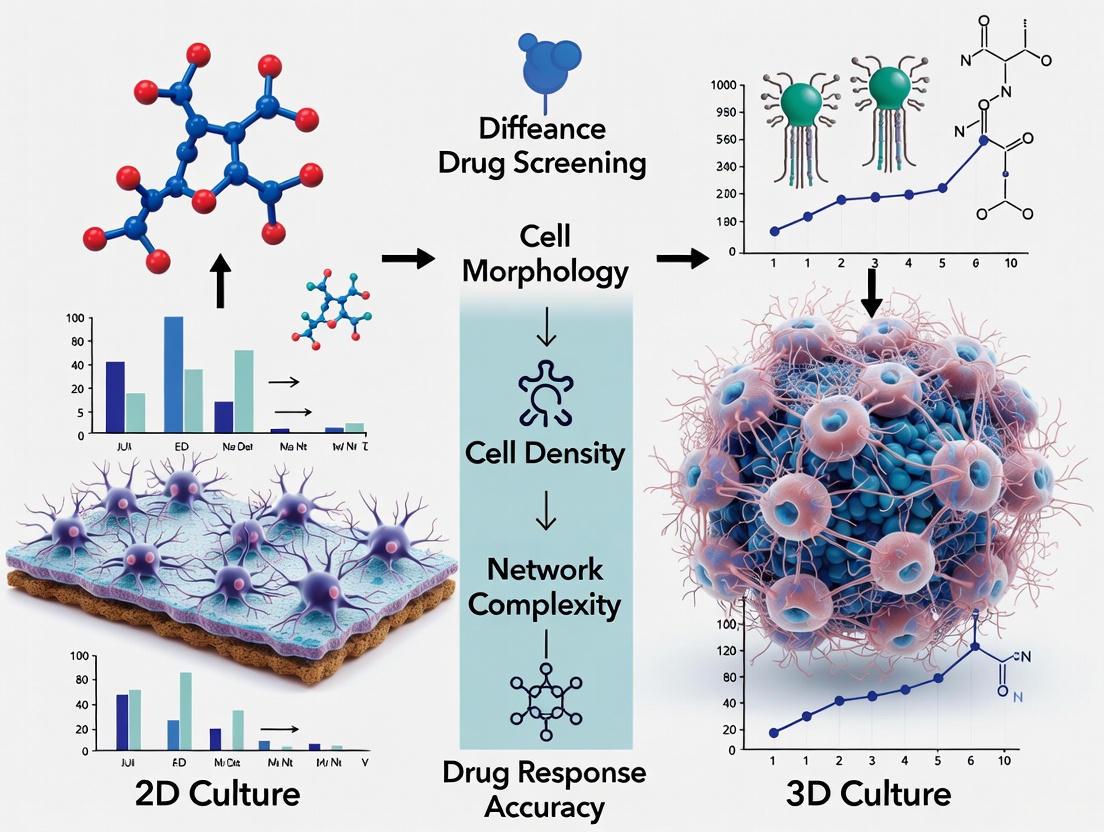
This article provides a comprehensive comparison of 2D and 3D neuronal culture models for researchers and professionals in drug development.
2D vs 3D Neuronal Cultures: A Strategic Guide for Predictive Drug Screening in Neurological Research
Abstract
This article provides a comprehensive comparison of 2D and 3D neuronal culture models for researchers and professionals in drug development. It explores the foundational principles of each model, detailing how 3D systems like organoids and spheroids better recapitulate the in vivo brain microenvironment, including crucial cell-cell interactions, physiological gradients, and extracellular matrix engagement. We cover practical methodologies for implementation, address common troubleshooting and optimization challenges, and present a rigorous validation framework based on recent studies. The analysis concludes that a tiered strategy—leveraging 2D for high-throughput screening and 3D for lead validation—offers the most efficient and predictive path for de-risking neurological drug discovery and advancing personalized medicine.
From Flat Biology to 3D Reality: Understanding the Core Principles of Neuronal Culture Models
Cell culture is a foundational tool in biomedical research, enabling the study of cell biology, disease mechanisms, and drug action outside the living organism [1]. The first cell cultures were performed by Ross Granville Harrison in 1907, who adapted the hanging drop method from bacteriology to study nerve fibers [1] [2]. For much of the subsequent century, two-dimensional (2D) monolayer culture—where cells grow on flat, rigid plastic or glass surfaces—was the standard laboratory method. However, the inherent limitations of these models in mimicking human physiology spurred the development of three-dimensional (3D) culture systems. While 2D cultures are akin to simple sketches, 3D constructs provide blueprints that offer detailed, realistic, and predictive insights into real-life biology [3]. This guide provides an objective comparison of these two foundational models, with a specific focus on their application in drug screening research.
Historical Context and Basic Principles
2D Monolayer Culture
The 2D cell culture method became widely established in the 1940s and 1950s [2]. In this system, cells are seeded on coated surfaces where they adhere, spread, and proliferate as a single layer. Its enduring popularity stems from simplicity, low cost, well-standardized protocols, and compatibility with high-throughput screening (HTS) applications [1] [3]. It is particularly valuable for early-stage compound screening and basic genetic manipulations [3].
3D Constructs
The concept of 3D cultures is older than often realized; the first 3D culture in soft agar was developed in the 1970s by Hamburg and Salmon [1]. The critical importance of the tissue microenvironment in cancer research was first robustly proposed in the early 1980s by Mina Bissell [2]. A 3D cell culture allows cells to grow and interact with their surroundings in all three spatial dimensions, enabling the formation of complex structures like spheroids and organoids [3]. These models self-assemble and dynamically engage with surrounding cells while creating natural gradients of oxygen, pH, and nutrients, which is crucial for accurate disease modeling [3].
Direct Comparison: Fundamental Differences and Implications
The table below summarizes the core distinctions between 2D and 3D culture systems, which have profound implications for experimental outcomes.
Table 1: Fundamental Comparison of 2D and 3D Cell Culture Models
| Feature | 2D Monolayer Culture | 3D Constructs | Key Implications for Research |
|---|---|---|---|
| Growth Pattern | Single layer on a flat, rigid surface [1] | Expansion in all directions, forming tissue-like structures [3] | 3D models recapitulate tissue architecture and cell polarity [1] |
| Cell-Cell & Cell-ECM Interactions | Limited; adherent to artificial substrate [1] | Extensive, physiologically relevant interactions [1] [3] | 3D interactions are critical for proper cell differentiation, signaling, and function [1] |
| Access to Nutrients/Oxygen | Uniform and unlimited [1] | Variable, creating physiological gradients (e.g., hypoxia) [1] [3] | 3D models mimic the nutrient and oxygen gradients found in vivo, such as in tumor cores [3] |
| Gene Expression & Splicing | Altered compared to in vivo [1] | More closely resembles in vivo profiles [1] [4] | Gene expression fidelity in 3D leads to more accurate disease modeling [3] |
| Drug Response | Often overestimates efficacy; does not model penetration [3] | More predictive; models drug penetration and resistance [5] [1] [3] | 3D cultures show increased resistance to chemotherapies, better predicting clinical outcomes [5] [4] |
| Tumor Microenvironment | Lacks stromal and immune components [1] | Can incorporate CAFs, immune cells, and ECM [6] | Enables study of tumor-stroma interactions and therapies targeting the microenvironment [6] |
| Cost & Throughput | Inexpensive; high-throughput compatible [1] [3] | More expensive; lower throughput, though improving [1] [3] | 2D is ideal for initial large-scale screening; 3D for later, more predictive validation [3] |
Supporting Experimental Data in Drug Screening
Quantitative data from direct comparison studies consistently demonstrates the significant impact of model selection on drug screening results.
Table 2: Comparative Drug Screening Data in 2D vs. 3D Models
| Experimental Finding | 2D Monolayer Result | 3D Construct Result | Research Context |
|---|---|---|---|
| Hit Rate in Kinase Inhibitor Screen | Lower number of effective drugs [6] | ~3x more drugs were effective on average [6] | Functional screening on TNBC and pancreatic microtumors vs. 2D lines [6] |
| Response to Chemotherapy | Higher sensitivity [5] [4] | Increased resistance to dacarbazine and cisplatin [5] [4] | Studies on B16F10 melanoma and 4T1 breast cancer cells [5] [4] |
| Doramapimod Effect | No effect on cancer cell viability [6] | Reduced microtumor viability and suppressed tumor growth in vivo [6] | Effect mediated via targeting CAFs in the TME, not cancer cells directly [6] |
| Morphology | Altered, simplified morphology [1] | Similar to in vivo tumors; forms spheroids [5] [1] | Comparison of cells grown on 2D plastic vs. 3D synthetic PHB scaffolds [5] |
Detailed Experimental Protocols for Model Establishment
To ensure reproducibility, below are detailed protocols for generating these models, as cited in the literature.
Protocol for 3D Organotypic Co-Culture Model
This protocol, adapted from studies on ovarian cancer metastasis, is used to evaluate cell adhesion and invasion in a physiologically relevant context [7].
Preparation of Fibroblast-Collagen Layer:
- Combine healthy omentum-derived fibroblasts (4x10^4 cells/ml) with Collagen I (5 ng/μl) in media.
- Add 100 μl of this solution to each well of a 96-well plate.
- Incubate for 4 hours at 37°C and 5% CO2 to allow the matrix to solidify.
Seeding of Mesothelial Layer:
- After incubation, add 50 μl of media containing 20,000 mesothelial cells on top of the fibroblast-collagen layer.
- Maintain the structure in standard culture conditions for 24 hours.
Introduction of Cancer Cells:
- Seed the cancer cells of interest (e.g., PEO4 ovarian cancer cells at a density of 1x10^6 cells/ml) in 2% FBS media on top of the established bilayer structure.
- The model can now be used for adhesion, invasion, or drug treatment assays [7].
Protocol for 3D Bioprinted Multi-Spheroid Proliferation Assay
This protocol uses a benchtop bioprinter to create highly uniform 3D spheroids for high-throughput proliferation and drug testing [7].
Cell Preparation:
- Harvest and resuspend the target cells (e.g., PEO4 cells) in an appropriate medium.
3D Bioprinting:
- Use a bioprinter (e.g., Rastrum 3D bioprinter) to dispense cells combined with a PEG-based bioink matrix.
- Print cells as an "Imaging model" directly into the wells of a tissue culture-grade 96-well plate. A density of 3000 cells per well is often optimal.
- The bioink matrix should be functionalized with RGD peptides to promote cell adhesion.
Culture and Assay:
- Maintain the printed spheroids at 37°C and 5% CO2 for 7 days to allow for stable spheroid formation.
- Administer drug treatments directly to the wells.
- After a treatment period (e.g., 72 hours), measure cell viability using a 3D-optimized assay like CellTiter-Glo 3D, following the manufacturer's protocol [7].
Signaling Pathways Elucidated by 3D Models
Advanced 3D models are crucial for uncovering complex signaling pathways that operate in the tissue microenvironment but are absent in 2D monocultures. A prime example is the DDR1/2-MAPK12-GLI axis in Cancer-Associated Fibroblasts (CAFs), which was identified through drug screening in 3D microtumors [6].
The following diagram illustrates this pathway and its role in the tumor microenvironment:
This pathway explains the mechanism of doramapimod, a drug identified as effective in 3D microtumors but ineffective in 2D cultures of cancer cells. In 3D models, doramapimod targets the DDR1/2 and MAPK12 kinases in CAFs, not the cancer cells themselves. This inhibition leads to reduced GLI1 activity, which subsequently decreases the production of ECM components. This remodeling of the tumor microenvironment suppresses overall tumor growth and enhances the effectiveness of both chemotherapy and immunotherapy, a critical finding that could only be made in a complex 3D model [6].
The Scientist's Toolkit: Essential Research Reagent Solutions
The following table catalogues key materials and reagents essential for establishing and assaying 2D and 3D cultures, based on the experimental protocols cited.
Table 3: Essential Reagents for 2D and 3D Cell Culture Models
| Reagent/Material | Function | Example Application in Protocols |
|---|---|---|
| Polyhydroxybutyrate (PHB) Scaffolds | Synthetic, biodegradable polymer providing a 3D scaffold for cell growth. Mimics ECM. | Used as a synthetic, cost-effective alternative to natural gels for 3D culture of melanoma and breast cancer cells [5] [4]. |
| Extracellular Matrix (ECM) Hydrogels (e.g., Collagen I, Matrigel) | Natural protein gels that provide a biomimetic 3D environment for cells to grow and invade. | Collagen I is used as the foundational matrix in the 3D organotypic model [7]. Matrigel is a classical model for 3D culture [1]. |
| PEG-based Bioink | A synthetic polymer used in 3D bioprinting; can be functionalized with peptides (e.g., RGD) to support cell adhesion. | Serves as the printable matrix for creating uniform multi-spheroids in a 96-well plate format for drug testing [7]. |
| CellTiter-Glo 3D Assay | Luminescent assay optimized for 3D cultures to measure cell viability based on ATP content. | Used to assess viability of 3D bioprinted spheroids after 72 hours of drug treatment [7]. |
| Ultra-Low Attachment (ULA) Plates | Plates with a covalently bound hydrogel surface that inhibits cell attachment, forcing cells to aggregate and form spheroids. | Used for scaffold-free suspension cultures to form 3D spheroids, a simple 3D model system [1] [3]. |
| MTT Assay | Colorimetric assay that measures the metabolic activity of cells, typically used in 2D monolayers. | Used to measure proliferation and drug response in 2D cultured cells seeded in 96-well plates [7]. |
The choice between 2D monolayers and 3D constructs is strategic, not binary. 2D cultures remain a powerful, cost-effective tool for high-throughput genetic screens and initial compound library filtering. In contrast, 3D constructs provide the physiological relevance necessary for predictive toxicology, studying complex disease mechanisms like the tumor microenvironment, and validating drug efficacy and penetration prior to clinical trials [6] [3]. The future of preclinical research lies not in choosing one model over the other, but in adopting integrated, tiered workflows that leverage the speed of 2D systems and the predictive power of 3D models to de-risk the drug development pipeline and deliver more effective therapies [3] [8].
Neurological disorders represent the second leading cause of death and the primary cause of disability worldwide, yet the development of effective treatments has been notoriously challenging [9]. A significant factor in this high failure rate is the inadequacy of existing preclinical models. For decades, drug screening for neurological conditions has relied heavily on two-dimensional (2D) cell cultures and animal models, both of which present critical limitations in predicting human responses [9] [10]. Traditional 2D cultures, where cells grow as a single layer on flat plastic surfaces, fail to replicate the intricate three-dimensional microenvironment of the human brain, leading to altered cell morphology, signaling, and gene expression [3] [10]. Consequently, promising drug candidates identified in 2D systems often prove ineffective or toxic in human clinical trials [3].
The emergence of three-dimensional (3D) brain models, particularly brain organoids, marks a transformative advancement in neuroscience research. These models are engineered to recapitulate the complex architecture of human brain tissue, restoring physiological cell-cell interactions and cell-matrix interactions that are essential for normal brain function and drug response [9] [11]. By bridging the gap between simplified 2D cultures and the in vivo complexity of the human brain, 3D brain organoids offer an unprecedented tool for modeling neurological diseases, deciphering pathogenic mechanisms, and accelerating the development of novel therapeutics [11] [12]. This guide provides a comprehensive comparison of 2D and 3D neuronal culture models, equipping researchers with the data and methodologies needed to select the optimal system for their drug screening objectives.
Fundamental Differences Between 2D and 3D Neuronal Cultures
The choice between 2D and 3D culture systems fundamentally shapes experimental outcomes by determining the physiological relevance of the cellular environment.
The 2D Culture Environment
In 2D cultures, cells are forced to adapt to an artificial, flat surface. This environment induces unnatural cell polarity and flattening, disrupting native cytoskeletal organization [10]. Cells experience uniform exposure to nutrients, oxygen, and test compounds, which eliminates the physiological gradients found in living tissues. The lack of a 3D extracellular matrix (ECM) prevents normal cell-ECM interactions, leading to aberrant signaling and gene expression patterns [3] [13]. For instance, hepatocytes cultured in 2D show markedly different cytochrome P450 (CYP) profiles compared to their 3D counterparts, significantly impacting drug metabolism studies [10].
The 3D Culture Environment
3D cultures, including brain organoids and spheroids, recreate a tissue-like context where cells can establish natural cell-cell contacts and interact with a surrounding 3D ECM [9]. This architecture enables the formation of oxygen gradients, nutrient gradients, and signaling gradients that drive cellular differentiation and organization in a manner mimicking in vivo conditions [3]. The 3D ECM provides not only structural support but also crucial biochemical and biomechanical cues that influence cell behavior, survival, and function [13]. The self-organization potential of neural cells in 3D cultures allows for the formation of complex structures that resemble specific brain regions, such as the cortex, midbrain, or hippocampus [12].
Table 1: Core Characteristics of 2D vs. 3D Neuronal Cultures
| Aspect | 2D Cultures | 3D Cultures (Organoids/Spheroids) |
|---|---|---|
| Spatial Architecture | Monolayer; flat and stretched morphology [3] | Three-dimensional; tissue-like organization and cell morphology [9] [3] |
| Cell-Cell & Cell-ECM Interactions | Limited, unnatural interactions; lacks ECM [10] | Complex, physiologically relevant interactions; presence of 3D ECM [9] [13] |
| Microenvironment | Homogeneous conditions; no gradients [10] | Heterogeneous; establishes oxygen, nutrient, and signaling gradients [3] |
| Gene Expression & Function | Altered profiles; loss of tissue-specific functions over time [10] | In vivo-like gene expression; retention of tissue-specific functions [3] |
| Drug Response | Often overestimates efficacy; poor predictive value for in vivo response [3] | More accurate modeling of drug penetration, toxicity, and efficacy [9] [3] |
Quantitative Comparison: Performance in Key Research Applications
The structural advantages of 3D cultures translate into significant functional differences with critical implications for drug discovery.
Physiological Relevance and Disease Modeling
3D brain organoids recapitulate the multicellular diversity and cellular subclasses of the human brain, organized in a multilaminar fashion that mirrors early brain development [9]. This complexity enables the modeling of cell-matrix interactions crucial for studying brain development, dysfunction, and neurological diseases [12]. For example, 3D midbrain organoids (MOs) have successfully replicated key pathological hallmarks of Parkinson's disease (PD), including the loss of dopaminergic neurons and the formation of Lewy body-like structures containing α-synuclein, which are not spontaneously observed in 2D models [14].
Predictive Value in Drug Screening
The 3D architecture introduces more realistic barriers to drug penetration, similar to those encountered in human tissues. This allows for more accurate assessment of a compound's true efficacy and potential toxicity [3]. Cells in 3D cultures also exhibit more natural drug resistance behavior, a critical factor in oncology research that is largely absent in 2D systems [3]. The ability of brain organoids to mimic the blood-brain barrier (BBB) and incorporate patient-specific cells via induced pluripotent stem cells (iPSCs) further enhances their value for personalized drug testing and disease modeling [9] [11].
Table 2: Functional Comparison in Drug Screening Applications
| Application | 2D Model Performance | 3D Model Performance | Research Implications |
|---|---|---|---|
| High-Throughput Screening | Excellent: Cost-effective, scalable, compatible with 384/1536-well plates [3] [10] | Challenging: Higher cost, lower throughput, more complex analysis [3] [14] | Use 2D for initial large-scale screening; 3D for validation of lead compounds [3] |
| Toxicology & Safety Pharmacology | Limited predictivity: Altered metabolism and gene expression skew responses [3] [10] | High predictivity: More accurate toxicological prediction due to physiological metabolism [3] | 3D models provide more reliable data for safety assessment, reducing late-stage failures [3] |
| Neurodegenerative Disease Modeling (e.g., PD) | Low relevance: Requires artificial induction of pathology; lacks spontaneous α-syn aggregation [14] | High relevance: Recapitulates spontaneous α-syn/Lewy pathology and DA neuron vulnerability [14] | 3D MOs are superior for pathogenesis studies and testing neuroprotective therapies [14] |
| Tumor Microenvironment Simulation | Poor: Lacks hypoxic cores, cell-ECM interactions, and drug gradient resistance [3] | High fidelity: Models hypoxic tumor cores, cell-ECM interactions, and realistic drug resistance [3] | Essential for studying drug penetration, hypoxia effects, and immunotherapy efficacy [3] |
| Personalized Therapy Testing | Limited: Short lifespan of primary cells hinders patient-specific studies [10] | High potential: Patient-derived iPSCs enable long-term culture and personalized drug response profiling [9] [11] | 3D patient-derived organoids are advancing personalized oncology and rare disease research [3] [10] |
Experimental Protocols: Generating and Analyzing 3D Brain Organoids
Key Methodology: Generating Brain Organoids via Directed Differentiation
The following protocol outlines the generation of region-specific brain organoids (e.g., cortical or midbrain) using directed differentiation, which provides greater consistency than self-organizing methods [11] [12].
Step 1: Pluripotent Stem Cell (PSC) Culture and Quality Control
- Maintain human iPSCs or ESCs in a pluripotent state using feeder-free conditions.
- Critical: Ensure cells are at a low passage number and have >95% viability before initiating differentiation. Check for karyotypic abnormalities.
Step 2: Embryoid Body (EB) Formation
- Dissociate PSCs into single cells and aggregate them in V-bottom or low-adherence plates to form EBs [9]. A typical seeding density is 3,000-9,000 cells per EB.
- Culture in neural induction medium supplemented with SMAD signaling inhibitors (e.g., Dorsomorphin for BMP inhibition, SB431542 for TGF-β inhibition) to promote default neural ectodermal fate [12] [14]. This is known as the "dual-SMAD inhibition" protocol.
Step 3: Neural Induction and Patterning
- After 5-7 days, embed EBs in Matrigel or a defined synthetic ECM to provide a 3D scaffold that supports morphogenesis [9] [12].
- Transfer to differentiation medium containing specific patterning factors to guide regional identity:
- For cortical organoids: Add Wnt inhibitors (e.g., Dkk1) and TGF-β inhibitors to promote anterior telencephalic fate [12].
- For midbrain organoids: Activate Wnt and Sonic Hedgehog (SHH) signaling using CHIR99021 and Purmorphamine, respectively, to ventralize the tissue and induce dopaminergic neurons [14].
- Culture in dynamic conditions using a spinning bioreactor or an orbital shaker to enhance nutrient/waste exchange and prevent central necrosis [9].
Step 4: Maturation and Long-Term Culture
- Maintain organoids in differentiation media for extended periods (40+ days to over 200 days), supplementing with neurotrophic factors like BDNF and GDNF to support neuronal survival and maturation [12] [14].
- To overcome hypoxia in larger organoids, consider the sliced neocortical organoid method, which reduces cell death and supports sustained neurogenesis, mimicking later developmental stages [12].
Key Assessment Techniques for Functional Validation
- Immunostaining and Microscopy: Confirm the presence and spatial organization of key neural cell types using markers like TUJ1 (neurons), GFAP (astrocytes), and TH (dopaminergic neurons) [14]. Use light-sheet microscopy (LSM) or fluorescence micro-optical tomography (fMOST) for 3D imaging [11].
- Electrophysiology: Use multi-electrode arrays (MEAs) to record spontaneous action potentials and synaptic activity, validating functional neuronal maturation, typically observed after 4-6 months in culture [12].
- Single-Cell RNA Sequencing (scRNA-seq): Characterize cellular heterogeneity and identify distinct neural subtypes by profiling transcriptomes of individual cells from dissociated organoids [11] [14].
- Neurochemical Analysis: Perform HPLC or ELISA to quantify the secretion of neurotransmitters like dopamine, confirming the functionality of specific neuronal populations [14].
Signaling Pathways in Neural Differentiation and Patterning
The development of region-specific brain organoids relies on the precise manipulation of key evolutionary conserved signaling pathways that guide embryonic brain development. The following diagram illustrates the core signaling interactions and protocol timeline involved in generating patterned brain organoids.
Diagram Title: Signaling Pathways in Brain Organoid Patterning
This diagram outlines the sequential modulation of key developmental pathways to generate region-specific brain organoids. The process begins with Dual-SMAD inhibition, which blocks TGF-β and BMP signaling to promote a default neuroectodermal fate [12]. Subsequent anterior-posterior (AP) patterning is controlled by the Wnt/β-catenin pathway; its suppression favors anterior fates like the forebrain and cortex, while its activation promotes posterior fates like the midbrain and hindbrain [12]. Finally, dorso-ventral (DV) patterning is achieved through factors like Sonic Hedgehog (SHH), which ventralizes the tissue to generate specific neuronal subtypes such as midbrain dopaminergic neurons, with FGF signaling providing additional patterning cues [12] [14].
The Scientist's Toolkit: Essential Reagents and Solutions
Table 3: Key Research Reagent Solutions for 3D Brain Organoid Culture
| Reagent / Material | Function | Example Application |
|---|---|---|
| Matrigel | Biological extracellular matrix (ECM) derived from mouse sarcoma; provides a 3D scaffold rich in laminin, collagen, and growth factors that supports cell adhesion, polarization, and morphogenesis [9] [12]. | Used to embed embryoid bodies (EBs) to support the formation of complex 3D structures in cerebral organoid protocols [9]. |
| Dual-SMAD Inhibitors | Small molecule inhibitors (e.g., Dorsomorphin/BMP inhibitor, SB431542/TGF-β inhibitor) that robustly direct pluripotent stem cells toward a neural fate by blocking alternative differentiation paths [12]. | Added during the first 5-10 days of differentiation media to achieve highly efficient (>90%) neural induction [12]. |
| Patterning Factors | Recombinant proteins or small molecules that mimic developmental morphogens to specify regional identity (e.g., SHH for ventralization, Wnt agonists/antagonists for AP patterning, FGF8 for rostralization) [12] [14]. | Used in directed differentiation protocols to generate region-specific organoids (e.g., midbrain, cortical, hypothalamic). |
| Neurotrophic Factors (BDNF, GDNF) | Proteins that support the survival, development, and function of neurons. BDNF promotes synaptic plasticity, while GDNF is crucial for the survival of dopaminergic neurons [14]. | Supplemented in the maturation media of long-term cultures (from day ~30 onward) to enhance neuronal health and functionality. |
| Rotating Bioreactors | Culture vessels that provide dynamic fluid flow through spinning or orbital shaking, improving gas exchange and nutrient delivery to the organoid core, thereby reducing hypoxic cell death [9] [11]. | Essential for scaling up organoid culture and maintaining the health of organoids beyond a few millimeters in size. |
| Ultra-Low Attachment Plates | Plates with a covalently bonded hydrogel surface that prevents cell attachment, forcing cells to aggregate and form 3D spheroids or EBs in a scaffold-free manner [3]. | Used for the initial aggregation of PSCs into EBs and for the culture of scaffold-free spheroids. |
The shift from 2D to 3D neuronal cultures represents a paradigm shift in neuroscience research and drug discovery. While 2D models remain valuable for high-throughput screening and reductionist mechanistic studies, 3D brain organoids offer unparalleled physiological relevance by restoring critical cell-cell interactions and cell-matrix interactions [9] [13]. The ability of these models to recapitulate key features of human brain development, disease pathology, and drug response makes them indispensable for improving the predictivity of preclinical research [11] [12].
The future of neurological drug screening lies in tiered workflows that leverage the strengths of both systems: using 2D cultures for initial high-volume compound screening and 3D organoids for in-depth validation and personalized medicine applications [3] [10]. As 3D culture technologies continue to advance—through the integration of vascular networks, microglia, and multi-region assembloids—their fidelity and translational impact will only increase [11] [14]. By adopting these more human-relevant models, researchers can significantly de-risk the drug development pipeline and accelerate the delivery of effective therapies for debilitating neurological disorders.
The transition from traditional two-dimensional (2D) monolayers to three-dimensional (3D) culture systems represents a paradigm shift in neuronal modeling for drug screening. While 2D cultures, valued for their simplicity and low cost, have powered breakthroughs in basic neuroscience, they only partially recapitulate the complex cell-cell and cell-extracellular matrix (ECM) interactions of living brain tissue [15]. The signaling pathways that control cell fate, tissue organization, and therapeutic responses are profoundly influenced by the spatial geometry of the cellular environment. This guide provides an objective comparison of key pathway activities—with a focus on Notch and Integrin-mediated signaling—in 2D versus 3D neuronal cultures, equipping researchers with the data and methodologies needed to select the optimal model for their drug discovery pipelines.
Experimental Evidence: Transcriptomic and Functional Contrasts
Robust experimental data from recent studies highlight fundamental differences in biological outcomes between dimensional culture systems.
Table 1: Key Comparative Outcomes in Neuronal Models
| Aspect | 2D Culture Findings | 3D Culture Findings | Implication for Drug Screening | Source Model |
|---|---|---|---|---|
| Maturation Speed | Slower maturation trajectory | Faster maturation; functional electrophysiological properties within 40–50 days [14] | 3D models can accelerate preclinical timelines | hiPSC-derived Midbrain Organoids (MOs) [14] |
| Neuronal Subtype Prevalence | Enriched with glutamatergic neurons [16] | Higher prevalence of GABAergic neurons [16] | Better models for disorders involving inhibitory neurons | hiPSC-derived Neural Progenitor Cells [16] |
| Gene Expression Fidelity | Altered metabolism and gene expression on planar surfaces [17] | Better retention of original tissue's gene expression profiles and signal pathways [17] | Improved predictive value for in vivo patient responses | Tumor organoids & general 3D culture [17] |
| Drug Resistance & Sensitivity | Overestimation of drug efficacy; fails to replicate in vivo resistance [3] [18] | More accurately replicates drug resistance behaviors and penetration gradients [3] [18] | Identifies ineffective compounds earlier; prevents clinical failure | Glioblastoma (GBM) spheroids & various 3D models [18] |
| Hypoxia & Gradients | Absent [14] | Present, leading to hypoxic cores that activate pathways like Notch [14] [15] | Critically important for studying pathological stress responses (e.g., in stroke) | Multicellular spheroids & organoids [15] |
Supporting Experimental Protocols
The data in Table 1 are derived from standardized protocols. Below are the core methodologies for key experiments cited.
Transcriptomic Characterization (as in [16]):
- Cell Model: Human induced pluripotent stem cell (hiPSC)-derived neural progenitor cells (hiNPCs).
- Differentiation: hiNPCs are differentiated in both 2D (adherent monolayers) and 3D (neurospheres) formats for up to 21 days.
- Analysis: High-throughput RNA sequencing (RNAseq) is performed on samples at multiple time points (e.g., days 3, 14, 21). Data is compared to human fetal brain samples to confirm physiological relevance.
Drug Efficacy Testing (as in [19] and [18]):
- Platform: Drug Efficacy Testing in 3D Cultures (DET3Ct) or similar spheroid-based assays.
- Culture: Patient-derived cells or cell lines are allowed to self-assemble into 3D aggregates/spheroids for 3 days post-processing. 2D controls are plated as monolayers.
- Treatment & Readout: Cultures are exposed to a drug library. Viability is quantified 72 hours post-treatment using live-cell imaging with dyes like TMRM (mitochondrial health) and POPO-1 (cell death). Drug Sensitivity Scores (DSS) are calculated.
The physical architecture of 3D cultures directly modulates the activity of critical signaling pathways.
Notch Signaling Pathway
The Notch pathway is a master regulator of cell-cell communication, cell fate determination, and stem cell maintenance. Its activity is highly dependent on direct cell-cell contact and spatial context.
Diagram 1: The Notch signaling pathway is differentially regulated in 2D versus 3D cultures due to fundamental differences in cellular architecture and microenvironment. The simplified cascade of receptor-ligand interaction, NICD release, and target gene transcription is conserved, but its context is not.
Key Contrasts in Neuronal Models:
- Stem Cell Maintenance: In 3D neural stem cell cultures, the Notch1-Hes5 axis helps maintain a semi-quiescent state, mimicking the in vivo stem cell niche. Depletion of Notch1 in 3D leads to reduced neuron generation, a phenotype less reliably observed in 2D [15] [14].
- Response to Hypoxia: Cells in the core of 3D spheroids and organoids experience hypoxic stress, activating hypoxia-inducible factors (HIFs) that subsequently upregulate the Notch pathway. This critical pathophysiological response is absent in uniform 2D monolayers [15].
- Lateral Inhibition: The process where a cell adopting a neuronal fate inhibits its neighbors from doing the same via Notch signaling is more accurately recapitulated in 3D, affecting the proportion and distribution of neuronal subtypes [15].
Integrin-Mediated Signaling & ECM Interaction
Integrins are transmembrane receptors that mediate cell attachment to the ECM, triggering intracellular signaling cascades regulating survival, proliferation, and differentiation.
Table 2: Integrin Signaling and ECM in 2D vs. 3D Cultures
| Feature | 2D Culture | 3D Culture |
|---|---|---|
| ECM Environment | Hard, flat plastic/glass; often coated with a single ECM protein (e.g., Poly-L-Lysine) [17] | Complex, porous 3D scaffold (e.g., Matrigel, hydrogels, fibrin) mimicking in vivo ECM [20] [21] |
| Integrin Engagement | Uniform, maximal engagement on 2D plane; non-physiological activation [17] | Spatially varied, physiological engagement; allows for haptotaxis (guided migration) [17] |
| Downstream Signaling | Altered mechanotransduction and MAPK/PI3K pathway activity due to rigid substrate [17] | Correct mechanical signaling; accurate replication of cell migration and invasion phenotypes [20] |
| Experimental Model | Traditional cell culture flasks/plates | Scaffold-based (Matrigel, hydrogels) or scaffold-free (hanging drop) 3D systems [20] [17] |
The profound difference in ECM interaction is a primary reason why 3D models of glioblastoma (GBM) show markedly higher resistance to drugs like Temozolomide compared to 2D monolayers, as the ECM in 3D creates a physical and biochemical barrier that influences cell survival pathways [18] [17].
Diagram 2: Integrin-mediated signaling is fundamentally different in 2D and 3D environments due to the nature of the extracellular matrix (ECM). The rigidity and two-dimensionality of traditional culture substrates lead to non-physiological signaling outputs.
The Scientist's Toolkit: Essential Research Reagents
Successful implementation of 2D versus 3D comparative studies relies on specific reagents and materials.
Table 3: Key Research Reagent Solutions for 2D/3D Signaling Studies
| Reagent/Material | Function | Application in Neuronal Cultures |
|---|---|---|
| Matrigel / Geltrex | Basement membrane extract providing a biologically active 3D scaffold rich in laminin, collagen, and growth factors. | Gold-standard for generating brain organoids and 3D neural cultures; supports complex cell-ECM interactions [17] [14]. |
| Synthetic Hydrogels | Tunable (e.g., PEG-based) polymers that offer defined mechanical and biochemical properties for 3D cell culture. | Allows controlled study of how stiffness (mechanical cue) and specific ECM ligands (e.g., RGD peptides) influence neural differentiation and signaling [20]. |
| Hanging Drop Plates | Scaffold-free technology using gravity to force cells to aggregate and self-assemble into 3D spheroids. | Simple, low-cost method for generating uniform neurospheres for medium-throughput drug screening [20] [17]. |
| Laminin | Key ECM protein in the basal lamina, promoting neuronal attachment, outgrowth, and survival. | Common coating for 2D neuronal culture; also a component of 3D Matrigel scaffolds [17]. |
| Recombinant Growth Factors (SHH, BDNF, GDNF) | Morphogens and neurotrophic factors that pattern and sustain neuronal populations. | Critical for regional patterning (e.g., midbrain organoids with SHH) and long-term survival/maturation of neurons in both 2D and 3D [14]. |
| RiboTag (Rpl22-HA) | Allows Translating Ribosome Affinity Purification (TRAP-seq) to isolate cell-type-specific mRNA from complex co-cultures. | Enables transcriptomic analysis of specific neural or endothelial cell types within a complex 3D co-culture model, overcoming minority-cell limitations [21]. |
| Tyrosine Hydroxylase (TH) Antibody | Marker for dopaminergic neurons, a key population in Parkinson's disease research. | Essential for immunostaining to validate the successful generation and quantification of dopaminergic neurons in 2D and 3D midbrain models [14]. |
The choice between 2D and 3D culture systems is not binary but strategic. 2D cultures remain invaluable for high-throughput genetic manipulations, initial target validation, and toxicity screens where cost, speed, and reproducibility are paramount [3] [14]. However, 3D neuronal models—including organoids and neurospheres—are indispensable when the research question demands physiological relevance. They are the superior tool for studying complex cell-ECM interactions, modeling the hypoxic core of tissues, understanding stromal-dependent drug resistance, and ultimately, for generating human-relevant data for preclinical drug screening that is more predictive of clinical outcomes [16] [18] [19]. By understanding the distinct signaling environments these systems create, researchers can better design experiments, interpret results, and advance therapeutic discovery for neurological disorders.
The pursuit of physiologically relevant in vitro models is paramount in neuroscience research, particularly for drug discovery and disease modeling. For decades, two-dimensional (2D) cell culture has been a fundamental tool, yet it suffers from significant limitations as it fails to recapitulate the complex architecture and cell-cell interactions of the human brain [22]. The growing recognition that 3D cell cultures more accurately mimic in vivo conditions has spurred their adoption, offering a promising bridge between traditional 2D cultures and animal models [23] [22]. This guide provides a comparative analysis of the key 3D model types—spheroids, organoids, scaffolds, and organ-on-a-chip systems—highlighting their applications, methodologies, and performance in neuroscience research.
The transition to 3D is driven by the critical need for models that better predict clinical outcomes. The probability of a drug for a neurodegenerative disease progressing from Phase I trials to regulatory approval is only about 10%, underscoring the inadequacy of existing preclinical models [23]. Furthermore, 2D models lack the tissue-specific architecture, mechanical and biochemical cues, and cell-to-cell and cell-to-matrix interactions essential for realistic drug response assessment [24] [25]. In contrast, 3D models, such as those derived from human induced pluripotent stem cells (hiPSCs), contain key genetic information from donors and have enormous potential for investigating pathological mechanisms and drug testing [23].
Comparative Analysis of Key 3D Model Types
The following table summarizes the core characteristics, advantages, and limitations of the four primary 3D culture models used in neuroscience.
Table 1: Comparison of Key 3D Model Types in Neuroscience
| Model Type | Core Description | Key Advantages | Primary Limitations | Common Neuroscience Applications |
|---|---|---|---|---|
| Spheroids | Spherical, self-assembled aggregates of cells [24]. | Easy-to-use protocols; Amenable to high-throughput screening (HTS); High reproducibility; Can form gradients of oxygen and nutrients [24] [22]. | Simplified architecture; Challenges with uniform size control; May lack key cell types found in vivo [24]. | Neurospheroid formation; Studies of neuronal differentiation and degeneration; Initial drug efficacy screening [26]. |
| Organoids | Complex 3D structures that self-organize and exhibit realistic microanatomy, derived from stem cells [24]. | High in vivo-like complexity and architecture; Patient-specific (when using hiPSCs); Powerful for disease modeling [24] [23]. | Can be variable between batches; Less amenable to HTS; Often lack vasculature; May not reach full in vivo maturity [24]. | Modeling neurodevelopmental & neurodegenerative diseases (AD, PD, HD, ALS); Studying human-specific brain features [23] [27]. |
| Scaffold-Based Models | Cells cultured within a supportive 3D matrix (e.g., hydrogels, polymers) [22]. | Provides tunable extracellular matrix (ECM) mimicry; Amenable to microplates and HTS; High reproducibility; Supports co-culture [24] [22]. | Simplified architecture compared to organoids; Matrix composition can vary across lots; Can be difficult to retrieve cells for analysis [24] [22]. | Investigating cell-ECM interactions; Neurite outgrowth studies; Creating engineered neural tissue constructs [22]. |
| Organ-on-a-Chip (OoC) | Microfluidic devices that culture cells in continuously perfused, micrometer-sized chambers to simulate tissue- and organ-level physiology [28]. | Recapitulates in vivo-like microenvironment and chemical/physical gradients; Allows for real-time, non-invasive monitoring [24] [28]. | Generally difficult to adapt to high-throughput formats; Complex fabrication and operation; Often lack integrated vascular systems [24] [29]. | Blood-brain barrier (BBB) modeling; Studying neuro-immune interactions; Advanced drug permeability and toxicity testing [28]. |
Performance and Experimental Data in Drug Discovery
The superior predictive power of 3D neuronal cultures is evident in drug screening campaigns. A compelling example is the use of a prototype adherent 3D (A-3D) human neuronal culture in a 96-well plate format to model Central Nervous System (CNS) viral infections. When infected with herpes simplex virus type 1 (HSV-1) and treated with acyclovir, the system demonstrated robust functionality for high-content screening, yielding an IC50 of 3.14 μM, a result consistent with established efficacy data [27]. This showcases the model's utility for rapid and reliable antiviral drug testing in a physiologically relevant context.
A critical advantage of 3D models, especially in oncology, is their ability to mimic the drug resistance observed in vivo. For instance, colon cancer HCT-116 cells cultured in 3D were found to be more resistant to chemotherapeutic agents like fluorouracil and oxaliplatin compared to their 2D counterparts, a phenomenon consistently seen in patients [24]. This resistance is partly attributed to the development of nutrient, oxygen, and metabolic gradients within the 3D structure, as well as enhanced cell-ECM interactions that can activate survival pathways [24] [30] [25]. Furthermore, 3D models better replicate the pathological hallmarks of neurodegenerative diseases. For Alzheimer's disease research, 3D systems provide a restrictive environment that limits the diffusion of secreted amyloid-beta (Aβ), thereby allowing for its accumulation and aggregation into niches that closely mimic the in vivo brain environment, which is not possible in 2D cultures where medium changes regularly remove secreted species [23].
Essential Reagents and Research Solutions
The successful implementation of 3D neuronal cultures relies on a suite of specialized reagents and materials. The table below details key components for building these advanced models.
Table 2: Essential Research Reagent Solutions for 3D Neuronal Cultures
| Reagent/Material | Function | Example Applications in Neuroscience |
|---|---|---|
| Human Induced Pluripotent Stem Cells (hiPSCs) | Patient-derived stem cells that can be differentiated into any neuronal or glial cell type, enabling personalized disease modeling and drug testing [23] [27]. | Generation of patient-specific neurons for modeling Parkinson's, Alzheimer's, ALS, and Huntington's disease [23] [26]. |
| Matrigel | A commercially available, complex basement membrane extract derived from mouse sarcoma, rich in ECM proteins like laminin and collagen. It provides a scaffold that supports 3D growth and differentiation [27]. | Used as a substrate for adherent 3D neuronal cultures and to support the growth of cerebral organoids [27]. |
| Synthetic Hydrogels (e.g., PEG) | Tunable polymer networks that can be engineered to mimic specific mechanical and biochemical properties of the neural ECM. They offer greater control and reproducibility than animal-derived matrices [22]. | Creating defined environments to study the effects of matrix stiffness on neuronal development or to encapsulate neural stem cells for tissue engineering [22]. |
| Neural Induction Supplements | Media supplements (e.g., B27, N2) and growth factors (e.g., BDNF, GDNF) that direct the differentiation of stem cells into neural lineages and support the survival and maturation of neurons and glia [27]. | Essential for the step-wise differentiation of hiPSCs into neural precursor cells (NPCs) and subsequently into mature, functional neurons in 3D culture [27]. |
| Ultra-Low Attachment (ULA) Plates | Cultureware with a chemically modified surface that inhibits cell attachment, forcing cells to self-assemble and aggregate into spheroids [24] [22]. | Formation of uniform neurospheres from neural stem cells or glioblastoma cells for drug screening and toxicity studies [24]. |
Detailed Experimental Protocols for 3D Neuronal Models
Protocol: Generation of Adherent 3D (A-3D) Neuronal Cultures from hiPSCs
This protocol, adapted from a study modeling CNS viral infections, details the creation of a scaffold-free 3D neuronal culture system amenable to drug screening in a 96-well format [27].
- Neural Precursor Cell (NPC) Derivation: Differentiate hiPSCs into a monolayer of NPCs using established protocols, which typically involve dual-SMAD inhibition to direct neural induction [27].
- Plate Coating: Coat optical-quality 96-well plates with Matrigel to provide an initial adhesive surface.
- Cell Seeding for 3D Culture: Remove the Matrigel and seed the hiPSC-derived NPCs at a high density of 2 × 10^5 cells/well directly onto the plate.
- Neuronal Differentiation and Maturation: Culture the cells in a specialized neurobasal medium supplemented with 2% B27, BDNF (10 ng/ml), GDNF (20 ng/ml), and small molecules including CHIR99021 (3 μM), forskolin (10 μM), and dorsomorphin (1 μM).
- Medium Adjustment: After 4 days, withdraw the small molecules (CHIR99021, forskolin, and dorsomorphin) to promote terminal neuronal differentiation.
- Long-term Maintenance: Continue culturing the cells for 6 weeks to allow for full maturation, with half of the culture medium being changed every other day. This extended period is crucial for the development of complex neuronal networks and electrophysiological properties [27].
Protocol: Drug Screening Assay in A-3D Neuronal Cultures
This workflow describes the application of the aforementioned A-3D model for antiviral drug testing, which can be adapted for other neurotherapeutics [27].
- Model Infection/Treatment: Treat the mature (6-week) A-3D neuronal cultures with the pathogen or chemical agent of interest. In the cited study, cultures were infected with herpes simplex virus type 1 (HSV-1).
- Compound Application: Co-treat the cultures with a dilution series of the drug candidate (e.g., Acyclovir) to establish a dose-response curve. Include appropriate controls (e.g., untreated, infected but untreated).
- Incubation: Incubate the cultures for a defined period to allow the drug to take effect.
- High-Content Analysis:
- Fixation and Staining: Fix the cells with 4% paraformaldehyde and perform immunocytochemistry for relevant neuronal markers (e.g., β-tubulin III/MAP2 for neurons, GFAP for astrocytes) and markers of the pathological state (e.g., viral antigens).
- Imaging and Quantification: Use a high-content screening platform (e.g., CX7) or confocal microscopy to acquire images. Quantify the percentage of infected cells (viral antigen-positive) and total neurons (neuronal marker-positive) in each well across the drug concentration series.
- Flow Cytometry Analysis (Optional): As a parallel and complementary method, dissociate the 3D cultures into single-cell suspensions and analyze by flow cytometry using the same antibody markers to quantify infection rates and cell viability [27].
- Data Analysis: Calculate the half-maximal inhibitory concentration (IC50) of the drug from the dose-response data generated by either method.
Technology Workflows and Relationships
The following diagram illustrates the typical workflow and decision-making process for selecting and implementing different 3D models in a neuroscience research pipeline.
Diagram: Workflow for Selecting 3D Neuronal Models. This chart outlines the pathway from research objective to model selection and application, linking each model type to its most common use case.
The adoption of 3D cell culture models represents a paradigm shift in neuroscience research and drug discovery. As summarized in this guide, no single 3D model is superior for all applications; rather, the choice depends on the specific research question, balancing the need for physiological complexity with practical considerations like throughput and reproducibility. Spheroids offer an accessible entry point for high-throughput compound screening, while organoids provide unparalleled depth for modeling complex human diseases. Scaffold-based systems allow for precise control over the cellular microenvironment, and organ-on-a-chip technologies introduce dynamic fluid flow to model tissue-level physiology and the blood-brain barrier.
The future of 3D neuroscience models lies in the integration of these technologies, such as combining organoids with microfluidic systems to improve nutrient delivery and mimic vascularization, or employing 3D bioprinting to create more reproducible and complex neural architectures [26] [30]. Furthermore, the integration of continuous, non-invasive microsensors for metabolites like oxygen and glucose will be crucial for standardizing culture conditions and improving the reliability of data obtained from these advanced in vitro models [28]. By thoughtfully selecting and continuously refining these 3D tools, researchers can better bridge the gap between traditional 2D culture and in vivo models, ultimately accelerating the development of effective neurotherapeutics.
Implementing 3D Neuronal Cultures: A Practical Guide for Drug Screening Workflows
The transition from traditional two-dimensional (2D) monolayer cultures to three-dimensional (3D) models represents a fundamental transformation in neurological drug discovery. While 2D cultures grown on flat polystyrene or glass surfaces have been the cornerstone of in vitro research for decades, they suffer from critical limitations when modeling the complex architecture of the human brain [24] [31]. Neurons cultured in 2D lack the physiological cell-cell interactions, spatial organization, and tissue-specific architecture necessary to accurately predict drug responses in the complex neuronal microenvironment [24]. The simplistic nature of 2D systems results in the loss of mechanical and biochemical cues present in living neural tissue, making them relatively poor models for predicting drug efficacy and toxicity for neurological diseases [24] [5].
In contrast, 3D neuronal cultures better mimic in vivo physiology by restoring morphological features, functional characteristics, and microenvironmental conditions of neural tissue [24]. Cells grown in 3D models exhibit more realistic cell-to-cell and cell-to-matrix interactions, develop gradients of oxygen and nutrients, and establish heterogeneous cell populations more representative of the native brain environment [24] [31]. This enhanced biological relevance makes 3D models particularly valuable for neurological drug screening, where the prediction of human responses prior to clinical trials is crucial for reducing attrition rates [24]. The implementation of 3D cell cultures, alongside advanced cell models including stem cell-derived neurons, allows for greater predictability of efficacy and toxicity in humans before drugs advance to clinical stages [24].
Comparative Analysis of 2D vs. 3D Neuronal Culture Systems
Fundamental Structural and Functional Differences
The divergence between 2D and 3D neuronal culture systems extends across multiple structural and functional parameters that critically impact their utility in drug screening applications. Neurons cultured in 2D monolayers are constrained to a single plane, forcing atypical polarization and simplifying the intricate network architecture characteristic of native brain circuitry [31] [2]. This architectural simplification disrupts the natural cell signaling pathways, metabolic interactions, and spatial organization essential for proper neurological function and drug response [24]. The flattened morphology of 2D-cultured neurons alters receptor distribution and accessibility, potentially skewing drug binding profiles and efficacy readouts in screening assays [5].
In 3D cultures, neurons establish sophisticated three-dimensional networks that more faithfully recapitulate the complex connectivity of the brain microenvironment [31]. The restoration of proper cell morphology in 3D systems enables more natural neurite outgrowth, synapse formation, and electrical signaling patterns [24] [31]. These systems develop physiological gradients of oxygen, nutrients, metabolites, and soluble signaling molecules that create heterogeneous cell populations, including hypoxic versus normoxic and quiescent versus replicating cells, mirroring the conditions found in intact neural tissue [24]. The enhanced cell-ECM and cell-cell interactions in 3D cultures significantly influence gene expression profiles, leading to more physiologically relevant responses to pharmacological compounds [31].
Table 1: Fundamental Characteristics of 2D vs. 3D Neuronal Culture Systems
| Parameter | 2D Monolayer Cultures | 3D Model Systems |
|---|---|---|
| Spatial Architecture | Flat, monolayer configuration with forced apical-basal polarity | Complex 3D organization with natural cell positioning and network formation |
| Cell Morphology | Flattened, stretched appearance with simplified neurite outgrowth | Natural, volumetric morphology with complex, multi-directional neurite extension |
| Cell-Cell Interactions | Limited to peripheral contacts in a single plane | Extensive multi-directional contacts mimicking native tissue connectivity |
| Microenvironment | Homogeneous nutrient and gas exchange without gradients | Physiological gradient formation for oxygen, nutrients, and metabolic waste |
| Gene Expression | Altered expression profiles due to unnatural substrate attachment | Tissue-like expression patterns supporting differentiated neuronal function |
| Drug Sensitivity | Typically higher sensitivity due to direct compound access | More physiologically relevant resistance patterns resembling in vivo responses |
| Metabolic Activity | Uniform metabolic profile across culture | Zoned metabolic activity mirroring tissue heterogeneity |
Quantitative Comparison of Performance in Drug Screening Applications
Experimental data from comparative studies consistently demonstrates significant functional differences between 2D and 3D culture systems that directly impact their performance in neurological drug discovery. Research across multiple cell types has revealed that cells grown in 3D models consistently show increased resistance to chemotherapeutic agents compared to their 2D counterparts [5]. For instance, studies with B16 F10 murine melanoma cells and 4T1 murine breast cancer cells demonstrated that cells grown in 3D models showed increased resistance to dacarbazine and cisplatin compared to 2D cultures [5]. Similarly, colon cancer HCT-116 cells in 3D culture were found to be more resistant to anticancer drugs such as melphalan, fluorouracil, oxaliplatin, and irinotecan—resistance patterns that have been observed in vivo as well [24].
Beyond drug resistance profiles, 3D neuronal cultures exhibit substantial advantages in functional maturation and phenotypic stability. A recent study investigating mesenchymal stem/stromal cells (MSCs) cultured in various systems found that 3D culture platforms, particularly novel hydrogel-based Bio-Blocks, preserved intrinsic stem cell phenotype and secretome far more effectively than conventional 2D systems [32]. After four weeks in culture, Bio-Block MSC systems exhibited approximately 2-fold higher proliferation than spheroid and Matrigel groups, with senescence reduced by 30-37% and apoptosis decreased 2-3-fold [32]. These findings have significant implications for neuronal cultures derived from stem cells, where maintaining long-term phenotypic stability is crucial for extended drug screening applications.
Table 2: Experimental Performance Metrics of 2D vs. 3D Culture Systems
| Experimental Metric | 2D Culture Performance | 3D Culture Performance | Significance for Neuronal Drug Screening |
|---|---|---|---|
| Proliferation Rate | Standard growth kinetics | Variable by system: ~2x higher in advanced hydrogel systems [32] | Enables longer-term studies without subculturing disruption |
| Drug Resistance | Typically lower IC50 values | Increased resistance, better mimicking in vivo responses [5] | More accurate prediction of clinical dosing requirements |
| Gene Expression | Simplified profile lacking tissue-specific markers | Enhanced expression of tissue-specific genes and signaling pathways [31] | Better models of disease-specific molecular pathways |
| Senescence/Apoptosis | Higher rates in long-term culture | Reduced by 30-37% (senescence) and 2-3-fold (apoptosis) [32] | Extended viability for chronic treatment studies |
| Secretome Production | Declined 35% over 4 weeks [32] | Preserved or increased in 3D systems [32] | Maintains autocrine/paracrine signaling important for neuronal function |
| Extracellular Vesicle Output | Significant declines over time | Increased ~44% in advanced 3D systems [32] | Preserves intercellular communication mechanisms |
Comprehensive Guide to 3D Culture Techniques for Neuronal Models
Scaffold-Free Techniques
Low-Adhesion Plates
The low-adhesion plate method represents one of the most accessible entry points into 3D neuronal culture. This technique utilizes specially manufactured plates with ultralow attachment surface coatings that minimize cell adherence while employing well-defined geometries (round, tapered, or v-shaped bottoms) to drive and position single spheroids within each well [24]. The primary advantage of this system lies in its ability to form, propagate, and assay spheroids within the same platform, making it particularly suitable for high-throughput screening (HTS) applications in drug discovery [24]. The standardized format enables uniform spheroid formation with minimal technical expertise required, facilitating consistent and reproducible neuronal spheroid production.
For neuronal cultures, low-adhesion plates support the self-aggregation of primary neurons or neural stem cells into neurospheres that exhibit more natural cell-cell interactions and network formation than 2D systems. The confined geometry promotes the establishment of metabolic and oxygen gradients that mimic aspects of the in vivo neural microenvironment, potentially leading to more physiologically relevant responses to drug treatments [24]. However, challenges include the development and maintenance of spheroids with uniform size, formation from small seed numbers of cells, and precise control of specific ratios of different neural cell types in co-culture systems [24].
Hanging Drop Method
The hanging drop technique employs specialized plates where cells in media are dispensed into the top of each well, becoming segregated into discrete media droplets formed below the aperture of the bottom opening [24]. Within these suspended droplets, cells spontaneously aggregate to form spheroids through gravity-driven assembly. This method offers excellent control over initial cell density and spheroid size by simply adjusting the volume of the drop or concentration of the cell suspension [31]. For neuronal research, this precision enables the formation of highly uniform neurospheres with consistent properties across experimental conditions, reducing variability in drug screening assays.
A significant limitation of the hanging drop method is the requirement to transfer spheroids from the HDP to a second plate for assays and long-term culture, introducing potential mechanical stress on the delicate neural aggregates [24]. Additionally, the technique may present challenges for extended neuronal culture due to evaporation concerns in the small droplet volumes and limitations on medium exchange during the aggregation phase. Despite these constraints, the hanging drop method remains valuable for establishing initial neurosphere formation with high uniformity before transferring to other culture platforms for maturation and drug testing.
Agitation-Based Approaches
Agitation-based methods utilize bioreactors such as spinner flasks or microgravity bioreactors to drive cells to self-aggregate into spheroids under dynamic culture conditions [24]. These systems employ constant gentle rotation or stirring to maintain cells in suspension, preventing adhesion to vessel walls and promoting cell-cell contact that leads to spheroid formation. The primary advantage of this approach is the capacity for large-scale production of neurospheres, making it suitable for generating substantial quantities of 3D neuronal models for extensive drug screening campaigns [24].
However, agitation-based systems present challenges for delicate neuronal cultures, including potential fluidic flow-induced shear stress that may damage extending neurites or disrupt nascent neural networks [24]. Additionally, these methods typically produce non-uniform spheroids with significant size variation, potentially increasing experimental variability in drug response readings [31]. The dynamic culture environment may also complicate real-time imaging of neural activity during drug treatment unless specialized instrumentation is available.
Scaffold-Based Techniques
Hydrogels and Natural Polymers
Hydrogel-based support matrices represent the most biomimetic approach for 3D neuronal culture, providing a synthetic extracellular matrix (ECM) that closely resembles the natural neural microenvironment. Composed of hydrophilic polymer chains—either covalent or non-covalent bonded—hydrogels create a highly hydrated 3D environment that facilitates nutrient diffusion and waste removal while supporting complex neurite outgrowth and network formation [31]. Natural polymer hydrogels, including materials such as collagen, Matrigel, fibrin, laminin, and hyaluronic acid, are particularly advantageous for neuronal cultures as they contain innate bioactive motifs that support cell adhesion, migration, and differentiation [31].
These natural hydrogels perfectly mimic the native ECM, allowing soluble factors such as cytokines and growth factors to navigate through the scaffold, thereby influencing neuronal development and function [31]. The tissue-like stiffness of these materials can be tuned to match specific neural tissue properties, providing appropriate mechanical cues that direct neuronal behavior and drug responsiveness. However, challenges include batch-to-batch variability in natural hydrogel compositions (particularly with Matrigel), potential immunogenicity concerns with animal-derived components, and generally poor mechanical properties that may limit long-term structural stability for extended neuronal cultures [31].
Synthetic and Composite Scaffolds
Synthetic scaffolds offer superior control over mechanical properties, architectural features, and chemical composition compared to natural hydrogel systems. Common synthetic materials include polyethylene glycol (PEG), polylactic acid (PLA), polycaprolactone (PCL), and various other polymers that can be engineered with precise degradation rates, stiffness profiles, and functionalization with bioactive peptides [31]. These systems provide excellent consistency and reproducibility—critical factors for standardized drug screening applications—while minimizing batch-to-batch variability associated with natural matrices [31].
For neuronal cultures specifically, synthetic scaffolds can be functionalized with neural-specific adhesion peptides (such as IKVAV laminin-derived sequences) to promote neuronal attachment and neurite extension while discouraging non-neural cell proliferation. Recent advances in composite scaffolds combine multiple materials to address individual limitations; for example, adding ceramic materials to polymeric PCL scaffolds has been shown to enhance mechanical properties and cell proliferation rates [31]. Similarly, alginate combined with synthetic polymers provides optimized biomechanical support and cell attachment conditions beneficial for neural tissue engineering [31].
Advanced Bioreactor Systems
Advanced bioreactor systems have evolved significantly from simple culture vessels to sophisticated platforms that enable precise regulation of environmental conditions experienced by cells in 3D culture [33]. Modern bioreactors for neuronal applications maintain control of critical factors including oxygen tension, nutrient distribution, and metabolic waste removal while incorporating mechanical stresses and pressure control relevant to neural tissue function [33]. These systems range from stirred tank bioreactors for suspension culture to perfusion-based devices with various mechanical actuators that apply specific fluidic and mechanical stresses to 3D neural constructs.
For neuronal drug screening, perfusion-based bioreactors offer particular advantages by maintaining constant nutrient delivery and waste removal, enabling long-term culture of dense neuronal networks that exhibit enhanced functional maturation. The presence of mechanical stimulus in these systems has been shown to instigate tissue differentiation and prevent de-differentiation of cells, potentially leading to more stable and mature neuronal phenotypes for compound testing [33]. Additionally, the capacity for "scale-up" and "scale-out" operations in expanding allogeneic cells to the numbers required for cellular therapies makes these systems invaluable for transitioning from preliminary screening to comprehensive preclinical assessment [33].
Experimental Protocols for Establishing 3D Neuronal Cultures
Protocol 1: Neurosphere Formation Using Low-Adhesion Plates
Principle: Promotes self-aggregation of neural cells into 3D spheroids through minimized substrate adhesion and geometric guidance [24].
Materials:
- Ultralow attachment plates (round-bottom recommended)
- Neural stem cells or dissociated primary neurons
- Complete neuronal culture medium (supplemented with B27, N2, growth factors as required)
- Centrifuge with plate adapters
Procedure:
- Prepare a single-cell suspension of neural cells at optimal density (typically 1.0-2.5 × 10⁴ cells/mL in complete medium).
- Add appropriate volume to each well of low-adhesion plate (50-100 μL depending on well size and desired spheroid size).
- Centrifuge plates at 300 × g for 5 minutes to encourage initial cell contact.
- Incubate at 37°C, 5% CO₂ for 3-5 days, monitoring daily for spheroid formation.
- Replace 50% of medium carefully every 2-3 days without disrupting formed neurospheres.
- Mature neurospheres are typically ready for experimental use within 7-14 days.
Technical Notes:
- Optimal cell density varies by cell type and should be determined empirically.
- Neurosphere size uniformity can be improved by using plates with specialized surface coatings and geometry.
- For co-culture with glial cells, adjust initial seeding ratios to reflect desired neural-glia composition.
Protocol 2: 3D Neural Culture in Hydrogel Matrices
Principle: Encapsulates neural cells within a biologically active 3D matrix that mimics the native extracellular environment [31].
Materials:
- Hydrogel precursor (e.g., Matrigel, collagen, fibrin, or synthetic alternatives)
- Neutralization solutions as required by specific hydrogel
- Pre-chilled pipettes and tubes
- Neural cell suspension at high density (5.0-10.0 × 10⁶ cells/mL)
- 24-well or 96-well culture plates
Procedure:
- Keep hydrogel material on ice throughout preparation to prevent premature polymerization.
- Mix neural cell suspension with hydrogel precursor at recommended ratio (typically 1:3 to 1:5 cell suspension:hydrogel).
- Quickly plate hydrogel-cell mixture into culture plates (50-100 μL per well for 96-well format).
- Incubate at 37°C for 15-45 minutes to allow complete polymerization.
- Gently overlay with complete neuronal culture medium after polymerization.
- Maintain cultures with half-medium changes every 2-3 days.
- Functional neural networks typically form within 7-21 days, depending on cell type and matrix composition.
Technical Notes:
- Polymerization time and conditions vary significantly between hydrogel types.
- For stiffness studies, use synthetic hydrogels with controlled mechanical properties.
- Incorporate integrin-binding peptides (RGD, IKVAV) in synthetic hydrogels to promote neural attachment and process outgrowth.
Experimental Workflow: Establishing and Validating 3D Neuronal Cultures for Drug Screening
The following diagram illustrates the key decision points and methodological pathway for establishing robust 3D neuronal cultures optimized for drug discovery applications:
Diagram 1: Experimental workflow for establishing 3D neuronal cultures for drug screening applications
The Scientist's Toolkit: Essential Reagents and Materials for 3D Neuronal Culture
Successfully implementing 3D neuronal culture systems requires access to specialized reagents and materials that support the unique requirements of three-dimensional neural tissue models. The following table comprehensively details essential solutions and their specific applications in establishing and maintaining robust 3D neuronal cultures for drug screening:
Table 3: Essential Research Reagent Solutions for 3D Neuronal Culture
| Reagent/Material | Function/Application | Key Considerations for Neuronal Cultures |
|---|---|---|
| Ultralow Attachment Plates | Prevents cell adhesion, enabling neurosphere formation through self-aggregation [24] | Well geometry affects spheroid uniformity; V-bottom plates enhance single-spheroid formation |
| Basement Membrane Matrix (e.g., Matrigel) | Natural hydrogel scaffold rich in ECM proteins for 3D neural encapsulation [24] [32] | Batch variability requires validation; contains growth factors influencing neural development |
| Synthetic Hydrogels (PEG, PLA) | Defined-composition matrices with tunable mechanical properties [31] | Can be functionalized with neural-adhesive peptides (RGD, IKVAV) to promote neurite outgrowth |
| Hanging Drop Plates | Forms uniform neurospheres through gravity-mediated aggregation [24] [31] | Excellent size control but requires transfer for long-term culture and drug testing |
| Neural Differentiation Media | Supports maturation and maintenance of neuronal phenotypes in 3D | Typically includes B27, N2, BDNF, GDNF, ascorbic acid for optimal neural health |
| Oxygen-Control Systems | Regulates dissolved oxygen to mimic brain microenvironment | Hypoxic chambers (<5% O₂) enhance certain neural stem cell differentiation pathways |
| 3D Viability Assays (CellTiter-Glo 3D) | ATP quantification optimized for penetration into 3D structures [7] | Standard MTT assays show limited penetration in dense neurospheres >200μm diameter |
| Microfluidic Perfusion Systems | Maintains nutrient/waste exchange in dense neural tissues [33] [2] | Enables long-term culture (>30 days) of mature neuronal networks with reduced edge effects |
| Neural Tissue Dissociation Kits | Generates single-cell suspensions from neurospheres for analysis | Enzyme formulations optimized for neural tissue preserve surface receptors for flow cytometry |
The comprehensive comparison of 3D culture techniques reveals a complex landscape of options for neuroscience drug discovery, each with distinct advantages and limitations. Scaffold-free methods including low-adhesion plates and hanging drops offer simplicity and compatibility with high-throughput screening but may lack the structural complexity of native neural tissue [24]. Hydrogel-based systems provide superior biomimetic environments that support enhanced neural differentiation and network formation but introduce additional variables related to matrix composition and batch consistency [31] [32]. Advanced bioreactor systems enable precise environmental control and scalability but require specialized equipment and technical expertise [33].
The selection of an appropriate 3D neuronal culture model should be guided by specific research objectives, throughput requirements, and available resources. For high-content screening campaigns targeting initial hit identification, scaffold-free neurosphere systems in low-adhesion plates offer an optimal balance of physiological relevance and practical implementation. For mechanism-of-action studies or disease modeling requiring enhanced tissue-like complexity, hydrogel-based systems with controlled mechanical properties provide superior microenvironmental support. As the field continues to evolve, the integration of these technologies with advanced readout methodologies including functional calcium imaging, multi-electrode arrays, and high-resolution imaging will further enhance their predictive power in neurological drug discovery.
The transition to 3D neuronal cultures represents not merely a technical improvement but a fundamental shift toward more physiologically relevant and predictive models that can potentially accelerate the development of effective therapies for neurological disorders while reducing late-stage attrition in the drug development pipeline.
The field of drug discovery for neurological disorders is undergoing a fundamental transformation, moving away from traditional models that often failed to predict human clinical outcomes. For decades, research relied heavily on two-dimensional (2D) cell cultures and animal models that presented significant limitations in translational accuracy. The advent of induced pluripotent stem cells (iPSCs) has revolutionized this landscape by providing an unlimited source of patient-specific cells that carry the complete genetic background of individuals, including disease-specific mutations and polymorphisms. When combined with advanced three-dimensional (3D) culture systems, these cells enable researchers to create human-relevant disease models that more accurately mimic the complex architecture and cellular interactions of the nervous system [23] [34].
This evolution is particularly crucial for neurodegenerative disease research, where the failure rate of clinical trials remains alarmingly high. Traditional 2D neuronal cultures, while simple and cost-effective, lack the physiological relevance needed to accurately study disease mechanisms and drug responses. The integration of iPSC technology with 3D culture systems represents a powerful convergence that enables personalized screening approaches and more predictive assessment of therapeutic efficacy and toxicity [23]. This guide provides a comprehensive comparison of these technologies and their application in modern neuroscience research and drug development.
2D vs 3D Culture Systems: A Fundamental Comparison
Key Differences and Physiological Relevance
The choice between 2D and 3D culture systems represents one of the most fundamental decisions in experimental design for neuroscience research. Traditional 2D cultures involve growing cells as a single layer on flat, rigid plastic or glass surfaces, which fails to recapitulate the complex three-dimensional microenvironment found in living tissues [3] [2]. In contrast, 3D culture systems allow cells to grow and interact in all three dimensions, enabling the formation of tissue-like structures that more closely mimic the in vivo environment [2].
The limitations of 2D systems are particularly pronounced in neurological research. Neurons in the human brain exist in a complex 3D architecture with intricate cell-cell interactions, spatial organization, and gradients of signaling molecules that cannot be replicated in flat cultures [3]. Cells in 2D culture often exhibit abnormal polarity, altered gene expression patterns, and simplified cell signaling that reduces their physiological relevance. Furthermore, the diffusion characteristics of nutrients, oxygen, and therapeutic compounds differ significantly between 2D and 3D systems, directly impacting drug screening outcomes [5] [23].
Quantitative Comparison of 2D and 3D Systems
Table 1: Comprehensive Comparison of 2D vs 3D Neuronal Culture Models
| Parameter | 2D Culture Systems | 3D Culture Systems |
|---|---|---|
| Growth Pattern | Single layer on flat surface | Multilayered, tissue-like structures |
| Cell-Cell Interactions | Limited to peripheral contacts in a single plane | Complex, omnidirectional interactions mimicking natural tissue |
| Gene Expression Profile | Often altered due to unnatural substrate | More closely resembles in vivo patterns [5] |
| Drug Response | Typically overestimates efficacy [3] | More predictive of clinical outcomes [5] |
| Spatial Organization | Homogeneous, artificial | Heterogeneous, with natural gradients (oxygen, nutrients, pH) [3] |
| Extracellular Matrix | Simple coating (e.g., laminin, poly-ornithine) [23] | Complex, biologically relevant ECM interactions [3] |
| Cost & Infrastructure | Inexpensive, established equipment [3] [2] | Higher cost, requires specialized materials and equipment [3] |
| Throughput Capability | Excellent for high-throughput screening [3] | Improving, but often more complex and time-consuming [2] |
| Physiological Relevance | Limited, poor mimicry of human tissue [3] | High, better simulation of living organism conditions [2] |
Table 2: Experimental Outcomes in 2D vs 3D Cultures
| Experimental Measure | 2D Culture Performance | 3D Culture Performance |
|---|---|---|
| Drug Penetration | Uniform, rapid distribution | Gradiented, more physiologically relevant diffusion [3] |
| Drug Resistance | Typically lower resistance | Increased resistance, better mimicking in vivo tumors [5] |
| Cytotoxicity Assessment | Basic assessment of cell viability [3] | More accurate toxicological prediction [3] |
| Cell Morphology | Flattened, spread appearance | Natural, more in vivo-like morphology [5] |
| Protein Expression | Often dedifferentiated patterns | Improved differentiation and function [5] |
| Neuronal Network Formation | Simplified connections | Complex, more natural network architecture [23] |
The Emergence of iPSC Technology in Disease Modeling
Fundamental Advantages of iPSC-Based Platforms
The development of induced pluripotent stem cell (iPSC) technology by Shinya Yamanaka in 2006 represented a watershed moment for biomedical research [35]. This breakthrough enabled the reprogramming of somatic cells (typically skin fibroblasts or blood cells) back to a pluripotent state through the introduction of specific transcription factors, most commonly the "Yamanaka factors" (OCT3/4, SOX2, C-MYC, and KLF4) [35] [23]. The implications for neurological disease modeling are profound, as iPSCs provide an unlimited source of human neurons and glial cells that carry the exact genetic makeup of specific patients, including mutations responsible for both familial and sporadic disease forms [36] [23].
iPSCs offer several critical advantages over previous models. Unlike animal models that show significant species-specific differences in nervous system biology, iPSC-derived neurons are genetically human and exhibit human-specific properties [34]. Compared to embryonic stem cells (ESCs), iPSCs avoid ethical concerns while providing the unique opportunity to study cells from living patients across a spectrum of disease stages and genetic backgrounds [35]. Furthermore, the ability to generate iPSCs from patients with specific genetic variants enables the creation of isogenic control lines through gene editing techniques, allowing researchers to study the specific effects of individual mutations in otherwise identical genetic backgrounds [35] [37].
Applications in Neurological Disease Modeling
iPSC technology has been successfully applied to model a wide range of neurological disorders, including Alzheimer's disease (AD), Parkinson's disease (PD), Huntington's disease (HD), and amyotrophic lateral sclerosis (ALS) [23]. In each case, patient-derived iPSCs can be differentiated into the specific neuronal subtypes affected by the disease, providing invaluable models for studying disease mechanisms and screening potential therapeutics.
A notable example comes from ALS research, where a large-scale study using iPSCs from 100 patients with sporadic ALS successfully recapitulated key disease features, including reduced motor neuron survival, accelerated neurite degeneration, and transcriptional dysregulation [36]. This model demonstrated superior predictive validity by correctly identifying the clinical failure of 97% of drugs that had previously failed in ALS clinical trials, while also identifying a promising combinatorial therapy (riluzole, memantine, and baricitinib) that rescued motor neuron survival across diverse SALS donors [36]. This approach highlights the power of iPSC-based models to reflect patient population heterogeneity and deliver more clinically relevant results.
Experimental Design and Protocols
iPSC Differentiation Protocol for Neuronal Cultures
The generation of functional neurons from iPSCs follows a stepwise differentiation protocol that recapitulates aspects of embryonic development. While specific protocols vary depending on the desired neuronal subtype, most share common fundamental stages:
- iPSC Maintenance: Human iPSCs are maintained on feeder-free cultures with essential supplements (e.g., bFGF) to preserve pluripotency [36] [23].
- Neural Induction: Pluripotent cells are directed toward neural lineage using dual SMAD inhibition (e.g., Noggin, SB431542) for efficient neural conversion [23].
- Neural Patterning: Specific neuronal subtypes are generated using regional patterning factors (e.g., SHH for motor neurons, FGF8 for dopaminergic neurons) [36] [23].
- Neuronal Maturation: Differentiated neurons are maintained in maturation media containing neurotrophic factors (BDNF, GDNF, CNTF) for several weeks to develop functional properties [36].
For 3D culture systems, the differentiation process is adapted to allow for self-organization into tissue-like structures. Common approaches include:
- Embryoid Body Formation: Cells are aggregated in low-attachment plates to form 3D structures [23].
- Scaffold-Based Cultures: Cells are embedded in natural (e.g., Matrigel) or synthetic (e.g., PHB) extracellular matrices that support 3D organization [5] [2].
- Organoid Culture: Extended differentiation with specific patterning cues generates self-organizing 3D structures that recapitulate regional brain development [38] [34].
Protocol for High-Content Screening Using iPSC-Derived Neurons
The following protocol outlines a standardized approach for drug screening using iPSC-derived neurons, based on methodologies from large-scale studies such as the sporadic ALS modeling research [36]:
Figure 1: Experimental workflow for iPSC-based drug screening
Key Steps and Considerations:
iPSC Library Generation: Generate iPSCs from patient fibroblasts using non-integrating episomal vectors to avoid genomic modifications [36]. Subject all lines to rigorous quality control including genomic integrity, pluripotency confirmation, and trilineage differentiation potential.
Motor Neuron Differentiation: Adapt established spinal motor neuron differentiation protocols with extensively optimized maturation conditions [36]. The protocol should consistently generate high-purity cultures (>90% MNX1/HB9+ and Tuj1+ cells) with extensive neurite networks.
Longitudinal Live-Cell Imaging: Implement daily live-cell imaging using motor neuron-specific reporters (e.g., HB9-turbo) to monitor neuronal health over time [36]. This enables tracking of survival, neurite degeneration, and other phenotypic endpoints.
High-Throughput Screening: Plate cells in 384-well format compatible with automated screening systems. Include appropriate controls in each plate for normalization and quality assessment.
Phenotypic Analysis: Apply highly stringent quantification criteria for survival and neurite degeneration. Use automated image analysis to ensure objective, reproducible scoring across the entire screen.
Hit Validation: Confirm screening hits in secondary assays including transcriptomic analysis, electrophysiological assessment, and validation across multiple patient lines to account for population heterogeneity.
Essential Research Reagent Solutions
Successful implementation of iPSC-based screening platforms requires specialized reagents and materials designed to support the unique requirements of stem cell culture and neuronal differentiation.
Table 3: Essential Research Reagents for iPSC-Based Neuronal Screening
| Reagent Category | Specific Examples | Function & Importance |
|---|---|---|
| Reprogramming Systems | Non-integrating episomal vectors, Sendai virus, mRNA-based systems | Footprint-free reprogramming of somatic cells to iPSCs [36] [23] |
| Neural Differentiation Kits | Commercial neural induction media, patterning small molecules | Standardized, efficient differentiation to specific neuronal subtypes |
| Extracellular Matrices | Matrigel, laminin, synthetic PHB scaffolds, synthetic hydrogels | Provide 3D structural support and biological cues for cell growth and organization [5] [2] |
| Neuronal Maturation Supplements | BDNF, GDNF, CNTF, cAMP analogs | Support long-term survival and functional maturation of neurons [36] |
| Cell Culture Platforms | Ultra-low attachment plates, organ-on-chip systems (OrganoPlate) | Enable 3D culture and high-throughput screening capabilities [2] |
| Viability & Toxicity Assays | ATP-based viability assays, caspase activation assays, LDH release | Assess compound efficacy and toxicity in complex 3D cultures [5] |
| Gene Editing Tools | CRISPR/Cas9 systems, base editors | Create isogenic controls, introduce disease mutations, perform genetic screens [35] |
Signaling Pathways in Neuronal Development and Disease
The differentiation and maturation of iPSCs into functional neurons involves the coordinated activation and inhibition of multiple evolutionarily conserved signaling pathways. Understanding these pathways is essential for optimizing differentiation protocols and identifying potential therapeutic targets.
Figure 2: Key signaling pathways in neural patterning
Critical Pathway Interactions:
Dual SMAD Inhibition: Simultaneous inhibition of BMP and TGF-β/Activin signaling pathways is essential for efficient neural conversion from pluripotent cells, directing differentiation toward neural ectoderm rather than mesendodermal fates [23].
Anterior-Posterior Patterning: Wnt and BMP signaling gradients establish anterior (forebrain) to posterior (hindbrain/spinal cord) identities, with low Wnt promoting anterior fates and high Wnt promoting posterior fates [23].
Dorsal-Ventral Patterning: Sonic hedgehog (SHH) signaling specifies ventral identities (motor neurons, basal plate), while BMP/Wnt signaling promotes dorsal identities (sensory interneurons, alar plate) [23].
Notch Signaling: This evolutionarily conserved pathway maintains neural progenitor pools through lateral inhibition and regulates the timing of neurogenesis, influencing the final composition of neuronal subtypes versus progenitor cells [23].
In neurodegenerative diseases, these developmental pathways often become reactivated or dysregulated. For example, in ALS, increased BMP signaling has been associated with disease progression, while in Alzheimer's disease, Wnt signaling dysfunction contributes to pathological processes [34]. Understanding these pathway alterations provides opportunities for therapeutic intervention targeting specific signaling components.
Future Perspectives and Integration with Emerging Technologies
The field of iPSC-based disease modeling and drug screening is rapidly evolving, with several emerging trends poised to further enhance its impact on neuroscience research and therapeutic development. The integration of artificial intelligence (AI) and machine learning approaches with iPSC screening platforms represents one of the most promising directions [3] [39]. AI tools are being developed to analyze complex high-content screening data, identify subtle phenotypic patterns, and predict therapeutic outcomes based on multidimensional datasets [39].
Another significant trend is the move toward multi-model workflows that strategically combine the strengths of different platforms [3]. In this approach, researchers use 2D cultures for initial high-throughput compound screening, followed by 3D models for more physiologically relevant validation, and finally patient-derived organoids for personalized therapy testing [3] [38]. This tiered strategy balances efficiency with physiological relevance while accounting for patient-specific factors.
The regulatory acceptance of iPSC-based models is also increasing, with agencies like the FDA and EMA beginning to include 3D data in submissions [3]. This trend is expected to accelerate as the predictive validity of these models continues to be demonstrated. Additionally, advances in organoid engineering, microfluidics, and 3D bioprinting are addressing current challenges related to model reproducibility, scalability, and maturation [38] [34].
From a market perspective, the iPSC-based platforms sector is experiencing substantial growth, particularly in applications for drug discovery & toxicology screening (42% market share in 2024) and personalized medicine (fastest-growing segment) [39]. This growth is driving increased investment and innovation in the field, with particular emphasis on improving the reliability and standardization of these platforms for broader adoption in pharmaceutical development and clinical applications.
The convergence of iPSC technology with advanced 3D culture systems has created unprecedented opportunities for neurological disease modeling and drug discovery. The ability to generate patient-specific neurons that recapitulate key aspects of disease pathology in a physiologically relevant context represents a significant advance over traditional models. While 2D cultures retain value for high-throughput initial screening due to their simplicity and cost-effectiveness, 3D models provide superior predictive validity for clinical outcomes by better mimicking the complex tissue architecture and cellular interactions of the nervous system.
The strategic selection of appropriate cell sources and culture platforms is essential for designing clinically relevant screening approaches. As the field continues to mature, the integration of these technologies with AI analytics, standardized protocols, and automated systems will further enhance their utility for identifying and validating novel therapeutic candidates. By providing more human-relevant models that account for patient heterogeneity, these platforms are poised to significantly improve the success rate of neurological drug development and advance the implementation of personalized medicine approaches for neurodegenerative disorders.
The high failure rate of drugs for neurological diseases, which exceeds 95%, is largely attributed to the inadequate predictive power of traditional pre-clinical models [40] [41]. Conventional two-dimensional (2D) cell cultures and animal models have created a significant translational gap; 2D cultures lack the physiological complexity of the human brain, while animal models often fail to predict human outcomes due to species-specific differences [34] [23]. This has hindered the development of effective therapeutics for neurodegenerative diseases, neurotoxic conditions, and treatments requiring central nervous system (CNS) penetration.
The emergence of three-dimensional (3D) neural models represents a paradigm shift in neuroscience research. These advanced systems, including neural organoids, neurospheroids, scaffold-based models, and organ-on-chip devices, aim to recapitulate the sophisticated structure, cellular diversity, and functional complexity of the human nervous system [40] [34]. By providing a more physiologically relevant environment, 3D models are transforming our approach to studying neurodegeneration, assessing neurotoxicity, and evaluating drug penetration through the blood-brain barrier (BBB), thereby accelerating the drug discovery pipeline and improving its success rate.
Comparative Analysis: 2D vs. 3D Neuronal Culture Models
The transition from 2D to 3D culture systems represents a fundamental advancement in neuronal modeling. The table below summarizes key comparative aspects:
Table 1: Fundamental Differences Between 2D and 3D Neuronal Culture Models
| Aspect | 2D Models | 3D Models | Implication for Research |
|---|---|---|---|
| Physiological Architecture | Monolayer; forced apical-basal polarity [23] | Volumetric tissue-like organization; natural cell polarity [34] [42] | 3D models better mimic native tissue structure and cell-ECM interactions. |
| Cell-Cell & Cell-ECM Interactions | Limited to single plane; unnatural receptor distribution [43] | Multi-directional; in vivo-like signaling and adhesion [34] [42] | 3D environments promote more natural signaling and network formation. |
| Tissue Stress & Mechanical Cues | High surface tension; flat, stretched morphology [43] | In vivo-like mechanical forces and tissue stiffness [44] | Mechanical cues in 3D models influence cell differentiation, growth, and function. |
| Gradient Formation & Diffusion | Hindered; constant medium exchange [23] | Natural nutrient, oxygen, and signaling gradients [43] | 3D models spontaneously form hypoxic cores and nutrient gradients, affecting cell behavior. |
| Protein Aggregation (e.g., Aβ, α-syn) | Artificially low; secreted factors diluted by medium [23] | Restricted diffusion promotes accumulation and pathological aggregation [23] [14] | 3D models are superior for studying proteinopathies like Alzheimer's and Parkinson's. |
| Predictive Value for Drug Screening | Low; poor translation to clinical outcomes [41] | High; more accurately predicts human physiology and drug responses [34] [41] | 3D models reduce attrition rates in late-stage clinical trials. |
Application 1: Modeling Neurodegeneration
3D models, particularly brain organoids, have revolutionized the study of neurodegenerative diseases by enabling the recapitulation of key pathological features in a human-derived system.
Key Experimental Models and Protocols
Midbrain Organoids for Parkinson's Disease (PD):
- Cell Source: Human induced pluripotent stem cells (iPSCs) from patients with PD-linked mutations (e.g., LRRK2, GBA1) or healthy controls [14].
- Protocol Overview: iPSCs are aggregated and differentiated using a floor-plate patterning strategy with morphogens like Sonic Hedgehog (SHH) and WNT activators to drive a midbrain dopaminergic fate [14]. The organoids are matured for 40-70 days.
- Key Readouts: Functional maturation is assessed via electrophysiology, immunostaining for Tyrosine Hydroxylase (TH+ dopaminergic neurons), dopamine quantification, and the presence of disease hallmarks like α-synuclein aggregation and neuromelanin [14].
Multicellular Integrated Brains (miBrains) for Alzheimer's Disease (AD):
- Cell Source: iPSCs engineered to carry the APOE4 genetic variant, the strongest genetic risk factor for AD [45].
- Protocol Overview: A modular system where all six major human brain cell types (various neurons, glia, and vascular cells) are co-cultured in a designed hydrogel "neuromatrix" that replicates the brain's extracellular matrix [45].
- Key Readouts: This model revealed that APOE4-carrying astrocytes drive tau pathology only when interacting with microglia—a complex cellular interaction nearly impossible to study in 2D models [45].
Experimental Data and Findings
Table 2: Representative Experimental Data from 3D Neurodegeneration Models
| Study Model | Genetic Background | Key Pathological Findings | Drug Testing/Intervention |
|---|---|---|---|
| Midbrain Organoid [14] | LRRK2 G2019S mutation | Increased dopaminergic neuron death (up to 20%); identified TXNIP as a key mediator of pathology. | Used for target validation and high-throughput drug testing. |
| Midbrain Organoid [14] | GBA1 knockout + α-syn triplication | Severe α-synuclein aggregation and Lewy body-like pathology. | Platform for screening anti-aggregation therapeutics. |
| miBrain Model [45] | APOE4 variant | Astrocyte-driven tau pathology dependent on microglial crosstalk. | Enables screening for drugs that disrupt this pathogenic interaction. |
Diagram 1: Experimental workflow for modeling neurodegeneration in 3D, showing the process from patient-specific cells to disease hallmarks and therapeutic applications.
Application 2: Assessing Neurotoxicity
Traditional neurotoxicity testing relies on 2D cultures and animal models, which often lack physiological context or suffer from interspecies differences, respectively [42]. Human neural organoids provide a promising alternative, offering a more predictive platform for evaluating the effects of chemical and pharmaceutical compounds on the human nervous system.
Key Experimental Models and Protocols
Self-Assembled Cerebral Organoids:
- Protocol: Based on the Lancaster protocol, embryoid bodies (EBs) are generated from human pluripotent stem cells in a 96-well U-bottom plate [42]. The EBs are then cultured in neural induction medium to form neuroectodermal tissues, which are embedded in Matrigel droplets and transferred to a spinning bioreactor to enhance nutrient exchange and support the growth of large, complex organoids over 3-4 weeks [42].
- Application: These organoids contain a diverse array of neural cell types and have been used to study the effects of various neurotoxicants, providing data on cell viability, neurite outgrowth, and synaptic function.
Guided-Assembly Organoids on Synthetic Hydrogels:
- Protocol: To address the batch-to-batch variability of Matrigel, synthetic hydrogels (e.g., PEG-based) are used as a defined substrate for organoid assembly [42] [41]. The properties of the hydrogel, such as stiffness and porosity, can be precisely controlled to mimic the brain's ECM.
- Application: Companies like Neuron-D utilize such scaffolds to create reproducible, high-fidelity models for high-throughput neurotoxicity screening. The transparency of these hydrogels is a key advantage, allowing for real-time, high-resolution imaging of toxicological endpoints [41].
Advantages Over Traditional Models
- Physiological Relevance: Neural organoids exhibit more in vivo-like gene expression, cell-cell interactions, and metabolic profiles compared to 2D cultures, leading to more accurate identification of toxic mechanisms [42] [43].
- Human Specificity: As they are derived from human cells, they circumvent the problem of interspecies variation, which is a major limitation of animal models. This is critical, as compounds like BIA-102474-101 and TGN1412 showed severe toxicity in humans at doses deemed safe in animal studies [42].
- Complex Phenotyping: The 3D structure allows for the assessment of complex endpoints, such as altered neuronal migration, disruption of cortical layers, and the formation of toxic protein aggregates in response to chemical exposure [42].
Application 3: Evaluating Drug Penetration
The blood-brain barrier (BBB) is a major obstacle for drug delivery to the CNS. Advanced 3D in vitro BBB models are now enabling more accurate prediction of a drug candidate's ability to cross this barrier.
Key Components of the 3D BBB
A functional 3D BBB model incorporates the major cell types of the neurovascular unit:
- Brain Microvascular Endothelial Cells (BMECs): Form the core barrier, connected by tight junctions (e.g., claudins, occludin) that seal the paracellular space [46].
- Pericytes and Astrocytes: Embedded in the surrounding ECM, these cells provide crucial signals to induce and maintain the BBB's integrity and function [46].
- Basal Lamina: A specialized ECM that separates BMECs from other cells and provides biochemical and mechanical cues [46].
Advanced 3D BBB Models and Protocols
Hydrogel-Based and Microfluidic (Organ-on-Chip) Models:
- Protocol: These models co-culture BMECs, pericytes, and astrocytes in a 3D hydrogel (e.g., collagen or fibrin) within a microfluidic device [34] [46]. A key feature is the introduction of dynamic fluid flow to mimic blood flow, which applies shear stress on the endothelial cells, promoting the formation of a tighter, more physiological barrier.
- Key Readouts: The primary metric is Barrier Integrity, measured by Transendothelial Electrical Resistance (TEER) and the permeability of tracer molecules (e.g., fluorescein isothiocyanate (FITC)-dextran) [46]. The expression and localization of tight junction proteins are assessed via immunocytochemistry.
Application in Drug Transport Studies: These models are used to study both passive diffusion and active transport mechanisms, including the activity of efflux transporters like P-glycoprotein (P-gp) [46]. They are instrumental in testing strategies to enhance drug delivery, such as nanoparticles functionalized with ligands (e.g., Angiopep-2) that target receptor-mediated transcytosis (RMT) pathways like LRP-1 [46].
Table 3: Key Mechanisms for CNS Drug Penetration and Their Evaluation in 3D BBB Models
| Penetration Mechanism | Description | How 3D Models Improve Evaluation |
|---|---|---|
| Paracellular Diffusion | Passive diffusion through tight junctions. Restricted to very small, hydrophilic molecules. | 3D models with high TEER values accurately replicate the restrictive nature of in vivo tight junctions. |
| Transcellular Diffusion | Passive diffusion through the endothelial cell membrane. Favors small, lipophilic molecules. | The lipid bilayer composition of BMECs in 3D models provides a more realistic environment for predicting passive permeability. |
| Receptor-Mediated Transcytosis (RMT) | Active transport of larger molecules (e.g., antibodies) via receptors like TfR and LRP-1. | 3D models recapitulate the expression and polarity of these receptors, allowing for testing of targeted drug delivery systems. |
| Efflux Transport | Active removal of drugs by transporters like P-gp and BCRP. | Functional expression of these transporters in 3D models can predict which drug candidates will be pumped out of the brain. |
Diagram 2: Key drug penetration pathways evaluated using 3D blood-brain barrier (BBB) models, showing mechanisms from exposure to successful or failed delivery.
The Scientist's Toolkit: Essential Research Reagent Solutions
The construction and analysis of advanced 3D neural models rely on a suite of specialized reagents and tools.
Table 4: Essential Reagents and Materials for 3D Neural Culture Research
| Category/Item | Function | Key Examples & Notes |
|---|---|---|
| Stem Cell Sources | Foundation for generating patient-specific neural cells. | Human induced Pluripotent Stem Cells (iPSCs): Sourced from patients or engineered with disease-causing mutations (e.g., LRRK2, APOE4) [23] [14]. |
| Extracellular Matrices (ECM) | Provide a 3D scaffold that supports cell growth and organization. | Matrigel: Natural mouse sarcoma-derived basement membrane extract; widely used but has batch variability [42]. Synthetic Hydrogels (PEG-based): Defined composition, tunable properties, high transparency for imaging [42] [41]. |
| Patterning Morphogens | Direct stem cell differentiation into specific neural lineages. | Sonic Hedgehog (SHH): Ventralizes tissue for midbrain/dopaminergic neuron patterning [14]. WNT Activators: Work with SHH for midbrain floor plate induction [14]. |
| Maturation Factors | Support survival, growth, and functional maturation of neurons. | Brain-Derived Neurotrophic Factor (BDNF) & Glial Cell Line-Derived Neurotrophic Factor (GDNF): Critical for dopaminergic neuron survival in midbrain organoids [14]. |
| Barrier Integrity Assays | Quantify the functionality of in vitro BBB models. | Transendothelial Electrical Resistance (TEER) Measurement: Gold-standard for non-invasively assessing tight junction formation [46]. Paracellular Tracers (FITC-dextran): Measure permeability of the barrier [46]. |
| Advanced Imaging | Enable visualization and quantification of 3D structures. | Confocal Fluorescence Microscopy: Provides high-resolution z-stacks of 3D models. High-Content Screening (HCS) Systems: Automated imaging and analysis for high-throughput studies [43]. |
The implementation of 3D models represents a transformative advancement in neuroscience research and drug discovery. By bridging the critical translational gap between traditional 2D models, animal studies, and human clinical outcomes, these systems provide unprecedented insights into the mechanisms of neurodegeneration, offer more predictive platforms for neurotoxicity testing, and enable accurate evaluation of CNS drug penetration. While challenges remain—including the need for improved vascularization, standardization, and higher throughput—the continued evolution and integration of these models into the drug development pipeline hold the promise of significantly accelerating the delivery of effective therapies for neurological disorders.
The discovery of central nervous system (CNS) therapeutics is hampered by a critical dimensional problem: traditional two-dimensional (2D) high-throughput screening (HTS) models often fail to predict human physiological responses, contributing to the >95% failure rate of neurological drug candidates [41]. This discrepancy arises because the human brain operates in a complex three-dimensional (3D) space where cellular interactions, gradient formation, and structural organization fundamentally influence disease pathology and treatment response. The integration of 3D neuronal models into drug screening pipelines addresses this disconnect by providing human-relevant pathophysiological data at the lead validation stage, bridging the translational gap between initial compound discovery and clinical success [47] [48].
A tiered screening approach strategically leverages the respective strengths of both dimensional paradigms. It utilizes 2D HTS for its unmatched throughput, cost-efficiency, and protocol simplicity to rapidly evaluate vast compound libraries against molecular targets [49] [50]. Subsequently, hits identified in 2D are advanced to 3D lead validation systems that recapitulate critical features of the human brain microenvironment, enabling more predictive assessment of compound efficacy, toxicity, and tissue penetration [20] [41]. This dimensional progression in screening represents a fundamental advancement in New Approach Methodologies (NAMs), particularly for developmental neurotoxicity (DNT) testing and neurodegenerative disease research, where species differences and tissue complexity have historically impeded accurate prediction [51] [52].
Performance Comparison: 2D versus 3D Neuronal Culture Models
Quantitative Metrics for Drug Screening Applications
Table 1: Performance characteristics of 2D and 3D neuronal cultures in drug discovery applications.
| Performance Metric | 2D Neuronal Cultures | 3D Neuronal Cultures |
|---|---|---|
| Biological Relevance | Limited cell-cell interactions; unphysiological apical-basal polarity [47] | Recapitulates tissue architecture; relevant cell-cell interactions and gradient formation [20] [52] |
| Throughput | High-throughput compatible; amenable to full automation [50] | Medium to high-throughput with advanced technologies (e.g., magnetic bioprinting) [53] |
| Reproducibility | High reproducibility and low variability [52] | Higher heterogeneity; standardization challenges [52] [41] |
| Temporal Stability | Short-lived (typically ~1 week for primary hepatocytes) [47] | Long-lived cultures (weeks to months); enables chronic toxicity studies [47] [48] |
| Transcriptomic Fidelity | Altered gene expression profiles; less comparable to human brain [52] | Enhanced maturation; faster maturation and higher prevalence of GABAergic neurons (3D neurospheres) [51] [52] |
| Toxicity Prediction | Overestimates efficacy; less sensitive to toxicity (IC50 209μM for Amiodarone in 2D hepatocytes) [47] | More accurate toxicity prediction; greater sensitivity (IC50 26μM for Amiodarone in 3D hepatocytes) [47] |
| Imaging & Analysis | Straightforward, high-resolution imaging [41] | Challenging imaging; requires specialized transparent hydrogels or clearing methods [53] [41] |
Application-Specific Performance in Key Areas
Table 2: Functional strengths of 2D and 3D neuronal models across key neuropharmacological applications.
| Research Application | 2D Model Advantages | 3D Model Advantages |
|---|---|---|
| High-Throughput Compound Screening | Ideal for primary HTS; Z' factor >0.5 achievable; excellent for target-based assays [49] [50] | Emerging for HTS with magnetic bioprinting; better for phenotypic screening and complex endpoints [20] [53] |
| Developmental Neurotoxicity (DNT) | Covers synaptogenesis assessment; less variability for high-throughput DNT IVB [52] | Superior for neural network formation; covers broader applicability domains including gliogenesis [51] [52] |
| Disease Modeling | Simplified models of monogenic disorders; easy genetic manipulation [49] | Recapitulates complex pathologies like glioblastoma; patient-derived organoids for personalized medicine [20] [41] |
| Lead Optimization | Rapid SAR studies via functional assays (e.g., β-Gal reconstitution) [49] | Predictive data on compound penetration, metabolism, and tissue-level effects [47] [48] |
| Mechanistic Studies | Simplified systems for reductionist pathway analysis [49] | Studies of complex cell-ECM interactions and tissue-level responses [20] [48] |
Tiered Screening Strategy: From 2D HTS to 3D Validation
Primary 2D HTS for Initial Hit Identification
The initial phase employs target-specific 2D assays to rapidly screen extensive compound libraries. These assays are optimized for automation, miniaturization, and statistical robustness, with quality control parameters such as Z' factor >0.5 and signal-to-background ratio >3 indicating excellent assay performance [49]. A prime example is the P23H opsin translocation screen, which utilizes U2OS cells engineered with β-galactosidase fragment complementation to identify pharmacological chaperones that promote mutant opsin trafficking from the endoplasmic reticulum to the plasma membrane [49].
Experimental Protocol: P23H Opsin Translocation Assay (2D HTS)
- Cell Line: PathHunter U2OS cells expressing mRHO(P23H)-PK and PLC-EA [49]
- Cell Seeding: Plate cells in 384-well plates at optimized density [49]
- Compound Treatment: Add compounds from library in DMSO (final concentration <1%) [49]
- Incubation: 37°C for specified period (e.g., 5 hours) [49]
- Detection: Add β-Gal assay substrate (Gal Screen System) and measure luminescence [49]
- Data Analysis: Calculate Z' factor, signal-to-background ratio, and identify hits showing significant signal increase over controls [49]
This 2D HTS approach enables testing of thousands of compounds, with hits typically identified at a single concentration before proceeding to confirmation studies in triplicate and subsequent dose-response characterization to determine EC50 values [49].
Secondary 3D Validation for Lead Prioritization
Compounds emerging from 2D HTS advance to 3D validation using human iPSC-derived neuronal models that better mimic brain physiology. These models demonstrate superior physiological relevance, as evidenced by transcriptomic analyses showing that 3D neurospheres mature faster and exhibit different neuronal subtype specification (e.g., higher prevalence of GABAergic neurons) compared to 2D models enriched with glutamatergic neurons [51] [52]. The 3D environment enables assessment of complex endpoints like neural network formation, compound penetration, and chronic toxicity that cannot be adequately modeled in 2D systems [51] [52].
Experimental Protocol: hiPSC-derived 3D Neurosphere Assay for DNT Assessment
- Cell Culture: Human iPSC-derived neural progenitor cells (hiNPCs) differentiated for up to 21 days [52]
- 3D Model Formation: Use magnetic 3D bioprinting or hanging drop methods to generate neurospheres [53]
- Compound Treatment: Expose to hit compounds at multiple concentrations (include DNT-positive and negative controls) [52]
- Endpoint Assessment:
- Data Analysis: Compare expression profiles to human fetal brain samples; assess predictive value for in vivo neurotoxicity [52]
Experimental Design and Methodological Details
Assay Validation and Quality Control
Robust assay validation is essential for both 2D and 3D screening phases. For 2D HTS, the Plate Uniformity and Signal Variability Assessment is critical, typically performed over 3 days for new assays [54]. This involves testing three signal types: "Max" signal (maximum assay response), "Min" signal (background signal), and "Mid" signal (midpoint between maximum and minimum) [54]. The interleaved-signal format is recommended, where all three signals are distributed across each plate in a systematic pattern to enable proper statistical analysis of assay performance [54].
For 3D model validation, comprehensive transcriptomic characterization is necessary to confirm physiological relevance. This includes RNA sequencing comparison with human fetal brain samples to verify appropriate expression of cell type-specific markers and neurodevelopmental pathway genes [52]. Additionally, functional validation through electrophysiological measurements confirms the presence of active neural networks in 3D cultures [51].
3D Culture Technologies and Implementation
Multiple 3D culture technologies are available, each with specific advantages for neuronal screening applications:
Magnetic 3D bioprinting has emerged as particularly valuable for HTS applications, enabling reproducible spheroid formation in standard 384- and 1536-well plates [53]. This technology uses magnetized cells (with biocompatible NanoShuttle-PL nanoparticles) that are manipulated with magnetic fields to form consistent 3D structures, addressing the reproducibility challenges of traditional 3D culture methods [53]. The approach enables miniaturization, scalability, and automation compatibility, with demonstrated Z' factors >0.5 in 384- and 1536-well formats [53].
The Scientist's Toolkit: Essential Research Reagents and Materials
Table 3: Key reagents and materials for implementing tiered 2D to 3D screening strategies.
| Category | Specific Product/Technology | Application & Function |
|---|---|---|
| Cell Lines | PathHunter U2OS mRHO(P23H)-PK GPCR translocation cells [49] | 2D HTS for pharmacological chaperone discovery via β-galactosidase complementation |
| Cell Lines | HEK293 mRHO(P23H)-RLuc GPCR quantification cells [49] | 2D HTS for mutant opsin clearance using Renilla luciferase reporter |
| Cell Lines | Human iPSC-derived neural progenitor cells (hiNPCs) [51] [52] | Generation of 2D adherent and 3D neurosphere models for lead validation |
| 3D Culture Systems | Magnetic 3D bioprinting (NanoShuttle-PL) [53] | High-throughput compatible spheroid formation; works with 384- and 1536-well formats |
| 3D Culture Systems | Synthetic hydrogel scaffolds [41] | Reproducible, transparent 3D microenvironment for neuronal culture and imaging |
| 3D Culture Systems | Corning 96-well spheroid microplates [47] | Spheroid formation and long-term culture for toxicity assessment |
| Detection Assays | Gal Screen β-Galactosidase System [49] | Detection of β-galactosidase activity in GPCR translocation assays |
| Detection Assays | ViviRen Live Cell Substrate [49] | Detection of Renilla luciferase activity in GPCR quantification assays |
| Detection Assays | Bioluminescent ATP assays [47] | Cell viability assessment in 2D and 3D toxicity screening |
| Culture Media | DMEM with 10-12% FBS and Plasmocin [49] | Standard cell culture medium for maintaining engineered cell lines |
| Culture Media | Neuron-specific differentiation media [52] | Directed differentiation of hiPSCs into neuronal lineages |
The tiered screening strategy from 2D HTS to 3D lead validation represents a methodological evolution in neuropharmacology that balances efficiency with physiological relevance. By leveraging the distinct advantages of each platform—the unmatched throughput of 2D systems for initial hit identification and the enhanced biological fidelity of 3D models for lead validation—drug discovery pipelines can significantly improve their predictive accuracy while managing resource constraints [50] [48].
The transcriptomic characterization of 2D and 3D hiPSC-derived models confirms their complementary biological applications, with 2D excelling in synaptogenesis assessment and 3D proving superior for neural network formation [51] [52]. This dimensional specialization, coupled with advancing technologies like magnetic 3D bioprinting and defined synthetic hydrogels, addresses previous limitations in reproducibility and scalability [53] [41]. As these integrated approaches continue to mature, they promise to enhance the success rate of CNS drug development by providing more human-relevant data at critical decision points in the pipeline, ultimately accelerating the delivery of effective neurotherapeutics.
Navigating the Challenges: Technical Hurdles and Optimization Strategies for Robust 3D Models
The transition from traditional two-dimensional (2D) cell cultures to three-dimensional (3D) models, such as organoids and spheroids, represents a significant advancement in neuronal culture for drug screening research. These 3D models preserve human genetics and recapitulate aspects of human brain development, facilitating manipulation in an in vitro setting that more closely mimics the in vivo environment [55] [56]. However, concerns persist regarding their fidelity and reproducibility [55]. Variability in morphology, size, cellular composition, and cytoarchitectural organization can compromise the reliability of data obtained from these models, particularly in disease modeling and drug screening applications [57]. This guide objectively compares strategies to control for organoid variability and spheroid uniformity, providing a framework for researchers to enhance the rigor and reproducibility of their 3D neuronal culture models.
Quantitative Comparison of 2D vs. 3D Neuronal Culture Models
The table below summarizes key differences between 2D and 3D neuronal cultures that impact their use in drug screening research.
Table 1: Characteristic Differences Between 2D and 3D Neuronal Culture Models
| Characteristic | 2D Culture Models | 3D Culture Models (Organoids/Spheroids) |
|---|---|---|
| Physiological Relevance | Oversimplified; does not reflect complex in vivo microenvironment [58] [2] | Recapitulates tissue-like structure and cell-cell interactions; preserves human genetics [55] [59] |
| Cellular Morphology | Altered, forced flat morphology on plastic/glass [2] | More similar to in vivo tumors and tissues; forms aggregates and spheroids [5] |
| Gene Expression & Epigenetics | Altered microRNA expression and elevated methylation rates compared to original tissue [59] | Closer resemblance to original tissue and patient samples in transcriptomic and epigenetic profiles [59] [58] |
| Drug Response | Often overestimates efficacy; lacks resistance gradients [5] [59] | Increased resistance to chemotherapeutics; mimics clinically relevant resistance [5] [59] [58] |
| Reproducibility & Uniformity | High reproducibility and rapid growth [58] | Challenges with batch-to-batch variability; requires stringent protocols for uniformity [55] [57] |
| Cost & Technical Demand | Inexpensive, simple, and well-established [58] [2] | Relatively more costly, time-consuming, and technically challenging [58] |
Experimental Protocols for Enhancing Reproducibility
Standardized protocols are fundamental for reducing variability in 3D cultures. The following sections detail methodologies for generating consistent models and for implementing a robust quality control framework.
Protocol for Generating Highly Reproducible Spheroids using a Clinostat
The use of a clinostat for 3D cell culture promotes the formation of large, uniform spheroids by creating conditions that enhance cell-cell adhesion while allowing efficient exchange of gases, nutrients, and metabolites [60].
Detailed Methodology:
- Cell Preparation: Use cells (primary, iPSCs, transformed, or immortal) and their standard growth media. Prepare a single-cell suspension.
- Seeding: Seed cells into specialized super-low attachment U-bottom 96-well microplates. An aliquot of 200 µL of cell suspension at a density of 5 x 10³ cells is recommended per well to initiate spheroid formation [60] [59].
- Clinostat Culture: Place the culture plate on a clinostat device. The slow, constant rotation provided by the clinostat prevents uncontrolled sedimentation and promotes symmetric growth, leading to highly uniform, compact spheroids.
- Maintenance: Maintain spheroids in a complete medium at 37°C and 5% CO₂. Perform three consecutive 75% medium changes every 24 hours to ensure nutrient supply and waste removal [59].
- Maturation: Allow spheroids to culture for the desired duration. The protocol notes that optimal spheroids can recover physiological functionality and remain stable for extended periods, such as 18 to 24 days after trypsinisation [60].
A Quality Control Scoring Framework for Cortical Organoids
A proposed Quality Control (QC) framework for 60-day cortical organoids integrates five critical criteria into a standardized scoring methodology to objectively classify organoid quality [57]. The workflow for this hierarchical assessment is as follows:
QC Criteria and Scoring Indices [57]:
- Criterion A: Morphology. Evaluated based on the overall structure, presence of well-defined borders, and absence of suboptimal cystic cavities or protruding structures. Scored 0 (low quality) to 5 (high quality).
- Criterion B: Size and Growth Profile. Assesses the diameter and volume of the organoid, ensuring it falls within an expected range for its developmental stage.
- Criterion C: Cellular Composition. Quantifies the presence and proportion of key neural cell types (e.g., neural progenitors marked by SOX2, neurons marked by NeuN/TUBB3, astrocytes) via immunohistochemistry and cell counting platforms like CellProfiler or ImageJ [56] [57].
- Criterion D: Cytoarchitectural Organization. Measures the formation and organization of critical structures like neural rosettes, ventricular zone (VZ), and cortical plate (CP). Techniques include radial measurements of layer thickness and "cell binning" to analyze spatial distribution of cell types [56] [57].
- Criterion E: Cytotoxicity. Uses assays like lactate dehydrogenase (LDH) release to measure cell death levels within the organoid.
This system allows for an Initial QC (using only non-invasive Criteria A and B) to select organoids for a study, and a Final QC (using all criteria) for comprehensive analysis post-study [57].
Visualization of Key Analytical Techniques for Organoids
Quantitative analysis of 3D architecture is crucial for validating organoid models. The following diagram illustrates key morphological and architectural measurements used to assess organoid quality and maturation.
The Scientist's Toolkit: Essential Reagents and Materials
The table below lists key reagents and materials essential for establishing reproducible and high-quality 3D neuronal cultures, based on the protocols and studies cited.
Table 2: Essential Research Reagent Solutions for 3D Neuronal Cultures
| Item | Function/Application | Key Details & Rationale |
|---|---|---|
| Pluripotent Stem Cells (hPSCs) | Starting material for generating brain organoids. | Quality is paramount; requires regular testing for pluripotency and genetic integrity per ISSCR guidelines [56] [61]. |
| Extracellular Matrix (ECM) | Provides a 3D scaffold to support complex tissue growth. | Matrigel is commonly used but has batch-to-batch variability. Synthetic, chemically defined hydrogels are emerging as reproducible alternatives [62] [61]. |
| Super-Low Attachment Plates | Promotes scaffold-free formation of spheroids and organoids. | U-bottom wells are ideal for generating uniform aggregates by minimizing surface adhesion [60] [59]. |
| Cell Type-Specific Markers | Characterizes cellular composition and cytoarchitecture via IHC. | Examples: SOX2/PAX6 (progenitors), TBR1/BCL11B (deep-layer neurons), SATB2 (upper-layer neurons), TUBB3/NeuN (mature neurons) [56] [57]. |
| Cell Counting & Analysis Software | Quantifies cell numbers, distribution, and structural features. | Platforms like CellProfiler, Imaris, and ImageJ are standard for analyzing 3D image data [56] [57]. |
| Clinostat or Bioreactor | Provides dynamic culture conditions for enhanced nutrient/waste exchange. | Improves the size uniformity and viability of 3D cultures by constant gentle stirring or rotation [60]. |
Comparative Analysis of 3D Model Fidelity and Applications
Different 3D models serve distinct purposes in research. The table below compares spheroids and organoids, the two primary models used in 3D culture.
Table 3: Comparison of Spheroid vs. Organoid 3D Culture Models
| Feature | Spheroids | Organoids |
|---|---|---|
| Cellular Source | Cell lines, primary cells, multicellular mixtures [58] | Embryonic stem cells, adult stem cells, or induced pluripotent stem cells [58] [61] |
| 3D Organization | Self-assembly via cell-cell aggregation and adhesion [58] | Self-organization and self-assembly, forming complex structures that resemble the organ [58] [61] |
| Physiological Relevance | Models metabolic and proliferation gradients; exhibits drug resistance [5] [58] | Histologically and genetically resembles the original tumor or tissue; recapitulates key organ features [59] [58] |
| Culture Conditions | Can be cultured with or without ECM; simpler and less expensive [58] [62] | Requires ECM and a specific cocktail of growth factors [58] [61] |
| Typical Applications | High-throughput drug screening, toxicity testing [5] [58] | Disease modeling, personalized medicine, developmental biology, transplantation studies [58] [57] [61] |
The adoption of 3D neuronal cultures for drug screening offers unparalleled physiological relevance compared to conventional 2D systems. However, the full potential of organoid and spheroid models can only be realized by directly addressing the challenges of variability and reproducibility. By implementing standardized protocols for generation, employing rigorous quantitative quality control frameworks, and utilizing defined reagents and analytical tools, researchers can significantly enhance the precision and uniformity of their 3D models. These strategies are indispensable for generating reliable, high-quality data that can effectively bridge the gap between in vitro models and human clinical outcomes in neuroscience research and drug development.
The development of therapies for neurological diseases has been significantly hampered by the low clinical predictability of both conventional two-dimensional (2D) cell cultures and animal models [63]. While stem cell-derived cells grown as 2D cultures have advanced the field, they fundamentally fail to capture complex non-autonomous cell interactions seen in native tissues, including local cell-cell cross-talk, interactions with the extracellular matrix (ECM), and diffusion limitations present in living systems [63]. This physiological gap has driven the emergence of three-dimensional (3D) neural organotypic models that more accurately mimic brain morphology, physiology, and pathology, thereby offering more clinically predictive platforms for therapeutics development [63] [64].
The transition to 3D models presents two significant challenges for drug discovery: achieving high-throughput production for screening compound libraries and ensuring robust assay compatibility with complex 3D structures. This guide objectively compares solutions addressing these challenges, focusing on their performance characteristics, technical requirements, and applicability to neuronal culture models for drug screening research.
High-Throughput Production Platforms for 3D Neural Models
Multiple technologies have emerged to standardize and scale the production of 3D neural models. The table below compares key platforms capable of supporting high-throughput applications.
Table 1: Comparison of High-Throughput Production Platforms for 3D Neural Models
| Platform/Technology | Key Features | Throughput Capacity | Reproducibility | 3D Model Type | Key Applications in Neuroscience |
|---|---|---|---|---|---|
| Automated Liquid Handling Systems [65] | Fully automated workflow from seeding to analysis; uses 96-channel pipetting head | 96-well standard format (scalable) | High (CV 3.56% for size) [65] | Automated Midbrain Organoids (AMOs) | Parkinson's disease modeling, compound screening |
| Hanging-Drop Plates [66] | Gravity-enforced spheroid formation; no scaffold required | 96- to 384-well formats | Moderate to high | Microtissues, Spheroids | Neurotoxicity testing, efficacy screening |
| Fibrin Gel-Based 3D Neural Co-cultures [63] | Hydrogel scaffold with tunable composition; compatible with bioprinting | 384-well plate format | High with standardized matrix | Engineered neural tissues | Neurotransmitter release studies, functional network analysis |
| Extracellular Matrix (ECM)-Embedded Cultures [67] | Natural matrix support (e.g., Matrigel); physiologically relevant | 96- to 384-well formats | Moderate (batch variation) | Organoids, Assembloids | Patient-derived tumor models, personalized medicine |
Performance Analysis of Production Platforms
Automated liquid handling systems demonstrate exceptional reproducibility for screening applications, with reported sample retention rates of 99.7% over 30 days of culture [65]. These systems enable individual maintenance of organoids, minimizing batch effects from paracrine signaling while allowing precise control over mechanical stresses during culture. The resulting automated midbrain organoids (AMOs) show minimal intra- and inter-batch variability in size distribution (average coefficient of variation of 3.56%), morphology, and cellular composition [65].
Scaffold-based systems using fibrin gels or ECM components provide a more controlled microenvironment that promotes native-like neuronal densities and functional neurite extension. The fibrin-based gel matrix offers suitable stiffness to allow axonal projections to grow both horizontally and vertically, forming mesh-like structures absent in 2D models [63]. These systems maintain high cell viability (76% live cells in 3D vs. 79% in 2D) while supporting complex neural network formation [63].
Hanging-drop platforms offer a balance of throughput and physiological relevance, enabling the formation of 3D microtissues with in vivo-like microenvironments through the formation of molecular gradients (nutrients, oxygen, metabolites) [66]. These systems are particularly valuable for modeling the heterogeneous cell populations found in neural tissues, including proliferating, quiescent, and necrotic zones that mimic nutrient and oxygen gradients in vivo [68].
Assay Compatibility and Functional Readouts for 3D Neural Models
The structural complexity of 3D neural models requires specialized assay protocols and readout technologies. Standard protocols designed for 2D cultures often fail to penetrate or accurately measure responses in 3D tissues.
Table 2: Assay Technologies Compatible with 3D Neural Models
| Assay Category | Technology/Solution | Key Features | Compatibility with 3D | Key Neural Applications |
|---|---|---|---|---|
| Viability/Cytotoxicity | CellTiter-Glo 3D Assay [69] | Enhanced lytic capacity for 3D penetration; multiplexable with cytotoxicity | Optimized for 3D | Compound toxicity screening, neural cell viability |
| Functional Biosensors | Genetically encoded fluorescence biosensors (GCaMP6f, dLight1.2, iGluSnFr) [63] | Real-time measurement of intracellular calcium, dopamine, and glutamate | High (requires transfection) | Neurotransmitter release, network activity, pharmacodynamics |
| Metabolic Analysis | Lactate-Glo, Glucose-Glo Assays [69] | Non-lytic; uses minimal media samples for time-course studies | High (non-destructive) | Metabolic profiling, energy metabolism changes |
| High-Content Imaging | Whole-mount immunostaining with tissue clearing [65] | Enables 3D reconstruction with single-cell resolution | High (requires specialized processing) | Cellular composition, neuronal morphology, network analysis |
| CYP450 Metabolism | P450-Glo CYP3A4 Assay [69] | Non-lytic protocol; measures metabolite diffusion into media | High | Drug metabolism studies, DDI potential |
Quantitative Comparison of Drug Responses in 2D vs 3D Neural Models
Critical differences in pharmacological responses between 2D and 3D neural models underscore the importance of model selection for predictive drug screening.
Table 3: Comparative Drug Response Data in 2D vs 3D Neural Cultures
| Compound/ Treatment | Response in 2D | Response in 3D | Physiological Relevance | Implications for Drug Discovery |
|---|---|---|---|---|
| BACE1 or γ-secretase inhibitors [63] | Greater reduction of Aβ at same concentrations | Less reduction of Aβ | 3D response more closely matches in vivo efficacy | 3D models prevent false positives in Alzheimer's drug screening |
| Cisplatin [66] | Increased sensitivity | Developed resistance | Mirrors tumor resistance mechanisms | More accurate prediction of chemotherapeutic efficacy |
| Afatinib (TKI) [66] | Moderate sensitivity | Maintained vulnerability | Better reflects targeted therapy response | Improved models for kinase inhibitor development |
| Tau protein expression [63] | Delayed expression and differentiation | Accelerated maturation | Recapitulates human brain development | Enhanced modeling of tauopathies like Alzheimer's disease |
Experimental Protocols for 3D Neural Model Evaluation
Protocol: Functional Neurotransmitter Release Assay in 3D Neural Co-cultures
This protocol adapts methodology from the fibrin gel-based neural co-culture system for high-throughput measurement of neurotransmitter dynamics [63].
Materials:
- 3D neural co-cultures in 384-well plates
- AAV vectors for biosensor expression (GCaMP6f, dLight1.2, iGluSnFr)
- Optogenetics activation system (ChrimsonR-opsin)
- Compatible plate reader with kinetic measurement capability
- Compounds for pharmacological perturbation
Procedure:
- AAV Transfection: At day 7-10 of 3D culture, transduce with AAV vectors containing ChrimsonR-opsin and selected biosensor (1:1 ratio).
- Expression Period: Maintain cultures for 10-14 days to allow sufficient biosensor expression.
- Baseline Recording: Measure baseline fluorescence for 5-10 minutes to establish spontaneous activity.
- Optogenetic Stimulation: Apply 590nm light pulses (1-5ms duration, 0.1-1.0mW/mm² intensity) to evoke synchronous network activity.
- Pharmacological Challenge: Add compounds directly to wells and monitor response kinetics.
- Data Analysis: Calculate response amplitudes, area under curve, and frequency of spontaneous events.
Validation Data: This approach has demonstrated expected pharmacological responses from in vivo data, with significant differences from 2D models in some cases [63].
Protocol: Automated High-Content Analysis of 3D Neural Organoids
This protocol enables quantitative morphological and compositional analysis of intact 3D neural organoids [65].
Materials:
- Automated midbrain organoids in 96-well plates
- Whole-mount immunostaining reagents
- Tissue clearing reagents (e.g., CUBIC, CLARITY)
- High-content imaging system with confocal capability
- Automated image analysis software
Procedure:
- Fixation: Fix organoids in 4% PFA for 45-60 minutes at room temperature with gentle agitation.
- Permeabilization and Blocking: Treat with 0.5% Triton X-100 + 5% normal serum for 4-6 hours.
- Primary Antibody Incubation: Add neural markers (e.g., TUJ1, TH, MAP2) for 48-72 hours at 4°C.
- Secondary Antibody Incubation: Add fluorescent conjugates for 24-48 hours at 4°C.
- Tissue Clearing: Immerse in clearing reagent for 24-48 hours until transparent.
- Automated Imaging: Acquire z-stacks throughout entire organoid with 5-10μm spacing.
- 3D Reconstruction and Analysis: Quantify cell numbers, spatial distribution, and neurite outgrowth.
Performance Metrics: This automated workflow maintains 96.5% sample retention through fixation, staining, clearing, and imaging steps, with only 6.1% rejection due to artifacts [65].
The Scientist's Toolkit: Essential Research Reagent Solutions
Table 4: Key Research Reagents for 3D Neural Culture and Assay Applications
| Reagent Category | Specific Examples | Function | Application Notes |
|---|---|---|---|
| Hydrogel Matrices | Fibrin-based gels (2.5 mg/ml fibrinogen + 1 µg/ml laminin) [63] | Provides scaffold with optimal stiffness and adherent properties | Promotes axonal growth; improves viability 2-fold vs. unmodified fibrin |
| ECM Components | Corning Matrigel matrix [67] | Natural basement membrane extract for stem cell differentiation | Batch variation requires validation; essential for organoid formation |
| Viability Assays | CellTiter-Glo 3D Assay [69] | ATP quantification with enhanced lytic capacity for 3D penetration | Superior to standard ATP assays for 3D; multiplexable with cytotoxicity markers |
| Biosensors | dLight1.2 (dopamine), iGluSnFr (glutamate), GCaMP6f (calcium) [63] | Genetically encoded fluorescent indicators for neurotransmitters | Enable real-time functional measurements; require AAV transduction |
| Cell Culture Platforms | GravityPLUS hanging-drop system [66] | Scaffold-free spheroid formation in standard microplates | Consistent size distribution; compatible with automated systems |
| Cytotoxicity Assays | LDH-Glo Cytotoxicity Assay [69] | Bioluminescent measurement of lactate dehydrogenase release | Requires only 2-5μl media; enables repeated sampling from same well |
Workflow Visualization: Automated 3D Neural Culture Screening
The following diagram illustrates the integrated workflow for automated production and screening of 3D neural models:
Automated 3D Neural Culture and Screening Workflow: This integrated process enables high-throughput production and analysis of 3D neural models, from automated stem cell seeding to multiparameter readouts, maintaining high sample retention throughout the workflow [65].
The advancement of high-throughput solutions for 3D neural models represents a paradigm shift in neuropharmacological screening. Automated production platforms now achieve the reproducibility necessary for meaningful compound screening while maintaining physiological complexity absent in 2D systems. Similarly, specialized assay technologies have overcome the penetration and quantification barriers presented by 3D tissues.
The evidence consistently demonstrates that 3D neural models provide pharmacological responses more aligned with in vivo data than 2D cultures, potentially reducing late-stage attrition in drug development pipelines. As these technologies continue to mature—with improvements in standardization, multi-omics integration, and regulatory acceptance—they are poised to fundamentally reshape preclinical neuroscience research, offering more predictive, human-relevant platforms for developing next-generation neurological therapies.
The transition from traditional two-dimensional (2D) to three-dimensional (3D) neuronal cultures represents a paradigm shift in neuroscience research and drug discovery. While 2D cultures—cells grown in a single layer on flat surfaces—have been the workhorse of laboratories for decades, their limitations in mimicking the complex architecture of the human brain are increasingly apparent [3] [2]. The adoption of 3D models, including organoids and spheroids, offers unprecedented opportunities to model human brain complexity, yet introduces significant challenges in quantification and imaging [23] [27]. This guide objectively compares the analytical obstacles and solutions for both platforms, providing researchers with structured experimental data and protocols to navigate this evolving landscape.
Physiological Disparities Between 2D and 3D Neuronal Cultures
The microenvironment in 3D cultures profoundly influences cellular behavior, gene expression, and drug responses compared to 2D systems. Understanding these fundamental differences is crucial for selecting appropriate models and interpreting data accurately.
Architectural and Microenvironmental Complexity
In 3D cultures, cells exhibit natural spatial organization, forming complex cell-cell and cell-extracellular matrix (ECM) interactions that mirror in vivo conditions [3] [27]. This architecture creates physiological gradients (oxygen, nutrients, pH) that influence cellular responses and drug penetration in ways that 2D systems cannot replicate [3]. For instance, 3D neuronal cultures enable the deposition and aggregation of amyloid-β (Aβ) in Alzheimer's disease models, as the restrictive environment limits diffusion into the culture medium—a phenomenon absent in 2D systems where medium changes regularly remove secreted species [23].
Gene Expression and Functional Differences
Quantifiable differences emerge at the molecular level. Studies demonstrate that 3D neural induction yields a significantly higher population of PAX6/NESTIN double-positive neural progenitor cells (NPCs) compared to 2D methods [70]. Furthermore, neurons derived from 3D induction exhibit longer neurites, enhancing their relevance for modeling forebrain cortical connectivity [70]. These structural advantages translate to functional differences, including more native-like gene expression profiles and drug resistance behaviors that better predict in vivo responses [3].
Table 1: Quantitative Comparison of Neural Induction Outcomes in 2D vs 3D Cultures
| Parameter | 2D Neural Induction | 3D Neural Induction | Significance |
|---|---|---|---|
| PAX6+/NESTIN+ NPCs | Lower percentage | Significantly higher population [70] | Enhanced progenitor yield in 3D |
| SOX1+ NPCs | Increased percentage | Lower percentage [70] | Differential fate specification |
| Neurite Length | Shorter processes | Longer neurites [70] | Improved connectivity potential |
| Electrophysiological Maturation | Similar properties early | Similar properties early [70] | Comparative functional maturation |
| ROS Production | Higher in some models | Reduced due to better differentiation [70] | Enhanced physiological relevance |
Analytical Challenges in 3D Culture Systems
The very advantages that make 3D cultures physiologically relevant also introduce substantial obstacles for quantification and imaging, requiring specialized approaches and technologies.
Imaging and Microscopy Limitations
The larger size and density of 3D structures present significant barriers to high-resolution imaging. Light penetration is limited in thick tissues, causing poor signal-to-noise ratio and preventing clear visualization of internal structures [2]. The multicellular layers create issues with light scattering, while the need for extensive z-stack imaging generates massive datasets that demand substantial storage and computational power for analysis [71]. These factors collectively hinder routine microscopic analysis and measurement in 3D systems compared to the straightforward visualization possible in 2D cultures [2].
Data Acquisition and Quantification Hurdles
The complexity of 3D cultures extends beyond imaging to fundamental challenges in data interpretation. Nutrient and oxygen gradients within 3D structures create microenvironments where cells experience different conditions based on their location, complicating uniform drug exposure and response assessment [3] [10]. Standardized protocols for culturing and maintaining 3D models remain limited, leading to result variations between research groups and reducing reproducibility [72]. Additionally, the sheer volume of data generated by 3D cultures demands sophisticated analytical tools, including computational models and image analysis algorithms, to extract meaningful biological insights [72].
Table 2: Key Challenges in Quantifying 2D vs 3D Cellular Models
| Analytical Challenge | Impact on 2D Cultures | Impact on 3D Cultures | Potential Solutions |
|---|---|---|---|
| Microscopy Resolution | High resolution across monolayer | Limited penetration and scattering in thick tissues [2] | Light-sheet microscopy, tissue clearing [71] |
| Data Complexity | Simple, uniform data structure | Massive datasets from z-stacks [72] [71] | AI-driven analysis, computational models [72] |
| Microenvironmental Gradients | Absent or minimal [3] | Significant (oxygen, nutrients, drugs) [3] [10] | Sensor embedding, computational modeling |
| Protocol Standardization | Well-established protocols [3] [2] | Limited consensus, high variability [72] | Development of SOPs, reference materials |
| Reproducibility | High between experiments [2] | Variable due to technical complexity [72] [71] | Automated platforms, quality control metrics |
Experimental Protocols for 3D Culture Analysis
Standardized methodologies are emerging to address the unique challenges of 3D neuronal culture analysis. Below are detailed protocols for key applications in drug screening and toxicology.
High-Content Screening for Antiviral Compounds
This protocol demonstrates a scaffold-free adherent 3D (A-3D) neuronal culture system suitable for high-content screening applications [27].
Workflow:
- Plate Selection: Use optical quality 96-well plates (Nalgene Nunc, 400 μl volume, CC2 surface, sterile) treated with matrigel [27].
- Cell Seeding: Seed hiPSC-derived neural precursor cells (NPCs) at a density of 2 × 10^5 cells/well in neurobasal medium supplemented with 2% B27, BDNF (10 ng/ml), GDNF (20 ng/ml), CHIR9901 (3 μM), forskolin (10 μM), and dorsomorphin (1μM) [27].
- Differentiation: Culture for 4 days, then withdraw CHIR9901, forskolin, and dorsomorphin. Continue culture for 6 weeks, changing half of the medium every other day [27].
- Infection and Treatment: Infect with herpes simplex virus type 1 (HSV-1) and treat with compounds such as acyclovir at varying concentrations.
- Analysis: Assess viability using flow cytometry or high-content screening platforms (e.g., CX7). Calculate IC50 values using appropriate statistical methods [27].
Multicellular Tumor Spheroid (MCTS) Generation for Drug Penetration Studies
This protocol generates uniform neuroblastoma spheroids for evaluating drug penetration and efficacy [71].
Workflow:
- Platform Selection: Use agarose hydrogel microwells or ultra-low attachment spheroid plates to generate uniform-sized multicellular tumor spheroids [3] [71].
- Cell Culture: Seed neuroblastoma cell lines (e.g., SH-SY5Y) or patient-derived cells in appropriate medium.
- Spheroid Formation: Culture for 3-7 days until compact spheroids form. Monitor size and morphology daily.
- Drug Exposure: Treat spheroids with compound libraries. Include reference controls.
- Viability Assessment: Use ATP-based assays (e.g., CellTiter-Glo 3D) or high-content imaging with viability stains.
- Image Analysis: Acquire z-stack images and use 3D analysis software to quantify volume changes, viability markers, and morphology.
Diagram 1: Experimental workflows for 3D culture analysis. Two parallel protocols are shown: A-3D neuronal cultures for antiviral screening and MCTS generation for drug penetration studies.
Signaling Pathways Affected by Culture Dimensionality
The transition from 2D to 3D environments activates distinct signaling pathways that fundamentally alter cellular behavior. Understanding these pathway modifications is essential for accurate data interpretation in drug screening.
Diagram 2: Signaling pathways modulated by 3D culture environments. ECM interactions in 3D activate Rac signaling, influencing invasion capacity and morphology.
Research demonstrates that biochemical signals in neuroblastoma cells change dramatically in response to their spatiotemporal distribution [71]. The Rac signaling pathway, a crucial regulator of cell invasion from spheroid bodies through the surrounding matrix, is differentially expressed in 3D collagen structures compared to 2D cultures [71]. This pathway activation directly influences invasive capability and cellular morphology (elongated/mesenchymal versus amoeboid/rounded cells), ultimately affecting drug responses [71]. Additionally, proteins like Stathmin and SNAI2 emerge as molecular determinants of invasive tumor strands in 3D models, defining border regularity and promoting local invasion—phenomena not observable in 2D systems [71].
The Scientist's Toolkit: Essential Reagents and Technologies
Successfully implementing 3D culture analysis requires specialized reagents and technologies. The following table details essential solutions for overcoming quantification obstacles.
Table 3: Research Reagent Solutions for 3D Culture Analysis
| Product Category | Specific Examples | Function | Application Context |
|---|---|---|---|
| Specialized ECM | Matrigel, collagen gels, hyaluronan, alginate, synthetic hydrogels | Provides 3D scaffold for cell growth and signaling [27] | General 3D culture, organoid generation |
| 3D-Optimized Assays | CellTiter-Glo 3D, ATP-based viability assays | Penetrates spheroids for accurate viability measurement [3] | Drug screening in MCTS, organoids |
| High-Content Imaging Platforms | CX7 High Content Screening platform, confocal with z-stacking | Captures 3D structure data through multiple focal planes [27] | Quantitative analysis of 3D models |
| Tissue Clearing Reagents | CUBIC, ScaleS, CLARITY | Renders tissues transparent for improved imaging depth [71] | Deep imaging of organoid structures |
| Microfluidic Platforms | OrganoPlate, organ-on-a-chip systems | Provides controlled microenvironments with integrated flow [2] | Advanced barrier tissue models |
| 3D Analysis Software | Imaris, ImageJ with 3D plugins, AI-driven analytical tools | Processes complex 3D image data and quantifies parameters [72] | All 3D model quantification |
The evolution from 2D to 3D neuronal cultures represents more than a technical advancement—it constitutes a fundamental shift in our approach to modeling brain physiology and pathology. While 3D systems offer superior physiological relevance through enhanced cell-cell interactions, natural gradient formation, and tissue-like architecture, they introduce significant challenges in quantification and imaging that demand specialized solutions [3] [27]. The strategic integration of advanced imaging technologies, 3D-optimized reagents, and sophisticated computational tools is essential to fully leverage the potential of these complex models.
For drug screening applications, a hybrid approach often proves most effective: utilizing 2D cultures for high-throughput initial compound screening and reserving 3D models for validating lead candidates and assessing complex physiological responses [3] [10]. As the field advances, standardization of protocols and development of innovative analytical solutions will be crucial for realizing the full potential of 3D neuronal cultures in accelerating drug discovery and improving clinical translation.
For researchers in drug screening, choosing between two-dimensional (2D) and three-dimensional (3D) neuronal culture models is a critical decision that balances biological relevance against practical laboratory constraints. This guide provides an objective comparison of the performance, cost, and infrastructure requirements of these models to inform your experimental planning.
Model Performance and Applications
The choice between 2D and 3D models is strategic, with each system offering distinct advantages for different stages of research.
| Aspect | 2D Neuronal Cultures | 3D Neuronal Cultures |
|---|---|---|
| Physiological Relevance | Low; lacks 3D architecture and complex cell-cell interactions [3] [10] | High; recapitulates tissue organization and microenvironment [10] [14] |
| Key Strengths | High-throughput screening, standardized protocols, cost-effective for large-scale studies [3] [10] | Accurate disease modeling, better predictive toxicology, recapitulation of native tissue phenotypes [3] [73] [14] |
| Typical Applications | - High-throughput compound screening- Genetic manipulations (e.g., CRISPR)- Basic receptor-ligand studies [3] [10] | - Disease modeling (e.g., Parkinson's, neurotoxicity)- Drug penetration studies- Personalized therapy testing [3] [73] [14] |
| Limitations | Poor mimicry of human tissue response; overestimation of drug efficacy [3] [7] | Hypoxic cores can develop; limited long-range neural connections; batch-to-batch variability [14] |
Cost and Infrastructure: A Detailed Breakdown
Transitioning to 3D models requires significant investment in specialized materials and equipment, which impacts both initial setup and per-experiment costs.
| Cost Factor | 2D Cultures | 3D Cultures |
|---|---|---|
| General Cost Profile | Inexpensive; workhorse for high-volume screening [3] | Demands more resources; prevents costly late-stage drug failures [3] |
| Key Materials | Standard tissue culture plastic (flasks, multi-well plates) [3] | Specialized extracellular matrices (e.g., Matrigel, VitroGel Neuron), scaffold systems, ultra-low attachment plates [3] [74] |
| Specialized Equipment | Basic cell culture incubators and hoods [3] | May require 3D bioprinters (e.g., Rastrum), advanced live-cell imaging systems (e.g., Incucyte CX3) [7] [74] |
| Market Valuation & Growth | N/A (Established, mature market) | The 3D cell culture market was valued at USD 7.44 Bn in 2025, reflecting high material and technology costs [74] |
Infrastructure and Workflow Considerations
- 3D Workflow Integration: Successful 3D culture often requires a tiered approach: using 2D for initial high-throughput screening and 3D for validation and predictive studies [3]. This hybrid model optimizes both cost and biological insight.
- Personnel and Training: 3D cultures demand greater technical expertise compared to standardized 2D protocols [10]. Labs must invest in training staff in complex techniques like organoid culture and 3D bioprinting.
- Analysis and Data Handling: 3D models often require sophisticated analysis tools, such as high-content confocal imaging systems and AI-driven software, to interpret complex data from tissue-like structures [10] [73].
Experimental Protocols for Neuronal Culture Models
Protocol: High-Throughput Neurotoxicity Screening in a 3D Human iPSC-Derived Cortical Model
This detailed methodology is adapted from a study that used 3D neural cultures for neurotoxicity profiling [73].
1. 3D Neural Culture Setup:
- Cell Source: Obtain pre-plated 3D human cortical neural co-cultures (e.g., microBrain 3D Assay Ready 384-well plates). These are iPSC-derived spheroids containing a mix of cortical glutamatergic/GABAergic neurons and astrocytes from a single donor.
- Shipping and Handling: Plates are shipped overnight at ambient conditions. Upon receipt, centrifuges for 10 minutes at 200 rcf and inspect to ensure a single spheroid is present per well.
- Medium Change: Replace the shipping medium with a specialized neuronal medium (e.g., BrainPhys Neuronal Medium SM1 Kit), supplemented with 20 ng/ml of recombinant human BDNF, 20 ng/ml GDNF, and 1X Penicillin-Streptomycin.
- Pre-experiment Maturation: Maintain cultures in an incubator (37°C, 5% CO₂) for 7 days prior to experimentation, performing half-medium changes every second day.
2. Compound Treatment:
- Prepare a library of test compounds (e.g., pharmaceuticals, pesticides, flame retardants) in DMSO. Include vehicle controls (0.15% DMSO) and known neurotoxicants (e.g., methyl mercury) as positive controls on each plate.
- Administer compounds to the cultures after the 7-day maturation period.
3. Functional Readout - Calcium Oscillations:
- Dye Loading: Use a calcium-sensitive fluorescent dye (e.g., FLIPR Calcium 6 Dye).
- Measurement: Monitor spontaneous, synchronized calcium oscillations using a high-throughput plate reader. Calcium spikes serve as a functional biomarker of neuronal network activity.
- Multi-parametric Analysis: Quantify changes in oscillation rate, peak amplitude, peak width, and waveform irregularities in response to compound exposure.
4. Endpoint Viability Assessment:
- Cell Viability: Following functional assays, measure cellular and mitochondrial toxicity using high-content imaging. Stain with markers like Hoechst 33342 (nuclei), MitoTracker Orange (mitochondria), and Calcein AM Green (viability).
- Data Integration: Combine functional calcium data with viability endpoints to determine whether compound effects are on specific neuronal signaling or general cytotoxicity.
Figure 1: 3D Neural Culture Neurotoxicity Screening Workflow.
Protocol: Conventional Drug Screening in 2D Neuronal Cultures
1. Cell Culture:
- Culture immortalized cell lines (e.g., SH-SY5Y) or iPSC-derived neurons seeded as a single monolayer on standard tissue culture-treated plates (e.g., 96-well format for HTS).
2. Compound Treatment:
- Expose cells to different concentrations of the test drug. A standard MTT or CellTiter-Glo assay is often used after 72 hours of treatment to assess cell viability/proliferation [7].
3. Analysis:
- Measure absorbance or luminescence to generate dose-response curves. The simplicity of the system allows for rapid screening of thousands of compounds.
The Scientist's Toolkit: Essential Research Reagents
The following table details key materials required for establishing and assaying 3D neuronal cultures, based on the featured protocol and market trends [73] [74].
| Reagent/Material | Function in 3D Neuronal Culture |
|---|---|
| Extracellular Matrices (ECMs)(e.g., Matrigel, VitroGel Neuron) | Provides a scaffold that mimics the natural brain environment, allowing for 3D cell growth, differentiation, and interaction [74]. |
| Pre-formed 3D Cultures(e.g., microBrain 3D Assay Ready Plates) | Offers a ready-to-use, consistent starting point for high-throughput screening, reducing technical variability and setup time [73]. |
| BrainPhys Neuronal Medium | A specialized culture medium formulated to support neuronal synapse development and function, unlike standard media [73]. |
| Neurotrophic Factors(BDNF, GDNF) | Critical supplements that enhance neuron survival, maturation, and synaptic activity in vitro [73] [14]. |
| FLIPR Calcium 6 Dye | A fluorescent dye used to monitor spontaneous calcium oscillations, which are a key functional readout of neuronal network health and activity [73]. |
| Cell Health Indicators(e.g., Hoechst 33342, MitoTracker Orange) | Fluorescent stains for high-content imaging to simultaneously assess nuclei, mitochondrial health, and overall cell viability alongside functional assays [73]. |
Strategic Recommendations for Implementation
- For Pilot Studies or Limited Budgets: Begin with 2D cultures for initial target validation and high-throughput genetic screens due to lower costs and higher throughput [3] [10].
- For Translational Research: Invest in 3D models when studying complex diseases like Parkinson's, neurotoxicity mechanisms, or when accurate prediction of human drug responses is critical [73] [14].
- Adopt a Hybrid Workflow: Leverage the strengths of both systems by using 2D for large-scale initial screening and transitioning to 3D for secondary validation and deep mechanistic studies on shortlisted candidates [3].
- Plan for Infrastructure: Implementing 3D cultures is not merely a reagent change; it requires budgeting for specialized equipment, training, and potentially partnerships with core facilities [3] [74].
The future of neuronal drug screening lies not in choosing 2D over 3D, but in strategically deploying both models within a single research pipeline to maximize both efficiency and predictive power.
Beyond the Hype: A Data-Driven Comparison of Predictive Power and Translational Value
The transition from conventional two-dimensional (2D) to three-dimensional (3D) neuronal cultures represents a paradigm shift in neuroscience research and drug development. This guide provides a comprehensive comparison of these systems, synthesizing transcriptomic and functional evidence that establishes 3D cultures as superior models for mimicking human brain physiology. We objectively evaluate the performance of both platforms through analysis of gene expression profiles, neuronal differentiation efficiency, functional maturity, and predictive value in neuropharmacology. Supported by experimental data and detailed methodologies, this resource is designed to assist researchers in selecting appropriate models for specific applications in neurodegenerative disease modeling and neurotoxicology screening.
The central nervous system's intricate architecture, characterized by complex three-dimensional cellular networks and specialized extracellular matrices, has been notoriously difficult to recapitulate in traditional laboratory cultures. For decades, two-dimensional (2D) monolayer cultures have served as the workhorse for neurological research, offering simplified, low-cost methods for modeling CNS diseases [23]. However, mounting evidence indicates that the flat, rigid surfaces of 2D plastic or glass substrates force cells into unnatural morphologies and signaling patterns, ultimately compromising their physiological relevance and predictive capacity for human responses [23] [75].
The emergence of three-dimensional (3D) culture systems addresses this critical limitation by providing environments that more closely resemble the in vivo cellular microenvironment. By enabling enhanced cell-cell communication, cell-ECM interactions, and the formation of physiological gradient of oxygen, nutrients, and signaling molecules, 3D cultures foster more natural cellular behaviors and differentiation patterns [76] [75]. This comparative analysis synthesizes the growing body of transcriptomic and functional evidence demonstrating the superiority of 3D models in replicating human brain-like gene expression and neuronal function, providing researchers with a scientific foundation for model selection in drug discovery and disease modeling applications.
Transcriptomic Evidence: Molecular Signatures of Enhanced Physiological Relevance
Global transcriptomic analyses reveal profound differences in gene expression profiles between 2D and 3D neuronal cultures, with 3D systems consistently demonstrating closer alignment with human brain transcriptomes.
Enhanced Neurological Gene Expression Profiles
Comprehensive RNA sequencing studies comparing 2D and 3D cultures of human induced pluripotent stem cell (hiPSC)-derived neuronal cells identify significant enrichment of neurological processes in 3D environments. Gene set enrichment analysis (GSEA) shows that 3D cultured induced neuronal (iN) cells exhibit significantly more enriched neurological processes compared to 2D cultures, which conversely show enrichment for apoptosis and oxidative stress pathways, indicative of their poorer health in artificial monolayer conditions [77]. This trend is corroborated by gene ontology (GO) analysis, which reveals upregulation of genes involved in critical neurodevelopmental and functional categories in 3D cultures, including neuron development, forebrain development, central nervous system development, and channel activity [77].
Table 1: Transcriptomic Comparison Between 2D and 3D Neuronal Cultures
| Transcriptomic Feature | 2D Cultures | 3D Cultures | Significance |
|---|---|---|---|
| Neurological Process Enrichment | Reduced enrichment | Significantly enriched | 3D cultures show enhanced expression of genes involved in proper neuronal development and function [77] |
| Stress Pathway Activation | Enriched apoptosis and oxidative stress pathways | Reduced stress pathway activation | 2D culture conditions induce cellular stress not typically present in healthy brain tissue [77] |
| Correlation to Human Brain Transcriptome | Lower correlation coefficients | Higher correlation to specific brain regions and developmental stages | 3D culture gene expression patterns can be tuned to correlate with specific human brain developmental timepoints [77] |
| Neuronal Subtype Specification | Enriched glutamatergic neurons | Higher prevalence of GABAergic neurons; faster maturation | Different models offer complementary advantages for studying specific neuronal populations [52] |
| Marker Expression | Higher SOX1+ NPCs | Higher PAX6+/NESTIN+ NPCs | Indicates differential neural progenitor cell populations between culture systems [70] |
Developmental Maturation and Brain Region Specificity
When benchmarked against human brain transcriptomic data from various regions across developmental stages, 3D cultures demonstrate superior correlation to in vivo conditions. Notably, the transcriptome of 3D co-cultured iN cells shows significant correlation to human brain subregions (including primary visual cortex, dorsolateral prefrontal cortex, primary auditory cortex, and primary motor cortex) across fetal developmental stages from 12 to 37 post-conceptual weeks [77]. This correlation is not static; studies indicate that modifying the biophysical properties of the 3D environment, such as hydrogel crosslinking density, can tune expression patterns to align with specific brain regions and developmental stages, offering researchers a powerful tool for modeling regional neurodevelopment [77].
The accelerated maturation in 3D systems is further evidenced by temporal transcriptomic profiling, which shows that 3D neurosphere models mature faster than their 2D counterparts, demonstrating advanced expression profiles of synaptic markers and neuronal subtype-specific genes over equivalent differentiation periods [52]. This accelerated maturation pathway more closely mirrors human neurodevelopmental timelines, potentially reducing the time required to obtain functionally mature neuronal networks for experimental interrogation.
Functional Evidence: Superior Neuronal Differentiation and Network Activity
Beyond transcriptomic signatures, 3D neuronal cultures demonstrate measurable advantages in structural differentiation, electrophysiological maturity, and network functionality.
Enhanced Neuronal Differentiation and Morphological Complexity
Quantitative comparisons of neural differentiation efficiency reveal structural advantages in 3D cultures. Studies directly comparing 2D and 3D neural induction methods from hiPSCs found that PAX6/NESTIN double-positive neural progenitor cells (NPCs) were significantly higher in 3D neural induction independently of genetic background [70]. This suggests that the 3D environment provides superior cues for establishing primitive neural populations. Perhaps more strikingly, neurons derived from 3D neural induction exhibited significantly increased neurite length compared to those from 2D induction, indicating enhanced morphological complexity and potential for network formation [70].
Table 2: Functional Comparison Between 2D and 3D Neuronal Cultures
| Functional Parameter | 2D Cultures | 3D Cultures | Experimental Evidence |
|---|---|---|---|
| Neural Progenitor Cell Yield | Higher SOX1+ NPCs | Higher PAX6+/NESTIN+ NPCs | Flow cytometry analysis of NPC markers [70] |
| Neurite Outgrowth | Shorter neurites | Significantly longer neurites | Quantitative morphology analysis [70] |
| Electrophysiological Maturity | Capable of action potentials; may show impaired health over time | Repetitive action potentials; spontaneous postsynaptic currents; better long-term health | Patch-clamp recordings show advanced functional maturity in 3D [77] [78] |
| Network Formation | Limited network complexity | Complex, synchronized network activity | Multi-electrode arrays (MEAs) and calcium imaging [78] |
| Chemical Response | Higher false positive/negative rates in drug screening | Better predictors of in vivo drug responses | Validation against clinical outcomes; reduced drug attrition [76] [34] |
| Response to Injury | Exaggerated damage response | More physiologically relevant injury response | Modelling of hypoxic-ischemic and Ca2+-dependent injury [75] |
Electrophysiological Maturity and Network Complexity
Functional neuronal maturity is ultimately defined by electrophysiological competence, an area where 3D cultures demonstrate clear advantages. Studies show that 3D cultured iN cells are capable of firing repetitive action potentials and displaying spontaneous excitatory postsynaptic currents (sEPSCs), hallmarks of neuronal integration into functional networks [77]. While 2D cultures can also generate electrophysiologically active neurons, they more frequently exhibit signatures of impaired cellular health over time, including enriched apoptosis and oxidative stress pathways [77].
The gold-standard assessment of neuronal function—whole-cell patch-clamp recording—confirms that 3D cultures develop mature characteristics including stable resting membrane potentials, appropriate input resistance, and complex firing patterns in response to depolarizing current pulses [78]. Furthermore, 3D systems facilitate the formation of complex, synchronized network activity measurable by multi-electrode arrays (MEAs), which can capture spatiotemporal properties of overall synaptic transmission and plasticity—features often impaired in neurodegenerative and neuropsychiatric diseases [78]. The presence of balanced excitatory/inhibitory (E/I) ratios and the capacity for synaptic plasticity in 3D cultures further confirms their advanced functional maturation toward brain-like network activity [78].
Experimental Protocols: Methodologies for 3D Culture and Analysis
To facilitate adoption and standardization of 3D neuronal cultures, we detail key methodological approaches supported by the presented evidence.
3D Neural Induction and Differentiation Protocol
The following protocol for generating 3D neuronal cultures from hiPSCs has been validated for transcriptomic and functional analysis:
- Neural Precursor Cell (NPC) Generation: Derived from hiPSC lines through established monolayer protocols using dual-SMAD inhibition [76].
- 3D Culture Setup: Seed NPCs at density of 2 × 10^5 cells/well in optical-quality 96-well plates treated with Matrigel (approximately 3.4 mg/ml concentration) [76] [77].
- Neuronal Differentiation Culture: Maintain cells in neurobasal medium supplemented with 2% B27, BDNF (10 ng/ml), GDNF (20 ng/ml), CHIR99021 (3 μM), forskolin (10 μM), and dorsomorphin (1 μM) for 4 days [76].
- Maturation Phase: Withdraw CHIR99021, forskolin, and dorsomorphin after 4 days; continue culture in neurobasal/B27 medium with BDNF and GDNF for 6 weeks, with half-medium changes every other day [76].
- Quality Control Points: Assess NPC marker expression (PAX6/NESTIN) at day 7-10; monitor neurite outgrowth from day 14; validate electrophysiological activity from week 5 onward [70].
Transcriptomic Analysis Workflow
For comparative transcriptomic studies between 2D and 3D systems:
- RNA Extraction: Use standardized kits with DNase treatment; ensure high RNA Integrity Number (RIN > 9.0) [77] [52].
- Library Preparation and Sequencing: Employ stranded mRNA-seq protocols; aim for minimum 30 million reads per sample at 2×150 bp configuration [77].
- Bioinformatic Analysis: Process with standardized pipelines including alignment (STAR), quantification (featureCounts), and differential expression analysis (DESeq2) [77] [52].
- Pathway Analysis: Conduct Gene Set Enrichment Analysis (GSEA) and Gene Ontology (GO) analysis using established databases (MSigDB, GO) with FDR correction [77] [79].
- Benchmarking: Compare expression profiles to human brain transcriptome datasets (e.g., BrainSpan Atlas) using correlation analyses [77].
Figure 1: Experimental workflow for comparative analysis of 2D and 3D neuronal cultures, from initial differentiation through multi-modal characterization.
Signaling Pathways and Microenvironmental Cues
The superior performance of 3D cultures arises from enhanced activation of critical developmental signaling pathways and more physiological cell-matrix interactions.
Key Signaling Pathways Enhanced in 3D Environments
Transcriptomic analyses reveal several signaling pathways preferentially activated in 3D neuronal cultures:
- Extracellular Matrix (ECM) - Receptor Interaction: 3D cultures show upregulation of genes involved in integrin-mediated signaling and focal adhesion pathways, enhancing survival signals and morphological differentiation [77] [79].
- Neurotrophic Factor Signaling: Enhanced BDNF/TrkB and GDNF/RET signaling in 3D environments promotes neuronal survival, differentiation, and synaptic plasticity [76] [77].
- Wnt/β-catenin Pathway: Modulation of Wnt signaling, particularly through WNT5A upregulation, facilitates epithelial-mesenchymal transition and neuronal migration in 3D contexts [79].
- Calcium Signaling: Genes encoding voltage-gated calcium channels and calcium-regulated transcription factors show differential expression in 3D, supporting enhanced electrophysiological maturity [77].
Figure 2: Key signaling pathways enhanced in 3D neuronal cultures, connecting microenvironmental cues to transcriptomic and functional outcomes.
The Scientist's Toolkit: Essential Research Reagents and Platforms
Successful implementation of 3D neuronal cultures requires specific reagents and platforms optimized for three-dimensional environments.
Table 3: Essential Research Reagents for 3D Neuronal Culture
| Reagent Category | Specific Examples | Function in 3D Culture |
|---|---|---|
| Basement Membrane Matrix | Matrigel, Collagen Type I | Provides physiological 3D scaffold mimicking brain extracellular matrix; supports cell process extension [76] [75] |
| Synthetic Hydrogels | Alginate, Hyaluronic Acid (HA) | Creates tunable 3D environment with modifiable mechanical properties; HA mimics brain ECM composition [77] |
| Neural Induction Media | Neurobasal Medium, B27 Supplement | Provides essential nutrients and hormones for neural differentiation and maintenance [76] [70] |
| Growth Factors | BDNF, GDNF, IGF-1 | Supports neuronal survival, differentiation, and maturation; enhances synaptic connectivity [76] [75] |
| Small Molecule Inducers | CHIR99021 (GSK-3β inhibitor), Forskolin (adenylyl cyclase activator), Dorsomorphin (AMPK inhibitor) | Directs neural differentiation through targeted pathway modulation [76] |
| Cell Viability Assays | Calcein AM/Ethidium homodimer-1, Alamar Blue, ATP-based assays | Specialized protocols for assessing viability in thick 3D cultures; distinguishes live/dead cells in matrix [75] |
The accumulated transcriptomic and functional evidence unequivocally demonstrates that 3D neuronal cultures offer superior physiological relevance compared to conventional 2D systems. Through enhanced gene expression profiles aligned with human brain development, improved neuronal differentiation efficiency, advanced electrophysiological maturity, and more predictive drug response profiles, 3D models address critical limitations of traditional cultures. While 2D systems retain value for high-throughput screening and reductionist approaches, their documented deficiencies in cellular stress pathways and poor correlation to human brain transcriptomes necessitate careful interpretation of findings.
For researchers designing studies in neurodegenerative disease modeling, neurodevelopmental disorder research, neurotoxicology screening, and CNS drug discovery, the strategic integration of 3D cultures offers the opportunity to generate more clinically relevant data while potentially reducing late-stage drug attrition. The complementary use of both systems—leveraging 2D platforms for initial screening and 3D models for mechanistic investigation and validation—represents a powerful approach to advance neuroscience research and therapeutic development. As 3D culture methodologies continue to evolve toward greater standardization and accessibility, their adoption promises to enhance the translational potential of basic neuroscience discoveries into effective clinical interventions.
A significant challenge in oncology drug development is the high failure rate of compounds that show promise in laboratory tests but prove ineffective in clinical trials. A central factor in this discrepancy is the continued use of oversimplified two-dimensional (2D) cell cultures for initial drug efficacy testing, which fail to replicate the complex physiology of human tumors. This case study, situated within a broader thesis comparing 2D and 3D neuronal culture models for drug screening, examines how three-dimensional (3D) tumor models provide a more physiologically relevant platform that accurately predicts chemoresistance, thereby bridging the gap between preclinical results and clinical outcomes.
The transition from 2D to 3D culture systems represents a critical advancement in cancer research methodology. While 2D cultures—where cells grow as a monolayer on flat plastic surfaces—have been the standard workhorse for decades due to their simplicity and low cost, they suffer from numerous limitations that distort drug response profiles [1]. In contrast, 3D models, in which cells form spheroids, organoids, or scaffold-based structures, recapitulate the tumor microenvironment (TME) with remarkable fidelity, including cell-cell interactions, hypoxia gradients, and extracellular matrix (ECM) engagement—all critical factors influencing drug resistance [80] [81].
Comparative Performance: 2D vs. 3D Models in Drug Response
Quantitative data from direct comparisons of 2D and 3D culture systems reveal consistent and substantial differences in how they respond to chemotherapeutic agents, with 3D models consistently demonstrating higher resistance that more closely mirrors clinical behavior.
Key Experimental Findings on Drug Efficacy
Table 1: Documented Differences in Drug Response Between 2D and 3D Culture Models
| Cancer Type | Chemotherapeutic Agent | 2D Culture Response | 3D Culture Response | Reference |
|---|---|---|---|---|
| Colorectal Cancer | 5-Fluorouracil, Cisplatin, Doxorubicin | Significant reduction in cell viability | Markedly increased resistance | [59] |
| Murine Melanoma & Breast Cancer | Dacarbazine, Cisplatin | Effective cytotoxicity | Increased drug resistance observed | [5] |
| Ovarian Cancer | Carboplatin | Standard sensitivity | Response correlated with patient progression-free survival | [19] |
| Brain Metastatic Breast Cancer | Paclitaxel, Lapatinib | Effective in suspension culture | Resistance in hydrogel-induced dormant spheroids | [82] |
A comprehensive study on colorectal cancer cell lines demonstrated that cells grown in 3D displayed significantly different responsiveness to 5-fluorouracil, cisplatin, and doxorubicin compared to their 2D counterparts [59]. Similarly, research on B16F10 murine melanoma and 4T1 murine breast cancer cells revealed that cells grown in 3D models showed increased resistance to dacarbazine and cisplatin [5]. This resistance pattern in 3D models aligns more closely with clinical observations where these drugs often show limited efficacy.
Superior Predictive Value of 3D Models
The clinical relevance of 3D models is particularly evident in platforms like the DET3Ct (Drug Efficacy Testing in 3D Cultures) platform for ovarian cancer. This system demonstrated that carboplatin sensitivity scores from 3D cultures significantly differentiated between patients with progression-free intervals (PFI) ≤12 months and those with PFI >12 months—a critical clinical distinction that 2D models failed to predict [19]. This finding underscores the superior predictive accuracy of 3D systems for clinical outcomes.
Furthermore, drug screening conducted in 3D microtumors identified, on average, three times more effective drugs than conventional 2D culture assays [83]. This expanded hit rate includes compounds like doramapimod, which reduces microtumor viability and suppresses tumor growth in mouse models but shows no effect on cancer cell growth in monolayers, highlighting how 3D models can reveal microenvironment-specific therapeutic targets that would be overlooked in traditional 2D screening [83].
Mechanisms Underlying Differential Drug Responses
The disparity in drug efficacy between 2D and 3D systems stems from fundamental differences in their ability to replicate the complex architecture and physiology of in vivo tumors. Several interconnected mechanisms contribute to the more realistic drug resistance profile observed in 3D models.
The Tumor Microenvironment and Cellular Interactions
In vivo tumors exist within a complex ecosystem comprising various cell types and extracellular components that significantly influence drug response. The tumor microenvironment (TME) includes cancer-associated fibroblasts (CAFs), immune cells, adipocytes, vascular networks, and an extracellular matrix (ECM) that collectively contribute to drug resistance mechanisms [80]. While 2D cultures are typically monocultures that lack this critical context, 3D models better replicate these interactive networks.
Cancer-associated fibroblasts play a particularly important role in promoting resistance. In 3D microtumor models, doramapimod was found to target DDR1/2 and MAPK12 kinases in CAFs, decreasing ECM production and enhancing interferon signaling [83]. These kinases regulate ECM through GLI1 activity in CAFs independently of canonical hedgehog signaling, demonstrating a resistance mechanism that can only be studied in a multi-cellular, 3D context [83].
Table 2: Key Tumor Microenvironment Elements Recapitulated in 3D Models
| TME Element | Function in Drug Resistance | Presence in 2D | Presence in 3D |
|---|---|---|---|
| Extracellular Matrix (ECM) | Creates physical barrier to drug penetration; activates pro-survival signaling | Absent or minimal | Faithfully reproduced |
| Cancer-Associated Fibroblasts (CAFs) | Secrete resistance-promoting factors; remodel ECM | Typically absent | Can be incorporated in co-culture |
| Hypoxia Gradients | Induces stem-like phenotype; upregulates drug efflux pumps | Uniform oxygenation | Physiological oxygen gradients |
| Cell-Cell Adhesion | Activates intrinsic resistance pathways through contact-mediated signaling | Limited to monolayer contacts | Natural 3D cell-cell interactions |
Physiological Drug Penetration Barriers
The compact architecture of 3D tumor spheroids creates physical barriers to drug penetration that mirror the challenges of drug delivery in solid tumors. In 2D monolayers, drugs have direct, uniform access to all cells, an situation that rarely occurs in vivo. In contrast, 3D spheroids develop nutrient and oxygen gradients that result in heterogeneous microenvironments with varying proliferative rates, metabolic activities, and consequently, differential drug sensitivity [81] [1].
The outer layers of spheroids typically contain proliferating cells that are more susceptible to chemotherapeutic agents, while the inner core often contains quiescent or dormant cells that are inherently more resistant to treatment [82]. This spatial heterogeneity is completely absent in 2D systems but represents a critical resistance mechanism in clinical oncology.
Gene Expression and Epigenetic Regulation
Cells cultured in 3D environments exhibit dramatically different gene expression profiles compared to their 2D counterparts. Transcriptomic analysis using RNA sequencing has revealed significant dissimilarity in gene expression profiles between 2D and 3D cultures, involving thousands of up- and down-regulated genes across multiple pathways in colorectal cancer cell lines [59].
Epigenetically, 3D cultures and formalin-fixed paraffin-embedded (FFPE) patient samples shared the same methylation pattern and microRNA expression, while 2D cells showed elevation in methylation rate and altered microRNA expression [59]. These findings indicate that 3D culture systems better preserve the epigenetic landscape of original tumors, which significantly influences drug response pathways.
Experimental Approaches and Methodologies
To ensure the reliability and reproducibility of research comparing 2D and 3D drug responses, standardized protocols and appropriate model systems are essential. Below we detail key methodological approaches for generating robust, comparable data.
Establishing 3D Culture Systems
Scaffold-Free Spheroid Generation
Protocol: The hanging drop method or use of ultra-low attachment plates enables self-aggregation of cells into spheroids without external scaffolds [84]. For the hanging drop method, a cell suspension (5×10³–1×10⁴ cells in 20-40 µL medium) is pipetted onto the lid of a culture dish, which is then inverted. Gravity forces the cells to accumulate at the liquid-air interface, promoting spheroid formation over 24-72 hours [84].
Applications: This method is ideal for creating uniform, size-controlled spheroids for high-throughput drug screening. Multicellular tumor spheroids (MCTS) represent the most well-characterized 3D model for cancer research and are particularly valuable for studying penetration kinetics and hypoxia-induced resistance [71].
Scaffold-Based 3D Cultures
Hydrogel-Based Models: Natural (e.g., Matrigel, collagen) or synthetic (e.g., polyhydroxybutyrate scaffolds, hyaluronic acid hydrogels) matrices provide structural support that mimics the in vivo ECM [5] [82]. Cells are embedded within the hydrogel at appropriate density (typically 1-5×10⁶ cells/mL of hydrogel) and allowed to form structures over 7-14 days.
Applications: Hydrogel systems like the hyaluronic acid-based platform can induce dormancy in brain metastatic breast cancer spheroids, enabling the study of dormancy-associated drug resistance—a significant clinical challenge not addressable in 2D systems [82].
Assessing Drug Response in 3D Models
Viability and Proliferation Assays
Protocol: Standard assays like MTS/CellTiter 96 require optimization for 3D cultures. For spheroids in 96-well U-bottom plates, add 20µL of MTS/PMS mixture to each well containing 100µL culture medium. Incubate for 2-4 hours at 37°C, then measure absorbance at 490nm [59]. Note that penetration kinetics may differ from 2D systems, potentially requiring longer incubation times.
Validation: Combine with imaging-based viability assessment using live-cell dyes such as TMRM (for mitochondrial membrane potential) and POPO-1 (for membrane integrity) to provide complementary data [19].
Apoptosis Analysis
Protocol: For 3D cultures, spheroids must first be dissociated into single cells using gentle trypsinization or enzymatic digestion (e.g., Accutase). Wash cells twice with ice-cold HBSS, then resuspend in Annexin-binding buffer at 1×10⁶ cells/mL. Stain with FITC-Annexin V and propidium iodide (5µL each per 100µL cell suspension) for 15 minutes at room temperature before analysis by flow cytometry [59].
Considerations: The timing of apoptosis may differ between 2D and 3D cultures, with 3D systems often exhibiting delayed death kinetics requiring extended observation periods [59].
Signaling Pathways in Drug Resistance
The differential activation of signaling pathways in 3D versus 2D environments contributes significantly to the distinct drug response profiles. The diagram below illustrates key pathways implicated in therapy resistance in 3D tumor models.
Title: Key Signaling Pathways in 3D Model Drug Resistance
This diagram illustrates the complex signaling network that promotes drug resistance in 3D tumor models. Hypoxia in spheroid cores induces HIF1A, upregulating drug efflux pumps and activating metabolic adaptations [81]. Extracellular matrix engagement activates DDR1/2 kinases, regulating GLI1 activity and promoting ECM production that activates pro-survival pathways [83]. The balance between p38 and ERK signaling regulates cellular quiescence, with elevated p38 promoting dormancy-associated resistance [82]. Cancer-associated fibroblasts contribute to resistance through multiple pathways, including DDR1/2-MAPK12-GLI signaling [83].
The Scientist's Toolkit: Essential Research Reagents
Table 3: Key Reagent Solutions for 2D/3D Drug Resistance Studies
| Reagent/Category | Function | Example Applications |
|---|---|---|
| Ultra-Low Attachment Plates | Prevents cell adhesion, enabling spheroid self-assembly | Scaffold-free spheroid formation for high-throughput screening [59] |
| Extracellular Matrix Hydrogels | Provides biomimetic 3D scaffold for cell growth | Matrigel for organoid culture; Hyaluronic acid hydrogels for dormancy studies [82] |
| Synthetic Scaffolds | Offers controlled, reproducible 3D microenvironment | Polyhydroxybutyrate (PHB) electrospun membranes and SCPL membranes as synthetic alternatives [5] |
| Viability Assay Kits | Measures cell health and proliferation in 3D formats | CellTiter 96 AQueous for metabolic activity; Live-cell imaging with TMRM/POPO-1 [19] |
| Apoptosis Detection Kits | Quantifies programmed cell death | FITC Annexin V/PI staining with flow cytometry for 2D; requires dissociation for 3D [59] |
| Oxygen-Sensing Probes | Measures hypoxia gradients in 3D structures | Identification of hypoxic cores in spheroids and correlation with resistance [81] |
The evidence overwhelmingly demonstrates that 3D tumor models provide superior platforms for studying drug resistance and predicting clinical efficacy compared to traditional 2D cultures. By recapitulating critical features of the tumor microenvironment—including hypoxia gradients, cell-ECM interactions, stromal components, and spatial organization—3D systems reveal resistance mechanisms that are absent in monolayer cultures. The consistent finding that chemotherapy agents show reduced efficacy in 3D models aligns with clinical observations, explaining why many compounds successful in 2D screening fail in human trials.
For researchers in drug development, adopting 3D culture technologies represents an essential step toward improving preclinical prediction and reducing the staggering failure rate of oncology clinical trials. The integration of these physiologically relevant models, particularly in early screening stages, can significantly enhance the identification of compounds with genuine therapeutic potential. Furthermore, patient-derived 3D models offer exciting opportunities for personalized medicine approaches, enabling the selection of effective therapies based on individual tumor characteristics. As 3D culture methodologies continue to advance and standardize, their implementation promises to accelerate the development of more effective cancer treatments while refining the drug discovery pipeline.
The high failure rate of neurotherapeutic compounds in clinical trials underscores a critical disconnect between conventional preclinical models and human pathophysiology. While traditional two-dimensional (2D) cell cultures offer simplicity and high-throughput capabilities, they lack the physiological context of the human brain. Animal models, though complex, often suffer from species-specific differences that limit their predictive value. This guide objectively compares 2D and 3D human neuronal culture models, positioning advanced three-dimensional (3D) systems as a vital bridge in the drug discovery pipeline. We present experimental data, detailed methodologies, and analytical frameworks to help researchers select the most appropriate model for their specific applications in neurodegenerative disease research and drug development.
Neurodegenerative diseases such as Alzheimer's disease (AD), Parkinson's disease (PD), Huntington's disease (HD) and amyotrophic lateral sclerosis (ALS) affect millions worldwide, yet current treatments offer only symptomatic relief with no disease-modifying cures available [85]. The probability of a drug for a neurodegenerative disease progressing from Phase 1 trials to FDA approval stands at approximately 10%, highlighting fundamental flaws in current preclinical models [85].
The scientific community faces a persistent challenge: two-dimensional (2D) cell cultures are too simplified to replicate human brain complexity, while animal models often produce species-divergent results that poorly predict human responses [85] [86]. This translational gap has accelerated the development of three-dimensional (3D) human cell models that better mimic the brain's native microenvironment, cellular interactions, and pathological features [87] [88].
The 3Rs principle (Replacement, Reduction, and Refinement) of animal experimentation has further driven adoption of human-based 3D models, aligning ethical research practices with improved scientific relevance [87]. This guide systematically compares 2D and 3D neuronal culture technologies, providing researchers with experimental data and methodologies to implement these advanced models in their drug discovery workflows.
Fundamental Differences Between 2D and 3D Cell Culture Systems
Structural and Microenvironmental Characteristics
Cells in living organisms reside in tissues characterized by intricate three-dimensional architecture, but traditional 2D cultures grow cells as monolayers on rigid plastic surfaces, fundamentally altering their morphology and behavior [86].
2D Culture Limitations:
- Limited cell-cell interaction with contacts only at cell edges [3] [89]
- No spatial organization or tissue-specific architecture [3]
- Absence of extracellular matrix (ECM) interactions that provide critical biochemical and mechanical cues [87] [86]
- Homogeneous nutrient access without physiological gradients [87]
- Altered cell morphology with forced flattening that distorts natural shape [86]
3D Culture Advantages:
- Physiological cell-cell interactions from all angles, not just edges [89]
- Self-organization into tissue-like structures such as spheroids and organoids [3] [87]
- Active ECM engagement that influences differentiation, proliferation, and survival [3] [87]
- Natural gradients of oxygen, nutrients, pH, and metabolic waste [3] [24]
- In vivo-like cell morphology that preserves natural shape and polarity [86]
Table 1: Fundamental Differences Between 2D and 3D Culture Systems
| Parameter | 2D Culture | 3D Culture |
|---|---|---|
| Cell Morphology | Flat, spread, distorted | Natural, three-dimensional, polarized |
| Cell-Cell Contacts | Limited to edges | Omnidirectional, physiological |
| ECM Interaction | Minimal or artificial | Extensive, biologically relevant |
| Nutrient Gradients | Homogeneous distribution | Physiological gradients present |
| Gene Expression | Often dedifferentiated | Tissue-specific patterns |
| Drug Penetration | Uniform, immediate | Gradient-dependent, time-varying |
Technical and Practical Implementation Differences
The methodological approaches for establishing and maintaining 2D versus 3D cultures involve distinct protocols, materials, and expertise requirements.
2D Culture Protocols typically involve plating cells on coated surfaces (e.g., poly-lysine, laminin) in standard tissue culture plates, with regular medium changes [85]. The simplicity of these systems has made them the workhorse of cell biology for decades, supported by extensive historical data and standardized protocols [3] [2].
3D Culture Systems employ more varied methodologies:
- Scaffold-based systems using natural (e.g., Matrigel, collagen) or synthetic hydrogels that provide ECM-like support [87] [86]
- Scaffold-free systems including hanging drop, forced floating, and pellet cultures that promote self-aggregation [87] [90]
- Advanced platforms such as organs-on-chips and 3D bioprinting that incorporate microfluidics and precise architectural control [24] [91]
Comparative Analysis: 2D vs. 3D Models in Neuronal Research
Physiological Relevance and Predictive Capacity
Recent transcriptomic studies reveal that 3D cultures induce tissue-like gene expression patterns distinct from 2D cultures. Specifically, 3D-cultured cells show enrichment in cell adhesion pathways, suppressed cell cycle progression, and elevated immune activity markers that more closely mirror in vivo conditions [86].
In a direct comparison using human lung epithelial (BEAS-2B) and carcinoma (A549) cells, 3D cultures demonstrated:
- Significant transcriptomic alterations in A549 cells, activating stress-response pathways (p53, TNF, MAPK, HIF-1)
- Cytoskeletal reorganization in normal cells to maintain homeostasis
- Hub genes (TNF, IL6, FN1, ACTB) with expression patterns closer to human tissue than 2D-cultured cells
- Better recapitulation of tumor microenvironment hallmarks including hypoxia, inflammation, and reduced proliferation [86]
For neuronal applications, 3D models enable study of disease-specific processes impossible in 2D systems. In Alzheimer's research, 3D cultures permit amyloid-β deposition and aggregation by limiting diffusion into culture media, creating niches that accumulate high concentrations of pathogenic proteins [85].
Drug Screening and Therapeutic Response Assessment
Perhaps the most significant advantage of 3D neuronal models emerges in drug discovery applications, where they demonstrate superior predictive value for clinical outcomes.
Chemotherapy Resistance Studies consistently show that cancer cells in 3D culture exhibit greater resistance to therapeutic agents compared to 2D cultures, mirroring clinical observations. For example, colon cancer HCT-116 cells in 3D culture demonstrate enhanced resistance to melphalan, fluorouracil, oxaliplatin, and irinotecan - a phenomenon also observed in vivo but absent in 2D models [24].
Mechanisms Underlying Differential Drug Responses in 3D systems include:
- Limited drug penetration to the spheroid core, creating therapeutic sanctuaries [90]
- Hypoxic regions that alter cellular metabolism and drug sensitivity [24]
- Cell-ECM interactions that activate survival pathways [90]
- Heterogeneous cell populations with varying proliferative states and drug sensitivities [24]
Table 2: Drug Response Differences Between 2D and 3D Culture Models
| Parameter | 2D Culture Response | 3D Culture Response | Clinical Correlation |
|---|---|---|---|
| Drug IC50 Values | Typically lower | Higher, more physiological | Better predicts clinical dosing |
| Resistance Development | Limited | Robust, multifaceted | Recapitulates clinical resistance |
| Therapeutic Window | Overestimated | More accurate prediction | Better clinical translation |
| Penetration Effects | Not assessed | Gradient-dependent efficacy | Critical for solid tumors |
| Tumor Microenvironment | Absent | Present with stromal interactions | Essential for immunotherapy testing |
Extracellular Vesicle Secretion and Intercellular Communication
Intercellular communication via extracellular vesicles (EVs) represents a crucial mechanism in neurodegenerative diseases and neural function. Comparative studies demonstrate that 3D cultures secrete EVs with molecular profiles strikingly similar to in vivo vesicles, while 2D-derived EVs show significant deviations.
In a landmark study comparing cervical cancer cells cultured in 2D versus 3D systems:
- 3D-culture derived EV small RNAs exhibited ~96% similarity to in vivo circulating EVs from patient plasma
- 2D-culture derived EV small RNAs correlated better with their parent cells than with physiological EVs
- EV secretion dynamics differed significantly, with 3D cultures showing more active secretion as cells reached confluency [89]
These findings have profound implications for neurodegenerative disease research, where EV-mediated spread of pathogenic proteins (e.g., tau, α-synuclein) is increasingly recognized. The ability of 3D models to replicate physiological EV profiles makes them invaluable for studying disease progression and intercellular signaling.
Advanced 3D Neural Models: Case Studies and Experimental Approaches
The miBrain Platform: Integrated Multicellular Brain Modeling
A groundbreaking advance in 3D neural modeling comes from MIT researchers who developed "miBrains" (Multicellular Integrated Brains) - the first 3D human brain tissue platform to integrate all six major brain cell types (neurons, astrocytes, oligodendrocytes, microglia, and vasculature) into a single culture [88].
Key Features of miBrains:
- Derived from individual donors' induced pluripotent stem cells (iPSCs)
- Include functioning neurovascular units and blood-brain barrier (BBB) functionality
- Self-assemble into organized structures with appropriate cell-type ratios
- Produce quantities sufficient for large-scale research applications [88]
Experimental Application to Alzheimer's Disease: Researchers used miBrains to investigate how the APOE4 gene variant (the strongest genetic risk factor for AD) alters cellular interactions to produce pathology. By creating chimeric models with APOE4 astrocytes in otherwise APOE3 environments, they isolated the specific contribution of astrocytic APOE4 to disease processes [88].
Key Findings:
- APOE4 astrocytes exhibited immune reactivity only in multicellular miBrains, not in isolation
- Molecular cross-talk between microglia and astrocytes was required for phosphorylated tau pathology
- APOE4 miBrains accumulated amyloid and phosphorylated tau, while APOE3 miBrains did not [88]
This case study demonstrates how advanced 3D models enable dissection of complex cell-type interactions in neurodegenerative disease - an impossibility in simpler 2D systems.
hiPSC-Derived Neural Models for Neurodegenerative Disease
Human induced pluripotent stem cell (hiPSC) technology has revolutionized neurodegenerative disease modeling by enabling researchers to create patient-specific neural cells containing exact genetic backgrounds of diseases [85].
Advantages of hiPSC-Derived 3D Models:
- Patient-specificity enabling personalized therapeutic testing
- Long-term culture capability for studying chronic disease progression
- Complex architecture with appropriate neuronal layering and connectivity
- Pathological protein aggregation in physiological contexts [85]
Protocol for 3D Neural Culture Generation:
- hiPSC Maintenance: Culture footprint-free hiPSCs using non-integrating reprogramming methods
- Neural Induction: Differentiate hiPSCs toward neural lineages using dual-SMAD inhibition
- 3D Matrix Embedding: Transfer neural progenitors to hydrogel scaffolds (e.g., Matrigel, peptide hydrogels)
- Long-term Maturation: Maintain cultures for 60+ days with periodic medium changes
- Characterization: Assess neural identity, function, and disease markers [85]
Disease-Specific Applications:
- Alzheimer's Disease: 3D cultures enable amyloid-β aggregation and tau phosphorylation studies
- Parkinson's Disease: Midbrain organoids model dopaminergic neuron vulnerability
- Huntington's Disease: Striatal spheroids replicate mutant huntingtin aggregation patterns
- ALS: Motor neuron organoids model corticospinal connectivity defects [85]
Experimental Design and Methodological Considerations
Establishing Robust 3D Neural Cultures: Technical Protocols
Scaffold-Free Methods (Spheroid Formation)
Hanging Drop Technique:
- Prepare cell suspension at appropriate density (e.g., 5,000-10,000 cells/20 μL for neural spheroids)
- Dispense droplets onto inverted plate lids
- Invert carefully over medium-filled wells to maintain humidity
- Culture for 3-5 days to allow spheroid self-assembly
- Transfer formed spheroids to low-attachment plates for long-term culture [24] [90]
Advantages: Uniform spheroid size, minimal equipment requirements Disadvantages: Limited spheroid size, difficult medium changes, incompatible with some assays [90]
Forced Floating (Liquid-Overlay) Technique:
- Coat plates with non-adhesive polymers (agarose, poly-HEMA)
- Seed cell suspension into coated wells
- Centrifuge briefly (200-400g, 5 minutes) to promote aggregation
- Culture with minimal disturbance for 2-3 days [87] [90]
Advantages: Compatible with standard plates, easier handling than hanging drop Disadvantages: Potential well-to-well variability in spheroid size [90]
Scaffold-Based Methods (Hydrogel Embedding)
Natural Matrix Protocols (Matrigel):
- Thaw Matrigel on ice overnight at 4°C
- Mix cell suspension with chilled Matrigel at appropriate ratio (typically 1:1 to 1:3)
- Plate mixture in pre-warmed culture vessels
- Polymerize at 37°C for 30 minutes
- Carefully overlay with culture medium [86]
Synthetic Hydrogel Systems:
- Prepare polymer solution according to manufacturer protocols
- Mix with cell suspension
- Crosslink via photoinitiation, ionic chelation, or thermal activation
- Culture with appropriate medium formulations [88]
The Scientist's Toolkit: Essential Research Reagents
Table 3: Essential Reagents for 3D Neural Culture Models
| Reagent Category | Specific Examples | Function/Application |
|---|---|---|
| Basement Membrane Extracts | Matrigel, Geltrex | Natural scaffold for organoid formation |
| Synthetic Hydrogels | PEG-based, peptide hydrogels | Defined, tunable mechanical properties |
| Neural Induction Media | Dual-SMAD inhibitors, N2/B27 supplements | Direct differentiation toward neural lineages |
| Extracellular Matrix Proteins | Laminin, fibronectin, collagen | Enhance cell adhesion and neurite outgrowth |
| Morphogens | Retinoic acid, SHH, BMPs | Pattern neural subtypes and regional identity |
| Metabolic Selection Agents | Puromycin, G418 | Enrich for specific neuronal populations |
| Functional Assay Reagents | Calcium indicators, voltage-sensitive dyes | Monitor neural activity and connectivity |
Signaling Pathways in 2D vs. 3D Microenvironments
The differential activation of signaling pathways in 2D versus 3D cultures underlies their distinct biological behaviors and drug responses. Transcriptomic analyses reveal consistent pathway modulation in 3D environments across multiple cell types.
Key Pathway Alterations in 3D Cultures:
Stress Response Pathways:
- p53 Signaling: Activated in cancer cells under 3D culture conditions [86]
- TNF-α/NF-κB Pathway: Enhanced inflammatory signaling in tumor spheroids [86]
- MAPK Cascade: Differential regulation affecting proliferation and survival [86]
Metabolic and Hypoxic Pathways:
- HIF-1α Signaling: Activated in inner spheroid regions with oxygen gradients [24]
- AMPK/MTOR Balance: Shifted toward energy conservation in nutrient-limited zones [24]
Cell Fate and Differentiation Pathways:
- Notch Signaling: Enhanced cell-cell communication affecting lineage specification [85]
- Wnt/β-catenin: Spatially regulated patterning in neural organoids [85]
- BMP/SMAD: Gradients influencing neuronal versus glial fate decisions [85]
These pathway alterations collectively contribute to the enhanced physiological relevance of 3D models, particularly for studying neurodegenerative diseases where stress responses, metabolic compromise, and inflammatory signaling play central roles.
Integrated Workflow for Drug Screening Applications
Implementing 3D neural models in drug discovery pipelines requires standardized workflows from model establishment to endpoint analysis. The following diagram illustrates an integrated approach for compound screening using 3D systems as a bridge between traditional methods.
Workflow Implementation Notes:
Phase 1: Primary Screening
- Utilize 2D cultures for initial high-throughput compound screening
- Benefit from lower costs, established protocols, and compatibility with automated systems
- Identify lead compounds with desired target engagement [3]
Phase 2: 3D Model Validation
- Transition top candidates to 3D neural models (spheroids, organoids)
- Assess performance in physiologically relevant microenvironment
- Evaluate penetration, distribution, and efficacy in structured tissues [90]
Phase 3: Advanced Mechanistic Studies
- Employ sophisticated 3D models (e.g., miBrains, blood-brain barrier chips)
- Investigate multi-cellular interactions, pathway modulation, and resistance mechanisms
- Utilize patient-derived models for personalized medicine approaches [88]
Phase 4: Integrated Decision Making
- Combine data from 2D, 3D, and select animal models
- Prioritize candidates with favorable profiles across all systems
- Advance best performers to clinical development [3] [88]
The evolution from 2D to 3D cell culture systems represents not merely a technical improvement but a fundamental shift in how we model human biology and disease. For neuronal research and neurodegenerative drug discovery, 3D human cell models provide an essential bridge between simplistic monolayer cultures and complex, species-divergent animal models.
Strategic Recommendations for Implementation:
Tiered Approach: Maintain 2D systems for high-throughput initial screening while reserving 3D models for lead validation and mechanistic studies [3]
Disease-Specific Model Selection: Choose 3D architectures based on research questions - spheroids for toxicity and penetration studies, organoids for disease modeling, and advanced systems (miBrains) for complex cell-cell interactions [88] [85]
Patient-Centered Models: Incorporate patient-derived iPSCs when studying genetically influenced diseases or developing personalized therapeutic approaches [85]
Validation with Clinical Correlation: Continuously benchmark 3D model responses against clinical outcomes to refine predictive accuracy [86]
The future of neurodegenerative disease research lies not in choosing between 2D and 3D models, but in strategically deploying each system where it provides maximum scientific insight and predictive value. As 3D technologies continue advancing - with improvements in standardization, scalability, and analytical methods - their role as the crucial bridge between traditional models and human clinical applications will only expand, potentially accelerating the development of effective treatments for currently untreatable neurodegenerative conditions.
The transition from traditional two-dimensional (2D) cell cultures to three-dimensional (3D) models represents a paradigm shift in preclinical drug screening. While 2D cultures—where cells grow in a single layer on flat plastic surfaces—have been a research staple for over a century, their limitations in mimicking human physiology are increasingly apparent [92]. The more complex 3D models, including spheroids, organoids, and microphysiological systems, aim to recapitulate the spatial architecture, cell-cell interactions, and microenvironmental gradients of human tissues [92] [93]. This guide provides an objective, data-driven comparison of the predictive accuracy of these models, offering a structured framework for researchers to select and validate the most appropriate system for their drug discovery pipelines.
Part 1: Quantitative Comparison of Predictive Performance
Direct comparisons of 2D and 3D models across various cancer types and experimental endpoints consistently reveal significant differences in their predictive outcomes. The tables below summarize key quantitative findings.
Table 1: Comparative Drug Screening Outcomes in 2D vs. 3D Cancer Models
| Cancer Type / Model | Metric Assessed | Finding in 2D Models | Finding in 3D Models | Implications for Predictive Accuracy |
|---|---|---|---|---|
| General Microtumors [83] | Number of Effective Drug Hits | Fewer effective compounds | ~3 times more effective compounds | 3D models identify more compounds with efficacy, revealing microenvironment-specific vulnerabilities. |
| Glioblastoma (GBM) [94] | Drug Response Profile | Homogeneous response | Heterogeneous response; drugs like Costunolide showed efficacy in both primary and therapy-resistant models. | 3D patient-derived explant organoids (GBOs) better model intra-tumoral heterogeneity and therapy resistance. |
| Breast Cancer [93] | Drug Sensitivity & Specificity | Lower sensitivity/specificity | Higher sensitivity and specificity across tissue types | Improves prediction of clinical efficacy and reduces false positives/negatives. |
| Ovarian Cancer [7] | Computational Model Parameterization | Parameters reflected artificial 2D growth conditions | Parameters reflected in vivo-like cell behavior (e.g., adhesion, proliferation) | Computational models calibrated with 3D data yield more physiologically relevant and accurate simulations. |
Table 2: Metrics for Assessing Physiological Relevance
| Feature | 2D Culture Performance | 3D Culture Performance | Impact on Predictive Value |
|---|---|---|---|
| Cell Morphology & Polarity [92] | Abnormal; impaired polarity | In vivo-like morphology and polarity | Correct morphology is crucial for proper cellular function and drug response. |
| Gene Expression Profile [92] | Abnormal; differs significantly from in vivo | In vivo-like gene expression | Gene expression profiles in 3D cultures more accurately predict in vivo drug metabolism and toxicity. |
| Metabolic Gradients (O₂, nutrients) [92] [10] | Lacking or minimal | Present (e.g., hypoxic cores in spheroids) | Recapitulates drug penetration challenges and microenvironments found in solid tumors. |
| Cellular Diversity & Interactions [92] [94] | Limited (often 1-2 cell types) | High (can incorporate multiple cell types, including stromal and immune cells) | Essential for studying complex processes like immunotherapy response and tumor-stroma crosstalk. |
| Long-Term Functional Stability [10] | Short-lived (e.g., cytochrome P450 activity declines in days) | Retained for weeks (e.g., 4-6 weeks) | Enables chronic toxicity studies and long-term treatment regimens. |
Part 2: Experimental Protocols for Model Validation
To ensure the reliability of data generated from these models, standardized experimental protocols are critical. The following are detailed methodologies from key studies comparing 2D and 3D systems.
Protocol 1: Drug Screening Pipeline Using 2D and 3D Patient-Derived Glioblastoma Models [94]
- Objective: To systematically screen a library of 65 drugs for efficacy against patient-derived glioma stem cells (GSCs) in 2D culture and 3D glioblastoma explant organoids (GBOs).
- Cell Source: Low-passage patient-derived GSCs and tumor tissues acquired with ethical approval.
- 3D Model Generation (GBOs):
- Tissue Processing: Fresh glioblastoma tumor tissue is dissected into small pieces of approximately 1 mm in diameter.
- Culture Conditions: Tissue pieces are cultured in a defined serum-free medium in the absence of Matrigel to support the growth of stem cells and preserve the tumor microenvironment.
- Maintenance: Cultures are maintained in suspension, allowing the formation of organoids that retain the original tumor's cytoarchitecture, stroma, and cellular heterogeneity.
- 2D Model Generation: Patient-derived GSCs are cultured as a monolayer on standard tissue culture-treated plastic.
- Drug Treatment: Both 2D and 3D models are exposed to a panel of drugs (e.g., FDA-approved, clinical trial candidates). A TERT inhibitor, Costunolide, was identified through this workflow as effective in reducing cell viability in both primary and therapy-resistant models.
- Endpoint Assay: Cell viability is measured using assays optimized for each format (e.g., ATP-based assays for 3D models). Data analysis compares drug selectivity and potency between the two model systems.
Protocol 2: Comparative Analysis of Proliferation and Drug Response in Ovarian Cancer [7]
- Objective: To calibrate a computational model of ovarian cancer growth and metastasis using data from 2D monolayers and 3D models, and to compare the resulting parameter sets and predictive accuracy.
- Cell Line: PEO4, a high-grade serous ovarian cancer (HGSOC) cell line resistant to platinum.
- 2D Proliferation & Drug Assay:
- Seeding: Cells are seeded in 96-well plates at a density of 10,000 cells per well.
- Treatment: After 24 hours, cells are treated with a concentration gradient of chemotherapeutics (e.g., cisplatin, paclitaxel) for 72 hours.
- Viability Measurement: An MTT assay is performed. Absorbance is measured at 570 nm, and data is normalized to the untreated control.
- 3D Proliferation & Drug Assay (Bioprinted Multi-Spheroids):
- Bioprinting: 3,000 PEO4 cells per well are printed into a PEG-based hydrogel using a Rastrum 3D bioprinter to form multiple spheroids.
- Culture: Printed spheroids are cultured for 7 days to establish a stable 3D culture.
- Treatment: Spheroids are treated with the same drug concentration gradient as the 2D model for 72 hours.
- Viability Measurement: Viability is quantified using the CellTiter-Glo 3D assay, which is optimized for 3D structures. Luminescence is measured and normalized to the control.
- Data Integration: The proliferation and dose-response data from both models are used to calibrate a computational model. The model's predictions are then validated against independent experimental data.
Diagram 1: Experimental workflow for comparative 2D/3D drug screening.
Part 3: Signaling Pathways and Therapeutic Vulnerabilities
The tumor microenvironment in 3D models unveils druggable pathways that are absent in 2D cultures. A key example is the DDR1/2-MAPK12-GLI1 axis in Cancer-Associated Fibroblasts (CAFs) [83].
- Background: In conventional 2D cancer cell line screens, the drug Doramapimod showed no effect on cancer cell growth. However, in 3D microtumor screens, it was identified as a potent inhibitor of tumor tissue viability.
- Mechanism: Doramapimod was found to target the discoidin domain receptors 1 and 2 (DDR1/2) and the kinase MAPK12 in CAFs, not in the cancer cells themselves. This inhibition led to decreased extracellular matrix (ECM) production and enhanced interferon signaling within the tumor microenvironment. The pathway operates independently of canonical hedgehog signaling, with MAPK12 kinases regulating ECM through the transcription factor GLI1.
- Therapeutic Impact: Inhibiting this DDR1/2-MAPK12-GLI axis in CAFs enhanced the effectiveness of both chemotherapy and immunotherapy in subsequent preclinical models, highlighting a vulnerability that is entirely dependent on the context of a 3D tissue model.
Diagram 2: CAF-specific DDR1/2-MAPK12-GLI1 signaling axis.
Part 4: A Scientist's Toolkit for 2D/3D Comparative Studies
Transitioning to or validating 3D models requires specific reagents and tools. The following table details essential solutions for setting up robust comparative experiments.
Table 3: Essential Research Reagent Solutions for 2D/3D Comparative Studies
| Reagent / Solution | Function | Application Notes |
|---|---|---|
| Extracellular Matrix (ECM) Hydrogels (e.g., Collagen I, Matrigel) [92] [7] | Provides a 3D scaffold that supports cell adhesion, growth, and polarization, mimicking the in vivo basement membrane. | Critical for most 3D spheroid and organoid cultures. Matrix stiffness and composition can be tuned to match the tissue of interest. |
| Defined Serum-Free Media [94] [93] | Supports the growth and maintenance of specific cell types, particularly primary cells and stem cells, without introducing unknown variables from serum. | Essential for culturing patient-derived organoids and glioma stem cells to maintain their phenotypic and genetic stability. |
| 3D-Optimized Viability Assays (e.g., CellTiter-Glo 3D) [7] | Measures cell viability and proliferation in 3D structures with reagents designed to penetrate thicker tissue layers. | Provides more accurate viability data for 3D models compared to traditional 2D assays like MTT, which have limited penetration. |
| Patient-Derived Cells & Organoids [94] [93] | Retains the genetic, phenotypic, and functional heterogeneity of the original patient tumor, enabling personalized medicine approaches. | Sourced from patient tissues with ethical approval. Low-passage cultures are crucial to maintain relevance. |
| Microelectrode Arrays (MEAs) [95] | Enables long-term, non-invasive recording and stimulation of electrophysiological activity in neuronal cultures and networks. | Key for functional assessment in 2D vs. 3D neuronal models for neurotoxicity screening and neurological disease research. |
| Automated Imaging & Analysis Software [93] | High-content imaging systems and AI-driven software (e.g., IN Carta Software) analyze complex 3D structures and extract quantitative data. | Necessary for high-throughput screening and objective quantification of complex phenotypes in 3D models. |
The quantitative evidence overwhelmingly demonstrates that 3D cell culture models offer superior predictive accuracy in preclinical drug screening. The key differentiators—recapitulation of the tumor microenvironment, physiological gradients, and complex cell-cell interactions—enable 3D models to identify therapeutic vulnerabilities invisible in 2D systems and to generate more clinically relevant data for computational modeling. While 2D cultures remain valuable for high-throughput initial screening and mechanistic studies due to their simplicity and low cost, the integration of 3D models, particularly in later stages of drug development, is crucial for de-risking the pipeline and improving the success rate of clinical translations. The future lies in leveraging the complementary strengths of both systems within a single, streamlined drug discovery workflow.
Conclusion
The comparison between 2D and 3D neuronal cultures reveals a clear paradigm shift in preclinical drug screening. While 2D models remain invaluable for high-throughput, cost-effective initial screening, 3D models provide an indispensable, physiologically relevant platform for validating drug efficacy, safety, and penetration in a context that far better mimics the human brain. The future of neurological drug discovery lies not in choosing one model over the other, but in adopting integrated, tiered workflows that leverage the strengths of both. Emerging trends point toward increased automation, the incorporation of AI for data analysis, the development of more complex vascularized and immuno-competent organoids, and greater regulatory acceptance of 3D data. By strategically implementing these advanced models, researchers can significantly de-risk the drug development pipeline, reduce late-stage clinical failures, and accelerate the delivery of effective therapies for neurological disorders.
References
- 1. 2D and 3D cell cultures – a comparison of different types of ... [https://pmc.ncbi.nlm.nih.gov/articles/PMC6040128/]
- 2. 2D Versus 3D Cell Cultures: Advantages and Disadvantages [https://www.mimetas.com/en/blogs/315/2d-versus-3d-cell-cultures-advantages-and-disadvantages.html]
- 3. 3D vs 2D Cell Culture: Which Model Suits Your Lab in 2025? [https://www.pharmanow.live/knowledge-hub/research/3d-vs-2d-cell-culture-comparison]
- 4. Comparison of 2D and 3D cell culture models for ... [https://www.sciencedirect.com/science/article/abs/pii/S0928493119305934]
- 5. Comparison of 2D and 3D cell culture models for ... [https://pubmed.ncbi.nlm.nih.gov/31761183/]
- 6. Drug screening in 3D microtumors reveals DDR1/2-MAPK12 ... [https://pmc.ncbi.nlm.nih.gov/articles/PMC12629827/]
- 7. A comparative analysis of 2D and 3D experimental data for ... [https://www.nature.com/articles/s41598-023-42486-3]
- 8. Advancing oncology drug development: Innovative ... [https://www.sciencedirect.com/science/article/abs/pii/S0304419X25002094]
- 9. Brain Organoids: A Game-Changer for Drug Testing - PMC [https://pmc.ncbi.nlm.nih.gov/articles/PMC11054008/]
- 10. 2D vs 3D Cell Culture: Choosing the Right Model [https://www.tempobioscience.com/2d-vs-3d-cell-culture-choosing-the-right-model-by-tempo-bioscience/]
- 11. Emerging brain organoids: 3D models to decipher, identify ... [https://pmc.ncbi.nlm.nih.gov/articles/PMC11869974/]
- 12. Human 3D brain organoids: steering the ... - Nature [https://www.nature.com/articles/s41420-023-01523-w]
- 13. 3D neural tissue models: From spheroids to bioprinting [https://www.sciencedirect.com/science/article/abs/pii/S0142961217306361]
- 14. Three-dimensional midbrain organoids: a next-generation tool ... [https://pmc.ncbi.nlm.nih.gov/articles/PMC12465556/]
- 15. Three-Dimensional Culture Systems for Dissecting Notch ... [https://www.mdpi.com/1422-0067/22/22/12473]
- 16. Transcriptomic characterization of 2D and 3D human ... [https://www.sciencedirect.com/science/article/pii/S0300483X24002816?via%3Dihub]
- 17. and three‑dimensional culture systems in tumor models ... [https://www.spandidos-publications.com/10.3892/ijmm.2025.5626]
- 18. A comparative study of 3D and 2D cultures in response to ... [https://www.sciencedirect.com/science/article/abs/pii/S0006899325003440]
- 19. The drug efficacy testing in 3D cultures platform identifies ... [https://www.nature.com/articles/s41698-023-00463-z]
- 20. 3D tumor cultures for drug resistance and screening ... [https://pmc.ncbi.nlm.nih.gov/articles/PMC11927140/]
- 21. TRAP seq in 3D angiogenesis assays reveals a distinct ... [https://www.nature.com/articles/s41598-025-18678-4]
- 22. Is It Time to Start Transitioning From 2D to 3D Cell Culture? [https://www.frontiersin.org/journals/molecular-biosciences/articles/10.3389/fmolb.2020.00033/full]
- 23. 2D versus 3D human induced pluripotent stem cell-derived ... [https://pmc.ncbi.nlm.nih.gov/articles/PMC5964712/]
- 24. Three-Dimensional Cell Cultures in Drug Discovery and ... [https://pmc.ncbi.nlm.nih.gov/articles/PMC5448717/]
- 25. Three-Dimensional in Vitro Cell Culture Models in Drug ... [https://www.frontiersin.org/journals/pharmacology/articles/10.3389/fphar.2018.00006/full]
- 26. Emerging three-dimensional neuronal assays for... culture [https://pubmed.ncbi.nlm.nih.gov/35373682/]
- 27. Generation of three-dimensional human neuronal : application... cultures [https://stemcellres.biomedcentral.com/articles/10.1186/s13287-018-0881-6]
- 28. Microsensor systems for cell metabolism – from 2D culture to... [https://pubs.rsc.org/en/content/articlehtml/2025/lc/d4lc00437j]
- 29. Frontiers | From spheroids to organoids : next-generation models for... [https://www.frontiersin.org/journals/immunology/articles/10.3389/fimmu.2025.1626369/full]
- 30. Generation and analysis of 3D cell culture models for drug ... [https://www.sciencedirect.com/science/article/abs/pii/S0928098721001779]
- 31. 3D Cell Culture Methods and Applications [https://elveflow.com/microfluidic-reviews/3d-cell-culture-methods-and-applications-a-short-review/]
- 32. Comparison of 3D culture systems on mesenchymal stem cell ... [https://pmc.ncbi.nlm.nih.gov/articles/PMC12562725/]
- 33. Three-dimensional culture and bioreactors for cellular ... [https://www.sciencedirect.com/science/article/abs/pii/S1465324911705163]
- 34. Recent advances in 3D models of the nervous system for ... [https://www.sciencedirect.com/science/article/abs/pii/S1742706125004210]
- 35. Induced Pluripotent Stem Cells as a Disease Modeling and ... [https://pmc.ncbi.nlm.nih.gov/articles/PMC3343213/]
- 36. Large-scale drug screening in iPSC-derived motor neurons ... [https://www.nature.com/articles/s41593-025-02118-7]
- 37. Patient and Disease–Specific Induced Pluripotent Stem ... [https://www.sciencedirect.com/science/article/pii/S0031699724009451]
- 38. iPSC-derived and Patient-Derived Organoids: Applications ... [https://www.sciencedirect.com/science/article/pii/S2666027X24000501]
- 39. iPSC-based Platforms Market 2025 Report and Trends [https://www.towardshealthcare.com/insights/ipsc-based-platforms-market-sizing]
- 40. 3D models of neurodegeneration: implementation in drug ... [https://www.sciencedirect.com/science/article/pii/S0165614723000202]
- 41. Accelerating drug development with 3D neural models [https://www.nature.com/articles/d41586-023-01646-1]
- 42. Neural organoids as advanced tools for neurotoxicity modeling [https://pmc.ncbi.nlm.nih.gov/articles/PMC12281010/]
- 43. Harnessing 3D cell models and high-resolution imaging to ... [https://pmc.ncbi.nlm.nih.gov/articles/PMC12277333/]
- 44. 3D bioprinting for the construction of drug testing models- ... [https://www.frontiersin.org/journals/bioengineering-and-biotechnology/articles/10.3389/fbioe.2025.1457872/full]
- 45. 3D brain model enables personalized disease research ... [https://www.drugdiscoverynews.com/3d-brain-model-enables-personalized-disease-research-and-drug-discovery-16745]
- 46. 3D in vitro blood–brain barrier models - PubMed Central [https://pmc.ncbi.nlm.nih.gov/articles/PMC12537694/]
- 47. Increasing Drug Discovery Success With 3D Cell Culture ... [https://www.ddw-online.com/increasing-drug-discovery-success-with-3d-cell-culture-systems-1076-201812/]
- 48. Role of three-dimensional cell culture in therapeutics and ... [https://link.springer.com/article/10.1007/s13346-023-01327-6]
- 49. High-Throughput Screening Assays to Identify Small Molecules... [https://pmc.ncbi.nlm.nih.gov/articles/PMC5548001/]
- 50. The High-Throughput Screening Transformation in Modern ... [https://www.pharmasalmanac.com/articles/the-high-throughput-screening-transformation-in-modern-drug-development]
- 51. Transcriptomic characterization of 2D and 3D human ... [https://pubmed.ncbi.nlm.nih.gov/39551125/]
- 52. Transcriptomic characterization of 2D and 3D human ... [https://www.sciencedirect.com/science/article/abs/pii/S0300483X24002816]
- 53. How is Magnetic 3 Bioprinting an Enabling Tool for High-Throughput... D [https://focus.gbo.com/blog/3d/m3d-with-high-throughput-screening]
- 54. HTS Assay Validation - Assay Guidance Manual - NCBI - NIH [https://www.ncbi.nlm.nih.gov/books/NBK83783/]
- 55. Rigor and reproducibility in human brain organoid research [https://www.sciencedirect.com/science/article/pii/S2213671124001140]
- 56. Rigor and reproducibility in human brain organoid research [https://pmc.ncbi.nlm.nih.gov/articles/PMC11297560/]
- 57. Towards a quality control framework for cerebral cortical ... [https://www.nature.com/articles/s41598-025-14425-x]
- 58. Organoid and Spheroid Tumor Models - PubMed Central - NIH [https://pmc.ncbi.nlm.nih.gov/articles/PMC7922036/]
- 59. Comparative analysis between 2D and 3D colorectal ... [https://www.nature.com/articles/s41598-023-45144-w]
- 60. Clinostat 3 Cell D : Protocols for the Preparation... | SpringerLink Culture [https://link.springer.com/protocol/10.1007/978-1-0716-1246-0_2]
- 61. Strategies for Generating Human Pluripotent Stem Cell ... [https://www.mdpi.com/2673-9879/2/3/25]
- 62. Cell 3 D Culture [https://www.sigmaaldrich.com/US/en/applications/cell-culture-and-cell-culture-analysis/cell-culture-by-technique/3d-cell-culture]
- 63. High throughput 3D gel-based neural organotypic model ... [https://www.nature.com/articles/s42003-022-04177-z]
- 64. A comprehensive review on 3D tissue models [https://www.sciencedirect.com/science/article/abs/pii/S0142961223004167]
- 65. A fully automated high-throughput workflow for 3D-based ... [https://pmc.ncbi.nlm.nih.gov/articles/PMC7609049/]
- 66. Evaluation of assays for drug efficacy in a three- ... [https://pmc.ncbi.nlm.nih.gov/articles/PMC4978763/]
- 67. Fast-Moving Trends in Drug Discovery and Development [https://www.corning.com/worldwide/en/products/life-sciences/resources/stories/the-cutting-edge/fast-moving-trends-in-drug-discovery.html]
- 68. Advances in 3D cell culture technologies enabling tissue‐like ... [https://pmc.ncbi.nlm.nih.gov/articles/PMC4694114/]
- 69. Assays and Tools to Monitor Biology in 3D Cell Cultures [https://worldwide.promega.com/applications/3d-assays-and-tools-to-monitor-cell-biology/]
- 70. Comparison of 2D and 3D neural induction methods for the ... [https://www.sciencedirect.com/science/article/pii/S1873506117302131]
- 71. Emerging Neuroblastoma 3D In Vitro Models for Pre- ... [https://pmc.ncbi.nlm.nih.gov/articles/PMC7726254/]
- 72. Editorial: Advances in 3D cell culture for drug screening ... [https://pmc.ncbi.nlm.nih.gov/articles/PMC10431958/]
- 73. Functional and Mechanistic Neurotoxicity Profiling Using ... [https://pmc.ncbi.nlm.nih.gov/articles/PMC6317428/]
- 74. 3d Cell Culture Market Trends, Share and Forecast, 2025- ... [https://www.coherentmarketinsights.com/market-insight/3d-cell-culture-market-534]
- 75. Modelling human CNS injury with human neural stem cells ... [https://www.nature.com/articles/s41598-020-62906-y]
- 76. Generation of three-dimensional human neuronal cultures [https://pmc.ncbi.nlm.nih.gov/articles/PMC5948884/]
- 77. Effects of 3D culturing conditions on the transcriptomic profile ... [https://pmc.ncbi.nlm.nih.gov/articles/PMC6157920/]
- 78. Challenges in Physiological Phenotyping of hiPSC ... [https://www.frontiersin.org/journals/cell-and-developmental-biology/articles/10.3389/fcell.2020.00797/full]
- 79. Transcriptomic and functional analyses of 3D placental ... [https://www.nature.com/articles/s41598-019-48816-8]
- 80. A comprehensive review of 3D cancer models for drug ... [https://pmc.ncbi.nlm.nih.gov/articles/PMC11212324/]
- 81. Cancer 3D Models: Essential Tools for Understanding and ... [https://pmc.ncbi.nlm.nih.gov/articles/PMC12494112/]
- 82. An in vitro hydrogel-based model to study dormancy ... [https://www.nature.com/articles/s44385-025-00043-9]
- 83. Drug screening in 3D microtumors reveals DDR1/2- ... [https://www.sciencedirect.com/science/article/pii/S2666379125004306]
- 84. How do cells cultured in 2D and 3D differ? A dimension shift [https://www.eppendorf.com/br-en/lab-academy/life-science/cell-biology/how-do-cells-cultured-in-2d-and-3d-differ-a-dimension-shift/]
- 85. 2D versus 3D human induced pluripotent stem cell-derived ... [https://molecularneurodegeneration.biomedcentral.com/articles/10.1186/s13024-018-0258-4]
- 86. Three-dimensional cell culture in vitro could better ... [https://www.sciencedirect.com/science/article/abs/pii/S0040816625005282]
- 87. Three-Dimensional Cell Cultures: The Bridge between In Vitro ... [https://pmc.ncbi.nlm.nih.gov/articles/PMC10419178/]
- 88. MIT researchers invent new human brain model to enable ... [https://news.mit.edu/2025/researchers-invent-human-brain-model-to-enable-disease-research-drug-discovery-1105]
- 89. 3D cell culture stimulates the secretion of in vivo like ... [https://www.nature.com/articles/s41598-019-49671-3]
- 90. Recent advances in 3D cell culture models in cancer drug ... [https://link.springer.com/article/10.1007/s40005-025-00740-y]
- 91. Recent advances in 3D bioprinted neural models [https://www.sciencedirect.com/science/article/pii/S0169409X25000092]
- 92. A Comparison of 2 Cell D | Emulate Blog vs 3 D Culture [https://emulatebio.com/2d-vs-3d-cell-culture-models/]
- 93. 3D Organoids vs 2D Cell Lines in Drug Discovery & ... [https://www.moleculardevices.com/lab-notes/3d-biology/3d-organoids-vs-2d-cell-lines-drug-discovery?ajs_aid=07fcfedb-2c8d-4d02-8f1e-6b9ffc75d3ab]
- 94. A Drug Screening Pipeline Using 2D and 3D Patient-Derived ... [https://pmc.ncbi.nlm.nih.gov/articles/PMC8122466/]
- 95. Frontiers | Dissociated neuronal as cultures systems for... model [https://www.frontiersin.org/journals/neural-circuits/articles/10.3389/fncir.2025.1568652/full]